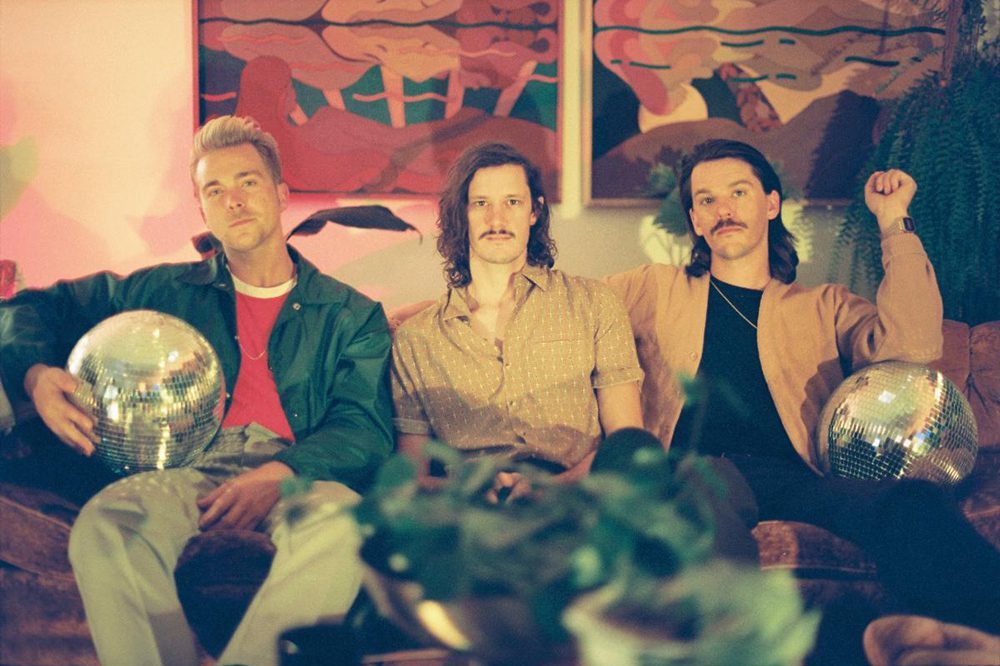
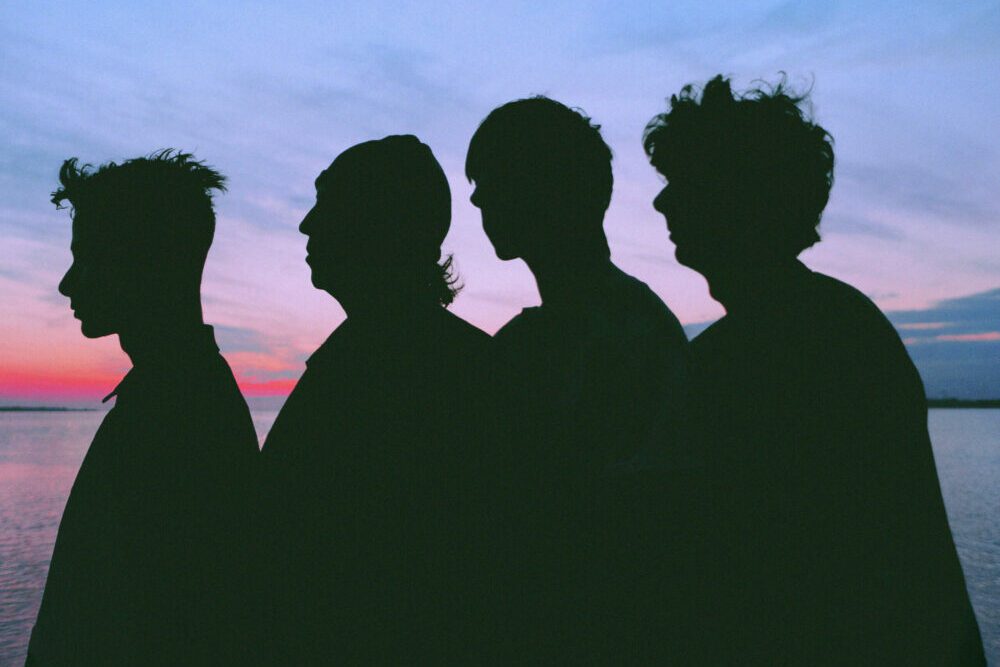
Jacob Bryant, Trevor Davis and John Davidson owe a debt of gratitude to their high school history teacher, Mr. Johnson. Growing up as childhood friends in the small town of Pinson, Alabama (just outside of Birmingham), they often ditched history class to play music in the band room, fibbing to Mr. Johnson that they had “photography class.” When Johnson found out about their ploy, he took the three students aside at the end of the school year and was ultimately gracious, not taking any disciplinary action outside of scolding them for lying. Perhaps, if Mr. Johnson had been more punitive, the trio might never have formed The Brummies. “We gave him enough hell that we probably should give him a big old thank you,” Davidson shares in a phone interview with Audiofemme. “At the time, it felt like we were doing something cool – we just fed off each other’s energy. It just naturally happened.”
In November, with the release of their sophomore LP Automatic World, The Brummies showed how far they’ve come since those days skipping class – or even the ensuing years they spent playing in Davidson’s parent’s garage using his father’s hand-me-down equipment, becoming so invested in the music that they skipped prom for band practice. “We loved music and loved playing it, and wanted to keep doing it and get better at it, and try our hand at writing original songs and found out that we had a natural ability to be able to do that,” Davidson recalls.
Their passion and hard work translated into gigs at 21+ clubs in Birmingham when they were still underage. Yet it was these gigs that instilled them with the buzz for live performances. “That was our way in,” Davidson recalls. “As soon as you play in front of somebody for the first time, we were hooked. It’s just that initial feeling, that adrenaline rush that you get that makes you want to do it some more.”
In spite of their talent and live show appeal, Davidson admits they didn’t envision themselves playing music professionally until a songwriter cousin in Nashville set them up with a meeting at the publishing company where he worked, Major Bob Music. “I don’t think we ever knew we could do it professionally,” Davidson says of music. “It just morphed basically out of wanting to do it.”
Walking “blindly” into the meeting, the group decided that if they didn’t get a deal, they’d return to Birmingham and continue to be the band they were at the time, which admittedly didn’t have “big aspirations.” But as fate would have it, all they needed was two acoustic guitars, Bryant on trumpet and a batch of original songs to be offered a publishing deal on the spot, making Music City their permanent residence five months later. “It’s evolved into what it is today, which is somehow a career,” Davidson reflects.
Thus began the journey of truly honing their sound, pulling influences from The Beatles to Bill Withers to indie gems including Mac DeMarco and dream pop duo Beach House. But the haunting sounds of Bryant and Davidson’s harmonies began to take shape long before their days under Music City lights. Born into a porch-picking bluegrass music family, Bryant continues to lean into the bluegrass harmonies he was raised on. Meanwhile, Davidson received his own voice lessons through the Church of Christ that was strictly vocal a cappella, Davidson maintaining heightened awareness for ear-catching counter melodies. Eventually, the two would blend their distinct vocal styles to create the ethereal harmonies The Brummies are known for. “We just love singing together, and some kind of natural desire that I think we both have to sing harmonies and to figure out what kind of cool counter melodies or harmonies you can put on a main melody and make it a little bit more special. Or if it doesn’t belong, there’s also beauty in the silence too,” Davidson explains.
The Brummies introduced their eclectic sound to the world with their 2018 debut album Eternal Reach, which includes the dreamy duet with multi-Grammy winner and former tour mate, Kacey Musgraves. The project also taught them about the intricacies of producing, tying in their love of sonics while catering to what the song requires.
These lessons led into their latest album, Automatic World. The title acknowledges how we operate in a fast-paced world with constant access to resources at the touch of a button, the beauty of simplicity and human connection fading in the process. “Everything’s so quick and responsive now and it’s all tech driven… that I think working hard for something is becoming a lost art,” Davidson explains. “[The title says,] slow down and value the human relationships that we have and taking the time that we have here together.”
The album’s cover is a visual representation of this concept, as Bryant sits poised at a restaurant table draped in a yellow cloth, the camera focusing on his hands, holding a triangular folded napkin. “It represents us waiting at a table and having something served to us, so it goes along with the thought of Automatic World,” Davison notes. The project boasts several themes, but one of prominence is the concept of déjà vu that manifests as a lyrical thread across 13 songs, from the falsetto-sung “I’ve got the feeling that I’ve been here before” on opening number “Cherry Blossom,” a theme that’s echoed in the cinematic-meets-psychedelic “Been Here Before,” which comes after questioning “is déjà vu only a familiar feeling?” on the trippy “Fever Dream.”
Davidson says the exploration of déjà vu arose subconsciously after the group had an “experience” in Joshua Tree that led them “somewhere out in the universe.”
“It’s an interesting concept and there’s a lot of different theories, and you can believe whatever you want to believe and make your own assumptions or interpretations of what that is,” Davidson says. “We’ve had our experiences in different places and it’s fun to question things, but also ponder on what all is out there: have we been here before and will we be here again? It’s going to look at things from 10,000 feet every now and then.”
Automatic World was a direct result of that Joshua Tree trip, sparking the creativity that inspired the music. “It’s one of those coming-of-age stories where we’re all there together and we all learned something from it and took something from that experience together and we’ll never forget it. One of the most memorable and joyous experiences that I think we’ve all had – we were able to have that together,” Davidson professes. “Really, at the core of it was love. You prioritize and see things for what they are, and the overarching theme for me, and I think for everybody, was love.”
That love pours through in songs like “Sunshine,” which radiates positivity. Album closer “Island” harbors a transcendental vibe that Davidson says brings him to a “different place,” while “Call Me” ties back into the meaning of Automatic World through human connection and the desire to slow down. “I feel like the beauty of an album is that you gotta listen to the whole thing to take it all in,” Davidson observes. “Otherwise, you’re missing out on something.”
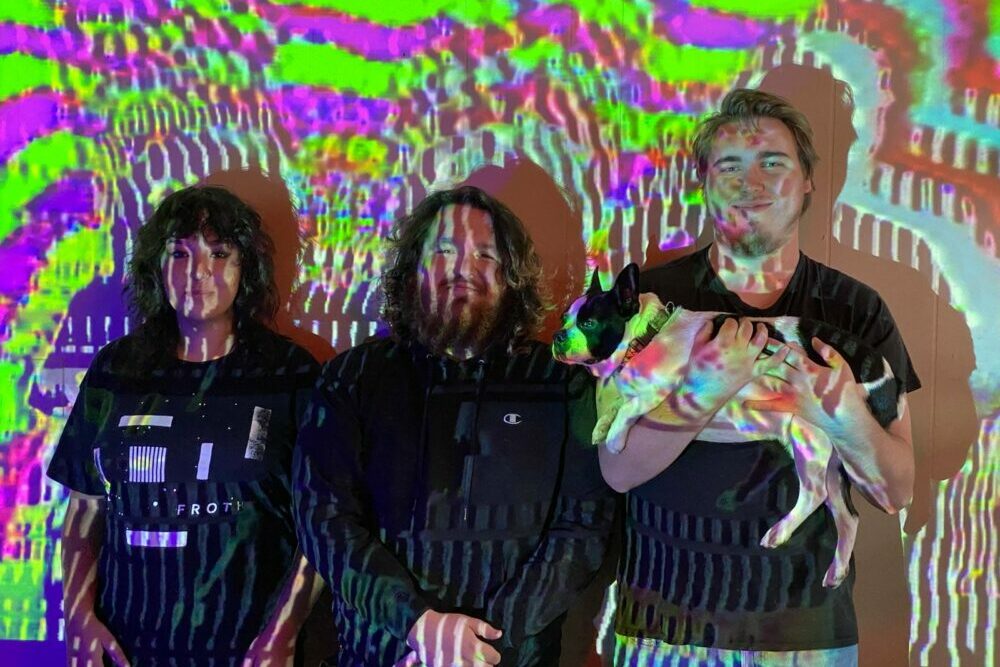
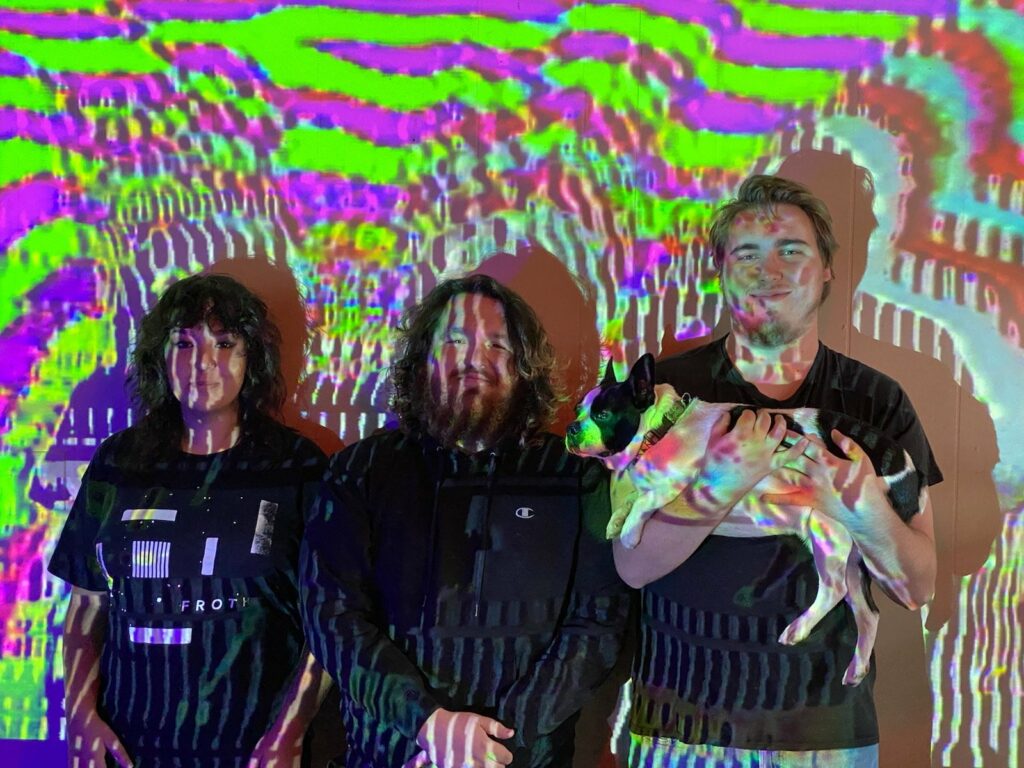
Many of us have spent pandemic isolation diving into books, movies and music; for Denton, Texas musician Dominik Kozacek, a survey of anime and manga classics inspired their latest batch of songs, while stir-craziness led to the formation of Famish, a loose group of tight-knit friends who left lockdown to help bring their vision to life.
“I had just been stuck in quarantine for so long that I was like, desperate for an excuse to hang out,” Kozacek says. They scheduled some recording dates at their friend Nathan Clark’s home studio, and brought along their roommate, Carter Lacy, who plays guitar. “Any time anyone had like a sniffle, cough, or anything, we’d be like, hold up – nobody come to the studio today. Normally when I go to the studio it’s with a whole band, so there’d be like five or six people. That isn’t really feasible right now – I don’t think that’s really a good idea – so we ended up just recording with me and Carter.”
Kozacek made sure Lacy didn’t hear the songs before they went in to record, so that his parts would have an improvisational feel, mirroring the off-the-cuff way Kozacek usually writes. “When I write songs it’s kind of just the first thing that comes to my head in terms of the melody and some of the lyrics and stuff. I kind of wanted that same thing with him, so he recorded pretty much the first ideas that he came up with,” they say. “That was the whole writing process for the keys and guitar, and I think that made it seem more raw, less overdone. Everything else, like all the percussion and everything, Nathan wanted to put stuff on top, so he recorded that in post.”
The songs they ended up recording had been largely written during the fall, each one a subtle ode to a different anime or manga series, though the dreamy acoustic vibe belies their subject matter. “I would finish a series, and I would have a riff already in mind, pick up my guitar and just start playing. Then I would come up with melodies and on the spot, improvise lyrics, and alter parts of the lines,” Kozacek says, in the interest of keeping things vague. The six tracks comprise Famished, the band’s debut EP, which is slated for release January 7th via Lonely Ghost Records and premiering today on Audiofemme.
The first single and EP opener, “Beck,” references manga (later adapted into a 26-episode anime series) in which a young boy meets a guitarist after rescuing his dog; the two form a band and name it after his canine companion (Beck, of course) and the story focuses on the relationships of the band members as they struggle toward recognition. You’d be hard-pressed to find these plot points in Famish’s song, but there’s an interesting parallel there; Kozacek has a long history playing in various bands in and around Denton, spanning genres from reggae to pop punk to shoegaze, who would play house shows for local crowds of fellow high-schoolers.
That’s where Miette Esteb comes in. Friends with Kozacek since middle school, she joined Famish as bassist after the EP was recorded, even though she’s still familiarizing herself with the instrument. “I played piano from a young age, but I didn’t get into the guitar and making music with my friends until pretty recently,” Esteb says. “I can’t just improvise on the bass, so [Dominik] pulled out their keyboard; I would play something on that and then they’d help me figure out where it was on the bass.”
“Miette lowkey inspired all the beginning stuff. The first-ever Denton house show that I went to, Miette was the one that knew about it and she was the one that got me involved in the scene,” Kozacek recalls.
Back then, Esteb says, “I don’t think we understood what a house show was yet.” She assumed the show would be at a pizza place, since the cover photo for the Facebook event page was a picture of pizza. “We show up and it’s someone’s house, and everyone was really mad at me ’cause they were hungry.”
“No pizza at all,” confirms Kozacek. Esteb adds, “I don’t think they even had frozen pizza.”
Though slices were sparse, Kozacek was encouraged to bring that DIY ethos to their hometown, nearby Flower Mound. “We would throw house shows in our parents’ garages and a ton of people would show up. In high school it’s so much easier to bring a crowd cause all the kids don’t have anything to do.”
Now finding themselves a little more grown up, but unfortunately with little to do thanks to COVID-19, Famish arrives without the “melodrama” of the high school emo scene that nurtured Kozacek’s previous work. “My whole musical career, basically, has been me writing stuff about being emotional or melodramatic,” they admit. “So one of the things about Famish is that I wanted to write something that was less situational and less serious – just write music for the stories, and not having to bare your soul.”
To them, the songs were written instead as a way to process that what-do-I-do-now feeling you have when you finish a book or binge-watch a series, but Esteb points out that Kozacek’s emotions are still there, just filtered through a convenient lens. “Hearing these songs, I definitely can tell they use not only the emotions from the show, but their own emotions, what they’re feeling, and their art as well, through the anime,” she says. But both agree that the inherent vagueness in the lyrics allows listeners to project their own meaning onto the songs.
As Famish evolves, Kozacek hopes that it will feature a rotating cast of musicians open to collaboration, bringing them one step closer to removing ego from the project entirely. “Another thing that I’m exploring with this kind of music is the concept of death of the author,” they say. “I wanted to try creating something that was less about me. Once someone hears it, it’s theirs.”
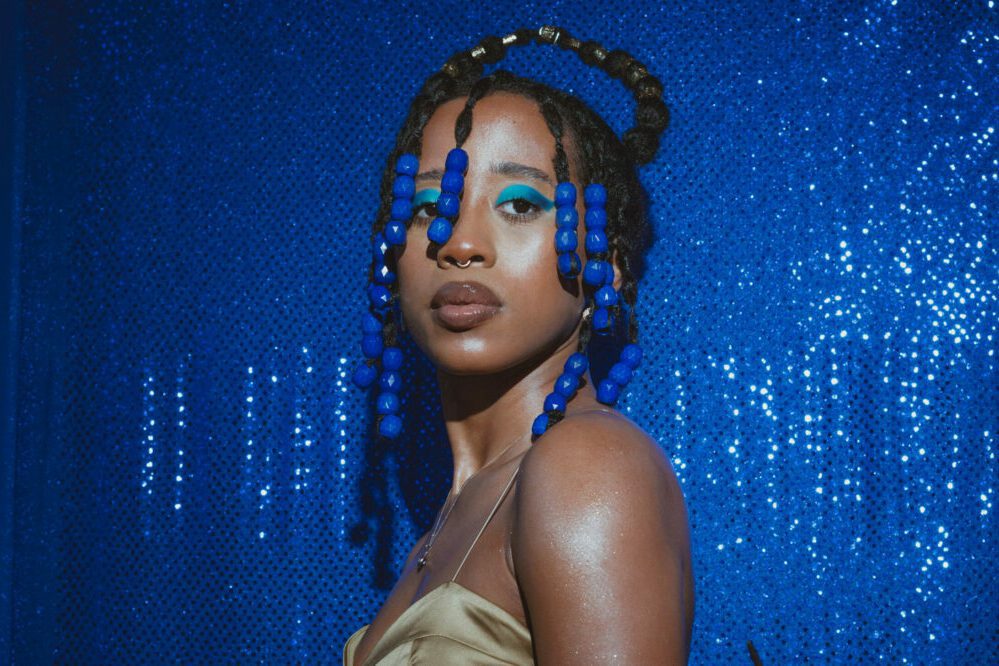
A few years ago, actress, songwriter and vocalist Aja Salakastar Dier was going to quit singing. After a slew of studio sessions where she was undermined, gaslit, and, as she puts it, “artistically abused,” she decided it wasn’t worth the grief. The problem was, she had an audition with the esteemed Detroit Opera Theatre lined up. “I was like, okay, I’m gonna go to the audition, but I’m not an opera singer,” Salakastar says. She ended up landing the role. And the next day, sitting in a room with four other professional, classically trained opera singers, she decided that maybe this was a sign that she should keep singing after all. That was one of the many steps along Salakastar’s journey to finding the strong, soulful and ephemeral voice heard on her first solo release, “December 22 (for Jean-Michel).”
The song was written after a particularly grueling experience in the studio. “I wrote this song after being in a really horrible studio session where I was being criticized in a way that made me shut down,” Salakastar remembers. “I couldn’t stand up for myself in that moment – I kind of just froze… so I wrote the first part of this song as a mantra to remind myself that I’m worthy… It was like me standing up for myself after the fact.”
Her lyrics serve not only as a mantra, but an armor and a warning to anyone – including her inner voice – that dares to criticize her. The mantra is introduced in fragments, alongside lush layers of Salakastar’s voice that sound almost Gregorian. For two minutes, the artist chants softly, indiscriminately to her higher power – herself – easing out the core message. Finally, Salakastar’s voice breaks through the hymnal ocean, delivering the mantra as sharp and clear as a diamond: “Watch your tone/When you call on God/Watch the throne/When I step on earth/Calling out her name!”
In a way, the song’s gradual progression mirrors Salakastar’s journey to finding her voice. Though she always loved singing, inner and outer criticism forced her to bury that part of herself deep within. “I felt shame around my voice and I’m not sure why,” she explains. “Maybe it was someone telling me when I was younger, ‘you can’t sing’ or being a Black girl from Detroit – there are a lot of girls like me who can really sing in a particular way, and I’ve always felt outside of that.” So, although singing and songwriting was a deep desire that Salakastar always held close, her younger years were more focused on her talent in acting. She went to SUNY Purchase in New York for acting and returned to Detroit with an index of Shakespearian language and an even deeper desire for self expression. That’s when she began writing songs.
“I moved back to Detroit and I started meeting musicians and writing more and it just happened from there,” explains Salakastar. “With my music… I’m not playing a person, I’m writing my own story. I’m used to telling other peoples’ stories. The process of telling my own has been incredibly scary but freeing.” Part of the story she tells in “December 22 (for Jean-Michel)” is of two of her greatest loves – the color blue, and Jean-Michel Basquiat.
Salakastar was re-introduced to the color blue very suddenly and all-consumingly. “I was hanging out with a friend psychedelically and I just all of a sudden I looked around and I just kept seeing the color blue so vibrantly.” says Salakastar. “It connected with me physically, like deep down within, in my heart and in my gut.” After that experience, Salakastar started studying how the color blue corresponds with the chakra system and found it represented speaking your truth, purification, using your voice, and transformation. All of this resonated deeply with Salakastar, who was dealing with depression at the time; she says that once she embraced blue, it was like a switch flipped. “Blue symbolizes the possibility of healing and coming out of that,” she says. “Not even being on the other side of it, but the possibility of being able to heal. And that’s really all you need.”
From then on, Salakastar only wrote or created from a space of blue. She painted her walls and doors blue, got a blue light, adorned her space with blue totems. The color became her creative safe space and eventually birthed an entire project: All Blue Part One: Majorelle. “December 22 (for Jean-Michel)” is the first single from this project, an introduction to her healing world of blue, and an ode to one of her other core muses, Jean-Michel Basquiat.
She remembers a distinct moment about three years ago at the Detroit Institute of Arts when she was deeply moved by one of Basquiat’s works. “I was taken in by this painting and I just felt so free and I was just thinking, if I could get to this place artistically, I could be okay,” says Salakastar. She explains how his paintings in particular have the power to draw her in, make her feel that she’s with him, or in the space he was in when he made the painting. The connection is not only artistic but cosmic. The two share a birthday – December 22nd. The song serves not only as a pledge to her own artistic freedom and worth, but an incantation for a kindred artist gone too soon. Bold strokes of piano, complex vocal melodies and distant percussion echo the complex makings of a Basquiat painting, where angelic harp, comforting horns and Salakastar’s sacral vocals aim to reach him where he is now. “I just think about how he never got the chance to fully heal because he lost his life so early and tragically,” she says. “I wonder what he would create today if he had the opportunity to heal.”
This song in itself presents an opportunity for healing, for sitting with emotions or words left unsaid, for reclaiming self-worth and warding off self-doubt. And it’s only the first chapter in the story of Salakastar.
Follow Salakastar on Instagram for ongoing updates.
January is not necessarily going to be the big refreshing escape from the year we’ve had, going by the news and the pandemic numbers. It won’t be the celebratory holidays we may have anticipated months ago. But what hasn’t changed, and what may bring some comfort, is that January is always prime reading time. That brief window – for most of us – between work ending in 2020 and starting up again in 2021 is just enough to get through at least one or two juicy reads that give you the energy and inspiration to return to work without losing your mojo.
Confession: I learnt piano for many years and I was pretty good, but I gave up – mostly to spend all my time smoking and drinking with a ragtag collection of fellow 15-year-olds at whoever’s house was devoid of parents. That’s about as close as I got to the rock ‘n’ roll lifestyle. I never was a girl in a band, but when I think to my life’s inspirations in regards to attitude, fashion, dedication to a creative existence, bravery and originality, they are women in music.
Chances are, if you’re an Audiofemme reader, you too are inspired and influenced by pioneering, persevering women in music. If there’s ever been a time we need to feel inspired by women to overcome the odds, deal with shit and continue to do what they love for the sake of it, it’s now. Consider this a belated Christmas present, then. This is a guide to the best books on modern women in music, in my experience.
Having mentioned girls in bands, let’s start with Kim Gordon’s Girl In A Band, which was released in 2015 and made it to the New York Times Bestseller list. Gordon was the co-founder (and sole female member) of Sonic Youth, a ’90s post-grunge act that fused dreamy fuzz with anthems to teenage lust and frustration. With her slash of red lipstick, tangle of blonde hair and too-cool-for-you attitude, Kim Gordon was the ultimate ’90s alt-rock icon. Girl In A Band covers her childhood, her first creative love – drawing, painting and sculpture – and her days in Sonic Youth, too often stymied by the men around her. She bravely confesses truths about her marriage to the revered Thurston Moore, frontman of Sonic Youth, and the disintegration of their relationship.
In October 2020 she released No Icon, a curated collection of images and scrapbook-style memoirs of Gordon’s Californian youth in the 1960s and ’70s, Sonic Youth in the 1980s and 1990s. In addition to previously unseen photos, there are also hand-written lyrics, newspaper cuttings and all sorts of Sonic Youth/Kim Gordon paraphernalia that make this a keepsake for fans and a treasure chest of discovery for fans-to-be.
The foreword to No Icon was written by none other than Sleater-Kinney’s Carrie Brownstein (also of Portlandia, bless). Brownstein’s 2016 memoir Hunger Makes Me A Modern Girl was so compelling, I admit I lay in bed reading it all day and had to force myself to leave the last chapter until the next day so that I didn’t miss it too much when it was over. Brownstein is candid in talking about the politics and sometimes fractious nature of working with a group of impassioned women, sharing rooms and weeks on the road in close proximity. Brownstein’s ability to tell a story, with a measured dose of hilarity and awkward truth, was evident in Portlandia, so it was unsurprising that her memoir had the raw, vulnerable truthfulness of a personal diary but the strong narrative of someone who is skilled in telling a story from start to finish without losing the momentum of fascination.
If Sleater-Kinney were the 1990s underground punk-rock phenomenon for so many U.S. girls, then Viv Albertine’s The Slits were the original she-punks. Emerging in the 1970s in the midst of a wave of angry boys on stage, Albertine’s no-holds-barred memoir doesn’t paint a pretty picture of being a girl in a band, nor a woman in the world. Clothes, Clothes, Clothes, Music, Music, Music, Boys, Boys, Boys is the ultimate inspirational read. It made me laugh out loud, take deep, reassuring breaths and reach for the tissues, grip my fingernails so hard into my fist I thought I’d broken skin… it made me react.
For Albertine, growing up in a council home with her single mother and sister, the only reality for her seemed to be watching boys in bands and – at best – dating them. She developed a love affair with the electric guitar, though, and taught herself how to play with the support of her boyfriend at the time. From those early days of hanging out in Vivienne Westwood’s SEX shop, getting raucous with Johnny Rotten and Sid Vicious in abandoned squats, and being belittled and degraded by roadies and engineers as inferior to male musicians while on the road with The Slits, the book traverses Albertine’s abortion, her struggles to have a much-wanted child via IVF later in life, her marriage and subsequent divorce, and her return to writing, recording and performing as a solo artist in her 60s. It’s no surprise this brilliant book is being translated into TV.
Memoirs are my favourite way to climb into a musician’s mind and poke about in their memories, finding the nuggets of gold that will sustain my creative soul for life. A good set of essays, or insightful analysis, when written with people and genuine experiences at its core, can also be food for thought. I’m currently reading Revenge of the She-Punks by Vivien Goldman, which was released in 2019. Goldman, now in her 80s, is on the cusp of releasing her first punk album in 2021. Known as “The Punk Professor” due to her transition from a music journalist/band manager/musician/broadcaster/biographer (and more) to adjunct at New York University’s Clive Davis Institute of Recorded Music, this is a woman who lives, breathes and creates punk rock music. She-Punks looks at the feminist history of punk rock, encompassing The Slits, Bikini Kill, and L7 all the way through to Pussy Riot in the 2000s. Consider her the expert.
Whether you’re actually a musician or an aspiring one, or women who make brave choices are your spiritual sisters, these books are likely to move you. They’ve certainly moved me, and fundamentally assured me that in my strangeness, my deep need to create, my ability to survive while making mere pennies for a living, are all perfectly valid ways to live in this chaotic, strange world that is not so friendly to women. I hope they’re nourishment for you, too.
Share your favorite punk rock reads with Cat Woods on Twitter or Instagram.
FeM Synth Lab’s Art of Synthesis Workshop, a collaboration with Femme House and Moog, in January 2020. Photo: Lex Ryan
Have you ever wanted to borrow a synthesizer for a few weeks, just to see if it’s the right one for you? In Los Angeles, FeM Synth Lab offers just that, with a focus on making otherwise prohibitively expensive synths available to people of marginalized genders.
Three years ago, Natalie Robehmed founded FeM Synth Lab with two people she met through Women’s Center for Creative Work. The new group held their first workshop in 2017. From there, the project expanded to monthly meet-ups where people of various skill levels could learn new techniques and familiarize themselves with various gear.
Sabrina Ketel, who had been teaching herself Ableton, saw a notice of that first event on Facebook. “Everybody’s just really willing to help each other learn or help each other experiment and just share what they know,” she says of her first impressions of the group. A little over a year ago, Ketel came on board to help Robehmed run the group.
A synthesizer lending library is something that had been on their minds for a while. While the COVID-19 pandemic forced many to put ideas on hold, it actually pushed FeM Synth Lab to make theirs a reality. After a few years of in-person workshops, FeM Synth Lab wanted to provide a useful, hands-on experience for people at a time when they couldn’t get together in person. They also had some gear available to make that happen.
“We had access to some instruments that were just sitting there,” says Robehmed. The project came together in collaboration with Felisha Ledesma, who founded the program Resource Residency and helped launch Portland’s Synth Library.
Though people may have had more time on their hands to work on creative projects this year, the multitude of financial blows that Americans have endured also makes music equipment potentially more inaccessible. “Our aim is 100% to make it affordable and accessible to learn how to produce electronic music by giving access to all these instruments,” says Robehmed. They ask for a deposit when you check out a piece of equipment – anything from $1 to $20 – but you get it back when you return your piece (there’s an option to donate the deposit, but that’s completely up to the user).
Robehmed and Ketel are the only two people running the library, so it’s open one week out of the month. They typically open for orders on a Monday and the first two days are the BIPOC Priority Restock. Everyone else places reservations beginning on Wednesday of that week. “Our aim is to bring more people into electronic music, and into music production, who aren’t white, cis, and male,” says Robehmed. The BIPOC priority window for orders is part of the mission and Robehmed says that it has worked well. The following Sunday, everyone can check out the gear that they’ve reserved at Women’s Center for Creative Work’s office in Highland Park in a pandemic-safe way. All of the equipment is sanitized as well. “I spend most of the drop off days sanitizing gear,” says Ketel.
In the few months since it opened, FeM Synth Lab’s lending library has already gained a following. Farre Nixon has checked out multiple synths from the library. She’s a longtime fan of electronic music had been wanting to experiment with synths and production for a while. “I had no idea where to start,” she says. Then she started pricing synths. “It’s just so insanely prohibitive,” says Nixon, an architect who finished school last year.
Nixon moved to Los Angeles in early March and found out about FeM Synth Lab through a friend. When the library opened, she checked out the Moog DFAM (Drummer from Another Mother). A couple other Moogs, a Make Noise piece and a Korg followed. “It’s amazing because you can actually really feel the difference between each of these machines,” she says.
Now that she has tried out a few different synths, Nixon has an idea of what she will want to buy for herself in the future. “That’s given me a ton of direction,” she says. “I feel like now I’m able to turn a dream into a small, growing reality.” Plus, through the FeM Synth Lab, she’s gotten to know other people in her new city. “I’m building community,” she says, “and I feel like that’s the most important thing.”
A lot of the synths FeM Synth Lab has on hand were donated by musicians, mostly people in the Los Angeles area. Resource Residency donated a few Moogs. They’ve also worked with a couple different companies, notably Make Noise and 4MS, who have donated to FeM Synth Lab. You can even check out modular synths as well. “They’re the final frontier of inaccessibility,” says Robehmed. Through the partnership with 4MS, they have two rows of modules for users to play with. “That’s an amazing, beginner way to learn, or a great place to start because you can just experiment and it’s not too daunting,” says Robehmed. “It’s not an entire wall.”
They have effects pedals, mixers and interfaces too, but Ketel notes that they want to beef up the inventory of accessories. “We’d love to get monitors up there,” she says, “Stuff that will help you set up your studio, because that’s also something that can be really expensive to do.” FeM Synth Lab does accept both monetary and gear donations. They’re also looking to building up enough of a stockpile in the library so that people can check out more than one item at a time.
Robehmed mentions that Women’s Center for Creative Work has a motto: We’re a process, not a product. “I think about that all the time,” she says, “especially with regards to this project. It’s not perfect. It’s going to be iterative. We’re going to learn and grow and add.” For now, FeM Synth Lab remains open during that process, allowing future synth whizzes to grow alongside its expanding Lending Library.
Follow FeM Synth Lab on Instagram for ongoing updates.
Remi Wolf is impulsive – not that it’s a bad thing. At the beginning of quarantine, she adopted a French Bulldog named Juno four months before dropping her appropriately-titled I’m Allergic To Dogs! EP. The 24-year-old Californian musician’s strong intuition follows throughout her music, from her stream of consciousness songwriting to the multiple career pivots that eventually led to a critically acclaimed EP, a coveted Island Records deal, and an iPhone commercial spot.
None of this is surprising, as Wolf has always been a natural entertainer. She discovered her love of performing early on, and by high school had formed a full band and met her current collaborator Jared Solomon, who goes by solomonophonic. The nearly decade-long friendship with Solomon shows in the music, and the two share a camaraderie that breathes with Wolf’s rollercoaster delivery.
To some extent, Wolf’s excitement is woven into the very fabric of her existence, both literally and figuratively. “Woo!” features sparkly interjections, like a childhood cartoon, that swell into an electrifying R&B pop fusion with punchy drums and tip-toeing piano keys. If that sounds chaotic, it is – in the best way. Much like the trippy visuals created by her trusted collaborator Agusta Yr, or the almost painfully colorful clothing she wears, Wolf’s music is an ever-changing kaleidoscope of pop music at its brightest. She exists right in the middle of current musical trends, featuring elements of PC music, dance, and sultry R&B-tinged pop to create something just as eclectic as she is.
Wolf possesses an intense confidence with a dash of self-deprecation bred from the early days of millennial Internet humor and a short lifetime honing her style and persona. She went from being an accomplished skier to a successful musician while growing up in Palo Alto, an incubator for some of tech’s biggest names, and is more than used to high pressure environments, but that does not mean she isn’t open about the stress either.
On I’m Allergic to Dogs!, her self-described “stream of consciousness” “ADHD explosion” style of writing bubbles to the surface. She explores risky unrequited love in the same breath as being prescribed painkillers by her dentist. Her songs tell stories of hippie frat boys at disco nights and her inability to commit. The magic of Remi Wolf lies in the merry-go-round of her mind that brings childlike wonder with an edge.
In a chat with Audiofemme, Remi Wolf opens up about mental health, childhood television shows, and creating culture on her own terms.
AF: When did you realize you enjoyed performing? Was it something you grew into over time?
RW: I started singing when I was in fourth grade. That was the first time I ever performed for people. I feel like I immediately loved it. When I was in sixth grade, I ended up being in a girl singing group, like a barbershop trio thing. That’s kind of where I ended up learning how to harmonize and the basics of how to sing and perform. We would perform at preschools and we did these little benefit concerts. I really love doing that.
Then, I picked up a guitar when I was probably a freshman in high school and ended up starting a little band with one of the girls from that trio, her name is Chloe. The trio kind of dissolved. We started writing songs and performing covers. We started busking on the street and doing open mics all over the place in my hometown, which eventually led to us starting a full band. That guitar player is now my main collaborator: solomonophonic. We’ve known each other for eight years at this point now.
Then I ended up going to music school for music and songwriting and singing, and now I’m here. So that’s been a lifelong journey.
AF: With the amount of people breaking out at younger and younger ages due to social media, do you ever feel weird about it?
RW: I mean, no. I’m twenty four years old. I’m young. There’s hella kids popping off now at 18. I’ve never had any insecurities about that, though. I don’t think I ever really felt pressure like that. During most of my childhood, I was either in school or I was ski racing. I think a lot of my mental capacity was taken up by that. I was a very active kid. I always say that I feel like I’ve been working since I was eight years old.
I would say I feel a little bit more insecure about that now, because, like I was saying before, there are a lot of people who are popping off at 18. I don’t think it really mattered when I learned how to play guitar. Like, I think it just matters that I learned it. And I’m here, you know?
AF: It’s interesting to see you’ve still internalized those feelings, whether inevitable or not.
RW: Yeah, I don’t know if it’s jealousy. It’s just crazy how the Internet works. People are just able to create their own careers from their bedrooms, you know? I think that that’s crazy. I didn’t really realize when I was young that that was an opportunity. I mean, it’s more of an opportunity now than it was then, but I think it’s cool that people are able to forge a career for themselves, no matter what age.
AF: Who were some of your biggest influences growing up, or your most unexpected influence?
RW: When I was younger and I was performing, I was listening to a lot of the Beatles, Stevie Wonder, Prince, Gwen Stefani, and Chaka Khan. This is always a hard question for me because I feel like I have a really big well of influences. They span all over decades and genres. I never talk about this one; I don’t know why, but I used to love Jason Mraz. Nobody ever talks about him as an influence. He has a lot of really good songs, and he’s a solid songwriter and seems like a nice dude. I’m team Jason.
AF: You said once that growing up in a city like Palo Alto, you had to get culture from other places since it was so tech-focused. Where did you look?
RW: Yeah! I grew up in Palo Alto, which is a very tech-focused city. Obviously, it’s like the birthplace of Facebook and Instagram and fucking Apple. It’s a small suburb. It’s very intense. There’s high pressure academics and stuff like that, which was never really my focus. I mean, I did well in school because you had to, but I was always way more focused on skiing and music and stuff like that.
I’m still learning things every day about the world. I think that for the most part, I was a pretty sheltered kid. I didn’t have the free time to really expose myself to a lot of things. In a way, I’m still growing up, and I’m learning things every day because I have the free time. I’m doing what I love to do now.
I feel like I’m still growing and still learning, even culturally. And I’m discovering new things every day. I want to create culture – I don’t think that it matters how much or how little I was exposed to at a young age.
AF: When you say that you’re creating culture, it almost feels like an unconscious response to not being exposed to many things and working from a different starting point. It’s kind of an advantage.
RW: That’s like a really interesting take. That’s cool that you’ve noticed that. I think that I’m really conscious of that for myself, but that could definitely be why I am so experimental with my music. Right now I feel the most free creatively I’ve ever felt which is cool. Maybe that is because I’ve been away from home for a while now. I don’t know. That’s interesting. I like that.
AF: Let’s talk about style! Have you always dressed the way you do now?
RW: I’ve pretty much dressed the same since I was, like, three years old. My parents would let me wear whatever I wanted to and I was a big pattern mixer like my mom. There’s this one story where my aunt wanted to take me out to eat at McDonald’s or something and I dressed myself. It was a crazy outfit. My aunt was like “I can’t take her out in this outfit!” and my mom was just like “No, she’s not gonna change. Just let her do her thing.” I’ve been pretty expressive with my style for a really long time.
I don’t think it’s anything new. I think now I’m definitely learning a lot more about fashion. I mean, we have Instagram now! You see all the trends and stuff going on. I’m a little bit more tapped into it than I used to be before, but I’ve definitely always been pretty expressive and colorful for sure. I feel like an adult baby a lot. I tell my friends I’m just a baby, like I’m a baby woman.
AF: And to clarify quickly in regards to the name of your EP, you are genuinely allergic to dogs?
RW: I’m truly allergic to dogs, and I have a dog. I love him a lot, and I’m looking into getting allergy shots. Getting a dog was a very impulsive decision for me, which maybe in retrospect, I should have thought about that a little more – I just kind of felt it and I went for it.
I grew up with two labs, so I’ve been around dogs my whole life. I think the allergy is actually a newer development. It happened probably three years ago where I was, like, wait, every time I’m around a dog, I am having sneezing fits! I also developed an allergy to avocados really late too. That was really shitty.
AF: Let’s talk about the retreat you went on a few months ago.
RW: It was a mental health thing for me. I was struggling a lot with my mental health, as I have for a while now, but in quarantine it was right there in front of my face. So, I felt like I had to get away and focus on that for a while. I’m glad I did. I’m doing a lot better now, like taking care of myself. I do therapy twice a week. It’s definitely a new journey for me and I’m just now kind of getting tapped into it.
As soon as my project started taking off and I suddenly had to start working all the time and really focusing on my career and stuff. I was like, “Okay, I can’t ignore this anymore, cause I’ve been ignoring it for a long time.” I want to be healthy and I want to be able to do the things I want to do and not be completely crippled by anxiety and depression, which I feel like I have been for a while. I’m still working through it. I definitely have a lot of anxiety and depression and stuff that I have to deal with on a daily basis, but at least I’m taking care of it now and and making active steps to better myself and be a healthier person overall.
AF: Where does some of that fear come from? Is it fear of being unable to control who is looking at you and how they feel?
RW: At first it was scary. The thing that still gets me is like, “Alright, when is this all gonna crumble down? When is it gonna be over?” I think that I have a bad case of impostor syndrome. It’s just vulnerable putting your art into the world. You don’t know how people are gonna react. I think that when my music first started getting out there, I had thinner skin than I do now. When people would say something mean or negative about me, I would internalize it and react poorly. I kind of just laugh at everything now because, like you said, I have literally no control.
I have no control over what anybody else is gonna do except for myself. Realizing that and realizing that the only thing that I can control is what I do and my actions, I think that’s liberating in a sense, because I don’t really have to fucking worry about how other people perceive me. That’s not my job. My job is to be myself and to do whatever the fuck I want.
AF: How does all this play into your songwriting process? Your songs feel so layered and haphazard and exciting.
RW: I think you’re kind of dead on with that. I start an idea and build it up until I think it’s where it’s supposed to be. We normally start out with a beat or a chord progression, and I pretty much just freestyle until I think it’s done. There’s not a lot of planning to it a lot of the time. I’m very free with my process. It’s hard to explain, but I write pretty fast. Most of the songs that I end up really liking I write in a matter of a couple hours, and I’m 80% done with the song by the end of the day. If that doesn’t happen, then normally the idea will just sit there for a long time.
AF: When you say you freestyle, is it just instrumentally, lyrically, or everything?
RW: Everything is freestyled. Everything is improvised from the melody – the lyrics, the chords, all the parts are made right there on the spot. There’s some songs that I write by myself on a guitar that I fully fleshed out and then I go back in and do production, but that hasn’t been my main process so far. That’s a newer thing that I’m trying out. But even with that, I’m still freestyling with myself and just stream of consciousness until I get something that I feel like is the right direction for the song. It’s kind of hard to explain.
AF: You’ve created such an immersive aesthetic that has become synonymous with who you are. Are there any specific things that stuck with you that helped you create this world?
RW: I think I’m really inspired by TV shows and movies from my childhood. I used to watch this Canadian series called Wee Sing in Sillyville when I was younger, and that’s always stuck with me. I’ve also always loved Teletubbies and this show called The Doodlebops and Spy Kids and Charlie and the Chocolate Factory. Basically all those psychedelic, crazy, weird kids shows that probably wouldn’t get made nowadays.
AF: Who is somebody that you would like to collaborate with – either musically or otherwise?
RW: I would love to collaborate with Michael McDonald. I know that’s kind of a weird one, but I’ve just always admired his songwriting and voice. He’s so talented and a genius, and I feel like I would learn a lot from him. He’s the GOAT for sure. Hopefully we can make that happen.
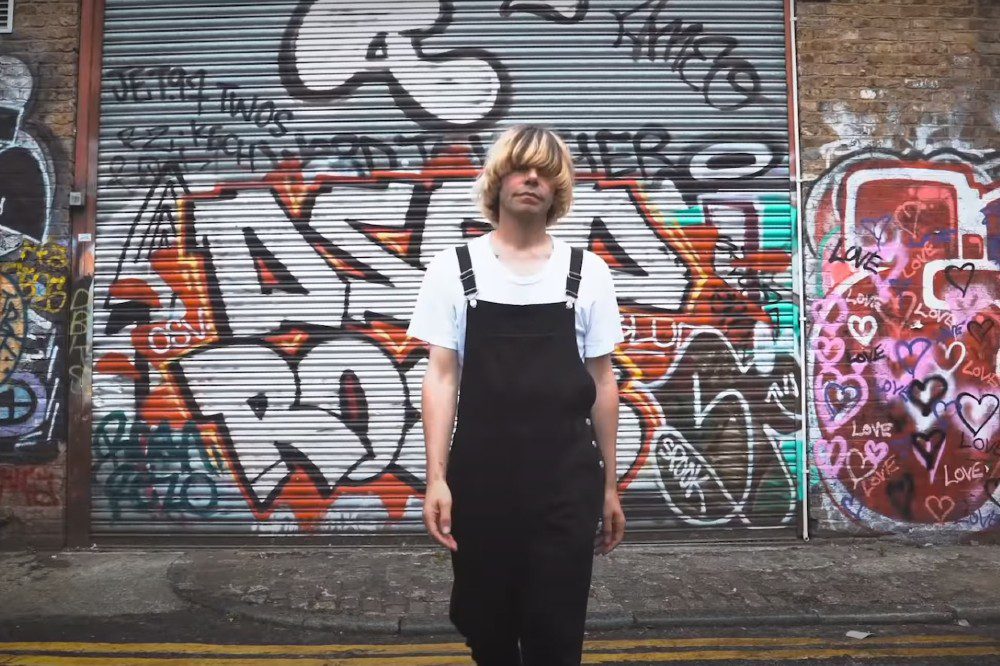
Over the past four years, I have grown to hate Twitter and its seemingly endless feed of bickering and bad news; since the pandemic started, that disdain has grown tenfold. However, on a Wednesday in late May, I watched and refreshed as Simon Le Bon tweeted the details behind Duran Duran’s landmark 1982 LP Rio. This was a social media moment, at least for someone who has loved Rio since the age of five. At a time where it’s starting to feel like we may never hear music in a physical space with other people again, Le Bon was guiding us through the now-classic album in a virtual space. He shared the people and places that inspired lyrics, stories from the recording studio and insight from 30-something years later.
There have been other moments that made me glad I haven’t deleted Twitter from my online habits: Miki Berenyi giving the history of Lush’s 1996 album Lovelife; Siouxsie and the Banshees drummer Budgie taking us through Kaleidoscope, which celebrated its 40th anniversary this year. All this is because of British musician Tim Burgess, known for both his work as lead singer of The Charlatans and a number of solo albums. (His most recent full-length, I Love the New Sky, came out in May and he followed it up with the EP Ascent of the Ascended in November.)
Since March, when it seemed like virtually the whole world had been grounded – no concerts, no dance clubs, no digging sessions at record stores – Burgess has been bringing together a global audience for journeys behind-the-songs of classic and contemporary albums. Tim’s Twitter Listening Party was the best thing – maybe the only good thing – about Twitter in 2020.
The roots of the project go back almost a decade. In an email interview, Burgess explains that he was inspired by seeing actor Riz Ahmed tweet about the opening scene of the film Four Lions as it aired on television. “It was a brilliant thing,” he says of reading the commentary on Twitter as he watched the film. Burgess thought he could do that with one of his records and so he did soon thereafter with The Charlatans’ 1990 debut, Some Friendly. In the years that followed, he would repeat the effort for his other albums, both with The Charlatans and his solo efforts, to coincide with release dates and anniversaries.
On March 23, when the pandemic lockdown began in the U.K., he did another Some Friendly listening party on Twitter. “Alex Kapranos tweeted that he’d got that record for his 16th birthday and was excited about the listening party,” Burgess recalls. He wondered if Kapranos wanted to host one for a Franz Ferdinand album. Turns out, he did.
Tim’s Twitter Listening Party hit its 600th installment on December 19. New Order’s Low-Life,Hercules and Love Affair‘s self-titled debut, Chvrches’ The Bones of What You Believe and Kylie Minogue’s Disco are just some of the albums that have been up for a listen. Some artists, like Róisín Murphy and Blur’s David Rowntree, have made multiple appearances. Some listening parties have come with surprises. When The Music, who broke up about a decade ago, had their listening party, they announced a reunion show that went on to sell 10,000 tickets. Burgess will be the DJ.
“I think everyone who hosts a listening party finds a similar thing – you don’t listen with a critical ear,” says Burgess. The listening parties give people a chance to hear their work when the pressure of making the album has passed. With time, too, the songs take on lives of their own.
“They can be a hugely emotional experience,” says Burgess of the listening parties. “I love the idea of seeing tweets from people saying what the songs mean to them – sometimes that helps you see a song in a different way, the stories it has acquired since it went out into the world.”
He says that the artists participating in the listening parties have often commented to him on the experience. “So many artists have DM’d me straight after saying that they were blown away,” says Burgess. The most common response from artists, he says, is that it’s like a live show. He’s also kept in touch with a number of them and says that there might be some projects next year stemming from the listening parties.
For Burgess too, it’s been an opportunity to listen to music in a different way. “It’s been an incredible experience to listen to 600 albums in a disciplined fashion. I get everything ready, headphones on,” says Burgess. “When I listen to music outside of the listening parties, it’s a bit more informal.”
Maybe, it’s been a little inspiring too. “I’ve written eight new songs in the last couple of months if that’s a measure of being inspired,” he says.
For fans, Tim’s Twitter Listening Party is a fantastic resource. It’s insight and reflection on the music coming directly from the people who made it. Even if you miss one as it happens, you can revisit the listening parties on your own time through the website that archives all of them. You have the option to either scroll through the neatly organized tweets or replay it as you listen to the album at home.
Burgess hadn’t planned to archive the listening parties, but he received a message form a “tech genius” named Andrew Brindle who had something to show him. “I nearly fell off my chair when I saw that he had built the replay feature – even then, I thought it was for one listening party,” he says. “It was for them all. It’s a labour of love.” Brindle recently added a feature where you can buy tickets to live shows.
Meanwhile, two other Twitter followers – Mat and Matt – separately contacted Burgess to help with scheduling. That led to a calendar spreadsheet, which is how they’ve been able to organize so many listening parties, and a website feature with links to indie record shops.
Certainly, Tim’s Twitter Listening Party turned out to be much bigger than its creator anticipated. “Genuinely, when we started back in March, it was a plan to do my albums and The Charlatans, maybe over a couple of weeks at most. Now it’s something we could carry on as a permanent thing,” says Burgess.
“It’s so much about the people who take part, they are what drives it,” says Burgess. “And the artists who give their time and share their stories. And, of course, they’ve helped keep me sane too.”
Follow Tim Burgess on Twitter for ongoing updates.
Whose culture is this and does anybody know?/I wait and tell myself, life ain’t chess/But no one comes in and yes, you’re alone/You don’t miss me, I know
The date was March 16, 2020. I got a text from my boss. He said he was really sorry but not to bother coming into work: “Looks like Cuomo is going to shut it down by the end of the day.” Which he did, shortly after. The lockdown order had descended upon New York City. And so began my two month period of pure isolation, before we all started cheating a little bit here and there, with clandestine coffee in the park and what not.
This year tried everyone differently, our traumas and baggage as unique to one another as the circumstances that surrounded our lives pre-COVID. Me? I’m a single 28-year-old woman, living in a small one bedroom apartment off of Fresh Pond Road in Ridgewood, Queens. I have no roommates save a twenty-pound black cat named Luca. He would remain my only companion for all those weeks except for the thirty-something union plumber who visited every two weeks to supply me with a fresh half ounce, smoke a joint with me and see how I was holding up. Besides that it was just me and the cat.
In the early days of the lockdown, I listened to no music at all. I realized that in this isolation, to feel any kind of emotion was dangerous, and what does music do but evoke emotion? So I listened to podcasts and watched the longest Martin Scorsese films I could find to pass the hours while I feverishly kept my hands busy with cross-stitch projects, this soundtrack punctuated by the sounds of sirens blaring through my neighborhood on the way to Elmhurst Hospital, which CNN kept calling “the epicenter of the epicenter.”
In those days I realized the extent to which we rely on the validation of others, be it your coworkers or the barista at the coffee shop by your house, to remind ourselves of our likeability, that we are not alone in the world. I found myself without that resource. I turned off my music and searched inward to see what was there. I went for long runs around Queens, logging miles around the numerous cemeteries that surrounded Ridgewood. I could run with my mask around my chin, because the only people there were already dead. I tried to picture myself post-lockdown, Charlize Theron in Mad Max, carved out of stone and devoid of feeling.
That’s just a phase, it’s got to pass/I was a train moving too fast
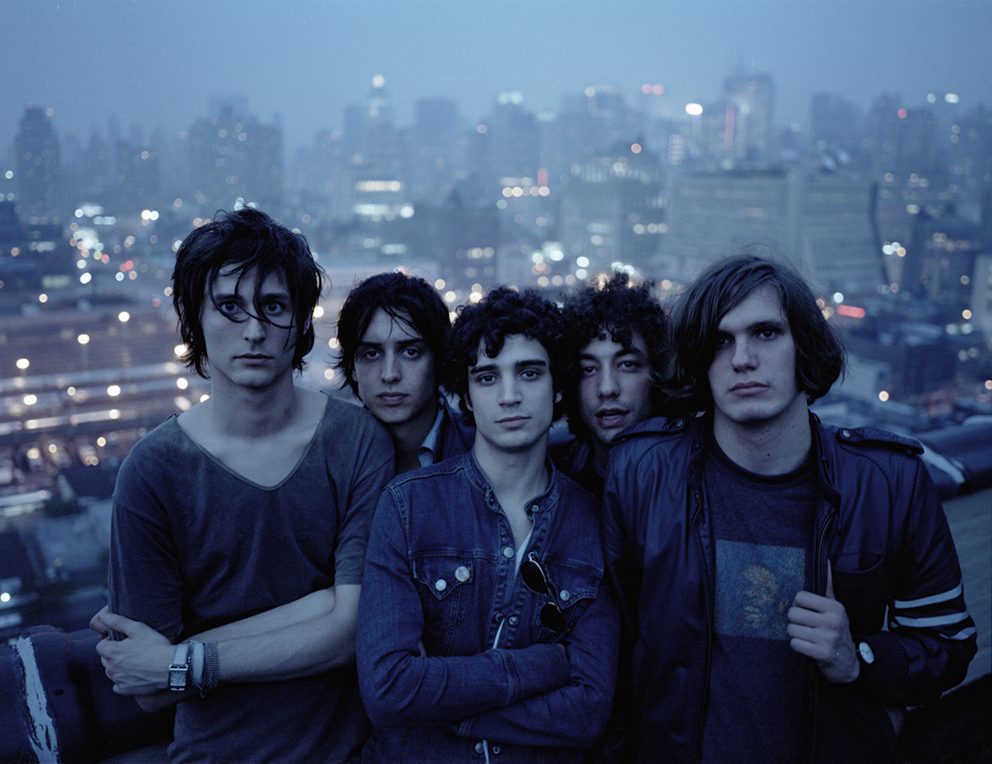
When Lindsey Rhoades, Audiofemme’s Editor-in-Chief, approached me for my list of favorite albums of the year, as she does at the end of every year, I realized I had listened to virtually no new music this year. But when Spotify released our year end data, I looked through my most-listened-to songs and found that The Strokes’ Room on Fire was one of the most represented albums on that list. Never mind that The Strokes released The New Abnormal, their sixth album (and first in seven years) in 2020 – Room on Fire was one of my favorite albums in high school, and it got me thinking of the comforts of the past, the way I could mutter the words along softly from the recesses of my memory, giving me this sort of blissed out haze, not unlike the concept of ambient television as raised in the New Yorker recently.
But why that album? For one, as I mentioned, it felt familiar and comforting. But I also think it has something to do with its rampant themes of detachment – “I never needed anybody,” Casablancas repeats on the chorus of “Between Love & Hate” – paired with a deep longing for intimacy. On each track it seems as though our narrator cares deeply but masks it with apathy, as if to say that something meaningful meant nothing at all to him.
Summer arrived. The sounds of sirens were replaced by the sounds of protests and the fireworks that exploded twenty-four hours a day. It was a shock to the system, that after all those months of silence in my Queens apartment I found myself on the streets surrounded by thousands of others. I cringe at the consciousness of my own privilege to say that it took these tragic circumstances for me to feel something like purpose or community again. But like so many other things this year, it is what it is.
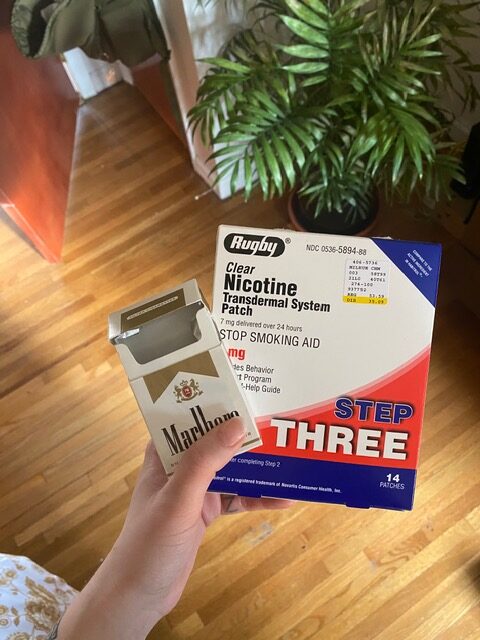
Summer also brought with it a cautious return to socializing, for better or for worse. This was, and is, controversial of course. I know that some who reads this may judge my perceived irresponsibility and selfishness. In fact, I acknowledge my irresponsibility and selfishness, but I’d also retort that we’re all just doing our best to get by. Single and exhausted with the oppressive isolation of my apartment, I hopped on the dating apps with a sort of manic hunger for intimacy. I haven’t found it yet, not in a lasting way, anyway. What I have found are other tired souls desperate for a connection, as ephemeral as a night or a week or a month. It’s proved draining for me. Lately my anxiety of isolation in the initial lockdown has been replaced by the anxiety of being isolated that way again, an imagined race to cuff myself to another body before Cuomo shuts it down again. I eat less these days and I started smoking cigarettes again, some regression to my 21-year-old self who eschews the careful routine of self-care I have cultivated in all that time.
Never was on time, yes, I once was mine/Well, that was long ago and darling, I don’t mind
Where does that leave me now? Surely sitting on my fire escape, listening to “Meet Me in the Bathroom” again and smoking a cigarette, like a cliché. Lately I feel somehow less like myself and more like myself than ever. Less like myself in the sense that I never saw myself a real smoker again, a little boy crazy the way I was ten years ago and listening to the same indie rock albums I loved in high school. But more like myself for the same reasons I guess, that these facets of my being have somehow meshed with the person I’ve grown to be since then. I believe the major difference is that I’ve achieved some level of personal resilience, a gift with which this year has blessed me. I’m reminded of all my other blessings, my tiny home and my cat and all the friends who check on me. That I still have income. And the greatest blessing of all – that I have not personally lost anyone to COVID yet. The weight of that loss feels immense when you consider how many lives three hundred thousand can touch.
Two weeks ago I had a first date in my living room with a painter I met on Hinge. It was snowing outside and we drank hot toddies on my sofa. Normally I wouldn’t have a first date in my home, but the weather was bad and my pandemic fatigue has left me unwilling to imagine any more creative ideas for dates. I told him I was thinking of writing this essay and he agreed that it was a great album. He said he wanted to see me again but hasn’t made any plans.
Needless to say, 2020 was a challenging year. In a year bookended by a devastating tornado in March and a bombing on Christmas morning, with the COVID-19 pandemic sandwiched in between, Nashville has been dealt its fair share of blows this year. But these challenges also held a mirror up to the city’s resiliency, and through the highs and lows, the city proved not to be merely a group of citizens, but a family.
High: ACM Awards & CMT Awards cater to socially distanced format
Following suit with the many other awards shows, both the Academy of Country Music and CMT decided to go (mostly) virtual for their respective awards shows, adapting their formats to pandemic times. CMT wins the award for most creative, as the network invited its artists to perform at separate locations consisting mainly of outdoor venues across the Nashville area. From Little Big Town’s soaring harmonies bouncing off the walls of a cave, to Dan + Shay serenading us from a beautiful outdoor wedding venue while Luke Combs and Brooks & Dunn rocked the Bicentennial Capitol Mall Amphitheater, with Combs shotgunning a beer in the middle of the performance, CMT broke the mold on what a traditional award show looks like in a way that was both safe and entertaining.
The ACM also found a way to impressively adapt to the pandemic by hosting artists at three of Nashville’s iconic venues, the Ryman Auditorium, Grand Ole Opry and Bluebird Cafe. The artists performed to empty venues and were socially distanced with their band members on stage, the Academy going so far as to distribute the awards by placing the trophy on a stool that the artist would then solely collect. It was impressive to see the lengths that the Academy went to adapt appropriately to the public health situation while still honoring the best and brightest in the genre while making the participants – and viewers – feel safe.
Low: The CMA Awards
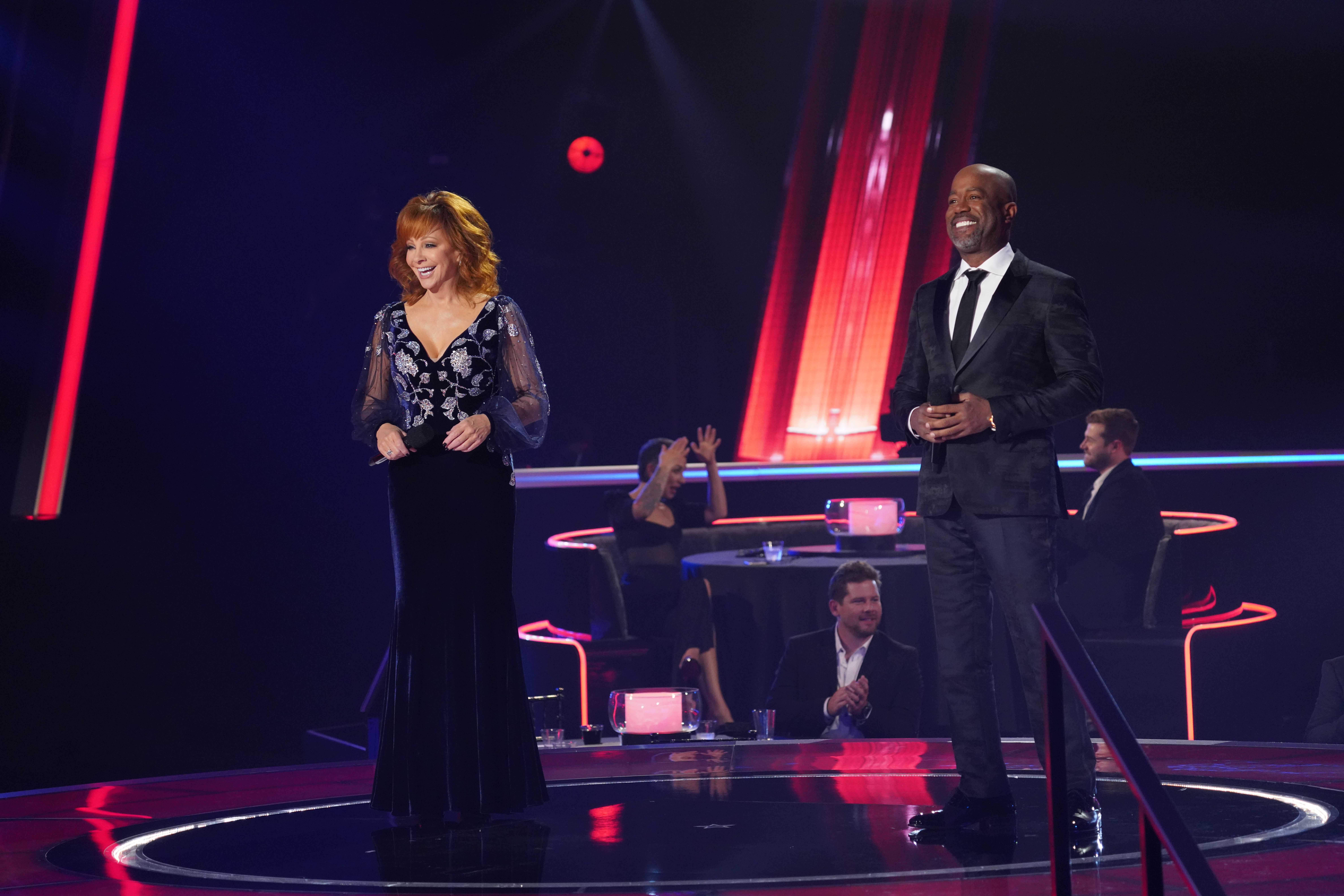
During a time when major awards shows opted to host virtual ceremonies in light of the pandemic, the CMA decided to forge ahead with an in-person November event in an effort to remain “representative of the brand,” according to show producer Robert Deaton. Filmed non-audience at the Music City Center with only the nominees and one guest peer nominee allowed in the venue, the CMA went through rigorous protocols to keep the environment as safe as possible with measures including rapid testing, sanitizing equipment between each award, seating a maximum of four people per table that were spaced eight feet apart, among them. But that still wasn’t enough to make this viewer and local journalist feel like it was worth the risk. It was disheartening to see the most prominent names in country music walking around the room without masks on, smiling and laughing with each other without following social distancing practices, especially during a time when COVID-19 cases were surging in Tennessee and local officials were urging citizens not to gather in groups larger than 10 people. Additionally, five acts had to drop out leading up to the day of the show due to testing positive for the virus or coming into contact with family members who had tested positive.
Photo Credit: John Russell/CMA
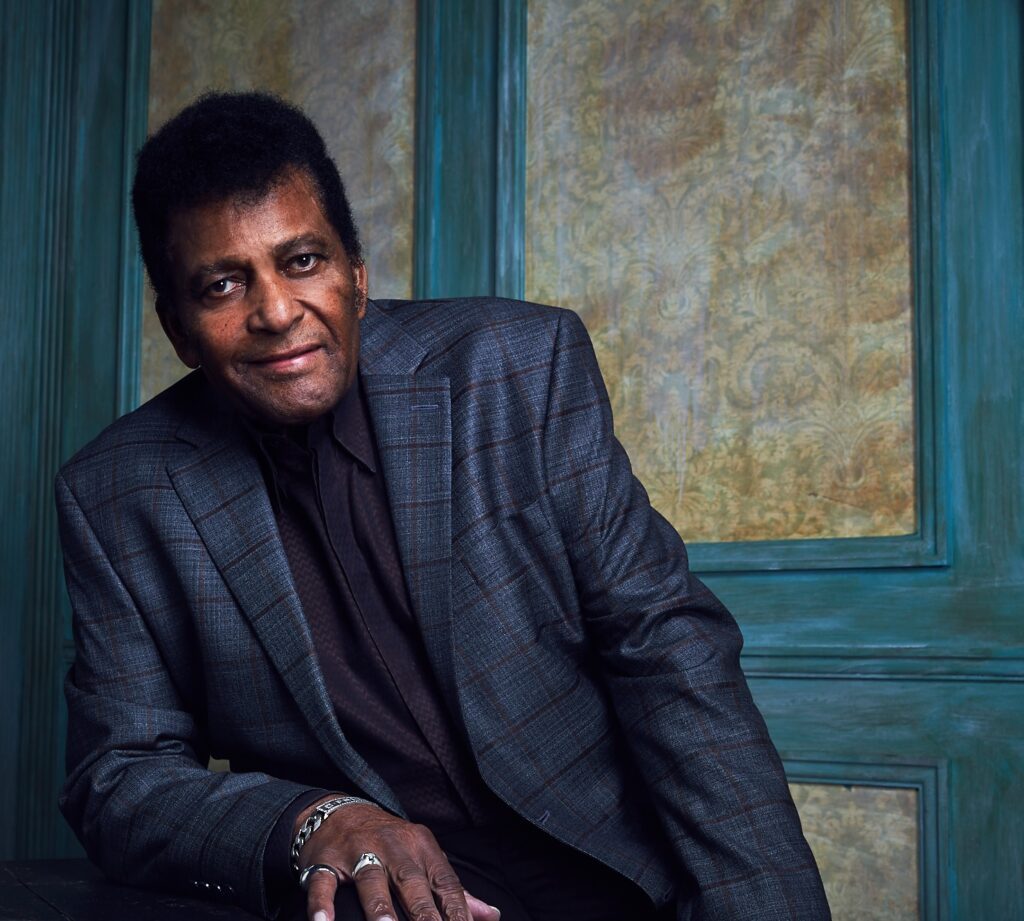
Perhaps the most devastating blow came weeks later; the country music world was heartbroken when Charley Pride, who flew from Dallas to Nashville to attend the show and accept the Willie Nelson Lifetime Achievement Award, tragically passed away due to complications from COVID-19 at the age of 86 after he was hospitalized with COVID-19-type symptoms in late November.
While it’s uncertain where Pride caught the virus – his manager Kevin Bailey tells The Dallas Morning News that the CMA “took every precaution that you can imagine” and CMA asserts in a statement that Pride tested negative for COVID-19 multiple times after returning home to Dallas – it served as a sobering reminder that hosting a virtual show would have perhaps been the safest and more proactive choice.
Charley Pride was one of country music’s big losses this year. Photo credit: Joseph Llanes
Low: The loss of legends
Loss has sadly been a commonplace in 2020, and the country music community lost many beloved artists this year. Kenny Rogers passed away from natural causes in early March just before the pandemic hit, while Charlie Daniels suddenly passed away from a stroke in July, months before his annual Volunteer Jam was scheduled to take place in Nashville (it’s since been rescheduled to February and re-branded as a tribute concert to Daniels).
Additionally, K.T. Oslin, who made history as the first female songwriter to win the CMA Award for Song of the Year with “80’s Ladies,” lost her battle with Parkinson’s Disease one week after being diagnosed with COVID-19, merely days before Christmas. The ramifications of COVID-19 where also felt when Charley Pride, John Prine and Joe Diffie all succumbed to complications after contracting the virus, leaving their loved ones, fans and the music community at large to mourn the loss of such tremendous figures.
High: Country music reckons with systemic racism
In the midst of a raging pandemic, a mirror was held up to America’s long-rooted history of systemic racism following the deaths of Ahmaud Arbery, Breonna Taylor and George Floyd. Their deaths inspired countless marches and protests and sent shock waves throughout the country that ultimately arrived at country music’s doorsteps, leading to several panels about the topic of diversity and breaking the cycle of racism in country music, with industry professionals and artists alike openly sharing their experiences.
This summer, during a panel called “A Conversation on Being African American in the Nashville Music Industry,” EntertainmentOne’s Senior Vice President and General Manager, Gina Miller, spoke out, saying, “The best data we have are your stories.” She related her own experience in which she greeted a woman at her former workplace every day, her cheerful “Good morning!” going totally unanswered. She persisted for nearly two years, until she the woman finally reciprocated. “From that grumble of ‘good morning,’ I still said ‘good morning’ the next day and the grumble got clearer and clearer,” Miller recalled. “The day that I had the clear ‘good morning,’ I knew we had turned a different corner.”
As a white woman who covers country music daily, these discussions, and the Black Lives Matter movement as a whole, have opened my eyes to how I have unintentionally been a part of this system. Miller’s perseverance truly resonated with me and her story often comes to mind, even months later. Miller’s story, and the many others like it, have motivated me to take a hard look at my role as a journalist and be more intentional about shining a spotlight on the voices that deserve to be heard.
Though country music still has a long way to go before it achieves true equity, it feels as though the blindfolds came off this year in many respects, the industry now willing to not only have conversations about race, but make changes to establish a more inclusive genre. As Mickey Guyton’s star power continues to rise in light of her powerful songs “What Are You Gonna Tell Her?” and “Black Like Me,” the former of which made her the first Black woman to perform her own song at the ACM Awards in its 55-year history and the latter designating her the first solo Black female to be nominated for Best Country Solo Performance at the Grammy Awards, it feels like a glimmer of hope for a future that is more accepting, welcoming and loving toward all.
High & low: Tennessee tornado & recovery efforts
When a tornado tore through multiple towns in Tennessee in the middle of the night on March 3, it left 24 people dead and multiple businesses destroyed in its path. Nashville was among one of the hardest hit areas, leaving many local business owners to clean up the damage and piece their livelihoods back together – but they didn’t do it alone. Residents-turned-volunteers demonstrated why Tennessee is nicknamed the “Volunteer State,” whether donating money and resources or showing up by the thousands to help clean up the damage. The effort was so massive that there was a waitlist to volunteer while other times volunteers were turned away.
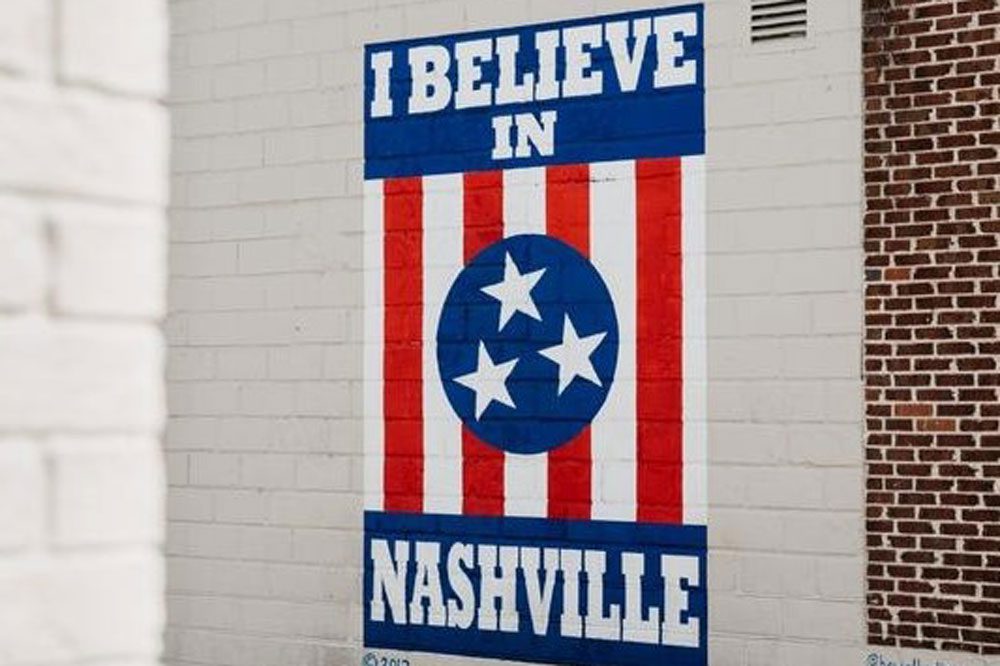
Photo courtesy of I Believe in Nashville
As one of those volunteers, I can attest to the awe-inspiring service of this city. Having only seen pictures of tornado devastation on the news, it was shocking to stand in the rubble of a home that had been torn apart in minutes, the owner remarkably surviving with only a few minor scrapes despite being trapped in the middle of the destruction. But the fear and heartache I felt as we picked up the remnants of someone’s life was immediately met with comfort and relief, working alongside selfless strangers who became friends through the experience.
While Nashville is a city of transplants, I believe it is reflective of our nation as a whole. As people who have moved here from across the country with a dream in hand collectively rushed to the call of duty, helping their fellow neighbors, the “I Believe in Nashville” mural – which remained unharmed while the buildings around it were destroyed – took on new meaning. It not only represents the resiliency of Nashville, but proves that we the people are invincible when we join together for the greater good.
Heartbreak has provided inspiration for endless songs and albums, not only because the topic is so universal but also because everyone somehow still has their own unique spin on it. For Nashville-based singer-songwriter Allison Mahal, a breakup was a catalyst for deep self-discovery and growth, as well as for her debut EP, Me Now.
The EP follows the emotional trajectory of a breakup: first, you get sad as you think back on the happy memories you shared with your ex, then you begin to cheer up as you remember why you broke up in the first place, and finally, you become more independent and aware of what you do and don’t want in the future.
After a brief drum intro, “Magic” sets the scene both sonically (think updated ’80s vibes) and thematically, touching on the healing power of music and name-dropping Sufjan Stevens. “After my breakup, I would dance in my room; I would rearrange my furniture and put on my favorite songs,” Mahal recalls. Lyrically, she reminisces on the things she misses about her ex – as well as her most desperate moments of post-breakup longing. With lines like “Looks like your magic is still wearing on me/I can’t shake it off in my sleep,” she puts a surprisingly negative twist on the idea of magic; here, it’s more like a curse than a blessing. “When I wake up in the morning and I feel you by my side/I’m so tired of this magic keeping us alive,” the chorus concludes.
With its upbeat percussion and electric guitar, Mahal describes it as the most heavily-produced of the collection. “I really wanted to make a song I could dance to in my room,” she says. “I didn’t want the production to emulate sadness because the lyrics were sad enough.”
Next comes the title track – a fun, deceptively breezy song full of plucky guitar riffs, where Mahal reflects on the ways she diminished herself to be in the relationship. “[I had] this revelation after repeatedly making myself small in relationships — small in the sense of being super agreeable and keeping shit bottled in because there was fear that who I was as a person and my truth would make people less interested,” she says. “I wanted to be confident in who I am, and I was dimming my shine just to be agreeable in relationships.” In the final lines, she belts, “All I have is me now,” acknowledging that she became more present when she wasn’t shrinking herself for anyone.
In “October,” a slow, contemplative song incorporating string arrangements and raw, emotive vocals, she reflects on what she could have done differently in the relationship as her ex becomes “a stranger who passes me by.” “Mustangs” finishes out the EP with a poppy reprieve, describing that feeling of hope that you’ll run into your ex whenever you see the car they drive, while simultaneously hoping it’s not them because you know you need space to heal.
Mahal started the recording process in fall 2019, using producer and guitarist Sam Roller’s home studio as well as the famous Ocean Way Nashville Recording Studios. She, Roller, and Van Isaacson, who also played synths and violin, produced the EP together, and “Mustangs” was the only song they kept the same after the first recording. They listened to the rest and thought, “we want to make them more indie pop, less studio version, more electronic, and incorporate weird sounds and take our time,” she remembers.
Mahal has been playing guitar and songwriting since she was 12 years old and studied music business at Belmont University in Nashville. In addition to her career as an artist, she works as a PR rep for musicians, which she loves but views as separate from her music. She released her first single, “Little Blue,” in 2018, followed by “Me Now” and “Mustangs” this year.
She was going to therapy while recording the EP, which helped her to process the emotions that went into the music. “I had a lot of unsettled pain I didn’t know how to deal with on my own,” she says. “I was writing these songs and realizing a lot about myself and what I want in relationships, romantically and platonically. I think I found growth through pain, through writing these songs, through recording these songs, through therapy, and through surrounding myself with people who encouraged me to be vulnerable, who don’t make me feel small.” She counts Roller and Isaacson among these people, so recording the EP was an especially liberating process for her. “I felt I could be my loudest and my truest self, and that was super healing,” she says.
“I had a tendency of being a chameleon to make people feel comfortable in a room, and it took me until the recording process of this EP to realize it’s okay not to be an agreeable person all the time,” she says. “You can be a very kind-hearted person and still disagree with someone. You can be vocal and confident. It’s okay to mess up with your peers and make mistakes in relationships and learn from it, and you don’t have to be this perfect shell of a human and as a female. I’m learning it’s okay to take up space.”
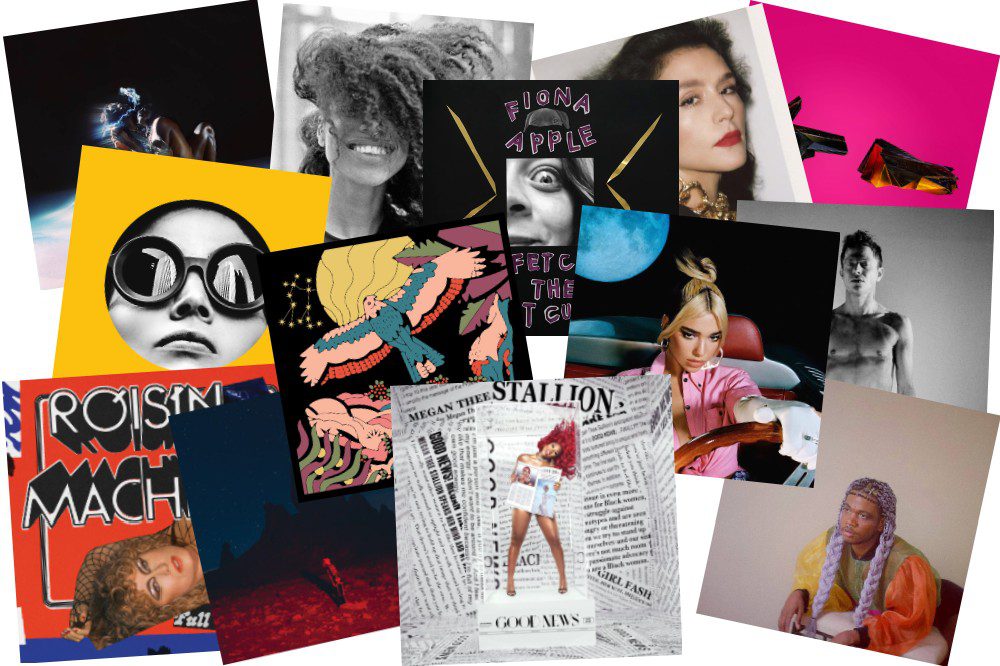
In a year that’s been like no other for the music industry, it feels a bit weird to make a best of 2020 list – there have been no tours, venues and clubs across the globe are in danger of closing their doors for good, release schedules were shuffled beyond recognition, and musicians have had to find other ways to make ends meet while those in the U.S. await the next round of paltry stimulus checks. With a situation so dire, the metrics have changed – should we ascribe arbitrary value to the skill of producers, songwriters, performers, and the execution of their finished projects, or simply celebrate records that made us feel like the whole world wasn’t crumbling?
Definitively ranking releases has never been the Audiofemme model for looking back on the year in music. Instead, our writers each share a short list of what moved them most, in the hopes that our readers will find something that moves them, too. Whether you spent the lockdown voraciously listening to more new music this year than ever before, or fell back on comforting favorites, or didn’t have the headspace to absorb the wealth of music inspired by the pandemic, the variety here emphasizes how truly essential music can be to our well-being. If you’re in the position to do so, support your favorite artists and venues by buying merch, and check out the National Independent Venue Association to stay updated on what’s happening with the Save Our Stages act. Here’s to a brighter 2021.
EDITOR LISTS
Marianne White (Executive Director)
Top 10 Albums: 1) Mary Lattimore – Silver Ladders 2) the Microphones – Microphones in 2020 3) Soccer Mommy – Color Theory 4) Megan Thee Stallion – Good News 5) Phoebe Bridgers – Punisher 6) Amaarae – The Angel You Don’t Know 7) Dua Lipa – Future Nostalgia 8) Adrianne Lenker – songs/instrumentals 9) Perfume Genius – Set My Heart On Fire Immediately 10) Lomelda – Hannah
Top 5 Singles: 1) Kinlaw – “Permissions” 2) Billie Eilish – “Therefore I Am” 3) Little Dragon & Moses Sumney – “The Other Lover” 4) Yves Tumor – “Kerosene!” 5) Megan Thee Stallion – “Shots Fired”
Top 10 Albums: 1) Land of Talk – Indistinct Conversations 2) Dehd – Flower of Devotion 3) SAULT – Untitled (Black Is)/Untitled (Rise) 4) Public Practice – Gentle Grip 5) Cindy Lee – What’s Tonight to Eternity 6) Fiona Apple – Fetch the Bolt Cutters 7) Benny Yurco – You Are My Dreams 8) Eve Owen – Don’t Let the Ink Dry 9) Porridge Radio – Every Bad 10) Jess Cornelius – Distance
Top 10 Singles: 1) Little Hag – “Tetris” 2) Elizabeth Moen – “Creature of Habit” 3) Yo La Tengo – “Bleeding” 4) Caribou – “Home” 5) Jess Williamson – “Pictures of Flowers” 6) Adrianne Lenker – “anything” 7) Nicolás Jaar – “Mud” 8) Soccer Mommy – “Circle the Drain” 9) New Fries – “Ploce” 10) El Perro Del Mar – “The Bells”
Top 5 Albums: 1) Deep Sea Diver – Impossible Weight 2) Blimes and Gab – Talk About It 3) Perfume Genius – Set My Heart On Fire Immediately 4) Tomo Nakayama – Melonday 5) Matt Gold – Imagined Sky
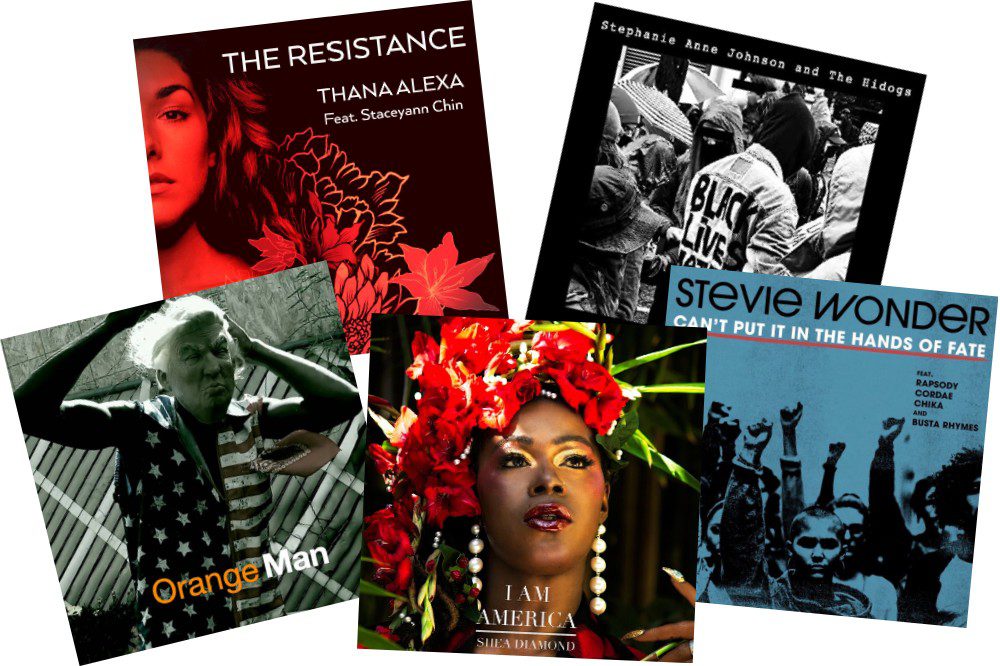
Top 3 Singles: 1) Stevie Wonder – “Can’t Put it in the Hands of Fate” 2) Tomo Nakayama – “Get To Know You” 3) Ariana Grande – “Positions”
Top 5 Albums: 1) Frances Quinlan – Likewise 2) Bartees Strange – Live Forever 3) Told Slant – Point the Flashlight and Walk 4) Diet Cig – Do You Wonder About Me? 5) Shamir – Shamir
Top 3 Singles: 1) Kississippi – “Around Your Room” 2) Sad13 – “Hysterical” 3) The Garages – “Mike Townsend (Is a Disappointment)”
Top 5 Albums: 1) Perfume Genius – Set My Heart On Fire Immediately 2) Lasse Passage – Sunwards 3) Megan Thee Stallion – Good News 4) Grimes – Miss Anthropocene 5) Yves Tumor – Heaven To A Tortured Mind
Top 3 Singles: 1) Megan Thee Stallion – “B.I.T.C.H.” 2) Perfume Genius – “On the Floor” 3) SG Lewis & Robyn – “Impact” (feat. Robyn & Channel Tres)
Top 5 Albums: 1) Jarvis Cocker – Beyond the Pale 2) Róisín Murphy – Róisín Machine 3) Run the Jewels – RTJ4 4) Emma Donovan & The Putbacks – Crossover 5) Various Artists – Deadly Hearts: Walking Together
Top 3 Singles: 1) Emma Donovan & The Putbacks – “Mob March” 2) Laura Veirs – “Freedom Feeling” 3) Miley Cyrus – “Never Be Me”
Top 5 Albums: 1) Lianne La Havas – Lianne La Havas 2) Joya Mooi – Blossom Carefully 3) Lady Gaga – Chromatica 4) Witch Prophet – DNA Activation 5) Tremendum – Winter
Top 3 Singles: 1) Lianne La Havas – “Green Papaya” 2) Lady Gaga – “Free Woman” 3) Allie X – “Susie Save Your Love”
Top 5 Albums: 1) Chris Stapleton – Starting Over 2) Brett Eldredge – Sunday Drive 3) Little Big Town – Nightfall 4) Ingrid Andress – Lady Like 5) Ruston Kelly – Shape & Destroy
Top 3 Singles: 1) The Weeknd – “Blinding Lights” 2) Billie Eilish – “Therefore I Am” 3) Remi Wolf – “Hello Hello Hello”
Top 5 Albums: 1) Grimes – Miss Anthropocene 2) Rina Sawayama –SAWAYAMA 3) Allie X – Cape Cod 4) LEXXE – Meet Me in the Shadows 5) Gustavo Santaolalla, Mac Quayle – The Last of Us Part II (Original Soundtrack)
Top 3 Singles: 1) CL – “+5 STAR+” 2) Yves Tumor & Kelsey Lu – “let all the poisons that lurk in the mud seep out” 3) Stephan Moccio – “Freddie’s Theme”
Top 10 Albums: 1) Dust Bowl Faeries – Plague Garden 2) Ganser – Just Look At That Sky 3) Oceanator – Things I Never Said 4) Loma – Don’t Shy Away 5) Maggie Herron – Your Refrain 6) Pretenders – Hate for Sale 7) The Bird and the Bee – Put up the Lights 8) Partner – Never Give Up 9) Bully – Sugaregg 10) Olivia Awbrey – Dishonorable Harvest
Top 5 Albums: 1) Mickey Guyton – Bridges EP 2) Katie Pruitt – Expectations 3) Mandy Moore – Silver Landings 4) Dua Lipa – Future Nostalgia 5) Cf Watkins – Babygirl
Top 3 Singles: 1) Mickey Guyton – “Black Like Me” 2) Ashley McBryde – “Stone” 3) Lori McKenna feat. Hillary Lindsey and Liz Rose – “When You’re My Age”
Top 5 Albums: 1) Tame Impala – The Slow Rush 2) Khruangbin – Mordechai 3) Kid Cudi – Man on the Moon III: The Chosen 4) Tycho – Simulcast 5) Run the Jewels – RTJ4
Top 3 Singles: 1) Tame Impala – “Lost In Yesterday” 2) Phoebe Bridgers – “Kyoto” 3) Halsey – “You should be sad”
Top 5 Albums: 1) Dua Lipa – Future Nostalgia 2) Taylor Swift – folklore 3) Shamir – Shamir 4) Jessie Ware – What’s Your Pleasure? 5) HAIM – Women in Music Pt. III
Top 3 Singles: 1) Porches – “I Miss That” 2) Annabel Jones – “Spiritual Violence” 3) Wolf – “High Waist Jeans”
Top 5 Albums: 1) Summer Walker – Over It 2) Yaeji – WHAT WE DREW 3) Liv.e – Couldn’t Wait to Tell You 4) Ojerime – B4 I Breakdown 5) KeiyaA – Forever, Ya Girl
Top 5 Albums: 1) Charli XCX – how i’m feeling now 2) The Front Bottoms – In Sickness & In Flames 3) Zheani – Zheani Sparkes EP 4) Various Artists – Save Stereogum: A ’00s Covers Comp 5) Halsey – Manic
Top 3 Singles: 1) Charli XCX – “forever” 2) Doja Cat – “Boss Bitch” 3) Wolf – “Hoops”
Top 5 Albums: 1) Galantis – Church 2) Best Coast – Always Tomorrow 3) Overcoats – The Fight 4) Holy Motors – Horse 5) Suzanne Vallie – Love Lives Where Rules Die
Top 5 Albums: 1) Brigid Dawson & The Mothers Network – Ballet of Apes 2) Ganser – Just Look At That Sky 3) Death Valley Girls – Under The Spell of Joy 4) The Koreatown Oddity – Little Dominiques Nosebleed 5) Ghost Funk Orchestra – An Ode To Escapism
Top 3 Singles: 1) Miss Eaves – “Belly Bounce” 2) Purple Witch of Culver – “Trig” 3) Shilpa Ray – “Heteronormative Horseshit Blues”
In the early 2000s, serendipitous road trips to venues in church basements and abandoned warehouses were still considered priceless and precious moments. Kids with their ears tuned to the underground traveled far and wide off the beaten trail, and Chicago-based Joan of Arc reigned as a prolific genre defining staple, alongside related acts like Cap’n Jazz, American Football, Owls, and Owen, all tied together by one common thread: brothers Mike and Tim Kinsella, and their cousin Nate.
I’d been sneaking out on school nights to unmapped venues since the age of twelve to see the Kinsellas play in various formations, and distinctly remember an Owen show at Poughkeepsie’s Club Crannel in which a group of teenagers from the crowd began heckling Mike. “What ever happened to Cap n’ Jazz?” they shouted, followed by a repetitive and aggressive mantra: “We want Joan of Arc!” The lines have always blurred between these projects – but Joan of Arc stood out as the seminal art band of the bunch.
On December 4, Joan of Arc released their final album, Tim Melina Theo Bobby, via Joyful Noise Recordings. Over the past two decades the band has had a revolving cast of members, but the simplicity of the record’s title gets to the point: here are four friends, closing the final chapter on a prolific catalogue that spans more than twenty releases.
The album was collaboratively written and recorded by Melina Ausikaitis, Bobby Burg, Theo Katsaounis, and Tim Kinsella, with the support of frequent collaborators Jeremy Boyle, Jenny Pulse, Nate Kinsella, and Todd Mattei. The process of making the record started as a series of epic jam sessions that would eventually be pared down to create individual tracks. These jams were a hybrid mix of electronics and classic composition that marries analog synth with noise, weaving together sonic motifs within an indie rock framework.
“We basically had everything being recorded through one analog mixer, and had only two tracks going at the same time. It’s funny that we’re still a bit confused about who made what sound on the record,” Burg explains. “It was a process of chiseling out the parts. The sessions would range from 45 minutes to three hours. There are multiple songs on the album made out of the same jam.” The album’s spontaneity and experimentation across ten tracks makes it a more than fitting swan song.
Where there’s an end, there’s a beginning, and a fruitful and colorful history in between. Joan of Arc played their first live show in June 1996 at Autonomous Zone in Chicago, forming after the break-up of frontman Tim Kinsella’s high school punk band Cap’n Jazz in the summer of 1995. The band’s debut full-length, A Portable Model Of, was released on Jade Tree in June 1997. The record lives between art-rock, traditional folk, and math rock, ornamented with experimental sounds. Lyrically, tracks like “Anne Aviary” echo twisted nostalgia belted in an angst-ridden post rock yowl, juxtaposed with a reoccurring synthetic bird chirping flicker, held against a deep resonating lawn mower-like vibration. As a whole, the album established the Joan of Arc habit of using outside collaborators to support the core group’s songwriting – and launched an influential, if not polarizing, career.
With a fluctuating fanbase, the band went on to constantly reinvent themselves. Their anarchist approach resulted in albums that critics were unable to compartmentalize, predict, or even understand. The sound scape architecture, instrumentation, odd sounds, and sampling effects on the records created an improvisational template with an emphasis on the “studio as instrument.” The band would continually revisit this format on successive albums like 1998’sHow Memory Works, Live in Chicago, 1999, 2001’s How Can Anything So Little Be Any More?, 2009’s Flowers, and so on.
Joan of Arc draws upon unique and unexpected influences; minimalist composers, early ’90s hip hop, and house music. You can hear it on “Feels Like the Very Second Time,” from 2015’s JOA99, its sparse analog beat gradually building within a formulaic house music framework. The beat moves off center towards the closing of the track, and bleeds into fuzz, descending into the ambient, mysterious “Hairspray for Babies.”
“When Tim got super into house, it definitely affected our live sound on a technical level,” Burg recalls. “Suddenly we thought it was critical to have actual subs in the club for our performances. Hip hop shows had a big impact on us, and how we wanted our music to sound at full volume and heavy frequency levels. You know – that heaviness you just feel in your chest.”
2018 brought the album 1984 and with it, the introduction of Melina Ausikaitis as lead vocalist. 1984 was almost entirely written by the newest member of the band, a visual artist who had played with the group for roughly five years. Aside from being a solo artist, Ausikaitis sang backup on the band’s previous LP, He’s Got The Whole Land This Land Is Your Land in His Hands. 1984 was characterized by her distinctive voice, while Kinsella, Katsaounis, Burg, and Jeremy Boyle accompanied the emotional soundscape with alternating melodies, drone hums, field recording samples, and empty space.
On Tim Melina Theo Bobby, Kinsella and Ausikaitis swap vocal duties track to track. The spacious and intimate songwriting feels conversational, with an effortless nonchalance. The record weaves and dips like the dynamic arc of a well scripted movie.
The fittingly-titled “Destiny Revision” opens with a soft, sentimental crooning accompanied by analog electronic instrumentation, leaning into the original sound Joan of Arc embodied in the mid-90s. But as the record progresses, it taps into the avant-garde, sample-driven experimental soundscapes that the band has embraced for the past decade. Ausikaitis’s earnest, lush vocal floats over a rough, vibrant almost synaesthetic jam on “Rising Horizon” – you can taste the tone, and visualize the brilliant color palette of the record. The moody tracks breathe life into the senses, and sonically soothes like an adult lullaby.
“Karma Repair Kit” feels like traveling back in time and re-experiencing the first album that got you through angst-ridden puberty (“I so envy/Your restraint/Scuttling up trees/And knee-high kicking across cold creeks/And your cheeks slashed with burnt cork war paint/We each agree our dreams define us”), then you snap out of it, realize you’re grown, and sink into the relief of adult autonomy.
“Destiny Revision” is essentially about winging it when your life fails to play out as you’d imagined, and the video features analog photos taken by Burg in various cities while on tour, prominently featuring the legendary Berghain in Berlin, where Joan of Arc played their last show. “I’ve been spending lockdown scanning and labeling negatives. I have it loosely organized starting around 2013, up until we flew home from Berlin,” he explains. “That last gig felt like the ultimate show. I remember the mirror ball on the side of the stage during our really fun sound check, and the fireplace next to the merch booth, and the crowd was just amazing.”
Ausikaitis adds, “We were so tight by then, playing together felt like nothing. That kind of effortless gel where you don’t have to concentrate so much, and you can actually look around at each other and feel present.”
Sung by Ausikaitis, “Something Kind” stands apart as a particularly provocative punk rock feminist anthem. It was written “at the height of the #metoo movement, when everything started coming out in the news, all of the inappropriate things gentlemen were doing to their female employees,” she explains.
Initially focused on a male friend who was being threatened with false accusations, at some point, the narrative shifted. “It became a song about just getting fucked by guys, and thinking about how men didn’t know what my experience had been like. I’m not sure exactly when it flipped from me being mad at this woman on a man’s behalf, or me being angry at the universal lack of empathy for the female experience,” she says. “I was really nervous to say the last line: ‘In the dawn of something kind/I’m the one taking you from behind/You get the tits and periods/And you’re the one who gets pregnant,’ because I’m a pretty modest person. I don’t generally write provocative lyrics, and Bobby didn’t know what was coming. It was actually hilarious because Bobby’s surprised reaction was in the recording, and we kept playing it on repeat.”
With regards to this being the final body of work from Joan of Arc, Ausikaitis says, “We were just recording. We didn’t go into it with the idea of it being our last. Since the songs weren’t made with that intention, I didn’t have to write my goodbye anthem. Now that it’s become this thing, it feels super sentimental. It has certain triumphant parts that are really kind of heartbreaking, and can definitely define itself as the final album.”
Burg responds, “Only the future can define that. You should think of every record as your last, because you never know if you’re going to make another one. For this to be the last record, we’d actually just have to wait, and not make another record.” He draws a parallel between the album and the movie Fargo, a film that led the audience to believe it was based on a true story due to a title card, but in reality was press tour spin. Joan of Arc have earned a reputation for being highly eccentric – is the band taking us for a spin? Like Burg implies, only time will tell.
As self-described “musicians with day jobs,” the lack of fiscal greed and societal pressures have allowed Joan of Arc to pursue music in its most organic expressive form. They create freely without the burden of people pleasing, and have dodged lucrative offers to do early-album-based nostalgia tours. We can look forward to hearing more of the band members’ exciting side projects: Ausikaitis and Burg’s brilliant, bizarre and intuitive pop jams as Aitis Band; and Good Fuck, Tim Kinsella and wife Jenny Pulse’s erotic exploration of experimental literary techniques and adventurous electronic beats. Tim Melina Theo Bobby signifies the end of an era, but it also carries on the legacy of a raw, provocative band that evolved (and sometimes intentionally devolved) a limitless sound – and nurtured a passionate underground music community in the process.
Visit Joan of Arc via their website for ongoing updates.
There’s no question that one of the best things to come out of this absolute shitshow of a year has been Bandcamp Fridays; the first Friday of every month, the music streaming platform waives its revenue share to provide an extra boost to struggling artists who use it to promote their music. Though the difference in percentage of profits that goes into the artists’ pockets is somewhat negligible given its already artist-friendly pay structure (a recent post updating the schedule for 2021 puts it at 93% versus 82% on any other day of the month) the crucial aspect of Bandcamp Fridays is that it boosts visibility for the most essential workers in the music industry – musicians and labels themselves.
No doubt equally inspired by Bandcamp Fridays as it was by indie label 7″ subscription clubs of the ’90s, Brooklyn imprint Mexican Summer is going the extra mile to shake things up with a Bandcamp-centric series they’ve dubbed Looking Glass. It’s a virtual treasure trove of unique, previously unreleased singles, by everyone from label stalwarts like Ariel Pink and Connan Mockasin to more obscure psych, folk, and drone artists like São Paulo’s Sessa, Tokyo’s Kikagaku Moyu, and Chicago’s Matchess.
The first series ran from April 2020 to late July 2020, featuring beautiful, mysterious cover art by Bailey Elder (at one point, Mexican Summer offered a free download of her clip art-esque illustrations as a “coloring page”). After a brief lapse, the series started up again in October with “Love’s Refrain,” a gorgeous instrumental Jefre Cantu-Ledesma song with all-new vocals by Julie Byrne (Elder reprised her role as cover designer, this time with watercolory collages in muted hues), and has gone on to feature the likes of hip hop upstart Nappy Nina alongside celebrated dub duo Peaking Lights and avant-country singer Dougie Poole. So far, the series boasts over thirty entries that represent the label’s penchant for supporting adventurous sounds, whether the contributors are officially signed or not.
The label posits that the project “focuses on the human condition as reflected through chance and destined encounters” and is “a portal for creative exploration and community to resonate through all versions of reality… to encourage discovery, diversity, and collaboration.” While that’s a pretty heady sentiment, Looking Glass somehow more than accomplishes the task.
It’s an ethos that’s especially in line with that of Los Angeles-based minimal wave synthpop artist Geneva Jacuzzi. “Maybe I’m a person who was destined to be miserable but who refused destiny and the only way to alter the cosmic DNA was to hack the matrix,” she riffs. “That is pretty much what music is. It hold secret codes to alternate universes.” She likens music to a secret, primal language. “That is how communities of people come together over music. They are all part of the same alien tribe and the music is more alive than they are.” Her entry into the singles series, “Dark Streets,” was originally part of an ongoing conceptual performance and video play called Dark Ages that spanned from 2011-2015; she created a stand-alone video for “Dark Streets” in 2012, but the song was never officially released.
“The inspiration came one evening when I was recording and wanted to encapsulate the feeling of driving aimlessly into the night… looking for something but not knowing what… and then encountering certain dark forces that guide you into oblivion. Almost like looking for trouble, or meaning, or an adventure but finding yourself lost and a little scared. Pre-GPS you know?” Jacuzzi explains. “In a way, it seemed fitting for the time we are all in. It’s been a little scary and uncertain. Me being an optimist, I thrive in times of uncertainty because I know there is always an interesting surprise waiting in the unknown, even if it feels dark or freaky.” This, she says, made it a good fit for Looking Glass.
Though closely associated with some of Mexican Summer’s marquee acts, Geneva Jacuzzi has remained staunchly DIY, rarely putting out traditional releases in the nearly twenty years she’s been actively making music. But her experience with Looking Glass might change all that; though still tight-lipped, she says she and Mexican Summer have “some fun things planned for the future.”
“If we don’t change, we die right?” she jokes. “Or at least get depressed and bitter.”
Madison McFerrin channeled some residual bitterness into her piano-driven single for the Looking Glass project, “Hindsight.” Though it sounds like a typical ballad about love gone wrong (“How should I let you go/With nothing left to show/Was it right for you to stay?/Was it wrong to walk away?/Could’ve said we went for it…”) but rather than a romantic partner, McFerrin says the track was inspired by disillusionment with the Democratic primaries, in which Joe Biden won the party nomination over the decidedly more progressive Bernie Sanders. “Sonically, ‘Hindsight’ is like going through the five stages of grief: denial, anger, bargaining, depression and acceptance. I like to think that, like the song, we’ll be leaving 2020 on a hopeful note,” McFerrin says.
Though not specifically written for the series, McFerrin adds that she was “really drawn to how Mexican Summer were making the Looking Glass project Bandcamp-focused” when the label reached out to her over the summer asking if she would participate, and she made the decision to self-produce the track. “I wanted to push myself. Quarantine afforded me the time to really work on production and I felt confident enough to share that next phase of my artistry,” she says. “This was the first time I had been in a studio since the start of COVID, so my biggest challenge was feeling one-hundred percent comfortable. There’s always this neon PANDEMIC sign flashing in the back of my mind these days. But when I actually started playing and singing, it made me feel much more relaxed.”
As for the political work still to be done, McFerrin says, “We have to make sure that we continue to engage, especially locally. Mutual aid groups like Bed-Stuy Strong in Brooklyn are doing great work providing food and cleaning supplies to those most vulnerable to COVID-19 in the community. Through grassroots movements, hopefully we can continue to grow the progressive movement and push the people at the top.”
As it turns out, the Looking Glass series can help with that, too – some of the artists, like Texas-born, L.A.-based folk singer Jess Williamson, have opted to donate the proceeds from single sales to various organizations. Williamson released 2018’s Cosmic Wink and this year’s stunning Sorceress via Mexican Summer after self-releasing two previous records and an EP; as their titles would imply, Williamson has a bit of a witchy streak, and is donating proceeds from her swooning, dreamy “Pictures of Flowers” to Harriet’s Apothecary, an “intergenerational Brooklyn-based healing village led by Black Cis Women, Queer and Trans healers, artists, health professionals, magicians, activists and ancestors… rooted in the wisdom of our bodies, our ancestors and our plant families.”
“I wanted the proceeds from the song to go to them because I really admire the work they’re doing,” Williamson says, which includes expanding access to health and healing resources that support Black, Indigenous and PoC communities.
The song itself was directly inspired by Williamson’s quarantine experience, which was compounded by both the end of a significant relationship and being unable to tour to support her new album. “I spent most days walking around my neighborhood, and I was struck by how different it felt to me at that time versus when I first came to the neighborhood over four years ago,” she says.
She sent a demo of the song to Hand Habits’ Meg Duffy, who plays slide guitar over Williamson’s contemplative acoustic guitar and lilting vocals. “Meg was the first person to hear the song, and I was really nervous they wouldn’t like it. Thankfully, Meg responded positively, and I got the courage to ask if they’d be down to lay some guitar down remotely,” Williamson says. “Normally I’d be afraid to ask, but we were all sitting around doing nothing so I think I had that working in my favor, ha. Meg recorded everything from their home studio, I recorded from mine, and then I sent everything to Jarvis Taveniere who laid down drums, bass, and mellotron, and mixed it.”
“Pictures of Flowers” is a heartbreaking time capsule, juxtaposing the freedom Williamson felt pre-pandemic with what seemed like the end of the world. “Taking vitamins/Calling all my friends/Momma’s feelin’ calm/She trusts the president/Don’t wanna get a gun/What if I move in with someone?/Grow a garden in case the stores all run out,” she sings, ending the track with the trail of a dangling thought: “I had a dream we were in Japan…”
Similarly, experimental composer Lucy Gooch let dreams inspire “We Carry,” her contribution to Looking Glass – though hers was a recurring dream she’s had since childhood. In it, she and her sister are at school and the playground tarmac turns to glass, revealing “a deep, dark ocean in which enormous sea-creatures weave and dive.” Gooch says “We Carry” was “one of those rare songs that appears quickly,” though it was already recorded when label co-founder Keith Abrahamsson reached out to her about contributing something. “I’ve always been a big fan of the label so it was pretty amazing to hear from him,” Gooch says. “I see the song as being a kind of hymn to blurry memories, and to childhood.”
The UK-based synth artist represents an emerging name in ambient music, her sound akin to Kaitlyn Aurelia Smith (who, incidentally, contributed a track called “Lagoon” to Looking Glass). Gooch released her debut EP Rushing in May of 2020, which “comprised looping and more labored arrangement,” she says. “‘We Carry’ was the first song I wrote without any looping and it reminded me that sometimes it’s better to lean into more traditional songwriting methods, rather than trying always to subvert them. I like music that has enough space in it, but that still plays with more intricate ideas.”
Across the Looking Glass series, that balance can be found in spades. Whether based on alien languages, or a dream within a dream, or hope in the face of an epic letdown, music’s ability to connect all of us – especially in a year of such jarring disconnect – transcends genre and remains its most enduring quality. After more than a decade of releasing soul-stirring records, the folks at Mexican Summer have learned to celebrate this wholeheartedly, and the Looking Glass singles reflect their mission brilliantly.
Follow Mexican Summer on Instagram for ongoing updates.
Music has always served as a battle cry and a balm during particularly tumultuous times, and in 2020—when injustices like the disproportionate impact of the COVID-19 pandemic on BIPOC, the slaying of George Floyd by police, the assault on immigrant, women’s, and LGBTQIA rights by the Trump Administration became apparent—music was there to help us grieve, process, and make change, yet again.
Here’s a list of a few of this year’s stand-out protest songs featuring womxn. It’s by no means exhaustive, so let it be your gateway toward more songs of peace, love, and change.
Stevie Wonder – “Can’t Put It In the Hands of Fate” (feat. Rapsody)
This poignant, funky single from legendary soul artist Stevie Wonder engages directly with issues of police brutality, black lives and voting for change, especially as he invites rappers like Rapsody to spit a few verses about her experience as black woman in America. “Apologize, you denied my people/Made our death legal, we all paralegal,” she raps. “Gotta defend ourselves when the laws ain’t equal/Cops aim lethal, death in cathedrals/Bang-bang boogie, you could die wearin’ a hoodie.”
Stephanie Anne Johnson – “American Blues”
In her blues song for America, Seattle-based songwriter Stephanie Anne Johnson addresses America like a lost lover, and as a BIPOC in this country. “I’ve been sad/I’ve been blue/I’ve been dying/All over you/ You’ve been washed in my blood/All these years,” she sings. With her soaring gospel voice, Johnson spills her truth and pain—and like all great protest songs, it inspires you to really make some change.
Shea Diamond – “I am America”
Visibility can be revolutionary in itself, and singer, songwriter, and transgender activist Shea Diamond knew that when she released her song “I am America,” in June. Co-written with Justin Tranter, the sizzling anthem centers Diamond’s own experiences as a black trans woman in America, and her views on the belonging and inclusion of the LGBTQIA community, while the uplifting video features short clips from members of the LGBTQIA community.
Sunny War – “The Orange Man”
Americana artist Sunny War pulls no punches with “Orange Man,” pointedly going after the current U.S. administration. In the lyrics of the song, the Los Angeles-based artist acknowledges the diversity in America and how President Trump’s hatred of difference makes him unfit to lead, singing, “If I were you/I’d run for my life, not for president/cos the residents/need a leader and that is not you.” To send the point home, several boastful and bigotry-laden soundbites from Trump, on issues like popularity with the Black vote and immigration, are layered throughout the melancholy but passionate tune.
Thana Alexa – “The Resistance” (feat. Staceyann Chin)
In March, Grammy-nominated jazz vocalist and loop artist Thana Alexa delivered her rousing protest song, “The Resistance.” She originally penned the song after attending the Women’s March in 2016, but by releasing it in 2020, the song gains broader meaning. “We must rise/Revolutionize our minds/To unify, detoxify,” she sings—and after the hardships we’ve collectively faced head-on in 2020, it’s a fitting imperative to carry into a new year, too.
When everything’s going south, one of the few things you’ll always have to lift you up is music. That was especially true this year, when many of our social lives came to a halt, but there was no shortage of new songs to listen to from the safety of our homes.
COVID-19 and other 2020 events inspired a lot of good music — both the hopeful and the relatably downtrodden — and plenty more came out this year that suited the times, even if it wasn’t born from them.
Here are a few songs out this year that helped us get through the garbage fire that is (but, thankfully, will soon no longer be) 2020.
Edoheart – “Original Sufferhead”
In Nigeria, the home country of singer/songwriter/producer Edoheart, the term “original sufferhead” refers to someone who’s divinely ordained to suffer — and I’d venture to say a lot of people felt like the original sufferhead this year. The song has an optimistic note, though, because even as Edoheart declares herself the original sufferhead, she also proclaims, “I will fight it out.”
CAMÍNA – “Cinnamon”
Dallas-based musician Ariel Saldivar, a.k.a. CAMÍNA, wrote her debut single about the mistreatment of asylum-seekers at the U.S.-Mexico border, but it contains a wider message of resilience that’s especially applicable to the racial justice struggles of 2020, putting a trip-hop spin on African-American spirituals like “Nobody Knows the Trouble I’ve Seen.”
Atta Boy – “Lucky”
If you’re having a bad year, you can take comfort in the fact that the fictional protagonist of this fun indie rock song is having just as bad a time as you. LA-based band Atta Boy has managed to tell a story that is equal parts sad and comical; Lucky’s “got a bum leg,” and his boss tells him he’s “dumber that dirt,” but despite it all, he’ll “keep on trucking.”
Naïka – “African Sun”
World-pop artist Naïka penned “African Sun” to celebrate her Haitian heritage, singing Creole lyrics in response to riots in Haiti. People of all backgrounds, however, will be able to relate to the lyrics this year: “I let things hit me deeply/heavy weight ’til I can’t breathe/I keep the noise right beside me/this cycle’s pulling me mad deep.” In the end, though, she’s “strong like the African sun,” celebrating the strength of Haitian people and reminding us all that we can get through anything.
Subhi – “Wake Me Up”
Indian-American singer-songwriter Subhi wrote her vocoder-filled single “Wake Me Up” just as lockdown was beginning and the realization that the world would never be the same was settling in. Even as she processed the impending sense of doom we were all feeling in the song, she also gave it a positive spin, using the refrain “wake me up, wake me up, wake me now/pull me out from the dark” to point toward a light at the end of the pandemic tunnel.
Joyeur – “Motion”
While some songs offered us commiseration or hope, this danceable single from LA-based electro-pop duo Joyeur gave us practical advice with lyrics like “I need some trees and stones/I’ll call you later/I saw a sign that warned me it was over/I’m going to hang my phone up.” For times when quarantine got difficult, Joyeur’s Anna Feller and Joelle Corey advocated retreating to nature and disconnecting from technology, which is never a bad idea if you need a break from all the bad news surrounding us these days.
Ciara Vizzard – “Victory”
This R&B-influenced single, inspired by a streak of bad luck in UK-based pop artist Ciara Vizzard’s own life, reads like a letter to 2020 (or perhaps even to Donald Trump, given that it came out right around election day in the U.S.). “Look what you do to me/you stole my inner peace,” she begins the song, working up to a hopeful chorus — “I can’t let you hurt me/never ending but I’m trying” — and turning triumphant by verse two: “Now that I’m finally free/you’re just a memory.” We can all look forward to the day we’re able to say that.
Autumn Nicholas – “Side by Side”
There was a lot of division in the world this year, particularly the U.S. – racial, political, and of course, literal physical separation thanks to COVID-19. Soul-pop singer-songwriter Autumn Nicholas wrote “Side by Side” to represent the best of what happened in 2020 – and what could happen more if we make the most of the situation: people coming together to support one another through these tough times, “standing side by side for equal rights.”
Welcome to Audiofemme’s monthly record review column, Musique Boutique, written by music journo vet Gillian G. Gaar. Every fourth Monday, Musique Boutique offers a cross-section of noteworthy reissues and new releases guaranteed to perk up your ears.
Amy Winehouse’s sudden death on July 23, 2011, was an incalculable loss. She’d put a modern spin on the classic soul and girl group sound of the 1960s, a talented songwriter who was also a compelling performer, and her sharp wit and iconic look only added to her appeal.
Sadly, her problems with substance abuse meant she only recorded two full studio albums during her short career, along with a number of non-album tracks. Surprisingly — and unfortunately — there isn’t a vault of unreleased material that can be mined for future release. In a 2015 interview with Billboard, David Joseph, Chairman/CEO of Universal Music UK, said he destroyed Winehouse’s unreleased recordings, explaining, “It was a moral thing. Taking a stem or a vocal is not something that would ever happen on my watch. It now can’t happen on anyone else’s.”
It also means that two “new” Winehouse releases, The Collection and 12×7: The Singles Collection (both Island/Ume) feature no previously unreleased material. But The Collection offers a nice way to cover the Winehouse basics in one fell swoop, featuring the albums Frank, Back to Black, Lioness: Hidden Treasures, Live In London, and the self-explanatory Remixes. Frank, Winehouse’s debut, has tended to get overlooked in the wake of Back to Black’s staggering success, especially as it wasn’t initially released in the US; it’s an album well-worth rediscovering. Lioness is a must-have posthumous collection of rarities, featuring a superb cover of “The Girl From Ipanema,” Winehouse’s last original song, “Between the Cheats,” and her final recording, the Grammy-winning duet “Body and Soul,” with Tony Bennett. Live In London documents a terrific May 2007 show at London’s Shepherd’s Bush Empire, previously released on DVD/LP as I Told You I Was Trouble: Live in London; this marks its first release on CD. The Singles Collection is a fun all-vinyl set, featuring some great non-album B-sides like “Monkey Man” and “You’re Wondering Now.”
Frank was the promise, Back to Black the fulfillment, and Lioness the aftermath. I’d hoped there would be a lot more from Amy Winehouse. But I’m so grateful for what we do have.
Those who pre-ordered Tancred’s Nightstand album when it was first released in 2018 got a bonus; a cassette with nine acoustic demo versions of the album’s songs. Now the songs are being made more widely available as Nightstand (Acoustic) (Polyvinyl Record Co.).
Nightstand is an album that looks at the intricacies of human relationships. Acoustic strips the songs of their instrumental augmentation, with the result that they now cut straight to the bone. “Queen of New York,” for example, is a buoyant, almost dizzying number about the pleasure and excitement of a one-night stand. But on Acoustic, it’s more bittersweet, the morning after now tinged with sadness. The difference is even more striking on “Song One,” a painful number about unrequited love; on Acoustic, the line “Why must she love someone else?” becomes even more devastating.
“Lyrics are my favorite part of writing, hands down,” Tancred (aka Jess Abbott) said to Playlist Play, and Acoustic keeps them right in the foreground. The titles resonate — “Apple Tree Girl,” “Underwear,” “Strawberry Selfish.” There’s a concise elegance to the writing; a line like “Kiss me like we’ll never get older” needs no further elaboration. There’s also a teasing playfulness: “I’ll feed the hand that bites me.” Overall, Acoustic has a freshness and an intimacy that might well lead to it becoming your preferred version of Nightstand.
Sweetheart of the Sun, originally released in 2011, was the first album featuring the Bangles as a trio, following Michael Steele’s departure from the group. It also happens to be the last album that the group has released to date. Notices were good at the time of its release, but the record faltered on the charts.
Which meant that not enough people got the chance to experience this gorgeous record. The album has a strong Southern California vibe, a sound rooted in the late ’60s and early ’70s music the band members grew up listening to. Further inspiration was drawn from Sheila Weller’s book Girls Like Us, which told the stories of Carole King, Joni Mitchell, and Carly Simon. After reading the book, “we started to make this composite woman who represented something important to us and inspirational to us,” guitarist Susanna Hoffs told Rolling Stone.
Thus you get the title track, “Anna Lee (Sweetheart of the Sun),” about a golden girl who carved out a musical path for others to follow: “Now we want to celebrate her/All of us who came in later/Quiet power, simple grace/No man could put you in your place right now.” The cascading harmonies sweep you up from the first track, and never let go until the final, ringing notes of the closing song “Open My Eyes.” There are hooks a-plenty throughout, and the kind of good, solid, jangly guitar rock that’s irresistible. The album’s two covers are delightfully idiosyncratic: “Sweet and Tender Romance” (a lot rougher than that title makes it sound) by the 1960s Scottish sister duo the McKinleys and “Open My Eyes,” originally by Todd Rundgren’s first band the Nazz.
On its initial release, the vinyl edition of Sweetheart came and went and quickly became a high priced collector’s item. So Real Gone Music has stepped up to reissue the album on pink swirl vinyl; get it while you can – and have a safe and healthy 2021!
When Ty Herndon recorded a collection of holiday classics nearly 20 years ago, he could have never imagined the time in which they’d resurface.
On his new holiday album Regifted, Herndon breathes new life into his 2003 album Not So Silent Night, a project that’s taken on multiple forms over the past 20 years. Initially completed in 2000, Herndon released Not So Silent Night re-packaged with updated songs through his website in 2003, followed by another version with additional songs, A Ty HerndonChristmas, released in 2007. The original album came at a time when Herndon endured a series of personal challenges. He had lost his record deal three years prior and was struggling to find another one, in addition to overcoming alcoholism. “I was having a really tough time in life. At that point, I was lost, I didn’t know what I wanted to do. I was in a business that I felt had beat me up pretty badly, but it’s what I do. Just contemplating some poor choices in life at that point and just remembering that I was newly sober, it was a tough time,” he recalls to Audiofemme. “I just needed to make that record, so I took it back to the well of where I came from – my grandmother’s guitar.”
The recording process was as raw as Herndon’s emotions, the singer turning his living room into a recording studio where his friends helped him record the songs he used to hear echo off the walls of his grandmother’s Baptist church with her 17-soprano choir’s Christmas Cantata, including “O Come All Ye Faithful,” “Little Drummer Boy,” “Silent Night” and “O Come O Come Emanuel,” the latter of which is a duet with fellow country singer and then-boyfriend, Waylon Payne. “But the thing that wasn’t tough is sitting down on the floor in front of a microphone and singing – so simple,” Herndon continues. “And that was a superstar in my life, the gift was the superstar, and I had to follow that.”
Nearly 20 years later, that gift resurfaces in the form of Regifted, maintaining the integrity of the original album while adding a stunning rendition of “Orphans of God” featuring longtime friend and Tony Award-winning Broadway star, Kristin Chenoweth. During a year consumed by the COVID-19 pandemic that led to a shelved documentary, a new album being placed on hold and more than 100 cancelled tour dates, Herndon found himself back in a dark place – so much so that he was temporarily unable to sing. “Everything felt like it was lost. All that darkness, I lost the ability to sing, there was nothing coming out,” Herndon explains. “I found myself in a spot of such darkness that I had very little faith, and faith is the light.”
But when Herndon’s manager brought the anniversary of Not So Silent Night to his attention, he felt a shift. “I lit up a little bit,” Herndon says of his reaction. “The minute he said that, I’ll never forget this, what popped into my brain was ‘Orphans of God’ – it’s time.” Released in 2006 by Christian group Avalon, the Dove Award-nominated song is one that Herndon has long wanted to record, but was waiting for the right opportunity to present itself. He received another sign that it was meant to be when his producer informed him that the song was already tracked, as they had recorded a piece of “Orphans of God” for a song on musician Paul Cardall’s upcoming album.
The puzzle was complete when Chenoweth agreed to sing with him, along with supporting vocals from former Avalon members Michael Passons and Melissa Greene, who departed the group before “Orphans of God” was recorded. Their voices collectively soaring on the uplifting song brought Herndon to tears. “It was so special, I sat down and I started crying,” Herndon says, adding that he was intentional about making the word “God” universal. “That was to give a lot of people out there who are just are lost, they need a hug, the word ‘God’ in this is a hug. It can be anything you want it to be because there are no orphans of love.”
Though Herndon made subtle changes to Regifted, such as taking his manger’s advice and ending the album with the a Capella rendition of “O Come All Ye Faithful,” which opens Not So Silent Night, he says that “Go Tell It on the Mountain” is a performance almost frozen in time. “‘Go Tell It on the Mountain’ was performed exactly like we sang it on my grandmother’s back porch almost my whole life. That is the most authentic piece on the record for me,” he says.
As Herndon reflects on the album’s initial creation, he remembers it as a family affair of people who showed up for him in his darkest hour, viewing the project from a meaningful perspective. “Having some of the greatest singers who’ve gone on to do magnificent things that were singing on that record, who just showed up because I called them and said, ‘I need you guys. There’s no money involved. I need you and come sing with me,’” he recalls. “It’s been crazy that music made in joyful desperation so long ago would surface today and sound so fresh. It’s like something from another world said ‘let’s just hold this album for 20 years.’”
Though time has changed many aspects of life in between, the albums have seemingly evolved with the singer, pinpointing dark periods in life that led Herndon to the light of music and self-growth. “The biggest thing I’ve learned about myself this year is that I’m a lot stronger than I thought I was,” he says. “There’s always been that underlying, ‘I’m going to crumble at any minute,’ and how much of me is really authentic and how much me is not. I know who I am now. I know who my people are now. I know who my friends are. So I have learned full circle what Tyrone Herndon is all about.”
He keeps the advice of his grandmother close at heart, too. “My grandmother used to tell me ‘if you go to sleep with the dark, you can certainly wake up with it. If you go to sleep with the light, you can wake up with it,’” he proclaims. “So I try to go to sleep with the light.”
Vice Versa was a safe haven in my college years. Nestled among the rolling hills of West Virginia, and situated snuggly in downtown Morgantown, interwoven with the WVU campus, the gay club offered safety, glitter, and endless midnight thrills. My friends and I would head out on the town almost every Friday night, and our escapades seemed to stretch on endlessly if we let them.
Nothing takes me back to this time quite like “See You Again” by Miley Cyrus (or her alter-ego, Hannah Montana, depending on how you look at it). 13 years after its release, the song sweeps me away on such sweet memories, transporting me magically to one of the most transformative years of my life. It’s a special kind of emotional sensation listening to it now, imagining a 21-year-old me bumping and grinding on the dance floor in a sea of sweaty bodies ─ with the song’s sticky bubble gum melody coursing through my veins. There is nothing more intoxicating than the chorus dropping and literally everyone in sight belting along; it’s a state of euphoria that is almost indescribable.
“The last time I freaked out/I just kept lookin’ down/I st-st-stuttered when you asked me what I’m thinkin’ ’bout,” Miley sings, a playful glimmer in her eye. “Felt like I couldn’t breathe/You asked what’s wrong with me/My best friend Lesley said, ‘Oh, she’s just being Miley’/The next time we hang out, I will redeem myself/My heart, it can’t rest ’til then/Oh-woah-woah, I, I can’t wait to see you again.”
Miley could make you feel everything at all once. At only 15 years old, she could tear up the club with a ferocious bite, injecting you with the fearlessness to own the moment yourself. “See You Again” captures both the naivety of first love and dynamic musical chops, an elixir of rumbling electric guitars, thumping bass, and scratchy synths. It’s the perfect pop song of the 21st century ─ and I would be remiss if I didn’t acknowledge it as the song that defined my early 20s.
I didn’t know it then, but Miley would become the soundtrack for my entire life. Through every soaring high to the lowest of lows, her music has uplifted, empowered, and taught me it’s okay to not be okay. You just have to own whatever you’re feeling, naysayers be damned.
Miley was right in the middle of her turn on Disney Channel’s Hannah Montana, a high-glam coming-of-age sitcom about a young girl navigating the spotlight and grasping onto a sense of normalcy. I was only marginally familiar with the show, but it was the music I connected with most. Songs like “The Best of Both Worlds,” “Nobody’s Perfect,” “Life’s What You Make It,” and “One in a Million” ─ go-to favorites across the show’s first two soundtracks ─ laid the foundation for her particular brand of gooey pop-rock, borrowing influence from artists like Avril Lavigne and Kelly Clarkson.
While I can certainly appreciate Meet Miley Cyrus, (her debut album as an artist outside the Disney persona, though jointly released with Hannah Montana 2) and essential cuts like “G.N.O. (Girls Night Out)” and the wavy, mood-elevator “Start All Over,” it wasn’t until her 2008 sophomore effort, Breakout, that solidified my adoration for her, as well as her destiny as one of pop’s true greats.
That summer was one for the books. I was 22 and feeling like I needed to take a risk in my life. Two days after earning a Bachelor of Fine Arts in Acting, I sold off most of my belongings, hopped on a one-way flight, and started a new life as a cast member at Disney World. I was assigned to Tomorrowland Speedway, and despite my aversion to playing pretend as a race track mechanic/attendant, it proved vital to my personal growth.
It’s not the work I remember most; it’s the people. Oh, the people. It’s the group of friends I met at a random welcome pool party. Anxiety pounding in my chest, towel gracefully draped across my shoulder, I walked over to a group of young women who were all literally wearing the same style of shorts, just in different colors. If I was looking for a sign, I got one. We immediately bonded over our choice in casual attire and quickly got on with introductions ─ it was the kind of immediate friendship I will forever cherish.
Ali, Jessie, Becca, and I did everything together that summer. We gallivanted from Animal Kingdom to Epcot to Hollywood Studios to Magic Kingdom and back again. I even asked for a housing transfer to Chatham Square just so we could be closer in our everyday lives. It was awesome.
Meanwhile, Breakout was the soundtrack to it all. I listen to it now, and every inconsequential detail floods my brain like too much champagne on New Year’s Eve. From “7 Things” teaching me to put great value in self-worth to “Girls Just Wanna Have Fun” inviting me to live unapologetically free to “Fly on the Wall” and its grungy rock undercurrent, that record is one of those rare pop albums I listen to without skipping over anything. If I’m feeling particularly sad, I’ll put it on and get lost in the past. “Wake Up America” still makes me want to march for environmental conservation, and “Bottom of the Ocean” rips my heart out. She really did that.
Hannah Montana: The Movie and The Time of Our Lives EP both arrived a year later. In between, I had moved into my then-boyfriend’s house in Tampa, a few days after finishing my Disney job, and it seemed like the perfect decision at the time. Look, I was 23 – and I can’t say that I regret that moment but… within three weeks, I left and took a flight back to Morgantown. It was simply another pit stop in my very chaotic 20s.
I began working what felt like four jobs at the shiny new Red Lobster, getting up way before dawn so I could catch the bus, and I made damn sure to pack my MP3 player with as much Miley as I could. Between “The Climb” and EP songs like “When I Look at You,” “Obsessed,” and the bop-to-end-all-bops, “Party in the USA,” I found myself continuing to get lost in her little world. It was like she couldn’t stop delivering God-tier pop songs. I naturally had no clue where life was going to go next, so I let Miley be my guide.
As many pop stars do, particularly women, Miley shifted gears quite drastically to make a mature artistic statement. 2010’s Can’t Be Tamed struck like a bolt of lightning. She was 18 now, and coming into her own as a young woman, and the music directly mirrored her self actualization. “Liberty Walk” and “Can’t Be Tamed” are the obvious streaks of rebellion, but songs like “Two More Lonely People,” “Scars,” and “Robot” further underscored her growth as a bona fide rock star. And if you were looking to totally bawl your eyes out, you had “Forgiveness and Love” and the iconic “Stay” to do the trick.
After spending several months moving all over the East Coast, from Morgantown to Orlando to Washington, DC, I finally settled in Nashville. I was 24, and the world opened up in a way I never expected. I took online classes for a Master’s degree, got a part-time job at Old Navy, and dove head-first into the club scene. As Miley was blossoming into her full potential, so was I. I could really see myself for the first time in a long time, and Can’t Be Tamed was as much my own retaliation against the world as Miley’s artistic and personal peak.
Over the next few years, I bounced around some more. I went back to West Virginia. Then New York. And then back to Nashville. Now, it was 2013, and Bangerz crashed into my life like a wrecking ball. A new acquaintance gave me a real shot at her publication; I traipsed around Music City, getting my feet wet in the industry in a very real way: covering live shows and events, and interviewing the hottest new country acts. I took job at Kroger to make ends meet and even found myself exploring my sexuality in a way I never had before. But with all the risk-taking came very hard crashes the next two years.
Despite hitting rock bottom, Miley’s music continued to teach. “We Can’t Stop” encouraged me to shed past conceptions about myself, disregarding the haters, and rediscover liberation in my own body. “It’s our party, we can do what we want to/It’s our house, we can love who we want to,” she sings over a gummy beat. She evokes such energy with songs like “4×4,” “Love Money Party,” and “FU,” which still floors me with her vocal volatility.
I remember working nights sometimes, changing out price tags, and putting Bangerz on shuffle. “Drive,” “Maybe You’re Right,” “#GETITRIGHT,” “Someone Else” ─ what range of human emotion. Miley was finding new colors in her voice, too, learning how to fully lean on her throaty growl when a song warranted it, and she could really pulverize you over the head with a melody. During those long stretches of loneliness, as I worked my way through sterile food aisles, sometimes wondering what I was even doing with my life, her voice kept me going.
When the public and media predictably turned their backs on her, Miley stood her ground. She twerked. She lapped her tongue in the air. And she didn’t care. She was living life on her own terms – who were they to take that away from her? The personal freedom she’d found finally spilled over into her work with Miley Cyrus & Her Dead Petz. An insane 23-song collab with psych rockers The Flaming Lips, initially self-released on SoundCloud, funneled her weirdness into a smorgasbord of delectable cuts ─ the most peculiar among them “Milky Milky Milk,” “Fucking Fucked Up,” “Evil is But a Shadow,” and “Miley Tibetan Bowlzzz.” She kept squeezing those tear ducts, of course, zip-lining from “Karen Don’t Be Sad” to “Fweaky” (perhaps the crown jewel) to “Twinkle Song.”
I was smack dab in the middle of my own journey, as well. I left Nashville for West Virginia and then Pittsburgh. I was entering my late 20s and still felt like I had no idea what I was doing. I had lost my job at a mid-level publication, and a dear friend suggested I try a change of scenery to ground myself again. In the summer of 2015, I moved into a three-story townhouse with a friend of a friend and her friends, and it didn’t take long for chaos to set in. For the sake of respect, I’ll call my roommate Sally. Well, Sally had an abrasive, dominating personality, so much so that it became evident she wanted to play house mother, rather than be a real friend. While Miley was reclaiming her musical identity, I learned I too needed to declare my self-worth and take up a little room ─ and I soon retreated into my work and self evaluation.
In time, I eventually did figure things out. I moved back to New York (yes, again) a few months later and worked remotely for a Manhattan-based music site. Fate had kissed me, and I soaked it in. My career was actually moving forward; I felt good about myself, and I was dating again. Life was good.
But a curve ball hurled itself my way, as it always does. I found myself without work and needing to absolutely shake up old habits and severe toxic patterns. On the day Miley released Younger Now, a cosmopolitan-spun pop-country disc, on September 29, 2017, I moved back home to West Virginia for the final time. It’s funny. I spent nearly a decade running from my past and a dysfunctional family, without realizing I needed to confront it all head-on before I could truly fly free.
Younger Now saw Miley swerve in the opposite direction. She was still able to delve into her songwriting prowess, waxing introspective on songs like the title track, “Malibu,” “Miss You So Much,” and “I Would Die for You,” but, more importantly, she was coming into her own. Musically, she wasn’t mining new territory, but it was the return to her country roots that gave her more agency over her life and work. Her voice appeared to find greater, richer textures, as well. Her ability to glide so effortlessly across such melodies as “Rainbowland” (with Godmother Dolly Parton), “She’s Not Him,” and “Inspired” was just… invigorating.
With those 11 songs, I learned to be present in the moment. I learned that sometimes you need to hide away and reflect and allow life to wash over you. There’s no need to thrash around and bound away to whatever city every time things get a little too real. Those early days back home were hard, and I can’t pretend they weren’t. But I gave myself time. Time to really excavate past traumas, address toxic people in my life, and shed who I was, once and for all. I learned it was just a small detour in the grand scheme of things.
When you reassess an EP like 2019’s SHE IS COMING, which was originally supposed to kick off a trio of EPs, you get the sense Miley needed a detour, as well. “Mother’s Daughter,” “Unholy,” and “The Most” certainly shined brightest, and you could argue they were clear precursors to Plastic Hearts, her brand new record and magnum opus. Glittering 1980s pop-rock suits her voice, a voice as powerful as it is gilded with pain and heartache; she’s learned how to tame her growl, how to sculpt melodies that do much more than simply exist, and how to punch lyrics much harder.
Whether we’re talking brash, thumb biting opener “WTF Do I Know” or the perfect Steve Nicks tribute “Midnight Sky” or the strangely celestial “Never Be Me,” she has reached a level none of us could ever have predicted. Then, she tosses in homages to her past ─ the absolutely gut-punching “Angels Like You” harkens back to The Time of Our Lives and Breakout in its soaring pop sensibility. “High,” “Hate Me,” and “Golden G String” are among her finest entries to-date. She weaves from country heritage to angsty punk lyricism to heartrending simplicity, and at each step, she not only accepts her past but shines a light on the constant pressures of being in the spotlight.
Now in my 30s, life makes the most sense it ever has. Sure, your 20s are thrilling and unexpected, but you don’t really, truly know yourself until your 30s. I came out as non-binary a couple years ago; I’m hitting new highs in my career; and I’m finding this animalistic hunger to constantly declare that I am, in fact, worth it. So far, Plastic Hearts is teaching me to reconnect with my sexuality, remember the wonder and beauty that still does live in the world, and never settle for anything less than what I deserve. Life is far too short.
As I sit here listening to Plastic Hearts for the 100th time in the last few weeks, I decided to head on over to Metacritic to see what folks were saying. Color me surprised: it has a 75 rating, her highest to date. The media has never really given her credit for shaking up the industry, but it’s cool to see her getting the credit she deserves. She’s been slaying the game since the beginning, and it’s lovely to see the world finally take notice.
In the 1930s, as the world sunk into an unprecedented economic depression, Ted Koehler and Harold Arlen’s song “Get Happy” prompted the American public to “forget your troubles,” “shout Hallelujah” and “chase all your cares away.” The simplicity of the song, with little in the way of instrumentation and barely any dynamic range, gave it earworm quality. Once heard, it stuck, and became a balm for the troubled minds of people losing their life savings, their jobs, their homes and their hope. The same happened in the 1960s and ‘70s, as The Beatles and The Rolling Stones provided anthems for everyone from school children to their grandparents, escapism from relentless news about war and economic decline.
This year, we’ve faced the biggest health and economic disaster of our lives – one that has left many without work, their relationships strained or broken, and proven a major burden on our collective mental health. Pop music once again responded to the call to keep the human spirit afloat – whether we trepidatiously return to work in less-than-ideal conditions, or remain consigned to our homes, allowed only to walk our dogs and shop for toilet paper. Specifically Lady Gaga came to our rescue with her buoyant Chromatica album, which dropped in May along with videos and imagery in which the singer is depicted as an ethereal pink-haired, sci-fi heroine. Make no mistake. This is not a woman who has been eating microwave nachos and signing up to a bunch of language courses she’s never going to start. Lady Gaga gave us a hero right when we need one.
Gaga’s sixth album is a dance-synth-cyber-pop experience. More than a musical project, it encompasses a whole aesthetic – Gaga’s futuristic cyborg-self dancing fearlessly in the desert (“Rain On Me”) was the exact energy we wanted to channel in our own imagination.
The album’s title refers to a dystopian planet – a setting that felt all too real on Earth this year. For all its glitz, glamour and big beats, the themes of trauma, heartbreak, overcoming internal and external obstacles and seeking a sense of being worthy of a good, fulfilling life all made this one of Gaga’s most vulnerable, powerful works of songwriting.
It’s hard to know how the pandemic will shape music made during this period and released in the months or years to come, but in the past few months we’ve had some truly epic pop albums from Dua Lipa, Jarvis Cocker, The 1975, Róisín Murphy, TaylorSwift and Miley Cyrus. Many musicians who were due to release albums in this spring and summer (right before touring globally, under normal circumstances) changed their plans to prevent the potential loss-making risk of not leveraging the album popularity to sell tour tickets. Others saw the immense opportunity. All these people sitting at home, biting their nails, desperate for entertainment and reassurance from pop culture (since our governments have been unreliable sources of comfort) would surely pay good money for albums and merchandise? After all, music fans had engaged en masse with Instagram DJs and live streams from musicians’ loungerooms – and even drive-in concerts, like Keith Urban, Bush, Phoenix and Groove Armada, offered in the US and UK.
Perhaps there was something of a premonition amongst certain artists. Even the glumly witty Jarvis Cocker had recorded and prepared a pop album full of house music tracks designed for dancing. Prior to its release, his livestreamed Domestic Disco on Instagram attracted millions to watch him DJ from his rural UK lockdown, potted plants and stuffed toys included. JARV IS, the collaboration between Cocker and his live band, released Beyond The Pale, a brilliant throw-back to 90s British post-punk, rave culture and art school dropouts. “Must I Evolve?” delivered the eternal question of anyone over 35 who has become stuck in their personal, professional and creative patterns of thinking and living. The answer, in a nutshell, is yes.
Meanwhile, Dua Lipa’s album Future Nostalgia has heavy 1980s synth-pop vibes that recall Olivia Newton John and Pat Benatar. When it came out, Future Nostalgia debuted at number four on the US Billboard charts (inclusive of downloads). At just under 40 minutes, the music felt like a lump of sherbet melting in the mouth. Intense, sugary, sweet and thrilling, then gone. Tracks like “Don’t Start Now,” “Levitating” and “Physical” kept the momentum high and the melodies relentless. People were craving pure pop music, but not just any pop – nostalgia inducing pop that transported them to better times.
It’s not purely my own speculation and opinion that Lady Gaga, Dua Lipa, Jarvis Cocker and other pop purveyors were the fuel that kept us going in 2020. A 2010-2013 study at the University of London, part of the Earworm Project, surveyed 3000 people to ascertain the most commonly cited catchy choruses, or earworms. In a list of the top 10 songs, Lady Gaga took the gong with three of her songs listed, including the number one, “Bad Romance” (the others were “Poker Face” and “Alejandro”).
Pop music is powerful – it becomes trapped in our psyches. Where it is nostalgic, which Lady Gaga does brilliantly in sounding a lot like Madonna-meets-Aretha Franklin, it provides comfort to suffering souls. Nostalgia – both in Gaga’s comic-book stylings and music – has the ability to rouse feelings of confidence and optimism. Most importantly, it is a reminder of our unity and connectedness as human beings. “Let It Rain” and “Free Woman” are the sonic equivalent of putting on lipstick after months of only brushing crumbs off our lips, of actually putting pants on rather than traipsing the house in an oversized t-shirt and tracky dacks. With the musical bounty 2020 has provided, we can conjure up some sense of being part of a larger contingent of a pop-music-loving public, all traipsing off dutifully vaccinated to restart the economy and save the world in 2021.
With this absolute dumpster fire of a year coming to a close, the next few weeks are a time for reflection, rest and recuperation. That means a lot of things for a lot of people, but in the music world, it means year-end lists. I usually tend to stay away from this sort of thing because I don’t love the hierarchical nature of the practice. However, it has truly amazed me to see the amount of stellar music come out of Detroit in the midst of such a gut-wrenching year, and it feels important and cathartic to look back on some of the beauty that surfaced in the sea of chaos. I don’t pretend to be a curatorial genius or an authority of any sort, but here are some of my favorite releases from Detroit artists in 2020, in no particular order.
Jay Daniel – SSD (EP)
Detroit house mainstay Jay Daniels gives us fifteen minutes of percussion-driven, layered dance music. While his roots as a drummer remain evident on the EP, Daniels guides the listener through a vibrant forest of sound and space with ease. Shiny synths and deep bass embellishments wrap his complex rhythmic patterns into a pleasurable and meditative listening experience.
Zilched – DOOMPOP (LP)
Lead singer and songwriter of Zilched, Chloe Drallos, has the innate ability to immortalize potent emotions. Delivered with thrashing drums, distorted guitar and apathetic vocals, Drallos recounts moments of heartbreak, angst and boredom that are crushingly relatable. The record is reminiscent of the ’90s riot grrrl without being derivative and satiates the screaming late-teen, early twenty-year old in all of us.
Tammy Lakkis – “Get Up”/”Moon Rock” (single)
Tammy Lakkis makes irresistible electronic music with attention-grabbing percussion and melodic sensibility. “Get Up” feels like spinning out of control without worry or regard for where you’ll land, while “Moon Rock” captivates the listener with the pairing of Lakkis’ mesmerizing vocals and trippy synth layers.
Boldy James, Sterling Toles – Manger on McNichols (LP)
It’s hard to find the words to describe the gravity of this record. Detroit rapper Boldy James teams up with masterful producer Sterling Toles to blur the lines between hip-hop and jazz in a record that took nearly a decade to complete. Boldy’s often gutting depictions of the city and his experience therein are his most personal and potent verses to date, which he credits to Toles in “Mommy Dearest (A Eulogy).” Toles’ diverse sampling, intricate rhythmic patterns and orchestral arrangements are the perfect pair to Boldy’s visceral anecdotes, making for an undeniably timeless and legendary record.
Omar S – Simply (EP)
A true staple in the Detroit house realm, Omar S unsurprisingly delivers a trance-inducing, escapist EP. The perfect amount of dissonance mixed with bouncy up-tempo tracks gives the listener what they want without being over indulgent.
Milfie (feat. Supercoolwicked) – “From Milfie, With Love” (single)
In a year filled with so much uncertainty, there’s something ultra comforting in listening to an artist who knows exactly who she is, and that’s Milfie in a nutshell. In this two-part single, Milfie reminds us of her unshakable self worth, demanding flow and refreshing realness. Joined by ethereal R&B singer-songwriter, SUPERCOOLWICKED, on “Ain’t Got Time,” the two powerhouse artists reflect on the importance of loving yourself and blocking out the bullshit.
Jake Kmiecik – Horizons (EP)
Kmiecik – drummer of psychedelic-folk outfit Bonny Doon – shows his range in his solo ambient project, Horizons. Glimmering synths are the guiding force in this minimal and cerebral record. Soft and spacey moments intertwined with lush, cascading layers call to mind the ebbs and flows of nature. As a whole, the project feels like a much needed deep breath.
Maya Mereaux – Seauxl (LP)
Songstress Maya Mereaux makes the stream of consciousness melodic on her first full-length record, Seauxl – a ten-track journey to self-awareness. The album weaves a strong narrative via incredible vocals about losing oneself in a romance, only to come out the other end knowing yourself better than ever before.
White Bee – Psychedelic Flight Attendant (LP)
White Bee’s Shannon Barnes shares a soulful and transparent foray into her innermost thoughts on Psychedelic Flight Attendant. Barnes has spent the better part of the last decade not only teaching herself guitar, but creating her own unique sound along the way. Filled with syncopated rhythms, unexpected melodies and universal truths, this record is a shining time capsule for Barnes’ growth as an artist.
Zelooperz – Valley of Life (LP)
Part of Zelooperz’ allure is his ability to jump from character to character within a single project. Just as the title Valley of Life suggests, this body of work feels like a sample platter of all the people Zelooperz is, has been, or could be. That range extends into his seemingly effortless flow, which can fluctuate between sincere and satirical in eight bars.
Tiny Jag – Morph (EP)
Deviating from her former trap-hop style of writing, Tiny Jag “morphs” her sound into alternative power pop on this 2020 EP. Her cunning wordplay is still there, this time delivered with more blasé, controlled vocals and accompanied by booming 808s and shimmering synths. Though this music has all the elements of top-charting success, don’t be mistaken – this isn’t like anything you’ve heard before.
whiterosemoxie – white ceilings (LP)
People love a prodigy. And while many blogs focus on Moxie’s age – just 17 years old – it’s important not to gloss over the fact that no matter what age, the rapper is a talent that only comes around once in a while. His poetic flow is reminiscent of Long Beach’s Vince Staples, and though the two are an entire country apart, they share a penchant for repping their city and distilling their experience in a way that makes them charmingly relatable.
Moodymann – Taken Away (LP)
Detroit’s Godfather of house music – Kenny Dixon Jr. – is back with his legendary funk grooves and repetitions, but this time they’re paired with an undercurrent of pain and longing. After a tumultuous year which included being harassed by police in front of his own building, it would be impossible not to inject some of that frustration into the music. Taken Away isn’t a record that encourages you to forget the tears, but rather to dance through them.
Fred Thomas – Dream Erosion (Synthesizer Songs) (LP)
Thomas is known for his devastatingly honest, stream of consciousness style of writing. And although Dream Erosion is devoid of lyrics, the writing still feels like a magically unfiltered outpouring of emotion. This is especially true of “Kitchen,” a collaborative improvisation that was recorded entirely in Chuck Sipperly’s ‘synth kitchen.’ The record is as beautiful as it is somber and sounds like the amalgamation of collective despair, surrender and inevitable hope.
Anna Burch – If You’re Dreaming (LP)
Burch’s second full length release is soaked with a nostalgia we didn’t know we’d have in 2020. “Party’s Over” reminds us of the times there were parties that we didn’t want to go to, where instrumentals like “Keep it Warm” and “Picture Show” emit a longing for something we can’t get back. Burch’s sweet voice glides over melancholy guitar strums and lackadaisical drums, leaving the listener with the feeling of waking up from a fever dream.
Cousin Mouth – “New Memories” (single)
Cousin Mouth’s songwriter and lead singer/guitarist Alex Burns gives us a glimpse into his forthcoming record MayflowerPeacemakerHolyredeemer with its premiere single, “New Memories.” Burns’ soulful falsetto and intricate guitar riffs are accompanied by the gorgeous voices of Detroit vocalists Supercoolwicked and Salakastar to create a sort of psychedelic R&B. Burns’ lyrics teeter between the ephemeral and the literal, weaving a story of self-doubt and redemption.
Jacob Sigman – Color Coded Heart (LP)
Prolific songwriter/artist Jacob Sigman gives us forty-five minutes of uplifting and earnest pop music. Sigman’s knack for earworm-type melodies paired with uncontrived optimism make his music inherently loveable – even “Get Your Love,” a song about losing a lover, is sprinkled with a carefree hope that has the power to momentarily release you from the gravity of heartbreak.
Black Noi$e – Oblivion (LP)
DJ and producer Rob Mansel, a.k.a Black Noi$e, enlists a star-studded roster of friends to complete his first full-length Oblivion. With appearances from Danny Brown to bbymutha, Mansel demonstrates that he has a well of talented peers to pull from. Despite the high-profile collabs, his dark, layered production style stands on its own throughout the record. He doesn’t bend his arrangements for any of the featured artists, but rather creates his own world of mangled percussion and ominous synths in which his collaborators can dwell with ease.
Madelyn Grant – “Purpose” (single)
Neo-soul singer-songwriter Madelyn Grant ponders life’s meaning on her debut solo single, “Purpose” – a song about blocking out the noise and expectations of society to find what truly moves you. Grant’s pristine vocals sit comfortably on a bed of horns, electric piano and steadfast drums. She pays homage to some of her Motown idols, like The Supremes and Marvin Gaye, with airtight harmonies and infectious melodies.
Meftah – Information Travels Through (LP)
A record that truly shows the vibrant and singular spirit of its creator, Information Travels Through is a breathtaking ode to finding a sense of self in a world that is so often telling us what we should be. Meftah shared a gorgeous statement along with the record that says it better than anything I could say, partially quoted below:
“So this is me creating my own context, beyond the one painted for us on Earth. Beyond just the music, and the record. It is a spiritual war going on. Mentally. Physically….Right now, in 2020, because we STILL exist within a system founded off of land and body theft from Africa, and all colonized lands, this work is dedicated to all my fellow soldiers. It is for all children of the Diaspora. We will always move together.”
Sasha Kashperko – “Can We Not Go to War, Please?” (single)
Kashperko displays his kinship with his instrument on his plea, “Can We Not Go to War, Please?” The track is urgent and erudite, showcasing Kashperko’s deep understanding of rhythmic structure and melodic phrasing. Asking a simple enough request that has clung to the minds of so many of us in the last few years, he doesn’t give any answers, but cries out in solidarity and frustration.
Salar Ansari – Sayeh E Nour (LP)
Spacious synths and watery percussion create a kaleidoscopic atmosphere in this lush ambient record. Ansari’s use of experimental instruments and uncanny sounds transport the listener to a different world with every track. Perfect for both blissful dissociation or centering mindfulness.
Mario Sulaksana – “For You” (single)
Producer, composer and pianist Mario Sulaksana’s first solo release is a glimmering ode to his most concrete influences – Stevie Wonder, Quincy Jones, Marvin Gaye. A true student of the craft, Sulaksana fuses his own cascading style with the formula of the greats – a simple but strong melody, the perfect balance of space and sound, and satisfying harmonies.
don’t – Lightning Slow (LP)
don’t finds a way to make their apathetic garage pop cozy and charming. Baked in warm and fuzzy guitars and steady but unexpected melodies, Lightning Slow feels like a first kiss in your parents basement; surprising, a little uncomfortable, but welcome and oddly familiar. Lead singer Frances Ma delivers poetic verses with angelic apathy, merging nostalgic feelings of teenage angst with more recent feelings of existential dread.
Eddie Logix – Placebo Palace (EP)
At any given moment, Eddie Logix likely has his hands in myriad different projects around the city or even country. The diverse producer, engineer and DJ is known for his elasticity when it comes to making and engineering music, but on Placebo Palace, it’s clear that his heart lies in dance music. The EP feels like a love letter to Detroit and is a welcome ray of light in this dark year.
Tearyeyed – “ForceField V4” (single)
Tearyeyed combines beautiful textures layered together to tell a story that the listener can mold into their own on “ForceField V4.” The song starts out like an afterthought – a simplistic tapping rhythm and guitar strums laced with tearyeyed’s pillowy vocals chase one another in circles. The song’s mantra stands out through the melodic mist: “My love is like a forcefield, I am there to protect you.” Slowly, his voice fades and the drums crescendo into an outpouring of unspoken emotion.
Double Winter – It’s About our Hearts
Beachy riffs, sentimental melodies, and charming honesty are the makings of the debut LP from psychedelic-surf rock outfit Double Winter. It’s About our Hearts has something for everyone – from goth wallflower anthem “Sad Girl at the Rave” to the ’80s drag racing soundtrack stylings of “Rodeo.” Their myriad influences range from doo-wop to Italo, and are what make their sound universally accessible and very much their own.
DonJuan – “Red Plum” (single)
DonJuan is a grossly underrated songwriter and producer based in Detroit. “Red Plum” is just an introduction to his catalogue of simplistically poignant material. This song in particular contains the type of intimacy that makes you feel like you were in the room when it was recorded. The lyrics are simple enough (“I never seem to say the things I mean, I never wanna ask for things I need”) but when repeated over and over they serve as both a reflection and a question to the listener.
2Lanes – “Baby’s Born to Fish” (single)
A strikingly influential group of musicians comes together on this pulsating meditation on change and resilience. Detroit’s Kesswa, Ian Finkelstein, Shigeto and John F.M. are all contributors to this atmospheric track. The result is haunting and unyielding dance track that could only be made in Detroit.
Billionaire Sophia – Ootgoat (LP)
Billionaire Sophia makes music that meets in the middle of pop, house and R&B. Her voice is as smooth as butter and floats perfectly over her self-produced, synth and percussion heavy beats. Her melodies are satisfying but not predictable, lyrics colloquial but not cliché. There’s a touch of glamour and fantasy to all of her songs, both sonically and thematically – it’s the type of music that makes you feel like anything is possible.
Though hip hop has a habit of sampling strings for an added dose of cinematic sound, it’s not every day that audiences get to see a full orchestra playing Kendrick Lamar and Kanye West. Alex Stallings – a.k.a Stallitix of Patterns of Chaos – is looking to change that. In partnership with Cincinnati youth outreach program Elementz, Stallings co-composed and executive produced the first-ever live-streamed production of THRIVE’s Hip Hop Orchestra, and he hopes the project will live on as a series.
“We wanted to do something cool that brings people who don’t go see hip hop to a show, and people who don’t come see classical music to a show,” Stallings tells Audiofemme. “We’re trying to mesh those different worlds.”
Meshing the likes of Ye’s “Diamonds from Sierra Leone” (which samples Shirley Bassey’s “Diamonds Are Forever”) and Kendrick’s “LUST” (from 2017 LP DAMN.) into classical music is about breaking down each individual sound, says Stallings. “Hip hop itself sounds simple, but there’s a lot of things you can add,” he explains. “It’s the process of finding what sounds like the [hip hop] sound. If the song has an ambient sound, let’s see if violins can recreate that. Or, if you have a very low bass sound, let’s get a synth player to replace that. It adds flavor to it. It’s a very experimental process, finding that right sound and the right range for what sounds cool.” The performance took place December 17 at Cincinnati’s Music Hall and is still streaming via THRIVE Cincy’s Facebook.
https://www.youtube.com/watch?v=9tMrdsfObIU
The performance was also co-composed by Preston Charles III and featured musicians from the Cincinnati Symphony Orchestra and beyond – several of whom played steadily in the city before the pandemic. “It’s a beautiful thing, bringing different people together to create something we’re all equally passionate about,” says Stallings. “We have a lot of diverse musicians: white, Black, women, men, people who identify as nonbinary. We have a palette of different people with different stories about why they like hip hop. They all come from different backgrounds. One person, their whole family plays classical music, and they just love hip hop. Another, their father was a rock musician in China, and they like hip hop… I think it’s a beautiful thing; we’re creating a conversation.”
Stallings, who leads Elementz’s THRIVE Cincy, first approached the hip hop-centric arts center with the idea not only to bridge fans between the two genres, but also to put the city’s musicians back in the spotlight. “It was very hard at the beginning of the pandemic, but we took the initiative,” says Stallings. Elementz, which offers music and other classes and serves as a home-away-from-home for many Cincinnati kids, has taken their courses and outreach mostly online amidst COVID-19. “I think this [performance] is one of the biggest buzzes we’ve had, especially for Elementz online. I think everyone should be impressed; this will definitely lead to something bigger – maybe a program or a series that goes on for months at a time.”
Hip Hop Orchestra / Elementz
On Instagram, Stallings has used THRIVE Cincy to support hip hop artists in the city while performances have been scarce. “Since summer, we’ve been putting out videos from different artists, playing their music and interviews with artists,” he says. “Next year, we’re moving into a different direction, where we’ll do one music video per artist and spotlight that. During the pandemic, there’s been no places to perform, so this helps them out.”
As for his own musical ventures, Stallings says fans can expect a new album from Patterns of Chaos – fronted by himself and Jay Hill – next year.
“It’s gonna be different than Freedom,” their 2018 EP, he says. “It’s gonna be fun and it’s gonna address some deeper issues like race, self and gender. It’s gonna be very experimental; you couldn’t really put us in a category, and that’s what we want.”
Follow Alex Stallings on Instagram and THRIVE Cincy on Facebook for ongoing updates.
I don’t think I’ve ever listened to as much disco as I have in 2020. That’s saying a lot for someone whose regular listening habits include a decent dose of the dance floor singles of the 1970s and the many grooves that have spun off from it in the decades that follow.
This year was different, for reasons that really don’t need to be rehashed; in the nine months that have passed since the clubs closed, though, disco has motivated me on the treadmill and while I’ve hustled at my desk. It’s lured me down internet rabbit holes that have nothing to do with pandemics or U.S. elections. While there were plenty of nights where I was fueled by the catalogs of the Bee-Gees and Giorgio Moroder, most of what’s been on my stuck-at-home playlist is new. That’s the other thing about 2020; it’s been a really good year for disco, even if there’s nowhere to play it in public.
Kylie Minogue was the most upfront with her intentions. The Australian pop star titled her fifteenth studio album Disco. Much of the album was recorded at home during the lockdown. Knowing that makes the album a joyous gift to everyone who misses the days of balancing cocktails while squeezing through packed dance floors to club-hug your friends. We might wish that we could do this with “Magic” or “Say Something” playing in the background, but, for the time being, the album will play in full as we connect through text messages and video calls.
Róisín Murphy dropped her latest album, Róisín Machine, in October. At nearly an hour in length, it’s a dive into the sounds that have influenced the beloved singer throughout her life and career, even giving new perspective to pre-pandemic singles like “Incapable” and “Narcissus.” With a visual language that recalls punk and post-punk, Murphy gives a nod to the genre-blurring club culture of the early ’80s.
Jessie Ware drew from the late ’70s and early ’80s, often recalling the late, great Teena Marie on her fourth album, What’s Your Pleasure? Released in June, Ware gave fans a summer of jams so sticky that songs like “Step Into My Life,” “Ooh La La” and “Save a Kiss” could easily remain in your head the morning after you heard them, as if you had heard them while out on the town.
And then there’s Dua Lipa, whose hit album, Future Nostalgia was followed this summer by Club Future Nostalgia. Helmed by The Blessed Madonna and featuring contribution from Dimitri from Paris, Jacques Lu Cont and others, the remix album allowed fans to bring the discotheque into their homes.
In a year of virtual crate digging through sources like Bandcamp, Beatport and Traxsource, I’ve been filling carts and making wish lists with releases from labels like Midnight Riot, based in London, and Glitterbeat, from Hamburg. The latter released Migrant Birds, an homage to Middle Eastern disco from TootArd that’s become one of my favorite albums of the year. Partyfine, founded by French DJ/producer Yuksek, is another one of my go-to labels in 2020. Yuksek’s own full-length, Nosso Ritmo, is packed with goodies, particularly “G.F.Y.,” which features Queen Rose on vocals and sums up the encounters with creepy, overeager club guys that I definitely haven’t missed this year. Partyfine also released “Gang,” from French musician Anoraak with Sarah Maison on vocals, a cut with such a fierce, early ’80s vibe that it became a personal obsession. I’ve also been collecting tunes from producers/remixers like Hotmood and Monsieur Van Pratt, both from Mexico, and Ladies on Mars, from Argentina, who all have a great sense for balancing classic and modern dance music.
I’m using disco here in the broadest sense of the word. Khruangbin usually gets the psychedelic tag, but “Time (You and I),” from their album Mordechai, is disco. U.S. Girls is known more for indie pop, but “Overtime,” from her 2020 album Heavy Light, is a stomper in the vein of northern soul that became 100% disco when Alex Frankel of Holy Ghost! remixed it. Then there’s The Diabolical Liberties, who released their debut full-length High Protection & the Sportswear Mystics this year. The album is filled with funky, dubby punk, not unlike what bands like Gang of Four and The Clash did 40 years ago. Ultraflex, an Icelandic/Norwegian duo who released their debut album, Visions of Ultraflex, this year, look more towards the synth-heavy dance music of the ’80s, but that’s totally disco too.
Sometime during the summer, thanks to a compilation from Berlin label Toy Tonics, I was turned on to Phenomenal Handclap Band. They’ve been around in various forms for years – I’m embarrassed to say that I hadn’t heard them until now – but they also dropped the album PHB in May. This was exactly the music that I had been craving, from the psychedelic funk of “Skyline” and “The Healer” to the new wave-ish “Do What You Like” and Italo-leaning “Riot” to the gospel-tinged “Judge Not.” It’s disco at its most eclectic. PHB became part of this year’s listening habits and I was excited to hear them guest on Love and Dancing, the debut from U.K. DJ crew Horse Meat Disco.
All this, though, is just scratching the surface. There is so much in this year’s treasure trove of music, from Scissor Sisters singer Jake Shears channeling Sylvester on “Meltdown” to The Shapeshifters teaming up with actor Billy Porter for “Finally Ready” to Sophie Ellis-Bextor’s cover of early ’00s Eurodisco hit “Crying at the Discotheque.”
Not all of this music came about as a result of the COVID-19 pandemic. Some were released before mid-March. Others may have been in-the-works, or fully recorded, before lockdown. However, their release in 2020 has made the year at home a little more bearable.
Honduras are long-standing Brooklyn hometown heroes. Since 2012, they’ve recorded tons of catchy ’70s influenced power pop tunes that ooze with New York City lore, and have filmed many of their own music videos. They’ve played hundreds of shows in Brooklyn DIY spaces, opened for Blur and Interpol, and toured the country with other indie darlings such as Sunflower Bean and L.A. Witch. Despite a pandemic and a change to their original lineup, Honduras are moving forward with a record that they finished last January and will be playing their first livestream this Saturday 12/19! We chatted with the band’s vocalist, Pat Philips, about books he’s read in quarantine, his struggle with social media, division in our society, and the need for better access to mental health care.
AF: How has Honduras changed and grown in 2020?
PP: For a large part of 2020 I thought Honduras wasn’t going to be a band anymore. Tyson Moore, who I started the band with, got in touch with the rest of us in April and said he was ready to move on from Honduras. We couldn’t blame him. Him and his wife moved outside of the city, and the three of us had accepted he would quit eventually. But it was still a bit of a shock. And kind of heartbreaking. I have a long history with Tyson – we actually went to the same elementary school in Columbia, Missouri where we grew up. We’d been working on music together for the last 15 years, so I have so many life memories intertwined with him. After he quit the rest of us gave each other space. Fortunately, we all really believed in an album we’d just finished in January and wanted to keep going. We’ve been rehearsing the last couple months and we’re grateful for an opportunity to play a show, or a virtual show, or whatever.
AF: How was writing and recording “Remains,” the singleyou released this past fall?
PP: I really struggle with social media, and I think during the time of writing “Remains” I was acknowledging that it was affecting my behavior. It was written shortly after the 2016 election when everything seemed to be at a fever pitch. Anger, jealousy, insecurity, hatred, vanity, materialism, division are some things I believe social media exacerbates. I’ve also worked in nightlife in NYC for the last 9 years, and during that time a friend had just passed. That was surreal because he would close the bar with me every night, so it was weird adjusting to his physical presence being gone. We didn’t actually record the song until March of 2018 at Ultrasound Studios in Los Angeles. We were playing a few shows out there and fit in a session with Samual Shea and Julien O’Neill of the band Warbly Jets on production/engineering. The session was really loose and great. The studio was in downtown LA which I’d never been to before, and man it’s really scummy around there. The street the studio was on was a weird alley street, and the sidewalk was lined with all these Turkish men drinking espresso and chain smoking. We really enjoyed that session.
AF: Have you been working on any non-music things in 2020? Discover a passion for any unexpected hobbies?
PP: I’ve always had a passion for books and the free time was a blessing to read a bit more. I read some James Baldwin, Joan Didion, Hemingway, the Joy Division oral history. But the book that actually had the greatest impact on me was called The Broken Heart of America by Walter Johnson. It’s this 500 page history of the city of St. Louis “and the violent history of the United States.” St. Louis is the most segregated city in the US and also has the highest murder rate. But it also has an incredibly vibrant history. Maya Angelou, Miles Davis, Chuck Berry come from St. Louis. I was born there, but moved to Columbia, MO at 5 years old after my parents got divorced. St. Louis has always been the city where most of my family lives but a place I never really understood. The book helped fill in some missing pieces. I also helped my fiancé’s parents for a few weeks with moving into their new house in New Jersey. Did a bit of painting, and putting together furniture and shelves. I’m not very knowledgeable in some of that work but it was great to get out of Brooklyn for a few weeks and work with our hands. We’ve been in our apartment this whole year, but this year has instilled our love for NYC. With that said, the few trips out of the city helped restore sanity.
AF: Can you tell us about your new line-up or is that surprise for the livestream?
PP: Maxi Motcham has been filling in on guitar/synth for us. We’ve only been rehearsing for a few months, but he’s really professional for someone his age. Plays both instruments well. I think we’re all just happy to be playing music again. We understand it’s a huge privilege, and we’ve had some cool opportunities over the years. But it’s not something we take lightly, or pursue for financial gains. We do it because we have to – it’s a release that I couldn’t compare to anything else. And I’d be terrified of a life without it.
AF: Do you have any plans for new music in 2021?
PP: We will be releasing a 12-song full-length LP called Redeeming Features. We’re putting out two songs in January, and hopefully the rest of the album shortly after.
AF: What would you like to see change in the world in 2021?
PP: Oh wow. It’s really the division that gets to me. I hope this next year, after all we’ve gone through we can all lean into that voice that beats deep inside. It’s the human spirit, and it’s love. Love and understanding for others. A lot of the fears we share are false masks that people at the top perpetuate for their own profit. We’ve all been through hell, but 2020 illuminated a lot of what is wrong with society. A lot of the systems of the United States appear to be broken. A lot of marginalized people do not have access to opportunity. I think the government should spend more money helping its people, I think corporations should be taxed fairly like the rest of us.
On a personal note, I got to a place a few years ago I didn’t know I was going to be able to get out of. I’d repressed sexual abuse from my past, and was struggling with drug and alcohol addiction. I got arrested at work one night and spent 40 hours in jail. Something shifted mentally in those hours, and when I got out I was broken. It was a low point, but soon after, for the first time, I was able to tell my partner about the trauma I’d experienced. I had held that secret in for 12 years. Fortunately with my insurance in New York, CBT therapy was covered. I’ve been in therapy for the last two and a half years and it’s changed my life so much. I want to advocate for therapy, and hope it can become more available for people. After 2020 we’ve all been through traumas, and I believe therapy for millions more people would help put our society back together.
On her latest single “Trad,” Nadine Shah sings “Shave my legs/Freeze my eggs/Will you want me when I am old?” and it’s clear that Shah’s latest project tackles expectations put upon women and how women internalize that pressure. While writing her 2020 album Kitchen Sink, Shah sat down with close friends and asked them intimate questions about their lives, uncovering previously unspoken pain. She collected their stories along with her own—namely her battle with endometriosis—to make the record. Shah’s voice is commanding as ever, an obsidian blade slicing into layered, driving music and deceptively joyful horns.
Kitchen Sink arrived in June, but its promotion has been anything but normal, due to the pandemic as well as personal factors. Shah has just announced is that she’ll perform the album in its entirety at the Barbican on March 30, 2021, with limited in-person attendance (the show will also be available via livestream – tickets for both are available via the venue’s website). Her website has a few more tentatively scheduled live dates, too.
In her music, Shah has a way of tackling heavy themes without being preachy or self-pitying. She’s known for being a crusader for mental health awareness, among other causes. “My first album was about mental health. My second one was about tumultuous relationships and mental health. The third one’s about the refugee crisis in Syria,” Shah say by way of summarizing her albums, one of which (2018’s Holiday Destination) was nominated for the Mercury Prize.
For Shah, the reward is in the connections she makes with others. This was particularly true for Kitchen Sink.
“The most beautiful thing that came from writing this album was the conversation I had with my friends,” Shah asserts. “What surprised me the most was how many harrowing situations my very close friends have been in and not spoken to anyone about. It was only until I asked my friends if they’d ever been raped, and eight out of the ten said yes. I myself have been. But I didn’t realize I had been until I had these conversations with women. It’s terrifying.”
She wondered, at first, why close friends hadn’t shared their stories with her sooner. “These women had shame. They felt they brought it on for being drunk or too friendly. I said ‘No, no, no, no, my love. You did nothing wrong.’ I didn’t know about these dark stories that haunted them,” she says. “Now we have stronger relationships.”
One song on Kitchen Sink deals specifically with a friend’s experience. The refrain to “Buckfast” repeats “reciting all the times you kick yourself” before culminating with the line “I can’t wait till you’re sober,” which speaks to the lasting effects of trauma. The singer-songwriter remembered this friend going through a traumatic breakup, but she’d never known the full story. “When they broke up, people called her crazy. She wasn’t. She was completely bullied and manipulated and made to feel crazy,” Shah recounts. “She’s better now, and that song is her power. My friend feels empowered, which she should. She’s a fucking superstar, that lass.”
For Nadine Shah, speaking up about difficult issues has been lifelong. Born in the UK to a part-Norwegian mother and Muslim, Pakistani father, occasional culture clashes added to the usual childhood troubles. “I’d go to a school dance and my dad would say I couldn’t wear anything above the knee. My mom would say ‘Listen, wear this dress from Tommy Girl. When your dad’s around, put this coat on,’” Shah remembers. She also remembers that her mother, who passed this year, loved seeing a boldness and defiance in Shah that she never would have allowed herself otherwise.
“My mother always said I was her Tiger Daughter,” Shah fondly recalls. “She was quite a shy woman even though she was brave. She would never have been the kind of a person who’d get on a stage and speak out. But I knew she had this glint in her eye. A bit of her that she couldn’t release was in me. She couldn’t say it, but I could.”
Tiger or not, Shah finds herself often fearing cancel culture. “I don’t go on Twitter drunk anymore,” she laughs. She doesn’t feel alone in her fears either. “So many musicians are scared to speak what they want to say. We don’t get each other’s beautiful stories. We don’t get bombastic, crazy stories. Musicians are scared of a trial by social media,” she laments.
Fortunately, that doesn’t stop Shah from making gutsy music, sometimes with a hyperbolic twist. “Ladies for Babies (Goats for Love)” theorizes that men would rather reproduce with women but actually be in love with goats. In the vividly colored video, Shah helps her partner prepare for a big dinner party but clearly has moments of isolation, delivering the chorus from her bathroom. “She never could give you enough,” packs so much resonance into a matter-of-fact lyric.
For the artist herself, anxieties about women’s presumed motherhood center around painful endometriosis. “I wonder if I’ll be a worthwhile partner if I have a child. I have a beautiful partner and I feel like I’m a nightmare to live with because we can’t have sex. My period hurts so much,” she says, adding that she hopes this health issue is discussed more. Shah recounts a doctor who said she’d need a hysterectomy before even examining her. Frustrations with England’s health system led her to seek private care, for which she had to borrow money from her father. Despite having two surgeries, the pain and its subsequent anxieties have returned.
As outspoken as Shah is—even about her fear of being outspoken—she doesn’t want her messages to override her work as an artist. “I’m hardly ever asked about the process or technicalities behind the music,” she says, adding that she’s had to fight to negotiate future production credit. “Are people assuming that I don’t fucking make the music? I write the music. I write the music on piano. I write the music on guitar. I write the lyrics. I’m in the studio. I’m the second mixer. I’ve learned the mastering process.” She describes the writing process as “fucking boring” and talks animatedly about the fun of mixing an album with others, usually her co-producer Ben Hillier.
Photo Credit: Fraser Taylor
With Kitchen Sink out, Shah has been able to take on other projects and is currently scoring two movies. “I love it so much more because it’s not about myself and I’m not singing. I love playing piano,” she says, noting the piano-heavy score to forthcoming BBC podcast, Battersea Poltergeist, a collaboration with Hillier. “One thing I like about lockdown is that I can make piano music again. I really connected with that instrument again.”
Though Shah has dealt with a lot of anxiety about how her albums are received, she’s finally learning to relax and trust herself in all parts of the process. “The biggest difference is confidence in myself and in the kindness of others,” she affirms. “When people ask if I can do something, I just say yes and then learn how to do it.”
There’s that Tiger Daughter again. This nickname has accrued new significance for Shah, who lost her mother a few months ago. Along with her unspeakable grief, the singer-songwriter was surprised to feel something else: liberation. Not from her mother, but from having survived the loss. “Now I feel fearless. I’ve seen the worst thing in the world. I’ve lost my best friend, and I’ve experienced the biggest pain you can experience in your life. I’ve also been afforded the superpower to not give a shit. I was with her when she died. Now everything feels achievable. I’m not scared. I’m not anxious,” she says. “There is nothing in the world that scares me. That sounds mad, but it’s true. It’s really exciting to be an artist and know that nothing affects me. If anybody ever asks me about grief, I’ll say ‘You’ve got a superpower now. You’re fearless.’”
Listening to her music, hearing her experiences, it’s hard to believe Shah’s held back very much. Wherever the fearlessness takes her, it’s sure to be worth the ride.