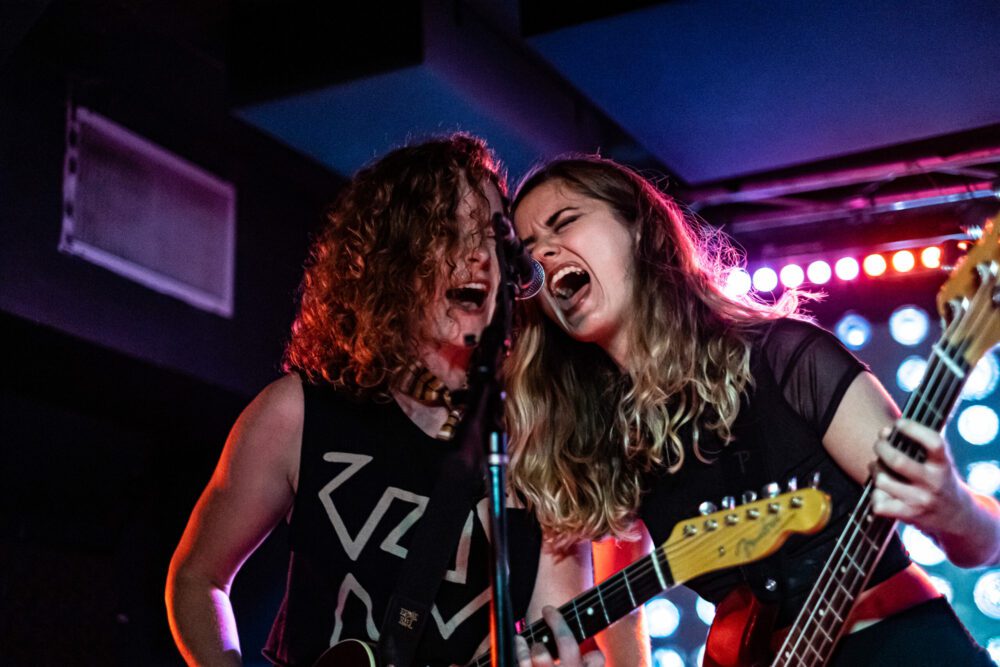
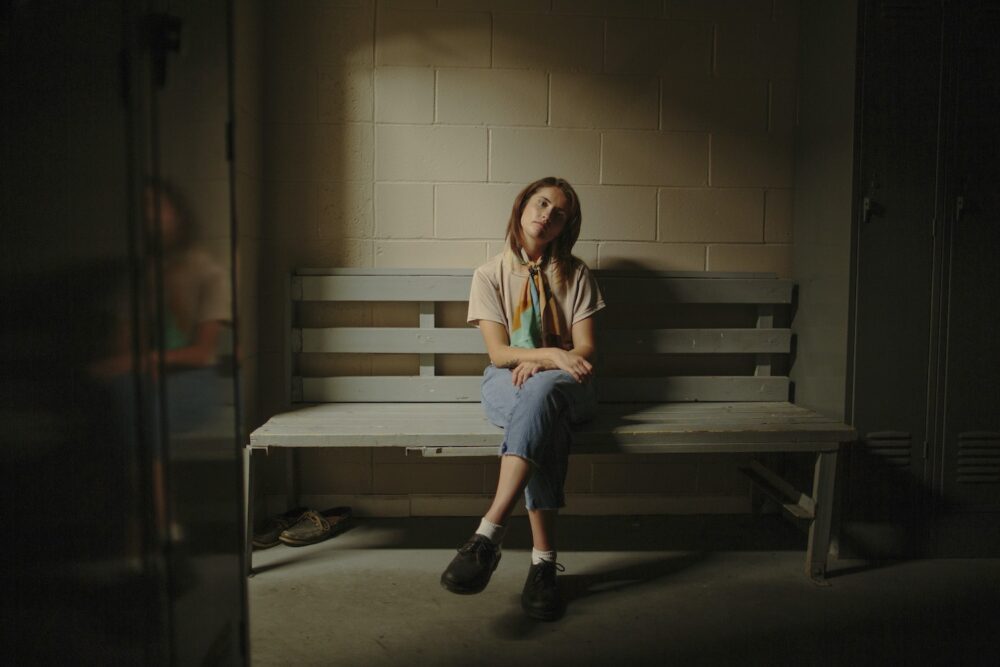
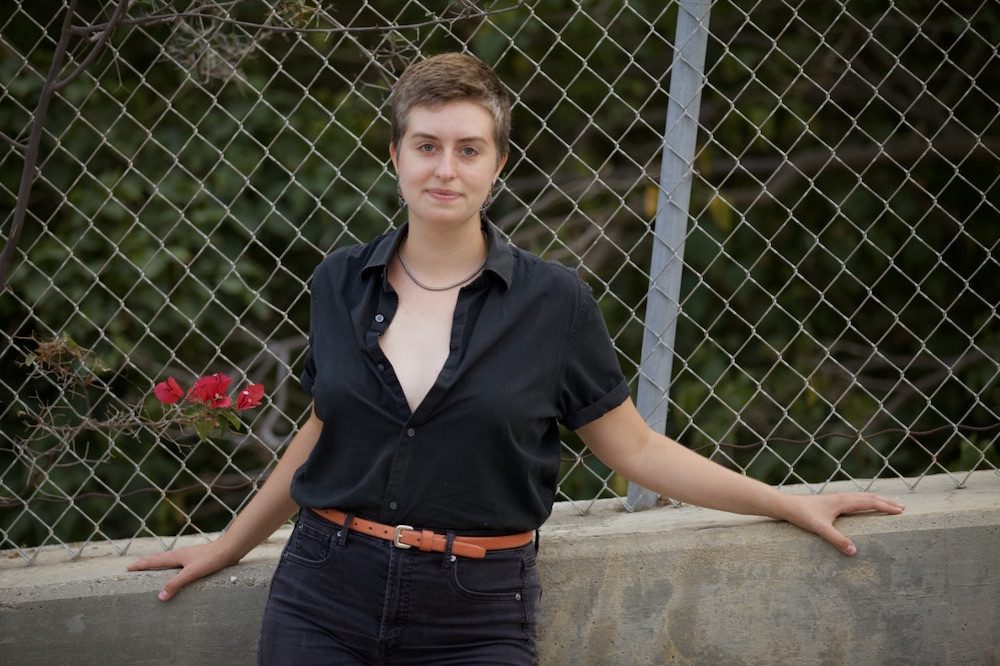
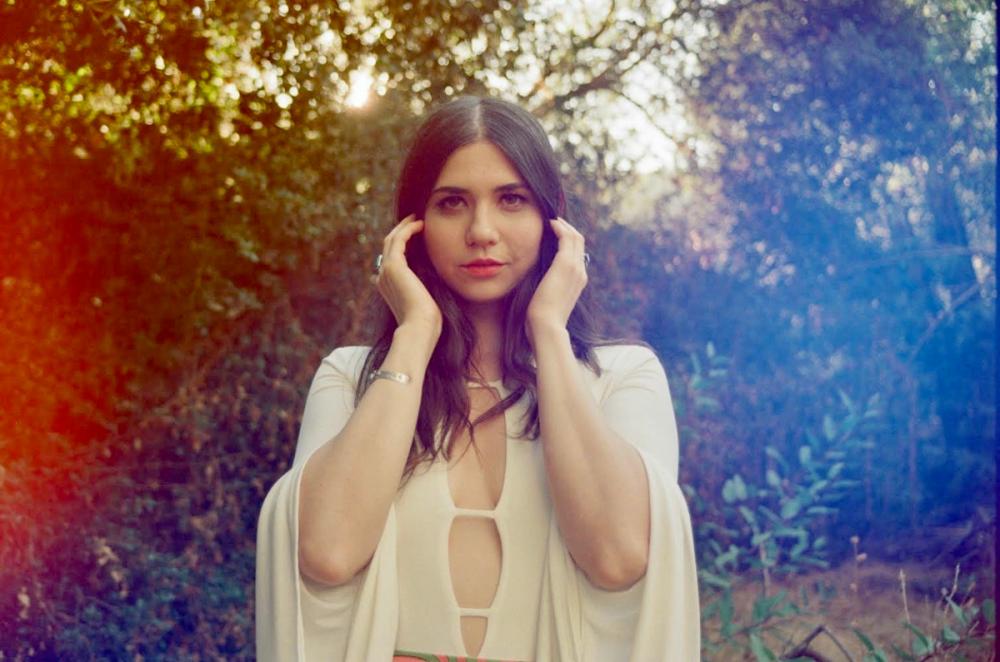
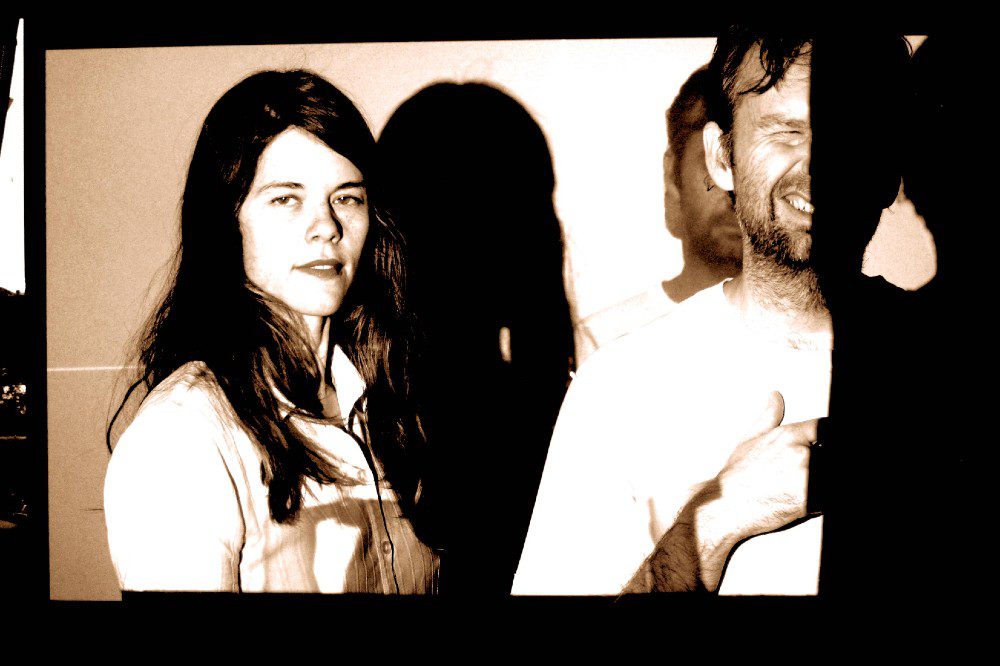
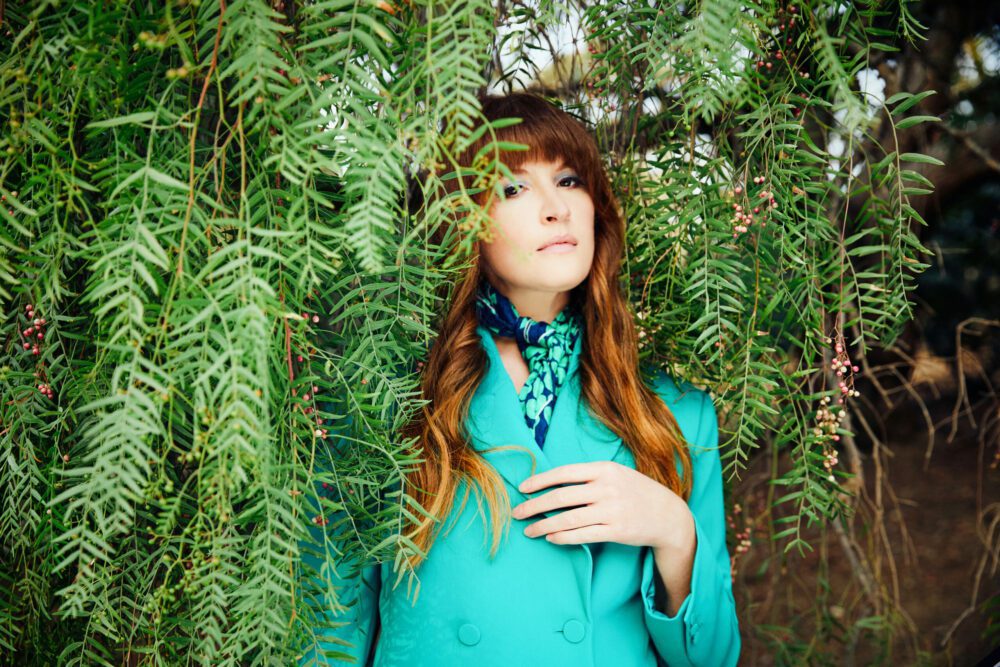
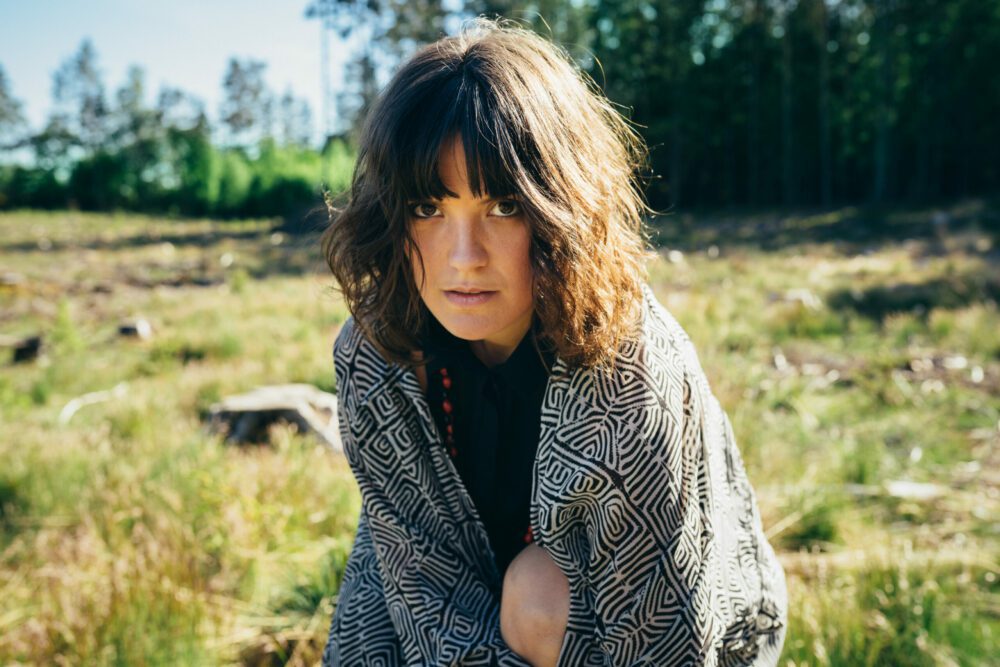
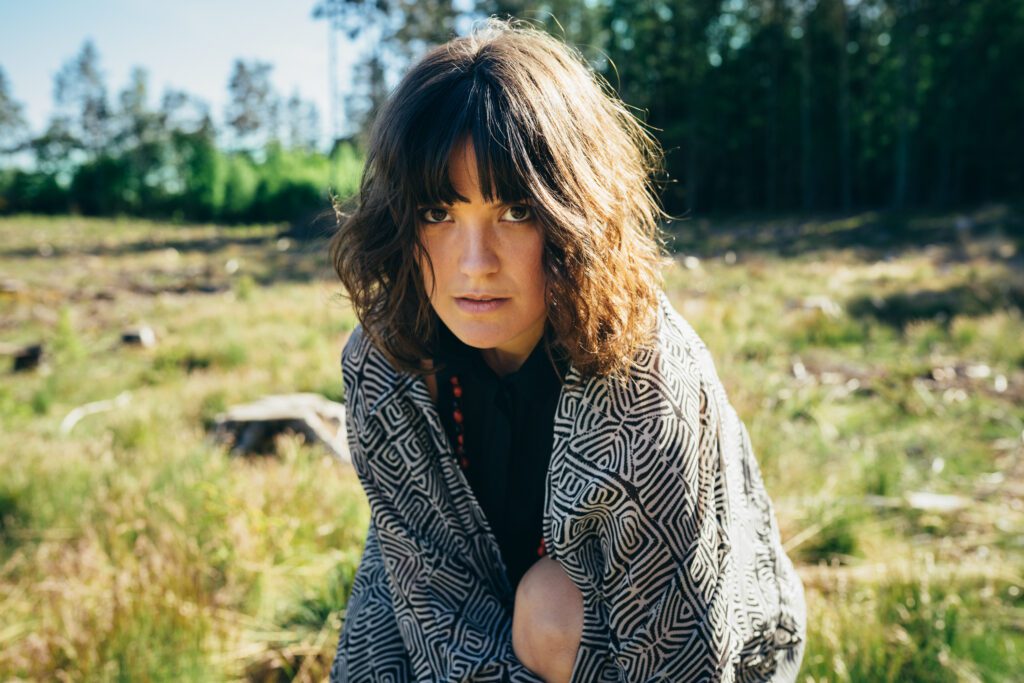
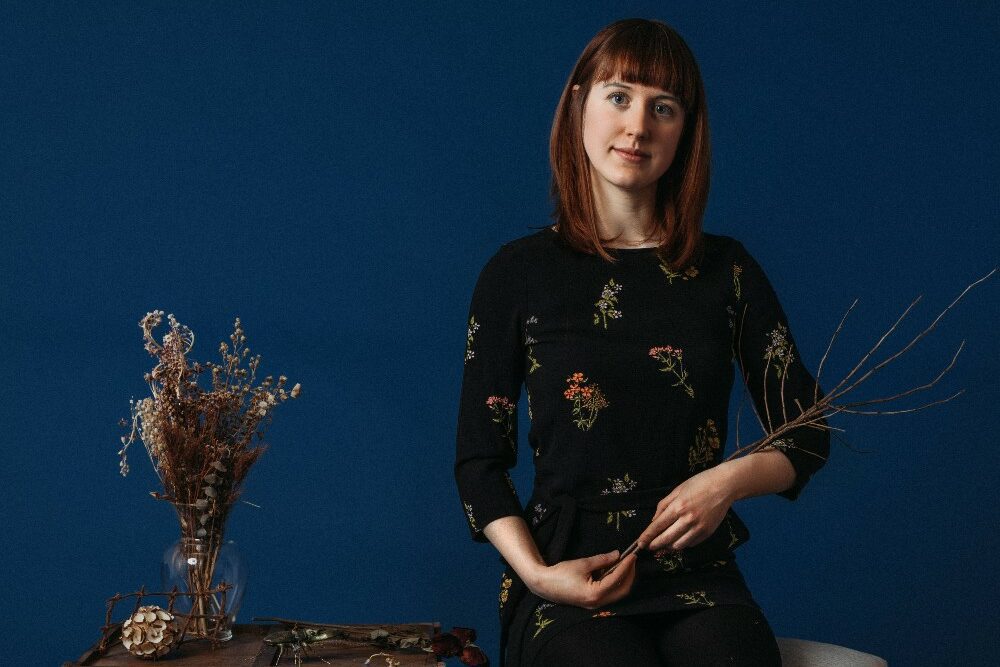
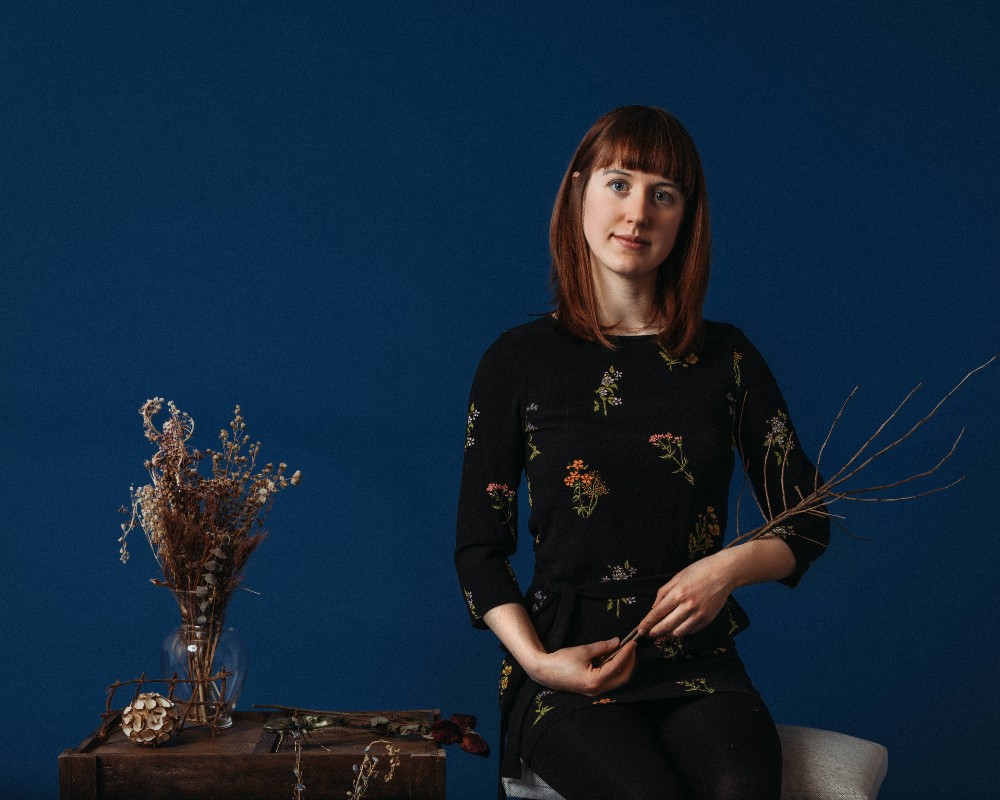
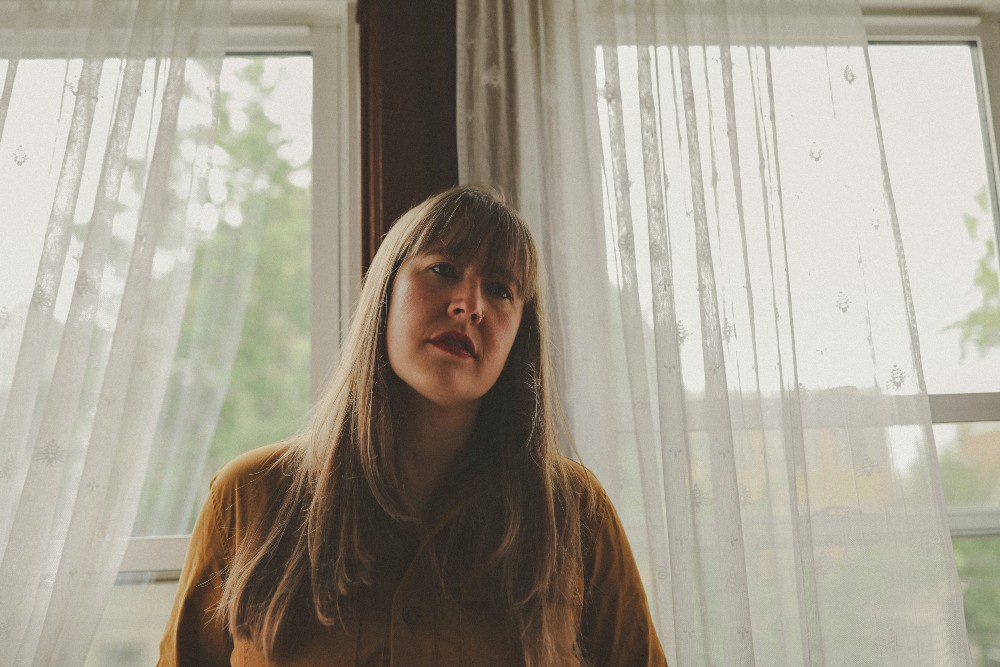
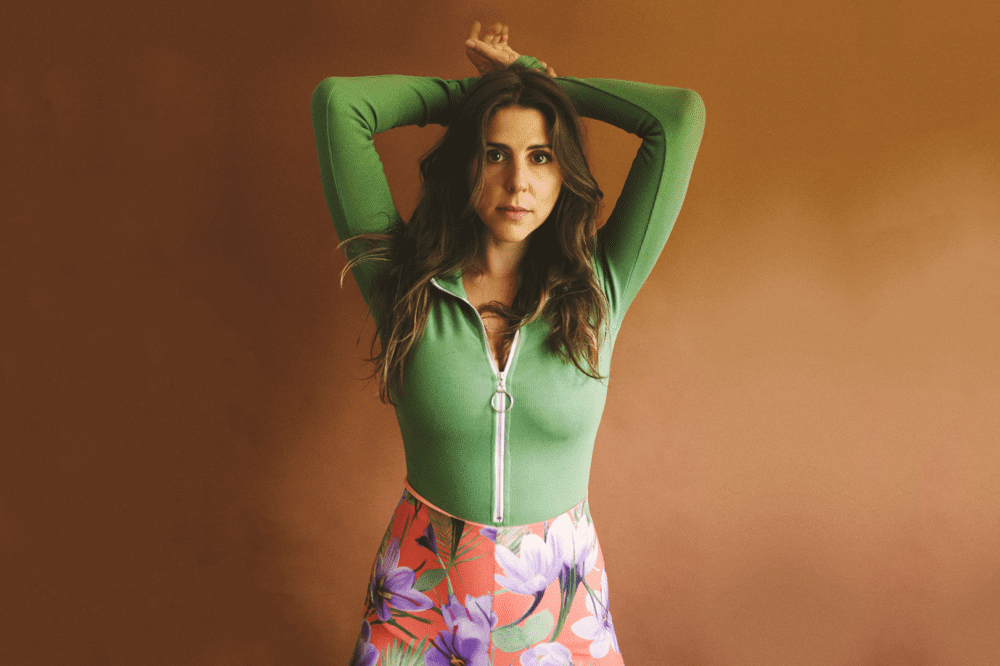
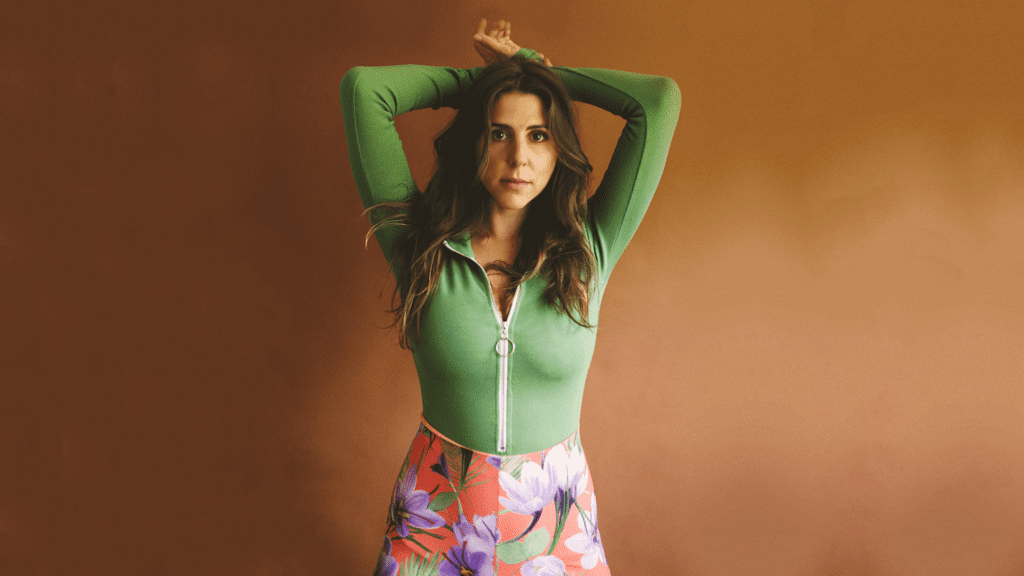
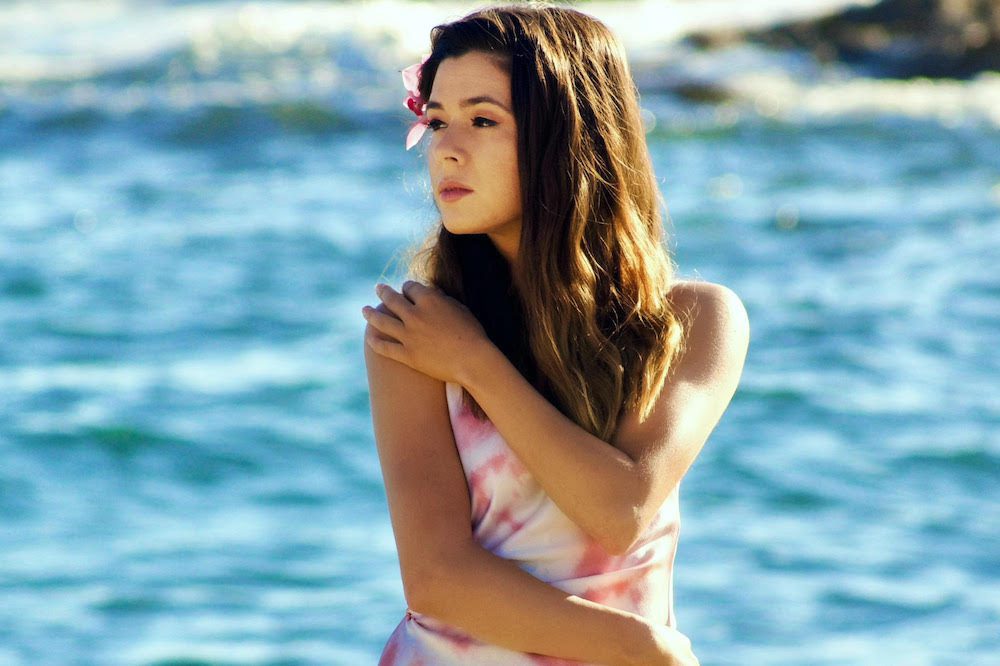
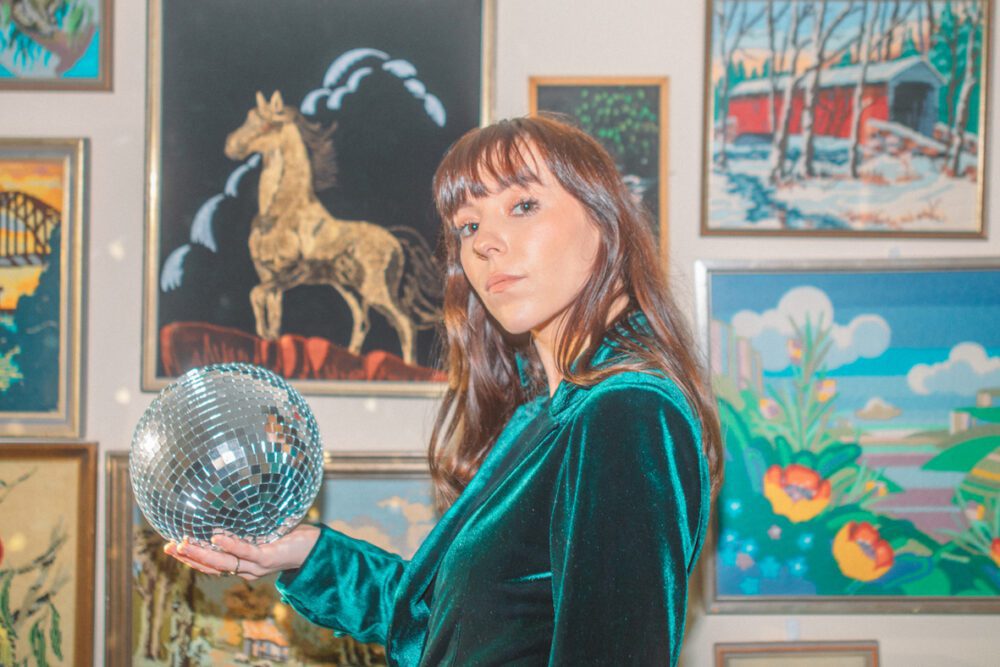
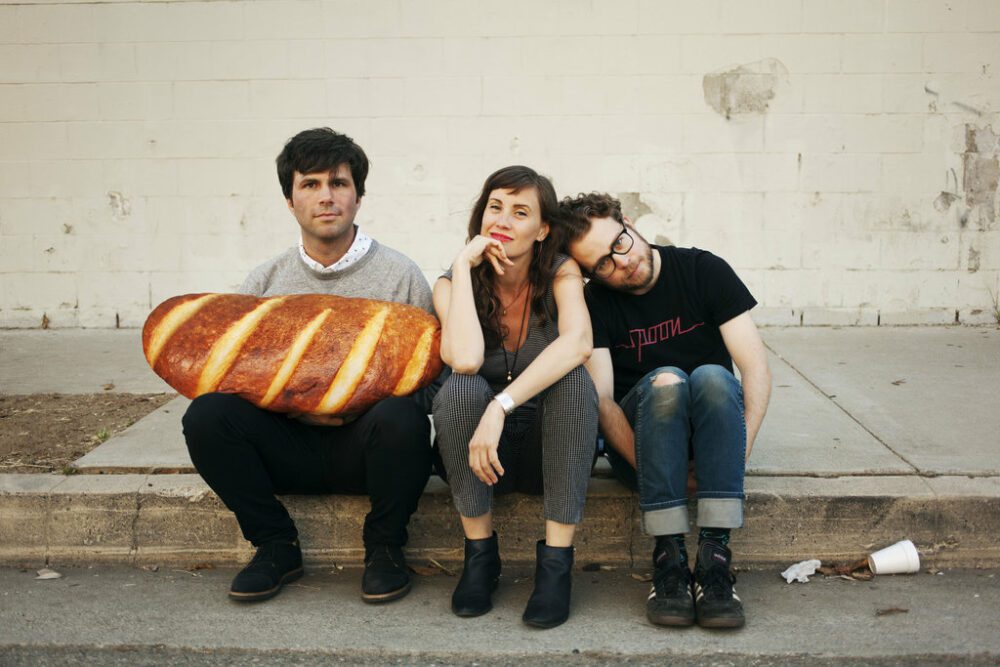
Brooklyn-based post-punk band Groupie, consisting of Ashley Kossakowski (bass, vocals) and Johanna Healy (guitar, vocals), has carved out a niche through its DIY approach and riot grrrl-inspired aesthetic, drawing from the likes of Patti Smith and Sleater-Kinney. Having put out two EPs, 2017’s Groupieand 2018’s Validated, today the group releases its debut album, Ephemeral. – available on vinyl via Handstand Records and cassette via Tapehead City.
The band formed in 2015, after Kossakowski read a book about the riot grrrl movement. “I was really inspired because a lot of those bands, like Bikini Kill and all the bands in that scene, didn’t have any experience when they started and just kind of came together and started learning their instruments together and made awesome punk music,” she says. “So I decided to put out a Craigslist ad just really honestly being like, ‘I don’t have any technical musical experience.’ I listed some of my influences, and Johanna responded.”
Healy had been writing music and playing it in her bedroom, though she wasn’t making music formally either, so she helped guide Kossakowski as she learned the craft.
Kossakowski grew up in Chicago and attended shows constantly, earning the nickname “Groupie” from her mom – so it made for a perfect band name. While some might think of a groupie as a woman devoted to following male musicians, the band wanted to redefine the concept to include women who care about music and make it themselves.
“The scene that I was in when I was in high school was super male-dominated,” says Kossakowski. “I think I can name one woman in one band that I would regularly see. I definitely felt like there wasn’t a place for me then, so I wanted to kind of flip that meaning on its head.”
The album incorporates elements of shoegaze and talk-singing a bit reminiscent of the Velvet Underground, as well as shout-singing more along the lines of Rancid. The title Ephemeral encapsulates a common theme among many of the songs, exploring the moments in life that may feel big and long-lasting but are actually fleeting. It comes from the chorus of the single “Thick as Glue,” which repeats the word “ephemeral” as the band comments on groupie culture: “Young woman, idolizing heroic men/singing ’bout heroin/Tried to keep it cool, now it’s my turn too/Who you think you’re looking up to?”
“We had just finished recording vocals, and Johanna and I were just going back and forth and thinking of different names for the album,” Kossakowski remembers. “I remember we were listening to ‘Thick as Glue;’ the engineer we were working with was starting to fix it, and in the chorus we say ‘ephemeral’ together, and we turned to each other and said, ‘Is that it? Yeah, that’s it.'”
Even though they finished recording the album in January 2020, a number of the songs are relevant to the current state of the world. The second track, the bass-heavy “Waiting,” for instance, was written by Kossakowski while she was unemployed and feeling depressed, and its message may be uplifting to those who’ve lost their jobs due to the pandemic. “That moment ended up being fleeting. It felt like it was never going to end and it was many months of that, but in the grand scheme of my life, it was a fleeting moment I learned from,” she says. “I’m sure everyone feels like we’re in a state of flux and just kind of waiting until this pandemic eases up.”
The mellow, bi-lingual “Daleko,” which Kossakowski co-wrote with her Polish immigrant mom, is named after the Polish word for distance. It was written as an homage to Kossakowski’s relatives in Poland, but it also now speaks to the separation between her and Healy, who have only been able to see each other once in person since the pandemic began.
Other songs on the album include the surfy, sassy, tongue-in-cheek “Half Wave,” in which deconstructs a dysfunctional relationship Kossakowski was in; the minimalist “Industry,” which describes buying things you don’t need in order to numb yourself, and the angsty “Human Again,” a reflection on post-tour depression.
Their overall goal with Ephemeral was to create a “dichotomy of soft but also hard-as-fuck edgy,” says Healy. This was partly achieved through the addition of guitarist Eamon Lebow, who added delicate notes to some places on the album and dark, dissonant chords to others. The instrumentals were recorded live with Kossakowski, Healy, Lebow, and drummer Aaron Silberstein, and they added the vocals afterward.
With the album, the band aims to cement their unique sound. “I think it would be nice if people saw this as something fresh, like an original sound within the rock/indie/punk world,” says Healy. They’re also hoping to remind people that the emotional roller-coaster we’re all on, much like the ride that inspired it, won’t last forever. “I think there’s some really fun moments on the album and some darker moments, so if listeners go on that journey with us of the highs and the lows, I think that would be really awesome.”
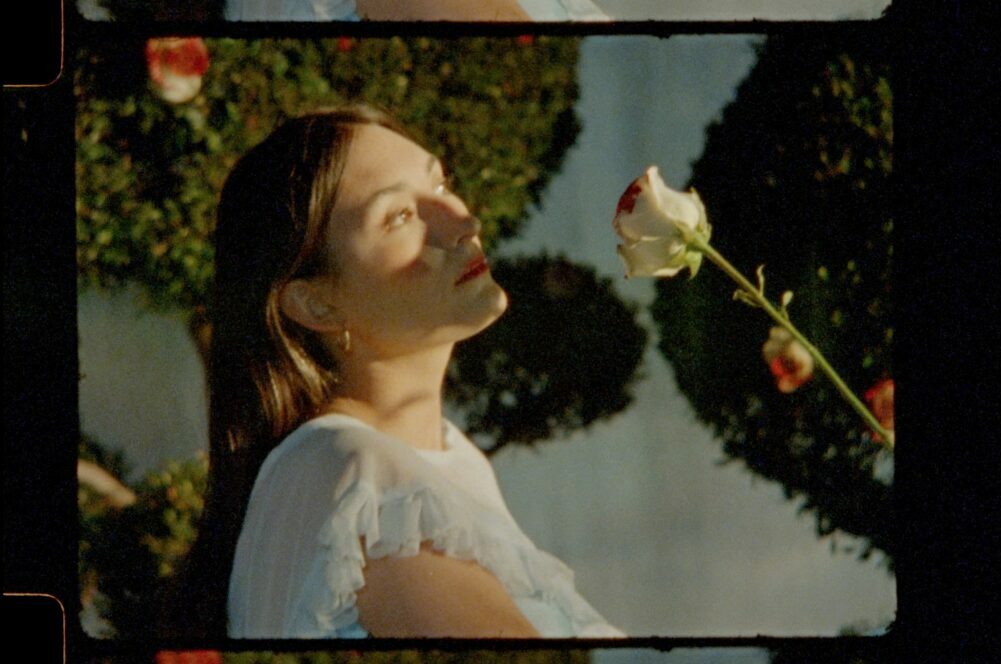
It was around the release of Midnight Sister’s 2017 debut album, Saturn Over Sunset, that Juliana Giraffe and Ari Balouzian began working on the follow-up. They wrote and demoed material on their own time before heading into the studio with a band to record. Though the duo had worked with a band live, this was the first time that they would bring one into the studio with them. The initial recording came together quickly – over a period of about two weeks – but it would take another couple years of honing arrangements and heading back to the studio when possible to add more instruments. The result is an eclectic and lively 12-song sophomore album, Painting the Roses, which came out January 15th.
“For myself, it’s tough when you overdo stuff, redo stuff too many times. I don’t think you can get it as well as, sometimes, when the idea is fresh,” says Balouzian on a recent video call from his home in Burbank. “We tried to keep that as much as we could.”
“I do tend to like the first take of my vocals usually, at least lead vocals,” says Giraffe, on the same call from her home in North Hollywood. “I get really attached to the rawness of whatever comes out first, so we try to capture that.”
The time that lapsed over the course of making the album, though, was helpful. “We were going on tours and playing shows in L.A. through the time of writing Painting the Roses,” says Giraffe. “I think that helped and informed the vibe of what the actual record sounds like.”
Painting the Roses effortlessly bridges styles – a little modern indie, a good dose of ’70s glam rock and a helping of funk and disco – with Giraffe’s chameleon-like vocals evoking a variety of characters. On opening cut, “Doctor Says,” she recalls Kate Bush on “Waking the Witch.” With “Foxes,” she takes a turn towards Marc Boland and Ziggy Stardust-era David Bowie.
Giraffe and Balouzian met back when they were attending high school in Los Angeles; the latter was friends with the former’s sister. Later on, they began collaborating. Both work in film. Giraffe and her sister Nicky run “all-inclusive imagination emporium” Giraffe Studios, which encompasses commercial video and photography, production design, and costume design. Balouzian is a composer, recently scoring 2020 Pepe the Frog documentary Feels Good Man. Initially, they came together to work on a short film. Then, over email, the future bandmates shared bits of music they were making for fun. “Something about it seemed to click,” says Balouzian.
Their musical and visual influences come together in Midnight Sister’s videos. The clip for “Doctor Says” is a particularly personal one for Giraffe. She had visited Argentina, where her mother was born, for the first time, and that influenced the video, which Giraffe co-directed with her sister. “We were exploring our heritage,” she says of the clip.
“Doctor Says” also gave Giraffe an opportunity to flex her special effects makeup skills. “I have always been a huge special effects make up fan and one of my idols is Rick Baker,” she says, referring to the artist best known for his work on films ranging from Videodrome to Maleficent. For the video, Giraffe wears her own prosthetics as she plays different characters in the video, made from live casts of her sister, mom and dad. “That video is very close to home and ties with that song being about change and letting things go and evolution as being and growing and shedding, maybe, old characters of yourself,” she explains.
Midnight Sister has already released three more videos for songs from Painting the Roses – “Wednesday Baby,” “Foxes,” and most recently, “Satellite.” The duo’s mutual background in film shines through in the songs as well. “Creating images is where my creative brain feels most comfortable,” says Giraffe, who studied cinematography. She adds that her visual art side impacts her lyrics and singing, in that she’s expressing characters and stories. “I think there’s a little bit of a crossover in my process and my approach and that way,” she says.
“When you’re writing instrumental music, sometimes it is interesting to have an emotional context of something that’s going on,” Balouzian adds, noting that working with Giraffe lends context to the music. “She’s writing based on film or visual things, so it came together in a way that made sense.” There are echoes of French composer Alain Goraguer’s La Planète Sauvage score in “Satellite.” Meanwhile, “Sirens” begins with the screeching strings of a horror film before the disco beat kicks listeners into a dance floor tale.
“That’s what we like,” says Balouzian of incorporating elements more common in film music. “I always was interested in stuff that related to function or related to real life in some sort of way, as opposed to just being purely about music.” On Painting the Roses, that approach makes for an imaginative, captivating listen.
Follow Midnight Sister on Instagram for ongoing updates.
Avenue Beat celebrate all things female with their unabashed ode, “WOMAN.”
Hot off the presses of “F2020” (the hit track that went viral on TikTok, amassing millions of views in a matter of hours last June) comes a fluid pop number that serves as an equally solid follow up. “WOMAN,” starts off with swanky acoustic guitar, while narrator Savana Santos lets listeners in on her inner monologue: she’s trying to write a pop song by recreating the winning formula she used the first time, but to no avail. When her female friend walks in the room, it serves as instant inspiration, as the lyrics comparing women to a “masterpiece” start spilling out.
“What’s more beautiful than a woman/Nothing/Ain’t no fucking vibe like a woman’s lovin’/No drug ‘gon get you high like/Grabbing her hips/Working your way up and down her every inch/Kissing on the kitchen counter/Change my mind/What’s more beautiful than a woman,” Santos sings over an intoxicating acoustic pop beat with gentle, yet sultry backing harmonies from her besties and bandmates Sam Backoff and Sami Bearden, who sprinkle their dreamy harmonies like confetti over the mystifying track.
In a format where body positivity and LGBTQ-friendly lyrics don’t often make it into mainstream culture, “WOMAN” is refreshing and revitalizes what it means to be a modern woman making music in the country music capital of the world. “There’s so much body shaming, labeling, judging,” Bearden shared in a press release. “Truth is, your best friends are your girls… the people who’re there no matter what happens are your girls… when you wanna dig into whatever, something fun, something tragic, ultimately, it’s your girls.”
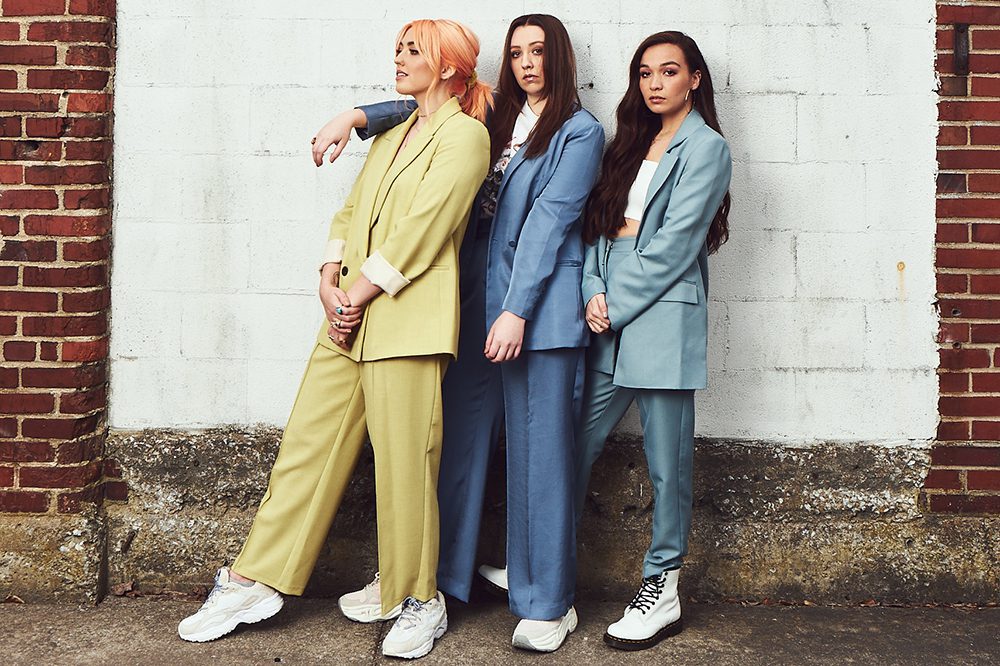
The bold, girl-power-anthem-meets-queer-friendly bop – arranged and produced by the group – comes from an all-woman trio of best friends who grew up together in Illinois. Avenue Beat is just old enough to drink and not afraid to drop an F bomb in radio-pandering Nashville, shaking up the sugar-coated genre of country-pop music when they dropped the wildly relatable “F2020” that essentially says what was on everyone’s minds during the dumpster fire of a year. Santos is unfiltered in sharing that her cat died before a global pandemic took the world by storm, leaving her as sad and broke as she was pre-pandemic, while adding “lonely and anxious and mad” to the mix that makes for a truly strong emotional cocktail.
After becoming a runaway hit on the social media platform, the song caught the attention from a range of stars including Maren Morris, Sara Bareilles and Will Smith, to name a few, with its fierce and inviting chants “put your hands in the motherfuckin’ air/If you kinda hate it here/And you wish that things would/Just like chill for like two minutes,” the latter line spoken like a genuine 21-year-old who’s just over it all.
The equally ear-grabbing remix featuring Grammy nominated R&B-soul singer Jessie Reyez adds an even darker and equally meaningful perspective – Reyez is brutally honest about not being able to see her brother’s kids since before the pandemic, as well as realizing she doesn’t have much appetite for fame (which she learned during a brief stint opening for Billie Eilish on the short-lived 2020 Where Do We Go? World Tour). Wrapped around a melodic and surprisingly soothing trap beat, the track earned a well-deserved spot on The New York Times’ Best Songs of 2020 list.
With a bonafide relatability factor, complimented with youthful antics, whimsical melodies and empowering statements, Avenue Beat has positioned themselves to be Nashville’s next breakout pop act — ain’t no fucking vibe like three women owning their voices and stepping into their power.
Cari Hutson is stepping out into the world as her most authentic self. Her new EP, Salvation & Soul Restoration, arrives next month (Feb. 12) and captures her grit, resilience, and tremendous growth since the release of 2018’s Don’t Rain on My Sunny Day. The singer-songwriter works through the death of her mother (“The Rescue”), seeks to offer change in the world (“Blame”), and comes to understand mental and psychological limits, as she does with the new song “Take the Day.”
“This song was generated from the new balance in the pandemic and figuring it out with new anxieties and stresses,” Hutson tells Audiofemme. More than anything, the kickstarter to her new EP centers around knowing when you “need to take the time to really absorb how you’re feeling. That’s the biggest thing I’ve learned during this time at home… truly trying to find a balance of joy and the anxieties that happen in life.”
Based in Austin, Texas, Hutson has had plenty of time for deep reevaluation of her life. Her mother died in September after a very long battle with alcoholism, and the new EP threads together acceptance of sadness and the joy wrought out of personal growth during life’s darkest times. “I watched my mom for years be an amazing professional,” she reflects. Her mother was a registered nurse, who, towards the end of her professional career, worked in home health hospice care.
“I watched her give of herself to her limit and then beyond. I saw how that affected her. Now that I’m a mom, I don’t want to step into her shoes and have [my daughter] Hazel see the same things. The growth happens in having the determination to not recreate history,” says Hutson. “You don’t get any more different shift in perspective than the finality of [death]. You have to really really dig down deep in your gut and say, ‘I’m not going to live my life with some of the same choices that I watched her live with that in the end took her.’ Stress kills, and it brings you down. You have to find those moments when you say ‘enough is enough’ and take care of yourself. I want better for myself.”
Early in the pandemic, another switch happened. While her daughter was on vacation, visiting grandparents in Galveston, lockdowns swept the country. The family naturally had to quarantine for 14 days before Hazel returned home. “It was very strange to be away for my daughter for that long,” she offers. “As much as I missed her, it was in those moments of just sitting in the backyard ─ and it was during springtime here, so it was rather beautiful out. The world was upside down, but in my backyard, I found this oasis where time stood still. I was able to really hear the birds chirp. I noticed things I never would have noticed.”
Salvation & Soul Restoration sheds light not only on such revelations but her wealth of experience ─ from fronting bands like Remedy and Blue Funk Junction in the 1990s and brief musical theatre studies at Texas State to a recent collaborative endeavor as part of a supergroup called PAACK. Hutson has also performed as rock icon Janis Joplin in the touring production A Night With Janis Joplin. “There’s a lot of self-doubt that happens out there,” she muses of the long, winding road which brought her here.
Hutson released her first record in 2011 and the follow-up in 2018. But neither found her nearly as self-assured and vocally muscular as on the forthcoming five-song project. She reclaims her worth as both a woman and a musician, offering up sharp messages about accountability, pain, and breaking toxic cycles.
“In writing this EP, there’s a whole lot of self-realization and growth as a person. It’s creating that balance between being a mother and a musician. Enter pandemic, and the balance shifts again,” she remarks. “I’m a bold woman, and I have a perspective.”
Salvation & Soul Restoration is Hutson’s first proper foray into releasing her music. Previously, she would simply post the albums to Spotify and let them do whatever they were going to do. Now, she takes the reins firmly in her grip and demonstrates renewed strength, command, and determination to take up space and make some noise. “It’s a big deal for me. It’s really me stepping into my own,” she says.
Hutson will celebrate the release of her new EP with show livestreamed from The Saxon Pub via the venue’s Facebook page on February 12 at 9 pm CT.
Like many women, Lynn the Singer had to make her way through countless roadblocks and gatekeepers on her journey to finding her sound. Playing harp and singing from a young age, Lynn remembers recording her first single – which she describes as “way ahead of its time” – only to have it deleted from existence by her then-boyfriend. After experiencing that loss, Lynn wasn’t sure she wanted to pursue music anymore. Luckily, the universe had other plans. “It kept following me around,” says Lynn. “I kept meeting these artists and being put in studios… 2015 was when I was like, ‘okay I’m gonna take this seriously.’”
Lynn went on to release her debut full length Endless Weekends in 2018, and recently followed it with a new EP, candidly titled 2020sucked – a brief but beautiful time capsule of a year that has gone down in history as universally awful. The all-too-relatable title is not only a nod at the collective misery the masses have felt as a result of pandemic and beyond, but also a glimpse into Lynn’s personal life. For Lynn, the EP was an opportunity to package up all the negativity, sadness and loss she experienced last year and send it into the ether. “2020sucked is about one person and… I’m over it now,” says Lynn. “That was my way of putting my feelings out there and being done with a situation.”
Like many songwriters, Lynn describes her music as a way of communicating things that are too hard to put into words and a vehicle for letting those things go. Though the EP is deeply personal, it hits home for anyone experiencing the bittersweet feelings that come with moving on. In “Time Machine – Social Distancing,” Lynn sings, “If I could press rewind then I would, I don’t know if I should,” explaining the nostalgia that inevitably comes with a breakup and the power it has to lure us back to the person we left. Though the lyrics are melancholy, Lynn’s voice soars over 808’s and dreamy synth waves, coaxing the listener out of their rut and on to bigger, better things.
Though most of the songs on 2020sucked deal with loss and heartbreak, Lynn is more of a social butterfly by default. “I love a good time and I love people who wanna have a good time. I’m down with trying to make the best of everything,” she says. “It’s kinda ironic that I really like sad songs. It’s like that meme that says ‘why do girls listen to sad music when they’re sad? It just makes them sadder’…because it kinda feels good!” And she’s right! There’s even science behind the reason that listening to sad songs can actually make us feel better. And whatever Lynn is doing, it’s working.
Whether it’s the blatant relatability of it all, or the ability of Lynn’s serene voice to lull the listener into a trance, 2020sucked doesn’t feel like a self-indulgent pity-party but a triumphant stop on the road to independence – like, somehow, admitting that someone once had power over you makes them easier to let go of. In “Forget You out My Mind,” Lynn comes to terms with the fact that reconciling is not an option, but holds on to those dopamine-releasing memories that make the pain worthwhile. She opens with, “I don’t think you’ll ever forgive me/But darling I won’t forget all the times I let you get in my mind.”
All of the songs on the EP are short, bittersweet and straight to the point, just like an ideal breakup should be. But Lynn explains that 2020sucked is only a prequel to her next project Reckless, which will include extended versions of all of the songs. Until then, we have this gem of an eulogy to 2020 to remind us of all the bullshit we survived, and give us hope for whatever comes tomorrow. Lynn puts it best: “Being happy is the goal, having fun is the goal, finding the light in all things is the goal.”
Follow Lynn the Singer on Instagram for ongoing updates.
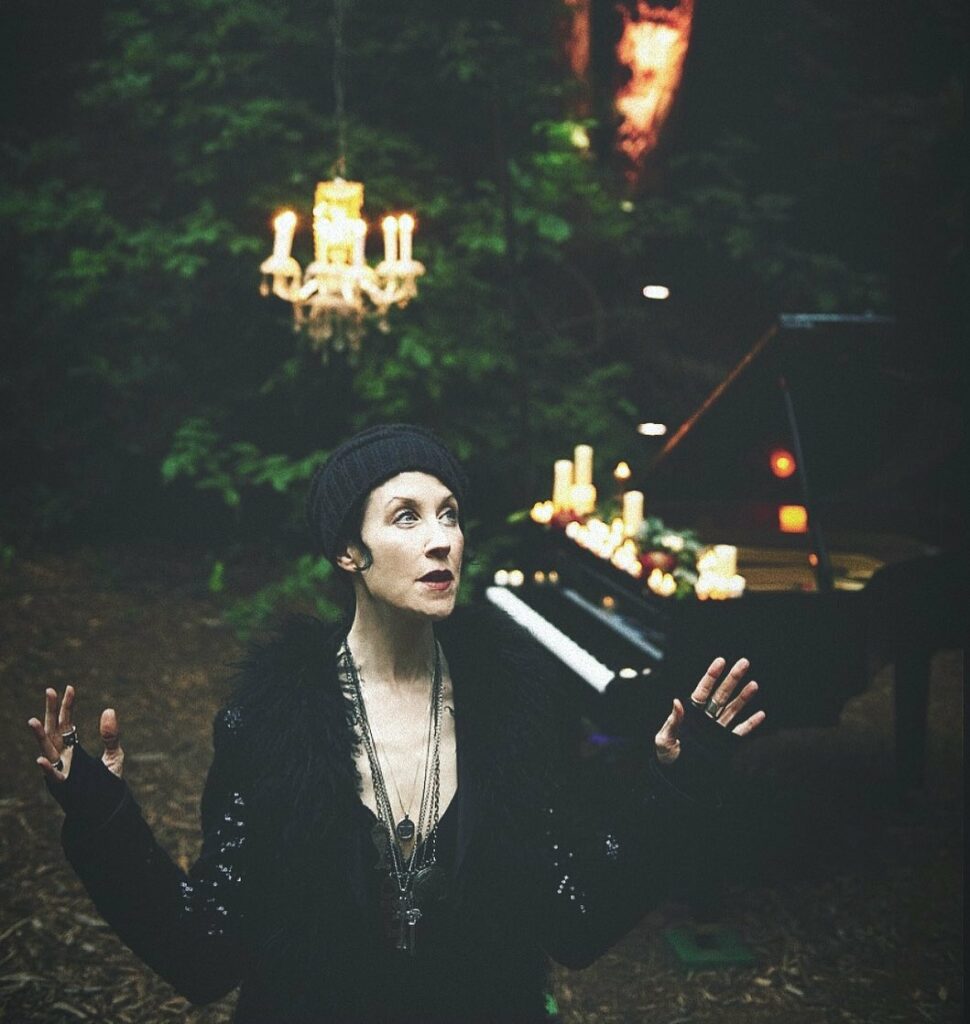
Often, Jill Tracy’s music is rooted in a place. For half-a-decade, she has performed at the annual festival Flower Piano in Golden Gate Park’s San Francisco Botanical Garden. Her concerts, known as “sonic séances” would take place amongst the Redwoods, where Tracy would, in some pieces, channel lunar frequencies. The San Francisco-based artist also made three trips to Lily Dale, a Spiritualist community in New York, to record forthcoming album The Secret Music of Lily Dale.
While spending 2020 mostly at home, Tracy (whom you may have heard recently on NPR’s show “Hearts of Space“) recorded and released three EPs and one single. In December, she re-released the work as the compilation A Medicine for Madness: The 2020 Collection. This time around, the recordings had less to do with the specific location and more to do with specific moments throughout a challenging year.
Tracy opened for both Peter Murphy and Bauhaus in 2019, and was planning to release The Secret Music of Lily Dale in 2020, with a tour to follow an album release show in the hamlet. That changed with the COVID-19 pandemic. “I was like everyone,” Tracy says by phone of her life last March. She worried about loss of work and about a disease that was still a relative mystery. “I was going out to get the mail and putting gloves on,” she recalls. “We were just all in a panic.” Her piano, though, provided solace. She recorded herself in the spring of 2020 with no intention of releasing it.
Tracy had made the music to soothe herself, but as she noticed other artists sharing their creative projects online, she opted to release the personal compositions. “There was a unity, where we felt that we were all in this boat together,” she says. “Although I had never recorded anything in my apartment, and didn’t really know exactly how I would do this, I just felt that the pressure was suddenly off and no one was expecting anything slick and professionally produced.” Tracy released four instrumental pieces in June as Evocations of the Moon: Piano Spells in Lunar Frequencies to Align, Soothe and Restore.
It was the first time she put forth an entirely instrumental release, something she continued to do throughout the year. “It just seemed like to add a vocal or write lyrics was unnecessary, that I didn’t need to supply a narrative because everyone out there was going through something profound and devastating, frightening, life-changing, and they all had their own stories,” she explains. “They were living it, so I didn’t need to tell them how to feel.”
Jill Tracy performing amongst the redwoods. (Photo Credit: David Allen)
A two-song EP, Seclusion 22/Whispers Behind the Glass, followed in July and reflected the summer at home. “I think we all felt like it was just a short term lockdown and we were doing our duty as citizens to help others to not spread this deadly virus,” she says. By summer, though, it was clear that the pandemic would continue to rage and we would continue to maintain social distance. Tracy says her main social activities offline were running her errands. She would get dressed up for the grocery store and the post office, her mask becoming a “fun accessory” to wear out on the town. But, as the pandemic continued, there was a lot of fear and feelings of isolation, which she channeled into her music.
Then, wildfires hit California. “On top of a pandemic where you’re not supposed to be outside, we were told not to go outside because you couldn’t breathe the air,” Tracy says. On September 9, she woke up to darkness, although it was late in the morning. “I looked out the window, and the sky was this crazy deep charcoal tangerine color,” she recalls, “just like any apocalyptic, sci-fi movie that you’ve ever seen, but worse, because it was real and it was happening all over.” It was also eerily quiet; the sound of birds that Tracy normally heard was gone. “I suddenly got terrified and I thought, what has happened?” she remembers.
She started playing music and recording it. “It was it was a direct emotional archiving, when I did this work,” says Tracy. “I just hit record and I played, so you’re getting this direct transference of emotion.” This resulted in three pieces – “The Morning With No Sun,” “Where the Birds Hide” and “Lament in a Blood Orange Sky” – that comprise The Dark Day EP.
To close out the year, Tracy recorded one more piece, “Elegy for a Solitary Year,” which is a lament for both lives lost and lives changed. “I wanted to do a piece, not only for the deaths that occurred, but the death of our old selves,” says Tracy, “because of everything that all of us have endured and lost – businesses and finances and just a sense of community and our dreams, our plans for the year.” In the lament, though, there’s hope. In a follow-up email, Tracy noted that the music is also reflective of the revelations that 2020 brought – and the opportunity to “reinvent an entirely new path.”
Cincinnati singer/songwriter Linsley Hartenstein, who performs under the moniker Darity, started 2021 on a hopeful note with the release of a new single, “Everything.” The dreampop ballad seems to speak directly to the anxieties of 2020 while offering a soothing optimism as we look onward to the new year. Though it was written during a challenging period in Hartenstein’s life, she reveals that “Everything” has been brewing for a much longer time.
“While the end result is beautiful and encouraging, the writing process of this song was really long,” she tells Audiofemme. “I started writing it while on tour in 2017. Touring is one of my favorite things to do of all time, but this tour specifically revealed how poor my mental health was.”
Struggling with the uphill process of growing an independent band, Hartenstein says she spent the entire tour journaling reasons why she doubted her abilities and her worth. “All the while, I had the chorus to ‘Everything’ stuck in my head,” she says. “It was incredibly frustrating because it felt like a song I couldn’t honestly write because I didn’t believe that I have everything I need. So, I didn’t write it. It just sat in the back of my mind. I would sing it in my room and sing the verses about whatever I was currently feeling down about. It was like the never-ending song.”
After seeking therapy, Darity began playing “Everything” for live audiences. Her friend Alex Alex Hirlinger heard the song and wanted to help her finally record it. “I decided to finish the lyrics and have Alex produce the track because he liked the song and is crazy talented,” she says. “I figured that I’m also probably not the only person that needs space to acknowledge that life gives us so much evidence to not pursue health and what we love, but someday when the fog clears, we will be able to see that everything we have is enough.”
The single is more pop-leaning than most of Darity’s debut album Bitterroot, which compiled singles five previously released singles with four newer songs. She says it also stands out from her previous releases because of its vulnerable lyrics. “I felt like I was fighting myself a little bit [while recording it,] like, ‘Can you say you have everything you need when you haven’t arrived yet?’” she reflects. “After it’s all said and done, though, I believe I don’t have to have everything figured out to believe in myself.”
The song bears the reminder that even when we’re faced with feelings of self-doubt, the tools for happiness and health are still within reach – sometimes we just need a little patience. “Real healing always takes longer than we would prefer,” Hartenstein says.
“While ‘Everything’ isn’t specifically a song about COVID and all that’s going on in the world, it’s where we are all at,” she says. “The song coincidentally has a lot of relevant imagery, so I wanted to be intentional with the release. I feel like it’s important to acknowledge that this next year and the years to come will probably still be hard, but we can still have hope.”
Darity’s next single will arrive February 19. Until then, Hartenstein hopes that no matter what emotions it awakens, “Everything” will provoke mindfulness. “If this song pisses you off; cool, why? If this song brings you joy; amazing, sit in that. If this song does nothing for you, notice that. I hope [this song] finds people exactly where they are,” she says. “No one is alone in working through believing that we have everything we need.”
Folk artist Sadie Gustafson-Zook’s EP Vol. 1 is a paradox: it’s the specificity of the lyrics that make them relatable. Gustafson-Zook sings with precision about moments in her life, from riding the train in Boston to mistaking a bird’s song for a street harasser, but her reflections on these experiences relate them to broader challenges nearly all of us contend with.
Gustafson-Zook moved from her Indiana hometown to Boston for grad school in 2017, pursuing jazz studies at Longy School of Music. In the time period between then and now, she came out as gay. She consequently describes the EP as one about “uncertainty and gay stuff.” The first track and first single off the EP, the cheery “Lean in More,” for instance, is Gustafson-Zook’s “first gay song,” she says. In a classic, candid singer-songwriter style, it describes her first lesbian relationship and the feeling of having “found something that felt really true and honest,” she explains. “I felt kind of late to the game in terms of not thinking about dating people who weren’t cis men until I was 24 or so, so this song was kind of like coming home.”
The next track, “Birdsong,” is deceptively whimsical, with dreamy harp and scatting, as Gustafson-Zook sings about hearing birds chirping while waiting for the bus and thinking she’s being cat-called: “Bird song makes me squirm/because I’ve learned to assume it’s from a man/standing by the road/cig in tow/making all kinds of demands.” She goes on to reflect on the hyper-vigilance that stems from constantly being subjected to sexual harassment and the male gaze.
On “Two,” she sings about dating someone who seems to have two different personalities, the repetitive tonal structure evoking the madness such a predicament can lead to. In contrast, comforting piano chords take center stage in “Alewife,” giving off a friendly vibe as Gustafson-Zook describes everyday snapshots from Boston’s public transportation system.
“Everyone,” a meditation on the pervasive sensation of being judged, closes out the EP, with a haunting melody in minor keys to emphasize that very discomfort. Gustafson-Zook wrote it during a visit to her parents’ house as she worried what people in her small town would think about her sexuality. Like “Birdsong,” it shows how we can feel others’ eyes on us even when they’re not looking.
“It wasn’t even that anyone was reaching out with bad things to say or criticisms,” she recalls. “But I definitely was feeling that there would be pressures, people would be trying to tell me what’s best for me or who I’m supposed to be, and really, it’s kind of just a declaration of me trying to own my evolution and trying to figure out who I am on my own before taking in other people’s perspectives on the matter.”
This is the first collection of Gustafson-Zook’s that was made in collaboration with a producer — namely, Brooklyn-based musician Alec Spiegelman. “I had a lot of ideas, but wanted somebody to help me make the musical decisions,” she says. They worked out of his home studio, and he added unexpected flourishes, like layering in flutes and clarinets.
“I wanted to do more with tracking one part at a time so that we could have lots of really interesting textures that wouldn’t be really possible in a live recording setting, but I also wanted to retain some of that live energy,” she says. She and the harpist Mairi Chaimbeul, for instance, recorded harp, guitar, and vocals at the same time, then tracked everything else on top of it.
Vol. I is Gustafson-Zook’s first EP, but she’s already got a full-length album under her belt, 2017’s I’m Not Here. In addition to making music, she holds a remote day job as a communications manager for an LGBTQ health clinic and teaches voice lessons.
The EP is the first half of a full-length album, Sin of Certainty, slotted for release later in 2021. She’s currently setting up a home studio to record the second half of the album, which she describes as more upbeat and varied in its instrumentation than the first. “We ended up recording all the mellow songs in the beginning so we could get the harp on them,” she says.
Gustafson-Zook raised over $15,000 on Kickstarter to create Sin of Certainty, a title that may resonate with many right now, as it reflects the album’s overall theme of accepting an uncertain future. “I’ve been thinking a lot recently about change and how to deal with it,” she writes in the Kickstarter description. “As I get older, it’s become apparent that the only constant is change.”
Follow Sadie Gustafson-Zook on Instagram and Facebook for ongoing updates.
In the weeks leading up to Christmas, I found myself playing a song over and over, taking its melodic guitar tones and feeling some sort of warmth. I’m not religious, but something about the song instilled in me a sense of faith, or belief… something. Last year was filled with the opposite – unimaginable, stagnant, and emptier than the last. But then I heard Pearl Charles, paired with lover and fellow musician Michael Rault, covering The Band’s “Christmas Must Be Tonight” in her comforting Stevie Nicks-esque way. And just like all the virtual, intangible consolation we had to settle for last year, the song, in a sense, embraced me. I won’t remember this song as somber or sad, but hopeful.
As I was retiring holiday songs with 2020 in my rear-view, I was then stuck on Magic Mirror, Pearl Charles’ latest album, which came out January 15 via Kanine Records. These ten tracks became my quintessential feel-good dance-country-ballad welcome-to-2021 record. Album opener “Only For Tonight” immediately offers listeners upbeat ABBA boogie vibes, cemented by the “disco wonderland” created by director Bobbi Rich for the music video.
As the album progresses, it skips through various folk and soft rock influences, like dialing through a ’70s radio station – Carly Simon, Carole King, Linda Ronstadt, Helen Reddy, Judy Collins – and reveals Charles’ West Coast roots. But it also exposes the layers beneath her shimmering sonic reflections. She has always gifted us with honest songwriting, but Magic Mirror is more introspective than her 2018 debut,Sleepless Dreamer, which dealt more with dating and relationships. “There definitely is still some of that on this record, but I spent a lot more time looking inward,” Charles says. “[I asked myself,] ‘How does what happen to me externally actually make me feel?’ I spent a lot of time searching for myself and my own identity. I think [that’s] ever-present in my writing, but I really leaned into it on this album – that’s why it’s called Magic Mirror,” she shares.
Not all discoveries come from some grand event leading to an epiphany. It’s more of a state of mind, a feeling, being open to new ideas. Similarly to “Christmas Must Be Tonight” bringing out a hopefulness I didn’t know I had, Charles found a spiritual solace through “taking psychedelics as a creative inspiration and therapeutic sort of thing, she says. “When you do that, you have extreme highs and lows… but it’s a mental shake up every time.” she says. “It can really reveal things to yourself, that were in your subconscious. I think taking the psychedelics helped me address some of those deeper questions within myself and who I was.”
That’s most obvious on the bluesy “Imposter,” which Charles says was fully written on a mushroom trip; its opening lines stem from the age-old advice that you shouldn’t look in a mirror while tripping, but delve further into disassociation that culminates on the next two tracks, “Don’t Even Feel Like Myself” and “Magic Mirror.” For someone who has come of age in the spotlight, forming The Driftwood Singers with Christian Lee Hutson at age 18 and drumming with garage rock band The Blank Tapes by 22, it makes sense that Charles’ solo work would dive so deep into her psyche.
“Sometimes the words and music just flows out of you; you don’t even know what you’re saying until you say it. And you’re like, wow, that’s really how I felt, that’s where I was coming from,” she says, adding that establishing a strong sense of self is a lifelong journey. “I’d like to think we all reach enlightenment, but there is always going to be room for improvement and growth,” she states. Luckily, those feelings make great fodder for a record.
The consummation came with the help of Daniel McNeil at the studio of one of Rault’s childhood friends – none other than Mac DeMarco. “Loved working with Dan, he’s so talented,” Charles gushes. “It was my first experience recording straight to tape. So, that was something new for me, and required a level of confidence that I had to find within myself. This is one vocal tape from start to finish. There’s no editing. There’s no punching in. My albums aren’t highly edited anyway… but you know you have that option in the back of your mind. If you make a mistake, you can fix it. With [Magic Mirror] it was like, this is the recording.”
Maybe because Charles writes from personal experience, with the understanding that no human is going to have a flawless story, she was able to appreciate the beauty in McNeil’s embrace of imperfection. “Not every performance is going to be 100% perfect. It’s more of the attitude,” Charles says. “Dan was able to bring that out and be like, ‘It’s less about perfection and more about the moment in time – bands playing in a room and capturing that.’ In the same way the band embodied these beautiful and honest imperfections, I found a calming solace in my own reflection this past year.”
While we cannot dance to Magic Mirror at a desert festival or NYC speakeasy, Charles has been able to assemble a phenomenal band for some livestreamed performances, including Rough Trade Transmissions set via Instagram. With some kind of normalcy hopefully on the horizon, Charles looks to a Wings-inspired side project with Rault and has a whole new album written up. But even if we may want to forget this past year, she says, “Let’s get through this one first.”
Follow Pearl Charles on Instagram for ongoing updates.
Raven Mahon doesn’t do predictable. The mixed-media designer is also a musician, currently half of The Green Child with Mikey Young (of Eddy Current Suppression Ring and Total Control). The duo started out as a long-distance collaboration, but Mahon and Young now live in the same house. The Green Child references ’60s dream-pop along with adventures into experimental synthesizer and drum machine. Mahon’s vocals, familiar to fans of her former work with San Francisco post-punk outfit Grass Widow, are the human connection to an ethereal soundscape.
“Music has always been self-initiated and self-guided,” she tells Audiofemme. Though she is evidently well-practiced in working with others, at heart her creations are, as she describes it, a solitary practice. That worked out well given The Green Child’s origins: Young was living in Australia and Mahon in California when they’d created their self-titled debut album of 2018.
“Mikey and I met playing a gig together in 2013,” explains Mahon, who has pulled over to talk to me on the drive back to Rye from Melbourne. “He was touring with Total Control and my previous band, Grass Widow, shared a practice space with one of the members of Total Control for the live tour. We had a mutual musical community, and it turned out he knew a lot of people I knew in San Francisco.”
The gig where they met ended up being the last one that Grass Widow played; they broke up later that year. Mahon stayed in San Francisco and Young went back to Rye, and the two started working on music as a natural extension of their long-distance relationship. “We’d record things in overdubs, but most of the songs were created in separate places and sent back and forth. They weren’t constructed into a process of jamming or trying to create songs live in the same place,” Mahon explains. “Most of them started out as electronic instruments, synths and beats, and slowly we’d add layers to me. How people are able to effectively recreate that in a live setting battles me.”
Eventually, Mahon moved to Australia, and the experience of relocating resulted in the lyrical exploration on their sophomore record, Shimmering Basset, released via UK imprint Upset the Rhythm, in October 2020: the impact of being distant from your birthplace, family and past life; making a home in a new place; how to remain connected with the people and places that you love. Young and Mahon, living in their beachside home in Rye, an hour away from Melbourne on the Mornington Peninsula, worked on the album in their basement. There is a sense of having found their footing, being able to dance in step completely and ultimately, a greater confidence to Shimmering Basset than their debut.
There is a cosmic, dark vibe to much of The Green Child’s work, perhaps a sense of raising ghosts that are not entirely harmless or escapable once conjured up. Layers of drums, synthesizers, horns, reverb and fuzzy psychedelia build up to an all-encompassing atmosphere – it’s anarchic, almost intoxicating.
Neither Mahon nor Young have done much, if any, media around The Green Child. “Honestly, I don’t do interviews that often because [Grass Widow] was pretty political and we communicated more through our interviews than our music,” says Mahon. “So, I used to do that a lot; for this project, I’m surprised anyone’s even heard of it! We haven’t played live up until this point, so it feels almost like a secretive project.”
Fittingly, the band is named after The Green Child, the sole novel written by English anarchist poet Herbert Read. Published in 1935, it is inspired by the 12th-century fantasy-folk tale of two green children who appeared, inexplicably, in the English town of Woolpit. The two children speak an indecipherable language in this mythical tale, which divided critics both at the time and ever since, on whether it was a great work of philosophy in the spirit of Plato or whether it was too obscure to be understood. Read wrote a letter to the famed psychoanalyst Carl Jung explaining that the novel resulted from a stream-of-consciousness series of writing sessions, that it was born more as result of a meditative state than of any particular publishing ambition, derived from his interest in the difference between wisdom and understanding, intellect and intuition.
“Mikey had come out to California and we went to this far flung town and found that book,” she remembers. “I later found out that it was a cult novel in some circles, but it was the only novel he released. We both read it on this holiday together in California and later decided to name the band after it. I wrote a lot of lyrics on the first album based on imagery and sci-fi concepts of that novel.”
A passionate reader, Mahon can name titles and authors she adores with ease (she’s currently reading Monkey Grip by Australian author Helen Garner). When it comes to formative music experiences though, she is reluctant to name names. “I would have to say that there’s an obvious answer, but it’s hard to articulate,” she says. “It’s more to do with San Francisco in the early 2000s and the ethos of the community I was in when I started making music: [people] putting on shows and touring with whatever resources they had.”
“It’s so different to now because you’ve got the internet at your disposal to connect with people and broadcast your music in this anonymous, broad-spread way,” she adds. “It was so concentrated in a pocket of a neighbourhood of San Francisco when I started out, so people were hijacking power from the bus station and playing on the street corner and putting on house shows. That said, lots of bands like the riot grrrl bands were formative. Politics in the music scene and conversations about gender really shaped how we communicated with each other while I was in Grass Widow.”
Both Mahon and Young are prolific creators, though while Young’s remit is entirely music-related, Mahon is a furniture designer and maker by trade, and she can appreciate the parallels in both crafts. “I think that they are probably both expressions of personal propensity towards working independently,” she says. “I’ve played with other people, and sometimes I’ll collaborate with clients and designers and architects, but for the most part I’m in a space crafting something by myself. There are these potentials in both realms to be inventive, staying within convention to the degree that things are functional and meets needs, but there’s potential in both places because I’m not working for someone, or beholden to anyone.”
At home in Rye, where Mahon is about to return once I release her from her roadside stop besides a cow paddock, she and Young are often talking about music, or making reference to it. “I’d say our life is art and music is really integrated into our lives – there’s dimension to our musical lives too,” she says. “Mikey is mixing and mastering at the home studio, and four times a year he has a radio show on NTS he contributes to, plus other projects like curating records of obscure songs from the deep web. We’re constantly talking about some element of music, not necessarily our music.”
It’s hard to say when those discussions will turn toward making another record, but last year, The Green Child also released three stand-alone singles: a cover of Canned Heat’s “Poor Moon;” their contribution to Melbourne’s Chapter Music comp Midnight Meditations, “Rats on the Roof”; and “New Dungeon,” part of Mexican Summer’s Looking Glass Singles Series. “We never make a concerted effort to write a Green Child album, so it could be another two years. We talked about playing a show, but I’m not sure if that will manifest,” Mahon says. But, she adds, “We’re always tinkering with different songs and ideas.”
Follow The Green Child on Bandcamp for ongoing updates.
“Swim Test” – the latest single from Cassandra Violet Wolken McGrath (the L.A.-based singer-songwriter better known simply as Cassandra Violet) – was inspired by her father, but as the COVID-19 pandemic took a deadly turn in Los Angeles, the song has taken on a new meaning.
By day, McGrath is an English teacher at a high school in Boyle Heights, an L.A. neighborhood that’s been hit particularly hard by COVID-19. “My students are the most resilient people I know. They’re amazing. I know that we’ll get through it, but it’s very hard,” she says. “Everyone needs a little morale boost right now… as the pandemic is dragging on further and further, it’s feels like we keep sinking.”
In that respect, “Swim Test” is a way of cheering on people as they try to move forward through incredibly challenging times; it was inspired by McGrath’s father. “Sometimes dads can be kind of a mystery, and there’s just a few memories that you hear from them that become etched into your mind,” she says. “One one of the memories that he told me was that he can’t swim, and when he was applying to college, he had to pass a swim test. He just faked it and doggy paddled and passed it.” It was an anecdote that McGrath’s dad shared in passing, but it stuck with her. “I always thought that was completely insane,” she says. “Even the idea of taking a swim test to go to college is insane to me.”
But there was something inspiring about the story too, a underlying theme of figuring out what you’re doing when you’re in the midst of it and getting to the other side alright. “That’s all that’s all anyone ever does, figure it out,” she says. “No one knows, but you hack away at it and you survive.”
That story became the basis for McGrath’s new single and video, “Swim Test,” out today, January 15. The single is a precursor to her debut full-length album, Maybe It’s Not Too Late, scheduled for release in May. Two other songs from the forthcoming album, “Superbloom” and “Nobody But You,” have already been released.
McGrath worked on Maybe It’s Not Too Late with her friend Joe Berry, a synthesizer player and saxophonist who plays with M83. About half of the album was recorded prior to the pandemic. After COVID-19 hit, McGrath turned her closet into a makeshift recording booth and continued work. It was challenging, she says, but the process also helped her stay in contact with people while at home. “To hear your drummer playing to your song that you’ve recorded in a closet, it’s still cool,” she says. “It steel feels, in a way, like you’re together.”
McGrath, who also plays guitar, clarinet and is a “prodigious whistler” has had songs featured on TV series like Ozark and Undercover and has released several singles and EPs since 2014. She wrote “Swim Test” in late 2019 – “I wrote it plucking two strings on the guitar over and over again,” she says – and was able to debut it on stage a few times before the COVID-19 pandemic shut down Los Angeles venues. “I played it live in several venues and never told my dad that I wrote a song about him,” McGrath says. “I guess I felt sort of shy.” Though she told her dad about the song recently, she said he probably wouldn’t hear it until its release.
McGrath hadn’t initially intended to release “Swim Test” prior to the album, but as the months at home dragged on and the pandemic grew more intense in Los Angeles, it’s one that became more poignant; a post-holiday surge has left hospitals short on beds and deaths from COVID-19 continue to rise. In a less expected twist of events, the song also arrives a week and a half after the insurrection at the U.S. Capitol. “It’s stunning, the events that have transpired, it’s truly jaw-dropping,” says McGrath, adding that it’s important to be kind to ourselves in this moment. “Even if we feel like we don’t have everything together, it’s okay. If we’re alive and breathing, we’re doing okay.”
At its core, “Swim Test” is about persistence, about pushing forward even when you’re on the verge of giving up. “That is how I think a lot of people, including myself, are feeling right now,” McGrath says. “I just wanted to remind everyone to stay strong and to not drown.”
It’s a message that couldn’t be more timely for the U.S., especially in McGrath’s hometown. “My heart is breaking for L.A.,” she says. “I wish I could sent love to everyone.” With “Swim Test,” she may have done just that.
Follow Cassandra Violet on Facebook for ongoing updates.
Phoenix-based singer-songwriter Danielle Durack’s latest album No Place describes a turbulent relationship, but you could be fooled by the deeply gentle, soothing sounds. Durack considers the album a breakup record, taking the listener through various stages of grief and longing with graceful harmonies, infectious melodies, and soft guitar.
The 10 tracks incorporate pop, country, and folk influences, providing a glimpse into Durack’s mind and emotions with candid, confessional lyrics. In “Mistakes,” the opening track, her crisp, airy voice sings about her regrets from a relationship, and the next few tracks describe the push and pull of pining for an ex and resolving to stay away from them.
“You’re a special kind of tragic/and so naturally, I’m attracted,” she sings in the catchy opening verse of “Broken Wings,” the first single off the album. In the chorus of the fifth track, “Billy,” she reflects in high notes on how “trouble comes easy/when you go asking for it.” The tempo picks up and the guitar takes center stage for the last track, “Eggshells,” where she makes peace with the fact that “it’s nothing I would say/it’s nothing I could change/but you’re gonna watch me walk away/no, you don’t know how to make me stay.”
“I wrote pretty much all the songs on the album about the same person,” says Durack, whose vocal style is reminiscent of Colbie Callait. “They’re all about the downfall of a relationship just kind of imploding, and it’s like a timeline of that, so it goes from just trying to make up my mind about it and really giving it a shot, and it just falling apart regardless and coming to terms with that and accepting it.”
The process of creating the album helped her work through the indecision described in the lyrics. “A lot of the reason that I write songs in the first place is to figure out how I feel,” she says. “A lot of the songs that I wrote before the actual split almost helped me make the decision to call it off – and furthermore, to then stay away and commit to that decision. And then recording it was really tough emotionally, but I think it was also pretty cathartic, being able to feel everything and move through it in a real, tangible, physical way and put it out into the world and let it go.”
Working with producer Samuel Rosson, she aimed to take more risks and incorporate a greater variety of sounds than in her previous albums, 2017’s Bonnie Roseand 2019’s Bashful. Bringing in additional musicians, particularly Alex Hardison on electric guitar and bass, helped her expand her sound. Rather than planning every note before going into the studio, they allowed the songs to take shape as they recorded them.
“There’s an array of genres within the album itself, which I was a little scared of while we were recording it,” she says. “Now that it’s all done and I can listen back, there’s a through-line, but it’s more diverse than the last record, and I just think it sounds more full and lush.” She’ll livestream an album release show via Bandcamp this Saturday, January 16th, at 9pm EST.
Durack, who works at a pizzeria in downtown Phoenix to support her music career, also tells the story of the album with videos for the singles. In the “Broken Wings” video, she blithely goes on dates, sleeps next to, and marries a literal red flag.
The video for “Eggshells,” in contrast, shows her on her own, walking down a suburban street, pausing and looking back, and then breaking into a run. “It was kind of the physical representation of walking away from the relationship,” she says. “By the end of the video, I’m in a full sprint, and it’s not a happy sprint, but it’s kind of trying to get to a better spot, where maybe there’s a light at the end of the tunnel, and doing the best thing for yourself even when it doesn’t feel entirely right in the moment.”
Since the experiences Durack sings about on the album are nearly universal, her goal is for listeners to feel seen. “I hope that people who are going through loss can get some comfort in it, and I hope that it resonates with people who are struggling with similar experiences,” she says. “Mostly, I just hope that it’s true and genuine and authentic and people can feel that, and I hope it inspires people to do the right thing for them and be their truest, most authentic selves.”
Follow Danielle Durack on Facebook and Instagram for ongoing updates.
The thrill of a night with a new love interest may be a distant memory for some of us, but VISSIA’s latest single “On My Mind” will allow you to re-experience that feeling. The flirty track opens with ’80s-inspired synth, electric guitar, perky percussion, and sassy singing reminiscent of an old Madonna hit as Alberta, Canada-based alt-pop artist Alex Vissia sings about the kind of encounter that lets you completely surrender to the moment.
“‘On My Mind’ is a song about having a nice time with another person as intimately as you want, and it’s about really being in the moment and embracing that,” says Vissia. “You don’t have to worry about what’s happened before or what’s going to happen. You don’t have to hold back, and you don’t have to worry about crazy attachments happening with it.”
VISSIA worked with producer Nich Davies on the song, with the goal of making it light and fun to dance to. After demo-ing it on her phone’s Garage Band app, she built lyrics off a simple beat, then added breathy layered vocals to give the song a sexy feel, with Robyn in mind as an inspiration. “The way your body moves, I just want to feel it too/we don’t got a thing to lose/just take your time/you keep me coming back/I can hardly handle that/thought you would never ask what’s on my mind,” she sings in the energetic chorus.
The single comes from her forthcoming sophomore album With Pleasure, whose tracks run the gamut from motivational songs to breakup songs — as Vissia puts it, “there are some songs to cry to, songs to dance to, and songs to forward to a friend who might need to hear them.”
The genres of the songs, like the topics, cover such a wide span, you wouldn’t guess they were on the same album, beginning with “Doorway,” which melds country and rock. The next track, “My Wom,” is a bluesy ode to the strong women in VISSIA’s life, followed by the soul-inspired “The Cliffs,” the R&B ballad “Walk Me Home,” the electropop “Take It Apart,” and more.
The sonic diversity is largely due to the fact that VISSIA’s influences are quite varied, ranging from Motown to hip-hop. “I’m listening to a lot of different things these days because I’m just so inspired by the things being created,” she says. “I think With Pleasure definitely touches on a lot of my influences because the production does kind of vary. It sounds like a full album for sure, but I think if folks were to ask me specifically about each track, I could probably dig up an influence I was going for.”
With Pleasure marks a departure from VISSIA’s last album, 2017’s Place Holder, which mainly drew from roots influences and felt more solemn. In fact, the most recent album started off along these same lines, but evolved into something different. “When I started writing this record, I had a completely different idea for it that was maybe more introspective and serious,” she says. “As I started to write it, I kind of decided, no, this doesn’t make sense for me right now. This is a time to experiment and have fun with it. So [the title] With Pleasure is cheeky and it’s just about enjoying yourself.”
Vissia had already written a few of the songs by late 2019, when she began writing the bulk of the album in earnest. She continued writing some of them right in the studio in January and February 2020. This was the first record where she didn’t play the guitar, instead enlisting guest musicians while she focused on the vocals. Thanks to arts funding that allowed her to devote time to the project, she had the master tracks in her hands by August. “It was a process that was a lot quicker than what I’d done in the past,” she says.
VISSIA performed in a band with her two sisters when she was little, then went off to college and recorded her first album, 2011’s A Lot Less Gold, as soon as she got out. Last year, she began an Instagram series called Tuesdays Together, where she interviewed other musicians on Tuesday evenings. It was a way for her to facilitate interactions between artists that fans could watch during a time when such opportunities were limited. At the moment, she’s developing a podcast with a similar concept.
“It was just a really nice way to keep connecting with other people and kind of see how they were coping, see how they were making out, especially with 2020 being so difficult for creatives,” she says. “I was fortunate enough to spend time working on a lot of projects related to my career and work, but people struggle finding motivation, which is understandable. It was good to open up to these people and get to know them better and have artists open up.”
Quarantine has inspired her to take more walks and read more books, but mostly, she’s “living and breathing the work thing,” she says. “The place I live in, it’s like my bedroom is basically my studio and my office and where I sleep and rest. Maybe one day that’ll change, but right now, it’s an all right scenario.”
With ten albums under her belt, (including original material, live recordings, and a collection of duets), prolific Scandinavian artist Ane Brun has been compared to a haunting Dolly Parton (sans drawl). Her sophomore record A Temporary Dive earned her the Norwegian Grammy for Best Female Artist. She’s also had the honor of being a featured performer at the Nobel Prize Dinner and Ceremony. Since 2001, she has lived in Stockholm Sweden, writing, recording, and running her own independent label Balloon Ranger Records. That creative freedom allowed her to release not one, but two phenomenal records in 2020: After the Great Storm in October, and How Beauty Holds the Hand of Sorrow in November, originally intended as a double album.
Ane Brun’s music lives in a cinematic world of intimate, immediate, raw sonic moments. Brun crafts songs to sit alone with in your bedroom, while you cocoon and wrap the weight of life’s big questions around yourself like a blanket. Themes span frustration over the state of the world, the nuances in the battlefield of love and heartache, isolation and loneliness, battling inner demons, and sleepless nights. Taken together, the albums score the full spectrum of human emotion through both sparse minimalist arrangements, and a ’90s-indebted trip-hop sound.
We spoke with Ane Brun about the heightened connection to fans via the digital realm, her previous struggle and recovery from lupus, coping with the death of her father, and how certain songs metamorphosed into a more intimate creation.
AF: How have you been coping with this unpredictable time?
AB: My year started off okay. I’ve been living in Stockholm, Sweden for 20 years, but a couple years ago, I met a guy from Norway and started commuting a little bit. The week before the lockdown in mid March, I was in Oslo to celebrate my birthday. Two days later, they closed the borders in Norway. If I left, it was uncertain if I’d be able to return so I decided to stay at my boyfriend’s. Weeks passed, everything just turned it upside down. Eventually I found a student on Facebook to drive my car with my studio to Norway. Now I’ve got my studio, and we had just recorded all the big music sessions in the fall. They were done, but I still had to record some harmonies, backing vocals, adlibs, and mix them. We were literally in the middle of the production of the album. I sat down in my new “studio” and just started listening through everything.
AF: How did the record evolve from the circumstances of the pandemic?
AB: Everything was finished remotely – the mixing in London and Stockholm. What happened was that I got the chance to really listen through the material. Everything had gone really fast in the recording process, and it was really stressful. All of a sudden, I could hear it in a different way, and some of the songs I wasn’t happy with I managed to rearrange and actually be happy with. I thought I was making one album, After The Great Storm, with lots of production and drums and beats. But through this process of digesting the songs, I actually rearranged quite a few of them to be more intimate. All of a sudden, I was sitting there with two albums, because the songs were in two different modes. The pandemic actually indirectly created the double album. Through those months to come, I was working from my boyfriend’s house, and I decided, “Okay, I need to just make the best of this.”
AF: How did you connect with fans to promote the music during lockdown?
AB: I started focusing on making content, and producing videos remotely. We did 12 single releases this year. Every release was a new song trying to tell a story, connecting with my fans in different ways, by being more real, more authentic on Instagram. I took Instagram really seriously. I just felt really intuitively that there’s no place for bullshit right now. People were vulnerable, and they just needed to feel. In live chats, I felt really connected. I think I changed my tone from being a bit more distant on social media, to being more authentic and direct. It has been quite nice, to just be yourself more. You don’t have to think so much about what you say. I did some fan meetings online. I invited people into digital rooms, to listen to new songs and talk about them. It was really special, because it was in that period in April when everyone was on lockdown. We recorded the screen of these sessions where people met online, and it’s really actually very heartwarming to watch, because people are sitting at home alone. And you can see them, and they’re all over the world. That was a pretty special moment. I made my own press photos with a plant lamp. I tried to do as much as I could from home. When I look back at this year, the silver lining has been that I have had these two albums to work with, because that became my positive driving focus.
AF: Growing up with music in your home, was it second nature to merge your domestic life and your musical world?
AB: I grew up in this town where I am now, and my mom was a piano and vocal teacher. She had students at home a lot. And I learned a little bit of piano from her, and played some classical pieces when I was a teenager. But I was a rhythmic gymnast, and a sports person. I was really focused on my team, not being a musician at all. My sister became a musician pretty early, but I didn’t start playing music until I was 21. And that’s when I picked up a guitar and started writing songs. When I did actually pick up the guitar and start singing, I realized I’ve been singing all my life, just because we were always singing at home. It was very natural to me. And I’ve been watching my mom on stage performing, and singing. I feel my mother’s influence all over my music. I take from the standard kind of jazz, and Norwegian folk, a crossover kind of thing that she was doing. During the pandemic, it felt very natural to me. A natural environment for me is hearing my mother playing the piano and singing in the house.
AF: Where did you find private spaces and time frames to record remotely while co-habitating with someone?
AB: Well, as I said, most of the album was already recorded. There were not many lead takes I had to do. I recorded a lot of backing vocals, which doesn’t really demand the same kind of focus and privacy. My boyfriend had his own room to work, and I was in the living room. The challenge was that there’s a subway pass away every 10 minutes. One of the songs on the album, “Meet You At The Delta,” which is an acoustic guitar and vocals, I recorded that as a live take. [Some] of the songs I rearranged to be more intimate [are] actually cut and glued together, because in the middle of the first take, there was a big train coming. I had to comp the takes. That was a challenge, because 10 minutes is not a long time when you’re working. When I did the vocals for “Closer,” I think I just opened up the wardrobe in the hallway and just kind of stuck my head in, held the microphone, stuffed through the winter jackets and sang in there – it was an isolated chamber. I just found my way. I played a sketch piano, and sent it to my pianist in Stockholm. He recorded a real piano take, sent it back, and I put on vocals. So we did a lot of those remote sessions.
AF: What musical influences inspire these bodies of work?
AB: When I’m making an album, I listen a lot to production. I have a playlist where I just put in a lot of songs. I listen to new albums, to get inspired about the world I want to connect to. The best music from the ’90s – Massive Attack, Portishead, UNKLE. I just wanted to create this kind of digital, electronic world, with analog influences, because a lot of the trip-hop from the ’90s is very cool, it’s very warm, and it has a presence in it that that makes it still so good and relative. I wanted to create that kind of world with my voice and my sound. I had done a lot of work with a Symphonic orchestra in Stockholm; we released the album a couple years ago. I wanted to bring in those big strings as well. I had this vision of a big space with lots of warmth, and raw drums. We wanted to have drums that sounded like they were programmed but were actually played. We had two drummers in the studio, one acoustic and one digital. We kind of mixed it up and made a hybrid sound. That was the idea – I had no plan to make an acoustic singer-songwriter album. I thought I had a break from that in a way. But so many of the songs kind of wanted to be that. I almost always feel that the song has to decide. It’s the message of the song, it has to decide how they’re going to end up. If I feel that they have to be whispered, they have to be whispered, so that’s what I did for those songs.
AF: Where did you come up with the title How Beauty Holds The Hand of Sorrow for the album? What does the title for After the Great Storm reference?
AB: How Beauty Holds The Hand of Sorrow is actually the original title idea that we had for the album. It sums up a lot of songs. It’s kind of like the contrast of being human in a way, if you’re open and feel both sorrow and happiness. If you close down, you’ll just be in the middle. It came from the experience of losing my father and the grief that I went through. In experiencing that there were a lot of things that came to me during that period that also were positive. I experienced beauty in this – this was an insight that I had – I didn’t really expect it to happen. And After The Great Storm was a second alternative for the album. Since that song is so big, it kind of fits the title. It’s quite funny now, when I am actually on tour, we’re going to be on the other side of this storm I hope. I have lupus, the [auto-immune] disease – it’s been sleeping for seven years now. But in 2012, I had it like a big flare up, I was in the hospital, and it was very bad. And when I got out of that, and felt better, I just got this rush. It was like I was just walking around feeling so happy. And then the world was just a beautiful place. It’s almost like I was in love with the world because it was like a new energy. I felt connected to everyone. I just went around feeling love. It’s really quite strange.
AF: Can you talk a bit about running your own label, Balloon Ranger Records?
AB: Since my first album I’ve been independent. I was lucky because I met my manager, the year of the first album, and I had already decided to be independent because Ani DiFranco was my big inspiration. When my manager came in, he just wanted to help me, and we started the label. He got me distribution, and took care of a lot of the business. Since then he’s been my right hand. I have one more employee now. They take care of administration. We just kind of pretend we’re a big label, we just do whatever a big label would do and have fun with it. And I’m so grateful that I am established as a musician, and can afford it. I can use my own resources. If I want to, I can release 12 singles in a year. I can just play around with things and do things whenever. It’s very inspiring. A lot of people ask me about this as musicians themselves, like what do you think I should do? Should I be indie? And it’s not for everyone. Because I’m an entrepreneurial kind of person as well, I have that in me, I have the drive and [I am] open and talking to people and all that. If you’re going to run your own label, you have to be a bit of a self-starter. If you feel that you want to do those things I recommend it. But the best thing is to find someone to help you do it.
AF: How did you come up with the title?
AB: It’s from a song from my 2005 album, which was [inspired by] a dream. In the dream there was a male ranger, a man on a horse, and I was a balloon of helium, and he was pulling me down, collecting balloons. I have some very strange dreams!
AF: What would you like fans to take away from the music?
AB: I’ve been making music for 17 years. After all these years, I’ve become more conscious about what my music can give to people, and what’s the message. In the first few years I really did just write out of my own drama. But there came a time when I started thinking about what the listener would think. I always think about the person who is going to listen, and ask if this is a message that I want people to have. A friend of mine told me that she thought these albums are a bit like I am my own daughter somehow. It’s the two albums written after a very difficult time with my dad and everything that happened, and the music helped me through these things. Through that, I can hopefully help other people. That’s how I feel about it now. And I hope the music can be company in this really weird year and months to come. Because I feel that music can be balanced, it feels like it has a presence. If I’m in a room and I put on music, it’s almost like there’s someone there. It has a presence that gives me company, and it makes me connect to myself. And I think that if the music resonates, it can help you get in touch with what you’re feeling and thinking, and maybe give you a new perspective and bring you forward. Now that the albums are out, I get more personal messages; I’ve got a lot of messages this year from all the songs that I’ve released; they tell me stories about how the music has helped them. I think that people really need music now, you know. I just hope it can be company and support – or offer a good time! Some of the songs are quite bouncy as well.
Swedish world-beat artist Sandra Zackrisson adopted the stage name Gaeya as an homage to the Greek goddess Gaia, who acts as a voice for mother Earth. And that’s the role she aims to play with her music — speaking out about issues affecting the Earth, as well as celebrating it.
Zackrisson is partly descended from the Sami, a Scandinavian indigenous tribe, and her sonic style and lyrical content stem in part from their music and philosophy. “Nature and the relationship to nature always were present during my childhood and during my younger years when I worked with music,” she says. “But it wasn’t until I was a bit older that I realized I could combine those two, and that resulted in Gaeya in the end.”
Gaeya’s debut EP, Awakening, spans five enchanting songs that sound almost like the soundtrack to a fantasy video game, with her Disney-princess-like voice against ambient piano, steady percussion, and dreamy synths. The lyrics interweave to narrate a deep personal journey that’s synchronous with the larger journey of the Earth and humanity.
The mystical opening track, “Contact,” sounds almost like a cry to extraterrestrial or otherworldly beings, though Zackrisson wrote it about the search for human connection. The video plays into the fairy-tale-like vibe of the music, with Gaeya wandering through a magical forest, then moving through hypnotizing choreography with a dancer.
Next is “Truth,” an upbeat, powerfully sung track about “finding your own truth and what you stand for and sharing what you believe in a loving way and respectful way so you respect others’ differences,” she explains. Between forceful drums and high-pitched yells, it sounds almost like a battlecry for truth-seeking in a world full of lies. Its video gives off an even more empyrean vibe than “Contact,” with an animated green paradise and a glowing light in the woods, representing the path toward one’s own inner light.
“Aureola” gives off a poppier, more electronic vibe, beginning with vivid verbal portraits of “brightness while moonshine/touches my skin/counting the planets/circling through my head” then describing the process of bringing a dying planet back to life — “wise will we try/to bring life to a drought” — and the atmospheric “Micro Orbits” is about finding peace and being one with the Earth.
The last song, “Tide for the Change,” is the one Zackrisson considers the anthem of the EP, declaring in almost whispered vocals, “with nature still breathing, I know we can still turn around,” then escalating into a soaring, hopeful chorus about the resilience of nature.
“‘Tide for the Change’ is the song that I would say is putting down the mark of what Gaeya is and what we try to communicate about a future that is positive, it’s beautiful, and that we’re a place where the Earth can thrive and we can thrive together with it,” she says. “We only have to start to realize and reconnect to that relationship and see ourselves as part of the Earth.”
Working with producer Anders Rane on the EP, she aimed to blend electronic effects with natural, organic-sounding instrumentals. “We mainly started off with a beat or a piano, maybe some synth pattern that we use, and from there we build the song up,” she says. They altered the vocals very little, aside from layering some harmonies. Gaeya has released acoustic versions of her singles “Truth” and “Contact,” and her next move will be to release an entire acoustic EP.
When people listen to Awakening, she wants them to feel inspired to improve the world and hopeful that they can make a difference. “If they have an idea of wanting to do something, make some changes, go for some goals, I hope they feel they have the support inside themselves and the music can give that sort of reminder,” she says.
Gaeya used to hold concerts in big tents, followed by talks with the audience about sustainability and how to help the environment. “Then I got the inspiration — it would be quite fun to have a space where I can invite guests, where we can talk about these kinds of things that are not hitting the radar on the big news channels,” she says. “We tend to focus a lot on the climate, but there are very important things when it comes to ecosystems, when it comes to the local economy, there are things connected to water systems and energy systems that need to be brought more into the light.” This led her to start her podcast tellUs, where she speaks with experts about topics ranging from biodiversity to buying locally.
She hopes that both her music and her podcast send the message that “the world is not going backwards,” she says. “We still have a choice to make a difference, even though a lot of things are happening and they can be challenging. There’s always a possibility that we can work with our mindset and do something productive and positive, and it doesn’t have to be much. It’s just about our way of thinking and what we send out to others.”
It feels almost like a cruel fate for anyone who cares deeply about music: we tend to build entire relationships with like-minded individuals around the songs we bond over. From attending concerts with loved ones to sharing mixtapes that say what we can’t, or even just putting on a record while making dinner (or making out), music helps us build stronger connections. It’s not until those relationships deteriorate, souring memories and ruining those songs in the process, that we see just how disastrous this can be. When a song brings back the memory of love lost, sometimes it’s too painful to ever listen to that song again.
Emily Goldstein, who releases her solo work under the moniker Mountainess, has experienced this all-too-common scenario firsthand. Her latest single, “Soundtrack,” premiering today via Audiofemme, unearths the artist’s long-buried aversions to Sam Cooke and Mount Eerie, artists she couldn’t listen to for years following a bad break-up with a former bandmate. “‘You Send Me’ had been our song. It wasn’t even just that song – I couldn’t listen to Sam Cooke, who has one of my favorite voices ever. It just brought me back immediately,” Goldstein remembers. She started writing “Soundtrack” years later, when she was finally able to revisit that music, and could reflect on its effect over her without the residual pain of the break-up. “I recognize that some of that power – well, all of that power – is kind of given in a way, but it can feel like [an ex can] take the things you love,” she says. “You don’t just lose them and the relationship, you lose anything that you associated with the relationship.”
She felt immediate validation when she shared “Soundtrack” in a songwriting workshop at Brown University, and the other attendees said they’d been through it, too. “That was a very lovely feeling to have. It’s really easy to write stuff and feel like other people are gonna connect to it because they share your experiences, but then they don’t all the time,” Goldstein confides. “I feel like when you have that moment with a song that becomes such an important form of connection.”
Over warbly synth, with crystal-clear delivery, Mountainess expresses relatable nuggets of wisdom: “I let you build the soundtrack/I wish I hadn’t done that/You claimed and gave those tunes with a reckless abandon/Now even when they’re droning low in some department store/You’re there insisting the songs are yours.” A visualizer by longtime Mountainess co-conspirator Hope Anderson scrawls Goldstein’s poignant lyrics across the label of a cassette tape, the perfect hit of heartfelt nostalgia for those pre-streaming days, when personalized mixes stood in for love letters.
“Soundtrack” is the third single from Goldstein’s second Mountainess EP, out February 12. Its five tracks center on the empowerment she felt after moving from Boston to Rhode Island and completing her first EP as a solo performer, which she released in 2017. The ambitious self-titled debut saw her exploring a lost family history over a backdrop of swooning string arrangements, a decision she pursued in an effort to differentiate her musical output from the “dramatic, sort of theatrical rock” she played with her previous band.
Striking out alone was exciting, but scary at first, she says. “I’d always had collaborators – and they’d always been male collaborators. And I just didn’t feel very confident in my ability to produce anything without their feedback,” she admits. “Ultimately, [Mountainess] has grown to have collaborators in it, but it started out just as me playing keyboard in the various folky venues around Providence.”
Though proud of her debut and what she’d learned from the process, the emotional weight of the material and the belabored process of adding strings prompted a shift in direction. “After doing it, it was like, oh wow, I wanna write things that feel a little more pop,” Goldstein says. “I wanted to move toward [themes of] empowerment, cause I think I was a feeling more empowered after writing that [first EP]. I had to get that out of my system, but it was very heavy and emotionally raw.”
Goldstein’s hard-won confidence is apparent from the first track on the new EP, which kicks off with “Attention,” a single she released in September. Her straightforward, triumphant vocal emphasizes her background in musical theater, while she sings clever turns of phrase about the travails of performing for a living: “For every guy who thought I’d die without his bland suggestion/To be less or more or something for his dubious affection/Well, I won’t apologize/for chewing the scenery/Your attention, please!”
“I had this experience a lot, but playing alone kind of amplified it: every time I played, I would get unsolicited feedback, always from white dudes. I actually started keeping a little journal of it. Sometimes it was even positive, but none of it felt good to receive,” Goldstein says. “Being a performer, being also a bit of an introvert in my private life, I am asking for attention – that song is about exploring what I want out of that attention and setting my boundaries within that.”
Another single from the EP, the doo-wop infused “Vacation,” was written during a residency in Martha’s Vineyard, which Goldstein spent creating an as-yet unproduced musical based on Lady Chatterley’s Lover. “It was such a surreal experience. It was February [2019], I was completely alone for that whole week, and being around that kind of wealth created this character that could just vacation [on a whim],” Goldstein explains. Normally composing on keys, “Vacation” was the first song she’s written on guitar, which she says freed her up to go in a different direction with it. The kitschy, light-hearted lyric video was shot by her partner, Anthony Savino, who also plays on the EP alongside drummer John Faraone and producer Bradford Krieger.
The EP was recorded at Big Nice Studio in Lincoln, Rhode Island, right before the pandemic hit. It just so happened that around the same time, Goldstein moved again – this time to Los Angeles, to work in animation. As surreal as it was settling into a new city during lockdown, in some ways it mirrors the escapist fantasy baked into the sun-kissed verses on “Vacation”: “Do you even miss me?/Everything is new here, but it’s somehow dreary/I sent you a postcard with no return address/I haven’t heard back yet…”
What’s clear across all three singles is Goldstein’s gift with words. “It’s just the way I’m most comfortable expressing myself; I think I’m more comfortable writing my lyrics than I am talking! It feels very natural,” she says with a laugh. “I have an English teacher mom, so I do have a family that’s big on expressing yourself with your words. I have a pretty non-musical family, so music was definitely like a second language, and I think that’s why lyrics come first – that’s the first path towards expressing myself.”
However wise Mountainess sounds as she dispenses her cautionary tale on “Soundtrack,” she recognizes that certain pitfalls are hard to avoid. “I have not followed my own advice at all! I had this idea that I was just going to maybe pursue people whose lives didn’t revolve around music, but I have not been successful in keeping that,” she laughs. “If music is what you love, it’s really one of the major driving forces towards connection. I do think, just like the break-up itself, it takes time – but eventually you will be able to come back to the songs. They’ll maybe hold a little bit of an ache, but sometimes, that ache is good. Maybe it actually ends up adding some good weight to those songs.”
Follow Mountainess on Facebook for ongoing updates.
Is My Mind a Machine Gun? This is the question vocalist, songwriter and producer Kesiena “Kesswa” Wanogho asks on her latest collaboration with interdisciplinary artist and musician Zach Saginaw, a.k.a Shigeto. The audio/visual experience exemplifies two artists in their rawest, most honest forms, willing to experiment. Released exclusively on January 1st via The Museum of Contemporary Art Detroit’s (MOCAD) brand new media platform, Daily Rush, the film gives the viewer a look inside the minds of the artists and finds chaos, introspection and growth.
Mantra is at the center of Kesswa’s work. Highlighted by her 2019 EP, Soften, Kesswa has an inherent ability for distilling the most complicated of dreams, desires and anxieties into only a few simple words. Is My Mind a Machine Gun? starts with her chanting, “Oh my love, tell me now if you want me.” Slowly, she builds an entire world around those words, layering her voice to present a sense of urgency. It’s not immediately clear who “my love” is, which leaves space for the listener to reflect and insert themselves. Maybe it’s the voice of an artistic self left behind, coming now to reclaim its vessel. Maybe it’s our own voice, calling out in uncertainty to a love we’re afraid to lose.
Whomever Kesswa is speaking to, she responds to her own question with calming reassurance – There’s no doubt about it – all while flashing lights, street view vignettes, and Kesswa’s body language suggest forward motion. The visual echoes Kesswa’s centering message: as long as you are true to yourself, you are on the right path.
The ephemeral visual is accentuated with soothing waves of harp played by Ahya Simone; its sedative sounds contrast with the disorienting flashes of light, replicating the feelings of dissociation and anxiety that can accompany a dream. Slowly, the harp fades and is replaced by deliberate percussion. This sonic change seems to signal clarity and determination, as Kesswa transitions from repetitive chants to a string of crystal clear affirmations: “I’ve got a creeping intuition/I’m on a mission, clearly/It’s in my heartbeat and my eyes gleam/The stillness inside of me/I’m impulsive but I’m brave/Insisting on myself/I’m determined but I’m earnest/I am kind, I am worthy/Inherently.”
I caught up with Kesswa to find out more about the creative process behind this project.
AF: Can you tell me a bit about the writing/recording process? What’s the flow of collaboration between you and Shigeto?
KW: The process with Zach and I has been really experimental and grounding. In the beginning of our collaboration, I was thinking a lot about finding my voice, which I think comes out in the composition of the track. A lot of our collaboration has been us just going with the flow of our lives and bringing our influences and emotional needs to the work. Sometimes, we jam. Sometimes we create structures to work within.
AF: How did this piece in particular come to be? Is there a story behind the music and lyrics? The title?
KW: This piece has been evolving and still kind of is. The version in the video was made specifically for this particular commission. When we were working on the track, Zach felt it would be really awesome to incorporate a narrative, and I’m always writing. The title is an excerpt from Assata Shakur’s “What is left?” poem. This line really stood out to me, because I often feel like thoughts are things we can weaponize against ourselves without close attention. As a person who exists at the center of many intersections of identity, I find myself internalizing and reacting to the projections of the outside world on my body, my creative potential and my values. If my mind is in fact a machine gun, I want to point it towards the projections.
AF: The visual feels just as important to the story as the music does in this piece – did you have a visual in mind when writing the music? Which came first?
KW: The process of creating the visual component of the work was as free flowing as the soundscape. Zach was the director and camera operator, and Vinnie and Robert did assemblage and animation. Zach and I knew that we wanted to give some insight into the world we’ve been building. We wanted to create a visual language, and things kind of unfolded organically.
AF: Do the two of you have more projects like this one up your sleeve/in process?
KW: It’s a surprise! But things are in process.
AF: I know a lot of your music focuses on mantra – is there a certain mantra you repeat everyday, or one you’re feeling specifically lately?
KW: Great question! I’ve been sitting with the fact that my body is finite and paying attention to what feels draining and what feels invigorating. Using that awareness to free up some extra energy and let stale things [and] conversations go. Times are too heavy to be stressed about things within my control!
Car ran out of gas. Bicycle got a flat tire. We’ve heard all the excuses – and some of us have even made them. In her first-ever music video, Kaiti Jones investigates the reasons we keep putting things off: “I’m always searching for seeds that I can sow/Am I a gardener if I can’t make things grow?/And these weeds keep coming for all I own/And I should pull ’em but I know I ain’t gettin’ around to it,” she sings, as she goes through her morning routine in the clip. The camera follows her beleaguered journey to the diving board of a swimming pool – she imagines jumping in, but doesn’t, shuffling away with a poignant metaphor for her inability to follow through.
Of course, for the scene where Jones imagines herself making the jump, she had to actually do it – on a crisp New England October day, no less. “I called my friend’s dad, and I was like, ‘Can you just keep your pool open a couple extra weeks?’ He was so sweet; he cranked the heat for a few days before,” Jones says. “But it was stressful – you can only do one shot of the cannonball. We probably have twenty minutes of takes of me almost jumping in and then being like aaah!” Her Blundstone boots came out of the water a few shades lighter, but frame-for-frame, the video was exactly what she and her director, Jones’ close friend Paula Champagne, had imagined – right down to timing the splash to the song’s final, full-band reprise.
“Gettin Around To It” is Jones’ upbeat tongue-in-cheek ode to being a lifelong, chronic procrastinator, examining the ways a lack of urgency can erode personal relationships without adding so much as a hint of heaviness to the song’s buoyant indie rock sound. “I was reflecting on the consequences of that inability to even do the things that we want to do, and that are important to us… in some circumstances, that can be fine, but when there’s another person on the end of it, they’re not necessarily on that time table,” Jones says.
She often writes songs over time, coming up with a few lines and letting it marinate until the rest of the story comes to her. She wrote the chorus about a failed relationship – one that she almost rekindled, but ultimately didn’t pursue until she’d missed the opportunity to do so. “By the time I put the rest of the song together, I had moved past that and didn’t really feel like that story deserved the whole song,” she says. “And this area of procrastination and shame around failing to follow through, it shows up in all these other ways, so I was more interested in fleshing out the song in a more holistic manifestation of this thing rather than doubling down on this one particular instance.”
Jones says her procrastination is usually born out of indecision, of always wanting to do the right thing and getting in her own way in situations where she feels uncertain. “This year, particularly being stuck at home, having a lack of consistent rhythm and structure, kind of exacerbated it and made me have a little bit more urgency about figuring [it] out,” Jones says. “It’s often rooted in fear of rejection, fear of making the wrong choice, fear of letting people down. I’m trying to understand myself more, and understand that making the wrong choice is okay.”
Luckily, fear didn’t stop her from putting the finishing touches on her forthcoming album, Tossed, out March 5th. She excavates relationship insecurities in “Light On” and “Desert Rose,” laments missing loved ones on “I Was Wondering” and “Big Yellow Moon,” and investigates her spirituality on piano-driven ballad “Mystic.” On the album’s title track, she brings rich, heart-rending detail to finding catharsis in the ocean waves on the day her mom began chemo treatments across the country; though intensely personal, her candidness is so piercing it’s as though these events might’ve happened to you. Though seven minutes long, “Tossed” goes by in a flash, a lone fiddle flitting above the sonic sea. “Daydreaming” and the album’s first single, “Weak Days,” meanwhile, reinforce some of the same themes in “Gettin Around to It” (“I’ll never say the wrong thing twice/But I’ll never say the right thing right,” she promises on “Weak Days,” while “Daydreaming” catalogues the scattered thoughts she’s gotten lost in). It’s hard to imagine a more honest body of work – and though it comes mainly from Jones’ perspective, it’s a beautiful reminder of the complexity within every person.
Part of the ease with which she was able to complete the record came down to working so fluently with her producer Daniel Radin of Boston “bummer pop” band Future Teens. Jones was a fan of his previous band, the Novel Ideas, and she was impressed with projects he’d produced for some of their mutual friends in the scene, like Hayley Sabella. “I haven’t always brought the most agency [to other projects] and some of that is just being a woman in recording spaces. Usually you’re with all dudes who probably know more about types of microphones and effects and all those things,” Jones admits. When she was recording her first EP some 13 years ago, she said it was hard for her to speak up, and sometimes that was because she didn’t really know what she wanted out the recording process. But, she says, “My experience with Daniel has been the best experience of real partnership, of feeling like the producer knows what I want and isn’t afraid to push me into new spaces, but is always going to respect [my choices]. Because I trusted him so much and because I just really love his vision, I was also more willing to try [his suggestions].”
That openness resulted in some of her favorite moments on the album – including the suggestion of adding the first stanza to the chorus of “Gettin Around to It.” She also had the opportunity to work with Austin musician David Ramirez, who helped with some of the writing and production on the single.
While her country-inflected 2017 debut full-length Vows was recorded in one week-long session in Iowa, Jones was able to meet up with Radin, who lives about ten minutes from her home in Cambridge, to work on songs for Tossed sporadically. “We recorded all the drums in December of 2019 in one day, in a studio out in Western Mass called Sonelab, because he was like, ‘This is the best room to record drums,'” Jones says. “Everything after that we just chipped away at Daniel’s house. And then the world shut down, so all of the vocals and fiddle on the record were recorded in my apartment – he just gave me the equipment I needed and I recorded it all, and my roommate is my fiddle player, so it was very convenient.”
Though it retains Jones’ folksy, confessional vibe, there’s a noticeable shift toward grittier guitar and a toning down of the pedal steel and banjo than the gave Vows a particular rustic twang, her rich vocals and genuine, tender delivery reminiscent of Phoebe Bridgers or Julia Jacklin. “I’ve really been wanting to get out of defined genres,” she admits. Though she’s found “a lot of support and development” in Boston’s folk scene, she listens to all types of music. “This record in particular [is] a little bit more indie-leaning, even though it’s like, what does ‘indie’ mean?” she jokes. “Sometimes labels around genre can be helpful to put words to things, and sometimes they can be kind of like limiting and put people in boxes that don’t need to be there.”
What’s been consistent throughout Jones’ career is her natural talent as a songwriter – she’s been writing short stories since childhood, growing up near Portland, Maine. She approached the instruments she learned as a kid (violin, viola, piano French horn, cello, and drums) from a classical, technical standpoint, but when she picked up a guitar in middle school after joining her church’s youth group band, everything changed. “With guitar, it was, how do I figure out a way to have this be a vehicle to tell my stories, and to start writing in more musical form,” Jones remembers. “It was an extreme privilege to be able to study all of those instruments and it’s laid this groundwork that then allowed me to be more creative.”
Jones attended college at Nashville’s esteemed Belmont University; though her focus was writing and philosophy, she relished the proximity to its music business program and state-of-the-art recording studios. When she moved to Cambridge, it was as an AmeriCorps volunteer, and for a while, her career in community development and youth outreach took precedence over music. “After a few years of just focusing on my community work, I was like, I wanna start exploring the music scene, and it was kind of slow going at first,” she explains. “There’s a great community of folk and indie singer-songwriters in Boston – I got really plugged in at Club Passim, an institution right down the street in Cambridge that has a historic folk scene. A little bit before my last album release [they] really embraced me and have supported me a lot. Really, it’s been the last three or four years that I’ve become more rooted and connected to the music scene and have tried to always keep expanding and growing, just saying yes to opportunities and building relationships and walking through doors that are open.”
A tumultuous 2020 – and the recent loss of her day job – have realigned some of Jones’ priorities, and she says listening back to “Gettin Around To It” reminds her of the things she’s no longer okay with putting off, like working toward social justice. She says there are some interesting parallels between procrastination and society’s collective failure to reckon with racism. “I also have been doing more work around racial identity and understanding the characteristics of white supremacy culture, and one of those is perfectionism – this [idea that] I have to get it right, or else – what if someone is upset with me if I get it wrong?” she says. “I think that gets in the way of action toward justice and toward progress. We see that all the time, whether you call it white fragility or just silence. I’ve been trying to interrogate that in myself in all these areas, whether it’s just like, me getting up and cleaning my room, or calling someone back, or if it’s having hard conversations around race and politics and justice.”
“I really can’t say, ‘Oh well, I’ll speak out on that later,'” she adds. “There’s a part of the song, the bridge, where I say, ‘Show me a single town, where my eyelids close when the sun goes down’ – that part is riffing on the adage of wherever you go, there you are. You can go to a new place, but you’re still gonna be dealing with yourself – until you deal with yourself.”
Like so many of the songs on Tossed, “Gettin Around To It,” has taken on new meaning to Jones in light of the chaos 2020 wrought on humanity. She addresses her insecurities and anxieties with gorgeous, sometimes gut-wrenching stories, but her approach to songwriting hasn’t changed. “The music that I have found freedom and delight in creating isn’t super musically complicated. It’s more about the story I’m trying to tell and how can I build something around that,” she says. “With every album, I want to expand who I’m able to share my stories with. My hope is always that, in writing about my own life, I can say things that are true and will mean something to other people, and help them.”
Along with the rest of world, Kaiti Jones is uncertain about what the future holds, but there’s one thing about which she has no doubt. “I’m definitely a believer in vocation, and feeling called to certain types of work,” she says. “And I feel very called both to community work and also to storytelling and songwriting, so I know I will continue to do both of them. I think they compliment each other – they are both true parts of me.”
Forgiveness is one of those concepts that sounds great in theory but is difficult to practice, especially when someone wrongs us in a way that feels unforgivable. But whatever grudges you’re hanging on to, Jillette Johnson makes a compelling case for letting them go with her latest single, “Forgive Her” — not just through its sage lyrics but also through Johnson’s soothing voice and a sweet melody that spreads a message of love.
The Nashville-based singer-songwriter penned the song after reflecting on times she had trouble forgiving other people, as well as herself. “I feel myself put up walls and hold on to little shards of glass all the time and find myself having to remember that someone else is probably in pain, that there’s probably some insecurity happening or story that I don’t know,” she says. “Or, opposite to that, I’m certainly not immune to being hurtful to the ones that I love. And instead of doing what I usually do — get mad at myself, which then makes me do it again — it’s a process of trying to be compassionate to myself and understand what, maybe, is driving that.”
The song opens with gentle chanting and piano chords that pull at your heartstrings, then escalates into angelic singing reminiscent of a parent teaching a child: “Forgive her, she becomes a little kid/you never should have been treated that way.” The refrain, “It’s not okay but you’ll forgive her anyway,” speaks to the difference between excusing a behavior and forgiving it: forgiveness is a choice we make to free ourselves from the consequences of another’s actions, regardless of how inexcusable those actions are.
“‘Forgive Her’ is about compassion,” Johnson explains. “It’s about being able to see in yourself — or in this case myself, and in other people — that there are wounded children in all of us, and those wounded children usually need nurturing and can come out in ways that are hurtful to others. The song is about being able to find compassion in those moments where you realize you’ve hurt someone or someone else has hurt you, as a means to be liberated from the cycle of perpetuating that hurt and of putting up walls.”
A visualizer for “Forgive Her” repeats soft-focus shots of Johnson’s recording process, adding to the track’s soothing vibe. The song will appear on her third album, It’s a Beautiful Day and I Love You (out February 12), which was recorded live in the studio, aside from background vocals she layered over herself. Working with producer Joe Pisapia, she played piano and had other musicians come in for the guitar, bass, and drums. “It was very natural,” she says. “I made a record with some incredibly talented musicians who I really trust, and I just started playing, and everybody else started playing along, and it all kind of fit together pretty seamlessly without much intellectualizing of it.”
The rest of the album covers other poignant lessons Johnson has learned, like finding gratitude and joy in the little things and not comparing oneself to others. Four of the songs — “Graveyard Boyfriend,” “Annie,” “I Shouldn’t Go Anywhere,” and “What Would Jesus Do” — are available on Spotify already.
Johnson has been busy with one-off singles as well: “Cancel Christmas,” a somber holiday song that makes no effort to sugarcoat the sadness implicated by the pandemic; and a laid-back, minimalistic cover of 1995 Oasis classic “Champagne Supernova,” a song she listened to growing up that also seemed appropriate for these times. “To, me that song has always been about a loss of control and a reflection on mortality – how what we think we understand, we don’t really understand,” she says. “I know that the band has said in interviews that they don’t really know what the song’s about, but that’s been my interpretation of it.”
Johnson grew up in New York City and played her first live show at age 12, then moved to Nashville after releasing her first two albums Water in a Whale(2013) and All I Ever See in You is Me(2017). “I think I wrote my first song at eight, and that has kind of been my main coping mechanism/passion ever since,” Johnson explains. “In Nashville, it’s a different vibe than making music in New York, in a beautiful way – there’s a lot of community.”
At the moment, Johnson is focused on making DIY music videos – in her own backyard. The video for the defiant, country-influenced “What Would Jesus Do” features her singing on top of a friend’s car, and the candid, heartfelt “Annie” video shows her playfully strumming on guitar, playing a tiny piano, and hitting drums against a bright backdrop.
“I had the constraints of the pandemic work in my favor,” she says. “It was super DIY, but that was really liberating for me. I’ve come from being at a record label for ten years and doing things in a particular way, and being indie and scrappy about it was really exciting. It’s fun to release them into the world because people are connecting with that spirit of just trying to make art out of whatever you have.”
Follow Jillette Johnson on Facebook for ongoing updates.
“Who am I without touring?” That was the question most on Raye Zaragoza’s mind last year. Pre-pandemic, the folk musician had been on the road for three years, nonstop ─ and like many, coping with suffocating isolation in lockdown was a challenge. Forced to reckon with her identity off the road, and finding more time than ever to be creative, she looked inward to reassess her place in the world and what she had to say.
As jarring as it was to stay home, Zaragoza first learned the truth about how constant touring was wearing down her body and morale, Going forward, she says, “I definitely want to have more balance and more time for solitude, writing, and travel.”
This realization brought deeper understanding that her worth and value as an artist “isn’t just in the shows you play. It’s in everything you do,” she adds. “So often, as artists, we feel like we’re only working when we’re touring, releasing, or actively promoting something. We’re artists at all times.”
She then soon learned the beauty in songwriting and the liberation she felt when she wrote without purpose. “[It] became freer for me. Over the spring and summer, I was writing every day because I wanted to. I wrote so many quarantaine songs,” she says with a laugh. “I made writing a practice again. I fell back in love with writing and remembered why I started doing this.”
In October 2020, Zaragoza released her second record, Woman in Color, a provocative depiction of what it means to be a Japanese-American, Mexican, Indigenous woman living in America. She combs an anxiety-riddled childhood, during which she always felt isolated and alone because of her mixed heritage, racism that’s contaminated the folk music scene, and definitions of femininity. 10 songs encompass her entire life’s journey, and she’s finally taking up space.
“[This album] was so much a reckoning with my racial insecurities,” she shares with Audiofemme. “I felt disassociated from all my racial backgrounds and always very alienated. I didn’t feel welcome in any of the communities, and I wasn’t welcomed in mainstream American society because I was not white. I always felt really alone as a kid and like there was something wrong with me. I would wake up and wish I could be just one race ─ or white. It was tough.”
Along her journey, she soon “realized I was not the only young girl who felt that way,” she says. Woman in Color (produced by Tucker Martine) brims with all her blood, sweat, and tears and reads like a collection of “love letters to my 12-year-old self,” she surmises. She also calls to her mother’s story as an immigrant from Japan, who came to this country with a faceless passport ─ because she was also Taiwanese and “no country claimed her for their own.”
Such an inherited identity crisis is the lifeblood of Zaragoza’s intensely probing new record. “There is a part of [my family] that wants to be proud of who we are, but there’s a part that’s been pressured to fit in and assimilate,” she remarks.
She casts her family’s collective misery right into the flames etched out of her songwriting. Songs like “Warrior,” “Fight Like a Girl,” “Change Your Name,” “The It Girl,” and “Ghosts of Houston Street” ignite from the inside out, with Zaragoza’s imposing vocal presence glowing red-hot like iron.
Woman in Color also excels with its sweeping instrumentation and hooks that seem to crawl under the skin. Zaragoza admits she can’t take all the credit; although, the choruses are so wholly her own, they would never work in someone else’s hands. “I would have these little melodic ideas or snapshots, and the co-writer [would] help me bridge them to the full song. I collaborated with some really incredible songwriters [namely, John Lardieri, Joseph Pisapia, and Ben Wylen] who took my melody writing to the next level, while also letting me take the reins on lyrics. It was amazing to get pushed in both directions.”
Zaragoza’s journey has been a fascinating one. She first confronted her pain with 2017’s debut, Fight for You, and “In the River” was the catalyst for the introspective voyage. It was the self-inflicted shove she needed, and the floodgates burst open. “I’d written songs out of need before,” she says, “but in terms of this specific place of healing, it’s the first time I’d ever written a song where there was something big happening in the world and I was feeling very distressed about it.”
She knew that in “order to heal others, I have to first heal myself. I can’t write a song with the intention of ‘I’m going to write a song to make someone feel better.’ It doesn’t work that way for me.”
As she’s reached greater levels of healing, either through songwriting or meditation, she has gained confidence in not only her work but her willingness to have difficult conversations. In a TalkHouse piece with fellow folk musician Lizzie No, the two openly discuss what it’s like being women of color in folk music, and the harmful effects of tokenization.
Three months later, Zaragoza is floored by how “powerful and cutting” that moment was and is for her. “What makes it [that way] is the fact that me and Lizzie were so comfortable talking. We felt we had such a safe space,” she says. “To see it all in writing was like whoa. I’d never experienced this. We do experience these things, and we never talk about them. It was almost out of my comfort zone in the best way possible. I feel like I need to be talking candidly about this more and more.”
2020 also saw the performer writing music for a documentary called Gather, an intersection of indigenous wisdom and food. Director Sanjay Rawal (who previously helmed 2014 agricultural labor doc Food Chains) approached Zaragoza early 2018, and she quickly started studying transcripts to get a complete understanding of the project. “It was really powerful,” she reflects. “A lot of times in American culture, we have a lack of respect for the food we eat. We process it like crazy and are [always] looking for the cheapest way. This film is so much about this slow, meaningful way of harvesting, making, and consuming food. It’s really beautiful.”
For her part, she co-wrote a song called “Mother, We’ll Meet Again” with Ben Wylen and performs the moving number for the film’s credits. “[The song] is about food and my own experience of being a member of modern day society and learning how to return home,” she explains. “That’s how I feel as someone with indigenous ancestry ─ learning about what it means and returning home, whether that’s physically, mentally, or emotionally. Food is one of those ways of reminding ourselves what home is. We’re human beings. It’s us and Mother Earth.”
Zaragoza absolutely beams when talking about her work. Now, as she closes a chapter, she looks forward to a year full of promise, personally and professionally. She eyes a possible children’s book, honing her producing skills for her own music, and continuing her role as a composer for Netflix’s forthcoming Spirit Rangers, an all-Native fantasy/adventure animated series.
“I write songs for the characters. There’s a song in every single episode. There are so many characters, so I’m writing songs for so many voices and circumstances. It’s spectacular,” she says.
The show is greatly inspired by Indigenous stories with a “modern day twist,” she teases. “I’ve never composed for television before. I haven’t had a boss in music ever, really. I’ve always done things independently, so I have someone to answer to and I have deadlines. I have notes. It’s definitely a different pace for an indie artist.”
Follow Raye Zaragoza on Twitter and Instagram for ongoing updates.
If you’re sick of the winter weather and want to be transported to a summery beach, look no further than LA-based pop artist Anie Delgado’s “Daydream” video, which is as ethereal as the song’s title promises. In the spirit of the New Year, Delgado sings about “new love, new life/no pain, no life/new you and I” in an infectious, uplifting melody with Studio 54 vibes as she dances and poses beside the ocean.
The song is, paradoxically, about “staying grounded and rooted in your daydreams,” says Delgado. It was inspired by an experience where she wanted a relationship to work out but also knew she’d be fine if it didn’t. “Got everything I needed/whether you take it or leave it/honey, I’ll be on my way,” she sings with sassy, R&B-inspired attitude. “I’m always dreaming/my open heart is beaming/when the skies are turning gray.” Delgado aimed to show vulnerability in her voice in the song, while the production made it sparkly and twinkly.
For the video, she took on the persona of Venus, the Roman goddess of love, whom she felt fit the spirit of the song. “I feel like she’s underrated in that people think she’s just the pretty goddess, but I think there’s a lot of power to being poised, being graceful, and that beauty she possesses,” she says. “Venus energy is being really confident in what you have going on.”
The video opens with Delgado emerging from beneath churning waves and stepping out onto the sand, the same way Venus was born out of sea foam. In a reference to the famous Botticelli painting “The Birth of Venus,” she stands in a giant pink shell in several shots. In others, she looks into a mirror and combs her hair, plays with pearl jewelry, and lies besides artfully arranged grapes, another reference to Roman mythology.
Aside from the goddess imagery, the image of the sea itself is an ode to the divine feminine. “I think the ocean is powerful and mysterious and similar to women,” she says. “It has that kind of silent power; it’s there, it’s beautiful, it’s sparkling, it’s powerful, and it doesn’t immediately scream its power to you.”
Because it was shot during the pandemic, the video was intentionally simple, with no additional actors. With just Delgado, the director, the director of photography, and her manager on set, she picked out her outfits and did her own hair and makeup. “We had to go on the highest tide and make sure it would be okay to shoot,” she remembers. “It was one of the more fun shoots I’d done because I was playing in the ocean most of the day.”
“Daydream” is the first single from a four-song EP coming out in April. The next track on the EP, “Dancing When the World is on Fire” — which she describes as a commercial pop song with world vibes — comes out in February, followed by an EDM-inspired song called “Cloud Nine” in March and then “Something Beautiful,” which she wrote by herself on her guitar in her room. “Each song is so different,” she says. “We wanted to give them their own life and give them each a vibe.”
Raised in Florida, Delgado went to a performing arts conservatory in New York City, then got into acting before deciding to dedicate herself to music and moving to LA. In 2019, she released her first single, “Galaxy,” which is based on a talk her friend gave her after a breakup about how a whole galaxy of everything you need is right within you. The song’s heavy production provides an otherworldly, almost trippy sound, and her friend Bass Savage created a remix that gives it a dark edge.
“It was kind of fun to just let him be creative,” she says. “I gave him the stems and said ‘do what you want with them,’ and when he stent back the song, I loved it and thought it could give ‘Galaxy’ a life in a club.”
In 2020, she released “Kaleidoscope,” a poppy song that compares falling in love to looking into a kaleidoscope: “The more you look at it, you get details and imperfections and good qualities; you find more and more things you love about the person,” she explains.
Her voice is sweet and angelic but also confident and self-assured in the vein of pop princesses like Ariana Grande, whose production has inspired her, along with Taylor Swift’s lyrics and Tame Impala’s floaty soundscapes. Her earliest idol, though, was Gloria Estefan, who used to buy dresses from her great aunt. “Being Cuban-American and seeing another Cuban-American take mainstream pop by storm has always been really inspiring to me,” she says.
Though she can’t go on tour now, she’s currently working with a company called ColorTV to create a virtual tour, which will feature her singing against the backdrop of different locations, where residents will get discounted tickets. “It’s all from my home — basically, I’ll be turning my living room into a stage — but the company has technology they developed to create these virtual locations,” she says. “As much as it can’t be a large, fully produced show like I could do if I were to go on a physical tour, I’m going to make it as visually exciting as I can.”
Follow Anie Delgado on Instagram for ongoing updates.
Born and raised in Melbourne’s Eastern suburbs, Taylah Carroll recalls entertaining her family and friends with musical performances from an early age, often until her audience relented and sought escape. It was never Carroll who ended a performance. Now, larger audiences have started to take notice – Australia’s Triple J radio station, responsible for discovering and championing many new and upcoming artists, has likened her sound to Sharon Van Etten, Jeff Buckley, and Mazzy Star no less.
Carroll’s music is intimate, genuine and confessional. “I drink too much coffee, I don’t sleep enough,” she sings on latest single “I’m Not Sold,” revealing that she buys things just to have things to hold, but that it isn’t satisfying a deeper need. Without the rampant post-production polish that can remove all human fingerprints from music, there’s an old-fashioned vibe to Carroll’s songs. Not Victorian, mind you – but her gothic-edged romanticism is redolent of Nico’s Velvet Underground days, with the pared-back storytelling skill of folkie Joan Baez.
“I think I would describe my music as alternative folk meets rock. I think especially the stuff I’m writing lately leans more into rock. [It’s] a bit darker and I’d say there’s a focus on lyrics,” Carroll says. In 2019, she released two songs – “Sometimes Good People Do Bad Things” and “Vermont” – but there’s a lot more to come from this rising star.
Before Melbourne’s first lockdown, Carroll had been preparing to start pre-production for an album with producer Tim Harvey. It was essential to Carroll that she work with people who could honour her vision and enhance her sound rather than try to impose their style on her. Carroll reached out to Harvey (who has also worked with Jade Imagine and Gena Rose Bruce) through a mutual acquaintance. “We worked on the three singles I’ve so far released and we regularly catch up and talk ideas. He’s a very gentle soul. I can say very little about where I want a song to go, and he just knows.” The two worked together in Harvey’s home studio, in addition to Soundpark Studios in Northcote (in Melbourne’s inner northern suburbs). “It’s a really lovely space – really close to home, which is nice,” she says. Unfortunately, the ongoing pandemic has changed her plans for releasing the album.
“That was incredibly frustrating. I’ve had everything ready for a while now,” she shares. “We’re still fine-tuning what will end up on the album because I’ve been writing. I need to work out what fits with the theme of the album, to ensure it’s cohesive – the rest will be for the second album! There’s three [more] tracks ready to be mastered and released.” This includes her next offering, “To Please You,” a song about the challenge of making choices versus letting life happen, and sacrificing authenticity for the sake of not rocking the boat. Carroll has felt the struggle to maintain her own perception of the world whilst also loving and honouring the perspective of people around her.
“I’m Not Sold” was inspired by Carroll’s fear of failure, a quarter-life crisis of sorts. “I was in a long-term relationship that I’d been in since I was 17, so there was pressure building in that. I felt like 25 was looming. I feel like I should have done all these things by 25 and felt this pressure to have gotten all my ducks in a row by that age,” Carroll explains. “I’d also internalised this pressure that I felt from the music industry to be young, and I’d given myself a finite period of a year after my degree in psychology to do my music in before returning to do my Masters.” Though she hasn’t gone back to school yet, her music career is certainly picking up. Just as her childhood performances would continue until her audience finally left, Carroll is built for endurance. She believes work, faith and dedication will ultimately prevail.
“The way I deal with periods where I focus on something stressing me out or affecting me adversely, I focus and feel it, feel it, feel it and let go. Then it doesn’t evoke the same response in me anymore when I think about it again,” she says.
“I’m Not Sold” features Jade McInally on drums, Damian Meoli on bass, and Harvey on lead guitar, but her live band, which played the Corner Hotel in Richmond this past weekend, is shaping up to look a little different. Carroll met Ruby Whiting, who plays synths and keyboards in the live band, via bass player Sean Gage (also with Foreign National) whilst Gage and Whiting were dating. Cassie Kumashov plays drums – she had been in Hot Springs when Carroll first saw her and felt that her “emotive, feeling-based” drumming was the perfect fit for the band. Carroll and company will support Olympia at the Gasometer on the 20th of January, and are slated to play Federation Square towards the end of January, in Melbourne’s central city district.
Carroll’s intentions for the next video clip may challenge those close friendships, if the athletic requirements prove necessary to make art. She’s working on a video clip for the next single with Nick Mckk, who’s collaborated with Julia Jacklin, Estella Donnelly and John Butler Trio. “The ideas are still in the works,” says Carroll. “I really wanted to have the band in this one, but it’s a really fast song; I wanted to record in double-time then put it into slow motion, but that would mean everyone playing an already fast song twice as fast. So we’re nutting that out at the moment.”
Later this year, the album will be finalised, and in the meantime, her next three singles are scheduled for release in February, April, then July approximately. “Provided all goes to plan, which normally it doesn’t!” admits Carroll with a laugh. Whatever happens, we’re sold on the soulful folk singer, and can’t wait to hear what comes next.
Follow Taylah Carroll on Facebook and Instagram for ongoing updates.
“Listen to your heart (no)/keep on keeping on (no)/just say no to drugs (no)/eat a healthy lunch (no),” goes the chorus of “‘Listen To Your Heart.’ ‘No.'” It’s the first song on Emphatically No., the sophomore LP from LA-based indie rock trio Cheekface, out today via New Professor. Guitarist/singer Greg Katz half-sings, half-speaks in an almost monotone voice, his deadpan delivery amplifying the humor of the lyrics, which encapsulate the spirit of the album: quirky comedy, rejection of conventional wisdom, and defiance, sometimes for its own sake.
The fun, upbeat song, like much of the album, was written partly in earnest and partly as a joke. The earnest aspect was borne from bassist/singer Amanda Tannen’s difficulties saying “no” and drawing boundaries. “‘Listen to Your Heart.’ ‘No.’ came about from feeling this rise in self-care and all these people just telling you what to do, what’s best for you, and it’s actually okay to say ‘no’ to those things if you’re not feeling that,” she says.
The title of the song, however, first came from Katz. It had been lingering in his notebook for a while, then he blurted it out while working on guitar chords with Tannen, and she immediately identified it as the foundation of a song. “That response of ‘no’ just to this generic good advice that you would give anyone, and then the automatic impulse of disgust and refusal even though you know the advice is pretty good — it just has that spark of truth and humor that we try to find to build a song around,” he says.
It’s a silly yet oddly empowering message: no matter how reasonable, even irrefutable someone’s advice is, you still don’t have to take it. This is also the attitude behind the album title and much of the music on it. “We’re all always trying to be better about boundaries,” says drummer Mark “Echo” Edwards. “I have a hard time telling people no, and so it’s a reminder, it’s like a little mantra to repeat to yourself that it’s okay to say no, and a lot of times, it’s better to say no.”
The next song on the album, “Best Life,” has a similar theme of rejecting self-care culture, taking the listener through various scenes as the narrator laughs through therapy, declines to smile because it may be contagious (but “so is yawning”), and gets a Gucci logo stick-and-poke because “it’s cheaper than therapy,” melodically concluding, “it’s your best life if it’s the life that you’re living right now.”
“The concept of living your best life is something that I have always thought was sort of funny because there is no other life than the one you are now living — there’s no better or worse version of it; it just is,” says Katz. “The whole memeification of mental health and self-help by our generation, which distilled it down to meaningless drivel like ‘best life’ that has literally no meaning when you think about it, was sort of the jumping-off point for the concept of the song.”
Other songs on the LP examine heavier cultural and political issues, but still with the same absurdist humor: “Original Composition” addresses humans’ indifference to environmental collapse, “(I Don’t Want to Go to) Calabasas” calls attention to the hypocrisy of political discourse, and “Big Big Friend” mocks male privilege with lines like “I earned a dude’s degree/by buying a notebook and sneezing on my things/I come from a long line of people/a long line of people who procreated.”
Most of Emphatically No. was recorded and mixed by Greg Cortez at LA’s New Monkey Studio (which was formerly owned by Elliott Smith) between 2019 and 2020. The album incorporates electronic instruments like the Mellotron and eccentric sound bites like a dog barking, aggressive banging on a keyboard, and repetitive, chanted words like “everything is normal.”
“My goal musically is to make things feel good and make people want to move in a way that lines up with the larger philosophical approach,” says Edwards. “Despite the sometimes bleak subject matter, there’s still humor, there’s still joy.”
Katz considers Cheekface a mix of punk rock, power pop, and proto punk, citing the “great American talk-singers,” like Lou Reed and Jonathan Richman, as influences – you can hear it the way Katz sings the lines “we are writers! creatives! we work remotely!/I am furiously Juuling™ on the coffee shop patio!” in “Best Life.” The Talking Heads are also a band favorite; “Emotional Rent Control” incorporates the bass line and drum parts from “Psycho Killer,” an idea the members got after hearing these familiar sounds sampled in Selena Gomez’s “Bad Liar.”
Cheekface originated in 2017, drawing its early inspiration from Trump’s inauguration. After attending the Women’s March together, Katz and Tannen wrote their second single and most streamed song on Spotify, “Dry Heat/Nice Town,” about coming to grips with rising authoritarianism and violence in society. The band released its first album, Therapy Island, in 2019, and released an Audiotree live session in 2020. They’ve already written the bulk of their next album, though Katz warns his fans: “Just like everyone’s favorite band, we’re gonna get worse.”
Pretty much the whole world can relate to the words of NYC-based singer-songwriter Cindy Latin when the chorus of “I Am Looking” hits: “I am looking for something to help me forget/looking for a way to make the pain less/looking for a way to pass the time/looking for a way to make life bright.” And sadly, just like her, many of us have found candy, Disney movies, baths, and other remedies she tries in the song to be inadequate distractions against the state of the world and our own minds right now.
Latin actually wrote “I Am Looking” about a year ago, before the pandemic, as a general account of those times when you don’t want to sit with your emotions but realize there’s no way around them. “There maybe are ways you can distract yourself from it, especially socializing with other people,” Latin says. Now, though, the song has taken on a different meaning in the necessary solitude brought on by current events. “Having more time to yourself exacerbates that – when you don’t have other people around and you can’t think about anything else, those feelings are more dominant.”
Latin enlisted an 18-person band to help her tell this story – including a horn section along with guitar and piano players – which gives “I Am Looking” a decidedly jazzy feel, while the drum beat and vocals also draw from R&B influences. And despite the somewhat traditional nature of the band, the song also incorporates produced elements; when Latin sings “I get stuck with my thoughts/my least favorite sound,” you hear a deep voice echo her words, illustrating how loud our thoughts can be.
The duo Brasstracks, which uses brass and horns along with R&B and hip-hop production, was an inspiration for her, along with several funk tunes. “I just love when people combine genres in fresh ways,” she says.
“I Am Looking” is the third in a series of four songs recorded with a big band. The first two, the soulful “Running Out of Love” and the theatrical “We Don’t Get Along,” were released in 2020, and the another, “I Don’t Know What’s Worse,” is coming out within the next few months. So far, Latin has released a video spotlighting the band for each song in the series.
“It’s cool when you write something down, black ink on a piece of paper, and it becomes this huge sound,” she says. “The first time, I was nervous — it was a lot to lead — but the musicians are so wonderful and talented, and they all made me feel comfortable and were all patient with me. They were very quick to read what I wrote, and if something wasn’t clear, they let me know. We had a good relationship.”
Latin graduated from the Berklee College of Music just a year ago, but released her first album, With You, back in 2017, followed by more than a dozen additional singles since. Like her latest single, most of her music incorporates jazz as well as more modern R&B and pop influences, along with her signature singing, which gives off the impression of someone reflecting and daydreaming out loud. Though she plays guitar and keys and is beginning to learn saxophone, she often calls on a talented community of musicians she knows and went to school with – not only for recording dense instrumental arrangements (like in “I Am Looking”), but also for live performances.
In order to acquire and entertain fans, Latin makes use of social media. Her Instagram is full of little clips of her singing works in progress, with candid lyrics about things like being touch-deprived during quarantine, feeling stuck in her career, and dealing with the ending of a non-relationship. She posts the same clips on TikTok, along with clips of songs she’s already released, which she says has helped her get followers and Spotify streams.
“What I do is write in the morning, and whatever song I write that’s decent, I record it the next day and then I post that one, so it becomes a cycle of write, record, and post,” she says. “The more you do it, the more they help you out to get people to view your stuff.” She’s written many other songs that she hasn’t put out yet, so she plans to spend this year recording and producing her favorites.
It’s evident from Latin’s videos as well as her social media clips that she has a background in musical theater. The personality she infuses into her performances through her facial expressions, body language, and outfits makes them engaging and gives viewers an intimate glimpse into her life and thought process. Even if she can’t find “a way to make the pain less” right now, she can share it with her audience and help them feel less alone, and in the age of social distancing, that’s worth just as much.
Follow Cindy Latin on Instagram for ongoing updates.
Ticket Giveaways
Each week Audiofemme gives away a set of tickets to our featured shows in NYC! Scroll down to enter for the following shindigs.