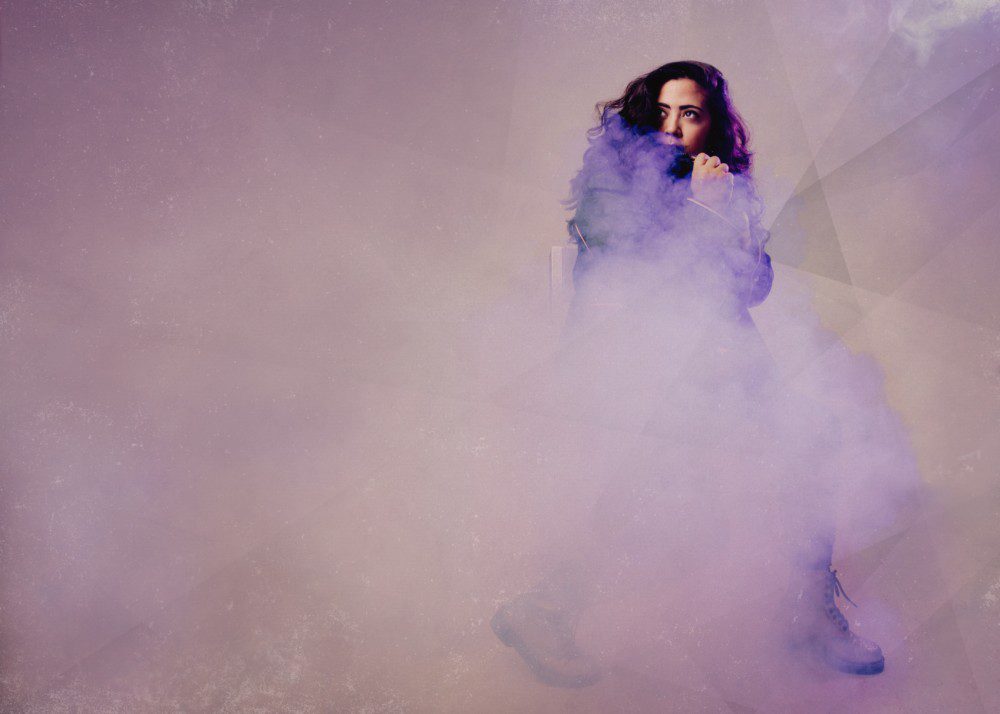
PLAYING SEATTLE: Drummer Heather Thomas Opens Up on Gritty New EP

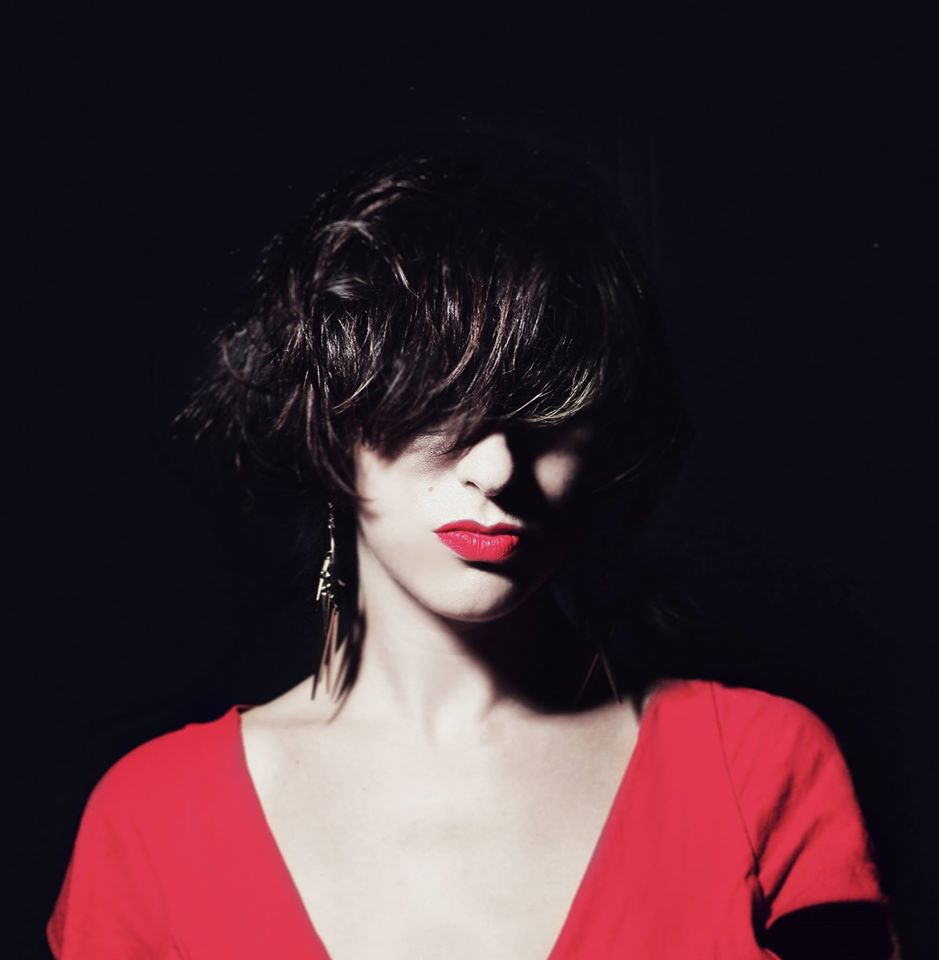
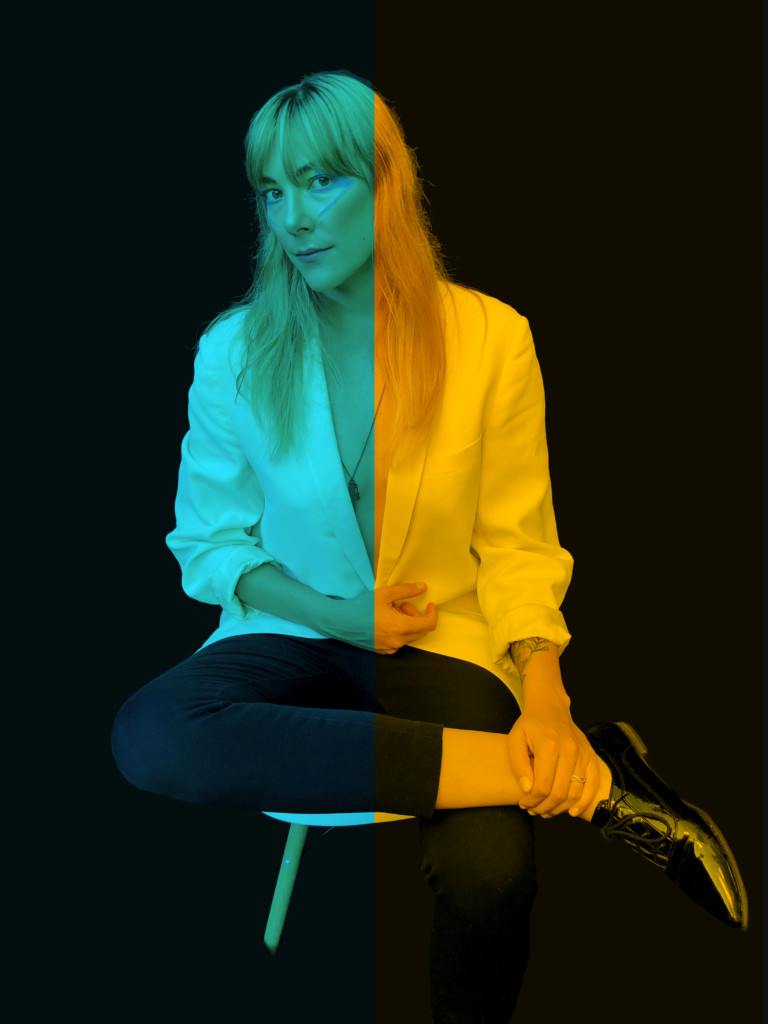
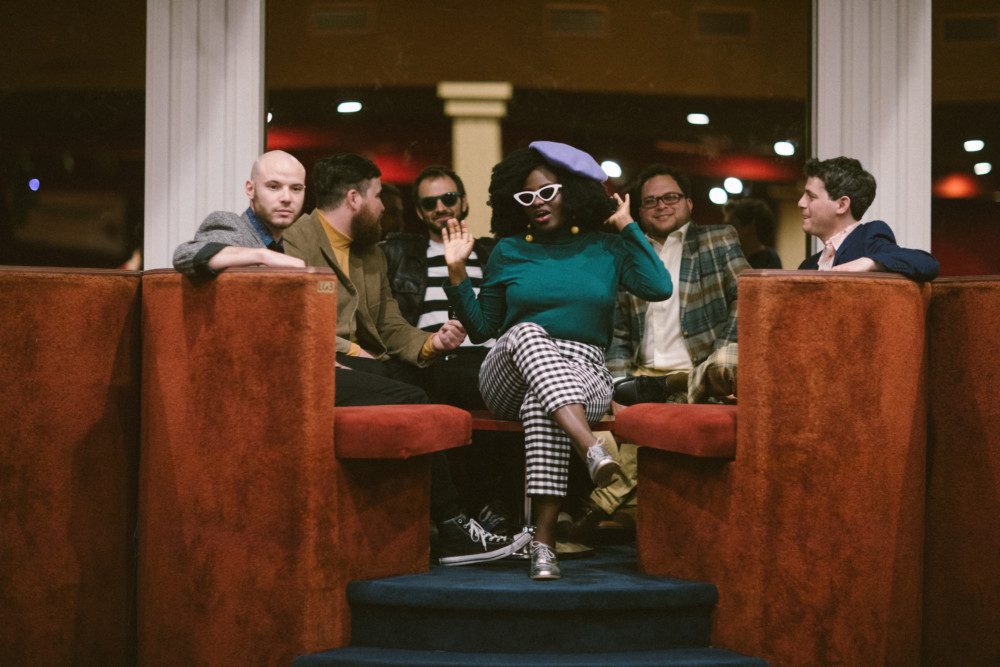
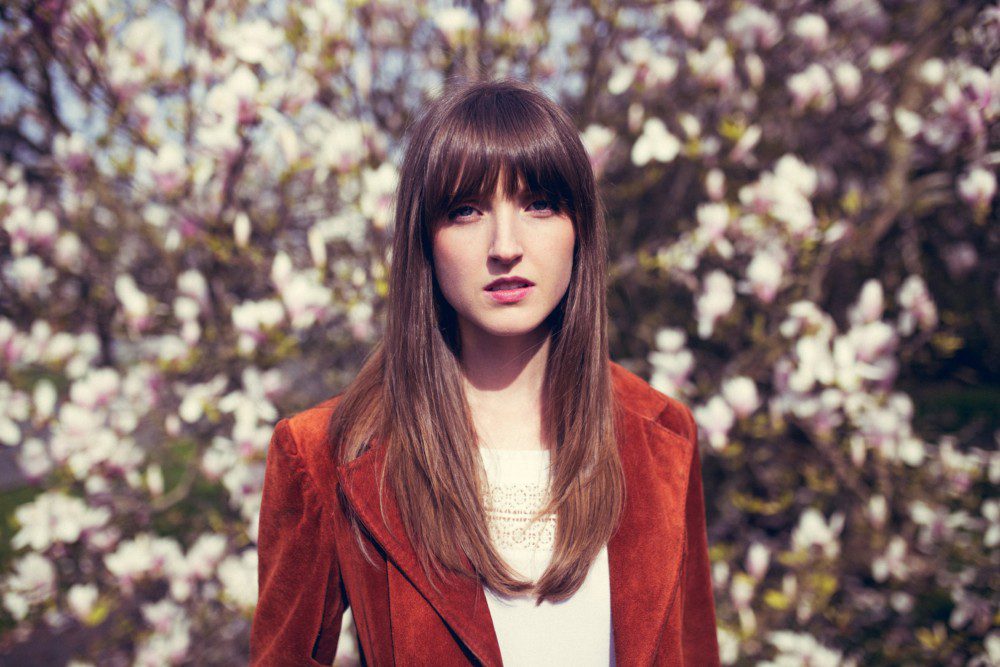
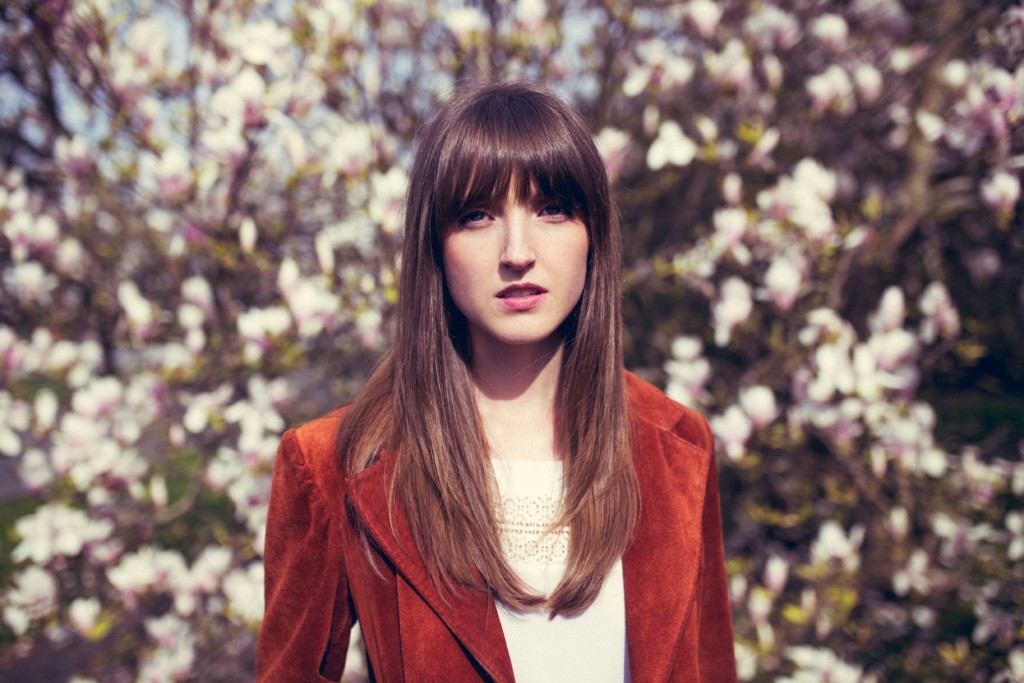
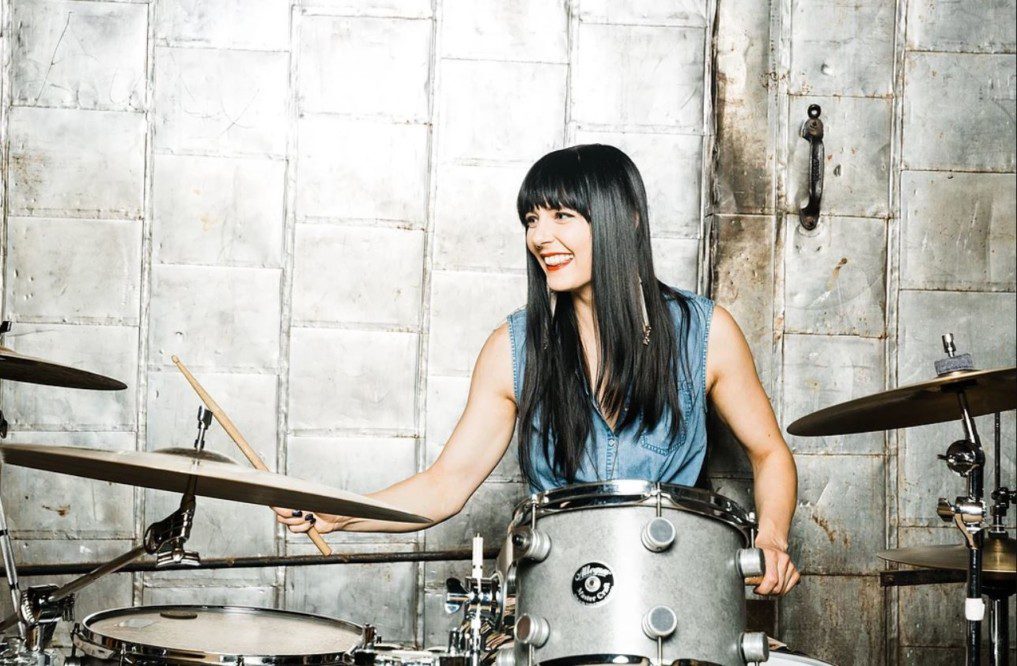
Seattle-based singer, songwriter, and drummer Heather Thomas has held it down on the kit since she was a kid in Puyallup, WA, playing in her church youth group band and learning percussion parts from her dad. Steadily, through writing and performing her own songs, teaching music, and touring with notable Seattle-bred artists like Mary Lambert, Thomas has found a voice entirely her own and garnered a reputation as one of the most infectiously kind and formidably talented musicians in the area.

Her sophomore EP, Open Up, which drops August 16th, showcases a decidedly fiercer Heather Thomas than ever before. As a songwriter, she’s comfortable in her skin, confident in her voice, and her songs have a grittier edge than those on her 2017 solo debut, People in Places. And the strength isn’t a put-on; it’s complemented with Thomas’ natural positivity and sense of fun. As she sings the opening lines to the title track, “Open up, love, can’t you see? There’s a hole in you and me. At the bottom we can meet and find the light!” it’s easy to lean in to see the glass half-full through her eyes.

On August 16th, Open Up will be officially released into the world at Clock-Out Lounge with a banger show—featuring Thomas and her band, of course, as well Holidae House, Big Tooth, and Olivia De La Cruz. Thomas spoke with Audiofemme about the making of the new EP, healing as a call-to-action, and her goal to grace a Super Bowl stage someday.

AF: Tell me a little about your place in the Seattle scene. Who and what are you inspired by in Seattle?

HT: I have played in so many bands in Seattle as an on-call drummer, so I feel very supportive of and supported by others in the scene. I get to record on lots of albums, I get to help other songwriters bring their music to life on stage and I get to tour and bring our music to other places. I feel like my place in the scene is to support and inspire others and to push for change and innovation in the circles I run in. In Seattle I’m inspired most by the other womxn I see fronting bands and defying stereotypes. There’s a lot of interesting new music being made right now that doesn’t sound like the music coming from other US cities and where I see the most challenging and unique material is in the powerful defiance of empowered womxn. (I say womxn to include trans, non-binary, or femme-identifying people who may not have been born or raised as females).

AF: How about the new release, Open Up, you’re putting out? What was the process of making it like?

HT: The title track, “Open Up,” was recorded by George Wiederkehr at Mosaic Studios in LA at the California College of Music. The second track, “I Am the Desert,” was recorded by Kenny Moran at Blue Microphones Studio in LA, and “When I Was Young” was recorded by Eric Lilavois at London Bridge. We flew down to LA to record the first two songs and to play a show at The Mint last February, and then we recorded the third song at London Bridge as an in-studio music video. George was the engineer on my first album so it was fun to work with him again. Kenny is a friend of mine from working with Mary Lambert and it was great to get to see the Blue Microphones Studio, where they’ve got some really cool gear like the Moog used on Michael Jackson’s records or the piano that used to belong to David Bowie’s pianist. Eric is a dear friend of mine and after recording drums and background vocals on his album, we decided to work together again on a video for one of my songs. All three studios were really great and I love working with each of the engineers.

AF: Is opening up something that’s easy or hard for you? Why did you choose that name for the title of the EP – is it a call to action for others to open up?

HT: Open Up was written after I read a Joseph Campbell book about the power of myth. I don’t know if opening up is easy for me but it’s definitely something I value in myself and others. You know, the artists that inspire me the most seem incredibly honest and in-touch with their own faults and struggles and I want to be able to be truthful about my experience. The title is a bit of a call-to-action because I feel like healing is one of the most important aspects of moving forward and evolving as a species and a society and you can’t heal until you face your fears and your trauma. 

AF: I know you were a relatively newer songwriter when we last spoke around your first release, People in Places. How have you grown as a songwriter since, in your own eyes?

HT: I think my music is getting a little harder-hitting and grittier. I’m taking more chances with arrangements and becoming more sure of myself and what I have to say. I’m not shying away from key changes or metric modulations or saying things about myself that are less-than-flattering.

AF: What was the most rewarding thing and the most challenging thing about the process of making Open Up?

HT: The most rewarding thing is people connecting to the music. I love when someone tells me they have one of my songs stuck in their head or that a lyric made them think or feel something new. The most challenging thing is doing all the non-musical work that goes into a release, like formatting photos and sending press releases and booking/promoting shows. I’m getting better at buckling down and doing the work but it’s really not what I like to do. I just want to play music! But I also want people to get a chance to hear it, so all that other stuff has to get done. 

AF: Tell me about personnel on the EP, and briefly about your relationships with them.

HT: The band is myself, Dune Butler and Oliver Franklin. Dune and I have been playing together for years in General Mojo’s and as the rhythm section for other bands. Oliver and Dune are roommates, and Oliver and I have gotten to play together in his band The Senate as well as in his own original project. We all play and write lots of music together so we have a really strong sense of trust and support musically.

AF: The single that you use for the music video, “When I was Young,” has a very reflective quality. Do you feel like you look back a lot? Are you in a nostalgic moment in your life?

HT: I think for me it’s important to look back and realize where habits or patterns come from so that I can move forward in a self-aware and accountable way. I want to grow and change and be better for myself and everyone around me, and that means looking honestly at where things are broken or immature and doing the work of healing and improving. I’m not too nostalgic; I’m grateful for the journey I’m on but I don’t look back and wish I was in a different place or long for earlier times. I strive to stay present and enjoy things the way they are while continuing to set myself up for better things to come.

AF: What are your goals with this EP? Will you tour?

HT: My goals are to start a conversation, to put something completely original and inspiring into the world from where I’m at now. I will continue to write, record, and release music my whole life, so this is a snapshot of what things are like right now and sort of a foundation and reference point for the future. I am going on a West Coast tour starting the day after the EP releases. 

AF: What are your goals overall? What’s next for you? Is the sort of career you want as a musician crystallizing for you? 

HT: I have this goal of being “drummer famous,” like not necessarily a famous drummer but well-known among drummers. I aim to win a Grammy someday. I will tour internationally. I will license music for TV/film. Someday I hope to play the Super Bowl. I have a goal of getting more girls and women to play the drums. I want to play drums on the moon. I have lots of goals! I think the most important is to continue to play and write music and never stop. I don’t see my career as one thing – more like an artistic pursuit that will change and grow in many directions as I progress. What’s next for me is yet to be seen. I’ve got songs to record, ideas to write about, and all kinds of interesting opportunities are always opening up, so there’s no certainty, only possibilities! 

AF: Lastly, give me a little idea what the release show for Open Up will be like?

HT: The release show is August 16th at the Clock-Out Lounge, which is a great venue for music (with really good pizza too!). The show opens with local songwriter Olivia De La Cruz, who writes and sings gorgeous songs. Then Holidae House from Portland, who have a really tight psychedelic sound and really beautiful music, followed by local ripping musicians Big Tooth who are going to bring a killer show. Our set will include some brand new songs and some re-arrangements of old ones, and we’re going to be rocking out as well as getting really open and intimate. We’ll have the EP for sale as a poster printed on 100% post-consumer recycled paper with a download-code printed on compostable flower-seed paper. 

Follow Heather Thomas on Instagram or check out her website. 

UPCOMING TOUR DATES:
8/16 – Seattle, WA @ Clock-Out Lounge
8/17 – Portland, OR @ Bunk Bar, Portland
8/19 – Eugene, OR @ Old Nick’s Pub
8/20 – San Fransisco, CA @ Hotel Utah
8/21 – Los Angeles, CA @ Silverlake Lounge
8/22 – Joshua Tree @ Landers Brew Co.

PREMIERE: BABERS “Something I Can Give”

Every city has its own unique brand of loneliness. In New York, loneliness is embodied by long subway rides surrounded by strangers listening to sad music, avoiding eye contact. In Los Angeles, you don’t have to brush shoulders with strangers; you’re able to move from one part of town to the next in a car built for one. Los Angeles-based duo BABERS explore the cold nature of the city and the bravery of being yourself from day one on latest single “Something I Can Give.”

“It’s a lost cause / Maybe you’ll just write me off / when you find / that I’m not what you wanted,” Dana Cargiol and Lisa Haagen harmonize on the chorus, their voices combining to create a pulsating echo, sound bouncing off the back wall of a crowded room. It’s a wallflower’s lament, a song someone sings when they’re coming out of the shadows, ready to take the world by storm. BABERS walk the delicate tightrope that is harmony; two voices supporting each other, lifting each other up to crescendo. What begins as a quiet, plaintive plea ends as a full-bodied demand: see me for who I really am.
Listen to AudioFemme’s exclusive stream of “Something I Can Give” and read our interview with Dana and Lisa below.

AF: How was BABERS founded? Where did you initially cross paths?

DC: We initially crossed paths at our bassist’s birthday party where she asked everyone to come wearing a Canadian Tuxedo. Yvonne had asked both of us to play an acoustic set for our friends.

LH: We both got there early to help set up and so about five minutes after meeting we were asked to test the photo-booth. As brand new friends, we were posing back to back in our matching outfits with backwards hats, serving serious “it takes two” vibes. That comfortability was instant and our style really hasn’t evolved.

DC: BABERS was founded after we’d been friends for a couple of years. We had been doing separate music things and then Lisa asked if I could sing in her band.

LH: Dana started out jumping in for backing vocals in my project, but our voices had a sister-blend that surprised us both. I had never been able to convince my sisters to be in a band with me so that blend was really cool to find in a friend. Once we were singing together it was very clear to me that she could never leave the band.

At the beginning, we talked about changing the name but we didn’t have any other ideas that felt right. A while later we started saying ‘babers’ when talking about the band, but we thought we were past the point of being able to change it. After using it internally for about a year we were like, wait – I think this IS the band name. We ran it past our bassist Yvonne and a few people that had the right to veto it, but it felt like the right move for the band.

AF: Your vocals are incredibly tight. How do you decide when each member takes the lead, when you’ll harmonize, etc? Does it just come down to a lot of experimentation?

DC: Thank you! We’ve worked really hard at tightening our vocals and singing together. We often joke about how we decide the lead, and our general rule of thumb is: Lisa sings the saddest songs and Dana sings the happier (sounding) songs. When it comes to vocal parts and harmonizing, it’s definitely a lot of experimentation and trying different things. For “Something I Can Give” in particular, we can both remember sitting in Lisa’s apartment, playing acoustic guitar, and attempting new bends and blends through the main chorus lines. We have voice memos from that first test run that helped us check off the final product that we’re proud of and love.

AF: At what age did you start making music? Who were your early music influences?

DC: I’ve been a singer for most of my life and I’m a reformed theatre kid. When I got into high school, I’d been singing arias and opera and most of the music I’d been listening was Broadway cast recordings. I started to make music my senior year of high school, and it started with a ukulele. I was inspired by singer-songwriters like Ingrid Michaelson, Kate Nash, and Julia Nunes. I was attracted to their pleasant sadness that they all carried in their melodies and lyrics. Later in college, I started to get more into musicians like Joe Purdy, Eisley, and Florence & The Machine. When I started music it was a mix of goofy, joke songs and sad, unrequited love songs that felt more dramatic than they actually are. Since then, I’ve expanded my music taste a lot and love a large mix of things, but usually I’m looking to see and feel what emotions are evoked while listening. I’ve loved making music with Lisa and seeing how our styles and influences blend together.

LH: My parents introduced me to music really young – I started playing drums at age four and that was my main instrument while I was playing in the band in school. We also had a family band that played oldies for local talent shows. When I went to college, I decided to bring a guitar and actually figure out how to play it. It was when I started writing that I got hooked and I started singing, out of necessity. It took another few years before I acknowledged I was a singer at all. Being able to play a range of instruments has also had a big effect on how we write because we are considering everything from the beginning. Dana and I always demo out the full arrangement before going into the studio process… so even though we continue to workshop and test things we already know the vibe for how we want the parts to fit together.

AF: What artists have shaped BABERS as a band?

LH: I’ve always thought the range of what we listen to has been the bigger influence. Dana listens to a lot of hip-hop which I think you can hear in how she delivers phrases. Listening to Ben Howard encouraged me to try alternate tunings which is still very much a part of how I write on the guitar. Our sound now uses a lot of guitar pedals for creating moody soundscapes and that’s where we will draw some tonal comparisons to Daughter. More than anything I think we both attach to lyrics and artists that write in a stream of conscious way.

AF: Tell us about “Something I Can Give.” How did the song come about?

LH: This song was one of the hardest to write because I was trying to articulate this really big thing about believing that I am valuable regardless of receiving affirmation about it. When I moved to LA, it was the first time I ever had to really talk about myself because before that, there had always been context around me. I’m from a small/tight community so I am used to people knowing me. When I moved, suddenly I had no context around me so if I didn’t talk about myself, people would invent this version of me that I then had to work to undo. I was constantly being asked the same questions over and over… things I wasn’t used to having to explain about myself because I had always been familiar. I was having to defend my value across everything: as a band without trying to be cool, as a friend without feeling like I had to date any and everyone I connect with. I feel really sure why I do what I do, but not everyone will be on board with my reasoning. At the end of the day, of course I want to be liked but I don’t want that to be the reason I’m making decisions. This song is about trying to distance myself from the people pleaser in me.

AF: You’re based in Los Angeles. What are your favorite music venues in the city?

DC: The venues in LA are one of the huge benefits to being a Los Angeles-based band. We love the mid-sized venues like The Echo, The Fonda, and The Troubadour. There are so many amazing places to play and watch music.

LH: Hotel Cafe is still the best place to stumble into on any night. Whether it’s shows or showcases I think it’s a sure bet that you’ll walk out with a new songwriter that you’re in love with.

AF: Where do you see BABERS five years, ten years down the line?

DC: In five years, we’d love to have a couple albums out and to be actively touring. We’d be over the moon if we could be with the same bandmates we are now but they have their own big dreams so we’re just lucky as long as we can have them. It’ll definitely be Lisa and I still making music together.

LH: We love the community that music creates so when we talk about the far out future I think we want to have our own studio and be able to record and maybe even manage bands that we believe in.

Check out BABERS live in Los Angeles Thursday, August 22nd at The Satellite.

PREMIERE: Kalen “Lighter”

Photo by Shervin Lainez

Everyone remembers the melodrama of their first breakup: tear-stained diary pages, long walks listening to Alanis Morissette, hours spent curled up under a girlfriend’s duvet moaning. But with maturity comes perspective, and sometimes letting go of baggage too heavy to bear can be exhilarating.

This is the crux of “Lighter,” the second single from Kalen Lister, who performs eponymously as Kalen. Forgoing the same old sick-at-heart tropes, “Lighter” looks at a failed relationship with happiness and hope. Having left her rock project Kalen and The Sky Thieves in pursuit of solo freedom, Kalen knows a thing or two about moving on. Recent single “Weak” showcased a more haunting, seductive vocal style, and though “Lighter” continues on that trend, it also allows Lister to flex her pop music muscles. Her vocals are airy and effervescent, mirroring the buoyant sentiment of the lyrics. At first she relives the last moments of her relationship, but soon enough she sings with resolve of having “living to do” making this the perfect anthem for when the crying is over.

Listen to AudioFemme’s exclusive stream of “Lighter” and read our interview with Kalen below.

AF: At what age did you write your first song? What was the subject matter?

KL: I was 11 when I wrote “The Storm in D minor” on piano, the saddest of all keys. I loved arpeggiating chords and having a tonal pedal point, a melancholy minor feel, and dynamic parts from a young age.

AF: How does your solo project deviate from Kalen and The Shy Thieves?

KL: While KST started as my compositions and direction it really became a rock band and a democracy. We wrote in order to deliver a particular type of live experience. When we recorded Bluebird, our intention was to capture much of that live rawness. My new solo music — “Weak” and now “Lighter” — are simply trying to be the best-recorded versions of themselves. Something that captures the song at the core but does it with more bells and whistles, exaggerating themselves to capture a story truth. They have been collaborative explorations with the producers I’ve recorded them with – “Weak” with Izzy Gliksberg, “Lighter” with Eric Zeiler, and my forthcoming releases with Yoav Shemesh.

AF: Where do you normally draw from in terms of inspiration? 

KL: Primarily, I draw inspiration from my own experiences. Sometimes, that of friends or even strangers. The natural world, painting, and politics all motivate different types of writing.

AF: Tell us about the genesis of “Lighter.” How did this song come about?

KL: I was so stuck in a relationship that felt like it ultimately wasn’t serving me. It took letting go (twice) to really release it and feel released by it. I was amazed that pretty quickly I started feeling better and better, lighter and lighter.

AF: You live in New York City – where are your favorite music spots right now?

KL: Oh man, so many of the old spots have closed. I saw an amazing show at a small gallery the other day Tornado Things – the DIY scene is still strong. For bigger venues, Brooklyn Steel and Pioneer Works. For smaller places, C’Mon Everybody, Bar Lunetico, Our Wicked Lady, Rockwood.

AF: Any great up-and-coming bands we should check out?

KL: Reliant Tom, Late Sea, Me Not You, No Swoon, Escaper, Johnny Butler & The Epic Fail, Ghost Cop, Mother Feather, No Surrender, SeepeopleS, Leaders of the Shift.

AF: What advice do you have for a young musician about to move to the city?

KL: Pay your dues & get involved.

Check out Kalen live in NYC at Rockwood Music Hall (Stage 1) on Thursday, August 23rd.

PLAYING THE BAY: Twin Peaks Promoters Expand Community With Two-Day Twin Shrieks Fest

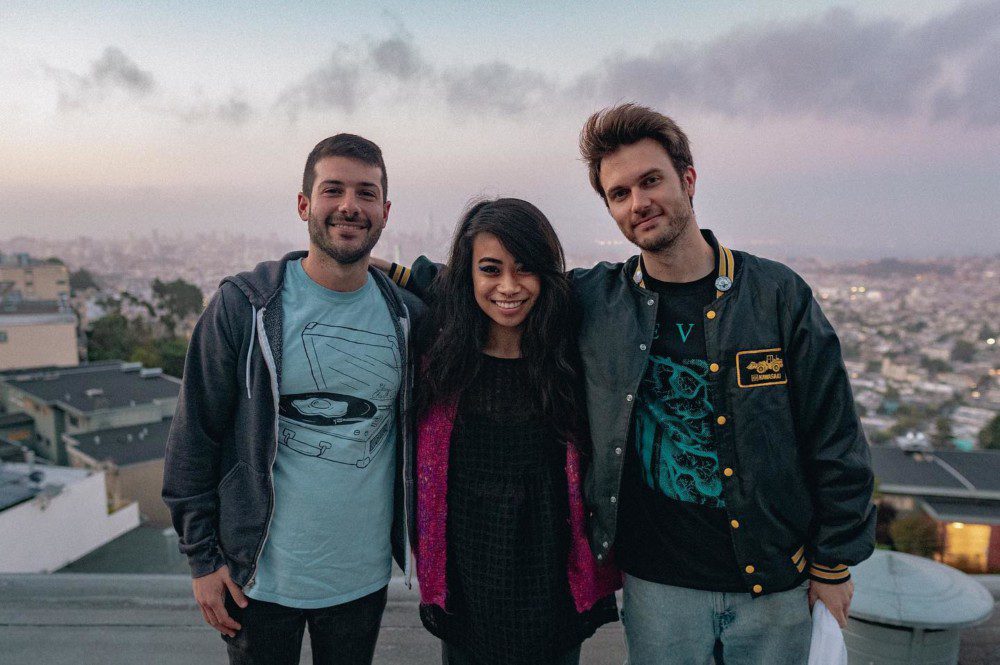
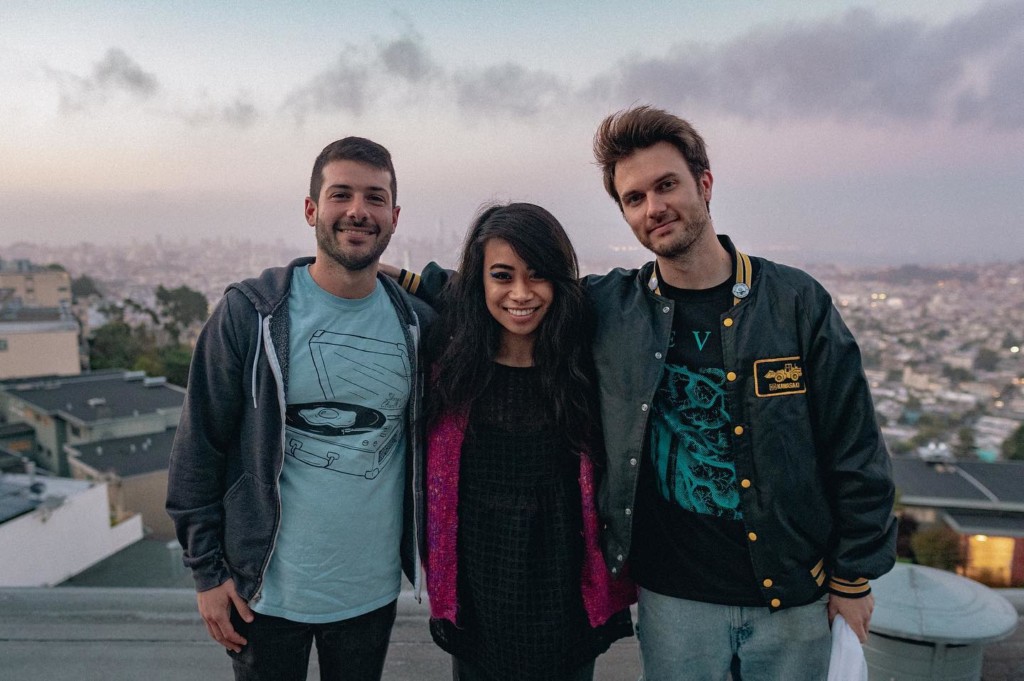
Twin Peaks Sessions organizers Jonathan Abrams, Rianne Garrido and Michael Donnelly. Photo by Trevor Skinner.

While ascending the steps to the upper level at Twin Shrieks fest, I almost knocked over someone’s plate of watermelon. “Sorry!” I mouthed into the dark, settling down to watch the next set from on high.

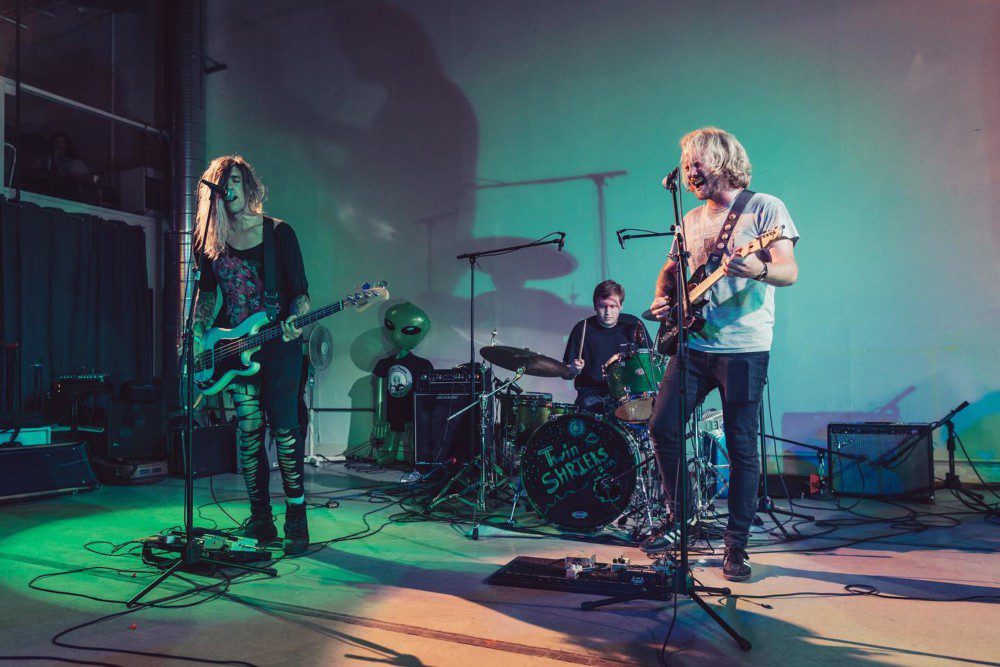
The plate was fitting; day one of the the two-day fest was like a punk rock cookout, with merch, artwork, and food stacked in foil wraps lining the walls, the stands cupping the performance stage like splayed hands. It was very much a family affair, occasionally in the literal sense (organizer Rianne Garrido’s parents flew up from Southern California to provide snacks and support) but also in the sense that Twin Shrieks seemed its own sort of family, the kind that gets made in the quiet by those making art, who know those making art, who know those making art of a whole other sort…

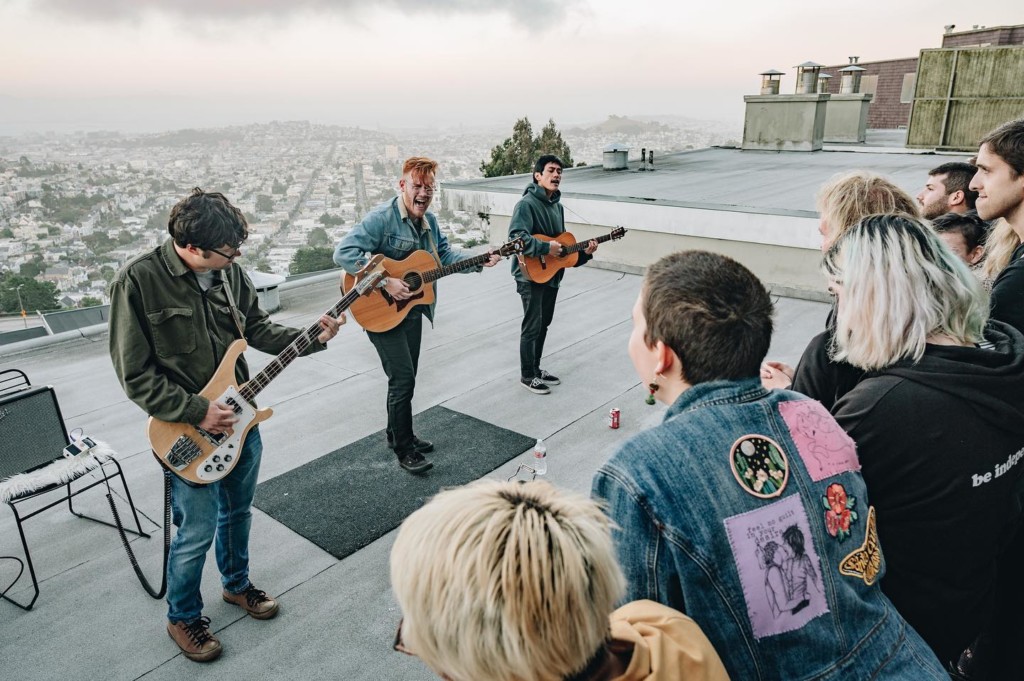
Garrido told me it had all come together quite naturally; the warehouse space for day one is normally used for theater rehearsals, so it was prepared (at least somewhat) for the likes of an audience. Day two was hosted at a tried-and-true venue, the rooftop space where the fest’s organizers host the weekly acoustic Twin Peaks Sessions. Day two was all acoustic as well, and from what I saw on Garrido’s Instagram the next day, it was all very intimate, with sets ranging from spirited one-man-shows to tinkling full-band covers.

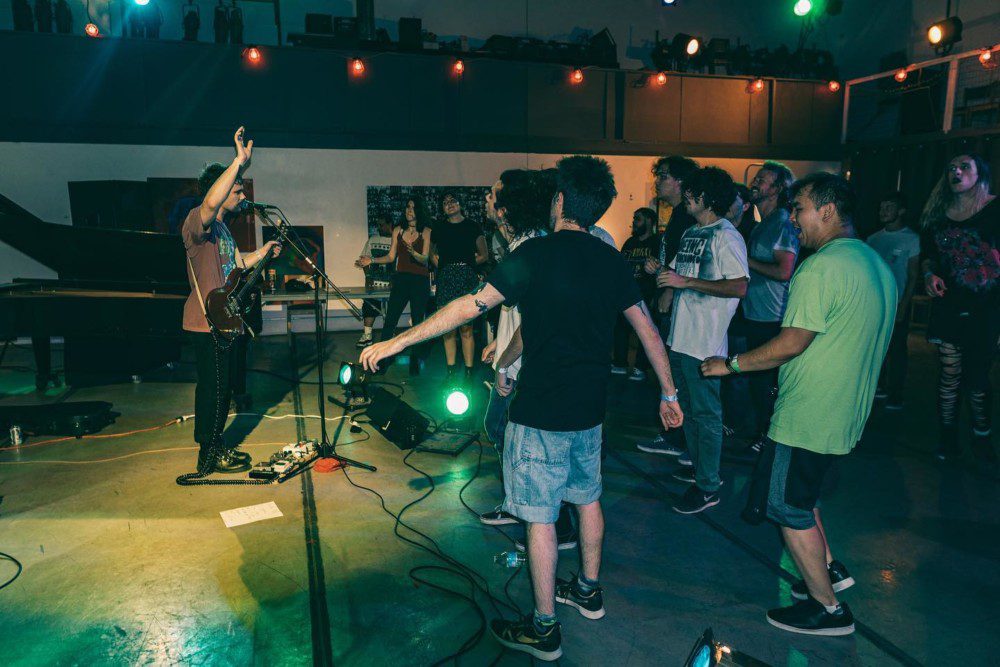
Day one, however, was all movement and noise, a bounce house of sweat and energy emanating from the bowls of a labyrinthine West Oakland warehouse. I emerged into the performance space mid-song, giggling with my friend after walking down a eerie and bizarrely long white hallway where I half-expected to meet El from Stranger Things. Onstage was Taking Meds, a New York band on tour to promote their latest full-length, I Hate Me. Their set is what compelled me to describe the night as a “bounce house” – it was hard not to immediately get caught up in the energy of the crowd as members of the crew and the other bands bounced up and down with feverish intensity, waving phones and Garrido’s somehow magically unscathed digital camera.

My friend was particularly astonished by bassist Jon Markson, who would twist his body and face into shapes heretofore unseen by man while offhandedly doing the splits despite standard-issue punk-band skinny jeans. My friend works in theater; I would be the first to tell her that if you are looking for some physics-defying theatricality, a punk show is the place to be.

Next up was Bay Area band Damper, ending their set with a crowd-chorus of “Never Truly Satisfied,” the closer of their latest EP, All We Have to Do. 

Rounding out the evening was Playing The Bay alum and Twin Shrieks headliner Kevin Nichols, who performed a handful of unreleased material, including “Disappointer” and “Barf.” “Disappointer” is a particular standout, and I look forward to comparing my live experiences of the song with the studio version. Nichols was, incidentally, also the first ever performer at Twin Peaks Sessions, so this evening was very full-circle for both him and the Festival’s organizers, who I spotted screaming his lyrics into the other side of the mike like they were collectively trying to summon a specter from the concrete ground between their feet. While I certainly expected this, it was almost (and I mean this in the best way possible) like watching a bunch of kids at a sleepover sing their favorite songs into a improvised mic — only this time, your favorite songs have been created by your friends.

No surprise to me why Nichols is still so happy he moved to the Bay.

I talked to Twin Shriek’s organizers – Mike Donnelly, Jon Abrams, and Rianne Garrido – for some more insights on the process, lessons learned, and what’s next for Twin Peaks Sessions.

Kevin Nichols plays Twin Shrieks Fest. Photo by Rianne Garrido.

AF: What was the inspiration for the fest?

MD: While we’ve been hosting our acoustic Twin Peaks house shows, we slowly began branching out to other venues that allow for full bands (amps, drums, and an actual PA!). In the back of my mind I always wanted to put on something bigger than your standard 2-3 band bill, involving diverse acts, local art vendors, and the most important of all — community. We love to bring people together.

We drew inspiration from major punk festival Riot Fest in Chicago, but more realistically, fests such as Fest in Gainesville, Florida, and the handful of day-long DIY fests Rianne and I attended during our visit to Austin’s “unofficial” SXSW shows. These DIY fests (put on by The Alternative, DIY Tour Postings, and more) ranged from taking over a dive bar to someone’s backyard. I’ve lately taken on the mindset of “anything can be turned into a music venue,” and my mind was racing as to what we could do with [the project we] dubbed as Twin Shrieks.

The approach going into this was to find a safe, all-ages and somewhat “underground” venue for day one where we would allow for full bands, knowing day two we would simply wind down acoustically at our usual Twin Peaks spot. When we stumbled upon a rad, safe, for-rent warehouse space in West Oakland, we went all in with planning.

The biggest inspiration for the fest was the musicians and artists we’ve met along the way in doing Twin Peaks Sessions. The amount of talent in the Bay Area is massive and we wanted to host an event that celebrates the creativity of our local community.

AF: What were your biggest challenges organizing the event and what do you wish you had known ahead of time?

MD: The biggest challenge was time management, and planning out an itinerary for a space we never used, a space that upon arrival would be totally empty and we’d have to set up from scratch (in a one hour window). I wish I mapped out everything ahead of time (vendor tables, more advanced stage plot) and also gave numerous people job responsibilities during setup. Setup, with the help of some KICK ASS volunteers, ended up going well, and music started right on time. The first two hours were the biggest stressors but we communicated and moved to get it all sorted out!

RG: None of us have had any prior experience in organizing an event of this scale so we went into planning with full caution and attention to detail. We quickly learned the importance of setting up an efficient ticket sales/RSVP system to a well-timed load in, consistent communication with all participants, recording expenses, food prep, and everything in between. We met every week to make sure we covered all bases and tracked everything in an all-encompassing spreadsheet. We’re huge fans of a good ‘ol spreadsheet!

JA: It wasn’t necessarily our intention to make any money from it, but we did want to have a sense of expenses versus profits to help plan for future events. We did a pretty good job keeping tabs on what we spent and what we made, but we’d make some changes in the future to streamline that process. The sustainability of events like this unfortunately can live and die by the money.

AF: What were your favorite parts about organizing?

MD: I love forming a bill — for Twin Shrieks, getting to form a nine-band bill day one, and seven bands day two… oh the joy!

RG: Seeing and experiencing the behind-the-scenes of what it takes to put on a festival really made me appreciate the hard work that went into previous festivals I’ve attended. We loved seeing the support on social media from all of the musicians and artists in the time leading up to the festival. Hosting this festival truly became a community effort and we’re really grateful to everyone who took part in it (bands, artists, volunteers and attendees) — you helped make it happen!

Damper plays Twin Shrieks. Photo by Rianne Garrido.

AF:What was your favorite part of the actual fest?

MD: My favorite part was once all was set up and things began to run themselves (shoutout to Gabe on sound, who totally ran the show between acts and during) it allowed us to really rock the heck out during sets! Getting to stop by each merch table, check in with vendors, and most importantly check in with the attendees who were having so much fun while discovering new music. I loved to see people getting merch from bands they did not know of a half hour prior.

RG: Shows have always had a special place in my heart for giving me a space to feel safe and welcome. Putting on this festival was a great reminder as to why I have such a big love for this community. The feeling of being surrounded by like-minded individuals who share a genuine appreciation for music and the arts gives me immense joy. The sense of camaraderie in the room was so tangible — I can’t even begin to describe it! I owe so much of my personal growth to the music scene, and to help host an event that aspires to provide the same inclusive space it did for me growing up was such a humbling and rewarding experience. The most memorable moment for me was having my parents there helping serve the food. They were gushing afterwards saying they felt so loved by everyone who came. My mom summed it up best when she used three words to describe everyone who took part in it — wholesome, humble and appreciative. I couldn’t agree more.

JA: Seeing everyone have such a great time! And seeing all these different people we had met in various different contexts all together in the same room, some who knew each other already, some meeting each other for the first time. Community! And also being able to play on the bill alongside a ton of amazing bands that we love and have a ton of respect for.

AF: What is a question you wish you were asked more often?

We wish our community would always feel comfortable reaching out to us for help in any regard. Whether it be music related/getting a venue situation sorted out, or even in other significant areas such as mental health, we’re happy to lend a hand and also be there to listen. The strength and longevity of this community depends on taking care of the people in it, and our aim is to support anyone the best we can.

AF: What’s next for Twin Peaks Sessions?

We will continue dropping recorded sessions on our YouTube page each Thursday, and host a couple house shows a month. We will continue branching out to other venues as well, getting exposure as bookers who help touring bands and locals pick up gigs and form bills. Oh, and Twin Shrieks 2020 planning has already begun!

Adult School plays day two of Twin Shrieks at the Twin Peaks Sessions usual rooftop spot. Photo by Rianne Garrido.

PLAYING CINCY: Oski Isaiah Enlists the City’s Best to Deliver New LP

F*ck A Job / Company

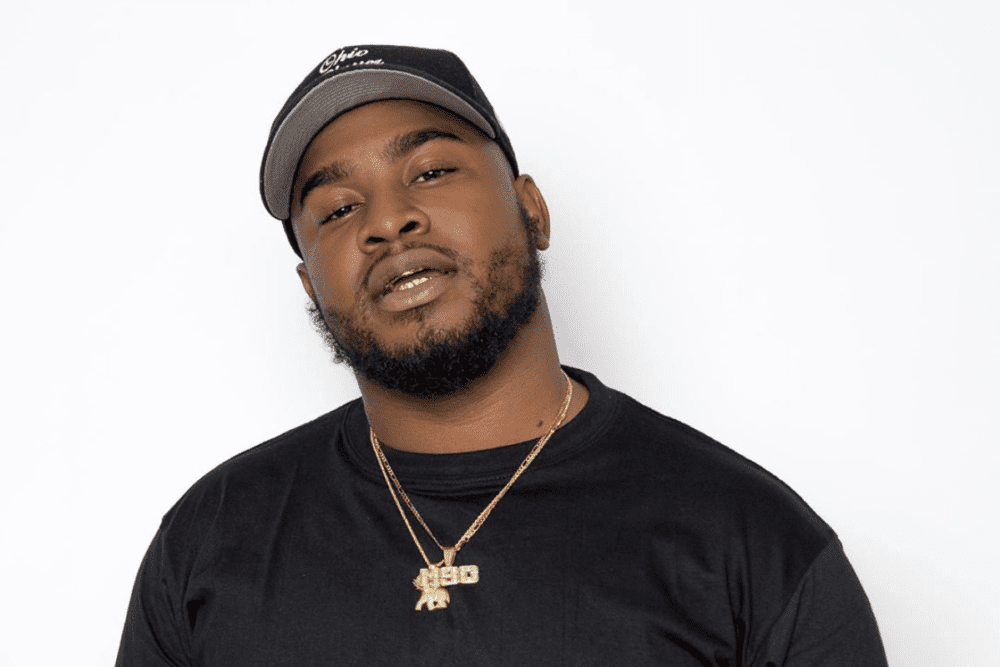
Oski Isaiah finished out a busy July with the release of his highly-anticipated new album, Fuck A Job. The 10-track LP features assists from Aziza Love on “Anytime,” Monty C. Benjamin on “Over” and Jus Clay on “Business.” Fuck A Job follows up Oski’s 2018 album, Adventure 2, and a compilation music video released just two weeks ago. Filmed by Dre Shot This, the three-part visual bridges Adventure 2 cut, “Mob,” Fuck A Job highlight, “Apply,” and an unreleased track, “Mention Me,” that comes from a mysterious future project.

Fuck A Job is produced completely by Autumn Jivenchy, who provides hard-hitting beats that bring enough energy to match Oski’s lively tempo, yet remain stripped-down enough to let his vocals shine. Oski’s bars take the listener on a journey through hardship and success and shine a light on themes of support and believing in yourself.

“It was rough end of 2018. I feel like I lost everything. I nearly folded,” the Ohio rapper wrote on Instagram. “Having to be strong. Mentally and physically changing. I felt like a failure. It hurt to exist, I didn’t want to. In those moments, at my lowest, I remembered who I am. I started to understand my purpose. I’m here to promote loyalty, prosperity, love and mental health. I’ve done that with all my music.”

After thanking everyone who contributed to his album, he wrote, “I’ve been able to make Fuck A Job my best album yet.”

Listen to the full album below.

PLAYING ATLANTA: Julie Slonecki Finds The Perfect “Recipe”

You know you’ve struck gold when a song is as thought-provoking as it is catchy, wrapping a universal millenial lament in twinkling synth and a beat that’ll have you reaching for your dancing shoes. Witty, wry, and sharp, Atlanta singer-songwriter Julie Slonecki does just that, sharing one of my favorite songs of the summer, “88,” and a brand new stunner, “Recipe.”

Slonecki has a long history in the music biz, with several albums and side projects under her belt. Releasing this pair of stand-alone singles is a bold move meant to escape the monotony of a typical album cycle, but there’s an unintended effect, too – both “88” and “Recipe” have a self-contained, ecstatic sort of energy unhindered by the surrounding filler of an LP. “Recipe” is a sunny, straightforward crush song, while the nostalgic vibes of “88” belie its existential themes.

We sat down with Slonecki to discuss her musical muses, her plans for the future, and of course, her place in the Atlanta scene.

AF: How did you get into music? Were you raised in a musical family, or was it sort of the rebellious thing to do?

JS: My parents actually met in the marching band in college, and then later on played in a cover band on weekends together, so music definitely was always part of the family fabric. I did satiate my rebellious side by picking an instrument neither of my parents were pros at, the guitar. Even though my Mom is a world class pianist, I brilliantly decided to not take advantage of that, and to instead forge my own road as a guitarist and singer-songwriter.

AF: Was there a moment where you realized “Oh, this is what I want to do as a career,” or was it something you knew from the beginning? 

JS: I think a lot of kids have dreams of being rock stars, which are then quickly pushed out by society telling us that we need to have “real” careers. I always knew I had an interest in music, but it wasn’t until I got to college that I realized how truly happy music made me. I joined choirs and started a few bands, and eventually abandoned my sensible plans of a “communications” degree and instead graduated with an ever lucrative BA in Music Composition. After school was when I started figuring out what making money with music meant, and it’s by no means easy, but it’s also more fun than any other job I’ve seen or had, and I’ve had some very random jobs.

AF: Who do you consider your greatest musical inspirations? 

JS: For me, the first great inspiration of my young songwriting career was Jenny Lewis (formerly of Rilo Kiley). She was my first modern example of a badass female leading a band, writing her own songs, and crushing on stage performances. Before that, all my favorite singers/band leaders had been guys, and she made me realize, hey, I can do that too. She also just had an effortless cool about her that high school me wanted to emulate.

AF: Can you tell us a bit about your writing process? How has it evolved since you started writing your own music? 

JS: I’ve always recorded my own music, from day one actually. In high school, I dug out an old Tascam 8-Track tape recorder my parents had from the early ’90s, along with a couple of dusty microphones, and set to work. I then of course took those tapes and paraded them around in a boom box during lunch period, something I know my friends and classmates must have loved. Since then, my love for recording and production has grown so much, and I think I know quite a bit more now of course, but from the beginning I’ve always recorded my songs as I wrote them. In fact, my songwriting process is generally very quick; I typically sit down and will have a somewhat fully formed song done in just an hour or two. I’ve always worked that way. I’ve also self-recorded and produced all three of my albums (one under “SLONE”) and of course these two newer singles as well. It’s sort of a maddening process to do it all yourself, but I also love it, so maybe I have a problem.

AF: What inspired your latest singles?

JS: “88” sort of just came out in one forty-five minute burst – me sitting in my home studio, whisky in hand. I think it was a culmination of feelings about the state of the world and the invisible pressure that I sometimes feel about my generation having to try to fix the mess we are all in. And a lot of times, it just feels like way too much for one snowflake millennial to handle. I think it just felt good to confess some of those thoughts I had been having – that as one individual, do I even have the ability to impact these large than life issues? And is that pursuit worth it if the cost is having to give up things in life that make me truly happy (i.e. music)? For now I will just keep writing music, and hustling, and make sure to vote this November.

As for the new single, “Recipe,” it was inspired by meeting one of the most wonderful, funny, and devoted humans, my girlfriend. It’s about that first feeling that rushes over you when you meet someone you know is really worth the time.

AF: You’re working on a bit of an experimental model, releasing a single every month rather than the more typical album format. Do you think it will impact the music you make, since you can write and release something in a more immediate, here-and-now period of time? 

JS: While it does enable me to perhaps write, record, and release music in “record” time, it actually wasn’t the original intent. “88” actually did sort of happen that way, but I have a huge back catalog of unreleased songs that I plan to put out using this very state of the art technique. I think it actually came down to that fact that it seemed far easier than the task of mixing, mastering, doing the art, and promoting a whole record, especially while juggling everything with my other band, Sexbruise? (a comedy based, satirical, and dancy-as-hell project), as well as my financially necessary day job/side hustle. And I figured, why the hell not, might as well mix it up.

AF: You released your debut record seven years ago. How have you evolved as a writer and performer since then? What do you think has stayed the same? 

JS: I think as a performer I have really continued to grow, and feel far more comfortable in my own skin on stage. I give myself much more freedom, and I try to be forgiving of my own mistakes, although that last part is still hard for me. I’m definitely my own worst critic. If I’m being honest, as a songwriter, sometimes I think that my work shows the overall trend of shortening attention spans in society. I find myself writing super short songs, no longer blabbering on poetically as much as I used to. I think part of it is that I’m not often setting out to write solo acoustic guitar songs anymore, but maybe the internet is rubbing off on me too much, who knows. As for what stays the same, I actually can’t always tell, and just the other day I started a song on the very topic: “How many people have I been? I feel like I borrowed this body from them.” Sort of how I feel sometimes, you know?

AF: Why do you think that people connect so strongly with you and your music?

JS: Well it’s certainly not because I’m a much stronger and more sophisticated writer than Shakespeare (which I am) but rather that I think people are looking to hear something familiar, something maybe they themselves have had vague thoughts or feelings about, but never quite put into words. Or maybe they just love dope beats. It’s true, people really love it when you drop the beat, and then pick it back up. But truthfully, I’m not sure why. I think I make music that I enjoy, that really makes me happy, so my best guess would be that if it does that for me, it probably has that effect on other people too.

AF: What’s been your greatest victory and your greatest challenge since getting started? How have those challenges helped shape you and your music?

JS: My greatest victory was winning seven Grammys in 2013. My greatest challenge was having to accept that I hadn’t actually won a Grammy and that I instead was late to a job that I hated. I think it’s such a challenge to be an independent artist these days because there has never been a time with more competition. Artists have never been more awash in a never ending sea of new songs, videos, art, events, press, and especially pet rescue videos. How are we supposed to compete for viewership and engagement? That’s the unfortunate reality of the music industry right now: social media is king. I know I myself am guilty of skipping over things that other artists may have poured countess hours into, just to watch a video of a tiny kitten drinking milk from the hands of a monkey. If I do it, I know other people do too, so that can be disheartening as an artist for sure, but…hey, I still love it. I just don’t take lack of engagement so personally anymore.

AF: You’ve been a part of the Atlanta music scene as it’s grown so much over the last few years. Why do you think Atlanta is seeing such growth? Do you think it will keep spreading, or do you think it will have the “bubble” effect seen in Austin, where there’s lots of industry in the city, but it stays in the city? 

JS: Even though I’ve lived here for the last few years, I feel like I’m still not truly connected with the scene here. I think it’s so spread out, just like Atlanta and all its suburbs, and that can make it hard to meet the right people. That said, I have been lucky to meet some really excellent musicians here, and that has made it worthwhile, though playing in town has its challenges. In my limited experience, Atlanta can be a difficult place for small artists to find success. You are constantly having to compete with big ticket acts, no matter the night of the week; it’s just the nature of a bigger city. We do have some great large capacity music venues here, which are awesome for already nationally touring acts to come through (and great for fans), but not so great for the Average Joe just trying to sing Original Joe songs. I wish I had had that insight earlier on. Since moving, I have kept my contacts and friends from my hometown, Charleston, SC, and play there often.

AF: What’s next for you?

JS: Even though I’ve been releasing music of my own, I am also releasing an EP and music video with my other aforementioned band, Sexbruise?, at the end of August, which is very exciting. Who knows, maybe it will win us an actual Grammy. I plan to keep releasing music over the next few months, and see how that method works compared to a full album release, but mostly I just plan to continue to perform live, and have a blast doing it. I think as long as I’m having fun with it, I’ll keep at it, and beyond that, who knows what will come of it (fingers crossed though for fame and wealth).

Follow Julie on Facebook and stream her latest single, “Recipe,” on Spotify now.

HIGH NOTES: Can Music Calm Your Nerves Before Surgery?

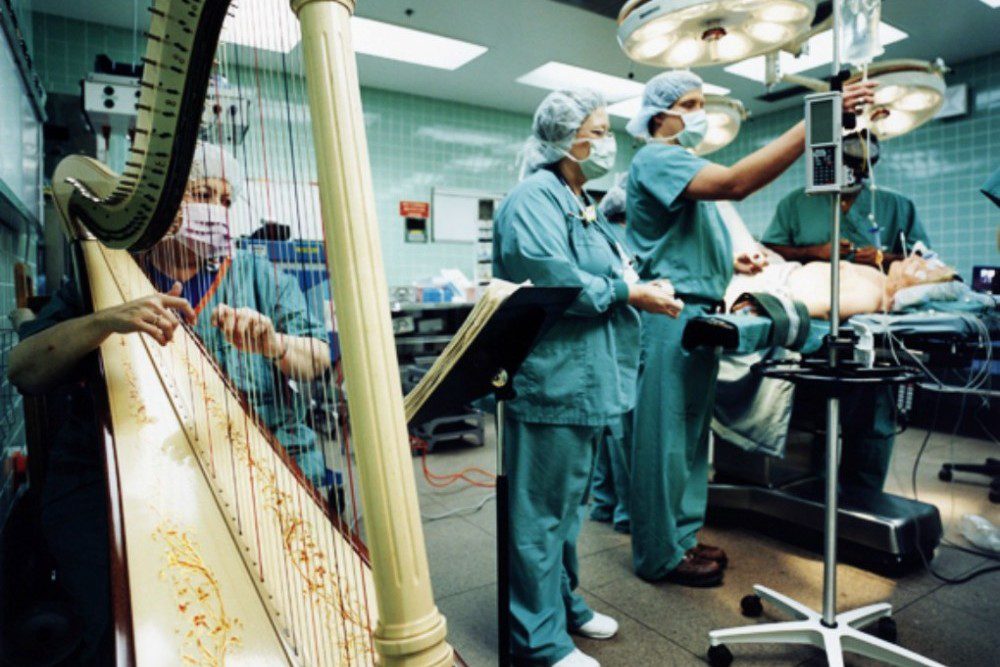
I was a week away from getting LASIK to correct my near-sightedness when I caught wind of a recent study on the use of calming music before medical procedures. The University of Pennsylvania researchers found that soothing music was just as effective as sedative medication to reduce patients’ anxiety.

They studied 157 people about to receive a peripheral nerve block, a procedure done to block pain sensations during surgery. Some of them followed the usual protocol and took midazolam (also known as Versed), which makes you sleepy and relaxed but can also cause side effects like impaired cognition, paranoia, and even suicidal thoughts. Others listened to Marconi Union’s “Weightless,” a song created with the help of music therapists to promote relaxation. The researchers asked patients about their anxiety levels before and after the medication or song and asked them more questions afterward about their experience with the procedure.

While those who took the midazolam were more satisfied with the procedure overall and reported better communication with the medical staff, both groups reported an equal amount of stress reduction.

Intrigued by these findings, I decided to give “Weightless” a listen before my own surgery. The eight-minute track makes you feel like you’re surrounded by gongs harmonizing to create a sound-healing bath. The music is slow and mystical, with chimes and what sounds like a xylophone creating a melody. I listened to it the night before the LASIK and as I was sitting in the waiting room.

This was not exactly a formal experiment, to say the least; aside from the fact that I’m a sample size of one, I also took an Ativan that my ophthalmologist had prescribed, so I can’t compare conditions. That said, I didn’t particularly notice any change in my mood after either the music or the drug, except that the Ativan made me feel a bit drowsy and out of it. I will say, though, that I got through the procedure with only one significant freakout, which is pretty good for me because I’m a huge baby, especially when it comes to things touching my eyes.

At the very least, it probably didn’t hurt. “There have been studies that have been done for decades using music medicine, and it has shown to reduce anxiety before surgery, minimize the use of sedative medications, reduce fluctuations in vital signs, and keep patients calm in the recovery period,” the study’s lead author Veena Graff tells me.

Indeed, a meta-analysis published last year based on studies of over 7,000 patients found that people reported lower anxiety and less pain associated with surgery after listening to relaxing music. The music had the greatest impact on anxiety when people listened to it pre-operation and affected pain the most if they listened to it afterward. Certain music, like that involving string instruments, was even more effective.

Music doesn’t just affect the people receiving surgery — it could actually make doctors better at their jobs. One 2015 study found that surgeons who listened to their music of choice while operating on pigs’ feet produced higher-quality results that required less repair time.

Given that this song takes up only eight minutes of your time (which you could spend doing something else simultaneously, so it’s really taking up no time), there’s no reason not to give it a listen before you undergo a medical procedure or another stressful event. Maybe one day, the hospitals of the future will have songs like it playing in the operating room for both the patient’s and the physician’s benefit.

ALBUM REVIEW: The Heartfelt Nostalgia of Tony Molina’s Tapes from San Mateo County

Bay Area indie artist Tony Molina has always had either foot in two worlds, which is perhaps the only obvious observation one might make about him. He maintains deep ties to the punk and hardcore scenes in which he cut his teeth, having played with bands like Healer, Caged Animal, and Bone Sickness in the past. He evades definition, however, in that his solo work is audibly a far cry from these genres. He pens earnest power-pop ballads with soaring guitar solos and melancholic lyrics about lost love and forgotten friendships, more akin to Weezer or The Replacements than the powerviolence and hardcore sounds of his other projects. 

His latest release is a rarities collection put out by Smoking Room Records Friday, July 19, entitled Songs From San Mateo County. Over the years, Molina has lessened the vocal distortion and heavy reverb of previous releases for a cleaner sound, but has held onto the tender lyricism, cheeky guitar riffs and short song lengths – each track clocks in at under two minutes. The tracks on this collection are for the most part unheard until now, unable to be streamed and only available on analog cassette releases: “Where’d You Go,” “Not The Way To Be,” “Can’t Find My Way” and “Separate Ways” all appeared on 2014 cassette West Bay Grease, and “I’m Not Down” appeared on 2008 recording Embarrassing Times, both put out on Molina’s own Bay Area label 650 Tapes.

Molina wishes we’d all stop talking about how short his songs are, saying in an interview years ago that he was “sick of that shit,” but it’s hard not to. It’s the greatest, and most plainly apparent, evidence of his hardcore roots. And it makes sense, in that hardcore music is more about the emotiveness of the sound than the content itself – the searing, fast instrumentals and the screamed, oftentimes dark but incoherent lyrics are ephemeral in time but strong in message. They are supposed to feel a certain way: angry, anxious, disillusioned. Molina takes this stylistic device and applies it to these wistful songs to create a different type of feeling but a feeling all the same, one of nostalgia and longing. It doesn’t matter that he trades songs among releases, because it’s about the big picture. The collection is bookended with an instrumental intro and outro; the intro gears us up with a power-pop riff while the outro melts into a twinkling surf rock ditty, the end credits of a heartfelt movie, music you ride off into the sunset to. As a unit, all fourteen tracks contribute to a fifteen-minute whole of a sentiment, or even the memory of a sentiment, rather than units in and of themselves. These songs are evergreen, containing emotion so universal as to mean the same thing in 2008 as in 2019, albeit evoked by different circumstances. After all, on track “Been Here Before,” Molina observes: “The more I change, the more I stay the same.”

PREMIERE: The Big Takeover Channels Late Night Retro Vibes With “Shy” Music Video

Shy

Pop/reggae outfit The Big Takeover premieres their retro music video for “Shy” today. In the Dino Davaros-directed clip, the New York-based band star as guests of a 70’s late-night show, where they perform their latest single. The new video comes as the band hits the summer festival circuit in support of their forthcoming record, slated for release in the fall.

Frontwoman Nee Nee Rushie moved from Jamaica to the U.S. 16 years ago and has since shared the stage with legends like The Wailers, Pete Seeger, and Sister Sparrow. Here, she talks about what’s next for The Big Takeover, the move that changed her life, and the highlights of her career so far.

AF: Tell me a little bit about your song “Shy.” Did the idea come from a personal experience?

NNR: No, actually. I was going through a hard time in my relationship at the time when I wrote it. I found it therapeutic to write about a fictional scenario that was completely different from mine. It is about a girl that is in love with her best friend. He may be in love with her too, but he has a girlfriend.

AF: What made you want to go with the retro late-night show theme for your music video?

NNR: The song has a retro pop vibe that pairs perfectly with the retro late-night show theme. We knew we wanted to do a performance video, but the idea for a retro late-night show came from the director.

AF: What age did you move to the US and did you move for your music career?

NNR: I moved here when I was 15 years old. I moved to attend college. I went to college in New Paltz, NY. That is where I met my bandmates and started the band. Looking back, I realize that if I had not moved to the states and went to college where I went, The Big Takeover would have never happened. So in a way, my music career was directly linked to my move to the US.

AF: With three albums out already, what have been some highlights of your music career?

NNR: We actually have four albums out already. Our very first album called Following Too Close was released back in 2008. We sold 1000 copies of it and never made any more copies. It is on our “to do” list to re-release it online or something. Over the years, we have had the opportunity to play alongside many artists that I consider to be legends: Toots and the Maytals, Beres Hammond, Sister Nancy, The Slackers, The Skatalites… When we get these opportunities we use it as a learning experience. We have ventured out on tours across the US and have been included on prestigious festival line ups such as Mountain Jam, Burlington Jazz Festival, Musikfest and more. It is also amazing to watch our fanbase gradually expand over the years.

AF: What can you tell us about The Big Takeover’s upcoming album?

NNR: We always feel that our upcoming release is the best work we have ever produced. This time around, we feel very comfortable and confident in saying that. We branched out and got outside producers and engineers to work on this album. Usually, we do it all independently and homegrown. We were able to work with David Baron, for example. He has produced and recorded songs and albums for people like Meghan Trainor, The Lumineers and Lenny Kravitz. He produced and recorded two songs on our upcoming record. We also have new members in the band that have been breathing new life into our writing process and taking on producer responsibilities. I love all the music on this record. We are experimenting with new sounds and styles and taking bigger risks. I think people who do not know us will enjoy it, and people who are anticipating the release will be pleased.

AF: When will the album be released?

NNR: We look forward to a fall release.

AF: How has your tour been so far?

NNR: We often take on national runs in the summer. This summer we decided to take a step back from that and focus on finishing the record and doing as much media appearances as possible. We have already done some amazing festival performances and look forward to the upcoming ones later in the season.

PLAYING CINCY: Cash Daniel Talks Touring, Latest LP & Next Project

Cash Daniel / Not Just Another Vacation Too

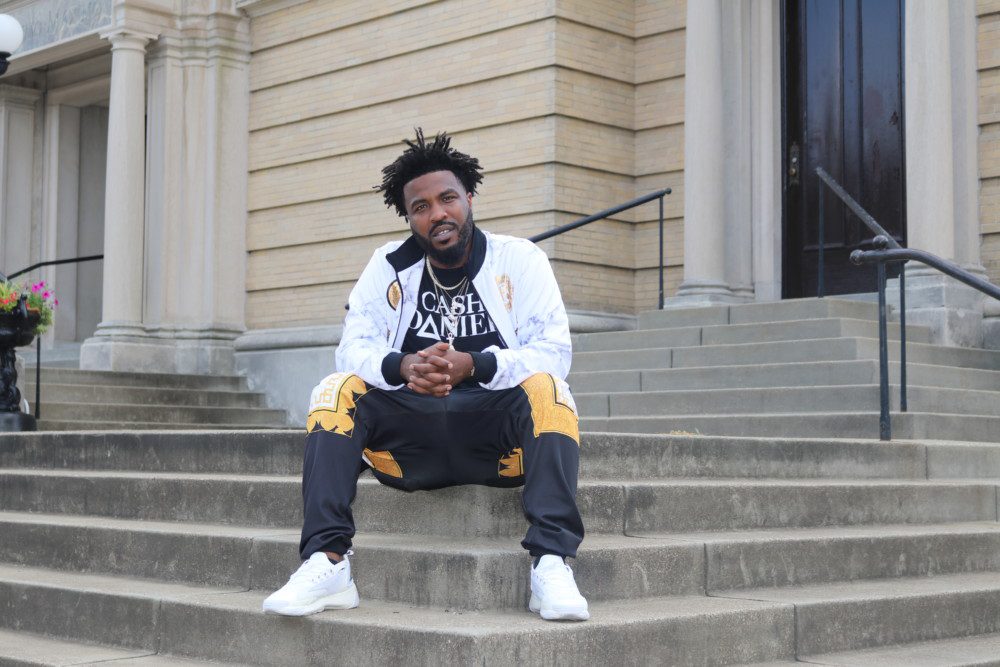
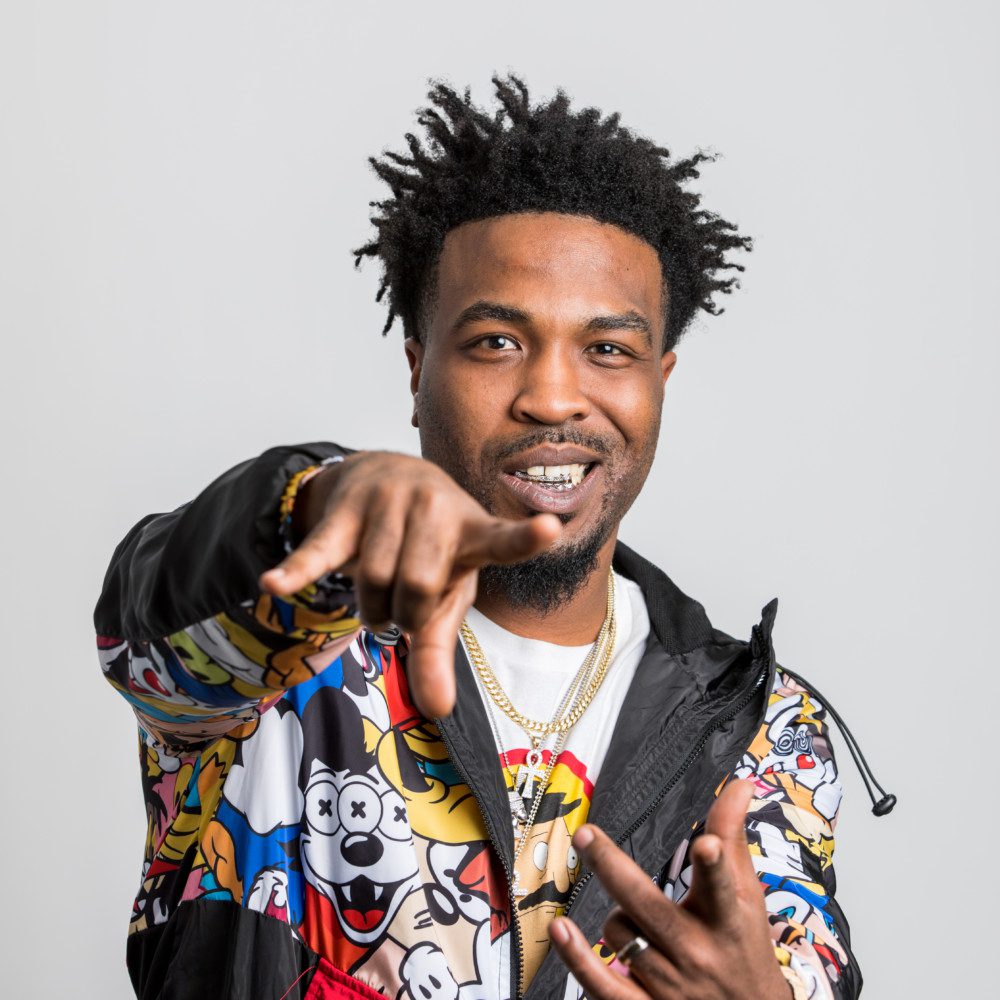
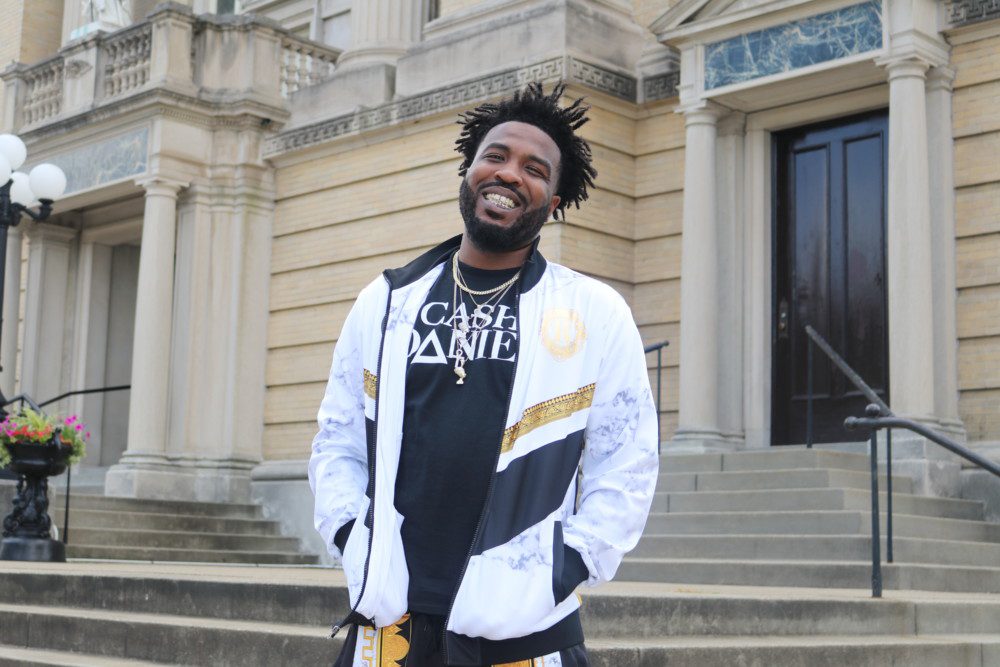
Cash Daniel has a lot to celebrate. AudioFemme caught up with the Ohio rapper at the listening party for his new project, Not Just Another Vacation Too, where he was celebrating his album, wedding anniversary, and birthday.

Not Just Another Vacation Too is the second of its series, following up the original, which Cash dropped back in 2016. A lot has changed for the rapper during the past three years, and the new banger-laden record proves it.

The album’s title comes from Cash’s touring experiences and a reminder of his hard work every time he leaves his home state. He’s about to finish up a tour that took him through Vegas, Phoenix, Miami, Toronto, the West Coast, Mississippi and more, which inspired him to put together this latest project in his Not Just Another Vacation series.

“I’ve been going places that look like vacations, but it’s also work,” Cash said to the crowd at his album release party. “When you’re going somewhere, you take advantage of it. Networking opportunities, opportunities to get outside of the area.”

Not Just Another Vacation Too boasts several noteworthy producers, like CashMoneyAp, and hits its highlights on “Way Up,” “Spinach” featuring Lil Mopp Topp, “Back to the Money,” “If I Ain’t the Best” and closing track, “Parachute.”

Here, Cash talks his new album, what traveling has taught him, and reveals some details about his next project.

AF: The idea behind the title of your album is that you’re not vacationing; you’re traveling and taking things in. So what are some things you’ve been learning from your tour stops and the people that you’ve met?

CD: Really it’s like people are people everywhere. They’re not too much different wherever you go. People are kind of stuck in their bubbles and at times afraid of what’s going to be outside of that bubble and who’s going to be outside of it. I come from a small town, I grew up with people whose parents have never left that town. They might drive an hour out of the way to a bigger city and feel like they’re going somewhere. So it’s just like there’s no reason to be afraid to travel. That’s the main thing. There’s no reason to be afraid to travel and get things from it. I aim to inspire people from my hometown, like, look, I’m doing these things, you can do these things too.

AF: What’s been your favorite part of touring?

CD: My favorite part is really just getting experience and new energy with all types of different people. Getting to see new people that have never heard the music, never experienced the music, people who are not familiar with me and become instant fans. It’s not necessarily a surprise because I’m confident in my music, but I would have never gotten to touch these people if I hadn’t decided to go out on a limb and do these things.

AF: “Way Up” is produced by CashMoneyAp. How did that collaboration come about?

CD: I met him and heard him speak and he was just cool and I had heard a lot about him, so I just reached out.

AF: Are you working on any visuals for this album?

CD: “Parachute” is probably the song we’ll do a visual for first and then we’ll kind of figure it out from there. Those are probably gonna be done by Dre Shot This.

Cash Daniel / Not Just Another Vacation Too
Courtesy of Cash Daniel.

AF: You mentioned you’ll be working with Cincinnati producer Evan on your next project. What will that look like?

CD: The next one will probably get into a more reflective, deeper space, and that’s kind of a space if you have to get yourself into. You can kind of make yourself sad doing records like that. When I’m working with Evan, that’ll probably be the vibe that we’re working with.

AF: Are you thinking a full album?

CD: I want to let this breathe. But I’m still thinking I’ll probably drop an EP in the fall. I’m planning on working with Cincinnati producers for the next project I do.

AF: Not Just Another Vacation Too is a fun album. Where were you at mentally when you created the lyrical concepts?

CD: I didn’t really go into it to create the album. All of my records before this have been kind of darker for a while, but then I started to make lighter records, funner records, and then I came across these songs [and they] sounded fun. I put them together to make Not Just Another Vacation Too. I had about 40 to 50 songs to select from and we wanted to get it together in the summer.

AF: Since this album is a sequel, have you seen your growth since your initial 2016 project?

CD: Definitely. I feel like I kind of cut corners making that record, and older ones, and now I can see some growth. Definitely have developed my craft.

Cash Daniel / Not Just Another Vacation Too
Courtesy of Cash Daniel.

PLAYING ATLANTA: Holy Beach Turn Up The Volume with Debut Record

When Atlanta’s heavy experimental metal-rock sextet, Holy Beach, hits you, you know it.

Beyond the sheer wall of sound that attacks with a visceral physicality, Holy Beach display an uncanny ability to harness lightning in a bottle. Far from a timid debut, the sextet – formed in early 2019 by lead vocalist and guitarist John Lally and friends/warring guitarists Jon Hilton, Mike Gibbs, and Jason Petty, bassist Kevin Faivre, and percussionist Jordan Hershaft – crashed into the Southern music scene with an unparalleled rage.

A searing cacophony of sounds, their debut record, All That Matters Is This Matter is the kind of heavy, fuzzy grunge that catapults a band to the forefront of the rock scene. Lally sat down with Audiofemme to share the details of starting a brand new band after years in the industry, recording a debut record with five of your closest friends, and realizing the one truth of life: animals are the best.

AF: You guys had a rather interesting beginning; can you take me back? How did you get together, and when did you realize that Holy Beach was more than just some friends playing music together?

JL: The other band I played in for years (Sleep Therapy) was working on new material and everything I was writing was not translating well with the band. After months of trying to force the songs, I decided to curb them and record them as a separate project.  At first, I thought it would just be a recording/side project, but the more we worked through the songs, the more intense they got, and we knew we had something more than a side/recording project.  

 AF: How did you guys get into music in the first place? Was there a certain song or record that made you say, “Oh, yeah, music is for me”? 

JL: For me, it was Disintegration by The Cure. For Kevin, it was Motörhead by Motörhead. For Mike, it was anything Jane’s Addiction. For Jason, it was Slayer’s “Raining Blood.” For Jordan, Fugazi’s 13 Songs. For Jon, Celebration’s Celebration. 

AF: Who do you consider your greatest inspirations? 

JL: Slowdive, Daughters, Dinosaur JR, The Birthday Party, Talk Talk, and Honest People.

AF: You guys just released your debut record, All That Matters Is This Matter. What was the writing and recording process like? Is it fairly collaborative, or does one of you come up with an idea and bring it to the rest of the group? 

JL: Our writing process usually consists of me writing a song and bringing it to the band. When we are all in a room, we take the song and its structure and explore it as a group. The main idea that is brought into the collective space starts to become a part of all of our ideas and pushes the intensity behind each song. 

As for recording, our engineer/co-producer Jeff Leonard comes in from North Carolina and we start by tracking drums at Tree Sound Studios in Atlanta. After drums are complete, we track everything else at Cassida Studios, which is at one of our close friend’s house. We love recording there because its super comfortable, friends swing by, and we are surrounded by dogs. Having the animals around takes the edge off of everyone and we have a blast. Animals are the best.

AF: How did the writing and recording process differ from writing and recording with bands you’ve played with in the past? 

JL: My writing process doesn’t differ much in the bands I play in. Usually for any band I play in, I come up with a concept or a story for the record first; I love writing records like this because it inspires the tones of the songs and gives the record a personality. It’s also cool to hear what people take away from the record. It always blows my mind how people interpret lyrics and music so differently. As for the recording process, Holy Beach is a much more relaxed recording experience because we spend time over months piecing the album together. We don’t rush anything like other bands in my past have while recording.  

AF: What’s it been like to finally share your first record as a band with the rest of the world? 

JL: Humbling, rewarding, hope-filled, and exciting.

AF: What inspired the record? Is there a particular song that jumps out to you as your favorite? 

JL: This record was mostly inspired by the state the world as a whole is in now, and the passing of a lot of people close to us over the past year. The song that sticks to me the most is “Skull Faced On A Horse.” A friend of mine was slowly passing away in the hospital and after he passed, the song just dumped out of me. The song is mostly about sitting in the hospital with him and listening to him going through the process of accepting the inevitable outcome of his situation. It was brutal, but something I will never forget.  

AF: Atlanta’s music scene has blown up in the last few years; what has it been like to start out as a band in the music epicenter of the southeast? 

JL: Atlanta’s music scene has exploded and fizzled for many years. The city is a huge island of hope surrounded by a sea of fear. No matter what you do artistically in Atlanta, there is usually a swamp of shit you have to weed through to truly find your way. I love where I live, I love where I make music, and I love the people that surround me, for better or worse.

AF: What’s your favorite place in Atlanta for a great show and a good time?

JL: It’s at tie between The Earl and 529. Both places have the best shows, the hardest working people, and the most respectful environment, as long as you leave you bullshit at the door.

AF: What’s next for Holy Beach? 

JL: We are writing/recording new material now. We should be driving up and down the east coast in October playing music, so look out for us.

Keep up with Holy Beach on Facebook, and stream their new record, All That Matters Is This Matter, on Spotify now.

INTERVIEW: Kissing Party Talks “Mom & Dad,” New Video & Next Album

Denver’s Kissing Party just released their most recent album, Mom & Dad, and a new video for single “Jimmy Dean.” The self-proclaimed “slop pop” band is made up of vocalist Deirdre Sage, guitarists Gregory Dolan and Joe Hansen, bassist Lee Evans and drummer Shane Reid.

“Jimmy Dean” was written by Deirdre “about having to fight for basic rights, recognition and safety and the narratives created about womanhood that keep pushing us to really unhappy places,” she said in a press release.

Here, Kissing Party’s Greg talks about their latest album, Mom & Dad, “Jimmy Dean,” the next album they’re already working on and what’s to come.

AF: In your own words, what is “slop pop?”

GD: Well the word “indie,” that every band on the planet is described as these days, is really tired and meaningless at this point. If you Google “indie bands” it’s like Arcade Fire and The Killers and shit and I don’t really think bands that are selling out stadiums on major record labels should be defined as indie, but that is the world we live in. Anyway, we figure if we’re gonna be labeled as something, it should be a label of our choosing. Someone once described us as “princess pop trash music” which I think is accurate but is too long and doesn’t rhyme, so I would say listen to our new album – that is “slop pop.”

AF: Can you tell me what current national or personal triggers inspired “Jimmy Dean?” 

G: A local trigger was Deirdre was looking in my gramma’s fridge (whose nickname is Jimmy Dean) and my gramma was embarrassed by the contents and told her “I’ll leave you to your misery,” which inspired the chorus and song title. As far as other inspirations, I think it’s kinda Deirdre’s reaction to all The Handmaid’s Tale-type shit that’s going on these days.

AF: What were your main points of inspiration for the songwriting of your new album Mom & Dad?

G: Songs come from somewhere – I don’t know where. It could be something that happened to me when I was 12 or 26 or last week. It’s heartbreaks and regrets you carry around with you that come out when they do and you put them to music that you can dance to. I know what they are about and what they mean to me, but would rather leave it up to the listener for their own interpretation.

Kissing Party
Courtesy of Kissing Party

AF: Does the title track, “Mom & Dad,” reflect heavily on the album’s meaning as a whole?

GD: I don’t think so. It’s not a concept album about my mom and dad [laughing]. There are several songs on the album written by the 12 year old brat in me. The lyrics “nothing left to spend, nothing left we had…mom and dad, these things don’t comfort me,” the “things” that don’t comfort being mom and dad. I hate to try and define or explain the songs though because I think it cheapens them.

AF: What are you guys currently working on?

GD: I’m trying to gather up all of our unreleased songs and rarities to put on an album called Unmade Beds that, hopefully, we can release by the end of the year.

AF: You just released the video for “Jimmy Dean” – do you have any other visuals on the way?

GD: Yes, the next video we are gonna put out is for a song called “Problems or Dreams” that I wish I would’ve put on the original album but is on the deluxe version.

AF: What’s something you want your fans to know about you that they may not?

GD: I don’t really want anybody to know shit about us [laughing]. That being said, we are fans of our fans or anybody who gets and understands what we are doing, so we want them to know we love them…Patrick. Oh and also there is a little cove on a beach off the Santa Cruz boardwalk, if someone could send us a video of themselves listening to Kissing Party in there that would be lovely.

PREMIERE: Kristen Castro Comes Alive in Dazzling “Bloom” Video

Kristen Castro / Bloom
photo by Anna Haas.

Kristen Castro, singer-songwriter and co-founder of indie-country trio Maybe April, drops off a captivating, beautiful new clip for her solo single “Bloom” today. The self-produced and edited visual uses natural imagery and hypnotic colors to create a vibrant world that exists within Castro’s hair.

“I wrote ‘Bloom’ in reflection of opening my eyes to the basic beauty and rebirth found in nature,” Castro explained about the song. “The lyric ‘Flowers don’t get to give up’ came from walking through a field of poppies in my hometown in California that wildfires had burned the year before. It was a superbloom and the sight overtook my senses, especially after contemplating how to get out of a dark space.”

Since leaving Maybe April this February, she’s released her debut solo effort and Keith Urban-inspired, “Fool For You,” now followed by “Bloom” and soon-to-be-released singles “Indigo” and “Surrender.”

The “Bloom” clip combines lustrous visuals over Castro’s delicate voice. The minimal production enhances the airy and upbeat single, driven by a synth and guitar-heavy beat. Castro proves her vocal versatility with this song, which differs from her former country twang and dives head first into lighthearted dream pop.

Castro will also be making her solo performing debut at a string of shows this fall, starting at the Mile of Music Festival on August 1, throughout Wisconsin and Colorado.

Watch the dreamy new video for “Bloom” below.

PREMIERE: Ume “The Center”

Ume by Chad Kamenshine

In the modern world, women are often pitted against one another for a few spots on the proverbial hamster wheel. Ume’s latest video for “The Center” explores the relationship women have to each other, how they can reject the current system and build a whole new order.

With the Austin band’s sound relying heavily on driving guitars, lead singer and guitarist Lauren Larson doesn’t hold back when it comes to playing music, even when it seemed life was about to derail her career. The band has become well known for its intense live shows, with bassist Eric Larson and drummer Aaron Perez anchoring Larson’s voice as it soars over her intricate guitar rhythms, the band working in well-oiled tandem. “The Center” is one of the band’s most taut songs, its tension an accurate representation of the band’s 2018 release Other Nature, a heart-thumping tight rope walk from one state of being to the next.

The video’s director Vanessa Pla describes the boxing match between two women as “a healthy competitive game, where a woman challenges her opponent – yet not in a malicious sense – but just by doing her best. Even if her opponent falls.. in the end she is there to lift her up and elevate her.” Pla says it’s a metaphor for a way forward: “Women have to start with each other when it comes to rising in this world, and although we are all set to carve out our own paths, we should inspire each other to keep fighting, because we are all fighting the same fight.”

Watch Audiofemme’s exclusive stream of “The Center” and read our interview with Lauren Larson below.

AF: Tell us about the first song you ever wrote. Were the mechanics of writing it very different from how you approach music today?

LL: I’ve always started with an intuitive riff, something spontaneous and not overthought. I still start most songs that way. Though in the very first Ume songs, I sometimes made up lyrics live on the spot during a performance (scary!) or impromptu in the studio. It was very visceral and raw. I spend a lot more time with the lyrics and overall song structure now. But the songs themselves still arise from the gut or heart, not some sense of theory.

AF: After reading quite a few descriptions, I had to find some live video of you performing. The energy you bring to the stage is almost overwhelming at times, the crowd fully invested, totally with you to the end. Do audiences normally get on the bandwagon pretty quickly? Have you ever had to win over a crowd? And if you did… how’d you do it?

LL: With Ume, we’ve always performed like every show is our last. I hold nothing back. I can’t perform any other way. But for many tours, the audience had no idea who we were. I would be heckled and harassed before I even played a note. I would even sometimes be denied entry onto the stage or denied access backstage, because it was for “band-members only.” I’ve been told to turn down before I even plugged in. So, yeah, we’ve had to win over audiences, especially when opening for bigger bands like Smashing Pumpkins, Jane’s Addiction, Blondie, Cage the Elephant. But I love to watch people’s reactions shift. I love to shatter their expectations. I remember opening a sold-out show with Circa Survive, getting a lot of stink eye during the beginning of the set, and by the end of the show when I smashed a guitar, the audience was freaking out as much as we were. Though whether it’s five people there or 5,000, we’ve always done the same thing – lay everything on the line with every performance. It’s not always about perfection, but passion, and I think most people appreciate that.

AF: You picked up a guitar at age 12. You’ve said that you had to make a lot of adjustments when it came to guitar playing because of your smaller hand size. What were some of the tricks you used to become comfortable playing?

LL: I’m a self-taught guitar player without any “real” training. I picked up my brother’s guitar to learn a few Nirvana songs. But even some basic chords were difficult at first, so I started experimenting with making up alternate tunings. I still use many made-up or alternate tunings. I’ve studied improving my technique over the years, especially after dealing with tendonitis. Stretching, practicing in the correct position, strengthening my posture have all helped me become a better player.

AF: You’ve worked with the nonprofit organization Girls Rock for many years now. What advice do you give young women who are learning to play an instrument, but struggle with stage fright?

LL: Have fun, let go, and remember there are no rules to how you should sound or how you should play! Find your own voice. I am awkward and shy off-stage, and I was extremely nervous about approaching a microphone when I first started. So I started screaming when I first decided to try out “singing.” I’ve used a “screaming” exercise with young girls terrified to use their voices. We start off softly, and get louder and louder, until they let go and let their voices break free of the fear. So many girls and women have never heard how strong their voice can be. Knowing you deserve to be heard can be life-changing.

AF: Tell us about “The Center” – how did the song come into being?

LL: This is from a collection of songs I wrote after the birth of my daughter. It was a time when I had to face and overcome my fears, fight through those voices saying I couldn’t do music anymore, accept change and find my strength. This is a song about inner and outer battles.

We build the song into a peak at the end with the lyrics, “No more weakness. No more weakness. War is weakness. No more weakness…” It’s a reminder that, as my friend said to me the other day, wisdom and strength take many different forms. Sometimes that means fighting through. Sometimes that means surrendering, especially surrendering to love. I’m facing a small “battle” now, as I just had to back out of a big concert at seven months pregnant. I had a bad fall that landed me in the hospital last week. I had to accept that sometimes the stronger thing to do is not “fight through,” but slow down, accept the moment and take care of ourselves.

AF: The video features two women fighting at a gym. Where did the idea for the video come from and how does it relate to your original intent for the song?

LL: Director Vanessa Pla had been working through this concept for a while and we decided to take “The Center” to the center of the ring. To me, the main character is not only freeing herself from stereotypical gender roles, but she’s also fighting through her own fears. It’s ultimately a video about empowerment and women supporting women. Even though the characters are fighting in the ring, they come together in the end as the one who has fallen is uplifted by the other fighter. There are many ways to find our strength – sometimes that means surrendering, sometimes it means supporting another, and sometimes it means standing back up and fighting through again.

AF: What music do you currently have spinning at home?

LL: I’ve been digging Julien Baker for a while, a new artist out of Austin named Jackie Venson, and the new solo project from KAZU of Blonde Redhead.

AF: How do you want people to feel when they leave an Ume show?

LL: Eric and I remember being young teens in the front row watching our favorites bands like Fugazi and Sonic Youth. I remember saying, “I want to make people feel this way. I want to make music too. Could I do that?” The best compliments I get are from people who say watching our performance inspired them to do something they were afraid to do.

UME’s latest album Other Nature is out now via Modern Outsider.

PLAYING THE BAY: Oakland’s Skip the Needle Are Done Holding Anything Back

photo by Irene Young.

As Bay Area music industry veterans, the four members of Skip the Needle have run the gamut through the bullshit and, according to the lead single from their newest full-length project, they ain’t never going back.

“We Ain’t Never Going Back” is the title track from Skip the Needle’s forthcoming full-length album, out tomorrow on Bandcamp, and it serves as veritable tour through the band’s frustrations, verging on pure cathartic rage. The song begins with a crunchy riff before bassist Vicki Randal catapults her way into the song with a “Sabotage”-worthy scream. Speaking of the Beastie Boys, the song actually does remind me of “Fight For Your Right,” but the shit-kicking teenage boy rebellion of that party classic is replaced by some very real sentiment on the power of resistance and anger.

Not that the shit-kicking isn’t there. For the song’s chorus, all four members (who will, according to the band’s website, rotate lead vocals on the full-length) join in, screaming NO! in response to some unanswered question — or possible demand — for their reticence.

Do what the cops say/don’t talk, don’t think, don’t fight, don’t feel! serves as the pre-chorus, leading us to a final we ain’t never going back call-and-response punctuated by the very old-school rock posturing of the band, seen in full glory in a video of their performance at the El Rio bar in San Francisco. As drummer Kofy Brown snarls into the mic and guitarist Shelley Doty whips her dreads in tandem with the beat, guitarist Katie Cash tips her chin to the sky before exchanging a look with Randal, a millisecond of pause before they gather the energy to end the thing on Randal’s backbend, clapping and cheering more for each other than for themselves.`

Their self-titled debut EP, also their last major release, came out in 2014. A brief listen shows, unsurprisingly, a much softer, occasionally restrained rock offering. But the tumult of the past five years has stripped away the patience of the best of us, and Skip the Needle is clearly ready to let their new full-on instrumentals and vocal delivery work as a one-two punch, upping the strength and passion of their political lyrics.

I liked the song on first listen, but it took that grainy video for me to appreciate it fully. You can feel the women’s ease — with each other, with the crowd —and if anything compels you to check out the album, let it be the pure satisfaction of watching those historically forced out of traditional rock spaces — women in general, and black women in particular — supporting each other in their anger and their joy.

PLAYING CINCY: Princess Tiana Keeps Moving After Release of “Going Places”

Cincinnati’s princess of pop, Princess Tiana, dropped off her Going Places LP, following up the project’s previously released singles “Fallback” and “Trip.” The sugary-sweet 7-track record plays up Tiana’s vocal range over danceable beats.

Going Places is Tiana’s debut album and follows up her 2017 Believe It EP and her remixed version of Ella Mai’s “Shot Clock,” released a few months ago.

“It feels great to finally accomplish my first project,” she tells AudioFemme. “It was a learning experience on what to do for the next project! Definitely motivated me to work harder. But overall, I’m happy and relaxed and very appreciative of everyone that supported me.”

Princess T gets the ball rolling from the first song of the LP, “Ewyw,” then carries her pop-laden energy throughout its entirety, with the help of futuristic beats and features from My Name Is Zi and 3LetterzNUK. The second track,”Creepin’,” stands out as Tiana changes things up, experimenting with some old-school Rihanna vibes. She gets into her sexy bag over the hard-hitting, yet sultry, Ncognito beat, singing, “I want you to meet me in the hotel lobby / Don’t tell nobody/ Tonight we’re getting sloppy/ I promise not to make a sound / The way you push up on me got me aroused /And I’m liking what you liking, watch me throw it around.” Around the 1:30 mark, rapper My Name Is Zi cuts in to lay down his bars. “You told me that you was a rider / Get in the back of the slider / The way that you hittin’ them notes / I thought that you was Mariah,” he spits.

“Night Time” returns to undeniable pop, with an assist from rapper 3LetterzNUK. The song flows for easy listening and summer-y vibes. Previously released “Fallback” and “Trip” remain album strong points due to their infectiously catchy hooks.

On “Good Times,” Tiana keeps things light and upbeat. The album closes on another highlight, “No Worries,” which boasts a strong hook and an electronic beat that compliments Princess T’s high-ranging vocals.

With the album and four accompanying visuals out, Tiana is already back at work recording her sophomore project.

“I actually went ahead and moved on to the next project that I’m working with Ncognito on, and just marketing Going Places while I work silently on what’s new,” she says.

Follow  Princess Tiana on Facebook and Instagram.

VIDEO PREMIERE: The Y Axes “Moon”

press photo by Dave McMahon

San Francisco’s The Y Axes latest album No Waves addresses anxiety – both personal and existential – with humor, nostalgic synths, and the kind of emo spirit any ’90s kid can respect. The band has a strong a visual component to its live performances, and we get to see some of that in a surreal new video for one of the album’s standout tracks, the wistful but energetic “Moon.”

In the video, bandmates Alexi Belchere (vocals), Devin Nelson (guitar / vocals), Jack Sundquist (bass), and Paul Conroy (drums) dream of leaving earth and watching it from afar, though they spend most of the time in bed, with subtle projections lighting up their faces. Belchere’s voice penetrates the darkness, her lyrics “I wish I was born a planet / Or a comet / Just me alone with the moon and space” matching time with the driving beat. She’s searching for absolution in obliteration, a shift in perspective that makes the drama on earth seem small and insignificant. Though she grapples with angsty feelings, the video – and the music – stay pretty light-hearted, breaking the fourth wall by its end to pan out on an epic pillow fight, the perfect release of all that internal struggle.

Watch our exclusive stream of “Moon” and read our interview with the band below.

AF: Alexi, you and Devin met at San Francisco State University over a decade ago. The Y Axes still live and work out of San Francisco. How has the city changed over the years?

ALEXI: The city’s changed completely into a San Francisco-style theme park. Superfically, it’s all there, with the Castro, Upper Haight, and Mission districts still standing, but behind every door you’ll find a pour-over cafe with neatly sanded reclaimed wood counters, and in front of that door is a homeless person in a sleeping bag curled up in a ball who can’t go inside for a glass of water.

Musically, we can always count on new bands forming every year. I can go to an awesome show every night, and I feel like the sense of community in the SF music scene is stronger than ever. Maybe it’s because the cost to live here is so high that if you’re making music you either put your whole self into it or you quit, so the musicians that are here are fiercely connected through that shared experience.

AF: How has the band’s music changed during that time?

DEVIN: Though the production quality has increased dramatically from album to album I think the core thesis of the music has remained the same. We have always strived to make fun cool pop music with a little bit of a hidden progressive edge but I think we’ve managed to refine the presentation.

AF: Y’all carry yourselves as a band with a sense of humor. How does that translate to your onstage personas? What can a fan expect from a live performance?

DEVIN: We are a band of awkward weirdos and our stage persona is a band of awkward weirdos powered up by music. We try very hard to simulate the quality of our recordings in a live setting while still bringing the energy. We love playing and I think that translates pretty well to what we do on stage. Also we have cool projections that add a visual component!

ALEXI: I feel like individually we can be silly but as a band we don’t have much of a sense of humor, but because of that we’re like all each other’s straight man. I tend to tell some quick stories in between songs if I need to stall for time, and life is so ridiculous that they can feel like jokes. “This song is about feeling so crushed by the weight of the world you can’t get off the floor” usually gets a laugh. Maybe it’s because there’s something knee-jerk funny about talking about that kind of stuff.

AF: Can you tell us a bit about the themes on your recent album No Waves?

ALEXI: A lot of No Waves focuses on looking inward in response to outward struggles. Songs like “The Gap in Between,” “Another Timeline,” and “Empty Space” are about anxiety and self-doubt. Songs like “How We Begin,” “One of Us,” and “Nevertheless” are about coming to terms with the horrors of the world around us – honestly, they’re contemplations about coming to terms with my own privilege, how on an individual level I must use it to amplify and lift others up.

AF: What is your favorite part about performing as a band?

ALEXI: I feel truly honored to play with such talented and passionate musicians. On stage, I can’t help but get absorbed in what everyone else is doing – watching Devin do a solo or thrashing around, watching Jack simultaneously grooving and headbanging, and watching Paul nail a particular fill, it always gets me pumped. My favorite thing about performing personally is connecting with people as they sing the lyrics back- that’s a dream come true for me.

AF: How do you see The Y Axes evolving in five years? Are there any goals you have as a band or projects you’re dying to work on someday?

DEVIN: I think the main goal at the moment is to expand our touring. We would love to play in places besides the west coast but haven’t reached the point where we can afford to just yet. Maybe we will blow up or maybe the economy will shift to better support art so we can quit our day jobs. Regardless we are committed to making stuff happen on this front!

Y AXES TOUR DATES
7/31 – San Francisco, CA @ Rickshaw Shop
8/02 – Seattle, WA @ Barboza
8/03 – Portland, OR @ Kelly’s Olympian

INTERVIEW: Mima Good Returns with Light-Hearted New Track “Holly Golightly”

Mima Good is NYC-born and based songwriter Raechel Rosen, whose sound and aesthetic espouses a contemporary pop sensibility with a darker atmosphere of synths, organs and guitars. The result is a moody, soulful sound that somehow calls to mind both Billie Eilish and Billie Holliday simultaneously. We first met her last year with the Good Girl EP, a series of songs that articulated the healing process from a tumultuous relationship with a former bandmate, an auditory storytelling of Rosen’s journey from attachment to abuse to self liberation. But even more than that, Rosen confronted a confusing relationship with her own femininity, in a culture that tells girls to be “good” even when the men around them behave badly.

She continues to explore the conflict of who women are and who society tells them to be on new single “Holly Golightly,” a more upbeat and danceable alternative to Rosen’s previous release. On it she plays with the concept of the “manic pixie dream girl” by sampling Audrey Hepburn as Holly Golightly in Breakfast at Tiffany’s, who is perhaps the original incarnation of this archetype. She reimagines her as a neurotic millennial woman living in New York, on the grind and trying to stay one step ahead of the “mean reds.” The beat then drops into Rosen’s drawn-out vocals and her artful use of synths, manipulated to sound as though someone is plucking an upright base, to create a whimsical, jazz-tinged sound.

We had a chance to talk to her about her newfound inspiration and how it feels to create music after you’ve been able to process and let go of the heavy stuff:

How does the new single build on the Good Girl EP?

I worked on Good Girl for years, hoping for the perfect articulation of my trauma, catharsis and some form of justice for the abuse. The writing process was thick to say the least, every detail weighing heavily on my creative spirit. When I finally put it out, I felt a different kind of release than I had expected, a grounding that contextualized my pain. I began to see my story as another casualty of patriarchy, understanding that life comes with all kinds of painful learning experiences and that everyone and their mother suffers at some point. So many women and girls reached out to me personally with their stories. I felt my trauma no longer defined me and my work stopped feeling like it was just about ME. My new single comes from this zoomed out perspective, a syrupy psalm of the anxiety cloud surrounding our culture and particularly us crazies in NYC.

What drew you to Breakfast at Tiffany’s as inspiration? Tell us more about the process of writing this song.

Holly Golightly, Audrey Hepburn’s character in Breakfast at Tiffany’s is so cool and tragic at the same time. I’ve been thinking a lot about the manic pixie dream girl archetype. I’ve always felt like romantic comedies, TV, general society and all that encourage chaos and instability in femininity. It is so charming and sexy to be a hot mess! I have wanted to sample her character for a while and this scene where she describes the “mean reds” is pure poetry. “Suddenly you’re afraid and you don’t know what you’re afraid of…” And Fred just looks at her like she is this sad mystery only he can save. Come on!!! I love it so much. When I started this song I was just messing around with the sounds from that scene, using slamming doors as percussion and the piano and upright bass that accompany her antics as instrumentation. It was kind of just a personal production challenge, but when I listened to the beat the next day I was like OK this is a song!

Will this new release be part of a full length? What can listeners expect? What issues will you tackle?

I am currently finishing up a full length album. This year has been extremely creative for me, it felt like once I got my abuse story out of my system all this other music poured out. The new sound is relatively different from my EP and “Holly Golightly” played a big role in leading me to it. Everything has gotten more danceable. The BPMs have been raised. The kicks are heavier. I am having a lot of fun with the production and probably have been influenced by my nights working at a nightclub. (That unce unce unce gets to into your head!) The issues come from the same place, but the attitude is more playful.

How does the new release fit into your narrative of attachment, abuse, and self-liberation? What is Mima Good’s perspective after the therapeutic process of writing the Good Girl EP?

Once I was finished with the creative therapy that was Good Girl (for me), I was like “whoa, there’s a lot of other stuff going on internally and externally”. Human pain is so much bigger than this one piece of shit I knew, or even all the pieces of shit combined. These songs have functioned as stepping stones for me to figure out how I can survive in a world with so much pain and how I can contribute.

What’s next after you release the album?

Right now I am really focused on finishing the album!! It is so close to being done and I’m really excited by it. I’m sharing a few songs from it at my Standard Sounds showcase on Monday.

Holly Golightly

Holly Golightly, a song by Mima Good on Spotify

PLAYING SEATTLE: Fall in Love with Lizzie Weber’s Latest Single, “When You Look At Me”

press photo by Tony Hammons

Like a child’s pirouette, the new single from songwriter Lizzie Weber, “When You Look At Me,” spins gentle and dreamlike. Inspired by the early days of her relationship with her now-husband, “When You Look at Me,” is sung with the sort of tender lilt that plunges someone into the pool of memory. It’s visceral. You can hear Weber’s sighs, their locked eyes, the heart swells, and—in with subtle repetition of “when you look at me that way again”—the sweet, time-stopping daze of new love.

For years, Weber has written songs like these. Weber was born and raised in St. Louis, MO, where she released her well-received 2014 debut, but moved to California to pursue acting. When Audiofemme caught up with the songwriter, who eventually settled in the Seattle in 2016, we learned a little more about her original dream to act, her obsession with contemporary female artists of the 1990s, and the wellspring of inspiration she finds in life’s relationships and transitions.

AF: When did you get into music? What was the early inspiration to write songs?

LW: I remember developing an appreciation for music as a child. The first album I ever had was a gift from my dad at age six: Alison Krauss & Union Station’s Everytime You Say Goodbye. My older brother was taking piano lessons and eventually I followed suit. I would, of course, learn the classical pieces assigned to me by my teacher but also ask that she let me learn pieces by contemporary female artists of the 90’s: Jewel, Sarah McLachlan, and Fiona Apple to name a few. I don’t think it made her too happy! But, those women were taking the industry by storm, demonstrating to the world the power of balladry and dynamic songwriting. By fourteen I began composing instrumental pieces on the piano, and at age eighteen I began learning to play guitar after a friend gave me all of Joni Mitchell’s catalogue to listen to; I was determined to become adept at both instruments.

AF: You originally pursued acting in Studio City— do you still act? Why did you decide to switch gears and focus on music?

LW: Yes, I did. I suppose I still act on occasion in my music videos, but other than that, not really. That’s still a passion of mine that’s very much alive, but there was something about songwriting that made it become the more important passion. Perhaps because I didn’t have to wait to be cast in a play or film to create. I could make art on my own time, and that was much more attractive to me after spending a few years in LA.

AF: How long have you been active in the Seattle scene? Are there other local musicians you watch?

LW: I moved to the northwest in 2016 and have pretty much been gigging around the region since that time. The amazing thing about the Seattle music scene is that everyone seems to have a lane, and if there isn’t one, they just make one for themselves. When I was performing in St. Louis, I would occasionally have people come up to me after shows and ask, “So, what genre are you?” I didn’t much like feeling as though I had to choose, but I do understand the desire to be able to classify an artist as something. I haven’t gotten that question since moving here, and I don’t think I ever will. I feel as though Seattle’s music scene is multi-faceted. I think it only creates more growth as a songwriter and I’m very attracted to that approach in writing and producing my work. It’s booming with talent and I’m very proud to be a part of the community.

AF: How do you define your music?

LW: Intimate storytelling with influences of folk, pop and world music.

AF: What inspires you—other artists, your surroundings, a phrase? How are your songs born?

LW: All of the above. Personal life experiences, traveling and experiencing cultures that are foreign to my own, books, nature, poetry, romance. Most of my music has been inspired by transitions in my life or relationships that left me changed somehow, for better or worse. I find that those are stories that are worth sharing, even though it’s not always easy to.

AF: What are the biggest challenges for you when writing a song? When performing?

LW: I think it’s easy to want to resort to the same devices when songwriting; by that I mean perhaps continuing to write in a meter or rhythm that you’re attracted to, but if I find that happening I will challenge myself to go back and make significant changes. I don’t like to rush in finishing pieces. Most songs that I write, I like to sit on for a few months and let them settle in. Do I like the structure? Is the melody interesting? Are the two working together harmoniously or fighting each other? That’s where my mind seems to go now when writing. I’m not interested in making records that all sound the same. I would not be content with that. I want to create bodies of work that can clearly be set a part from one another, but have one soul weaving throughout them all: my own.

I suppose performing my songs feels like the easy part, because the hard work has been done. At this point, I get to connect with strangers and friends alike, and hope that the stories are resonating.

AF: In the bio on your website you talk a lot about how St. Louis made you, but what about Seattle/Fidalgo—how did those places influence your music and the person you’ve become?

LW: Moving away from St. Louis as an artist was one of the hardest changes to make in my adult life. I had a band, supportive family and good friends, and a kind and supportive scene in St. Louis. I’m deeply grateful for my roots there. But in the end, staying in your comfort zone, especially as an artist, can potentially be creatively crippling. I didn’t know a soul when I moved out here. It was lonely at first. I was playing open mics, asking folks to hop on bills with me, collaborating with instrumentalists I never thought I would, and in the end it was the biggest personal and professional growth period of my life. They welcomed me with open arms and I’m very grateful for that. It taught me the important of patience, a virtue that isn’t always easy to embrace, and to remain open to change. Some of the most beautiful experiences in my life arose out of change, and the same goes for my songwriting.

AF: Tell me about the new single, “When You Look at Me.” What inspired the lyrics? Is the song autobiographical?

LW: I actually wrote the lyrics for this song years ago, back in 2015, when I fell in love with my (now) husband. At first I had arranged it as a slow, finger-picked melody on guitar. Eventually a few friends asked me to perform it at their weddings because of the intimate lyrics, and I did. For a long time, it still felt unfinished. In the winter of this year I created a demo in my home-studio and decided to just record and release it as a single.

AF: Is the new single teasing a forthcoming album? If so, when can we expect that to come out?

LW: There’s a chance this song will be on the next album, but no promises there. My next album will be recorded this fall and released in 2020.

AF: What are some goals you have for your music career?

LW: To continue to create music that connects with audiences near and far, friends and strangers alike. To be a part of the movement that is shedding light on female artists and our long history as the underrepresented gender in our industry. Perhaps the most important responsibility alongside being a performer is giving back, and creating more opportunity for those without the proper resources to follow in our footsteps.


PREMIERE: Jamie Drake “Redwood Tree”

Photo by Kathryna Hancock

In classic films, the setting is often established with a chorus in the background, a camera moving through the scene with care before landing on the ingénue. Singer-songwriter Jamie Drake utilizes many of the old Hollywood musical tropes on her latest single “Redwood Tree” -cascading vocal harmonies, a gentle whistle, and a harp. It’a the latest single from her forthcoming debut, Everything’s Fine, out September 20 on AntiFragile Records. Drake explains that the album’s title is tinged with irony: “So much of day-to-day life is optimistically proceeding as if things are going to work out, contrary to the evidence that things are really falling apart. Yet still we continue to tell ourselves that everything’s fine. It’s really just my way of lying to myself.”

Based in Los Angeles, Drake has spent the last few years establishing herself as the vocalist-to-call for dreamy, folksy stylings; she has collaborated with the likes of Jim James (My Morning Jacket), Mikael Jorgensen (Wilco), and Moby. But with Everything’s Fine, Drake finally presents a portrait of herself as singer-songwriter driven by both pop sensibilities and sweeping cinematic tendencies, both of which make “Redwood Tree” a “tentpole” on the album’s tracklist. The feeling of floating through reality displays itself beautifully on the track, its delicate arrangement meandering through a forest so lush, so thick and untouched by human hands, you never want to leave.

Listen to Audiofemme’s exclusive stream of “Redwood Tree” and read our full interview with Jamie Drake below.

AF: You told the San Diego Troubadour: “I always have melodies in my brain. For some songwriters the lyrics comes first; for others, it’s the melody. I’m more of a melodic hook person. The melodies come to me first most of the time.” Was this true for “Redwood Tree”?

JD: It’s funny you should ask because they did in a way – just not the way I normally capture sound. My collaborator and producer of 8 years, A.J. Minette, was over at my place that day to rehearse some songs and I was walking out of the kitchen I heard him playing something on his classical guitar that was pentatonic in nature and playful. He kind of laughed as he played the notes in a way that made his guitar sound like an erhu, which is a Chinese two-stringed fiddle, but what I heard was a really catchy melody that I felt needed to be paid attention to so I said, “Stop! Play it again. That’s a song!” I came up with the remainder of the chorus and verse and added lyrics and “Redwood Tree” was birthed in under an hour. It’s a testament to never knowing where your song can be born. Writers who take themselves too seriously can miss a lot of opportunities. I like to keep the channel open as much as possible – kind of like a child I guess.

AF: Do you visualize a story or a scene as the melody comes to you?

JD: When a melody drops into my mind it’s always more of a feeling I get – similar to how memory can take you back to places you’ve been and it feels cinematic because they are scenes from your life. I feel like I am being transported into a story or a scene that encapsulates whatever that feeling is I am having but I don’t physically picture that place; I hear it. This sensitivity is something I’ve had my whole life. I think it developed when I was really little as a part of who I am, but also as a gift to help me survive my environment. As I’ve gotten older, my physical sense of hearing has become even more sensitive. I suffer at times now from hyperacusis, which is a hearing disorder that makes normal everyday sounds unbearably loud. It’s like I’ll be sitting at brunch with someone and all the sudden I can hear the clanking of dishes being stacked back in the kitchen and it sounds like they’re being stacked directly next to my face. As I’ve developed this and struggled through it I’ve had to tell myself that this is in part the trade-off to being sensitive enough to tune into a frequency where hearing beautiful melodies is possible; that also sometimes I have to hear the brash sounds in life too. Thank God for ear molds.

AF: What gets you up in the morning? Do you have any artists or writers you regularly turn to for inspiration?

JD: The knowledge that I am living a story that is worth being told gets me up in the morning. That there have been many turns I have taken – some “wrong” – and even still I end up where I am supposed to be. I feel I have a source guiding and directing my steps that is very real. In terms of my actual process of waking, I love waking up slowly and going about my day at a turtle’s pace. The funny thing about that is that I used to be more like the rabbit, and pretty recently have been learning how to take care of myself differently.

A lot of my early musical inspirations came from Disney classics which have these lush orchestrations. The Little Mermaid was a particular inspiration when I was in the 4th grade; we watched it at school one day and I became obsessed with learning all the songs and acting out all the parts. I guess it makes sense then, to stumble across Randy Newman and discover his discography. Brian Wilson has always been a major inspiration. I listened to The Beach Boys in high school when everyone was into Alanis. I didn’t have a CD player until I was a senior in high school so the radio was all I had, and I preferred listening to an oldies station called WMSH in Michigan. I’d make mix tapes with just The Beach Boys and The Beatles on them and would send them off to my cousin Rachel, who was a lot better at finding newer artists to share. I got into Joan Baez and Joni Mitchell later in the game. When I was younger their vibrato was unbearable to me and now it’s my favorite. A friend told me I reminded them of Harry Nilsson once, who I’d never heard of and then became obsessed with as well. I love the fact that he was a songwriter first and then became a recording artist and everyone from John Lennon to Randy Newman was into him. Nilsson actually helped jump-start Newman’s career and didn’t really play a lot of live shows; what an interesting story he led. A more recent artist that struck me was Blake Mills. I saw him open for another artist in 2009 and bought the Break Mirrors album. I got into that at a specific time in life and love returning to this music whenever I want to remember the feeling of starting over.

AF: What music are you currently spinning at home?

JD: There’s an Ella Fitzgerald album I like to play that gets me going in the morning (The Rodgers and Hart Songbook). Part of the reason I always spin it, though, is because I’m too lazy to dig through my other records (ha!). A newer record I like to put on is Reminisce Bar and Grill by Walter Martin. He’s a new favorite writer of mine. His lyrics are witty and he’s got this vocal tone that’s almost like he’s talking half the time. I love the production too – how it feels less produced in this great way that sort of tells you he doesn’t take life too seriously. Beyond that, I’ve really gotten into making Spotify playlists to share – which has both reminded me of all the incredible artists who have influenced me as well as introduced me to artists I didn’t know about like Jessica Pratt, Mountain Man, Laura Mvula, Connie Converse and J.S. Ondara, who I have the pleasure of opening for later this month on the East coast. I love adding curve balls into my “Current Vibe” playlist as well like Dimitri Martin, who is one of my favorite comedians.

AF: If you could imagine your perfect show, where would it be? How would the show play (sober, jovial, etc)? And how would you like the audience to feel afterward?

JD: My perfect show would be at the Hollywood Bowl with a full string orchestra, dancers, background projections, costumes and lights – everything would add in to the show as it progressed forward. It would be a reflection of the life I’ve lived – which has been full of sadness and joy. I would want to take the audience on the journey of this life together: the pain and the glory of being human. Music for me is something I am propelled to share with others so that they can tap into their own experiences, to feel them deeply and find healing and hope.

Jamie Drake’s debut album Everything’s Fine will be released on September 20, 2019 via AntiFragile Music on vinyl and all digital platforms.

TOUR DATES
7/24 – Pittsburgh, PA @ Club Cafe
7/26 – Northampton, MA @ J.S. Ondara with Jamie Drake
7/30 – Baltimore, MA @ J.S. Ondara with Jamie Drake
7/31 – Cleveland, OH @ House of Blues Cleveland
11/07 – San Diego, CA @ Soda Bar
11/08 – Los Angeles, CA @ Bootleg Theater
11/09 – San Francisco, CA @ Neck Of the Woods
11/14 – Portland, OR @ Doug Fir Lounge
11/15 – Bellingham, WA @ Shakedown
11/16 – Seattle, WA @ Ballard Homestead

PLAYING THE BAY: 10 Years On, Burger Boogaloo 2019 Must Reconsider Its Relationship With The City It Loves

burger boogaloo 2019 review
all photos by Sophia Vaccaro


Walking up to the MacArthur entrance of the 10th annual Burger Boogaloo festival was akin to walking under the big top of a circus tent, the everyday machinations of Mosswood Park suddenly swathed by a curtain of pounding drums as children twisted on swing sets, their caretakers snoozing on the roots of trees. 

Festivals traditionally like to posit themselves as destination activities — off in the desert, hidden in the woods. But part of Burger Boogaloo’s appeal — and part of its enduring problems — is that its festival grounds perch directly in a city park, fences flung from end to end like the claws of a sun-drunk bird. 

In fact, Burger Boogaloo’s grounds were drastically altered this year to try to avoid displacing the park’s extensive homeless population, a welcome move for coexistence that is still not without its limitations and inherent contradictions. Walking past the still-busy park playground as a stream of Betty-banged women in leopard print dresses exited from the festival grounds seemed symbolic of Burger Boogaloo’s precarious position: how do you host a large-scale music event that does not create an adverse effect on the surrounding community? While many festivals grapple with their environmental impact, Burger Boogaloo has to also consider the interweaving personal and political complexities of “taking over” a swath of public land for a fenced, ticketed event.

After I arrived, I stopped off at the booth of Punks with Lunch, a nonprofit organization that provides harm-reduction resources like needle kits and hygiene packs to marginalized communities in West Oakland and beyond. The two volunteers working the booth told me that Burger Boogaloo had explicitly contacted them for advice on how to work with the homeless population. In the past, they said, the city would do “cleanups” of the park in advance of the festival, essentially a nice way of saying they would throw away all the homeless residents’ possessions, displacing a community that is also one of the few sources of consistency in its residents’ lives. No one, as far as they knew, had been displaced this year, but they were waiting for more information. I thanked them and moved towards the beer tents, standing on my tiptoes to try and spot those tell-tale domes of blue tarp that would mark the still-standing encampment. I was too far away, so I sat under the shade of a solitary tree and scanned the grounds, ready for some people watching in advance of the next set.

Bettie bangs abounded across festival grounds, and I was texting my friends to make a joke about it when I saw the booth sign: FREE BANGS, it read. I put the phone away. Why make a joke when everyone knows the punchline?

burger boogaloo 2019 review

There is a flippant sense of self-awareness to Burger Boogaloo, a sort of self-effacing chuckle that seems to permeate the back end of the grounds where festival-goers fling themselves down in the grass, sweating through black clothes, fingers oily from pint-size tacos. While the crowd is fairly diverse, especially terms of age, the booths sit firmly in Punk Summer Camp; Punks with Lunch was joined by Amoeba Records, 942 Gilman, and a variety of clothing shops and small record labels with chunky paper-mache signs and vinyl records stacked inside plastic postal service boxes, tents ringing the grounds like a goth tiara.

“You have to cut your own hair, or its not choppy enough,” the woman lighting a joint next to me said. Me and my expensive haircut read this as my cue to venture to the stage.

The first performance I saw was Phantom Surfers, a five-piece band from San Francisco who play largely instrumental covers with a (you guessed it) surf-rock bent. They performed in spangled pink blazers and weirdly petite black eye masks, a combination that was particularly, delightfully strange on their main singer, who also had what I believe to be a very real silver-haired bob. The audience, while slightly befuddled, very much enjoyed it, including the two adolescent boys who stood in front of me for a few songs, one wearing an actual industrial chain as a necklace, snipped short to fall past his collarbone.

Next up was San Francisco punk band The Dwarves. “I’d love to see their penises, and you will too,” host John Waters said (warned us menacingly?) during his introduction. A long-time transgressive filmmaker and comedian, Waters’ unconventional intros were much loved by the audience, though I wish he had stuck around to provide more active commentary after each set. He ended his bit with a request: “Put your grimy little paws together and give a hideous welcome to The Dwarves.” The audience gladly obliged, and thus began my favorite performance of my time at the Boogaloo.

It was, a bit, like what I imagined Warped Tour would have been like in the realms of my adolescent rose-colored dreams. Because of the diverse audience, the pit was sparse but spirited, with people in their teens to fifties dancing like mad, their bodies flung along the rapids of the pit’s golden spiral. It was a welcome reminder; while I may feel like I have reached the apex of my music taste, watching the woman in front of me in her early forties contain the edges of the pit with good-natured shoves reminded me how relatively brief my relationship with punk music has been — and how much I have yet to learn.

“This is the best festival in the fuckin’ world ya’ll bitches!” cried The Dwarves frontman, Blag Dahlia. This was pretty standard-issue for the whole set, and for the most part, I didn’t mind. But like I mentioned in last week’s article about Kevin Nichols, hearing old-fashioned punk sentiments as delivered to a new audience can be off-putting. I felt it most when Dahlia declared “I think we need some sluts!” to welcome a few of the festival’s on-call dancers, one of whom had appeared with the Phantom Surfers as a sexy cavewoman. This is where things always get tricky for me. Offensive, inflammatory, and just downright backwards lyrics and behavior from punk bands was pretty standard during its heyday, but the actual reasoning behind those choices was wildly variable — satire at best, genuine belief at worst, and monkey-see, monkey-do bullshitting in the middle. It can be difficult to ascertain, as a fan, where a band lies on this scale. Plus, as a woman, it can just be exhausting. Someone can tell you, time and time again, that it’s satire, poking fun at people who “really” think like this, but sometimes it just doesn’t matter — words with damaging, misogynistic connotations delivered with glib glee by older white men are sometimes just that: damaging.

burger boogaloo 2019 review

But sometimes, it’s just not worth it to be offended. During “The Dwarves Are Still The Best Band Ever,” I strode away from the stage during the chorus: let’s just get high and fuck some sluts! But here’s what happened when I went home later and looked up the bands I saw: I found myself cackling at the studio version of the song, which begins with a disconcerting after-school special sing-song: to save the ozone and the earth/and all the creatures, sand and surf/the world is full of things to do/and yet it always comes back to—

Am I interpreting the song correctly? God, I have no idea. But I’ll take it.

Next up was The Dead Boys, a Cleveland band that had its heyday in the ’70s before reforming in 2017. I didn’t watch directly for much of this set, instead choosing to meander through one of the VIP sections, where I caught a side view of vocalist Jake Hout (replacing original frontman Stiv Bators, who passed away in 1990) getting lifted up by the crowd by his feet and ankles. Astride a sea of bent wrists, he delivered a few verses with remarkable balance, his black-rimmed eyes tipped to the sky, a punk-rock Cleopatra.

Rounding out the festival was two-night headliners The Jesus and Mary Chain, a Scottish rock band formed in 1983. With the sun disappearing fast, the upgraded stage and light effects made quite the impression on the small festival grounds, with smoke pouring into the sky like a rock n’ roll bonfire. Leaving the last few songs for the fans, young and old, who bounced on their heels, singing along in the dark to brothers Jim and William Reed, I followed the small trickle of deserters back to MacArthur Boulevard.

Outside the gates, a man sold Street Spirits. I bought one — the International Issue. “How do you feel about the festival?” I asked him.

“The coordinators are full of shit,” he said. “They displaced us.” He pointed past me to the area of the park on the opposite side from where the untouched tents still resided, telling me they had made him move. So Burger Boogaloo has not quite reached perfect harmony with the residents of its favored festival grounds. Frankly, I don’t know if it’s possible —  you can’t expect marginalized people to consider, year-round, the convenience of one forty-eight hour event. The only solution is more work — more education, more negotiation, more adjustment — or finding a different venue altogether.

While Burger Records is a SoCal label, this festival’s decades long connection with the Bay Area is something to be celebrated — there is a reason it started here, and a reason it wanted to stay. I saw that, easily, in the crowd — two kids dozing between sets, an open book sliding down one of their laps; a woman with a gray beehive hairdo herding her grandchildren for a photo; a lithe dancer in the pit ending a song on a deep backbend, her afro bobbing as her hand cupped the sky. But the homeless are the Bay Area, too, and there is more than can, and should, be done to watch out for them.

PLAYING DETROIT: Curtis Roach shines on Sophomore LP, ‘Lellow’

Like any 20-year-old, Curtis Roach has gone through some major changes in the last year: moving out of his mom’s house, entering and exiting college, trying out veganism. However, navigating life as an up-and-coming, critically acclaimed hip hop artist has proved to be the most difficult. Regardless, Roach is determined to stay positive through it all, which explains the UV-level brightness of his latest record, Lellow. Roach’s sophomore LP reflects exactly where he’s at in this season of life – on the rise, a little overwhelmed, but facing every day with unyielding optimism.

As someone who openly struggles with anxiety, it’s clear that Roach has repeatedly turned to music again and again as the ultimate antidote. But if his 2017 single “Anxietea.” is a vivid depiction of the hopeless perspective anxiety can paint,  Lellow’s “I’m Good!” is a clap back, reminding him that there’s a light at the end of this tunnel.  “I know that life ain’t all rainbows but / bitch I am thankful / yo I’m good” Roach puts simply. Actually, it’s the simplicity of the song that makes it so calming. Roach repeats “I’m good,” throughout the song like a mantra, until he, and whoever’s listening, actually believe it. 

Roach’s positive affirmations prove to be a much healthier coping mechanism for anxiety than most people in their early twenties turn to. In fact, he seems to have a more well-rounded viewpoint on self-care than a lot of people who have been trying the adult thing for years, even decades. “Affirmations, eating good, paying attention to my health… I take time to just breathe,” says Roach. “Little stuff like that you don’t think is important, it helps tremendously.”

Taking time to breathe is important when you have as much on your plate as Roach does. Although he released his first project when he was sixteen, this past year following the release of Highly Caffeinated has opened a lot of doors for the young rapper. But Roach explains that these new doors also opened up new avenues for stress. 

“It gets overwhelming at times,” says Roach. “At one point, it didn’t even matter to me, the whole business thing. I’d just be making music in my basement and then I’d release it on Soundcloud and hope for the best. Now… there’s just a lot of things you have to take into consideration if you want to be somewhat successful in the music industry.” 

That being said, the veins of positivity that run through Lellow indicate that Roach is taking everything in stride. His moment is now, and he’s not afraid to tell the world. Listen to Lellow below and catch Roach at Detroit’s AfroFuture Fest and Kindred Music & Culture Festival this summer. 

INTERVIEW: Madelin Lost Her Head on a ‘Mental Journey’ Interrogating Identity, Spirituality, and Art

Madelin pulses with sheer goddess vitality. Across her latest EP, a seven-song expedition of micro and macro concepts of the human form, particularly that of gender, sexuality and existential dread, called Then Her Head Fell Off, the Bushwick enchantress permits her voice to wriggle amidst waves of synths and midnight-rave glitter-dust. “I’m going to get my fix tonight / Cinch my waist up nice and tight / Maybe the answer’s in her eyes,” she coos, tantalizing nectar seeping from her pores.

“Monarch” is only the beginning; she soon sprouts vibrant, rainbow-textured wings and soars higher than she possibly could have imagined. “Broken Star,” paired with a just-released video that witnesses her juggling various existential thoughts, is soaked in her musical daring, as is other essentials as “In Fashion” and “Accidental Poetry.” Even “Dna,” which possesses one of the set’s most immediate hooks, still leans heavily on eccentric style while delving into the lyrical bite of today’s social issues.

“In a metaphorical way, this song’s about the chaos. You can’t control it. It deals with an early human and a modern human and them looking at the same landscape and it being completely different,” she says. “Where are we going? Our environment is in our hands, and we’re letting it slip through our fingers. We don’t seem to care. The whole song culminates in… are we going to keep repeating this cycle until we kill the earth?”

Severing formerly toxic cycles rises as the bedrock of much of Madelin’s work. I first stumbled upon her music exactly two years ago, right on the heels of the release of her self-titled EP, a brisk five songs that were certainly more stretched with mainstream latex. But they bore an undeniable personality all her own. “Good List” was the breakout hit, drawing in hundreds of thousands of Spotify streams (and its accompanying visual is a work of sexist-smashing glory). In prancing through the effervescence of mainstream appeal, Madelin has a knack for conjuring up quirks that really do set her apart.

Her magnetism lies in both her musical prowess and a fearlessness to challenge the establishment and burn it to the ground. The music is just the conduit to explore her role as a gender-busting queen in a world still suffocating from the male ego. Then Her Head Fell Off is further proof that her blood, sweat and tears are being put to good use. Her journey to this point, however, was a long, emotionally-exhausting one.

When I called her up recently, I admittedly knew very little of her backstory. All I really knew was that she once grew up on the glistening sand of Venice Beach, outside of Los Angeles, and she later moved to Brooklyn to pursue various artistic endeavors. I was also privy to the general outline of a former dead-end publishing deal and a management contract seeking to strip her of any and all identity.

Born into a very liberal household as Madeline Mondrala, music seemed to make the most creative sense for an inquisitive and fiercely independent young girl. She was often given free reign to explore, to sing (she began lessons at five), to write, to be free in her own skin. Her parents were “essentially atheists,” she says, but they “wanted to give me a ‘spiritual’ foundation. I’ll never forget that phrase. It’s weird to think about that now.”

So, they enrolled her in catholic school. Ironic, right?

“My parents never seemed to believe in any of that stuff. So, as far as spirituality goes, I had this kind of weird relationship with it,” she says. “My parents were atheists, and I was in a Catholic school where if you even questioned the existence of God, it was… ‘am I going to Hell?’ That was weird, but I always felt that I could explore my spiritually, and I was really encouraged to sing.”

Madelin’s first songs began to form and spring from her fingertips when she was eight or nine. Her synergy with the world had popped open, and there was no stopping her. In the coming years, she played, confronted, manipulated, sculpted and explored her burgeoning understanding of herself in art. Yet gender was something that still eluded her – which points to our greater transformation as a society. It hasn’t been until the last five or 10 years that the concepts of gender identity have expanded to include every color of the rainbow. “I think that’s why it has taken me so long to scratch the surface of that part of myself,” she says. “It was more that I just wasn’t aware that I could explore it. I think that caused a lot of confusion in my early 20s.”

Confidently unsure, Madelin packed her bags and headed for New York City in 2010. She began her studies in songwriting at SUNY Purchase to sharpen her craft. “You know, based on today’s standards of the music business, maybe it wasn’t the best, but it was good at the time,” she recalls, with a sly chuckle.

She soon began immersing herself in Brooklyn’s queer nightlife scene – which you can hear in vibrant neon hues on “Monarch” – and that’s the setting for her gender and sexual awakening. “I definitely identified so much with the queer scene in New York. I wanted to be in it and in queer spaces. Who wants to be in a straight bar, first of all?” she explains, laughing. “Even more than that, I felt like there were parts of me that I hadn’t really looked at. I wasn’t ever given the chance to question it for such a long time. I started to sense that maybe I hadn’t fully come to terms with it all or explored a part of myself, and I wasn’t sure what that meant.”

More uncertainties followed. “I wasn’t just like, ‘I’m definitely bi. Or, ‘I’m definitely whatever.’ Yes, it has to do with who you’re attracted to, but it also does have to do with your identity as a person and gender,” she says. “I’m just a very mentally-driven person. I’m more about the mental than the physical. My attraction to people is more of a mental experience. I think discovering that and how I feel about myself and my gender is not the most physically-expressed thing. It’s a mental journey I’m going on.”

While her personal expedition of gender, sexuality and overall identity was producing rich new layers, her professional life would be put through the wringer. She firmly planted her roots in 2013, and right out of college, was offered a shiny publishing deal with BMG. As it would turn out, things eventually soured. “It was the classic story of wanting to make somebody something other than who they are. I think they choose young people because they aren’t as self-aware and they don’t know themselves as well as an older person might. So, they’re easier to influence. That was happening, and I felt it happening. I felt really gross about it.”

Meanwhile, her manager pulled the plug on contact. “The day I released my [self-titled] EP, my manager stopped contacting me completely,” she says. “I didn’t hear from him for three weeks. And that was that.”

The damage done runs even deeper. Many of the songs she’d written, including “Accidental Poetry” and “Open Sign,” “didn’t make the cut in the eyes of my manager,” she says. But they lived to see another day on Then Her Head Fell Off; not only has Madelin’s voice has been given a chance to ripen and mature, but the songs have taken on new meaning, making a powerful statement about women, and creators, owning their art.

Does Madelin’s story sound a little familiar? It should. Pop titan Taylor Swift recently made headlines when she made a Tumblr post revealing details of a deal made between Scooter Braun and Scott Borchetta. In summation, Braun purchased Big Machine Records, which includes Swift’s entire catalog (six albums through Reputation). “For years I asked, pleaded for a chance to own my work. Instead I was given an opportunity to sign back up to Big Machine Records and ‘earn’ one album back at a time, one for every new one I turned in,” she wrote. “I walked away because I knew once I signed that contract, Scott Borchetta would sell the label, thereby selling me and my future. I had to make the excruciating choice to leave behind my past.”

A diehard Swift, Madelin has some thoughts on all this, as it relates to her own story, “I’m grossed out by it. You think of her as being so powerful. The fact that she doesn’t seem to be able to overpower these two gross guys, it makes me feel sad. I don’t like that they have that type of power over somebody’s work. The whole way it went about is horrifying.”

It was certainly something when she was going through it, but Madelin now believes it was necessary, vital even, for her present. “In a lot of ways, I truly think that my relationship with my manager and publisher falling apart is a blessing in disguise. No matter if you’re a ‘successful’ musician and have tons of followers, you could still be completely fucked over by the music industry,” she says. “It doesn’t matter who you are. People are in contracts for six albums that they signed, of course, when they were super young, because that’s when these people sign artists. You’re just in a holding pattern until you find some way to get out or you’re just stuck.”

Then Her Head Fell Off (wjich Madelin co-produced with Matt Speno and Eric Gerhardt) juggles big, shimmering pop choruses (“Monarch, “Dna”) and weirdly-addicting absurdity (“In Fashion,” “Open Sign”). Later, she offers up a lush interpretation of “Birthday,” a Sugarcubes original written by Björk. The flighty, distorted little tune bookends the project, almost as a signal of where she’s been and what’s to come.

“I love Björk. She’s my MOM,” she laughs. “I got into her whole catalog of work in college. I just loved all of it so much. I wanted to pay homage to her, but I didn’t want to do a Björk cover – that was too on-the-nose, so I felt that this was kind of cute.” She configures her performance around a remixed version by Justin Robertson, but when the lyrics burst, the production morphs into a whole new creature. Here, Madelin is at her finest.

Together, Speno (Madelin’s partner-in-life) and Gerhardt form the EMD/house duo Betamax, and there are essences of grungy dive-bars and oceans of bodies thrashing from too much booze and neon lasers woven into the EP’s fabric. Where Speno draws more explicitly from his love of synths, electronic drums and sampling of odd sounds, Gerhardt digs into his folk music sensibility, allowing particular sequences to ebb and flow untethered.

There’s a palpable liberation on display, underscored by the cover art, as well. The image, of Madelin posing triumphant on a self-made throne, recalls the Empress Tarot card and presents a culmination of her evolution. Years prior, she stumbled into a side-street Tarot shop and has been studying ever since. “I might seem like I’m really one of those out-there people. I just like the idea of a deck of cards that you can consult with. It’s the easiest way for me to explore the potential of there being some sort of spiritual realm that I can communicate with,” she says.

“If there’s any way that I’m going to do that, it’s going to be through Tarot. I love it. I do it casually, and I collect decks. I wanted to reference them in the photos for this whole era just because that was a part of what helped me discover more of myself – of asking questions about myself and answering them myself. You look at a card, and it has a meaning that you can interpret. But you’re also just interpreting it as you. It’s an interesting way to communicate with yourself.”

Those questions and answers guided Madelin down the less-traveled path, and a whole new batch of themes began to emerge. “A lot of the time it’s about me expecting or wanting to be at the end of the journey or to be in some satisfying place or to know that I’m going to get to this satisfying place. But the common theme is that there’s no destination. There’s always more work to be done,” she says. “There’s always more to learn, and there’s always more to know and discover. So, I think another common theme is to find some kind of flow within all that change all the time and to not be afraid of the work – but also not to bury yourself in it. It’s all about the balance of everything. That’s what I always get in some way from any reading. It’s about not getting stuck in one way of thinking, one of mode of working.”

The complexities of Madelin’s work only grows when our conversation shifts to her fascination with life’s duality. “Well, I’ve always been a little preoccupied with existential thoughts, especially as a kid. My night terrors were about that – the idea of dying. I was overwhelmed by the endless possibilities of what could happen once you die. I was scared of how many options there were and not knowing which one it was going to be. Cross reference that with: what if there is a Heaven? What if I’m just in Heaven forever and can’t escape it? All types of things of that nature freaked me out so much.”

With age, of course, comes wisdom to accept those things we can not change. “I have really embraced that uncertainty. I don’t feel afraid of death anymore. Obviously, I don’t wanna die, yet, but I feel almost intrigued by the idea of death now that I have an inkling into what might be happening here on earth,” the triple Gemini offers. “I don’t think our brains are able to comprehend really what’s going on, but I think it has something to do with duality. There are so many examples of duality on this earth, whether that idea of duality is just what is and that’s the point of everything – that there’s this or there’s that. Or if we’re some sort of school of souls to learn about duality. Maybe that’s what we’re doing. Or maybe we’re in a simulation… Who knows!”

“The common theme we can all agree on is duality here,” she beams. “Cleary, for some reason, we’re working through that idea. I feel like we can’t ignore that. The point is to realize that it’s the yin-yang. There’s a little good in the bad; there’s a little bad in the good. It’s all part of the same thing.”

In all, Madelin’s latest heart-torn manifesto is among the year’s boldest and most adventurous releases. With her work free and flying high, the singer-songwriter has more than enough time to process what it all means for her going forward. “I think I just want to focus on being happy. I don’t want to die with my eyes on the prize. I don’t want to be so focused on achieving something that I forget to enjoy what I’m doing and the life I have.”

“I want to find the balance between continuing to pursue music and to make music and to release music and also let myself explore other things. I’m writing a musical, so I want to focus on that. I want to slow down a little bit and smell the roses,” she says.

PLAYING ATLANTA: Sarah and the Safe Word Reinvent Cabaret with Red Hot & Holy

Ever wonder what the music at Jay Gatsby’s funeral would’ve sounded like?

I have to admit, I hadn’t either, until I saw a one-liner in the bio of Atlanta sextet, Sarah and the Safe Word that simply said, “Jay Gatsby died, we played the funeral.” Theatrical and vividly operatic in theme, Sarah and the Safe Word craft stories that range from a demon-powered car race in “Formula 666” to the swashbuckling battle on the open sea in “Dead Girls Tell No Tales,” all the while offering a place for anyone and everyone to join in and enjoy the dark, swinging sounds of the 1920s.

Adding their own twist to the rock ‘n roll ethos, the band is as committed to their craft as they are to creating a safe, inclusive space for anyone who attends. The six of them, featuring founder and vocalist Sarah Rose, guitarist Kienan Dietrich, violinist Susy Reyes, Courtney Varner on the viola, Beth Ballinger on keys, and bassist Maddox Reksten, sat down with Audiofemme to share all the details on their latest record, Red Hot & Holy, their commitment to celebrating diversity, and their circa-1997 musical guilty pleasures.

AF: Let’s start at the beginning. How did the six of you come together to form Sarah and the Safe Word? Was this your first time in a band, or did any of you have a background in music?

KD: Sarah essentially started this band as a solo project, which they later asked me to join. We put together an EP basically just with our songwriting and a couple other musicians, but through the process of working on our first full-length, Strange Doings in the Night, we reached out to Susy, Courtney, and Beth to help write parts for their respective instruments, and we didn’t scare them off despite our best attempts so they stuck around afterwards. Maddox joined on a bit later but in the same spirit.

SR: Yeah. Prior to Sarah and the Safe Word, I had played in a band called Go, Robo! Go! that toured around the south for about eight years. When that band split up, I was pretty convinced that I was done with seriously chasing music. Safe Word was initially just intended as a solo project that I’d occasionally release music under, but it was Kienan who really encouraged me to consider making it into a band. 

BB: I grew up learning classical and jazz standards, as well as musical theater. I eventually started doing solo stuff and briefly was in a band called The Bystander Effect. I was introduced to Kienan when he needed a piano player for a jazz gig, and I guess he liked my playing because he called me for a couple of other projects after that, including Strange Doings in the Night. After recording, Sarah asked if I would play a couple of shows with them, and the rest is history. 

MR: My family was so void of musicians, my mom still wonders where I came from. My grandfather played guitar and sang old country western style music but that’s about it. He never let me touch his guitars, though. I picked up bass from a neighbor’s step dad who I’d beg to let me borrow his bass. Then my mom bought me my first bass of my own. I was in roughly five or six bands or projects since I was 14 and was just dead-set on making something work. I joined Safe Word on a last minute gig with the release of Strange Doings in the Night, which I had actually recorded some gang vocals for. They officially asked me to become a member sometime afterwards, right before we played Warped Tour. 

AF: And now, for what might be the most over-asked question in the world, how do you describe your sound? It’s completely unlike anything I’ve ever heard and I’m obsessed.

SR: We usually call it “cabaret rock” if we’re trying to explain it quickly. Beyond that, all six of us have diverse musical influences just by nature of our different backgrounds, so there’s elements of jazz, swing, bluegrass, punk rock, post-hardcore, and Latin influence in there as well.

KD: We had this idea before our second record to play off the 1920s jazz sound but make it darker. We knew some bands had loosely touched on this before, thus why we use points of comparison like the first Panic! At the Disco record, but we felt enough of a personal connection to that artistic idea that we’d be able to put our own spin on it and speak with our own creative voice to say things that hadn’t been said yet. I’m a huge history nerd and the entire pre-Great War period starting from the Russo-Japanese war of 1905 going to the Great Depression is a fascinating and relevant stretch of time. 

MR: As a huge history nerd, I love to explore the history surrounding music from the Gilded Age in America and even into Victorian era and through the 30s, 40s, and 50s. My taste has always been contemporary, though, when we’re talking favorite artists. I had always noticed that those two worlds met in a lot of artists I love. Panic!, My Chemical Romance, and the like. You’ll find those threads to be common among the six of us, despite our wide range of musical tastes and influences. The best way I can describe our sound is the six of us colliding and bringing to the table what we love. That cabaret-jazz-20s style happens to be a thread that connects all of us and it sits at the center of our sound. Whether or not it becomes the focus of a song or not, it’s always there hiding somewhere. But we love to put into the spotlight details from all of our tastes, whether that be Latin influences or straight up rock and roll. 

AF: Who do you consider your greatest inspirations, sonically and visually?

SR: As a kid, I spent most of  my summers in New Orleans, so jazz and Cajun music is just inherently a part of my DNA. Beyond that, the first album that I grew up with and loved was Rumours by Fleetwood Mac, because it was my mom’s favorite record and really my first introduction to a “rock band.” As a teenager, I had a big fascination with visual kei bands out of Japan like Malice Mizer, Dir en Grey, and Versailles, both for their aesthetic and their genre-bending. I also really love a lot of first wave east coast punk. 

KD: Sonically I love bands that create unique worlds with their studio production, like Smashing Pumpkins or even Blind Guardian. I grew up on punk bands like Bad Religion and The Germs, moved on to Black Sabbath, then went through a Beatles phase late in the game. For visual inspiration, I love the fantastic realism of Zdzisław Beksiński and impressionists/post-impressionists like Monet and Van Gogh.

BB: Both of my parents are musicians, and my dad in particular plays a lot of jazz and blues. He taught me the C blues scale when I was 6 or so years old and I’ve been hooked ever since. I listen to a lot of jazz standards from artists like Ella Fitzgerald, Nina Simone, and Etta James, but I love anything bluesy where you can bend a vocal note or two. Sara Bareilles is one of my all time favorite artists. She is so brilliant in the way she sneaks jazz chords in pop songs, and her vocal melodies are always catchy. Stevie Wonder has always been a go to for me, and like Kienan I went through a Beatles phase as well. I’m also a big fan of Postmodern Jukebox and anything with that big band sound.

AF: How do you translate the theatrical, operatic feeling and atmosphere you create in the studio to the stage?

KD: We try to look at the studio and the stage as two different beasts. When we go into the studio, we’re essentially producing a movie, with all the cinematic flair we can incorporate. We know there will be things that just won’t work on stage, so the translation becomes more like an adaptation process. You try to find equivalents, like changing the dynamics or even instrumentation of a passage because you have more control over volume/frequency in the studio. There’s also just more room for mistakes on the stage, so you approach it with a looser, more improvisational attitude. It’s a lot of fun when you look at the studio and stage as two different mediums entirely. 

AF: You just released a new record, Red Hot & Holy. What inspired the record? What was the writing and recording process like, and did it change in the two years since the release of your previous record, Strange Doings in the Night?

SR: We went into Strange Doings in the Night as a three-piece, with just the beginnings of an idea of what direction this band was heading in. I feel like that record was a good example of us “learning how to walk” in regards to incorporating strings, horns, and the overall theatricality of the band. By the time we started working on Red Hot & Holy, we were a seven piece that was writing together and able to approach all the songs as a cohesive unit. So, in a lot of ways, RH&H is the full realization of the process of discovery that we started with SDITN.

KD: We also learned not to reinvent the wheel a bit with regards to drum tones, guitar tones, etc. Our producer on RH&H, Aaron Pace, really made an impact in that respect by suggesting and incorporating sounds that matched our influences. He helped us learn which aspects of the recording need to stay grounded so we can put maximum weirdness into the aspects that don’t. 

AF: You’re incredibly active in the Atlanta music scene, and you also bring a steadfast commitment to using your platform to uplift queer voices. Why do you think that’s so important, especially in the time we’re living in? How do you use your platform to uplift, encourage, and increase visibility for LGBTQIA+ artists, musicians, and fans? What else do you believe needs to happen beyond increasing visibility in order to overcome the lack of diversity in the music industry as a whole?

SR: Thank you for saying that! It’s something that’s really important to us as a band of queer people who have been privileged and lucky enough to be given a platform. We make an effort during each of our sets to let kids know that our shows are a safe space for anyone in the LGBTQ+ community. That also means being discerning about who we share bills with and where we play. The music scene can sometimes be a little unwelcoming to queer kids, so it’s always been a priority of ours to facilitate as much of a positive environment as we can for them. I think for a long time, there was this mentality that queer music should be relegated only to the DIY/basement scene here in Atlanta (and in no way do I mean to denigrate that community), but I think that’s changing. You’re starting to see more queer acts really being visible and shaping the musical and cultural identity of this city. 

MR: As a queer trans man, growing up I needed so much more than what I was offered as far as places to go that were safe to explore gender and sexuality. When I was younger, there were a lot of parents (not my own) that saw me as a bad influence, whether it was my style, taste in music, or whatnot. It wasn’t safe to explore. My own mother encouraged that at home, but looking back I realize I would have thrived and become a much happier person much sooner had there been safe spaces outside my home, queer positive artists, and people putting themselves out there saying, “Hey, this is all okay!” For myself, I want to be what I didn’t have for queer youth. That’s so important to me. The music scene is a place full of queer youth who go out to shows and find freedom in that but it’s not always a welcoming place, so if we can build an environment where kids are safe and can be themselves, that’s what we strive for.

AF: How has Sarah and the Safe Word allowed you to fearlessly express yourself and be your most authentic self?

BB: When I started working with Sarah and the Safe Word, I was coming out of a really rough period of my life. My self-esteem was non-existent and it was actually encouragement from Kienan that got me feeling confident enough to work on some piano parts for the Strange Doings record. This band pushes me to new levels of playing and has helped me to grow and evolve as a musician. There are parts of the most authentic version of myself that I discovered through being involved with Sarah and the Safe Word, and sharing the stage with these talented (and very weird) friends of mine continues to show me new aspects of music and myself that I didn’t know were there.

MR: Being in this band has been so liberating for me. It’s not only given me a backbone of supportive friends and family but it’s allowed me to truly embrace who I am, [and with] an audience to share that with as well. I had just begun my journey exploring my gender, not even a couple years before I joined. I rose beyond the bad relationships I’d been in and did things I was told during that time I couldn’t do. In every aspect of my life this band has pushed me to be my most authentic self and take risks to live that way. I just hope we can do the same for those who listen to us. 

AF: If you could give any words of advice or encouragement to your younger selves, what would it be?

SR: Don’t give up. Like I said, I was convinced I was done with music before I started this band. Three and a half years deep now with so many amazing experiences and five best friends, I am so glad I didn’t walk away from all of this.

MR: I would tell myself never to stop, but reiterate that over and over. It won’t be overnight. When I was younger I had that wild idea that my first band would make it big. I was 14. But everyone is different, every band is different. It’s not a race and there’s no timeline, no age cut off for success. There’s a lot to figure out along the way. I stopped playing music for two years due to an abusive relationship. I thought it was over then, that I’d never succeed in music, but then two more bands came and went before I ended up here in this wonderful group. Trust me, younger self, without the journey, none of this would be what it is. 

KD: It’s going to take much longer than you think, and your parents are right that you’ll be happier if you also pursue a backup plan that puts more money in your pocket. Keep at it, but you don’t need to be a martyr. 

BB: Don’t compare yourself too much to other musicians. It’s easy to get caught up in competition with other artists and comparing yourself can make you feel inadequate. There are a lot of different musicians out there and it is not at all a competition. Surround yourself with musicians that are more experienced in areas you’re unfamiliar with, learn as much as you can, and take chances by getting out there and collaborating with new people.

AF: Atlanta is at the epicenter of the arts and music scene in the south. What’s it like to be part of such a growing, evolving scene?

BB: To be honest, I think I’ve taken it for granted at times. Live music, a plethora of fantastic local bands, numerous venues that consistently pull national acts in, and no shortage of open mic nights have been aspects of Atlanta that I grew up knowing were available. There is so much to do every night of the week that you could literally see a different live musician every night of the week. One of my favorite things about the Atlanta music scene is the support everyone in the community provides for each other. Open mics are safe spaces to try out new music or even play in front of an audience for the first time and they can be found everywhere from downtown Atlanta to the suburbs. Local bands promote each other and jump in to defend each other when there is a source of negativity that is bringing the scene down. I’m proud to be a part of such an uplifting and supportive community.

AF: What’s your favorite place in Atlanta for a good time and a great show?

SR: I think The Masquerade, just in terms of its contribution to the cultural history of Atlanta, is undeniable. I’m excited to play there again soon! Beyond that, we’ve been so grateful to Smith’s Olde Bar lately for their willingness to really open their doors to us and let us put on so many fun shows on our own terms. I used to be really skeptical of house venues, but Mac’s Basement has done so much lately for stimulating the music scene around here and fostering a good community. Also, Connect Live in Woodstock is making some major moves for the music scene in the north metro area.

AF: Any musical guilty pleasures?

SR: Anyone who’s been around me long enough is aware that I know every Spice Girls lyric in existence. Including the b-sides. But that’s not really a guilty pleasure. I’m just a shameless Spice Girls fan. Actual guilty pleasures? I thought some of the songs on Paris Hilton’s record from the early 2000s were pretty great. Also, Matchbox 20 wrote better pop-rock choruses than anyone.

KD: My guilty pleasure is late-90’s, by-the-numbers alternative rock like Third Eye Blind and Everclear. Something about that music just speaks to me in an embarrassing way. I would normally say there’s no such thing as a guilty pleasure, since I think people should be free to enjoy what they enjoy without stigma, but I have to admit I judge myself for still listening to bands I listened to in middle school.

BB: I love Christina Aguilera. I have been following her since the beginning of her career, and I’m not even sorry about it. Having been on tour a few times now, I can confirm there have been several Safe Word van N*SYNC sing-a-longs with occasional Backstreet Boys and Britney Spears tracks thrown in, as well. 

AF: Last one! What’s next for Sarah and the Safe Word?

SR: We’re heading up north in a few months to begin recording our next album. We’re also planning a big New Year’s Eve show to help usher in the roaring 20s (very on-brand?). Also I’m quitting the band to join the Spice Girls, sorry.

Keep up with Sarah and the Safe Word on Facebook.