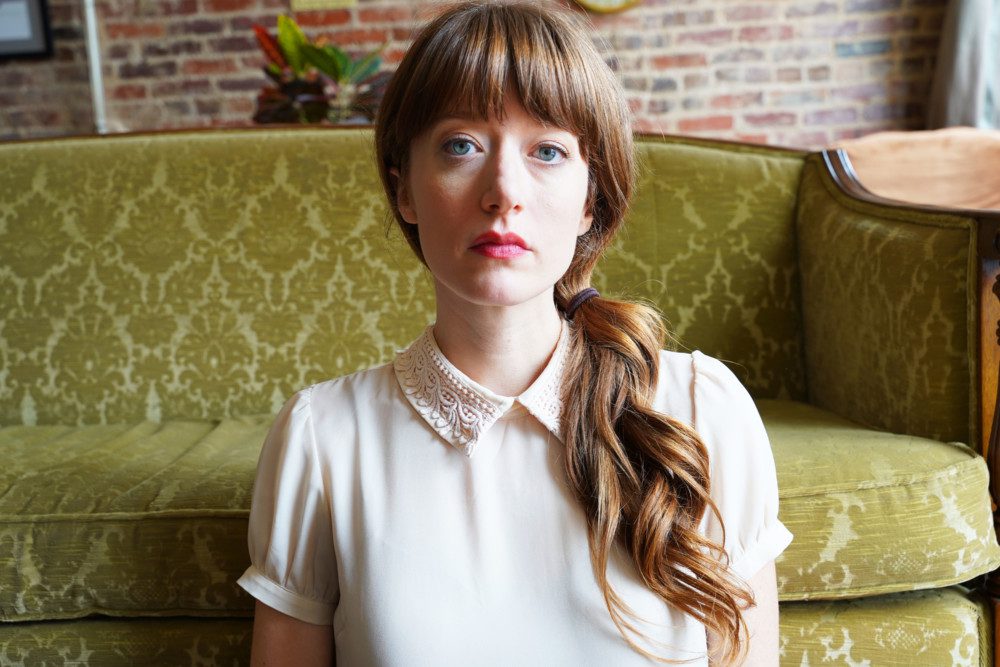
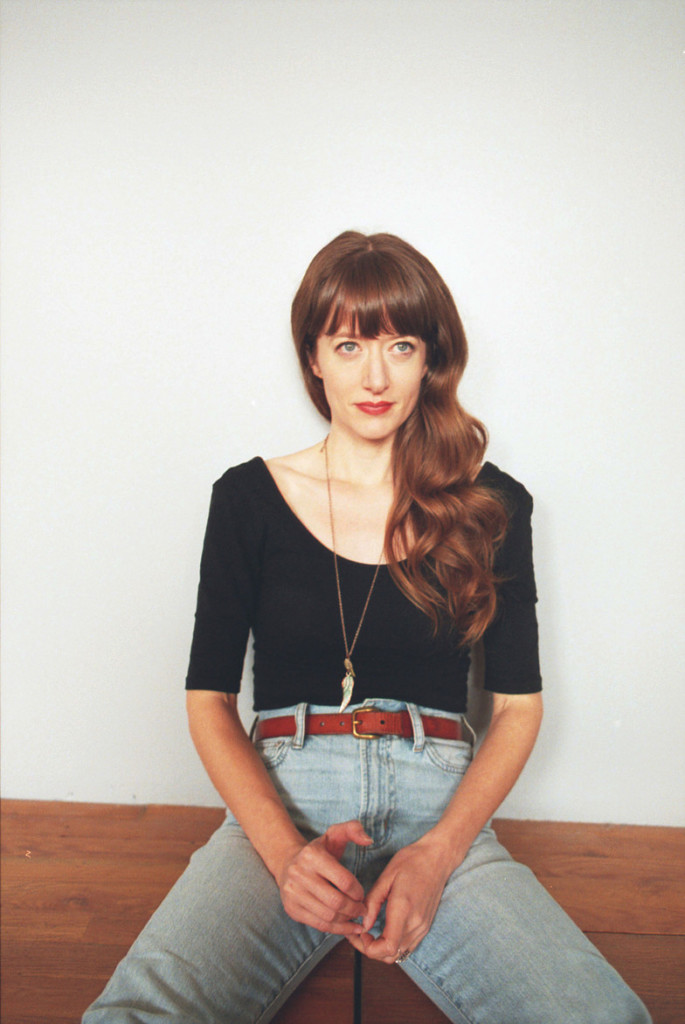
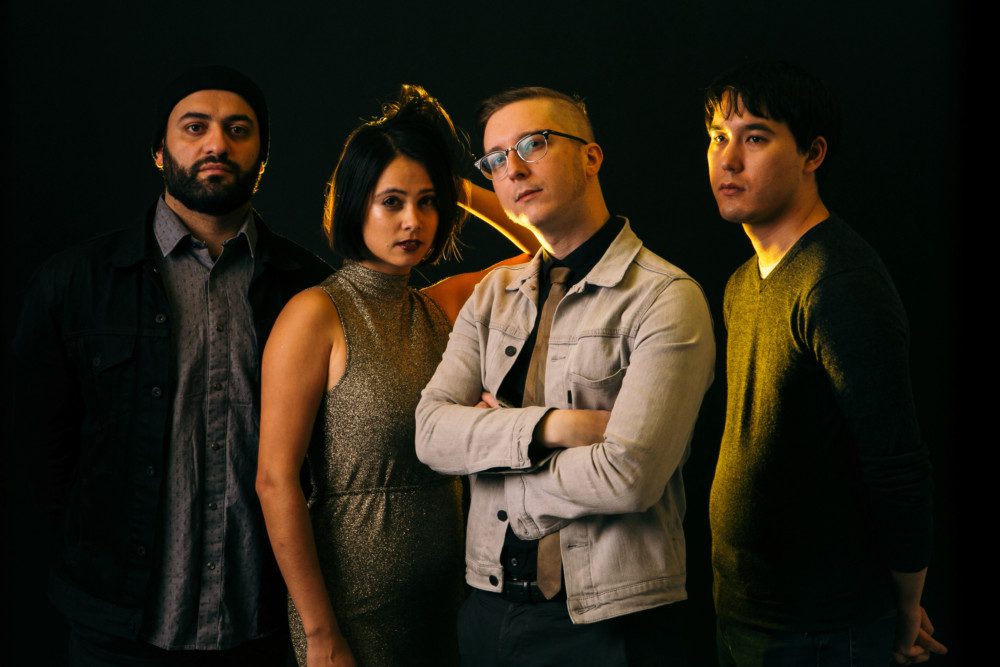
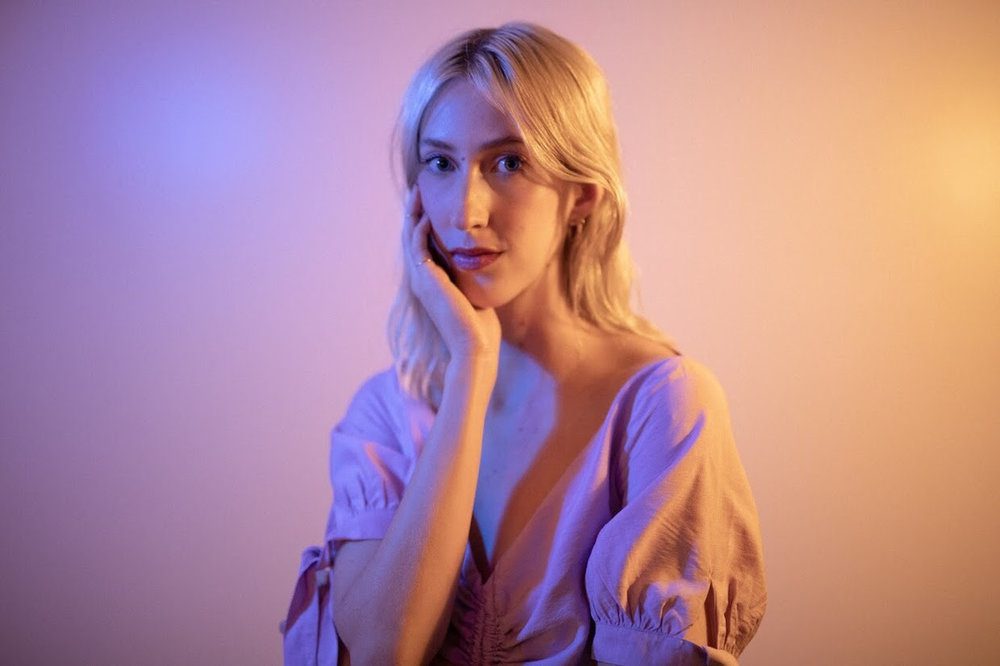
In the era of #MeToo, a variety of voices have risen up to tell their stories of abuse. Seattle-based singer-songwriter Nora Rothman featured 26 womxn from around the world in the new video for her single “dear / david.” The image of each womxn speaking into their phone, leaving a visual message to their abuser, is haunting in its unwavering directness and echos the cool, calm protest that is the song itself.
“brandy glass / hotel key / dear josh / what did you see in me / ‘cause of you I’m marching in the streets / ‘cause of you I’m yelling I believe / dear josh / god knows you forgot,” Rothman sings softly, her voice creating a slow drip to match the steady drumbeat. The song is comprised of two letters to two separate men and was inspired by a conversation with a close friend of Rothman’s. “dear / david” pulsates, burns with a sensuality that feels brazen against lyrics charged with fear, anger, and rebellion. It challenges the listener with its eroticism, a bitter and sweet pill all at once.
AF: Tell us about “dear / david.” What was the genesis of this song?
NR: I have a very close friend who once told me the story of how she wrote a letter to her assaulter and then burned it. In the middle of Christine Blasey Ford’s testimony, my producer/collaborator Kate Ellwanger sent me a track with the hook “I’m not gonna hide / can’t keep me in line / speak what’s on my mind.” It hit me hard. I wrote the rest of the song inspired by my friend… it took me like an hour. It is two letters in the form of lyrics: one to an actor named David and one to a label head named Josh. I had more, but they wouldn’t fit into a two-verse song.
AF: It’s a difficult task, taking a serious subject and making it not only digestible, but pleasant to the ear. How do you find that balance in your work?
NR: I’ve written a lot of rage-filled feminist songs that haven’t seen the light of day. I think it’s important to have those in the world, but I also believe with my own music that it’s particularly honest to balance heavy messages with joyful sounds. Every experience in life is nuanced, and the music reflects that. While the verses of the song detail personal trauma, the choruses essentially say “fuck you,” and that part—that part is fun. Plus, Dot [Kate Ellwanger of Unspeakable Records] is a super talented producer and it’s impossible for her to make something that isn’t a groove.
AF: Where did the idea for the video come from?
NR: I delayed doing any visuals for this song, because nothing felt right. While this story is very personal to me, the song is about more than just my story. It’s about all of our stories. With a budget of zero dollars, I reached out to a huge network of people I know—from acquaintances to best friends—to see if they might be willing to donate their time to this project. In the end, 26 womxn from all over the world joined together to make this video, from Los Angeles to Casablanca to Berlin. These are artists, entrepreneurs, activists, and professionals I’ve met throughout my life who have come together to share their part in this interwoven story. They don’t all know each other, but they’ve stood up for each other these past two years. That’s what this project is all about. I edited their efforts together, and voila! The video was born.
AF: You’re selling “speak what’s on my mind” enamel pins with the video. 100% of the proceeds will go to RAINN. Can you tell us about the organization and why you wanted to partner with them?
NR:RAINN is the largest anti-sexual violence organization in the country. They’ve been operating for 25 years, supporting survivors with information, a hotline, research, and policy initiatives. They are one of the most admirable advocates for survivors in the US. I always try to tie feeling to action and triple my impact. If this video moves you in any way, please join our campaign: buy some pins (designed by the fabulous Iris Gottlieb) and all the money will go to RAINN.
AF: At times, your music reminds me of a stripped down Fiona Apple. Who would you say your musical influences are?
NR: Thank you! The jazz greats, certainly, influence my songwriting: Sarah Vaughan, Nancy Wilson, Oscar Peterson. Then, sorry I’m not sorry, Joni Mitchell is my absolute number one queen of queens. Out of more contemporary artists, Frank Ocean, Bon Iver, and The Staves are in my ears when I compose.
AF: How does jazz influence the music you currently make?
NR: Jazz is the best teacher. Listening to great improvisers taught me to be adventurous in my songwriting. In all the music I write, I usually just riff over some chords to find the melody that fits the best; that is a total jazz technique. Plus, listening to jazz is humbling. Those musicians are insane.
AF: If you could tour with any current musical artist or band, who would you go on the road with?
NR: Love this question. Definitely Bon Iver… so I could watch the show… and seep up some magic.
AF: What do you want an audience to take away from a Nora Rothman performance?
NR: Honestly I just want people to have some fun and feel something. If you walk away with that, my mission is accomplished. Come find me at Conor Byrne in Seattle on September 19th and let’s see if I can make it happen for ya.
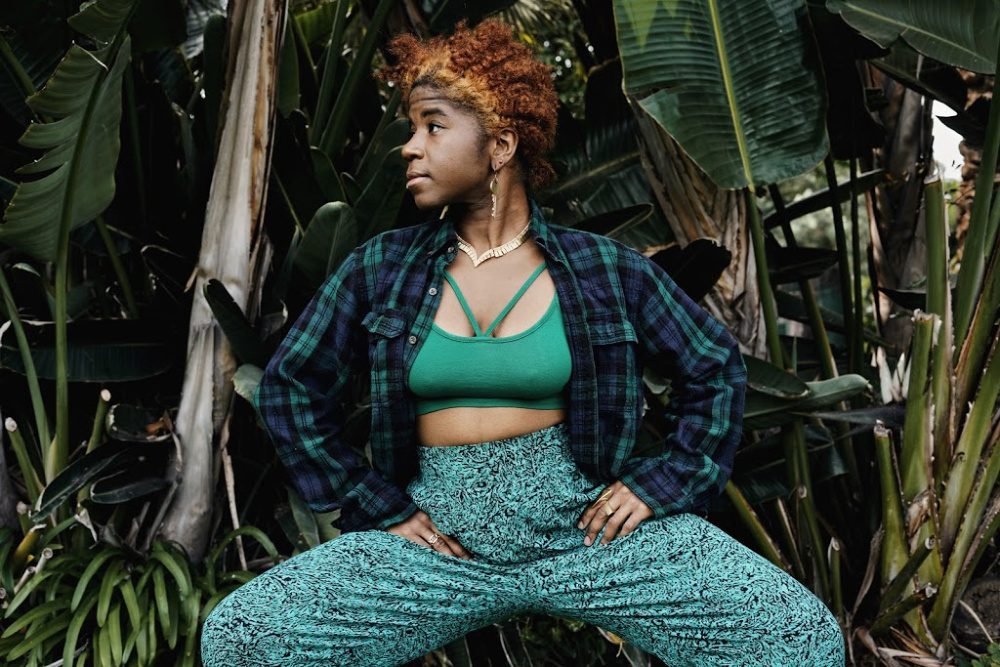
SassyBlack, a.k.a. Catherine Harris-White, has spent years making lunar-inflected R&B and sending Seattle audiences on a funky galactic journey—both as a member several Seattle-based groups, like rap duo THEESatisfaction, and now as a formidably innovative and prolific solo artist. With a production vibe reminiscent of Roy Ayers and Pharrell, and an expressive vocal style that recalls jazz great Ella Fitzgerald and neo-soul legend Erykah Badu, SassyBlack’s music transcends era and defies linear notions of time.
With fifteen releases since 2015, sixteen counting her forthcoming full-length solo album Ancient Mahogany Gold, out September 13th, Sassy is a master of the slow simmer. Ancient Mahogany Gold is a fresh 11 tracks—the optimum length for Sassy to lyrically explore the many dimensions of pain and love, while building her jazz-tinged melodic motifs and nimble, entrancing soundscapes to their climax.
SassyBlack chatted with Audiofemme about the details of the new full-length, her complicated Seattle roots, and about self-worth in song.
AF: What got you into music? Was there a particular artist or person in your life that encouraged you to listen, or perform?
I have always been very into music and performing. I come from a household where there was always music playing and typically a lot of dancing/relaxing/planning/studying to music. Music has been a special space where I can heal and just be. No judgement. I can’t tell who the first artist I wanted to be like was but right now, off the top of my head I can say Michael Jackson, Brandy, Miles Davis, Morris Day and Chaka Khan have played big parts in my life. So many musicians and artists have impacted me that I could write a series of books about it.
AF: Where in Seattle did you grow up? How does Seattle serve as a context to your music? An inspiration? A boundary?
I grew up in Hawaii until I moved to Seattle in ‘97. In Seattle I lived near the University of Washington which was always moving and changing as the school year would start and let out. In terms of inspiration & boundaries, I don’t know. Seattle is special to me. It’s what I have known and although I have seen some of the world in my travels, no place feels like Seattle – it’s my sweet spot.
AF: In what way has the Seattle scene served you and lifted you as a musician? In what ways has it failed you, or introduced challenges?
Being from Seattle and having parents from New York makes me different in a way that Seattleites could smell it on me. I act differently, make differently, love differently. I am different. I’m from space. I often call myself a woman of the world and Universe for that reason. The music scene is like any other scene or community I’ve experienced in the world. It can be open and freeing and accepting or hate you, ignore you, think you are undeserving or not known what you are or what to make of you so kind of hands off until it’s time to make a hard fast decision. Seattle can see me for what it has the capacity to and that sight fluctuates so I try not to rely on it for anything that I need to survive. But I do enjoy the love.
AF: Your music is often referred to as intergalactic and space-aged. Do you consider your music to be Afrofuturist? If so, how and why are you in conversation with this movement?
I deem my music psychedelic soul and hologram funk. It feels right for the time being. I’ve been called an Afrofurutist before, but honestly I am a Black woman and just by being I live in the future. I’ll leave that at that for now. My music speaks to it loudly and I find more clearly than I can phrase right now. Another book to be written.
AF: What were the biggest lessons you learned from your time in THEESatisfaction, that you bring to your solo work?
I’ve been in several bands and groups and one of my biggest takeaways from all of them is that I love working alone. Collaborations are golden when shaped from positive interactions and loving intentions.
AF: Tell me about the process of making your new album, Ancient Mahogany Gold. Did it begin with a theme, a lyric, a conversation?
This album began with a thought. A thought that came about while I was making a beat. It grew over several years. Lyrics, themes, music all kind of came simultaneously. It’s hard to track because I don’t take notes of how my spirits and ancestors encourage me to express myself.
AF: Both “Depression,” and especially “Antidote,” on Ancient Mahogany Gold, seem to deal with themes of self-love. Why is this a topic that’s important to you?
This whole album is about self worth and self love and appreciation in all the ways that it comes to mind. It is in every song. I think “Antidote” and “Depression” exude those feelings more because the lyrical content, or even the titles, are more apparently speaking to what is associated with self love. This topic is life and important to everyone whether they know it or not. I just don’t think most people know the best way to approach self love in a healthy loving manner. I’m not even sure how to do it for myself but it manifests through craft, creation, conversation and song.
Follow SassyBlack on Facebook for the latest updates and check out Ancient Mahogany Gold when it arrives on planet Earth September 13th.
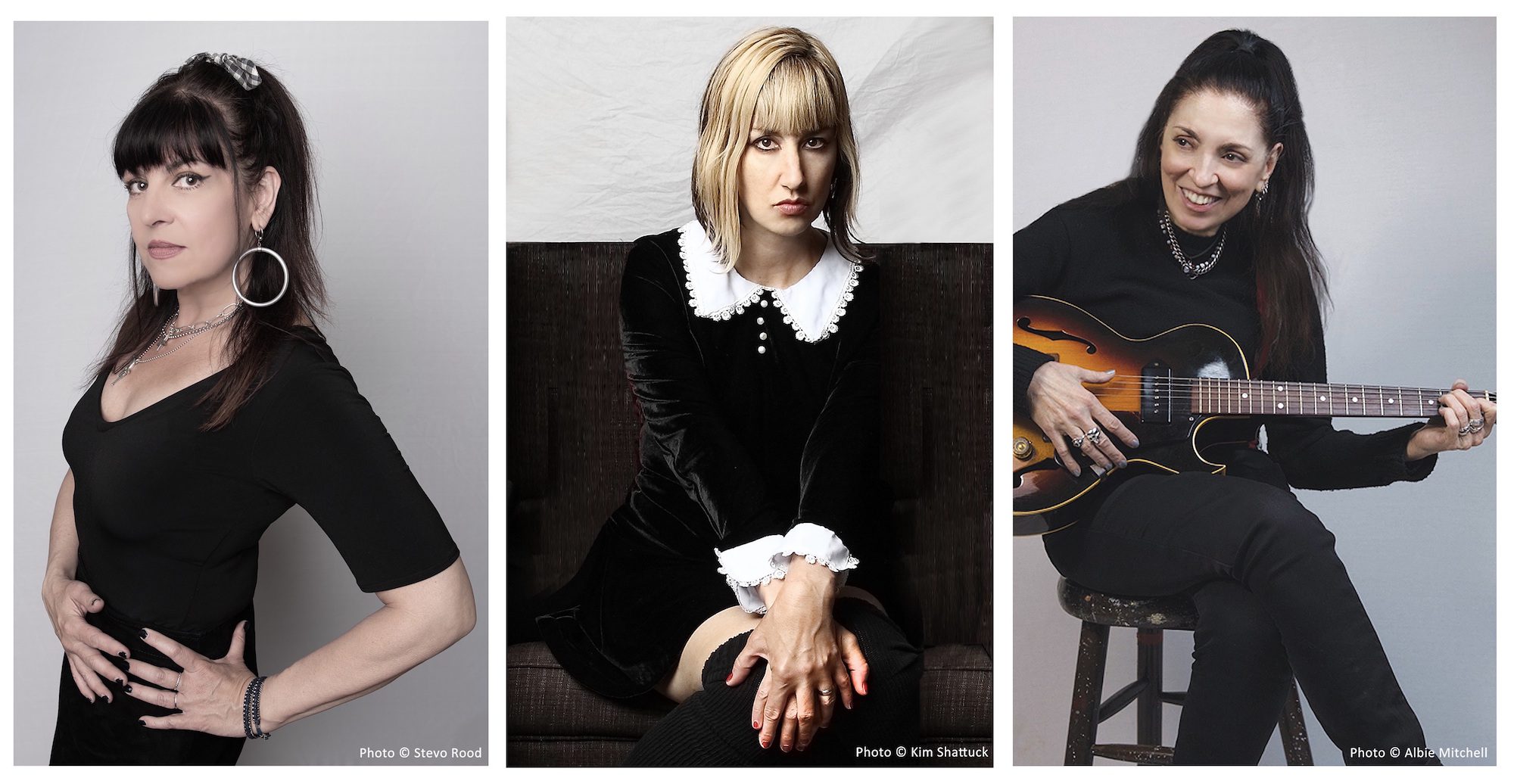
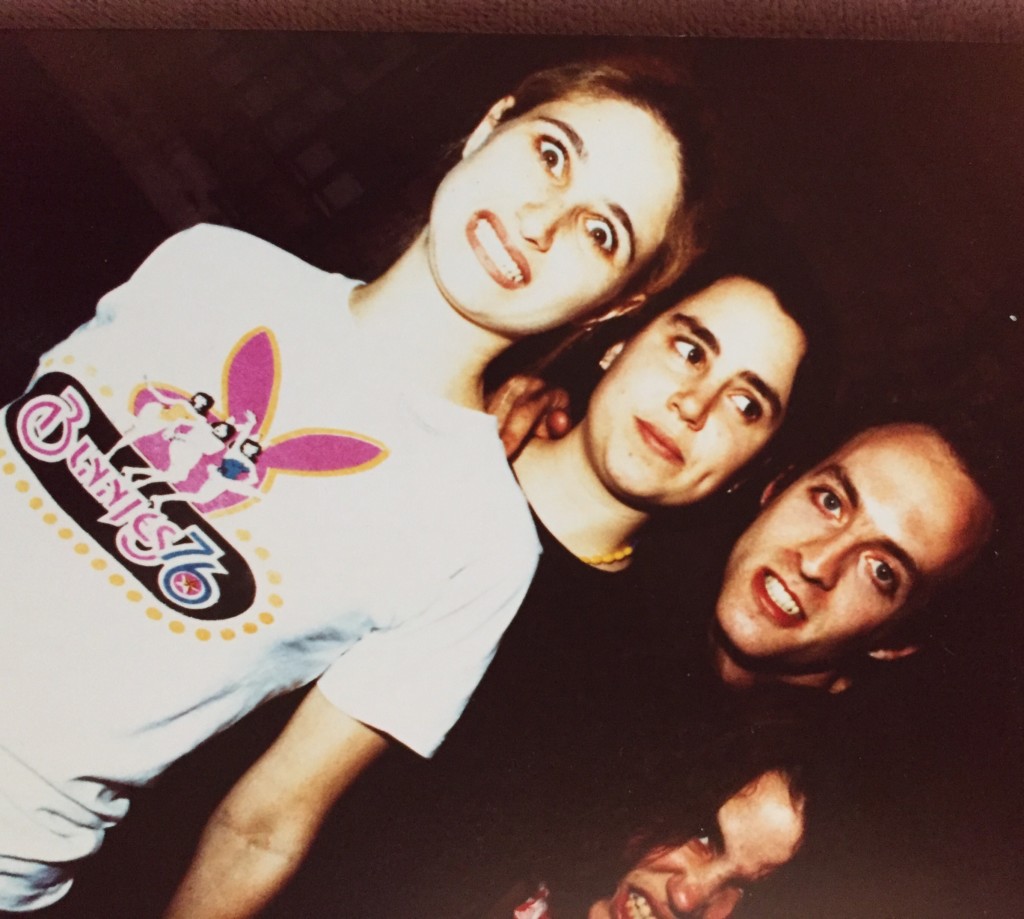
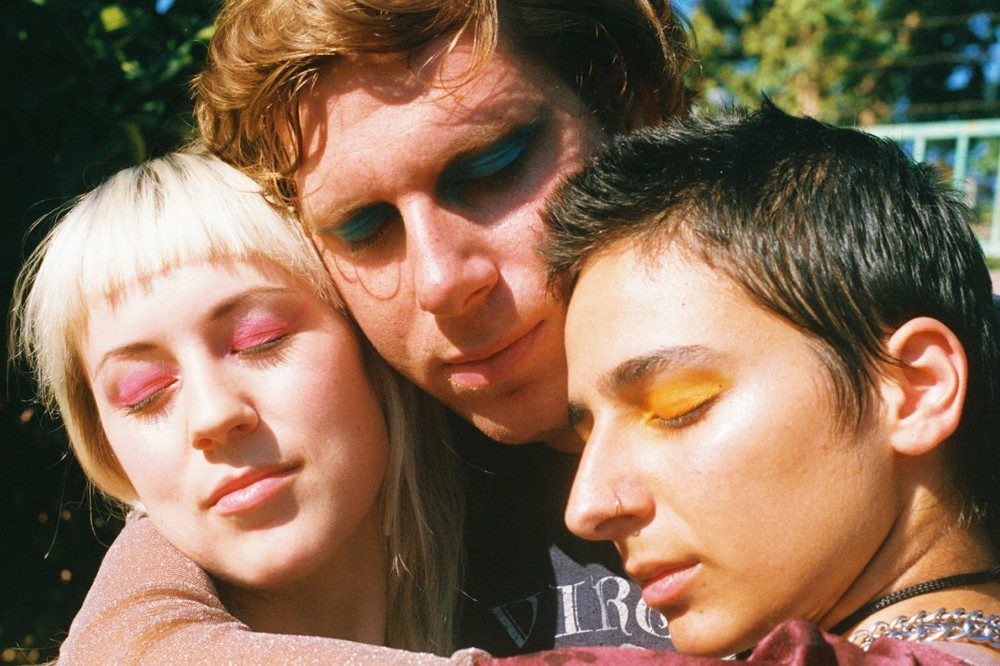
After being friends for decades, former members of The Muffs, The Pandoras, and The Friggs, Kim Shattuck, Melanie Vammen, and Palmyra Delran, finally decided it was time to start their own band together. Kim and Melanie first played together in The Pandoras and went on to form The Muffs, meeting The Friggs’ Palmyra on a Pandoras tour. The uber-talented trio is now known as The Coolies—a female-fronted super group backed by decades of rock stardom, who are using their platform to combat ALS.
The Coolies dropped their self-titled debut EP earlier this summer and have donated 100% of proceeds from record sales to support research for the ALS Association. Living in different cities, the six-track EP was recorded at both West and East Coast studios and mixed by Grammy Award-winner Geoff Sanoff.
From the very first track, “Uh Oh!,” bubbling down to “Yeah I Don’t Know,” The Coolies dabbles in fizzy pop, punk, and pure rock—an essence that’s perfectly captured by its psychedelic 3-D vinyl cover.
Here, The Coolies talk their new band, The Coolies EP, upcoming music, and why ALS research is important to them.
AF: Why is combatting ALS and the ALS Association important to The Coolies?
K: Because it runs on my dad’s side of the family and I am super sick of seeing it take down my relatives without a cure!
M: It has affected us all by knowing loved ones enduring this horrific disease. It’s time to find a cure!
AF: Do you plan on continuing to raise awareness and funds with your next project/s?
K: I’m always gonna do a lot more work with The ALS Association – I will always do it!
M: I will always want to help in whatever way I can.
P: We’re committed to raising awareness and donations to find treatments and a cure for ALS. Diseases can be cured, and ALS is such a mystery. It’s time.
AF: How does it feel coming together at this point in your career and being able to form The Coolies?
K: Pretty crazy dammit! I love these chicks with my whole heart and soul, and we have some tales to tell! We are like peppermint pirates!
M: It’s incredible and so special! I love these badass chicks and it means everything to me.
P: It’s actually pretty hilarious how this whole thing happened out of three old pals having a laugh about a picture of Paula Pierce’s ass! We figured, why not? And it’s been a mind-blower how fast it all fell together. I love these dames!
AF: Are you planning any future shows / touring?
P: We are scheming!
M: We’re figuring it out! I can’t wait for people to hear Coolies songs live!
AF: What are you currently working on / planning next?
K: Pretty cool things that we have planned!
P: We’re already working on the next batch of songs.
M: A full-length album!
AF: Your EP is available on vinyl with a 3-D album cover, which is awesome. What gave you guys that idea?
M: I think Palmyra and Louie (the artist) suggested it.
P: Everything comes out of the three of us sitting around laughing! Kim would sign her emails as “Kimba,” which sounded like a cartoon character to me. I started signing my emails as Palimba, and not missing a beat–Melanie became Melimba! The whole thing morphed from there and ended up on (Art Director at Wicked Cool) Louis Arzonico’s desk, who came up with the illustration.
AF: What was the trans-coast recording experience like?
K: It was a hoot! Hey, it should be that easy all the time. I’m so happy! The best thing is recording with them. And we did it!
M: It was so easy! First time I’ve recorded like this and we got to be just as creative this way like if we were all in the same room together. It worked amazing!
P: This definitely proves that anything can be done these days!
AF: How has your current sound been influenced by each of your musical backgrounds?
M: You know, we all do our thing with our signature styles and sounds.
P: It’s what comes out naturally from within each of us. It just so happens to fit together really well.
AF: Anything else you’d like to add?
M: Take time to laugh in life! Be yourself and don’t doubt your abilities! We love our record. Hope you love it too!
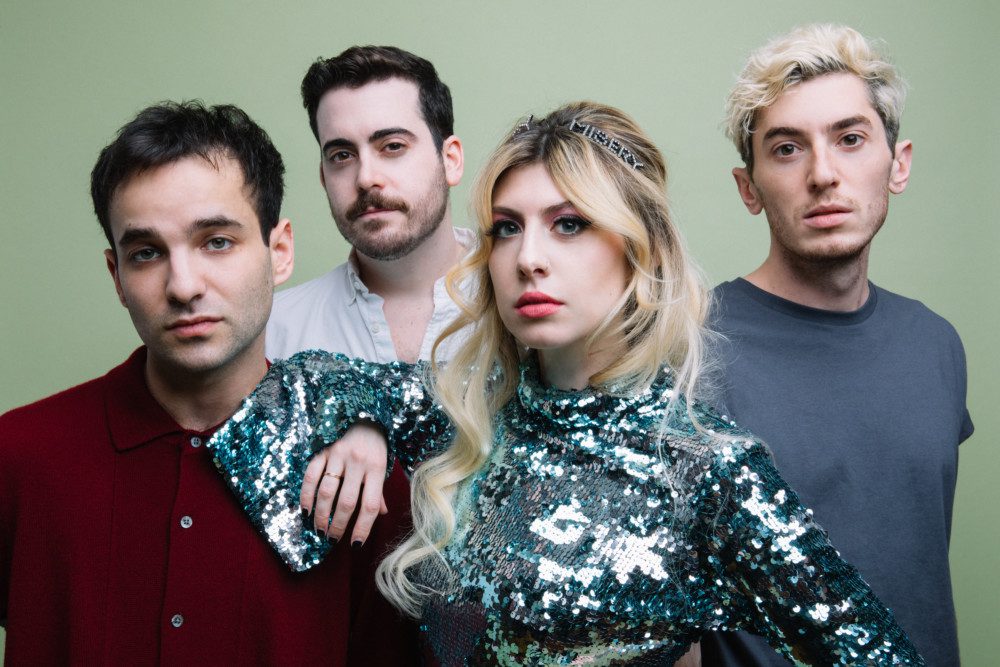
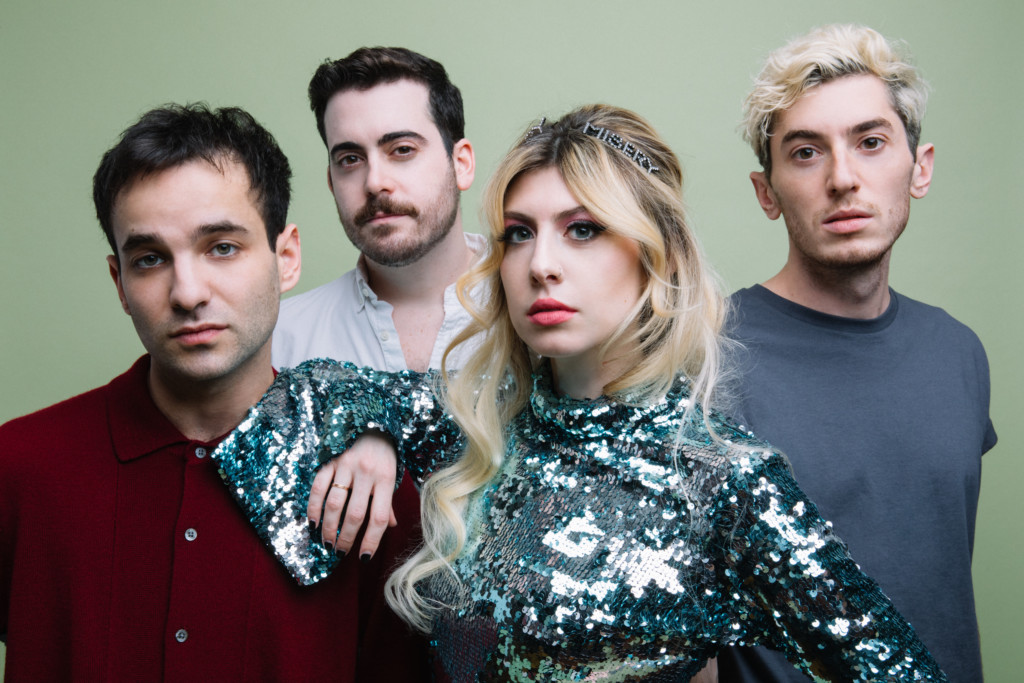
“I look like a superhero,” says Eva Hendricks, speaking on her touring outfits for NY-based pop rock band Charly Bliss. She talks about of the power of creating a persona for performances with more than a hint of amusement. “In my wildest dreams, I want to be descending from the heavens, wearing a ginormous tutu and like, spreading glitter all over the crowd.”
Frankly, she’s not that far off. As the lead singer for New York-based pop-rock band Charly Bliss, Hendricks is known for her contained explosions of stagewear — on their most recent tour, she took the stage swathed in a gravity-defying tutu, a shell bra top, and eye glitter generous enough to be a drag show Venetian mask.
During their Oakland performance, Hendricks grinned through the glitter like she could barely contain her joy, bouncing her way through old and new songs alike as fellow band members Dan Shure, Spencer Fox, and her brother Sam Hendricks gamely supported her enthusiasm in nondescript white outfits reflective of the ones seen in the band’s video for “Young Enough,” the titular song off their most recent album.
Glitter is a beloved motif for Hendricks, even if she introduced older hit “Glitter” with a curt, “this is a song about someone I hate,” drawing laughs from the tightly packed crowd at The New Parish. The sparkly purplish backdrop behind the stage was a new addition for this tour, another step towards Hendricks’s prophesied Glitter Witch decent from on high.
Beyond stagewear and set pieces, the Oakland show was surprising for many reasons. While Young Enough is synth-y at turns, sparkling at others, and plain sweeping during at its central turning point, the live arrangements were crunchier and more guitar-focused, giving the sense that you were at a very, very polished garage show, albeit one with a shockingly sober and good-natured audience. “Something we cared so much about on this tour was upping our game,” Hendricks says. “We never want it to feel like we’re playing [the song] exactly how it sounds on the album. But kind of like the live show brings something new to what you’re hearing at home, and brings it to life even more. I want our shows to feel like a huge release.”
“I think that the best way to encourage everyone to, you know, participate,” Hendricks emphasizes, “is to make a total fool of yourself.”
Perhaps Hendricks may feel comical at times, but her on-stage emotion seems exceptionally genuine. Despite the glitter and bombast, her face is incredibly expressive, shifting through a parade of emotions from song to song, note to note. And there’s nothing skit-like or rehearsed about it — in fact, the level of intensity Hendricks and the rest of the band summoned to perform “Hurt Me,” a killer slow-burn with a chorus that can be read as an entreaty or a warning (you don’t wanna hurt me/you don’t wanna hurt me baby), gave the impression that we were watching the song be performed live for the first time.
According to Hendricks, the band was looking to create a “tight little world” for their sophomore effort. “All my favorite albums kinda feel that way,” she elaborates, citing Lorde’s Melodrama as a major inspiration, with its strong color palette, moody visuals, and focused lyrical theme. The band also looked to Carly Rae Jepsen and Superorganism for musical inspiration. As for lyrical inspiration, the influences are fairly unexpected: The Roaches, Loudon Wainwright, Bruce Springsteen, Kate Bush. “Usually what’s inspiring to me lyrically is really [the opposite] or sometimes left or right of what is inspiring me sonically,” Hendricks says. Her lyrical process for Young Enough was also a departure from her experience writing Guppy, the band’s first full-length, which they recorded twice.
“I think I didn’t really know how to write a song in any other mood other than being really angry at someone,” Hendricks says of Guppy, most of which was about a tumultuous college relationship. Said relationship makes another appearance on Young Enough, but this time with a notable difference in outlook: “On this record, I think the overwhelming mood was just of perspective and looking back with kindness, or looking back with the ability to put the blame in the right place.”
Yet that rage-filled back catalogue was an essential step in getting Hendricks where she is today as a lyricist. “I think it took me a really long time to be confident as a songwriter,” she explains. “Putting out Guppy was sort of the first glimpse I had of like, oh, I guess I can actually do this. And I guess I’m kind of good at it, if people can listen to these songs — especially lyrically — and relate to them. That’s sort of like having a magic power that I haven’t really allowed myself to feel proud of yet.”
Peeling away the anger surrounding any difficult situation is a Herculean task, but if Hendricks hadn’t been willing to do so for Young Enough, we would be looking at a very different record. Listening to the titular song is comparative to watching an unfurling scroll; Hendricks flings her old relationship to the skies, but what comes tumbling down is a story of, if not unfettered gratitude, than something close to it: You were still just a kid/you’re a beautiful boy/crushing cigarettes just to prove a point, she sings. The whole song is the answer to the questions we’ve all written in our journals, in a letter, in a text to a friend: Why did I do this? Why did I put up with it, and for so long? The pithiest version of the answer arrives during the bridge: We’re young enough/to believe it should hurt this much. “Of all the lyrics I’ve ever written,” Hendricks says, “I’m most proud of that song.”
Hendricks’ recent experience with a sexually and emotionally abusive partner makes Young Enough the story of another kind of relationship, too. “Chatroom” and “Hurt Me” are the easiest to point to when looking for direct references, but inspiration is never a simple A to B equation. Trauma is intangible, healing endlessly complex, but fortunately Hendricks was able to find strength in both the creation of this album and its release to the world. “When you keep something inside, and you try to push it down, it has so much more control over you than when you are open and willing to talk through it and connect with other people through it and kind of turn pain into something sparkly,” Hendricks explains. But while she may have learned this now, it doesn’t mean she always knew there was anything good waiting on the other side.
“Before the record came out, I definitely felt so unsure and spent a lot of sleepless night night wondering if I was losing my mind for — and my family sometimes wondering if I was losing my mind for — wanting to be so open about the subject matter. But you know, I don’t regret anything,” she says. “I think that when I’m writing records, it’s so important to me that I’m just in conversation with myself. And reflecting on my own growth and on things that I hate about myself, things that I am learning to like about myself, things I’m proud of, things I’m ashamed of. Because I think if I start to think too hard about other people, and how they’ll perceive what I’m writing about, that it will cause me to limit myself.” It was only by working under this philosophy that Hendricks was able to complete the album in the first place: “I didn’t really think much about what it would feel like to do press about some of the most personal and private experiences of my life. And I’m really grateful that I didn’t, because I probably wouldn’t have written the songs if I had.”
For Hendricks, one of her main takeaways after the album was released was what happens to shame when you finally unhook it from its resting place inside your chest. “It becomes bigger than you. And that’s a really wonderful experience when something feels so all consuming, something like shame and guilt. When you make something that’s bigger than you and helpful to other people… shame and guilt are kind of powerless in the face of that joy and that positivity.”
Joy is certainly a palpable feeling on this album, even when the lyrics go dark. Album opener “Blown to Bits” sets this tone with confidence; the song is at turns a catalog of small moments of joy (you’re light as a feather, astronomically huge/laughing out loud in your bathing suit) and the creeping sense that those moments can’t possibly last. The chorus is one that you will find yourself chanting in your car, yelling at your friend across the hall, pounding through your head as you furiously stomp your way up a hill, thinking back on all the times you knew destruction was imminent, but you plunged forward anyway.
Sell it for parts, I’m asking for more/I don’t know what’s coming for me after 24, Hendricks sings. She may not be a fortune teller, but with each album, she is building another tome of personal narrative, one that can be spread far and wide and then spooled back in for her to peruse at her own leisure. “It’s kind of really crazy [to be] putting out albums, especially throughout your 20s, where I feel like every year you change so much,” Hendricks says. “It feels like this weird decade of extreme and expedited growth. It’s kind of cool to have this marker of all of that, and to be able to look back and be like, oh, I thought I had it all figured out then.”
“I hope my life continues to feel that way,” she elaborates. “Obviously, I hope for peace and to be at peace with myself. But I love looking back like, ‘oh no, I would never let someone treat me like that again, I would never fall into that trap again.’ And then having that blown up in your face, too. And be like, ‘oops, well, I did.’ It’s just kind of really interesting to look back on personal growth and to have such a defined marker and microcosm of that that’s also very public.”
Hendricks’s care for her fans and their experience with Charly Bliss’s music is apparent, but, when it comes down to it, it’s the thought of young Eva’s opinion that keep Hendricks on her toes. “I think everyone is kind of fated to write for their younger self,” she says. “I had the same three best friends my whole life – still really, my best friends. What would make us freak out to listen to in the car when we would drive around when we were sixteen? Like, would we like the Charly Bliss record?”
I can say, without a doubt in my mind, that they would.
Charly Bliss is on tour through mid-November; see dates below and follow the band on Facebook for more updates.
CHARLY BLISS TOUR DATES:
9/18-22 – Lincoln, NE @ Lincoln Calling
10/7 – Victoria, BC @ Capitol Ballroom ~
10/8 – Vancouver, BC @ Vogue Theatre ~
10/9 – Vancouver, BC @ Vogue Theatre ~
10/11 – Calgary, AB @ MacEwan Hall ~
10/13 – Saskatoon, SK @ Coors Event Centre ~
10/14 – Winnipeg, MB @ The Garrick Centre ~
10/17 – Kingston, ON @ The Ale House ~
11/4 – Brighton, UK @ Patterns
11/5 – Cardiff, UK @ 10 Feet Tall
11/6 – London, UK @ Scala
11/7 – Manchester, UK @ The Deaf Institute
11/8-10 – Benidorm, ES @ Primavera Weekender
11/14 – Philadelphia, PA @ The Foundry *
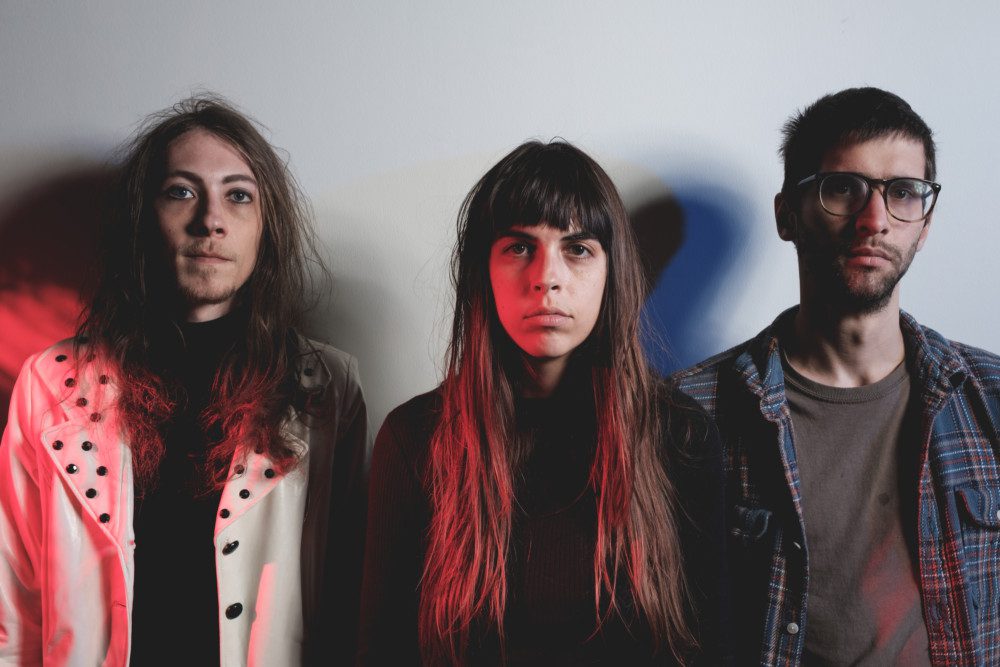
Cincinnati trio Pop Empire recently dropped their nine-track album, Novena. The indie-rock outfit will head out on a supporting tour this month.
Novena marks the 10-year-old group’s first full-length album since 2014’s Future Blues and the first album with the group’s current lineup – founding member Henry Wilson, guitarist Katrina Eresman, and drummer Jake Langknecht.
Teased with singles “Sister Chaos,” “Black Wine,” and “For Maggie,” the record navigates glittery soundscapes of psychedelic and progressive rock, tied together by what the band labels as a feeling of “familiarity.”
Here, Henry, Katrina, and Jake talk about their recording process and learning to communicate as a band, which ultimately led to Pop Empire finding its unique sonic home in Novena. The bandmates also discuss the virtue of patience, studio magic, and the helpful scents of Nicki Minaj incense.
Stream Novena and check out their upcoming tour dates below.
AF: Congrats on your new album! Can you tell me about some of the underlying themes?
H: The songs came from each of us throughout different periods of time. Really what you hear on this album, is just the three of us playing in a room together and something, that the three of us have developed over a couple years, that is its own distinct sound. It’s certainly got plenty of familiar influences. I think there’s a lot of themes in the album that tie the songs together.
J: The recording of the album took place over a good couple of months. It was just the three of us, we didn’t really have anybody else’s time we were occupying and we weren’t spending a bunch of money at a studio. We were in a familiar space and we could really take our time to run takes of the songs, as many times as we needed to. Some of them hadn’t really been written or arranged, to a large degree, yet. As different as the songs might seem at first listen, from song to song, I think to all of us there is definitely a feeling of cohesion between them. We hammered them out in the same process and the same place with a lot of patience.
AF: What can you tell me about the significance of the title, Novena?
H: I would get in trouble if I didn’t give credit to my mother for actually coming up with the name, she suggested it. We had tried a bunch of titles—the album had come together long before the title was given. The number nine is significant—there’s nine songs on the album. The number nine is related to the word Novena, which means a nine-fold in Latin. It refers to an ancient form of prayer that was also adopted into Catholicism, which is a nine-day prayer in a traditional form. The reason for the number nine sounds, like, way more Hocus-Pocus than I really am [laughing].
AF: This is Pop Empire’s first album since 2014 and with the new band members. How does Novena differ from Future Blues?
K: The way that I feel all the songs are tied together in one piece is that we were trying to write them before we learned how to communicate as a band and as friends. Personally, I was communicating through the songs. I joined this band on a tour last minute so I came in and literally learned the guitar parts to play so it was very impersonal to me and I did that for a long time. I think that there was a period of time when we were trying to work on these songs and I was sort of, like, trying to play in that style still, like as the old guitarist, and fill those shoes. And then there was some point where I connected more. I think in general, I’m a little less traditionally skilled—a little bit more dirty, dissonant, and noisy as a guitarist. So now that I could see it in my own way I think that influenced the style, ‘cause all the songs existed in some form, and some of them for a really long time.
AF: What is each of your favorite song on the album?
K: I would say I’m surprised by how much I ended up liking “Riding The Crest” ‘cause it was very frustrating for a long time. I didn’t know what to do with it. And then it became something real different than what it was.
H: This is the song that, for Pop Empire nerds out there, was technically released as a bonus track on a Bandcamp download. Well, there was a song with the same name. It’s pretty vastly different. There was definitely a direct evolution from the beginning of the song into what it is now.
K: Now, it’s totally made me tear up before. It’s a really nice, emotive song.
AF:You’re also going on tour this month. Any new places for you?
H: I think there will be some new in-between spots. Even though Cincinnati is so close to so many towns, there are still lot of places we haven’t gone to as a band.
AF: Where do you draw inspiration from?
J: There’s a lot. Everything that I listen to nine months prior probably influenced this album. But the songs didn’t really come from any particular place except from me. It was natural enough with my style and the way I played, and our style, driving the album. We’ve been a band—and I’ve been playing with Henry for five years or more and I’ve known Katy now for two years—so we’ve established our own sound. I feel like the album itself had a sound before we even touched it.
K: Your style is like dark blocks. Dark-colored shapes and blocks–that’s how I picture your style, visually. That’s where you got your influence [laughing].
J: [Laughing] Cool.
K: Yeah, I don’t know for me either. I think I ended up thinking in the context of Drone-y music, like really heavy playing. I don’t like consciously point to people that I am inspired by, but I do find myself finding influence from bands.
H: For me, it’s going to be a lot of old stuff. A lot of 20’s and 30’s. While we were making this album we weren’t even listening to any of the same stuff. We just knew what sound the songs had once we heard it. When they’re all played together, to me, the songs all have to do with evoking a very calming and reassuring presence that feels very familiar, from like before you were born. If that kind of presence could be found, that’s what all of these songs were trying to go for.
AF: So maybe, stylistically, if there weren’t too many outside influences, this album was just you hitting your collective stride?
K: I think it could be. I’ve definitely read interviews where people will be like, ‘Oh, we just went in the studio and it was just there,’ and that’s kind of messed with my head because I have to try and would get frustrated if something didn’t come immediately. So I don’t like to say that, but on the other hand it is kind of what happened with this album. We were just working really hard all winter, over and over and over, and just kind of somehow ended up coming together. It showed that there is like a magic that can happen when we connect as musicians, it just took a while.
H: I think that’s a really good point. To anybody that wants to learn something, this absolutely is something that requires grit and perseverance. It was really tough, there were plenty of times where it could have felt easier to give up on the project, but we really stuck through it. The album only happened because of that.
AF: Exactly. What are some key takeaways you learned from recording this album?
J: We really came together as these three people. But also, for me, I never had the opportunity to really like take time in recording and be really patient with my parts. Short of deriving expectations—how do you get to where you have a song that is presentable as a final iteration? Both through the tools you need to use and also the working process.
H: Also, we used lots of incense to conjure the moments we were trying to create.
K: We had a Nicki Minaj incense.
H: And Ariana Grande.
AF: What do those smell like?
J: Who can say [laughing]?
K: Also, a little Charcuterie tray is very nice.
H: Yes, meats and cheeses and a fridge full of sparkling water.
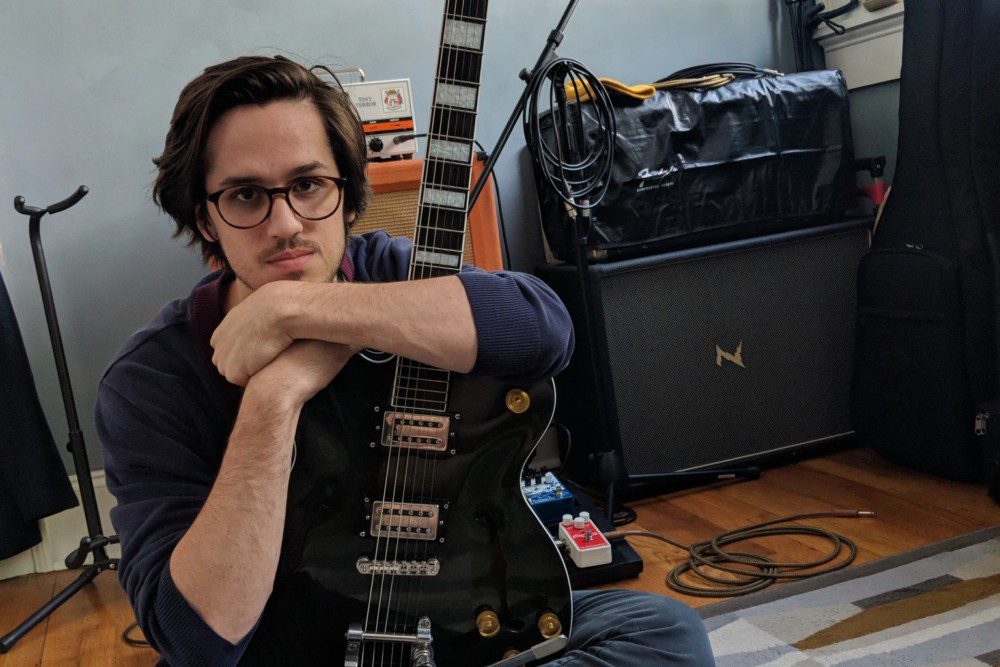
Soulful and introspective, Atlanta musician Michael Forde has an uncanny way of blending the intricacies of jazz with easy rhythms and lyricism that is not only deeply personal but effortlessly relatable. With the release of his debut solo EP, Moments Under Water, and his latest single, “The Breath In My Beat,” Forde’s songwriting is put on full display, alongside his innate skill as a musician and producer.
Written, played, produced, and recorded entirely alone, Forde embodies the idea of a solo project, turning inward to what he describes as the chaos within rather than looking out at a world over which he has little control. Following the release of “The Breath In My Beat,” I got the chance to talk with Forde about flow states, Pink Floyd, and a little bit of four-legged, furry inspiration.
AF: Let’s start at the beginning: how did you get into music? Was it something you always knew you’d do, or was it a hobby that grew into a career? Was there a moment when you realized, “Hey, this is what I want to do forever”?
MF: I have always had a deep love for music but the time that I actually started to pursue the art of music heavily was when I was about 15 years old. I had taken piano lessons for about 4 years when I was a kid and when I was 11, I got my first guitar. I took a few lessons but my interest in it died for some time. One random day, I just picked the guitar back up and for some reason it felt different. I played ’til my fingers felt like they were going to fall off. From that moment on, I’ve been playing guitar as much as possible.
I eventually met an incredible teacher (and now friend), Micah Cadwell, who has pushed me to guitar playing abilities I never thought I would get to. He really helped to solidify in me the desire to play guitar for as long as I live. As for recording and producing music, I didn’t get into that until I was about 19. My good friend Anthony and I started recording music together under the name Ashuraa Nova; that was my first true band experience and we self-produced a five-song EP. Ever since then, I have been learning and refining my production skills. I have recorded, mixed, and mastered all the music that I have made to date on my own; that is the other part of my musical journey I love so much!
AF: Did you grow up in a musical household? Who do you consider your greatest influences?
MF: I did not grow up in a musical household. I am actually the only one in my family that plays a musical instrument!
Saying who my greatest influences are is difficult since my influences are constantly changing as I grow on my musical journey. I would say that my overarching influences would be bands/artists like Pink Floyd, Radiohead, Led Zeppelin, Red Hot Chili Peppers, John Frusciante, Porcupine Tree/Steven Wilson, and Marvin Gaye. As of late, I’ve been exploring a lot of jazz fusion type stuff. I would say, right now, my main influences are Weather Report, Pat Metheny, Alfa Mist, Herbie Hancock, David Bowie. Bowie isn’t jazz fusion but I just love his entire musical catalogue so much!
AF: You’ve released both an EP, Moments Under Water, and a single, “The Breath in My Beat,” in the last few months. Can you tell us a bit about your writing process? Do you prefer to work alone, or in a collaborative environment?
MF: I prefer to work alone. Getting into a flow-state when making music is very meditative for me. It has become almost a safe haven for me when life gets too chaotic. I have made a little studio space in my apartment that I can retreat to when I need to recharge or when I am feeling inspired. As for my process, I almost always start off with a guitar groove or progression and build the song from there. I do play all the instruments on these songs except for the drums, for which I use logic plug ins and drum loops. I want to move towards physically recording drums, but I just don’t have the space for a kit at the moment.
AF: Where do you find inspiration for your music?
MF: I know this is going to sound cliché, but nature, my girlfriend, and my pup, Gilmour. Just being in nature or watching my girlfriend play with our dog brings me inspiration because those moments are so relaxing to me that my mind starts to wander off and inspiration strikes. Most of my music is more so emotionally based rather than commenting on something that is happening in society. For me, music has been a means to express the chaos that I experience inside of myself and how that chaos sometimes affects the ones close to me.
AF: What drives you to create real music in a time where music seems more mass-produced and disposable than ever?
MF: It is just something I love to do. I mainly create music for me. I love sharing it with people, but it has always been something that I make for myself. I think that is why I always lean towards lyrics that more so have to do with emotional states of mind versus political statements. Music is a vehicle that I use to articulate how I am feeling at a specific point in time. I gain a tremendous amount of satisfaction just from creating it and sharing it with my friends. My goal isn’t to get a top hit on Spotify or something like that; there is nothing wrong with that, that just isn’t my end goal. I just want to create as much music as I can because I love doing it so much.
AF: How have you evolved as an artist since your start? How do you balance evolving in a constantly changing industry and staying true to yourself?
MF: I would say I have become more refined in my craft, but the goal has always been the same: to create music that I love to listen to. I am constantly influenced by albums that I find and it bleeds into what I am creating. I actually just got this Brian Eno record called Another Green World that blew my mind. It’s sort of like a precursor to David Bowie’s Berlin trilogy records; this record will probably push me to make something that uses a lot of synthesizers and ambient guitar. I guess I would say that I don’t pay too much attention to what is happening in the music industry with regards to what I create.
AF: What has it been like to launch a career in the Atlanta music scene?
MF: It has been a little difficult for me. I am a very shy person, so it’s been challenging pushing myself to go to local jams and to network with other musicians. It has also been difficult finding an audience, which I do attribute some of that to the fact that I am shy about my music. For the most part, I have enjoyed everyone I have interacted with thus far and everyone has been really kind and encouraging.
AF: What is your favorite music venue in Atlanta? Best show you’ve ever seen in the city?
MF: I love the Tabernacle. I think it is a perfectly sized venue and I love seeing shows there! It’s hard to say, but the best show I have seen in Atlanta would be between Radiohead and Coheed and Cambria. I also got to see Julian Lage at The Earl and that was absolutely mind blowing; the things that man does on the guitar should be illegal!
AF: Last one! What’s next for you?
MF: Right now, I am working to release a single by the end of September and an album by late November; hopefully I can hold myself to that. After that, I am not sure. I may try to put a band together to play some shows, but right now I am just focusing on finishing up this record.
Follow Michael on Facebook and stream his latest EP, Moments Under Water, on Spotify now.
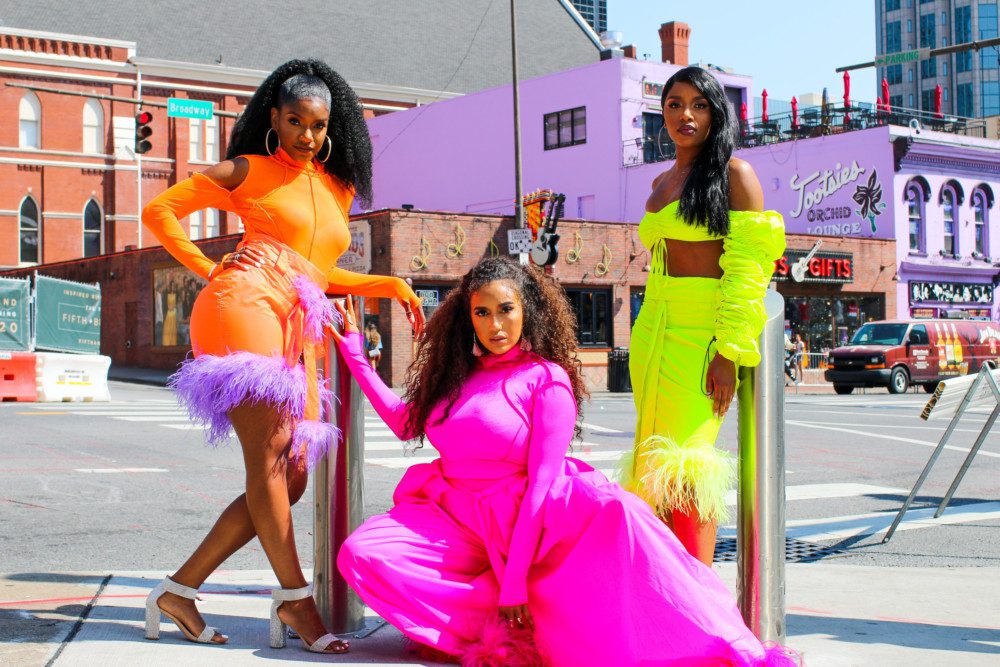
When pressing play on “Costume,” the new single from up-and-coming trio The Shindellas, it’s as much a journey as it is a song.
The genre-blending act of Kasi Jones, Stacy Johnson and Tamara Chauniece begin by transporting us back in time to the 1960s with a spirited introduction that offers glimmers into each woman’s personality: Stacy is mean on the bass, love is Kasi’s middle name and Tam can sing like the best of them. They share these idiosyncrasies over a melody that captures the cinematic sound reminiscent of iconic groups like The Supremes and The Chiffons. But just as you’re reveling in this throwback sound, the beat drops, transforming into a slick R&B jam.
Written and produced by Grammy nominated songwriters and producers Claude Kelly and Chuck Harmony, along with former American Idol contestant and Grammy Award winner Tori Kelly, a close ear to the lyrics reveal that the infectious melody surrounds a powerful message that encourages self-acceptance and the freedom to walk in one’s truth, the trio’s glistening harmonies lifting up such inspiring words, “All we want is love / all we got is us / baby that’s enough / let me see the real you / ain’t gotta wear your costume tonight.”
Kelly and Harmony are co-founders and CEOs of Weirdo Workshop, a Nashville-based artist collective that produces The Shindellas and their own work as groundbreaking duo, Louis York.
Listen to Audiofemme’s exclusive premiere of “Costume” and read our interview with The Shindellas below.
AF: What was your reaction when you first heard “Costume”?
SJ: It’s a really fun song, it’s got a fun beat. It’s one of those songs that I feel like everyone can sing along to. It’s uplifting, it feels like a party song.
KJ: The blended styles, it literally feels like a party song from the ’20s and also from the future, it really is theatrical. It plays with a lot of different parts of our voices, it was like all of us could really sink our teeth into something.
AF: What are listeners going to learn about you through this song?
SJ: They’re going to learn our names, they’re going to know what we bring, our perspectives, we talk about that. And they’re going to learn about this different movement and be encouraged to join that movement and be a part of it, just women singing together about that kind of thing. I don’t think it’s a new thing, but it’s just an encouraging thing that they’re going to learn, encouraged to be close with your sisters and empower your sisters around you.
KJ: It starts with all of our playfulness. We actually introduce ourselves on the song, but I think it’s the most direct of our songs in terms of our actual messaging like self-love, self-respect, self-worth. “You are allowed to be yourself without fear” is our mantra and this song is just talking about being authentically you, and that’s what we are creating. It’s an anthem to all the weirdos.
AF: What do you want listeners to take away when they listen to this song? What message are you trying to convey and how do you hope it impacts them when they hear this song?
KJ: I hope people really feel that we’re embracing everyone’s most authentic self; that you are allowed to be yourself without fear and that that’s what we’re about. I also hope people will hear the song and want to come see it. I hope it reaches through the speaker and then makes them feel like they’re a part of something, like “I can turn this on when I’m feeling lonely or when I need that boost.”
AF: In the context of this song, how do you define the word ‘costume?’
SJ: It means to put on a persona. It can be a literal persona. It could be something as literal as makeup to saying you’re okay when you’re not okay. A costume is something that you’re using to guard yourself. But I feel like we’ve learned when you’re vulnerable, when you’re transparent, that is when people can really empathize and understand you and fall in love with you. So we’re asking everyone to take off their costume, whether it be makeup or it be something that you might find a flaw that you might be hiding and it could be somebody’s encouragement, somebody’s inspiration.
KJ: It makes me think of when we did our Tiny Book Club [an initiative through Weirdo Workshop] on passing and that sometimes your costume is how you pass. You wear a costume to your corporate job or you wear a costume with your family or we have different personas like [Stacy] said or costumes that we put on and maneuver through life. But like we talked about in that conversation, can you be really free if you’re constantly passing? We want people to be free.
AF: One line that stood out to me is “We’re The Shindellas, we’re truth tellers.” How do you define “truth teller?”
TC: I think that a truth teller is someone who understands that you’re flawed, but they are a work in progress, and they are all about sharing that journey with whomever will listen. I think for truth tellers, they just want the truth to be the reality, so they’re willing to basically put themselves and their truth on the line to actually bring in more people so that the truth can actually be the one thing that prevails.
AF: So how do you, The Shindellas, feel that you are truth tellers? What truth are you hoping to share with the world?
KJ: The universal truth. We’re ones that love is and always will be our north star.
SJ: In our music so far that we’ve put out has been nothing but some pretty serious topics wrapped in bubbly sounds and cool harmonies. But a lot of the words and lyrics are honest experiences that we’ve had that, like [Tamara] said, want to share. Our music is a huge reflection of our truth telling.
AF: Do you feel like your truth is reflected in “Costume”?
The Shindellas: Absolutely.
KJ: We all feel like costumes.
SJ: Stacy feels like her Jamaican roots are in “Costume” somehow without even having to force it or make it something that’s super prominent. It feels very real and true in the music.
KJ: That’s so true. I can hear all of the movie musicals that are what made me even want to be a singer and an actor. All those movie musicals and all those vocal performances in the intro and the bridge, that’s my grandma, it’s my childhood, what made me want to even play this way.
TC: I can totally hear my gospel roots because I feel like the entire song we’re testifying. We’re literally preaching but in a way that doesn’t sound so preachy, it actually sounds fun, so it’s a really weird juxtaposition. It’s kind of like what [Kelly and Harmony] coined a “deep fried veggie,” it’s such a fun beat and you kind of don’t even recognize that there’s such an awesome message in it until it’s over and you’re like “wait a minute, what was this experience?” That’s what I really love about it.
AF: Another big mantra for you is “when women come together, powerful things can happen.” How do you feel that you all have become more powerful since coming together?
SJ: For me personally, I’m inspired by these two women. Because we’re going through this together, every time they choose to be their truest self or to speak their truth or to face their fear, it encourages me to do the same. It’s been a magnifier for us. Also, I feel like I’m able to have a bigger voice and reach more people because we’re together and it’s still the same message that I would have been doing by myself, but now I have my sisters and more people can see themselves in us, so we’re able to reach so much more. We’re magnifying our words and our songs and our message by being together.
TC: I think that through this experience, I’ve become more powerful because now that I know that I have two women that are depending on me to be my best self, that is something that causes me to constantly self-reflect and constantly look in the mirror and make sure that I am being my best self when I’m with them because I know that we’re the most powerful when we’re all operating at our maximum potential. Knowing that I now have accountability buddies, it just makes for an incredible journey.
Philly four-piece Sheer Mag has returned with their highly anticipated sophomore record, A Distant Call. On it they double down on their infectious take on ’70s arena rock and power pop that they brought to us on previous releases, but with a more refined finish; still they combine these classic sounds with a punk rock sensibility that makes them sound simultaneously familiar and fresh. There’s a political aspect this time around – they reclaim the music they love that never made room for them, banging out Judas Priest-esque anthems without perpetuating toxicity and machismo.
On this album, specifically, the political becomes personal. Many of the songs on this record document a specific period in frontwoman Tina Halladay’s life – newly single and broke after a layoff, her father, with whom she had a strained relationship, passed away. One could even say that this record is intersectional, delivering a bell hooks-esque message that politics are inherently personal because politics create the environment in which our personal lives proceed. Ultimately, it’s about the difficulty in finding healing when you’re living paycheck to paycheck, and the way late capitalism alienates and commodifies everything in its way, personified best on lead single “Blood from a Stone.” Halladay wonders: “I can’t tell if I’m doing it to myself.” The world has taught us to such a degree that our worth is measured in dollars and cents that, when those dollars and cents don’t add up, we blame ourselves rather than the systems that oppress us. Of course, Sheer Mag’s tendency towards fist-pumping socialist anthems is nothing new, and the first two tracks on A Distant Call reflect these tendencies.
It’s on the third track that the more personal nature of this record truly begins to shine through, as Halladay leans into her inner Stevie Nicks on “Unfound Manifest.” This track is a surprisingly profound reflection on depression, specifically the shame and guilt to feel so terribly when others have it much worse. Halladay employs imagery that brings to mind a ship of refugees floating on a perilous sea, finding a metaphor for her own feelings here: “Things just dissolve day by day/in an ocean of pain, pulling the weary under,” but simultaneously feeling shame for acknowledging such a metaphor at all, like she doesn’t have a right to feel the way she does. This is just another way the systems-that-be keep us in our place, that you have no right to want more because you could be floating on a plank of wood somewhere on the Mediterranean Sea. This is a palpable shift on the record, as from here on out the riffs shimmer more than shout, and Halladay’s vocals skew more melodic than her more typical, delightfully shrill delivery.
Overall, this album exemplifies positive growth for a well-loved band. Instead of trying for something new and weird (in other words, fixing what wasn’t broken), they chose to refine what has been working for them, resulting in an album so polished it gleams.
Polkadot’s most recent EP, Spring Songs, is a brief affair at four minutes and thirty-nine seconds. However, the two-song EP creates an immediate sonic landscape, an echoing folktale peeled from the page and delivered through ones and zeroes.
With a stripped-down delivery and a slow, two-person harmony, Spring Songs does not tick my normal musical boxes, but Poladot’s haunting vocal delivery on “Bruised” (I think I saw my mother/underneath the flowers) pulled me back to their page after concluding my weekly scour of Bandcamp tags, and the subsequent lyric had me wondering if Polkadot see spring as a time of fecundity and grace or as a menacing presence: skin bleached, god I hate it/Jesus was a patriot.
“Doodle 3.7” is a strange entity, an almost unbroken harmony wending its way through less than two minutes. It feels more like a companion to “Bruised” than a song unto itself, and ends almost abruptly, enough so that I had to double check to make sure I hadn’t bumped the pause button. Musically, “Doodle” effectively continues the folky mood found in “Bruised,” but offers less of a full story, a door opening and shutting on whatever band members Daney, Anton, and Jordan are trying to say.
In their Bandcamp bio, Polkadot refers to themselves as “bay area baby punx,” an endearing moniker for a band that would certainly have a lot to discuss with the bedroom rockers of Sour Windows. The use of the word “baby” is interesting; it works in tandem with the lullaby aspects of the EP, but I wonder if it is meant to signal some sort of hesitation, a transition period between the rougher, homegrown aspects of Spring Songs and whatever future iteration Polkadot is building towards.
I appreciate the moments on the EP where the seams of production show; sometimes strings are hit a little too hard, sometimes songs start and end with the unmistakable sound of a recording starting or stopping. What’s great about these moments is that, while there is certainly some expectation of finality in official music releases, those bits and pieces serve as welcome reminder that this is a created thing.
More often than not, an overage of emotion that leads to a jangly note or strained vocal is exactly what leads to a band’s oldest recordings becoming their most beloved, enough so that I’ve watched people get into endless fights about what iteration of a band was the most “pure” or “authentic” – the one with slick production values or the one they recorded in a basement. I would say that both are equally authentic — every band, every artist, wants to grow, even if that means leaving the small-world comfort of DIY behind.
Perhaps Polkadot would rather those rougher moments not be in their final recordings, past or future, but I like them. It’s a bit like breaking the third wall in a film — you bring the audience, or the listeners, in on a little secret, if only for a breath: this is a folktale, too — just one we have created for ourselves.
Keep up-to-date on Polkadot’s live shows through their Instagram.
Hey Bay bands — get in touch with me @norcalgothic. Let me know about your upcoming or recent releases, shows, or anything else cool you think I should know about.
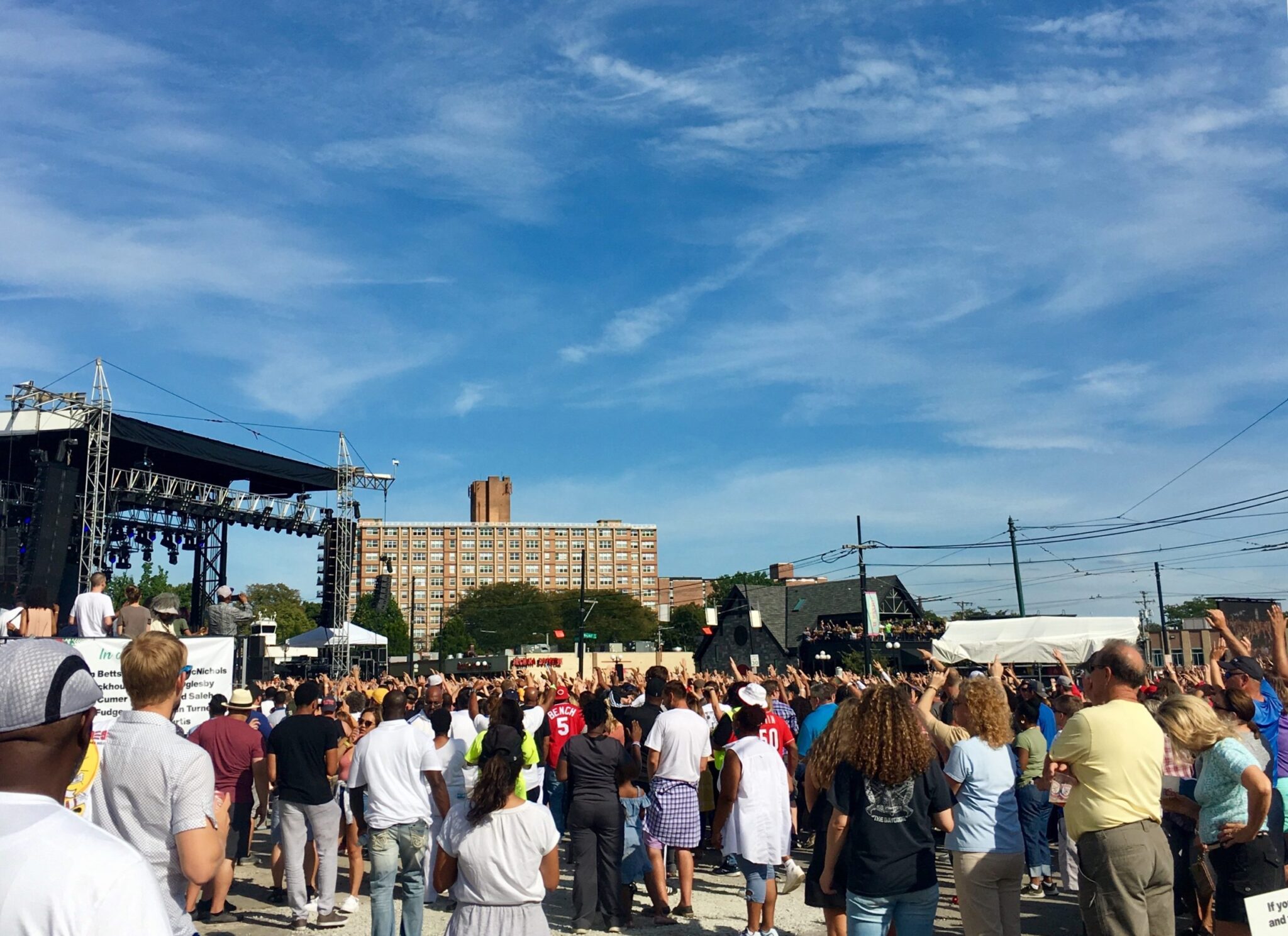
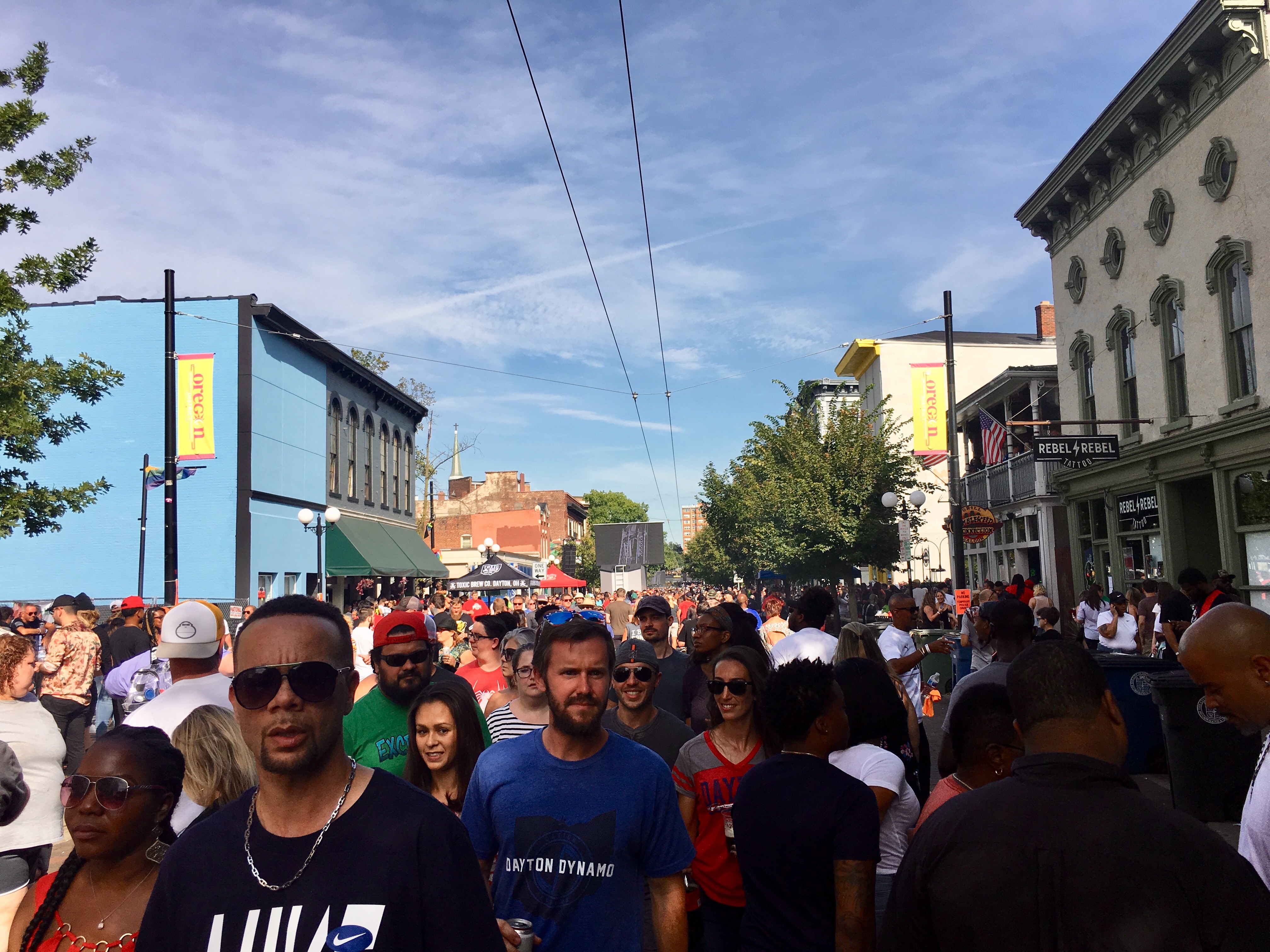
For this week’s Playing Cincinnati, we traveled 20 miles north to Dave Chappelle’s Gem City Shine Benefit Concert in Dayton, Ohio.
Chappelle, who lives in the neighboring Ohio town of Yellow Springs, threw the enormous block party to commemorate the nine lives lost in a recent mass shooting at a local bar that left nine people dead. Over 20,000 people attended the star-studded event to see Stevie Wonder, Chance the Rapper, Teyana Taylor, Jon Stewart, and more.
Throughout Gem City Shine, Chappelle preached unity and resilience.
“We’re not just doing this for our city,” Chappelle said. “We’re doing this for every victim of every mass shooting in our country.”
For his efforts, Dayton Mayor Nan Whaley also took the stage to deem August 25 as Dave Chappelle Day.
The day began with a Sunday Service lead by Kanye West in Dayton’s RiverScape MetroPark. Rumors had been circulating about what A-listers would attend the evening benefit, including Lady Gaga, Bradley Cooper, John Legend, and Barack Obama. There were some murmurings about Gaga working the funnel cake booth – however, she did not perform.
The crowd gathers in the Dayton Oregon District Sunday, August 25.
DJ Trauma kicked off the event, with performances followed by Thundercat, Talib Kweli, and Teyana Taylor.
Taylor, who brought her daughter Junie onstage, broke down while a video montage of the shooting victims played on the screen behind her.
Jon Stewart arrived to lead the crowd in singing “Happy Birthday” to Chappelle, who turned 46 on Saturday, and to introduce Chance the Rapper.
“Dayton, Ohio, you have reclaimed this area with love, with hope, and with resilience,” Stewart said.
Chance turned up with old favorites and new songs off his latest album, The Big Day.
“I appreciate ya’ll so much for showing up as a city, for representing love, to represent healing and to represent community,” Chance said. “I pray that we get some type of protection from this and grow from it.”
Stevie Wonder emerged as Gem City Shine’s headliner, performing hits like “Higher Ground,” “Superstition,” and even singing another round of “Happy Birthday” for Chappelle.
“This is how we really will honor them,” Wonder said of the Dayton victims. “By making sure we change the gun laws of this nation.”
Throughout the event, attendees were encouraged to donate to the victims’ families through the Dayton Oregon District Tragedy Fund and to sign the petition in support of gun control laws in Ohio. Donations are still being accepted online here.
Atlanta-via-Brooklyn’s singer-songwriter Victoria Blade is one of my favorite discoveries of the year. Blending classically trained vocals with a carefree, indie-pop vibe, sweet melodies, and lyricism that makes her songs feel more like a journal entry than a track meant to be shared with the world, Blade has an effortless way of captivating her audience, whether on tape, on the stage, or on TV (or wherever you binge your favorite shows).
After covering her intimate debut LP, Lo-Fi Love Songs, I was thrilled to check back in with Victoria and share the story behind her newest music video, “Moving Song.”
AF: I’m so happy to have you back in the column, this time with the music video for “Moving Song.” The music video feels so much like a home video; what made you decide to take it in such an intimate, homey direction? Did you reference any old home videos before shooting? How did you film it?
VB: I wanted to capture the lo-fi, intimate vibe of the album, which was recorded straight to cassette tape and recorded in my apartment in Brooklyn and Atlanta. It felt like an old camcorder would be the perfect way to capture a soft, nostalgic look. My friends at Brand Red studios took the idea and ran with it. My director Ryan Simmons captured the perfect “Dad holding a camcorder” style with awkward zooms a plenty. We wanted to tell the story of me moving to Atlanta, exploring the beautiful city and making it home.
AF: You’ve been in Atlanta for a little over a year now; have you settled in and made yourself at home yet, or does it feel like another stop on the way to a brand new place?
VB: Atlanta is an unexpected gift. It does feel like home although I’m still not used to the heat! It is hard starting over. I honestly feel a little exhausted from the energy it takes. I love Atlanta and it feels like the perfect home right now. I’ve learned to stay really flexible when it comes to my expectations of life and the future. I didn’t know when I wrote “Moving Song” that it was going to become a bit of an anthem for my life, constantly exploring new places, people and skills. But right now I’m here and I’m all in.
AF: You and your husband have lived all over the US in just a few short years. Do you think the concept of “home” is more of a place at this point, or a feeling? What is “home” to you?
VB: Home to me is being with my husband and building our lives together. I think I’ve come to expect a lifestyle of adventure. I really crave being out of my comfort zone. When I start to get comfortable, I get a little bored. I love doing new things. Going to places I’ve never been and seeing the world from a different perspective makes me come alive.
AF: Can you talk a bit about what inspired “Moving Song”? The idea of picking up and moving your entire life is so overwhelming (at least it is to me!), but the song feels very laid-back and relaxed. Was that your overall feeling when you were moving (and writing the song), or was it something you could look back on and see how everything fell into place?
VB: I love that you picked up on that contrast. The song is so chill and moving is so NOT! I love “Moving Song” because it perfectly sums up my excitement and fatigue from this surprising, ever-changing journey I’ve been on for the last 10 years as a working actor and musician. But I wasn’t intentionally thinking of any of that while writing it; it just came out organically.
AF: Let’s talk a bit about the DIY nature of not only the music video but your record, and the record label you and your husband run, Already Dead Tapes. Everything you do feels so intimate, like it’s a tiny bit of you put on tape or film and shared with the world. Do you think your DIY mindset and the involvement it requires creates that intimacy? Do you ever wish you could take a step back from it?
VB: That’s a great question! Yes, the intimacy comes from the DIY nature of our label, Already Dead, and our lifestyle in general. I really do believe it’s usually best to figure out how to do things for your self. However, that effort and constant vulnerability can be exhausting. My goal would be to have an ever-expanding team of people to help with things like PR, booking, recording, producing etc. So the creative side can be where I spend most of my focus. I also just really need a vacation. Ha!
AF: Where do you look for inspiration when it comes to not only writing your music, but shooting music videos and running a company?
VB: I love that question. I find inspiration in collaborating with others. It’s really fun to organize with great creative people and make something out of nothing. When I have a clear vision for a project, that inspires to me to see it realized. I also have started setting goals and deadlines for creative projects and that inspires me to keep them! I really admire people who just do the hard work of getting their ideas out and sharing their creative vision with the world consistently. That takes so much intentional work and focus but the process can be so rewarding. I think I come alive when I’m really focused on a big project that requires a lot of problem solving.
AF: Last one! What’s coming next? You’ve got a beautiful record and a sweetly nostalgic music video; will there be any tour dates?
VB:I’m playing Monday Sept 2nd at Mother Bar in ATL! I would love to plan a Southeast tour for later this year. I have been busy shooting on different TV shows as an actor and I’m constantly auditioning, so that has been my focus for the last few months, but I plan to get some more show dates in the books soon! I also have a bunch of songs ready for a second album I will record next year!
Follow Victoria on Facebook and stream Lo-Fi Love Songson Spotify now.
On “Getting My Own Place,” a new song from Seattle band Golden Idols’ Uneasy EP, lead singer Patrick Broz croons, “I need some space, and you do too/We need some time to work this whole mess through/Couples counseling or admit we’re through: I’m getting my own place.” It’s a tragically familiar refrain for most people who’ve tried coupling, sealed inside a catchy electric keyboard package. That’s what Golden Idols is going for — Uneasy is full of nostalgic songs that challenge and reinvent the “fairytale” of love, and get to the truth of its many torturous, and sometimes comical, dimensions.
The EP, recorded at Seattle’s Earwig Studio by Don Farwell is one of several releases from the band, but only their second EP. While Golden Idols’ self-titled 2015 EP excelled at glistening psych-pop with the sheen of 1950s doo-wop and early ’60s surf music, Uneasy takes the band to a more bass-driven Brit rock place, reminiscent of bands like The Smiths and Arctic Monkeys, as well as The Strokes and Jeff Lynne.
A quick-witted Broz chatted with Audiofemme about Golden Idols, which he describes as “familiar, nostalgic, and at least a little blasphemous,” and the new EP, released in June.
AF: How did this band meet? What inspired you to make music together?
PB: I started the band in 2015 with Jewel Loree (Bass, Vocals) joining shortly after, having met as many do these days, online. There were a few lineup changes in drummers and keys over the first two years, but soon Saba (Drums, Vocals) arrived, drawn from across the hall of the practice space by the sweet siren song of our early catalogue. It was almost another year before Eric (Guitar, Keys, Vocals) joined; he was a quietly unassuming coworker of Jewel’s who quickly won over the rest of the band with his swelling leads and penchant for bossa nova. We couldn’t resist.
AF: Where does your band name come from?
PB: The name Golden Idols is drawn from a mixture of religious iconography, from the golden calf of Judaism and Christianity to the statues of Buddha and multiple holy figures of Hinduism. Add to that, the noteworthy scene from Indiana Jones and the Raiders of the Lost Ark and you have a name that is familiar, nostalgic, and at least a little blasphemous, which is a fitting description of the band as well.
AF: I read in your press release that these five songs are about love—but not the fairytale depiction of it. Can you explain what other angles of love you wanted to capture and why these different angles are important to you? Do you look for these different angles/sides of love in your own lives? Do you challenge the fairytale ideas we’ve been sold?
PB: Love doesn’t really get a fair shake as it is depicted in most films and songs; in most cases, it is one dimensional at best. We hear these songs about finding “the one” and finally being complete, and frankly, it’s a little annoying. Most of us don’t have those transcendent, romantic moments. You watch a movie with a wedding scene where everything is sun dappled and the music is just right and time stops the moment your partner steps into the aisle, but what most of us actually experience is something more like, you wake up at 6am to a house full of people you didn’t intend to invite to stay, and you are probably a little hungover, or exhausted because you were too nervous to sleep, and the next four hours is packed with figuring out why the flowers are already wilting, and who ordered the vegetarian meal, and at the end of the day, when you finally get to the honeymoon suite, all you want to do is sleep for the next twelve hours.
What we wanted to show was the more authentic side of life and how, while most of us a generally good people, we are also at least a little bit of an asshole from time to time. Most people have strung along a crush because it made them feel good, or put off a breakup because they were afraid of the confrontation, or let a relationship fall apart because they were afraid to deal with the truth, that they had trust issues from a previous relationship they hadn’t dealt with, or really just weren’t that interested even though they really, really wanted to be.
We tell these stories, not to glorify the more ignoble facets of our personalities, but to recognize that everyone has them; there is no Prince Charming, and if there was even he would have to use the restroom, and get back acne under his armor, and occasionally wonder what his life would have been like had he never met Sleeping Beauty after they’ve just had an argument.
As a band, we don’t only care about telling stories of love though. We are perfectly happy to point out human flaws in all forms of human interaction; including the secret sort of thrill when you think about stealing the mini soaps in hotel rooms, or lying to a friend about having other plans because your really just don’t feel like going out, or pretending to listen to someone, but really only thinking about what you want to say next. Humans are beautifully complex and flawed beings; to pretend that we should all strive for some sort of fantasy existence, we do ourselves a disservice, and miss out on a lot of the little joys in life.
AF: What do you feel like your music is in conversation with? If you could simplify it—is it interacting with a common feeling, an era, an inspirational person, a nostalgic thing?
PB: Our music is derived from two primary influences. The first is “A Modest Proposal” by Jonathan Swift. His darkly humorous satire about the socio-economic climate at the time really struck a chord with me as a song writer (word play not intended). The second influence was from the first time I really listened to the lyrics of “Angel of the Morning” by Merrilee Rush. I grew up listening to music from the ’50s through the ’80s; what we at the time referred to as Oldies, and it all sounded so pleasant and hopeful. It wasn’t until I really paid attention to that song that I noticed how dark it was, thematically; consider a young woman negotiating a one-night stand, knowing full-well there would be no second date, willing to go through with it anyway on the simple condition that he was nice to her in the morning. How messed up is that? Or “One Fine Day” by The Chiffons; basically a hopeful statement that, after he has finished sleeping around and is ready to be a father and a husband she would be there waiting for him. Or “I Only Have Eyes For You” by The Flamingos who croon, “I don’t know if we’re in a garden, or on a crowded avenue” – honestly sir, if you are on a crowded avenue, you should probably know it; you will probably walk straight into traffic.
To state it simply, our music is a conversation with everyone about ideas of nostalgia, and fantasy and romance and to invite our listeners to look deeper with us. Or to rephrase: I was once standing outside a very old castle or church in Nantes, France and I overheard a local remarking how he liked to take his dog there to defecate because the tourists never watched where they were walking.
AF: Do you see yourselves as a “Seattle” band? Does the punk/DIY ethos move you and the music? If it doesn’t, why not? How do you contextualize your sound?
PB: That’s a good question; I have never really given it much thought. We do maintain a slightly darker (more damp) sound; I suppose we must be a Seattle band. In the end, I don’t know if it is really up to us.
There is something I love about the DIY ethos though; while sitting here, I am surrounded by a guitar, a bass and keyboard, a sewing machine, an ice cream maker and some screen printing materials that just arrived in the mail. Our songwriting process is heavily wrapped up in DIY, but I would be lying if I said we didn’t also enjoy sitting in a mixing room at a studio, knitting together a great mix.
AF: Tell me about the new EP. What are some underlying themes for it (besides love)? What personnel were essential to its creation?
PB: This EP is really about relationships of all sorts. In addition to love, we also dive into obsession and rejection, the point at which lust gives way to ennui, and the often paralyzing inability to face one’s fears in the face of commonplace opposition. Although I write all the songs, every member of the band is essential to the process. I bring the story and a melody, Saba adds beats with influences more further ranging than I can even say, Jewel bring infectious bass lines making each of the songs dance worthy, and Eric adds depth.
AF: How do you create best? Do you all write together, or does one person bring in an idea and then the rest fill in their parts? What’s your writing process?
PB: I tend to write the songs to start. Because I am primarily a songwriter, I work best by completing a full demo, or what I would consider a complete thought. I almost never jam, and I marmalade even less often. Generally, I record every instrument and vocal harmony in the song and share it with the band, at which point, they often do something completely different (this is an essential part of keeping my aforementioned ego safely in check). We then workshop a new track over the course of a few weeks or months until it feels done. At this point it is ready to be recorded or played live. Some songs rarely see the stage (like our beautiful but congenitally down tempo, “Let You Down”), while others, we play out almost as soon as we have written them. Our live shows are a great way to hear new music in its infancy.
AF: This EP feels intimate and personal. Is it autobiographical? Or do you write about characters or from a character’s point of view?
PB: While it is impossible for anything not to be at least a little autobiographical (especially with an ego as big as mine), I consider myself to be primarily a story teller, and a satirist to a point. I create characters who, often comically, speak to something true about all of us. We can connect with the plight of the protagonist in “Uneasy” who can’t bring themselves to finish an argument, unable to face the true nature of the underlying issue, because we have all felt that way at one point or another. It is personal in that we all share these feelings, though we are sometimes ashamed to admit it.
AF: If you could have dinner with one musical artist, who would it be and what would you eat? And why?
PB: I think I would quite like to share a meal with Jeff Lynne. His music has been more of an inspiration to me than I would like to admit. I would also love to meet The Crystals and I like to pretend I would get along fantastically with Jarvis Cocker, but if I’m honest, if we actually met, it would probably be a lot of awkward silence.
AF: What are some future goals you have for Golden Idols?
PB: I would really love to tour Europe. We haven’t had a chance to make it yet, but it is definitely on the To Do list. And next time I’m in Dublin, I know not to take the tunnel; that’s 8 Euro I’ll never get back.
AF: Next show? Are you touring? Give readers a way to follow what you’re up to.
PB: We have a show at the No Sleep Till Greenwood festival September 1st in Seattle. We also have a show November 30th at Tractor Tavern, also in Seattle. We are currently working on new music, which we hope to release some time next year, but for now, you can follow us on Spotify, join our mailing list at our website, or any of your other favorite streaming services.
In the music video for “Crumbling,” by Oakland punk band Grumpster, lead singer Fayln Walsh tears off her baggy ’80s color-block shirt during the final breakdown, flinging her limbs with detached singularity in front of a golden-hour graveyard. Cut in between shots of the band playing live, this is the first time in the video we see Walsh drop some of her stone-faced lyric delivery as she walks throughout Oakland, passing through parking garages and convenience stores, plucking Pepperidge Farm cookies from as shelf as she mouths all of my tears have now turned black/and I forgot how to laugh.
Spiraling around her like off-track atoms are her bandmates Lalo Gonzalez Deetz (guitar), Noel Agtane (drums) and various friends, who intermittently palm her in the shoulder while tossing around a frisbee or shooting water guns, caught up in their very own picnic while Walsh continues her tired-eyed march towards the camera.
The line the agony and the apathy/have been dragging’ me down precedes the song’s chorus, one of its strongest — and funniest — lines. Grumpster seem to be leaning into their pathos for this single, the first offering from their full length Underwhelmed, slated for release in October on Asian Man Records. With lines like I’ll sit and I’ll mope/and I’m all out of hope and/I’ll die in this town, it’s hard not to grin in recognition of some good old-fashioned Bay Area kid melodrama — because at the end of the day, there are much worse places to stew in your own dissatisfaction.
Grumpster has been releasing solid work for a while now, with “Crumbling” coming on the heels of February’s “Strangers.” Though the latter appears untethered from any larger project, it does serve as a clear bridge between “Crumbling” and some of the band’s earlier work, which would be hard-pressed to embrace the sparse instrumental drop that accompanies the chorus on “Crumbling.” Walsh has an interesting vocal delivery, her voice almost always level and matter-of-fact, even as the words come fast, like someone telling you the bare-bones version of a story to avoid breaking down completely. “Strangers” and 2017’s “Kairos” were looser offerings, Walsh allowing her voice to rise in exasperation and mid-crush panic, respectively. While “Crumbling” is catchy — and that instrumental breakdown at the end is killer — it will be interesting to see if Walsh decides to keep herself at arm’s length from the listener for the album’s duration.
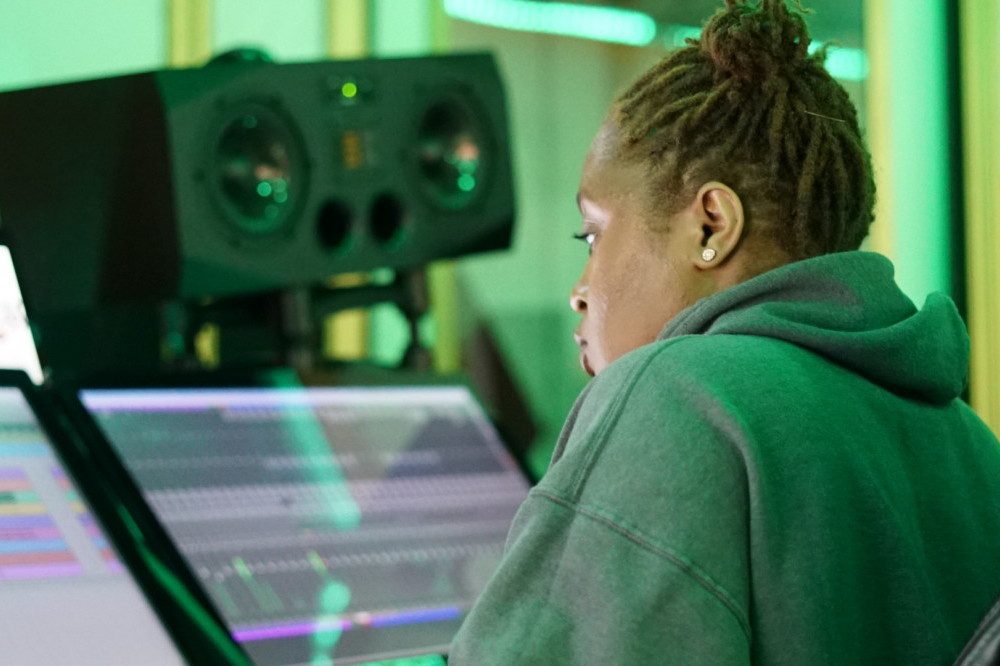
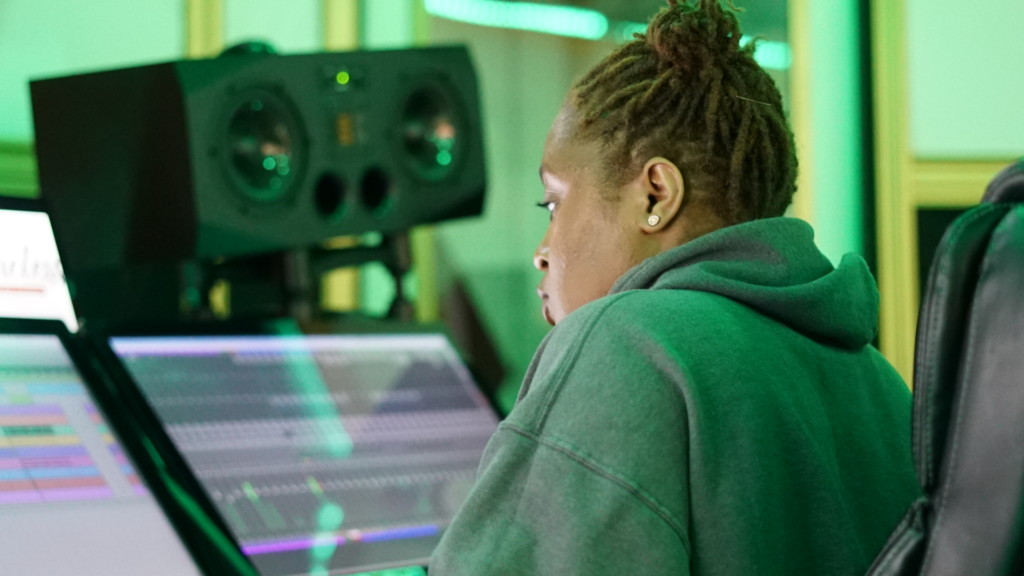
Ihlana at Timeless Recording Studio. Photo by DeAndre Favors.
Ihlana Niayla is a force to be reckoned with. Since developing a love for all things audio during college and in an audio/visual role working at the Cincinnati Zoo, the producer-engineer-songwriter followed her passion behind the board and recently became Timeless Recording Studio‘s first female recording engineer. The new title is one of many for the Cincinnati multi-hyphenate, who also heads up a cosmetics line – her second since college – called Expand Beauty Company.
Here, Ihlana gives AudioFemme a sense of the audio magic behind recording and how she balances engineering and cosmetics. She also shares how she’s been able to stay true to herself in a mostly male industry and why confidence is key.
AF: What’s your role at Timeless Recording Studio?
IN: For the most part, at Timeless, I’m an engineer. So I’m recording people, I’m mixing some songs, and that’s pretty much my job there.
AF: Do you do any producing?
IN: I do! I’ve been producing probably since 2011 but I’ve recently gotten away from it. It just became a lot to do. So I stopped and I’m getting back into it. I quit my 9-to-5 a few months ago, so now I’m going back to my passion projects, like producing.
AF: Do you think you’ll end up producing for people that come into Timeless?
IN: Yeah, for sure. At some point, I’ll be offering my production along with my sessions. It’ll definitely be in tandem with my brand and what I do.
AF: How did you get into engineering and mixing?
IN: I started at Timeless in February and before then I was at the [Cincinnati] Zoo doing audio and visual work. I’ve been doing audio work since 2014 / 2015. Audio production was my [college] major. I learned all the basics in college and then when I got out of college I started doing a whole bunch of everything. I’ve also worked in a lot of live-sound here and there throughout the years.
AF: Would you say producing is your passion, or do you like engineering more?
IN: Everything with audio is my happy place, so whether it’s working a live concert – setting up the concert from the beginning, when there’s nothing there – I really love that. I like building a whole production, from the audio side. I love being in the studio, I love engineering. I love making a song from the start. I think I just like the creation aspect of audio and how you can shape somebody’s whole experience and capture somebody’s whole experience. So anything with audio I just love. There’s not one particular thing, that’s why I’m dabbling in it all.
AF: You’re also the first female engineer at Timeless. Do you ever find it tough working in a male-dominated industry?
IN: I’ve gotten used to it. The younger me probably would have gotten super intimidated at the thought of it. Now that I’m here and I’m doing it daily, day-in and day-out for hours on end, just being surrounded by men of all different types – they’re not all great and they’re not all bad – I’ve learned to still be myself.
I think a lot of women get intimidated even in the midst of their careers by certain men but as I’m progressing – I mean, I’m still in the very beginning – I think women can get intimidated and change themselves just to appeal to the men around them. I quickly wiped that out. When I start in the beginning, I think I was kind of like that, trying to be something for somebody, but I found a lot more comfort and a lot more success from just being myself. If people don’t jive with that, that’s fine, because those are people that are not meant to be around me. The more I’ve accepted that the more successful I’ve been in my career and spiritually.
When you’re working with men, you’ve got to be like overly confident in yourself. At first, it feels like a stretch, but you get used to it.
Photo by Frank Young
AF: Besides being in the studio, you also have your own makeup brand.
IN: The makeup brand is called Expand Beauty Company. It’s my second company. The first company I had was called Ihlana Lip Care, which was natural and organic products, and I started that one in college, and then I kind of made that into Expand. Right now, I’m trying to balance out the audio world with my cosmetic business. I’m working on a way of intertwining the two – shaping that into something.
AF: Is it tough balancing them both?
IN: It’s so tough. On top of quitting my nine-to-five, which also made it even tougher. So, like right now everything is in a limbo where it’s kind of floating around and I’m grabbing bits and pieces and making sense of it as I can. I’m not racing myself, I’m just pacing myself this time around. So every now and then I do something makeup related. I just don’t promote it as much right now because it’s a lot, but I have plans on getting back into that for September.
AF: How did you get started in makeup?
IN: When I was a child I was always mixing things, thinking I was making makeup with just things I would find around the house. I would, like, try to make perfume or acrylic nails – I don’t know how I thought I was going to make a full set out of baby powder, lotion and water but I definitely would try it [laughing].
I’ve always been kind of a mixologist in that way and then I got to college. I went to school and Athens, Ohio; there’s nothing out there. We have like one CVS, there’s no real mall, and not a lot of access to makeup, especially not for Black women and then especially not natural and organic, so that’s where Ihlana Lip Care spurred. After college it turned into Expand because I just started to know myself better. It’s something I’ve always done, something I’m going to continue to pursue, kind of in the same sense of what Rihanna is doing. Like, she’s got the music, cosmetics – she’s killing it.
AF: With such an entrepreneurial spirit, do you see yourself opening another company someday?
IN: Absolutely! I don’t know quite what yet, but I always have ideas, for sure. As soon as I get these off the ground – get the audio aspect of my life where I want it to be and get the cosmetics to the point where it’s up and running without me being around, then I’ll be looking to the next one. Historically, I usually have so many things going on and I’ll drop the ball on one or two things. That’s one problem with having an entrepreneurial spirit – you have all these ideas and you want to pursue all of them.
AF: What’s your favorite part of engineering at Timeless?
IN: My favorite part is meeting everybody in the city that’s involved in music. Whether it be rappers, R&B singers, country singers, voice-over artists, DJs – I just love meeting everybody that’s involved in music. It keeps me inspired and I also love that I can help them create a product that matches their visual idea.
Timeless is such a great studio because it opens the door for a lot of people. It’s accessible to a lot of people. I know there are a handful of studios in the city, and I probably don’t know about all of them, but I know with Timeless we get such a wide array of people, young and old, with different budgets. I think it’s beautiful that we have the ability to allow people to come in on a small budget or a large budget or whether they have never recorded a song before or they’ve recorded 500. I love that – accessibility is a big thing for me.
I think everybody needs an opportunity to express themselves, especially creatively. When I was growing up, if I would’ve had access to a studio when I was writing all those songs in my bedroom as a teenager, I would’ve been a totally different person, in the best possible way. I see a bunch of kids coming in with that ability to do so at Timeless, and then you’ve got adults who are working on their career and they can do that there. Timeless has such a great team, I don’t know of any other studio in the city with such an eclectic and well-rounded team. I feel so blessed to be inspired every day. I feel like sometimes we take those moments for granted, but being inspired is so important.
If there’s anything Atlanta has in spades, it’s killer rock bands. But not just your good ol’ Southern Rock bands: pop-rock, metal, psychedelic… you name it, you can find it, played with soul on a dark stage in a sweaty, crowded room.
Blues rock quartet Death Mama is one of the newest – and loudest – players in the rock scene. Committed to a shroud of mystery that envelops the slinky, smoldering sound, the foursome have already made a name for themselves in the Atlanta area.
Following the release of two singles, the group dropped their debut album, High Strangeness, on Friday. I sat down with the band to talk all things Death Mama, including the origins of the eyebrow-raising name.
AF: Let’s start with the most obvious: Death Mama isn’t the kind of name you hear very often. How did you guys come up with it?
DM: We came up with it after going through many ideas. Then we found a Bob Dylan poem in a photography book that had “Death Mama” written in it. It sounded cool to us, and we thought there were some cool things we could do with it.
AF: You’ve all been in bands before, and Death Mama is actually the second incarnation of a previous band you played in together. What made you decide to keep going when a lot of musicians would’ve hung it up?
DM: We have to keep making music. It’s something that we have to do for us, even when it seems that all odds are against us. We love the kind of music we make and we hope others will attach themselves to it, but we do it as a creative outlet for us. We’ll always make music, and will most likely always make music in some form or another with each other.
AF: Why do you think think the musical connection is so strong between the four of you?
DM: We’ve been friends for a long time and we think it shows in our music. We have a deep understanding of where each one of us wants to go creatively and we feed off of each others energy.
AF: What’s your writing process like? Is it generally collaborative, or will one of you come in with a song and you’ll jam it together until it feels right?
DM: It is normally very collaborative. We use our studio and we’re constantly showing ideas to each other. We like to build off of each idea and try to finish the idea into a song together, even if it doesn’t make a release. We have a lot of ideas that get re-purposed or altered into ideas later. Generally no one comes in with a complete song and says, “This is how we’re going to do it.” That’s just not what we do.
AF: You released your debut record, High Strangeness, last Friday, following the release of two singles, “Can You Dig It?” and “Whenever I’m With You.” What’s the been like? Has it felt like a long time coming?
DM: We always love to release new music. The support we’ve gotten since the singles and the album release has been amazing. It was really cool to debut a new sound and see how people react to it. We love the idea of catching people off guard.
AF: What inspired the record? What was the recording process like for you guys?
DM: We wanted it to be a big, raw sound. We have our own full on analog recording studio and that gives us the ability to mess around with sounds and song ideas any time we want. We love to finish a song in a day. Sometimes it doesn’t work out that way, but maybe we get the basic tracking done and the overdubs done and do vocals another day. Then it typically takes about a day to mix a song.
AF: You’ve been huge players in the Atlanta music scene for years, but you’ve reinvented yourselves with Death Mama. How do you think your fans and the scene will react?
DM: Our hope is that we bring something new to the table that people can sink their teeth into. A lot of music nowadays is so full of cookie cutter, snapped-to-the-grid stuff with the same sounds everyone does. We wanted to be completely different than that by spending a ton of time on the writing and the creation of certain sounds and FX that we used. No sound on each track is the same; they are all different. They may sound similar, but everything, even down to the vocal chains, are different on every track. We wanted it to all feel cohesive, but at the same time each track needed to be able to stand on its own.
AF: What’s next for Death Mama?
DM: We plan to do some touring and continuing to release new music. We’re already writing and recording in the studio right now. Maybe we’ll release even more music by the end of the year.
Anna Waronker wanted to take us back to the early years of that dog., back to a place where, she said on stage Saturday night, we would be “sweating together and smelling really bad together.” In the early 1990s, that might have been Jabberjaw, an all-ages venue synonymous with the decade’s indie scene in L.A.. In 2019, it’s The Smell, a downtown DIY venue that has been a 21st century cornerstone for underground music in the city. It was, in a lot of ways, a perfect place for that dog. to celebrate the 25th anniversary of the band’s self-titled debut album, and they did that with two shows on Saturday, July 13.
Graham Coxon, an old friend of the band from back when that dog. toured with Blur, opened. That dog. performed the debut album in full, following it with an encore that included fan favorites like “He’s Kissing Christian” and “Minneapolis.” The encore also included a song from their upcoming fourth album, which will be their first collection of new music since that dog. reformed in 2011.
At the second of Saturday night’s shows, the remnants of sweat from the first lingered in the air. It was the kind of night where hair frizzes upon entering the venue and noses curl when you catch a whiff of ripe rock show stench. It was also the sort of show where you apprehensively grab a spot near the front of the room, knowing full well that, very soon, the place will be so packed it will be impossible to do much more than bob your head from side to side. Once the band started playing, though, it was easy to temporarily forget about the heat, the odor, and being lodged into the crowd like a Tetris block.
“The concept was, let’s go back to our roots, let’s go back to the clubs where we started and play this music that belongs in that environment,” says Waronker by phone on the Monday following the event. “That’s exactly what we did.”
“It was very warm and a lot of work,” she adds, “but it was totally fun.”
that dog. joined by Allison Crutchfield at LA.s The Smell in July. photo by Liz Ohanesian.
The day before the shows, that dog. released a 25th anniversary edition of their debut album, featuring four extra songs that didn’t appear on the original. Waronker says that, for her and bassist Rachel Haden in particular, these were among the first songs they played live. (She notes that drummer Tony Maxwell had more band experience when they started.) Some were songs that they hadn’t played since the album’s release. In addition, they also had to teach parts to guitarist Clint Walsh, violinist Kaitlin Wolfberg and singer Allison Crutchfield, who joined them on stage.
They treated fans to an early version of “You Are Here,” comprised of lyrics and titles from Beatles songs. “When I first started writing songs, I didn’t want any love songs or any guitar solos because we had just left the ’80s,” Waronker explains in our interview. “Then, I decided that I’m going to write a love song – almost a parody of a love song. And who writes the best love songs but the Beatles?” The problem was that Waronker didn’t realize “that you can’t use other people’s lyrics, even if you’re doing an homage to them.” So, she changed the lyrics, estimating that it took about an afternoon to revise the song for the album. In retrospect, she says, it shows that even early in her career, she had a skill that comes in handy as a songwriter. “I do a lot of writing for theater, so I guess I was made to be able to change things quickly,” she says.
There is a diary-like component to Waronker’s songwriting. “Ninety percent of the time, it’s autobiographical, but it’s also meant to not be,” she explains. “It’s meant to be whatever you need it to be.” Lyrically, that dog.’s debut album existed in the moment, and 25 years later, that makes some of the songs a fun flashback to 1990s Los Angeles. “Westside Angst” is about the change of area code, from 213 to 310, on the Westside of L.A. Now, Waronker describes it as “charmingly dated.”
“I think that was the first song that I had ever properly written,” says Waronker. “Back then, it was like – wait, these are my creature comforts, how can you just change it?”
Revisiting that dog.’s debut is a reminder of the band’s creativity. They wrote songs that balanced cheeky humor with tender introspection, and unabashedly drew from a range of influences, mixing crunchy guitars with strings and vocal harmonies. Their single “Old Timer,” which was accompanied by a Spike Jonze-directed video featuring the band members playing Hot Dog on a Stick employees, is a perfect example of punk song structure embellished with their trademark flourishes.
Waronker can see how her songwriting has evolved since the early days of that dog. “It’s very interesting – the first album was very punk rock in a traditional sense in that it was not like anything else. It was very raw. Whether it was a punk rock song or a weird acoustic song, it was bizarre,” she says. Even during that dog.’s first run, she notes, the songwriting shifted to a pop-rock sound by the time of the 1997 breakout album, Retreat From the Sun. Post-that dog., Waronker released solo music, collaborated with other artists and written and composed music for television, as well as a rock opera and musical. And now, there is a new that dog. album on the way.
During the encore, that dog. played a song from their forthcoming release, “If You Just Didn’t Do it.” Waronker says that the album has been completed and is expected to come out this year, although the release date and title have yet to be announced. “We started it a few years ago and we would do it in chunks,” Waronker says. “We thought we were at our last push of making the album, and that stretched out for a good year and a half or two years.”
With the new album, she says, the initial goal was to make music that reflected the band’s origins. About halfway through the process, though, they considered how they would make an album now. “It’s an interesting mixture,” Waronker says of the new album, adding, “it picks up where the band left off perfectly, in my opinion.”
Brooklyn-based singer-songwriter Emily Fehler released her debut record as Gold Child last week, a moniker she adopted upon moving to New York City in 2012. A “self-proclaimed student of country music’s golden age,” she names legends Patsy Cline and Emmylou Harris as major influences, though her music itself has drawn comparisons to Angel Olsen, Mazzy Star, and Neko Case. All of these are well-deserved, as Fehler displays a mastery of the Americana sound that makes Gold Child feel classic and fresh all at once. This timelessness stems partly from Fehler’s pristine vocals, which shimmer bright above lush acoustic instrumentals, but also from the subject matter itself.
Fehler pulls the classic ’70s country sound into the present moment with her lyricism, which provides deep insight into the inner emotional world of a millennial woman, focusing on ephemeral details, evoking imagery like morning, roses, and rainbows in her kitchen. She plays with the concept of time as a theme often: its value in an age when most people work at least two jobs to make ends meet, and the modern, disconnected feeling of wishing you had more time to yourself while also wanting to share it with someone else. On track “Lose the Light,” she distills the potent visual of light coming and going as the day progresses to a metaphor for giving our time to other people each day in order to survive, concluding with the salient line “Time’s been fooling us all.”
More than once, Fehler bemoans the way her life and time no longer feel like her own, a concept that cuts to the very core of what it means to be a young person in America circa 2019. And yet, while she wishes these things still belonged to her, she implores someone else to help her get it back, opening “Lose the Light” with the plea “Take me somewhere where my time is my own.” On the aptly-named “In Between,” she acknowledges the rift between connecting with another and having to give up personal space to do so, delicately touching on the human tendency to push people away while silently wishing they’d resist us: “I might get angry sometimes but I like to feel you next to me.”
Fehler acknowledges that she wrote the album in a transitional time in her life, saying “I was coming into my own as an adult – working day jobs, trying to cope with the state of the world, and my newfound anxiety – which is maybe a culprit of why the record took so long to make.” Early single “Undertow” provides a snapshot of her trajectory: “Everything’s feeling so hectic/Been moving too fast/While I’m just standing here motionless.” But if this debut is any indication, some things shouldn’t be rushed. Fehler can finally rest assured that her time was well spent: she has managed to craft a beautiful collection of meaningful songs that will resonate with countless people, as we all drift along in a world that seems to carry on outside of our control.
When Hannah Liuzzo of Boston pop band Lilith is ready to close a chapter of her life, she writes. Perhaps she is closing the chapter on continuing that one toxic friendship. Or, maybe she’s closing the chapter on faking it for the sake of someone else’s feelings.
“I need to put it in box and close this chapter,” Liuzzo explains. “When you song write, you can take something really ugly – like if you’re having an ugly feeling or an ugly reaction – and you can put it in a cute little box and put a little bow on it and put it away. The next time you reflect on it, it’s in the form of something you enjoy.”
These neatly wrapped boxes – filled with newfound catharsis and self-acceptance – make up Lilith’s debut record, Safer Off. Inside each, listeners can find their own path to empowerment detailed in these winsome and impassioned tunes.
For the members of Lilith, the release of the effervescent and fearless Safer Off has been a long time coming. Guitarist and singer Liuzzo, bassist Kelsey Francis and drummer Adam Demirjian all met at band camp as teens and have remained tight-knit for 16 years now (back then, Liuzzo and Francis both played flute while Demirjian played guitar).
“I don’t think I knew at the time that we would be lifelong friends, but I think I knew they were my people,” Liuzzo says.
The friendship between Liuzzo and Francis in particular – just imagine a blockbuster buddy comedy come to life – is the lifeblood of Lilith. This bond is what makes Lilith instantly authentic and relatable.
The two do pretty much everything together. They go out to eat. They work out. They go to the movies.
“I feel like a lot of the time we are doing things that end up inspiring us or being some route to creativity,” Liuzzo says. “I think it just makes it so our creative input is somewhat similar, and then we have a lot of time to hash things out and riff and work stuff out.”
Safer Off was the culmination of Liuzzo unpacking the past few years of her life. To do so, she sifted through her old journals and revisited her memories – the good and the bad.
Although she doesn’t write every day, Liuzzo still finds it vital to journal, taking the advice of humor author David Sedaris.
“He released a bunch of his journal entries from the seventies to the 2000s. At the beginning of the book, he’s like you just have to let go of the idea that you have to write down something important every day, and you’ll eventually start to notice what you find important.”
What Liuzzo found in her journals was how strong she has become as she has grown older. Through her writing, she became more self-aware of what she has overcome and what’s best for her own future.
Although her confident songwriting details crumbling friendships and doomed relationships, the sugary sweet melodies celebrate conquering these challenging times.
On cheeky opening track “Vacation,” Liuzzo recognizes the beauty of her self-growth while a friend becomes more and more of a stagnant thorn in her side. Hovering over fiery guitar, the fierce Liuzzo sings, “I’m doing better, and you’re the same.” Her vision no longer clouded by rose-colored glasses, she ends the song with, “You recoiled / My patience boils / Your charm is gone, and that’s it.”
The bold, unapologetic tone of “Vacation” is just a taste of what else Safer Off has to offer. Liuzzo isn’t afraid to call out the toxic people in her life who are bringing her down, and she inspires others to do the same.
The track “In Real Life” is driven by a brooding surf-rock vibe, twang-y guitars and melting harmonies. And it’s delightfully blunt: Liuzzo recognizes the fakeness in another, so she says buh-bye. At the end of the song, Liuzzo unabashedly chants, “I’m all you want / I’m gone.”
Safer Off isn’t solely candid in its voice: There are sparks of comedy, too, which Liuzzo admits she uses as a shield at times.
“I’m very bad at talking about feelings,” she says laughing. “I think humor is my way of deflecting. It’s something I’m interested in and drawn to, and it’s a definite, full-on coping mechanism.”
Take the dark humor of “Coward” for instance. It starts off tempered, but a hot-blooded zeal burns underneath. Liuzzo paints a vivid image when she snidely sings, “If I come any closer, stick a knife in the toaster / Turn it on / Your troubles are gone.” Her aggravation with this coward builds and culminates into the repetition of the line, “You’re turning out to be a coward / You really need to get over / Your indecision to hold her.”
The anthems that make up Lilith’s Safer Off – whether they are brash and fun or soft and yearning – illustrate how far Liuzzo has come in her journey to empowerment and inner peace. Although deeply personal, the beauty of this record is that its message is undeniably universal: You’re stronger than you may think. You got this.
Sour Widows are here to educate the big-city people on the art of slowing down. “[Our music] has this lackadaisical, small-town vibe to it” says Maia Sinaiko, singer and guitarist for the three-piece Bay Area band. This can certainly be said of “Tommy,” the preview single for their new EP, which invites the listener to meander between the warbling vocals of Maia and fellow bandmate Susanna Thomson. Their two voices almost break as the song reaches its punky crescendo and plunges into the sort of brokenhearted entreaty that precedes a post-breakup hair-dying montage: Are you gonna be the one I think of?
I had the pleasure of speaking to the whole band last week to get some insights on the new song, their Bay Area roots, and what’s next for Sour Widows.
I had to ask about the band name, of course. “It’s a weed strain,” Susanna tells me with a laugh. “We just thought it sounded really punk.” But as is the power of most throwaway jokes, it stuck, and now they love it. “We’ve like, matured into it,” she says, though I still sense a smile in her voice.
This theme of “maturing into things” comes up often, from performance style to lyric creation to cultural history. Having started out as just “two guitars and two voices,” according to Maia, the band has already lived a few different musical lives. Now, they have the welcome challenge of thinking about lyrics and guitars as the initial building blocks rather than the finished project. Even the oldest songs on the EP, created long before the addition of drummer Max Edelman, have gone through enough of an evolution that Maia can confidently say “they are Sour Widows songs now.” Two of the songs Maia wrote were conceived more than a year ago, and when I ask what it’s like to perform them now, they say the songs feel “less specific to a time and place in my life and more like an emotional journey.”
The band chose “Tommy” to preview the EP for similar reasons. While they were looking to release a top-down roadtrippin’ song with “gooey summer vibes,” they also felt that “Tommy” perfectly encapsulated what they were trying to accomplish overall; music that was intimate without feeling restrictive; cathartic, but still contained. “Bedroom rock,” they call it. “It’s a nod to the kind of intimacy that we like to write about,” says Susanna. “Bedroom could mean sleepy, it could mean dreamy… it could mean weepy, too, like you go to your bedroom to cry [laughs] or just to feel alone…I think it kinda captures a lot of the emotional parts of the music well.”
The three friends have known each other for years, something they think makes them stand out when performing. “There’s a long-term, loving, townie vibe that you experience on stage when we play together…and it feels really good when people notice that,” says Susanna, inspiring a surprised laugh from Maia at the use of “townie.” All three of them cite their experiences growing up away from the central Bay Area cities as having been integral to the development of the musical styles. Whether they grew up fully outside the Bay, like Susanna, or in a Bay suburb, like Max, their experiences creating music without a lot of outside influence allowed them to marinate within the relative quiet of their respective adolescent lives, planting the seeds of that bedroom rock intimacy that shows up during the first half of “Tommy.” Max especially expresses an appreciation for this isolation as enabling him to figure out what he wanted to hear and play in his own time. And while Maia says that after a year of performing, they are starting to feel less like like outsiders to the Bay Area music scene, it’s clear to me that the band has no plans to altogether abandon the softness that brought them together in the first place. On stage, they occasionally find themselves slipping into that quieter place, even if it’s not apparent on the outside. “It’s kind of like we’re in our bedrooms, like, jamming together,” Max says.
Their ease with one another is apparent in the photos they host on their Facebook page, a series of sunny snaps of the band embracing, all three sporting bright eyeshadow. Maia, discussing the band’s relationship with the word “queer,” cites how the band presents themselves aesthetically as an important facet of their connection with that identity, from choosing photographers to tour mates. “I think it really is important to me that people know we are a band that includes that identity and represents that identity, and it’s made a big impact on what bands we feel conformable playing with how we organize our tours,” they elaborate. “I think it’s allowed us to connect with a really amazing network of people in the Bay and also across the country… it’s helped us feel safe and secure in a different way.”
The band is clearly energized when talking about the future, excited to build upon their touring relationship, looking to put some of that collective performance energy into more collaborative lyrics and arrangements. Max hints at lots of new material that was influenced by the tour, where they got a chance to “[see] where the scene’s at, what we wanna do, what we don’t wanna do.” The other two echo this sentiment emphatically. It can be hard to create with friends, much less tour with them, but the fact that Sour Widows only gain more creative drive as a result of their friendship is a heartening testament to their love and respect for one another – not only as musical collaborators, but as human beings.
Sour Widow’s next single, “Pilot Light,” premieres September 13th, with a release show the day after. Later this month, catch them with Hot Flash Heat Wave and Jasper Bones at The New Parish in Oakland on August 30th.
The end of July brought the first official release from The Leanover, comprised of Ali Overing and Lou Seltz. Written over the course of several years, the 7-tracks on Portico were inspired by the idea of liminal spaces – whether physical, like a balcony or porch, or metaphorical, as in the space between privacy and publicity and the confinements of human existence. The Montreal duo sought out isolation to create the personal project and recorded Portico in a cabin buried deep within the Laurentian Mountains with And The Kids producer Megan Miller and Julien Beaulieu, with a handful of musician friends filling out their roster.
Ahead of some live dates, Ali and Lou explain the themes on Portico, reflect on recording in a cabin, and reveal some information on their upcoming music video.
AF:Walk me through the connection between the album’s title and the overall lyrical themes of Portico. Since songs from the album were written over several years, what ideas connected them enough to make a cohesive project?
We’ve both spent the last five-to-eight years of our lives in constant flux in terms of our living situations. We both finished school, were each cursed with our own international love dramas, experimented with the stability of nine-to-fives and battled between our desires for both a comfortable domestic life and an adventurous, migratory existence. Porticos represent the overlap between the public and the private. They are a literal structure that surrounds you even when you choose to leave the confinement of a building, and represent, for us, the limitations of tradition and expectations. All of the songs in Portico are linked by this idea of confinement. This can be in terms of actual space, mental spaces, time restrictions, interpersonal relationships and the limitations put upon us by our own bodies. The album deals with these limitations by working through them one by one, celebrating the tangible realities and inspiration that they bring about.
AF: Since recording this project, do you now see confinements as majorly negative or beneficial things?
AO: Today I’m feeling like the limitations are mostly a good thing. I’m a pretty scattered person, am very easily distracted, and can’t make a decision to save my life. I’m a person who really struggles to buy anything online, for example, because the idea that I might be able to find something better if I just continue to look really paralyzes my ability to choose. I think that this has really affected me artistically over the past few years, especially when I was traveling. The idea of having a concrete space in which inspiration can thrive and limited tools to work with really helps me continue to create.
AF: What was it like recording in a cabin?
AO: There’s really nothing more satisfying than having a particular goal in mind with a group of people and setting off for a few days to achieve that one goal. Every day that we were up north was spent living and breathing these recordings from the moment we woke up until we went to bed at 3 a.m. While the complete lack of distraction was fuel for inspiration, it did present a set of challenges that we wouldn’t have faced in a studio setting. For one, we had to make sure that we had everything we needed before we went up there. The house is in Riviere Rouge, two and a half hours away from Montreal, with no music store anywhere nearby. The car was packed to the brim with all of our instruments and an entire studio setup complete with desktop computer.
Megan Miller (of And The Kids) engineered our record and she had to make tough decisions about recording equipment without having ever been to the cabin. We decided to change our recording space when we got there to a big A-framed space. The room presented unique benefits and challenges. Capturing the drums with not-too-much echo took godly patience from Megan and Erik. It was nice to have limited tools and these unexpected experiments. It allowed us to weave inspiration around what we had instead of becoming hyper-picky and indecisive about our choices.
AF:Are you planning any visuals for the album?
We have so many ideas in mind for different videos for this album. However, given our status as an independent band, we’ve decided to dedicate ourselves to just one beautiful video. Emily Soussana and Andrew Scriver of Potato Cakes Digital are working on a meticulously hand-drawn animated music video for “Forward and Back.” We don’t have a date of release yet but we’re so excited about the direction that it’s moving in so far.
AF: What other artists/groups did you find sonic inspiration from for this project?
LS: I think we each listen to and draw inspiration from quite different ranges of music, which sometimes conflicts, but I think is ultimately why we are drawn together as a band. The way I think about music is shaped a lot by psych and prog – Talking Heads, CAN, King Crimson. And when I first started playing with Ali I had close to zero experience on bass but our drummer would come into my room in the mornings before our practices and put on The Roots’ Organix and Pixies while I was still sleeping, which I think helped create structure for my otherwise outsiders’ interpretation of bass on these songs. Ali and I shared a lot of music as well though – when we first started playing together I was listening to Cate Le Bon’s album Crab Day on a daily basis and think we both heavily absorbed its discordant minimalism, as well as Lizzy Mercier Descloux’s bouncy weirdness and the sense of wonder in Life Without Buildings (who also ended up giving us our project name).
Follow The Leanover on Facebook for more updates, or catch them on tour at one of the dates below.
UPCOMING TOUR DATES:
8/15 – Peterborough, ON, Canada @ The Garnet (with Peachykine, Erika Nininger, The Kommenden) RSVP
8/16 – Toronto, ON, Canada @ The Garrison (with Blonde Elvis, Johnny De Courcy, The Kommenden) RSVP
8/17 – Ottawa, ON, Canada @ House of TARG (with Sparklesaurus, The Monotymes, The Kommenden) RSVP
8/31 – Montreal, QC, Canada @ The Diving Bell Social Club (with Motel Raphael, BBQT, Gullet) RSVP
I’m somewhat of a veteran outdoor music festivals—growing up in Seattle, my hippy musician parents would tote me around to local festivals like Folklife and Bumbershoot, and several summer music camps throughout the west coast. By ten years-old, I was well-acquainted with dusty Birkenstock-clad feet, the usefulness of a good waterproof fanny pack, and the sneaky ways to smuggle a little hooch past festival security.
Sudan Archives performing at Pickathon 2019. Courtesy of Pickathon.
That said, I have never been to a music festival quite as perfect as Portland’s Pickathon. It’s probably the best outdoor festival I’ve ever attended, because it’s actually as diverse, sustainable, and well-organized as it promotes itself to be. The meticulously curated bill is the cherry on top.
Though this year was my first, 2019 marks Pickathon’s 21st birthday. The festival, located on the idyllic 80-acre Pendarvis Farm in southeast Portland, began in 1998 as a small bluegrass festival and has grown into a 6-stage camp-out extravaganza showcasing a large variety of musical styles and artists. In fact, Pitchfork named Pickathon “The Most Unique Music Festival of 2018.”
For someone like me who loves variety in their festival experience and blending genres, it was so awesome to see some of my favorite roots-y groups like Lucius—the duo of Jess Wolf and Holly Laessig—and Fruit Bats, the quirky indie-folk project of songwriter Eric Johnson, and then turn around and catch artists like the legendary Preservation Hall Jazz Band, fierce rap artist Karma Rivera, and blistering noise punk band, Help.
Along with genre diversity, Pickathon also does an excellent job of showcasing women and non-binary artists—an issue many festivals have come under fire for in recent years. Pickathon, mindful of the gap in gender representation on festival bills, featured 44% female/non-binary artists this year, including Black Belt Eagle Scout, fronted by queer, indigenous artist Katherine Paul, tender Australian singer-songwriter, Julia Jacklin, and Canadian ambient-folk artist Ora Cogan.
Pickathon is also incredibly sustainable. Along with using solar power, recycling, and composting, I never saw a single-use cup, plate, or utensil used on the grounds. Instead, when you arrive, they give you a metal cup—which most people attach to their belt with a stylish carabiner. There are also wooden tokens you use to get compostable plates and wooden utensils for your meals. Despite seeing about 3,500 attendees per day, the festival’s green dishware system works well to eliminate the need for plastics and decrease the festival’s overall footprint—and it becomes a powerful part of the festival’s culture, too. As one happy five-year-old said as he stood behind me in the dinner line, “This cup on my belt makes me feel cool.”
It’s true, the diversity and sustainability is a really cool part of Pickathon—as is the festival’s and intimate, down-to-earth feel. Pickathon’s relaxed vibe seems to stem from the beauty of the site and from how well-organized Pickathon is.
If you’re camping onsite, they’ve truly thought of everything—string lights line every wooded trail to light the way to your campsite, there are outdoor showers for $6, ice is available on-site, and there’s even multiple kid areas and a breastfeeding tent. If you don’t want to pack in a tent, you can pay a little more for them to set one up for you. They’ve also got a sizeable staff that are all quite familiar with the grounds and stages and can help you get where you need to be, and they’re all happy to help because Pickathon treats them so well. (Along with free all-you-can-eat food and drinks, they offered perks like free massages backstage for staff and artists.)
The down-to-earth feel impacts the way you experience the music at the festival too—while some booked it to catch big-name artists like Grateful Dead’s Phil Lesh, most people were content hanging at their favorite stage on a blanket, or wandering around with no agenda. This was my favorite way to do the festival because it left me open to discovering new music—like that of the incredible ambient folk artist Ora Cogan, from British Columbia—and it allowed me to sink into the calming natural environment.
In fact, I was just roaming the grounds when I landed at the Lucky Barn, a refurbished, air-conditioned barn full of eclectic items and a gorgeous living-room style stage. The Lucky Barn is a little different than other stages because in between songs artists are interviewed by journalists and radio personalities, giving listeners more context into their music. Midday Saturday, I caught the latter end of rapper Karma Rivera’s face-melting set. Between ruckus-inducing songs that had listeners on their feet, she and Fabi Reyna of She Shreds Magazine dove into issues of race and gentrification in Portland and how that has impacted the way rap music—and black people in general—are received in the area. The fact that a discussion like that could happen live on-stage in a constructive way is a testament to Pickathon’s efforts towards inclusion. (Though that isn’t to say they couldn’t do better. Karma was one of the only rap artists on the bill, and I second what she said during her Lucky Barn set—Pickathon could use even more representation of black artists and musical styles!)
Friends dancing to The Beths. Courtsey of Pickathon.
Another highlight for me was catching a band I’ve loved for years—Fruit Bats—in one of the most incredible listening areas I’ve ever seen. You can tell that Pickathon’s organizers really consider which stages will best suit which artists, and that takes the listening experience to the next level for festival-goers.
The Woods Stage, made entirely from tree branches, looks a lot like a colorfully lit driftwood fort. It’s nestled inside a clearing in the woods where many lay their blankets, sit in chairs, or rest in the first-come first-serve hammocks in the back. As Fruit Bats’ songwriter Eric Johnson sang tracks from their new album, Gold Past Life, I sipped a beer, swung in a hammock, and stared up at the rustling tree tops. It was the perfect setting for the shimmering, introspective indie-folk Fruit Bats served up.
Finally, I understand why people come back to Pickathon year after year. Pickathon’s organizers have put in the time and effort—and then some—to make it a truly beautiful, memorable, and fun annual event to be a part of, and there is a real feel of family among the festival-goers. I came back with a nature high, achy dancing legs, and a whole list of new artists to delve into. What more could I ask for?
Like many, I sat down to listen to emerging UK pop artist Mabel’s debut full-length High Expectations with just that, high expectations. The songstress comes from remarkable music industry stock, the daughter of Swedish singer-songwriter and rapper Neneh Cherry and British songwriter and producer Cameron McVey, known for his work with prolific artists like Massive Attack and Portishead. Her personal stock has been steadily rising as well: she toured as the opener for Harry Styles and has had a handful of Platinum selling singles since releasing her first on Soundcloud in 2015. So it’s gotta be good, right? Unfortunately, no.
Perhaps the best thing that could be said of this release is the production itself: the tracks sparkle as pinnacle examples of what pop music should sound like. And yet, that’s part of the problem. This record sounds like Mabel makes music she thinks she’s supposed to make, instead of espousing any original sound or artistry. Under the guise of these polished pop products are stale lyrics and derivative slang. “FML” feels like a bargain-brand Kali Uchis, cringing with forced turns of phrase like “Got me wishing I was taking off clothes with you / two weeks and I felt so close to you.” She rests heavily on the laurels of millennial / Gen-Z slang: take track “Mad Love” for example, which tries to earn points by repeating the phrase “All night, give me mad love” over a stock pop backing, resulting in a track that sounds like one you’d only hear in an Uber. Similarly there’s “OK (Anxiety Anthem),” hopelessly topical in subject matter, the modern youthful predilection for anxiety and depression in the face of the world’s woes and our lack of intimate connectivity. She sings “It’s okay to not be okay” over and over in a way that’s desperate for viral shares but lacks any true substance.
The dim highlight of the selection of songs is “Trouble,” if only because it felt fresh to use a matronly phrase like “Looking for trouble” in the context of a hip pop song. The entire album’s lack of originality is enough to instill a sense of anxiety; has the heightened visibility offered to otherwise lackluster talent through Instagram and similar outlets destined us for an epidemic of cloned creatives? The same way Urban Outfitters gives every teen and twenty-something the means to dress like Billie Eillish, High Expectations makes me fear we’re fated to a musical selection limited to a bunch of knock-off Ariana Grandes.
You know that feeling you get when you hear a band for the first time and think, “Hmm, they remind me of…someone?” Most of the time – for me, at least – I may never figure out who this brand new find reminds me of, but they have a hint of familiarity and, most likely, a nice little groove underneath that I like.
When listening to Atlanta alternative trio Swallowed Sun, however, there was something in the jazzy, rock-infused lines that reminded me of seeing Tedeschi Trucks Band just a few days ago. Sure, they don’t have a fourteen-person lineup featuring a horn section, but they’re cool, groovy, and just loose enough for you to sink right into the rhythm with them. They just released their self-titled debut this summer, and after talking with lead singer and rhythm guitarist Savannah Walker, I was even more convinced that this brand new band is going to be a major force in the scene very soon. Read on for all the deets!
AF: I love your sound. How did you get started?
SW: I met Aaron and Caleb Hambrick (drums and bass) around a year ago. As soon as I met them, I could tell how talented they were! We played our first show a week later and after that, it just clicked for us. I grew up listening to rock and alternative music while Aaron and Caleb draw most of their influence from jazz, fusion, funk, etc.., so we were starting from opposite ends of the spectrum, so to speak. It’s been a great combination of style for us, and collaborating has been pretty easy to this point. I really love what we’re doing right now!
AF: Were you musically inclined growing up, or was it more of a hobby? What made you decide “Oh, yeah, this is what I want to do for the rest of my life?”
SW: I really can’t remember a time when I didn’t love music. As a child, I was always singing (before I could even talk correctly), and I picked up the violin when I was six. Although I quit playing violin a few years later, it was a great starting point for me to develop my musicality and my passion for playing and learning. It wasn’t until I was around 14 or 15 that I started learning guitar.
AF: Who do you consider your greatest influences? How have they influenced your style as a writer and performer?
SW: I know this sounds incredibly cliché, but growing up, Zeppelin was a huge inspiration. Houses of the Holy was the only full album I had on my first iPod, way back in ’06. As I’ve gotten older, I’ve begun to appreciate all genres more. Aaron and Caleb have introduced me to some great music over the last year, and now I’m actually studying jazz guitar, of all things.When it comes to making music, anything is fair game. We’ve really tried to avoid tying ourselves down to one sound.
AF: Speaking of writing, you released your first full-length record, Swallowed Sun, in June. Can you tell us a bit about it? What inspired the record?
SW: We recently did the math and, speaking in terms of hours, our album was recorded in less than two full days. Of course, those hours were stretched out over a few months, so it seems like we spent way more time recording. The writing process was relatively easy; I wrote most of the chord progressions (Aaron helped) and lyrics, and the guys wrote their respective parts. Most of the first ideas we had were the ones we kept and it was a pretty natural process. We didn’t have finished ideas for a few of the songs going into the studio – everyone just played what they felt and the songs took shape on their own.
AF: What was it like to record a full-length record after the release of your debut EP earlier this year? What kind of evolution have you seen in just a few short months?
SW: I can see so much progress in our music, even though we haven’t been writing and recording for that long.When we started, it was a little rough, mostly due to a lack of experience and knowledge on my part.The difference between the EP and the album is very noticeable; for one, we we were very lucky to have Brooks Mason (Eddie 9V) playing guitar on the later tracks, as his ideas really made the songs. I can say that personally, I’ve drastically improved since last year, both musically and creatively. This has been such a learning process for me.It’s really great to see how far we’ve come in such a short amount of time!
AF: What’s it like to get started as a band in the Atlanta music scene?
SW: Atlanta is a great place to be if you’re starting out a band or an individual! There are a ton of musical opportunities here in the city, and getting gigs is way easier than in, say, LA or Nashville. It’s easy to get involved in the scene here and meet other musicians, although you have to know the right places to go.
AF: What’s your favorite music venue in Atlanta?
SW: My favorite venue that we’ve played here has been the Masquerade. The staff are really helpful and loading in and out is a breeze. My favorite places to go, though, are some of the local jams that Aaron introduced me to. Gallery 992 and Elliot Street are two places you have to visit if you’re ever in ATL. The players there are incredibly talented and you never know who you might see!
AF: What’s next for Swallowed Sun?
SW: Right now, we’re working on writing and recording more music. We’re planning on playing Porch Fest here in Decatur in October and releasing a new single by November!
Follow Swallowed Sun on Facebook and stream their debut full-length record on Spotify now.
Life can change in the blink of an eye. It’s a trope used often in ABC family dramas, yet we all know the skin-tingling realities of romance, illness, or freak accidents. Elle and Avery O’Brien were living on opposite ends of the earth when their brother was involved in a serious dirt-bike accident. As he healed, the sisters came together to realize a dream that had been on the back burner: Harlequin Gold, the band, was born.
“Take Me Home,” the latest single off Harlequin Gold’s upcoming debut EP Baby Blue, tackles the feeling of wandering, searching for a purpose, and the beauty of finding comfort inside oneself. Starring actor Nicolas Coombe (soon to be seen in the new live action Dora The Explorer film) as he runs through the city seeking the familiar, drummer Jamieson Ko’s driving beat matches the frantic pace of of the video’s narrative right from the offset. Producer/guitarist Justice McLellan (Blue J/Mesa Luna) rounds out the band, adding delicate trills and texture to the foreground. The video has many fun, playful moments; at one point, the music takes on an underwater effect as the main character dives into a pool. There is a sigh of relief at the end, as Coombe swims out into oblivion, toward an unseen home.
Watch AudioFemme’s exclusive premiere of “Take Me Home” and read our interview with Elle and Avery below.
AF: Where did the name Harlequin Gold come from? It sounds almost like a Bond Villain!
EO: The words kind of fell out of my mouth when I was writing one of our songs, “Harlequin Gold and Gasoline” and intended to be a play on fool’s gold. It shines brighter than gold when put in the right light but is often overlooked and undervalued. We both were coming from a dark place in our lives and felt like if given the right light, something great could come of this. We felt that having a name for our project would allow the freedom for true expression from each member of the band. Also, we are bond villains.
AF: At what age did you start taking an interest in music?
AO: I got my first guitar at nine, and shortly after started studying classical singing.
EO: I have been writing music since I was five years old. The only difference now is that I’m writing love songs about people instead of the family dog.
AF: Is the music writing process ever difficult as sisters? Do you ever butt heads?
EO: Mostly my head butts itself. Avery uses her bond villain mind reading powers to know what I’m thinking before I do and steers me away from any dark hole I might go down. But in all seriousness, I write the foundation of the song and and we end up finishing it as a band. Justice has a great ear for production and arrangements and Jamison is a drumming mastermind. We are pretty sure he has three arms.
AF: Where do you draw from? What is your source material for music?
EO: I’m highly emotional. It’s a blessing and a curse sometimes. I read this quote by Kurt Vonnegut that said that artists are like canaries in a coal mine. We keel over long before anyone else knows what’s wrong because we we feel everything so intensely. Most of our music is drawn from personal experience. I take whatever I feel and magnify it to get it out. I’ve always thought of songwriting as a form of therapy because once it’s on the page you don’t feel it so much inside of you.
AF: Tell us about the video for “Take Me Home.” How does it relate to your original intent for the song?
EO: The song its about how time will chisel and change you until eventually you’re not the person you once were. Home is no longer a place but a state of mind and what used to scare you suddenly becomes your refuge. The video gives this idea a twist and shows someone who is trying to mold himself in to a place he doesn’t fit. He knows his current situation isn’t right and follows his intuition to reach a state of belonging. He was suffocated by his original idea of “home,” leading him to venture out to redefine it.
AF: What emotion or general vibe are you hoping to create on the new EP?
EO & AO: We wanted to create an EP that is relatable and honest. Something that was upbeat but with moments of melancholy.
AF: What is the music scene like in Vancouver?
EO & AO: There’s some amazing bands coming out of Vancouver and it’s so exciting to watch the music scene grow. Since it’s a smaller community, there’s a lot of support from local musicians and we seem to all have each other’s back.
AF: Any local artists we should be keeping an ear out for?
EO & AO: SO MANY! But some of our favorites are Blue J, Andrew Phelan, Hotel Mira, Jillian Lake and Peach Pit. We could honestly go on and on.
Harlequin Gold’s self-titled debut EP is set to be released on September 27th.
UPCOMING TOUR DATES:
9/02-06 – Brisbane, AU @ Big Sound Festival
9/13 – Vancouver, BC @ Vogue Theatre (Westward Music Festival w/ Milk & Bone, Honne)
Ticket Giveaways
Each week Audiofemme gives away a set of tickets to our featured shows in NYC! Scroll down to enter for the following shindigs.