Musique Boutique: Junkshop Britpop, Bessie Jones, and MORE

Welcome to Audiofemme’s new monthly record review column, Musique Boutique, written by music journo vet Gillian G. Gaar. Every fourth Monday, Musique Boutique offers a cross-section of noteworthy reissues and new releases guaranteed to perk up your ears.

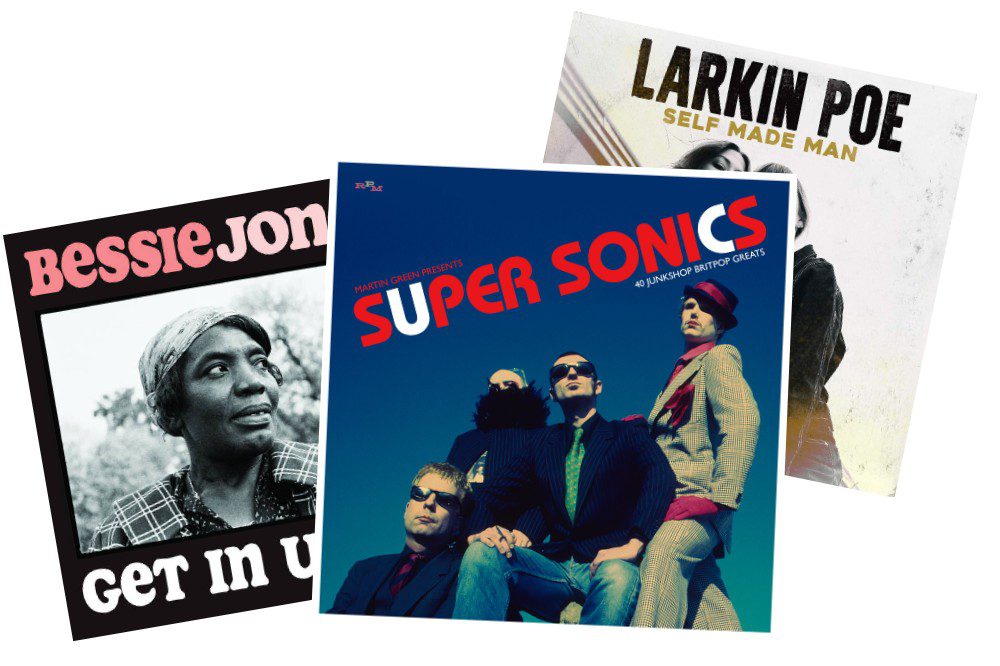
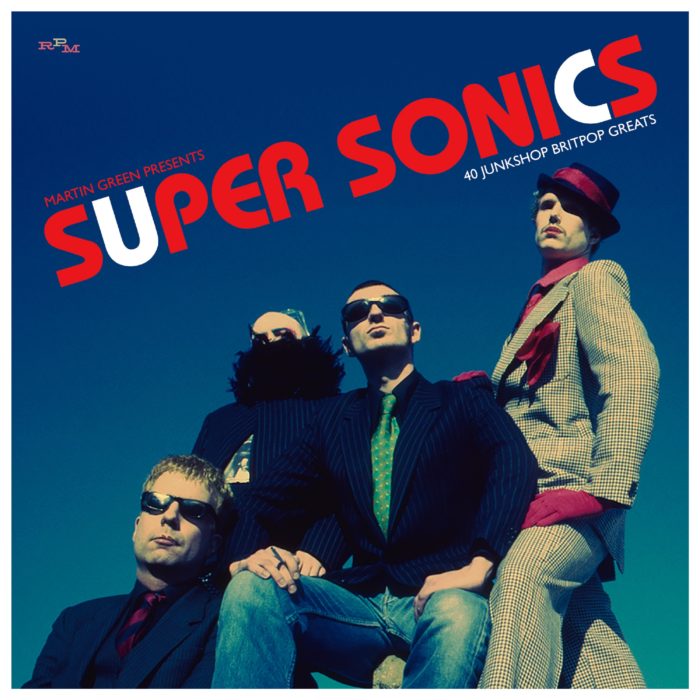
It was the summer of 1995, and the cool kids were dancing to delicious pop treats by the likes of Elizabeth Bunny, Powder, and Velocette. Wait a minute — who? Don’t be surprised if those names don’t ring a bell. These artists didn’t really make much of a splash outside their native UK, where their record releases were mostly confined to singles. Which is what makes Super Sonics: 40 Junkshop Britpop Greats (RPM) such an enticing collection of undiscovered treats.

Britpop was the UK’s answer to grunge, trading in the melancholy wash of the latter for something that was bright, sparkly, and above all, British. It had the catchiness of British Invasion pop, the stylishness of glam, and the sarcasm of punk. “Junkshop” refers to another source of musical inspiration: thrift stores, where those in search of recordings off the beaten track could find all manner of oddities awaiting discovery in the record bins.

Mix it all together and who knows what’s going to come out? It’s how you got numbers like the swaggering “Rough Lover” by Posh, which has Pippa Brooks ticking off said lover’s attributes with caustic relish, set against a jagged, heavy rock beat. Or the giddy good fun of “Come out 2 Nite” by Kenickie, which has singer Lauren Laverne reaching out to encourage you to join in: “We don’t have time to be sad/Come out tonight, you’ve got to grab it/If you want to have it.” Or the power pop/new wave drive of Heavenly’s sweetly sarcastic “Trophy Girlfriend.”

It’s especially fascinating to see the musical cross currents in evidence. The vibrations of riot grrrl jumped the Atlantic and were picked up by Huggy Bear, and their fiery punk is perfectly distilled in “Her Jazz.” You can also hear echoes of UK new wavers the Au Pairs in the track, the same rawness and dissection of sexual politics, the kind of anthem that demands to be played loud. “This is the sound of a revolution,” Niki Elliott pronounces as she claims new territory for her generation: “This is happening without your permission/The arrival of a new renegade/Girl-boy hyper nation!” It’s exhilarating.

The revolutionary zeal of riot grrrl was later mainstreamed into the less anarchic “Girl Power” of the Spice Girls. But Super Sonics reveals that they weren’t the first group to capitalize on that phrase. That honor was left to Shampoo, a lively UK duo formed by Jacqui Blake and Carrie Askew when they were still in school. “Girl Power” (“We might look sweet, but we wanna be sour”) was in fact the title track of their third album, but Super Sonics features an earlier track, the boisterous “We Don’t Care.” It’s a kind of playground chant of defiance, that starts out deceptively quiet, then explodes into a whipsawing beat as Blake and Askew celebrate the excitement of being young and being alive.

And that’s not even mentioning the brooding pop of Linoleum (“Marquis”), Showgirls’ concise depiction of the pleasures and perils of a crush (“So Small”), or Bis’ edgy love letter to a heroine (“Keroleen”). There’s a raft of great stuff to explore here, so dig in.

Also out this month:

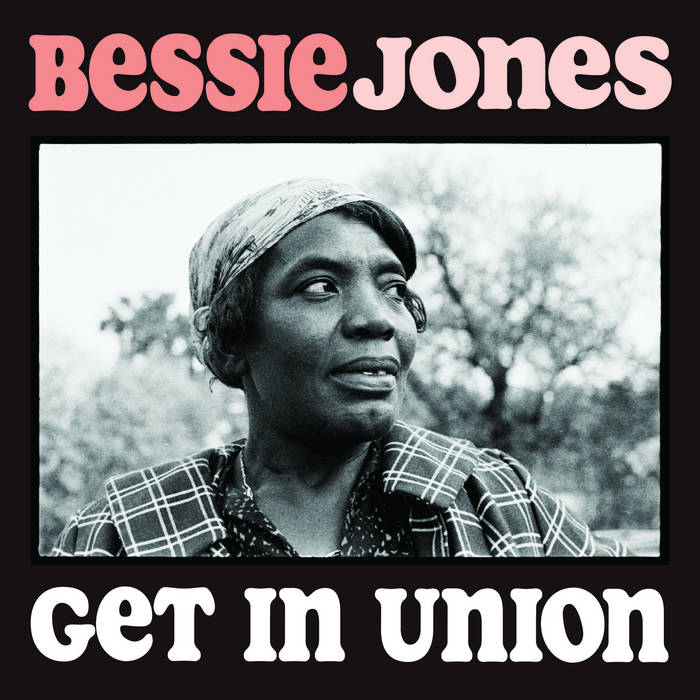
Mary Elizabeth “Bessie” Jones was born in 1902 in Georgia, and grew up surrounded by the sound of music. “The parents, they would give quiltings, and they would have songs they would sing while they were quilting … And we would have egg crackings and taffy pullings and we would hear all those things — riddleses and stories and different things.” She heard stories of the past from her step-grandfather, a former slave. Every member of her family sang or played an instrument, or both.

Jones eventually settled in St. Simons Island, Georgia, where she joined the Spiritual Singers of Coastal Georgia. In the early 1960s, noted ethnomusicologist Alan Lomax recorded Jones with the Spiritual Singers, and Get In Union (The Alan Lomax Archives/Assoc. for cultural Equity) features 60 of these profoundly moving songs.

The opening track, “Sheep, Don’t You Know the Road,” sets the tone. Jones takes the lead in this gentle call-and-response: “Don’t you know the road by the praying of the prayer?” “Yes Lord, I know the road.” It feels like a welcome, an invitation to come in and make yourself at home. The folk, spirituals, and gospel songs are mostly performed acapella, with the occasional handclap or guitar for accompaniment. It helps keep the spotlight Jones’ rich, warm vocals, and the impressive harmonies of the group, as in numbers like “You Better Mind” and “O Mary, Don’t You Weep.” There’s a fun 35-second ode to preparations for the next meal (“Gator”), and Jones shines in her solo numbers, “Got to Lie Down,” “Go Wash in That Beautiful Stream,” and “Diamond Joe” in particular. It’s uplifting music that feels especially suited to these troubled times.

This digital only release, available on Bandcamp, is an expanded version of the 2014 CD release of the same name, featuring previously unreleased material.

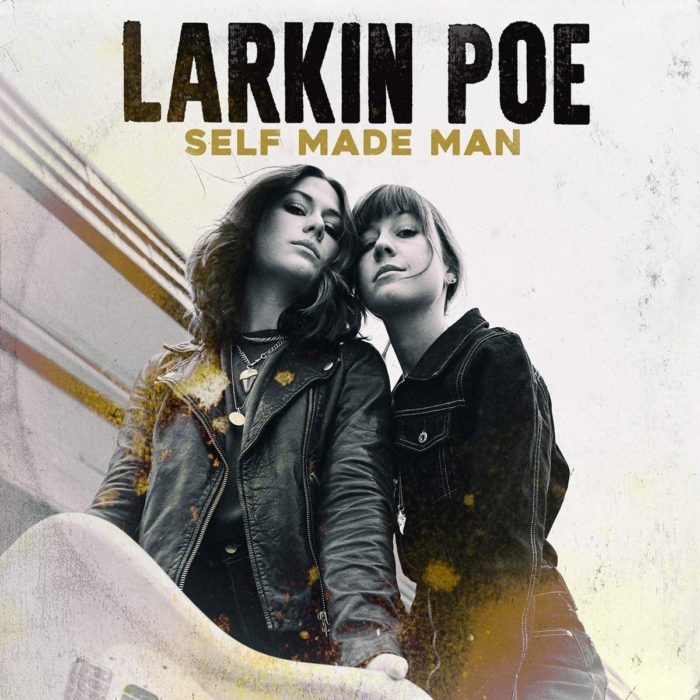
Megan, Rebecca, and Jessica got their start as the Lovell Sisters, who released two albums of country music bolstered by their great harmonies. After that group disbanded, Megan and Rebecca came together as Larkin Poe (named after their great-great-great-grandfather), and took things in a solidly rock direction, though a distinct Southern flavor remains (born in Georgia, the sisters are now based in Nashville).

Their latest, Self Made Man (Tricki-Woo Records), gets off to a rousing start with the title track (the title slightly amended to “She’s a Self Made Man”), a bold, hard rocker, that has Rebecca in full battle cry on lead vocals, and Megan making an equally searing contribution on lap steel guitar. And that’s just the start in this rollicking journey that’s drenched in Southern gothic rock, and steeped in the blues. Blind Willie Johnson’s “God Moves on the Water” is given a modern spin, now referencing other disasters as well as the Titanic, as in Johnson’s original; “Holy Ghost Fire” burns with a fraught intensity; the upbeat “Easy Street” looks ahead to better days with foot stomping optimism. Rebecca told AJC that the band’s songs were written specifically to work well in live performance. So you can look forward to some sizzling shows by Larkin Poe once live concerts make a welcome return to our lives.

Why It’s Time to Revisit 2000 Saint Etienne Album Sound of Water

Photo Credit: Rob Baker Ashton

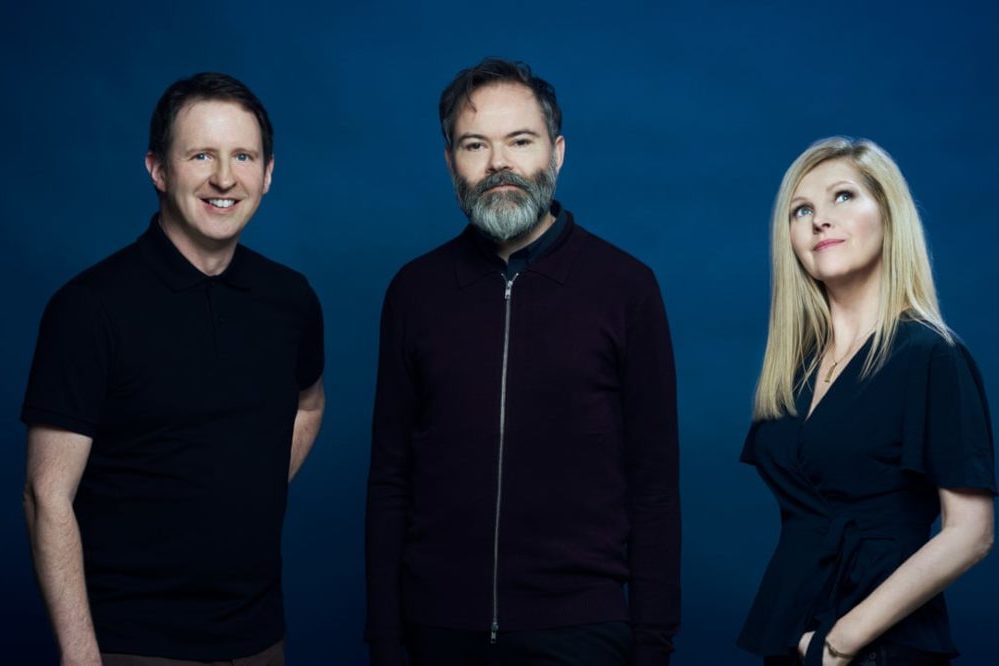
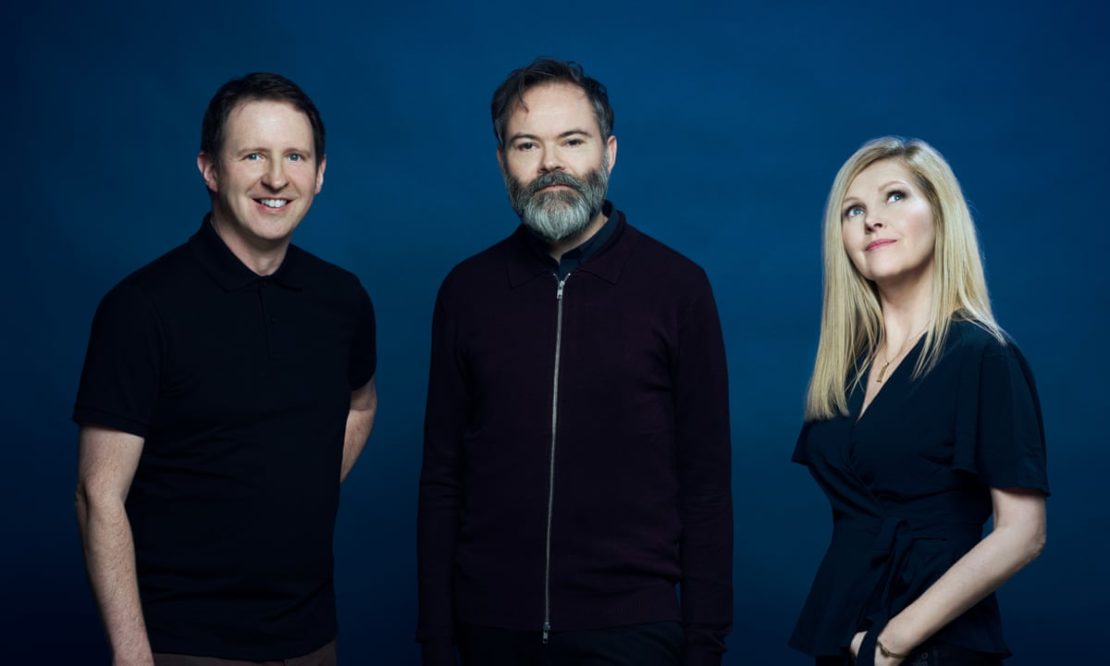
Twenty years ago, Saint Etienne released Sound of Water. It was the fifth full-length album for the British trio of Sarah Cracknell, Bob Stanley and Pete Wiggs and it was an ever-so-slight departure for a band that had spent the 1990s at the intersection of indie pop and dance music. On the jacket notes, music journalist Simon Reynolds wrote, “Saint Etienne understand that ‘lovely’ is the new edge.” At the time, the album was touted as a pop take on what was then happening in underground electronic music.

For Sound of Water, Saint Etienne collaborated with To Rococo Rot, the German band that had garnered its own following in the late ’90s for their post-rock-inflected electronic music. They also worked with Sean O’Hagan, of the bands Mircrodisney and The High Llamas, who had played on beloved Stereolab albums like Mars Audiac Quintet and Emperor Tomato Ketchup. With that line-up, Sound of Water was a very heady indie outing that would go on to foreshadow the emerging century in unexpected ways.

By the dawn of the 21st century, Saint Etienne was firmly established as a cult band. Stanley and Wiggs emerged in the early ’90s with “Only Love Can Break Your Heart,” a radical transformation of the 1970 Neil Young song into a cover that was ethereal, groovy and representative of the era when rock, pop and rave lovingly collided. Originally conceived as a duo with rotating vocalists, Saint Etienne introduced Cracknell to the fold with their third single, “Nothing Can Stop Us” (Moira Lambert sang on “Only Love Can Break Your Heart”). As a trio, they would go on to create a body of work that often alternated between indie pop with a vintage vibe and contemporary dance music. They had their share of club hits, notably with “He’s On the Phone,” a collaboration with French singer Étienne Daho, and wooed the college radio crowd with their 1998 album Good Humor, released on beloved labels Creation in U.K. and Sub Pop in the U.S.

Saint Etienne was in the midst of a creative peak; the previous year, they had released the EP Places to Visit, which featured the wistful house track “We’re in the City,” known to indie film fans for its use in But I’m a Cheerleader. Just a few weeks after the release with Sound of Water, the band was featured on Paul van Dyk’s single, “Tell Me Why (The Riddle),” which remains their biggest international chart hit. With all that they had been doing, one might have expected for Saint Etienne to drop an album of dance floor bangers. Instead, they took time to hang out in the chill out room. It was a cool move from a band that had long been full of those.

Reviews, however, were mixed. Pitchfork said it was “ear-candy all the way through.” Meanwhile, AV Club remarked,” Saint Etienne has acknowledged a strong Krautrock influence on Sound Of Water, but it would be better off staying in touch with its inner ABBA rather than its inner Can.”

Even Stanley would have his own criticisms of the project. Nine years later, he reflected on the album in an interview with Pitchfork. “Coming into 2000, we were listening to a lot of electronica, some German and sort of West Coast electronica at the time, and we wanted to do something in that vein, production-wise,” he said in the interview, “And again, it could’ve done with a couple of things that sounded like singles.”

I loved Sound of Water upon its release and my vinyl copy has been a staple of at-home listening for many years. It’s an album best heard in its entirety, an eclectic collection that plays with everything from baroque pop (“Late Morning”) to bossa nova (“Boy Is Crying”) to IDM (“Don’t Back Down”), but always with a singular vision tying it together.

Even in the clubs, in those early years of the ’00s, I would drop “Heart Failed (In the Back of a Taxi),” perhaps the most accessible single from Sound of Water. Typically, I would play it early or late in the night. With a tight beat and melancholy atmosphere, that song lent itself to either warming up the indie crowd on the dance floor or calming people down near last call. In the middle of the night, though, I continued to gravitate towards “We’re in the City.” Listening to Sound of Water twenty years later, it’s striking to hear how the band seemingly predicted the avant-pop wave of artists, “vibey” DJ sets and “soft dance” playlists of the ’10s. It’s the band’s most prescient album and an essential one.

Timing is everything, and Sound of Water came out at a particularly odd moment. While 2000 was a stellar year for music, it’s also underrated. A small handful of albums – Madonna’s Music, Outkast’s Stankonia, Radiohead’s Kid A – would become instant classics. Other releases, like Peaches’ breakthrough album The Teaches of Peaches and Ladytron’s EP Commodore Rock, would cement the sound of the first decade of the new century. And some albums were so far ahead of the curve that it would take years to catch up with them. Sound of Water falls into that last category.

As Host of Highly Melanated, Eva Lubulwa Connects Uganda and Australia over the Airwaves

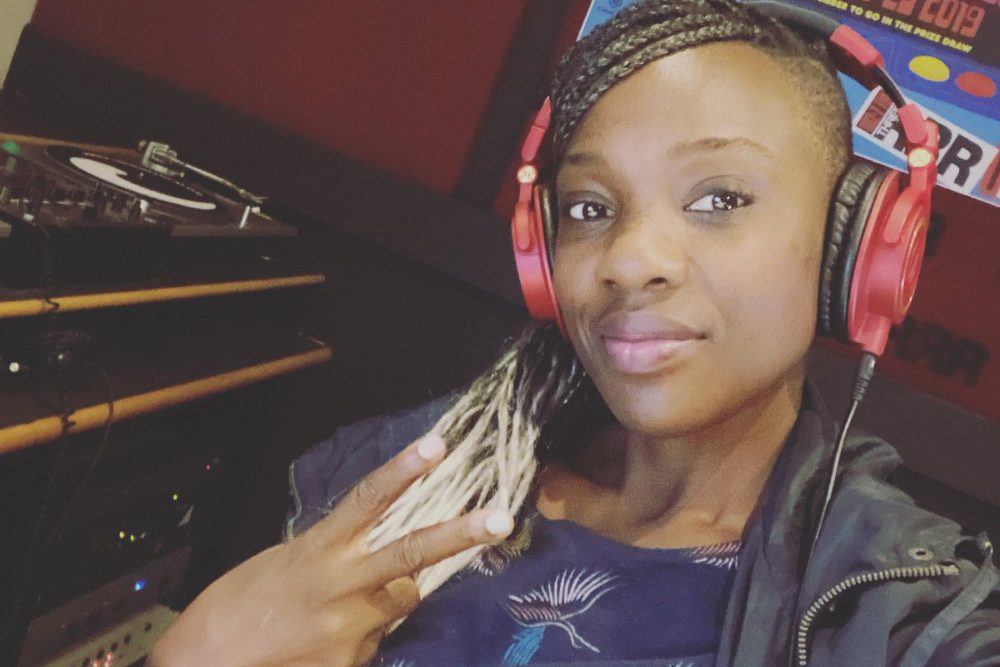
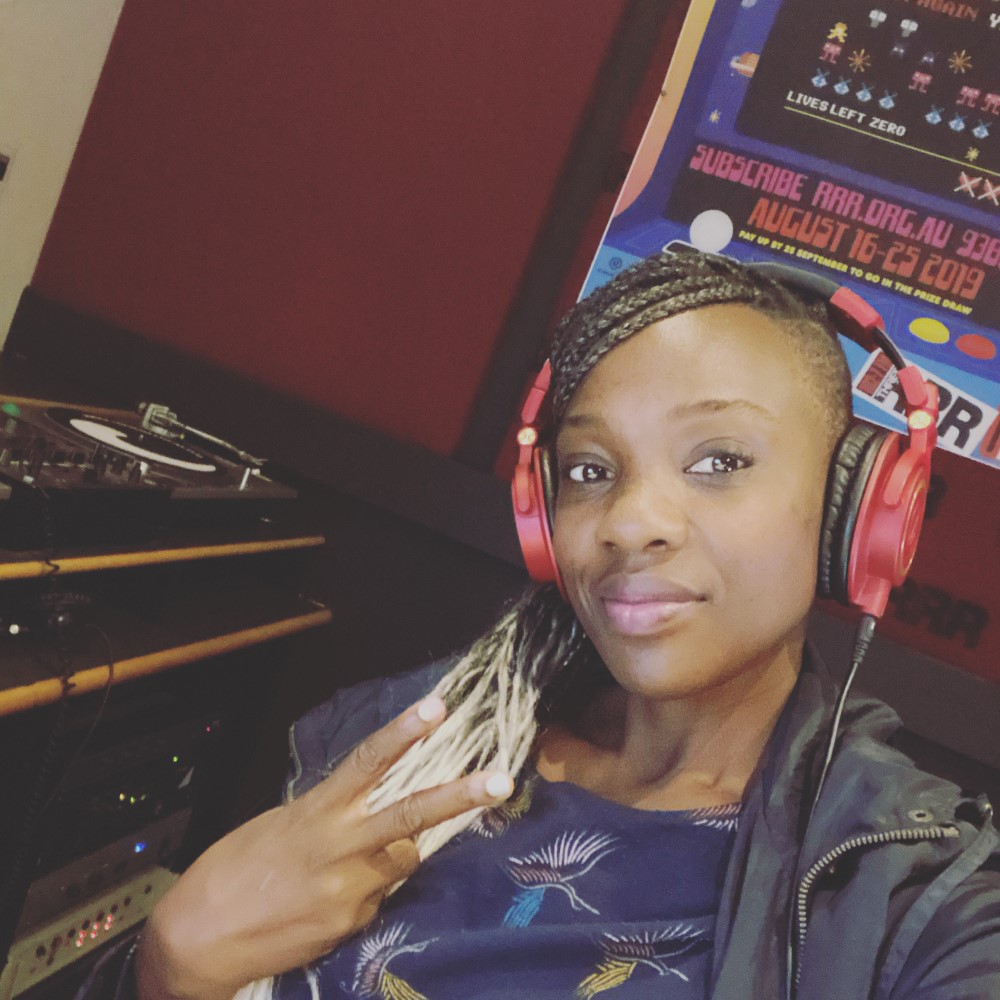
Every Monday from 10pm to midnight, Melburnians tuning into 3RRR can hear Eva Lubulwa’s deep, resonant and impassioned voice as she hosts her weekly radio show, Highly Melanated, “a melanin-soaked show celebrating the creative genius of people of colour locally, nationally and world wide.” A powerful and articulate personality, she can speak about matters that are personal and political without breaking a sweat. Lubulwa was born in Melbourne to Ugandan parents; her parents’ history and experiences have shaped their daughter and she is outspoken on racism in Australia. She’s also an artist – her black-pen drawings have been exhibited in galleries and bars around the city.

Lubulwa went to a private girls’ school where she was the only Black student in her year, but she never felt alienated. It wasn’t until she traveled with her Serbian-Australian husband through Asia and Europe that she noticed the everyday racism of men, women and children in their attitudes and behaviour toward her (trying to snap furtive photos of her, openly laughing and pointing). Lubulwa attributes the end of her marriage to this trial-by-fire, in which the constant mental and emotional toll of racism exhausted their partnership.

Fast forward a couple of years to 2017 – Lubulwa was given a graveyard shift at 3RRR, one of Melbourne’s longest running community radio stations. “My first engagement with radio resulted from my friend inviting me to do an arts show, and part of the promotion for the show was being interviewed on radio. I discovered that radio is a rush, you know? Trying to talk to people and be comfortable even when they’re not in the room, it’s a blessing,” she remembers. Having proven herself, she went on to establish Highly Melanated.

“My experience working with Triple R has been amazing,” she says. “They have loved my shows and my ideas, and are willing to let me go on this amazing journey. It’s not often you can say ‘I’m doing a show on Uganda and Australia!’ Tim from Teenage Hate used to do a show next to me, Mia Timpano has been a wonderful friend and mentor during this time – there’s so many presenters and people on the board and in the background who have done so much for me.”

The show “is about highly melanated people and all that we do,” Lubulwa explains. “I interview these people making amazing music in Melbourne, really exploring what it means to be African Australian. People who wake up and can’t do anything but making music – those are the people I’m super excited to talk to. I’ve been able to interview huge stars from Uganda recently: A Pass Bagonza; Judith Heard who is a Ugandan model and founder of Day One Global (an organisation that seeks to end rape and sexual assault);  Suzan Mutesi; and Mwanje, who is a singer and songwriter gaining more radio time and attention locally through performing in digital festivals like The Drive-In.”

For the radio host, it’s as much about showcasing others’ talents as it is connecting the two cultures that have shaped her very existence. “I’m a Ugandan-Australian constructing my identity backwards,” Lubulwa says. “Racism robs me of my Australian heritage and location robs me of my Ugandan heritage, because Australia is where I live most of the time. For me, I explore heritage through music. As time has gone on, I focus on Uganda and Australia and then I extend that out to the wider diaspora. The intention is to bring Australia and Uganda together over the airwaves.”

Lubulwa says she has gone on “a huge racial journey over the last few years, because racism would have slowly and surely killed me. Australia has been what I’ve called home for so, so many years. I had accepted or ignored the racism in this country for quite a while. When people look to you to talk about it and know about it, or to provide a solution to it, that’s a big burden. Racism is still here, it’s still strong and it’s tiring.” As exhausting as her experience has been, Lubulwa sees hope for the future. “The conversations that are getting louder, the murmurs that are getting stronger, the fact people – not just black people anymore, people everywhere – are saying no, shows we are willing to have a discussion,” she points out. “The problem with racism is that it affects the minority and the minority are required to find the solution, so it’s vital now that people come to the table and have the conversation when racism doesn’t affect them.”

Lubulwa is a music lover, obviously. I try to contain her to five artists she recommends Audiofemme readers check out.

Recho Rey is a hip hop and rap artist from Ugandan rap with dancehall, reggae vibes.”

Winnie Nwagi, she’s a Ugandan singer/songwriter/badass. They call her Firestarter because she dances like a genius, right? She has this deep soulful voice. She’s also done a song with Recho Rey.”

“F Wavey from the UK has just released a really great dance track, ‘Figure 8.'”

“There’s a whole bunch of really talented dudes from Perth – Jordan Dennis, thatkidmaz and Denzel have just released a song called ‘Doc Marty.'”

“JessB, a rap artist from Sydney, has just released a song called ‘Pon It.’ Absolutely divine, I’m completely obsessed!”

Eva Lubulwa presents Highly Melanated on 3RRR weekly. The show can be streamed from anywhere in the world or heard back as a podcast, with playlists also available.

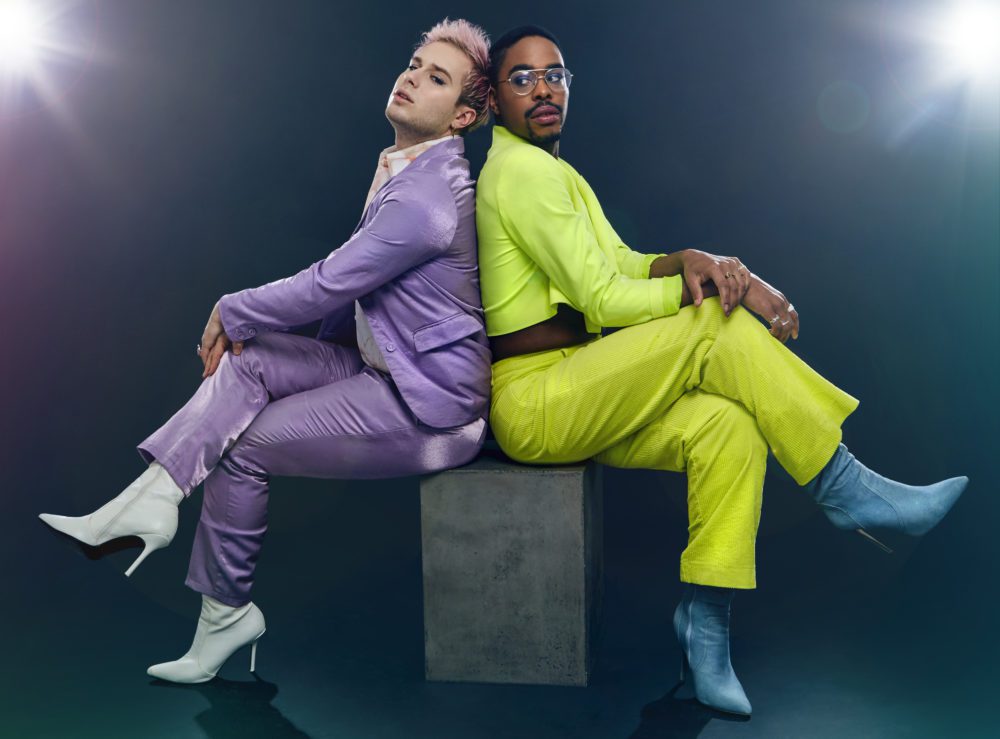
PREMIERE: Fab the Duo Release “Our Love Is Resistance” EP to Celebrate Pride Month

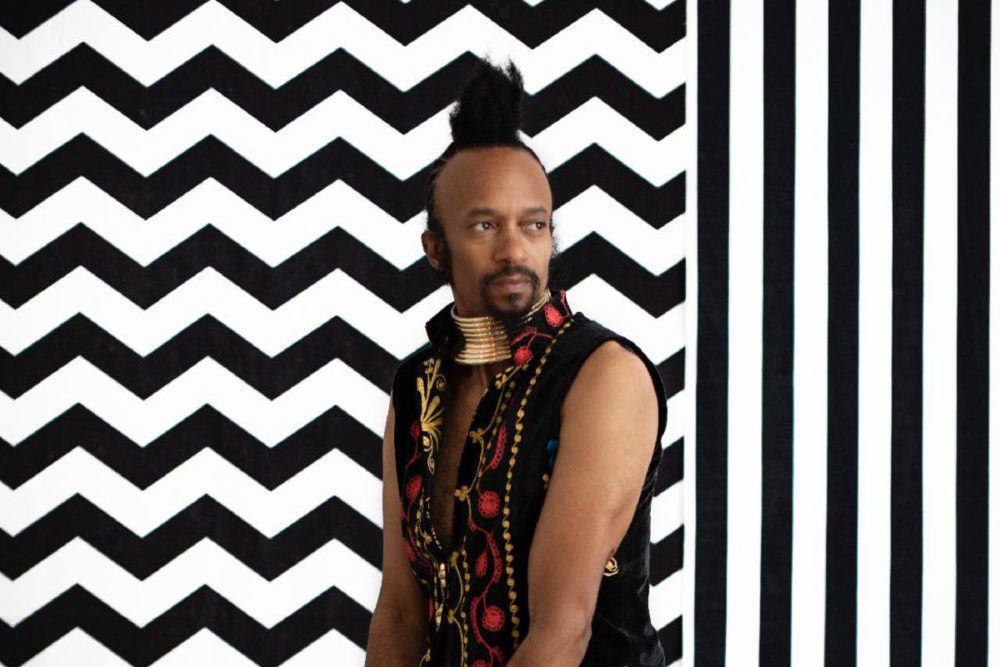
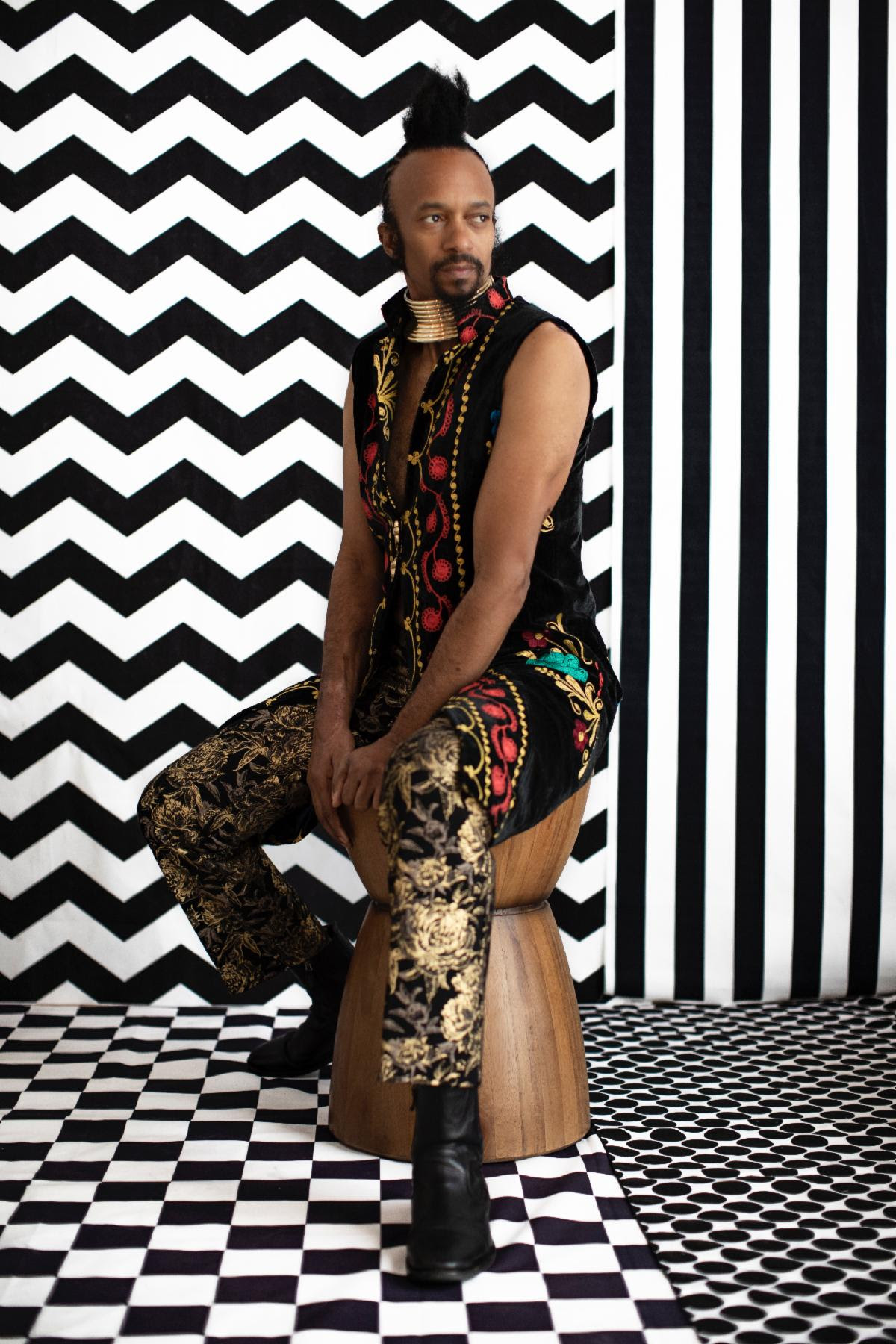
During a time of upheaval and turmoil, Fab the Duo’s music provides an uplifting message of resilience and perseverance. Today, the queer glam pop-rock duo is releasing their debut EP Our Love Is Resistance, which tackles LGBTQ rights and social justice more broadly on a political level, as well as their own experiences as a gay couple.

The members, Greg Driscoll and Brendan Eprile, met on Tinder three years ago and have been performing together for the past two years. The EP release was originally scheduled for April but got pushed back because of the Coronavirus. Truly, there’s no better time to share their debut with the world than Pride Month – and the songs have taken on a new meaning in light of the recent #BlackLivesMatter protests.

“We realized, as artists, it’s important to hear our voice, and we had to share the message for social change,” says Eprile, who also considers the release’s timing appropriate due to the recent Supreme Court decisions to protect transgender rights in the workplace and block Trump’s ending of the Deferred Action for Childhood Arrivals program.

The first track on the EP, “Our Love Is Resistance,” is the most political. The strings and theatrical singing, with lyrics that make powerful statements like “love trumps hate,” give the song a dramatic, anthemic feel, and the video was filmed at the Stonewall Inn, the site of the historic LGBTQ riots in the ’60s, with an intentionally racially diverse cast. “We decided to keep the video black and white to show how timeless this is,” says Eprile. “The Stonewall uprisings happened over 50 years ago, and it shows how what we were fighting for then is what we’re fighting for today.”

“No Prince Charming” and “I Want a Man,” deal with empowerment in relationships, and the last, “American Icon,” deals with redefining what it means to be American, particularly in terms of LGBTQ inclusion. “Every song has to do with a different element of love, whether it be self-love or world love, love for each other, love in a relationship, love of the world,” says Eprile. “Every song goes into this overarching theme of love, and we like to think this EP tells the story of our love – from where we met to where we are now.” The album is an important step toward representation and visibility for queer couples.

Musically, you can hear hints of pop artists like Lady Gaga and Beyoncé, as well as older glam-rock influences like David Bowie and Queen, combined with Driscoll’s musical theater background. Eprile says they aimed to infuse retro, blues, and rock influences into a modern sound.  Whether harmonizing or giving each other the space to belt a solo, the cooperative vocals reflect the EP’s overall message of simultaneously cultivating self-love and togetherness.

Self-love on its own can be an act of political resistance, Eprile points out. “Being who you are and loving who you love is so powerful in itself and does so much to change the world,” he says, “especially in times where there’s so much hate and anger and division.”

“I personally hope people get from this that love is achievable no matter who you are,” adds Driscoll. “I hope they realize that it can’t happen until you love yourself first, and I hope people realize that love has a lot of power in the world.”

Follow Fab the Duo on Facebook for ongoing updates.

PREMIERE: Sugar Joans Claims Her Independence in “No Patience” Video

R&B singer Sugar Joans grew up listening to artists like Aretha Franklin, Stevie Wonder, Prince, and Destiny’s Child, and in 2014, she auditioned for The Voice with Franklin’s “Chain of Fools,” earning herself a spot on Pharrell Williams’ team. Since then, she’s released five singles as a solo artist, the latest being “No Patience,” a declaration of independence from a partner who couldn’t meet her needs.

The song was based on a “situationship” in Joans’ own life at the time she wrote it. “We had developed really strong feelings for each other, but he just wasn’t in the right place to be in a relationship,” she says. “I’m at the point in my life where I had that ‘aha’ moment and that courage and that strength to walk away from something that wasn’t serving me 100 percent.” The realization that it was better to be alone than be with someone who wasn’t giving their all made the track “more than a breakup anthem;” for Joans, it was as much about the empowerment she felt in that moment as it was about ending the affair.

Her R&B influences are clear in the song, though she considers it her poppiest single yet. “I wanted it to be kind of authentic and catchy,” she says. The lyric video, which she shot and directed herself, aims to show her expressing the strength and conviction that went into the song. In fact, she says it already began to take shape in her mind when she was writing the music.

“Every time I make a song, I see it visually as well,” she explains. “It creates its own space in my mind, and there’s imagery that goes with it and feelings and smells and moods. All of it exists together, so it’s very cathartic for me to just create something from start to finish visually and from a production standpoint.”

“No Patience” is part of a full-length album Joans is currently working on, which she describes as “a love letter to myself.” Similarly to “No Patience” and previously released single “Gentle,” the other tracks are about finding her voice and empowering herself both personally and professionally.

“For a long time, I kind of looked at myself as a good singer but not an artist,” she says. “I don’t know why I doubted myself in that arena, but I never really had the confidence to let myself flourish in songwriting and just exist as an artist. It’s been a journey, the past year, of really believing in myself and letting myself grow and understanding I’m capable of doing those things. I hope when people hear the music, they can feel inspired to believe in themselves and do what they feel they’re called to do.”

Since so many of her influences are Black artists, Joans hopes to pay homage to the Black community through her music. Along with the surge in activism around civil rights and police brutality, she hopes her listeners learn to value those that have been so influential to her own music, as well as the industry at large. She encourages those who are in a position of privilege to educate themselves about Black culture and racism through books, documentaries, and whatever means available to them.

“Black music is the originator of all music, pretty much, in the history of the world,” she explains. “I just wish so deeply that the world could value Black people and Black lives the way we value their art and their culture and the way we value the music they make and all these kinds of things. I just feel pretty overwhelmed by the state of the world, but I have a lot of hope that if we keep pushing for change, this is going to be a very pivotal time.”

Larkin Poe Tell Empowered Stories on New Album ‘Self Made Man’

Photo Credit: Bree Marie Fish

Contemporary blues duo Larkin Poe channel stories of self-empowerment and community into their fierce new album, Self Made Man.

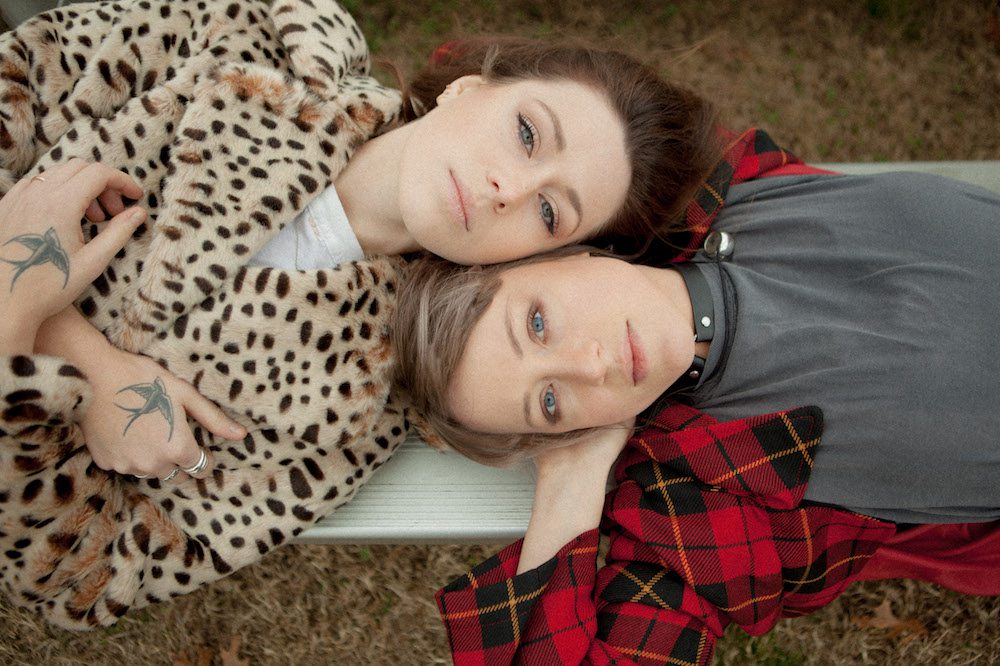
Describing themselves as “first generation music makers” of their family, the sister duo of Rebecca and Megan Lovell were originally part of the acoustic family band The Lovell Sisters in 2003 alongside younger sister Jessica. The group disbanded in 2010, leading Rebecca and Megan to join forces as duo Larkin Poe, built on a foundation of blues and soul with gritty melodies and slick harmonies.

Though their parents worked in the medical field, they instilled a love of music into their daughters by encouraging them to play instruments like classical violin and piano. But it wasn’t long before the Atlanta-raised siblings discovered a passion for bluegrass music. Becoming enamored with the “power” and “energy” of roots Americana in their early teens, they picked up instruments fundamental to the genre, like guitar, banjo and mandolin. Rebecca became the youngest and first female to win the MerleFest mandolin contest in 2006 at the age of 15, while Megan mastered the lap steel guitar, referring to it as her “real voice.”

Their Georgia roots come to life on Self Made Man. The album takes their stories from the road and turns them into 11 bold and brash songs, including the fiery “Keep Diggin’,” inspired by the people of their hometown who made a habit out of feeding the rumor mill. “We have a collection of really eccentric, strong-willed gossiping Southern women in our family, and if there’s one thing that Southern women know how to do, it is stick their nose precisely where it doesn’t belong,” Rebecca tells Audiofemme. “But they stick it in such a fashion that it’s very polite and they’re blessing your heart the entire time.” The track is filled with foot stomps and hand claps while the lyrics advise listeners to believe actions over words, exemplifying the duo’s ability to wrap the truth around clever phrasing.

This sense of humor is also reflected in the album’s title, a tongue-in-cheek reference to the outdated stereotype that the key to success is being a white male. The Nashville-based duo defied this suppressive norm by founding their own record label, Tricki-Woo Records, in 2017, and self-producing their own albums, including Self Made Man. “We’re real do it yourself-ers,” Megan professes. “It felt like the right title for now, considering how much control we’ve taken into our own hands and that we’re feeling very empowered as artists and as producers.”

Part of this empowerment comes from the years Larkin Poe spent touring. Their 2019 trek took them across Europe and Canada, in addition to opening for a range of acts including Bob Seger and Keith Urban throughout the U.S. in 2018. Their appreciation for cultures around the world has instilled the artists with a profound sense of community that they manifested into their fifth studio project. “We’ve felt a huge groundswell underneath us,” Megan proclaims. “I think that’s why this record, even more than our previous projects, has a feeling of positivity and optimism and empowerment.” While writing for Self Made Man, the sisters aimed to encapsulate the deep connection they felt performing for global audiences, discovering the commonality that exists between the artist and fans during live shows. “While we are incredibly different, from place to place, there are so many more similarities about humans than there are differences,” Rebecca observes. “There really was this overwhelming sense of unity. That sense of human connection was really pure and unadulterated.”

Writing for Self Made Man also held a mirror up to how the sisters have evolved as songwriters, making a conscious effort to pivot from writing from a solely personal state to an all-encompassing perspective. “When you’re writing as a young person, you tend to write very introspective. I think the older we’ve gotten, the more important it’s been to think about us as a community,” Rebecca explains. “At a certain point, you do have this shift where empathy can play a larger part in your songwriting, this widening of focus where you’re able to think about other people’s perspective and what might we need as a group, what’s going to feel good for us to share together.”

The sisters hope that fans take away the feeling of self-empowerment and unity that they poured into the record and carry it to their own journeys as the world continues to grapple with the COVID-19 pandemic. “This album was really meant for this time. There are a handful of songs that really do seem to apply and the sense of coming together in spite of being worlds apart,” Rebecca says. “Hopefully these songs will be good companions to people in this uncertain time.”

Follow Larkin Poe on Facebook for ongoing updates.

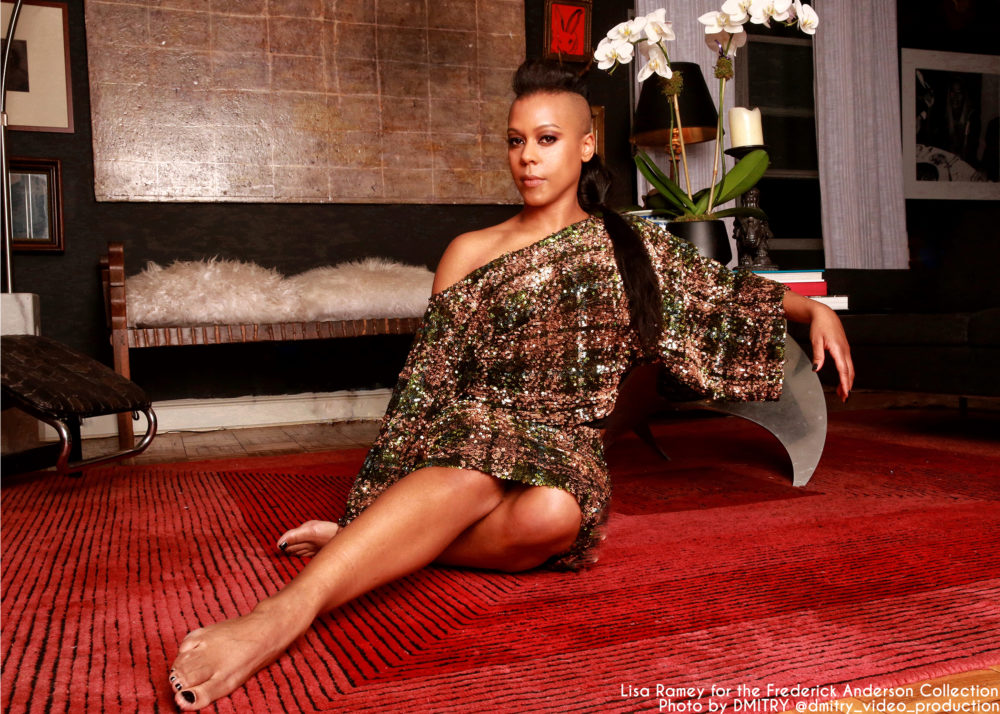
PREMIERE: Lisa Ramey Preaches Unity With a Cover of The Beatles’ “Come Together”

The trajectory of NYC-based vocalist Lisa Ramey’s career reflects an exceptional adaptability and versatility – she started off doing musical theater in St. Louis, moved over to Broadway, then began recording her own music shortly before Cirque du Soleil recruited her to tour as a singer in their show Koozå. The next chapter of her career saw her competing on The Voice twice; during her first attempt, she didn’t make it into the main competition, but she then returned and became part of John Legend’s team, which she considers the launching pad of her solo career.

“It was weird; one day, your biggest audience is a couple hundred people, then the next day, there’s 10 million people watching you singing a song,” she remembers. “You can be a great singer, a great performer, but if there’s no one watching you, how are you going to get paid? The whole point is to climb the door to success — I found the door, but I definitely couldn’t get through it, and being on The Voice got me the key.”

Her experience on the show also led her to break from her past work in the R&B genre and focus more on exploring rock and soul. “As a Black female in the music industry, I don’t want to say you get pushed, but it’s just kind of known you’re an R&B singer, so you feel like you need to be,” she explains. “But when I was working with John Legend, they’re creating an artist for TV, and I was realizing I was more of a performer that wants to get out there and rock and go crazy.”

Her rock influences are evident on her latest release, a cover of The Beatles’ “Come Together.” Her voice adds soul and sensuality to the classic hit, while the drums and electric guitars give it a heavier vibe. In the video, Ramey sings in a leather jacket and boots, pole-dances, and lounges on her bed, pouring over angel cards.

The inspiration for the video, like many works of art as of late, was the coronavirus quarantine. Specifically, it was meant to depict “someone going crazy when they’re going through quarantine,” she says. “When I’m wearing white, it’s like I’m losing my mind, and when I’m wearing black, it’s like this sexy subversion. Then, it just turned into this hot video. I’m a strong sexy black female and I ain’t got anything to hide.”

In its conception, the goal of the cover itself was simple: “to take an amazing, incredible, beautiful song and make it our own,” says Ramey, explaining that she aimed to create a “psychedelic sound with a darker edge.” However, in light of the George Floyd killing and recent protests against police brutality toward Black Americans, it evolved to promote the act of coming together to create social change.

“There’s a lot of hopeful things happening,” she says. “[We’re] defunding police. We’re starting to make decisions as communities instead of giving it all to corrupt police, and those are amazing things. I believe things can be different, but it can’t happen unless we all come together and stop making excuses of BS. And so I’m screaming at everybody out of frustration, and to see everybody rising up and marching against it is amazing. I had no idea that I had so many allies supporting me.”

In light of these events, Ramey encourages people to support Black artists by purchasing their work; for Ramey, that includes her latest album, Surrender, which shows off her unique style blending rock, soul, and R&B. “A lot of people like to reach out and ask me what they can do to help and apologize, and that’s amazing,” she says. “But it’s unbelievable how they bypass me. ‘How can I help the Black community?’ Well, here I am, Black, and I released an album, and you can help me and download that.”

She also hopes people heed the message of “Come Together” and combat hate by banding together with love. “The fight’s not over,” she says. “I’m amongst it and I’m with it and I’m here for it and I’m screaming at everyone. And I’m using the Beatles to help me out.”

Follow Lisa Ramey on Facebook for ongoing updates.

PREMIERE: Nicole Boggs & The Reel Infuse “None of Your Business” with ’70s Rock Nostalgia

Credit: Duende Vision

Nicole Boggs is unwilling to be put into a box, both socially and musically. Since the singer-songwriter released her jazzy debut album Overcome in 2013, her sound has ventured into different genres with the help of guitarists/songwriters Alex Kramer and Sam Gyllenhaal and bassist Loren D. Clark, who together form Nicole Boggs & The Reel. Their latest single, “None of Your Business,” exemplifies the group’s versatility as well as its latest mission: to bring back ’70s rock ‘n’ roll.

“28 long days ago, you passed the joint and said you didn’t love me/And all that I could think to say is, ‘That’s a whole lot of bad news to get at breakfast,'” begins the single, a tongue-in-cheek declaration of independence from a an ex-lover. The song was inspired by a turbulent breakup Boggs went through, but she says it’s more broadly “a ‘fuck you’ to anyone who is standing in your way.”

In contrast to Boggs’ soul and jazz-inspired solo music, “None of Your Business” and the rest of the Nashville-based band’s eponymous EP (out July 3) is heavily influenced by bands like The Beatles and Fleetwood Mac. Boggs also hears hints of ’90s Sheryl Crow in the single, which was recorded during a live show at Nashville’s Ocean Way studio — quite possibly because she brought in Nashville musicians who had worked with Crow for it.

The video similarly gives off nostalgic vibes, with the band members divided into Brady Bunch-esque quadrants in between flashes of psychedelic imagery and old TV shows, along with footage of them doing everyday things, like chopping vegetables. Boggs jokes that the only idea she had for the video before making it was that she wanted to incorporate fruit — and, indeed, you will spot her on the floor surrounded by fruit toward the end.

“If you watch the video, you can kind of tell there wasn’t a plan,” says Gyllenhaal. “I think that makes it more fun to watch just because of all the random stuff we do in that video.”

This is the first EP the group members all wrote together, which makes it more cohesive than their past work. Their personalities shine through sarcasm, loud three-part harmonies, and fun, energetic grooves you can’t help but stop and listen to – and of course, all those guitar riffs. “We were having trouble finding a regular keyboard player, and everything happened to be built around the sound of three guitars, which in of itself creates something that feels more dry and aggressive and in-your-face,” says Boggs.

The songs are each in their own way about “not taking shit and standing up for yourself,” says Boggs, who took inspiration from her own experience as a woman in the music industry. On the first single, “Money,” which draws from conversations she’d had with industry big-wigs, she declares her unwillingness to sell her soul for fame. “I’m Gonna Break Your Heart,” a single released in April, is one of the band’s bluesier tracks, with hints of the Black Keys, as Boggs warns a future lover, “I’m a mean bitch and I tear everything apart.”

The band is currently working on new material that responds to turbulent times with their most political music thus far, in light of recent instances of racial violence and protests against police brutality.

“I see that being the future for us,” says Boggs. “We’re standing up for the injustices right now, and these are the tools we have to do so.”

Follow Nicole Boggs & The Reel on Facebook for ongoing updates.

Project Poppa Reflects on the Impact of Violence with Emotionally Vulnerable New Track “I Can’t Breathe”

Project Poppa is settling into venerability. His latest release, “I Can’t Breathe,” sees the East Oakland rapper’s voice choked with emotion as he details the complexities and dangers of being a young Black man in America. “A lot of people like to say how are we mad what’s goin’ on/when we doing it to each other” he says in the song’s spoken intro. “I can’t be no hypocrite, family/I’m going to speak from both sides.”

This intro has a impromptu air, closer to the way one would address a younger sibling or cousin who was having trouble understanding current events than a soap-box speech devoid of patience. It works, even in a single with a short running time, where every moment away from singing or rapping is all the more noticeable.

To call this a “single” in and of itself feels strange. In modern music, the word has clear connotations of being connected to a greater project, yet placing any work released as direct commentary about the current state of political unrest on the same wavelength as the standard album cycle seems trite at best.

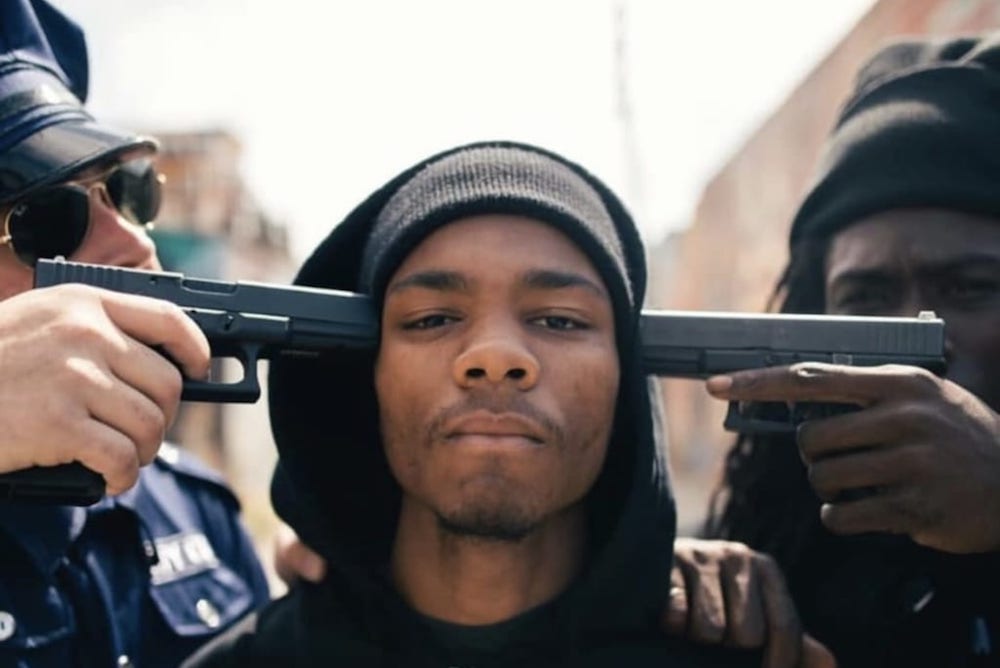
I find myself wondering how many takes felt necessary to complete “Breathe” to Project Poppa’s satisfaction. I would not be surprised if it was only one, even as he heard his voice near breaking multiple times; there’s an authenticity in its rawness that feels right, as opposed to feeling like a sloppy practice run. And the track is far from sloppy. It took me a few passing glances at the album art, distorted slightly on the SoundCloud player, to realize that one of the figures holding a gun to Project Poppa’s head was a white cop, the other another young black man like himself. Obvious? Maybe. Effective? Certainly. Something released outside of the album cycle, in quarantine, might have gotten away with a mobile phone picture, or even plain text, but no — Project Poppa made the choice to reuse the art from his 2017 album, War Outside. The message is clear: the visual is still as relevant as it was months, weeks, 1,216 days later.

“They say we trippin’ cause we breaking the stores/but what’s a life to a broken door/ain’t no comparing it” begins the first verse, echoing many a sentiment that has been expressed, on both micro and macro levels, in the past few weeks. And it’s true; what is a broken door to what Project Poppa chronicles here: a lifetime of looking over your shoulder, watching yourself like your own personal security camera, trying emerge unscathed from run-ins with both law enforcement and members of your own community? Like Project Poppa stated early on, he wants to look at both sides, but I interpreted this less as “both sides are equally culpable” and more as an attempt to look at ones own behavior from the lens of understanding that the odds are inherently stacked against you from the get-go.

The key line of the song comes almost at the end: “I’m just a young black man with hella dead friends.” Here is where Project Poppa gets notably emotional, where the beats kicks into high gear, and the song ends on a series of bold bars. The rhymes are more up front, with less lyrical complexity and less of a distinct story than the earlier parts of the song, but like that key line, they hit and keep hitting.

Despite the clear emotion, there is very little bombast here, in contrast to some of his earlier work. In general, Project Poppa seems to be moving to smaller, intensely personal projects like his street preacher mixtape, which is yet to be released on Spotify with the rest of his discography – it lives solely on SoundCloud, the stomping ground for anything supposedly “less polished.” Of course, no one is obligated to examine their own pain in their art, but for Project Poppa, even if the greater obstacles feel insurmountable, vulnerability is serving him, hopefully both personally as well as artistically.

Follow Project Poppa on Twitter and Instagram for ongoing updates.

Bay Area artists who would like to be featured in this column can reach out to @carmakout on Instagram.

Sarah Hollins Reframes Queer Anthems with Personal Coming Out Story on “Starlight”

Los Angeles-based nondenominational megachurch Mosaic has a storied history in how it handles LGBTQ+ issues. Many queer individuals have professed an inviting and warm environment ─ but for singer-songwriter Sarah Hollins, and countless others, the experience was downright toxic. “[My friends and I] personally witnessed or experienced homophobia, lack of inclusivity, and ostracizing from members within the church and felt obligated to speak up about it,” the New Jersey native tells Audiofemme.

Last summer, Hollins participated in an episode of Refinery29’s “State of Grace,” a series which analyzes faith and identity. She was not publicly out at the time, but the decision to bare her heart on-camera is truly an act of bravery. “It was honestly really terrifying, and I didn’t know how my family was going to handle it. Even though it was so scary and stressful to come out in such a public way, I’m so glad that I did it,” she says. “It kickstarted a whole year of change for me, including my first relationship with a girl that I was able to lead in my public life.”

Like so many before her, Hollins held her secret tightly in her heart for a very long time. It was a long, winding journey she needed to take, and only now has finally discovered new-found peace. “So many people – even past therapists – over the years told me that I would feel so much better once I came out and that I would feel a huge weight lifted, but the fear of coming out kept me closeted for a long time,” she offers. “I have to say, they were definitely right.”

“Obviously, it’s not always safe for everyone to come out, and I definitely recognize the privileges I had of having a support system and relatively minor pushback from my family,” she continues, “but I would really recommend coming out. I’m such a happier person, and so many people who’ve known me my whole life have told me it’s the first time they’ve seen me truly happy and joyful.”

Her new song “Starlight,” premiering today, arrives with tremendous emotional baggage. “They all said it couldn’t ever feel like this / They all said it’s only hers and his,” she sings, her voice gliding through fuzzy electric guitar. “They all said I’m dead or better off that way / If my stupid head fell in love with her pretty face.”

The first stanzas examine her deep-rooted fears of harassment and abuse, and the melancholic chords evoke her psychological anguish. While concealing her own identity, Hollins “always stood up for queer people in smaller circles, like church youth groups, but was fearful to talk about my feelings because the conversations were so hostile,” she recalls.

She recalls one example from 2009, when renewed conversation around lesbianism, as Hollins knew it, had been reignited courtesy of Katy Perry’s hit debut single “I Kissed a Girl.” “I remember, my senior of high school, a lesbian at our school cut her hair and brought her girlfriend to prom, where she wore a suit,” Hollins remembers. “That brave girl was ridiculed by most of the school, and it really shamed me and scared me further into the closet. I was too scared to explore my sexuality until college.”

Still, “Starlight” expands well beyond the scope of Hollins’ own experiences. “They all punched us on the city bus / They’d rather hurt us than let us love / They all strung us to the metal fence / Told our families they’re better off / never seeing us again,” she warbles on the third verse, referencing the 2019 London bus attack against a lesbian couple and the 1998 brutal slaying of Matthew Shepard.

“Since the first part of the song talked about my experience coming out and the homophobia surrounding that, I wanted to use the last verse of the song to show what happens to queer people in society when they experience homophobia and when our society fosters environments that perpetuate it,” she explains. “I learned about Matthew when I was 14, thanks to a local production of The Laramie Project play, and I could never forget about what happened to him, how they attacked him, tied him to a fence, and left him to die. I wanted to use an incident from the ‘90s and an incident from the past few years to show how the queer community is still experiencing violence and hatred just for being themselves.”

Hollins wrote “Starlight” last September. At the time, she and her girlfriend had been planning holiday travel for Thanksgiving but soon discovered the family members hosting dinner were outright homophobic. “I didn’t want to subject my girlfriend and I to their hatred. The song sort of poured out of me and helped me work through my feelings about their homophobia – and some of the internalized homophobia and shame I had held in for years,” she says. “It helped me talk about how I was feeling at the time about my family, the church, and church communities I had left behind, and it helped me look back at how I’d always been closeted, even from a very young age.”

Musically, the four-minute song reframes classic ‘80s guitar tones (think The Cure and Springsteen), often made through a JC-22 amp, for a queer new context. “Those tones have been typically used for a lot of straight male stories, especially throughout the ‘80s. I think it’s fresh to use those tones to tell a queer story and prove that a song about queer people can be just as anthemic,” she says. “We have so many queer ‘bops’ and songs that are used to party at Pride, and while those songs are great and really help our community feel bright and joyful, I think it’s also useful to have cathartic songs that let us cry and talk about the hardships surrounding being queer.”

With guitarist and friend Taylor LeBowe, Hollins was able to flesh out her initial chord progression; layered harmonies and grander guitars were added much later. Mark McKee joined in to engineer the song to really underscore not only the emotional thread but the rich musical depth.

As heavy as it is (and needed to be), “Starlight” is also a celebration of hope, love, and freedom. “I fell in love with my girlfriend, and our love was worth coming out for,” Hollins says. “I wasn’t necessarily able to come out for me, but I could definitely come out for her. This song is actually the first song I’ve produced myself, and it’s the first song I’ve released that talks about my bisexuality.”

“The chorus really expresses the resilience of queer people and queer love – our deep desire and call to be ourselves is something we wish for so desperately that we will sacrifice everything for the chance to be our true selves. Our love is so pure, so beautiful, so magical, so life changing, that we will risk everything for it,” she says. “We’ll risk being disowned by family members, having to live a life alone, and with no familial support, homophobia and ostracizing from society, violence and hate. It’s all worth it because our love really is true and real and right.”

Since the release of 2018’s debut EP Heartbeat, Hollins has entered a creative renaissance these days, allowing herself to “write rock and guitar based songs that really inspire me and allow me to lean on my strengths as a songwriter,” she says. “I’m not putting myself into any sort of musical box, but I’m also learning which tools and paintbrushes really feel more like my signature or go-to sonic aesthetic.”

Another new, as-yet-unreleased song called “Catholic Guilt” leans more funky but still feels like a natural extension of her voice. “I’ve gotten a lot better at guitar over the past few years, and I’m really excited to utilize it as a foundation for these new songs I’m working on,” she says. “I think it’s really exciting to hear more and more music made by people using real instruments in a room together. Those organic elements feel so much more exciting and are way more interesting to hear people use at live shows than a sea full of artists singing to backing tracks.”

In addition to her musical pursuits, Hollins recently enrolled in graduate school to earn her Masters in Library and Information Science, a decision born out of today’s troubling state of racism, bigotry, and white supremacy. “I want to find and exhaust all ways that I can be helpful to my community and to marginalized communities. I’m hoping to be able to do that through my music and through professional activism in the library field,” she says. “I think that it’s a time for everyone to ask themselves what else they can be doing for society and how they can really contribute to positive reform and change. I love writing and creating music and will continue to release my original art, but I also want to contribute in other meaningful and impactful social ways. I’m really excited to be a librarian by day and an indie-rocker by night.”

Follow Sarah Hollins on Instagram, Facebook, and Twitter for ongoing updates.

After a Decade in the Club, Dance Loud Celebrate Debut LP “The Moment”

Photo Credit: Belén Romero

Dance Loud’s The Moment has been more than ten years in the making. It’s what happens when an electronic duo whose career has been as energetic and careening as their namesake, has to pause — literally. Chicago-based artists Kristin Sanchez and Desereé Fawn Zimmerman were touring in 2017 when a semi rear ended their vehicle, landing the onstage collaborators and offstage couple in a month-long hospital stay. They’d spent a decade activating dance floors across the country with house beats layered with live music. But if life ended tomorrow, what would they leave behind? As they recovered, releasing an LP became their top priority.

On a phone call with Sanchez and Zimmerman, the women effuse positivity and laughter. It’s an interesting contrast to The Moment, which simmers with a melancholy optimism. The tracks feel meditative: field recordings of cyclical sounds like crickets, electronic drum rhythms that pump like heart beats, existential questions such as “are we as one?” repeated and stretched with echoes. Each song forces a range of emotions — anger and disappointment as much as excitement and longing — making The Moment a potent debut from two rising dance musicians.

Sanchez has been a house DJ since she was 18, and Zimmerman is a classically trained musician. They’re both multi-instrumentalists with audio degrees. Here’s what the pair had to say about the life and love that went into The Moment.

AF: There’s a lot of optimism and hope in how you talk and market yourselves, which seems at odds with the album’s darker qualities. Do you feel pressure to put a positive face forward? And if so, where does that come from?

KS: One thing we’ve learned [over time] is that you just have to figure out a way to be up. You have to program your brain to stop always thinking someone’s lying to you. You can’t be angry or hate all the time.

DZ: It doesn’t matter how good of a person you are. In someone’s story, you’ll eventually be the villain. I’m coming to terms with that. There’s always a reason people do the things they do and still sleep at night. Some of our brains get wired a certain way because of the culture we live in, but it doesn’t make them “bad.”

KS: For example, my mom grew up in a culture — she’s very homophobic. That’s really difficult for me, but I can’t hate my mom.

AF: I admire that you can put your mom’s attitude into context, but how do you find the energy for patience and compassion towards her? That seems like a heavy burden.

KS: I always say it took my mom about eight years to stop crying about me not being her dream child. She’s still slightly in denial [about my sexuality], but I was born in 1984. In high school, I would sneak out and hit the gay club scene [in Chicago]. I would do this nightly because I just had to escape. I stopped going to school. I’d only come home during the day because that’s when my parents weren’t there. We were in a cold war.

They took my car battery, so I went to the South Side and got my own battery. They’d hide my car, and I’d go rollerblading to find it. Then they put a club on my steering wheel. I tried to drive it with the club on while my parents chased me down the street. They were like, “Are you on drugs? Are you in trouble with the law?” But I knew my mom knew. She knew. She just wouldn’t say it. And finally I was like, “Mom, I’m GAY!” Once I said that, they took off the club and just let me go.

DZ: I’m from a small town, and I had to move to Chicago because I knew that I wasn’t going to be able to be myself in this town. I was going to be outcast and treated poorly if I had come out of the closet there. When I was finally in a relationship and I told my mom, she was like, “Oh, just don’t tell anyone.” I don’t think she understood that that’s much more hurtful. There were points when I wanted commit suicide because I knew I couldn’t change it. I thought, I have to learn to love myself or I’m going to commit suicide.

We’ve both come to terms with our parents. I think deep down, our parents still wish we were straight, but now I’m to the point where I’m like, I love myself, and I believe I’m a good person. If you think me being gay makes me a bad person, that’s a burden you’re carrying. I’m not.

AF: That’s a great attitude. It seems like you’re both spiritual people, and that really comes through on the record. Can you expand on where that comes from?

DZ: Well, my mom’s side was Pentecostal, my dad’s side was Mormon. I got in trouble in high school and got sent to Baptist private school. I’ve had a fair share of religion and realized it wasn’t for me. But I’m very spiritual person. I believe in balancing with the earth and not taking more than you need, so I think that that’s an underlying tone [to our music].

There’s a quote by [Nikola] Tesla: “If you wish to understand the Universe, think of energy, frequency and vibration.” Just being in audio, we have a really good understanding of how deep this rock can really be. There are octaves unknown. You can’t [hear them] with our human bodies. Imagine this whole universe has so many more octaves we have to learn about.

KS: A good example of this is sympathetic frequencies. Take two tuning forks that are tuned to the same number. If you strike one tuning fork, the second fork will start to resonate. But if you tune the forks slightly differently, you start to create a beat and a wobble. I think as humans, when we find people on our frequency range, we start to resonate from each other. We’re vibrational creatures, and even our thoughts carry frequency. People who are sensitive to frequency are empaths. You know, they just feel the vibrations of someone else.

DZ: Growing up, my parents were metalheads. I got really into jazz on my own, and I loved gospel drummers, but I realized that I just really loved high tempo [music]. It was more fun. And when I was introduced to electronic and house music — oh, wow! There’s a quote [by Eddie Amador]: “Not everyone understands house music. It’s a spiritual thing, a body thing, a soul thing.”

AF: In what ways does being a couple help your music? And how do your disparate musical backgrounds complement one another?

KS: We have, like, silent designated duties. Living together, working together, doing everything together — we just know what one another is really good at. Desereé’s really funny, and she’s really good with tone. She’s got years of playing the guitar, and she’s great at trying new techniques. I’m really into drum machines and synthesizers and anything electrical happening with the sound. I usually take care of a lot of the production processing.

DZ: I think, if Kristin created music on her own — she’s very happy-go-lucky person. I think her music would come out very happy. And I feel the world. I have a lot of feeling. I’m a Cancer, she’s a Gemini.

KS: But I have a secret sad side no one knows about! [laughs] I kept trying to add cello to the record.

DZ: There’s definitely an underlying tone of emotion Kristin adds.

KS: But I grew up with almost no music in my life. All we had was a karaoke machine. I had a Michael Jackson CD and a Toni Braxton CD, and that was it. I got exposed to pop music later, but I didn’t try an instrument until I was older.

DZ: When I got sent to that Southern Baptist High School for being a troubled kid — like, not accepting myself and not caring if I lived or died — you couldn’t listen to music there. That was really hard for me. I went there with a guitar, and my art teacher — she was so sweet. She let me transcribe literally hundreds and hundreds of hundreds of pages of tablature so I could play the music I wanted to hear. And I realized that there was a very specific feeling to a lot of music [I was] playing. Just very melodic music with tones that make you feel. Kristin loved pop music growing up, but I wasn’t a big fan of pop music. So I kind of feel like you never fully stray from your roots, and we combine really different things in the studio. It hurts us a little because Spotify doesn’t know how to categorize us. We’re not just one genre. But I always think about it like Thelonious Monk. He put his foot down and said, “No, I’m not going to play the jazz you want me to play! In time, the world will catch up!” And it did.

Follow Dance Loud on Facebook for ongoing updates.

London Producer Raphaella Conquers Heartbreak on Latest EP Real

London-based musician Raphaella is what you might describe as a triple threat. Working in the music industry as a producer, writer and singer, the 29-year-old has collated an impressive back catalog of work, which includes collaborations with Rudimental, and most recently, Little Mix. On her latest EP Real, Raphaella draws on her first-hand experiences with heartbreak, finding inspiration in that tumultuous and very familiar feeling of loss of identity.

“I wrote Real because my heart needed to,” Raphaella tells Audiofemme. Released in May, the artist described the EP’s creation as a natural process, culminating from an eight-month period of writing. Yet it wasn’t until she looked back retrospectively that she realized Real functions as a detailed account of moving on after heartbreak and the stages that follow. “I always use songwriting as a form of therapy and I often write songs as I’m actually feeling that emotion,” she says. “I was badly bullied at school so when I was about 13 I turned to songwriting as a way to express how I was feeling. The Real EP just happened sort of naturally.”

The track order of the EP is demonstrative of its organic inception, though Raphaella didn’t set out to create a collection of music in such a chronological fashion. “I think in a really cool way, the order in which I’d written the songs turned out to be the most honest representation of the story,” she explains. “Instead of being led by tempos and genres when organizing the track listing, I kept them in the order of how they were written so when you listen to it, it’s sort of like therapy.”

Whether we are searching for love or trying to move on from it, the imperceptible, abstract feelings it dredges up can have an extraordinary effect on our consciousness. With this in mind, Raphaella sought to investigate those connections – not only from her own perspective, but also within the symbiotic relationship of singer and audience, offering some respite in return. “As I write I unpack, work through, understand and come to terms with how I’m feeling, and when I finish writing, it’s a relief because it feels like I’ve finally got off my chest what I needed to,” she says. “My songwriter friends and I often joke we’re in constant therapy because every time we go to a session you literally have to open up to someone you just met a minute ago.”

Driven by her complicated emotions, she gave form and body to complex feelings by experimenting with a multitude of sounds that comprise the EP. “That was the exciting thing,” she recalls. “I knew I wanted to find different soundscapes, different sound palettes and synths that I hadn’t used before.”


The EP starts with the atmospheric and somber “Closure,” featuring Amsterdam-based alt R&B musician Nambyar. The two sing despondent lyrics, echoed in unison throughout the track to amp up a feeling of uncertainty. “I kept it almost entirely empty of full drums until the very end,” Raphaella says of the sparse, moody opener. “I really loved the feeling of suspense the whole way through so I wanted to keep that going – playing with synth LFOs and automation to create the rise and falls. I loved the space created.”

Following “Closure,” “Alright” takes a sassier turn, entering a new stage in the process of returning to who she was before the break-up. “When I wrote ‘Alright’ I was really annoyed! I’d just been let down by someone I thought loved me, so I started free-styling around with melodies with that emotion in my head and heart,” Raphaella says. In the song, she makes a point to say that she’s over it, or at least will be soon.

These tracks communicate the physical and spiritual listlessness that occurs in a relationship’s aftermath. “When you’re in a relationship for a long period of time you adapt your identity,” she points out. “You make sacrifices and concessions, which is part of being in a partnership, but sometimes that goes too far one way or another and you start to lose yourself.” The EP’s power lies in how Raphaella responds to that all consuming feeling by tackling it head on; as producer, Raphaella deliberately chose heavier sounds for the final two tracks, as if to metaphorically tether the listener back to reality.

With penultimate title track “Real,” Raphaella reflects on previously forgotten strengths that she still possesses, and in turn reminds listeners of the greatness they too harbor within. “My My,” a substantially more upbeat track continues this theme with an added element of newfound optimism, documenting her feelings of renewal and willingness to give love another chance. “My main production choices were keeping these two very ‘drop’ or ‘chorus’ focused,” she says, leaving listeners on a triumphant note as she readies herself to jump love’s hurdles again.

Heartbreak is not something we can ever prepare for, but as the singer-songwriter puts it, that doesn’t mean we should shy away. “I don’t think we can prepare for anything major that life throws us but that’s sort of the beauty of it,” she says. “You never grow from only experiencing things that you can control.”

As much as it signifies romantic rebirth, Real highlights a new era for Raphaella as a songwriter – and perhaps, even moreso, as a producer. With each track she’s ventured further and expanded her expertise by incorporating new sounds that encapsulate the very visceral emotions she, and many of us, have felt. And she’ll never let heartbreak hold her back. “I write nearly every single day – not just for myself but for others too,” she pledges. “I’m always just looking for something that feels new.”

Follow Raphaella on Facebook for ongoing updates.

Meet Melbourne Electro-Pop Prodigy Lupa J

At the age of 22, producer and songwriter Imogen Jones, best known as Lupa J, has eclipsed the dreams of many musical creatives twice her age. Debuting three tracks on Soundcloud at the tender age of 15, she has been championed by local radio station Triple J and supported international acts like Grimes, Alice Glass, and Tegan and Sara on their tours. With three EPs under her belt, Lupa J released her debut LP Swallow Me Whole just last year, and she’s already close to completing her next project. At the end of April, she shared the darkly intoxicating video for her latest single, “Limbo.”

Much of Lupa J’s work centers around its creator’s ever-evolving relationship to gender and sexuality, while its urgent synths and turbulent beats add drama to the dance floor-worthy anthems. The artist’s relentless creative cycle is fueled by a deep desire to understand and embrace her identity, her internal inquiry representing a surging generational shift toward a more open, post-gender future.

Apart from her solo career, Lupa J spent the last six years starring in The Weather Diaries, a Sydney Film Festival documentary about the effects of climate change helmed by her mother, Kathy Drayton. Released this year, the documentary can be streamed via the SFF website.

We talked with Lupa J about her career trajectory, dismantling sexism and the gender binary, and opening for her musical idols.

AF: What is the meaning of your stage name?

LJ: Lupa translates to ‘she wolf’ in Latin. I became obsessed with the Studio Ghibli film Princess Mononoke when I watched it as a 7-year-old. I dressed up as San, the wolf girl character from it, for years. I named my project to honor that obsession and what that character meant to me as a kid. The J stands for my last name, Jones.

AF: How long have you been making music?

LJ: I’ve been making electronic music since I was 15, so a bit over 6 years now. I learned violin from when I was 6 and started experimenting with songwriting on piano when I was 13.

AF: When you posted music to Soundcloud at the age of 15, who did you hope would hear it? Was your intention to be discovered by radio/labels?

LJ: When I put my first tracks on Soundcloud I had no idea that anyone other than my circle of friends would hear them! I had no idea that the music blog world existed, or that labels or industry people would come across my music. I was shocked when I first discovered that I had been written about on a blog.

AF: Tell me about your EPs and how they each reflected your mood and focus at the time of writing and recording.

LJ: My first EP, The Seed, is a collection of some of the first songs I ever produced. I was 16 when I made it; I had recently come out of my first relationship and had a bit of a teenage identity crisis. I was starting to reject a lot of ideals of gender and femininity that I had deeply internalised, so starting Lupa J and making those early songs was a massively therapeutic part of that upheaval. There’s this sense of naive hope and confidence in those early songs that feels very unique to being a teenager, but there’s also quite a bit of anger in some of them.

My second EP, My Right Name, was made as I was finishing my final year of high school, just before I turned 18. Overall, it’s a lot darker than my earlier music – extremely anxiety riddled and inward looking. I was still really struggling with shaking off a lot of internalised gender norms, and felt like an outsider at my highly competitive, conservative school.

My third EP, A House I Don’t Remember, is also fairly dark, and in some ways the most experimental set of tracks I’ve made so far. I was thinking a lot about the way childhood experiences shape the way we engage with each other – the things we repress and how they inevitably always affect us – looking at myself but also different friends and relationships.

My debut album, Swallow Me Whole, is definitely the most energetic set of tracks I’ve released. The mood is extremely chaotic – it swings from darker feelings of reflectiveness to excitement, desire and anger. I wrote it as I was starting to untangle the first inklings of my queerness – an intense realisation of my preference for same sex attraction within a long-term straight relationship. My early fantasies of queerness – desire finally clicking into place – is the driving force behind the urgency and ecstasy that’s present throughout much of the album. But there’s also this somewhat political anger behind a few of the tracks – a deep frustration at how heteronormativity had affected my perception of my own body, and my sense of gender.

AF: Is live performing something you struggle with or does it come easily to you?

LJ: I’ve always loved performing my own music live. When I was learning classical violin as a teenager though, I would just about die from anxiety every time I had to perform solo. Playing my own songs feels very different – I just focus in on the feelings behind each song, and what I’m actually saying to the crowd, and then the technical challenges of performing don’t freak me out as much.

AF: Billie Eilish has come out recently to criticise all the people who have opinions on her teenage body. As a female artist, do you feel that there’s a sense of acceptance around opinions and even trolling of women with public profiles?

LJ: Definitely. Misogyny, gender normativity and objectification are still deeply rooted in every aspect of our culture. It’s entrenched in every industry, but people definitely have a particularly strong sense of entitlement when it comes to picking apart and undermining female/GNC public figures. When I released my first music video with a shaved head as a 17 year old, a man felt the right to comment that it made me ugly. That sort of stuff obviously just gets worse the more attention you receive. There’s a lot of work that needs to be done with dismantling sexism and the gender binary before people stop focusing on female bodies and attacking anything that deviates from idealised norms.

AF: When did you first get into electronic music and which artists are you loving now?

LJ: I got into electronic music after a friend introduced me to Grimes when I was 15. Lately I’ve been really into Arca, FKA Twigs, Sevdaliza, Caroline Polacheck, Jenny Hval, Charli XCX’s new record, Lorde, Thom Yorke, the list goes on.

AF: Who have you toured with and what have those artists taught you about performance, life on tour and dealing with reviews and media?

LJ: In 2016 I opened for Grimes, Tegan & Sara, and toured nationally with Sarah Blasko. In 2018 I opened for Alice Glass. Grimes was always a massive icon for me. Especially in my early days as Lupa J, I would watch her live videos and interviews religiously. I guess she taught me that it’s cool to be honest and just say what you think in interviews, and just not give a shit. I didn’t actually get to meet her at the show unfortunately, she apparently had a stomach bug and vanished immediately after her set.

AF: How important has radio play been to your career and how has Triple J Unearthed been part of building an audience?

LJ: I think radio play is seeming less crucial to artists’ careers now thanks to Spotify playlists. It was more significant back in 2014 and 2015 when I was a finalist in Triple J Unearthed’s ‘Unearthed High’ competition, which lead to a lot of radio play, people buying my songs on iTunes and following my social media pages. These days, the main way people discover me seems to be through live shows or playlists.

AF: Can you envision living and working elsewhere and where would you imagine that being?

LJ: I live in Melbourne and love it, so I am keen to remain there for a good few more years! I’d love to at least visit Berlin though, maybe live there for a little while.

AF: What are your current plans – are you writing, recording or planning live events?

LJ: I’m currently working on my next body of work – it’s close to being finished, we’re planning singles and music videos at the moment!

AF: Where can readers hear your work and connect with you online?

LJ: My music is on all streaming services, as well as Soundcloud, Youtube and Bandcamp. Basically anywhere you can Google!

Follow Lupa J on Instagram for ongoing updates.

Colbie Caillat Goes Country with Gone West, on Their Expansive Debut ‘Canyons’

Country’s musical threads have long been tattered, torn, and intertwined. The vastness of the genre ─ from bluesy front porch pickin’ to the pristine pop-country of Patsy Cline and Eddy Arnold to today’s hip-hop filtered stride ─ relies heavily on its music-makers and a willingness to remember the past but push the needle forward. It can often seem as if mainstream radio has largely ignored its own roots, but there remains great traditional commitment on, and off, the airwaves.

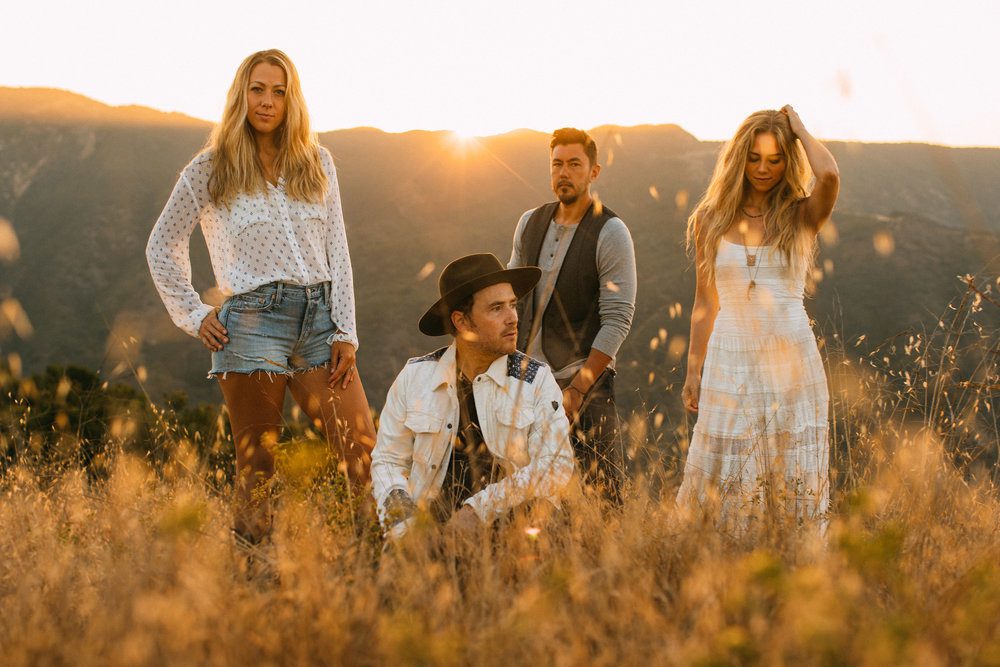
Rising four-piece Gone West ─ an effort forged by Grammy winner Colbie Caillat, Justin Young, Jason Reeves, and Nelly Joy ─ call upon an array of styles, approaches, and aesthetics for their debut album. Canyons operates as a canopy of the format’s expansive countryside, switching among dusty C&W, glistening pop-framed sweeteners, and electrifying rock-fueled anthems. They never seem to lose their way, simply darting from one song to another, adding on thick harmony work you’d find on any Carter Family or Little Big Town record.

Their eponymous song cracks open the record, spinning out with dream-seeking ambitions, as they learn to let the past go and carve their own path. “I’ve gone west, rollin’ down the highway like a tumbleweed,” the lyrics keep time with the rhythmic pulse coursing in their veins. “I’ve gone west, where the canyons fall into the deep blue sea.”

Immediately, there is an invigoration and life-confirming thrill motoring throughout the entire 13-track release. Their first Top 30 radio hit, “What Could’ve Been,” is sorrow-baked, a gripping tune in which they reminisce about a former lover whose memory falls through their hands like water. “I haven’t stopped thinking about you / Has it really been this long?,” ponders Caillat, her silky voice draping over the melody. Only scorched earth remains between the two lovers, and drenched in unbridled passion, even now, the imagery they paint bubbles up in vivid, sharp colors with the chorus: “We left blood on the tracks / Sweat on the saddle / Fire in the hills / A bullet in the barrel,” the four croon together. “Words never said in a story that didn’t end / Looks like you’re on the mend and I’m on the bottle.”

It’s quintessential pop-country, dancing between sunny rays of throwback style and contemporary flair, and the quartet ride that musical saddle start to finish. “When to Say Goodbye” slides into a similar emotional side-pocket, shades of melancholy casting a heartfelt shadow, and it is their vocal framework that is most striking. “I don’t wanna leave / I don’t wanna stay / I don’t wanna keep saying the things we don’t wanna say… truth or lie,” their ache is irresistible.

“I’m Never Getting Over You” skips across a piano base, allowing Caillat’s lead vocal to break your heart again and again and again. Reeves takes the reigns in select moments, Joy and Young heaving with some absolutely stunning harmonies that’ll leave you breathless. “I can’t stop you from leaving / And you can’t stop me from loving you” is the kind of admission you don’t want to hear, but it’ll eventually be for the better. Crashing and burning is never easy in the moment, but time, and the slow climb out, leads to transformation.

An airy, acoustic arrangement, “This Time” is perhaps the crown jewel, a performance both exquisite and draining. “Oh I’m gonna stop right now and call my momma this time / Gonna take a sick day when I’m feeling great,” they sing, their words a reminder that time is a relentless force in our lives, but in relinquishing some control, we can learn to cherish the small moments before it’s too late and it all becomes nothing more regret. “I’ll keep my coffee black and sip my whiskey honest / Hold on to hope, and let go of the hate,” they continue. They unravel their heartstrings with clarity, the frays part of the journey, and its reminder to love and live life could not have had better timing. “Life and love don’t age like fine wine / There’s no time to wait to taste the sweetest vine.”

Gone West’s Canyons zip-lines over other emotional focal points (“Gamblin’ Town,” “Home is Where the Heartbreak Is”) and radio-charged ear-candy (“Slow Down,” “Confetti,” “R&R”). With a collection of producers, including Jamie Kennedy, Jimmy Robbins, Eric Arjes, Nathan Chapman, and Alysa Vanderheym, as well as themselves, the band plant their flag firmly in the modern conversation. Their foundation is so clearly nurtured that when they do veer into fluffy, feel good territory, they’ve more than earned that right. They are here to stay.

Follow Gone West on Facebook for ongoing updates.

Mickey Guyton Releases Powerful Single “Black Like Me” as Country Musicians Take Stand Against Racism

Photo Credit: Chelsea Thompson, courtesy of Capitol Records

The murder of George Floyd at the hands of a former Minneapolis police officer has sparked protests across the world calling for justice for Floyd and the end to systemic racism in America. Some of those voices are coming out of Nashville, from a genre of music that has largely remained quiet on issues related to justice and politics in the past. Kane Brown, Darius Rucker, Jimmie Allen, Carrie Underwood and Thomas Rhett are among the many artists who have spoken out against Floyd’s inhumane death, with reactions ranging from honest reflections on living in a racist society as a black person to steadfast support for the black community.

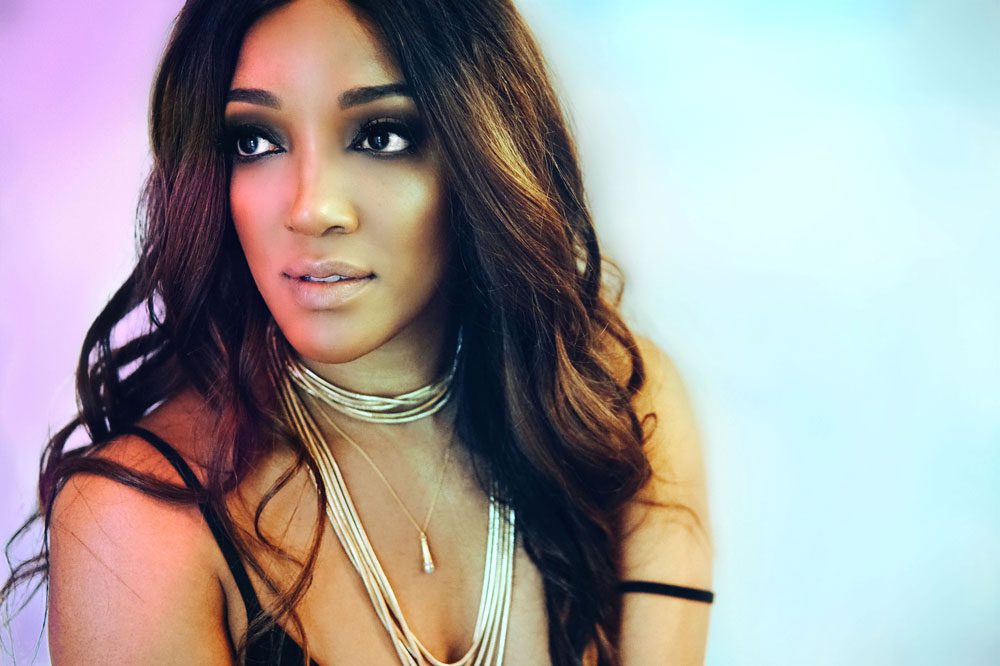
Perhaps one of the most profound statements has come from Mickey Guyton, who tells the world how it feels to be a black woman in America on her powerful new song, “Black Like Me.” As one of the few Black women working in mainstream country music, Guyton has long been outspoken about the obstacles she’s faced trying to have a voice in a genre dominated by white males. “Black Like Me” cuts through the noise to share an honest and important perspective about what it’s like to live in her skin. Guyton explained in an Instagram post that she co-wrote the song in 2019 with Nathan Chapman, Emma DD and Fraser Churchill as a response to the “hate” and “oppression” she was witnessing in the world. Across three minutes and 31 seconds, Guyton takes the listener inside her journey as a child on the playground where she was told for the first time that she was “different,” later watching her father work twice as hard to buy a home to raise his family in. But the chorus is where she delivers a truly gut-punching declaration:

“It’s a hard life on easy street/Just white painted picket fences far as you can see/And if you think we live in the land of the free/You should try to be/Black like me/Oh, and some day we’ll all be free/And I’m proud to be, oh, Black like me.”

“Our world is on fire right now. There is so much division and hate. I wrote this song over a year ago because I was so tired of seeing so much hate and oppression. And yet here we are in the exact same place!” Guyton explains in the post debuting the song. “We must change that. I hope this song can give you a small glimpse into what my brothers and sisters have endured for 400+ years.” While she continues to serve as a passionate advocate for racial justice, she is also calling on her country music peers to do the same, many of whom have answered the call.

Darius Rucker also expressed his viewpoint on how it feels to live as a Black American. In a vulnerable, three-page statement, Rucker shared the “raw feeling of pain” he experienced watching the video of Floyd’s murder.

“As an American, a father, a son, a brother, a singer, a man…I have faced racism my whole life from kindergarten to the life I live today,” he begins. “Racism is not a born thing; it is a taught thing. It is not a strong belief; it is a weak belief. It is not a financial issue; it is a hatred issue.” As a father of three children, Rucker explained the “anguish” and “anger” they’ve felt in the aftermath of Floyd’s murder, urging for people to unify in order to bring about change. “The only way it will ever change is if we can change people’s hearts,” he encourages. “I really hope that we get better as a nation. My request to you guys is to search your heart on behalf of all of us, and root out any fear, hate or division you have inside of you. We need to come together.”

Like Rucker, “Best Shot” singer Jimmie Allen is the father of a six-year-old Black son and welcomed a daughter with his fiancée Alexis Gale in March. Allen expressed deep sorrow and concern for his son’s future growing up in a racist culture, also calling for people to use love as a guiding force for systemic change. “The continued non value of life towards black men in America concerns me. As a black man and a father raising a black boy I’m worried. The uncertainty of his safety turns my stomach,” he confessed in a recent Instagram post. “I challenge everyone to love each other and let our hearts speak louder than the injustice. Love so hard that it suffocates the hate.”

Kane Brown echoed this sentiment, calling on people of all backgrounds to unite in order to achieve world peace. “We will never see peace in this world until we ALL see each other as PEOPLE. We will never understand each other when you have people on 2 different sides. We have to become one to be at peace,” he explains in a Twitter post.

While Black country artists made it a point to speak out, many white allies also raised their voices in support. Two of the most profound statements came from Thomas Rhett and his wife Lauren Akins, the parents of four-year-old daughter Willa Gray, who they adopted from Uganda in 2017. Both spoke honestly about it’s like to be white parents of a Black daughter, pledging their unconditional support not only to their child, but the Black community as a whole. In a open-hearted message shared on Instagram, Rhett reveals that while their blended family has been mostly met with unconditional love, they have dealt with racism “directly,” previously instilling him with a fear that stopped him from making a public statement. He also notes the fear that his Black crew members have felt while touring on the road with him, behavior he deems “unacceptable.”

“When I witnessed the horrific murder of George and think about the mistreatment of other black men and women in America, I am heartbroken and angry. I get scared when I think about my daughters and what kind of world they will be growing up in and how my JOB as a father is to show them how to lead with love in the face of hate. To know their worth and value as not only women but human beings,” he explains. “So if there is any question on where I stand let me be clear – I stand with you, I stand with George and his family and all those who have faced racism. I stand with my wife and my daughters. We will be fighting this fight for the rest of our lives. Rest In Peace, George. We are not letting this go.”

Akins also spoke about her role as a parent to their multi-race children, stating that in the past she has been shamed by people who believe she is unqualified to be the mother of a Black daughter, creating a sense of “anxiety” that has led her to not speak out publicly – until now. “But as her mother, I want her to be VERY sure that I am HER mother who stands up not only for her, but for every single person who shares her beautiful brown skin. I want to be her mother who raises her to know what it means to have brown skin and to be proud of it,” she pledges. “I believe if I stay silent I am betraying my brothers and sisters. I believe if I stay silent I am betraying my daughter… Together, let’s be an army for love. That means speaking up loudly for injustices whether or not we share the same skin color, language, beliefs… I want my children to cling to the good. Love, peace, kindness, joy. I want them to BE the good.”

For a genre that has historically been remiss in standing up for justice, it offers a glimmer of hope to see many country artists use their voices to take a firm stance in opposition to racism, asserting that Black Lives Matter. My hope is that the country community will continue to fight for equality and turn these words into action, adding to the ocean of voices that are rising to end systemic racism and change this world for the better.

https://www.instagram.com/p/CA0Ww8VDv8r/

https://www.instagram.com/p/CA22jJ_BCTw/

https://www.instagram.com/p/CA5pnRcAZ3_/

https://www.instagram.com/p/CAyi0pvhecm/

https://www.instagram.com/p/CBEq3lKJM1z/

https://www.instagram.com/p/CBFnmUCAPnm/

PREMIERE: Solvej Schou Speaks to Universal Need for Closeness with “No One Can Take Our Love” Video

Photo Credit: Ted Newsome

I have a duty as a human being and a white Jewish American feminist to educate myself, learn, listen and fight every day against systemic racism, white supremacy, police brutality and anti-Black violence with dollars, words and actions. Many Black musicians have inspired me, from Aretha Franklin to Etta James, Billie Holiday, Sharon Jones, Prince, Bill Withers and Otis Redding. I know their incredible words and voices, but I do not know their struggle. With this video premiere, I’m donating 100% of all sales of my album Quiet For Too Long and my other music on Bandcamp to two organizations: Ethel’s Club, founded by Naj Austin and named after her grandmother Ethel Lucas, with the mission of creating healing spaces that center and celebrate people of color; and the National Bail Out, a Black-led and Black-centered collective of abolitionist organizers, lawyers and activists building a community-based movement to end systems of pretrial detention and ultimately mass incarceration. BLACK LIVES MATTER. – Solvej Schou

When Solvej Schou wrote “No One Can Take Our Love,” it took a different turn from her other songs for the 2019 album, Quiet for Too Long. By phone from her home in Pasadena, just outside of Los Angeles, the singer-songwriter describes it as perhaps “the most positive song on the album.”

On Quiet for Too Long, Schou digs into politics, beauty standards, mental health and loss. “No One Can Take Our Love,” is, as the title implies, a love song, which she wrote for her husband. “I also wanted to have a universal theme, like love in the face of hate,” she says. “Even writing a love song,” she says, “there has to be intensity in there.”

Schou commissioned experimental filmmaker Meejin Hong to create an animated video, which premieres today. In the video, desert cacti transform into loving, clasped hands and the world splits into lip-locked faces. “The video was all about closeness. It’s all about love,” says Schou. “It’s all about physical togetherness.”

In the time that passed between when Schou commissioned the video and its premiere, both the song and the clip have taken on new meaning. On March 13, Schou developed a cough. About a week and a half later, the day after she received the video, the she was told by the doctor to consider the cough to be COVID-19 and advised to distance herself from her husband. “We ended up doing that for three weeks,” Schou recalls. “He slept separately from me. We separated everything in our kitchen and our bathroom. I didn’t leave the house.”

Meanwhile, the video that she had commissioned, and just received, was a celebration of physical connection. “There’s this weird irony in having this video all about coming together and being this unit and having to distance from my husband and see him from afar,” she says. In the midst of a very personal period of social distancing, the song and video became symbolic of everything Schou had to temporarily avoid. “It’s maybe the sense of aspiration of touch, even though it was made before the pandemic,” she says. “Seeing it for the first time felt even more powerful to me.”

Even the song itself plays as if it has been written for this specific time. Schou references a lyric, “When the world feels like a bubble that’s about to explode, you’re not alone,” that’s all-too-relevant in the midst of the COVID-19 pandemic. “We’re living in the precipice of great collective grief and loss and we’re so isolated,” she says. “Yet, at the core of being human, we’re not alone.”

When Schou was able to get a COVID-19 test in late April, the results came back negative. It wasn’t an antibody test, so she doesn’t know for sure if she had the illness or another respiratory ailment. “I know there are other people in the situation of just not knowing, having that uncertainty,” she says.

Schou, who is also a writer and  penned several essays for the 2018 book Women Who Rock: Bessie to Beyoncé. Girls Groups to Riot Grrrl., grew up in Los Angeles and was influenced by a mixture of rock, blues and soul artists. Quiet for Too Long is her second solo album, the first to include a full band, and draws heavily from her political and feminist values. The album’s title comes from opening track “America.”

“The song ‘America’ came out of my horror at the murder of unarmed black men and women by police,” says Schou. “It also talked about immigration and gun control and a lot of issues pertaining to America.” Elsewhere on the album, “Age and Beauty” refers to women growing older and “Flicker Away” is about “being a woman and dealing with anxiety and depression and how to survive, push through that.”

The title of the album, she says, came as a surprise to some who knew her. “There is a part of me that loves talking to people, that has a lot of experience interviewing people because of having been a writer for so long, that loves singing loud and forceful,” she says. “Then there’s a part of me that’s pretty introverted and feels comfortable processing things alone. Quiet for Too Long can be interpreted in different ways.”

After recovering from her illness, Schou is regaining her own voice as well. “It is literally my therapy, singing everything out of me,” she says.

Solvej Schou performs live on Instagram this Saturday, June 13. Follow her on Facebook for ongoing updates.

Freddie is Ready for Their Closeup with Melanin Monroe EP


You know you are in for something good the moment that Oakland singer Freddie’s voice comes in on their EP opener “Oblivion.” Later in the song, their rich, evocative voice moves to deliver that ever-elusive diva wish: “I wanna be adored by ya/I wanna be adored by everyone.” It almost sounds slurred, or mumbled into a collar. But nothing is truly that sloppy in the world of Melanin Monroe, where songs switch from rap to R&B to soul with the gleeful precision of a gymnast changing grip on the uneven bars. “Oblivion” retains its glam, R&B sensuality, even as Freddie runs through rapid, breathless bars in the rap outro. The enunciation may not be perfection, but I don’t think that’s the goal here – Freddie’s aim is to keep the listener on their toes at every turn.

The R&B and soul genres easily lend themselves to expand into adjacent styles, whether rap or something else, but rarely is the mix ever this playful or deft in balance, and Freddie manages a feat on Melanin Monroe by honoring each new element without letting one overshadow any of the others. This could be due to the power of Freddie’s voice alone, which sounds natural in each of its many iterations, but the transitions are especially smooth on “Oblivion” and “Banjee.” “Banjee” is — and there’s really no other way to say this — a fucking bop. “If you a bad faggot with some bad habits let me hear you sang/let me hear you sang!” Freddie drawls at the apex of the chorus, as a tropical-adjacent beat tumbles down after their vocals. It sounds like a church organ that had one too many Mai Tais, and it’s a choice that turns a good song into a great one, one that deserves to be blasted out of car windows all across the Bay when it gets to hot to to keep them shut.

“I’m lookin’ hella five to the one-oh,” Freddie announces pre-chorus (the area code for the Bay is 510 for you out-of-towners). What does it mean to look 510, to embody the Bay Area? For Freddie, this means, in part, to be Black, to be queer, to be gender non-conforming, and to make music about all these experiences with tenderness and precision. Of course it’s not that simple; there are a million different answers to what it means to “be” the Bay Area, and they can be seen on the streets of every town and city as people protest, as people try to smile through their masks, as people go on their daily walks with their hand hovering over the pause button.

And yet! It is brave, still, to make music as a Black, queer, gender non-conforming person in the year 2020, especially taking into account the danger people of those identities face, daily, unfairly, without respite. Despite genre shifts, despite welcome levity with lines like “slim thick like a grown bambi,” Melanin Monroe represents a desire to be seen. Not just in terms of love or sexual desirability — though that is important too, as noted in “Weak,” where Freddie bemoans the shifting attentions of a lover — but in terms of personal autonomy. Instances of having to declare the self are sprinkled throughout the EP: “Banjee” has a little chanted “I’m Benjee/I’m Banjee”  backing the chorus, while “Y D K M N,” a rework of the 1999 Destiny’ Child hit, “Say My Name,” is more literal about the power of putting a name to something, whether it be a person or a relationship. Freddie lets it be known that they look 510, if you will, because sometimes there is no other choice but to make a declaration of the self and the right of said self to exist in place, free from (or at least defiant of) the panicked oscillations of fear.

Not that getting to that place of declaration is easy. “Fitness” is atmospheric and has some fun ’90s throwback vocal stylings, but below the basic sentiment of the chorus (“I’ve been putting in some hard, hard work”) is a sense that it took Freddie a long time to get to the place where they could confidently sing the opening line (“click, kaboom/everybody knows when I step in the room”) with authentic bravado. But the work, whatever it was, paid off: Freddie has a voice worth listening to, both literally and figuratively.

Follow Freddie on Twitter and Instagram for ongoing updates.

Bay Area artists who would like to be featured in this column can reach out to @carmakout on Instagram.

PREMIERE: Molly Maher Hopes World-Infused Folk LP ‘Follow’ Can Help Heal Her Hometown

Photo Credit: Ilia Photo Cinema

Molly Maher has spent the last 25 years establishing herself as a singer-songwriter in the Minneapolis–Saint Paul area, working as a guitar tech at the famous shop Willie’s American Guitars and playing at bars up to five nights a week, in addition to releasing her first two albums, Balms of Gilead (2007) and Merry Come Up (2011). Her previous music was made under pressure to sell beers in the pubs she played, and the lifestyle of constant live shows was exhausting. Then, ten years ago, a battle with breast cancer changed how she approached her work.

“What happens with a lot of cancer survivors is, you go through this traumatic experience and just can’t wait to get back to what you think is normal. Then you try to go back to normal and you find it just doesn’t work anymore,” she says. “That kind of gives you a moment where you’re like, what am I doing this for? I started to break down, what is it that I want from music?”

This realization led her to practice and improve her guitar skills, craft an album she was truly proud of, and ask for more money from venues where she performs. “I started to put actual value on my time and my band’s time,” she says. “This record took a long time to write and to cultivate. The process was probably six years, but I don’t regret any of it.”

The product of her new sound, attitude, and lifestyle is her latest album Follow, for which she ventured outside her comfort zone and incorporated elements of world music, as well as reflections on the past few years’ hardships.

The biggest theme of the record, she says, is following your instincts and being true to yourself, which reflects her process of making it. She initially recorded an album two years after 2011’s Merry Come Up, then decided to scrap it because she didn’t like how it sounded.

Influenced by the Tuareg band Tinariwen, which is part of a blues movement out of Mali, as well as guitarist Ry Cooder and Tex-Mex-infused rock band Los Lobos, Maher’s goal was to combine world music with roots Americana. She even borrowed a Mexican guitar called a jarana from Los Lobos to accompany her usual guitar, bass, and organ.

When drawing inspiration from other cultures, Maher makes an effort to give people from those cultures a platform. In “Bird Song,” for example, she recruited Mexico City artist Iraida Noriega to sing and had her add her own verse. Meanwhile, up-and-coming Twin Cities singer-songwriter Anastasia Ellis appears on “Open Road” to sing Maher’s lyrics, anchoring the record with a sense of hometown pride while also focusing a lens on the world at large.

There’s also a disarming intimacy to the record, thanks to Maher’s openness. She wrote the mellow, meditative “Find the Shepard” to cope with her brother’s passing. “[It’s about] going through that process with him and letting him follow the shepherd, whatever it is, to bring him from this side to the other side of life,” she says.

Between this album and her last, Maher has been busy with many other pursuits, including running a camp for cancer survivors in Maui and touring with folk rock band Trampled by Turtles. Throughout the quarantine, she’s been collaborating with other musicians online through a dropbox folder where artists add layers onto one another’s songs.

Currently, she’s focused on responding to the death of George Floyd, which occurred in her own community. Maher does bookings for The Hook and Ladder, a Minneapolis arts venue literally next door to the now-demolished 3rd Police Precinct. The venue is still being rebuilt, but once they have a working space, she and others who work there are planning to set up a set up a community outreach center. She’s also reaching out to black arts organizations and offering them space at Como Lakeside Pavilion, another venue she books in St. Paul.

“I’m proud of the work that the good people of the community are doing to honor the lives that have been marginalized for so long, and that we are learning how to have hard conversations,” she says. “Everybody here in our town is trying to figure out how we can help our community heal as we go through this great shift. I think the arts are very healing.”

Follow Molly Maher on Facebook for ongoing updates.

White Folks Rioted at Disco Demolition Night – But Didn’t Silence Dance Music’s Black & LGBTQ Voices

It was 79 degrees outside when local DJ Steve Dahl set fire to a crate of disco records in a publicity stunt so hot, it scorched music history. Disco Demolition Night happened in Chicago on July 12, 1979. But in many ways, the event doesn’t feel too distant.

Blowing up records was supposed to boost ticket sales for White Sox games. Higher-ups at Comiskey Park were looking for ideas to get butts in seats, and rock-radio personality Dahl pitched this: If patrons sacrificed a disco album at the door, they could get in for 98 cents (about $3.50 in today’s money). On a good night, the ball park could attract 15,000 to 20,000 people. That evening, Dahl attracted almost 50,000 individuals — all eager to see a genre created by and for women, queer people, and people of color go up in flames.

Even now, talking to progressive people of that generation, I’ll hear that disco was music of the elites. I have to understand, they insist, that disco was about an urbane cosmopolitanism, and that’s really what Disco Demolition Night was rebelling against. Disco was driven by electronic sounds, not “real” instruments, and it’s vapid plasticity was embodied by Studio 54: beautiful celebrities, expensive clothing, and a bacchanalian excess that was alienating to “ordinary” people.

Never mind that Chic’s “Le Freak — which ranked number three on Billboard’s top singles of 1979 — is an ironic celebration of the nightclub; its refrain comes from being told to “fuck off” (which became “freak off,” then “freak out”) by Studio 54’s doorman. Sometimes even the “elites” didn’t fit into their own scene, and that element of exclusivity was part of the charm. In that sense, “Le Freak” proves the ultimate expression of disco as a space where anger and joy coexist, especially for those at the margins. That sentiment is rooted in the genre’s anti-fascist beginnings.

As Peter Shapiro describes in his book Turn the Beat Around, the music can be traced back to a small French club called La Discothéque that operated during German occupation. Even though Hitler considered it beneath “good” citizens, he did little to slow France’s famous nightlife, believing it would keep Parisians too distracted to resist German control. While popular clubs like the Moulin Rouge adapted to cater to Nazi officers, holes-in-the-wall such as La Discothéque used cultural contraband like jazz music to identify themselves as safe spaces for plotting against the Third Reich.

Under Nazi rule, large public assemblies and dancing were forbidden. This made underground clubs (which were often, literally, in basements) necessary sites for political organizing — but also for laughter and fun. When WWII ended, La Discothéque and similar spots endured because they continued presenting an escape from the repressive forces of daily life. Europe was taking strict austerity measures, and radio broadcasts were treated as public services that disseminated news and cultural ideals of music. To hit a place like La Discothéque meant experiencing moments of revelry and soundtracks not prescribed by the state.

In the post-war years, La Discothéque’s club model — screening clientele, foregoing live bands for curated selections of recorded music, and offering something out of the ordinary, even bordering on decadent — trickled across Europe and was eventually adapted in major cities across the United States. In 1970, a gay man named David Mancuso who’d been hosting record-playing parties since the mid-60s began hosting invite-only events in his apartment. Part of his goal was to provide a community for gay men to dance and socialize without fear of police violence — what the Stonewall riots had responded to a year before. Crowds flocked to hear his state-of-the-art audio equipment flood the space with rhythmic, soulful music, often with Afro-Latinx roots. Eventually, his apartment was christened The Loft.

As audio engineer Alex Rosner recalled in Bill Brewster’s Last Night a DJ Saved My Life, “[The Loft] was probably about sixty percent Black and seventy percent gay…There was a mix of sexual orientation, races, [and] economic groups. A real mix, where the common denominator was music.”

Mancuso helped DJs pool music for hosting dance parties, and the sound and vibe of his parties spread across New York, getting appropriated by private parties as much as dance clubs. It’s worth noting that, during this time, New York City was not unlike much of Europe after WWII. Infrastructure was weak, crime was high, and the city was verging on bankruptcy. American culture was also nursing a cultural hangover from ’60s idealism. Hip hop and punk are often referenced as disparate responses to shared conditions, but disco should also be seen as a reaction to systemic failures. Who bore the brunt of New York’s social problems? Queer, Black, and Brown communities. Some of them just danced their troubles away.

This is what’s coded into disco music. Listen to some of its most popular tracks: “I Will Survive” is about Gloria Gaynor finding joy and strength despite her most challenging moments, and it became a rallying cry for AIDs activists. Legendary gay group Village People wrote YMCA to celebrate the organization for providing affordable, temporary, single occupancy rooms to people experiencing homelessness. The subtext was, if you’re gay and on the streets, don’t despair: It’s fun to stay at the YMCA. Amii Stewart’s album Knock on Wood and the video supporting its title track are stunning examples of Afrofuturism. Though a cover, Stewart’s version of “Knock on Wood” is the best known one, and it survives as a gay anthem.

In this light, it’s easy to see why numerous musicians and scholars have described Disco Demolition Night as an outpouring of racism, sexism, and homophobia. Footage from that evening shows white people — mostly men — clamoring into the gates, hurling records like frisbees, throwing beer bottles and shoes at ball players, and eventually swarming the field in what was later deemed a riot. Of course, Dahl still pleads the event was harmless fun. Don’t we know white men were losing their place in the world? Working class ones especially didn’t know where to get a suit or how to get into a fancy city club, so can you blame them for lashing out at what, to them, were symbols of that? This, a year before Reagan’s campaign to “Make America Great Again.”

Comiskey Park was located on the Southwest side in a neighborhood called Armour Square, which hugs Bridgeport from the east. The stadium was demolished in 1991, and a new one was built in Bridgeport, eventually renamed Guaranteed Rate Field. Last year, the White Sox commemorated the 40th anniversary of Disco Demolition Night a full month before the original event: Pride month. And last Wednesday, June 3, white vigilantes swarmed the streets of Bridgeport armed with baseball bats, pipes, and two-by-fours, harassing and intimidating people returning from a nearby Black Lives Matter march— all while cops looked on. Scared Bridgeport residents streamed videos of it on social media (and I got frantic texts from friends in the neighborhood).

It’s hard to think about these facts and not hear Dahl’s words echoing. It’s just harmless fun, right? Working class white men aren’t sure of their place in the world.

But it’s also hard not to think about what happened to popular music after Disco Demolition Night. DJ Frankie Knuckles was a frequenter of The Loft, and he transported that sensibility with him when he relocated from the Bronx to Chicago in 1977. Here, he DJed at a spot called the Warehouse, a members-only club that catered to gay, mostly Black men, and he developed a disco-based party sound so popular, it forced the club to suspend its membership policy. In the early ’80s, he opened his own spot, the Power Plant, and used a drum machine to overlay heavy, bare-bones beats across disco tracks. This was the birth of house.

Early house innovator Vince Lawrence was an usher at Disco Demolition Night. He told NPR, “It’s ironic, that while you were blowing up disco records you were helping to create [house music]. … It’s funny how things work out.”

Disco Demolition Night heralded a conservatism that’s ideologically alive but has lessened its influence on pop music. Over time, what really got blown up was the cultural hegemony of straight white male rock. Maybe hetero-capitalist patriarchy is next.

Devin Burgess Releases ‘SayTheirNames’ Beat Tape To Benefit Families of Police Brutality Victims

Devin Burgess

Devin Burgess

Much like the rest of the world, protesters in Cincinnati continue to rally against the police killings of George Floyd, Breonna Taylor, and the countless other Black men and women who have fallen victim to racially unjust and violent policing practices.

Amid week-long protests, petitions, and social media campaigns, Cincinnati’s own Devin Burgess decided to channel his emotions into a beat tape, called SayTheirNames. All proceeds from the project, released via Bandcamp, will go to benefit the families of Floyd and Taylor through GoFundMe.

“I wanted to be able to use my talent for the greater good, and not necessarily make music about what’s going on, but make music that represents what’s going on,” Burgess tells Audiofemme. “So, I compiled these beats – some of them are a year or so old – and I went through my archives and just thought, ‘What sounds like how I’m feeling right now?’”

The beats range from somber to urgent, sample audio clips from news coverage, and are each named after a victim of police brutality or racist violence, including Ahmaud Arbery, Sandra Bland, Botham Jean, and others.

“They’re all relatively heavier; they feel more emotional,” Burgess explains. “It’s a heavy listen, and I wanted it to feel like that because that’s how I feel. My heart and soul are so heavy with what’s going on right now.”

Burgess promoted the track in an Instagram post, alongside a profound message: “Music is a time capsule. Songs live on forever and people do not. But when it comes to injustice, artists have some what of a responsibility to merge the two to educate and inform the people,” he said. “Music lives on, and I need these precious souls to live on with the music. Their names can’t go forgotten. I know that this is only a SMALL, percentage of the people that have been killed by police, but i’m using this to represent them as well. Along with all the people who DON’T get mentioned when they die by the hands of the police.”

Besides using the tape as a way to contribute to reform efforts, the rapper/producer says SayTheirNames has also been an outlet for self-care. “I’m Black, so I know the vibes with this injustice. This is something I’m feeling every day,” he says. “I’ve been trying to stay busy and stay informed. It’s very hard to put my phone down. Like, of course, you gotta take a break every once in a while, but you also wanna be informed at all times. So, that’s what I’m battling with right now.”

SayTheirNames will remain on Bandcamp so that listeners can continue to donate to both Floyd and Taylor’s families. Burgess says he’d also like to donate to the Cincinnati Bail Fund to assist local protesters who have been arrested.

“I wasn’t expecting as big of a turnout for Cincinnati [protests] and for it to be this consistent – people are still out there protesting,” he says. “Good has already started to come out of this, we just need more good. We gotta fight harder.”

Besides protesting, supporters can also sign petitions, donate to the National Bail Fund and reform efforts in Minneapolis and Louisville, and support the Movement 4 Black Lives Coalition and Black Lives Matter Network.

“Don’t just scroll past these petitions, ‘cause they’re just as important as the donations and the money,” Burgess adds. “Money’s cool, but money doesn’t always make everything happen. Do your research. Keep donating to these families. Continue to protest. This shit will not stop after a week, this is something that we have to keep going.”

Find a list of charities, petitions, and resources in the fight against systemic racism and police brutality below.

Cincinnati Bail Fund – sponsored by the Beloved Community Church
Movement 4 Black Lives
Campaign Zero
Justice For Breonna Taylor Petition
Justice For George Floyd
Know Your Rights Camp
The Bail Project
Donate to Breonna Taylor’s Family
Donate to George Floyd’s Family
Louisville Community Bail Fund
Reclaim The Block

How Songland Contestant Anna Graceman Turned Viral Videos into Songwriting Success

Anna Graceman wrote her first song, “So I Cried,” at age six, after a family member told her about someone in their life who passed away. “I didn’t really understand at all,” she remembers. “But I could tell they were really upset and missed this person, and I felt all this sadness. I couldn’t imagine losing someone I cared about so much.”

She began posting videos of herself performing her songs on Youtube just so that family members could stay on top of what she was doing. Then, unexpectedly, a video of nine-year-old Graceman performing “Paradise” — a song she wrote about natural scenes from her hometown of Juneau, Alaska and the need to take care of the Earth — went viral, and she ended up on The Ellen DeGeneres Show. “I don’t think I really understood how exciting it was,” she recalls.  “I think about some of the things that I did when I was younger and I think I was just completely unaware of how exciting they were – sometimes I wish those things had happened when I was older so I could enjoy them!”

For some, appearing on Ellen would be the pinnacle of accomplishment, but for Graceman, it was only the beginning. She continued writing songs and performing them on YouTube, channeling powerhouse vocal performers like Adele and singing emphatically about a range of emotions despite her young age — in a 2012 performance of her song “Broken Hearted” she admitted that she herself had never had her heart broken or even thought about having a relationship. Buoyed by the popularity of the show-stopping performances that landed her in the top ten finalists of America’s Got Talent Season Six, Graceman released her first first album at age 12, via her own label, Another Girl Records, and performed at residencies in Las Vegas over the next few years.

At sixteen, she released Rebel Days, a record made in collaboration with her sisters; over the next few years she performed at festivals both alone and with her siblings, all while her YouTube videos – most of which are now non-exclusively licensed by Disney – amassed millions of views. She took a break from performing to focus on songwriting for others, participating in “She Is The Music,” an all-female writing camp focused on writing songs for Mary J. Blige. “She’s hugely influential in the music industry, being a female and being successful and so accomplished, so that was definitely a highlight for me,” Graceman says, who noting that even the engineers and producers who participated in the program were women.

In other words, Graceman is an example of a performer who is wise, talented, and driven beyond her years. Honing her prolific songcraft and stunning vocal ability throughout her childhood has landed Graceman where she is today, on the threshold of turning twenty. She recently returned to television to appear on NBC’s Songland, (a reality show where songwriters perform songs to artists who could potentially sing them); a version of the song she pitched to Bebe Rexha on last Monday’s episode was combined with elements of a song from fellow contestant Greg Scott to become that episode’s winner. “Most of time when you’re pitching a song to an artist it goes through an email, and maybe you hear back from the manager, but usually you’re not in front of them singing the song to them,” Graceman says. “It was a huge honor but extremely nerve-racking because you’re not only hearing what she loved about it, but what she didn’t love.”

Just three days prior, on May 29, Graceman released The Way the Night Behaves, her first solo album since 2012. The new album shares many elements in common with her early work, including a powerful voice and universal themes like love and loss, this time based on her own experience. She even sings another ode to her hometown, a soulful track about Alaska’s rare sunny days called “Sunny Point Drive.” But while it contains hints of the star who grew up on YouTube, The Way the Night Behaves also shows how much Graceman has evolved as both a singer and a songwriter. “Through that process of learning to write for different projects, I grew,” she says. “It’s really been able to affect my own writing in a positive way, and it’s different because I’ve just grown a lot as a person.”

The album was born from a project Graceman began in early 2019 to release a new song on Youtube every month. She had 12 singles by the end of the year, then added a few more songs to complete the album. Her voice demonstrates impressive range, as do the songs themselves, from the upbeat, celebratory “Good Things” and the catchy, rhythmic “Man on the Moon” to the deep and vulnerable “Fragile” and the slow but inspiring “Keep on Moving On.”

In the near future, she’s got new videos coming out for several songs on The Way the Night Behaves. She is also working on a release she hopes will be out later this year. “I wrote the songs three years ago and have been holding onto them, waiting for the perfect time to share them with the world,” she says. It’s not surprising that there are even more songs up her sleeve, and there will undoubtedly be many more as she matures even further as an artist.

Follow Anna Graceman on Facebook, Twitter and Instagram for ongoing updates.

PLAYING MELBOURNE: A Virtual Tour In Recognition of Record Store Day Australia

Photo provided by Chris Gill of Northside Records.

Melbourne is a city of laneways and Victorian Gothic buildings, which has earned the city its many comparisons to European capitals. If you’re brave enough to look away from Google Maps, you could dedicate an hour or a day to just wandering randomly from street to street, lane to alleyway. If you really find yourself lost, Melburnians are hugely friendly (usually) and there’s trams going in every direction so you won’t be stuck for long. What’s this got to do with record stores, you ask?

Many of Melbourne’s laneways are home cafes, boutique clothing stores, vintage shops and record stores. These semi-hidden shops often have piles of free street press magazines and flyers for live shows, which offer the best way to stay attuned to the local scene. Every year around the world, Record Store Day celebrates the community that grows around record stores with special releases and events; normally held in April, Record Store Day in Australia has been postponed to 20 June.

Whether you intend on visiting Melbourne when travel restrictions lift, or whether you want to take a virtual tour of Melbourne’s music scene, I’m here to guide you through. This isn’t a definitive list, since some record stores may not survive the high rents and lockdown period we’re currently just emerging from. Record stores in my own inner city neighbourhood of Collingwood have remained open throughout the lockdown though, with hand sanitiser and limits on how many people can enter at a time. Anecdotally, it seems more people than ever are buying record players and vinyl. The call of nostalgia during crises has been well documented – what better time to listen to high-quality recordings at home for extended periods than now?

Rocksteady Records

For over 30 years, Pat Monaghan has been selling records. Prior to opening Rocksteady Records, he worked at the cult Melbourne record store Au Go Go until it closed in 2003. The store is a bit tricky to find. At the intersection of Lonsdale and Elizabeth Streets in central Melbourne, walk into Mitchell House and take the elevator up. Timber shelves are neatly stocked with local and international records, mostly new. There’s turntables, books and CDs too.

Monaghan recommends a few Melbourne outfits he’s currently loving listening to, and which are providing some soul therapy. “Nat Vazer, a Melbourne singer-songwriter, the new Karate Boogaloo, a great Melbourne band who are kinda jazz, funk and instrumental. I also recommend checking out a band called Close Counters, another live jazz and house outfit from Melbourne. I also want to mention Big Yawn. Their album No! was meant to be launched at iconic music venue The Tote Hotel on the same day all venues were closed.”

Skydiver

When in doubt, ask a DJ. That’s my mantra, anyway. Even better, bypass the asking and head straight for a record store owned and run by three Melbourne DJs, Mark Free (who also owns nearby cafe Everyday Coffee), Tom Moore and Mike Wale. It’s been a local favourite in Collingwood, just five minutes from the city by tram. The store is a sacred place for DJs, with sections divided into house, techno, disco and Balearic. Check out local producer Escape Artist, a favourite of the owners.

Basement Discs

Just as the name implies, this underground store has championed live music and artists since 1994. Suzanne Bennett and Rodney Jacobs transformed an abandoned basement into both a record store and a live music venue, stage included. In addition to vinyl from various genres, you’ll find second-hand CDs, DVDs and books with a music focus. Since 2018, there’s also vintage clothing and jewelry. They’ve hosted lunchtime gigs almost weekly, including Melbourne favourites Jen Cloher and Saskwatch.

Northside Records

All your soul and funk needs are satiated here. Chris Gill has a network of friends who perform in store, do record signings, drop by for coffee and suggest local artists he should know about. There’s even a disco ball hanging from the ceiling, which feels apt, given all the disco, dancehall, dubstep and jazz on vinyl; you’ll also find CDs, DVDs, books and magazines. Most of the records are new, but there’s a good selection of second-hand vinyl and rarities.

“For US readers and visitors looking for great Melbourne acts, I’d start off with a band called Cookin’ on 3 Burners. Check out their album Soul Messin’ and the song ‘This Girl‘ from 2009,” Gill recommends. “I’d also steer towards Nai Palm; her latest release is Needle Paw. We had an in-store signing for [the release, and] she brought her pet bird, Charlie Parker, in for the event. Sampa The Great is doing amazing things with her great album The Return.”

Check out the Record Store Day Australia website for the full list of participating record stores and updated news on how the event will be recognised.

PLAYING SEATTLE: Cellist and Activist Ebony Miranda Talks Resistance and Allyship Through Music

According to a 2014 study by the League of American Orchestras, less than 2% of musicians in American orchestras are African American, only 4.3% of conductors are black, and composers remain predominantly white as well. Hence, as a classically-trained cellist and person of color (POC), Ebony Miranda’s music career is in itself an act of resistance.

The classical tradition has resisted the influence of black music and perpetuated white supremacy for hundreds of years, and as one of Cornish College of the Art’s only students of color in the classical program, Miranda fought for more diversity in curricula, the student body and staff until their graduation in 2017.  Years later, Miranda has also become a vocal organizer within Seattle’s official Black Lives Matter chapter, and their free improvisational solo project on electric cello, Undesirable Body, continues to explore and amplify the effects of racial oppression and the injustices faced by African Americans every day.

Ebony Miranda took some time away from supporting Seattle protesters on the front lines to speak with Playing Seattle about how music can be used as a tool in the fight against racism, their thoughts on the music industry’s blackout on Tuesday, and how allies in the music industry can step up to better support musicians of color in Seattle and beyond.

AF: Tell me about your background and how you go into music. Are you from Seattle? 

EM: No, actually, I’m originally from Southern California. I moved up to Seattle seven years ago to attend Cornish. I started playing cello down there, went to a music/arts high school and decided to pursue music for school. I came to Cornish seven years ago, graduated with my degree in music, specifically classical music.

While I was studying classical music I had opportunities to do jazz band and that’s when I got more involved in free improv, in particular. Which is sort of what really set the stage for the music I do now. I never thought I’d be doing any type of improvised music but now it’s almost exclusively what I do and my solo project Undesirable Body is exclusively improv-based. 

AF: And you decided to stay in Seattle. Did you feel you had enough of a community here? What prompted you to stay? 

EM: Definitely, from a music point of view, yes. I was able to develop a lot of really great connections at my time at Cornish, especially in the improv scene, and really able to connect with a lot of different people, especially with those associated with Cafe Racer and greater than that, [the label] Table & Chairs. So I’ve been able to be part of some really cool things like play in the Seattle Improvised Music Festival and host a few sessions as well. The improv community here, to me, has always been a positive environment and has been a really nurturing space for me to develop and explore new ideas. 

AF: What are some of your artistic inspirations? 

EM: I will start with some music influences – I mean coming from a classical background, yes, there are a few composers that stick out. Being a cellist, Bach is a huge influence to me especially in terms of like how I think about improv, and I’m a really big fan of using double stops and I think about intervals pretty much constantly when creating my music. Having learned a good amount of the suites there’s a lot of double stop work in there and a lot of chord work. I think that has, one, made my left hand very strong because I really like to push all the limits, try to get all the weird stretched out chords as I can. Bach is definitely an influence, and I’m sure all cellists would say that, just that kind of style of thick chords and things like that. Also, when I was younger, Shostakovich was a great – his concept of melody. He was someone who lived in extremely dark times, under Stalin and horrible government, and was experiencing great pressure in his life and oppression. You can really hear that in his music, so from an emotional standpoint he always stuck out to me. 

Sun Ra was a really great musical inspiration for me as well. My music may not be fully reflective of that – as a person and advocate for Black people in music. His love for our community. I’ve also sampled some of his work in some of my pieces as well. And really, a lot of what I’m putting into my music, the energy I’m putting behind it, is usually influenced – it isn’t even always necessarily events in my life, but just whatever I’m feeling in that moment. The overall feelings, my lived experience, if that makes sense. 

AF: Once, when I saw you perform, you talked about the tortured relationship you’ve had with the cello. At the time, you talked about how a lot of your music has come out of a desire to untangle cello from the history of white supremacy in classical music. Could you talk a little bit more about that?  

EM: So, at that time I had such a complicated relationship with my alma mater, to put it frankly. I had a complicated experience being one of the only black people in my department and knowing there was already a huge lack of representation there and just trying to find my place in the music world. I was really grappling with those feelings and trying to separate myself from the academia side of things and for myself realized what playing cello and music is about. From an early age I knew I was never going to be, you know, in the concert hall as a soloist, but I also knew I loved playing and for some reason people enjoyed hearing me play, so I think I was just trying to discover what was out there and possible for me as a musician. 

Over the past few years I’ve gotten more experience, which alone has helped. I also switched to an electric cello and that did a lot for me to expand my sound. Also, [the electric cello] had the potential to be a lot louder, which was something new for me as well. That really opened some doors to explore my instrument, because I was literally playing on a new instrument.  I [still do] some gigs where I play classical music or classical adjacent music or chamber music, things like that, but I don’t feel that burden anymore, that complicated relationship. I think I’ve been able to find what I enjoy most and really run with it. So when I do go back it’s like visiting an old friend – not to sound too corny. I am able to approach that style of music on my own terms now. 

AF: Can you talk about being one of the only POC at Cornish College of the Arts? 

EM: It’s not just the music department – I think in general a lot of POC students at Cornish struggle to find representation not only within Cornish as an institution but also in the curriculum being studied. I think there was a general dissatisfaction with the lack of diversity in the material we were given. I actually formed a People of Color Union at Cornish, a POC Union to help group us together and discuss what the discrepancies were within our departments and within Cornish as a whole. To put it simply, it was just trying to challenge either certain policies that the school had instated, or encourage diversity in curriculum and staff as well. One of our biggest achievements was being able to get a therapist of color on campus, which was a huge thing for us. A lot of universities and colleges, any sort of institution—they could always use a little… input. 

AF: You’ve talked about using music to transform and heal. How do you think music can be used as a tool to fight what’s going on in the world right now in terms of racism and unrest? 

EM: I feel like this can go so many ways. There’s the literal application of putting your personal political beliefs within music. Either through words, or making it a concept, really stamping on, like, ‘this is my statement.’ Literally using the music to fight back or to encourage change. But I think there are other avenues as well, and part of that is representation. Even if the people on stage may not be giving a political performance, it’s also very encouraging to see people that look like you or who are in your community expressing themselves as well. Someone like me, I make strictly instrumental music for the most part but I still get told that the energy I have behind my music, the values I have as a person are very prevalent. I feel just as much whether you have a verbal effect, you also have an emotional effect as well.

Even if it’s for the purpose of just bringing people together. For example, I hosted a fundraiser a couple years ago when all of the protests were happening at the detention centers. I hosted a fundraiser for Northwest Immigrants Rights Project for when the movement of families belong together was happening. But yeah, I hosted, I performed along with two of my friends and it was great. We definitely had some good messages in between. We had a wonderful host that reminded everyone why they were there. But at the end of the day we didn’t necessarily have anything to do with immigrant rights or detention centers but it was just having music there in that space, that energy present really made an impact for folks. 

AF: When did you start considering yourself an activist and getting more involved? 

EM: I mainly started getting involved in things when I was around 19 or 20 – really the Black Lives Matter movement as a whole got me more politically involved in things. I remember I hosted a silent protest once, just me and one other person. That was the first time I did a political action, if you will. And I also participated in a lot of the protests that were happening in 2015. That must have been the officer who killed Mike Brown – that was a big, especially here in Seattle. There was a really big explosive impact and was kind of the start of BLM activity in Seattle. That was when the original chapter was started. So I started getting more involved that way and participated in some protests. There I mainly focused on ways I could act within Cornish since that was the context of most of my life – that’s when I created the POC Union and we put together a yearly show for people of color there and that was really great, and I was in a lot of meetings with administration really trying to push for change there. At my last year at Cornish in 2017, I was an organizer for the Women’s March on Seattle, the first one. For me personally it was a big mess, but it made me learn a lot about grassroots organizing, what I like and didn’t like about it, and got me back into getting more involved in the political scene, since I was finishing school at the time.

At the end of 2017, myself and two other individuals founded Black Lives Matter Seattle – King County as the original chapter had been long gone and dissolved by then. Myself and two others founded that at the end of 2017, and we created our board, got incorporated and got all the official business out of the way. We do go by BLM-Seattle too, for short, but in our mission we incorporate all of King County.

AF: I saw you posted on Facebook about protests – I’ve heard that the BLM activists weren’t involved in a lot of the Seattle protests over the weekend, is that true? 

EM: It’s about half and half. It’s been hard to decipher information, but essentially there was one protest – well, let’s back up. There was a protest happening on Friday that was organized by local anarchist and leftist groups. There was a demonstration on Saturday at noon that was being put on by a white ally [who] brought in some people from the King County NAACP [to speak]. And then there was another one that happened later that day that was hosted by a black organization called Not This Time, and they’re most known for putting on the campaign to get I-940 passed, that’s what they’re connected with. And then there’s another demonstration happening on June 14th, that claims to be the original BLM “chapter,” but it is an individual who was involved in those movements back then. He essentially hosts the majority of any protest that we’ve seen with Black Lives Matter. You know how they have the Black Lives Matter Friday and things like that? He is hosted those events. He’s an individual, not a chapter. There’s a lot of confusion. 

AF: It is really confusing. It all gets muddled on social media too. Can you tell me how the George Floyd protests have affected you, and have you been involved in any of them through BLM or individually? Can you clarify your BLM chapter’s stance on protesting during the pandemic? 

EM: It was a pretty tough decision – a lot of events were popping up this past weekend, and as we’ve seen continuing throughout the week, so as an organization our board is not currently hosting any in-person protests for a couple reasons, the main reason being we’re still in the pandemic, COVID-19 is still extremely vicious and prominent within black and brown communities, and as an organization we figured it would not be best to encourage our community to go out and protest. We are a thousand percent behind those who do feel the need to demonstrate and we’re not going to tell people not to protest because we fully understand why people do, but if they’re feeling on the fence about it, we want people to know we are understanding of the fact that we are still in a pandemic. We do care about our community first. In lieu of that, we have mainly been working behind the scenes to provide support for those who are deciding to protest. So, we have created our bail fund which got fully funded, and which I am extremely excited about. We created a protester safety guide that is on our website. It has COVID safety information as well as a lot of different resources for folks that are going to be out there. And then, with the bail fund we are also working on helping bail out protesters who are getting arrested. That’s all happening right now. 

It’s such a weird juxtaposition  of feelings — there’s so much crisis happening, I’m emotionally exhausted and there’s so much grief happening, but at the same time it has been extremely encouraging to see how much community support we’ve been getting. Our [local] chapter has not gotten this type of attention ever really and we’ve been around almost two years and have been doing a lot of really great work. It’s been really incredible seeing people come out to support us and support the work we do [and] we’re still with our community and still want to support people in any way we can. 

AF: What can the music community do to support BLM and more broadly, POC musicians? 

EM: I have a lot of different thoughts pop up. I think a really great example is the Seattle Symphony hosting a march, which I was really shocked at! I thought it was really cool. It goes back to my personal experience – there’s still a lot of racism and sexism within music community, especially in the classical music community, and there’s always so many talks about how we create diversity within classical music, whether it be on stage or in the concert hall. How do we do outreach, how do we make this music accessible to people? Performances are going to be on hold for a long time so this is the perfect time to really strategize on how we can make classical music in particular more accessible to marginalized communities, whether it be in education, or performance, or just accessibility to hearing that kind of music. A lot of symphonies and organizations and music unions and educators should be thinking about those things. It’s really reflective of the amount of time that I’ve been criticized because I couldn’t afford lessons, because my mom was working two jobs so I could go to my arts high school. Lack of resources [is something] a lot of young Black and POC kids experience when trying to pursue a field that’s incredibly expensive. I think this is the perfect time to think about that.

In terms of the greater music scene, especially when we’re all starting to really feel the effects of COVID-19 in terms of our work, supporting Black and POC musicians, making sure their music is getting played and they’re getting the support they deserve. Again, it just comes back to that – even in mainstream festivals, there’s still a big lack of diversity. So again, how do you make sure you’re curating your venues to really be diverse – not to just tokenize, but truly be diverse. What audiences are you really advertising towards? Who’s your audience and why? What crowds do you want in your establishment? There’s still gatekeeping in that sense. I can very much tell if the space has me in mind or not, whether I’m playing at a venue or attending one. 

AF: Speaking of taking advantage of the pause, what do you think about #theshowmustbepaused social media campaign? 

EM: It turned into a giant mess. I didn’t even actually know that it was started by the music community. I think people very quickly realized how damaging it could be to fill up a very relevant hashtag with a bunch of blank images. I think people understood the harm that has caused, but to the original purpose of it, what it was meant to be, it wasn’t anyone’s fault that it got misconstrued. That’s just how social media works at times. From what I remember from reading, it was a way for the music community not to promote anything and really pause everything to honor POC.

My personal feelings on actions like that, while I think the visual and yes the more performative aspect of those types of actions can have a lot of impact on people, for someone like myself who’s been doing this work and been involved in this type of environment for a long time, concrete action and consistent concrete action is always the most impactful. I always tell people, any action you do, you can do one really big action but it may not be as worthwhile as even like a smaller but very consistent action. As we always say it’s not a sprint, it’s a marathon. In two weeks, Black people are still unfortunately at high risk of getting killed by police in this country. These record companies want to take a stand – that’s great, but again, you really need to apply that in all elements of your company. Who you’re signing, payment of your artists, the money they’re able to make from you and feel supported and feel represented as well. 

Stay tuned to Ebony Miranda’s website for ongoing updates and new music.

The Bay, Black Lives Matter, and Bandcamp: Local Resources and Ways to Help


Hey Bay Area,

It’s been a rough week. It’s also been, hopefully, a first step in a greater reckoning regarding racial justice, discrimination, and police brutality in America. Black people are suffering even as they are mobilizing, speaking out despite years of attempted silencing, and working their way through each day, the best that they can.

The Bay Area, as always, will play a crucial role in the future of this movement. As much as the Bay celebrates a rich history of political activism, Black music, and Black culture, on the other side of that coin is a painful history of white supremacy and violence against Black bodies.

There are many different ways to contribute to this movement, and a myriad of resources to help you do so. There is no such thing as a definitive list, but here are some local resources to help you get started (or continue) your support.

Support Black artists with Bandcamp

Bandcamp is, once again, waiving its share of sales on June 5th to help artists impacted by COVID-19. Support local Black artists buy buying their music and merch. Also, a lot of artists and labels are preparing special releases for the 5th, with the proceeds going to organizations supporting racial justice. Bandcamp has compiled a list of those here. Also, there’s a big chance a lot of your favorite bands are donating their proceeds from the day. Check their socials for confirmation, and get yourself a t-shirt.

Want to spread the word about your favorite Black Bay Area musicians? Make a playlist of Bandcamp bops using this cool website. There are currently a lot of playlists featuring exclusively Black Bandcamp artists on there if you are on the hunt for new music. Unfortunately, the website does not currently have a native search function, so keep an eye on the “Newly featured” section.
Finally, mark your calendars: on June 19th, and every June 19th hereafter, Bandcamp is donating all of their cut to the NAACP legal defense fund.

Here are some cool local musicians to support June 5th,  June 19th, and every day:

Fantastic Negrito

Oakland native Fantastic Negrito makes funky, soul-influenced rock. His upcoming album title asks the same question we’ve all been asking ourselves every day since quarantine started: Have You Lost Your Mind Yet?

Wizard Apprentice

With a delicate voice layered over stripped-down, variant techno beats, Wizard Apprentice makes intimate music about universally difficult subjects.

Tia Nomore

“i just record when i can and write all the time,” states Tia Nomore’s descriptor, a sentiment which can’t fully encapsulate the self-assuredness of her straightforward raps with a 2000’s throwback vibe.

Kidd AM

Kidd AM is a recent Bay resident, but her commitment to examining the ways that her hometown of Clinton, Louisiana has shaped her musical style can be appreciated by anyone who knows what its like to love, hate, and everything-in-between the complex and brilliant Bay area.

A-1

Despite a period of musical silence, SF rapper A-1 is has been slowly moving back into releasing new work, including this excellent single he started working on after the murder of Philando Castile in 2016, but didn’t make public — until now.

Support local organizations working towards racial justice & rebuilding

Check out these organizations working to dismantle oppressive power structures, empower their communities, and spread education and awareness.

Anti-Police Terror Project — Community support, legal referral, police reform/eradication

Bay Area Anti-Repression Committee — education, bail funds

Black Earth Farms — food distribution, food education

Masterdoc of Oakland business who are requesting support — various needs

NLG – Bay Area Chapter — legal defense and support for protesters

People’s Breakfast Oakland — homeless support, food distribution, bail funds

People’s Community Medics — free basic first-aid workshops

Internal work, external change

People who are not Black have a responsibility to their communities — and to themselves — to work towards dismantling white supremacy. There are so many different ways to do this. Work to find the best way for yourself.

Black Lives Matter. Stay safe, and take care of yourselves.