INTERVIEW: Introducing Julia Wolf

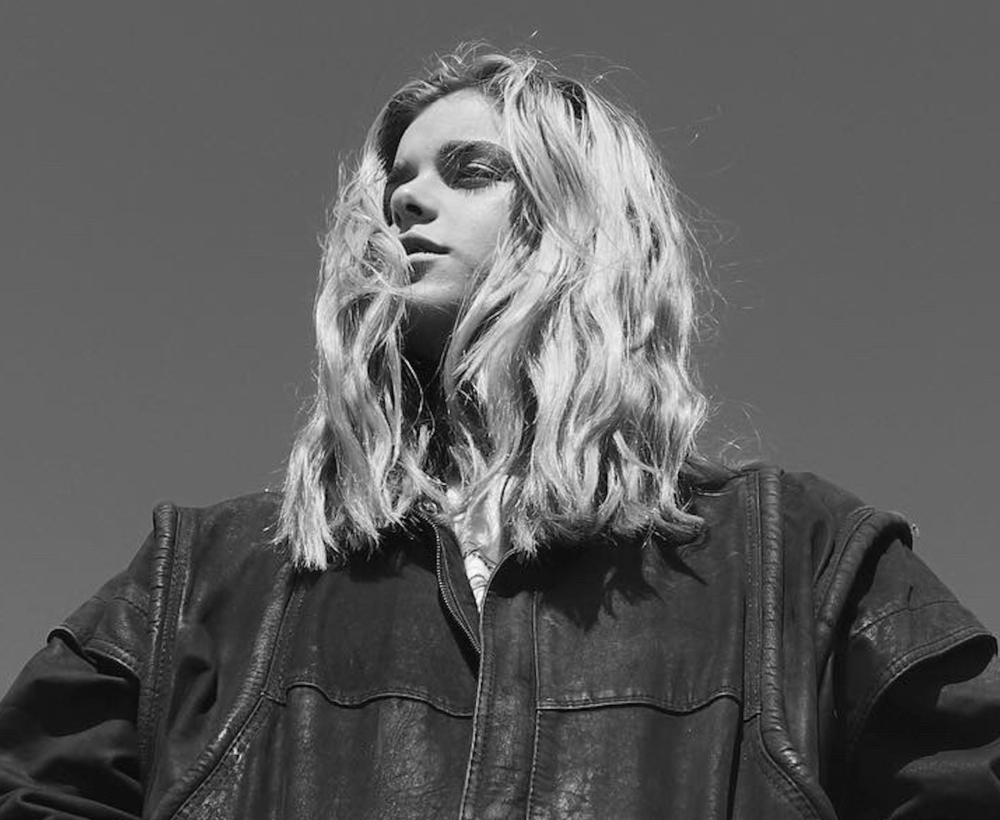
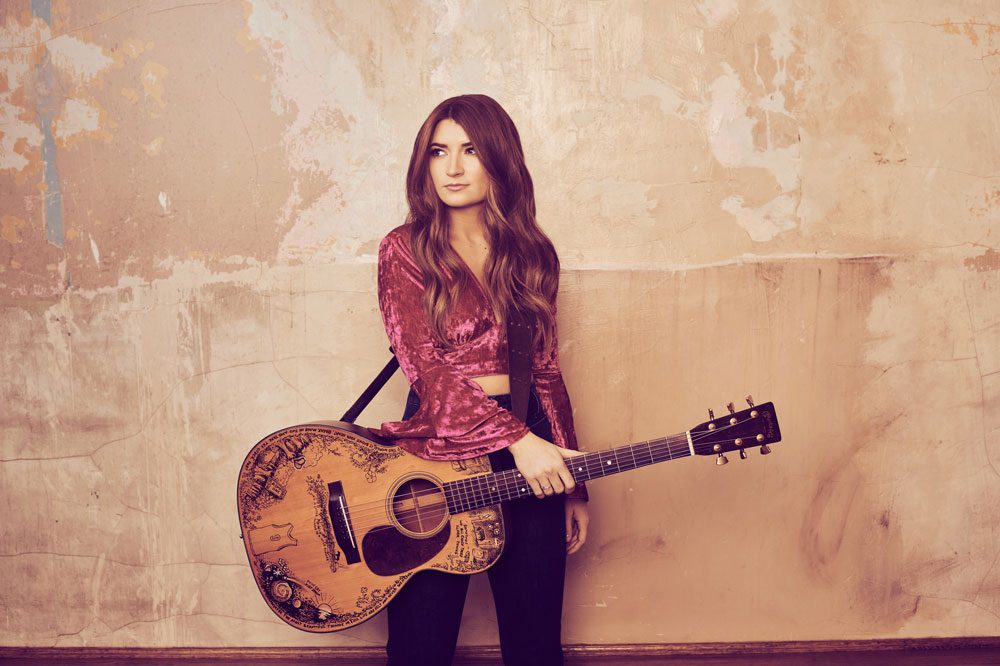
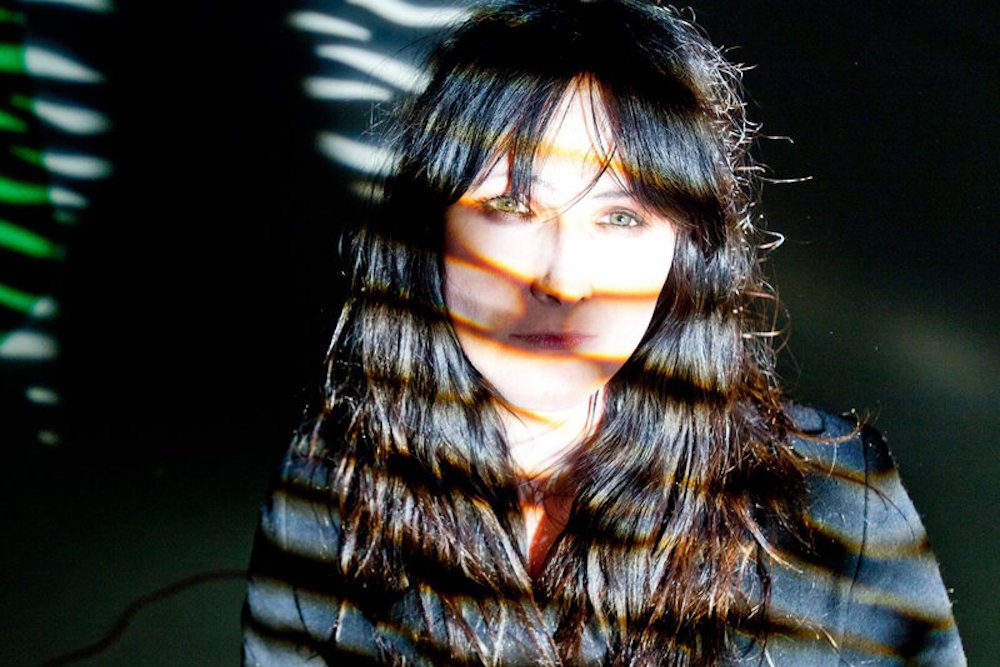
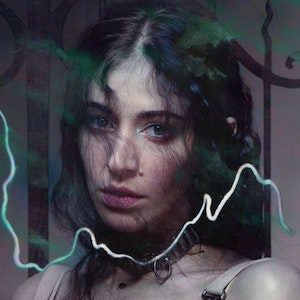
Perusing through Julia Wolf’s Instagram, the combination of quirky photoshopped selfies, documentary style videos shot with her younger sister, and peeks into her songwriting process made her feel instantly familiar to me – like someone I may have grown up with, or met at the classical music festivals I attended as a kid. As it turns out, we haven’t crossed paths in this lifetime, but in conversation her vulnerability and openness was magnetic. A classically trained pianist, vocalist, and brilliant top liner – WOLF’s music embodies old soul dynamic energy with a modern flare and 808s. The stage name WOLF was actually inspired by her little sister’s childhood protective imaginary friend. “Every night she’d say, ‘Good night, Wolf’ to her imaginary pet. It kind of just stuck with us through the years,” she remembers. “She still says it now, just out of habit.” It was a natural choice for Julia’s stage name, which she says she “didn’t want to be super contemporary – I wanted something that was going to really stand out.”

Wolf began releasing songs last year, beginning with “Captions,” “Immortale,” and “Chlorine,” introducing her honey silk vocal tone and confessional, stream-of-consciousness lyrical style: “The nostalgia trips me up/I miss being small like the first time/Driving with no parents in the car/Need to stop quitting before I start/Got my flip flops cutting me up while I walk.” The cadence of her flow and succinct melodies expressed a duality of emotional depth and vulnerability with a pinch of defiance and empowerment. A love child from a cross-genre mixtape your first crush made for you in middle school, wrapped in aged holiday paper, slipped through the space between the window and the seat on the after school bus.

Since the age of seven, Julia Wolf found refuge playing classical music on a white baby grand piano that was gifted as surprise from her father to nurture and develop her musical talents. A rigid dichotomy between social introversion and a passion for performance eventually led to routine participation at her school’s talent shows. “As a teenager I was extremely shy, and I just couldn’t talk to people. It didn’t make any sense why I was always performing, but it was the one thing that I just loved to do,” she says. “Eventually my teacher said, if you want to perform in the senior showcase talent show, it has to be an original song. I was mortified. My first song kind of wrote itself. It was about my best friend at the time. I was a senior, and she was a junior. I was going to be leaving for college and it was about always finding time for each other no matter what. Although I couldn’t connect with most people face to face, it was surprisingly easy for me to express myself through songwriting, almost an unhealthy justification for being so quiet.” Though that song is unreleased, Wolf dissects these indelible personality traits on recent single “Pillow”:  “I will never act like something I’m not/Don’t blame my shyness/I just don’t wanna talk/But I think a lot/People can interpret it however they want.”

Though her songs seem effortless and natural, it took a long time for Wolf to bring them to life. She studied at the SUNY Purchase Conservatory of Music, focusing on music composition and taking a gap year to study classical under Darren Solomon, who encouraged Julia to consider a future as a concert pianist. She eventually returned to her left-field indie pop songs, independently producing demos out of necessity, but they fell just short of what she longed to achieve with them. “Throughout college and then the years following that, I was constantly hitting up different producers because my knowledge only took me to a certain level,” she says. “It still wasn’t matching what was in my head. Trying to find people to work with was so unsuccessful. It became really heartbreaking because I would send demos to be mixed and I would get mixes back that were literally unrecognizable. I even cried, and I’m not a crier.”

This disappointment led to her father suggesting a return to his hometown in Italy and starting a family run pizza business. Both of Wolf’s parents are native Italians – you can hear Wolf’s heritage in bilingual single “Immortale” – and felt that a fresh start as an American artist in Italy would provide a new beginning for Julia and be a good move for the family overall. At first, Wolf didn’t see it that way. “I just was so devastated. I thought my music career wasn’t going to work out for me based solely on the fact that I just couldn’t find people to help bring to life the vision,” she says.

A serendipitous internet connection with Jackson Foote (of NYC-based electro-pop duo Loote) changed everything. Foote stumbled upon a soundbite from a live performance posted on WOLF’s Instagram story and casually asked if he could take a stab at flushing out production for the track. “I had been searching for collaborative artists for years before meeting Jackson and it was one dead end after the next. I never realized finding someone on the same wavelength as me, who understood the sound I wanted, would be so completely impossible,” Wolf says. “But when Jackson and I started working together there were two things I immediately knew: one was how rare our musical alignment was, and two that I wanted to continue working with him for as long as our creativity would let us.” This organic partnership would eventually birth the first batch of tracks that matched her true sonic vision. Her cross-genre, R&B-tinged pop has since gone viral on Spotify.

Wolf’s distinctive music style might come as a surprise to some; she says she’s often pigeonholed as the singer-songwriter type at a glance. “When people look at me… they’re always surprised when I say, like, yeah, I listen to rap or, you know, this is what my music sounds like,” she says. “I feel like I have definitely been boxed in, at least for like the beginning half of my career. And that’s why I never put music out, because it wasn’t exactly what I was envisioning to represent myself.”

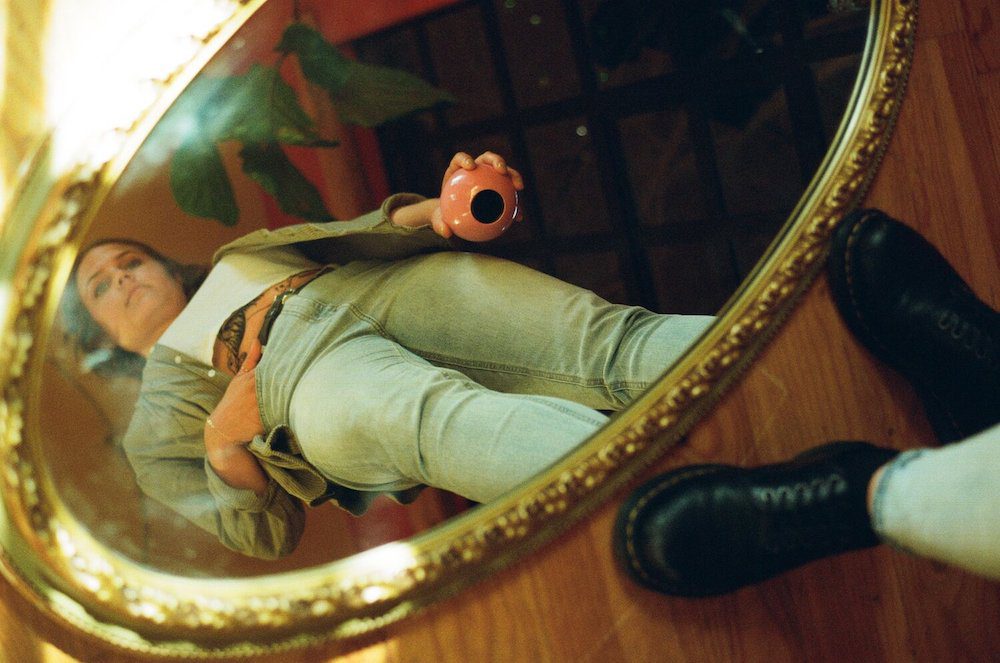
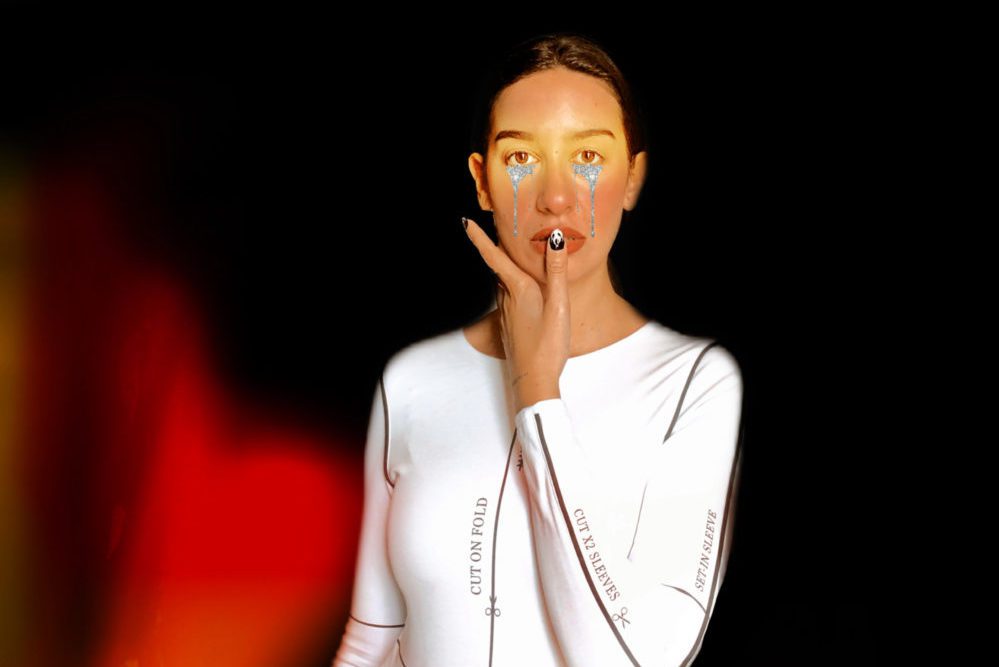
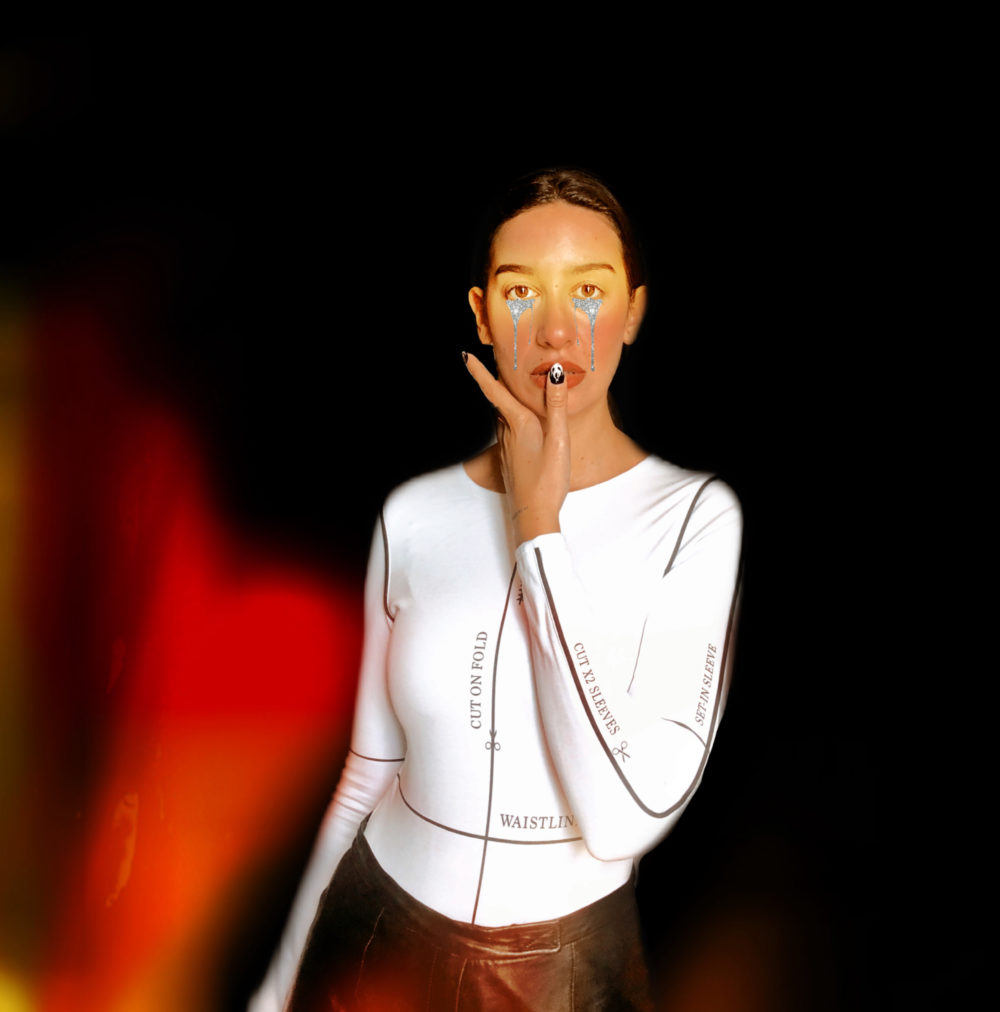
By teaching herself Photoshop, Wolf’s surrealist artwork (heavily inspired by the album art of Tyler the Creator) completes her sonic world. Her imagery carves out a unique visual space for the project, and separates Wolf from the typical self-promoting artists taking selfies at coffee shops in Silver Lake. She creates whimsical collages, layering skeleton fingers over a fleshed out hand holding a vintage mirror, shooting laser beams or dribbling crystalized tear drops from her deep set eyes.

The lyrics always come first for Wolf as the main focal point followed by the melody. She gets most of her inspiration from Soundcloud, where she spends time discovering up-and-coming rappers. She’s also heavily influenced by the lyricism and genius of Frank Ocean: “It’s just really the attention to detail that I love so much about him and the way he could say so much with so little. I think that’s one of the hardest things to do, is to just simplify how you’re feeling,” she says. She says SZA is another big influence for the same reason, adding, “I’ve always gravitated towards rap. I don’t know if it’s the beat that’s behind it or the change up in flow and being able to keep a song so interesting without melody. Blows my mind.” You can hear those influences strongly on her latest single, “Play Dead,” which dissects the “evil” behavior she’s guilty of acting out in a doomed relationship. But she’s also inspired by pop punk bands like The Front Bottoms. “I was always the first in the mosh pit, and really let loose,” she says. “Their live shows are just so much fun, and it’s also inspiring to see people storm the stage and just feel like they can completely be themselves.”

Wolf has been riding out the pandemic in NYC, and while the isolation is not unusual for a writer who values her solitude, she says, the biggest difference between her normal hermetic routine and quarantine is that the latter “feels way more forced – and that has definitely challenged the creative process.”  Of course, the location itself has a silver lining. “Being in NYC in general has taught me that artists can find inspiration in all types of circumstances; there’s a fundamental need to create when you feel you have something to say,” Wolf points out. “The state of the world right now is a heavy mixture of chaos, unjustness, sadness… but watching people create change is 100% motivating and highlights the beauty that comes from speaking your truth.”

For now, her plan is to drop a few more singles before turning her gaze to a full-length release. “I’m getting a lot closer to releasing an album but want to make sure the timing is right,” she says. “It’s a body of work I’m proud of and while I’m tempted to just release it, like most things in life, rushing always backfires.”

Follow WOLF on Facebook for ongoing updates.
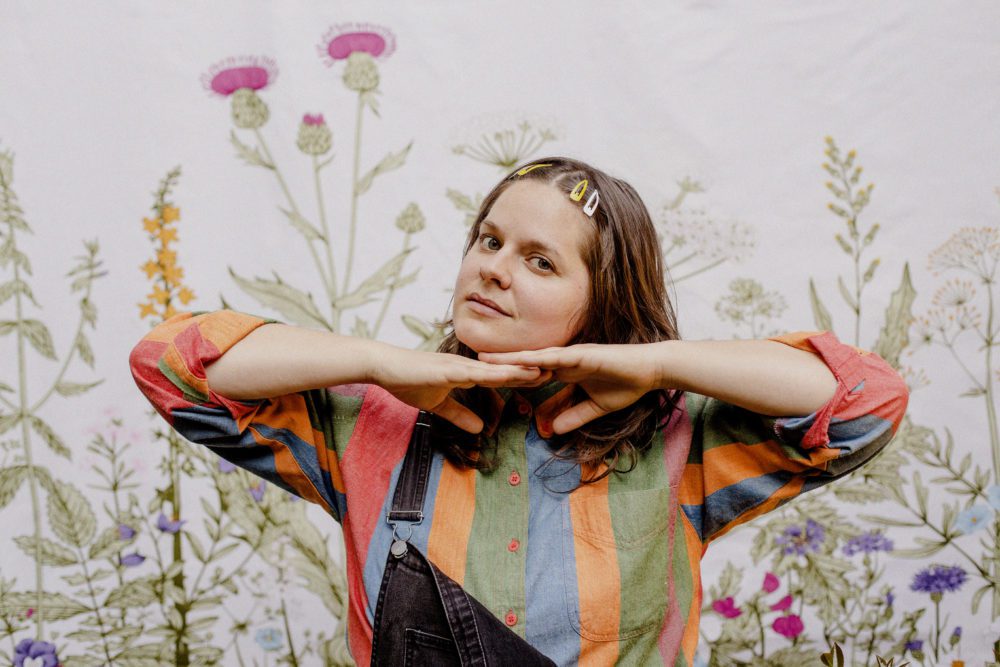
Earleine Premieres “Rita,” a Poppy Murder Ballad for the Sober Movement

Photo Credit: Kendall Bailey

Ashley Wright was playing a festival when she heard about Rita for the first time. Rita wasn’t another performer on the bill or a mutual friend, but an alter-ego that had been emerging from Wright’s blackout drunkenness for years without her ever knowing. Someone who had met Rita the night before raved the next morning about how funny the persona was – “this buffet waitress who smokes two packs a day” – and when Wright asked friends about it they confirmed that Rita was no stranger to them, either. Rita lived in Ashley Wright’s body, but Wright was the only one not in on the joke.

“I was totally mortified. It’s a very surreal thing,” Wright says. “If I can have a whole other character that I have no memory of, what else am I capable of doing when I’m intoxicated? That’s the scary part for me.” Wright did what any good songwriter would do – she dissected those feelings of shame and embarrassment lyrically, and set them to music. Though it didn’t happen right away, once she sat down to examine her risky behaviors around alcohol consumption – to have a chat directly with “Rita,” as it were – the song just tumbled out of her.

Wright says her songs, which she performs under the moniker Earleine – a nod to the acquaintances she made while working anonymously as a civilian in a military training program – tend to either be extremely personal or more of an exercise in hyperbole, but never a combination of both. “Rita” was an exorcism, and ultimately an example of stark contrast between the using songwriting as a positive tool for unpacking complex emotions, versus the crutch of substance abuse, which Wright admits “always made things worse.”

When she performed the song live, it always had a heavy, mournful vibe; after all, the musical alter-ego, Earleine, is essentially killing off the blackout alter-ego, a murder ballad for the sober movement. But as a performer who often found that acoustic guitar pigeonholed her as an Americana artist, the sounds Wright heard in her mind veered closer to indie folk. So she enlisted the help of producer Saman Khoujinian, co-founder of Carrboro, North Carolina-based Sleepy Cat Records, to bring that vision to life. The result is a deceptively poppy, woodwind-laced take on a dark subject matter, in the vein of Third Eye Blind’s meth chronicle “Semi-Charmed Life,” though certainly not as dated.

Wright has always found an escape in music, but didn’t start playing guitar until she was 17, living in Tennessee just North of Nashville. She wrote songs secretly in her bedroom for years before performing at a talent show, which she likens to an out-of-body experience that christened her dedication to writing and performing. But her path from then on was pretty circuitous as she bounced from three semesters of college to playing covers in a retirement town, commanding army trainees with the codename Earl, and finally landing in the prolific North Carolina Triangle scene. She met Khoujinian at a local dive called The Kraken, ended up sending him some demos, and they eventually put together Earleine’s debut EP, out July 24.

Across four tracks, listeners get the brutal honestly of songs like “Rita,” thoughtful examinations of Wright’s frustrations as a woman raised in patriarchal Southern culture (“Less of the Same”), miminalist metaphors for dealing with anxiety and depression (“Let That River Roar”), and “Still Call,” which Wright calls the “token heartbreak anthem” on the EP, about her first civil, amicable, mutual “grown up breakup.” Like the oboe on “Rita,” there are unexpected, quirky flourishes throughout the four tracks that set it apart from genres the project might have been lumped in with in the past, making the debut effort distinctive – and promising.

Earleine has many more songs in her repertoire, but like so many aspects of life, the pandemic has put plans to record a full-length on hold. For now, Wright is focused on introducing “Rita” to the world – and kissing her goodbye. “If you make music that touches on personal topics, topics that might be considered taboo, [like] alcohol addiction, I feel like it’s important to put it out just to connect with those who might be feeling too embarrassed or too scared to talk about it,” Wright says. “I’m hoping, in putting out this EP, that I can reach people who can connect with it in some way, that it brings them some sort of solace, or comfort, or inspiration.”

Follow Earleine on Facebook for ongoing updates.
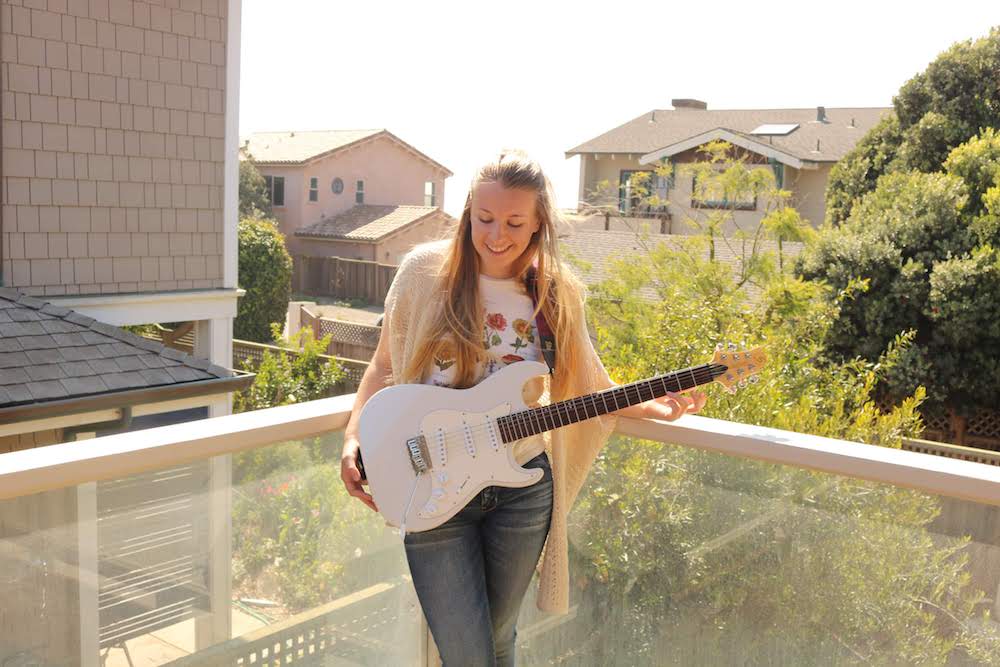
The Debutones Ask Existential Questions with Pandemic-Inspired Single “Lonely Souls”

On a cold, gloomy day in late March, a few weeks into the COVID-19 pandemic, singer Debby Nagusky picked up her guitar for the first time in weeks. She had just read several news articles—one about the shortage of ventilators for sick people, and another about the many families forced to say goodbye to dying loved ones over video chat due to necessary social distancing policies.

“I was just feeling so sad and kind of hopeless at that point. I was thinking, how can this be? How can it be that our country, with all its resources, seems to be falling apart and doesn’t seem to have enough resources to treat the people who need them or may need them?” Nagusky says.

Nagusky is the lead singer of The Debutones, a five-piece Seattle-based group that performs an eclectic mix country, folk, and bluegrass music. Though she’s occasionally written songs since her college days in the 1970s, she’s never self-identified as a songwriter. And yet, once she picked up her guitar that day, the first line of “Lonely Souls” (“How do you grieve from far away?”) just came to her. From there, Nagusky says the rest just oozed out.

“I feel like I was a vehicle for the song. It was done in 20 minutes,” she said. “I was like, what just happened here?”

Along with responding to the news headlines she’d seen, Nagusky says the song is also influenced by how she felt when she learned about a choir in Washington state that had gotten together to rehearse shortly before the stay-home order was issued. Forty-five of the sixty-person choir was infected with COVID, and two members ended up dying. Nagusky, who says her love of music is fueled by sharing it—in person—with others, was deeply impacted by this news.

“Something as seemingly joyous and enjoyable as singing with a choir—how can that kill you? We’ve never heard of anything like that before,” she says.

As a result, “Lonely Souls” is a melancholic, contemplative folk tune, particularly relevant to the times we are all facing right now. In fact, the song directly acknowledges so many of the hard, existential questions the pandemic is asking of humanity: “Who gets to live, and who must die?/ Who must decide the reason why?/ Why must they choose for us all?”

Still, Nagusky says the last thing she wants to do is deepen anyone’s pain with “Lonely Souls.” Instead, she was looking to create an outlet for her grief and hopefully for other people’s pain, as well.

“In our society, sadness is kind of pushed under the rug — we’re always supposed to be happy. This is not a happy time. I don’t think it’s a bad thing to feel sad. I hope [the song] allows people to feel,” she said. “We’re all hurting.”

To learn more about The Debutones, visit their website.

Madeline Finn Faces Her Fears with New Single ‘When It’s Dark’

Photo Credit: Andrew Wells

Madeline Finn has a way of stirring one’s soul with her music, exemplified by her new song, “When It’s Dark.” The grunge-leaning track balances Finn’s stark resiliency with her refined voice, reminiscent of Evanescence’s Amy Lee. In the song, Finn examines fear in all its facets: the horror-movie creepiness of feeling watched; concrete phobia fodder like spiders and ghosts; anxiety and uncertainty in relationships and in the future, and more. But the song’s power comes from her vow not to let fear take over, but to understand it.

She uses potent metaphors in the second verse: “Fear is a delicate dance/She’ll spin you around and tie both of your hands/And she’ll force you to grow in ways you’ve never before/Like the ivy slithers through the cracks.” Soft, but ominous strings add to the song’s sinister vibe, Finn naturally intertwining eeriness into her genre-defying sound.

The song’s bridge mimics that sense of rising unease to stunning effect. The electric guitar starts off low, slowly building as she ticks off a whimsical list of activities that will somehow inoculate her to more serious terrors. Drums thunder and the intensity of the riffs grow louder behind her soaring voice as she reveals that she confronts her irrational fears “So that I may grow accustomed to the way that it feels/And I’ll treat it like an old friend when it tries to steal/My breath from my body/When it tries to rock me/Like a ship lost at sea.” Quietness guides us to calmer waters at song’s end, where Finn reprises the breathless statement “But I’m not crazy” in a manner that symbolizes self-soothing.

In a description of the song on Soundcloud, Finn reveals that the story poured out of her in 20 minutes after a bout with paranoia, when she thought someone was watching her from inside her home, resulting in a panic attack that she couldn’t alleviate. In a moment she says felt straight out of a horror movie, Finn turned to songwriting as a last resort to calm her nerves. “’When It’s Dark’ is the most powerful creation I’ve been able to channel from the muse to music,” the Cleveland-raised, now Nashville-based singer professes. “It gave me a sort of container to put all the fear into, and that’s what I do every time I sing it… I take all the fear and anxiety I’ve been feeling and put it all into that moment. It doesn’t get rid of it completely or make it so I don’t have to do any other work, but it does transport me back and remind me that I have in fact come out on the other side.”

“When It’s Dark” is one example of Finn’s gripping artistry. As the lead singer of pop-punk band Envoi and Americana-style group Whiskey Hollow, Finn proves she can cover the musical spectrum and blend these distinct sounds into her solo work. The delicacy of her voice is felt on “Love Me Like I Love You,” an ode to unrequited love and loneliness, while the video for “Save Yourself” showcases her ability to masterfully bring her words to life through captivating black-and-white images as she tries to keep her head above water in a bathtub while a series of hands attempt to push her under.

Part of Finn’s magic is that she strikes just the right balance between tenderness and intensity, bringing a mystical air to her work that demands attention. “When It’s Dark” asks us to consider what we do in the face of fear, but the bravery in Finn’s voice is unmistakable.

Follow Madeline Finn on Facebook for ongoing updates.  
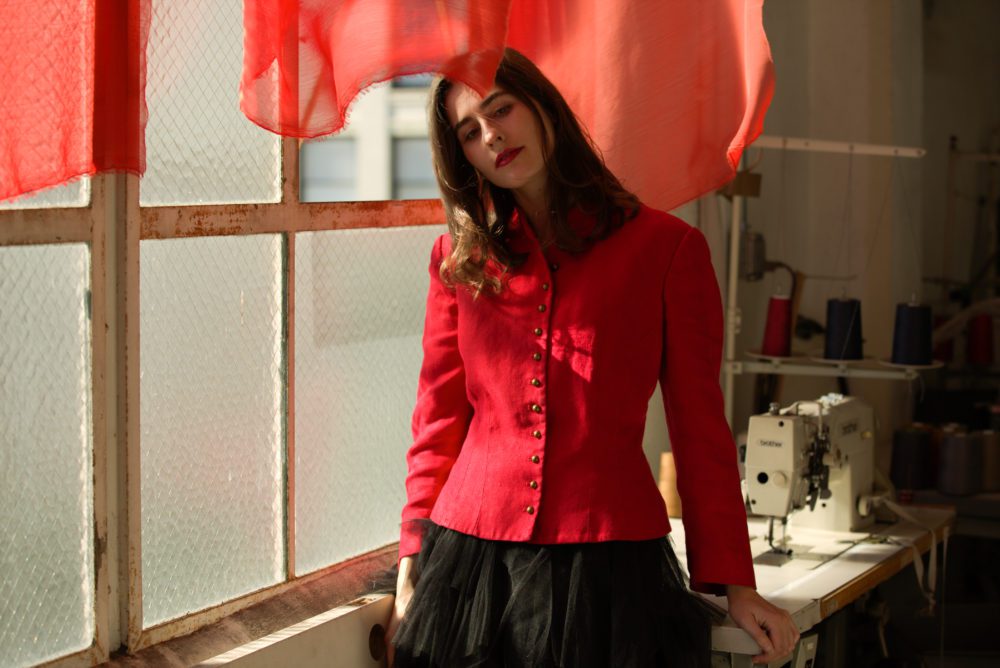
PREMIERE: Alex McArtor Critiques Celebrity Worship in “Biggest Fan” Visualizer

Credit: Lexi McArtor

Growing up in Austin, 18-year-old singer, songwriter, guitarist, and pianist Alex McArtor would often attend concerts and music festivals as a kid. These were the earliest inspiration for her music career – and they also led her to reflect on the mystique surrounding musicians.

“I grew up around music, and my parents were always talking about the Elvises and stuff like that, and how ‘Oh my god, they were so amazing,'” she recalls. “I grew up seeing these people as not human.” She remembers going to one particular festival in middle school and “worshipping” a band that was playing, then feeling underwhelmed when she actually met the members. “When you see something from far away, it can be anything you want it to be — say some guy on stage looking like a total god,” she says. “And then you meet him and it just kills that magic of that.”

That experience was the inspiration for her latest single, “Biggest Fan,” which was actually one of the first songs she wrote many years ago. McArtor’s deep, crisp voice, acoustic guitar, and somber lyrics conjure up Lana del Rey with a hint of classic rock as she paints a picture of a woman following a glamorous rockstar to his room, a “silver castle on the moon” that nevertheless “tastes like litter and cheap perfume.” In the catchy chorus, she sings: “Starry-eyed, she’s hypnotized/Wants to stay with him for the night/Says I’m your biggest fan.”

Inspired by The Carpenters’ “Superstar” (and Sonic Youth’s cover of it), McArtor used lots of reverb, echoing effects, and weighed-down electric guitar toward the end. “[Sonic Youth] gave it a very whimsical kind of alternate reality,” she says. “There was just a feeling when you heard it, and I kind of wanted to use the same instrumentation for my song as they did.” McArtor also uses film as songwriting inspiration, playing the music as she watches a movie on mute or looks at a still. For this one, she used The Virgin Suicides, perhaps apt given the naive yet disillusioned woman at the center of the song.

She worked with an artist called MadHag to create a dream-like visualizer for the single. MadHag drew a man and a woman outside amid giant flowers and a colorful, starry sky, and then animated it. “I’m a big fan of supporting young artists because I’m also an artist, especially girls,” says McArtor. “I was like, ‘Tell me what you see when you hear this song.’ I wanted this to be youthful and almost naive in the artwork, and she gave that to me. You have the stars, and it’s very whimsical.”

McArtor released her first two EPs, Spoken Word and Heart Talk, Vol. I, last year, showcasing dark, dramatic rock songs like “Touch” as well as folkier ones like “East Coast.” Despite her age, many of her songs have an older sound to them, which she chalks up to influences like Neil Young and Fleetwood Mac. With plans to complete her senior year of high school in New Hampshire – after spending the past year homeschooling in Dallas – she’s still not sure if she wants to go to college or not. But she’ll certainly continue to write new music — a promising endeavor, as her earliest work already displays an impressive mastery of sound and lyrical depth.

Follow Alex McArtor on Facebook and Instagram for ongoing updates.

Berkeley’s Brutally Honest Feral Approaches Personal Trauma with Unyielding Precision

Photo by Rachel Huang
Photo Credit: Rachel Huang

“Because I’m really honest, I get really honest reactions from the audience,” says Kelsey Ferrell, who makes music as the Berkeley/Santa Cruz-based Feral. Her music is, if anything, brutally honest. Feral’s most recent release, a four-song collection of demos recorded on a earbud microphone, slaps us with this unforgettable line halfway through the first song, “Native Speaker”: “I know I am a total mess/and my songs don’t pass the Bechdel test.”

For someone who was involved quite closely with social justice both personally and professionally throughout her undergrad career at UC Berkeley (she recently graduated), you would think such an admission would more likely be held hostage in some unmarked folder in GarageBand on Ferrell’s laptop as opposed to being broadcasted to the world on Bandcamp. But this, frankly, never seemed like a consideration for Feral, who appreciates above all how her openness can potentially manifest as a balm for others. “I’ve had people come up to me after I’ve performed [a song] and said, ‘wow, that really meant a lot to me,’” she explains. “And that kind of moment of having someone connect to my music — it’s worth it to me. It makes it worth the vulnerability on my side.”

And the music is better for it. It can be difficult to rehash traumatic experiences to a trusted friend, let alone an audience looking for levity (Ferrell does stand-up comedy as well) but she seems to have settled in the knowledge that the only way out is through. One such foray into the weeds for Ferrell is her reckoning with a past relationship that had a huge impact on her. “I have a few other songs that are maybe about a fling here and there, but he is the main person I write about,” she says. “There’s just so many interesting elements to our relationship that made it not a normal relationship and not a normal breakup. So it just it has a wealth of metaphors and storytelling [to pull from].”

Said ex-partner makes an appearance in three out of the four songs on “Quarantine Demos,” in ways both tragic and sweet. “Native Speaker” is at once both forlorn and determined in its assertions as Ferrell laments the loss of the person who helped her discover and define herself as a sexual partner: “Cause you and I wrote our language of love together/and you are the one/and I’m missing the tongue/of my native speaker,” she sings.

Considering that first times and first loves are often dismissed for their sloppy and adolescent bent, it’s refreshing to hear someone admit that this was not be-all-end-all of their experience, even as those feelings resurface from time to time. Furthermore, the expectation that suffering is inherent to our first forays into sex — especially for women — is an exhausting trap that feels good to shake off, even if tinged with loss. “Forlorn and determined” is also, incidentally, not a bad way to describe Ferrell’s voice, which is very strong, switching with ease from a tongue-in-cheek indie-pop delivery to some arresting ethereality.

The destructive power that one individual can hold over you is a predominant theme in Demos, as well as Ferrell’s 2018 LP debut, Trauma Portfolio, which also details the complexities of that formative relationship. “I was dating the son of a billionaire,” she explains, “and I was growing increasingly uncomfortable with that relationship and the ways it made me complicit in oppression… it just brought in this huge power dynamic to our relationship. Even though he didn’t necessarily abuse that power or want to hold power over me, he just intrinsically did.”

Despite her discomfort with dating “the 1% of the 1%,” Ferrell is eager to turn the spotlight back on herself, noting, as she puts it, her own hypocrisy. “I think that a lot of my earlier songs were casting the blame here and casting the blame there and not really looking at myself and how I might have been a part of the problem,” she says. The penultimate track of Demos, “Titanic,” is a great example of how far she’s come: “I am so broken that I call upon God,” she admits in the chorus. “I do not believe but I want to be wrong/You’re my delusion, my sad fantasy/I cannot hold you, but you’re all that I see.” It is both condemnation and consternation at once, the three-minute version of those moments where you look at yourself in the mirror and ask: How could you do this to me? But more importantly — how could I do this to me?

Trauma Portfolio is slim at nine tracks but feels much more substantial despite its focus on a central subject matter. Back on the subject of personal responsibility, Ferrell notes the yin and yang of her album, also known as tracks seven and eight. The former, “Fuck the Bourgeoisie,” is both utter fun and utter horror, as Ferrell’s self-deprecating denouncement at the end of the chorus (“I did, I did!”) lets us know on no uncertain terms the depth of the mire she was at the time of the song’s germination, if not its final cut. Rectifying your judgement of others with your own bullshit is, at the very least, a Herculean task, one which she throws herself into with resigned grace in the “Supertragic,” which follows. It’s a bit of a self-flagellation exercise, where every insult Ferrell parrots back in the chorus (“also rich, hypocrite/vendetta vixen, biased bitch”) sounds like less of a kiss-off and more of a panicked question to no one. Is it true?

The true kiss-off comes in “Soup,” a pissed-off anthem with some pretty relatable grievances – if some very unusual circumstances – that brought them about. The song details Ferrell’s experience as a high school senior after she was labeled a snitch for attempting to get the authorities involved in an underage student’s relationship with an older man. “I was bullied and shunned and all of these terrible things that entire year… I basically was thrown under the bus by these adults who were supposed to protect me,” she explains. “And something that [the other kids] did was they came to my boyfriend’s house and they, like, body slammed him with cans of soup.” Anyone who has found themselves at the crosshairs of the mob will find something to relate to here, whether it be some very justified calls outs of the cops and school administration or simply this salient line: “Fuck the apologists who think it’s okay/And love to all of my snitches and bitches who stand up for the same.”

The events chronicled in “Soup” were the beginning of the end for Ferrell’s relationship, as her rapidly-deteriorating social standing led to an increased reliance on her then-partner, making their later breakup all the more devastating. However, it did propel her into a new stage of her artistic work that served as the backbone for Trauma Portfolio’s completion. After she joined a student-run songwriting club at UC Berkeley, she made a new rule for herself: “I was only allowed to play my own music. And that really, really encouraged me to write a ton.”

Ferrell recorded Trauma Portfolio in Santa Cruz, the same place where — well, a lot of shit had gone down. Recording was a bright spot when she had to return home for the summer, and that positive first experience working on such a substantive project with producer and instrumentalist Ian Pillsbury left her itching for more, even as quarantine currently keeps her in demo-land.

But here’s the reality — demo or not, good lyrics and instincts stand out. And so does intention. Ferrell is actively branching out in subject matter — see “Cameron” on Demos for a bittersweet history lesson on her relationship with a childhood friend — and self-awareness. “I’m learning as I get older to try to tell a more complete story,” she says. “As honest as I am about what other people have done to me, I’m trying to learn how to be honest about what I have done to others as well.”

PREMIERE: Evelyn Cools Dissects Jealousy in “Gold Woman”

Photo Credit: Tye Edwards

Romantic jealousy is one of those feelings almost anyone can relate to. Either we’ve felt like everyone but us had a special someone, we’ve worried our partners would stray, we’ve wanted to be with someone who was taken, or we’ve been non-monogamous and had to face our jealousy head-on. In her latest single “Gold Woman,” folk-rock singer-songwriter Evelyn Cools looks at jealousy from all angles, exploring where it comes from and where it leads.

The sassy, country-inspired song is sung from the perspective of a woman who’s in a bar with her partner when another woman walks in and catches his eye. When Cools performs this song live, she usually prefaces it with “this one’s about cheating” to get a laugh out of the audience. Indeed, with its powerful vocals, electric guitars, and vivid scene-setting, it bears some resemblance to Carrie Underwood’s infidelity anthem “Before He Cheats.” But Cools says the song is more about wanting what we can’t have; the “gold woman” can be an object of desire or an object of envy. At the end, Cools asks, “But was she worth it?”

“I was feeling very analytical about the modern dating world and how easy it is to have this ‘the grass is always greener on the other side’ mentality with relationships,” she explains. “Especially with social media now, it’s just so easy to see what you don’t have, but only the superficial parts of that.”

The song will appear on Cools’ upcoming EP, Misfit Paradise, out August 14, which explores our relationships with ourselves, with others, and with Planet Earth. In the slow-paced, minimalist title track, Cools sings about that feeling of belonging that tends to elude those of us who identify as misfits. She wrote it based on her experience studying at NYC’s Institute of Audio Research, reflecting on what happens when people from all over the world gather together around a common interest.

“It’s about finding the people that fit with you and make you a better person and make you be the best you can be,” she explains. “So many people — maybe all of us at some point in our lives — feel like misfits. Maybe we grow up in a society that doesn’t value our particular goals, or our family or our own thoughts make us feel like we don’t belong, and even though we think that way, there are other people who lift you up and you realize you’re really similar. Finding your group of people is a form of paradise.”

“Soaring” and “Another Night” showcase Cools’ traditional singer-songwriter style, while her folk and roots influences are evident on “Yosemite,” an ode to Yosemite National Park that expresses her interest in the environment and the inspiration she gets from nature.

Cools made a point to use real piano, guitar, and drums on the EP, resulting in an authentic sound that almost resembles a live recording. “It’s so easy these days to resort to samples,” she says. “And with some music, that works wonderfully. But for me, the authenticity of folk music and singer-songwriter music — it does it justice when you bring in those real instruments.”

She and her producer Enrique Lara, who was fairly new to producing, recorded the EP in his living room. “It was actually so much fun figuring out how to make things sound good and putting up blankets around the living room and tailoring the sound to what we were looking for and experimenting with things,” she says. “In the end, it was a really calming and welcoming space for me to record this EP.”

Hailing from Belgium, Cools is currently working on her first song in Flemish, her mother tongue. She’s also lived in Hong Kong, Budapest, and London at various points in her life, which she says has infused her music with an overarching message of solidarity and empathy. “I feel restless sometimes — I feel like I’m constantly searching for an identity and where I belong,” she says. “Sometimes, it’s good to ask ourselves deep questions and take risks and try living in new places. And I think moving around has given me the freedom to do that, because I’m not really from anywhere.”

Follow Evelyn Cools on Facebook for ongoing updates.
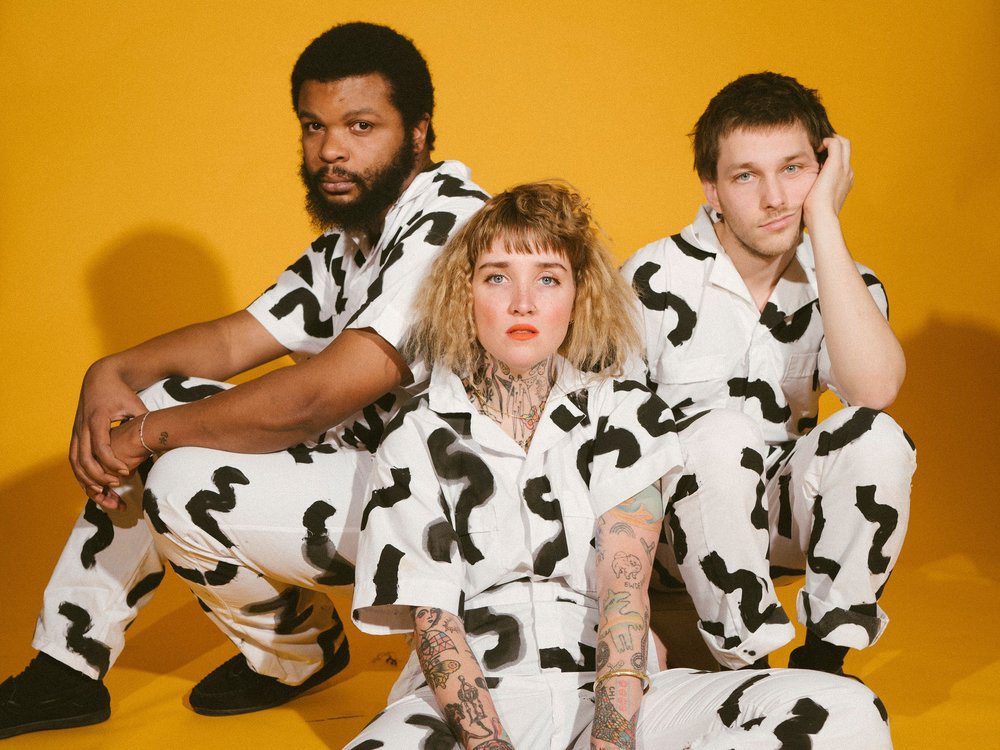
PLAYING CHICAGO: Support these Musicians on Bandcamp this Friday

DEHD is one of the many Chicago-based artists you should consider supporting via Bandcamp this Friday. Photo Credit: Alexa Viscius

In case you’d forgotten, here’s your reminder: that pandemic? Still happening. Which means Bandcamp Fridays are also still happening, and one’s coming up at the end of the week. I know, I know, there are so many places to put your money at the moment, right? Consider this:

Chicago has been slower to reopen than many cities, but every day I’m seeing people walk around maskless like they have no accountability to Black, Brown, and low-income people — you know, folks who’ve been disproportionately impacted by the virus. The less masks I see, the further live music feels, too. Our mayor has permitted select venues to reopen with strict guidelines like no vocals or wind instruments. But many musicians and would-be patrons see this as a rush. Why are we being encouraged to risk our physical health for the financial health of beloved entertainment spots and the people who play them? Why is it one or the other?

In small ways, our city is lucky. Having modest local support of the arts means the city and state have provided some relief grants to musicians. And thanks to legislation shoehorned by Senator Bernie Sanders, self-employed and contract workers throughout the country have received unemployment relief, which has also covered some musicians. Unfortunately, many occupy an employment grey area that can be difficult to parse for grant or unemployment applications – and the end date for Pandemic Unemployment Assistance looms at the end of July.

As Wax Idols founder Hether Fortune explained during a phone call last month: “I’ve never made a consistent living off of my music. Writing, day jobs, shows, selling stuff online, Bandcamp — those things combined are how I’ve made a living. Now that the pandemic hit, some of that stuff is more difficult. It’s not like you can get a quick server job for a few months or whatever. I can’t do readings or solo performances. Another one of my side hustles has always been thrifting and reselling clothes, and I can’t do that.” For Fortune, who’s been weathering COVID-19 from Chicago, Bandcamp Days have been the difference between making rent and not.

Right now in America, we’re in this weird state where consumption feels like a moral imperative. Every GoFundMe is a reminder it’s on us as individuals to financially mitigate situations that are clearly expressions of larger systemic failures. This, at a time when many of us don’t have as much money in our pockets. And yet Bandcamp Fridays remind me of a popular sentiment often credited to Emma Goldman: “If I can’t dance, I don’t want your revolution!”

She didn’t actually say those exact words – it’s a popular paraphrase of something she wrote in Living My Life when a man chided her for dancing. He basically said respectable organizers should not be seen having fun. But Goldman emphasized: There is no freedom without freedom of joy and expression. These are both equally necessary for change.

With so much happening in the world, some of us really need to dance out our demons — or at least, find a temporary escape. So if you can, why not do it on the day that helps musicians the most? Here are some Chicago sounds to consider dropping money on.


NNAMDÏ – Brat
NNAMDÏ announced via Twitter that he’d drop another album on Friday, but it’s worth scooping this quarantine release (especially as a luscious gatefold LP). BRAT is an introspective blend of jazz, hip hop, and math rock that resists easy comparisons. Across twelve tracks, NNAMDÏ wrestles demons, struggling to distinguish the personal ones from those shared. Complicated, playful, insistent — everything that makes the best brats exciting.


Carlos Niño and Miguel Atwood-Ferguson – Chicago Waves
In the winter, Los Angeles natives Carlos Niño and Miguel Atwood-Ferguson performed an improvised set of spiritual jazz at the South Shore Cultural Center in Chicago, which was released by Chicago label International Anthem. If staring into Lake Michigan in sub-zero temps was an album, it would be Chicago Waves. When the air is hot, we’re free to romanticize winter: recalling somersaulting snowflakes, breath tracing patterns in the air, and undulating ice as lake temperatures rise.


Pixel Grip – Heavy Handed
I’ve heard Pixel Grip referred to as “goth disco,” and whoever said it is not wrong. The trio draws on Chicago house and Hi-NRG beats — both of which owe to disco — then puts them in a dark package. Imagine a much queerer, less sexed-up Goldfrapp. That’s Pixel Grip.


KeiyaA – Forever, Ya Girl
Technically, KeiyaA has relocated to New York, but her sound is homegrown Chicago, a city where women with synths are thriving and she was raised on Afrofuturism. KeiyaA uses a microKORG synthesizer to layer sounds and samples, building complex interior worlds where she runs with desire, explores her loneliness, and affirms her worth. Whether it’s craving needlessly specific things like pineapple-pear juice (“I Want My Things”), using weed to lighten her mental load (“FWU”), or honoring the double-edged sword of her own strength (“Keep It Real”), she brings depth and originality to familiar themes. It’s an extremely compelling debut.


DEHD – Flower of Devotion
Flower of Devotion is only available for pre-order; the full album DEHD’s third studio release —doesn’t drop until July 17. But its two teaser tracks beg an investment now. DEHD is a trio that sounds like Edward Sharpe and the Magnetic Zeroes meets Cocteau Twins. Their song “Loner” is for dancing in your underwear when you’re sad but still energized. Emily Kempf sounds triumphant as she wails, “Yeah, you’re running-running-running from your cuts.” Right now, many of us are still limiting contact with the outside world, and certain ideas feel wildly popular and yet not popular enough. In that sense, it’s never felt more necessary to celebrate loner status.

Atta Boy Reunite After Eight Years for Sophomore Album ‘Big Heart Manners’

When the members of LA-based indie rock band Atta Boy are together, it’s easy to tell they’re childhood friends. The group was first formed when lead singer Eden Brolin, guitarist Freddy Reish, keyboardist Dashel Thompson, and drummer Lewis Pullman were in high school, and their first album Out of Sorts was recorded soon after graduating college. After an eight-year hiatus, they’ve just reunited to release their sophomore album, Big Heart Manners.

“[For our first album] we weren’t very emotionally mature,” points out Brolin, citing the growing up the band did in the interim as a major creative driver of the album. “There was something about that flip-flop and taking risks in either direction and seeing the growth in something even though you put it down for a while.”

“We were curious to get back together and see what our sound was because it had been eight years since we were in the same room together,” Pullman adds. “My personal goal was to refine what our sound was and reintegrate and just kind of challenge ourselves to push each other into new realms.”

In contrast to the more upbeat, poppy vibe of Out of Sorts, folk and country influences are audible in the new music, which is more reminiscent of bands like Band of Horses or Edward Sharpe and the Magnetic Zeros. The new album also incorporated some new instrumentals, including acoustic guitar and woodwinds.

In the first single off the album, “Devoted,” Brolin’s smooth, mellow voice reflects on a troubled friendship. The second, “Shade,” was co-written by Brolin and her partner Cameron Crosby and is based on a macabre dream she had about twins living in the same big house yet separated in different rooms, who ultimately took their own lives together. “What I take most and enjoy most from my dreams are just images that give you a different sense of what your own reality is,” she says.

Whether pulled from a dream or from those encountered in real life, Big Heart Manners is populated with a wide range of characters, their stories rendered in potent lyrical imagery. “Every time I hear lyrics that I’m amazed by, the first thing  I want to do is look up the analysis. It’s nice to hear an explanation to some degree, but it’s also awesome to leave that up to the listener to have their own relationship to the words,” Brolin says. “I want people to have their own experience with it.”

The album’s title comes from lyrics from the song “Lucky,” which the band members all wrote together. Like “Shade,” it centers on a rather pitiable fictional character. “Your boss at work tells you that you’re dumber than dirt / but you got them real big heart manners,” Brolin sings against simple, subdued keyboard chords.

“It’s about somebody that just sort of persists through the shittiest shit and just mean fucking people all day that just don’t give them the benefit of the doubt, and still, through that, being able to lend yourself to trying to be the best possible person that you can be,” says Brolin, who is also known for her acting work on shows like Beyond and Yellowstone. “And that’s what I think big heart manners are.”

“The best way to beat hate is to beat it with love, that’s what ‘Lucky’ does,” Reish agrees.

The band is currently collaborating with animator Deepti Menon on a video for “Lucky,” as well as an additional EP. In the meantime, they’re serving as ambassadors for the organization for Headcount, which helps people register to vote, and will be posting information on how to vote on their Instagram and even their previously inactive Twitter. “That’s gonna be our first tweet and could very possible be our last tweet,” Reish jokes. “A lot of people feel powerless when it comes to their vote or even if they should vote, but Headcount has tons of valuable information that can help you find and support candidates who actually fight for change, not just preach it.”

Follow Atta Boy on Facebook for ongoing updates.
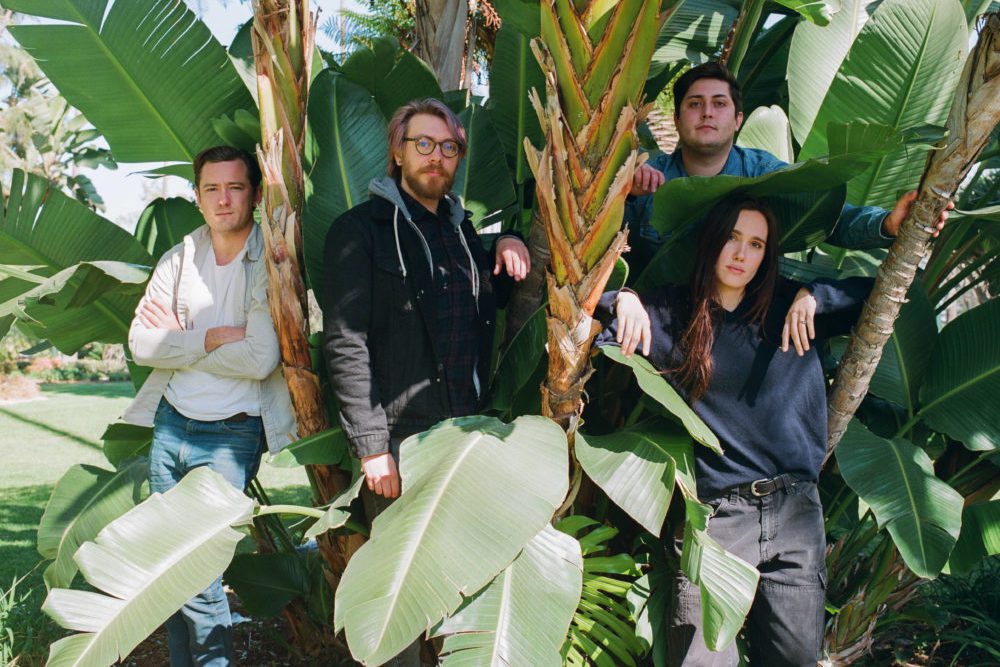
PREMIERE: Evangeline Gentle Celebrates “Ordinary People” with Acoustic Performance Video

Photo Credit: Kristal Jones

As the world seems to go through one travail after another, sometimes all we can count on to lift us up are the kind words and love of the people around us (or on our screens, as is often the case nowadays). That’s what queer, gender-fluid Scottish-Canadian singer-songwriter Evangeline Gentle reminds us of in their single, “Ordinary People,” an ode to “loved ones who keep me soft when I’m feeling hardened by the world,” they explain.

“It’s brave to be hopeful in this world/It’s brave to be kind,” they sing in a live acoustic performance being released on video today. “Just when I think I’d had enough, your love is a little bit of sweetness/Life softens at your touch.” Though the song was written a while ago, some of the lyrics seem suited to the current moment, such as “Headline after headline draining me/Oh the ugly things ordinary people do for more money.”

With Gentle’s voice front and center against acoustic guitar, the song is simple and sweet, as is the video, which was filmed in Peterborough, Ontario at the Sisters of St. Joseph’s convent. “I had been filming another full production video in their old laundry building, and the director Rob Viscardis and I decided to film a live version of ‘Ordinary People’ for the fun of it while we were there with the crew,” Gentle remembers.

Gentle’s past music embodies the same minimalist aesthetic as “Ordinary People.” Their latest singles, “You and I” and “Black is the Colour,” were both done a cappella and sound almost like old hymns, with repetitive melodies and universal, timeless lyrics.

On August 21, they’re releasing their first album, which will include the studio version of “Ordinary People” and other songs with a similar overarching message – “that despite all of the ways that we are different, we do share the same visceral experience of life,” they explain, quoting a line from “Black is the Colour.” “It’s hard not to feel connected when we realize this.”

The 23-year-old began writing the album at age 19, and the years it was in the making were full of self-discovery and coming-of-age moments, as well as artistic growth. At the end, Gentle realized that each of the songs in their own way was about the struggle to remain open-hearted amid pain and uncertainty.

“[The album is] driven by the belief that it takes extreme strength to be vulnerable, but that the rewards of doing so are far greater than those of being closed-off in the name of self-preservation,” they explain. This idea led to the chorus of the final track: “How do we become good and guided by the heart?”

Gentle, who started performing live by opening for touring bands in high school, considers the female icons of folk, like the Dixie Chicks and Dolly Parton, their biggest influences, though they’re also a big Taylor Swift fan who’s admittedly listened to “Lover” 50 times in a row.

Their goal with the new album was to incorporate poppier elements and expand on the traditional folk genre. “I wanted to experiment with synth arrangements, and I wanted to step outside of the genre I’d felt pigeonholed into as a ‘female singer-songwriter,'” they say.

Pigeonholing is something Gentle is familiar with as a queer artist, but ultimately something they’ve moved beyond. “I’ve spent lots of time struggling with internalized queer-phobia and this idea that I’m less likely to achieve what I want to with my life because of who I am,” they explain. “I don’t feel like that anymore. My hope has always been that in being an openly queer musician, I might help somebody feel less alone or inspire somebody held back by the same shame I have been to imagine a brighter future for themselves and the world.”

Follow Evangeline Gentle on Facebook for ongoing updates.
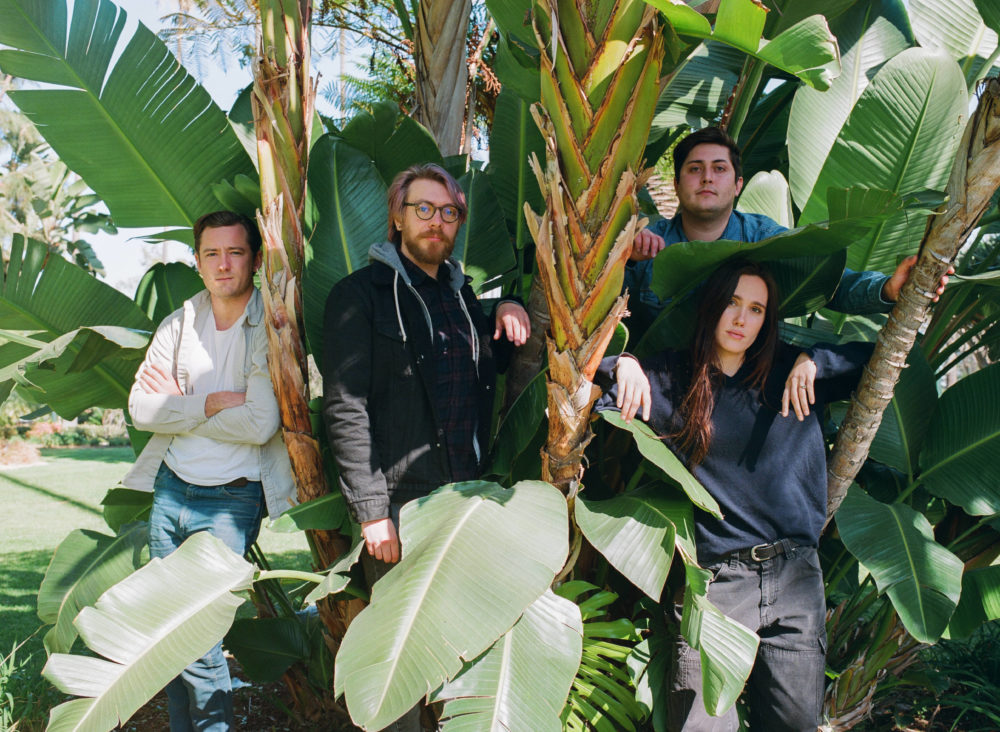
PREMIERE: Brooklyn Supergroup Rhinestone Mine Campy But Heartfelt Country Aesthetic on Debut EP

Photo Credit: Elizabeth LoPiccolo

René Kladzyk says she’s always been drawn to melodrama – but some of the songs she found herself writing were almost “too embarrassing” to record, at least for her more esoteric, conceptually-driven musical project Ziemba. As she developed a taste for the oft-maligned country and western genre – particularly outlaw country courtesy of Willie Nelson and Waylon Jennings, or the folk-adjacent Americana of Bobbie Gentry and Townes Van Zandt – she realized that its heart-on-your-sleeve lyricism lent itself perfectly to sitting with those uncomfortable emotions. The only problem was, she was living in Brooklyn, where the prospect of finding like-minded musicians to start up a country band seemed a bit like finding needles in a haystack.

While this pitiful position could’ve inspired another lonesome country-tinged tune, Kladzyk didn’t wallow; she turned to Facebook. “[My post] was like, ‘Who wants to join my weirdo country band?!’ and all these people reached out – none of whom I actually knew, we all just had mutual friends,” she remembers. From the first practice it was clear that the sort of people who would immediately respond to a post like that – and actually follow through – did so for the sheer love of playing music, and though the lineup changed slightly from those first practices, it solidified around an unlikely group of dedicated musicians, well-known in the Brooklyn scene for their involvement in rather disparate projects. These included: Baby Birds Don’t Drink Milk alum Oscar Allen; Death By Audio’s Jay Heiselmann, who’s played in Grooms and Roya; and documentary photographer Samuel Budin. The EP also features John Bohannon (Torres, Ancient Ocean) on pedal steel, Casey Kreher on drums, and backing vocals from Jess Healy, the newest official band member.

Though Brooklyn might seem an unwelcoming place for a country band to flourish, the eclectic crew had a built-in audience. “Between our collective members, we already had kind of a musical following, so it was never as hard for us to bring out a crowd as it was for me when I was starting out with Ziemba,” says Kladzyk. “Because we have members with other active projects we’ve never played a ton. We’ve only played outside of Brooklyn once I think. We’ve never done a full tour. But within Brooklyn we’ve been able to play a lot of really cool shows over the years with really great bands. We’ve been lucky to have really great crowds who dance a lot, have fun, and rage.”

Rhinestone, in many ways, represents the growing appeal of country music well outside the genre’s typical demographic – whether that’s Kacey Musgraves’ critical acclaim, Orville Peck’s anonymous rise to indie stardom, the revelation of gender-flipping songwriting ensemble The Highwomen, crossover stars like Colbie Caillat making forays into country… the list goes on. Like Kladzyk, the members of Rhinestone were relatively late to the party, but they took that fateful Facebook post as a literal invitation.

“I had less than no interest in country music for most of my life. Right before I started high school, my family moved to Missouri, where I quickly fell in with a narrow vesica piscis of Nirvana obsessives, Lilith Fair attendees, and Toad the Wet Sprocket fans. My teenage filter regarded the slick insincerity of the exaggerated redneck accents leaking from passing pickups as a tool of the enemy,” admits guitarist Oscar Allen, who wrote the EP’s second track, “Maze of Love” and takes lead vocals on it. “Over time I realized that my beloved Roy Orbison, Breeders, and Leadbelly records hinted at an alternate history and deeper peeks behind that curtain revealed songs by Gillian Welch, Townes Van Zandt, and Neko Case more powerful than my prejudice against the label. Still, I went into that first Rhinestone practice with a bit of bemusement – I had to move to New York to finally be in a country band?!”

Healy came to classic country in the early 2000s via alt-country artists like Clem Snide. “I don’t think I would have sought out a country band to join prior to Rhinestone because I don’t identify with the idea I have of the culture of country being like, white dudes in cowboy hats kicking the tires of their Trump-stickered pickup, chewing snuff, and whining. I am not a huge fan of the shiny new country radiosound,” she says. “But Rhinestone feels more like campy traditional country – we put on costumes and personas and sing the shit out of the songs and it’s a joyful rollicking good time with some heartbreak thrown in. Rhinestone’s songs seem to extract the elements of country I like – the soulfulness and universality of heartbreak, straightforward melodies – while bringing in just enough Brooklyn weirdness to turn me on.”

Named for a film that sees Dolly Parton attempting to turn NYC cabbie Sylvester Stallone into Nashville’s next big star, the campy aesthetic is certainly integral to Rhinestone’s identity. Partly, it’s about world-building, creating an immersive experience. But beyond that, it’s pointing out an interesting irony specific to a genre that “often inhabits that space where it’s simultaneously really showy and flamboyant and campy but it’s also totally earnest and heartfelt,” Kladzyk says. “And that’s something that I really like about it. Some people think if you’re wearing sparkly or shimmery clothing then you can’t be sincere. I would be so angry at myself if I didn’t take advantage of this fashion opportunity. It’s like, why not go all the way there?”

“Very early on, René laid down a clear earnestness-over-irony mission statement and that, more than anything else, made me go all in,” Allen says. “It’s been fascinating to discover how this deceptively simple genre, with song forms older than Grimm’s Fairy Tales, holds a strange resonant complexity. You’re not solely bound to tropes and cosplay, but certain chord changes, word choices, guitar phrasing, and production moves will instantly announce themselves as unworthy.”

The four-track EP came out of an upstate recording session where the band set an album and a half’s worth of material to tape, on a machine they bought with licensing fees from a Sophie Tucker cover they recorded for FUSION TV’s Shade: Queens of NYC. “Among the songs we recorded, there’s four different songwriters and four different lead vocalists,” Kladzyk says. “Mixing and mastering the songs has been kind of a drawn out process but right now we have a whole additional album done. As Rhinestone releases more music, there’s a lot of different styles that we play even though we’re kind of framing it as country – country is a term that means a million things to different people.” Allen, for his part, refers to it as “David Lynch country.”

With an extensive playlist of references, Rhinestone hopes that their homage to music’s most misunderstood format might lead people down a rabbit hole of discovery. “If, through this project, that older-and-weirder world becomes even slightly more visible to people with the same preconceptions I used to carry, I’ll feel lucky and grateful,” says Allen. Budin, the band’s bassist, adds, “It’s solid pop music, and always has been. I hope [the EP] will inspire people to delve into the rich history of country music, which, among other things, is an integral part of the story of the American recording industry.”

Kladzyk says it’s also a transgressive history, despite its current-day association with a more conservative viewpoint. She points out that a lot of country music, particularly alt and outlaw country, was “responding to corporatized, highly commercial music and feeling resistant to that, so there’s a counterculture element that’s like, almost punk. There’s no straight lines and there’s no ideas that exist in silos. It’s all interconnected.”

“I guess I hope that Rhinestone can show others, as it has shown me, that there’s a flavor of country for everyone, and that beyond the stereotype are some deep roots to draw on and be inspired by,” says Healy, who credits joining the band with opening up her guitar-playing.

“If somebody likes Rhinestone, they should keep digging,” Kladzyk agrees. “I hope that if somebody listens to what we’ve made and likes it, that they feel motivated to deepen their relationship with the music in their life, cause it’s really fun. It’s like, a really nice way to live.”

Rhinestone’s debut EP is out tomorrow, 6/30. 100% of sales from the first week of the EP release (plus pre-sales) will be split 50/50 between Movement for Black Lives and Las Americas Immigrant Advocacy Center. Follow Rhinestone on Instagram for ongoing updates.

PLAYING MELBOURNE: Violinist Xani Kolac Learned to Embrace Pop for Forthcoming LP

Pop musician Xani Kolac is a rare, prodigious creature. Best known for touring the festival circuit throughout Australia with her her violin-and-drums duo The Twoks, Kolac has been steadily releasing solo EPs that blend strings, electronics, and her beguiling voice since 2017. Her third EP, a collection of instrumentals released last year, was entirely improvised in the studio. Kolac has been building toward releasing her first full-length for a while now, and this September, she’ll see that dream come to fruition with From The Bottom Of The Well, which she says contains “pieces of personal growth, connections with other caring and surviving souls, wisdom and words of advice and pop songs to pick me up” despite being “written down in the depths of despair.”

Kolac began playing violin at the age of seven, and says, “By the time I was eleven I was recording myself playing violin on cassette tapes and overdubbing layers of additional violin and singing. I loved writing lyrics at that age, mostly songs about about knee-high socks falling down.” She recalls collaborating with her younger sister Meg as a jazz duo playing gigs at the local pizza restaurant in Melbourne, too. “We were a hit there, so we decided to write our own ’50s-inspired girl pop and started our little duo called Fluffin’ The Duck, with me on violin and Meg on double bass,” she remembers. “Some of my favourite collaborations are with my sister or close friends, just sharing music together.”

Her upcoming album, recorded in her lovingly constructed home studio, has evolved mightily from primary school topics and pizzeria tours  to explore sacred music, art and instrumental adventurism. “If I had to break this album into three parts, I’d label them art-pop, instrumentals and atheist hymns,” she says. “It’s taken me ten years on a scenic route to get back to a place of clarity, knowing exactly what I wanted to make and how I wanted it to sound. I’ve recorded and performed songs I wrote in an Americana/Country style to completely improvised instrumentals for this new album, but I’ve also jumped from genre to genre to cover ambient sound and dance pop, too.” The first single from the record, “Who Would’ve Thought,” documents the unexpected twists and turns of Kolac’s journey in her typically playful style.

Kolac’s “scenic route” also saw her collaborating with various producers and engineers who sculpted her sound, though it wasn’t until the making of From The Bottom Of The Well that she felt ownership for her work. “This album was made by me. I wrote all the songs over time, reflecting on the experiences that have shaped me over the past year or two,” she says. “I chose myself as engineer and producer, invested in a home studio set up and learned to make my own album. It has been the best fun, and most challenging experience to date.”

One of those life-altering experiences included the recent completion of a semester of Indigenous Studies at university, which ultimately inspired Kolac’s most recent single, “Grey.” It’s a cheeky analysis of the conflicting actions – seemingly harmless things like buying a latte on the way to a march for climate change – that can undermine our activist ideals if we’re not careful. But Kolac isn’t preachy, ultimately landing in the titular grey area where most of us live our day-to-day lives. She wrote it while sitting on her new three-seater couch, “an extravagance my boyfriend and I awarded ourselves for being grown-ups,” just as she says in the song’s opening lines. “Here I was on this luxury furniture item, reflecting on what it meant for me to be white in a country belonging to – and never ceded by – First Peoples, writing a protest song,” she says. “One of the lines I sing is ‘Can I call Australia my home if I was born here but on stolen lands?’”

Kolac may not have the answers, but at least she’s asking the right questions. She’s working toward a more balanced future, particularly in the music industry, by founding SPIRE, a collective of female instrumentalists available for hire on stages around Australia. And her work itself is a testament to the potential for evolution, blending as it does modern electronic production, like live looping, with her classical contemporary training. Part of that process was finally finding peace with being a pop artist.

“On my record there’s a track called ‘Fix It.’ Before that song I hadn’t even considered including a pop track in my repertoire,” she says. “My uni training had made me slightly ashamed of my love for pop music, but I recorded it anyway. I remember feeling so excited. The song made me wanna sing along and dance and it felt good. Now I lay down pop tracks all the time; arty, conventional, violin-laden pop tracks. I still love that track and I try to remember that when it comes to making songs, there’s nothing to fix.”

Follow Xani on Facebook for ongoing updates.
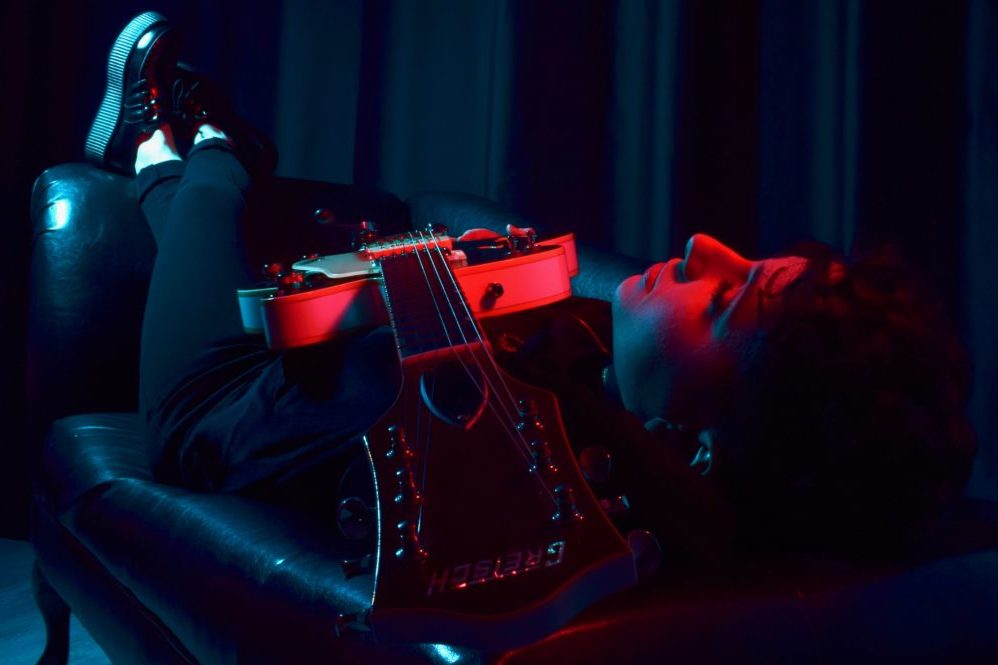
How Sci-Fi Writer Octavia Butler Inspired Lisa E. Harris and Nicole Mitchell to Compose EarthSeed

Using a mixture of performance art, experimental opera, free improvisation, and literary composition, artists Lisa E. Harris and Nicole Mitchell have created EarthSeed, a ten-song album recorded during a live performance and inspired by the groundbreaking works of Octavia Butler—one of the only prominent Black female science fiction writers and an early pillar of the Afrofuturist movement. EarthSeed drops on June 26th via Oak Park Illinois-based label FPE Records, only four days after what would’ve been Butler’s 73rd birthday.

It wasn’t the first time Mitchell had used Butler’s work as source material for her own compositions; the flautist had already released Xenogenesis Suite and  Intergalactic Beings in 2008 and 2014, respectively. Harris, too, had stumbled upon Butler’s work while composing an opera about Lilith. When the two met at the New Quorum Composers’ Residency in New Orleans, a collaboration felt almost destined.

For EarthSeed, Harris and Mitchell were inspired by two of Butler’s books in particular: Parable of the Sower (1993) and Parable of the Talents (1998), which center around a Black female protagonist, Lauren Oya Olamina, and her original spiritual practice, which she calls Earthseed. These books are also set in Butler’s eerily prophetic vision of the 2020s—a world stained with climate change, greed, and led by a morally-bankrupt business mogul turned politician—an alarming coincidence which Harris and Mitchell also weave into the urgent, and very often somber, tone of EarthSeed.

Harris and Mitchell were drawn to the idea of bringing sound to the truthful frequency of Butler’s work: the juxtaposition between the seemingly unfathomable world Butler envisioned and the world we have in 2020; the remarkableness of her portrayal of POC characters; and the infinite realities and expanded ability to dream that she gives her readers – in particular, Black readers. Ironically, this album was recorded in 2017, but they are just releasing it now—and there’s no better time.

Audiofemme chatted with Lisa E. Harris, who describes the early seeds of this project—the intent of  “exploding composition with interdisciplinary work” as Butler does,  their drive to write their own sort of “Earthseed” text, and their hope to bring it to life through deft musical composition and orchestration—and what, on the other side of the project, she hopes this album will bring to our tumultuous reality in 2020.

AF: I know you and Nicole share a love of Octavia Butler, and that drew you to collaborate with each other. What aspects of Butler’s writing drew you in?

LEH: I was reading her triology, Lilith’s Brood, because I was writing an opera about Lilith at the time. I was looking for notes of similarity in Octavia’s writing, and she immediately took me into a story that was so rich and possible. It was unfathomable, yet possible. That is something that has held me as a fan of her work. As a craftperson, writer, and story teller, she has created for us unfathomable and possible realities. That expands my ability to dream. It’s terrific and terrifying and awesome and “awfulsome.”

AF: Did Octavia’s writing of Black and POC characters also draw you in?

LEH: Definitely. When I first started reading her books—it was maybe 60 or so pages in before she started describing the main character who’s point of view we were embodying. She started describing her skin and how she looked and I was like, ‘Oh my god, this person’s Black?!’ It was shocking and grounding and almost like—I felt seen. I felt that something expanded or exploded and there was a real questioning in me like, you’re reading this yourself and you couldn’t imagine yourself in the story. I was all the more engaged that she centers Black women as her protagonists and people of color throughout her books. And shows how physical identity plays a part in our society on micro-aggressive levels and macro levels too. I appreciated that even more.

The thing is too, what was so surprising to me—because I questioned myself about why having a Black female protagonist was so surprising to me—is that she didn’t center the racial identity of the character first. It was more about their past, what she’s doing, what is her mission, what is her focus, what is her thoughts. And, as a Black woman in America, what I’ve seen is that if it’s a Black woman or a Black lead, it’s going to be centered around her Blackness, because it has be justified as to why this Black person is being centered. That’s also usually tied to some sort of oppressive tale or something that is to teach about what Blackness is. It’s really there for the white gaze. But [race] is only one descriptive dimension of Octavia’s characters. I love that.

AF: Do you identify with the Afrofuturism movement? What does Afrofuturism mean to you?

LEH: I really like that label. When I first started hearing it re-introduced in the 2000s, I think it sounded good. It’s a nice word chunk and it’s fun and kinetic in the way it sounds and feels. And, it reminds of me Afro—I like the friction of the word Afro. That reminds me of the actual hairstyle, which is so lovely to me and such a visual representation of joy. Having hair that can make an afro, I know what that electricity feels like and I like to hear that when I say Afrofuturism.

I wouldn’t be opposed to someone considering me an Afrofuturist. I welcome that. I wouldn’t remember to say that about myself, but I am looking toward the future. A couple years ago I was on a panel about Afrofuturism in Montreal with my collaborator Alisha Wormsley and we had an exhibition called “Proof.” One of Alicia’s pieces featured this group of words: “There are Black people in the future.” Afrofuturism has a vertical, electric, forward-moving energy to it that I’m here for.

Plus, the futurism, just like what I was saying before about if there’s a Black character or archetype, they’re usually posited in the white gaze to explain and talk about the history and relationship [of Blackness] with the white gaze. We’re not talking about Black past pre-white gaze. We don’t get Black history pre-colonization or slavery. To say Afrofuturism is kind of like, wait, what is the use of Black people in the future outside of the white gaze? It redistributes the gaze to being subjective.

AF: What drew you both specifically to Parable of the Sower and Parable of the Talents? What are some themes in that book that are relevant to our present world and that you wove into EarthSeed?

LEH: I love that Parable of the Sower and Parable of Talents are two chapter titles also in the Bible. It’s so interesting because Octavia Butler does stretch out into this space of lyricism and oration and formality [like the Bible] in her writing, especially in these stories about a stoicism that is based on a spiritual truth or law, that again is outside of everything that we know is possible in our modern world operating under white supremacy. What is a religion we’ve never heard of that feels formal and elegant? What is this? How is that possible?

And, she talks about characters that are recognizable [in the present]. Like she describes the mogul who has a lot of money and franchises throughout the world and then goes into politics. I remember reading this—way before Donald Trump was even a reality T.V. star—and I was like, wow, she’s describing Donald Trump. She had described that kind of person becoming the leader of the land, and then [even included] the slogan, “Make America Great Again.” That’s something I went back to and thought, how did she foresee these things? There’s a frequency in her writing—a sonic frequency—and it sounds like the truth.

AF: Was it challenging to adapt Octavia’s written ideas to a musical context? How did you think about and look at that sort of transformation?

LEH: We had some challenges, but it was actually really enjoyable. Nicole and I both are composers and writers, and the language [was] a big part of the composition, a different form of composition.  So we were interested in exploding composition throughout disciplines. With that, we were really inspired by the kind of prose style of writing that Octavia sets her Earthseed text to. So, in Parable of the Sower and Parable of the Talents, the main character keeps a journal and develops her own spiritual practice, which she writes out as a manual called Earthseed. She later develops a community around this living text, and they practice readings of this text. That grows and becomes activated into building community and changing the environment around them, and then making plans for their evolution in the future.

The fact that that text is called Earthseed, we knew then and there that that was where we wanted to start. We wanted to pay homage to that idea and what it is. We started with language—that title—and let that guide us into the direction of the written and music composition. What is the journey of the seed? That was our task with each other. From there we had a destination, that made it more attainable.

AF: This album has many moving parts—musical and written. What did the process of making this album look like?

LEH: Well, Nicole and I spent a lot of time developing the libretto, the text. At the same time, we had a running log about how we would sonify this particular feeling, what’s the orchestration? Nicole is a fantastic [floutist and] band leader, and she’s been leading different sized and shaped ensembles for years as Nicole Mitchell’s Black Earth Ensemble, which she recasts based on the needs of a specific composition. She had a network of wonderful musicians in Chicago that would flesh out the orchestration, and we just decided what was the best combination for the environment we were trying to create so that the text could live as one of the instruments.

Also, in Octavia’s book, the Earthseed text is the most malleable and transformative part of her novel. It’s the magic coming out of the book—it’s living. We wanted to make space for that. So, we used strings, cello and violin, which are so earthy in texture. The strings vibrate in resonance with the earth. We used percussion to activate the drive from one place to another, and also activate the African voicing and the human heartbeat of it. Then, there’s the use of bells and shimmery things that take us from a lower vibration in the body up into the stars. We use electronics, which is very futuristic, and then we used trumpet, which for me represented celestial realms and spiritual, dogmatic references to angels. And then of course, Nicole on her beautiful flute, which brings us back to the earth and woods and history with flute being such an ancient sound with much mythology around it. And then we have human voice, of course.

AF: Along with serious, heavy ideas that spark contemplation, there is a real sense of playfulness and fun throughout the project. What role does humor play on this album and in the way you approached creating it?

LEH: Humor plays a huge, huge part. We laugh a lot. There’s even laughter on the recording. This was a live recording—even though the applause and things are taken out—but the audience gave us a lot of positive energy and laughter too. There’s something about humor that is a catalyst for imagination. We thought it was really important to celebrate that aspect of any journey. Especially a hopeful journey, a diasporic journey, towards a more hopeful and balanced future.

We wanted to keep it buoyant, because some of these ideas are heavy. It’s heavy to think about the darkness of space, gravity is heavy, existence is heavy. If we can laugh at it a little bit, we felt like it was a good reminder that we have access to joy and oxygen. If there was going to be a category of Black privilege, I would say accessing and creating joy and humor is definitely one. It’s such a gift and birthright of Black people that has sustained us to be here in the future.

AF: On “Elemental Crux” I was drawn to the lyric, “creativity is our home.” I think during the pandemic that is truer than ever. Is that a personal tenet of yours?

LEH: I love that line. Creativity is our home—it’s also looking at this journey of the seed and how things begin. Things are created, but there is action in the creation—creativity. There’s also a vibration of play when we say creativity. It sounds youthful and not forced. It’s different than create. That feels more like an order, but creativity is a state of being.

I’m glad you pointed this out, because that space where you go—that space is our home. That space to ponder and reflect and make is our home.

AF: I am also particularly drawn to the song, “Ownness” and the idea, “To love each other, we love our own love.” What does it look like to love your own love?

LEH: We hear, you know, ‘I want to go into this partnership 50/50.’ But I was taught that you bring 100% of yourself and someone else brings 100%. It’s the idea that we have a love to love, and we have to acknowledge that it exists just for us before we can give it away to someone else. When you have self-love that is self-sustaining, it’s just expounded upon when you sit next to someone who’s doing the same [work]. It’s actually more enjoyable.

In a way, a lot of us in society are starved, and even with dealing with racism, [the work that white folks need to do] is an example of your love too. You have your work to do and I have my work to do—but you have to show up for your own work, your own love. Some of that is the accepting of all of your love, being accepting of your privilege. To deny that is to deny a part of yourself. And then you deny others, which puts guilt in place, it puts shame in place. I think we attach all of those things to love unfairly. Love is pure.

AF: What about this album are you most proud of?

LEH: I’m so proud of this album. I’m proud that it’s all there. And that there wasn’t a need—because we’re working with an independent record label, F.P.E.—to mince our words or perform for a market or try to be marketable. I’m glad that people get to go, “What is this?” There are so many other instances where people don’t get to do that, because it’s made for them to consume in a certain way.

AF: What did making this album teach you?

LEH: This album taught me a lot about community because I’m also a solo artist and I usually work alone. But seeing what happens when you stretch to take the time—which is work—to find the right words that are true, and actually articulate the unfathomable dream and make it possible.

This album also taught me about the genius of responding to the moment. We composed so much and then we had to bring in masterful musicians who are experts in their craft of improvising, and that is huge. It’s a real skill, especially in an ensemble. For everyone to make room to be free, and listen, and make harmony, it really taught me about what’s possible.

AF: What do you hope it teaches others?

LEH: I hope it teaches others to lean into being okay with not knowing.

INTERVIEW: Sofie Discusses Moving to Austria from LA to Make Stones Throw Debut LP Cult Survivor

Photo Credit: Manuel Haring

On June 26, Sofie Fatouretchi will release her debut album, Cult Survivor, on Stones Throw. For the Vienna-based musician, who performs under just her first name, it’s a bit of a reunion; early in her career, she had worked for the label. “When I was 19, I applied for an internship at Stones Throw Records, not really thinking that I would get it,” she says on a recent call. “I wrote a very long, convincing letter – please hire me – and they gave me an internship.”

Sofie, who grew up in California and spent her teenage years in Austria, had graduated high school early and went on to study performance violin and computer science. “I guess that there has always been that love for music there, but the reason I ended up getting a job there was because I had a technical background to fall back upon,” she says. She was the label’s digital manager for several years and worked on the A&R end for a couple artists, including her former roommate MNDSGN, who she collaborated with on “Abeja,” a track from a Stones Throw mix she curated. Sofie, who is also a DJ, went on to spend a handful of years working with Boiler Room when the streaming network was still in its infancy.

On Cult Survivor, Sofie weaves narrative songwriting through a collection of soft pop-rock with occasional, exceptionally subtle nods to early ’80s electronic funk. There are traces of Los Angeles on the album, notably in the songs “Hollywood Walk of Fame” and “Figueroa,” two tracks that stand out in particular for their vivid lyrics. However, Sofie made Cult Survivor in Vienna, writing the songs primarily on a ’70s keyboard in a university basement.

Sofie had relocated four years ago, after her mother, who lives in the Austrian countryside, was diagnosed with cancer. “I was going through a lot of personal stuff at the time that I didn’t deal with well and it really hit me very hard. It was so uncertain to know how her situation would progress,” she explains. “I ended up moving here because of that and I was at a crossroads of what to do.” She headed back to school, but freed from the daily work grind that had been part of her life since she was a teenager, she was able to dive deep into her creativity without distractions. “I was very much removed from what I have previously known and what I was previously doing,” she says. Her music took shape organically as she was adjusting to her new life.

“For me, music was always very intrinsic and I really loved it,” says Sofie, who playing violin at age four and is self-taught in piano. Being in Vienna allowed her to make music without the kind of “external influence” that existed in the cities where she was surrounded by her network of friends and colleagues. “I had the luxury of boredom that I think allowed that creation to be a possibility,” she says. “I don’t know if I would have written this record had I been anywhere else.”

Sofie kept in touch with Stones Throw founder Peanut Butter Wolf and sent him some demos. “At some point, after we were emailing each other back and forth, he said, you know you have enough here for a record, at least,” she says. They edited the collection down to the 12 songs that are on Cult Survivor. Sofie released her most recent video, a melancholy clip with a vintage feel, for the song “Guest” earlier this week; it follows previously-released videos for the songs, “Asleep,” “Truth of the Matter” and “99 Glimpses.”

When we spoke in late May, Sofie had been working on music and painting since March, when Vienna, like so many other cities, went into lockdown as a result of the COVID-19 pandemic. “I’ve been at home for the most that I’ve gotten to be home in a really long time, which has been really great,” she says. “I know a lot of fellow artists and musicians have been saying that this time to yourself has been so valuable and we don’t really have the opportunity to do that, so I feel very lucky that was able to happen in my life without big, further repercussions and that my family would be okay.”

Still, it took Sofie a long time – and an overseas move – to realize her potential as an artist. “I think it’s very hard when you work in the creative industry and you are creative,” Sofie says. “When I was younger, I thought that you had an infinite amount of creative energy or potential and ideas, but you really don’t.”

Follow Sofie on Instagram for ongoing updates.

June Millington Looks Back on Fanny as Real Gone Music Preps Reissue of 1970 Debut

When Fanny was released in 1970, it was notable for being more than just the self-titled debut album of the Los Angeles-based rock act. It was also the very first album, by an all-female band, released by a major label.

In some ways, that was surprising; women had certainly been involved in rock and pop from the early days of rock ‘n’ roll, from Wanda Jackson to the Supremes, from the Shangri Las to Janis Joplin. But female musicians, especially those playing electric instruments, were not nearly as prevalent. Nor would major labels take a chance on the few all-female bands that were around; acts like Goldie & the Gingerbreads or the Pleasure Seekers were only able to release singles at the time.

So it was Fanny, and Fanny, that made the breakthrough. The 11-track album (newly reissued in a limited edition run by collector’s label Real Gone Music) is an enticing blend of spirited rock, leavened with doses of sweet soul, and a touch of edgy funk. “It’s quite the debut, I think,” says Fanny’s guitarist, June Millington. That’s certainly true of the music – but even just showing women wielding their guitars and drumsticks with passion and skill on the gatefold sleeve made a statement in itself.

Making music together had been a lifelong pursuit for June and her sister Jean. The two were born in the Philippines to an American father and Filipina mother, and emigrated to California in 1961, forming their first band when they were teenagers. There were lineup and name changes over the years, but one thing remained constant: the group was always all-female. “We really wanted to have an all-girl band,” says Millington. “It was like we were obsessed. I really believe it was our destiny. We were meant to do it.”

It was fitting, then, that it was a woman who helped the band get their big break. Norma Goldstein, secretary to record producer Richard Perry (who’d recently scored his first hit with Tiny Tim’s “Tiptoe Through the Tulips”), recommended the group to her boss after catching a powerhouse set at LA club the Troubadour in 1968. Soon the group had a contract with Reprise Records, a new lineup (June on guitar, Jean on bass, Nicole “Nicky” Barclay on keyboards, Alice de Buhr on drums; all four members sang), and a new name — Fanny. Millington liked the idea of using a woman’s name; to her it represented a friendly guide, “a woman’s spirit watching over us” like a guardian angel. Being a double entendre also made it more playful, something the label was quick to capitalize on, producing swag with the cheeky slogan “Get behind Fanny.”

After years of playing Top 40 hits like “Louie Louie,” “Nowhere to Run,” and “To Sir, With Love,” at legion halls, fraternities, and community centers up and down the West Coast, Fanny was anxious to flex their creative muscle, and most of the tracks on their debut were originals. Barclay’s ballad “Conversation with a Cop” caught the zeitgeist of the hippie era, but still has relevance today, drawn from her own experience of being hassled by the police for walking her dog (“I thought I had the right to take a walk at any time I pleased/I never knew the night could turn a whim into a crime”). “Take a Message to the Captain” is a tuneful, forthright statement of independence with tight harmonies. The fiery “Shade Me” is a stomping rocker, showing Fanny at their wildest.

Millington welcomed the chance to learn more about the recording process, something she’d explore more deeply in the future. “I think we were really lucky to end up with Richard, because he trained us well,” she says. “And he was learning as well, and he was as dedicated as we were. He told me, ‘You learned from every single session. When you came back, you were better.’ He saw how passionate I was about it, and he really did respond to that.”

This, despite the fact that Millington wasn’t entirely happy with Perry’s production. “I’m still totally critical,” she agrees. “We were all totally intent in putting out a sound that would be competitive in the marketplace. I think that Fanny live really presented a sound that was hard for other bands to compete with. Because we were that good, we had that big of a sound. But he definitely toned that down.” Subsequent live releases do show that Fanny packed more of a punch in concert.

Fanny received good reviews, with the band’s terrific cover of Cream’s song “Badge” singled out for special praise. It’s a song Millington felt was “written for women to sing. If you say the words to ‘Badge’ out loud, those are for girls to sing. And we totally made that song ours — or it made us theirs.” She takes a special pride in her guitar work, having been pressed to take on lead guitar duties when Fanny’s lineup was reworked, post major-label deal. “I wasn’t even playing lead guitar a year before that album was put out,” she says. “I went from zero to the solo in ‘Badge’ in a year. That’s when I look back and go ‘Who was that woman on guitar? I’d love to meet her!’”

Fanny spent much of the next four years on the road, not only to promote their records, but also to prove that they really could play their instruments and hadn’t relied on session musicians. “We knew how good we were,” says Millington. “And we had to prove it at every gig. We understood that.” But they couldn’t escape the stereotypical assumptions about female musicians, “the constant put downs,” as Millington puts it. “People were so condescending. We had to listen to stupid questions. We were infantilized all over the place. ‘What is it like to be a female guitar player?’ I mean, what? Really? You just asked me that? Why don’t you ask me how I got this sound? There was not one question about equipment, about our approach to writing — it was all fluff. There were questions about make-up and diets. That kind of stuff, it wears on you.”

And while they enjoyed the occasional singles success — “Charity Ball” reached the Top 40 in 1971 — Reprise was disappointed with the band’s album sales. “They were worried that we weren’t selling. We were selling 60,000 units per album, but that wasn’t enough, I guess,” Millington sighs. “So they wanted us to expose more of our bodies, that kind of stuff. It wasn’t enough to be just — ‘just,’ in quotes — a great band. It was exasperating. Beyond exasperating, honestly.”

“I think we were just ahead of the curve. I feel like we were trying to do intelligent rock, but people were not ready to listen,” she adds, noting that no one seemed to be able to put the novelty of the band’s gender aside. “I think the damage done to us from a society that wasn’t ready to receive us, is really what did us in. The lack of confidence, and the infighting within the band… just got to be too much for me. But to leave was really hard.”

Millington left Fanny in 1974, and the group broke up the following year. She pursued a solo career, produced records by artists like Cris Williamson and Holly Near, and co-founded the Institute for the Musical Arts, a nonprofit supporting women and girls in music. For a long time, her days with Fanny were too painful to revisit.

But that changed with the release of the Fanny box set First Time in a Long Time: The Reprise Recordings (Rhino Handmade) in 2002. Listening to the music as the set was being prepared gave her a new appreciation for what Fanny accomplished. “I started to listen to the stuff because I had to. And then I wrangled my way, me and Jean, to be there for the mastering, and we then listened to all of it again. And I realized, ‘Yeah, this is really good stuff!’”

The internet has also led people to Fanny’s door; on YouTube, their live version of “Ain’t That Peculiar” on the Beat Club channel has over two and a half million views. “I get notes from people all the time,” says Millington. “Messages from people about how they remember where they were the first time they heard Fanny, who talk about having seen us live, or people discovering the band: ‘I just heard you, and I can’t believe I didn’t know about you!’ And so that makes me feel good, and I think that has given me a huge clue as to, okay, yeah, we really did do something that other people find valuable.”

Millington eventually chronicled her Fanny experience in her fascinating 2015 memoir, Land of a Thousand Bridges: Island Girl in a Rock & Roll World (which she’s now turning into an audio book, as well as writing a second memoir). A documentary about the band is also in the works.

Fanny might not have gotten the commercial breakthrough they hoped for. But their impact turned out to reach beyond the heights of the Top 40 – their efforts helped change perceptions of women in rock, by the simple act of picking up an electric guitar and plugging in.

“What a hard-working band we were,” Millington says. “We were working every single day, and working hard at it. And you can hear it even now. We always hoped we’d have a hit record. But it was more the destiny thing; we definitely felt that destiny calling us. And so we had to do it. And people are really finding the value in Fanny, and the work that we did. So that’s pretty incredible.”

Follow Fanny on Facebook for ongoing updates.
Tenille Townes Builds a Sanctuary With ‘The Lemonade Stand’

Photo Credit: Matthew Berinato

Tenille Townes’ The Lemonade Stand is more than a major label debut album – it’s a safe space. On it, Townes asks big questions and expresses even bigger emotions, her compassionate worldview on full display as her childhood dream of making it big in country music takes root.

The title itself stems from a line in Townes’ empathy-focused debut single “Somebody’s Daughter” where she crafts a narrative about a young woman she saw begging for money on the side of the road. The lyrics give the woman a name (“she could be a Sarah, an Emily”), reflect on her past without judgement (“Bet she was somebody’s best friend laughing/Back when she was somebody’s sister/Countin’ change at the lemonade stand/Probably somebody’s high school first kiss/Dancin’ in a gym where the kids all talk about someday plans”), and finally, pack a thought-provoking punch as Townes ponders, “I wonder if she got lost or they forgot her.”

While the song emphasizes compassion, the album’s title stands for unity. “It represents a gathering place,” Townes tells Audiofemme. “I hope this record somehow reminds people of their dreams, too – because that feeling was very much saturated in the creation of it.” Coming together during, in Townes words, a season of “trust and faith,” there’s a certain magic that runs through the project. Across twelve songs, Townes demonstrates a sense of wisdom beyond her 26 years, crafting songs that present a deity with a list of hard-hitting questions, share her vision of heaven and suggest that life’s beauty is intangible, experienced within.

Since making the 37-hour drive from her hometown in Alberta, Canada to Music City, Townes has spent the past seven years working with some of the city’s best songwriters, connecting to her voice in the process. “Being able to really disappear into the Nashville community and craft these songs and find my voice and the things I wanted to say, that time felt really sacred to me to be digging into those thoughts,” she expresses.

Townes recorded the project over the course of seven weeks at a church-turned-studio in East Nashville. One of the “transcendent” moments of the album-making process came when she sat around the altar of the church to record “When I Meet My Maker.” Townes was wearing her great-grandmother’s earrings while recording and vows that she could feel her presence, her spirit serving as the heartbeat of the song that depicts Townes’ perspective of heaven. “When I meet my maker/I’ll walk on heaven’s boulevard/Up above the clouds/In between the stars/I’ll ask him all my questions/And he’ll answer with a smile/I’ll tell him how I love him/And I’ll thank him for my life,” she sings. She calls the song the “most raw” form of expression on the album.

That vulnerability is also reflected in “Jersey on the Wall (I’m Just Asking).” The song is inspired by Townes’ visit to a local high school reeling from a fatal car accident involving five of its students. One of them was a star basketball player and valedictorian who had her whole life ahead of her. The singer gets candid on the track, her reflections on the tragedy expanding into existential questions she’d pose to the powers that be if she ever got the chance. Her humility is reflected in the song’s parentheticals, but ultimately it’s about the life-altering events that can test the faith of even the most devout. “That felt like a very raw place to dig into,” Townes says, admitting that she wrestles with the idea of being able to ask those questions, but affirms, “I think we’re allowed to.”

Townes continues her soul-searching journey with poetic closing number, “The Most Beautiful Things.” Written by Townes, Josh Kear and Gordie Sampson, the song is based on the famous Helen Keller quote “The best and most beautiful things in the world cannot be seen or even touched, they must be felt with the heart.” The songwriting trio felt compelled to write a song around this idea, channeling it into such lyrics as “So why do we close our eyes, when we pray, cry, kiss, dream? Maybe the most beautiful things in this life are felt and never seen.”

Townes brings these heartfelt words to life with her voice soaring over a serene melody of twinkling piano. The song also features the voice of seven-year-old Amelia, the daughter of sound engineer Jason Hall, which Townes says captures the child-like innocence of the song’s message. “It felt special to really put some music around that idea and capture that wonder and innocent-hearted way of actually noticing the beautiful things around us,” Townes observes. “I really believe they’re always there; it’s just having the eyes to see them and feel it and recognize that.”

For Townes, one of the most beautiful elements she’s experienced in life comes in the simplest, most pure form – love – a feeling that she hopes fans gravitate to in her music as the world continues to battle the COVID-19 pandemic and flood the streets for racial justice. “I hope that people feel like they can come and be filled up with this music and be reminded of the kid that they used to be, standing at some lemonade stand and dreaming of their place in the world, not afraid to notice the beautiful things around them and just show up and be who they are. I hope that they feel like they’re not alone and that they’re filled up with the idea of their dreams,” Townes says. “This record definitely is the dream that I had as a seven-year-old kid. I hope that people feel that when they hear these songs.”

The Lemonade Stand is out tomorrow, June 26th. Follow Tenille Townes on Facebook for ongoing updates.
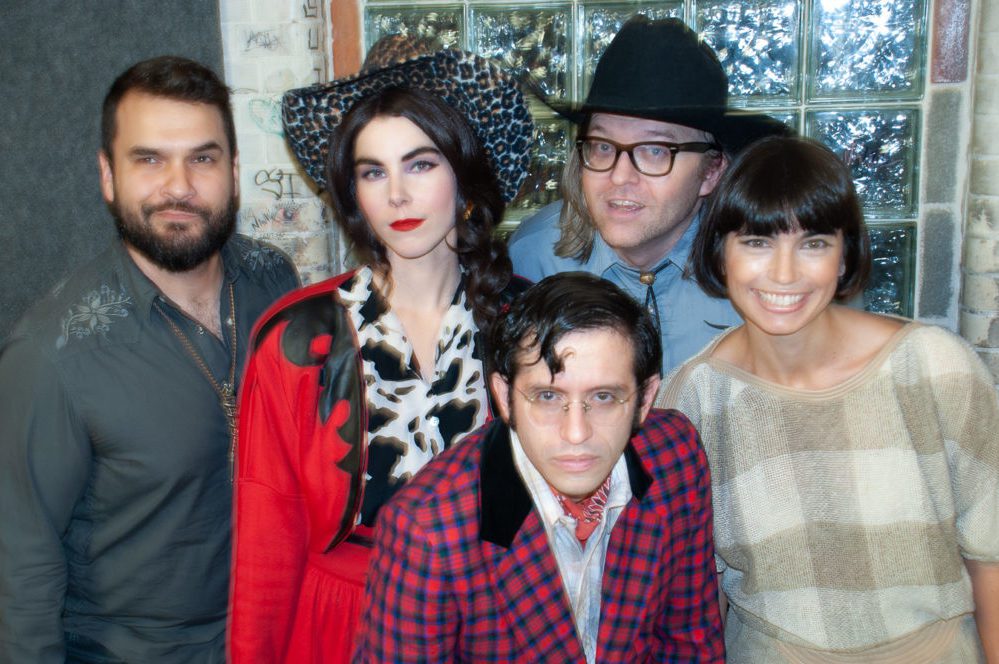
Synth Pioneer Suzanne Ciani Discusses Her Career and the Evolution of Electronic Music

It’s impossible to have grown up in the U.S. — or really anywhere in the developed world — and not heard Suzanne Ciani’s electronic music compositions and sound design. Most famously, she’s the creator of the “pop and pour” sound used in Coca-Cola commercials throughout the world. She’s also the composer of the intro music that plays before Columbia Pictures movies. Another fun fact you may be less familiar with: She became the first woman heard in a pinball machine when she leant her vocoder-recorded voice to the game Xenon in 1979, as well as composing its minimalist synth soundtrack.

Ciani first became fascinated with electronic music while she was getting her master’s degree in composition at the University of California, Berkeley in the late 1960s. There, she met Don Buchla, creator of the Buchla synthesizer, and began renting out Buchla and Moog synthesizers at the tape music center at the nearby Mills College, where visitors could use the studio for just $5. “We need more of these facilities,” she says. “Kids are spending so much money now on gear. I understand that addiction to hardware.”

What she personally finds addictive about electronic music is that it’s “very variable,” she says, explaining that she’s constantly getting sent new instruments to try out. “It’s modular, so you put together your own customized instrument, and right now, there are thousands of modules to choose from, and it’s a bit overwhelming and a bit exciting,” she says. “When you play the piano, you wake up and the piano is there — it’s like, ‘oh, the piano.’ With electronic music, you wake up and there’s something new you have to investigate. You have to learn it. It’s always changing.”

“Always changing” appropriately describes Ciani’s career. Since 1970, she’s put out 15 studio albums and six live albums, some devoted to synthesizer and others with piano. The most recent, Improvisation on Four Sequences, is a recording of a live Buchla Quadraphonic performance in Geneva, Switzerland from January’s Festival Antigel. In it, you can hear the wide array of synthesizer sounds Ciani is known for, from the high-pitched and energetic to the slow and ominous-sounding.

“It’s a strange time to release because one is the pandemic, and two, it’s our social revolution, which is wonderful — it’s about time,” she says. “But I think that human connection is really what music is about, and we need that. We need it now. We’ve always needed it, but now I think it’s very comforting, and I think that in a way for me, I feel more comfortable now with something … that opens up a new language for us, and I think electronics does that.”

She also recently released “Music as Living Matter,” a hypnotizing and dynamic four-minute composition using a new type of analog synthesizer called the Moog Subharmonicon. Based on composer and music theorist Joseph Schillinger’s concepts, it features spoken quotes from the thinker, such as “music makes one believe that it’s alive because it moves and acts like living matter.” Visual artist Scott Kiernan created a video to visually represent the ideas the song expresses, with colorful vibrating geometric shapes.

“When we function as artists, we’re actually creating life — in a way, it’s an imitation of life,” Ciani explains. “Great art lives on. It has a life separate from the creator.”

The progression of electronic music as a genre has been as ever-changing over the span of Ciani’s lifetime as her career itself. Since the advent of electronic music in the ’60s, she’s seen movement away from physical instruments to computer compositions and then back to the analog synthesizer, which she views as advantageous because it provides real-time sound feedback as you play it.

“The kids said, ‘Hey, enough with all these digital menus and this computer interface — I want to touch it. I want to get feedback from the instrument itself,'” she says. “Kids want LPs; the kids want cassettes — what is all that about? Well, fundamentally, it’s about deconstructing the belief that technology marches forward and is always better, and that’s not true. It’s a sales pitch, and now we know we have a choice. There are so many different technologies, and some of them are better than others for certain things.”

During Ciani’s career — which presented many obstacles for her as a woman in an industry that was even more male-dominated when she began — she’s witnessed the women’s movement similarly come full-circle. “’68 was a huge women’s liberation moment – we peaked there, we got someplace, and then it fell,” she says. “And the next generation of women forgot. They didn’t even know they had been given certain rights that they assumed were always going to be there. And so then, the next generation came in, and those rights were being threatened again, and so they developed the energy systems — and every time we get to the crux of this wave, we get a little further along.”

The way she’s approached sexism in her own career has been through sheer stubbornness — refusing to listen to anyone who has tried to undermine her success. “I would just be like a little robot: If I hit that wall, I’d go someplace else,” she says. “If you have self-confidence, nobody’s going to get you down.”

In fact, for Ciani, playing the synthesizer is a form of self-liberation. “This is a liberating instrument,” she says. “It’s like Jackson Pollock on the canvas. You still have a canvas, but you’re not constrained.”

Follow Suzanne Ciani on Facebook for ongoing updates.
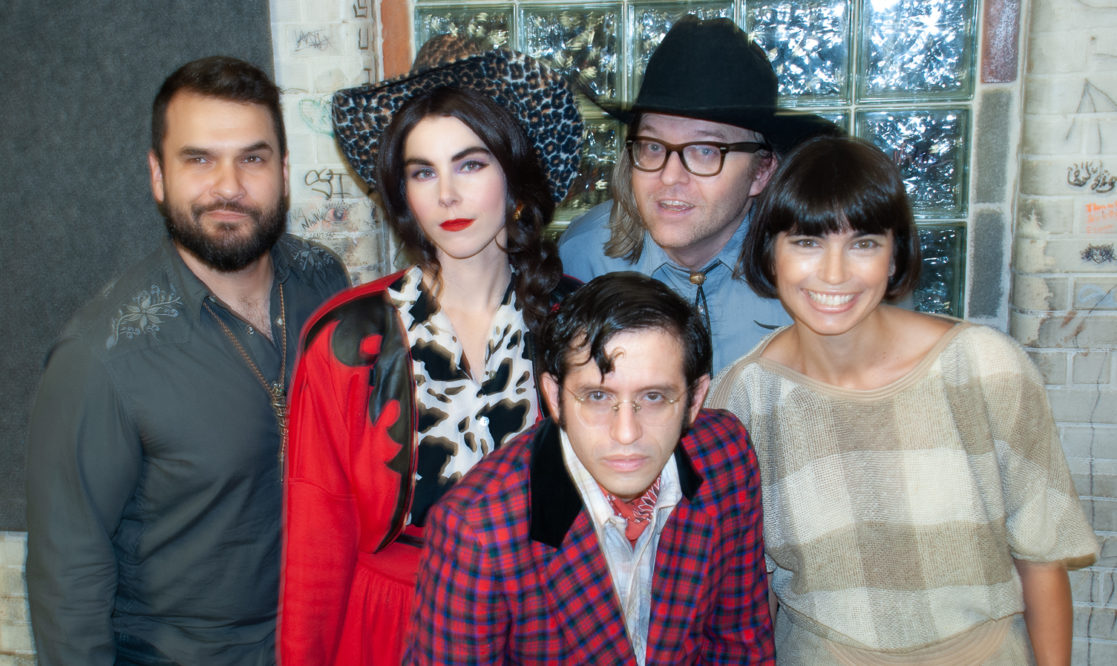
“Party Girl” at 25: How Music Plays into Parker Posey’s First Leading Role

I can’t remember exactly when and where I first saw Party Girl, the 1995 indie flick starring Parker Posey as Mary, a New York party promoter-turned-library clerk. Over the course of the late ’90s and into the early ’00s, I watched it a lot and, every time, there was one scene that stuck out for me: Mary, having finally learned the intricacies of the Dewey Decimal system, decides to rearrange her roommate’s record collection accordingly.

Leo, her DJ roommate, is livid. “Give the system a chance,” she tells him before explaining the categories – “tribal, sleaze, disco” – that are subdivided into more specific categories. He rattles off a list of tunes he needs for that night’s gig, everything from Sylvester to Gang Starr. She finds and pulls them.

It’s genius! Of course, the same system that is used to organize library books would work for a DJ’s record collection. Alphabetizing records alone won’t cut it when your collection is more than a couple crates. Genres are a start, but the more specific you can be when categorizing the albums, the easier it is to grab your vinyl and go when you have a gig. Whenever I watch this movie, I hone in on this one scene and think that I really need to do this. It would make it so much easier to find what I need when I need it. Then I realize just how long this project would take, particularly for someone like me, who hasn’t used an actual card catalog since Los Angeles Public Library moved to computers, which may have been around the same time that Party Girl was released. Still, it’s something that’s forever on my to-do list.

But, I love this scene for more than just aspirational reasons. In Party Girl, which hit its 25th anniversary earlier this month, Mary is the quintessential ’90s cool girl. She lives in a loft in New York, has an impeccably organized closet of designer clothes and hobnobs with club kids. She’s also irresponsible, insensitive and bratty. Her quest to learn the Dewey Decimal system and become a library clerk isn’t a personal ambition, at least it’s not in the beginning of the movie. She does it to try and prove to her librarian godmother, who bails Mary out of jail near the start of the film, that she’s not a total fuck up. She’s trying to prove that she’s smart.

“A library clerk is smart, responsible,” says her godmother Judy says.

“You don’t think I’m smart enough to work in your fucking library!” Mary retorts.

Throughout the movie, there are two forces vying for Mary’s attention – the Party Girl and the Library Girl – like the devil and the angel on a cartoon character’s shoulders. The Party Girl is reckless, self-absorbed and lacking – as Judy says of Mary’s late mother multiple times in the movie – in “common sense.” The Library Girl is careful, helpful and knowledgeable. The film is essentially working with two female archetypes and the viewer decides if Mary has to be one or the other. Or, can she grow into a responsible, conscientious person without leaving the party? In the scene where Mary reorganizes the records, she does both. And, while she’ll slip up multiple times between this moment and the end of the movie, it’s the moment where we see that this doesn’t have to be an either/or situation.

There’s an underlying theme about the perceived intelligence of women that runs through the film. Later in the movie, Judy finds out that Mary had sex in the library. She scolds her goddaughter, “Melville Dewey hired women as librarians because he believed that the job didn’t require any intelligence. It was a woman’s job!” Judy, a middle aged woman working a highly skilled and sorely underpaid job, overcompensates by getting tough with Mary.

Meanwhile, Mary struggles to prove herself. After her crush, a teacher from Lebanon who is running a falafel cart when they meet, mentions Sisyphus, she starts reading Camus and shares her newfound knowledge with her roommate. “I think I’m an existentialist,” she says. “I do.” She spends a night in the library trying to learn that Dewey Decimal system.

And that brings us back to the record collection.

I always think of Party Girl as a music movie, even if music only plays a supporting role. It’s a movie filled with jams – Dajae’s “U Got Me Up” and  Dawn Penn’s “You Don’t Love Me (No, No, No)” are just a few of them – and club life is part of the narrative. More importantly, though, Mary is trying to prove herself in a way that women must often do, particularly in music. When she reorganizes Leo’s record collection, we see a young woman who knows her shit. She understands the music, the way a DJ would need to have everything sorted and how to use an organizational system to accomplish that. It may be a short scene, but it says a lot about the character and how we view intelligence, while the movie itself was ahead of its time for the way it portrays music fandom – from a young woman’s perspective.

Teddi Gold Honors Two Fathers With Bombastic Pride Anthem, ‘Boom Boom’

Teddi Gold was six years old when her biological father came out. Little changed within the very modern family dynamic, but folks in the community began to see him differently.

“All of a sudden, some parents would not let their kids come to my dad’s house,” Gold tells Audiofemme. Throughout her childhood, she observed blatant disrespect and discrimination. “My whole life, I have been aware of how they were treated differently. I’ve felt protective of their identity, and it scares me that this administration is actively trying to dismantle the progress we have made – progress that has taken lifetimes,” she says. “I fight for the underdog and for equality. It’s been a cornerstone of my life, family and identity.”

When it comes to her brand new single “Boom Boom,” premiering today, she celebrates the queer love of her two fathers, whose story taught her the meaning of true love, empathy, compassion, and family. “[The song] is an anthem for equality, an anthem for unity, a celebration of diversity.” All of the proceeds made from streaming will be donated to the ACLU in support of the LGTBQ+ community and #BlackLivesMatter.

Gold originally hails from Seattle, but when her parents divorced, they all moved to Saint John, the smallest of the three Virgin Islands, situated due East of Puerto Rico. “Me, my brothers, my mom, and my dad and his ex-boyfriend all moved into the same house,” she says. “It was a real ‘modern family.’ We were surrounded by a more accepting community, and there was this sense of freedom. Our community was made up of people from many walks of life.”

Life took a turn, and for the better. “Days were slower. I went to school with fifteen other kids, and on Wednesdays, we had science class in the ocean and learned about coral reefs. It was idyllic. I remember being outside constantly, connected to nature,” she remembers. “Creativity was encouraged and television wasn’t. I think I was able to develop my sense of self without the constant noise.”

Gold later returned to the states, settling down with her two fathers in West Hollywood, but it took some time to acclimate again. “I felt disconnected from mainstream culture because I didn’t grow up with it. There were things I missed out on completely or didn’t even know about. I felt out of place. I think that has definitely had an effect on the way I make music.”

In writing “Boom Boom,” a deliciously rhythmic slice of pop, she was instantly swept back into an ocean of memories. Carnival and Pride were the most potent images flooding her mind, allowing herself to really ground her headspace and honor her fathers. “When we were living on the island, I would dance in the Carnival every year. The festival was huge ─ a celebration of life with music, dancing, and steel drums. I also thought about the previous Prides I attended.”

The song’s tropical base sprouted quite naturally, as it often does in her music. “My dad’s first boyfriend, who I was close to, was a piano player on a cruise ship. Sometimes, we traveled on the ship with him to watch him play, so I got to visit many different islands and countries. I was lucky to be introduced to a variety of musical instruments and styles at a young age,” she remembers. “I love percussive instruments, and this song in particular has a variety of them. I never thought I would end up making music. In my head, I am still a kid climbing trees on St. John pretending to be a secret agent. I’ve discovered through music that my upbringing has had a huge impact on my creativity. So, I guess you can say that I am learning about myself, too.”

“Boom Boom” explodes from the inside out, a joyous and infectious soundtrack for a time in history when rights are being threatened, if not taken away completely. For now, Gold considers the lessons her fathers have taught her most about life: “Respect others. Treat others with love. Be kind. Be accepting of others. Have room in your heart for others,” she offers. “Speak up for people who can’t speak up. Be yourself, even if you are afraid of judgement.”

Follow Teddi Gold on Facebook for ongoing updates.

Maggie Gently Unpacks the Pain of a Dissolving Friendship with Good Cry EP

Photo by Amayah Media
Photo Credit: Amayah Media

“In a little while, there’ll be nothing left for me to unpack,” sings San Francisco’s Maggie Gently on her new EP, Good Cry. Created during the various phases of a friendship dissolution, Gently isn’t trying to convince others that closure is imminent, so much as she’s trying to convince herself, as she works her way through the EP’s five tracks.

In many ways, the EP feels less like five distinct songs and more like a long, rambling letter. This isn’t inherently an issue — I’ve readily expressed my appreciation for concept/single-subject works before — but it does make the best tracks stand out all the more clearly, while pushing the others further into the background.

The lyrics are quite vague — perhaps purposefully so — to the point that you would likely assume Gently was speaking about a former partner as opposed to to a friend. It has been repeated many times over that friendship breakups can be as painful as romantic ones, but such statements are frequently delivered with a sly question mark at the end. Is it really true? Can someone who never called you their romantic partner enact the same hurt as someone who did?

Of course they can, but that voice of doubt is more likely to come from within ourselves as opposed to outside doubters, fueled by the unfortunate concept that any soul-deep pain that doesn’t involve a significant other is not deserving of any real attention.

Why can’t you just get over it?

Gently, in this EP, does not seem to want to, but has taken her wallowing and turned it into something tangible, maybe even cathartic — good advice if I’ve ever heard it. “I always said it would all be worth it/if I could matter to just one person,” Gently sings on EP opener “Every Night,” offering one of the best and most profound examples of Good Cry’s straightforward lyrical style. “Run Away” gives us a bit of a respite from the indie-pop ease of the other tracks, with a folky intro where Gently lets her voice go soft as she sings, “When I wake up I check my breathing/I know that I’m ok without you.” About halfway through, the song makes a jump to rock, even as Gently keeps her voice largely even. While I wish she would really let loose on moments like this, the guitar backing is expressive enough to keep the emotions feeling big. “I used to have so much/and now I’ve got none/and I’m hungry,” she sings on “Normal,” one of those EP’s best tracks and, tellingly, one of the few with a distinct glimmer of hope at the end of the tunnel.

Occasionally, Gently sacrifices meaning for simplicity, like on EP closer, “Tranquility,” where she asks, “I don’t know if I deserve to feel any better, but I’ll still get serious/Take a look at my resume and cover letter — do I have any experience?” The first minute of the song sounds like it would fit nicely over a montage scene in a mid-2000s rom com a lá 13 Going on 30 (another work that, fundamentally, is about friendship), with a mid-tempo rhythm that sets the listener up nicely for a high-energy finish. It never arrives – not exactly – as Gently leads us out on an unrealized wish: “I wish I’d take a break/from circling round inside of my head again.” It’s so telling that she ends on that word, again. Gently knows it’s not over, at least not in her head — so here we go, repeat button, repeat album, repeat brain.

Despite the fact that Gently never makes the nature of the central relationship explicit in the lyrics, it feels like a disservice to suggest that this EP should be used as universal catharsis for someone in the throes of relational loss. While in other circumstances I would be the first person to say that art is interpretive, blah blah blah, I feel like the context here is essential. It comes down to this: the more accepting we are of the impact of non-romantic friendships on our self-perception, the closer we will get to dissolving those question marks we assign to our own pain — and the closer we will get to burning that letter.

Follow Maggie Gently on Facebook for ongoing updates.

INTERVIEW: How Dane Erik Forst Created Alter-ego Baron Minker for his Solo Debut

Egos uploading to an alien cloud server. Psychedelic dreams being analyzed by a droid. Don’t worry, it’s not a new 2020 news headline – these are the themes that populate the self-titled debut from Baron Minker, a trench coat wearing, solar system exploring vagrant, detailing the chaos he sees around him while flying high on drug fumes. Minker is the alter-ego of Portland-based experimental indie rocker Dane Erik Forst, and though he began working on LP long before the recent protests or COVID-19, the ideas tackled throughout resonate as if he wrote the lyrics last week.

Born and raised in Wisconsin, Forst grew up listening to an eclectic mix of soul, disco, punk rock, classical and folk music. He jokes that he is now partially deaf in one ear from laying directly next to the speaker listening to Simon and Garfunkel on vinyl (but seriously, he recently had surgery on one ear to fix the damage). The Forsts are a family of artists, but music remained uncharted territory. Guitar was a popular choice in his school’s band, so Forst initially picked up the trombone and later the tuba. In 8th grade, he finally got a guitar in his hands and was off to the races, trying out riffs informed by a punk aesthetic.

It wasn’t until he was in his twenties that Forst started experimenting with synthesizers and began to find his own voice as a musician. Thinking back on his years of learning a variety of instruments, including piano, he explains, “I like the idea of being able to pick up any instrument and kind of make it work if I need to.” He packed up and moved to California, where he began to play in a couple bands. “It was kind of jarring. I was still getting my bearings in terms of what would I like my sound to be like,” he says.

Forst had gone to school for music recording, but hadn’t ended up pursuing production as a career. During the day, he worked as a freelance graphic designer and at night, he put his production education to work. “I had about an entire album’s worth of material with the group I was with before. We were kind of in the middle of recording an album,” Forst remembers. “It wasn’t what I was envisioning it could be. It always felt like you were trying to paint a painting with somebody else’s hand.”

Eventually, Forst decided to leave the confines and inner struggles of a band and make music on his own terms, as a solo project, following in the footsteps of musicians like Kevin Parker of Tame Impala, Ruban Nielson of Unknown Mortal Orchestra, and Ariel Pink. Forst laughingly admits to being a bit of a control freak when it comes to process. “I need to have my mitts on absolutely everything,” he says. Still, this maneuver freed up the music, making it closer to his original vision, closer to the music he could hear in his head, and over the next five or six years, the fullest realization of Baron Minker came into being. “My experience prior to that, in previous projects, was kinda a lot of frustration,” Forst admits. “Same amount of work, if not more, but the end result being like ‘Yeah it’s close, but I wouldn’t have done XYZ.’ This [project] is definitely a result of that.”


The album, is a no-compromises journey into the subliminal. From the opening beats of “Anthem of the Rich and the Bored,” it’s clear that this isn’t a singles-only kind of experience. Forst wanted Baron Minker to be like the albums of his youth, music that should be listened to from beginning to end, that pulls the listener into a story and a specific frame of mind – though each song came from a different well of thought. “I wanted to put out a cohesive album. I wanted the songs to compliment each other, without being carbon copies of each other,” Forst explains. The character of Baron Minker gestated over that six year period, drawn from pieces of sci-fi books Forst had read. Now, looking back, Forst recognizes that news stories at the time also influenced the lyrics. With an abstract Mad Libs-esque approach to lyrical phrasing, the album feels like a trip both through and outside our current timeline. It’s easy to visualize a trench coat cloaked anti-hero buzzing above a Dune-like planet, observing the chaos below with an outsiders sneer.

The accompanying visuals to “Anthemn of the Rich and the Board” and “How To Avoid Japan” were all created by Forst himself. Originally he’d had additional plans to work with artist friends on an expanded vision, but COVID-19 became a reality around the time he was prepping to shoot. The videos are beautifully constructed, with the kind of psychedelic imagery and puppetry one would expect from a graphic designer holed up in his apartment in midst of a pandemic. Now, Forst says he’s even more dedicated to the idea of creating videos for each of the singles, leaning further into the one-man show that is Baron Minker.

As we tackle the environmental apocalypse, face white supremacy head on, and wait for relief from COVID-19, an album like Baron Minker becomes less existential and more fervent, more based in the here and now. Perhaps instead of taking flight from Earth, Baron Minker returns with knowledge of a different age. Armed with extraterrestrial tools, he joins the fight to save the little blue orb floating in a sea of empty space.

Follow Baron Minker on Facebook and Instagram for ongoing updates.

PREMIERE: Am Taylor Offers Therapeutic Space-Rock on “Bright Yellow Sun”

Am Taylor’s music is rich and contemplative, with intricate, dreamy guitar layers that mirror the lyrics’ multiple meanings. Formerly the lead singer of the Atlanta band Sexual Side Effects, Taylor recently took a hiatus to launch their solo project, and today, they’re releasing their second single, “Bright Yellow Sun.”

In the hypnotic track, Taylor blends elements of psychedelic rock and early Radiohead, with powerful guitar riffs and echoey, drawn-out vocals. The singer/songwriter/guitarist played with guitar pedal sounds to give the song a “dramatic, explosive vibe,” they explain.

The original inspiration for the song came from a partner of Taylor’s who expressed suicidal thoughts; they wrote it about what they were feeling in that moment. But then, the imagery took on a life of its own, and it became about runner-chaser relationship dynamics and anxious and avoidant attachment styles, with the metaphor of the sun chasing the moon.

“I think a lot of songs I’ve written are love songs, but — and I think all musicians do this — they come from a place of some kind of psychological shadow they’re working through or something deeper within their psyche,” they say.

Back in the days of live performances, Taylor would play the song amid a cloud of fog with lights behind them for a “weird psychedelic other-worldly vibe.” The video produces the same effect, with rainbow colors swirling around Taylor along with images of ancient Mexican temples. They used a projector to create the cosmic backgrounds, aiming to visually represent the feeling of a bright yellow sun and to express their interest in New Age beliefs and the supernatural.

Since the days of Sexual Side Effects’ rock and roll, Taylor has been doing more acoustic songs and incorporating psychedelia and dream-pop. The dream-pop influences in particular are audible on their first single as a solo artist, “Driving on the Edge of Night,” where you can also hear classic rock influences and a slow, meditative beat a bit reminiscent of The Velvet Underground.

On top of their music, Taylor recently took some time to work on illustrations that incorporate their interest in the occult, which they’ll eventually sell alongside more traditional band merch on their website. “After touring and playing a lot and dealing with bands breaking up and all that drama, I kind of became a hermit and started doing a lot of artwork, and it was a lot easier to sit around and do art and not have to try to get publicity or go on tour,” they reflect.

Though Taylor is working on a full-length album that they plan to put out at some point, they’re initially focusing on releasing singles on Spotify in order to gain attention as a solo artist before the album release. They’re also collaborating with Jayne County, the first openly trans singer in a punk-rock band and the inspiration for the musical Hedwig and the Angry Inch, on several songs. Together, they’re preparing to launch a debut single called “I Don’t Fit in Anywhere,” which County wrote about her experience with gender identity.

Taylor, however, doesn’t generally write about being trans; they prefer to just let their life speak and be an inspiration for others. “I feel like my purpose within gender identity is to just be who I am as a person and let everybody else kind of interpret it and figure it out for themselves,” they explain. “When you’re just a human being and you’re being who you are and connect on that level, I think people see that, and if they had preconceived notions about what you’d expect, they can be shifted. I think my purpose in life is to just be who I am and let the world know it’s OK to just be who you are.”

Follow Am Taylor on Facebook for ongoing updates.
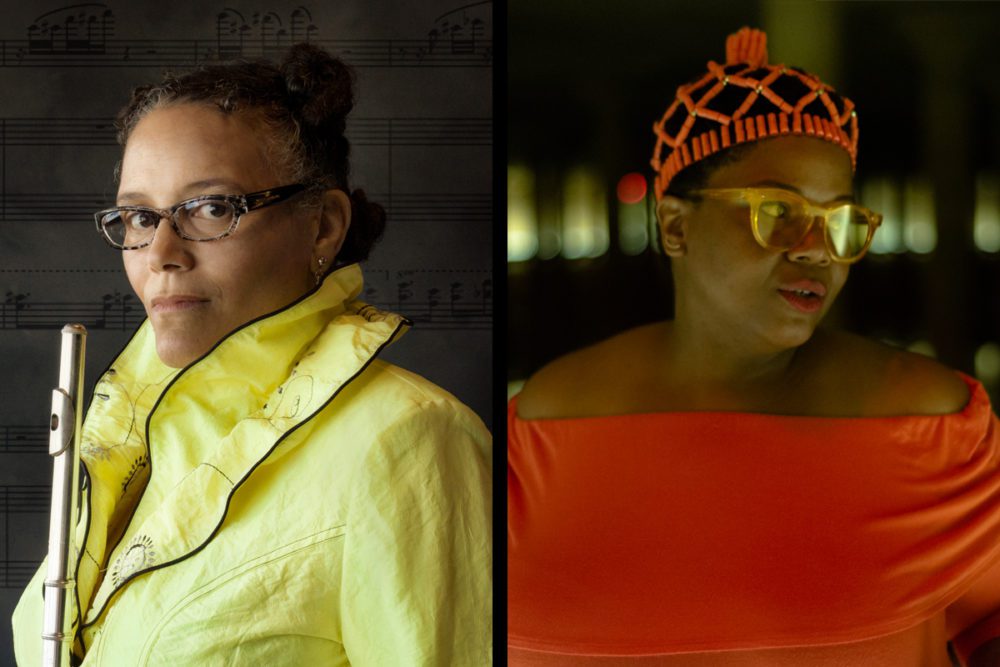
Pantayo Merges Traditional Filipino Kulintang with Punk, R&B, and Synthy Electronica

Photo Credit: Sarah Bodri

Pantayo – an experimental, all-women kulintang ensemble – is a sound evolution that began over meals and music in 2012. Founding members Michelle Cruz (vocals, agong), Katrina Estacio (vocals, kulintang, sarunay) and Kat Estacio (vocals, kulintang, dabakan, programming) met at an Anakbayan fundraiser at Kapisanan, a Filipino cultural centre in Toronto’s Kensington Market. They all shared a desire to reclaim and re-imagine kulintang—a traditional Southern Philippine form of instrumental music composed on gongs. That initial meeting, and shared vision, eventually gave birth to Pantayo.

“We accidentally became a band when we received an invitation to play at an event. We thought we had to introduce the thing that we were doing, and who we were, and the thing became Pantayo,” shares Cruz. “As we continued to grow and learn as Pantayo, the group grew in members. Eirene and Jo came along, and this is when the next layer of magic began to manifest.”

Estacio says that Eirene Coloma’s arrival in 2015 was significant to the Pantayo sound by “synthesizing chords and progressions with our gong tunings.” “We are blessed to have her ear and talent of piecing these together with the complex tones of each gong hit,” she explains. “She [also] has some sick bass lines and synth moves, which make her a great fit. Her vocals also make us melt.”

For Joanna Delos Reyes (vocals and guitar), the ensemble became a part of her life just when she needed community the most. “I [had] recently moved back to Toronto after living abroad for a bit. I became hyper-aware of who I was as a brown, Filipina woman navigating predominantly white spaces, institutions, and jobs. I wanted to intentionally reconnect with my Filipino-Canadian settler identity. Collective art and music making became that way for me.”

The name Pantayo reflects the multi-layered ethos and intentions that drive the ensemble. “Pantayo is an ongoing commitment to ourselves, and to each other,” explains Kat E. “The word roughly translates to ‘by us for us’ [in Tagalog], so the conversations around what our sound is and why we play the way we do and what we stand for as a group is a constant navigation around that meaning. Much like the word does not really translate to one single English word, our initial intent is to make art and meaning that speaks to us and our experiences first. If that translates to something that resonates with other people, then great. If not, then we just accept that what we do is not for them. And we can’t be bothered with that because life is short.”

Describing their sound as “percussive metallophones and drums from kulintang traditions of Southern Philippines, with electronic and synth-based grooves,” Pantayo is a sonic collage of influences that include genres as diverse as R&B to punk. Yet somehow these diverging sounds are both thrillingly challenging and masterfully cohesive. The members say that this is not by chance, but rather a thoughtful, collective approach deeply guided by producer alaska B.

“We strictly workshopped traditional kulintang music during the early days of Pantayo,” says Cruz. “That was very fundamental to the sound that we were able to develop later. We started imagining and experimenting with sounds that were familiar to us like pop and R&B. I guess it was natural for us to gravitate towards these vibes because of our musical influences. It also made making music together so much more fun.”  A grant awarded by the Ontario Arts Council to fund their first album made them even more determined to make music that says something with its sound. “We were fortunate enough to be able to work with producer alaska B for our album project and she became instrumental in helping us determine our purpose and what was authentic to us, sonically, personally and together as one unit. It became clear that integrating our musical influences were necessary for us to create music with conviction.”

This conviction has led them to delve deeply into the roots of their sound. During a recent visit to Manila, Kat E. met with Aga Mayo Butocan, a professor and pioneer in transcribing kulintang music at Diliman, the University of the Philippines.

“Ma’am Aga—as she is warmly referred to by her students—explained that the primary purpose of kulintang, based on the Maguindanao Indigenous culture, is for self-relaxation and expression, while also fulfilling a need for playing with and for the community. To see the connection between her teaching and our art-making felt affirming. It feels freeing to know that as long as we are respectful, and learn traditional kulintang pieces as our foundation, that we can add our own influences on it. We use instruments which are visibly Filipino, but how we use them speaks to our different experiences.”

These diverse influences include Delos Reyes’ love of everything from punk and post-punk to girl bands like Destiny’s Child, Cruz’s childhood love of quiet storm R&B and new wave, and Estacio’s love for house, ASMR and new passion for merengue, reggaeton and Latinx pop.

“I think it’s important to acknowledge that the music that I grew up with, and the music that I create right now exists because of the contributions of Black people to pop music,” says Estacio. “Blues, rock, R&B, hip-hop, soul, funk, techno, experimental music, jazz, and more all came from Black culture. Even though I did not see Black people in my local community (in Manila) growing up, the influence reached my ears through pop music. I remember listening to my dad’s favourite mixtapes that featured Toto, Starship, and Grand Funk Railroad. I also remember listening to Filipino artists like Smokey Mountain, Asin, and Aegis.”

The album’s songs are sung in Tagalog and English, and were inspired by everything from pain and love to resistance, trauma, hope, and growth, says Cruz. And these powerful stories and mercurial sounds are resonating beyond themselves and their community, including recently making Canada’s Polaris Music Prize long-list.

“It’s been refreshing to see that our music is reaching non-English, heck, even non-Tagalog speaking communities,” continues Estacio. “I love how music is able to do that, and I feel pretty proud to be able to start conversations beyond the confines of language. Whenever I see reviews that seem like they don’t understand what we were doing, I remind myself that it’s actually a good thing—that those are helpful notes to consider when we make more music down the road. The bigger picture here is that we have made a valiant effort in making our voices heard with this record, during a pandemic no less. It’s been a long journey and we’re so glad that people are listening and grooving to it and are able to relate.”

Follow Pantayo on Facebook and Instagram for ongoing updates.
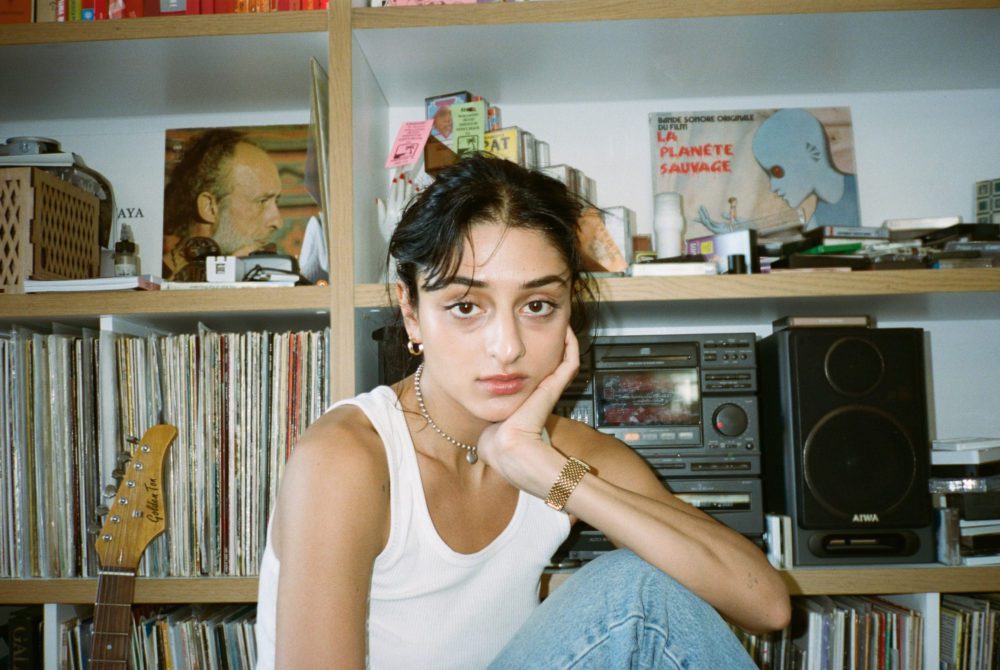
PLAYING CINCY: GrandAce Urges Fans To “Bus Back” Against Systemic Racism In New Single

Photo Credit: Romain Maya

GrandAce confronts systemic racism and police brutality head-on with his bouncy new single, “Bus Back.” The self-produced track lays down a vibey minimalistic base, while the Cincinnati MC gets straight to work.

“These last few weeks have had me spinning, so I had to resort to music to figure things out,” he wrote of the single on YouTube. “I want retaliation in the form of policy, legislation, and defunding corrupt systems. To those in power, it’s really not even hard.”

In a statement provided to Audiofemme, GrandAce further elaborated on why he chose to speak out against ongoing injustices and contribute to the current Black Lives Matter movement with his music.

“I’m not a big artist nor do I have a large platform, but I realize that my greatest superpower is that I’m able to use my voice to speak out on what’s wrong,” he explained over email. “If my words can resonate with even one person, it can make the movement behind the fight for justice and equality one person stronger. I’ve always made music with the aim of soundtracking life, and that includes revolution as well.”

“‘Bus Back’ [means] not only in the physical [sense], it’s also firing back at oppression through policy, legislation, dismantling of systemic inequality, and my joy,” GrandAce continued. “The beauty of joy is that it can be weaponized to overcome the worst situations. I hope others hear it and are inspired to keep pushing forward.”

“Bus Back” follows a healthy dose of singles from the Queen City rapper this year, including “Mad Shook” from earlier this month, “Satellites,” “Free Space,” and “Magic Something.” Last year saw the arrival of GrandAce’s Christmas three-pack, aloneon25, and his five-song EP, Also Codachrome.

Listen to GrandAce’s new single “Bus Back” below. Also, find more resources and organizations to donate to in the fight against police brutality and systemic racism here.