PREMIERE: FOONYAP Finds Sweet Epiphany with “Free and Easy Wandering”

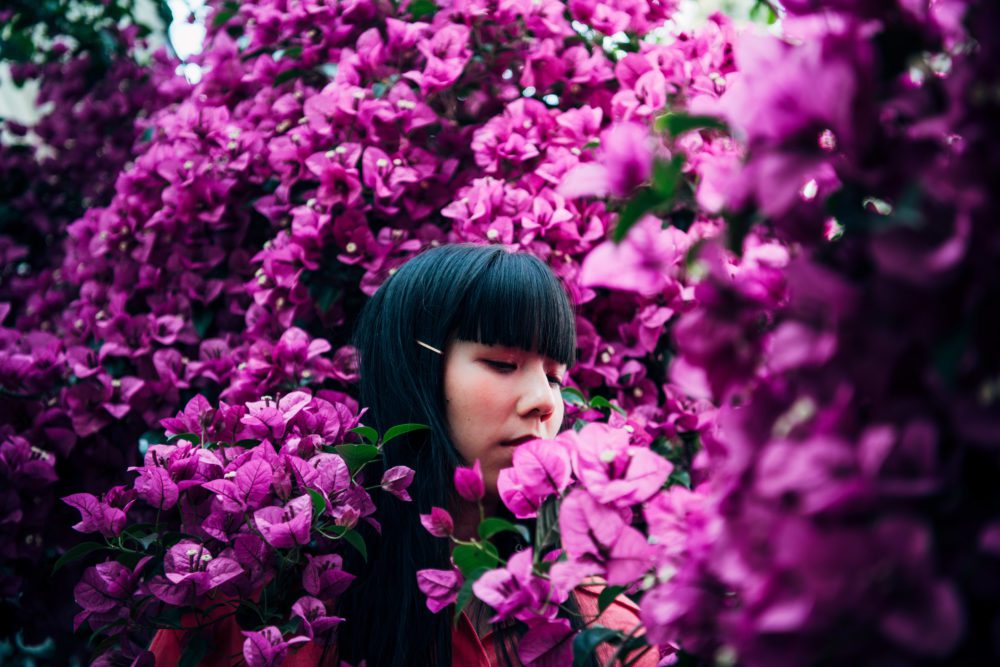
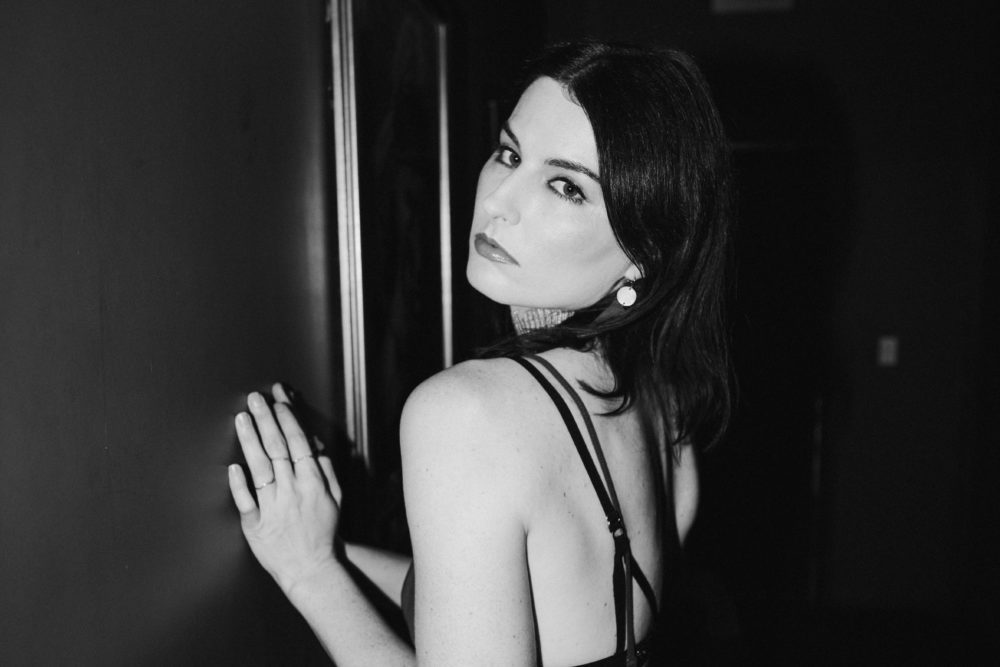
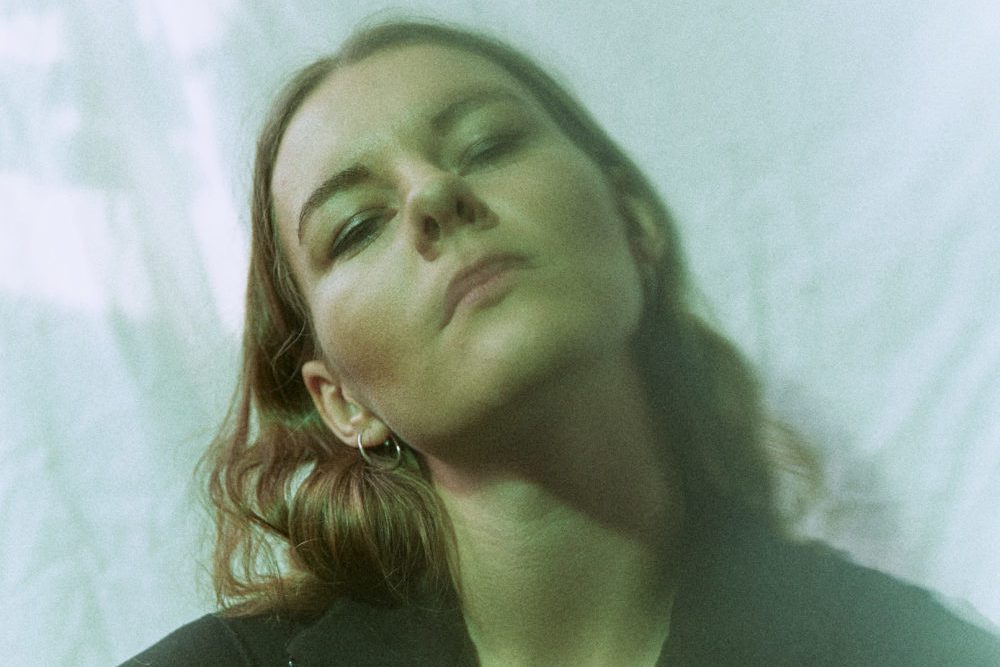
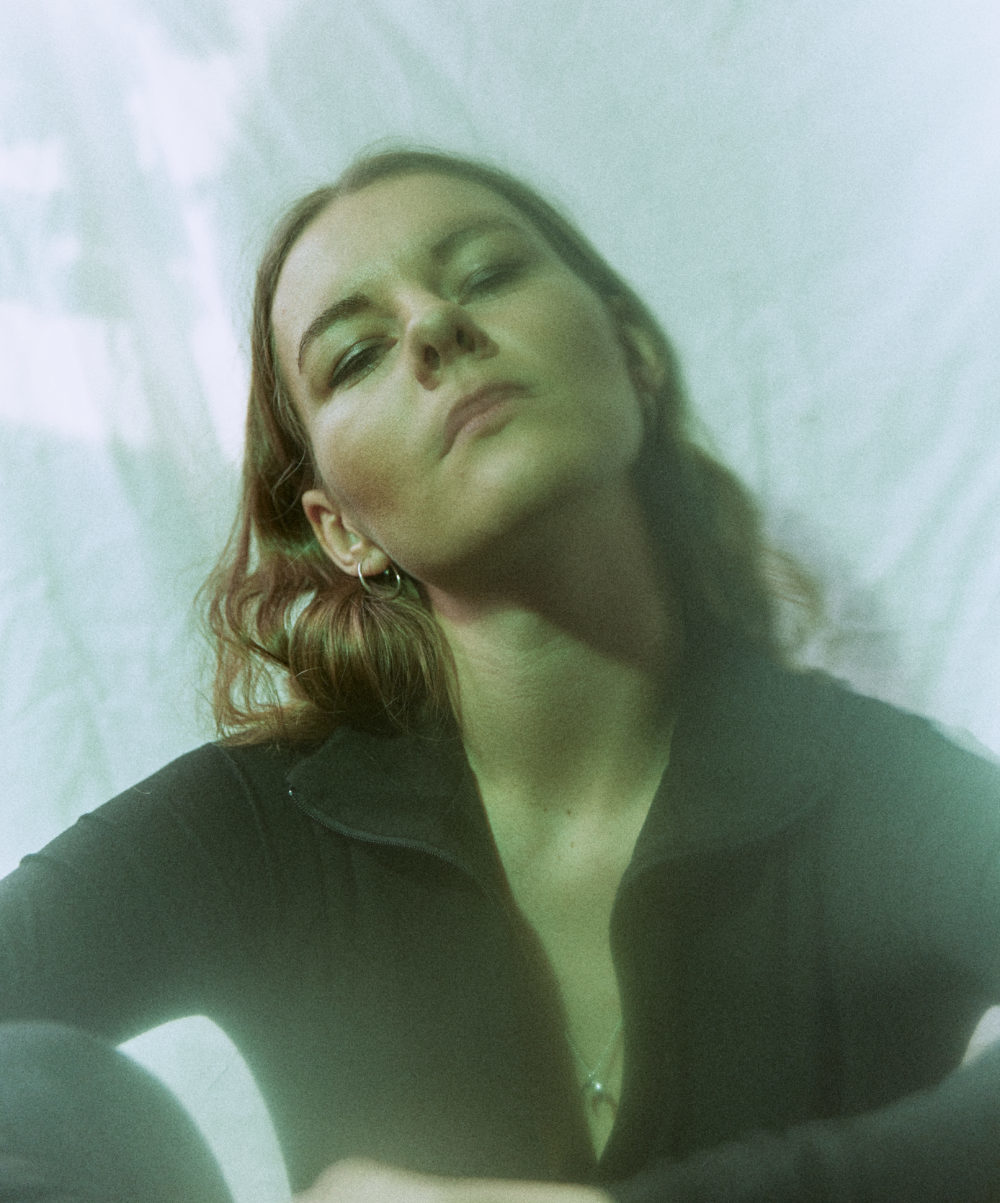
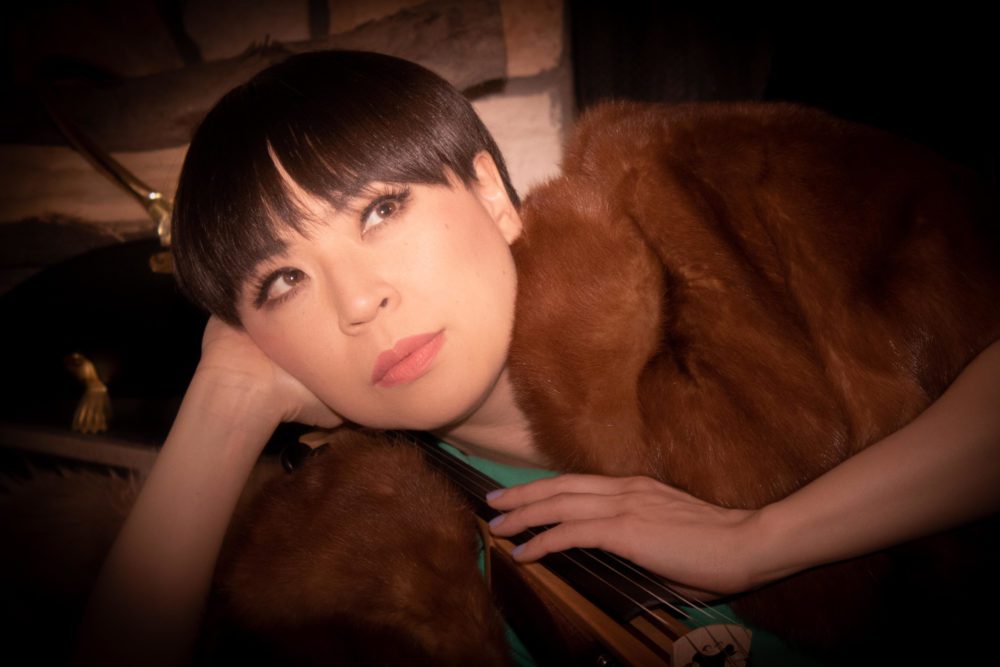
Photo Credit: Christine Ruth

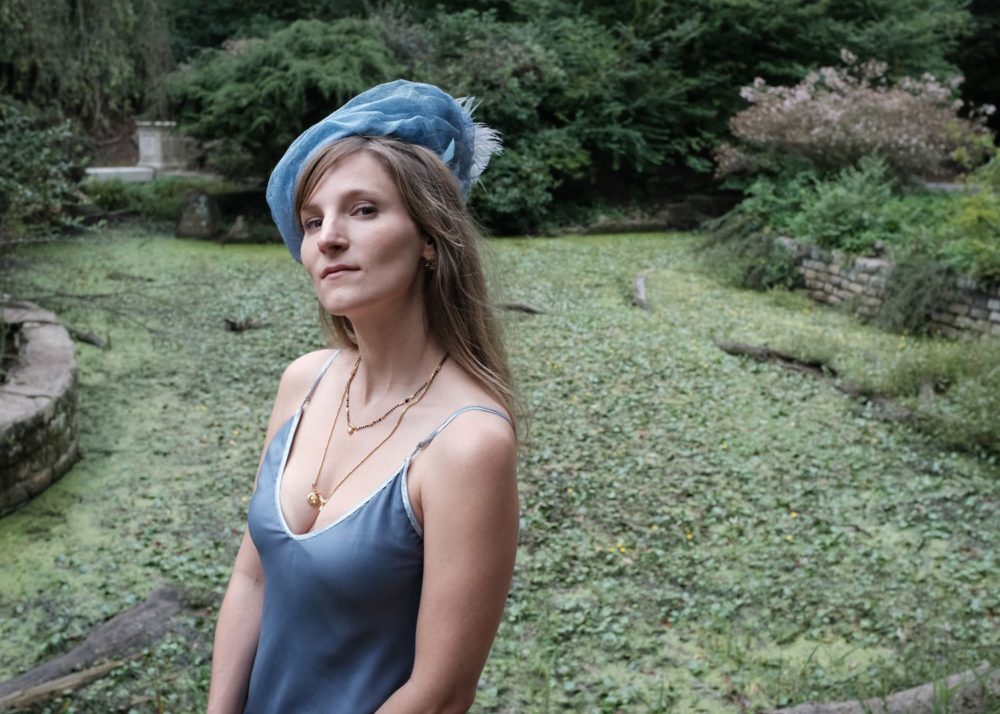
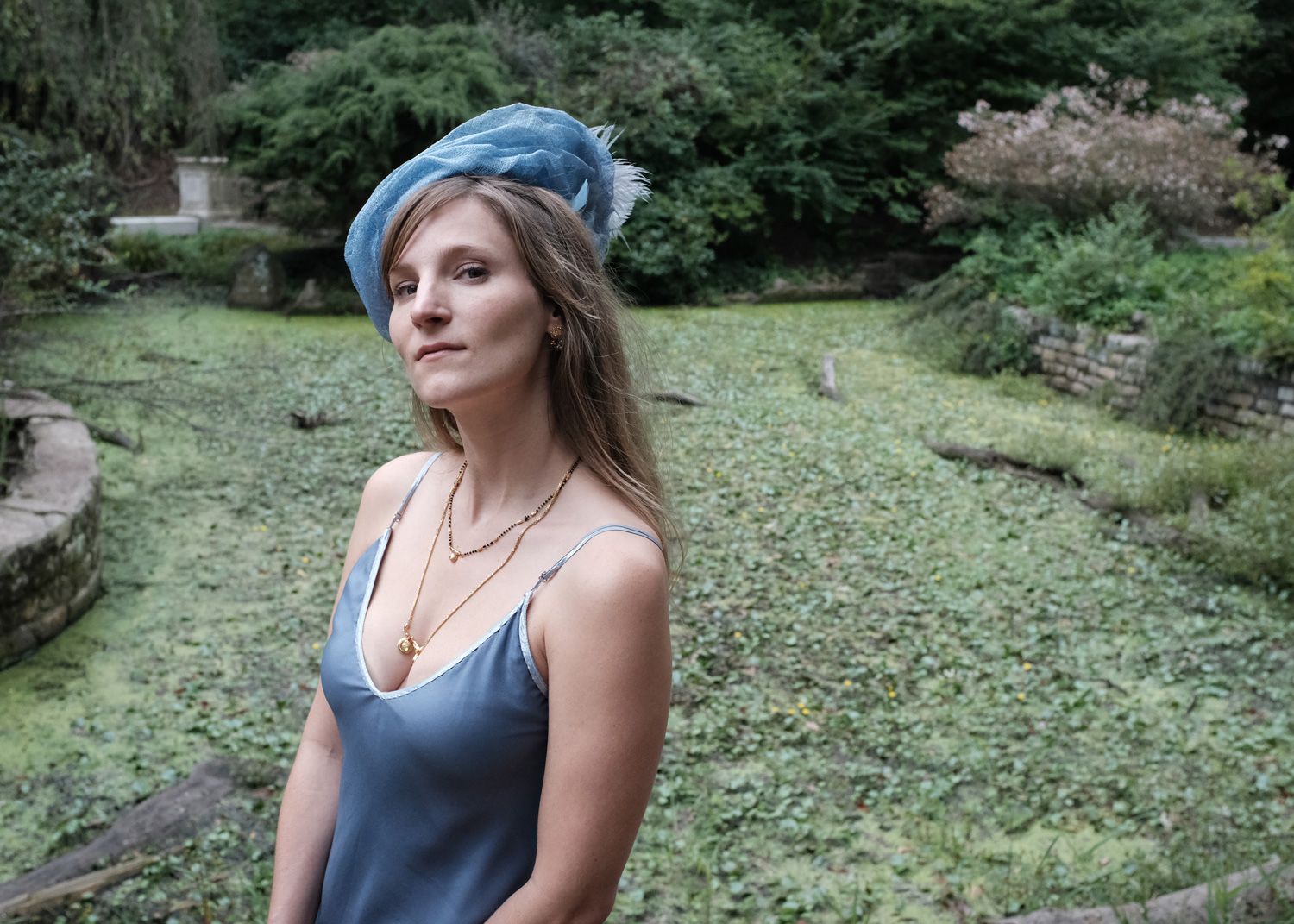
Thirteen years ago, Canadian musician FOONYAP took a class in Chinese poetry. The themes discussed in those poems directly influenced her latest single “Free and Easy Wandering,” a song built around the exploration of self. The music is as fast-fast paced and beautiful as the average spring, notes melting quickly in the heat of summer, while its meditative lyrical mantra “Now is all there is” serves as a potent reminder of impermanence in a world of uncertainty

With its lowly swelling violin and the use of soft, speak-sing vocal stylings, “Free and Easy Wandering” is a pleasant return to the landscape of FOONYAP’s first solo record. It’s been four years since FOONYAP’s debut album Palimpsest, a sharp-witted record detailing her upbringing as the child of Chinese immigrants. Palimpsest straddled many genres, incorporating FOONYAP’s signature violin, her voice oscillating between a style akin to the Chinese Opera and a more punk, grunge timber. That kind of clear delineation is less apparent in “Free and Easy Wandering,” where FOONYAP allows her voice to play softly in the background, while her violin takes center stage.

Raised traditionally Catholic, FOONYAP honed her violin skills under the domed arches and glittering facades of her family’s church. “My mother heavily pushed me into playing with the church choir,”she remembers. “There were no written violin parts in most of the choral music in Catholic mass during that time. I learned how to play by ear and to improvise. And that spontaneity became part of my music making.” It was a learning experience that made her time in a conservatory difficult; FOONYAP found herself adrift among students who thrived on practicing three to four hours a day, who didn’t mind rehearsing another person’s music again and again. She found herself quietly rebelling, improvising alone in her room.

After school was over, she pushed back on her classical training, playing with a punk band, as well as the indie folk band Woodpidgeon. Calgary was the perfect setting for a young, experimental artist looking to create something both familiar and avant garde; the music community was warm and open to collaboration. After the success of her first album, she spent two years touring North America and Europe; during that time she also released 4-track remix EP Apropos. In late 2018, FOONYAP sustained a back injury that forced her to reconsider her hectic schedule and what she truly wanted to gain from both her career and her life. In the two years that followed, she spent time meditating and reflecting, picking projects that fed her soul, not just her pocketbook.

One of the projects was a collaboration with Edmonton, Alberta-based Mile Zero Dance workshop during which she was scheduled to perform live. Due to the pandemic the event went virtual, so she shifted gears, participating in the entire series and writing a song in response to the experience. The ‘Free and Easy Wandering’ series is a collection of “workshops, themes, and artworks building on conversations about Asian heritage, freedom and identity in Canada.” As workshop participants heard news reports of racism against Asian communities in Alberta and abroad, the conversations within the series became a painful processing of the day-to-day racism they experience as Canadians.

“I felt really lucky because my back injury taught me how to go through really difficult experiences in which I feel that I’ve lost everything. I felt so appreciative that I’ve gone through difficult times, so that I could be steady during this time,” FOONYAP says, thinking back on the beginning of social isolation.

“Free and Easy Wandering” is the name of the first chapter of the Zhuangzi, an ancient Chinese collection of anecdotes and fables, written (at least partially) by the Chinese philosopher Zhuang Zhou. FOONYAP chose to name her commission after the series, not only in honor of the series that birthed it, but also because the name has its roots in Daoist philosophy, a subject close to her heart. The first chapter describes a fish that transforms into a bird. “It captures this idea of the transformation and identity that is necessary to move through the world in a peaceful way,” FOONYAP explains. Her description easily brings to mind the gentle, flute-like vibrations in the first few seconds of “Free and Easy Wandering.” A third of the way through the song, as FOONYAP’s voice enters the scene, the violin transforms, its music suddenly more close to the twangs of bluegrass than classical. An energy enters it, like a walker picking up pace as they go up a hill. Throughout the song, there is a sense of discovery, highlighted by the closing lyric: “Now is all there is.”

“Now is all there is. It arose out of a moment of crisis, when I was going through my back injury and realized that I couldn’t keep up with the traditional pace of the music industry, that I needed to re-prioritize everything because I had just gotten lost in being successful,” FOONYAP explains. “It was a crisis in which I was having anxiety and I just felt like if I could only find myself then I could be calm again, I could just be okay. As I went deeper and deeper within myself, all of a sudden, when I was at my core, I felt a presence behind me. And when I turned around there was nothing. There was just a void. At the time it was a terrifying experience. It was really a grim realization that for me, there is no self defined. For me, that is my truth. And everything that I need is in everything I have right now in my consciousness and I have to find some way of working with that in order to find personal satisfaction. So with time – a lot of time and a lot of practice – the realization that there is nothing out there that will satisfy me ever, there’s just what I have right now – that’s finally a sweet, a sweet epiphany.”

While she is proactively resting both her body and spirit, she is staying busy as ever.  She is currently working on a commission with the classical ensemble Kensington Sinfonia, a 20 minute composition for a string quartet, written in her own original voice. She is also collaborating on an inter-disciplinary dance piece with a Taiwanese-Canadian choreographer Pam Tzeng, as well as working with Aisinna’kiiks, a project led by Calgary Arts Development that pulls together Indigenous and non-Indigenous artists and community members to support efforts towards reconciliation. Just like her own personal projects, FOONYAP delights in fraternity, looking for opportunities in which she can lend her talents to a greater whole.

“I think the conventions that I’m most interested in exploring are the ones in which there isn’t always a star, a solo voice,” she says. “I’m more interested in writing pieces where the solos meld in and out of the group. Playing with that idea of who’s the leader and who’s not.” In FOONYAP’s narrative, the main protagonist is not the star of the hero’s journey, but one of many voices working in tandem. Whether they work toward a goal or play towards nothing at all, is a part of the story itself.

Follow FOONYAP on Instagram for ongoing updates.
Julia Wilson Discusses Melbourne Roots and Founding Record Label Rice Is Nice

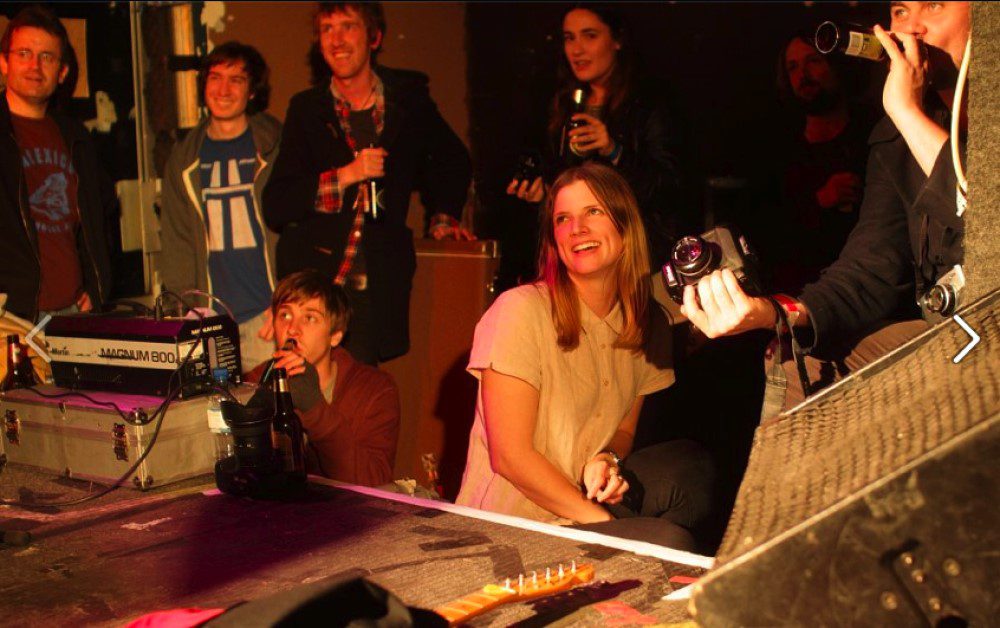
Julia Wilson is a Melbourne success story in the music industry. From an early age, she was immersed in the scene, working in record stores as a teen and shooting for now defunct Melbourne street rag Inpress straight out of her photography studies – her first live shoot, as she recalls, was likely No Doubt. Working in street press often means long hours, demanding publicists and advertisers, and little, if any, pay; it’s something one does for the love of music and arts, and fortunately, Wilson has no shortage of that. She wanted to use her experience to champion artists who had something unique about them – the basis for longevity – rather than artists who were deemed popular by the mass market, so she founded record label Rice Is Nice in 2008. Now in its 12th year, the label is home to acts that represent rock, electronica, psychedelia, acoustic folk and garage punk, has succeeded in showcasing its artists at Melbourne Music Week, and gotten media coverage for artists who don’t easily fit into typical genres, all without compromising their integrity. Black Flag legend Henry Rollins even gave her record label a shout-out on his KCRW radio show. There’s no hard sell with Julia, just genuine passion – despite her busy schedule, she seemed to have nothing but time when it came to talking arts and music with Audiofemme.

Wilson was born and raised in Frankston, on the Mornington Peninsula in Victoria. It’s a well renowned suburb to the south-east of Melbourne, commonly and sometimes derisively referred to as “Franga.” Working in little record store that mostly sold metal records, Wilson says, “It was a seminal time for me and I used my time there to discover all I could about that genre of music. The store was full of Burzum, NOFX, Cradle Of Filth and Kerrang Magazine. I’m not sure how I got outta there alive!”

As an events photographer, Wilson became intimately familiar with Melbourne’s best-known music venues and events: The Corner, Festival Hall (“Where I saw my first concert Faith No More”), The Tote, The Evelyn, The Prince Of Wales, Big Day Out and others. “I did not love some of the competitive asshole photographers in the pit,” Wilson admits. “I was lucky to meet a few legends though, who gave me film when I had forgotten mine.” As digital photography became more prevalent, Wilson took the opportunity to move in a new direction.

Her first stop was Greville Records, located in the inner-eastern Melbourne suburb of Prahran. “That place is my spiritual home. The people and records in there paved a strong path for me,” Wilson says, giving a special shout-out to owner Warwick Brown. “You Am I played a free gig in the car park, and there were loads of in-stores signings, launches and performances at the time. I used to go to local live venue, the Duke Of Windsor all the time. I remember watching Legends Of Motorsport (I loved that band), Ground Components and Rocket Science.”

Wilson moved from Melbourne to Sydney about eight years ago to take a role with Mushroom Records, but ended up quitting and joining Popfrenzy Records, founded by Chris Wu, as a label manager and publicist. “Working with Chris proved to me that one person could do huge things. Leaving Melbourne helped me establish something that was my own,” Wilson explains. “I was generally very intimidated by Australian bands. It was a very big, cool scene and it was very overwhelming for me… Moving to a city less obsessed with music than my home city of Melbourne gave me the confidence and space to start something new. I felt that I could make mistakes without as much judgement as I’d have received in Melbourne. I just had sheer support from artists and music lovers because the scene needed so much of it.”

Missing Melbourne, Wilson recently moved back to the city. “The volume of venues and support that Melbourne has for the arts is second to none,” she points out. “The city itself has supported me through grants, throwing parties for Melbourne Music week and also celebrating my label, Rice Is Nice’s 10th birthday at Melbourne Music Week’s HUB. The people who run these venues are champions. I mean, Rich from The Tote is a hero. He also runs Aarght Records (that represents Eddy Current Suppression Ring, NUN and many others). He’s a proactive, real deal music champion. They are rare to find, I guess.”

She continues, “I think my intimidation and fear of the ‘clique’ was just because I was a kid; you have to get your confidence somewhere. “I would reluctantly go to the Tote to see bands but it always made me feel like a loser. I mean, it still does! Someone gave me shit about wearing a ‘warm jacket at the Tote’ last time I went there. Like, fuckin’ hell mate, I just had a baby, fuck off.” Though she was once “shit-scared” of grunge band Batrider, two of its members – arty indie-rock singer-songwriter Sarah Mary Chadwick and Steph Crase (harmonic, grunge-style fuzzy guitars behind Summer Flake) – now release music via Rice Is Nice (Wilson also manages Chadwick). Check out some of the label’s music below.

SUMMER FLAKE

Stephanie Crase describes the music she makes under the moniker Summer Flake as “sun-drunk guitar pop.” She’s a hippie-hearted harmony addict influenced by the dreaminess of Sonic Youth and the surfer pop of Best Coast. She’s releases three albums – You Can Have It All (2013), Hello Friends (2016) and Seasons Change (2019) – as well as a handful of EPs that “consider ideas of self-identity, movement, and the indiscriminate yet deeply personal sense of yearning for growth.”

SPOD

With cheeky albums like Taste The Radness, SPOD has taken squelchy, Gary Numan-at-Bondi Beach vibes to craft deliciously riotous electro tunes that combine smart aleck lyrics with bouncy basslines. It’s essentially the one-man project of Brent Griffin, who’s been throwing party like-sets with confetti, streamers, glitter, backup dancers since 1995. Last year’s Adult Fantasy LP was released in conjunction with a live full-length performance, shot and edited direct to tape by SPOD and Alex Smith. The Adult Fantasy TV Special was made available on VHS, and ends with a 46-minute closing track, featuring solos from Rollins, Ariel Pink and Jason Lytle from Grandaddy, among some 35 others.

THE FROWNING CLOUDS

Five-piece Geelong band The Frowning Clouds combine ’60s psychedelia with fuzzy guitar pop, pummeling percussion, catchy melodies, and a healthy dose of punk rock attitude. “[Their] randomness extends beyond their raucous sounds to their bizarre stage costumes,” Wilson warns. Their 2014 LP Legalize Everything was their first for Rice Is Nice, and their 2013 debut Whereabouts, reissued earlier this year by Anti Fade, is available via Bandcamp.

DARTS

Wilson describes Darts as “indie rockers who have clearly been influenced by ’90s grunge-rock pioneers like Dinosaur Jr.” Having released a few singles via the label, They’ve been been playing in local clubs for over six years now and have released their debut Below Empty & Westward Bound via Rice is Nice in 2015.

LOWTIDE

The rhythmic, swirling guitars and spaciousness in the sounds of quartet Lowtide found full expression not only on 2018 sophomore effort Southern Mind, but also on a remixed version of the album released later that year, with Ulrich Schnauss, Vive La Void (Sanae Yamada/Moon Duo), Josefin Ohrn and The Liberation, Lost Horizons (Simon Raymonde of Cocteau Twins + Richie Thomas formerly of Jesus and Mary Chain) and Black Cab taking the controls.

PREMIERE: Celeste Krishna & Monarchs Benefit Loveland Foundation and Heal Trauma with “Wanna Be”

Photo Credit: Aaron Anish

Change is an inevitable process, and Brooklyn-based soul singer Celeste Krishna knows that better than most. Born and raised in Birmingham, Celeste began her music career in Austin as the lead vocalist of bluesy folk rock outfit Monarchs. By 2012, the release of a mixtape called ft. Celeste showcased the singer’s versatility as solo act, arranging vocals over MF Doom, J Dilla, and Javelin-produced beats. As fun and off-the-cuff as the project was, it was the first step Celeste took in asserting ownership over her unique blend of musical influences – but there was still a balance to keep. The name she’d chosen for her band represented dysfunctional familial ties from her past, but over time, “it came to represent the community that I love – family and chosen family,” says Celeste. “My married name is Krishna so I started going by Celeste Krishna because… it’s a name in love.” Professionally, she needed a moniker that specifically represented her, but also the people she’s collaborated with since the beginning. “The whole thing came together and I use both. That way there’s Celeste Krishna, the artist, and Monarchs, the community of people that I work with to make music, and that way they’re in something outside of me. Monarchs is my musical family.”

Thus, Celeste Krishna & Monarchs have emerged from a chrysalis, releasing Prelude Red in 2017 to connect the beat-driven experiments of Celeste’s introductory mixtape with the ambitious project she’s working on now: a trilogy of albums centered on who she truly is at her core, tied to the color blue. “Celeste means sky blue in some romance languages and Krishna, the God, is normally shown with sky blue skin to represent divine consciousness,” Celeste explains. “I like the richness of those names, because it enshrines the art and celebrates and inspires me.”

With Blue Druids and My Blue Path still to come, My Blue House will arrive in September 2020, which includes “Wanna Be,” premiering today on Audiofemme. The track is more stripped back than her previous work, consisting of just voice and piano, but it’s more emotionally charged, unpacking trauma that she and a relative have both experienced. “I did one harmony but otherwise decided to keep it really raw. That was a kind of power move and I’ve never had a track where it’s just me and a piano, so that was exciting,” Celeste says. The intimacy of the track creates an almost tangible bubble between Celeste and the listener, its lyrics reading like stream of conscious affirmations countering self-doubt, depression, and feelings of entrapment.”I do a lot of processing in songwriting. It’s therapeutic to write; if I feel something and I can write it, it doesn’t scare me,” Celeste says. “I think sadness, pain, fear, anger and all the stuff that’s hard to feel isn’t so entrapping if you can sit with it… I wanted the song to go to a space where you almost bring it into your room and envision something new.”

Celeste is using the singles released ahead of the album to raise funds for various organizations that relate to the messages of her songs. It’s obvious that Celeste’s soulful style, with nods to gospel, jazz, and hip-hop, is heavily indebted to Black creators and culture, and because “Wanna Be” explores the vicious cycle of mental health lows, it made sense to release it as a benefit for the Loveland Foundation. Established in 2018 by author and activist Rachel Cargle, Loveland focuses on providing culturally competent mental health support and therapy to Black women and girls, saying “We see you, we hear you and we are invested in your healing.”

“The song is about mental health and ‘tending your garden’ is the whole metaphor. So I wanted to fundraise for a cause that helps people tend to their internal space,” Celeste explains. “The Loveland Foundation centers Black women and girls and that’s really important. The white friends I have and my white community and family have accessed a lot of mental health resources and they haven’t experienced a lot of barriers – they’ve had the money to pay for it or the insurance.” Celeste recognizes that unfortunately, that isn’t always the case for Black women.

With recent events reigniting the conversation around racial inequality, Celeste wanted to keep that dialogue going past a three-week news cycle. “It’s like a diet right? You’ve got to keep eating vegetables and growing for your own health as a person. So personally, there should always be something peppered into your reading list that teaches about anti-racism,” Celeste reasons, adding that the lack of diversity in her own upbringing made this extra important for her personally. “It’s a constant thing to check the racism that may come up in my own mind, and it’s important for people to understand that this is a long game. It’s life’s work.”

Loveland’s clear goals spoke to Celeste on a deep level. “Anything needs to be culturally competent when it’s a service like mental health or education. If there’s no cultural training then the service is not going to be as meaningful, it’s not going to work as well, and it could also be harmful,” she says. “Structural racism is so embedded in all of us. If we’re not aware of it and actively working against it then a therapist could be reinforcing racism towards a black client. This stuff can happen, will happen and has happened.”

Celeste’s next single focuses on education, so she’s currently looking for an education non-profit in Alabama with leadership directly from the community they serve. She’s also offering koozies to those who donate more than $15 to the charities she’s raising awareness for, printed with a twist on lyrics from Celeste’s song “Come On and Move Me,” which was featured in NBC’s Good Girls. “[They’re] gonna say ‘come on, come on and kooze me’ on the side… and if you follow me on Spotify I’ll sign your koozie!” she says.

Though the koozies are lighthearted, the mentality of ‘we can always do more’ runs deep in Celeste both in her life and her work. It’s for this reason that she’s aligned with the ethos of The Big Payback movement, which seeks restitution from record industry behemoths who’ve profited from underpaid – and sometimes uncredited – Black musicians. “I read about how racism plays into the industry and the way the history of music is told and how Black contributions have been erased from genres like country and bluegrass,” Celeste says. “So many of these record labels make so much money off Black art, [but the contracts] aren’t fair and that needs to be revised. A lot of these musicians have passed away unfortunately, but their families could benefit. Wealth and the accumulation of wealth is one of the biggest way structural racism plays out.”

Celeste is working on a format that better serves its artists, giving them more creative control and freedom of expression. Starting her own record label, Frances Lakshmi Records, she hopes a fair model that respects the artist will one day become the norm; My Blue House will be its first release, a joint venture with Blonde Records. In the meantime, Celeste hopes that “Wanna Be” will “give people hope for healing and remind them of their power” – and that the fundraiser will help The Loveland Foundation give Black women and girls the tailored support they need.

Follow Celeste Krishna & Monarchs on Facebook for ongoing updates.

Boris Connects Pandemic-Torn World With Subversive Metal on Latest Album ‘No’

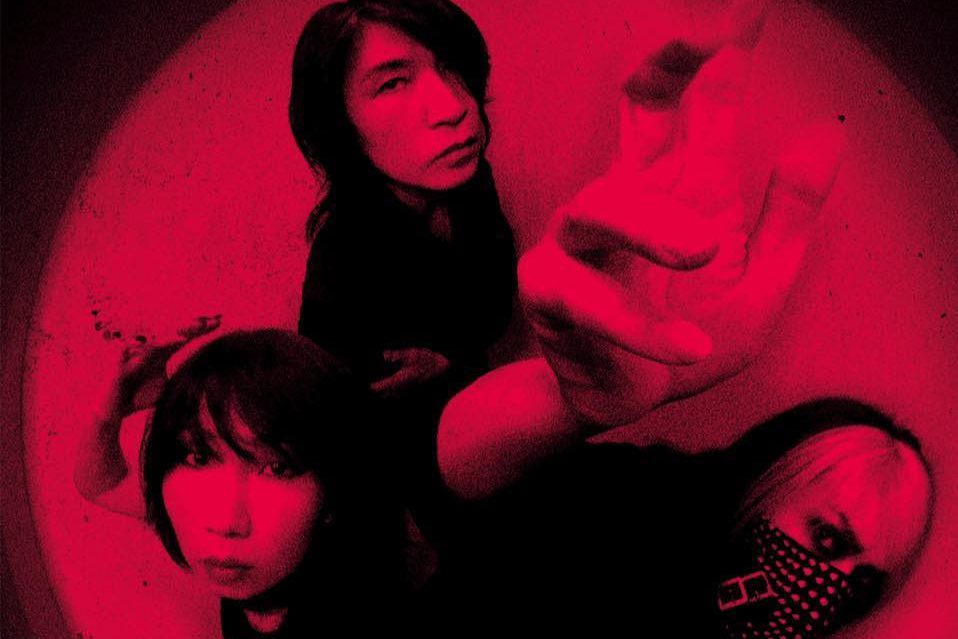
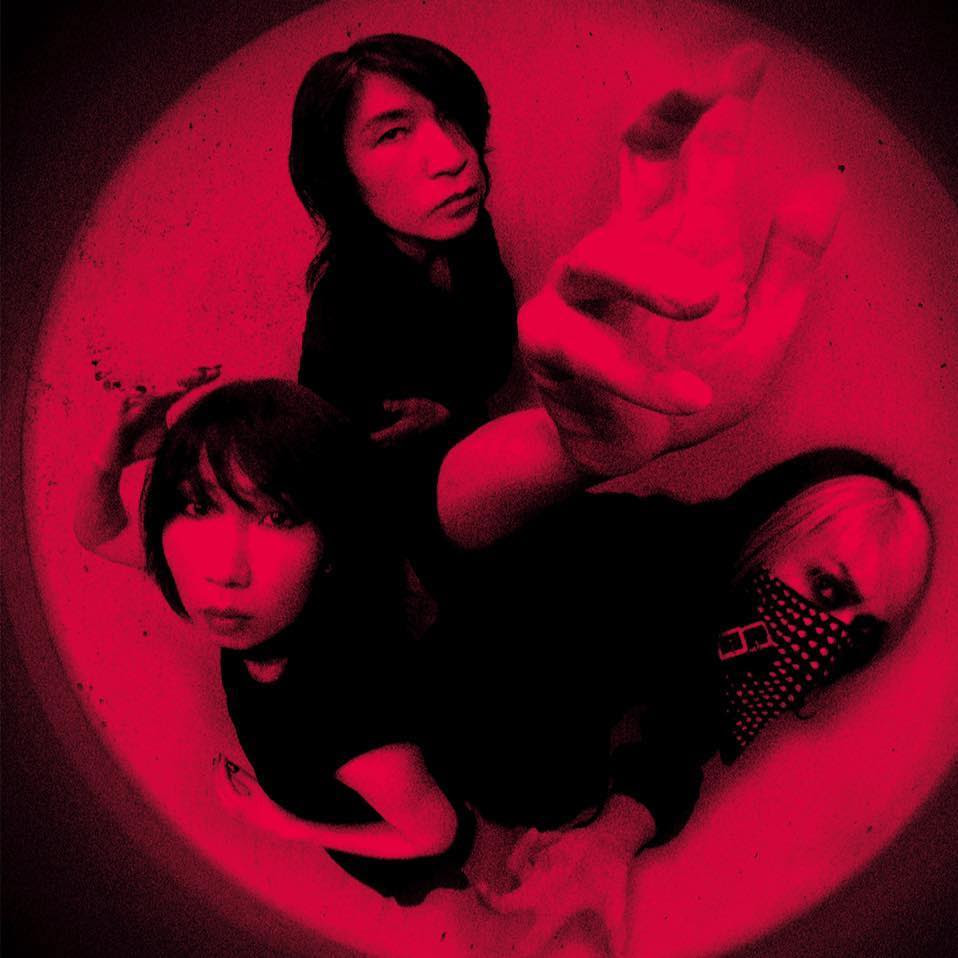
The latest album from Tokyo-based experimental rock band Boris is simply titled NO, a word that sums up the ethos of the metal aesthetic that pervades it, as well as the sentiments behind the songs. With the coronavirus pandemic leading members Takeshi, Wata, and Atsuo to question everything about their culture, they decided to create an album dedicated to the theme of skepticism and societal subversion, and independently released it via Bandcamp earlier this month.

“We’d observe the different events, news, people’s words, actions,” Takeshi told Audiofemme through translator Kasumi Billington. “Those directly impacted us. In these kinds of critical situations, culture always loses power and is even left behind. What can we do as artists? What do we do? What kind of music can be played in any situation, and can be delivered? The production proceeded as we questioned these types of doubts.”

The word “no” is meant to express rejection of the societal mores and ideals one grows up with — an idea expressed in the song “Non Blood Lore,” a term the band created for mythologies and ideologies stemming from wider culture rather than family.

“We’re always slaves to our unconscious,” Takeshi explains. “We accept what we see and hear without questioning, we interpret things conveniently, and we become paralyzed by unreasonable things. We eventually forget what it means, and even forget how to think. It’s an abominable system. We unconsciously decide everything and follow it. The first step to getting free will is to deny your unconscious thoughts. We point with NO toward that system: ‘What did I feel? Did I think this myself? Did I choose to, and take action myself?’ We get to live by questioning and denying yourself first.”

The need to think for oneself is even more important in today’s political climate, where people are bombarded with information and ideas online and in the media, he adds. “People are chased by various anxieties, fear, doubts, and hatred, turning into chaos. In that situation, rather than blindly following the information, we need to think and judge for ourselves. The answer is not given; you must derive your own.”

This is why the band decided not to publish the lyrics for NO. “Our work doesn’t give answers to the listeners, but we’d rather it become material such as values and aesthetic sense that guides you to the answer,” says Takeshi.

The 11-track collection includes a variety of experimental sounds falling within multiple genres. The opening track, “Genesis,” exudes a doom metal style, with strong, ominous, sometimes discordant guitar riffs and drums that repeat and gradually speed up. Other songs on the LP, like “Anti-Gone,” “Non Blood Lore,” and “Temple of Hatred,” follow more of a punk aesthetic, with dramatic guitar and shouting vocals. “Lust” spotlights the band’s use of electronic effects, with almost drowned-out vocals.

Boris also recorded a cover of Japanese hardcore punk band Gudon’s “Fundamental Error” after the band’s ex-bassist Guy came to a show of theirs in Hiroshima. This was exciting for Takeshi, as Outo was a favorite hardcore punk band of his as a teen.

Finally, the album closes with “Interlude,” where Wata almost whispers against dark, mellow synths and slow-paced cymbals. The track’s title suggests that the end of NO is merely a transition into more music to come.

Based on the band’s history, there very likely is. Boris has been releasing music since 1996, and NO marks their 27th album, not counting albums recorded in collaboration with others, which include Japanese noise artist Merzbow, Seattle black metal duo Sunn O))), The Cult frontman Ian Astbury, and Japanese noise metal band Endon. Currently, Takeshi plays guitar and bass, Wata does guitar and Echo, Atsuo is in charge of percussion and electronics, and all three contribute vocals.

Despite its message of rebellion and resistance, NO is ultimately intended to unite a world that’s physically divided. Takeshi hopes it can help people make something good out of the negativity currently in the atmosphere and validate people’s emotions, the way hardcore and thrash metal did for him when he was younger.

“In this current messed up world, people have sunk in hatred and sorrow,” he says. “We hope that for those who listen to this album, their negative feelings reflect like a mirror, and reflect in another direction into something positive. That’s the possibility that extreme music has.”

It sounds heady, but the band practices what they preach. With their planned two-month U.S. tour canceled, Boris is in the process of recording about four albums’ worth of music at the moment – a positive, healing process born of a negative situation. “All we can do is create,” says Takeshi. “Artists must all be in a similar situation. We’re hoping that from this adversity, we can create great music.”

Follow Boris on Facebook, Instagram and Twitter for ongoing updates.

LA’s All My Friends Hate Me Recall Youthful Recklessness With New Song, “Blood”

All My Friends Hate Me don’t shy away from thorny topics. On their 2019 debut, the brutally volatile Metal Butterflies, the pop/punk band uprooted themes of gun control, near-sexual assault, the LA machine, and exorbitant college debt. Their rebellious artistic habits serve them well, even if the band’s name makes them seem unpopular. When it comes to their new single “Blood,” the four-piece playfully recount frontman Bobby Banister’s teenage recklessness and his tendencies to blow off steam by joyriding in his mother’s car.

It’s a high-voltage bridge-builder from their previous work, yet continues pushing their stylistic boundaries further near the cliff’s edge. “I was alive, going down for the summer/With my eyes open wide/God knows I tried/I can’t get back the feeling of the very first time/I was that guy, switching lanes, mother fucker/Middle finger to the sky,” Banister spouts. The song initially runs somber and plaintive, but as he finds freedom on the highway, midnight air caressing his skin, it soon catapults into souped-up velocity.

As a kid, Banister “felt pretty trapped the whole time by insomnia,” he recalls, “and was restless from some pretty extreme ADHD. Being awake more hours than most people can be an advantage, and now I’m able to spend those hours on creative projects. But back then, being a 14-year-old with ADHD and insomnia and nowhere to aim it led to some interesting stories.”

One of his many stories involved snagging his mom’s keys, tip-toeing through the house, and hopping inside the family car for a midnight spin “just to have somewhere to scream out ‘Heroes’ by David Bowie,” he says. “When I was that age, growing up in a small town, being a musician meant you’d probably get laughed at, so that was like a safe space for me. It was just hard to keep a straight face when my mom would turn on the Volvo to drive me to school in the mornings and have no idea why the light on the gas gauge was blinking or why there was mud, grass or a drop of blood on the floorboard of the driver’s seat.”

Other kids soon gave him the affectionate nickname “Bob Zombie,” a moniker he found “pretty sweet,” all things considered. “Writing ‘Blood’ was going back to the driver’s seat of a soccer-mom Volvo and that late-night feeling of freedom ─ those times when it’s brave over brains. ‘It’s the blood that makes us who we are’ is not saying it’s in your genes, but that after the mistakes, the hardships, the scrapes and scars, what you take away from those experiences is what makes you who you are.”

All My Friends Hate Me prides itself on its lyrical whips. With “Blood,” they layered deeper instrumentation on that vocal foundation than ever before. “It was fun to experiment a little and see where it led. It wasn’t a difficult process, but it took a bit more time to create than other songs did,” Banister says.

Alongside the single release, the band is issuing a bright new hoodie emblazoned with the slogan “All My Friends Hate Systemic Oppression,” with 100 percent of proceeds benefiting B.E.A.M. (Black Emotional & Mental Health). Like many white artists, Banister and his band mates Beau McCarthy, Xander Burmer, and Justin Kroger have done plenty of soul-searching this year, from learning about the societal injustices that led to the the tragic murder of George Floyd to listening to the ongoing rallying cry for justice for Breonna Taylor. “Our privilege is definitely something we’ve had to confront. Being brought up to trust the police and not having to be warned how to act around them because of fear is one huge privilege, out of many,” Banister says. “We hope to see and to be a part of real change in the ways of racism, sexism and discrimination, in general, and we’re not shy to talk about what we believe is right.”

“The way that this generation has taken it upon themselves to light up this movement, bring it to the forefront of conversation, and let everyone know we will not put up with this, is inspiring to see, especially in person at the protests,” he continues. “At the same time, the fact that humans are still being discriminated against in 2020 and that so many police are murdering, yet seeing very little punishment, is unacceptable.”

Therein lies the reason for creating the new hoodie, as not only a symbol but a way to move the needle, even in the smallest way. “We recognize our own white, male privilege, and this is one way that we can do our part to help remove the many barriers surrounding communities who have been discriminated against. It’s one of the ways we’re taking action, rather than just talking on social media.”

In taking such actionable steps, they’ve also seen things change in their everyday lives. “In terms of the conversations we’re having and anyone we’re choosing to work with, we’re being more intentional in certain ways, like knowing when to speak and when to listen during conversations and in making sure everyone AMFHM works with is socially conscious,” Banister offers. “We hope, as society starts to rebuild from the COVID-19 pandemic, that we start to see even more positive change take place. If we don’t, you can bet that we’ll be back out in the streets of DTLA again.”

Follow All My Friends Hate Me on Twitter, Facebook, and Instagram for ongoing updates.

Y2K Kitsch and Bedroom Rap Bravado Meet on Debut Brujita EP Cyber Angel

@akabrujita on Twitter

While doing my preliminary research for this article, I double checked the meaning of the word “Brujita.” In Spanish, “Bruja” means witch, but a few websites suggested that “brujita” (“little witch”) can also be a term of endearment, like calling someone a scamp.

This is cute, but it’s also unsurprising that condemnation and affection come as two sides of the same coin for a word most frequently associated with the feminine. While a full etymology of the word “witch” in various cultures would necessitate a thesaurus-sized dissertation, for San Francisco’s Brujita, it is an undeniably fitting moniker.

Call it duality, call it contradiction, or call it the devil and (cyber) angel sitting on Brujita’s shoulders pushing around the pen while they write lyrics, but their first EP, Cyber Angel, is at turns bratty and sweet, harsh and soft. This is most pronounced in “come thru” and “vibez.” The latter is one of the EP’s strongest songs, kicking in hard after ten seconds with a beat that sounds like a toy xylophone got drunk at the club in 2007.

Y2k pastiche is a big pop trend right now, and one that is palpable in Cyber Angel, but without some of the single-minded obsession that can make it tiresome. Influences bounce around the EP with beats pulling from various eras: the backbeat on “better than me” sounds like the theme music for a 2010s keystroke game, while its opening line — as spoken by a Siri-like automated voice — makes me feel warm and fuzzy remembering when feeding curse words to text-to-speak programs was the height of comedy. The instrumental of “come thru,” however, would fit comfortably over a scene of intense eye contact in an ’80s romantic drama, which, strangely enough, works for Brujita’s softer side. While “vibez” is a harsh dressing down of a hookup who foolishly wants more, “come thru” is all yearning, a catalog of all the things you say when you don’t really care any longer about sounding desperate. “I just want the best for you and maybe that could be me,” Brujita almost-whispers on the latter. And yet, I couldn’t say I would be surprised if these two songs were written about the same person.

“Duality! Ouroboros!” I yell with my headphones on blast. And it’s the truth; everyone is someone’s second choice, even Brujita. But you’ve got to appreciate the bombast that permeates the majority of the EP. “get glad!” starts with a paraphrased version of a Kim Kardashian rant, replacing “maybe if you had a fucking business” with “maybe if you were mayor.” “Oh my god Mayor Brujita how do you do it?” Brujita raps later in the song. Brujita is creating a personal folklore here, from the concept of running a town of the “baddest villagers” to the self-aggrandizing and sexual bravado on track three, “better than me.”

Gassing yourself up is paramount to pop and hip-hop, so it makes sense for Brujita to do it here, but it makes even more sense taking in to account their appreciation for the hyper-feminine internet aesthetic and their identity as a non-binary womxn. Carving out space for yourself in music while identifying outside of the gender binary necessitates some bravado, but it’s easy to forget the bravery that lives beneath that.

Brujita doesn’t want you to get to caught up in singular notions of  beauty or identity. “Just back it up,” they sing on the EP’s bonus track, “back it up!” “It doesn’t matter what you look like…I’m a lil’ tubby bitch and imma still back it up!” Brujita will make space for themselves, whether on the dance floor, in the town square, or in the heart of an unsuspecting booty call. Little witches, take note.   

Follow Brujita on Twitter for ongoing updates.

Z Berg Populates Solo Debut Get Z to a Nunnery with Wintry Baroque-Pop Gems

Photo Credit: Alexandra Berg

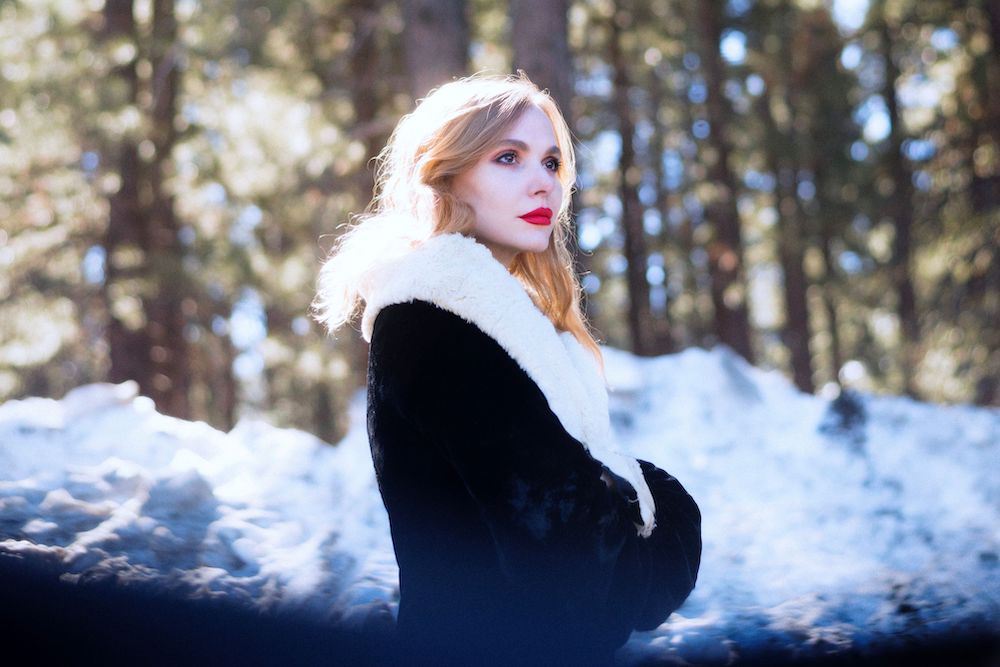
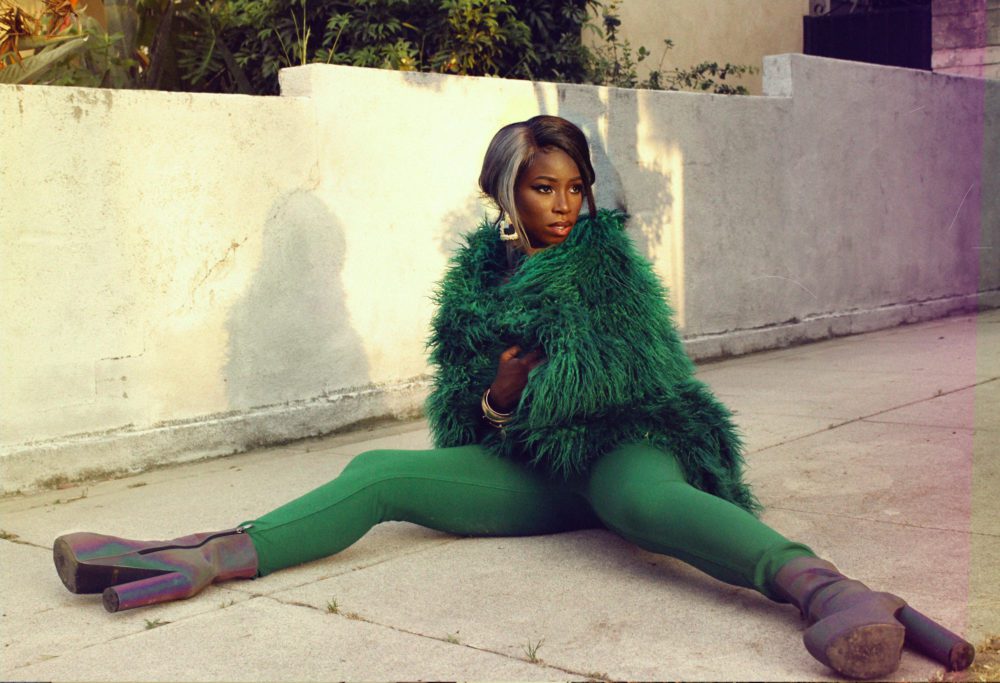
It’s hot as hell in much of the United States, with temperatures rising as high as 128 degrees in Death Valley. Most of the country is in its fifth month of COVID-19 quarantine. Businesses are shuttering left and right, and beaches are left empty, with nary a sun-soaked child in sight. Enter Z Berg’s first full-length solo album Get Z to a Nunnery, a twisted journey into a dark, cold Russian tundra. The album artwork features LA native Z Berg holding herself, fur pulled up around her face, hair pinned up like a character straight out of Doctor Zhivago, eyes staring straight at the camera as if to say, “What did you expect?”

The album has been ten years in the making, a thematic and sonic shift from Berg’s earlier work with bands The Like, JJAMZ, and Phases. It’s a deeply personal record, documenting a decade of “hedonism, drugs, eating disorders, blacking out and cheating on your boyfriend” says Berg. It falls in line with Berg’s historic willingness to experiment; with each musical project, she’s donned an alternate persona, easily transitioning from garage rock girl group (The Like) to new wave pop darling (Phases). All the incarnations have been pure Z, with the accompanying videos increasingly plotted out and designed by the singer herself. It’s why the path to Get Z to a Nunnery feels linear, despite careening valleys and close-calls along the way.

Z Berg spoke to us from her parents’ home, where she’s been quarantining for the last five months. She has quite a sense of humor about the last bit of history we’ve all been living. “I was really into quar for the first two months,” she says with an ominous chuckle. “I’ve had a lifelong obsession/fear of plagues. I’ve been waiting for this moment since I was a child.” She describes her childhood as an education in classic rock; as the daughter of former Geffen Records A&R rep/record producer Tony Berg, Z’s backyard held a music studio where X, Squeeze, and Johnny Rotten regularly recorded. “Music was not a rebellion against my parents,” Berg says, describing the mixtapes her dad made her as a kid: Why Dylan Is Dylan, Why the Stones are the Stones, Why Bowie is Bowie, and so on.

It was a different set of mixtapes altogether that influenced The Like’s first album. Berg’s first boyfriend introduced her to My Bloody Valentine, The Sundays, and other “shoe-gazey music” that helped Berg define The Like’s style. The band was fresh, remarkably poised and confident despite their young ages: Berg was just 15 at the time, as was Charlotte Froom (bass/vocals); drummer Tennessee Thomas was 16. “The press narrative was that we were these three little fucking daddy’s girls and we were too pretty to be playing music,” Berg remembers. “A lot of inherently sexist narratives that surrounded us were really hurtful – and made people not trust us.” Behind the scenes, though, the bandmates held the reigns on both music and aesthetic, casting their music video directors, curating costume pieces, and ultimately laying the foundation for Berg’s solo work.

Berg wrote “Calm Before the Storm,” the oldest song on Get Z to a Nunnery, when she was twenty; around that time, her Phases bandmate (and drummer for Bright Eyes) Jason Boesel introduced her to Conor Oberst; Berg ended up singing on Bright Eyes’ 2007 record Cassadaga, which also featured Gillian Welch and Dave Rawlings. Berg described the group hosting parties that also acted as song circles, which Berg saw as something of a challenge; she remembers thinking “I have to go to a party and play a song that is self-contained and impress these motherfuckers.”

“Time Flies,” a single Berg released in 2018, seems to commemorate this time period and its ensuing creative burst. “To dance around in just our bones/We stopped our hearts, we sold our souls/We didn’t fear the things we didn’t know/But love, not sin, destroys Eden/If I knew now what I knew then/I’d do it just the same, I’d fall again,” Berg sings sweetly. Though it’s laced with bittersweet nostalgia, the album emerges happily in the present, where Berg continues to take full advantage of the connections she’s made. The album features a Who’s Who list of Los Angeles talent, including Ryan Ross (Panic at the Disco, The Young Veins), Phoebe Bridgers, and Blake Mills. Even with multiple featured guests, it remains a cohesive album. It’s remarkable that, despite the time warp, with featured musicians popping in and out, the album feels whole. It’s a testament to Berg’s continued growth as a musician that while the pieces floated, she was always putting them together in her mind.

Nico’s Chelsea Girl, with its moody strings and melancholy outlook, was a huge inspiration, as was Berg’s favorite Russian author, Dostoevsky. With such seemingly disparate reference points, the music doesn’t evoke a specific era; at times it feels like it popped onto Spotify from an alternative universe where women still dress in high-necked black ballgowns, their skirts making angels in the frosty snow.

Berg is the first to admit that she grew up fast, which likely contributed to the album’s blurry-around-the-edges feel. “My memory is truly terrible. I just don’t remember anything that happens in my life,” she says. “Trapping these memories in songs is the only way that I can keep a hold on things that have happened in my life. And I conveniently get to write them being much more beautiful than they actually were.” Ghostly kaleidoloop samples, sentimental strings and pristine piano render her gauzy recollections in surprisingly refined baroque-pop brushstrokes, but somehow, it isn’t hard to imagine synth-heavy remixed versions, either.

Berg is already hard at work on a new album and is pretty confident she’ll release it before the end of the year. In the meantime, she compiled a visual component for Get Z to a Nunnery using clips from films that are out of copyright, adding yet another cinematic layer to the project. Summer 2020 might seem like an odd time of year to drop this album – its penultimate track is even a Christmas song. But to Berg, the timing couldn’t have mattered less, given the state of the world. “We have become so untethered from time in any traditional sense; it feels like we have come unglued. The elasticity of time this year is just staggering,” she says. “I pushed [the album release] back a couple times for various reasons – it was supposed to come out much earlier. And then I just kind of realized: If it comes out in summer who cares? Summer doesn’t exist. None of this is real anymore. And everything feels like a hundred years of everlasting winter so let’s just give it a go!”

Follow Z Berg on Instagram for ongoing updates. 
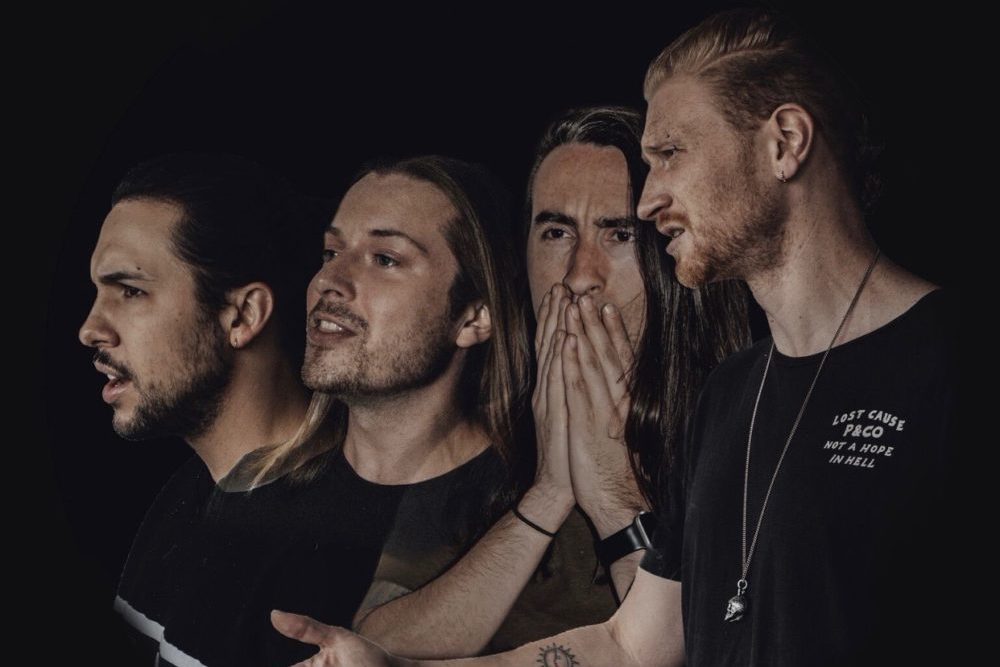
PREMIERE: Louise Goffin Enlists Fanbase for Uplifting “Every Love Song” Video

Photo Credit: Jeff Fasano

There’s a distinct energy to the video for Louise Goffin’s “Every Love Song” that makes space for self-expression. Featured on Goffin’s 10th studio album Two Different Movies, the video for “Every Love Song,” directed by Scot Sax, resulted from a virtual playback party Goffin hosted for her fans (who unanimously alerted the singer that the track was single-worthy) in honor of the album’s release in June. Goffin not only took their request to heart, but brought them into the project by incorporating fan-submitted clips, each of which highlights unique aspects of their personalities.

Interpretations range from shadows dancing on the wall to a pair of young sisters sharing a loving embrace, interspersed with shots of Goffin perched on a spinning vinyl record, the vibrant colors exuding a psychedelic effect like that of looking through a kaleidoscope. “[Being part of the video] gave people a lot of joy,” Goffin tells Audiofemme, adding that she hopes it offers them a “feeling of community and friendship.” “I really wanted it to be everyone’s video and everybody’s song.”

Celebrating those little quirks in her fanbase was a natural extension of the song’s theme, which sees the singer sharing honest emotions with those she cherishes most. “I see you wake up just to make it through the day/Like you don’t matter at all/I want you to know you matter to me/In more ways than I can ever recall,” she sings on the track, its conversational tone elevated with gospel-referencing organ. Co-written with Nashville-based songwriter Billy Harvey, “Every Love Song” lends an intimate vibe to that shout-it-from-the-rooftops feeling of truly being in love. But Goffin, the daughter of iconic singer-songwriters Carole King and Gerry Goffin, wisely recognizes that even when we’re overcome with emotion, we don’t always share that with those closest to us – even when they’re the inspiration for those warm fuzzies.

“I grew up with a lot of people withholding affirmations from me because they felt I didn’t need it. But inside I was desperately insecure,” Goffin confesses. “So many of the times, we want to tell people things we don’t tell them. ‘Every Love Song’ is all the things I’ve never said before – and I’m telling you now. It’s coming out with vulnerability and truth, and recognizing that it makes a difference.”

Another key element to the song is owning one’s power and voice when it comes to expressing desires. “That’s moment of vulnerability could also not just be about ‘I’ve never told you how great you are,’ but it could also be ‘Here’s what I want for myself,’” she says. “It’s really stepping into that voice of speaking up for your love of others, for your dreams and love of self and what you want for the world. We have to somehow find the courage to speak, and that will change our destiny.”

The video heartwarmingly illuminates the symbiotic relationship between fans and artists, but Goffin also felt a deep appreciation for the relationships her fans displayed toward one another, and what that revealed to her about human nature. “I think there is a theme in this song and in the video of this masculine and feminine really uniting to make a mutually loving, mutually inclusive wholeness,” she says. Goffin points to a specific example of unity in the couple who’s waving to the camera against a vibrant blue backdrop, a sweet moment she captured during a trip in Cuba in 2018, revealing that the insight she’s gained through her vast travels also played a role in the video. “The thing about being a musician is that culturally… it’s all stories and people and songs and heartbreak and heart healing. That’s in me and in my life and I wanted the video to be reflective of all of that.”

Follow Louise Goffin on Facebook and Instagram for ongoing updates.

WhatUpWally? Recruits Cincinnati’s Best Rappers & Producers For ‘Pandemic’ LP

Photo Credit: Chaya J.

Wally Hart, aka WhatUpWally?, tapped some of Cincinnati’s best rappers, beatsmiths and vocalists for his debut album, Pandemic. Spanning across 14 tracks and picking up assists from over 15 MCs – not to mention another seven producers – the sharply-made effort cuts through the noise of other quarantine offerings and provides relevant, outspoken takes, rooted in a love for hip hop.

Pandemic was created during Cincinnati’s COVID-19 stay-at-home mandate, with WhatUpWally? first approaching fellow artists with the idea in early March. In what ended up being a four-month process, the album’s many collaborators would send track recordings to each other via Dropbox or work at opposite ends of the studio, the hip hop aficionado/music educator told Audiofemme.

“The result is a full coherent concept album with 26 collaborators that is meant to be listened to from front to back, in order,” Hart wrote on Facebook. “The mood of the album represents the mood of various times during the pandemic.”

Pandemic
Photo Provided by WhatUpWally?

“I thought we were going to end Pandemic on a happy and optimistic note so I sent out a beat to AC [the Entity], SamSun, [Sharp.One], and Wonder [Brown] and asked them to write something with a hopeful tone to end the album with. That was it. The album was finished and it was dark with an optimistic ending,” Hart says, but in the wake of continued police brutality that sparked “the beginning of the largest civil rights movement in the nation’s history, we had to go in and rewrite the ending.”

The police killings of Breonna Taylor and George Floyd and the likely racially-motivated murder of 25-year-old Ahmaud Arbery are most felt in the album’s “Outro” and bonus track, “XPac,” which samples a speech by Malcolm X and interview with Tupac. WhatUpWally? also offers a razor-sharp analysis of systemic racism, oppression and economic disparity in the stinging “Capitalism Kills.”

Besides timely boldness, the album stands out in its sonic diversity. Boasting a wide range of talent, Pandemic has songs for classic hip hop lovers and contemporary fans alike, with the unifying factor being thoughtful lyricism. Scratching and nostalgic flows are on full display in the opening “Cincinnati Cypher” and “Use Your Sword.” A few places down the tracklist, “Duke Energy” stands out as a new-school melodic high-point, where Khari and Spirit swap bars about cutting the negative energy out of their lives.

“Some really dope art is coming out of this time,” Hart noted to Audiofemme. On Facebook, he added that Pandemic is a “representation” of these times and, he hopes, will provide a reflective listening experience.

Check out the album on Bandcamp and see the full tracklist below.

TeaMarrr Lets Loose With Candid Lyrics and Crossover Appeal on Before I Spill Myself EP

Haitian-American R&B artist TeaMarrr‘s latest EP Before I Spill Myself began as a humorous and candid exploration of sex and love – but somehow, the songs turned into something more than that. For instance, “Doin It Wrong” rips into a bad lover, but after releasing the music, she realized it was healing people in more ways than she anticipated. “At first, I felt guilty or ashamed that I was like ‘look at me, look at me,'” she says of promoting the release. “But people are actually using this to find themselves and escape and find a little break form the madness.” In the same spirit, “One Job” describes a man who gets “emotional” when she only signed up for “the dick;” on social media, activists began re-appropriating the lyrics in service of social justice, writing statements like “they only have one job: arrest the cops who killed Breonna Taylor,” and “they only have one job: protest,” says the singer.

When she recorded Before I Spill Myself, TeaMarrr was “trying to put a beginning, middle, and end to the feeling of meeting somebody and falling for them and realizing they weren’t it,” she says. “I wanted it to be through my heartbreak and betrayal. I just wanted to put something out that’s relatable and medicinal for people that are going through it in the same way that I was, when it comes to being unsure of yourself.”

With her brazen lyrics and crossover appeal, TeaMarrr is to the Haitian diaspora what Nicki Minaj is to Trinidad or Rihanna is to Barbados. TeaMarrr doesn’t typically write her songs before she gets to the studio — she finds a beat then freestyles over it until she finds something she likes, a style borne from her early days recording her voice over beats she found on YouTube. This method gives her lyrics a conversational tone that makes you feel like a friend is giving you advice. In “Done,” for instance, she speaks the words, “Just calm the fuck down/K, you don’t need this human/You don’t need any human/OK, I lied, but/Just understand that you are enough.” On opening track, “Chasing Amy,” she warns a new love interest about herself: “I kinda bite.” In “Whorey Heart,” she complains about a partner who can’t help but sleep around: “You don’t want walks in the park/You just want everyone sucking you off.”

The Boston-born, LA-based artist is intentionally open about sexuality, which she considers a form of empowerment. “A lot of my lyrics, even more emotional ones, stem from the empowerment I feel not from getting fucked but fucking someone,” she explains. That’s what she sings about in “Tick” ft. SiR: “I ain’t had it in a long time, but while we’re on time, let me fuck you/Love me from moon shine ’til your morning wood/Give it to me for the one time ’cause you dumb fine and I want you.”

TeaMarrr’s sexual candidness also shines in her latest video, for “Doin’ It Wrong.” In the James Bland-directed clip, she and a group of women dance in front of Insecure actor Jean Elie and other men, addressing lyrics to them like,”Please slow down/Too much tongue/Don’t fuck up the rhythm/Are you done?” The video was inspired by musical theater, with the women performing on a stage and venting about bad lovers in a backstage area while they’re doing their makeup.

TeaMarrr’s ties to Insecure don’t end there – she was the first artist signed to Issa Rae’s joint venture with Atlantic Records, Raedio, which encompasses publishing, live events, music supervision, and artist development. TeaMarrr says she saw herself in Rae’s Awkward Black Girl series, and making that connection felt manifested. Rae, for her part, told Billboard in February, “I want her to succeed. I am listening to everything and I am giving my opinion about everything.”

All in all, different listeners can take very different meanings from the EP, but TeaMarrr hopes that in some way, it helps them all to heal themselves and reflect on their lives. “We’re in quarantine, so what are we here to do besides look in the mirror?” she points out. “This is the perfect time for the music to come out because people are trying to reinvent themselves. We’re in a new dimension in 2020, music-wise, historic-wise, so I’m excited to see what comes about.”

Follow TeaMarrr on Facebook, Instagram and Twitter for ongoing updates.

PLAYING MELBOURNE: Meet Vivan Vo, Host of 3RRR’s New Pan-Asian Music Program Mooncake

Vivan Vo, aka Small FRY, is a Melbourne-based radio host and artist manager. She has a freshly minted radio show on community radio station 3RRR called Mooncake. The show is dedicated to the broad and colourful spectrum of pan-Asian music, including sounds from India to Japan, China to Korea, Cambodia to Bali. Vo began volunteering at 3RRR three years ago, filling in for shows and hosting The Graveyard Shift. Upon pitching Mooncake to the Program Manager, there was a lot of love for the idea, and it has finally manifested.

“I was born and raised in Melbourne, with a Vietnamese background,” says Vo. “I grew up listening to whatever was on commercial radio; pop, R&B and house music. Whilst I love these genres and still enjoy the nostalgia of ’90s/2000s music, my passion and exploration started when I was in my twenties. Volunteering in the music department in community radio exposed me to so many diverse genres and artists.”

Mooncake will explore music from all over Asia in addition to local Asian-Australian artists. “The show will cover genres as diverse as R&B and hip-hop, k-R&B, Chinese hip-hip, mandopop, jpop and electronica,” she says. “Music is a way to break down barriers between people and cultures. You don’t need to understand the language to enjoy a song, feel the music or to dance to it. It takes a great deal of learning in order to understand another’s background and their culture, but music could be a positive step towards that.” According to research by the University of Melbourne, about 12 per cent of Australia’s population is Asian-Australian and 82 per cent report being discriminated against, typically in the work environment or in hospitality environments.

Vo completed a communications degree in university, part of which involved a radio production course. This lead her to volunteer for five years with Melbourne’s student radio station, SYN 90.7FM. Her first paid music role was as an assistant at a management company for commercial pop artists, providing insight and experience on the business side of music and publicity.

Once she felt confident of her experience, Vo founded Small FRY to provide PR and management to independent Australian artists. She’s so far represented Melbourne-based electronic acts like neo-soul duo SAATSUMA, techno duo Kult Kyss, dark pop singer-songwriter Aeora, electro pop band Take Your Time and alt-R&B trio Huntly.

“I’m a small fry in a big industry,” she laughs, explaining the name – though hosting Mooncake, no doubt, boosts Vo’s profile considerably.

But Mooncake is about more than that, of course; it’s an answer to some of the tough questions Vo has asked of the industry for years now. In 2017, she spoke with Liminal Magazine – a publication founded in 2016 by Leah Jing McIntosh to represent the voices of Asian-Australians, showcasing artists and their work as well as providing a platform for their opinions and expression – about the meaningfulness of providing a role model for young Asian-Australians in creative jobs. “I’ve become more aware of the barriers towards Asian-Australian musicians and that we are an underrepresented group in the music industry…” she said. “So often, we’re competing against so much music and favour is given elsewhere. I’m always questioning, of these artists who are repeatedly supported, how many of them are people of colour? It’s obvious that we’re not being represented. In festival line-ups, music playlists and artist rosters, we’re still fighting for diversity; people of colour are a token.”

Vo has selected three Asian-Australian artists everyone should get to know.

Mojo Ruiz de Luzuriaga, Mo’Ju (previously Mojo Juju), is an ARIA Award-nominated Australian musician who has been outspoken on being queer, brown and opinionated. Her track “Native Tongue” is a personal ode to her ancestry, her outsider status and proves her adeptness as a singer-songwriter with superior skill in catchy, melodic pop vibes.

Sydney-based solo artist Rainbow Chan was born in Hong Kong. Classically trained in saxophone, piano and choral music, she is also a bowerbird for samples and finds unusual and clever ways to create montages of sound. The vulnerability and candidness of her storytelling is central to her music.

A little bit glitchy, quirky and imbued with Yeo‘s humorous spirit, his smooth ’90s trip hop vibes are catchy and fun. “Six Years” is a love song worth listening to on repeat.

L.A. DJ Bianca Oblivion Shares Her Eclectic Tastes With New Tracks and Zoom Livestream

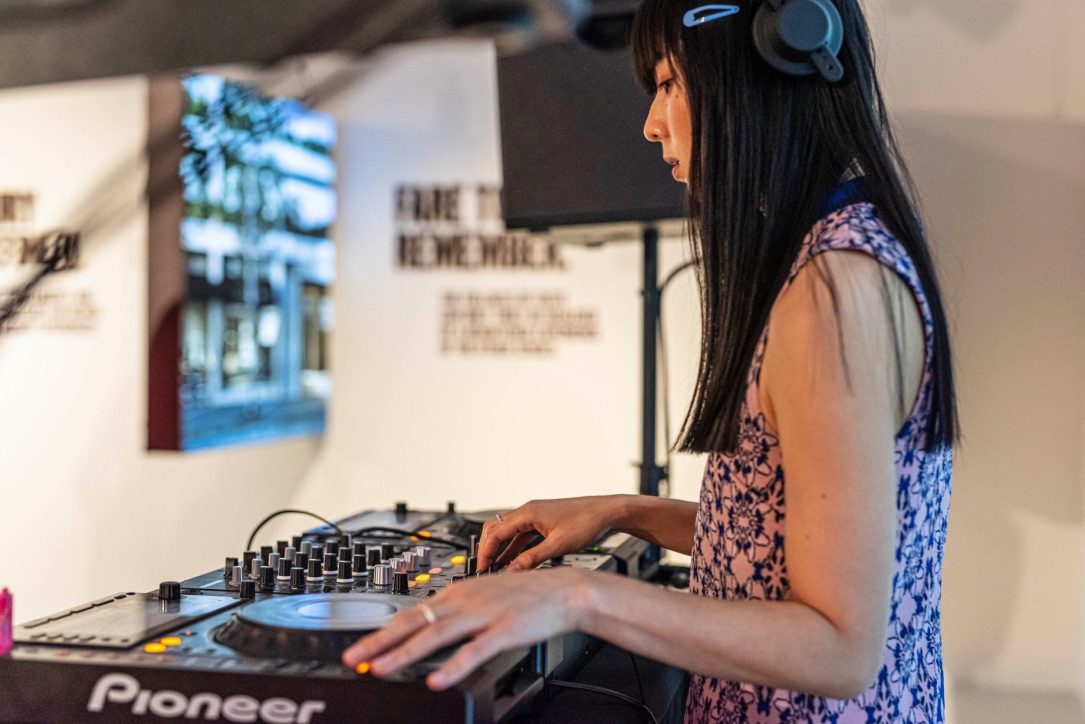
The first single Bianca Oblivion owned was “Pump Up the Jam,” the 1989 techno-pop hit from Technotronic that would endure on club dance floors for decades to follow. “When I was a little kid, I made my parents go and buy that for me,” she says by phone. It proved to be a seminal influence for the L.A.-based DJ and producer.

“Early ’90s house and techno were a big influence,” she continues. “You’re a kid, you don’t really know what it is. You just know that it’s music you like. So, I didn’t really identify what it was until later on.” Instead, it came together with Madonna, Janet Jackson, ’90s hip-hop and everything else that Oblivion heard in her childhood to build a foundation for the eclectic tastes she would develop in the DJ booth and her home studio. Today, Oblivion links together styles like baile funk, reggaeton and house-offshoots like Jersey club, vogue and UK funky.

Oblivion got her start on college radio in the ’00s, playing indie and post-punk tunes alongside her collection of hip-hop records, with some freestyle and house thrown into the set. In 2006, she began playing at clubs in and around Los Angeles. She set her sights on remixing and producing music in 2016, about a decade after her start in the club world. Oblivion’s first releases were unofficial edits. The two earliest of those, “The Girls Dish n Tell” and “House of Gully,” drew from early ’90s house jams. Not long after that, her edit “Chant Con Sal,” which melded the King Doudou cut “Sal” with “I Chant, You Vogue” by Leggoh, got a shout out in FACT Magazine. “That was one of my first edits and it got some attention,” she says. For Oblivion, that was incredibly exciting, so she kept going. Since then, she’s released of edits, remixes and original tracks.

Locally, she’s perhaps best known for the Latin American and Afro-Caribbean-focused party CULosAngeles, which she co-promoted with Francesca Harding for two years. She’s known for playing a broad range of music and for cultivating events that are inclusive. “I’ve always made it a space that’s inclusive of women, LGBTQIA artists and party-goers and want to make it a safe space for everyone with all different kinds of influences and sounds coming through,” says Oblivion.

Even during lockdown, Oblivion has been keeping the party going. On a Friday night, not long after Los Angeles County shut its bars for the second time during the COVID-19 pandemic, spirits were high on Zoom where Oblivion was DJing. It was 9pm in L.A. and there were already 66 people in the room when she began her set, some of whom would raise a drink or turn on the dance moves when their screens pop to the front. Oblivion gave the crowd a bounty of late-night, heavy-impact beats, with traces of turn-of-century pop – Destiny’s Child, Britney Spears, Nelly. It was the first of her two sets that night for Spiral, a weekly Zoom party founded by fellow L.A. DJ The Saddest Angel. Oblivion initially came on board as a DJ, but recently, she’s been co-promoting the event.

“It’s unpredictable,” says Oblivion by phone. That goes for both her set and the crowd, which can bring in visitors from virtually anywhere with an internet connection. Oblivion had tried other livestream platforms before and says Zoom is surprisingly comparable to the club because of crowd response. “You an see the people vibing and dancing to it on screen,” she says. “Even if they aren’t on screen or don’t have the video on, they respond by chat.”

It’s become a special space, lockdown aside, because of the virtual party’s ability to bring in guest DJs and party-goers from across the globe. “I would actually hate to see this space disappear once the regular clubs open,” says Oblivion. “We don’t know how that’s going to happen or when it’s going to happen. I imagine that, at least in L.A., it will be this way for some time.”

Oblivion, who also hosts the monthly NTS show Club Aerobics, has also been spending the time at home working on her productions. Her latest track, “Calling,” appears on the Club Djembe Vol. 2 compilation (out today), from the label (and U.K. club night) Club Djembe. Oblivion says that she was influenced by ’90s Latin and tribal house for the track. ” I don’t know if people really expect that from me,” she says, “but I think that once you hear it, you’ll understand that it’s a good fit with the rest of what I’ve done.”

She also recently collaborated with the MC XL Mad for another new tune, “Bubble Pon Di Bed,” that Oblivion will self-release in August.

“I actually feel that my current production really does stem from the initial edits I did, which also stems from my DJ style,” she says. “I just love to mix a bunch of different dance genres.”

Follow Bianca Oblivion on Instagram for ongoing updates.
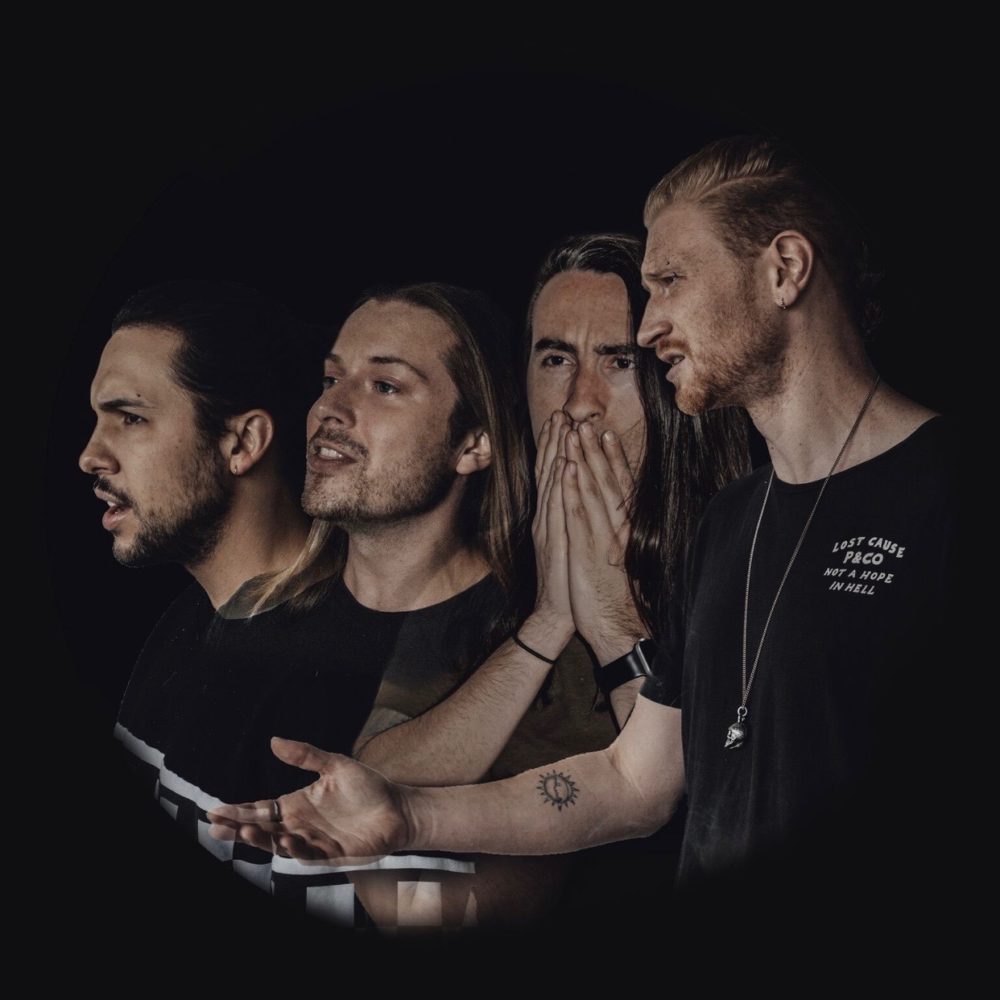
PREMIERE: Karolina Rose Supports Sexual Assault Survivors with “Runaway Angels”

Photo Credit: Alexander Bemis

Shortly after the #MeToo movement began, Polish-American indie pop artist Karolina Rose knew she wanted to write a song supporting sexual assault survivors. However, it took several years for her to feel prepared to release the end product — her latest single, “Runaway Angels.” After a lot of hard work and emotional healing, she’s sharing it today.

Working with producer Elliot Jacobson, Rose created a balance between live guitar sounds and programmed synths and drum machines for the song, which embodies the dark power-pop aesthetic she’s known for. The lyrics describe the inner turmoil involved in processing sexual trauma: “You’re something in my eye/I make tears and wash it all away/All those times I tried so hard/Fantasize just to make it through the day.” In the chorus, she sings about “a place to hold these hollow hearts,” which to her means that it’s okay to “feel really empty for a while, and we’ll hold onto you while you feel that way,” she explains.

Since the topic of the song hit close to home, she sat on it for a while after writing it. “I wasn’t able to listen to the song for a long time because it would make me cry — I’d get really triggered by my own song,” she says.  It ultimately took an ayahuasca ceremony for her to feel emotionally prepared to put it out into the world.

When the shaman who conducted Rose’s ceremony listened to “Runaway Angels,” he told her, “I hear pain in this song… this song has a dark energy.” She doesn’t disagree with his assessment, but she views the music as cathartic rather than polluting. “I think overall, it can be a healing tool, because I don’t think there’s anything wrong with bringing to light those shadow parts of yourself and feeling that in music,” she says.

In fact, she hopes those who listen to it can relate to her pain and understand they’re not alone. “It was just this collective support that I wanted to transmit in the song — this collective pain but equally collective support,” she says. “I feel like all of these primarily female victims — the angels — need the world’s support.”

Since the world is undergoing another reckoning of sorts today, she’s glad to put out the message in the song right now, as its messages feel equally suited to the fight for racial justice. “For so many of us that are not racist, it’s so obvious — like, of course we love everyone — but you have to step forward and actually show your support,” she says. “Otherwise, if you don’t say it, you’re remaining silent. And that’s how I felt when I was writing this song about the fact that it’s so hard for sexually abused victims to come forward when they aren’t guaranteed support.”

The track is off her upcoming EP, Rosemary, which comes out August 21 and explores the process of healing and finding love through four songs. It also includes “Greytopia,” a more upbeat, Lady Gaga-esque single about transcending difficulties; a dark, electronic cover of Shakira’s “Objection“; and “White Lies,” a dynamic, danceable track that’s currently unreleased.

Rose was working in investment banking in New York City when she decided to take a leap of faith and follow her passion of making music. “I felt like I wanted to have more out of life, that I wasn’t going to be okay with a stable, secure job and that’s it,” she says. “I thought I had more to say about my story.” Outside her day job, she practiced guitar and wrote songs, then started doing acoustic shows. She wrote and recorded her first music in New York, with her 2019 debut EP Invicta carrying a similar theme of strength, then spent three months traveling Europe as she worked on Rosemary before settling in LA.

The videos for the EP were filmed in a Croatia villa that Rose swears was haunted, which inspired a scene with an apparition in the not-yet-released “Runaway Angels” video. After a filming marathon, Rose fell asleep at the wheel of her car and almost swerved off the road. She remembers the friends she was filming with telling her, “‘This could happen to anybody. Don’t feel that way.’ They were helping me, so it was just like a family. … I think this just adds to how much this means to us.”

Because she was able to release so many negative emotions in “Runaway Angels” and the rest of Rosemary, she predicts that her future music will have a whole new sound. “I feel like my pain is trapped in those songs,” she says. “Anything recorded going forward from the new me, I’m pretty sure, is going to be really different.”

Follow Karolina Rose on Facebook for ongoing updates.

Rising Country Songwriter Tiera Finds a Voice through Woman-led Music Brand Songs & Daughters

Photo Credit: Kamren Kennedy

As Nashville’s female-focused record label Songs & Daughters approaches its one-year anniversary this month, or “first birthday” as president Nicolle Galyon calls it, the artist collective continues to move into the future with a new publishing arm. In partnership with Big Loud Publishing and Warner Chappell Music, the new publishing venture will enable Songs & Daughters to develop aspiring artists and songwriters, with Tiera signed as its flagship songwriter.

Co-founded by Galyon, a revered songwriter who’s penned a range of hits including Dan + Shay’s “Tequila,” “Automatic” by Miranda Lambert and “Consequences” by Camila Cabello, Songs & Daughters is a platform for female artists to flourish and hone their talents in an industry where their voices are sorely lacking on country radio. But more importantly, it’s a safe space nurturing both the art (the song) and the artist (the daughter). “I’ve always had this vision for Songs & Daughters – it is a record label, but more than that, it’s a home,” Galyon tells Audiofemme in a phone interview from her vacation home in her native Kansas. “Just building this really beautiful family where everyone can be creative and develop together.”

Nicolle Galyon (left) and Tiera (right). Photo Credit: Julia Cox

The family is growing with the addition of Tiera, a bright 22-year-old from Birmingham, Alabama with tenacity and a “DIY” spirit. With the new publishing deal, Galyon will mentor Tiera as she writes with high caliber songwriters in town, penning tracks both for herself and for other artists to record. For Galyon, Songs & Daughters is the sanctuary she wishes she had upon moving to Nashville 18 years ago, recalling the sense of community she felt working with female writers, a precious bond she hopes to establish among the up-and-coming women she’s working with through the one-of-a-kind label.

“The genesis of me even wanting to have my own label was looking back and realizing that the female artists that I really loved working with [when] I was a year or two into writing, we had built trust and mutual respect and love and a creative energy in the comfort of a writing room. That’s to me where true partnership has been formed. Creating a space for other writers to get to do that feels true for who I am and how I came into the business,” she explains. “The whole industry is a wild card, but my hope is that I can create opportunity for [Tiera], get her up at bat, get all these artists and writers, the people that I believe in, use my platform to give them an opportunity to get up at bat and swing.”

Since moving to Nashville, Tiera’s work has earned her a slot on the 2018 country music-themed competition show Real Country and in the CMT Next Women of Country class of 2020. A consistent theme among Tiera’s growing catalogue is her polished sound that matches her vibrant, soulful voice and showcases her sweet southern drawl in a way that allows the lyrics to float off her tongue. Take “Rewind,” a storming number about a couple that can’t break toxic habits, juxtaposed with the perky “Out of Sight” that follows a globe-trotting couple seeking a place to escape. Her sharp sensibilities are what drew Galyon to the singer. “It’s an easy listen, but it’s advanced writing,” Galyon describes of Tiera’s songwriting style, calling it “wonderfully digestible.” “She’s so consistent. She keeps writing new songs, but I know what I’m getting.”

Describing her style as R&B country, Tiera’s interest in country music developed in middle school when she taught herself guitar at the age of 13 and started writing songs about first crushes and heartbreaks. “It just naturally came out country,” she says of her songwriting. “I loved writing stories and I loved writing stuff about real life.” As she took songwriting more seriously as a profession, she studied the songwriters behind the tunes she was listening to, dissecting the lyrics and applying the research to her own writing, including those written by Galyon, calling the opportunity to work with her a “full circle” moment.

As a self-admitted “sucker” for writing upbeat love songs, the singer centers her songs around uplifting themes. “What I try to focus on in my life in general is on the good. I feel like there’s so much negativity in this world and I try to not focus on that all the time and focus on the positive. I think there’s so many beautiful things in this world, so I try to relay that in my music,” she observes. “I just want to make people feel good.”

 Galyon also sees this gift in her new protégé. Calling the young star “refreshing,” she notes that Tiera’s songs are often “fun” and “hopeful,” citing “Found It In You,” “Tell My Mama” and the unreleased “Fall Out Boy” as her personal favorites. “She really does know who she is and what she wants to do,” Galyon says. “She wants to be a light with her music.” But there’s an important piece of advice she hopes to instill in the young star. “Trust the experts, but always be the loudest voice that you hear,” Galyon advises. “You shouldn’t be the only voice you hear, but you should be the loudest at the end of the day. Your voice needs to be the forefront.”

Listening to her intuition isn’t likely to be much of an issue for Tiera – her song “Wake Up Call” opens with the line “I don’t take orders from nobody but myself,” after all. Tiera hopes to step into a mentoring role one day and bring other artists under her wing like Galyon has done for her. “Nicolle has paved the way for me. I really hope that I can do that for other artists,” she professes. “It’s great to be a part of the charge.”

Follow Songs & Daughters and Tiera on Facebook for ongoing updates.

PREMIERE: Naima Shalhoub Sings Rallying Cry of Resistance on “Five (The Calling)”

Photo Credit: Tarik Kazaleh

Naima Shalhoub’s music is not just for entertainment or artistry; it’s a form of social activism. In addition to being a singer, songwriter, and multi-instrumentalist, the Lebanese-American artist is a Restorative Justice practitioner who holds healing groups for women of color. Her upcoming album, Siphr (August 6) — like her first, Live in San Francisco County Jail — uses music to convey powerful messages of social change and resistance.

In the latest single off the album, “Five (The Calling),” soul influences are evident, with rich harmonies accompanied by piano. Then, strings and other instruments join the mix as the singing becomes more erratic and discordant. “You may hear a thousand voices calling you another way/But you will know that heavenly sound calling your name,” Shalhoub sings.

As the centerpiece of the album, “Five (The Calling)” was meant to be a “still point” that began one way and ended another, she told Audiofemme over the phone soon after attending a #BlackLivesMatter rally.

The track aims to send the message, “Don’t get distracted, don’t get it twisted, you have to learn what your integrity is,” she explains. “For me, it’s crying out to God, to the most high, the people who came before me, the Audre Lordes and the Angela Davises that aren’t my blood ancestors but that I feel like are my political ancestors — Billie Holiday and Nina Simone — the teacher will emerge when you’re ready, so always be attuned to that frequency of grace.”

The rest of the album contains blues and jazz influences, as well as Southwest Asian and North African folk, with lyrics in both Arabic and English and a Middle Eastern guitar-like instrument called an oud accompanying Shalhoub’s voice. However, she also says more modern artists she listened to growing up, like Lauryn Hill and Erykah Badu, influenced the LP. “I wanted it to feel ancient in some ways and futuristic in other ways,” she explains.

The tile Siphr is Arabic for “zero,” which for Shalhoub symbolizes “everything and nothing, which is grace and the grace of the creator.” The track titles are numbered from 1-9, signifying “the journey of finding oneself in relationship to others,” Shalhoub explains.

Some of the songs are more relevant than ever right now. The lyrics to the bluesy “Four (Roumieh Prison Blues)” were written by men incarcerated at Lebanon’s Roumieh Prison, which is meant to illuminate the struggles that incarcerated people face. “Eight (Arab-Amerikkki)” features Palestinian-American producer Excentrik rapping about white supremacy against infectious piano and oud melodies.

The album release was originally scheduled for June 19 but was delayed to avoid taking the spotlight away from the Black community. Shalhoub finds it synchronistic that it’s coming out during a time when people are speaking out about racism; she sees the music as “crying out for freedom in solidarity with others,” she explains. “I certainly, as a brown woman, stand so firmly in solidarity with my Black kin. That means it’s an ongoing process and that also means dismantling the internalized colonialization I carry as a brown woman from a brown land.”

As someone who has survived sexual trauma and other abuses in her life, this album was also a way for Shalhoub to transmute her own experiences of injustice. “This was like emancipation for me to write this album,” she says. “My spirit needed it. My ancestors needed me to sing it. My creator needed me to sing this.”

Follow Naima Shalhoub on Facebook for ongoing updates.

Imogen Clark Celebrates Resilience in Video Premiere for EP Title Track “The Making of Me”

Australian singer-songwriter and guitarist Imogen Clark first wrote the song “The Making of Me” about a really tough year that just seemed to entail one hardship after another. She remembers thinking when she wrote it that “if I made it through the year, I’d be a stronger, bolder version of myself.” In the chorus, she belts emotively against piano, “This year will be the making of me.”

Though she was reflecting on personal events from 2019, the lyrics provide an important reminder to a Americans still in the throes of the Coronavirus pandemic – or facing any other type of struggle, COVID-related or not. “I don’t want anyone to feel that level of anxiety, but obviously, a lot of people are [right now], and I hope maybe this song can be a bit of a mantra to those people,” she says. “What I meant this song to be when I wrote it was not a sad anthem about going through a terrible time and wallowing in it. It’s very much about going through a challenging time and letting that challenge form you into a stronger version of yourself.”

Inspired by a breakup, the song was meant to sound raw and stripped back, which Clark accomplished by recording herself in the studio with live piano accompaniment. In the same vein, the video, filmed in at Sydney’s Low 302, shows her playing piano to an empty room. Clark played her last gig there before the virus shut down public establishments, giving the emptiness of the room extra meaning. “It was quite eerie because it was like the apocalypse was about to happen,” she remembers. Clark decided to use the video to help live music venues recover from COVID, providing a link to her website, where people can find information about supporting local venues.

Clark’s other songs are similarly heartfelt, most with a pop sensibility. But on some, like “Collide,” the title track from her 2018 release, you can hear audible country influences – most notably hints of Shania Twain, whom the 25-year-old artist has opened for. She also notes Bruce Springsteen, Taylor Swift, Led Zeppelin, and Joni Mitchell as big inspirations.

On August 21, she’s putting out her next EP, The Making of Me, which includes the title track along with the singles “My Own Worst Enemy” and “Found Me,” plus three currently unreleased songs. She recorded the EP in LA with producer Mike Bloom, who has worked with Rilo Kiley, Julian Casablancas, and Jonathan Rice, and chalks much of the sound up to him. He gave her directions in the studio, having her release emotion to the point that she was almost yelling at times, she remembers.

While she considers this EP poppier than her previous work, her goal was to feel unconfined to any genre; she even branched out into electronic sounds, making use of synths and drum machines. Several guest musicians added to the unique sound, including Pete Thomas, who has drummed for Elvis Costello, and Tom Petty & the Heartbreakers keyboardist Benmont Tench.

“It felt like the first time I was able to make music without worrying about the genre of the music,” she says. “People make it seem like it’s insincere and inauthentic if you’re embracing pop sensibilities, but we made this with no expectation about what genre it would be, and that was a huge leap forward for me and made me feel very confident and liberated, and I think you can hear both emotions in the songs.”

In fact, being yourself and resisting external pressures is a major theme throughout the album. This is perhaps most evident in “Push Me Down,” which was inspired by experiences Clark has had as a woman in the music industry. On the track, she stands up to men who have tried to belittle her and undermine her ideas.

“As a woman, the music industry can be a really testing place,” she says. “It can be as small as somebody making a comment about the way that you dress. Women are always made to feel like we need to show more skin or feel more sexualized in our content. What I’ve always thought of with my music is, if I want to sexualize things, I’ll do that on my own terms. I’m not going to do it because somebody else tells me to. The first and foremost thing in my mind is that I have something to say, and I want that to be at the forefront of people’s minds.”

In the spirit of hope and resilience that “The Making of Me” encompasses, Clark is planning her first live show, which is set to take place September 10 in Sydney. “We’ll be able to launch the EP in a proper live show, which is wonderful,” she says. For those of us still in limbo, the song’s reminders about our potential for growth may be just enough to get us through.

Follow Imogen Clark on Facebook for ongoing updates.

PREMIERE: Neia Jane Falls in Long-Distance Love on New Single “Break Ur Heart”

Photo by Holysmoke Photography

Every relationship hits a fork in the road, a moment in time when both parties actively choose to walk down a path together (or not). In 2019, singer-songwriter Chloe Jane, aka Neia Jane, found herself anxiety-ridden, hoping that her boyfriend would be able to immigrate back to the U.S. from France, and worrying if the pressure of a long-distance relationship would break them. Fresh off the release of her debut album Magic & Honey, Jane attempted to mitigate that uncertainty through songwriting, and the resulting single “Break Ur Heart” is an exploration of how to work through pain and come out the other end stronger than ever before.

“Even when it feels like heaven and we’re floating baby/Love will always break your heart/We’re only human and we’re hurting and we’re trying baby/I didn’t mean to break your heart,” Jane sings, her voice fraught with tension. With “Break Ur Heart” she continues the themes from last year’s debut: love, loss, longing. However, the music moves away from girl-band ballads like “People Like You” and digs into a new, dark disco sound. It’s an exciting experimentation for an artist who already bends genre frequently, often pitting her ethereal voice against a straight rock guitar. The same voice takes a slight back seat in this single, allowing the production elements to take center stage. Synths surround, weaving in and out of the narrative of a girl wandering alone, dreaming of a lover half a world away.

Jane grew up in the “Adventure Capitol of the World,” aka Queenstown, New Zealand. Born Chloe Jane, she was raised listening to Pat Benatar and the women of classic rock. Her American parents were both artists; her father played covers in a local band and was the one who pointed out female rockers, women who Jane could respect and emulate.

In her teen years, the family moved from Queenstown to her father’s hometown of Seattle, Washington. Those first years were rough on Jane; her Kiwi accent and interest in music made her an easy target for bullies at school. “I had no idea how to cope with the emotions that I was feeling at that point. I think I shut down a lot of them,” Jane remembers. “Bullying effects people in long term ways. I think I’m still coping and still expressing those emotions – the feeling of being other, the feeling of not fitting in, and having people pick your differences apart rather than celebrate them. Obviously as a white woman, I didn’t feel that near as much as some of my peers did. But I felt outcasted enough to feel really lonely as an adolescent for sure.”

As a preteen, Jane gravitated toward singing, picking up a guitar by age 12 to find music that matched her lyrics. Jane’s dad started a business teaching rock music in Seattle, a la School of Rock; it was after she started taking classes at the school herself that Jane found bandmates, forming her first rock band at the tender age of 13. Outnumbered was the name of her first real band (complete with a legit Facebook page); they performed mostly covers, but allowed Jane the time and space to take ownership of her music. It was her first taste of leading, of forging her own path.

Cut to 2020 – Jane is now living in Boston, Massachusetts, and has been performing solo for years, though she only recently starting playing under the moniker Neia Jane. “[The name change] allowed me to create kind of a personae that felt free from my personal identity as Chloe,” she explains. “Neia Jane is a way for me to kind of go into another space and not tie my creative output to every aspect of my life. That’s been kind of invigorating for me. I feel like Neia Jane can be a bit more extreme, outgoing, do things that I wouldn’t do as Chloe.”

Initially the transition to being a solo artist felt off; Jane had always imagined herself in a band and the images she had of female solo artists didn’t fit with how she viewed herself as an artist. “I kind of felt like female solo artists weren’t representative of what I wanted to do, genre wise, sound wise. And honestly I didn’t want it to be about ‘the me show’,” she admits. She even reached out to her old bandmates, asking them if they wanted to be members of her new project, but they weren’t interested; they felt like she needed to strike out on her own. After that, Jane says, “I kind of realized: I like being a free agent. I like being in charge of what I do. I like being able to write the songs and call the shots.”

At this juncture, Jane is self-assured, happy with the creative control that comes with flying solo. Her new single “Break Ur Heart” is synth magic from the opening beats, its confidence drawn from rock legends Jane admired as a child. It is Jane’s first self-produced single, created in Ableton on her own laptop. She wrote the song the day her boyfriend left for France, beginning the long process of shaping his visa. It took him a year to get back to the U.S. full-time.

Though the song was inspired by the specific situation at hand, Jane says the whole ordeal dredged up deeper trauma, too. “It was about the feelings that I was facing within myself and the way that I responded to those feelings. My parents divorced when I was 17 and I definitely was marked by that feeling of things changing. There’s definitely an element of abandonment that I am afraid of in my life,” she explains. “I haven’t had too much luck with people treating me very well in relationships in the past. So I  definitely have had fear of love in general, just fear of being with someone. Afraid that they’re gonna leave, afraid that they’re gonna change. Afraid I’m gonna let myself get close to someone and that they’re gonna hurt me and leave.”

The crossroads had been reached and she wasn’t sure about the path ahead. Should they break up? Should they do long distance? Should they get married? They decided to trust the process and kept the relationship long distance while the paperwork went through the machine. Neia Jane’s boyfriend, who is also makes music as Fytch, came in at the tail end of the songwriting process and did a first mix of the song. During one of his trips to the U.S., they put together final pieces. It was a labor of love, signifying Jane’s blossoming talent as a producer, as well as the strength of their relationship, tested over time and space – a love song in every sense.

Follow Neia Jane on Instagram for ongoing updates. 
VIDEO PREMIERE: New Single From Kristen Grainger and True North Lauds Women as Leaders

Oregon State’s motto, “She Flies with her Own Wings,” was first adopted in 1854 as a nod to the “independent spirit” of the state’s first pioneers. In her new single by the same name, Kristen Grainger and True North spins the phrase into a modern feminist anthem.

An Oregon resident who for many years worked in state politics alongside her music career, Grainger says “She Flies with her Own Wings” is particularly inspired by her time working for Oregon Governor Kate Brown, who was swiftly ushered into office in 2015 after the sitting governor, John Kitzhaber, resigned amid a criminal investigation. During her time on the team, Grainger said she was dumbfounded by the amount of misogyny she saw directed at Governor Brown, and simultaneously inspired by her persistence and collaborative style of leadership. It got Grainger thinking about the generally sexist reception of women in leadership in this country, particularly during the era of Trump, who the song characterizes as a “bully with the megaphone/who threatens and annoys.”

“If she doesn’t immediately have an answer [they say] she’s a failure, she’s weak, you know, but she’s absolutely not. Kate Brown is cautious, she’s mature, she’s consultative, and she is collaborative, and these are not characteristics that are not necessarily associated with male leaders, and are often associated with female leaders,” said Grainger. 

Grainger says she’s “done” with the misogyny, especially because she believes a consultative style of leadership could be transformative for the country. She channels her frustration, this call for change, and the myriad of positive experiences she’s had working with women leaders like Brown, into this new single with her band True North. This spirit lends a real fierceness and assertiveness to what is otherwise a pretty melody with simple acoustic accompaniment, as she sings—”She flies with her own wings/She’s on the look out for better things/She’s got her eyes on that western horizon.”

“This perception study from Pew Charitable Trust said the perception people have—it actually creates the double standard and it can make professional and economic mobility more challenging for women,” Grainger points out. “For men, being ambitious, decisive, that’s viewed as desirable, but it’s not necessarily viewed as desirable in women. You have to be approachable and likable in ways that men with similar aspirations need not be. Also, being physically attractive plays a larger role in being successful as a woman than being successful as a man, as does a woman’s age.”

“She Flies With Her Own Wings” appears on Kristen Grainger and True North’s new album, Ghost Tattoo, released in June. The album is one in a long line of vibrant bluegrass releases from the band, which was founded in 2003 by Grainger and her husband, guitarist Dan Wetzel. What’s fresh about Ghost Tattoo is the new personnel—in their tenure, True North has undergone several lineup changes, but they currently boast the talents of multi-instrumentalist Martin Stevens and bassist vocalist Josh Adkins, who lend the album an upbeat energy.  Plus, Grainger says the more political focus is new for her. Beyond “She Flies with her Own Wings,” another song on the album, “Ghost of Abuelito,” explores child detention centers at the Mexican border, while “Light by Light,” tackles the topic of violence against women.

I don’t know that I’ve had an album with three songs on it that could be considered political, and frankly I don’t consider myself an activist, per se – I think of myself as a person observing,” Grainger says. “I’m seeing these things around me and I’m moved by them.”

As for “She Flies with her Own Wings,”—and its video, recorded by Robert Richter of Local Roots Northwest in Portland—Grainger hopes the song will reach the ears of the gatekeepers in the music industry and create more parity for women on festival stages, as a wealth of talented women musicians, particularly in the bluegrass and country world, continue to emerge. Grainger said she’s played plenty of festivals – even a kids’ bluegrass festival, where she saw just how far the industry has to go.

I’ll see the entire lineup has got 8-10 bands, 30-40 musicians total that are performing throughout the weekend, and one woman, or zero women, or two women, and they’re not necessarily a head of the band, they’re basically a fiddle player or whatever,” Grainger says. “I always nicely – because women have to be nice – write and say it would be great if you worked for greater gender parity on stage so that all kids, little boys and little girls, could see women performing.”

Follow Kristen Grainger and True North on Facebook for ongoing updates, and visit their website for more info.

Dreams, Driving, and Getting High Inspired Suzanne Vallie on Debut LP ‘Love Lives Where Rules Die’

Photo Credit: Magdalena Wosinska

Big Sur, California-based singer, songwriter, and poet Suzanne Vallie routinely enters an empty black space in her dreams, where she floats around and finds inspiration. During one particular trip to this abyss, she heard a voice commanding her, “I’m going to give you a song. It’s a very important song. Are you listening to me?”

“It was insisting that I pay attention,” she remembers. “And then the voice just started singing, ‘High with you, high with you, ah, get high with you.'” She woke with a start and immediately recorded the melody and lyrics on her phone. Soon after that, she and her band followed through on this voice’s instructions. They worked out a bridge and chorus for the song, and Vallie improvised the other verses as they played it. The result of their work is a Beatles-esque ode to substance-assisted good times with friends, “High With You.” “The song’s mostly about friendship and feeling elevated, and also when you trust someone so much you can eat mushrooms with them,” she says.

They performed “High With You,” among other songs, at Hickey Fest, a music festival in Northern California, where producer Rob Shelton was attending. Shelton had planned on catching Vallie’s set but ended up missing it. Then, later on, people were passing a guitar around a campfire, and Vallie started performing the song there. As everyone sang along to the chorus, more and more people joined the circle, including Shelton.

“High With You” indeed proved to be an important song, because Shelton reached out to Vallie after that, and they ended up working together on her debut album, Love Lives Where Rules Die. Soon after, Vallie also met Jenny Mason, who funded the album and gave her a deal through her label Native Cat Recordings. Native Cat dissolved before the record had the chance to come out, so she ended up releasing the 11-song LP via her friend Kacey Johansing’s label Night Bloom Records.

The record deal was a light in the dark for Vallie, who had just gone through a difficult breakup and was hopping between friends’ places, working odd jobs. “I just had all kinds of crazy feelings, feelings I had never had before, certain feelings I didn’t know could be in the same room together,” she remembers.

This mish-mosh of emotions managed to converge at Dreamland Recording, a hundred-year-old church that doubles as a studio in upstate New York, where the album was recorded. Mason wanted to capture the essence of Vallie’s live performances, so the album was recorded using old-fashioned live-tracking, which was a fun process for Vallie. “It’s so exciting when we get the take — we get to the end of the song and everyone’s quiet for a second and they’re like, ‘I think that’s the take,'” she remembers.

Vallie suffers from mild narcolepsy, which oddly seems to flare up when she gets excited, and she actually experienced a narcoleptic episode during the recording of the album. Somehow, she continued singing and playing the Wurlitzer piano when she drifted off to sleep in the studio. “I kind of blacked out, but I woke up still performing, and we finished the song, and we kept the tape,” she says, declining to reveal which song it was. “I think only I can kind of hear this little part where I can tell when I was asleep.”

Somehow, the fact that Vallie recorded the album partially while asleep seems perfectly fitting when you listen to it. Folk melodies, airy vocals, and influences ranging from shoegaze to country to ’60s soul create a mellow sound that seems to belong in the backdrop of a movie dream sequence. This dreamlike sound is also in keeping with the way the album was first conceived, not to mention the name of the studio.

The vivid natural imagery in the music has the same effect, painting otherworldly scenes. In the first track, the angelic “Ocean Cliff Drive,” Vallie sings about driving down Highway 1 between the mountains and the ocean on the California coast: “Honey, I can’t see the road ahead of me/But I’m coming.” The video was filmed further south, in Huntington Beach, but captures the same feeling, with Vallie driving and playing with dogs in the sand.

She also released a video for another single off the album, “Love Letter,” a whimsical country ditty featuring biting lyrics like “You’re tall on a horse/Short on the floor.” For the video, a neighbor of hers brought her horses down, and Vallie rode and played with them. “We had to social distance, but I could get close to the horses, so that was all right,” she remembers.

The album also includes songs like “Morro Bay,” a fast-paced, danceable account of “mid-westerners in Cali,” and the title track “Love Lives Where Rules Die,” where Vallie sings against baritone guitar about receiving support from friends after her breakup.

Vallie grew up in South Dakota and Minnesota, then moved to California and wrote lyrics for the band The Range of Light Wildnerness before launching her solo project. She’s currently working on a video for “High With You,” along with another record full of new songs, and we’ll undoubtedly hear more creative work from her as she pays further visits to the dark space in her dreams.

Follow Suzanne Vallie on Bandcamp for ongoing updates.
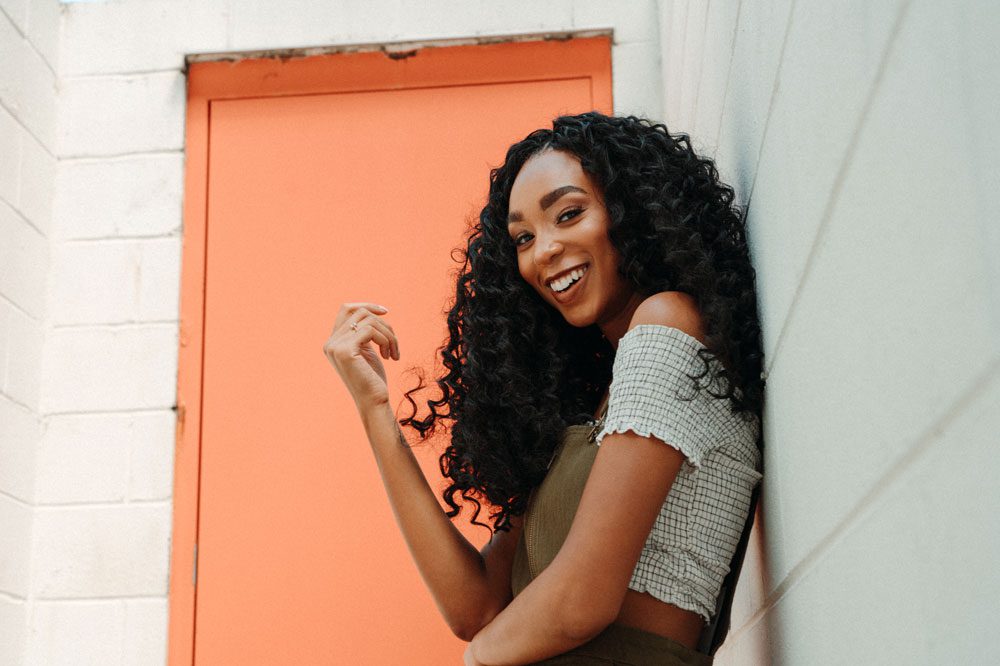
LonelyTwin Premieres Pretty, Nostalgic Breakup Bop “My Heart”

One of Sweden’s biggest exports, in music at least, is smartly written electropop, with heavyweights like Robyn, Tove Lo, Lykke Li and Icona Pop effortlessly churning out gems with an uncanny ability to permeate the zeitgeist. Assuming her place in that lineage comes Stockholm-based singer-songwriter and producer Madelene Eliasson, who honed her songwriting chops as one half of duo MAD FUN with Fanny Hultman, working with artists like Kygo, Ellie Goulding, Emily Burns, SKAAR, Karen Harding, Parson James, Julie Bergan, SHY Martin, NAAZ, and Miriam Bryant.

With diverse musical interests and skills, it was difficult for Eliasson to narrow down her own sound at first. But last year, she released her debut single “I Should Have Told You,” setting the stage for the melancholy but gorgeous brand of electronic indie folk she makes under the moniker LonelyTwin. Earlier this year, she shared a airy cover of MGMT’s “Electric Feel” that further hints not just at her vast array of influences, but the general vibe she’s going for: sensual, end-of-the-night party jams built from rich guitar loops and yearning, feather-light vocals.

Now, she’s released her latest single, “My Heart,” a nostalgic second glance at a relationship that’s over, but fondly remembered. Brassy synths give it a warmth not usually felt in breakup songs, distorted layers of vocals lifting the main melodic promise: “You will always have my heart.” Over the next few months, Eliasson will release a series of singles that will eventually form LonelyTwin’s as-yet-untitled debut EP, but for now, “My Heart” captures her pretty, if pensive, songwriting style and gives us plenty to look forward to.

Check out our interview with LonelyTwin and listen to latest single “My Heart” below.

AF: What was your relationship to music growing up? I know you started playing guitar at age eight, but eventually went more of an electronic indie pop route; can you talk about how that shift in your interests played out?

ME: I grew up listening to a lot of guitary folky stuff like Josè Gonsalez, First Aid Kit, Tallest Man On Earth, Joni Mitchell and that really made me wanna play guitar. But early on my music taste got way wider and I started to listen to more electronic stuff as well like The Knife, Justice, Miike Snow, Ratatat and that really inspired my producing. And after that I got into a rock thing as well with Rage Against The Machine and Eagles Of Death Metal. So I think in general I just loved any music that made me feel a lot and loved to just go into my bubble and dream away.

AF: How did your experiences at prestigious Swedish songwriting school Musikmakarna help you grow as an artist?

ME: I applied to the school with music that I had made for myself as an artist. Before I got in I didn’t really know anyone that also made music and I had never collaborated with anyone before. So going there became a crash course in songwriting and collaboration and I was learning so much that all of a sudden I felt a bit lost in what I wanted to do for myself. So I focused more on learning how to write for others and I met Fanny [Hultman] who I later started [MAD FUN] with and that kind of took off, so it made sense to put more energy there. But then when I finally got some more time to get back into my own stuff it all made so much sense. I knew exactly what I wanted to do and it felt so amazing to take everything I had learned and put it into my project.

AF: How did writing with MAD FUN inform your songwriting for LonelyTwin?

ME: It shaped it so much. I learned a lot from everything I did in MAD FUN with Fanny and other writers and artists. It just improved my skills to a whole knew level so it became easier to make stuff on my own for LonelyTwin.

AF: What made you decide to start recording your own material as a solo artist?

ME: That’s always been something that I knew I was going to do. I’ve always had a big need for alone time and to express my emotions. If I don’t I can get really moody and down – ask my family! – but when I do everything just feels lighter. I got to a point where I felt like I really needed that outlet again, something that I can control on my own. When you write for others you have no control in anything as soon as the song is done. It can be pretty tiring…

AF: Do you still write songs for other artists?

ME: Yes, and I think I always will. I love so many different types of music and it’s amazing when you get to join someone else’s vision for a while. It also gives me so much perspective on what I’m doing for myself. I think if I stopped [writing for others] I would try to make my own project fit everything and that’s not a good plan. They really feed into each other for me. When I get tired of pleasing others I can just go back to my space and my music and then when I get sick of my own thoughts I can jump into others’ again.

AF: What inspired “My Heart” lyrically, and how did you use the production to bring out its wistful mood? What was the writing process like?

ME: I wrote the song after a breakup and it’s for my ex. It’s about knowing that you have to let go even if you don’t want to and the confusion in that. It’s about how someone will always have a very special piece of you no matter what happens. I think most of my productions/songs get a wistful vibe to them. I am really one to romanticize things and then it just kind of happens through the music I guess. I heard the beat in my head and started with that, then the chords and then the song just kind of came about. I usually start with a track vibe when I write for LonelyTwin.

AF: What can you tell me about your forthcoming EP?

ME: It’s definitely a heartbreak EP! So much has happened in the last year for me and the EP just reflects my different stages since my breakup and also meeting someone new and just how messy and beautiful it can be at the same time. I try to be as honest as I can in my songwriting so you can expect that. Sonically, the whole EP is gonna be in the same line of combining the acoustic with the electronic witch I really love.

Follow LonelyTwin on Facebook for ongoing updates.
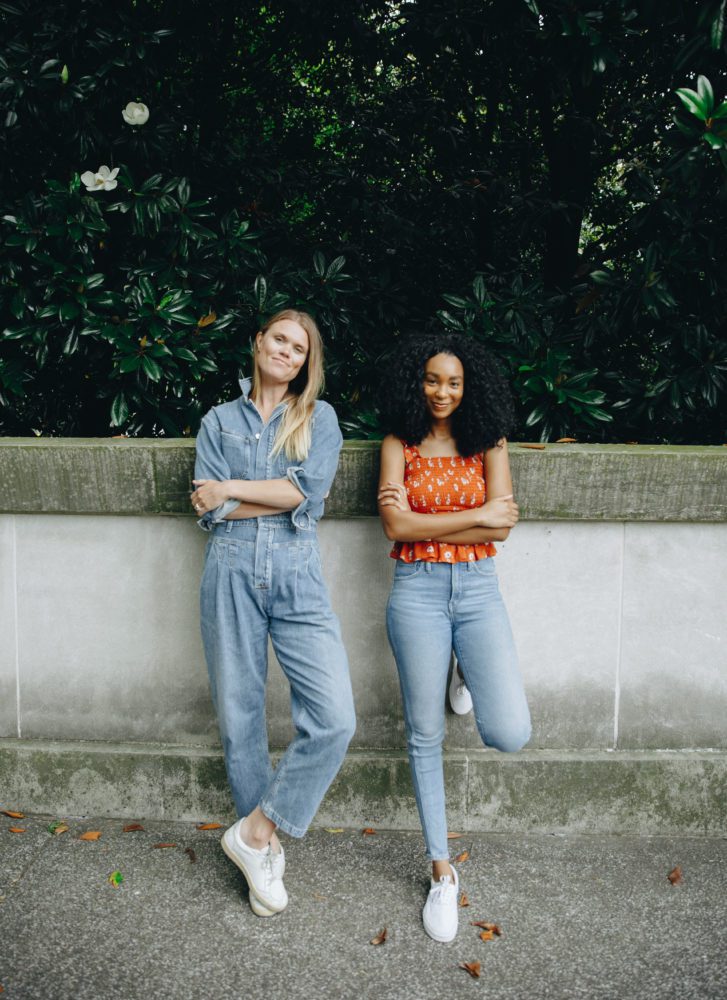
PREMIERE: Brontë Fall Reclaims Aging with Older-But-Wiser Perspective on “Six Years”

Photo Credit: Ashtin Page

When Teri Bracken, the singer, songwriter, and multi-instrumentalist who makes music under the literary moniker Brontë Fall, was in college, a man told her that some women treat college as a “finishing school” for finding husbands. The term angered her but also inspired her to show her listeners a different form of “finishing school” with an EP by that name.

The songs on Finishing School, like its title, put a twist on gender norms. In “Warrior,” Bracken sings about using dresses, heels, lipstick, and other “feminine” objects as weapons to fight sexual harassment, singing, “I am not weak/I am a warrior.” The bluesy “White Dress” is about resisting societal pressures to get married, declaring that the “white dress” she aspires toward is a successful career.

“It’s celebrating my life and what I want and sort of saying, you don’t have to conform to those age-old expectations,” she says. “I think it touches a lot of females — they’ve told me, ‘Oh yeah, I turned 28. My grandma was like, ‘When are you gonna have babies and move out to Minnesota?’ So many women feel this pressure from family and society.”

On “Six Years,” premiering today on Audiofemme, Bracken responds to thea anxiety many women feel about aging, reflecting on the wisdom that the past few years have given her. “Now I’m six years older/Six years smarter/Six years stronger /My will is unshakeable,” she sings.

The six years she refers to constitute the time that elapsed between first coming to Nashville in her late 20s and writing the song. “I was totally intimidated by the talent,” she remembers. “I didn’t think I was good enough. And then I came back six years later a few years ago, and it was interesting to go back to the same place so differently. I felt so much stronger and smarter, and I was ready to take it on.”

This experience made her rethink the fears she had about getting older. “I wanted to celebrate the value in aging, because it doesn’t seem to be valued that much in society, and we’re only getting older,” she says. “But I wanted it to reach 15-year-olds and 75-year-olds. I wanted it to have a timeless message.”

The musical inspiration for the slow-paced, vocally driven song was unexpected: Justin Bieber’s “Love Yourself.” Bracken says she was “in a sort of pop mood” when she wrote it. “I just loved how poppy and snappy that was, and I wanted ‘Six Years’ to be poppy and snappy and simple.” She’s unpretentious about her musical influences, counting Taylor Swift among them as well (you can almost hear hints of Swift’s “Fifteen” in “Six Years”), though the EP is also audibly country-inspired.

The transformation Bracken describes in “Six Years” reflects the transformation Brönte Fall has undergone since her first album, 2017’s Silhouette Dances. “She’s more confident, she knows who she is, and she’s ready to have a strong voice,” says Bracken. The older songs have a bit less pop and more country and rock influence, but they contain a similar theme of female empowerment, along with love and heartbreak. Bracken also experimented with some new sounds on Finishing School, including the use of cello in “Give You a Halo,” which she wrote for her grandma.

The artist’s name is taken from the Emily Brönte poem “Fall, Leaves, Fall,” which is about embracing the darker seasons. “That’s what art does — finding beauty in the darkness, writing through pain,” she says. She was also inspired by the way the Brönte sisters made a name for themselves (quite literally, by using male names) in a male-dominated world.

Both these themes are reflected in Bracken’s music, with its reimagining of sexist traditions and gender stereotypes. And yet thankfully, during this time period, she gets to sing in an unapologetically female voice.

Follow Brontë Fall on Facebook for ongoing updates.
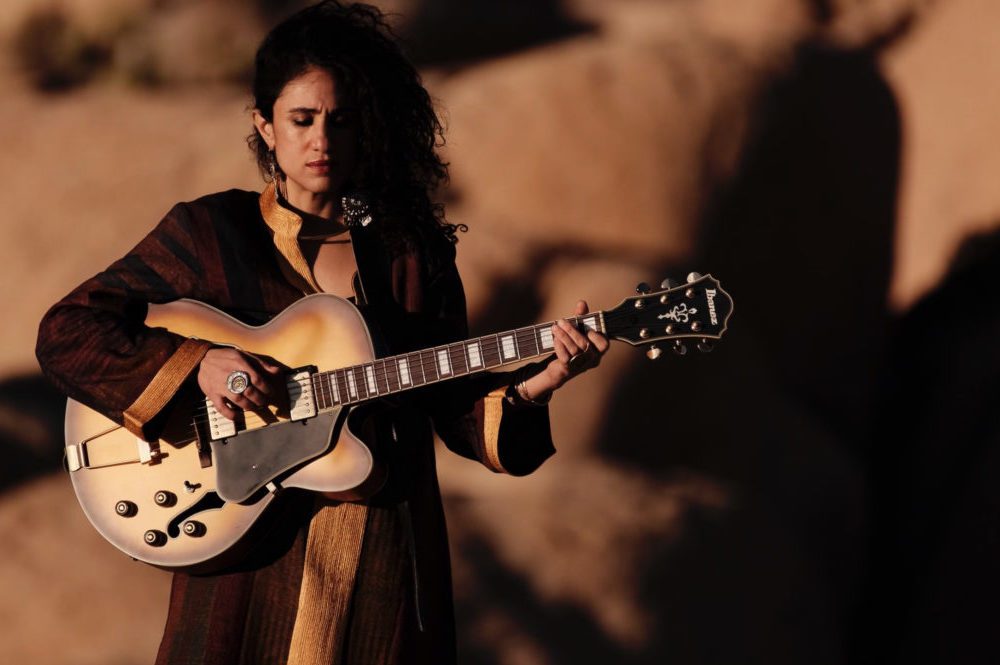
Little Kid Puts an Indie Folk Twist on Religious Motifs with ‘Transfiguration Highway’

Transfiguration Highway, the latest album from Toronto-based indie folk band Little Kid, begins with a story about the Rapture — but certainly not a traditional one. On the LP’s opening track “I Thought That You’d Been Raptured,” with a harmonica-driven sound reminiscent of Bob Dylan and Wilco, lead singer/songwriter Kenny Boothby sings about finding his partner’s clothes in the living room when he gets home, thinking she’s been raptured when she’s actually having an affair.

“I remember joking about the concept with my partner,” says Boothby. “We both have some Christian history, and there are a lot of jokes between us about the Rapture. I knew right away it would make a great concept for a Little Kid song. I’m proud of that one because it’s probably the most overtly humorous song I’ve written. A lot of our discography is a little heavy and inward-looking, but people who know me well know I’m rarely 100 percent serious.”

This song is emblematic of the band’s playful, clever twists on religious and mystical motifs. The name of the album itself comes from the biblical Transfiguration — Christ’s radiant appearance to his disciples, or more generally, transformation into a more spiritual state. The album is the first the b


Little Kid started off as a one-person operation by Boothby but has expanded over the past few years to include Megan Lunn (banjo, keys, vocals), Paul Vroom (bass and vocals), Liam Cole (drums), and Brodie Germain (drums, guitar, percussion). The band provided Lunn’s first recording experience and also one of her first live performances. “I had already been a fan of Little Kid prior to joining and was familiar with past albums, so it was fun to add in harmonies or instrumental parts of the album that I enjoyed but weren’t already a part of the live performances,” she says. Lunn previously had only contributed vocals to the project, so she was excited to add banjo to Transfiguration Highway. “I also wanted to create unique and memorable harmonies for this album, and give it more of a country feel,” she explains.

Transfiguration Highway, the band’s first album for Brooklyn imprint Solitaire Recordings, departs from Little Kid’s early music in its heavy use of live-off-the-floor recording, with the band playing together straight to tape. In addition, the group aimed to center the piano, avoid electric guitars and guitar pedals, and find other ways to “make things sound strange,” like recording different parts at different tape speeds, says Boothby. “I’ve also been embracing accidentals and unexpected chords or key changes. I’ve enjoyed playing with expectations — playing chords that invoke a certain genre (e.g., a set of chords that make a song sound or feel ‘country’), and then subverting that expectation somehow.”

The tracks vary both thematically and sonically. In “What’s in a Name,” with airy vocals and pianos that conjure up Elliott Smith, Boothby explores how names and pronouns shape others’ perception of us, particularly with regard to gender. Lunn’s voice joins in for graceful harmonies and alternating verses in “all night (golden ring),” an examination of abusive relationship dynamics based on country singers Tammy Wynette and George Jones.

The project feels especially timely, as the world could currently be said to be undergoing a process of transfiguration right now. “Many individuals are starting the lifelong journey of transfiguration surrounding their views on racism and activism, and I hope that this will reflect how our governments function moving forward,” Lunn says. “I think feelings of isolation and disconnect brought on by the pandemic are driving the capacity for personal growth in a lot of us, challenging us to put more effort into connecting and understanding others’ perspectives.”

Follow Little Kid on Facebook for ongoing updates.
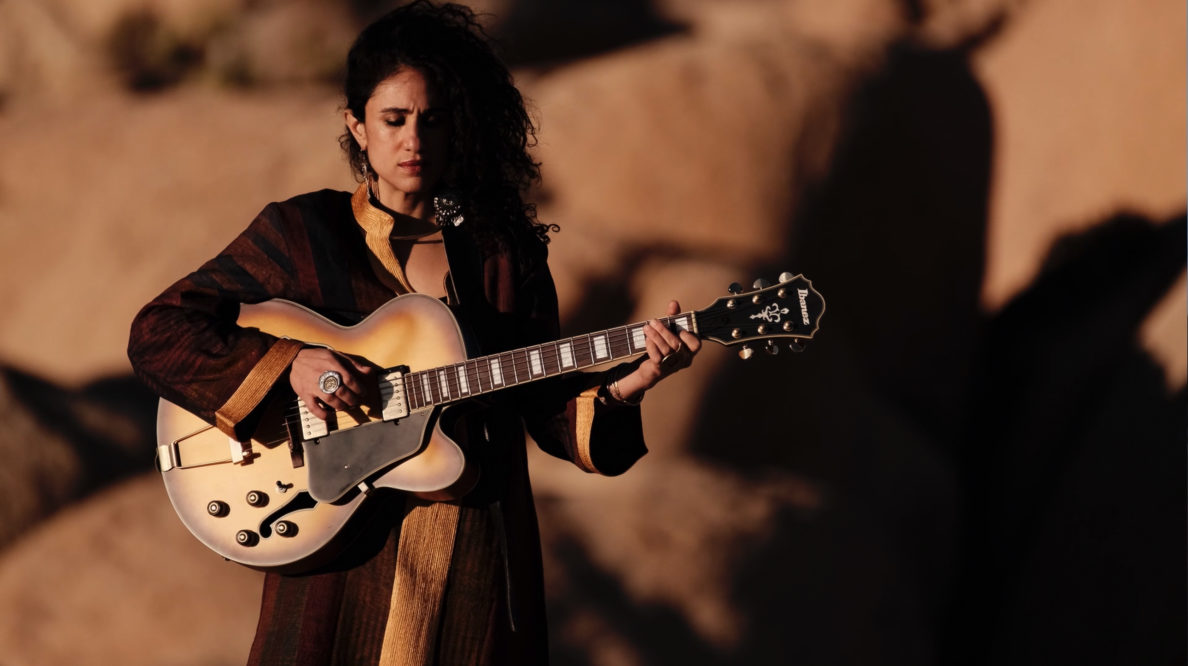
PREMIERE: Lauren Lakis Spreads Optimism With “We’ll Be Fine” Video

Shoegaze/dream-pop artist Lauren Lakis originally wrote her latest single, “We’ll Be Fine,” about an imagined future breakup with someone she was dating at the time. “I was just trying to convey that no matter what happens between us, we’ll still be friends and it’s all good because there’s so much love between us,” she explains. As it turns out, they did break up and they did remain friends, so the message of the song proved true. But in the apocalyptic COVID-era world, the song, like many works of art, came to take on a whole new meaning. During a time when everyone is wondering what life will look like on the other side of the pandemic, the song offers a reassuring answer, wrapped in calming waves of reverb and cascading vocals.

Lakis hopes the song teaches listeners that “it’s okay to work through the shadow self,” she explains. “It’s just kind of all a part of life — we all have to experience yin and yang. And sometimes, when we’re going through hard times or difficult times or scary times — actually, usually when we’re going through those things — it’s only going to elicit a transformation within us.”

The progression of the song itself embodies the concept of transformation. Lakis wrote the beginning and ending of “We’ll Be Fine” at two different times, and that shows in its varying melodies, paces, and instrumentals.

The track starts off slow and contemplative, a wash of cymbals accompanying a drawn-out, echoey vocal, but picks up as Lakis almost shouts the next verse: “See you walking on the water/Praying for a miracle now /Won’t you fuck it up, suck it up, Do, you got your miracle now?/See the man in the moon?/The man in the moon is you.” Lakis never sings repeated lyrics the same way twice, stretching her witchy intonations over crashing drums as though willing the positive outcome she promises.

The video for the single paints a mystical scene, with celestial-looking light shining down on Lakis as she wanders across a bridge, runs through a forest, and picks flowers in a fairy-like blue dress. Impressively, it was filmed while Lakis was sick with an illness she thinks might have been COVID. She was quarantined with her producer in Portland, so they decided to film it in the woods nearby.

“It kind of felt like more than being trapped in the house — I felt trapped inside my own head and trapped with recurrent thoughts and my own habitual behavior,” she says. “Being in the woods was symbolic of being trapped inside one’s own head. I felt like I was running from myself. At the end of the video, I was running through the woods and I was out on the street, and it was at the end of the quarantine life, like a ghost town, emerging from the depths of one’s own mind to society, but society isn’t even there.”

The single encapsulates a more standard indie rock aesthetic than much of Lakis’s past work, with reverb-laden vocals and guitars in the vein of Band of Horses and Fleet Foxes. “I wanted it to feel big and swirly,” she says. “I wanted to go for a really energetic and powerful vibe. I wanted it to elicit chills if possible, but in a good way. I just wanted it to be hopeful, something you could belt out on a road trip while going through a breakup or whatever.”

Her upcoming album, Daughter Language, contains a mix of this style and a heavier rock, almost doom-gaze sound, with prominent drums and baritone tracks. It was recorded at LA’s Seahorse Sound Studios, where there are microphones going up three stories, creating reverberation off the walls, which allowed for a big drum sound on the album.

Each of Lakis’s releases thus far have offered up a distinctly different aesthetic. Her last full-length album, 2018’s Ferocious, had more of a dark ’80s punk sound, while last year’s Sad Girl Breakfast EP gives off a chill electronic vibe reminiscent of Phantogram. She sees Daughter Language as tying these two styles together. “It kind of traverses different vibes much more so than the other two records, and it’s a little more all-encompassing,” she says.

Thematically, Daughter Sound deals with healing various wounds from Lakis’s childhood. “Fear of God” reflects on her experiences in Catholic school, and in “Sail Away,” she talks to her inner child, expressing the wish to protect the little girl still living inside of her. “All of these things that happen in our childhood become imprinted,” she says. “We don’t even realize that maybe those things are calling the shots in our relationships and the things we’re drawn to. I think so much of that happens during these years, where we’re just not even aware of how much is entering our brains.”

Currently residing in LA, Lakis is not just a musician but also an actor who’s appeared on a number of movies and TV shows including Big Little Lies and Homecoming. She’s been playing guitar since high school but first got into music professionally when an actor friend of hers invited her to audition to sing in his band, indie grunge-rock group Hobart W Fink, in 2013. She did that for three years, then made the leap into solo artistry in 2016, after her favorite female artists’ music helped her through a series of hardships.

Most recently during the quarantine, she’s been making new music that she describes as somber, slightly depressing shoe-gaze. “I’ve always kind of walked the line between completely hopeless and depressed, but optimistic at the same time,” she says.

Follow Lauren Lakis on Facebook for ongoing updates.
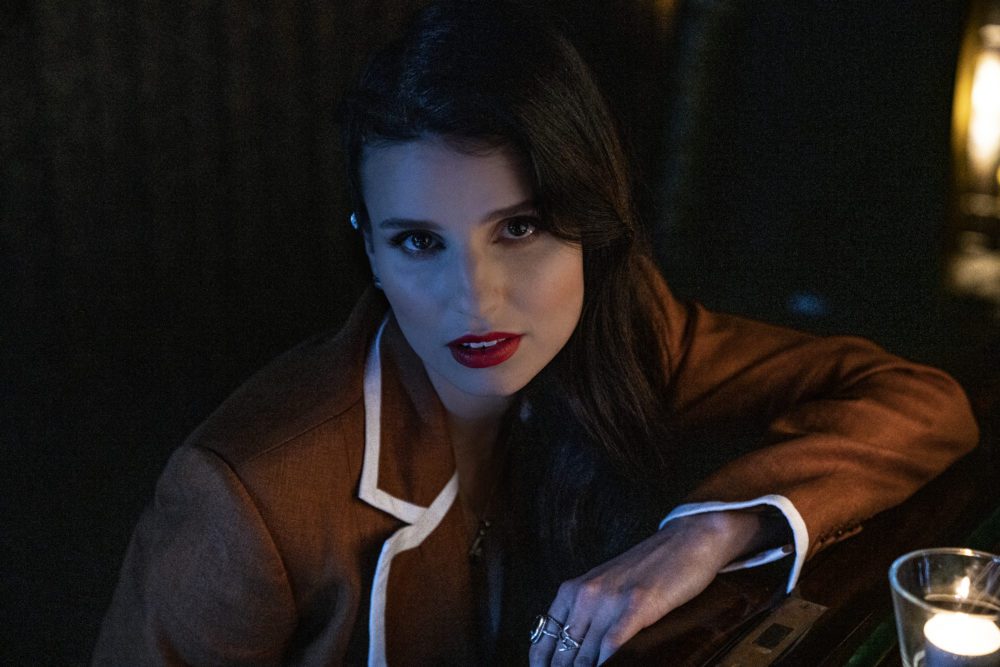
PLAYING MELBOURNE: Divinyls Frontwoman Chrissy Amphlett is an Australian Icon

Chrissy Amphlett’s husband, drummer Charley Drayton, christens a Melbourne laneway in honor of his late wife.

If you’re an intrepid adventurer, or fortunate to have the time to wind your way through Melbourne city’s many interlinked laneways, you may well come across Amphlett Lane. You’ll know it, if not for the signage, for the graffiti depiction of Chrissy Amphlett’s signature schoolgirl outfit on the corner building at the entrance to her namesake alleyway. If you’re not inclined to walk for hours, Google Maps will direct you straight there with ease. If you’re at home somewhere in the US, wishing you were here, Google Map it and pretend.

Chrissy, for those who haven’t had the pleasure, was the singer and songwriter who fronted Australian rock band Divinyls. She passed in 2013 at the age of 53 from breast cancer and complications related to Multiple Sclerosis. But through acting, singing, and authoring her own memoir in her short, eventful lifetime, she achieved what she had always wanted – to be a performer.

A determinedly free spirit, Chrissy revealed that she used to escape her teenage bedroom at night to go and see Billy Thorpe. “I liked that primal kind of thing, that rock. Growing up in Australia, guitar-oriented music was a huge inspiration to me,” she said, often namechecking Easybeats, Lobby Loyde, and AC/DC as influences – each of them renowned for their primal, noisy, guitar-centred pub rock style.

She escaped the confines of her parochial, industrial hometown of Geelong (just outside Melbourne’s border) as a teenager and explored England, France and Spain – where she was detained for three months for busking on the streets without a permit at 17 (she was kept in the penitentiary for six weeks before being put on a bus full of men to be transferred prison to prison).

Chrissy met Divinyls bandmate Mark McEntee in 1980. At that time, she’d had some bit parts on Australian TV and stage productions and was toying with the idea of being an actress solely. In fact, the earliest Divinyls songs were recorded for 1982 Australian film Monkey Grip (based on a novel by Melbourne author Helen Garner), in which Chrissy starred.

By the time Divinyls manager, Vince Lovegrove, succeeded in getting the band a US record deal in the mid 1980s – the beginning of their international success – Chrissy had refined her naughty schoolgirl persona. For Chrissy though, the professional wins were undermined by a stealthy alcohol addiction, legal fights with Lovegrove, a tumultuous affair with McEntee, drug-induced paranoia and the instability of being constantly on tour.

The hot and cold relationship between Chrissy and McEntee was documented, controversially, in Chrissy’s memoir, Pleasure and Pain (named, fittingly, for the lead track on the band’s sophomore record, What a Life!). Though they were a couple, they only revealed this to bandmates two years after forming Divinyls, since McEntee had been married to someone else when their relationship had begun. Both were heavily using drugs and drinking in the early 1980s and fighting noisily and messily in New York during the recording of Desperate, their debut album.

An interview with the beautiful, cool Amphlett and her black leather-clad bandmates with Australian interviewer Andrew Denton in 1988 shows her at her peak mysteriousness. In a short, tight black miniskirt, black winged eyeliner, heavy fringe and black heels, she epitomised the height of sexy rockstar. Her glassy-eyed, mumbling, rambling bandmates were cringe-inducing in their embarrassing insobriety, but Amphlett was thoughtful, sincere and articulate.

Between 1982 and 1996, Divinyls released six albums, charting high in Australia with singles like “Science Fiction,” “Good Die Young,” and “Pleasure and Pain.” But their biggest international hit and best-known single remains 1991’s “I Touch Myself,” reaching number 1 in Australia and number 4 on the charts in 1991.

By 1996, Divinyls split up and McEntee and Amphlett were no longer on speaking terms. It wasn’t until 2006, when the band was inducted into the Australian Recording Industry Association, that the two spoke again. They were inducted by Hugh Jackman, calling them “the spirit of rock ‘n’ roll.”

In 2015, Chrissy did an interview about her breast cancer diagnosis and battling MS for over a decade. Her signature fiery red hair, blunt fringe and kohled eyes remind us she’s a born rockstar. With her husband, Charley Drayton, she is everything he attributes to her: “confident, optimistic, curious, willing, dangerous.” “Just the wife word, I’m so not wife material!” she exclaims. “I’m happiest in a storm, calm is boring.”

This year in March, a project inspired by the song “I Touch Myself” set out to break gender bias and ensure that health messages about women’s bodies reached the women who would most benefit. Called the 2020 I Touch Myself Project, it shares breast check instructions via a voice-assistant device. The creators, advertising firm Wunderman Thompson, said that “sexist and dangerous” censorship on social media means that messages around breast checks are often misinterpreted by social media platforms as pornography due to the mention or depiction of breasts and nipples. The project had early beginnings in 2014, a year after Chrissy’s death, with female Australian artists covering the track. In 2018, American tennis star Serena Williams covered the track for bra brand Berlei.
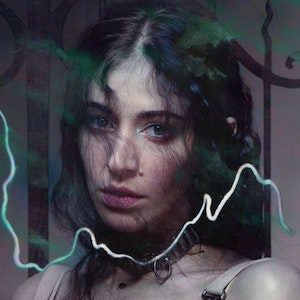
The campaign this year was launched on International Women’s Day, something Chrissy would have loved, I think. She was a champion for women and for artists throughout her life, someone who railed against gender bias and the censorship of women’s bodies and minds. I think she would have been proud to know her lyrics and her song are still being used decades later to educate and unite women.

In every interview, what emanates from Chrissy is a core of calm and centredness. As wild and explosive as her performances on stage always were, she was an intelligent and determined woman to the end.

In February 2015, Amphlett Lane was officially declared open by Melbourne’s Lord Mayor. The naming was the result of a petition that collected over 7000 signatures over the two years prior. I’m fortunate, as a local, to walk my dog past Amphlett Lane on a weekly basis. Without even thinking, I find myself singing along to “I Touch Myself” for about an hour afterwards. To myself, mind you. My performance skills and my dress sense aren’t nearly as fabulous as Chrissy Amphlett’s. She was a rare thing, a Melbourne icon, a phenomenal woman.

Visit Amphlett Lane on Facebook.