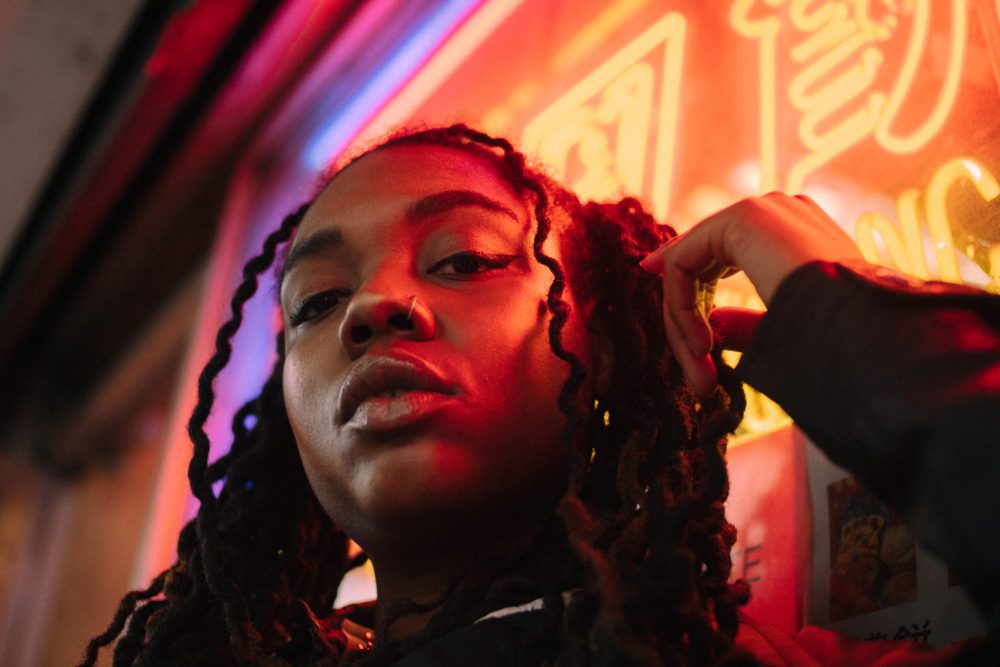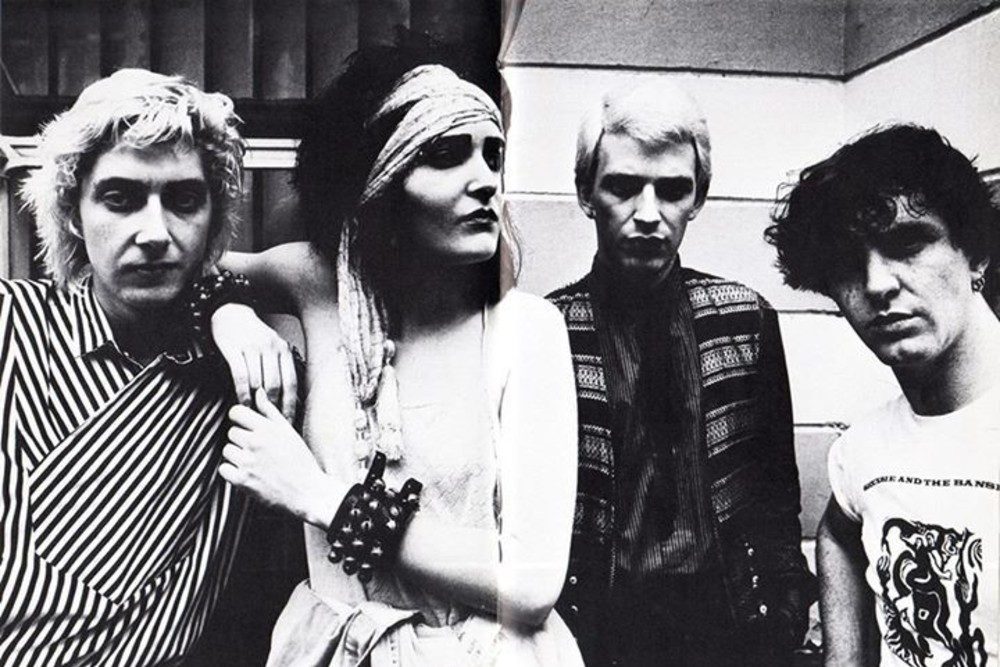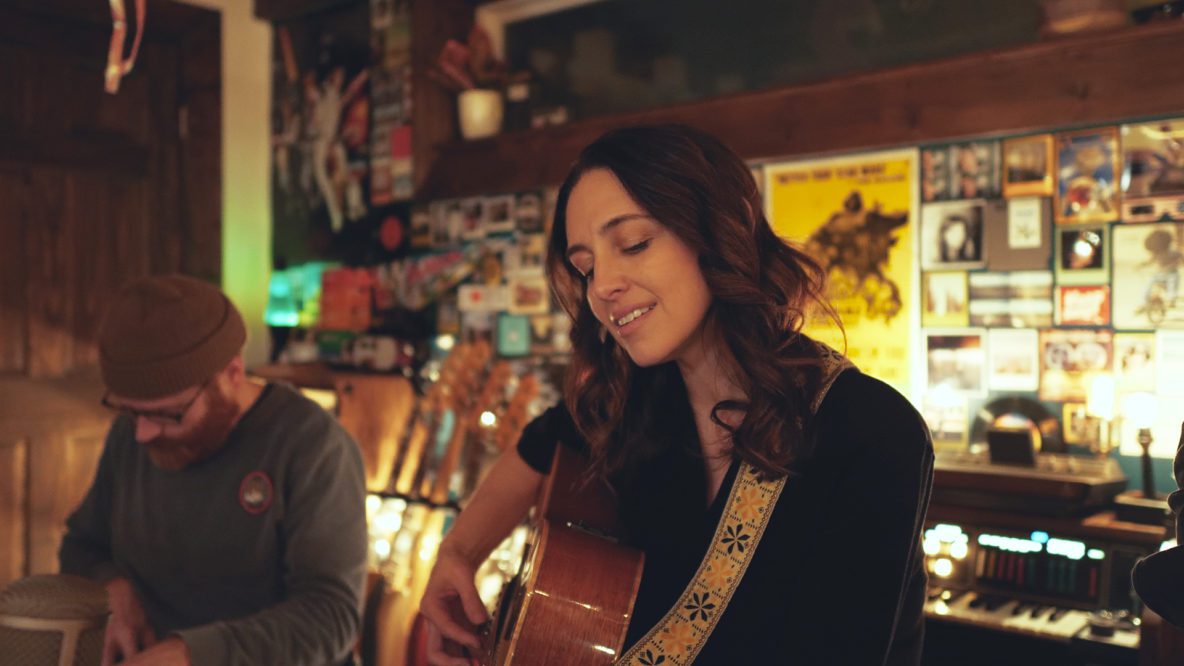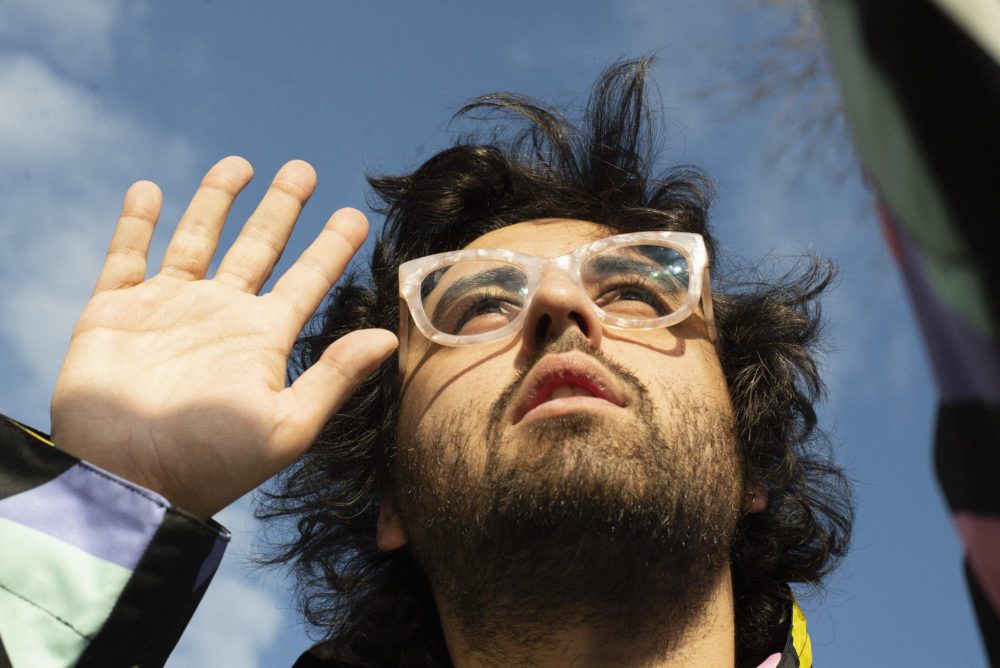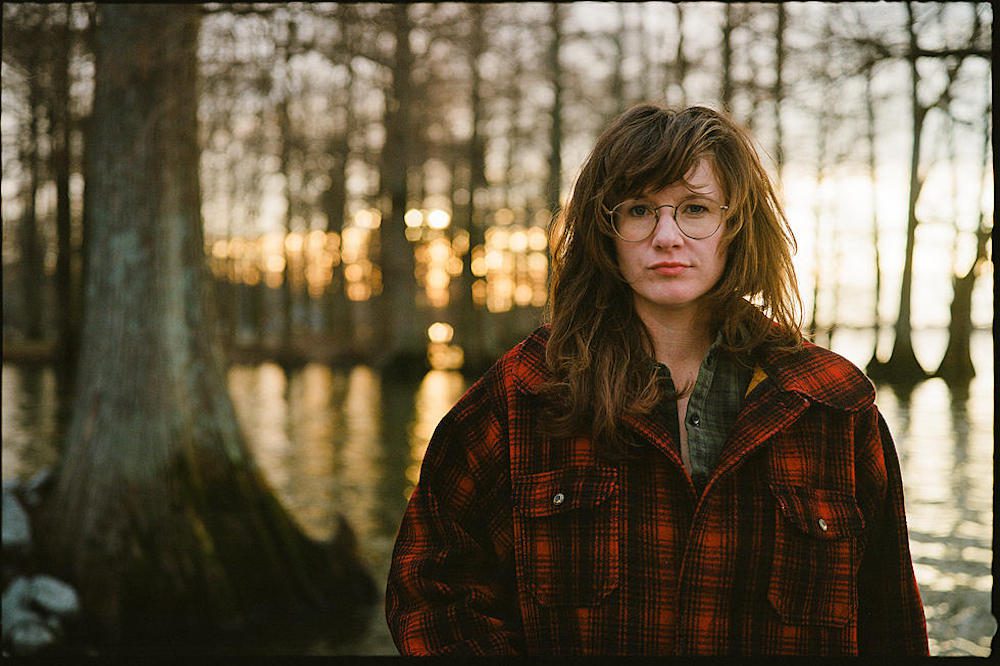
PREMIERE: Torii Wolf Collaborates with Cellist Rumori on Hymn-Like Single “Wash Away”

Photo Credit: Dillon Buss

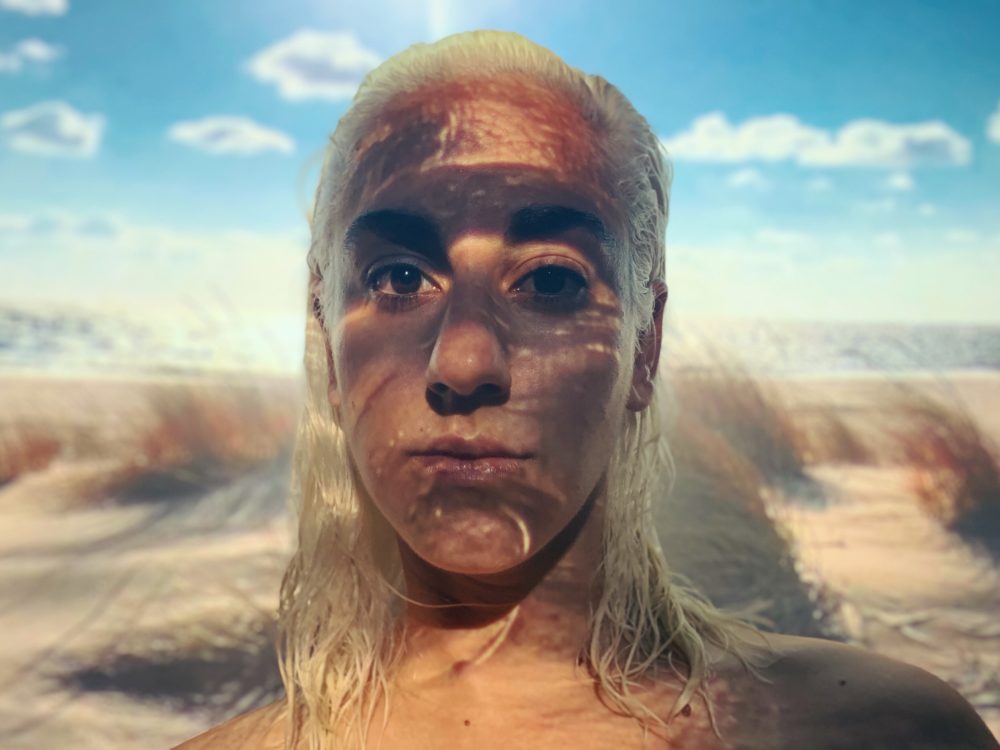
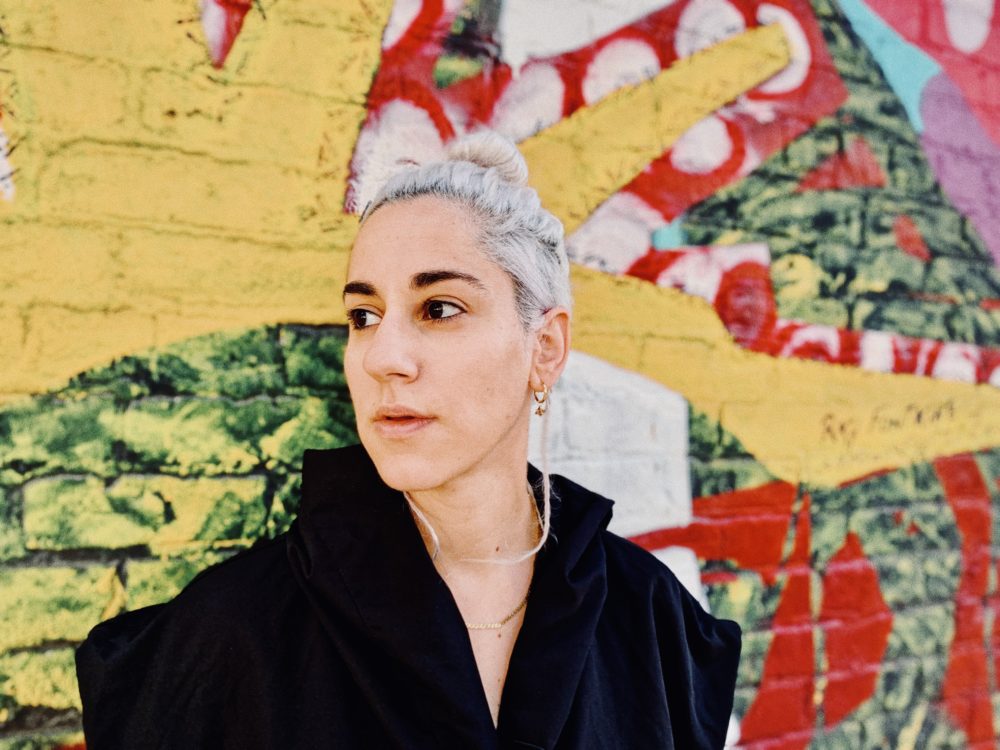
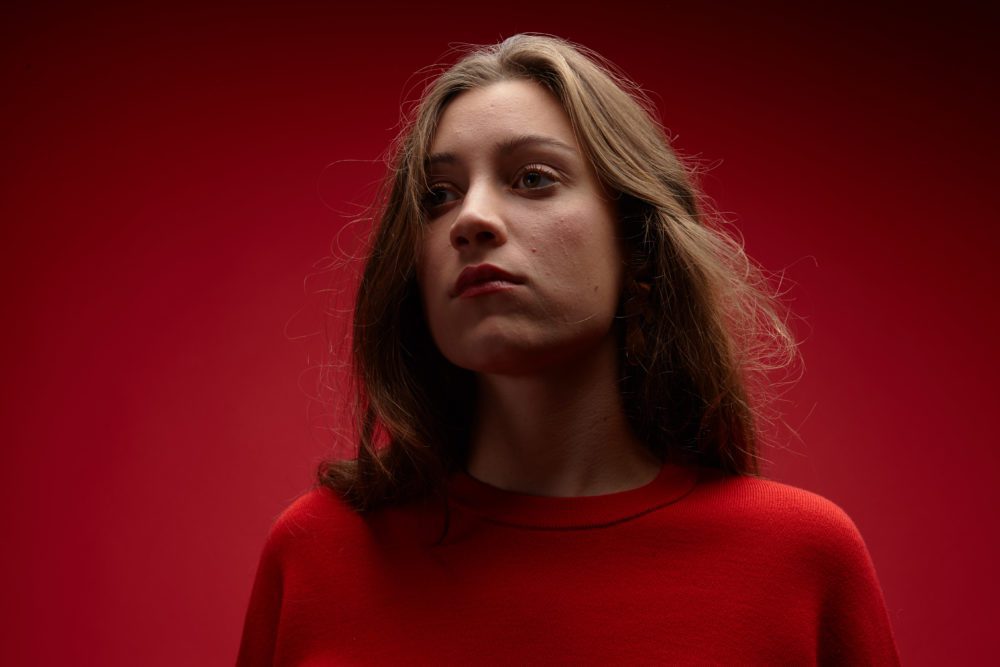
A full bottle when shaken never makes a sound. Torii Wolf isn’t sure if that’s the way the saying goes, or who exactly said it, but its meaning resonates with their latest single release “Wash Away,” as well as their debut album, 2017’s Flow Riiot. The song easily brings to mind white-clothed worshipers, dipping their bodies into flowing rivers, allowing their sin to pass over them. While Wolf admits to utilizing religious imagery at times, the exact backstory to their music is left wide open to interpretation.

“It’s not really up to me, what’s happening, but when it comes through it always feels like some form of worship,” Wolf tells Audiofemme on a Skype call. “Definitely very spiritual. You know, the force? The older I get, or whatever we should say, the more I keep doing this, it’s closer and closer to God. Or for whoever, whatever force anyone feels. Which has been this really beautiful experience, to just be open to that. I was not raised with any strict faith in that way, but I feel it all.”

“Wash Away” is a part of a series of one-off releases Wolf plans on debuting this year. They are notably different in tone and shape from their work with legendary NYC producer DJ Premier; their debut album straddled a wide swath of genres, incorporating elements of jazz, hip-hop, spoken word and rock. It was an album made for a NYC blues club: close quarters, cigarette scent, low voices chattering in the background. Their most recent releases, “Wash Away” and “Summon,” are stripped down, intimate, and give off the feeling of being one-on-one, sitting in a chair across the room from Wolf. It may very well be a result of Wolf stepping into the producer’s chair due to COVID-19. The recent worldwide pandemic was the push they needed to set up their own home recording studio. “I got a microphone, interface, the whole thing. Ya know, just doing my best.”

Originally from Long Island, New York, Wolf grew up in a close-knit, Italian Catholic family. Religion sprouted up all around them, but was never forced.  “It was never really pushed on me in any way,” Wolf remembers. “It’s kind of like, what you learn as bar etiquette: You don’t really talk about money, you don’t really talk about religion.” They started learning guitar from a local rocker who taught them tabs; they remembered reworking the chords to get their songs out. Their immediate goal back then was to learn the entirety of Pink Floyd’s “Wish You Were Here” and perform it flawlessly. It didn’t take them long, working relentlessly until they had it down.

At 17, they got the itch to leave the East Coast in the form of a quasi-girlfriend. “Being a queer, nonbinary person, I didn’t really feel that much space to feel comfortable in whatever I was feeling,” Wolf recalls. “I definitely felt like I had to drop into some kind of structure, which I didn’t. I was up all night, complete insomniac. And also got caught up in some substances.  Just escapism. I had a girlfriend at the time who was like, ‘I’m going across the country. You can come or we’re breaking up.’ I was just like: I’m outta here. I don’t feel connected to this space, I don’t see a future. I was definitely headed down a path that was not healthy.”

They moved to San Diego. It was there that they found a queer community that made them feel more comfortable. While the relationship didn’t last, the love of the West Coast got stronger over time. In 2007, Wolf fell into playing drums with a band called Love Me Anyway. Wolf enjoyed the collaborative nature of the group, playing with words and music, lending their talents to a whole. It was at a Love Me Anyway show that Wolf was discovered by a local record producer who ran her own indie label and encouraged Wolf to come in to work on a solo album together.

And then came the Luau party; Wolf’s mom regularly threw luau parties at her home in Long Island, and at one of them, another woman was bragging about her son, who was an up-and-coming producer working with artists like Janet Jackson. He was also the manager of DJ Premier. All it took was an email with one of Wolf’s songs attached for him to give Wolf a call. He had an idea for a collaboration with DJ Premier. “When Prem and I met, we just hit it off instantly. We were just kindred,” Wolf says of their first meeting. Wolf’s debut album Flow Riiot (an anagram of their name) was a creative success and unleashed a torrent of work in short span of time, including two EPs and thirteen singles.

“Wash Away” is a part of an experimentation phase for Wolf. While they love the ritual of completing a full-length album, of imagining listeners sitting down to absorb to a fully-realized experience, it didn’t feel like the right time. Wolf’s partner, Kayko Tamaki, founder of Memento Mori Productions, has been collaborating with Wolf on the visual aspect of each song, debuting a video with each new release. It can be challenging at times working together, but they consider it a part of the process, the give and take relationship between the two of them. “I have a visual, an entire world I’m building. It’s very visceral for me. And also my lyrics haven’t ever been so straightforward. I like to leave space for people to feel whatever they’re feeling,” they explain.

The song opens with composer and cellist Rumori’s breathtaking solo. As the song progresses, it feels almost as if the listener is inside a cave, scraping to get out. Wolf’s voice is a hand reaching down into the dark, grasping for a lost soul; their voice pulses angelically, creating ripples against the wooden timber of Rumori’s cello. “For me, this tune is about becoming pure again. I imagine being at the gates, I suppose,” Wolf reflects. “Being washed away of all your sin. Coming to that space of spirit and being and realizing that it’s all one. That you’re not better or worse than anybody. To be healed and purified again.”

“You can try and run from me/We’re going to wash away, wash away/Come with me before we wash away/Heal me now, heal me now/I’m no better than he,” Wolf sings softly into the darkness. There is a meditation in the repetition of their words, almost a kind of world building in itself. If the words are said enough times, with the right inflection, perhaps we can be made whole. The song’s echos follow the music of human ritual, incantations spoken underneath stained glass, incense floating on each outward breath.

A video for the song is in the works. Wolf and Tamaki plan to work with a production company called Beta Wave, who will be following the artists as they venture into the White Sands National Park in New Mexico to shoot. Wolf expressed interest in documenting the often unseen work artists do while creating. It’s a part of their ethos to shine light on the people around them, to give them space and a platform on which to create. They hope the music they create allows listeners to be a part of that creation. They want listeners to weave in their own narratives, to take their words and build a hero’s journey all their own. “I’m all about the expansive art, ” Wolf says of their music. “I’d like to leave that space and that challenge for someone”

Follow Torii Wolf on Instagram for ongoing updates. 
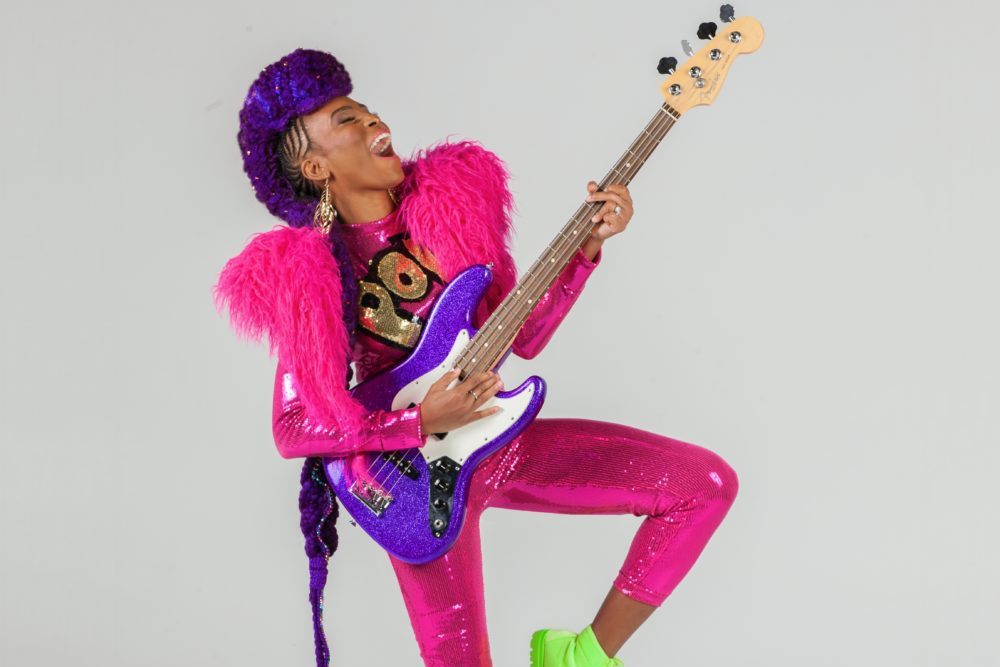
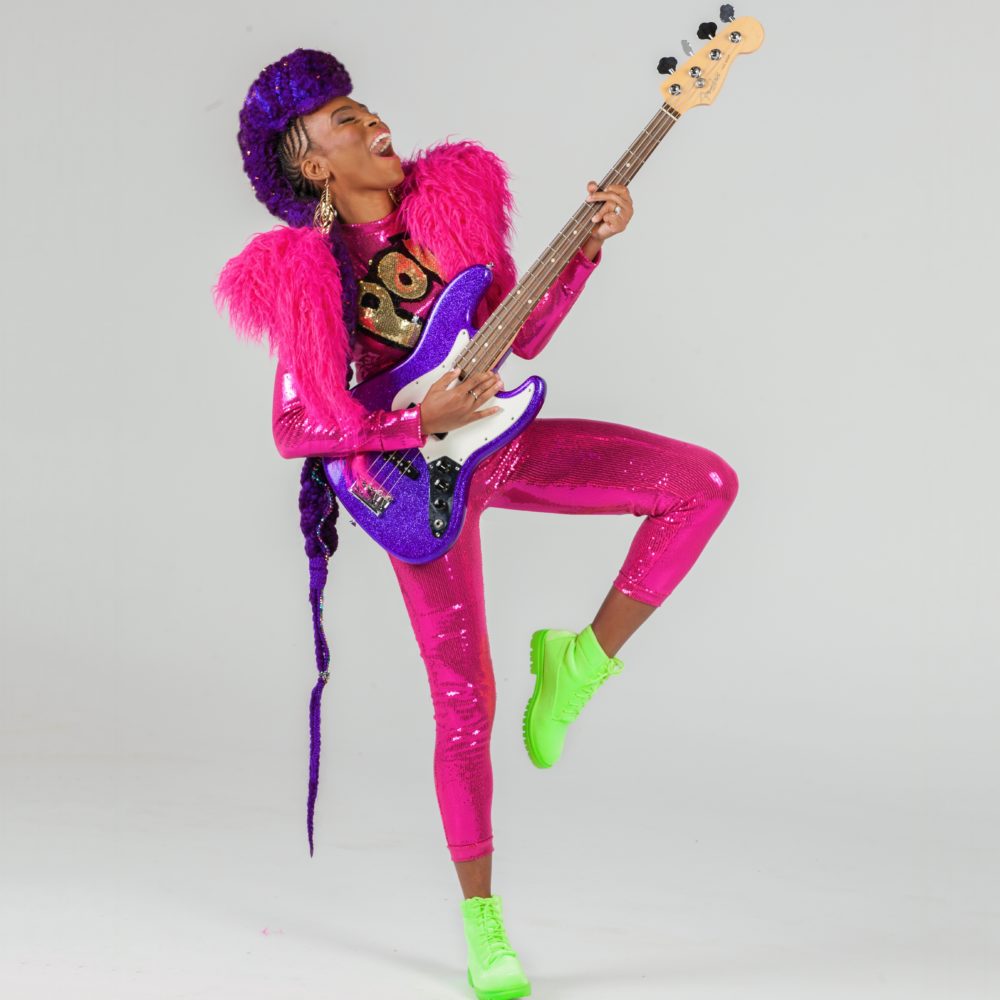
Girls Rock Santa Barbara Interviews Bassist Nik West about her New LP Moody and Working with Prince

This year, Girls Rock Santa Barbara has developed The Summer of Love Internship, its first ever paid internship for teen girls and gender-expansive youth, which allows the organization to continue to provide a safe, collaborative environment in which to encourage lifelong skills like positive peer bonding and self-confident resilience. The internship, which lasts six weeks and pays each intern $500, offers six exciting and arts-focused disciplines: Record Label, Recording Artist, Social Media, Journalism, Photography, and Podcasting. Audiofemme is pleased to publish the following article, written by Andrea Li and Emma Hogarth, two interns from the Journalism program.

Most of the time, bass players are relegated to the sidelines, calmly keeping a rhythm while vocalists, guitarists – and even sometimes drummers – bask in the spotlight. Not so with Nik West, an iconic female bassist and vocalist who has made a name for herself through her exuberant stage presence and her incredible bass skills. In fact, she has even played bass for pop icon Prince, which just adds to her already lengthy resume. Just a few months ago, she released her sophomore album, Moody, which is full of groovy bass lines and funk influence. Some features on her album include bass legend Larry Graham and drummer Cindy Blackman Santana.

While the world is on pause due to quarantine, we had the chance to catch up with her and ask about her recent release, how her creative process differed from her previous album, and what influenced her spunky persona and funky music. We also had the chance to ask her about things going on in her personal life, like how she’s been dealing with quarantine, and how it felt to release an album that was so close to her heart.

GRSB: I loved your single “Bottom of the Bottle.” The track is so fun and you’re an impressive talent as a vocalist and incredible on the bass. What were your influences on this single?

NW: Thank you! That’s one of my favorites as well. I wrote that with a friend from the Netherlands. It was fun – basically, the song is about forgetting about your worries and just having fun and living in the moment instead of stressing about what you can’t change. The music video also shows the playfulness of this song. I was influenced by Katy Perry and her bright colors and characters for this song.

GRSB: Your latest album, Moody, focuses closely on your personality and your experiences in life. How would you describe the feeling of being vulnerable and exposing your inner thoughts through music?

NW: For me, it was hard. I am such a strong person who sees the best in literally everything and everyone, so when I started writing some of this music, I decided to really let go and let people see who I am inside. I’m strong, yet fragile at the same time. The “fragile” part is the part that has always been hidden, but I brought it to the front on “Tears” and I led with that.

GRSB: Did you learn anything while producing your first album, Just in the Nik of Time? If so, how did you apply that to the writing and production of Moody?

NW: Yes! I learned so much! To be brief, when I did my first album, I had never really recorded bass. I had never been a session player and I realized quickly that it is very different from playing live. You have to be alive yet robotic at the same time so that you really lock into the groove. When playing live, there is a little more room to just be free and not so stuck on perfection.

GRSB: How was your recording and writing process for Moody different from your previous releases?

NW: This time, I wanted to take the reins of the entire creative process. This is my second album so putting all of my ideas and thoughts into it was important. It took me over two years to record it since I was on tour so much. But I’m super proud of it.

GRSB: Throughout your album there are many songs with a heavy funk influence, so much so that you have even been referred to as the future of funk. What does that mean to you?

NW: Well, funk music came from the concept of making something out of nothing. When you take all of the major pieces away that you hear with pop music (vocals, piano, guitar, etc), you’re left with the bare bones: the bass and the beat. That’s what funk is built on. That’s why funk is so heavy with groove. The bass and drums drive the song and those are generally the instruments that make people dance on the dance floor, whether people know it or not. The bass line is in front and it carries the song and it’s what people feel most when they dance.

GRSB: Prince is quoted as saying, “She inspires me. Great visual, great stage presence” about you. Coming from a music icon, what does that mean to you? As a huge fan of Prince myself, I also would like to know how was your experience recording at the famed Paisley Park?

NW: That’s huge! Especially coming from one of the kings of stage presence and inspiration. There will never be another like him. I peed on myself when he first called me (just a little bit). He flew me out the next day to come and jam with him… but apparently, it was really an audition. I was SUPER nervous but he made me feel comfortable and even made me laugh so I got through it. He walked me to his office and told me that if I wanted the job, it was mine. Anyway, that’s the short version, but he was unlike any other person I’d ever met.

GRSB: How would your younger self feel about working with bass legend Larry Graham on the single “Thumpahlenah”? Did you ever expect to work with him on anything?

NW: My younger self wasn’t even into music much! I wanted to draw and paint. I was into fashion and math. Music never even crossed my mind. But I always knew that whatever I did, I’d rise to the top because I’ve always been a hard worker. I wanted to be the top in my class. So I knew I’d get a lot of opportunity by working hard, but Larry Graham and Prince? I never would have imagined that! That was something that you say out loud and then laugh about it because you know it’s so far fetched.

GRSB: What are some ways you’ve been coping with self-isolation during this worldwide pandemic?

NW: I’m so used to touring and never being home (which I love so much) that I never get to follow through with projects that I want to start. So I took the time during self isolation to follow through with some things. I just created an online bass course for beginners. I recorded about 100 video lessons for all of the people that have been asking me to teach them how to play. I’ve also gotten stronger physically. I’ve been working out consistently and I have definitely seen the results. I’ve spent more time with my family as well. So when it is time to go back on tour, I will be happy in knowing I’ve got my projects completed… finally!

GRSB: Many people mention your riveting stage presence – how would you compare your on-stage persona to your everyday self?

NW: My everyday self is crazy. I dream big, I smile big, I go hard, I’m full of energy, and I love fashion and being characters! When I had more time, I did a lot of TV commercials so jumping into character is something I’ve always loved. And being onstage is just definitely just an extension of my natural self.

GRSB: In many other interviews, you’ve mentioned that you’ve had self-doubt throughout your career. How did you overcome this doubt as you grew more popular?

NW: I don’t think the doubt ever leaves, at least for me, but, I just don’t focus on it so much. I still get nervous with certain people. Stanley Clarke wanted to interview me last month, I got nervous. Flea dm’d me and said he wanted to work with me, I got nervous. But I jump anyway. Anytime I’d ever been super nervous and jumped anyway, it’s been a life changer.

GRSB: Can you share your experience as a woman in the music industry? What challenges have you faced?

NW: Being a woman in the music industry has its perks. I have heard horror stories of women facing discrimination and sexism, but I’ve just flown past a lot of it because I have dealt with discrimination my whole life so it was almost as if nothing changed anyway. I walk into a room knowing that I’m the only one that can do what I do… and do it the way I do it. No one else can do me like I can do me. I think that kind of confidence is attractive to everyone. Know your worth and negotiate accordingly. Of course you’re gonna get those guys that just want to try to take advantage of women, but that’s in every industry and it was clear that I wasn’t playing those games. Either they wanted to work with me or not. If it was a no, I was fine with that too. When people sense that you’re fine with or without them, that’s when they want to give you everything.

GRSB: Who are your top three female musical inspirations, and what aspects of their music have influenced you?

NW: I love Rhonda Smith. She was the bass player for Prince for so long. I love how she plays and I love how she performed with Prince. She is so tiny, but she packs a mean groove. I also love Orianthi, she was one of my first friends when I moved to LA. I house sat for her while she was on tour and watched her dogs for months at a time. She is an amazing guitarist and has always been a cool friend. Cindy Blackman-Santana who played drums with Lenny Kravitz for so many years has also been such an inspiration. There’s a sax player named Grace Kelly that I’ve collaborated with that is so dope to me. She gets into character with bright clothes and hair like me, so she’s my Asian sister!

GRSB: What are some goals that you’re hoping to accomplish before the end of 2020, and how has quarantine affected these goals?

NW: Ha! My album was released. We planned a whole campaign and tour around it. I tour in Europe a lot and when you have a new release, it’s a game changer. So we had all of these plans and all of these shows surrounding the album and then I was going to take a break, record some bass lessons, and hang out some more with my family but all of the shows got moved to next summer, so next summer it is! Everything worked out okay.

Follow Nik West on Facebook for ongoing updates.

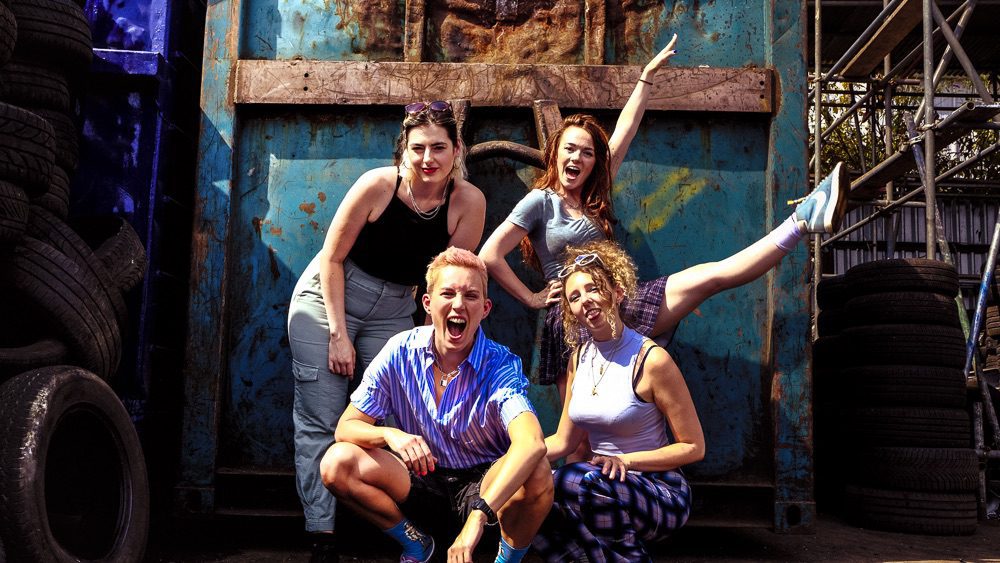
VIDEO REVIEW: Dream Nails “Jillian”

This year, Girls Rock Santa Barbara has developed The Summer of Love Internship, its first ever paid internship for teen girls and gender-expansive youth, which allows the organization to continue to provide a safe, collaborative environment in which to encourage lifelong skills like positive peer bonding and self-confident resilience. The internship, which lasts six weeks and pays each intern $500, offers six exciting and arts-focused disciplines: Record Label, Recording Artist, Social Media, Journalism, Photography, and Podcasting. Audiofemme is pleased to publish the following review, written by Andrea Li, an intern from the Journalism program.

Dream Nails first released “Jillian” as a single from their 2019 album Take Up Space!. Now, the UK pop-punk band has taken the older, more bare-bones version of it and polished it into a groovy song with an equally groovy video directed by Guen Morroni. “Jillian” will be a part of the band’s upcoming album, Dream Nails, set to be released on August 28, 2020.

The song starts with a punchy bassline layered under lead singer Janey Starling’s energetic vocals. Soon, a guitar riff and a fast-paced drumbeat are added, with the video showing people of all sizes doing exercises in various locations as Starling proclaims “I’ve got 500-pound people doing jumping jacks!” 

“‘Jillian’ is a joyous banger about coming out, body positivity & [having a crush on] queer fitness icon Jillian Michaels,” Dream Nails explained in a press release, and the video clearly conveys this message as numerous people, including the band, appear joyfully working out, sometimes in an almost comical fashion. The video also expresses a message of liberation, as Dream Nails makes sure to use clips of people working out as if they don’t care about getting fit and have learned to just love themselves and their bodies for what they are. “Jillian” is a power anthem that inspires and uplifts – and it also doesn’t hurt that it’s perfect to work out to.

Follow Dream Nails on Facebook for ongoing updates.

Whoa Dakota Dances Away Her Pain On Disco-Pop Jam “Walk Right By”

Photo Credit: Brandon Hunter / BESHOOTiN

Singer-songwriter Whoa Dakota released her 2018 album, Patterns, to much-deserved critical acclaim. The record, a woven fabric of spoken word and impressive indie songwriting, left an indelible mark, and people were paying attention. However, things weren’t so kosher behind the scenes. Relationships with her creative team and producers unraveled, and she soon parted ways. “The falling out left some emotional scar tissue for me,” says Jessica Ott, the mastermind behind the project.

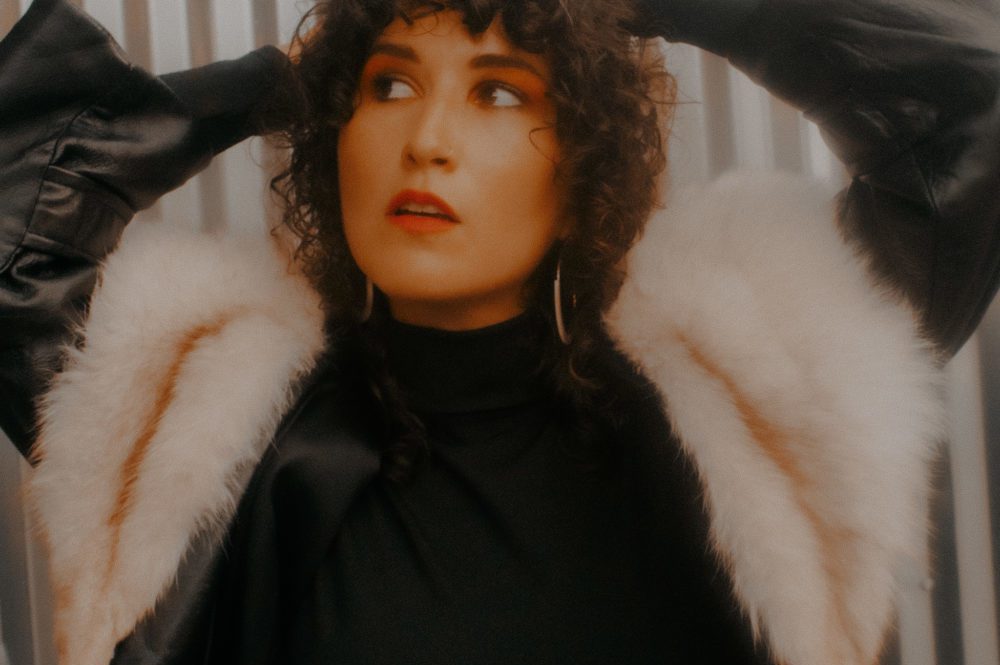
The Nashville musician scoops up that pain into her new song and music video “Walk Right By,” premiering today, and it’s very clear she’s regained some of her swagger. Set inside Smack Clothing, a trendy hot-spot in Midtown, Ott browses through the racks and even becomes part of the display herself. “I caught you looking at me/And it felt nice,” she sings. “Red velvet blur, and my faux fur down to my thighs/You never make it easy/To change my mind/Yeah, I can tell by the way you stare/You’ve got a lot to hide.”

Ott dresses her lyrics with ripe imagery and metaphor, but her message still cuts deep. The album’s producers were unfortunately also close friends, and when the split happened, the pain shocked her system. “They weren’t bigwigs by any means,” she tells Audiofemme, “but it occurred to me how quickly people can turn on you when the idea they had about your relationship and who you represented for them feels threatened.”

She began to ponder the commodification of her art – and of herself. “It’s the music, too, but really, I get turned into a product,” she says. “The thing that’s tough about that is that in order to be a good human you have to be willing to change, grow, evolve, and be fallible. But it seems like in order to be a good product, the industry wants you unchanging, predictable, and to easily fall in line with whatever trends are currently returning the highest profits.”

In the two years since Patterns, Ott took plenty of time reassessing her life and what she wanted her music to be. She was unchained by a toxic past, so possibilities were endless. “I spent a lot of time sort of redefining how I approached music on my own without their input and gained a lot of empowerment around my abilities as a writer, composer, and producer in my own right,” she says.

She toured extensively to promote the record, too, which allowed her to hit thrilling creative strides in her career. The chance to perform in front of audiences was unmistakably vital to her craft and the ability to figure out “how those songs felt on stage and how we could apply them to a live setting in a way that felt both engaging and authentic,” she says.

“Walk Right By” (co-written with Nathaniel Banks of indie band Arlie, BESHOOTiN, and producer Timothy Ryssemus) is markedly different in style from her previous work. She leans hard into disco-pop and R&B, her vocals like a chameleon changing its colors. “And in my mind, you’re all I need/To get me higher, to get me higher,” she coos over a delicious sparkle. “But every time you worry me/I’ll walk right by ya / I’ll walk right by ya.”

The song began with its pulsating bass line, courtesy of Ryssemus, who had it on loop. On that particular day, Ott sauntered into the studio wearing “this great vintage fur coat with some red cowboy boots, so that sort of set the tone for the imagery,” she recalls. “That bass line and the imagery combined sort of created this ‘70s ‘don’t fuck with me’ kind of vibe, and we went with it. Then, BESHOOTiN added the screams that you hear in the background throughout the chorus, and it gave me major ‘Maggot Brain‘ vibes. And I just get so tickled every time I hear it.”

The visual, directed by BESHOOTiN, who also works as a prolific photographer in town, celebrates the song’s innate quirks and utilizes a host of creepy mannequins as a metaphor for the soulless poseurs that lurk in the music industry. “I think it’s great that the mannequins are creepy,” she remarks. “It’s creepy the music execs try to water down something as complicated as a human and lead the collective to believe that that’s all that person is.”

“I knew I wanted Be to film the visual. I’ve followed his photographs and video work for years. He’s got such an intuitive and authentic eye,” she raves. “I said I wanted a vintage ‘70s vibe and wanted to be dancing around, and he nailed it. The mannequins were his idea, and I love it.”

Ott’s willingness to dabble and stretch her chops marks an exciting chapter for her. She is now free to soar, explore, and create something new. Oddly enough, her renaissance and recent immersion in the Nashville songwriting community wouldn’t have been possible if not for the current pandemic. She explains, “In many ways, it’s opened me up creatively because I’m no longer burned out from working two jobs and trying to tour in between. Had it not been for the pandemic, I’m not sure I would have started writing country and setting up co-writes and trying to get into the ‘songwriter’ world of Nashville.”

“There’s only so much time in a day. So, when you’re working full time at a restaurant, and trying to get your business afloat, and be creative and inspired, sometimes something isn’t gonna get done,” she continues. “I realized for me what wasn’t getting done was having the time and space to get creative and really listen to what I had to say.”

However, the last five months have wrought anxiety, anger, and fear, too. “I’m terrified that we as a country won’t wake up to the role racism plays in our culture. I hate that we could have allowed such injustice to ever happen, and I’m afraid that we won’t rise to the occasion to be our higher selves and really come together in unity to get to the root of this problem. I’m terrified about the election” she expresses. “I don’t feel confident in any of our leadership to guide us through the pandemic. Some days, I’m afraid to be in this country at all. I have a scheme to book a house show tour in Europe whenever we’re allowed in and just play music there for a few months.”

Even more, she’s concerned “music will never really take off for me now because I’m 30 and this whole shit storm has really thrown a wrench in the plan. I’m afraid I’ll run out of time and will have to start thinking about kids before my career is able to stay afloat. The list goes on…”

“Walk Right By” is a call for liberation. Whoa Dakota exchanges her pain and disappointment for redemption, hope, and light. She learned what she needed to, and now she can stand in the sun. As much as she would love to be gearing up for a new album, it might not be totally realistic right now. “I don’t even think in terms of a full record these days,” she says. “It’s a bummer but it’s true.”

Recording even a nine or 10-song record can bear a considerably hefty price tag. As an independent artist, it’s too risky to dive head-first into another full-length. Instead, she eyes a series of singles and EPs. “I’m trying to be very smart about how I spend my money. I also have to be cognizant of the fact that records aren’t always the thing people are drawn to now. I love them. I love making them. Ideally, when I [make an album] again, I will have financial backing or will have placed some of my singles and created some capital for myself.”

To tide us over, Whoa Dakota and Collin Gundry (of Tuxedo Wildlife) are teaming up for a new project called Rodeo Glow. Details are forthcoming. “It does feel sometimes like we as artists have to be a canvas for whatever is currently trending in order to be relevant,” she says. “I’m okay with the work. I’m here to work, and it’s ultimately rewarding. But between all the social media platforms and different hats I have to wear, I sometimes forget about just sitting alone in my room strumming some chords and singing whatever the hell I want. That’s it’s own reward.”

Follow Whoa Dakota on Twitter, Facebook, and Instagram for ongoing updates.

Girls Rock Santa Barbara Interviews Lauren Mayberry of CHVRCHES

This year, Girls Rock Santa Barbara has developed The Summer of Love Internship, its first ever paid internship for teen girls and gender-expansive youth, which allows the organization to continue to provide a safe, collaborative environment in which to encourage lifelong skills like positive peer bonding and self-confident resilience. The internship, which lasts six weeks and pays each intern $500, offers six exciting and arts-focused disciplines: Record Label, Recording Artist, Social Media, Journalism, Photography, and Podcasting. Audiofemme is pleased to publish the following article, written by Andrea Li and Emelie Sanchez, two interns from the Journalism program.

Electro-pop powerhouse Lauren Mayberry of Scottish band Chvrches embodies Girls Rock Camp’s mission as global movement and an incredible organization for young girls and non-binary youth to tap into their musical side. Not only has she personally been a part of Girls Rock camps in the past, her band partnered with Plus1 to donate $1 from every ticket sold to Girls Rock camps all around the world. She recently sat down to talk with two interns from the Girls Rock Santa Barbara Journalism internship program over Zoom.

Mayberry herself has been an inspiration to many, as she has been very vocal about supporting the feminist movement, even publicly bashing critics who have made misogynistic comments about her and her stage outfits, explaining how the comments have affected her everyday life and mental health.

Chvrches have been together since 2011, and have steadily grown in popularity. Last year they collaborated with Marshmello on their song, “Here With Me”, which has garnered over 39 million views and 29,000 comments on YouTube. Mayberry has been in the process of making a new album with her bandmates Iain Cook and Martin Doherty since February. Over the years, they have learned the ins-and-outs of how they write their music – this makes writing an album while socially distancing is a bit easier for them. In April, they released a “Separate But Together” version of “Forever” (originally from 2018 LP Love Is Dead) which shows how they collaborate from afar. Check out the video and read our interview below.

GRSB: You’ve mentioned on your social media that you’ve been working on a new album. What can we expect from this album, and how does it differ from your 2018 album, Love Is Dead?

LM: We started writing together again in February, so we had about a month together in the same room before everything went into shut-down. But, we’ve been writing [over Zoom at] a set time every day. Iain and Martin have this kind of screen sharing software so they can both be in the session at the same time recording things. I’ll record my vocals separately and send [it to] them. Normally, before when we’ve [made albums] we started writing and then figured out what the concept was. This time around we actually had a concept in mind before we started writing.

GRSB: Have there been any challenges or obstacles you’ve had to overcome while working remotely with your bandmates?

LM: Yeah, it’s been very weird. It’s the longest time we’ve ever gone without seeing each other. Time zones are tricky since Martin and I live in Los Angeles, and Iain lives in Glasgow, Scotland. So we have to be pretty specific about when we work, and I’m not very good with technology. I think it’s going good because it’s made me have to have more ownership over [my vocals] and be more assertive, ‘cause sometimes I think if I’m not going to be very good at [something] then I just don’t do it, which is a bad habit.

GRSB: You’ve been very vocal in calling out sexist and misogynistic comments you’ve received in the past. How do these comments affect your everyday life and your mental health?

LM: I think it’s definitely been a process, like figuring out if you just completely ignore it or not. I think it’s been helpful to try and create a “persona” that is different from real-life me. Real-life me doesn’t dress the way I do on stage – it’s part of a performance. I kinda feel like trying to own your femininity and use it as part of your art is empowering to me, and it’s not for other people to tell me what to do with that. Whether I like it or not I’m still a woman; I can’t change that. It’s brought up to us pretty constantly through our work, so to me, it feels like a positive way to harness that. But also, knowing when to take a step back and take a mental health break is important. I think it’s just about knowing when you need to give yourself some time off.

GRSB: Given everything that you’ve had to go through, what advice would you give to your younger self with the knowledge you have today?

LM: I think I would want to be a little bit more trusting of the people that I can trust. I think I was a little suspicious of everybody at the beginning and at the beginning, it was all men – really great men, but men I didn’t know. We were getting signed to labels that had mostly male bands. One A&R said “We’re gonna make you the next [Pixie Lott]” and I was like, “This is not at all what this is meant to be – this guy does not get it.” I feel like I was quite scared, so I would say make decisions based on positive things, and have more fun – it’s going to be fine. And take more photographs! I feel like I’m always stuck between not being on my phone all the time and being present in the moment. Sometimes I’ll look back and I’m like “Oh yeah, we didn’t take any photos or videos.” Especially now when everyone is inside all the time, I want to reminisce. So collect the memories while you can.

GRSB: Earlier you mentioned how you’ve shifted over to Zoom, but before the shutdown, what was your creative process like when writing and recording music?

LM: Well, normally we don’t really come in with pre-existing ideas. We’ll get in a room and the guys will start playing and we’ll come up with a beat or a riff or something on synths. Then, we’ll write kind of a vocal over the top of it. So, every Chvrches song has a recorded version that’s just me or Martin singing nonsense over it. Once we have that, we write lyrics and put them in afterward. They are the last thing that goes on.

GRSB: How much of your music is inspired by real-life events and situations or just stories?

LM: I would say for us, most of the stuff we have written so far has been purely personal. I think on the new record, we do a little bit more of a narrative style of writing, but using it to tell personal feelings. I feel like everything always starts from a personal place, and I think this time the concept is a bit more theatrical. Then there’s space to tell those personal stories more narratively. Which is why I love artists like Nick Cave and Jenny Lewis because they write like that.

GRSB: Do you have any advice for young girls who are just now starting to deal with the stress and pressures of existing in a male-dominated world?

LM: Yeah, it’s a lot and I get it. Sometimes you’re like, “I don’t wanna do this, I want to just be allowed to go to work or school or perform.” I don’t want to have to deal with [misogyny], because the guys don’t have to deal with it. What’s been super helpful for me is to have a good group of female friends because they understand. I’m really lucky to have friends back home because it can be frustrating. Iain and Martin can be so supportive but they don’t totally get it the same way other women do. You don’t have to explain why it’s so terrible or annoying – they know already.

GRSB: Chvrches has partnered with Plus1 to donate to Girls Rock in the past. How did this collaboration start, and why did you choose Girls Rock?

LM: Growing up I lived in the middle of nowhere and didn’t really know any other kids that played music and it was quite lonely. When I started playing in bands I realized that it was all boys, and it felt kind of scary. I guess I wished that I had camps like Girls Rock growing up, it would have been a different experience for me. And I’m not going to be [making music] forever, one day I’m going to wake up with sore hips and I’m not gonna be able to tour in the same way. So we felt like we wanted to do something [to give back] while we had the chance.

Follow Chvrches on Facebook for ongoing updates.

PLAYING MELBOURNE: The True Story of Bananagun Invigorates the Senses

Photo Credit: Jamie Wdziekonski

Bananagun kick off their debut tropicalia-afrobeat-jungle safari mashup album, The True Story of Bananagun, with the lyrics “There is nothing special about me, just another apple on the tree,” but nothing could be further from the truth. This five-piece band hailing from Melbourne have something special.

A love for The Jungle Book united vocalist, guitarist and flautist Nick van Bakel and his cousin, drummer Jimi Gregg as kids. As adults, the image of Mowgli swinging wildly through the cartoon trees of a jungle canopy to this swinging safari beat makes total sense. Jack Crook (guitar/vocals), Charlotte Tobin (djembe/percussion) and Josh Dans (bass) were all friends prior to becoming bandmates, which shows in the easy harmony they find for what sounds, to my ear at least, like a lot of instruments to make work in sync; to think that Bananagun began as a solo project for Van Bakel is mind-blowing.

It’s no surprise to learn that the group provide such eclectic, unusual and yet cohesive tunes when they have spent so much time playing spontaneous late night jams, often hanging out at Melbourne producer John Lee’s Phaedra Studios in Melbourne. Certainly, the tightly-knit group make an impressive impact on record – it’s a deep shame that their May tour was cancelled and we can’t (for the foreseeable future) combine some form of Brazilian-Afro-dance with ’60s flares and oversized sunglasses in a big outdoor party somewhere.

The symbol of the banana as a gun speaks much to the peace, love and unity that the band is all about. If I told you this album was actually a cleaned up version of a sixties recording, you wouldn’t blink an eye. Beautiful afro-orchestral “People Talk Too Much” is lively and percussive, enlightened by joyful bursts of sax and strings that rise and sound before lulling back to their own worlds. The spirit of Fela Kuti lives on in this single – the highlight of the album, for my liking. A cacophony of birds turns into a symphony on “Bird Up!” flute and strummy, summery guitars raise “Perfect Stranger” into the clouds, sixties-style multi-vocalists hark to the Monkees on “Modern Day Problems,” and toy piano even makes an appearance on “The Master.”

Van Bakel lives just an hour or so outside of Melbourne, away from the hubbub of the city centre. “Bird Up!” was a mash-up of the songs of the kookaburras and parrots that soundtrack his daily life in regional Victoria. It is emblematic of the album as a whole, reflecting both the personal lives but also the daily inspirations and nostalgic influences on the band members.

“Taking The Present For Granted,” in particular, is a paean to mindful, conscientious living. It is prescient in its reminder that we must get out of our own narratives of anticipation or rehashing the past to embrace the sensory wonderland of the right now.

The True Story of Bananagun was released in mid-July via London imprint Full Time Hobby Records. Bananagun joined the label in 2019 alongside artists like Serbian-Canadian ethereal folk singer Dana Gavanski, Brazilian psych-pop duo Aldo, and dark indie-Americana purveyors Ohtis. The match seems a natural fit from an outside perspective, with an eclectic roster of international artists who have taken a world of influences, personal and collected in their physical and artistic travels, and channeled them into harmonic offerings of the individual to the collective. As diverse as Full Time Hobby’s roster is, there’s a sense of joyfulness, a searing need to tell stories and to connect, at the heart of the music – and that’s especially true with Bananagun.

Right now in Melbourne as we face mandatory mask-wearing, hundreds of new Coronovirus cases daily and constant news of deaths and illness, something as buoyant, nostalgic, and shamelessly celebratory of just being alive and making music as The True Story of Bananagun is a tonic for the spirit and senses.

Follow Bananagun on Facebook for ongoing updates.

Patty Schemel in Quarantine

This year, Girls Rock Santa Barbara has developed The Summer of Love Internship, its first ever paid internship for teen girls and gender-expansive youth, which allows the organization to continue to provide a safe, collaborative environment in which to encourage lifelong skills like positive peer bonding and self-confident resilience. The internship, which lasts six weeks and pays each intern $500, offers six exciting and arts-focused disciplines: Record Label, Recording Artist, Social Media, Journalism, Photography, and Podcasting. Audiofemme is pleased to publish the following article, written by Julia Duva and Emelie Sanchez, two interns from the Journalism program.

Photo Credit: Romy Suskin

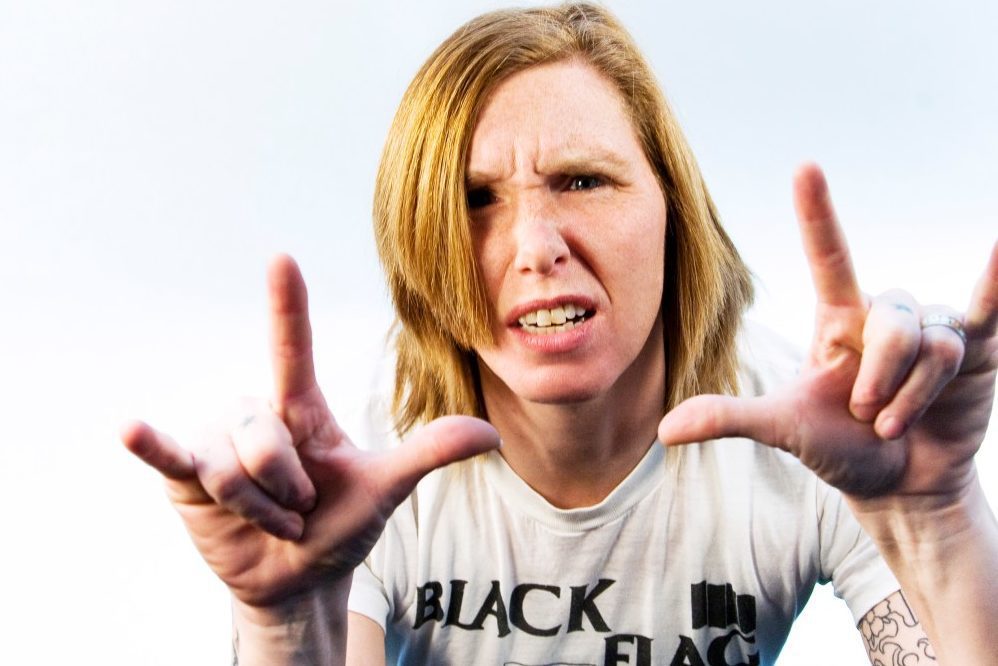
“Sorry if my audio cuts out,” Patty Schemel apologizes as she joins our scheduled Zoom call from the passenger seat of a moving car. Introducing herself while the world flashes by behind her and the bumpy roads shake the camera, she quickly explains that she’s on her way somewhere and will only have about half an hour to talk. It seems fitting that she’s in her car, doing an interview, while already on the way to some other engagement; Schemel was never the type to sit still. That’s part of the reason why she started drumming when she was just twelve years old – it was a loud, fast, and efficient way to burn energy and work through her stress and anger. She continued with this unique type of therapy for the majority of her teenage and adult life, playing in several different bands and on countless other studio recordings over the years.

Having been in the music industry for a few decades, questioned constantly about the ’90s and her former band Hole, Schemel was excited to take a break from analyzing her tumultuous past to talk to us about her current band, Upset, how she is dealing with quarantine, and her new passion projects.

For the past four months, Schemel has been on a break with Upset, which dropped their third album just last November, after five years of no new releases. Because of the break, she has been working on other music-related ventures. Many artists are having to find new ways to make music without actually being in a room with a band. “You can really record drums so easily today,” she confirms. “Like, just play a beat, record it, put it into your software, and double it a bunch of times. It’s not so organic. You don’t hear a lot of real drums anymore.” While this new way of making music is exciting, it can have its downfalls. “It’s frustrating because I can’t just make a sound come out by…you know,” she says, while making a drumming motion with her hands. “It’s a new way of thinking about making music which is interesting and exciting. And that’s what my focus has been.”

Despite having made music with her computer, Schemel admitted that she hadn’t played the drums in a few months. Drumming has always been her way to de-stress and escape, so four months into the pandemic, she picked it up again. “You know, just on Saturday, I set up my drums and played them for the first time in months. And I forgot how good it makes me feel,” she says. “It grounds me and gets my mind to think in different ways and it’s a good workout. So I am going to start doing that more.”

Since musicians and performers rely on a gig economy, where income is based on one-shot performances or touring, the recent shutdown has affected many independent artists, including Schemel. “Right now is such a fertile time to rethink what we do as musicians and performers,” she suggests. “I think the fact that we can stream [music] and create it in our bedrooms is so great now. So we have to think: will we be able to make a living playing music? And how do we repackage it or rethink performing? Is it screens?” Schemel’s punk-oriented work with Upset doesn’t quite fit into the category of “Bedroom Pop,” but she and other artists might look to the genre which has set an example for producing and releasing music from home.

While taking the time to focus more on herself, her close friends, and her family, Schemel has been working on some more personal projects. As the population began sheltering at home, people became invested in baking bread, playing Animal Crossing, and binging Money Heist. Schemel, instead, started a podcast, still unnamed, which will hopefully be released soon. “It seems like everybody has a podcast,” she jokes. “I have just been thinking about what is gonna make my podcast unique. It is me interviewing women who play music and talking about why they did it and talking about creating their work. And how, in the ’90s, there was that wave of feminism in music and then it just sort of died down. What happened? What can we do today?”

Along with her podcasting, Schemel has been teaching woodworking to children, which she began when she met a woman through her daughter’s school that was hoping to collaborate on classes. “I like the idea of making something, working on it start to finish, making it with my hands. It’s not plastic and it’s not a screen. You don’t plug it in. It’s just a piece of wood and you put it together,” she explains. For her, woodworking was the perfect creative outlet – next to playing the drums. And Schemel loves working with kids – she describes her students as “my own group of friends who are between five and seven [years old].” She is also a drum coach at the Girls Rock Los Angeles summer camp. Though she may not have understood what she was getting herself into, when she realized she’d be able to teach young girls to play the drums, she was able to be the role model that she needed as a child.

“[Girls Rock] spoke to eleven-year-old me – the girl who wanted to play drums, who had a really hard time navigating the world as a girl who wanted to play drums, the girl who had a hard time going into the music store afraid of getting drumsticks because I was always looked down on,” she says.

Now, Patty Schemel has grown comfortable being a role model. “I have had fans say, ‘Thank you for coming out, and being an out gay person in the ’90s.’ When they come up and say that, I feel good,” she says. “And other people who are in recovery like myself – I don’t drink or do drugs and I am pretty open about that, so people come and talk about that being the thing that helped them when I wrote about it in my book.” She paused and thought for a minute. “So it’s really those two things that, when I hear them, it’s a good reason to be in the world, that I did that for people.”

R O N I Premieres “Stop Motion,” the First Single from Forthcoming EP Crown

Credit: Pritam Siri

Credit: Pritam Siri
Photo Credit: Pritam Siri

New York-based singer-songwriter/guitarist R O N I was visiting Tel Aviv when a friend introduced her to producer FortyForty. It was a serendipitous encounter resulting in an impromptu recording that forms the basis of her new single “Stop Motion” and forthcoming EP, Crown.

At the time, R O N I was emerging from relationship. “My mind was all in there,” she says by phone from her home in Brooklyn. “I think that I would have never been able to let it out in that way if it wasn’t for that specific situation.” She estimates that about 85% of the improvised song remains in the version that would eventually be released. They even kept a lot of the original vocal takes. “There were just moments there that we knew were gold because there were no boundaries.”

The result is a reflection on a particular moment in the past relationship, related through powerful, melancholy vocals and set against a slow groove. “Even though we knew it was just not going to work, we would still walk down the street holding hands,” she says. She remembers wondering if onlookers would see the couple and not realize that things just weren’t good. “Even now, I see couples in the street sometimes and I stop and think to myself, I wonder if they’re dealing with a similar thing that I was dealing with,” she says.

“Stop Motion” is one of four songs to appear on Crown. A second single will be released on August 30, with the full EP set to drop on September 9 via Tel Aviv imprint InchPerSecond Records. On various dates in August, R O N I plans to release four music videos that, when played together, can be viewed like a short film. She worked with a friend to use astrology to select the release dates. “No release on any day is random for this record,” she says. “It’s all very intentional. All with the intention of helping the planet and helping humanity.”

Born and raised in Jerusalem, R O N I moved to New York a decade ago, after spending some time in Tel Aviv and London. “It’s probably the most mind-opening, mind-challenging place to be in the world,” she says of New York. Both her hometown and her adopted hometown have made an impact on her work.

“I think being born in Jerusalem and being raised in that city as well… my main agenda is to truly help bring peace into that area and at the end of the day,” she says. “There are different tools that we as humans can use to help those around us. I found that music to me is a really great tool that I want to bring people together.”

Meanwhile, she credits New York with opening her mind in many ways. “That is the place where I could meet and talk and befriend people that I never had the chance to do that with where I’m from, for many reasons that are beyond my control,” she says.

R O N I began playing guitar at the age of eight. A few years later, a teacher got her into playing jazz professionally and introduced her to classic bands like Pink Floyd (specifically, she says, David Gilmour) and Led Zeppelin. R O N I recognized that she didn’t have many guitar heroes who were women and says that was likely a big motivation for her to keep going. She spent six years in music school, focusing on guitar and, by her late teens, began studying voice on the sly. “I was just very proud of the guitar part and I didn’t want anyone to hear me sing at that point,” she says.

Credit: Pritam Siri
Photo Credit: Pritam Siri

Later on, she would find inspiration in a new crop of artists, like James Blake, FKA Twigs and St. Vincent. She says that their songs “were simple and beautiful and could have been recorded with just a piano or a guitar, but this production around it was just bringing it to a whole other level for me.”

On that trip to Tel Aviv, where R O N I recorded the first draft of “Stop Motion,” she also began work on the rest of the Crown EP. Overall, though, the four-song release took about two years to complete, since she and FortyForty were collaborating remotely. R O N I recorded some of the vocals and guitars at her home in Brooklyn. She also recorded some parts in Los Angeles, when she was in town for a two-month stay and had brought her gear with her. Ultimately, she says, the “core” of that work done in Tel Aviv is still there on the EP. “Nothing went completely 180 degrees,” she says.

Conceptually, R O N I builds an arc on handling the end of a relationship, from the moments of missing someone, to self-destructive experiences, to finding a new beginning that lead to a sense of understanding and closure.

With “Stop Motion,” R O N I saw how important it was to incorporate these experiences into music. In the end, they are universal feelings. “It brings it to a point of unity, that you’re not alone and that a lot of people experience it in the same way,” she says. “In a way, it’s you’re-not-special, but, it’s okay to be where you need to be at the moment.”

Follow R O N I on Instagram and Facebook for ongoing updates.

Raina Sokolov-Gonzalez and Le’Asha Align Cosmically to Invite Enlightenment on “11:11”

At some point in their lives, everyone has heard the term “The stars were aligned!” I’ve never thought or felt deeply about the figure of speech, until the pandemic gifted me the time and space to ponder newfound intrigue surrounding cosmic belief systems. Recently, a colleague sent me a graphic I initially mistook as a meme, outlining the principles of The Lion’s Gate Portal – the fierce title alone sparked my interest.

A cosmic alignment called “the Lions Gateway” happens every year on and around the 8th day of the 8th month of the year (August 8th), has ties to ancient Egypt, and for thousands of years has been observed and honored as a time of great energetic influx and activation. What’s really happening with this “gate” is that the Earth is closest in its orbit to Sirius, the brightest star we can see. This is said to awaken DNA, activate the human energy field, and transmit high vibrational frequencies and codes of awakening, including a wave of political and spiritual activation.

It’s said that during this time, individuals will be seeing and experiencing the numbers 11:11, 333, 444, and 888 – so when a collaborative track between Brooklyn-based singer-composer Raina Sokolov-Gonzalez and DC-area rapper Le’Asha called “11:11” popped into my email, I listened carefully as if a calling from the universe had tapped my inbox. I began to feel the synchronicity through the call and response structure of the song, and my mood suddenly lifted. The track allowed me to surrender the skeptical side of my analytical brain, pause, and simply feel. The empowerment and energy-lifting spirit of 11:11 felt like a sonic representation of The Lion’s Gate in activation – if there were to be any infectious tracks dropping for the cosmic occasion, this would be the anthem.

Sokolov-Gonzalez says the song “lives in the space between” unexpected endings and new beginnings – “the searching, the uncertainty in change and the movement towards aligning with self with the spirit as we move towards what is coming.” The song’s message reverberates our inner uncertainty, with a heightened response that gives birth to a new dedication of humans coming together as a global entity during a time of crisis. “Give me the future/Give me tomorrow/I am not ashamed,” Sokolov-Gonzalez sings, her voice a warm embrace. There’s no better time to have “11:11” on repeat to sooth us in our uncertainty, manifest our new beginnings, and energize our awakening. The soulful, guttural-yet-smooth expansiveness of Sokolov-Gonzalez’s vocal performance offers the listener the gift of manifesting, altering our reality even if just for a few minutes, through positive transformation.

Le’Asha’s unapologetic lyrics explore themes of courage, confidence, and empowerment. “The stakes is way up/I ain’t bluffing, I’m a goddess/I’m a prophet/You got a look like you astonished/I’m about to speak the truth but you don’t even want it,” she warns, before providing a reminder: “You got the light within you, get into it/Keep your thoughts fluid/Keep that body moving.”

Previously in rap group Quincy Vidal, Le’Asha has shared the stage with Kendrick Lamar and Noname, while Raina Sokolov-Gonzalez, has developed a budding global audience since releasing four singles in 2018 rooted in R&B and jazz. Both artists connected for the collaboration through Sokolov-Gonzalez’s brother Jake, a musician and educator from New York City. His practice is based equally in free improvisation and tedious technical labor. Currently pursuing a PhD in Multi-Media Composition at Brown University, he is researching the power dynamics of amplification and erasure within identity, political bodies, and vibrational topologies. He also produced the track, as well as seven other tracks to be released in the fall of 2020.

The openness of the production enables the listener to let down their guard and soak up the emotional sounds. “It felt like my brother built the sonic structure that I climbed on top of and danced over,” says Sokolov-Gonzalez, who experiences a kind of creative telepathy with her sibling. “The writing process felt very fluid.” Influenced by contemporary artists like ARCA and James Blake – Sokolov-Gonzalez brings her own flair to emotionally-charged experimental electronic music.

With contemporary influences like Megan Thee Stallion, Le’Asha’s flow and energy brings the track to life and serves the message of following your deeper calling, trusting yourself, and transporting the listener into a state of vitality. Recently starring in an episode of HBO’s poignant Random Acts of Flyness variety series, the actress, rapper, and activist is one to watch in 2020. She’s set to release a four-track EP that captures the light and empowerment of recent social justice movements. 

Chatting with Sokolov-Gonzalez and Le’Asha about the three-part sonic experience “11:11,” Le’Asha mentions her recent commitment to the study of energy healing and meditation. She expresses the importance of communities coming together as one, to create change on a larger scale in a society that so desperately needs reform. “Through energy, we can create together,” she explains. “Musicality is a form of meditation, and as humans we need that to level up; our strength exists in being present within the uncertainty, staying together and bringing each other up.” Sokolov-Gonzalez adds, “At the end of the song, the two energies are like the questioner and then the answer to enlightenment.” Be sure to clearly set your intentions while listening. 

Follow Raina Sokolov-Gonzalez and Le’Asha for ongoing updates.

Looking Through Siouxsie and The Banshees’ Kaleidoscope 40 Years After its Release

Siouxsie and the Banshees in 1981, left to right: Budgie, Siouxsie Sioux, Steven Severin and John McGeoch

On August 1, 1980, Siouxsie and the Banshees released Kaleidoscope, their third album in just as many years. The album would mark a creative shift, arguably the beginning of a golden age for a group that would go on to become one of the most influential of the late 20th century.

Forty years later, the impact of Kaleidoscope has been felt across genres, from the multiple reinventions of “Happy House” as a dance track, to the status of “Christine” as a staple of classic alternative playlists, to the enduring appeal of “Red Light” on goth club dance floors. In relation to the rest of the band’s canon, Kaleidoscope may not have received the as much consideration as Juju (which turns 40 next year), but it’s no less important. Kaleidoscope is a direct predecessor to the Banshees’ beloved fourth album, not just in terms of chronology, but also in sound. It’s hard to see how Juju could’ve existed without the experimentation that happened on Kaleidoscope.

There are a lot of ways to read Kaleidoscope. Given the year it was released, it’s easily categorized as a post-punk album – and that’s a fair, but simplistic assessment. Pretty much all of the band’s music was released in the aftermath of punk,  and they were more than ready to forge something new. Siouxsie and the Banshee’s 1978 debut album, The Scream, stands out as an artifact of their London punk beginnings, although it was released after that moment had passed. Their follow-up, Join Hands, shows a band that’s thoughtful (they used World War I as a theme for the album), ambitious and on the cusp of greatness. Kaleidoscope is when they reached that milestone.

Partially, this was due to the new members. Kaleidoscope was Siouxsie and the Banshees’ first album with both drummer Budgie, who would remain a part of the band for the rest of its duration, and guitarist John McGeoch, whose tenure with them would also include the albums Juju and A Kiss in the Dreamhouse.

Budgie, who had previously played with The Slits, entered the fold for the Join Hands tour. In time, he would become a profoundly influential drummer and, on Kaleidoscope, you can hear how his versatility helps shape the songs.

John McGeoch, largely considered to be one of the most innovative guitarists of his generation, was a catch. He was a member of Magazine who side-gigged with Visage at the end of the ’70s. In a BBC documentary on McGeoch, who died in 2004, Banshees co-founder and bassist Steven Severin said that he had been looking to poach a guitarist from another band when he saw Magazine perform “The Light Pours Out of Me” on television.

“This was the moment I thought, it’s got to be him,” he said in the documentary. The first time the musicians practiced together, McGeoch brought in the bones of what would become “Happy House,” their first single from Kaleidoscope and a U.K. chart hit.

Vocally, Kaleidoscope is an album where Siouxsie gets to play with different facets of performance. On “Happy House,” she imbues lines like “We’re happy here in the happy house/Oh, it’s such fun” with a kind of joyful sarcasm. She forgoes lyrics on “Clockface,” relying simply on syllabic howling to kick up the atmosphere. With “Lunar Camel,” she taps into a more subdued, whimsical character, but immediately follows it with the urgency of “Christine.”

In the U.S., “Christine” became one of the band’s more recognizable singles, the sort of song that you would hear on alternative radio stations throughout the decade and, later, at ’80s flashback nights. It was one of two songs referencing Chris Costner Sizemore, the woman whose experience with dissociative identity disorder (then known as multiple personality disorder) was the basis for the book (and subsequent film) The Three Faces of Eve. Its b-side, “Eve White/Eve Black,” was also about Sizemore. McGeoch’s dramatic strums throughout the song heighten the tension in the narrative of what is, otherwise, one of the more pop-leaning cuts on the album.

If there’s one song that I always associate with goth clubs, it’s “Red Light,” also found on Kaleidoscope. Maybe I make that connection because it’s the first song I recall hearing on that night in the mid-1990s when I fell into the Los Angeles club world. Maybe it’s because I heard the song so often, over a period of years, across the city. The venues would change, but the scene was always the same – corseted dancers with teased hair and faces made up MAC-perfect, moving gracefully to the creepy-crawly beat. Some would strike a pose with the percussive camera shutter sounds. Even the more mainstream Siouxsie and the Banshees songs, like later singles “Cities in Dust” (from 1986’s Tinderbox) or “Peek-a-Boo” (from 1988’s Peepshow), didn’t have that kind of command of the crowd. This was like watching a ritual: you go to the goth club, you dance to “Red Light.”

Seeing how influential Siouxsie and the Banshees would be on the goth scenes that developed over the course of decades, you could say that it’s one of the seminal albums of that movement. This wouldn’t be an entirely incorrect statement, but it’s not altogether accurate either. There are a lot of nuances within Kaleidoscope that are lost when you stick a genre label on it. It’s a dense album with synths and even a sitar layered with the standard rock instruments. It gives off vibes of Can and Eno-era Roxy Music and Kraftwerk (who the band would cover a few years later, on ’87 LP Through the Looking Glass), while retaining its own, distinct identity as a Siouxsie and the Banshees album.

In its time, Kaleidoscope was praised by critics and name-checked by contemporaries like The Cure and The Jam. Years later, it would be embraced by newer generations of artists, not just as an influence, but as a building block. Multiple DJ/producers have taken a stab at remixing “Happy House” – the title alone lends itself to club play – and The Weeknd sampled it on his debut mix tape House of Balloons. Santigold interpolated “Red Light” on “My Superman” and a sample of “Lunar Camel” pops up on Top Ranking, her 2008 mixtape with Diplo. Now, on its 40th anniversary, you should give Kaleidoscope a spin too.

PREMIERE: Treva Blomquist Explores Moral Ambiguity on Fifth Album ‘Snakes & Saints’

Photo Credit: Dan Wiley

“We live in a world of snakes and saints/It’s hard to tell the difference these days,” Nashville-based singer-songwriter Treva Blomquist sings in “Strong,” the opening track on her latest album, Snakes & Saints. Blomquist’s angelic voice is comforting as she goes on to deliver sage pieces of advice like “It’s less about who you’ll meet/And more about who you’ll be” in the country-tinged pop song.

The contrasting imagery that comprises the LP’s title stuck out to Blomquist because of their moral opposition – and also their moral ambiguity. “You get an idea of good and bad, and you get an idea that the snake would be bad and the saint would be good,” she explains. “I don’t think that’s the way life is or works. Operating that way is like judging a book by its cover. It is what lies inside the book that tells the story. There’s a lyric in the bridge of ‘The Light’ which says ‘What are you holding onto?/Is it making you who you want to be?’ I think it’s an important question to ponder and an important step in the process of self-discovery.”

The song, and the album as a whole, deals with self-empowerment in a world where decisions are rarely clear-cut. “It’s about deciding who you are and where your heartbeat is and moving towards that, regardless of what the people around you are going to do or say,” Blomquist explains.

Snakes & Saints is Blomquist’s fifth full-length album, a followup to 2016’s The Risk & the Gift. Each track, in its own way, explores the complexity of the human experience. In the cacophonous, synth-heavy “Anger,” Blomquist personifies the emotion and examines how you can respond to anger with love instead of more anger. The catchy, uplifting “The Light” similarly asks how we can “carry the goodness continually and keep it alive and believe in it regardless of what’s happening around us,” she says.

“The Light” came out on May 28, just as protests were breaking out around the killing of George Floyd. Even though it was written more generally about feeling the heaviness of the world, Blomquist was glad to be able to send that message at such a synchronistic time.

“That felt really timely,” she says. “I believe there are real powers of good and evil at play in this world. ‘The Light’ started with me feeling like I was standing in the dark with one tiny little light. It’s hard to know where to step and what direction to take when you can’t see very far in front of you. In those moments where we find ourselves in the dark, the light that we are carrying to guide us is so important. Without it, we can’t see. That’s the picture I was trying to paint with this song.”

Other songs on Snakes & Saints deal more directly with relationships. In the blues-inspired “Sugar,” Blomquist sings of losing trust in a partner. In “Sorry,” a recent single off the album and the subject of a cute lyric video resembling a hand-written card, Blomquist apologizes to ex-lovers for her previous immaturity. “I was thinking about my past relationships, like my first relationships that I was in, and I was thinking about how much I did not know about love and about what it is to be in love and to love somebody,” she says. “We’re all just learning about love, and it’s really messy and really clumsy.”

“I wrote [the album] while I was kind of going through some disappointment, so I was just trying to find the hope and the meaning in relationships,” she adds. “What happens when you get disappointed, or when people disappoint you, or when you disappoint yourself, and how do you move beyond that to where you’re okay with who you are?”

Blomquist’s friends Nathan Johnson and Brandon Owens accompanied her to record the album, using electric and acoustic guitar, bass, drums, and a synth called the Op1. In contrast to her more Americana and country-inspired earlier work, this record turned out poppier than the rest, which she says wasn’t planned. “The guys I worked with, they produced the album, and I feel like they influenced the sound a lot because it’s much more indie pop,” she says.

The quarantine hasn’t stopped Blomquist from sharing her music — she’s been posting live concerts on social media and intends to keep them coming. To celebrate her album release, she’s planning a “Live from my Yellow Couch” concert at 8 pm CST on Thursday, July 30th via Facebook and Instagram Live. On August 1st, she’ll get to share her music in person at a drive-in concert in Nashville.

“I’m just trying to figure out how to promote a record and play for people when we’re in this COVID place that we’re in,” she says. “It’s interesting — I’m so grateful for technology.”

Follow Treva Blomquist on Facebook and Instagram for ongoing updates.

Josie Proto Found Success on TikTok; Could the App Become the Next SoundCloud?

19 year-old Josie Proto always dreamt of pursuing a career in music but thought that it would stay just that; a dream.

Growing up (as Josie terms it) in the middle of nowhere, on the outskirts of Horsham, England, she originally felt that becoming a musician was too difficult to do without a backup plan, so her sights were set on going to university – if only to prove her detractors wrong. “Someone told me that I wouldn’t get into Oxford or Cambridge, so naturally, I made it my mission to,” she says, displaying the cheeky attitude that would eventually carry over onto her debut, Pub Songs: Volume 1.

Describing herself as a decent student, Proto details the moment it dawned on her that music was the only thing that could make her truly happy. “I kind of flunked college,” she admits, citing frustrations with workload, tutors, and a general lack of direction as the cause. “By my second year of college my attendance was at like 60% because I was spending so much time in London writing [music].”

Devoting herself to her craft, Josie was encouraged by her manager to download TikTok as a way of connecting with fans. Initially apprehensive about using the app, the singer saw her popularity soar after posting a video of her song “BTEC Lily Allen” earlier this year. With punchy acoustic guitar that oozes an infectious, happy-go-lucky positivity, there’s a subtle punk undertone in the manner in which Proto sings and plays, emphasizing her retorts to the criticisms she’s faced (the term “BTEC,” for those outside the UK, is similar to vocational training or community college, and unfairly seen as inferior compared to academics-oriented GCSE coursework). Proto’s song offers a clever response to her naysayers, fearlessly listing their criticisms and twisting them on their heads.

“’BTEC Lily Allen’ was supposed to be; ‘I take in all the things you say, all the negative comments, and that’s absolutely fine. Say what you want, go for it.’ That felt more empowering and more like ‘thank you very much, now I’m gonna make money out of you.’ It felt like a bigger middle finger,” Proto says. “[The song] went viral despite it never being supposed to be released! I put it on TikTok because I was like, ‘I’m not releasing it, so I can just get away with it,’ and it just blew up! [Before] I had 15 followers, and I knew 6 of them… and from there it went straight to 20,000 followers.”

Proto’s rapid success has been tremendous, releasing her first EP four months after going viral. Pub Songs: Volume 1 takes its name from the same criticism that appeared in “BTEC Lily Allen.” “One of the things someone said to me was ‘Your songs will only ever be played in pubs.’ I thought, how ironic is it that people are going to play this [EP] in places that aren’t pubs, and then I thought I should just call it Pub Songs: Volume 1 because it’s funny,” she explains.

Pub Songs: Volume 1 was released July 1st and contains a mix of old and new tracks that Proto describes as a summation of her growth as an artist up until now. “It’s very of telling of my mindset,” the singer states. “I love Pub Songs because it’s quite a good round up of my personality.”

Starting with “BTEC Lily Allen,” Pub Songs showcases the singer-songwriter’s talent for upbeat, feel good music that is filled to the brim with a variety of distinctive elements. The zany, Game Boy-inspired sound of “Sliced Bread,” the second track on the EP, evokes that sense of enjoying newfound liberation after separating from a less-than-ideal partner, while the video – Proto’s first – takes the quirky persona that made her a hit on TikTok and dials it up significantly.

Josie ups the ante with “Burner,” a poppy, piano-driven track that cheerily advocates for ditching social media altogether, with lyrics such as, “I’m bored of the crap that you’re sharing out/Fuck it, I’ll go live in cave.” We’ve all experienced the feeling of being overwhelmed by scrolling and needing to escape the misinformation that our feeds can facilitate, but somehow, when Proto lays it out with such conviction, it’s enough to make the most phone-addicted influencer give it a rest.

Changing gears slightly comes “Wales,” a slower, melancholic acoustic track filled with yearning and wistfulness as she expresses her urge to pack up and travel somewhere new with her loved one. “3 Words” finishes the EP with characteristic lyrical and musical prowess, sweetly debunking the myth that there’s only one way to express love.

Posting her video of “BTEC Lily Allen” all those months ago has proved to be the impetus for Josie Proto’s expeditious success. The coverage granted from the app gave Proto the agency to release more music and the popularity she’s gained helped Pub Songs: Volume 1 top the iTunes Album Chart in the UK. “I’ve had the weirdest four months of my life,” she says. “I credit a lot to TikTok actually; it would be stupid not to. People follow me on that before they listen to my music – it’s TikTok first.”

What makes the app central to her success is its algorithm. Rather than relying on a friend or follower system in the style of Instagram, TikTok takes into account videos that the user has previously watched, liked, and shared. That, added with the removed pressure to make content look perfect is what encourages many users to stick around. Proto is certainly not alone in finding musical success through the app; from the explosive popularity of Lil Nas X and “Old Town Road” to Avenue Beat’s ultra-current anthem  “F2020” it’s not a stretch to imagine that TikTok could become the sole platform that new and upcoming musicians utilize to reach new audiences. The intimacy it affords between fans and musicians mean it outperforms more established sites, like SoundCloud or Bandcamp, for independent artists. But, while noting the advantages of TikTok, Proto doesn’t believe that the app could replace well-known music sharing sites such as SoundCloud for one specific reason.

“The biggest difference that will stop that from happening is the limit on time, because on TikTok you only have a minute whereas on Soundcloud you can make a five minute song,” she points out. “SoundCloud was always the place to get a good initial fanbase, and then it became the place where labels could find new people. I don’t think it [TikTok] would take over as it were, [but] it will probably facilitate more traffic [to other platforms].”

One thing that’s certain is that Josie Proto’s viral fame has helped speed things up for the young artist in a way she couldn’t have predicted, while the pandemic has given her a moment to focus on next steps. She has a new single set for release this August called “Thank You,” and a second EP already in the works – and there’s no telling how far she’ll go from there.

Follow Josie Proto on Facebook for ongoing updates.

Glassio Bares Tremendous Heart With Debut LP For the Very Last Time

Photo Credit: Katelyn Kopenhaver

Glassio’s For the Very Last Time is the kind of record that submerges you from head to toe. His debut record, the eleven songs fit together like a jigsaw puzzle, resulting in a soundscape so vivid and immense you realize something truly special is unraveling. Known for remixing songs for Madge and Goldwash, Glassio (real name Sam Rad) takes various hyper-personal threads from his life and twists them together for a concept record based around “growth and rebirth of someone’s character out of a dark space,” as he describes it. He not only has more room to play, dashing through otherworldly textures, but finds true freedom in the rediscovery process. Start to finish, the record hinges on tragic events Rad experienced in 2018, but out of the ash, he emerges as a true pop visionary.

“It became clear to me that that year was going to impact the rest of my life. Without that year, this album wouldn’t have existed at all,” he explains. “Each song started off with a melody that I thought up with a lyric already attached to it — and then I began expanding outward in terms of lyrical approach. That’s usually the method I like most; it almost feels like cooking an egg on a frying pan. I never really like to critique what that first lyric or melody may be — instead I just try my very best to be honest about what part of my life this line is referencing and embrace that fully.”

Even as he invites the listener out onto the glitter-scattered dance floor, there is an inescapable melancholy tracking just beneath. In his personal life, he was dealing with immense negativity, so he turned to “drinking more and taking long walks by myself in the middle of the night through Park Slope listening to ‘Over The Hillside’ by The Blue Nile,” he says. “That was my initial coping mechanism. I almost, in a strange way, wanted to embrace being incredibly lonely, and that album, Hats, is honestly a perfect record to do that to.”

When the year was coming to an end, Glassio opted to get sober for a bit, and that’s when early album roots took hold with a flood of melodies. “I started off 2019 feeling fresher than I had in years. Two lyrics really hit me hard out of the blue that helped me understand what this record was going to mean to me,” he remembers. Those lyrics were “I’m saving my life with white wine and 909s” (from opening song “White Wine & 909s”) and “Remember the night that you fell down the stairs at your favorite bar” (from the starry “Almost Forgot How to Play Guitar”). “I remember saying to myself, ‘This is the kind of honesty I can get behind,’” he recalls. “And that kick-started the album and helped me regain myself.”

Formerly a duo, Glassio uncovered a willingness to let things be perfectly imperfect, if the song called for it. “I mixed every song (with the exception of two) by myself. I spent most of the process working out ideas on my own — whereas when [this project] was a duo, I had my partner to confer with. I think this actually gave me more confidence to let the music live in an imperfect place from a mixing standpoint and to let the idiosyncrasies of doing everything myself give the record a defining sound,” Rad explains. “That was incredibly liberating, and I didn’t anticipate that I’d welcome that freedom so easily. Usually, I’m incredibly meticulous about a mix or arrangement and will spend months working on a song.”

When listening to For the Very Last Time — from the planetary swelling of “Summertime (Kept the Blues Away)” to the medicating “Make No Mistake” — you can’t help but be bowled over by how much heart is truly on display. Coincidentally, he was falling in love during the album’s creation, which gives these tracks an even higher voltage.

“I think that actually played a big part in me wanting to write about my past with the energy that comes out of a new relationship. I wanted to put my heart into this — almost in such a way to be loved again, to be understood,” he says. “I’ve always felt misunderstood in life, and that’s actually been my biggest motivation behind writing music. Doing so with this album meant that I was learning to trust others again. Even though this album was very much about heartbreak, I was recording it while I was falling back in love, and I think that gave the album an interesting energy. It made it both about loss and trust all at once.”

Heartache certainly informs much of the record, but a working musician’s life also lays claim elsewhere on the record. “Tie my head to the back of a limousine,” his voice bends through static on “The Government,” among his most irresistible moments. Funny enough, he doesn’t actually recall what that line, in particular, means. He offers this explanation: “I initially really just liked the imagery. I was picturing the scene in the intro of the film The King of Comedy where Robert DeNiro hijacks Jerry Lewis’ limo to try and pitch himself as an up and coming comedian.”

“One more second ‘til the government flashes/And everybody’s on the scene,” he later sings. Here, he comments on trying to make a music career work amid “a political climate that almost makes it impossible to do so for so many,” he says, “and that line may have been me mocking the life that many of us fantasized about as kids: wealth, fame, celebrity.”

The chorus, which was “peripherally inspired by frightening exchanges between Trump and Kim Jong Un back in 2017,” draws a frightening apocalyptic picture. “I wanted the song to loosely depict a friend group getting together one last time due to the threat of impending nuclear war,” he notes.

Down to the song’s blistered synths, an unease soaks the production, as he wrestles with “that voice in the back of your head that says, ‘Well, what if you’re wrong?’ or ‘Are you sure this won’t lead you down the wrong path?’” he describes, “but I was hoping to achieve that very subtly. To do that, I think I tried to employ synth sounds that mimicked what I would imagine a Fisher Price synth to sound like, if they were to exist, and would have the part play something jarring and distinct.”

Glassio plays around with similar staccato synths on songs like “Almost Forgot How To Play Guitar” and “Thunderbirds,” stylistic choices he says were greatly influenced by “It’s Raining Today” by Scott Walker and “I’m Not In Love” by 10cc. Those compositions frame “vocals and pedal tones very eerily,” he says. “It’s the type of eerie that is heavily omniscient but that you sometimes don’t realize is there. Sort of like a very unremarkable painting in the lobby of a Holiday Inn — once you notice it, you realize how bizarre it is and how off putting it is. You begin asking: ‘Who made that? Where are they now?’ I love listening to records that make me ask those questions.”

On “Guitar” – which Rad says was the quickest to write on the record – he wields vocalist Daneshevskaya’s angelic vocals as a sword, slicing and dicing through a thick downpour. “Almost forgot how to play with stars / Remain in the light that you felt on the night/When the world went dark,” she offers up a lush prayer. “Almost forgot how to play the part/Remember the things that you said on the night when you broke my heart.” She guides us through the halls of past breakups, her voice adding a bit of heft to the lyrics. Paired with ambient production, the song takes flight all on its own; Glassio finds alluring beauty in such simplicity.

“I think some of my favorite lyrics do that… simple statements that mean so much or could mean so much,” he says. “The version of me that will hear the finished album six months after it’s release definitely strives for that kind of meaningful simplicity, but I almost never achieve that if I’m forcing it during the making of the music. It just never works out.”

With “Thunderbirds,” the album closer, a slick, almost grimy darkness sprouts in both the production and lyrics. “When I’m dead I hope I’ll find/It’s easy when you fall behind/Babe you know I’m broken up for you,” he whispers. He stabs right to the heart, yet it operates as a shimmer of hope. “I think I was tapping into the idea that when you lose, you gain. You discover who you are when you are in a desperate position and the search for something untouchable shields you from loving yourself and others in the most authentic way,” he says. 

“Some things can only be found once you are lost for a while. That was me in 2018,” he admits. “This song is my soul at its truest, I think.”

Death is another unexpected piece to his story. “A Million Doubts” clicks together a memoriam for his late grandmother and a bigger conversation on death itself. “I want to make you proud/Get a little bit stronger,” he pleads. “Can you show me how ‘cause I don’t know the game/I got a million doubts.” Neon-washed synths dip and bend around his voice, and the heaviness is tender but unapologetic.

“I was really young when she passed, and we were very close. I wanted this song to be the type of song you listen to to think of the people in your life no longer with you; people that may even be looking down on you and keeping you safe. I wanted to try to build off that connection,” he says of the song, which also explores “remaining spiritual and believing that you are being protected.”

“I was losing my touch with spirituality in the years prior, and this song, as well as a few others on the album, are about reconciling with my faith,” he adds.

The song, which references Celtic music traditions, was a co-write with Charles Fauna, who, Glassio says, is “like a brother to me. We’ve been close friends for years and have very similar backgrounds. We both worry about similar things and can very much sympathize with one another’s anxieties,” he says. “I know, as musicians, there is this underlying desire to prove to the people that doubted you that you were able to make something of your life. I think I was definitely tapping into that emotion a bit. We never really had a discussion about what the song meant to each of us together, but I think we both instinctively knew where we wanted to take it.”

Glassio’s For the Very Last Time races forward relentlessly, always adhering to tear-laced stories bound with celestial mixes. His ability to get you crying while dancing is bizarrely energizing. “Nobody Stayed for the DJ” shoots through the veins but provokes a deep-rooted pain in the chest. “Nobody stayed for the DJ, bless their souls/With the eyes of the world all attuned to rock and roll/Won’t you help them to understand,” he laments.

He grapples with playing shows to empty rooms and what, if anything, his art has to offer. “I wanted this album to be the first clear picture of what that bedrock is for me. I care about sustaining a career and making a living off of what I do,” he says. “That being said, I was very unhinged and honest when making this – even if my voice isn’t heard by millions, I’d still consider this record a personal success.”

For the Very Last Time clearly speaks for itself. It is rich, expressive, detailed, and viscerally moving. Glassio’s debut dares you to dance, to think, to hope, to dream, to reclaim your life. We could use plenty more pop music like this these days.

Follow Glassio on Twitter, Facebook, and Instagram for ongoing updates.

Olivia Henry Premieres First-Ever Music Video for “Beautiful”

Photo Credit: Jesse Saler

Singer-songwriter Olivia Henry’s first-ever music video has been a long time coming. Having released several singles, an EP, and her debut LP Expectations earlier this year, Henry was more than ready for a bold visual, and on “Beautiful,” she delivers. It’s all too fitting that the track – with its acoustic guitar, an R&B thickness, and Henry’s songbird warble – is all about anticipation and release. In the visual, the LA native celebrates pulsing intimacy and sexuality, as she tangles with a chiseled-jaw beau.

“Beautiful,”  produced by Stephen Douglas Makuta, makes a bold statement. In many ways, it is the culmination of Henry’s entire journey and a rallying crying for herself. Following the release of her 2014 debut EP, Sessions, she was diagnosed with various autoimmune conditions and was forced to take a lengthy hiatus. Henry, whose style naturally leans neo-soul and jazz, did not reemerge until 2018’s “Gotta Run” and “In My Touch,” the album’s magnetic lead-in issued in early 2019.

Expectations is a sharp eight-track release. Olivia Henry bares her soul, from the venomous “In My Touch” to the haunting “Love Me” and piano-tuned closer “Crazy.” Her musical adeptness is as charming and transfixing as her vocal prowess. As far as debuts go, it shows undeniable promise for a lengthy, totally satisfying career.

In writing “Beautiful,” the opera-trained performer leaned into its “provocative, vampish, seductie” nature to craft a style all her own. That commitment to dripping sensuality, musically and lyrically, pulls the listener into a Nora Roberts romance novel. She also plays with “juxtaposing flirtatious lyrics with slow chord progressions and a haunting acoustic guitar,” she tells Audiofemme. 

The video supplies the necessary color palettes, camera work, and performances to punctuate all of the above. Every single frame tantalizes the viewer; it’s an invitation to reconnect with one’s own fantasies. “My desire for the video was to encompass all of that, while still maintaining an intimacy in the storytelling,” she explains. Henry worked closely with director and dear friend Cat Ventura in plotting out the video, initially exchanging ideas over tea and coffee at a cafe nestled in Los Feliz.

Ventura sought to create “a world you could luxuriate in, and as she put it: ‘get lost in the intoxicating feeling of new love without sacrificing the ability [for me] to have the freedom to follow [my] instincts as an artist,’” Henry remembers. “Then, it was all hands on deck with my micro, independent artist budget, and we knocked it out in a 12-hour day. I am incredibly proud of how it turned out, and so grateful for the unbelievable group of people who worked on it as well. Did I say I was excited?”

Follow Olivia Henry on Twitter, Facebook, and Instagram for ongoing updates.

Musique Boutique: The Pretenders, Ganser, and PJ Harvey

Welcome to Audiofemme’s new monthly record review column, Musique Boutique, written by music journo vet Gillian G. Gaar. Every fourth Monday, Musique Boutique offers a cross-section of noteworthy reissues and new releases guaranteed to perk up your ears.

The latest album from the Pretenders comes with a title that’s a stark campaign slogan ripped from the headlines: Hate For Sale (BMG). It’s a terrifically high energy number that comes barreling out of the gate full throttle, all roaring guitars and pounding drums, with an occasional flourish of harmonica. The title track’s protagonist is the kind of arrogant, swaggering monstrosity who will never be called to account for the destruction he leaves in his wake, more’s the pity: “He won’t get hung or go to jail/He’s got a curly tongue and a curly tail.” It’s no small irony that a song about such a rapacious creature (there’s a vivid description of him dining on beef all “butchered and bled”) is so invigorating and enticing.

To some, the Pretenders might be considered an oldies act, best known for 20th century hits like “Brass in Pocket,” “Don’t Get Me Wrong,” and “I’ll Stand By You” (their last Top 20 hit in the US). All fine songs, but the band, helmed by vocalist/guitarist Chrissie Hynde from day one, is still going strong, with Hate For Sale their eleventh album. In contrast to 2016’s Alone, which saw Hynde working with studio musicians, on this album she’s reunited with her longtime touring band, which includes original Pretenders drummer Martin Chambers. That’s undoubtedly why the band packs such a punch; they’ve got a strong history together. And Hynde’s voice is as powerful and confident as ever.

This is an album populated with smooth, calculating characters like “Lightning Man,” dancing with demons to a lilting reggae/surf guitar beat. Then there’s the unsavory “Turf Accountant Daddy,” throwing his weight around until “The things you criticized/That’s what you’ve become.” “You Can’t Hurt a Fool” is the ballad, a dreamy number about a woman who’s decided that “ignorance is bliss” is the least stressful way to get through life. And as Hynde murmurs the title repeatedly, you have to concede that she might have a point.

But I prefer Hynde when she’s rocking down the street. “The Buzz” has that signature Pretenders mid-tempo beat, with Hynde comparing love to a drug you crave even as it leaves you unsatisfied. In “I Didn’t Know When to Stop,” painting becomes a metaphor for a love affair, drawing on Hynde’s own interest in applying paint to canvas (a limited-edition book of her paintings, Adding the Blue, was published in 2014). “Didn’t Want to Be This Lonely,” set to a brisk Bo Diddley-esque beat, explores the contradiction between being glad you’ve finally cut ties with an abusive loser, but are still somewhat regretful about doing so as well. Hate For Sale shows Chrissie Hynde’s still a force to be reckoned with, and the only real complaint I have about the album is that at 30 minutes it’s just too short.

Also out this month:

Ganser’s latest album, Just Look at That Sky (Felte Records), has the bracing, dissonant energy of post-punk/new wave/no wave. The Chicago-based band (lead vocals shared by bassist Alicia Gaines and keyboardist Nadia Garofalo; guitarist Charlie Landsman and drummer Brian Cundiff round out the group) strips songs back to the bare essence: scratchy guitars; drums exploding like firecrackers; the bass turned up in the mix, adding to the propulsion; and fraught, edgy lyrics.

The mood is wry and sardonic, as in the opening track, “Lucky,” whose lyrics belie that optimistic title; “Thought you’d be okay? Well, drink up sonny!” Garofalo taunts with a sneer. “Emergency Equipment & Exits” is an all too perfect song title for the pandemic era, and has Gaines somberly intoning, “It’s a long way down. I don’t wanna be here,” like a prophecy of doom (though the video’s a bit more positive, showing Gaines leaving an eerily empty city to take respite in a green forest).

This is music that pokes and prods, maybe leaves you unsettled, but also gets you thinking. You can order the album (including a limited edition colored vinyl release) from the group’s Bandcamp. While you’re at it, check out this article written by Gaines about the experience of touring the US as Black biracial woman.

PJ Harvey’s solo career was launched in 1991 with the extraordinary single “Dress,” a rumbling, roiling number that made the act of putting on this simple piece of clothing sound positively ominous. The album Dry followed the next year, and proved to be equally striking. Harvey heads up a taut trio of guitar, bass, drums, creating a stark, churning backdrop for her brooding, bluesy songs. There’s a strong undercurrent of sensuality, coolly stating, “Fig fruit flower myself inside out for you” in “Happy and Bleeding,” while “Sheela-Na-Gig” celebrates the “child-bearing hips” and “red ruby lips” of the ancient sculpted female figures found in Europe and Great Britain. Now, Dry (Too Pure/Beggars Archive) is the first in a series of reissues of Harvey’s back catalog on vinyl. As a bonus, Dry — Demos (Ume/Island) is also being reissued. The album only saw limited release in 1992 as an accompaniment to Dry, and this is the first it’ll be available as a standalone release, on vinyl and CD. If you’re a fan of Dry, it’s well worth investigating Demos, which has spare, intimate renditions of every track on Dry, giving you an inside look into the album’s creation.

PLAYING MELBOURNE: Alice Ivy Takes Collabs to New Heights on Sophomore LP Don’t Sleep

Photo Credit: Michelle G Hunder

Producer Alice Ivy (otherwise known as Annika Schmarsel)​ has become a name to know in the Melbourne music scene; her blend of ’90s house beats, lush layers of synths and raw instruments along with a voice sweetly attuned to pop sensibilities made her 2018 debut I’m Dreaming an instant cult classic. Whether fans hear her doing cover versions on radio, such as the 2018 Like A Version session she did for Australian radio station Triple J (in which she covered “American Boy” by Estelle), or whether fans come to her via a collaboration she’s done with a popular artist like Bertie Blackman (“Chasing Stars“), she’s built a solid base of support for her exciting pop-dance productions. It is Ivy’s skill for partnering with complementary collaborators that makes her sophomore album Don’t Sleep such a revelatory follow-up.

Ivy’s influences include Kaytranada, the xx, The Avalanches, J Dilla, and in a similar vein, she channels the vibe of fellow Australians Pnau, who build looped beats, keys, glitchy samples and live vocals in studio and live performances. “When I was in my early twenties, and beginning to dabble in electronic production after half a lifetime of playing the guitar, I discovered J Dilla’s monumental album Donuts. It was a major turning point for me. Once I was introduced to the world of sampling I was totally hooked,” Ivy recently told Acclaim.

Her current influences are a far cry from the clarinet and guitar lessons she was given as a child from well-meaning uncles and aunts. Ivy’s family immigrated to Australia from Germany when she was very young – she was the only child in her kindergarten group (preschool) who didn’t speak fluent English. This ability to traverse languages has echoes in her love for sounds and the ability for seemingly incongruous vocal samples, radio, TV and movies to make sense when partnered with looping keyboards, horns and drums.

At only 27, Ivy has lived long enough to have explored musical genres such as house, Motown, hip hop and acoustic to borrow what she likes and to confidently twist the sounds using the digital tools that younger, DIY artists are so enthusiastic for. Ivy has used multi-faceted software Ableton to mash up her loops, samples, collages of vocals and instrumentals. “I usually build a song around a sample,” she told Linda Mariani, Triple J radio host in 2018. “I started looping stuff, I put delays on keys and started pitching the keys… then I [add] samples to it.”

Ivy played guitar in a 25-piece, all-girl Motown and soul band during high school, The Sweethearts. Her proclivity for using horns as an atmospheric texture reappears across Don’t Sleep, as it did on her first album, proving that not all of us forget everything we learned in high school upon graduation. She would later study for a music industry degree, which is where she was introduced to Ableton.

In 2017, she performed and spoke as part of the global series of TEDx Talks, TEDxYouth@Sydney. Her lively performance covered singles “Charlie” and “Touch,” impressively allowing the young producer to dance about on stage while also manipulating a keyboard, laptop and electric guitar. Her pure focus on the music and clear joy in getting lost in it is palpable.

The eclectic, celebratory nature of what is ultimately a great party album is so much richer for the inclusivity it invites, both from collaborators and listeners. Whether by choice or pure coincidence, Ivy gravitates toward collaborations with BIPOC, LGBTQI, non-binary and female artists. Indigenous Australian singer-songwriter Thelma Plum makes a cameo on “Ticket To Heaven,” which was co-written over five hours in an Air BnB set up as a studio. On “Sweetest Love” she collaborates with operatically-skilled Melbourne singer Montaigne, who is openly bisexual. Canadian rapper Cadence Weapon brings his rapid-fire skills to “Sunrise,” asking – or challenging – “Can you keep up?”  “All In For You” is a killer collaboration between Ivy and Papua New Guinea-born, Sydney-based artist Ngaiire, a much respected and celebrated singer-songwriter in her own right. And South African-born, Tamil, Sri Lankan artist Ecca Vandal features on “In My Mind,” one of the album’s standout tracks.

Videos for the album’s singles have promoted the album’s joyous oddball streak. Exuberant solo choreography (courtesy dancer Alex Dyson) lends a visual expression to the vocal dexterity of SAFIA’s Ben Woolner on “Better Man,” a fun and fluent collaboration between two skilled instrumentalists. The video for tropical-edged, reggaeton-infused title track “Don’t Sleep” shows Alice Ivy, imbi the girl, and BOI alternate between synchronized dance moves and roaring around on motorbikes. “If you’re losing the vibe, how do you feel alive in your body and soul?” goes the chorus.

As for the funny, clever promo photos of Ivy with her collaborators, she told Acclaim it was a joint decision by the artist and her photographer. “When it came time to shoot the promo photos for the album, I’d planned this big meet-up in Sydney with most of the collaborators and we were going to pose together for a group photo. My photographer Michelle G Hunder and I were referencing Solange Knowles’ wedding photos for inspiration. But when the pandemic turned up that idea went out the window so I switched it out for me on my lonesome in a warehouse with a bunch of lifesize cardboard cut-outs.”

The imagery might be a humorous, but there’s nothing flippant or two-dimensional about the eclectic, constantly dynamic sophomore LP Don’t Sleep, out now on Dew Process.

Follow Alice Ivy on Facebook for ongoing updates.

Winter Infuses Synthy Dreampop with Magic and Wonder on Third LP

Photo Credit: Angel Aura

Samira Winter has been putting out charmingly sweet yet sassy songs through her indie rock band Winter since 2013, capturing her Brazilian heritage with Portuguese lyrics in many of them. Her latest album, Endless Space (Between You & I), is full of the same infectious shoegaze she’s so adeptly mastered, but it stands out in its dreamy style, which she dubs “fairy tale surrealism.”

The 11 songs are each experimental in their own way but also incredibly catchy. “Healing” opens with warped synths and a sweetly sung verse that will almost certainly get stuck in your head — “Why’d you have to be so cold?/Everybody knows that it’s not your way” — then disintegrates into dissonant notes at the end. Winter croons about a scene “higher than the sky” in the chorus to “In the Z Plane,” which resembles a children’s song, with a simple melody that makes you feel like you really are floating above the clouds.

The LP’s title track gives off subtle ’80s vibes, with Winter’s angelic voice mellowly singing, “I don’t want to feel afraid to give the love I have to you.” She says it was originally written about an unattainable love but, in the days of COVID-19, has come to signify “the space between humans,” she explains. “The space between human relationships right now can feel so infinite, and the time from now until the way things were pre-COVID feels like an endless amount of space.”

The LA-based artist released a stunning video for the single in April, featuring her turning into a butterfly amid natural imagery and celestial lighting that belies where it was shot: in a New York City apartment. She worked with a director whose background was in puppetry and old-form storytelling, and the result was a style she describes as “old Hollywood mixed with fairytale story.” The metamorphosis is meant to symbolize “coming into your own skin,” she says.

Winter’s childhood in Brazil introduced her to the beautiful, softly sung melodies that now characterize her work, then later on, she became inspired by the shoegaze and dreampop she listened to in college. Endless Space (Between You & I) is her third full-length album, and she’s already released two EPs and is working on her third, but has mostly been taking it easy during the pandemic and hanging out with her cat Zoey, who happens to be the subject of what is perhaps her catchiest song and definitely her cutest video.

All in all, Endless Space (Between You & I) has the heaviest psych-pop influence of Winter’s music. “The way I write songs is very melody-heavy, so I think it’s a cool mix of dreamy, beautiful melodies with psych arrangements and a lot of ambient influences,” she says. “I’d run my mics through pedal board on every song.” She and producer Ian Gibbs also got creative by incorporating samples of bird sounds and fireworks she heard outside her house.

The experimental sound and outdoor samplings suit the natural and otherworldly themes of the album. Winter’s interest in occult literature, tarot, and astrology influenced her songwriting; “Pure Magician” is named after a tarot card, and keeping the video for another single off the album, the airy “Here I Am Existing,” features Winter dressed as various tarot cards. “I was really inspired by the tarot,” she says. “I think they’re really powerful ways to express different human stories and human archetypes.”

Endless Space unfolds the more you listen to it. The album as a whole aims to depict “a utopian dream world — this place that you can either discover deep within yourself or that you can journey in your dreams,” she explains. “Through music, I like to take people through a magical world.” With darkness hovering over the real one, it’s nice to have that escape.

Follow Winter on Facebook and Instagram for ongoing updates.

Blake English Connects Gender and Body Horror In “Sad Girls Dance Party” Video

Blake English channels monsters of his past directly into his visuals. It also helps that he has a deep love for horror films. As far as the new clip for “Sad Girls Dance Party” goes, he incorporates his tenuous, very complicated relationship with his father as the emotional base while exploring his personal transformation through gnarly body-horror and other frightening imagery. “I’m just a freak in this fucked up scene,” he wails.

Sticky musical webs spew from his fingertips, but it is his brutal honesty that’s most magnetic. “You know, my dad was basically a kid when he had me at 24. He also experienced a lot of trauma in his childhood that he hadn’t dealt with, which no doubt is why it was projected on me,” English shares with Audiofemme. “Mental health wasn’t exactly a part of the conversation in his household growing up, so he was left to figure it out on his own. But after having me, as him and I struggled to find common ground, he began to grow just as I was growing.”

“Sad Girls” opens on English, soaking in a clawfoot bathtub filled with ice cubes. A single overhead bulb emits a cool blue light that falls down around him to give the scene a certain ominous feel. Things immediately escalate as a four-legged creature crawls out of his stomach and through his mouth, its tentacles writhing in a sticky purple goo and nearly suffocating him to death. The singer collapses from the trauma. It’s an important moment that sets in motion the visual’s powerful narrative, chronologically moving from an innocent young boy trying on lipstick to an independent and fierce 20-something badass.

“The video really plays with the idea of finding beauty in the horror ─ finding comfort in something that otherwise would be unsettling,” he explain, noting that the scene was inspired by his all-time favorite movie, Aliens. “I wanted this video to play as an homage to all my favorite horror films with me getting to play in the middle of them,” he explains.


Always hypnotized by horror storytelling and filmmaking, creature-features were his gateway drug at a very young age. “My parents used to take me to Kmart every Friday night and pick out a creature-like action figure that I’d then play with amongst my sister’s barbies,” he remembers, citing such essentials as Gremlins and Critters. English draws upon a vast collection of favorite horror films, including A Nightmare on Elm Street, Dracula, The Thing, and The Strangers, as well as recent TV shows like Stranger Things and American Horror Story. “I wanted to leave it open for horror lovers to see if they can find all the references within this music video,” he adds.

The horror genre has a particular raw honesty to its stories: exposing the darkest fears of mankind through an extreme, heightened, and violent reality. “I think horror storytelling is extremely interesting because it’s relatively the same with every story with little variances here and there, and it remains intriguing,” he says. “It’s a formula that works over and over and over again. It continues to scare. It continues to excite. I’m a huge lover of haunted mazes that pop up around Halloween time, and the jump scares get me every time. I can be scared the same way over and over again and never be desensitized to it, which makes it all the more thrilling for me.”

It stands to reason, then, he’d have his own concepts tucked up his sleeve. “I actually am in the middle of writing a few horror movie scripts that hopefully you’ll see as features in the future if we can ever escape this pandemic mess,” he teases. “One deals with a cult; one deals with a haunted toy; and one deals in the science fiction dystopian world.”

“Sad Girls Dance Party” is the tip of the iceberg of English’s truly outstanding debut EP, Spiders Make Great Poets. You can always trust he’ll ground his songs in deep, meaningful lyrics ripped right out of his life. The most impressive is “The Neighbors,” a five-minute and 30-second epic in the vein of Queen’s “Bohemian Rhapsody” and My Chemical Romance’s The Black Parade. “What will the neighbors say/When they hear the son is gay/Daughter’s a meth addict/Mom’s drunk and sick of it,” he chants. “Daddy got paid today/But beat mommy anyway…”

Much like “Bohemian Rhapsody,” the song sheds layers, redresses, and shifts with alarming ease. A co-write with Gabe Lopez, English actually had the entire song written and “swimming around in my head before taking it to him to bring it to life,” he recalls. “It helps that Gabe is one of my best friends, so he knows very well what my influences are and how to integrate them throughout the production. He’s also a genius musician which was required for this song, in particular, with all the tempo and key changes.”

With the longest runtime of any song on the EP, its length was an intentional choice to not only totally immerse the listener but give him a grand theatrical moment onstage (in a pre-pandemic world). “It’s something that takes you through a true beginning, middle, and end,” he says, noting the lead vocal was done in one take.

“We tried recording it the typical way where the lead is recorded in sections, and then the best parts are spliced together to get that ‘perfect’ vocal,” he continues, “but it just wasn’t sounding the way it needed to. By suggestion of Gabe, we decided to record three full takes and chose the best of them.”

Later, with “A Ghost I Knew from Yesterday,” English vents his frustrations over those in his life who voted for Trump. “And what’s worst of all if I give you up/Is knowing you will never change,” he sings. His heart is heavy, mimicked with the slow, methodical guitar work, and the lyrics are as knotted as the issue itself. “I see who you were fade away/A ghost I knew from yesterday,” he weeps.

“I go back and forth on this as new situations arise that frustrate me with his presidency. I don’t, however, think it’s as black and white as it’s made out to be in the current social climate. I view him less as a villain and more as an incompetent fool that has conned a certain portion of Americans,” explains English. “Unfortunately, some of those people are my relatives, and when you talk to them, they truly believe that they voted for him with the best intentions. So, it’s a difficult spot that is a test of patience for everyone right now. I think that as painful as it can be, having conversations with those you differ from is the only way to create a change of heart within them.” Equipping oneself with the facts and “a pretty keen sense of self control,” he says, is as vital to the conversation. “Susan Rice said it best. To paraphrase: ‘It’s harder to hate someone when you know them personally.’ And I think that by distancing yourself from those that have been, for lack of a better term, misinformed, we are only further dividing ourselves and thus not creating any change.”

Change not only happens when we have those tough conversations but reflect inward and really listen. “These past four years have been a huge reflection for everyone, I think. Trump has been a big ugly mirror to the United States, as a whole, which prevents us from living in self-centered complacency,” he says. “If you’re not reflecting on issues of systemic racism, sex, gender, domestic and international politics, workplace ethics, misogyny, distribution of wealth, economics, equality as a whole – and the list goes on and on – your head is truly in the sand and unfortunately you will be left behind in a world that was, while the rest of us progress towards a better future.”

English’s “United States of Depression” bookends the project with his grittiest, most explosive moment. “I take the little blue pills/Just to cope with all the damage/And still I see no end in sight/Yet they say I can manage/Just up the dose/Let’s have a toast,” he sings. The song confronts his struggle with mental health and wide-sweeping changes he’s already seen. “I am so grateful to everyone who has shifted the world’s view of mental health as a valid concern in moving forward as a human race,” he says. “I’ve struggled with depression and anxiety my entire life. My battle with it has involved therapy, medication, mediation, spirituality and all things in between. It’s not a very exact science as everyone is different and needs different things to improve.”

His mental war came to a head when he once left a movie theatre and had to go straight to a hospital. “I thought I was dying, and really, I was having a panic attack and just didn’t know what to call it,” he remembers. “I will say, I’m better than I’ve ever been at this moment, but it is a constant struggle.”

The importance of writing and recording Spiders Make Great Poets can never be understated. It’s done more than just satiate his creative thirst; it has soothed his anxiety-addled mind from further damage. Horror movies, an unconditionally loving support system, reading, and the ocean have all also assisted in keeping him grounded, healthy, and sane.

“Something I discovered through [this EP] process is that if I put it in a song, it allows the emotional charge to live there and free up space within me for newer and more nuanced perspectives not so affected by my past,” he concludes. “So, with all these songs, the pain gets to live in them separate from me where now I can be an objective viewer instead of being the one experiencing it.”

Follow Blake English on Facebook, Twitter, and Instagram for ongoing updates.

PLAYING SEATTLE: Kathy Moore Premieres Apocalyptic Video for “Bad Day’s Coming”

Is it too late fix the things in the world that are broken? That was the question on powerhouse Seattle guitarist Kathy Moore’s mind when she wrote her Super Power trio’s newest single, “Bad Day’s Coming,” and started planning the entrancing music video that accompanies it. To celebrate its release, the Kathy Moore Super Power Trio will be playing a live stream concert from The High Dive on July 31, 2020 at 8pm PST, which you’ll be able to watch live on the High Dive Facebook page.

Moore, who’s been on the Seattle scene for decades now, is well known for her artistry, energy, and incredible technical ability on the guitar—and this new release exhibits all three qualities, with a relatable nod to the turmoil many of us are feeling right now. “Bad Day’s Coming” was inspired largely by global warming, but its dark, grunge-like melody and cynical lyrics feel especially relevant right now as they speak to Moore’s ever-deepening anxiety over the global pandemic. The video, which reveals the sharp, jutting modern dance of Alison Burke dancing outside in black and white and shrouded in visual effects, doubles down on an uneasy, apocalyptic feeling.

I wrote ‘Bad Day’s Coming’ before the pandemic hit about all of the things happening in the world—and fear of the apocalypse,” says Moore. “[It was partly inspired by] a gig [I did] earlier this year with a spoken word piece to the young people in the audience called, ‘I’m sorry we destroyed your planet.'”

“Bad Day’s Coming” is the second single to be released from Moore’s forthcoming album, I Won’t Let The End of the World Bring Me Down, due out in September. Recorded by Don Gunn, best known for his work with Death Cab for Cutie, the new album features a cast of Seattle greats including Alyssa Martini (Trick Candles, Tobias The Owl),  Faith Stankevich (Grace Love, Marmalade), Tim Kennedy (Happy Orchestra), Sean P. Bates (Halloqueen, Medicine Hat), and Andy Stoller (Heart).

To complement this single from the star-studded new album, Moore commissioned a video from two Seattle-based multidisciplinary artists—Ruby Dunphy, known best for her work in Seattle glam rock band Thunderpussy, and Allison Burke of No Baby—after feeling a kinship with the way both of them approach art-making.

When I first met Ruby Dunphy I felt like I knew her already. She is a remarkable musician, artist, creator and person,” says Moore. “I asked Allison to  choreograph and edit my video and—if you watch the No Baby video “Breach” you will know why. She performs with wit, from the gut and with great beauty.”

Dunphy and Burke create a gritty, chaotic visual masterpiece that perfectly complements and augments the gloomy intensity of the song—which Moore says may seem uncharacteristic of her everyday persona.

“I am a very happy person and I think the reason I can remain happy is that I am constantly chasing away demons in my songs,” Moore says. “Writing this song was very cathartic.”

And, despite the foreboding, dark nature of the song, Moore has a cautiously hopeful outlook when it comes to the triumph of the human spirit. “I do not know if we pull back away from the edge of the cliff because of human nature,” she says. “Human beings have also overcome great obstacles together with the same human nature.”

Follow the Kathy Moore Super Power Trio on Facebook or check out their website for ongoing updates.

PREMIERE: Byland Reflects on Decade-Long Soul-Searching Journey with “Believe”

Photo Credit: Katie Lively

Returning to one’s home after a long time away can feel like jumping into cold water. Alie Renee, the singer-songwriter behind the music project Byland, had been away from Albuquerque, New Mexico for ten years. In that time, she went to school for music in Seattle, got married, started a band, and wrote and self-released an album about her childhood, 2018’s Desert Days. Earlier this year, in the midst of completing its follow-up, GRAY (out October 2nd, 2020) Byland was called home to Albuquerque and put finishing touches on her first in-studio effort from a distance; though the album wasn’t made with home in mind, its themes point to a homecoming of sorts, exploring the layers we shed when we start getting to the root of our problems.

Premiering on Audiofemme, “Believe” is the second single to be released from GRAY. “Iʼm afraid to look at my phone tonight/Will I be defined by what I find?/Itʼs not that Iʼm afraid to be in the light/But are you someone I can hide behind?” Alie sings in a gentle meditation. A steady drumbeat accompanies the recurring thought “If you believe in me/Maybe I won’t have to,” a taunt directed inward at her own insecurities. It’s a spiritual companion to her recent release “Mine” from the same album, full of similar wall-of-sound techniques, cinematic surges and delicate crescendos. Both songs build on the desert landscapes Byland painted on Desert Days: scenes of long, straight highways leading out into the desert; a preacher taking a smoke break on the steps of an empty church; a woman walking with a sense of purpose, her eyes set on a western sun.

“Believe” is laden with both self-doubt and reassurance. Alie wrote the song in the moment and had to reflect on the lyrics after the fact; suddenly she could see clear undercurrents pointing to her upbringing, and the youthful uncertainties she still carries. “There were things that I never gave credit to, like my own sense of direction. I didn’t trust myself and I didn’t believe myself because there was always something external that was more powerful than me,” she says. The song’s echoed refrain and stark vulnerability brings home the singer’s realization “that I have value, my thoughts have value, my emotions and feelings are valid.”

Albuquerque is known for its diverse landscape. Alie spent her first decade of life in the mountains outside the city, homeschooled by her parents, who owned their own sign-making business. She took piano lessons with money her mother had squirreled away from the family’s budget. “My first teacher was amazing,” Alie says with a smile. “I remember my first lesson – she had me sit down, be in my body, and figure out how I was feeling right then, and to find one note on the piano that matched that emotion. That was how I was introduced to the piano.”

When she was 10, her family moved to the inner city; her father was a pastor and wanted to minister to those at risk. “He ended up buying almost a whole block and remodeling [the buildings] for recovering alcoholics and single mothers,” Alie remembers. “So I grew up with at least 30-40 people in my community at all times.” She recalls the beautiful parts of that time period: there was crime in the neighborhood, but there was also a sweet lady who took tamales door-to-door. It was a close knit community, the kind a wide-eyed country girl could draw from, paint from memory in her head.

Though her family could no longer afford Alie’s piano lessons, she started performing with her worship team at church. It was there that she first learned how to get comfortable in front of a crowd, to play from her heart, and really felt a calling to become a musician. Her Evangelical family was pretty strict with what kinds of music she could practice. Secular music was verboten (Johnny Cash and a few folk artists were okay, leftover from her dad’s hippie days). “I feel like my music exposure was pretty streamlined,” she says with a laugh, recalling her early idols: Christian singers Rebecca St. James and Jennifer Knapp. In high school, she felt invigorated by her discovery of Brandi Carlile and fell in love with the singer’s alto voice and confessional style of writing.

Byland started in Seattle, after Alie graduated from college (“It was like an art college/bible college mix,” she explains of the environment). She and her husband Jake met at the school and started writing music together  – the project takes its moniker from the couple’s married surname. Jake would interview Alie about stories from her childhood in Albuquerque and translate them into lyrics; Alie took his words and found melodies to string them together. The first album was written and produced in a small in-home studio as a kind of conversation between them, the easy back and forth of newlyweds getting to know each other. The band was always a collaborative effort, with Alie pulling in different local musicians for each live performance.

“The one thing that really changed between our first record and this one is going to therapy. I, in general, was spending a lot more time actually feeling emotions and not just pushing them away,” she confesses. “I was thankful to have the space to be able to explore those things. I realized how thankful I was for music and for artistic expression, to be able to give a voice to things that are hard to explain or communicate. It was a very healing process to write songs about what I was going through.”

The recording process was very different, too. This time, Alie took the lead on most of the lyrics, though she notes that Jake wrote the entirety of “Maybe” himself. Collaborators were pulled in right from the start. Jessica Dobson, lead singer of Deep Sea Diver, came on for one single; at the time they were recording GRAY, Dobson was also Alie’s electric guitar teacher. It was Dobson that suggested Alie write her own guitar solo and learn how to play it, something she’s been working toward ever since. Musicians Meagan Grandall and Abby Gunderson are also featured on the record. “It’s cool working with other women who are self-made and going for it,” Alie said of the experience. Notably, she also partnered with producer Nathan Yaccino, who’s engineered albums by Tanya Tucker, Soundgarden, and worked on a song with none other than Brandi Carlile. With Byland’s relocation to Albuquerque, followed shortly after by the onset of the COVID-19 pandemic, final touches on the record were done long-distance, Alie working from home with husband Jake and their new puppy Posie nearby.

“It feels like I’ve been on a journey,” Alie says, thinking back on the last ten years and the album coming out this fall. “I used to have all the answers for everything and now I have less answers than ever.”

Follow Byland on Instagram for ongoing updates. 

The Love-In Wield Poetic Fury in Video Premiere for Forthcoming EP Title Track “As It Lays”

Photo Credit: Eden Lauren

Nashville-based rock band The Love-In turn despair into empowerment in the video for their new song, “As It Lays.” It’s the title track of the band’s forthcoming EP, slated for release on September 4, which centers on the concept of freedom, particularly from social norms and gender roles that trap individuals into “a painful conformity” that’s ultimately “destructive, dangerous, and ridiculous.”

Written by lead singer Laurel Sorenson, “As It Lays” is inspired by Joan Didion’s 1970 novel Play it As it Lays, which tells the fictional story of an actress named Maria Wyeth as she goes through a series of personal hardships that lead to a mental breakdown. Sorenson read the book while dealing with a breakup among the original iteration of The Love-In, in addition to the tragic death of the band’s bass player, John Lattimer. “I was in a really dark spot in my life. I was caught up on ‘why did this happen?’’ Sorenson recalls of her headspace following the series of tragedies, adding that she related “deeply” to the book’s subject matter. “When I read the book, it lined up with the philosophy that I was starting to come up with for myself where it was like, that’s just how it is, it’s not really worth my energy or time to try and ask why all of this stuff is happening. Those are unanswerable questions for me.”

Sorenson penned the rock-leaning track, with its hint of electro-funk, over the course of a year, the verses coming to her before the chorus that finds her wailing, “The sun won’t rise ’til I get mine/Now the old rules don’t apply, so I just drive.” The idea of taking to the open road to unleash one’s fury is a commonality between Sorenson and Wyeth – the character in the book states that she drives down California’s famed 405 highway to gain clarity, a feeling that Sorenson knows all too well. “I drive to make sense of the world sometimes,” the Southern California native confesses. “The feelings described were trying to figure out what to do with despair and working through that, and that’s something that I was doing in my own life. The book posed a question and the song was my answer.”

Sorenson put as much intention into the video for the song as she did the lyrics. Shot in director Chuck Dave’s backyard, the video captures Sorenson and her bandmates (guitarist Emma Holden, drummer Michael Rasile and bassist Max Zikakis) performing the track in front of a towering banana tree. “I really wanted to capture a sense of rapid movement and stillness because that’s what the song feels like to me – I’m going as fast as I can, but I’m stuck,” Sorenson explains of the concept. She adds a pop of color to the visual by wearing red, a hue the band has been intentional about incorporating into its branding due to its ability to cover the emotional spectrum. “[Red] goes with our whole philosophy; you can be aggressive and angry and soft and loving all in the same person and the same body,” she expresses.

While The Love-In has a distinct way of capturing vast emotions, they also keep community at their core. The band’s name has another literary tie-in; it’s lifted from the book The Electric Kool-Aid Acid Test, published in 1968, which defines The Love-In as a group of people uniting in love and friendship, an ideology the eclectic foursome has wholly embraced. “The Love-In was described as a bunch of people coming together and loving each other and having that bond of fun and friendship also be a political act,” Sorenson shares.“It’s come to mean everybody that’s part of the community surrounding our band. We’re always saying to one another ‘Welcome to The Love-In, you’re in the party now.’”

Follow The Love-In via their website, Instagram and Facebook. for ongoing updates.

Trimmo’s Experimental Electronica Manages both Warmth and Resonance on twin sister LP

Photo via @trimmo_garden on Instagram

Photo via @trimmo_garden on Instagram

DIY and electronica have always gone hand-in-hand. With only a computer and some music software, you can create tracks from basically nothing; you don’t need a good voice, and you don’t need to be good at playing an instrument. But here’s the thing – regular musicians don’t need that shit either. Crap electronica and good electronica are subjective, and therefore eminently debatable, but in some ways, the sloppier you are without the padding of lyrics or vocal stylings, the more likely people will be able to point at all your rough bits and laugh.

I am not really a “chill” music person, both in the personality sense and in the genre one, and generally will gravitate toward discordance and noise. Yet I still know that good electronica that manages to be contained — even repetitive —without being boring is worth its weight in gold.

This is how I feel about San Francisco’s Trimmo and their new LP release, twin sister. The album is a strange entity in many ways. Labeled “gothstep” by its creator, Sean McFarlane, there is something very pasted together about it, with its blurry, inconsequential cover photo “of daniel,” its stalwart reluctance to embrace logical spelling or track naming structure, and a deeply unsettling choice to name track seven “twin sisters” while the album title is the singular. Was this an accident? I doubt it, because in all good, seemingly random things, the chaos is coordinated.

The collage-like tactics on twin sister almost make my head hurt – thousands of hours of sounds and possibilities, the simple random chance of things coming together. “hunt you liek doggie” is the opening track, and also my favorite of the lot. If there was a way to condense the feeling of a long drive home with friends into a song, this would be it. There are vocals here, but they have been looped into a melodious, mantra-like hum that compliments both the acoustic guitar loop and a deeply-felt heartbeat sound that could recreate panic as easily as it could joy.

Overall, the album leans into a more subdued — though not morose — vibe, with the exceptions of “pis,” and “anime guuuurl” which both have moments of thorny roughness that cut through the arrangements like snags in your sweater. Both are songs you really have to be in the mood for, the former sounding like a drugged out 90’s dial-up tone  and the latter a hyperpop song that got ground through the garbage disposal a few too many times.

Trimmo knows how to make a memorable impression even without leaning into roughness. I appreciate the attention paid here to acoustic instruments, which show up in most of the songs as major players; track two, “JUNE24 LIVES IN INFAMYYY” is backed by piano, while the kinda-title track, “twin sister” has a very homey addition of that warm wa-wa guitar sound. “queeen” relies on a syrupy, surfy riff that crashes headlong into a heavy drop of distorted piano and cymbals on “te pwincess,” which immediately follows – given their names, the two tracks seem deliberately paired, even if they feel distinct. The last two songs round out the project nicely – “dri drip (bonus)” is super synth-heavy, and the final track, “not a song” is, of course, the most distinctly traditional track, with soft, largely indiscernible vocals over doubled guitar.

Fundamentally, twin sister is mutable, in its best moments able to take soft, dampened sounds and make them resonant, both emotionally and musically. It’s DIY, it’s experimental, it was surely made (or at least completed in quarantine), and even with the warmth and tenability afforded by Trimmo’s mindful, tender treatment of acoustic instruments, has its rightful place in electronica.

Follow Trimmo on Instagram for updates. 

PREMIERE: Tigerlily Turns Heartbreak into Healing with Nostalgic “Lisbon” Video

Photo Credit: Adria Gordillo

“Whenever I feel upset about something bad happening, I’m always like, well at least that’s going to be a great song,” says New York-based artist tigerlily. Her latest track “lisbon” illustrates the very visceral anxiety and insecurity that can come along with falling in love – which she personally experienced last fall during the breakdown of a relationship, something she now terms as a “five-year misunderstanding” that came to head after a holiday in the titular Portuguese city.

“It was such a cute relationship. I met him in a club in Barcelona and I remember thinking he looked like the Spanish version of Adam Levine, which is a good look!” she recalls. “When I visited him in Lisbon over the Thanksgiving holiday, we had the best weekend and at the end of it we had this talk where we were like ‘what have we been?’ I said that I’d been in love with him for five years but he was really blindsided by that. Maybe it was an error in translation, but I was heartbroken so I came back and wrote ‘lisbon’ about that trip.”

Expressing herself through writing music and performing is embedded in tigerlily’s psyche; she’s been performing music since her teens, starting out in a Seattle-based grunge-tinged dream pop trio with her sister and cousin called Bleachbear. They released their debut album in 2016, and a follow-up EP called Deep Sea Baby came out last year. But as she began writing more and more pop music, tigerlily wanted to ensure that both projects could reach their potential in their respective genres. ‘lisbon’ is a testament to that departure with its calming, poppy acoustic vibes.

The track, in tandem with the music video, works as a Trojan horse – its breezy tones indicate positive reflection on the relationship in question (“I think about you when I think about forever” she sings in the chorus) but the single is a retrospective look at what she didn’t see in the moment because she was blinded by love (the next line is “I know you’re gonna say you’re not the one for me and I’m just confused”). The entire song is built around the push and pull of these feelings, with tigerlily narrating the very honest thoughts swirling in her mind.

“People always used to tell me, ‘You write a lot of love songs,'” she admits. “But none of my songs are super sweet; my songs center on that nostalgic, bittersweet feeling of love, that element where you know it’s not going to last but it’s so beautiful in that moment. That’s really what I wanted to capture.”

The music video emphasizes this mood, cobbled together from footage the singer shot on a handheld camera of the holiday in Lisbon that started it all. Set against the slightly desolate backdrop along the Portuguese coast in the off season, the music video perfectly amplifies her melancholic lyrics, while vintage effects edited by tigerlily’s friend Gaby Bajana evoke the feeling of a fleeting memory. “Ultimately, I know nothing about film but I wanted to achieve that retro, DIY aesthetic which is so beautiful,” tigerlily says. “Gaby was on stand-by for the video, and to work with people who understand film is so inspiring. It was important for me to get the video right.”

Largely void of people, the video is dreamlike in this aspect and plays with the notion of the romantic getaway where a couple are lost in each other. “It was actually kind of eerie because none of the villagers or people who lived there were really about either,” she explains. Despite the window of vulnerability it initially opened, producing the video provided some closure; by using the footage in this way, tigerlily used the pain caused from a confusing relationship to lift herself up. “It was kind of like a ‘screw you’ moment – in a friendly way,” she says. “He broke my heart but he won’t even believe what I made from that heartbreak. It was overall a mix of funny, heartbreaking and exciting all at the same time.”

Using the footage in the first place was born out of necessity. “I was dying a little bit… going through the footage. Most of the clips are of us singing in the car and they’re so cute! But it was a situation where quarantine was happening and I was like how am I gonna make a music video?” tigerlily explains. Still, out of respect, she re-cast her love interest in the video with Adria Gordillo, an exchange student her family had hosted in Seattle whose family she’d also visited in Barcelona. “The scenery is me and my ex’s trip but the shots of the face that you see in the video aren’t him. I replaced my ex for a guy with a better jacket,” she says. It’s a nice twist that creatively works toward the notion that tigerlily and her partner weren’t on the same page – her reality diverged from his, and realizing this, she saw everything through a different filter.

Exploring those emotions and everything that played into them in such a productive way has only led to personal and creative growth, and a newfound ability to construct something positive out of upsetting events. Ultimately, tigerlily is quite the romantic at heart and she’s always ready to give love another shot, despite the pain. “I grew up thinking ‘Love is great!’ and I think everyone wants that on some level,” she says. “It’s what we all aspire to – productive, civil relationships.” That, or a heartfelt, nostalgic love song.

Follow tigerlily on Instagram for ongoing updates.
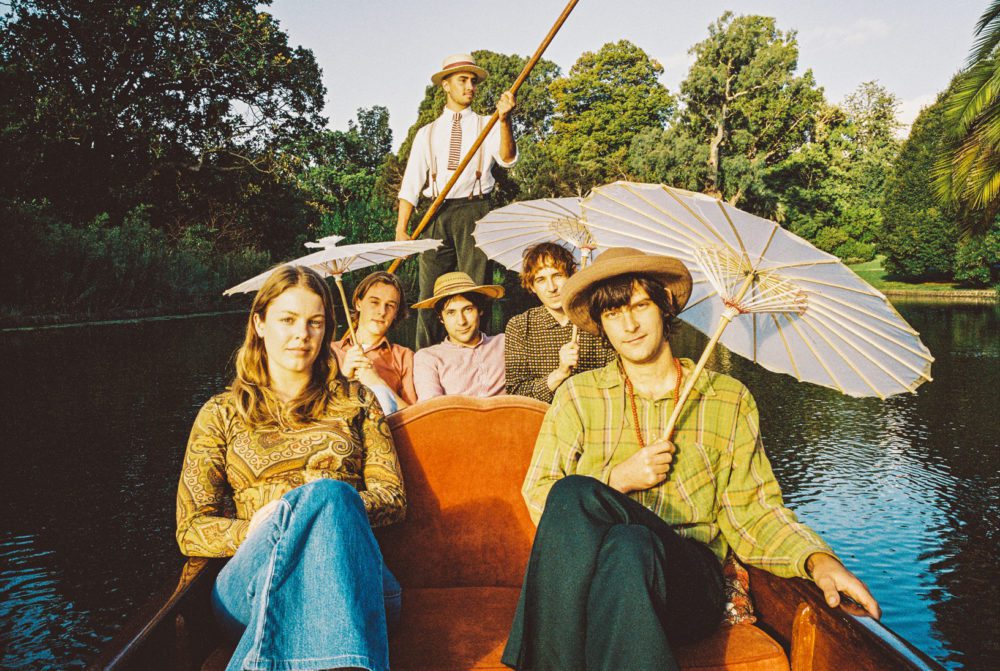
S.G. Goodman Lives the Change She Hopes to See on Striking Debut Old Time Feeling

Photo Credit: Meredith Truax

S.G. Goodman stands as a pioneer for rural voices through her captivating debut album, Old Time Feeling, with a distinct way of embracing Southern traditions while slashing through harmful stereotypes. She demonstrates Southern hospitality by delivering groceries to her elderly neighbor, and in the same breath, denounces Senate Majority Leader Mitch McConnell, asserting in her song “We Don’t Want You Mitch McConnell” that the state has “suffered” under the senior Kentucky senator’s reign. She makes it a point during a phone interview with Audiofemme to encourage her fellow Kentuckians to vote for Amy McGrath, the Democratic nominee running for McConnell’s Senate seat in the 2020 election, Goodman’s left-leaning views providing an antithesis to those who believe the South isn’t socially advanced. “The South has a bad reputation when it comes to civil rights and certain social injustices, and that’s true, we should definitely own that. But I would say that this current administration has proven that a lot of the things people want to point their finger at when it comes to the South, it’s actually everywhere, but the South is the main scapegoat,” Goodman analyzes.

Raised by a large extended family of farmers in Hickman, Kentucky, a town so small it didn’t have a stop light, Goodman was taught from a young age the values of hard work and dependability. The farmer’s daughter-turned-singer-songwriter is now using her voice to tell an all-encompassing Southern story on her glowing album, Old Time Feeling. She describes the 10-track compilation as a mix of “good, basic love songs,” like the “Tender Kind” of love she sings of on the gentle steel guitar-driven track, and “politically-leaning songs,” owning her identity as a sharecropper’s daughter who’s clever enough to know what outsiders think when they hear her thick Kentucky accent on “The Way I Talk.”

“Ultimately, that’s a pretty good picture of a lot of people’s experience in life, which is we’re human beings – we feel things and we do things,” she describes of the album. “I do write about my experience with living in a rural place, and I take that really seriously. I try to be respectful of my characters, no matter the P.O.V. that’s happening in the song, and not ever make a decision to not include something that may be a colloquialism for where I’m from, but try to be authentic through the process.”

Lyrically brilliant and stirringly poignant, Goodman strikes an intimate balance between spotlighting the plight of her home region, along with its beauty, through her music. This delicate dance is wrapped up in the album’s compelling opener “Space and Time,” touching on the lack of acceptance she felt from her community upon coming out as gay, yet acknowledging that each person she’s encountered has left a sincere impression. “I owe my life to even my enemies/The ones who have loved me/The ones who have tried/Their grips on my heart/And their grips on my mind…I never want to leave this world without sayin’ I love you,” she cries. It’s the last line of the chorus that opens the album, leaving an impact on the listener as meaningful as the one imprinted on her by her hometown. “It has a lot to do with reflecting on what makes a life, a life – the sum of all of our experiences happen to be other people and their involvement in your life. We can learn from good situations and from hard situations, but they still are a part of your life,” the singer observes. “I think sometimes when you don’t feel like you’ve said something as eloquently as you wanted, sometimes the best way is just coming out and saying the obvious. It’s not a bad way to start out an album by presenting a song that says exactly what you meant and all that you had to say.”

Goodman continues to directly express her opinions as she joins the thousands of people around the country who have flooded the streets to march for racial justice, taking to heart the lessons instilled in her as a child. “Being a farming family, the family’s work is everyone’s work,” she recalls. “A big thing that was stressed at my house was if you don’t know what to do, then you should find something to do.” Goodman channels this initiative into her music, particularly in the universal line “Be the change you hope to find” that she professes in the album’s hopeful title track, words she doesn’t merely sing, but has turned into action to create the just world she seeks.

“There are a lot of people marching in the streets in rural, mostly all-white towns across Kentucky. It has been really powerful. I’m not surprised that rural communities would take part in this because I know that there are people here that will call out injustice when they see it. It’s brought about a lot of long overdue discussions and I think there’s no getting back to normal. We’re as a society asking hard questions of ‘what do we want our world to look like?’ and we actually do have the power to change that,” she says. “How else are things going to change unless you pick up the hammer yourself?”

Follow S.G. Goodman on Facebook and Instagram for ongoing updates.