Girls Rock Santa Barbara Interviews Divinity Roxx

This year, Girls Rock Santa Barbara has developed The Summer of Love Internship, its first ever paid internship for teen girls and gender-expansive youth, which allows the organization to continue to provide a safe, collaborative environment in which to encourage lifelong skills like positive peer bonding and self-confident resilience. The internship, which lasts six weeks and pays each intern $500, offers six exciting and arts-focused disciplines: Record Label, Recording Artist, Social Media, Journalism, Photography, and Podcasting. Audiofemme is pleased to publish the following article, written by Alex Stadlinger and Katy Caballero, two interns from the Journalism program.

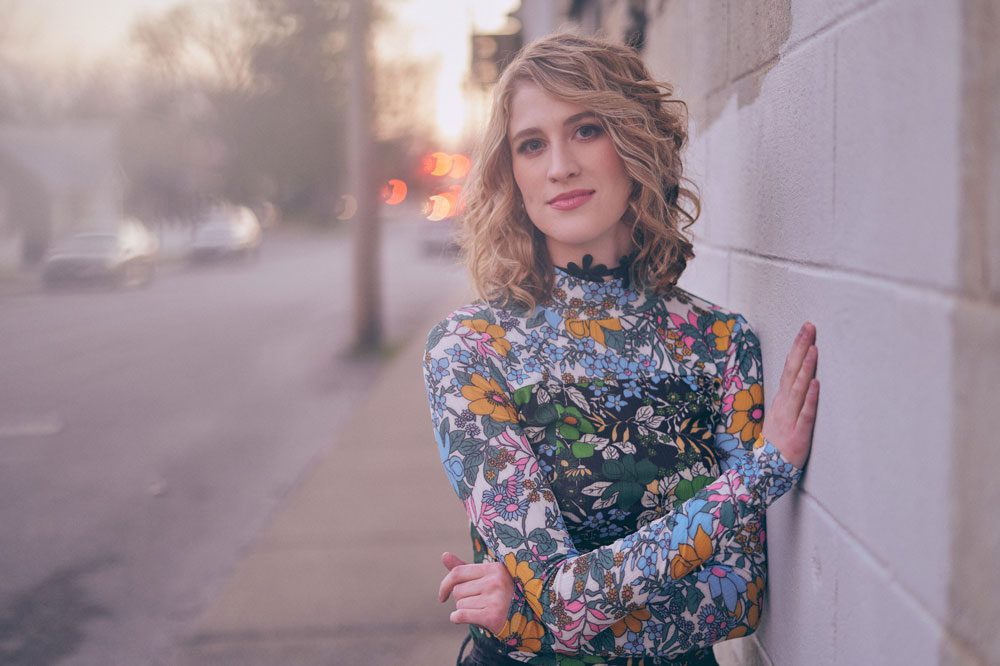
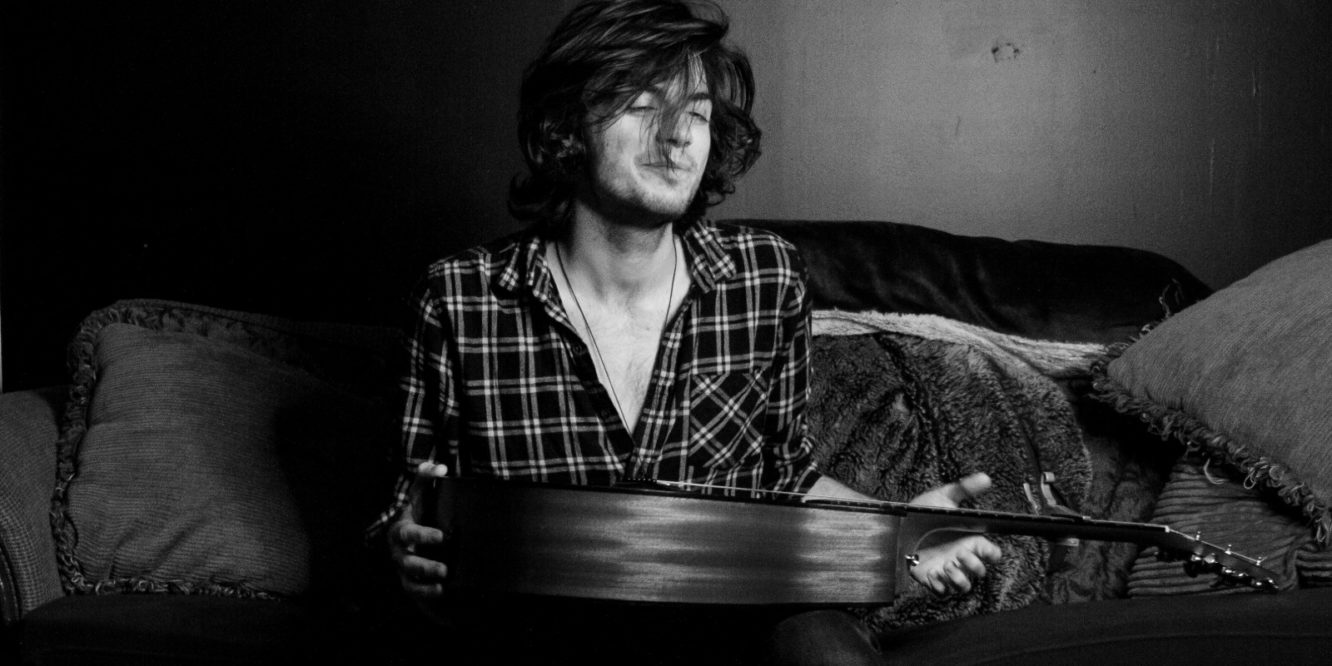
Photo Credit: Ian Frank Photography

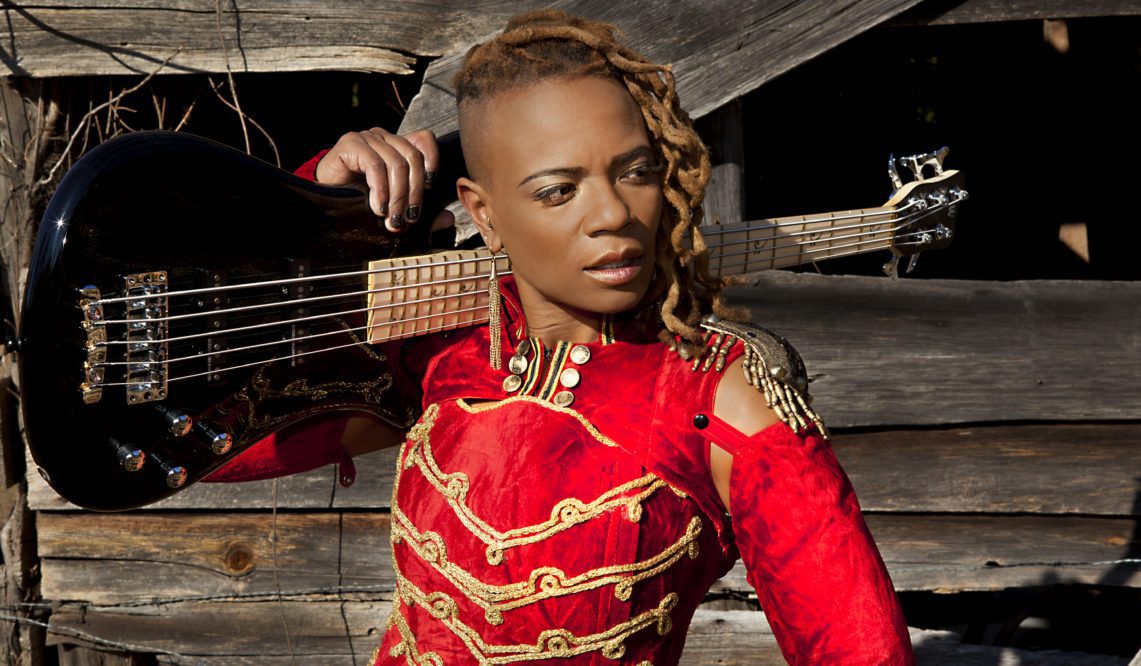
Artist, composer and bassist Divinity Roxx started out her career in 2000 when she attended Victor Wooten’s bass nature camp, where she met both the bass legend and his brothers, and by the end she was asked to tour with them. Appearing on two of Wooten’s albums, (Live in America and Soul Circus), she toured with the band from 2000-2005. But Divinity Roxx is probably best known as the touring bassist for Beyoncé from 2006-2011; having been featured on several of Beyoncé’s albums,she also became the Musical Director on the mega-star’s third and fourth tours.

But Divinity Roxx isn’t just someone else’s bassist. She self-released her first album, Ain’t No Other Way, in 2003 while she was touring with Wooten. Though working with Beyoncé kept her busy, she returned with a solo record in 2012, The Roxx Boxx Experience, fully cementing her sound as an artist who marries blues, rock, and soul in her own right. Her most recent album, Impossible, was released in 2016, and adds more funk to the mix.

Along with her solo career, she is a member of the OGs, an all-female band consisting of original members from Beyoncé’s 2006 touring band. This year, they released a song called “Higher,” recorded in partnership with Women’s Audio Mission in San Francisco and Plug-In Alliance. The song opens a conversation about our world today and how we need to stand up for ourselves and each other. Throughout her career, Divinity Roxx has been a shining light of women’s empowerment, self confidence, and mentorship to girls and women of all ages.

GRSB: The OG’s have been around for a while now, but you haven’t really released any music together up until recently with your new song “Higher.” What brought you together to make this song?

DR: Our percussionist Marci is a band director at a school in Salinas, California, and we were hanging out, having lunch, and we talked about recording – as we always do, except we never really do it, we just talk about it. I had an opportunity to record in a studio in California, and I invited them all out. Nobody had to pay for any recording time – I had hooked up with a woman, Terri, who runs Women’s Audio Mission in San Francisco, so we were able to use her recording studio. I had written this song, “Higher.” I sent the music to everybody and everybody liked it and so we recorded that song, but there are a number of songs that we all have written and we should record but who knows. We’ll take it song by song.

GRSB: “Higher” has a lot of powerful lyrics. What was the inspiration behind writing it?

DR: You know, it’s funny, because I had written that song maybe a year ago, at the end of 2018, maybe early 2019. I always want to write lyrics that are empowering, that are inspirational. I don’t want to just make music for the sake of saying something that sounds cool, that doesn’t have some sort of impact. The groove was so strong and there were so many things going on at the time and it’s so funny that it came out when it did because it was still so relevant. You could tell by the lyrics that I wrote it at a certain time because I referenced a couple of people who had been murdered by the police – I talked about Atatiana Jefferson and that was in 2019, and so we were in 2020 and George Floyd had just happened and the song was already recorded. It was so relevant because these things continue to happen and I wanted to say something powerful. I wanted to – I needed to – say something about it, because I hadn’t and the only way I feel like I can make my voice heard is through music and the lyrics. I want them to smack you in the face and wake you up as to what was happening in the world.

GRSB: Yeah, that’s really important and really inspirational. Will the OG’s be releasing more music together soon?

DR: I hope so, I hope so. It’s really difficult because we all live in different cities, we all have our own careers as individual artists, some of us are moms, some of us are professors at university. Tia Fuller is a professor at Berklee. Nikki Glaspie has her own band called The Nth Power. Marci is a full-time teacher, Katty is a full-time teacher and artist. I’m a full-time artist, so it’s just really difficult to get us together, get us all on the same page, get us into a studio, in a room and make a recording. I felt like I was lucky to get everybody in a room together to get [“Higher”] done, so I really do hope we are able to make some more music together because we are so powerful when we are together.

GRSB: Speaking on your solo career, do you have any new projects coming up that you can talk about?

DR: I’m working on an album and a stage performance  piece called The Ballad of Debbie Walker. It’s sort of the origin story of Divinity Roxx. Debbie Walker is actually my birth name – I changed it to Divinity Roxx and it’s sort of like my superhero name, so I feel like I haven’t really given the world the backstory of Debbie Walker. I went in the studio in California, Zoo Labs, and got with my band and we started writing. I’m really excited about the record because it too is extremely inspirational and kind of talks about how I became who I am as an artist. One of my favorite songs is called “Happy Looks Good on Her,” so I’m really excited about it. I need to work on it more; I hope I’m able to release it next year, 2021.

GRSB: That’s really exciting! Going back a little, you recently re-released “We Are” from your album Impossible. What made you want to record and release that again during quarantine?

DR: Well I did it in partnership with a company called Austrian Audio. They are a microphone company and they are one of my endorsers and it was really their idea – they loved the song and what they wanted to do was remix it with some of their artists and use it as a promo video, not only their microphones but for the message that it was sending to the world at this time. They wanted to bring some positivity to their audience and they thought “We Are” would be a really cool way to do it. So we did a cool licensing deal and I’m really excited about it. I think it came out beautifully. The Impossible album has more jazz and funk and soul I think than The Roxx Boxx Experience record and I feel like it spoke more to the music I grew up listening to than the music I sort of got into once I started playing bass. When I started playing bass I got into rock music because it was just fun and you could just wild out on stage, but the funk and the jazz and the soul was kind of what I grew up on.

GRSB: And the song itself is inspired by a poem by June Jordan, right?

DR: Yes! You’ve been doing your research, I love it! June Jordan was my poetry professor at UC Berkeley; I went to UC Berkeley to be a journalist, and then I became a bass player! But June wrote a poem about South African women, and [“we are”] was the last line in the poem, she read it at the UN. It was a poem to protest Apartheid. I come out of that school of protest and you know, June really taught us. Early on she used to say “If you had two minutes to say anything to the world, what would you say?” And that sort of has been what my whole artistry is about. Every time I have an opportunity, it’s like, those are my two minutes.

GRSB: How do you feel like you use your platform to comment on social and political issues that are happening in the world today?

DR: I feel like music is an incredible vehicle to bring about social change because of its reach. There’s music everywhere. Everywhere we turn, everywhere we go, music is playing. It’s such an intimate and huge part of so many people’s lives. I really do feel like what Nina Simone said is relevant: “As an artist you are supposed to reflect the times. It’s your responsibility to reflect the times.” And for some artists that means something different. For me, as a poet and as somebody who came out of the June Jordan school of poetry where we have an obligation to criticize and to critically think about what it is in the world that’s happening, how it affects our lives, especially as a Black woman in this country, I have always been extremely involved in politics and in social matters and so that finds itself in my music because my music is a reflection of who I am. There are some people for whom that doesn’t happen, and that’s fine, but I feel like I have a duty for the young women who come after me and for the women who came before me to honor them and to continue to fight for the people who don’t have anybody fighting for them, for the powerless. So I really feel like that’s part of the reason why social commentary and political views and different things like that find themselves in my music. It’s just part of how I speak when I’m hanging out with my friends really.

GRSB: What inspired the change in genre between The Roxx Boxx Experience and Impossible?

DR: When I first started performing, I was so aggressive, and I was a lot younger too. I was really mashing up rock and hip-hop. In 2012 I wasn’t planning on releasing The Roxx Boxx Experience – those were old songs. I had moved out to California, hooked up with this guitar player, and he sort of convinced me that those songs needed to be heard. He was like, “You should put this record out.” I was kind of like, “Eh, I don’t know. Maybe put some other type of music out.” And he was like, “Nah man this is killing. We really should. It’s rocked out, it’s hard, it’s aggressive.” I was performing it out there, people were loving it. It’s such an L.A. type of record, you know what I mean?

So we put that record out, and I think those songs that were released on the 2016 album are songs that I had been writing since probably 2010 or something, but they all existed on my hard drive and I was on tour with my band in Europe and I was just letting them hear all these songs, and again they were like, “Why aren’t you putting this music out?” I was like, “Oh you know, it’s not ready…” And they were like, “No, we need to go in the studio and make this album.” So they sort of convinced me to go to the studio and make the Impossible album. The thing about Impossible is that I wanted to explore Divinity Roxx a little more. I wanted it to be more intimate. I wanted to tell some truths that I was avoiding telling on The Roxx Boxx Experience. It’s like The Roxx Boxx Experience was this facade of Divinity; Impossible was this little bit of opening into who I really am inside and what my inner, deeper thoughts are and how I feel. Honestly I said it was going to be my last album because I was frustrated with the music industry and frustrated with art, which happens. But that’s not true, it’s not going to be the last one.

GRSB: Can you talk about your role working with Beyoncé, being her bassist and music director? What does a musical director do?

DR: That was my first time being a musical director, but I was more of an assistant musical director. They gave me the title of musical director but Kim Burse was our boss. She was teaching us and sort of training us on what it meant to be a musical director. Since then I’ve been the musical director for a group called 21 and currently I’m the musical director for Fantasia, but the Beyoncé gig is where I learned what it meant to be a musical director and the job is really tough. You kind of have to get into an artist’s head almost. You help the artist come up with a setlist, you lead the band in creating arrangements. Some musical directors deal with the business of payroll. We hire musicians and identify which musicians would be good to form a band. We are always in communications with the tour manager about different logistical things that the band needs [in terms of] equipment. We are always in contact with the band members to make sure they are given what they need. We kind of help manage the band, make sure everyone is where they are supposed to be. Sometimes we set rehearsal times. We are responsible for making sure that the artist’s songs are cleared for performance a lot of the time. It depends on what organization you’re in, how deep the job can be or how surface it can be. Mostly we’re responsible for what you hear on stage.

GRSB: You’ve definitely played with some really cool people and on some huge stages – how do you feel like that’s shaped your career and your personal music?

DR: Wow! I’ve played on some really tiny stages too! This morning I woke up and somebody, one of my followers, had posted a picture and said, “Four years ago today Divinity Roxx played to a crowd at this place called This Ain’t Hollywood.” Like, there was nobody there, right? But we always play like there’s 20,000 people there, even when there’s nobody there. I think just playing has shaped my career and shaped my performance and how I perform. I have so much experience on stage because I’ve definitely put in my 10,000 hours on stages, whether the gig was filled to the brim with people, or there were three people there; whether it was outside at a music festival doing my solo thing, or on the stage at Glastonbury with Beyoncé when I was extremely nervous and afraid. I get a lot of compliments on my performance because I give it 100%. It’s one of the few times when I’m extremely focused – my brain is always like, “Do this, do this, oh, I should do this, oh you know what, I’ve got to do this.” My brain is usually all over the place, but when I’m on stage I am completely on stage. I am not thinking about anything else, I’m not wanting to be anywhere else, I’m not worried about my problems, I’m not even celebrating my victories. I am just in the moment performing whatever song it is and praying that people are experiencing something. I always pray before the show and ask God that He – or She – shows up and touches somebody’s heart. That is all I want to do when I get on stage. I want to touch somebody’s heart and when I leave and they leave, I want them to feel whole, you know?

GRSB: Are there any other influences that kind of shaped the artist that you are today?

DR: Oh man there are so many people, and they’re not all musicians! Some of my favorite writers are Toni Morrison and Chinua Achebe and Alice Walker. When I was a kid, Alice Walker was one of my biggest influences as a writer. I wanted to be a writer and a journalist so I think that those people really inspire me. Of course, there are musicians – Victor Wooten being one of the most incredible human beings on Earth and me having the opportunities to spend so much time with him and learn from him, he’s a huge influence. My mom is probably one of my hugest influences. Her support is immeasurable, has always been immeasurable. I’m one of those kids whose mom was always at the game embarrassing me, screaming for me and I would just be like, “Shut up. Stop screaming for me.” But you know, that’s what moms do. I was fortunate to have that mom who was always like, “You can be whatever you want to be and you can do whatever you want to do.” So I kind of feel like I’m a reflection of her in that way too with the inspiration. My mom’s ridiculous, she inspires so many people. So many people love her so much it’s crazy, but it’s because of the human being that she is, so I just want to be a good human on this Earth. We need more good humans.

GRSB: Being a woman in the music industry, have you dealt with any inequality or maybe experienced struggles with trying to make it?

DR: I mean, I think that being a woman in this world and doing anything is going to be tough. As a female journalist it’s going to be tough you know? There’s always going to be people that are going to doubt your abilities as a woman and whether or not you got where you are because you’re a woman or because you did something that men can’t do in order to get there. I grew up in a house where my dad never made me feel like as a girl I couldn’t do anything. He always taught me how to do things that he thought I needed to do, like if I needed to fix a car, he’d say, “Okay, here’s how you change a tire. Here’s how you do those things that women don’t traditionally do because I want you to be able to take care of yourself fully.” He taught me how to be myself and never doubt myself because I was a girl. I just never had that thing in me. I don’t even know what that’s like. But I have had people react to me negatively because I was a woman and for me I was just like, “Dude. I could probably beat you at that.” There’s always going to be people who are prodding you and who are competing with you and throwing out negativity about you and talking trash about you like, “Oh you’re never going to be this. You’re never going to do that.” Women are going to do that to you, men are going to do that to you. There’s always going to be obstacles, but don’t let nobody take your shine away, don’t let nobody take your love, your passion. Whatever it is that you want to do, you can do it. This excuse that we can’t do things because we’re women… we’re 51% of the population on the Earth! Are you kidding me? We can do whatever we want to do. We birth babies. We can do that! And we can still work and we can still have jobs and careers and create and flourish, so I just kind of brush it off a lot of times. I think when I was younger it really used to bother me and I felt like I needed to prove something. I wanted to fight against it. I wanted to get angry about it, but I think as I get older I’m just settled with myself. I know who I am and I know what I’m capable of and I know that whatever I’m not capable of, I’m capable of learning. Victor always says, [when] we look at all these incredible bass players and we say, “Oh, they’re so amazing,” [something] his mom used to say: “That person has ten fingers just like you, they have a brain, they have two arms and two legs and they walk this Earth and they can reason and think and they practice, so there’s nothing different about you. You just have to work at it.” So that’s just kind of what I do – I just keep working at it. There’s always going to be somebody better, but there’s nobody who’s going to do it like I do it.

GRSB: How do you want the world to remember you?

DR: Wow! That’s always a tough question. I want people to remember me as being honest and real and inspiring and as somebody who continued to want to evolve. I want to continue to evolve. I want to continue to grow. I want to continue to put goodness out into this world and that’s how I want people to remember me. I want them to remember my songs and my lyrics and think about how they make you feel on the inside. It’s just like doing a show – this life is a show. I think the Red Hot Chili Peppers said that in one of their songs. This life is not a rehearsal, it’s the real thing, so this is my show, this is my stage, this life, this is my outfit, this is my wardrobe, my bass is my weapon of choice and I try to live this life as honest and as real [as I can]. I hope that anybody that comes in contact with me in any way, shape, or form will leave feeling a little bit better than when they first came to me.

Follow Divinity Roxx on Instagram for ongoing updates.
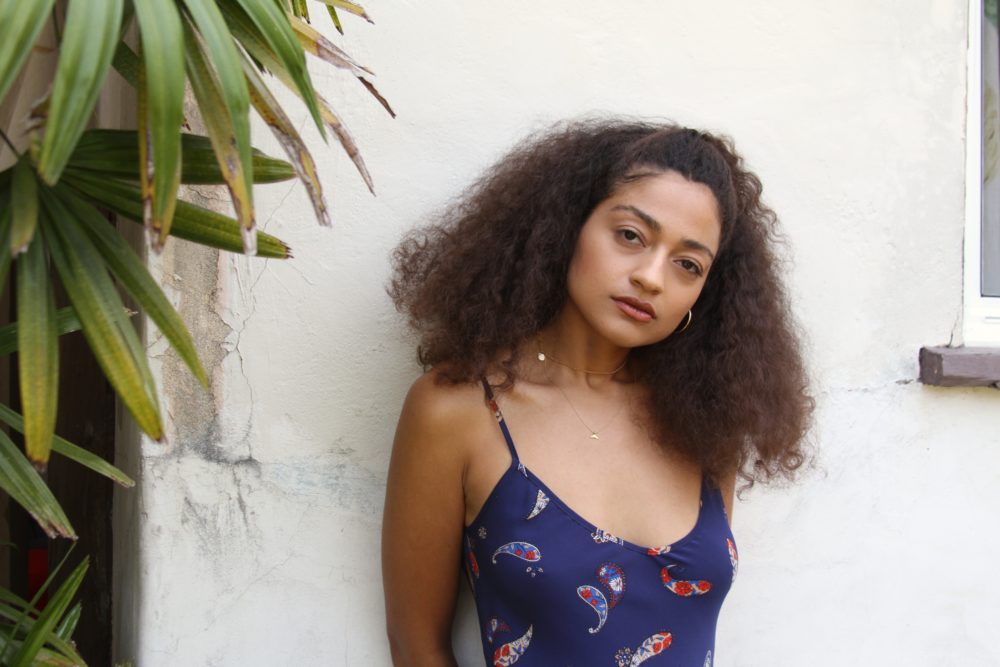
Dana Williams Reconnects to What’s Important with Latest Single “Stuff”

The process of reconnecting with oneself can alchemize from reading your childhood journal or slipping your hand into a tiny tap shoe you wore prancing at a dance recital or across the kitchen floor. These keepsakes, this stuff – are integral parts of ourselves and the imaginary spaces we inhabit when we’re still learning how to exist. We evolve into adults but the ages that exist within us – and the keepsakes we hold onto – live forever. We find creativity through our ability to access these years, and the self confidence that comes with the empire of childhood.

Dana William’s visual for her latest single “Stuff” gives us a peek into these sacred childhood spaces. A younger version of the singer-songwriter introduces herself, proudly announcing that her name is Dana Williams, and she is five years old. Her tiny hands are poised sophisticatedly behind her back, embodying the exuberance and charisma of a ’90s game show contestant; the emotive eyes of a Precious Moments doll, both vulnerable and full of wonder, light up her face. The visual intersperses home videos like these through introspective imagery of modern-day Williams poised gracefully in a brightly lit breakfast nook, writing lyrics with a mug of black coffee, an overflowing bowl of fresh lemons on the table, and her lush California garden right outside.

“Selecting imagery of myself as a child serves as a reminder to be kinder to myself,” Williams explains. “It reminds me of the passion I felt that drove me to become an artist and it also serves as a reminder of where I came from.”

Later, as she sprawls beneath her bookshelves, Williams sets the tone for an existential, hip-moving lullaby: “I can’t find myself/I placed it on the highest shelf/With the rest of the stuff.” She invites her listeners into a deeply personal inner monologue, expressing universal emotions of self doubt, and a declaration of uncertainty. “Stuff” surveys a deeply personal journey inward, and creates a safe space to wash away the shame associated with losing ourselves in periods of distraction. It sheds the gift of honesty, a song to have on repeat for anyone in the process of inner spiritual work, of gaining access to one’s higher self, often so hard to reach amidst the clutter of our daily lives. With her warm vocal, Williams urges herself (and by extension, the listener) to keep going: “Maybe I’ll keep trying/maybe I’ll keep wrestling the wind/maybe I’ll keep lying to myself/in this life of sin.”

In an era where we’re quick to associate streaming numbers to relevance and equity in our long term career goals, it’s easy to lose track of our talents and abilities as our passion and joy. “I think that the song is really about what I’ve went through over the last year. I just feel like I had to really find myself again creatively. I feel like my identity was put on the back burner for other people’s expectations,” Willaims says. “I disregarded my well-being and creative sensibilities for an outlet as if it were an object. And then it just made me feel like I lost myself with the rest of the stuff. That’s why the word came into play. I felt like I was just so separate from who I was that I had to sort of refine it and rediscover who I was.” Through the creation and release of “Stuff,” Williams was able to override this uncertainty, and share the wisdom, resiliency, and defiance involved in reclaiming her inner artist as she continues her musical journey.

It’s no wonder Williams felt inhibited by external expectations. Within a year of booking her first show, Williams released her debut EP The Lonely One, whose opening track, “Keep Me Waiting,” earned the distinction of being the only original vocal composition featured in Damien Chazelle’s Oscar-winning film Whiplash. After delivering her sophomore EP Let’s Fall in 2015, she switched her focus to consistently releasing stand-alone singles; these include “Silly Words,” “Holiday,” “Do No Harm,” and “Hard,” many of them released alongside the acoustic demos, giving listeners a peak into her songwriting process. She’s gained accolades from various publications, including Idolator, who named her one of 40 Artists To Watch In 2020. She appeared as a featured artist alongside Aminé on Rejjie Snow’s “Egyptian Luvr” — a January 2018 single that’s garnered over 40 million streams to date – and was recently a guest performer on H.E.R.’s Girls With Guitars IG Live show (other guests have included Lianne La Havas, Sheryl Crow, Melissa Etheridge, Chloe x Halle, Willow Smith, Allesia Cara and more).

She also participated in the short-lived reality series Rising Star in 2014, getting a taste of the pressures that come with being in the public eye. The show, similar to American Idol or The Voice, approached Williams based on covers she’d uploaded to YouTube, and Williams embraced the mass exposure, coming in fourth place on series. “It did feel surreal,” she says. But rather than hole up in a cramped hotel room with the other contestants, Williams talked producers into letting her stay in her own L.A. home during filming, which she says was grounding. “I reasoned with them, and said, ‘I live in L.A., I’m not going to go AWOL, I promise you I will always be on time, I will always be where I need to be,’ and they said sure. I think that was what really kept me from being too stressed out and anxious. I would just go home, hang out with my dogs, and practice my songs.”

The ease of her tonality and the naturalness of her musical abilities likely stem from growing up in a musical family. Through direct mentorship of her father, the late touring and session guitarist Dave Williams (who worked on iconic songs like Madonna’s “Like A Prayer,” Stevie Nicks’ “Stand Back,” and Michael Jackson’s “Billie Jean”) Dana had the privilege of naturally evolving into the musician she is today. “People always ask me, ‘At what point did you realize you wanted to make music?’ And it’s like, well, I just always have and it’s something that’s just a part of me.” Williams says. “One thing I would say that frustrates me, is when people say things like ‘Oh, you’re going to be so famous.’ The point of making music isn’t to be famous. I literally just love making music, and if people like it, then that’s awesome. I don’t know what I would do if I wasn’t making music – it’s such an important outlet for me.”

Given her father’s success as a guitarist, writer, and producer, picking up the guitar came more naturally to Williams than other instruments she’d played. Her father propelled her into the studio by guiding her through his own songwriting approach. “He would write a track, bring it home, and sort of taught me how to top line,” Williams recalls. She loved writing poetry and had been introduced to big book standards early on by her maternal grandmother, who was a jazz singer. With her father mapping out song structure, Williams became enamored of the songwriting process. “I was just like, spending my free time top-lining his tracks and sometimes if they were good, he would record them. So that’s how I started writing. And then when I got a little bit older, 12 or 13, I thought it would be so cool to create a song entirely on my own without his track.”

Williams went on to attend Sarah Lawrence, where she studied both classical guitar and poetry. “I would say that my biggest creative takeaway from college would be just being able to have those years to read and write a lot of poetry. I participated in a lot of the poetry festivals, reading my poems, and just honing my craft,” she says. Williams’ interdisciplinary approach and strong familial music background resonate in her grounded, modest, and gracious demeanor as an artist.

And yet, despite Williams’ strong foundation, she was almost swept away by influencer expectations that put artists at the risk of objectifying their own talents and compartmentalizing themselves as content creators. Writing “Stuff” helped her avoid that, and emerge with some sage advice for young women in the music industry: believe in your craft, be persistent, and stay true to yourself. “Social media is a double-edged sword,” she warns. “I think it’s important for self promotion. I also think it’s important to be yourself on it, stay active, and create a dialogue. It’s an interesting way to let people in to see who you are outside of your music. But it’s important to step back and realize that Instagram is not reality.”

Follow Dana Williams on Facebook and Instagram for ongoing updates.

Napalm Nanny and the Shack Offers a Weekly Dive Into Classic Tunes and Trivia

Photo Credit: William Pasillas

Every Saturday, L.A.-based podcaster Nancy Diaz-Ibarra adopts the name Napalm Nanny and drops a bomb filled with classic tunes and trivia. On Napalm Nanny and the Shack, music is a tool to dig into facets of cultural history that often remain fairly obscure. A disco set leads to the story behind the development of roller skating and an episode focusing on ’60s girl groups doubles as a love letter to the famed beehive hairstyle. Diaz-Ibarra isn’t just spouting facts for the sake of it, though – she’s making connections to bigger points about immigration, feminism and racism in the U.S.

Diaz-Ibarra had been sharing music, articles and podcasts – “whatever caught our eye,” she says – with friends every morning. One pal had tuned her into Steven Van Zandt’s long-running radio show Little Steven’s Underground Garage and suggested that she do something like that. Diaz-Ibarra didn’t know how to make a podcast, but figured she could teach herself. “I just thought if I don’t do it now, then when?” she says. “Why should I wait for a perfect moment to start something?”

Napalm Nanny and the Shack launched in February with Diaz-Ibarra learning how to make a show with every episode. She records and edits the podcast herself and, save for some commissioned pieces, makes the cover at as well.

Now half-a-year into her podcasting journey, Diaz-Ibarra recalls listening to some of those early episodes. “It was so cringe-worthy,” she says, noting the nervousness in her voice when she debuted. “Even my friends, they were very harsh critics, very honest critics,” she adds. She says that making the weekly show has been a process of becoming more comfortable with her voice and “finding a rhythm” that dictates how much music she plays and how much information she shares.

Each episode has a theme, ranging from The Cramps’ fetish influences to the role that some musicians played during the Cold War. “I honestly wish I could explain the message, but it’s all just scribbled in a notebook,” she says of the show. “It’s whatever I find interesting, to be honest.”

There’s a lot of research that goes into each episode. “I usually do it the old school way, where I read through articles and take my notes,” she says. “I might have an idea of where an episode might take me, but, sometimes, it completely changes depending on the research.”

Driving the series is the music, which varies from episode to episode, but includes a lot of garage rock and soul with a selection that’s impeccable. You’ll hear some stuff you know, but a lot of it may be unfamiliar. “For me, music has always been an escape,” says Diaz-Ibarra. “I didn’t grow up in the happiest of homes. I grew up in a city where violence was pretty common. I grew up in Lynwood. Watts, Compton, those were my stomping grounds as a kid,” she says. “Growing up and saying I can recognize gun shots, it’s not something that’s all that common. It’s common for me and my community. But, when I put on headphones or played with the radio, it sent me somewhere completely different and it’s something that meant the world to me.”

Diaz-Ibarra continues, “Because it means so much to me, it’s something that I want to share with others.”

Photo Credit: William Pasillas

Nanny Napalm and the Shack was made for her friends, but anyone else who wants to listen is welcome to join the ride. And they have. “I’ve met some really wonderful people sharing with me their interests or sending me music,” Diaz-Ibarra says. “It’s developed a pretty sweet community.”

In a recent episode, Diaz-Ibarra explored telenovelas, connecting the serialized television shows to immigration experiences. After the episode, she heard from listeners who recalled the series they had seen with their family. “I think that pop culture is something that we’re surrounded with, even if we don’t realize it,” she says. “We might be playing in the background, but whatever our parents are watching, it has definitely impacted us.”

Diaz-Ibarra recalls televnovelas being on at home while she was growing up. “I can’t remember which specific novela my mom would watch – there were so many of them,” she says. But, as an adult, Diaz-Ibarra reflects on the significance of the shows. “Having the language in the living room once again meant the world to her. For me, it was just noise in the background.”

Sometimes, one episode isn’t enough;  it’s in those two-parters where Diaz-Ibarra’s mission might be revealed. Take, for example, her “Ranfla Cruise” episodes, which looks at lowrider culture and how it was impacted by racist laws in California, which led to one customizer, Ron Aguirre, to develop the car hydraulics system. Today, everyone is familiar with lowriders, but they might not know who Aguirre is. “I think that there are a lot of misconceptions within these really niche scenes and that’s what I really love to dig into,” says Diaz-Ibarra. “There are a lot of unknown, unsung heroes there.”

Eyedress Remains Wholesome Amid Big Changes on Dreamy Let’s Skip to the Wedding LP

Photo Credit: Razy Faouri

There’s a carefree demeanor to the latest Eyedress LP, Let’s Skip to the Wedding, that belies the intense life changes its creator, Filipino musician Idris Vicuña, experienced while making it. Born in the Philippines and raised in the US from the age of six, Vicuña spent his formative years living in Manila, making music in a band called Bee Eyes before creating his solo project Eyedress, a homophone of his first name as well as a reference to his previous band. As Rodrigo Duterte assumed his Trump-like presidency in the Philippines and mounted a violent extrajudicial war on drugs, Vicuña, a sensitive Cali stoner at heart, returned to America on tour and was “too paranoid to even go back,” eventually settling in Los Angeles. Surprisingly, the turmoil of the move is largely absent from Let’s Skip to the Wedding; instead, the album consists of mellow indie grooves about everything falling effortlessly into place.

Vicuña has released albums under the moniker Eyedress since 2013, signing with XL Recordings to release his Supernatural EP, the follow-up to his debut Hearing Colors, a collab with Skint Eastwood. Vicuña says XL “threw me in the deep end,” even putting him up in a London apartment for a year. “They had me opening these crazy big shows, and I was young at the time, still 22, really shy, and I was like, playing with my laptop on stage and singing. I didn’t really know what I was doing,” he recalls. XL dropped Eyedress, forcing Vicuña to self-release his next few albums. “I personally wasn’t ready for all that, but it was a learning experience, and I met a lot of great artists,” he says.

One of those artists was Scott Herren, aka Prefuse 73, who put him in touch with another UK label, Lex Records., who released 2017’s Manila Ice, 2018’s Sensitive G, and now Wedding. “After that things were kinda set – all I had to do was focus on making good music, you know, being genuine. It’s gotten me to be able to live in America, and that’s always been my dream ever since I was in the Philippines,” Vicuña says. “I knew nothing would happen with my music if I stayed there. Since I [moved to L.A.] things have just gone really well.”

For one thing, Vicuña fell in love with his partner Elvia, and her soothing presence is deeply felt throughout the dreamy, diaristic meditations that populate Let’s Skip to the Wedding – in the video for the title track, they raid a bodega and dance beneath a desert sunset in matrimonial garb;  in the Bobby Astro-directed clip for “Last Time I’m Falling in Love” she’s a heavily pregnant mermaid. An animated version of the couple fights zombies in “Can I See You Tonight?,” a track Vicuña wrote about the heady first days of the romance; ghostly backing vocals float through the track like longing itself.

In L.A., Vicuña found another soulmate of sorts too, in guitarist Zahara Jaime. Though Eyedress is mostly Vicuña’s solo effort, Jaime plays lead guitar “Can I See You Tonight?” and has become an integral part of the band’s live show. The two met at an Eyedress gig, bonding over shared Filipino roots, and later met up again by chance in New York, where they spent a night jamming. Not long after, Vicuña invited her on the road, and since then, the two have written numerous songs for a side-project called The Simps, which they plan to begin releasing later this year. They incorporate songs from both projects into their energetic shows, taking a punkier approach to playing live that often ends in mosh pits and mayhem – Vicuña even fell off the stage once. “I made a few punk songs when I lived in Manila – I was really angry at the time. And ever since I made those songs, whenever me and Z play them, shit just goes fucking off. Sometimes we’ll try to record songs that can invoke that kind of mood and sometimes we just have some sad chill shit. There’s no rules to it, it just falls into place,” Vicuña says. “We were meant to make music together. Z to me is like my little sister, but she be teaching me shit too.”

“I think when I met him and we started recording it really made me look at music in a different way, like you could just sit down at home and make it yourself, you don’t necessarily have to go into the studio and spend like $250 a day,” Jaime says. “Him showing me that you could literally open up your laptop and write music, that was just like a different world to me.”

Jaime had played in a variety of garage punk bands throughout her teens growing up in Highland Park, but as a queer woman of color, didn’t feel like she fit in. “At the time it was a really male-dominated industry, with Burger Records and Lolipop Records which was like, primarily white. And I would get shows with some of those bands but was always the opening act, and I was always treated kinda weirdly,” she remembers. She saw firsthand some of those labels’ seedier sides, including grooming young fans and gentrifying her neighborhood. But meeting Vicuña felt different, and he allowed her the freedom to riff without mansplaining. “Idris has introduced me to a lot of other musicians that I feel have the same sort of background as me. I expanded my horizons. It’s nice to see people coming up that aren’t a typical white male band.” This, she says, is key to breaking damaging cycles of predatory behavior. “I think we should be more inclusive in music,” she says simply. “Why do guys that abuse their privilege get to have a platform?”

In many ways, Let’s Skip to the Wedding offers a clear alternative where Vicuña leads by example, embracing his sensitive, wholesome side, even managing to embody the feminine when he slips in to high falsetto on a song called “Trauma.” “I feel like the album shows guys can still be good,” he says, and that his principals revolve around a concept he calls “Team Loyal.” As Jaime explains, “Team Loyal is like, you just have this small circle and everyone treats each other with respect, everyone’s right morally, we’re just very close knit. Cause L.A. feels like a jungle.” In the midst of turbulence and change, Vicuña isn’t afraid or ashamed to wear his heart on his sleeve. On Let’s Skip to the Wedding, he nestles his most tender tendencies in a haze of slinky dream pop, but its overriding thesis shines through – love is all you need.

Follow Eyedress on Facebook for ongoing updates.

Melbourne’s Techno Queen DJ Kiti Spins Wax From Her Living Room

Photo Credit: Jess Middleton

A classically trained flautist with an insatiable love for clubbing, it seemed destined that Tamara Kiti would end up behind the decks at some of Australia’s biggest club nights. Melbourne born and raised, Kiti has not only DJ’ed at major festivals, club nights and parties, but she’s started some of Melbourne’s cult club nights, including Roxy (going strong for seven years now) and LOUD (now in its fourth year) at laneway club Honkytonks. For Melburnians with a penchant for doing the Melbourne Shuffle, a signature dance style that emerged in the city in the 1980s and ’90s, into the early hours of the morning, it’s likely they have pulled dancefloor shapes to a soundtrack Kiti has curated.

Though COVID19 measures have confined her to her home, DJ Kiti is keeping Melburnians (and an international audience) nourished with murky, melodic techno feasts via YouTube, Instagram and Facebook streams.

“I was exposed to music from the minute I arrived,” confesses Kiti, who purchased her first 7-inch record at the age of four. “My mother was young and single and we would collect 99-cent 7-inch records from Kmart in Melbourne’s suburban Northcote Plaza every Saturday. I also had a record player with a tape deck. I would record pirate radio stations and listen to [community radio stations] PBS, RRR and 3CR all the time.”

Indeed, Kiti’s immersion in radio and records lead her to believe she’d be a radio DJ, encouraged by her primary school principal. “My first experience with DJing was playing one song before the lunch recess bell every day in primary school, thanks to my Principal, who knew I was an avid record collector and obsessed with music,” she recalls. ” DJs as we know them now were not around when I was a child, so I thought I’d be a radio DJ.”

As a teenager, Kiti was immersed in the formative years of rave culture that embraced strobe lights in pitch black warehouses, loud techno and neon fashion in the 1980s.

Kiti’s peroxide bob, perfectly angular cat’s eye makeup and cut-glass cheekbones might suggest slinky vocal house, but there’s a gothic essence to the techno she spins. Her sets are dark, old-school electro, techno and house that hark back to the times of illicit warehouse parties, glow in the dark wristbands and an audience of acid ravers, punks, goths, club kids and record geeks drawn to the mathematical genius and the repetitive nature of techno beats. Kim Moyes of The Presets, one of Australia’s foremost electro duos, recalled that it was one of Kiti’s legendary DJ sets during the early days of Sydney’s party crew The House of Mince that influenced the Presets’ track, “Fast Seconds.”

Kiti is adamant that DJing can be taught to a point, but the ability to read a crowd and respond, to adapt and instinctively know what to do to get a dancefloor pumping is all down to experience.

“DJing is all about practice, practice, practice, so that’s what I did for a whole year,” she says. “I would break records over my knee and sometimes bite them out of frustration! When it comes to track selection and being able to read a crowd, that cannot be taught in my opinion. My advice to those just starting out is to try and find your own sound and not someone else’s. Yes, you can play all the tracks you Shazam’d, but you’re not going to transform into your favourite DJ and you will always know that. Be yourself and find your thing. Be genuine.”

Equally enamoured of music and fashion, it was inevitable that Kiti’s striking looks would attract attention from brands and businesses seeking to appeal to Melbourne’s design and clubbing elite. In 2011 and 2012, Kiti curated the musical soundtrack for L’Oreal Fashion Week where she plied her signature sound: pure techno, energetic and fuss-free. Her set for Arteq Only is up on Half Wild.

Kiti is currently signed with 123 Agency, a Melbourne-based independent music company that’s grown from a staff of three to nearly five times that of late. Founder Damian Costin has said gender parity is at the core of 123 Agency: “We are passionate about gender and cultural diversity, we are conscious of the role our organisation plays in the wider industry we strive for greatness in every respect.” Over more than 12 years she’s been professionally DJing, Kiti has also established residencies at LGBTQ club nights including John, Poof Doof, Crass and Trough X.

Right now though, the clubbing atmosphere where sweaty bodies writhe under strobe lights – breathing on one another, brushing skin on skin, laughing, crying and moving in unity – is a distant memory. Even when the restrictions ease (presently at Stage 4 in Melbourne), it is likely that clubbers both young and old will feel loathe to crowd small dancefloors, or gather in huge numbers, without the seed of fear and doubt embittering the experience. As Melburnians face another four weeks of wearing mandatory masks, being allowed out of their homes for merely an hour a day and unable to go anywhere other than the supermarket, baker or chemist, dressing up and partying is something we can’t do, nor conceive of enjoying, for a long time.

But DJ Kiti provides a light in that darkness. “I’ve been making music with my partner, which has been an enriching experience because we’ve usually fought when we’ve tried before. But, we have been a success this time!” she says. “Also, I’ve done a few live streams of Instagram and YouTube sets, including Lost Basement in July.”

“I truly miss DJing, so much that it really hurts. It’s who I am, so to be without it has been very hard,” admits Kiti. “I’ve been riding the Rona Coaster and its ups and downs in this state of Utopia Dystopia.”

Follow DJ Kiti on Facebook for ongoing updates.

Loretti Releases Video for “Los Feliz” After A Chance Encounter at an L.A. Gig

Photo Courtesy Loretti

Back in October of last year, Loretti played at Stories Books and Cafe in Los Angeles’ Echo Park neighborhood, finishing the set with “Los Feliz.” As the band played, animator Maggie Noble rode her skateboard through the alley behind the venue and heard the song. “She came in and she came up to my keyboardist after the show and was like, I love that,” says Aimie Lovett Sommer, the singer and songwriter behind Loretti.

That chance encounter would result in the music video for “Los Feliz,” out on August 14. In the clip, Noble incorporates Sommer’s lyrics into a blissful, psychedelic jaunt through new love in one corner of L.A.

The song itself was a long time in the making. It was one of the first that Sommer, who released Loretti’s debut album The First Arrest in 2011, had written after taking a couple years off from making music. The chorus manifested after her fourth date with the guy who would become her husband.

“I piecemeal songs together,” says Sommer. “It’s very rare that I’ll sit down and write a whole song.” As she worked on it, she decided that it should be about their first few weeks of dating – “the little breakthrough moments that made us really want to focus on each other,” she says.

Sommer worked out the song live as Loretti evolved from a solo project to a band, and it became a fan favorite. “Los Feliz” was recorded as part of an EP, which is now being released track-by-track, at Moosecat Recording Studio between April and June of 2019.

When Sommer first met up with Noble to talk about a video collaboration, she took the animator on a drive through Los Feliz. “I explained to her where each lyric came from and the memories I had there and we basically storyboarded the video with that first meeting and I’ve been working with her ever since,” she says. “She did an amazing job under a lot of pressure and during a pandemic to get this done for me and I really appreciate it.”

Loretti began as a solo project more than a decade ago, when Sommer was living in Dallas. She had played in bands before, trying out styles from blues and jazz standards to rock projects where she wrote lyrics and melody. “I had always been dissatisfied with anything I had written individually,” she says. Sommer says that she “couldn’t escape” the influence of the music that she heard as a child – mostly soft rock, country gospel and vintage country – that came to her via her parents and older siblings. “Any time I would go to write, that’s what it sounded like to me.”

Sommer tried to resist those influences, but had a change of heart. “I had a good nine months to be in musical solitude and made my peace with it,” she says. ” I decided to lean way into it and embrace it and really develop it.”

The name Loretti is a nod to Coal Miner’s Daughter, the Loretta Lynn biopic starring Sissy Spacek and one of Sommer’s favorite movies. She played around a bit in Dallas and Austin before an unexpected move to Los Angeles. Sommer had intended to relocate to Portland, but a friend who was moving to L.A. urged her to spend a summer in the city. It only took a couple days in town for Sommer to decide that she wanted to stay longer. Even then, though, she was thinking about staying a year and then heading up north. That was a decade ago.

In addition to Loretti, Sommer also co-founded a production company, Softer Sex Productions, with Rose Shawhan of the band Good Witch. The two launched the project at a time when they were coming off of music hiatuses and looking for ways to introduce their bands.

For Sommer, who admits to having been “a little shy” about mingling with the local music community, the project was a way to help get to know other musicians as well. “It really helped me,” she says. “It introduced me to some incredibly talented women and it was a fulfillment for me to go to the shows and be like, I helped put this together.”

Due to the pandemic, Softer Sex shows are on hold indefinitely, since Los Angeles’ live music venues are also closed. For Sommer, who is also a registered nurse, that pause is alright, even though she’s not anticipating a return to the stage anytime soon.

“My real concerns go out to the venues themselves and people who rely on them for income – the talent buyers, the other promoters, where that’s their livelihood [that’s] just completely gone,” she says. “I’m definitely not going to cry for how long it will take us to have our first show because I feel like there are more people where it’s a greater concern for them than for us.”

She adds, “I’m excited to go to their shows first when things do open back up.”

Follow Loretti on Instagram for ongoing updates.
RSVP HERE: Pom Pom Squad Livestream via LongNeckLass Twitch + MORE

When Mia Berrin was only 15, she saw a sweatshirt emblazoned with the words “Pom Pom Squad” and the name stuck with her as she began to write songs during her senior year of high school in Orlando, Florida. Now a staple of the Brooklyn scene, Berrin’s band Pom Pom Squad is filled out by Mari Alé Figeman on bass, 

Shelby Keller on drums

, and Alex Mercuri on lead guitar. Contrary to the classic image of a cheerleading squad, Berrin’s squad is a vehicle for emotionally charged grunge anthems that release inner demons and rush toward radical self-acceptance, as seen on their two EPs Hate It Here and Ow. They also explore the softer side of alternative in their 2020 Valentine’s Day single “Red with Love” and recently released cover of “Crimson + Clover.”

You can catch Berrin performing a stripped down set on LongNeckLass’ Twitch tonight at 7pm EST alongside 2nd Grade, Baseball Dad and Lisa Prank. They also have the best Bandcamp limited-edition merch items including a summer squad uniform and a long sleeve “Internet Tour” shirt (which we all seem to be on these days). We chatted with Berrin about the making of Pom Pom Squad’s recent music videos, the creative community’s role in BLM and her dream writing location.

AF: I love both music videos you’ve released in 2020- “Red with Love” and “Crimson + Clover.” How did they differ in terms of recording and filming? What do these tracks mean to you?

MB: Thank you! Red With Love was pre-quarantine – it was recorded as a full band and the music video was filmed at the (now defunct), The Dance with a big group of fans and friends. It’s weird that filming in a crowd seems like such a novelty now! “Crimson + Clover” was basically the opposite. I recorded it alone and filmed the video with my partner using only stuff we already had in the apartment. Both songs are about ~love~ but are stylistically really different. I think Crimson is a little bit of a sneak preview of where my brain has been lately.

AF: Now that it’s uncertain when we’ll be able to play shows in NYC again, has your relationship with the city changed and how do you imagine the creative community in Brooklyn evolving?

MB: My relationship with the city has changed in that I barely leave my house and have very little desire to. To be honest, I didn’t have much of a desire before, but my anxiety has gotten a lot worse. Brooklyn is so overwhelming to begin with that I didn’t really feel like I had the opportunity to finish thoughts! Having a lot of time on my hands has made it a lot easier to write though. I feel like maybe the creative community will evolve in that there isn’t much room for comparison anymore – playing the show circuit here makes you really aware of what everyone else is doing and what’s “trendy”. It feels good to be isolated in that I can hear my own instincts more clearly.

AF: Has the COVID lockdown and current social justice movement changed and/or fueled your creative process in any way?

MB: Absolutely. I think it’s really hard not to be angry and hurt right now, so I’ve been writing from that place recently. It also makes me feel a need to escape through my music, so I’ve been rebuilding my world sonically and giving myself a place to rest that’s separate from everything else. I think on the other side of the coin, this moment in time also makes it really, really hard to write, or get out of bed.

AF: What are your thoughts on the creative community’s role in the BLM movement and how do you think we can use our platforms in the most effective way?

MB: From my own experience, I’ve been using my platform to try to spread information and as a starting point for research. I think especially in this moment, it’s important to step back and try to learn about what’s happening in front of you. Art and artists can be huge catalysts for change and can encourage people to shift their perspectives.

AF: I saw in a previous interview that you write best when you’re as far away from NYC as possible. What would your dream writing/recording space be outside of the city?

MB: Basically the Jayne Mansfield Mansion, but with a meadow or a view of the mountains outside. Somewhere extremely kitschy and unnecessarily lavish.

AF: What can we expect from your livestream tonight?

MB: A pretty stripped down version of some of the songs from our last EP, Ow, and maybe some new stuff I’ve been working on ;-)

AF: What are your plans for the rest of 2020 + beyond?

MB: Staying safe and working on a big project I am very, very excited about!!

RSVP HERE for Pom Pom Squad 8/14 via LongNeckLass Twitch 7pm EST w/ 2nd Grade, Baseball Dad and Lisa Prank.

More great live streams this week…

8/14 Best Coast (Crazy For You 10 Year Anniversary Party) via Seated. 9pm EST, $10, RSVP HERE

8/14 ..And You Will Know Us By The Trail Of Dead via their website. 9pm EST, $9, RSVP HERE

8/14 The War on Drugs, Robin Pecknold of Fleet Foxes, Daniel Rossen of Grizzly Bear, Kyp Malone of TV on the Radio, Waxahatchee and more via Vote Ready. 7pm EST, FREE, RSVP HERE 

8/14- 8/16 Allen Stone, Ben Gibbard of Death Cab For Cutie, Los Lobos, Gangstagrass, Shakey Graves, and more via Philadelphia Folk Festival 12pm EST, $75 +, RSVP HERE 

8/16 What Now: An Antiracist Teach-In with Ibram X. Kendi and Isabel Wilkerson 8pm EST, $50, RSVP HERE

8/17 2020 Ain’t Canceled: August Intersectionality Series via Zoom. 8pm EST, RSVP HERE

8/18 Serpentwithfeet via YouTube / KEXP at Home. 3pm EST, RSVP HERE

8/19 Thursday, Cursive, And So I Watch You From Afar via Youtube. 6pm EST, RSVP HERE

Eli Burke of 8 Inch Betsy Maintains Bandmate’s Posthumous Legacy With Digital Re-Release of The Mean Days

Meghan Galbraith, lead singer of Chicago queercore band 8 Inch Betsy, passed away in 2015.

After queer Chicago punk band 8 Inch Betsy wrapped up a 30-day U.S. tour in 2010, many things appeared uncertain for the members. Their original drummer Stephanie Levi had left the band, and the transition from life on the road to everyday life left the remaining members Meghan Galbraith (guitar, vocals) and Eli Burke (bass) feeling downtrodden. Galbraith was up every night working as a bartender, then would wake up to “alone days of nothing after just coming off the high of tour and traveling all over the country,” as Burke puts it. This situation spawned the band’s latest album, The Mean Days, a meditation on life’s difficult experiences.

As Galbraith and Burke worked on the album, recording it with drummer Melissa Thomas, Galbraith became ill, so the two of them put their music on pause. Burke moved to Tucson to focus on making and studying art; he’s currently a PhD student in Art and Visual Culture Education at the University of Arizona. As Galbraith’s health declined, she asked Burke to release the album, which was mainly written by her, on her behalf.

Then, somewhat unexpectedly, Galbraith passed away at age 35 in 2015, leaving her bandmate heartbroken and eager to commemorate her in music. Burke released a physical version of the album in late 2015 but, preoccupied with grieving his friend’s death and undergoing a gender transition, has not been able to release it digitally until this year, on August 13.

“I felt a really deep sense of urgency to get it out there and release it in a way that was going to do it justice. I just want her music to be heard,” says Burke. “[Initially] we didn’t release it digitally [so] not a lot of people had access… That’s why I’m doing this now to get it digitally out there.”

The Mean Days might as well be a reference to the grunge heyday of ’90s; the band cites Hole and PJ Harvey as influences, but you’ll also hear hints of pop punk bands like Blink 182, Yellowcard, and MXPX. The songs open with strong guitar riffs and progress to catchy, emotive choruses, exploring relationships, transitional periods, and growing pains. On the title track, Galbraith sings of “slipping further through the cracks” as “the days turn to mean,” while “Water” tells a poetic story of renewal: “Yesterday I crawled out of the sea/Salt in my eyes and sand on my feet… wash me out inside.”

Burke describes The Mean Days as more mature than 8 Inch Betsy’s first album, 2008’s This Time Last Time Every Time. “Not only is it more mature in terms of we were all getting older, I think we were growing together and having musical experiences together. For me, it has more personal meaning because I know what the songs are about. I still love that first album — it has a real rawness to it that I really like — and so does this one.”

Even though Galbraith wrote the lyrics, songs like “Uh Oh” and “So Dark” touched Burke deeply when he first heard them. “She didn’t tell me this, but a lot of the lyrics are things I was going through, and I don’t know if she wrote them for me, but I just really resonated with the lyrics.” “True North” appeared to be drawn from conversations they’d had about leaving Chicago, and “I Will Never Go Home” references the band’s experiences on tour.

Currently busy with his PhD program, Burke is unsure where the band is headed in the absence of its lead singer. For now, his main goal is to continue Galbraith’s legacy, which also includes a not-yet-released solo album.

As part of an all-queer band, Galbraith and Burke found belonging in the punk scene, although most of their music is not explicitly political. “A lot of our songs are not overtly queer, but when I listen back to them, I think, ‘Wow, these are really queer songs,'” says Burke, who believes much of the band’s impact on the queer community came simply from connecting with queer fans.

“I think being queer, we were just able to connect with people who didn’t see themselves reflected in music during that time,” he explains. “I think we’re always looking outside for reflections of ourselves in the world, so I think when you can find that, it’s special and you want to hang onto that. I’m grateful a lot of the fans we have, I still talk to, so I think just having the support of the queer community meant a lot to us. I think it’s OK not to be overtly political and connect with people socially. That’s something that’s important.”

Indeed, that kind of connection and support is something that outlasts the life of an artist gone too soon.

Follow 8 Inch Betsy on Facebook for ongoing updates.

Zoë Nutt Turns Challenges Into Triumph on Sophomore Album ‘How Does It Feel’

Photo courtesy of Shore Fire Media

Zoë Nutt has a reliable sense of grit that sees her through any challenge.

Raised in Knoxville, Tennessee by a musical family, Nutt spent much of her childhood analyzing lyrics, yet believed at the time that music was an “unreachable” profession. In high school, she auditioned for the female lead in the school’s musical. Instead, she was cast in a small male role. But that’s when her determination kicked in – she hired a vocal coach to teach her how to sing classical music in order to attain the leads in the musical theatre productions. “And I did,” she asserts.

Nutt later enrolled at Nashville’s Belmont University as a classical performance major and was a few classes shy of graduating when she felt compelled to apply for the university’s esteemed songwriting program. When she got the acceptance letter, she knew she had both the talent and determination to make music a full-time job. But the new adventure didn’t come without strife. Since the age of eight, Nutt has been totally deaf in her right ear. She also has severe tinnitus, impacting the way she hears specific sounds and communicates with others. “All these sounds, like someone grabbing a water bottle or closing the door, would make me not want to leave the house,” she explains. “It’s strange – you lose your hearing, but you end up being extremely sensitive to certain things at the same time.” Then, during her first semester as a songwriting major, Nutt woke up to discover she had lost a large part of her hearing overnight.

Though the experience was “shocking,” it hasn’t stopped Nutt from pursuing her passions. Though hearing loss is not fundamental to her identity, it does play a noteworthy role in her songwriting. “Although a lot of my songs aren’t about hearing loss, a lot of the themes started focusing towards positive things happening in negative situations,” she describes. “I was definitely feeling that way of having gotten this great opportunity and then basically being told by the universe ‘that’s not in the cards for you with the hearing loss.’ So I’ve always felt that up and down feeling in my songs.”

While recording her sophomore album How Does It Feel, Nutt lost her hearing for an entire month. After multiple suggestions from her doctor, Nutt decided to go through with cochlear implant surgery to help improve her hearing, spending a year recuperating from the surgery before heading back into the studio to record the 10-song album. It was finally released this year, and thoughtfully captures the singer’s stories, which range from reliving her heartbreak due to a cheating ex on “Rewind” to a young woman aiming to break the mold on the self-fulfilling prophecy, “Girl of My Dreams.” But the album closer “Like You” tells a deeply personal story, one that Nutt hasn’t lived yet. The heartbreakingly beautiful song finds Nutt foreshadowing to the day she becomes a mother, saddened to be unable to hear her newborn child, yet hopeful in knowing she’ll feel her child’s love within. “I won’t ever hear you say you love me/I’ll never know whether you can sing/But I can’t wait to watch your lips speak wonders/Cause no one will ever sound like you,” she sings, her voice floating angelically over a melody of strings and subtle steel guitar.

“I’m not one to talk about my hearing loss a ton – it’s a very personal thing. For me to put that out there, that was really hard for a moment,” she says. “I think it’s one of those songs that later on in my life, I’m going to look at differently too, because when I wrote it, I was feeling this immense fear of not being able to hear anyone and that moment of thinking of all those important things in my life that I’m not going to be able to hear.” Writing the song, though, brought healing and new meaning into her life. “Now that I’ve moved on and I’m handling my hearing loss, I’m not in that moment when I’m thinking about it that way. But later on, I think this song is going to hit me really hard in a different way.”

Describing herself as someone who’s often felt like an outsider looking in, Nutt hopes that How Does It Feel will allow her fellow outsiders to feel not only accepted, but understood. “I think that’s what we all want down to our core is to be heard and to be understood,” Nutt refelcts. “I hope people listen to songs and feel a little understood.”

Follow Zoë Nutt on Facebook, Instagram and Twitter or visit her website for ongoing updates.

Golden Shoals Examine Privilege, Politics, and Life on the Road with Third Album

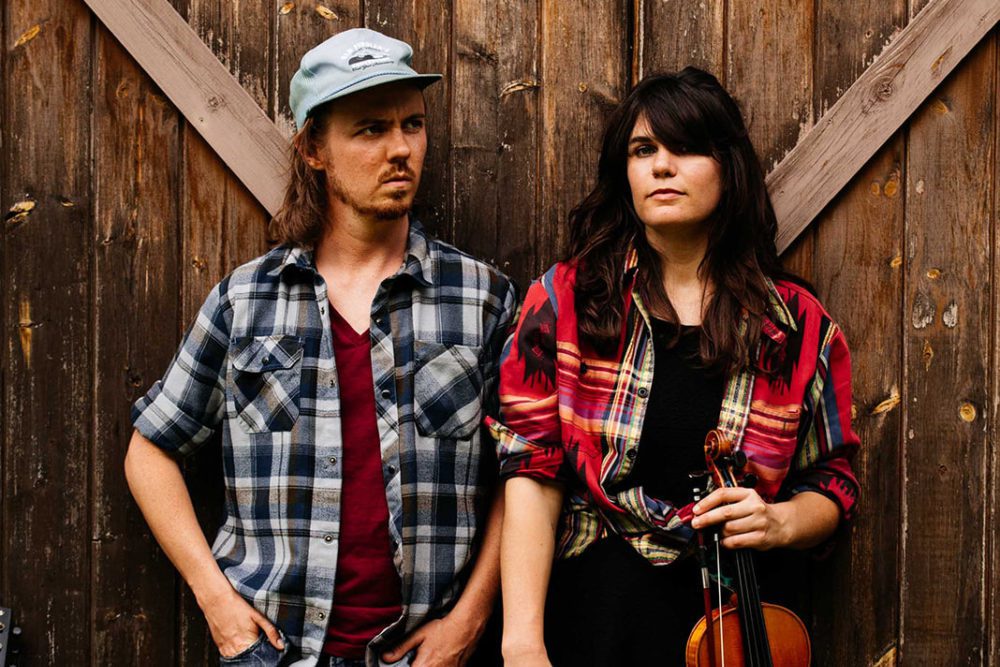
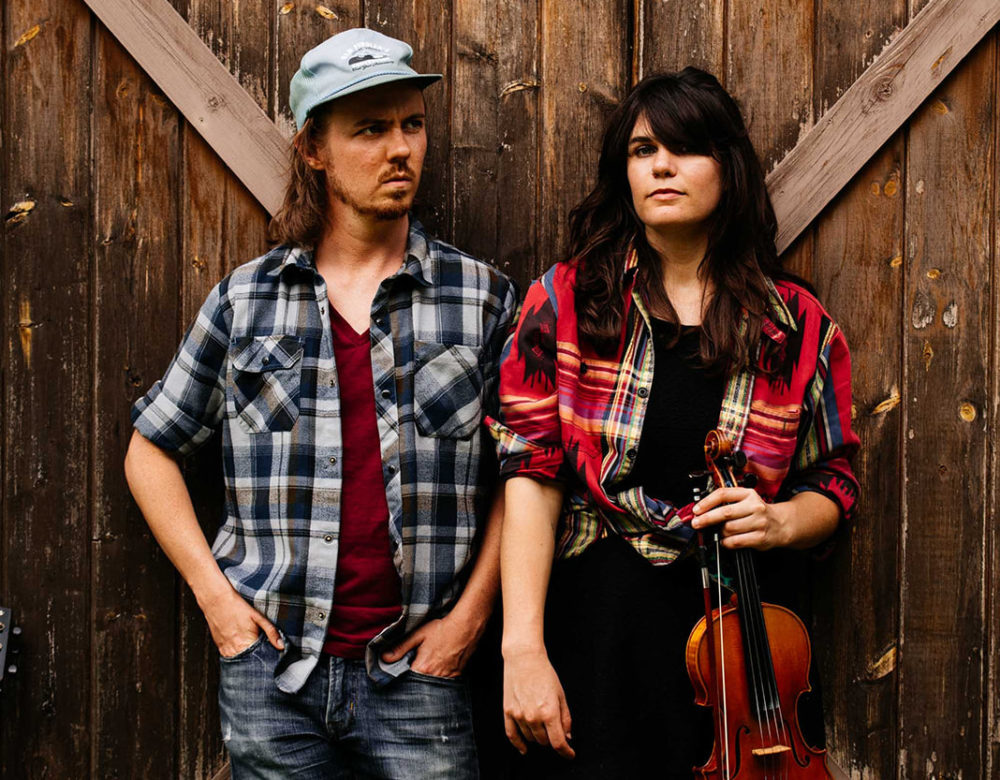
Amy Alvey and Mark Kilianski are preserving the ethos of old Americana music, not only through their band Golden Shoals’ songs but also through their performance style. With Alvey on fiddle and guitar and Kilianski on guitar and banjo, they’ve toured on foot with backpacks, lived in vehicles, and floated between Asheville, Boston, California, and New Jersey over the past seven years. Their third album, Golden Shoals, memorializes this time on the road, embodying the roots style the band has mastered while also putting a twist on it.

“Mark and I have been pretty much living on the road since 2016, so a lot of these songs — I mean, most of them — were written as we were traveling just because that was our way of life,” says Alvey. The result is a combination of love songs and meditations on larger issues like race, class, and gender.

In the single “Love From Across the Border,” Kilianski reflects on toxic masculinity and how it’s affected his relationships: “It took me far too long before I finally realized/I didn’t know how to compromise/I was so high/I didn’t know that I was hurting you/I didn’t know that I was hurting myself too.”

Alvey examines her own race and class privilege in “Sittin’ Pretty,” which contrasts her own relatively carefree life with vignettes of the lives of American families who are struggling to make ends meet and those embroiled in tragedies like school shootings. The lyrics grow increasingly grave as her voice remains happy-go-lucky against lackadaisical guitar and fiddle melodies, creating an appropriately eerie, uneasy feeling.

“Reading and hearing about all the stuff that was going on in the news was pretty terrible, and meanwhile, Mark and I were feeling sort of disconnected from it all because we were living a life where we were just kind of going to the next gig and figuring out where we were going to stay afterwards; we were doing our jobs and getting form point A to point B,” says Alvey. “At this point, I’m now making much more of a pointed effort with myself to just be more involved, and just because it’s not affecting me doesn’t mean there aren’t things I can do, whether it’s educating myself, donating to organizations, listening, and following activists of color.”

The album’s bold ventures into heated topics is its biggest strength, combined with its lyrical depth as it explores spirituality, politics, and everyday life. In “Brood of Hate,” Kilianski sings of an unnamed “monster in the White House” in a haunting tune accompanied by mesmerizing banjo, observing that “everyone wants to be Jesus Christ, but nobody wants to die.” In “Going Down, Down, Down,” he declares that “the soul is not a blank check so much as a sack of cash buried underground.”

The album also provides new perspectives on romantic relationships in tracks like the wistful breakup song “New Friend” and the ballad “I’ll Fall in Love Again,” which Alvey refers to as a twist on the Hank Williams “sad country boy song” template, reimagining the disappointment of being “friend zoned” by celebrating the friendship it entails. “[Kilianski] wrote it at first and then he changed the meaning of it, because I think this is another part of this toxic masculinity culture, where being friend-zoned is seen as this shitty thing, like ‘I can’t believe she friend-zoned you.’ He changed the ending to celebrate that [even if] you can’t be lovers with them, a friendship is an equally valuable connection.”

Alvey and Kilianski met in 2008, when both were students at the Berklee College of Music. Previously trained in classic violin, Alvey was excited to learn to play bluegrass and folk songs, and Kilianski similarly learned this new style after playing rock and jazz guitar. They started playing together locally, then decided to embark on their first tour while en route to Arkansas to visit a friend. They’ve also partaken in an annual tradition of hiking around Massachusetts with instruments and tents, playing at community concerts.

They originally called the band “Hoot and Holler,” a nod to a phrase used in square-dance calling, and to “hootenannies,” old country parties where people would pass a guitar around and sing. But a few years ago, they changed their name to avoid confusion with another Hoot and Holler. It also reflects their changing sound, evident on the new album, with drums, electric guitar, and more thorough production than their past work. And in addition to the usual stripped-down duo songs, they recruited musician Landon George to play upright bass and drums.

Still, the new album retains the band’s traditional Appalachian mountain music influence; the chorus of the first track, “Everybody’s Singing,” is a composite of traditional bluegrass and classic country lyrics, as well as an instantly recognizable line from Old Crow Medicine Show’s “Wagon Wheel.” Not only does it provide insight into Golden Shoals’ influences, it embraces unabashed, genre-spanning love for all kinds of music – especially the soul-affirming sing-along.

“We’re always just trying to write better songs, make better music, always trying to stay true to ourselves – whatever that means,” says Alvey. “Just serving the songs as we hear them to help share our authentic voices.”

Follow Golden Shoals on Facebook for ongoing updates.

PREMIERE: wolfi Confronts His Toxic Ego With “Ugly” Video

Photo Credit : artbyhybrid

We all have that moment of clarity when we realize our habits or intentions are nothing short of toxic. One such moment inspired indie singer-songwriter Emerson Vernon, who releases music as wolfi, to write his latest song, “Ugly.” “I really wish I wasn’t such a liar,” he screams, grappling with the harsh realization that his ego may have been his biggest downfall. The video, shot by Herb Maximo, soaks the lyrics in beautiful and serene countryside vistas, certainly a startling contrast to wolfi’s brutal confessions.

The stand-alone single was initially inspired by “an artist I really respected [who] spoke on my craft to be corny,” Vernon tells Audiofemme. “I really admired this artist and when I heard he didn’t respect what I was trying to do it made me really question my ego.”

Vernon took some time to reflect and consider his many relationships, particularly as a role model for his younger siblings. It soon became clear he was leading “a rather unhealthy lifestyle with all the pressure I put on myself,” he admits. “I can be very selfish at times – like anyone in their 20s I guess. I was keeping things from [others] because I thought lying was a form of protection, but that’s not the example I want to present for my little brother.”

Among these many scenarios, he began to feel immensely ugly for what he’d done, even if well-intentioned. “I haven’t changed a bit/I’m still a narcissist/Confessing all the things I couldn’t ever admit,” he sings. He layers his smoke-charred vocal over his words, somehow giving them even more gravitas. “No one would bat an eye/Watching me fail to try/But no one watches me hurt in private.”


Months later, he still isn’t quite sure what he has learned, exactly, but he knows he is a work in progress. “I just gotta do better and sort out my priorities, and I think I’m getting closer to that every day,” he says. “I just really have to remind myself that I’m not shit sometimes. It’s important for me to check myself when I’m feeling up because if I let my ego consume me things always go bad. I don’t think I’m a bad person. I’m just growing up like anyone else, but especially with the career path I’ve chosen, I’ve learned I need to stay self-aware and mentally, physically, and spiritually healthy.”

Originally from Indianapolis, Vernon grew up in the church, and lines like “I know that God will still tell me He loves me” call to his upbringing and ongoing faith. “I don’t consider myself to be overly religious, but I do keep a very personal relationship with my angels,” he explains. “They’re always there for me when I need them. Whenever I’m at a low point, I just meditate and ask questions until I’m presented with some kind of answer. I guess you could call that prayer. I don’t truly know if God is real or not, but I choose to believe in a God so I don’t feel so alone.”

With the help of Maximo, a long-time friend since his Full Sail University studies, the video for “Ugly” evokes the heft of Green Day’s “Wake Me Up When September Ends,” a crucial musical touchstone in Vernon’s childhood. “I really just wanted to be outdoors for the video,” he says, noting it was filmed at The Compound in Palm Bay. “It was such a great day; it was just me and my best friends doing what we loved while waiting for the sun to set for the perfect shot. I think Herb executed [this] perfectly.”

Earlier this year, Vernon released two full-length albums, White and Black, dual collections handling contrasting emotional beats. What is most evident through his catalog so far is the growing strength and force of his songwriting. In many ways, he owes it all to real-world experiences and observations. “I’m living on my own now, so a lot of the things I’m writing about are real world problems. I started writing songs because I was always heartbroken over girls,” he explains, “but now I’m writing about things that are bigger than me. I really don’t have a personal life with how much I work these days, and the things that really shake me are the situations the world and my loved ones are put in. Writing about anything else just feels… inauthentic, I guess.”

“Ugly” arrives as a forward-looking marker in his life. wolfi is still very much in the thick of personal transformation, but it can only go up from here.

Follow wolfi on Instagram, Twitter, and Facebook for ongoing updates.

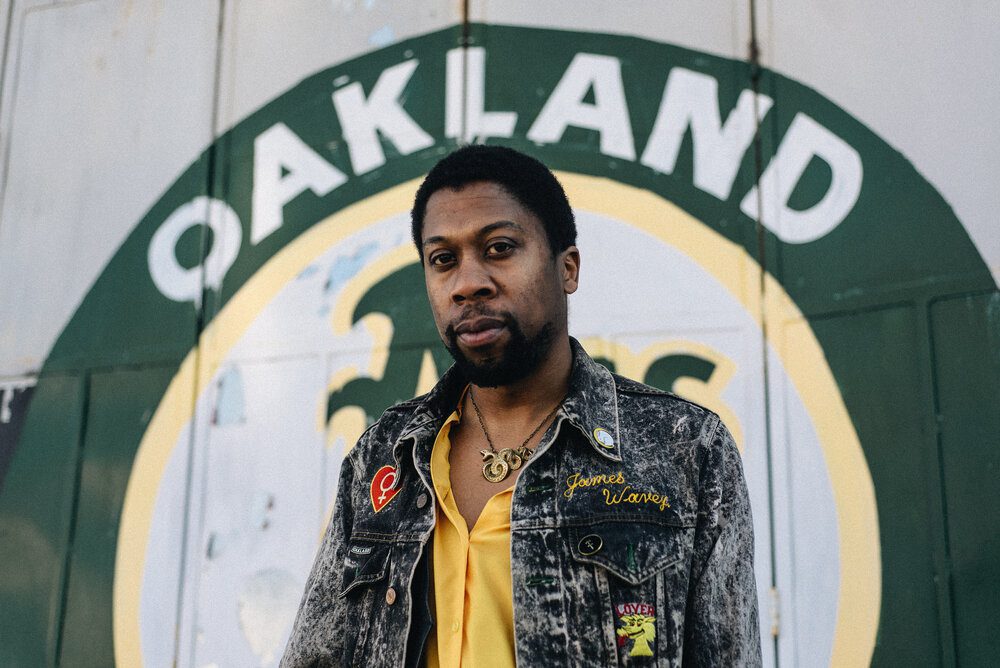
Alleyes Manifest Artfully Melds Past and Present on James Wavey LPs

https://faultradio.com/editorials/2020/7/26/album-review-alleyes-manifest-otoo

https://faultradio.com/editorials/2020/7/26/album-review-alleyes-manifest-otoo

Babe, the new album by James Wavey/Alleyes Manifest, is a worn patchwork quilt come to life in ten warm, layered tracks.

“Love songs for listeners” is how Oakland’s Michael Bridgmon (Alleyes is his producer name, while James Wavey is his performance persona) describes it on Bandcamp. This is interesting phrasing; does this mean these songs are for music lovers — the “listeners” who comb through errant playlists to find their next obsession — or are these songs for the listeners of others, those precious few who always show up, sit down, and notice?

There is a lot to notice on this album. It’s a quick listen, but there are so many threads of influences and textures that it feels more substantial. There are two interludes — “Sunrise” and “Sunset” — both of which sound like hearing a radio blasting from an adjacent room, complete with echoes and crackles. I wish they were a bit longer and more connected to the songs they separate, as they do interrupt the flow of the LP a bit, but it’s always been my personal preference that album transitions sound seamless, interlude or not.

I assumed the audio on the two interludes were taken from samples, but it’s just as likely they were carefully designed pastiche tracks. Bridgmon’s main influences seem to be ’60s and ’70s soul and rock. The album cover certainly looks straight out of the ’60s — it literally says “stereo” in minute text below Bridgmon’s embroidered white collar — but some of the riffs hit a little harder and crunchier than those of the ’60s, like the excellent guitar that forms the backbone of “Cold Sweats.” The song starts with a very old-school soul lament (“cold sweats/since you’ve been away”) but soon transitions to a slow rap verse that manages to pull the sound out of last century with the power of Bridgmon’s vocal inflections. With a different beat, the verse could have been the moodiest track on a modern, rap-only album. It’s a good, well-balanced mix, and the LP sounds like a true conflation of genres. Bridgmon is by no means attempting to hide his commitment to soul and psychedelic rock here, but what works is that he also isn’t attempting to recreate it to the point that it becomes boring tunnel-vision. Even the simple-but-effective “Codependent” still has enough subtle effects to make it sound modern.

Opener “Anything Goes” is another great example of the balance Bridgmon achieves on Babe, its smooth raps stitched together with some truly sweet, almost reverent lyrics about his person of interest: “bein’ around you so spiritual/feel like I’m floatin’ in the Sistine Chapel on a cloud.” “Shoot Your Shot (Ghost)” is another starry-eyed track, albeit one where the various eras of influence do feel a bit disjointed, the raps slightly less seamless than those on some of the other tracks, especially during the repetitive chorus. However, it still works on the basis of the lyrics alone (“flowers won’t do/hope that one day we’ll tie the knot together/cold? Here’s my sweater”), which create a dreamy, lived-in atmosphere even when love may be the last thing on the listener’s mind.

The album closes out on the high-energy “Pillow Talk” and “Smooth Tiger,” the former of which feels almost like another interlude at a quick minute and a half. “Smooth Tiger” has a funky vibe and would make a killer track for a title sequence in a pulp film. Bridgmon is having fun here — as I believe he is the whole time — but the additional theatricality is really what was needed to end the album with enough punch to make you ready for another go round.

Bridgmon has long straddled multiple genres. Recently, Bridgmon re-released his 2018 James Wavey LP, Otoño, on vinyl. Even two years after the fact, this seems a relevant move for three reasons; firstly, the timeless quality of the work welcomes new chances at old formats. Secondly, vinyl has dragged itself almost fully from the trenches in the last year, making even 7” single releases by major pop artists such as Five Seconds of Summer and Taylor Swift seem necessary rather than niche. And finally, some of the themes of Onoño are still distressingly relevant, as can be seen in “Soul Music,” which is more about police brutality than anything, thanks to this central line: “know my pigment’s the future/keep your revolution/people wonder why we get high/argue that ain’t the solution/dealin’ with PTSD cause we saw cops shootin’.” In fact, many aspects of the album touch on things that have come up in the current national public discourse on race: personal responsibility; relationships with sexuality and religion (on “Christian Guilt”); the singer’s up/down relationship with self-worth and black masculinity.

The latter assertion comes from the newly released video for Otoño track “Photogenic,” where Bridgmon hams it up with his frequent collaborator Bryson Wallace in a black and white shoot. Both men occupy the limited-aspect ratio space very differently. Wallace, while filmed in black and white, maintains a clear connection with the present due to his choices in dress and mannerism, and even his style of rapping, which takes up the first half of the song. When Wavey comes in, he’s in full Jimi Hendrix regalia, at one point literally lying on the floor on a pile of women’s intimates, staring directly at the camera as he absently strums an electric guitar. Despite differences in aesthetic, the two friends tie it all together at the end, clasping hands and laughing while wearing oversized t-shirts airbrushed with each other’s faces. It’s a celebration of friendship, yes, but also one of claiming space and declaring self-worth, even if you don’t fully believe it — the embodiment of a fake it till you make it ethos, if you will.

Both Babe and Otoño manage many feats, their greatest perhaps that they allow their creator to wend his way through his many personas with ease, donning and shedding different names as though he’s making his way through a coat rack at the thrift store. But it’s not coming from some inability to commit; there is clearly something about these personas, especially James Wavey and his flamboyant romanticism, that put Bridgmon at ease, at least enough for him to rake through the threads of his life and find what needs to be drawn to the surface. Sometimes distance is what’s needed to create good art — and sometimes that distance means allowing yourself to be flamboyant and romantic, especially when the greater world frequently insists that the only way to make it through is to be the opposite.

Follow Alleyes Manifest on Facebook for ongoing updates.

Girls Rock Santa Barbara Interviews Shirley Manson of Garbage

This year, Girls Rock Santa Barbara has developed The Summer of Love Internship, its first ever paid internship for teen girls and gender-expansive youth, which allows the organization to continue to provide a safe, collaborative environment in which to encourage lifelong skills like positive peer bonding and self-confident resilience. The internship, which lasts six weeks and pays each intern $500, offers six exciting and arts-focused disciplines: Record Label, Recording Artist, Social Media, Journalism, Photography, and Podcasting. Audiofemme is pleased to publish the following article, written by Julia Duva and Emma Hogarth, two interns from the Journalism program.

Photo Credit: Joseph Cultice

The second she joined our Zoom meeting, Shirley Manson (the bold and charismatic lead singer of Garbage) was all smiles and laughs. After having done a few interviews with a plethora of different artists for the Girls Rock Santa Barbara Internship, we approached this last one with confidence and ease, but Manson’s energy far surpassed what we had experienced up until that point. She ignored subtle attempts to start the interview off slowly and instead pushed us to genuinely answer her questions, likely a habit she’s picked up as the host of The Jump podcast, in which she interviews musicians about their career-defining songs. Its second season premieres this week, and features interviews with George Clinton, Liz Phair, Angel Olsen, Matt Berninger, and more.

Having been a musician for almost forty years, Shirley Manson has been asked practically everything about her career. However, in the nineties, when Garbage was at its peak popularity, Manson didn’t get to spend much time talking about one of the only passions of hers that might have surpassed music: feminism. So after the introductions and jokes about our current situation, we spent our time discussing sexism in the music industry, feminism in the nineties, her relationship with her bandmates, and changes brought on by the 21st century.

GRSB: When did you first consider yourself a feminist? Was it in the beginning of your career or was it further down the line?

SM: I discovered I was a feminist when I was really young, and I watched my father give my mother housekeeping money, and I was offended by that. My mom was the queen of our household – she basically did every single thing except go out and do a traditional job like my dad did, and that seemed like an imbalance to me and it pissed me off. I think there I realized, “Wow, the playing field is not what I hoped and thought it was.” A feminist was born that day. I think my indignance has developed over the course of a very long career at this point. I am old and I am still outraged!

GRSB: Other outspoken artists of the alternative era, like Alanis Morissette and Liz Phair, have been very open about the struggles of being female in the music industry in the 90s. What was your experience?

SM: I have managed to circumvent a lot of what I consider to be a system that is not necessarily rigged in women’s favor. I’ve had a long career because I am tough, and I have never felt that I am lesser than a dude, so when I am faced with sexism or misogyny, I am well-equipped to deal with it. I have had people ask if I was a prostitute. I was told that I work with three geniuses and I was the face of the “Garbage clock.” The list is endless. That is beginning to change, and I thank your generation for the changes that we are about to see. My generation was pretty quiet. You lot are like ‘Fuck you, you don’t get to touch me.’ In context with what we are seeing in this Civil Rights movement, I was dismayed to see that white feminism had left behind our Black, Brown and Indigenous sisters. The white feminist movement has its hands pretty dirty, and I want to see that change. That’s something I feel really passionate about. I see these changes occur in your generation, so that gives me great hope and makes me feel excited.

GRSB: Would you say that the music industry is becoming less aggressive, and an easier place for women to find a career?

SM: No. It’s a really tough industry, and particularly hard on women. We’ve got centuries of mindset to unpack, so we are all – men, women, and anyone in between the two binary pools – part of a system that does not benefit women, Indigenous peoples, Black peoples, gay peoples, trans peoples. It is changing, but we have got a long, long, long, road ahead of us all, unfortunately.

GRSB: It’s sad to think about all my favorite women artists, and how they maybe going through hardships in the industry due to their gender. One of my favorite artists nowadays is Lauren Mayberry from Chvrches. Is it inspiring to see someone like her carry feminism into the next generation?

SM: Don’t feel sad, get outraged. It’s something that can be tackled. The system wants you to be sad and sit back. Instead, we have to all push. Sadness is a very unhelpful emotion. I never want any young women, or any young people to feel dismay. There is so much out there for you all – this is an opportunity. So to see someone like Lauren Mayberry – who grew up in my country [Scotland], and has been so generous to me in the press – is so touching and I’m so proud of her. I love to see how she touches younger generations. It’s wonderful seeing Lauren setting peoples’ imaginations alight.

GRSB: Along with being an outspoken feminist, and a leader of the feminist movement, you are also often seen as an LGBTQIA+ icon by the queer community. What does it mean to you to garner such support from them?

SM: Our relationship with the LGBTQIA+ community has been enormously valuable to us. This binary system that we have been conditioned into believing is the only way forward for human beings has been incredibly restrictive, and as someone who doesn’t like being restricted – I don’t like rules, I don’t like being told what to do – I always saw that community as really brave, breaking all the boundaries and not allowing themselves to be caught in cages. I just fell in love with that freedom, that ideology of “I will be who I want to be and nobody is gonna tell me who I’m gonna love and how I think.” So I think I have just always felt at home in that community, and still do.

GRSB: Even though your band was sort of outspoken about these issues and in support of you, what was it like being a woman in an all male band? It seems like it could be a little alienating…

SM: (Laughs) As I flop to the floor and burst into tears, once again, I’ve never been asked that question. It has been fraught with some difficulties. I’ve continued to experience some of these difficulties just by the fact I work almost exclusively with men, and I am usually the only [woman] in the room. That can be very tough, very frustrating and it’s just something I’ve learned to live with. I certainly hold my own defenses, but it’s exhausting sometimes. But again, I knew what I was stepping into – the music industry is not for the faint of heart.

GRSB: You are currently in the studio putting the finishing touches on a new Garbage record. Before we go, can you tell us anything about the new record that we are dying to hear?

SM: It’s really good (laughs). Very aggressive, but it’s also much poppier than our last record [Strange Little Birds]. Our last record was kind of esoteric in a weird way and very ambiguous in many ways. This is not ambiguous at all. This is absolutely straight down the line, in your face, and I’m proud of it. I’m one of very few women in their 50s who manages to put out records with a band – I mean, you could count us on our digits at this point – so I want to impress that on every woman I ever speak to, every young woman I speak to: don’t get caught up in the bullshit about how you look. It’s what you do and how you conduct yourself in your life that’s important. Do some good work and when you’re in your 50s, still get to go on stage and have a fantastic life.

And just like that Shirley Manson, the spitfire feminist, vocalist, writer, and activist wishes us goodbye and leaves the call, ending the interview with one last bit of sharp-witted advice: “Stay safe and wear your fucking masks.”

Follow Garbage on Facebook for ongoing updates.

Jess Cornelius Reconciles the Life She’d Planned with a New Reality on Distance

Photo Credit: Rachael Pony Cassells

When Jess Cornelius upended her former musical project Teeth & Tongue and moved from Melbourne to Los Angeles, she had decided her life was going to be a certain way – but, as it so often does, life had other plans. Though Teeth & Tongue began as a solo project, it had expanded to include other members in a way that complicated not only touring outside of Australia, but the songwriting process as well. So Cornelius started writing stripped down acoustic songs, releasing a succinct, pretty EP in 2017 called Nothing is Lost that allowed her to tour the States in support of Australian folk singer Paul Kelly (and helped hasten the process of getting an artist visa). “I moved to the states when I was like 36, and was like, I’m clearly not gonna be settling down anytime soon,” she says. “I wanted to be touring a lot so I made these decisions, but there was definitely a lot of questioning, like, [knowing] I probably wouldn’t end up having a family because of the decisions that I’ve made, and I was happy with that.”

In LA, Cornelius haunted clubs like Zebulon and The Bootleg, connecting with other musicians easily but continuing to write songs rooted in a feeling of disconnect and indifference – from recounting a one night stand to calling an old flame long distance, songs that measured her California dreamin’ against the reality of her day to day. Then, her lovelife took a turn when she became pregnant three months into a new relationship, rearranged her entire life to accommodate the baby, and suffered a miscarriage, writing the lyrics “My body has a memory and it won’t forget/But I was my own woman once/And I was sure I was enough,” in the aftermath. “The song ‘Body Memory’  – I say it’s about a miscarriage but it’s not really about that so much as what happened afterwards and how my attitude toward everything changed, and myself and my relationship and what I wanted for the future,” she says. “I came here to do all this touring and to be a musician, not to be a mother and a housewife. In my fears, I was not gonna be able to have this creative life. I think a huge part of it was this idea that I would be so dependent on a man, like alright, this is a really vulnerable place to be, just by the nature of having a kid with someone. But we’d decided to have it and it was very exciting but also very scary, and then ten weeks in, it was all over.”

In the months that followed, Cornelius put the pieces together of what would become her first full-length LP under her own name. Distance, released at the end of July, brilliantly collects the experiences Cornelius had as she moved halfway around the world, searched for both romantic and creative fulfillment in the City of Angels, pondered getting older and mused on her ability to let it all go, and the dramatic shift in her perspective as she reconsidered motherhood. The album also collects a brilliant array of Los Angeles talent that Cornelius assembled both organically and via her label Loantaka Records, including Mary Lattimore, who plays harp on “Born Again,” drummers Stella Mozgawa (of Warpaint), Mary Lattimore, Jesse Quebbeman-Turley (of Hand Habits), and Robbie Sinclair, guest bassists Emily Elhaj and Stephanie Drootin (who have played with Angel Olsen and Bright Eyes respectively), an array of back up vocalists Cornelius calls friends, and even a whistler (Molly Lewis).

“It took such a long time for me when I moved to Melbourne [from New Zealand] to find my people and [other] musicians and bands and venues… what I realized was that with music, community is everything, and I took that lesson to LA,” Cornelius explains. “I really had such great luck here – I went to a lot of shows and put together a live band very quickly. I found the opposite of what I guess people expect – people were really open to meeting up, to collaborating, to helping with whatever, and it was just really incredible how nice it all kind of came together and the friendships that I made, and the musical relationships that I made, and making the record was part of that.”

Recorded and co-produced with Tony Buchen, Distance revisits a few of the tracks from Nothing is Lost – “Love And Low Self Esteem” and “Banging My Head” (which was included on the vinyl version of the EP). The difference is night and day – Cornelius seems vulnerable singing “It’s when I’m feeling tiny as an eyelash/That’s when I want to be all you need” over sparse instrumentation, but a wash of Mozgawa’s drums and girl-group doo-wops build “Love and Low Self Esteem” out enough that she can snarl that line instead, just a little bit. “It was interesting revisiting that level of angst – they’re both really angsty songs! I think that the other songs on Distance don’t really have that kind of emotion in them, so it did feel like I had kind of moved on a little bit from that. I still could identify with those feelings though,” Cornelius says. “I was really curious to play them with a band because on the EP there was really no other instrumentation apart from guitar, and that whole EP really just got a very soft release, so I just felt like it kind of needed to have a second go in a slightly different format.”

Cornelius became pregnant again while putting the finishing touches on Distance and her baby bump is visibly showing in videos put out ahead of the album’s release. That’s somewhat jarring in “Kitchen Floor,” given the singer’s nonchalant lyrics about leaving a lover behind after a one night stand as easily as she makes tea and toast. But there’s a whole other level of dissonance as Cornelius, clad in a bright blue sweatsuit, choreographs dance moves in the desert while candidly revisiting her experience with miscarriage in “Body Memory.” And yet, these videos, along with “No Difference,” feel refreshing, liberated even, just by the simple fact of Cornelius daring to perform while pregnant. There hasn’t been much of that since M.I.A.’s show-stopping 2009 Grammy performance.

“I definitely didn’t think I’ve be making videos where I’m pregnant in a whole bunch of them. Making the videos was a great process in itself, because it was a new thing for me to do and my partner filmed them and he hadn’t done anything like that either,” Cornelius admits. “I did feel really good about the fact that I was pregnant. There was some trepidation every time that I put out one of those videos – I was just like, is this a terrible idea? But mostly I felt fine about it. Pregnancy made me less precious about how I looked. I’m thinking back to when I was in my early twenties and how neurotic and insecure I was about not wanting to look a certain way on camera, and the videos that I made and trying to control my image in that way and being really worried about how I looked and what people thought. And then in all these videos where I’m like, super pregnant, I could see myself having changed in that way and that was really nice.”

Cornelius gave birth to her daughter in the midst of a global pandemic, shortly before Distance came out; though she’d planned to tour with the baby in tow when she was three or four months old – and had researched it extensively, talking to other women who had done it – COVID changed her plans once again. “I was really set on making that happen. But now of course everything’s different, which is in a way a relief – it’s gonna be nice to focus on her a little bit more. And then eventually I’ll start writing again, hopefully sooner than later, and then eventually they’ll be another record,” she says, adding that she and her partner are even toying with the idea of creating a psychedelic children’s show. “I think having a kid will open up my creative pathways in a way because you’re rediscovering the world, and you get to play a lot more. So we’re really looking forward to that aspect of it. Every single album pretty much, I’m like I’m not gonna do another record, it’s all too much. And then you realize you’ve written another record.”

Follow Jess Cornelius on Facebook for ongoing updates.

Abir Melds Moroccan and American Cultures on ‘Heat’ EP

Moroccan-American singer Abir challenges common notions of what it means to be a woman of Arab descent, and her latest EP Heat embodies this defiance. The EP, a followup to 2018’s Mint, was born from Abir’s simultaneous interest in mainstream pop, R&B, and hip-hop as well as traditional Moroccan music, which she’d listened to growing up and later attending weddings and other events. She and producer Mick Schultz (Rihanna, Kelly Clarkson) used instruments like the bendir (a wooden-framed drum) and the oud (a pear-shaped, guitar-like string instrument) to create a sound that is new but classic.

In preparation for Heat, Abir took the initiative to learn more about music from Morocco and other parts of the Middle East; she cites Egyptian singer Umm Kulthum as one major inspiration behind the EP. “There was a lot of research and looking into different instruments — the Arab scale, the melodies, and looking at how I can bridge these two worlds,” she says. “It’s super thrilling to make them coexist.”

This merging of cultures is audible on every track on Heat, a title aiming to evoke the notion of combustion and “the beauty behind disasters,” she explains. The infectious, rhythmic “Pray for Me” combines familiar pop beats with traditional Moroccan instrumentals and dramatic harmonies. In “Searching,” mellow verses and dreamy echoes tell a relatable story of looking for light amid darkness. In “Inferno,” the first single off the EP, Abir’s voice soars and dips in a catchy chorus.

Abir’s music mirrors her own refusal to adhere to social conventions or be placed within a box based on her background. “I am an Arab Muslim woman, and I can also walk out here in a crop top and show up on stage,” she says. “I can still be Muslim, be Arab, be Moroccan, and live my life the way I want. The theme [of the EP] is empowerment and taking back that narrative. It’s important to share all perspectives so we don’t get narrow-minded; [there is no] one story of the Arab woman.”

Abir doesn’t always challenge stereotypes by speaking about them directly; she also does so just by singing about the complexities of her own life. “Sometimes I’m loud, but also sometimes, I put the identity to the back and just speak as a human,” she says. “I think it’s important to remember that when you speak about representation of women, at the end of the day, I’m just human and I have the same feelings as anyone could have. I have heartbreak. I feel like I want to be single. I feel the same shit that women all over the world have the ability to feel. I share my perspective, and I hope that it inspires other Arab women to share theirs so we have way more perspectives on what an Arab woman is outside of this shit you see on TV of Arab women being oppressed or Arab women being terrorists.”

The NYC-based artist also aims to make people rethink their assumptions about women in general. “Inferno,” for instance, was written with the intention of reversing certain gendered relationship scripts. In it, Abir sings to a suitor about not wanting to get into a relationship: “Sorry I don’t text back or answer your calls/I can’t be who you want, no, I don’t wanna play the part.”

“Women are always on the losing end, always seeming to be the ones that are heartbroken, or the guy doesn’t want to be with you because you want to be in a relationship but the guy’s not into it,” she says. “That’s not necessarily the truth. We’re in 2020. Women are heartbreakers. At least the people I’m around, my friends and family, we’re strong women who aren’t waiting on a guy to say if they’re ready for a relationship. We control whether a relationship gets serious or not. In this case, it was kind of that idea that it’s just not for me, playing this role of being a girlfriend at this moment.”

The video for the single was aimed at portraying powerful women, particularly Muslim women, as well as quite simply making “a fucking clusterfuck of shit,” as she puts it. Filmed in the Moroccan desert, the plot is supposed to be ambiguous so that people can read their own story into it. The one thing that was very intentional? “You just see women in an empowering light, and the men are an afterthought,” she says. It was also important to her that all the people she worked with on the video were of Arab descent, she adds.

She and Schultz are already working on her next project together, which continues her mission of melding Arab and American sounds. “We’ve come such a long way, and it’s a journey I’m so here for,” she says. “I want to be on this journey forever. We’re only going to keep learning more and more.”

Follow Abir on Facebook and Instagram for ongoing updates.

Bassist Kathy Valentine Discusses The Go-Go’s Documentary, Writing Her Memoir, and “Club Zero”

Ginger Canzoneri couldn’t believe it. The band she managed, the Go-Go’s, was one of the hottest groups in Los Angeles, regularly drawing adoring, sellout crowds at top clubs. But despite the acclaim, they couldn’t seem to land a record deal. Even more flabbergasting was the reason why. “I had a file folder of rejection letters from record labels in Los Angeles [saying] ‘Thanks, but all-girl bands just don’t sell records.’” Canzoneri says, still sounding mystified, in The Go-Go’s, a new documentary about the band that recently debuted on Showtime. The quality of the music, enthusiastic audiences, and media raves didn’t matter. It’s a band of girls? Nope!

But as we know, the Go-Go’s and Canzoneri ended up having the last laugh. IRS Records finally signed the group, and their debut album, Beauty and the Beat (1981) became the first album by an all-female band, who wrote their own songs and played their own instruments, to top the Billboard charts, with classic singles “We Got the Beat” and “Our Lips Are Sealed” also rocking the Top 40.

And for most people, that’s where the band’s story starts: the moment they crashed into the mainstream and became “America’s pop sweethearts” (a label that still makes them cringe). But The Go-Go’s, directed by Alison Ellwood (History of the Eagles; Magic Trip: Ken Kesey’s Search for a Kool Place), opens up that story, finally putting the band’s history, and all their accomplishments, in their proper context. It’s a film that re-establishes the band’s importance, and their influence; a film that says, yes, the Go-Go’s mattered.

The band’s early period is arguably the most exciting in the film. The Go-Go’s started out as a part of the scene that centered around legendary LA club the Masque in the late ’70s, hanging out with the likes of the Germs and X. “I thought it was common knowledge that the Go-Go’s came from the streets of LA, the LA punk rock scene,” says Kathy Valentine, the band’s bassist, speaking on the phone during a whirlwind day doing press for the documentary. “And I was a little floored when Alison said, ‘No, this is a narrative that I don’t think has been told.’ And then I started realizing – for so many people, their only knowledge of the Go-Go’s is videos, MTV appearances, and pop songs on the radio.”

“There never would have been the Go-Go’s without the punk rock scene in Los Angeles,” Jane Wiedlin (rhythm guitar, vocals), says in the film. There’s a riveting clip of the group’s first lineup playing a St. Patrick’s Day gig, vocalist Belinda Carlisle’s black hair, black attire, and fierce glare totally at odds with her sunny, California Girl persona of just a few years later. Torn t-shirts and ripped fishnets were de rigueur; even a trash bag could be a fashion accessory. “The punk scene gave me an outlet to act out and be the badass that I thought I was,” Carlisle observes in the film.

“We saw no reason why we couldn’t be just as good as the boys, or men,” she goes on to say. “We weren’t going to be anything but a great band.” The band’s growing ambition led to original drummer Elissa Bello, who’d refused to quit her job to become a full-time Go-Go, being replaced by Gina Schock (Bello admits her dedication to the band wasn’t as strong as the rest of the group; “I stuck my toe in the water, but I never dove in all the way”).

And then one day, lead guitarist/vocalist Charlotte Caffey brought in a new song: “We Got the Beat.” Despite its obvious strengths, she admits to be “terrified” to bring it to the group because it was so obviously a pop song; “I thought, ‘These guys are going to throw me out of this band.’” But the group recognized its merits, and it indicated a shift in musical direction. Then Wiedlin brought in “Our Lips Are Sealed,” a song she’d written based on a letter from her erstwhile boyfriend, Terry Hall of the Specials, that was another foray into pop. It was too much for original bassist Margo Olavarria, who felt the group was moving away from their raw punk roots, with the motivation now being, she says, “Less about art and more about money.”

But Kathy Valentine, who would end up replacing Olaverria, recognized that the ultimate power of a band rests in the quality of their songs, and that the Go-Go’s songs were built to last. “The thing is, a well-crafted song is a well-crafted song,” she points out. “You could slow down a Buzzcocks song, or you could take ‘God Save the Queen’ — the elements of a good song are there, whether it’s played fast or snarled or pounding 16th notes. So the Go-Go’s, the bones of our songs were well-crafted, hooky, with smart lyrics.”

She credits Richard Gottehrer, who produced their first two albums, with giving their records their trademark sound. “Richard said, ‘Let’s give these melodies some room. Let’s slow it down a little bit.’ That was the big change. And now, when our music gets played, it doesn’t sound dated. And I’m so grateful that Richard knew that this needed to be a classic sounding band that didn’t adhere to some kind of trend of what was going on in studios in the ’80s. And a lot of bands do sound super dated. And I feel to this day, when I hear [our] music, I can’t believe how well it stands up.”

The group was not so happy with how others wanted to market them, once fame arrived. Their discomfort with their first Rolling Stone cover shoot clearly still bothers them nearly 40 years later. They reluctantly agreed to don men’s underwear for the shoot, but were mortified by the juvenile headline slapped on the cover: “Go-Go’s Put Out.”

“It was actually very weird to be sexualized,” says Valentine. “I know that guys had crushes on us and stuff, but it’s not like we were out there  dressing suggestively and gyrating around and grabbing our crotches. We were just kind of hopping around. The whole weird thing with the first Rolling Stone cover was, ‘Here they are in their underwear, and they’re still not sexy!’ Here they are without their clothes on, in their underwear, and it’s still the girl next door. Why isn’t it enough that we could just put our clothes on and smile and take a picture? Why is that not enough for this band? It’s enough for guys to go stand by a wall, or stand on a railroad track, or walk down the road, or all those photos you do with the guys. So that was annoying.” A later cover featured the band fully clothed, but with another questionable headline: “Women On Top.”

In addressing this and other controversial issues in the band’s career, The Go-Go’s allows the band to reclaim their own story on their own terms. They’d all felt that VH1’s Behind the Music episode on the band had been exploitative. “It had the format and structure of a reality TV show, where you form-fit the content that you shoot to fit the structure and narrative,” Valentine says. “Every time the show would go to a commercial it would say, ‘When we come back, more about Charlotte’s dance with the devil!’ I mean, it was so dramatic. It really focused on Charlotte’s drug addiction. They like to focus on the salacious parts.”

Conversely, while the band members openly discuss their substance abuse issues in the documentary, it’s not the focus. Bello and Olavarria get to tell their side of the story about their dismissals, and Canzoneri frankly admits her pain when she was sidelined after the group took on high-powered management. The publishing difficulties that led to the first break-up are also detailed.

Before work could even begin on the documentary, Ellwood had to get all the Go-Go’s together again. Valentine had been fired from the band in 2012, not rejoining until 2018. She used the time away from the group to write All I Ever Wanted: A Rock ‘n’ Roll Memoir, published earlier this year. “In writing that part of my story, I was really able to come to a mindset where I’m not gonna let ugliness taint and ruin for me what was one of the biggest joys of my life,” she says. “So when the band invited me back, and things healed in that regard, it was so much easier for me to let go and forgive and take my rightful place again, because of writing the book.”

Revisiting her past also allowed her to serve as an impromptu fact checker during her interview for The Go-Go’s. “There were lots of times they had to stop the camera, because I’m like, ‘No, no, you got that wrong,’ or ‘No, that date was this,’ or ‘No, this is what really happened.’ I knew my shit, because I had exhaustively documented and researched my facts!”

Though the film packs a lot into its 97-minute running time, it still doesn’t cover the entire story, skimming over the past 30 years since the 1990 reunion. But the ending is in the present day, showing the band at work on their first new single in nearly two decades, “Club Zero.” It’s an instantly catchy song made for the dance floor. But pay attention to the lyrics, and you’ll see this bright and optimistic song is also an anthem of empowerment, a deliberate choice on the part of the band members.

“When we decided to write a song for the documentary, it was a big deal, because we’ve never generated material while living in five different places, so it was challenging,” Valentine explains. “But the first thing we did, was we came up with topics that we felt we could write and sing about that we were comfortable with at this stage, as Go-Go’s in our 60s. And at the top of the list was what was going on with the patriarchy, and #MeToo and Times Up. There was just this strong feeling that, without being preachy, we wanted an anthem that really summed up the attitude of so many people, which is, we’re fed up. Things have to change. And that is the overriding sentiment; there’s large swaths of people that have just had it, whether it’s racial injustice or income inequality or women tired of being marginalized or LGBTQ [rights].” Valentine says the band went for a “Love Shack” vibe, except that Club Zero was a place where, as the lyrics say, zero fucks are given.

“I think the timing is kind of uncanny. It’s really grown on me, and I’ve started to feel like this could be really the right song at the right time,” Valentine says. “I don’t really dial up my expectations ever about anything anymore. I just kind of always expect the worst and hope for the best. But I don’t know, there’s something about ‘Club Zero’ that just feels really right for the time.”

While celebrating the Go-Go’s breakthrough of being the first all-female band to top the US album charts, the documentary also points out that no other all-female band has done so since, begging the question: why not? “I think about it a lot,” says Valentine, “because when I first became a musician, that was my longing, was to see all-female bands at the top. It’s just harder for women. If she gets to that point in her life when she starts a family and stuff, she’s not gonna go leave her kid at home. And unless you’re successful on a level of a Chrissie Hynde or whatever, it’s really hard. It’s a struggle for women in the professional realm all across the board.”

“That doesn’t mean there’s not really cool, awesome female bands out there. There’s tons of them,” Valentine adds. “Probably every city has got a cool female band in it. But for every one female band there must be hundreds and hundreds of guys starting bands.” As The Go-Go’s demonstrates, the band continues to provide inspiration to countless female musicians. “We’re not a super active band now, but I still think we put out a really positive, empowering message for women that as you get into your 60s, you can still be relevant. Maybe not in the way the pop culture defines the way a musician or an artist should be relevant, but there’s something about this band that, if I wasn’t in the Go-Go’s, and I was in my 40s or 50s, I would be inspired by seeing us,” Valentine says.

“The endurance of the band is in itself such an achievement. I’m so grateful that the documentary highlights the endurance, not only of the songs and the music, but of the band,” she adds. “I’m really grateful for what we are and what we have accomplished. I’m really grateful that these women are in my life, and that we are close, and that we care about each other, and that old hurts and betrayals have been forgiven, and that we have healed. That’s what I’m grateful for.”

The Go-Go’s is available now on Showtime.

Khari Launches This Is How We Feel Series with Reflections on Incarceration

Khari
Khari
Photo Credit: Khira Burton

Khari begins an introspective journey with his new project, This Is How We Feel: Act 1 (Trapped). Boasting his trademark thought-provoking lyricism, packaged in a silky melodic flow, Act 1 (Trapped) is the first vulnerable offering from the trilogy.

“Making this project was definitely therapeutic for me, but it was probably the hardest material I ever had to make,” he told Audiofemme. “I told myself that I wanted to touch on a deeper layer of Black plight and trauma that is prevalent in my music. For me, that layer was the feelings and the mental aspect that doesn’t often get talked about when it comes to experiencing racism, police brutality, drugs and gun violence.”

The Cincinnati-bred MC describes his This Is How We Feel series as mirroring “the steps of a person going through the prison system.”

“The first act is Trapped because when you first are incarcerated, you are literally trapped in your cell,” he explained. “Throughout this first act, I talk about different ways we may be trapped by society and our own personal struggles. I sometimes feel trapped by my thoughts, societal pressures, expressing my love and the longing for financial gain. I even feel trapped by the pursuit of my rap career, and these are all things I touch on in this first act.”

Though Khari doesn’t have a release date for the next installment yet, he said fans can expect it before the end of the year. “I definitely want to let people live with this first act before going into the next act,” he explained. “Now that the project has been released, I feel a sense of relief because it now belongs to the world and even though it is a personal story, I made it with the intention of it being a story for everyone, hence the We in the title; it was initially called This Is How I Feel.”

When asked what he feels role is during these uncertain times, Khari said, “I think my role as an artist is to speak on something that is personal, real and honest.”

“People want to feel something right now, and it’s weird how eerily this project lines up with the [current] times, given the fact that I began this concept over a year ago,” he continued. “It just goes to show that our voices and our creativity are always needed to spark minds, and at the very least help people make sense of all that’s going on.”

Follow Khari on Facebook for ongoing updates.

PREMIERE: Girl Friday Rebels Against Gendered Limitations on “Earthquake”

Most women have at some point been prohibited from doing something they wanted to do because of their gender, whether due to subtle stereotyping or overt oppression. “Earthquake,” the latest single by L.A.-based, riot grrrl-inspired indie rock band Girl Friday, is an anthem for women who are sick of these kinds of limitations. “I have a lot of friends whose brothers did things like skateboarding or sports or things that were kind of messy and were told over and over again, ‘Don’t do that because you’ll get hurt, but your brother will be fine,'” explains guitarist Sierra Scott. “So it’s that energy of ‘you can’t do things that are destructive’ — it’s kind of just screaming for the sake of letting things happen.”

With a fun punk beat, angsty shouted lyrics, and energetic guitar riffs that evoke a feeling of mischief, the single is intended to sound like “an explosion of energy” and capture the feeling of being “stuck and trapped and wanting to shake things up,” both on an individual and a societal level, says singer/guitarist Vera Ellen. “I just want to feel like an earthquake/Everything is boring for fuck’s sake,” they belt in the chorus. Drummer Virginia Pettis remembers recording it in a basement with a floor covered in guitar pedals. “I feel like I saw the biggest pedal board in my life,” she says.

“Earthquake” is one of several highlights off the band’s debut full-length album, Androgynous Mary, out on August 21 via Hardly Art. On the LP’s first single, “Amber’s Knees: A Matter of Concern,” chaotic electric guitars take the listener through a narrative about watching reality TV and turning a blind eye to society’s injustices. On “Clotting,” a slower-paced, more classically indie track, the band sings of “exorcising demons like they own me.” The opening track and second single, “This Is Not the Indie Rock I Signed Up For,” is also mellow, but still uplifting, serving as a tribute to the band’s memories together. “Little burning and little lies/They pull at my hair and tell me what I’m like/But I’m so happy you’re here/I’m so happy you’re with me,” goes the heartwarming chorus.

“A lot of it is little moments of a lot of the past couple years of us being in a band, just kind of trying to paint small moments of community among darker times, connecting with other people or with yourself in ways and maybe in little unexpected moments that might otherwise go unacknowledged,” says Scott. In the same spirit, the video features campy vignettes of the band — which includes Ellen, Scott, Pettis, and Libby Hsieh (bass and vocals) — touring, then collapsing into giggles.

The friendship that’s so palpable in Girl Friday’s music and videos stems back to their days in college together at UCLA. After playing their first music together in Pettis’s room in 2017, they performed at house parties around campus before touring professionally. Their band name comes from a film class Ellen took where she learned about the trope of the “Girl Friday” — the secretary behind a powerful man who actually does all the work (they soon learned that they shared their name with many secretary agencies).

Playing with loaded phrases and layers of meaning is something Girl Friday does exceptionally well. Though it’s steeped in metaphors and knotty guitar licks, “Public Bodies” is meant to convey “the idea of being under the foot of somebody else or disadvantaged in some way and trying to push the foot off, get out from under the foot,” says Ellen – in that way, it’s thematically similar to “Earthquake.” In the video, the band looks after a collection of plants – some real, some animated, perhaps in a nod to the millenial horticultural self-care boom – until kitschy stop-motion weeds threaten that peace of mind. It’s playful, but it’s also not hard to draw a parallel to the very real frustration with the patriarchy and how it can interrupt someone’s well-being. “Does the average man feel like he’s on the outside?” asks the song’s deadpan lyrics. “When I say I’m in pain, they don’t believe it.”


The title for the album is similarly intriguing – while the group was walking around, they passed a mural of what looked like an androgynous Virgin Mary, and something about the image spoke to them. “Androgynous Mary is all of us — she lives within you,” Hsieh jokes, describing the music as less clean and edited and more aggressive than the band’s past EPs, mimicking their live sound. “When we recorded the songs, we tried to get everything live and dub over to sound thicker or heavier and get different tones,” Scott explains.

The band members, currently in different parts of the world, have been working on music independently and plan to record more together once they’re in the same place again. In the meantime, their album serves as a testament to the bonds that remain unlimited by constraints, whether temporal, geographical, or societal.

Follow Girl Friday on Facebook for ongoing updates.

Daniel Donato Conceives Cosmic Country On Debut LP

“Guitar is the great lighthouse of my life,” says Daniel Donato. The musician speaks with gusto about his work ─ and for good reason. On his debut album, A Young Man’s Country, he invites the listener into what it must be like for his live shows, and he dazzles not only with his thoughtful songwriting but his guitar work. Many of the songs, including “Always Been a Lover” and “Broke Down,” hinge on his ability to tell compelling stories with only his guitar. Strings crash along the melody lines with shocking electricity, and his choices are so rash and unexpected, you never know where he’ll lead next. Guitar solos range from seconds to several minutes, highlighting the album’s entrancing ambiance.

“With this record, I have a love letter proving that I am finding my own style,” he tells Audiofemme. Donato has gone on record citing such guitar legends as Brent Mason, Chet Atkins, and Jimi Hendrix as direct playing touchpoints, but across eleven songs, it appears he has finally unlocked his very own high-energy aesthetic. “I don’t think style is something arrived at, something found,” he says. “It is in a constant ebb and flow of change. That is, if you’re working on it diligently with truthful intention.”

A Nashville native, Donato’s musical interests were sparked early on by Guitar Hero, but he quickly left the video game behind and spent his teenage years leaving his imprint all over town. He gigged a number of years as lead guitarist for the Don Kelly Band, busked along lower Broadway, played every honky-tonk he could (including Robert’s Western World), and even wrote a revolutionary book called The New Master of the Telecaster when he was 18. Now 25, the accomplished musician has more than proven himself.

In a 2015 interview with TC Electronic, he expressed deep desires to tour and be his own artist, eyeing a slew of records. Well, life had other things in store, and time got away from him. But he doesn’t mind that it’s taken five years for a proper debut. “Time is a fascinating plastic energy that changes and morphs all of the time, especially during these times,” he muses, “but I’ve been dedicating my life to music for eleven years, every day, so five years is just the start of it for me.”

Donato dropped two EPs in 2019: Modern Machine and Starlight, two pieces to a much larger puzzle. Most of those songs fit onto the new record, but in a different sequence, the listener is called into an exuberant, lively, and free-spirited world fashioned with curiosity and freedom. It exists to showcase his gifts, of course, but also functions as existential exhibit.

“[This album is] about accepting the fact that you won’t be young forever. Mortality is the first fact of any matter,” he explains. “So, while I am young, I am going to play that way. I’ll have decades of being able to tone it down and apply less is more. So many people in Nashville are about this, but what has always inspired me are the people who play like their life depends on it. That’s what Jerry Garcia did every night. The first waving of the Cosmic Country flag into the world had to be as pungent and unique as possible. It is the way I am, as Merle Haggard had said, simply.”

A Young Man’s Country still bears marks of an artist still finding his groove. “I work out loud. I am not a perfectionist. I work, put it out, and listen to the people, and other life signs, on where to go next,” Donato says. “That honesty is what we owe listeners today. The masterpiece desire is not my bullseye, right now. I just want to bring value to people by figuring out my potential in real time, out loud, as often as possible.”

That philosophy comes full circle on “Diamond in the Rough,” a co-write with Paul Cauthen that takes a pair of jumper cables to the eardrums. “If I must confess, I’ve been running on no rest/Crazy just a touch, as of late, I have a hunch/That I’m blind/So I shine in the darkest night, my love/A diamond in the rough” he sings, before launching into one of the set’s most electric guitar solos. “The Cosmic Country style jam on the outro came from hours on the stage playing it live,” he says. “[Paul and I] did over 150 shows in one year; that song came from a slew of tunes written from that time in my career.”

Album closer “Ain’t Living Long Like This,” a Waylon Jennings cover, tips its hat to the original but picks up the speed with a horizon-bound gallop. Drums throb in the background and the bass line acts as a jackhammer to keep it barreling along. Many of Donato’s guitar solos ring similarly, always stimulating and ferocious, but each one stands on its own even as the record pools into a cohesive whole. He writes “from song to song,” he says, so it’s only natural the record would feel threaded together. “If I finish one, I let that song tell me where to start for the next one. That verticality is crucial to me. I want every song to feel like a Cosmic Country song. Just like how a J.R. Tolkien novel, or a Bukowski poem, clearly reads and feels like it came from that writer’s own gravitational pull.”

“I don’t know if I’m looking for a lot of contrast within this record from song to song, as much as I notice that this record as a whole sits in contrast to other records in the marketplace. If you listen to Tyler Childers, Grateful Dead, John Prine — their records sound like them for every second. Buck Owens — so many of his songs were similar that he’d play five hits by simply going from chorus to chorus, all in the same key,” Donato points out. “It’s a country music-ism, the similarity in the exoskeleton of a song.”

A Young Man’s Country (produced by Robben Ford) is composed of mostly whipping, heavily-rhythmic moments. But “Meet Me in Dallas” is one of only a few more somber performances, alongside a version of John Prine’s “Angel in Montgomery” and “Sweet Tasting Tennessee.” “I know how to be alone sometimes,” he sings on “Dallas.” Another Paul Cauthen co-write, the song literally hit him after driving 23 and a half hours from Wisconsin to Dallas while on the road.

“The second we arrived at The Belmont in Dallas, I took my guitar to Room 41 (the name of [Paul’s] most recent full length release), and I wrote it in 10 minutes,” he says. “I was in a relationship that was coming to an end at the time. That room has magic to it. So does heartbreak. So does insomnia combined with a melody in your head.”

Daniel Donato more than plants his flag in the industry. A Young Man’s Country cements him as a force to be reckoned with; its bold, sizzling guitar work sets him on a path to be one of the greats he so admires. All he needs is a bit more time. And he has plenty of that these days. In addition to his music, he interviews other musicians, songwriters, visual artists, and business people on a podcast called Lost Highway.

In reflecting on lessons learned, Donato offers this particularly sage bit of wisdom. “I’d say this philosophy can summarize a good strategy for success in life. Repeat this mantra 1,000 days in a row: Patience. Persistence. Positivity. In that order. Life starts to make a bit more sense with these parameters.”

Follow Daniel Donato on Twitter, Facebook, and Instagram for ongoing updates.

New Fries’ ‘Is The Idea Of Us’ LP Is the Anti-Music the World Needs

During the early days of Toronto-based experimental group New Fries, they were stumped about what to call the band. “Each time we played a show, we had a different name,” singer Anni Spadafora remembers. Then, as they were driving, they passed a mangled Burger King sign where only the words “New Fries” were visible, and for lack of better options, that became the band name. “Now, I’ve had to live with this terrible band name almost 10 years later,” Spadafora laughs.

This naming process captures the ethos of New Fries, which is built around challenging pretentious notions about what good music is and who’s entitled to make music. In fact, the band “began kind of as a joke, to be honest,” says Spadafora. When she and her bandmate, drummer Jenny Gitman, started collaborating, they’d never played music before, aside from their own private “fooling around.”

“We didn’t really know how to play our instruments, but it was kind of this really open and transformative space,” she recounts. “It’s been a bunch of friends making music, but because we’re not really musicians, we’re not really interested in traditional songwriting.” Sometimes, during live performances, they’ll even abruptly stop playing and stand in silence in the middle of a song.

Their latest album, Is The Idea Of Us, gives a sound to this philosophy — and is also named in accordance with it. “It was very classic New Fries — we couldn’t decide on a title,” says Spadafora. The title they came up with ultimately reflected the uncertainty that characterizes the band, especially at the time they recorded it, which was during a transition in the membership. After Ryan Carley (synthesizer) left in 2018, the remaining members reshuffled, with Spadafora (formerly on guitar) taking up the bass, Tim Fagan (formerly on bass) getting on the guitar and sampler, and Gitman cutting her drum kit down to three pieces. This way, even after eight years playing together as a band, the members got to be beginners.

“It was almost like this recommitting to being that way and not being seduced by, ‘Oh, we just have to get better at playing or get better at creating this career as a band,'” says Spadafora. “We wanted to kind of recommit to the punk, recommit to being messy non-players, to being open. We’re not trying to win anything; it’s just about experimenting.”

Appropriately, the thirteen songs on the album each buck musical conventions in their own ways. The opening track, “Bangs,” sounds almost like a PSA over a loudspeaker, with siren-like noises over a bass track that speeds up and up as the song goes on. The chaotic sound of “Genre I” evokes the feeling of a crowded subway station, lasting only 28 seconds. And “Ploce,” a single named after Fagan’s late fish, gives off an ’80s dance vibe, with sassy spoken word echoing through the composition before it cuts off abruptly in the middle of a sentence.

The music for the album was written first, then Spadafora was charged with writing the lyrics, which she decided would reflect the overall theme of in-between spaces. “Lily” is about her grandfather’s life as a medium in Lily Dale, New York, referencing the town’s distinctively large population of mediums, as well as its history as a home for suffragists. “This song is about naming that personal history and also questioning its validity,” says Spadafora. “Was he a liar? Was he a saint?”

Another song, “Mt. Tambora,” is about the volcano’s eruption in 1815, which precipitated the following “year without a summer” by reducing global temperatures. After learning that Mary Shelley wrote Frankenstein in 1816, Spadafora was inspired by the idea that creativity blossoms in transition, much like her own band’s. The band intentionally used lots of repetition in the music and lyrics in order to create a feeling of anxiety that characterizes this sense of in-between-ness.

There isn’t any cohesive message Spadafora wants listeners to gain from the album; to the contrary, she hopes it helps them let go of their minds, of the impulse to make sense of things, for a moment — that it invites them into the realm of nonsense, randomness, and chaos that shaped the album and the band itself.

“For me, the spirit of punk music or noise or weirdo music is meant to kind of pull us out of the complacence of our lives,” she says. “The world is often so confusing and demands that we behave in a particular way. To me, these sorts of music worlds feel like this opportunity to be something different, to behave differently from the world, in the sense that I can be really aggressive and ugly and kind of grotesque with my body when I’m performing on stage. There’s literally nowhere else in the world where I can behave that way, and to me, that’s really utopic and inspiring and exciting. There are these opportunities to kind of be a different world.”

Follow New Fries on Facebook for ongoing updates.

PLAYING MELBOURNE: How DJ Tigerlily Became one of Australia’s Most Successful Entertainers

DJ Tigerlily, much like her exotic botanical namesake, is colourful, bold and born to attract excitement wherever she goes. And the Melbourne-born DJ has gone a lot of places in her 28 years, powered by her skills and love for creating and performing electro sets. From Las Vegas to Washington D.C, Los Angeles to New York, Belgium, Sweden and Seoul, Tigerlily has performed at Lollapalooza, Ultra Music Festival, Electriz Zoo and Hakkasan. The only thing louder than her blend of commercial house, Brazilian bass, and electro beats is her ever-changing, brightly hued hair.

Tigerlily, or Dara Kristen Hayes, started DJing at 18, though her immersion in music and its technicalities began much earlier, when her parents fortuitously enrolled her in music school. Tigerlily learnt piano from the age of three through to eighteen, completing the formal Australian music (AMEB) exams. She also studied trombone performance and composition throughout high school. “I did Music and Music Extension for the High School Certificate (final year graduation in Australia) and majored in performance,” she says. “In regards to dance music and DJing though, I don’t have any official training. I first started listening to dance music in my mid teens, about 15, and fell in love with it. I began creating my own music at the age of 18, messing around in my bedroom with a set of decks that I had borrowed.”

After completing a Bachelor Degree in Marketing and Sociology at the University of Sydney, she took part in the 2011 Your Shot DJ competition. Though she didn’t win, the runner-up recognition she received “kickstarted my DJ career,” she recalls. “I’m very much a self-taught producer, too. I downloaded Ableton and started messing around with it in my own time, until I was able to write melodies, beats, and songs. Producing and mixing came really naturally to me. I loved the process of translating my knowledge for classical music into a more contemporary platform.”

Two years after coming second in Your Shot, now defunct Australian electronic music publication InTheMix placed her in their top ten DJs of 2013. As far as accolades, recognition by staff and readers of the publication was no small feat. Indeed, two years later, her single “Paradise” made the Australian Record Industry Awards singles chart, peaking at number 67 in 2015, and the uplifting “Feel the Love” soon followed. InTheMix went on to vote Tigerlily Australia’s number one DJ for three years in a row, leading to her title of “Australia’s EDM Queen” by Tone Deaf.

She’s continued to drop one-off tracks in lieu of releasing an album because, as she explains, “The dance music world is very single focused, so albums don’t make sense for an artist like me.” Her collaboration with KSHMR, “Invisible Children,” is proof of her ability to turn Bollywood style beats into a club bangers, while the vocal, melodic house track “Ashes” shows a poppier, more contemplative side. But her latest single, “Get Down” channels a slinkier, more traditional house vibe than her previous work.

As royalty goes, her friendship and professional work with Tiesto, one of EDM’s most well known DJs, seemed destined. “He has been a great friend and mentor for me over the past few years of my career,” she told Tone Deaf in 2017. “He’s provided me with opportunities to warm up the dance floor at his own concerts with up to 30,000 people. We went back-to-back about a year ago in Vegas and I’ve never mixed with anyone like him before.”

When not spinning records and winning over global festival audiences or major brand clients, including Samsung, Ford, Adidas and Women’s Health magazine, Tigerlily is tending to her own podcast, posting vlogs on YouTube, or advocating for animal rights, wellness and fitness. She has spoken at events, and raised awareness for campaigns, animal sanctuaries, environmental charities and bushfire fundraisers. In 2018, Tigerlily wrote a guide to going vegan for Cosmopolitan magazine. “The best thing about being vegan is the way that it makes you feel and the immense amount of energy and happiness that I get after every single meal,” she told PETA.

Tigerlily admits the current pandemic situation has been a challenge, but certainly not one that has paralyzed her creative energies nor dampened her enthusiasm for multimedia projects. “I’ve been focusing on writing music and getting creative online with my social media and online presence. I work with some amazing brands, so I have been continuing to do some fun work with them,” she reveals. “Not to mention, I’ve been creating my own fashion line, merch line, and am continuing to be heavily involved in the animal rights movement via @our.soul.purpose. I’ve also been performing online regularly, and have just started DJing back in clubs last week, the first socially distanced party that I have played – and I loved it!”

“The Aussie EDM scene is really supportive and it’s so awesome to see so many different people working together to make the best of this very weird time right now,” she says. “Recently, I’ve been seeing DJs, producers, club owners, promoters, and everyone else involved in the scene really join forces and support one another.”

Follow DJ Tigerlily on Instagram and Facebook for ongoing updates.

Girls Rock Santa Barbara Interviews Emily Haines of Metric

This year, Girls Rock Santa Barbara has developed The Summer of Love Internship, its first ever paid internship for teen girls and gender-expansive youth, which allows the organization to continue to provide a safe, collaborative environment in which to encourage lifelong skills like positive peer bonding and self-confident resilience. The internship, which lasts six weeks and pays each intern $500, offers six exciting and arts-focused disciplines: Record Label, Recording Artist, Social Media, Journalism, Photography, and Podcasting. Audiofemme is pleased to publish the following article, written by Alexandria Stadlinger and Emelie Sanchez, two interns from the Journalism program.

Over the course of 20+ years, through seven studio albums and countless tours, Metric has effortlessly consolidated a faithful following and, thanks to their easy-to-love, synth-based indie rock, has established itself as one of the most appreciated Canadian bands of the century. In 1998, lead singer Emily Haines and guitarist James Shaw established Metric as a duo, adding bassist Joshua Winstead and drummer Joules Scott-Key two years later to make playing live shows easier. Today, they released a new acoustic version of “Empty” from 2005 album Live it Out, after previously doing the same for “Dark Saturday,” which originally appeared on their most recent album, 2018’s Art of Doubt.

Haines isn’t only Metric’s charismatic front-woman – she released two albums of solo work under the name Emily Haines & the Soft Skeleton, including 2017’s Choir of the Mind. She’s also known for her collaborations with numerous Canadian and international acts, particularly Broken Social Scene. With them, she’s collaborated on six albums since 2002, notably taking the lead on one of BSS’s most cherished songs, “Anthems For A Seventeen Year‐Old Girl,” with lyrics about getting older and entering a world where almost all sense of individualism and rebellion is lost. The tonal difference between Metric and Broken Social Scene shows the talent and musical range that she has.

About 18 years after the release of “Anthems For A Seventeen Year‐Old Girl,” we got the chance to interview Emily Haines and talked with her about COVID-19, her solo work, and some her thoughts on the music industry.

GRSB: How are things going with Metric during these strange times? Has quarantine put a strain on your band and the dynamic of it?

EH: We are doing our best to adapt, but yes, what a strange time! Josh is in New York and Joules is in San Francisco. They cannot enter Canada as the border with the US is still closed to all but essential travel. Obviously all the shows we had planned for this year have been canceled or postponed, so we’re focusing on writing and taking care of family.

GRSB: Are you aware of the huge following you have on TikTok with your song “Black Sheep”?

EH: Ha yes, I love that. Did you know this year is the 10th anniversary of Scott Pilgrim vs The World? I love that Brie Larson sang our song in that movie! “Black Sheep” is so fun to play live, that’s going to be a big moment when concerts are back and we kick in that one with a crowd in attendance.

GRSB: Other artists are using new tools to perform live during this time. Has the band considered doing live streams or something like that? Do you think that it will be challenging to go back to performing in front of an audience or with your band after quarantine?

EH: We did a couple of Instagram Live sessions near the beginning of lockdown. It was really comforting to be able to connect with our fans in some way, we took requests and did dedications. We also performed our song “Cascades” acoustic for a benefit concert in support of Doctors Without Borders, and played “Dark Saturday” for a virtual prom. It felt good to participate and do what we can but for me nothing will ever compare to the feeling of playing live for real.

GRSB: Who did you listen to when you were younger? Who do you listen to now? Has this influenced the music you make?

EH: I’ve always tried to keep an open mind about music. For me, it’s usually more about the feeling I get from the person behind the song than whatever so-called genre it is. My dad was a writer; people referred to him as a “jazz poet.” Throughout his life he worked as a lyricist with many incredible and strange musicians, so I was exposed early to some really interesting sounds and an appreciation for people who aren’t afraid to be true to themselves, even if it interferes with their mainstream accessibility. Right now I’ve got Tokimonsta, Michael Kiwanuka and Khruangbin on repeat. Tomorrow it might be Bill Callahan, Weyes Blood and Mo Kenney. Always listening!

GRSB: What do you guys do for fun while on tour?

EH: Well, over the years our idea of fun has changed. When we were starting out, we would play shows of like, 20 people, and after the show we would just hang out with everyone who was there and stay up late. Then as we became more established and our touring and press obligations increased our behavior changed accordingly. The first priority is always being your best for the show, which for a singer means not going out to loud bars and talking to people, but drinking tea and getting as much sleep as you can. I know it doesn’t sound very glamorous, but believe me, going back to a nice hotel and having a bubble bath after a show is one of the great pleasures of the road for me. The most fun thing in the world is playing music with my friends, so I construct my life around feeling fantastic doing it.

GRSB: How did you come up with the name Emily Haines and the Soft Skeleton?

EH: My father had just passed away around that time and I developed a minor obsession with medicine, biology and anatomy. I stumbled upon some description of the various types of skeletal systems that exist and was taken with the idea of soft-bodied animals having these fluid skeletons. I think in my emotional state I liked the idea of that kind of adaptability, and the idea that the musicians in my backing band, my backbone, would not be rigid but soft. Something like that. Grief is weird – a lot of the writing I did and a lot of the decisions I made at that time came out of seemingly nowhere. I love the name though, and while on tour in support of my most recent solo album Choir of the Mind, the band referred to themselves as soft skellies, which I also love.

GRSB: Do you have any new projects coming soon, either with Metric or by yourself?

EH: Writing, writing, always writing.

GRSB: You guys have been around for about 20 years. How have you seen the music industry change over time?

EH: So much has changed! We started our own label to release our music in 2007 and that was a great move until everything went to streaming, which was a really scary time because our main source of income went from being quite good to practically zero. But we have restructured and managed to thrive and embrace the time we live in because what’s the alternative? We are first and foremost a live band, so touring took a step up and we put more resources and energy into that. Then COVID happened. What happens next is anybody’s guess; I just know we will fight through and keep going forward, whatever it is. There’s no other option.

GRSB: If you can change anything about the industry, what would it be and why?

EH: Ha ha.. Well, you could have sent me just this question for our interview and I could have filled many pages just [responding to] that. The simplest way for me to respond is to say this: from the beginning of my career, I have looked for side roads and alternate paths to get me where I want to be, and as a result I have long standing professional relationships that I truly value and have maintained control and ownership of my work and my identity. This was the only way for me. I felt I had to side step the big machinery and build a position for myself from scratch. It certainly wasn’t easy, but from what I’ve seen, the other way isn’t that easy either and can erode your self-respect beyond repair.

GRSB: What do you enjoy most about being a musician? What do you hate most? Would you have said the same thing at the beginning of your career?

EH: It’s such an endlessly engaging profession! There are so many directions that being a musician can take you, so many instruments to play, sonics to explore, song structures and lyrics to study, people to learn from. It’s a lifelong craft. I guess the only thing I could say I hate is the way it gets judged and compartmentalized but even then, hate would be too strong a word, because the best thing about music is that you can incorporate your obstacles into your songs, write a hit and transform the struggle into the solution.

GRSB: If you weren’t a musician what would you be doing right now?

EH: Renovating a run-down roadside motel and turning it into a holiday paradise.

GRSB: How has the idea of setting goals changed for Metric over your career?

EH: I vividly remember a conversation I had with my manager right after we put out our first album, Old World Underground, Where Are You Now?, when he asked me, “What’s your five year plan?” and I was dumbfounded by even the idea of the question, let alone having an answer! Now I’m better at looking ahead, but I remain fundamentally the same. My favorite place to be is writing, recording or playing, and I put faith in my bandmates and my team on the business side to guide me along, wherever we might be headed and whatever comes next.

Follow Metric on Facebook for ongoing updates.

Harry the Nightgown Deconstruct Their Relationship on Experimental Self-Titled Debut

When Sami Perez and Spencer Hartling met at a Ventura, CA dive bar where they’d both performed in 2014, they had an immediate connection that was both romantic and artistic. It turned out the latter outlasted the former, but this didn’t put a damper on their band, Harry the Nightgown. In fact, it fueled it; their self-titled debut album is dedicated to this very experience of making music with your ex.

Perez and Hartling had already written much of the album’s music while they were still together — then, after their breakup, they were tasked with the challenge of writing the lyrics. “Pretty much all the songs are about each other or how we were feeling trying to pursue working together while also managing separating romantically,” Perez explains. “It’s kind of like a representation of our commitment to working together as musicians, because I think as musical partners, we really click.”

Though both members wrote the lyrics, they often did so on their own, then came into the studio and shared them with each other. This meant that the process of making the album initiated some big post-breakup conversations. “There were many times where one of us would be in the live room recording vocals, showing the person the lyrics for the first time, and the other person would be in the control room, kind of panicky, freaking out, or appreciative — it was such an emotional process,” says Perez. “It’s taken a year now, but we’re finally at a place where we can comfortably work together and not feel so much tension that you feel with an ex-partner.”

You might not surmise the album’s heavy subject matter from the fun sound, and indeed, many of the songs put a humorous spin on breakups. In “Pill Poppin’ Therapist,” Perez reflects on her desire to help her partner while using him to self-medicate her own issues: “Rocky Horror sleepover/I needed you/Seemed so healthy from a distance/Something new/I made a pill out of you.”

In the duo’s first single “Ping Pong,” Hartling sings about making peace with the breakup and feeling confident in he and Perez’s ability to move through it and stay friends: “I’m a decent friend at best and I know you see it/But you don’t want to sound uptight/I’m a careless ex, I know, so don’t waste time here/Yeah, you’ve got better things to do.” The video keeps up the silly tone of the song, with Hartling singing and strolling around with a lampshade on his head — a “runaway lamp” getup inspired by his most recent Halloween costume.

With both members on guitar and bass and Hartling on drums, the L.A.-based duo has mastered an aesthetic encompassing a variety of indie rock styles. Perez’s saccharine voice has earned the band comparisons to Deerhoof, while the use of electric guitar on songs like “Ping Pong” is a bit reminiscent of The Strokes. The band cites Kate Bush, Raincoats, XTC, and Rosalía as major influences behind the LP. Both had played in various bands before forming Harry the Nightgown; Perez started the band The She’s with several of her friends in middle school, then began playing bass for L.A.-based rockers Cherry Glazerr in 2013. Currently, she balances these two projects with Harry the Nightgown, while Hartling’s focus is more on sound engineering.

Harry the Nightgown — a name that stems from Perez’s nickname for a tree outside her childhood window — also made use of electronic techniques on the album. As sound engineers, both Perez and Hartling set out to push the bounds of what they could do production-wise. Recording at John Vanderslice’s all-analog Tiny Telephone studio, where they both worked, they’d spend entire days messing around with old Moog and ARC synthesizers and create harmonies through vocal layering. In “Babbling,” which Perez remembers struggling to record right after the breakup, her voice slowly, hauntingly soars above a choir created by multiple recordings of her own voice, while “In My Head” adds discordant arcade-like instrumentals to a similarly multi-tracked vocal.

“[An all-analog studio] sets limitations, but in a way that forces you to be really creative,” says Perez. “For example, there’s only 24 tracks, so how do we make a song sound interesting and complex without just adding a million tracks? That’s a challenge.”

The duo plans to donate a portion of their singles’ proceeds to the Summaeverythang Community Center, which brings organic produce to South Central L.A. and works to empower Black communities. After processing their breakup in the studio, their professional relationship is still flourishing – they’ve got two more singles and a new album on the way. And, along with Vanderslice, they’ve established a modest backyard studio in Los Angeles called Grandma’s Couch. With a knack for deconstruction that extends from their own romance to their sonic aesthetic, Harry the Nightgown may have created the experimental indie equivalent of Fleetwood Mac’s Rumours – without sacrificing their creative kinship.

Follow Harry the Nightgown on Instagram for ongoing updates.
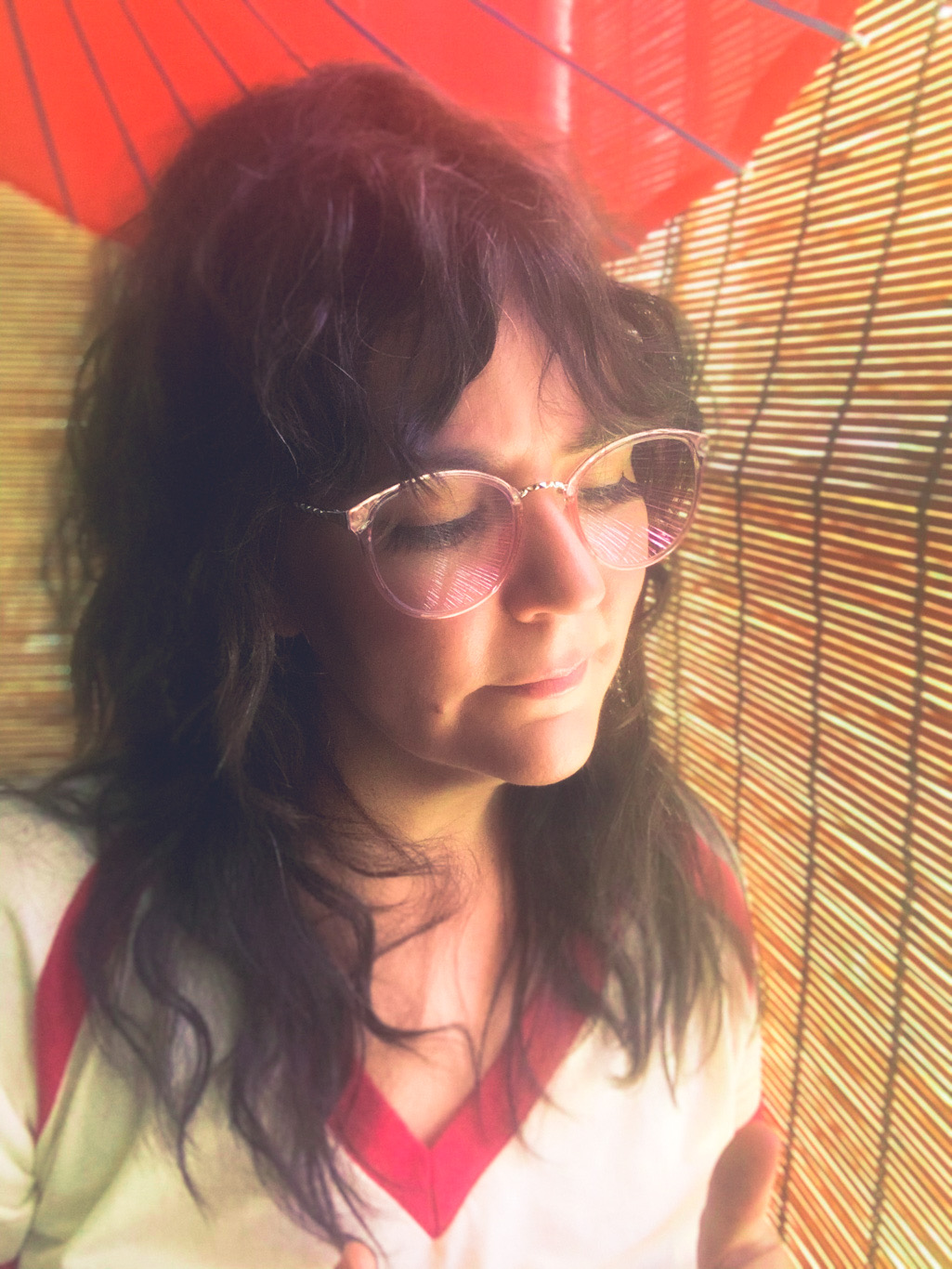
Carmen Canedo Grows Through Life Changes and Mental Health Battles on ‘Know It All’

Photo Credit: Kelton Young

Nashville native Carmen Canedo strikes a delicate balance between her analytic mind and artistic soul on her new album, Know It All.

Immersed in what she calls a “DIY music scene” since childhood, Carmen Canedo was surrounded by expert musicians who were oftentimes her own neighbors. “Either your friends are musicians or your friend’s parents are musicians, and that’s been so true for me,” the 21-year-old recalls to Audiofemme of growing up in Music City. Teaching herself how to write songs and play guitar, as well as forming her first band at the age of eight, Canedo also learned the value of tapping into her home city’s rich musical well.

Her young adult life has been shaped by pivotal musical moments, from seeing local favorite rock band JEFF the Brotherhood live when she was 12 to touring as a bass player with Soccer Mommy the summer after graduating high school in 2017. “I really was influenced by how [Sophie of Soccer Mommy] was so hardworking and takes it so seriously, but also is able to enjoy it,” Canedo says of what she learned while touring with the burgeoning superstar. Citing herself as equally left and right brained, Canedo attended one of Tennessee Governor’s School for Scientific Models and Data Analysis that saw her taking college-level courses as a high school student. She later enrolled as a Statistical & Data Sciences major at Smith College before transferring to American University where she currently studies statistics. “I like to break things down a lot; being able to break down songs and think about it analytically, or even the process of making an album,” she says, noting how the structured and artistic sides of her brain cross.

Her most formative musical days were spent in the jazz band room of her high school, where she learned how to write guitar chords that she uses in her music to this day. It’s also where she and her friend Hayden Hubner of Nashville-based band Dancers would retreat during lunch hour to play guitar and write songs, leading to the creation of Canedo’s first album, Wheels Are Turning, which ultimately opened her mind to the idea of music as a profession. That pivotal project set the stage for her new album, Know It All. Written over the course of two years, the 10-song collection showcases Canedo’s old-fashioned voice that exudes a folk flair alongside pure lyricism. “I feel like each of these songs come from different times in my life,” she says.

The opening “Morrow,” named after the house she lived in on campus at Smith, reflects the universal feeling of adjusting to a new environment, surrounded by new people while longing for home. Meanwhile, “Vectors” evokes images of the two young children Canedo babysat for who would write her name in chalk on the sidewalk each time she visited, a song that finds her “taking little moments that I didn’t want to forget” and setting them to song, she remarks.

“Vectors” also reflects her personal triumph over mental health struggles. At a South by Southwest performance in 2019, Canedo felt the onset of PTSD, an experience that left her rattled and questioning whether or not she wanted to pursue music. After going on an eight-month hiatus, the singer managed to overcome her anxiety and headed into the studio to record Know It All, pointing to a line in the album’s ninth track, “Ocean I Swam,” that reflects her profound growth: “I am not where I began.” “I’m a very sentimental person. I love looking back and thinking about past times,” she shares. “But I think specifically in the past three years that I’ve really genuinely been focused on my mental health, it’s been a lot of recognizing the growth that I’ve made. I think that line demonstrates it.”

Originally scheduled for release on June 6, Canedo decided to move the release date for Know It All to August out of respect for the Black Lives Matter movement in the wake of the murder of George Floyd. All of the digital sales of the album throughout August, as well as 10 percent of Canedo’s merchandise, will be donated to the Nashville Community Bail Fund, an organization that provides financial support to low-income prisoners, and Drkmttr Collective, a Nashville-based venue that fosters a safe space for the underground music scene, as well as organizing and action planning.

Having written the songs prior to her mental health battle and then recording most of it in the aftermath, the transformation allowed Canedo to explore the songs in a new light and recognize how far she’s come. “Having time off not listening to the record was good because I was able to come back to it with a fresh mind and look at these lyrics from a different perspective – revisiting them and reclaiming them and giving power to them in like a different way,” she expresses. “Because it is such a reflective process, all these songs are genuine little capsules of who I was when I wrote them, so it’s interesting to play them or listen to them and feel how I felt then, but realize that I have grown.”