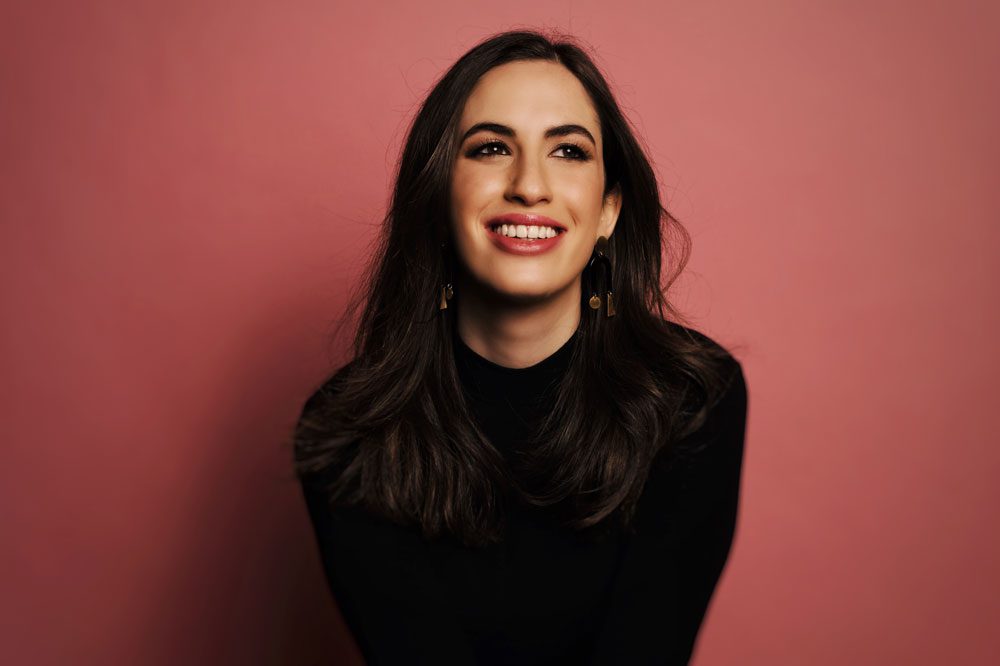
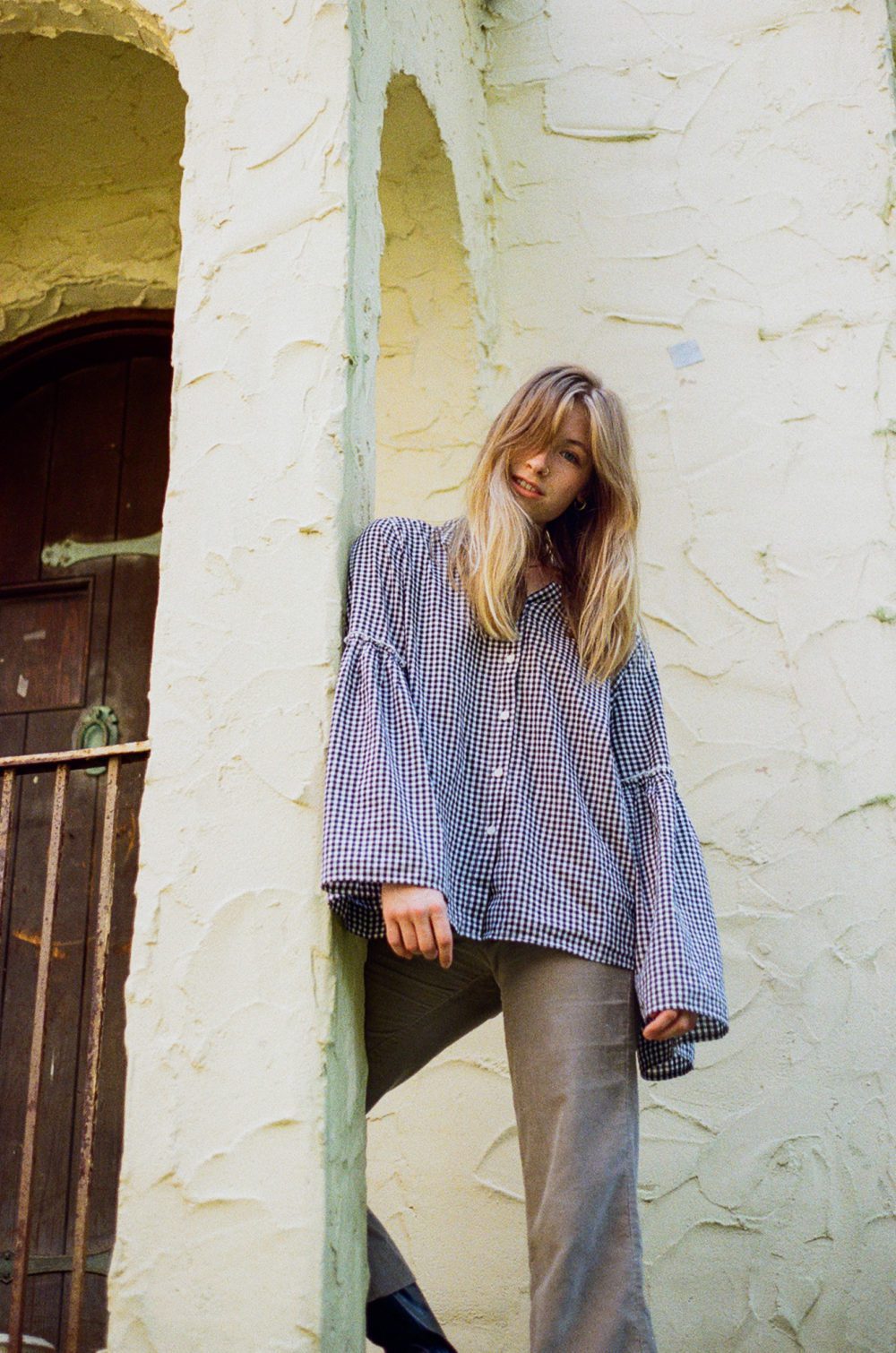
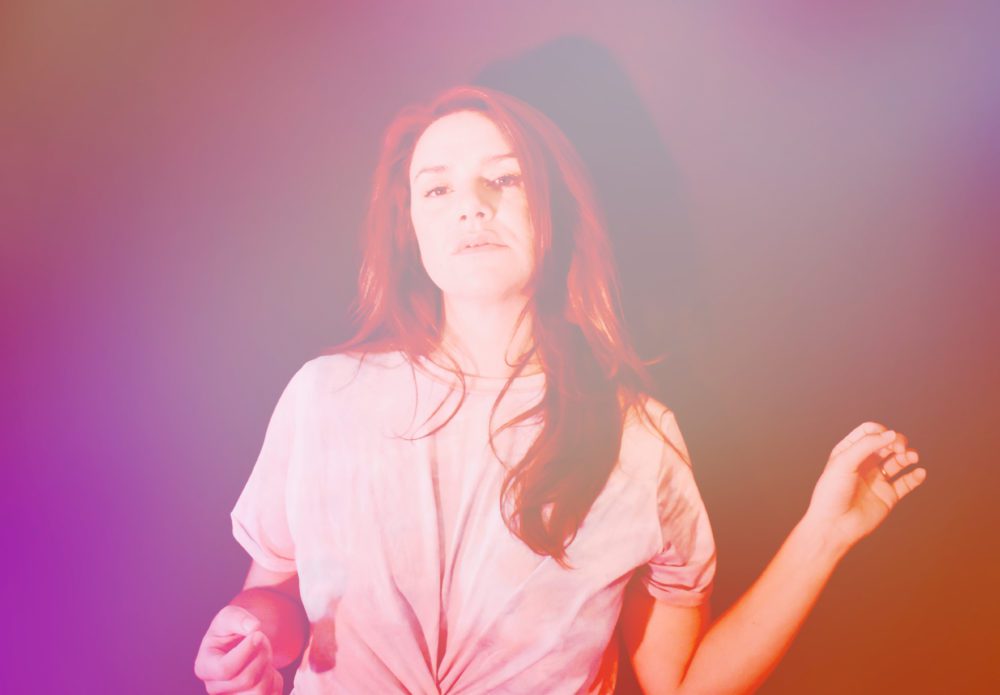
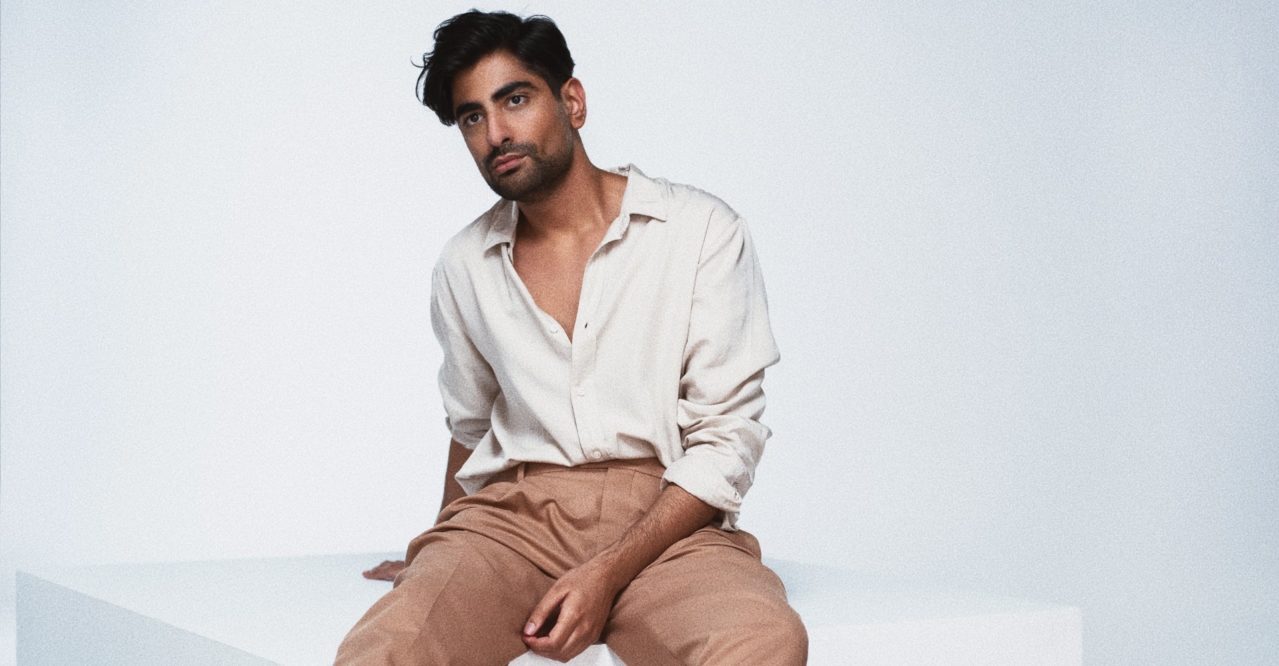
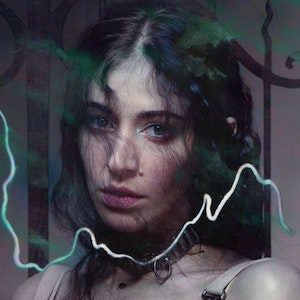
Samantha Tieger has two passions in life: music and language. “I really have this strong desire to connect with other people, whether it’s through language or music,” the Cincinnati-born, now Nashville-based singer professes.
She marries these two passions on her debut self-titled EP – particularly on poignant closing number, “You Light Me Up,” premiering exclusively with Audiofemme. Tieger has established a self-described “chill pop” sound: cinematic violin and piano layered over soft vocals that evoke a dreamlike feeling, capturing the sense of peace Tieger felt in the relationship that inspired the lyrics. “You light me up with your love,” Tieger sings, comparing that feeling to walking on air and brightening up the night. “I think it can be so easy to write about heartache and the negatives in a relationship, and for me, writing is such a good way to work through all of that,” she explains. “In this song, I really wanted to focus on positive elements of a relationship and I wanted the production and the vocal elements to reflect comfort and peace and joy.”
Tieger drew inspiration from the “good parts” of a previous relationship that were as sweet and simple as watching TV and cooking dinner together. When writing the gentle number with Ed O’Donnell, Tieger had a specific idea in mind of wanting the listener to feel as if a weight had been lifted off one’s shoulders. “I wanted the song to be like a sigh of relief and a breath of fresh air of ‘now I feel okay at the end of the day because of you,’” she describes. “You Light Me Up” is the light at the end of an EP that was born out of a series of emotional experiences Tieger endured through past relationships and breakups. “Close My Eyes” is particularly relevant, as Tieger wrote it about feeling distanced from her friends and family a year before the COVID-19 pandemic kept the world six feet apart.
At that time, writing the EP was simply about Tieger processing complex emotions. “I think it’s easier for me to close the book on certain chapters in my life after I’ve written about them. I feel really frustrated and sad about certain things and once I’ve written it down, I can move on,” she says. “To hear a song come to life that I wrote about an experience that was so emotional for me to go through, hearing the music come together, it’s thrilling and emotional at the same time.”
The EP is a reflection of Tieger being a lifelong learner of music and language. She grew up studying Spanish, French and Latin around the same time she had a budding interest in music. She later pursued a degree in Romance Studies at Duke University, her language studies taking her to immersion programs around the world in such countries as Spain, Argentina and Costa Rica. “Somebody recently said ‘you just have this strong desire to connect,’ and I think language is such a key to connection and music is a key to connection,” Tieger analyzes. The singer at one time was writing music in Spanish and French, a skill she hopes to resume in the form of cover songs in foreign languages.
It’s through the relationship between music and language that Tieger learned how to communicate her emotions, a gift she combines with her global perspective and transcendental sound that’s bound to leave a distinct mark on the Nashville scene. “Music really became a way for me to understand my thoughts and feelings and what I was going through,” she asserts. “Life’s too short to not tell people how you really feel.”
Samantha Tieger’s self-titled EP is available everywhere September 4. Follow her on Facebook and Instagram for ongoing updates.
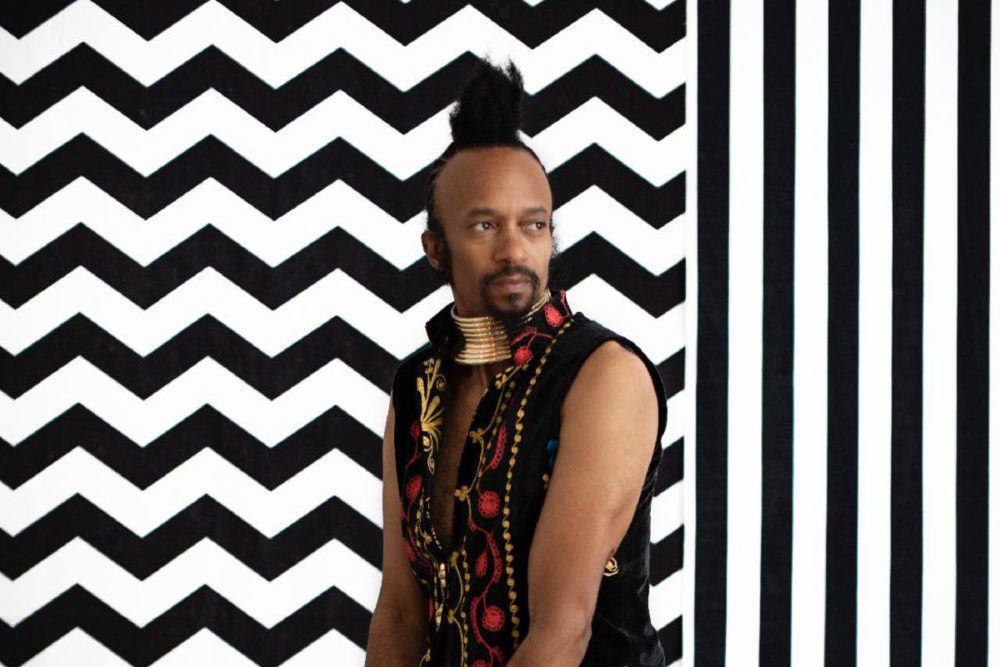
“I’m a busker at heart,” says Oakland’s Fantastic Negrito. “I started this [project] five years ago, busking — and I wanted to talk to people. The one thing I realized [is] that we need each other as people living on this planet…and if we don’t talk to each other, we don’t have anything.” Fantastic Negrito — birth name Xavier Dphrepaulezz —grew up on the very same streets he ended up busking on, and it is indeed with a palpable sense of place that he presents his new album Have You Lost Your Mind Yet?
Even his performance name has roots in his hometown. “I grew up in the hood,” he explains. “I was in close proximity to people who spoke Spanish, so [Negrito was] the name that I heard all the time.” Basically, it means “little black one.” “It’s a very endearing word in the Spanish language,” he assures me. And it came with an added bonus: “The name makes white people uncomfortable… the thing is, no one should be uncomfortable. They should just know more Latino people,” he laughs.
Drenched in old-school soul and rock influences, Have You Lost Your Mind Yet? may sound outwardly celebratory with its proliferation of heavy riffs and layered percussion, but in fact, Fantastic Negrito has taken on somewhat of a Herculean task with this album’s creation. “This record was all about mental health,” he says. “[But] not the people we see walking down the street talking to themselves, ’cause that’s easy. It was about myself, my cousins, my friends, my bandmates, my sisters, my brothers, my people, my teachers, my soldiers. It was about how are we everyday people dealing with this proliferation of information that we’re fed every day — especially in the United States — about these mass shootings, mass killings.”
Track three, “How Long?” takes on a particularly arduous challenge — getting into the mind of a shooter. “I’m like, ‘I need to get into their head. The shooter could be me. It could be the bass player.’ It’s the guy who killed George Floyd. Did he wake up that morning, wanting to take someone’s life? How do we dehumanize people to the point where we can easily take their lives?” It’s a dark question to inform a song, and the end result seems to be largely internal on Fantastic Negrito’s part, one that reflects the aesthetic of the album’s cover: bombast, theatricality. “To all my baby Al Capones/out there screaming all alone,” he croons on the opening line. The choice of Capone, a historical figure so cartoonized that he is almost a caricature at this point, is notable; Fantastic Negrito deals in colorful tableau as opposed to visceral grit. Not that this renders the imagery ineffective — his perspective is unassailable, informed as it is by lived experiences.
“There was so many tough guys in my neighborhood. But no one held the fabric of society together more than the strong mothers who had to bury their children because we have gun violence problems in this country that we haven’t addressed,” he says. He saw this firsthand, as well — his mother lost his brother to gun violence when his brother was only fourteen. Fantastic Negrito is happy to reflect upon and affirm his own masculinity —“self-reflection, and openness and kindness, and gentleness” are some of his key markers — but the undeserved burden of social responsibility placed on women is a thread that shows up in his work, especially on the LP’s fifth track, “Searching for Captain Save a Hoe.”
While the music video for his cinematic take on folk song “In the Pines,” from on his 2017 album, The Last Days of Oakland, looks to to peel away the layers of martyrdom and “exquisite suffering” that we place on mothers of murdered children (largely due to an excellent acting job by Renee Moncada McElroy), in “Searching for Captain Save a Hoe,” Fantastic Negrito takes another opportunity to slip into the mind of someone else — albeit this time, a different version of himself. “I’m writing [as if] I’m the whore — the so-called whore,” he explains, noting that the goal was to unpack “a lot of my hypocrisy about women.”
The song opens with a nerve-jangling riff that sounds like the theme music for the world’s funkiest closet monster. We get to hear the range of Fantastic Negrito’s voice over the course of the song, as well as the rap stylings of Bay Area rap legend E-40 (the man behind the 2006 hyphy-movement hit “Tell Me When to Go”). The choice to include the rapper apparently inspired some confusion. “People are like, ‘oh, man, you put rap on there?’ Well, I didn’t put it on there — it put itself on,” he says. “I embrace Black roots music. That’s an amazing garden. And I’m happy that people recognize me in the blues category. That’s fine — I just don’t think in those terms. I don’t like labels.”
For Fantastic Negrito, Black roots music — also the name of his excellent Juneteenth 2020 compilation EP — is more like an ever-shifting, multi-dimensional conversation than a genre. The key is, as he puts it, “be conscious in the spiritual world” during the creative process. And yet, this project seems too close to the chest — Fantastic Negrito produced every song— that the auteurship seems much more grounded that that. He is the man behind each hand clap, almost every lyric. Inspiration may be a vast and fathomless pool (he cites Robert Johnson, Charlie Patton, and Little Richard as some of the artists he holds in high esteem), but the end results still leave us with traceable threads, from the choral background vocals on the excellent and affirming “I’m So Happy I Cry” to the shades of “A Whiter Shade of Pale” on the opening notes of “King Frustration.”
One of Fantastic Negrito’s key strengths is the malleability of his vocals — he can sound like multiple different people on the same song, delivering even anxiety-inducing lines with a hint of humor and a palpable sense of movement. This comes to mind in the interlude “Shigamabu Blues,” which repeats the chant “All kinds of things can happen/in the world” to almost hypnotic effect. “Hasn’t the last six months told us that?” he asks. “Doesn’t matter who you are: rich, poor, movie star, conservative, liberal. Anything can happen to any of us at any time, and that’s very good.”
Follow Fantastic Negrito on Facebook for ongoing updates.
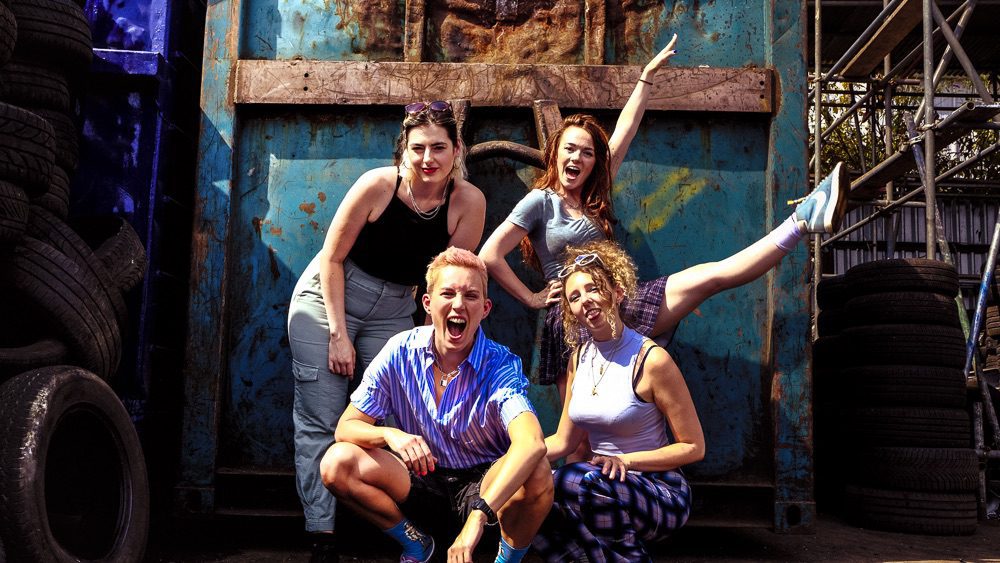
We’re going through a precarious time for women’s and LGBTQ rights, and London-based punk band Dream Nails has a lot to say about it — and, most notably, is also doing something about it. The band, which has labeled their Riot-grrrl-inspired style of music “witch punk,” made headlines in 2016 for a song aiming to hex Donald Trump and prevent him from taking office, and their self-titled debut LP, out August 28, contains the mix of political passion and humor that they’ve become known for.
The band has been political from its origins. Lead singer Janey Starling and guitarist Anya Pearson met through a feminist activist group five years ago, and the additional members shifted over the years, now including Lucy Katz on drums and Mimi Jasson on bass. They began playing mainly for feminist collectives in the UK but have gained wider appeal since, which Starling chalks up to feminism going mainstream.
But Dream Nails — a name inspired by a nail salon down the road from Starling — wore feminism as a badge before it was cool, not just in the content of their songs but also in the way they conduct business. They’re self-managed, split labor equally, make sure the venues they perform at have safe-space policies and gender-neutral bathrooms, push for diversity in lineups they’re part of, and use their music to raise money for causes like domestic violence shelters and reproductive rights. “We’re activists first, musicians second, but I think those identities are increasingly intertwined,” Starling says.
Following its 2017 EP Dare to Care, the band wanted to release a debut album that represented the biggest themes of their work. “We specifically curated all the tracks on the album so there was a good balance of capital-P political songs, anger, fun, and queerness, because all of these are integral to our identity,” says Starling.
Queerness in particular is central to many of the songs; “Kiss My Fist” is perhaps the most overtly political, examining the “weird juxtaposition of living in a world where the most-searched term on Pornhub is ‘lesbian’ but queer women get beaten up in the streets,” as Starling puts it. It was inspired by an incident last year in London where a group of boys threw coins at a lesbian couple after asking them to “show how lesbians have sex.” The song “is about just wanting to get from A t o B without being beaten up,” Starling explains. “Do you want us on your screen? Do you want to hear us scream?” the lyrics ask. In “Payback,” a song addressed to perpetrators of sexual assault, the anger is similarly palpable, with shouted lines like “Hey mister, get your hands off my sister!”
Other music on the album is more personal; much of it was written based on Starling’s own coming-out journey. “Jillian,” a sarcastic track poking fun at TV fitness celebrity Jillian Michaels and fitness culture in general, is also about “realizing you’re queer while doing a workout DVD when you just broke up with your boyfriend,” Starling laughs. The song, whose video features body-positive clips sent in by fans of themselves working out, plays on Michaels’ mantra that “pain is fear leaving the body” by describing Starling’s process of shedding the fear of coming out.
Along the same lines, “Swimming Pool” references dreams Starling had while she was confronting her sexuality. She considers “Text Me Back” the other queer song on the album, though it’s about a phenomenon people of all orientations can likely relate to — ghosting — with playful lines like, “Don’t make me double-text you.”
This range of serious and fun topics exemplifies what Dream Nails stands for: speaking up about important issues going on in the world, but all while maintaining a sense of humor and uplifting listeners. In this spirit of playfulness, the album features little “skits” in between songs. One gives self-defense tips, another prefaces the subsequent song “Vagina Police” with the disclaimer that they stand in solidarity with trans and non-binary people and not all women have vaginas, and another features a simple call-and-response chant: ”Do you want to go to work? No! Are you going to go to work? Yes!”
“Women in punk are associated with being angry and rageful, and we are all those things, but we also have so much fun at our shows,” says Starling. “We’re constantly laughing and joking, and our lyrics are silly and funny. We don’t have to just be angry that no one gets prosecuted for rape; we can also laugh at the fact that our love interest doesn’t text us back, and both those things are equally important to our existence.”
Follow Dream Nails on Facebook for ongoing updates.
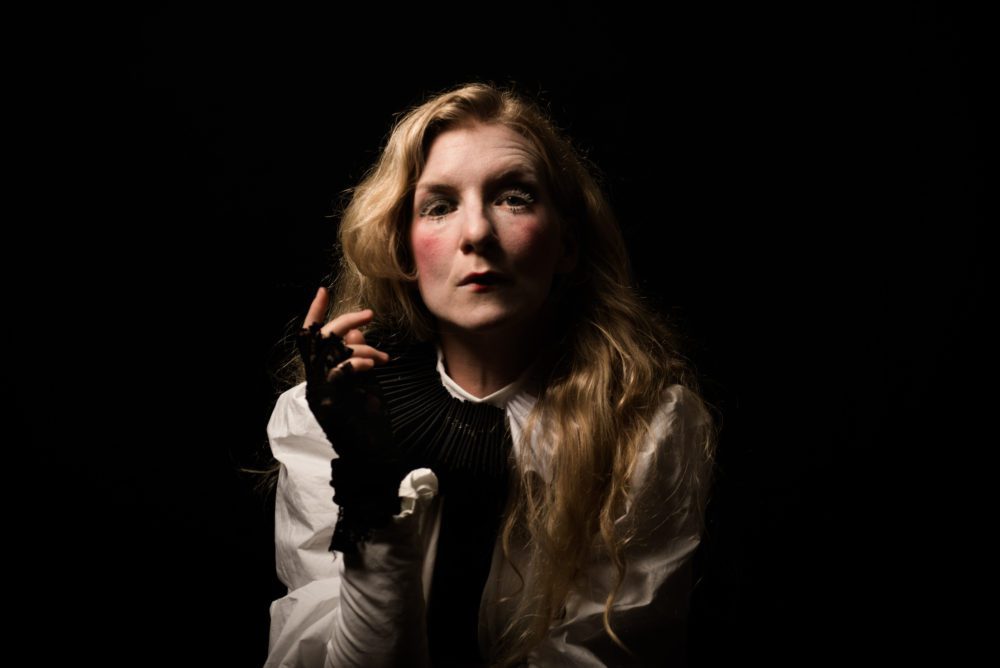
Swedish electronic music-maker and multidisciplinary artist ionnalee had intended to tour this year in a globe-trotting celebration of her decade of sonic and visual experimentation. With the tour canceled due to the COVID-19 pandemic, she’s bringing the show online with Konsert, set to premiere on September 2 at 7pm Central European Summer Time. This won’t be the first time she has performed in the virtual space. Her project iamamiwhoami went live online in 2010 for In Concert and again in 2015 for Concert in Blue.
More recently, ionnalee and her iamamiwhoami collaborator Claes Björklund (aka Barbelle) played a stripped down, outdoor mini-concert for Isolation Live in Ödeshög. Part of a 24-hour live stream in honor of the National Day of Sweden on June 6, the set is still available to watch on YouTube and was released as an EP in July. The event lends insight into an artist whose work at the dawn of the 2010s was initially shrouded in mystery.
When ionnalee and Björklund performed the iamamiwhoami track “N,” during Isolation Live, the singer commented that the track marked the “first chapter” in her evolution from a singer-songwriter to an electronic music artist. As Jonna Lee, she made indie pop, releasing the solo albums 10 Pieces, 10 Bruises and This Is Jonna Lee in the latter half of the ’00s. The start of the new decade, however, brought a new artistic vision, one that would reflect the mood of an era while maintaining a sense of individuality.
In the beginning, the identity of iamamiwhoami was unknown to audiences. The project emerged with a string of semi-anonymous teaser videos that captured imaginations and prompted some wild speculation as to who was behind them. (Karin Dreijer? Lady Gaga? Christina Aguilera?) Even after the guessing game ended, iamamiwhoami kept this new and growing fan base rapt with audiovisual albums, offering a fully developed visual and musical presentation in a digital-first package at a time when that was still novel. The project became a cult sensation – videos racked up millions of views on YouTube in the years since their release – and, after ionnalee embarked on her solo work, she was able to fund her 2018 world tour in four days of launching her Kickstarter campaign.
While iamamiwhoami achieved a level of viral notoriety at the onset of the endeavor that was, and probably still is, enviable to many in the music industry, the project, and ionnalee’s solo work, wouldn’t have built and sustained a long-term fanbase if it weren’t for the content within the content. That’s something that might be more more obvious in ionnalee’s quarantine projects.
Peer through the comments on ionnalee’s Instagram and YouTube and you’ll find fan after fan remarking on how profoundly her work has impacted them. The level of care and detail that ionnalee has put into her quarantine projects indicates that the fans have impacted her as well. Over the course of weeks spent off-the-road, ionnalee released a series of alternate versions and rarities as part of a playlist called Kronologi, the same name that was used for her canceled U.S. tour. These songs, which were produced, mixed and mastered by ionnalee, were unleashed on a weekly basis and accompanied by her own watercolor paintings. The collection was ultimately offered as limited edition vinyl and CDs through her website.
Quarantine concerts have become a regular part of music life in 2020, but there’s an intentionality to ionnalee and Björklund’s performance in Isolation Live that makes this one stand out as an extension of what they’ve long been doing, rather than simply a way to make do in the midst of this very strange global moment. In a pastoral setting, ionnalee sings into a mic that appears to be wrapped around a branch and plays on a wood paneled synthesizer. In the background, you can catch a glimpse of a small door that (to a city kid, at least) looks as if it could be the entrance to a fairy’s house. Her emotional, electronic music is very much at home in this setting.
For decades, electronic music has been imagined as the soundtrack of either an industrial present or a machine-led future. Musicians often lean into those tropes. Gritty warehouses and factories, robots, computers, and slick, sci-fi cities are the visual references for electronic music. But, much of ionnalee’s work is grounded in majestic nature, from the vast waters that were part iamamiwhoami’s audiovisual album, Blue, to the forest on the cover of her solo album Everyone Afraid to Be Forgotten. Even her robot co-star on the cover of her 2019 album, Remember the Future, is standing on a rocky mountainside. She brings together the electronic and the organic and, in the process, builds worlds steeped folklore, ritual and nature. In a decade where the growing crisis of climate change has turned more people towards environmental awareness and conservation, this imagery is poignant.
Her approach to Konsert is equally poignant. While donations will be accepted, ionnalee notes in an Instagram post that it is a free event “for all to enjoy as most of us are struggling now.”
Whether with iamamiwhoami or solo, ionnalee has spent the past decade doing something different. She’s worked outside of the music industry paradigm, independently releasing music, while developing collaborations with like-minded artists and building a strong and authentic fan base in the process.
It feels appropriate for an album loud with nostalgia to kick off with a track about memory called “1990.” The opening licks of Half Gringa’s sophomore release, Force to Reckon, took me back to the early 2010s, when I lived in the South and would careen around bends along the Appalachian Mountains with Defiance, Ohio, Mirah, and Rilo Kiley spilling out my windows. If I could distill that sound into a time capsule — along with the freedom of those drives or the way my heart felt things so much more intensely then because many experiences were still new — it would be this record.
Singer Izzy Olive croons in that intimate, confessional style that came to maturity in the aughts for alt rock women — but without the vocal flourishes or gushing reverb more apparent in newer artists, like Angel Olsen. Force to Reckon is punctuated with a mix of folksy violin and pop riffs that have declined this last decade. In some ways, it sounds suspended in time.
The standout track is the second song, “Binary Star.” It’s a rich journey of yearning and rejection that comes in waves, but many lines take on their own meaning. When Olive repeats with a pained longing, “Nothing feels like almost touching,” I recall the ache of having not hugged a friend since February. Now we see each other at six-foot distances outside, if we see each other at all, and even brushing elbows with strangers on the train feels worthy of fantasy for how foreign, even forbidden, it’s become.
Olive sounds like she’s waxing about a past lover, but certain phrases transcend the specifics of the story. In another part, she says, “Everyone leaves for California, New York, Chile, Berlin.” If you’re from the Midwest, as I am, Chicago seemed mythical growing up — the BIG “big city” of the region where grit and aspiration are tested. But that also makes it a pit stop, not a final destination. In comedy, you hone your act at someplace like Second City, then take it to Los Angeles (actors and musicians, do this, too). If you’re a writer or artist, you rub elbows with poets, maybe get an MFA, then head to New York.
Olive came from a small town in southern Illinois to study poetry at University of Chicago. Adopting the moniker Half Gringa as “in tribute to her Venezuelan family and her bicultural experience growing up in the United States” (according to Bandcamp), she’s stayed in Chicago to make music. So when she follows a list of common relocations for former Chicagoans with, “I’m not going anywhere, I’m not going anywhere,” it sounds bold. Bolder than telling a lover she’ll wait for them despite all indicators she shouldn’t. Then she says, “The bar’s warm and I’m easy to converse with and denial runs its long hands/Through my fine hair with a final, fatal smile.” Knowing Chicago is just a chapter for most transplants, you hear the defiance mixed with self doubt in that line as being about here, specifically. This city is a gamble – there are opportunities elsewhere. Maybe she’s kidding herself, but she’s choosing opportunities closer to home, relishing them rather than feeling resigned.
To say “I’m not going anywhere” also evokes a willing immobility because of Coronavirus. By chance, so much of the record speaks to being stuck at home — time in isolation to reflect on our pasts, contemplate our futures, and fixate on both the personal and structural conditions that brought us where we are now. On “Transitive Property,” Olive sings, “I don’t understand this country/I don’t understand my own grief/How could you have seen what I see?/I’m in disbelief and bereaved.” I’m unsure what she’s specifically responding to, but when I hear it, I hear my own anguish about the murders of people such as Breonna Taylor or Riah Milton. Or my outrage that, in the United States, healthcare is tied to employment, so over 30 million people don’t have either right now. It’s a cathartic song for discomfort and lack of resolution. I take comfort hearing someone else is hurting and upset by our country, too.
Force to Reckon tries to make sense of so many things specific and abstract that bring us ache and confusion. Every song searches — tunes that probe childhood trauma, grieving at a distance, and other prescient themes — but never reaches a tidy conclusion. Like so much right now, the album is open ended. Unlike most, it’s beautifully so.
Follow Half Gringa on Facebook for ongoing updates.
Even after its release, a song is never finished. It morphs over time as each listener overlays their own interpretation based on the circumstances around them. It takes on new meanings throughout different points in history. Nashville-based singer/songwriter/guitarist Molly Tuttle decided to embrace this fact by reimagining music by a wide variety of artists on her cover album, …but i’d rather be with you.
Tuttle grew inspired to create a cover album when listening to music helped her navigate anxiety around the Coronavirus pandemic. “Once we were social distancing and staying home, I kept going back to these songs that meant a lot to me,” she recalls. “It was just a way to keep inspired during quarantine. It was a struggle for me at first because I love playing shows with people, but this was a great outlet to play music remotely.”
Her producer, Tony Berg, suggested she record covers and send them to him, then he sent them to guest contributors to add their own music. She selected several songs she’d already covered during live shows, plus additional ones that had special meanings for her.
The Grateful Dead’s “Standing on the Moon,” which she sings soulfully against mellow acoustic guitar, reminds her of her childhood in Palo Alto, CA. FKA Twigs’ “Mirrored Heart” expresses the sense of disconnection she felt from a partner during a rough breakup, and “How Can I Tell You?” by Cat Stevens comforted her during college when she found out her family dog died. In the latter, she sings “Wherever I am, girl, I’m always walking with you, but I look and you’re not there” against emotive cello, evoking the heartbreak of losing a loved one. “Maybe he wrote it about a romantic love, but for me, it was this pure love you can’t really put into words about someone, whether they’re an animal or a person,” she says.
Her triumphant, mystical rendition of The Rolling Stones’ “She’s a Rainbow” is a highlight of the album, with guitar that gives it a psychedelic rock vibe It also took on a new meaning in this recording; regardless of the band’s original intentions, her goal was to celebrate femininity and inclusiveness. “It just reminded me of being at a pride parade or somewhere that was really celebrating all different types of people,” she says. “Songs like that had a really personal meaning to me that maybe felt separate from what the original version was saying or just kind of felt like my own interpretation of the song.”
But perhaps the song she most made her own is “Fake Empire” by The National. In the cover, warped, discordant synths cut into a steady, repetitive guitar track, mimicking the picture the song paints of people “half-awake in a fake empire,” going about their daily business while chaos ensues around them. This image spoke to Tuttle while she was working on the album, as #BlackLivesMatter protests were breaking out.
“People who have the privilege to ignore things going on in our country like police brutality and mass incarceration, people who have been able to ignore it because it doesn’t directly affect their lives, are starting to wake up to it,” she says. In the video for the cover, she used footage from ’50s and ’60s political protests, performing in front of a green screen. “I used other dreamy footage of stars to kind of give it this dream-like quality to go with the lyrics,” she explains.
The album also includes a country version of Rancid’s “Olympia, WA”; a charming, poppy rendition of Arthur Russell’s “A Little Lost,” where Tuttle’s angelic voice captures the wistfulness of new love; and a soft, acoustic version of The Yeah Yeah Yeahs’ “Zero.” She recorded and engineered her parts herself at home, which forced her to improve her production skills.
“I was used to having engineers do a lot of everything, and making all those calls on my own and doing tempos and arrangement, that was really kind of draining to do it that way,” she says. “But at the same time, in my room, I could do everything I wanted. I could turn out the lights and light some candles and feel free to sing how I felt like singing, without a bunch of people in the control room, listening and analyzing different takes. It was actually very freeing to record myself.”
Tuttle grew up learning to play bluegrass from her music teacher father, then began songwriting as a teenager and went to college for music before launching her career. She’s gained particular recognition for her flatpicking guitar technique, becoming the first woman ever to win two consecutive “Guitar Player of the Year” International Bluegrass Music Awards.
…but i’d rather be with you is her fourth solo album, and she’s currently working on another, this time full of her own original songs. “I’m trying to write songs from a really personal place for this next album and just speak to experiences I had that feel unique to me,” she says. “I’m always trying to dig deeper with my writing.”
Follow Molly Tuttle on Facebook for ongoing updates.
A dichotomy is often drawn between classical music that one might learn in school and popular music people listen to today for their enjoyment and entertainment. But Icelandic composer and multi-instrumentalist Gyda Valtysdottir seamlessly bridges the two, with compositions that surprise the listener by drawing from classical conventions while also experimenting with fresh new sounds.
Her latest album, Epicycle II, is no exception. The collection of eight songs, recorded in collaboration with eight composers — Ólöf Arnalds, Daníel Bjarnason, Úlfur Hansson, Jónsi, María Huld Markan Sigfúsdóttir, Kjartan Sveinsson, Skúli Sverrisson, and Anna Thorvaldsdóttir — creates an atmosphere that is at once ancient and modern, familiar and novel, comforting and unnerving.
The album is a sequel to her first solo album, 2016’s Epicycle, which featured works from composers like Schubert, Schumann, and Messiaen as well as contemporary ones she admired; she selected Harry Partch for his “absolute unique musical world which you cannot categorize,” George Crumb for his “sensitive and highly organic soundscapes,” and “Louange à l’Éternité de Jésus” by Oliver Messiaen, because it provided her with profound musical experiences while she was in school.
But the second Epicycle album focuses solely on contemporary composers, many of whom were favorites of Valtysdottir’s and all of whom she worked with directly. “I wanted it to be more collaborative, hence the aliveness of the composers,” she says. “Also, although I do not look at the previous record as a classical one, it has its feet in that realm. I wanted this one to be even more undefined. I also wanted to let go of control; each musician had full freedom of what they wanted to create and how much of a collaboration it would be.”
Though Valtysdottir was open to working with composers from all over the world, she ended up finding many in Iceland she wanting to work with, and so the album’s composers are exclusively from Iceland, making it “a map of the world that influenced and shaped me,” she says.
Perhaps Iceland’s mystical terrain lends itself to otherworldly-sounding music; from Bjork to Sigur Ros, the country’s most well-known artists all seem to have an ethereal, magical quality to them, and Valtysdottir also belongs on this list. Many of her songs sound almost like they were recorded in nature, but on another planet. In “Morphogenesis” (Hansson), string instruments call and answer to each other like birds. “Unfold” (Sverrisson) sounds like it belongs in a film soundtrack, accompanying a scene of majestic mountains. “Mikros” (Thorvaldsdóttir) has a suspenseful quality to it, better suited to a chase scene.
But the highlights are the tracks where she sings; the verses of “Evol Lamina” (Jónsi), “Safe to Love” (Arnalds), and “Liquidity” (Sveinsson) sound more like incantations, with her hauntingly echoey, operatic voice delivering powerful lines like “I feel the force in you of nature” and “until you feel that liquidity there is infinite space to be found.”
This theme of exploring the ways our lives revolve around one another fits with the album title. “Epicycle,” a term used to describe the planetary orbits by ancient Greek astronomer Ptolemy, refers to a specific shape: a circle moving around the circumference of a larger one. When Valtysdottir learned the word, she’d already drawn the first album’s cover artwork using a kid’s toy she got on the streets of Istanbul, and she realized what the toy had produced was epicycles.
While much of the album is abstract, it cumulatively tells a story about “the interconnection between us all, how we are shaped from our connection to others, and how we find our own authenticity by embracing others,” Valtysdottir explains. “Also, [it’s about] the unique space between each one of us. I become someone slightly different with each [collaborator]; they pull different aspects out of me. I love that — it makes me feel more free and universal.”
Each composer underwent a slightly different process with Valtysdottir: Thorvaldsdóttir wrote the piece herself, Sveinsson sat down with Valtysdottir to compose, Jónsi began by recording cello and vocal improvisations, and Hansson wrote the beginning of the piece, then they improvised the rest. She and Kjartan had a band recording with them in the studio, and Úlfur played analog synthesizers. Bjarnason’s piece was already released, and Valtysdottir fell in love with it when she heard it.
Valtysdottir has also been on the other end of this type of collaboration and appeared on many other artists’ albums. Visual artist Ragnar Kjartansson even formed a “twin project” band consisting of Valtysdottir, her twin sister Kristín Anna and Aaron and Bryce Dessner, the twin brothers in The National. They’ve created a video installation featured in New York’s Metropolitan Museum of Art, and they also have an album on the way.
Other projects Valtysdottir’s fans can look forward to are a duo with American folk singer-songwriter Josephine Foster, several old and new songs of hers recorded with Lithuanian band Merope, and ambient pieces she composed during lockdown.
“I’d like to bundle [them] up into an album, but it’s more challenging in the bright summer nights here in Iceland,” she says. “I’ll wait for the dark days to finish it.”
Follow Gyda Valtysdottir on Facebook for ongoing updates.
Oceanator is the Brooklyn-based solo project of Elise Okusami, who writes honest grunge-pop tunes that range from solo acoustic folk to synth pop. Okusami’s current live band includes Andrew Whitehurst and Anthony Richards, but her newest record Things I Never Said (released today!), also features performances by Eva Lawitts on bass and Mike Okusami and Aaron Silberstein on drums. Lead singles “A Crack in the World,” “Heartbeat” and “I Would Find You” have earworm qualities that belie their sonic heft. Though grunge is often associated with angsty feelings, Things I Never Said is actually comforting, with snippets of positive lyrical affirmations like “I’ll keep trying to keep the skies blue anyway.” The record was recorded at Wonderpark Studios by Eva Lawitt and Chris Kasnow and by Okusami’s brother in his studio in Maryland, and was released by Okusami’s new label Plastic Miracles. You can celebrate Oceanator’s record release tonight 8/28 on BABY.TV at 8pm EST! We chatted with Elisa Okusami about her Dead Kennedys cover, creating her own label, and her recommendations for must-download material for next Bandcamp Friday (September 4th).
AF: The first time I saw Oceanator was at Shea Stadium in fall of 2016 and you were completely solo. How has the project and your songwriting style evolved over the years?
EO: I miss Shea! I was playing a lot of solo stuff in the beginning because I wanted to get out there and play those songs, and I didn’t have any people to play them with yet. I still love playing solo for sure, but it’s very exciting to be able to play these songs big and huge with a full band. Andrew Whitehurst and Anthony Richards have been my touring bandmates for the past year and they’re amazing. I was also playing shows with Eva Lawitts, Aaron Silberstein, Zoe Brecher and a few other folks, and knowing that I had people I could ask to play shows I think made me feel freer to write songs for a full band and write less acoustic stuff, maybe? Not sure, I guess. I’ve always written both and I’m excited to get to perform both ways these days!
AF: Do you have a quarantine routine? Has lockdown affected your creativity in any way?
EO: I’ve been making cold brew coffee every few days – that’s about as much of a routine as I’ve got right now. In the beginning I was doing better with it and also doing walks and stuff. I need to get back into it. As far as creativity, I’ve been having an extra hard time writing lyrics. I’ve been writing a bunch of music, but any time I try to think about lyrics at all it’s this big grey blur.
AF: What are you most proud of about your new record and what do you want listeners to take away from it?
EO: I hope people take away a feeling of enjoyment and also a feeling of hope. I think the record goes through a lot of dark and heavy stuff, but I think overall it’s an optimistic record. That’s also why I ended it with “Sunshine,” because after all the disasters, etc, it’s like “Okay, we’re gonna be okay.” I’m pretty proud of the record as a whole, to be honest. I like the way it flows and I think these are some of the best songs I’ve ever written.
AF: How was recording your cover of the Dead Kennedys’ “Police Truck“?
EO: It was super fun! I did it at my brother’s studio and played all the instruments. I was having a super fun time just jamming on everything as we recorded. I was nervous about doing the vocals ‘cause Jello’s got that distinct voice, but I tried to just be me and I’m happy with how it turned out.
AF: What was the process like of creating your own label to release the album?
EO: Well, the label had been planned for a while, actually. I was always planning to launch it this year, and the original plan didn’t include me releasing any of my own music at all. Then I left the label I was on, so we were shopping the record around and with everything going on it was taking a while so we decided to self-release, and then I was like, well since I’m launching the label anyway might as well put it on that! It’s been a fun learning process. A lot of folks from other labels have reached out to offer to chat if I have questions, and that’s been super helpful. I’m really excited about the future of the label. We have four more releases coming in the fall and just put our first release of 2021 on the calendar.
AF: What is your favorite piece of Oceanator merch and how did you get the idea for it?
EO: I don’t know if I have a favorite right now! I’m very very stoked on the entire run of stuff I did around the record. I guess if I had to pick it would be the post cards or the temporary tattoos? The postcards were designed by Kameron White and the tattoos by Haley Butters and they’re both perfect. The post cards my friend Gretchen suggested doing. The temporary tattoos, I got the idea because I was thinking about what other fun ’90s stuff I could do since I was doing pogs. Temporary tattoos just popped into my head and I knew Haley had made flash sheets before so I asked them if they wanted to do the temp tattoo designs and they sent back this perfect thing with a tattoo for each song inspired by that song. It’s so cool.
AF: What bands/labels do you recommend to support on Bandcamp day next week?
AF: You’ve also drummed in various bands – are you still drumming in any projects or will you be in the future?
EO: I’m not actively right now because of the pandemic. Most of the drumming I was doing for folks was on tours, but yeah, I’ve been talking to some friends and I think if scheduling works out when touring starts again I’ll be playing some drums! I hope so. I miss the drums.
AF: What is your livestream setup like?
EO: Recently I have been doing the guitar through pedals just direct in to the mixer so I don’t bother the neighbors as much. At the beginning of quarantine I was mic’ing my amp but now that I’m doing more streams at later times and stuff, so I’ve been doing direct in and it has actually been sounding pretty great. Then I’ve got a mic for the vocals. Those both go into this little mixer, and I connect the mixer either to my interface and then into my computer or directly into my phone depending on what platform I’m streaming on.
AF: What are your plans for the rest of 2020 and beyond?
EO: Mostly just seeing how things play out with pandemic and stuff. I don’t think shows will happen anytime soon which stinks. But I’m trying to stay busy. Got a bunch of things coming out on the label, so I’ll be working on that stuff. And I have a bunch of songs that I wanna work on for the next record, and also maybe an EP.
RSVP HERE for Oceanator’s Things I Never Said Release Party via BABY.TV, $5-50 8-9PM EST
More great livestreams this week…
8/28 Yaeji via Boiler Room Instagram. 7pm EST RSVP HERE
8/28 Angel Olsen via Noonchorus – Cosmic Stream 3. $15 adv/$17 dos, 9pm EST RSVP HERE
8/29 Ben Gibbard, Arlo Guthrie, Glenn Mercer (of The Feelies), and more via Coney Island Mermaid Parade Tail-a-thon. 8pm EST RSVP HERE
8/29 The O’My’s, Dehd, Frank Waln, Bomba con Buya, Andrew Sa via Square Roots Festival. 7pm EST RSVP HERE
8/29 Charlie Parker’s 100th Birthday Celebration: Sam Turvey, Jason Moran, Jaleel Shaw via SummerStage Everywhere. 10pm EST RSVP HERE
8/31 Goat Girl via Working Class Movement Library Facebook. 2pm EST RSVP HERE
9/4 Policing on the Agenda: Understanding ‘defund the police’ and calling for police accountability in Black communities via Black Future Labs. 5pm EST RSVP HERE
Traditionally, the way music represents love has been limited — not just in terms of who is typically featured in love songs (i.e. heterosexual couples) but also in terms of the types of relationships people sing about (i.e., monogamous ones). Non-binary, Latinx pop artist Frankie Simone is changing this on both fronts with music inspired by the challenges and rewards of navigating a queer, polyamorous relationship.
Simone’s latest single, “On Our Own,” was written during a difficult time in their relationship with their wife Che Che Luna, when their needs differed so much they had to turn away from each other and focus on themselves. But the single is is nevertheless uplifting – on the fun, catchy, EDM-infused track, Simone combines melodic electronic instrumentals and a prominent keyboard track with an anthemic chorus and danceable beat in the vein of Kygo or Galantis. “We can heal our hearts if we move to the rhythm/It’s in the melody and no don’t forget it/There’s a song we sing and oh won’t you sing it/All together now,” multiple voices chant in the refrain.
“I wrote ‘On Our Own’ as a mantra for healing, to help expand my perspective, and provide myself with a different vantage point as I navigated extremely challenging times in my relationship,” says Simone. “Writing this song helped me regain my own personal power and, in a lot of ways, find the light at the end of the tunnel. This song feels so relevant right now during this time of extreme isolation. I hope folks can listen to it and feel less alone amidst the pandemic and current state of the world.”
The track is off Simone’s debut LP Sensitive Creature, much of which is dedicated to their relationship with Luna, whom they’ve been with for eight years. Even though it was written while in partnership, Simone wrote it largely about turning inward as the couple explored polyamory for the first time, guided by the question: “How can we allow ourselves the space and room to continue to grow and shape-shift and change as we get older, and how can we do that in partnership?”
The answer to these questions was an album with an overarching message of independence. In the R&B-inspired “Be Myself” featuring KayelaJ, Simone sings about remaining true to themself even while coupled. In the sassy Sleigh Bells-esque “KING,” they rap about celebrating their body and sexuality. In the poppy “Slow Down,” they talk about rising above obstacles in their relationship.
While most of the songs have a positive spin, many of them were borne from heartache as Simone watched their wife fall in love with someone else. “It’s taking the listener through the depths of the darkest depression in my life,” they explain. “I chose to turn inwards and really found a well of personal discovery and radical self-love. It’s truly the first time in my life that I’ve fallen in love with myself. A lot of the songs,I wrote from this perspective of my ideal self speaking to this deeply depressed Frankie to help pull me through it.”
They hope the album sets an example for others interested in polyamory, or simply shows them it’s a possibility. “We’re kind of proof of that, as we’ve moved through this really fucking intense journey, and throughout this journey, we’ve found incredible amounts of healing,” they say.
The album also explores other adjacent themes, including mental health and identity. “Goddexx,” for instance, validates the worth of people marginalized by society: “I am womxn/I am queer/I am brown/All that you fear/Like it or not I, I am a goddexx/I deserve to be worshipped.”
Simone released their first EP, LOVE/WARRIOR, in 2018, with similarly fun, electronically infused pop exploring queer identity and relationships. “I think about my first record, and it felt almost like I had so much to say, I was screaming about it, especially with my queer identity,” they reflect. “I wanted to have positive queer music people could find or discover or connect with.” While the new album is more about Simone’s inward journey in their relationship, their goal of encouraging and uplifting queer listeners hasn’t changed.
Simone is aiming to release a video for every song on the LP to create a visual album. So far, they and Luna star in a flirty video for “Slow Down,” and she dances alongside KayelaJ in the “Be Myself” video.
While Sensitive Creature documents Simone’s path toward accepting their wife’s other partnership, they’ve since formed an additional relationship of their own as well, which has inspired more music. That’s the exciting thing about Frankie Simone’s ever-evolving exploration of love in various forms: their fans get to be on that journey with them.
Follow Frankie Simone on Instagram and Facebook for ongoing updates.
We’ve all struggled with a breakup. Doubts creep in with any glimmer that things might be what they once were. We struggle to find the words to end it, not wanting to hurt our former love interest. On her latest single, Claire Frazier describes these feelings as “Emotion Sickness,” describing the symptoms in an explosive chorus worthy of Top 40 radio: “When I think of you it blurs my vision/I’m taking anything to cure my system/So I don’t listen/I need to fix all this emotion sickness.” The polished anthem for entanglements was co-written with Elsa Curran, Ruxley, Midi Jones, produced by Midi Jones (Lauren Sanderson, Audrey Mika, and Alessia Cara), and mixed by Erik Madrid (Kehlani, Khalid, KYLE, ASAP Rocky). Though Claire Frazier is only seventeen, the all-star team of power-house writers and engineers on board this early on in her musical journey signals good things to come.
Born and raised in Mobile, Alabama, Claire Frazier has been singing her entire life. With maturity and a strong sense of emotional independence, the up-and-coming singer-songwriter runs against the genre grain, drawn more to creating smooth pop tracks shaped by attributes of EDM and hip-hop than to the regionally popular country, gospel, or blues rock often associated with the South. During her junior year, Claire Frazier’s friends and family encouraged her to post videos of herself singing on Instagram. Timid at first, she began using the social media platform to post both covers and original songs. This led to a connection with producer, Dave Cappa, which propelled her into the start of her career. She’s released two singles so far – “I Want You Bad” in April, and “Thrills” last month.
Claire Frazier’s sound sits on the musical spectrum between the confessional and traditional pop songwriting style of Taylor Swift, and the chart topping hooks of Zara Larsson. “Emotion Sickness” is all about reclaiming those emotional instincts and rebuilding a sense of self post breakup. “I hope when the listener hears “Emotion Sickness” they envision themselves having a conversation with themselves embracing the internal struggle that you can’t change the past,” Frazier explains in her Soundcloud post.
It’s easy to feel trapped in our own minds as we romanticize the beginnings of a new romance that’s long past its expiration date, or experience longing in our current relationships. We play tennis in our minds with the compulsive thoughts that linger from a break up, those “what if’s” that come before closure. “Maybe if we try to do this/It can have a different ending/We might see the good side/I could see you smile again,” Claire Frazier sings. At a certain point we need to exit the emotional roller coaster that’s causing emotion sickness, and process the burden of a heavy heartache. Claire Frazier’s clever parallels between physical symptoms and emotional torment (“My head is aching from the indecision/What is and isn’t/My world is spinning”) are the perfect pop reckoning needed to ditch toxic relationships that no longer serve our needs.
The urgency on her delivery transports the listener to the era of tender teen love. For those unjaded adults who still have the capacity to fall head over heels in love like an early 2000s coming of age movie, Claire Frazier should be on your radar. Her voice is the new soundtrack to the make up, break up, blurry eyed, put it in the past romantic saga.
Follow Claire Frazier on Instagram for ongoing updates.
With his new album Shape & Destroy, available on August 28, Ruston Kelly embraces his self-described “dirt-emo” sound while demonstrating a mastery of the written word. Kelly has crafted a thoughtful and meaningful sophomore album that extends his reign as an alt-country king, established by his critically acclaimed 2018 debut, Dying Star. The new project is the product of Kelly’s sharp mind and expert lyricism that culminate in 13 songs – here are some of the most thought-provoking moments.
“Alive”
From one fan to another: close your eyes when you press play on “Alive” and allow the peaceful melody and Kelly’s words to take you inside his visions of flowers rising from the rubble and peering through a telescope at a clear blue sky – two of the many examples he provides of what makes life worth living. The song also serves as a tribute to the person who makes his experience here on earth even more pure-hearted while reinforcing the idea of immersing oneself in the simple beauties of life that exists around them – “what a beautiful moment to be alive” indeed.
Best lyric: “Front porch in the silence/Not a sound on the street/And on the horizon/The sun is setting pink/You’re cooking something in the house/Singing John Prine/What a beautiful thing to be alive.”
“Changes”
With “Changes,” Kelly recognizes the struggle that comes with the growing pains that transform us into the next version of ourselves, a struggle he has faced time and time again. The song is a lament of a soul in transition, Kelly bravely asking the person he loves not to give up on him as he finds himself in battle with demons he thought had vanquished, becoming a stranger to himself and the people who know him best. The song comes at a time when many of us are also facing the struggle of letting go of old habits, and as the singer graciously asks for patience and the space to grow into who he’s meant to become, one can’t help but admire his humility.
Best lyrics: “I’m just going through some changes/That don’t mean everything is rearranging.”
“It’s easier to say than it is to do/To let go of the things I need to lose/To grow out of the old/And take the shape of something new.”
“Rubber”
A wise English teacher once told me that quality writing requires you to have a dictionary by your side to look up the words you’re unfamiliar with, something Kelly prompted me to do when listening to “Rubber.” A quick-paced acoustic melody sets the tone for this track that finds the singer observing his own experiences, taking account of his unquenchable desire to pierce through his noise-filled mind and find the solace of silence. He pours the thoughts rattling around into his head onto paper, simultaneously pondering if he’s capable of taking on new shape like that of the material the song lifts its name from. Upon researching his reference to French thinker Voltaire, it’s clear why he compares himself to the philosopher of the French Enlightenment era who relied on sharp wit and a free spirit to advocate for his beliefs – much like the singer himself.
Best lyric: “And she’s like Agatha Christie/And I’m more like Voltaire/Everything is a theory/Carried away with the morning air.”
“Brave”
Kelly asks the important questions right off the top on “Brave”: “Who am I and how will I be remembered when I die?/What will I leave behind?” These are the kind of questions we all ponder, but Kelly takes it one step further by answering this profound thought with one word. The lyrics find Kelly exploring what it means to be brave by his own definition: a man who stands behind his word, is led by selflessness and above all, values the love he’s surrounded by. These are noble quests we all strive for, yet the earnest nature of Kelly’s voice as he reaches for his higher self pulls the heartstrings in the gentlest way, making for one of the most reflective moments on the project.
Best lyrics: “I stood by every promise that I made/That I tried my best at selflessness/Never took more than I gave/And I didn’t give up to the darkness/I fought with all my might/And I never took for granted/All the love in my life/That’s how I hope I’m remembered when I die.”
“Hallelujah Anyway”
In merely one minute and 32 seconds, Kelly delivers some of the best poetry featured on the album, as he relays his ideal transition into the afterlife. With his voice echoing through the speakers as if bouncing off the walls of a cathedral, “Hallelujah Anyway” is both a song and a prayer that sees Kelly professing that even in life’s darkest moments, he hopes to maintain the strength to find the light. He calls on pure imagery; being wrapped in a tourniquet of love as he passes from life to death; returning to earth as a flower in bloom that matches “the color of a lovely afternoon.” Backed by a chorus of voices that add haunting effect, Kelly needs only a few lines to deliver his existential message that ends the album with an awe-inspiring testament.
Best lyric: “And even when I go/If I see my soul/Sink below and down into the flames/Hallelujah anyway.”
Follow Ruston Kelly on Facebook for ongoing updates.
In the 1966 Czech film Daisies, one character says, “You’re so earthly and yet so heavenly! You don’t belong in this century.” This movie, jam-packed with playful decadence, is a favorite of Charlottesville, VA singer-songwriter Kate Bollinger; having recently completed a degree in filmmaking as well, she plans to draw on the the film as inspiration for her first music video. The quote from Daisies apt, too: Bollinger balances down-to-earth songs with an angelic voice.
Her new EP A Word Becomes a Sound boasts echoes of bossa nova and French pop; and there’s a timelessness about the young singer’s music, which Bollinger says is purposeful. “I’m very wary of following a trend too much because I’m afraid it won’t last;” she admits. “Some of my favorite artists don’t follow trends, so their music has lasted. One of my favorites is Feist, and I feel like her music is the same way. It seems timeless.”
Bollinger has already done a decent amount of trekking through time via her music. Growing up, she told her mother (a musician and music therapist) that she either wanted to be a singer or a writer. “There was always music playing. She made children’s music when I was little, so she’d have a group of kids over to sing in her ensemble, and I was in those,” Bollinger recalls. As she matured, so did audio technology, and by age 16 she was recording in Garage Band and posting her sounds on Soundcloud and bandcamp. Now she has better equipment, a producer, and the use of Frooty Loops software.
Perhaps the greatest development, though, is the singer-songwriter’s own. “Back then I wasn’t waiting as long. When I’d write a song, I’d put it up on Soundcloud right away while I was still writing it,” Bollinger says. “I would release it and then keep messing with it – I’d have another verse that I wanted to add but I’d already released it. Now I have a little more patience and I have a producer. Everything’s just a little more polished now.” Bollinger’s journey is audible over the course of her releases. On earlier songs like “Winter 2011” and “Car Song,” her voice is drowned out by her guitar, which is more choppily played than in her recent work. As the release dates progress, so does the music.
“The main theme that I’m constantly writing about is growing up and shifting dynamics in my life,” Bollinger remembers. Perhaps her evolution as a musician is a reflection of that theme. “Releasing the I Don’t Wanna Lose EP felt like a debut even though it wasn’t. It’d felt like I’d grown a lot, and the songs would really stand the test of time,” she says. Around the time of that 2019 release, Bollinger was still in college, and therefore immersed in her own coming of age stories, but the EP acquired some good buzz. Her songs had been placed on Spotify’s New Music Friday, POLLEN, and All New Indie playlists. I Don’t Wanna Lose stood out for the way the music’s sweetness yields a greater depth.
On A Word Becomes A Sound, the singer-songwriter reworks some of her older songs while featuring new ones. All the songs center on her usual bedroom indie folk, but there are nuances like the electronic beats on “Grey Skies.” The title track could be an Astrid Gilberto outtake. She loves all the songs, but, on the day we spoke, thought of one in particular: “‘A Couple Things’ is special because it’s the oldest and I still like it as much as I did when I wrote it. That doesn’t always happen,” she explains. Other songs like “Queen of Nobody” were written during quarantine and assembled by her producer, since Bollinger couldn’t be with her bandmates.
Aside from that, she’s enjoyed having down time despite the circumstances. “I do like touring but this is a good break – I was going to say it’s a good time to live and write, but right now it’s even hard to live. I’ve always enjoyed having time to write and work on new ideas. I’m working toward a full album. I’ve been listening to a lot more music than I would have, had lockdown not happened,” Bollinger says, adding that she recently listened to the entire Beatles discography from start to finish.
“By the end, I felt like I was writing in their style. I really loved their early work,” she says. But Kate Bollinger has learned a thing or two about blending chill guitar arrangements and pleasing melodies all on her own, writing songs about growing up designed to stand the test of time.
Follow Kate Bollinger on Facebook for ongoing updates.
Lasse Passage is currently spending his summer vacation with his 90 year old father in a fisherman’s village in Norway. On a daily basis, they climb aboard a boat and head out to sea, fishing for crabs and mackerel amide the fresh salt air. It’s a routine that runs in sharp contrast to the majority of Passage’s adult life, a life of travel and adventure, of music making in foreign lands. Passage’s latest album Sunwards was built in time with the swing of his usual existence: a trip to Mexico, complete with missed rendezvous with friends, a broken guitar, and a deepening love.
Continuing in the vein of 2015’s Stop Making Sense and Start Making Success Vol 1, 2, 3 & 4,Sunwards continues Passage’s explorer narrative, bringing the listener into the sweet, sensual heat of a tourist’s gaze. In Passage’s world, one can picture soft linen sheets, the smell of tamales wafting up from the street, a lover showering in the next room. “I lead a complex life,” Passage tells AudioFemme. “It’s good years and it’s bad years. It’s been good years the last years now.” He’s referring to the upbeat nature of this album, with songs like his recent single “Heartbeat” talking directly to his current relationship with choreographer Ingrid Berger Myhre: “I didn’t play with open cards before/but the things you trigger is letting me know/it’s something/something that could be good and true/you increase my heartbeat/you increase my heartbeat.”
Passage grew up in Bergen, a coastal city in west Norway. His childhood was full of music, his father a passionate music hobbyist. “He would always sing me to sleep,” Passage remembers. “He would pull up the guitar and sing a song. The same song every night.” The song each night was always in the 18th century Swedish Troubadour style, following the same characters as they travel, fight, and love; the ballads often link stories and include complex references to other songs, weaving a tapestry, a world all their own. At age 12, Passage took up the acoustic guitar, joining his father in a song while the coffee was served at dinner parties.
After one year at a conservatory studying composition, Passage felt the call of a journeyman, as well as the musical inkling to explore beyond the classical. “For me, this was finding back the joy,” he recalls, thinking back on the two year trip he took after he left school. The music he made on that trip felt fresh, more truthful to his soul. “Music can also be this simple. It doesn’t have to be new, complex Stockhausen. For me, the most important thing is to communicate feelings on a plain level. And that gives me great joy.”
“Not a slightest chance that this could work/that slowly I recall your type/I came down here to have some fun with you/but we are miles away/from having a good day,” Passage gently croons on the opening single “Miles.” With his first lines, Passage reveals his musical cards: he is funny, he is thoughtful, he plans to take you on a little ride. He describes his writing process as being initially quite easy. “The music comes really fast for me. It’s easy. It sounds cocky to say,” he admits. “Usually the music comes really fast, but then I struggle a lot with finishing the song because to finish it, it really has to make sense to me why I should finish it and why it should be a song. And that takes a lot of time for me. But coming up with a new idea for a song, that comes fast to me.”
The initial “emotional seed,” as Passage puts it, is the thing he has to search for. Music comes first, then he hums the tune repeatedly until the seed forms, blossoming from a meditation into a fully formed thought. The songs on Sunwards were all written on his Landola J-85, a Finnish guitar he bought when he first began songwriting. The guitar took a tumble off a truck during his Mexico trip and was totally crushed. He went to a guitar luthier in Mexico to fix it; the man was good, but Passage didn’t have the time to let him fix the whole thing, resulting in high action between the fretboard and the strings. As a result, most of the songs he wrote for the album were written in open tunings, which he admits influenced a few things.
Genres are explored openly and honestly throughout the album. “I Need A Holiday” has the cheerful sarcasm of a Ben Folds ditty, followed closely by another ’90s-influenced jam, “Homecoming,” with its gentle guitar strum and casual talk-sing cadence: “Soon I’m gonna see all my friends/I’ll tell them stuff they can not understand/so I’ve gotta keep on the ball/to not lose track of my calling/when I’m coming home.” This soft rock vibe is broken when “God Is In The Nature” hits the needle. Suddenly Passage’s stroll through cobblestone streets takes a turn into the wilderness, a canopy of trees shedding soft beams of light onto the forest floor. Its repetitive chant reveals a new, more spiritual aspect to Passage’s travels and hints at older themes, the kind of wink toward death that marks a maturing musician. A video for the song is currently being created by filmmaker Jenny Berger Myhre (sister to Passage’s girlfriend) at the couple’s summer home.
“The world is opening to me/I no longer have the need/for anything that’s not right here,” Passage sings on “Sunwards,” which has a decidedly beach-infused sound, complete with a horn section. After leaving Mexico, Passage spent many months working with friends in Oslo’s jazz community (Andreas Werliin, Jo Berger Myhre, Kim Myhr, and Eivind Lønning to name a few) to add the full, lush sound infused throughout the album. Songs like “Something Easy” shift focus to a tropical drumbeat, while “300.000 francs” seems to pull us back to a more melancholy winter mood. Recorded during the winter of 2018, Passage sought the help of Grammy-winning producer Noah Georgeson, known for his work with Joanna Newsom, Devendra Banhart, The Strokes and Norah Jones. There is a gentleness to his work, a sweet reflective echo in Passage’s voice and the strum of his guitar that gives the album the immediate feeling of Polaroid pictures: tactile, transient, a quick shot of time.
“Unfortunately, it’s only me,” Passage said when asked if he builds his songs around a character or personal experience. “I need to have a problem or it needs to be a situation that I need to process.” For the moment, life is pretty regulated, with little to no drama to draw from. He is planning a live stream concert for the album, set for September 4th, complete with a full band setup. He is also spending quality time with his father. His days start with the smell of salt air and end with nutty coffee, brewed in preparation for a long night of stories, song, and star gazing. Travel is halted, but with Sunwards at his fingertips, Lasse Passage is able to move backward in time, exploring once again a strange city’s streets, with surf, heat, and sand just a few steps away.
Feeling extra trapped, Bay Area? It’s fire season again, and this year, the smoke feels particularly disheartening and apocalyptic. Before the doom sets in, check out the following tracks – they’re guaranteed to provide a little distraction, and may even help you get on your feet.
First up is Sacramento’s Madi Sipes & the Painted Blue, best known for their bedroom-eyed speakeasy tunes that celebrate queer love and heartbreak; they’ve released a remix for their single “Do You Think About Me?” The song is very much what it says on the tin – a moony, Sapphic disco-bop for a crushed-out mixtape. Lead singer Sipes muses on how to snag her chosen lady, explaining, “She made me smile like no other girls,” over a pounding backtrack.
The remix, handled by collaborative musical group Congratulationz, kicks the occasionally somber original into high gear with some Tron-like effects, ascendant EDM pitch builds, and a bubblegum-bass-adjacent drumline. The perfect song for the ’80s party you aren’t allowed to have, the remix takes on a welcome — if unexpected — sense of Menace Lite by putting extra emphasis on the line “promise you won’t put me in your friend-zone/I am not your friend.” In one fell swoop, Lounge Singer Sipes is gone, and Saturday Night Fever Sipes has arrived.
On a sadder — but not necessarily somber — note, is the new single from Oakland’s Shutups, “Death From Behind,” which includes the killer line “I’m a know-it-all/but I don’t know nothing ‘bout this” a perfect opener for a single that appears to be about trying to help someone out of a depressive episode while simultaneously dealing with personal mental health issues. The various instrumentations and shifts in the song are not particularly claustrophobic, but the lyrics are, with the unsettling chorus “I was sleepin’ in to pass the time/when you saw me lyin’/it must have looked like death from behind,” painting a picture of what it’s like to be stuck in close quarters with someone who is struggling to interpret things outside of the lens of their depression.
Despite this, there is a lot of sonic space between the instrumentals, like the beachy guitar that backs the verses. Somehow, these choices transform what could’ve been quite a melancholy song into something that makes you want to get up and thrash, even if it’s just inside your locked-and-sealed bedroom (don’t breathe the outside air, kids). The music video is similarly playful, with Shutups members Mia and Hadley starring as goofy, hapless knights who experience a missed-connection at their duel-to-the-death. Accompanied by some backyard bards and sky friars, the music video should be too silly to work with the heavy subject matter, but it does.
The single is not free-floating — the track will appear on the band’s fifth EP, fittingly titled 5, out October 2 on Kill Rock Stars. The duo has also released a ten-minute video with a repeated sample of one of the EP’s other tracks, “Can You Dance to a Feeling?” featuring a variety of health care professionals and a dancing doctor holding a sign with the song’s title.
Whether or not you can, indeed, dance to a feeling, it’s nice to have a few tracks from Bay Area bands that inspire dance-worthy feelings in such difficult times. Check out these resources to help those directly affected by the fires.
While women may on the surface appear to have the same legal rights as men, there are still endless things women can’t do in modern society — like interact with strangers without fearing for their safety, or live free from men’s expectations. In real life, that is. But in songs, they can do anything. On her debut album Girls Like Me, Toronto-based singer, songwriter, and producer Nyssa exploits the freedom afforded by music to help listeners imagine a more egalitarian world.
Sung with dramatic ’80s-esque vocals against triumphant guitar riffs inspired by Bruce Springsteen, the LP centers on fictional characters Nyssa created to represent certain concepts. Several of the characters, whose names start with the common letter J to designate an “every man” or “every woman,” are women doing things real-world women aren’t permitted to do.
The opening track “Hey Jackie,” for instance, centers on a female hitchhiker. After an intro reminiscent of The Who’s “Baba O’Riley,” Nyssa’s smokey voice sings of a woman who eats apples from a tree while shirtless, sleeps in a boxcar, and takes part in other adventures.
“That’s something that doesn’t really happen because the idea of a woman traveling alone on the open road seems unsafe, and any time you see that story, it ends tragically,” she says. “So what I’m trying to do with these female characters is give them the chance to have a freedom that the real world does not allow them.”
The other characters on the album are just as colorful, as are the songs sung from Nyssa’s own perspective. On the slow-paced “Anybodys,” a woman freshly out of jail for killing someone who wronged her confronts the cop who arrested her, and in the sassy “I Don’t Want to Live on the Moon (Without You),” a rich girl declines her dad’s money. “Full of Love,” which mixes ’80s production techniques with ’50s rockabilly melodies and culminates in a rave-like cacophony of guitar and vocal samples, lends a rich sonic palette to the whole array of emotions relationships unleash. In the country-tinged “Misty Morning,” she meditates on humanity’s relationship with nature.
“The album exists on a spectrum between hopelessness and hope and anger and acceptance,” she says. “I just really wanted these stories to exist, and not just purely in a folk or country setting. I love those genres, but I wanted to be able to dance to it.”
The first single, the energetic “Bye Bye Jubilee,” was inspired by the book Nickel and Dimed by Barbara Ehrenreich, where Nyssa read about the difficult lives of Walmart employees, and an article she read about people living in the Walmart parking lot. “That experience is kind of indicative of an overall death of the idea of a self-made person,” she says. “I don’t think people can escape a situation like that, and I think that needs to change, that people are trapped in situation like that. And Walmart is specific, but it could be directed at any evil corporation.”
Nyssa started her first band at age 13 and later branched out to create music as a solo artist and learn production, releasing her debut EP, Champion of Love, in 2018. For Girls Like Me, she first wrote and recorded the songs herself in her apartment, then asked musician friends to collaborate with her. They recorded the music together live, then she sampled their performances. The resulting album showcases the work of a variety of artists, including Zack Burgess (Kremlin, Gardenworld), Matthew Aldred (Modern Superstitions, Michael Rault), Carlyn Bezic (Ice Cream, Darlene Shrugg), Meg Remy (U.S. Girls), Jay Anderson (Badge Epogue Ensemble), Matt McClaren (Maylee Todd, Biblical), and Andy Scott. Nyssa is currently practicing her songs on acoustic guitar and hopes to do some low-key park performances in the near future.
A self-described androgyne and pansexual pagan, Nyssa uses music to contend with feelings of being out of place — indeed, her mission is to celebrate the out-of-place. “I’ve kind of come to this point where I feel comfortable in how I present myself in this more androgynous way,” she says. “It’s been really fulfilling for me to occupy this space as a human being and a performer. I don’t follow any rules with my own sexuality, and I don’t follow any rules prescribed by any kind of organized religion.”
Fortunately, she sees the music industry as a whole headed in this direction, where those previously deemed outsiders are being centered. “I think we’ve gotten to this place where people are sick of straight dudes making music, and they don’t really want to hear those stories anymore,” she says. “I think we’re continuing to move on this path of lifting up women’s voices and non-men’s voices, and there are more trans and non-binary artists around now than there have ever been before, and all these sorts of mass reckonings that have been happening — it does feel like we’re cleaning house. Not only cleaning house, but trying to build a house that is less dudes in bands singing shitty love songs. There’s still plenty of work to be done, but I’m going to keep doing that work myself.”
NIKO’s love for his partner runs very deep. So much so, he decided to write a song about it. His new single, called “Try,” throbs from the inside out, a euro-pop filter glistening the edges, and his voice glides along as smooth as ever. “Been a lot of places/Wearing different faces,” he sings. “I put up walls/And you see through them with the best intentions.”
Originally from Milan, Italy, the rising pop singer-songwriter readies the follow-up to his debut EP, 2019’s RMNC 21, an impressive, four-track bow that danced just outside the R&B/pop fusion. With “Try,” he fully saunters right out into the light and commands both genres with ease. “‘I don’t wanna live a life/Dancing on my own at night/I’m just tryna figure out/There’s so much I wanna say/That I wanna say, so I’ll try, try,” he vows.
“I’ve been reflecting on my life and my relationships,” he tells Audiofemme. That included his upbringing, and various residences in the U.K. and New York City for six years. He has since moved to the West Coast, trying his hand at the City of Angels, and it all comes to a head with the new song. He continues, “I’ve lived in many different cities and countries. After many experiences, I think I’ve found a safe place in the relationship with my partner. I wanted to celebrate our love in a song.”
Musically, “Try” mirrors the close tangle of two lovers, silky synths twisting together into an inseparable embrace. “I wanted it to feel like an intimate kiss shared on an empty beach,” he says. NIKO first began working with producer Abe Stewart back in 2017, and the relationship naturally turned into a friendship. “When we are in the studio, we have an amazing flow and connect immediately on ideas, sounds, and themes,” he says.
Upon his 2019 EP release, NIKO’s budding creative prowess began to morph into something completely unexpected, a transformation that noticeably coincided with his LA move. “After getting settled, I started working on new ideas and music,” he recalls. “It all didn’t really click until I had a big ‘aha!’ moment. I was so happy that I moved to LA ─ a lifelong dream ─ but at the same time, I was the furthest away from Milan than ever before. That really changed the direction of the sounds and themes I wanted to explore.”
NIKO’s vision is to build records greatly informed by his European roots, most notably “the long, leisurely, beautiful Mediterranean summers,” he teases. “This [decision] led me to collaborate with producers not only from the U.S, like Abe, but also from Sweden and Norway.”
There will also be prominent visual and audio components to his next chapter. “The cover was designed by this amazing Polish artist called Natalia Pawlak, and we’re going to be working together on all other artworks and posters for the project. I’m also looking to include some actor friends for some spoken poetry in some of the songs.” “Try” is only the beginning of an ambitious poetic journey.
Tori Helene has dropped a vibrant new video for her latest single, “Sitting Pretty.” The Natown-produced earworm finds Helene unapolgetically feeling herself, as she weaves cocky lines with messages of self-love and independence. “Lookin’ real good but what’s the catch?/If you know better, you won’t get attached,” the Cincinnati mainstay croons.
The bold new visual catches the “2 Legit” singer gazing lovingly at herself in a mirror as she stretches out on a luxurious chaise lounge. Meanwhile, an onslaught of admirers vie for her affection. “Anything I want/Anything goes/You want me bad/Well, so does your bros,” she teases.
“I wanted the message to be about being pretty, confident and flirty. Not really needing a man but wanting to flirt a little bit – something that I know girls can relate and sing along to,” Helene tells Audiofemme. “[It’s] definitely one of my favorite records I’ve ever made.”
“Sitting Pretty” follows Helene’s single “If You’re Lucky,” which the singer released in May. She says the two tracks will be followed by a full-length project in 2021. “I actually was in the process of releasing a new project, but there’s been a change of plans,” she explains. “I want to go a different direction with my artistry, and I feel that right now isn’t the best time to release another project.” Instead, Helene plans to share a few more loosies from her scrapped effort later this fall, while she prepares to release her next project in the new year. “Right now, I’m finishing up the writing process and will be recording and getting everything ready for that release,” she says. “But new music and content is still on the way!”
Helene’s upcoming project will follow her 2019 EP, Delusional. The six-song debut offering saw an appearance from local rapper D-Eight and introduced Helene as not only a powerhouse vocalist, but also a compelling songwriter.
Follow Tori Helene on Instagram for ongoing updates.
Though musicians are always singing about looking for love, it’s perhaps less sexy to sing about loving and caring for others — not just romantic interests, but humanity as a whole. But California-based indie pop band B & The Hive’s latest single, “Give Love,” hits on an undeniable truth: it’s the latter that gets you to the former.
“Only way to get your love is to give love,” lead vocalist Brianna Lee’s breathy voice repeats above funky electronic beats and laid-back, dreamy guitars. “It’s not far from where you are/The truest things, they never are.”
“I, like many humans, struggle with the selfish notion of taking,” says Lee. “I was sort of discovering [that] you get what you give. If you want to generate this energy in your own life, of goodness, of positivity, of love, you have to put it out there. And I was just witnessing that in my own life, so that was my way of capturing that truth.”
It’s not just the lyrics but also the melodies and instrumentals that convey this idea of compassion. “I always try to match sonically and rhythmically what the message of the song is and the feeling of the song is,” says producer/bassist/multi-instrumentalist Josh Barrett. “I wanted to make the melodies and the beat and the rhythm feel bubbly and head-boppy.”
The instrumentation is fairly stripped down, mainly consisting of the band’s usual guitar, bass, keyboard, and drums, but it also includes a fun addition: The Gap Band’s Terry Scott overlaid a classic funk rhythm on the song. Barrett says artists like Daft Punk and Ferrell inspired the poppy, danceable beat.
“Give Love” was a hit during live shows; audience members frequently stood up and danced when they played it, which inspired Lee and Barrett to create a video of fans dancing and lip-synching to the song. “The second that we played it in front of an audience, it just clicked, and it’s become a fan favorite song of ours, so that’s definitely why we chose it as a single,” says Lee.
The single is off the band’s upcoming EP Heart Beat, which explores the topic of love from different angles. The title track was released at the end of July, which features slow, epic instrumentation evocative of The War on Drugs. Elsewhere on the EP, “Something Real” boasts more of an experimental rock aesthetic, and “Who You Are” has a catchy pop vibe.
“Sometimes, when musicians are playing, I tend to see where the energy is coming from inside of them, almost like what chakra they’re using predominantly,” says Barrett. “So I would say, if this EP had a chakra, it would be a heart chakra EP. It’s definitely a heartfelt EP.” Percussion tracks feature prominently throughout, connecting the songs with the feeling of a literal heartbeat. But the “heart” of the collection is also a feeling that stems from the joy and passion in the band’s live performances.
“When we write [a song], we go perform it for people before we record it usually, so we go and have this energy exchange with people when the song is still raw,” Barrett explains. “As musicians we try to connect with people at a deep level at our shows, so I think the heart energy is represented by the exchange of energy between us and the people we share our music with.”
Lee and Barrett, now a married couple, met at an open mic in Sonoma County over a decade ago and have been writing and playing music together ever since, opening for the likes of Alanis Morissette and the Goo Goo Dolls. Currently, the band also consists of Eric Novak (lead guitar), Hannah Joy Brooke (keys, backing vocals), and Hayden Gardner (drums).
Barrett and Lee have streamlined their recording process by creating a traveling studio of sorts, with equipment they carry on the road with them, which has allowed them to be prolific both when they were touring and now, as they’re quarantining.
“We have a studio set up in our bedroom, and it’s with us all the time on tour,” says Barrett. “We used to go into studios and spend thousands of dollars and hire a bunch of people, and if you’re not feeling it in that moment, you’ve got to do it anyway, and it just felt a little too controlled. So, we do everything ourselves, and that’s been really powerful for us and a good, sustainable thing.”
The name B & The Hive aims to convey the concept of female power and a “queen bee,” who, in this case, is Lee. “Brianna has a great stage presence, and we really work to back up her songs as a band, explains Barrett. “That kind of felt like a hive working together for the queen bee, putting her first and supporting her so we can all kind of do our best.”
Follow B & The Hive on Facebook for ongoing updates.
This year, Girls Rock Santa Barbara has developed The Summer of Love Internship, its first ever paid internship for teen girls and gender-expansive youth, which allows the organization to continue to provide a safe, collaborative environment in which to encourage lifelong skills like positive peer bonding and self-confident resilience. The internship, which lasts six weeks and pays each intern $500, offers six exciting and arts-focused disciplines: Record Label, Recording Artist, Social Media, Journalism, Photography, and Podcasting. Audiofemme is pleased to publish the following article, written by Maya Klanfer, Katy Caballero, and Alexandria Stadlinger, three interns from the Journalism program.
Photo Courtesy RCA Records
With a powerful voice and music style that encompasses country, rock, soul and blues, singer/songwriter and television personality Elle King has made a name for herself almost effortlessly. Her 2015 debut album Love Stuff featured hit single “Ex’s and Oh’s” which, with its 300 million Spotify streams, was her outstanding breakthrough into the music industry and even earned her two Grammy nominations. She followed that success with the release of Shake The Spirit (2018) and numerous tours that over the years brought her to share the stage with some of her idols: Train, Ed Sheeran, Dixie Chicks, Miranda Lambert and Heart.
Just last month she released a three-track EP, In Isolation, alongside a raw, at-home video performance of “The Let Go,” filmed in quarantine. This powerful song showcases Elle’s incredible vocals and strong songwriting, supported by just an electric guitar: a stripped-down arrangement that well recalls the isolation in which the song was born.
We recently had the chance to talk with Elle King about her career, early life, sexism in the music industry, and how she has been doing personally and musically during these trying times in quarantine, as well as how she kept grounded despite her meteoric rise to fame.
GRSB: How is your quarantine going? What have you been doing creatively in quarantine?
EK: Like many others, I’ve had my ups and downs with quarantine but I’ve learned to be very grateful for this quiet time. I’m doing great at home. I was able to have my sister and her kids come visit for a while which was so uplifting. I’m happily in love. I’m cooking, gardening, taking guitar lessons – just trying to be the best version of me that I can be.
GRSB: How did you find the process of writing In Isolation?
EK: I was going insane sitting in my house in LA. I had never been home that long consecutively in forever, if ever. I was scared, if I’m being honest. So I just got to writing – it’s all I knew to do. Pen to paper. I’m a total insomniac too, so once I started writing it was go time. When I first had the idea for “The Let Go” it was fast and raw and I just totally knocked that shit out. In a way it’s almost an homage to when I was first starting – shitty recordings and vulnerable. Well, I’ve always been pretty vulnerable, but this was a different form of that. I struggled with the idea of putting [these songs] out, because I’m used to that studio sound and it’s nice and squeaky clean and polished. This was a nice personal challenge and all about release, a literal “let go.” It was a total DIY process, even the cover. It pushed me to get over wanting perfection and I’m happy with that. And I was stoked to put it out so that I could get that connection with my fans that I’ve been missing in quarantine.
GRSB: Who were your biggest musical influences and mentors as a child? Who did you grow up listening to?
EK: Oh gosh, that’s a hard one. I was so lucky to be surrounded by amazing music growing up. I was listening to everyone from Aretha Franklin to Johnny Cash to the Beatles to AC/DC. I loved it all – and I definitely have to give credit to the legends for helping me realize my own love of musicianship.
GRSB: Growing up, did you want to be a musician? What else did you consider?
EK:I think I was like 9 years old when my stepdad gave me a record by The Donnas and I just knew – I want to be a musician. After that I just threw myself into studying guitar and singing. Then it evolved into sneaking into NYC clubs to get to sing in front of people and so on. I think I’m really lucky to have learned it so early on and have that clear idea of what I wanted to do from the beginning.
GRSB: How did you start playing the banjo?
EK: I didn’t pick up banjo until later on actually! I know when I was younger I was just so focused on guitar and singing. I was in college in Philly and I remember seeing this band play, and there was this banjo player just going along with it all and I remember falling in love with the sound and that was the inspiration to learn. It didn’t hurt that the guy playing it was super cute too! I think it reminded me a lot of some of the records I was listening to growing up and there was almost this feeling of nostalgia tied to it. And now my banjo is my baby – I look forward to the songs in a live set when I can pull her out!
GRSB: How do you use music in your life? What role does it play?
EK: It’s just such a grounding aspect in my life. I mean, it is my life – at least when we’re not in quarantine! It’s all I know most days because when I’m out on tour I’m fully immersed in it for months on end. And I’m not just talking about my music – I mean I’m always listening to anything, whether it’s for calm when I get a moment alone in the green room, or for a pump up when me and the guys are getting ready to go out on stage. It’s just always present. Music can bring so many emotions, whether it is that feeling of nostalgia or whatever it may be. I think that’s something most people can agree on – that music is healing and grounding. And just as I love and need to listen to music to get out of my own head sometimes, I try to give my fans that same reprieve when they’re listening to mine as well. I’ve had some pretty dark days in the past and I’d just be holed up in my house in LA and I’m just throwing myself into music – sometimes it’s the only thing that got me through, man, I swear.
GRSB: What was your favorite show you performed?
EK: I don’t know if I could choose! Going on tour with Joan Jett and Heart was pretty fucking cool though! Talk about living legends.
GRSB: Where have you faced the most gender inequality in the music industry?
EK: This is definitely something that’s still happening in the industry – I’d be lying if I said I haven’t faced some shit just because I have tits. I’m lucky that I’m always surrounded by a strong support system but at the end of the day the industry is still seemingly fueled by this dynamic. I mean, we’re still fighting for equal radio play and stuff so we have a long way to go. All we can do is our best and pummel through the boundaries that are placed before us. It’s not fair, but when is it ever? We have things that need to be said, songs to sing, people to perform for – we just keep pushing onward and upward.
GRSB: Do you believe that if you were a man it would have been easier to make it?
EK: I actually ended up writing a song about this! It can just get so frustrating sometimes and I was over it. It’s definitely good to be a man these days, is what I’ll say to that.
GRSB: How did you handle the sudden rise in popularity when you released “Ex’s and Oh’s”? Did you manage fame differently?
EK: That was definitely a crazy time – I mean, who fucking knew! I like to think I stay pretty grounded in times like that. I’ve had my crazy days but it always boils down to the fact that I am so grateful and so lucky that this is what I get to wake up and do as my “job.” Having that song take off was huge for me but I’m really just so stoked about the places it took me and all the people I’ve been able to meet as a result. And it pushes me to do even better each time!
GRSB: Were there certain songs that you anticipated to be bigger than others?
EK: It’s always a toss up. Some songs you just pour your whole soul into and it doesn’t get the love you selfishly envisioned for it and then others just take off. Every song I write or collab on, I just put my whole self into and that’s all you can really do, I think.
GRSB: What has been the biggest change or changes you have made throughout your career?
EK: Well off the top of my head, I’m sober now! So that’s been crazy different. I used to be a little bit of a party girl, you could say, and this has just been this amazing second chance, seeing life through a new lens. I mean, I’m even juicing now – if you had told younger me that this is what I’d be doing at 31 I would have punched you. But I’m seriously just trying to be the best version of myself and you always have the choice of doing that. I had to change something because what I was doing wasn’t fucking working.
GRSB: Are there any big goals or ambitions you have for your career going into the future?
EK: Well, I’m dying to get back out on the road and tour! But long term goals? If there’s anything I’ve learned in quarantine it’s to take life day by day. So that’s what I’m doing. I’m just going to keep working on me and my music and see what happens!
Welcome to Audiofemme’s monthly record review column, Musique Boutique, written by music journo vet Gillian G. Gaar. Every fourth Monday, Musique Boutique offers a cross-section of noteworthy reissues and new releases guaranteed to perk up your ears.
Before the darkness of the pandemic descended, you could see jazz pianist Maggie Herron every Wednesday through Saturday at Lewers Lounge, tucked away in a corner of the elegant Halekulani, a luxury resort in Waikiki. Over the course of an evening you might hear the classically-trained Herron performing standards like “I’m Beginning to See the Light” or “Ain’t Misbehavin’,” or perhaps something from a musical, like “Whatever Lola Wants.” There are modern songs too; her albums have included the likes of Joni Mitchell’s “Woodstock,” and the Beatles’ “I Will,” as well as original material.
The Lewers gig went on hiatus when Halekulani closed for renovations due to the pandemic, with the plan of reopening next year. Then Herron was dealt a harsher blow: her daughter, Dawn, was killed in a bicycle accident this past April. Mother and daughter were co-songwriters, and had been working on material for Herron’s next album. Mourning her loss, and housebound due to the pandemic, Herron decided to complete her album, and Your Refrain is an eloquent tribute to their creative bond.
The album is not without its humorous touches. “I’m not feeling very well” is the album’s opening salvo in the first track, “What Not,” but it turns out to be a light-hearted number about the joys of lethargy. “I just need to spend my days lying on this couch,” Herron sings, making that sound like a pretty good idea. The lively “He Can’t Even Lay An Egg” is a fun number with typical blues innuendo, about a strutting rooster who falls down on the job in other ways. Herron’s husky voice is well suited to this cheeky tune. The playful “I Can’t Seem to Find My Man” is in a similar vein.
On the other end of the spectrum are numbers like the beautiful love song “Touch,” with a lyrical acoustic guitar solo from Jim Chiodini. The album’s covers serve as further tributes to Herron’s daughter. Dawn loved the work of Joni Mitchell, and Herron’s simple arrangement of “Both Sides Now” (Herron on piano, Dean Taba on bass) brings out the underlying melancholy. The resonant “God Bless the Child” is enhanced by a smooth tenor sax solo by Bob Sheppard.
And the title track is the heartbreaker. “Your Refrain” is a song of loss, a song of holding your loved one close even when they’re no longer present: “Without breath, without sound, you still remain.” Herron’s piano is complemented by a string arrangement that adds to the melancholy mood. It’s a song about holding on, in the face of sorrow. But it’s not the end of the story. There are other songs the two have written that Herron has yet to record, so we can look forward to more work from this songwriting team in the future.
When Tanya Donelly (Throwing Muses, the Breeders, Belly) was asked to record a covers album for American Laundromat Records, she initially demurred, thinking, how can you improve a song that’s great already? But then she realized she could bring in other artists as well, opening up the possibility of creating something truly special. So she tapped the Boston-based Parkington Sisters to join her, and their resulting self-titled album offers a diverse mix of songs, with some unexpected choices.
The Go-Go’s (“Automatic”) and the Pretenders (“Kid”) are some obvious picks. The use of violin, viola, and cello over the electric guitars of the original gives “Automatic” a warmer, richer feeling, while the mid-tempo “Kid” has a more wistful cast to it. Singers love to cover Leonard Cohen, and the Donelly/Parkington version of “Dance Me to the End of Love” has an ethereal, somewhat spooky quality (Maggie Herron covered the same song on her A Ton of Trouble album). They draw on Kirsty MacColl’s arrangement of “Days” (itself a cover, as MacColl was covering a Kinks’ track), their lovely harmonies a perfect match for the song.
There’s a move into classic rock, with the group taking on Wings’ “Let Me Roll It,” with a performance that scales back the volume of the original, but is just as emotionally powerful. Then there’s Echo & the Bunnyman’s sweeping “Ocean Rain.” In the hands of Donelly and the Sisters, it’s far more languid, and ultimately uplifting. And I actually prefer their version of Mary Margaret O’Hara’s “You Will Be Loved Again,” which also spotlights the musicians’ exquisite harmonies.
“Hear the unloved weeping like rain/Guard your sleep from the sound of their pain” Norma Tanega advises in “You’re Dead,” the lead off track from her 1966 album Walkin’ My Cat Named Dog. More recently, you might recognize it as the theme song for the FX series What We Do In the Shadows, about modern-day vampires. The spare instrumentation and Tanega’s cool, dry vocals give her bleak observations (“Don’t ever talk with your eyes/Be sure that you compromise”) a world-weary matter-of-factness: This is real life. Deal with it.
Prior to Shadows, Tanega’s best-known song was the title number of her debut album (newly reissued in a limited-edition run on sky blue vinyl by Real Gone Music). It’s an upbeat number reminiscent of “Feelin’ Groovy,” with quirky lyrics rooted in truth. Tanega wanted a dog, but, unable to keep one where she was living, she did the next best thing – getting a cat and naming him Dog, a pet she’d then walk around town like a real canine.
It’s part and parcel of Tanega’s idiosyncratic approach to her music. “The folkies don’t like me and the rock ‘n’ rollies don’t like me,” she said in an interview, a quote that pinpoints the difficulty of slotting her into any one category. You’ll hear folk and pop all right, along with jazz, country, blues, avant garde experimentation, and unusual time signatures that keep you off balance. Tanega had a relationship with Dusty Springfield, who recorded a number of her songs; compare the poetic folksiness of Tanega’s “No Stranger Am I” with the crisp sheen of Springfield’s version. Another nice surprise; “Hey Girl” is Tanega’s arrangement of Lead Belly’s classic blues “In the Pines” (aka “Where Did You Sleep Last Night”). Worth rediscovering.
Behind the screen, so much of the live show magic can be lost, but when I saw BL Shirelle during the Die Jim Crow Records P.P.E. Into Prisons Zoom benefit I couldn’t look away. Her energy was so palpable it felt like we were in the same room together. BL Shirelle is a Philadelphia-based hip-hop artist that blends genres of rock, blues, and R&B in her recent debut LP ASSATA TROI. The record title translates to “she who struggles is a warrior,” and the record holds true to the title with personal, hard-hitting lyrics that speak truth to her journey from ignorance to enlightenment. BL Shirelle is the deputy director of Die Jim Crow Records, the first non-profit record label for incarcerated and formerly incarcerated musicians in history. As a formerly incarcerated artist herself, she has fostered an incredibly supportive community dedicated to social change.
For the past few months BL and Fury Young have booked Zoom benefits that showcase the talents of a wide variety of musicians and writers and have raised more than 20K to get PPE into Prisons via this GoFundMe. BL Shirelle is headlining the next Die Jim Crow benefit this Sunday 8/23 8-9:30pm EST. All funds raised this week will be going to a TBD facility in Florida, where COVID cases are increasing statewide and in certain prisons and jails. We chatted with BL about the making of her record, what recording in prison looks like, and her favorite zoom moments.
AF: Tell us about the making of your debut record ASSATA TROI. What’s the working dynamic with your producer Trvp Lyne like?
BL: So the making of this album was very natural. It was me reflecting on past relationships and situations in my life. Some past, some present relationships, with everyone from God to society itself. At times I’m in a very vulnerable position and at times I’m deflecting and defensive. It’s definitely a range of human emotions. I wanted to include every part of hip-hop I embody. Lyricism (“SIGS,” “Generational Curse”), storytelling (“Conspiracy”), Philly flows (“Phantom Cookie”), melodic R&B (“Ex Bitch,” “Bestie”). Sonically I wanted to embody hip-hop at its core with a sophisticated sound that travels between worlds loosely… hints of R&B, rock, blues, even gospel. That’s where Trvp comes in. He’s a phenom who plays six instruments. He also understands the sound I’m attempting to go for and it’s a very collaborative effort.We work really quickly and efficiently together. Me and TRVP have a very cohesive collaborative relationship.
AF: What does the music video for “SIGS” mean to you and how was the filming of it?
BL: The filming of it with Brian Goodwin was very concise. We wanted a focus on the lyrics due to that song being filled with wordplay and hard hitting lyrics. We wanted to cut to images from past decades due to the song being so reflective and introspective of the past. So we really keyed in on the era of the crack epidemic which impacted my life in a very significant way. A lot of the images are for you, the viewer, to determine how they make you feel, so I’ll set the stage for you but I encourage you all to interpret it how you may.
AF: How do you discover the musicians on your label Die Jim Crow and what does the process of recording in a prison look like?
BL: One thing about prison is you can count on word spreading. A lot of our connections have been made really organically through word of mouth, or through someone referring us to this person one way or another. We have band directors in each prison we work in. Their position is to make sure everything is in order prior to us arriving. They coordinate practice times (which, in order to make work, participants have to sacrifice some other activities), they develop structure to songs and compositions with other collaborators, they funnel in new musicians and artists. All our band directors have great character and leadership qualities, a unique writing and musical prowess of their own. That’s most important when recording in a prison because when DJC is granted access we are on a VERY strict time limit. We are usually allotted about five days. We’re granted entry around 7am, leaving around 6pm. First thing first, we have to build a sturdy studio in whatever conditions they give us. Could be a group room or a janitorial closet. You never know. This is most important to gather the best possible vocals we can as our mission statement is to provide a high quality platform to incarcerated musicians. Our collaborators could be two or fifteen depending on the project. We spend that time maximizing vocal deliveries, arguing (lol), creating different sounds and frequencies depending on the mood, laughing, sharing life experiences and current events, sweating, writing… Musicians are coming together creating live compositions, usually in a separate room. We eat what they eat, drink what they drink. For that moment in time we are all musicians in a creative space. No one is free or in bondage. We’re all literally just doing what we live and love to do.
AF: How did you and Fury Young meet and when did you start collaborating to host the Sunday Zoom fundraisers for P.P.E. into Prisons?
BL: Me and Fury met in 2014. I was in prison. He seen a Ted X event I was a part of and reached out to my band member. My band member gave me the mail because I was the writer, composer, and arranger for the band. We started collaborating on the PPE benefits three and half months ago. It started from a donation I made to a transitional center here in Philadelphia of some PPE masks. Fury loved the idea and wanted to expound upon it so we created a campaign to raise money to send masks into prisons. We figured a good way to raise the funds would be to do a digital show where we invite other artists on and extend our platform to raise awareness. The first show went really well and the rest is history.
AF: What are some special moments from the Zoom live streams?
BL: The special moments are really trippy for me. Like one time this kid read a short story about being a piece of bread and having sex and getting baked and shit… I’ve never done acid but I imagine it similar to that lol… we have a lot of trippy instances like that and I look forward to that person whoever they may be every week.
AF: What are other actions people can take to help promote general health care inside of prisons?
BL: That’s a very loaded and naive question. Healthcare in prisons is third world country bad. I’ve seen peoples lose 100 pounds constantly complaining they’re dying and something’s wrong while being ignored until they’re diagnosed with terminal cancer. I’ve seen that numerous times. I’ve seen medical convince people to get hysterectomies for benign cysts, I’ve seen people die from appendicitis, backed up bowels… maybe I’m too trauma riddled to answer that. I guess the first step is educating yourself on the medical conditions in prisons and then applying your strengths to attempt to make it better. My strength is making music so I highlight these conditions whenever I can, but if I had those answers I wouldn’t have seen so much death due to deliberate indifference to incarcerated people’s health. There’s a reason state-funded prisons need our masks, right?
AF: What is your advice for everyone balancing fighting a pandemic as well as fighting for social justice?
BL: Stay safe, wear your masks, walk and chew bubble gum. Don’t have a one-track mind. We can’t afford to be reckless nor can we afford to be crippled with fear.
AF: What’s the first thing that you want to do once the quarantine is over and what are your plans for the rest of 2020?
BL: I’ll be going out of the country wherever they’ll have me pretty much!! My plans for the rest of 2020 is I’ll be Executive Producing our artist B. Alexis! She’s been incarcerated since she was 17. Serving 30 years. She’s undoubtedly talented and such a beautiful, smart, focused, and driven person and it is an honor to have such a gig!
RSVP HERE (Zoom) or HERE (Facebook) for BL Shirelle, Don Kody, Elliot Skinner, Ahomari, Shawn May, Yung Hitta, Zachary, Kindkeith, and J Dot Brwn from 8-9:30pm est. Donate to PPE Into Prisons Campaign HERE.
This year, Girls Rock Santa Barbara has developed The Summer of Love Internship, its first ever paid internship for teen girls and gender-expansive youth, which allows the organization to continue to provide a safe, collaborative environment in which to encourage lifelong skills like positive peer bonding and self-confident resilience. The internship, which lasts six weeks and pays each intern $500, offers six exciting and arts-focused disciplines: Record Label, Recording Artist, Social Media, Journalism, Photography, and Podcasting. Audiofemme is pleased to publish the following review, written by Emelie Sanchez, an intern from the Journalism program.
Photo Credit: Marco Hernandez
L.A. Witch is a rock band from Los Angeles founded by Sade Sanchez and Irita Pai in 2009. With the release of their sophomore record, Play With Fire, the three-piece, composed of Sanchez on vocals and guitar, Pai on bass, and Ellie English on drums, create a sultry and vintage-sounding album with a strong “fuck you” attitude.
Out today via Suicide Squeeze, Play With Fire is red-hot and saturated with reverb, creating an almost drugged out vibe. Even with the heavy reverb, none of the instruments get lost within each other. It is the perfect sophomore record for a band like L.A. Witch, and it shows their growth from the release of their 2017 self-titled debut and their 2018 EP, Octubre.
Bold, fast album opener “Fire Starter,” blazes forward into “Motorcycle Boy”—a feisty love song inspired by classic cinema outlaws like Mickey Rourke, Marlon Brando, and Steve McQueen. But the album doesn’t dwell in the past, with Sanchez issuing a solemn warning to today’s youth on “Gen-Z”: “Generation Z, this world will make you bleed.” The album blends different genres effortlessly; it’s like time traveling through the different eras of music. They go from country influences (“Dark Horse”, “Maybe the Weather”) to the psychedelic ‘60s (“Gen-Z”), into the early punk scene of the ‘70s (“True Believer”), ending with the damaged art-rock of early ‘80s New York City (“Starred”).
“Play With Fire is a suggestion to make things happen,” said Sanchez in a press release. “Say and do what you feel, even if nobody agrees with your ideas.” The record’s seductive, ephemeral style evokes the films of David Lynch: that feeling of being trapped somewhere familiar but everything is slightly off; randomly stopping into a dingy nightclub in the middle of nowhere. You’re completely bewitched by a woman there, and you know full well you’d do whatever she asked of you, but by the end of the night, she’s missing. Play With Fire will leave you under its spell long after the smoke clears.
A three-year relationship came to a crashing halt, and Vardaan Arora had some wounds to mend. The India-born singer-songwriter collected the pieces of his broken heart and went on a month-long songwriting bender. When he came out on the other side, he had a handful of dance-pop songs, culminating in his debut EP, Heartbreak on the Dance Floor. Alongside five originals, he also gives Selena Gomez’s “Rare” a smokey facelift that’ll send chills down your spine.
“The triggering of writing this record was a breakup. I was just coming out of a quite long relationship. I had this fresh perspective. After this long time of being codependent, I was suddenly on my own,” he says. “As part of any breakup, the rebound phase is super important to the healing process. After dating someone for three years, the last thing you want is to get to know another person from scratch.”
Pounding and peppy arrangements back dark, heart-shattering lyrics, though the dichotomy wasn’t exactly intentional. “I never really tried too hard to figure out why I chose to do that. I had an epiphany recently where I realized that as a songwriter, I can only draw from my personal experiences,” Arora tells Audiofemme. “I want to be as vulnerable and honest as I possibly can. I feel most inspired to write about my struggles with anxiety, heartbreak, or whenever I feel like life has been sucked out of me. The only way I can come out of it is writing about it. It’s therapeutic and healing. It’s like taking the fear and power away from all these emotions that weigh you down and bringing it back to you.”
Heartbreak on the Dance Floor is quite the roller coaster. Even with tear-stained cheeks, Arora gets the body moving and the blood pumping. He drags the listener into a glitter rave with the title cut, a popping opener to set the mood. He confronts anxiety and his tug-of-war with self-worth on a song called “Imposter Syndrome,” a palpitating downtempo number seeking acceptance. “Don’t know why I’m still around,” he cries.
Another standout moment comes with “I Don’t Wanna Know,” a delicious and naughty rebound banger. “Here’s the thing, I know we just met/But I don’t wanna know anything about ya,” he whispers. “Get the check, I think we’re all set/Cuz I don’t wanna know much else about ya.”
“It’s probably the sexiest song I’ve ever written,” he says of the song, a co-write with producer Ken Gao. The sultry hook-up anthem features MRSHALL, Korea’s first openly gay K-Pop act. Arora simply reached out to him, and the collaboration took off. “He just elevated it and brought this uniqueness to it that I feel I can’t even really put into words,” says Arora. “I Don’t Wanna Know” is more than a sex jam. It’s the meeting of three queer Asian artists all together on one song. There is real power in this triumvirate.
Born and raised in New Delhi, Arora grew up listening to India radio, which predominantly played various Bollywood soundtracks, instilling him with a great sense of melody. He later studied at The British School before heading to Tisch School of the Arts in New York City. By 2016, Arora had released his debut entry, “Feel Good Song,” and continued to release singles over the next three years.
What is most evident with Heartbreak on the Dance Floor is the heightened level of songwriting. His willingness to be so raw, vulnerable, and honest certainly opened his creative floodgates. “My level of comfort has changed. I’m more comfortable writing and confident in taking risks. My fear of failure has gotten lower,” he says. “That’s the biggest change I’ve seen in my songwriting. I’m also working with different people. In my early stuff, it was just me writing by myself. It got a little repetitive.”
Arora has also grown far more confident in his own skin. It hasn’t been easy, and as he’s pushed forward, doubts and misery have plagued his mind. In fact, he has been forthcoming about his exhaustion over an industry built entirely on racism and the mental anguish that has sprouted because of it. “I’m tired of racism. I’m tired of all the media we’ve consumed that’s been centered around white people. I’m tired of how much of it we have unknowingly internalized. I’m tired of trying to figure out if I’m being looked over or treated differently because of my race,” he tweeted earlier this month.
“It’s hard to call it out as racism,” he explains. “You don’t always know you’re being overlooked. So much of your experience with race gets internalized, you start to feel like this is just your life and how it is. Everything is automatically made harder for you, sometimes without you even knowing it. I do not know what life is like for a straight white person in terms of career opportunities or tiny things like how people look at you when you’re walking down the street. No matter how big or small the experience, it’s different. Far too often, it’s invisible. I can’t call something out as racism, even though it might be. Someone not giving me the opportunity I think I deserve may be racially motivated.”
Representation also plays a key factor here. “It makes it harder for me to feel like I am deserving of success or that I do have something to bring to the table. I had never seen anyone like myself valued,” he says. “Growing up, all the pop stars I use to idolize were all white and straight. When I do feel like I’m achieving success, I discount it or feel like it was a stroke of luck. I’m always apologizing for it.”
That’s why a song like “Imposter Syndrome” is so important. It gives a name to the struggles with anxiety, depression, and mental health Arora and countless other LGBTQ+ and BIPOC people have faced. “So many people talk about how you need to believe in yourself before other people can believe in you. But sometimes, it gets really difficult for you to believe in yourself, especially if you suffer from anxiety,” he says. “The world has been telling you they’re not ready for you, so you have to fight twice as hard. It feels like you’re living in this fantasy world.”
Arora is also an actor, and while he has to remain largely tight-lipped about the project, his first-ever role with be in forthcoming slasher flick Wrong Turn: The Foundation, the seventh installment of the film series about cannibalistic West Virginians. “I love horror movies and always have. Wrong Turn is an iconic franchise in its own right, so to be a part of the reboot was super exciting,” he says. “It was a great team of people in terms of their vision. More than that, it was a great experience. It definitely brought me out of my comfort zone. I think people will be pleasantly surprised by it.”
While recognizing Hollywood’s diversity problem, Arora is bolstered by the commercial and critical success of films like Get Out, Parasite, Crazy Rich Asians, and Black Panther. “The narrative that’s been used against these films by Hollywood for the longest time was ‘Oh, it’s just not going to do well commercially, and people aren’t going to be able to relate.’ These films disproved that narrative.” Arora points out. From superhero blockbusters to romantic comedies to Academy Award-winning psychological thrillers, Arora is heartened to see a variety of topics connecting with all types of audiences. “Looking at the entertainment industry, I do think things are changing with the kinds of stories that are being told,” he says. “Far too often, people of color have this pressure to tell these heavy stories about their struggles or identities.”
Even so, it will take deep, wide-sweeping changes in writer’s rooms, in producer’s chairs, and in high-level positions at record labels for the tide to truly turn. “You can’t expect to tell queer stories or stories for people of color if white people are writing them. You need diverse voices behind the scenes,” Arora says. “That’s a change I hope to see. It also goes for music. You need queer people and people of color working at higher positions at record labels. Executives are still predominantly white. They control everything.”
He adds, “If people in power remain white and straight, you fall into the danger of tokenizing these stories that deserve to be told from the right perspectives without being white-washed.”
You can count Vardaan Arora as a powerful voice the music scene needs right now. Heartbreak on the Dance Floor is likely to catapult him to the next level, allowing for catharsis that goes beyond getting over an ex and into the realm of finally feeling validated.
Follow Vardaan Arora on Twitter and Instagram for ongoing updates.
Music has a tendency to run in the family. There are a multitude of bands proving that statement to be true, from the iconic Sister Sledge and ESG to the more recent success of sister bands like First Aid Kit and Haim. The latest to be added to this list is KTJ & Carly. Comprised of identical twin sisters Kathryn (Katie) and Caroline Haynes, the Texas-born duo have been releasing singles since 2019. Premiering their latest single “Enable Me,” the sisters spoke to Audiofemme about what inspired the track: amidst the the back-drop of an influencer-saturated society, they examine pressures to fall in love before having even developed conviction in themselves.
When creating the track, KTJ & Carly wanted to offer a retort to those who make falling in love look easy, despite the difficulty and work inherent in maintaining a real relationships. In positioning their partners as someone who will provide a salve for all their insecurities and make all their woes a distant memory, these couples goad single people into rushing headfirst into romance with unrealistic expectations. The track tackles the risk of sacrificing too much for this kind of love; in the lyrics, KTJ & Carly point out that this damaging attitude not only applies to love and dating but extends to other aspects of influencer culture as well. “Easy to fall for, like one, two, three/When I can’t see/Trust your bad eyes guiding me.”
“Enable Me” begins with the sound of a dial tone; from there, ghostly, distorted vocals emerge like whispers, until the sisters’ pop siren vocals set a sinister stage: “Head is down, my feet off the ground/Enablers got his hands on me now/You’re balanced babe, the right amount/Enablers turned my sight inside out/You draw me in more ways I can count/Blinded by your devil’s playground.” The subtle atmospherics and driving beat encourage the listener to move, but listen closely lest they lose themselves. “The sounds in this song are very inviting and sensual,” the sisters explain via email, its sonic appeal adding to the urgency of the duo’s message. “The lyrics are type A toxicity! We wrote this song with our good friend from Texas, Elise Howard, and we were talking about how easy it is to get sucked into the game of players. Most people write this topic acknowledging the hurt and pain, but we wanted to take another angle and focus on the part where you still have hope.”
The track also showcases the sisters’ wide vocal range, and KTJ & Carly use it to communicate a sense of escalation throughout the song, creating a feeling of momentum. Verses are fleshed out by a lyrical back-and-forth between the sisters, reminiscent of Chloe x Halle, who are noted influences on the pair. Like a kettle whistling, their vocals build in tone to represent that pressure to find “the one” and the reckless willingness of people to ignore warning signs in the pursuit love. While this narrative used to more readily apply to 30-somethings, à la Bridget Jones’s Diary, the sisters believe the rise in dating apps and social media has created an apparent necessity to shack up with someone at a much younger age. “We feel like [technology] exacerbates the whole ‘you have to be married and have kids by the time you’re 25-32′ deal. The fact that dating is now at our fingertips, it’s so easy to always have someone,” they point out. But that can lead to serious consequences; when you’re young, you’re still finding your sense of self. Without a strong foundation, you’re more likely to be pushed, pulled, and gaslighted into toxic situations.
“We’re all nomads, constantly changing and making choices, just trying to figure this ‘life’ thing out, so we should let people thrive and be whoever the hell they want to be!” they agree. “There should be a dating app where you date yourself. When you love yourself— it doesn’t matter whether or not you have someone there because you have yourself.” While social media only encourages betterment in relations to how outward forces view us, there’s no substitution for finding our own happiness from within – with or without a partner that “completes” us.
The ingenuity of “Enable Me” is that KTJ & Carly’s lyrics also apply to this wide range of situations. When we as people allow ourselves to be swayed, at varying degrees, by those who have either more power, shout the loudest or, in some cases, both, negative ideologies are prone to creep in, dictating everything from how a woman should dress to fake news influencing how we should vote. An inability to think for ourselves has provided a fertile breeding ground for many toxic and dangerous views. “It is important to firstly know what YOU want,” the pair warn. “Social media and outside forces can make that difficult. If you know what you want and figure that out first before you take on advice or inspiration from ‘influencers,’ we would all be much happier with any choice we made. Meditation is great, or just spending a few hours in the day to yourself to do what you want to do. Simple moments like this will help you combat this tendency.”
Razor-sharp perception is a running theme in the duo’s current catalog of work. “Enable Me” will appear on the sisters’ forthcoming debut EP Identity, which focuses on how we view ourselves as individuals within a society. “The whole EP is about finding and becoming your one true self; anyone you want to be, despite what anyone else’s opinions are on the matter,” they say.
KTJ & Carly’s message is clear; stop and think about what you genuinely want, instead of bowing under the pressures from outside forces. The sisters hope that with “Enable Me” and, later down the line, Identity, more people will learn to be authentic to themselves. In that way, they want to become enablers themselves – but for a greater purpose, one rooted in the solid foundations of belief in oneself. It is a process, and processes take time, but KTJ & Carly are happy to provide the soundtrack.