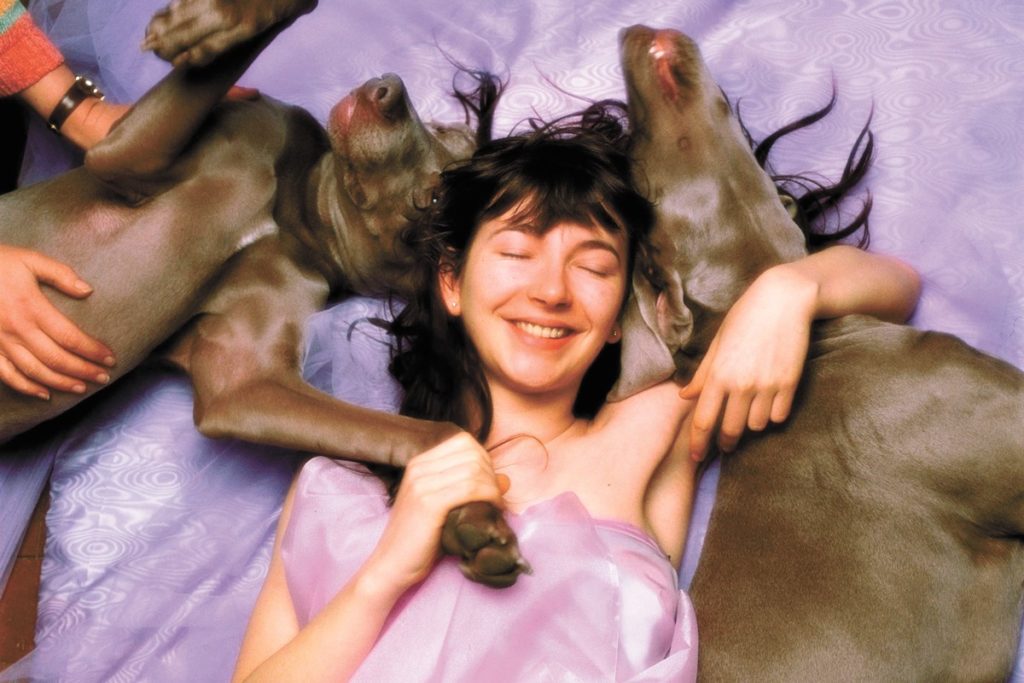
The Lasting Impact of Kate Bush Masterpiece Hounds of Love

It opens with the woosh of a synth leading to a steady dance floor rhythm, albeit it one that, at 108 beats per minute, is slow enough for pensive swaying. Her voice rises, “It doesn’t hurt me/Do you want to know how it feels?” 

The music surrounding her starts to sound like a world teetering on the verge of collapse. Yet, her voice remains in complete control as she dives into the chorus, wishing to make a deal with God. She stays strong, holding your attention as she continues to rise to the bridge, commanding, “Come on, come on darling, let’s exchange the experience.”

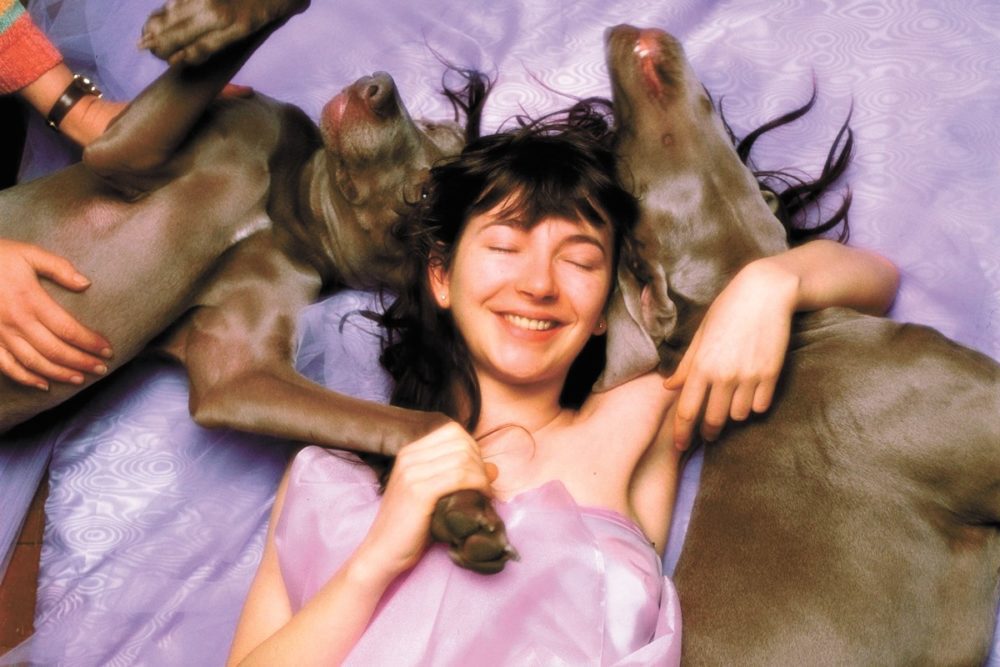
Thirty-five years ago, Kate Bush dropped listeners into the drama with “Running Up That Hill,” still one of her most memorable songs, and kept them hooked for the duration of Hounds of Love. Throughout the album, she builds narratives around complicated emotions, intertwining childhood fears and romantic apprehension in the title track, maternal love and a violent crime on “Mother Stands for Comfort.” She turns an obscure book into a single on “Cloudbusting” and wrote an entire album side following one story arc with The Ninth Wave

Hounds of Love, released on September 16, 1985, was Bush’s fifth album, the second that she produced on her own and the first that she recorded in her own studio. It was an album that was simultaneously accessible and experimental, home to the beloved singles “Running Up That Hill,” “Cloudbusting,” “Hounds of Love” and “The Big Sky.”  It also includes The Ninth Wave, a seven-song suite, essentially an album-within-an-album, that brings together traditional instruments with inventive use of synths and samples to tell the story of someone alone at sea overnight. 

It was an ambitious album, one that came out of a major work-life change. In multiple interviews, Bush spoke about her decision to leave London and and to build a home studio. It was a crucial move, she would explain, because the home studio away from city life allowed her to work with fewer distractions. Moreover, for a recording artist who wanted to spend time experimenting with sounds, it was more cost effective than paying for studio time. 

In the press surrounding the release, Hounds of Love was viewed as a comeback of sorts. Bush’s previous album, The Dreaming, was perceived to be less successful than her earlier efforts. However, when this was mentioned by interviewers, Bush would point out that this was simply a matter of charting singles, and not a measure of the artistic success of the album. In fact, as years passed, The Dreaming would go on to become a greatly admired by both fans and critics. It’s also the album that marks her debut as a producer, a pivotal moment leading to the creation of Hounds of Love. 

Moreover, three years passed between The Dreaming and Hounds of Love, which was considered to be a significant absence for a popular singer (listening to old interviews, it seems quite possible that this marks the beginning of the “Kate Bush as reclusive artist” trope that persists to this day). Through her responses, it’s clear that Bush was set on following her own musical path, not one that was expected of her. 

In a 1985 interview with the British television channel Music Box, Bush talked a bit about her relationship to press, stating that her intention was to promote her work, not herself. “I’m being the saleswoman for the record or the video or whatever it is at the time,” she explains. 

To hear this 35 years after that media push for Hounds of Love might seem a bit baffling. Bush’s approach is fundamentally opposed to the advice that’s been drilled into just about everyone’s head now, when social media and personal branding is considered integral to success. To take the emphasis off the self and put it on the work sounds quaint, a luxury reserved for artists who have the financial support of institutions with big budgets. But maybe Bush was onto something; maybe it’s because of her insistence to keep the focus on the art and not the artist, something that she’s continued over the decades, that her work has had such longevity. 

Certainly, that time she spent out of the limelight and focused on the music made an impact with Hounds of Love. On The Dreaming, you can hear Bush pushing the studio to the limits, layering and manipulating sounds to bring together traditional and modern music in an emotional way. She continues that practice on Hounds of Love, but with tighter songwriting and an emphasis on rhythm. “I think this album is dealing with me being much more influenced and excited by rhythm, particularly consistent rhythm,” she said in a Night Flight interview, “as soon as it’s danceable, people can relate to it.” 

All that leads to a stickiness with Hounds of Love that would last for decades. Her songs on this album motivated people to look deeper into its roots. Take, for example, “Cloudbusting,” which was based A Book of Dreams, Peter Reich’s memoir of life with his father, the controversial psychoanalyst Wilhelm Reich. If you it up on Amazon now, you’ll see the subtitle, “The book that inspired Kate Bush’s hit song ‘Cloudbusting.'” 

With Hounds of Love, Bush also built a collection of songs that would re-enter the public consciousness repeatedly over the years. Just as she employed sampling on Hounds of Love, her vocals from “Cloudbusting,” were cut-up and re-configured by the  electronic duo Utah Saints for the 1992 song “Something Good,” which would become a top five hit in the U.K. while making an impact with both the dance music and alternative radio crowds in the U.S. In 2005, twenty years after the album’s release, The Futureheads covered “Hounds of Love.” Their version would make the U.K. top 10 and reintroduce the song to a new generation of listeners. Meanwhile, “Running Up that Hill” has been covered and remixed multiple times over the years, with notable reinterpretations from Placebo, Chromatics, and most recently Meg Myers. Aside from the direct nods to the songs on  this album, there are the countless other artists across disciplines who have found inspiration in Hounds of Love. 

In a British radio interview from the time of the album’s release, Bush spoke about the art, particularly films, that inspired her and related it to her own music. “When I write things, I, ideally, would love to be doing to people what happens to me when I’m affected by these things,” she said. No doubt, with Hounds of Love, Bush achieved that. 
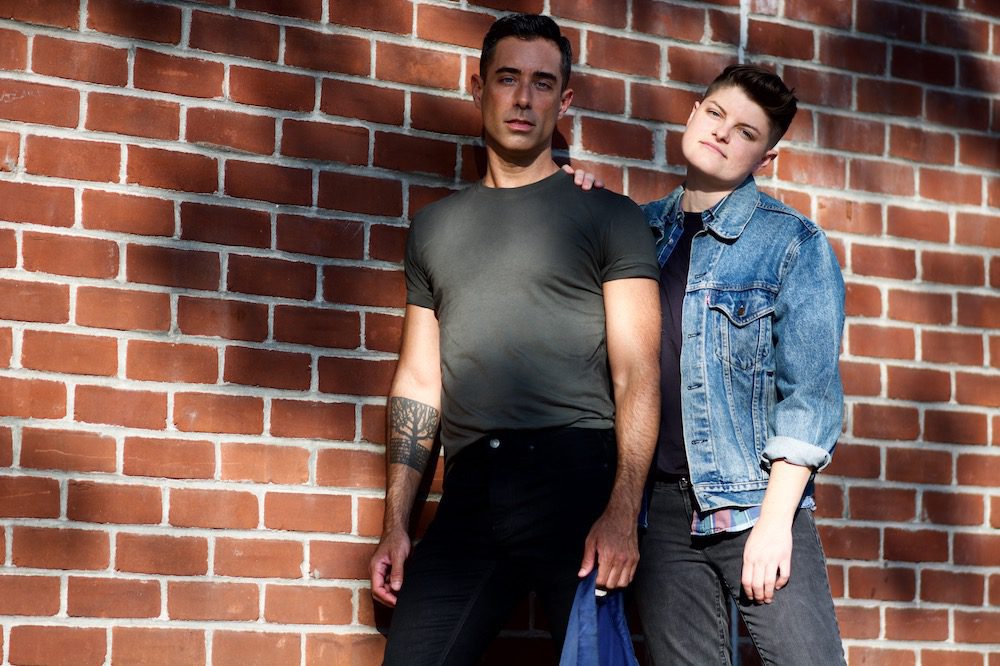
PREMIERE: Tender Creature Filter Loss and Identity Through Queer Lens on Debut EP ‘An Offering’

Photo Credit: Emilio Mendoza

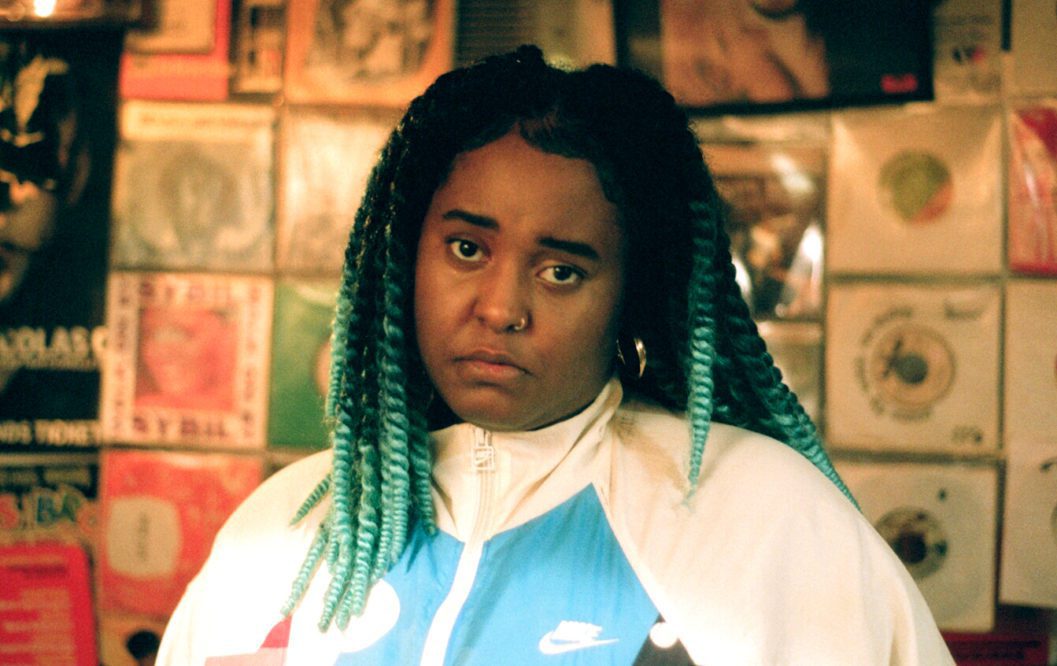
On their debut EP An Offering, Queer New York-based indie folk duo Tender Creature provides a raw glimpse into some of life’s most difficult experiences, from losing loved ones to coming out to navigating relationships. But members Steph Bishop and Robert Maril tell these stories with beautiful melodies, playful instrumentation, and relatable lyrics that provide hope for those in the midst of such travails. Relating stories Bishop wrote about specific events from their life, the group mixes folky vocals and a variety of instruments with electronic effects that make for a collection equal parts fun and contemplative.

Bishop and Maril met in 2011 and initially played together in the queer country band Kings, then spent some time making solo music on their own before reconnecting in 2018. Their goal with the new EP was to meld their traditional folk singer-songwriter styles with electronic techniques like beats and synths, taking advantage of Maril’s newfound knowledge of digital production and dance music. “We had worked on a previous project together, and we had a certain style we were used to writing and performing in,” says Bishop. “I think one of the goals for this EP was to sort of break out of that box a bit and try something new.”

During the production process, they alternated between in-person sessions and independent work, where they’d record parts of the songs and send them back and forth to each other. They incorporated a variety of unfiltered instruments, including electric guitar, cello, and ukulele, careful not to alter their voices or use too many effects. “When we were arranging these songs, it was a very conscious decision not to filter the instruments or put them through a bunch of processors,” says Maril. “It’s very rich, organic, wooden-sounding instruments sitting in this soup of digital beats.”

The groups sites Arthur Russell and Joanna Newsom as their biggest influences; they were particularly inspired by Newsom’s use of vintage synths, as well as the beats of bands like Pet Shop Boys. Their music also emanates old-school indie folk vibes in the vein of The Weepies or The Finches.

Thematically, An Offering reflects on loss, identity, and learning from the past. The title track and first single is a poetic depiction of Bishop’s experiencing losing their grandmother: “Black dirt in my hands, this is where I leave you/The sky on fire, the static on the radio/And I don’t understand, but I don’t need to/The birds on wire will tell you when it’s time to go.” Meanwhile, “If Anyone Asks,” is a catchy, upbeat account of reclaiming oneself in the midst of a dysfunctional relationship. On “The Quietest Car,” Bishop sings against mournful cellos about the death of a former student. “Count to Five,” the last song on the EP, is a dreamy, ukulele-driven love song.

The members’ queer identity is also a big part of the EP and of their broader musical mission. In the slow, harmony-filled “Climbing Trees,” Bishop reflects on someone they knew during childhood who received a lot of backlash for coming out. Although it’s written from the perspective of someone who is now out, it shows compassion for the subject of the song, who ultimately went back into the closet: “Oh, I felt it/Your breath as you held it/The winds as they warned you to stay.”

“It’s [about] the brave choice of coming out and then the choices you have to make based on your surroundings to stay safe and stable,” Bishop explains. “The people around him weren’t ready for it, so he had to make his choices in that way, but it was hard to watch as a young queer person.”

Through their music, Bishop and Maril hope to help people who may be in situations like this. “A kid struggling in a place where maybe it’s not such a safe or a positive environment in which to come out, it’s something that a queer person can listen to and sort of hold on to as representation,” says Bishop.

“We’re so starved to see our experiences reflected in media,” Maril agrees. “We really don’t, and so for us, there was really no choice but to be out and make music for queer people. I mean, we make music for everybody, but we write from what I see as a queer perspective — kind of an outsider’s perspective. So I hope other people feel a connection to this music and feel like this is for them.”

Follow Tender Creature on Instagram for ongoing updates.

CrowJane Flexes Her Visual Art Skills in Music Videos For Her First Solo Album

In her video for “The Pharmacy,” singer CrowJane appears as a demon with blank eyes and a mouth oozing black goo as she writhes in chains, her long, sharp fingernails nearly scratching herself as her shackled hands clench and release.

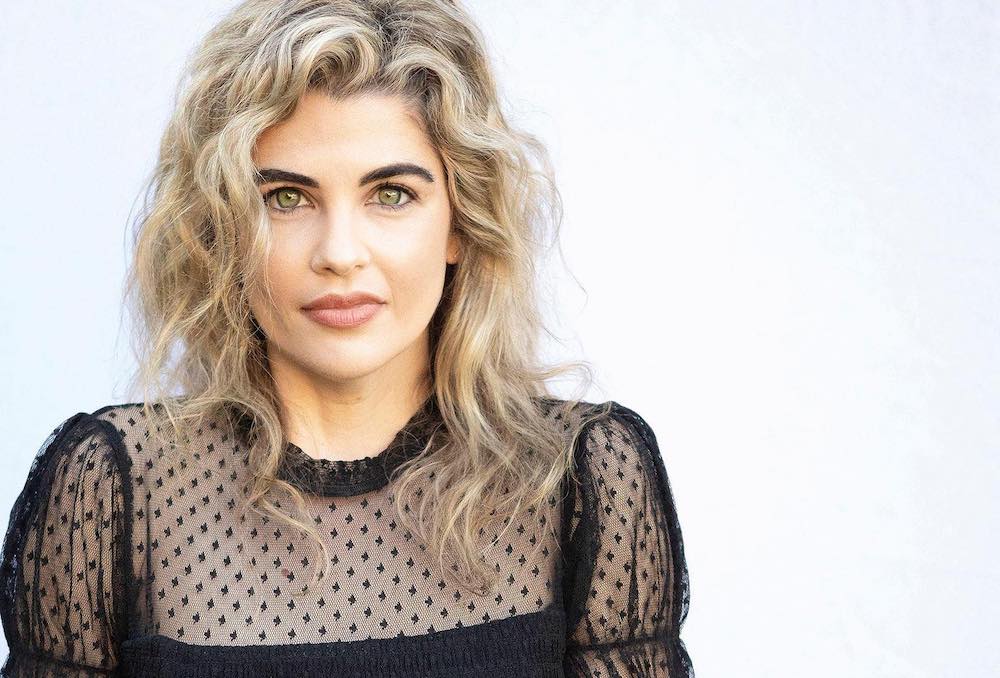
CrowJane (sometimes also credited as Heather Galipo) is best known for her work as guitarist for the goth-leaning, post-punk band Egrets on Ergot and vocalist for the noise rock outfit Prissy Whip. She’s also a makeup artist in the film industry, whose professional work includes special effects makeup. With her debut full-length, Mater Dolorosa, out on September 15, and its accompanying videos, CrowJane merges her aural and visual creative pursuits.

“I do this to so many people,” she says by phone from her home in Los Angeles. “It’s always good to get a taste of what it’s like to be in the makeup because then you remember, this kind of sucks. You can barely see. You can’t touch things. You have a bunch of black stuff in your mouth and it tastes gross.”


She worked with Paul Roessler, the musician and producer who has been active in the L.A. scene since the punk era, with credits that include The Screamers, Nina Hagen and 45 Grave.

The two first bonded when Roessler produced music for Egrets on Ergot. Galipo recalls Roessler bringing her into the studio and encouraging her to write songs. She had intended to stick with an acoustic guitar, but, as they worked, the music morphed into something experimental. They made percussion instruments and created tracks that would become rhythmic and atmospheric.

“It sort of started as a therapy session, to be honest,” says Galipo about the album. “It was a way to get through a battle with addiction and different hardships in my life having to do with abuse and the list could go on and on.”

Roessler became her “spiritual guide,” in addition to her producer, co-writer and friend, on what would be both a musical and personal journey (Galipo has now been sober for almost five years).

She had put those ten songs aside, though, while focusing on her other projects and they would stay on the back burner for several years. Then, when the COVID-19 pandemic hit in early 2020, she was left without work and had spare time on her hands. Galipo had considered releasing the album herself, but Roessler suggested that she try to work with a label. That led CrowJane to Kitten Robot, which is run by new wave singer Josie Cotton.

With the album release coming at a time when work is slim in the film world, CrowJane had friends join forces to (safely) make music videos.


The first of those clips, “Terminal Secrets,” was released in August and is an exercise in stop-motion animation, where CrowJane made masks of her own face. “I had never shot anything in stop-motion before and I really admire it,” she says. The clip was shot at 12 frames per second, as opposed to the usual 24 frames per second. “Even then, we would work for 10 hours or maybe a little less and then walk out of there with maybe 10 seconds of footage,” she says.

For a forthcoming video of her cover of James Brown’s song “Man’s World,” she used leftover prop hands to make a pet that looks like a hand in a snail shell. It’s her favorite piece that she’s made for the videos so far.

“Part of the reason that I got into makeup effects is because I was so in awe into what these people can create,” says Galipo. Having the opportunity to bring together her love of movie makeup and effects with her own music has been a special experience. “I get to exercise the muscles of all the things that I love to do creatively and it all comes together,” she says.

The timing of the album presented CrowJane with an opportunity to flex her visual art skills as part of the project in a way that might not have otherwise been possible. Also, the time that elapsed between recording the album and the release of it gave her a chance to reflect on the material. She says that the meaning of some of the lyrics have changed for her over the years.

“If I hear the words that I wrote, some of the things that I would write about my abusers, I realized that I was writing more about myself,” she says. “Now that I look back, it’s interesting to see how that progresses. I’m grateful for everything that I did. My life is in a much better place and I appreciate everything that art has given me.”

Follow CrowJane on Facebook for ongoing updates.

Dione Taylor Returns with Eclectic “Prairie Blues” Sound on Spirits in the Water

Photo Credit: CRILAPHOTO

When Dione Taylor appeared on the Canadian music scene in 2004, the young artist was part of an exciting class of singers and musicians making jazz relevant for a new generation. Open Your Eyes not only put the Regina, Saskatchewan singer-songwriter on the Canadian map, it took her to the White House to perform during Black Music Month in George W. Bush’s administration. A Gemini nomination followed for her take on Oscar Peterson’s “Hymn to Freedom.”

Since then, Taylor has expanded her sound beyond jazz.  The 2015 album Born Free illustrated a genre mash up she coined, “Prairie Blues” – folk, roots and Americana spun in the Canadian blender. Now she’s back with Spirits in the Water, a haunting string of tracks that touch on injustice and tragedy, as well as sacrifice, resilience and triumph in the face of brutality.

Taylor spoke to Audio Femme about stories only the water knows and finding her voice.

AF:  Can you describe the concept for the album?

DT: When I first began to write songs for Spirits in the Water, I became fascinated by the concept of water. I read stories about African American slaves who were coerced from their homes, forced to get on boats and then sent to travel by water to a “Promised Land.” There were a few mothers who instinctively knew that trouble and heartache were patiently waiting on the other side for them. Rather than living a life of servitude they took their children and threw them overboard. Some mothers even tried to throw themselves overboard. They chose death over slavery. There’s an unspoken freedom in death. Then I thought, if the ocean could speak, what stories would we hear when we listen to the water? What stories of happiness, hardship, murder, grief, love and pain are buried in the muddy waters?

AF: Did this pandemic and worldwide protests affect the way you approached the sound or production of the songs? Or even your feelings about the album and making art in general?

DT: The album was already complete before COVID hit. You’ll find that thematically the songs are just as relevant today as they were when they were written years ago. For example, my song “How Many Times” is a peaceful protest against inequality and injustices against BIPOC, women, children [and] pretty much anyone who feels isolated and ostracized right now.

AF: Do you consider Spirits in the Water a protest album?

DT: There are two songs on Spirits in the Water that are protest songs: “How Many Times” and “Ain’t Gonna Let Nobody Turn Me Around.” Although [that’s] originally a freedom song written for the civil rights movement lyrically it’s as relevant today as it was in the 1960s. I added more lyrics to reflect what’s happening today in 2020 with Black racial profiling and women’s rights.

AF: Many think of you as a jazz artist. But this album is blues, rock, country… Have those sounds always been of interest to you? Was jazz a detour or is this a detour?

DT: I’m an artist, so that allows me the freedom to explore whatever sounds and vibrations out in the universe. I happened to launch my career as a jazz artist but I’m inspired by many styles and genres of music. When I began writing for myself I knew that I needed to incorporate my love of gospel, blues and roots music because those were the styles of music that I heard growing up as a P.K. in Regina, Saskatchewan. I didn’t hear anything or anyone who sounded like me so I created my own style/genre called “Prairie Blues.” I like to say that it’s a dynamic blend of folk, roots and Americana but it’s 100% Canadian because it’s mine! I hope that my music will inspire others to write as well.

AF: Does music today feel different as opposed to when you began in 2004?

DT: For me, releasing music is about self-expression. I feel extremely lucky and blessed because I have an emotional musical outlet in which I can tap into when I need to, especially right now when life is so full of uncertainty. I feel like my fans – old and new – and I are on this crazy journey together through life. When I’m on the road, it makes me so happy when I see and hear from people who were at my first CD release party and are still excited and proud to see me doing me. From jazz to blues and everything in between, it’s all Dione Taylor.

Follow Dione Taylor on Facebook for ongoing updates.

PREMIERE: Brit Drodza Shines a “Spotlight” on Female Friendship with New Visual

Photo Credit: Richard Israel

Throughout her music career, Charlotte, NC-based pop-folk artist Brit Drozda has counted on her female friends to cheer her on – and like any good friend, she’s more than happy to return the favor. After offering support to one of her pals, she took the conversation a step further and wrote “Spotlight,” an ode friendships where women uplift one another.

“Do you know how happy it makes me to see you in the spotlight?” she sings in a bright, cheery melody against bluesy guitar and minimalistic percussion. Her voice is rich and deep, a bit reminiscent of Florence Welsh, as she addresses a friend with feel-good lyrics like “Please be proud, because I am/Just to call you my friend.”

Inspiration struck Drozda when a friend revealed something personal to her and seemed to be making strides toward being herself more fully. “She was stepping into the spotlight, and I was so proud of her and excited to see how her life unfolded from there,” she remembers. “I have several really tight friendships, and it’s primarily women who have cheered me on as I’ve been on stage, and I think it’s so important to recognize people when they’re in their element and to commend and support them.”

Drodza originally wrote the song on piano, then arranged it for the guitar, giving it a fun, light, laid-back feel. She added handclaps to the beginning to convey the sentiment of cheering someone on. “I just wanted it to feel like a conversation of something I would say to my friend,” she says.

A visual for the song features the lyrics against colorful images of women’s faces by Charlotte-based artist Windy O’Connor, who has a collection of these paintings that she calls “chicas.”

“Each face looks different, and I think it’s this anthem of stepping into your own and owning your self-expression and supporting people as they find that,” says Drodza. “Every time I see those chicas, I think of people who are embodying who they are. They just fit so well when I put the lyrics to it.”

The single will appear on Drodza’s upcoming EP, Seashells & Stories (out October 9), a name inspired by the Ray Bradbury novel Fahrenheit 451. The title track and first single, “Seashells & Stories,” references the book’s protagonist’s wife, who puts seashells in her ears to tune him out. “It’s about trying to connect in a relationship and having someone be kind of distant,” she says. “The overarching theme of that song is about trying to make human connection and trying to step back into a relationship and to really communicate.”

In “Avalanche,” another song off the EP, she uses the image of an avalanche to describe the snowballing effects of fear, belting, “an avalanche is coming through” against ambient keyboard, guitar, and harmonies that fade like gusts of wind. The upbeat, poppy “Rose Colored Glasses” reflects on the way we idealize relationships, and the dreamy “You Were Right” throws up a white flag after an argument with delicate, high piano notes and a soaring, melodic chorus.

Drodza came into the studio with the lyrics and melodies written and played piano and keys, and producer Scott Jacoby (Coldplay, Vampire Weekend, Sia) helped put the rest together. “The really amazing thing about these songs is, I feel like vocally, it’s akin to a thumbprint of my vocals,” she says. “I hadn’t been able to quite get there with the nuances and the subtle sonic things with my voice that make it what it is, and [Jacoby] just really captured that through his recording techniques.”

Trained in classical piano, Drodza started a band with her brother that she describes as No Doubt meets The Killers, then took some time off before launching her career as a solo artist. She’s released two albums thus far, 2016’s Let Me Hang the Moon and 2019’s Make Something Beautiful, along with the 2018 EP You Can’t Take It With You When You Go. Most recently, she’s been spending her time going outside, teaching her kids to cook, and writing new music that she plans to record soon. “The sound [of Seashells & Stories] is in the vein of what you’ll be hearing from here on out,” she says.

Follow Brit Drozda on Facebook for ongoing updates.

Baker Boy Wins Big at the National Indigenous Music Awards; Plus Top Honors to Archie Roach & More

Baker Boy Photo Credit: Freya Esders

Last month, the National Indigenous Music Awards honored dozens of Australian musicians despite pandemic restrictions, as the ceremony was broadcast from Darwin in the Northern Territory to participants and audiences around the entire country. Top honors of the night went to Former Young Australian of the Year, rapper Baker Boy, who won three of the 10 awards. For the second year in a row, he was awarded Artist of The Year.

The Yolngu rapper from the Northern Territory won the award against a competitive field of fellow Indigenous artists, each of whom has released critically acclaimed albums and singles in the past year: pop singers Jess Mauboy and Thelma Plum, roots artist Emily Wurramara who sings original music both in English and Anindilyakwa, hip hop artist and rapper Mau Power, and electro-soul duo Electric Fields (Zaachariaha Fielding and Michael Ross).

Baker Boy, born Danzal Baker, won Song of the Year and Film Clip of the Year for his track featuring Jess B, “Meditjin,” which translates as “medicine” in Yolgnu Matha. The song reached number one on the Australian Indigenous Music chart. In a statement made when the song was released in November 2019, Baker Boy said, “Music is the best meditjin. It brings everyone together, makes you want to dance, love, laugh, vibe and feel. I wrote ‘Meditjin’ with just that in mind. It’s about making people feel the music and express themselves.”

Album of the Year was won by Victorian Archie Roach, whose album Tell Me Why dovetailed with the release of his memoir as an activist who has campaigned for the rights of Indigenous Australians throughout his 64 years of life and career. The album revisits song spanning Roach’s career, including “Took the Children Away” (from his 1990 debut Charcoal Lane), which laments the Stolen Generations – Indigenous Australian children forcibly removed from their families and placed with white Australian families.

Roach was one such child; at the age of four, he and his sisters were taken from his parents by Australian government agencies and bounced from orphanages to unsuccessful foster care placements before finding some semblance of peace in the home of Scottish immigrants Alex and Dulcie Cox in Melbourne. Alex taught Roach how to play guitar and keyboards, also encouraging him to join in on singing traditional ballads. Though haunted by his traumatic childhood, Roach became internationally renowned, playing shows with Bob Dylan, Billy Bragg, Suzanne Vega, Tracy Chapman and Patti Smith.

Roach met his future wife, Ruby Hunter, at a Salvation Army drop-in centre when she was 16 and he was 15. Hunter, a Ngarrindjeri woman, had also been removed from her family and fostered by white parents at a young age. She often performed with Roach and the two ran workshops and events for Indigenous youth around Australia before her premature death, aged 54, in 2010. Though later than ideal, she was inducted into the NIMA Hall of Fame this year.

Writing songs in secret while raising a family and working at a hostel for homeless Aboriginal girls and women, Hunter emerged as a songwriting talent alongside her husband when he discovered a song she’d written, “Down City Streets,” and recorded it on Charcoal Lane. She was offered a recording contract on the basis of “Down City Streets,” the first Australian Aboriginal woman to sign with a major record label. Ruby was central to the formation of Black Arm Band, a company of leading Indigenous and non-Indigenous performers from around Australia. Black Arm Band tours and presents Indigenous performances at major festivals in capital cities and in remote Australian communities.

The National Indigenous Music Awards (NIMA), which importantly celebrate new and emerging artists as well as recognising and honoring established artists, were established in 2004 as an association between MusicNT and the Northern Territory Government. The other contenders for Album of the Year were a testament to the incredible diversity of Indigenous music being made throughout Australia.

Miiesha hails from a small Aboriginal community in Central Queensland (north of Australia) called Woorabinda. She debuted in 2019, supporting Baker Boy, Briggs and Thelma Plum as well as performing at Melbourne’s Laneway Festival, she’s proven popular as both a live artist and on community radio stations.

Miiesha’s debut Nyaaringu is the natural result of her passion for soul, gospel, R&B and hip hop. Though only 29 minutes, the collection of songs prove her skills as a soul singer and an extraordinary vocalist and songwriter at only 20 years old. “Nyaaringu” translates as “what happened” in the Pitjantjatjara language. Miiesha attributes the title to the inherited stories, grief and hope that have been passed down through her grandmother via stories and shared musical experiences.

Ray Dimakarri Dixon’s album Standing Strong Mudburra Man combines English and Mudburra languages. Dixon lives in the Northern Territory, a community 700km from the major city of Darwin. The area is threatened by fracking, which devastates the land and ruins wildlife habitats. Dixon’s album is ultimately a protest for his country, and a strong case against mining and fracking.

“You can support people like myself – people who are standing strong. There’s also an outfit called Lock the Gate that comes out to country and helps us,” he told Melbourne university, RMIT.

The awards are a nationally recognised celebration of Aboriginal and Torres Strait Islander artists. NIMA’s creative director, Ben Graetz, sees a silver lining to hosting the event virtually this year. “The great thing about virtual events is it allows people access to it, people with disabilities that probably aren’t able to get to the event, people living in remote communities that aren’t able to get to this event,” he says. “It’s a way of bringing our community together, our mob together, but also… celebrating all of our great musicians.”

Check out a full list of NIMA’s finalists for 2020 below.

The full list of Finalists for 2020 is below.

Artist of the Year
Baker Boy
Electric Fields
Emily Wurramara
Jessica Mauboy
Mau Power
Thelma Plum

Album of the Year
Archie Roach – Tell Me Why
Jessica Mauboy – Hilda
Mau Power – Blue Lotus The Awakening
Miiesha – Nyaaringu
Ray Dimakarri Dixon – Standing Strong Mudburra Man

Song of the Year
Alice Skye – “I Feel Better But I Don’t Feel Good
Baker Boy ft. Jess B – “Meditjin”
Briggs ft. Tim Minchin – “House Fyre
Electric Fields & Keiino – “Would I Lie
Kee’ahn – “Better Things
Thelma Plum – “Homecoming Queen

New Talent of the Year
Allara
Dallas Woods
Kee’ahn
Miiesha
Mitch Tambo

Film Clip of the Year
Baker Boy ft. Jess B – “Meditjin”
Briggs ft. Tim Minchin – “House Fyre”
Dallas Woods – “If It Glitters It’s Gold
Miiesha – “Drowning
Tasman Keith – “Billy Bad Again

Community Music Clip
Booningbah Goories
Bwgcolman Mob
Githabul Next Generation
Iron Range Danger Gang
KDA Crew
Ntaria Connect

Indigenous Language Award
Rrawun Maymuru & Nick Wales – Nyapililngu (Spirit Lady)
Stuart Nugget – Nayurni (Woman)

RSVP HERE: Sam Newsome Trio Plays In-Person Artists for a Free World Protest Concert

We are excited to be featuring an in-person, socially distant event for the first time since March! Arts For Arts, an NYC organization that is dedicated to the promotion and advancement of Free Jazz is hosting Artist for a Free World Protest Concert Series September 12th at The Clemente, La Plaza and September 26th in St. Marks Churchyard.

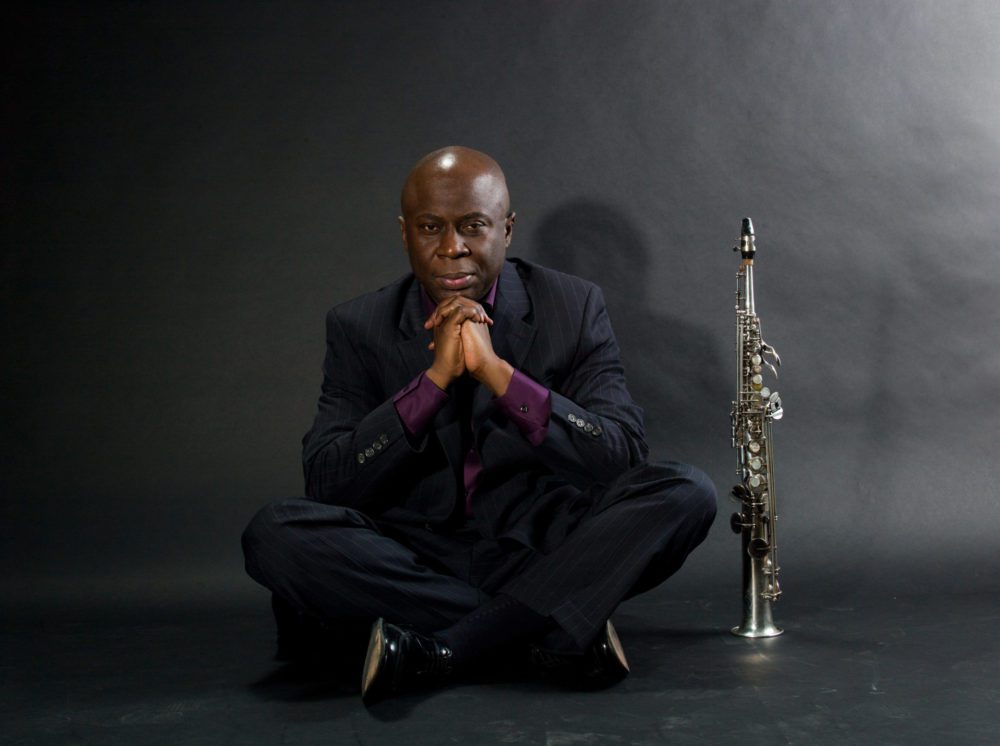
The headliner for this Saturday’s event is Sam Newsome Trio. Newsome is a soprano saxophonist, jazz improviser, solo performer, sound enthusiast, and music professor at Long Island University’s Brooklyn Campus. Solo soprano sax has not been explored as thoroughly as other saxophones, allowing Newsome to pave the way with his creativity and sonic explorations. Newsome has a broad palette of sounds with experimental techniques such as prepared and modified saxophones. Newsome’s most recent 2020 releases, Sonic Journey: Live at the Red Room, and Free Wyoming (Sam Newsome Trio: Live at the Metro Coffee Co.) capture their live free-form abstract compositions.

This Saturday (9/12) you can catch Sam Newsome joined by Hilliard Greene on bass and Reggie Nicholson on drums live at The Clemente in La Plaza, 114 Norfolk Street. The Larry Roland Trio and Dickey Spell will also be performing at 3 and 4pm respectively. The event is sold out on preregistration, but they will accommodate walk-ups as capacity allows (approx 30 people). It will also be live streamed via Facebook and YouTube. We chatted with Sam Newsome about his favorite visual artists, musical routine and why jazz students should be awarded for getting it wrong.

AF: What led you to jazz and the soprano sax?

SN: I was attracted to the artistic freedom that jazz afforded me. Society often teaches us to be cogs in a wheel, to follow the rules, and to be good soldiers. Jazz challenges these expectations. Jazz musicians are encouraged to shake up the status quo, or sometimes simply move around it. As far as the soprano… because it’s the least explored of all the saxophones, I saw it as a blank creative canvas that allowed me be under-influenced by the music’s history.

AF: What are some ways you prepare and modify your sax?

SN: I have an expansive set of preparations that I utilize, that’s constantly growing—for better or worst. The ones most commonly used are my plastic tube extensions, my hanging wind chimes, the tin foil that I attached to the horn’s bell, the balloons stuffed with bells that I attach to my fingers, the noise makers that I place inside of my instrument, and lately, I’ve been experimenting with attaching a dishwasher drain hose to the neck of the instrument. It’s a pretty wild sound. My creative process is guided by the simple idea of altering the way that air enters and exits my instrument.

AF: Are you inspired by any non-musical mediums?

SN: Absolutely. Picasso, Pollack, Yayoi Kusama, and nature are huge sources of inspiration. Simply put, I’m inspired by things of beauty.

AF: Has the quarantine affected your musical routine?

SN: Most definitely. I did not practice as much in the conventional sense. With few opportunities to play, it’s pretty understandable. Actually, I spent more time outside enjoying nature: hiking, camping, bike riding, ziplining, all the fun stuff I normally don’t make time for. But now I’m getting back to practicing in a more rigorous way. It feels good after so many months of laying off.

AF: What have been some of your favorite records to listen to over the past few months?

SN: Oddly enough, I don’t listen to a lot of music. I do listen to things every day, but only in small doses. Just hearing a few bars sets off my creative juices like a flowing river, then I’ll to have to turn it off so that I can deal with my creative thoughts. It’s one of the curses of being an artist. My wife, Meg Okura, is prolific composer. I’d say I probably listen to her music more than anyone else’s, just from being in such close proximity.

AF: You’ve taught jazz for many years. Do you feel there’s an approach to teaching that achieves more innovative and creative playing?

SN: For sure. Innovation and creativity only flourishes when students take chances and fail. However, they won’t go out on a limb if they’re punished for it. If we started awarding students for getting it wrong instead of only patting them on the backs when they get it right, we’d see a significant change in students’ creative output. When need to start giving A’s for fucking up. Make wrong the new right.

AF: What has been your favorite live performance experience and why?

SN: They’ve all been special in their own way. Any time I’m able to simultaneously connect with my instrument, have synergy with other players, and play for an appreciative audience, it’s nothing short of magical. It’s an enlightened state that can’t be judged, only experienced.

AF: Have you done many socially distant shows?

SN: Quite a few. I just returned from playing the 2020 Detroit Jazz Festival with a Afro Horn, a high- energy Afro Cuban-influenced jazz ensemble I’ve been working with for several years. They flew us from New York to Detroit, and we played on a big stage for no live audience, just tech and camera crew. All of the performances were streamed via their website and YouTube. It was very bizarre, to say the least. However, it was a sign of progress. This would have been unthinkable back in April.

AF: How did you get involved in the Artists for a Free World Protest Concert series and what can we expect from the performance?

SN: I’ve been involved with them for at least five or six years. I admire the work that they do. We need more people like them out here trying to make a difference. On Saturday, I’ll be performing with my trio with Hilliard Greene on bass and Reggie Nicholson on drums. And we’ll do what we do, which is take ourselves and the audience on a sonic journey. Hopefully, we’ll all come out on the other side in a better place.

AF: What are your plans for the rest of 2020 and beyond?

SN: My plans moving forward are simple. Enjoy life, stay safe, and create.

RSVP HERE for Sam Newsome trio, Dickey/Swell, and Larry Roland Trio at The Clemente, La Plaza 3pm ET on 9/12.

More Great Shows This Week…

9/11 Black Faces, White Spaces via New York Botanical Garden. 11am ET, RSVP HERE

9/11 Armenias in Film: The Stateless Diplomat. RSVP HERE

9/11 + 9/12 Lucero via Veeps. 9pm, RSVP HERE

9/11 – 9/13 Punk n Roll RendezVous Online Festival via The Unicorn Camden Live. 2pm EDT, RSVP HERE

9/12 Godcaster, Threesome, The Eclectic Method via Undercover. 8pm, RSVP HERE

9/13 Improvised Tarot Readings: A Hilarious Evening via Zoom. 8pm EDT RSVP HERE

9/13 Delta Spirit via nugs.tv. 9pm, RSVP HERE

9/14 Blitzen Trapper (record release) via In.Live. 10pm, RSVP HERE

9/15 The Killers via Pandora Live. 8:45pm, RSVP HERE

9/17 Kevin Morby (plays Still Life) via NoonChorus. $15, 9pm EDT, RSVP HERE

Seattle’s Good Co Asks Musicians to Quarantine Together for Video Cover Challenge

On a bandstand, it’s not uncommon to leave space for band-members—and special guests—to solo and share their own interpretation of a song live for everyone to enjoy. But, during quarantine, while musicians and audiences are alone in their homes, that delicious sense of collaboration and in-the-moment improvisation can seem impossible to recreate. That’s where Seattle’s joyous, electro-swing band Good Co and their Quarantine Together Challenge come to the rescue.

With the music community feeling collectively glum – the band included – over missed performances, rehearsals and musical fun with their friends, the Seattle based six-piece got inspired to do something innovative to lift everyone’s spirits by creating and video for their original song, entitled “Quarantine.” At the center of the upbeat, relatable number is steamy vocals, funky horns, and a groovin’ rhythm section that could inspire even the most rhythm-deficient to get up and dance. Then, they took it a step further: in collaboration with musician’s financial relief non-profit, Sweet Relief, they’re asking musicians from Seattle and beyond to contribute their video versions of the song.

For this challenge, which Rayburn jests is like the “Ice Bucket Challenge meets celebrity ‘Imagine’ video,” Good Co just asks that contributors do their own thing with the original—replace or change the instrumentation, take a solo, remix it, write a new countermelody—and then share the video on social media with Good Co. tagged and a little blurb about Sweet Relief and its mission. They’ve also set up contributing musicians with everything they may need, like a Drop Box full of sheet music and notes on the song.

Since they began the ongoing project in early August, the band has received well over thirty videos, which include performances from Seattle’s own talents like saxophonist Kate Olson and jazz pianist Shawn Schlogel, as well as musicians from as far away as New Zealand and Hawaii.

“Quarantine” and this video challenge come on the heels of Good Co’s fourth full-length album, So Pretty, which dropped in early June. The high-octane 11-track album is fun and incredibly variable: there’s disco, ukulele swing, euro-pop, even clever nods to American pop favorites like the building trumpet line in Black Eyed Peas,”Pump It,” on “Home.”  It’s the perfect soundtrack to a quarantine night many of us have had—so fed up with being home again, you’re getting dressed up in your sequins, fur and going-out jewelry just to dance around your living room and get back in touch with your night-out sexiness again.

So Pretty also documents Good Co’s current stellar line-up—including bandleader Carey Rayburn on vocals, trumpet, ukulele, synths; Jacob Sele on keys, vocals, percussion, and trombone; Benjamin Verdier on electric and upright bass; Joseph Eck on drums and percussion; Peter Daniel on saxophone; Sasha Nollman and Shannon O’Bent on vocals; as well as Rex Gregory on clarinet and Matt Williams on guitar. Rayburn says he’s enjoyed having some of Seattle’s brightest talent in the band, which has been the case throughout Good Co.’s many iterations since breaking out in 2012.

“Hands down my favorite thing is getting to perform with the other great musicians in the band and to share our music with audiences,” said Rayburn. “To tell the truth, it’s been pretty tough on each of us individually to not be able to play music, but we try to stay engaged. We’ve each been doing our own things to keep sane. Our singer Katrina has been writing new songs, I’ve been practicing a lot of trombone lately, and our band gets together for Zoom meetings just to hang out every couple of weeks.”

The Quarantine Together challenge has been a nice way to stay active, too. Rayburn is absolutely floored with the response to the project so far, which he hopes to continue for as long as people want to submit and raise funds or Sweet Relief.

“The most surprising thing, to me, is how much people have really enjoyed doing the challenge,” said Rayburn. “Several folks have told me that it felt like getting to collaborate with other musicians again, something that I think we all really miss right now.”

To get involved with the Quarantine Together project, visit the fundraiser website

Little Hag Premieres “Encore (Live From Asbury Park)” Ahead of Bar/None Compilation LP

Photo Credit: Ali Nugent

The Mercury Brothers had just played a set at the Stone Pony in Asbury Park, and the audience was clamoring for more. It was still a few minutes ’til midnight that hot summer evening, but the sound guy brought up the lights and house music instead. In the crowd, inspiration struck singer-songwriter Avery Mandeville. The line “If the people want an encore then the people get an encore” popped into her head, and the next day she was in the studio recording a wistful acoustic version of it that would appear on her her 2018 LP Happy Birthday Avery Jane. In its verses, she wishes for summer tours over icy streets, running late for a gig because she tried to do her hair “in that perfect in between of I care and I don’t care.” She sounds sort of exhausted (or at least flustered) by the reality of being a musician. “I got new stuff coming out soon/Yeah, I got new stuff I’m trying to say/And all this truth I’m writing will never see the light of day.”

“Encore” might’ve been written off the cuff back then, in those heady days when we all took live music for granted. But in the hellscape that is 2020, it’s sort of soul-shattering to hear, particularly in the doo-woppy live version Mandeville released the following year, recorded at the Asbury Park Music Foundation. Her voice warbles “I never wrote a setlist” unapologetically, and when she casually deadpans “Can I get a na na na? Can I get a hey hey hey?” the audience answers back enthusiastically, like a miracle, like a distant memory. “And the crowd goes wiiiiiiiild!” she teases, and they do.

Mandeville is re-releasing the live version of “Encore” as part of a compilation that includes songs from Happy Birthday and the EP that preceded it, Salty. The comp, out September 18, will be her first release on esteemed New Jersey imprint Bar/None Records, and her first as Little Hag, a new moniker that encompasses the full-band sound she’s embraced since coming up as a teenager at open mic nights in the tight-knit Jersey Shore music scene. The name started out as a jokey Instagram handle but it stuck, partially because it made sense given the confrontational nature of her writing style. “I started getting Little Hagged in the street – people would be like, oh, you’re little hag! And I’d be like, yeah, you know what, I am. Once other people started identifying me with it, I was like, this is more representative of the music and my songwriting persona than just my name is, and I enjoy having a little bit of a separation of those two identities as well,” she says. “It was time to kill Avery and just be the hag.”

After signing Mandeville in February, Bar/None founder Glenn Morrow came up with a name for the comp that was just too good not to go with: Whatever Happened To Avery Jane? The project acts as a way to preserve Mandeville’s body of work while serving as a launchpad for the punkier energy of collaborative work with her band, which includes Matt Fernicola on guitar, Owen Flanagan on drums, Chris Dubrow on bass and Noah Rauchwerk on keys. Though the songs were written over the span of the last several years, the theme tying them together is the diaristic nature of Mandeville candidly navigating what it is to be a young woman in a sometimes claustrophobicly small music scene, as well as the nuances of dating, relationships, and intimacy in the modern age, from Facebook stalking an ex to the shock of receiving dick pics to celebrating the proverbial walk of shame. Some of the songs take a lighthearted approach, while others, like “The Woods,” broach allegorical territory, a la Sam the Sham’s “Little Red Riding Hood.” And sometimes, Mandeville comes right out and confronts the heart of darkness, as she does on a track called “Predator” – “So everyone knows and nobody cares/And you know who you are/There is a liar/And there are sympathizers/And you know where you stand,” she howls. “Predator stalks another one out/No one will stop him.”

The first time she played the song out was at a show in the Asbury Hotel lobby – and though the predator she’d written about didn’t have the gall to show up, the sympathizers, surprisingly, did. “I looked them right in the eyes when I said [that line], and I saw them looking at each other, go oh shit, and leave,” Mandeville recalls. “It was so fucking awesome. I don’t think I’ve ever experienced such a direct sort of satisfaction from being on stage. I wish I had that moment on tape; I would watch it again and again if I could.” This is Mandeville in full Little Hag mode – she’s the shrew who will not be tamed, unbothered by confrontation if it means even one person in the audience can relate or feel protected by her boldness. “I think that’s also giving me the confidence to continue being vulnerable in my music, to definitely not hold back for anybody’s comfort, not even for my own comfort. If I have a feeling, it’s real, and I’m gonna say it.”

That’s true, too of the opening track on Whatever Happened to Avery Jane? and the newest of the bunch, “Tetris.” Written just a few months ago, it’s a perfect ode to the summer that never was: Mandeville bemoans being stuck inside, left to pointless distractions while friends on her feed live life as though everything is normal. It was meant as a response to quarantine ennui, or, as Mandeville puts it more specifically, “this whole amalgamation of feelings kind of came to a head where I was like, I’m so horny and I wanna die and everyone is pissing me off.” Its opening lines (“Everyone wants to fuck me/No one wants to see me cry”) have the kind of raw shock value of Liz Phair classics like “Fuck and Run,” or “H.W.C.” but Mandeville also taps into the same kind of powerless depression Brit Daniels embodies with the line “Sometimes I can’t make myself shuck and jive” on 2000 Spoon track “Chips and Dip” when she sings, “Tried making my brain party/But the music wouldn’t start.”

Even if she hasn’t felt much like getting sunburned among the mask-less masses, Mandeville has been unusually productive during the pandemic. “I was like, alright, I’m hunkering down, I’m writing a bunch of new stuff, I’m getting all my content together to re-release old stuff,” she says. “I was really writing a lot in March in April – more than I had ever written in my life. My old kind of songwriting habits were like, get hit with a bit of inspiration here and there, hopefully that will amount to more than a couple of songs a year, but for a lot of years that wasn’t really the case.” She’s got enough new songs ready for an LP she hopes will be out next Spring, and has been demoing them virtually with her band, which she says has “led to some more interesting choices, or different kind of songwriting techniques that I hadn’t explored in the past.” And she’s got some livestream performances lined up, including one with Long Neck’s Lily Mastrodimos. She even played a drive-in style show this summer, where the audience sat in their cars, listening to her play in the parking lot via their radios. It’s not quite the same as those not-so-long-ago days when Mandeville’s band piled into her ’98 Lexus, scraping tail along the Parkway to get a gig they’d cap off with a debaucherous cover of Bloodhound Gang’s “The Bad Touch” – but if the people want an encore, Little Hag is here to give them one.

Follow Little Hag on Facebook for ongoing updates.

Bel Marries Avant-Pop and Activism with First Installment of her TRILOGY EP

I first met Bel perched up at the bar of Max Fish on the Lower East Side during the last existing Fashion Week before COVID hit. Clad head to toe in vintage designer clothing, she exuded a unique warmth, juxtaposed with a cerebral demeanor – the encounter was refreshing during a season that can too often feel like a cesspool of egos and expensive handbags. We immediately began discussing her interest in psychology, feminism, her work in music, styling and love for refurbished fashions. Bel exists in a world of her own design – grounded, authentic, unfiltered, and of raw nature. Avoidant of the typical rose colored glasses worn by a fresh Aussie in the Big Apple, she’s real. There’s no veil to hide her imperfections or inner truths. Unashamed and unwilling to compromise in her approach, her ambition echoes like a delicate flame on the cusp of unleashing wildfires.

As a feminist activist and multi-disciplinary artist, Bel creates a striking visual world that accompanies her sonic prose. She decided to pursue music professionally at just sixteen years old. “I bought every book you could imagine on ear training, on classical music theory, to production, to how to make samples and all of these things, and I just went haywire for years,” she recalls. “So by the time I released my first ever song when I was, I think 20 or 21, I already had a pretty good grasp. And since then, it’s just been a work in progress… but I can definitely hold my own in a room.”

Raised by parents in the medical field, with a strong sense of morality, she found the hot air and spinelessness of certain industry personas stifling. “Unfortunately, the music industry does attract a certain type of person with a slightly different moral compass. And that’s just an industry that I’ve chosen to go into, willingly,” she says. “When choosing people to work with, I really am very focused on trying to understand who they are as a person as opposed to their job in the industry.”

Bel began her year with the release of “Better Than Me;” the track’s sleek production and syrupy charm made it a song not just to be listened to, but one to be consumed through all the senses. Marrying the avant-pop and experimental realms, Bel’s second single “Spectre” catapulted her to the forefront of Australia’s female pop ranks. Produced by Konstantin Kersting (Tones and I, The Jungle Giants, Mallrat), “Spectre” was a fearless return from an artist always on the cutting edge of sound and visual artistry. Bel worked on the music video with James Mountford, the creative director for BANKS and Chance The Rapper. The resulting art-house meets fashion film exemplifies Bel’s unique visual artistry and intense introspection, making a comment on the demanding and often misleading nature of the fashion and music industries.

Bel connected with Mountford via Instagram while living in Australia (he’s British, and was living in Los Angeles). Given the distance, Bel says, they had “obviously limited opportunity to work together,” but “just stayed in touch all those years connecting, celebrating each other’s achievements, supporting each other through awkward things, and just made a really nice kinship. When it came to the point where I could actually get myself over to LA, we cleared our schedules and we did it. [When] I first met him in the flesh, it was like I already knew him because we had been speaking for so many years virtually.”

“Spectre” addresses the imbalance of power in the music industry that led Bel to co-found a a network for women, trans and non-binary folks with fellow artist Sarah Wolfe, after Jaguar Jonze and hundreds of others came forward to out a well-known Melbourne-based photographer as a serial abuser. Bel bravely details her own experiences with sexual assault in a powerful essay titled “Unmute Us,” noting that over a thousand artists, managers, producers, publishers, label heads, publicists, journalists, A&R, tour managers, and media lawyers joined her collective in the first week of its existence – obviously, the safe space she’s attempting to create is sorely needed in an industry where toxic dynamics and pressure to immediately bond in sessions with male co-writers and producers foster the boundary-less behavior that quickly escalates to something predatory in nature. Too often, it leaves women – particularly those who are just starting out – feeling inferior, as though they have no place in the industry. “In the piece, I wrote specifically about the psychology of shame, and the psychology of guilt when it comes to these things because we somehow turn it in on ourselves and internalize it when that’s just completely unnecessary, and unsolicited,” Bel points out. “Shame is the universal theme when it comes to dealing with these men; as women we often internalize it and turn it in on ourselves.”

With a newfound sense of empowerment, Bel is ready to take on her next project – a three-EP trilogy, the first installment of which arrived at the end of August. T1 compiles singles “Better Than Me” and “Spectre” alongside the recently released “Good News” and opens with a beautiful spoken word intro. A natural poet since age five, explaining her ethos behind the body of work is an important component to Bel’s musical repertoire. “That piece was written in no more than 20 minutes, and I didn’t edit it, I didn’t fix it. I just wrote it. And then that was it. Poetry and spoken words, specifically the delivery of it, is really exciting to me,” she says.

When asked her advice for young women developing the courage to go after their dreams, Bel answers thoughtfully and instinctively. “I still [ask myself] what if I didn’t choose music, and why did I choose this? The thing that I come back to time and time again, is trust your intuition and trust your gut because there’s nothing that’s going to scream louder than that when it comes to keeping you safe and keeping you on the right path,” she says. “Whether it’s dealing with a person, or making a decision for your career or anything like that, if something is screaming out, you have to listen to it.” With so much to say, it’s time we listened to Bel, too.

Follow Bel on Facebook and Instagram for ongoing updates.

Princess Cyberspace Critiques Instant Gratification with 12-Minute Video for “Born to Suffer”

Photo Credit: Miguel Diaz

As a self-described purveyor of “cyber-pop,” Los-Angeles based artist Princess Cyberspace materialized last year with her debut #Cyberpropaganda – seven tracks that amounted to 21 minutes of saccharine satire-laced critique of dating in the modern age. With vocals auto-tuned to oblivion and a tongue-in-cheek comical twist, #Cyberpropaganda hinged on a happy-go-lucky vibe that hid a deeper resignation to social media dystopia. But on her latest track, the twelve-minute “Born to Suffer,” Princess Cyberspace strips away the bubblegum to zero in on themes of desperation, depression, and dependency that so often drive the addictive need for approval online.

“I wasn’t originally thinking that’s what I was going to explore,” says Rebecca L’Amore Morgiewicz – the real-life, flesh and blood musician behind the project. “I didn’t really have a plan at all. It was just me expressing myself as I lived my life with clinical depression. It’s like a painter has a painting right? They have a canvas in front of them and they’re always adding to it… it was all in my head.”

When she wrote “Born to Suffer,” the artist was coping with a break up and searching for a release. Delivering melancholic lyrics in a deadpan tone over a repetitive loop, Princess Cyberspace asks, “They say we deserve each other/Is that true?/Are you undercover?” A feeling of unease permeates these ominous questions. But there is also familiarity as she pulls at dubious threads and unravels uncertainty that so many of us have felt in toxic relationships. “I was in a relationship with someone… and I never felt like I could trust him, I always felt like he was possibly lying about something,” she explains. “I think the lyrics really represent how it feels to be dependent on another’s love in order to be happy, and never knowing whether or not the person on the other side of the relationship is lying or being honest.”

The music video, premiering on Audiofemme, intersperses ’90s computer graphics with intimate shots of Princess Cyberspace wandering in an expansive desert juxtaposed with vague scenes of bondage which communicate feelings of entrapment. The track itself has a trance-like quality that the music video perfectly compliments as the visuals unpack the heightened emotions many of us have experienced as the emotional seesaw of lockdown continues. “Depression rates are higher than ever,” Princess Cyberspace points out, adding that the song feels “very relevant right now – especially not being able to have any social contact, which is such an important thing.”

Even the length of the track lends itself to that feeling of being on a never-ending loop of self-doubt – and the monotony of the pandemic. Produced with Ari Ingber, Princess Cyberspace says they left the track “obnoxiously long” because it worked with the song’s message so well, not only representing that internal struggle, but also providing commentary on our demand for immediate gratification. “All my older songs are like 2 to 3 minutes… we kept those songs short because it kind of shows how on the internet things are so impersonal and quick,” she explains. “This one is more of a drag because it plays with the notion of how long are we going to be unable to live a ‘normal life,’ how long is this plague going to last?”

Taking inspiration from how the URL world confuses IRL interactions between people, “Born to Suffer” critiques the use of social media to portray an image of ourselves that we prefer, hiding the parts of ourselves that society deems inappropriate. But Princess Cyberspace takes a sympathetic view, hinting that many of us don’t always possess the language to communicate how we truly feel. In a society that for centuries has portrayed the end goal of our lives as being happy and monetarily secure, we are only just learning that not being okay is also okay.

In a move akin to someone posting that perfect, happy Instagram picture when the reality couldn’t feel further from that, Princess Cyberspace reminds us of the ills that a social media-saturated life brings. By shining a light on the materialism she sees online, she hopes listeners will realize what really matters and what accounts for a life well-lived. “I think the problem is that there isn’t enough love,” she theorizes. “We’ve all become super independent, and people say that’s a good thing, but people are so concerned about money, status or other stuff like that. They’re focused on stuff that doesn’t really matter. I think that if you just follow your heart… that’s good. Humanity needs to go back to being old school and focusing more on love.”

Follow Princess Cyberspace on Facebook and Instagram for ongoing updates.

PREMIERE: Alekxandr Relives a Magical Encounter with “Fireflies in Brooklyn”

London-based musician Alekxandr uses his platform to tell authentic queer love stories with his distinctive, powerful vocals. Promoting emotional vulnerability, his music occupies an intimate space that depicts his experiences in love and life with no holds barred. Since the release of his debut single “Salt Crystals” in 2017, through last year’s EP Little King, Alekxandr’s rich baritone and poetic, emotional rawness has solidified his work as an intoxicatingly atmospheric sonic and cinematic experience.

Featuring artwork from illustrator Jamie Elder, Alekxandr’s latest single, “Fireflies in Brooklyn,” depicts a different love story from his previous catalog of work. Inspired by the memory of a chance encounter, “Fireflies in Brooklyn” is an ode to remaining true to yourself as much as it is a romantic tale of two people limited by circumstance. Five years ago, Alekxandr was part of a touring group performing William Shakespeare’s A Midsummer Night’s Dream in New York City. On his last night in town, he met a man who, despite his own hidden sadness, helped the musician let go of the weight that he had been carrying on his shoulders. “I had been healing from this relationship – it had been years. And then suddenly [after meeting this person] I was seeing the beauty in the world and my eyes opened. I felt like good things could happen again,” he recalls.

Alekxandr demonstrates how this experience, usually referred to as a holiday romance, can have a profound positive effect on the mental well-being of a person; this is, in part, due to the hyper-idealised romanticism of the interaction. “In a way it was one of the most romantic moments of my life and I think a lot of that is to do with not knowing each other,” Alekxandr explains. “Sometimes two people are just able to project onto one another their ideal self and have an amazing time – some things are meant to be just that.”

The musical seed of the song had been with Alekxandr from the beginning of his career – it was actually the first track he wrote. It originally began as what the musician describes as a rambling poem that was apparently 10 minutes long. “I just really liked it and… I was never 100% satisfied with the production or the words. I didn’t want to leave it… because I knew it was a special moment and feeling. I wanted to capture it and get it right,” he says. Serving as the sonic representation of his musical growth, it has evolved with the singer as he grew as a musician, until he eventually found an interpretation that fit.

There is a dreamlike hopefulness to the track, possessing a variety of delicate sounds that are indicative of the vulnerable feelings inherent in the original encounter. Like the fireflies that Alekxandr saw in New York, electronic elements flicker into the soundscape, dancing in and out of the tune. “I was trying to get the right bubbly, magical, dreamy feeling,” he explains. Building to its final, magical verse, “Fireflies in Brooklyn” attempts to communicate what both parties may have been feeling. “Lost, I’m looking to get found… It’s like you don’t even know/ You was made to grow,” Alekxandr croons. “I just wanted to capture something about that experience because it’s those moments that are the sweet part of life,” Alekxandr says. “I want to hold on to it in a way, or bottle it.” Perhaps, like fireflies caught in a jar.

Whether part of a romantic encounter or not, Alekxandr demonstrates the power that lies in physically removing oneself from familiar surroundings to help reconnect with who they are and who they want to be. “When you’re in an unknown city there’s a feeling of liberation,” Alekxandr says. “No one knows you there. It’s like an adventure. Being somewhere else helps you to see things from a different perspective – even just going up in the air on an aeroplane and looking down on Britain, I feel like it helps. You’re able to see that things could be different.” Perhaps the best way of gaining a bird’s eye view of any given situation – that is, without getting into a helicopter – comes from sharing an experience with someone else in a way that allows us to learn from our experiences and reflect. “Having a nice time with someone and making a connection [can] give you a perspective shift [where you] see the world a bit differently,” Alekxandr says. This one experience, he adds, made him feel like he could fall in love again. Even five years later, with a dreamlike ode to that magical night, he’s still glowing from the inside out.

Follow Alekxandr on Facebook and Instagram for ongoing updates.

PLAYING CINCY: Audley Talks ‘ROY,’ Poetry And His Colorful World

Audley

Audley
Photo Credit: Annie Noelker

Audley’s world is colorful, honest and full of possibilities. The 27-year-old singer/rapper just released his new album ROY—a glittery yet deeply personal offering that shifts between pop, R&B and hip hop sounds and combines introspective tales of love, pain and moving on.

Since Audley released Pink – his debut effort and ROY’s predecessor – in 2018, a lot has changed. The artist swapped an unhealthy environment in Cincinnati with a move to Dayton; left a high-intensity job in digital media after suffering burnout; and has spent the past few months flourishing in sobriety.

“It was such an organic movement, getting this album done, and I think it happened so fast because I’ve been holding in this expression for so long,” he told me over coffee in our socially-distanced interview. “These last three years, I was not confident enough in my art to finish it, and once I moved, slowed down and found my true colors, I became so confident in who I was, that no matter what I created – I wanted to share it.”

Color is everything to Audley. It began with Pink – a rosy love album that sent him on the path to streaming personal-bests, media attention and two Cincinnati Entertainment Award nominations.

“With Pink, we created this beautiful explosion,” he reflected fondly.

The artist admits he set out to create a kind of Pink 2.0 for his sophomore effort, but felt that colors – which were once a door to his emotional expression – were now boxing him in. He scrapped two potential albums rooted in other hues: Chrome, which was going to be an electronic album, and john. – a self-produced indie-rock album that made him think of the color brown.

Poetry became a new creative outlet for Audley, where he could put pen to paper without the limiting self-doubt that encumbered songwriting. After jotting down dozens of free-flowing poems, he decided to try them out against beats.

“I had hundreds of beats, all from people I really admire,” he said. “I decided one day that it’s a cop-out for me to think that I can’t write music right now. I would put a pack of about 40 beats from [producer] Luna (aka internetboy) on shuffle and just sing in the shower – every day.”

When verses turned into songs, Audley started recording three new projects inspired by the colors green, black and mustard yellow.

“They were all sonically so sporadic that none of those songs made it on to ROY,” he explained. “But, I think it’s really interesting that I wanted to do three colors, and then now ROYRed Orange Yellow – is three colors. The vision was there, but it didn’t let me tap into it because it knew I need to do some more work before I was ready to receive that blessing.”

ROY first took form with “Right Now,” which is track No. 3 on the album and the first song he recorded.

“I was at the point where I was writing half-songs and thinking, ‘This is trash. This is trash,’” he said. “So, with track No. 3, I was like, ‘Just finish it and then sit on it.’ And it was like, the moment I finished that song, I recorded myself performing it and I sent it to Luna and I was like, ‘We’re gonna make an album.’”

“Right Now” opened the floodgates. As he began writing and recording his way through ROY, Audley also launched a campaign on Instagram, where he posted a new verse and video every day for two months.

“I’ve been creating so much and now it’s even bigger than that. I’m making clothes, I have my own LLC – it’s so much bigger than music,” he gushed. “It’s one medium of me, vomiting my truth into the universe.”

Audley
Photo Credit: Alexa Gallo

That truth found a home in ROY. Sonically, the album sees Audley deviating from his past hard-hitting raps and swimming to warmer pop and R&B shores – although he knows he won’t stay away from hip hop for long. A competitive yet tender voice in Cincinnati’s rap scene, he forewarns other emcees of his return with: “Let me flex on you by spreading love.”

“Utilizing hip hop sonics with the message being finding yourself and loving everyone around you is powerful,” he said. Laughing, he described his rap style as “so pristine that a 70-year-old woman is gonna listen to a good trap beat about spreading love” and say, “This is fire.”

ROY helped Audley find his way back to his world of color, too. Hues became a way for the artist to visualize his emotions and – when he allowed himself the freedom – he realized he could push the boundaries of that expression by showcasing more than one feeling; more than one side; and more than one shade.

“I realized that Pink was a piece of me, and all the colors of the spectrum are me,” he said. “If you look on the album’s cover art, you’ll see a pink gemstone. It is a visual representation that I proudly wear Pink as a magical gem right on my head; right in front of my mind. Pink is a part of me, but it’s not all of me. It’s just a beautiful tip of the hat to say, ‘We’re not disowning 2018 Audley,’ because you’re gonna hear that on the album, but it’s just so much bigger.”

Even after our hour-long chat, Audley is still buzzing with ideas. ROY is just one universe in his mind; he’s currently working on an experimental synth record, a rap album and two other projects, all of which he aims to release next year. As for their thematic hues – that remains to be decided.

“The next album, obviously, is gonna be rooted in color, but I don’t think it’s gonna be named a color because we’ve established the game we’re playing at this point,” he said. “Now it’s just, ok cool, what’s the next level?”

Follow Audley on Facebook for ongoing updates.

Hannah Georgas Explores Loss and Change on All That Emotion

Photo Credit: Vanessa Heins

It’s impossible not to be enveloped by the intimate, searing voice and songwriting of Hannah Georgas. Georgas has been taking listeners on an emotional, and sometimes existential, journey since her debut EP, The Beat Stuff, in 2009. Steadily moving from small regional stages throughout Canada to stadium openings for Sara Bareilles, The National, City and Colour, Rhye, and more, the Juno and Polaris Music Prize nominee released the heart-rending For Evelyn in 2016. Inspired by her grandmother, For Evelyn took Georgas’ expressive lyricism and unflinching quality even deeper on tracks “Ride Back,” “Walls” and “Lost Cause.” In 2019 she switched it up with the release of digital EP, Imprints, featuring the sexy remake of Janet Jackson’s “That’s the Way Love Goes” with Emily King. Now, Georgas returns with All That Emotion, a  stripped, stark and luminescent album written between the spaces of loss and change.

“I realized that a lot of the songs were a result of the things that were going on in my personal and work life at that time,” explains Georgas a few days before its release. “I had finished my album cycle for For Evelyn and was settling into my new place in Toronto after having moved from my home in Vancouver of 13 years or so. That change was sinking in a little bit. I was going through a breakup at that time as well and I was trying to sort out some new pieces with my team in music. All of these changes were being expressed in what I was writing and reflecting upon. I wanted to explore the idea of change and how when it is happening it can feel uncomfortable and challenging. It’s hard sometimes to see the good in it but more often than not it ends up showing you something really beautiful in a way you never thought.”

The making of All That Emotion was like nothing she had done before. Recording tracks “in concentrated periods of time with breaks in between,” A.T.E was the first album Georgas recorded outside of Canada, in upstate New York. The long drives from Toronto to NY allowed her dedicated time to just focus solely and freely on one moving song after another, and helped create tracks like “Pray It Away” and “Same Mistakes,” both of which grapple with despair, heartache and brewing resentments. Georgas describes the time as both therapeutic and refreshing. “[Song writing] always felt like a clear way to express how I’m feeling,” she says. “A lot of the time when I sit down to write I’m wanting to express something that I’m trying to work through. I think as I get older, I’m learning that I really want to get better at accepting who I am and that I make mistakes.”

But love at its best also appears on the album in the relatable and lovely, “Dreams;” for Georgas, love songs become territory that sometimes feels more vulnerable than the brutally raw tracks she does so strikingly. “I think it’s harder to write about love sometimes,” she confesses. “When you’re in a relationship it really makes you take a hard look at yourself sometimes – the things we do to protect ourselves from getting hurt and things we are insecure about. ‘Dreams’ explores the idea of breaking down those barriers and being more open. It’s about finding happiness within yourself and realizing that we’re deserving of love. It’s about learning how to not push the great things away.”

Completed before the pandemic hit, Georgas could never have anticipated she would release it during a global time of isolation, loss, and change – yet the album feels incredibly well-timed. And she’s finding that she also needs this music more than ever. “I got together with my band for a rehearsal just the other day. The last time we had played together was in February of this year,” she says. “It felt so refreshing to play together again. It feels surreal not to be heading out to tour the album. I almost shed a tear in rehearsal because it reminded me how much I really do love playing music.” She hopes the album brings listeners the same comfort, during this strange and surreal time, that she felt while making it. “I know for me, some days have been easier than others, and music really helps me get through stuff,” she says. “I hope [All That Emotion] inspires people and gives them hope.”

Follow Hannah Georgas on Facebook for ongoing updates.

PREMIERE: Bonnie Whitmore Critiques Rape Culture with “Asked for It”

Photo Credit: Eryn Brooke

The fact that nobody asks for sexual assault should not need to be stated in this day and age, yet the notion that they do is all around us. It’s in media reports drawing attention to survivors’ past sexual behavior, in lawyers’ questioning over what victims wore, and in the fear women live with every day that they’re “asking for it” if they’re not careful enough. Austin-based singer-songwriter and bass player Bonnie Whitmore decided to confront these myths and the ways they’re used against women head-on in her latest single, “Asked for It.”

The song has an old-fashioned sound evocative of Motown with a hint of country, giving it a sarcastically happy-go-lucky tone that makes Whitmore’s anger palpable. The cheery cymbals in the chorus create an eerie juxtaposition between the music and the lyrics as she sings, “She’s the kind of girl you say asked for it/Didn’t see it coming, but she asked for it.” The verses directly address rape culture with lines like, “There are few who try for retribution/Statistics show it’s more like one of six (five)” and “Each time you silence them/Recreates the same event.”

Whitmore wrote the song back in 2012 after Missouri representative Todd Akin claimed that “legitimate rape” could not result in pregnancy. “I sat on the song for a really long time because the first time I performed it, it was like the air was being sucked out of the room, and people weren’t ready to receive a pop song about rape culture,” she says. But the #MeToo movement and related activism has changed this, and now, Whitmore not only plays the song live successfully but also has the audience sing the chorus along with her.

Crowd reactions are often telling. “On one side, you have a group of people that’s really enthusiastic about it because they understand the sentiment of what I’m doing,” she says. “But there’s a whole bunch of people who don’t want to participate. They don’t want to say ‘asked for it’ and that’s the point: Women don’t ask for this. Women don’t ask to be assaulted. No one asks for that.”

Sadly, the song is just as relevant today as when Whitmore wrote it, and she hopes it leads listeners to question the way they respond to sexual assault survivors’s stories, as well as how the legal system responds.

“I just want people to listen to women more, and instead of putting the blame on the victim and onto the survivors of this, do a lot more to really understand and try to stop this from happening,” she says. “When you talk about somebody who’s been robbed, do we say ‘You shouldn’t have bought that TV?’ or ‘You shouldn’t have left your backdoor unlocked?’ We don’t blame the person who’s robbed. But this is how we approach rape, and we spend a lot of time wanting to know what the victim was wearing, what they were doing, how they contributed to this instead of outwardly being supportive of that person.”

“Asked for It” is on Whitmore’s fourth album Last Will and Testament, which comes out October 2. She co-produced the album with songwriter, musician, and producer Scott Davis and recorded it in Austin’s Ramble Creek studio with engineer Britton Biesenherz, drummer Craig Bagby, keyboardist Trevor Nealon, and backing vocalist/accordionist BettySoo, also adding horns and string arrangements to some of the songs. They all played together and recorded it live, then added some embellishments afterward.

Whitmore’s goal with the album was to speak out about world issues that matter to her, and she does this in a number of ways. “Time to Shoot” was written after the Pulse Nightclub shooting; “It’s not about faith if all you hold is to hate,” Whitmore reflects. “None of My Business” similarly responds to the 2015 Paris terror attacks with lines like, ““Day in and day out, all we really do is scream and shout/Missing what it’s really all about/Instead of melody, let’s find the harmony, love forwardly/Don’t let our fears defend us.”

Other songs like “Fine” and “Love Worth Remembering” explore relationships, while “Last Will and Testament” and “George’s Lullaby” deal with loss, the latter specifically a tribute to Whitmore’s mentor, bassist George Reiff.

“A lot of what I’m trying to do with this record is create space to have more conversations about hard topics,” she explains. “In these times when things are really hard, music is such a healer. When you can put something to a melody, it affects people differently. When things are hard and tough and we’re trying to figure it out, we need to be having those conversations to try to make it better.”

Follow Bonnie Whitmore on Facebook for ongoing updates.

Twenty Years of Lessons From The Teaches of Peaches

Peaches circa 2002. Photo Credit: Hadley Hudson

Some of you may remember that first time you heard Peaches. Maybe it was on the dance floor near the start of the new century. Maybe you were taken aback at first by the sound, so bare and raw in comparison to the electronic music of the decade that had only recently ended. Still, it was funky, so you kept dancing.

Then the first line hit you: “Suckin’ on my titties like you wanted me…” You weren’t shocked because you had been a ’90s teen and you had certainly heard far more explicit lyrics by the time you got to high school. Whoever this singer was, though, she was going somewhere different. You caught the references to Blondie and Chrissie Hynde and you smiled. The third time that one verse repeats, you were singing along without realizing it. “Callin’ me, all the time, like Blondie/Check out my Chrissie behind.”

Then, all of a sudden, this singer that you’ve never heard before blurted out something unexpected. “Fuck the pain away. Fuck the pain away.” She repeated this line almost without emotion as the beat kicked your ass and your hair flew as if you’ve danced to this song 1000 times before.

It was twenty years ago (yes, really) that Peaches unleashed her breakthrough album, The Teaches of Peaches, and the song that would remain her calling card, “Fuck the Pain Away.” The album was a slow burn. Although The Teaches of Peaches was released through the German record label Kitty-Yo on September 5, 2000, those who would become her fans likely heard it first somewhere between that fall and 2002, the year that British indie XL Recordings reissued it.

In the 1990s, Canadian musician Merrill Nisker had played around in rock-oriented bands. She first fell for synths during a jam session that would result in the short-lived project, The Shit, which she has, in multiple interviews, credited as the beginning of her evolution into the artist we now know as Peaches. After The Shit ended, she was diagnosed with thyroid cancer. “It made me think a lot about what I wanted out of life,” she recalls in The Guardian podcast The Start. That included seriously pursuing her musical ambitions. Peaches bought a synth and began working on her solo music.

The Teaches of Peaches marked both an end and a beginning. It was an album whose existence was made known through 20th century promotional channels that would soon give way to file sharing, social media and streaming. Sure, downloading music from the Internet was technically a thing that people could do in 2000, but, for a lot of us, it was pain in the ass. Instead, you might have caught Peaches when she toured with Elastica in 2000. More likely, you heard her at a club or through a friend or at a record store that was well-stocked in indies and imports.

The Teaches of Peaches also foreshadowed the wave of 21st century dance floor feminism that was to come. Alongside contemporaries like Le Tigre and Chicks on Speed, Peaches challenged gender-based stereotypes within the context of dance music and infused it with a punk attitude. What was most radical about the album was that Peaches was real in a way that the women of 2000 were not allowed to be. The double-entendres and radio un-friendly lyrics were what people noticed, but she was untangling a complicated knot of sex, gender and relationships. Casuals listeners, even some music critics, may have zoomed in on the fuck and overlooked the pain.

“It sounds fun when I sing ‘Fuck the Pain Away,’ but it also has that obvious pain,” Peaches said in a 2018 article in The Guardian accompanying her appearance on The Start podcast. In that same article, she explained that The Teaches of Peaches was a breakup album, and that the Roland synthesizer she used to make it was a way consoling herself. As she played with the tropes of breakup songs, Peaches actively shifted the power dynamics of popular music. “‘Lovertits’ is a breakup song – hoping that there will be reconciliation. The term ‘Lovertits’ was me trying to create a new cliche for the kinds of names lovers have for each other – like ‘googoo baby’ or something,” she explained then. “Many times on the album, I tried to focus on a woman doing the objectifying – as in the song ‘Diddle My Skittle’ – because there are so many words for a guy’s genitalia.”

This would all become part of the language that Peaches used on subsequent albums. She continued to flip gendered connotations of language, like on her follow-up album Fatherfucker, and use double-entendres to make a deeper political statement, as with her 2006 album, Impeach My Bush. But, what’s even more interesting is how deceptively simple she made it all seem on The Teaches of Peaches. Her approach to lyrics was just as spare as the music, with verses that repeat and lean choruses. They were songs that became earworms quickly, with lines like “Only double A/Thinking triple X” (“AA XXX”) and “Motherfuckers want to get with me/Lay with me, love with me, all right” (“Set It Off”), songs that ran through your head so often that you couldn’t help but think about the points that she was making.

“Fuck the Pain Away” was the first lesson fromThe Teaches of Peaches, but the course ran beyond the length of the album. Twenty years later, Peaches has continued to school audiences through her songs, live performances and videos on gender, sexuality, age and body positivity. She’s become an icon of 21st century feminism and music, but it all goes back to that one turn-of-the-millennium club hit.

Megan Washington Emerges Self-Assured on Epic Dark Pop LP Batflowers

Photo Credit: SheIsAphrodite

Following the wave of critical acclaim unleashed by three LPs – I Believe You Liar (2010), Insomnia (2011), and There There (2014) – Megan Washington, who performs mononymously as Washington, has returned nearly a decade since her debut with epic new LP Batflowers, though not without some drama. The album is romantic and vulnerable, self-questioning and confident, and is clearly the work of a woman who has done a lot of self-investigation and remains curious about herself and the world around her.

Washington spoke with Audiofemme via phone call immediately after an infrared sauna session, in which she has embraced the solitary nature of being in a little room. She assures me she’s not avoiding the media about her album – she says she’s enjoyed interviews relating to this latest release; rather, she’s embracing any opportunity to get some thinking time away from the world. And anyway, she is not a woman who tolerates things that aren’t worthwhile. “If it doesn’t spark joy, do not participate,” she says.

That doesn’t mean things are always easy for the 34-year-old singer-songwriter. “In art, it’s necessary for me to not know exactly what I’m doing and to be in a process of discovery and search. So much important shit is based on constantly reinventing what you do, [and being] supremely comfortable with being in discomfort,” she explains. That’s the ethos behind the album’s lead single, “Dark Parts,” a synthy and seductive track with poppy, percussive undertones. And it also describes the complicated path Washington took to bring Batflowers into being.

The album went through several versions before Washington felt it was entirely an expression of herself. “I’m a total control freak, involved with every single element of the process – I don’t want random art, random music videos, and this random collaborative process. I want my work to have a strong identity,” she says. Washington was frustrated that the first and second iterations of the album didn’t meet her intentions. She knew the “vibe was off,” though she wants the people she worked with to know she found them amazing, and doesn’t blame or judge them. Rather, she says, she simply wasn’t hearing herself on her own album. The third version of Batflowers proved to be the one that “was everything that I want it to be, and I totally back it.”

Washington takes her role as songwriter seriously. “You’re literally putting words in people’s mouths if [the song is] catchy enough and people sing along,” she points out. “I have a choice about whether that’s negative energy or whether it’s a positive affirmation. For me, I want to make words that feel nice when I sing them so that you feel nice when you sing them, because there’s just too much negative energy into the world right now.” Even the two standout siren songs on the record, “Lazarus Drug” and “Catherine Wheel” have an uplifting streak to their particular fatalism.

During Washington’s six-year hiatus from releasing music, she got married to her husband Nick (a director), had a child (who is now a two-and-a-half) and moved to Brisbane. “I always thought I’d have to move to New York or LA if I wanted to be ambitious and succeed, and it was fun, but what I want is a healthy practice. I don’t want a chaotic, dramatic life so that I can make chaotic, dramatic music,” Washington says. “I want to make that music while living a healthy, peaceful life. Nick really championed my writing and my proximity to him has provided a safe environment as a non-musical writer could extend. We have films that we’re working on. The idea that I can write for other characters helps me to see myself as a character, so Washington to an extent is a persona. That separation from my artistic practice has been really good for me.”

As far as fitting the persona people expect, or trying to live a romantic dream, Washington realises she was living in the movie of her own life and that she’s now she is in a liberated, genuine place. “As I move into other areas of creative life, especially film and TV, I really see the music business rules for female artists very clearly. There’s a lot of things I used to accept but now, I really see how wrong it was. The only person who is in charge of what I do and what I make is me,” she says – and on “Not A Machine,” she delves further into themes of autonomy. “Women are taught so much to care about their age, and to be ashamed of getting older. It’s an existential insult.”

She’s wary too, of pigeonholing women as givers, something she addresses candidly on “The Give.” “We’ve been taught that apologising is giving,” she says. “I got asked about how I’ll feel about critics of the record, since it’s my guts on the table. I can’t imagine anyone who would critique a gift and that’s fundamentally what art is about. It’s on Spotify, it’s free, it’s there if you want it. Women being outrageously themselves is remarkable and that is giving. So, being apologetic isn’t a gift, being yourself is a gift.”

Ultimately, Washington is grateful for the evolution that Batflowers underwent – and the evolution she experienced while making it. “There’s this idea of risk that is inherent in art… the problem with risk is that you need it to grow,” she reflects. “Unless I’m terrified, I’m not trying hard enough.”

Follow Washington on Facebook for ongoing updates.

Nadia Vaeh Premieres “Anxiety” to Benefit MusiCares and Obliterate Mental Health Taboos

On her new song “Anxiety,” Nadia Vaeh draws the listener into a dark, sticky web that not only taps into her own inner turmoil, but our collective unease as well, as the pandemic and quarantine have continues to threaten many Americans’ mental health. “Here comes the paranoia,” the pop singer/songwriter moans. “Anxiety is something many of us can, unfortunately, identify within this crazy world. I drew from my experiences in codependent relationships and my general anxiety struggles in writing this song,” Vaeh tells Audiofemme. “I continuously work hard to heal many of the issues where my anxieties are rooted. The thought patterns that create such a headspace can be hard to kick and can make it difficult to do even the simplest of things depending on the day, hour, or triggers. I hope this song helps those with anxiety struggles feel less alone.”

Written with producer Dion Shaw, “Anxiety” glues together Vaeh’s personal truths amidst a flurry of production, mixing sinister synth-work and various percussive elements. “Butterflies in my belly/This love can’t be healthy/Oh no,” she whispers. A ticking clock’s rhythmic pulse soon backdrops her emotional breakdown, adding on an entirely new layer of dread. Shaw also co-produced the song with Tyler Pratt, and together, they accentuate the tangible pain oozing from Vaeh’s voice.

A portion of the song’s proceeds are set to benefit MusiCares, an organization aligned with the Recording Academy which seeks to offer assistance to the music community in times of need. For Vaeh, it made perfect sense to team up with the non-profit for the single release. “They do some amazing work for the people in my industry, which is such a tough space to have as your livelihood. Before COVID-19, the entertainment business already posed daunting challenges, extreme financial struggles, and insecurities to anyone daring to enter,” she explains. “Songwriters and artists were already in a battle for their financial well-being before all of this.”

Add a global pandemic into the mix, and that spells further disaster for many hard-working musicians and songwriters. “What was already a difficult plight has become much [worse] with an industry ravaged by a pandemic that has changed every way we live and work,” she adds. “My peers need the support of such an incredible organization now more than ever.”

Vaeh’s commitment to mental health awareness unfortunately stems from a painful tragedy growing up. Originally from Atlanta, her mother taught her what it means to have compassion and empathy for others, as well as the power of words through poetry and music. When Vaeh was only 17 years old, she lost her mother to suicide and was sent careening onto dark path of self destruction for a number of years. It was only after her long-awaited return to music that she regained her footing and a healthier headspace.

She emerged in 2019 with a series of singles, including “Naked,” “Mirrors,” and the devilishly groovy “1,000 Cuts.” Music was not only her salve, but a way to push the conversation forward and help other people. “Anxiety” is the next link in her storytelling chain, and Nadia Vaeh’s daring vulnerability and brutal honesty in talking about mental health is part of what makes that story so magnetic. While society continues grappling with a new normal, it might be that songs like this that could save us ─ at least, it’ll make it all a little less unbearable.

Follow Nadia Vaeh on Twitter, Facebook, and Instagram for ongoing updates.

RSVP HERE: Death Valley Girls Stream via Levitation Sessions + MORE

Photo Credit: David Fearn

Looking to unblock your pineal gland with some otherworldly guidance this fall? You’re in luck! Los Angeles proto-punk psych-rock band Death Valley Girls will open your third eye with their new space gospel soaked record Under the Spell of Joy due out October 2nd. Dipping their feet into the Akashic records isn’t new territory for the band, who are brave enough to write their lyrics the morning before they record with the help of spirits from other layers of our universe. Their latest record was inspired from the text of t-shirt that guitarist/vocalist Bonnie Bloomgarden wore every day for five years – its words ‘Under the Spell of Joy’ became a motto and inspiration for Bloomgarden to manifest her desires. With Larry Schemel on guitar, she wrote the record with the intention to bring people together with its hypnotic choirs and chorus’ to chant along to. The next chance to raise your vibration with Death Valley Girls live is the Levitation Sessions livestream via Seated on Saturday, September 5th! We chatted with Bloomgarden about her favorite alien race, connecting to alternate dimensions and the pandemic’s effect on her views of life, death and societal growth.

AF: What experiences, records, and other media forms inspired your upcoming release Under the Spell of Joy?

BB: The main sources of inspiration were studying the dream state, Terrence McKenna, trying to access the akashic records, the Duncan Trussell Family Hour podcast, his guest Mitch Horowitz, and learning about Neville Goddard.

AF: After writing a record that channels something from “somewhere in the future,” has your perspective on what the future holds changed?

BB: The more I think about it, I think what we channeled was not necessarily in the future or the past or even time as we understand it at all! I think we just connected to an energy, alternate dimension, or some type of higher being and that gave us access to these songs.

AF: Do you feel like the pandemic as a whole will lead to a greater spiritual evolution/awakening for society?

BB: We believe so, because we have to. It is horrible and terrible that anyone has to suffer or that our society seems like it has to completely implode for justice to prevail. However, the only way we can look at this all is as an opportunity for growth. When we grow we become strong and compassionate; this is just part of that journey.

AF: What have you learned in the past few months about yourself as a musician and how you operate as a band?

BB: Mostly the last few months I’ve realized I was only a musician the last few years, not really a human. We were on the road like five tours a year for I think three years. I built no life for myself at all! I basically gave everything I had energetically for a month on tour, then cocooned silently in my room until we had another tour, nothing in between. Now that we don’t have tour I’m learning how to not cocoon (while also quarantining, so that’s pretty far out!). I got my first plant! And got a printer so I can make art. Trying to get excited about stuff like that.

AF: Now that the fall is creeping up on us, do you have any accounts of paranormal activities you’d like to share? Are you partial to any specific alien race?

BB: Haha! I’m not actually a contactee! I’m involved with contactee and abductee support groups, but I’m not one myself. I definitely love the Pleiadians and their message. I would love to hear from them someday!

AF: I read in a past interview that you were kind of excited for end times because you really want to have a compound to be with your friends. Have you created or thought out your apocalypse compound or have any other doomsday plans?

BB: Yeah, I’ve been thinking about it non-stop! I lived on a compound-esque farm in upstate New York so I kind of have an idea of what I would want. And if I were alone in the world I would definitely make it happen. But I live with my little nephews now, and being with them and them being safe is the most important thing. Freedom and compound will come when the world is safe for them!

AF: Have these past months in lockdown changed your views on life, death, the afterlife, and spiritual transcendence?

BB: That’s a good question! When I thought about the black plague or other major world altering events I never really thought of the individual people and their experiences. I think this time has given me a new perspective in the sense that we are like caretakers for the earth. We come and go and teach and learn, and in the end hopefully we leave the earth better than we found it.

AF: What are your plans for the rest of 2020 and beyond?

BB: Learn, grow, create, write, sing, fight, love, and on and on…

RSVP HERE for Death Valley Girls via Levitation Sessions on 9/5, 8pm ET. $3.98-100

More great livestreams this week…

9/4 Patti Smith via Murmrr Theatre. RSVP HERE

9/4 Long Neck, Cheekface, Shay, Diners and Pinkshit via Twitch. 7pm ET, RSVP HERE

9/5 Death to Museums: Organizing + Mutual Aid via YouTube. 12 ET, RSVP HERE 

9/5 I’m Talking to White People: Your Role in the Fight For Justice by Kenny A. Burrell. 11am ET, $50, RSVP HERE

9/7 The New Colossus Fest: Blushing, Ceremony East Coast, Elijah Wolf, Jelly Kelly, Michael Rault, Pearl Charles  via YouTube. 5pm ET, RSVP HERE 

9/9 + 9/10 Margo Price via FANS – Live from Brooklyn Bowl Nashville. 8pm ET, RSVP HERE

9/9 Devendra Banhart via Noonchorus. 9pm ET, $15, RSVP HERE

9/10 LA Witch (album release party) via DICE. 10pm ET, $11.30, RSVP HERE

9/10 DEHD via KEXP at home. 4pm ET, RSVP HERE

GRAMN. Snaps Performative Allies Out of Complacency on “Mini Milk” and Delivers Potent Debut EP

Listening to MEDIUMN, the debut EP by UK trio GRAMN., it’s hard to imagine a time when 27 year-old vocalist Evan Williams, who goes by Aux, didn’t think of herself as a singer. After auditioning for the British Academy of New Music on a whim, she began working with soul duo Equals as an “honorary member” – but that, too, proved serendipitous, as Equals producer James Low tapped her to provide vocals for the grimy, heavy beats he’d been making on the side. He also brought multi-instrumentalist Johnny Tomlinson into the project, and the trio began creating an experimental, electro-infused alternative R&B tracks, quickly realising that the music was simply too good to leave in the studio. Dubbing their project GRAMN (pronounced like “damn”), they released their first singles, “Write it Down” and “Freak Out,” in 2019.

While the foot-tapping “Write it Down” was a fitting introduction to showcase Aux’s vocal range, the running thread in “Freak Out” is a funk-inspired guitar riff that ties the whole track together as more elements weave in and out of the chords. But the release of “Mini Milk” in July, at a time when the world was seeing protests against police brutality and conversations around white fragility had been renewed, proved to be the band’s biggest statement to date. Named for the mini milk ice cream lolly, a popular summer treat in the UK, the song takes to task so-called white allies whose performative wokeness felt tiring to Aux – through the vector of an alt-R&B bop.

“A mini milk is someone who is frozen by guilt,” Aux explains. “My issue is with the dismissiveness of it all – when people say ‘Well you know, I didn’t shoot you’ or ‘It wasn’t me.’ ‘Mini Milk’ is basically like ‘stop chatting shit’ unless you want to have an educated and intelligent conversation about how we’re going to solve this problem. Stop being guilty… no one is accusing you of anything… if you feel that way then that’s a you problem.” Noting the scenario of people posting a black square on Instagram for #BlackOutTuesday being an example of limited, meaningless “support,” Aux uses “Mini Milk” to highlight similar contradictions she’s seen within the Black Lives Matter movement, repeating the phrase “ain’t enough” throughout the track. “It’s crazy that we have to split hairs between non-racist and anti-racist at this point because otherwise people just don’t get it,” she says.

Like Reni Eddo-Lodge’s landmark text Why I’m No Longer Talking to White People About Race, “Mini Milk” captures a particular frustration that exists on top of more overt forms of racism that still persist in the UK, like other nations with colonial roots. There’s a growing perception that the racism in the British Isles is to a lesser degree than what people see in the United States; other than being false, this creates a dangerous precedent in which those in power allow systematic racism to fester rather than working to eradicate it. “We’re 4% of the population but we still have the highest incarceration rate. Black women are five times more likely to die during childbirth. You are 40 times more likely to be stopped by the police as a black man,” Aux points out. She urges would-be allies to educate themselves on the real issues before making empty gestures; a song like “Mini Milk” is a perfect catalyst to snap people out of complacency.

Though “Mini Milk” feels especially relevant in this moment, all of the songs on MEDIUMN accomplish this to some degree, bursting with infectious production that makes heavier subject matter more palatable. The EP compiles the group’s previous singles alongside relaxed and atmospheric album opener “Howl,” the dreamlike “Coaster Boy,” and EP closer “Better Places,” a dark, soulful track that communicates the pain of domestic violence against the backdrop of an ethereal soundscape. The collection of work serves as confirmation of the trio’s undeniable talent, one that will only continue to evolve. It’s also a sonic exploration of Aux’s quarter-life experience; the EP’s namesake describes the balancing act she’s had to do as a biracial woman with a history of trauma. “I’ve had a strange existence; some of it’s been great and some of it has not. I think the only way I function is either really really happy or really really sad, so I have to find this semi-apathetic medium,” she explains. “I think maybe it started as a survival instinct – I just became medium.”

Though it began as Low’s side project, GRAMN. is now entirely collaborative – and they have more music on the way later this year. “Sometimes things happen so organically and a song forms like a baby. But then sometimes you’re mining for the rarest stone!” Aux says of the trio’s songwriting process. “It’s like Jenga trying to pull songs out of your brain – sometimes you can just find it and sometimes you cannot, and sometimes you pull them out and you’re like, ‘Just go back in there!’” But with a critical eye and clever wordplay, Aux reveals just how much she cares about the message she and GRAMN. bring to their audience.

Follow GRAMN. on Facebook for ongoing updates.

Kristin Hersh Reflects on Throwing Muses’ 10th Studio Album Sun Racket

Photo Credit: Steve Gullick

Boston-based alt-rock band Throwing Muses have been known for decades for both unusual lyrics and unexpected musical choices. On their latest album Sun Racket, the band’s 10th studio album and a followup to 2013’s Purgatory/Paradise, lead singer and guitarist Kristin Hersh, drummer David Narcizo, and bassist Bernard Georges deliver the same musical and lyrical quirks the band has mastered, but in a way that departs from the band’s past discography as much as it does from convention.

In contrast to some of the band’s early hits, like 1991’s fun, beachy “Not Too Soon,” Sun Racket has a decidedly dark vibe to it. Hersh’s low, growling voice, the slow, trance-like electric guitars and use of minor keys create a somber sound closer to mid-nineties contemporaries like Soundgarden and Alice in Chains.

Each song paints a little vignette from Hersh’s life, putting a poetic spin on everyday situations with abstract but vivid imagery. “Milk at McDonald’s,” for instance, describes the day a man known as the “bee guy” came to her house to exterminate bees in her child’s room, reflecting on the absurdity of humans and animals coexisting: “Every killer bee in the kids’ room/Every coyote in the freezer/Gone and gone.” The next track, “Upstairs Dan,” recounts the time she was rescued by a lifeguard, convinced as she held hands with him under the water that they were going to drown together. She tells the story in a way that sounds almost like an (albeit dark) fairy tale: “Helicoptering rabbits/The street cold as its mist/Omnipotence of boy/Drowning hand in hand with Daniel.”

Water is perhaps the most consistent theme throughout the album — sometimes used literally, sometimes metaphorically. “If I were under you/I’d be underwater/And lighting matches under water I found you/Dark blue,” Hersh sings in the opening track, “Dark Blue.” In “Bywater,” she sings of a goldfish in the toilet who is actually Freddie Mercury, “a mustached amputee heading out to sea.”

The album was recorded in New Orleans, LA, San Francisco, and New England, and many of the images are inspired by these varying locations. LA, in particular, is behind the album title. “The imagery is so California all over this record,” says Hersh. “California is not always shiny the way people think of. LA is often really rough-hewn, and I like the clatter of that. I like the brightness of it that is unapologetic but is not necessarily man-made.”

While the band is known for disorienting time signature changes and unfamiliar chord progressions, the songs on Sun Racket are intentionally steady, repetitive, and hypnotic; Hersh describes them as drone-like. “For the first time in this band’s life, the songs were asking us to just grind out this mood,” she says. “We had to just throw up our arms and do the right thing by the songs, and after that, it’s not my concern if anyone pays attention.”

Hersh describes her music as having a life of its own, which often overrides her own plans for the production. “I always know exactly where I want to place every mic the day I step foot in the studio on the first day — which mics I want to use, which amplifiers, where the kick-drum is going to go — I know everything, and I realize within the first hour that I’m completely wrong,” she says. “I do this every time. This is approaching 40 years of recording. I had good ideas, walked all over the songs, and dressed them up for picture day, and you end up with a little kid who doesn’t look like he does in the picture.”

Most of Hersh’s sonic experimentation happens in what she describes as an instrumental atmospheric layer in her songs, where she incorporates heavy distortion, giving the music a “ghostly element.” In songs like “Kay Catherine,” drawn-out, warped harmonies give the music a dreamy, psychedelic feel.

Hersh has been playing in bands since she was 14 and started Throwing Muses with her stepsister Tanya Donelly in 1981 in Newport, Rhode Island. They signed with Warner Brothers subsidiary Sire in 1987, but Hersh eventually bought herself out of her contract to eschew what she viewed as a lack of artistic freedom, especially for women, in the music industry.

“I was no longer willing to participate in an industry that is degrading to women,” she says. “They said, ‘there are tons of girls who will whore themselves out to have your place,’ and I said, ‘great, let me go. I want to be a real woman, and real women are humans. We have intelligence, work ethic, and passion; we are not 2D images that are manipulating men with fashion.'”

For Hersh, her work has always been in service to the music itself. “In the musical world, you’re tasked with not thinking ahead; you’re tasked with focus,” she says. “I love that the songs are always worth listening to, are always smarter than you. First thing I had to do as a real songwriter is shut up; songs say what they need to.”

Follow Throwing Muses on Facebook for ongoing updates.

Veteran San Francisco Songwriter Floyd Finally Embraces Pop With “Sorry Sorry Boy”

Photo Credit: Renee Jahnke

San Francisco-based alt-pop artist Floyd spent her childhood dressing up like Cyndi Lauper, bouncing around her bedroom with a hairbrush in hand daydreaming of her own flight into rock stardom. Her latest single “Sorry Sorry Boy” has the playful, upbeat attitude of her ’80s idol, with some ’90s flair mixed in. It’s easy to envision Julia Stiles, à la 10 Things I Hate About You, stomping off to the strum of Floyd’s guitar, leaving Heath Ledger confused on the bleacher steps.

“It’s actually hard to write a pop song,” Floyd says. “It’s not as easy as people may think it is. It’s a real craft I would say, it’s a real skill.” It’s a skill she’s been honing throughout her career, shifting like a chameleon with each new band or project. A change of clothing, a new haircut, and some matching chords have allowed her to weave around genres, bending them beneath her fingertips in a variety of projects that even includes a pop country album.

Violin was Floyd’s first musical iteration; she played at her school’s orchestra program in Olympia, Washington, about sixty miles south of Seattle. In junior high school “the hormones hit,” as Floyd says. “I got really heavy into pop music, dumped the violin, picked up guitar, picked up piano, started writing songs. From that, I went into grunge. I just kind of followed the trends because great music is great music, it doesn’t matter what genre it is.” The nearby Seattle music scene provided inspiration from bands like Bikini Kill, Alice in Chains, and Soundgarden, as well as style notes. “You couldn’t go to Nordstrom and pick up combat boots. I literally drove to a military base and got my combat boots,” she remembers.

After high school, she packed up and went south to San Francisco, which has been home base ever since. Her first band was a folk duo (think Indigo Girls) called Windowpanes that played in some of the city’s most famous defunct clubs like Hotel Utah and the Red Devil Lounge.  A newspaper clipping from back then touted the band’s biggest get: “Newcomers Windowpanes opens the show.” The headliner was Train. Even though the band was decidedly folk, Floyd mixed it up with a short, box dye black hair. Playing with style and genre came naturally to her and quickly became an important (and fun) aspect of her craft.

“It’s just this really weird mix,” Floyd says, thinking back on the different kinds of music she’s made over time. “And that’s kind of followed me around for all these years because people are like ‘We wanna know who you are. What genre are you?’ Music’s a business; if people can’t figure out how to categorize you, then they don’t know what to do with you. That hurts on some levels, but now with the age of the Internet it doesn’t seem to matter so much because people’s palettes are a lot more eclectic and there’s a lot more opportunity for people to be exposed to all different styles.”

Floyd’s life hasn’t been all music. She got her undergrad in psychology, her graduate degree in applied psychology. Knowledge outside her art is something important to her.. “I learned how to integrate my art into my broader life,” she explains. “I didn’t want to be one of those musicians that I was for a while, where life’s always disappointing you somehow because you didn’t make it as a big rock star. That was a lesson that took some time to learn, for sure. When I meet other artists that are younger than me, when I kinda feel that vibe, I’m like ‘You know what, life is awesome and there are so many wonderful things beyond music. Figure out how to integrate the artist in you into your life so you’re not missing out on all these other awesome things life has to offer.'”

“Sorry Sorry Boy” took fifteen years to finish, beginning as a quick riff she wrote in the back of a cab in 2004. All her recent songs, including her most recent single release “Shine,” were songs she had sitting around on her iPhone. “I’m a terrible finisher of songs,”she admits. Floyd, as a project, got off the ground after she met producer Ed Clare at a songwriting conference three years ago. Along with producer Georgann Ireland, they sifted through her back catalog and pulled out the gems that would make up project “Lucky Number 7” as Floyd calls it. During the writing process, she quickly realized that with this set of songs she was going to go all pop, with no shame and full swagger.

“I think I went through the thing a lot of musicians go through where you’re like ‘Well, if it’s pop you don’t have anything intelligent to say.’ You know what I mean? ‘That’s dumb.’ ‘That’s cheesy.’ ‘If you’re doing pop music then clearly you’re not a talented artist. You’re not legit.’ I definitely went through a bit of that. I’ve changed my ways and grown up quite a bit since then,” she says with a grin. “Sorry Sorry Boy” doesn’t hold back: it’s full of delightful ’90s retro nods, from Floyd’s playful “woos” to lyrics that drip with Lisa Loeb level sarcasm.

“Hey baby tell me can you hear me?/I think it’s time for me to speak/Baby I’m out of patience/You say high maintenance/but I can barely breathe,” she sings against a steady, but decidedly real, drumbeat. Recorded pre-COVID, it benefits from live in-studio instrumentation, something Floyd purposely sought out. “That was an intentional choice on my part because I wanted to be really true to musicianship and rock and real instruments,” she explains. “We actually booked [musicians] out for the two days for the recording. I wanted a real drummer – I didn’t want to use synth drums. I wanted a real guitar player, all of that. That’s a very different thing. You need an actual studio, not a bedroom. You’re not gonna be able to do that in your little room, right?

Intentionality is something she’s focused on right now, making sure everything she puts out has guts, attitude, and positivity. “Life is such a gift. I want to challenge myself to write about things that will inspire others. To write about things that are positive,” she says. She’s determined to be more selective, to take her time with writing because “it matters to me how my art makes people feel. I don’t want to use cliche rhymes. I want to come up with new things. There’s only a few key universal themes; how do you stick within those themes but say it differently and still get the point across?”

It’s a trick writing good pop music – the hook that sticks with you, transports you into a mood, a vibe, a hair flip. “One thing I’ve learned is that if you keep hearing something over and over and over again, regardless of what the world thinks: You gotta do it,” Floyd says. “It’s authentic if you are.”

Follow Floyd on Facebook and Instagram for ongoing updates. 

PLAYING CHICAGO: Ways to Demonstrate Black Lives Matter on Bandcamp Friday

Sen Morimoto Photo by Dennis Elliot

Amidst a pandemic largely impacting people of color, during a summer that’s seen some of the most racially-charged unrest in recent memory — surprise! — a lot’s been happening in the American city with the third largest Black population.

Unlike cities such as New York or Los Angeles — or even Chicago’s Great Lakes sibling, Minneapolis — the Windy City has not reduced its police budget. In fact, while crime rates have declined over the last two decades, Chicago is currently spending more on policing per person than at any time in the last half century. For a hot second, Mayor Lori Lightfoot even enlisted private security to take on police responsibilities — because that’s the logical response to a conversation about state abuses of power, right? More cops with less oversight!

This was the gist of the criticism that got musician Sen Morimoto booted from a public concert series provided by the city at the end of July. Throughout the summer, Chicago’s Department of Cultural Affairs and Special Events (DCASE) has been streaming a free music series called Millennium Park at Home that showcases local musicians. At the end of July, Morimoto was slated to perform, but when he refused to remove comments about the mayor’s response to protests from his set, he was kicked off the bill. Co-performer Tasha withdrew her set in solidarity, and DCASE canceled the show. This spurned many local conversations around artists, platforms, and censorship.

At the start of August, Chicago lost Carlton Weekly — better known as the rapper FBG Duck. He was murdered in the Magnificent Mile, an affluent shopping area and tourist trap not dissimilar to Times Square. Duck was an innovator of drill rap, a sound that’s native to Chicago and pairs nihilistic, often violent lyrics with bass-heavy trap beats.

Because of this, Lightfoot told a press conference that Duck “fancies himself a rapper but is also a member of a gang. … There’s been an ongoing conflict between his gang and another.” By the mayor’s implication, this is what you get for being a gangster rapper (never mind that those close to Duck said he’d been putting that life behind him and speaking out against gun violence). Many heard the mayor’s remarks as a deflection of the bigger issues. Not only do they diminish Duck’s cultural work while suggesting his death was somehow deserved, but they also resist engaging what’s on the forefront of many Chicagoans’ minds: the conditions that encourage gun violence and how the state creates them.

Small irony then that, almost a week to the day later, riots broke out in the Magnificent Mile. Outsiders of Chicago have to understand the city is deeply racially and economically divided. When people say “Chicago,” a lot of times they mean downtown and North Side. “South Side” is often code for a Chicago to be distanced from. It’s the part that gets less money, less schools, and less accessible public transit. It’s the part with more Black people.

The divide really crystallizes in the Loop (a track that circles downtown where all the subways converge), and specifically the Magnificent Mile. So when police shot someone on the South Side on August 9 (luckily, the victim survived), angry Chicagoans headed to the Mag Mile for a standoff between cops and protestors that lasted about a week. It peaked with a very publicized showdown on August 15, though the flagrant inaccuracies in police accounts of that day have been less publicized.

If you read rioting and looting, not as solutions or even demands as much as expressions of anger against symbols of power — people reclaiming space and agency when both are limited — they seem… maybe… logical? At the very least, understandable. But the mayor doesn’t see it that way. Lightfoot’s response was to revisit her favorite punishment: shutting off all access to downtown, including raising the drawbridges. This, too, upholds a racist division of the city.

With so much happening, it’s hard being a Chicago columnist right now (I know, I know, whip out the world’s smallest violin, right?). Time isn’t on my side for articulating our city and how it’s affecting our cultural exports, like music. As a transplant, I also am always in a state of learning. A thing I know for sure right now: even if you’re not in or from Chicago, you can still use Bandcamp Friday to support change here.

Below are four auditory treats from people using proceeds to benefit Black Chicagoans:


Last month, Sen Morimoto and Tasha released their cancelled DCASE sets together, then uploaded an album of live songs, including previously unreleased tracks. It’s introspective, delicate, bright, and soulful. The tracks build on one another in a way that makes the album sound effortless; the team-up, inevitable. All proceeds go to the Prison + Neighborhood Arts Project, which brings art and humanities classes to Stateville Maximum Security Prison.


Languid R&B artist Kaina releases a live Lollapalooza set from this year on YouTube at 12 CST on Friday, September 4. The audio will also be available to purchase on Bandcamp. Half the proceeds will be split among the band while the other half will benefit the Pilsen Food Pantry, which primarily feeds Black and Latinx families on the South Side.


The Why? Footclan is a local collective of hip-hop artists. Earlier in the summer, they put together this eclectic mix of hip hop, soul, and R&B from musicians across their community to benefit the Chicago Community Bond Fund. While the Bond Fund has been tirelessly supporting protesters, it’s been a longtime leader of Chicago’s fight to end cash bail. Contributors to the album include Amira Jazeera, Rich Jones, Kara Jackson, and NNAMDÏ.


The PRF invited tracks from almost 40 contributors for this comp benefiting My Block My Hood My City, a civic-minded community group by and for South Side residents, and the Brave Space Alliance, Chicago’s first (and only) Black trans-led LGBTQ center. The center also serves the South Side. The comp encompasses everything from hardcore to pop punk to more experimental alt-pop. Some of the bands involved are Bone & Bell, Whales, and Western Standards.

For Eliza Rickman, The Tour Continues Online

Photo Credit: Jill Simpson

Two nights into her support slot for podcast Welcome to Night Vale‘s U.S. jaunt last March, Eliza Rickman was en route to JFK and preparing to head home to Los Angeles. The COVID-19 pandemic had hit the United States, forcing the cancellation of concerts across the country. This tour was one of them.

The gigs in Massachusetts and New Hampshire had been solid. Some seats appeared to be empty, but the crowd had been enthusiastic and for Rickman, who hadn’t been out on the road in a year – that was important. “It gave me a little bit of a high or a boost, a little bit of a reminder of who I am and what I do before everything got shut down and I was going to have to be face the reality of touring not being a possibility for the foreseeable future,” the L.A.-based singer-songwriter says over a FaceTime call.

She might not be able to tour, but Rickman is continuing to perform through private webcasts. Early on in the pandemic, she had the opportunity to play two such shows for fans. In August, Rickman announced that she would be available for more and the offers started coming. “That felt really good and very life-affirming,” she says.

On the day she headed back from the Night Vale tour, things were looking different. The drive from Brooklyn to JFK was a fast one down an empty road. “When we got to JFK, there was no one being dropped off, there were no other cars at the airport,” she says. “I think that’s definitely when reality set in.”

Back in L.A., she decided to stock up on supplies, only to find out that there was little left on the store shelves. But, her parents were prepared and gave her the go-ahead to quarantine at their home near San Diego. “I stayed away from them. I didn’t pet the cat. That was torture,” she says. For the handful of weeks she was there, Rickman didn’t think about music either.

Not long into the lockdown, Rickman was approached by a fan to perform a cover of Blondie’s song “Call Me” for a work event via live stream. She was paid “a very generous amount” for a two-song set. Rickman set up a rig with her phone propped up on top of suitcases and boxes in front of her old piano in her teenage bedroom and played to a group tuned in from their homes around Milwaukee via Microsoft Teams. “That planted the idea in my head that I could do these regularly,” she says. After Rickman posted about the experience on social media, another fan – one in New Zealand – asked if she would live stream for his family, a gift he wanted to give his wife, who is a healthcare worker.

Touring has been a crucial part of Rickman’s career. She spent about seven years on the road, playing gigs for a string of months and then stopping in various cities to record music or crash with family and friends. While the constant touring ended when she resettled in Los Angeles in 2017, her love of live performance persists. “The magic for me is being on a stage and singing and speaking to an audience and having that interaction,” she says. “Their reaction is so huge for me – it’s like a big loop where I put a thing out there and they give something back.”

She’s the kind of performer who interacts with the crowd a lot; her between-song banter can be candid and very funny, more like what you would expect to hear at a party than in concert. Unsurprisingly, she’s played a good amount of house shows and that experience helped push her towards the private livestream model.

As is the case with so many musicians who are reliant on touring, the pandemic didn’t just throw a wrench into her plans, but slashed her livelihood. If the livestreams work out well, she’s hoping to be able to put together a home studio, which may be necessary in light of the social distancing efforts in Los Angeles due to the pandemic.  “I have to work within the confines,” says Rickman. “This is my answer to that, at least for the time being.”

As a way of acknowledging that lots of people are going through tough times at the moment, Rickman made the concerts available for sliding scale rates. The rate may determine the length of the concert and what kind of songs. She has repertoire of roughly 25 original songs and 18 covers and says that there are other covers she may learn for the webcasts.

Within a few days of announcing her webcasts, Rickman’s calendar was already quickly filling. On her birthday, in mid-August, she played a surprise online party to celebrate one person’s new job. She also recently played a garden party in Germany via livestream and has booked virtual dates from San Diego to Ireland. Rickman may not be on the road, but she’s still playing the world.

Follow Eliza Rickman on Facebook for ongoing updates.