I have to say it: I do not like long albums. If an album goes over twelve tracks, the synapses of my brain will cross and I will be lost in an impenetrable fog. I’ll probably start the album late or end it early upon repeated listens, depending on which half I liked more, and live out the rest of my days in denial that I was, initially, presented with a magnum opus. Long albums have a weight shorter ones do not. It feels indulgent to me, like putting whipped cream and chocolate chips and sprinkles on the pie.
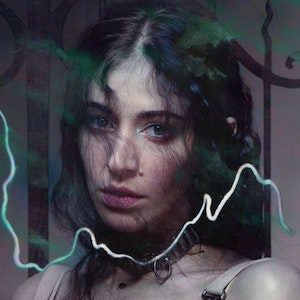
Yet, there are exceptions to every rule. Soundtracks or instrumental albums, in particular, do not have the ability to emotionally or sonically overload me before we get past forty-ish minutes. Mauve, the new electronica album from mysterious San Francisco musician Nketiah, is not only long (fourteen tracks) but hefty, with the majority of the tracks clocking over four minutes. This would be a death sentence for a pop or punk album (or a pop punk album) but on Mauve, it feels lush and earned.
It feels lush because of the distinctive soundscape it creates — close to a movie soundtrack, but not quite (it’s a little too discordant in parts). Like listening to Gustav Holst’s “The Planets” or Daft Punk’s soundtrack to 2010’s TRON: Legacy (arguably the warmest and most human aspect of that entire film) there are burst of familiar flavor here, but Nketiah avoids feeling like a retread. Mauve is complex enough to send you places, and some of those places you have certainly been before. Over the course of the fourteen tracks, I was in the future, where an android speaks to me in staccato busts (“Drinks”); I was in the present, where the almost-forgotten experience of party ambiance becomes song (“Aura”); and I was in the past, imagining what the blue, opera-singing alien from semi-trashy sci-fi classic The Fifth Element listens to in her free time (“Open”).
The human voice is largely percussive on Mauve, but not in a beat-box way. It’s not the backbone of the tracks, but just as important and impactful as any other sound, except perhaps on “Shade II” which features snatches of discernible conversation that have largely not been tinkered with. The most impressive uses of percussive voice are in “Bunk” and “Newform.” The former even uses one of my favorite music tropes: pretending like the song is going to end on some sort of dampened, single buzz of a note before bringing all the noise back at once. It’s the Phil Spector Wall of Sound, if Phil Spector was an immortal android who wished he had a human face. “Newform” is much longer, combining Stranger Things synth-y coldness with moments of warmth that come from a delicate, fuzzed-out effect and choral-like layered vocals that, if you weren’t expecting them, can give some real chills.
It’s not all dark smoky room stuff here, however — the watery fish-tank energy of “Midrain” ends abruptly for the lead-in to “Womp,” which overall sounds like a classical composer who had a little too much E. It’s truly an odd aside for the album, which normally slides from one track to the next more subtly. It’s not unforgivably jarring, however — the Nketiah touch does not particularly like to single out any one sound, and “Womp” is no exception. For another example, the very end of “Balance” reminded me of a ’90s dial-up noise, but I had to think on it for a bit until I was able to clock the memory. Nketiah knows that the impact here comes not from the sounds themselves, but from weaving and stitching them together into some semblance of a whole, one where you can barely see the frays and snags. And the ones you can see — well, there’s still something to be said for the fallibility of a human touch.
The ghosts of your past selves live in your hometown. They linger in the same old spots as memories, not frozen but reverberating in time. The public pool you learned to swim in. The spot on the corner where you parked with your first boyfriend, necking into the wee hours of the morning. The backside of the local grocer, where strangers met to exchange money for weed. Childhood you, teenage you, college you. Wandering the streets with different aims altogether. Singer-songwriter Rachel Kiel’s latest single “Late Night Drive” delivers the haze of familiarity one feels driving home, no GPS needed, without a thought in your head.
It appears on her forthcoming album, Dream Logic, which started as a small seed years ago. “Dream Logic is just something that has been so much a part of my life, even since I was a little kid, all the way through my life,” Kiel explains. “It was an idea that it felt like it was the right time. I felt like I deserved it.”
The hypnagogic state is what your brain experiences between wakefulness and sleep. It’s a state of threshold consciousness in which one can find oneself hallucinating, lucid dreaming, stuck in a state of sleep paralysis, or in Kiel’s case: the place in which a song can be written. Throughout her life, she has found inspiration in this dream state. “That’s when the songs come, right when I’m waking up,” Kiel said. “I know this sounds like I’m crazy. But the songs come in this stage where you’re coming out of REM sleep. You’ve been in a dream, but now you’re waking up and you can, at that moment, access stuff from your dream. You can pull it from the dream world into the real world.”
“Late Night Drive,” in its essence, is very true to Kiel’s dream state inspiration. Its soft, translucent tone feels like peeling back the layers on something unclear. “Normally when a song starts for me, it’s like one little kernel of a melody, often with like a line or a rhythm that will sort of pop up and recur and I have to build the song around that little nugget,” Kiel says of her songwriting process. “Late Night Drive” feels like a person being pulled from a dream into reality, images moving from soft focus into clear. Light slowly filtering in, the senses trying to explain the extraordinary.
In the video reality and dream state meet as Kiel confronts a dark figure lurking in the back seat of her car. The video goes from a winding drive to a familiar place to an unnerving look down the rabbit’s hole. The back and forth, the interplay between the usual and the unusual, this is where Kiel truly shines. While the song fits into the album’s overall theme, Kiel’s approach on this track is delightfully straightforward, her voice modulating carefully while her guitar bends and curves with the road, the sounds reverberating against the windshield.
As a young girl, Kiel wanted to be a dream scientist. Growing up in North Carolina’s Chapel Hill, a college town perched somewhere between the mountains and the ocean, she was fascinated with the study of dreams. Her parents were academics – her father, an organizational psychologist, her mother, a former Slavic Languages graduate turned author – with a deep love for music. “It was my parent’s record collection that got me into music,” Kiel says. “They had this incredible wall of hundreds of records and when I was a kid I just gravitated towards them.”
Kiel spent days on end exploring their vinyl collection, tap dancing to the vibrations of The Everly Brothers, The Beatles, Bonnie Raitt. Those early rock music inclinations helped balance her classical education (at school she learned the flute). At age 13, she began to play piano, banging out her teenage angst on one she’d inherited from her step-grandmother.
“Sometimes I’ve been jealous of people who like got in their first bands when they were twelve. They got their first electric guitar,” Kiel says. “And sometimes I frame this in my mind as a gender thing – if I were a boy I would have gotten my first guitar when I was ten. I would have been in this band in my garage. Instead I was playing flute and tap dancing.”
In her junior year of college, Kiel studied abroad in England and was eager to make up for lost time and start a band. She jokes that she papered her campus with fliers that read, “If you like Radiohead and you want to be in my band, I’m a singer and songwriter. You will be a guitarist or a drummer or a bass player. We will play songs by Radiohead.” But it wasn’t until Kiel returned to North Carolina that she discovered a community of like-minded musicians to work with. “I’m a townie,” she says with a laugh. “That’s what I’ve come to realize: I’m a townie for life.”
Semi-Formal was a “crunchy, Neil Young influenced” country rock band. In Attic Orchestra, a chamber orchestra group, Kiel played the banjo, flute, and tap danced. Small Lions bent more toward the pop indie sound Kiel gravitates towards nowadays. All three groups involved bandmate Patrick Dyer Wolf (Goodnight, Texas), but ultimately Kiel felt a strong pull toward solo work: “My songs feel so much like my vision. So even though it was fun to play gigs with a band and share songwriting credits and do all that stuff, when it comes to making records I really just wanted to make my own records at the end of the day. I really just wanted to be like: This is my statement for right now.”
After releasing her debut Table Manners in 2008 and sophomore LP Television Waltz in 2011, Kiel took some time following 2017’s Shot from a Cannon to recover from a vocal injury, and make room for a new project. “I worked on [Shot From A Cannon] when I was in this place of forward movement, really propulsion; wanting to do something or get out of a rut or be propelled,” Kiel says; once she’d gotten Shot From A Cannon “out of her system,” she felt herself returning to old themes, thoughts and journal entries that were written straight out of childhood. Her newest album is a mix of songs from throughout her career, pieced together under an umbrella: Dream Logic.
“I’ve been learning not to regret my trajectory of how I got to where I am, because it’s not wasted time,” she says about her music journey. “We’re in this society where you have to be wracking up things; there’s this feeling of, how many years did I waste not playing guitar or being in bands or whatever. But it’s like: No, I was living my life and becoming the person that I am.”
Kiel is currently focused on the release of Dream Logic – slated for October 23 – but is already dreaming up new ways to combine her love of tap, flute, and rock ‘n’ roll. She’s not sure what will inspire her this time around – she may draw from the dream state again – but, she says, “It’s just nice to feel that that’s available to me. That there’s some other something. That there’s something else I can get at, that’s different from my waking life brain.”
When musician Terra Lopez was 11 years old, she told her father she wanted to reinvent herself every day. Having lost her father as well as her best friend in 2015 and 2016, respectively, Lopez has been healing through reinvention. Formerly in a project named Sister Crayon, she’s chosen the new moniker Rituals of Mine. The first Rituals of Mine LP, Hype Nostalgia, employs R&B and dark synths to explore loss and reexamination of the past. Meanwhile, the layered, manipulated vocals mirror Lopez’s search for identity through her trauma.
“Reinvention can create such resilience, and while it was important to continue to make music, doing it under a different name was symbolic,” Lopez says by phone from her LA home. “It was a brand new name so no one could tell me what it could and could not be. This album is a complete departure from anything we’ve done, and I’m already looking to create work that’s completely different from this,” she adds.
Whatever direction Lopez’s music takes, connecting with others is always top priority, and she’s succeeding. “One of the most profound experiences I’ve had is a dad who came up to me in Boston and said ‘Thank you so much for talking about how losing your dad to suicide has affected you. It’s made me realize I could never do that to my children.’ As uncomfortable as it may be to be vulnerable, I have to be, if it helps people get through, that’s why I do this,” she says.
The musician has always been open about the pain of this loss, but she is equally ready to share what helps her get through it. A big part of her trauma recovery has been doing EMDR (Eye Movement Desensitization and Reprocessing), a practice that helps PTSD patients desensitize traumatic memories. “The only way to get through grief is to work through it and not around it. EMDR has truly helped me unlock these different parts of my mind,” Lopez says, adding that she was reluctant to try it and only did “because nothing else was working, and it was crazy to me how immediate I felt the results. Mental health and therapy excite me, and it’s something I avoided for a long time.”
Possessing boundless creativity and adroitness at cultivating community help, no doubt. In addition to her new album, she’s launched a new podcast called Hype Nostalgia TV. Teaming up with drummer Adam Pierce, the two sought a way to connect with fans after COVID-19 forced them to cancel tour dates and landed on the idea of a visual podcast. The episodes feature guests like Tegan Quin (of Tegan and Sara) talking about their high school bedrooms and other ways their past has shaped them. The themes of the podcast often dovetail nicely with the ways in which the Hype Nostalgia album plumbs the trajectory of Lopez’s own history.
“Trauma could never figure me out/Maybe it’s in my blood, maybe it’s yours now,” Lopez sings on “Trauma.” She’s singing about her family, but Lopez is also invested in cultural legacies like sexism and racism. One night she had the idea to make an interactive art installation about street harassment. She jotted her idea down on a napkin, not knowing This Is What It Feels Like would be seen by hundreds of thousands of people, including the state capitol in Sacramento and a dozen Canadian cities. “When I first started it, it was supposed to be a one-off. Huffington Post covered it and then Los Angeles Times covered it and from there it got so big. We were in a Dove commercial! I I’ve even been asked if I would run for office. I’m going to look into it,” says Lopez, who isn’t finished with the exhibit. Instead, she hopes to make variations to discuss other forms of discrimination, though that’s all on hold due to COVID.
Much like in her music, Lopez’s approachability and vulnerability help others open up to her. She’s been especially surprised at how disarmed many men have been by the installation. “I’ve had men break down in tears. I’ve had men apologize. I’ve had men sit down and want to tell me all the times they harassed women and how this exhibit has opened their eyes. It’s been remarkable and unexpected,” she says, clearly invigorated by the response she’s gotten.
For Lopez, music and installations and podcasting and politics are all new avenues for connection. While many artists are afraid to stray too far from their main field, Lopez thrives on it. Undaunted by trying new things, she’s elevated the daily process of reinvention into something more like art.
Follow Rituals of Mine on Facebook and Instagram for ongoing updates.
2020 has been a tough year for independent artists. With no touring in sight – save for a few one-off virtual performances – underground bands and solo acts have had to be creative in finding new sources of revenue and staying relevant to their fans. For Cincinnati rapper/producer Kelby Savage, this has meant focusing instead on the business side of his artistry, like designing a brand new website, writing press releases and creating an electronic press kit (EPK).
“Since we didn’t have any, like, traditional live shows lined up, it allowed me to take more time to do all the other back-end stuff,” Savage tells me on a quiet afternoon at Dive Bar. “I guess my goal at the end of the day is to kind of formulate a team, but until I can get that team, I’ve got to do everything myself.”
Since independent artists often have to juggle many of the music industry roles supporting their art – publicist included – Savage’s strides in bolstering his digital footprint (as well as that of his band, IN2ITIV3) is an effective way to push his career forward without touring. It’s also important, Savage says, in keeping his business self-sufficient.
Although the independent path is challenging, Savage says, “I’m not worried about somebody who’s got my masters.” Self-ownership was a big talking point of Nipsey Hussle’s and recently came back into the mainstream discussion during Kanye West’s latest tweet-storm.
“I was surprised to hear about these bigger artists, that are legendary, that are mad about their masters,” Savage reflects on ‘Ye. “That kind of makes me glad that I ain’t blown up yet, ’cause a lot of these artists that are huge – like Trippie Redd and stuff – they all signed to labels that got their masters. I’m trying to figure out how I can get my shit going viral like them, but I ain’t signing to no labels.”
“Russ is a prime example,” he continues. “I’ve been studying people like him on how to do that. I always wanted to be that artist to take the long road. I’ve taken this time to learn how to do all the other stuff, like the videos, designing my own album covers and being self-sufficient.”
Along with building an impressive press portfolio and getting serious about self-ownership, K. Savage is also using quarantine to strengthen his and IN2ITIV3’s video catalogue. The artist just recently unveiled his “Danny DeVITO” video and plans to continue releasing his vault of self-produced singles with accompanying visuals.
“I have enough music to release [a project], but I don’t really wanna do that right now, with the way things are looking,” he explains. “Since I can’t perform these projects live, I think it’s just a singles climate for now.”
As for IN2ITIV3, Savage revealed that the genre-fluid band is gearing up to release their live EP, which will feature live recordings of new material and one track from their self-titled debut project. The EP, due this fall, was recorded at Urban Artifact. The “punkadelic” rock band recently premiered their music video for “Moon,” a loosie they dropped this summer.
Besides one live-streamed performance earlier this year, the band also performed at a Black Lives Matter rally in Milford, Ohio.
“I kinda grew up there and spent a lot of time in Milford, so I’ve experienced – just from being a minority out there – a lot of racial tension,” Savage says of the experience. “So, coming back and doing a whole rally and speaking my side of things out there, that made things come full circle for me.”
Savage also attended another protest organized by Patterns of Chaos alum Jay Hill in Cincinnati this June.
“I shot a lot of video at that one, masked up. It was my first protest experience and I didn’t know what to expect,” he remembers. “I was already hearing about people getting pepper-sprayed and stuff.”
“And I didn’t even have like a traditional mask; I had a t-shirt, Taliban-looking thing on,” he adds with a laugh.
Unfortunately, between the emotional weight of continued racial injustices and not being able to perform music with his friends, Savage says the past few months have taken a toll on his mental health – a sobering reality for many people this year.
“Being locked-down, this shit has had a really big impact on everybody’s morale right now,” he confesses. “I went through like a depression episode. I was still making music, despite how bad I felt. It became a positive way to channel those feelings.”
Although Savage, and other independent artists like him, continue to grapple with the uncertain future of touring, he’s making the most out of this time by working on his web presence, expanding his already multi-faceted skillset and recording live sessions.
Keep up with Savage on his Instagram and follow IN2ITIV3 for more about their upcoming EP here.
Ghostgirl has just released “Clouds,” a gothic, synth-soaked ballad that channels Massive Attack and Siouxsie and The Banshees. Inspired by living in Reykjavík last year, she wanted to capture the enormity of the landscape and the energy within the silence in “Clouds.”
The creative homecoming she experienced when visiting Iceland for the first time almost seemed destined. “I used to wake up and think that I was there,” she explains. “I’d been having dreams of walking through Reykjavík even though I’d never been there. I had this really emotional need to go there, and it was incredible. I’ve never felt more at home in my whole life. I’m pretty sure elves live there, there’s something about the vastness and the landscape. There’s a different sound in the silence. I wrote a lot of music there and made a lot of beautiful friends. It’s interesting as well, to be in a place where you’re completely foreign but you feel so much at home.”
Always an idiosyncratic talent, and having grown up in a musical family, Ghostgirl had first rebelled against boring art at the age of 10. “One of my first performances was in primary school,” she recalls. “I did a song about an East Timor girl my age who was going through war and everyone just stood there and nobody clapped. It was acapella, and they just weren’t up for it. I also followed it up with interpretive dance and they didn’t like that either.”
Though interpretive dance hasn’t featured strongly in her recent creative output, being candid and unmoved about pleasing others have fortunately remained her strong points. She has worked in events, production and multimedia work, so stepping into the spotlight has taken some adjustment. “I used to run lots of underground art events around Sydney and in Iceland, too,” she explains. “Around late 2010, I started to really get more comfortable with being front and centre.”
Her moniker comes from those early events, where she’d often close sets with the Ghostbusters soundtrack at the end of the night. “I’ve had it for so long, I don’t even know if I like it,” she admits. “For me, Ghostgirl is my persona as an artist – it’s nice to have a vessel. It’s like being a superhero.”
Promotion via national youth radio network Triple J Unearthed has provided her with a broader audience and given her some validation, too. “A friend of mine let me know that my track had been featured,” she says. “I’m doing a science degree at university and I was really caught up in lectures and focusing on study, so I hadn’t even realised I’d been featured on Unearthed. Any praise is something to be super grateful for, because so many artists I know aren’t recognised for their talent.”
When she’s not attending to her science degree lectures and writing for her forthcoming album (to be released in 2021), Ghostgirl keeps her connection to Iceland alive through long-distance collaborations. “One of my best friends, Rex Pistols – a Canadian who lives in Reykjavík – is about to release her own album and I’m going to remix one of the tracks,” says Ghostgirl. “She’s going to be doing remixes of my tracks too. I’m so lucky to have so many beautiful women friends.”
Ghostgirl is currently living in the Blue Mountains in New South Wales. This picturesque regional area is well known for attracting artists and creative types. “It’s so nice,” affirms Ghostgirl. “I feel lucky. It’s so beautiful. I was born here and I moved to Sydney when I was super young, did all my weird stuff, and then I returned here after I’d been in Iceland. You can’t get distracted by random activities when you live here. There’s so much silence and this beautiful nature. I know so many incredible artists up here. The silence amplifies your own work and enables you to get work done as a creative person.”
That silence has only intensified as lockdown wears on. “With lockdown, it’s interesting because I’m checking in with friends in Iceland, Berlin and Melbourne,” says Ghostgirl. “It’s made me consider how creativity is a gift and when we have to sit with ourselves, we’re lucky because creativity is a way to be free when you’re physically trapped. We can imagine our way out of anything.”
“Clouds” came from a time of reflection, and ideas that had been collecting over years. “Sometimes, I write things and pick them up and put them down. A lot of interesting things happened while I was working on ‘Clouds,'” she says. “I was singing the strings part while my friend, Piers Burbrook de Vere, was actually playing it. He’s an amazing musician. The song was an amazing revelation, a Zen moment. It’s funny with songs, they just tell you when they need to leave the nest and eventually you have to let them go.”
Part of letting go was handing her song over to mastering engineer, Dennis Blackham. The UK maverick has worked with Depeche Mode, Human League, The Cocteau Twins, Led Zeppelin. “He’s such a cool guy,” enthuses Ghostgirl. “He’s this humble, gentle guy who is so good to work with. One of my friends in HTRK had recommended him years ago so we’d been in contact for a while. He mastered Marvin Gaye’s ‘Sexual Healing’ out there in his countryside home.”
Blackham will be her chosen engineer for the full-length album she is currently working on. “I’m narrowing down the songs right now and about to release a single in November. The album is planned for early next year,” she details. “It’s an intentional theme. I have synaesthesia and I meditate a lot, so it’s really interesting what comes out of those experiences. I want it to be filled with philosophical, positive messages. The world I see when I’m on my synthesiser is pretty Blade Runner-esque. That’s the world that I can envision. It’s an apocalyptic time at the moment and I want to envision a future where our human consciousness comes into a peaceful place. There’s always going to be conflict, but I want this album to be hopeful.”
Welcome to Audiofemme’s monthly record review column, Musique Boutique, written by music journo vet Gillian G. Gaar. Every fourth Monday, Musique Boutique offers a cross-section of noteworthy reissues and new releases guaranteed to perk up your ears.
The 1970s punk explosion in Britain rewrote the rulebook about who could become a musician. Suddenly, you didn’t have to aspire to be a virtuoso; you simply had to have the desire to create, and the confidence to get your voice out there.
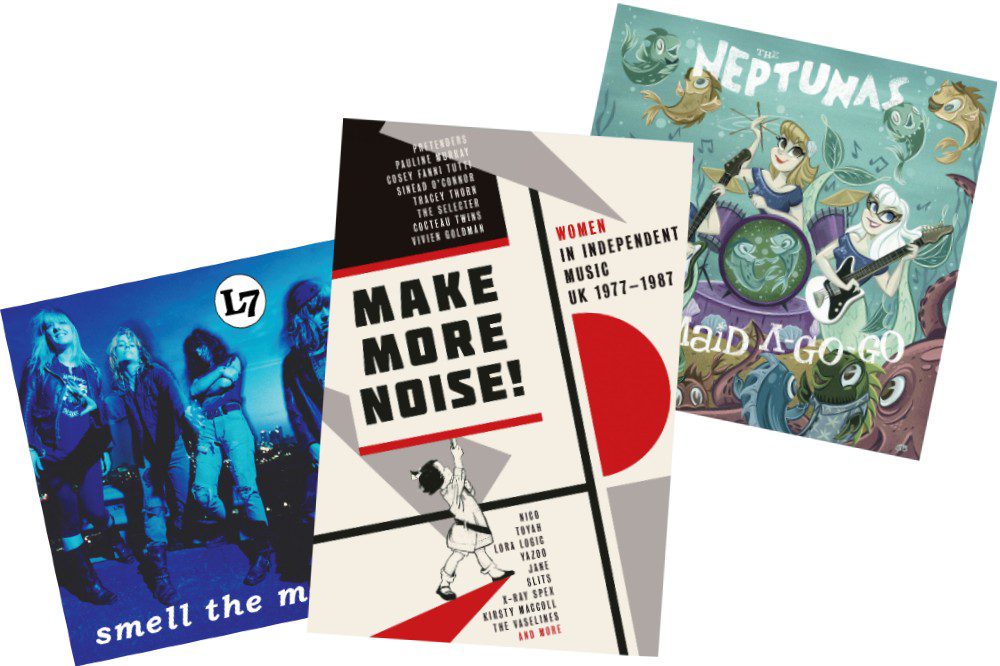
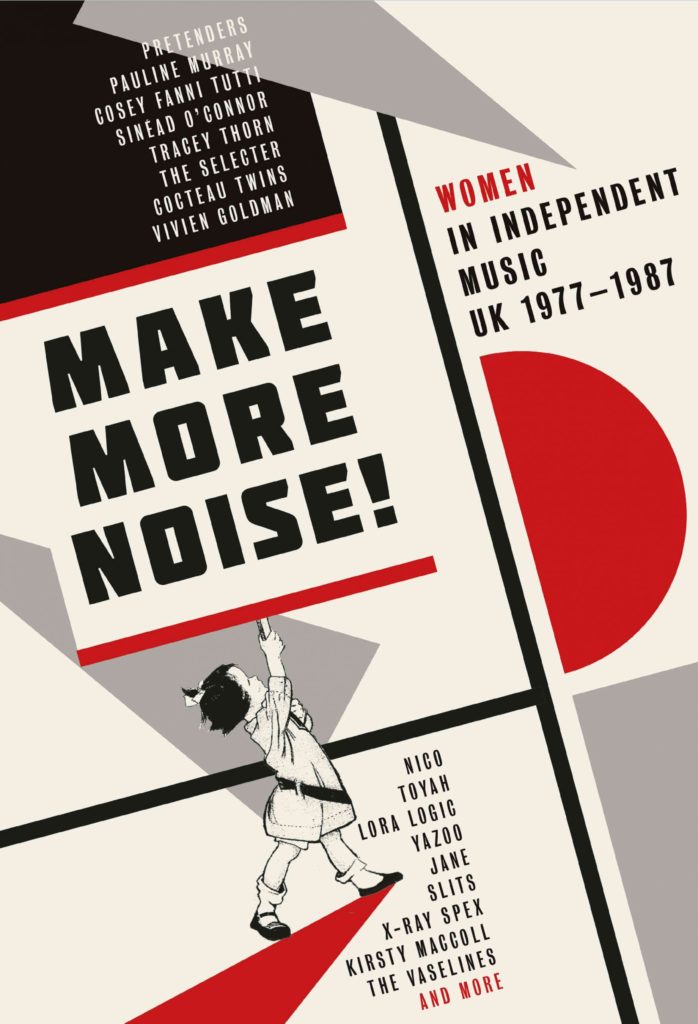
And a fantastic new compilation from Cherry Red, Make More Noise! Women in Independent Music UK 1977-1987 takes a deep dive into the heady era of punk and its immediate aftermath, from a female perspective. Among the 90 acts featured, you’ll find some familiar names, but there are many more less well-known acts, particularly in the US, which makes this set particularly exciting to explore.
Where to start with this bounty? Well, the set opens with X-Ray Spex’s exhilarating “Oh Bondage Up Yours!” It’s an obvious choice for a collection like this, but it’s also a song you can’t hear too many times, a number “as era-defining and as crucial to punk as ‘God Save the Queen,’” as the liner notes put it. Lead singer Poly Styrene is in full battle cry from the off, bolstered by the accompanying off-kilter wailing sax of Lora Logic; its freewheeling exuberance is irresistible. Logic’s “Brute Force” is also featured on the set, a jumpy number that manages to be both edgy and whimsical.
And that’s just for starters. Girlschool stakes out hard rock territory with the propulsive “Take It All Away,” their debut single. Singer-songwriter Kirsty MacColl, best known in the US as Shane McGowan’s foil on the Pogues’ “Fairytale of New York,” turns up twice on Make More Noise; via Tracy Ullman’s sweet pop cover of MacColl’s “They Don’t Know,” and singing her own far more suggestive number, the rollicking “Turn My Motor On.”
In 1992, electronic outfit Opus III had an international hit with the moody “It’s a Fine Day.” But that track was based on the haunting acapella original version released by Jane (Jane Lancaster), in 1983, a sad rumination on lost opportunities. Then there’s the terrifying “The Boiler” by Rhoda Dakar accompanied by the Special AKA. It’s a devastating spoken word piece about rape, made all the more chilling by Dakar’s deadpan delivery throughout most of it. Not for the timid. Dakar was also a member of ska group the Bodysnatchers, whose buoyant “Ruder Than You” is also on the set.
Rip Rip & Panic (featuring a young Neneh Cherry) goes into attack mode in the jazzy “You’re My Kind of Climate.” Vi Subversa of the Poison Girls’ delightfully skewers gender roles in the herky-jerky “Old Tart’s Song.” You’ll also find the Pretenders, Cocteau Twins, Au Pairs, Sinead O’Connor, the Slits, Nico, Lene Lovich, Toyah, Devil’s Dykes, Strawberry Switchblade, and many more. The diversity of styles, both musically and lyrically (ranging from pungent social commentary to dreamy-eyed love songs), on Make More Noise! provides a comprehensive look at this fecund era in indie rock, as it moved from the underground to the mainstream.
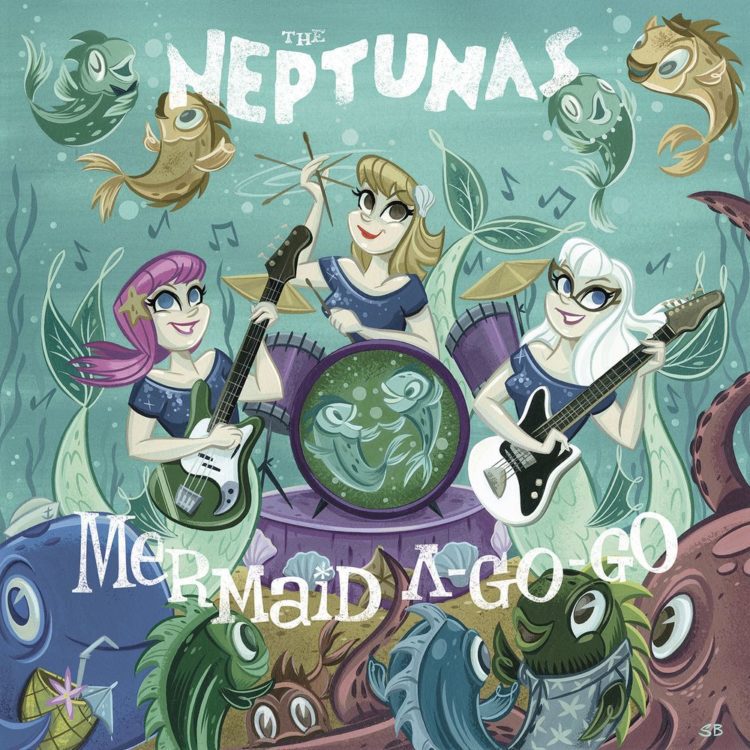
The Neptunas, a lo-fi surf guitar trio, launched their career in Los Angeles in the mid-1990s, recording two albums before going on hiatus in 2000. They were gone, but not forgotten, as was proven in 2014 when a reunited Breeders asked if the group was available to open for them on a West Coast tour. Pamita, Leslita, and Laura Bethita Neptuna answered the call, and, following other successful live dates, eventually entered the studio to record their third album, Mermaid A Go Go (Altered State of Reverb Records).
The titles are just as much fun as the music. The snaky instrumentals “Billy The Kid’s Water Pistol,” “Undersea Grand Prix,” and “Nancy Drew’s Wetsuit” are perfect mood music for a twisted Spaghetti Western; one in which the cast wears pastels, perhaps. There’s a good choice of covers too; twangy guitar takes on Herb Alpert’s trumpet line in “The Lonely Bull,” the first hit for Alpert and the Tijuana Brass. And their deadpan delivery of the Kinks’ “Till the End of the Day” makes the tune cool as a cucumber.
The own songs are a hoot too: “Neptuna Car Wash” celebrates the joy of having a clean vehicle; “Hey Jimmy Freek” is a sweet story of unrequited love (though Pamita does seem like she’s a bit of a stalker); the title track refers to the band’s own personal love shack beneath the sea, with a cover charge of only five clams. “We don’t do the Watusi/but we’re doin’ the swim,” they promise. A fun, kitschy confection.
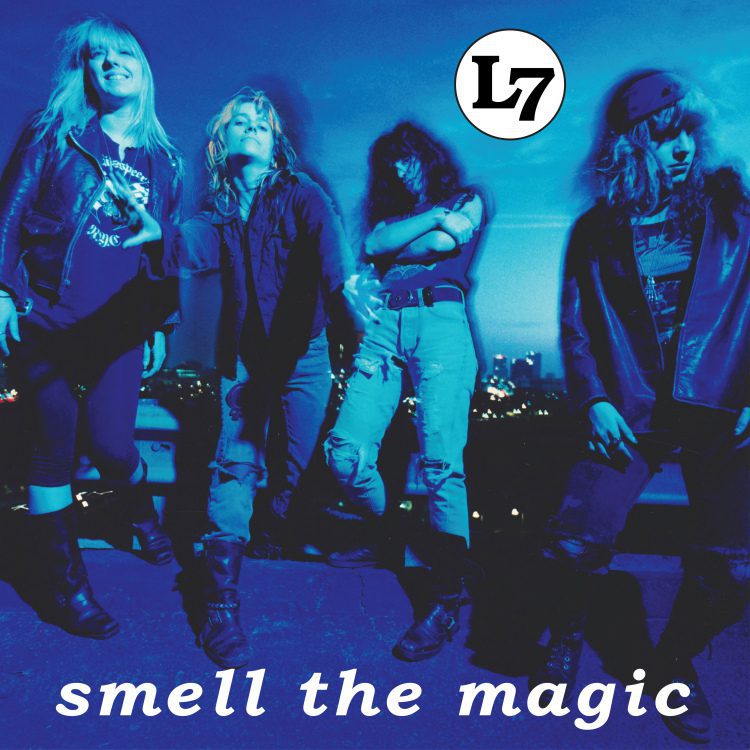
L7 rock hard and they rock loud. They spit out six albums during their initial lifespan (1985-2001), during which time they also founded the pro-choice advocacy group Rock For Choice, and had a great moment on the silver screen in John Waters’ satiric Serial Mom, gleefully thrashing their way through their song “Gas Chamber,” as the killer’s latest victim is set on fire right beside them on stage.
They split in 2001, but resurfaced in 2014; subsequent years have seen tours, a documentary (2016’s L7: Pretend We’re Dead), and a new album (2019’s Scatter the Rats). Their latest release is a reissue, a remastered edition of their sole album for Sub Pop, 1990’s Smell The Magic. It kicks off with the mighty roar of “Shove,” with Suzi Gardner giving the heave-ho to various unsavory types (bill collectors, creeps who pinch you, pesky bosses who want you to comb your hair). There’s a lot going on in L7’s lyrics. “Just Like Me” sends up rock stardom; “Packin’ a Rod” is a pointed depiction of wannabe Dirty Harrys; the slow burning “American Society” sneers at consumerism.
My personal favorite is “Fast and Frightening,” a thunderous number about a charismatic neighborhood hellraiser, with Donita Sparks on lead vocals. Which is the better couplet? “Popping wheelies on her motorbike/Straight girls wish they were dykes” or “Throws M-80s off in the halls/Got so much clit she don’t need no balls”? The choice is yours. Also available on CD or as a download, the reissue marks the first time the album is being made available on vinyl.
Shelley Thomas composes and produces lush orchestral arrangements that she has dubbed “world chamber pop.” She has figuratively and physically gone around the world with her compositions, traveling to 17 countries and studied with over 40 music teachers that have influenced her style that melds Balkan, Arabic, Hindustani, African, and classical music. She can sing in 15 different languages and plays the oud, which is like a short scale pear shaped lute that has been used in Middle Eastern, North African and Central Asia for thousands of years.
Shelley’s latest single release, “Mirror,” guides you through a sonic journey to the beautifully haunted side of yourself. Her vocal harmonization traps you in a trance that eventually leads towards acceptance and healing. If that isn’t enough to meditate on, her recent video for “Cancer Moon” captures her immense live band while boiling down all the intense emotions the moons of this past summer have ushered in. The next chance you’ll have to catch Shelley making her world music magic is September 25th at 1pm via YouTube. She also does a livestream from her Patreon on the last Friday of every month. We chatted with Shelley about the transformative power of music, what rituals inspire her and shaman drums.
AF: What got you into the oud, qanun and composing world orchestral music?
ST: I grew up with a classical pianist mother, and took dance, piano, voice and guitar lessons as a youth. I studied World Music Performance at CalArts (BFA ’08), where I had a six-piece band called Blue Lady I wrote songs for. I got into Arabic music shortly thereafter via a vocal class. I fell in love with the style, and picked up the oud a few years later to accompany myself while singing Arabic music. Then another few years later, I felt inspired to start composing again after years of only singing traditional music – but with a bigger vision, for more instruments, including strings and qanun, because I love the delicate and emotive textures. After many years of absorbing and learning from masters, the music started pouring out of my mind. And that’s the album I’m working on now. I’ve always felt that music is the soundtrack to my life, and enjoyed profound journeys and transformations through listening. I hope to give listeners such an experience.
AF: Can you tell us some stories about some of the countries you’ve traveled to and music teachers you’ve worked with?
ST: Two of my incredible vocal teachers were Rima Kcheich and Ghada Shbeir, whom I studied with in Lebanon and also at Simon Shaheen’s Arabic Music Retreat in Massachusetts. Rima taught me to pay attention to the details and sing maqam, and Ghada taught me to improvise and add different vocal timbres to my toolbox. Simon himself teaches me passion, discipline, and affirms music as my greatest love. I spent about six months in Lebanon and loved the culture, nature, and its music especially. I also studied Manned drumming from Guinea with Jebebara ensemble there.
My mentor at CalArts was Alfred Ladzekpo, a Ghanaian chief and master drummer. I was obsessed with Ewe drumming, and my friends and I spent all of our free time playing and learning those rhythmic compositions. He taught us to know when we’re “OFF!” While at CalArts, I also studied Bulgarian choral music with Kate Conklin, and Hindustani music with Swapan Chaudhuri and Aashish Khan. Aashishji said, “You can’t sing both rock and Raga.”
I’ve traveled to Morocco several times, also toured with Vlada Tomova’s Bulgarian Voices Trio in Canada, Mexico, Cuba, and Russia. I’ve studied Fado singing in Lisbon, Portugal, and Bulgarian Folk Singing at Plovdiv Academy of Folk Music. I sang with Petrana Kucheva, a fantastic vocalist and mentor whom I met there, for a few years. I’ve toured with Black Sea Hotel in the states, Sweden and Denmark and performed at Emirates Palace in UAE with Mayssa Karaa. I’ve been to Turkey, where I witnessed Ottoman music in the otherworldly cave-chimneys of Cappadocia, and Oman, where I saw an exquisite concert of Amal Maher singing Oum Kalthoum at Muscat Opera House. I’ve studied oud with Charbel Rouhana, Wassim Odeh, George Ziadeh, and Bassam Saba, a dear mentor and Artistic Director of the NY Arabic Orchestra. Bassam has taught me style, taste, humbleness and soul.
AF: What’s it like learning to perform a song in a language you aren’t fluent in? What language do you enjoy singing in the most?
ST: It’s a fun challenge. Language lights up my brain. Just as an opera singer learns to sing European art songs well, I study and dedicate to the linguistic nuances the same way. I’d say it’s 80% listening, and 20% translating that into your body. I watch old-timey videos of singers and study the shapes of their mouths. I had a fantastic Arabic diction teacher, Dr. Iman Roushdy-Hammady. I’ve dedicated a lot of time to Arabic and Bulgarian singing, but I am now enjoying the most singing my own songs in English. You have to learn to lighten up, let go of perfectionism, and not take yourself so seriously. It’s okay to make mistakes! At the end of the day it’s about following your heart to what’s interesting, and joyful expression through music and cross-cultural understanding.
AF: What types of symbolism and ritual inspire your music?
ST: I love psychology and Jungian symbolism of the shadow and the divine child archetype, also expressed by Carolyn Myss. I love the artwork of Alex Grey, which portrays us as multidimensional beings, and I’ve performed in his sacred space at CoSM. I’m fascinated by many rituals around the world, from Amazonian ayahuasca healings and their beautiful icaros songs, to the adhan, the Islamic call to prayer, to West African dance drumming, to Episcopal church services with epic organ arrangements, incense and flags, to sound baths and crystal energy healings. Drumming is very important to me and I maintain a strong rhythmic element to my music. Drums and shakers, in particular, have been used in healing rituals since ancient times. When I’m around drums, I can hear them speak, and feel them cleansing my body and shaking energy up inside. Also language, poetry, and the power of the spoken word, with sound and intention, is an important element of ritual. Julia Cameron’s The Artist Way is my anchor, and I write morning pages regularly. Essentially, I’m interested in the all ways humans have created meaning, healing and transformation, and connect to higher realms through music and sound.
AF: What’s the most inspiring thing you’ve seen this month?
ST: The most inspiring thing I’ve seen this month is the sun setting over the ocean, and the sea’s iridescent colors of dusk; the way they work together to create something more beautiful than they could be individually.
AF: What would you want listeners to take away from your latest release?
ST: “Mirror” is specifically about shadow work and integration of all parts of yourself into one loving whole. The more we can accept and understand ourselves, the more we can begin to accept and understand others. Transformation begins from within, and it takes time, patience, and humility. The way forward to a better world, in my vision, is with greater compassion, sensitivity, and this knowledge of self, which can be catalyzed by music. So we can become less violent and reactionary, and more inspired, loving and proactive. We are creative beings, meant to create, meant to shine, and meant to enjoy life, not just to suffer. We can heal, we can let go of our old stories. We can become friends with ourselves and create a life we don’t need to escape from. It’s up to us to choose joy in each moment, to make the best of our current situation and find a positive way forward, and to choose to be willing to move towards this healing with honesty. When we make this choice individually and then come together, with all of our gifts and solutions and ideas, that is the power of community. Then, we can truly live and flourish in harmony, and fulfill our potential.
AF: What is your livestream set-up like?
ST: I use the streaming platform Stage Ten, link it to my Youtube Live, and press go. I have a BOSS RC-300 loop station that I improvise with and program vocals into with some beats. I have a Shure Beta-58 microphone, my oud with pickup mic attached, and various percussion like shaker, frame drums, and riq, which I layer with the looper. I have a Fishmann Loudbox Mini amp, so I plug 1/4’ cables from my loop station into that. I plug the mic and oud directly into the loop station.
AF: What are your plans for 2020 and beyond?
ST: I am in pre-production for recording my first full album of original music with a ten-piece microtonal chamber ensemble! I’m finishing the scores, arrangements, and parts in Sibelius, and planning to launch a crowdfunding campaign to support this work. First I’ll record and make a music video for my next single, “Dreamtime.” Once the world opens up again, I’ll be touring a lot with this ensemble.
My ultimate goal is to open an artist retreat & performance center with music and photo/video production studios. This space will be available to artists from around the world from all socio-economic backgrounds to come and create the art that’s meant to be made through them, in a supportive, inspiring, and unpretentious atmosphere.
RSVP HERE for Shelley Thomas livestream via YouTube at 1pm ET. To pre-order the upcoming album, email info@shelleyvoice.com.
More great livestreams this week…
9/25 Langhorne Slim, Clap Your Hands Say Yeah, Mt. Joy & More via Philly Music Fest. 7pm ET, RSVP HERE
9/25 Modern English (Live from London) via AXS. $15, 8:30pm ET, RSVP HERE
9/25 Long Neck, Baby Grill, gobbinjr, Oceanator via Twitch (Around the Campfire). RSVP HERE
9/26 Angel Olsen, Beach House, Big Thief, Blood Orange, Charli XCX, Solange, Wilco & More via Hotel Figueroa (Pitchfork Drive-In). $39, 10pm ET, RSVP HERE
Usually associated with the fleeting status of young love and and sepia-filtered high school summers, there is something intoxicating about sadcore Americana. Lucie Lozinski, who performs as Ski Team, dabbles in this genre on her latest track “Photos,” combining traditional folk and rock elements with a modern twist. The song works as a spoken letter to her former partner that incorporates themes of closure and change. A way of processing what she experienced, the track is elegantly simplistic so as to commune directly with the listener, encouraging her fans to reflect on their own experiences.
Coming from a family of a professional musicians, writing music has always served as an outlet for Lozinski; she’s been writing what she describes as “embarrassing songs” since the age of five. Her brother Ian had started creating music under the moniker Snacks Chapman, and when the pair started collaborating in their parents’ garage in New Jersey Ski Team was born. “I was like we could make a band and ‘ski’ would be the name because it’s two Lozinski’s together,” she explains. “My last name is kind of intimidating.”
Though Ian’s focus was on his own project, Lozinski continued Ski Team undeterred, making space for her to collaborate with others. She’s released a few singles so far, including a heartfelt tribute to her sibling, “Brother,” pleading ballad “Don’t Give Up (Yet),” and the tongue-in-cheek “Knicks Suck.”
The latest addition to her catalogue, “Photos” feels inherently raw and direct. Lozinski communicates a melancholic feeling with sparse acoustic guitar to create a feeling of space. Rightly taking center stage is Lozinski’s somber, crystalline vocal lilt; Lozinski purposefully kept the track void of other elements so as to retain that emotional vulnerability she was experiencing. “Every time you add stuff it turns kind of cognitive and less emotional,” she explains. “I went to add some sticks on it and just some gentle build or gentle recede, but it felt like it was taking away from that [emotion].”
Lozinski taps into the intimacy of performing with others around a campfire. “We’re not used to being in a room full of synths with a giant band that’s well produced – we’ve never had a campfire like that,” she jokes, addressing the track’s lo-fi appeal.
In the song, Lozinski narrates an attempt to put away mementos of old flame, stymied by her nostalgia for the good times depicted in snapshots she can’t let go of. She makes excuses: “I tried to include them in a letter/But the envelope was too small,” she sings, knowing it’s the relationship, not the photos, she’s unwilling to release. Throughout the track there is a repetition of this idea that she needs to move on, and each time counters this with the line “But it’s hard to look away,” in effect highlighting the strength of the emotions tying her to the person that she loves as she attempts to disentangle herself from them, mind, body and soul.
Like a message in a bottle, the song encapsulates both the history of the relationship and Lozinski’s writing process. “It just sort of happened. It was there and I wanted to get it out of my brain,” she says, adding that her songs are “like little vials inside of my body that are full and once they’re full I’ve gotta get them out. [‘Photos’] was a particular, potent experience of moving across country in his shadow, and I’m excited to pass that.”
As a tool for expression, songwriting has helped Lozinski take stock of the effect of her memories and experiences that at the time she doesn’t truly register. “I won’t consciously know how I’m feeling about a thing until I’m like ‘Oh I really have the itch to write this song down today’… and then I’m like ‘Oh this doesn’t look like a great situation! turns out I’m actually very disappointed about this thing that happened a year ago,’” she says.
Lozinski plans to continue releasing her work one single at time, saying, “It’s given me time to polish up the next one.” She’s also planning to record another version of “Photos” with the intention of releasing it in October.
Ultimately “Photos” is a tale of change and the resulting loss we all fear, because it means the outcome is unknown and therefore out of our control. For Lozinski, the track gives voice to the emotions she was processing, but she opens the door to allow for individual reflection based on the listener’s own experiences and apprehension towards change, regardless of whether it’s tied to a relationship.
When soul-pop singer-songwriter Autumn Nicholas witnessed #BlackLivesMatter protests out on the street near her home in Raleigh, NC, she didn’t feel comfortable jumping into the fray. “I had fear because of what the TV and news blasted – they lacked the good, it was all focused on the bad,” Nicholas says. “But I wanted to make a difference and raise my voice.” She asked herself what she could do to further the movement and how she might inspire others who are hesitant to protest. The answer to that question was her latest single, “Side by Side.”
“I chose to write about it and learn more about the injustices and the facts behind the news,” Nicholas says. “I took away my own fear by connecting with the community and the artwork posted to display everyone’s voices through images.”
The song spotlights her powerful, rich vocals with minimal instrumentation, primarily acoustic guitar and piano. You can hear the passion in her voice, not just for social justice but also for her music, as she sings, “I can’t understand why we all just keep taking sides/Why can’t we sympathize?/If we really care about each other’s lives/Then let’s go and make it right/Standing side by side for equal rights.”
On September 14, Nicholas released “Version A” of the song, which is intentionally minimalistic; she wanted to release it as soon as possible just to get the message out. But she also plans to record a “Version B” featuring more production and other artists of all different races from different parts of the world, representing the unity she sings about.
When the queer, biracial artist plays the song live, she introduces it by talking about #BlackLivesMatter. “It grabs the attention and captures the importance of those words,” she explains. However, she adds, “it is deeper than that — it’s about equal rights and LGBT, but it ties in as a whole to unity, something during these times we do not have a lot of, especially since we are feeling like we’re trapped in our homes, like we are divided, whether it’s by sickness or by color. I hope this song can bring some unity to our time period.”
In the video, she performs the song in Raleigh in front of different pieces of street art related to #BlackLivesMatter and other social justice movements, her way of giving her community a platform and a voice. For “Version B,” she plans to make another video that spotlights even more street art. “I want it to focus less on me and more on the words and the art and the community,” she says. “It was a little bit rushed because we were getting it out before any of the artwork was actually taken down.”
“Side by Side” will appear on Nicholas’s second EP Shades of Beige, a followup to 2016’s Chapter 1. The other songs on the EP are consistent with the message of “Side by Side” – unity and equality – and Nicholas cites Pink as an influence on it. “She has very strong beliefs, and she also is more of an anthem singer; she sings about things that are really passionate to her,” she explains. One of the songs she’s working on, for instance, “On Sunday,” is about the internal conflict of belonging to a religion and being LGBT and “trying not to be placed in a box just because you are gay,” she says.
She’s still hard at work on the EP, as the process of recording music during COVID-19 has been a challenge. “It’s been hard because of the times we’re going through, the lack of spaces to go and produce it,” she explains. “That’s been a struggle, but we are working tirelessly, hand in hand with where we are and where the world is and whatever phase we’re in, trying to adjust and make this EP work and release singles as fast as we can with the times.”
In the meantime, Nicholas has also been developing a clothing line called Unbrand.d, which features items designed to be worn by anyone of any gender. “Ever since I was younger, I have had issues with finding clothes I liked to wear that weren’t super girly but weren’t boy-y either,” she explains. “Some people call it tomboy, but I’d rather not call it a gender, and my goal as I gain success is to create a brand where people can feel comfortable in the middle.” She’s currently working on rolling out the first item from the brand, a t-shirt whose proceeds will go to a food bank.
Growing up with a father who played drums and a brother who played guitar, Nicholas took up the guitar herself at age 13. “I just wanted to show off — that was my main goal. I didn’t think I would actually make a career of it,” she laughs. When she’s not creating music or clothing, she spends time with her family, her partner, and her “25 pound child” — that is, her dog. “Making sure I stay balanced in being a human and an artist at the same time has been a journey,” she says.
Follow Autumn Nicholas on Facebook for ongoing updates.
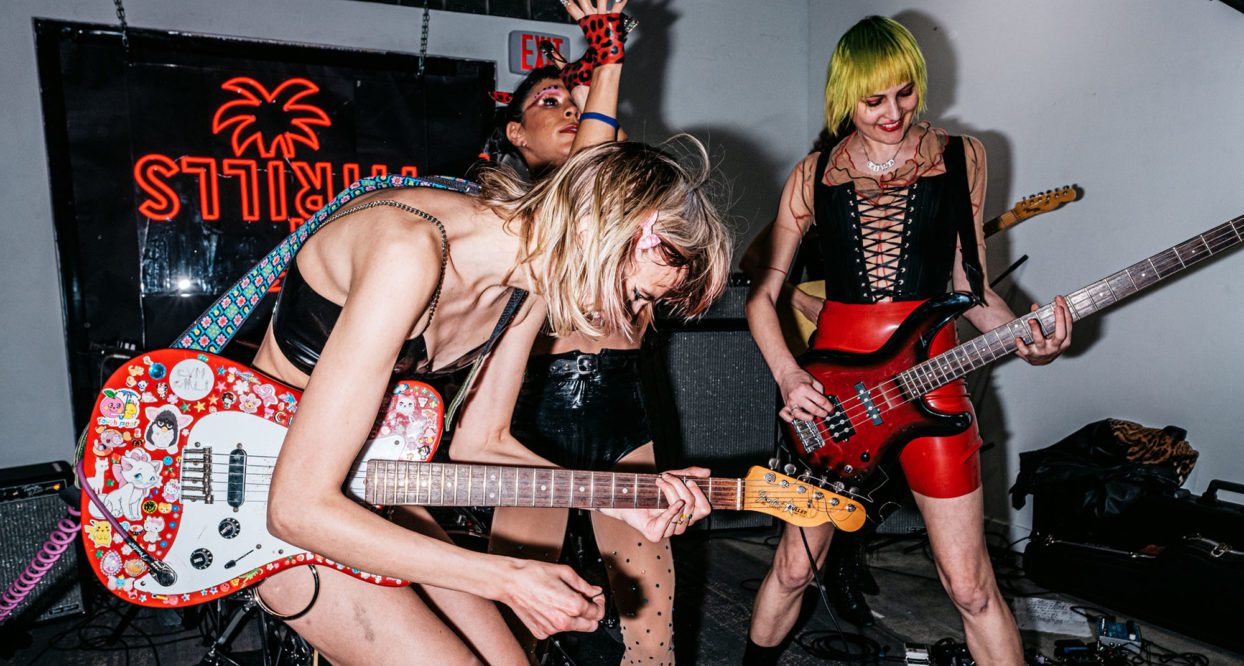
cumgirl8 are neon goths making intraterrestrial post-punk tunes. The collaborative power of Lida Fox on bass, Veronika Vilim on guitar, and Chase Noelle on drums creates a sound both calculated and chaotic, drawing inspiration from The Slits, Diplo, and even video game soundtracks. Their non-musical influences include anime, drag queens, future tech, sex positively and so much more.
cumgirl8 have perfected their brand of punk elegance with hypnotic drum and bass hooks paired with an unmatched on-stage style, all while retraining a sense of humor. It’s no surprise they have been spending their quarantine working on a clothing line that launched Saturday, September 19 with a Telethon to raise money for the LBTQ+ homeless outreach organization Ali Forney Center.
We chatted with cumgirl8 about their debut EP, AIM screen names, and new gear they’re experimenting with.
AF: How was the process of writing and recording your self-titled EP? Are there any stories behind specific tracks you would like to share?
LF: We recorded and mixed it all in three days, tracking drums, bass, guitar, and vocals all together like we do when we’re playing live.
VV: It was very special – we recorded all the tracks live and would dance in the soundbooth to every track. I couldn’t stop crying all those days, maybe because I was PMSing, or maybe it was just the energy but it was pure magic.
CN: It was sooo magical!!! I don’t think a lot of people realize that we recorded live to tape, not track by track. It was a moment in a room of the three of us together. It still surprises me that we did all of that in two days. We were just so excited to finally record after playing a ton of shows in the city.
LF: My fave moments were banging on the tubular bells, VV playing percussive drill through her guitar amp on “Clay People,” and when Dani came to do a feature on “Clay People” too. Shoutout to Ben Greenberg at Strangeweather for being the best!
AF: You have a really unique bass tone! What’s your set-up like?
LF: Thank you! I used to play my bass through a Fender Super Reverb… I found my bass for $80 in a recycling shop. It has a super high range and you can change the tone a bunch, almost like a toy.
CN: Lida, you know that Carol Kaye also played her bass through Fender Super Reverb??? (A guitar amp instead of a bass amp). She had someone cart it for her to every recording session. Lol that amp is so fucking heavy.
LF: No way!! I don’t miss dragging it around.
AF: Do you have any new gear or sounds you’ve been experimenting with recently?
VV: My favorite sound for my guitar is my synth pedal. It’s so wild. I find new sounds with it every day! We used it for “Clay People” and it’s on some of the new tracks we’re recording too!
CN: Started running my drum machines through The Filter Factory by Electrix and getting crazy little freaqs out of it. I run it through a delay too and go wild. And finding new sounds with VSTs now that I finally bought logic.
LF: I’ve been making my own synth sounds and experimenting with new pedals on my bass, mostly inspired by video games and wind up music boxes.
AF: What were your first AOL/AIM screen names? What’s your favorite meme format?
CN: chasehatespants. My favorite meme format is solely visual, like Oprah and Whoopi Goldberg’s faces photoshopped perfectly on top of two girls in a super super sexy Fashion Nova outfits, with their full titties and ass out looking incredible, dancing on a video gamer chairs with a spilled bowl of Spaghetti-Os in the corner of the room. It’s not even funny. I just laugh and laugh and laugh and laugh.
VV: RuBbErDuCkYvV. My favorite meme format is using make a meme+ (the most basic cause I find the more basic the easier to understand).
LF: Totally – it’s like wtf but it somehow it just clicks. I never had AIM :/
AF: I read that Veronika would make her outfits before shows. Was that part of the inspiration for the clothing line?
VV: I make everyone’s outfits! I love making clothes! I don’t really use patterns, I’m more of a trial and error kinda girl with everything I do. I feel like that’s where my creativity comes out the most. And yes, the outfits for the clothing line 100% come from the past looks we have worn for shows. Actually we’re selling the worm outfit I made for the subway show too!
LF: She is literally a tailoring genius.
CN: Veronika made us outfits out of socks we couldn’t find the matches to. We wore them for a show we played on public access TV.
AF: How would you describe your clothing line in three words?
VV: Funky, fun, and neon.
CN: Loving, fearless, confident.
LF: Hardcore Lisa Frank!
AF: Can you tell us a bit more about your telethon live stream and the organization you raised money for?
LF: It just happened but we’re putting it all on YouTube. We played hours of never-before-seen video content, a new music video, our cumgirl8 collection 0.1 fashion show, and the first live set of our EP since it came out, straight from the studio where we recorded it. We had some technical difficulties but it worked in the end.
The Ali Forney Center provides shelter and services to LGBTQ homeless youth. Their center is located at 224 West 35th Street, 15th Floor.
AF: What are your plans for the rest of 2020 and beyond?
CN: SO MANY THINGS!!!!!!!!!!!!!!
VV: We take it day by day! Who even knows! But def release a few more tracks and some music videos!!
Genre boxes mean very little when it comes to creating true art. Kären McCormick had to give herself permission to leap beyond those expectations. Once she did, the rising singer-songwriter bounded away from strict musical constraints to settle upon a healthy country, pop, and soul mix. Her debut EP, Retro, feels timeless and contemporary, running between genres with a silky ease, and McCormick’s voice has never sounded so smooth.
With “Congratulations” and “If This Bar Could Talk,” both premiering today, she continues to demonstrate her strength as a vocalist, painting with heart-torn lyrics that penetrate to the core. Constantly asking herself “is this country enough?” during the songwriting process, it took a good amount of time to discard preconceived notions about what her music should be and instead follow wherever her muse led.
“I’d constantly ask myself [that question] and send myself into a downward spiral of self-inflicted worry. By the time I was writing the last few songs, I really started to find the joy in not being too concerned with genre ‘rules,’ and I think you can hear that in the music,” she tells Audiofemme. “I want to write and create music that makes me and the listener feel something without feeling like I have to sacrifice anything in the process to meet anyone else’s expectations.”
“I guess at some point, we had to go our separate ways/That don’t mean you don’t cross my mind every single day,” she sings of her struggles with heartbreak on “Congratulations,” one of two solo writes on the EP. Its title is a little deceiving; her heart is weary from the breakup, as she tries to also convince herself to wish her ex good luck. But that would be a lie. She can barely muster up a weak smile.
Originally written a few years ago, the mournful ballad has a silver lining for her now. “With social media, it’s incredibly easy to watch someone live an entire life without you. The way I relate to this song now has shifted and become more of a positive,” she explains. “Just because two people go their separate ways doesn’t mean you wish ill-will or can’t wish them well. In fact, you can even learn to live comfortably in the notion that they’re alright and you’re alright. That’s something I’m continuing to learn in my 20s, and it’s starting to reflect in my songwriting.”
Landing at the other end of the musical spectrum, “If This Bar Could Talk” (a co-write with Dana Marie Rogers) is a bubbly and flirtatious piece of pop-country. “I thought we were romantics, falling in love in the fall/Writing our names on the bathroom wall/Snuck onto the rooftop, breaking all the rules,” she writes in darling confessional imagery.
Having grown up in Cheney, Washington, McCormick makes direct reference to one of the college town’s most popular watering holes. “Whether you grew up in a small town or big city, everyone has that one spot in their town that is the ‘go-to’ spot, and it’s the home to so many memories,” she reflects. “Particularly my last two years of college, I watched as this bar reunited friends, celebrated 21st birthdays, and so much more. I wanted to pay a bit of homage to this place and the town I grew up in while reminiscing on some of those personal memories.”
The singer-songwriter originally hails from Brazzaville, Congo. She first arrived in Nashville in 2018, and almost immediately she had to correct people who assumed she made R&B or hip-hop music simply because of her bi-racial background. It’s no secret mainstream country music is a traditionally white-washed format, with such vital players as DeFord Bailey being sidelined and their contributions nearly forgotten. “At some point, it became an accepted cultural narrative that country music is the domain of white people,” journalist Elamin Abdelmahmoud assessed in a Rolling Stone piece, celebrating the work of Rhiannon Giddens and Yola.
“I remember years ago picking up a copy of a magazine called Country Weekly and seeing Rissi Palmer and being so excited about finding someone who looked like me in this space. I still remember that moment years later. That itself is why representation is important,” says McCormick, citing Mickey Guyton’s recent, history-making performance on the Academy of Country Music Awards as another “beautiful moment.”
“It makes me feel like we are getting closer and closer everyday to having more diversity in the country music community,” McCormick says. “I’m confident that there are young girls and boys who watched Mickey on the ACMs and that sparked something in them to go after their dreams. I’m confident that we will move in the right direction, and I applaud the people like Mickey and the ACMs team for being a part of the positive change.”
With a string of singles over the last year, leading into her debut EP, McCormick has garnered nearly 200,000 streams, and it’s clear an audience is hungry for her talents. The five-song project was originally slated for release last summer, but something didn’t feel quite right. “One of the great things about being an independent artist is I get to call the shots,” she says.
“If I had released the EP last summer like I’d originally planned, I would’ve been happy with it ─ but I think I would’ve always thought something was missing. I went back to the drawing board with the mindset of ‘I can do better.’ I reached out to Dana and basically said, ‘I have more to say.’ I’m so glad I trusted that gut feeling, because I feel this EP represents my stories, my songwriting growth, and there’s a little something for everyone who listens.”
Follow Kären McCormick on Facebook for ongoing updates.
It’s hard to imagine the unstructured, genre-spanning ecstasy of the Grateful Dead translating well to solo piano. But if anyone was going to do it, it’s San Francisco-based Holly Bowling. Bowling, who started playing piano at age five, remembers a childhood steeped in equal parts jam bands and legendary composers. “My parents brought me up listening to the Dead and Little Feat, a bunch of stuff like that. They also had Mozart, Beethoven, Chopin, Debussy, all kinds of classical music. I have this weird dichotomy,” she says.
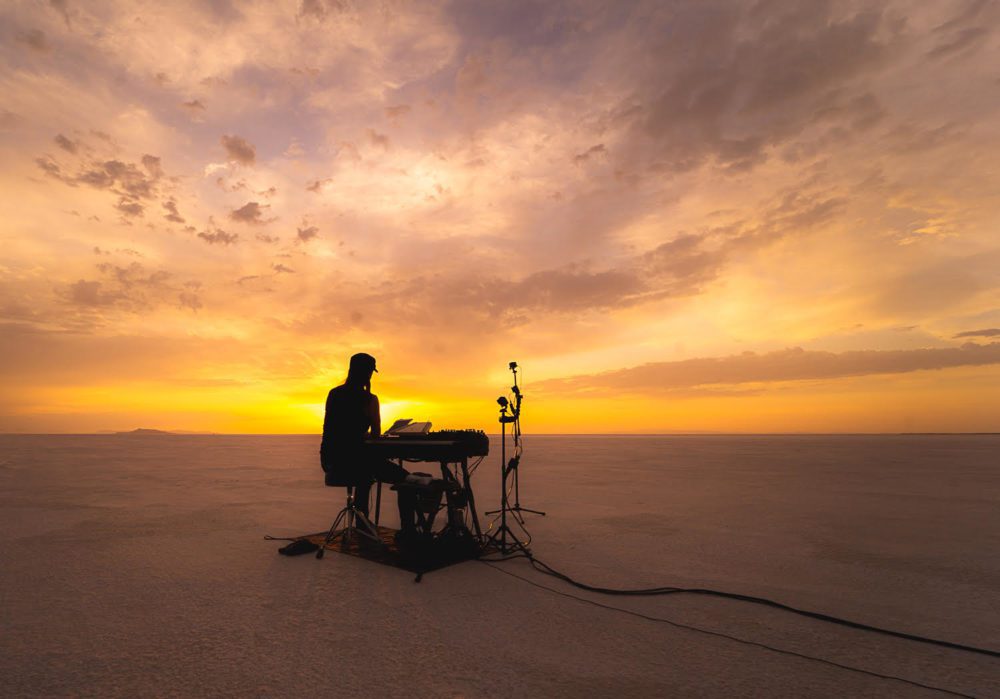
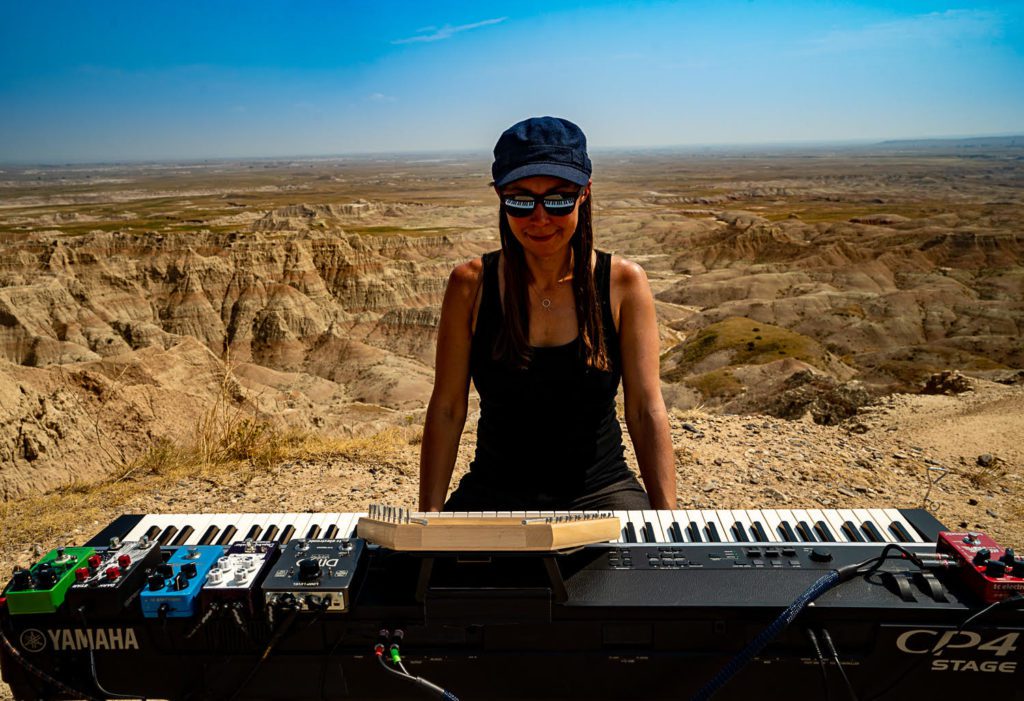
This dichotomy stayed with her through college, where she majored in piano performance but ducked out of class to catch Phish shows. Bowling still uses the meticulous arranging skills from her classical pedagogy, now counterbalanced with a love of improvisations. She now has two full-length records of Grateful Dead adaptations, 2016’s Better Left Unsung and a release forthcoming this fall, Seeking All That’s Still Unsung. Recently, the pianist embarked on the Wilderness Sessions, a cross-country tour featuring outdoor locations from Yosemite to Utah’s salt flats to the Badlands, bringing the Dead to life at every stop.
As Bowling grew into adulthood and began playing the band’s music, she felt her appreciation for their range and spontaneity deepen. “It’s a huge catalog that spans a lot of years. There’s a raw element to the early stuff that I absolutely love, along with the really delicate beauty of the Garcia/Hunter ballads. I also just love the spirit that band had from day one, never doing the same thing the same way twice,” says Bowling, who also released Distillation of a Dream, an album of Phish covers, in 2013.
“The music that feels the most like me is when I take the techniques I learned in classical music and apply them to improvisational music,” the composer says. “I will spend hours creating charts for where the vocals would be. I’m meticulous about that. I think about how I can best give a song an arc when I rip the story away from it. The flip side of that is that there’s usually a launching off point in the song where I go from the stuff that’s extremely scripted and then it shifts to ‘I have no idea what’s going to happen next.’” Listening to her music, it’s not always easy to tell what was planned and what arose in the moment.
Bowling’s first album of Grateful Dead Covers, Better Left Unsung, was recorded live, where many of her adaptations found their genesis. Taking Seeking All That’s Still Unsung into the studio meant losing the energy of the crowd—a feat she’d replicate during the COVID-inspired Wilderness Sessions tour. Fortunately, the pianist loves a challenge. She considered what she could do in a studio that wouldn’t be possible live. “I experimented with overdubbing myself playing to respond to myself. I was inspired by the Bill Evans album Conversations with Myself,” Bowling says, referring to a landmark 1963 jazz album. On Seeking All That’s Still Unsung, Bowling blends romantic arpeggios, jazzy syncopation, and jubilant pop—often within the same song. Her renditions are masterful and accessible enough that Deadheads and neophytes alike will take pleasure in the songs’ complex unfolding.
Photo Credit: Jefferey Bowling
Just as Bowling made the most of the recording environment, she’s learned to appreciate the variety of obstacles she’s encountered during the aptly-named Wilderness Sessions. While planning the tour, she thought about how to incorporate diversity with just the right amount of adventure. “We wanted to pick things that were varied, not sets that were all on mountaintops. We also wanted a balance of the familiar and unknown,” she explains. “Yosemite is close to my heart and close to where I live. It’s familiar and it’s amazing, but it didn’t have the feeling of pushing me out of the edge. Some of the other sites I’d never been to and didn’t know what to expect until the sun came up. That feeling plays into how the music goes.”
In the performance from Lake Tahoe, Bowling looks perfectly relaxed. She sits at her keyboard in flip flops and sunglasses, her dog at her feet while the expanse of the Sierra Nevadas and the lake itself sprawl behind her. Channeling her surroundings into her performance, she’s clearly in her own flow state. “Once I started working with the place instead of against it, the whole thing got much more fun,” she says, noting that the curveballs at her concerts are quite different from playing “when you’re on the edge of a canyon and sand is smashing into your face!”
Playing shows at outdoor locations Bowling had never visited has proven to be the ultimate test of planning meeting uncertainty, especially when she played at the Utah Salt Flats. “It’s crazy hot so we wanted to do it at sunrise, so we went out there at 3:30 AM. Driving out there, there’s no one there, it’s crazy windy, no signs of life. I’ve never seen a darkness like that. We almost didn’t do it,” the pianist says. “We did it and it was just incredible. It felt like it was an example of the place working into my playing. The wind was playing the strings on the little harp I have on top of my keyboard. Part of the point of this was to find inspiration elsewhere since I was missing the exchange between audience and performer, and missing the adventure of being out on the road. The salt flats were the perfect example of what I wanted coming to fruition.”
As Bowling makes her way back across the country, she’ll be bringing plenty of Grateful Dead songs with her. But, like her favorite band, she’ll never play these songs the same way twice. And, even if she wanted to, the wind and sand wouldn’t allow it anyway.
Follow Holly Bowling on Facebook for ongoing updates and check out the remaining dates of her Wilderness Sessions Tour below.
Jeni Schapire woke up one day and didn’t recognize her own life. Formerly known as Jennifer Rae, a professional moniker she had been using since she was 15 years old, the Nashville-based musician started to feel suffocated. Her stage name no longer felt true to who she had become, so she shed it completely. Reemerging clear-headed and much stronger with her debut single “What’s in a Name,” co-produced with Daniel Markus, Schapire reclaims her own narrative.
“It is the declaration that this is who I am and this is what I want to be called,” she tells Audiofemme. “Beyond that, when I wrote this song, I stopped to look at my life. I felt isolated, alone, scared, and I didn’t know the person who was staring back at me in the mirror. I had made choices for other people and didn’t know what I wanted.”
“What’s in a Name?” is a life-preserver, a way to uncover her identity and pull her safely back to land. “It isn’t too late for me to make the choices I want to make and to be the truest version of myself,” she says.
Schapire began writing her forthcoming EP (of the same name) nearly a year ago, and when COVID-19 hit, she, like many, turned inward to do some long-overdue soul-searching. “That’s when I was certain I needed to shed my stage name. So as any songwriter might, I wanted to write a song about it. No more hiding…. just pure authenticity,” she explains.
In taking stock of her life, she also realized how many toxic people she’d allowed into it, that truth be told, didn’t deserve her time or energy. “I was not putting myself and my goals first. I was choosing relationships and my partner’s goals over my own,” she admits. “Each song on this EP is an examination of myself in some way: looking at things I wish were different, ways I wish I could change, wanting to be someone else, loving someone who can’t love me back.”
With barebones lyrics that read as fleeting images flashing through Schapire’s mind, there’s a subtle sorrow etched into the song, a sorrow she must feel again if she has any hope of moving onward. And yet, “What’s in a Name” remains surprisingly textured and atmospheric. Synths thrash against organic instruments, including a brassy horn riff. It’s a delicious, hypnotic soundscape to give her sparrow-like vocals proper flight. “Another language/Lips moving/Shape shifting,” she chirps. “Say it again/Can’t grasp/Leave it.”
By the song’s final frames, the music and vocals bleed together and fade, mirroring her personal journey to glorious enlightenment. “That’s not mine/What you call me/I’m someone else/Who you made me,” she sings.
“This song began with just experimenting with different sounds and plugins. Up until I became fluent with Protools, I felt like I couldn’t fully express myself. There was a powerlessness to having to rely on translating my vision through someone else,” she explains. “That power and clarity has made working with Daniel and other producers effortless. I lay a groundwork for what I’m imagining and then they can expand on it. Beyond experimenting and just really learning as much as possible, I listen to so much music. I’m so hungry to hear what speaks to people. It’s so informative. Everyone gains such a different emotional impact from music and that fascinates me.”
“What really unlocked it as a song was the piano part. It shifted the feel from C major to A minor, and from that point, the song kind of finished itself,” she adds. “But the outro did come from Protools freezing on the horn riff! A computer crash that I am actually grateful for.”
What’s in a Name is one of those wholly special records, culminated from a deep well of life experience. Playing piano since the age of five and growing up in Princeton, New Jersey (a “wealthy town with so many different kinds of people”) Schapire admits to having a pretty charmed life, while also navigating a broken school system. “The schools there pressure cook their kids until they either become astronomically successful or they burn out. It’s home, and I miss it, and I’m incredibly privileged to have been raised there, but growing up there was really hard.”
Schapire later studied at Oberlin College and eventually moved to Nashville. “People always say Nashville is a big city with a small town feel, and that is absolutely the truth,” she recalls of her early days there. When she first began actively recording, her style leaned heavily into the indie-rock and Americana arenas. Nashville’s in-built melting pot of influences was almost distracting, and to Schapire, the work never felt quite right. “I was still looking for the sound that felt like the truest expression of myself. That’s also why I’m so excited about this EP. It just feels like me,” she says.
What’s in a Name is about declaring her worth and staking her claim in the music world. One single in, and it’s apparent Jeni Schapire has something profound to say. As important as this moment is, she carries a bit of emotional weight on her shoulders. “I think the mistakes that I’ve made have cost me time. Making mistakes and learning lessons is a time consuming feat,” she says. “It’s so necessary, but I wish I never sacrificed myself, my goals, and my worth. I don’t regret the mistakes because they’ve brought me to where I am right now. But selling myself short ─ that breaks my heart.”
With the release of Indistinct Conversations at the end of July, Land of Talk – and its driving force and sole constant member, Lizzie Powell – gained a lot of clarity (despite the soft-focus implications of the album’s title). For the LP, the Montreal-based trio returned to the original lineup of its inception to include Mark “Bucky” Wheaton and Chris McCarron, picking up the discussion with surprising grace given the band’s circuitous path.
Forming in 2006 from the same fertile scene that gave rise to Arcade Fire and The Besnard Lakes, early releases on Nebraska imprint Saddle Creek operated in a similar anthemic indie rock milieu. But Powell was beset by series of misfortunes – lineup changes, a vocal polyp, a GarageBand crash that obliterated the music they were working on, and finally, their father’s debilitating stroke that left him hemipelagic, necessitating Powell’s return to their small hometown in Ontario.
Powell returned to Montreal two summers ago and Land of Talk resurfaced after a seven-year hiatus in 2017, with a lush, sophisticated statement on reconciling aging and a career in the music industry, Life After Youth. But Indistinct Conversations finds Powell and their cohort on surer footing than ever before. Look no further than the album’s opening track (and third single) “Diaphanous” for a hint at the band’s new approach – dreamlike sketches, poetic but plainly-stated lyrical phrasing, resonance, statements you have to lean in close to really hear. Next comes an acoustic demo version of the album’s third track, “Look To You,” overlaid with a Facetime chat between Powell and their father – Powell was mid-vocal take in Wheaton’s studio when their dad called, and Wheaton let the tape roll; the final version of “Look to You” interlaces a sweet, lofty chorus with thumping, tenacious percussion on the verses that twist provocatively around Powell’s cryptic words. And that’s just the beginning – there’s so much more to delve into from there.
Powell says the album came together, as many of Land of Talk’s previous efforts have, via a continuous evolution of ideas for song tucked away in voice memos and other digital reservoirs. “There’s songs that I carry with me, like puzzle pieces, like a little trail of bread crumbs,” Powell explains. Putting together an album is “like catching these fireflies and seeing whatever ones can fit in the jar, and you’re like that’s good, boom, that’s the perfect glow.”
Sometimes a bridge Powell tried to force into another song becomes its own song; sometimes fragments floating in their consciousness combine with snippets of music from a television show or a car driving by. That’s partly what inspired the album’s title – Powell has suffered some hearing loss from years of touring, and often watches TV with closed-captioning on. “I started finding [the text] really poetic, the way they would describe like dogs barking in the distance… seeing ‘indistinct conversations’ on the screen kind of resonated,” they say. “It was just one of those a-ha moments… that’s something that I deal with and I called the band Land of Talk for a reason! And I could never really explain [that when] there’s a whole conversation going on [and] everybody’s talking, I sometimes feel like I can’t key into that.”
“By the way, I am getting better,” Powell adds. “This record – maybe every record in a way – kind of serves as a healing tool or these ways to push me forward.” That progress is charted all over Indistinct Conversations, as Powell examines the rifts that can arise when language falls short (“Love in 2 Stages” asks, “I dig deep, why don’t you?”) but also fearlessly calls out those that weaponize words. “Weight of that Weekend,” for instance, reckons with gaslighting from its opening lines but its chorus honestly states “This is a prayer for love;” meanwhile, “Footnotes” disarmingly recounts melodrama between Powell and her neighbor that escalated too quickly.
Though Powell remains candid throughout the LP, they’re a good deal more understated with their vocal delivery these days than say, Land of Talk’s debut singles “Speak to Me Bones” or “Summer Special,” and that’s very much to benefit of Indistinct Conversations. “I’ve noticed I’ve been letting my voice be heard more and I’ve been letting what we really wanna say reveal itself with the music without too much editing now,” Powell agrees. “It just feels a lot more free – vocally, letting a lot more space happen between lyrics, and maybe not being so self conscious about my guitar playing, so I’m willing to be a little bit more experimental.” There’s an assuredness, an intimacy, woven through these songs – Powell’s intricate guitar passages build tension just to let it unspool.
Having learned to play by ear, Powell uses alternate tunings, something they’ve been made to feel insecure about in the past, particularly as a “woman in rock.” Powell’s growing discomfort with that label, as well as an expanded cultural understanding of gender as a spectrum, recently led Powell to begin identifying as a non-binary femme who uses both she and they pronouns. This freed Powell up to approach singing as, say, Bill Callahan or Kurt Vile might, something Powell previously believed they couldn’t do. “[I had] a lot of self-limiting beliefs, and I subscribed to a bunch of notions that I don’t necessarily need to subscribe to anymore. I started understanding more about how I’m not locked in to the gender binary,” they say. “It was shoved down my throat that I was a woman the more I was on stage. The next generation of people are speaking truth to power, and deconstructing a lot that needs to be deconstructed – just shining a light on things that I used to take for granted, all these belief systems that are slowly coming apart. I’m so glad they are. I don’t need to perform any kind of gender.”
Powell continues, “There’s a lot of just letting go of insecurities [on this record], and a lot more seems to be revealed every time I write a new song and bring it to Bucky and Chris.” Truly, there’s a magic that this trio have managed to pull out of these sessions against all odds, producing the record themselves at Wheaton’s home studio. The intuitive treatment of Powell’s songs is a testament to their lifelong friendship with Wheaton and McCarron, Powell says. “I cant stress enough the way Bucky held my songs and held space for me… that rehearsal space – you wanna talk about safe spaces, it’s a nest,” they explain. “[For] me personally, who sometimes has had issues with just not feeling safe to create, it’s no small feat to have created a space like Bucky and Chris have, where I can completely feel safe and free enough to just be expressive and musically on.”
Powell adds that so much of the connective material between the tracks came from Wheaton just listening, even when Powell didn’t realize he was doing so – whether it’s literally, as in the phone call with Powell’s father, or conceptually, like taking inspiration from the tour van playlists Powell compiles. On Indistinct Conversations, disparate influences coalesce as the three collaborate, bringing in friends from the Montreal scene (like Erik Hove who added sax and flute, or Pietro Amato on keyboards and French horn). “I think I kind of scratch the surface at something and then we dig a little deeper. It’s just like a relay of, okay now you dig a bit, pass the baton, let’s see how far we can go before it stops making sense, or before it hurts too much,” Powell says of the songwriting process. “I think it was a joint effort, a joint vulnerability and a joint kind of coming together of what indistinct conversations meant.”
With these songs being built in the studio, having the album release delayed, and of course the ongoing pandemic, Land of Talk haven’t gotten to play the album live much. But this Thursday, September 24th, they’ll play this year’s hybrid in-person and live-streamed edition of POP Montreal (in-person ticketing is sold out for their performance). Powell says that despite the setbacks the band has faced, they’re more than happy to finally showcase this material. “We’re all kind of sensitive beings. We really wore our hearts on our sleeve even more so this time because it’s even more through our lens production-wise,” they explain. “But the results paid back – people are connecting with it more. This has become our most natural and rawest record. I was already proud of it cause we worked so hard. But now, more than that, this is such a special document just for us personally – I think it shows a lot of bravery and strength in our vulnerability, and I think that’s a huge lesson.”
When LA-based pop singer-songwriter Anna Marie Scholfield, known by her stage name Skofee (a play on her last name), sat down in her room to create what would become her debut EP Polished (out September 21), she faced an intense creative block. Struggling to write for hours, she kept reaching for her Juul – and suddenly, the first line of the EP’s title track came to her. “I just kind of took a breath and sat back,” she remembers. “I just was so frustrated and also mad at myself for being addicted to nicotine.”
What poured out of her was a song about her shortcomings and the anxiety of wondering how people see her. “If I could be polished/If I didn’t lose shit/If I was more modest/Would you like that?” she asks against deep, loud, infectious guitar riffs by her collaborator Jack Demeo. “My hope with that song is that it hits in a light way and people can relate to it and cut themselves a little bit of slack when it comes to their inner dialogue,” she says.
In the video, Scholfield walks on a treadmill in different rooms of the house, a visual metaphor for the feeling of being stuck in place that motivated the song. Animator Louis Harboe overlaid it with sketches to give it a light, playful feel.
The rest of the EP conjures up ’90s pop, with R&B-inspired beats, catchy choruses, and climactic bridges. On opener “Fantomlimb,” she uses the well-documented phenomena of lingering sensation in amputated limbs as a metaphor to describe how our exes linger with us after breakups. “It’s just about the messy post-relationship stage where you’re maybe still seeing the person but it’s just not what it used to be, and you’re basically dealing with the pain of that while catering to the other person’s needs to make them feel fulfilled in the relationship,” she explains. The song shows off her angelic voice, with breathy high notes filling the chorus.
On “Spiderman,” a collaboration with songwriter Via Savage, she explores another side of breakups, addressing an ex with sensual lyrics and poppy melodies reminiscent of Lana Del Rey: “Do you think about the way my lips move when I say your name and your eyes lit up? Can you live without feeling my breath on the back of your neck when you wake up?”
“Crabapple” uses vocal layering to create an otherworldly effect as she paints scenes of climbing an apple tree, going to outer space, and cutting her own hair. “Bleach,” co-written with Scholfield’s friend McCall Kimball, combines ambient, futuristic-sounding instrumentals and electronic effects with poignant lyrics about witnessing a friend in a toxic relationship. “Bleach my eyes, sing me to sleep/Bleach my mind of all my dreams,” she sings in an eerily lullaby-like tune.
Overall, the EP is about “dysfunction and uncomfortable growth,” she says. “It’s an amalgamation of the last few years of my life.” She cites Lorde and Lennon Stella as influences, but having been in a folk trio in college, her goal with her first EP as a solo artist was to find her own sound. “It was important for me to make sure that what I was putting out was exactly what I wanted to say and exactly what I wanted it to sound like,” she says.
She wrote the songs using her keyboard then worked with two different producers on the album, Devan Welsh and Jamison Baken (known by his producer name Jameson), who is actually Scholfield’s roommate. “All of it was recorded in bedrooms,” she recalls. “We would just run back and forth between [them]. I loved the recording process, and I don’t produce for myself, but I love just being in the room while it’s happening and bouncing ideas back and forth with the different producers.”
She’s been working on a number of songs since, including an ode to a summer fling, recording from a studio she set up on her porch during quarantine. In the near future, she hopes to put out a full-length album. “I would like to have a really connected fan base,” she says. “I just want to keep evolving as a songwriter and as a musician, and I definitely want to be playing guitar on stage at some point.”
Thibault may be the best ’90s band that isn’t actually a ’90s band. Nicole Thibault, formerly of experimental jazz band Minimum Chips, has just released her debut album with collaborators Rebecca Liston (of Parsnip), The Ocean Party’s Lachlan Denton, and Julian Patterson, who was her Minimum Chips bandmate. Fittingly, the LP came out via long-running Melbourne label Chapter Music, founded by former Minimum Chips bandmate Guy Blackman in 1992 to distribute compilation cassettes, fanzines and CDs.
Or Not Thibault has earned the ultimate praise from Bikini Kill/Le Tigre alum, Kathleen Hanna. “Thibault is like if two of my favourite bands, Stereolab and Electrelane, merged together and were made brand new by Nicole’s originality,” she says on the label’s website. Hanna has followed Thibault’s work for a long time; though little known even to fans of Minimum Chips, Thibault was also a member of Brisbane-based riot grrl band Clag, who performed with masks taped to the back of their heads and Mr Men toys studded around the stage. A 2012 album compiled all the Clag hits, 23 in total, which was released on Chapter Music under the name Pasted Youth. And though Minimum Chips called it a day in 2007, they supported Bikini Kill, Pavement and Stereolab on their Australian tours.
As her first full-length record in nearly fifteen years, Or Not Thibault retains a lot of the vintage sweaters-and-angular haircuts feel that made Minimum Chips such a good fit with those bands. But Thibault also introduces Bacharach Baroque into the mix, with its kitschy choral flavour; she discussed her disparate influences on 3RRR’s The Golden Age of Piracy show earlier this year.
Much like Melbourne right now, Thibault’s album contains four seasons in one day. James Cecil, who also worked with Melbourne’s iconic Architecture In Helsinki, produced the album. His adeptness at wrangling a group of disparate musicians into a united sound is evident throughout the album. And it’s deceptively cheery-sounding despite confronting some weighty topics.
Take, for instance, “Centrelink,” which refers to Australia’s federal unemployment organisation. It has notoriously been a place where the jobless, homeless, students and artists have found themselves being interrogated, sneered at and – if everything goes well – provided the bare minimum not to starve in a garret.
The playful harpsichord and airy chorus are sweetly harmonic and yet, it does sound like Thibault’s voice might break into tears any moment as she sings, “Something dies inside of you that will never heal.” The song describes Thibault’s experience accessing Centrelink benefits – something most Australians can now relate to thanks to the pandemic – which was difficult to navigate. It was even harder to anticipate payments that were late to arrive. Thibault, with her children to care for, found herself racing to various appointments, crying in waiting rooms and sapped of both her patience and her dignity.
“Drama” follows up that thought (“I don’t know/What it’s like/Not have/Drama in my life” Thibault sings) by echoing the poppy, off-the-wall vibe of “Centrelink” but without the devastation; in its place hiccupy percussion, vacillating organ, nervy melodica, and a blare of horns build a feeling of anxiety.
Elsewhere, breezy cultural touchstones like a popular 1960s pull-string doll (“Chatty Cathy”) and Greek food (“Spanikopita”) to address deeper issues – the former takes female stereotypes to task while the latter illuminates the toll depression can take on relationships. “See The World” echoes the latent desire in “Spanikopita” to get away from it all, or even just to be the sort of wandering soul who freely escapes via travel.
Thibault also delves into her own psyche; on “Wanting To Be Alone” she craves the quietness of escaping everyone else, but on album closer “Too Much Time” she cautions that no matter how therapeutic, solitude can lead you too far into your own head. And on “Late Expectations” she sings of getting over self-conscious fears of what other people will think – no doubt related to her experience of returning to music after a long hiatus.
Ultimately, Thibault has thrown a whole lot of vintage influences, from Bacharach to the Psychedelic Furs, Gainsbourg to Pavement, into a bowl, whipped it up and let it rise into a very odd, rainbow-hued souffle. This is an album that confronts darkness and misery while never losing its momentum, its hookiness, its joyful vibrancy. Regardless your curiosity for oddball, obscure baroque-meets-rock sounds, you can’t deny that if Kathleen Hanna likes it, it’s totally worth a listen.
The landscape of the music industry has always been precarious, particularly for emerging artists, in large part because so much of the promotional legwork falls on the musicians themselves, from touring, to selling merch, to shooting music videos. The pandemic has made all of the above that much harder; live performances are sidelined around the globe and dreaming up a concept for a visual that can be shot safely on a shoestring budget requires a good deal of ingenuity. Luckily, British singer-songwriter Jodie Nicholson has plenty, and with a little support from the PRS Foundation’s Women Make Music, and a Help Musicians UK “Do It Differently” Award, she’s created an eye-popping clip for her latest single “Move,” the track itself inadvertently awakening nostalgia for spontaneously getting lost in the music, out on a dance floor.
“Move” is an ode to impulsivity, of going with the flow and riding the metaphorical wave. “This is now a symbol for taking a feeling and running with it and embracing being in the moment with it as well as seeing what happens,” Nicholson explains. “I think that’s why it’s such an uplifting and carefree track.”
It’s fitting that a song rooted in physical and mental freedom was created in a similar state of mind. “‘Move’ is one of those songs where the base of it happened really quickly and I just went with a feeling and ran with it,” Nicholson says. “I started playing a few chords, recorded it as a very, very rough demo and then I just gradually built it up. The lyrics came quite quickly.”
With its minimalist electronic backdrop, “Move” is a marked departure from Nicholson’s tender, folksy 2019 debut Golden Hour. Its trance-like lyrics, slick production, and slow atmospheric build demonstrate Nicholson’s surprising confidence as she pushes her creative boundaries. Over a softly droning synth, the urgent repetition of the lyrics “Feel the rhythm/Move with the rhythm” ushers in a euphoric recollection of what it’s like to be swept away by an irresistible urge: “And I feel the sound of the drums kicking in and I breathe in…”
In the video, Nicholson builds on this sensation by incorporating animations that she and her sister Sally created, utilising bold geometric shapes, a variety of transitions, and lyrics that alter in color, pattern and movement. “I’ve never animated before so it was quite ambitious. Sally showed me the ropes, and I don’t know what I would have done without YoubTube – it’s helped me a lot!” Nicholson admits, although her background in print and textile studies is apparent from the design and color choices she makes. “I just wanted to really play on how colourful and playful the track was and ultimately do something completely different that represented the sounds,” she says. Projected onto Nicholson and the empty wall behind her, the visual elements respond in sync with the track; Nicholson herself moves as though in slow-motion, or sometimes not at all, letting the colors and shapes wash over her.
Hailing from the outskirts of Darlington in Northeast England, a career in music always remained a deep-rooted notion in the back Nicholson’s mind. Her father began taking her round to open mic nights at their local pub, which helped grow Nicholson’s confidence in performing. “It was genuinely terrifying and the pub wasn’t that big!” she recalls. “But that became my home almost – we went often and I started playing in other pubs and restaurants.” Golden Hour compiled songs she’d written at various points in her life – it received rave reviews from the likes of veteran UK radio DJ Jo Whiley, and was featured on national radio stations such as BBC Radio 2 and BBC Radio 6 Music (the latter of which is regarded as the go-to radio station for the discerning listener).
But the funding Nicholson received from Help Musicians UK allowed her to take her work in a totally new direction. Assessed by a panel of experts and longstanding figures within the UK music industry, each recipient receives funding and training in everything from producing to advertising. Discussing how the programme works, Nicholson mentions that validation from music industry professionals had a huge impact. “It gave me the confidence in this track,” she says. “For a complete panel of strangers, all well-established in the industry, to turn around and say ‘Yes, we believe in you as an artist and we believe in this track’… it was a real game changer.”
The opportunity also allowed her to create “Move” with some of the industry’s finest, such as Tim Bran, a regular collaborator with the likes of London Grammar, Birdy and Halsey. “It was phenomenal working with him. I’d never worked with a producer before and it just elevates [the project] when you have somebody on board who just really understands the vision and knows how to execute it,” says Nicholson.
Support received from outside organisations has become even more crucial to help protect an industry that the British Isles thrives on more than it realises. “It’s so important that we keep it alive, including all the grassroots venues that are crucial to people’s careers starting up,” Nicholson urges. “I don’t know what our country would do without live music and artists in general. It’s such an integral part of our culture.”
There’s no denying that “Move” is an intoxicating plea for the continued existence of music in our lives – what it makes us feel, the freedom it gives us. With Golden Hour, Nicholson was looking at how her expression took form; now she uses “Move” to test the limits of her ability, expanding into a completely different soundscape and excelling at it. Though she’s only begun to dabble in electronic production, Nicholson demonstrates her capacity to totally transport the listener, though clubs remain empty and darkened. Instead, her words resonate from within as she intones, “Welcome Home.”
Follow Jodie Nicholson on Facebook for ongoing updates.
Back in 2015, when New York-based duo Tempers (Jasmine Golestaneh and Eddie Cooper) originally released their debut album, Services, the vinyl was limited to 500 copies and released through the German label Aufnahme + Wiedergabe. For the fan base that they were building in the U.S., vinyl copies were difficult, if not impossible, to find.
“I get emails every day from people wanting to buy the album,” says Golestaneh by phone. “It seemed like people really wanted to have it on vinyl.”
On December 11, Dais Records will reissue Services – and, yes, that includes a vinyl release for the Stateside crowd – alongside an acoustic version of album track “Bright Over Me.” At the time that they recorded Services, Golestaneh explains, the duo was working experimentally and recorded acoustic versions of some songs that would go onto appear on the debut.
Bringing together threads of musical styles like cold wave, minimal synth and techno, Tempers has forged a sound that is raw and emotional. Over the years, their process to making that music has evolved considerably. “In the beginning, there was this idea that if you labor or suffer over a song, it’s going to be better. If you haven’t suffered over it, somehow, it’s not good enough,” she says. “Over time, we discovered that the songs that take less time, the songs that, really, are the most intuitive and simple to write, are the ones that are the most powerful and immediate and effective.”
Tempers’ most recent single, “The Use of My Belonging,” came together fairly easily, Golestaneh says. She and Cooper worked on the song remotely while staying at home. The bandmates have developed a songwriting partnership that Golestaneh describes as “telepathic.”
At the beginning of the COVID-19 pandemic, the two were in the midst of a European tour. They had to fly back from Paris and reschedule the rest of the dates. Back in New York, Golestaneh’s apartment had been infested by water bugs, so she moved into the apartment of a friend who was out of town.
“She had a very interesting and unusual bathroom – it looks like the set of a Fassbinder movie. I recorded all the vocals in this very surreal bathroom,” Golestaneh recalls. “I feel like there’s something about being displaced during the pandemic and then finding myself in this very beautiful apartment and that really added to the vulnerability of the song.”
Golestaneh, who is also a collage artist, spent a lot of the stay-at-home period watching movies, going through the works of directors like Eric Rohmer and Wim Wenders. Certainly, she says, that’s influenced her current work. “There’s always a strange mix when you’re creating something,” she says. “It’s always this unlikely alchemy of elements that suddenly turn into something that feels meaningful and it’s pulled from so many different sources.”
She had been particularly moved by a re-watch of Wim Wenders’ film Wings of Desire. “There was something about the enchanted and melancholic spirit of the movie… I wanted to do a song that feels like this movie,” she says. That night, Cooper sent her the music for what would become “The Use of My Belonging” and it was precisely what Golestaneh had in mind. She was able to get the lyrics and vocals together quickly. The result is a delicately pensive song that captures the mood of a time where so little seems certain.
“Lyrically, it was very much about the feeling of being in a pandemic, but also the mass manipulation and power dynamics, really destructive power dynamics and police brutality and the rise of protests and feeling really overwhelmed and really scared,” she says, “but also really hoping that the loving aspect of our human nature will prevail through all of this.”
Learning how to make music without forcing the song to manifest is something that Golestaneh says took time to learn. “It’s trust. Trusting and letting it happen,” she says. “There’s something really powerful about just letting go in that way.”
But, getting to that point of trust meant moving beyond the common belief that creativity should be hard. “I think that it’s probably that way with a lot of artists, where you think that you should be suffering for some reason. There’s a nobility to suffering,” she says. “Life is already so hard – this is something that is really just quite freeing and quite a relief.”
The last time I met with the baroque pop duo Gracie Coates and Rachel Ruggles (aka Gracie and Rachel) was in 2014, in the backyard of Coates’ parent’s house in Berkeley, California – which happened to be near where I was living as an au pair (while also writing about music). I had just learned about Gracie and Rachel’s soulful collaboration through the local community, and was thrilled to cover the initial self-release oftheir debut, for Amy Poehler’s Smart Girls.
Years went by, and I happily kept tabs on the duo, learning they had moved to New York City and bought a loft together, re-released their eponymously re-titled debut with a label, toured with feminist folk giant Ani DiFranco and eventually signed to her label, Righteous Babe Records.
It’s from this vantage point that Gracie and Rachel wrote, recorded and produced their newest project, Hello Weakness, You Make Me Strong, which drops today with Righteous Babe. The sophomore record showcases a refined and emboldened Gracie and Rachel, who are going strong and trusting themselves after starting fresh.
Overall, Hello Weakness, You Give Me Strength celebrates rejuvenation and growth, particularly in the fact that the pair are able to gratefully move past the songs on their debutand on to something new. After all, many of those tracks were conceived during their days as students at Berkeley High School, and when all was said and done, they spent nearly a decade recording and then re-recording the album.
“We put Go out on our own and we got the attention of some great management people and they said we want you to come on board, but we want you take down this record. Let’s put it out in a more official way. That was really hard for us,” says Coates. “Even though it was done with bigger production and evolved in some ways and there were a couple new songs on there… it felt very drawn out.”
Hence, being free to make something new imbues Hello Weakness, You Make Me Strong with a sense of lightness and rebirth. You can hear this essence on the echoey, pared-back song “Ideas,” which focuses intensely on releasing self-doubt and cultivating good ideas. As Coates sings the line “Get it out of your mind,” it takes on these double meanings.
At the same time, it was the re-release of Gracie and Rachel that allowed them to move forward and grow in a new direction in terms of representation—and Gracie and Rachel are thankful for that, particularly because it caught the attention of DiFranco, who was supportive of the development process for the duo’s sophomore effort. “She’s just really trusting, patient. You’ll know when she doesn’t like something because she won’t respond – then you keep working on stuff,” says Coates.
Armed with DiFranco’s vote of confidence, the pair got bold in the way they approached making this new album. In contrast to their debut, which was written in bits and pieces over the years the pair was living apart for college, Hello Weakness, You Make Me Strong was made while in year-long isolation together in their Williamsburg loft, where they’ll play a record release show on September 22. They made a conscious effort to stretch themselves, particularly with violinist Ruggles taking on a bigger producer role with the use of electronic drum pads and triggering samples.
“It kind of felt like the songs weren’t mine or weren’t Rachel’s – they were ours, [or] they weren’t even ours, they were like somebody else’s and we were just trying to serve them and that was a really new feeling,” says Coates. “The songs were like these things we had to make, and we were trying to make them better, trying to detach our egos as much as we could, and of course it’s not always that perfect or easy.”
While the intensity of the recording process brought a heightened authenticity and polish to the sophomore record, Gracie and Rachel say it also asked them to grow in their relationships to each other and the world.
“Communication is a big theme for this body of work, both internally and with the people around you, and for us in our situation,” says Coates. “Rachel and I live together and work together. We deal with a lot of different communication barriers and breakthroughs. We’re very opposite in how we express ourselves… so, we have these opposite ways of dealing with things and we’ve kind of learned from the other person.”
In the end, embracing difference and growth as a band—and a society— has always been the crux of what makes Gracie and Rachel’s introspective, dynamic and self-loving indie pop so memorable. Hello Weakness, You Make Me Strong just adapts that philosophy to where Gracie and Rachel are now—and their advice has good application for our present world.
“This record is about embracing weaknesses as something that gives you strength instead of pushing it away,” says Coates. “It’s a really difficult time, but I think what we can focus on is how we are going to come out of this stronger.”
Follow Gracie and Rachel on Facebook for ongoing updates.
Joan Osborne has been releasing albums since 1991, showing notable breadth as a singer, songwriter, and guitarist with music ranging from original rock and folk compositions to blues and soul covers. She’s earned seven Grammy nominations along the way, a testament to her prowess. Her tenth studio album, Trouble and Strife (out today), shows her continued growth as an artist, incorporating multiple genres and using her platform to speak out about some of the world’s biggest injustices.
Osborne considers the album a response to the current political climate in the U.S., particularly political corruption. “It’s calling out people who are abusing their power, and it also is trying to uplift people because we all have a lot of work to do to deal with this situation,” she says. “I think it’s important to use music to energize people and to give them a positive frame of mind.”
On “Hands Off,” she simultaneously addresses powerful men who use their status to get away with sexual assault and corporations that are abusing the environment. “Hands off of the fathers/Hands off of the mothers/Hands off of the sisters/Hands off of the brothers/Hands off of the oceans/Hands off of the sky/Hands off of the children/Give them wings to fly,” she sings against pounding bass and wild electric guitar.
On “What’s That You Say,” she speaks out about the country’s treatment of immigrants, collaborating with immigrant advocate Ana Maria Rea, a Texan who came to the U.S. from Mexico to seek safety after her father was kidnapped. Rea opens the song by speaking in Spanish about her plight, then Osborne soulfully sings lyrics she wrote based on interviews with her.
“It seems like we used to celebrate the immigrants who come and work hard and make a life for themselves, and it seems like as a nation, at least a big chunk of the population has forgotten that,” she says. “So I wanted to write a song about a person who has lived that immigration experience and who has made this country better because of coming here.”
The rest of the album ranges from the bluesy, keyboard-heavy “Panama” to the hopeful ballad “Whole Wide World” to the Western-inspired “Trouble and Strife,” where Bob Dylan’s influence comes through in the quirky vignettes of various American lives. In the catchy, classic-rock-esque “Boy Dontcha Know,” she talks about feeling uncomfortable in your gender role, and in “Never Get Tired (Of Loving You),” she lightens the mood with a love song to her daughter.
The album’s depth and range, both musically and topically, belies how quickly it was written: Osborne says she wrote all the songs in three days. “I had booked some musicians to come to my home studio, and I wasn’t sure what we were going to do even a week and even four days beforehand,” she remembers. “I didn’t know exactly what I was going to give them to record, and I just sat down and locked myself in a room, and for three days went through my ideas and my notebooks and my recordings and came up with most of these songs in a big rush.”
She then played the musicians rough demos, and together, they transformed them into sophisticated songs. “What I wanted was for people to feel like they were in that room with these amazing players and just experience these songs in the way I experienced them after giving them to this great band and having them transform it into something so wonderful,” she says.
The album is being released through her own record label, Womanly Hips Records, which she started early in her career, believing that no one would offer her a record deal. In response to fans she met while touring who wanted to buy her music, she poured over DIY manuals and figured out how to release records herself, naming the label in the interest of celebrating her own figure. Of course, she would eventually sign to a major to release her breakout LP Relish in 1995, which features her biggest hit to date, the Eric Bazilian-penned song “One of Us.” After releasing its follow up, Righteous Love, via Interscope in 2000, she returned to indie labels, including her own, to put out her releases.
Osborne has always been an activist as well as an artist, with a history of volunteering for Planned Parenthood and raising money for the organization through her concerts; she even promoted them at the women’s music festival the Lilith Fair after being expressly forbidden to do so by the hosting venue. But she considers Trouble and Strife the album to wed her artistry and activism more than any other. “I just feel like we’re the adults in the room right now in this country, and we have a responsibility to do everything we can to try to make the future a livable place for the next generation,” she says.
She hopes that after listening to the album, people see that “it’s possible to make our country and our world a better place with their participation,” she says. “I hope it’s a message of hope and energy, and I’m not lecturing to people — the music should be entertaining and fun to listen to, and you can dance to it as well. I wanted to have music that was fun to listen to and was energizing and uplifting, so I hope that’s what people take away from it: a sense of uplift.”
Follow Joan Osborne via Facebook for ongoing updates.
Artist Kim Radford has never shied away from creating a piece that’s bigger than herself. “Scaling up has never been something I wasn’t interested in,” she professes to Audiofemme. “I’ve always liked to take it bigger.”
Radfrord made headlines in August 2020 with her East Nashville mural of Dolly Parton, when she included a quote from the country superstar’s recent interview with Billboard in which Parton stated her support for the Black Lives Matter movement. The creation was perhaps an act of fate, as Radford was originally commissioned to paint a series of murals at a new building in downtown Nashville, one of which was based on a vintage photo of Parton. When the project ultimately fell through, Radford began looking for a new place to bring her Parton piece to life.
Photo Courtesy of Kim Radford
After connecting with the owners of The 5 Spot in East Nashville, she put paint to brick. But just before Radford was done with the piece, Parton’s Billboard interview made waves when she was quoted as saying, “I understand people having to make themselves known and felt and seen. And of course Black lives matter. Do we think our little white asses are the only ones that matter? No!” The quote quickly went viral, compelling Radford to weave the words into the massive painting that shows a beaming, bright-eyed and big-haired young Dolly surrounded by butterflies and flowers.
“I got home after a long day painting and her interview was all over my social media,” Radford remembers. “I listened to the video, and I loved how she treated a topic that we’re often forced to pick sides – ‘You’re for Black Lives Matter,’ ‘No, you’re against it.’ She did not treat it that way to me,” Radford continues, “We shouldn’t have to be forced to pick a side, and to me, the way she answered the question was perfect. It was the way most people feel, like why is this even a question – of course black lives matter. I liked the way she decompressed a hot topic.”
Photo Courtesy of Kim Radford
Radford also has a personal connection to Parton, in that her young son receives a free book in the mail each month through Parton’s Imagination Library. “Dolly just continues to give and give and give,” she admires.
The 42-year-old painter has also made a habit out of about giving back through art. Though originally from Nashville, Radford spent much of her childhood living in various parts of the south that would later inform her art, ranging from the small town of Slidell, Louisiana to the city of Atlanta. Radford eventually found herself back in Tennessee as an art student at Austin Peay State University in Clarksville, where she met her husband, musician Jon Radford.
The couple is now based in Nashville, and Radford often gets referrals for work through her husband, including a commission from Americana band Drew Holcomb and the Neighbors. Holcomb called on Radford to paint a mural based on encouraging lyrics from the title track of their 2019 album Dragons: “Go slay all the dragons that stand in your way.” Radford turned these words it into an eye-catching visual of a golden mythical creature with white smoke pouring out of its nostrils, almost as if onto the street. The larger-than-life painting has stopped passersby in their tracks, many posing for photos with it, accompanied by such hashtags as #goslaytheweek.
Photo Courtesy of Kim Radford
“Someone told me recently, ‘the imagery is really accessible,’ and my work has always been that way. I like big, familiar things done larger than life, which fits murals,” Radford says, adding that she enjoys taking traditional subjects and adding a “pop art” flair to them. And while she admires Nashville’s growing artist scene, she hopes to see more diversification in style. “Nashville can seem to be a little too tasteful sometimes and I would like to see it get knocked around a little bit visually, let some really different people do some amazing works,” she notes, adding point blank: “I want to see some art really fuck it up a bit.”
Radford’s nationwide appeal with the Parton mural proves she has the power to do exactly that. But while she hopes to see fellow artists breaking down the barriers of public art, she keeps its true purpose at heart. “I want people to invest in public art and see what it does for communities, because I really feel like it’s a community boost and it’s an investment in different neighborhoods,” she expresses. “I think it says to a community ‘this is permanent and it’s for you to enjoy. Walk up, touch it, take a picture, tell us what you think about it.’”
Radford experienced the impact of public art interaction firsthand when she pained a mural in Cleveland Park, a neighborhood that has a rich Black history in the city. The neighborhood experienced gentrification when out-of-state investors demolished several buildings and purchased several other properties. In spring of 2020, Radford took to the neighborhood to paint a mural on the corner where a community market once stood, featuring a quote from Maya Angelou that reads “precious jewel, you glow, you shine, reflecting all the good in the world. Just look at yourself.”
Photo Courtesy of Kim Radford
Some of the longtime residents of the neighborhood stopped by as Radford painted to tell her how much they appreciated the effort, their gratitude serving as a symbol of the value of public art. “If [the long-time community] thinks it’s beautiful and has a beautiful message, that’s really important than it just looking like brand new bricks and steel fences and nicer cars pulling up all the time. I think art is a gift to everybody that lives around it. It’s a commitment to community,” she concludes. “And it keeps the world interesting.”
There’s a special kind of heart-pounding thrill that comes with dating in your 20s. You can get a little reckless, stay out way too late, and perhaps make a few mistakes. Originally from Atlanta, singer-songwriter Caroline Culver captures such abandon with her magical new single “I Went Out with a Man,” only the second entry in her catalog, but one that shows immense promise
“I went out with a man over the weekend/He was nice and handsome, fun to be with/I stayed out really late and took a car home alone,” she sings with frank detail. Her storytelling washes over you, and her unfussy approach is embellished with just enough poeticism to intoxicate the senses. “He called right after I left, and said I wanna see you again,” she continues.
Indie guitars crash together and puff up like thick purple fog. Her wilting vocals accentuate the song’s innate moodiness, evoking a rose-tinted, Lana Del Rey aura, perfectly coated in a Phoebe Bridgers temperament. “I Went Out with a Man” honors roots in indie-rock and classic pop, while defining Culver’s own irresistible style.
“I go back, reliving/Me stepping on your feet/Drunk, touching the ceiling,” she sings, getting lost in the thought of it again. “And your hands all over me/I’m feeling butterflies/I can’t say that I’m surprised.”
It’s all just a memory now, but her words paint in raw, vibrant brushstrokes. Drawing from a real-life date, Culver makes sure the listener feels every single moment, as if they had experienced it, as well. When the Nashville transplant was 20, she “went out with someone in their late 20s. After only going out with people my age, this was just different,” she tells Audiofemme. “I had expectations that this date and this guy would be really mature and the date would feel very different than being with someone my age. But I guess, to be honest, I was disappointed with how much going out with this man was just like going out with any other boy.”
Still, there’s no sorrow woven into the song. Though the narrative is unextraordinary, that somehow striking connection worms its way into the song’s backbone like a shot of adrenaline. There’s an electrifying energy pulsing in the production, and Culver’s vocal works overtime to elicit cheek-flushed romance that grips you and never lets go. “Ultimately, this song is an anthem for single girls dating around in their twenties and all the excitement it brings,” she adds.
“I Went Out with a Man,” produced by Jason Cummings (The Next Great American Novelist, Annie DiRusso), follows the release of her debut single “Honest” from earlier this year. Together, the songs showcase an artist blooming right before our eyes. It’s certainly too early to really tell, but our crystal ball says Caroline Culver is destined to become a rockstar.
Follow Caroline Culver on Facebook and Instagram for ongoing updates.
Stephie James’ musical career began when she was just 15 years old, at a Detroit coffee shop she and her brother opened together. “There was really nowhere for younger people to perform; we were too young to play in bars,” she remembers. Almost every night, she’d get on stage and play her own music as well as covers of songs by artists like Bob Dylan and Carole King. Then, one night, R&B icon Anita Baker walked in and watched her play. In what felt like a dream, they talked for the whole evening, and eventually, Baker invited James to tour with her. Before long, she was regularly opening for her shows.
Since then, James has provided backup vocals and guitar for country singer Nikki Lane, toured with rock band Clear Plastic Masks, and worked on production at The Black Keys’ Dan Auerbach’s studio. Clear Plastic Masks’ Matt Menold — who also happened to be James’ favorite guitarist — encouraged her to make her own record and even offered to be involved in it. She dug up songs she’d been writing over the past few years and recorded what would become her debut EP THESE DAYS, out September 18, with Alabama Shakes producer Andrija Tokic.
“I’m just really excited to put something out that I created,” says James, who is currently based in Nashville. “It’s weird being an artist and not having had anything out for so long. It was frustrating to have songs and things we’d been working on over the years but not really putting them out, and it was nice to finally show something we’d been working on for so long and be like, ‘This is kind of what we do.'”
James considers THESE DAYS something of a heartbreak record, focused on navigating relationships and sexuality. Her first single off the EP, “Sin City,” gives off blues vibes as James sings of a romance with an archetypal bad boy. She followed it up by releasing the title track, a slow, dreamy, reverb-filled ode to the magic of new love, and “Lost With You,” a deceptively sanguine-sounding ballad about a dysfunctional relationship. “West of Juarez,” which has not yet been released, incorporates strings and western influences.
James’ latest single, “Where the Sage Grows,” is more cheerful, with folk and country influences as well as a bit of old Americana. She and Menold played a dual guitar part together, then he overdubbed organ and pedal steel parts on it. James’ spirited singing produces a carefree mood, with vivid lyrics about her experiences as she toured the West and Southwest. The song also has a deeper symbolic meaning about “leaving your past behind and starting fresh, allowing yourself to let go of things that hinder you,” she says.
James has a diverse array of musical influences, including Billie Holliday, David Bowie, The Kinks, and Roy Orbison, and all of these are evident on the EP. James’ smokey voice gives off a jazzy vibe, and the instrumentals carry hints of country as well as classic rock. The band was recorded live in the studio, giving the music a sound true to James’ roots as a performer.
She chalks up her unique musical style to growing up in Detroit. “I wasn’t listening to the same things as most people,” she says. “I had so many influences, different sights and sounds around me. Everything from those Motown records to the Detroit rock ‘n’ roll stuff, to the more recent garage rock sounds coming from that area — everything coming out of Detroit had a kind of grittiness to it, and I’ve always been really intrigued by that.”
For her part, the artist has left her own mark on the city: the coffee shop she started, Dessert Oasis Coffee Roasters, still exists and now has three locations. They’re mainly run by her brother now, but she still manages bookings. During quarantine, she’s taken a break from this endeavor as well as her live shows in favor of watching “every single Scorsese movie.”
“Putting singles out in the pandemic is interesting,” she says. “Everybody’s home and maybe consuming media and content, so it’s kind of a cool time but also very weird that we haven’t been able to tour them.”
Even after all the varied things she’s accomplished, they’re just the first of many — the next goal on her bucket list is to write music for film. “Pairing audio with visual has always been really interesting to me,” she says, elaborating that her ultimate dream is to create music for a David Lynch movie. “If that’s too far fetched, I would settle for Tarantino.”
Follow Stephie James on Facebook for ongoing updates.
“Do I make you more interesting?” asks The Leave Me Alones lead vocalist Hayley on the Oakland band’s new EP, Be Alone.
This line, from opening track “Bad News,” is a testament to the strength of this EP’s lyrics, which pack their punch not with poeticism so much as the bracing directness that garage rock is known for. The Leave Me Alones have honed that sound over a collection of demos released in 2018 and another EP, Race to the Bottom, released in February of this year. Taken together, the band embraces the pithiness factor that attracts people to the genre; that nose-to-nose attitude that lounges between the rage of punk and the obliqueness of indie. That is, if you can make out the lyrics in the first place.
The vocals on Be Alone are imprecise — they have a 90’s flair, each word sliding into the next. So rarely does any line end on a bite that sometimes choruses and verses tangle into each other like strands of windblown hair. This is quite apparent on track two, “Choices,” where Hayley sings lines like “How can you watch my back/if you wont take your eyes off yours” in an almost-warble. This doesn’t seem particularly accidental, per say — it’s more so that The Leave Me Alones clearly don’t have a lot of desire to slip into the more polished garage/indie rock that has become popular, especially in Europe (Catfish and the Bottlemen, early The 1975, the US’s White Reaper).
The vocals and the instrumentals can occasionally feel a bit disjointed, like band members separately rehearsing their contributions in the same space before coming together to see if it works; inevitably some of it does, and some of it doesn’t. But this roughness smooths down after a few listens, and the heart of the project comes out, especially on the jangly mid-tempo title track, where Hayley and fellow band members Marc (guitar), Damian (Bass), and Dasha (drums), let the vocal inflections support the emotion of the song rather than hiding it.
“You’re way out of anything,” Hayley sings. “[That’s] exactly what I do too/I can’t be mad at you.” There it is, so simple: the EP is like a chastising letter to someone, but one where you constantly backtrack and doubt your own anger, because you know on some level that you were the one to turn the fan on before the shit flew at it.
This rock with a dash of soul-lite treatment seems to be a good landing place for the Leave Me Alones. It can be heard in the next track as well, which wisely waits until the halfway point to unleash a killer fuzzy guitar riff and this lyric: “It’s my turn to fuck someone over.” A fun line indeed, but one that could have come across as a little posturing if they had used it through the whole song.
Still, I wonder what would come from the band if they fully leaned into the rage, or fully into the self-effacement. As it stands now, the EP gives of a sense of uncertainty. “Either way I wanna punish you,” Hayley sings on “Be Alone.” But it doesn’t sound like a promise.
Ticket Giveaways
Each week Audiofemme gives away a set of tickets to our featured shows in NYC! Scroll down to enter for the following shindigs.