“Coat me in sugar so I slip down sweet/Baby I’ll whisper to you while you sleep/I’m cherry, cherry / and I taste so sweet,” Seraphina Simone sings in her debut single, “Cherry.”
The track’s slow intro and piano give it an old-fashioned, sentimental feel, while the quick-paced percussion provides a fun indie pop vibe. Throughout the song, you hear samplings of old ads and even the sound of a can opening, as if Simone is trying to sell you something – but she’s using these motifs as a critique of similar sales tactics.
Inspired by Motown and ’60s girl groups The Shangri Las and The Crystals, the London-based artist’s goal was to create a sound of “fizzy pink sugar and grit.” At the end, discordant harmonies, advertisement samples, and percussion explode all at once, creating a sense of chaos that she says was meant to mimic the inside of someone’s mind as they’re bombarded with these messages.
Simone wrote the title of the song before she even knew what it was going to be about, then played word association: “Cherry” made her think of cherry cola, which she associated with “shiny American adverts and white picket fences and the American Dream,” she says. “That made me think about consumer culture and how products market themselves as identity markers. So, the track is about consumerism and identity and how addictive it is. We buy stuff to reaffirm how we see ourselves.”
Her goal was to make the sound “sickly sweet and overly friendly” — a personification of consumer culture, which she pictures as someone who’s “pretending to be our BFF while trapping us in this vicious circle of buying stuff for the endorphin hit and to feel better about ourselves.”
In addition to making people question the ways in which they may be manipulated by marketing, she hopes the single sparks reflection among listeners regarding their purchasing habits. “Fast fashion and fast consumerism are so damaging to the environment, and the production chain is so morally dubious,” she says. “It’s the selfish, short-term-thinking, impatient part of us that means we buy things off Amazon because they’re cheaper and they arrive quickly. We know it’s a terrible company, but we do it anyway.”
She also hopes it reminds people that they’re good enough as they are, despite both covert and overt messages in ads and throughout capitalist culture that we need to constantly improve ourselves.
The daughter of singer-songwriter Sananda Maitreya (FKA Terence Trent D’Arby), Simone initially wanted to avoid music so that she could be her own person and wouldn’t have to risk failure. But after feeling unfulfilled at the job she took instead, she went back to school and studied music, as well as literature, which inspired her just as much — particularly the Romantic poets. “I’d totally be a Romantics groupie if I was alive back then,” she muses.
She has several more single releases planned for this year and more in the works, but she chose to release “Cherry” first because it epitomizes the combination of “saccharine and sinister” that characterizes her aesthetic. It’s a promising introduction to her work, showcasing creativity and depth with the potential to shape a unique sound as her musical career evolves.
Follow Seraphina Simone on Facebook for ongoing updates.
“Every day’s the same when you’re locked up in a cage/There’s nothing here to do and my wings just feel like glue,” sings London-based indie pop band Ruby Hive in their second single “The Bird Song.” Surprisingly, the song was written long before the coronavirus quarantine and was meant “to introduce [the band’s] political beliefs, touching upon animal captivity and the lack of sympathy for other people’s situation generally,” says band leader Frida Mattsson. But without knowing it, Ruby Hive created a song that feels pertinent to those still in isolation – and as protests have broken out across the US and around the world in the name of racial justice, its message of understanding resonates, too.
“We started writing this song long ago, but perhaps we did not realize the power and truth it carried,” says Mattsson. Though the guitar and percussion give it a poppy vibe, and Mattsson’s background in musical theater evident in the song’s cheerful harmonies, Ruby Hive hopes to remind listeners that millions of people are suffering from the same anxiety, tension, and restlessness. “We hope that it reinforces a sense of community,” Mattsson explains. “It shows that the image of the individual who does not need others is false, and that the bonds we create in times of crisis are in fact stronger than ever.”
The song expresses “the importance of being able to put yourselves in different shoes, whether that is in the shoes of another human, animal, or plant” says Mattsson — an especially relevant reminder as protests continue. She hopes “The Bird Song” will “give comfort, hope, and unite us in these scary days,” she says. “Stay open and willing to learn, and remember if a conversation is hard, it’s probably the one worth having.”
Ruby Hive has a habit of playing with unusual viewpoints. While “The Bird Song” takes the perspective of a bird in a cage, the band’s previous single, the jazzy “You Mix,” takes another unconventional point of view: that of a painting.
“‘You Mix’ is a love story between the artwork and the artist from the artwork’s perspective,” Mattsson explains. “Although it has a different feel than ‘The Bird Song,’ it still keeps with the same values, where playfulness is present. Ruby Hive build a lot upon ‘what if?’ How would it feel to be a canvas falling in love with its artist? Or how would it feel to be a little bird in a cage dreaming to spread its wings and fly away? Our tales come in shapes of common, relatable, sometimes even boring themes, but we always have a twist or two up our sleeves.”
Ruby Hive, whose influences range from Regina Spektor to Sammy Rae and the Friends, has been sharing snippets of works in progress on Instagram. The music’s carefree mood aims to provide an alternative to the “sad, moody tunes about love” and “the world’s impending doom” that Mattsson sees in the indie scene. She also hopes it helps preserve the inner children she believes reside in all. “Adulthood should not make people crack because of the stiff life they are living,” she says. “We should not lose the joy of the little things we can find in our everyday life, because we are always able to look at it from a new angle… We hope to keep encouraging people to care about your neighbor, your neighbor’s cat, and the tree the cat climbs.”
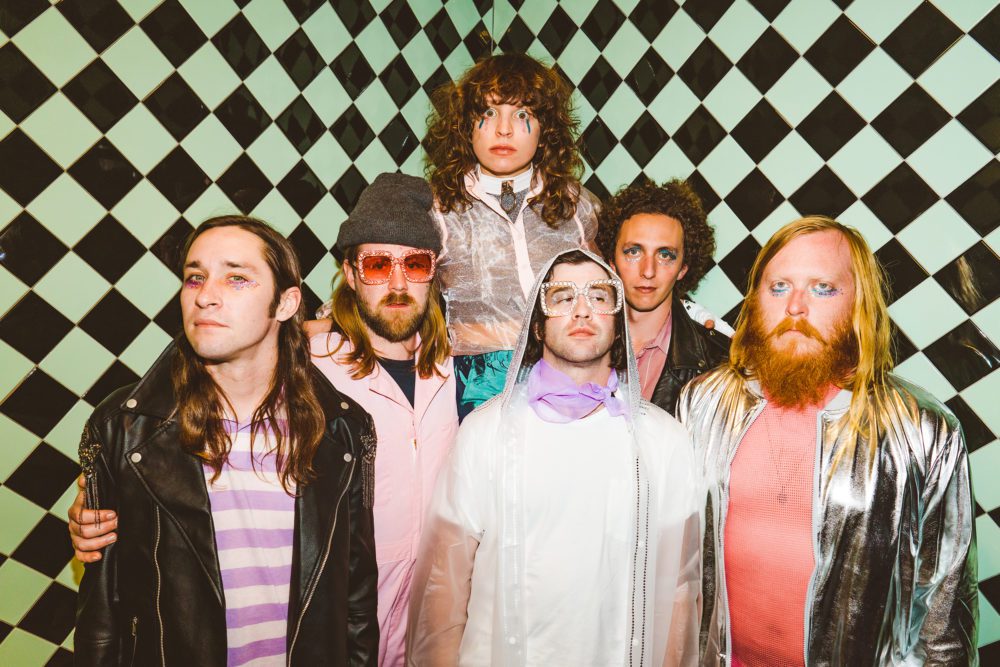
Sweet Spirit’s music sounds like something you’d see high school kids slow-dancing to in an ’80s movie, but if you listen closely, their lyrics contain far more depth than any rom-com. The Austin-based sextet’s latest LP, Trinidad, out last Friday via Merge Records, covers everything from rejection of social norms to “the loneliness of strangers who pass like ships in the night, unaware of their synchronicity,” as vocalist Sabrina Ellis puts it.
The album spotlights Ellis’s Mexican heritage, both in its title — which is the name of their great grandmother — and in its single “Llorando,” the Spanish word for “crying.” The percussion in “Llorando” was even produced with bottles of Topo Chico, a mineral water brand sourced from Monterrey, Mexico. The song’s chorus was originally sung in Spanish just because it sounded better that way, but as Ellis witnessed increasing injustices toward Mexican immigrants by ICE, this choice of language became an act of rebellion and inclusivity.
“Grief has had its way with me/Grief has locked me up and thrown away the key,” Ellis sings in the synthy single, which was inspired by the grief people expressed in group therapy sessions Ellis used to go to — but was really about grief Ellis was afraid to feel.
Grief is “easier to experience when packaged in a song,” Ellis explains — but there’s another benefit to processing it this way. “If I process an emotion, an experience, into a song, then someone hears it, keeps company with it and identifies with it, feels catharsis through it, that’s empathy. Once a song is made, it belongs to anyone who hears it. The emotional reverberation of a song is an empathy which defies time and space.”
Trinidad — which Ellis says was heavily influenced by Prince, particularly in its use of a Linn Drum Machine — also includes “No Dancing,” a sad but catchy track lamenting how “no one here believes in magic;” “Fingerprints,” an anthem for being in love with someone who’s taken; and “Behold,” which sounds like a number from a rock musical.
While rock sensibilities figure heavily into Sweet Spirit’s previous albums, 2015’s Cokomo and 2017’s St. Mojo, the band aimed to create something softer with Trinidad. “We hoped to make a dance album that would sneak in through people’s ears and end up in their body,” says Ellis. “We love our electric guitars, but being loud and brazen in the tradition of classic rock, during the era of MAGA, just felt gauche. This is Sweet Spirit, without the man-spreading. A little more low-key.”
Ellis came out as non-binary in a series of Instagram posts lasts year, a decision they made to expand people’s awareness of the range of identities that exist within humanity. “To normalize gender, to reduce the importance of assigned sex and of binary gender roles, we need to train our modern society to no longer assume peoples’ genders,” they explain. “This will make the world a safer place.”
They’re currently at work on a solo project, Velvet Nudes, which sits somewhere between folk and R&B and explores gender identity as well as mental health. “Much of the material is personal dedications of love and fascination to my muse, who was also my first big queer heartbreak,” they say. “These songs are so personal to me, it feels somehow invasive, or an imposition, to take them to my band and to share in the most intimate expressions of my experience.”
In Velvet Nudes’ music, which Ellis has performed live and in live-streamed Instagram shows, the vocals are accompanied by acoustic guitar and cello from Graham Low, Ellis’s bandmate in A Giant Dog. Their goal is to eventually compile the songs into a solo album. “The unmade Velvet Nudes album holds my experience in the most intimate way possible,” they say, “and is my true coming-out album.”
Follow Sweet Spirit on Facebook for ongoing updates.
During a time when many people are grieving various losses, Eddy Lee Ryder’s “There in Dreams” gives a voice to that grief. Originally written about the death of the singer-songwriter’s father when she was 16, the single is intended to speak to anyone who has lost someone they care about. “[It’s about] finding your own peace in a situation you have no control over and speaking to someone who’s not there and saying, ‘It’s gonna be all right,’ and just trusting,” she explains.
The song opens with a simple melody, minimal guitar and piano accompaniment, and natural imagery, creating a folky aesthetic: “I know the ocean/She tells me I’m insane/I know the waters/They have crumbled in my brain.” The escalating melody of the chorus, meanwhile, contains hints of Ryder’s training in opera and classical music; her voice elegantly soars above the piano as she sings, “There in dreams, you come to me.”
“I tried to make it very vague when I was writing it so people could put their own stories in there and make their own meanings when hearing the lyrics,” Ryder explains. “I think everyone has someone who visits them in different ways, and they get meaning when that happens.” Her goal with the sound was to sing in a light, approachable manner to give hope to a heavy topic.
The single is part of Expected To Fly, Ryder’s debut EP under her current name, which comes out in July. Along with the ’80s-inspired title track and “There in Dreams,” the EP includes Ryder’s three previously released singles: “Silver Chain,” “Small Apartment,” and “Vultures.” The influence of Fleetwood Mac and Tom Petty is audible, from the dramatic vocals to the electric guitar; Ryder describes the sound as “shimmery.”
The NYC-based artist, who has been making music that she classifies within the rock genre for around seven years, initially under the name Liz Brennan, describes “There in Dreams” as more serious than her other singles, which were “more theatrical and a little bit more comedy-driven and outrageous,” she says.
“Small Apartment,” for instance, a catchy 2019 single that gives off ’70s vibes, centers on a “lady prick” neighbor who got Ryder evicted. The funny video shows her enacting the whole saga, from “the way her voice would shake the window” to “the way she kicked the door unhinged,” with the two fighting by dropping and banging objects on their respective floor and ceiling.
The video for “Silver Chain,” an 80s-rock-inspired single about spending your nights at bars at an older age than appears appropriate while your friends are doing grown-up things, is equally enthralling, taking place in a strip club and featuring a cameo from porn star and filmmaker Ron Jeremy.
Ryder has also written a number of other songs she plans to turn into concept albums, including one called World War 3 that she finds “very fitting for the current state of the world.” Given the versatility she’s already shown as an artist, both sonically and thematically, we’re not sure what to expect of her future work, except that it’s certain to be intriguing.
Follow Eddy Lee Ryder on Facebook for ongoing updates.
As a music and media publication dedicated to supporting marginalized communities, we’re using our platform to fight against racial injustice, particularly at the hands of the police. On Blackout Tuesday, an initiative was created by Atlantic Records exec Jamila Thomas and Platoon’s Brianna Agyemang, we dedicated the entire site to resources for justice, and we’ve compiled those materials here on a post that will remain on Audiofemme’s homepage as long as necessary and will be updated on an ongoing basis.
VOICES
“Here is the call…. Break out of the tendency to spin in your own guilt, ignorance, shame, resistance, or whatever is preventing you from living into a life of anti-racism and love for the humanity of Black, Indigenous and people of color. Break through the hardness of white supremacy so you can see every single way you uphold it. Break free… and step into a place that may be the only way out of this disastrous mess: a scrupulous interrogation of your complicity.”
Pimento Relief Fund helps Black-owned businesses rebuilding in Minnesota; look for other orgs in your city.
Reclaim the Block organizes Minneapolis community and city council members to move money from the police department into other areas of the city’s budget that truly promote community health and safety. You can also find petitions and orgs that seek to do the same in your city, like Communities United for Police Reform in NYC. Campaign Zero provides more resources for getting involved.
On a national level, Communities Against Police Brutality (CUAPB) provides assistance to individuals and families dealing with the effects of police brutality.
Donate directly to the families of victims lost to police brutality and other hate crimes.
National Police Accountability Project (NPAP) is a project of the National Lawyers Guild that works to hold police accountable for civil rights violations.
Unicorn Riot, a decentralized media organization, has been live-streaming uprisings.
Black Table Arts gathers Black communities through the arts, towards better black futures.
Showing Up For Racial Justice (SURJ) moves white folks into accountable action as part of a multi-racial movement through community organizing, mobilizing, and education.
The National Bail Fund Network lists organizations by state that share the goal of freeing people by paying bails and bonds and while fighting to abolish the money bail system and pretrial detention. Donate now on behalf of protesters arrested in demonstrations; donate often as this is an ongoing and systemic issue.
VOTE
Campaign for political candidates who model racial justice and fight for progressive policy change, ESPECIALLY DOWN BALLOT. Send money to finance progressive campaigns in states outside of the ones you live in. Research candidates’ platforms and voting records, as all too many proclaimed “liberal” candidates aren’t radical enough to effect real change. Vote for (and donate to) the ones who will push moderates to the left! American politics is flawed, but remember what’s at stake when you refuse to participate at all.
– Terence Floyd, at a vigil for his slain brother in Minneapolis 6/1/2020
SHARE
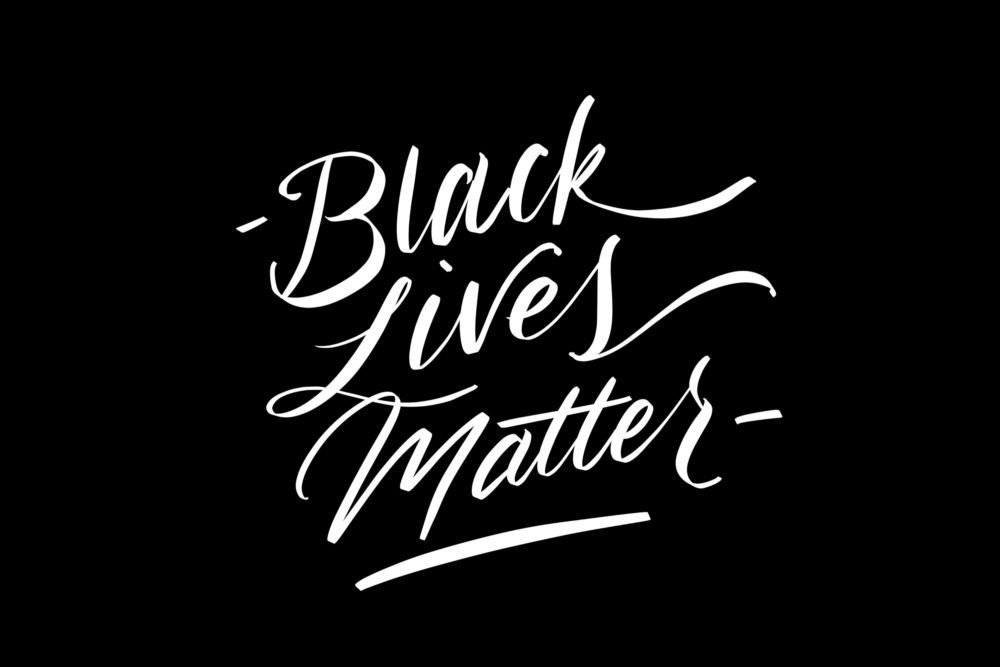
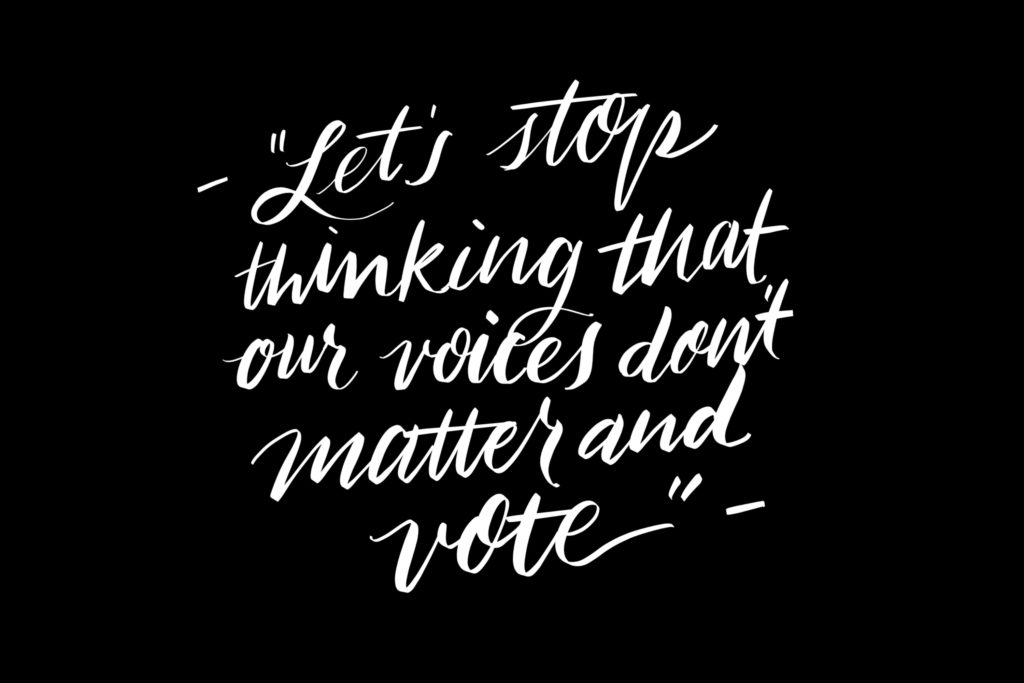
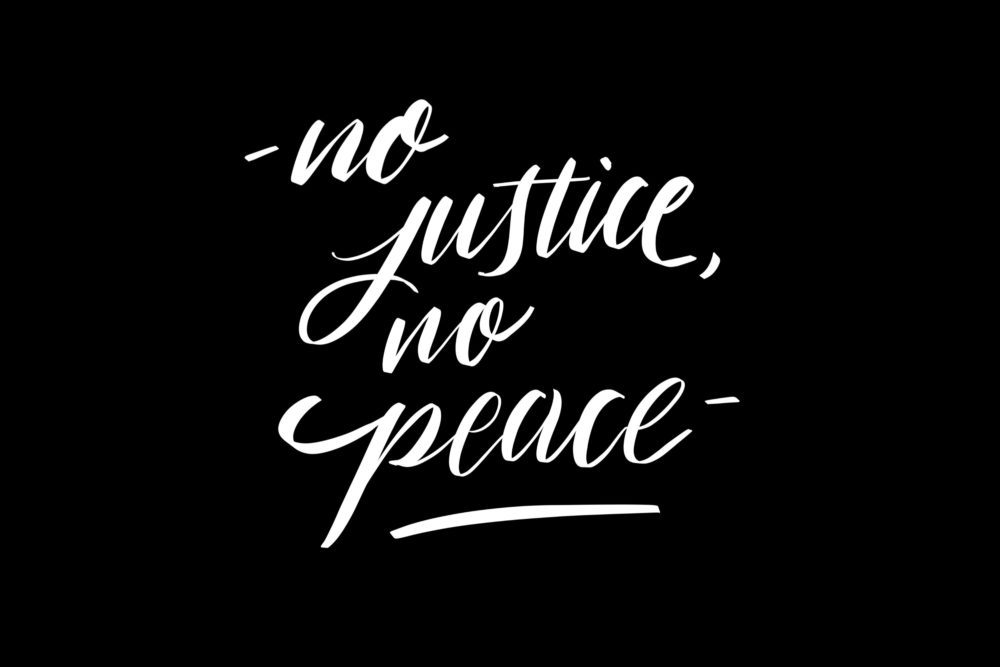
The hand-drawn graphics (black background with white-script text) used in our posts were created by Tessa El Maleh and are available for use on social media (right click to save). We ask that you do not use the #BlackLivesMatter hash tag on your posts unless sharing resources or information for those on the ground. We do recommend that you make your post more meaningful than performative by sharing alongside general resources and wider calls to action.
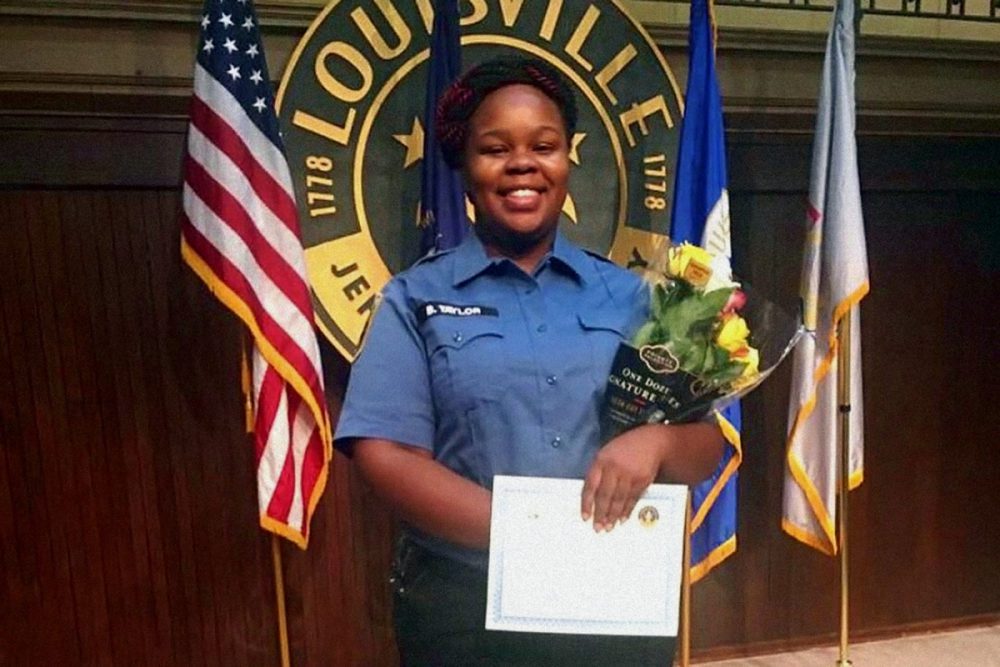
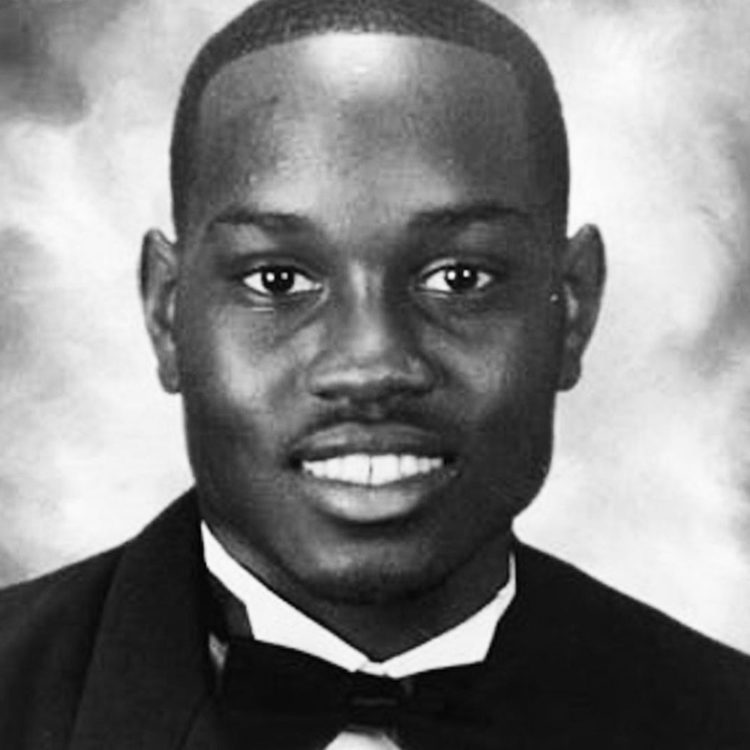
Dedicated to George Floyd, Breonna Taylor, Ahmaud Arbery, and all victims of police brutality and race-based violence.
Before his death at the hands of Minneapolis police, George Floyd was part of Houston’s rap scene, appearing on mixtapes with DJ Screw and Presidential Playas, as Stereogum reports.
“I want justice for her. I want them to say her name. There’s no reason Breonna should be dead at all.”
– Tamika Palmer, mother of Breonna Taylor, in an interview with Errin Haines for The Washington Post that shed light on the 26-year old essential worker’s death at the hands of Louisville police
“Arbery was enjoying a nice run on a beautiful day when he began to be stalked by armed men.
What must that have felt like?
What must he have felt when he approached the truck and saw that one of the stalkers was brandishing a shotgun?
What must he have thought when he fought for the gun?
What must he have thought when he took the first bullet?
Or the second?
What must he have thought as he collapsed to the ground and could feel the life leaving his body?”
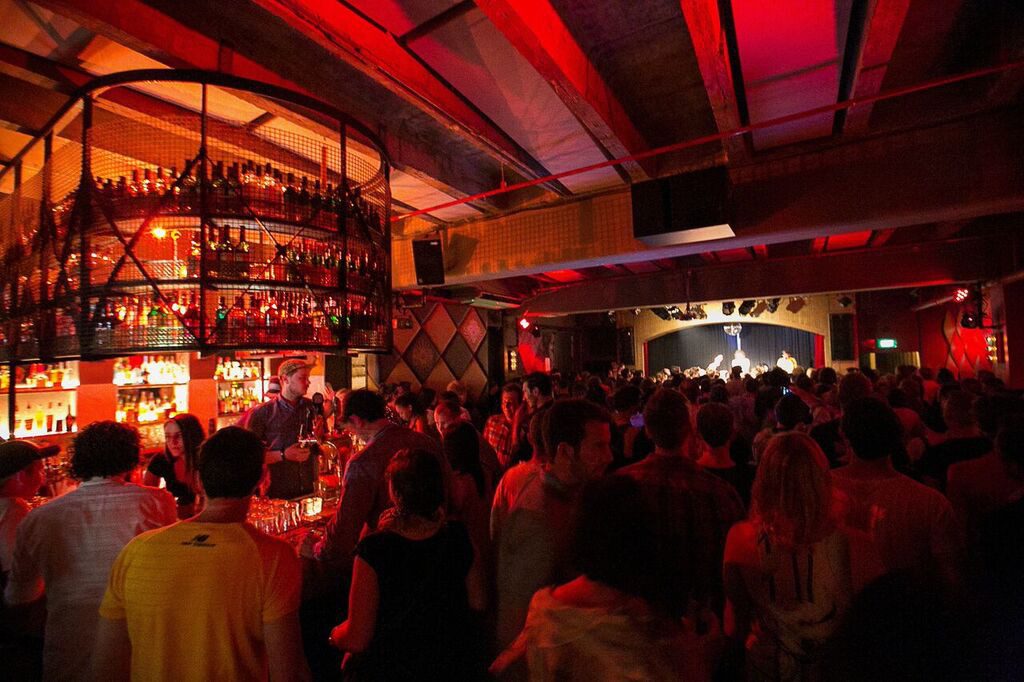
Welcome to Playing Melbourne! A little on me, your host. I was born and raised in Melbourne, so this city is in my veins and deep in my neural cells. It’s part of me, basically. Melbourne is known for three things, primarily: our music scene; our coffee; and being enormously diverse in terms of cultures, ethnicities and subcultures.
I have written on and reviewed music for just over a decade, but I’ve loved music as far back as I remember. Isn’t it funny that when you love something so much, you assume everyone else does? Perhaps that’s why I took Melbourne’s incredibly rich range of music venues, the artists and creatives who make up this industry for granted for so long. Melbourne’s music scene encompasses world-class live performances, albums, studios, videography and art, to a ready audience of local and international fans.
Right now, there’s more opportunity than there has ever been for international audiences to engage with Melbourne’s music scene. You can check out a playlist on Spotify, watch a weekly gig on The State of Music, a government supported platform for Victorian musicians, or buy a ticket to support artists at Delivered Live (live streamed on Saturday evenings, Melbourne time).
Melbourne is home to over three times the number of music venues per capita than Austin, Texas; this city hosts over 62,000 live music events annually (though currently, those events are on hold due to the pandemic). Right now, venues are at risk of closing down permanently and many in the music industry are questioning whether they have a career when restrictions ease. As dark as this is, there’s also a lot of good news. Music Victoria has been prominent in championing the need for casual and freelance workers in the music industry to be eligible for government income support as well as ensuring grants are open to artists and venues to enable them to continue creating and operating in some capacity while they can’t do their usual thing.
We’re fortunate to have a number of community radio programs that champion local music, as well as state and federal funding and arts/music organisations that support and promote music and the people who work in the industry. Our community radio stations really reflect how diverse this city and its population is and if you’re truly curious about this city in regards to music and to its spirit, it’s worth tuning in live or listening back to recordings of Melbourne’s community radio stations online, like 3RRR, PBS106.7, and Australia’s first and only LGBTQI+ community radio station, JOYFM. Triple J, a national radio network that has supported and discovered many local acts in their infancy, provides another great sources of Melbourne sounds and culture.
But it’s the musicians themselves that make Melbourne what it is, and there’s no one genre that dominates the scene. Ngaiire performs soulful R&B, combines glitchy electro with melancholy instrumentation. She was born in Papua New Guinea but has really been adopted as a Melbourne music identity. In March, she released “Boom,” the first official single from her third album, which will follow 2013 debut Lamentations and 2016 sophomore effort Blastoma.
Likewise, Sampa The Great was born elsewhere (she’s Zambian and was raised in Botswana) but has been adopted as Melburnian. She raps about her own life and cultural observations over hip hop beats. Her 2019 album The Return was nominated for the NME Award for Best Australian Album. A prolific collaborator, she’s features a wide swath of Australian artists on her own releases, as well as appearing on tracks by Wallace, Urthboy, Jonti, and Ecca Vandal.
Eddy Current Suppression Ring are a garage rock band that has shied from doing much media promotion in favour of plying their trade. They’re favourites locally for their blistering live sets and no-frills, no-fuss personas. Along with associated acts like Total Control, Dick Diver, and UV Race, they carry on the lauded “Little Band” scene of the early eighties instigated by Primitive Calculators.
Lupa J (aka Imogen Jones) got her start by posting a couple of tracks on Soundcloud as a 15 year old. Now 21, she’s got two albums under her belt – 2016’s My Right Name and last year’s Swallow Me Whole – combining synth, soul and R&B to deliver personal, melodic songs. She carries on that tradition with her latest singles “Half Alive,” “Out to Wreck,” and “Limbo.”
Alice Skye is a Wergaia woman from Horsham, just outside of Melbourne in Victoria. She released her first album Friends With Feelings in 2018 and has toured with like-minded female folk singer Emily Wurramara. Her identity as an Aboriginal woman and her connection to the land in this way has informed her sound and her songwriting.
Whether you know one or two Melbourne acts or your knowledge on the Melbourne music scene rivals Wikipedia, I hope to bring you insight, profiles, interviews and recommendations that convince you – once travel is available and safe again – to spend some time in this city. If you love music, Melbourne loves you.
Kat Meoz’s gritty, high-energy rock is as motivational as it is catchy. On “Royalty,” the title track off an EP released last year, she sings about refusing to settle for less than royal treatment. “Whatever I Want,” from the same EP, declares her unwillingness to follow others’ rules, and on “Are You Ready?” she announces to the world that she’s “on a mission” and won’t be stopped. Her latest single, “Back for More,” continues this same theme of confidence and boldness, asserting that she’ll respond to failure by trying again with even more resolve.
The Los Angeles-based, Venezuelan-American singer-songwriter, composer, and producer wrote the track about rejections she received from people in the music industry she’d been wanting to work with, which “was okay because I wasn’t going to give up on the idea of working with them,” she says. “So, I thought, I’ll be back to offer them more music they can’t say no to, soon.”
The sound of the single mirrors the meaning, with Meoz powerfully belting, “Bet your life/I’m coming back for more” in the chorus and repeating the lyrics “It’s the bait and switch/Makin’ poor men rich” in an infectious, almost conversationally sung pre-chorus. “Back for More” is more bluesy than some of Meoz’s past work, but it intentionally matches the exuberant spirit of her entire catalog, while highlighting her tenacity.
The sentiment of the song also mirrors the process of making it. Meoz first wrote “Back for More” two years ago and began working with her producers Jake Bowman and Teddy Roxpin on it, then decided to rehash it with a different tune almost a year later. “It’s not every day you can have a finished song and then reach out to people several months later to say, ‘Hey, remember that finished song we have? Can we completely redo it and just keep the lyrics?'” she says. “I think their excitement and hard work matched mine perfectly, and the combination of our efforts and good vibes is bringing this song into the world.”
Meoz’s professional accomplishments support the assertion at the heart of “Back for More” – that she can accomplish whatever she wants in her career. She regularly writes songs for ads, TV, and film, which she describes as “a sensory overload that gifts me a feeling of accomplishment like nothing else.” Her favorite role of this kind was as executive music producer for The Dust Storm, a movie about musicians in Nashville for which she got to wear multiple hats, including coaching actors for live performances. “It’s full circle hearing a song that came from the ethers of my mind in someone else’s creation,” she says.
Her impressive list of credentials also includes singing backup vocals on Iggy Azalea and Quavo’s 2018 single “Savior,” which she remembers as “somewhat intimidating,” since she was meeting Azalea for the first time. “One of the first things you learn in recording school is to read a room and have studio etiquette,” she says. “So, when Iggy arrived, the atmosphere became more serious because essentially the boss had arrived.”
A lesser-known highlight of her career was performing “Boogie Shoes” by KC and the Sunshine Band in several locations through LA in a video for Hear the Music: West Hollywood, a campaign to promote LA tourism. “It was just the coolest experience to get to represent West Hollywood and have it be so connected to music,” she says. “It plays overseas and I get messages from people in the Middle East frequently saying they love my cover of ‘Boogie Shoes,'” she says.
Meoz is currently working on an EP that continues the guitar-centered “swagger rock” vibe of her past work, with hints of Alanis Morissette, Rage Against the Machine, Led Zeppelin, and Bishop Briggs. On top of that, she plans to release a soul EP later this year under an alias. It’s unclear what’s next after that, but what’s certain is that she’ll be back for more.
Back when Iggy T and the Crazymakers frontwoman Sarah Todd was doing business consulting, a client fired her after she requested a contract and salary raise he’d promised her. “I called a friend and cried, and it was like a light switch that my tears turned off and my power turned on,” she remembers. “I realized as a product of this experience just how many times and in how many settings I was giving my power away to men. Generations of conditioning to believe I should ‘play small.'”
Since she made the decision not to play small, she’s formed a band with a big sound. After Todd met multi-instrumentalist David Franz at a friend’s jam circle, the two began creating music that combined her old soul, folk, and classic rock background with his blues and rock influences. Together, with the help of saxophonist Karl Hunter, drummer Fernando Jaramillo, guitarist Matthew Cheadle, and bassist Scott Fegette, they created a sound reminiscent of The Black Keys, Amy Winehouse, and The Alabama Shakes.
The band name, like all good works of art, came from a dad joke. “My Dad’s dry sense of humor led him to tricking me into thinking that my middle name was Ignatius,” says Todd. “Might be one of those ‘you had to be there’ things, but it stuck all these years.” T is her last initial, and “crazymakers” stems from the book The Artist’s Way by Julia Cameron, referring to the ways we all drive ourselves and the people around us crazy.
Iggy T and the Crazymakers’ latest single, “I’ll Take My Power Back,” was inspired by Todd’s experience getting fired for advocating for herself, encouraging women not to back down in such situations. “I feel the tide is rising/I hear the inner voice/I’m calling all the powerless/to make a new choice,” Todd’s powerful voice belts in between dramatic guitar chords.
In keeping with the message of the song, the video intersperses the band’s performance with footage of women’s protests and other images of strong women.
The single sits alongside several other empowering songs on their debut album, Just Can’t Get Enough, including “Cake,” a sassy bisexual anthem, where Todd addresses a male partner about also wanting female partners: “Do I have to choose/I was thinking we could talk about it/What do I have to prove/for you to let me have my cake and eat it too?”
“I prefer talking about serious things with an upbeat playfulness,” she says, and with its triumphant saxophone, pop-friendly production, and tongue-in-cheek lyrics, “Cake” certainly achieves that goal.
“Often, the B in LGBTQ feels invisible,” Todd explains. “I get such a sense of validation when I have this conversation with another bisexual person. We fall in love with humans, not because of their gender. All too often, though, what I see is people taking bisexuality personally because it threatens their own constructs of love and belonging and sexuality. This keeps many bisexuals closeted and afraid to come out for fear of being judged as invalid, fake, mal-intended.”
Aside from these songs, the album pushes listeners’ thinking around relationships, social equality, and self-reclamation. Todd hopes that in particular, it inspires women and girls to know their value and stand their ground.
“For the moments that inevitably require a power pose and a girl power anthem, I’d be delighted to know that even one woman found this song to be inspiring,” she says. “There are a record number of women in Congress right now. What a time to be alive. What a time to push play on this song and march through the roadblocks that will undoubtedly be there waiting. I just get giddy watching women taking their power back. No better time than now.”
Follow Iggy T and the Crazymakers on Facebook for ongoing updates.
Mike Borchardt, frontman of Brooklyn DIY punk outfit Nihiloceros, is a stellar show-goer. He is always stage-side, taking photos and promoting every show happening that week on his band’s social media accounts. From the looks of Instagram, he has taken the transition from IRL gigs to virtual shows in stride, continuing to post live stream schedules and Insta-live screen shots.
Mike started what has become Brooklyn’s most supportive band in his hometown of Chicago. They were originally called Samantha, but changed their name to the much more Google-able Nihiloceros. The trash pop trio’s rhythm section is filled out by Alex Hoffman on bass and vocals, and German Sent on drums. They released a self-titled EP in 2017, and are putting the finishing touches on their follow-up EP in a socially distant manner. You can catch Mike of Nihiloceros doing a solo set this Tuesday, June 2nd on Radio Free Brooklyn’s Instagram at 8pm. We chatted with Mike about commuting during lock down, creative livestreaming, and being quarantined with band mates.
AF: Has Nihiloceros been able to get together or collaborate remotely during lockdown?
MB:Luckily Alex lives right downstairs so he and I have been able to work on music a bit. We’ve built a little recording booth in the basement for a few finishing touches on the new Nihiloceros record. I’m still taking the subway into Manhattan every day for work, and Alex’s wife is pregnant, so we’ve been trying to socially distance the “upstairs people” from the “downstairs people” as much as possible. I’m definitely the black sheep pariah of Nihiloceros Castle.
German has been quarantined with his family in New Jersey. I haven’t seen him since our last show the first week of March, but we’ve been talking through musical concepts we are excited to start exploring. German drove back into Brooklyn a couple times to go play drums in isolation at our rehearsal space. Alex and German are both in the middle of home construction projects, so they’ve also been swapping notes on demolition and rehab. German and I have been workshopping prototypes for new merch, including Nihiloceros soap and Nihiloceros Chia Pets.
AF: What are some of the things you’ve done to support bands and venues in lieu of not being able to go to shows?
MB: It’s been really important to us to stay involved with the scene as we all navigate this crisis together. I’ve written a handful of songs for some quarantine compilations (Dim Things, Shred City, NYC Musicians for NYC) all to raise money for Artist Relief Tree, Food Bank for NYC, etc. We’ve done a series of video sessions and livestreams for a lot of the venues like Our Wicked Lady and The Footlight to help them pay their staff and hopefully keep their doors open on the other side of this. Everyone should check out the work NIVA [National Independent Venue Association] is doing through #SaveOurStages to drum up congressional support and secure funding on a national scale for all these stages that make up our DIY tour circuits.
Alex and I are both lucky to still be working, so we’ve been buying merch and music from bands as much as possible. And also obviously we’ve been catching and sharing as many artists’ livestreams as possible. From a photography standpoint, those screenshots on the phone aren’t as fun, but they’re much easier to edit.
AF: Do you have any creative tips on screen shooting live streams? What’s your approach to live streaming like?
MB: I think we are all still trying to figure that out. I remember the first week of the lockdown, we played a couple shows on the Left Bank Magazine Virtual Music Fest, and we all spent a lot of time looking to see if we had hit the right button, if we were live, if people were watching, and asking viewers if everything sounded okay. In the weeks and months since, I think we started to figure things out. I believe Ilithios was the first I saw who just shut up and put on a great show. Since then, I’ve tried to make our livestreams be more like a real performance and less like my dad trying to use the internet.
We also always try and partner a livestream with an organization or label/blog/venue (BandsDoBK, Ms. Understood Records, Songwriters Salon, etc.) as a vehicle to raise money or awareness for something we care about. Gillian Visco (Shadow Monster) and I came up with a super fun weekly music hangout stream idea called #TagnSplit that’s been touring around the community for a few weeks now. We got some stuff we are working on with Bloodless Management, Street Wannabes, as well as some live podcasts in Staten Island and Philadelphia and St.Louis. And this Tuesday night 6/2, Nihiloceros is going live on Radio Free Brooklyn to play some songs and talk about ways we can all help out.
AF: You’re an essential worker and still commute to your job everyday. How has navigating the city been during this time and has the experience changed your perspective of New York City?
MB: Taking the subway into the city everyday amidst the pandemic has definitely been an experience I won’t soon forget. It’s been a constantly evolving situation that I’ve witnessed ranging from terrifying to extremely heartwarming. On one side there’s the Mad Max post-apocalyptic Manhattan streets and the homeless camp territory wars on the subways. But at the same time I see a heightened sense of care and humanity as we reach out and help one another, and as we take responsibility to safely share our limited social spaces. The other day, a stranger pulled over and got out of her car to give me her canvas bag and helped me gather my groceries that had fallen, broken eggs all over the sidewalk, and humus that rolled into the street. This pandemic has had a real polarizing effect, but it has reaffirmed my perspective of NYC and everything that defines it. Everything great and everything awful about this city will still be here after this crisis is over. And that’s kind of comforting to me. Though hopefully we carry forward a little more of the good than we do the awful.
AF: What do you think life in NYC as a musician will be like post-lockdown?
MB: I think humans have a short memory and an amazing ability to adapt and pivot. That can be both a good and bad thing. We are extremely resilient, but we often don’t learn from missteps and end up repeating the same mistakes. I think our communities will make some adjustments as we ease back into our new normal. I don’t know exactly what that’s going to look like. It might be a little while before moshing, crowd-surfing, and hugs make a huge comeback. People are itching to get back out into our creative outlets and social circles, but we are also justifiably apprehensive. It will just take time.
I hope we learn to appreciate what matters a little more, both in and out of music. Maybe we won’t feel the need to scramble all over each other all the time. Maybe we can slow down and enjoy the process a little more. This has been a unique opportunity to reset who we are as artists and who we are as people. It’s an opportunity to rebuild the community the way we want it built. I really hope we continue to build each other up and come to appreciate the journey rather than the destination.
AF: Is Nihiloceros planning to release any new music in 2020?
MB: That’s the million dollar question right now, and I really don’t know the answer. Our new record was almost finished before the pandemic hit. Alex and I had been in the studio writing and recording and it with Chris Gilroy, who drummed with us on the record before German joined the band. We are super proud of it, and were already extremely eager to release it. But as a band that defines themselves so heavily on their live show, it just doesn’t feel right to put it out there without the ability to play and tour on it properly. We’ve had to push both our Summer and Fall 2020 tour plans, so we may hold off on releasing it until we have a better idea of what the future of live music looks like.
I’ve been losing a lot of sleep over this the past few months. We still have to get Stephanie Gunther (Desert Sharks) and Gillian Visco (Shadow Monster) into the studio to do some vocals on a couple songs once it’s safe. Maybe we’ll release a song later this year, and release two records in 2021 since we’ve already started writing new songs.
RSVP HERE for Mike of Nihiloceros livestream on Radio Free Brooklyn’s Instagram 8pm Tuesday 6/2.
When you listen to Naïka’s music, you’ll feel like you’re in a club on a beautiful summer night during a vacation in a foreign country — though you’d be forgiven for not knowing which country. The singer is of French and Haitian heritage, was born in Miami, and has lived in Guadeloupe, Kenya, South Africa, Vanuatu, and more, and her musical influences are as eclectic as her background.
This is evident on her debut EP, due out later this summer, and includes French and Creole lyrics; she describes it as a “merging of world and pop music.” The collection includes “Vultures,” a sassy, catchy single released in April, with straightforward, classic pop songs, Latin and Caribbean influences, and poignant lyrics throughout, showcasing Naïka’s breadth and depth as an artist.
But the highlight of the EP is “African Sun,” a gorgeous and uplifting homage to Naïka’s Haitian descent. She penned the song — the first she wrote in Creole — in response to riots taking place in Haiti last year, and is releasing it in May to celebrate Haitian Heritage Month. She also plans to celebrate with an online performance.
“I’m very connected to my Haitian roots. [“African Sun”] was a little bit inspired by the instability and turmoil in Haiti,” she explains. “Also, in my life at the time, I was very lost — my music wasn’t getting released and I was still finding myself.”
Naïka, a Berklee College of Music graduate who’s heavily involved in songwriting and production, recorded herself singing the melody on a plane when it first came to her. The chorus contains a message of resilience: “All of these demons get rough/They never know when to stop/Sweeping me under the rug/Bless the high but fuck these lows/But damn when it’s finally done/I’m strong like the African sun/Got everything I need to keep me going.”
“Haitian people are some of the strongest people that I know,” she says. “Haiti is such a vibrant, beautiful country. The media loves to portray the negative sides of it, but it’s just a boiling pot of creativity and potential and beauty, and I just hope to focus people’s attention more on that.”
The EP as a whole, which will come out in two parts, is about “growth and self-development and getting to know yourself and your worth and being confident in who you are,” says Naïka, who plans to follow with a full-length album soon.
“My goal is to bring people together in different cultures and make people open to understanding a culture they’re not familiar with — and that they may not think they can connect with because it’s so far from what they know,” she says. “Understanding and connecting with all types of people is a really beautiful thing, so I hope to inspire and encourage people to do that more.”
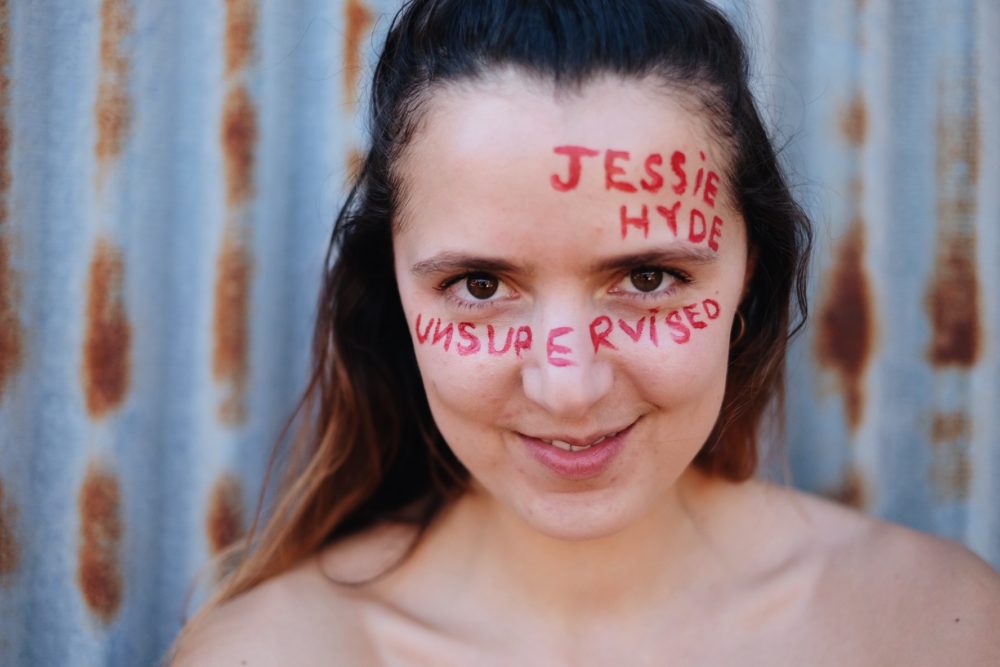
Jessie Hyde had no clue how cathartic making her first EP would be. With a background in modeling, tech, and entrepreneurship (as the founder of Glucose Goddess), songwriting revealed itself after an especially brutal breakup. She knew she had to rediscover herself, and through her writing, greatly influenced by Katie Melua and Norah Jones, she found the peace she long desired.
“Making music and releasing this first EP has changed my life. I gained a connection to a calling that I didn’t know existed inside of me, and it makes me feel more authentic,” the San Francisco singer-songwriter tells Audiofemme. “I found a refuge in music, a new nook in which to ground, extract and sublimate my feelings. Making music also invited incredible people into my life, and I’m so thankful for that.”
Hyde’s EP, called UNSUPERVISED, is raw and barebones in tone and structure, as she sifts through the rubble of her aching heart. A minimalist by nature, she rebuilds boundaries in her life with opener “Charity,” crunchy flickers pulsating against a bedrock of keyboard. A heavenly serenity sprouts from her fingertips, even when her lyrics are coarse and unapologetic. Therein lies her greatest strength.
Elsewhere, she braids together her French roots (she was born in Basque Country and later raised in Paris) with “Petite Fille,” a gritty, fear-confronting setpiece. Then, “Perpetuate” closes the release with a choir of songbirds, whose tender warbles backdrop her liberation as she finally, once and for all, declares her self-worth. “My shadow eats pieces of all the women before me,” she sings, cutting the shackles of the past.
Hyde is a monster of instinct, driven to bend her raw, intense emotions into her songwriting. Over the last seven or eight months, she came to understand the importance of honesty in her work, as well as how to define a singular voice. “Inspiration starts with a feeling. I can’t write unless I am experiencing a feeling. I can’t force it or tell myself that the next song I’ll write will be about this or that,” she explains. “It happens in the moment. A feeling comes up inside me, I find a pen and paper as quickly as possible, and I write words immediately.”
She is also “at the mercy of some sort of creative god when it comes time to go to my keyboard and try to put the words onto a melody,” she admits. “I just write words first; I never know what the song is going to sound like until I get to the keyboard. I get excited and nervous as my hands hover over the keys, and I try out a chord progression.”
The chords, melody, and words fly from her being, erupting from some dark crevice in her soul, and even when the parts don’t quite fit together, there is still a lesson to be learned. She surrenders herself to the process, and whatever will be will be. “I don’t get hard on myself if it doesn’t work. It’s not about me. It’s about something I can’t control,” she says.
As much emotion spins around on only four songs, there is an equal two-ton weight still hovering over her heart. The process of healing, from the dark depths of pain to enlightenment, is never really over. “Writing songs is the best catalyst for healing that I’ve ever found. When I have a rough day, feel overwhelmed or sad, I write a song about it in my bedroom and turn the tears into lyrics,” she says. “I extract the pain through this process, and that’s how I heal the wounds. I’ve been through the most growth and healing of my life since I started making music.”
Fear continues haunting her, however, and it’ll take even more time to mend those wounds. “I was really nervous that [this EP] would be bad. I was nervous [about] what people would think once I made the music public. My fear told me that I needed to find a co-writer, a partner, or someone to make the beats, give me their opinion, stir me into a ‘better” direction.’ I felt insecure and like my work wasn’t professional enough,” she says. “Ultimately, I worked through the fear and realized, you know, I’m just proud of myself for doing it and putting something out and learning so much.”
Jessie Hyde stakes her claim with UNSUPERVISED, a four-song anthology of her life, coursing from songs about “boys boys boys” to “more interesting territory” around womanhood and fearlessness. “I know I speak from pure truth and am not scared of telling things like they are. I have a lot to say as it relates to being honest with ourselves and others, having compassion for our process, and making space for healing and finding our power as women.”
Follow Jessie Hyde on Facebook for ongoing updates.
There’s a strong correlation between art and empathy, a powerful notion Skyler Day carries into her work as an actress and singer-songwriter.
Day knew the arts were a part of her destiny at the age of six when she discovered her love for singing while making her stage debut as the smallest Christmas tree in her school’s holiday play. She added songwriting to her list of talents at the age of 10 and learned how to play guitar four years later. While honing her musical capabilities, Day was also fostering her passion for acting, informing her parents that she wanted to hire an agent to book auditions. “I told them by the time I turned 11, if I booked the lead in a film, then we would have to move to Los Angeles so that I can pursue my acting career,” Day recalls to Audiofemme. True to her word, the determined child soon landed a part in an independent film, her parents shutting down the gymnastics studio they owned in their hometown of Cumming, Georgia, and made the cross-country move to LA to fulfill their daughter’s dreams.
Day has since become a working actress with roles on TV shows including Parenthood, Law & Order SVU, CSI: Miami, Pretty Little Liars and many more. In between appearances on major network shows, Day continues to sharpen her songwriting skills. With a growing catalog of introspective acoustic numbers, the Georgia native credits country music for inspiring her songwriting style. “I feel like country music really takes care of the story,” she describes. “It’s really the foundation of everything I do. It’s how I learned to write. It’s the reason I picked up guitar instead of some other instrument. I love the storytelling, and that’s really how I fell in love with music in general.”
The 28-year-old breathed new life into her career as a songwriter when she won a 2019 BumbleBizz contest for aspiring female songwriters that included a mentoring session with Kacey Musgraves and a performance slot at a major festival. Citing the six-time Grammy winner as a “huge inspiration,” Day flew to Texas to sit down with Musgraves before her appearance on Austin City Limits and imparted her wisdom onto the budding artist. “The main thing that stuck out to me was ‘write what you love, make the music that you love, and then let the rest take care of itself,’” Day recollects of Musgraves’ sage advice. “I love that, and I’ve always subscribed to that, so it was nice getting some reinforcement.”
For Day, writing the music you love means embracing her empathetic side. While acting allows Day to call on her imagination to bring other writers’ words and ideas to life, songwriting creates a personal outlet for her to share her own stories and experiences. “It’s the art of empathy and I feel like that’s the same with music,” she describes of the commonality between acting and songwriting. “It’s about being dead honest about your experience, and I feel like that translates with songwriting. You can tell the same with acting, you can tell when somebody’s being so truthful. It feels more real and like you’re creating a connection there.”
This focus on empathy shines in Day’s latest creation, “Six Feet Apart.” Penned in her LA home days after the stay-at-home order was put in place due to the COVID-19 pandemic, Day’s emotions toward the situation were bubbling beneath the surface, in need of a way to get out. She turned to Joni Mitchell’s album Blue for comfort, sitting in solitude and letting the lyrics wash over her. But at album’s end, Day noticed something profound taking place outside her window. “It got quiet and then I listened and the birds were going crazy. They were singing so loud,” she remembers. “I was thinking, they’re singing so loud and they have no idea what’s happening in the world.”
Her emotions soon began spilling onto the page, Day reflecting on the people who bring color into our lives, from our family and loved ones to strangers we pass on the street. She captures the heart of the song’s message in its potent closing line: “I guess that it’s simple/Now we know that our hearts/They weren’t made to be six feet apart.” “I hope that people feel less alone in the fact that someone else feels the same way and that we’re all really feeling the same way. I didn’t notice how important everyone is around you when you’re walking down the street or you’re at a restaurant. These people in the world, they fill up our lives and now I’m noticing how much I took that for granted,” Day professes. “I think it’s beautiful to now be so aware of the fact that we really need each other.”
Follow Skyler Day on Facebook for ongoing updates.
Celebrating the arrival of 2020 immediately took me to 2010. I rang in the new year at Barclays Center with a friend, seeing The Strokes for the first time. It felt appropriate, given how at the end of 2019, I had mentally regressed to feeling like my teenage self.
The year ended on a rough note. I lost my job and months later, a friend died at a very young age. After spending the year working on bettering myself by going to therapy, exercising, drinking less, and leaving toxic relationships behind, suddenly all progress was lost. I was emotionally fragile and reckless, incapable of having a positive mindset. As someone whose work is tied to her identity, I didn’t know who I was without it.
I sought validation and anything that’d distract me from my depression. In a misguided attempt to find happiness, I entered a brief, unhealthy romance with someone. What was meant to be a distraction brought more emotional distress. In a way, it made me feel like I was sixteen again. At that age, I had turned to music to cope, listening to songs that made me feel less alone while dealing with heartache. This time, I decided to do the same. I revisited old favorites that accurately described what I was dealing with, such as “Glendora” by Rilo Kiley and “Title Track” by Death Cab for Cutie. I reminded myself that there was a reason why Jenny Lewis wrote about these issues: it’s common to seek validation from the wrong people, and it doesn’t make me any less of a person to have a moment of weakness.
Music helped, and later things started to fall into place. I was hired at my dream job. I eased up on drinking to cope with grief and depression. I was exercising regularly again, focusing on using it as a designated time to clear my thoughts. My friends were supportive as I attempted to rebuild my life. But just when I was finally feeling like my old self, the COVID-19 pandemic hit New York City.
I began quarantining in early March out of precaution, before the city declared a state of emergency. My parents were very concerned, and though the pandemic was still in its early stages, my family urged me to return home with them to Puerto Rico. I initially said no, but after much convincing from my mom, I decided to temporarily move back home with my parents.
Typically, I’d avoid spending more than a week back home. It triggers painful memories from a decade ago, when I desperately wanted to leave the island. I didn’t have true friends growing up and spent much of my time isolated in my room, making internet friends and learning about bands through Tumblr and last.fm.
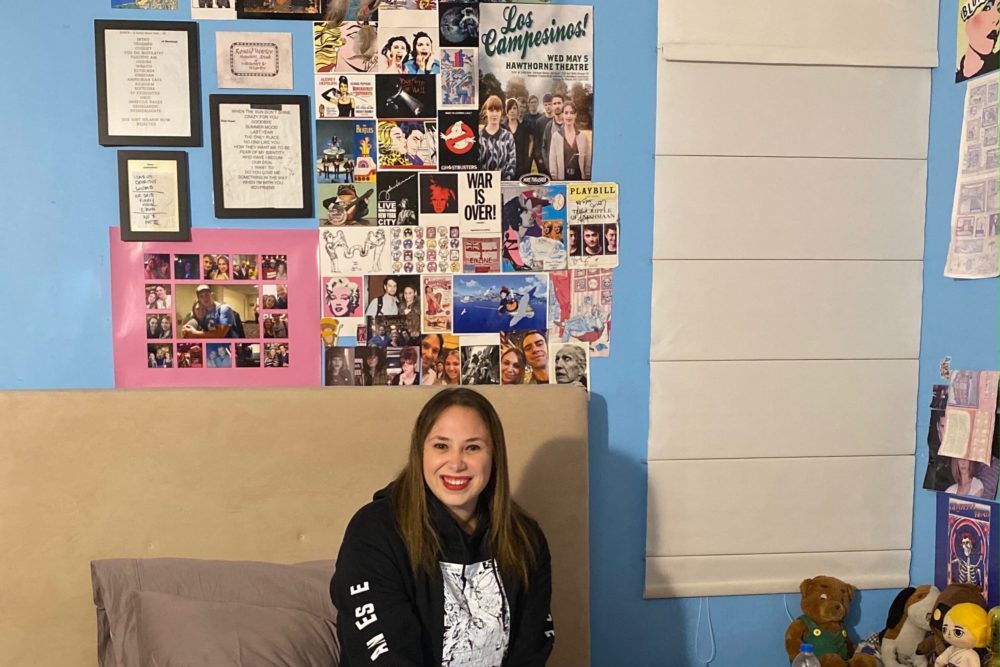
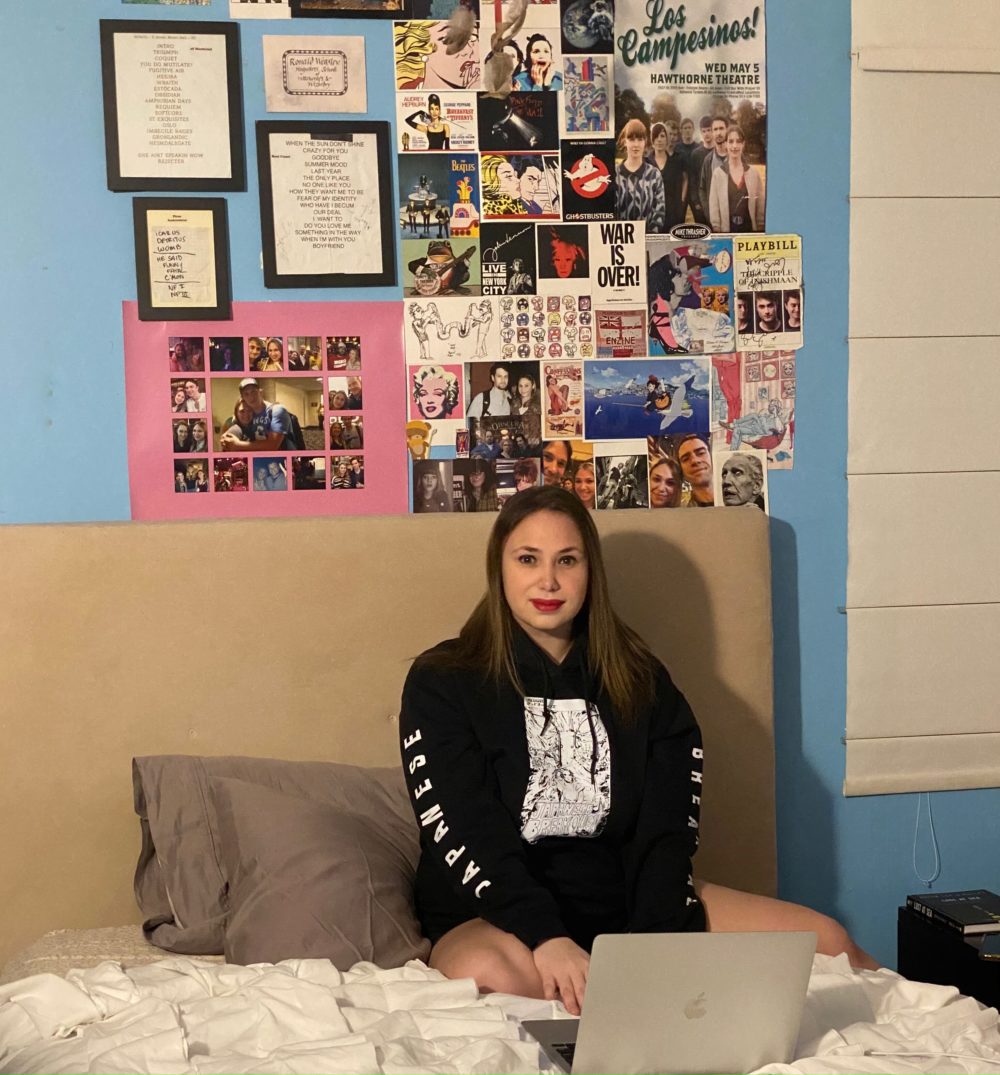
As a teen, I had no idea that finding solace in music through online communities would shape my future. My childhood bedroom walls are adorned with posters featuring some of the bands I’ve interviewed: Vivian Girls, Of Montreal, Best Coast, and Los Campesinos. I wish I could tell my teenage self, who felt so lost and insecure, that I’d accomplish so many things beyond my wildest dreams at that age. But being back home also felt like I was returning to feeling disconnected from the music-based community I had formed in Brooklyn.
In quarantine, I stopped hearing regularly from friends – it was reminiscent of that loneliness I felt as a teen. My depression returned and made me incapable of leaving the house; I didn’t have the energy to even take a quick walk around the block. No matter how much I accomplished at work, my depression caused me to be very hard on myself, making me think I was going to permanently lose the life I had in Brooklyn. This feeling persisted for two months, becoming worse each day.
One day, music writer Arielle Gordon tweeted about hosting a virtual emo night and after attending with my sibling, I realized I could create an online community of my own that would make me feel less alone. I told my sibling that I wanted to make my own virtual emo night, but with non-male DJs, widening the space for fellow music journalists, tour managers, artists, and anyone involved in music who, like me, were craving that sense of community they’d lost.
After tweeting about wanting to do it, I quickly received a response from Lindsey Miller and Mel Grinberg – both of whom are managers whose work I deeply admire – saying they wanted to get involved. Within two minutes, we had a concrete plan, and we invited Arielle and Rolling Stone editor Suzy Exposito to join. I named it Home, Like NoPlace Is There after The Hotelier’s album – appropriately about confronting depression and dark memories.
Before planning it, my depression was making me feel like my life had no purpose. Planning this event made me realize that others were in need of a community as much as I was, and it was exactly the positive, healthy distraction I needed. People I hadn’t met before began promoting it and were excited for it.
It was nerve-wracking, though. It was the first time I had planned a virtual event. Would it even work? What if something went wrong and the event failed? When it was time for the event to start, there were already 20-something people waiting on Zoom. The number of people kept increasing throughout the night, and the awkwardness of having a virtual emo night dissipated. The Hotelier’s Christian Holden even joined! People made new friends and found a safe space where they could talk about music and joke with each other.
Many reached out later saying it was the most fun they’d had since the pandemic began. That was true for me, too. For the five-and-a-half hours of the emo night, I felt happy and appreciated; I was overjoyed that my fellow DJs felt seen and appreciated, too. The last thing I thought I’d do in 2020 was revisit emo, a genre I have a complicated relationship with due to feeling like my writing about emo wasn’t respected as much as male colleagues’ – not to mention how the genre is often tied to bands that represent toxic masculinity. But now, emo carries a more positive meaning for me. It ties different generations together, and on Friday nights, everyone gets to feel like they belong somewhere – no matter who they are.
With this emo night, I have something to look forward to weekly that gives me an excuse to (virtually) socialize and dress up. While it’ll be some time until things are back to “normal” – if that ever even happens – I’m excited to feel like my regular self.
Follow Home, Like NoPlace Is There on Twitter for ongoing virtual emo night events.
Seattle-based drummer and singer-songwriter Heather Thomas had grand plans for 2020. After releasing her sophomore EP Open Up last year, Thomas hit the road, planning a nearly year-long journey with the intention of spending each month in a different city, exploring different music scenes and connecting with creatives all over the country. The ambitious plan put her in Los Angeles, then the San Francisco Bay Area, and then Austin just before SXSW – and that’s where she was when news of the pandemic hit hard, with the announcement that SXSW was cancelled.
“The town went from buzzing with anticipation for the busiest time of year, to a ghost town within a matter of days,” says Thomas.
The rapid closures of businesses and restrictions placed on social gathering thwarted plans Thomas had to “play as much music as possible” and connect with new people. Fortunately, a generous friend (and Austin bandmate) was able to provide a place to stay in the weeks that followed the shutdowns, so she was able to “shelter in place” safely while spending the next six weeks fully isolated.
“Isolation is an interesting reality, and it affects everyone differently, although anyone experiencing it will undoubtedly share some common feelings and emotions,” says Thomas. “If you were following along on social media, people were struggling with disrupted sleep patterns, worries about income loss, anxiety over ‘what to do next,’ and loneliness, along with many other shared feelings.”
One particular day, she finally found herself awake in the early morning—the best time of day to sit on the front porch and catch the warm Texas sun rising while the birds, bugs, and lizards went on with their lives, untouched by the fears of a global pandemic.
“I was inside on the couch when I sang to myself ‘I’m just sittin’ in the living room waitin’ on the times to change’ and I felt like I was probably feeling something that so many other people were feeling,” she recalls. “There wasn’t much we could do to fix things. There was just this feeling of helplessness coupled with the reality that we’d have to figure out a way through.”
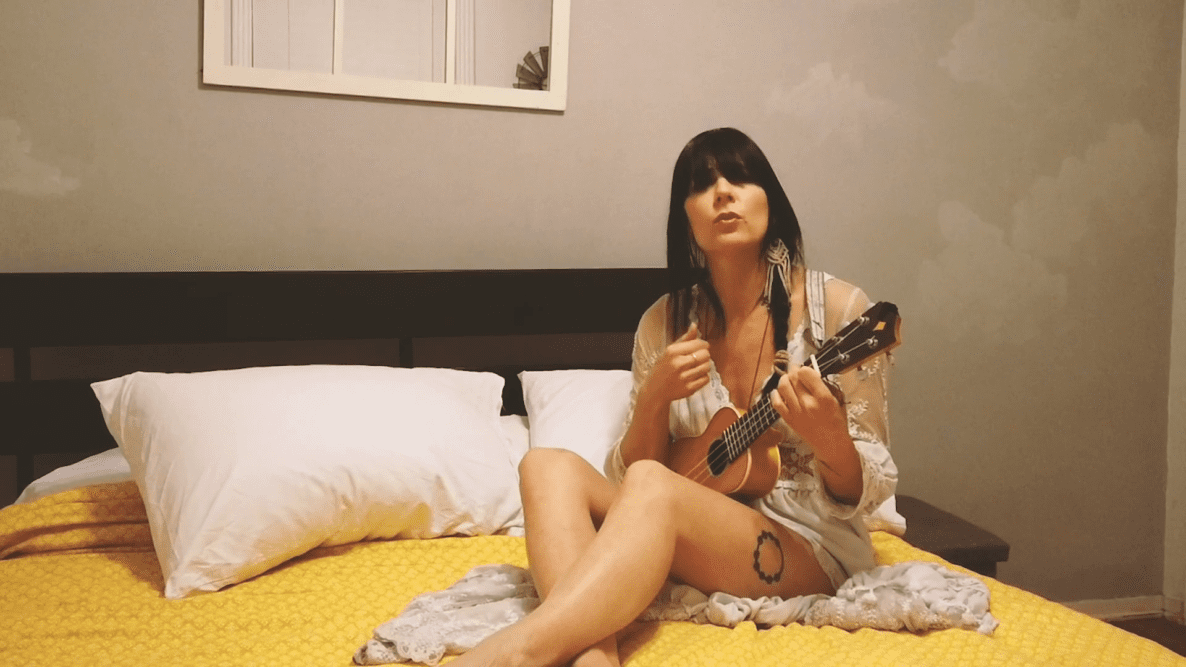
The final song, as Thomas anticipated, resonates far beyond the walls of her cozy Texas home away from home. And the simple performance in the video—filmed alone in a bedroom in Austin, Texas on an Osmo Pocket camera, with Thomas sitting on her yellow bedspread, singing her heart out—augments the intimacy of her isolation confessions as well as her incredible vocal strength and acuity. It’s a real anthem for the times, and a song that reminds us that we can still find a sense of peace and togetherness through music.
Thomas was able to get aback on the road recently and is currently in Albuquerque on a shared property. From there, Thomas plans to try and get back to her mission of exploring as many music scenes as possible this year – safely, of course.
“I intended to get out of my comfort zone and learn and adapt, so this is me learning and adapting. I don’t know what the upcoming months will look like, and for the time being I’m not trying to make plans too far ahead,” she says. “But I’ll have to keep moving on. It’s a new challenge, as I can no longer move from place to place, staying with friends for a few days at a time. I have to adjust my timeline and housing needs based on new safety precautions. But there’s no one way to exist in this time, and everyone has to find for themselves what feels right and how they feel the most safe.”
Follow Heather Thomas on Facebook for ongoing updates.
Recently, Grace Cooper officially became a children’s book author – by accident. For the physical release of her fifth solo album (and first recorded in a studio) as Grace Sings Sludge, Cooper illustrated a 32-page booklet, which, she explains, wasn’t deemed long enough to be registered with the Library of Congress unless classified as a children’s book. It is, perhaps, one of the most cryptically-titled children’s tomes in history: Christ Mocked & The End of a Relationship. Its illustrations are both grotesque and delicate: drippy demons and sinister saints; nude figures twisted in ecstasy, or misery, or both – it’s hard to tell which. Cooper’s lyrics are printed out, too, and they’re also a mishmash of the tender, the surreal, the horrific, and the humorous. “I’m either horror or comedy,” Cooper says. “I’m kind of a goofy person, but when I’m making anything, there’s no question it’s going to be creepy.”
Cooper grew up just outside Oakland in the East Bay Area. Her father is a guitarist, singer, and songwriter, but she says she was “too shy” to perform around the house and didn’t start making music until her twenties, after getting a job at Amoeba Records. There, she met Tim Cohen, who asked her to sing backup in the early days of The Fresh & Onlys, which got her used to performing in front of others; Cohen introduced her to Heidi Alexander, and eventually, the two formed whimsical garage-pop band The Sandwitches with Roxanne Young, playing their first gig in a bookstore. But all the while, Cooper recorded solo songs in secret. “After the Sandwitches, I just kind of went back to what’s a little more natural for me – recording at home by myself,” she says. That changed when The Sandwitches’ label, San Francisco imprint Empty Cellar Records, offered to put out her next record, and suggested she record it with Phil Manley at El Studio. Manley is well-known in the Bay Area for playing in bands like Trans Am, Feral Ohms, and The Fucking Champs, and Cooper says, “Something just felt right when his name was brought up.”
Though she’s more comfortable recording at home, she took studio prep seriously. “When I record myself, [the songs are] just skeletal sketches, they’re kind of a template and I find it as I go,” she says. “But this time I tried to map out some idea of what instruments I heard in my head, and I had the songs arranged in the order that I thought they should be in. We recorded them from start to finish in that order. We recorded pretty quickly, but somehow the record ended up being something that, in the time that’s gone by since recording it, I’m still completely happy with and I don’t have any regrets.”
Cooper has reason to be proud – she played every instrument on Christ Mocked, save for drums handled by Nic Russo, who also played piano on “Horror For People That Don’t Like Horror,” a nonchalant tale about the devastating embarrassment that comes along with first forays into physical intimacy. Though Cooper says she’s in her “comfort zone with buzzy, shitty sounding stuff,” this album brings out the peculiar beauty of her voice in ways previous DIY affairs didn’t quite capture; threaded with sparse guitar, meandering basslines, or dissonant piano, Christ Mocked is a bit reminiscent of early Cat Power, if Chan Marshall had somehow been more awkward (and obsessed with horror movies, religious iconography, and sketches of nude women). It’s set for release July 17th.
Whatever the professional process brought out in the music, it did nothing to temper Cooper’s weirdo aesthetic. Two of her favorite tracks are spoken-word recollections of vivid dreams she had, describing the travails of an undercover woman and and undercover man who are slowly disappearing (“Borderlands”) and “a condemned Disneyland/a perverted Swiss Family dream” (“The Hackers”). The latter ends with the veiled origins of Cooper’s early appreciation for horror films – she says she remembers watching Texas Chain Saw Massacre with her dad, also a horror buff, when she was just six.
That obsession surfaces again in the video for the album’s second single, “Friend To All,” Cooper’s “hokey noir take on disillusionment and disassociation.” She enlisted old friend Wesley Smith to direct and Jeff Williams to assist; though she hadn’t seen them in nearly fifteen years, it was a natural extension of their old delinquent ways, making gross, darkly funny short films as “Bad Habit Productions.”
“We were all very gothed out,” Cooper remembers. “We would skip school and go steal alcohol from Safeway and hang out on Monument Boulevard in Concord but we would always be doing something creative together. We might have been doing drugs and loitering but at least we were making really bizarre little movies.”
For “Friend To All,” the trio filmed in an garishly orange Motel 6 room and an abandoned incinerator building in Sacramento; Cooper looks put together with pin-up curls, red lipstick and vintage monochromatic suit sets, but in the ominous details, things begin to unravel. She smokes a cigarette, sprawled on a hideous bedspread, barely acknowledging the body wrapped in a sheet in the corner. And then suddenly, she’s naked in a bathtub smearing what looks like shit all over her face, dancing and weaving drunkenly in the street, and wearing a rather nightmarish mask as she tiptoes over trash in stilettos.
“Yeah, I don’t know what inspired that,” Cooper says of the mask. “I needed a last minute Halloween costume one year, and I just cut my pantyhose up and kept it in my underwear drawer. I still have it.” It made for a fitting prop – the song itself is about the disguises we put up in interacting with others, a riff on the old saying “A friend to all is a friend to none.”
If the mask represents someone pretending to be something they aren’t, the derelict buildings where the video was filmed are an astute parallel to the deterioration of those false relationships, crumbling into forgotten ruins. But the layers of symbolism may as well have been incidental – Cooper says she routinely puts on YouTube videos of urban explorers searching through abandoned structures to watch as she falls asleep. “I was very charmed by Sacramento and I really hope it keeps that old school sort of dilapidated feeling,” Cooper recalls. “I was happy as a clam being in this place, just trying to not step on needles and diapers, and there was nobody around. It was right next to apartment buildings too, that’s why there was so much garbage spillover. But it didn’t seem like anybody was really squatting there. The light was beautiful.”
Cooper usually works on her own videos, mostly alone in her apartment, like she did with the video for “Falling in love with him again was the most exciting time of my life,” because “It’s very low budget and I have complete creative control,” she says. Still, she manages to evoke something heartfelt and haunting, always remaining within her own eccentric aesthetic.
“I’m an odd duck – it’s just a culmination of who I am, how I grew up,” Cooper says. While she admits that forging her own path can be isolating at times – especially when it comes to booking shows in Oakland – she’s fine with defying comparisons. “I can’t do anything else,” she says. “I’m gonna keep keeping to myself because I’m happier doing it that way. But I want to be there for the weird outsider ladies.”
Who knows… maybe her odd children’s book will find its way to the right type of kids – ones that film darkly funny movies in abandoned spaces, write strange little songs, and go all-in on their most outlandish tendencies.
Photo Credit: Faith Cooper
Follow Grace Sings Sludge on Instagram for ongoing updates.
NYC-based singer, songwriter, and pianist Siv Disa’s musical style is unmistakable; minor chords and dissonant sounds give her songs a haunting feel, while her warm, soft voice invites the listener into even the darkest of stories. Her latest single, “Fear,” released by Irish singer-songwriter Maija Sofia’s record label Trapped Animal Records, is an embodiment of this distinct sound she’s mastered.
Disa’s delicate vocals, conversational lyrical style, and synths in the song are reminiscent of indie pop bands like The Blow, while the instrumentals and subject matter conjure up gloomier acts like Orion Rigel Dommisse. The video follows the latter thread, showing Disa wandering through an abandoned road, a dark wooden house, and a winter forest as she sings, “I’m a little bit in love with everyone I’ve ever touched/Come a little bit undone then disconnect before it comes to much.”
It seems fitting that the song was conceived while Disa was walking between New York City subway platforms. “I’d just left someone’s place who I was seeing at the time,” she remembers. “It was so blisteringly meaningless. I remember floating out of my body and watching both of us so politely pretending that we cared more about one another than we did because that’s just what everyone does. Seeing someone else carry out the same delusion broke the spell of my own. I worried that even if I could give someone the room to actually matter to me, it wouldn’t grant me the ability to feel connected to another human being.”
Disa describes the end of the chorus — “I don’t really like to think about that too much/There are an awful lot of doors that I keep shut” — as an expression of her “life philosophy” at the time the song was written. “Staying in motion has always been the method of self-preservation I revert to, but it makes you a bit divorced from reality,” she says. “It tricks you into thinking you’re the puppet master of not just your own life, but your entire world.”
Disa says she was more involved in the production of this song than her earlier projects. She and her producer Sam Palmer made their own vocoder, and the spoken lines in the beginning are a crossfade of Palmer’s voice into her own. “From the first second of the song, we wanted to create a sound world that felt familiar, but somehow off,” she says.
She’s directed many of her own videos, including this one, which was recorded at a country farmhouse on an old Kodak Easyshare camera. “Since the budget of this video was about zero dollars, I wanted the DIY aesthetic to feel intentional,” she explains. “Working with that constraint was a fun challenge. I think art that is low-budget is always more effective when it stays self-aware of that.”
She crafted the storyline with the aesthetic of ’70s B-movies and homemade horror in mind, aiming to give off the appearance of “a video that someone might find on a camcorder in their attic, something that enhanced the feeling of the song being both familiar and unsettling,” she explains. “I wanted the viewer to be able to step into the role of monster, victim, and voyeuristic witness as they transitioned from scene to scene.”
Disa is currently halfway through recording a full-length album, making do with the limits on her activity by recording at home on a Tascam 8 track, and is working on videos for some of the album’s songs.
Lately, she’s been learning to take the same experimental approach to songwriting and production as she has to video-making. “Women and nonbinary people are much more likely to wait to release something until they’re as prepared as they can be, whereas men learn as they go and share the products of that process with the outside world proudly,” she says. “I’m always finding new ways to get out of my own way, because I live in a world that asks women to get in their own way.”
Can techno music be a site for climate activism? That was the big question posed by a virtual panel held on Friday, May 22, where Chicago DJs Ariel Zetina and Club Chow (Kevin Chow) as well as British musician and activist Kimwei McCarthy were happy to weigh in. The discussion was organized by Grant Tyler, a student at the School of the Art Institute of Chicago (SAIC), and Mika Tosca, a climate scientist and assistant professor at SAIC.
Full disclosure: I’m an SAIC alum and occasional freelancer for their marketing department. But I’m intrigued by music’s potential and limitations for activating political imagination, and what can I say? This was the most interesting Zoom event I attended last week – and trust me, I went to many. Who’s that culture writer sneaking in to take the temperature of your e-parties and never turning on their camera? It’s me, guys. It’s me.
I know what you’re thinking: Techno’s place in climate action is a pretty big question for one panel. But Chicago seems a natural place to ask. This city has given so much to electronic music, benefiting from its proximity to Detroit techno and pioneering acid house. Hell, we gave you Wax Trax! Afrofuturism is also threaded into the fabric of Black Chicago culture, most audibly in the work of jazz musician Sun Ra, who used science fiction’s escapism and technological critiques to create speculative audio worlds.
Plus, music history is always political history. Techno is no exception. During the talk, Zetina mentioned higher profile techno artists whose work has intersected with social justice politics and especially environmental organizing. Of particular note was the EP Acid Rain by the group Underground Resistance, who were ideologically influenced by the Black Panthers and whose music developed partially as a response to the environmental and economic reality of Black Detroiters in the late ’80s. By Underground Resistance’s own words, techno is “the music for the future of the human race.” Without it: no peace, no love, no vision. But shared modes of expression don’t always point to a shared politics.
“I think there’s a tendency within techno to superimpose a … Utopian discourse,” Chow pointed out, “and [impose an idea of] radical political action on top of raves. But I would argue, most of time, none of that is actually happening.” Got me there, Chow. Happens all the time in punk, too. While he casually noted there are collectives that do meaningful work — mutual aid, building community, and so on — the music is largely apolitical. In his estimate, creating significant change through techno would require a big cultural shift — one that begins with open, frank discussions about who is participating and how, and applying pressure on show promoters to change priorities.
One point the discussion kept circling back to was how well DJ sets have adapted to the constraints of COVID-19. Since they rely on individuals over groups and often incorporate technology-based audio-visual elements, club grooves are thriving (clubs, on the other hand…). Zetina emphasized her work has her flying often, that high-ranking DJs fly in private jets even more, and that there’s a global techno/rave culture that encourages bouncing between countries for events. While not a uniquely carbon intensive culture, high carbon emissions seem part of techno’s modern DNA. Does coronavirus present an opportunity to reimagine the rave as a carbon-neutral space?
Tyler said celebrating DJs successfully connecting with audiences during quarantine ignores why people go to raves: to physically connect with one another. McCarthy responded, “Not to say that we should completely replace live music with virtual reality, but if there’s a genre that could push forward virtual reality concerts, I would imagine it to be techno.” It’s a prescient insight. Creative work rooted in digital technology has long presented world-building opportunities. Alternate realities can be escapes, but they can also pose questions about the worlds we’re trying to escape from and even offer new visions for those worlds.
Zetina used the chat to link an article about Finland holding a virtual concert to celebrate May Day. Seven-hundred thousand people tuned in, and of them, 150,000 created avatars to move through and interact with the concert space. While not techno specific, it certainly sets a precedence for audiences’ willingness to adapt to changing circumstances. And it’s not inappropriate to treat global warming with the same urgency as COVID-19.
As a researcher noted during a recent panel discussion on COVID-19 and climate change at UC-Berkley, “The public health and climate debates are inextricably linked. In our highly connected world, a disease that originated 3,000 or 6,000 miles away can be at our doorsteps in a day or less. So, the way that we mobilize against COVID-19 needs to be reflected in the way that we mobilize against that other big global affliction called climate change.”
Spoiler: the techno panel did not reach a tidy conclusion about what techno should do about climate change. In fact, it maybe posed more questions than it answered. But one sign of a fruitful discussion is identifying some key stakes and possibilities, no? It definitely did — and offered a sick playlist to boot.
If you’re interested to learn more, the hour-and-a-half discussion (and subsequent one hour DJ sets from Zetina and Chow) are available on YouTube.
If spending so many nights in has got you feeling antsy, let Nicole Mercedes remind you that you’re probably not missing much. The dream-pop singer, songwriter, and multi-instrumentalist’s latest single, “Filters,” is about those nights when you go out and absolutely nothing of interest happens — which, she conjectures, is probably the way things turn out most of the time.
“I feel like that’s the real truth of it — sometimes, you’re just like ‘I’m gonna do it, I’m gonna get dressed and go out,’ then nothing happens and you kind of just go home,” she says. “There’s something kind of nice about that. It’s not even sad. It’s just kind of the regular single life.”
Synths set a fun, dreamy mood as Mercedes sings, “I’ll conjure up a small mess/A filter to see the rest/Of the night through until I’m undressed.”
The video, which shows a man in drag performing the song in front of an empty room, was inspired by a real experience Mercedes had at a karaoke bar drag night in Cape Cod during off-season, when she saw someone passionately sing Kelly Clarkson to almost nobody.
“I just thought it was the saddest, most beautiful scenario,” she says. “No one was paying attention to this person, and they didn’t care, and I thought, ‘Wow, that is such a beautiful moment.’ It seemed like that’s just what they do off-season.”
The song is on Mercedes’ second LP Look Out Where You’re Going — a title inspired by “I Know a Man,” a Robert Creeley poem about a man driving a car. “The poem in general just symbolizes thinking you’re in control and that you’re behind the wheel but then realizing that you’re not,” she explains. “I thought of it as a reminder to look out where you’re going, keep your eyes on the road, make sure you don’t drive off that street.”
The album, which comes out June 5, was largely inspired by the loss of a partnership and a close friendship. “I felt extremely alienated from a lot of friends that I had,” she remembers. “I think a lot of the songs were dealing with being a little weirdo out in the world and feeling a little bit detached and trying to navigate it.” This feeling dates back to Mercedes’ childhood and early adulthood, having been born in LA, moving to Israel at age 10, then living in Berlin before returning to the U.S.
Sonically, her goal with the album was to create “a sound where, even if you didn’t listen to the lyrics, you would understand the mood,” says Mercedes, who produces her own music and partnered with producer Joe Rogers for Look Out Where You’re Going. “It was very important to me for everything to be dream-like and a little bit eerie.”
Even though going out in any capacity is currently a challenge for most, Mercedes believes “Filters” offers an especially relevant philosophy: embrace the uneventful. “I do quite enjoy the feeling of loneliness, and I think it’s something to embrace,” she says. “It’s okay if nothing’s going on.”
Follow Nicole Mercedes on Facebook for ongoing updates.
Losing someone you love is a nearly universal human experience, but one that can nevertheless feel impossible to get through no matter how many people have done it before you. That was what dream-pop/indie-folk artist Misty Boyce grappled with when she lost her stepfather to suicide, and what produced her latest single, “Telephone.”
The song, written about two years after his passing, chronicles Boyce’s journey from grief to acceptance, which included meditation, therapy, and an endless “rabbit hole” of other self-help methods. “I was coming out of the darkest part of that, and it felt like I was closing the chapter on the grief period and moving into a coming-back-to-life period,” she remembers. “And so it was sort of about having that final conversation with him from beyond the grave – ‘You can let me go. I’m here. I’m okay and you’re okay, and we’re all okay.'”
Boyce’s soothing voice stands out amid slow-building piano chords as she sings about “grieving the last time you called me to talk but I could not listen.”
The eerie, poignant video intersperses clips of Boyce in a dingy hotel room, trying to reach someone on the phone who isn’t there, and her dancing on a beach with her friend Lia Bonfilio and another actor. Bonfilio and Boyce collaborated to choreograph the movements, which she says happened very organically. “She started following me, and we started following each other, and in one thought, the dance came about from start to finish,” she remembers.
When people listen to the song or watch the video, she hopes they see that “there is life on the other side of loss — that the end is not an ending; it’s a beginning.”
In addition to her solo career, Boyce has accompanied many other artists, from Sting to Sara Bareilles, as a keyboardist. “Telephone” appears on her fourth LP genesis, to be released later this year. The album, as its title would suggest, also deals with religious themes, including a re-examination of the story of Adam and Eve on the tracks “genesis (n)one” and “skin.”
“Both Adam and Eve were responsible for what happened, and yet Eve got the blame for it,” she reflects on the passage. “Adam and Eve was the first ‘bros before hoes.’ Adam was like, ‘Hey, God, you made me first;’ our whole society has just been shaped from that. I’m the root of evil — that’s how I’ve been making my choices for everything from what kombucha I drink to who I choose as a mate — and I’m over it.”
The other experience that shaped the album was a new romantic relationship. “Basically,” she says, “the record is like, ‘Fuck the Bible, I’m in love.'” Sonically, she considers it a mishmash of everything from her jazz background to folk influences like Andy Shauf and Phoebe Bridgers to Billie Eilish’s style.
Boyce also recently released “The Clearing,” a harmony-driven stand-alone single with Doe Paoro. The collaboration was inspired by the #MeToo movement and the LA wildfires, using the latter as a metaphor for the former. “After the fires went out/that’s when the rain came/Whatever we’re gonna be now/we’ve gotta build it in the clearing,” they sing.
“The two of us were feeling a real a lot of destruction happening, and in that destruction, there was an opportunity to rebuild and create something new,” Boyce remembers. “Women have the potential to build the same terrible patriarchal infrastructure, because we are just as programmed by patriarchy as men are, so we need to really wake up and get clear about what kind of world we want to build and be honest about how we can pitfall to the same kinds of power struggles and pride struggles and greed.”
After witnessing abuses of power within the music industry, Boyce is determined to be a positive part of this rebuilding through her own work. “This music is important, of course,” she says. “But that doesn’t mean much if your intentions as a human are unclear or bad. You have such a powerful platform as an artist, and if you’re not using it for good, then get out of the way.”
Follow Misty Boyce on Facebook for ongoing updates.
If you were in your school orchestra growing up, you probably at some point played Vivaldi’s “The Four Seasons,” a series of concerti that takes the listener through each season of the year. Future Moons’ latest EP Seasons is kind of like that, but instead of string instruments, the ethereal duo uses layered vocals, distorted guitar notes, and xylophone tunes to illustrate winter, spring, summer, and fall. Three evocative instrumental interludes between each song round out the seven-track EP.
The concept was the end product of a bunch of journal entries vocalist Kota Wade — who makes music with her husband, guitarist Tommy Oleksyn — wrote to keep her creative juices flowing. “I realized I had written about a lot of nature things and had a lot of different feelings for each season,” she says. “I turned my journal entries to lyrics and put music to it.”
In addition to the natural phenomena it illustrates, the EP presents “a love story throughout the 365 days of a year,” says Wade. “There’s no heartbreak, there’s no climax, it’s just this nice, comfortable love that happens in the span of all the seasons.”
“Entangled,” the first song on the EP as well as Future Moons’ very first single, encapsulates winter, with lyrics that paint the picture of a cozy indoor scene: “sheets all tangled at the foot of the bed / can’t tell where you start / can’t tell where I end.” The atmospheric production, breathy vocals, and piano add to the seasonal theme — almost the auditory equivalent of fog on the windows.
“To me, piano is very wintery. I just imagine sitting by a fire as someone’s playing,” Wade explains. “Winter doesn’t really have its own sounds because winter’s very quiet, so I wanted to be more focused on the lyrics and the intimacy and the love story.”
After an interlude called “Rain,” which portrays raindrops with a xylophone, the EP transitions to the spring song, aptly named “Petals.” On top of dynamic percussions that tie the song together from beginning to end, dark melodies contrast with hopeful lyrics: “two flowers vibing / stunned by the other, when the rain turns violent / we move to each other.”
Using samples of real cricket chirps, “Crickets” takes the collection from spring to summer, which is represented with the second single “Golden,” a song inspired by the Southern Californian mountains. Featuring soft guitars and synth pads, the track was meant “to feel like it was floating,” Wade explains. “So, it’s pretty minimal, a lot of layers in vocals. I wanted it to feel breathy and warm and almost slightly sensual, almost how summer feels, just dripping golden.”
The next interlude, “Wind,” aptly employs wind instruments before the EP closes with “Grey,” which creates a cinematic sound with heavy guitars, drums, and orchestral instruments. Wade’s voice gives off metal vibes as she sings, “I’m dancing on the breeze / I’m floating like I’m free.”
Wade considers “Grey” a throwback to the duo’s previous life as Bad Wolf, an alt-rock band they formed with several other instrumentalists. Last year, Wade and Oleksyn decided to break off and play under the new moniker Future Moons, and Seasons represents their first project since making that move. “We wanted to get more experimental, more modern with different instruments, and it just kind of branched into its own thing,” says Wade.
Wade also has a past life as a contestant on The Voice, which she says increased her confidence in her vocal abilities. “I had pretty much only ever considered myself a writer to that point,” she remembers. “I had been a vocalist in my bands, but writing was definitely what I considered my strength. So it was pretty crazy to go on there and have three chairs turned just as a vocalist. That was definitely a boost of confidence, like, ‘oh, I can do more than I give myself credit for!”
At the moment, the LA-based duo has another project up their sleeves, and its concept is even larger-scale than the last one: it’s an album inspired by outer space. “We kind of did a whole Earth album, with seasons based on Earth seasons in nature, and now we’re going outside Earth to focus on the other planets,” Wade explains. “We’re both obsessed with space – that’s how the new name came about — we just wanted it to reflect us.”
That one’s going to be a tough act to follow, but I’m holding out hope for an album that grants each galaxy in the universe its own song. In the meantime, Seasons will give listeners a newfound way of looking at — or at least listening to — the planet where they live.
Follow Future Moons on Facebook for ongoing updates.
In April, Ami Dang’s family held a gathering on Zoom as both an observance of the Sikh holiday Vaisakhi and a prayer session for her aunt and uncle, who had both contracted COVID-19. Dang’s mother requested that she sing a hymn.
“It was an especially troubling time because my aunt and uncle were getting sick,” the Baltimore-based singer, sitarist and producer explained by phone. The request to sing for her family, which Dang had done many times in the past, reminded her of the power of “healing music and religious music,” though sadly, her aunt later died of the illness.
Dang says that, in the beginning of the pandemic, she hadn’t quite known what role a musician should play during this challenging moment. “I get into the technicalities, or the day-to-day of the logistics of being a musician, whether that’s being on tour or whatever, and I forget sometimes how uplifting it is for other people,” she says.
As a result of this experience, Dang was moved to make Meditations Mixtape, Vol. 1, an EP released on May 22 via Leaving Records, comprised of four tracks that were recorded over the course of ten days. It was a project that she wanted to get out into this world quickly. “I think that everyone is feeling their own anxiety during this time,” she says. “That drove me to do these.”
Dang first learned music via the Sikh community and gurdwara, and went on to study sitar and then electronic music and technology. Over the course of three full-length albums, the most recent being last year’s Parted Plains, she has earned critical acclaim and fans for developing a sound that incorporates elements of both North Indian classical and experimental electronic music. Her process of creating music, she says, has evolved a lot over the years.
“I started out processing my sitar and vocals through a handful of guitar pedals and playing these live experimental, distorted, noisy, avant-garde synths,” she says. “I was doing some of those loops live and then moved into using a sampler. For a couple albums, my process started with samples, making patterns out of them and then using those patterns as the basis for the songs.” More recently Dang says she’s become increasingly interested in a variety of different kinds of synths.
With Meditations Mixtape, Vol. 1, though, Dang worked in a different way, given the current pandemic-related circumstances. “It was a very interesting exercise in using what I had at home,” says Dang. “When I work on music, there are a lot of different equations that I think about. I often think about the live aspect of it because I do love performing live. I typically perform live a lot and I’ve toured a lot, but, without any future touring in sight, I was thinking that I don’t have to worry about that right now.” Instead, she says of the EP, “These are just songs for people to listen to on their own.”
On “Tension Tension Release,” released earlier in May, Dang sings the syllables “ni, ni, sa,” a solfége in Hindustani classical music, to draw listeners into a possible moment of meditation. “I wanted that piece to be all around the breath and finding those moments of tension and really leaning into them and then releasing them either when you sing sa,” she explains. “If people want to sing along with it that would be awesome, or just breathe along with it.”
She adds that, while she did make this particular piece with classical meditation in mind, she had a different kind of experience while singing “ni, ni, sa” as she cooked. “It was just the most relaxing and really grounding cooking experience that I had ever had,” she says. “I think it’s nice to find those moments in your daily life.”
“I don’t want to put out music that dictates how people should listen to it,” says Dang. “If you want to meditate full-on with them, that’s great, but, also, don’t beat yourself up for not being someone who meditates in the very classical sense of the word.”
Elsewhere, Dang says, she composed less for traditional meditation. On “Simplicity Mind Tool,” she incorporated lyrics from Sikh scripture that are meaningful to her. “In the scripture, it says specifically that focusing on the divine is the way to find peace and stability. I interpret that a little more widely. My interpretation of the divine is more about universal consciousness and collective understanding,” she explains. “My feeling is that if you focus on yourself, your spirit and the context of this collective – our community, rather than our stuff – that’s a way for people to find tranquility within ourselves.”
PowerSnap is a Brooklyn by way of Tel Aviv three-piece punk band that embodies the pure spirit of weirdo rock n roll. The trio is lead by Romi Hanoch (who also sings in Ghost Funk Orchestra) on guitar/vocals with her high school best friend and bassist Noga “Nogi” Davidson, filled out by Mario Gutierrez on drums. Romi writes sad, angsty songs, hooks reminiscent of Billie Joe Armstrong and The Kinks and a vocal snarl like The Muff’s Kim Shattuck or Brody Dalle of The Distillers. We premiered PowerSnap’s music video for “Chemistry,”from their King Pizza Records debut EP Delatancy back in 2018, and they are set to release a new EP tentatively titled Disappointment sometime this year. Romi’s first ever Livestream happens tonight (5/22) via The Footlight’s Instagram at 8pm est (alongside Meg Mancini of The Rizzos, and Brian LaRue of Shelter Dogs). We chatted with her about the challenges of quarantine video making, her dream lineup, and the possible positive effects of lockdown on jaded music makers.
AF: What’s PowerSnap’s formation story?
RH: PowerSnap started with Noga (Nogi) Davidson and myself, when we met on the first day of 10th grade (which was also my birthday day) in a school in Israel. We were both in the Jazz department; me as a singer and her s a pianist. We became friends and a year later started our first band, Bar Vase. After a few years doing that and living together, we decided to follow our dream and move to NYC. We also decided to start a new band – PowerSnap. We had a couple different drummers when we started out; first one was Uri who was Israeli, then Paul who Nogi met through someone from the restaurant she worked at. One night I went to a DIY show and saw Mario Gutierrez play the drums and from that moment, I knew I want him to join our band. A year later, he did. And we’ve been together ever since.
AF: What are some musical and non-musical inspirations for the band?
RH: It’s quite remarkable how all of us have such different taste in music. I like punk and grunge and all that angsty shit, plus a whole lot of Beatles, The Who and other ’60s heroes. Nogi loves ’60s and ’70s stuff but not a punk fan. Mario and I share our love for ’90s punk-pop bands at times, but he’s also big on electronic music (which is noticeable in his solo project Nieces And Nephews). We all love Jack Black as a musician and a human being.
AF: What is your dream line-up and venue for your first post-quarantine show?
RH: Madison Square Garden. Paul McCartney (solo set) opening. Green Day second. We’re third. Top Nachos closing.
AF: PowerSnap recently did a IG takeover of Our Wicked Lady’s Instagram. What other venues and organizations do you recommend that people support during this time?
RH: So many places. Alphaville in Bushwick. Union Pool in Williamsburg (same owner of my favorite bar, Hotel Delmano), The Gutter in Greenpoint. Trans Pecos, TV Eye and Planet X. Also, whoever can afford it should buy merchandise from bands and artists. And of course any organization that helps marginalized communities. If you have it, pay it forward!
AF: You look and sound super cool in the “Seven Eight” video by Ghost Funk Orchestra! How did you get involved in that project, and aside from coordinating so many more people, what are some differences between working with an orchestra versus a three piece band?
RH: The way in which I got involved with GFO is a long and weird coincidental tale. To make it short: moved to NYC, went to an open mic night as a rapper, met some people who liked what I did, got tagged in Seth Applebaum’s FB post searching for female MCs. Meanwhile, met Greg Hanson at a show and heard about The Mad Doctors. Went to The Mad Doctors’ release show, met Seth who was the frontman, told him I was tagged in his FB post and that I rap, he said we should collaborate. Played one show with them as a guest and after that, was asked to join the band. Same story would also answer the question of how we got into the King Pizza Records community, but through Greg Hanson. Life is funny. The main difference for me is that PowerSnap is a band that I am the leader of. I write all the lyrics and most of the songs, I handle the administrative part and all of that hoopla. Ghost Funk Orchestra is a band that I’m beyond honored to be a part of. And that is what I am, a single part in that great machine, run by the genius Seth Applebaum.
AF: GFO has been doing some quarantine videos – what is the process of filming those like?
RH: I got the easy job as a singer. Seth tells us what to do and we do it. He records drums and guitar, syncs it up and sends it to us to record over. Then we send him our videos and he puts everything together. When PowerSnap did a quarantine video, it was a lot more work for me personally, because of the editing. But I love how it came out so please check it out on our social medias! It’s called “Outta Words” and we’re actually working on another one, to be released soon.
AF: You’re doing your first solo live stream on Friday via The Footlight – what’s your livestream set up like?
RH: This is gonna be my first live stream ever and I don’t really know what to expect. I do solo sets sometimes and I sing alone in my room often, so I’m imagining it’s a combo of the two. I’ll probably use my shitty nylon string guitar that I’ve had since I was 11, because I love that beautiful piece of junk. Gonna play five songs – some PowerSnap ones, and probably at least 1 terribly sad ballad.
AF: What’s a positive thing you can imagine for the music industry – and world – coming out of this?
RH: Oooh, that’s a tough one. Hard to tell if this will actually happen, but hopefully when we come out of this, the jaded ones among us will be reminded why we got into it in the first place. The joy. Maybe we’ll go back to appreciating where we are and what we do. I wish.
RSVP HERE for Romi of PowerSnap’s livestream via The Footlight’s Instagram 5/22 8pm est.
Kate Nash performing live. (Credit: Carolina Faruolo)
When filmmaker Amy Goldstein and British pop star Kate Nash were in the midst of filming Nash’s life and work, the two had noticed a string of new documentaries about women in music, like Amy Winehouse, Janis Joplin and Nina Simone. They were women of outstanding talent, trailblazers in their times. Yet, their stories were told after their deaths.
“We made a pact that Kate would not die in the making of this film,” says Goldstein, “and it would be a great symbol to young women that youcan make music and you do not have to be tragic.”
The result is Underestimate the Girl, a documentary about a woman who is not only alive, but goes on to thrive in music and television after a series of setbacks. Nash goes through her own hero’s journey in front of the camera. It wasn’t something that had been planned.
Goldstein and Nash met through their mutual hairdresser when the latter was preparing to play Coachella in 2014. Nash saw Goldstein’s previous documentary, The Hooping Life, and the two began working together.
At the time, Nash, whose 2007 debut album Made of Bricks went platinum in the U.K. and led to multiple awards, including “Best British Female Solo Artist” at the 2008 Brit Awards, was at a crossroads. While her early work had garnered her loads of fans, making her a standout success in the heyday of MySpace, there was also a press backlash. In the documentary, she talks about how some wrote her off as a “silly little teenage girl who was writing in her diary.”
“There’s nothing silly about being a teenage girl,” she says in the film. “That’s actually one of the most deep things in the world.”
Press outlets made disparaging comments about her appearance, like pointing out zits. “I don’t know how you take a young girl like that and put pictures of her and circle things and describe her that way,” Goldstein says. “I don’t know what kind of person does that.”
Nash responded with the punky single “Under-Estimate the Girl,” released as a free download in 2012. She was dropped by her label prior to releasing her third album, Girl Talk. By 2014, though, Nash, now living in Los Angeles, booked a gig at Coachella and it looked like she was on the cusp of a comeback. That’s when Goldstein and Nash connected via their mutual hairdresser and began work on the documentary.
Amy Goldstein, director of Underestimate the Girl.
Goldstein could see parallels between her own work and Nash’s. “This felt very personal to me,” says Goldstein. “As a female director, I go through many of the things that Kate does.” In fact, Goldstein mentions that her agent dropped her when she decided to make a documentary. “I guess I did my own punk album with a movie called The Hooping Life, where we followed six hula- hoopers over six years,” she says.
Initially, Goldstein suggests, the project could have focused on how a young singer who found success via fraught label relationships ultimately transitioned into an independent artist. The story, however, would change. While they were still filming the documentary, Nash learned that her manager had used her credit card to pay for his wedding.
This revelation sets off a chain of events. She has to move out of her Los Angeles home, sell her clothes, find other work. She files a lawsuit against her manager when he refuses to pay her back. Then, she moves back to London.
“It was very painful. It was very hard,” says Goldstein of filming in the midst of this difficult time for Nash. “It’s very hard to point the camera on someone when they’re down.”
“I think, somewhere, it was empowering for her to tell her own story on her own terms, but it was horrible,” says Goldstein. “We definitely tried to make Kate’s life a little easier during that time, but it broke our hearts.”
For Goldstein, this was her first documentary that focused on one person’s story. It was filmed with a very small team. “I shot the majority of the film myself with multiple cameras. My producer recorded sound. We toured with them,” she explains. “We had two amazing editors. it was a very small group of people making what I feel turned into an epic movie.”
The difference though, is that, there wasn’t always a conclusion in sight.“For a long time, we had no idea what would happen,” says Goldstein. “I don’t think Kate knew either.”
But the singer pushed forward. Nash not only won the lawsuit against her former manager, but she did so on her terms, deciding that the freedom to speak was what mattered to her most.
Shortly after, Nash landed the role of Rhonda “Britannica” Richardson on the Netflix series GLOW, which would go on to become a critical and commercial success. Nash also ran a successful Kickstarter campaign to fund her fourth album, Yesterday Was Forever, which was released in 2018.
In the end, Underestimatethe Girl isn’t just a documentary about a woman making her living as a musician, but one with an empowered, and happy, ending.
Underestimate the Girl will be released through Alamo on Demand on Friday, May 22. A performance and Q/A from Kate Nash will take place on Saturday, May 23, at 6pm PST/9pm EST.
About three years ago, Adrienne Clark and Anthony Darnell, bandmates in Seattle new wave dance pop group Killer Workout, replied to an ad from a man who had bought out the stock of a closed-down video store. Interest piqued, they rolled up to find a garage full of thousands of their favorite horror and sci-fi VHS tapes.
“The guy told us we had to take everything, but I didn’t realize how many VHS he actually had. He had a giant garage—well over two thousand VHS tapes—but we were in a 1998 Corolla, so he gave us 30 minutes to go through and grab as many as we could,” remembers Darnell.
This was the beginning of Clark and Darnell’s collection of campy horror, sci-fi, and action VHS, a passion and aesthetic which has spilled over into their music as Killer Workout—from the band’s namesake to their forthcoming 3-song EP, Four : Three, which references the 4:3 aspect ratio common in ‘80s and ‘90s VHS tapes and television. “The name Four : Three doesn’t tell you too much, but it gives you a clue of who we are. Like, we’re sitting in a room right now with a hundred VHS tapes of horror movies. We’re kind of obsessed,” says Clark, laughing. “We’re big cinephiles and whenever we’re collaborating, we reference films and visual art that could inspire the work.”
This inspiration is clear in video for the song “Figure it Out,” premiering today. It’s one of three music videos the band commissioned from @video_macabro, a popular Instagram personality who cuts up and collages obscure VHS movies and posts it with interesting music. “He’ll take some weird Japanese robot movie that you’ve never heard of and put dark dance music to it,” said Darnell. “It just really resonated with me, so we asked him to do all three videos.”
For “Figure it Out,” the director spliced together scenes from 1979 film The Driller Killer, a slasher flick about an artist who’s driven into insanity and begins killing people with a power drill. The effect is undeniably perfect for the song – the unison eighth-note bass and drum patterns have ’80s vibes, but with a twist unique to the band, which includes guitarist Reed Griffin, bassist/vocalist Jon Swihart, and drummer Bob Husak (who also collects and sells vintage vinyl, books and tapes).
“With some of the newer stuff we’ve been trying to play with structure,” said Darnell. “I thought, we’re stuck in a rut of emulating this [post-punk] sound, why don’t we try and play with some of these elements—make it darker than it typically would be, more haunting.” The EP arrives June 26 – they’ve already released its first single, “Too Late.”
On “Figure it Out,” Clark’s otherworldly keyboard line connects the straight-ahead post-punk vocals to some far-out dimension, while the heavy, reverb-y guitar conjures up a horror movie score – as they say, “Tangerine Dream-style.” Lyrically, this song began as a way to process Donald Trump’s election. Over time, Darnell says its morphed into more of a reflection on the balance between fitting in and standing out, which, against the backdrop of a misfit impaling someone with his drill, adds a layer of deliciously dark humor, a la Talking Heads’ “Psycho Killer.”
“It’s a song about realizing everyone is a big nerd like you are, so what does it matter [if you fit in or not]?” said Darnell. “I mean, I’m into weird horror movies and sci-fi stuff that a lot of people think is weird or too obscure. But everyone has these fears and anxieties. So ‘Figure it Out’ has a hopeful message against a dark backdrop.”
Follow Killer Workout on Facebook for ongoing updates.
Ticket Giveaways
Each week Audiofemme gives away a set of tickets to our featured shows in NYC! Scroll down to enter for the following shindigs.