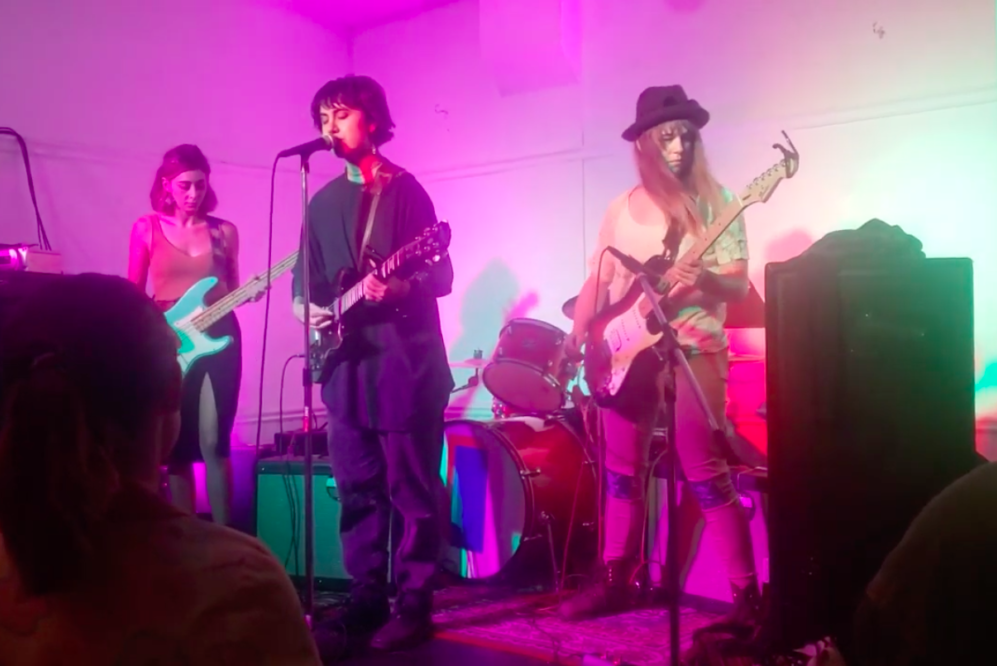
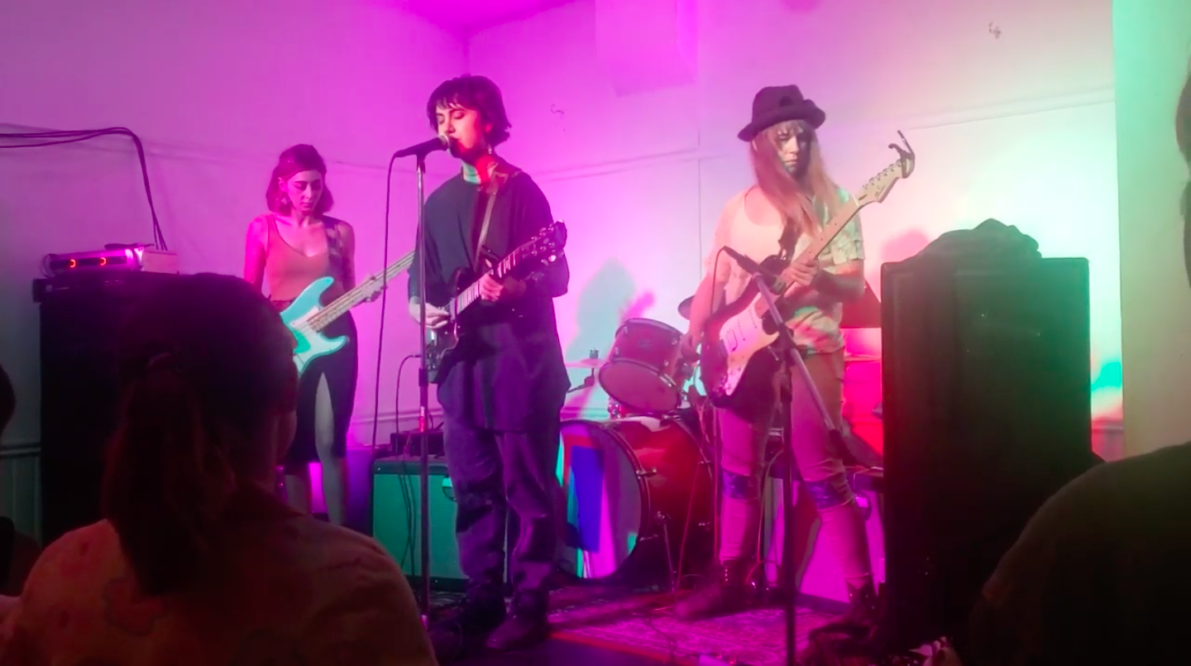
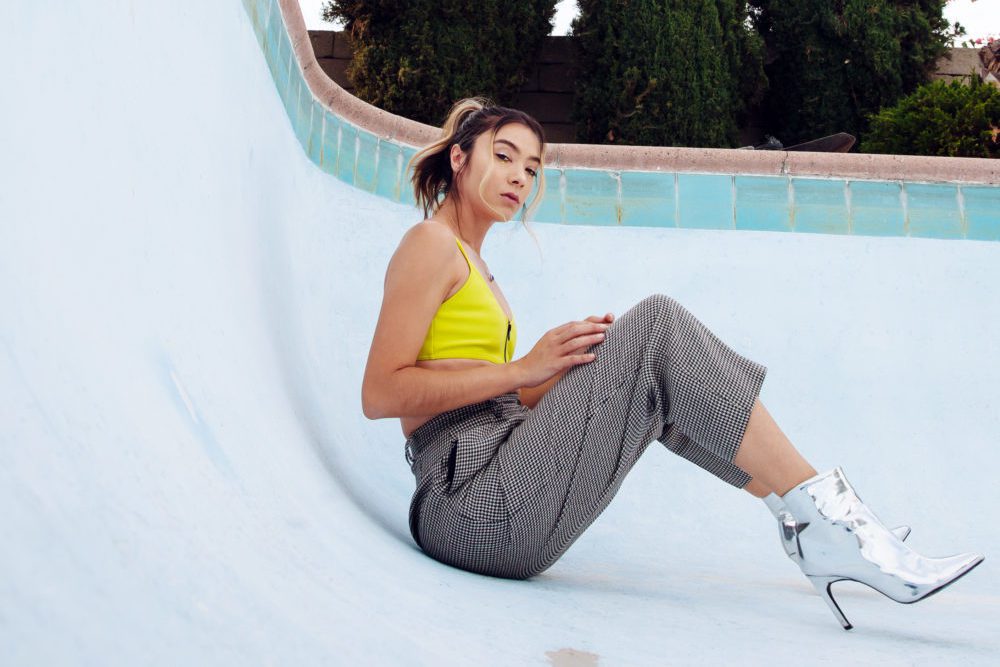
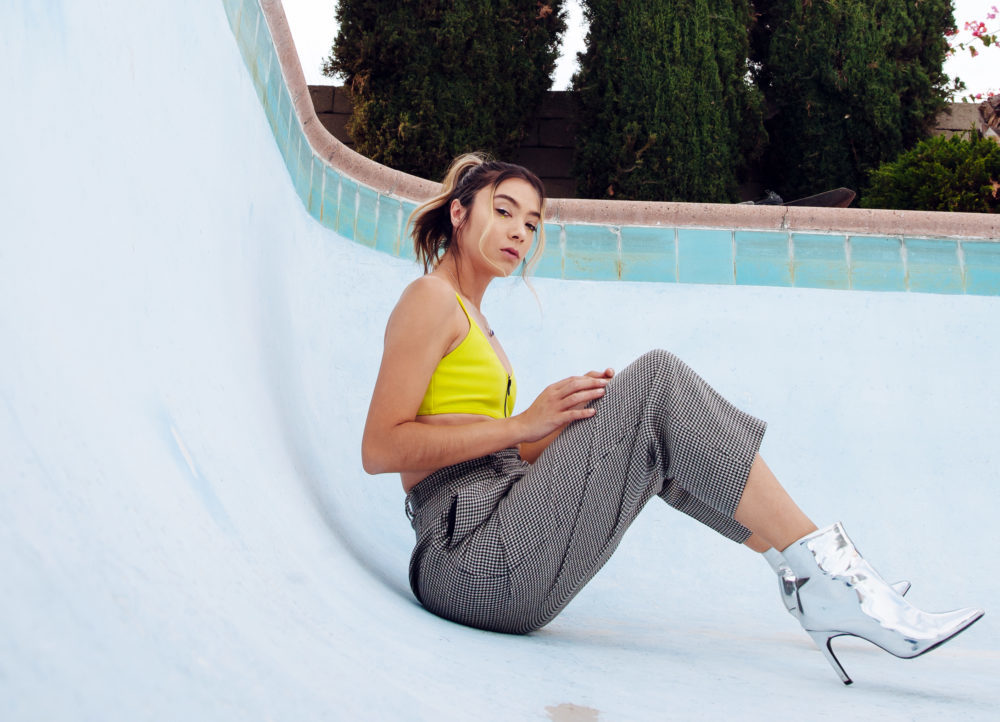
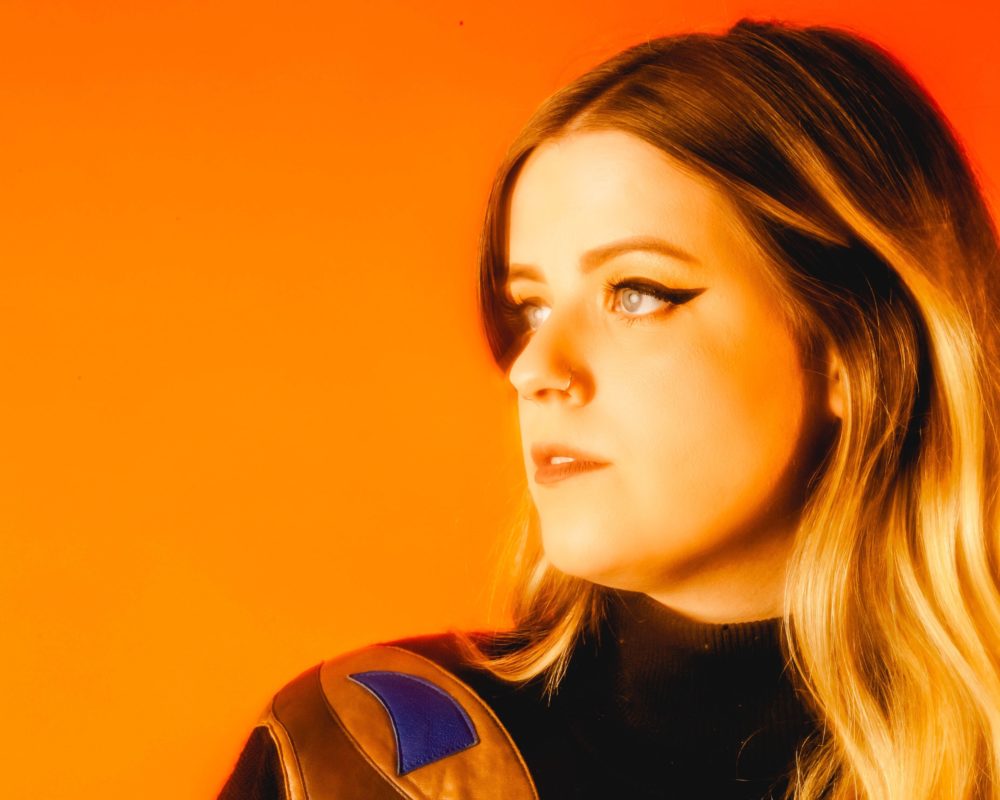
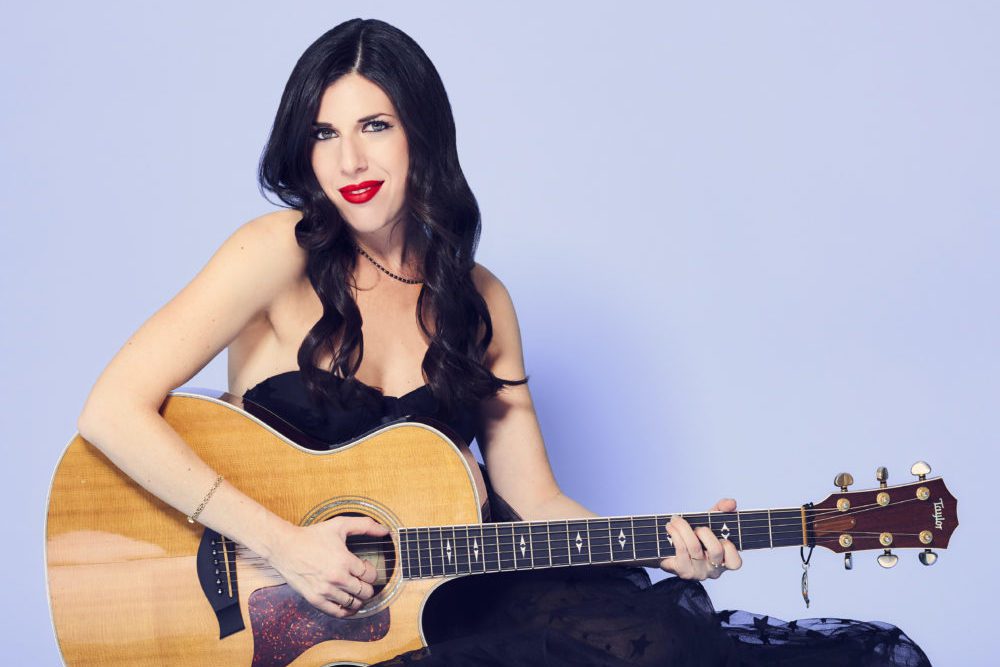
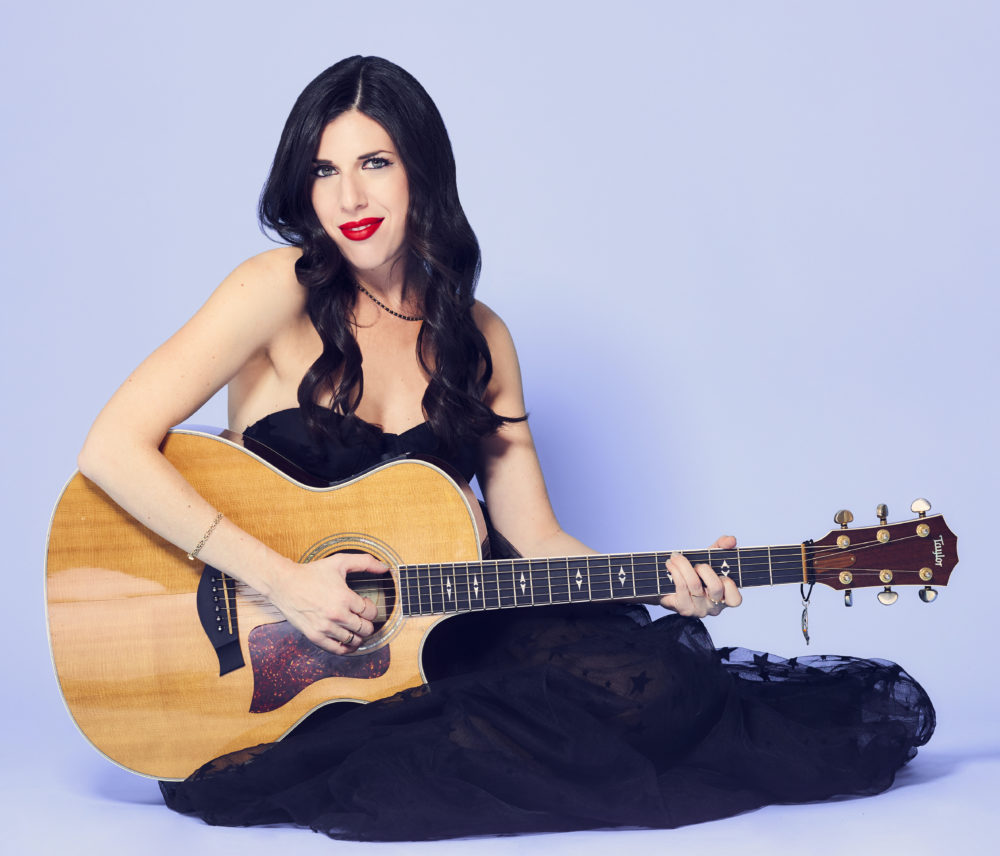
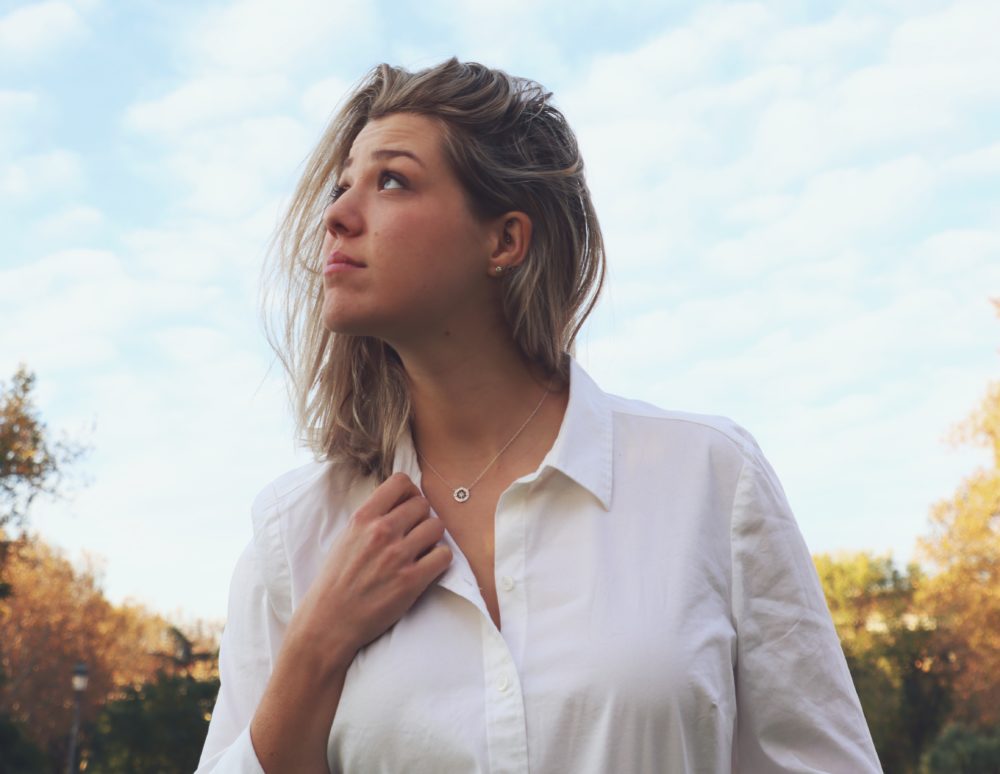
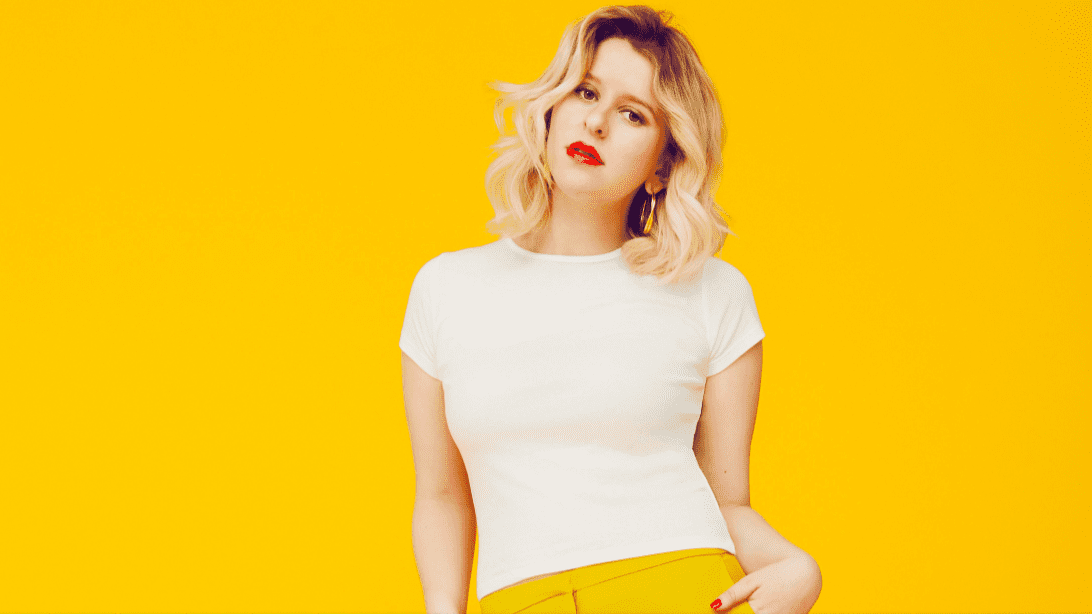
Aubrey Haddard sings about feeling “on display” and “carefully choosing every word I want to say” in her latest single, and those lyrics could easily refer to the past two years of her life. After moving from Boston to Brooklyn, touring her jazz-infused indie pop around the country, and completing residencies in Oakland and southern France, Haddard is releasing “Thin Line,” her first song since her debut 2018 album Blue Part, today.
The single opens with a rich-voiced plea: “Give me a sign I’m not wasting all my time/I’ve got a feeling I’m holding on for life.” There are hints of ’90s pop and classic rock added to her usual soulful sound; she describes it as “guitar-driven rock meets high-energy electronic maximalist pop.”
Haddard wrote the song about “that line between being okay and losing it,” she explains. “Creatives and musicians — but really everybody who puts their passion on the line as their job — probably have to reconcile that feeling of, ‘I’m working so hard but what is this for? What’s the big picture? What’s the big idea?'” But there’s also a positive message to the song, conveying a sense of “being okay with working so tirelessly for something you love.”
Her own struggle to find balance in her life as a musician inspired the single. “I’m very familiar with my own breaking points,” she says. “It’s happened to me quite a few times, where I find myself juggling more than I can handle from just being on the road and self-managing and promoting and being a friendly face at shows and being enough for myself back home, but saving a little bit of myself to still take care of myself.”
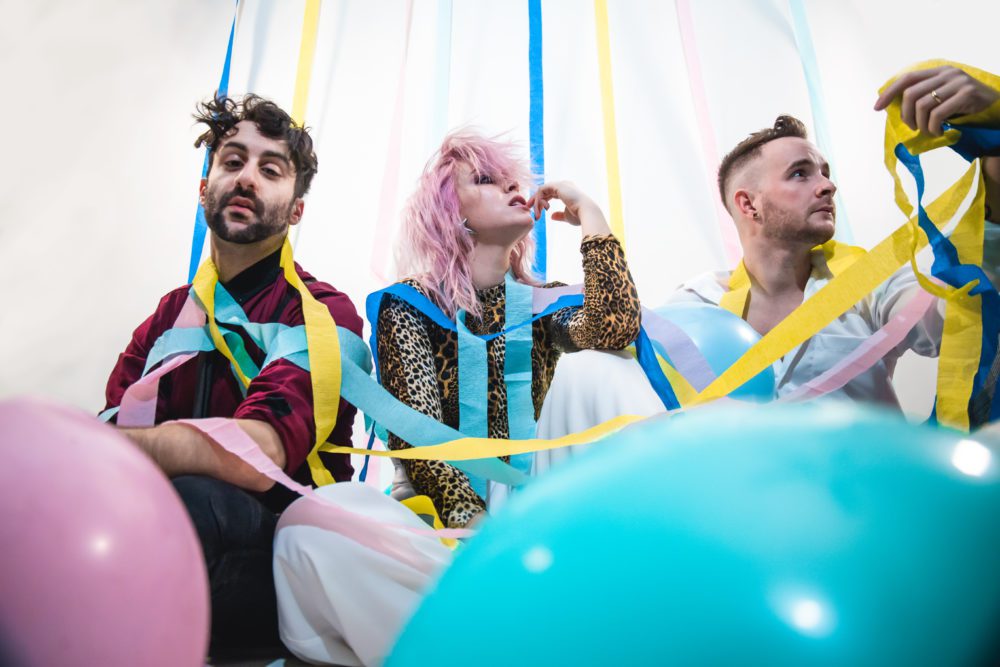
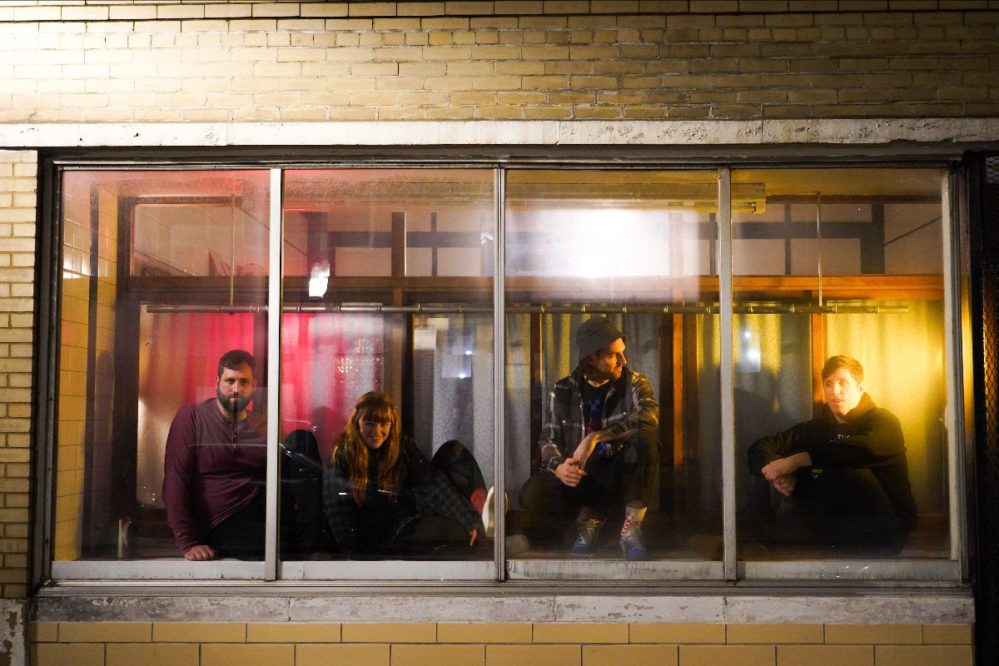
During these times, she’ll try to take days off to play guitar, write lyrics, and learn covers just for fun, and her band members also help reduce her stress. The video for “Thin Line,” which features Haddard talking into an old-fashioned telephone and playing with dice and letter tiles with her bandmates, was meant to visually represent the support she receives from them. “We went in with this goofy idea, but I got to do it with these three men around me that support me through those times I’m singing about,” she says.
Haddard plans to release a series of singles throughout the year, which she describes as “all sort of in this fresh indie pop maximalist arena, almost indulging our sense in the studio and seeing how far we could push all these new directions.” This represents a break from her previous work, much of which sounds like it could be from live recordings, with less layers of instrumentation. “While our debut record was really minimalist, these really simple songs, we’ve gone the complete opposite direction,” she says.
The new approach is in part due to the opportunity Haddard had to reflect on who she is as a musician over her chaotic past two years. “I’m getting a lot more familiar with myself as an artist,” she says. “I’m being a lot more patient and taking time to create the best works that I can create, and not really working with whatever comes out of me, but striving to create something I’m envisioning.”
Follow Aubrey Haddard on Facebook for ongoing updates.
Loretta Lynn’s alcohol-soaked pity party for herself in “Somebody, Somewhere” echoes quite a lot of our newly solo Saturday nights. Dolly Parton reminds us all that wealth is a state of being, rather than the (declining) value of our bank accounts. Lucinda Williams asks the simple, but potentially life-saving question, “Are You Alright?“; Ashley Monroe comforts us, singing “someday you’ll be fine, sweet as wine” on “From Time To Time“; and Kasey Chambers gets to the core of being “Happy” regardless of the circumstances. Really, if any musical genre was perfectly suited to get us through heartbreak, loneliness, and financial hardship, it’s country. And the women of country, in particular, have plenty of lessons to impart on coping with life in chaotic times – particularly those we’re collectively facing as COVID-19 rages on.
Loretta Lynn was a ground-breaker. In her 60-year career, she was brave enough to defy strictly conservative commercial radio stations to sing about abortion, rejecting drunken advances, getting on birth control, and older women desiring younger men (and pursuing them for sexual gratification). In short, she wasn’t afraid to speak her mind – even when it came to doing housework. “Well goodbye tubs and clothes lines, goodbye pots and pans/I’m a gonna take a Greyhound bus as further as I can/I ain’t a gonna wash no windows and I ain’t a gonna scrub no floors/And when you realize I’m gone, I’m a gonna hear you roar,” she sang on “Hey Loretta,” from 1973 LP Love Is The Foundation. While I don’t recommend taking public transportation, her words may help you find your voice if you feel like you’ve been stuck at home with a mop and a stack of dishes thanks to housemates who have no inclination to help with domestic necessities.
I live by Dolly Parton’s saying, “The higher the hair, the closer to God,” which is only one of the many examples of her deep wisdom. Right now, many families in America and around the world are struggling to survive on their savings, government rations (if we’re fortunate enough to qualify) and the generosity of community organizations. It’s a good time to recall Dolly’s ode to her resourceful mother, “Coat of Many Colors.” The story behind the song is true – as a child, Dolly was taunted by her schoolmates for wearing a coat made from scraps of fabric that clearly indicated a lack of wealth in her family, but illustrated the richness of their bond: “I told ’em of the love/My momma sewed in every stitch/And I told ’em all the story/Momma told me while she sewed/And how my coat of many colors/Was worth more than all their clothes.” With many dusting off their old sewing machines to make masks for healthcare workers and neighbors alike, love becomes the thread that holds everything together.
Granted, Shania Twain was singing a love song to her man with 1999 single “You’ve Got A Way,” but some of the lyrics could equally apply to your best friendships. “You got a way with words/You get me smiling even when it hurts,” she sings. “There’s no way to measure what your love is worth/I can’t believe the way you get through to me.” When it feels like the world is in chaos, sometimes you just need understanding, and it goes both ways. We all need to be there for each other.
No one knows that better than Lucinda Williams, who just released her 14th studio album, Good Souls Better Angels. Williams knows all about hard living, sacrifice, and scraping for silver linings, and on her 2009 LP West, she opens with a simple check in: “Are you alright?/I looked around me and you were gone/Are you alright?/I feel like there must be something wrong/Are you alright?/Cos it seems like you disappeared/Are you alright?/Cos I been feeling a little scared.” If you’re like me, maybe you’ve found that the simple act of asking, as Williams did, “Are You Alright?” has even more importance now than it ever has. Every phone call to a friend, Zoom meeting with coworkers, and interaction with those on the frontline begins with this simple act of kindness.
Though “having someone to hug and kiss you” may not be an ideal way to observe social distancing, admitting that you’re not alright might enable people around you to offer you resources and advice, even if it’s just on social media. Though we must remain physically distant, we can still be socially connected.
It usually takes a lot of grief, wailing, and wondering if you can handle it before you see signs of your own granite-hard resolve to live, breathe, and become who you’re capable of being. That suffering and strengthening is illustrated beautifully in Australian country singer Kasey Chambers’ “Stronger,” from 2004 LP Wayward Angel. “I thought it was good, I thought it was fine/I thought it was just a matter of time/The sun would shine/I held my breath, I covered my eyes/Thought I was just clearing the skies,” she sings, capturing that period of waiting and watching we’re all feeling right now. Though nothing makes sense to her, she finds power within (“I’m a little bit braver/I’m a little bit wilder/I can stand a bit closer to the light”), proving that the old cliche is true – what doesn’t kill you makes you stronger.
Ashley Monroe’s bittersweet tune “From Time to Time” is another reminder that everything that threatens to break us open and bleed us of all the sweetness of who we are passes. We are loved, even when we feel horribly alone. I think of the lines “Someday you’ll be fine/Sweet as wine/It’s alright to remember” when reminiscing about going out for a meal, or visiting a record store. Those little things that nourish our soul that we miss so much? Let’s remember them and know this current level of restriction isn’t forever.
These resilient women can all attest to the power of music and creativity to make sense of pain, injustice and grief. Music is redemptive, it connects us like an invisible web that reflects the light after rainfall. Even if your singing voice isn’t going to win over record executives any time soon, you’re still capable of singing along.
Tessy Lou Williams chronicles hard-to-break habits in her new song, “One More Night.”
As the daughter of Kenny and Claudia Williams of the band Montana Rose, Williams was born with music in her DNA. After years of working as a songwriter and live performer, Williams is ready to commit her voice and words to her self-titled, debut solo album, out this Friday, May 22nd. It’s bound to satisfy any traditional country fan’s appetite, and that includes Williams’ latest single, “One More Night,” premiering exclusively with Audiofemme.
The Montana-bred Williams had the idea for a song, about those insatiable vices you need one more hit of, rolling in her head for a while. But a bout with writer’s block sent her into the studio with co-writer Vanessa Olivarez to finish the tune. “It’s about that battle between your head and your heart where you think you feel one way, but you know better,” Williams explains about the song’s meaning. “It’s really not a healthy choice, but you still pine over it. You feel like you need it, but you know you don’t.”
Whether it’s another drink, one more smoke or a past love, told from the perspective of a lonely soul inside a bar at last call, Williams makes those nagging addictions feel universal. “In the writing process we were thinking about it in that bigger picture. We talk about the ‘two more cigarettes in my pack…’ you could be like, ‘I don’t need those right now,’ but you know you’re going to smoke them,” she says, analyzing the song’s opening line. Williams tells the story with mellifluous vocals reminiscent of Lee Ann Womack and Alison Krauss, wrapped around a stunning melody of crisp fiddle and shimmering guitar, creating a classic country sound. “I know I should be gettin’ stronger/Fight the way I feel inside/I tell my heart over and over/All I need is one more night,” she sings.
Williams cites the bridge that proclaims, “Am I fool enough to believe that all I really need is one more night?” as the most personal line in the song, symbolizing a moment of self-awareness. “You realize you’re being ridiculous about the whole situation – you don’t want just one more and it’s not going to be just one more. You try to convince yourself ‘just one more and I’ll be good,’” she says.
Like many of the album’s other tracks, “One More Night” is pulled from the realm of heartbreak. Describing it as one of the most “relatable” songs on the record, Williams hopes that “One More Night” offers a sense of community to listeners who have gone through something similar. “I hope people can listen to it and know that they’re not alone in their experiences, that there are others out there who can relate to their situations. You’re never alone in life and it’s okay to be sad and heartbroken – we’re all there at one point or another,” she says. “We’re all a lot more alike than we think we are.”
Follow Tessy Lou Williams on Facebook for ongoing updates.
If your life feels like an endless struggle right now, folk singer-songwriter Natalie Schlabs has a message of hope for you. Her latest single, “See What I See,” reassures people in various difficult situations that there’s a light at the end of the tunnel, even if they can’t see it at the moment.
“Are you lost in the dark?/Look again, you might see a shooting star/Honey, you are the sky/you hold the sun /you hold the shadow-side,” Schlabs’ sweet, clear voice sings in a verse aimed at someone with depression. Another verse of the song speaks to someone dealing with a chronic illness.
“I think we can all offer our eyes to someone when they’re having a hard time, imagining they will be OK again,” says Schlabs.
The song is on her sophomore album, Don’t Look Too Close, which comes out in October. Written during Schlabs’ pregnancy with her first child, the album addresses family relationships, friendship, romantic love, vulnerability, and death, as well as “the hope that can still be girded underneath despair” and “the pain of letting someone go and allowing them to make their own decisions, even when you feel it is harming them,” as she puts it. “Basically, a lot of life lessons that come up when you enter your 30s.”
Parenting is a central theme throughout the album: “Ophelia” was written for a friend who lost her daughter, “Endless Love” is a love song to Schlabs’ own son, and “Don’t Look Too Close” is about not wanting your children to see your dark or dysfunctional side.
“Being pregnant, I naturally did a lot more reflection, as well as thinking of the future and what I wanted to pass down. I think that probably led to more honest songwriting,” she says. “I’m exploring the tension of being the best you can for your kid or loved one and knowing you’re a flawed human who is going to fuck up. You realize it was the same with your own parents and loved ones. There is a parallel line there that is interesting to me.”
The album features slow, gentle melodies, layered vocals and guitars, and indie and pop sensibilities combined with Schlabs’ usual Americana style; she says that bands like Big Thief and The War on Drugs influenced the sound. The instrumentals include Caleb Hickman on saxophone and Joshua Rogers, Schlabs’ husband, on bass.
“This time, I was able to see the studio as an instrument to experiment with,” she adds. “I wasn’t afraid to try things like running my vocal mic through a guitar amp.”
The Nashville-based artist’s other passion is cooking; she used to have her own catering business and wrote songs between food prep. Nowadays, her Patreon is dedicated to music, recipes, and even music-recipe pairings.
Schlabs is currently working on creating a home studio as she writes more songs. In the meantime, her music serves as a reminder for those of us stuck at home to believe in better days ahead, and to cherish the people we’re stuck with.
Follow Natalie Schlabs on Facebook for ongoing updates.
Concept EPs are something that I would like to see more of. This “tidbit” style of album creation appeals to me for a variety of reasons, but the biggest one, I believe, is that it normalizes the process of creation. By no means am I suggesting making a themed or shorter work is easier than making something more expansive, but I do think that they tend to show the cracks a little bit more, but in a way that adds to their charm. It’s the musical equivalent of a zine, those beloved micro-works known for their ragged edges, both literal and metaphorical.
Oakland’s Margalee have put out one such slice-of-life, a four track EP that is essentially a love letter to singer, instrumentalist, and producer Margaret Potts’ mom. While the band normally makes eclectic rock, this stripped-down experiment, titled Let The Mad World Spin, does not feel lesser, nor does it feel under-produced, which can happen with concept EPs done on the fly (or in quarantine).
Track one, “gratitude for moms,” is a rambling kitchen-counter note given space to expand beyond the page. “[Thanks for] doing all the wifey things that you had to do/I don’t even know what that means/because you taught me that a woman can be anything she wants/and Dad did the laundry” Potts sings, laughing on the last word. Right off the bat we have a sense of this family and the lightness and informality between them. Potts lets the song ramble off towards the end, asking, “What do you call a mother’s love/for a child and vice versa?” Its a worthwhile question, but Potts doesn’t need to provide an answer — finding the perfect metaphor is not the point here.
Rambling, talk-singing, and non-music sounds are mainstays of the concept EP, and “Let the Mad World Spin” is no exception. 60’s and 70’s folk are also some clear influences that Potts pulls to inform certain musical choices, and her voice, which she changes on pin turns, sometimes dips into a throaty warble that would be off-putting if you couldn’t hear her smiling her way through it.
“get yourself a dream” is another strange song. It relies on a lot of repeated syntax, but still holds some great lyrics, like the beginning of the second verse: “like a rusty bucket returning to the same well/yes, the same hell hoping for water/is is possible?” Potts could have just been riffing and happened to land on some quality turns of phrase, but as any artist knows, waiting for inspiration is… well, like being a rusty bucket returning to the same dry place.
One of Potts’s strengths is knowing what to emphasize, but with the precision of a musical theater kid mid-soliloquy. In “blooms,” which starts off rather slow and soft, Potts quickly brings us in another, more energetic direction when she starts in on “I like the subtle power of blooms in a West Oakland garden/how do they manage vulnerability? In a cosmos with black holes/ how do they flower shamelessly?” the whole time, her inflections chase with ease, somehow fitting eleven syllables in that second line without making it sound forced.
“let the mad world spin,” was the immediate standout, the most solidly constructed of the four songs and with a few experimental elements that drew me in immediately, like little high-pitched sound integrated into the song early on before becoming a percussive instrument. It’s a quick little thing at under two minutes, but sums up the themes of the EP nicely: womanhood, personal autonomy, nature and the community found there.
All and all, Let the Mad World Spin is a strong showing from Margalee, a folk-rock testing ground for expressing what I assume was a concentrated burst of feeling for Potts’ mother and her adopted town of Oakland. Short works can, of course, be sloppy, but more often than not, they are a welcome green light for our spur of the moment ideas and how perfection and a three-act structure are not always necessary to create something of emotional and artistic resonance.
When talking to musician Hollis Wong-Wear, it feels as though she has all the time in the world for you. This is indicative of the enjoyment she gains from meeting people and creating connections. “I am a very passionate host and I love bringing people together and cultivating a cool vibe,” she says as we chat over the phone. “My sense of self as an artist is inseparable from the community.”
Beginning her music career as one third of the band The Flavr Blue, writing music for other musicians and her band, it wasn’t until recently that she felt ready to create her own collection of work. “I had become this master facilitator. When I work with other people I can take on the responsibility of doing something as a joint venture to motivate me,” the singer-songwriter explains, adding that when it came to creating with her own voice and story it felt akin to an uphill battle. ”It goes back to that insecurity of ‘Why does my voice matter?’”
Her anxiety is more than relatable; in a social media-saturated world, anyone and everyone is clambering to have that big break in their career, whether they’re an artist, musician or writer. Knowing she was more comfortable collaborating and building community, Hollis used those skills to her advantage. She created her unique Hollis Does Brunch series, which takes place in a number of cities across the U.S., and acted as a Trojan Horse to get her used to performing her own music and telling her story. She released her debut solo EP half-life last February. A deluxe version of the EP arrives May 22nd, with two music videos to celebrate – live recordings of her singles “Sedative” and “Back To Me.”
Organizing food-related events was an organic step – growing up in her mom’s Chinese restaurant in the suburbs of San Francisco made Hollis a moth to a flame when it comes to good meals and community spirit. “I think food is kind of like the first art form that I really, truly understood… the idea of gathering people around music and food was a concept that, for me, was a natural connection,” she says. “My end of goal of why I create anything is to bring people together in a meaningful way and forge connections. When we did the [last in-person] Hollis Does Brunch session in Seattle, people brought their kids, their parents and their friends. It was fun and inclusive – people were drinking cocktails and feeding their kids! I want these sessions to feel good and welcome for all.”
When the current pandemic hit the States, it became clear that our lives would change drastically, and that necessary social distancing measures would protect lives. With this in mind, Hollis decided to move her brunch sessions online, creating weekly live-streams and raising money (and perhaps most importantly, awareness) for those most severely affected by the situation. She admits she had some personal motivations, too. “I love hosting and the worst thing for somebody who loves to host is not being able to have any people over to their house! So I thought: how I could scratch my ‘self-care’ itch? How can I extend that in a digital space?” she says. “If I can be a resource to others, that’s a privilege. I’m happy to get into the weeds with live-streaming because it provides that. I wanted the sessions to be about community – less ‘oh they watch me perform!’ and more about bringing in the insights of other folks. My heart hurts so deeply for all of the restaurants that have closed and laid off employees.” By organizing these sessions, Hollis hopes to provide a degree of nourishment both mentally and physically. It’s a symbiotic relationship as it brings Hollis herself a degree of commitment and structure.
Bars, restaurants, diners and cafes all played vital roles in how we lived before the pandemic. They were places of refuge and relaxation; after a busy day we flocked to them with friends, eager to shed our everyday stresses. For students and freelancers, cafes were the perfect hideaway when unable to focus at home. They housed our small ensembles to large gatherings; we shared birthdays, holidays and celebrations there, and in some cultures, wakes to remember lost loved ones. Yet they’ve endured some of the worst effects of the pandemic, the results of which has left many owners wondering if their small businesses will survive, and how they’ll pay workers who relied on tips.
These online brunch sessions raise funds for those groups especially in need during this time, such as Feeding America and the NYC UndocuWorkers Fund. Each organization is close to the heart of one of her guests joining that week; Hollis allows them to explain how they’re affected and why it’s important to extend a hand, as it were, and help lift up their chosen cause.
“One of the live-streams I did was fundraising for undocumented workers in New York City who were laid off, and then it was also fundraising for the restaurant of the chefs that I had on that day,” Hollis says. “After that I used the next session to raise money for two artist organizations in Seattle that are doing a Seattle artist relief fund, and they’ve actually already raised $200,000 and are trying to raise another $700,000 more because of the demonstrated need.”
In fact, many of the people Hollis invites have already begun their own fundraising, and the series helps garner even greater attention. “One of the chefs [Erik Bruner-Yang] that came on is doing The Power of 10 initiative, trying to raise $10,000 to hire 10 employees who will make 1,000 meals for people in the DC area. They’re trying to make that a pilot program,” Hollis says.
Like many who are working to support their local community, Hollis volunteers her time and it’s a testament to her hard work that many groups have received much-needed support in a time where it feels as though there is none. Her live-stream series “is really about giving – I’m not taking in money. The only thing I’m doing is starting a Patreon page, which I did feel conflicted about. But after looking at my expenses I realized I might need to!”
When asked how people can get involved, she stressed that there is no prescribed way to do so, and that simply being present for the brunch is enough. “I just hope that what I’m creating provides solace and support to this moment,” she says.
Detroit singer-songwriter Shannon Barnes blends her love for future-soul and psychedelic-folk on her debut record, Psychedelic Flight Attendant. Released under the moniker of White Bee, PFA is a labor of love that took Barnes over two years to complete, and survived many peaks and valleys along the way. In fact, right before Barnes planned to start recording, she suffered a personal and band breakup, causing her to question if she’d be able to continue White Bee.
“To be honest with you it was really hard at first,” Barnes explains. “I didn’t think that White Bee could exist after all that. And then I realized, this is me, this isn’t anybody else. These are songs that I wrote and experiences that I had…the whole process of my writing comes from my learning and how I play guitar.” Barnes’ rhythmic guitar style is due in part to one of her biggest influences, Nai Palm, co-founder of Hiatus Kaiyote. She even credits Palm for inspiring her to learn the guitar in the first place.
“When I was 21 I just remember seeing a Hiatus Kaiyote video online for the first time,” Barnes says. “When I saw that, I was like, ‘that’s what I wanna fucking do.’ That was the reason why I picked up guitar.” Although Barnes’ musical journey started long before that, the last seven years have been an extremely formative time musically for the artist, who is now 27. Her appreciation for classic jazz vocalists along with more contemporary artists like Mac Demarco, Tame Impala, Lianne La Havas and Britney Howard is evident in her work.
Barnes leans heavily to syncopated rhythms on tracks like “Antihistamine” and “Beat State,” which could easily be used as historical bookmarks for the time that she first heard Nai Palm. She said that, for a moment, learning Hiatus Kaiyote guitar riffs and experimenting with songwriting was almost like a drug. “You know that feeling you get when you get excited to go on a date with someone or you get excited for going on a trip?” Barnes asks. “I feel like I had that feeling constantly – it was like all my serotonin levels were tingling all the time because I just wanted to learn more.”
That exuberance is translated into each of Psychedelic Flight Attendant’s eight tracks. The record takes the listener on Barnes’ journey through heartbreak, angst, chaos and resilience. It reminds us of the beauty that can come from loss or change, and shows us how appreciating someone else’s art can become the most important factor in producing one’s own.
Every one of Raye Zaragoza’s songs has a political message. It’s sometimes a very specific one, as in “Driving to Standing Rock” and “In the River,” both about the Dakota Access Pipeline, and often a broader one, as in “Fight for You,” a call for people to speak out about injustice and stand up for the oppressed.
Her latest single, “Fight Like a Girl,” falls somewhere in the middle, advocating for intersectional feminism with lines like “grandma nature, mother moon/show me what to do/they are taking our rights away/policing our bodies.” For the folk singer-songwriter, who is of Native American, Mexican, Taiwanese, and Japanese descent, inclusivity has always been paramount.
Zaragoza has been performing professionally since she was 19, starting off playing two-hour sets in exchange for a piece of pie at an LA pie shop. She worked restaurant jobs until age 23, and for the past four years, she’s been pursuing music full-time, putting out her first album Fight for You in 2017. Later this year, she plans to release her sophomore LP, recorded with Tucker Martine (who has worked with The Decemberists, Thao & the Get Down Stay Down, case/lang/veirs, and others). With the quarantine limiting her ability to produce a more elaborate video, she recorded and shot herself performing “Fight Like a Girl” in her own home.
We talked to her about the message behind her latest single and the role of political activism in her music.
AF: What inspired the song “Fight Like a Girl”?
RZ: I wrote this song because I wanted to write an anthem with marginalized women at the center. The voices of women of color have not historically been at the forefront of feminism, and I think 2020 is an important time to change that. I wrote this song around the time that I met Deb Haaland, one of the two first Native American women in congress [D-New Mexico]. It’s women like her that remind me that women are capable of anything. I also really wanted to reclaim the term “fight like a girl” as an empowering term rather than what it meant on the playground when I was a kid.
AF: What do you hope people take away from the song?
RZ: I really hope the song will comfort those who have ever felt disempowered by their gender. I feel my greatest way of contributing to making the world a better place is comforting souls within it. I felt like such a lost misfit for most of my life, and music has given me so much solace. I hope this song will do that for others.
AF: What does fighting like a girl mean to you?
RZ: For me, it means to view the feminine energy within me as a strength rather than a weakness. We all have feminine energy, no matter our gender. And I feel that society has conditioned us to think that this part of us is our weakness. So “fighting like a girl” to me is channeling this energy and using it to become strong, brave, and vulnerable. It also means to reclaim my voice as a woman and stand up for myself!
AF: You describe “Fight Like a Girl” as a call for feminism to include all women. In what ways do you see it falling short of that right now?
RZ: Women of color, trans women, and disabled women have been left out of the conversation of feminism for a long time. These voices have been under-represented in media, politics, events — you name it. It’s important to fight for women’s rights, but it’s also important to fight for the marginalized voices within that identity.
AF: Activism plays a big role in your music. Why do you think it’s important to use your voice this way?
RZ: Sometimes I feel silly calling myself an activist. So many of my “activist songs” are really just me singing about my life and experience. Sometimes it feels that as a woman of color, my very existence is politicized in a way. So, the deeper I go with my own self-discovery and songwriting, the more “political”and “activist” the songs get. Really, I’ve never thought of it as important or something I should do. It just is what I experience and observe in song form.
AF: What issues are you trying to spread awareness of right now?
RZ: Right now, I am most concerned about spreading awareness in regards to indigenous communities in need. This virus is devastating tribal nations. I urge people to learn more and donate at Return2Heart.org.
AF: What are you working on now?
RZ: Working on an album release that will be happening later this year! Also always writing new songs. With all that’s going on, there is so much to write about and reflect on.
Follow Raye Zaragoza on Facebook for ongoing updates.
Joanie Leeds has proven to be a versatile singer-songwriter. Whether penning personal songs, educational albums centering around Judaism, or fun sing-alongs for kids, she always shines a spotlight on social issues. Her new album, All the Ladies, appeals to all ages, and it was written, performed, produced, and recorded entirely by women. Her honest approach to deconstructing the patriarchy is courageous and infectious, but she admits to being quite unsure early on if she should even attempt such a bold move.
“I had slight hesitation that boys and men would think the album is only for girls and women. I also didn’t want to alienate the trans community by writing a collection of songs so gender specific,” she tells Audiofemme. “The thing is, though, this album is needed right now more than ever. We live in a country where female rights are being taken away by old, white men. When women are still on average getting paid less than men, and we still haven’t had a female president, we are living and trying to survive in a patriarchy ─ plain and simple.”
With a song called “RBG,” a plucky dedication to Associate Justice of the Supreme Court Ruth Bader Ginsburg, Leeds takes determined care to celebrate one of the most important figures in U.S. history. “I wanna be just like RBG / Fighting for our rights and shining truth / I wanna be just like RBG / Glorious, notorious Ruth,” she sings, a choir of children coming to aid in backing vocals.
The song’s accompanying visual, premiering today, centers on Ginsburg’s cross-generational impact, as Leeds herself and many children don Ginsburg costumes. “One of my daughter’s friends is an RBG super fan, so I knew right off the bat she was going to have a large role in the video and help to tell the story through visuals while helping to act out the lyrics,” explains Leeds of the clip. “She even had her own costume… it was perfect. As soon as I mentioned to a few friends that I was making a video, pretty much everyone and their daughter wanted in, including mine – and a few boys, too.”
The DIY video was filmed in early March, mere days before COVID-19 severely crippled the states. “I hadn’t heard much about this strange flu that was potentially coming to the U.S.A. But just to be safe, I brought the glasses, costumes and some rubbing alcohol so I could clean the glasses between filming each child,” she notes. “If I had waited just a few days longer, we would have all been quarantining, so the video may not have even happened.”
As one might imagine, “RBG” carries immense personal significance for Leeds, whose separation from her husband at the time proved a monumental turning point. “Something happened that I can’t explain ─ only that I felt stronger than I ever had before. My feminist stance of yesteryear was sizably emboldened,” she says. “I knew I wanted to take that new feeling and funnel it into my writing, which is partially why I wrote the songs for [this album].”
Initially, Leeds began thinking “about the most inspiring and influential woman living today,” she says. “Ginsburg was the first person that came to mind. I’ve seen all of the documentaries and films about her life, but I wanted to give Ruth her very own song and at the same time, teach kids (and grownups) more about her life.”
Leeds was first introduced to Ginsburg when President Clinton appointed her to the Supreme Court in 1993. Then in high school, she did not fully comprehend what an occasion this would prove to be, but she knew something was brewing on the horizon. “As I’ve grown older, I’ve learned a great deal about her upbringing,” Leeds explains. “She went against societal norms, and it was a constant uphill battle. Instead of each challenge or roadblock stopping her, she used it all as fuel to consistently keep climbing, all the while fighting for all of us. I like to channel her strength when I am feeling defeated, as well as teach my daughter never to give up on what is right and just.”
“RBG” begins with Ginsburg’s early childhood and travels through motherhood and her law school studies. In writing, performing, and recording such a timely tune, Leeds soon found renewed strength she couldn’t quite define at first. “I sometimes feel like I have Ruth’s super power living within me. So many young girls and women have reached out to me about how the tune has touched their lives and has taught their kids about RBG,” she reflects. “Not only that, the call to action to take part in the filming of the music video in just a few days was overwhelming. It turns out there are a lot more little RBG fans out there than I even knew. Both their energy and channeling Ruth keeps me going, even on the hardest days.”
Those hard days come with an unavoidable inner-struggle, too, as she continues pushing forward and forging her own path amidst sexism, racism, antisemitism, corporate corruption, and environmental destruction. Her children’s music, from 2008’s City Kid to her most recent record, has often been a vehicle to address such topics, but offstage, she uses other tools to move the needle. “I often try to speak out with adults when I have the strength, sign petitions and attend marches (prior to COVID-19). I have definitely been known to get in a Facebook quarrel or two after posting my liberal political views, but I try to block out the ignorant and do my best to feel compassion for the blind and unaware.”
Largely, it comes down to building a sense of “empathy, strength, and kindness in our youth,” she remarks. While we often cannot change adult minds, ones unwilling to see another perspective, we can start by “teaching young girls that they can be anything they want to be, as well as teaching our young boys how to treat girls with kindness and as equals from the beginning,” she continues. “We might have a fighting chance to be a civilized society once the current administration is squelched.”
Leeds’ All the Ladies is a glorious example of employing one’s natural gifts for change. As we continue navigating the pandemic, and a disastrous administration, may we all call upon the sheer power, will, and determination of Ruth Bader Ginsburg.
Lenii likes to drink tea (Barry’s Tea to be exact). While in quarantine with two friends, musicians Ryan O’Shaughnessy and Baby Bill, the trio easily down 12 or 13 cups of a day ─ apiece. Having grown up in Cork, Ireland, Lenii was accustomed to the culture ─ one which bred an environment of gabbing over tea with friends and loved ones. There’s something soothing about hearing someone say, “I’ll put the kettle on.” Whatever you might be feeling that day, it all washes down with some piping hot tea and good conversation.
“In Ireland, people drink like eight cups of tea a day,” Lenii tells Audiofemme. “If you visit someone’s house, the tea is offered before you even get through the door. I even have a tea cup tattooed on my arm because it reminds me so much of home.”
So, it only seemed natural to launch a “Tea Sessions” series during these very uncertain times. Born Ellen Murphy, Lenii launches this creative endeavor with a stripped-down version of her song “Cereal,” shedding away the gummy layers for a guitar and keyboard-driven performance. “I got lucky enough to be locked down in a house in LA with two amazing musicians, also from Ireland,” she says.
“We were just jamming one day playing each other’s songs and drinking tea, so I just thought it would be cool to film us,” says Lenii, whose voice is given a proper showcase. “The first episode was really spontaneous, and I loved the idea of a low-pressure quarantine ‘tiny desk’ type series.”
The original iteration of “Cereal” (co-written with and produced by Nick Sadler) unleashes a more biting attack, while the live performance video allows Lenii to feel looser within its structure. “The ‘Tea Sessions’ version of [this song] was really just myself and the boys having fun so the song took on a whole different mood. A little less aggressive and a bit more jazzy. Playing it outside was cool, too.”
Vibrant greenery frames the video, somehow drawing you into her world, if only for a moment. In many ways, this “Cereal” performance taps into the lack of human connection these days. Lenii admits the last few months have “definitely [been] emotional,” she says, “as I’m sure is the same for everyone. I miss playing live and going to sessions, but I’ve been quarantined with two writers so we’re still getting a lot done. There’s a lot of pressure to use this time to be productive so just remembering that it’s okay to not feel creative all the time is super important.”
Of course, worry often tends to seep into her mind. “It’s very strange being so far from my family at a time like this, so I think about that a lot. But [I’m] trying to go with the flow and not worry too much,” she says. “In the music world, I know playing live won’t be the same for a long time, and I think there will be a major shift in how the industry works.”
Earlier this month, Lenni’s 2019 song “Yellow” was named Adult Contemporary winner of the International Songwriting Competition, a distinction that certainly threw her for a loop. “I honestly didn’t even know ‘Yellow’ fell into ‘adult contemporary,’ so I was shocked,” she admits. “I came second in that category in 2017, so I was like, maybe A/C is my calling.”
She adds, “I would continue, regardless, and aim to get better all the time, but it’s a really cool bit of validation that I’m heading in the right direction.”
Lenii continues riding high on a string of singles, including “Regular 10,” the newly released “I (Don’t) Miss You” and “Crave U,” which was recently remixed by Cyril M. Though social distancing may have temporarily altered her trajectory, the “Tea Sessions” offer a fun, intimate portrait of an artist on the rise, doing her part to keep calm and put a kettle on for all of us.
When a friend of Ariel McCleary’s took up the ukulele, she was inspired to learn the instrument too, just for fun. To document her progress, she uploaded videos of herself covering various popular songs to YouTube, and soon, what began as a hobby had garnered a surprising amount of traction. In November 2015, she shared a cover of Twenty One Pilots’ “Ride,” which quickly reached a million views and now has over three million.
McCleary’s appeal comes not just from her music but also from her personality. One distinctive feature of her videos is their personable, often silly introductions; she prefaces her “Ride” cover with, “I’m gonna strum this thing, and then my mouth is gonna rap some stuff. Not like Christmas wrapping, but like Eminem rapping. Yeah, I’m just trying to find a clever way to say I’m doing a cover of a song.”
Her 2018 rendition of Camila Cabello’s “Havana,” which now has nearly nine million views, was a request from the students she taught English to in Ourense, Spain. She moved to Madrid soon after and still lives there, but music has become her full-time job. “Covering other people’s songs taught me a lot about song structures and how chord progressions work, and along the way, I wanted to write my own music,” she says.
Last year, she released her first single, “One-Way Signs,” which describes the thrill and chaos of traveling and living abroad. One-Way Signs is also the title of her first EP, which came out in January and incorporates influences ranging from pop to British rock to bossa nova.
McCleary’s first official music video, released today, is a lyric video for “Sheep,” a track from her EP criticizing social media culture. The idea for the song came to her when she was scrolling through Instagram and saw a people posting the same photos about their monotonous lives repeatedly.
“A lot of people are too caught in their comfort zones, and they post the same things and kind of follow each other and don’t really step out of their comfort zones,” she says. “And I thought, ‘I could never live like that,’ and I wanted to continue challenging myself. And everyone’s a follower — I’m of course a follower too in some cases — but I try to not get stuck and try to travel and have an adventurous lifestyle.”
The video is simple but humorous, with the lyrics overlaying footage of actual sheep.
While a lot of McCleary’s success comes from social media, she tries to use it “as a connector instead of a way to preach or a way to show off,” she explains. One way she does this is through her “You, Me, & Tea” videos, where she shares updates from her life.
“Since 2011, I’ve been uploading videos, and as I’ve gotten comfortable talking in front of a camera and to an audience for the past nine years, it’s helped me develop a confidence in knowing that I don’t need to put on an alternate personality and a mask,” she says. “My ‘You, Me, & Tea’ series was formed around that idea of wanting to make a personal connection with my audience members, with each of them. And so, to have me talk about deep topics — about anxiety, about therapy, about how I write music — to talk about it in an honest way, an open way, a cup of tea in my room feels very casual and personal.”
McCleary is about to move back home to Ohio and work on building a music career within the U.S., which will include recording a full-length album and filming a music video. “Now that I’ve grown in Europe, I want to bring it back to America,” she says. Luckily, her online presence will let fans all over the world keep up with her music and her life.
Follow Ariel McCleary on Facebook for ongoing updates.
Life is a balancing act – sometimes, it feels like we’re living in the moment, and other times, it feels like we’re looking at our lives from outside in. This is the feeling Jessica Hottman wanted to capture on her debut EP as Sun Cycles, Imaginary, out later this month via Kansas City, MO-based label French Exit Records. The past few years have been a whirlwind for Hottman – last time we caught up with her, she was writing and recording with her sister Heather in aptly-named indie rock outfit The Hottman Sisters, but in the process of releasing their first and only EP Louder in 2018, Hottman began traveling between Omaha and Los Angeles, where her solo project Sun Cycles began to take hold.
Releasing a string of singles last year – “Rodeo,” “Bang Bang,” and “Kids” – Hottman says it was time to get serious and make a cohesive release. “When I feel like I’m transitioning [in life], I always feel like it’s time for a musical transition as well,” she says, explaining that the singles were a way for her to test the limits of what she could do, and the experience of working on them helped her feel more confident. “The music that I’d been listening to and life experiences all play into that – it just seemed like the right time to put something out that was a little more coherent, like a little body of work that goes together.”
Recorded in Philadelphia, with friends from Kansas, it’s obvious that Hottman’s fast-paced lifestyle contributed to some of the EP’s existential themes. Eventually, Hottman’s path led her to settle on the East Coast, and that’s where, riding the trains bleary-eyed at all hours of the morning, equally awed and exhausted by the grind of New York City, Hottman found her biggest inspiration for the four tracks that would comprise Imaginary. “The grittiness of New York City [gave] the music a dark, charged up, really synthy sort of feel,” Hottman says. “[NYC is] beautiful and life-giving and motivating, but there’s also a hustle to it, so I think that it morphed things in a different direction. [When] I decided to relocate out here, it just weirdly kind of made sense – it feels like I fully immersed myself into [Sun Cycles]. It went from just dabbling at it to being all in.”
The first single from the project, “Into Confusion,” features rapid-fire synths that sweep listeners up immediately, while Hottman hangs in lyrical limbo. “Got my foot on the pedal/Cruising the middle/What side am I on?/Where do I belong?” she asks. “‘Into Confusion’ is definitely about that grey area, the middle ground of wondering how much of life is in my control and out of my control and blowing that concept up even bigger,” Hottman says. “There are things that just feel at the mercy of the road ahead of us. I think it’s speaking to that, and wondering how to live the day to day is the confusion part.”
The single sets the stage for the rest of the EP, which Hottman says centers around the feeling of being caught between a make-believe world and the real one. “I’ve always been sort of a daydreamer, and I think many artists can relate to that – you’re living your life out, but you’re also sort of watching your life being played out, analyzing it, and creating art that speaks to that sort of outside-yourself feeling,” she explains. “That was the inspiration for this EP, particularly the two perspectives being together.”
“Untouchable” and “Make Believe” both center around the ecstatic fantasies born on the dance floor, while “Laugh Until We Die” again revisits the idea of drifting in those liminal spaces (“It’s 8 in the morning/I lay here mourning who they said I’d be/It’s 6 in the evening/I’m not sure I’m breathing/Suffocating in my dream”), comparing her disorientation to being whipped around on rickety carnival rides. The neon-lit production throughout adds both polish and a measured amount of nostalgia to get lost in; along the way, Hottman channels quirky pop divas like Imogen Heap and Caroline Polacheck with emotive vocals and dark, theatrical twists.
These songs differ from the Sun Cycles singles Hottman released in the project’s infancy, when she was spending more time in LA – thematically, the earlier cuts deal with dusty roads, plotting escape, shotgun romance, and other distinctly Californian motifs, but even sonically, Imaginary is loftier and looser, less concerned with looking put together than it is with taking listeners for the ride of their lives. “I was kind of coming into my own and testing the waters a little bit with those singles,” Hottman says; from that assured place, she jumps into the unknown and embraces the unexpected, the East Coast relocation dovetailing nicely with what felt like “time for like a new turn within the project.”
And Imaginary is also a departure from The Hottman Sisters’ EP Louder, which relies mote heavily on hook-laden indie rock swagger. Though part of it was logistical, Hottman says focusing on Sun Cycles just made more sense for her creatively. “I was writing all the stuff for the Hottman Sisters, so really it was more about taking my brain power from being in two projects and moving it to one project to focus on it,” she explains, though she also drops a few hints that her previous project is “not officially over and done” – the sisters have been chatting about working on new material together.
But most of all, Hottman says Sun Cycles has allowed her to come alive as an artist in her own right. “As a female coming up in this industry, I just think back to like five years ago when I was first starting and I felt like I had to lean in to like, a male character that was going to correct [me] – but I always felt like I had these other ideas,” she remembers. “I’ve found my voice more and more and I’ve been able to really come into my own and validate my own decisions. Feeling empowered as my own self and as a female to say, I can make these decisions, I can do this, has actually been really much more exciting than nerve-wracking.”
Now, she finds comfort in the unknown as much as she appreciates when everything goes according to plan. “The way that I accept that into my life is just knowing that two truths can exist,” Hottman says. There’s a line of resolve in “Into Confusion” that goes, “In the grey, I know I can carry my own.” Hottman keeps that mantra close to her heart, a reminder “to plan things out but also to just let things happen, too,” that no matter what, she’ll be just fine. That, she says, has given her the freedom to let Sun Cycles be exactly what it needs to be.
Follow Sun Cycles on Facebook for ongoing updates.
Photo by Carla Maldonado @carlamaldonado x @somad.studio
Hnry Flwr is Brooklyn’s musical guru guiding us towards the mystery and beauty of the infinite void. Hnry Flwr is the musical project of David Van Witt, and he has quite the origin story – his first impression of this world was living in a cult in Iowa, which he fled with his artist mother who gave psychic readings as they meditated and traveled around the world. Van Witt left home when he was 16, and after observing the divine connection music initiates in people at a punk show, has “been writing songs and practicing a sort of secular spirituality, where music is the prayer, ever since.”
Hnry Flwr’s twangy sunshine goth gospel is usually brought to life with a seven-piece band that includes Abdon Valdez III, Ronnie Lanzilotta, Dallin Stevenson and Sarah Safaie, but since quarantine began, Van Witt (who is also a producer) has been creating his own backing tracks and even started a twitch channel. The next chance you have to feel all the love the void has to offer with Hnry Flwr is tonight (5/15) via BABY.tv at 8pm est! We chatted with Hnry Flwr about inducing trance states, minimalist drone raga, and the importance of laughing with salamanders.
AF: What were your last live shows before quarantine like? What do you think your live set will transform into when we’re able to play shows in person again?
HF: Our last show in NYC before the quarantine was incredible — a sold out show at The Sultan Room. I did a trust-fall into the audience and everyone caught me. Our live set is going to include way more hugging and trust-falling and I want to include a portion of the set for people to go into a deep trance. I want to explore the void with people. We will find a way to lose ourselves together, rather than find ourselves alone.
AF: If you had control of all the radios/TVs/cell phones all over the world for 30 seconds what would you say?
HF: I would generate a mass flash trance to see if we can’t be still and quiet and hear what the void has to say.
AF: What have you been reading and listening to while in quarantine?
HF: If it’s not obvious by now, I’ve been reading a book about inducing trance states. I’ve been listening to the birds when I can. I love when they come back north. Somehow I’m still surprised by it every year. But as far as music, almost exclusively Pure Moods Volume 1.
AF: What’s your live stream gear set up like? Do you have any fun props or lighting planned?
HF: I set up my monochromatic light sculpture. It emits one very dark shade of yellow, the one from sunset right before the reds and purples. What’s special about it is it omits all other colors. These things are possible if you explore The Void with an open mind.
I make new backing tracks every week so I can feel like I’m playing with a band. So many artists are doing “stripped-down” sets, which can be really special, but for me, I try to use it as an opportunity to have whatever perfect band I can imagine backing me up every week. It’s a great time to be exercising your imagination.
AF: If you found out you were immortal what other musical projects/careers/lifestyles would explore?
HF: I would have a really loud minimalist drone raga band, and then when all my family had passed on I’d live on a mountain near a stream and I wouldn’t do anything for as long as it takes to find a silent ancient wisdom. Then I would be a painter in honor of my mother.
AF: I love your music video for “Waiting Room!” It feels like our whole reality is stuck in a waiting room right now. What do you think lies on the other side for music, politics, spirituality and humanity as whole?
HF: Thank you. We have always been in the waiting room of the great beyond. I think the future is just as unsure as it was before the pandemic. It’s always unsure. We are just forced to face that uncertainty together now. There are a lot of people who need answers about the future to feel secure in the present. I’m not sure what the future holds. My mother was giving psychic readings for most of my childhood and even if they were accurate, I am not sure that it helped anyone. It certainly did not help her or our family. This is a good time to be present, to take care of yourself and your loved ones and try not to worry about the future. In your mind, find a stream and sit next to it. Listen to it. Laugh with the salamanders.
RSVP HERE for Hnry Flwr via BABY.tv 5/15 at 8pm est. $5-$50 sliding scale
More great live streams this week…
5/15-5/16 Prince 1985 Purple Rain Tour via Youtube. RSVP HERE
Without the distractions of work or a social life, everyone has a lot more time on their hands, and they’re getting particularly introspective about the albums and songs that influenced their sound palettes. The “30-day song challenge” and “10 days of 10 albums” have been rapidly trending on all platforms of social media. For over a decade, I’ve confessed my obsession to pop music. I love its escapist charm, addictive melodies, and the melodramatic fantasy. A good pop song leaves you feeling hopelessly optimistic – for two and a half minutes – and the early 2000s, often considered a golden era, still influences contemporary culture. Perhaps ironically, the world today feels a bit like what we anticipated 20 years ago… if Y2K had been a real tipping point.
I recently watched an episode of MTV’s Making The Video focused on *NSYNC’s “Pop.” Notably, the episode featured choreographer Wade Robson (who later became well-known for the harrowing story of child abuse he tells in Leaving Neverland) filling in for an unexpectedly injured Joey Fatone and thus saving the video. It left out rumors that Robson was responsible for breaking up Justin Timberlake and Britney Spears, who he had also worked with. At every turn, the mirage of the bubblegum masked the dark, complex undertones of the music industry in the early aughts.
With a bit of context and a strong affinity for Dirty Pop of the 2000s, I’d like to introduce rising star Chelsea Collins. The songwriter, producer, and multi-instrumentalist re-imagines pop not only as a thrilling, twisted, and topsy-turvy fantasy – but through a lens of autonomy. At 21 years old, Collins is calling her own shots, showing how far the industry has come.
Catching the attention of HITCO Founder and C.E.O. L.A. Reid during a 2019 studio session, she inked a deal with the label. She also signed with S2 for publishing, the company owned by Savan Kotecha (who co-wrote four tracks on Arianna Grande’s Thank U, Next) and Sonny Takhar. After introducing herself on her first single “Tobacco and Tears,” Collins kicked off 2020 with “Used to be (L.O.V.E.),” tallying over 4.5 million streams, 31k TikTok creates and 625K views in under a month.
Collins recently released the sizzling track “07 Britney,” paying homage to the star’s most troubled year, in which Spears released Blackout amid a custody battle with estranged husband Kevin Federline, shaved her head, and eventually landed in rehab. Taking a lighter approach, the DIY music video shows Collins playing closet dress up across different scenes around Los Angeles, honoring the iconic namesake in the title. On a recent call with the kind-hearted, bubbly Collins, I had the pleasure of uncovering more to the rising star than meets the eye.
AF: How did you begin your musical journey?
CC: Honestly music was something that I picked up super early on. I started theatre when I was four or five. At the same time I started doing classical piano, and always naturally gravitated towards music. It was engraved that it would continue to be obsessed with music. I always naturally gravitated towards it. My dad would put me in sports – I was like “No! I want to sing!” When I was in middle school I started writing and that opened my eyes to everything. I took my love for singing and merged it with piano composition. I thought, “Woah, I can make my own songs the same way all of my idols do.” I started inviting all my friends over, and being their therapist by asking them about their lives and writing about them. It just became a thing that eventually led to producing. It’s weird as you get older and look back at the little tiny things you used to do as a kid, and how much they affect you as an adult. Little moments – life imitates art and all of these little things I did as a kid, it’s actively happening in real life. Sometimes it can be super weird.
AF: How did you get into music production? What resources did you have? Are you the solo producer on the majority of your tracks?
CC: A few of them I’ll make them alone. There are two people I love to produce with – one is my brother, and then my friend Chris. I start the bulk alone and then when the tiny parts come another producer can give a fresh perspective. I had so many visions in my head of what I wanted things to sound like. When I would talk to producers around fifteen, sixteen, I didn’t have the language or terminology to get my ideas a cross. You wait months to get productions back and then it’s just not what you envisioned, and I knew deep down I was doing piano for so long – there’s no reason I can’t do this. Ya know? I think the biggest part of starting out in music production was mentally pushing myself and believing in myself that I could do it. I was always on GarageBand producing demos, but one day I just locked myself in my room with my brother, because we both wanted to learn how to produce. We literally didn’t leave until we figured it out. My mom would come in and bring us food, we’d close the door again and say “Alright mom, we gotta get back to work!” It really changed everything because from there it helps you tie together your sound.
AF: What’s the age difference between you and your brother?
My brother is only a year and a couple months older than me, so we operate as twins. It’s dope to have someone by my side to get through the music industry. It’s definitely a crazy industry.
AF: Would you say you’ve made most of these songs together?
CC: Production wise, not all of them, but writing wise, yes. It’s kinda like when we were kids and used to write on guitar or piano in the piano room.
AF: What’s your technical process when it comes to recording vocals?
CC: Honestly it’s pretty simple – I had a set up in a spare room but my neighbors would get mad because it was connected to a wall in a townhouse. I literally just set my mic up on the edge of my bed so I could just sit on the edge of my bed or stand near it and put it on the desk or whatever. I just record myself. What’s super weird is that when you find the microphone you like – when you’re in a studio and an engineer is cutting your vocal there’s something more comforting about being in your room and using that one microphone you know you’re going to sound good on.
AF: Do you play around with a lot of vocal layering and stacks? Or are you more of a purist, recording over and over to get that perfect single take?
CC: It depends on the song really. I do think ad-libs and background vocals are incredibly fun because it becomes another riff in the song. If it’s minimal one take will be better, but if it’s an anthem I’ll want everyone around the microphone to chant.
AF: The music industry’s greatest gender disparity remains behind the scenes. As a young female artist, have you experienced sexism in professional studio settings?
CC: There have definitely been times where I’ve started talking about my role in what I do. There’s been situations where for months, no matter how many times I’d explain I produced a song myself, the response after they decide they really like it is: “Oh so your brother produced this?” They automatically assume that you’re incapable of doing something independently. I’d had experiences showing up to the studio, maybe working with someone who’s had more commercial success; they’ll completely mute you, make you feel like your voice doesn’t matter, and it’s really messed up. When I think of it, literally a person working at a pet store who’s not even not pursuing music could be the most talented writer or producer. You can’t be that close-minded. People all around the world have so much talent to offer. To shut someone off because of their gender or experience is ignorant. So many people have started off by posting YouTube videos in their bedroom and have gone on to become incredibly amazing and well-established writers. Starting out, so many people didn’t give them a chance.
AF: You’re also really influenced by an artist like Britney Spears, who isn’t exactly a DIY icon. I love her obviously, and grew up in the generation of Britney Fandom. You were so young then – why sing about Britney’s meltdown and comeback period rather than her age of teenage innocence? Do you feel drawn to her as a darker force in pop, or a tragic hero?
CC: When she was releasing her earlier stuff I was just being born! Maybe around middle school, I started to really get into her older records and her world in general. Her visuals were just so lively, and she as a person was so magnetic. You felt like you knew her and you connected with her so much. I was pretty closed-off as a kid, and for some reason just watching her interviews and music videos made me feel happy. There are so many other people in the world that felt that way. She just has such a charm to her, and amid all of what she went through she was always able to push through it, and fight back by coming up with stronger concepts and cooler songs. What goes hand in hand with that is that Max Martin was so essential as a partnership. It’s crazy to hear the story behind “Baby One More Time,” and how it was going to be a TLC song. I think the universe is cool, and it brings people together. I love thinking about Max Martin cutting this young new artist’s song, without knowing that artist and song would go on to become iconic. Even on Tik Tok there are so many versions of people dancing to that song, and they really know the choreography. I was the “Baby One More Time” Britney for Halloween. You just never know.
AF: That song has such a magnetic pull! What do you think of TikTok? How have you utilized it?
CC: I actually love TikTok, especially now, because I feel like there are so many different genres in it. Whatever type of person you are, you can find content that you relate to. I think the aspect of social media that can be perceived as negative is more so if you’re portraying yourself as someone you’re not, and if you’re unhappy behind the scenes. It can be a really useful tool to connect with your fans and meet cool people with similar interests all around the world. As long as you utilize it as a positive thing and you’re not scared to be yourself on it, then it’s a really beneficial thing.
AF: What made you decide to wholeheartedly launch an artist project instead of using your production/writing skills behind the scenes? Did you always write songs with the intention to perform them?
CC: Performing is something I’ve always loved to do. I think for me growing up I was pretty shy and not really the most open person. Being able to have an artist project, I can share my own experiences and take all of my influences of music production growing up, and the types of sounds I liked to make a cohesive thing. I think it’s so nice when you crack the code, and listen to five songs in a row and they all make sense together. Nowadays you should never have a limit yourself. You can be a writer, artist, producer – I even want to be a coder! There really is no limit.
AF: How do you bring early 2000s fashion into your current style?
CC: It’s fun to try and modernize certain things – the really early ’00s Paris Hilton and Britney Spears in their fun graphic tees. In that era of fashion it was cool to see how two complete opposite styles went together – like the Avril Lavigne-type style with the girly preppy school girl skirts. Now that I’m older I like to combine them and push them together. Fashion is such a fun way to creatively express yourself.
AF: What advice can you give to other women trying to break the mold by being creatively independent in the music industry?
CC: Number one is to protect your art because people will sometimes try to take advantage of it. Number two, you have to disregard the opinion of the people who don’t matter because they can make you feel down and harder on yourself. Use that as fuel and motivation.
Follow Chelsea Collins on Facebook for ongoing updates.
Marihuzka Cornelius, aka MC, grew up in what many consider a rough part of Western Sydney, Australia. In the ’90s, you could find her dressed in regulation plaid, with Nirvana on blast in the background. It was her neighborhood’s diverse immigrant population, however, and her own modest upbringing that inspired the subject matter she still tackles today: racism, sexism, ageism, classism.
“It gave me a very grounded perspective on life in general and different people’s life experience,” MC said on a Skype call earlier this month. “It’s a blessing. I think when you’ve grown up that way, not necessarily in a picturesque, white-picket-fence situation, with lots of disposable income, your parents living week-to-week, that can feel really heavy on you when you’re a kid and you just want to live like they do in the movies. But I think when you’re an adult, having lived that, it just makes you have so much more patience and perspective. That lived experience I think is invaluable. Having a bit of struggle in your life, it ends up being a huge part of who you become as an adult.”
At the tender age of eight, MC picked up the bass. In high school, she played in a variety of garage bands, always as a bass player. The urge to sing was something she fought against (in spite of recording herself singing Madonna into her parent’s dictaphone as a kid). Even after she began to sing, bass remained the foundation of her music, with bass lines written first, lyrics second.
The original Bloods original lineup included Victoria “Sweetie” Zamora (vocals/bass), Dirk Jonker (drums) and Marihuzka (lead vocals/guitar). When they first started in 2011, no one knew how to play their instruments. “I hadn’t played guitar really before. Sweetie was a violinist, so she’d never really played bass. Dirk was a guitarist, so he’d never played drums,” MC remembers. “We deliberately started the band [saying] ‘Let’s just learn to play and write these songs and see how we go.'” The name was supposed to convey a bit of danger, as well as the connection the three shared.
Two years ago, Sweetie fell in love and moved to Melbourne. The band was in the middle of recording their 2018 LP Feelings, and after a schedule-conflict heavy tour, they parted ways. Jonker’s good friend Mike Morgan had been brought on as a producer during the recording process and subsequently joined the band. When he joined, MC didn’t mince words – she let him know up front what the terms of the deal would be. “In the tradition of Bloods, you have to play bass because that’s not your instrument. If you’re gonna be in the band, you’re gonna get out of your comfort zone,” she said.
Bloods’ new EP Seattle is the first for MC, Jonker, and Morgan as a trio. The EP marks the fulfillment of MC’s childhood dreams, as they recorded it at Jack Endino’s Soundhouse in Seattle, worked with audio engineer Steve Fisk (Soundgarden, Mudhoney) on production and mixing, and even got to use an amp Kurt Cobain played through. MC writes the songs, then takes them to the band to work out the parts. “Girls Are Just Fucking Cool Like That” is the third single off the EP and like all of Bloods’ discography: it fucking rocks.
“Well I had a baby, and I’m not dead, no matter what you say/Yeah she is amazing, but it’s okay, I’ve still got dreams inside my head,” the song opens, with MC’s voice happily belting over a steady drumbeat. MC wrote the song about and to her daughter; it’s a message of humor and hope, set against a lively, girl-band vibe. The video is an ode to the magazines and culture of the ’90s chick-flick aesthetic. MC has no qualms about loving those films, while also pointing out the lack of brown and black women within them. It’s the kind of nod the band is known for, an f-u sort of wink. There’s a casualness that’s refreshing within the lyrics: Women rock. There’s no need to argue or defend the gender. They just do.
“I think we have so many songs about how fucked up our situation is as women,” MC explained. “And all the shit: Fuck that guy, this is so hard. Those songs are so important because the struggle is real, everyone feels it. But I wanted to take an approach of writing a song about our resilience and how fucking cool that is. Iff you’re an older artist, if you’re a woman of color, if you have a disability, or if you’re a mother… all those things are seen as impairments and road blocks. And every day women get up and prove that they’re fucking not. I wanted to capture that positivity, instead of talk about what we can’t do, about how we actually do it. We do it time and time again.”
MC’s activism extends beyond her writing and even into band’s profits. Bloods joined the Share It Music label in 2018; the 501(c)(3) non-profit splits album sales between the artists, a charity of their choice, and the label. Bloods chose the Australian-based Indigenous Literacy Foundation, an organization that not only helps get books into the hands of remote Indigenous communities, but also helps those same communities write down and share their stories.
When asked what advice she has for young artists just starting out, MC didn’t hesitate: “Don’t fucking rush it. Don’t upload every song you write. Take time to figure out who you are and what your sound is and don’t fake it. It sounds so cheesy, but the only way to cut through is to be authentically you.”
While Nashville stands as the capital of country music, there are countless artists who prove it’s sacred ground for all genres. The Foxies are one example, with their self-described “goth disco” and “glitter punk” infusion establishing them as a noteworthy player in Nashville’s underground music scene.
Frontwoman Julia Bullock rose to fame with her audition on season two of the U.S. version of The X Factor in 2012. She formed the Nashville-based band The Foxies in 2014 after joining forces with guitarist Jake Ohlbaum, Rob Bodley on drums and former bassist Kyle Talbot. The trio pulls from a dynamic blend of alt-rock, funk-pop and disco to create infectious melodies and tongue-in-cheek lyrics that demonstrate how Nashville’s artistry expands far beyond the horizon of country music. As Bullock boasts a look that draws to mind Paramore’s Hayley Williams, matched with a voice like that of Gwen Stefani, the group has crafted a sound with a lighter, more playful attitude.
The trio is set to release a new six-song EP, Growing Up is Dead, on May 29th. Bullock declares herself as a proud “Anti Socialite” on the EP’s opening track, inviting her friends to the party in her head while “sipping on Capri Sun” to get a hit of ’90s nostalgia. Meanwhile, “Call Me When Your Phone Dies,” described as an “ode to the fuck boys,” sticks it to a disappointing lover before the screaming “Neon Thoughts” dishes out a healthy dose of electronic disco. The projects ends on a groove with “Deep Sea Diver,” Bullock’s mystifying vocals layered over a pop-rock beat.
The Foxies have released a pair of EPs, 2016’s Oblivion and Battery in 2019, along with singles like the thumping, reggae-like “Be Afraid Boy” that appeared in an episode of the CW’s 2018 reboot of Charmed. They’ve also graced a range of stages from LGBTQ-friendly The Lipstick Lounge in East Nashville to Bonnaroo Festival and South by Southwest. The intoxicating air of The Foxies’ dreamy synth pop melodies sound like they were plucked out of L.A. and transported to Music City. Mixing this ethereal sound with a rock edge and a punk attitude, The Foxies breathe new life into Nashville’s underrated pop scene. They support this diverse mix with equally vibrant imagery of neon colors and quirky music videos reminiscent of the ’80s, but with a modern twist.
Comparing rock music to that of a slumbering bear, Bullock declares that The Foxies hope to awaken the beast with their new project – and we have no doubt they’re up to the task.
Follow The Foxies on Facebook for ongoing updates.
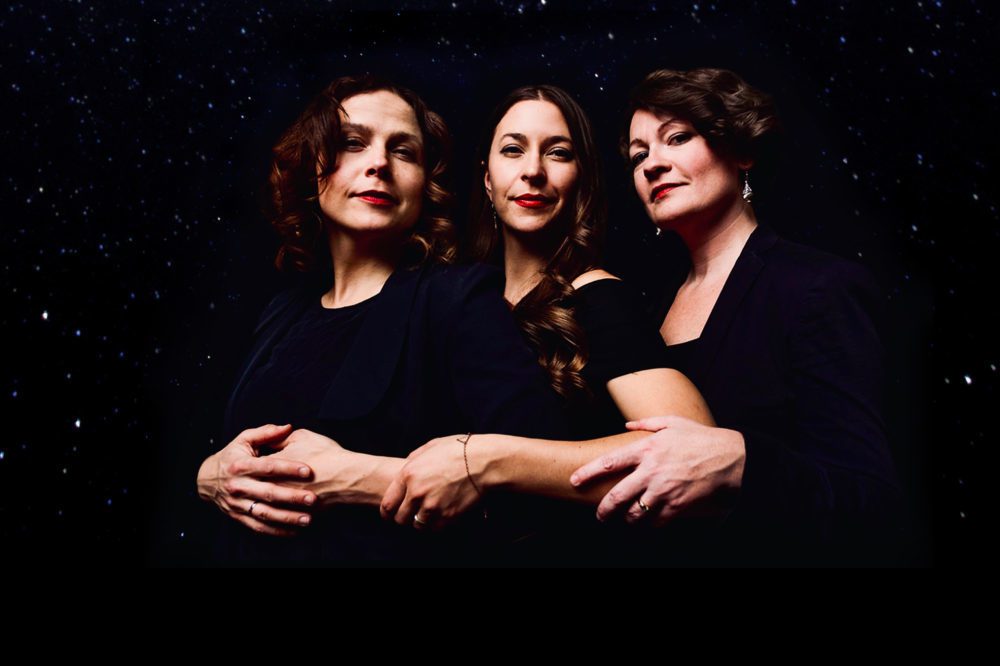
“When the walls come down / There’s no hammer and nail / Can fix the dream that holds this child,” sing The Sweet Water Warblers on “Something More,” the track that inspired the title of their debut album The Dream That Holds the Child.
“In our political climate, we’re so focused on putting walls up and boundaries that we’re hiding behind or trying to keep someone out,” explains Lindsay Lou, who writes and sings the Michigan folk trio’s music, along with May Erlewine and Rachael Davis. The lyric, and the rest of the album, are about “being open and sitting with the vision that you have, the dream that you have,” she explains, “and it’s more than just a hammer and nail — it’s a prolonged re-owning of the narrative.”
The gospel-inspired, harmony-driven, soothing ten song collection deals in particular with elevating women. “Right With Me” provides a counter to the message women frequently receive that something’s wrong with them. In “Righteous Road,” the three women sing about continuing their mothers’ legacy by fighting for gender equality and improving the world for the next generation of women and men. “It’s just this journey of womanhood and not feeling less but finding one’s power within it,” says Lou.
The group itself was founded on this principle of women supporting one another. Lou, Erlewine, and Davis met at Michigan’s Hoxeyville Music Festival in 2014, where they were all playing individually until a promoter requested that they perform as a trio. Their voices blended so well together, they decided to form a band, releasing their first LP With You in 2017. “A big part of connecting with the feminine is also connecting with other women,” says Lou. “There’s this feeling that there’s only room enough for one token woman in a band, and women are uplifting women now.”
Their music aims to elevate not just women but “the divine feminine within all of us,” says Erlewine. The first single off the album, “Turn to Stone,” for instance, is a celebration of compassion, with lyrics like “May we hear each other singing/And may we never turn to stone.”
To Lou, the first step to reclaiming the divine feminine is “recognizing the imbalances, which comes with a certain degree of grief and anger and frustration,” she explains. The next step is “moving from that into a place where you appreciate all of the strength of the feminine, being connected to our body and our sexuality in a way that’s not attached to shame, and feeling connected to the mother — the mother that grows us in our bellies and also this great mother Earth that connects us all.”
Another important aspect of gender equality is having language and symbols that represent the divine feminine, says Lou. “There’s just a different consciousness from balancing out the symbology,” she says. That’s one thing The Sweet Water Warblers aim to provide with their music, says Davis. “Although there is a struggle continuing, we’re grateful that we get to address it the way that we do.”
Follow The Sweet Water Warblers on Facebook for ongoing updates.
“I’m terrified,” whispers Emma Taylor. Her muted, somber admission opens her brand new song, “Made Your Bed,” a piano-based track, premiering today on Audiofemme. Its softness is deceiving, as the Los Angeles singer-songwriter wrestles with her demons and a past that just won’t let her go.
“I definitely feel like the creation of the song was very much soft and emotional, yet powerful,” she says. Written in just 30 minutes, the song, produced by long-standing collaborator Adrian Cota, emerges as her first straight-up piano ballad, a showcase of lyrics and story “with the production painting colors rather than taking over,” she observes.
“Adrian is so brilliant in being able to capture moods and drama through his insane attention to detail. It feels so minimalist when you are listening, but everything in this song is thought out ─ from how I sing each phrase to the little background elements that build the song into what it is.”
Taylor, whose angelic vocals offer a ray of hope, soon plants her feet and reclaims her self-worth. “I’m allowed to feel,” she sings, still in hushed tones. That line in particular underscores her ongoing journey in rediscovering who she’s always meant to be, as well as retrieving her emotions. “I think I still have to remind myself every now and then that I’m allowed to feel. It’s not easy to self-reflect and realize self-worth,” she explains. “There have been so many moments where I’ve felt that I need to hide my emotions, or where I’ve been ashamed of them, so to be able to write a song that tells people that their feelings are valid is a very special and important thing for me.”
She puts up a valiant fight, and as the strings build into a gentle stream around her, she rises triumphant and cleansed. “I’m at a very crucial and important time in my life where I am continuously growing and maturing emotionally and creatively, which is super exciting,” she declares. “I know that my core values and style are with me always, but I’m gaining so much inspiration from new music and my surroundings that allow me to take a step back and try new things with my art and with myself, in general.”
Born and raised in Los Angeles, Taylor had a pretty idyllic upbringing, surrounded by a loving, gracious, and supportive family. “I’m the only artist in my family so it was definitely a shock that I came out with such an intense passion for music” she says.
It’s not dramatic to say such legendary singer-songwriters like Joni Mitchell and Carole King became transcendent for her. These pop music pillars were top-tier among their peers, but they were also strong, vulnerable, and sharp-toothed women who proved anything was possible. “I think the authenticity of those artists is very few and far between. Looking at an artist like Joni, she is so unique and so unapologetically herself which is such a beautiful trait to have,” reflects Taylor, whose own work is very much submerged in plaintive lyrics over ethereal melodies.
“I love how effortlessly conversational artists during that era wrote their songs because it made the stories flow and allowed listeners to truly digest and relate to them,” she adds. “I think that those singer-songwriters wrote purely for their own souls and pleasures so because of that vulnerability and realness, the world felt that and was moved by it.”
Thanks to her father, Taylor was surrounded by Mitchell, James Taylor, and Simon & Garfunkel, whose records were all on constant loop in the house. So naturally, those lush, identifiable melodies became embedded in her mind. “I started getting deeply into songwriting for myself during my early teenage years, and I was looking at the artists my dad played as my main source of inspiration and teachings. I loved the uniqueness of the melodies and how they worked hand and hand with the lyrical journey, so it’s something I’ve always wanted to emulate with my own work.”
Later, at the age of 12, Taylor attended a writing intensive during the summer, and despite having previously dabbled in songwriting, her hunger for it hit a new level. Now, 11 years later, she considers what she’s learned most. “I would have to say that I’ve learned how important it is to not worry about a scheme or a format. There’s no rules when it comes to songwriting,” she stresses, “and you are the only person who has the ability to create your own unique song. To have the power to [write songs] is so special, and it’s so important to me that I use that power to the best of my ability.”
But it hasn’t been easy to arrive here.
In defining her own singular perspective, stories only she could craft, it has been most difficult “trying not to get stuck in a bubble or write things that sound the same,” she offers. “That’s my biggest fear and still is my biggest challenge because when you’re comfortable with something or you’ve been doing it for so long, it’s easy not to want to change.”
“I sometimes get in my own head and think about what others might want to hear, and that’s when I have difficulty getting good lyrics out because my style and music relies so heavily on my truth and my vulnerability. I’ve been learning to find a balance between universality in my lyrics but still writing in a conversational way with ideas that are solely my own.”
Taylor first made an impression with 2017’s Hazy EP, containing such gems as “New Found Sound” and “Living’s Lonely.” Since then, she’s pivoted to issuing a string of singles, including this year’s “Why Can’t I Stop Loving You?” as a way to showcase her growth without a full commitment to a body of work (for now).
“I’ve spent a lot of time trying to find who I am as an artist and what I want to say, but I think that will be an ongoing discovery for me because life is ever changing and so many things happen that inspire me,” she says. “I’m at the point where each new song I’m writing is my favorite one yet and different from the last, which shows that I’m definitely in my prime creative phase of my art.”
Looking ahead, she promises “a lot of new music,” even if a follow-up EP or album has not quite marinated yet. “These songs show how far I’ve come in the past few years, and I can’t wait for the world to get to hear them and hopefully like them as much as I do. I’m writing constantly and am focusing on putting out as much music as possible.”
“I remember having a conversation with a guy once, trying to explain that my band members are essentially session musicians and I teach them all the parts… and he couldn’t comprehend that I wrote the instrumentation,” the Australian musician says. And while she sometimes wonders how she would fare in a more collaborative band environment, this is what works for her now. “I do like having 100% creative control with this project because I feel like my idea doesn’t get watered down at all. I don’t have to compromise the potency of it.”
Potent is certainly a good way to explain the killer singles Day has been dropping since 2018. While none of them are explicitly part of some greater project, every bit, from the instrumentation to the vocals, is delivered with a deftness that makes them feel more substantial than your standard LP appetizer. This is especially apparent with the songs released after her first single, “Waiting,” a sweet and somewhat melancholy singer-songwriter tune that was borne of a strangely practical revelation of Day’s.
“I never really was able to be in a band because I didn’t really have a lot of people around me that were into music,” she explains. “When I heard “Pool Party” [by Julia Jacklin], I was like, ‘Oh, this is music from a genre that I don’t usually listen to that I really like still.’ And then I was like, ‘Well, if I can’t do alt rock, I can try writing a folky sort of song because all I really need is myself to do it.”
The experiment worked, and some version of Jess Day was born, albeit one that was hiding the harder-edged Jess Day behind her like a kid trying to shove the contraband away before the teacher walks by. Not that there was any grand plan — she wanted to write, so she found the best way for a former country-kid transplant with a limited musical network to do it.
Despite its folk outfitting, Day’s second single “Why is She So Beautiful,” has the earworm power of a pop song with layers of expert production. “Oh, she’s funny like me, but makes your friends laugh harder/I hope you finish her like a dog with a bone,” Day laments during the second verse. Her voice is easily recognizable, with a storytelling-like cadence that gives off the impression that she is simply speaking the words directly to you in some secret treehouse fort, ones and zeroes between her and the listener be damned.
She describes her lyrics as functioning as “an open letter” to their subjects, but more importantly, as a hand extended to anyone else who may be headed for the same pain. “I’m like, ‘I feel like shit’…But I hope that by the time [other people] feel like that, maybe my song will be out as comfort.”
The core truth of ourselves always finds a way to out, and with each new release, Day sheds another piece of that indie-folk label, letting it flutter away into the wind with a fond but necessary farewell. “I went through a really awful breakup with someone who was pretty emotionally abusive,” she says. “After that, I had a lot of anger and resentment and I feel like the music that could express that was rockier music. I couldn’t see my words in an indie folk song. It just didn’t give me the release that I needed.”
And so came “Rabbit Hole,” a searing dress-down of an ex (and my favorite single of 2019). “I’ve got things on my mind to say to you/and they’re not very nice but they’re all very true,” Day sings with a purposefully detached air, like she doesn’t want anyone to know the true depth of her disturbance. “My whole point of writing songs is to articulate, I guess, like, our shadow self – the parts of us that we might not want to look at,” Day explains. “But I know everyone’s feeling [it]. We’re just not talking about it as much because it makes us feel vulnerable.”
It’s this “shadow self” element that is one of the major parts of Day’s appeal. Frequently, we try to distill our distress into something pithy and simple, citing bad exes, toxic friends, or unrequited feelings. But what do you do when your ex gets a new girlfriend who you wish you could hate… but just can’t? What do you do when you simply want to admit defeat, as Day does in “Rabbit Hole” when she sings “misery loves company/you took all the best in me”? And what do you do when you’re watching from the outside in as you drag yourself down by your own ankles?
In “Affection,” released in late 2019, Day stares down at the already smoldering refuse of a failing relationship, but just can’t stop herself from asking for what no one should have to ask for in the first place: “I can’t have you come around once a month/I need some attention/I need some affection,” she sings, letting the last word repeat itself almost too many times, pulling back just before you start to feel as hair-tearingly frustrated as she must have been when she wrote it.
On her most recent single, “Signals,” Day attempts to come to terms with her current reality, summing it up in one single line: “Everybody says that time heals all wounds/but they’re so wrong.” How refreshing, if anything, to dispel the notion that false platitudes and declarations of newfound independence will heal a broken heart or a bad decision. Music is always an exercise in structured voyeurism — why else are people so obsessed with deciphering Taylor Swift’s catalog? — but what has me itching for more of Day’s music is the lack of a overly-sympathetic editorial hand that looks to hide away any “ugly” feelings. Fact of the matter is, there isn’t much fundamentally “ugly” about anything Day admits to wanting in her songs: to hate someone she is jealous of; to desire affection; to stop fighting to stave off the hurt from falls deemed irreparable. These are pretty simple, fallible human wants, albeit ones we have been taught to be ashamed of. That’s why her songs have such staying power.
Interestingly, for Day, it seems like this project is a lot less about the performance aspect than it is about trying to achieve the kind of songwriting prowess that places certain works in the lexicon of collective cultural memory. “Max Martin is definitely my favorite songwriter,” she says. “He did Kelly Clarkson, anything that was kind of pop but had chunky, heavy guitars in it… it’s just amazing. He’s probably the best songwriter in the world.” Day’s awe for Martin is palpable, and makes it clear that her goal is, fundamentally, to be the person behind the curtain, the one who places all the cogs just right, the hooks just so. And if people like Day are the ones gearing up to direct pop and rock into a new decade, I’m looking forward to her next move, whether it be from behind the curtain or in front of it.
Detroit-based artist Billionaire Sophia melds pop, R&B, trap and hip hop on her new EP, Ootgoat. Written, produced and mixed entirely by herself, the project is a testament to Sophia’s growth as a producer and artist. She explains that her journey with production started about eight years ago and has been almost entirely self-taught. “I started making beats and stuff in 2012, but I didn’t get my own equipment until 2014,” says Sophia. “That’s when I started doing it myself, but I didn’t start getting good ’til 2016…and it’s still gotta get better.”
Where Sophia’s at right now is already sounding real good. Following her February 2020 release, Love Not Attention, and recorded in her bedroom due to the state-wide lockdown, Ootgoat expands on Sophia’s languid, stream of consciousness style of songwriting and showcases both her flow as a rapper as well as her ethereal vocals. Sophia explains that she doesn’t practice a locked-in method for her songwriting, but follows whatever she’s feeling at the time. “If I’m listening to a beat I made… I just listen to it and see if I can feel something. Then if I can’t feel nothing I just go to my mic and start singing whatever comes out,” Sophia explains. “Eventually, maybe a hook will come out.”
Her innate melodic sensibility and knack for hook writing are evident in songs like “White Girl” and “Milan” that are almost impossible not to sing back. They’re the type of songs made for warm summer nights, cruising with your friends, maybe burning one. Sophia’s pop-leaning instincts are likely a combined influence of Detroit’s deep electronic roots and a lifetime of listening to pop trailblazers. “When I first started making beats, I was like, I’m gonna make a whole bunch of jittin’ beats, you know, Detroit style beats where you can dance,” Sophia says. “I just like pop music, I like rap, I like all types of music,” she says, citing Timbaland, Pharrel, Jay-Z, Rihanna and Justin Bieber as some of her early influences.
Merging Detroit-style beats with more Billboard-charting influences gives Sophia’s music both catchiness and a musical complexity not found in generic pop music. Her cadence on “Brown Eyes” is akin to the talk-style singing perfected by artists like Sza or Kari Faux that makes the listener feel like she’s talking solely to them – her sultry, whisper-like vocals add to that sensation as well.
While individual songs on Ootgoat act as vignettes into Sophia’s personal life and aspirations, the EP as a whole speaks to what seems to be Sophia’s vibe as an artist: nonconforming. The cover art, designed by Sophia, features the first-ever known statue of a woman, Venus of Willendorf, thought to have been created in 30,000 B.C. Sophia chose this image because of its stark difference to images of women that we generally see in the media. “She is not typical and it’s not what people think what women should be,” explains Sophia. “Really, you can be whatever you wanna be. [There’s] no rule to being a human.”
Like many women, Sophia personally relates to that sentiment, especially when it comes to who she is as an artist. “I just see that I’m a free artist, I do what I want to do, but I’m never going to be understood fully.”
Follow Billionaire Sophia on Facebook for ongoing updates.
Don’t Let The Ink Dry, the lush, haunting debut album from British singer-songwriter Eve Owen, is a testament to how far young women can go when they feel supported. Struggling with loss and alienation at school, Owen spent her summer holidays in Hudson, New York with The National’s Aaron Dessner, recording some forty tracks over the last three years in his Long Pond Studio. Twelve of them would end up on Ink; Dessner’s purposeful electronic flourishes expand Owen’s deeply thoughtful lyrics and emotive vocal delivery that can’t help but remind one of Sharon Van Etten’s earliest albums.
“Aaron was so kind in letting me be myself. I know that sounds really simple but for me that was a really big deal,” Owen says of their work together. “In other situations I have felt like I have to project this person who isn’t necessarily me, and I think why I was so comfortable in that space was I knew I could tremble and choke and shiver and I could show all my nerves but I wasn’t embarrassed by it.”
But before Owen met Dessner, her biggest champion was, without a doubt, her older sister Hannah. The two grew up singing Taylor Swift songs at the family piano, though as they entered their teen years their interests began to diverge. Eve began expressing herself via original compositions, while Hannah gravitated toward musical theater and eventually went to film school, where she’ll complete her studies next year. In the lead up to the release of Don’t Let The Ink Dry, the two collaborated on a series of four music videos that inadvertently documented Eve’s growing confidence and artistic growth. “I think that was due to our relationship, and due to my happiness just with the album in itself,” Eve says. “I’ve definitely grown to be proud of [the songs], which is a really nice feeling.”
“I think if I’m being honest, there was no plan before we started,” Hannah admits. “We were very aware that we wanted to explore different tones and styles and personalities and characters within all four of the videos, cause the songs are all so different. I recently watched back all four of them, and I actually think they really speak to the journey that Eve’s been on.”
That journey is one of a sensitive, soft-spoken young woman who once struggled to fit in finding her voice. In the first video, a somber, stuttering, black and white stop-motion clip for “She Says,” Eve twirls around an empty room with little company save for a posable artist’s mannequin, her eyes wide and a little sad-looking. The soaring piano ballad, written when Eve was just fourteen, sees her inhabiting a character feeling loss and abandonment from a family member. “It’s not actually about my family,” Eve says. “I was just interested in the idea of how abandonment from anyone is such a strong, overwhelming feeling. For the video, we wanted to show that it was about the hunger for connection and being so desperate for relationships, you find it in ways that aren’t obvious or normal, like creating your own connections with inanimate objects. I think the stop motion really works in that favor, because I get this feeling watching it where everything’s a bit off, like you’re trying really hard to connect and do what everyone else is doing but it’s this awkwardness that doesn’t quite feel natural.”
Hannah painstakingly shot each frame as a photo on iPhone before editing them together. “There were these snapshot moments – Eve was having to hold [poses] for a long time while I was doing my thing. When we played it back it was almost surreal actually, cause you’re not witnessing that in real time, we speed it all up. It was an interesting way to work for the first video because it forced us both to just slow down and think about the song and what the first video was going to be.”
The other shoots were more free-flowing, with no set schedule. Eve says her sister’s direction put her at ease in a way she couldn’t have been with another director, and by extension, it’s easy to live vicariously through the intimacy of their relationship. It’s a rare treat to see so much of a nascent artist’s personality so viscerally and immediately, and Hannah’s videos offer just that. The next one they shot, for the aching, lilting “So Still For You,” follows Eve across a desolate beach just as the sun dips below the horizon; before a backdrop of purple clouds, Eve slams herself into the sand, a literal interpretation of being stuck in a suffocating relationship.
“As Eve’s older sister, we knew this was gonna be a really special time of Eve releasing these songs. We’ve watched her grow up with these songs for such a long time – finally, people are gonna hear them,” Hannah says. “I wanted to get that rough part of her, the willingness to throw her face in a pile of mud and be free with it, because there’s something quite definite about handing songs over into the world – [it becomes] somebody else’s and they’ll do what they want to do with it.”
Shot in the beginning of January, Eve said it was freezing. “I didn’t even have boots or anything, I was just in trainers in the mud,” she recalls. “I made a mess of everything!” As much as it’s a portrait of Eve, Hannah’s behind-the scenes presence is strongly felt, too. “It was 25 minutes of just like pure sister relationship, because I’d be shouting at her, like, ‘Smack your face in the mud a bit harder!'” Hannah says with a laugh. “Eve would be like, ‘I don’t wanna do that, I wanna do this!’ and she’d run away from me. It was just a total push and pull of both of our personalities but it kind of came across in these kind of wild, very natural and raw moments.”
Hannah appears on camera in the video for “Blue Moon,” alongside Eve in snippets of home movies from their childhood. These are interspersed with shots of Eve setting up for gigs, tuning her guitars, goofing off, recording in Hudson – a documentary, essentially, of Eve’s whole life. “By that point, there was a little bit of curiosity in the air of people online wondering about Eve’s journey, the album coming out with Aaron, who she is…” Hannah says. Eve had contributed lead vocals to “Where is Her Head,” from The National’s 2019 LP I Am Easy To Find, but had otherwise remained mysterious until the rollout for Ink began.
Comparing the old footage to current-day “miming and mucking around,” Hannah was surprised to see how little had changed in Eve’s mannerisms over the years. “Seeing how prevalent it is from when she’s like four years old, when she’s feeling like a camera’s on her, she acts in a certain way that’s been the same. We got to a point in the edit where I was really just being led by her, who she is and who she has become and letting those different moments of Eve and where she sat in different points in her life, kind of talk to each other.”
“When I was watching the first cut I got this overwhelming sense of me now sort of singing this song to my younger self,” says Eve. “The chorus goes, ‘I’ll never let you break/I’ll clean up your mistakes.’ I love that idea of looking back at your past selves and going, don’t give up just yet, it does get better and you do get happier.” It wasn’t her original motivation for writing it; the soulful number is more about accepting love as a beautiful feeling, even when it’s unrequited. “I watched it and was like, that is so new to me, but it feels so right.”
It’s almost as if these three videos act as the ingredients in a recipe for artistic birth: “She Says,” seeks inspiration; “So Still For You,” is a hefty shake of raw emotion; “Blue Moon” the dash of support needed to turn that spark to fire. The fourth and final video Hannah and Eve made together, for “Mother,” is the culmination of all of that. Eve rummages through stories she wrote and art she made as a child, sometimes finding interesting through lines (the final track on Ink, called “Lone Swan” has an eerily similar title to a tale Eve penned in year seven, “The Lonely Duck”). She displays it all in a makeshift gallery, overwhelmed at some points by its volume. One gets the sense she must have felt the same way sorting through all the tracks she’d recorded with Dessner, assembling the worthiest for her debut.
“‘Mother’ was the video that had the most friction between the two of us in terms of where we wanted to go, cause it was the first song where I had quite a strong idea of what the song was about and what it meant to me, and that wasn’t at all how Eve had set out wanting that song to feel for other people,” Hannah says. “It was just kind of a weird moment where the song became the third person in our relationship. We had a lot of sit-down conversations about the video, and I think, in a really lovely way Eve had become more confident and comfortable with the idea of visually portraying what a song means as we made [the other] videos. We were having like, proper, kind of intense discussions about ideas and what it meant to [both of] us, and we kind of mashed that together.”
But, Eve says, much like her recording process with Dessner, she always felt listened to and appreciated working with Hannah. “I never felt like I had to shout or do something that wasn’t in my character to get a point across,” she says. “The whole collaborating thing is very new; I feel lucky that Aaron and Hannah are very kind toward the process, but still straightforward.”
Don’t Let The Ink Dry came out on May 8th via Dessner’s 37d03d label, which has mostly released side projects from established indie artists, like Big Red Machine, Dessner’s collab with Justin Vernon of Bon Iver, or Bonnie “Prince” Billy’s joint effort with Aaron’s brother and National cohort Bryce. It’s a startling debut by any metric, each song offering a distinct and salient experience: the ghostly atmospherics of “Tudor;” the urgent, Radiohead-esque “After The Love;” the salient imagery and fluttering drum fills of “Bluebird;” and the gut-punch of “29 Daisy Sweetheart,” as heartbreaking a tale of loss as any written since Sleater-Kinney’s “The Size Of Our Love.”
Eve says that at first, she didn’t realize she was making an album with Dessner at all. “I was so into this idea of just having a fun time and creating for the sake of it,” she explains. “I never recorded with the idea that it would be on an album and people might hear it one day. It felt so personal that I was going, let’s just record this so we don’t forget it. Aaron saw things in songs that I would completely dismiss. That was a really important lesson to learn, that what I find interesting and good about a song isn’t the same as everyone else.”
Hannah says it’s hard for her to pick a favorite, but that Dessner’s production choices often made her jaw drop after having lived with the acoustic versions for so long. “Those songs not only tie to my life but also my experience of watching Eve and what she was doing and how she was feeling and what place she was in. All of those moments are equally really powerful for me,” she says. “There was a natural ebb and flow growing up – one of us will take quite a big step forward, and it will kind of naturally happen where the other person will [follow]. In the last couple of years, we’ve come together to this point where we’re both going through really exciting times, doing things that I think would have scared us a couple of years ago.”
“What I instinctively feel is that our sisterhood is so like, solid,” Eve adds. “All these things that we’re trying out are just sort of, in a lovely way, phases, or explorations. It feels to me that we’re very intrigued by what we can do next, but we’ve always got that surety of our sisterhood that will carry us.”
When I’m sitting with an album, I’m listening for something a live performance can’t give me. I have an anxiety disorder that limits how much live music I consume, so recordings have always felt precious for the way they let me feel connected to a larger audio community. More than an escape from my unease, my ears like an energy or polish that helps me justify consuming information alone with my headphones instead of with people at a show. That’s changed since COVID-19. As quarantine stretches on, not even having the option to go out has me prioritizing music that transports me places I can’t go.
At the earliest, Chicago’s shelter-in-place orders won’t relax until June, but it’s unclear when live music will be possible here without a vaccine. Being forced to stay home hasn’t been much of an adjustment – hello, total hermit here! – but now I’m living in memories of moments like being jostled by bodies, sweat gleaming on my skin and feeling satisfied not knowing if it’s mine. With that said, here are some Chicago releases that have been getting me through lockdown. They speak to the diversity of musical styles that thrive in Chicago’s eclectic scene, which I’ll be covering in a new column for Audiofemme: Playing Chicago.
CB Radio Gorgeous EP
This band has an unparalleled stage chemistry no record will capture, but since all its members are Chicago punk veterans, no surprise CB Radio Gorgeous’s four-song debut still delivers something exciting for the at-home experience. Frenzied and fun, they’re X-Ray Spex meets Wire, and provide the perfect soundtrack for donning neon turquoise sunglasses and day-drinking Schlitz on rusted lawn chairs with friends.
PITH features Sonic Youth-style guitar, Lemuria-like vocals, and atmospheric chaos that distantly echoes the complexity of Lightning Bolt. Both spritely and dark, playful and moody, it’s what I imagine playing outside the bathroom at the Empty Bottle while I’m smirking knowingly at a Sharpie-scrawled warning on the wall. Another woman catches my gaze in the reflection and says, “Right?” and I feel like we’re now bonded by a bathroom secret only select women will even register. Then we emerge, and everything’s casual.
I love the retro vibe of this, and it’s equal parts fun and soulful. My favorite track is “Chicago Bae,” which celebrates what low-stakes, long-distance love with a Windy City sweetheart could be. The line, “Let me show you all the city the commercials never see” hits hard – a universal sentiment of anyone who’s lived in a tourist-heavy city that still feels personal to each listener’s understanding of their town. They Call Me Disco features six tracks perfect for that wait for the 49 bus on Western Avenue, sun heavy in the sky, running late to meet a friend but feeling right on time.
If Donita Sparks fronted Motörhead, you might get something that sounds like hard rock quartet Hitter. Their debut full-length introduces a sound that’s vintage but not dated, owing in large part to the gravelly voice of singer Hanna “Hazard” Johnson, who howls and wails with a rock ‘n’ roll confidence that feels liberating just to bask in. Music for shoving assholes who spill beer on your leather vest.
Floating Gardens – Ephemerals
Fans of Mort Garson’s Plantasia will be drawn in by the familiar, lofty synth of Ephemerals’ opening track, but it descends into something that combines new age vibes and nature sounds – hard to do without getting corny, but somehow, Floating Gardens strikes the right balance. From experimental electronic label Chicago Research, Ephemerals is apt and meditative reminder of the mysteries and beauties of the natural world at a time when many of us can’t access them.
Salt Cathedral is more than a name for the New York-based duo of Juli Ronderos and Nico Losada. “It’s an umbilical cord,” says Ronderos by phone. The actual Salt Cathedral of Zipaquirá is an underground church, built in a salt mine about an hour outside of the duo’s shared hometown of Bogota, Colombia. “It’s our heritage, especially as someone from Bogota,” says Losada. “Kids from Bogota would go to the Salt Cathedral, the mine, and it was really awesome,” he explains. The two describe the monument, from the smell of sulfur to the darkness inside the space, as “magical.”
“Since Colombia is a Catholic country and it was a dangerous job, all the miners started doing shrines to the Virgin. We have many different virgins in Colombian culture that people pray to,” Ronderos explains. “It ended up being that the entire entrance to this mine was filled with shrines and they were religious.”
And, Losada says, Salt Cathedral is a name that reminds them of home. Ronderos and Losada left Colombia about a decade ago and met in Boston while they were students at Berklee College of Music. In 2012, they moved to New York and have been steadily making music, all the while exploring their interests and learning as they go.
On May 8, Salt Cathedral releases their debut full-length, Carisma, on Ultra Music. The dance-pop duo has been at work since 2013, having released a handful of EPs and singles, including last year’s collaboration with Big Freedia and Jarina DeMarco, “Go and Get It.” Over the years, they’ve also worked with dub legend Lee “Scratch” Perry, dancehall DJ Assassin, famed drummer Jojo Mayer and the singer Matisyahu. On Carisma, they collaborate with vocalists MC Bin Laden and duendita on the track “How Beautiful (she is).”
Losada and Ronderos say that it’s important for them to work with artists with distinct, specific sounds. “They do their thing and we do our thing,” says Losada. “We don’t want to collaborate with another producer or with somebody who sounds like Juli or writes like Juli. We want to collaborate with someone who can bring something else to the table.”
For the duo, making music together has been a long journey of self-discovery. The two have quite different musical backgrounds. Losada started playing classical guitar as a child and gravitated toward hardcore and metal in his teen years. It’s music he appreciates now more for the energy and message. “I love Minor Threat, not because of the music, but because of what it symbolizes – that freedom of being yourself,” he says.
Ronderos, on the other hand, didn’t have much exposure to music growing up. “I grew up almost without music. My parents don’t really listen to music,” she says. It wasn’t until later in her teens that Ronderos gravitated to jazz and began studying it on her own. Both ended up at Berklee College of Music. “There were a lot of great musicians around us,” says Losada. “People were practicing ten hours a day and people were taking it very seriously.”
After finishing school, they headed to New York. “It was a different kind of world,” says Ronderos. “All of our classes were about jazz composition, writing, orchestrating and improvising. We had never produced or recorded really. We started a band in college, writing our own songs. We had only done it for a year.”
Starting out in a new city, without the community of potential collaborators that they had in college, meant that they were on their own. They learned how to make electronic music and record themselves. “That was a really big transition,” Ronderos recalls. They wrote new songs. Ronderos recorded the vocals herself. Losada mixed the tunes. It took them a while, Ronderos says, to really come to understand what they were doing. “We were fearless and we started doing everything ourselves and started making it work,” adds Losada. At the same time, they were also asking themselves, “What are we trying to say? What are we trying to develop?”
Carisma, then, is an exploration of who they are, where they’ve been, and where they are now. “We went through this process of discovering that super-Latino side of us that wants to dance and move to music in an uplifting way,” says Ronderos. “This music [comes from] a period in our lives when we were exploring that.”
In the weeks leading up to the album release, though, Salt Cathedral has gone through another period of exploration. “We can’t tour so we want to write more and be active and continue to create this world that we can create because we can’t go and play,” says Losada.
“We’re taking advantage of the time and the fact that we’re very self-contained,” says Ronderos. “We can make music at home. We have our instruments and we can record.”
They’ve been working on writing their next album; additionally, they’re trying to work on a “re-imagination” of Carisma, what Ronderos calls an “isolation mix” influenced by how they’ve been experiencing music while staying at home. Says Losada, “It’s a crazy time and I feel like we’re not listening to music the way we were two or three months ago.” No matter what happens, Salt Cathedral keeps moving.
“I think about it all the time: is love loud or is it quiet? Will I know it when it comes around? Will I hear it or even recognize the sound?” Hannah Grace’s latest single “How True Is Your Love” opens with a series of questions many listeners may have contemplated but not fully articulated. The track, off the Welsh singer-songwriter’s upcoming debut album, shows off Grace’s vocal range and soulfulness, the refrain reminiscent of a church hymn.
The song is about “how hard it is to fall back in love after being hurt but not holding back, throwing yourself into the pain and joy all at once,” Grace explains. “It is about having the strength not to lose all of your trust in love for the future.” The sound is typical of her music: emotive and slightly theatrical but also poppy and catchy.
The rest of the album, which comes out later this year, deals in various ways with the love, heartbreak, worry, happiness, and other emotions Grace has experienced over the past two years. Other singles from the album include “Wasted Love,” where Grace reassures her past self that no love is wasted, and “Blue,” a song about getting yourself out of an emotional slump.
“Writing the songs worked as remedies for me at the time; I just poured all of my experiences and my stories into the lyrics and melodies,” Grace says. “It’s happy and sad, and I’m hoping it can comfort people and uplift people as they go through life’s ups and downs, too.”
Grace has already released two EPs — 2014’s Meant to Be Kind and 2016’s Mustang — and is known for her covers of songs like Fatboy Slim’s “Praise You,” Nelly Furtado’s “I’m Like a Bird,” and Etta James’s “I’d Rather Go Blind.” Her all-time favorite cover to perform, though, is Simon & Garfunkel’s “Bridge Over Troubled Water,” which she considers among the best songs of all time. “Aretha Franklin does a version of it that is just unbelievable — I’ve probably listened to it hundreds of times,” she says.
Grace’s performances have been notable not just for her music but also for her fun, bright style. She recently performed with live string accompaniment at Richard Quinn’s Show at London Fashion Week, for which he made her a custom dress. Another highlight of her career was playing with Barbra Streisand in London’s Hyde Park last year and touring with a number of big artists, including Hozier and Gabrielle Aplin, who is a good friend of hers.
Later in the year, she’s scheduled to headline several shows, including one in London and one in her hometown of Cardiff, Wales. In the meantime, she’s hard at work on her album. “It’s been a long time coming, and I’m in the final stages of putting it all together — it’s very exciting,” she says. “But I’m always writing more songs… just music, music, music.”
Follow Hannah Grace on Facebook for ongoing updates.
Ticket Giveaways
Each week Audiofemme gives away a set of tickets to our featured shows in NYC! Scroll down to enter for the following shindigs.