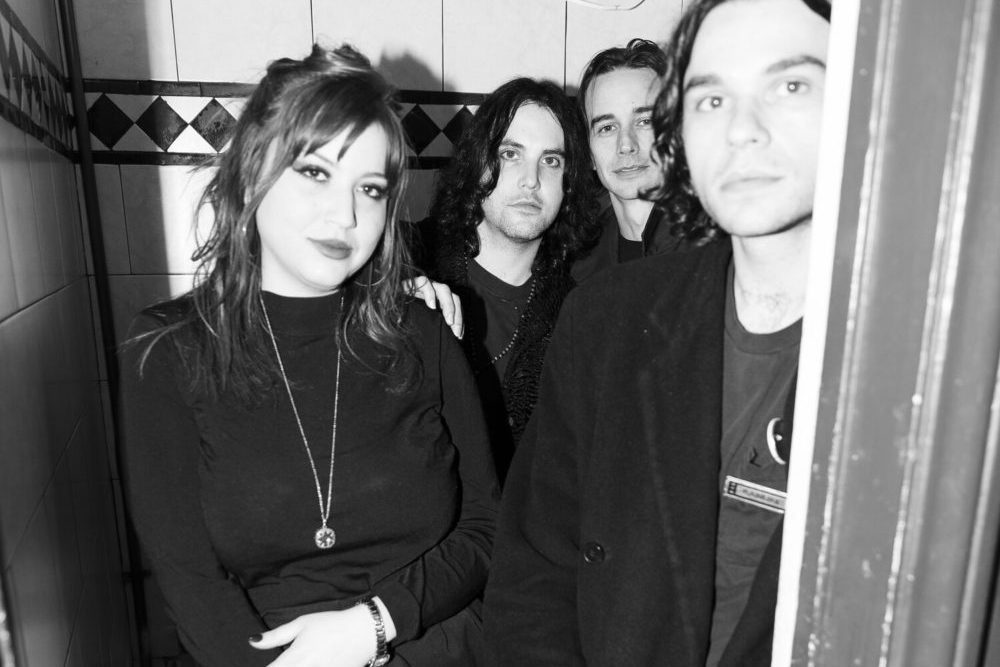
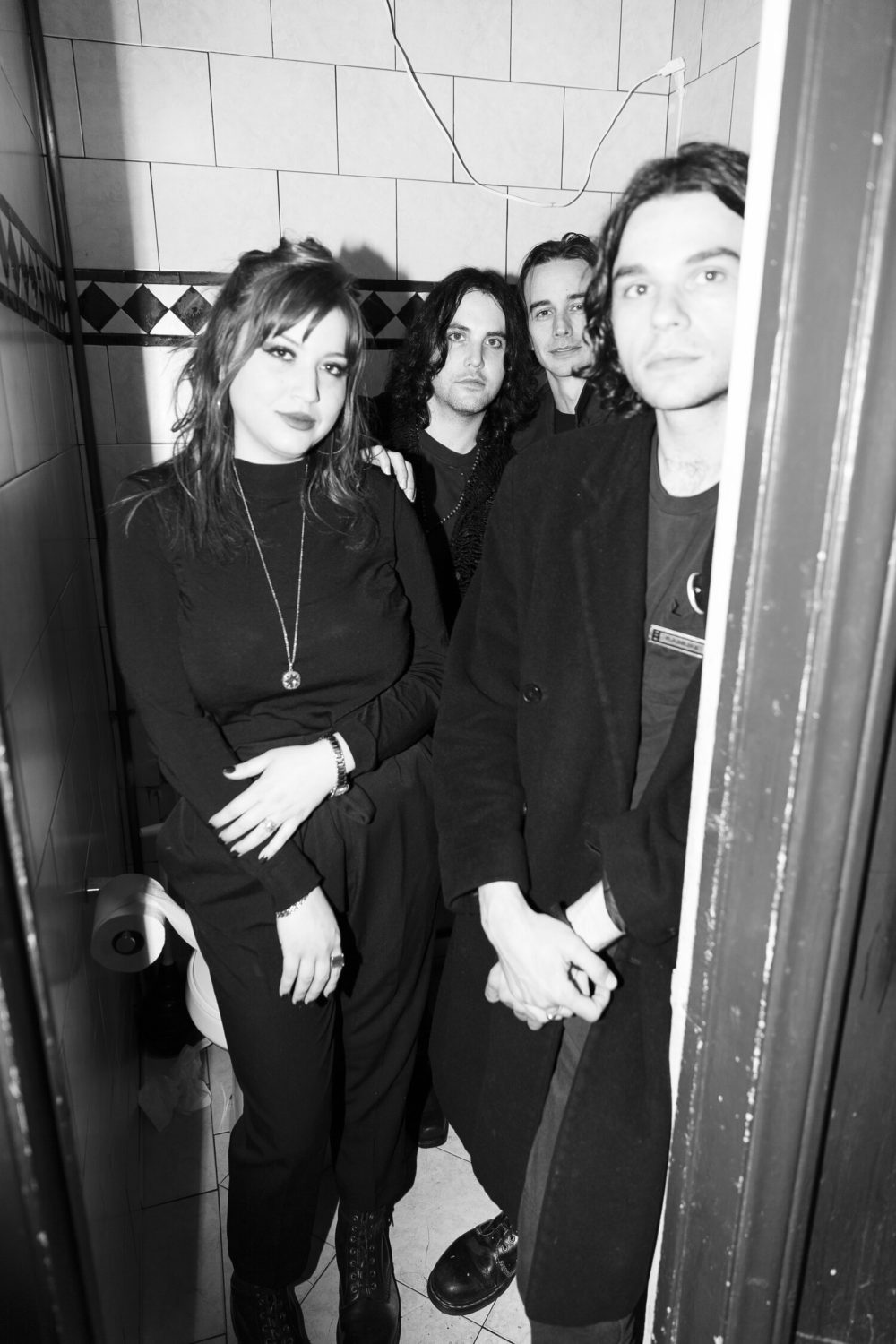
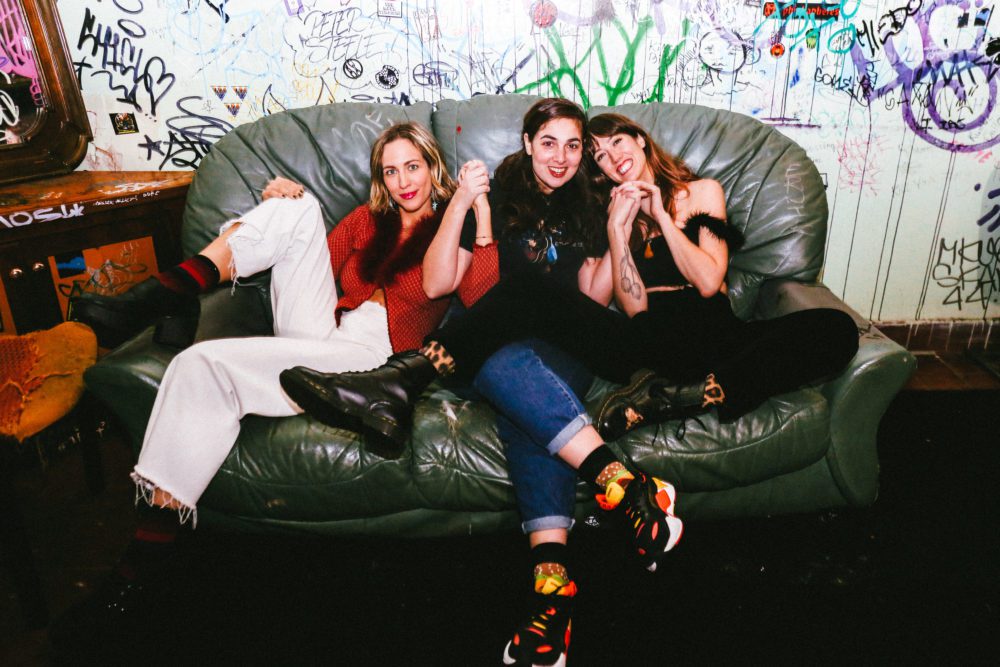
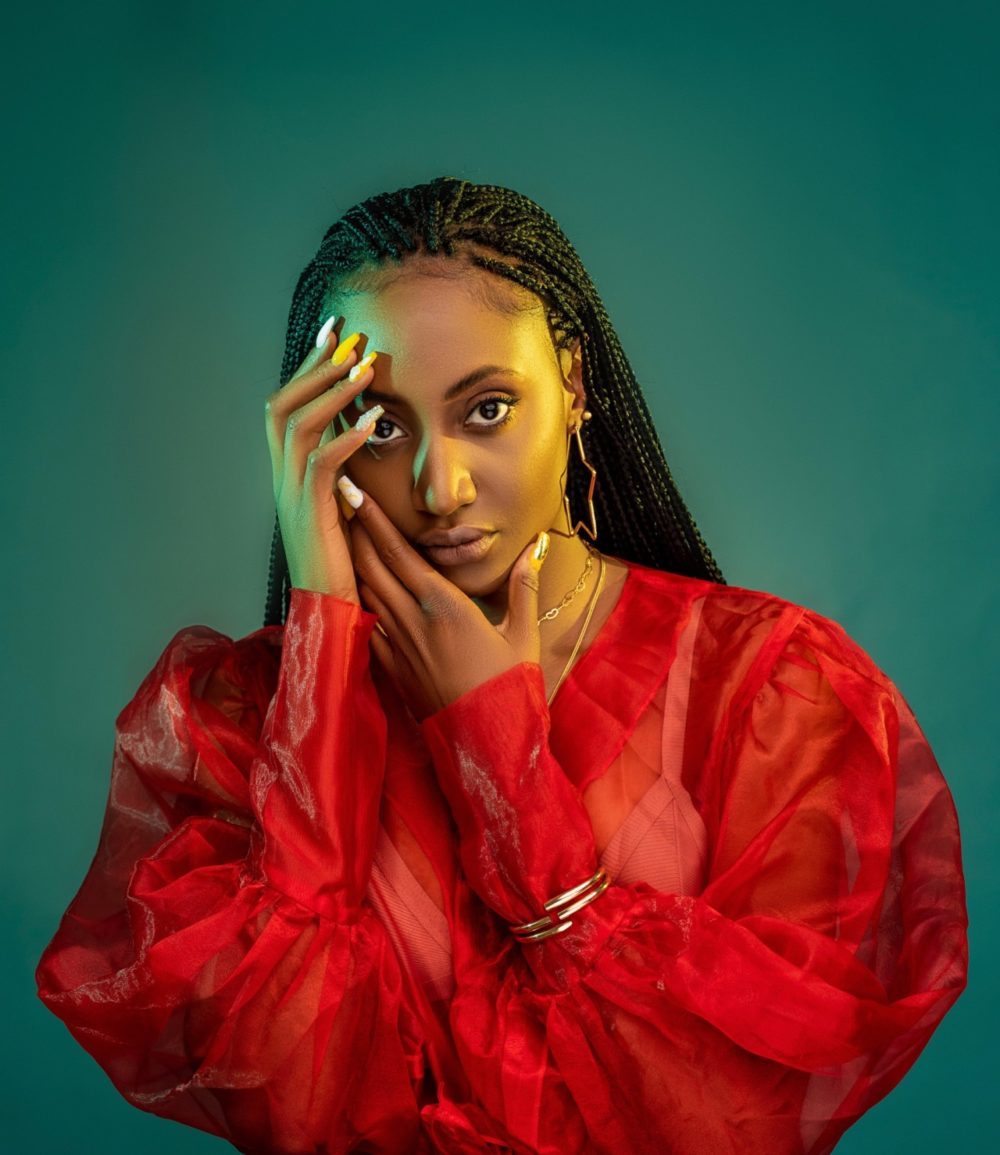
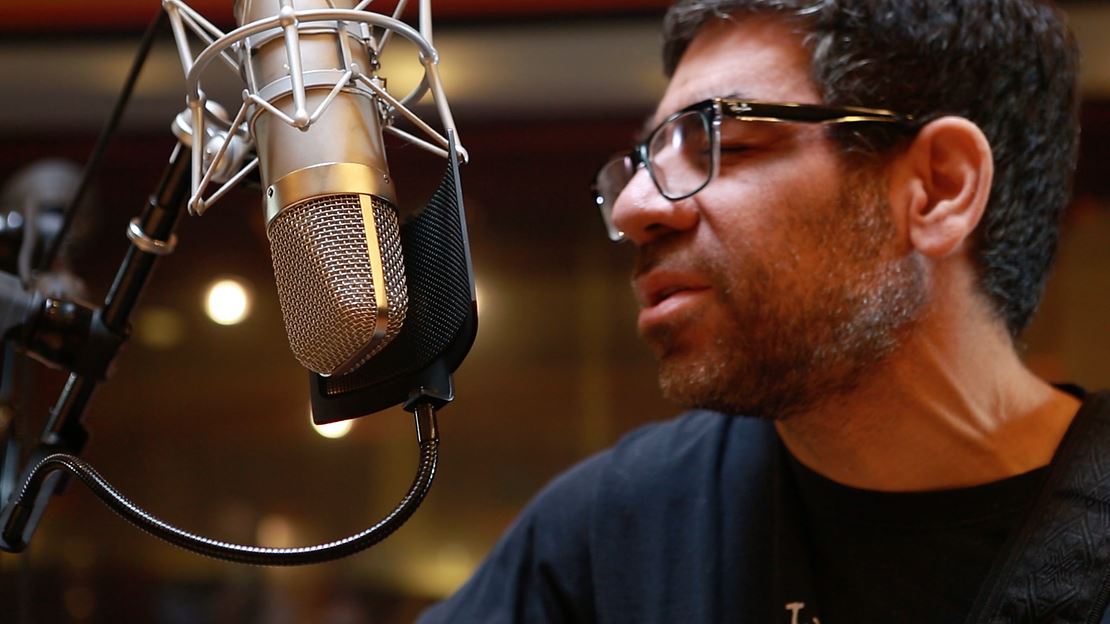
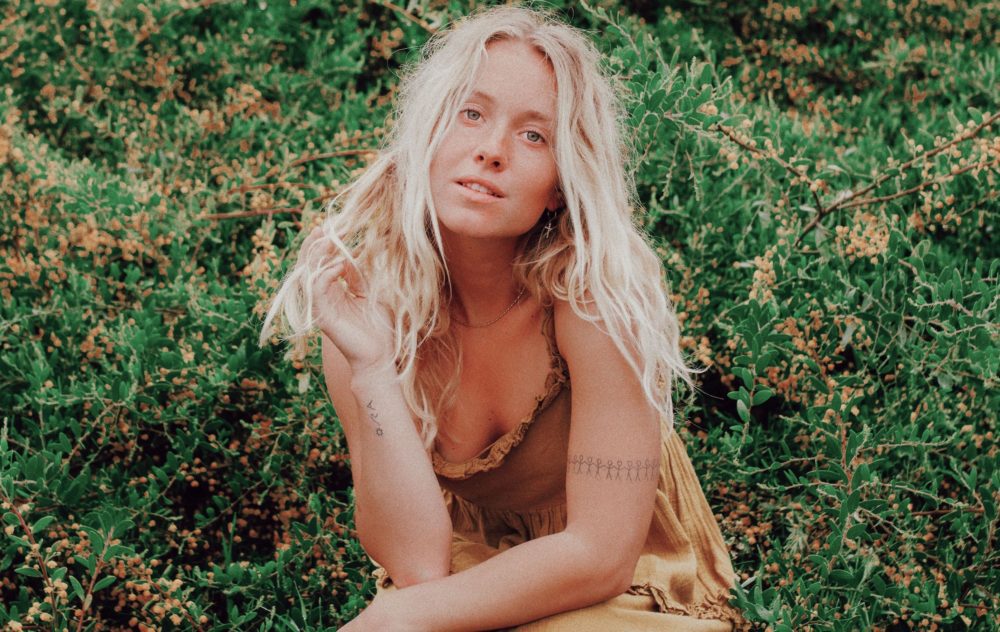
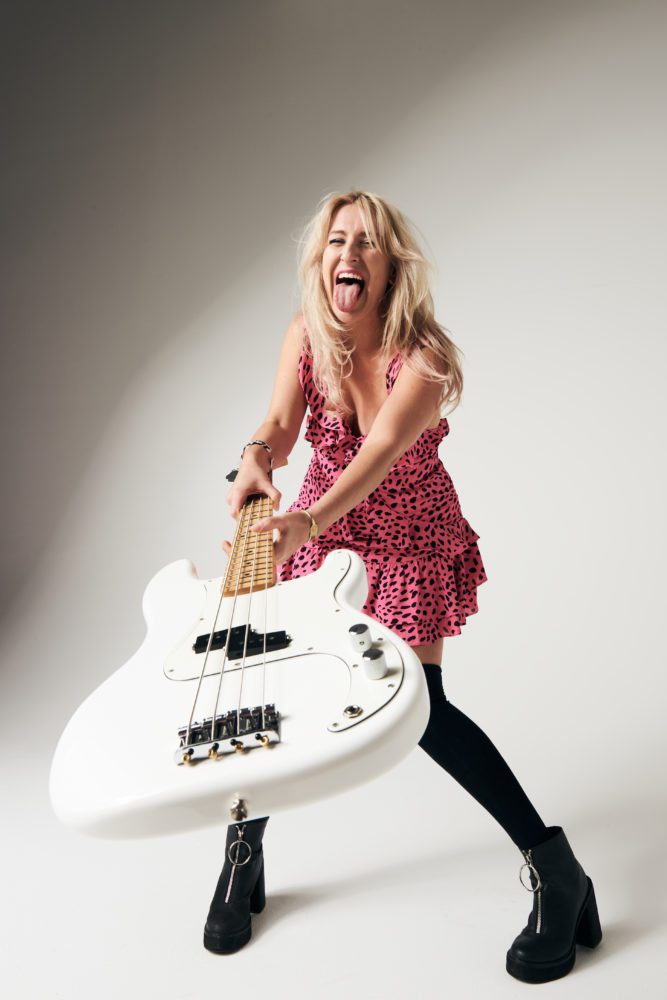
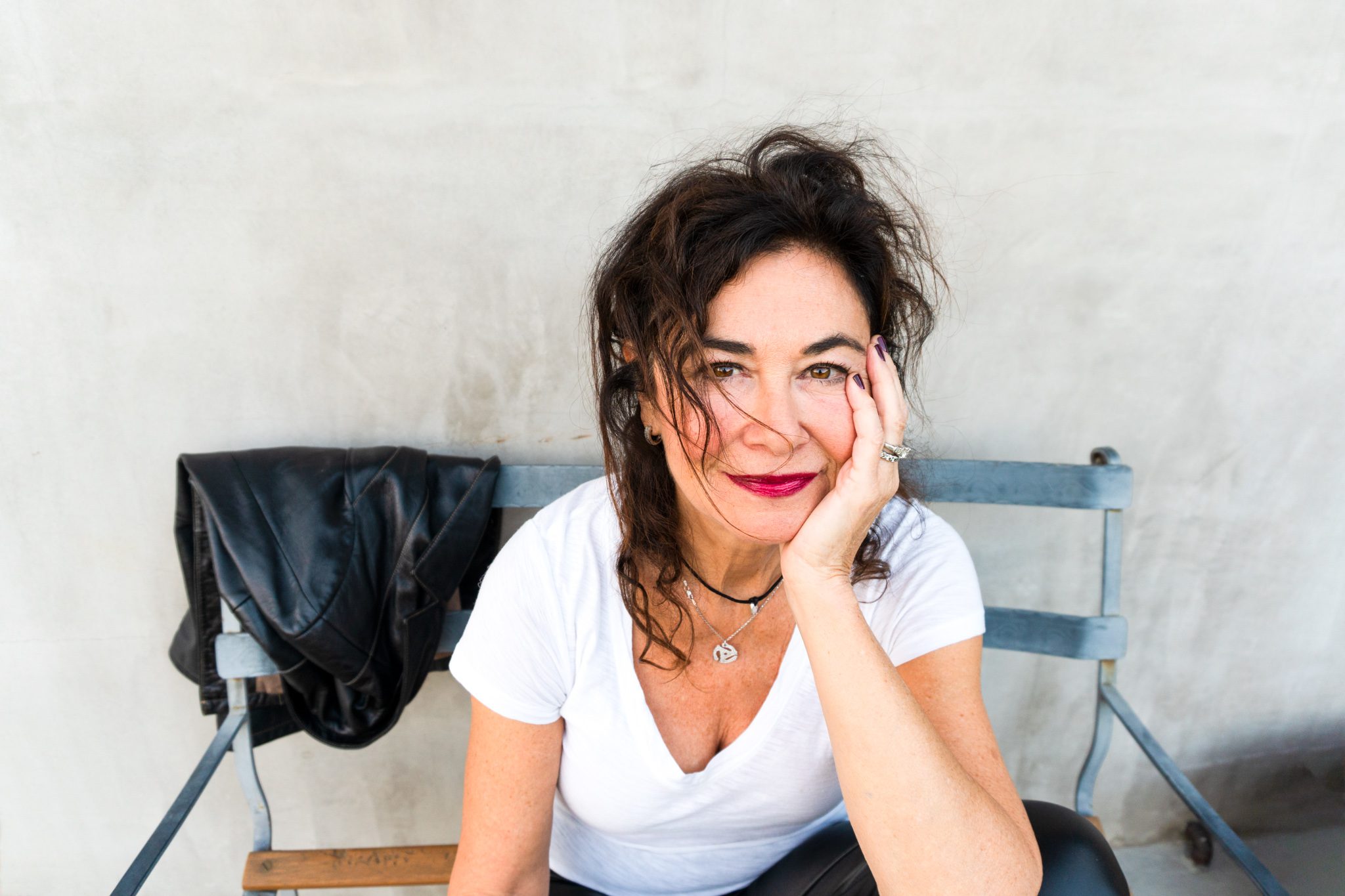
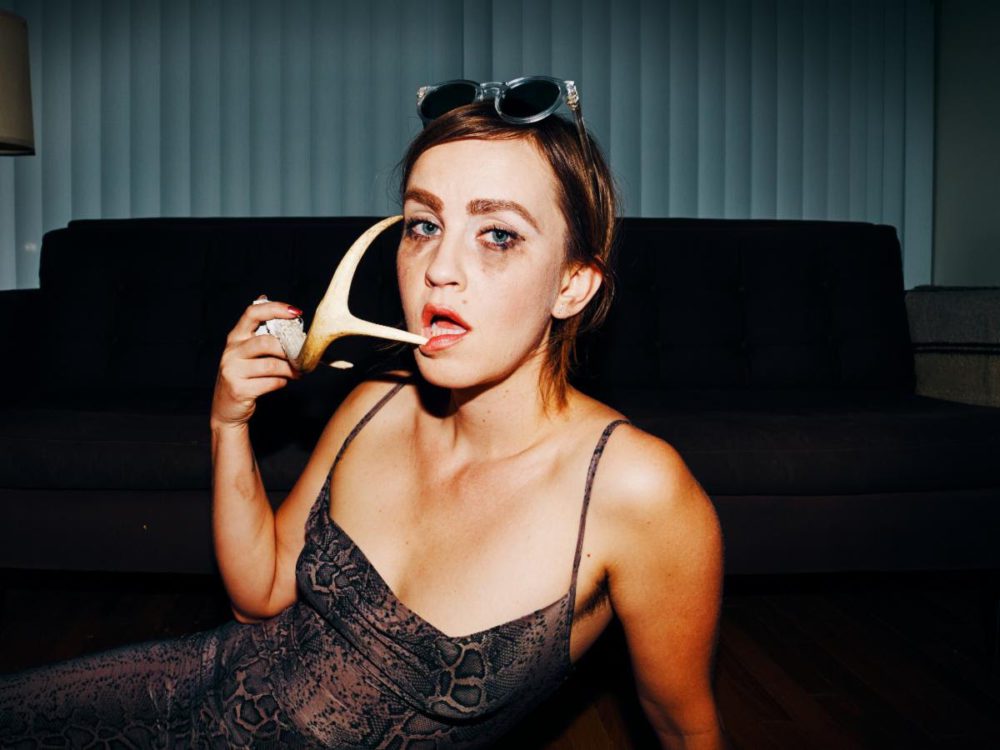
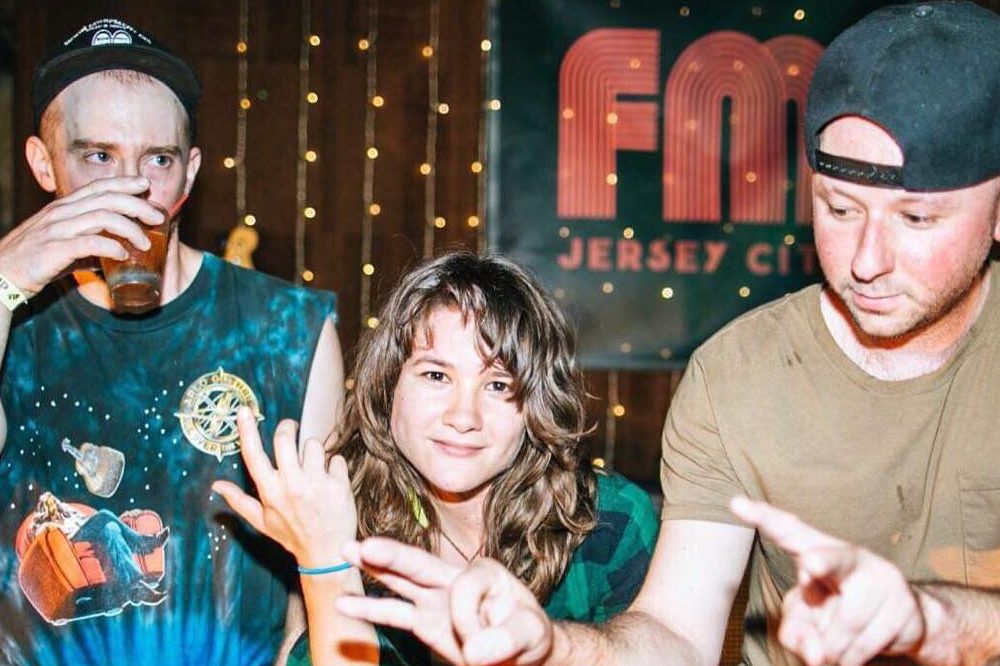
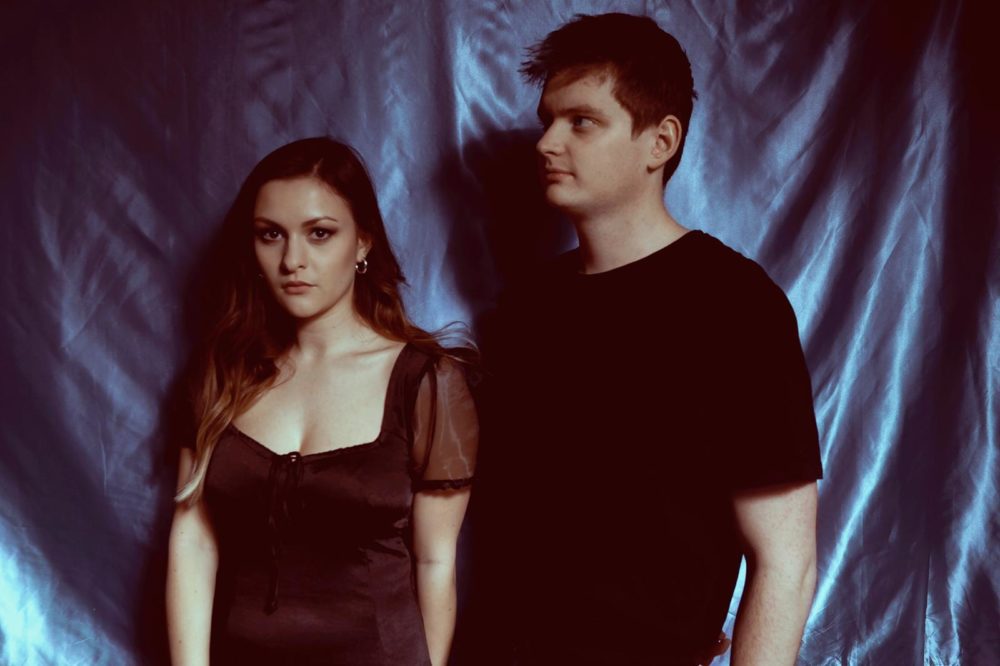
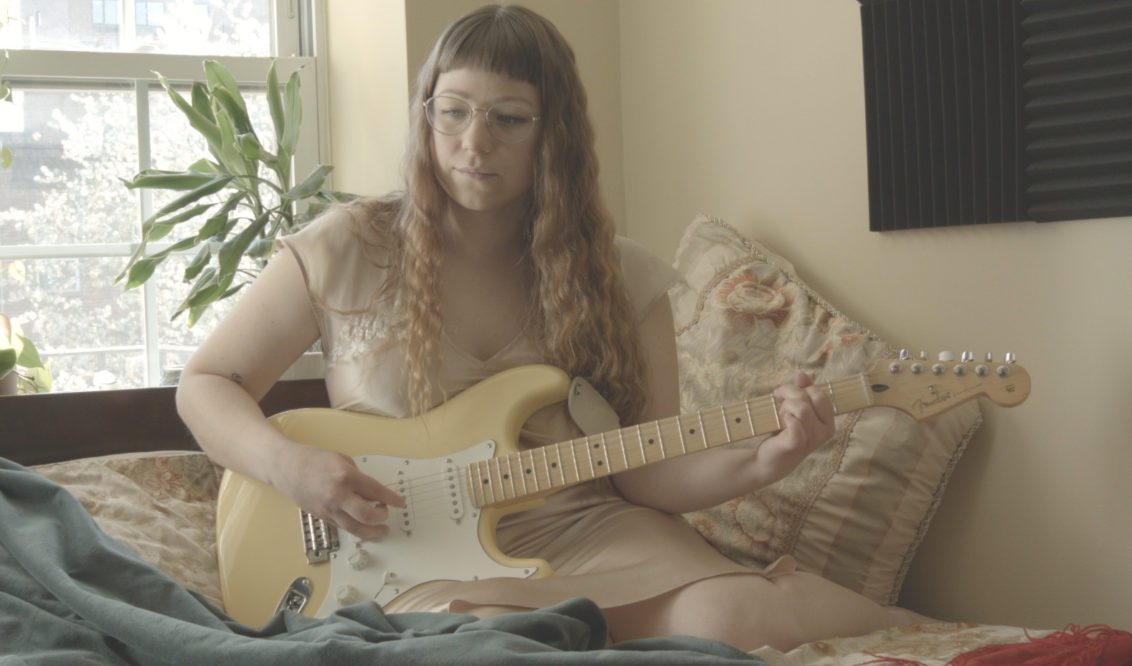
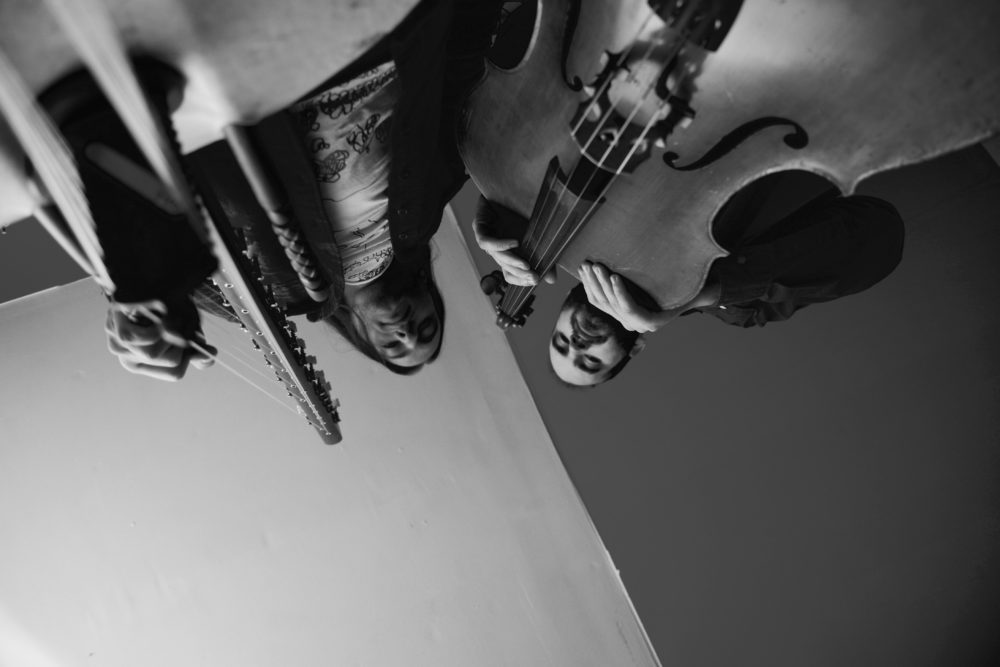
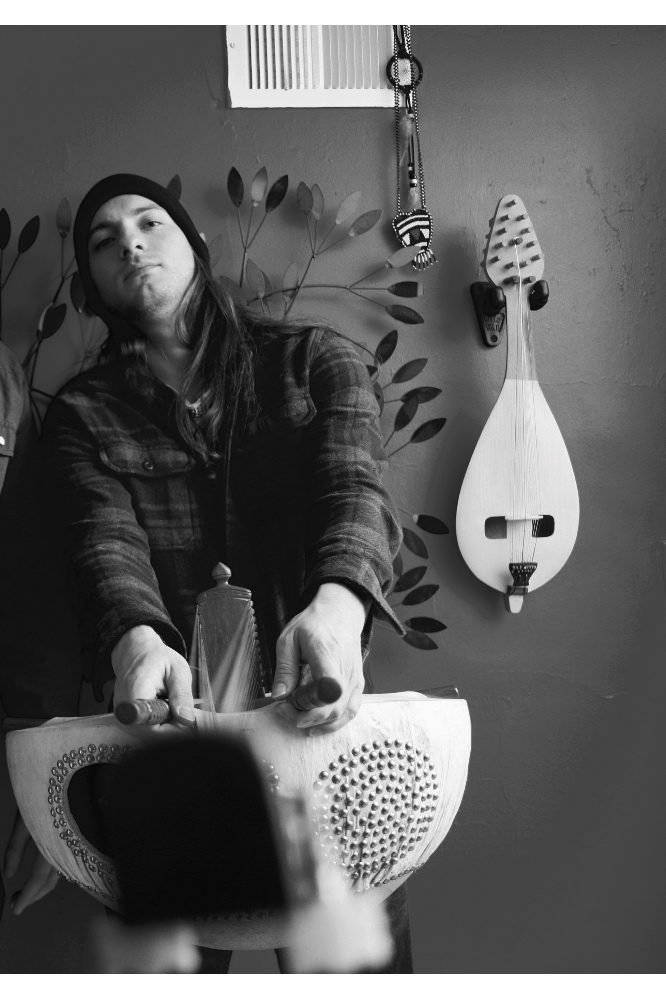
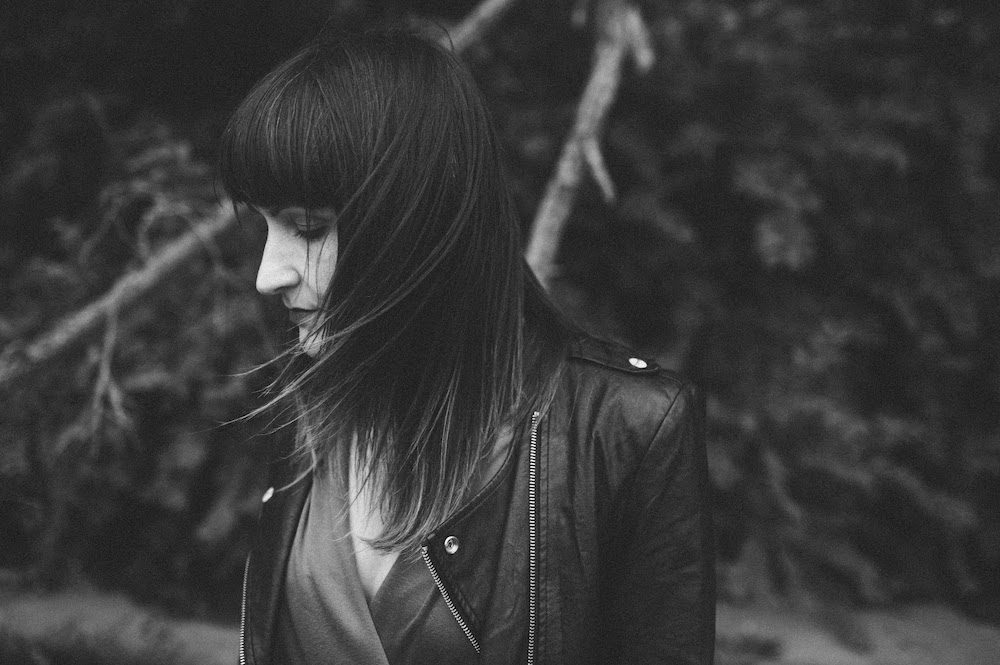
Gateway Drugs describe themselves as “drug pop,” which guitarist Liv Niles defines as “a sweet pop formula tethered to a deranged and disordered structure.” The band just put out their first album in five years, PSA, and while their earlier work highlighted dark ’80s influences like The Jesus and Mary Chain, their latest gives off beachy classic rock vibes with a modern garage-rock-meets-shoegaze twist.
Niles started the LA-based band in 2012 with her brothers, Gabe and Noa, along with their good friend, bassist/guitarist James Sanderson. “We’d played in other bands both together and apart but always knew we wanted to have a project of our own,” she says. “Our thought process is very similar — when we play music, we’re on the same page, which is difficult for a lot of bands. Creative trust is hard to find.”
They’ve been a musical family from the beginning; their father is Prescott Niles, bassist for The Knack. “There were always instruments laying around and records playing,” Niles remembers. “Our mom is a writer, so to have a musical and lyrical influence, we’re very lucky.”
The new album, produced by The Raveonettes’ Sune Rose Wagner, was recorded live in twelve days to create a “raw, sincere, chaotic, and primal” feel, says Niles. The title, PSA, is a tongue-in-cheek nod to the band’s name, which was inspired by a Breaking Bad episode where one of the characters refers to weed as a gateway drug. “They mentioned ‘gateway drug,’ and we looked at each other and said, Gateway Drug?! No, Gateway Drugs!” Niles remembers.
The title also serves to designate the album as a public service announcement about various issues the world is facing. “The Revolution Will Not Be Televised,” for instance, is about “homogenized rebellion” and the commodification of progressive ideas, explains Niles, who broke from her usual role to sing on another track, “I’m Always Around.” There’s no one designated vocalist in the band; the singer on any given song is usually “the one who hunts down and catches the initial idea,” she says.
So far, the band has created videos for three songs off the album, all of them based around simple concepts. The “Wait (Medication)” video displays various shots of the band performing the song, which is a reflection on excess, madness, addiction, and how “extreme highs give way to extreme lows,” according to Niles. “I’m Always Around” simply features the lyrics written with marker on a piece of paper, while “Slumber” — a song about end of a relationship with an emotionally unavailable partner — shows the band dancing as they wander the streets and is intended as a glimpse into the members’ daily lives.
“Videos can be pretentious, with the interest of the song not at heart,” says Niles. “We wanted to make a sincere attempt of visually accompanying the music, hopefully leaving a bit more for the listeners’ imagination.”
In the wake of the album release, the band is currently focused on writing new music, putting out more videos, and live-streaming shows and band hangouts. Even without the ability to share their new music for live audiences, the authenticity of the album’s production and videos provides the next best thing.
Follow Gateway Drugs on Facebook for ongoing updates.
There are few details that I remember vividly about my first Kraftwerk show. It was June 8, 1998 at the Hollywood Palladium, midway through a year where I saw a hell of a lot of live music, and I had gone with two friends. All three of us were DJs and each one of us played styles of music that, on the surface, seemed quite different. At some point in time during the course of the night, that became a topic of conversation: We were three people with seemingly different tastes who all had Kraftwerk in common. Twenty plus years later, I can’t reconstruct that conversation verbatim, but the takeaway stuck with me. It didn’t matter if you leaned towards techno or hip-hop or synthpop or whatever variation of those genres existed in the late ’90s – or would come to exist in the decades to follow – we were all, essentially, the children of Kraftwerk.
I thought about that last week, when word came that Florian Schneider, co-founder of the famed German group and a member until 2008, died at the age of 73, and musicians and DJs from across the world offered their tributes. Amongst them: L.A. electro pioneer Egyptian Lover, British electronic duo Orbital, Chicago house DJ Heather, DJ/producer Kittin and the bands Xiu Xiu and Hot Chip. Kevin Saunderson, one of architects of Detroit techno, dropped a Kraftwerk tribute in his set for Saturday’s Hacienda House Party live stream. Tim Burgess of The Charlatans dedicated one of his Twitter Listening Parties on May 7 to Computer World.
Little of the music that would score our lives between the late 1970s and today would exist if it weren’t for Kraftwerk. Quite literally, the German quartet provided the foundation for hip-hop and dance music. Afrika Bambaataa and Soulsonic Fource borrowed from “Trans-Europe Express” and “Numbers” for “Planet Rock.” There are traces of “Uranium,” from the band’s 1975 album Radio-Activity, in New Order’s perennial dance floor favorite “Blue Monday.” The list of artists who have interpolated or sampled Kraftwerk is immense and runs the gamut from Dr. Octagon to Stereolab to Gesaffelstein.
Recently, I caught up my friend Elvin Estela (also known as the DJ and producer Nobody), who was part of our trio of music nerds who saw that Kraftwerk show back in ’98. We started talking about the genres of music that permeated Los Angeles when were kids in the ’80s, like freestyle and electro, that essentially spun off from the ideas of Kraftwerk. Elvin mentioned that, perhaps, hip-hop wouldn’t have sounded the same without Kraftwerk. “It would probably be more derivative of funk,” he says.
“In the early ’70s, they were one of the few groups that were looking futuristically,” he says of Kraftwerk.
And they kept looking toward the future while the bands of the future kept looking toward them.
Kraftwerk had taken electronic music outside the rarefied worlds of art and academia and made work that could connect with mass audiences on its own. Unlike music from movies like Forbidden Planet and A Clockwork Orange, or the theme song from television series Doctor Who, it was electronic music that wasn’t tied to another piece of pop culture.They played with rhythm on lengthy, groovy songs like “Trans-Europe Express” and “Showroom Dummies” in a way that anticipated the extended club mixes of the coming years. With The Man-Machine, they established templates for synthpop at a time when their instrument of choice wasbecoming more accessible to young musicians.
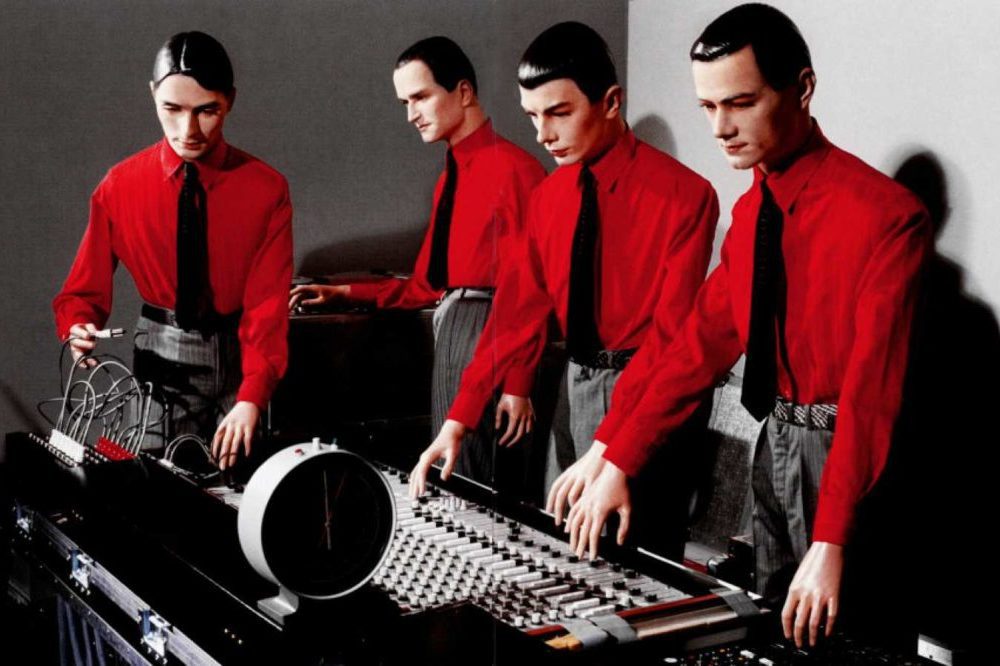
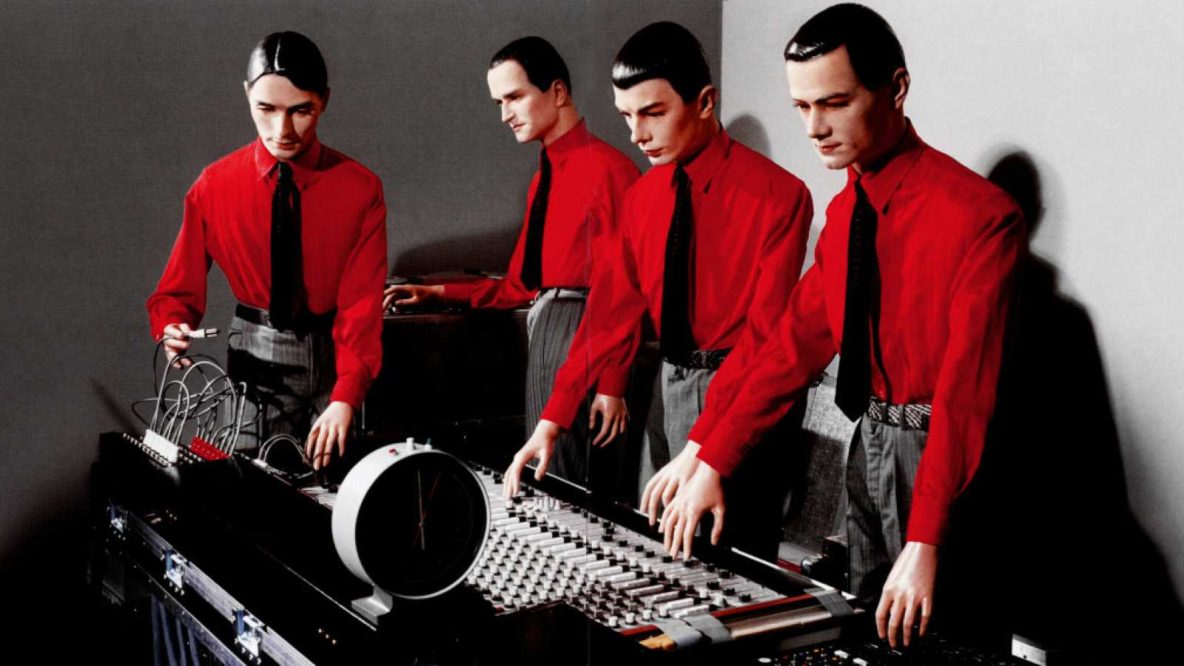
They also developed the aesthetics that would influence generations of artists, from the clean-cut, suit-and-tie look of Trans-Europe Express to the sci-fi constructivism of The Man-Machine. They set the tone for early ’80s synthpop, particularly with the new romantics, but Kraftwerkian style would re-emerge in the indie scene of the early-’00s with visual echoes of their work seen in pieces like the cover of Ladytron’s album 604 and Franz Ferdinand’s video for “This Fire.”
My first Kraftwerk show was, in a way, a throwback. This was a band that had started making albums before my friends and I were born and, at that time of this specific concert, their most recent full-length album was over a decade old. They had already influenced countless artists. You could say we were, at least, part of a second-generation of fans. But, in ’98 we were still living in the nascent days of the “computer world” and Kraftwerk were still the future.
What I also remember about that night at the Palladium were my eyes darting between the band and video projections, not sure exactly where I should focus my attention, and feeling less like I was watching a concert and more like I was stepping into this universe that Kraftwerk had created. More than a decade before “immersive experiences” became a buzz term, Kraftwerk were developing something akin to that.
Many years later, I would see multi-media shows from bands big and small and catch DJ/producers on tour with projection mapped stages. I wonder if maybe all that is connected to Kraftwerk too.
Certainly, they weren’t the only band to present a unified sound and image, nor the only ones to work with emerging technology, but Kraftwerk went beyond that. They took seemingly disparate subjects – everything from trains to computers – and turned all that into a cohesive audio-visual project that would go on to influence people from all walks of life, all corners of the globe, in different ways. Those people would take that influence and make music that would spawn whole genres, bringing in a whole new group of kids who would then find their way back to Kraftwerk. That’s something that may never be repeated.
Welcome to our weekly show recommendation column RSVP HERE. Due to live show cancellations we will be covering virtual live music events and festivals.
Photo Credit: Devon Bristol Shaw
When I was a teenager THICK would have been my favorite band just as much as they’re one of my favorite band’s today. This makes double sense after finding that their debut record 5 Years Behind, released on Epitaph Records in early March, is an ode to accepting yourself and whatever phase of life you’re in no matter what your age is. The songs are relatable power pop anthems ranging from politically charged topics to all your mother’s concerns about your current lifestyle.
THICK (comprised of Nikki Sisti, Shari Page and Kate Black) has been a staple in Brooklyn’s music scene since their inception in 2014, landing on Oh My Rockness’ Hardest Working Bands list multiple years in a row. Their live show is energetic and has an inviting vibe that makes you happy just to be there. After releasing three music videos leading up to the release, the pandemic unfortunately curtailed their spring touring plans in support of their highly anticipated debut. Those dates will be rescheduled, but until you can see them again in person, you can catch them this Sunday on May 10th at 8pm via The Noise’s Instagram. We chatted with the ladies of THICK about internet trolls, their quarantine playlists and what venues and other organizations to support during this time.
AF: Your debut record came out on Epitaph Records on March 6th right before the NYC lockdown began. How did the emergency timeline affect the record’s promotion and are you excited for your tour with The Chats and Mean Jeans to be rescheduled?
It was pretty crushing. We planned the release to come out in early March so we could hit the road immediately with dates at SXSW, and we were SO excited to tour with The Chats and Mean Jeans and are really hoping it will be rescheduled.
We dropped the album, then it felt like within the span of a week, everything changed. Everyone is navigating trying to stay healthy and make a living. Before we knew it, SXSW was cancelled, The Chats tour was cancelled… tours for the summer and fall were getting put on hold before they could even be confirmed.
We’re a live band and not being able to tour has definitely had an impact on our ability to promote the album. We’ve had to find creative ways to promote the album, which has been really hard for us, because our process is truly collaborative and we’ve been social distancing from each other. We’ve all had to quickly get better at home recording, figure out the best way to stream live songs, become video editors… everything we’d normally do together has become a lot more complicated and requires a lot more steps.
AF: You filmed three music videos for the 5 Years Behind – do you have any fun behind-the-scenes stories?
We had a blast filming all our videos! Each experience was different. “Bumming Me Out” was a lot of fun – we did the set design ourselves and gathered a bunch of fun props to give it a ’90s bedroom theme. We hung up a bunch of Destiny’s Child and Blink-182 posters. It was so fun going through all our old belongings. Our ’90s/2000s CD and DVD collections are hidden in the video somewhere – it’s weird to think that the stuff we owned growing up is now considered vintage! We didn’t start filming ’til the sun set, so we were up till 4AM getting all the scenes in. Our shirts still smell like whipped cream and it took a few days for the shaving cream smell to wash out of Shari’s hair. It was also amazing to have Kate’s sister, Helen, in the music video – she gave an epic performance.
AF: There are some comments on your “Mansplain” music video that seem to illustrate the point of the video. Did you expect that to happen and how do you feel about the trolls?
We definitely expected some level of backlash. What we didn’t anticipate was that it would be re-posted on an Alt-Right channel. It definitely illustrates the point of the video. There are a lot of people who want to say that mansplaining never happens or that we’re crybabies or whatever, but the criticism isn’t coming from people whose opinions we will ever be able to change. For all the ridiculous comments we got, we had an outpouring of support in our inbox from people who could relate to the experiences and were happy we made that video.
AF: Have you been channeling your energy into any non-musical activities during quarantine?
KB: I’ve been cooking A TON and started a bunch of sewing and arts and crafts projects.
NS: I have been going for long bike rides (staying safe and distancing) as a way to keep sane. I hate being stuck in the house!
SP: I’ve developed a serious Mario Kart addiction!! I’ve been trying to work out every day and watch dance videos on YouTube -which is a new venture for me haha. I also hang out with my cat Billie all day.
AF: What’s been on your quarantine playlists?
KB: My listening habits have been reflecting my mood swings from day to day. In general, I’ve been listening to things that are a little less aggro than my norm: The Beths’ Future Me Hates Me, Fontaines D.C. and anything by Marked Men are all regulars in my apartment.
NS: I have been listening to a lot of my playlists on Spotify. This quarantine has increased my anxiety and I become a very indecisive person when I am anxious, so it’s easy to have my playlist going on in the background without having to specifically choose. I should probably work on that…
SP: I’ve been ordering a lot of records and tapes with my partner. We have been listening to Bowie, Pink Floyd, Sly And The Family Stone, Bill Withers records, etc. I also got Fiona Apple and Radiohead tapes. Right now on Spotfiy, I’m listening to Os Mutantes and Harry Styles’ “Adore You” on repeat.
AF: What venues/artists/organizations would you recommend supporting during the lockdown?
NS: Our Wicked Lady has been working with artists a lot during the lockdown, they are running deliveries and you can buy gift cards or donate on their site! Our de facto clubhouse, The Anchored Inn, has a Gofundme going right now. When it comes to musicians you like, go find their bandcamp page! Everyone could use the help right now. There are also a lot of organizations that are helping unemployed artists and others focused on getting health workers get protective gear and loan forgiveness. Everyone should pick whatever is closest to their heart because every little bit helps while we all struggle through this time.
AF: What’s your livestream set-up like and what can we expect from your performance on Sunday?
NS: Since we’re still in lockdown, we’re streaming from our individual apartments and that creates some challenges. Everything we’ve been doing has been pretty stripped down, since we don’t have the gear to properly mic drums, etc. Since Instagram Live also only lets two people on at a time, we have to rotate to answer questions!
On her catchy new single, Nigerian hip-hop/afro-pop artist Bella Alubo sings about being the “Loneliest Girl in the World” — a position many people under quarantine can relate to right now. But for some people in the midst of the pandemic, loneliness is the least of their worries. That’s why Alubo donated her single to Red Hot, which uses music to raise money for various charities, mainly to raise awareness in the fight against AIDS/HIV and related health and social issues.
Alubo has released two albums since 2017 – her debut EP re-Bella and last year’s Summer’s Over, which feature a wide array of Nigerian guest talent. “Loneliest Girl in the World,” along with four other songs all written and performed by Nigerian women, is part of an EP called Kele•le. Revenue from the project will be used to provide relief for people affected by COVID-19. We talked to Alubo about the importance of the EP, not just for helping victims of the global pandemic but also for shedding light on Nigerian women and their music.
AF: What inspired the song “Loneliest Girl in the World”?
BA: I usually feel lonely, and I’m sure it’s something a lot of people around the world feel, not just creatives. Especially when you have to work on something and you are focused on your dream and things are not looking the best. At that point [I wrote the song], I just started my Masters [in Public Health]. Back then, I was in London. I was living upstairs of my apartment complex, which was quite tiny, and the tiny space forces you to think a lot. I think my bank account then was literally red. I don’t know, I just felt like it wasn’t a good day for me at all.
AF: What does it mean to you to be on the Kele•le EP?
BA: It’s a difficult time for the whole world, and there are some people out there who can’t afford a lot of things. People shouldn’t be in such vulnerable positions in the first place. Really, if we can help in any way, it will go a long way. Right now, the help I have to offer is my music, my talent, my time through sharing what I create. And with COVID-19 coming without anybody expecting it, obviously this help is much needed. Especially in vulnerable societies.
Sometime creatives, like myself, may not be able to contribute financially to a level that would be impactful, but when organizations like Red Hot, who are using something that we can give, like our creativity and music, to help the world around us, I feel like that such is a such a creative avenue for artists to give back. It’s helping me give back in my own way, right now. Before I can become super rich and can do more, hopefully by God’s grace.
AF: Why do you think it’s important to spotlight Nigerian female artists?
BA: Because it’s pretty much affirmative action. The industry, like all other industries, is male-dominated. It would be nice to see women more. Women need visibility. Women need for people to take note of their art. There are a lot of talented women, and the only reason they aren’t making money is because they don’t have visibility. So, projects like the Kele•le EP are not only giving back to society, but it’s contributing to creating visibility for talented women.
AF: How would you like to change people’s perception of Nigerian culture?
BA: Not just changing perception of non-Nigerians but also perceptions of Nigerians. Obviously outside Nigeria, even though we’re known for being smart, creative, and resilient, sometimes we’re also known for not-so-great things. I’d like for people to see more great sides of Nigerians, better representation of our country, more achievements, young people being more innovative and proactive within their fields. Within our country, I’d like us to get rid of negative aspects of our culture. Obviously, patriarchy has to go, as it shouldn’t have existed in the first place. Sexism, tribalism, classism, all of that has to go because it’s unethical. I’m hoping our culture gets more ethical with time.
AF: What battles are Nigerian women in particular fighting right now?
BA: If you follow Nigerian Twitter, there has been a lot of outing of alleged sexual predators, alleged rapists, alleged abusers, alleged harassers; I’m actually so glad we are having this conversation. About a few years ago, we wouldn’t be having this conversation. People would probably feel like they need to be ashamed that things happened to them, if people were raped or sexually harassed.
We need to facilitate a culture where we encourage victims to speak up, as victims don’t always feel they can speak up as we have these conversations. A lot of women have been abused. A lot of women have to bottle it down. It ends up creating issues in their lives, issues with their trust, mental health. Nobody should have to feel like someone can treat them badly and not pay the consequences of their actions.
Younger men are getting educated. Men who have done wrong things in the past are getting educated. Obviously, ignorance is not an excuse, and men or even women who are guilty of such crimes are paying for their crimes; our system really needs to be on that. Someone was telling me a story about a judge asking a lady, “What were you doing at his house at night?” And this is a judge who needs to uphold the law. It’s a lot. It’s really a lot. It’s quite depressing if you think about it. We need to fight, we need to not back down, we need to stand our ground, we need to use our voices because we shouldn’t allow anyone to silence us.
What do you hear in your head when the world goes silent?
This was the question Elijah Dhavvan of Seattle band Tobias the Owl set out to answer with his third full-length album Visalia. The question was originally posed in reference to a period in Dhavvan’s past when he felt significantly isolated, but since the release of the album in early April, it has found broader resonance in the time of COVID. In fact, Visalia is Tobias the Owl’s first album to break the College Radio Chart Top 100, even in spite of the fact the band cancelled their March tour due to the pandemic.
“I think people [are getting] the message of isolation. People are sitting at home or they’re travelling through a world that is 20% of what it once was. So, when the world gets this quiet, what do you hear when you’re listening to yourself? What becomes of it? This is when the voices inside your own head are really the loudest,” said Dhavvan.
Dhavvan would know.
At age 15, Dhavvan’s world went silent when left his strict, religious home. His mind was full of the trauma he’d experienced as a kid and the only way he could think to process it all was by hitchhiking back and forth between Houston and L.A. for four straight years. As Dhavvan put it, he was a financial “basket case,” doing day labor where he could and just barely scraping by. Then, at 19, he reached Visalia, CA—an agricultural town in the San Joaquin Valley and the new album’s namesake—and decided to make a change.
“I just looked around and I was like, ‘Okay, this journey is over, I need to put this aside and try and be something else. I don’t want to be homeless forever,'” said Dhavvan.
Dhavvan is now a doctor and the principal member of Tobias the Owl. From the outside, it may appear that he’s healed and moved on from the wounds of his tumultuous adolescence. But, when a friend recently asked Dhavvan to contribute some songs to a compilation he was crafting for homeless youth, Dhavvan realized those demons were still there beneath the surface and maybe, always would be.
“I wrote like 30 songs [for the compilation] and they were all terrible,” said Dhavvan. “I realized that I had taken this big black magic marker and redacted several lines of my own personal history. It was stuff I hadn’t faced, and I was tapping into it for the compilation but in a way that wasn’t honest or truthful to what I’d actually gone through.”
In the end, Dhavvan realized that Visalia, CA, his point of no return—needed returning to. He then made the decision to make this album, and to make it completely by himself.
“When people said they wanted to do this record with me, I said, I think I need to do this alone. I need to face down some demons,” said Dhavvan.
Dhavvan recorded the entire album—down to every instrumental part—in an 8 foot by 4 foot closet in his downtown Seattle loft. This is a significant departure from previous, community-oriented releases, like 2018’s A Safe Harbor for Wayward Echoes, which featured appearances by Ben Harper, Laura Veirs and Inara George, violin/violist Andrew Joslyn (Macklemore, David Bazan), and percussionist Scott Seiver (Aimee Mann, Tenacious D).
In this way, Visalia is an album about isolation and pain, but also about the courage and gentleness it takes to meet yourself where you are. On songs like “Sheets to the Wind,” you can really feel the pain and self-acceptance. The harmonic structure moves between minor and major qualities, while Dhavvan’s voice rises above it all, both triumphant and trepidatious. There’s a similar stinging below the surface on “All My Love,” in which Dhavvan looks to the horizon for answers and peace, comes up empty-handed, then instead decides to look inside himself.
“I haven’t healed, and that’s okay. Just saying that is important,” said Dhavvan. “You’re walking through a desert pursuing an oasis, and at some point you [realize] this is just an oasis I’m moving towards—it’s not the lush greenery and water. But, you keep walking anyways.”
Overall, Visalia is an encapsulation of what healing from pain can look like—imperfect, incomplete, incomprehensible. But instead of self-judgement, there’s a real gentleness about the Visalia, reminding listeners that it’s okay to be wherever they are in their process. And, at a time like this, there’s really no better reminder.
Follow Tobias the Owl on Facebook for ongoing updates.
Hope Waidley sings about being 20 years old, but her voice and music have a classic and timeless feel. “It Rains in Michigan,” her latest single and ode to her home state, takes listeners of all ages back to the experience of first love with lyrics that are simple yet sophisticated, unique yet familiar. “It’s no longer a thought laid on the floor,” she sings. “I’m in love, you pick it up and say, I’ve never felt like this before.”
The song is from her debut EP, Wonder, which comes out May 8 and also includes the spiritual, Janis Joplin-esque single “Born Again.” It follows 2017 EP Hope, but has a more organic, approachable sound than its poppier predecessor. That could be because Waidley spent the past year street performing and surfing as she traveled the country in an old Ford station wagon. The minimalistic videos she’s released so far certainly reflect her free-spiritedness.
We talked to her about what inspires her music and the themes she explores on her EP.
AF: I know you’re self-taught. How did you first teach yourself to sing, play guitar, and write songs?
HW: I started writing songs when I was six years old – it was always a way for me to process, a way for me to express my emotions. I was swinging on our swing-set in the back yard when I wrote my first song, and it was something that just happened. I didn’t try to write anything or say, “OK, I’m going to make a song today.” It was something my brain just started to do, I guess. To this day, it’s still like that. I get an urge to go write and I have to. And then, somehow, a song is written, and then I go back to whatever I was doing. To me, it’s always felt like a gift from God because these songs are such a release for me and help me when I write them.
I taught myself guitar when I was 10 years old and, for years, just played the seven chords I learned. I play a little more variety now, but I don’t know any theory or what the strings are called. I just play the strings that sound good together — I’d like to get better!
When I was 17, I realized if God could use these songs to help me so much, they can be used to help other people. That’s always been my dream: to help people in whatever ways they need help. I started to record and release music at 18.
AF: What inspired your single “It Rains in Michigan”?
HW: I fell in real love for the first time, and that’s what inspired the song. “It Rains In Michigan” is about the beginning of all of that and how I was processing it. I felt unprepared and had no idea what to think, but it was beautiful. I didn’t know much, but I knew my feelings were true. I was also someone that wanted to avoid falling in love for as long as I could because I think I assumed it would complicate my life, but in this situation, it was completely unavoidable. I’m so grateful we gave it a chance. It’s absolutely amazing. I love love.
AF: What was the idea behind the video?
HW: I wanted to show how I became more comfortable with falling in love as the song went on. In the beginning, I wasn’t dancing in the rain, I didn’t take my shoes off, I kept my drenched coat on. Then, as the song went on, I took my shoes off and my coat, and I am dancing in the rain, comfortable, free, accepting, and happy. When something is so new to us, it takes us a little bit of time usually to become comfortable with what’s going on.
AF: Your music videos are all really artfully done — how do you come up with them? Do you have any in the works?
HW: It’s different all the time. An idea will usually pop up in my head, and we kind of just roll with it. Lately, my sister and I or a friend and I have been filming the videos. A lot of it is using the resources we have. We filmed “Wonder” with a flip phone. I love the imperfections, and I love when they don’t look perfect. If they tell the story and are genuine and who I am, we go with it! The next one I’m going to start working on is for a song called “The Boy That Ran Away.”
AF: What else do you sing about on your new EP?
HW: There’s four other songs on the EP besides “It Rains In Michigan.” There’s a song called “Fade” that’s about the position you are in when someone close to you is going down a bad path, and you’re neither what destroys them nor what will save them. “The Boy That Ran Away” is about three different people I met while traveling around the country to street-perform while living in a station wagon with my sister. The song “Wonder” is about imagining how the story would go if I told this person how I felt. Then, “Born Again” is about how sometimes, when we gain new perspective, it’s almost like being born again.
AF: I appreciated the spiritual depth of the song “Born Again.” How does spirituality influence your music?
HW: It influences all of it. The Lord is the reason for why I can even write. It’s a gift from God used to help me, to help others, and I can’t take any credit for it. It’s the Lord’s peace that I feel from these songs, his freedom that I feel when I write, and his power I feel when I perform. It’s such a blessing.
AF: Musically, how would you say this EP is different from your past work?
HW: The production of this EP really states my sound and the direction my music is going. In past work, I always was content just getting my words out there but didn’t necessarily have a “sound” specific to my style and my music. This EP was recorded with live musicians, live instruments, and it’s exactly what I’d hope for my music to sound like instrumentally. Tim Bullock and Rex Rideout made it happen!
AF: Which artists have inspired you?
HW: I love anyone that had anything to say that was interesting or in a new perspective… or had a song that was beautifully written. I’ve always loved Johnny Cash, Jim Croce, Mazzy Star, Kris Kristofferson, The Lumineers, The Band, Chris Cornell, and Stevie Ray Vaughan. So many incredible musicians out there.
Follow Hope Waidley on Facebook for ongoing updates.
Life is about change, and it’s often as abrupt and erratic as the seasons themselves. Whether it’s breaking the county lines for a new life, or a breakup you could not have anticipated would hurt so much, transitions can be merciless. Alt-pop singer-songwriter Ciarra Fragale stamps out the last of her heart’s coal-stoked flame with her song “Too Good (For You, Baby),” finally moving on from a heartbreak.
Within such desperation, she also navigates murky waters to self-acceptance. Fragale confronted the reality of a relationship that was falling apart to begin her journey – and makes it look much easier than it was. “It took me a long time to find that acceptance after the unfortunate ending of a relationship,” she says. “It takes a lot to pick yourself, pat yourself on the back, and say, ‘I can finally move on from this, I deserve better.’”
She was feeling quite depleted, creatively speaking, at the time, too. After weeks of songwriting and nothing sticking, she was tinkering around with what would become the song’s groovy open chords when something clicked. “It all just came out. That same night, I wrote another song, which will also be on the upcoming record, that was more somber,” she recalls. “Both ends of the spectrum were there. I felt like I did all of the mourning I never had the chance to do in that writing session. Writing ‘Too Good’ definitely gave me closure.”
Premiering today, the song is paired with an appropriately quirky, off-beat lyric video to punctuate her new-found self-worth. “This song is a celebration. It’s hard not to feel that when you hear it,” Fragale tells Audiofemme. “It is about something ending, sure, but it’s also about finding a new beginning with yourself, which is definitely something to be celebrated.”
Long-standing collaborator and dear friend Louise Bartolotta pieces together B-roll footage from previous videos to give the lyrics a needed jolt. “I approached her about this video right when social distancing restrictions were starting to be heavily enforced. I knew that it wasn’t possible for us to get together to make a video for this,” explains Fragale.
Once a game plan was cemented, she then turned to close friends, family, and bandmates to compile footage “they had of our time together. It really turned into a scrapbook of the last few years of my life, which have been so transformative for me. I cried the first time I watched the final cut. In these weird times of being separated from people and experiences we cherish, it really made me feel connected.”
Musically, there’s not only reverence for her pain but a shedding of layers: from her throaty chirps to the soulful textures, it’s all about liberation. Upon entering the studio, Fragale wanted to give the story a dazzling, live-focused arrangement. “This is my band’s favorite song to play live and is definitely high up on my list too. I wanted it to feel as exciting as it does in a live setting. That definitely had an influence on the arrangement. My drummer and I worked together in rehearsal on this big drum part, and the rest of it just kind of fell into place.”
Recorded at Sleeper Cave Records in Western Massachusetts, fifteen minutes outside of Northampton, a wonderland of sonic possibilities opened up to her. “The challenge for me as a producer was to take all of these complex parts and make it sound seamless and lush. As a listener, I’m attracted to tracks that sound simple and tight, but when you listen closer they are actually incredibly intricate. That has transferred over into how I write and how I produce.”
In the aftermath of 2019’s Call It What You Will, which “left me exhausted in the best way possible,” she says, she wasn’t necessarily creatively zapped, but she did need to take a breather. “I’m sure many songwriters agree that the creative gears are just always turning, so I was asking myself how I could take it further,” she notes.
A native of Montgomery, New York, she grew up on a wide array of artists, but the two most influential on her own songcraft have been Pat Benatar and Peter Gabriel. “[Pat] has always been a role model for me. She’s always been my mother’s favorite,” she says, “so from a very young age I was exposed to this incredibly empowering and talented woman in an industry that has always had a gender imbalance. She really taught me the power in vulnerability, not to mention her incredible stage presence.”
Gabriel’s impact traces back to the first taped concert Fragale ever watched. “[It] was his Shaking the Tree Tour that he performed in the round. I think I was around seven or eight when I saw that. It was so mesmerizing to me. As I got older, I still had the wonderment of his ability to tell stories, but understood it on a deeper level because I was learning how to be a songwriter. He really taught me the importance of arrangement; his songs are so complex but sound so seamless.”
Reflecting on her own songwriting growth through the years, Fragale has had to remind herself that “Every song doesn’t have to be a love song!” she says with a laugh. “But really, I think the biggest thing I’ve learned is that I should just say what I really want to say. That notion is quite freeing and opens up a world of possibilities. I’m going to make the music that I want to make, and the process should be as fun as the songs themselves.”
“Too Good (For You, Baby)” anchors what she promises to be a “bigger, better, bolder” record, tentatively expected later this year. “I’m taking more risks on this next album, and it feels so good. I don’t want to define it just yet, but I will say that choosing ‘Too Good’ as the first single was no-brainer for me in terms of giving people a taste of what this album will be. You can be vulnerable and still dance about it.”
Follow Ciarra Fragale on Facebook for ongoing updates.
Sophia St. Helen’s musical career didn’t begin like your typical singer-songwriter. After studying vocal performance at The American College of Greece, she stayed in the country and worked as the house singer at a hotel, performing the occasional gig in Athens. While on the island of Hydra in 2014, she met producer Robby Baier, and they recorded the song “Lazy Summer” — the first she recorded for her debut album, None The Wiser, which came out May 1.
St. Helen got back in touch with Baier while she was in the U.S., and they ended up recording the rest of the album last year in the Berkshires. With a voice reminiscent of Nora Jones, St. Helen’s sound is mellow and whimsical. Songs like “The Bay” use natural imagery to evoke a relaxed, blissful mood. Others, like “Comfort in Crying” and “What the Heart Wants,” deal more explicitly with love and heartbreak — but St. Helen says the deeper theme of the album is “wisdom and naivety.”
“To be none the wiser is to not learn from one’s mistakes, or to not be aware of what has happened,” she says. “In a way, I’m poking fun at myself for remaining naive, even after analyzing and putting into music many situations I have faced in my life.”
St. Helen has released music videos for two songs on the album, including “What the Heart Wants,” which features herself and others dancing at a rainbow-and glitter-filled party full of crowns and animal masks.
“The concept behind this music video was let your freak flag fly,” she says. “I wanted to zone into the lyrics of the chorus – the heart wants what the heart wants – and let that be the message taken away from the video. I didn’t want it to be too literal. I just thought about creating the scene of a party that I wish I was at… sparkles and weirdos, free of judgment and full of energy. I wanted to blur the lines of fantasy and reality. I think one of the cool things about music videos is they don’t necessarily need to make sense.”
The other video is for “Like a Fog,” a haunting meditation on solitude, which sees St. Helen traipsing through woodsy scenes, befriending only wildlife. “It was -17 degrees outside that day,” she remembers. “I could barely stop shaking enough to film. But when I was holding and nuzzling the owl, it had my absolute focus, and nothing else mattered. It was just so majestic! It was funny, actually — we had to try and avoid making it look like a love affair between the two of us, because I was visibly infatuated.”
The owl has been a symbol for St. Helen since she was a child. “Owls symbolize wisdom, and my name, Sophia, means ‘wisdom’ in Greek,” she explains. “Again, here I am playing with the theme of wisdom. The song ‘Like a Fog’ is about trying to learn how to be alone. Facing a moment of self-discovery, and looking at wisdom…or quests for wisdom, right in the face.”
St. Helen has been writing new music and plans to start touring throughout the U.S. whenever it’s possible again. In the meantime, you can access None the Wiser on your streaming service of choice and follow her on Instagram.
As the lead singer of High Waisted, Jessica Louise Dye creates sonic psychedelic lullabies while also acting as the vision and force behind some of most innovative punk rock dance parties in New York City. An authentic space cowgirl flown down from Planet Awesome with the sole mission to save Rock ‘n’ Roll, Dye is the mastermind behind unforgettable experiences like her annual Rock n’ Roll Booze Cruise: free booze, shaky waters, and synergy only the unicorn herself could have cultivated and conjured. With strong pop sensibility and feminist ideals, High Waisted are more than a surf rock band. They’ll release their much-anticipated sophomore album, Sick of Saying Sorry, on May 22.
Of the singles from the project so far, “Boys Can’t Dance” makes use of the band’s unbridled party spirit, while “Drive” captures the surrealist emotional undertone of Planet Earth from its opening lines: “We’re looking outward/Trying to decipher the code/The past repeats/Echoes of what once was and will be/We’re both guilty of editing what could harm the world.” The project will also include “8th Amendment,” recorded in 2018 for WNYC’s 27: The Most Perfect Album release, in which artists such as Dolly Parton, Adia Victoria, Devendra Banhart, Palehound, Torres, and more each contributed songs based on a different constitutional amendment. High Waisted tackled one designed to protect incarcerated individuals from excessive fines and cruel and unusual punishment.
They just released an epic psychedelic video for their most recent single, “Modern Love,” directed by Jenni Yang & Logan Seaman. The directors met while working on Beyonce’s Made In America concert and created the High Waisted video in the midst of getting married. Yang, inspired by the quote “To love is to destroy and to be loved is to be destroyed,” created a visual story about love and power. “Jess would be the heroine in the story, not only because she looks badass on the stage, but because she represents many modern women. As her character lives a happy and love-filled life, she encounters situations where she needs to step out of her comfort zone in order to protect her love. It’s a metaphor for modern love. You can’t just live happily ever after like in the movies. There are moments in which we struggle. It’s a journey of learning to be yourself, and most importantly to be brave.”
I gave Dye a ring to discuss her anticipated sophomore album, Sick of Saying Sorry. Let’s just say her infectious charisma and charm had me playing the High Waisted musical repertoire on rotation for a week – and inspired me to practice guitar until my fingers bled.
AF: The dynamic single “Drive” that illustrates the breadth of your sound. Can you talk about your influences behind the track?
JLD: The idea came from waking up just before dawn in the passenger seat of the van on tour. Everyone silent, traveling over endless pavement as the sun slowly sets the horizon on fire. Chasing something we’ll never catch.
AF: The song echoes themes of agency, rebirth, and cyclical patterns. Was that inspired by a personal experience in a relationship – or a universal state of being?
JLD: It’s actually about the forbidden love story of the sun and the moon, obliged to never meet in order to keep the world alive.
Photo Credit: Michael Todaro
AF: How would you describe your songwriting process?
JLD: I like to set little secret intentions within my lyrics, hoping those wishes will come true. Sometimes these premonitions become accidental realities.
AF: Can you discuss teaming up with Tad Kubler (The Hold Steady) and Arun Bali (Saves the Day), in the making of Sick of Saying Sorry?
JLD: Tad was a remarkable producer. I’ve never had anyone believe in me as a songwriter like he did. He had such empathy for the writing process. To be the recipient of that level of creative commitment is intoxicating. This album was born from scraps of paper scribbled while riding the train from Brooklyn to Manhattan at 4am. It came to life in a steamy apartment on an acoustic guitar played in my underwear because a broken radiator was blasting heat. I would walk through snow to Ludlow Street to play with Richey Rose (Wendy James, Tamaryn, Jennie Vee). We would stay up til dawn singing to each other at the top of our lungs. The music came easily. Nothing felt forced. We treated each song like a sovereign nation with its own set of rules, culture and history. The result is an album of many moods. We were lucky to have Arun lend his talents to mix. He had such a fresh perspective and patience when our ears were tired. Sometimes in order to discover what we liked, we had to first figure out what we didn’t. Mark Buzzard (The Format) has been nothing but a cheerleader as I started my own music career. I was so proud to share these creations with him and honored to have him play keys. I love that everyone left their mark on this record.
AF: When did the moment hit you that fronting a rock band was your calling?
JLD: Sitting behind a screen, fresh from a break-up, at the only 9 to 5 I’ve ever worked (lasted 8 months) while I was still living out of my ’99 Buick Century. It was the only future plan that gave me a will to live.
AF: In a world with no limits to magical realism, you have to go undercover for a spy mission and can only choose one disguise to carry out a secret mission: Disco Glitter Queen, Space Cowgirl, or Candy Raver Rocker – which would it be?
JLD: This is a no-brainer – Space Cowgirl, every time.
Photo Credit: Michael Todaro
Follow High Waisted on Facebook for ongoing updates.
You may not have heard of Shelly Peiken, but you’ve undoubtedly heard music she’s written. The songwriter has penned such hits as Christina Aguilera’s “What a Girl Wants” and “Come on Over,” Meredith Brooks’ “Bitch,” Mandy Moore’s “I Want to be With You,” Brandy’s “Almost Doesn’t Count,” and The Pretenders’ “Human.” In August, she’ll be fulfilling a lifelong dream by releasing her own album, 2.0 etc. and The third single off the album is “Notebook,” an ode to her daughter that’s arrived just in time for Mother’s Day.
The song is about a notebook that Peiken has kept since her daughter, Layla, was born, documenting all the special moments in her life. “I think that writing things down is important,” she says. “She loves the idea that that book is waiting for her and it’s hers for whenever she wants it.” In the video, Peiken shares photos of herself and her daughter, who is a supporter of her music.
Peiken started out her musical career as an artist herself, then began having more success writing songs for other people. The success didn’t come easy, though — she remembers being desperate for a big break while she was pregnant with Layla, unsure how she would support her and thinking she may have to go back to waiting tables. Thankfully, that was just when she began writing with Brooks for the singer’s 1997 breakout LP Blurring the Edges.
“It felt like we broke ground at that time,” she remembers. “There were male artists that sang songs with ‘bitch’ in them, but God forbid a woman does it. We had a lot of pushback from radio. We weren’t necessarily calling anyone a bitch; we called ourselves a word that represented a complicated woman. Now, I look back and think, it doesn’t have to be a woman. It could be a man, it could be a child. It’s just about how we are complicated beings.”
Even though she was one of few female songwriters in the business, Peiken didn’t second-guess herself. “I never thought of myself as a woman songwriter; I thought of myself as a songwriter,” she says. “If I had a remarkable song in my pocket, I was going out with it, and I was a gentle bull in a china shop, playing it for everyone who would listen until they heard it. I just walked right through with blinders on and said what I wanted to say.”
After a while, Peiken felt less and less like the songs she wanted to write lined up with what artists were looking for, so she took a break from songwriting and wrote a book, Confessions of a Serial Songwriter, whose audio version was nominated for a Grammy.
Since following her own creative pursuits had worked out for her, she decided to continue by creating an album. “This baby has been gestating inside me since the minute I wanted to make an album when I was a young girl, and now I’m giving birth to it,” she says.
“I’m not some new it girl on Spotify; that’s never going to happen,” she adds. “I don’t even check my following; I’m trying not to pay attention. But enough people email me or text me or DM me and say, ‘Gosh, I heard that song and it made me cry’ or ‘it brought me back to these wonderful memories,’ and I got these messages that make me feel like I am adding value to the lives of others. I don’t know what’s next, but that feels really right right now.”
When Johanna Warren was twelve or thirteen, she recalls thinking that if she wanted to be a true artist, she would have to fuck up her life. Her musical idols – Elliott Smith, Kurt Cobain, Nick Drake – all died as tortured young poets. Warren hadn’t sung in front of anyone since she was a child, writing songs with her little brother as their alter egos, Horsey & Joe. Over the next several years, she’d throw herself first into musical theater, combating crippling shyness to play the parts she’d immediately regretted auditioning for, before preforming jokey songs at open mic nights about surviving apocalyptic floods by taking refuge in the Loch Ness monster’s vagina. It wasn’t until years later, in a grimy punk house basement, that someone took her seriously; even then, she felt a dark pull toward misery and misfortune. “I wanted to be a great artist, so I had to open a chaotic portal to invite in a lot of suffering because that’s where great art comes from,” Warren says. “I think it’s a really grave miscalculation that we’re encouraged to make. I can’t help but feel that there’s some kind of intentionality there, on behalf of some dark, oppressive forces that want us to dim our light and die young and never thrive.”
Fast forward about a decade, and Johanna Warren found herself recording her fourth solo album, Chaotic Good, at Elliott Smith’s New Monkey Studio. It wasn’t the only place she recorded – what started out as angry acoustic demos in her Portland garage transformed over the course of touring behind her 2018 self-released double album, Gemini, as folks she met on the road offered her free studio time from coast to coast. But New Monkey was a significant space for Warren. “Right when I was starting to look for places to record, the owner invited me to have a free day there. It’s all functional as a recording studio, but they have done a really respectful job of preserving things more or less as they were when he was there – it felt like a shrine as much as a studio,” Warren says. “That was so meaningful and that was really the beginning of feeling like alright, I’m making a record. And it felt like it had kind of [Smith’s] blessing. He’s sort of my patron saint of songwriting. I feel like he gave me permission to make a record like this, where it doesn’t have to fit into one neat little genre box, it can just be an expression of my feelings and my own inner hypocrisies and self contradictions.”
Also of particular relevance was the time she spent at the Relic Room in Manhattan, recording with her old bandmates in Sticklips, Chris St. Hilaire and Jim Bertini. Their band had fallen apart in 2012, following the death of Sticklips’ leader, Jonathan “JP” Nocera. JP was the one who, all those years ago, had sat Warren down and made her play every song she’d ever written, recognizing in her something she couldn’t yet see in herself. “He wanted us to keep going with it, but honestly he was the glue that held it all together,” Warren recalls. “I was not capable of keeping it together after he was gone because I didn’t know myself enough musically or emotionally. I wasn’t confident enough in my own ideas because the only music I had really recorded or produced was with them, and they were all slightly older men. At the time I was all too happy to let them take the reins. I was angry about it but didn’t even know that there was another way. My frustrations with that were building but I didn’t have the emotional interpersonal skills to communicate any of that so it just exploded.”
Despite the buzz around the band’s two LPs, 2009’s It Is Like a Horse. It Is Not Like Two Foxes. and 2012’s more minimally-named Zemi, Warren had decided to go it alone, and moved to the West Coast, touring with the likes of Iron & Wine and Julie Byrne. “It was definitely kind of traumatic because I felt like I’d always wanted to be in a great band – I was obsessed with The Beatles and Radiohead. Right as things started to really gel, it all fell apart. And I was so young at the time, it was really formative. I’m just now starting to open the door to collaborating with other people again, cause I’ve been licking that wound for the last decade.” Her first solo album, Fates, arrived in 2013, followed by numun (pronounced “new moon”) in 2015. After recording both Gemini records, but unable to find a label that would release them, Warren formed Spirit House Records from the ashes of a label that JP had gifted her upon his passing. Over time, it has evolved into a collective of experimental folk artists, mostly in and around the Portland scene. Later, Sadie Dupuis of Sad13 and Speedy Ortiz would re-release the Gemini records on her Carpark imprint Wax Nine, as well as put out Chaotic Good.
In the process of recording Chaotic Good, Warren says she looked to that younger version of herself for gems of wisdom and truth that had gotten buried and forgotten over time. “That’s sort of a theme of the album – burying the dream that never came true, and the presence of death and the spirits of the dead, but then the rebirth and new life that springs from the ruins of whatever you’ve buried and grieved,” Warren explains. “This last couple years have been all about a kind of return. It has led to me stepping into my own power, and then also remembering: I have a band – I left them in New York ten years ago. I just need to hit them up and make some amends.” Warren did just that, reuniting with St. Hilaire and Bertini to add drums, synth, and bass to her demos. “It was so healing for everybody to play together again in a completely different context, and for me to be able to assert myself and hold my own. It felt so satisfying to pick up that loose thread and weave it back into the tapestry.”
It was validating, too, to be in control of that process – the band added their parts over the vocals she’d recorded in Portland, as opposed to Warren adding her parts over Sticklips tracks. Back then, Warren says, “I was like the icing on the cake – even though it had been my song that was the foundation around which all of the other instrumentation had been built, I always felt like my stuff was just an afterthought. I didn’t even have the vocabulary to say I can’t hear myself, it doesn’t sound like me, it doesn’t sound like my song anymore. So to work this way with the same people, but have my parts actually be the backbone of the whole recorded construction was really cool. It was such an amazing testament to the collective work we’ve all been doing in the last ten years around gender and power and breaking down these oppressive hierarchical structures.”
The metaphor of excavating her old selves pops up in two videos for the album’s early singles, the graceful stop-motion of “Bed of Nails” and “Only The Truth,” which posits Warren as a Druid resurrected in present-day Los Angeles, still able to find magic in a neon-lit roller rink. “It was so fun to play that character for a couple days, cause I realized, I didn’t really even have to act – this is how I’ve always felt moving through the world, especially places like LA. So much of her world has been lost and destroyed, but magic still exists in everything, and that’s kind of what the song is about too,” she says, before quoting a lyric from the song: “I see light everywhere I go, I see the love in all of you.”
Warren, for what it’s worth, has long identified as a witch “as kind of an eco-feminist fuck you to the patriarchy,” though she doesn’t rely on ritual these days as much as she once did. She practices plant medicine and reiki, and her spiritual beliefs are subtly integrated throughout the album. “What you call God, I call the mysteries of the universe/What difference does it really make after all?” she asks on “Rose Potion,” a song that hints at her experience weaning herself off of pharmaceuticals prescribed for chronic illnesses that only worsened until she was able to find natural remedies and process past trauma. Piano-driven, woodwind-embellished album closer “Bones of Abandoned Futures” describes, in essence, a binding ceremony, in which Warren releases herself from the spells of the past: “Expell from my body the putrid mess inside me and call back my magic to me,” she sings, describing the process as “killing” and “slaughtering” the darkness before she comes to the final, poignant lines, “The time has come for stillness and mindful cultivation of light/Removing the sting and the sorrows of losing by singing with all of my might.” In that way, Chaotic Good is medicine all on its own – the album sees Warren confronting abusers past and present, personal and political, and stepping into her own power and anger as a woman.
“A big part of it [was] just recognizing that I have always had anger in me, inviting that energy into the room, learning how to scream, and giving myself space to do that vocally for the first time,” says Warren, who is at her most brazen on “Twisted,” a seething send-off that sees the singer posit herself as a warrior broken by loving someone incapable of empathy or understanding. “In my previous work I tried to repress it, because I thought it was ugly and scary and bad. I’d been limiting myself to this really pretty, clean, crystalline quality that gets praised a lot. But [for] this record and this time in my life, I’ve given up on prettiness and just gotten more interested in being whole, embracing all parts of myself and not trying to cut things out cause I don’t think they’re pretty.”
Parts of Chaotic Good still rely on the haunting beauty of Warren’s voice – like hushed ballad “Hole in the Wall,” rambling confessional “Every Death,” or wistful, warm acoustic number “Thru Yr Teeth” – but juxtapose them with with the same bitter emotions. As Warren lived her nomadic lifestyle, touring behind Gemini and snatching up time to experiment with newer songs in whatever studio spaces she could, the instrumentation on Chaotic Good grew more robust than any of her previous work, drawing that bitterness out sonically on songs like “Faking Amnesia” and “Part of It,” on which she sings “This is a time for me, everything else can wait/Whatever is meant to be will be and everything else can fall away.”
Indeed, Warren herself is the centerpiece of Chaotic Good, even as springy bass and shuffling drums give the tracks more punk rock energy than the pristine folk she’d cultivated in the past. “I was the only consistent player throughout – it was just me and my guitar and my traveling hard drive flitting around the whole country and working with different people in different places,” Warren says, noting that such an usual way of working was incredibly freeing in that it allowed her to explore different elements and ideas. “It was re-enlivening to get so many pairs of fresh ears on it, a day at a time. It was such a unique way of working. I’m not in any rush to go back to doing it the other way because it gave me so much time and space to reflect and change things up with low stakes.”
“That’s part of the namesake – the chaotic nature of recording it,” she continues. “I was like some little pollinating insect flying around flower to flower and getting the nectar of each moment in time in space,” she says. “I’ve never worked like that before… I feel like it translates to me synaestehtically; when I listen to the record all my senses are flooded with this feeling of variety. I feel like I see rainbows when I listen to it because there are so many moments in time, so many places, so many people, it feels like a travelogue of the last couple years that have been so beautiful really. So chaotic, but so good.”
More than any other song on the album, “Only The Truth” encapsulates Warren’s tumultuous journey, not only as a singer- songwriter, but as human being drawn into a series of co-dependent relationships. As the track builds, she calls out her past reliance on creating songs out of personal tragedy, describing “the sacred well of pain that I’ve returned to time and time again to fill my vessels with the nectar torture poison that my thirsty muse took a liking to.”
“That is to me, an encapsulation of a big over-arching process that I’ve been really invested in personally,” Warren admits. “I’ve taken a real stance against that in myself and in the world around me. It is possible to be happy and make great art and thrive and be healthy and live to a hundred twenty. And I want to do it. I want to prove to myself that that’s possible.”
Warren is currently holed up Wales, following the postponement of a European tour in support of Chaotic Good; she’s planting a garden, foraging wild foods and setting up a recording studio in a spare room, realizing that she needs this time to heal the body she’s put through years of touring. “I feel really happy right now, and honestly, I haven’t had that burning desire to create that I did when I was a tortured 20-something, when that was my only outlet,” she says. “Now, I feel really peaceful when I just wake up and walk outside and plant my beans. I don’t feel the urgency that I did, but I feel that I am making good work that I stand behind that is serving a purpose. And I feel very invested in dismantling that programming that has been running itself out in my mind for a long time and creating and alternative.”
Follow Johanna Warren on Facebook for ongoing updates.
Nikki Vianna will always speak her truth. Her new song “One by One,” a soul-baring, genre-bending confessional, asserts both strength and vulnerability. “One by one, I show you how / I used to break the others down,” she snaps on the hook.
Her lyrics are razors, slicing and dicing, but her vocal deceives her. There is an incredible amount of pain seeping in her inflection in equal measure. “It’s okay to be vulnerable at times, but you should never, ever let someone mistake your kindness for weakness, like I’ve done in the past,” she tells Audiofemme. “I’ve learned from my past experiences. Hopefully, you don’t have to go through something I have, and I can save someone from some pain.”
She doesn’t need to get specific about her experiences, opting for her music to speak louder than she possibly could. But she does take a moment to speak candidly. “I’ve been making music since I was super young, and it’s been a long road in my musical journey. It was hard to find the right team, especially a team where everyone was on the same page, working towards the same goal,” she admits. “I mean, no matter how long the road is to find it, when you do, it’s magical. The hard work is never done but when everyone gets it, gets who you are as a person, artist, and all that… it brings an aura of peace that my voice is being heard.”
With more than one million loyal monthly Spotify listeners, and millions of streams, Vianni’s voice is finally being heard. Previous endeavors in the rearview mirror, including an early record deal she signed instead of attending Juilliard, Vianna hooked up with Atlantic Records in late 2018. Her first offering was the slow-boiling “Done,” setting a new artistic standard later embodied with the Matoma-produced “When You Leave.”
Eighteen months later, she has already witnessed steady, marked growth to her artistry, as well as in her personal journey. “I would describe my growth as an artist and a person as soulful and meaningful. Don’t ever get caught up in the hype of something,” she advises. “Always continue to stay true to who you really are and always be grateful.”
Vianna tipped her hat to her Italian roots earlier this year with a song called “Mambo,” which samples “Mambo Italiano” ─ written by Bob Merrill and released by Rosemary Clooney in 1954. Since its release, it has been remixed by GATTÜSO, Herve Pagez, and Leandro Da Silva.
Such adeptness, sliding between genres like a chameleon, runs in her blood. Vianna’s great grandmother Christina Agostinelli was a prolific classical singer back in Italy, and those gifts can be traced to Vianna’s mother and then to her. One could argue musical talents are certainly hereditary, or at least, “God gives us our gifts for a reason,” as Vianna puts it.
Vianna, also classically trained herself, celebrates her heritage and upbringing while also continuing to push boundaries every step of the way. She could have very easily pursued a similar career trajectory, but she found herself entranced by pop music instead. “The training gives such a great foundation for a musician, but I always gravitated towards the music I am doing now,” she says, noting such artists as Whitney Houston being vital to her work.
She continues sharpening her songwriting and honing her particular brand of pop, finding great creative freedom through her many collaborations. To date, she has worked with the likes of Cash Cash, Flo Rida, and Poo Bear, among others, and each meet-up gives her further agency to express and be free. “My favorite times in the studio are when I’ve been going through something, and then your friend will play a chord and the melody and lyrics just flow from my lips so easily and you make the beautiful record so fast,” she says. “I feel like my favorite songs I’ve made came super easy and quick like we were not trying. It was natural and not forced.”
With songs like “Mambo” and “One by One” in her arsenal, Vianna eyes a body of work to come. “[These] two records show [my] many sides and the many things I’ve been through. I am not a cookie cutter kinda girl, so my music will show that. My records will always have something that ties them back to who I am as an artist but I don’t like to be put in a box.”
Trials and tribulations tested her, but she is not broken. She is more self-assured today than ever. “I’ll never give up. I will always stay true to who I am, always work hard, and always be grateful. With God’s grace, I believe things that are meant to be will be.”
Follow Nikki Vianna on Instagram for ongoing updates.
Has your shadow self been hanging heavy in the past weeks? Now that we don’t have our regular routine to keep us in line, all the feelings have been rearing their awful heads. New Jersey-based psychedelic trio Francie Moon wrote and filmed the music video for “Feel All The Feelings” long before these times were fathomable, but the lyrics and mood of the track reflect the current reality of facing our shadow selves.
The first line asks if you can feel all the feelings (yes, I do) and the line “I’m a part of the sea,” could be a metaphor for the collective nature of the global pandemic we’re living through. “The truth ain’t misleading / It’s always calling us home” speaks to how many of us have gone home to take care of family, friends and ourselves. “Cause you are forgiving / I can see it in your eyes” illustrates the practice of mindfulness as we navigate each other’s freak outs the best we can.
The video was filmed on a cross-country trip to California during Francie Moon’s first West Coast tour in January by members Melissa Lucciola, Richie Samartin, and Adam Pumilia. The track is featured on their latest cassette release All The Same by Brooklyn label King Pizza Records, and is described by singer/guitarist Melissa Lucciola as touching “on feelings of just being overwhelmed and then remembering that no matter how crazy things feel, we can always count on the truth coming to the forefront and being a good compass. No matter what turns we take we’re always going to run into ourselves and what we really want eventually!”
The video features beautiful scenic imagery of their road trip, the band playing in a forest, and is closed out by a Lucciola smiling and falling in an empty drain pipe during the soothing outro guitar solo.
On “Spark,” which opens Sister Dynamite, Alice Bag crafts an earworm. “Hell no! I’m not dimming my/I’m not dimming my spark,” she sings. That line can stick with you throughout the day. In can infiltrate your dreams. It’s can be a constant reminder to be yourself no matter what, words of comfort and encouragement from an acclaimed singer and songwriter who admits on our recent phone call, “I felt like a weirdo my whole life.”
I’ve had the chance to interview Alice Bag a few times over the years and am still awestruck whenever we have the chance to catch up. She’s an icon of L.A. punk, one the founders of my hometown’s scene due her work in The Bags at the end of the 1970s. In 2011, she released her must-read memoir, Violence Girl, which spawned a creative resurgence as a writer, artist and musician. On April 24, she released Sister Dynamite, her third solo album in four years.
But, what’s truly admirable about Bag is the way that she uplifts seemingly everyone around her through her work. The first time I interviewed Bag was in 2014, when she showed her visual art at a gallery in L.A.’s Chinatown. Bag had painted portraits of herself and her bandmates from the early ’80s band Castration Squad, calling attention to the women of post-punk Los Angeles. More recently, she collaborated with the poet Nikki Darling on the song “Dolores Huerta Street,” which directly led to an intersection in Boyle Heights named for the civil rights activist. Some people talk a lot about feminism and community, but with Alice Bag, it’s present in every aspect of her work.
Take the video for “Spark” as an example. It’s directed by Rudy Bleu Garcia, who is also the co-promoter of the beloved LGBTQ party Club sCUM, and is partially filmed at Chico, the Montebello venue that’s the party’s home base. It stars Vander Von Odd, winner of the first season of the reality competition series The Boulet Brothers’ Dragula. Bag first met Von Odd while DJing at Club sCUM.
“The back room at sCUM at Chico’s is really a tiny room. It’s where the DJ sits and usually there’s just one person back there,” she says. It’s also, Bag recalls, where drag performers change their outfits. “This particular night, Vander was there getting dressed and I was playing records. We bumped into each other,” she says. “We both turned around and were apologizing profusely, making sure the other person was okay, and then we just became friends. I found an instant kinship.”
The vibe of the party was important to the message that Bag wanted to convey in the video. “Whatever you want to do, however you want to express yourself, it’s okay when you go to sCUM events. You feel like you can be yourself, you feel like you’re with friends and family,” she says. “I really wanted that to be the feeling of the video, that it was a video meant to extend support to people who feel like they’re out there.” She adds, “When you find a community where you’re supported, where you’re accepted for yourself, it’s really a good feeling.”
On Sister Dynamite, Bag worked with her usual band members, including David Jones on bass, Sharif Dumani on guitar and Candace PK Hansen on drums. The album, which was produced by Bag and Lysa Flores (who also produced Bag’s previous records), includes contributions from regular collaborators and friends like drummer Rikki Watson and singer Allison Wolfe.
In the past, Bag says, she would select players who might work well with the instrumentation of certain songs. This time, she opted for a different method. “For this album, I really wanted to bring the energy and the rhythm that you fall into when you play together a lot,” she says. “I feel like we have a family,” says Bag. “I wanted to bring that feeling.”
Part of that is inspired by Bag’s experience as a producer for Fea’s 2019 album No Novelties. “They anticipated each other’s moves, everything. It was beautiful,” she says of the band. “I thought that we could have that.”
Photo Credit: Denée Segall
Bag says that bringing her bandmates to the forefront with her has been a process, unfolding over various tours. She asked her bandmates to sing more this time around too. “I feel like a lot of the backing vocals are actually co-leads,” Bag says. “It’s really rewarding for me to see my band step up and own it. They’re all in my band because I admire their musical skills and also because, as people, they’re fun to tour with. We get along great.”
For now, though, touring is on hold due to the COVID-19 pandemic. Bag says she’s waiting to see how her gigs for late summer and fall of this year will be impacted. She explains that, after being hospitalized for pneumonia about a eighteen months ago, she’s more flexible about performances. “In the past, if I had been sick, I would still play. I never, ever wanted to cancel a show because I didn’t feel well,” she says. “Now, I feel like I’m going to be around to rock another day. I want to be able to do what I like to do for a long time.”
Duprae is plotting his Cincinnati takeover. The up-and-coming MC was recently crowned the winner of the 2020 Rap Playoffs, hosted by the “Queen Behind The Scene,” NaQuia Chante. Beginning on April 15 and wrapping up this past Friday (May 1), the virtual tournament-style battle saw some of Cincinnati’s most talented artists – including Joness, Aziza Love, and Audley – go head-to-head over four rounds. Duprae was finally victorious in the G.O.A.T. Round against singer/songwriter Naji. Fans were encouraged to vote for their favorite artists in the comments.
“You’re going against different people, every few days, battling them – verse for verse. So, it was definitely a different experience,” Duprae tells Audiofemme.
Now that he’s the Cincinnati Rap Playoffs champ, Duprae is planning to release his debut full-length effort, Whatever It Takes, later this year. The album will be preceded by a new single, set to arrive later this month.
“My new music will really represent me and what I’m trying to do, and the message that I’m trying to get out there,” he added.
Check out our full interview with the Rap Playoffs winner below.
AF: Congratulations on your win! What has this whole experience been like for you?
D: Thank you! It’s been very interesting. I really got the call to be in the competition from NaQuia, just randomly, out of the blue. I saw a post about it and I thought, “Wow this looks really dope.” Then I got a message from her saying, “Hey, do you wanna be in this?” And I was like, “Yeah, sure!” I definitely didn’t expect it to turn out to be what it was, but it was a great opportunity to do it.
AF: Had you done anything like this before?
D: No – especially with everything going on right now, it definitely had a different feel to it. I’ve been in different rap competitions, shows, performances, stuff like that, but I’ve never been in a competition like this, where it was tournament-style. You’re going against different people, every few days, battling them – verse for verse. So, it was definitely a different experience.
AF: Was it difficult to come up with fresh verses for every round?
D: I’ve gotten a lot better, a lot quicker, with writing verses. Last year, I was doing a segment called “Issa Rap Thursday” and I was coming up with new material every week. The day would come, Thursday, and I’d write a whole new verse, get it memorized, record it, make a video, and put it out. So, I’ve gotten into a habit of being able to write quickly and apply it. It really pushed me to make quality [verses] too, not just put something together.
AF: Tell me a little bit about how you selected your beats. I really liked the beat you used in Round 2, and then later on you also used Wu-Tang classic “C.R.E.A.M.“
D: The first two I just found on YouTube, for just something I could vibe with. The first round was about basketball and I wanted to really come with that kind of mindset. That first beat, to me, was really triumphant-sounding, so I thought that worked well with that. The second round was more soulful/R&B round, and I think that beat that I found brought a vibe and something special – a little more soulful, intimate. I really connected with that. The third round was picked by Graval over at Donuts n. Akahol. I was asking one of my friends, like, “Should I use [Drake’s] ‘Pound Cake’ beat?” Because I really wanted to show my lyrical abilities. And then one of my homies, his name’s Rob, he told me that I should go with something classic, like the “C.R.E.A.M.” beat. So, I was like, “Okay, I’ll play around with it.” It wasn’t until I started playing around with it that I realized that “C.R.E.A.M.” is the original sample used in “Pound Cake,” so I thought that was completely crazy. So, I started playing around with both, I added a drop for the transition, and the rest is history. I combined both beats for the round – I love both of those beats too. I love soulful samples.
AF: Was there any round you were especially nervous about?
D: I was kind of nervous – really, every round made me kind of nervous! But, the round that made me the most nervous was probably the third round. I didn’t know that it was gonna be a combined round, against two people, Naji and Turner Allen. One thing that the judges went by was the fans in the comments, and both of those guys had crazy support. I was thinking, “Man, they’re about to flush me in the comments.” So, it really depended on the judges’ votes. That round had me a little nervous. I was happy to come up with a win in that round.
AF: It’s so cool this was all able to happen virtually. Such a dope idea.
D: Definitely. Shout out to NaQuia – she really put this together and it seemed like she came up with it out of nowhere, but she’s really been putting on for the city, bringing people closer together, and I think a lot of people got a lot of different looks and opportunities from this event. It definitely wouldn’t have been possible without her.
AF: Where can people go to hear more music from you?
D: See that’s the thing, right now, they can’t! I’m currently working on a project right now called Whatever It Takes that I‘m looking to drop in the fall. I’m working on some singles right now, too. My new music will really represent me and what I’m trying to do, and the message that I’m trying to get out there.
AF: When will we get to hear some of those first singles?
D: I think you’ll see something very soon. I’m looking to drop something later this month or, at the latest, early June.
AF: With social distancing, lots of studios are closed. Has it been tough for you to record your album?
D: It definitely feels like things are limited right now. Who would ever have seen this coming, you know? It’s just been a time that no one ever thought would happen. I’ve actually got equipment at my house that I can record and send it out to different engineers. So, it’s definitely been tough, but it’s still possible.
AF: How has self-isolating been for you?
D: Self-isolating has been weird for me. Being around my family, I still see them, and I still see my girlfriend, and I’ve been doing drive-bys to see people. You really have to connect with people as much as you can. I heard someone say, just because we’re social distancing, doesn’t mean you have to distance yourself socially. We don’t have to disconnect from people. If you have a loved one, call them. If you have friends that you haven’t spoken to, talk to them. Right now, we really have to stick together and manage our relationships.
AF: Besides making music, what else do you like to do?
D: I love to play basketball and I’m hurting right now, because I can’t. I miss being able to play basketball. I’m just a regular, everyday citizen! I’m watching different things on Netflix. I love doing artistic things, like drawing and painting. I’m also a student right now, so I have a lot of homework to do. Homework hasn’t stopped for me because I’m in online classes.
AF: What else can you tell us about your debut album?
D: Whatever It Takes is a long-time-coming project for me because I was definitely getting around in my city, a couple of years ago, making connections and playing shows. But I really felt like I had to journey to find myself and also to find God. I went through a lot of different struggles to really put out this album. I really think it’s feedback from making music and focusing on my walk with Christ. Now, being able to come back a couple of years later, a lot of time and effort has went into this project. I really can’t wait for people to hear it.
Singer/producer Maddie Jay’s music sounds like it’s pulled from the collective diary of the millennial generation, taking inspiration from phenomena like the sitcom Friends and Jay’s own struggles with mental health. Her debut EP, Mood Swings, out April 30, puts a comforting spin on anxiety, depression, and restlessness in her signature fashion.
Jay first taught herself to play the bass during high school and moved from Canada to Boston to study the instrument at the Berklee College of Music. She relocated to LA after school, and soon, she was working as a session and live touring bass player.
After a few years, she decided to make her own music, which first reached people largely through Instagram. She’d share clips of “beat videos,” where she’d play every part for the camera then splice it to show her process. The clips of her productions earned her a spot on Mixmag’s “Best Producers on Instagram” list in 2019. More recently, she’s begun streaming her production process on Twitch.
“A lot of people do this now, but I was one of the first people to hit that niche, and I think people were really excited to see a girl doing everything,” she says. As few as two percent of music producers are female, but Jay was able to break through that barrier thanks to inspiration from artists like Tal Wilkenfeld and Esperanza Spalding.
Jay also chalks up her success in part to her early bass-playing career. “I am very rhythm-section oriented,” she explains. “I think it really helps me as a producer because before I was a singer-songwriter, I was very focused on all the other moving parts and roles of the band.”
In 2018, she released her first single, “Lunch Break,” an atmospheric, upbeat track about getting tired of your day-to-day life and lost in your daydreams. Her next single, 2019’s “I Got You,” sounds like a love song on the surface but is actually an ode to her roommate’s dog.
Mood Swings includes those two songs plus four newer ones. In “Shakes,” a track she wrote after binge-watching Friends, she sings about a hand tremor she experiences, which flares up when she’s anxious. “I literally watched Friends all day for two months because I was too anxious to do anything else,” she remembers. “I heard that theme song over and over again, and I started to love it and wanted to write about my anxiety with that early 2000s pop rock style of song as the backdrop.” Despite the somewhat dark subject matter, the melody is somehow comforting and familiar.
Anxiety and other difficult emotions constitute a repeated theme in Jay’s music. “I think this is a millennial kind of approach — we are all about therapy and talking about our feelings,” she explains. “We relate when someone says, ‘I’m sad literally all the time and I don’t know why.’ It’s a lot different than older songwriters like Paul Simon and The Beatles. They were all about stories and painting pictures of other lives. I’m trying to focus directly on my own life, shining lights into crevices in the hope that someone else will say, ‘Oh, damn, I’ve felt like that before.’”
Follow Maddie Jay on Facebook for ongoing updates.
Zelah Van-Gowler and Elliot Neale met during a music class in college, and ever since moving to London after graduation, they’ve been hard at work on their indie pop project Zelah, which released its first album I on May 1. With audible inspiration from bands including London Grammar and Glass Animals, the album explores the transitional moments of life, from quitting jobs to ending relationships.
Van-Gowler, in fact, credits a breakup for the EP’s inception. “It was kind of my first proper relationship, and that was coming to an end about the same time that this started up, so it was perfect timing,” she says. The track “Run Away” is about that relationship, while “Closer” deals with Van-Gowler’s subsequent experiences in the London dating scene, and “Static” expresses infatuation with a new love interest.
“Let Go,” the last song on the EP, was inspired by Van-Gowler’s frustration with an unfulfilling day job as an assistant at a digital agency when she longed to devote herself to music. “It’s basically just about that feeling that you’re in the wrong place and not quite where you’re meant to be and something’s kind of off with what you’re doing — this urgency to feel something real and be doing something that you really believe in,” she says.
Nowadays, Van-Gowler’s life is dedicated to music; when she’s not working on Zelah, she’s working for an indie record label. “My whole life has always been music for me, and every other job has never really equated to the feeling I get with making music, so I feel like now I’m in a much better place with it,” she says. Neale, on the other hand, enjoys his day job in retail. “I actually like the separation,” he explains. “Otherwise, I think I get too in my head about music.”
Rather than sit down to write music together, the two usually write in stages: Van-Gowler will write a song’s lyrics and melodies, and then Neale will come up with the chords (or that process will happen in the opposite order). “I can’t write lyrics when I’m around other people,” says Van-Gowler. “I just kind of have to be by myself and be in my own zone.”
Their goal with this EP was to create music that sounded fit for a Hollywood action film soundtrack. “We’ve always loved quite dramatic-sounding music,” says Neale. They accomplished this through heavy bass sounds and, in the case of “Let Go,” cello. The addition of the instrument was a last-minute decision after a cello-playing friend of the producer’s heard the track.
The EP’s title is meant to read as “one,” a simple way to demarcate this as the group’s first EP. Their plan is to release more under the monikers II and III, which Neale sees as part of the dramatic theme: “It kind of reminds me of ‘act one’ or ‘act two.'”
Currently separated in different parts of the countryside, the band members are grateful that the state of the world today is compatible with their usual process. As they work on their second act, they’re checking out Netflix movies and Instagram cinematography for inspiration.
With her last four singles, Brooklyn-based songwriter Anya Baghina (also of Soviet Girls) has uncoiled an intimate vignette into the past three years of her life. The songs encapsulate a time period characterized by grief, longing, change, and growth and are capped off with her recent video for the song “To Be Alone.” While Baghina’s music walks us through her journey with mourning and isolation, she manages to make her deeply personal experiences universally relatable, as though each story she tells can be molded to fit whatever trials the listener is currently going through.
The rest have been released via Bandcamp as stand-alone singles over the last year. Each is appropriately coupled with a photograph of her late mother, who passed away in January 2017. Baghina explains that the songs were written in the wake of her mother’s passing and evolved in meaning over time. “At the moment when I really needed to let them out, I wrote them,” says Baghina. “Then I sat on them a little bit and when I re-approached them I was able to finish them.” Although chronicling the emotional aftermath of a tragic loss is an undoubtedly painful and sometimes impossible process, Baghina says that revisiting these songs after a bit of time gave her a chance to reflect on her growth.
She remembers the day that she finished writing her latest single, “To Be Alone.” “It felt kind of special because it was almost a year after,” explains Baghina. “I remember feeling sad that I still felt this way, the lyrics were still very relevant, but I did acknowledge that there was some progress made in dealing with grief.” The song is an especially poignant portrait of wading through debilitating loss and depression.
“How are you doing, are you lonesome? / Did you forget to eat today?” Baghina asks herself in the opening lines of “To Be Alone,” devastatingly depicting a depressive internal dialogue. But while some of the questions Baghina poses in the song are hard to hear, she explains that they can be a segue into healing. “I think whenever you find yourself really alone with your thoughts, it can be a really scary thing. But it doesn’t have to be if you can start to process them,” Baghina says.
And that’s exactly what Baghina’s music does – heal. She recorded one of the songs in the basement of The Forge, an artist residency she founded in Detroit before moving to NYC, and the other three in Soviet Girls bandmate Devin Poisson’s bedroom, with just one take for each. That gave these songs a directness and honesty that almost forces the listener to look within. In fact, finishing and recording this body of work has been an integral part of Baghina’s own healing process. “Performing and working on them now comes from a very different place,” explains Baghina. “Before, I think these songs would put me back into that state of general depression and bring up feelings that I couldn’t yet handle. So yeah, when I approach them now it’s from a healing perspective.”
Part of this healing process was finding a way to stay connected to her mother in the wake of her absence. Baghina explains that the photos that accompany the songs aren’t solely an homage to her mom, but a way to tie together both of their lived experiences. “I inherited these photo albums and some of the more special ones include photographs of my mother when she was young and lived in the Soviet Union,” Baghina says. “She has a pretty powerful story about growing up in a small village and going to Moscow to study in a university and eventually moving to the US. I think during the Soviet era it was especially difficult to find your freedom and your voice and I think she represents a lot of that for me. So these photographs really belong with these songs.”
Baghina, who was born in Moscow and lived there until age ten, says that her roots have heavily influenced her simplistic and direct style of songwriting. She explains the importance of folk songs in Russian culture, songs that almost everyone she knew could sing every word of. “I think a lot of my song composition does come from that, how there’s a lot of repetition… that way that once you hear the melody you can start to sing along,” Baghina muses. She couples her infectious, folk song-inspired melodies with the romantically tragic darkness found in some of her Russian influences including authors Dostoyevsky, Tolstoy, and rock band Lumen to create her own brand of nostalgic melancholia.
“To Be Alone” finds Baghina in the same place as almost everybody else in the entire world right now: alone and continuously navigating the non-linear stages of grief. The video, recorded during this international quarantine, eerily mirrors the cyclical routine that many people have built around their new-found solitude – bed, outdoors, bathroom, couch, repeat. Baghina’s candidly universal lyrics and soothing voice reminds us now, more than ever, that we’re never really alone.
Follow Anya Baghina on Facebook for ongoing updates.
Welcome to our weekly show recommendation column RSVP HERE. Due to live show cancellations we will be covering virtual live music events and festivals.
If you’re thinking of learning a new exotic instrument and/or how to become an electronic music producer while in lockdown, look no further than Lubo Smilenov for inspiration. For his musical project Amalgamy he plays every beautiful instrument you’ve never heard of including Kora, Kaval, and Gadulka. He is a one-man band and electronic music producer who can play guitar, bass, keys, program drums and is an Ableton Push master. In 2018, Lubo teamed up with cellist Bryan Wilson on Amalgamy’s debut album Cynefin. The album is full of film score-esque textures, homages to various world musical traditions and electronic soundscape experiments. It’s the music you would imagine playing before an ancient battle.
The next chance you can see Lubo shredding his Ableton Push and playing anything from the Kora to Bulgarian bagpipes is Saturday, May 2nd at 8pm. We chatted with Lubo about how he approaches his sound, his practice routine and the $5 key to his live stream set up.
AF: The music you’re performing live these days is a departure from your first album with Amalgamy. How would you describe it and how are you are approaching it?
LS: My approach to music has been so impromptu lately. It can go in any direction at any moment. One second I’m pursuing music fit for film scores. The next I’m putting break core beats over auctioneer samples and archaic goatskin bagpipes. I’ve recently embraced an anything goes approach more than ever.
A lot of the electronic music I’ve been making lately has been done through my Ableton Push launchpad. I really enjoy having a hands on approach to electronic music. Everything is I do is triggered by my fingers the same way it would be with a piano or guitar. It feels just like a sound palette. I just dip a brush into one of every sixty-four buttons and trigger an intended statement of sound. However, the culmination of all these statements creates something that was previously unintended. Sometimes it’s the idea within an idea that we’re looking for.
AF: What is your set up for live streaming?
LS: I plug a dual 1/4” TS to 1/8”TRS cable into my interface’s main output. The 1/8” side goes into a Radioshack Stereo Jack Adapter, and that piece goes into my cell phone. That adapter is the $5 key to this setup. Thereafter, I mix the audio by recording videos on my phone while playing and listen back to how it sound after I’m done. I make adjustments and repeat the process.
AF: You have a large collection of world instruments. Where did you get them?
LS: I’ve been very fortunate to have earned the trust of a few prominent luthiers whom I admire very much. Most of my instruments come from the the village of Kameno, Bulgaria. We’re talking about bagpipes (Gaida), flutes (Kaval), and bowed lyres (Gadulka). My Kora is from The Gambia via Sona Jobarteh’s website. No matter how rare the instrument I’m looking for, I always find it with the help of other musicians. Musicians in NYC generally have each other’s back with these things. It’s amazing.
AF: What is your favorite instrument? Which do you practice the most?
LS: I can’t seem to stick to one thing and it’s so liberating. What I usually do is spend 15-20 minutes a day picking up different instruments around the house at random. If I do end up practicing something disciplinary like scales, I always reward myself with improv at the end. I’ll play at least one bowed instrument, one regular string instrument, and one wind, before moving onto music production.
AF: Where do you think music and technology are going in the next decade? Do you think an extended quarantine will have an effect on the future direction of live music, or music in general?
LS: There are talks of a budding music renaissance based on the current influx of purchases made on music retail sites. Most of these purchases have to do with electronic music via keyboards, synths, beatmakers, etc. It’s still too early to say anything in confidence given the morbid reality we are facing. However, I do think that the role of the bedroom producer will become more prominent in the coming year(s). It really is becoming more important for people to express themselves through creativity. Remote recording and file sharing will certainly increase without a doubt. Cloud servers that host plugins and resources are going to be utilized more than ever.
Extended quarantine will certainly have an effect on the future direction of live music. Music is made differently when musicians prepare for a live show together vs. when they are alone at home. Music made at home has less restrictions. There’s no one to push back at your crazy idea. Suddenly, you have to fill the role of the drummer, singer, bassist, producer, songwriter, video editor, and marketer all at once. Live streaming has never been more valuable as a tool for musicians. As far as performance goes, it’s all we have now.
RSVP HERE for Amalgamy’s set on Instagram Live Saturday 5/2 at 8pm.
More great live streams this week…
5/1-5/3 Love from Philly: Kurt Vile, G. Love, John Oates, Man Man + More via YouTube. 12pm est, all donations benefit Philadelphia’s Entertainment Community. RSVP HERE
5/1 Foxygen via Pickathorn Twitch. 4pm est, RSVP HERE
Sarah Magill has been playing in bands, singing jazz and other genres, and writing music for several years, putting out her first EP, Ahem., under the name MYRY in 2018. This year, after noticing another artist releasing music as Myry and growing frustrated with people thinking it was her real name, she’s back under a different moniker, Quiet Takes, which not only references the production process of layering soft vocal takes on top of each other but also provides a subtle critique of our fast-paced internet culture full of “hot takes.”
On “Wanted,” her first single as Quiet Takes and part of an upcoming EP, Magill sings what much of the world is thinking right now: “There better be better days.” With strikingly clear, crisp audio production, the focus of the song is on Magill’s vocals, the lyrics highly audible amid the slow tempo, in the vein of acts like Azure Ray and Bat for Lashes. Magill also filmed a stunning, meditative lyric video for the song while on a trip across the country.
We talked to Magill about the inspiration behind her new music and her creative process.
AF: What is the song “Wanted” about?
SM: To me, “Wanted” is about the space between acknowledging you want something you can’t have… and letting that desire go. The track lives in those ellipses, that gap. I had planned to put out this stripped down version after the release of an upcoming EP (which has a more produced version of “Wanted” on it), but then everything changed. Beyond the pandemic’s catastrophic casualties, we are all grappling with lesser losses: plans, jobs, dreams, relationships, routines, shows, savings, physical touch. Sometimes we only realize what we want when it’s absent. That’s the gift in the grief, but it stings.
AF: Did something in particular inspire it?
SM: I’m very attuned to the feeling of longing. Overly attuned. (Other Enneagram 4s will be able to relate.) I’ve been learning to not be scared or ashamed of that longing, but to be curious about it instead. I’ve learned so much by examining desire instead of ignoring it: Why did I want that job, that experience, that attention, that connection, that relationship, that affirmation? Often, there’s a deeper hunger under the surface longing. The song is inspired by that realization: There’s power in simply stating what you want—or wanted! There’s also power in knowing your worth isn’t attached to whether or not you get what you want. There’s value in examining the longing itself.
AF: What was the concept behind the video?
SM: At least once a year, I take a road trip out west to sing to myself while I drive and gather melodies for new songs. I feel creatively alive but a little untethered during these trips, which usually involve spending days on end alone. Quarantining solo is unearthing similar emotions, as well as a longing for the lost freedom of long drives. So, I went through my old roadtrip footage (all shot on highways between Kansas City and Los Angeles) and edited together some of my favorite clips to create this lyric video. It’s a tribute to those outside-of-time road trips I hope to be able to take again soon.
AF: What was behind the decision to make it black and white? I appreciated the contrast between these visuals and the line, “Starting to buy colors again / Wearing cherries, drinking late gin.”
SM: The decision came from a combination of nostalgia and self-doubt — and it did create a nice paradox with the “colors” line. Nostalgia: I grew up loving black-and-white photography. I shot a lot of Tri-X Pan film for 4-H photography projects! My grandpa had a hobby darkroom at home, and I learned to process black-and-white film as part of high school journalism classes. Self-doubt: I’ve worked with extremely talented visual artists who track color trends and have a deep knowledge of color theory. I admire their command of color, and I don’t trust myself to do color well! So when I’m creating my own visual content, I stick to what I know: black-and-white.
AF: Tell me about the EP you’re working on. What do you sing about on it?
SM: It’s a six-song EP that expands on the theme of longing in “Wanted.” I wrote several of the songs a few years ago, but about half emerged from those road-trip car-singing sessions depicted in “Wanted”’s lyric video. David Bennett (Akkilles) produced the EP. He plays on it, as does [his bandmates in Akkilles] keyboardist Ian Thompson [and] percussionist Bryan Koehler, and [Shy Boys] drummer Kyle Rausch.
AF: How has the quarantine affected how you make music?
SM: Fortunately, all the tracking on the EP is done, with the exception of a few small vocal fixes. David is also mixing the album, which he’s able to do in isolation. My mastering engineer, Zach Hanson, also has a home studio, so we’ll be able to finish this project while quarantining. I’m really grateful for that.
As far as new music goes, I’ve been talking with David about possible isolation recording workflows. I’ve been learning ProTools and Luna and practicing my home recording skills. But I’m also trying to be gentle with myself and not expect too much productivity out of this season. I’ve got a bunch of song starts that I’ll finish eventually, as long as I stay healthy (mentally and physically) during this strange season. I’m prioritizing health!
AF: What are your next plans?
SM: I’m starting to plot the release of that upcoming EP. I’m really excited to share that work, but plans have definitely shifted post-pandemic. I’m currently looking at late summer, but we’ll see. I also have a growing stack of stream-of-consciousness lyric notes and late-night voice notes to go through to see where the next songs will be coming from.
Follow Quiet Takes on Facebook for ongoing updates.
Many people currently quarantined without a partner are feeling their singlehood extra strongly right now, and that can be both a liberating thing and a lonely thing. Singer-songwriter Bryce Drew explores both aspects of the single life in her music, but her song “21” focuses on the lonely side.
“When I was younger, it all seemed so simple / Thought meeting someone was inevitable / I’m not talking diamond rings / Just looking for someone who gets me,” Drew sings candidly, about making it to 21 without ever being in love.
The rest of her songs share the same relatable, conversational lyrics and mellow sound, inviting the listener into her life as she tells little bits of stories like “I thought I found my dream apartment / With all I ever wanted, turned out / It could’ve been a closet” (“Lucky Number”) and “I have an entire queen bed to myself / I don’t have to share the covers with someone else” (“Love Life”). Her videos have the same effect, showing vignettes of what the viewer could imagine as her life, or even as their own lives.
For the release of the video for “21,” we talked to her about the inspiration behind her songs and her path to becoming a musician.
AF: Tell me about your musical background and how you got where you are today.
BD: I’ve been singing my entire life. I was obsessed with music as a kid, memorized every word to every song in every movie. I was pretty shy when it came to singing in front of other people, though, so I joined the choir. That’s how I got my start on stage. I went on to attend music magnet programs for middle and high school and picked up the guitar on my own at 16.
Sixteen was a year full of loss for my family and I, and my first songs came out of coping with that loss. It was then that I really realized the power of music and the level of passion I had for it. A few years later, I moved to Nashville to study songwriting at Belmont University. My four years there were spent building my craft, writing every day, playing, and going to as many shows as possible. I was on a writing trip to LA a year after graduating when I found myself in Greg Wells’ [Adele/Katy Perry/One Republic producer] studio. I played him three of my songs, and he said, “Let’s make a record.” So I jumped at the opportunity, moved to LA a few months later, and began recording. And that’s what you’re hearing now. “21” was the first song I played for Greg that day.
AF: What inspired the song “21”?
BD: I wrote “21” in college on a night I called all my friends to meet up and they were all out on dates. I think it just hit me that everyone around me seemed to have found some version of love, and I was still waiting. The song to me is about patience, expectations, acceptance, and the frustration that naturally comes with those things. The age “21” is a standout one to me because it’s the age my parents were when they first met, and the age most of my favorite artists were on their first records about love and heartbreak, so I guess I always had a vision for where I’d be romantically by then.
AF: What was the concept behind the video?
BD: The video was filmed in my apartment and on one of my favorite beaches in Malibu, Zuma. I am from Miami, Florida, with a Trinidadian background, so I’m sure you can guess that the ocean is an important place to me. It’s where I run to process life and emotions. So, the concept is me venting to the ocean, asking for patience and understanding in love.
AF: A lot of people can probably relate to the idea of expecting to find love by a certain age and then not having that happen. What would be your advice for other people in that situation?
BD: Comparison kills. It’s also natural. Allow yourself to feel, but remember that we all are on our own path. Try and enjoy your life where you are at as much as you can and let it unfold as it does.
AF: How does your song “Love Life” relate to this subject?
BD: “Love Life” is the sister song to “21”! It’s about me deciding to let go and enjoy my life being single in the meantime, making it clear that I’m not just sitting around waiting.
AF: What about your song “Lucky Number” — was there a particular experience that inspired that?
BD: “Lucky Number” was inspired by my move to LA. I was having the hardest time finding a place to live but was constantly seeing my lucky number everywhere. As difficult as the move was, it felt right in my gut, and that thing was my surefire reminder.
AF: The entire writing, recording, mixing and mastering process for “Lucky Number” was documented in an 11-part web series—what was the process like?
BD: It was crazy! Writing and recording are two really vulnerable things, and I’d never had a film crew in the studio before. It was nerve-wracking and exciting at once. I am so glad we have the process filmed to look back on because it was the first song Greg and I wrote together and the first song I ever released as an artist. On top of that, so many got to watch the song unfold and feel like they were a part of the process. Special stuff.
AF: What was it like to study songwriting, and how does that influence your music today?
BD: Studying songwriting was everything I needed as an 18-year-old with three songs in her pocket. I am a total music nerd and could talk about songwriting forever, so getting to break down lyric, melody, and song structure with my friends was right up my alley. It taught me a lot about how to navigate when I get stuck in a bit of a block. My professors used to speak about “keeping the antenna up” for lyric starts, and I find myself searching for inspiration everywhere I can because of that practice. It also taught me that a small edit can make a song a whole lot better and prepared me to be open to criticism.
AF: What are you working on now?
BD: I am currently editing the next music video! I am also writing for a bigger project to come. It feels nice to finally have music out and be able to connect with everyone through it. So, staying connected and building my audience is a big focus right now, too.
AF: What are your future aspirations down the line?
BD: When we can again, I want to tour! Internationally! With a full band! Have a fashion line. Make multiple full albums… create a world. I got dreams. This is just the start of them.
Follow Bryce Drew on Facebook for ongoing updates.
Brandi Carlile crossed a music threshold when she made her headlining debut at Madison Square Garden in 2019, the folk music visionary watching a seemingly out-of-reach dream come to life before her eyes.
The legendary venue chronicled Carlile’s journey to the stage with a two-part, four-minute series titled “Road to the Garden” that offers viewers a glimpse inside Carlile’s perspective as she prepares for the once-in-a-lifetime experience.
https://youtu.be/XItfsK4xo3Y
Ever the eloquent speaker, Carlile is introspective as she describes what this coveted opportunity means to her. “I am a visualizer and I’ve visualized some really big things in my life. But this might’ve actually been outside of my imagination,” she explains in a voice over that opens the mini-doc, capturing the final moments before she walks on stage. MSG completes the holy trinity of New York venues that artists dream of performing in, including Radio City Music Hall and Beacon Theatre. Carlile remarks that taking the stage at the pair of other iconic institutions felt like climbing to the top of the career ladder. But the only way she could see headlining the Garden was in an “abstract sense.”
“I just wanted us to be on a really monumental stage some day. But this feels really profound to me,” the Grammy Award winner reflects as her longtime collaborators Phil and Tim Hanseroth (known as “the twins”), sit nearby on the bus, making their way to the Garden. Shots of Carlile and the twins walking on a custom red carpet that boasts her logo, leading them into the venue are among the memorable moments featured, along with a photo of the marquee advertising the show, which Phil refers to as a “We Are the Champions” type moment.
https://youtu.be/aqEl4uHOSus
Part two of the video series shares footage from rehearsal, Carlile playing to an empty arena that will later be filled with thousands of fans, the singer laser-focused on giving them a high caliber show. She delivered on that promise and was clearly in her element on the massive stage as she proclaims to the capacity crowd “I am home,” a declaration that’s met with boisterous cheers of approval. Viewers listen in as she belts such signature songs as “The Joke,” her powerful voice soaring into the rafters. “There is not a nerdy little outcast with a guitar in the world that doesn’t dream of what I’m seeing right now,” she professes as the camera scans the packed house of roaring patrons, delighting in the set that included guest appearances by Mavis Staples and Carlile’s supergroup, The Highwomen.
While fans get to witness an awe-inspiring moment in Carlile’s life, they also watch her convey the humble mentality that got her there. “I would say love is my driving force. Love and forgiveness, radical positivity,” she manifests. “I hope that people leave here a little more willing to express themselves freely and believe that a stage like Madison Square Garden is not unattainable for any of us – because it wasn’t for me.”
“You’re so fucking beautiful, so beautiful, you stupid hoe,” goes BigKlit’s “Beautiful,” in a line that encapsulates the artist’s surprising yet delightful mix of affection and aggression. She released the original version of the song last year, along with a video featuring herself cuddling and yelling at a chicken. And she didn’t stop there, releasing not one but two albums in quick succession: 2028 and Klitorious B.I.G.
But it’s the characteristically blunt lyrics from her stand-alone singles that have proven to be the keys to her breakout success, including “Boy Bye” and “Liar,” which went viral via TikTok. Straddling hip-hop and punk influences, it’s not uncommon for BigKlit to incorporate multi-media aspects into her work; so far this year, she’s already released a short film called PSYCHOSIS and been featured in an installment of Vice’s “Six Hours With…” series. So it’s natural that BigKlit would want to give “Beautiful” a cinematic treatment as well.
For a new version of the song, featuring rapper Trippie Redd, BigKlit created a new video, as well as a short film, which embodies the song’s duality with a macabre love story and BDSM imagery. It’s fitting, because shifting the balance of power has been her trademark as a woman in male-dominated rap. By blurring the edges of asserting control or losing it totally, BigKlit remains a provocative artist worth keeping an eye on.
Watch the short film for “Beautiful” below and read our interview with BigKlit to find out more about her unique musical style and the inspiration behind the song.
AF: How’d you come up with the name BigKlit?
BK: Scrolling through porn one day. Porn has all the answers.
AF: You sing a lot about sexual empowerment — how did that topic become important to you?
BK: Being physically, mentally, and sexually oppressed. I sing and write what I’m going through. All of my music is based on raw emotions, and that’s why people connect with it. I’m expressing what they’re feeling. Unfortunately, society suppresses expression of true emotion. You get frowned upon for crying. Shamed for being sexually free. I mean, when is it going to end? We must evolve as a society. If people can’t freely express themselves, then bad things happen. They take it out on themselves and eventually others.
AF: A lot of your songs also express anger, which is refreshing — is this a conscious choice? What is behind that choice?
BK: My music comes from my emotions. I feel anger more than any other emotion, so that’s what comes out a lot. If I don’t get it out of me, I don’t know what would happen, so I leave it all on the mic.
AF: What inspired the song “Beautiful?”
BK: An ex-boyfriend that was haunting my mind, but not anymore. LOL. I had the idea for some time but never did anything with it. Then, over the summer, when the labels were poaching me and giving me access to all these amazing studios, it just happened. 5 a.m., in Times Square, the sun was coming up and I just went in on it.
AF: What was the concept behind the original video?
BK: Being free, in the moment, and professing my love to a blind chicken. Is it not obvious? I was honestly on vacation with my team and met a guy at a bar who I thought was dope. He invited us back to his house, where he had chickens. I was drunk, so I fell in love with the chicken fast, my team was shooting, and the video just came about naturally.
AF: How’d you come up with the idea to do a full short film with this song?
BK: The short film happened organically. I always start with a creative concept in mind, not thinking about the length at all, and then let it flow from there. All of my videos are really cinematic, so the concept for this came very naturally.
AF: What’s the concept of the new video and short film?
BK: The concept depicts two toxic people in love. However, there is a scientific twist to it based on research done by Italian scientists. The research revealed that when two people stare into each other’s eyes for 10 minutes straight, you will have between three and four hallucinations. Without giving too much away, the toxicity plays out in the hallucinations.
AF: Is there anything you’re working on right now?
BK: Yes, I am always working. I have over 200 songs on the shelf. I am also having fun getting back into making my own beats as well as working on world domination. BIGKLIT 2028 – THERE’S HOPE!
“I’m not ready for the big time, baby,” sings indie-folk artist Lesley Barth on “Lower East Side,” the opening track of her forthcoming sophomore album, Big Time Baby. Having co-produced the album with Joe Michelini from the band American Trappist, the follow-up to Barth’s 2017 debut LP Green Hearts may prove otherwise when it arrives May 15th. The album explores themes of vulnerability and isolation, and details different paths for rebuilding your life and unmasking your true self along the way. We are excited to premiere her second single off the album, “Nashville,” exclusively on Audiofemme.
“It was empowering to find out what the songs require, and have much more of a hand in the vision of the songs this time around,” Barth says, when I ask what it was like to help produce the album. As we talked, her husband and fellow musician Chuck Ramsey is playing music on the other side of their New York apartment, where they’ve lived for the past nine years. They met when they both lived in Philadelphia and were teaching music lessons, which Lesley still does, although virtually these days. “There’s an energy and hustle to New York that we love – it’s easy to be a creative person here. People take you seriously.”
Her first seven years in New York were spent at a corporate job, relying on its predictability and stability while also trying to fit writing and playing music into her schedule. Struggling to balance full-time work and creative side projects led her to reconsider if she was “in a place where I needed to be.” Barth had a weighty decision she needed to make, and didn’t really “have a plan at all” other than wanting to move toward music as her full-time career path. She was facing the great fear that tries to prevent anyone from changing, and yet she was able to boldly follow a sink-or-swim mentality: “If you build yourself a boat, you’re going to go back to the mainland. But if you don’t build the boat, you’ll figure it out on the island.” Trading an office for a stage has paid off for her, as she’s built up her audience in an incremental fashion. Her connection with her listeners has grown in many ways in the past few years, including through her Patreon community, where she has shared original songs and offered monthly virtual concerts since 2017.
One of the unique ways she challenged herself during this transitional time in her career was to write thirty songs in thirty days to celebrate her thirtieth birthday. “Nashville” was one of the songs that survived the experiment, and became one of her favorites to play live. The narrative is based on a guy her husband had played music with in New York, who was “playing cover guitar at this late night bar/with his drawl and his cowboy hat” – longing to play country songs, but not quite bold enough to express his true self in a noisy East-coast bar. “He bought a leather jacket to try and blend in/but his steel-toed boots and sadness gave him up,” Barth continues, as the song complements this tension by moving from finger-picked acoustic guitar into a more full-band sound with synthy drums and strings. As Barth spent more time with this song, she realized that its narrative also applied to herself, and how out of place she felt in the corporate world. It helped her to make that final leap into the unknown experience of being her own boss.
Barth released her first single from Big Time Baby, “Woman Looking Back at Me,” a few weeks ago, which also delves into the search for an authentic self-image, but through a lulling, jangly disco beat. She wrote this after “trying to detach a bit from my inner critic and figure out who is living rent-free in my head.” Especially during this strange time, with the external world quieted down, many of us have been compelled to examine the internal, less pretty parts of ourselves. It can be disorienting to deal with all of our fractured selves while also just trying to exist. Barth encourages us to approach this task through a mode of curiosity rather than judgment: “And I’ve looked at this square so long/just thinking it’s a triangle/And I’ve looked at my face so long/craning my neck for the right angle/But who is the woman looking back/at the woman looking back at me?”
The album as a whole explores what it means to be vulnerable, to take emotional and vocational risks, and to trust yourself to be able to deal with the uncertainty and hurt that comes from living in an imperfect world. Barth’s strong, clear voice shines through, mostly showcased by sparse, jazzy instrumentation. “If love doesn’t change you/then loneliness will” she sings midway through the album, before moving on in “Making Decisions” to propose that loving someone is the ultimate proof that free will exists, that you have to choose it every day. And that having the stability of being partnered with someone who also makes that choice can help sustain you when the rest of your choices seem scary or painful.
These songs are mostly monologues, but transition into a duet with Ramsey in the energetic pop song “Preacher,” which Barth says was the last song they recorded in the studio. It definitely has a celebratory feel, which may seem strange for a break-up song, where both sides of the story examine their infatuation with each other, then merge their nostalgic thoughts in the chorus to see if they match up. “Thought I saw you yesterday/but it was just some guy preaching on the train/interrupting the peace of weary commuters” vividly describes the way you can see a glint of something in any stranger’s face that reminds you of a person you’ve lost, even if it’s a version of that person that only exists in your mind.
Like most musicians right now, Barth has had to re-calibrate the way she operates, most likely having to cancel the summer tour for this album, as well as an album release show she’d planned. When I asked how she’s coping with this new altered reality, she says, “It’s like watching a natural disaster in slow motion. And there’s no time or space to grieve, because people normally grieve by coming together. But I’ve been listening to a lot of my friends’ music, it helps me feel close to them.” She said this transition to solely playing music online “has been super strange, and will probably only get stranger” in the days ahead, but that she’s been brainstorming creative solutions in looking for ways to celebrate her accomplishments anyway.
This positive mindset ties in to the album closer, “Something Good,” which she says “empowers us to allow ourselves to feel good and to make good choices even within a tough situation.” It challenges us to take a chance and, instead of wallowing in our flaws, to choose to focus on happiness instead. It can be a lot easier to give others advice to be patient with themselves than to follow that advice in your own life, but the song encourages us not to lose hope and to honor each milestone crossed along the way.
“It feels weird releasing music right now, but it would feel weird doing anything. So it also feels nice to have something to offer up to people,” Barth says. As she began to share singles from album, Barth says she realized that “perfectionism is irrelevant. It’s also impossible right now – there’s no rulebook anymore. We’re all creating our own rules.” All the characters and versions of self in the album seem to agree, and they give us directions about how we might navigate the unknown days ahead in a gentler headspace.
Follow Lesley Barth on Facebook for ongoing updates.
Ticket Giveaways
Each week Audiofemme gives away a set of tickets to our featured shows in NYC! Scroll down to enter for the following shindigs.