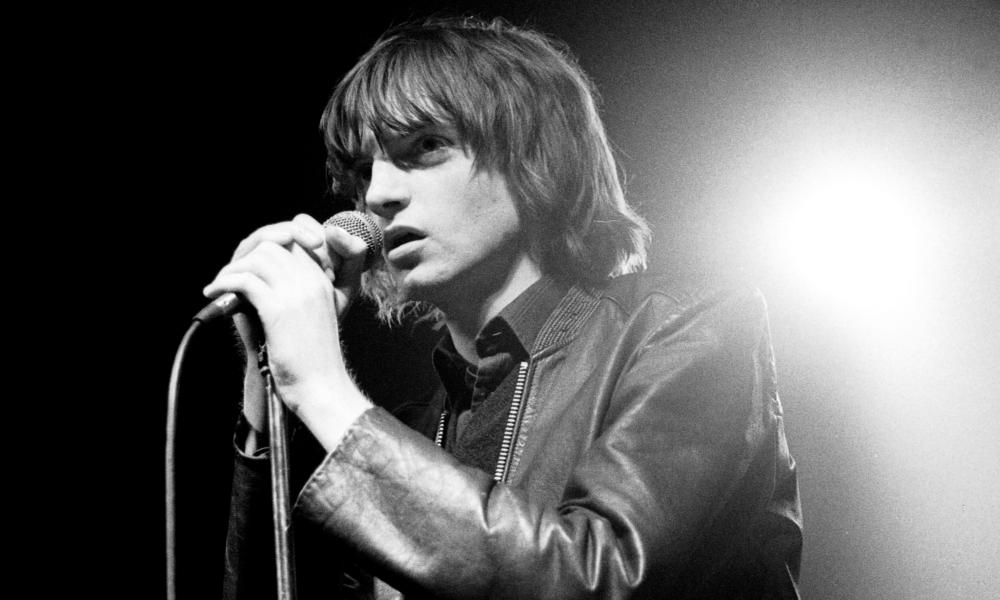
ONLY NOISE: Mark E. Smith is Dead, Long Live Mark E. Smith!

For years I was certain that the Fall’s 1982 album Hex Enduction Hour was in fact called: Hex Education Hour – perhaps referring to some BBC instructional program for budding witches. An ex had ripped the record onto CD for me and delivered it in a sort of comprehensive British post punk bundle, which contained discs by Gang of Four, New Order, and the Smiths. I would like to blame my misreading of Hex Enduction Hour on the illegible sharpie scrawled across my copy. Unfortunately, I can’t find the CD anywhere. Maybe it was improperly labeled The Hex Education Hour, or maybe the correct name was printed in two-inch block letters and I was simply trying to extract a real word from “Enduction.”

It took almost a decade to realize that I’d been saying the title wrong the whole time, and it was the Fall’s fearless leader Mark E. Smith who corrected me. In a late night YouTube hole I chanced across an interview with Smith and then Fall member Marc Riley circa 1982, right around the release of Hex Enduction Hour. The interviewer – offensively tan next to Smith’s blanched skin – was curious: “Why the title and what does it mean?” “It’s a word I made up,” Smith said. “It’s like an induction into the Fall.”

In one deadpan sentence, Mark E. Smith had righted my error and summed up what Hex Education Enduction Hour had meant to me. It was without a doubt my induction into the Fall. It was also one of those records that changed my perception of music as I knew it. I had never heard anything like the Fall before, and yet it was immediately clear how many bands had Xeroxed their style. The opening seconds of“The Classical” felt revolutionary – the hand drums, the cowbell, the fuzzed-out bass, and of course, the legendary Mark E. Smith, screeching and slighting throughout. There’s no shortage of rage in the history of punk music, but when Smith barked, “Hey there fuck face! Hey there fuck face!” it cut more deeply – and with a serrated knife, to boot. I played that song endlessly, especially while walking, just to marvel at the banshee squeal Smith mustered while shouting, “Too much romantic here/I destroy romantics, actors/Kill it! Kill it! Kill it!” From those jarring first bars of “The Classical,” I was on board.

Smith embodied a rare role within the post-punk arsenal. He was an agent of rage but also a poet. He possessed a wonderfully dark sense of humor, but was volatile and hard to get on with. The only constant member of the Fall, Smith went through roughly 66 bandmates in 40 years, as he was prone to firing musicians – provided they didn’t quit first.

On Wednesday morning, Smith passed away at age 60, after years of failing health. The news circulated in my office while I was at lunch, and I was reminded of how much the world can change in the time it takes to eat a sandwich. Without hesitation, I sought solace in two people: Robert Sietsema, and Marc Riley. Sietsema is the senior critic at Eater NY, and his tenure as a New Yorker, journalist, photographer, and bassist in the skronk band Mofungo allowed him to brush up against some of the city’s most interesting characters in the past few decades. One of them happened to be Mark E. Smith.

“In the early 80s, the Fall was one of the most influential bands on the burgeoning New York punk music scene, and would visit to play at small clubs or even medium size clubs two or three times a year,” Sietsema told me over e-mail. “They would always shack up at the Iroquois Hotel near Times Square. I was working sporadically for the New York Rocker at the time, and got an assignment from editor Andy Schwartz to cover the band, which most of the staff didn’t quite understand or know what to do with.”

Sietsema went on to describe an after-show encounter he had with Smith, during which he invited the Fall to swing by his place before their next gig. “Mark willingly agreed,” he said, “and so I set out a buffet featuring cheese and luncheon meat at my tenement apartment on 14th Street between B and C. At the appointed hour, the buzzer rang, but when I buzzed the visitors in and went to the door, it turned out to be just him. He’d neglected to invite the band. I eventually realized that it was by design, that there was a great gulf between him and his musicians.”

This gulf was evident in the Fall’s rotating cast of members. One of these members – the aforementioned Marc Riley – became an important part of my musical education before I realized that he co-wrote and performed on Hex Enduction Hour. Riley was a member of the Fall from 1979 to 1983, but was kicked out of the band for “dancing to ‘Smoke on the Water,’” as Smith famously put it. In classic Mark E. Smith form, the Fall later released a burn track titled, “Hey Marc Riley,” to the tune of “Hey Bo Diddley.”

Marc Riley has since become a DJ for BBC6 Music, a station I treat like a holy text. It was a bizarre twist of irony that Riley was the BBC6 broadcaster to announce Smith’s death on Wednesday, as the news was confirmed smack in the middle of Riley’s afternoon show. “I’ve just got to say that there’s been rumors flying around all evening about Mark E. Smith, and we’re just getting to grips with it now,” he said while Smith’s passing was not quite confirmed. He played a Sex Pistols song while awaiting the word.

“Sadly,” Riley continued after the last guitar strum of “Pretty Vacant,” “the confirmation seems to have come through that Mark E. Smith has passed away.” Riley went on to play an extended set of Fall songs, including “It’s the New Thing” and “Totally Wired.” He also played “Tropical Hot Dog Night” by Captain Beefheart and His Magic Band, noting that Smith had turned him on to Beefheart. “I remember vividly going around to Mark’s flat in Prestwich,” he recalled, “and he’d just bought that album and he played it for me – I didn’t know anything about Beefheart really at that point in time, and I fell in love with it as I did lots of other bands that he introduced me to… ” I found it funny that Smith was largely responsible for shaping Riley’s musical tastes, and that now Riley does the same for thousands of listeners as a DJ – a profession Smith has openly mocked.

When speaking to BBC6 colleague Gideon Coe about Smith’s death, Riley offered fond words despite his history with the Fall: “It is strange… I’ve not spoken to Mark for a long time, and of course after I got kicked out of the band it was a pretty unsavory time… but I have to say that I met Mark E. Smith when I was 16… The Fall were my favorite band when I joined, and they were still my favorite band when I got kicked out.”

Mark E. Smith possessed so much charisma, that despite the abuse (whether aural, verbal, or physical), his talent as a songwriter and poet were irrefutable and mesmerizing. His ability to create, not only so much work, but so much great work still baffles most critics. His ability to stay menacing into his final years was a damn near miracle.

It is so rare for music to retain its radical nature over the years. I’ve heard Ramones songs in airports and watched CBGB morph into a John Varvatos store. The revolts of prior generations get fluffed into nostalgia eventually. But the Fall never lost their knack for sonic assault. Tonight I am blaring “The Classical” from my bedroom speakers at maximum volume, and it still feels aggressive and mischievous. I wonder if I’m interrupting a Netflix binge session or dinner party next door. Part of me hopes that I am, and that an angry neighbor will rap on my door any minute to request that I turn it down. And maybe, in the spirit of Mark E. Smith, I’d just sneer and shout, “Hey there fuck face! Hey there fuck face!” I’d like to think that would make the fallen frontman smirk, wherever he is.

PLAYING COLUMBUS: Bands to Watch – An Annotated Playlist

[fusion_builder_container hundred_percent=”yes” overflow=”visible”][fusion_builder_row][fusion_builder_column type=”1_1″ background_position=”left top” background_color=”” border_size=”” border_color=”” border_style=”solid” spacing=”yes” background_image=”” background_repeat=”no-repeat” padding=”” margin_top=”0px” margin_bottom=”0px” class=”” id=”” animation_type=”” animation_speed=”0.3″ animation_direction=”left” hide_on_mobile=”no” center_content=”no” min_height=”none”]

Grunge Dad is one of Columbus Alive’s Bands to Watch.

Imagine: Columbus Alive just released their much anticipated lineup for their annual Bands to Watch concert, and the coffee shop conversation is relentless. The show – which will include Sarob, Grunge Dad, Akula, Souther, and Future Nuns – is this Saturday, but you don’t know any of the acts. What do you do? You can’t drop your hipper-than-thou act (you’ve been keeping that up for years), and your “support local artists” laptop sticker won’t mean anything if you need to ask all of your post-punk friends for input. But you don’t want to miss out on the show, either.

Fear not! School your friends and foes by reading up on our annotated playlist, your guide to navigating any of the niche convos sure to happen at Skully’s on Saturday night. And more: we’ve included five of our favorite up-and-coming locals, so you can not only go above-and-beyond to impress your roommates – you might find yourself investing further in Columbus’ varied music scene.

SAROB

Sarob is a deeply introspective musician. His 2017 release, Seeing in the Dark, deftly combines piano, rap, and gorgeous vocals. Beyond the dazzle of the samples and sounds that Sarob pulls into his work, Seeing in the Dark highlights intentionally and emotionally impactful lyrics with skill.

GRUNGE DAD

Though Grunge Dad has been playing together for less than a year, their thoughtful, addictive first EP, I Feel Weird, seems timeless. It’s an EP’s casual coolness makes Grunge Dad come across as friends you’d like to have because of their mix of artistic drive and relaxed perspective. On I Feel Weird, vocalist Lisa Brokaw’s tone is flippant but intoxicating, driven forward by drummer Emma Headley and peppered with dizzying bass riffs by Marie Corbo.

AKULA

Akula is made up of five life-long musicians – Chris Thompson, Jeff Martin, Scott Hyatt, Sergei Parfenov, and Ronnie Miller – and it shows in their ambitious debut EP. Though only four songs long, each of those songs is a marathon. But while the instrumentals are piled into melodic heavy rock, Jeff Martin’s vocals are surprisingly light. It’s a remarkably paced and balanced album: evidence of the years of craft put into its production.

SOUTHER

The project of Carly Fratianne, Souther is influenced by Fratianne’s return to her home state of Ohio, as well as by her Americana and folk influences. Her debut Is For Lovers, is, as the first track suggests, brutally honest, but Fratianne doesn’t forgo attention to composition in pursuit of emotionality.

FUTURE NUNS

Future Nuns began and developed their group within Columbus’ DIY scene, and their scrappy approach to performance has served them well. The band frequently alters its line-up, as well as the instruments that individual members play. They’re magnetic, both on-stage and off.


Playing Columbus’ picks:

TTUM

Being a multi-instrumental singer-songwriter and producer isn’t enough for Tatum Michelle Maura. She’s also an ever-present advocate for queer and trans folks in Columbus and regularly contributes to actions against police brutality. Her Facebook feed reads as a detailed and empathetic guide to the local music scene – Maura uplifts what seems like every new local release.

TTUM’s debut album, synthpop stunner Flwless Ruby, came out in October of 2017. Her latest release, however, is a slow-burning dance track she collaborated on with Maahikeee and Katskhi.

CHERRY CHROME

After a nearly 2-year hiatus, Cherry Chrome is back in the studio to record a new album. I’m stoked, and as soon as you hear the opening hook from the 2016 self-titled album, you will be too. It’s dreamy, well-placed music with a distinctive rock edge – and honestly, it’s also just catchy. All four members – Xenia Bleveans-Holm, Mick Martinez, Amina Adesiji, and David Holm – contribute vocals, building an eerie sound which nearly echoes against the group’s thick bass and drum lines.

QUEER KEVIN

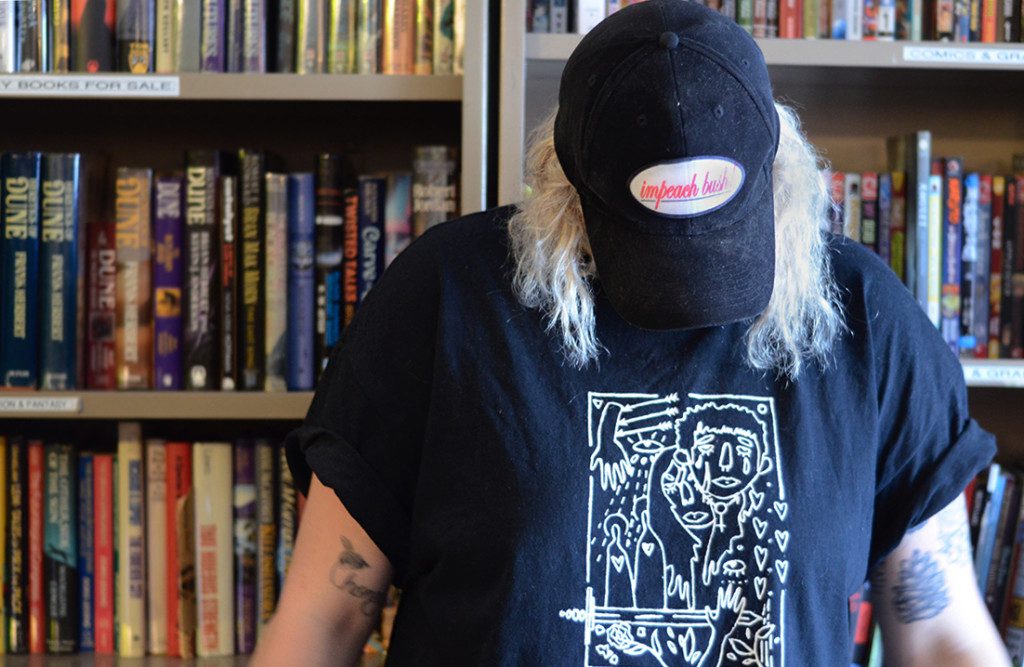
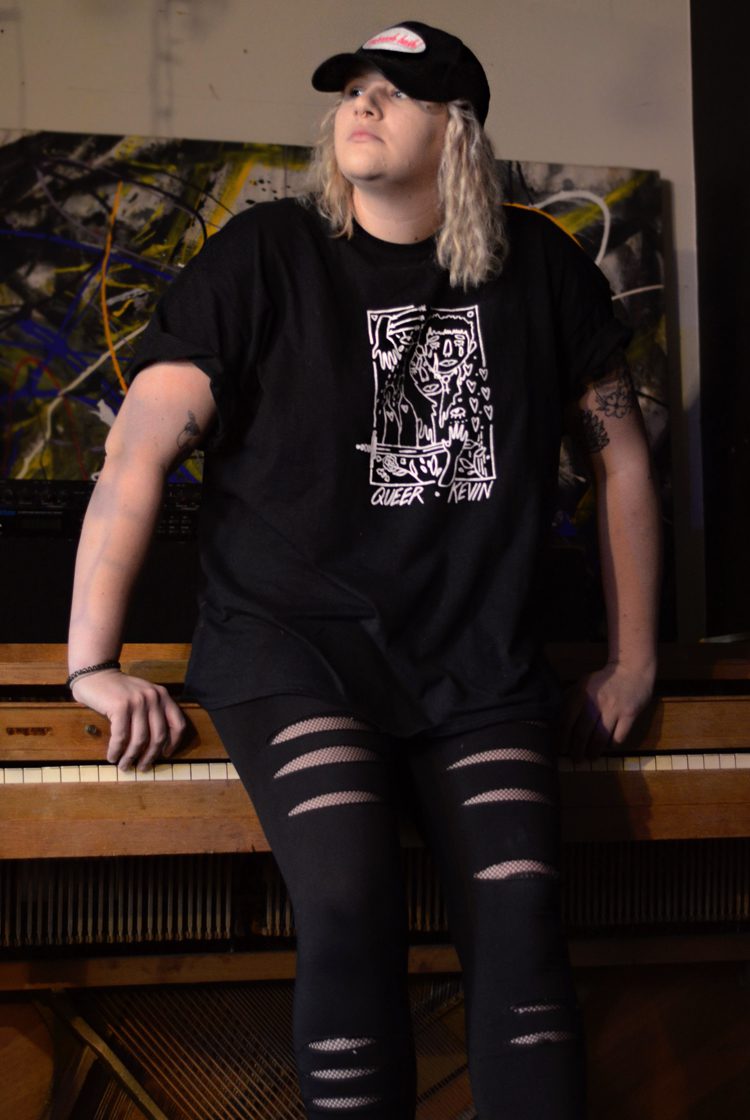
“Our genre: what a cutoff t-shirt would sound like if it was music” reads a recent Facebook post by DIY locals Queer Kevin. It’s indicative of the general tone of the duo’s online presence. But Queer Kevin is a band to take seriously. Prolific both in their touring and musical output, Felix and Dylan release sprawling lo-fi songs with deeply impactful lyrics.

COUNTERFEIT MADISON

Sharon Udoh, who performs under the moniker Counterfeit Madison, has recieved much-deserved acclaim for her 2017 album, Opposable Thumbs. Still, I think she’s underrated. Udoh moves effortlessly between genres, her voice captivating throughout the classical, jazz, gospel, rock, and soul-inspired concoction that she has created on Opposable Thumbs. Udoh holds the great gift of being able to be funny, as well as beautiful in her art, and she wields it with impressive precision.

BLKGLD

BLKGLD’s self-titled EP is art that makes you feel good about art. The smooth production on the album gives its mixture of stretched-out bass and guitar parts and poetry a mythic, almost underwater quality. It’s an album emblematic of the vast collaborative possibilities available within Columbus, as well as the talent and deft writing this city is filled with. Listening to BLKGLD feels like watching sun-glimmered water moving through the tide.

[/fusion_builder_column][/fusion_builder_row][/fusion_builder_container]

PLAYING DETROIT: Bonny Doon Teases Sophomore Album with New Single “I Am Here (I Am Alive)”

[fusion_builder_container hundred_percent=”yes” overflow=”visible”][fusion_builder_row][fusion_builder_column type=”1_1″ background_position=”left top” background_color=”” border_size=”” border_color=”” border_style=”solid” spacing=”yes” background_image=”” background_repeat=”no-repeat” padding=”” margin_top=”0px” margin_bottom=”0px” class=”” id=”” animation_type=”” animation_speed=”0.3″ animation_direction=”left” hide_on_mobile=”no” center_content=”no” min_height=”none”]

photo credit: Chloe Sells

This week, Bonny Doon — the Detroit alt-folk group made up of Bill Lennox, Bobby Colombo, Joshua Brooks and Jack Kmiecik — released a single from Longwave, the follow-up to last year’s self-titled debut. “I Am Here (I Am Alive)” is a lap steel-laden testament to uncertainty, meandering between life’s arbitrary observations and burning questions.

Opening with the lyrics “Moon, are you half empty or half full? / Is something missing I can’t tell? / Is there more I can’t see?” Colombo sets the stage for either an extremely contemplative or blissfully numb next five minutes, depending on your mood. The song continues with a string of metaphors set over hypnotizing percussion and woozy guitars, meeting at the relatable refrain: “Time, feel like I’m wasting time / Just wanna be where I’m goin’.” Same, Bonny Doon, same.

Listen to “I Am Here (I Am Alive)” below and look out for Longwave, scheduled for a March release date courtesy of Woodsist Records.

[/fusion_builder_column][/fusion_builder_row][/fusion_builder_container]

CHECK THE SPREADSHEET: Tour Promo

[fusion_builder_container hundred_percent=”yes” overflow=”visible”][fusion_builder_row][fusion_builder_column type=”1_1″ background_position=”left top” background_color=”” border_size=”” border_color=”” border_style=”solid” spacing=”yes” background_image=”” background_repeat=”no-repeat” padding=”” margin_top=”0px” margin_bottom=”0px” class=”” id=”” animation_type=”” animation_speed=”0.3″ animation_direction=”left” hide_on_mobile=”no” center_content=”no” min_height=”none”]

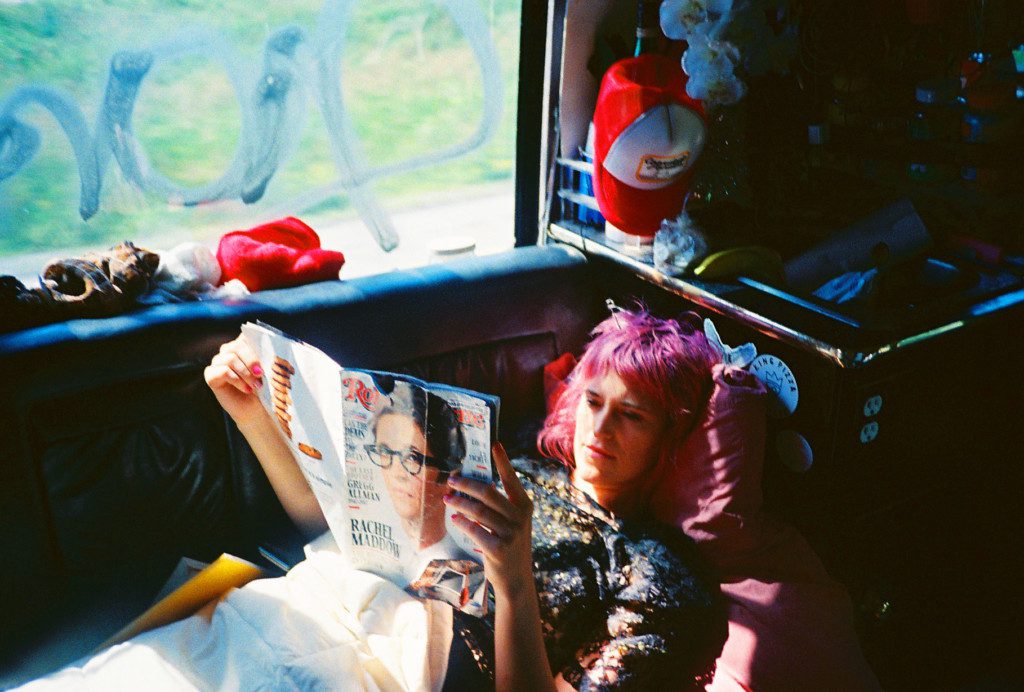
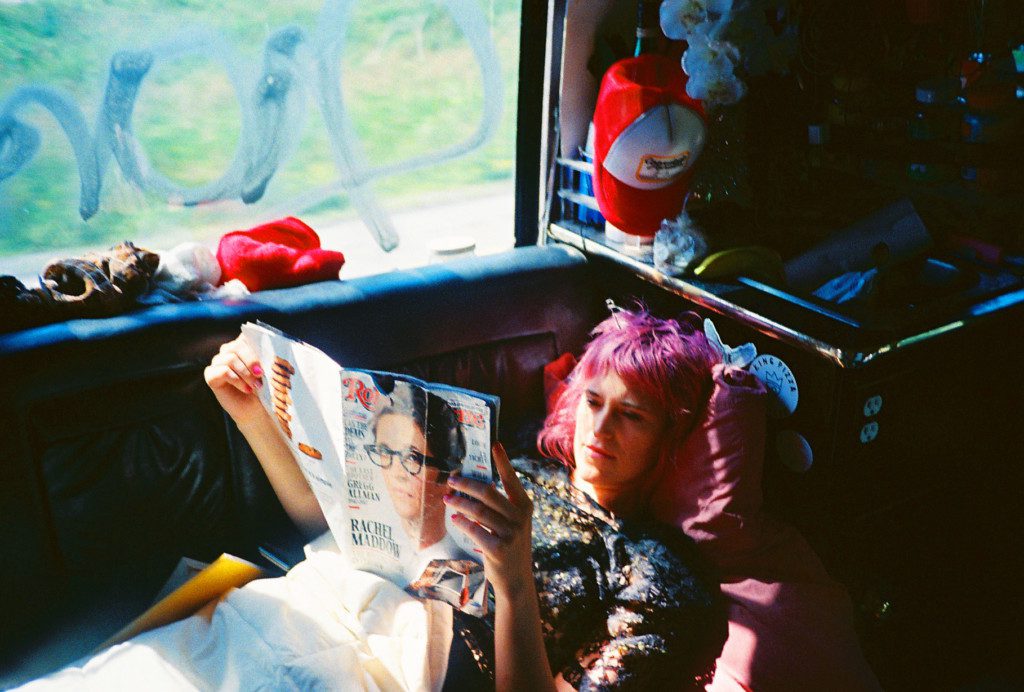
Caro reads about her next tour date in Rolling Stone. Photo by Jose Berrio

While I was dancing around my middle school bedroom screaming into a hairbrush dreaming of my future rock stardom, I had no idea how many spreadsheets and e-mails I would have to send to make it happen. Even after you’ve spent hours in front of your laptop booking your tour, it’s not over yet. You may already be a rock star, but now it’s time to make sure the world (or at least the cities you’re touring to) know just how much of a rock star you are! It’s time for the insanely tedious task of tour press.

In college I was lucky enough to intern at Girlie Action and learn how to do basic press for my band Sharkmuffin to help us get off the ground, and I have also done some freelance PR for friends’ bands under the name Sugarmama Bk. It’s frustrating, time consuming, and lonely sending hundreds of emails into the black hole of the internet in hopes of getting even one response. When I hit a wall with my contacts and had some extra funds, Sharkmuffin was able to work with some amazing publicists like Melissa at Citybird PR, Jillian (now at Big Hassle) & Meijin (Rocker Stalker) at EIPR and Debbie at Girlie Action who have helped build the band’s reputation and get more people out to our shows over the years. Here are some of their thoughts on how to do tour promotion successfully.

[/fusion_builder_column][fusion_builder_column type=”1_1″ background_position=”left top” background_color=”” border_size=”” border_color=”” border_style=”solid” spacing=”yes” background_image=”” background_repeat=”no-repeat” padding=”” margin_top=”0px” margin_bottom=”0px” class=”” id=”” animation_type=”” animation_speed=”0.3″ animation_direction=”left” hide_on_mobile=”no” center_content=”no” min_height=”none”]

Deb Pressman of Girlie Action

“My advice is do your research. Find out who is writing about bands you enjoy/tour with/respect. Follow them on socials to get to know them even more – many of them will have their email address in their bio! Only use one platform to contact them, and email is always best. In your email, have as much information as possible without being too wordy. Make sure your subject line is informative. Do not follow up right away – give the writers/editors time to ingest the music. Don’t follow up too much. Silence might equal a pass. Most importantly, treasure/respect even the small blogs!” – Deb Pressman, Girlie Action

[/fusion_builder_column][fusion_builder_column type=”1_1″ background_position=”left top” background_color=”” border_size=”” border_color=”” border_style=”solid” spacing=”yes” background_image=”” background_repeat=”no-repeat” padding=”” margin_top=”0px” margin_bottom=”0px” class=”” id=”” animation_type=”” animation_speed=”0.3″ animation_direction=”left” hide_on_mobile=”no” center_content=”no” min_height=”none”]

Jillian Santella of Big Hassle Media

“I’d say that for a band going on the road, if you’re really looking to elevate and make an impact, hiring a publicist is really helpful. Numerous reasons, the most important one being that you want to be able to focus on the music! It can be so daunting to try to do it all, and often when you spread yourself too thin, everything starts to suffer, including your health. And we all know how hard – and important! – it is to stay healthy on the road. Also, we already have a lot of relationships and knowledge of the market.

If it’s a situation where working with a publicist isn’t in the cards, I think the most important thing is to bring your A-game to every opportunity. Treat everything, even an interview with a small local blog, like it’s the cover of Rolling Stone. Treat everyone like they’re Jimmy Fallon, every performance opp (local TV, online sessions, etc.) like it’s your late night debut. Be kind and gracious. Introduce yourself to absolutely everyone – bloggers, influencers, interns! Don’t believe the ‘nice guys finish last’ thing.

All in all, hustle. Take care of yourself, rock your ass off, make enough noise and people will start to pay attention. “ – Jillian Santella, Big Hassle Media

Sugar Mama Bk Tour Promotion Tips

  • DIY Tour Press
      • Research: Find all the newspapers, blogs, and zines in each city you’re heading to and find the writers that cover music that is similar to yours. Stalk them and find their e-mails (usually on the ‘contact’ page).
      • Press Kit: Consists of your band’s photo, bio, music/video links, social media links, tour dates. Check out this example of Sharkmuffin’s presser for handy reference!
      • Canned E-mail: Create a template e-mail pitch that has blank spaces for the writer’s name (“Hey ___”), the name of the publication you’re pitching to and the Date/Venue/City you’re playing in to fill in accordingly. Include a summarized version of your press kit in the body of the e-mail. Try to make these messages as personalized (and as brief) as possible. Writers and editors get hundreds of emails every day so do not be offended if they don’t respond!
      • Know what you’re pitching for. The types of coverage a blog will do can vary, but generally speaking they’ll fall into one of several categories…
        • Feature: One page or longer on the band, usually includes an interview and/or photo shoot, for which you’re responsible for setting up and making happen. Should pitch 3-4 weeks before show.
        • Profile: Longer than a paragraph about the artist, can include an interview/quote from the artist, also use as a preview for the show. Should pitch 2-3 weeks before the show.
        • Preview: More than one sentence about the artist that includes a listing for the show, usually with a photo. Previews can also be linked to features/profiles/mp3 or album reviews.
        • Reviews: A review of your last release or the release you’re touring around, alongside the date you’re playing in their city.
        • Live Reviews: A review of your live set – you can invite writers to your show and give them a guest list spot.
      • Local Radio: Same rules apply for research. You can pitch to have an interview or play an in-studio performance on their show, for them to talk about your show and give away tickets, or to just play one of your songs.
      •  Timing
        • One month before your tour: Send an e-mail blast announcing your dates to give everyone a heads up. Sometimes you’ll get responses right away!
        • Personalized follow-ups start about a week later (3 weeks before your tour).
        • Guest Lists: Usually sent to the venue prior to the show for writers and/or photographers who are interested in doing a live review of your set. Try to also set up an interview with them. Aside from press, guest spots are generally reserved for family members or whoever your bandmate is trying to fuck.

Even if you’re not handling press entirely on your own, you can still be proactive about promotion. Here are some additional tips to keep in mind even if you’ve got help from a professional PR team.

  1. Advancing Shows: Know your schedule (load in, set times, backline) and find out about the other bands playing so you can tag everyone. Make friends with the bands you’re sharing a bill with in advance and make sure they’re inviting their friends, since that will be the main draw you’ll have in a town you’ve never been before.
  2. Social Media: Have your tour dates as easily accessible as possible. Put them on your website, Facebook, Twitter, and Bands in Town (or any other touring app). Make sure that there is a Facebook event for each show and a Facebook event that links all the other events for the entire tour. Promote each show on all your social outlets in advance.
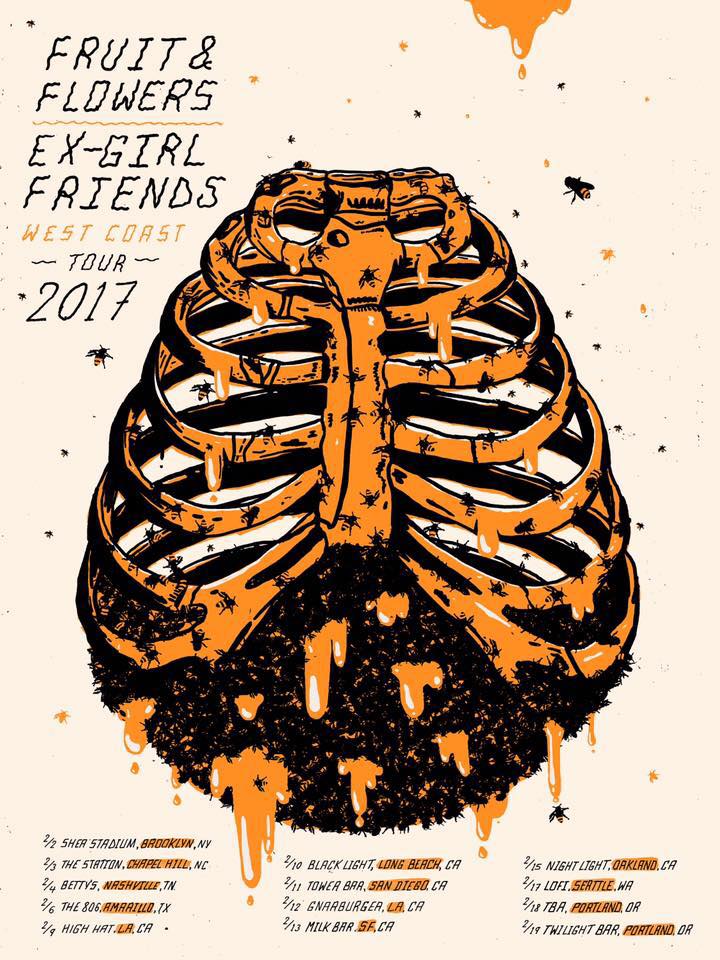
  3. Tour Poster: Is someone in your band a graphic designer? Have them or one of your artistic friends make a poster with all your dates. Print a limited amount on nice card stock to sell on the road and/or print paper ones with space at the bottom to write in the specific date of the specific show to mail to each venue so they can hang them up in the bathroom or window or wherever their regular patrons will see it.

    [/fusion_builder_column][fusion_builder_column type=”1_1″ background_position=”left top” background_color=”” border_size=”” border_color=”” border_style=”solid” spacing=”yes” background_image=”” background_repeat=”no-repeat” padding=”” margin_top=”0px” margin_bottom=”0px” class=”” id=”” animation_type=”” animation_speed=”0.3″ animation_direction=”left” hide_on_mobile=”no” center_content=”no” min_height=”none”]

    Poster by Jose Berrio of Fruit & Flowers
  4. Be nice to your Publicist: If you have the privilege of a budget and can hire a publicist, understand that it’s a ton of work and be respectful and grateful for them. Try not to have crazy expectations. Especially for new bands on their first tour, appreciate every single person that will cover you no matter what the size of the outlet. Try not to get upset with your publicist; they love you and have the best intentions. Remember they’re dealing with the endless void of Internet media and are trying their absolute best for you and your career.
  5. Promoting Press: Don’t forget to promote whatever press, regardless of how small, on all of your social media channels and thank every writer and blog and credit every photographer. Keep in touch! Gratitude really does make a difference.

[/fusion_builder_column][/fusion_builder_row][/fusion_builder_container]

NEWS ROUNDUP: RIP Dolores O’Riordan, New LP Releases, & More

  • RIP Dolores O’Riordan (September 6, 1971 – January 15, 2018)

    We lost one of the greats this week. On Monday, January 15th, Dolores O’Riordan, lead singer of Irish rock band, the Cranberries, passed away in London, where she had been recording. She was 46. The sad news was announced by her publicist. The cause of death has not been announced but authorities are not treating it as suspicious and are awaiting the test results of a coroner’s examination.

    Born in 1971 in Ireland, O’Riordan auditioned for the Cranberries (then called The Cranberry Saw Us) in 1990 after answering an advertisement seeking a female singer. After recording a rough demo of “Linger,” she was officially in the band. They soon went on to record the EP, Nothing Left At All and eventually signed to Island Records. The group achieved mainstream success with the single “Dreams,” off of their 1993 debut album, Everybody Else Is Doing It, So Why Can’t We? The song immortalized nineties teen angst (visually preserved in an especially memorable scene of “My So-Called Life”). The album eventually sold over 40 million records. In 1994, the band took a more serious turn with the release of No Need To Argue which featured the hit single, “Zombie,” a protest song written in memory of two victims of the 1993 IRA bombings in Warrington, England. After No Need to Argue the Cranberries released three more albums – To the Faithful Departed (1996), Bury The Hatchet (1999), and Wake Up and Smell the Coffee (2001), before breaking up in 2002. O’Riordan then went on to put out two solo albums, Are You Listening? (2007), and No Baggage.

    In 2009, the same year that she released No Baggage, The Cranberries reunited on tour and recorded material for their 2012 release, Roses. In April of last year they released their seventh studio album, Something Else. They embarked on an international tour in support of the album before having to cancel in July 2017 due to health issues with O’Riordan’s back. Despite this knowledge, O’Riordan’s fans were hoping for a comeback as the singer had posted on Facebook during the recent holidays, saying that “she was feeling good” and accomplished her “first bit of gigging in months.”

    O’ Riordan will be buried in Ireland next week. She is survived by her three children.

  • New Albums from Belle & Sebastian, Porches, Tune-Yards & More!

    This has been the biggest week for album releases in the year thus far. Belle and Sebastian released How to Solve Our Human Problems, Pt. 2. It’s the second part of their much anticipated EP trilogy; the final installment is slated to arrive February 16th.

    Just in time for his upcoming tour with Miguel, SiR released his latest album, November. The jazz-inflected R&B singer is signed with TDE; the label is riding a incredibly high wave thanks to their critically-lauded 2017 releases, including Kendrick Lamar’s DAMN. and SZA’s Ctrl.

    The Go! Team made us feel old by releasing their fifth (!) album this week. Semicircle features their signature mash-up of cheerleader shouts and marching band sounds, with some ’60s sitar thrown in for good measure. They play NYC in April.

    Swedish band First Aid Kit gave us Ruins this week. It’s their first album in four years. Aaron Maine released The House, his third album as Porches. Two tracks off the release, “Find Me,” and “Country,” have already been given the video treatment.

    British dancepunk trio Shopping also released their third full-length this week. The Official Body will have you contemplating current events and social institutions while grooving to dance synths and heavy basslines reminiscent of Bush Tetras and Au Pairs.

    Last but definitely not least, Tune-Yards released I can feel you creep into my private life. The band’s founder, Merrill Garbus, recently told The New York Times that the new album is heavily influenced by learning how to DJ and attending seminars about race relations. Case in point? The catchy pop grooves of lead single, “ABC 123,” will have you bopping your head to the lyric, “I can ask myself, what should I do? But all I know is white centrality. My country served me horror coke. My natural freedom up in smoke.”

  • Other Highlights

    Wu-Tang’s RZA appears in a brand new video for PETA. The ad features the longtime vegan’s voiceover as his face shifts into different people and animals. Governors Ball announced James Blake as its final headliner for the 2018 June lineup. Kylie Minogue’s new single, “Dancing,” gives us a taste of her fourteenth studio album, Golden, out April 6th. Cardi B is the subject of a new Tidal “mini-documentary.” I’m Here Muthaf*ckas follows her as she headlines Jeremy Scott’s Art Basel dinner party for Moschino. Julien Barbagallo, the drummer of Tame Impala, released a video for “L’échappée.” The single is off of his upcoming album, Danse Dans Les Ailleurs, which is sung entirely in French. Five of David Bowie’s albums are getting vinyl re-issuesLow, Heroes, Lodger, Scary Monsters, and Stage will be available individually on February 23rd via Parlophone. Migos member Offset has offended many with a homophobic statement (this time in a lyric), AGAIN. Mary J. Blige honors the Time’s Up movement with new single, “Bounce Back 2.0.” Fischerspooner’s new NSFW music video celebrates male sexuality. Bad Wolves have released their cover of the Cranberries’ “Zombie.” Dolores O’Riordan was scheduled to record vocals for the track before her passing; proceeds from the single will benefit her children.

ONLY NOISE: Remembering Dolores O’Riordan

When the Cranberries released their debut record Everybody Else Is Doing It, So Why Can’t We? I was not quite four years old. It was 1993, and two household DJs named Mom and Dad would determine my musical tastes for at least another five years. Those years passed quickly. By the time we were on the heels of a new millennium, I was finally catching up with the ’90s and the music that had shaped my first decade on Earth. Eventually, I would catch up with the Cranberries, too.

Interestingly enough, my introduction to the Cranberries (and the vast majority of ’90s music) did not come in the form of a mix CD or radio broadcast, but in soundtracks for film and television. Fragments of Cranberries songs must have drifted into my limbic system as I watched Clueless, Charmed, and countless reruns of Beverly Hills 90210. In 1995, 90210 staged a first kiss between oafish Steve Sanders and relative newcomer Clare Arnold while the Cranberries’ hit “Dreams” played softly in the background. “Dreams” made several other cameos, notably on the soundtrack of the 1998 rom-com You’ve Got Mail. This was an era when everyone looked forward to the latest Tom Hanks flick, so there’s no doubt that the movie was a vital text in my Cranberries 101 course.

At some point, the songs I’d heard coalesced, and a whole record came into focus. Scrolling past the plastic spines in my parents’ CD collection, I found Everybody Else Is Doing It, So Why Can’t We?. Now that I think about it, that copy must have belonged to my stepmother – she had a small store of Cranberries’ albums wedged between my dad’s Chris Isaak and Crowded House discs. Listening to Everybody Else in full allowed me to acknowledge the Cranberries as something other than film score footnotes. Only a decade late to the party, I finally recognized Everybody Else for what it truly was: a downright masterpiece. Now, days after losing the Cranberries’ heart and soul Dolores O’Riordan, I turn to that masterpiece in remembrance.

Given the concealed details of 46-year-old O’Riordan’s sudden death, it’s difficult not to speculate on what may have happened. The singer/songwriter had a history of mental heath issues, and it’s easy to jump to conclusions when that factor hints at contextualizing her unexplained death. For the sake of respect I will not make any assumptions. However O’Riordan’s passing does draw a darker shade on her body of work. She was the band’s chief lyricist, and the words she sang on the Cranberries’ first record – the one I hold the most dear – often clashed with the gorgeous melodies her band was so adept at crafting. Songs like “I Still Do” and chart topper “Linger” were studies in the bittersweet; the latter frequently passed off as a honeyed love ballad despite its gut-wrenching testimony of desire and rejection. “You know I’m such a fool for you/You got me wrapped around your finger,” O’Riordan cries in the song’s well-known chorus. “Do you have to let it linger?” The song’s striking arrangement was matched only by those universal words.

Thinking of the word “bittersweet,” I am only now realizing its relevance to everything about the Cranberries – their music, their end, even their name. Though it’s unlikely that the band had conceptual coherence in mind when they chose the name (they were first billed as The Cranberry Saw Us), nothing could be more apt a title than the tart and astringent fruit, one that only sweetens with added sugar. This sugarcoating revealed itself on “Dreams,” which reached #42 on the Billboard Hot 100 in 1994. “Dreams” is the outlier on Everybody Else, its blissed out major chords amplifying O’Riordan’s firsthand account of falling in love. There is nothing snide or ironic in her lyrics, just occasional caution. O’Riordan first dips a toe in the pool to test the temperature before splashing head first into a new relationship. “And now I tell you openly/You have my heart so don’t hurt me,” she warns, before yielding “Oh my life is changing everyday… /’Cause you’re a dream to me.” It is a rare moment of un-soured hope, the kind we’ve all cradled when following our hearts into uncharted territory.

O’Riordan and the Cranberries possessed a rare voice in music, one that was instantly recognizable from the moment they began. It was a timeless voice, too. Listening to Everybody Else today does not feel like I’ve boarded a time machine to 1993. The record retains an uncommon relevance, sounding at once of and beyond its time. If any of its songs were released today, they would sound just as fresh, honest, and gorgeous as they did 25 years ago. Dolores O’Riordan left behind a legacy of exceptional art in those 25 years. While art is no substitute for a human being, it is an eternal gift by which to remember one.

PLAYING DETROIT: Wet+Paint Praise Diverse Crew on”Neapolitan”

With all of the thought-provoking, politically heavy music being released in the last year, it’s nice to come across a track once in a while that makes you forget about it all. Detroit-based DIY hip-hop group, Wet+Paint, give us some major reprieve in their music video for “Neapolitan.” The three-piece crew – made up of Sam Morykwas, Rahbi Hammond, and Troi Sharp – brings back an old-school, collaborative style of rapping that is meant purely to bring you a good time.

“Our music is fun – party to it, turn it all the way up in your car, forget about whatever BS is going on and feel good,” the group tells Audiofemme. The video, which Wet+Paint self-directed and produced, shows the trio doing exactly that. Shot on Belle Isle, Detroit’s version of Central Park, it follows Wet+Paint doing random shit, like rapping in the woods, standing on top of a moving car, and just having fun in general, tinted in an array of colors that the crew feels connected to.

As far as what spurred the song’s title, the group says the hook is a tribute to their diverse group of female friends. “The lyric ‘All the shawties in the crew Neapolitan’ is about the dope women in our squad of all different colors and backgrounds. You inspire us and we love y’all,” says Wet+Paint. Well, we can’t argue with that.

You can watch the full video below and listen to the full EP, CAUTION: Wet+Paintvia Soundcloud

PLAYING COLUMBUS: St. Vincent @ Express Live!

“Columbus isn’t Columbus without you love,” Annie Clark sang, opening her 2017 single “New York” cabaret-style, stripped of her guitar, video projections, and samples. “It’s called ‘New York,'” Clark explained, “but you could substitute Columbus for it, and make your own tune with all of Columbus’ beautiful landmarks.” The crowd laughed.

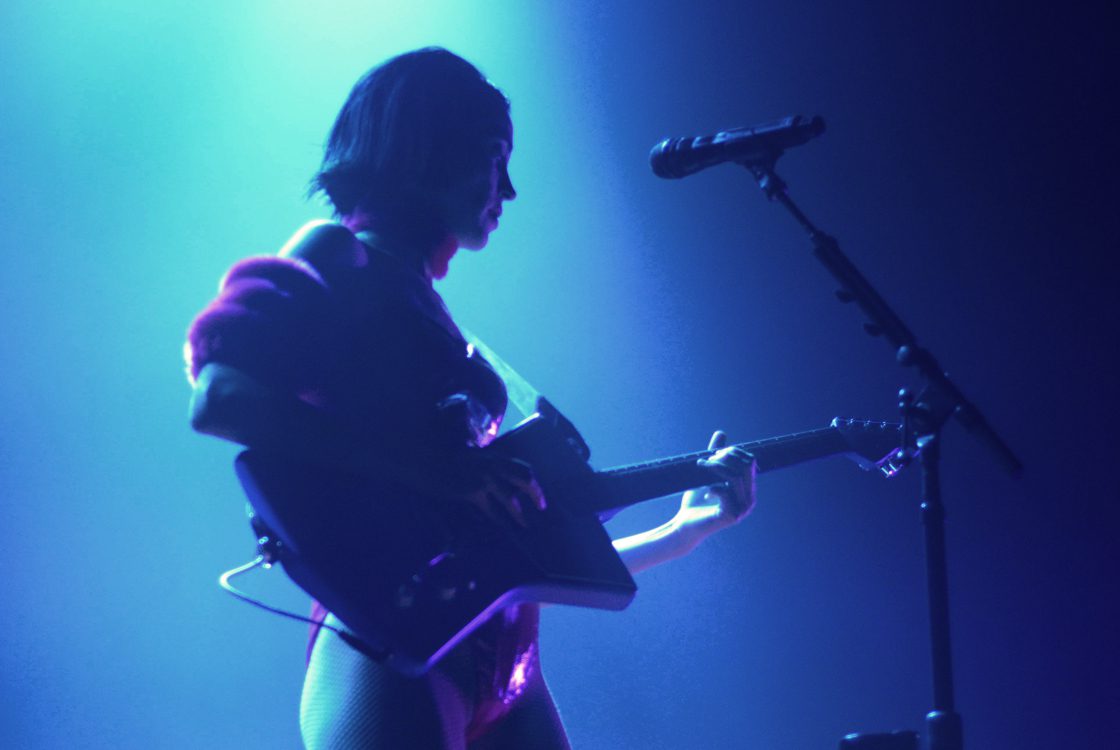
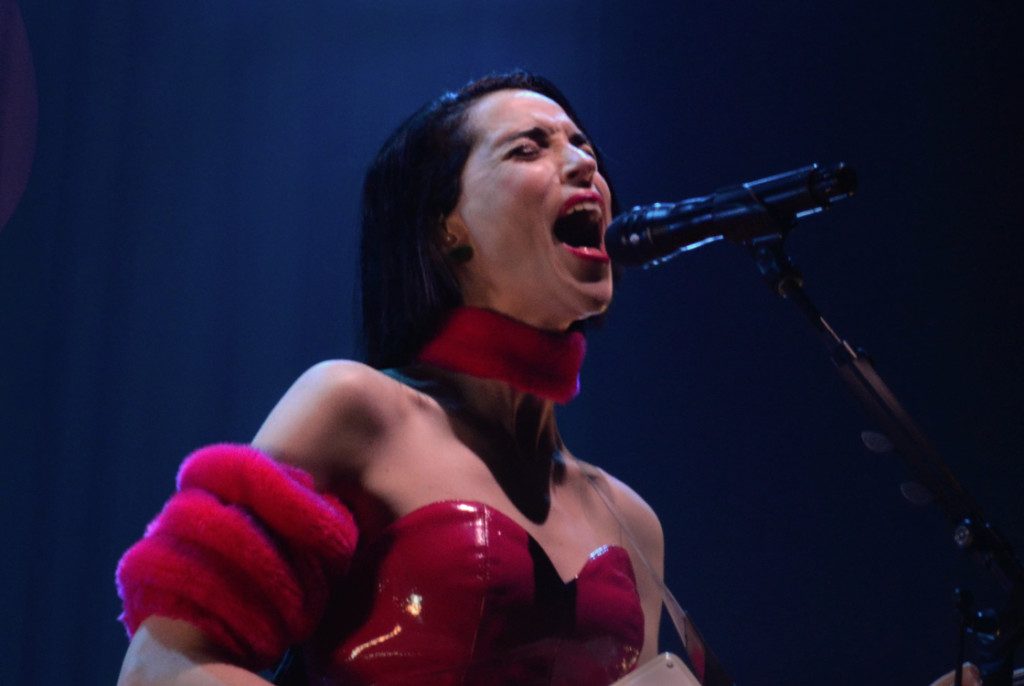
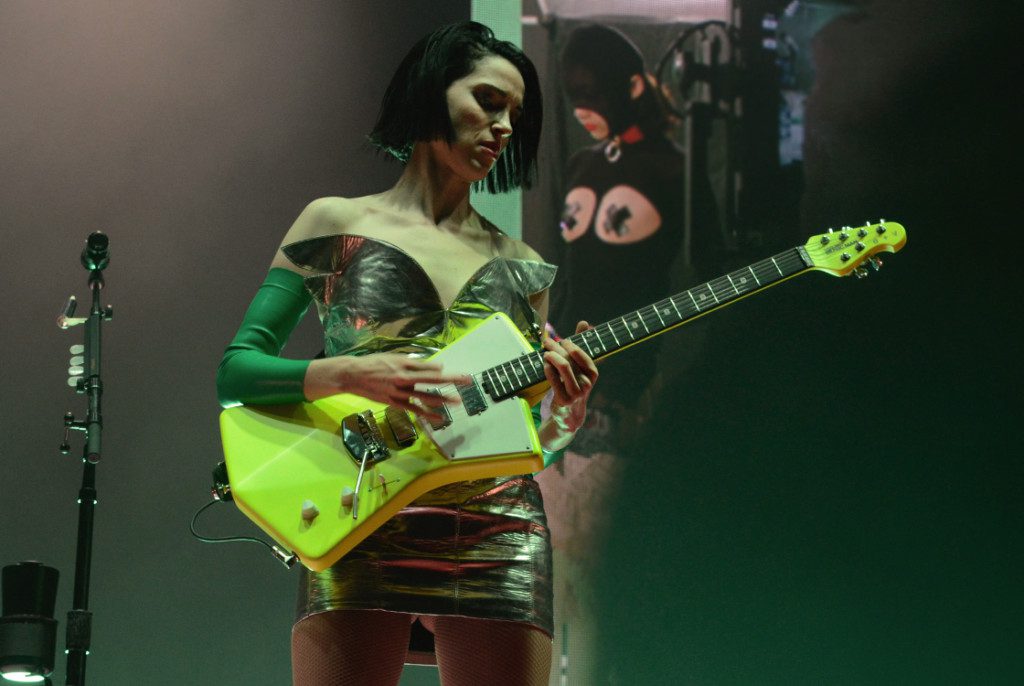
In 2017, Clark – known by her musical moniker St. Vincent – released Masseduction, a large, conceptually-driven project energized by her singular talent as a guitarist. Live, those aspects were only amplified: the show was choreographed, with a pause half-way through for a set and costume change, and throughout the set Clark was washed over with images and video from the project.

[fusion_builder_container hundred_percent=”yes” overflow=”visible”][fusion_builder_row][fusion_builder_column type=”1_1″ background_position=”left top” background_color=”” border_size=”” border_color=”” border_style=”solid” spacing=”yes” background_image=”” background_repeat=”no-repeat” padding=”” margin_top=”0px” margin_bottom=”0px” class=”” id=”” animation_type=”” animation_speed=”0.3″ animation_direction=”left” hide_on_mobile=”no” center_content=”no” min_height=”none”]

all photos by Kaiya Gordon


It’s a challenging album, made all the more so by the media Clark has paired with it – clips of bugs made to look like sushi, paper which reverses its shred, bodies wrapped with gauze – but that complexity pays off in dazzling guitar riffs and vocal runs. Engaging with Masseduction, in all of its brimming content, is satisfying because it is unnerving and difficult at the same time that it is joyful. In other words, if you wanted to dance with abandon at the same time you were considering the emotional price of physicality, Masseduction is the album for you, and St. Vincent the artist to see live.

It was an exciting show to start 2018 with. St. Vincent is an artist that makes me want to make more art, and I felt present and alive in my pursuit to get a good camera shot of such a dynamic performance. I felt weepy, too: when Clark gave a special shout-out to her aunt and uncle, who opened the show; when she recognized folks who don’t fit into genders of “either category” before launching into “Sugarboy;” when, after a fan shouted “I love you!” to the stage, she responded, with patience and care, “I love you too, very much;” when I walked home, my skin tight with the anticipation of creation.

Watching artists play at large venues can sometimes feel isolating. But last week at Express Live! in Columbus, I felt grateful and happy to be where I was – inside from the snow, surrounded by joyous, glittering fans, watching a performance crafted by deft hands.

https://open.spotify.com/album/4RoOGpdrgfiIUyv0kLaC4e[/fusion_builder_column][/fusion_builder_row][/fusion_builder_container]

REVIEW: How to Be a Rock Critic

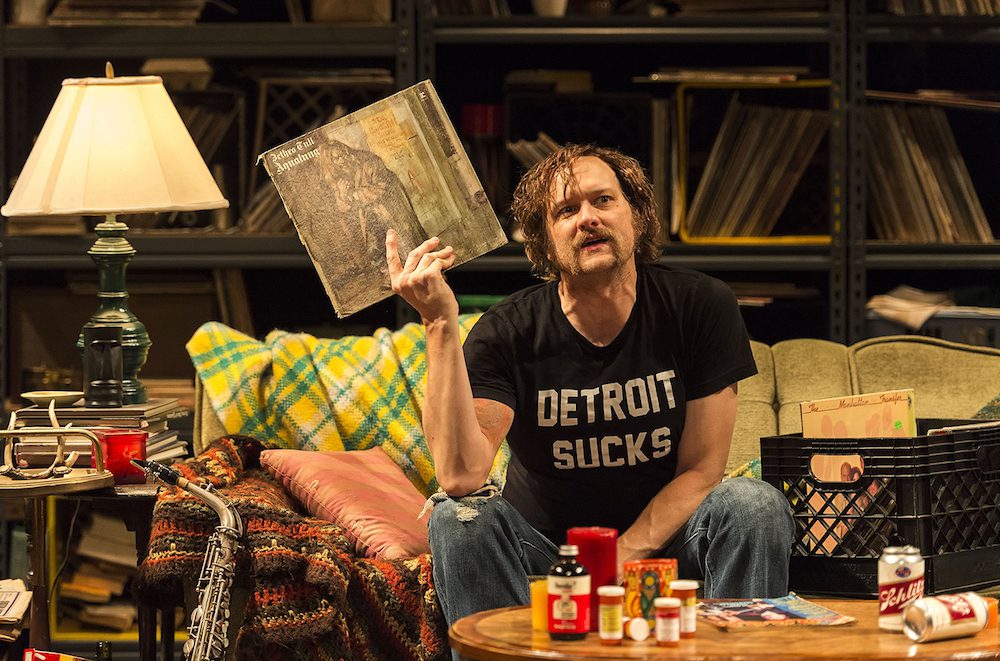
All Lester Bangs wants to do is listen to his favorite record: Van Morrison’s 1968 masterpiece, Astral Weeks. If only he could find his copy. It’s got to be around here somewhere, beneath the splayed magazines, take-out containers, and just a few thousand other LPs. Such is the inciting dilemma of Jessica Blank and Erik Jensen’s one-man play How to Be a Rock Critic.

I couldn’t resist the irony of a dead white guy telling me how to do my job, so I got a ticket immediately. How to Be a Rock Critic is not a pedantic or instructional title, however, but one referring to an early Bangs article first published in a small-circulation college zine. The one-act play – starring Jensen as the ill fated and infamous music journalist – is largely concerned with its subject’s gospel. Its full title reads: How to Be a Rock Critic: Based on the Writings of Lester Bangs.

Part of what drew me to the play was sick intrigue; I was positive it would be a shit show, or reductive and formulaic at the very least. And I have my reasons. Historically the portrayal of rock ‘n’ roll via visual narrative has not gone so well. Flicks like The Runaways and What We Do Is Secret (about LA punks the Germs) fell prey to laughable clichés and fabricated idealism, imbuing their main characters with far more nobility than the real people deserved. These biopics are the inverse of books like We Got the Neutron Bomb, which was unmerciful in its portrayal of rock ‘n’ rollers. There was no glamour or honor when Bob Biggs of Slash Records said of the Germs frontman, “I once saw Darby shoot up with gutter water!”

If there is one thing worse than the fictionalized depiction of rock stars, it is the fictionalized depiction of writers. Whether it’s Javier Bardem’s anguished “poet” in Mother! or Tobey Maguire as Nick Carraway in Baz Luhrmann’s extended disco-remix of The Great Gatsby, the characterization of writers is often bloated with grandeur. Given that Lester Bangs was a stalwart of both rock and writing (not to mention bloated grandeur), I wasn’t sure if How to Be a Rock Critic could escape a trite fate.

A living room awaits at the Public Theater’s Martinson Hall on Saturday. It is littered with pages and beer cans and yes, stacks of records like angular layer cakes. If I didn’t know any better I would write this off as a stereotype, only it looks exactly like my friend’s apartment, and that friend is in fact a writer. It also looks exactly how my apartment would look if I had the freedom to live alone and be the slob I truly am. So they got me there.

The play begins with a grunt. Offstage bathroom noises collect our attention and soon enough Lester Bangs is before us. “Oh, fuck,” he says, before asking us to wait in his hallway for just, like, 20 more minutes while he finishes “this review.” “Ok… ” He stalls, “What about 15 more minutes?” To appease us he doles out magazines from a milk crate, and chucks cans of beer to a lucky few. In this little preamble, one thing is quickly established: Jensen-as-Bangs is one charming motherfucker.

Bangs entertains us briefly, rattling off motor-mouthed nonsense and informing us that he’s been up for 32 hours straight. He’d love to stay and chat, but he’s gotta “finish this review.” Stumbling over landmines of albums, he urges us to talk amongst ourselves. He reaches his desk, yanks an old page from his Smith Corona typewriter, and does exactly what you think he’s going to do with it.

I would like to see one portrayal of a writer, just one, that does not involve a sheet of paper being crumpled up into a ball and hurled across the room. Piss on it, eat it – set it aflame on your stove for god sakes – just please don’t crunch it into an angry little ball and toss it behind your back. When a new sheet is rolled into the machine Bangs stalls. He huffs, and puffs, and bangs on the keys. When the words still won’t materialize, he concedes. “Fuck it… let’s listen to some records!”

Within its first ten minutes, How to Be a Rock Critic erects two totems of Lester Bangs that will duel for the rest of the play. The first being Bangs as critic, fan, and fanatic. The second: Lester Bangs, tortured writer. I’m a fan of the former guy. Jensen’s ability to distill Bangs’ impassioned and vast catalogue of music criticism is admirable. His monologues are delivered with the same dizzying wit and lightning-speed stream of consciousness that Bangs was known for, and the amount of writing Jensen has synthesized is downright impressive.

Blank and Jensen spent years getting in touch with the Bangs archive, reading, researching, and turning thousands of pages of print into a play. Their success in shaping Bangs’ voice for the stage might have something to do with the duo’s background in acclaimed documentary plays like The Exonerated, which grew from firsthand interviews with over 40 released death row inmates. What shines in How to Be a Rock Critic are the long-winded, multi-syllabic manifestos on music, rock stars, critics, James Taylor (who Bangs so famously wrote should be “Marked for Death,”) childhood, girls, fandom, and of course, Van Morrison.

Bangs’ hunt for Astral Weeks punctuates the entire play, acting as the hub connecting countless spokes of praise and diatribe. It is the talisman he needs to justify his claims about art, and if he could only “just find this record, [fusion_builder_container hundred_percent=”yes” overflow=”visible”][fusion_builder_row][fusion_builder_column type=”1_1″ background_position=”left top” background_color=”” border_size=”” border_color=”” border_style=”solid” spacing=”yes” background_image=”” background_repeat=”no-repeat” padding=”” margin_top=”0px” margin_bottom=”0px” class=”” id=”” animation_type=”” animation_speed=”0.3″ animation_direction=”left” hide_on_mobile=”no” center_content=”no” min_height=”none”][he] could show you!” When Bangs is talking about music, you believe his every word. There’s a contagious excitement Jensen conveys while putting on records and churning out rants, the same excitement Bangs was known to infect people with. The little details in Jensen’s performance, like cueing up a Carpenters album and slightly gesturing toward his favorite part of the song with raised fingers, are nuanced and spot-on.

Like Bangs himself, the play is charismatic, funny, and absurd, but at times deeply flawed. It is well known that Bangs died of an accidental pill and NyQuill overdose at age 33. His party animal habits and taste for drugs were as famous as his hatred for Led Zeppelin. This dark side of Lester – that “tortured writer” side – surfaces in my least favorite parts of the play. It’s not that I mind darkness, but Jensen’s rendering of Bangs-as-cough syrup philosopher can feel degrading at times. His sermons on writing feel like they were written by a writer, and not necessarily in a good way. I was reminded of Jeffrey Sweet’s introduction to his book, What Playwrights Talk About When They Talk About Writing, at one point. Namely that, “Playwrights don’t talk about writing with each other much.” Elvis Costello is often credited as saying, “Writing about music is like dancing about architecture.” I say writers writing monologues about writers talking about writing is like a man self-addressing his dick pics.

There is also the issue of pandering. Several times throughout How to Be a Rock Critic, Jensen begins a sentence, only to trail off expectantly so the crowd can fill in the blank for him and pat themselves on the back. It’s a gross little episode of rock ‘n’ roll trivial pursuit that probably pissed off me and me alone, because I’m a critic (and nobody likes a critic). I cringed when Jensen began a story about “a club called???” And the audience dutifully answered in unison, “CBGB!!!” “That’s right! CBGB!” he said with the intonation of a children’s show host. Little things like this, of course, do not amount to a bad play. Nor do Jensen’s depiction of Lester’s tantrums, or scraps of monologue that grated my skin with their commoditized dissent. These are matters of taste.

In a final, half-hearted attempt at finding Astral Weeks, Lester Bangs fishes the LP out of another record’s sleeve. He’s on the floor. After gabbing for 80 minutes straight – pausing only to guzzle beer and two bottles of cough syrup – he toppled over and landed in a pile of 12”s. We’ve heard about his overbearing mother, he’s lamented the death of his father, and he’s reduced Elvis Presley to two identities: “Force of nature… and turd.”

Bangs strolls over to his turntable with the rescued wax and cues up “Cyprus Avenue.” At long last, we can understand what all the fuss is about. For me, it’s easy to understand. By a sheer stab of coincidence, Astral Weeks is one of my favorite records, too. There was a period of time during which I listened to it at least once a day, and it would certainly be in my luggage en route to a desert island.

In these final moments, Jensen and Blank (and I suppose Van Morrison) have nailed the spirit of Lester Bangs, and all the things he sought in music. But what was that? In 1980, Lester Bangs sat for an interview with his pal Sue Mathews, who asked him, “Are you aware of changes in the sorts of things that you look for as a critic? Or in the way that you listen to music?” “Hmm,” he said, “that’s a good question. Basically all I look for is passion, and I don’t care what form it comes in.”

[/fusion_builder_column][/fusion_builder_row][/fusion_builder_container]

MORNING AFTER: Pinball and Miller High Life with Bethlehem Steel

I Googled how long it takes for milk to go sour, and unless Becca Ryskalczyk can chug a gallon in 2 hours and 45 minutes, I shouldn’t bring it as a gift. Granted, almost accidentally killing a musician would be such a throwback to when I started Morning After, and I do love things coming full circle. But the milk is supposed to be a gesture of good will, to replace the (benignly expired) bottle drained on New Years Eve for makeshift White Russians.

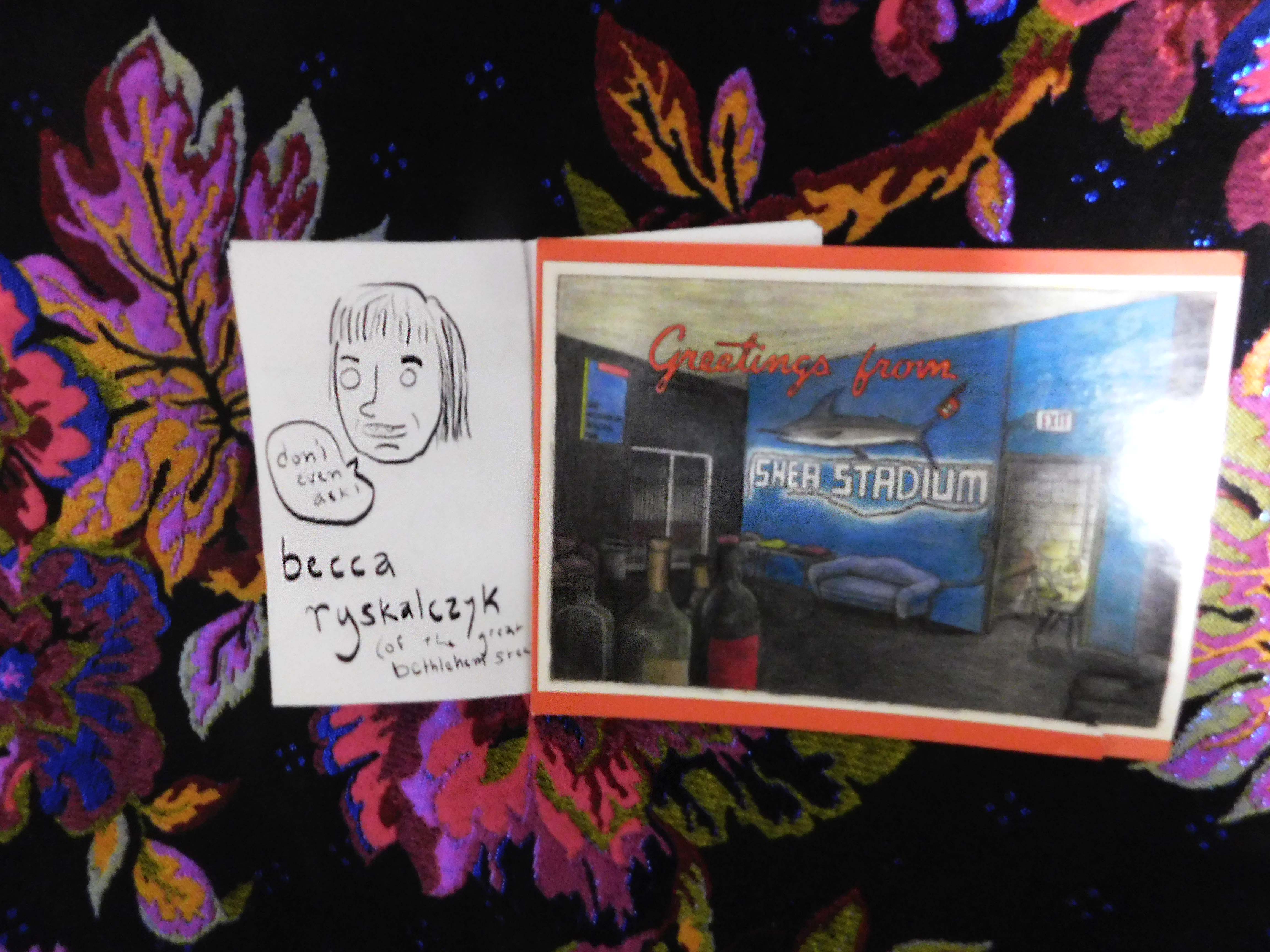
Becca is the leading lady of Bethlehem Steel. Her gift, heard best on Party Naked Forever, is in utilizing a light and sweet voice for a kaleidoscope of emotions. “Deep Back” breaks my heart, “Untitled Entitlement” pretty much captured the current national mood of seething anger and disgust (and the line “sometimes I can’t tell if I’m real anymore” gutted me on a personal level). And yet there’s no fear in raging, either; Bethlehem Steel’s landscape of sound is both fuzzy and ferocious, delicate and dangerous, as all good things should be.

Truth be told, tho, Becca stuck in my mind as a good subject for this column after an encounter at a party in October (she came highly recommended by Jordyn Blakely). And because, in a weird twist of fate, it was in her apartment that I ended 2017. And what was 2017 but the year of a kaleidoscope emotions?

So once again, I find myself braving the (milkless) Brooklyn tundra at the dawn of a new year.

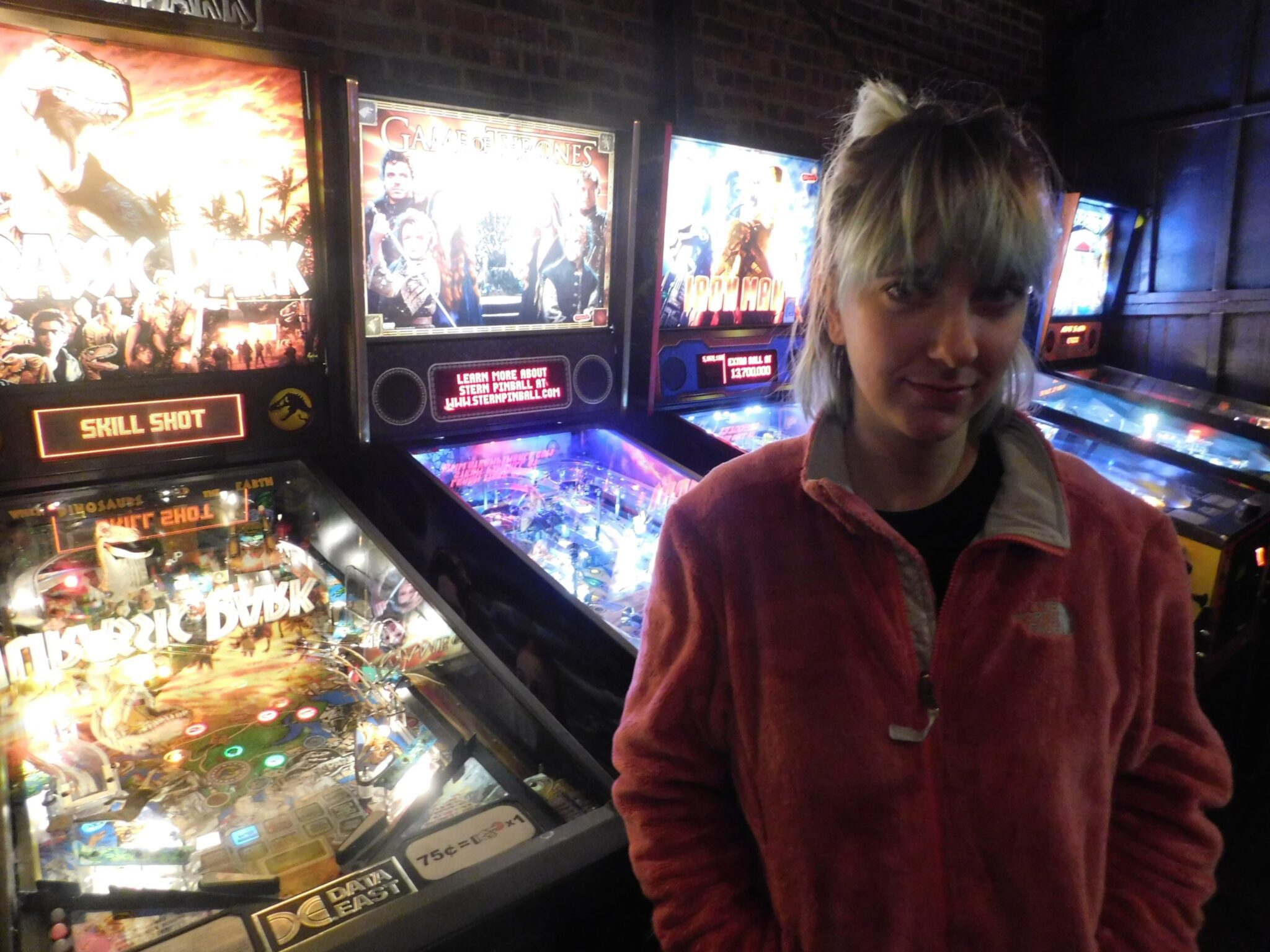
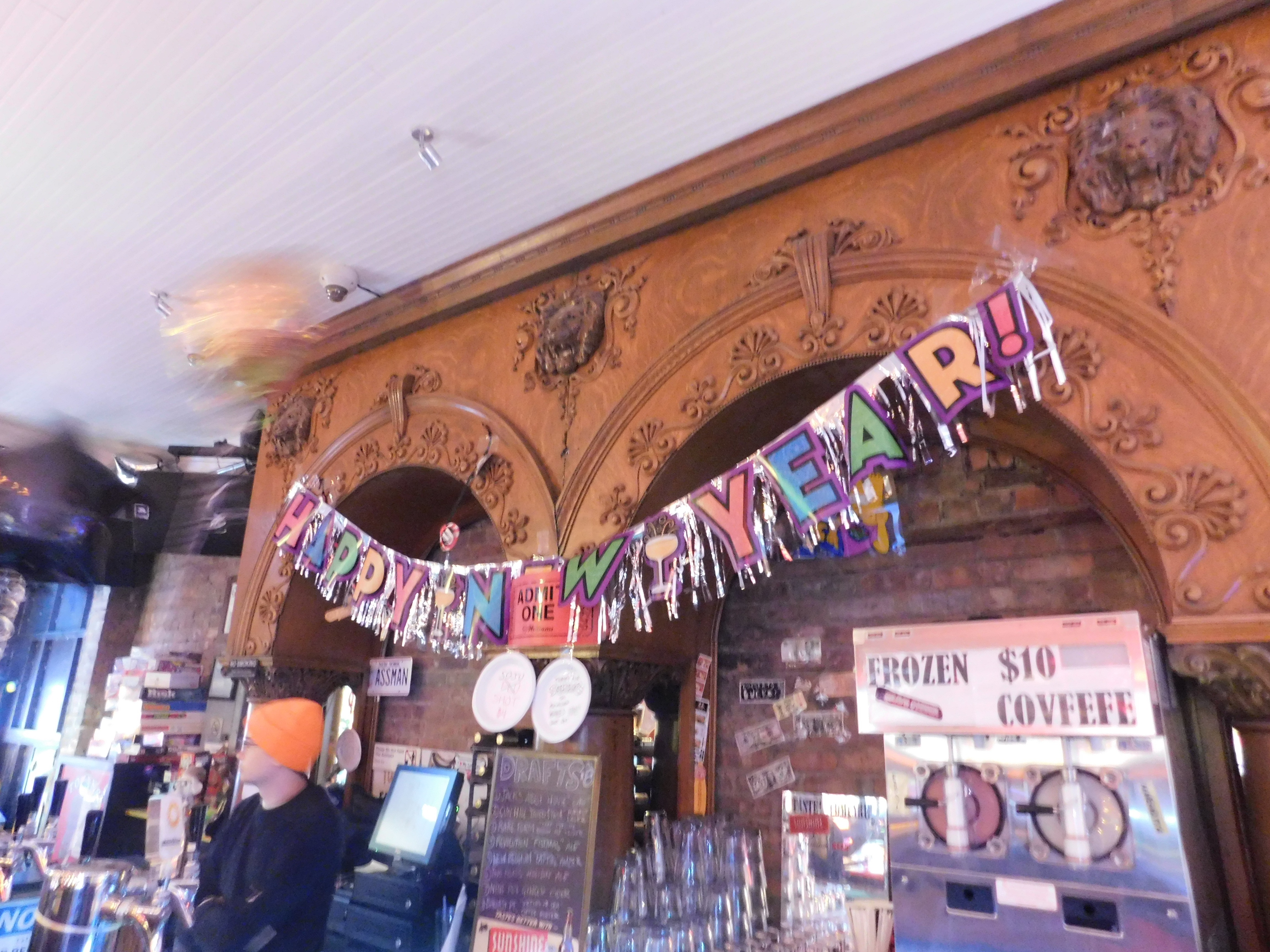
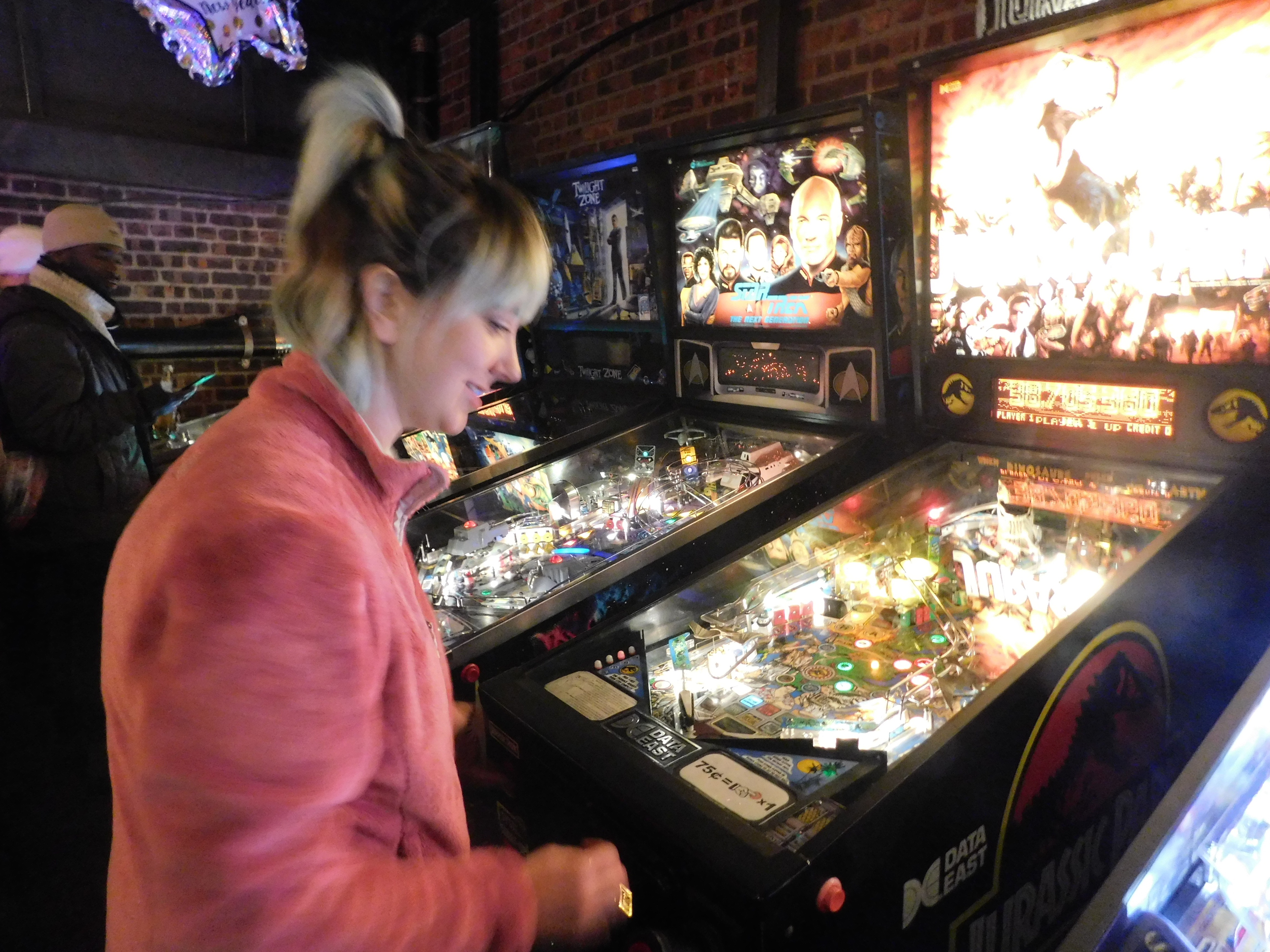
THE SCENE: Becca shows up to Sunshine Laundromat wearing pants-on-pants, a pink Northface (her first, despite misgivings from her SUNY Fredonia days), and excuses herself to glitter-up with one of those Fenty Stix. I’ve never been here, but the flickering pinball-arcade-slash-bar-slash-literal laundromat is her favorite spot.

I grab some sort of holiday ale (I don’t want the holidays to end) in the meantime. It’s, tbh, super late in the afternoon but these days my mornings have started later and later. Plus I brought a scone from Starbucks, so as far as I’m concerned this is a canon breakfast.

When Becca gets back I learn that she’s big, big, big on pinball – it gives her some respite. A while ago she quit smoking, which gave her an out from social interactions that went on too long. “And now I just find the pinball machine in the bar,” she explains later.

I try to be a gentleman and ask what machine is her favorite (Jurassic Park is good; The Big Lebowski is like her White Whale because it’s always out of order). But then, I see it.

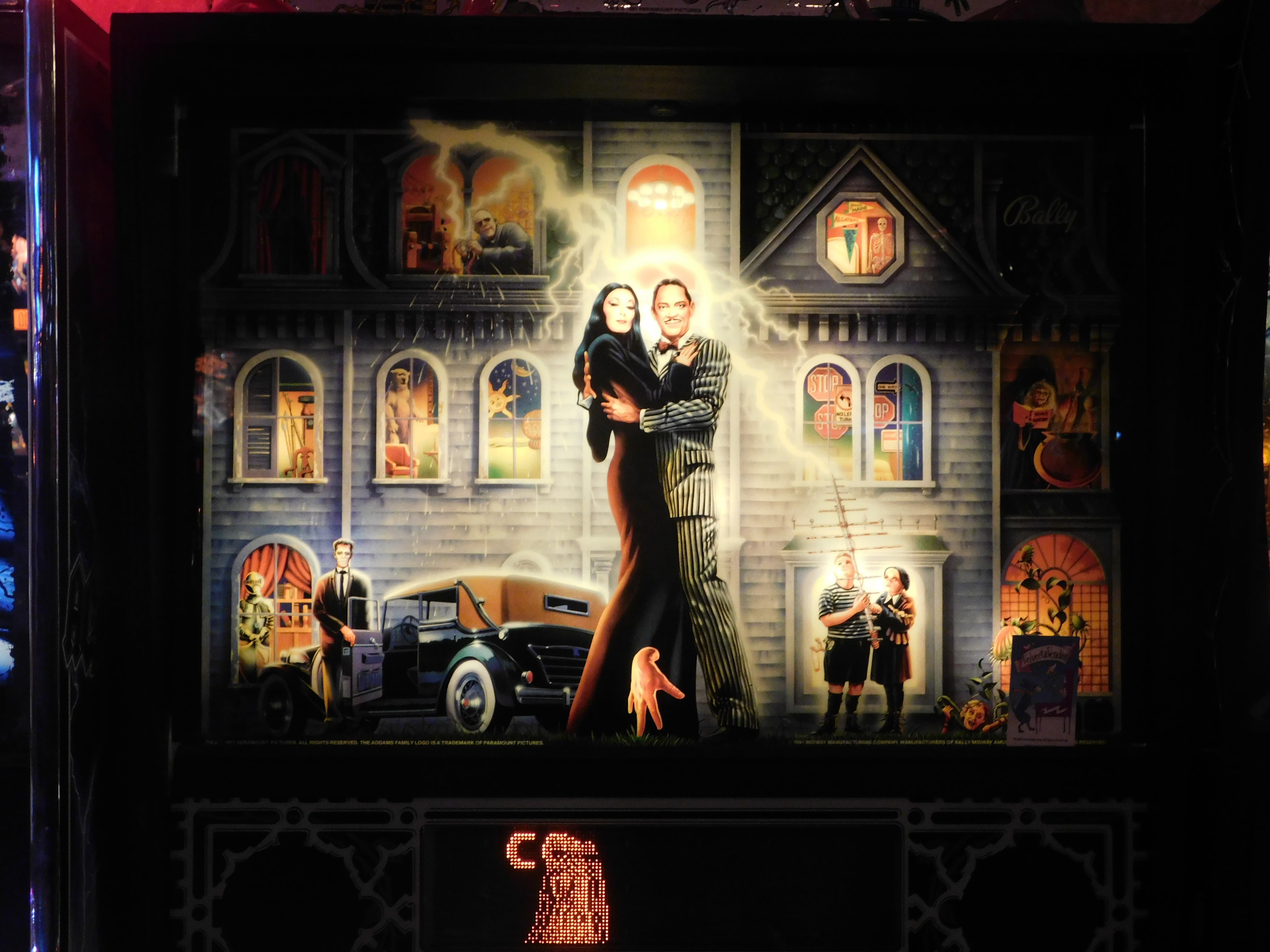
“OH THERE’S THE ADDAMS FAMILY PINBALL MACHINE,” I scream. “Can we do that?”

Yes.

4:33 I suck at the Addams Family so we try our luck with Elvira next door and I ask about New Years Day. “How was clean-up the next day?”

She smiles.”I don’t know – I was working. I got home and my apartment was clean. It was magical.”

“So magical! I only got to see two rooms but I liked the entire wall that had streamers.”

“Oooh, it’s down,” she says.

My face drops. “What happened?”

“It was smelling really weird, and then it dyed our wall blue.”

“Was it like, dollar store streamers?” I ask, as if 75% of my apartment isn’t a collection of Dollar Tree finds.

“It was. It was definitely smelling like a dollar store and making me feel sick and sneeze a lot.” That’s fair; sometimes beautiful things can be toxic and wall-damaging.

We suck a little bit less at Elvira, and that’s a huge comfort.

5:08 Meanwhile, at the Jurassic Park machine we talk about resolutions and maybe Jeff Goldblum a bit (“So hot.” “SO HOT.”)

She mulls over her wish for 2018 as a plastic raptor pops its head up for a charming shriek. “I want to be…less anxious.”

“Do you have a plan of attack with that? Because I haven’t found one for my anxiety yet.”

Becca’s idea is more about streamlining her responsibilities, rather than spreading herself too thin. “Maybe I just should be doing less,” she ponders. “Just not taking on a lot of unnecessary things, like ‘I need to plan three things all at the same time.’ And then it’s just TOO much. Or ‘I need to be social’ but really I just want to eat stew and watch The Office.”

Word. “That sounds like a perfect life plan and anyone who loved you would not keep you from doing that.”

The secondary goal is to get more into make-up, and she’s currently obsessing over Rihanna’s line.

“It’s the galaxy palette, look at that shit,” Becca says, gleefully pulling up the sparkling polychrome on her phone.

I do my best raptor impression in response. “That’s fucking gorgeous.”

[fusion_builder_container hundred_percent=”yes” overflow=”visible”][fusion_builder_row][fusion_builder_column type=”1_1″ background_position=”left top” background_color=”” border_size=”” border_color=”” border_style=”solid” spacing=”yes” background_image=”” background_repeat=”no-repeat” padding=”” margin_top=”0px” margin_bottom=”0px” class=”” id=”” animation_type=”” animation_speed=”0.3″ animation_direction=”left” hide_on_mobile=”no” center_content=”no” min_height=”none”]

Courtesy of Instagram

“I know.” She goes back to the Goldblum-sanctioned game.

“Wait, which color do you want the most? Gun to your head? If you could only have one.”

“The blue,” she says decisively, and I look back at the pallette.

“The dark or the light?”

“Fuck, the light,” she says, almost panicked as she taps on the side buttons. “The light right now.”

I look through Rihanna’s collection through the spiderweb of Becca’s iPhone screen, feeling highly uncertain I could ever pull off a seaweed-colored mouth.

“You can wear green lipstick if you want,” Becca says encouragingly. Apparently getting into cosmetics is sort of a new-old thing; she was all about covering her face in her teen years, and then entered a make-up sabbatical. She had this epiphany where she thought, “Why the fuck do I need to wear this?” But once the “need” was taken out of the question she was firmly in the camp of “This is so much fun!”

“Before I would wear it because I was really self-conscious. Like I’d wear concealer and eyeliner and I couldn’t leave the house without my nails painted,” she explains. “And something flipped. So now that that’s behind me and I want to go all the fuck out there for ME. There isn’t any anxiety of, ‘Oh I can’t let anybody see me without eyeliner on.'”

And that’s the right reason to wear make-up. It’s what Rihanna would want.

5:46 At this point I’m onto another Holiday Ale and Becca’s getting reflective over her Miller High Life. It’s a tough subject: the loss of Shea Stadium. I know, I know, we’re all still fucked up about it. But she grew with it as a sound intern, then worked there, and even practiced in the venue.

“It was really special. I left for a year to go to Vermont to build this camper house and then with the last days I was on tour. I missed… everything. But I was building this fucking house to live outside of Shea.” She laughs half-heartedly. “It’s so crazy, it’s so sad.”

Her own emotional kaleidoscope shifted from being upset to getting angry. “I went into Henry Rollins mode and was like ‘Everyone in fucking Williamsburg can all get fucked, fuck this, fuck that guy, let’s destroy the world.'” (Split second pause.) “In a positive, ‘Keep DIY alive sort of way.'” She’s still great at capturing the collective mood, though.

“I think I definitely just kind of repressed a lot of Shea things because I left,” she says. “I had my nights while I was on tour… like I was playing shows and going to National Parks. And one night I found myself in a field of wild sage -”

Where did you find a field of wild sage?” I ask, incredulous, almost dropping my ale. “Where did you go where that was a thing?”

She pages through her memory. “Arizona…? It was some government public land spot. And I just remembered taking a ton of it. I was making these cartinis which were just warm gin and warm olives.”

“I love gin but I don’t know how I feel about that.”

“I made like a huge one in my plastic cup. And I picked up all this sage and was throwing it into a fire. And that was the last night of Shea and I couldn’t be there,” she concludes.

There’s something charming about the off-beat ritual. We all say good bye to things in different ways.

[/fusion_builder_column][fusion_builder_column type=”1_1″ background_position=”left top” background_color=”” border_size=”” border_color=”” border_style=”solid” spacing=”yes” background_image=”” background_repeat=”no-repeat” padding=”” margin_top=”0px” margin_bottom=”0px” class=”” id=”” animation_type=”” animation_speed=”0.3″ animation_direction=”left” hide_on_mobile=”no” center_content=”no” min_height=”none”]

Relevant found items from scenic Mary Grace’s room.

Speaking of which, fuck, I need to say goodbye. I eat my cranberry scone on my trip home, the sky pitch black above me. When I get home my NYE dress is still brightly ultraviolet on my floor, the brocade remnant of 2017: the year of a kaleidoscope emotions.

Wanna know a non-secret? I’m a big, big advocate for expressing those blue and red toned feelings, turning it into art, or having it fuel a story. But I also love being able to be naked with someone, emotionally naked, not just in a boned-all-night-to-Belle-and-Sebastian kind of way. This scene, at its most earnest, bonds people together into this drunken web of catharsis. And among all the loss and chaos, that was the bittersweet revelation of at the end of 2017.

Not everything that ends has to go sour, because you can always take that leftover pain and turn it into something wonderful to share with someone. You can throw out those beautiful, lethal streamers and finally feel like you can breathe. You can pick up a make-up brush again for the right reasons and not the wrong ones.
Not every ending is an ending. Sometimes it’s an evolution.
You can listen to Bethlehem Steel on Bandcamp and follow them on Facebook.[/fusion_builder_column][/fusion_builder_row][/fusion_builder_container]

NEWS ROUNDUP: Festival Announcements, Copyright Cases & More


  • Radiohead vs Lana Del Rey

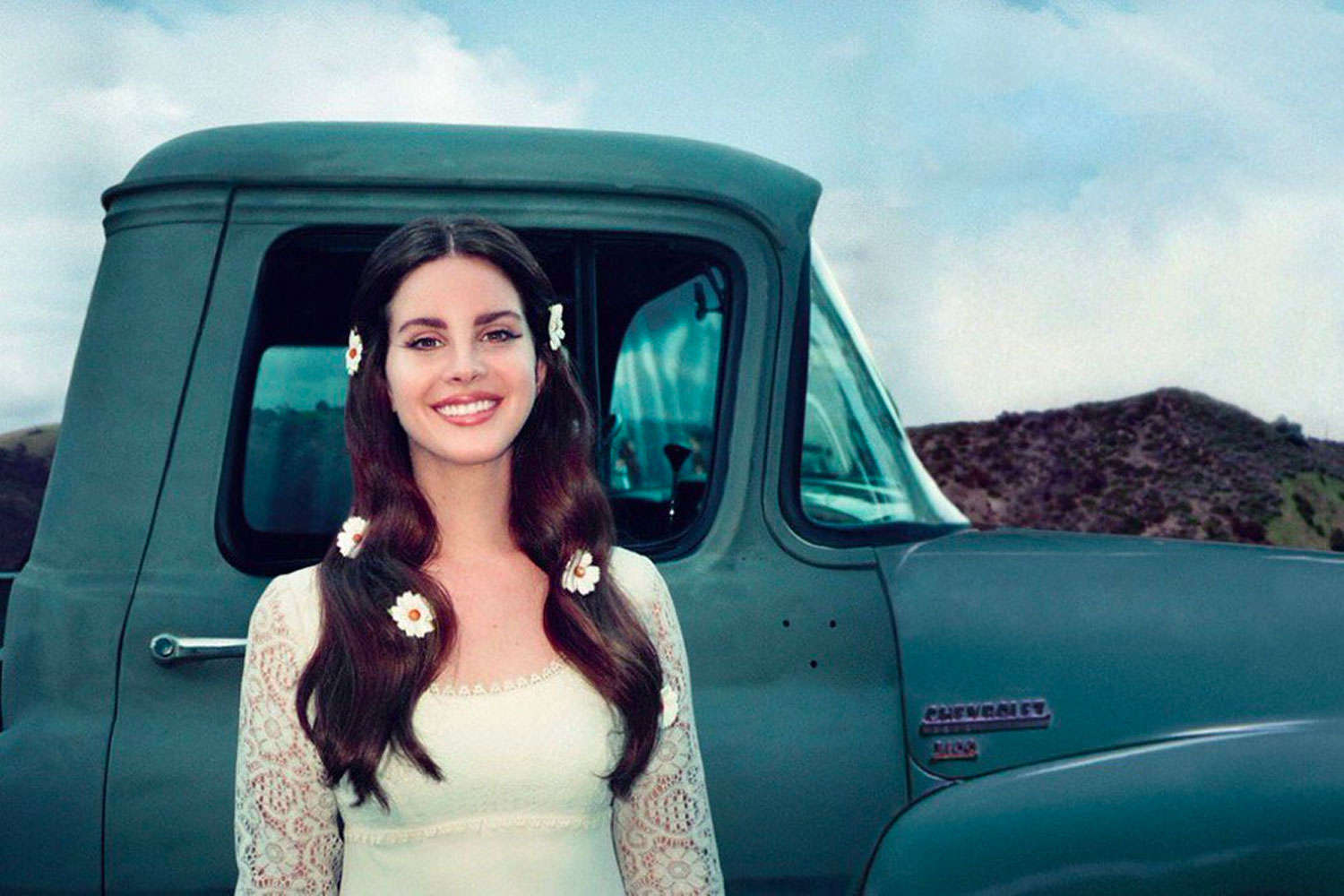
    On January 7th, Lana Del Rey confirmed news reports that hinted at a copyright lawsuit with Radiohead. The band is reportedly suing her over the similarities between their 1992 breakout hit, “Creep,” and her 2017 track, “Get Free.” Del Rey tweeted:

    It’s true about the lawsuit. Although I know my song wasn’t inspired by Creep, Radiohead feel it was and want 100% of the publishing – I offered up to 40 over the last few months but they will only accept 100. Their lawyers have been relentless, so we will deal with it in court.”

    The situation is considered by many to be the result of the “Blurred Lines Effect” – the 2015 court ruling that awarded $7.4 million in damages to Marvin Gaye’s estate for similarities between Pharrell, T.I., and Robin Thicke’s massive 2013 hit and Gay’s 1977 classic, “Got To Give It Up.” However Radiohead’s publishing company have disputed Del Rey’s claims. Warner/Chappell issued a statement acknowledging that they have been in copyright negotiations with the Lust For Life musician’s label but deny filing a formal lawsuit or demanding 100% of Del Rey’s “Get Free” publishing rights.

    Interestingly enough, “Creep” was once at the center of a similar copyright dispute. After the early-nineties release of Radiohead’s single, Brit-pop band The Hollies successfully sued Thom Yorke’s group over similarities between “Creep” and their 1974 hit, “The Air that I Breathe,” which was written by Mike Hazlewood and Albert Hammond (yep, the father of Strokes member Albert Hammond Jr.). “Creep” now lists Hazlewood and Hammond as writers alongside Radiohead. If a court determines that Del Rey’s song does borrow from “Creep,” Radiohead, Hazlewood, and Hammond could all be credited as co-writers of “Get Free.” Compare the three tracks side by side below.

  • 2018 Festival Announcements

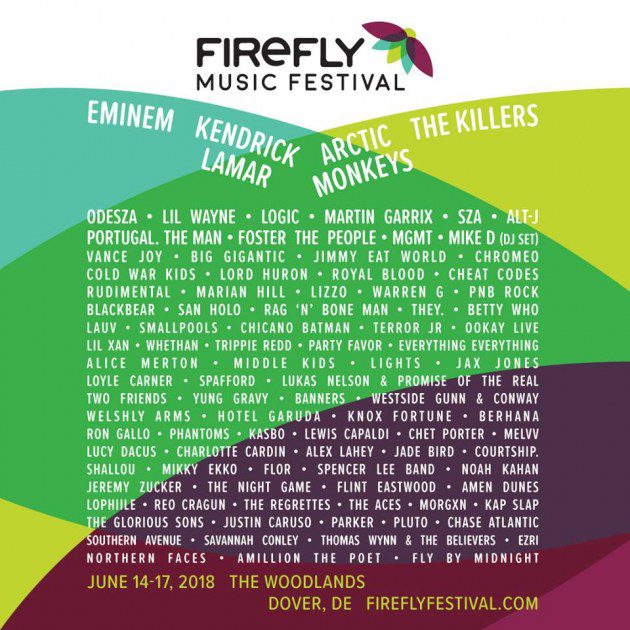
    This week, major spring and early summer festival announcements are helping us defrost from record-breaking cold! On January 10th, South by Southwest released their third round of showcase announcements. Superorganism, Goatgirl, A Place to Bury Strangers, Sunflower Bean, and many more will join the 500+ lineup and perform from March 12 – March 18 this year. Bonnaroo announced that Muse, The Killers, and Eminem will headline the normally rootsy jam-band oriented fest, surprising some. Then on Thursday, Delaware music festival Firefly announced they’d also be hosting Eminem and The Killers as headliners, as well as Kendrick Lamar and Arctic Monkeys, in June. Audiofemme favorite, SZA, will also perform; she is one out of only nineteen women included in Firefly’s ninety-five act lineup. Many have lamented the homogeneity of this year’s festivals, particularly the lack of female musicians. Pop singer and festival circuit staple Halsey tweeted, “Damn guys come onnnnnn. Where the women at….It’s 2018, do better!!!”

  • Other Highlights

    The Breeders have announced their first album in ten years, All Nerve, out March 2nd on 4AD, and have shared the title track. The Dandy Warhols are playing two shows in NYC at the end of February. Karen O and Michael Kiwanuka recorded a song for a short Kenzo film (hear it at the 4.45 mark in the video below). Kali Uchis’ brand new song, “After The Storm,” features Tyler, The Creator and Parliament-Funkadelic legend, Bootsy Collins. Sunflower Bean debuted single “Crisis Fest” off of their upcoming sophomore album, Twentytwo In Blue. The album is slated for March 23rd release and is co-produced by members of Unknown Mortal Orchestra and Friends. Taylor Swift’s new video for “End Game” came out yesterday and also stars Ed Sheehan and Future, the lone musicians featured in Swift’s latest album, Reputation. Fifth Harmony ex-member Camila Cabello’s self-titled album was released today and has already risen to the top spot on the charts in more than ninety countries. Wednesday marked the two year anniversary of David Bowie’s death – we still can’t believe he’s gone! #BowieForever


TRACK OF THE WEEK: Why Bonnie “Made of Paper”


You can’t escape your past or the skin you’re born into. Blair Howerton of Austin, TX bedroom pop outfit Why Bonnie delivers this harsh reality in an unexpectedly uplifting package on “Made of Paper,” the latest single from the band’s upcoming debut EP In Water. It’s a bright, catchy earworm that warmly illustrates personal, intimate scenes from Howerton’s every day life, from her messy kitchen filled with dirty spoons to a cozy fireside reading spot. These wistful scenes might seem inviting, but they’re also ultimately isolating; when Howerton laments “You don’t know all the songs that I’ve sung,” it feels like a plea meant to draw someone closer who still hovers at a distance. The song’s swirling lead guitar lines and bouncy rhythm section seem like a good excuse to get to know Why Bonnie much better. In Water is due to be released February 16th via Sports Day Records.

Listen to the entire Track of the Week Playlist below…

ONLY NOISE: Talkin’ About a Resolution

I’m not two weeks into 2018 and I still haven’t gone to the gym, started paying my student loans, or repaired the ripped and button-less pile of clothing in my bedroom. Fortunately, I’m not alone. How long do most people last when attempting their new routines – the ones drafted under that misleading label New Year’s Resolutions? Is your credit already improving? Do you see abs forming on your once shapeless midriff? If the answer is “yes” to either of those questions, please do not tell me.

The expectation to do better the moment the clock strikes 12:00 can be absurd and daunting, especially for someone like me who really falls for it and formulates not one resolution, but a litany of them. Sometimes they are as vague as, “Get your life together!!!” Other times they are simple yet wildly inefficient, like the year I was going to “wear heels more.”

Resolutions that necessitate reversing our lifestyles and personalities (like that one about heels) seem to be the goals that don’t stick, so this year I’m sticking to what I know instead. I figure that if the bulk of my New Year’s resolutions revolve around music, I might actually tick them off my list. So here they are, my six reasonable, totally doable, music-related goals for 2018.

1) Go to more shows (and keep a record of each one).

I say this every year: That I will a) go to more shows, and b) designate a notebook simply for the purpose of recording each one I attend. Going to more shows is the easy part; if I really put my mind to it, I bet I could average between one and three a month. The hard part is remembering to write them down. I don’t need a florid play-by-play of each song and coat check line, just the band names, date, and venue.

I’m aware of that endless archive called the Internet, but I have an affinity for lists on good old-fashioned paper. I have plenty of notebooks allocated to specific subjects, and it doesn’t sound difficult to do the same for concert-going, but I always manage to forget. By the time the year is out, I can’t possibly remember all of the shows I’ve been to, let alone dates and venues, without having to spend a few hours sifting through the web. It’d be nice to just flip to a page marked: “Shows, 2018” and relive the memories via bullet points.

2) Read that enormous book about John Peel that’s been on my bookshelf for ages.

About two years ago, when I was still working as a panty designer and listening to the gospel of BBC6 Music everyday, DJ Jon Hillcock was singing the praises of David Cavanagh’s book, Good Night and Good Riddance. The 605 page tome about John Peel has been sitting on my bookshelf ever since, as I purchased it immediately after Hillcock’s endorsement. The problem with the book is not its subject matter – I am a huge admirer of Peel, the late Radio 1 DJ. The problem lies in those 605 pages, and the fact that they make the book so large that it fails my commuter reading test, the criteria being: can I comfortably hold the book with one hand while the other grabs the subway pole? The answer for this paperback is: No. Alas, I will have to grin and bear the hand cramps sooner or later… because I really do want to read it.

3) Listen to more radio.

Some of my favorite music has been funneled into my ears by the loving DJs at stations like KEXP, BBC6 Music, and Brooklyn’s Lot Radio. Lately however, my radio ration has decreased in size. Where once I listened daily, now I do so monthly. This is silly. What’s sillier is that I’ve never even visited the Lot Radio, despite their throwing constant shindigs right off of my train line. However, considering the station’s limited indoor space, perhaps I will wait until spring 2018 to pop by…

4) Re-learn the small amount of piano I learned over a year ago.

Between the summers of 2015 and 2016 I took piano lessons once a week in Greenpoint’s San Damiano Mission (across the street from the Lot Radio). I was a determined student initially, but after a few months I let my practice regimen slip. A year later the lessons ended due to my dwindling cash flow, and though I would love to start them up again, they’re not quite within my budget yet. Even if I could afford them, I’d still want to refresh my “abilities” before facing my teacher again. I suspect this will be the most difficult item to achieve on this list, as it takes the most discipline, patience, and humiliation.

5) Go record shopping more.

Like piano lessons, this goal is contingent upon financial stability. However unlike piano lessons: I can write it off! There used to be a wonderful record shop called Sideman Records (sister shop to Captured Tracks in Greenpoint) just a 15-minute walk from my house. Sadly, it closed, and I’ve found my record store purchases diminishing ever since. One goal for 2018 is to go to record shops I’ve never been to, like Human Head in Bushwick and House of Oldies in the West Village. These spots may not be walking distance from my apartment, but that’s no excuse to not support them.

6) For the love of God: Order crates for my records.

This resolution addresses one of my most shameful secrets as a music journalist: that my record collection follows no rhyme or reason or system of organization. My albums are stacked against a wide shelf in my bedroom, seemingly arranged in a way that displays “What I’ve been listening to the most lately” in the front and buries “What I often completely forget I own” in the back. This anti-system nurtures a habit in which I listen to the same thing (Smog) over and over and over again, and leave other records (James Chance and the Contortions, Phil Collins) completely untouched. My hope is that crates would help me categorize my vinyl and give it a dignified home that would ward off warping. I currently have my LPs propped up with the dumb bells I’m supposed to be using to “get in shape,” which are protecting my vinyl just as much as they are sculpting my deltoids.

INTERVIEW: Wax Idols Redefine Their Happy Ending With New LP

[fusion_builder_container hundred_percent=”yes” overflow=”visible”][fusion_builder_row][fusion_builder_column type=”1_1″ background_position=”left top” background_color=”” border_size=”” border_color=”” border_style=”solid” spacing=”yes” background_image=”” background_repeat=”no-repeat” padding=”” margin_top=”0px” margin_bottom=”0px” class=”” id=”” animation_type=”” animation_speed=”0.3″ animation_direction=”left” hide_on_mobile=”no” center_content=”no” min_height=”none”]

all photos by Kristin Cofer

For Hether Fortune of Wax Idols, there’s no such thing as a fairy tale ending. There’s simply life – the bleakest aspects of which have often become fodder for her musical output – and death, the finality of which she’s come to theorize may be the sweetest release. On Wax Idols’ forthcoming record Happy Ending, slated for release sometime this spring, Fortune spins another of her dark, personal narratives, with one major difference; she’s learned to give up some of the control she had over her past work and let what was essentially a solo project evolve into something she’s always dreamed it would become – a full band.

Though Wax Idols has featured other musicians in the past – nearly a dozen over the years, by Fortune’s estimate – it was always a vehicle for Fortune’s songwriting, with a revolving door policy when it came to who played along. “I’ve tried to keep things very fluid and amicable and friendly,” says Fortune when we speak over the phone. “[/fusion_builder_column][fusion_builder_column type=”1_1″ background_position=”left top” background_color=”” border_size=”” border_color=”” border_style=”solid” spacing=”yes” background_image=”” background_repeat=”no-repeat” padding=”” margin_top=”0px” margin_bottom=”0px” class=”” id=”” animation_type=”” animation_speed=”0.3″ animation_direction=”left” hide_on_mobile=”no” center_content=”no” min_height=”none”][Other musicians] have been involved in varying degrees and it’s always been chill. You contribute what you want, I’ll credit you appropriately, and if you can’t do it anymore it’s okay.” Her laissez-faire approach worked well enough over the course of three emotionally raw LPs: 2011 debut No Future leaned heavily on the San Francisco garage punk scene from whence it came; 2013 saw a turn toward goth-tinged post-punk for Discipline + Desire; by 2015, American Tragic placed Wax Idols solidly in the moody dreampop sphere.

That was when a permanent Wax Idols lineup began to congeal. Multi-instrumentalist Rachel Travers, who played drums on American Tragic, became a core part of the band; Fortune’s longtime friend Peter Lightning (of Some Ember) joined them, and “everything changed,” according to Fortune. “Once we started playing music together, we realized that we could do this for real, like we could write together,” she says. “And that’s something that I’ve never really had. I’ve never had a pure collaborative relationship with someone.” Travers began writing guitar parts in addition to drumming duties. And although bassist Marisa Prietto would eventually opt not to join Wax Idols full time since she lives in Los Angeles, she ended up writing the chorus for “Devour,” which turned out to be one of Fortune’s favorite songs on the LP.

“I’ve always wanted this project to be a band – that’s why I called it Wax Idols and not my name. I was always hoping that the right people would find the project and stick,” says Fortune. The result of writing her first truly collaborative album, she says, wasn’t a distillation of her sound, but cohesion. “Now it’s much more streamlined; it finally feels more like what Wax Idols music really sounds like,” she says. “It’s taken a lot of weight off of me.”

Part of the reason those first three records sound so disparate, she admits, is that she was “trying to cram too many ideas into one place with Wax Idols.” Collaborating with a full band helped her focus and define the project, and while touring behind the reissue of American Tragic, an idea for the next album began to take shape. “[The title Happy Ending] came to me when we were in the van on tour two summers ago,” she recalls. “The initial concept was meant to be this sort of fictional narrative about somebody who has moved beyond the body, a kind of tongue-in-cheek happy ending, like: I’m not stuck in this flesh carcass any more.” Wax Idols released a single, “Everybody Gets What They Want,” as an early teaser. But in the wake of a tragedy that hit too close to home, the band shelved their work in progress, eventually scrapping many of the songs and reworking others. Fortune was no longer interested in writing an esoteric concept album – because she had to rely on writing music to save herself.

“I’ve had severe depression for as long as I can remember, paired with crippling anxiety, which turned into a panic disorder over the years. In the last year or so, it got really dark, darker than it’s been since I was a teenager,” Fortune says. “I have attempted suicide twice in my life. And I got pretty close at the beginning of last year to trying again. But I was able to pull myself back. Realizing how dark things were last year and seeing how it was affecting my loved ones, and my band and everything, I just was like, something has to change.” Fortune went back to therapy. And she began writing noise-driven solo material without any self-imposed boundaries, to move past feelings of self-loathing and self-doubt. “I just did my best to quiet those voices, or even if I couldn’t keep them quiet, I tried to give them an outlet in sound.”

She realizes now that at the beginning of her career, she’d tried to project a hardened, give-no-fucks attitude, but that in the end, this wasn’t an honest portrayal of the emotional devastation she felt inside. “I think that was empowering to an extent,” she says, “but a lot of it was really me trying to hide the fact that I was ill, and was really scared of dying. I think it does a disservice to myself, to fans, to peers, or whoever, to not tell the truth, which is that I have severe mental illness, and it’s a struggle for me every day.” In one of Wax Idols’ most arresting new songs, “Crashing,” Fortune sings openly about suicidal ideation – not to glamorize it, but as a way to communicate what it’s really like for those, like herself, that have been “at the brink of death.” Fortune hopes this radical honesty will help destigmatize mental illness.

“Crashing” is one of a handful of songs that survived the first iteration of Happy Ending, along with “Too Late,” “Scream,” and “Belong.” Wax Idols played them live for the better part of a year before taking them into the studio, which Fortune says made recording them “a breeze;” to complete the album, they put together “impeccable” demos, then re-tracked them at Ruminator Audio, where Fortune says she “worked her ass off” trying out new vocal techniques and experimenting with “the fun stuff – nuanced post production things, weird sounds and textures.” Fortune says the content of Happy Ending is some of the darkest she’s put to tape – which is no small statement, given her back catalogue – but that hashing it out in the studio brought her some relief, even if the bulk of that came just from being able to complete the record.

“It was painful content-wise, but [making the record] felt exciting and we could tell we were pushing ourselves, and it was a great record to make. It was difficult but it felt really authentic, it felt right,” she says. “[This record] stayed with me for a year and half through all kinds of hell and turmoil and struggle with creating it, so I feel like I had to keep it intact. I’m seeing it through ‘til the end, seeing the idea through.” That sentiment gives the record’s title its true weight; making meaningful art out death, out of struggle, and out of our darkest moments is perhaps the happiest ending any of us can strive for.

Wax Idols plays our Audiofemme showcase at Elsewhere, Zone One, on Friday, January 12 with Bootblacks and Desert Sharks. Check out Hether’s exclusive Audiofemme playlist below – we’ll see you at the show! 

PLAYING DETROIT: Jonathan Franco Gets Inventive on Debut LP

[fusion_builder_container hundred_percent=”yes” overflow=”visible”][fusion_builder_row][fusion_builder_column type=”1_1″ background_position=”left top” background_color=”” border_size=”” border_color=”” border_style=”solid” spacing=”yes” background_image=”” background_repeat=”no-repeat” padding=”” margin_top=”0px” margin_bottom=”0px” class=”” id=”” animation_type=”” animation_speed=”0.3″ animation_direction=”left” hide_on_mobile=”no” center_content=”no” min_height=”none”]

photo courtesy Jonathan Franco

Finally, someone has been able to put what it feels like to be a 20-something into words and music without sounding devastatingly hopeless. That person is Detroit songwriter, poet, and musician, Jonathan Franco. In his debut album, Swimming Alone Around the Room, Franco puts his deep anxieties, rare moments of euphoria, and goddamn heart on the table for all of us to pick apart and reassemble into our own realities. Written and recorded over the last five years, the 17-track labor of love is a diaristic journey, oscillating between spacious moments of reflection and dactylic snapshots of feeling, accurately mimicking the ebb and flow of, well, real fucking life.

Experimental, yet accessible, Franco uses an unorthodox orchestra – combining traditional instruments with field recordings and experimental sounds – to portray salient feelings and moments. In the album’s stripped-down instrumental opener, “Apartment Pianos,” Franco melds incandescent synths, low machine hums, bells, and indiscernible field recordings to create a feeling of serenity and peace. It’s as if he’s encouraging listeners to clear their heads before delving into the deep and daunting themes that follow, like someone attempting to get their shit together before entering a sweat lodge.

He fully enlists his collage-like composition style on “Applause,” an exploration of mortality and the passing of time. The song starts off with a solo organ note, bare acoustic guitar, and Franco’s vulnerable opening line, “I lay in the grass in a flyover state / Feeling like I am everything you hoped I wouldn’t be,” sang in a low whisper. It feels like Franco is talking to himself here, reflecting on the past and what has led him to this specific place and time. But the ruminative mood becomes unnerving as Franco recalls seeing the ghost of his grandmother over ethereal synths and radio static; the guitar re-enters along with what sounds like a ticking clock or metronome and stack of papers used for percussion. The tension resolves with a sweet trumpet melody at the song’s finish, and Franco is freed from the weight of time – at least for a moment.

[/fusion_builder_column][fusion_builder_column type=”1_1″ background_position=”left top” background_color=”” border_size=”” border_color=”” border_style=”solid” spacing=”yes” background_image=”” background_repeat=”no-repeat” padding=”” margin_top=”0px” margin_bottom=”0px” class=”” id=”” animation_type=”” animation_speed=”0.3″ animation_direction=”left” hide_on_mobile=”no” center_content=”no” min_height=”none”]

photo by Noah Elliot Morrison

While many of the songs follow this winding, experimental path, Franco also scatters a few straightforward indie-rock tracks throughout the record that reveal considerable influence from bands like Bedhead and The Microphones. Along with alternating between traditional and experimental instruments, Franco occupies different parts of his voice throughout the record. He touches on everything from an apathetic lo-fi drawl in “Wine Lips” to an Elliot Smith-esque falsetto in “Season” and finds a sweet spot in between the two in “18A.”

While Franco adapts a linear storyline into these compositions, he doesn’t sacrifice his poetic lyricism. On rambling stream-of-consciousness tale “18A,” the singer spends north of seven minutes recounting days spent on the same bus and reminiscing about someone he used to love. Throughout the ride, Franco thinks he sees his former partner in various places around town, but he’s not sure. “For my eyes are two weak telescopes and your face is just a crater on the moon / And I hope to see you much more clearly soon,” sings Franco, perfectly encapsulating the disillusionment of estrangement and the longing that comes with it. Although Franco utilizes his talent for metaphor throughout the album, he never comes off as a pompous or melodramatic poet, but more of an old soul who knows exactly what to say.

Add the insurmountable pressure of simply existing to confronting mortality and lost love and you will arrive at the “early adulthood triad.” Franco accomplishes this with “Crashing,” a beautifully unsettling ode to not knowing what the hell you’re doing in life. The song starts out with what sounds like a shower running over a broken transistor radio then shifts to airy vocals and calming acoustic guitar. Throughout the song, Franco’s atmospheric background vocal hovers like a ghost over the lyrics “I don’t know how to keep my world from crashing down.” The phrase is repeated over and over, representing the debilitating paralysis brought on by anxiety.

But, like I said, this record isn’t about hopelessness. It’s about acknowledging and capturing the impermanence of emotions, and that includes the happy ones, too – nostalgia, love, clarity. In “A Topiary,” Franco indulges in replaying messages from loved ones while reminding himself there are still more blissful memories to be made. “I can still call myself young / and it tastes good on my tongue,” sings Franco, atop a collage of bells, knocking, synths, and lo-fi guitar.

At its core, Swimming Alone Around the Room hints that existential dread is sometimes kinda nice. It offers a cathartic safe haven for the uncertain, unconcerned, or over-concerned (so basically, everyone) and an original take on experimental indie music, if confined to any genre at all. Franco’s tendency to shapeshift both instrumentally and vocally elevates the album to a work of art that emulates the human experiences of indecision, change, and growth. 

[/fusion_builder_column][/fusion_builder_row][/fusion_builder_container]

PLAYING COLUMBUS: Absinthe Father on Making DIY Spaces Safer

[fusion_builder_container hundred_percent=”yes” overflow=”visible”][fusion_builder_row][fusion_builder_column type=”1_1″ background_position=”left top” background_color=”” border_size=”” border_color=”” border_style=”solid” spacing=”yes” background_image=”” background_repeat=”no-repeat” padding=”” margin_top=”0px” margin_bottom=”0px” class=”” id=”” animation_type=”” animation_speed=”0.3″ animation_direction=”left” hide_on_mobile=”no” center_content=”no” min_height=”none”]

Haley Butters of Absinthe Father doesn’t stop at making music – they also advocate for safer, more inclusive DIY spaces. All photos by Kaiya Gordon.

Haley Butters of Absinthe Father has been running DIY spaces since they were 16. “It was really time consuming,” they admit, “and probably not the smartest thing for me to be doing at sixteen, but it really shaped me as a person.” Now, Butters continues to be invested in the transformative possibilities of DIY spaces. “I’m trying to make sure that people don’t go down the path I went down when I was a kid,” they say, “but [/fusion_builder_column][fusion_builder_column type=”1_1″ background_position=”left top” background_color=”” border_size=”” border_color=”” border_style=”solid” spacing=”yes” background_image=”” background_repeat=”no-repeat” padding=”” margin_top=”0px” margin_bottom=”0px” class=”” id=”” animation_type=”” animation_speed=”0.3″ animation_direction=”left” hide_on_mobile=”no” center_content=”no” min_height=”none”][that they] still have access to music.”

Butters is about as multi-disciplinary as it gets, though they’re reticent about their own talents. They’re thoughtful, funny, and clearly well versed in both accessibility strategies and music making. “A habit I have,” they explain, is that “I think about what I want to say, and then I go through every single possible way it could be interpreted, and I try to make sure it comes across as clearly and as intentionally as possible.” They’re scrappy, too–when they tell me about their production process, I’m surprised to learn how much of their DIY music they truly do themselves. And as we talk in a Columbus café, the snow mellowing into slush outside the windows, I’m happy to settle into a conversation which expands beyond their own musical output to include questions we both have about ethics and intentionality, and what it takes to make a safe space safer.

2018 is off to a good start for Butters. Along with their January 1st release, SP/IT – a split EP between Absinthe Father and Ness Lake, the band for which Butters plays bass – they started recording a new six-song EP, played shows in both Pittsburgh and Yellow Springs, and, after advocating for a friend abused by Ian Graham of Cheap Girls, got blocked by Jeff Rosenstock on Twitter (Haley and their friend have attempted, since last summer, to have Rosenstock withdraw his support of Cheap Girls; he released the now-defunct band’s first two LPs via his Quote Unquote imprint before accusations came to light but has not made a statement on his relationship to them in the aftermath of the accusations against Graham). “It was sick,” they tell me. “Two days into 2018 – blocked!”

On SP/IT, Butters’ work as Absinthe Father is dreamy and expansive; their voice sinking into guitar sounds which vary from airy to biting, inviting to cosmic. But when I ask Butters how they achieved the mix on the EP, they laugh. “This is gonna reveal all my trade secrets,” they tell me. “I open garage band, put it like ten yards away from me, press record, run to my bed, and I just play straight through.”

In truth, this is an over-simplified version of Butters’ method, which is more purposeful than they initially admit. Though they don’t put their music through post-production, Butters curates their sound with guitar pedals, in addition to manipulating sound and tone with distance and volume. On the split, they opted for three different recording techniques, highlighting, they tell me, that “you can make music, record music, and be successful (whatever that means) no matter what level you’re at, [and] no matter what equipment you’re using.”

“Absence,” the first song on the EP, was recorded with the method described above. For the second track (“a little nervous energy is perfectly normal and nothing to freak out about haley”) however, Butters changed their approach. “I have a little i-rig, which is a quarter-inch adapter,” they explain, “and then a little dongle that [I] put in [my] iPhone. So I played the guitar through that into garage band, and then I played that recording out loud and sang [live] to record my vocals.” Lastly, “Marco’s Song,” a Ness Lake cover, was recorded professionally at Daily Grind in Columbus. But, says Butters, the EP “shows you don’t have to make the fancy equipment, because I like ‘Absence’ more than anything, and it’s the least done-up one.”

When Butters talks about the split EP, it’s clear how much they admire their peers in Ness Lake. “[Chandler and I] push each other a lot to create things every day. I’ll give him a challenge – like, write a song about your cat,” Butters laughs. They continue: “He doesn’t actually have a cat. He has like, a tarantula. It’s named Rodeo.” And Butters’ support of their peers expands beyond the tarantula, and beyond their friends in Ness Lake: they gush about their roommates in Columbus duo Queer Kevin, and when I ask about bands they’re excited about, they nearly squeal. “Oh god,” they tell me, “this is where I can go off.”

This investment is a testament not only to the way Butters approaches collaboration, but to their position in the music community as a whole. These days, they balance recording, touring, and managing with running Middle Earth, one of Columbus’ only all ages spaces. “I’m super into getting queer youth involved in scenes really early, because we don’t make things very accessible to people who are younger,” they tell me. But still, they say, “I wish I could do more. I’m not doing as much as I can, especially when it comes to people of color – in our scene, they’re virtually non-existent. To be the only one – and I pass as white – that’s not enough.”

In Columbus, Butters has seen a lack of attention to safety within music spaces. At the last hardcore show they went to, they tell me, they were kicked in the head and projectile vomited. Nobody came to help. To them, that level of carelessness is unacceptable. “When it comes to the way I run my space,” they say, “I want to make sure that the first thing I say is: ‘Hey, my name is Haley. I use they/them pronouns – come introduce yourself to me.’ That way people know they can feel comfortable talking to me.” If guests can’t donate money for artists, Butters gets them involved by putting them to work: telling people where the bathroom is, checking in to make sure that everyone feels safe, or completing smaller jobs, like recycling – all of the “little teeny things that people don’t think about,” they say. Butters has other tricks to make their shows more accessible too: providing time between sets for the audience to go outside and take a break, and handing out ear plugs. “I know it used to be punk to not wear earplugs,” they say, but “2018: it’s the year of the earplug.”

Butters also has strategies for intercepting “rambunctious” guests. “You can’t let that slide out of fear from [that person] lashing out,” they say. “You just have to nip it in the bud and make sure that everyone around them is ok – but also, that that person is ok.” They continue, laughing: “Assholes are still people.”

Despite this attention to detail, Butters is aware that not everybody feels comfortable at DIY shows. “I can do my best to put together a diverse bill,” they say, “and still, there will be almost all white people there. Inclusion is only half of the problem. I think that finding out why POC don’t feel safe, [and] what we can do to improve – [things] like that that people don’t think about.”

“We all just need to do better,” Butters tells me. “I don’t know the answers. I know the problems, but I don’t know the solutions. I wish I did.” One way Butters is striving to do better is by joining friends in organizing a nationwide group of non-men interested in developing better ways to curate safe and accessible spaces. “We’re saying do-it-together, instead of do-it-yourself,” they say. Another is by continuing to book bands that might not be highlighted in other settings: groups made up of trans and queer folks, POC, and people harmed by misogyny. Still, Butters notes, they can’t do it all alone. They know that often, a band will choose to book with other promoters – even if they know about Butters’ work.

“I understand, completely, wanting to make money,” they tell me. “I think that musicians should be paid. I understand wanting to have a good turn-out, and a good show.” But, they continue, “assuming that a white dude is going to curate that better than a non-man is not only fucked up, it’s wrong. If you are an artist, and you give [a] white dude your resources – your social capital, your time, and the opportunity to curate a bill, and book a space, and learn those skills – they just move up.” Butters sighs. “It’s so incredibly performative,” they say. “Everyone wants to support non-men. Everyone wants to support people of color… until it’s time to actually do it.”

While DIY scenes can be a refuge, especially for youth who may have little access to community spaces or familial stability, they aren’t exempt from the structures of power which dictate access and wealth within the United States. Abuse often runs rampant, and in a space where so many hold identities oppressed by the state, naming that abuse can be tricky. “Nobody wants to face backlash,” Butters notes. “Nobody wants to be the person who called out this big artist [with] a lot of social capital. Nobody wants to go through that, and get dragged on twitter […] but everyone’s thinking it. So why do we continue to support it? Why do we continue to let it happen?”

Precarious social and financial positions only add to the fear of being dragged. And, Butters points out, folks don’t want to feel “demonized” for confronting members of their own community – especially if those members aren’t cis-het white men. “In the DIY sphere, when somebody is called out, they’ll use language, or their friends will, to protect them and make it seem like they’re super woke.” And when people don’t take responsibility for harm caused, it’s the survivors of that harm that suffer. “People can be shitty,” Butters says. “Queer people can be shitty, women can be shitty, non-binary people can be shitty, people of color can be shitty… and it’s up to us to hold them to a standard.”

Alongside their continued push for accessible spaces in Columbus, in the coming year Butters looks forward to making more music. Frankly, they tell me, it helps them stay alive. “There are certain feelings, and emotions, and words that I don’t know how to accurately say, and sometimes you can’t say things,” they explain. “I don’t want to make another person feel bad. And if I can put those feelings and words and thoughts into a song […] I have more creative control to make sure that what I’m trying to say is conveyed accurately.” And Butters wants everyone in their life to know that they, too, can pick up an instrument. 

“Anyone can make music,” they insist. “You don’t have to be rock god, finger tapping on a telecaster with a capo…you can do anything and somebody out there will enjoy it.”

[/fusion_builder_column][/fusion_builder_row][/fusion_builder_container]

HIGH NOTES: A Music Festival, Post-Ayahuasca

When I arrived in Mexico for my first three ayahuasca ceremonies, I had a checklist of questions to address: What repressed childhood memories were shaping who I was? Why did I hate my mother so much? Could I stop lying? What was wrong with lying if I didn’t get caught? So, I was surprised that after my first sip sunk in, the face to appear in my mind’s eye belonged not to my partner or my mother or my father but Dutch, the publicist for Houston’s Day for Night music and art festival. And accompanying his image was the message: Receive love and you’ll learn to give it.

Three months prior, I broke it to Dutch that after two years of covering Day for Night, I’d have to miss it. My ayahuasca retreat overlapped with the first two days. But he wouldn’t take “no” for an answer. He said he’d convince the shamans to hold a special, non-overlapping retreat just for me. He asked for the website so he could contact them. He was actually serious.

His idea was absurd, but it was also full of love. Love I couldn’t feel. I could only feel guilt for not coming. Yet another obligation. I hated being tied to others.

A few weeks later, he apologized for making me feel guilty. It wasn’t about the press coverage — he just wanted to see me. So, I asked if he could fly me there even if I missed the first half. He pulled some strings and got me credentialed. And when I didn’t like the flights he proposed, he pulled more strings and got different ones. I’d come in time for the second night, stay for the third day and a few extra days, then fly to Boston to make a meeting.

They say ayahuasca stays in your system for as long as you follow the “dieta,” a sugar-free, salt-free, alcohol-free, dairy-free, caffeine-free diet aimed at bringing out the medicine’s effects. But I wouldn’t know. The moment I got off the water taxi from the retreat, I ordered an iced cappuccino with extra milk. Fuck the dieta, I thought. Fuck rules.  

Yet I swear that as I flew to Houston, the insights kept streaming. “Dutch, you’ve done it again,” I thought as I entered my five-star hotel room. The love in his actions sunk in. Maybe being tied to others wasn’t so bad.

I barely felt the ayahuasca my first two ceremonies. The shamans kept me at a lower dose than others; it was their intuition. During the third ceremony, I got fed up with feeling nothing, and in the dark, when the shaman offering seconds (to everyone but me) said “who’s this?” I said the name of the woman next to me.

This time, I felt it, and my body came alive. I realized how dead I’d been, how checked out. My goal from then on: to check in to life.

After that, the people on the retreat told me I was looking them in the eye for the first time. I had no idea I wasn’t before. But as I walked through Day for Night’s festival grounds, it became clear something had changed. I was holding people’s gazes. I wasn’t spacing out. 

One man who met my eyes followed me to the art installations upstairs. “I just had to say I think you’re gorgeous,” he said. I was careful not to mention my boyfriend as we flirted and left the festival for a drink. As it turns out, ayahuasca is not a magic potion that cleans up your behavior.

The irony of doing what you love for work is that once it becomes work, you start to love it less. In 2015, Day for Night became the first music festival I covered. Wandering its six acres of art installations, I felt like a child in a funhouse. But then, festivals became exhausting. An obligation.

Despite reaching for a new, hyper-connected way of being, I felt numb to the festival’s excitement. I tried checking in to The Album Leaf’s show. I heard drums and a guitar and a violin, but still no emotion. Thoughts like “You should see Solange; she’s Beyonce’s sister” filled my head. I keenly felt the joylessness in these statements. I remembered why I’d begun taking MDMA at festivals.

If you want to recover your lost joy, take MDMA. If you want to discover how you lost it, take ayahuasca.

A man from LA was selling CBD gummy bears and chocolates, and I bought a package of each, hoping they’d help me sleep. Five minutes later, he found me by a circle of white, sound-producing screens, where he pulled me in for a kiss. I pushed him away. “I thought you were giving me ‘I want you’ eyes,” he said. This is the risk of looking, of being seen.

I retreated to my hotel for a nap as the CBD kicked in, and on my way back to the festival, three guys invited me for drinks. As I sipped my first, I told them the story of how I got ayahuasca by pretending to be someone else. Midway through my second, I told them I had a boyfriend. If ayahuasca won’t bring out the truth, alcohol will.

They didn’t care. “I bet you look good naked,” one said as he looked me up and down.

“I’m not wearing underwear,” I replied. “Fuck underwear.” Fuck rules

We parted ways before he could confirm this, but later that night, I met up with the man from the first day, and we went back to my hotel. A few minutes into a forced-feeling hookup, I realized I didn’t know why we were there. I wasn’t attracted to him. After shoeing him out, it hit me that despite all the eye contact I’d made, I felt just as disconnected as before. I was having my cake and eating it too, but I was eating it alone in the dark.

Then came the answer to a question I’d asked ayahuasca days before: The problem with lying is that nobody gets to know who you really are. And whether we’re vomiting our guts out in the Mexican jungle or peeking through strobe lights to meet everyone’s eyes at a festival, all we’re really seeking is to be seen.


Two days later, I met Dutch for a drink on a bar porch in Montrose. I told him about lying to get ayahuasca, about hooking up with people I don’t even like. “I don’t know why I do it,” I said, eyes darting down at the table.

“Because you’re a homo sapien,” he replied.

I may not be ready for the world to bear witness to my truth, but at least I have friends who can bear witness to my lies. I  soak in the love in this witnessing, so that maybe one day, I can be my own witness.

AF 2017 IN REVIEW: 12 of the Year’s Most Compelling Debuts

When you’re new to the music industry, it can be really tough to crack the top ten of a critic’s year-end list. Oftentimes, the artists with the most accolades are established entities releasing their third, fourth, or tenth album, having a massive comeback after a decades-long absence, reinventing their sound or finally finding a niche and boring down into it, or waving goodbye for good.

And while old favorites (usually) deserve the attention they get, the unfortunate flip side of that is that newer artists sometimes get lost in the tide, even when their debuts manage to make some waves. Sometimes, the freshest new sounds are branded as novelty simply for their newness. And while a nascent artist’s staying power can only be proven over time, 2017 seems to have produced a flurry of future stars. Here are a dozen albums that threaten to disrupt the zeitgeist.

SZA – Ctrl (Top Dawg/RCA)
The long-awaited debut from neo-soul chanteuse Solána Imani Rowe, better known as SZA, has been well worth the excruciating process that brought it to fruition. Following three acclaimed EPs and co-writes on tracks from megastars like Beyoncé and Rihanna, SZA hunkered down in earnest to begin writing Ctrl, then under its working title A. Mired in the anxiety of producing something that would live up to the hype she’d already generated for herself, she painstakingly wrote and rewrote some 200 tracks; it’s rumored that her record label actually had to confiscate the hard drive which housed her material just before the LP’s June release, because otherwise, SZA may never have settled on anything. Lyrically, the album reflects SZA’s indecision as it relates to the process of coming into her own womanhood and navigating its attendant relationships and self-discovery, but ultimately lands squarely as a radical dissertation on feminine sexual power – the kind that demands respect, exacts revenge, and fucks solely for the sake of pleasure. SZA’s scathing honesty is softened by luxuriant, sometimes unusual production choices that bridge gaps between genres as far ranging as indie rock and trap, her infectious patois exhorting baes and besties to spark blunts and eat tacos one moment while questioning their motives the next. Whether channeling Tisha Campbell’s Gina or sampling the matriarchs of her own family, SZA dazzlingly represents the millennial iteration of strong female identity, and Ctrl is her powerful mission statement.

Phoebe Bridgers – Stranger in the Alps (Dead Oceans)
As confessional singer-songwriters go, Angeleno twenty-something Phoebe Bridgers has an uncanny knack for rendering unforgettable heart-piercing details that, while they feel hyper-personal, evoke the kind of universal emotions capable of stopping listeners dead in their tracks with recognition. One potent example is “Funeral,” which begins with Bridgers planning to sing at a dead friend’s wake. Later, in a moment of listless, empty depression, she chides herself for moping with the starling realization that “Someone’s kid is dead,” but in the choruses, she resigns herself to “being blue” all the time; in another verse, she laughs off suicidal ideation while strings soar softly behind a delicately strummed guitar. Bridgers’ wispy voice has just enough grit to direct unexpected expletives toward cops in the midst of what is essentially a love song, or to implore a long-distance lover for nudes in “Demi Moore,” or to open “Motion Sickness” with the nonchalant vitriol of a line like “I hate you for what you did/And I miss you like a little kid.” Having made friends with the likes of Conor Oberst (who makes an appearance on “Would You Rather”) and Ryan Adams, the prospect of Bridgers whittling her songcraft into an even sharper point might be almost too much to handle.

Kelly Lee Owens – Kelly Lee Owens (Smalltown Supersound)
With its almost synaesthetic qualities, Kelly Lee Owens’ eponymous debut taps into something subconscious, mysterious, and utterly absorbing. Its evocative sparseness gives the record the homemade warmth of a newish, naturally intuitive producer; much like Kaitlyn Aurelia Smith (who released her similarly lush sophomore LP The Kid this year), Owens builds worlds from the breathiness of her voice and a keen sense of depth, space, and light. Owens has a surprising ability to cull new sounds from familiar instruments, teasing an intangible nostalgia out of rarefied air. She can induce a trance with cascading marimba (as she does on “Bird”) just as easily as she does with droning sitar (on nine-minute closer “8”). Counterbalancing clubby numbers like “Cbm” (color, beauty, and motion) with dream pop bliss-outs like “S.O” and “Keep Walking,” each of these ten tracks radiates its own frequency squarely aimed at providing a blunted body buzz that feels satisfyingly therapeutic.

Sophia Kennedy – Sophia Kennedy (Pampa)
If ever there was a sucker for quirky art pop, I’m definitely one, and if ever there was a record that oozes the polka-dotted plastic charm of Pee-wee’s Playhouse, Sophia Kennedy’s self-titled debut is it. With joyous abandon, Kennedy indulges every whimsical tendency she has to offer – husky vocals, playful poetic panache, and plucky piano lines abound – and then goes on to deliver “Being Special,” a direct ode to embracing her weirdness despite the isolation it can sometimes create. It’s as if Kennedy is attempting to soundtrack her own cartoon musical, replete with the occasional slide whistles, warped gongs, boingy spring sound effects, and gurgled psychedelic asides. But Kennedy isn’t all kitsch, using that buoyant energy to boost darkly observed truths about herself, her peers, and the everyday scenes that play out in the city around her.

Kelela – Take Me Apart (Warp)
Following up her explosive 2013 mixtape Cut 4 Me with a studio debut four years in the making, Kelela pulls no punches on Take Me Apart, daring listeners and lovers alike to get to know her inside and out. Backed by fluttering Technicolor production, Kelela’s contemplative and deeply sensual turns of phrase explore desire and disappointment in equal measure. Minimal beats from collaborators Arca, Ariel Rechtshaid, and Jam City put Kelela’s buttery soprano front and center, making each of her missives seem that much more urgent, those sentiments hovering in the liminal spaces where fantasy meets reality.

Sloppy Heads – Useless Smile (Shrimper)
Produced by Yo La Tengo’s James McNew (and featuring YLT biographer Jesse Jarnow, along with Ariella Stok and Billy the Drummer), Useless Smile tickles all kinds of indie pop sweet spots. Not since Times New Viking has a band so gloriously vacillated between punch-drunk lo-fi ruckus and delicious post-shoegaze psych jams. Though album opener “U Suck” makes for an annoyingly juvenile introduction, that track turns out to be a false flag for what’s to come: the gentle, laconic reverb of “Suddenly Spills;” the smoky twang of “Always Running;” the interplay of insouciant organ and rumbling drone on “I’ll Take My Chances;” the title track’s hints of Mazzy Star meets K hole. When it comes to amalgamating the sound of a late-Nineties/early-aughts college rock royalty, Sloppy Heads certainly don’t slouch.

Bedouine – Bedouine (Spacebomb)
The songs on Azniv Korkejian’s debut as Bedouine are simple affairs that beg a hushed reverence. They are snapshots of moments you’d want to bask in, unsuspecting until they open and flourish like a rare night-blooming orchid. Listening to them feels similar to the comforts of coming home; the irony is that their progenitor spent most of her life globe-trotting. She was born in Aleppo, lived on an American compound in Saudi Arabia, and spent her adulthood bouncing between Boston, Houston, Austin, Savannah, Lexington, Kentucky and Los Angeles, where she currently resides and works as a sound editor on film projects. And though she’s adopted a moniker that harkens to her Middle Eastern heritage and her nomadic history, her self-titled debut is where she finally puts down roots. Working with Matthew E. White at Spacebomb Studios, Korkejian crafted timeless, traditional-sounding folk songs with an introspective, almost off-the-cuff approach that makes for a stunning introduction.

Sheer Mag – Need to Feel Your Love (Wilsuns RC)
Since 2014, Philly quintet Sheer Mag have been hard at work, reinventing Seventies classic rock with modern, punk-inflected ethos. Three bracing EPs and lots of buzz for their beloved live sets have certainly helped audiences acclimate themselves to the band’s lo-fidelity leanings, and Need to Feel Your Love delivers AOR’s feel-good trappings in abundance. But perhaps more importantly, nestled within that unabashed pastiche are truly subversive songs of protest railing against Trump-era policies of doom, death, and destruction. Tina Halladay’s snarl is truest when threatening corrupt politicians on “Expect the Bayonet” and most resilient when paying homage to the Stonewall rioters on “Suffer Me.” Gone are the problematic trappings of a genre that was always notorious for excluding voices like Halladay’s, and while she may not be interesting in soothing the white male rockist egos of yesteryear, Sheer Mag makes music that’s got the same soul.

Stef Chura – Messes (Urinal Cake)
2017 turned out to be the year that Detroit-based musician Stef Chura cleaned up. Re-working her best Bandcamp songs from some seven self-released albums, Chura made molehills into mountains on Messes, and then stood upon their peaks, yodeling her biting lyrics in the curious warble that’s become something of her trademark. Clearly informed by a love of the ‘90s alt-rock Chura grew up on, the album has some folksier inertia as well, like the iridescent “Human Being” or its final aching track, “Speeding Ticket.” Chura claims that she’s a perfectionist, but the album’s best moments are those that are flawed – say, when her voice cracks or she slurs her lyrics. Paired with the candid nature of her songwriting, this realism ultimately makes Chura more relatable. If Messes were a mirror, it might be cracked and dirty, but it would absolutely reflect the beauty of a chaotic life well-lived.

Nick Hakim – Green Twins (ATO)
In 2014, Nick Hakim posed a simple question via the title of a two-part EP: Where Will We Go? Already bursting with potential, it took three years and a stint at Berklee College of Music for Hakim to find his direction, but the sprawling, euphoric Green Twins makes it clear he’s on another plane entirely. Surreal grooves float in a warm haze of unexpected, quirky production flourishes that make them endlessly endearing; stray piano here, a distended vocal loop there, an occasional burst of brass, doo-wop drum machine reverb throughout. But it’s Hakim’s soulful croon that connects and cuts the deepest, his breathy register perfect for the many intimate realizations that comprise his love-stoned lyrics. Green Twins has the same homemade eccentricity of vintage Ariel Pink or Unknown Mortal Orchestra, but Hakim’s music feels far more earnest, more inventive, and certainly more dreamlike, an opportunity to poke around in one man’s gauzy, pulsating subconscious. Due in large part to those sensual qualities, it activates an almost instinctual response to stay and explore a little longer.

L’Rain – L’Rain (Astro Nautico)
Though multi-instrumentalist Brooklynite Taja Cheek’s solo debut turned into something of a treatise on mourning, it’s not as immediately obvious as say, Mount Eerie’s A Crow Looked At Me. That’s because Cheek was almost finished with L’Rain when she lost her mother Lorraine (from whom she takes her stage name) to sudden illness; it’s comprised of Cheek’s field recordings and Soundcloud snippets going back several years, making it somewhat tricky to pin down. Certainly indebted to free jazz as much as it is bedroom-produced dream pop, fluttering vocal loops rewind through spritely guitar arpeggios, Cheek’s vocals like some version of herself refracted, a Gaussian blur of her matrilineal roots. The soupy “Bat” gives way to a tumultuous vignette of “Alive and a Wake,” which itself gives way to a field recording of a storefront church on “Benediction,” which then gives way to the album’s mesmerizing carousel of a lead single, “A Toes (Shelf Inside Your Head).” This collage-like assembly amounts to a dizzying meditation on the inexorable march of time, its fragments wafting in and out like distant memories; in that way, it’s a fitting tribute to loved ones lost, even if L’Rain keeps those parameters pretty loose.

Hoops – Routines (Fat Possum)
Though its title suggests stability and even monotony, Hoops’ debut record was born of anything but routine; in fact, it’s the direct result of founding member Drew Auscherman shaking things up. Initially conceived as Auscherman’s direct to four-track solo bedroom recordings – Hoops’ three cassette-only releases are now available as a compilation – he welcomed longtime pals Kevin Krauter and Keagan Beresford into the fold. It wasn’t a move solely meant to up the ante on Hoops’ salt-of-the-Earth Midwestern image, though all three are the sort of nice Indiana boys you’d introduce to your mother; as a trio, they co-wrote the songs on Routines and swap instruments with aplomb when playing live. Signing to Fat Possum also put some legitimate dream pop shine on Auscherman’s formerly lo-fi affair, though the project still retains its homemade charm. While Auscherman may have been set in his ways, it was a wholly newfound approach that made Hoops a breakout band in 2017.

AF 2017 IN REVIEW: Opening Elsewhere

[fusion_builder_container hundred_percent=”yes” overflow=”visible”][fusion_builder_row][fusion_builder_column type=”1_1″ background_position=”left top” background_color=”” border_size=”” border_color=”” border_style=”solid” spacing=”yes” background_image=”” background_repeat=”no-repeat” padding=”” margin_top=”0px” margin_bottom=”0px” class=”” id=”” animation_type=”” animation_speed=”0.3″ animation_direction=”left” hide_on_mobile=”no” center_content=”no” min_height=”none”]

Ringing in the New Year at Brooklyn’s newest nightclub & indie rock venue, Elsewhere.

“What is elsewhere?” I asked.

Just a week or two into my internship at PopGun Presents, I had heard Jake, Rami, and Dhruv say this word at least ten dozen times. I sat with Jake and Dhruv at Saint Vitus over beers as they went back and forth about something, until I had to ask. They just laughed, but explained that Elsewhere was a still just a concept, but would one day be a massive music venue that we would own and operate. I say “we” because I had already decided that I would be working there, even if they didn’t know it yet. It would celebrate the DIY ethos of PopGun’s former home, Glasslands, while being totally legal and up-to-code so that it could survive. They wanted to build a home for independent artists and musicians that would last.

Nearly three years later, Elsewhere is open, a reality that seems to re-dawn on us everyday as we face the triumphs and challenges that arise at the club each day. In my first year at PopGun we were just a team of four; I sat at my desk posting Tweets and straining my ears to try and gather bits of information as the guys poured over and finalized blueprints while we waited to begin construction. At this point, the location was top-secret even to me, knowing only that it was in the general vicinity of our Bushwick office. One afternoon after construction had begun, Rami began to head over to the site and asked if I wanted to come see it; I was already out the door ready to go before he had put his coat on. We walked through the gutted warehouse maze, of which the main hall was still merely an idea, as Rami pointed down hallways and through door frames and told me what each “would be” someday.

Slowly but surely bricks were laid and walls were raised; the guys plowed through to-do list after to-do list, checking off licenses, permits, and inspections with respect for the complicated game of bureaucracy and red tape that they had undertaken, and brazen excitement for the future the unfinished project held. One afternoon, Dhruv burst into the office and told me I had to come see what was going on at the site; they were breaking ground on the main hall. Huge stacks of wooden stakes the size of telephone polls littered the ground; a giant machine used to plow them into the ground would suck them up and hammer them into the dirt, creating tension for the massive structure that would one day rest upon it.

It only became more real from there, as the to-do lists became shorter and more of the necessary paperwork was acquired. There were cautious celebrations with each little victory, with all of us afraid to jinx the next necessary step – the liquor license, the T.C.O. inspection. We hunkered down in the freshly finished green rooms plotting strategy for opening and operation and counted down the days until our first show. Lighting went up, art was installed, the sound system arrived piecemeal and was plugged in. Soon enough Elsewhere would cease to be our secret clubhouse and would belong to all of New York City instead, and it seemed like the little details to get there multiplied as quickly as we attended to them.

Every ounce of stress has been worth it though, outweighed tenfold by pride in every victory and excitement over what’s in store. In the two months since our Halloween opening, so much has already happened: Mayor Di Blasio signed the repeal of the much-detested Cabaret Law on our Hall stage. Swedish pop star Tove Lo played a surprise show in pasties; emerging queen of Brooklyn house Yaeji continued her ascent to the top of the scene with a sold-out set in the Hall. We’ve booked all three members of the Detroit techno Belleville Three, and hosted the triumphant return of London soul-funk collective Jungle. It’s been a trip to watch people take in the space, overhearing their comments and questions – Where does this door go? What is this room? – and it’s felt great when they’ve loved it as much as we’ve wanted them to.

[/fusion_builder_column][fusion_builder_column type=”1_1″ background_position=”left top” background_color=”” border_size=”” border_color=”” border_style=”solid” spacing=”yes” background_image=”” background_repeat=”no-repeat” padding=”” margin_top=”0px” margin_bottom=”0px” class=”” id=”” animation_type=”” animation_speed=”0.3″ animation_direction=”left” hide_on_mobile=”no” center_content=”no” min_height=”none”]

Mayor de Blasio ushers in a new era for NYC nightlight by repealing the city’s 90 year old Cabaret Law.

With all that in mind though, we’re only two months in, with so much to come in 2018. There’s a daily learning curve in everything we do, as we try to constantly grow and diversify the artists and genres we book. A lot of seemingly simple questions grow into long conversations because they are questions that haven’t been asked before, so we don’t have answers at the ready.

More literally, we’ve got a lot of exciting shows on the book though. In the coming months we’ll welcome thrashy noise-punk duo Lightning Bolt, dub songstress Hollie Cook (daughter of Sex Pistol Paul Cook), and Detroit punk legends The Gories. This summer, our rooftop patio opens, which promises lots of frozen drinks and twilight dance parties. All in all though, after everything we’ve been through, I mostly can’t wait to keep lifting up the community that has always lifted us up, by sharing art and music that we love and creating nights that you’ll remember fondly.

Thank you to Jake, Rami, and Dhruv for letting me tag along on this crazy journey, and to all of you for supporting us through it.

[/fusion_builder_column][fusion_builder_column type=”1_1″ background_position=”left top” background_color=”” border_size=”” border_color=”” border_style=”solid” spacing=”yes” background_image=”” background_repeat=”no-repeat” padding=”” margin_top=”0px” margin_bottom=”0px” class=”” id=”” animation_type=”” animation_speed=”0.3″ animation_direction=”left” hide_on_mobile=”no” center_content=”no” min_height=”none”]

Jungle headlines Elsewhere.
[/fusion_builder_column][/fusion_builder_row][/fusion_builder_container]

TRACK OF THE WEEK: The Royal They “Say Less”

[fusion_builder_container hundred_percent=”yes” overflow=”visible”][fusion_builder_row][fusion_builder_column type=”1_1″ background_position=”left top” background_color=”” border_size=”” border_color=”” border_style=”solid” spacing=”yes” background_image=”” background_repeat=”no-repeat” padding=”” margin_top=”0px” margin_bottom=”0px” class=”” id=”” animation_type=”” animation_speed=”0.3″ animation_direction=”left” hide_on_mobile=”no” center_content=”no” min_height=”none”]

Photo cred. Seth Applebaum

Happy 2018! Out first track of the week in the new year also happens to be an exclusive premiere of “Say Less,” from The Royal They‘s new record Foreign Being, which comes out next week on King Pizza Records. Although the Josie & The Pussycats comparison seems so overused these days, all those ’90s high school movies and Buffy the Vampire episodes with pop punk bands at their dances is the first thing I picture while listening to “Say Less.” Frontwoman Michelle Hutt takes her own advice and says less in this song by mainly repeating this phrase like it’s a meditative affirmation that will save her own sanity and possibly her high school prom date’s life. The Royal They will celebrate their album release on Saturday, January 13th at The Gutter with Illiterate Light (VA), El Silver Cabs and The Rizzos.

Check out the full track of the week playlist below…
[/fusion_builder_column][/fusion_builder_row][/fusion_builder_container]

ONLY NOISE: A Year In Song

Certain songs have a way of tangling themselves in our days, weeks, and months, eventually embedding themselves in our psyche, forever to be associated with the particular time and place in which they meant the most to us. Here, Madison looks back on 2017 by recounting the songs that dominated each month of the year – sometimes because of the anticipation of a live show, sometimes after crate-digging yielded a new discovery, and sometimes, maybe too often, because they helped mend a broken heart. – Ed.

January: Austra, “Future Politics”

This song represented two facets of optimism at the start of a bleak year. One was that my generation, once so blasé and apolitical, was finally mobilizing and becoming informed. The second was that pop music felt like it would be radicalized in 2017. Austra made me feel like dancing was an act of dissent, and while I know intellectually that is an illusion, it was a welcome notion after the election of Donald Trump. It’s difficult to resist this track’s rubbery drum pads and laser beam synths, qualities that made the title track from Future Politics seem like the anthem for an era of awareness when it came out. While I can’t say it solved anything, at least Austra’s lead single had us looking to the future in time when the present seemed unbearable.

February: Sam Cooke, “Get Yourself Another Fool”

Ah, February: a month synonymous with frigid weather, annual depression, and Valentine’s Day. The latter has always been the bane of my existence, though this past annum has been slightly less miserable now that I am no longer designing lingerie (a cruel profession as a single woman). In February 2017, I was feeling bitter and slighted, and so I nursed my wounds with Sam Cooke’s “Get Yourself Another Fool” from 1969’s Night Beat. Its dry piano and walking bass line provided the perfect poison for a biting break up song. Just what I needed to hear come February 14th.

March: Xiu Xiu, “Wondering”
Solomon Burke, “I’ll Be Doggone”

March was a bonkers month. I got laid off from a job that would rehire and fire me within the next two months. I met a dream man who would break my heart in the next three. I ate frankincense at a drag queen party. The freedom, romance, and fear of March 2017 can only be summed up with two songs, the first being the irresistible pop cacophony of Xiu Xiu’s “Wondering.” The lead single off of this year’s Forget LP was a perfect combination of wild fury and glittering disco melodies to get me through an unmoored month.

Mid-March I found myself jobless and smitten in the dream man’s dining room. He handed me a beer and cued up Solomon Burke’s 1969 recording of “I’ll Be Doggone,” a song that despite its age, followed me for the remainder of 2017. I played it while cooking, tidying, and getting ready for a night out. Sometimes I would blast it when no one was home just so I could sing along. It was without a doubt the best old song I discovered this year. The fact that its discovery can only be attributed to one person in my life is unfortunate, but that’s just the joy and danger of music and memory.

April : Happyness, “Falling Down”

I’d been anticipating Happyness’ sophomore LP ever since I heard their debut, so when this year’s Write In was more somber than expected, I wasn’t sure how to feel about it. After about a billion plays however, the record clearly fell under the “grower” category. Throughout Write In’s many rotations on my turntable this spring and summer, I fell in love with its opening track “Falling Down.”

“Falling Down” sounds like a late night observation, seen through too many layers of smoke and booze. Its hazy build of rhythm guitar is lulling, and remains so even when the drums finally kick in. It is a song that takes its time, and when bassist Jon EE Allan unleashes his half-awake croon and the squealing synths take over, the wait really pays off.

May: Blanck Mass, “Please”

“Please” is not only the sonic outlier on Blanck Mass’ third LP World Eater – it might just be Benjamin John Power’s magnum opus. This song dominated my May (and the remainder of 2017, truthfully) after I saw Power perform it at the Red Bull Music Academy for Sacred Bones’ 10-year anniversary gig. I was bewitched by his set, and though I loved the abrasive, blood-curdling songs in Power’s repertoire, “Please” was a dose of calm and beauty amidst the chaos – its gorgeous vocal melodies conflicting with shrapnel soundscapes and a choir of AI angels. “Please” is at once sorrowful, joyous, and frightening, which suited the state of 2017 all too well.

June: Steve Reich, Music for 18 Musicians

Summer is a strange time to seek out no wave compositions while everyone else is listening to “Despacito,” but I did so out of pure necessity. June was the beginning of a hellacious summer, one that commenced with heartbreak and culminated in underemployment and family catastrophe. I needed a break from evocative music, from songs that reminded me of a specific person, place, or time. I was on a quest for a song that made me feel nothing, and I found it in Steve Reich’s lauded hour-long piece. Its wash of polyrhythms and blips of human voice made a mosaic of sound – something that let me focus on every individual tile and the whole picture simultaneously, creating a calm that is the closest I’ve ever come to meditation.

July: Ocean Music, “When I Went to California”

This song was unfortunately stuck in my head for most of July. It isn’t unfortunate because it’s a bad song – it’s a good song – but one tied to an ill-fated evening. It was the kind of night typically reserved for rom-com screenplays, only with a far worse outcome.

It was a Tuesday. I thought it’d be nice to take myself out to a neighborhood club I’d never been to before. A date with myself, the sad last stab of a single lady nursing heartbreak. I wore lipstick. The headlining band was called Ocean Music, and their name sounded vaguely familiar, though I could not figure out why. I particularly enjoyed their sleepy ballad, “When I Went to California” as I listened to their Bandcamp offerings. It was enough to get me out of the house midweek.

I sidled up to the bar, ordered a Tecate, and before I could take a sip a man said my name. Only, it was my name with a question mark behind it, like, “Madison?” This is never a good sign. It was the man who’d just dumped me, and he was the opening act. I had, though accidentally, gone to his show, a mistake made even more comically tragic considering my profession. I stayed for the entire gig out of politeness and then left without saying goodbye. This song played as I walked out the door.

August: Leonard Cohen, “On the Level”

I spent most of August in the kitchen of my sister’s Washington farm. As reciprocity for feeding, housing, employing, and entertaining me all month, I thought it was only fair to do the goddamn dishes. The wooden shelving across from her kitchen sink is home to a Bose CD player, which has been occupied by Leonard Cohen’s final album You Want It Darker since he died in 2016. “On the Level” is one of my favorite songs on that record, and I now directly associate with my sister’s doublewide cast iron sink. When I was alone on dish duty I would crank the volume on the Bose and belt, “They oughta give my heart a medal, for lettin’ go of you,” scrubbing our coffee mugs to the beat.

September: Benjamin Clementine, “Phantom of Aleppoville”

This stirring piece of music was on heavy rotation during my late summer walks. The only problem with listening to Benjamin Clementine’s avant-pop-jazz masterpieces while shuffling around in public is that they inspire immense urges to dance. I cannot tell you how many spontaneous bursts of limb thrashing I resisted while listening to “Phantom of Aleppoville” beyond the walls of my apartment. It was difficult to remain disciplined, especially midway through the song when Clementine bursts into tango piano flair and spirited shouts. I managed to keep it together in public, but if you looked close enough you would see my hips twitching ever so slightly.

October: Diamanda Galás, “Pardon Me I’ve Got Someone to Kill”

I can’t imagine a better artist to listen to throughout October than the High Priestess of Darkness herself, Diamanda Galás. Before I even thought of naming her the Queen of Halloween, I was just excited to see Galás’ Halloween night set at Brooklyn’s Murmrr Theatre. In the lead-up to All Hallows Eve, “Pardon Me I’ve Got Someone to Kill“ was the perfect song to sing at the Weinsteins of the world – a kind of feminist power anthem cloaked in black magic.

November: Animal Collective, “Leaf House”

In the weeks before Animal Collective’s Avey Tare and Panda Bear reunited at Knockdown Center, I needed a refresher course on their 2004 record, Sung Tongs, which they would be playing in full for the first time live. I must have listened to opening track “Leaf House“ a hundred times in November, following its dizzying rhythms through subway tunnels and side streets en route to and from work. During the rush hour grind this song seemed to mirror and quell the chaos of the city simultaneously.

December: Bill Evans Trio, “Come Rain Or Come Shine”

I bought Bill Evans Trio’s Portrait In Jazz LP as a birthday present to myself in mid November, but I didn’t really get around to listening to it in full until late November and December, during which time it never left my turntable. It would seem from these blurbs that I am partial to opening tracks on albums, and the same applies to this record. Its first song, “Come Rain Or Come Shine” is exemplary of Evans’ diverse, elegant, and downright gorgeous playing. Watching this video of his trio performing the song in 1965, Evans’ facial expressions make it plain to see his immense passion for the music he so effortlessly makes.

PLAYING DETROIT: River Spirit Prep Dreamy EP2 for Release

Detroit-based electro indie-pop outfit River Spirit are set to release their second EP, aptly titled EP2, on January 5th. The group – comprised of Vanessa Reynolds (vocals and guitar), Dan Steadman (guitar, percussion, and vocals) and Paul Wilcox (drums) – worked with local engineer and musician Scott Murphy to record a dreamy and uplifting collection of songs. Overarching themes of pleasure, possibility, and perseverance set to ethereal beats and soothing vocals make EP2 the perfect elixir for ridding yourself of 2017’s bullshit and starting off the new year right. I met up with two-thirds of the band to talk about making the EP, finding beauty in darkness, and what the future has in store for the whimsical trio.

Tucked in the corner of the Detroit Institute of Art’s Kresge Café, Vanessa Reynolds and Dan Steadman are just as calming and genuine as their music suggests. After almost ten years of playing together, the two friends have found the perfect balance of energy, easily finishing each other’s sentences to paint a broader picture. With both Reynolds and Steadman playing guitar, the same uncanny balance is found in their music. “Me and Dan have been playing together for such a long time, I feel like we’ve built a way of playing where we’re each occupying our own space,” explains Reynolds. The duo’s cohesive playing style can easily be heard in the EP’s opener, “Winter Song,” a relatable track that captures the essence of loneliness and stagnation brought on by winter winds.

While “Winter Song” leans closer to the side of introspective melancholia, it’s whirling, wind chime outro offers flickers of hope and serves as a smooth transition to the three sanguine songs remaining, mostly focusing on finding joy in yourself and others. In “Set Alight,” Reynolds sings, “You can open doors with your eyes shut / Don’t you realize you are one of a kind.” She explains that the song is meant as a voice of encouragement to a loved one, reminding them to harness their power and not get bogged down by external forces.

This is a theme that the band intended to portray throughout this body of work. “We’re all in such turmoil trying to process the things that have been happening these past few years,” says Steadman. “Being able to enjoy yourself within that is super important.” Reynolds agrees, adding that finding joy can sometimes even be an act of rebellion in this day and age. “I feel like it can be kind of radical to be able to stop and just have fun, or rehearse your music, or do the things you love and be happy.”

Reynolds’ ability to find the light hasn’t come without her fair share of adversity. “There was a period where I was kind of homeless and squatting in spots… it was another time of making possibilities when it feels like there aren’t any,” explains the artist. “As much as it was hard, I felt a lot of optimism within that and I met a lot of amazing people and had a lot of amazing experiences.”

The infectious optimism that Reynolds brings to River Spirit seems to have drawn a series of serendipitous events for the band. When Reynolds, a tattoo artist of over eight years, crossed paths with and tattooed Josiah Wise of serpentwithfeet, the band snagged an opening spot on Wise’s tour. Then, the band’s engineer offered to let them trade tattoos for studio time for their forthcoming LP – hard evidence that if you put good vibes into the world, you’ll get them right back.

The charmed trio has performed with acts like Aldous Harding, Stef Chura, and S (Jen Champion) and plan to spread their wings with shows outside of Detroit in 2018. Until then, look out for River Spirit’s EP2 on Spotify, Apple Music, Bandcamp, and Apple Music starting January 5th or (if you’re in Detroit) check out the band’s EP release party at Third Wave Music on January 12th.

AF 2017 IN REVIEW: Ten of the Year’s Best Albums By Trans Artists

In (yet another) year where coverage of trans lives vacillated between stories of hyper-visible trans people – wealthy “success” stories, wearied activists and advocates, public artists struggling through waves of aggression and hate – and mournful eulogies (22 trans women of color were murdered in 2017), it’s easy for some to forget that trans lives are, after all, lives. Paying attention to the minutia of trans days – the boredom filled, plans made, and art created – means extending empathy to those that many see only as dead or decorated bodies.

Binaried interest in trans lives is mirrored and facilitated by the two days each year set aside to think about them – Trans Day of Remembrance and Trans Day of Visibility. But trans folks need to be more than remembered or rendered visible. They need to be supported daily, given access to the resources and tools needed for survival. And so much of the art I loved in 2017 was made by trans folks.

Defining “trans artist” as an individual musician or band with one or more trans or non-binary members, I’ve collected ten 2017 albums I want to share with everyone I know. As I wrote about these releases I love, my chest expanded to be tender and open – my self filled with the deep and satisfying strength which comes from meaningful art. In other words, I felt very !!!!! while writing this list, and I hope listening to these artists will spark the same feeling in you.

Aye Nako – Silver Haze

Listening to Aye Nako feels like being hit in the gut and wrapped in warmth at the same time. The band makes hard-working, gritty music which is both empathetic and unapologetic, and Silver Haze – which takes on anti-blackness, safety, childhood friendship, and feeling disconnected – is no exception. Mars Dixon and Jade Payne split vocals on songs which are challenging and complex. Earlier this year, I got the chance to speak with Aye Nako about their new album. And months after Silver Haze was released, I’ve taken to carrying a black tourmaline in each of my back pants pockets.

AhMerAhSu – Rebecca

Rebecca is dreamy and compassionate. On it, Star Amerasu tackles addiction, transphobia, and grief with a remarkably soft and open approach. It’s a forgiving album, treating both speaker and listener more kindly than we often treat ourselves. Each time I turn to Rebecca, I am struck once again by the grace and lightness that AhMerAhSu imbues in her work, as well as the technical and exacting beauty of her production. The songs on Rebecca are silky and deftly spun; worth both learning from and leaning on.

Rainer Maria – S/T

Rainer Maria’s first release in eleven years, S/T is more than a reunion album. Like some of their earlier work, S/T features haunting vocal give-and-takes from Kaia Fischer and Caithlin De Marrais, accompanied by fantastically heavy instrumental arrangements. Every time I listen to this album, I feel the same kind of driving satisfaction I imagine I might get after punching a TERF in the mouth. S/T is intense and surprising, blooming new sonic details with each listen.

Shamir – Revelations

Revelations is Shamir’s first release on Father Daughter records, and marks a shift in the artist’s sound. The album is expansive and meandering, unfolding complicated, fractured emotions through lyrical development. Compared to earlier albums, instrumentation and production takes a backseat on Revelation, but Shamir’s voice more than makes up for it. It’s a deep well of an album; one that I return to, over and over again, to draw out hurt, joy, and inspiration.

Vivek Shraya – Part Time Woman

2017 was Vivek Shraya’s year! On top of releasing Part-Time Woman, Shraya’s first book of poetry, Even this Page is White, won a 2017 Publisher Triangle Award, her upcoming book I’m Afraid of Men was slated for publishing in Fall 2018, and she was featured on Tegan and Sara’s anniversary album, The Con X (as was Shamir, and about a dozen other queer artists worth checking out). Part-Time Woman, which features musical support from the Queer Songbook Orchestra, is smart and biting. Shraya skewers what she calls “the labour expected in order to be seen and valued as a woman,” exposing mechanisms of violent transmisogyny through her lyrics.


Adult Mom – Soft Spots

Soft Spots is warm and weepy; an album that I can’t help but hold close. Steph Knipe’s approach to their songs is careful and enduring, resulting in songs which cradle the listener. I had the chance to see Adult Mom play in San Francisco last summer, and the feeling of fullness and great joy I felt during that show reappears with each listen of Soft Spots. 

Worriers – Survival Pop

Listening to Worriers makes my whole body ache, and yet, somehow, it’s still fun. Survival Pop is like candy for folks who love pop punk, but also love listening to music about being non-binary. Though Lauren Denitzio’s lyrics are relentless, and occasionally even painful in their pointed honesty, the album is buoyed by fast and enthusiastic drum and guitar parts. Survival Pop is an album that asks to be danced to with abandon, desperately even. At the same time it sets itself up to be an educative tool for your mom.

Freya – The Brightest Ones

Released on Trans Day of Visibility, 2017, The Brightest Ones is soothing and imaginative. It offers world-building lyrics backed by sparkling electro-acoustic arrangements, as well as an endearing sense of personal intimacy. On her website, Freya notes when and where each song was written, offering a tender glimpse into the artist’s process.

Hirs – How to Stop Street Harassment

Hirs describe How to Stop Street Harassment as “ten songs about wanting to be left alone while minding our business being in public.” If you miss G.L.O.S.S. (and don’t we all?) this is the 2017 release for you. Hirs is a rotating collective of trans, queer musicians, and How to Stop Street Harassment is a brilliant manifesto in support of street safety for trans folks.

She/Her – Marigold

Chicago duo She/Her are triumphant on Marigold, wielding dysphoric and troubling lyrics with strength and precision. She/Her takes their time on the album, committing to varied instrumental movements and, in some cases, longer songs which build until it seems they might break. The opening instrumental track “Locust Street” is a gorgeous surprise which sets up the band’s attention to texture throughout the album.

PLAYING COLUMBUS: Rapper/Activist Vada Azeem to Release Poignant Children’s Story

Vada Azeem is irrevocably tied to Columbus. After growing up on the Northeast side of the city, Azeem studied at the Columbus College of Art & Design for a year, and then mentored youth at the Central Community House in Old Towne East (which you can support at no personal cost by signing up for Kroger Community Rewards) for longer. Azeem started rapping at 12, co-founded a hip hop collective at 23, dropped his first solo mixtape three years later, and now, he’s breaking into children’s books.

The Boy Who Tried to Touch the Sun is inspired by Akeem’s experiences working with youth, the children’s books which comforted him as a child, and his own son, Peyton. It’s dedicated to Ty’re King, a 13-year-old boy who was shot and killed by Columbus police in September 2016. In it, Anu, a young black boy, is pushed into impossible tasks by a community of white people who are scared of his presence. In many ways, it’s a direct extension of Azeem’s work as an educator and mentor–the book doesn’t shy away from difficult conversation, but greets it with empathy. Black children reading the book are greeted with a story of a child like them thriving despite the apparent impossibility of his situation. Along with writing the story, Azeem illustrated and colored each page with loose, deft strokes and brilliant color.


[fusion_builder_container hundred_percent=”yes” overflow=”visible”][fusion_builder_row][fusion_builder_column type=”1_1″ background_position=”left top” background_color=”” border_size=”” border_color=”” border_style=”solid” spacing=”yes” background_image=”” background_repeat=”no-repeat” padding=”” margin_top=”0px” margin_bottom=”0px” class=”” id=”” animation_type=”” animation_speed=”0.3″ animation_direction=”left” hide_on_mobile=”no” center_content=”no” min_height=”none”]

illustration by Vada Azeem

The Boy Who Tried to Touch the Sun was first unveiled at the Columbus Museum of Art last October, but this week it will be available for general purchase when Azeem reads at The Poet’s Lounge on Thursday, January 4th. Along with Azeem, this week The Poet’s Lounge will have desserts by The Happy Baker: a reminder that creative events are so often able to connect community members and businesses that otherwise might seem disparate. The event starts at 7:30–but make sure to arrive early if you’d like to sign up for the open mic.[/fusion_builder_column][/fusion_builder_row][/fusion_builder_container]