Rock and Roll Hall of Fame 2019 Inductees Announced
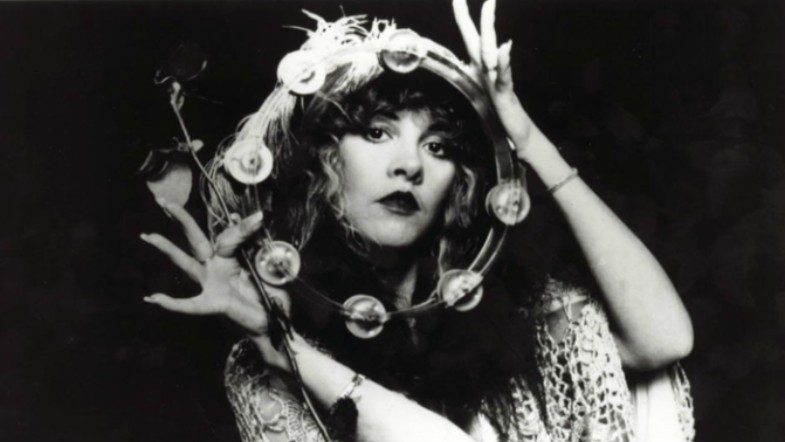
The inductees to 2019’s Rock and Roll Hall of Fame were announced this week and include Stevie Nicks, The Zombies, Radiohead, Def Leppard, Janet Jackson, The Cure, and Roxy Music (with Brian Eno). Stevie Nicks is the first woman to be inducted twice – first with Fleetwood Mac in 1998, and now in 2019 for her career as a solo artist. She tweeted “I have been in a band since 1968. To be recognized for my solo work makes me take a deep breath and smile. It’s a glorious feeling.”
Radiohead acknowledged their invitation in a more positive regard after last year’s dismissive comments from guitarists Jonny Greenwood and Ed O’Brien. For bands like The Zombies, whose career bloomed later than most 1960s British Invasion bands, this is a “life-defining moment.” The 34th annual Rock n Roll Hall of Fame induction ceremony will be at Barclays Center in Brooklyn on March 29th 2019.
The New New
Amanda Palmer released “Drowning in The Sound,” the first single from her solo album There Will Be No Intermission. It comes out on March 8, 2019, which is also International Woman’s Day. Avril Lavigne released “Tell Me It’s Over” and announced her upcoming record Head Above Water. You Me At Six released a Rick & Morty inspired lyric video for “Straight to My Head.”
End Notes
New Jersey Radio Station WFMU’s Free Music Archive will not be removed after being acquired by KitSplit. WFMU Director Cheyanne Hoffman stated that they “will reopen artist/curator uploads and our Music Submission form and resume our scheduled audio weirdness, curated playlist posts, and new releases here on our blog.”
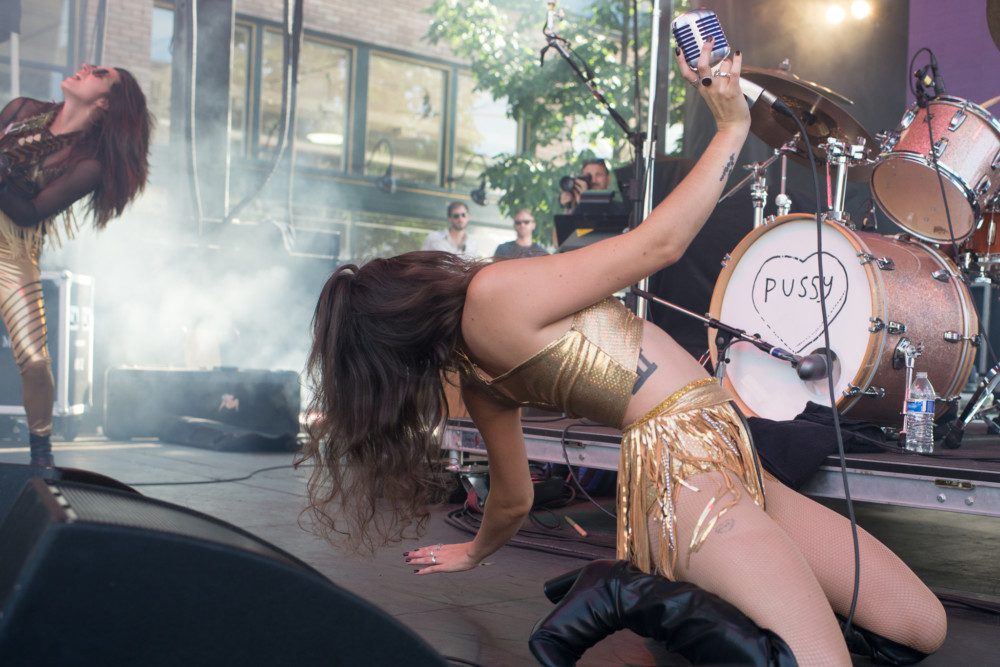
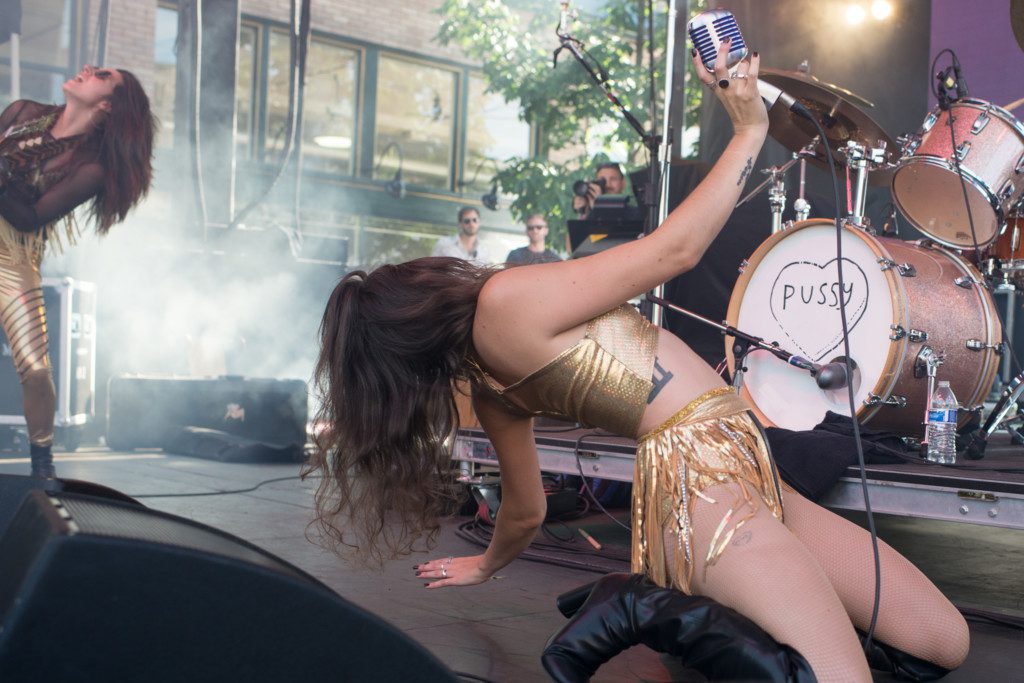
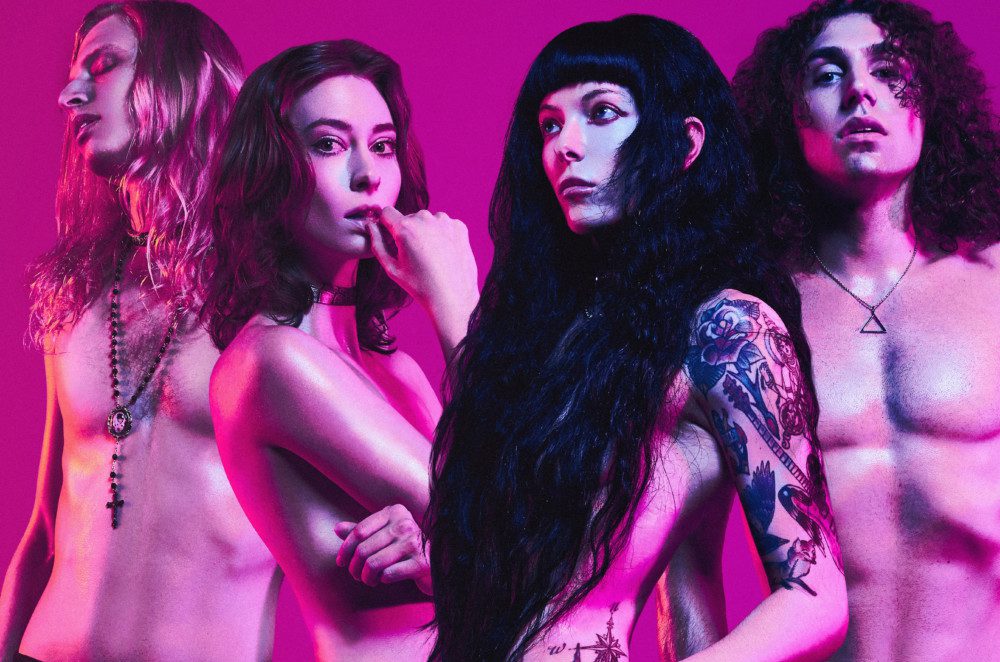
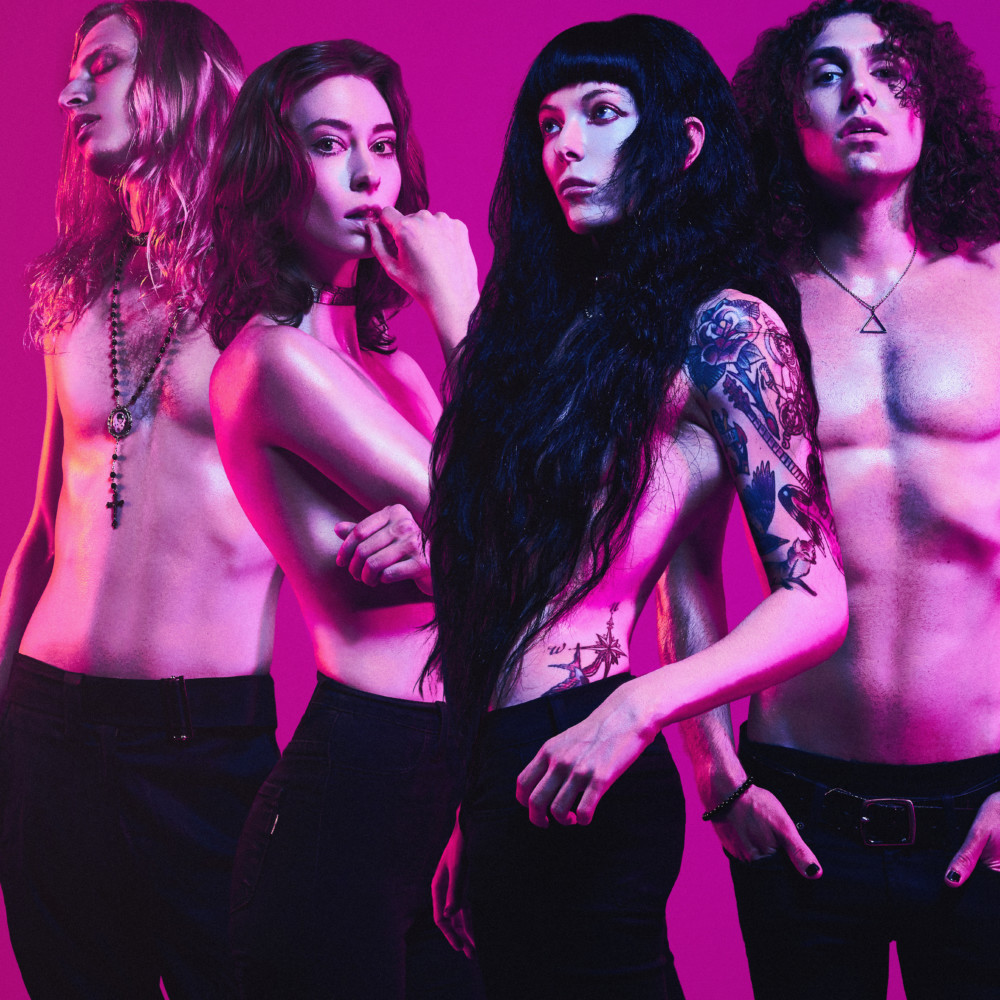
Seattle rock outfit Thunderpussy during a typically raucous performance. Photo by Victoria Holt, c 2018.
As much as 2018 was a good year for Seattle’s established music names – shout-out to Brandi Carlile for “By The Way, I Forgive You” and its six (!) Grammy nominations – it’s been surprisingly phenomenal for fresh voices and indie artists on the rise. Bear with me as I get sentimental; here are ten underground gems from Seattle artists in 2018.
Marlowe (L’Orange & Solemn Brigham) – Marlowe
Marlowe is the break-out album from a new duo of Seattle-based beatsmith L’Orange, and North Carolina-based rapper, Solemn Brigham. L’Orange is known for his nostalgia-soaked tracks, looping obscure vintage radio finds like an old-school crate-digger. Over those, Solemn Brigham raps conscious lyrics with that easy-yet-aggressive flow reminiscent of Kendrick’s early mixtape days.
Red Ribbon – Dark Party
Red Ribbon’s Dark Party is aptly named. While melancholic and cynical, the release is unexpectedly upbeat and fun to dance to, achieving a combination of dark and light that is often-attempted by musicians but rarely well-executed. Each song on Dark Party is a new psychedelic, trance-world, accented with new age flute, droning, and reverb-y guitar. Like a spiritual guide, Emma Danner’s soothing, slow-simmering vocals lead the listener through.
ParisAlexa – Bloom
ParisAlexa’s Bloom captures her rise on the Seattle scene. After many appearances at local events over the last few years, ParisAlexa has a sizable and devoted following of fans and critics alike, including the covetable support of KEXP, who recorded her in a live session in April. Bloom is a coming of age portrait, depicting ParisAlexa in a raw, sensual state, claiming her newfound womanhood. And it’s saturated with the echoes of neo-soul artists like Bilal, Erykah Badu, and pop singers like Alicia Keys and Mariah Carey.
Rat Queen – Worthless
Born of the quirky, colorful musings of two best friends, Jeff Tapia and Daniel Derosiers, Rat Queen’s “Worthless” is all about quick and twisted little ditties that pack a juicy pop-punk punch. Tapia’s growling and dominating vocals match Derosiers’ playful energy on drums, turning what could’ve been a just-for-fun party album into something anthemic: the chronicles of twenty-something punks and misfits just getting by in a changing city.
Bad Luck – Four
If noise-jazz could be your thing, brace yourself. Bad Luck, the tenor-drums duo featuring Neil Welch and Chris Icasiano, is an explosive, dynamic organism of sound experimentation. With a mic-ed sax, Welch creates wide swathes of atmospheric sound that converse with Icasiano’s energetic and impressive percussion. Four is (you guessed it) their fourth release since 2009.
Leeni – Lovefool
Leeni, also known as Prom Queen, is a wizard synth-pop producer and singer-songwriter who made national news a few years back for her clever mash up of the themes from ’90s TV show Twin Peaks and Netflix hit Stranger Things. Leeni’s 2018 release, Lovefool, is akin to that mash-up; one moment dark and brooding, the next bright and manic. Creating dreamy mirages of ’80s synth and ethereal singing, Lovefool gets lost in lush, velvety soundscapes.
Steve Tresler and Ingrid Jensen – Invisible Sounds: For Kenny Wheeler
Though largely unknown outside of the area, Seattle has a rich legacy with jazz music and education. Our high school jazz bands consistently win the prestigious Essentially Ellington contest, and we have been home to jazz musicians like Quincy Jones and Ernestine Anderson. Local saxophonist and teacher Steve Tresler teamed up notable Canadian jazz trumpeter Ingrid Jensen to record Invisible Sounds as a tribute to jazz music legend Kenny Wheeler, who passed away quietly in 2014. The album is a spirited, expansive, and gorgeous merging of two of the most powerful Pacific Northwestern voices in jazz.
Chemical Clock – Plastic Reality
Plastic Reality will be the final release from Chemical Clock, a experimental jazz group made up of local avant-garde, jazz, and funk musicians who met during their time in the University of Washington’s music program. Their third album, Plastic Reality, is chock full of manic synth patterns and angular melodies that build into thunderheads of sound. It’s a triumphant culmination of a decade making boundary-pushing music together.
Thunderpussy – Thunderpussy
Thunderpussy’s self-titled full-length is a glam rock firestorm. In some ways, the band picks up where artists like Heart left off, as a self-possessed all-women rock group that oozes sensuality, musicianship, and sheer power on their own terms. They put on a hell of a live show, too.
Car Seat Headrest – Twin Fantasy
The brainchild of Will Toledo, Car Seat Headrest is probably the biggest artist on this list. 2018’s Twin Fantasy is a completely re-recorded version of an album he put out in 2011 and follows 2016’s Teens of Denial, which was named one of Rolling Stone’s 50 best albums of 2016. Twin Fantasy doesn’t disappoint either; Toledo has maintained the self-deprecating awkwardness that makes him so relatable and revelational as a indie rock singer-songwriter.
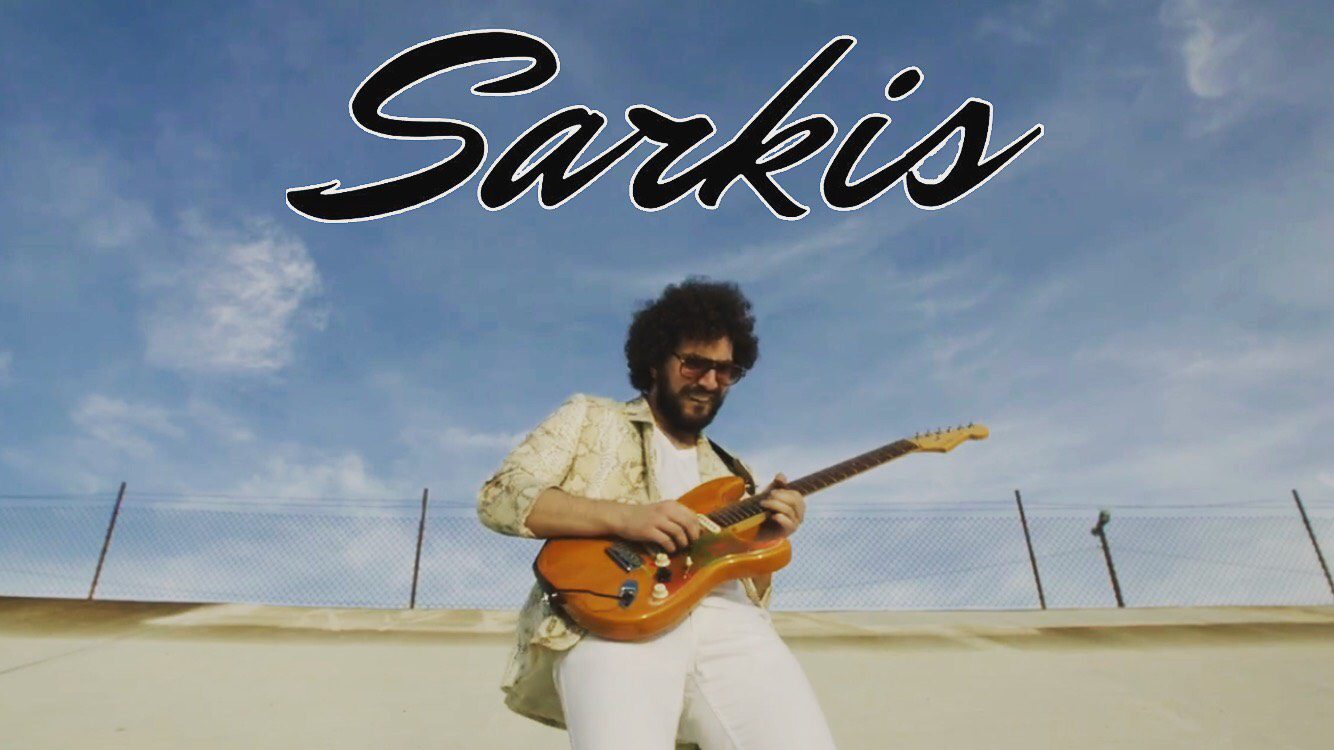
Gabe Smith has wandered far from his small hometown of Waterford, Michigan, but hasn’t forgotten the role that his neighboring city of Detroit had in shaping him as an artist and songwriter. After moving to LA in 2014, Smith spent two-and-a-half years touring on the John Lennon Educational Tour bus, helping students write/record original music and videos. Landing back in L.A earlier this year, Smith started working at Shangri La Studios in Malibu and recording his debut LP, Tangerine, under the name Sarkis. The record is an amalgamation of Smith’s roots in the Motown sound, time spent traveling the country, and the glimmer of L.A. sunshine that seems to rub off on all ye who enter there.
While Smith says a small part of the album was written during his time on the Lennon bus, the majority was written and produced at Shangri La studios, with the help of his writing partner Tyler Bean and other friends that work at the studio. “I had a lot of guys playing on it and helping me record it and write it,” says Smith. “It was a cool collection of people from all over making music… that was kind of a whole other layer of creativity that I hadn’t had in any of my music before.”
This collaborative effort resulted in a sound that blends funk, hip-hop and soul. One of the most obvious funk elements is the presence of consistently strong bass lines throughout the record. “I played a lot of bass this year,” says Smith. “I’ve never considered myself a bass player but now I wish that I was a dope bass player – those (musicians) are the legends of funk.” Smith cites meeting Bootsy Collins last year as one of his most transformative musical experiences. “That changed my whole perspective of funk music,” Smith says. “He even listened to some of my music and that was a big moment for me – he is definitely a life-altering person to meet.”
Funky bass lines, bright vocals, and different musical textures characterize Tangerine, and keep it feeling bright and optimistic, even on “Messed Up,” a song about the disenchanting state of the world. “I always try and remain positive, so I try to put that into the music too,” says Smith. “The music itself is upbeat and trying to make people dance and feel good. Even on a song that’s saying ‘the world is messed up,’ I still want to have a positive twist on it.”
Smith also cites Stevie Wonder, Mac Miller, Ice Cube and NWA as influences on this record. He says he didn’t really start listening to West Coast hip-hop until he first moved to L.A. “The year after I moved to LA was when that movie [Straight Outta Compton] came out,” says Smith. “We saw Ice Cube at an IHOP or something and I was like, ‘oh my god.’ That was when I started listening to that music.”
Smith’s recent hip-hop influence is obvious on the record’s kick-heavy, bombastic track “Dreamland” and on “Messed Up,” when he makes his first foray into rapping. “I think I wrote that right after Mac Miller died,” says Smith. “I listened to Mac Miller in high school and he was at the studio a couple months before he passed away… I was kind of feeling sad and he was doing this fast rapping thing on one of his songs, so I tried to do it on one of mine and I was like – I guess that sounds okay?”
While Smith takes cues from the artists he lists as inspirations, his music serves more as an homage than an imitation, putting a unique twist on funk and hip-hop and making it his own. For those enduring the blistering cold this winter, Tangerine serves as a light at the end of what can feel like a never-ending tunnel. And for people residing in sunshine-y states, it’s a reminder to appreciate what you have and try not to take life so seriously. You can stream Tangerine exclusively here today, and listen to it everywhere this Friday, December 15th.
Sarkis will hold a listening party for Tangerine at The Dessert Oasis (1220 Griswald St, Detroit, MI, 48226) on Friday, December 15. The party is free and open to the public.
The second Monday of every month, we explore the trappings of the millennial mama with parenting tips and tricks that are more Tycho than Tangled.
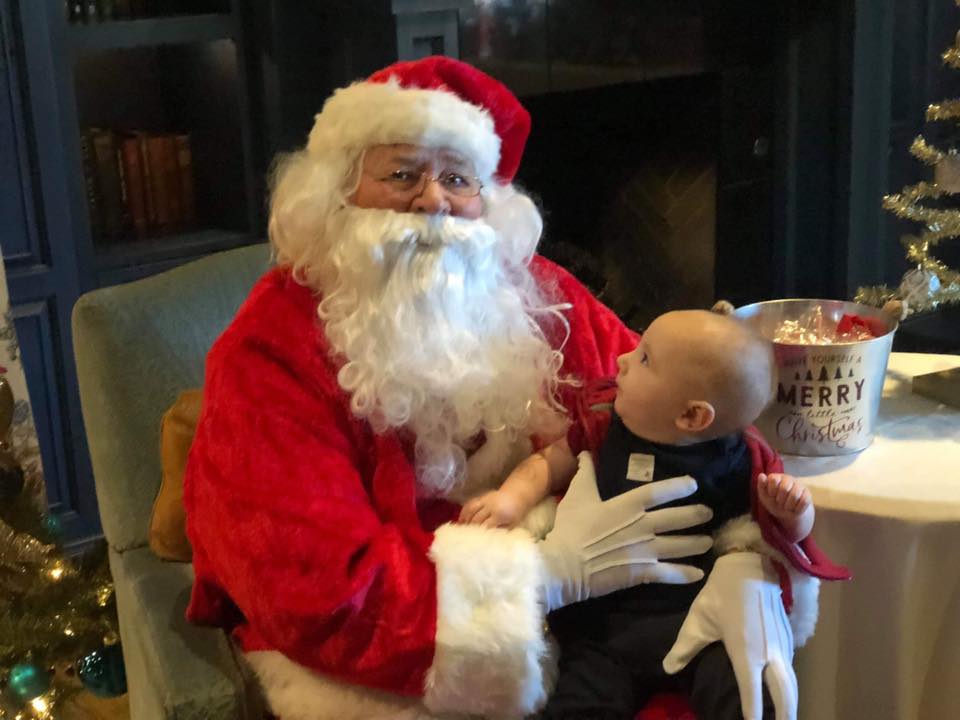
My son giving Santa the “Who are you again?” eyes.
If you’re like my family, the holidays are spent watching the same movies (Muppet Christmas Carol on repeat), eating the same food (#homemadefudge4life), and listening to the same holiday music. This is our son’s first Christmas and we’ve been hard at work, creating our own traditions by infusing our music taste into the mix.
In order to bring you the best and brightest Indie Christmas playlist, I had to comb through some fairly terrible holiday tunes. Did you know that Oasis managed to get it together long enough to make “Merry Christmas Everybody”? Or that The Killers composed the jaunty tune “Don’t Shoot Me Santa”? These are just a few of the gems I would not expose my child to.
We’ve laid out some of our favorite new classics below, with even more in the AudioMama Vol 3 playlist. Turn on Kiss Kiss Bang Bang, pop some Chocolate Chunk Shortbread Cookies in the oven, and listen to the sweet sounds of Bright Eyes moping around on Christmas Eve.
“Christmas Is Going To The Dogs” – Eels
Plum fairies are replaced with chew toys in this playful tune made for your favorite pup! Indie artists tend toward the morose (we’re looking at you, Bright Eyes), so this is a rare uplifter.
“Lumberjack Christmas / No One Can Save You From Christmases Past” – Sufjan Stevens
Remember that year you drunkenly told your office crush ____ while ____ and after that he / she totally _____? The memories may never fade, but at least you’ve perfected the perfect smile-while-avoiding-direct-eye-contact.
“My Dear Acquaintance (A Happy New Year)” – Regina Spektor
Sometimes an old classic gets a makeover and you remember why you loved it in the first place. Sometimes an old classic gets a makeover and you’re introduced to it for the first time. I’d never heard this Peggy Lee number, but with Regina Spektor at the helm it instantly brings to mind classic that New Year’s movie scene of a forlorn lover waiting at the doors of a party for Mr. Right to waltz in.
“Linus & Lucy” – Anderson .Paak
A Charlie Brown Christmas is one of those rare movies the whole family can enjoy. Anderson .Paak gives Vince Guaraldi’s “Linus & Lucy” a more improvisational jazz feel. It’s tight and cheery, with the perfect modern twist.
“50 Words For Snow” – Kate Bush
While it’s not directly a Christmas song, “50 Words For Snow” has the kind of magic meant for the holidays. Bush was fascinated with the claim that the Inuit people have over 50 words for snow. The song features Stephen Fry listing out Inuit words for snow while Kate eggs him on: “Come on Joe, you’ve got 32 to go.” The words devolve into nonsense: “19 phlegm de neige / 20 mountainsob / 21 anklebreaker / 22 erase-o-dust / 23 shnamistoflopp’n / 24 terrablizza / 25 whirlissimo / 26 vanilla swarm / 27 icyskidski…” you get the drift. See what I did there?
If you’ve got a good tune for our list, tweet @AudioFemme and we’ll add it! Happy Holidays!
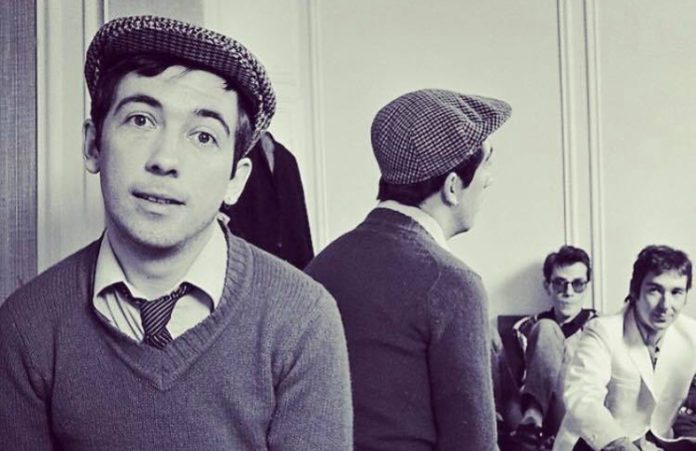
Lead singer, guitarist and prolific songwriter Pete Shelley of the Buzzcocks passed away from a suspected heart attack on December 5th. The Buzzcocks formed in 1975 after Shelley and Howard Devoto saw The Sex Pistols. Shelley perfected the three-minute power pop song with hits like “Ever Fallen In Love (With Someone You Shouldn’t Have Fallen In Love With,” and “Everybody’s Happy Nowadays,” influencing generations of musicians. I have had my copy of Singles – Going Steady playing nonstop, and members of R.E.M., Green Day, Smashing Pumpkins, Belle and Sebastian, The Cure, and more have paid tribute since news of Shelley’s passing.
The New New
Miss Eaves asks Santa to Impeach Trump in her new holiday single “Santa Please.” Deerhunter released “Element,” the second single from their upcoming record Why Hasn’t Everything Disappeared? Robyn released a new music video for “Honey,” from this year’s excellent LP of the same name.
End Notes
MTV is going to bring back a “reimagined” version of Celebrity Death Match starring Ice Cube, who is also the executive producer.
Barcelona’s Primavera Sound festival lineup was announced this week. The gender-equal line-up includes a wide variety of artists, like Erikah Badu, Tame Impala, Future, Nas, Solange and more.
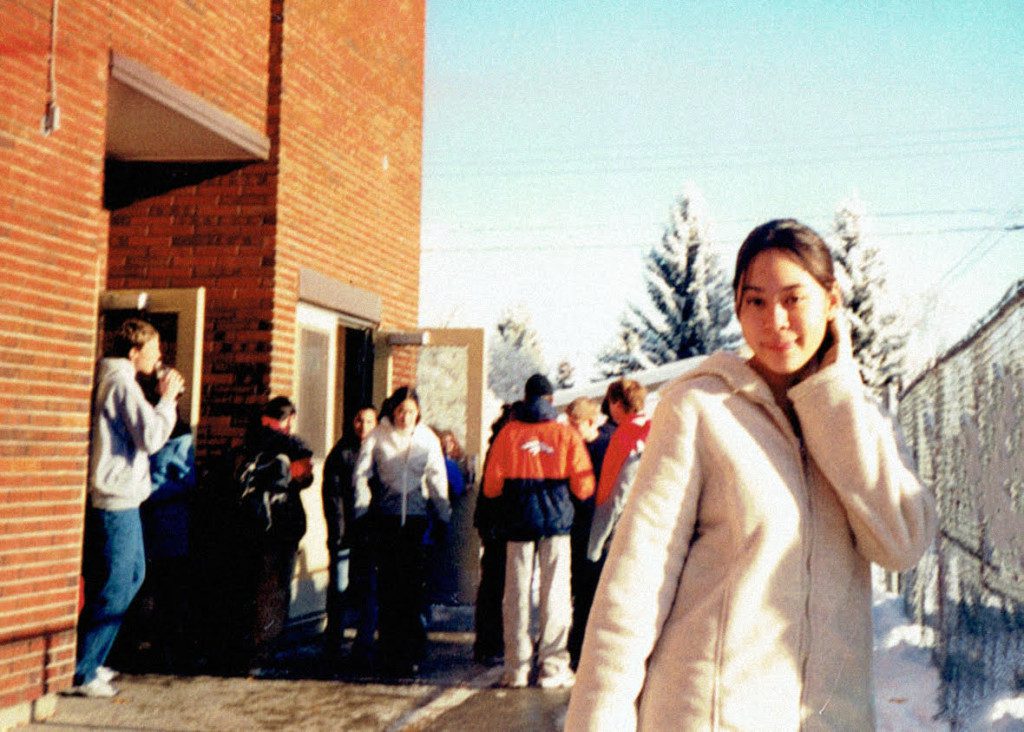
Steph Wong Ken at fifteen, on the cusp of discovering Cat Power’s What Would the Community Think.
ONLY NOISE explores music fandom with poignant personal essays that examine the ways we’re shaped by our chosen soundtrack. This week, Steph Wong Ken forges her own community in a frozen Canadian landscape via Cat Power’s unparalleled howl.
I was 15 years old, standing in a music store with vaulted ceilings and white pillars, a former bank turned A&B Sound. My family and I had recently moved from a palm tree-lined street in Florida to a snowy Canadian city surrounded by farmland and flat, open sky. This place is safer than Miami Beach, my parents insisted, and with its sprawling residential neighborhoods, it was, but it was also very quiet and very white. Growing up with a Chinese mother and a Jamaican father, my neighborhood in Miami Beach felt like home, with Jewish, Latino, and Black families living together on one street in discordant harmony. Though I didn’t know many biracial kids in my area or at school, living in that neighborhood made my background feel normal, an important but uneventful fact of life.
The culture shock of moving was physical (puffy coats over Halloween costumes, hockey, face plants on ice), but it was also deeply emotional for a mixed-up teenage girl like me. I wandered around my new high school like a disembodied head and experienced nose bleeds regularly, probably because Western Canada is dry, but at the time, I thought it meant my body was just as freaked out as my brain was. I loitered in the music store down the street from the bus stop to stay warm and found myself in the indie rock section, staring at Cat Power’s album. The cover showed two female faces cut and pasted together with eyes that looked dead, an image that scared me and also made me want to spend $15 so I could take it home to look at it more closely. And the title, What Would the Community Think: a kind of kiss off and a serious question, a title that encapsulated the ambivalence of an outsider who still cared about other people’s feelings.
When What Would the Community Think was released in 1996 on Matador Records, the era of late ’90s alternative rock was also emerging: a steady loop of Stone Temple Pilots, the Red Hot Chili Peppers, Bush, Sublime, Soundgarden, and “One Headlight.” This club of moody dudes with gritty vocals and reverb guitar solos felt beamed in from another planet, somewhere far away from me, and my musical tastes gravitated to the records of my parents – Bob Marley, Aretha Franklin, Marvin Gaye. By the time I found Cat Power in the early 2000s, late ’90s alt rock reverb had been replaced with ultra-masculine nu metal, and her music felt all the more timeless, sealed in a jewel case like a balm. Her vocal styling, her signature rasp, and the rough texture of her recordings seemed like another, more intimate way to explore pain and loneliness.
From then on, Chan Marshall’s voice filled my bedroom, singing in a low voice about being trapped “in a hole,” asking me to come down with her. Some days, I interpreted the hole as a safe place, a spot you dug with your own two hands in the ground to rest. Others, when I walked around empty neighborhoods hooded in ice listening to the album on my Discman, the hole was black and all consuming. The sharper edges of a song like “In This Hole” revealed themselves and I believed Marshall was snarling at a tidy, clean existence right along with me, as though we both knew that something was not right here. Her voice communicated sadness and anger, but it was also exciting to listen to, shifting easily from sweet sentiments like “you’re so beautiful” to the bitter wail of “I can try, try.” Here was someone not afraid to howl about there being no one, about wanting someone, and about finding catharsis in a dark, cold place, with a tinge of possibility. The album cemented my lifelong devotion to Cat Power, but it also helped me gain a sense of control, despite chronic nose bleeds and a budding identity crisis in a small Canadian town. Head back against a wall to stop the blood, tissues balled in my fists, I hummed along with Marshall on her song, “Good Clean Fun:”
All things people do in winter/they all melt down in summer
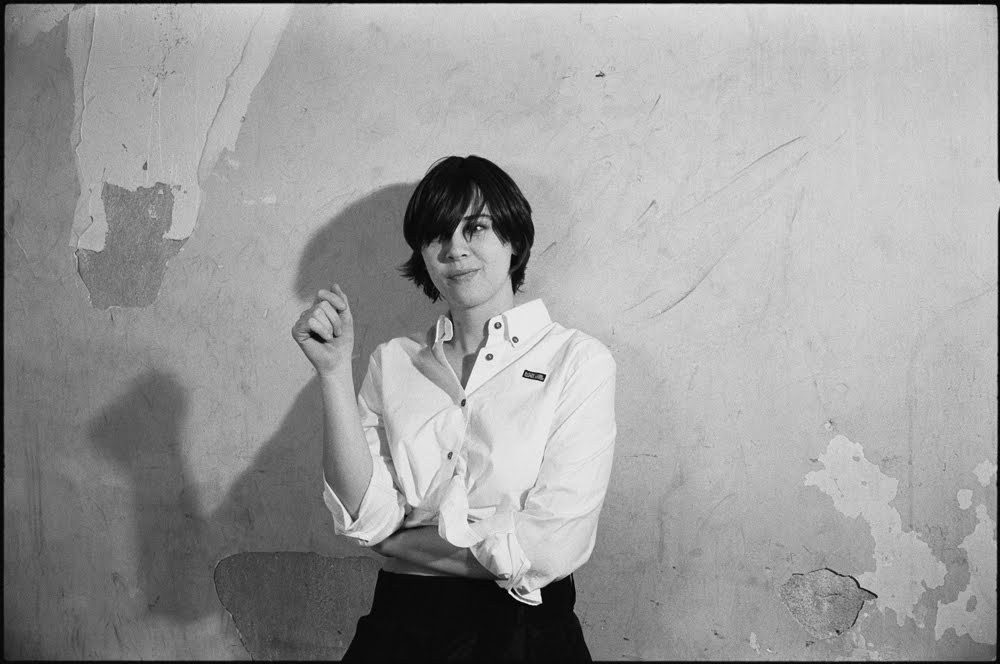
Cat Power’s Chan Marshall circa 1996.
Eventually, I made a few friends at school and like a test, I played them what I was listening to, often mix CDs that featured tracks from What Would the Community Think and other Cat Power albums I had discovered flipping through the plastic sleeve with her name on it: the slow, shy songs on Myra Lee; the brooding anger of Dear Sir; the upbeat openness of You Are Free. What Would the Community Think remained my favorite. Huddled below the stacks of the Catholic school’s library, a portrait of the Virgin Mary hovering above us, I shared an earbud with a friend that made the cut and we listened to “Nude as the News,” mouthing “Jackson, Jesse, I’ve got a son in me,” trying to replicate Marshall’s mournful wail without alerting the librarian. Do you get this? I was silently asking my friends as I played them song after song. Does this make you feel good too? Only later, studying the lyrics, did I understand that there was trauma and loss in the song, a desire to be powerful without the means to be:
I still have a flame gun for the cute ones
To burn out all your tricks
And I saw your hand
With a loose grip on a very tight ship
And I know in the cold light
There’s a very big man
There’s a very big man
Leading us into
Temptation
Later still, I would read about the song’s backstory, of Marshall’s abortion when she was twenty and the reference to Patti Smith’s sons, Jackson and Jesse, in the chorus. But the very big man that appears, a threatening guide, became a lot of things in my head as I listened to the line over and over again: actual men, God, a force that keeps pushing you into places you don’t want to be.
In the coming years, pushy men took the form of guys recommending music to me, lobbying artists and song titles at parties like power grabs. But I found Cat Power’s music in my own bumbling way; later, I would realize this was a blessing, to be able to hold these songs as my own personal discovery. Marshall herself was instrumental in expanding my musical tastes – much of the music I would come to love I first heard via Cat Power’s covers records. I would move backwards from her versions, seeking out the originals and discovering a long line of artists that have influenced Marshall’s sound, particularly blues and soul singers of the ’60s and ’70s. That habit began with “Bathysphere;” once I’d discovered it was actually a Bill Callahan cover, I dove into his discography, though her version is what got me there.
Sitting in my bedroom, wandering around my icy neighborhood, hiding in the stacks at the library, I listened to Marshall’s albums and got through high school, made some good friends, and tried to adjust to nine months of winter a year. Still, I struggled to find a sense of community day to day, and whenever I would start to feel I was losing control, I would put on those songs and feel calm. Even now, listening to What Would the Community Think gives me a sense of nostalgia for my first experiences with the music, as difficult and messy as they were, and confirms how important the album became to me, my private little space that I could get lost in. Though I’ve heard each song hundreds of times before, howling along to each word still feels just as cathartic.
When considering the Atlanta music scene, few bands encapsulate the weird, ecstatic, constantly-changing energy as well as Starbenders. The halfway home for misunderstood misfits, fringers, and glam punks, Starbenders — made up of Emily Moon on the drums, bassist Aaron Lecesne, guitarist and vocalist Kriss Tokaji, and the fierce lead vocalist and guitarist Kimi Shelter — is a sonic assault from the very first note, and their legions of fans across the globe are ready and willing to prove it.
In October, the foursome took their show to the other side of the world, touring for the first time in Japan. I caught up with the group upon their return to talk about touring far away lands, rebellion, and rock ’n roll.
AF: You just got back from what looked like an incredible tour in Japan. What was that like? What was the biggest difference from playing and touring in the US?
KT: Japan was incredible. There was so much to see and experience. The culture is so fascinating, and Tokyo is a remarkable city that’s so full of life and prosperity. While playing shows in Japan, we witnessed a certain level of respect and a passion for music that we don’t really see in the States too often. It was a very positive artistic environment. Everyone was at these shows purely for the love of music and the live performance. People were truly engaged, and they were there to see and feel something real and tangible.
AL: I think in America we can be a little cynical or pretentious about music sometimes. Japan seems to be much more unapologetic in their appreciation for all things music. The enthusiasm there is palpable. There are record stores on every corner, and trucks drive through the streets with images of artists plastered on their sides. Big LED screens advertise new albums everywhere you go. The overall attitude towards music from audiences struck me as very pure and joyful.
AF: How has ATL and its musical history influenced you? What statement do you want to make with your music about the city, and what do you love most about the Atlanta music scene?
AL: Atlanta is weird, and that’s the best part. That’s not only what I like most about it, but it’s also a statement I stand behind with our music. Keep being weird, Atlanta. I’ll always be proud to call you home.
AF: What’s been the proudest moment for you guys? The most challenging?
EM: I’d say touring in Japan was both our proudest and most challenging moment. Flying 14 hours across the world to play music to an entirely different culture was both rattling and extremely fulfilling. I think I can speak for all of us when I say it didn’t really hit us until we arrived at the airport the journey we were about to embark on. The language barrier once getting to Japan was what was challenging – I remember a distinct moment during sound check when all we could do is tell the in-house sound guy, “Led Zeppelin! Make it sound like Led Zeppelin!”
KT: Playing in Japan was nothing short of a dream come true. We were able to meet so many wonderful people at these shows, as well as share the stage with some amazing artists. It’s a testament to how universal rock n’ roll is.Despite thousands of miles existing between us, we feel the same love and passion for loud guitars and drums.It was an amazing experience. The most challenging thing for us might have been the language barrier, as well as getting used to certain customs and a way of life we were not familiar with. Throughout our time in Tokyo, we were constantly learning and adapting to our surroundings, and that’s what really opened our eyes to Japanese culture.
AF: You’ve released a single and a new EP this year. How has your creative process grown and evolved since your first release in 2016? Is it collaborative, or does one of you tend to come in with an idea and present it to the group?
KS: I often compare our songs to a human body. I build the skeleton and the rest of the band and I work together to attach the muscles and tendons that mobilize the piece into a living and breathing organism. This has been our process since day one.
AF: 21st Century Orphan packs an even heavier punch than Heavy Petting, which was a killer debut album. Did you go in intending to sharpen the edge? Do you ever find it difficult to just let it all go and give in to the music?
KS: Thank you so much! We move freely through different textures and genres. The moment you start trying to put bumpers on your creativity is the moment you will prevent something really special from coming out. I believe that you should only prune a grown tree – why disassemble the seed? We protect that sentiment as much as we can and that is what allows us to keep people guessing. It’s just the Starbenders sound.
AL: Letting it all go and giving into the music is pretty much what I live for, so it’s definitely not difficult. Performance is an almost meditative state for me because my mind is never quiet and when we play, it’s liberating. It’s like going into a trance but exhilarating at the same time, and it’s the one drug I’ve never developed a tolerance for.
AF: In my eyes, Starbenders is a musical representation of rebellion and nonconformity. You’re not afraid to blend genres, take risks, and create something entirely unique. What does that mean to you? How has music allowed you to express yourself freely and without fear, and do you think your fans feel the same way when listening to your music or attending a show?
KS: Music is freedom. I want to convey that freedom to the listener as much as possible. As an artist, we need to accept the vulnerability that comes with creating in a way that makes you strong and not weak. Art and beauty are in the eye (or ear) of the beholder. A compelling and consistent act should be polarizing.I don’t want people to “sort of” like us. It’s better to be hated or loved. That’s what makes us free.
EM: I can’t really go around hitting people with sticks and honestly that’d be scary for everyone involved so luckily I’m in a rock band that allows me to beat the shit out of drums instead. I should hope when people see us perform they feel the angst and raw power in their bones that’s vibing off of the stage and if they don’t then they can just go back to scrolling through Instagram.
AF: One of my favorite questions to ask musicians is how they feel about being a voice for people who may be silenced, out of fear, insecurity, or even governmental/societal oppression. What role do you think art plays in giving a voice to the silenced?
KS: Through standing strong it might help to inspire someone out there to know they aren’t alone. I often tell people that if I can make it through, they can too. There are more of us than there are of them and WE belong to the misfits.
AL: Personally, I hesitate to put art on a pedestal as some kind of noble pursuit in and of itself. Like any medium, what matters is how you use it. We put our entire beings into this, and I would hope the things we’re passionate about – equality, love, empathy, tolerance, and compassion – shine through as a positive message. That being said, we’re rebels at heart who aren’t satisfied with the status quo. We’re in the trenches with everyone else, and our job isn’t to speak for anyone so much as it is to raise the flag and beat the drum on the march towards change. If you’re ready to fix bayonets and charge, we’re right there beside you because we ARE you.
AF: You’ve been heavily involved in various charities since your conception. What kind of awareness do you hope to spread using the Starbenders platform?
KT: Music is a powerful conduit. With all that’s wrong in the world, it’s our responsibility to use the tools we possess to help fight off the evil and the turmoil that exist in our society. We feel there is no stronger voice than rock n’ roll, and it’s necessary for us to use that voice to spread the word about issues we feel strongly about.
KS: Cultivating awareness through social media is a very big part of life now. But people can forget to put their bodies to work for the name of a cause. The physical realm still needs us and boots on the ground can be vital. We don’t work with charities for the brownie points; we do it because we have a calling to do so.
AF: Who are you listening to, and who would you say had the most influence on you as a band?
KS: I’m all over the place. I grew up playing violin, so I carried the drama of classical music into my repertoire. Phasing from classical music I fell in love with punk, which developed the thunder in my heart. Thunder and drama met the mission when I encountered rock n’ roll. I listen to anything that grabs me… Vivaldi, Miles Davis, New York Dolls, The Sex Pistols, Bowie, Placebo, Dead Kennedys, Stevie Wonder. It’s not a musical act that carries the influence.It’s thunder, drama and the mission. I’m moved by the storm that wakes me up in the middle of the night.
AL: As a bassist, most recently I’ve been digging in to how [Motown legend] James Jamerson played. He’s just so deft and slick but everything he plays serves the song, and his style defined a whole era. As a fan of music, that new Of Montreal album has me hooked.
KT: My two biggest musical influences are Led Zeppelin and Prince. Others include Hendrix, Thin Lizzy, Pink Floyd, Queen, The Stones, Bowie, The Cure, U2, Oasis, Bauhaus, The Clash, and The Damned.Rock n’ roll was my first true love in music, but I’ve always been fascinated with the other styles, genres, and sounds that the world has to offer. Classical and gypsy jazz are two other styles of music I adore and draw influence from.
EM: Paramore, Faye Webster, The Power Station…definite influence for some of our new recordings, Wolf Alice.
Keep in touch with STARBENDERS via Facebook, Instagram, and Twitter, and check back with Audiofemme every other Wednesday for the latest installment of PLAYING ATLANTA.
Sometimes, artists drop subtle drug references in their songs that you wouldn’t notice unless you carefully studied the lyrics. Other times, they put it right out there, with drug-inspired imagery splattered all over their videos.
If you want to vicariously experience a trip, consider these videos your pathways into the brain of someone on drugs.
The Dandy Warhols’ “Not If You Were The Last Junkie On Earth”
Aside from the fact that the Dandy Warhols are dressed up as literal syringes while singing “heroine is so passé,” the colorful retro outfits, cartoonish background, and balloons look like they’re straight out of a trip.
Afroman’s “Because I Got High”
If you’ve ever failed at adulting due to illicit substances, Afroman feels you, and his enactment of all the dumb shit he’s done while high is undoubtedly good for a laugh.
Tyga’s “Molly”
In a very thinly veiled drug reference, Tyga pulls up to a party in a car as Siri announces “Hi, I’m looking for Molly.” The bright colors, wild dancing, and pills in the club suggest that Operation Find Molly succeeded.
Of Montreal’s “Paranoiac Intervals/Body Dysmorphia”
This song may not explicitly reference LSD like “Lysergic Bliss,” but it sure looks like the video was made on it. Kevin Barnes’ reflection blurs and warps in funhouse mirrors as he sings about “counting wolves in your paranoiac intervals.”
Rihanna’s “We Found Love”
This tragic video captures the insurmountable joy of rolling with a significant other as well as the utter devastation of the comedown. The reference to “yellow diamonds” in the lyrics led people to speculate about MDMA references, and the pills and expanding pupils in the video leave no doubt.
A$AP Rocky’s L$D (LOVE x $EX x DREAMS)
The “L$D” in this song ostensibly stands for “LOVE x $EX x DREAMS,” but the video makes the double entendre clear. If you’ve ever wondered what an acid trip is like (and a good one, at that), look no further than A$AP Rocky’s journey through this glowing neon city.
Mike Posner’s “I Took a Pill in Ibiza”
Posner has said that this song is about a real experience taking a “mystery pill” in Ibiza, which made him feel “amazing” until he came down and “felt 10 years older.” Based on the creepy video, this seems like a trip that’s better off experienced vicariously.
Animal Collective’s “Brothersport”
I’m pretty sure this song is not about drugs, but the video, well, is a drug. Take a look at the cartoon dinosaurs, painted eggs, and singing tadpoles and you’ll see what I mean. But I can’t be held liable if you actually lose your mental faculties in the process.
What do Robert Johnson, Black Sabbath and Celine Dion all have in common? They have all been accused of devil-worship. This week, Dion has joined this category thanks to comments made by priest and exorcist Msgr. John Esseff. Dion hasn’t visited the crossroads or beheaded any doves. She’s launched a gender neutral children’s clothing line with Nununu, called CELINUNUNU. Essef is “convinced that the way this gender thing has spread is demonic” and believes “the devil is going after children by confusing gender.”
I always thought that pants were a basic gender neutral clothing item, but Essef doesn’t seem to have a vendetta against women wearing pants so much as he wants his followers to buy into the myth that both gender and sex are binary, rather than a spectrum. With a color palette that eschews typical blue and pink, Dion hopes to “inspire your children to be free and find their individuality through clothing.” Do uselessly small women’s pant pockets enforce gender norms? Personally, I’m just hoping the kids from her target audience will grow up to design a pair of adult gender-neutral pants with pockets that can actually hold stuff; til then, I’ll feel a little more rock n’ roll when “My Heart Will Go On” gets stuck in my head.
The New New
Grimes released a track called “We Appreciate Power,” inspired by North Korea and AI. PhoebeBridgers released a cover of McCarthy Trenching’s “Christmas Song” featuring Jackson Browne. NickiMinaj and Lil Wayne released a music video for “Good Form.” Neil Young released “Songs For Judy,“ a collection of live acoustic recordings from 1976.
End Notes
Idles are raising money for Samaritans by auctioning off 18 pieces of artwork from their album Joy As An Act of Resistance that’s been featured in galleries in New York, London and Paris.
ONLY NOISE explores music fandom with poignant personal essays that examine the ways we’re shaped by our chosen soundtrack. This week, Erin Rose O’Brien pays tribute to a silly song about the end of the world that helped her conquer apocalyptic anxiety and post-9/11 panic.
1.
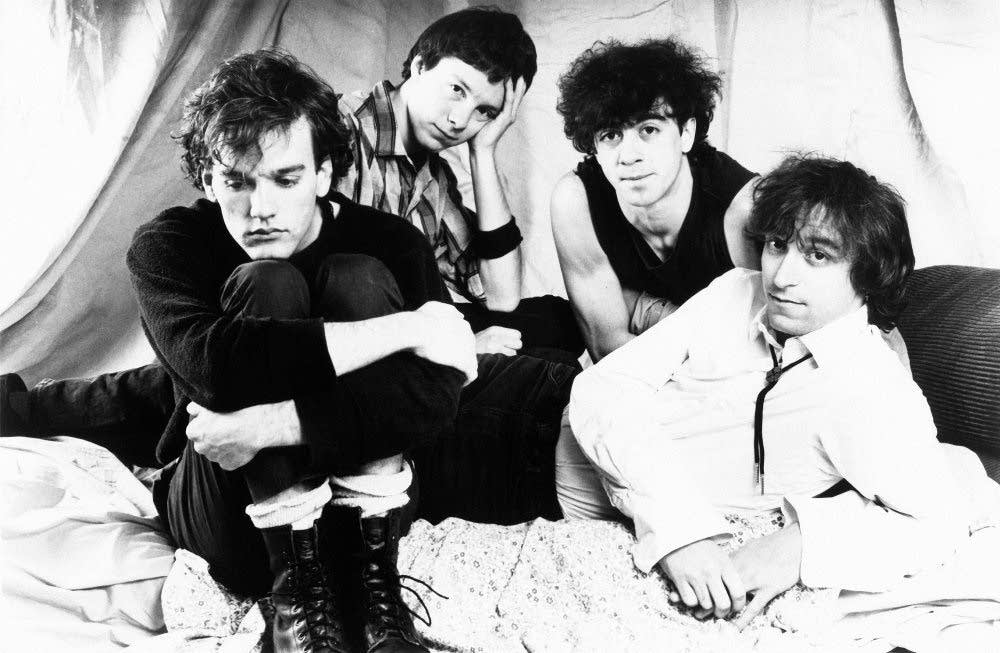
Exactly zero karaoke places have the correct lyrics to R.E.M.’s “It’s The End of the World As We Know It (And I Feel Fine).” You can trust me, because I check all of them. At least two karaoke places (private room, I’m not a monster) have the same video, with the same font: a skinny, sans serif caps lock with perfectly round Os. It’s my backup song, the one I do if the room is getting tired, if my voice is shot. It’s a guarantee the room will shout “LEONARD BERNSTEIN” while doing a fist-pump. I make someone else sing the Michael Stipe vocals toward the end so I can sing to the Mike Mills part that goes, “Time I had some time alone.”
Plenty of my friends rightfully hate karaoke, and the other group of my friends are INTO IT. I mean, like, hours and hours. They flex music knowledge via song choice, regardless of your singing abilities, and no matter how well you do, it’s a celebration. “It’s The End of the World As We Know It” is a cop-out choice. You don’t need a lot of talent to pull it off, but I can’t be Stevie Nicks 24/7, so here we are.
2.
Reading about music on Wikipedia as a teenager (a hobby), I found the 2001 Clear Channel Memorandum, a list of songs that were “banned” for Clear Channel radio stations to play. This started in corporate but moved down to zealous station managers. Clear Channel announced later that it was not an outright ban, but a suggestion of songs too sensitive to be played post-9/11.
The list is devastatingly on-the-nose. “Burning Down The House” from Talking Heads’ Speaking In Tongues. U2’s “Sunday Bloody Sunday.” Dave Matthews Band’s “Crash Into Me.” Some are just paranoid choices: all songs by Rage Against The Machine. And behold, there she is, “It’s The End of the World As We Know It (And I Feel Fine).”
Knowing which songs are banned would be my party trick, if people still had those. Last time I was at karaoke I pointed out that the room had picked three of these songs so far. Morbid, yes, but I was young when I came across this list, trying to make sense of the tense, paranoid world my adolescence was set in. I was fascinated.
Long Island was intense post-9/11. Everybody knew somebody, or knew somebody who knew somebody who died, and everybody was angry. Here is what I knew for sure: we should not have invaded Iraq. I cried about it at my 13th birthday party.
Concurrently, I feared the world ending. I waited for it. I was sure of it. I lost sleep in worry. Staring into space didn’t fill me with wonder, but dread. Every unusual star in the sky could be the beginning of the end–I didn’t care how many people told me it would be okay.
3.
“It’s The End of the World As We Know It (And I Feel Fine)” is incredibly literal. A manic pace, a false-quiet bridge like a reckoning, and it goes on for over four minutes, relentless. The world is crashing down and you’re experiencing it in first person. Then the song fades–it doesn’t ever truly end. It’s not R.E.M.’s finest song (that’s “Find The River,” don’t @ me), but it’s at home on Document. “It’s The End of the World As We Know It (And I Feel Fine)” is the lightest of the bunch; even the album’s lead single, “The One I Love,” is morose, darkened by bass.
I’ve been listening to Document a lot lately. Time is elliptical, things come back in style, war is forever. Document is the first R.E.M. album where you can hear Michael Stipe clearly–the vocals and lyrics are no longer obscured. Lyrics jump out as terribly relevant still–“hang your freedom higher,” in “Welcome to the Occupation” is about American intervention in Central America according to Michael Stipe, but there are a thousand sneering applications for it. “Exhuming McCarthy” is anti-capitalist singsong (“You’re sharpening stones / walking on coals / to improve your business acumen.”) Peter Buck told Melody Maker in 1987: “Reagan is a moron and that’s all there is to it. I get upset when I think about him.” There is no doubt that Document is a political record, but it’s one that doesn’t make any grand proclamations about the state of America. It’s as confused and scattered as one might feel flipping through channels.
Comparatively speaking, the lyrics to “It’s The End of the World As We Know It (And I Feel Fine)” are nonsensical, but it’s easy to draw comparisons between them and the 24-hour news cycle. For Michael Stipe, the song did mimic the televised spectacle he was repulsed by; he called it “bombastic, vomiting sensory overload” in a 1987 Rolling Stonecover story on R.E.M. For me, the song mimicked the constant loops of fear in my brain, running down every end of the world scenario. In that same interview, Stipe identified the song’s opening-line earthquake as his biggest doomsday fear: “I usually get headaches when an earthquake happens – when Mexico City went down, I was on my back for three days, really bad.”
“King of Birds” is also based on Stipe’s earthquake sensitivity, specifically, about the idea that animals can also sense when an earthquake is coming. The song treats this power like a burden (“Standing on the shoulders of giants / leaves me cold”). The drums march on, a sober delivery of the inevitable.
4.
The video for the song is of a distressingly messy home (perhaps not even a home). Sixteen seconds in there’s an R.E.M. poster, and nothing else of the band. It has the vibe of a looter going through the destruction for anything he can find; a personal camera to make sure all the details are there. Some toys, a football. A teenage boy poses with a portrait of some forgotten man. Hold on boy and portrait, turn to camera. The boy plays with the found objects, as if to mimic the events leading him to this place. It’s shockingly present-tense–like a post-apocalyptic haul video. And for a song so frantic and searching, so much of it is steady. The camera pulls away from the destroyed home. The boy dances. He does skateboard tricks. He’s gonna be okay.
By my account, I’ve survived several apocalypses. Folklore prophecies, scientific, geopolitical. There was a 2012 Family Radio Judgement Day sticker stuck to a telephone pole in my hometown for years–it withered after time. I’m still here, until climate change kills us all.
Everyone on Twitter jokes about wanting something to put us out of this misery. I am obsessed instead with survival. Not prepper-level, but emotional. No longer the child who stayed up in fear of a strange light in the sky, I seek out anything that laughs in the face of death. Hand me the microphone. I got this one.
LA-by-way-of Syracuse’s dreamy siren, Doe Paoro, and her new album, Soft Power, are the kind of dynamic sonic duo rarely found in the music industry today. Passionate and empowered, Soft Power combines the alluring mystique of The Shirelles, The Ronnettes, and other original girl groups of the ’60s, with the kind of blazing soul found in the children of the liberated and rebellious.
Audiofemme caught up with Paoro before she took to the road for her upcoming tour to talk music, healing, unrelenting honesty in the midst of pain, and the intimate video for her single, “Walk Through The Fire.”
AF: You transformed incredible frustration and pain into a gorgeous record, full of passion, soul, and rebellion. How did you work through the negativity and transform anguish into art?
DP: I think by just being really present with it and acknowledging it, and acknowledging that these things were coming up for me. Not trying to control the feelings but instead writing about it and sitting down with my guitar and really just allowing them to pass through.
AF: Why do you think music and art are so important when it comes to healing and growing through difficult times?
DP: Oh, gosh, that’s such a big question. I think they offer abstract ways for us to process things, and I think there’s something, both in making art but also in being a fan of music and art, of getting the sense that somebody else has walked the same path as you at some point and has made it through. I was reading something recently about how isolation is really the source of all anxiety, and sometimes [when] we hear, “Well, when I was a teenager, and I heard a song about something I was going through, and it was like, okay, somebody else has thought that way,” that sense of isolation is lessened a little bit. Music also just heals on a completely vibrational level. There’s a lot of healing that comes from art.
AF: Your music is evocative and recalls girl groups from the 60s, like The Shirelles. What does it mean to you to be compared to the women who first pioneered the music industry in a time where feminism was still considered a dirty word?
DP: I mean, I’m so honored and flattered to be compared to some of the artists who have inspired me over the years, and through this record, and always a bit overwhelmed by it. Women musicians are part of a lineage of artists who are working to both expand our craft and expand the sense of empowerment and placement that woman have in the art world.
AF: How do you carry the flame with your own career to help clear the path for those who come after you?
DP: It’s funny, I was looking at some old pictures today of bands I was in when I was like…16, and it was me and this group of guys. It’s such a normalized experience, playing with men, and for a long time, I just accepted it, but these songs, they’re inclusive of a lot of the experience of what it’s been like for me to be a woman in the music industry. I was playing them originally with a band of guys, and I was like, “This just doesn’t feel authentic.” I didn’t feel like they could relate, [despite] their best intentions… they didn’t understand exactly what these songs mean to me, and I just needed to feel a little bit safer in that way.
So I really changed my band up, for one. I play with a lot of women now in my band; that’s one thing. But also just talking about these issues and not falling victim to silence because of shame or guilt or blame, or all the other tactics that are used to keep women quiet about misogyny that they’ve encountered. I really do see that as part of my responsibility as a creative person to step up to and make it so that it’s not the norm, so that people in twenty years see mostly men headlining festivals, or that having an all-girl band is an anomaly. I want these things to be normalized because there are so many amazing musicians who are women, and are just as good.
You know, unless it’s like NSYNC, we don’t say it’s a boy band. But when it’s an all girl band, we’re like, “Oh, that’s an all-girl band! I’d love to be in an all-lady band!” It’s very cute, but that says something about how our culture thinks about gender and music.
AF: What would you consider the greatest inspiration for Soft Power?
DP: My music is super personal, and every record’s kind of a diary of the time period I’m writing it in, but I think there’s a lot in the title and a lot of things that I tackle in this record that I hadn’t really talked about in the past, just power dynamics. I have had a lot of trauma in the last few years, just working in the music industry and being a woman. This record was really about me examining and reclaiming some of that power that I’ve lost, and acknowledging it, and the title was my mission statement for myself on how I wanna be in the world. Just because I’ve been a victim of abuse of power doesn’t mean I’m going to carry on that way. For me, it’s like the pendulum is in this sort of toxic masculinity, in the way that countries are being led and business is being done, and we have the opportunity for the pendulum to swing the other way, which is a much less violent, kind power, one that’s a little more compassionate, you know?
AF: What was the most challenging part of writing Soft Power? What was your proudest moment?
DP: I think the song “Guilty” was the last one I wrote, and that was like — it’s interesting. You know, now we talk about #MeToo and the #TimesUp Movement, and I wrote that song in 2016, which was way before all of this happened. At that time, people weren’t talking about it the way they are now. So that was really challenging. I was contemplating not writing about it, but a friend of mine was talking about it and was like, “I really think you need to write about this experience,” and I was like, “I don’t even know how you’d put that into song.” So kind of challenging myself to be honest, and to write about topics that I haven’t written about before, and feeling that responsibility to expand out of my own comfort zone.
I would maybe say the most special moment was in writing “The Vine,” just because lyrically, it’s probably the one I’m most proud of. The craziest thing is that I wrote it in like ten minutes, so it just felt like something that was supposed to exist in the universe. There are some songs that I’d been writing for, you know, four years, so it’s just kinda a mystical moment for me. I think it’s such a wild experience when you just surprise yourself.
AF: There’s an overall feeling of rebellion throughout Soft Power; did you set out to write a record to the theme, or did it just occur naturally?
DP: Yeah, I definitely didn’t write it with that pretense, but it just came out. I think that’s true.
AF: What’s your creative process like?
DP: I do a lot of journaling, I do a lot of writing, and looking to other people. What usually happens is that a few words in a conversation will just spark a song. I’ll get really inspired by a phrase and craft the whole story around that, and come with my lyrics. Then I’ll bring it to somebody else, and we’ll kind of work out the music together, because I love coming up with melodies, but I’m not the best instrumentalist.
AF: How have you grown and changed as an artist and performer since your previous release, After?
DP: You know, before my last record, I hadn’t toured extensively. I did tour a lot on my last record, so that experience really changed the way I perform, in terms of having confidence or feeling like I know what I’m doing, because…I don’t know, I didn’t go to school to be a musician. I’m completely self-trained and, technically, I’m missing a lot of information, so it’s all been really trial and error, and almost imposter syndrome in the first years of being an artist, when you don’t have that training. And maybe if you do, too, I can’t speak to that. But for me it’s about really owning that this is my path and feeling confident in that.
AF: How did the move from Syracuse to LA impact you as an artist?
DP: LA could not be more different than Syracuse; it’s really like working class, there’s not a very big art scene — at least there wasn’t when I was growing up — so it’s really inspiring. I came with a lot of naivety, because I didn’t grow up with anybody who was in arts and the business, and I didn’t know how that world navigated, so it’s been a lot of learning over the years. I’ve really had to step up to embracing a path that I hadn’t seen modeled for me as a child.
AF: How has your platform given you the freedom to express yourself through music? How do you use your music to give your fans the freedom to do the same?
DP: Well, I just try to be really honest. I try to be honest with myself, and I feel like that’s the responsibility of any artist to continue to do that. I feel like there are a lot of artists who gave me that freedom, and made me feel like it was okay, you know? Like Fiona Apple or certain artists that sang about things that I thought were almost unspeakable in some ways, in the place that I grew up in, so I just hope that that carries through and that people hear that and feel that they have space to do that as well.
AF: You mention walking a path that no one modeled for you. That takes a lot of inner courage, but it’s so easy to forget the power that we have within us. How do you remind yourself of that power in the moments that you feel weak?
DP: I just think “This too shall pass.” I think about different expressions like, “It’s darkest before the dawn,” and I think about what I’ve been through. I try to reflect on all that I’ve come through and, you know, the “More will be revealed.” You’ve just gotta keep going and do the next right thing for yourself, because you can’t identify with defeat. It’s such a passing thing, and the second you start over-identifying with that, it’s easy to lose the plot.
AF: Soft Power was recorded to tape with a live band, which forces you into a situation of spontaneity. What was that like?
DP: With my last record, After, we worked on it for like a year, and it was just so heavy. There was so much thought and it was beautiful, but I just wanted something different, because I always want to keep trying new stuff. I was like, I want something that’s the opposite of that, because what I hear happening in music over the last few years, trend-wise, is people doing a lot of things on the computer where there’s just no end to the amount of editing you can do. Sometimes I think that my best ideas are my first ones, and once I start overthinking them, I just lose it. So I was excited about the process of making a record that was essentially capturing people’s first instincts about what to play, and that’s how we did it. I would basically play the band the song, and they would listen to it maybe four times, and then we just captured what they felt was the right thing for them to play, because it was on tape. It was limited on how much time we could spend on that.
AF: Do you think you’ve translated that inability to overthink or doubt yourself to your daily life since then?
DP:I’m trying to, I really am. I think that becoming an artist and being in it long enough is all about learning how to really, deeply trust your instincts. I’m sure other artists would say the same. But it’s like the second you start giving away your power, whether it’s to a manager or a record label, you really can lose yourself, and you’ve just got to trust what’s coming into your heart.
AF: Your video for “Walk Through The Fire” is so intimate, and full of energy; how did you capture that feeling?
DP: I think it’s just a truthful little capturing of the energy between all of us. We really love playing together and respect each other so much, both as musicians and as friends, and every time we play together, we have that dynamic.
AF: What inspired “Walk Through The Fire”? What do you hope your fans take away from it?
DP: I think “Walk Through The Fire” is inspired by the idea that the hardest moments in our lives are the ones where we have to walk alone. I feel like there are moments in all of our lives where we cannot turn to other people for the answers or look to someone else to get us out of the mess we’ve made. Nobody else can walk us through the process of transformation; maybe that’s a better way to say it. My life has been a lot of transformation, so I keep learning that. I don’t know, fire — it’s like humans have been gathering around fire and watching it since we were cavemen. It never gets old, that experience of sitting around a campfire and just watching it spark up. I think we’re very hypnotized by its ability to burn and start over, and it’s certainly relevant to what we’re going through.
11.27 – Portland, OR @ Lola’s Room
11.28 – Seattle, WA @ Columbia City Theatre
11.30 – Los Angeles, CA @ Lodge Room
12.1 – Phoenix, AZ @ Valley Bar
12.3 – Austin. TX @ North Door
12.4 – Dallas, TX @ Dada
12.6 – Nashville, TN @ The Basement
12.7 – Atlanta, GA @ The Earl
12.8 – Durham, NC @ Pinhook
12.9 – Vienna, VA @ Jammin’ Java
12.11 – Brooklyn, NY @ Rough Trade NYC
12.12 – Boston, MA @ Cafe 939
12.13 – Philadelphia, PA @ Voltage Lounge
12.14 – Findlay, OH @ Marathon Center for the Performing Arts
12.15 – Evanston, IL @ SPACE
12.16 – Detroit, MI @ El Club
12.18 – Kansas City, MO @ Riot Room
12.20 – Denver, CO @ Larimer Lounge
Most people would rather do almost anything than repeatedly relive their most cringe-worthy moments of adolescence and young adulthood. But writer, bassist, and storyteller Chelsea Ursin has done just that in her podcast “Dear Young Rocker,” a tell-all, diaristic recount of her time growing up and feeling like an outcast as a female bass player in a very much male-dominated space. Her eight-episode first season is a brutally honest, witty, and sometimes hilarious coming of age tale that deals with issues like body image, imposter syndrome, and hormones.
Ursin says she took a break from playing music while studying writing but was reinvigorated while volunteering for the Boston chapter of Girls Rock Camp, an organization formed to empower young female and non-binary youth through playing music. Instructing for Girls Rock inspired Ursin to start up her own fuzz-rock band, Banana, and share her journey of the ups and downs of being a female musician. Since releasing the podcast, she’s also started a Youtube channel that addresses topics like self-esteem and friendships. We talked with Ursin about the making of “Dear Young Rocker” and navigating music in a man’s world.
Audiofemme: You say on the DYR site that “this is a story for the weirdos. The loners. Those who felt alone and found a home in music.” Besides offering solidarity to other people going through what you went through, what prompted you to make this podcast?
Chelsea Ursin: It was kind of a culmination of a lot of things. I had been playing in rock bands since I was like 14 years old. That was a way for me to connect with people when I couldn’t because I had pretty severe social anxiety and body issues and everything else. I was the only girl I knew of anywhere that played in a rock band and I just always tried to be “as good as the boys.” I tried to be really good so I don’t look like a stupid girl and misrepresent my people or something. But I never put it together as a problem with the patriarchy or other people that were going through that. I just thought “I’m messed up, I’m a loner, so I have to fight really hard for myself.” When I got older and started taking feminist theory and women’s studies, I started to realize that being marginalized in this way has a lot to do with why I played rock music in the first place and why I got so much out of it, and I was part of a way larger community of people that felt left out or othered in the music community.
And then, it wasn’t until Grad school, when everyone was writing about these terrible things that happened to them and I was like, “I just want to write about rock music because I miss it.” I thought it was important and I hadn’t been playing. Then, someone told me about Girls Rock camp because they read my writing and then they told me about riot grrl, which I had somehow never even heard of… I had this new teenage-dom when I was like 25 and I was like, “Wow, there’s so many other people that felt alone like me, this community of weirdos is huge and I want to bring them together.” So, I decided to write a memoir about my time as a musician. Then I started volunteering at girls rock camp, and I saw these little kids going through the same stuff I had gone through as a teenager, and then being able to rock out on stage in front of hundreds of people. I thought, “If they can do this, I can start my own band.” Then I had this confidence renaissance where I started my own band, I wrote a book, and then publishing a book seemed like this archaic impossible thing. I studied sound engineering in college for a couple years, even though I dropped out because all of the boys intimidated me, so I was like, “I’m gonna make a podcast.”
AF: How were you able to remember all of these stories and events from high school in such great detail?
CU: I mean, a lot of it has to do with anger. I think anger lights up your brain because when I first started writing about this stuff, I just got angry. I had never been angry at the people who had made me feel like crap as a kid, I had always just accepted it. I had always been like, “oh this guy’s playing this crazy riff in front of me, it’s not because he’s trying to make me feel bad, it’s because I am bad and I’m not good enough.” So when I started writing about it, I felt so bad for my teenage self. And felt like “you thought you sucked but you were amazing!” And all this anger prompted me to remember all these things that happened, and in the finished product, it reads as one story, but when I was writing, I would remember one detail. I’d go back and listen to a certain Pixies song and I would remember the smell of the paint when me and my band did this painting project together. Then, I would remember someone singing a Queen song. I just put down as many tiny details in as I could, then I’d put myself into that state and put more details.
AF: Was it painful to revisit some of these memories? Especially the ones that deal with self-esteem and body issues?
CU: Yes, a lot of the time I’d write about this stuff and I couldn’t even leave the house after, because it just became so real again. I’m still processing this, because this is so much a part of my life now telling this story, that sometimes even now, if I go to a party and I don’t know a whole lot of people and I end up sitting by myself for a minute, instead of being mature me and going and making a friend, I just sit there and think “No one likes me.” I bring all this stuff up to the front and sometimes it still hits me.
AF: You talked about having a “confidence renaissance” prior to writing the podcast, but before that, did some of the feelings of social anxiety and self-esteem that your younger self deals with in the podcast carry on into adulthood?
CU: Oh yeah, they are still there all the time and I still fight them every day. A lot of this project is talking to my (current) self, too. When I give advice at the end and it’s for my teenage self, it’s still very much for me. Sometimes, I’ll complain to a friend about being bummed or whatever and I’ll see things sort of in a skewed way, and my friend will be like, “You need to listen to your podcast.” Once those triggers are set in, they don’t ever really completely go away, but I can see them now for what they are and I can fight them.
After a show in Lawrence, Kansas my old band Ex-Girlfriends pulled up to a random house where we were going to sleep that night. There were garbage bags covering the garage windows, conjuring images of the mutilated dead bodies hidden inside.Our bandmate had set up these accommodations last minute and assured us it was fine, promising to go in first to make sure we wouldn’t get murdered. When she got out of the van an adorable french bulldog puppy ran out and a random dude from the show had made dinner for us – and it wasn’t poisoned! Even though we all survived and everything worked out, it’s important to avoid unnecessary anxiety and shenanigans by planning ahead. We spoke with LG from Nashville’s Thelma & the Sleaze about her touring tips and what motivates her to continue the DIY touring grind.
AF: Could you share some funny, crazy, and/or scary stories about crashing after shows while on the road?
LG: This one time in Memphis this lady said we could crash but didn’t ask her boyfriend and I guess he wasn’t pleased so he came home with a Samurai sword. I was like, let’s get gone from wacky ass mother fucker!
AF: What are your tips on staying safe while traveling around the country?
LG: Be patient and polite. People are not friendly everywhere but you get further with honey then vinegar. Also never travel through Texas with drugs. And get AAA – it pays for itself over and over. Read motel reviews; this saves us a lot of trouble!!
AF: You are an incredibly inspiring non-stop touring force. What motivates you to continue working so hard and what would you like to see improve or change in the music industry as a whole?
LG: This question could get very winded and I address it on my new [forthcoming] podcast at length. I will say I feel very blessed to have great fans who have taste and actually want a good show. I make very genuine and interesting music which is not really in fashion, to have substance and individuality. So I have to wait ’til people scratch the surface and actually look and listen to what my band has done. We are not face value, we are non-distilled raw goods. This is exceptional and worth the effort.
AF: What are your goals for Thelma & the Sleaze for 2019 and beyond?
LG: Release as much music as possible and play it for as many people as possible. Hold myself and my fans to a higher standard, keep pushing the envelope, spread positive energy and gratitude.
More tips on where to sleep soundly on the road and avoid getting murdered:
Promoter: Ask the venue if they would be willing to provide accommodations in your deal for the show first. Sometimes venues have a place for the band to stay inside them (especially if it’s a DIY space or house show) or the promoter may be willing to put you up at their house.
Friends & Family: If the venue won’t put you up, it’s smart to stay with people you trust in different cities. One of your bandmates could have a hospitable aunt they haven’t seen in ten years who will put you up on their farm and make you a huge breakfast.
Bands on the bill: Next best option is to see if any members of the bands you’re playing with have extra space at their houses. Bands are usually accommodating since they have been on tour before, and you would be able to return the favor when they play in your city.
Airbnb: Depending on where you are, Airbnb for a band could be your cheapest option, but it’s a little more difficult to book them for one night the day of.
Motels: Always read the reviews first to make sure there are no bedbugs / recent murders. Also: sometimes rest stops have magazines filled with motel coupons.
Hotels Tonight app: If you’re feeling fancy, this app will give you pretty decent hotels at a discount. You can find rooms not too much more than your average motel, but they’ll be much nicer and could even have an indoor pool.
Sleep in the van in a Walmart parking lot: For whatever reason it’s legal, perfectly acceptable and usually safe to sleep in the parking lot of Walmart. If it’s near a national park, you will usually see many RVs doing this. Your van might be more comfortable than you expect!
Airbed & blankets: The self inflating queen sized high top Airbed was the best investment I made for tour other than my van. While DIY touring on a budget, accommodations can be completely different from day to day so it’s comforting to know that no matter where you might be sleeping, you’ll have a somewhat comfortable experience.
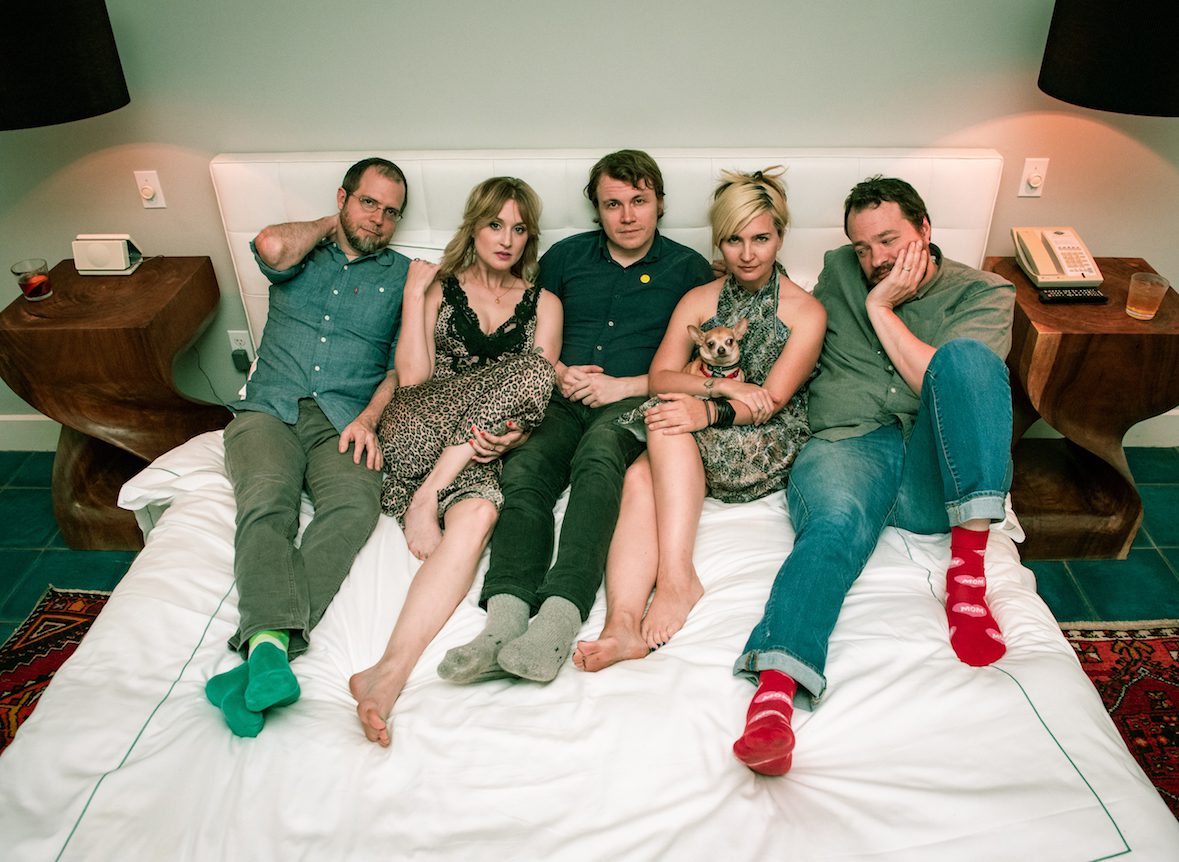
Austin-based dream-pop quintet, Moving Panoramas is back with a highly anticipated forthcoming LPdue out this Spring after their buzzy 2015 debut. Today we’re getting a glimpse of what’s in store for us, with the video release for lead single, “Baby Blues”. The track is an upbeat, shimmering pop jam replete with lead songstress Leslie Sisson’s soothing vocals (she has amazing range by the way! I would guess her spirit animal might be a hummingbird…) floating above hooky guitar riffs and driving rhythm. The band’s sound is simultaneously familiar and refreshing and the video is the perfect visual encapsulation. Starting with a dreamy boat ride over a tropical, watery vista, the viewer is taken on a hypnotizing , viceral adventure with the whole band, including their adorable chihuahua. By the end, the lines between fantasy and reality fade and we’re left wishing for warmer climes.
Take a peek below and read our interview with Leslie on the trials and tribulations behind the creation of the album and lead video.
1. Congrats on your upcoming new album! We’re excited for the release. What made you choose “Baby Blues” as the single?
Thank you kindly! We think “Baby Blues” has been the obvious first single choice since day one. While it’s not the oldest song written on the record, there’s one on the record that didn’t make it onto the first record, “Baby Blues” is def the oldest one the band has been playing live since the first LP. I recall trying to decide along with our label, Modern Outsider, which new song should be the first single so we started gauging crowd responses to new songs at shows. It was unanimous that “Baby Blues” got the heads moving the most. No crowd surfing (yet) but who knows.
2. I read that you ran into some unexpected road blocks during the writing and recording of In Two. Can you describe some of those road blocks and how they negatively or positively effected the outcome of the record?
Yes, we tracked this record in April of 2017 in hopes that it’d release in Oct of 2017. Right before we we started tracking, my health began to decline. Half of my hair fell out at a rapid rate practically overnight like a reverse mohawk, I was in frequent pain/weakness all over my body, couldn’t focus, had vertigo, extreme nausea, digestive issues, exhaustion, headaches, weight change, etc, until finally that summer, I had to undergo emergency surgery for an issue that could’ve been fatal and/or cause fertility loss. Turns out, a series of autoimmune diseases were causing my body to attack itself.
Luckily we caught things in time and I’m being treated for multiple autoimmune diseases now. This all definitely got in the way during recording and mixing and significantly delayed things. Sometimes I was so ill I could only spend a few hours in the studio at a time. It was challenging and can still be tricky as new autoimmune issues arise. They say autoimmune diseases travel in packs. But it could be worse. Just taking it one day (and disease) at a time and trying to take care of myself the best I can.
The upside of all of this is that our engineer, Louie Lino, best known for his work producing and playing in Nada Surf, had to go on tour with Nada Surf soon after my recovery. Thus, we turned to Danny Reisch to mix it, who helped bring out the bigger side of our sound with a fresh, spacey ear. Because of these delays, Matthew Caws of Nada Surf, was able to take a moment off from the road to contribute to the record too, which probably wouldn’t have happened had we pushed things out faster. Matthew’s been been a dear friend and inspiration during this band’s entire journey, so it was all worth it just for that alone. Patience is a virtue.
3. How has your sound evolved and/or matured since your debut in 2015?
Well, like Gremlins, this band has literally multiplied IN TWO. There are now 5-6 members on stage at a time verses the original trio, which has allowed us to expand our sound further and transition from dream gaze, to dream rock! We also added pedal steel which opens a whole new Texas-style galaxy to the spaciness. Really love where this new sound is going, especially since if you listen closely, you can hear the some honky tonk roots. Perhaps the next phase will be more boot gaze, haha.
4. Tell us about the concept behind the video. Where is this gorgeous paradise you filmed in?
This video concept stemmed from dreaming up summer themes. After all the initial 2017 delays, we were planning on making this a summer 2018 release, but things got pushed further due to logistics with other label mates’ release delays ahead of us.
I grew up with bad 80’s TV on constant rotation and my childhood was probably 25-50% on the water via my dad’s boat. One day, I was joking with our former keyboardist, Laura Colwell, that we were like Crockett and Tubs, sending her Miami Vice YouTube clips as inspiration. We’re both video editors and were working together at the time, so she dropped “Baby Blues” into a Miami Vice trailer I sent her and the rest is history. Except now, with Cara Tillman back on board, we’re more like Abba Vice, haha.
While not intended to be a direct 80’s vice rip-off, it’s more of a modern-day visor cap nod. The song is essentially about being hypnotized, perhaps by a person or an idea, so “Baby Blues” kinda became a metaphorical drug in the video, representing when things hypnotize you to the point where you’d drop everything for them to become reality. That concept is a recurring theme in my life on many levels and is why I’m sitting here sharing these words about it now.
We shot it primarily on Lake Travis in Austin, TX, in the 100+ degree summer heat. Our drummer Jody’s generous boss (Asa & Vanessa Christensen) and co-worker (Rick & Syria Holley) loaned us the boats. Some were cameos, while others hid behind the cameras on the boats. A million thanks to them and to our pedal steel player Phil for the dope sparkle keytar loaner via his wife Chris’ band Qzars.
When my dad saw the final cut, he was like, “I love it! Doesn’t really make sense, but it’s a music video. Are y’all referencing Breaking Bad?” Haha, not directly, but perhaps that was an unintentional subconscious nod too… except with a much happier ending.
5. Leslie, I read you directed the video yourself. Can you tell us about that process? Is this your directorial debut?
Ah, yes, I did direct this little beast. Guess it’s not my directorial debut, though. I co-directed/edit all our band’s videos prior to this one and I work in television when I’m not doing music. I’m primarily an editor these days to pay the bills, but my undergrad and masters degrees are in film and video art, so I have a number of music videos and short films under my belt over the years, not only for Moving Panoramas, but also for friends’ bands and past bands I’ve been in like The Wooden Birds and Matt Pond PA. I’ve also worked as doc/reality director, producer, shooter, editor, etc in the past, always hustling to fill in the gaps.
It was challenging to direct this thing full force for a number of reasons. Austin was in a rare summer-long rain season, so finding the right date on a non-stormy weekend was hard to wrangle with the boat loaners, shooters, and bandmates. The shooting days were insanely hot and humid and after a few hours in the sun, so I’m impressed my bandmates don’t hate me after that, especially with all the silly running I made them do.
Not to mention, my time is spread pretty thin between working full-time video gigs and managing the band that it’s like squeezing in a third job taking on projects like this. But, someone’s gotta do it. I think this video concept seemed too ambitious to all the directors I reached out to before finding the right shooter who wasn’t afraid of shooting on boats. I did also have to reach out to an editor friend, Luke Pinon, to help build the rough cut with a fresh set of eyes so I could multitask the single release prep and then circle back finish up the final cut of the video in time. Whew, makes me tired just thinking about it.
Realistically, it’s probably smarter for me to hand off these duties to the pros so stuff gets done in a timelier fashion, which is what we’re hoping for the next video to get it out along with the next release, knock on wood. I can’t do it all, and I don’t usually want to, but the upside is it’s fun telling these stories through videos, even though the videos are usually unrelated to the songs. Self-directing a video is a cool perspective to share though so I hope people enjoy that specialness of it too.
6. How did you keep the camera so steady on that little fishing boat? Are the live portions of the video from an actual show? And whose cute Chihuahua is that?
Ha, well, that crazy cameraworkwas a combination of super fearless boat shooters and quick edits. Thank goodness for Sean Daigle who shot the boat footage and Dallas Cloud who shot with the drone. Those guys shoot for a living and were key to making this thing possible, DIY guerrilla-style. Can’t thank them enough.
Yea, originally those moments where Cara and I get Baby Blues’d were supposed to be the two of us floating in outer space on a big blow-up pegacorn boat with the Chihuahua (I even got the pup an American Girl doll boat to space float in, haha), but as time constraints and green-screen limitations would have it, we opted for some dreamy foreshadowing live footage that our friend Erik Mauck shot of us this summer at the Hot Summer Nights Fest in Austin… also in the scorching heat. There’s more of that live footage we’d like to share at some point too. Just beautifully shot and really brought the final touches of this crazy video together.
And that cute Chihuahua is my little four-pawed soulmate, Hazy the Hazel Hazelnut Sisson. She’s been a cameo in all of the Moving Panoramas videos and has toured all over the continental US/Canada with the band, including escaping a backstage festival trailer once and being scooped up by a Flaming Lips member, followed by getting glitter pets from Wayne Coyne himself. So whenever you see a Moving Panoramas video, you can play “Where’s Hazel?” in all her glory and glitter… hey, guess there’s another subconscious “Baby Blues” video nod with the glitter and confetti, thanks Flaming Lips.
7. Do you have any other previews planned leading up to the album release?
Yes, we’re releasing at least one more single, if not two, before the In Two LP hits on 2/22/19. The plan is to at least have another music video or two accompanying those tunes, if time permits. The exact release dates are being worked out as we speak. If this next video falls in place as planned, it’ll be a really fun one too. Fingers crossed.
8. How is it being an Austin band? I feel like the city has changed so much over the past few years. Has this effected the music scene at all?
If it weren’t for Austin, this band probably wouldn’t exist. I was living in Brooklyn when I stared this project and the other original bandmate at the time, Rozie Castoe, my former music student in Austin, was coming to NYC to work on tunes while I was trying to sell her on moving there. We even had a drummer up there we were working with in upstate NY, but he had a crazy busy job and was spread too thin when we decided to start recording in Austin. I’m originally from Dallas and went to college in Austin so I came back to Texas part-time to be with my family after my mom passed. Austin was the only place I could seem to book real shows, so eventually it was inevitable to come back home full-time after being welcomed with open arms vs paying to play in NYC.
More growth in Austin means more opportunity and demand for music in a city that flourishes and feeds off its music scene. We just hope the city can figure out how to help keep its musicians in Austin without them starving and moving away. Unfortunately, the cost of living has increased and we’re losing treasured city/music landmarks/venues way too frequently now because taxes/rent has gotten out of hand. As long as I’m playing music, because of the thriving and supportive scene here, I don’t know if I could live anywhere else, so I’ll try to figure out how to make it work financially. It’s pretty special here and I’m eternally grateful for the Austin love we receive.
The reason I left Texas was because I couldn’t find work in my field here, so I moved to NYC for nearly a decade and was able to find work in TV/radio. As Austin grew while I was away, these opportunities, while still pretty slim in Austin today, also grew enough for me to come back and find enough work when I needed to. I miss NYC but I don’t miss the winters there. I’m a southern girl and the older I get, the more I wanna be somewhere in a tropical shirt and shades. Hopefully this video will help warm folks up this winter, ha.
9. Will you be touring this year? If so are there any cities in particular you’re excited to play?
Well, we timed the February LP release right before SXSW so if touring SX in March counts, then yes, haha. We’re working on some regional dates around the release in Feb but we’re releasing near SX because we need booking help. All the pieces of the puzzle are in place except for that one factor. We’re hoping that between now and then and perhaps during SX when folks are all in one place, we can get closer to figuring that part out. We haven’t booked any tours yet and are in the process of pitching for support and festivals for the spring/summer after SX. Scares me a little to plan a release without a tour booked, but if all else fails, we’ll hit the major cities again like we did last time, at least.
10. Is there anything else on your mind you’d like to share with our readers? Confessions or secrets? ;-)
Oh, ha, well, this record is full of secrets, confessions, and even secret confessions, especially the track “Baby Blues”… but don’t wanna spoiler alert before the credits roll. ;)
I will take a sappy moment confess that I’m really proud of our band for doing what we’re doing and how we’re all one big loving family right now. Bands are hard, I’ve been in more bands than I can count at this point. And at the end of the day, no matter what, I’ll quote an old bandmate, Andrew Kenny, when he says no matter what happens, it’s all about that 45 minutes to an hour on stage that makes everything worthwhile. I personally have never had the chemistry, loyalty, support, and laughs with anyone I’ve ever played with as I have right now with this Baby Blues crew of Moving Panoramas. So a big Texas-style cowboy hat tip is in order to this team: Cara Tillman, Jordan Rivell, Jody Suarez, Phil McJunkins, and of course, Hazy Sisson. There’s a lotta love in this super special gang and we can’t wait to share what’s next with y’all.
Thanks so much for the “Baby Blues” love and video premiere, AudioFemme! We heart you longtime!
Speaking of credits… how ‘bout some “Baby Blues” music video credits to boot:
Director: Leslie Sisson
Cameras: Sean Daigle, Dallas Cloud, Erik Mauck
Editors: Leslie Sisson, Luke Pinon
With: Leslie Sisson, Cara Tillman, Jordan Rivell, Jody Suarez, Phil McJunkins, Captain Rick Holley, Deckhand Syria Holley, Erica Shamaly, Holly Nixon, Captain Hazy the Hazel Hazelnut
Ski Boat Provided by: Asa & Vanessa Christensen
Sailboat Provided by: Rick & Syria Holley
Keytar Provided by: Qzars & Chris Nine
Hazy’s Stylist: Laura Colwell
Special Thanks: Weldon Sisson & Dave Anderson at Zoo Music
The music scene in Seattle and the surrounding Pacific Northwest area birthed Jimi Hendrix, Quincy Jones, Heart, Steve Miller Band, Ernestine Anderson, Sir Mix-A-Lot, Death Cab for Cutie, Macklemore and Ryan Lewis, Fleet Foxes, Band of Horses, and so many more artists that have shaped popular music history. Still, if you’re not from the Pacific Northwest, ’90s-era grunge remains Seattle’s best-known musical export, and to be fair, Seattleites aren’t finished with the flannel-covered nostalgia. Nirvana, Pearl Jam, Alice in Chains, Soundgarden, Mother Love Bone, and Temple of the Dog seemed to emerge organically out of Seattle’s do-it-yourself culture of basement house shows and dim, hole-in-the-wall dives, and that’s the ethos that still drives the music scene here. No need for expensive instruments, crew cuts, or silk shirts; just come (as you are) and play something honest.
Artists Taylar Elizza Beth and Do Normaal performing at a D.I.Y. space in Seattle. (Photo by Victoria Holt)
Still, once grunge finally made the rest of the world understand how cool this rainy northwest corner could be, it brought one central tension to our doorstep that—with the added pressure of corporate giants like Microsoft, Amazon and Starbucks settling here—is just now starting to boil over. How do you keep the city’s authentic alternative, do-it-yourself heart alive when Seattle is being copied and commodified?
Kurt Cobain struggled with being mainstream, and Seattle is the same way. We thrive right on the line between alternative and commercial; the place where you can still make a living by creating weird, thought-provoking music without being a “sell-out.” But if the culture pushes you too far to either side, there’s a real crisis of identity. That’s where Seattle is today.
As Amazon and other tech companies have moved in and expanded, the cost of living has exploded. A cost of living index put out by the Center for Regional Economic Competitiveness recorded that as of the third quarter of 2017, it costs 52.8 percent more to live in Seattle than the average of other 267 cities surveyed. And it’s all just happened in the last couple of years – Seattle didn’t even make the top ten most expensive cities until 2016; now it rests at number six.
The cost of living is so high that most people – including musicians – are being forced out of the city proper (as far south as Olympia, as far north as Everett) and homelessness is at an all-time high. My takeaway? A lot of people lack the income it takes to support local art, let alone be artists themselves. And it seems, by the looks of all the struggling artists and venues, that new transplants with disposable income aren’t as interested in engaging in the local music scene, despite the trending status of ’90s culture and the Seattle “vibe.” This is completely counter to the Seattle of old, in which people moved here to be closer to the culture they identified with.
Hence, feminist punk bands are buried by Britney Spears “throwback” nights, where a bro-y software engineer dressed like the Brawny guy can pump his fists and grind on a twenty-two-year-old marketing assistant from San Bernadino. What’s more, arts publications that once kept the scene somewhat healthy, like CityArts, are folding, and many of the long-treasured venues that offered steady gigs and chances to see live music are either being bulldozed for new high-rises (like The Showbox) or changing their brand to accommodate more of what sells (veteran nightclub Neumos’ newer downstairs venue, Barboza, now now books DJ nights like “Guilty Pleasures Dance Party.”)
Dancers at the weekly “Slay” POC and LGBTQ night at Chop Suey in Seattle. (Photo by Victoria Holt)
My best friend Julia is a park ranger near Bozeman, Montana, and she tells me that the National Park Service has a division called “Interpretation and Education,” the point of which is to educate people about the land, forests, and waters they’re visiting “so that they will understand why it’s valuable and worth preserving.” We could use a program like that for the arts scene in Seattle, if we’d like to maintain our culture. It’s not hopeless – some organizations continue to do their best to lifting u local artists, namely KEXP, The Stranger, and The Musician’s Association of Seattle. They remind us that the value of a place is intrinsically connected to the culture of its inhabitants, despite how many multi-million dollar corporations attempt to co-opt it.
The value of Seattle, for me, lies in fleeting moments – like watching three powerful women hip-hop artists, Taylor Elizza Beth, Guayaba, and DoNormaal, slay an enraptured crowd at Timbre Room; like discovering some truly transformative sets of improvisational music at the weekly Racer Sessions and through the local label Table & Chairs; like seeing Tacocat with dozens of like-minded, light-dappled souls mouthing along to their song “I Love Seattle.”
We do love Seattle, and taking pride in our music scene is vital to that love. So, with a mixture of think pieces, profiles, and show reviews that shine some light on different facets of Seattle’s music scene, I hope “Playing Seattle” can begin to knit old Seattle and new Seattle back together.
ONLY NOISE explores music fandom with poignant personal essays that examine the ways we’re shaped by our chosen soundtrack. This week, Tamara Mesko reckons with her evangelical upbringing via songs by Julien Baker, Kevin Devine, and David Bazan.
As a child, my world was mostly black and white, consisting of lists of rules to follow and religious rituals to submit to within the evangelical church. The litany of required observances included maintaining a modest dress code, attending church at least twice a week, attending Christian school with weekly chapel services, refraining from shopping on Sundays, and submitting to the ultimate authority of the pastor. This sheltered community of my family, church friends, and school friends was the entirety of my world throughout my childhood. Though some people thrive within structured, controlled systems, I was a sensitive, emotional child, drawn to the mystical areas of life, and longed for more freedom. The high point of my week was always the musical part of church services, and I felt a deep transcendence while I was singing with the congregation.
This subculture’s rigid list of restrictions also extended to my music-listening allowances outside of church. My album choices came from a finite list: songs we sang in church, songs played on the religious radio station, or CDs from the Christian bookstore. On the rare day that our family trekked to the mall, I’d immediately hone in on the music section of the bookstore, joyously scanning the stacks of new cassettes and CDs. This was one of the few places where I felt at home. I was longing for a connection with songs that weren’t listing rules, but rather showcasing love and compassion for all types of people and perspectives. I was searching for musicians who could expand my limited worldview, and hoping they could save me from my restriction-heavy life.
The Beginning
let go of what you know, and honor what exists
daughter, that’s what bearing witness is
Through the end of my teenage years, most of the music I heard was written for churchgoers, save for a few Nirvana songs I’d secretly record off the radio. Finally, in the late ‘90s, after years of searching for more musical substance, right there in my beloved bookstore, I discovered a band called Pedro The Lion. Led by David Bazan, who was also raised in the evangelical subculture, this band was decidedly different than any I’d heard before: though their music had a religious angle, it was made by people with incredible talent, with true care for their listeners, and with brutal honesty in their lyrics. I bought the Whole EP and It’s Hard To Find A Friend CD at the same time, and immediately became obsessed with both albums. The subversiveness of the lyrics astounded me; they were part of this subculture and yet singing about controversial topics? They were calling out hypocrisy in the church instead of focusing on formulaic, pre-approved storylines? I quickly internalized their crystalline lyrics: “Your horse is ready to ride / when morning comes / from this church town / where damning rumors drip from holy tongues.” Or Bazan’s detail of the particular coldness of a routine church service: “But if all that’s left is duty / I’m falling on my sword / at least then I would not serve / an unseen distant lord.” My heart and mind were jolted out of complacency, little inklings forming into an eventual blooming deconstruction of the religion of my youth.
Many years later, I eagerly awaited Bazan’s first solo album, Curse Your Branches, marketed as “a break-up letter to God.” Amidst an existential and spiritual crisis of my own, I intimately identified with all of the questions and accusations laced throughout these songs. The comfort I felt from his words soon turned to hurt as I heard the majority of my religious friends write him off as a lost soul or a heretic. I realized they’d only listened to Bazan as long as he’d kept his proclamations safe within the evangelical worldview, and as soon as he began to grow outside of that label, they seemed to lose trust that he could still benefit them.
One of the healthiest ideas I learned from those in authority over me was the power of discernment. I was taught to consider the source of any truth I was ascribing to, and, if I felt there were harmful messages in it, to not be afraid to question and expose this harm. Yet as I began to share how Bazan’s discerning lyrics helped me reconsider what it really meant to have faith in God, I felt rejected and unwelcome in my community. I wasn’t sure yet if I agreed with his ideas – I just wanted space to discuss them and to articulate my own questions. Although I felt dismissed, I found great courage in Bazan’s example of vulnerable honesty, and knowing I was not alone gave me peace through this anxious time. Bazan has always been a prophetic voice for me, and he continues to challenge me to consider the countless ways my daily actions belie what I say I believe. The transparent way he persists in bearing witness to his experience provides such solace and inspires hope that I may also be able to find a clear, truthful path forward.
Leaving
give yourself a breath
while you’re working it out
the answer’s in between
all the concrete and clouds
it’s anywhere you want
yeah, it’s next to you now
It was an extremely difficult step to start to define myself separate from the entire community I’d grown up in, to enter the scary unknown outside the previously clear, safe waters that now appeared murky and troubling to me. While I was immersed in this process, another musician, Kevin Devine, was beneficial in presenting an alternative perspective. Though all of his albums are incredible works of art, the one that strongly impacted my spiritual development was 2011’s Between The Concrete & Clouds. The title track traces the journey of his formative years, from Catholicism to atheism to existentialism to a mature, nuanced, slightly more solid ground that validates and gives grace to fellow questioners. The entire album pursues a resolution to elevate love and compassion to a first priority in all relationships, and in doing so it exemplifies a genuine Christ-like viewpoint.
Devine constantly examines how he enacts his belief system in real life, reflecting on both the consequences and the rewards of those actions. He’s shown me that I don’t have to ascribe to a religious tenet in order to be a moral, ethical, conscientious person in the world. On this album, his songs challenge me to break a cycle of default thinking, of cynicism, of obsessing about the past, and to instead process the past in a step toward redemption: “Leave ‘10 years ago’ 10 years ago / get back within yourself and listen close.” He places the burden of responsibility on each individual person, and motivates me to leave my comfort zone and consider spiritual, moral, and political viewpoints vastly different from my own. I’ve learned that it’s okay to disagree with those in authority who taught me discernment, and that my own perspective, intuition, and experience is valid and can be trusted. Listening to this revolutionary album, I’m led to reexamine the traditions I was taught, confront areas of cognitive dissonance, and move forward into a more holistic place where I’ve found an authentic path to love myself and to love others.
The Present
I think there’s a God
and He hears either way
when I rejoice
and complain
As I contemplated where I fit into modern religious spaces, often feeling out of place with both the evangelical and more progressive communities, I discovered another musician who solidified a specific, helpful foundation for me. This powerhouse of a writer and singer, Julien Baker, identifies herself as someone who believes in God, but weaves this belief throughout her life in nuanced, open-minded ways that strengthen my resolve to build up my own personal belief system. I so strongly identified with the emotions she expresses on her first album, Sprained Ankle, that I listened to it at least twice a day, every day, for an entire year.
Baker has an enduring, monumental power that she wields with such deliberate love. She makes all types of people feel welcome, even as she’s expressing her frustration with God in beautiful stanzas: “So I wrote you love letters / and sung them in my house / and all around the South / the broken strings and amplifiers / scream with holy noise / and hope to draw you out.” I can hear that she’s a seeker of truth, and she compels me to honestly profess what my current level of faith looks like, even if I continue to feel misunderstood by other people of faith. On this album she dives deep into themes of addiction, death, abandonment, and self-worth. There are no simple answers; life is complex, so it follows that religion cannot be reduced to a few statements. Belief systems must be given hands and feet and lived out, not in fear of, but in communion with other people. I know that as I continue to define my religious identity, Baker and her music will be there for me, to shake me out of complacency and point me toward a mystical spirituality and stability that has love and grace at its core.
Today, the black and white strictures of my childhood have blurred to gray, an evolving swirl of uncertain waters. But these three musicians have provided me a life raft, a sense of calm about setting adrift on my own spiritual journey. My system of morality is now primarily based on loving everyone and celebrating the spiritual connection that all of humanity shares. I try to use my many forms of privilege to advocate for those with less, and – a much harder task – try to have compassion for those with more. Religion doesn’t have to be organized, but I am currently part of a church community where I feel at home, in large part because of the music. Singing together with people who have also, at times, interrogated their faith is still deeply transformative for me, whether that’s in a church service or at a concert. When I think of the importance of these voices, I can’t help but be infinitely grateful for all of the beauty David Bazan, Kevin Devine, and Julien Baker provided as my belief system evolved, pointing me toward a more holistic truth with their unlikely hymns.
Love Bugs: Kelly and She Ra (all photos courtesy of Kelly Knapp).
When Shakespeare wrote “And though she be but little, she is fierce,” he could have very well been talking about Kelly Knapp if it wasn’t for the centuries that separate them. As the brains and arm grease behind events booking collective Noise Love and the punk singer of Feral Scouts (and formerly TKR TKR), Kelly is a powerhouse performer in both the forefront and behind the scenes. She is also a writer and cat mom. Kelly chatted with me about her history in Brooklyn, her future goals for her projects, her passion for both curating and playing musical events, and the love of her senior kitty, She Ra: Princess of Power.
AF: You have worked as both a booker and an artist in Brooklyn. Did booking bands inspire you to start your own project or did your musical talents drive you into the promotional element of the industry?
KK: I’ve always been drawn to music more than anything else. When I was really little my mom gave me some “golden oldies” cassette tapes and I loved all the doo wop harmonies and would sing along in my room. My first “band” was with my best friend who I grew up with down the street, when we were around 8 years old. Her dad had a really awesome vinyl collection that inspired us, and we both started playing guitar and keyboard. As we grew up we started to be more grunge.
When I got older and was trying to figure out the rest of my life I stopped playing as much, but I was constantly discovering new music and going to local shows. I think after moving to Brooklyn, writing about the shows I was already going to became a sweet little side gig for some freelance money, but also a great way to really get into the scene. I definitely think that the more live music I saw, the more I remembered how I was capable of making my own art, and I really missed singing, out of all the various instruments I had dabbled with over the years. But being in a band can be a super intense relationship, and it’s important to be with other artists who you click well with. After finding a group of people I knew I could work with on a meaningful level I really started to get even more inspired, and much happier!
AF: When did you start Noise Love and what was the first show you booked?
KK: Noise Love was born out of my frustration with writing and booking for other outlets, and how I started to feel too restricted with who I could cover or book on a bill, and what I could publish about a given artist. Noise Love was a way for me to be able to have full creative control and book or write about whoever I wanted, and to promote whoever I honestly believed in. My first booking ever actually ended up being two official CMJ shows, and I think the first legit Noise Love shows were a couple years later for Northside Festival in 2014. If I remember that right, I had Clouder, Suicide Dolls, Dead Waves, and Water at The Flat on Friday the 13th, and my friend Travis made this sick Cthulhu flyer for it. That was a rad show.
Feral Scouts
AF: Please introduce your kitty companion.
KK: My kitty boo is a tuxedo babe named She Ra. Because she’s the princess of power, haha.
AF: When did you adopt her?
KK: I took her in about three years ago, when she was already 8 years old. She’s probably had many crazy experiences I’ll never know about. We didn’t get along at first, but she finally settled in and now we’re very attached. It’s funny because I think of her as my baby, but in cat years she’s more like a grandmother.
AF: Growing up in Florida, did you have many pets?
KK: So many cats! I’ve never not had a cat, or four. I’ve had plenty of fish too. Growing up in Florida, I would always catch tadpoles and watch them grow from a little wormy fish thing to something with legs. I wouldn’t keep them for very long though. Florida has all kinds of weirdo insects, reptiles, and amphibians, that were always just all around my house. I didn’t exactly keep them as pets, but since they were there, and I was always going into the woods, we just had this coexistence. I never liked it when the spiders came inside the house though, or (every once in a while) a garden snake would pop out of a sink drain.
AF: How does being a pet mom in Brooklyn differ from being a pet mom in Florida?
KK: The “wild” is very different here. My cats in Florida were always catching bugs, but I don’t really have that many insect visitors here. Once I woke to find She Ra picking at a headless mouse on the floor next to my bed, and then I found the head in one of my slippers when I got up to put them on. That was very sweet of her. She needs to be entertained, though. I think in Florida there was more for my cats there to do; more room to run around. As a pet mom in Brooklyn I’m more aware that I need to help my cat not be bored so she stays happy.
AF: When did you move to New York, and was it to pursue a career in music or for other reasons?
KK: I moved to NYC in the dead of winter, January 2009. It was after I had done some traveling, and seen more of the world. Going back to Florida, everything just felt so small and limited. Music had a lot to do with my move, and culture in general. New York is like this place that’s geographically small but at the same time feels limitless because it’s just so jam-packed with everything you can imagine, and stuff you would have never imagined before. And when bands tour, they don’t skip over NYC. I remember finding out a band I loved was touring, getting excited, and not seeing any Florida dates. That was always a bummer. If they did, they would skim the top, so I’d have to drive up to Tallahassee to catch them – which I did often. I don’t blame them though. Florida is a long state to drive down into and then back out of, and when you’re a DIY band that’s a lot of time and gas to factor in.
AF: Tell us about your new band.
KK: We’re called Feral Scouts, and we play loud, heavy rock.
photo by Dean Keim
AF: How many bands have you performed in?
KK: This is my second band in Brooklyn that I’ve really played out in and went beyond just loose jamming or random low key casual stuff. I’m getting to really sing, like dig deep find out what my voice can really do, so it’s really fun for me.
AF: If you could pick any type of animal in the world to be a companion to your cat, what species would it be?
KK: I took in a bearded dragon once, just for a few weeks, and she seemed to really love it so maybe one of those. She Ra is pretty territorial, and historically she has not been a fan of any other animal I’ve brought in. I would love for her to have a companion she can run around with though – and not behead. I get worried that she’s lonely when I’m not home.
AF:If your kitty was a musician, what instrument would she play?
KK: She’s definitely a main vocalist – she can really howl when she wants to and she likes to interrupt me.
AF: Ever written a song about a (non-human) animal?
KK: The first song I ever wrote was about my old cat Misty, and how she was always smelling everything. It was called “Just A-Sniffin'”
AF: Favorite (non-human) animal song?
KK: Wolf howls.
AF: When can we catch the next Noise Love show?
KK: I’m putting together a cool acoustic show at Two Boots on November 14 to coincide with my friend Julia’s art show there!
AF: What are your future plans with Feral Scouts?
KK: We’re gonna try to focus and finally finish this EP we’ve been working on recording, plus more new songs, but we’ll probably end up booking more stuff too.
A well-timed bath may have a greater impact on one’s mood than exercise (or so says science). Prinze George tap into the same relaxing effect of pulling your head under warm water on their latest single, “Thunder In My Head,” off their new EP Airborne. Over Kenny Grimm’s cool production and Isabelle De Leon’s liquid beats, vocalist Naomi Almquist coos, “I am only sweet / when you are next to me / and resting on my knee.”
The video for the song, premiering today on Audiofemme, finds Almquist sitting in a tub as the scenery around her changes, her sultry lyrics enough to generate a little steam on their own. While the EP’s previous single, “Mind Over,” was a clubby, operatic affair (sung in French, no less), “Thunder In My Head” embraces simplicity (and feels ripe for a remix).
Watch “Thunder In My Head” and read our interview with Naomi below:
AF: You grew up in Prince George’s County and played together in a rock band named Kinheads. What subject matter did you focus on during that project?
NA: “Kinheads” was a rock fusion project. We were a five-, sometimes six-piece. Our current drummer, Isabelle, was also in our old band and she is jazz trained, so that was a component that was pretty different for your typical rock band. We had a killer bass player and Kenny and his brother Erik played guitar/keys. There was a lot going on sonically, but we were just having fun. We took turns writing and experimenting with different styles and ended up with a wide array of rock fusion.
AF: How would you describe each person’s role in Prinze George?
NA: Kenny is the producer and plays almost all the instruments. I handle the vocals, and Isabelle and Kenny work together on a blend of electronic and acoustic drums.
AF: You’ve said previously that your lyrics are based on your own personal relationships. Is this true for your new EP?
NA: It is. It’s much easier to write what you know. Sometimes I have fun embellishing the truth, or playing more of a narrator role, but for this EP in particular I was addressing my relationships with specific people at a specific time.
AF: Did ya’ll have any particular feel or focus for Airborne?
NA: Kenny started the track for “Airborne” when we were on a flight to Minneapolis, where our manager lives and where we tracked our first album. Both the setting and the title that Kenny chose for the track, before there were vocals, informed what I came up with. It’s a love song about a hypothetical plane crash. We are partners in every way and we’ve been through a lot. I wrote it about us.
AF: What’s changed since your debut album, Illiterate Synth Pop? In terms of the band as a whole and where you each are emotionally as artists.
NA: We’re older. We’re less in our heads, I think. We are creating more content and better content in less time, because we’ve kept at it. We have lived more life… we’ve all grown as people, together, over time; all of that informs the music.
AF: Tell us about your single “Thunder In My Head.” I’m dying to know what the bathtub is all about…
NA: Haha! The bathtub idea came to me as a visual expression of what it’s like to perform a song to the public that makes you feel naked. I’m sharing this intimate experience, I’m having this private moment in all of these outdoor spaces, and while my experience is personal and terrifying and feels magnanimous, I’m just one person in the wilderness. The spaces are bigger than I am and by the end of the song; my individual experience becomes a collective one.
AF: What can fans expect from a Prinze George show? Is there an impromptu element to your live show or do you stay true to your recordings?
NA: I think Isabelle is probably the most exciting element of our live show. We sound solid live, but she is the most exciting performer to watch. I have my moments too, but I tend to focus on just being a sound when we’re performing. Kenny exists somewhere in between.
ONLY NOISE explores music fandom with poignant personal essays that examine the ways we’re shaped by our chosen soundtrack. This week, Rebecca Bodenheimer reflects on an important friendship with a fellow fan of Southern rap legends Outkast and Goodie MOB – one that would eventually lead to her coming out as bisexual.
Touched what I never touched before
Seen what I never seen before
Woke up and seen the sun sky high, sky high.
Goodie MOB’s “Black Ice” is a lyrical wet dream for hip-hop nerds. The anchor verse of the track, by Outkast’s André 3000, is one of the most beautifully constructed flows in the genre’s history:
Friends, Romans, countrymen, lend me your eardrums. It was a beautiful day off in the neighborhood. Yellows and greens and blues and browns and greys and hues that ooze beneath dilapidated wood.
I mean, paraphrasing Shakespeare’s Julius Caesar? That’s some deep intertextuality. The rhythmic flow of the verse alone, not to speak of its content, is absolutely mesmerizing.
This track represents the best of many collaborations between Outkast and Goodie MOB, two groups who came out of the Atlanta-based hip-hop collective known as the Dungeon Family/Organized Noize Productions in the mid-1990s. Their 1998 albums, Aquemini and Still Standing, not only represent a pioneering moment for Southern hip-hop, but were also formative for me as a twenty-something growing into my identity.
These albums, along with Outkast and Goodie MOB’s earlier releases, were the soundtrack to a relationship that eventually led to my coming out as bisexual after I realized I was in love with my best friend. One of the cornerstones of our friendship was hip-hop: we were both white girls with a deep affinity for Black music, and our strongest bonds were forged through listening to music together. We met freshman year in the student union watching ABC soap operas like One Life to Live and General Hospital. We were smart, politically conscious, feminist young women with an inexplicable affection for a deeply patriarchal genre — go figure.
Although there is nothing inherently problematic about two white girls loving hip-hop and R&B, I now realize that some of the things we did — like my friend braiding my hair into cornrows — were culturally appropriative. However, despite our shared whiteness there were also stark differences in our backgrounds. She grew up poor in the South, calling people from the north “Yankees,” while I was a middle-class product of highly educated professionals raised as a “red diaper baby” in San Francisco. Our bond strengthened even after she transferred to a college in her hometown after sophomore year. After I finished college and moved to Italy for a year and a half — her family’s graduation present to her was a ticket to visit me there — I was back in San Francisco, and soon after, she moved out west.
It was when my friend moved to San Francisco in 1998 that I became a serious fan of Outkast and Goodie MOB; that year, Aquemini would go on to secure Atlanta’s place in the hip-hop pantheon. My friend and I would get high and listen to the groups’ various albums, breaking down the depth and eccentricity of André’s rhymes on “Black Ice,” and Cee-Lo Green’s gorgeous, soulful singing on “Liberation.” And then there were the infectious beats, which sounded nothing like east- or west-coast hip-hop; they had their own flavor. The musical interlude in the middle of “Rosa Parks” sounded like a straight-up southern hoe-down (or at least what I imagined it would sound like): there was whooping and hollering, off-beat handclaps, a country-sounding harmonica solo, and lots of southern Black slang.
I still consider Aquemini to be one of the top five (maybe even the best) albums in the history of hip-hop. It’s just shy of perfection, its one weak link the cringe-worthy “Mamacita,” which always seemed to me like it was dropped into the album from outer space. The rest of the album is a masterpiece of storytelling. Take “SpottieOttieDopaliscious.” Those infectious horn riffs riding over the laid-back beat are unforgettable; and if you had forgotten about them, Queen Bey reminded us when she sampled them on Lemonade’s “All Night.”
I particularly love Big Boi’s verse: Yes, when I first met my SpottieOttieDopaliscious angel, I can remember that damn thing like it was yesterday. The way she moved reminded me of a brown stallion horse with skates on, you know — smooth like a hot comb on nappy-ass hair. I walked up on her and was almost paralyzed, her neck was smellin’ sweeter than a plate of yams with extra syrup.
And that last line: “Go on and marinate on that for a minute.”
I can’t imagine being from Atlanta and hearing an album like this blow up nationally; it must have been such a tremendous affirmation of Black Southern identity.
I always loved how different André and Big Boi’s styles were, and how they complemented each other: the bohemian André spitting abstract lyrics whose meaning was open to interpretation, throwing dozens of unrelated references into each of his verses vs. the down-to-earth, more relatable (yet very evocative) storytelling of Big Boi (as heard in “West Savannah” on Aquemini). And then there’s the other eccentric MC of the Dungeon Family (who later became a “problematic fave”), Cee-Lo Green. Forget Gnarls Barkley and everything that came after his crossover to the mainstream. For me, he did his best work with Goodie MOB, where he not only wrote some of the most deeply felt verses but sang almost all the choruses. I remember waxing poetic with my friend about his verse on “Cell Therapy” from Soul Food: “Every now and then, I wonder if the gate was put up to keep crime out or keep our ass in.” It still slays me with its potent truth. Cee-Lo shining a light on the security apparatus constructed around Black neighborhoods was a revelation for this middle-class white girl who had always felt the freedom to come and go as I pleased.
Among the many topics of conversation during our late-night listening sessions was the specific brand of hip-hop feminism found in Outkast and Goodie MOB songs, like “Beautiful Skin,” which extolled the importance of self-love for Black women. My older, wiser self is more skeptical of the respectability politics in this song — the idea that Black women are either queens or gold-diggers instead of complex, fully human people — but back then I was impressed by the groups’ deviation from the “bitches and ho’s” misogyny that was (and still is) so pervasive in hip-hop. On the other hand, “Guess Who,” an ode to Black mothers backed by sparse, haunting keyboard accompaniment, stands the test of time. Khujo, Cee-Lo, Big Gipp, and T-Mo each offer soul-wrenching verses chronicling the struggles of being a mother enveloped in poverty. After giving thanks for all the times his “old bird” bailed him out, Khujo injects some humor into a taboo topic: “Guess who beat the dog shit out of me kid? My momma don’t play. Shit, I had to pick the switches.” It’s not PC, but it’s a real, complex, non-romanticized portrait of Black motherhood. Although we never spoke directly about it, I wonder if my friend also thought about her own family history—her stepfather was physically abusive—when she heard this song. For me, corporal punishment was a foreign concept, but my friend’s history was proof that it wasn’t a “cultural difference” between Black and white people (as it’s often represented).
My friend and I shared a love of many 1990s hip-hop groups — WuTang, Gang Starr, Black Star — but Outkast and Goodie MOB are the ones that make me think of her. It’s because they, like her, wore their Southern-ness as a badge of honor, challenging the widespread stereotypes of the region as “redneck,” “backward,” and “racist” (as if our country’s deep entanglement with systematic racism could be contained within one region). Just like André’s infamous, defiant acceptance speech at the 1995 Source Awards when Outkast won Best New Artist and the audience booed, my friend always felt that “The South got something to say.”
Beyond casual acquaintances, I don’t think I’d ever really known anyone from the South before I met her, and she ended up teaching me my greatest lessons about class in this country and the still-existing chasms between the North and South. She taught me about what it was like to grow up white and poor, without the safety net I had taken for granted, and that in the South—despite its inescapable history of slavery and Jim Crow—there is a cultural intimacy between white and Black people (particularly those who are poor) that isn’t visible in the more segregated, supposedly more “progressive” North.
The beginning of the end of our friendship happened in the middle of a road trip from the Bay Area to the Grand Canyon in August 2002. I realized I could no longer deny my feelings for her and, unable to hide my dread or put physical distance between us, I told her. My dread stemmed not only from the realization that I was queer but that I had shame about it. It’s ironic: I grew up in one of the most queer-friendly cities in the world, and I still wasn’t immune to internalized homophobia. Although she also identified as queer by then, after a few days of thinking on it my friend told me she didn’t see us having that type of relationship. Initially I put some distance between us to heal—though I began seeking out queer community and opportunities to date women. After several months we resumed our friendship, which was forced in some ways by a holiday trip we had agreed to go on with a large group of friends; to my surprise, we became close again quickly and easily.
But in 2006, after beginning a serious romantic relationship, my friend decided our friendship was no longer healthy, that it was “codependent” (at the time she was working on fixing her self-diagnosed codependency issues and had been attending twelve-step meetings). Two months before, in the leadup to my 30th birthday, she had refused to honor my request to a group of close friends to organize a party; she said she didn’t want the responsibility of guessing what kind of celebration I wanted. I probably should have ended the friendship right then and there. Instead, I angrily vented to other friends. Then she dumped me, while we were both bridesmaids in a mutual friend’s wedding. In what to me was a stunningly selfish act, she said she just couldn’t wait until after the wedding; no matter that we would have to attend social events together and “make nice” in public, and that this might be incredibly painful for me.
The hurt, anger, and sense of betrayal — especially after I had done the emotional heavy lifting of getting over her and still trying to maintain a friendship — ran incredibly deep, more so than with any previous breakup in my life (romantic or not). The worst part was that she minimized our bond as just another friendship, completely disregarding the intense emotional attachment we had forged with each other, because she had decided it was a codependent relationship. I had been the sum total of her support system when she moved across the country to San Francisco, and I’m certain she wouldn’t have uprooted her life and taken this risk if I hadn’t lived there.
Completely coincidentally, I’ve been going through old memorabilia and letters in recent weeks and came across all the letters my friend had written to me throughout our friendship. On the inside flap of the envelope for a letter sent on March 30, 1998, she wrote, “I have this dream of a Celie/Shug type sharing/reading of all our letters together one day so I hope you’re holding on to them!” These are not the casual words of an average friend; they are a declaration of love for a best friend, of deep connection between two people that the writer expects to last a lifetime. It’s not lost on me that she thought about our relationship in terms of The Color Purple, as many of her frames of reference related to Black art and culture. But perhaps the mention of Celie and Shug also suggested she felt something more than friendship for me.
It took years to get over the betrayal I felt, but in retrospect I can see that our breakup was for the best, as she didn’t deserve the endless support I had given her. I was giving too much and not getting enough, and yet I was still clinging to the relationship.
I can’t explain why, but despite all the hurt and anger, the moments we shared — particularly our bonding over Outkast and Goodie MOB, as well as getting high and watching Friday, Half Baked, and old episodes of Wonder Woman — still make me nostalgic. That doesn’t mean I haven’t had revenge fantasies of her crawling back to beg my forgiveness and me saying no. But I can’t throw out all my experiences with her as wasted. Maybe I’m a sucker. I tend to be loyal to a fault and have always had trouble letting go of relationships I’ve invested in, even if they weren’t good for me. Whatever my psychological hang-ups though, I truly believed our friendship would last the length of our lives.
As I came to accept my bisexuality, it started to make sense as an authentic identity for me. I reflected on how I had always shied away from black and white views of the world and often found myself in grey territory. To my surprise, I ended up falling in love with a man, a relationship that began as a summer fling in Cuba, where I was conducting research for my doctorate. Perhaps less surprising was that I ended up creating a biracial, bicultural, bilingual family (another manifestation of my bi-ness, I guess).
My queerness went underground for quite some time during my 30s, not because I purposefully hid it, but because I was busy cultivating other aspects of myself: the ethnomusicologist and Cuba scholar, the mom, the PhD abandoned by academia struggling to redefine myself professionally. However, it’s still an integral part of my identity. Like most bi people, I feel like I can never stop reminding people that one’s sexuality isn’t defined by who they’re partnered with and that our bi-ness doesn’t just evaporate into thin air if we settle down with a man or a woman and are in a monogamous relationship.
Maybe in the end I’m not a sucker. Perhaps now that it’s been over a decade and my anger and pain have lessened, I can appreciate the good memories I have with my friend, the experiences that were so formative for me as a young adult, and the fact that this relationship led me to my bisexuality and turned me into a lifelong Outkast and Goodie MOB fan.
The chorus for Aquemini’s title track is an apt metaphor for this relationship, and the idea that although friendships (and romantic partnerships) don’t necessarily last forever, they can inspire a kind of ride-or-die loyalty:
Even the sun goes down, heroes eventually die
Horoscopes often lie, and sometimes “y”
Nothin’ is for sure, nothin’ is for certain, nothin’ lasts forever
But until they close the curtain, it’s him and I: Aquemini
“There were certain things about my Christian upbringing that I liked. Others, not so much.” The irony that John Rossiter’s band is playing in a Lutheran church has not been lost on the Young Jesus frontman. Surely the crucifix presiding over the stage at Park Church Co-Op did not go unnoticed by Rossiter, who, with his shoulder-length hair and slim frame, could have easily played our Lord and Savior in a high school Christmas pageant. But despite the coincidence and implicit humor in a band called Young Jesus performing in a place of worship, the setting was perfect for the Los Angeles quartet, who clearly know how to optimize their surroundings.
The songs from Young Jesus’ most recent album The Whole Thing Is Just There felt perfectly at home in such a space. The music seemed to billow from their instruments, drifting upward to the vaulted ceiling along with the machine-secreted smoke that accents so many of the Co-Op’s concerts. The songs took their time, allowing us to bask in every trilled hi-hat and the programmed howls emanating from Eric Shevrin’s double-decker keyboard. Rossiter and his band are proficient in the art of anticipation, lingering in silence before doling out a single strike on their instruments, repeating the process at slower intervals until their songs settled like dust on the chapel floor. Tracks like “Bell” and “Deterritory” stretched out like Jeff Buckley compositions, and I wondered if it was mere coincidence when Rossiter mentioned that a particular song on their setlist had “Grace” as its working title. Whether or not Buckley was on Rossiter’s mind, he admitted that “Grace” felt like a fitting, one-word sermon for the evening.
If Young Jesus provided the pensive, languorous atmosphere at the Co-Op, L.A.’s IAN SWEET ushered in a dreamscape of love and longing. Helmed by the tiny and tenacious Jilian Medford, IAN SWEET arrived onstage in a cloud of hot pink smoke, as if they were genies emerging from a shared lamp. Having just released their sophomore LP Crush Crusher on Sub Pop’s Hardly Art imprint, the trio played the bulk of its tracklist during their set, including the murky “Spit” and the sparsely arranged title track, during which Medford’s band left the stage to make space for what she called her “dance break.”
Medford is an unlikely but captivating bandleader; she seems perpetually amused and even surprised that she is onstage. Her between-song banter often fractures into a girlish giggle. But she is quick to volley from her sweet and vulnerable side to a wailing, guitar-shredding entity, who occasionally screamed so hard that she sounded possessed. Possessed by what forces, I can’t say—but something strong enough to make me stay put in a church pew.
Ypsilanti-based rock outfit JUNGLEFOWL breaks its two-year silence this Friday with the release of Secret Society, a hard-hitting survival story that breaks down abuse cycles and finds a way out of them. Melissa Coppola (vocals and drums) and Stefan Carr (guitar) have spent three years writing and fine tuning this EP, resulting in an approachable hardcore sound that can bite but then heal the wound.
Even though JUNGLEFOWL is often billed alongside heavy punk acts, the band breaks the conventional punk mold with Coppola’s tremulous, full-bodied vocals and Carr’s glam-rock guitar riffs. All of Coppola’s lyrics are delivered with a punch, though never too warbled for the listener to miss her message. And that’s what Secret Society is at its core – a message. First, it’s a message to the person or persons who have wronged Coppola, letting them know that she isn’t defeated – she’s channeled any manipulation or abuse into an arsenal of strength which pierces through her music with a vengeance. Second, and most importantly, it’s a message of solidarity to others who have suffered (or are still suffering from) abusive relationships. Coppola stresses that the EP’s story isn’t exclusively autobiographical, but pulls from her and others’ experiences with pain and recovery.
Each song is an opportunity for catharsis for anyone who feels trapped or angry or in need of processing. Secret Society is as much a work of musical art as it is a tool for healing. Take a deep breath, let go, and scream.
We talked with Coppola about the process of making Secret Society and what the EP means to her. The band will celebrate the release on Friday, November 9th at Ghost Light in Hamtramck, Michigan. Read Coppola’s strong and honest words below and stream the EP here, exclusively, before its official release.
AF: I read that this EP was recorded over three years of fine-tuning and adjusting — do you feel like you still relate to these songs the same way three years later? Has anything changed or do you still deeply connect with this music?
MC: I definitely still relate to the songs, though certainly differently now than when we first wrote them. Reflecting back on the whole recording experience, I think the most interesting part for me was how clear the narrative became when we started discussing the track order. I honestly hadn’t given much thought to the themes or concept when I was writing them, but in those later conversations, I realized that these songs were a therapeutic unpacking of some traumatic experiences.
AF: In a recent interview, you describe the record as a survivor story. If you feel comfortable discussing, what types of survived experiences do you mean and why did you want to bring them forth?
MC: I think, for the first time in my life, I feel comfortable sharing this publicly, hoping that other survivors might hear some of these themes – and my unpacking of them – in our music. I’m hesitant to call the story entirely autobiographical, though some of it certainly is. I am a survivor of domestic abuse. After a physical assault I endured by an abusive partner years ago, I was connected with SafeHouse Center, and was lucky to receive months of counseling services. I remember learning about the cycle of abuse and the power and control wheel… what was insanely difficult for me was coming to terms with the fact that I was not alone in my experiences. So many others had gone through – and still are going through – the same things, over and over again. I eventually stopped blaming myself for falling into these traps and accepted that it wasn’t my fault for not knowing I was being manipulated. Every now and again, I have conversations with close friends who are also abuse survivors and have gone through similar experiences… and the parallels are always eerie to me.
I decided to call this group of songs Secret Society, inspired by my state of mind after getting out of a bad situation I didn’t ever think was a problem until my life was threatened. It felt like I had been kept underground in a secret cult that consisted of only two people, with no contact with the outside world, and no awareness of the strange and cruel treatment I was being subjected to. Many of these songs change from first-person to third-person within a single section, suggesting how hard it is to know which thoughts are your own and what you’ve been told to believe when you are healing.
The record starts with “Crumble,” a survivor sharing and owning their experiences. The rest of the songs trace backward in time with emotional snapshots; “Bad Habit” is a recognition of the toxic cycle, never feeling good enough, and apathy. “Frontline” is an angry breakup dance done with a smile, while a soundtrack of doubt, regret, and negative talk play steadily in the background. I think “Mojo” has taken on multiple interpretations over the years, but originally, it was a sort of desperate plea for attention while being actively dismissed. “Chopping Block” calls to mind a feeling of being trapped, of being convinced you have no escape.
AF: As a classically trained pianist, do you have to access a different part of yourself to switch gears and write vocal melodies and lyrics?
MC: Absolutely. As a pianist, I really don’t do much composing at all, but I can sight read sheet music easily – so that has allowed me to play and learn from what some of my favorite songwriters do (Carole King, Billy Joel, Ben Folds) and appreciate them on that level. In Junglefowl, I feel totally disconnected from my classical training, which is totally refreshing. I love being creative with writing melodies, and I find that it’s much more like writing poetry than music because I’m usually more focused on lyrics and rhythm than I am with melody.
Since I’m a singing drummer (and not a virtuoso drummer by any means), it’s super important that my lyrics fit into my beats in a reliable way; working around those parameters requires me to be creative already. If I can’t sing my lines and play drums easily, I always keep the option open to change words to make them fit in a way that’s accessible to me and my style.
AF: In “Frontline” you say “I want to have a war with you” – who are you addressing and why the confrontational approach?
MC: For one thing, I think I’ve been learning how to own my anger and feel rightfully indignant, and songs are probably the safest way to express that… But also, I pictured this war as a sort of imaginary one, where you are fluffing your proverbial feathers, telling your friends how “over it” you are, spinning a tough-guy rendition of your breakup and how you’re ready to fight your ex – but inside, you’re insecure, still hearing the echo of their voice saying, “You’ll never make it without me…” and trying to overcome it.
AF: Why do you think you’ve gravitated towards a more hardcore sound as your medium?
MC: I’m not sure. I don’t listen to much hardcore! I think it’s something we’ve settled into over time – Stefan and his guitar style and loud fuzzy tone certainly have a big impact in our overall feel. For this record, I think it fits well, since a lot of the material thematically is heavy, so it is reflected in the sound.
We always have trouble describing our sound to people because it does sort of change from song to song, but I’d agree that we’ve fallen on the heavier side of rock as of late… we’ve definitely been having a lot of fun whipping our hair around. It will likely continue to change as we continue to write and record.
AF: What’s it like creating music and being in a band with a partner? Do you think it makes the creation process easier or harder or neither?
MC: [I’ve been asked this question a few times over the years – and I want to be transparent about the fact that this is not the first time I’ve been in a band with a partner, and the last experience before this one was completely different – absolutely awful. I just want to be clear that I am not speaking generally, like band relationships are the greatest and that everyone should try them.]
I feel super lucky to be able to play in a band with my partner. I think the most important part of being an effective band is mutual trust amongst its members, and that’s definitely something Stefan and I have cultivated over the years in our relationship. By this point we’ve settled into a writing process that works – Stefan writes lead parts, I offer suggestions or tweaks, and we jam and write the form together. We record a rough demo on a phone, and I write lyrics to incorporate at next practice. We make a pretty decent writing team.
That said, we’ve certainly had band and writing disagreements, but I don’t think it’s much different than conflicts we’ve had in other bands we’ve played in (and we both have other projects we’re actively a part of). The most important part of our partnership is that we know how to communicate effectively (or try, at least) and work issues out. Sometimes, that means identifying if there are additional factors – like stressful life things – that are affecting our workflow.
In the recording studio, I think it’s a huge benefit to be in a band with my partner. I tend to get down on myself if something’s not quite working out the way I want it to, and my partner usually knows what to say to get me past the rut.
Another benefit? Working out who pays for band costs and how much each member gets paid after a gig is never a problem… we share a bank account!
Forged in the flames of New York City’s rock club scene, glam rock outfit Mother Feather developed a stand-out style with glittering costumes and a punk rock attitude from the get-go. Its lead vocalists, Ann Courtney and Elizabeth Carena, met in college, forming a tight-knit bond and eventually adding drummer Gunnar Olsen and bassist Seth Ondracek and guitarist Chris Foley to the line-up by 2009. But it took them a number of years to release their first Mother Feather album, a self-titled debut in 2016. It took them much less time to conquer their second album, Constellation Baby, which came out November 2nd. The album doesn’t wander far from their original aesthetic, but sees the group expand beyond party rock into much more emotional territory – now, the band’s big ideas are reflected in its arena-worthy sound.
Listeners ought to know what they’re in for from the start – on album opener “Red Hot Metal” Courtney asks, “Can you handle red hot metal?” If you can’t, don’t bother sitting in for the following tracks – there is no hesitation as the musicians pull listeners quickly into their world. The album has an overall bounce to it, a collage of lighthearted anthems for a night out with friends, or dancing in your room alone. The LP’s first single, “Totally Awesome,” is akin to the fun-loving rock anthems we’ve come to expect from Mother Feather – pep-up anthem for doing your own thing and making it the best thing out there. The album is scattered with references to being yourself and rocking your own colors, which is truly what this band inspires. But there’s a depth beneath all the glitz and glam.
The song “Supernatural,” for instance, was written about a close friend of Courtney and Carena’s who committed suicide. Courtney moans, “Forest fire, don’t you want to be a rising sun?” telling a painful story of the escape that was made, and all that could have been, but will never be given a chance to grow. While fun and light in sound tonality, the underpinnings of this album are locked in the more esoteric questions, that might forever go unanswered. Similarly, the album’s title track poses deep questions for the future of women in uncertain political times. But even with darkness seemingly on the rise, this theatrical crew offers an escape by searching for something light-hearted in it all.
AudioFemme spoke with Ann Courtney regarding the hardships of bringing the album to life, how our current times impacted her work, and the importance of finding your own voice. You can catch Mother Feather’s wild live show when they play their album release show at the Knitting Factory in Brooklyn, NY on December 6th.
AF: What have you been doing in the interim between the last album and this one?
AC: Going crazy writing the album, and the election happened. The election really didn’t go the way I thought it was gonna go, and I was quite shocked and upset and confused. And a friend of ours, a dear friend of Lizzie and mine, committed suicide. This was long before the election so that was something that was a big thing to deal with. Then we went on our first tour [with] Warped Tour. So it was this epic, 41-date tour, and we kind of went from 0 to 120 in no time. It was amazing – I mean the tour was incredible, and really special, challenging of course. Then we made the album under some time and money constraints, and everyone worked really hard to get it done.
AF: Have current politics influenced your work on this new album?
AC: Our record is not in any way overtly political, but it is deeply personal and it is dealing with the personal feelings that I was experiencing during that time, and wanting to retreat. I consider myself a dreamy optimist, and I think I hear the fight of the optimist trying to remain that way. And that feeling of wanting to isolate and sort of run away from the world because it’s just too awful to go outside. I got kind of agoraphobic when I was writing this record. I wanted to be alone and wanted to work on it by myself at the beginning to start the songs from a very personal place.
AF: Has this created a different kind of soundscape or message for you in comparison to your first album?
AC: I think it’s created a much broader emotional pallet than we’ve seen before with a Mother Feather record. They are still super powerful songs, and there is still go get ’em exuberance, there’s still all of that on the record. I think we are just singing a broader range. And we are diving way deeper into the question “What is Mother Feather?” The answer is much more emotional than it’s been before.
AF: How did you incubate your own experience to think about and process what it was you wanted to create around those experiences you were having?
AC: When I know what I want I tend to be crazy impatient, but I also didn’t want to give anything away before it was ready, and we weren’t really sure that the album was going to come out for a long time. Writing it was a challenge, and the production had its challenges as well, and we had to wait for a long time, because of various label things that were out of our control. How did I incubate? I didn’t really have a choice. If it had been up to me, I was expecting that the album was going to be coming out this time last year. I didn’t exactly have a choice, but in that time I am really savoring and appreciating that it is coming out. I’m so happy about it.
AF: As a female voice in this music industry, where do you feel like your role lies in expressing these emotions?
AC: I want women to be free, and I want to be an example. Even when I was struggling through some of the darkest times writing this record, it was thinking about women and young girls that give me a very clear sense of purpose. The song “Constellation Baby” was written years ago in a very pure, pure moment, around the time before my first niece was born. I was thinking a lot about the future, especially for women, and it feels especially relevant right now, and that is why it is the centerpiece of the record.
AF: Are you still excited about playing with your glam rock identity, or do you see it as a hinderance?
AC: No, Mother Feather is glamorous by default! I never was interested in bringing back glam rock, I just am what I am – a Mother Feather. I just want to see something fabulous and sparkly, but also to be horrifying and scary. I’ve always sort of been a little nervous about the term glam, because it sort of implies just the ’70s, when glam rock [was born]. But so much of my musical totems are about the ’80s and the ’90s and contemporary music filtered through this experience. So yes, I want to see a show, and I want to put on a show that is larger than life and has a stadium feel in a small rock club. I’m not trying to be the rebirth of glam rock, I just am what I am. These songs are about big feelings, so I’m just not really interested in getting on stage and staring at my shoes, in jeans and a t-shirt. This is a special experience, it’s a sacred experience for me. So it’s gotta look and feel that way.
AF: At what point did you make that creative decision?
AC: I made that creative decision on that trip in 2009 when I went out of New York City for a brief little trip and I had this major epiphany about the experience that I wanted to give myself and give to other people and be a part of. I actually felt that the band Lizzy and I had been in before, I had sort of fenced myself in and limited myself. So Mother Feather was this ah-ha! moment of potential to be something really fucking awesome.
AF: Is there any kind of advice you would give other other female artists about how to express themselves in our current times?
AC: Try and find your own voice, whatever that is, be yourself, and that is the thing you should be. That is easier said than done – to find your own voice takes a lot of work, and it takes a lot of listening. But ultimately that would be it – you do you, and don’t be ashamed about it. Do it boldly.
For decades, musicians have been known to experiment with LSD to stimulate their creative process. Because of the drug’s effects on the serotonergic system, people tripping on it not only experience warped sounds and images that might inspire music and lyrics but also become more open to experimenting with different styles. The result of these effects was no less than a musical revolution in the ’60s and ’70s and innovations in music that have continued up to the present day.
Many of the songs you’ve listened to have probably been inspired by acid trips, whether you realize it or not. Here are some songs that probably wouldn’t have existed as we know them without the help of lysergic acid diethylamide.
“Acid Rain” by Chance the Rapper
Hip hop may not be the genre you typically associate with LSD, but Chance the Rapper told MTV in 2013 that the drug inspired his album Acid Rap. This is perhaps most obvious on the track “Acid Rain,” where he raps, “Kicked off my shoes, tripped acid in the rain.” The song, like several on the album, is a tribute to his late friend Rodney Kyles Jr.: “My big homie died young; just turned older than him / I seen it happen, I seen it happen, I see it always / He still be screaming, I see his demons in empty hallways / I trip to make the fall shorter.” Presumably, his use of the word “trip” indicates that his psychedelic experiences helped him through the loss of his friend.
“Yoshimi Battles the Pink Robots” by The Flaming Lips
Though The Flaming Lips haven’t come out and said that this nonsensical story of a karate black belt’s battle with humanity-destroying robots was inspired by LSD, there are a few clues, the first being the weirdness of the whole story. The second clue is the album cover, which features the number 25 on a wall behind the robot, as James Stafford at Diffuser has observed. We also know that lead singer Wayne Coyne is a fan of LSD; he once said that the psychedelic “SuperFreak” video with Miley Cyrus was “originally intended to be for a song that has a reference to the drug LSD.”
“White Rabbit” by Jefferson Airplane
This list would not be complete without “White Rabbit,” possibly the trippiest song known to humankind. “It became the signature for the people who were doing the things it had reference to,” the band’s bassist Jack Casady told Louder Sound. The song is based on Lewis Carroll’s Alice’s Adventures In Wonderland, which in turn is based on — you guessed it — acid. “One pill makes you larger, and one pill makes you small… logic and proportion have fallen sloppy dead,” Grace Slick sang, evoking the visual distortions of psychedelic trips.
“I Am the Walrus” by The Beatles
The only song to rival “White Rabbit” as the world’s most obviously LSD-inspired song is “I Am the Walrus.” “I am he as you are he as you are me,” the opening line philosophizes before segueing into descriptions of “egg men,” “yellow matter custard dripping from a dog’s eye,” and a “pornographic priestess.” In case that doesn’t convince you that the song was written on acid, here’s a quote from John Lennon: “The first line was written on one acid trip one weekend, the second line on another acid trip the next weekend, and it was filled in after I met Yoko.” (I would’ve included “Lucy in the Sky With Diamonds,” but Lennon has said this name actually came from the title of a drawing by his son. Still, it’s very possible that it was written on acid, too.)
“Lysergic Bliss” by of Montreal
With their wacky lyrics and colorful, over-the-top shows, of Montreal has a reputation for embracing the weird. This song leaves no mystery regarding its meaning, with a title referencing LSD’s full laboratory name, lysergic acid diethylamide. The song, however, appears to be not just about LSD but also about falling in love (perhaps falling in love on LSD?), with lyrics like “If we were a pair of jigsaw puzzle pieces / We would connect so perfectly.” But other lines like “Wearing an olive drab but feeling somehow inside opalescent” sound more like they’re about the drug itself.
“Acid Tongue” by Jenny Lewis
“Acid Tongue,” the eponymous song off Jenny Lewis’s first self-titled album, references Lewis’s first acid trip as a young teen in the line, “I’ve been down to Dixie And dropped acid on my tongue / Tripped upon the land ’til enough was enough.” She described the trip to Rolling Stone: “It culminated in a scene not unlike something from Fear and Loathing in Las Vegas—the scene where Hunter S. Thompson has to lock the lawyer in the bathroom. I sort of assumed the Hunter S. Thompson character and my friend – she had taken far too much – decided to pull a butcher knife out of the kitchen drawer and chase me around the house. … At the end of that experience, my mom was out of town on a trip of her own and she returned to find me about 5 lbs lighter and I had—I was so desperate to get back to normal I decided to drink an entire gallon of orange juice. I saw that it was in the fridge and decided that this would sort of flush the LSD out of my system, but I didn’t realize that it did exactly the opposite.”
“Black Peter” by The Grateful Dead
Robert Hunter, a songwriter who frequently worked with The Grateful Dead, consumed apple juice containing about a gram of crystal LSD worth around $50,000 in 1969, after which he experienced firsthand the deaths of JFK, Lincoln, and other assassinated public figures. This scary and expensive trip paid off, though, because it inspired him to write “Black Peter,” which recounts this experience of dying in lyrics like “All of my friends come to see me last night / I was laying in my bed and dying / Annie Beauneu from Saint Angel / Say ‘the weather down here so fine.'”
ONLY NOISE explores music fandom with poignant personal essays that examine the ways we’re shaped by our chosen soundtrack. This week, Beth Winegarner revisits her teenage obsession with infamous Doors frontman Jim Morrison, an archetype of both the sensitive poet within herself and the thorny men she encountered.
The day before I discovered Jim Morrison, I broke up with my first serious boyfriend. We’d met in high school, and got together when I was 15 and he was 18. He was impossibly tall, lanky, with a hooked nose, a puff of curly hair like a Q-tip, and pale, watery blue eyes. I wasn’t attracted to him – aside from his pale, ropy biceps – but he was sweet and kind. He was a foot taller than me; I had to stand on benches or stairs just to kiss him. The summer we started dating, he took me out to the beach and for walks in the woods, and to his house, where his bedroom was a small trailer separate from the main house. In that little fiberglass cocoon, Led Zeppelin and the Scorpions shaking the radio, we made out a lot, and went further.
At first, I wanted it – the waterfall of longing, the fumble of curious fingers, the ache between my legs. But it hurt, even more than I thought it would, and I hated it. I didn’t want to go any further; I wanted to stop and be held. I wanted to hear that it was okay, that it was my body and I should trust it to know what was right. Instead he pushed me, begging and pestering, his complaint of blue balls suggesting I owed something to him. I caved, thinking that a little bad sex couldn’t be worse than the endless badgering. I gave him what he wanted with my hands or my mouth. I gave him what he wanted while I left my own body, so I didn’t or couldn’t feel. Because what I didn’t or couldn’t feel wouldn’t hurt me. I spent so many afternoons in his trailer, leaving my body.
The author at fifteen.
I began to pull away from him, though neither of us understood why. He was oblivious; I had abandoned myself. We spent less time at his house and more time in the woods, or driving the tree-lined backroads of Sonoma County. As he steered his rumbly, faded copper Pinto, I could look out the passenger window, away from his face and his long, probing fingers, into the shadowed spaces between the redwoods.
It was Valentine’s Day when I realized I couldn’t stay with him anymore, but it felt cruel to break up with someone on a holiday dedicated to romance. So I waited a few days, invited him over, and told him on the wide front porch of my house, under my mom’s wisteria vines. I don’t remember what I said, aside from vague promises to remain friends. I know he cried. I probably cried. And when he left, my body felt weightless, felt like nothing at all.
The next day, skimming through the newspaper, I spotted an article about a new book: Wilderness: The Lost Writings of Jim Morrison. I’d been writing poetry for a few years by then, and felt a tug at my gut at the idea of a rock-god-turned-poet. I asked my mom if she’d buy the book for me. She offered a compromise: an advance on my allowance, so I could buy it myself.
A few hours later, scanning the spines in the poetry section of a bookstore, a shiver washed through my body as I found Wilderness on the shelf. I pulled the skinny, hardbound volume away from the others, inhaling the new-book smell of paper and ink as I opened it to a random page. The poem I found spoke of infinite power – the opposite of what my aching self felt in the aftermath of that relationship.
I can make myself invisible or small.
I can become gigantic & reach the
farthest things. I can change
the course of nature.
I can place myself anywhere in
space or time.
I can summon the dead.
I didn’t know it yet – and wouldn’t, for many years – but my interest in Jim Morrison was a sign of my own demons being born.
I closed the book, hugged it to my chest, and took it to the register. At home, I laid on my threadbare quilt and twisted my hair around my fingers as I read, simultaneously drawn in and mystified by Jim’s stream-of-consciousness surrealism. “If only I could feel the sound of the sparrows?” “I received an Aztec wall of vision?” I read and re-read the poems, puzzling them out, studying the ones represented in Jim’s slanted, loopy scribble.
His poetry was baffling, too abstract for my teenage mind, but I didn’t abandon him; I started buying Doors albums instead. I also devoured No One Here Gets Out Alive, the flashy biography of Jim’s life written by Doors publicist/fanboy Danny Sugerman and journalist Jerry Hopkins. I read the book while listening to their music, thrilling to hear Jim’s croons and yelps as I soaked up his collision-course life. And I began writing letters to him, calling him “James,” feeling that he was too godlike for me to call him something as ordinary as “Jim.”
Dear James, There is a poster of you hanging from my wall, at the foot of my bed. When I wake up I can look at you – when I write I can look at you as well. Last night I wrote a poem and your presence inspired a piece of it.
In his eyes there burns A calm, shivering flame Beyond which the seas rise and fall And rise again A long tendril of curious hair Falling fragrantly On the shoulder.
When I walk into my bedroom, I see your face looking back. Your eyes are so troubled and wide and innocent-looking. I don’t think you were as innocent as you seemed. Why did you never smile in pictures? Your arms are stretched towards the camera. Why? Were you trying to push it away? Were you trying to swim into it, to escape from reality?
My bedroom walls were plastered with posters, flyers for local rock shows and pictures of pop stars torn from magazines. Duran Duran, Madonna and Cyndi Lauper were still among them, but an oversized black-and-white poster of Jim took a prime position at one end of my bed, where I could look up at it while resting. In it he was bare-chested, thick hair curled around his face. His dark eyes fixed on me. A thin, beaded necklace hung from his neck, the only indication that he was, indeed, part of the 1960s rock scene, and not some Roman god back from oblivion.
Jim was unlike anyone I’d had a crush on before. He was mysterious and a little dangerous, even 18 years after his death. I studied the shadow of his brows, cheekbones, the curve of his shoulder, imagined what his full lips felt like. I wondered: what made him drink so much, take so many drugs, die so young, when he seemed so full of energy? Could I have helped him, taken care of him, kept him safe from his demons?
There are moments when I was sure he would have loved me. I was small, red-haired, porcelain-skinned and smitten with his poetry, just like his girlfriend, Pamela. I could even believe I was her reincarnation – if she hadn’t died of a heroin overdose the year after I was born. I was also like his pagan wife, Patricia: red-haired, witchy, a writer with a fondness for pop music. I could tell – I was his type.
Dear James,
I wonder where you are now. Who are you now? Do you even believe in reincarnation? I do – and I am pretty sure that your soul is walking the Earth today, probably in someone about my age. You could be someone in my school, my orchestra, someone in this area. But you might not even be in this country, you may be a small child, and you may not have been reborn yet. Or maybe your soul’s life-cycle has finished, and you will not be born again. I wish I only knew. I do know, however, that if Fate proves that I am supposed to meet you, whether for the first time or again, then I will. It will be done.
From a young age, I’d learned to put other people first. I was quiet, shy, obedient. I liked rules; I felt safe knowing I was doing the right thing, and it was an easy way to please the grown-ups around me. I earned extra praise (and sometimes cash) for good grades, so I poured myself into schoolwork. Each afternoon, I walked the dusty path home from school, sat down at the wide dining room table, and bent over my books until my homework was done.
In my preteen years, I fell in love with music and writing. Diaries and poems let me share the feelings I was too shy to speak aloud. And music offered a context for my ever-shifting feelings, plus space to dance and celebrate when I felt good. I devoured issues of teen magazines like Bop and Smash Hits, poring over photos of Duran Duran and Madonna while their music cascaded from my stereo. The boys in Duran Duran were so beautiful; I used to list them in my head from cutest to least-cute: Simon, John, Nick, Roger, Andy. With their teased hair, smooth skin and silly banter, they seemed wholesome and fun. Perfect imaginary boyfriends.
Although both my parents were loving and kind, something subtle shifted when my body started to change. My dad stopped touching me; he wouldn’t even hug me anymore when I was upset or hurt. Instead, he showed his love by cheering me on in school and making sure we had everything we needed. But I missed riding on his shoulders, sitting in his lap, snuggles and songs at bedtime. Part of me wondered if my new breasts and hips somehow made me untouchable. Unlovable. But once I entered high school, my body made the boys stare a little longer, and talk to me in ways that made me think they were interested.
I wanted that attention so badly, and it cut deeply when I discovered, with those first sexual experiences, that I wasn’t ready for it. Or that a boyfriend who claimed to love me would trample my wishes to get what he wanted.
My best friend knew more than almost anyone about the relationship I’d just left, but she didn’t know much about the sex. I didn’t tell her how much of it had been against my will. Partly because I just thought it was bad sex, nothing more; partly because she was having sex, too, and I wasn’t sure if I she would judge me for doing it wrong. And I didn’t tell any of the adults in my life, especially my parents. They would be disappointed and angry with me for having sex so young. I couldn’t face their disapproval when I was already hurting from the breakup, and from something else inside me I didn’t recognize. Whatever it was, it was huge, sad and wordless, and it left me longing for something I couldn’t put my finger on.
Jim had no drive to please the people around him. He was a rootless military brat who fell in love with the Beats and styled himself after Jack Kerouac’s rambunctious buddy, Neal Cassady, before taking cues from experimental theatre and nihilist literature. He often claimed that the defining event of his early life was passing a traffic accident on an Indian reservation, where the souls of the dying entered his body. His songs lingered on death, escape, transcendence, and women who loved to get high. Reading No One Here Gets Out Alive, I adored the stories of him on the beach, singing poetry to his friend Ray Manzarek, who became The Doors’ keyboardist; of his rooftop squat where he slept, drank and wrote; of his shyness, so painful that he sang with his back to the audience during the Doors’ earliest gigs. His excesses – his womanizing, his habit of consuming mind-melting quantities of psychedelics – seemed charming, even quaint; a relic of 1960s experimentation, even as the book described his bandmates’ concerns about his behavior.
I was just the opposite: quiet, organized, orderly. I avoided high-school parties because I was scared of losing control on alcohol or drugs, and of seeing my friends acting funny while drunk or high. I didn’t want to see their masks slip – or my own. But here was Jim, singing about the killer who took a face from the ancient gallery before threatening to kill his father and fuck his mother. It unsettled me, but I also needed it somehow.
A scan of one of the journals Jim Morrison kept while living in Paris.
Jim wrote copiously in notebooks he took with him everywhere, and kept them in a strongbox he called “127 Fascination.” I adopted this practice immediately, filling notebooks – one of which I named “128 Fascination” – with teenage poetry, quotes from friends, photos, sketches, and letters to Jim.
Dear James,
How did you feel when Pamela entered your life? Was she just another girl, or was she special right away? I read an article that called her “a young, red-haired art-school dropout from Orange County who stumbled into one of the Doors’ earliest nightclub gigs on the Sunset Strip and promptly fell in love with the good-looking singer in the band. It went on to say that you took her home that night, and ever since began introducing her as your “cosmic mate.” Is this true? How did you feel that first night, I mean, did you know? Soulmates you may have been, but how long did it take for you to realize it?
I look at you, and I, myself, feel drawn to you. There is a mystique about you that draws even the most timid of women, even the most skeptical. But you used that to your advantage – indulging your wildest fantasies because you knew they were willing, trying to have as many women as you possibly could because they didn’t refuse, because they wanted you. Sex is an escape, which is as volatile, as addictive, as any drug.
As a teen, I didn’t recognize his abusive side. The fights with Pamela. The relentless failure to show up on time for rehearsals or gigs. Performing drunk, high or both, and attempting to provoke the crowds to riot. He lived his life as a kind of social experiment or performance art, and it was years before I understood that men like him aren’t to be trusted.
Jim was the first of his kind that I had a crush on, but he wasn’t the last. Soon I had eyes for Axl Rose, the wild, unfiltered frontman for Guns N’ Roses, and the similarly unhinged Sebastian Bach, the beautiful lead singer for Skid Row. After I stopped writing letters to Jim, I started writing letters to Axl, and longed for others like him. I wanted these men’s darkness, their drama. Their tempestuousness and talent made my blood hum and limbs loosen. I mistook their raw, unfiltered diatribes for openness and vulnerability. Their willingness to be angry and unacceptable stood in for my own as I wrapped myself in fear and silence, pretending I was okay.
My ex wasn’t much like these rock stars. But he had done something that made me feel deeply unsafe, that violated my right to decide what happens to my body. Years later, I realized that my attraction to Jim was the first sign of that wound. “Many traumatized people expose themselves, seemingly compulsively, to situations reminiscent of the original trauma,” writes trauma expert Bessel Van Der Kolk. Sigmund Freud thought people repeated situations and relationships to try to gain mastery over them, but that’s not usually what happens. Instead, the repetition re-traumatizes survivors and hurts those around them, Van Der Kolk said.
My path wasn’t so straightforward. The next year, I fell in love with a guy my own age, who was kind and gave warm, strong hugs that squeezed goodness into my body. We had a lot in common, down to our fondness for thrash and funk metal, and rain in the forest. He didn’t push me to have sex. When we did, on weekends in his king-sized bed with redwoods outside, I would tremble and sob and have to stop. My body was beginning to tell me the story of what I’d been through. He held me through it, until my tears waned and the terrified parts of me felt safer again.
But the darkness was never far from the surface, and Jim was a constant companion throughout high school. Over time, it became less of a crush, more of a desire to be like him, somehow: raw, literary, brave, honest, but without all the mind-altering substances. I couldn’t let people see the wounded part of me, couldn’t let them know I didn’t have my shit together, so I lived it through Jim. I started writing short stories about damaged young men – always men, somehow – who did too many drugs, drove too fast on backcountry roads, took their own lives, or were literal murderous vampires. I rewrote those roads I once drove with my ex, and littered them with terror, fear and shadow.
Later, in my 20s, those longings spilled over into my personal life. I dated a handful of guys whose long hair, good looks and damaged souls sucked me in, like a 5-year-old to a sack full of candy. There was the one who’d stayed home from school as a childhood to keep his mother from killing herself, a passionate lover who would pound his head on the wall when he did something wrong. There was the one who’d been abused by his uncle, who drank until he passed out every night, but woke up at 3am wearing the face of that wrecked little boy. And the one who thought he was a spiritual guru, complete with visions of parallel worlds, but who turned out to be delusional. I cared for them, thinking I was giving them the mothering they’d needed but never got. Instead, I was trying to give them what I most needed myself: unconditional, gentle love, someone to help that frightened girl-child inside me feel safe so she could finish growing up.
It’s 30 years later, and the shadows haven’t left me. I see Jim Morrison now for what he was: a flawed, damaged, charismatic guy who flamed out far too early. Inside me, still, is the teenage girl who sought refuge in his darkness, a thick cloak of turmoil that masked my own. But I’m working to remember the girl I was before all that: the Duran Duran and Madonna girl, the curious, shy and trusting girl. Jim had someone like that inside him, too – a quiet boy, curious and bookish, who built up layers of armor to survive being moved from place so many times as a kid. A little boy so shaken by the sight of a violent highway crash that those ghosts rattled around inside him for the rest of his brief life. These days, I’m drawn more to that kid, whose “fragile eggshell mind,” as Jim once described it, was cracked before he knew how to handle it. The girl in me knows just what that’s like. She’s still inside, somewhere, wondering why all the lights went out.
Ticket Giveaways
Each week Audiofemme gives away a set of tickets to our featured shows in NYC! Scroll down to enter for the following shindigs.