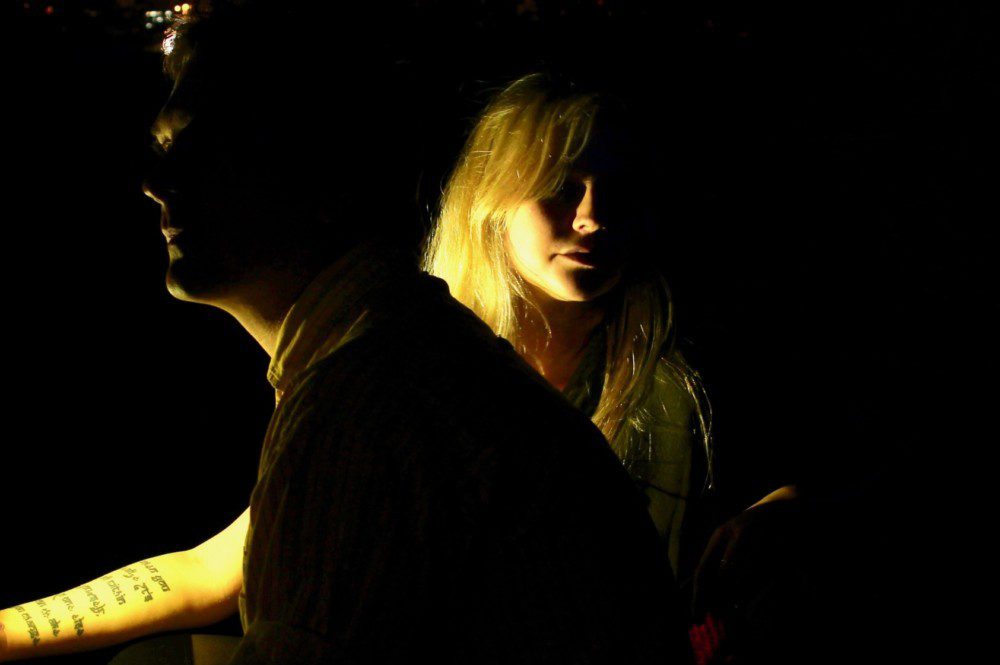
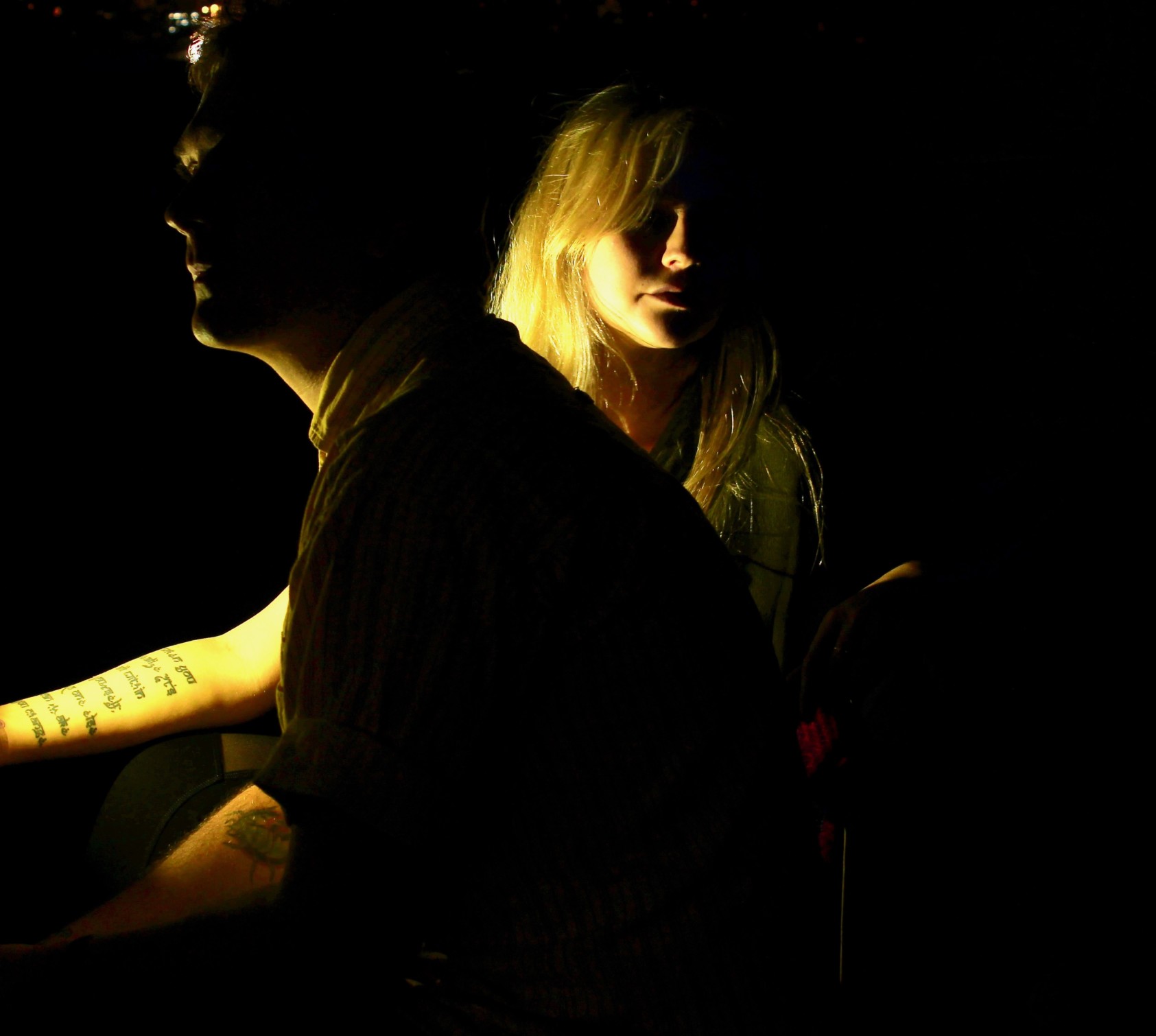
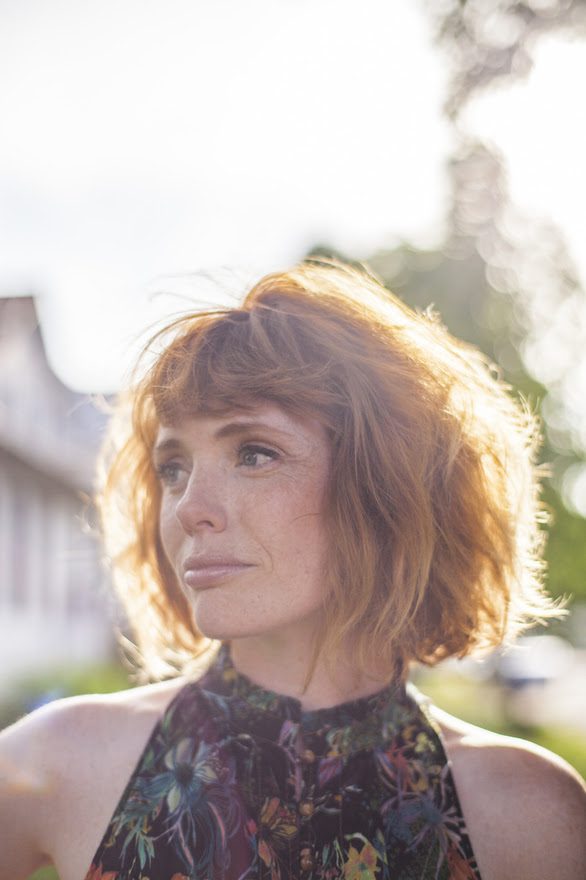
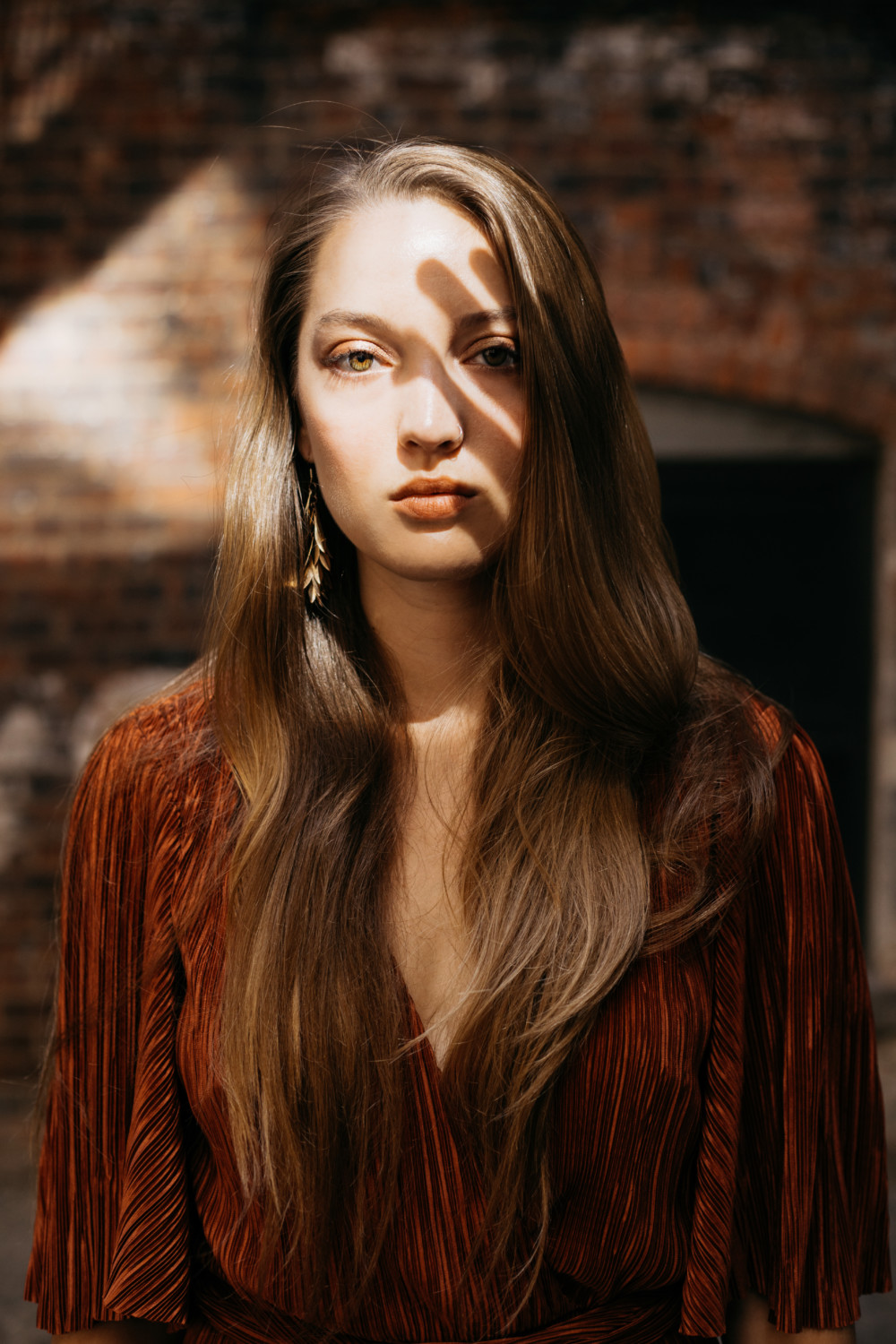
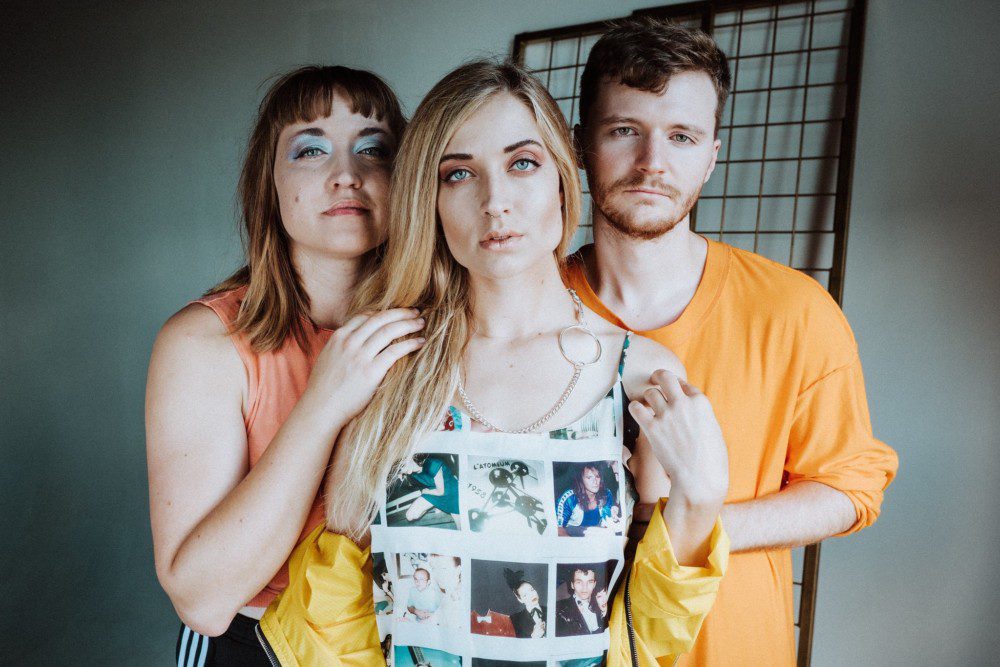
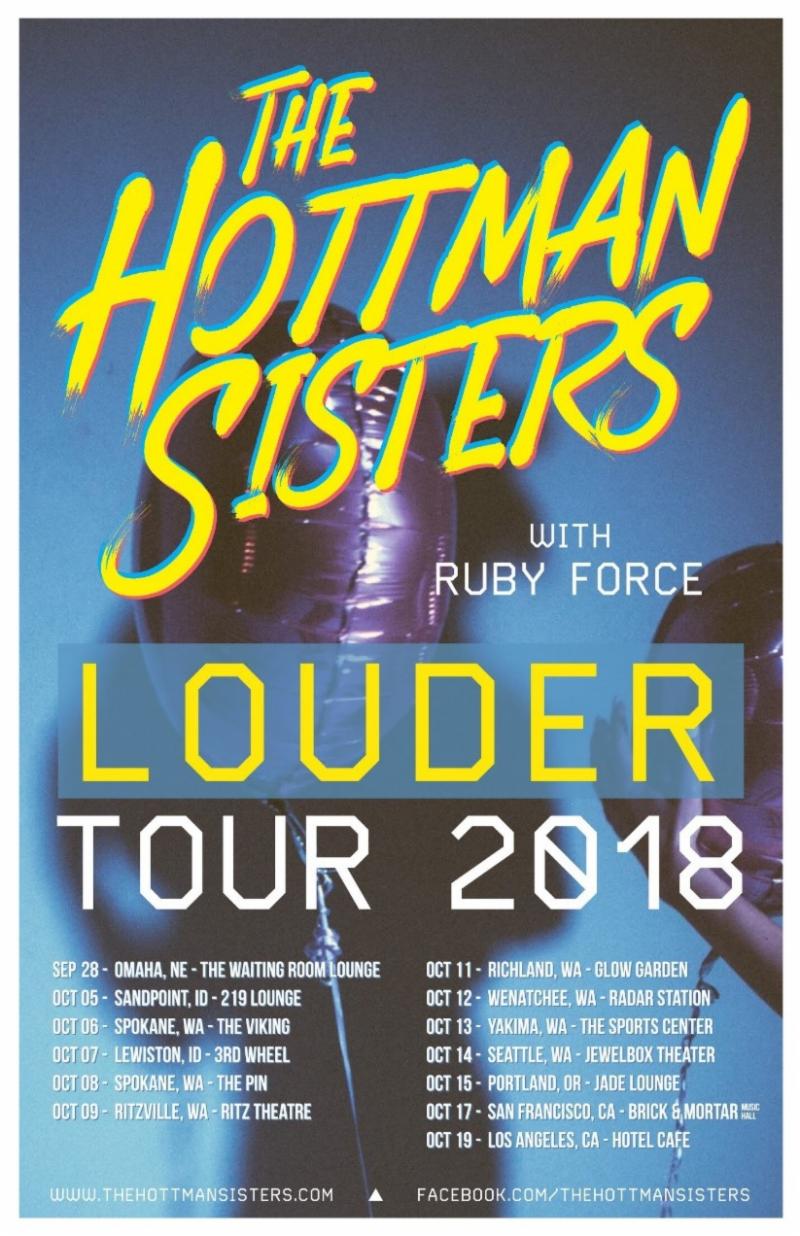
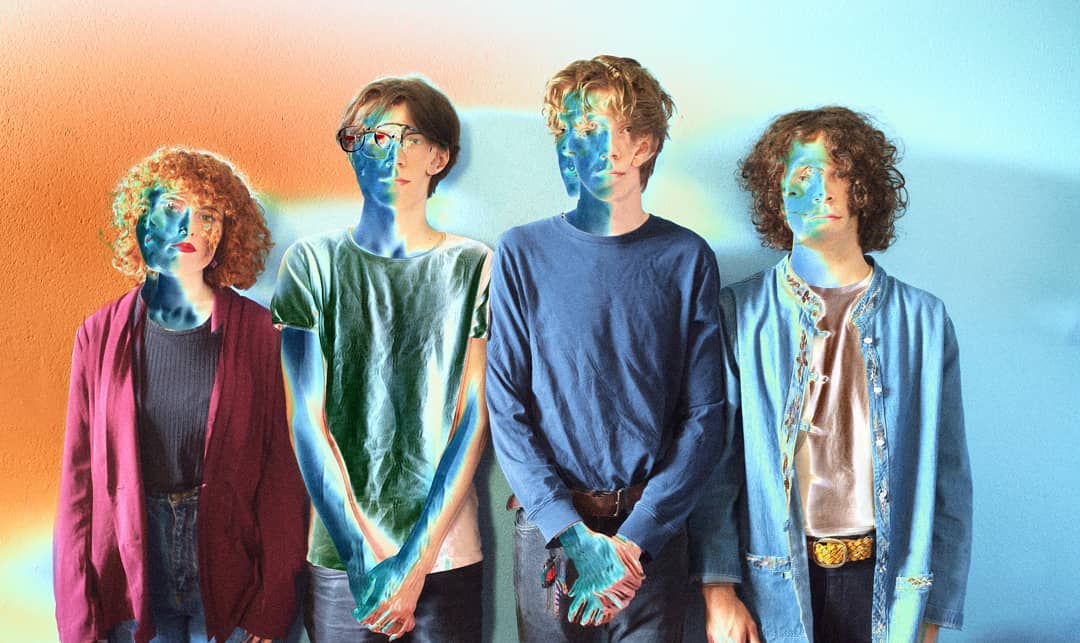
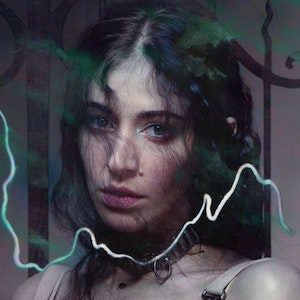
When I call Madeline Kenney, she’s almost home – driving back to Durham from a brief West Coast tour after a stop in Austin to drop off her band. On this return trip, she’ll cross the Continental Divide for the ninth time this year. Her first crossing, in January, was part of a move from the Bay Area to North Carolina to record her sophomore album, Perfect Shapes. It had scarcely been six months since Carpark Records put out her Toro Y Moi-produced Night, Night At First Landing, but Kenney was compelled by opportunity – she’d been offered free recording time in Sylvan Esso’s home studio, with none other than Wye Oak/Flock of Dimes mastermind Jenn Wasner as producer.
At the time, Kenney and Wasner had not yet met face-to-face – the match-up came at the recommendation of folks adjacent to the Durham music scene, whom Kenney met while touring behind Night, Night and would later move in with. But it couldn’t have been more appropriate; though Night, Night is a distinctly dream-pop affair, its hazy guitars nearly obscuring Kenney’s presence, Perfect Shapes brings out all of Kenney’s quirkiest ideas, equal parts art rock and indie pop. “It’s not that I don’t like [Night, Night] or am not proud of it,” Kenney cautiously explains. “I think I was pretty naïve when I made Night, Night, pretty eager to please. I think I said yes to a couple of things production-wise that, looking back, maybe I didn’t really mean to say yes to.”
That idea crops up on Perfect Shapes over and over again – that Kenney, at 26, is still learning about and setting her own boundaries, and her songs are a fantastic reminder to anyone listening not to back down from their own. “I can’t go out… I’m in the hustle to my elbows,” she sings on “No Weekend,” describing all too relatably the plight of so many millennials. But over a fluttering sax interlude (courtesy Wasner’s Wye Oak cohort Andy Stack), she concedes, “I’m so good at giving in.” Even before we get there, we have album opener “Overhead,” in which Kenney complains of others “calling me empty / just because I know my own limits.” The following track, “Bad Idea,” dissolves an “In The Air Tonight”-reminiscent intro into a pulsating synth line, its lyrics ambiguous until Kenney cries, “So I showed up, just like they told me to / Drilling it all in my head / So, that’s what the girls do – Showin’ up for you, for you.”
Her interrogation of emotional labor and unapologetic tenacity belies the record’s soothing composition – vocal layers lap softly over one another; relatively sparse braids of springy bass, warbling synths, sped-up samples, and twangy guitar lines give the entire record a swirling, almost aquatic feel, and make it an exceedingly pleasing listen on a visceral level. Lead single “Cut Me Off,” is a perfect example; Kenney sternly advocates for doing things on her “own time” over a nimble, Dirty Projectors-esque riff, kitschy but subtle slurping sounds augment the words “drink it up,” and just as she proclaims she’s “got a good thing going,” the song ends abruptly, as though someone, somewhere, just hit a mute button. It’s equal parts wit, social commentary, and unexpected earworm.
And while Wasner’s sonic thumbprint is certainly visible, Kenney emphasizes the collaborative nature of their working together. Kenney had demoed the songs but most of them were recorded from scratch over a two-week session, with drummer Camille Lewis joining them halfway though the process (Lewis, along with her Dead Recipe bandmate Kyle Albrecht, comprise Kenney’s live backup). “We recorded some things on top of my demos because both of us had this feeling about a couple of them that there was a mood that we couldn’t recreate if we started fresh,” Kenney says. But for the most part, “it was Jenn and Camille and I in a room getting to know each other as musicians, as people, and learning and making mistakes and really exploring a lot of different things and allowing ourselves to just be free in the space and make something that was interesting to us and not affected by anything from the outside world.”
It’s the kind of creation myth told over and over again, from Big Pink to Bon Iver – but rarely are the protagonists women, and Kenney says the experience was eye-opening. “Oftentimes in studios with men… it’s this internalized misogyny where you’re constantly second guessing yourself – like I don’t wanna speak up or I don’t wanna ask this question cause I don’t wanna look like I don’t know what I’m doing. I think we had to learn, literally together, to feel comfortable with that because of how long we’ve been trained by the world to second-guess ourselves.”
Kenney also recognizes that women have been socialized to nurture, particularly in their relationships to men – at one point, she studied neurobiology while simultaneously supporting herself as a baker and pastry chef. “I think the neurobiological predisposition to be a caretaker is a beautiful thing, and I personally get a lot of satisfaction and deep emotional reward from taking care of people,” she admits. “That’s why I loved being a baker – I like making things for people and making them happy. But I just get totally depleted by it, because of how people are socialized to take from women.” It’s a personal sentiment that’s easily applicable in a wider setting, as women all too often bear the brunt of emotional labor professionally, personally, and even politically. Album standout “The Flavor of the Fruit Tree” is both a prod at a relationship that Kenney ended after feeling like she had to be a mother to someone six years older than herself, but she says it’s also “a commentary on how society allows men to act like children.”
It’s here the album takes a turn – on the following track, Kenney announces “I went home, I got tired / of standing up, of giving up my time / Of getting offers, Of being mother,” and its last three songs (including the stellar title track) are concerned mainly with aesthetic appreciation – the shapes, colors, sunlight, art and music that propel Kenney forward. No longer relegated to caretaker, Kenney can become the creator, the observer, the appreciator. While it’s clear that she’s taken efforts to carve out her own space as a musician, Perfect Shapes finds Kenney simultaneously prepared to hold fast to the new boundaries she’s set for herself, but also to share her talent with others. “I think once you make a song and put it out, it really isn’t yours anymore. It’s going to be consumed by another brain who’s been though a different set of experiences and understands things differently,” she says. Through her kaleidoscopic sonic palette, she’s invented a new way of interacting with an otherwise demanding world, and says that working with Wasner left her with the confidence to keep pushing. “I was interested in doing something different and exploring some new sounds,” she says. “I guess I’ll always have a million interests. I’m sure the next one will be different too.”
Madeline Kenney plays Baby’s All Right on November 1. For a full list of tour dates, click here.
I’ve never felt more old or useful than at last night’s Public Memory show. After getting startled by the opening clang of a crash cymbal (who could ever anticipate drums at a rock concert?) and bolting away from the monitors to the back of the room, it dawned on me that I’d forgotten to bring earplugs. Again. Fortunately, I hadn’t forgotten chewing gum, and as I smacked on two pieces of sweet mint Orbit, a little light bulb sparked in my brain—not to be confused with glittering refractions from the overhead disco ball. I scampered to the bathroom, spit out my gum, split it in two, wrapped each piece in toilet paper, and crammed a wad into each ear. I felt like a geriatric MacGyver, who wasn’t capable of saving the world, but could at least protect his own eardrums. Shoddily plugged, I re-entered the venue less frightened, and feeling minty in places I’d never felt minty before.
Public Memory, the project fronted by singer, songwriter, and producer Robert Toher, might have been playing so loud out of celebration—it was their record release party, after all. Demolition, Toher’s third LP as Public Memory, drops November 9 via Felte, and the performance was cloaked in the album’s dark, hallucinatory aesthetic. A veil of lavender light was cast against the stage along with swirling white polka dots. Toher manned keyboard effects, guitar, lead vocals, and occasionally hand-held percussion. I still find it jarring when moody electronic groups bust out the tambourine, but if it’s good enough for Trent Reznor, who can blame them? And there wasn’t just tambo in store: each member of Public Memory’s live band brandished their own maraca, and I could’ve sworn I heard the tinkle of jingle bells.
All ribbing aside, the bells and shakers were joyful addition to Public Memory’s heavy, narcotic soundscapes. Toher’s voice is described as a “spectral tenor” on PM’s Bandcamp page, and rightly so; he elongates his vocals with reverb, often sounding as though he is calling out from a distant room. The words Toher sings are not so much the focus of his songs, but are instead used as their own instruments, floating weightlessly between crisp drums and shrieking synth passages that sound harvested from a horror movie score. The mood was rich, eerie, and commanding. What better way to spend the night before Halloween than at a spooky concert with gum stuck in your ears?
Detroit-based songwriter Anya Baghina (Soviet Girls) released her debut solo single this week – a gentle, haunting rumination on what today’s fast-paced “hookup culture” can do to the psyche, entitled “How Do You Do It?” Baghina’s dreamlike vocals narrate her internal turmoil on the subject, where she weighs the possibility of momentary companionship against the lingering feeling of loneliness that follows. “At times it can be empowering, especially as a woman,” says Baghina. “And other times it can feel like the complete opposite and leave you feeling empty.”
Baghina captures the feeling of emptiness with her dissonant melodies and repetitive song structure. Instead of feeling redundant, Baghina’s repetition of lyrics and chords lulls the listener into a numb hypnotic state, like being frozen by indecision. “I wanted to create a dreamlike, subconscious atmosphere to demonstrate how this confusion can haunt you and reoccur to make you question other beliefs,” says Baghina.
The song’s stripped-down production – sparse guitar, vocals, and organ – adds to its eerie nakedness, while Baghina’s voice imitates the tension of artificial intimacy followed by a rushed goodbye. She sings, “Wake up and listen to yourself / wake up and watch for lonesome theft,” framing a fleeting romance as an escape from solitude. In the end, Baghina isn’t offering a judgment or a solution, just a question: “How do you do it and walk away?”
Around this time of year, it’s natural – or should I say supernatural? – to think about the mysteries of the unseen. Ghosts, spirits, forces – things we can feel but don’t know how to explain. While some of us like to dabble in the supernatural world for a few days out of the year, the members of LA-based band Death Valley Girls (Bonnie Bloomgarden, Larry Schemel, Nicole Smith, and Laurie Kelsey), live in a spiritual realm year-round. The band has made a lifestyle out of seeking answers to the world’s mysteries and translating their experiences into hard-hitting, ghoulish rock ‘n’ roll music.
The band’s latest album Darkness Rains is a lurid body of work that reflects the group’s exchanges with the spiritual world, accompanied by their qualms with the material world. While past records like Glow in The Dark ride the band’s recurring theme of celestial encounters, Darkness Rains is clouded with an overarching sense of gloom that’s not present in past works. While lead singer Bloomgarden says the ominous theme wasn’t intentional – the record was named after the studio dog – she blames the album’s solemnity on her surroundings. “I think we can safely state that it’s been a really dark, hard few years,” says Bloomgarden. “That’s just what’s happening. I didn’t want it to be somber, I wanted to make people happy.”
We talked to Bloomgarden about channeling spirits while writing Darkness Rains, performing at haunted hotels, and Iggy Pop’s undeniable reign as the coolest person ever.
AF: I love the new record. One of the songs that sticks out to me is “Street Justice.” I feel like that phrase brings a lot of things to mind. Where was your mindset when you wrote the song?
BB: We’re individually very political, but that’s our personal life. For the band, we’re entertainers. Our job is to make people happier and bring people together to see rock ‘n’ roll and enjoy something outside of their life that might be bothering them. I think it’s cool when bands are super political, but that’s just not something we wanted to be because we wanted to bring people together. But I feel like, with that song, we just couldn’t help it. We have ways that we feel and there are so many things going on that are unjust. None of the words were intentional – we write the words for all the songs the morning we record – it just popped out from outer space or wherever they come from. But then afterwards were like, “Woah, that actually has a lot of meaning. Cool. That’s way better than if it didn’t mean anything.” Things need to change for sure. Especially the way people treat other people sexually, and that’s kind of what it’s about.
AF: For sure. That’s crazy that you write all the songs the morning you record!
BB:Yeah, I’m a bad attention span person, so it’s really hard to just sit down and write, because doing almost everything else is just way more fun. So then right before we go in, I’m like “Oh shit, I didn’t write the words.” Everyone knows I’m lying when I’m like “I have the words, don’t worry.” Then I’m like, I really gotta do this and it’s just like channeling. All of them will just flop out from somewhere. They go through my head and then on paper. They all just come out exactly as they are, it’s really weird. I don’t know how or why that happens. We’ve been trying to look more into “automatic writing” – when your hand just writes stuff and you’re channeling.
AF: That’s intense. Some of the lyrics are pretty dark. What prompted that?
BB:We like dark stuff but a lot of it is interest in death and what happens after you die and not wanting to wait until we die to find out. And also, not wanting people to be sad when people die because in 2017 everyone was dying and we were just like, oh my god. Doesn’t everyone know that everyone’s going to die and all we can do is change the way we look at it? Why don’t we try and change that? And what if what it looks like is that we’re happy we got to even be together at all? It’s dark stuff but you can still smile. And it can make you be inspired to fix stuff. It doesn’t have to make you just hide.
AF: For sure. I read in another article that the band has had a lot of supernatural experiences… are those still happening?
BB:Oh yeah, every day I learn more and more and I’m like, woah, there’s so many mysteries in the universe. We want to know more and there’s so much more. I think everyone thinks about it in different ways, but we’re more excited about it so we talk about it more. Everyone has weird beliefs, our band is just kind of our life. It’s the way we live our whole life, most jobs you get to walk away from it at night, but this is our job all the time. Just thinking about stuff. The more we think about supernatural stuff, the more we think in general, the more we ask each other, the more we wanna figure stuff out and the more excited we get and want to write new songs.
AF: Has anything supernatural happened on this tour?
BB:Well, we did play at this super haunted hotel that one of us got possessed at three years ago. The tale behind that is very long and complicated, but we played there and it’s definitely haunted. There’s a feeling you can get in your lymph nodes when you walk into a super haunted place. It feels icky and the ceiling seems to feel like it’s way closer. These are just things we’ve learned and noted throughout the years. We stayed there and it was just interesting to be able to have those feelings in our lymph nodes, sort of like a nauseous feeling. Every place you go isn’t completely haunted with negative energy and not everywhere you go is even haunted. I’m not sure if I believe in ghosts but I know they’re there when I feel them. We did find out the person that got possessed used an Ouija board last time we were there and you’re not supposed to use that. Ever. I feel really bad, I’ve been blaming this hotel for years when really it was our fault.
AF: Because of the Ouija board?
BB:Yeah, I don’t think you should use them anywhere. You can make your own, but they’re just like portals… I mean, of course it’s all conjecture, but I believe because it’s a thing you purchase and it’s so impersonal, you shouldn’t buy those because it’s an easy way for different ghosts that you aren’t asking to talk to come through and that’s when dangerous things happen. If you make your own, you have more control. I cannot recommend lowly enough the Ouija board. It ruins people’s lives.
AF: What made you want to go back to that hotel even though you had a creepy experience there?
BB: This is gonna sound crazy, but we feel like we’re paranormal investigators. We want to know more. And we put ourselves in situations that we know aren’t necessarily gonna feel that good, but who wouldn’t want to know more? We were between two places in Arizona – Tucson and Bisbee – and we chose the place that had a higher potential of haunted-ness. That’s just something that’s important to us. I don’t know why, it just seems like, why wouldn’t you want to experience more? But I got really scared. I was the last one to go to bed and the beds were like a foot above the ground and I was like ‘no ghosts allowed on the bed, no ghosts allowed on the bed, no ghosts allowed in the mirror.’ I don’t know, I guess we like to be scared. We just wanna find out the mysteries that surround us. I think that seems normal.
AF: I think it is, I think a lot of people are afraid of what they don’t know.
BB:But they love some things that they don’t know. Like, they love God or their special friend in the sky. Why is that any less weird than some of the cool things that are on earth and in the sky. I’m not poo-pooing anyone. I believe that if they believe it and enough people believe it, then it’s real. There is god and all the things that everyone believes. The power of person to create what person believes is really just as powerful as an actual spirit. We can manifest things that don’t exist by the power of our mind. It’s really weird. If you believe something’s going to happen then it has a much better chance of happening than if you don’t believe it at all.
AF: Speaking of that, I was dying when I saw your music video with Iggy Pop just chilling eating a cheeseburger. How?
BB:I can’t believe it. When I hear people talking about it, I’m like, that can’t possibly be real. He’s exactly who I wanted him to be. Just the coolest person in the world. Obviously. It’s not like I was surprised but it’s always nice to find out that the coolest person in the world IS actually the coolest person in the world.
AF: How did that all come together?
BB:He played us on his radio station like two years ago on my birthday and I woke up and saw my phone and it said “Iggy Pop says our band is a gift to the world.” And I was like – is this a birthday prank? Did somebody Photoshop this and put it on Twitter? Then I just jumped around for 20 minutes and was screaming. That he knew of our band and he said the name of our band – all of this alone would’ve been enough for me to be happy for the rest of my life. But then we found out he played us, and our friend Kansas Bowling who directs most of our videos was like “Tonight I had this dream that Iggy was doing the Andy Warhol video of Andy Warhol eating a burger. We should just do this for your music video.” And she just made it happen. We never let our minds believe that it could possibly be real, but then we started seeing emails that were like, saying it was going to happen. Then we decided we had to go. And we went and we met him. It lasted so long, the feeling of how cool he is. It’s like a drug or something. It made us better people, just to be in his presence. If you were to ask us who’s one person in the world you’d like to meet, we would’ve said him but we’d be like “but we never will.” Even still, if someone was like “What if you could meet one person in the world?” We’d be like, “Iggy Again.”
Catch Death Valley Girls on tour now through the end of Scorpio season:
10.30.18 – Philadelphia, PA @ Kung Fu Necktie
11.01.18 – New York, NY @ Mercury Lounge
11.02.18 – Cleveland, OH @ The Winchester
11.03.18 – Detroit, MI @ Deluxx Fluxx
11.04.18 – Chicago, IL @ Beat Kitchen
11.05.18 – Milwaukee, WI @ Cactus Club
11.07.18 – Denver, CO @ Larimer Lounge
11.08.18 – Salt Lake City, UT @ Urban Lounge
11.09.18 – Boise, ID @ The Olympic
11.11.18 – Chico, CA @ Duffy’s
11.13.18 – Portland, OR @ Mississippi Studios
11.14.18 – Vancouver, BC @ Fox Cabaret
11.15.18 – Bellingham, WA @ The Shakedown
11.16.18 – Seattle, WA @ Freakout
11.17.18 – Eugene, OR @ Old Nicks
11.20.18 – San Francisco, CA Rickshaw Stop
On the set of “Mr. Weinstein Will See You Now.” Photo by Hayley Rosenblum.
Exactly one year to the day of the New York Times article that exposed Harvey Weinstein as a serial sexual predator, Amanda Palmer and Jasmine Power released a video that cements the importance of the #MeToo movement. Though its lyrics make no specific reference to the disgraced Hollywood mogul, the song is called “Mr. Weinstein Will See You Now” and was written shortly after the news of Weinstein’s transgressions became a media frenzy.
In a blog post, Palmer details the making of the video, the significance of choreographer Noémie Lafrance’s vivid work, and the genesis of the entire project, which was crowd-funded via Patreon. But in a separate interview with AudioFemme, she illuminates these ideas further. “We all know the basics: rape is bad, sexual assault is bad. But there is such a broad spectrum of power play within these private arenas,” she explains. The #MeToo movement has shown that sexual assault and harassment is an all too universal experience for many women, and the day Power and Palmer were set to enter the studio together, Palmer says her mind was caught on the idea that so many of these incidents had happened in hotel rooms. “I met Jasmine only a few days before we went to the studio, and I had been reading the news that morning, not about Harvey Weinstein, but about Stormy Daniels,” she remembers. “That made me think not just about the hotel rooms as this strange infinite karmic space, but the fact that these moments always happen behind closed doors in these cellular private spaces where women and men are alone.”
That made the setting for the video an obvious choice. But Palmer didn’t want the short film to focus on her – instead, she wanted to make it about women globally and the internal dialogue we may all be simultaneously working through. She says she wanted to capture “how frustrating it is to be that woman, stuck in that room with a man who wields all the power, and this psychic battle that you have to do in your own head, and the exhaustion of having to negotiate [with] an insistent, annoying man… weighing your options, looking for the escape, wondering what the path of least resistance is, wondering if the path of least resistance really is your best option, questioning your own motivation, questioning how you will be perceived. Not being able to actually find your inner voice, because the voices outside of you are screaming at you so loudly.” To that end, Palmer and Power take a more supportive role in the video itself, standing among a throng of women solemnly repeating the song’s lyrics.
Palmer tells AudioFemme this was a very deliberate decision. “When I thought about what the video needed to be I had a short list of things, which is that it couldn’t be centered around me and it needed to include a ton of women, of different ages, shapes, sizes and colors to reflect the fact that this is a totally universal global experience,” explains Palmer. “And choreography felt correct because of the viscerally painful nature of the subject.” In choosing to bring to the story to life with a chorus of women, Palmer shows the magnitude of the issues they were seeking to address, while each woman’s nuanced movements and expressions reveal that no one experience encompasses the reality of sexual assault – each woman is involved in her own internal battle. Part of what makes “Mr. Weinstein Will See You Now” so powerful is that Palmer doesn’t dive into her anger towards men like Weinstein, Cosby, Kavanaugh and Trump, but instead investigates her own curiosity of the female psyche.
“That is one of the things I hope the song gets at, because it’s a lot easier to write a song about what is black and white, and what is bad,” Palmer says. “It’s a lot harder to write a song, and make a video for that matter, about the internal tumult that women have to face in so many interactions.” As songwriters, Power and Palmer know that making art about weighty subjects is often the best way to process them, show solidarity, and offer a visceral, but not exploitative, experience to those who have attempted to remain willfully ignorant about these issues. “I think we just have to rip out the pages and write an entirely new book about empowerment,” Palmer says.
While the media has relied on the black and white experience of assault and rape, artists like Palmer and Powers are opening up to a wider conversation of grey nuances. “Mr. Weinstein Will See You Now” opens a dialogue where these nuances to come to life, and ends on an empowering note; the chorus of women stand shoulder-to-shoulder, repeating the words “You forget that I’m the one writing this.” This powerful scene re-imagines the common media narrative that paints survivors as voiceless victims, giving them the potential to re-write their own stories. This, Palmer says, is the whole point. “Art has opened incredibly important doors that have lead to progress,” she says. “I think this is the time for artists of all genders to stand up and start addressing more of this stuff. Art making and storytelling right now is so critical because everything else is so fucking confusing.”
When I grew up dreaming of rockstardom, I never realized how many spreadsheets I would have to make. But they’ve become so indispensable to me that I’ve even named this column in their honor! Below I’ve included the spreadsheet templates my projects use to stay organized for booking, advances, finances, merchandise inventory, and our gear while on the road.
Booking spreadsheet: Where it all begins! Initially, booking a tour yourself is the messiest part, so it’s best to keep it all organized in one place so you don’t accidentally double book yourself or book a city on the wrong day. Use google drive when booking tours so that everyone in the band can easily check the spreadsheet.
Useful columns to include: Date / City / Outreach&Contacts / Venue / Bands / Door Deal or Guarantee / Accommodation / Notes / Confirmed (y/n).
Advancing Spreadsheet: Once all the shows on your tour are confirmed, each venue will (hopefully) send you an advance email that includes load in time, sound check time, your set time, the deal you made with the venue, backline, hospitality, and any other important details, usually a couple weeks to a month prior to the show. Feel free to reach out to the venues before you leave and send them your stage plot and input list if they haven’t sent you their advance yet.
Useful columns to include: Date / Departure time (day of) / Venue Address / Venue Contact / Load in Time / Soundcheck & Set Time / Backline / Bands / Accommodation / Driving Time to Next City / Notes.
Working Financial Spreadsheet & The Envelope System: To keep our finances organized, I use four labeled envelopes for cash and receipts. There are two envelopes for cash: one for door/guarantees, and one for merchandise sales. Receipts that receive throughout the day (from gas/tolls/parking/hotels/etc.) have their own envelope; after I enter them into our expenses spreadsheet, they go in a different envelope labeled “Filed Receipts.” I use an excel sheet with formulas in it to automatically calculate how much cash we have at the end. Always double check that the info has been entered in correctly!
Merchandise Inventory Spreadsheet: Before I leave for tour, I enter the inventory for each item that we are taking with us into this sheet. It’s kind of difficult to keep track of what’s sold every night if you have multiple people working at the merch table. I usually just put in how much we made in merch total each night and then do a count when I get back from tour of what’s left over. I include a ‘Items Sold’ column for each night in case we want to keep track of our most in-demand items.
Gear Checklist: This one you can tape to the dashboard of your van and also to the inside of the back door of your van. Every time you load your stuff into the van at the end of the night, be sure to do an idiot check and say out loud all the gear that is in the van. You’ll be less likely to leave something at the venue only to realize until you’re 100 miles away the next day if you do this!
Though being part of a touring band seems like it’s all fun and games, a lot of work and organization goes into making those tours a success. But that doesn’t mean everything is a drag, either. Even if you can’t 100% predict what happens on the road, using simple tools to keep it all together ensures you’ll at least have a smoother ride.
As someone who’s spent little time in them, it is strange how familiar old churches smell. They smell like warm dust, wood, and maple syrup—like a childhood home you’ve never stepped foot in before. It’s a combination of aromas rarely found in the glass and concrete structures of New York City, but at Park Church Co-Op in Greenpoint, it is a scent that lingers low in the air and welcomes you in. On Monday night, the Co-op was glowing electric pink and blue, casting an artificial sunset against the furthest stage wall. Its edges bled to purple where the two colors met. A slight, boyish woman by the name of Franz Charcoal took the stage holding a mint green electric guitar. Franz played simple, minute-long songs that sometimes ended just when you were getting into them. At times these songs were so short, the audience would hesitate to clap at the end, thinking Franz was simply pausing before another verse. She never was. “Yeah, they’re pretty short,” Franz said after one such moment. “But there’s a lot of them.”
Despite the dimly lit stage, I couldn’t help but think that this Franz Charcoal person looked and sounded familiar. A bit like Greta Kline of Frankie Cosmos. A lot like Greta Kline of Frankie Cosmos, in fact. But if you were to ask the woman herself, she was Franz Charcoal, a “rascal” who plays brief, autobiographical songs about misbehaving in church, of all places. Her presence was playful and lightweight considering the heavy atmosphere of the church itself. When Franz left the stage, the crucifix hanging behind her was bathed in hot red spotlights like a scene from a religious horror film.
The following acts helped a great deal in bringing some levity back to the setting. Felicia Douglass (of Ava Luna) offered her crisp approach to electronic, soul, and poetic R&B, which at times sounded like the seeds of Prince songs. Palberta’s Lily Konigsberg, meanwhile, made great use of her comedic timing to compensate for the fact that she’d lost her voice the night before. “This is a 50-year-old smoker’s rendition of my songs,” she said. “I may cough. I don’t want to.” Her music retained its stark beauty despite being stripped of some of the synthesizer flourishes on her recordings, and the rasp in her voice was a welcomed bit of grit to an evening filled with such polite music. Alone with an acoustic guitar, Konigsberg still yields a lovely and entertaining performance, especially when punctuated by the artist spritzing her throat with mentholated cold medication. At the end of her set, she curtly and sweetly said, “Okay. I’m done.”
Told Slant’s Felix Walworth is the first performer to address the oddness of the church all evening. At one point he paused just before starting a song; “Sorry,” he said. “It’s actually profoundly strange to be up here.” And it was profoundly strange to be down in the pews, as well. Not only for their unavoidable religious context, but also because sitting in a church pew makes you feel like a child. When Walworth (politely) ordered the crowd to stand up and sing “Tsunami” with him, I felt like I was participating in a camp sing-along or a Sunday sermon. Sometimes the connotations of the space you occupy are too powerful to leave the performance alone, and that’s not necessarily a bad thing. But it was, as Walworth pointed out, profoundly strange.
After releasing her entirely self-produced experimental pop album, VIVID, in 2015, Detroit-based songstress Krissy Booth has fully transitioned to the bright side of pop with her single “Lose Sleep With You.” Where VIVID is built on dark warbly bass and the pain of a bad breakup, “Lose Sleep With You” shows Booth in a completely different light, embracing the bubbly optimism of pop music.
Part of the song’s uplifting aura comes from its subject matter — a whimsical whirlwind romance built around a love for nightlife. “I had just ended an on and off again sort of relationship that was very safe,” says Booth. “I got on bumble, started talking to a guy, and we met later that week and had this wild adventure… I felt really alive after being so sad.” Booth’s reinvigorated outlook on romance is made evident through her whipping vocal line that mirrors the heart spikes induced by a new crush.
Booth’s buoyant vocals are paired with Red Jumpsuit Apparatus drummer John Espy’s booming pop production. The match-up is Booth’s first full collaboration with another artist and brings her closer to mainstream pop’s center. However, the epicenter of pop is where Booth feels most comfortable anyhow. “The music I make feels true to who I am and I’m super proud of it,” says Booth, “It’s pop, I love pop music, and I love electronic music.”
If you wear a fringe-sleeved shirt onstage, you’re bound to get it tangled in your tuning knobs—but this is of little concern to Judson Kolk. The guitarist and lead singer of Philadelphia rock outfit Godcaster flits around so swiftly, his tassels don’t have time to snarl. Calling Godcaster a “rock” band feels a little inaccurate, due to their theatrical set last Friday at ALPHAVILLE, as well as their clear distinction as a “sassy sassy rock band” on their Bandcamp page. And sassy they were; but also jazzy, and funky, and spastic, and dripping with riffs straight from the Nile Rodgers school of disco guitar.
It already seemed like a happy accident that Godcaster were opening the sold-out Beths show, considering the distant planet they’d traveled from. But even within their own group, its five members looked as though they’d materialized from five different bands—a refreshing visual given the proliferation of curated “lewks” we’ve come to expect from artists. These guys surely gave it some thought individually, but there was no overarching motif tying their styles together. You had Kolk, the rakish rock ‘n’ roll angel; Von Lee, a cherry-haired singer and flutist who was prone to convulsive fits of dancing (at one point she charged into the crowd carrying a single white clog); keyboardist David Mcfaul, rocking out like Weird Al on an arena tour; Bruce Ebersole, the laidback bassist; and Sam Pickard, a rail-thin drummer with sticker tattoos and a perpetual sneer. When they played, all that visual dissonance merged seamlessly in the music they made; a rattled cocktail of jam band, James Chance and the Contortions, and Sweet. Within thirty seconds of their set it was clear we were all in for a goofy time, complete with prog rock synthesizer and fractured flute solos. Within three minutes, I wished I could hire them for a house party.
Had it been a house party, Godcaster would have been the band in the sweaty basement, while the Beths would have ruled up on the rooftop. The New Zealand quartet couldn’t have differed more from their opening act, but in ways that only strengthened both bands’ performances. The Beths are a barebones, no-frills band, and to their benefit. They don’t talk much, and when they do, their self-effacing Kiwi humor makes up for their apparent clumsiness with stage banter, which twice consisted of a glib “Hi. We’re the Beths” via bandleader Elizabeth Stokes.
Their conversational abilities may not shine onstage, but their music can be blinding. Played live, the group’s modest catalog has space to stretch out, turn up, and bounce back from the crowd, who sang along to every chorus. The Beths opened with “Future Me Hates Me,” a biting slice of power pop and the title track off of their debut album, which they played the majority of. “Future Me Hates Me” is easily one of the best songs on that record, and hearing it live solidifies why that’s so. It’s got that one-two punch of great pop-rock: candied, blissful guitar hooks and candid self-loathing, both so well integrated that it’s difficult to separate the sugar from the spite. The same can be said for the anthemic “Little Death,” with its towering pop-punk riffs and succinct but colorful lines like, “you make me feel three glasses in.”
There was something wonderfully unpretentious about this gig, which is perhaps why it felt suited for a party. The Beths are a band unafraid to play power chords, sing about love, and do it all without a scrap of ego. Toward the end of their set, after repeatedly thanking the crowd, Stokes deadpanned: “Now we can go back to New Zealand and tell everyone we played a sold-out show in New York.” She paused and thought about it. “Maybe they’ll give us milk discounts or something.”
Hannah Teeter is sweet as pie in person and vicious as hell on the drum kit. She pairs her innately optimistic nature with her wicked energy to form a stage persona entirely singular. Hannah first started playing drums five years ago after forming the band Def.GRLS with buddies Craig Martinson and Mark Brickman. Def.GRLS released a couple EPs in between, embarked on their first tour this past March to SXSW, and are now in the process of releasing their first LP while simultaneously recording their next EP.
Photo Credit: Thomas Ignatius
Along with playing drums for one of the most unique projects in the Brooklyn scene, Hannah is a proud cat mom with a lot of experience cohabiting with an array of animals, from dogs to hissing cockroaches. While discussing our adoration of our feline friends, Hannah shared the fact that her father is a veterinarian with me (hence her colorful exposure to all types of species). Since Hannah is certainly a different animal on the stage than she is off the stage, I wanted to hear about how her massive love of all creatures influenced her own animal instincts on the stage.
AF: Please introduce us to your kitty.
HT: Please meet Igor! He’s a 12 and a half year old crotchety Siamese/raccoon mix and I sure do like him a lot :)
Hannah and Igor (all pet photos courtesy of Hannah and the Teeter family).
AF: How did Schmigor come into your life?
HT: My dad is a veterinarian back in Kansas, and he got a call one day from a former client who was distraught because she’d seen a mama cat and her band of feral kittens roaming around the neighborhood and they all looked pretty sick. My folks went out – I think armed with butterfly nets lol – and caught the kitties and their mom. My dad treated them all, spayed and released the mom and started to find homes for the little ones. Igor was the last one. He was pretty surly, so I don’t think anyone wanted him, and I wound up bringing the little guy back to New York.
Kitten Days: Hannah and baby Igor.
AF: Can you give us a run-down of your pet history?
HT: Oh jeez, we kinda grew up in a zoo! There were dogs: Bailey the Wonder Dog, Aggie the mean old yorkie and her sweet dumb son Ozzie who had rotting teeth and smelled like garbage, and the most handsome Irish setter known to man, Bowie. He’s old af but still kickin! There were cats: Claude, Wally, Petticoat, Truman, Ping, and Igor. There were snakes and rats and salamanders and crawdads and even some Madagascar hissing cockroaches for a while. And a hedgehog named Twiggy Fusebox.
Hannah and her family pets: Bowie, Aggie, Ozzie, and Petticoat.
AF: As a veterinarian, did your dad pass down any pet-rearing wisdom to you?
HT: Dry food is basically diabetes in a bag for cats! Feed ‘em the wet stuff so you don’t wind up having to hold them down while you spoon Karo syrup into their mouths when you find them in a diabetic coma (lookin’ at you, Claude).
Baby Hannah and Claude.
AF: Share your earliest animal-loving memory with us!
HT: Apparently our cat, Wally, taught me how to walk! My folks and my older brothers talk about how I would sit behind him and hold onto his tail. When he was ready to get up and move, I wouldn’t let go and he’d pull me up to my feet behind him. Who knows if this is truth or legend, but I like the story!
Wally and infant Hannah.
AF: When did you decide to pick up drumming?
HT: About five years ago.
Photo Credit: Mike Petzinger.
AF: What was it that made you gravitate towards the drums?
HT: Oh man. I feel like I’d always wanted to learn how to play drums ever since my brother’s high school band set up our basement as their practice space. I was probably about 7 or 8 years old and he showed me how to do a simple beat and I thought it was so cool mostly because he was paying attention to me and letting me hang out for a bit instead of yelling at me to gtfo. But then for the next 17 years, I didn’t touch the drums haha. So who knows?
Photo Credit: Michael Todaro.
AF: Tell us about Def.GRLS. How did the band start?
HT: I’d become good friends with Craig, who had a solo project and was also drumming in this incredible and incredibly weird and magical band called The Lesbians. He was teaching me how to play drums and when I was kind of struggling with the lessons, he convinced The Lesbians to let me learn how to play during their rehearsals. That was so freakin’ kind and cool of all of them and it was an amazing way to start making sense of the drums. It helped me think of drumming as part of the music as a whole rather than as isolated beats. They even let me play a few songs with them at their Halloween show, which was sadly their last performance. Out of the ashes of The Lesbians rose Def.GRLS with Craig on guitar, Mark (who had been playing guitar) on bass, and me on drums.
AF: You went on your first tour this past March. How was that?
HT: Holy cow, it was incredible!! So fun and exciting and exhausting. Everyone in every city along the way was really kind to us and was making amazing music.
Photo Credit: Luke Ohlson.
AF: Did you have a favorite city on your tour?
HT: I liked all of them a lot and they were all so different. I think my favorite, though, was Little Rock, AR. We played this really neat DIY house show at a spot called Hot Glory House that’s run by a magical boy named Carl Fike. After the show, a bunch of 18 year old punks took us to their favorite Waffle House and we did Madlibs and it ruled!
AF: Who babysat Schmigor while you were away?
HT: My incredible roommate, Tayler. He rules! He’s a legendary dude who’s also an artist and musician and he helped us master our album!
AF: Any funny or thrilling Schmigor tales to tell?
HT: Haha, I don’t know if this is thrilling but it’s kinda cool I think. When I first brought Igor to New York with me, he was not at all interested in being around humans because he was a wild outdoorsy kitten. We kind of ignored each other for a couple months. Then, on the first cold night of winter, I woke up because there was a tiny furball basically trying to burrow into my armpit for warmth. After that night, he and I have been pretty much best friends. He’s super cuddly now! Loves a snuggle. Still prefers to burrow in armpits.
AF: Have you ever written any songs about (non-human) animals?
HT: Oh man – we had a song that never quite got finished about a cat with three eyes. It ruled! We gotta circle back and finish it!
AF: What is your favorite (non-human) animal song?
HT: I was gonna go with “Werewolves of London” but someone said that technically werewolves are sometimes human so it doesn’t count. So I guess my next choice would be “The Lion Sleeps Tonight.”
Little Hannah and Bailey the Wonder Dog.
AF: If Schmigor was a human, what career do you think he would pursue?
HT: Something where he could mostly nap, maybe catch a few flies, and slowly but methodically knock full glasses off the edge of tables. I guess maybe that means he’d be a happy hour bartender, just like me!
AF: What are your plans for the remainder of 2018 and beyond?
HT: Have fun! More late night jams with friends! Def.GRLS is also gearing up to start work on our Hollywood EP, which I’m pretty pumped about.
Divorce is a word often whispered between family members; a subject broached in cryptic Facebook posts and confirmed in private text messages. When an artist is faced with the word, however, it can serve as a well of bitter inspiration.
Moda Spira’s latest record Divorce tackles Latifah Alattas’ real life heartbreak without the typical Robin Thicke faux emotions. Alattas broaches the subject on her new single “Regret” with a quiet reservation, as if watching the action on an old Hollywood movie reel: “You can’t regret it if you’ve never hurt it / You can’t forget it if you’ve never had it / You can’t protect it if you’ve never loved it.” The piano acts as a tense, pulsing metronome for Alattas’ rich vocals; as the violin crescendos and the song reaches a climax, the piano repeats like a film strip stuck on loop. Those suffering from their own tangled love story will relate to the feeling of atrophy, of endless mornings waking up to precious memories now fragmented and dull.
Listen to “Regret” below and read our full interview with Latifah:
AF: Tell us about your upbringing. When did music start becoming a focus for you?
Latifah Alattas: I grew up with a musical mom who was a well-trained vocalist and pianist and a dad from Yemen who did not have access to learning music as a child. My mom started me on piano at two, learning by ear, and cello at three in the Suzuki program. Music has always been a part of my life. I remember driving out to church on Sundays with mom and my sister singing three part harmony to “Row, Row, Row Your Boat.” I competed as a cellist until fifteen when I quit because I wanted to play soccer and at my school you had to choose. But music remained a big part of my life. I picked up acoustic guitar and taught myself by learning the Under the Table and Dreaming guitar tab book by Dave Matthews. I just never stopped playing. I spent so many Saturdays as little girl working my way through the latest Disney book singing songs from Aladdin, The Little Mermaid and sheet music for the current pop hits!
AF: You were a part of the Christian band Page CXVI. For readers not familiar with the Christian music scene… What’s it like out there?
LA: To be honest, I am outside of the CCM (Contemporary Christian Music) world. So all I can speak to is a very independent journey in that way. You know, it has its ups and downs like any industry because it’s made up of people, and all people struggle. I have been grateful for the tremendous spirit of hospitality I have experienced from so many in that world. I have also been hurt and disappointed at times too. I tend to have the perspective that whether I am at a bar or a church that it’s just spaces filled with people who want to enjoy music together. And I can do that anywhere with any group. The Autumn Film was not a Christian band; I toured the country in several venues and clubs that were not church spaces and I loved that. I really enjoy playing music everywhere. Institutions tend to be a reflection of a lot of the same problems culture has, so all the good and bad things come with that in any space. But my posture is to just be who I am and consistent as I can be where I am at.
AF: Page CXVI focused on making hymns more accessible to a modern audience. Did you do a deep dive into the hymnals to find material or were these favorites of yours?
LA: I did for many years. This upcoming Page CXVI record [slated for release in Spring 2019] I wrote a lot more original hymns. I wanted to focus on the Mother and Father aspect of the Divine. I think we have done a tremendous disservice in the traditional Christian church by only referring to God as male. I wonder often, if we saw the Divine as both simultaneously and equally a reflection of the masculine and feminine would society be in this position of systematically oppressing and not believing women? So, in this upcoming album I refer to God as both male and female hoping that in twenty years if little girls and boys can sing about God as both, maybe they will have a posture of respect towards each other subconsciously.
AF: Moda Spira was born out of a need to create on your own. Your self-titled first album drew from your personal life, as well as from source material like The Lord of The Rings. Was the urge to write solo stronger after that album came out?
LA: The Autumn Film gave me that platform before, and I had early, early records under “Tifah” where I was writing on my own. I have always needed a way to write about my personal experiences and I love having Moda Spira to do so. I will always want to write my own songs and explore the emotional process of living through my music.
AF: Your new album Divorce tells the story of your marriage dissolving. “Regret” is a sweeping, sorrowful epic. Can you tell us about the writing process of this song?
LA: It was late at night and I was working on arranging songs for the new Page CXVI record for the strings to come in and perform that weekend. I knew I wanted them to play on some of the new Moda stuff as well. It was after 11pm and I told myself after writing three lame ideas that I should try once before heading to bed. The progression came instantly and I laid it down on piano, just letting it repeat occasionally changing the minor to a major inversion. It moved me, and the first line ”You can’t regret it if you’ve never hurt it” flowed off my lips. I sat there and sang freeform and the song was written except the chorus. I listened for a bit and then it just came to me so I added it to the top and the middle. It is a true stream of consciousness writing moment. I remember crying in the big vocal sections as I laid the idea down in logic and then again when I recorded the vocal on the record. It just moves that sad energy in my gut in a good way. It’s extremely cathartic to sing. When the guys laid the strings down that weekend I was so deeply moved and knew we were on the right track of emoting through the sounds of this song what was really going on for me in my heart, mind and body. This song is a very raw expression for me in a very tenuous and dark time. I am thankful for it.
AF: Is Divorce purely autobiographical or did you draw inspiration from additional material?
LA: It is purely autobiographical in every way.
AF: The artwork for the album is very cool. I especially like the GIF featured on your Twitter profile right now. What was the photography/art collaboration process like?
LA: I got to work with Zach McNair of McNair Haus and Annie Herzig. Together we had a wonderful blend of work styles and creative freedom. I had a general idea of wanting to use projection again in a new way from the first record. Annie was originally going to just write the titles and then she started playing with lines and shapes as we were projecting it over my face. It was truly a collaboration and it was a real joy to work with both of them that day. Zach has a great aesthetic instinct and is incredibly talented and kind.
AF: The album was funded via a Kickstarter campaign. What was that fundraising process like? Any advice for artists thinking of raising funds that way?
LA: Kickstarters are always exhausting, but it is worthwhile work. I had a lot of great content to use from my friend Clark Hutt who shot a lot of behind the scenes footage and made some great short videos for me to use. That on top of the wonderful photos Zach took helped me to post new content every day. I think posting new and different content each day really helps your backers get into the process of making the record. It is challenging for me because I don’t love being on social media everyday, but remind yourself it’s just for a short time and you can do a social media fast afterwards!
AF: What artists are you listening to right now?
LA: Billie Holiday, Al Green, Phoebe Bridgers, Joao Gilberto, Death Cab for Cutie, Rhye, Pretenders, Andy Shauf and Leon Bridges.
AF: Do you have any advice for young female musicians listening to Imogen Heap alone in their room?
LA: Don’t be afraid to try. You can learn anything from YouTube and can start with something as simple as garage band on your computer. Listen to things that inspire you and generate your own creativity. Get outside too! Live life and write about your experiences and what you see and feel. But mostly, don’t be afraid – you can do it.
Preorder Moda Spira’s new album Divorce HERE ahead of its October 26th release and check out her website for tour dates.
Where do you see yourself in ten years? Are you doing the same job? Or do you see yourself picking up a secret passion and taking it out on the road? Musician Anna Connolly spent her teen years romping around the D.C. punk scene, hanging with bands like Minor Threat. A few decades and two kids later, Anna Connolly has picked up a guitar and is making music her own way.
“The waves kept coming in / but the air was getting thin / and the best I had / was to blame it on my dad,” Anna’s halting, raw style of singing feels fresh and familiar all at the same time. While Leonard Cohen and Bright Eyes are clear influences on the music, the stripped down vocals have a marked punk vibe to them: direct, brash, with a sly sense of humor. “Stars” has an unwinding quality to it, the words coming out carefully, a kind of forced memory. It is a great teaser to Connolly’s debut album After Thoughts; it seems to mirror the album’s cover photo of a girl sitting astride a horse, gazing out on a landscape that is both her past and her future.
Listen to “Stars” below and read our full interview with Anna:
AF: In the 1980s, your family moved from California to DC. You and your sister Cynthia got involved in the punk scene there. Can you give us a feel for what that was like?
Anna Connolly: It was pretty small at the time. I was still pretty young, and so it wasn’t like I was part of the LA scene much, but it felt bigger and a little more intimidating in LA. In DC, we just went to a record store, and immediately met a guy named Danny who worked there. We just spent some time at the store, and more kids came in. I definitely felt very welcomed by people. It felt like a community from the beginning. I admit that I knew a certain group of people – mainly the kids around the Dischord Records scene. It’s not like they were the only people around, but that’s who we met first and sort of “fell in” with.
Anna & Cynthia, 1981. Photo credit Jane Bogart. Taken somewhere in Venice Beach.
AF: What drew you to punk music?
AC: My sister Cynthia, who is 2 years older than I am, was into punk and new wave before me. That’s how I first learned about it. I remember going to see Devo at the Santa Monica Civic Center, and a really young punk kid called me a poseur. He might have been the first “punk” I’d seen in real life! I was probably 12 or 13. But I loved music, and Cynthia was going out to see bands, and I guess I was just curious and went with her.
AF: Let’s say I don’t have a background in punk music…What bands would constitute a quick education?
AC: Well…. that’s a big question! The bands that shaped me, or that I was listening to at the time, were bands like the Circle Jerks, TSOL, Black Flag… I liked Crass, and I was obsessed with the Damned. I’d throw Minor Threat into the mix as a very influential (and a very good) early punk band. And Big Black. This is only scratching the surface of course.
But I also always liked what I would call “sad” music like the Cure, Joy Division, New Order, the Cocteau Twins, Bauhaus… I listened to those bands in the ’80s too. And Siouxsie and the Banshees. I’m sure there’s a better term than “sad” but music that is somewhat melancholy in sound and in lyrics has always resonated with me.
AF: In your press release, you said, “It just didn’t cross my mind to try to play when I was younger. Maybe I was rebelling against my rebellious friends.” When did that spark hit you? The need to write your own music?
AC: This reminds me of what we were talking about before… Well, I have two kids, and when they were really little, I took them to a “music class” which in hindsight I realize was kind of silly. But a woman had an acoustic guitar and would sing songs and do other activities with them. So, I bought a cheap acoustic guitar with that in mind – I thought, “I’m going to be this wonderful mother who sings songs to her kids!” Ha. Well that didn’t work because they just saw the guitar as something that came between me and them!
But I liked it, so I took lessons with an old friend. I think it was just nice to have something to do for myself, that wasn’t about my family. And then I tried playing songs that I liked, and then I finally wrote a song.
AF: Very Loretta Lynn of you! Are your kids still firmly annoyed or are they getting used to the idea of you as a musician?
AC: Ha! Well…. it’s been an interesting journey in many ways. They actually haven’t seen me play because I always felt like my lyrics in some of my songs are pretty intense. But they’re coming to my record release show and will help at the merch table.
I had played out a little bit when my kids were small, right when I was learning, and for some reason, I stopped for about eight years. I started again in 2016. So it’s really only been in the past two years that I’ve been playing out regularly. My kids are older now, so they’re quite aware of what I’ve been doing, especially around the recording sessions, making the vinyl LP, the t-shirts. I try to involve them in those aspects of it. My older son wore one of my t-shirts the other day, which was super nice!
AF: What kind of music are they into? Do your music interests cross paths?
AC: I realized recently that I think that music was to me what video games is to my kids. For me, music was the way that so many of us connected – by sharing music, listening together, going to record stores (or working there), going to shows, etc. And for others, playing together. For my kids, they connect on the xbox and talk there while they’re playing. It seems like that’s their milieu. But, I do feel like I didn’t do the best job in this regard. I mean, they listen to what I listen to in the car, etc. But they’re not into unusual music or anything. Maybe now that they’re older and can go to more shows, I can take them.
I did take them to see Arcade Fire once, and they covered Fugazi’s song “Waiting Room” in their encore. I was so excited and was telling my kids, “That’s Ian’s band!!!” but they didn’t seem too impressed! (I’m still friends with Ian, and I live pretty close to the Dischord offices, so my kids know who he is in that way.)
AF: Ha! I love it. “Ok, Mom!” I was reading an interview with Noah Lennox (Panda Bear, Animal Collective) and he said his daughter was thoroughly unimpressed with him. I guess no matter who you are inevitably your kids gonna be eye-rollin’.
AC: Yes, I think that’s true. That’s why I was happy when my son wanted to wear my t-shirt! The thing that affects my music though is that I’m a single (divorced) mom, and so that aspect of my life gives me ideas to write about… At least, that’s been what’s moved me to write so far. If I were happily married, I’d have to figure out something else to write about!
AF: In terms of a writing process, is your music mostly autobiographical or do you draw from other sources?
AC: My songs so far have all been autobiographical except for one, which was written about a guy in my area who killed his girlfriend at college. It was in the news a lot at the time, and I was struck by the story. A journalist interviewed neighbors where the guy had grown up, and one talked about how well-raised he was, that he went to really good schools (a private all-boys prep school in Maryland, in fact), and had great manners. And the neighbor said he was 99% good. Which made me think it only takes 1% evil to kill somebody. Anyway, that’s my song “1% Evil.” All the others are based on my own life experiences.
AF: Tell us about the picture on the cover of After Thoughts. The photo is so haunting and beautiful.
AC: Wow – thanks for saying so!!! And that’s an example of a funny twist of fate, in a way. I had a friend take some photos of me that I thought would be on the cover. And then I posted that horse photo on my Facebook page, and everyone said – that looks like a record cover! So after taking the photos for the cover, I ended up instead using a photo that I had sitting around my house the whole time. That’s me on the horse when I went to visit a friend. It was taken at Frying Pan Ranch in Amarillo Texas. I’m guessing I’m around nine years old? I love that the original photo is square, and faded like that. And I feel like it’s a very evocative photo and makes you wonder, “Why is that girl riding such a huge horse in the first place, and also without a saddle?” You might say that I was brave, or reckless.
AF: Has it been a fluid process, taking the record from studio to stage?
AC: Interesting question! In my case, I write my songs alone, and have played solo a lot. I had started playing with a bass player and drummer, and for my record, I really wanted something more in terms of arrangement. So I found Devin and Don (my two co-producers), and we did some practicing together and played a few shows together, then went into the studio. Some songs on the record are still quite minimal and like how I wrote them originally – “1% Evil,” and “Max On The Black Sea.” Other songs have drums, bass, and more. So, the album is like the live shows we played together, with some additional touches here and there. But since we’re not really a band per se, I need to explore a bit about what exactly I want for my live shows. I’ve played a few with my friend Hannah Burris on viola, just the two of us. But I miss the drums and the louder full band thing for certain songs. This is one of the first things I want to tackle now that the record is almost out – that and also making a video, which I’m dying to do but I haven’t quite figured out how to make that happen yet….
AF: You’ve had a lot of guest performers at your shows, including Devin Ocampo on drums (the EFFECTS, Beauty Pill, Faraquet, and more), Joe Lally on bass (Fugazi), Don Godwin on bass, horns, percussion (Slavic Soul Party), and Hannah Burris on viola (Teething Veils). Who’s been your favorite collaboration so far?
AC: I’m going to get all of them at my release show, which is so exciting!!! Plus I got to play with a couple of other friends in other cities last summer – it was so fun to play music with people who knew me back when I wasn’t playing. Everyone’s so great in their own way…. It’s hard to answer your question! Joe definitely felt that my songs were good in their basic way, without a lot of accompaniment. And some people have said that too about the live shows with just Hannah on viola, that you can really absorb the songs better when they’re that way. We’ll have to see how it works out. I know labels shouldn’t matter, but I’ve noticed that people seem to think if you play solo acoustic, that you are a “folk” artist. I don’t think of myself that way. But yeah – working out this band/arrangement stuff is important going forward for me.
I also have the beginning seeds of about five songs that keep going around in my head that I need to write! I’m really hoping the next album will go much more quickly and easier – like delivering a second baby!!!!
AF: Oh don’t even start! Ha! But seriously, we’ll be on the lookout for that.
AC: No more babies for me though, hahaha!!!! Only more records!
AF: Who do you have spinning at home right now?
AC: I’m a big Conor Oberst/Bright Eyes fan. It’s absolutely because of his music that I started writing. I listen to his music a lot. Also recently I was on a local radio station, and my friend who was DJing asked me to make a short playlist of music to share there. I’m liking that playlist which was supposed to be a list of DC music I like, so this was just a few things I grabbed that I’d been listening to:
Snowblinder by Lilys (they were based in DC at some point)
Stolen Wallet by Minutes (they’re half in DC and half in Kalamazoo so I guess I cheated a little)
Back and Forth by the Effects (Devin is in this band–I love this song, it’s in 3/4 time like a lot of mine are)
Stars by Swoll (this is a solo project by Matthew Dowling, who plays bass in the Effects).
AF: What advice do you have for people starting their creative lives later in life?
AC: First and foremost, there is NO REASON not to try something creative. If you don’t try, you will never know what could have happened. In my case, it really is so surprising as I have never thought of myself as a creative person. I studied computer programming, and Russian, and business. Yes, you can be creative when doing those things, but what I liked about all those things is that you have rules to follow, and you mostly know when you’re right or wrong. That’s a safer place to operate, at least for me. It is so completely different from creating something out of nothing, taking an idea, and making it into a poem, or a story, or a song.
Also, I’ve really grown so much as a person doing this. It can be quite challenging putting yourself out there. I remember the first time I played a show, and there was a couple sitting and talking, and I thought, “I wonder what they think of me?” You’re really making yourself vulnerable in so many ways. It’s forced me to become more resilient. And also, because I want to grow and explore as a songwriter and musician, I am motivated on my own to improve and try new things. Lastly, I have been just blown away by how supportive other musicians are. It’s a very welcoming community overall. People want you to do well, and they’ll help when they can. It’s really unlike anything I’ve experienced before.
Oh, and about doing it later in life in particular. For whatever reason, I didn’t think to try anything like this when I was younger. And I do feel that all of my life experiences are a key part of my songs, since my songs are so lyric/story-driven. If I was a lot younger, I think I’d have less to say! I’ve lived in different places, including Russia, I’ve done a lot of different things over the years professionally and personally, and that gives me both a lot to work with as well as a perspective that I wouldn’t have had when I was younger. I just don’t think I had as much that I wanted to express back then – it seems like my time for this is now!
Preorder Anna Connolly’s debut album After Thoughts HERE.
Just as some wines are meant to be paired with certain cheeses and some shoes look perfect with particular outfits, some drugs go inexplicably well with certain kinds of music. Many report that drugs enhance their music-listening experience by drawing out the meaning of the song or helping them get lost in the sound. These effects are different but equally fascinating for everyone. To get an idea of the vast array of strange and compelling drug-induced musical experiences, I asked people for their favorite music-drug combinations. Here are some of their responses.
“When I was first getting to know who and what I wanted to be, I would drop acid occasionally to meditate on it. I would almost exclusively listen to the songs my dad and I would listen to on his old turntable: Joplin, anyone from the British Invasion, anyone who played at Woodstock. While I was tripping on acid and listening to an oldies soundtrack, I felt comfortable in the familiar while able to focus on the visions and creativity flashing before my eyes. I grew up reliving the ’60s through music, movies, and documentaries, so taking acid in that setting makes me feel so much deeper than just popping a tab, but really understanding where we, it, and everything came from. It’s a super therapeutic and connecting experience.” — Melissa, 25
“I smoke weed daily and usually run through full albums while enjoying it, often ones I’ve heard hundreds of times. Top of the list for me are anything by Childish Gambino, Frank Ocean, J.Cole, Kendrick Lamar, or The Knocks. I’ll mix these in with Broadway musical soundtracks and a Disney playlist. I’m obsessed with Disney and like that cannabis calms my mind and allows me to memorize much of what I’m listening to. Mushrooms are usually reserved for more outdoor activities, but I’ve found a small dosage is perfect before a party.
While I’d like to say I go for more earthy sounds while on mushrooms, for me it’s more about melodic deep house beats, playlists that have limited words and great bass. I like feeling my body reverberate with the sound on mushrooms and feel the deeper the bass, the better the high. LSD gives you a major energy boost, so I usually find myself dancing when on it. The mix of sounds for my trips I prefer are usually in the synth/techno house/tropical house variety. Morning sets from Burning man are great for LSD, especially mixes by Lee Burridge, NSR, Bedouin.
I rarely find sassafras, but when I do, my sound goes more the direction of sexy, sultry vocals. Kat Cunning is currently a favorite, but I also love Bob Moses and will listen to them whenever I’m rolling. For ketamine, the mixes I prefer fall under a category I call sex house. It’s similar to deep house but with song choices that include sexually provocative lyrics and beats that are just perfect for getting sexy or just cuddling.” — Daniel Saynt, 35, founder of NSFW
“Though there have been many songs that I’ve enjoyed while under the influence of marijuana, here are a few that stand out as particularly gratifying for me. When I was younger and in college, a few that I remember really standing out in that mindset were ‘Dark Matter’ by Porcupine Tree, ‘3 a.m./Voices in the Fan’ by Devin Townsend, and the second movement of Beethoven’s 9th Symphony. Later, when I experienced smoking marijuana years later again, a couple that stood out were ‘Love Letters to the Soul’ by Entheogenic and ‘All That Makes Us Human Continues’ by BT.” — Jason, 30
“Lemon haze / sour tangie / blue crack for the drug, paired with the Young and Free Spotify playlist.” — Steve, 29
“I like a lot of combinations with drugs and songs, but I made the best memory with the combination acid and Pink Floyd’s ‘Shine On You Crazy Diamond.’ Acid makes your brain very active, and for that reason, you will hear sounds in this song you never had heard before. The whole song is a big fantastic journey in a fantastic beautiful world.” — Patrick, 24
“Carbon Based Lifeforms. I feel very peaceful and loving when listening to them. Combining it with mushrooms is amazing for me.” — Marianna, 29
“‘Cups’ by Underworld with MDMA and LSD. LSD demands music with long, sustained tones that is packed with subtle sound events. The song starts with electronically-generated violin sounds but very quickly a bass line drops. That is where the synergy kicks in with the MDMA, which wants fast and exciting music you can move to. In combination, you get an explosion of excitement and joy while flying in psychedelic space, forgetting the world completely and finding a unity, blurring of lines between yourself, the music, the space your body occupies, and the universe beyond the physical real.” — Dutch, 43
“It wasn’t until I was 21 that I first tried cocaine, but was instantly hooked. I was in Minneapolis at a SYSTEM party submerged in techno and the genuine community that comes with it. Rather than dancing and enjoying the music, friendly desire consumed me. Towards the end, James Patrick was closing out the night. I remember conversing with a lovely pink haired woman and out of nowhere, I turned against her abruptly ending the conversation. JP was mixing in the track ‘Doin Ya Thang’ by Oliver $, and it was that track that had me getting down for the remainder of the night.” — Brayden, 26
“MDMA — house/techno. Been loving the Cityfox Foxcast 26: Anja Schneider (September 2018) track. Would love to roll to that. Cannabis — seriously that’s too hard. Everything sounds better on weed. A favorite entire album is Nightmares on Wax’s Smokers Delight (top song: ‘Nights Interlude’). I love a good dreamy indie rock song like Blouse ‘Fountain in Rewind’ or Japanese Breakfast ‘Road Head,’ or something more upbeat like Bonobo ‘Kerala’ or ‘Samurai.’ Shrooms I like actually being outside and listening to the sounds of nature. I did do it at a Six Flags Adventure Park… I probably won’t likely do that again, but you never know. Ketamine — music doesn’t sound so good compared to the other drugs to me, but usually it’s an at an afterparty after a night of rolling so the chiller house/techno.” — Phillia, 40
In the not-so-distant future, when the earth is covered in red sand dunes and everyone is finally wearing floor length metal space dresses, humans will need some sick jams to make love to. Brooklyn’s own Pleasure Prince is eager to provide the musical backdrop.
Musicians Lilly Scott and William Duncan use their voices in tandem throughout their new EP Entry, giving each song a playful tension, like new lovers flirting across a Voigt-Kampff machine. Off-kilter drums kick off “You Look Good To Me,” which slowly evolves into the disco beat of “Be My Friend” disco beat; the metallic touches on “Tropical Surprise” complete the ’80s noir vibe. Kick off your heels and pour yourself (and a date) a mezcal Manhattan – this album is sure to set the mood.
Read our interview with the band and listen to Entry below:
AF: Pleasure Prince is based out of Brooklyn, NYC. Where are you both from originally?
WD: We moved here together from Denver four years ago.
AF: What kind of music did you grow up listening to?
LS: I’m a diehard Beatles fan since childhood. My dad would always be blasting T-Rex and Zeppelin in the garage, and when I started learning guitar at age 12, those were my idols.
WD: Lots of classical music. Also Toto and Supertramp. My Mom wouldn’t stop listening to Joni Mitchell and Steely Dan.
AF: Entry has an ’80s Blade Runner feel to it. What was the catalyst for the sound?
WD: We used to be in a folk-rock band together for years, and when we moved to New York we just wanted to immerse ourselves in something different, and became obsessed with synthesizers. Also, I love Blade Runner.
LS: Both of us love experimenting with new sounds. We used our vintage ’80s Roland Juno-1 synth on this record, so the Blade Runner vibe was effortless, but not intentional. I used to get told I looked like the chick from Blade Runner when I had platinum hair back in the day.
AF: Can you tell us about the writing process? Do you normally start with the music or lyrics?
LS: It’s never the same – sometimes I’ll sit down and write a song by myself on the synth or guitar from start to finish. Other times, Will surprises me by creating a whole new track in Logic with all the parts already recorded without me. That’s when I like to come in with super creative “oohs” and “aaahs.”
WD: My main instrument is percussion. I’ve been collecting all sorts of crazy drum toys lately and have been inspired to start songs using just a beat and some bass. But in reality, it’s all about the vocals and the sweet Hall & Oates harmonies we hope to channel.
AF: You’ve been performing shows in Brooklyn. What’s the music scene there like? Is gentrification killing it or are underground shows expanding to the outer boroughs?
LS: We live just a few blocks away from Elsewhere, and enjoy being immersed in both the new all ages/big ticket venues, and the amazing underground scene, which is still very much alive in Brooklyn. We played the most insane house show this summer and had the best time meeting people from all different backgrounds in the local scene.
AF: What artists are ya’ll listening to right now?
WD: Can is always on repeat, love the new Porches record, Tomaga, and lots of old soul. Also Brian Eno forever.
LS: Tom Waits, Can, and Broadcast play everyday at some point. I have a constant urge to discover old releases from the ’40s, ’50s, and ’60s; I recently fell in love with Walter Wanderly. Also, the new Mr. Twin Sister is fire. I’ve been listening to them forever.
AF: Other than music, what inspires you and gets you in a creative mood?
WD: Lilly’s naked body.
LS: Will in his robe.
AF: What can an audience expect from a Pleasure Prince show?
LS: Pleasure Prince is all about spreading love and dancing your ass off. I love playing shows and I love when I see people in the audience smiling and having fun.
WD: We wrote sad bastard folk tunes for so many years, that we had to start a project that is all about feeling good and not taking yourself too seriously. We want people to have fun, because that’s what we’re doing.
Like many artists, Gwendolyn Dot’s relationship with music began in the church. The Indianapolis-based producer recalls countless Sundays occupying a pew in the church choir, aimlessly following the monotonous melodies of Methodist church hymnals, singing only partially present in a wispy register. She even took twelve years of piano lessons with the minister’s wife. Years later, Dot has transformed her years of more rigid training into a sonic church of her own, one that exists outside the confines of religious tradition or brick and mortar. Her third single, “placenta et al,” from her upcoming record, mystic responsibility, is a reverent exploration into the cycle of life and the divinity of self.
“The placenta, while representing life, also symbolizes death and rebirth,” says Dot. “In a human life we have the potential to go through many cycles of death and rebirth without the heart ceasing.” Dot says the record she has been working on was meant to honor the cycles she has personally experiened, as well as an attempt at letting them go. Instead of embodying the dark aspects of birth and death – fear, uncertainty, pain – Dot’s music uses aqueous production and analog synths to paint a blissful and serene picture of these transition periods. The song sounds like a spiritual meditation, hinting at rebirth as a key component to self-discovery. Dot repeats “return to birth, body, placenta et al,” throughout the song in the same wispy voice she used in her church choir days, only this time she is fully present and intentional. It’s her version of prayer.
Dot’s ritualistic sounding songs are likely due to her own spiritual journey surrounding this record. “This album is entitled mystic responsibility for good reason,” says Dot.“I’ve been exploring my place in this world and attempting to understand this reality, and wondering… What is the self in relation to others? What is my responsibility to my self, to others, and to this planet as an alive entity? Am I god?”
However deep Dot’s questions go, her music is not clouded with the doom normally paired with existential thought. Instead, it is an extraterrestrial escape, inviting others to participate in her inner dialogue – or just let go and dance a little.
Listen to the exclusive premiere of “placenta et al” via Bandcamp below.
Detroit-based producer Nydge, born Nigel Van Hemmye, releases his first solo EP, Datsun Turbo, today. While Van Hemmye has spent the last year building an impressive catalog of pop anthems featuring other vocalists, this is his first foray as a solo artist. The EP is centered around Van Hemmye’s experience with severe anxiety and how it manifests itself in different aspects of his life. Although the subject matter is dense, his upbeat electric compositions could easily serve as the soundtrack to a VR race car simulation or modern-day Back to the Future remake.
Van Hymme says the opening track, “Immortal Youth,” is a nostalgic rumination on what life was like before he started having anxiety attacks. It opens with glockenspiel-like synths that recall the innocence of childhood. The lyrics follow suit, reflecting on happier times when debilitating worry didn’t exist. “Immortal youth / we have endless days / to find a happy place / it all comes in waves,” sings Van Hymme.
Datsun Turbo also touches on how anxiety can affect romantic relationships. Van Hymme says “Come Over” is about “the fear of never being able to commit or forgive myself due to my fatalistic inner narrative.” Arguably the EP’s catchiest track, the song tells the story of a yo-yo romance, where both characters keep coming back to a relationship that should be over– a theme that even people who don’t suffer from anxiety can relate to.
Van Hemmye’s also released a video along with the EP that attempts to explain his experience with anxiety further. In the short film, he details his first panic attack: “My heart was racing, and my walls of reality were melting.” The video goes on to give a chillingly accurate visual representation of what it’s like to have an anxiety or panic disorder, melding visions of clarity and beauty with unsettling disorientation. Van Hemmye explains that he started turning to long drives as a coping mechanism for his racing mind and heart. “I think driving has always soothed me because it occupies just enough of my anxious mind to not allow for excessive worrying.”
Van Hemmye says he feels a kinship to the Datsun, an economized version of an expensive European sports car. “That’s kind of how I see myself in music,” says Van Hemmye. “I’m a frugal kid from Detroit who makes accessible and honest music by crafting big pop music sounds in little DIY studios.”
We talked with Nydge about the story behind his first solo project and how dedication to a craft can be the best medication of all.
AF: I heard you were named after a race car driver – who is it and what’s the story behind that?
Nigel Van Hemmye: I was named after Nigel Mansell, who drove in Formula 1 with a thick, caterpillar mustache. After hearing one of the announcers say his name on television one Sunday afternoon, my mom decided not to name me Colin and go with Nigel. My Grandma read Colin as “colon” and that might have influenced her decision as well. Most people I meet associate me with Nigel Thornberry. Every now and then I get an XTC fan sing me, “We’re always making plans for Nigel.” I probably know more dogs named Nigel than I do people. I’m just out here trying to give Nigels a good name.
AF: Although the project definitely feels like electropop, I hear some early 2000’s rock influence — did you listen to a lot of Strokes-era music growing up?
NVH: I was in Germany for an exchange program at 16 for a month. One weekend my new German friends and I went club-hopping in Berlin. All of them were playing The Strokes! I distinctly remember everyone yelling along to the lyrics. Music like Franz Ferdinand, The Shins, and Phoenix bring me back to that moment. Growing up I listened to anything from Nine Inch Nails to Empire of the Sun to really wonderful, obnoxious techno and dubstep. I actually made really bad techno songs under the name “Nydge” in high school.
AF: I know from your film that this album was a coping mechanism for your anxiety, but a lot of the tracks sound upbeat/peppy – can you talk about that choice and how some of these songs came together?
NVF: I think about music as an escape – a place I can go where things make more sense or sometimes don’t have to. There’s an amazing notion in psychology about the concept of “Flow” or being in “The Zone” which I feel like I enter when on stage or producing or jamming. It’s a very soothing and uncomplicated feeling. Anxiety for me has always been the over-abundance of thought: racing mind, paranoia, irritability until it crashes into panic. Learning to do something so naturally that you enter that “zone” or “flow state” is the coping part. It’s the process rather than the product. My greatest hope is to either give a listener a brief escape from the negative or enhance the positive experience they are already having.
Full disclosure – I feel the best foot to put forward is one which is upbeat and peppy. It’s fun to play live, it’s easier to land on movie, TV and commercial work and there’s a huge demand for it on the radio. “Immortal Youth” was actually born out of the skeleton of a song I was writing for sync but decided to keep. “Baby, I” came from what I thought a car commercial would sound like with my voice singing about anxiety.
AF: “Come Over” and “Y U Gotta B” are about how anxiety affects a relationship. Can you talk a little more about the specific experiences/hurdles in a relationship that are a result of anxiety?
NVH: I think from the outside anxiety can present itself in a myriad of different ways. Ultimately for me it’s about stress management. Relationships can be stressful – even the positive parts. Anxiety also presents itself as my relationship with the future. “Come Over“ was the expression of worry about a future with or without someone. Stress in this way comes from some of the decisions I was refusing to make – either not allowing things to progress forward or not having difficult but important conversations about ending things.
With Kim Vi, “Y U Gotta B“ is a playful take on how confusing and frustrating it can be when you don’t know what the other person is thinking but you’re still very much invested in them. What they do or say is magnified under the lens of your adoration, and anxiety comes in and whispers in your ear: “They’re playing with you. They don’t really like you…” which really comes down to a lack of trust and communication.
AF: This is your first cohesive piece of work where you are the centerpiece – how does that feel?
NVH: It feels great! For the longest time, I felt like I was producing and performing without ever getting to know myself separate of others. I relished in the collaboration and the learning it brought me but I still somehow felt unproven or incomplete. The more I wear the “solo artist” hat, the more I understand the choices other artists make, both personally and within the industry. I’m here to constantly improve, challenge myself and others to create and try their best. On a lighter note, I had these songs, I loved them, I had a platform, and no good answer to the question: why not?
AF: Did making the explanation video for the EP put you in a vulnerable place?
NVH: Yeah, but also no. I’m very up front about my anxiety and panic disorder. I’m not really ashamed of it and I don’t think others should be [ashamed of theirs] either – although I understand why they are. I wrote the whole piece as a short story which I sent to a couple friends who said I should share it. I think I hesitated for a microsecond and then wrote up a shot list for the short film. I acknowledge wholeheartedly I am not perfect and one of the best ways of coping with anxiety is sharing the strategies I’ve garnered over the years with those who struggle as well. At the end of the day, music is my own personal worry stone, something through which I can pour in my doubts, insecurities and feelings and come back with not only something I’m proud of, but a more thoughtful version of myself. The lesson it endlessly teaches me is devotion to a craft or skill is one of the most meaningful relationships you can have with yourself and the world.
For years they hid from us. Like the hermetic enigma their name conjures, Mountain Man headed for the hills after releasing their hypnotic 2010 debut, Made the Harbor. The siren-like harmonies of Molly Erin Sarle, Alexandra Sauser-Monnig and Amilia Meath faded into the mist; Meath resurfaced four years later as one half ofSylvan Esso, bringing folksy sensibilities to Nick Sanborn’s infectious electronic production, and the duo’s runaway success made Mountain Man seem like more of a precursor than a project to which Meath would someday return.
And yet, that piercing acoustic music that hits the soul, cutting through the air with no other sound to travel by but the human voice and a casually strummed guitar – the kind of music that hits a mark that the 808s just will never dig into – began to garner a sort of cult following. Mountain Man’s magic was in its stunning simplicity, their songs the kind that easily soundtrack languid afternoons, campfire gatherings, wine makings, or family-style dinners with friends. These same words, moments, and experiences pepper the much-too-long-awaited stories of the group’s second album, Magic Ship, released on the last day of September this year.
The reunion is as welcome a surprise as the group’s origin – Mountain Man discovered each other by following the sounds of each other’s voices through dorm rooms in a small college in Vermont. The following that has knit itself around them has developed in a similarly organic fashion – a diehard collection of humans who tripped down some internet hole, or happened upon one of their few fireside acoustic performances. Ultimately, it was Bon Iver’s Justin Vernon and The National’s Aaron Dessner that officially reawakened Mountain Man when they booked a set for the trio at the 2017 iteration of Eaux Claires arts festival. Just over a year later, Magic Ship set sail.
Their sophomore album, recorded in Meath’s home studio in North Carolina, is a retrospective of sorts, a glance into personal anecdotes, memories unfolded, mistakes made, humans loves, and humans lost. The mantra of the album is “Don’t waste time on guilt,” a saying waved across their new website and album poster. You can’t help but wonder what guilt they carry. Is it guilt toward each other, toward the way their own separate roads unfolded and pulled them apart, or some other guilt they are trying to leave behind?
Magic Ship offers a musical collage interwoven with these kinds of questions. The sounds are now of women not searching for their place in life, but instead teaching their stories shared and gained alone. This album speaks to the wisdom of life, and what we lose and what we gain by walking into the path of the unknown, seeking to know ourselves above all else.
Opening up with the familiarity of their unaccompanied vocals, “Window” seems to travel through time from another place. The lyrics are indeed a first glimpse into what the last eight years has inspired in the hearts of these artists: “I was lost, I was bored, by the thought of wanting more.”
While I understand the desire to bring in another element of sound in their use of the guitar on Magic Ship, it sometimes detracts from the depth and beauty of the purity in their vocals – arguably the definitive edge that has always set this group apart from the other folk musicians pulling from similar influences. Most of the fourteen tracks here are less than three minutes long, making each seem like some fleeting fable; naked, unadorned vocals only add to this effect. Songs like “Baby Where You Are,” “Moon,” and “Slow Wake Up Monday Morning” feel more common and straightforward, but work to make the album more accessible; the guitar works well in early single “Rang Tang Ring Toon” in that the minimal picking takes a back seat to the trio’s vocals.
Overall, Magic Ship notably features more refined recording, for better or worse, There was something in the lo-fi echo of their first album (Made the Harbor was recorded in an abandoned warehouse with no budget, as opposed to a studio built by Meath’s post-Sylvan Esso success) that remains captivating in comparison to the no longer frayed edges of Magic Ship. But higher fidelity means the songs come through loud and clear this time – it’s almost enough to abandon the nostalgic, fuzzy feel of Harbor‘s aesthetic.
But after eight years of listening and relistening, the stack of memories riding on the lyrical melodies of Made The Harbor admittedly makes it hard to jump into a new compilation and say its impact will be the same as those of that first album. Cooking food with friends to “Honey Bee,” road trips with “Dog Song,” late evening porch nights with lovers as “Animal Tracks” played distantly – this is the emotional content that has yet to blossom in Magic Ship‘s nascent wake. Perhaps it will take another eight years to know its power of memory, time, and life faded into song; in the meantime I find myself meandering over certain memories, touching them with a hint of sadness and that longing ping that trembles beneath those moments we wish lasted longer. In the final phrase of this new piece of work, I find respite from the memories, longing, desires and dreams past with their last words: “It hurts, but that’s alright.”
The track, “Guilt,” might apply to anyone’s lingering sense of regret, but it also provides some absolution for the record’s three creators. “You can think about it, and be mean to your insides…” goes the almost nursery-rhyme-ish line, “Or it can just be something that happened that way, that makes you who you are today.” With this 55-second a cappella ditty, the three end their album by letting go of what might have transpired differently over the past eight years – perhaps musically, or perhaps in general, as life happens to us all whether we sing about it or not.
It’s a testament to both their brilliance and their humility that their fans are still by their side almost a decade later – happy, excited, and relieved to take in their voices once again. At a Magic Ship release show at Rough Trade in Brooklyn, NY, a group of followers came together, legs pressed against one another to be as close as possible to their small, yet strong vocalities. As if no time had passed at all, their vocals immediately cut through the din of noise to strike chords in my memory that had nearly forgotten to catch their breath. Together in that room we reawakened our love for the secret music we had found so long ago.
During a breakup, no matter where you go it feels like the world is breaking up too. The line at the grocery store is suddenly filled with sad strangers holding pints of Cherry Garcia and every TV commercial features a lonely person staring into a Netflix void. Wisconsin-based singer-songwriter Anna Wang gives breakups a new standard, not meant for wallowing but for the catharsis that comes after making the right break.
“Hindsight” is a slow boil, its steady synth beat creating the perfect base for Wang’s silvery vocals: “So don’t you tell me that / next time you’ll stay the night / Don’t you tell me that / next time you’ll do me right,” she sings, setting firm boundaries around her broken heart. Director Damien Blue sets the scene in the music video: hunky guy, beautiful girl, bathtub, corn field. It matches the sexiness of the music shot for shot, unlike some videos that randomly employ over-the-top scare tactics (we’re looking at you F.K.A. Twigs).
Watch “Hindsight” and read our full interview with Anna Wang below.
Anna Wang: Haha yes, guilty as charged! Apparently I wasn’t a very good student in the beginning. I have a distinct memory of piano teacher #3 asking me to play back what I learned at my previous lesson (“Mary Had A Little Lamb”). Instead of doing so, I balled my hands into fists and proceeded to bang on the keys until she had had enough of me. Apparently that was the straw that broke the camel’s back, because she stormed out of our house, and rode away on her bicycle as I watched from my window.
AF: After you decided to come back to piano, were your first songs instrumental?
AW: Actually, no they weren’t. I only wrote my first instrumental piece maybe just two or three years ago. I was really into writing poetry as a kid, and around 7th grade, my love for music and my love for writing collided. I began writing really trite, cringey pop songs and tormenting all my friends by making them listen to them and the rest is history.
AF: What kind of music do you gravitate to? Is it in a similar genre to the music you make or is there some dissonance?
AW: Both. I love pop music, but I also love classical, hip hop, musicals, ambient, experimental, singer/songwriter stuff – I’m pretty all over the board as far as what I like to listen to. However, I do have a special affinity for ’80s synthpop and Swedish pop music, and I think that influence definitely shows itself in my music. I love the sonic palette of synth-driven pop music, and Swedish pop has the best melodies.
AF: You grew up in Madison, Wisconsin and have chosen to make that your home base. What’s the music scene like there?
AW: The music scene is very vibrant! Everybody is very supportive of each other, and on any given night there are many live shows to choose between. While we have several venues that can cater to larger acts, there are also a bunch of DIY spaces that really allow for any creative person to feel at home.
AF: “Hindsight” is such a beautiful song. Can you give us a glimpse at the writing process? Do you start with the melody or do lyrics serve as the foundation?
AW: Thank you so much! A lot of times I actually start with the melody, but in this instance it began with the lyric. This past year, I learned a lot about how important it is to know when to say no, and about how to let go of people who have been taking you for granted or treating you poorly, no matter how much you might care for them. I had been thinking about this a lot, so I wanted to write a song that captured the bittersweet catharsis of finally putting an end to a toxic relationship.
I was flipping through the pages of my notebook, and on one page I had written “Next time, you’ll spend the night.” The melody for that line popped into my head as soon as I saw those words, and the chorus came really quickly after that. Once I had the chorus, which really laid out the thesis of the song, so to speak, I was able to build the rest of the story around it.
AF: It’s a song that feels ripe for a dance remix. Is that something you’ve considered?
AW: I’m so happy you said that. YES, absolutely. While I was producing the song, I was definitely hit several times with the urge to turn it into a crying-in-the-club dance song, haha! It’s definitely something I waffled back and forth on a lot, but I ultimately decided that if I really wanted to, I could always remix it later. Or even better, maybe at some point someone else will want to give the remix a go!
AF: I saw on your Facebook page that you’ve been rocking out on a modular synth. How did you get into them?
AW: Well, I had always loved synthesizers but didn’t really garner a full understanding until I began producing my own music a few years ago. Ever since then, I feel like I’m on a constant hunt, trying to chase down the sounds that I hear in my mind. Modular has always fascinated and sort of intimidated me, and earlier this year I decided to take the plunge. It’s such a beautiful medium for music creation – there’s something incredibly soothing and meditative about the workflow. There is an ephemeral quality to it – you can sit in front of your modular for hours and get lost in a beautiful patch that you’ve created, and as soon as you unpatch everything, it’s gone forever (unless you’ve recorded a snippet of it or whatever). Everybody’s modular system is a reflection of who they are, which I think is so cool.
AF: You’ve performed in bands, as well as solo. What are the positives and negatives of both?
AW: Pros of a band: other people – making music with other people is fun!
Cons of a band: other people – making music with other people is also challenging. Being in a band is like being married to four people at once. You really have to find the right people to make it work, but when you do it’s totally worth it.
Pros of solo: way easier to book shows when it comes to scheduling, and you can do whatever you want whenever you want.
Cons of solo: it can be a lot to take on by yourself. Sometimes I feel like a crazy person running around trying to handle the writing, recording, promotion, social media, booking, etc all by myself!
AF: What do you want an audience member to take away from an Anna Wang show?
AW: Whether it’s a lyric that hits home, a melody that gets stuck in your head, or just a vibe that contributes to a good time, I want to make people feel something. It’s the most beautiful and rewarding thing when somebody comes up to you after a show to say that your music has impacted them in some way.
Everyone has that friend so obsessed with getting a boyfriend that she completely misses the interesting, multi-layered, kick-ass person who’s right in front of her (herself). Ok, we’ve all been that friend. Canadian band For Esmé addresses self-love in their newest track “Modern Love” off 2018’s Righteous Woman.
“I was looking for somebody / to figure me out and come to love me / like I was wanting / I was incomplete / like winning love would justify me,” front-woman Martha Meredith sings into her bathroom mirror. The video for “Modern Love” features a variety of actors dancing, singing, screaming this reminder into the glass: “To make your own damn bed / sleep in it / cause you are the one who’s got to live with it.” It’s an anthem of self-acceptance, a tried and true reminder that ultimately you have to fall in love with yourself before you can receive love from anyone else. “Modern Love” is the Folger’s coffee of music; from the starting beat, it’ll be the best part of your morning playlist. Skip the mirror, grab a cup, and fall into step.
Watch “Modern Love” and read our full interview with Martha Meredith below:
AF: You’re from Toronto. Can you give us an idea of the music scene where you grew up?
Martha Meredith: I actually grew up on a farm near Peterborough, which is North East of Toronto. There was no ‘scene’ per say, so I was always making mix tapes and homemade music videos (lots of choreographed dances), playing piano and singing in choirs and plays as a kid. Later, as an emo teen, I’d mostly venture to Toronto to catch shows. I joke about Peterborough because it’s such a small town, but it actually has a wonderful creative scene that I didn’t fully appreciate at the time. So many of my creative peers in Toronto right now have a connection to or grew up in Peterborough that people joke that there must be something in the water.
AF: Do you remember the first song you wrote? What was it about?
MM: Ugh I hate this question because the answer is so embarrassing! The first significant song I ever remember writing was about a boy I was having a fling with at the boys summer camp I worked at in high school. We were essentially the least compatible duo imaginable, but at the time I took our inability to have a normal conversation as having a deeper romantic meaning. I wrote this song that, though is so cheesy to me now, really resonated with all my women friends that worked there with me at the time, and I was pretty proud of it. It was about overthinking what to say to someone you like and just being so awkward. My friends advised me that it was really good and I should perform it at the camp coffee house, because no one would know who it was about. That was some of the worst advice I’ve ever been given. I did perform it, and everyone knew exactly who it was about and I’ve honestly never lived it down.
To give you an idea, the chorus included: “I talk to you more in my head than for real, and all I want to know is how you feel.” YIKES! But, it was catchy and the feeling of satisfaction that I felt for making it was addictive, so I kept writing. Luckily, I’ve improved.
AF: Tell us about the writing process for Righteous Woman. Did you know the themes you wanted to tackle on this album early on?
MM: I have always been interested in songs that resonate on a psychological or existential level, and I’d started to experiment with some of that on my last record Sugar. My favorite songs critiqued societal structure or my role in it, and I wanted to narrow that focus in for Righteous Woman. I’ve always identified as a feminist, but in writing Righteous Woman I spent more time interrogating my internalized misogyny and some of the toxic ideas that I have either learned or been exposed to. I was deep into work on myself in psychotherapy when I started the record, and really staring down some of my unhealthy notions about womanhood, about myself. Generally I was feeling pretty angry about the expectations and double standards I felt were placed on me and women in general while simultaneously trying to really unpack my own privilege – a learning curve I’m still climbing. The title came later, when I realized there was a solid thread weaving through the record, of trying to cultivate authenticity and self respect. Of knowing when to speak up to stand up for yourself, and when to shut up to hold or make space for others.
AF: “Modern Love” was inspired in part by Joan Didion’s essay “On Self Respect”. Can you walk us through the writing process? Did you start with a line from the essay? Was the music already written?
MM: “Modern Love” started after I got engaged to my now husband and I was feeling uncomfortable with the reaction I felt I was getting from many people (especially women) like I had accomplished my ultimate goal in having secured a husband. This irked me significantly and as I started to interrogate that feeling I realized that my younger self had often defined herself by her relationships to and ability to attract men. Something about that caused me to revisit “On Self Respect” which is an essay I’ve always loved. It is like a signpost to reread to get back on track; for me it works every time. I wanted to write something that had the same ability to remind me to take full responsibility for myself, to forgive myself, to be true to my own character. I embrace the current ideology of self-love in theory, but struggle against it often internally. It always feels like a push and pull. Self Respect is different – there’s no discomfort for me about wanting to cultivate that.
AF: On Facebook, you had this to say about writing “To Hate“:
“I remember at the time feeling frustrated and helpless about the treatment of indigenous peoples in Canada, about the murder of black people at the hands of police in the US, about the seeming impossibility of bringing abusers to justice…. The list of things eroding my hope about society has since stretched much longer. It’s soul crushing. But that is the root of this song. I can’t become apathetic to what’s going on, as helpless as I often feel, and I need to remind myself all the time to find more hope amidst all my cynicism and rage. I have to stay vigilant, informed and keep fighting hate in every way I can, using the privilege and shelter from injustice that I do have to help make the world better.”
This echoes the thoughts of a lot of people right now. How do you make it a point to address these issues in your art, while also keeping yourself fresh, focused, and not totally depressed?
MM: I honestly really struggle with that. I’ve read the research confirming indefinitely how unhealthy it is to be on social media all the time, but I also learn so much there. Twitter for example has allowed me to engage with communities that I didn’t have a direct connection to before (shout out to #nativetwitter for the memes but also the labor of helping educate white settlers like myself about the realities and deep problems in this country we live in, as one example). That has helped me hugely broaden the range of perspectives through which I think about the world. It is also the fastest place to find out what is going on. Like so many women, it was impossibly hard to pull myself away from the Kavanaugh stuff this week because it fills me with so much rage. I wanted to be on the front lines, but I was also playing shows, attending a conference and sick, so I had to take care of myself.
I’m in this constant battle between tuning in and tuning out. I know how it affects my mental health, but I’m simultaneously so outraged with the state of the world and how sincerely fucked up things are that I need to feel really engaged as a citizen. Being a citizen in our globalized era is such an overwhelming task! It’s so vast. The levels of corruption, misinformation, and lack of empathy – it’s all so heavy. I’m trying to learn balance: making space for engagement, activism, debate, etc, while also making space for myself, for peace, for art, and for forgiving myself for not having all the answers. The best tool I’ve found over the past couple of years, as obvious as it sounds, is to make more room for gratitude. Taking time in a day to write down what you love and are grateful for can really give you strength to face the things that make you angry, complicit, or sad.
AF: What Toronto artists should we be spinning right now?
MM: I just got home from Pop Montreal and really enjoyed seeing both Fleece and Jaunt’s sets there – both great Toronto bands! Anyone who knows me knows I’m obsessed with The Highest Order, they’re my #1. Recently I had the pleasure of catching Loom at Venus Fest and Brooke’s songs have been on repeat for soothing my soul ever since. Another artist I am really into right now is Leanne Betasamosake Simpson. She’s a brilliant author, songwriter and poet doing really important work in Canada right now. I am currently reading her book As We Have Always Done: Indigenous Freedom Through Radical Resistance and learning a LOT, and I like to listen to her music too. Check out her song “Under Your Always Light.”
MM: I used to do ballet, modern, jazz, hip hop, all of it, and I still find moving to music continues to be one of the best ways to center myself and express really freely. I’ve been renting a dance studio sometimes lately just to move. It makes me feel really in touch with myself and brings me a lot of joy.
AF: I’ve just stumbled upon a For Esmé show. What can I expect?
MM: A good time! Lots of dancing, some high energy theatrics, and really excellent players. I am so happy with my band right now – it’s a real pleasure playing with Charles Tilden, Karrie Douglas, Lewis Parker and Liam Cole. The energy is huge! Together we’ve taken these electronic songs and extended and experimented with them to get a really fluid, dynamic set. I think the songs are the most compelling when you hear them live.
For Esme’s Righteous Woman is out now. Want to see the band live? Check out their tour dates below!
UPCOMING SHOWS:
OCT 12 – GUELPH – HOLY SMOKES FEST @ THE COMMON
OCT 14 – WINDSOR – PHOG LOUNGE
OCT 22 – QUEBEC CITY – L’ANTI
OCT 24 – OTTAWA – PRESSED CAFE
OCT 26 – TORONTO – MONARCH TAVERN – TICKETS
OCT 31 – PETERBOROUGH – THE GORDON BEST
NOV 1 – KINGSTON – CLARK HALL PUB
Since 2003, Haley McCallum has put dozens of releases out into the world as Haley Bonar – most of them with a folk rock bent and a focus on her clever lyricism and yearning vocals. That focus shifts with Pleasureland, released simply under the mononymous moniker HALEY. It’s a collection of instrumental only tracks, written in a time so bleak that Haley says she literally had no words to describe what she was feeling. An earlier single, “Infinite Pleasure Part 2,” featured ragged guitar layered with distortion; now, HALEY shares roiling piano ditty “Credit Forever Part 2,” accompanied by an eerie video montage of every day American television from the early 2000s.
By their nature, instrumental songs afford listeners something of a gift: the meaning is theirs to interpret, the melody a journey for the taking. Juxtaposing the lilting arpeggios of HALEY’s lively playing with a collage of cataclysmic natural events, absurd infomercials, and gooey sandwich fillings reveals the singer’s trademark wit in a new art form. Like so many of her songs, “Credit Forever Part 2” is more than meets the ear – it guilds this surreal imagery with nostalgic importance, almost as if we’re opening a time capsule. But inside, there are only meaningless artifacts, and yet HALEY’s majestic piano meditation swirls on, accompanied sporadically by restless, fuzzy guitar.
We spoke with Haley McCallum about tackling tough subject matter and how she’s navigated an industry that’s quick to pigeonhole female musicians.
Watch “Credit Forever Part 2” below:
AF: You’re a north country native, born in Canada, raised in Rapid City, South Dakota and currently residing in St. Paul, Minnesota. Do those north country winters affect the subject matter / mood of your music?
HALEY: I am a moody person, and weather definitely effects that. The winter is tough sometimes, but man can you get a lot of work done.
AF: What kind of music did you grow up listening to?
HM: I was obsessed with girl bands of the early 1960s like The Crystals and I loved the Beatles. That was not considered ‘cool’ but I felt like I was born in the wrong time. That being said, I also loved TLC, Green Day, The Cranberries, Enya, and Wilson Phillips.
AF: At what age did you start writing your own music?
HM: I was about 14.
AF: What were those first songs about?
HM: Oh, about being a sad sack.
AF: Traditional boys + blues? Or about living in the Midwest?
HM: The first song I ever wrote on guitar was literally called “Depression.” I guess I wrote piano songs when I was much younger. I started playing piano around age five.
AF: Wikipedia classifies your sound as “folk, slowcore, indie rock” – are those definitions on point or off base?
HM: Slow core – what a name! I don’t know, I am really bad at defining my own music because it isn’t defined in my brain when I write it. I just write it, and sometimes the songs are more rock, some ballads, some classical/jazz influenced. I think my goal is to bypass all the labels and be my own style, which is many.
AF: Your new album Pleasureland is instrumental. Was that a conscious decision or did it come from a more organic place initially?
HM: I started writing piano songs initially, just to play around with composition. After I wrote a few, the idea became solidified. I honestly was so blown away with the state of everything that I said, “What can I possibly have to say?” I’d rather convey a feeling. I needed to take a break from telling stories about myself that way.
AF: The state of the world?
HM: Yes. Election, MeToo, Black Lives Matter, immigration. So much negativity and violence, so many people crying out. It was overwhelming, and I found solace in playing piano and pushing myself in a new direction musically.
AF: Were you visualizing anything in particular when you wrote it? Was there a specific movement or subject on your mind?
HM: I envisioned destruction, chaos, a feeling of being out of control. But there is hope that comes through despite all of this. Beautiful parts of humanity and the planet we dwell upon, almost like a requiem for goodness.
AF: Have you had a chance to play this album live? Do you plan on touring with a focus just on Pleasureland as a stand alone piece? Or will you mix in some old favorites?
HM: We will be performing Pleasureland live when we’re in the UK in November. I’ll be playing other songs as well, but more stripped down versions.
AF: What feeling or emotion or vibe do you hope to convey during a Haley show? How do you want people to feel when they step out into that Minnesota cold?
HM: I suppose it would be nice to have folks walk away from the show thinking, “There is more to this artist than I thought.” People tend to pigeonhole, label, or be reductive in women’s capabilities as artists. It’s not intentional, just the way it is.
AF: Do you feel like you’ve been pigeonholed in the industry?
HM: Definitely. I have a lot of music, and it’s kind of all over the place. In my other band, Gramma’s Boyfriend, I write the lyrics/melody and sing my ass off – but the band is consistently panned as my “side project” and any review mostly references what I’m wearing on stage. They don’t understand that comprehensively, I’m a pretty versatile musician. I’ve always felt like the “biz” doesn’t quite know what to do with me. And that’s okay!
AF: What music are you into right now? What do you have spinning on the regular?
HM: Teyana Taylor’s new record has some serious tracks on it. Also really digging this Brit band Sleaford Mods. Oh, and Cardi B’s “Be Careful” is my JAM.
AF: There’s a young musician in St. Paul, she’s thinking of dropping out of college to go on tour. What advice would you give her?
HM: I’d say go for it. I learned a hell of a lot about life by doing that.
Pleasureland is out October 12 (preorderHERE) via Memphis Industries. Check out the band’s tour dates below.
Have you noticed a sudden trend of “blacked out” Facebook profile pictures? You may have received a few messages about this one, encouraging you to show followers a “world without women.” October is National Domestic Violence Awareness Month and already there’s some confusion on how people can support victims of domestic violence. For musician Lexi Todd, the answer is through music.
“You’d think that after all this time / you would learn to accept the fact he’ll always burn you / but you never face him,” Todd croons over a slick piano groove. As she watched her friend struggle under a tide of infidelity, Lexi Todd was motivated to write what would become her new EP Maria, Immured; it tackles the relationship from the perspective of a friend, watching, waiting for the opportunity to help. Like most music that broaches tough subjects, “Complacent” is subversively pleasant to the ear; at first you might not even hear the true meaning of the song.
Listen to “Complacent” and read our interview with Lexi below.
AF: Tell us about Lexi Todd. Where are you from originally?
Lexi Todd: I’m originally from the Jersey shore – the Long Beach Island area – but I’ve been in Brooklyn for a little over five years now. The shore culture definitely influences my aesthetic, personal style, and taste in music, even now that I’ve assimilated more into city living and culture. I grew up listening to classic rock, soul, r&b, and reggae, and I think there are traces of all of that in the music I’m creating now. I also still love the beach and being outdoors, I’m an avid yogi (I have a yoga trapeze in my apartment), and I try to incorporate that free-spirited, bohemian nature into my creative process.
AF: Describe your music as a celebrity couple. For example: Tame Incubala.
LT: I’m going to go with Lake Street Holding Company. Like Lake Street Dive meets Big Brother and the Holding Company during the Janis Joplin era.
AF: When did you first take an interest in music?
LT: I started making up little songs as early as I can remember. To this day, the way I remember certain pieces of information, like my social security number and my parent’s phone numbers, are from little jingles I wrote when I was a child. I didn’t start writing complete songs until probably 5th or 6th grade though. I started guitar lessons shortly after that, and then my writing really picked up. That’s pretty much how I spent all of my free time during those days, and I still have binders full of songs I wrote when I was in middle and high school. They were mostly singer-songwriter style songs, some were more blues and some were more rock. I didn’t start performing original songs until college though, when I joined my first band.
AF: Your new track “Complacent” centers around a friend’s emotionally abusive relationship. Why was it important for you to tell this story from your own perspective?
LT: I thought it was important to write “Complacent” from my point of view for a few reasons. Mostly, because that’s how I experienced it, so by writing it from my perspective it kept it honest. I wanted to lend a voice to survivors of domestic abuse who may find it difficult to find their own voice, and to encourage all people – not just those directly impacted by DV – to speak out in solidarity. I also felt like I could offer more of an outside perspective, and was freer to point out certain aspects of both sides of this toxic relationship from the outside looking in.
AF: October is National Domestic Violence Awareness Month. Your new 3-song EP Maria, Immured tells a story many women are familiar with: a man consistently cheating on his partner, a woman afraid to leave. Ultimately, your friend was able to get out. What were some of the tent poles / resources that helped support her as she made that decision?
LT: The focus of the EP is more than just cheating; it’s generally more about emotional and mental abuse. The second song focuses almost entirely on emotional abuse through constant put-downs, hurtful words, and condescension. The third song focuses on her breaking free from his manipulation; constantly lying about his wrongdoings as well as convincing her to think of herself as crazy, worthless, and the one that’s really in the wrong.
My friend started realizing how unhealthy the relationship was through a combination of a solid support group of friends and family, consistent therapy, and sheer internal strength. It wasn’t easy for her, and I tried to be there for her as much as possible, as an intermediary, a shoulder to cry on, and anything else she needed. It was difficult for her to let go, but, not to be cliché here, time really is the true healer.
AF: Have you had a chance to perform the songs live? If so, what was the audience response?
LT: I recently performed all 3 of the songs at Rockwood Music Hall earlier this month. I gave the audience a little context for each song before I played it, which really got everyone’s attention. Anytime I’ve played any of the songs off of the EP the crowd gets super quiet and attentive (a rare treat at a busy music venue!) and afterwards I can feel the support. Women in particular have come up to me after shows and told me how much they respect the honesty and vulnerability of those songs. It’s really special.
Are you a NYC native? Go to Lexi Todd’s EP release and music video screening for Maria, Immured on Wednesday, September 26th at WOW Café Theatre.
Do you know someone in need of support? Direct them to ncadv.org so they can create a personalized safety plan.
Starting over, beginning anew, casting off the old… it’s a process easier said than done. Omaha, Nebraska natives The Hottman Sisters are determined to move forward creatively, letting the past fall back into the rear view. Comprised of actual sisters Jessica (guitar) and Heather (synths), along with drummer Ed Getzlaff, the indie rock trio reaches for a bigger sound on its latest (and aptly named) EP, Louder, and manages to reinvent themselves in the process.
Louder is a splash of cold water to the face, made for those twenty minute walks from the train to work, those fast steps that help ground you for the day ahead. “Fire,” the first single from the release, is an anthem hell bent on refocusing energy. “The fire / Like a roaring sound / Consuming / What used to hold me down” – these are the kind of lyrics we could see Tessa Thompson rocking out to in Westworld. It begs you to rewire your brain, setting your sights on who you are, not who you’ve been.
We sat down with the band and talked church, adding in a new band member, and how they captured that ’80s synth magic. Listen to Louder in its entirety below:
AF: Tell us about Omaha, Nebraska. What’s the music scene like over there?
Jessica: Omaha is a great place to start as a musician. It’s a forgiving music scene, so we have all been able to hone our craft here. As we have grown, we definitely are traveling out of Omaha a lot more. The scene here is very much singer-songwriter, and our music definitely falls more into indie rock/pop.
AF: Jess and Heather, you both started singing in church. Do you ever use church music as a kind of touchstone in terms of style, melody, etc?
Jess + Heather: We did grow up singing in church and a lot of the music was very much gospel/Christian Contemporary ’90s style tunes or classic hymns. These styles were definitely inspirations for our sound. We are not really pulling style from modern church music. Church was a great place for learning our craft and playing music with others, but not necessarily for deriving our style.
AF: How did you get pulled into the band, Ed?
Ed: I was teaching music lessons here in Omaha at a nonprofit and Jessica was working in the marketing department for the same nonprofit. We barely knew each other at the time but she heard me drumming in one of the studios and she loved what she heard. At the time, The Hottman Sisters were looking for a new drummer that could go on tour with them. She messaged me on Facebook asking if I could tour the next month with them and I said yes. I had about two practices with the band before the tour and we hit the road. The rest is history.
AF: Has the dynamic felt different adding a drummer into the mix? The added impact on stage must be exciting.
JH: We did have a drummer before Ed joined the project, but Ed’s specific drumming style is truly the perfect fit for the group. He serves the music well and is always conscious of playing what needs to be played vs. making everything a drum solo. This was very noticeable for us right away and we love that about Ed. The energy between the three of us on stage is almost indescribable. I feel that we all listen well to each other when we are playing, and it helps create music that feels very coherent and together.
AF: “Fire” is a catchy song with an important message on leaving the past behind. Can you tell us about the writing process for this song? What was the catalyst?
JH: The catalyst was that I had parts of myself that I wanted to change and I wrote this when I was in the midst of that change. I wanted to become a different version of myself, but even more than that, to become a version of myself that has always been there – to become the person I feel that I am called to be, the true me. This song was written about being able to let go of my old self to make room for a new self – a metamorphosis. Honestly, I wrote this song in under an hour, because it almost felt like it had been brewing in my subconscious for a long time. I typically write on a synth or keyboard (even though I play guitar in the band) and when I got to the synth, it just sort of all came out at once. I remember even tearing up writing this song because it was almost as if I was declaring a new identity as I was writing it.
AF: I hear some ’80s synth vibes on “Katz.” It reminds me a bit of St. Lucia. Where did you draw inspiration from sound-wise on the new EP?
JH: I love that you can hear the ’80s vibe in the music. As the songwriter for this project I definitely like mixing an upbeat feel with something haunting and nostalgic. Lots of music from the ’80s has this great mix of pop sounds and dark, mysterious lonesome sounds. I think that’s where the ’80s feel comes from.
EG: I also think it comes from all of our different preferences and backgrounds melding together. We knew we wanted to go for something bigger and “louder” with this new EP.
AF: How does the writing process work within the band? Do you normally start with instrumentation or do the lyrics form the basis of a song?
JH: I usually start by creating the bass line of a song. I then think about the different instrument melodies and how they will interact. This is the puzzle of a song for me and I love it. Once all of the melodies have been layered and make sense together, I will think about the vocal melody and how to make it stand out from all of the other parts of the song. Then finally, I will write lyrics to the song. The lyrics are usually the fastest part of the writing process for me. The next step is to bring the song to the band and put The Hottman Sisters touch on it. Each person brings their own flair and that creates the finished product.
AF: What can a fan expect from a Hottman Sisters live show?
The Band: Fans of The Hottman Sisters can expect a theatrical experience in a lot of ways. We definitely incorporate many layers of sound into our live shows. We do lots of harmonizing and each live show is crafted to flow from one song to the next. We are equally as particular with our songs as our transitions between songs. Like I mentioned earlier, we like to mix upbeat pop sounds with a dark, haunting, nostalgic feel. The audience will hear this in the music and will see this in the visual/performance aspect of the show. We are very intentional in curating a live show that brings the audience through lots of different emotions.
The Hottman Sisters’ new EP Louder is due out Sept 28th. Want to see them live? Their national tour kicks off TOMORROW in their hometown of Omaha, NE. See tour dates below!
Okay, so they’re not technically from Detroit, but the four-piece garage-psych rock outfit from Blissfield, Michigan is definitely worth a listen. Growing up in a town with a population just over 3,000, Brothers Ian (guitar/vocals) and Daniel Cotter (drums/vocals) bonded with Levi Makula (guitar/vocals) and Echo Goff (bass) over their love of ‘70s and experimental music that wasn’t necessarily abundant in Blissfield. The collaboration resulted in a unique and prolific collective they titled CryFace. Smart Kids, the band’s third full-length release since forming in 2014, is a gorgeous and guttural meditation on political and personal anxiety, written by a group of early twenty-year-olds that are wise beyond their years. This is not your average coming of age album.
“I was thinking about what the current social climate does on a personal level,” Ian Cotter says, “and filtering it through personal anxieties but trying not to lose sight of the broader picture.” Cotter does not tip-toe around his critique of his political surroundings in the album’s title track, starting the song with the lyrics “Nazi scum surround me / But honey / It’s only our Geography.” Set to peppy guitar strums and Ian’s angelic high register, the song possesses a sinister facade of optimism, kind of like smiling at a funeral.
The record doesn’t always stay in the upbeat, psychedelic realm but seamlessly traverses through mood and genre. The fluctuation in sound likely comes from the band’s unique approach to songwriting – both Cotter brothers and Makula all wrote songs and sing on the record. There is no “frontman” or “director,” which is part of what makes the group’s catalog so versatile. The band says they pull inspiration from artists like Leonard Cohen, Talking Heads, and David Bowie. The most glaring Talking Heads reference is in “Lost in the Swell,” a disorienting incantation about mental health with unmistakable Byrne influence in the vocals.
The band’s collective anxiety expressed throughout the album seems heavy for a group whose oldest member is 23-years-old. If anything, it’s a sign of the times, a reflection of a generation characterized by uncertainty and political extremes. “A lot of these songs were written in the midst of this insane world we’re living in,” says Daniel. “I think there’s a definite theme of political anxiety and a fear for the future.” Pulling from an array of monumental musical influences, CryFace captures a present moment with tools from the past. Listen to Smart Kids below.
Ticket Giveaways
Each week Audiofemme gives away a set of tickets to our featured shows in NYC! Scroll down to enter for the following shindigs.


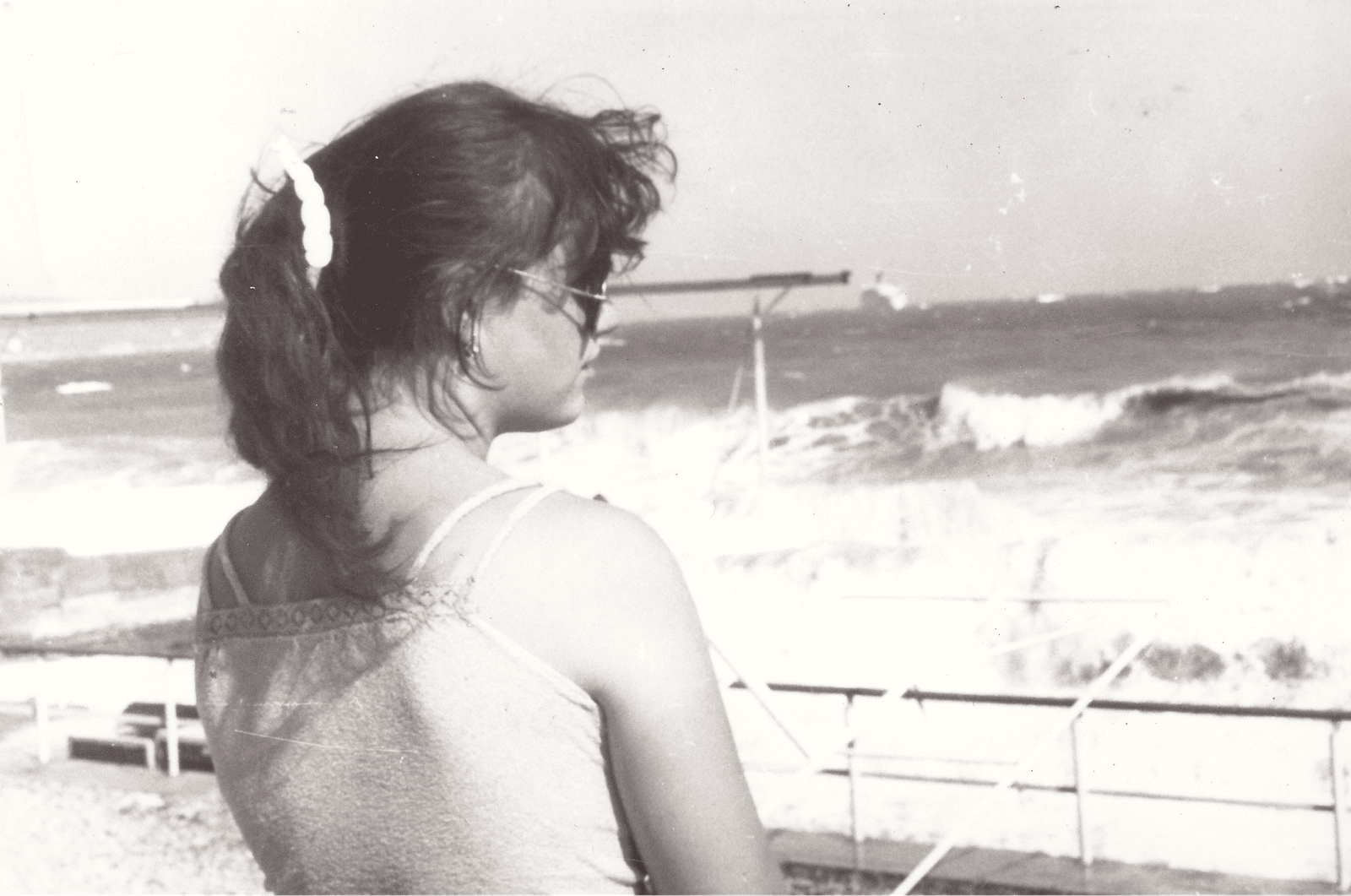
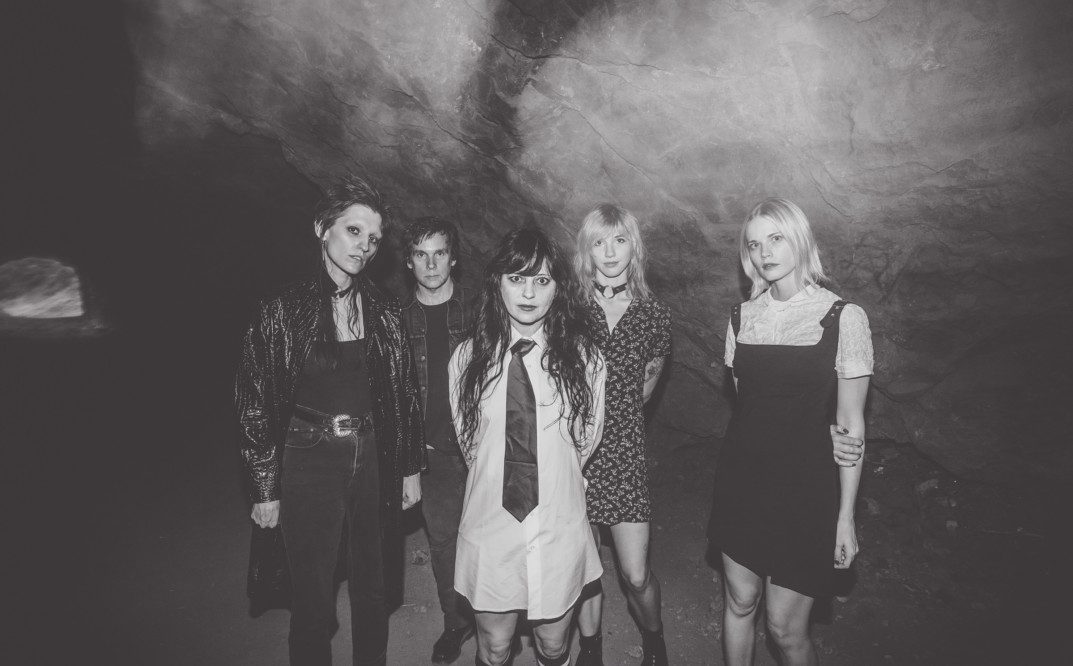
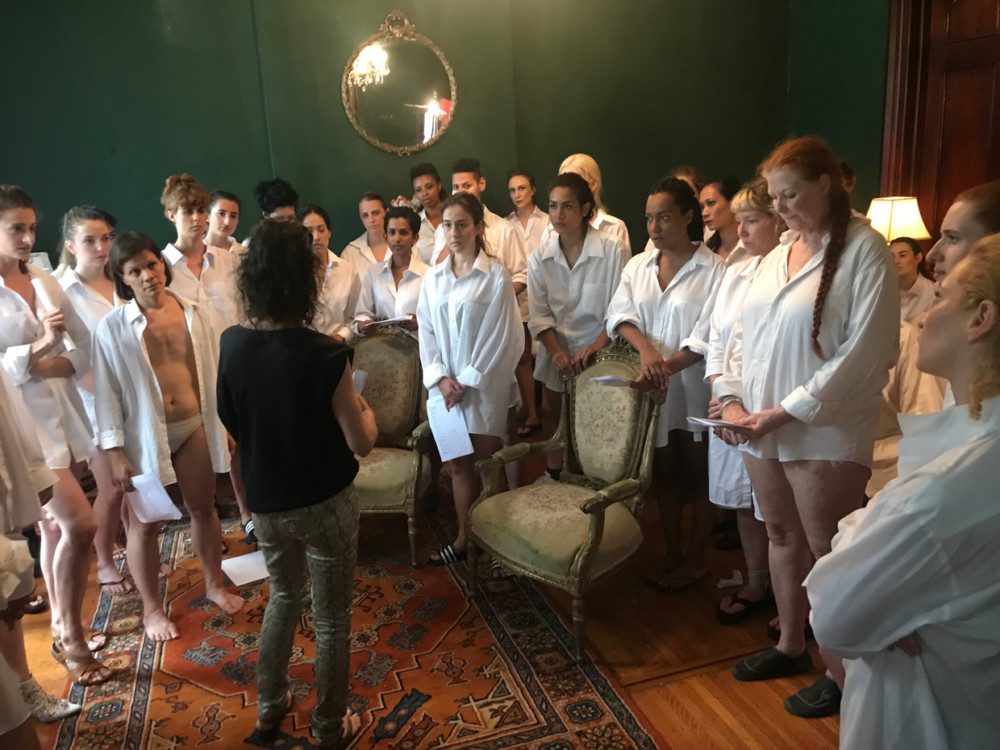
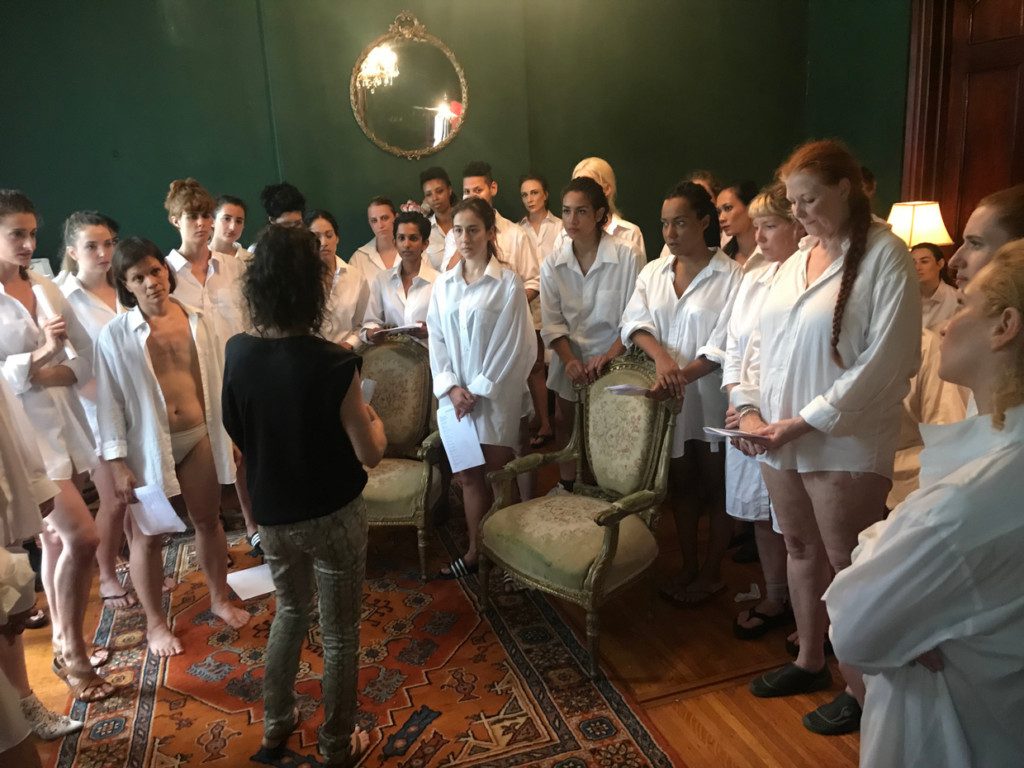
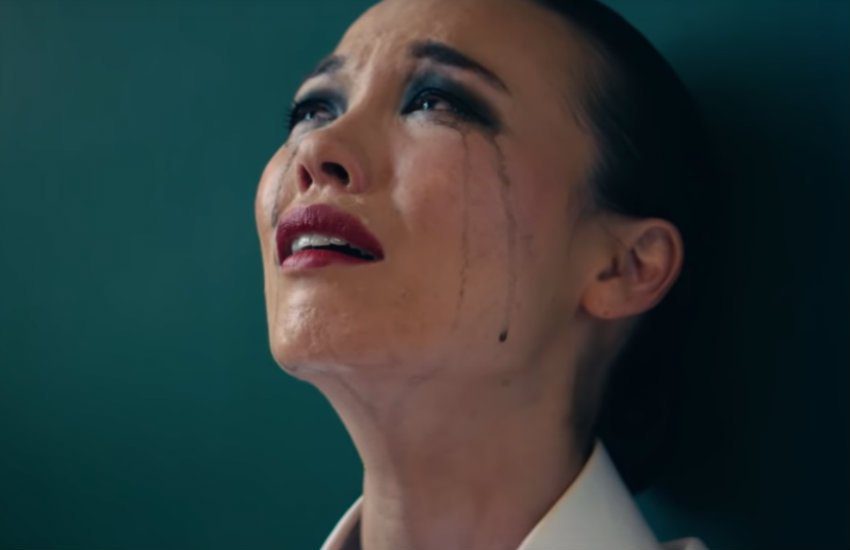
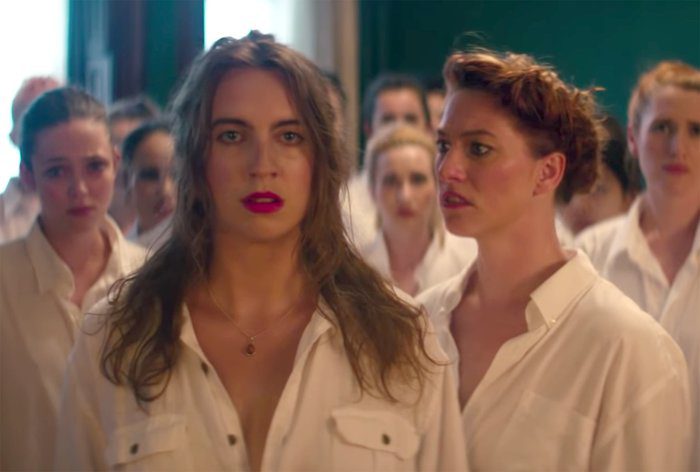
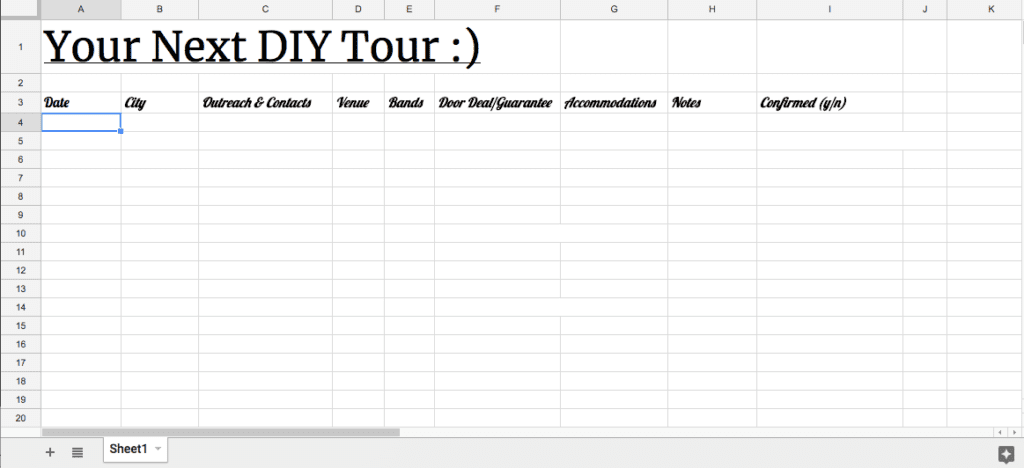
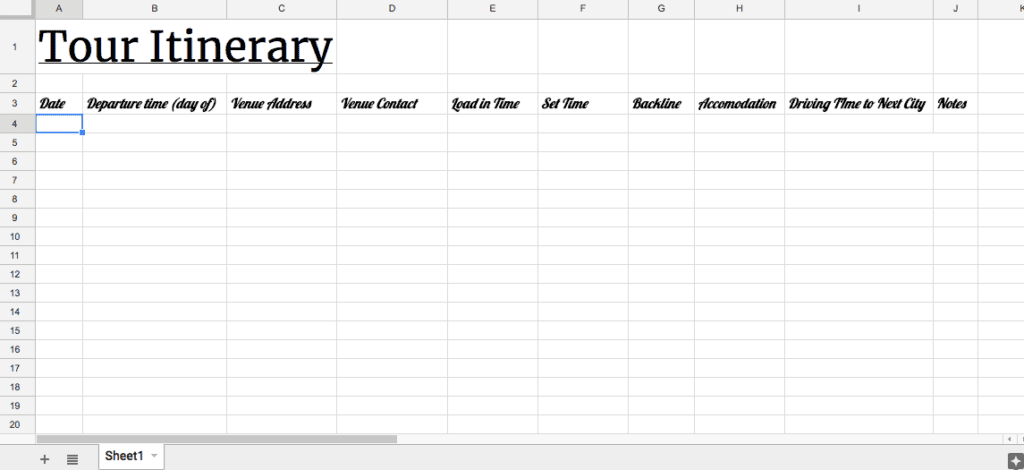

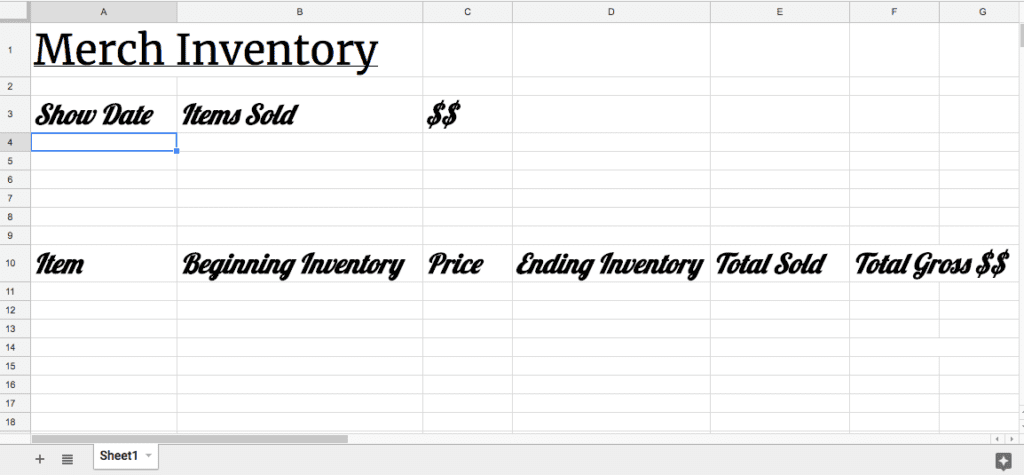
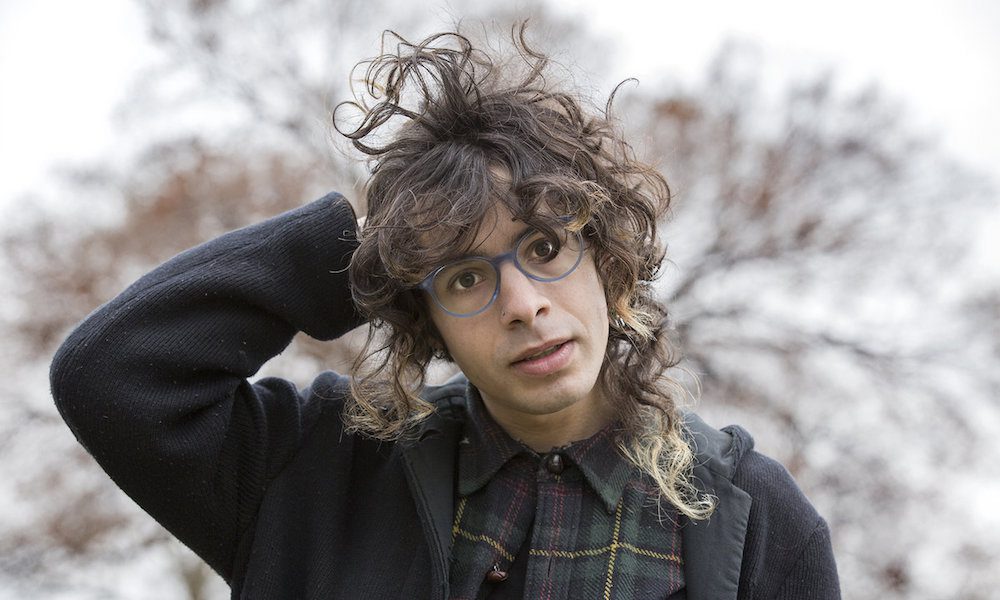

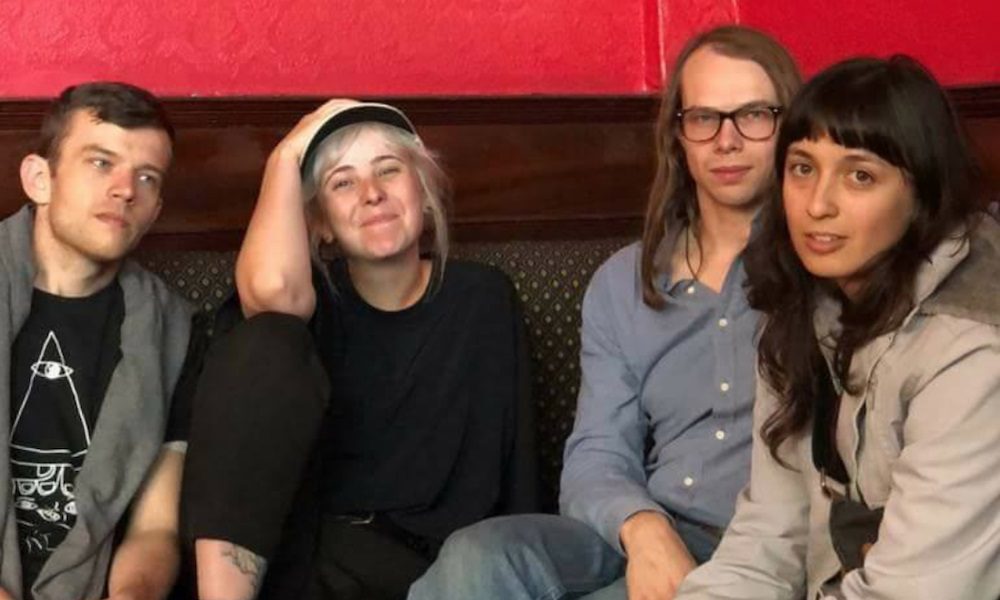
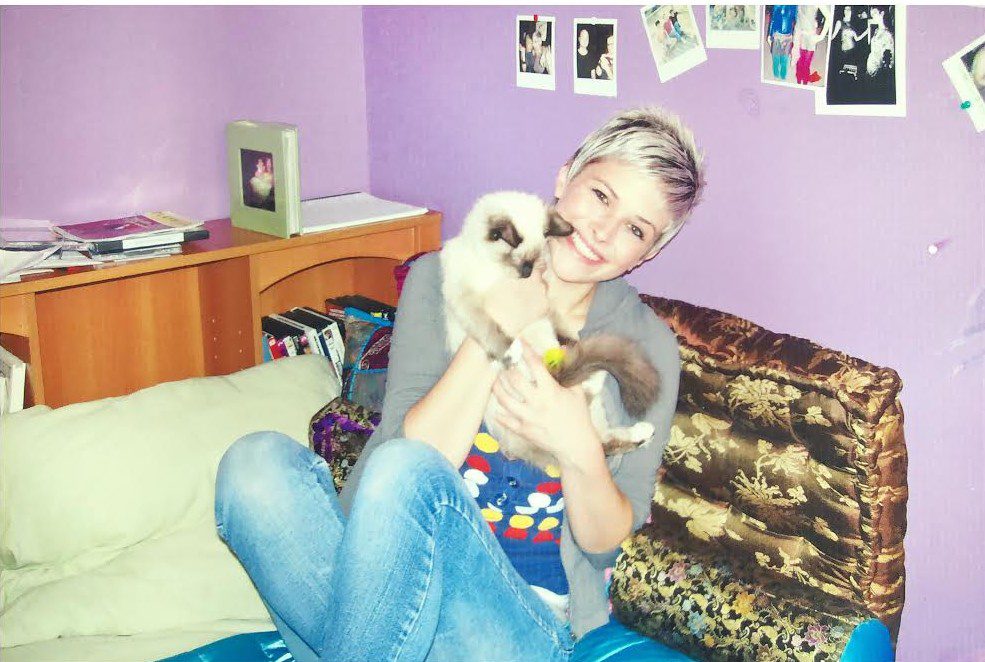
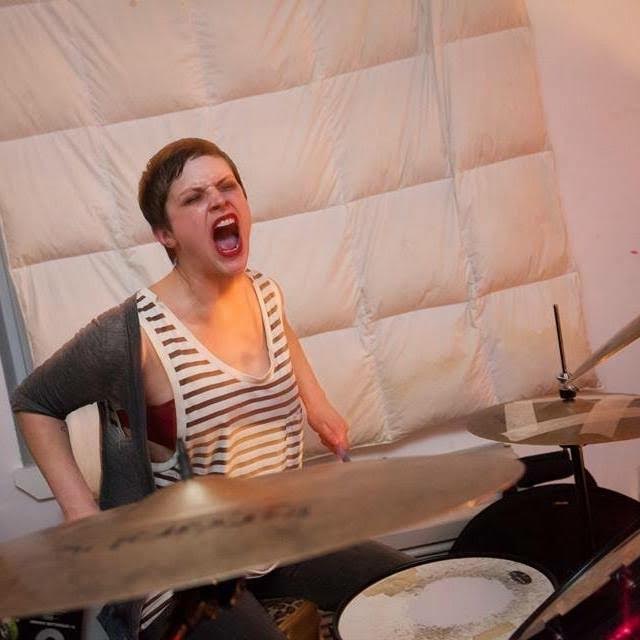
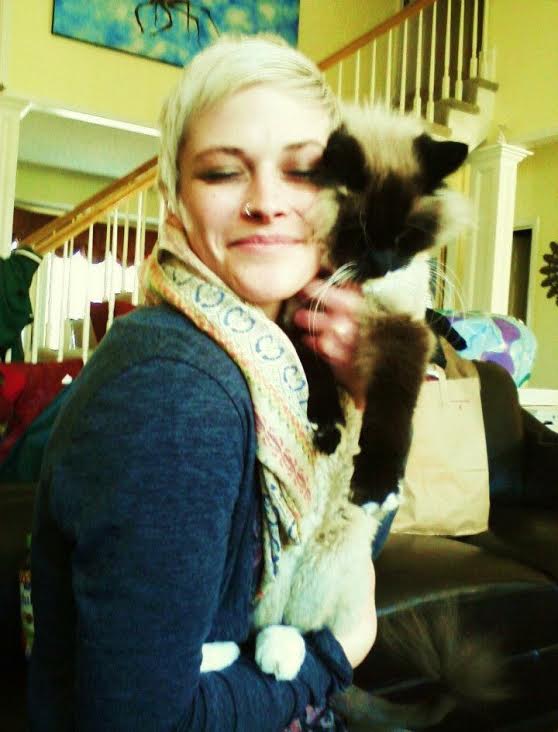
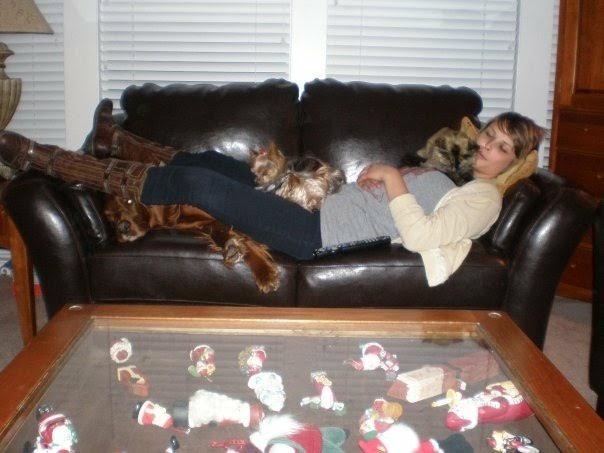
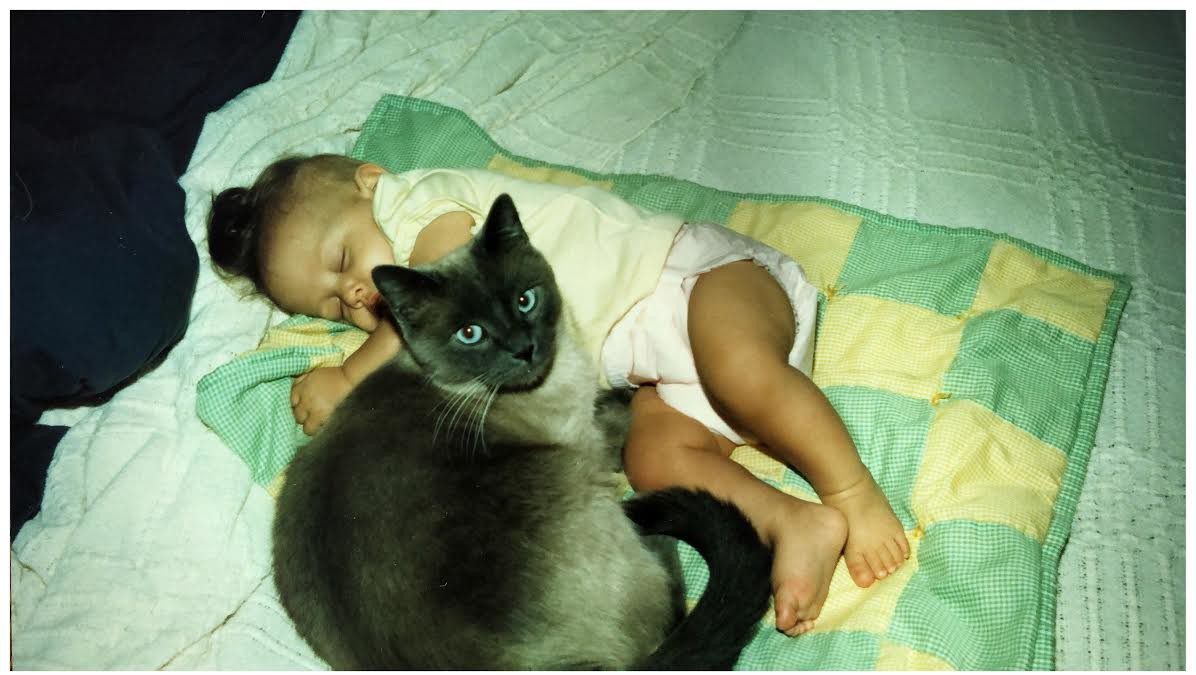
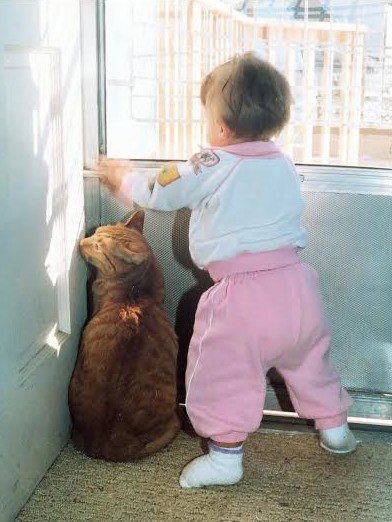
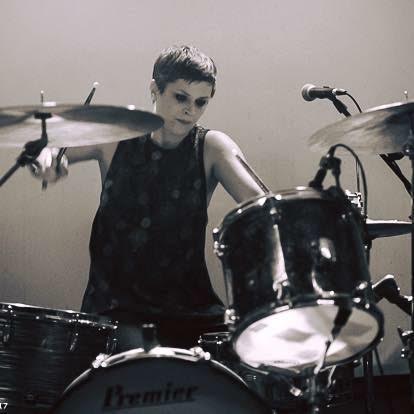
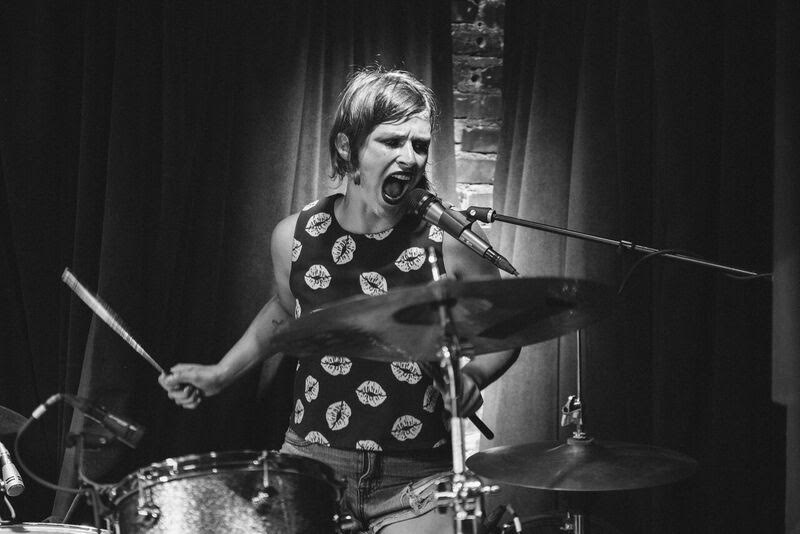
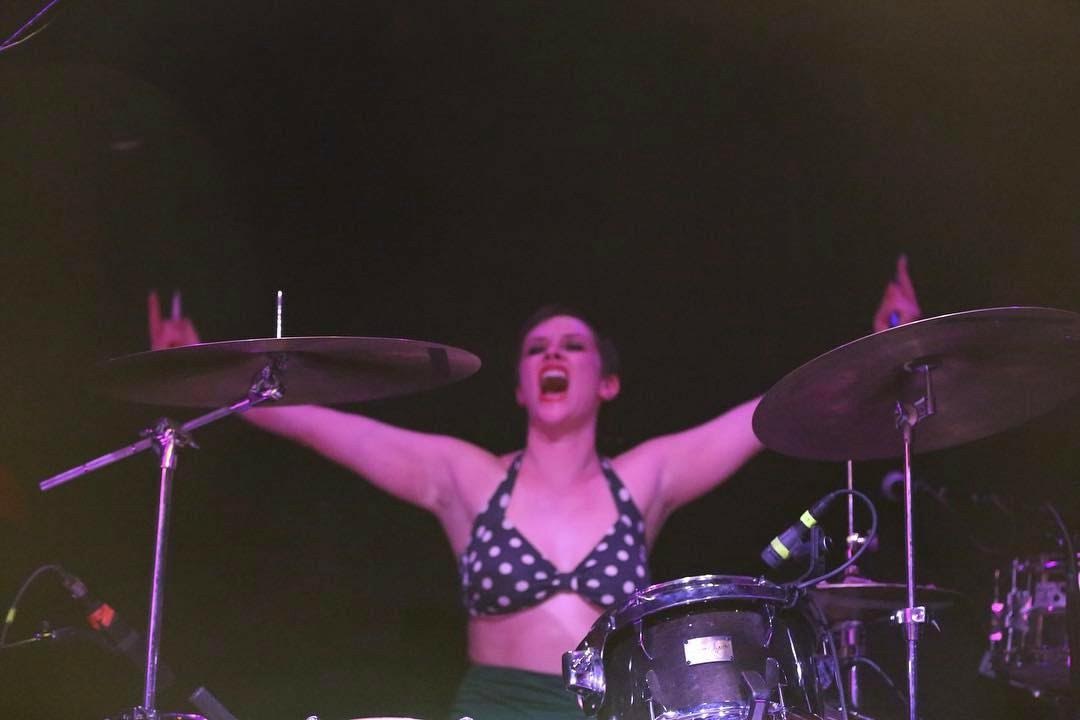

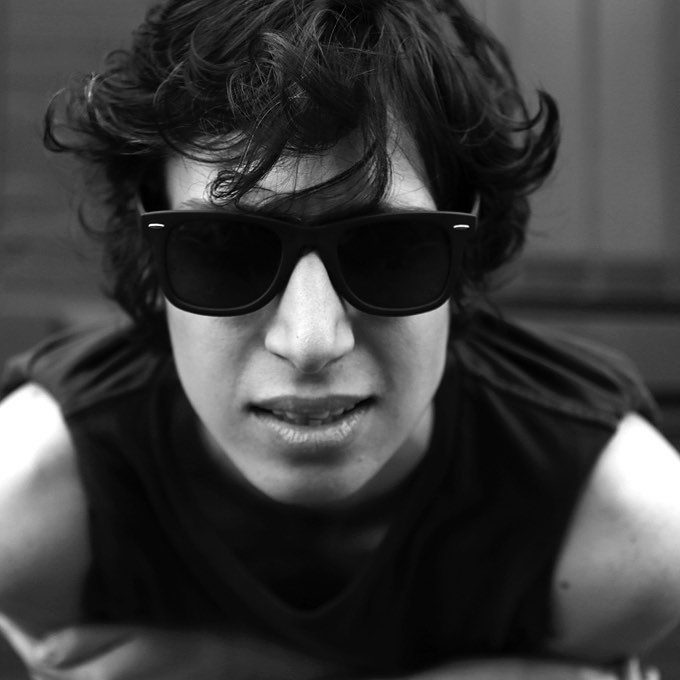
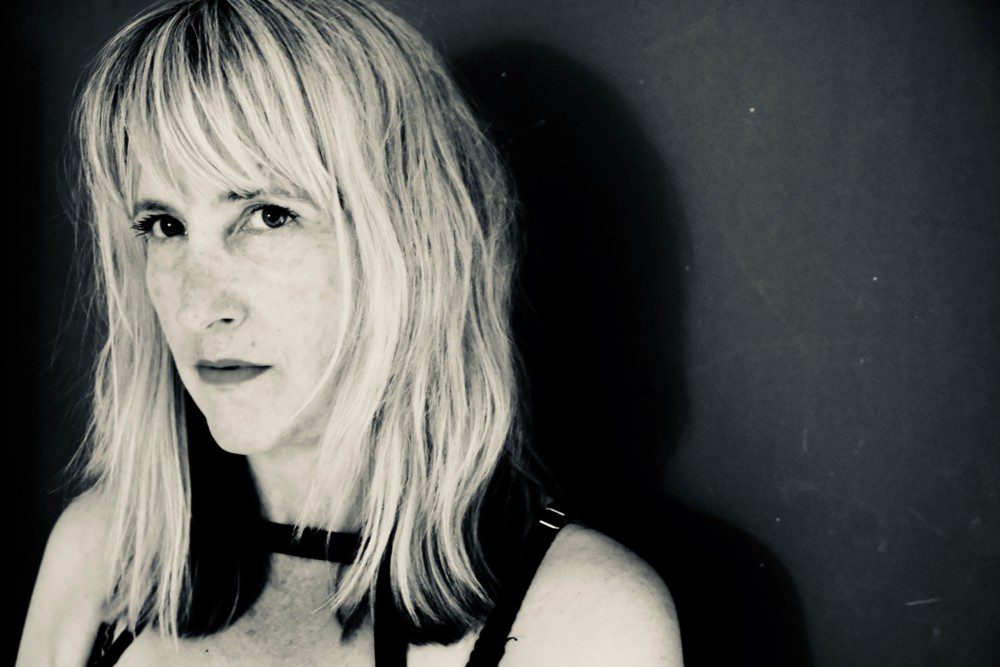
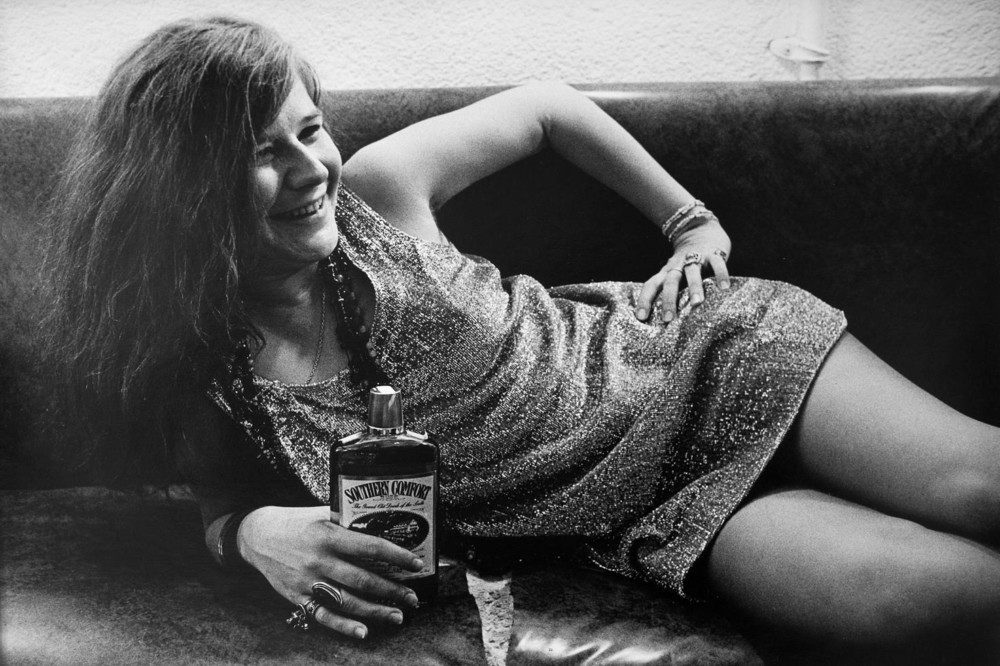
 “Though there have been many songs that I’ve enjoyed while under the influence of marijuana, here are a few that stand out as particularly gratifying for me. When I was younger and in college, a few that I remember really standing out in that mindset were ‘Dark Matter’ by Porcupine Tree, ‘3 a.m./Voices in the Fan’ by Devin Townsend, and the second movement of Beethoven’s 9th Symphony. Later, when I experienced smoking marijuana years later again, a couple that stood out were ‘Love Letters to the Soul’ by Entheogenic and ‘All That Makes Us Human Continues’ by BT.” — Jason, 30