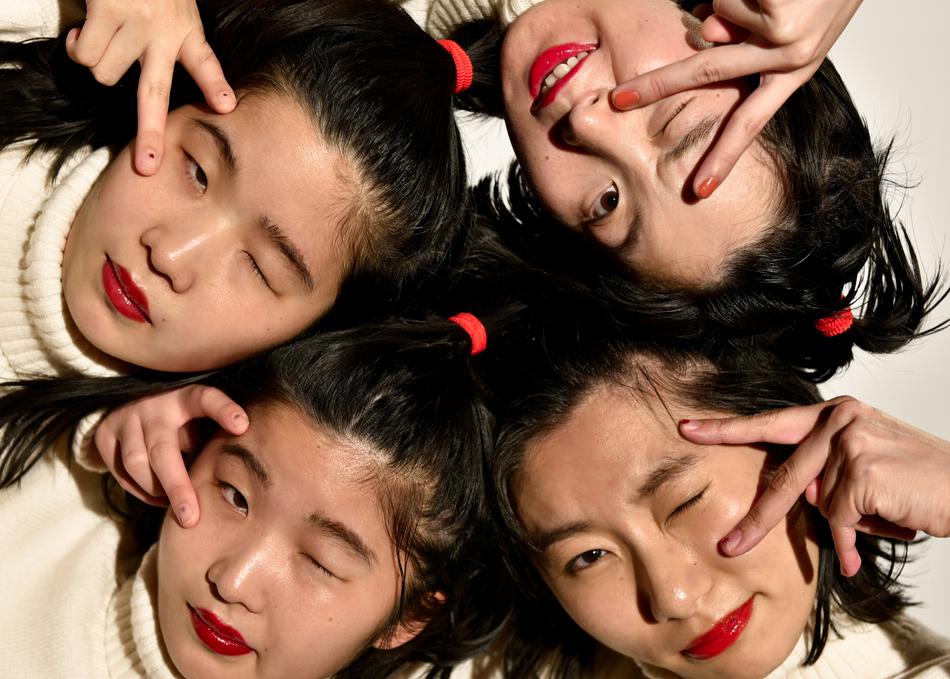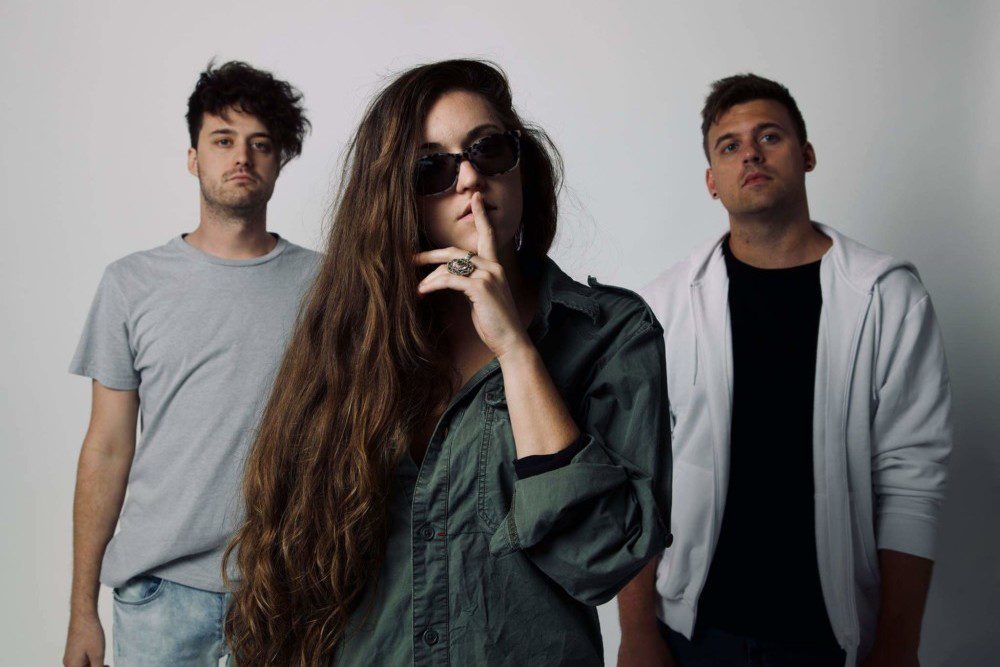
PLAYING ATLANTA: Challenger Deep Unleash Frantic Energy on Self-Titled Debut

There’s something about the quiet and stillness of winter that drives me to seek out new music to break through the silence. Lucky for me, I stumbled across a Spotify playlist with a long list of new releases from Atlanta bands a few weeks ago. I spent a happy afternoon shuffling through a wide variety of music written and released mostly by people I knew and loved – and have written about, like I The Victor and Starbenders. A few songs in, I found myself nodding along with an intricate, expansive instrumental track called “Immersive” by four-piece instrumental rock group, Challenger Deep.

I’ll be honest: I haven’t listened to many instrumental bands in my life, other than the occasional instrumental Allman Brothers Band song, but there was something so emotive about this group’s playing that immediately drew me in. It’s high energy, bordering on frantic at certain moments, but there’s something welcoming about all that enthusiasm.

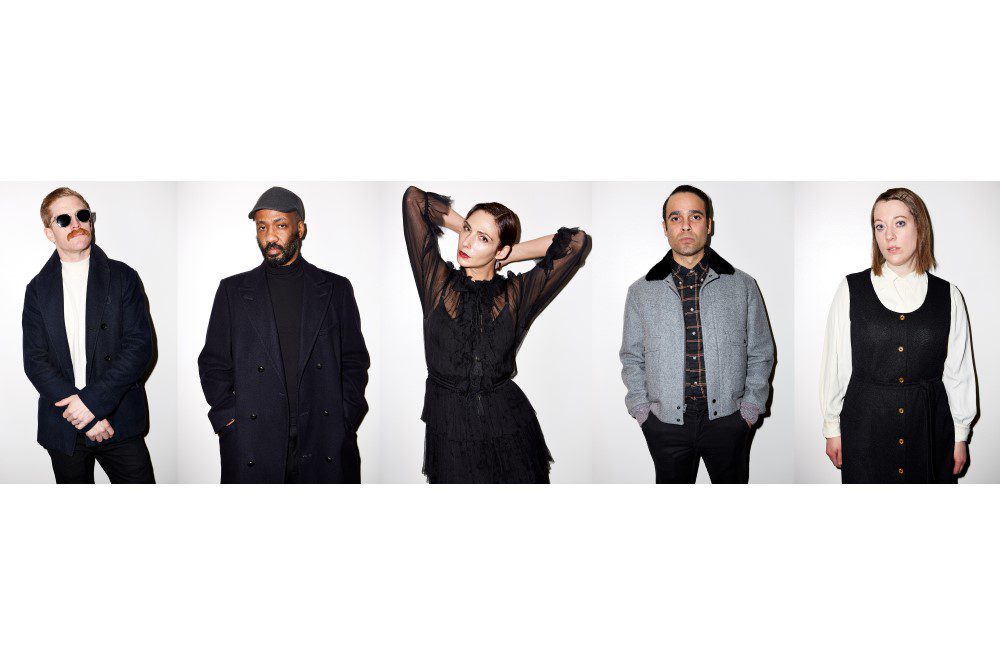
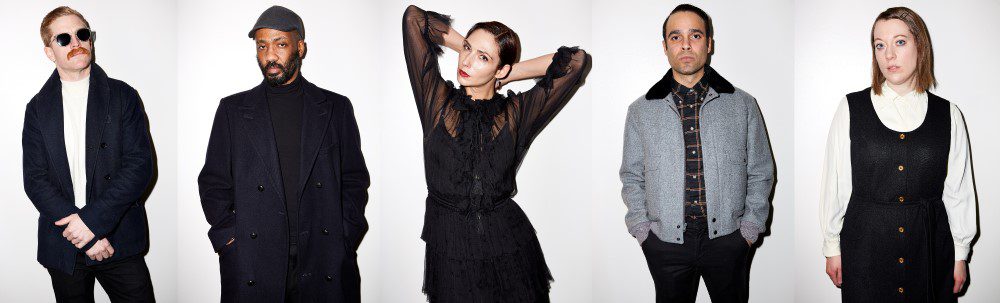
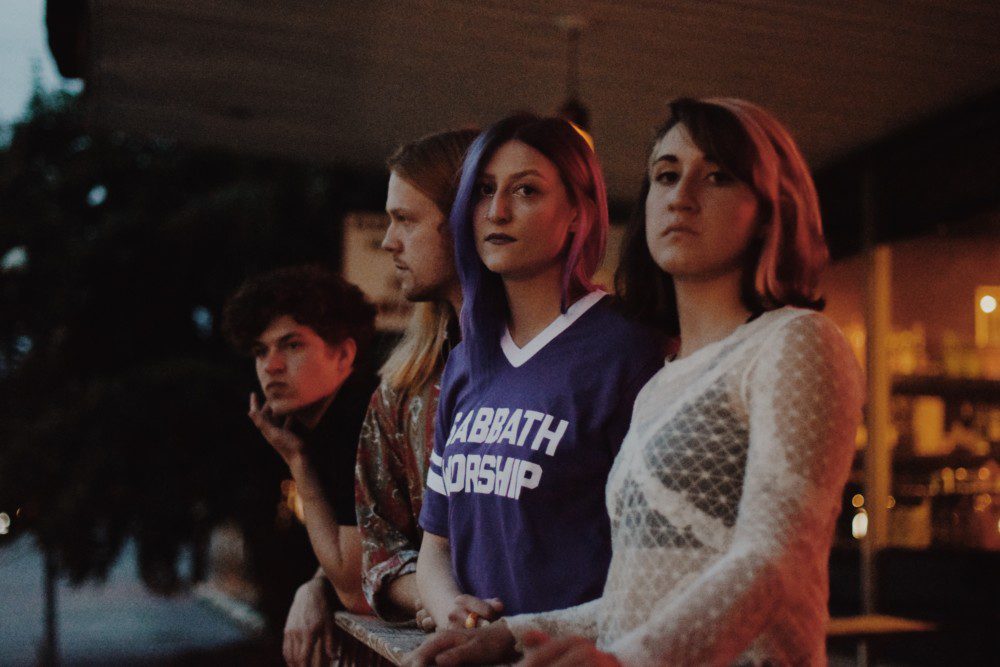
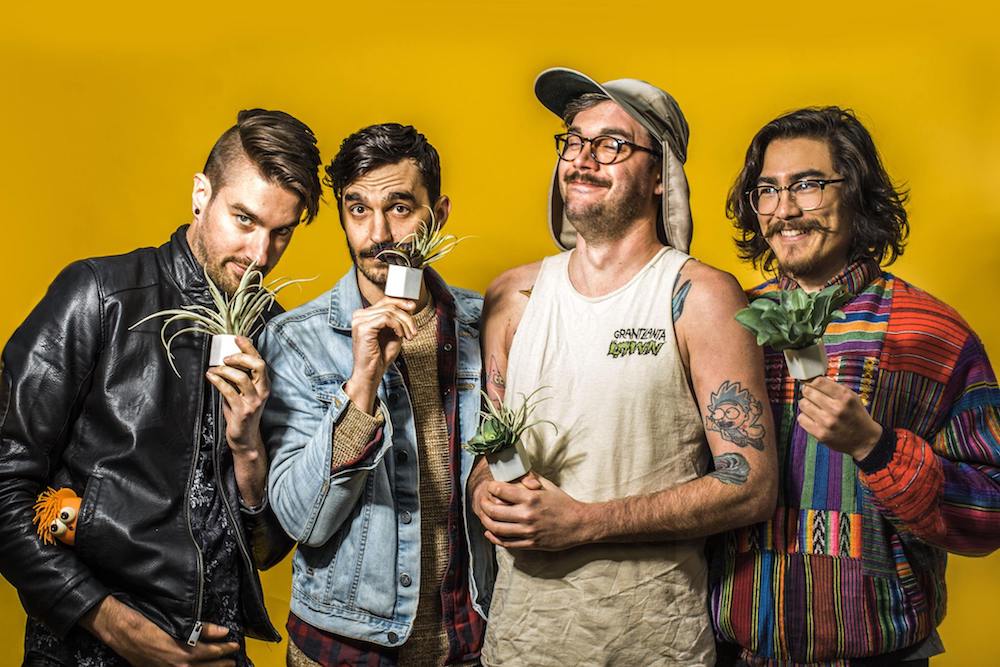
I immediately reached out to the quartet, made up of James LaPierre and Jordan Fredrickson on guitars, bassist Jason Murray, and Grant Wallace on drums. After exchanging a few messages, I got to sit down and chat with Jordan about their self-titled debut and all things Challenger Deep.

AF: How did you guys get your start?  

JF: James and I met in a bar and sparked a conversation about music and found that we both play guitar and sort of naturally decided to jam. About a year or so later, we thought it’d be a good idea to play some shows and recruited Grant. Not long after that, Grant introduced us to Jason, and we were happy with the sonic art enough to play The Pink Room, my friend’s basement venue. I couldn’t have asked for a better first show. We all love challenging ourselves to make the music as interesting to listen to as it is technically challenging to play. That shared passion really makes our dynamic work.

AF: Were you involved in music growing up, or was it something you grew into?

JF: I’ve been playing guitar for 21 years, but I didn’t really start taking it seriously until I was about 17, so I guess a little of both.

AF: When did you realize it was less of a hobby and more of a career?

JF: This is the first band I’ve been in where I feel like we’re all committed and talented enough to realize our creative dreams while appealing to a wide array of people.

AF: We’re living in a day where instrumental bands are far less common. What made you decide to start an instrumental group? Was it a group decision, or more a natural, spontaneous creation? 

JF: In the beginning, we had some conversations about adding vocals, but we couldn’t really imagine any style that would enhance the music enough without being a little too much. I’ve been in instrumental bands as a guitarist for the past 6 or 7 years and I really like being able to express the feelings a song might invoke without having to verbalize anything. We actually have two lyrics: “Whoo!”  and “Ru-Fi-O!”

AF: You recently released your self-titled debut album. Where did you record it? What was the recording process like? 

JF: This experience was so great! We took one bongo part from our session at Standard Electric Recorders, but besides that, Corey Bautista recorded most everything at his studio, Corey Bautista Audio. He’s a pretty brilliant guy when it comes to laying down a record and he’s a wizard at smoke machine operation too! For the album, I loved the perfectionism. When I hear the finished tracks and think about all the work we all put into it, it really makes me smile. Everyone really brought something special to the table, along with their passion, and I think that really comes through in the music on the record. The process was so much fun because I love being around musical people and things. It’s hours of tuning drums and replacing guitar strings and really searching for that one sound in your head that you really want to lay down, and of course, forcing your fingers to do really weird and sometimes unnatural things. I wouldn’t have changed a thing. My favorite part was recording the auxiliary percussion though. Just being silly and shaking tambourines and shells for a while was great.

AF: What’s your creative process like? How has it changed in the year that you guys have been together? 

JF: Well, James and I played exclusively in his room for a while before finding the right additions to the band. He had a lot of the stuff down, but we added some parts here and there and redid a lot of the arrangements. After the additions of Grant and Jason, the music really started to take shape. I thought it sounded complete and great before, but after adding their instruments and ideas to the mix, there’s no other way I would want to hear it. Basically, the songs have been through the wringer four times over. We each break them down and ask ourselves and each other how every particular part serves the song, and if it doesn’t, we find where it fits or throw it out.

AF: Which bands or artists inspire you the most? How do you draw from that inspiration and use it to create something that’s unique?

JF: We draw from bands like Protest the Hero, Chon, Clever Girl, Saves Us from The Archon, the list goes on. I think I’m inspired by bands that have a certain playfulness to their music. When I draw from influences, it’s more about the feeling than it is about sounding or playing a certain [part] like them. I’m inspired by music that makes me feel like making music that will hopefully inspire someone else to make music that makes someone happy, or help make someone’s day a little bit better. Damn, that sounds cheesy.

AF: How do you communicate feelings and stories through instrumental music? Do you think it’s in the notes you play, or the way you play them? 

JF: I tend to think about the way that the melody and harmony lines are working together and working up to in any given part. Proper execution is key to conveying the melody and harmony, but for me, it’s more about the bigger picture. Where did the song come from? What was felt there? Where is it going? Where do you want the listener to end up?

AF: What’s your favorite part of the Atlanta music scene? 

JF: I like the variety. It’s got a little bit of everything and no matter what you like I can probably tell you where to find it on a Saturday night.

AF: You’ve been together just over a year and are already seeing some serious growth. What’s next for Challenger Deep?

JF: We’ve been writing new (super secret) songs and finding creative ways to display them. We recently recorded a lyric video with onomatopoeias for the instrument sounds. It’s pretty hilarious and it was so fun. You can look for more of that weirdness.

AF: Last question: best place to hang out and listen to live music in Atlanta?

JF: I like EAV a lot, 529 and the EARL always holds some familiar faces and crazy talent. I love seeing people play music there and I’m just thinking, “I am so lucky to see this, and it’s right down the street.”

Keep up with Challenger Deep on Facebook, and stream their self-titled debut on Spotify

ONLY NOISE: How Tainted Love Became My Feminist Jam

ONLY NOISE explores music fandom with poignant personal essays that examine the ways we’re shaped by our chosen soundtrack. This week, Liz Ohanesian hits replay on the unlikely track that gave her strength on dance floors and in traffic alike.

Stuck in the perennial gridlock that crisscrosses Los Angeles, blasting the same oldie over and over again, I must have seemed ridiculous. But, that’s what happens when your jam is less than two-and-a-half minutes long. Right at the moment when I felt like I would become one with the song, it ended; I had no choice but to hit that little button on the CD player and repeat it.

“Sometimes I feel I’ve got to run away,” it began, every time.

Yes, I’m talking about “Tainted Love,” but not the ’80s synthpop sensation. That would have made more sense, since Soft Cell’s big hit single had never really left L.A. radio. This was the original, a concise soul number recorded by Gloria Jones in the mid-1960s that was a far more anachronistic choice during the years bridging the 20th and 21st centuries.

I played that song loud enough to drown out any of my pathetic attempts to sing along to it, all the while wishing that I could belt out lines like “Once I ran to you/Now I’ll run from you” with all of Jones’ confidence. I had no desire to be a singer; I just wanted to be able to stand up for myself. With “Tainted Love,” I could or, at least, I could in the relative privacy of my car stuck in traffic on a Los Angeles freeway.

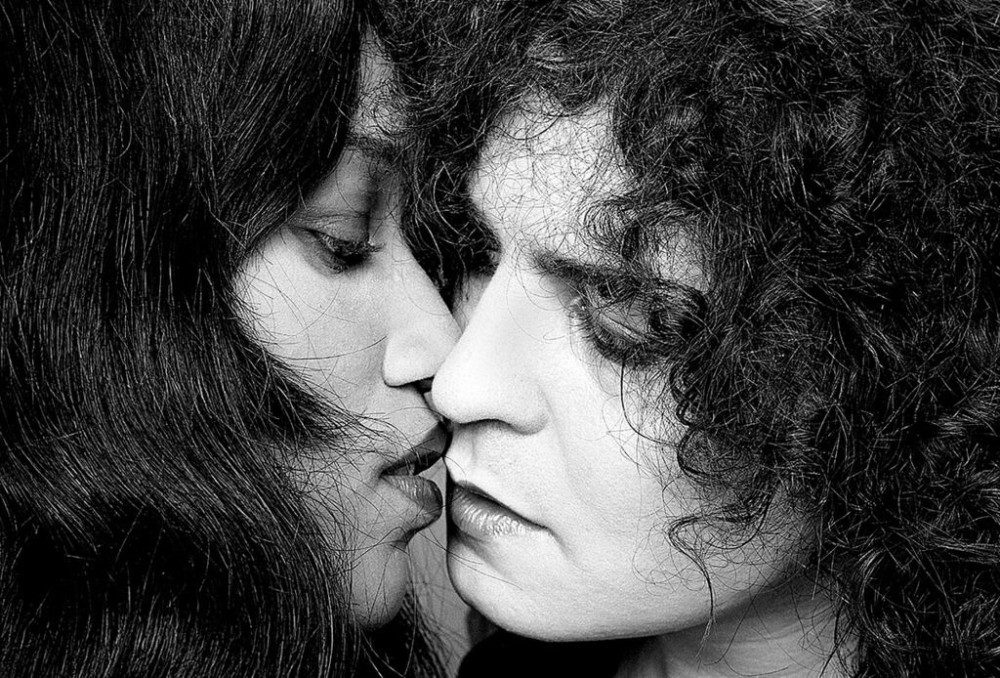
Jones was a young singer from Los Angeles when she recorded “Tainted Love,” penned by Ed Cobb, which was released on the flipside of the single “My Bad Boy’s Comin’ Home” in 1965. Since the single didn’t chart, “Tainted Love” became something of an obscurity. That changed to an extent in the 1970s, when the B-side attained cult popularity within the rarity-fueled Northern Soul scene in the U.K. Jones, who had gone on to perform in Hair, sing backup for T. Rex, and have a child with the band’s frontman Marc Bolan, re-recorded the song for her 1976 solo album, Vixen. Still, that wasn’t the version that became a mainstream earworm.

In 1981, then-up-and-coming synthpop duo Soft Cell put their own spin on “Tainted Love.” Their cover would go on to become legendary. It was a number one single in the U.K. and hit the top 10 in the U.S., while turning up on charts in numerous countries. So popular was Soft Cell’s rendition of the ’60s soul song that it became the reference point for subsequent versions. In 1984, the experimental electronic group Coil covered “Tainted Love.”  Theirs was a slow, haunting reflection upon the AIDS crisis, but one where the influence of Soft Cell is still present in its structure (plus, Soft Cell singer Marc Almond makes an appearance in the video). Many years later, in 2001, Marilyn Manson had a bit of success with a cover that was very clearly derived from Soft Cell’s take on the song.

I grew up with Soft Cell’s 1981 version of “Tainted Love,” which was a radio staple in Los Angeles that hung around long after the ’80s ended, and became quite a fan of the band too. Non-Stop Erotic Cabaret, their debut album and the one that contains “Tainted Love,” remains one of my all-time favorite records. But hearing the original version of the song I thought I knew so well was nearly life-changing.

It happened sometime in the mid-to-late 1990s when I was a college student, going to parties where kids rolled up to the venue on Vespas and DJs dropped vintage soul tracks into their sets. I can’t remember exactly where I heard it, but I remember it being a song played with enough frequency to become part of the sonic fabric of my life at that time.  Every time I danced to “Tainted Love,” my connection to it grew stronger.

“I give you all a girl can give you,” Jones sang.

Hearing “Tainted Love” from the perspective of a woman was eye-opening. Jones was on the cusp of her teens and twenties when the song was recorded and released, around the same age I was while dancing to it a few decades later. Her voice, though, sounded older. It was deep, raw and powerful, resonating on those dance floors with authority.

I had always thought of “Tainted Love” as a song about romance-gone-wrong or a relationship at its bitter end. Maybe it is, but when Jones sang it, there was always another layer. Any sadness in the lyrics, “Take my tears and that’s not nearly all,” gave way to liberation, of knowing that you’re worth more than whatever crap someone else throws your way. It was the voice of wisdom set against a high energy bounce of a beat that reminded me to take care of myself. Now, I heard “Tainted Love” as a song about empowerment. It became my feminist jam.

I wasn’t necessarily feeding a broken heart all those times I blasted “Tainted Love.” Sure, sometimes that was the case, but the song came to mean so much more to me. It was the middle finger that I couldn’t bring myself to flip, the “fuck you” that I often left unsaid. It was the anthem for every life or work situation where I wasn’t valued, an expression of the anger and frustration that I tried to contain and a reminder that I had to assert myself.

In the early years of my own adulthood, that (still sorely under-appreciated) recording of “Tainted Love” became a sort of surrogate voice as I was trying to find my own. With age, I’ve relied on it less, but it’s still there for me to turn up loudly whenever I need it.

PLAYING DETROIT: Tears of a Martian Share Debut Single “With You”

photo by Carmel Liburdi

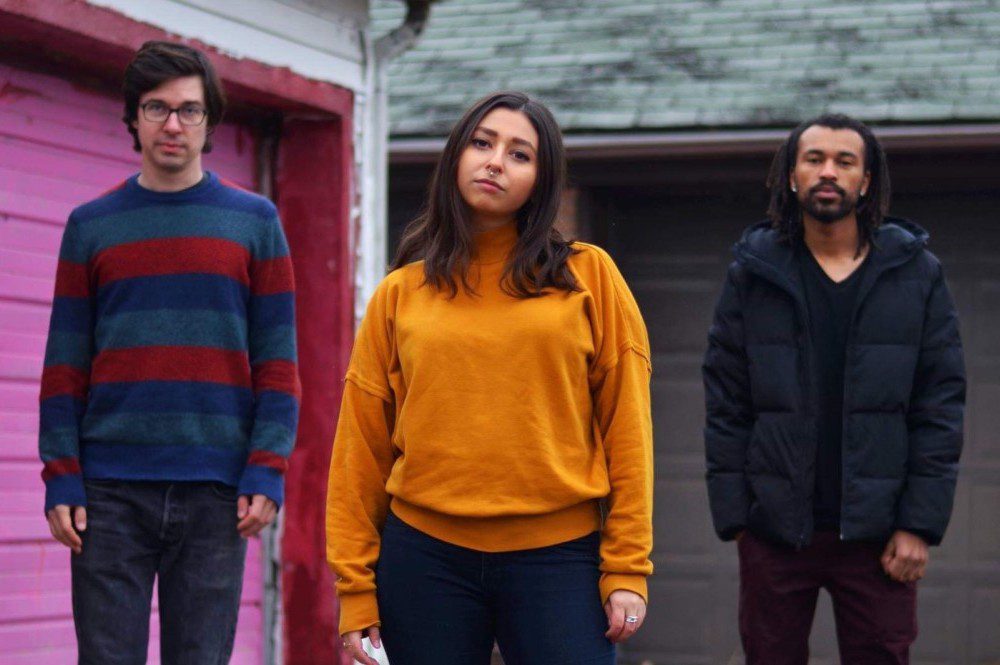
Newcomers to the Detroit music scene, Tears of a Martian released their first single, “With You,” this week. The three-piece – Arianna Bardoni, Justin Reed, and Todd Watts – is hard to pin down genre-wise but brings a refreshing mix of indie-rock, soul and R&B to the table. Bardoni’s honey-smooth vocals seem like the result of a musician who grew up listening to both Aaliyah and Hole – clear, soulful, and tinged with grit.

“With You” is a straightforward almost-love song with an infectious melody that begs singing along. “Play by play we were like a parade/nothing better to do/with you with you with you with you/I was never with you,” Bardoni sings, describing the lull of half-romance that comes from two people who are settling for each other rather than being alone, and the weird fog that lingers in such a relationship’s aftermath. Listen to “With You” below and keep your ears peeled for more from this blossoming band.

PLAYING CINCY: Cash Daniel Tackles Suicide’s Aftermath with “Wonder Why” Video

Cash Daniel Wonder Why

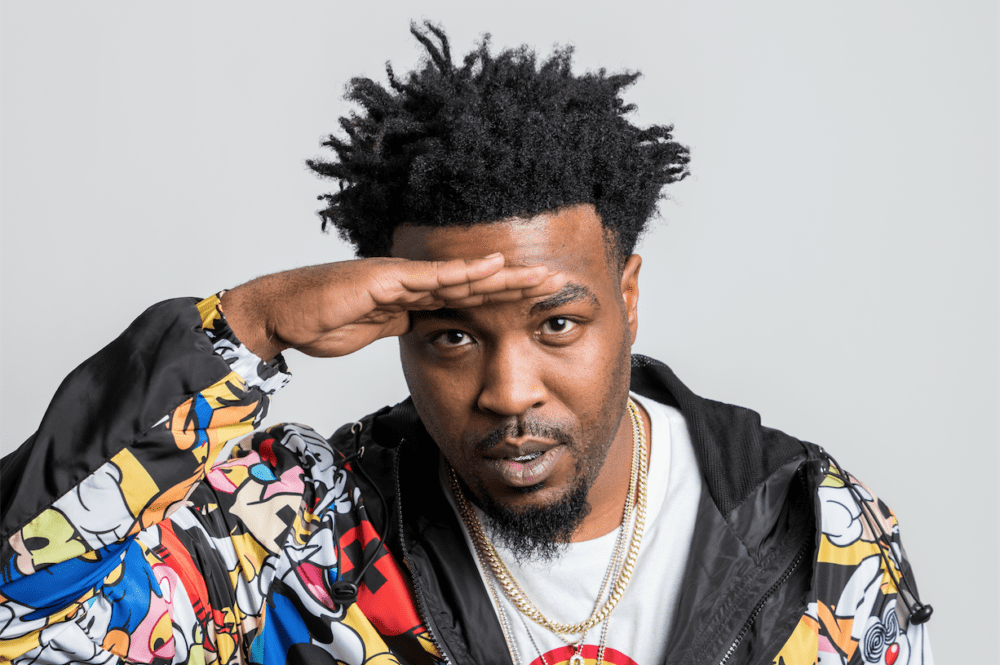
Ohio rapper Cash Daniel dropped his music video for “Wonder Why” in conjunction with a Suicide Awareness Voices of Education (SAVE) fundraiser in Cleveland. Daniel co-hosted the event, while remembering the four-year anniversary of his own brother’s suicide.

The video, produced by Dre Shot This and featuring Evan on the hook, asks the lingering questions so many are left with when a loved one takes their own life. In the song, Daniel takes an honest look at the anger, heartache and pain that followed his loss and admits he still ‘wonders why.’

Evan sings, “Everything’s still Devin / Yes I try, and try, and try, and try to find a way / To deal with the pain ’cause I cry like every day / Yes I’m trying, trying, I’m just trying to find my way / To deal with this pain cuz I wonder why like every day.”

Daniel comes in on his second verse rapping, “Little brother shot in his head and they said that he did it to himself / So what the f**k am I supposed to do when I can’t blame nobody else? / Man I be hurting, ’cause I could see that he was hurting / Wish I could see him one last time so I could tell him he was living with a purpose.”

His second single of the year, following “Parachute,” “Wonder Why” stands out as a vulnerable and hard-hitting track that equally showcases Daniel’s masterful flow and lyricism as well as provides an important dialogue for those that need to hear it.

Along with his latest song, Daniel aims to make a difference for those who are currently coping with loss and inspire others to check in on their loved ones. Dr. Dan Reidenberg, the Executive Director of SAVE, told DBLCIN, “It is through efforts like Cash Daniel’s and the music that we can begin to reach others with a message that if you reach out, you will see how much people care and want you around happy and healthy.”

Check out his new “Wonder Why” music video below and learn how you can get involved in SAVE here.

PREMIERE: Swimming Bell “For Brinsley”

Though singer-songwriter Katie Schottland is based in Brooklyn, the music she makes as Swimming Bell defies expectations one might have in light of that fact. The creative force behind the group, Schottland’s career began in 2015, when she broke her foot in a fall and began teaching herself the chords to Neil Young’s “Harvest Moon.” Her latest single, “For Brinsley,” is delicate and textured, Schottland’s drawling voice crooning over a haunting steel guitar. It’s the second single from her forthcoming LP Wild Sight, out April 5th via Adventure Club Records.

An intuitive and melodic artist, Schottland paints a vivid picture with “For Brinsley,” its characters coming together almost in front of the listener’s eyes. What I love most about the track, though, is how familiar it feels. It’s a long drive under a full moon in early autumn, the breeze carrying the first chill and the road stretching out as far as the eye can see. It’s the wail of a steel guitar on an old-timey radio, harmonies creeping through a still, dark night. It’s beautiful and ethereal, the kind of track that draws you in and wraps you up in it.

Audiofemme is pleased to premiere “For Brinsley.” Listen below and read on for our interview with Schottland for the surprising inspiration behind the contemplative track.

AF: Let’s start from the beginning; how did you get into music? When did you realize that music was more than a hobby and something you wanted to do as a career?  

KS: I can’t really remember a time when music wasn’t a part of my life. It started with my parents and the things they listened to: The Beatles, Beach Boys, John Denver, and Peter, Paul, and Mary, just to name a few. I remember distinctly when I decided to make music more than a hobby because it was pretty scary. It was just a few years ago, and I was trying to figure out what to do with my life, in a bit of an existential mindset, and I kept coming back to music. It was the only thing in my life that I had ever wanted to work hard at, so I realized I should just do that.
 
AF: It’s mentioned in your bio that you played drums for a friend’s band. What’s it like to transition from a drummer in another band to the front-woman and singer-songwriter of your own project?  
KS: “Played drums” is a pretty loose term! I played floor tom and snare in my friend’s band because I could keep a beat. I had already started writing songs and could play the guitar a little. This was a short-lived but very fun band to play in. A bunch of good friends, sometimes more, singing love songs.  I started my own band very shortly after. We were called Stills. Since then, I’ve somehow managed to become the backup drummer for two other bands, which I find pretty funny. I love it all!
 
AF: What’s your creative process like?  
KS: I find creativity can hit any time, anywhere. Very often for me, I’ll have a little line pop up in my head and I’ll jot it down. I lose many more little moments like this than I actually manage to keep. Sometimes late at night I’ll think of something and say to myself, “Write it down, or you’ll forget,” but often I’m too tired. Sure enough, it never comes back. Creativity also comes from just forcing myself to play the guitar and be in my studio for hours. Maybe I get nowhere, but I gotta get through that to find the next thing. There’s always something to gain from just practicing and playing.
AF: As a self-taught musician, how do you explain the way you go about writing your songs? Does it come very naturally, and, if so, does it ever surprise you how natural it is to you?  
KS: I write songs in different ways, and I’ve had lots of conversations with many talented and trained musicians. I think everyone has their own methods and inspiration, but I’ve been surprised by how much overlap there is. Whether you’re a new songwriter, or a seasoned one, it all seems to come from a similar place. But I do think it’s a craft like anything else. As I said earlier, sometimes you have to just force yourself to play for hours knowing that maybe nothing will come out of it, but you gotta get through that to get to the next.
 
AF: Who do you consider your greatest inspirations when it comes to songwriting?  
KS: So many incredible songwriters! Some of the influential ones for me have been Fiona Apple, Tomo Nakayama, Paul Simon, and my friends!
 
AF: “For Brinsley” is such a haunting, ethereal song, blending layered percussion and steel guitar. How do you incorporate such timeless sounds and put a modern and unique twist on them? 
KS: The production on this album was inspired by Beck’s Sea Change. That album blew my mind when it came out. I loved the layers, the strange moments, the pedal steel, reverbs, etc. I wanted to try and get my own version of those sounds. Oli Deakin, who produced it, did a great job interpreting my ideas and adding his own, and we built it together.
 
AF: What inspired “For Brinsley”?  
KS: Brinsley Schwarz is a musician – and the name of a band – that has a song called “Don’t Lose Your Grip on Love.” I was listening to that song a lot when I was in California last year. I kind of “borrowed” the chorus, so I wanted to dedicate the song to him. I guess if he catches wind, I’m doing something right.
 
AF: What do you hope listeners take from the song?  
KS: I hope they just like to listen to it and they take whatever they need or want from it!
 
AF: What do you consider the greatest accomplishment of your career so far? The greatest challenge?  
KS: I think the greatest accomplishment so far is simply the ability to push forward with music. I’m just kind of proud and surprised at my drive in all of this. I just keep pushing myself and making music. The greatest challenge is not getting in my own way with doubt and insecurity.
 
AF: What advice would you have for your younger self?  
KS: Don’t start smoking cigarettes.
 
AF: What’s next for Swimming Bell?  
KS: I dunno!  I’d love to be asked on a tour through Europe or something!
Follow Swimming Bell on Facebook, keep an eye out for her upcoming album, Wild Sight, out April 5th via Adventure Club Records, and catch her on tour this spring.

SWIMMING BELL TOUR DATES:

3/14 – Easthampton, MA @ Luthier’s Co-op
3/15 – Catskill, NY @ Hilo Catskill
3/16 – Rochester, NY @ Abilene Bar and Lounge
3/17 – Toronto, ON @ Burdock
3/19 – Burlington, VT @ Radio Bean
3/20 – Boston, MA @ Sofar Sounds
3/21 – Warren, RI @ Galactic Theatre
3/22 – New Haven, CT @ Crunch House
3/23 – Windham, CT @ Willimantic Records
3/24 – Westerly, RI @ Knickerbocker Taproom
4/06 – Brooklyn, NY @ Trans-Pecos (Record Release Show w/ Monteagle & Pale Mara)
4/13 – Philadelphia, PA @ Bourbon and Branch
4/17 – Chapel Hill, NC @ Local 506
4/18 – Athens, GA @ The Flicker Theatre and Bar
4/19 – Chattanooga, TN @ JJ’s Bohemia

PREMIERE: Rose of The West Maps Their Mythology With “Roads”

Rose of the West photo by Nicole Zenoni

In the pale sands of a seemingly endless landscape, Gina Barrington stands like a bright bloom, her fiery mane adorned with a crown of sunbleached twigs. Droning harmonium adds a psychedelic haze to the reassuring words she sings: “If we take the long way, I swear it’s okay…” By the time she offers her solemn warning (“All the fragile hearts were break”) it’s too late; you’re already under her spell and along for the ride, no matter what lies ahead.

Barrington has been on a journey, one that the video for “Roads” reflects in saturated tones. Having moved from Milwaukee to Los Angeles and back again, her latest musical project, Rose of the West, takes the form of a dreampop five-piece, rounded out by Cedric LeMoyne (Remy Zero, Alanis Morissette), Thomas Gilbert (GGOOLLDD), Erin Wolf (Hello Death) and Dave Power (The Staves). The group takes its name from the colloquial term for Eucalyptus macrocarpa, an Australian plant known equally for the stunning electric hue of its blossoms and for its ability to flourish in hostile climates, certainly an apt comparison. As the first single from the band’s forthcoming self-titled debut, which arrives April 5th via Communicating Vessels, “Roads” provides a map revealing where the band has been, where it is going, and the perseverance burning in its core.

The video, directed by Barrington’s longtime friend and business partner Aliza Baran, positions Barrington as clairvoyant guide along an uncertain path, twirling in neon silks or squinting through a black lattice mask at the undulating horizon. These visuals cement the band’s rustic style as well as its mythology in a way only someone close to the project and its progenitor could. With its expansive beauty, full of possibility and danger alike, the desert could not be a better backdrop to introduce Rose of the West to the world.

Check out the video below and read our interview with Gina Barrington as she retraces the meandering path she took to get to this moment.

AF: Rose of the West is a project five years in the making – can you tell me about some of the challenges you’ve faced getting a permanent lineup together? How did the band finally form?

GB: Finding a tribe isn’t ever easy; it’s incredibly difficult if you happen to be a bit of an introverted soul. I felt like I was always in the wrong place at the best time, attracting people that were not a good fit long term. When the last version of the band fell apart, I stopped, took a break to breathe and heal from a turbulent relationship. I had more to figure out than just why things disintegrated again… I had to do some deep diving to work on fixing my shit. That was hard, and it hurt. Once I accepted things and started moving through it, this line-up came to me pretty quickly. It went through some changes in the beginning, but landed with myself and Thomas (guitar) first, then Erin (keys, voc), who I’d known as friends and musicians playing in other bands around Milwaukee. Eventually Cedric joined on bass, who I’ve known half my life and has always wanted to work with me. The last missing ingredient was Dave on drums, who we’d known from being in the Eau Claire scene. The chemistry finally seems right to accomplish what I’m after.

AF: What was your childhood like, growing up in a musical household and playing so many different instruments? How did that influence your sound?

GB: My grandfather was a high school orchestra teacher. He played many instruments himself, and really tried to get me to be a traditionally good music student, which I was not. I didn’t have the discipline, or the desire to sit and play scales on piano or violin. What I did have was a really good ear, and the ability to pick something up and play it okay enough to use it as a tool. I loved to sing, and just fiddle around on the piano. I wanted a guitar, which I wasn’t allowed to have until I had mastered the basics on piano… which I never did. I had music in my blood, I knew it would be a part of my life, but I needed to create it for myself. It took me a long time to find my voice.

I grew up listening to a lot of classical, and Italian folk music. My grandparents, brother, and I performed in the Italian Dance Group of Milwaukee for many years, so that type of music was in my head all the time. When I was a teenager, I was very hungry for new music, moving quickly past a lot of the radio pop. I started gravitating towards The Cure, Siouxsie Sioux, Kate Bush, Leonard Cohen… These types of artists satisfied my need for meaning in words and music, feeling just as truthful and expressive as the classical music played in my grandparents’ house, but somehow with a heaviness that resonated with me at that time so much.

AF: Sonically I hear some psychedelic influences – can you talk a little about the sound you were going for and what has inspired it, musically or otherwise?

GB: I usually try to create a feeling of sonic atmosphere around my storytelling…. it tends to be dreamy, layered, textural things I start with before I add lyrics and melodies. I like things to feel like we may be having a conversation about what it feels like to go through life and experience every emotion, even the most plaguing, difficult ones. I think the band as a whole tends to veer toward a heavy nod to the late ’80s, early ’90s vibes. I think the sound really came to life when we took the demos down to Communicating Vessels’ studio in Birmingham, AL to start recording. The direction and feeling were already there, but having the opportunity to take what we had done and really start experimenting by pulling those special otherworldly sounds and parts out was what we needed. With the guidance of Brad Timko and Jeffrey Cain, we found and created a world we could get lost in, and hopefully other people too.

AF: I love that the lyrics have a message of perseverance and echo some of the meandering routes you had to take to bring this project to fruition. What was your mindset when you wrote the song?

GB: “Roads” is a song that has been with me for quite awhile. I don’t think anyone thought of it as a single until we finally recorded it. It was born after a trip down to Chicago to purchase a harmonium, which I just loved the sound of. I brought it home and immediately went down to the basement and started recording the dreamy drone of one chord, and everything started to flow out around it. It came very quickly, and it was at a time when I wasn’t sure what was going to happen next – my life was a bit of a mess. I think I wrote it knowing things were maybe going to get messier, and they did. But I couldn’t give up, and couldn’t let fear of the unknown hold me back anymore, knowing both pain and happiness could teach me many valuable things.

AF: How did you hook up with the video’s director, Aliza Baran? What was the vision for this video initially?

GB: I have known Aliza for many years, maybe many lifetimes. We often collaborate on each other’s creative projects. I was in the process of planning the video, I wasn’t even sure which song was going to be the single. I had someone else interested in shooting and directing, but I wasn’t very excited about the direction, it wasn’t feeling right. Aliza and I were having coffee, discussing our business – the store we co-own (Serpentine Salvage) in Milwaukee, WI – when she mentioned to me that the direction of the video didn’t seem true to me, the band or the music, so I just plainly said, then do you want to do it? We had a plan within a few minutes. She is also very fond of the southwestern part of the country, also knows my father and has been there a few times with and without me – we even hosted her wedding there on a stunning vista. Everything fell into place, as “Roads” was chosen for the first single, and we felt that was the best location to shoot it, and showcase the strange duality of that gorgeous place, and of being human. We wanted to tell a visual story about the many paths and choices we have in life, good or bad, light or dark, easy or hard, vague or obvious.

AF: The video (as well as the name of the band) conjures very strong associations to the wild American frontier. What about that era and the West itself do you find compelling?

GB: I personally have a strong connection to the Southwest, and the high desert. My father has lived there for most of my life, in a very small town, Magdalena, NM. Half of the “Roads” video was shot there, and the other half in White Sands, NM. Both the beauty and the harshness of the landscape attract me equally. It’s mysterious, vast, and feels truly uncontrollable. It can make you feel so isolated, yet so full of peace at the same time. There is a darkness and a magic that cover things like a thin blanket there, and I often find myself wanting to return there.

AF: What else can you tell me about your forthcoming debut?

GB: Getting to this point and having the record done seemed impossible at times. I think some part of me always knew it would happen, but not easily. I would never trade any of the experiences I had leading up to this, and I think the record takes you on a journey with us when you listen to it. It’s intended as a full album experience like things I listened to growing up. I hope people can relate, and I can’t wait to get it out in the world officially.

AF: What are your touring plans behind the new record? What can folks coming out to see Rose of the West expect?

GB: We’re starting at home with a release show on April 6th, at Mad Planet (Milw. WI) and will continue playing regionally around the Midwest over the next few months. Then we’ll do a more extensive headline or support tour late summer/early fall. We’re looking forward to getting out there to support this record, and connect with people at our shows. We aim to make you feel and move.

Follow Rose of The West on Facebook.

NEWS ROUNDUP: SXSW 2019 is in Full Swing, New Music, and MORE

CHAI are the buzziest band at this year’s SXSW.

SXSW Takes Over Austin

It’s been a bit of a slow news week, with what seems like 9/10ths of the music industry in Austin for South by Southwest. If you haven’t been, it’s not structured like a traditional festival, with bands scheduled to play certain stages; rather, the entire city is engulfed by musical chaos and madness, with showcases in bars, restaurants, hotel lobbies, record stores, the middle of the street, literally anywhere you can plug in audio equipment (and a few places you cannot). While some bands only play a few of these parties, there are a good number of bands who try to play as many times in the span of five days as is humanly possible. And we haven’t even gotten to the zany marketing maneuvers pulled by start-ups and tech companies and big name brands alike who act as sponsors, adding a little extra overwhelm to an already overwhelming situation.

This year, the big buzz band appears to be CHAI, the matchy-matchy Japanese quartet that just released their genre-bending debut PUNK to Best New Music accolades. Before the festivities got underway, Father John Misty played a surprise set at Netflix’s Speakeasy. Flying Lotus has been teasing his return via what looks to be sidewalk graffiti. Surviving Beastie Boys Mike D and Ad-Rock discussed their forthcoming memoir Beastie Boys Book in an enlightening keynote where they revealed they’ll be starring in some Spike Jonze-directed shows in Philly and Brooklyn to promote it. Bill Nye (yes, the Science Guy) crashed a Q&A with everyone’s favorite House Rep, Alexandria Ocasio-Cortez to ask some questions about climate change. John Boehner came to bloviate about weed legalization now that he’s got money in the game (he was formally against it). A volunteer was caught scalping $1,650 festival badges (who pays this amount? is that even real?). Oh, and some people showed some films.

That New New

Vampire Weekend’s Jonah Hill-directed jaunt through several Manhattan delis has finally arrived; it inexplicably features Jerry Seinfeld and Fab 5 Freddy and to be honest makes me extremely dizzy.

Y’all still on board with Grimes? Frustrated that her album is taking too long, she’s decided to start dropping demos on the regular starring avatars she made up, sorta like Gorillaz, according to the text posted on YouTube below this first clip, in which she plays a character called “Dark” performing a track called “Pretty Dark.” This is what happens when you hang out with Elon Musk.

Holly Herndon is definitely on track to usurp Grimes’ weirdo pop throne with her latest single from PROTO, out May 10 on 4AD.

Frankie Cosmos announced the release of a digital only collection of piano-driven songs she recorded without her backing band, called Haunted Items, by shared its first two tracks; she plans to release the others gradually over the next few weeks.

King Gizzard & The Lizard Wizard are evidently looking to get in on that “Baby Shark” market with the video for the title track to their upcoming LP Finding Fishies.

Carly Ray Jepsen serenades a very handsome ginger boi in the video for “Now That I Found You.”

Anderson .Paak had shared the first single from his forthcoming Ventura LP (out April 12). Its title is a reference to Lebron James and ref whistles pepper the jazzy track, but the political lyrics go much deeper than sports chatter.

Gold Panda surprise-released a collection of spoofy house tracks under the moniker DJ Jenifa.

End Notes

  • If you’ve ever wanted to learn about the art of distortion for J. Mascis, now’s your chance – he and the other members of Dinosaur Jr. are hosting three days of workshops known as Camp Fuzz in upstate New York at the end of July.
  • Most of the Glastonbury lineup has been announced – the legendary British festival will feature headliners the Cure, the Killers, and Stormzy, with Janelle Monáe, Kylie Minogue, Janet Jackson, Tame Impala, Lauryn Hill, Vampire Weekend, Christine and the Queens, the Streets, Rosalía, Hot Chip, Lizzo, Sharon Van Etten, Kamasi Washington, Jorja Smith, the Chemical Brothers, Cat Power, Neneh Cherry, Low, Kurt Vile, Interpol, and more playing further down the bill. More bands will be announced in the lead up to the June 26 opening day.
  • The Roots have announced the lineup for their annual Philly festival
  • Smog frontman Bill Callahan will embark on a rare US tour in June and July.
  • The Lou Reed Archive opens at the New York Public Library today, so they’re issuing 6,000 limited edition library cards featuring Mick Rock’s iconic Transformer portrait.
  • If you’ve still got a tape deck, you’re in luck – Björk is re-releasing all nine of her albums on candy-colored cassette tape.

PLAYING ATLANTA: Sami Michelsen Dishes on Her Electronic-Pop Trio Reptile Room

Reptile Room – made up of Sami and Sean Michelsen and Bill Zimmerman – is one of Atlanta’s signature bands. The electronic-pop trio is known for their thrilling, psychedelic visuals, intoxicating music, and powerful performances on the best stages throughout the city, so when I got the chance to sit down with Sami in the midst of a schedule that just won’t quit, I was beyond excited. Since forming in 2017, they’ve put out a self-titled EP and released three stand-alone singles in the past year that (we’re hoping) could signal a forthcoming full-length.

Read on for all the details on Reptile Room, and a few exciting hints at what’s to come.

AF: Thanks so much for chatting with us, Sami! Let’s dive in, starting from the beginning. How did you get your start in music? 

SM: Thanks for having us! Sean, Bill, and I first started playing music together while we were all pretty young. We actually started our very first band together in life while we were in middle school. All three of us explored quite a few different musical outlets and projects over the years, and then, in 2017, we decided to get back together and create something fresh from our experiences… that became Reptile Room.

AF: What made you decide to start Reptile Room, and what’s been the biggest creative difference since its creation? 

SM: We started Reptile Room as an experiment at first. Like I mentioned before, we had all been in various ensembles over the years, working on multiple projects with other people, so we wanted to see what we would create together after all of that. Everything came around full circle. The idea is to push the boundaries a bit and keep some more wild elements inside the box of pop music. Since the three of us have a past, our workflow is very fast and constructive which is probably the biggest difference. Things get created quickly because of our comfort levels with one another. We don’t sugarcoat our opinions and we don’t take things too personally when it comes to Reptile Room. We do all creative projects exclusively between the three of us.

AF: I’m sure you’re asked this all the time, but what’s it like to work with your sibling? Does it make the creative process easier, since you’ve got similar backgrounds, or do you find that your different interests balance each other out?

SM: Working with my brother is the most rewarding thing I’ve ever done. We’ve been through a lot together in life, but I think that you can hear that depth in the music. We have our differences, but we usually sort them very quickly in the creative process. Every individual brings their own special magic to the mix of the group, and it’s very cool to get to share that experience with anyone, but it’s especially magical to share it with someone you’ve known your entire life.

AF: What’s the creative process like? Which artists and bands inspire you the most? 

SM: [The] creative process almost always starts differently each time, but it always ends the same way. Usually one of us has an idea, whether it’s an instrumental loop, a cool sound, or just a hook we’ve written. When we all like an idea, we move forward as a team on production and songwriting until we all love it.We all have very different inspirations, which I think makes our ideas pretty unique. But as for me, I am obsessed with Imogen Heap, Jeff Buckley, and The Killers. Janis Joplin and David Bowie are always in my heart; I’m always asking myself, “What Would David Do?” Big fan of Lana Del Rey, Billie Eilish and Posty these days as well. Aside from musicians, many artists continually inspire me. David Lynch is a visionary favorite of mine, along with countless writers/directors/painters and artists of every kind. I’m constantly seeking inspiration from everything in life, and all of it is fuel for the band.

AF: You released some singles in 2018, and have more music coming this year; what’s been the most exciting part of creating these new songs? The most challenging? 

SM: You find that you really capture a moment in your life. Even when you hit a wall during the process and you get tired, it’s all about the work. It’s always about the art and that focus keeps the process exciting. The most challenging part of the work is managing the administrative side of things, because we do that ourselves too. We are in the process of getting some help with that.

AF: How have you evolved as artists and songwriters since forming Reptile Room? 

SM: Reptile Room has learned to just let go and create; to move quickly when we can. We try to not get caught up on details too small and paralyzing to the process. We try to bounce ideas off each other and let our intuitions guide us in the moment, and I think that trait specifically is turning all of us into better songwriters… staying present and trying not to over analyze anything and just feel it.

AF: You’ve been involved in the Atlanta music scene for years; how has it impacted you as artists? 

SM: There is a ton of great music in Atlanta, but it’s very exciting to be working on Reptile Room here. I feel like most artists with a similar style come from New York or LA, so we want to help put Atlanta on the map for electronic pop music! We are proud to be here and will always be influenced by the A. It’s a very diverse music scene that offers a lot of sounds and inspirations. My musical endeavors in ATL, both ups and downs, have shaped me into the artist I am today.

AF: What’s next for Reptile Room? 

SM: We have a lot in the works for this year. Exciting news, music, videos, and shows will be announced very soon. We have some teasers for “Talk” (our upcoming single) on our social media pages as well as show announcements and news.

AF: Last question: best place in Atlanta to hear live music? 

SM: Atlanta has great music everywhere! Terminal West, Tabernacle, The Loft, Aisle 5 and tons more.

Follow Reptile Room on Facebook and Instagram.

ONLY NOISE: A Case of SXSW – James Blake Instigated My Sneaky Crimes in a Changing Austin

All images courtesy Katie Wojciechowski.

ONLY NOISE explores music fandom with poignant personal essays that examine the ways we’re shaped by our chosen soundtrack. This week, Katie Wojciechowski relives the SXSW she spent sneaking around to see James Blake in 2011, before she – and her hometown of Austin – underwent some major changes.

I was only 19 in March of 2011, but I was already a seasoned South by Southwest attendee. I grew up in Austin, and even after leaving for college, the festival kept me in its orbit several years in a row. In the days leading up to SXSW, I scoured Twitter for updates on all-ages venues my target artists were playing – not as tough a search as it might sound, since SXSW transpires in restaurants as well as bars, on makeshift hotel lobby stages and in the corners of record stores – even, a few times, in Mellow Johnny’s Bike Shop. For me, SXSW meant a glimpse into the action of the music world I so desperately wanted to be a part of – and it meant a moment to breathe freely outside the stale air of my private school environment. Each carefully-researched buzz artist I saw (or snuck in to see) was a prize I wore like a medal on my camera’s memory card. And this year, the prize on everyone’s radar was James Blake.

Gracing the coveted Fader Fort bill, named “the breakout star for dubstep and a new standard bearer for electronic music itself” by NPR Music, and hyped by all the music blogs and sites I scrupulously followed at the time: Blake was my must-see. He was the indie darling of the festival that year, playing just a few secretive shows, many of them badge-only-and certainly 21+. The only all-ages James Blake show would be happening at the French Legation Museum, whatever the ever-loving fuck that was (I would never have said ever-loving fuck at the time). I’d already snuck into several other exclusive, albeit all-ages, events that year (for instance, a media brunch with the now-defunct Civil Wars that I just walked into with a big camera; no one said a word). Nabbing a few low-level shows of bands only I cared about was one thing, but I would feel defeated and left out if I didn’t catch James Blake while I was in Austin. This media favorite would be my prize kill.

I was a moderate James Blake fan and, more importantly, a devotee of the blogosphere. I kept a manically close pulse on what I perceived to be the cutting edge of musical trend. Blake’s esoteric first album piqued my curiosity with its more melodic singles, like “The Wilhelm Scream.” His music helped me study, accompanied me next to dewy coffee shop window condensation at the college town’s late-night cafe. I was blogging about music then, passionately and often, painting the world in grossly broad strokes. But there was something about the way it made me come alive that I look back on with fondness.

In truth, I liked James Blake’s self-titled debut, but I wouldn’t really fall in love with his music until I heard his acoustic piano-only cover of Joni Mitchell’s “A Case Of You” in 2013. It’s a song that would accompany me through the rocky start of a first and only love, and would lead me to its original – which I didn’t like at first, because Blake’s cover is so god damn good – as well as its composer, one of my life’s guiding lights. But for a while, there was just James, constant as a northern star.

I’d assumed that a mid-day show would have a meager turnout, but when I arrived, panting and sweaty, at the French Legation Museum, the line stretched around the block. As it turned out, many others were after a glimpse of the boy wonder. I felt the rush of a challenge, of rebellion, rise within me. Rock ’n’ roll would not accept defeat, and if there’s anything I’d learned over the last few years attending the festival, it was that a determined, wily teenage music nerd could circumvent pretty much anything but a bouncer.

I took a turn about the corner. The stone wall around the park, a block in area, was about five feet high. Giving myself no room for hesitation, I clambered over, taking care that my Nikon D5000 didn’t get bashed against the limestone. The rush of terror that someone would spot me was soon supplanted by relief: miraculously, no one witnessed my tumble onto the French Legation’s lawn.

Little miracles like this one were the bread and butter of my SXSW adventures. In a religious private school world defined by boundaries, I thrived on the once-a-year chance to prowl downtown, alone and unbridled, hopping fences and performing little crimes of sneakiness. The rush of these victimless crimes sustained me, the staunchly sober youth group teen who would never dream of drinking underage, let alone dabble in sex or drugs. With the big sins off the table, rock ’n’ roll was all I had.

In later years, I’d try a wall-hop with my now-husband. It wouldn’t go so well. Actually, we were interrupted mid-hop by a fussy attendant asking if we were there for J. Lo’s party. Obviously, we said yes. And obviously, our names weren’t on the list. We were shuffled out. It was my first real taste of an Austin I now know well, where East Sixth is a turf war for startups and A-listers get first dibs on any South-by showcases worth seeing.

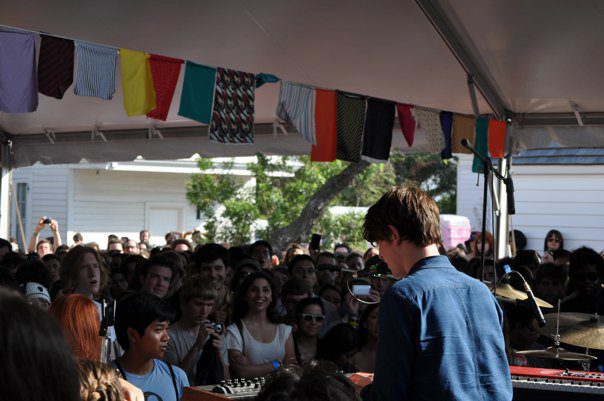
On this day, though, the ebullient currents of fortune sustained me. My luck continued as I edged my way past people I really shouldn’t have gotten in front of, until I was standing at the very border of stage right, waiting for James Blake, my camera poised. He arrived suddenly, dripping sweat and schoolboyish good looks. He was tall. The photos I took of him as he navigated the sparse landscapes of his keyboard came out really well; I think I could have been a pretty good photographer, though never a great one, if I had cared enough to keep it up. Something like Tibetan flags fluttered in a colorful frame around the stage, and due to my unusual positioning at the very corner, I was looking out of the frame, not into it.

Blake’s solemn face stared down at his keys for most of the show, belying the throbbing emotion at the core of the set. His more abstruse songs came first: “Unluck,” “Lindisfarne I & II,” massive basslines welling up and buoying the event tent’s energy until the whole space seemed to pulse. The crowd was silent, hypnotized. By the time the set crescendoed into his singles, most notably the Feist cover “Limit To Your Love,” the collective swooning of the audience was palpable. At the end, they erupted into a raucous sea, ravenous for more. Blake politely declined.

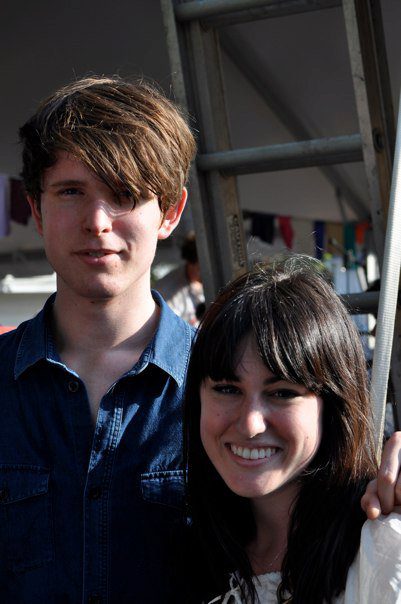
After the show (short, like most SXSW showcases), I nervously waylaid him for a photo, my third and final stroke of luck for the day. With a mumble, he politely obliged. He looks so sweaty in the photo, so confident, like a real rock star. After that show, I knew he’d really be one, and in 2019, with his most recent release Assume Form, he sort of is.

Not all my teenage predictions came to fruition, though. It’s strange to think that it’s been years since the twilight of “Keep Austin Weird.” A decade ago, in 2009, downtown buzzed with life as I reclined on a grass bank with a couple of friends; we reveled in the sunshine after a rainy, chilly two weeks in Europe with our classmates (for me, a miserable test of my social skills). Now, free in shorts and short sleeves, our gratitude to the city that raised us swept over us like a warm breeze. This was home. Later that day I’d venture out to Red River Street, half-assedly attempt to sneak in a few music venues, and relish the freedom of wandering the streets alone. Forever in this city would be a long time, I reassured myself. Long enough to get into a few venues by and by. The warm asphalt beneath my toes, as I toted my shoes down South Congress, assured me of that.

Today, I happily live in Portland. I haven’t lived in Austin for nine years. I would like to again someday, but there’s grief in the knowledge that it won’t really be the city I grew up in. I most recently went to South by Southwest in 2015, but by then I already knew it was over. Austin was J. Lo’s playground now, not mine.

My heart falls when newer Austin citizens quote staple eateries I’ve never heard of, or when I see haughty New Yorkers tout their badges via Instagram during their sponsored spring break jaunt. We shout about the places we’re from because we’re afraid of the conversation outpacing us. Austin is in my blood like holy wine, so bitter and so sweet.

James Blake just won a Grammy – somewhat ironically, for Best Rap Performance. But SXSW was always about catching somebody on the cusp, before all of that. And now, I realize, it was about myself, before most things, on the brink of life. Before bills, before legal drinking age, before marriage, before home for the holidays, before New Austin, there was just me, jumping over a wall, taking photos at a show.

PLAYING DETROIT: Tammy Lakkis Fuses Songwriter and DJ Sensibilities on Debut Single

This week, Detroit-based producer, songwriter and DJ Tammy Lakkis released her debut single, “This is How It Goes,” a mesmerizing meditation on the cyclical nature of life. Lakkis fuses her background in more traditional songwriting and her love affair with Detroit’s electronic music scene, honing her original demo with the help of Assemble Sound resident Jonah Raduns-Silverstein (who produces his own music under the moniker Jo Rad Silver).

Lakkis’ crystal clear vocals are a welcome and surprising pair to the track’s droning bass line and punchy percussion. “This is How it Goes” has the cadence and repetition of the dance track Lakkis spins as a DJ, but her poetic lyrics provide a clear narrative that’s normally not found in most electronic music.

We spoke with Lakkis about making the track and how being in Detroit has shaped her music.


AF: Can you talk a little about your background in music? How long have you been producing? Where did you learn or did you teach yourself?

TL: I’ve been singing since I was a toddler. I picked up guitar when I was 13 and started writing songs a few years later. I was briefly in an alternative rock band called Tammy and the Enemies that formed in 2016 and that’s when my songwriting started taking most of its shape. My segue into producing was getting a drum machine and a looper pedal and making loops of my voice, guitar, and other sounds (like flicking water bottles, scratching the mic with my nails, hitting things against each other, etc.) and just exploring. That led to getting Ableton and later a sampler and that’s mainly how I make my music now. I was lucky to have friends around me I could learn from. I try to keep it fresh and use a variety of electronic and analog instruments and sounds with each new track.

AF: How does being a DJ influence your songwriting/production?

TL: I’m in the midst of a musical identity crisis because I used to primarily be a singer-songwriter but now I find myself making dance tracks on my sampler and my answer has been to fuse the two worlds together into more of a trip-hop vibe. DJing has added another dimension to music-making: now when I write songs, I consider how they speak to the body in addition to the mind and soul. Also, I’ve learned storytelling through DJing and going to DJ sets. It’s made me consider the context around individual songs and what story that context tells.

AF: Were there any artists in particular that you were listening to a lot when you wrote this track?

TL: Björk, Stereolab, and Portishead!

AF: What was your process for writing this song?

TL: One night in my garage in the spring of 2016, I laid down a basic beat on a drum machine and started making creepy loops of my guitar on a looper pedal and drank a Soft Parade and sang over the loop for hours and hours and hours. The main lyric of the song: “This is how it goes, it goes and goes and goes” kept coming back. So I spent a few weeks building around that. The final track is pretty similar in shape to what I originally came up with in my garage that summer but with less guitar, more electronic elements, and a much more refined and gritty sound. It’s mainly electronic besides the guitar, vocals, and me and Jonah’s clapping.

AF: What was the collaboration process like with Jonah?

TL: We did mostly sound design stuff and some arrangement stuff. We replaced my original recordings with analog drum machine and synth sounds and really spent time dialing in the exact sounds we were looking for. We did a complete rehab of the guitar, bass, and drums and it added so much to the complexity of the sound. We went through and honed in every sound in the track. It was a lot of work but it really paid off. I had been a little stuck before working with Jonah since I had been working on this song for so long and could no longer see it clearly and lost direction of what to do next. Jonah also mixed/engineered the track, so I learned better ways to make different sounds fit and be more accommodating of each other.

AF: How does living in Detroit influence your music / DJing?

TL: Living in Detroit is like having an endless stream of inspiration to tap into at any time. I go to shows several times a week and inevitably recycle the stuff I hear out in my music. Whether or not I’m making dance music, all the music I make is deeply inspired by dance music (primarily house music). Detroit has made me ditch my acoustic act and become an electronic artist. I am very inspired by all of the music coming out of Detroit and all the people here making sounds.

AF: What is this song about, to you?

TL: The transient nature of things. The inevitability of change and growth and moments turning into other moments turning into other moments turning into other moments, etc. I think, anyway. It may have subconsciously been a spinoff of Ruth Stone’s poem “Train Ride.”

PLAYING CINCY: Tori Helene Learns to Heal on EP Delusional

Tori Helene Delusional

Tori Helene, Cincinnati’s latest rising voice in the hip hop and R&B scene, recently dropped her debut EP, Delusional. The Natown-produced project shows growth and a different creative direction for Helene, who released two singles last year – the sensual “Straight F***in” and heated “Judas.” The mood shifts quite a bit to introspection, pain, and healing on Delusional, where Helene has the chance to show off her impressive vocal range, get into her feelings and still drop some quick-paced bangers. A story of relationship woes, the EP fittingly starts with “Lord Knows,” the most vulnerable track, then travels through peaks and valleys, like the pain-escaping “Under The Influence” and the D-Eight assisted “Numb,” finally ending with a cocky and playful showcase, “2 Legit.”

Tori Helene gets a running start with Delusional, making her a newfound force to be reckoned with. Here, the Cincinnati singer talks about healing through her music, artists she’s inspired by and what’s up next.

AF: Congrats on your EP! Walk me through your inspirations and thought process going into this project.
TH: Thank you! I started on Delusional at the beginning of last year. I was in a deep depression [from] 2016 to 2017 and wanted to use music as a way to get these dark emotions out. Delusional shows a little bit of my vulnerability and my honest thoughts about relationships and experiences that I’ve gone through.
AF: “Under The Influence” is a standout track, can you talk about what the song means to you?
TH: Under The Influence” was a collab I did with my producer. It’s about being in love with getting high and how it has helped me when I’ve been down. So we made the song where I’m talking like I’m talking about a man I’m in love with, but it’s really about my love for weed [laughs].
AF: Who are some artists you’re inspired by?
TH: My biggest inspiration is Beyoncé. I’m a huge fan. She has inspired me to be an entertainer. I would watch her when I was younger and just study her voice and how she performed for hours at a time. I also love Stevie Wonder, John Mayer [and] Whitney Houston.
AF: What’s your favorite song on the EP?
TH: I love all the songs on the EP. They all have my heart but if I had to choose, it would be “2 Legit” and “Numb.” “2 Legit” is fun and “Numb” is super real for me because it’s about my last relationship and how I messed it up.
Tori Helene Delusional
Tori Helene. All photos by Randy Lefebvre.
AF: How did your music career begin?
TH: My music career began when I was 15. I started recording at my friend’s basement. I wanted to start learning the recording process and getting a feel for my sound. Then I went to college and decided to fully pursue [music] after I graduated. I graduated and then started releasing singles for a couple years and now Delusional is out.
AF: What’s something you love about the Cincinnati music scene?
TH: I love the versatility and I also admire everyone’s love for music here. It’s beautiful.
AF: What are you working on currently?
TH: I’m working on pushing Delusional and I’m about to start working on more music for later in the year and next year! The grind doesn’t stop.
AF: Any touring coming up?
TH: I do plan on doing a promo run later this year or next year. It’s still in the works.

Seven Music Videos That Represent the Female Gaze

The male gaze is practically part of our collective cultural definition of a music video. Even videos by seemingly progressive bands, like The 1975’s “Girls” and The Chainsmokers’ “Beach House,” present women as props, dancing scantily clad in the background.

But recently, female artists have been taking back the medium by creating videos that speak to their own visual pleasure. Here are some music videos that depict the world through women’s eyes.

“Colors” by Halsey

Though Halsey has said “Colors” is about being in a relationship with an addict — likely The 1975’s Matty Healy — the video presents an alternate interpretation of the lyrics. As she sings “Everything is grey / His hair, his smoke, his dreams,” the visuals tell the story of a young woman obsessed with an older man — or, more accurately, obsessed with looking at him.

The video opens with Halsey and her fictional mother staring at a man and his son, and as it goes on, you pick up on an odd love triangle (or is it a rectangle?), all while Halsey takes photos and salivates over them in the privacy of her room. Shirtless shots of the male characters abound, and though Halsey also has an underwear scene, it’s clear that this is about her fantasies, not a male fantasy she’s starring in.

“I Luh Ya Papi” by Jennifer Lopez

This video is self-referential from the get go, beginning with a meeting where JLo and her collaborators plan out the video. “If she was a dude, they’d seriously have her up in a mansion with all these half-naked girls,” one says.

“Why do the men always objectify the women in every single video?” another adds. “Why can’t we for once objectify the men?” The answer is, no reason. So, they objectify the hell out of them. The satire is obvious (and hilarious) at times, like when a guy in a speedo washes a car with his butt, but you can also tell she’s serious: She and her friends are having a blast enjoying the eye candy. At the very end, it’s revealed that JLo is still in her meeting and has imagined the whole video — so, it is literally a representation of her gaze.   

“Closer” by Tegan and Sara

At a fantastically queer dance party, Tegan and Sara Quin sing sexually aggressive lyrics like “All I dream of lately is how to get you underneath me” as couples of all configurations stare excitedly into each other’s eyes and kiss. From a woman cupping another woman’s head in her hands to one who leans into a man on top of a car, characters of all genders demonstrate a genuine combination of desire and affection, and all couples consist of equals.

“break up with your girlfriend, i’m bored” by Ariana Grande

Ariana sits alone at a party creepily staring at a couple and trying to break them up, but she catches her audience off guard by making out with the girl once she finally gets their attention. It seems like a ploy for shock value and LGBTQ street cred honestly, but the way she ceaselessly stalks them before she pounces is admirably bold.

“Call Me Maybe” by Carly Rae Jepsen

This super relatable video shows Jepsen spying on a crush as he mows her lawn, hiding below her romance novels when he looks at her, and partaking in strange antics to get his attention. It’s reminiscent of many childhood crushes, reminding us that despite being socialized to do the opposite, women have an innate ability to take joy in looking.

Alas, this one’s also got a gay plot twist, but unlike Ariana’s, it doesn’t work out in Carly’s favor. I vote she does a followup featuring her crush’s budding romance with her guitarist.

“Honeytrap” by Throwing Shade

In the visuals accompanying this trippy, dreamy song, Throwing Shade (aka Nabihah Iqbal) overlooks a garden full of naked men covered in flowers and fruit. It seems almost cheesy, until you realize it wouldn’t seem that way if the genders were reversed. Actually, it’s a work of art, nude men and all.

“She Keeps Me Warm” by Mary Lambert

For this heartfelt ode to a lesbian relationship, Lambert crushes on a barista. They steal glances at each other as Lambert sits at the cafe reading a book, inside which she leaves a note saying “I think you’re super cute.” The stages of their budding romance, from holding hands in the back of a car to sharing their first kiss on a rooftop, help to humanize same-sex relationships while, most likely, making you cry.

NEWS ROUNDUP: International Women’s Day, Leaving Neverland, and MORE

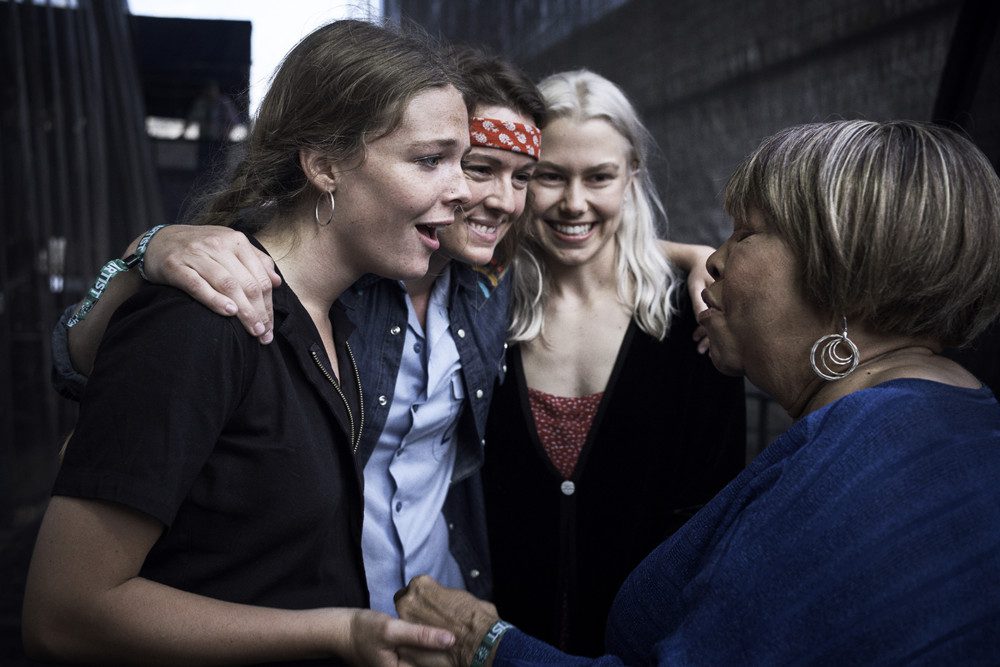
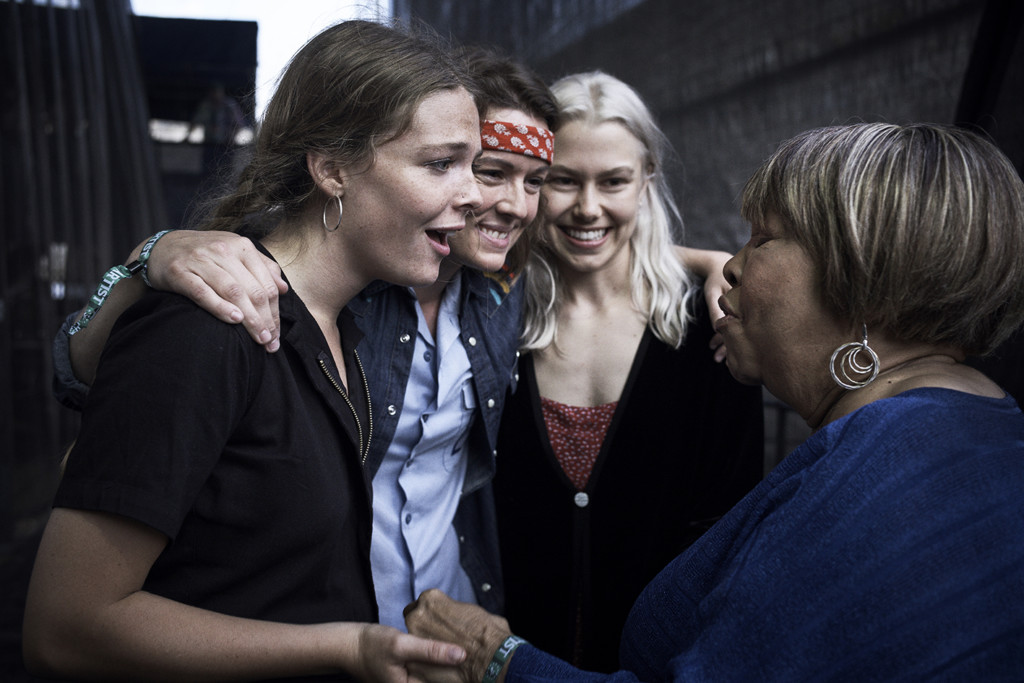
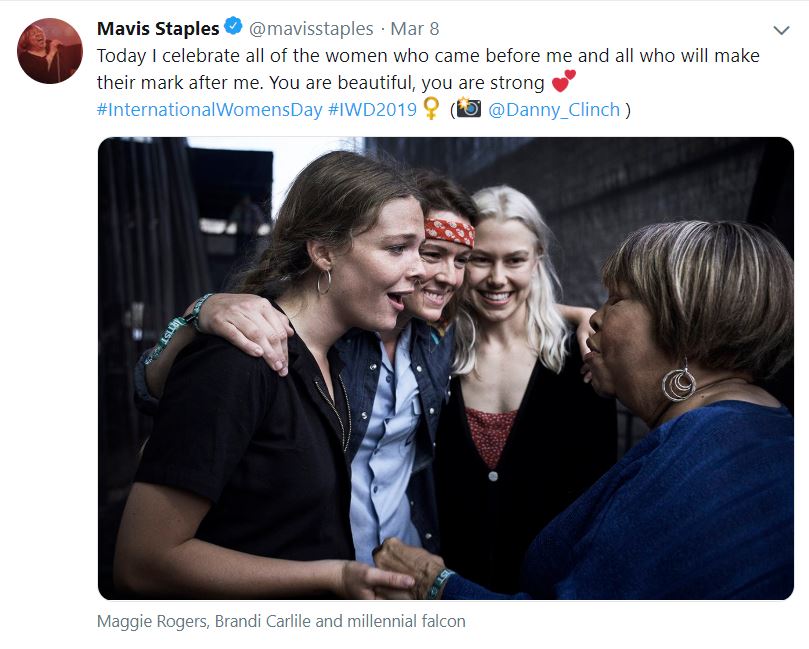
Maggie Rogers, Mavis Staples, Phoebe Bridgers and Brandi Carlile meet at Newport Music Fest. Photo by Danny Clinch. The artists shared this photo along with messages of empowerment for International Women’s Day via Twitter.

It’s International Women’s Day!

Though some form of International Women’s Day has been around since 1909, the holiday celebrating women around the world has really gained traction over the last decade. This year’s theme was #BalanceForBetter, seeking to promote a more gender balanced world. Here’s how our favorite ladies in the music world celebrated.

  • Cardi B made a playlist on Apple Music for the occasion, featuring visionary women (including Grace Jones, Madonna, Tina Turner, and Solange).
  • Sharon Van Etten and Courtney Barnett both appeared as a guest curators for Amazon’s music streaming platform.
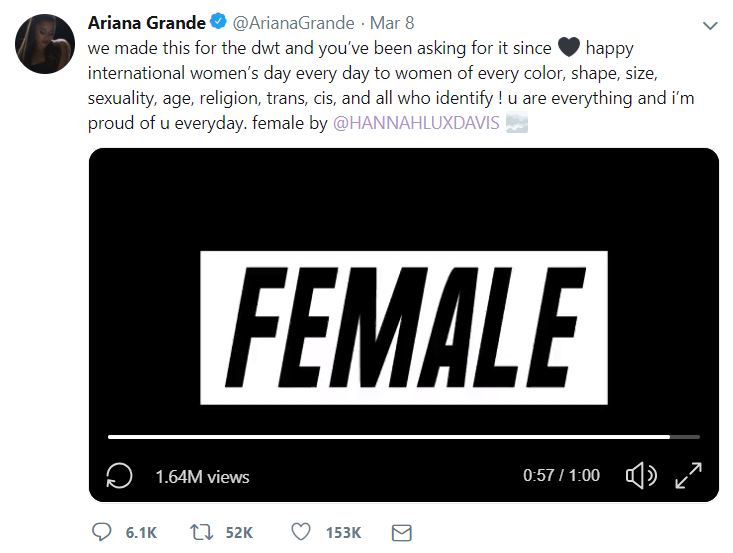
  • Ariana Grande tweeted a short video by director Hanna Lux Davis, reminding everyone a few tweets later “it ain’t feminism if it ain’t intersectional.”

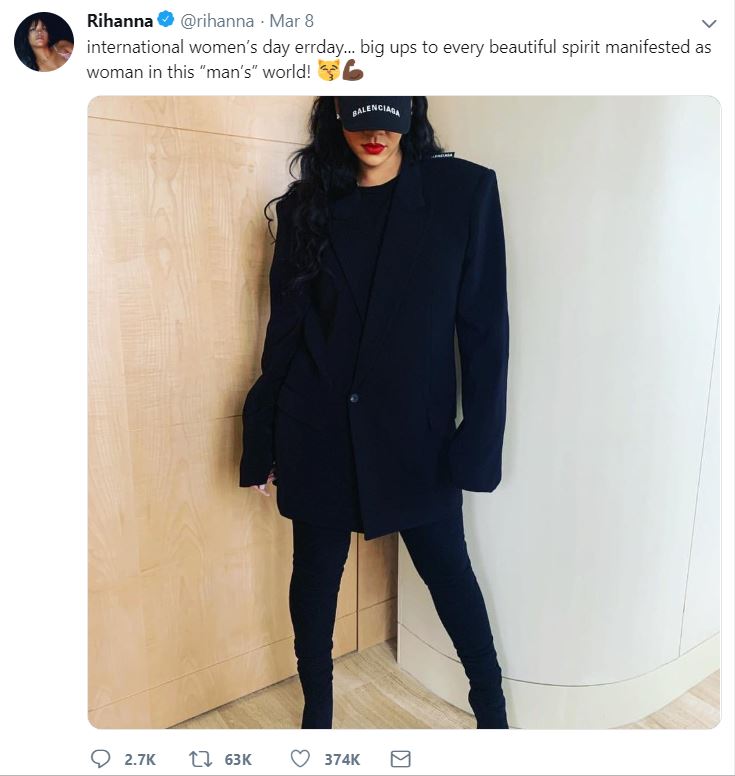
  • Rihanna looked powerful in a black blazer.

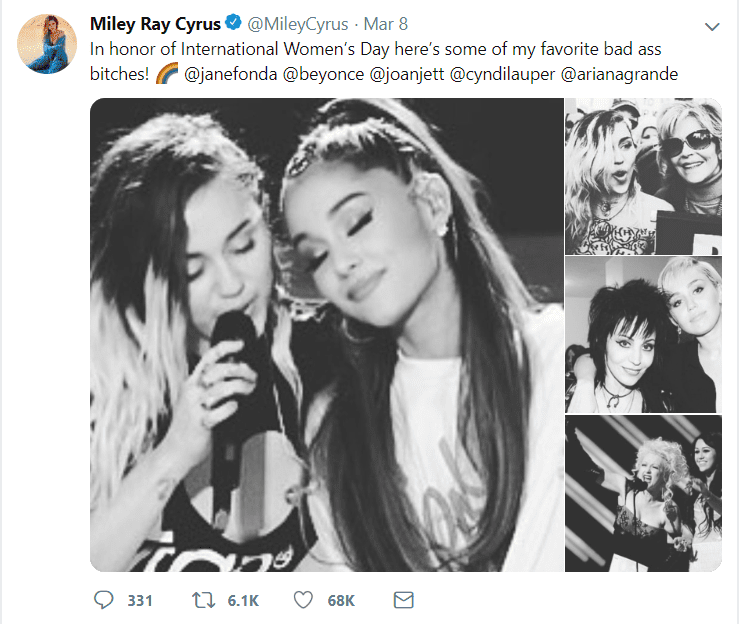
  • Miley Cyrus shouted out some of her favorite bad ass bitches:

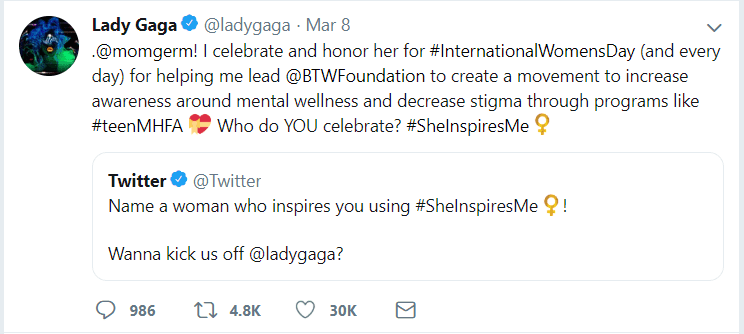
  • … while Lady Gaga paid tribute to her mama.

  • Maggie Rogers and Mavis Staples both reminisced via this photo with Phoebe Bridgers and Brandi Carlile.

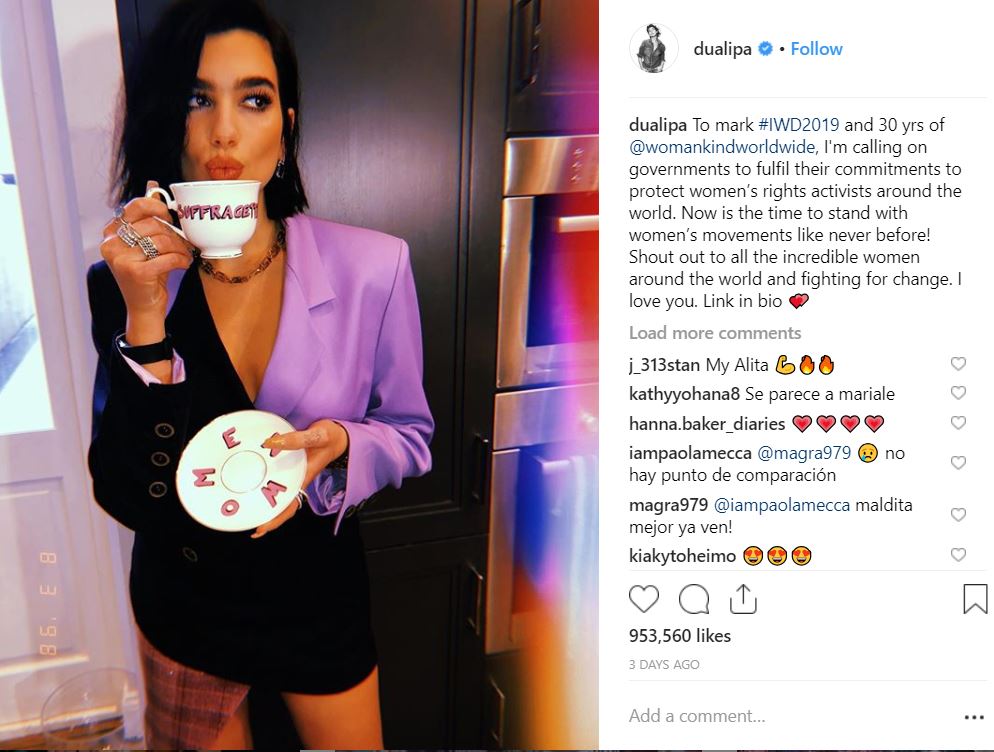
  • Dua Lipa had some tea for those who fall short of protecting human rights.

  • And Micropixie released a video for Como Mínimo (#YesIsTheMinimum), from her upcoming LP Dark Sight of the Moon, out April 9.

The Fallout of Leaving Neverland

The explosive HBO Documentary about Michael Jackson’s alleged child abuse, Leaving Neverland, aired last weekend, and unsurprisingly, folks are divided on its message. Though the allegations are nothing new (Jackson settled a child abuse case out of court in 1994, and was acquitted in a similar case with a different victim in 2005) the harrowing testimonies of two men who say they were abused by Jackson when they were 7 and 10 are hard to dismiss. Radio stations have pulled Jackson’s enduring pop hits,  The Simpsons producers have pulled iconic episode “Stark Raving Dad” from the syndication due to Jackson’s guest voice over, and a Chicago run of biographical jukebox musical “Don’t Stop ‘Til You Get Enough” was cancelled, though its team said this occurred due to scheduling difficulties and that they’ve set their sights on Broadway in 2020. Jackson’s daughter, Paris, seemed unfazed in a series of tweets in which she told folks to “chillax” – implying that even if Jackson’s legacy took a huge hit, his $500 million estate would ultimately be unaffected by the doc (though they’d previously filed a lawsuit to block it from airing). Meanwhile, debate continues to rage regarding blame placed on the victims’ parents, the degree to which Joe Jackson’s horrific behavior absolves his son’s various issues (including the alleged child abuse) and, of course, the idea that Jackson himself is an innocent victim of a slanderous campaign. One thing is certain: Jackson’s story is ultimately one of the saddest in pop music history, taking into account his tarnished childhood, various tabloid scandals, untimely death due to physician-sanctioned drug abuse – and it’s only compounded by the suffering of his alleged victims.

That New New

Solange has blessed the world with the (semi) surprise release of When I Get Home, her follow-up to 2016’s show-stopping A Seat at the Table.

Cementing their legacy as Jersey’s favorite pop punks, The Bouncing Souls released the second single from their forthcoming 30th anniversary EP Crucial Moments, out March 15. Their massive tour kicks off the next day at Jersey City’s White Eagle Hall.

Vampire Weekend have shared two new tracks from their upcoming Father of the Bride LP, out in May

Mac DeMarco announced his next record Here Comes the Cowboy with a single called “Nobody,” giving Mitski fans a little déjà vu; both artists (and their shared PR team) say it’s just a coincidence.

Bedouine is back with a one-off single that reflects on the aftermath of her gorgeous 2017 self-titled debut.

SOAK has released another lovely singled from April 26 release Grim Town., announcing some US tour dates (including two at SXSW) to go with it.

Alan Vega’s final recordings have been released to benefit the Rock and Roll Forever Foundation, which provides teaching materials to educators seeking to engage students by teaching pop music history. The Suicide co-founder passed away in 2016.

Everyone loves a corgi – and that includes illuminati hotties, who are very honest about the fact that sometimes doggos are are the only thing keeping us in a mediocre relationship. They’ll be in Austin next week for SXSW.

Stef Chura has announced her sophomore record Midnight with its lead single “Method Man.”

Blushh shared a one-off single to get folks pumped for their upcoming SXSW dates as well.

Toronto punks Greys have announced third LP Age Hasn’t Spoiled You, out May 10, sharing its first single “These Things Happen.”

Rick from Pile remains the biggest babe in all of DIY indie rock; this week the band released their latest single and announced forthcoming LP Green and Gray, out May 3.

In other DIY news, Patio ready themselves for the April 5 release of Essentials with their latest track, “New Reality.”

NOTS have seemingly recovered from their recent lineup changes and shared the first single from their upcoming LP 3, out May 10. Two of its members are also releasing an LP this year as Hash Redactor.

The National have announced a new collaborative project with director Mike Mills entitled I Am Easy To Find. It’s essentially an hour-long companion album to a 24-minute short film of the same name starring Alicia Vikander. The first track on the album, “You Had Your Soul With You,” has some guest stars as well – Sharon Van Etten, Kate Stables of This Is the Kit, The Brooklyn Youth Choir, and longtime David Bowie bandmate Gail Ann Dorsey lend vocals. The band have announced a bunch of tour dates with Courtney Barnett and Alvvays supporting.

Local Natives released two videos this week, one of which stars Kate Mara. Both will appear on the April 26 release of Violet Street, a follow-up to 2016’s Sunlit Youth; they’ve previously announced a slew of tour dates.

Sky Blue, a posthumous collection of unreleased material from celebrated singer-songwriter Townes Van Zandt, arrived March 7 to commemorate what would’ve been his 75th birthday.

Kishi Bashi returns with new LP Omoiyari on May 31, and has released the album’s first single, “Summer of ’42”.

Charly Bliss have shared a video for “Chatroom,” the second single from their upcoming record Young Enough, out May 10.

CupcakKe keeps it topical with a new single entitled “Bird Box,” referencing the recent Netflix horror movie and the Jussie Smollett controversy alike.

Having penned Grammy-nominated hits for Ariana Grande and Janelle Monae, Tayla Parx is poised to break out on her own with a highly anticipated solo debut on Atlantic Records, We Need to Talk, out April 5. Her latest video for “I Want You” follows earlier singles “Slow Dancing” and “Me vs. Us.”

Christian Fennesz, who records electronic music under his last name, returns to basics with a new 12-minute track called “In My Room,” from forthcoming 4-song LP Agora, out March 29.

Ahead of the April 12 release of No Geography, The Chemical Brothers share a video for “We’ve Got To Try.”

Festival faves Marshmello and CHVRCHES have collaborated on a sugary new single titled “Here With Me.”

Dido’s first record since 2013, Still on My Mind, is out today; her first tour in fifteen years hits the US in June.

End Notes

  • The Prodigy singer Keith Flint was found dead of apparent suicide at the age of 49.
  • I would unironically love to attend one of these West Coast Man Man shows featuring “Friday” singer Rebecca Black.
  • Gayle King interviewed R. Kelly for CBS regarding the sexual abuse allegations against him, prompting an explosive on-camera outburst from the singer that has been widely discussed. We’re so tired.
  • Swedish black metal band Watain have been banned from performing in Singapore due to their “history of denigrating religions and promoting violence.”
  • NYC concert-goers spontaneously burst into song on the ACE platform following a sold-out Robyn show at MSG.
  • Speaking of Robyn, she’s been announced as one of the headliners for Pitchfork Music Festival, which takes place in Chicago from July 19-21. HAIM and the Isley Brothers top Friday and Saturday’s bills respectively, with Stereolab, Mavis Staples, Belle & Sebastian, Earl Sweatshirt, Pusha T, Tirzah, Kurt Vile, Low, Julia Holter, Rico Nasty, Neneh Cherry, Snail Mail, Khruangbin, Soccer Mommy, Amber Mark, CHAI, and more set to play as well.
  • While we’re on the subject of festivals, Variety has leaked a potential lineup for Woodstock 50 and it’s not exactly overflowing with “heritage” acts; Jay-Z, Chance the Rapper, and Black Keys look like likely headliners.
  • Elton John tweeted an definite release date in October 2019 for his upcoming memoir.
  • Massive Attack have rescheduled some of the North American Mezzanine reunion tour dates due to illness.
  • You can buy the hospital gown that Kurt Cobain wore during a legendary 1992 Reading Festival Nirvana performance for a mere $50,000.
  • L7’s Donita Sparks emerged as a hero when, in true punk fashion, Marky Ramone and Johnny Rotten nearly came to blows at a panel discussion on upcoming John Varvatos and Iggy Pop-produced Epix docu-series Punk.
  • Morrissey is taking his upcoming covers record California Sun to Broadway.
  • Taylor Swift stalker Roger Alvarado was arrested for breaking into the pop star’s home again, fresh off of a stint in jail for the same charge (bringing his Swift-related arrest total to three).
  • Arcade Fire will reportedly cover “Baby Mine” in Tim Burton’s live-action Dumbo remake, and it’s a real family affair.
  • Mark your sundials – Red Hot Chili Peppers will stream a live concert from the Pyramids of Giza, Egypt on March 15.

PLAYING SEATTLE: Guitarist and songwriter Ings Preps New LP and SXSW Shows

As you wander from Cafe Racer to SoDo punk venue to University District house show, Ings, a contemplative guitarist and songwriter with a subtle touch on the guitar, is bound to be somewhere in the mix—likely (and hopefully) sharing her slow-simmering pop songs from behind her signature yellow glasses. With two mellow-yet-poignant EPs under her belt — 2014’s Slaughterhouse-Five and 2016’s Afterthought—Ings is touring extensively this Spring with her band and gearing up to play her first-ever SXSW as an official artist. She’s also bracing to release a new full-length, out later this year.

Recently, she chatted with AudioFemme about her favorite mantras, the key to patience, and her deep love for the DIY community in Seattle. Read on for the full interview.

AF: Tell me a little bit about your background? How’d you get into music?

Ings: I took piano lessons as a kid, and my mom rented a lot of musicals for me and my sister. I would make up a lot of songs. When I was 7, my brother played Ben Folds’ “Philosophy” for me on the stereo, and my mind exploded. I’ve been a deep Ben Folds Five/Ben Folds fan ever since. I started playing guitar when I was 14, and wrote a song for English class. Then I started playing gigs around town and played in some bands—that sort of thing.

AF: You’e not originally from Seattle, though you may as well be a local now. Why did you move out here?

I: I’m from Springfield, Missouri. I moved because the community is wonderful, and I loved [local band] Heatwarmer, and wanted to take guitar/composition lessons from the lead person, Luke Bergman.

AF: How long has Ings been around as a group?

I: My sister calls me Ings, I started performing with that name about 7 years ago. 

AF: Who are you most inspired by?

I: People who demonstrate self-compassion. And, of course, the 6 B’s: Björk, Beyoncé, Blake Mills, The Beatles, The Beach Boys, and, of course, Ben Folds. Also, George Gershwin. 

AF: You make great playlists on Spotify—I listen to them all the time. I especially love this month’s playlist, “Patience.” When and why did you start doing that?

I: Because I believe that songs are like software for your mind, it follows that creating a playlist with a certain emotion in mind will facilitate feeling that emotion. Also, because the universe is chaos and right and wrong are relative is important to me to be able to make choices about how I will decide to feel about any given situation and sometimes music can encourage me to be in a more productive, heightened, emotionally intelligent mindset.

AF: Why did you choose patience as a theme? I’m definitely not a patient person—ha! Is patience something you struggle with cultivating?

I: I believe in giving yourself space to grow and change and improve. Part of that space is mental and emotional, but there’s also an aspect of temporal space: giving yourself permission to wait for things and trust that your intention will bring about what you are working towards. In that vein, here’s a limerick:

Because life is unfolding at a constant rate,
and can’t be hurried for worrying’s sake,
you may as well embrace your fate,
And grant a little -ience of pate.

AF: Ha, I love a good limerick! I also loved your last release, Afterthought. Are you working on a new release as Ings?

I: Yes, I have a new album! I’m currently looking for a label. I really really want to release it this year. 

AF: You have ties with labels but you seem to thrive on being independent and DIY. How does the Seattle DIY music community feed your music? What about it draws you in?

I: Barsuk do my licensing/publishing. But other than that, I don’t have a label yet. Even though I produce and write my own music, I definitely flourish in community. I think community is why a lot of people in America are lonely. I think community is as important as water. I do not know where or who I would be without this scene. It’s a “before you came into my life I missed you so bad” kind of thing. I am my realized self at this moment because our scene here in Seattle is so vibrant and supportive.

AF: Do you write while on tour? Is it a creative time for you?

I: I feel so much joy on tour from seeing people and meeting people and jumping in the ocean and stuff! So I feel inspired, but I don’t have much time to sit down and record demos. I take lots of notes, and honor each melody that appears in my mind by recording it in my phone, and then assemble them later.

AF: You recently announced that you’ll be at SXSW this year as an official artist. What does that mean to you?

I: I applied to SXSW every year for a few years and was rejected every time, so it’s nice to officially be part of it this year, while still doing some unofficial showcases. It seems like they are booking more DIY bands and more of my friends’ bands, which I’m really happy to see. So many of my favorite people will be there, I look forward to the joy of being together.

AF: Your songs very often feel like a meditation on a specific mood or feeling or mantra. Do you have a favorite quote or line of philosophy that is guiding your life right now?

I: I started meditating about nine months ago, and it has changed my life. I have a small “menu” of meditative phrases that have occurred to me over this period, the latest one of which is: “I have everything I need.”

Follow Ings on Facebook and Twitter, and check her out live at one of her dates below.

TOUR DATES

3/5 – Silverton, OR @ Oak Street Church // RSVP
3/6 – Eugene, OR @ Spectrum // RSVP
3/7 – Arcata, CA @ Outer Space // RSVP
3/8 – San Francisco, CA @ Fortress Callosum // RSVP
3/9 – Los Angeles, CA @ Junior High // TICKETS // RSVP
3/11 – Joshua Tree, CA @ The Beatnik // RSVP
3/12 – Phoenix, AZ @ House Show
3/13 – Las Cruces, NM @ Eyeconik Records // RSVP
3/15 – Austin, TX @ 4:15 PM, MIDCOAST TAKEOVER, Shangri-La // RSVP
3/15 – Austin, TX @ 7:00 PM, FEMME FRIDAY SHOWCASE, Hops and Grain // RSVP
3/18 – Springfield, MO @ The Outland TICKETS // RSVP
3/19 – Kansas City, MO @ Mills Record Co. // RSVP
3/21 – St. Louis, MO @ FOAM // RSVP
3/22 – Chicago, IL @ House Show // RSVP
3/23 – Minneapolis, MN @ House Show // RSVP
3/24 – Bismarck, ND @ House Show** // RSVP
3/26 – Missoula, MT @ Hockey House // RSVP
3/27 – Spokane, WA @ Baby Bar // RSVP
3/28 – Moscow, ID @ House Show
4/27 – Vancouver, Canada @ The Cultch // TICKETS // RSVP


PREMIERE: Lauren Eylise Documentary “The Most” Centers Female Experience

Lauren Eylise wanted to do something special for the music video for her song, “The Most.”

“The Most (Madonna-Whore Interlude)” comes off the Cincinnati singer’s most recent album, Life / Death / Life and explores themes of shame, expression, and owning the dialogue surrounding female sexuality. Because of her connection to the song and the conversation it promotes, she decided to film a mini-documentary targeting the exact same subject.

The Most documentary asks four Cincinnati women – Brittany, Savannah, Erin, and Sandra – as well as the singer herself, about their first introductions to sex, not just from a physical standpoint, but also about their mindsets surrounding it. Lauren wanted to feature women of different backgrounds, races, ages and experiences in order to properly portray the diversity of women in general. While they differed in first times, body image and upbringing, the women shared similar anxieties, initial introductions and perceptions. The documentary sparks a conversation about slut-shaming, the media’s role in body image and sex, sex portrayal through a predominantly male gaze and the harmful initial introduction many women have to sex and their bodies. The documentary closes by asking each of the women “Who are you?” All of the subjects look taken aback and contemplate the question. The doc then transitions into the music video portion, where Lauren creates a visual image of self-love to her song “The Most.”

Here, Lauren talks about The Most documentary, future visions for a similar ongoing video series and why she’s an advocate for open and honest dialogue about sex. We’re premiering it below in honor of International Women’s Day.

AF: Congrats on your premiere! What made you want to do this documentary-style video, rather than a traditional music video?

LE: Thank you! There were so many risks with it. For one, it’s an interlude. It’s the shortest song on the album, but it really means the most to me because of the commentary. It was definitely a labor of love. But I’m not gonna lie, even premiering it, I’m very nervous about it from a music perspective, with it being a lot more message-centered. It’s in alignment with me, but still. And then the actual music video portion of it is just me touching myself, which was very intentional as well! Every time we see sex portrayed, generally, it’s through a male gaze. Sometimes it’s a woman perpetrating it, but it’s pretty much her putting on a show of her internalized misogyny. As bare as possible, I don’t need to be doing anything extreme, it’s not about that; it’s about the female form.

I think it was Brittany in the video who mentions how women see themselves. She talks about seeing things in lines and curves and shapes and I’m like, sister, I’m with you! When I talk about sex it’s not necessarily in alignment with the way the male gaze perpetrates it. I see lines and curves and shadows and all those things I demonstrated. I’m very proud of myself and the team for executing it and I just hope it’s well received. But at the same time if it’s not, I don’t give a shit! If you don’t receive it, it’s not for you. It is for us, the women who are seeking to redefine that narrative.

AF: Why do this video and style for “The Most”?

LE: There are women, generations even, removed from this conversation. Woman and wife are not synonymous. Woman and nurturer are not synonymous – though, that’s a very positive and beautiful trait of women. My entire purpose of “The Most” was to express female sensuality and female autonomy therein through a woman’s language, a woman’s gaze, because it’s very important to me.

I love my parents, but a lot of their old paradigms and thoughts were manifested into me. ‘Don’t have sex until you’re married,’ which I’m not saying is a bad thing, but it can be a bad thing. We’ve gotta get to the why. Why? Why shouldn’t I have sex until I’m married? And why is that the beginning and the end of the conversation? I don’t even know my body and you’re telling me not to use it. I was not comfortable with [the fact] that I was 23, 24, 25, reflecting and trying to figure out my body. And what really sucked is that I’m trying to learn some of these things, and unlearn some of these things, in the middle of conflict with my body. I’m already using my body at this point, and so now I’ve got shame and guilt because of things I was taught that aren’t necessarily true.

Tradition and truth are not interchangeable. My purpose for “The Most” was really like a fuck you to patriarchy and the way that it plays itself out in life and the way that it manipulates women, and men too, and how we’re all bound to it and enslaved by it. Transforming our thought process around sex is important to me because it’s a pillar for bigger conversations.

AF: How did you find women who wanted to share their stories and perspectives of sex?

LE: These are all women that I know; we’ve become friends for sure. Brittany, I didn’t know her at all before. A friend of mine called me and said hey, my friend is getting engaged and she wants you to sing for her engagement. I said okay, I sang at her engagement, her and her wife Erica, and then I sang at their wedding. So we’ve built a relationship because I was so involved in their union. And then the other women I’ve worked with in more professional spaces and then came to build a relationship.

It was interesting; I didn’t know anything about them, to that degree. I was grateful that I had different perspectives. Savannah, who’s been comfortable with her body—she’s a dancer, whereas someone like Brittany who grew up in the church and had a lot of issues with her body image. It’s very reflective of women, generally. I appreciated their honesty and transparency. Even the conversations we had off-screen—I was bawling.

The Most
Photos by Kevin J. Watkins (@ohthatsdubs).

AF: What’s something you learned or had solidified in your mind about the various female perspectives of sex through filming this documentary?

LE: Something that was solidified was that I’m not alone in this. And they’re not alone in this. Sure, all different experiences [but] there were so many similarities. It was reassuring that the work I am seeking to do through my art is necessary. Because again, just as there are men who don’t know, there are women who don’t know. Women who are like very stuck in these roles and these beliefs, they don’t even know why they believe them. My thing is always like, believe what you want to believe, but know why you believe it. If your answer is just ‘the way it is,’ nah. Come again.

AF: You talk about how we need to open up a dialogue with other women and men about sex and that you’d also like to turn this documentary into an ongoing series. For future videos, would you include men in the conversation?

LE: Absolutely. We actually talked about that. I have a song that will hopefully make my next project, it’s called “Real Boy.” It’s a play on Pinocchio and it’s very intense. It’s a call for the destruction of toxic masculinity. Masculinity has a place, just like femininity has a place. Neither of them are tied to either sex. Women have masculine traits and feminine traits. But yes, this conversation definitely has to keep going. I’m going to use my art to push that conversation along, so I do hope that I can manifest that with this next song and this next project.

It’s funny because it was a male videographer who worked on this and it was interesting to hear his response to the women and to hear his response to the questions. He was baffled. He was like, ‘Man, I didn’t know.’ He was baffled at the entire concept of these roles not being innate to us. And I know there are levels to that. Some men are deeper in the rabbit hole and some are not. But he even said, I would love to have this conversation with women and more men because I don’t think a lot of us even know about these things.

Unfortunately, we have our experiences, and some of the women talk about their first times and whatnot, we make the mistake of assuming that all men are like those men we had those experiences with, when they’re not. I don’t think any real healing will take place until we have that open dialogue. It’s still going to be an imbalance if we have all these women healing and gaining awareness and then we have all these men falling behind. We’re still not connecting, and that’s important. We’ve got a lot of healing to do!

ONLY NOISE: To All the Boys I Loved Before Who Loved Jeff Rosenstock

ONLY NOISE explores music fandom with poignant personal essays that examine the ways we’re shaped by our chosen soundtrack. This week, Taylor Ysteboe connects past and present relationships with the earnest anthems of DIY icon Jeff Rosenstock.

On a sticky afternoon in June – the summer after my first semester of college – Aden and I drove to a park by the lake. We burrowed into my hammock to shield ourselves from the hot Tennessee sun and snuck each other soft kisses. In our cocoon, Aden played music from his phone and introduced me to his favorite punk artists: AJJ, Ramshackle Glory, and, most importantly, Jeff Rosenstock. Rosenstock quickly became my favorite singer, and Aden and I spent many days that summer lying in my hammock, listening to the hard-hitting anthems and heartbreaking ballads of Rosenstock’s first two records, I Look Like Shit and We Cool?

At 19, I fell in love with Aden. At the same time, I also fell in love with Rosenstock. I would turn to those lyrics in times of bliss and times of sorrow alike. Listening to him – with Aden or not – made me feel whole. As a then-sophomore in college, Rosenstock’s discography tracked all the changes happening in my life: finding independence, saying goodbye to friends, coping with depression and anxiety, falling in love. Rosenstock has been there, done that. He ditches superficiality and embraces sincerity instead – even during harrowing spells when it’s difficult to hold on to just a sliver of hope. And because of that, I felt a little less alone, a little less splintered in this chaotic world of ours.

At the end of that summer, Aden and I agreed to a long-distance relationship before I returned to college in Missouri, a 10-hour drive away. Still, he came to see me in my cramped dorm room at least once a month. One night during one of his visits, we slow danced in the middle of my dimly lit room to “80’s Through the 50’s.” With my head lying against his chest, I could feel his heart beating fiercely to the twang of the guitar. We swayed and stepped on the shadows cast by my desk lamp as Rosenstock reached into his scratchy falsetto, singing, “’Cause nobody needs me / Nobody needs me / Nobody needs me the way that I need you.”

Months later, it turned out Aden didn’t need me like Rosenstock needed his whomever he was singing about in that song. Our breakup shattered me, and at first, I was too petrified to listen to Rosenstock’s music. It conjured up too many painful memories – the sweltering summer days at the park, slow dancing in my dorm room. Rosenstock sang it best: I was “waiting for life to start feeling better / Waiting for pain to not be a constant.”

Somehow – I honestly don’t even know what flipped the switch – I moved on. I started listening to those songs again. I felt all the magic that I experienced when I first heard him. The spark was back. Even though Rosenstock was a central part of my relationship, he is also the one who healed me. All of the meaning I previously divined from his music could now be applied to the new wonders I had experienced and was going to experience.

A few years after the breakup, I met Jesse. In one of his photos on Tinder, he was wearing a POST- t-shirt, and he listed his anthem as “The Trash the Trash the Trash” from I Look Like Shit. I (obviously) swiped right, and as soon as we matched, I messaged immediately, “I LOVE JEFF ROSENSTOCK.”

A mutual love of Jeff Rosenstock was how our relationship started, and for a few wonderful months, we knew we could always communicate our feelings through his songs, especially when words just didn’t seem good enough. One of our last dates was a Rosenstock show. The energy was palpable, and I felt so much love. Love for Jeff. Love for Jesse. In the middle of his set, Rosenstock sang “Nausea,” and when he reached the line, “Called up some folks I truly love,” Jesse and I simultaneously turned to look at each other. His eyes sparkled against the pulsating green and blue lights. At the word “love,” we kissed. I swear to God, in that moment, I’ve never been happier.

My first relationship introduced me to Jeff Rosenstock. My last relationship began, I like to think, because of him. Even though these relationships dissolved, Rosenstock’s music remains my constant. He is still tracking the twists and turns of my life: moving on, reconnecting with friends, figuring out what the hell I’m doing, still coping with depression and anxiety, trying to find happiness again. Rosenstock would probably be the first to tell you that it isn’t easy, but it’s worth it, and that music is always there even as people come and go. In his words, “When I listen to your records, it’s like I’m hanging out with you.”

INTERVIEW: Trans Rapper Mz. Neon Celebrates Her “Pussy Stick” with Newest Single

Sporting an ecstatic mane of blond curls and heart-shaped sunglasses, it’s easy to mistake Neon Music for a living Barbie Doll and not the trans Lil’ Kim. She’s five-foot-four-inches of teased-out Hollywood glamour that stares down the blond bombshell archetype, then dropkicks it. But rhymes come just as effortlessly as fierce-femme style to this up-and-coming artist.

Neon’s vicious-glam stage presence has made her a staple of the underground disco scene, but she’s always loved pushing the boundaries of genre as much as gender. Her experiments began as a middle-schooler in Boston, when she would make what she called “one-twink recordings” in her bedroom with a microphone, guitar, and beat machine. In high school, she was in a band that toured with acts such as the Mighty Mighty Bosstones and H20. For two decades, she’s borrowed from influences as diverse as ’70s punk, ’80s industrial, and ’90s rap.

Now the East Coast native is making beats in LA. In her latest project, she steps out as Mz. Neon, a nimble-tongued rapper who’s grabbing the mic to confront ideas about her body, her sexuality, and her experiences as a trans woman. On Friday, March 1, she dropped her first rap track, “Pussy Stick,” a catchy celebration of being a self-described “chick with a dick.”

Audiofemme sat down with Neon to discuss her transition into rap and why she considers Mz. Neon her most honest project to-date.

AF: Your song “Pussy Stick” is very tongue-in-cheek while confronting a lot of taboos about trans women. Can you explain what a “pussy stick” is?

Neon: Maybe people want language that, like, feminizes a penis. I still say “dick” a lot, but a woman’s dick is her own thing. Having a dick does not make you a man. “Pussy stick” was something I heard on this really great show on YouTube called T-Time with the Gurlz. It was like a DIY version of The View with trans women from New York talking about trans issues really unfiltered. They would use that word a lot, and it just stuck with me.

AF: What does it mean to introduce this vernacular to a mainstream audience?

Neon: We keep reinventing trans language. When I moved to New York and was finding my trans community, people still used the word “tranny” like it was no thing. Then time went by, and the word “tranny” became unacceptable. People within the the trans community were divided about it. Like the N-word to Black culture — if that word applies to you, you can use it, but if it doesn’t, you can’t. So “tranny” went in that direction where certain trans women, mostly of a certain age, kept that word going as a thing that you could talk about among yourselves, but it wasn’t okay for people outside your community to use it. That goes into things like “chicks with dicks” or “she-male.” Personally, I always really loved the word “she-male” because it seems exotic. And the word “she-nis” — I think it’s cute. But it’s something I can say and my community can say. If a guy says it to me, then it’s a different thing.

AF: Your song “Pussy Stick” is irreverent and fun, but it also feels like it has an urgency. What made you think now is the time for this track?

Neon: People project a fantasy onto me, partially because I’m a performer. Being trans on top of that, I’m often fetishized. [Porn featuring trans women] is one of the most searched porn categories on the Internet. Porn is how a lot of men learn about sex and certainly about trans women, so we lose a lot of our humanity because of that. Navigating the dating world as a transitioned woman, I’m meeting a lot more guys that I used to be attracted to as a boy but were never interested in me. Now they’re very interested in me, but a lot of them see me as something that’s even more objectifiable than women already are. So this music plays on that. Men project fantasies onto me, and I use music to reclaim the power in those fantasies and to live out my own fantasies.

Every trans woman identifies in a different way. Trans women are entitled to do whatever makes them most comfortable in their bodies. But when it comes to a chick with a dick, it’s still seen as a fetish-type thing or something that’s supposed to go unspoken. I want to speak to girls that specifically may not know how to feel comfortable with having a dick or feel like having a dick is submitting to some guy’s fantasy. It’s sexy on your terms, not his.

I have no hangups about [my penis]. I really celebrate that about myself. I don’t want to pretend like that’s not a part of me — that’s a very big part of me – no pun intended! I want to get it out there and make it a non-issue. You can be a woman and have a dick.

AF: Rap music is a traditionally Black music form. Many white performers have been called out for using their racial privilege to advance in a genre by and for Black people. Being white, did you have any hesitations about rapping?

Neon: Well, it’s a misconception that I’m white. I’m half Dominican and half French Canadian. But to me, music is music. Rap began as a voice for a marginalized community. Rap, like punk, is very lyrical and very DIY. I listened to a lot of rap music growing up. I know I’m coming into it as an outsider, but I’ve come into a lot of music and a lot of spaces as an outsider.

AF: Does rapping help you express things you haven’t been able to in past projects? In what ways?

Neon: This project is very lyrically different from past projects. Before, lyrics were always the last part, and it would take me a long time to write them because they were so contingent on fitting into a certain melody or something. The themes were more broad and generic. Rapping makes me focus on the written aspects. Now I’m writing lyrics first, and then making a beat around them — or people are sending me beats. The lyrics’ content is a lot more specific. I’m really saying something, not just singing along, and I’m feeling a wide spectrum of emotions while I work. I’m cracking myself up. I’m getting myself horny. I’m making myself terrified. I’m really writing content that’s shocking to me, which makes it exciting because it’s really real.

AF: You’ve mentioned having more songs on the way, though you’re unsure if you’ll release a mixtape or a full-length. What can listeners look forward to when those tracks drop?

Neon: I’m definitely expanding on the themes that I talk about in the opening track. I explore themes of female domination, misogyny, dealing with tranny chasers, being fetishized. I go more hardcore, but I also get more esoteric and spiritual. Where did we come from? Where does gender begin and end? And I give men a taste of their own medicine.

Follow Mz. Neon on Facebook for upcoming appearances and future singles.

PREMIERE: Oginalii “Light As A Feather”

Oginalii

The impulse to drive on a darkened highway in the middle of nowhere is probably a Midwestern thing. Nashville-based Oginalii’s latest offering “Light As A Feather” features the foreboding vocals and tense vibe needed to brave the winding night.

With a ticking clock is an opening harbinger, Guitarist Emma Hoeflinger’s voice twists and turns throughout the song like gnarled trees in oncoming headlights. Bandmates Ryan Quarles (guitar), Simon Knudtson (drums), and Emma Lambiase (bass) attack from all angles, creating a call and response between the music and lyrics. Hoeflinger says the single channels both anxious energy and childhood mythos:

“Light as a Feather” came out of the departure of a meditation. Stress and anxiety are two things that I have strived my hardest to cope with in the healthiest way I can. Self doubt can perpetuate itself into a spiral staircase that leads back to its start; feeding on the insecurities within you. After sitting in meditation during one of these instances, I began to reflect on how I used to understand/cope with my own reflection as a kid. My mind immediately went to playing the game ‘light as a feather’ blindly, in good intent with childhood friends. It was an incantation that was eye opening, and gave me a moment to step outside of myself and reflect on who I was before and what I am now. This is the essence of the ideas behind the record: our journey to love, leading with what we’ve learned along the way.

Listen AudioFemme’s exclusive premiere of “Light As A Feather” below:


AF: Oginalii is the Cherokee word for “my friend.” How did that word find its way into your lexicon? 

EMMA HOEFLINGER: I grew up in Cherokee County right near New Echota (the capital of the Cherokee Nation). When we were looking for band names originally, I was looking for the words ‘blue rose’ which is a concept near and dear to my heart and a connection I have with my father. However, I am insanely sensitive to combinations of vowels and consonants so when I stumbled upon the word Oginalii I got goosebumps. It sounded so lovely and warm. Then when I scanned the page over I found out what it meant, that was it.

AF: The band started up in 2013 and has since gone electric. What was the catalyst for that musical shift?

EH: The need for inspiration is the short answer. During that time I was healing from lots of wounds inflicted by others and myself. I needed the energy and ferocity that comes from an electric guitar. It saved me honestly, that feeling that happens when you’re surrounded by a heavy fuzzy guitar makes me want to cry and punch a wall. Which for those that know me pretty much sums up my personality.

AF: “Light As A Feather” has such a delightful, creepy intro. Was the riff the start of this song, or did you start with a concept?

EH: The concept and the voice memo were some of the oldest that ended up on the record, but the finished product was the last song we completed, actually the week before we recorded the whole record. The intro riff that comes back later in the song was one of the last things added to it. It happened when we were demoing out the song and once we figured out the placement along with Ben Mcleod’s guidance (our producer and spiritual riff lord) for the intro vocals it turned into this ethereal weird space that matches the trance and ritualistic energy we wanted to create.

AF: You’ve said you’re a huge Led Zepplin fan. You’re three tattoos deep in dedication, right?

EH: Technically I only have two but one is a two for one. My first was my first tattoo actually and during the same time, I turned to the electric guitar. It was impulsive, I went by myself, and came out with Robert Plant’s symbol on my left side. It launched me forward in this way that kind of sealed my fate for what I knew I had to pour my soul into. Which is how I feel when I hear Plant sing; you feel that man’s soul. My second is my favorite lyrics/song off Zeppelin III, “All that lives is born to die.” Those words are so grounding and a reminder that we aren’t permanent so be present and put as much love as you can back into the world. I took those lyrics and translated them into another love of mine, Elvish: the language created from my favorite books in the world, Lord of the Rings. If you’re a Zeppelin fan, or if you’re not, just listen to “Ramble On” and you’ll hear the references all over to LOTR.

AF: What is it about Led Zepplin’s music that speaks to you?

EH: It’s the time and place, which for me is all music. The combination of the musicians present, the era when it was created, the restrictions of technology, the energy created. It’s moments I remember in my life when I was listening to them. The energy I feel when I listen to them is home for me and I can find home wherever I am because of the music. I could go on about all the technical aspects of the sonic beauty but it’s my heart that the music owns.

AF: Can you name a few current/new bands that you’re drawing from right now?

EH: The list is infinite and I’ll be pissed cause I left one out but here goes: Idles, Shame, Yeah Yeah Yeahs, Queens of the Stone Age, Savages, Screaming Females, St. Vincent, Bat House, Electric Wizard.

AF: You could be front row at any show (any time period)? Who, where, why?

EH: 1970, Cincinnati. Iggy Pop covered himself in peanut butter and crowd surfed. What a legend, a performer in his bones, and an idol of mine. I would kill to have seen him in the prime era of The Stooges.

AF: You’ve got some shows coming up here in the spring. What kind of vibe should an audience member expect from an Oginalii live set?

EH: Expect heavy, grateful energy, and the humbling feeling we all have that we are out here doing what we love and that people want to listen. Thicc riffs.

AF: What advice do you have for kids just picking up their instruments/plinking out their first songs?

EH: Find what makes you cry, what makes you laugh, and what fills you with love. Fuel your art with what makes up YOUR frame of mind, then forget it. Let yourself change and become an empathetic person okay with change, and growing into a musician you’re proud of. Oh and practice your ass off cause we’re all nothing without woodshedding in our rooms for hours on end.

Oginalii’s Cause and Affection will be out April 5th. Follow them on Facebook, Twitter, and Instagram for upcoming tour dates.

PLAYING ATLANTA: Sister Moon Talks Songwriting, Star Trek, and Bacon Chips

Ashley Rivera, the frontwoman and creative force behind Atanta’s Southern gothic-blues group, Sister Moon, weaves a dark mystique throughout her music, eerie melodies set against a heavy sonic landscape. It’s Southern gothic at its finest: a crumbling mansion in the light of a full moon, Spanish moss swaying like ghosts from the limbs of a live oak tree. Her innate ability to evoke strong imagery within her music is part of what drew me to her in the first place; her subtle confidence and intensity of stage sets her apart as one of the finest acts Atlanta has to offer.

As the group prepares to take on Austin for SXSW, Ashley took a few minutes to sit down with me and talk about her musical history, her creative collaboration with producer, writer, and guitarist David Rowe, and the band’s latest single, “Corners.”

AF: When did you realize that music was your passion and calling? Have you always been interested in it, or was it something you grew into?

AR: It was very early on. I can’t remember a time when I wasn’t obsessed with singing! I started doing small local shows around age nine and realized that playing music could be a “real thing.” I haven’t stopped since. The passion for writing songs was something that developed a little later and has continued to grow and change. It is the most frustrating part of all of this. It’s also my favorite part.

AF: Who do you consider your greatest influences when it comes to your sound? Are your favorite artists and bands different from the bands that inspired you to form Sister Moon?

AR: The artist who always comes to mind first is Bobbie Gentry. She was my childhood inspiration. Her voice was so different… thicker and spookier than any female artist I’d heard. And her songs were masterfully crafted stories. I always wanted to be like her. I still do. When we formed Sister Moon, I think we all brought different influences to the table. There have been plenty of times in the studio when we’re not playing a note but instead just sitting around listening to things that inspire us, elbowing each other, “Did you hear that part?!” One of the bands we always go back to is Led Zeppelin.

AF: What’s your creative process like?

AR: It varies, but I typically start with lyrics and melody, and simple chords on the guitar. I bring that to David Rowe (Sister Moon’s producer/guitarist/writer) and we continue writing the song together. He is curiously good at knowing exactly where I want to go creatively. Once we write it together, we take it to the band, and it goes farther than I could’ve ever dreamed.

AF: You’ve recently released a single, “Corners.” What inspired the song?

AF: “Corners” came out of a dark time and some painful experiences. I’m not usually a “wrote this in ten minutes!” songwriter… I will start on something and tinker with it forever. But “Corners” was genuinely one of those songs that just tumbled out. I didn’t imagine it would be released at the time.

AF: You’re going on tour in March; what’s it like to travel and sing your songs in different cities around the country?

AR: About 1% of the time is the playing the gig and 99% is discussing Star Trek in the van while passing around bacon chips.

AF: How has the Atlanta music scene impacted you as an artist?

AR: The scene here inspires and challenges me.  My favorite thing to do on nights off is to go hear a great local band, and there are so many of them. Not only am I blown away by the talent pool, but I’m floored by the support Atlanta’s musicians show one another. For the most part, everyone just loves to share what they do. That’s so refreshing to see.

AF: What’s next for Sister Moon?

AR: We hit the road for SXSW next week! When we return, our new single “Lorelei” will be released on the 26th.

Follow Sister Moon on Facebook for new releases, SXSW FOMO, and (hopefully!) the occasional Star Trek reference, and stream “Corners” on Spotify. 
PLAYING DETROIT: Mayaeni Makes It Out of the “Quicksand”

Call it the Lady Gaga effect: a promising young artist is “discovered,” signed to a label, and goes on to achieve viral success, leaving audiences and artists alike set on the Cinderella story of being picked up and swept away by music industry magic. This romanticized version of making it big is, unfortunately, a statistically unlikely outcome for the thousands of artists that sign to major labels or get “discovered” by industry giants. For every superstar in the making, there are plenty of artists that have been there, seen the shiny silver spoon, and then given it up for more artistic freedom. Detroit-bred songwriter Mayaeni has seen both worlds and spent the last year discovering the pros and cons of both.

After being signed to Jay-Z helmed major label Roc Nation in 2012, Mayaeni found herself newly independent over the past year. Without the constraints and hoop-jumping that comes with being signed to a label, she began the ambitious project of releasing one song a month. Starting with the soulful, optimistic “Better Than Yesterday,” a song that she says she started while she was still signed, Mayaeni traded state-of-the-art studios for her home studio. She wrote and produced eight songs, only missing a few months. Her most recent release, “Quicksand,” shows her evolution as a songwriter and producer, without the weight of others’ decisions on her shoulders.

“It’s been nice to have that freedom,” says Mayaeni. “There are pros and cons to each side, but I love having all the creative freedom, being able to put stuff out and not have it go through twenty different opinions first.”

The gorgeous, undulating single highlights Mayaeni’s ethereal vocals, melodic sensibility and poetic lyricism. She says that, with these releases, she’s more concerned about the songwriting rather than production. “It’s interesting, because I play electric guitar… I do like to ‘rock out.’ But I became so much about ‘I am this female rocker’ and trying to translate that into my music,” says Mayaeni. “When I realized that, I started pushing myself more to write basic, naked songs.”

While “Quicksand” doesn’t feel empty, the purity of the song leaves space to hear Mayaeni and her message loud and clear. She’s singing about the weight a lot of us feel in life, and wading through the sludge to get to the other side. “I always try to wake up with the sun / but on some days I’m still drowning in the mud,” she sings early in the song. But she doesn’t leave listeners without a shred of hope, instead deciding to end on a positive note. “It’s a blessing if I can learn to stop the stressing / no use in drowning.”

Ironically, a few days after the release, Mayaeni’s basement home studio flooded. She says although it throws a wrench in her plans, it’s not going to stop her from recording and releasing new songs. “Life happens, you just gotta keep trying,” she muses.

Listen to “Quicksand” below.

INTERVIEW: Ziemba Extends an Invite to Parallel World of Ardis with “Veritas in Terra”

all photos by Megan Mack

René Kladzyk has made it her artistic purpose to merge various media since the very beginning of her musical project Ziemba; her debut LP came with an incense made from flowers in and around her childhood home, and her live shows frequently feature the diffusion of scents she’s created to go along with the specific experience. Now, inspired by singing collectively with Colin Self’s XHOIR, feminist science fiction, Nabokov’s treatise on time, and the neofuturistic architecture of John Portman, Kladzyk has launched the first phase of Ardis, a high-concept three-part album that explores utopia from a human perspective.

Essentially, Ardis is a parallel version of Earth, with “necessary changes” having been made. Its creation was a direct response to Trump’s election, Kladzyk explains. “I felt really devastated by a lot of what I was seeing in America and I wanted to talk about it but in a way that didn’t just perpetuate me feeling devastated by it,” she says. “How can I talk about this in a way that’s not just dwelling on how upsetting it is, but instead thinking about possible alternatives and mobilizing in a way that’s fantastical and fun and uplifting? If you believe that cultural change is fueled by art and creative work, which I do, then people who are making work that envisions possible alternative futures can have a real material impact on the world we live in here.”

The first five songs from the LP, which comprise Part One, were released in February, along with a video for “Veritas in Terra” that brings Kladzyk’s concepts into the real world via John Portman’s architecture. His buildings have served as the inspiration for Delta City in Robocop, and appeared in sci-fi classics and recent blockbusters alike, from John Carpenter’s Escape From LA to the Divergent series. Kladzyk first encountered his work on a trip to New York City (which she now calls home) during her teens, when she ventured into the Marriott Marquis in Times Square. “Veritas in Terra” was shot in three Atlanta hotels; Portman’s architectural thumbprint is everywhere in his home city, characterized by the multi-storied arrangement of floors overlooking a towering atrium, often with a glass elevator that traverses it like a an electrical impulse running up a human spine. Indeed, this is the intended visual allusion, one which Kladzyk mirrors in relating humanity to the sprawling scale of a futuristic cityscape. “It’s an inter-scalar thing – it’s like, if you look at a building like a body, and a body like a song, you find the commonalities in the way we structure ideas to the way we structure our world on the macro level,” she explains.

The video was co-directed by Kladzyk, Megan Mack, and Allison Halter, and it wasn’t an easy shoot, considering they were forcibly removed from the Portman-designed Hyatt, Westin, and Marriott hotels. “We filmed in [the Hyatt] and almost immediately got in trouble… then I was like, okay, we have to be a little bit more careful. And then we got kicked out of another place,” she says with a laugh. “We were very cautious with the Marriott Marquis. We mostly filmed from like 4-6 in the morning. We got kicked out while shooting the last shot; I knew we would because it was right in front of the concierge desk.”

That shot became one of the opening scenes in “Veritas” – Kladzyk looks up through the atrium, wearing a bright yellow jumpsuit. Throughout the video she’s “simultaneously exploring but also a little hunted, but then also realizing that there are all these different versions of me.” She says that Portman’s buildings support an almost voyeuristic tendency that she wanted to highlight: “[The atrium] changes how you look at other humans – you can see people so far away and they look so tiny. They often aren’t aware that you’re looking at them, but you can’t help [it] because the nature of the space encourages you to look.” Overall, it was the fact that Portman’s buildings are like parallel universes unto themselves that attracted Kladzyk to his work, which has been both credited with revitalizing formerly desolate downtown areas as well as criticized for being too insular.
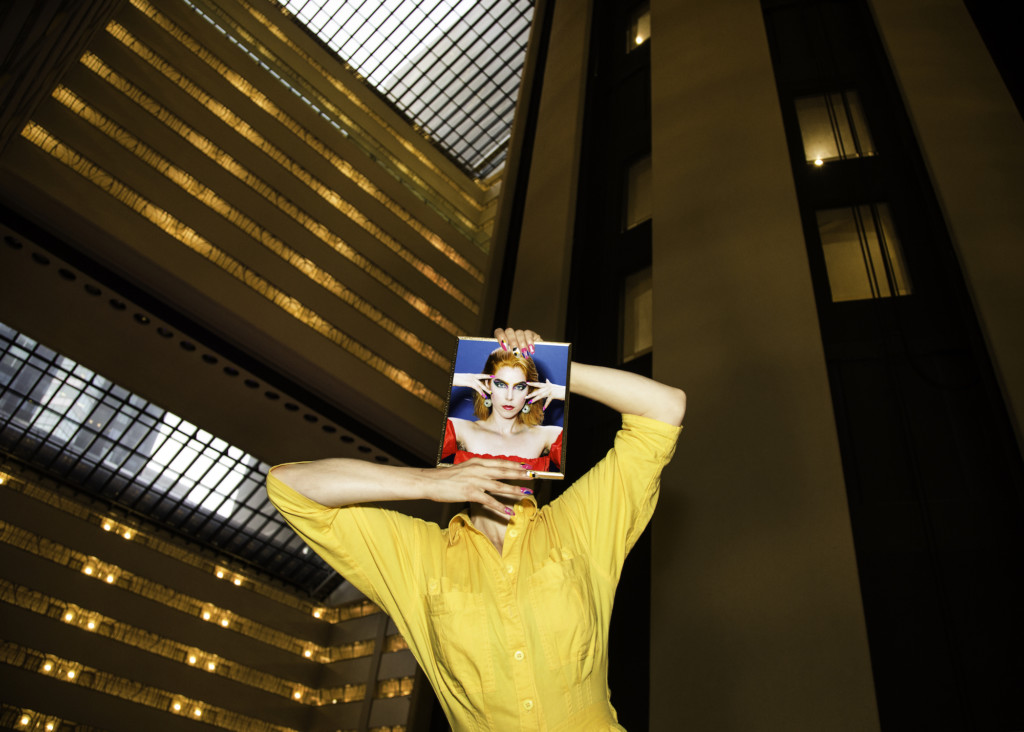
The two remaining segments of Ardis will appear in April and June, each with their own specific fragrance accompaniment. This March, Kladzyk begins a month-long residency at Red Hook artspace Pioneer Works, which will culminate in a musical version of Ardis on April 14. It will expand upon the excerpt she performed at MoMA Ps1 at the end of 2017, which featured herself and her sister Anna discovering, then destroying, a fragrant utopia before rebuilding it. “One of the narrative arcs [of the project] is me as a human, trying to open doorways to Ardis, failing and trying again, and in the process finding it in all these different places,” she says. The Pioneer Works performance, she adds, will feature “a number of other performers, there’ll be a large choir, and other musicians… I’m working with a really incredible set designer, and there’ll be wild costumes, but it will largely be the music interacting with visual signifiers of the world.”
Ziemba will also perform a handful of more straightfoward shows on the West Coast with Teeny Lieberson’s solo endeavor Lou Tides in the coming months, as well as some dates throughout the Mid- and Southwest. She’s performed some of the songs from Ardis in a live setting before – “Ugly Ambitious Women,” in particular, appeared on a 2015 EP, and Kladzyk says she has more material she’s interested in reimagining – and will do so again at Secret Project Robot next week. Ever prolific, she’s currently writing songs that are a little more grounded and personal, but whether she revisits Ardis in the future remains to be seen. “We’ll see what path it follows. Some of that may depend on how people respond to it, and the way that I learn from it after touring it,” she says. Though she hesitates to say that she makes therapeutic music, she does hope Ardis will offer others some catharsis, as it has for her to imagine such a place.

“[Someone asked] ‘What does Ardis look like? What’s it like there?'” recalls Kladzyk. “In short, I don’t exactly know. I’m still looking for it and I’m still learning from it. But that’s kind of the idea – maybe we need to reject this idea that we as humans can be certain, and instead focus on expansiveness, and listening and connection.”

PLAYING CINCY: Shake It Records Celebrates 20th Anniversary

Shake It Records

Founded in 1979 by Jess Hirbe and Daryl Kalmus, Shake It Records began as a record label, bolstering Cincinnati acts like rock group The Customs. Brothers Darren and Jim Blase acquired the label in the ’90s and set up shop in Northside as a record store in 1999. While still a thriving record label representing Cincinnati’s indie, rock and punk scenes, Shake It reaches a milestone this month celebrating 20 years of providing vinyl, CDs, magazines, t-shirts, books and more as one of the most renowned record stores in the country.

Shake It Records
Photos by Victoria Moorwood.

The shop is known for its impressive collections, coveted reissues, wide array of keepsakes and over 40,000 titles on CD and vinyl. Any music lover could spend hours sifting through stacks of records, CDs, cassettes and even comic books while wandering the band tee-draped halls of the two-story shop.

Shake It Records

To celebrate their 20 years of Northside business, Shake It Records will be hosting events throughout March. Starting Saturday, Cincinnatians can enjoy live performances every weekend by local artists who have released music through the label, such as Audley, This Pine Box, Young Heirlooms, Krystal Peterson and more, as well as comedian Geoff Tate. All month long, customers can also enjoy 20 percent off on all merchandise.

Shake It Records

Over the past two decades, the record store has grown into its role as a beloved historic music gem, not just for the Northside neighborhood, but for all of Cincinnati.

For a complete list of Shake It Records’ events this month, check out their Facebook page.

Shake It Records


HIGH NOTES: How to Return to Your Life After a Wild Festival Weekend

A weekend of partying at a music festival may leave you feeling like the human equivalent of these overflowing Glastonbury trash cans.

Most people don’t spend music festivals worrying about how they’ll feel after all the shouting, head-banging, and (if you’re into that sort of thing) drug use is over. That’s something you can worry about on Monday. But while living in the moment can be liberating, it doesn’t feel as liberating when you’re nursing a nasty hangover, likely compounded by sleep deprivation and undernourishment. So, if you want to make Monday (and Tuesday and Wednesday) more bearable, here are some ways to minimize the damage as you return to real life.

During the festival…

Don’t forget to eat. If you’ve been using certain, ahem, substances to keep you going, food may feel superfluous. But don’t let stimulants’ appetite-suppressant properties fool you. Being deprived of food will have the same effect it always does — you may just not feel it until afterward, and it’ll make your hangovers that much worse. “Try to ‘graze,’ eating smaller, nutrient-rich foods throughout the day and night,” says James Giordano, professor of neurology and biochemistry at Georgetown University Medical Center. “Fresh fruit, fruit and nut bars, and low-sodium jerky are all good, easy-to-pack-and-carry options.”

Take power naps. If the event goes late into the night (or early morning or afternoon), try to find some time to sleep, even for a short while. “Power napping (for 20-60 minutes) during the event can be helpful to avoid compounded effects of fatigue and periodically re-charge your system,” says Giordano. Plus, you may then feel less of a need to use stimulants to stay up.

Bring water. Hydration is essential if you’ll be out in the sun and/or dancing all day, especially if you’re using a drug like MDMA that dehydrates you. “There are a number of new hydration packs on the market that can make carrying and re-filling water at re-fill stations far quicker and easier,” says Giordano. The newly launched hydration pack Lunchbox also keeps your stuff secure so you don’t have to worry about theft. 

After the festival…

Take in electrolytes. Electrolyte-rich drinks like coconut water provide extra hydration to replenish you after a debaucherous weekend. You can even eat salty snacks to get electrolytes. Kellye Greene, President of New York DanceSafe, recommends doing this before you go to bed after the festival.

Supplement. B vitamins help flush out toxins, says Greene, so taking a B complex supplement during and after the festival might lessen the intensity of your hangover. A protein isolate like Isopure can also help you recover if you’ve been using drugs. Other supplements that may be helpful for hangovers include vitamin C, magnesium, acetyl L-carnitine, ginger root, N-acetyl-cysteine, milk thistle seed, and dandelion root, Greene adds.

Eat well. Ideally, you should be eating nutritious meals during the festival, but at the very least, eating well afterward can make your hangovers less hellish. Greene recommends green juice smoothies, bone broth, miso soup, asparagus, and Korean pear juice.

Listen to some chill music. This is not medical advice, but this playlist might help you relax and rejuvenate. Enjoy.

INTERVIEW: Evelyn Frances Plants the Seeds of Her Upcoming Record

Photo by Chloé Jarnac

Tucked away on Orchard Street among eclectic restaurants (and the karaoke spot where I’ve put on a few shows of my own) sits the modest entrance to Rockwood Music Hall’s Stage 3. It’s a basement lounge filled with candlelit two-person tables and a trapezoidal stage that looks made for no more than one person. Seated on the red velvet couch lining Stage 3’s back wall, I could see and hear Evelyn Frances loud and clear.

She opens the show by creating a jarring live loop rooted in hums and breaths, establishing her presence on the small stage. Going into “Nina,” the intense imagery punches through the subtlety of her plucking. “Rain can’t wash out a woman made of fire,” she sings. Her voice, despite the softening of consonants and airiness with which it carries, is so striking that she’s never drowned out by the band.

Evelyn Frances at Rockwood Music Hall Stage 3. Photo by Susannah Ferrer

The set-up is simple, with Tristan Allen on bass and Ricky Petraglia on the drums seated next to her. On tracks that were just her and her guitar, it was almost as if the band watched in admiration and awe along with the crowd. She also surprises me with a haunting cover of Radiohead’s “Videotape,” adding a jazzy twist to its purposefully dissonant rhythm. Listening to her on record, I’d have best categorized her as folk, though watching her in her element is a different experience. Her methodology is experimental, her velveteen dress ethereal, and her lack of shoes show a disregard for being labeled as anything but her natural self.

We go to chat in the bar upstairs after she makes her rounds greeting and hugging each table after the show. She tells me the room was filled with friends she invited out, and tells me about the family that cultivated her musicianship from a young age.

“My mom is a singer, my dad is a trumpet player, my sister plays bass, and we grew up with piano lessons,” she told me. “I’m very grateful my parents let us have music lessons all throughout my life. I started playing flute when I was ten, guitar when I was twelve, and then I started writing songs when I was fourteen and it all happened naturally.”

From there, she was on a trajectory that sent her to study at Berklee in Boston, to then interning at two staples in the New York music scene, Mom + Pop Music and Electric Lady Studios. At Electric Lady, she met Grammy Award-winning producer Phil Joly, who was head engineer there at the time. Boldly, she asked if he’d be willing to work on her upcoming record Seed. “No way he’s gonna say yes,” she thought.

“He was like, ‘Let’s do it.’ I couldn’t have done it without him,” she said. “We just work so well together. I’ve never found someone, an engineer or producer, who knows what I’m talking about when I say, ‘Let’s make it feel sandy, like you’re walking in a forest. He’s incredible.” 

“Sandy” is one of many seemingly odd words that perfectly encapsulates the sound of her music. Her single “Treehouse Palace” embodies the package of visceral lyricism, production, and salient vocals with the power to transport anyone into a meditative state.

“I have this very childhood dream of having an actual treehouse to write songs in, and to me that’s a palace,” she describes when I ask about the juxtaposition of the natural and the regal. “It’s more so in the feelings. I really write from this weird place of a visceral feeling. I always use the word ‘visceral’ with my producer Phil, or like ‘gritty’ and ‘grainy’ – those are words we use a lot to describe the songs.”

We’re interrupted during our interview by a friend of hers, who asks about one song in particular. “Your song ‘In the Morning…’ I thought it was the cheekiest of all your songs. I don’t know if it was supposed to emulate anything else, but it reminded me a lot of Aretha Franklin’s ‘I Say A Little Prayer.’”

“Ooh, thank you!”

“And then you scat, which is very much of the same time of when she did that song,” her friend continued. “It was very much along the same vein of some of the songs I love, but it’s totally new.”

“Thanks,” said Frances. “It’s about an asshole. A guy who would just get up and leave.”

“Yeah, ‘Do you think about me on the train in the morning?’” I interjected, trying to recall a line.

“I can’t think of  my lyrics when I’m not singing them,” she laughed. “‘‘Do you think of me on your walk to the train in the morning?’”

“You wake up and the tea is cold,” her friend added.

“He never enjoyed the tea that I made him, so he would let it sit there while we didn’t talk.”

The subtleties of human interaction depicted in songs like “In The Morning” parallel the idea of being attuned to the fragility of nature, and the record explores a wide range of human emotions in a way that’s cyclical and organic. “Basically a lot of the songs are about the ways that humans destroy, whether that’s each other or themselves or nature,” she explained.

Evelyn Frances’ latest single “Treehouse Palace” is now streaming. Her album Seed, nearly two years in the making, will be released on April 26.