Yesterday, artist Told Slant announced he was canceling his SXSW performances after discovering the something alarming in the artist contract – there’s a clause stating that “foreign artists” performing on certain visas may not participate in unofficial showcases and that doing so “may result in immediate deportation, revoked passport and denied entry by US Customs Border Patrol at US ports of entry.” The managing director of SXSW has been busy doing damage control, first stating that Told Slant put two portions of the contract together to make it seem worse than it is (which Stereogum quickly debunked) before backtracking to say the clause is meant to deal with more serious infractions than playing unofficial shows. The Future of Music Coalition published a breakdown of the controversy as a mounting list of artists get serious about possibly boycotting the festival. Victoria Ruiz of Downtown Boys has started a petition to remove the clause from the contract.
Rihanna Honored By Harvard
Havard named the singer Humanitarian of the Year and received the Peter J. Gomes Humanitarian Award for starting a nonprofit that helps Caribbean children who are attending school in the United States, starting an oncology and nuclear medicine center in Barbados, and her Believe Foundation, which helps disadvantaged children around the world. Go to 1:13 in the ceremony’s livestream to watch her speech.
Other Highlights
Lady Gaga will replace Beyonce at Coachella; Lorde, Cold War Kids, and Thurston Moore all released new videos and music; check out the awesome winners of NPR’s Tiny Desk Contest; members of Wilco/Deerhoof/Minutemen formed a super group; and a Roger Waters album is coming in May.
Starting off with distorted guitar and indistinguishable background conversation, Cotillon’s latest single “Alex’s Room” sets listeners up for relaxation and nostalgia with this chill, fuzzy garage rock tune. It also may have listeners wondering, who is Alex, and why is anyone in his room?
The song is restless from the first line, as frontman Jordan Corso sings about a loss of inspiration and distraction from his passions, and it remains as such throughout its short two and a half minute span. It’s a soundtrack that channels frustrated youth sick of explaining their choices to their parents as they deal with hitting dead ends on the path to finding themselves and following their dreams. Like a teenager waiting around for a friend to rescue them from boredom, Corso waits listlessly for Alex, lost in ennui and taking stock of his wasted life as time slips away.
Similarly, we’ll be waiting impatiently for Cotillon’s upcoming sophomore album The Afternoons, out via Burger Records April 21st. Corso recently relocated from the West Coast to New York City and considers The Afternoons to be his “New York” album, pulling inspiration from living in a small New York City apartment and the romances, ups, downs, and in betweens he weathered in that time.
Dirty Projectors has been a wildly fun, dynamic machine for over a decade now. The band has defied and played with genre, collaborated with Bjork and David Byrne, and maintained a hard-to-define and unique sound. Their musical nuance is brilliant to some and annoying to others – as my mom once said of the melody in “Gun Has No Trigger,” from 2012’s Swing Lo Magellan: “It sounds like he’s hitting all of the black keys on a piano.” But the complexity of their compositions is obvious to anyone who listens. Their new album Dirty Projectors has been five years in the making and marks the breakup of long-time musical partners David Longstreth and Amber Coffman.
There’s been a lot hype about this record due to Coffman’s departure, even though Longstreth has been the credited mind behind Dirty Projectors since the band’s creation. He’s written and produced nearly every song on every album. Before 2009 breakout album Bitte Orca, Dirty Projectors was David Longstreth. He wrote everything and had orchestras play his pieces or invited in guest artists on a track or two. As a long time listener, I was optimistic about this return to “solo” form. But its execution was, frankly, disappointing. The entirety of Dirty Projectors, as a friend put it, is like hearing one side of a dramatic break up between two people you don’t know. Even in the context of an experimental art pop record, it’s difficult to keep a subject like that interesting over the course of nine tracks.
On the album’s opening number “Keep Your Name,” the very first line Longstreth sings is “I don’t know why you abandoned me,” immediately setting up a biased condemnation of Coffman, both romantically and professionally. As if to make up for her vocal absence, Longstreth plays with his vocals throughout the song, lowering his voice to a deep and slow drone and even rapping at one point – both new for Dirty Projectors, although not exactly impressive (especially the rapping). The pleasing blend of pop and electronic elements almost outweigh the cringe-worthy lyrics and overdone hooks, and then comes the worst line of all: “What I want from art is truth, what you want is fame.” Not only does this moment seem petty, it also feels pretentious and unnecessary. In attempting to paint Coffman in a negative light, Longstreth only manages to come off as a controlling maniac; it’s hard to fault someone for pursuing a solo career, especially with Longstreth taking full credit for Dirty Projectors’ songs, so Longstreth resorts to attacking Coffman on a personal level.
The second track, “Death Spiral,” ditches the enhanced vocals and dives straight into a more pop-forward sound, but lines like “just so rock and roll suicidal” make it a tough sell. Even stand-out tracks like “Up On Hudson” and “Cool Your Heart” persist with awkward, tragically romantic undertones. While I’m glad Longstreth is finally showing some vulnerability, that doesn’t necessarily translate into interest in his seemingly malicious preoccupation with Coffman. Dirty Projectors, at their best, are known for their obscure and ambiguous lyrics – something I’ve always appreciated. But this album reads more like the gossip column of People magazine, and no matter how juicy and delicious the drama, it feels out of step with those former lyrical qualities.
That’s not to say that their music hasn’t been honest or deeply personal in its own way, but Dirty Projectors have always managed to stay away from simple, straightforward truths. So it’s surprising that David Longstreth would allow this breakup to effect his music so intensely; he’s essentially dedicated an entire record – one that should signify a comeback for the band – to his hurt feelings. Not only is it predictable, it feels like such a waste.
Though the music on this album is sometimes a breath of fresh air, dynamic and engaging, Longstreth’s pathetic lyrics are impossible to ignore. His petty, self-centered narrative is completely irritating. I don’t mean to sound insensitive, but I don’t care enough about Longstreth and Coffman breaking up to listen to an entire album about it. Perhaps Longstreth should have given himself time to move on from it before committing these feelings to tape.
I take the same path to the same coffee shop every week. Down DeKalb Avenue, a right on Franklin Avenue, a left on Greene Avenue, and a final right on Bedford Avenue. My gait is calculated and mechanical. A determined trudge. There is nothing romantic about this habit, and while I’d like to applaud its efficiency, I haven’t actually done the math to prove that this course is the fastest. In truth, I take this route because it is the one I first took to the coffee shop. It is repeated out of reflex and muscle memory and stubbornness. It is firmly rooted in a strong longing for routine.
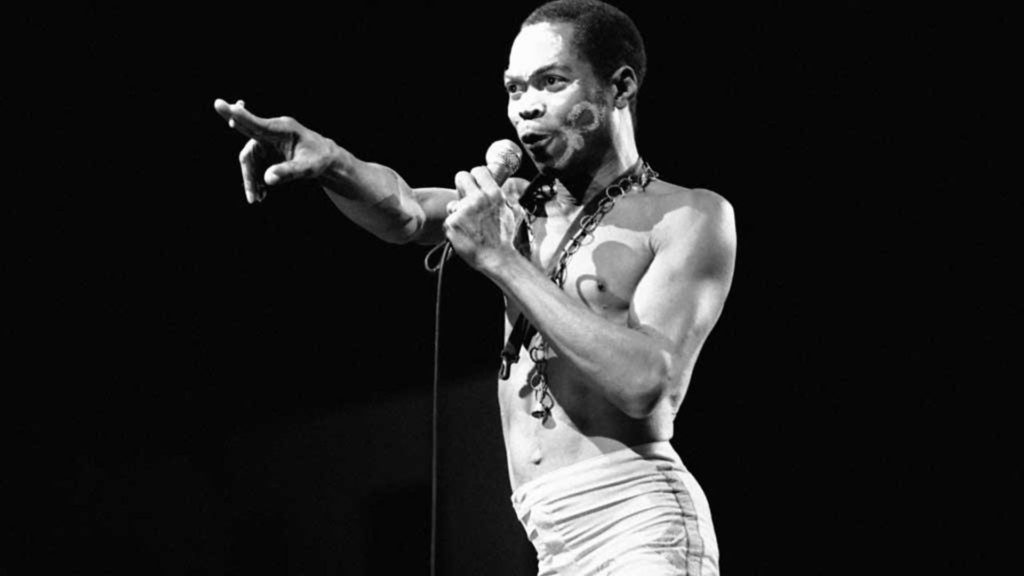
This path is so engrained that my body dictates every step while my mind is free to think – something I do best while in forward motion. Walking puts me in a trance – alert enough to dodge oncoming vehicles, but rapt in layers of thought. So rapt, that I nearly missed the fat Fela Kuti box set propped up against a wrought iron gate on Greene Ave one Spring day. I stopped abruptly three feet past where the box of vinyl rested, then ambled slowly backward looking left to right to see if anyone was watching me. This I am sure, did not look suspicious at all.
The box was over an inch in depth. It was black and white with a banner of teal across the front reading “FELA” in block letters. I couldn’t help but crouch down and open it immediately, praying that its owner wouldn’t come bolting down the stoop of his brownstone to reclaim it. Perhaps an angry lover had left it on the sidewalk along with other prized vinyl from his collection…like, that Fat Boys LP right next to it…and, that…Kajagoogoo maxi single…
Ok, these records were probably left out on purpose, but I still couldn’t believe it. Lifting the box’s slightly scratched lid I found an alarming amount of Fela Kuti records. I was expecting three, maybe four LPs, perhaps with some booklet taking up a majority of the box’s real estate. Instead I found a seven record pileup, each one opened yet minimally played and well cared for.
There was Zombie, Fela Ransome-Kuti and The Africa ’70 With Ginger Baker Live, Roforofo Fight, He Miss Road, Alagbon Close, Ikoyi Blindness, and Everything Scatter – a glorious heap of his recordings. I was in shock; seven intact, fabulous albums, the collective price of which would have been well over $100. It felt as though I’d stumbled upon a treasure trove, but I couldn’t understand why anyone would ever abandon it.
I grew paranoid again, remembering a time when my dad and I found a handsome sack of toys in the woods behind our house. At seven I was overjoyed at this discovery, but also puerile and hesitant, imagining the sad kid who’d lost their bag of wonders. My dad assured me that finders were keepers, and it was on our property anyway. To ease my concern he assured me that if the toys’ proprietor came looking for them, we could hand them over.
And that’s just what happened. The neighbor girl was ecstatic when reunited with her pink satchel of toys. I felt devastated but virtuous by returning it. To this day I cannot remember what was actually in the sack – just the absolute thrill of stumbling upon it in our mossy forest.
By the time I was halfway down the block my paranoia had dissipated, but I still clutched the Fela Kuti box tightly to my chest just in case. My sense of elation was difficult to unpack – I am by no means a believer of fate or the “universe” gifting me anything…but I surrender to the sensation of it from time to time. I have come across some of my favorite things this way – finding them while looking for nothing.
I first discovered Will Oldham because a neighbor left a stack of CDs in the hallway of my apartment building a few years back. It was in one of many fruitful “free piles,” a name my roommate and I thought we’d coined. The album was an oddball EP recorded with Rian Murphy called All Most Heaven. It had one of the worst album covers I’d ever seen, but something about it shouted “What the hell? Take me home!” It was eccentric, no doubt, but I loved it nonetheless. Its four twangy songs eventually graced a small road trip to upstate New York one summer (our car only had CD capabilities). Opening its jewel case now, the silver disk is nowhere to be found. It may still be in that car, but my only hope is that it has found a way into the music collection of anyone who would bother adopting a stray CD in 2017.
In our age of Spotify Discover Weekly and record subscription services and pre-programmed radios and playlists tailored to every hyper-specific situation we can dream up, coming to music organically and spontaneously is uncommon. It seems rare enough to exchange music between two people in the same room, let alone find one of your favorite records in the street. I wouldn’t suggest the scavenger lifestyle as anyone’s sole source of musical discovery, but I will say there is a taste of destiny in it. I don’t believe in destiny either, so anything that conjures a sense of it feels pretty damn nice, if not fleeting.
The other week I had finished my book and was looking for a new one to read. I had just spoken to a friend about how I’d oddly never read Hunter S. Thompson, which is strange as he fits the profile of my favorite writers (depressed, debauched, wry). Days later I walked through my basement, past a stack of books an old roommate had left three years ago when he moved out. I was drawn to a turquoise spine peeping out from under a couple of Bret Easton Ellis tomes. It was The Rum Diary, Thompson’s first novel. I am enjoying it tremendously, and can’t believe it has been waiting silently under my nose for three whole years.
Come to think of it, it was that same roommate who provided me with another bout of serendipitous discovery. When he moved, I upgraded to his bedroom after five years in the windowless cavern next door. His room had not one, but two windows, and he’d left his superior mattress and an enormous credenza that was far lovelier than anything I’d ever allow myself to buy.
I took my time moving in – I set up my haphazard bookshelf. I stuffed my 500 pairs of underwear into one of the credenza’s many drawers. I arranged my desk with reference books and a quantity of pens that would suggest I was deeply concerned about a imminent global pen shortage. After deciding that all of my portfolios from college would go in one of the credenza’s large cabinets, I opened the door and found around 80 forsaken vinyl records leaning against one another. I believe my mouth truly dropped open. This pile of albums ended up doubling the size of my collection, and included some true gems. There was Kate Bush’s Hounds Of Love, Roxy Music’s Manifesto, Prince’s Controversy, Talking Heads’ 77, Joni Mitchell’s Ladies Of The Canyon, Blondie’s Parallel Lines, Lou Reed’s Transformer, and dozens more. It seemed like luck, or at least something like it, and I took it as a good omen – something I also do not believe in.
I hauled the LPs I didn’t love (Donovan, Heart) to the nearest record store and swapped them for a $25 dollar credit, which I used to pad my collection with bizarre French funk punk records, Peel Sessions, and anything I could find by Prefab Sprout. Puzzled by my fortune, I still couldn’t understand why someone would desert a collection that had clearly been accumulated over a few years…but I was more than happy to give it a new home.
Lo-fi DIY nostalgia-pop babes Deadbeat Beat delivered some much needed fuzz and feels by means of two new live tracks released on cassette earlier this month. Both were recorded live at Lo! & Behold Records and Books for The Milo Show (Detroit’s premiere music web-series, hosted by local beat enthusiast and Detroit Free Press contributor Jeff Milo). “And Then it Hit Me” and “The Box” do not reinvent the 1960’s hazy genre of Velvet Underground jam-rcok but, they do give the entire encompassing sound a dusting off with equal parts angst and whimsy. Where “The Box” feels a little Peter, Bjorn and John in its nasally French pop aesthetic, “And Then it Hit Me” has a more focused, searing Brian Jonestown Massacre power with a hint of when Wilco was still good. With this well thought-out marriage of two tracks that still feel spontaneous and vibrant in their full-picture spectrum, Deadbeat Beat comes very much alive.
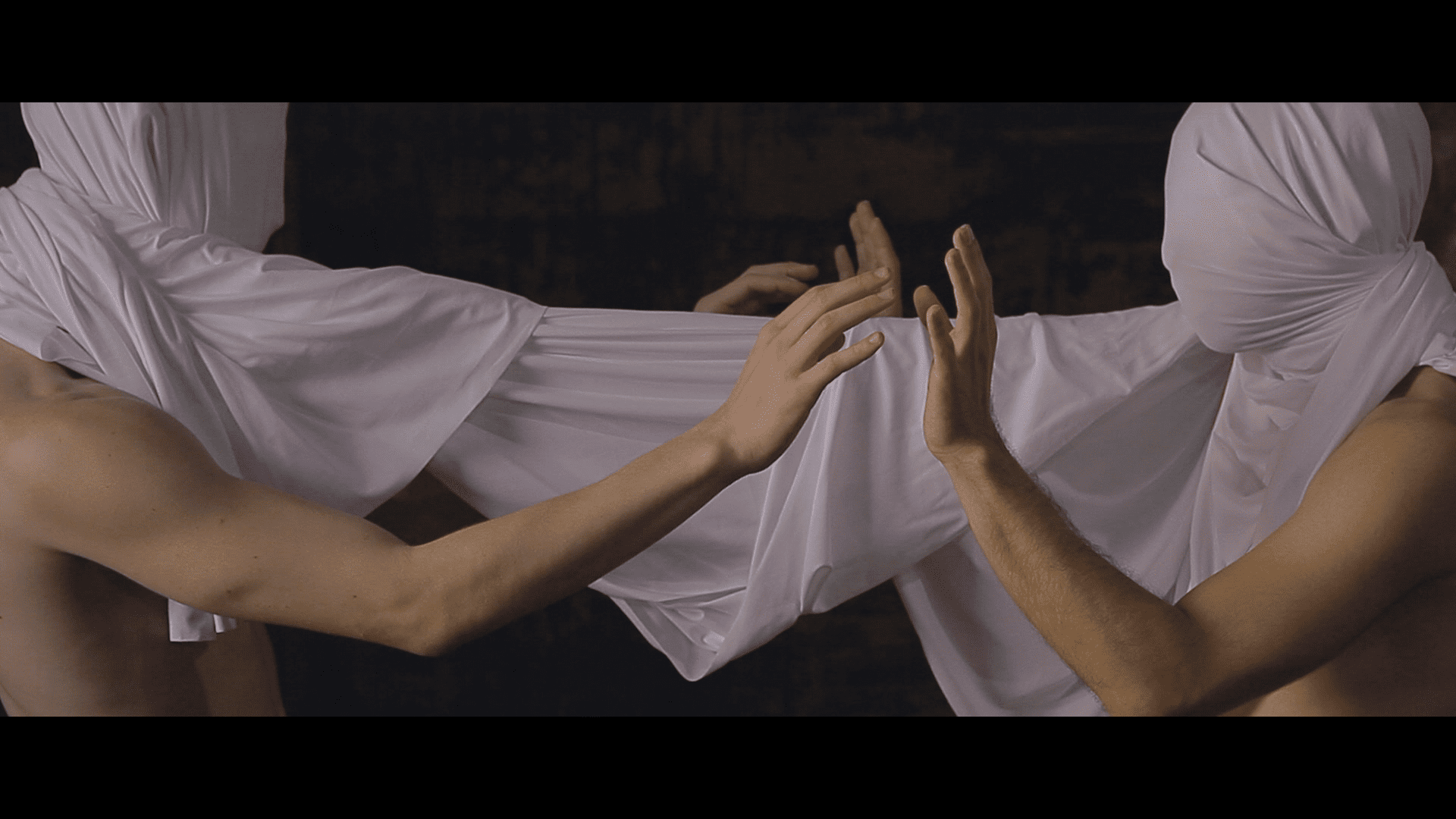
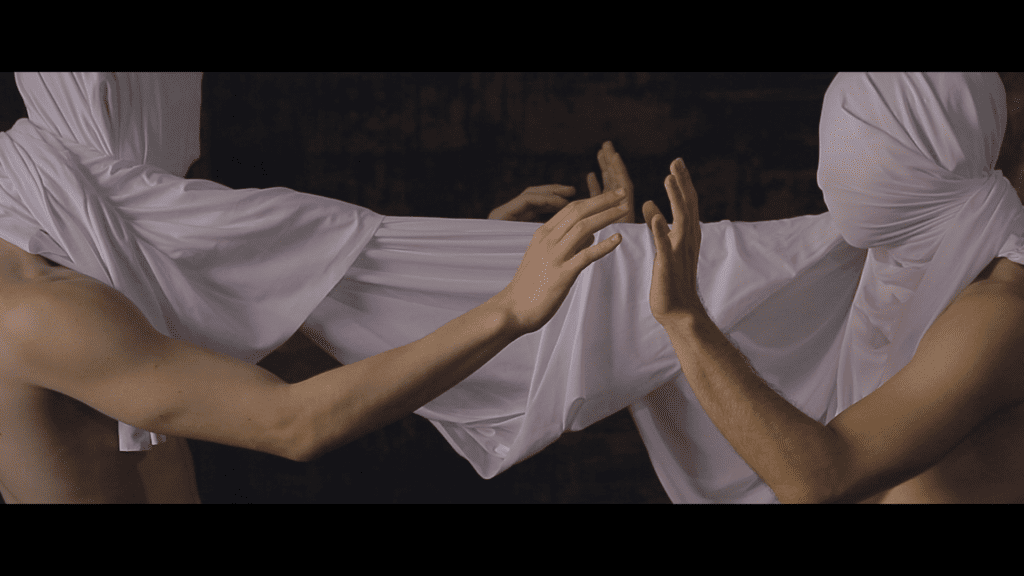
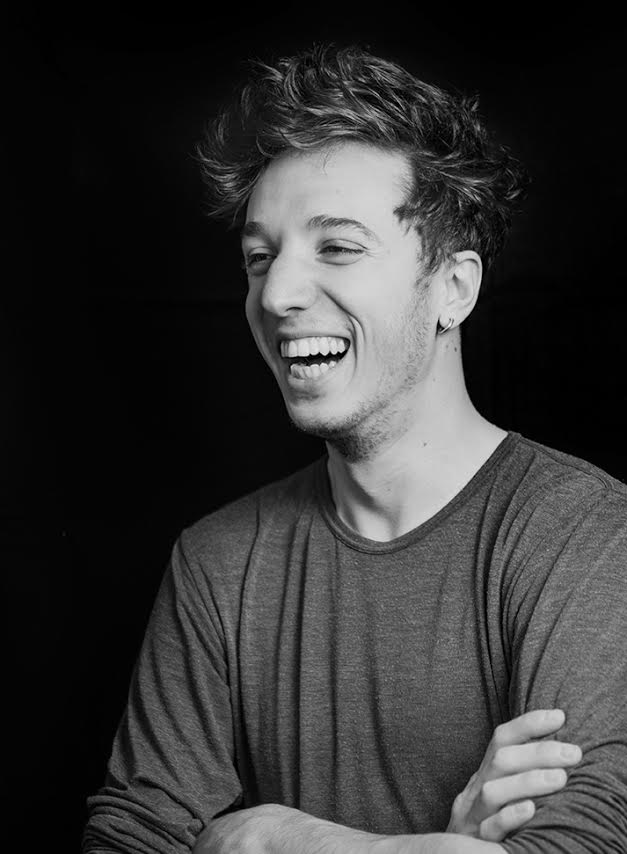
Angelo Vasta is an Italian-born, Brooklyn-based videographer who works primarily with the dance community. He came to the US to study filmmaking at The New School in New York, and quickly fell into documenting dancers as a means of reconnecting with his earlier unfulfilled ambitions to pursue dance himself, that were dashed as a result of his late launch (“I was never good enough to become professional!”) However he parlayed his passion for the medium into an alternate career trajectory, focusing on vidoegraphy instead, to capture the essence of movement as a form of expression. “Film and dance are both motion-based art forms, so for me there was an organic pairing.”
After migrating to New York and enrolling in his film program, he quickly settled into videography as his preferred medium rather than screenwriting or directing. “I’ve always wanted to be a professional dancer; this is why I’m doing dance films. The camera gives me an opportunity to explore a world that I connect with and that deeply attracts me. This is very important as I always try to express this tension through my work.” That tension is palpable in the results, as his work delves into the nexus of dance and film, exploring movement through the lens of a camera. He remarks, “as a dance filmmaker sometimes I need to study the choreography myself to better understand how to put it on screen, and with my camera it feels both like being the choreographer and the dancer.”
Of Vasta’s creative process, his methods have evolved over the years as he’s tuned his craftsmanship and aesthetics. Now well into his career, his portfolio has grown into an impressive collection of films that span a wide artistic spectrum, working primarily with dance companies to help capture the ethos of their various culture, choreographic underpinnings as well as hands on with specific dancers. “Each dance company is very different. With some I need to stay out of the dancer’s way. I have to be an invisible presence in the studio, in which case it’s difficult for me to always get the best shots. With others I can ask the choreographer or the dancers to do specific things for the camera, so I actively interact with them and my presence in the studio becomes something that is used to challenge them.”
As far as his works’ musical accompaniments go, his process is simultaneously simple and elegant, seeking songs that fit with his work as a finished project. “It’s actually very easy for me to find music to go with the film, as almost everything I hear just seems to fit with the choreography in somehow. It’s like magic!” He is currently collaborating with Ludovico Schilling for one of his current projects, called “Dance Against Racism” which will be published during the International Week of Discrimination. His other go-to artists include those in Moby’s “Mobygratis” collective, whose music is available free of charge for independent filmmakers. As for what Angelo listens to at home, at varies from nostalgia-inspiring Italian songwriters to modern-day pop divas. “I always love to listen to some Italian songwriters like Francesco De Gregori, Franco Battiato, Lucio Battisti, Fabrizio De Andrè…Once in a while I need to listen to them. Their melodies and lyrics are home and remind me so much of my childhood and my country, especially now that I live in the US, so I really need to listen to them especially when I’m home sick…plus their music is just so good. On the US side, I’m in a Stevie Nicks/ Fleetwood Mac period (and also The Police, old fashion Madonna, The Cure, Eagles, Talking Heads). And of course Lady Gaga, Rihanna, Beyonce are always perfect for when I need to recharge the batteries or crazy dance.”
Look out for forthcoming work of Vasta’s out this summer. In the meantime catch one of his recommended picks for dance in NYC below!
-“For those ones who missed Batsheva Dance Company at Bam few weeks ago I suggest to go see the film Mr.Gaga showing now at Lincoln Center. Documentary about the artistic director of the company.”
– “Ballet Hispanico willperform in April at the Joyce Theater bringing three different pieces. One of them is Linea Recta, a piece choreographed by Annabelle Lopez Ochoa that I had the privilege to capture during its genesis/creation as I did the work-in-progress video for it!”
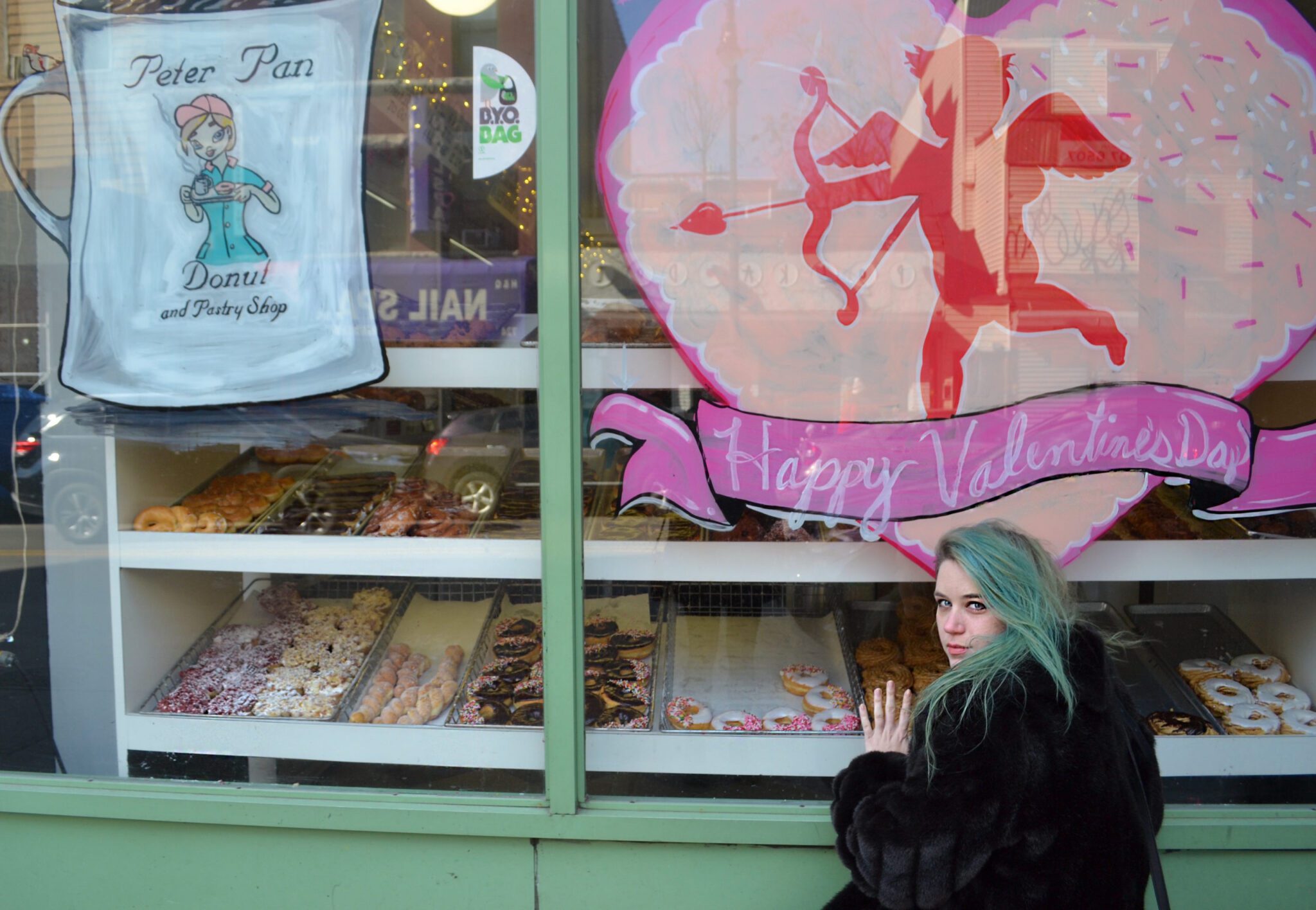
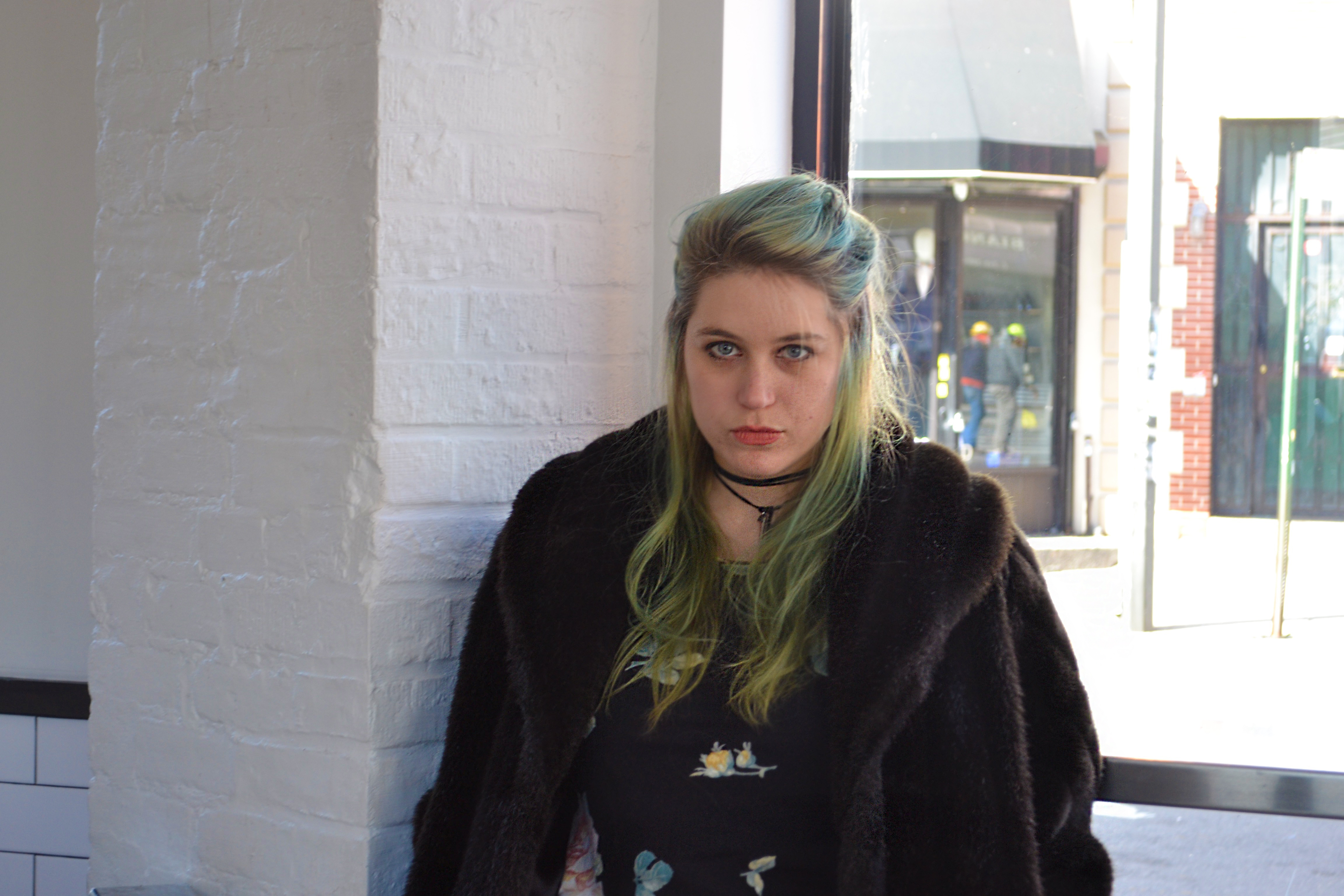
I’m surprised when Jordyn Blakely greets me on Manhattan Ave, all seaweed hair, smudgy make-up, black faux-fur coat and a cheerful open-faced expression that should counteract her hipness. Barely an hour ago I watched her get shampooed in Stove’s “Blank” video with a stoic gaze and a steady, melancholy intonation. Before that I Spotified (that’s a word, right?) Jackal Onasis’ 2016 LP Big Deal Party, with her apathetic clear-as-a-bell vocals underlaying the foreboding guitars on the title track. I feel unworthy around the drummer behind the beats of these bands— and the most recent iteration of Kino Kimino—yet I felt instantaneously at ease with that face.
Make no mistake, Jordyn Blakely is so cool (as I say about 500 times), but such an affable quality should be mutually exclusive with coolness. Historically coolness within the scene is best matched up with aloofness, and friendliness—at least in the most cynical lens—frequently feels like a half-hearted method to get someone to attend your gig at Sunnyvale next Thursday.
I’m eager to figure out how she manages to be both these things, and doubly eager to grab bagels at Frankel’s with her.
The Scene: Jordyn’s only stipulation with breakfast was that she needed a Starbucks coffee beforehand, unable to function before being properly caffeinated. Otherwise she was open to meet me anywhere off the Nassau G, because she is v v chill.
I am v v not chill. Flashback to me dragging our mutual friend down the street the night before, asking frantically, “WHICH PLACE SEEMS THE MOST JORDYN?”
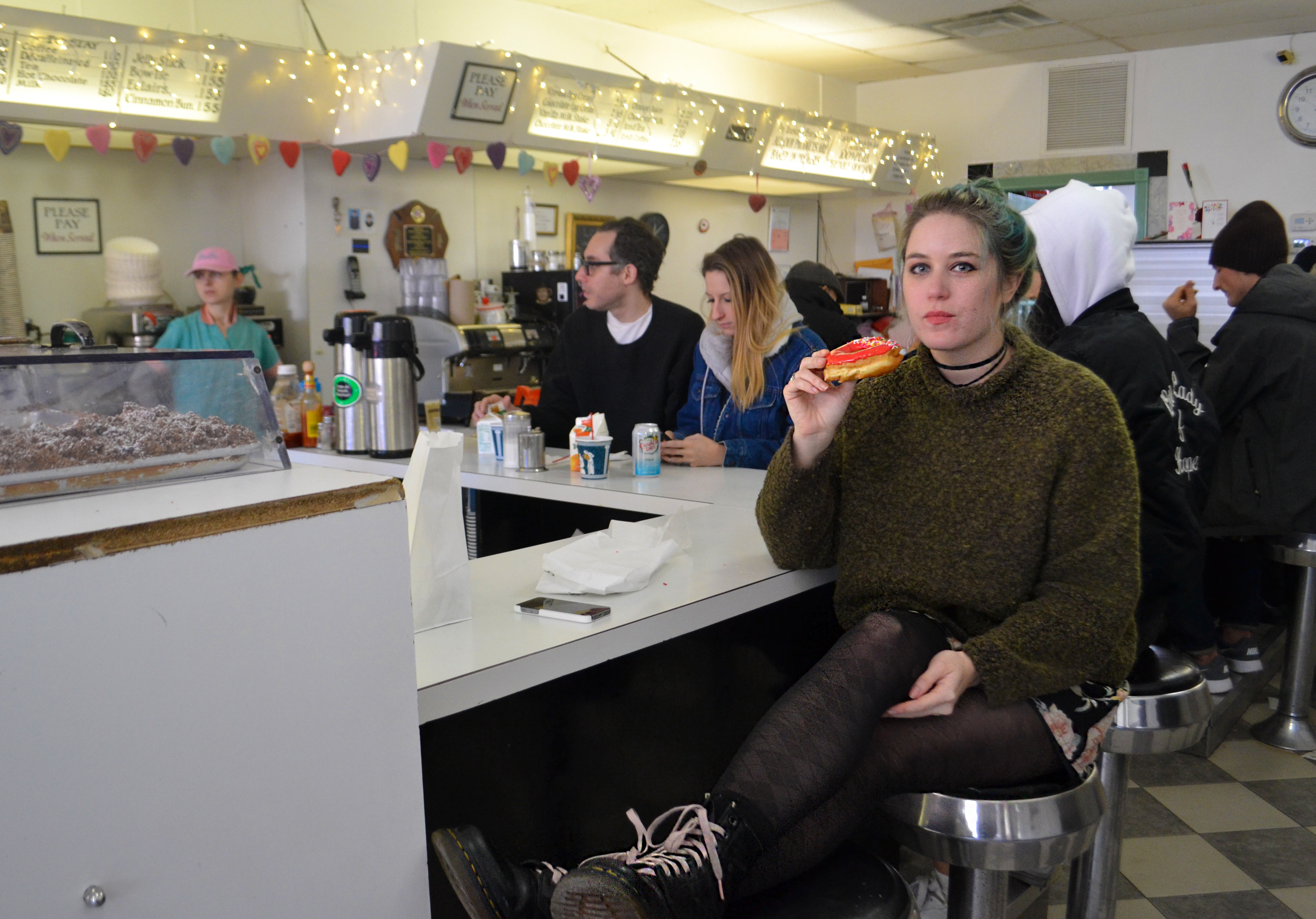
Luckily she thinks Frankel’s is cute, but like anyone who’s tiptoed into Greenpoint, has a special fondness of Peter Pan’s Donuts. I promise we’ll swing by after our pumpernickel (her) and everything (me) bagels and cream cheese.
11:13 A.M. As she artistically tears apart her breakfast, Jordyn talks about how she’s doing more writing recently. “I don’t think [fusion_builder_container hundred_percent=”yes” overflow=”visible”][fusion_builder_row][fusion_builder_column type=”1_1″ background_position=”left top” background_color=”” border_size=”” border_color=”” border_style=”solid” spacing=”yes” background_image=”” background_repeat=”no-repeat” padding=”” margin_top=”0px” margin_bottom=”0px” class=”” id=”” animation_type=”” animation_speed=”0.3″ animation_direction=”left” hide_on_mobile=”no” center_content=”no” min_height=”none”][Stove frontman Steve Hartlett] wants it to be just a solo thing, I think he wants it to be collaborative.” She’s been musician-ing for a decade, but the singing, the contributing, it’s fairly new and so refreshing to be more than a drummer.
Mouth full of bagel (so sexy), I stammer, “You wanna be…it’s almost…you’re behind the kit but want to be in front of it,” before realizing that’s logistically impossible and rephrasing. “You want to have your voice heard.”
She does, and her Stove and Jackal Onasis band mates have been nothing but supportive of this, something so important for bandmates, and especially male bandmates. But they’ve never made her feel like she’s “the girl in the band,” she says. They’re an inclusive bunch, and she’s excited for this sort of Broken Social Scene chapter of her life.
11:23 Jordyn’s trying to explain the new changes in the band beer-drinking/song-writing sessions, and as a professional music journalist I’m really interested in what kind of beer. “Usually whatever we can get, we usually drink a lot of Labatt Blue,” she explains, although she’ll also do Coors Light, Brooklyn Lager if we’re getting fancy. I figure we should take some pictures, and she starts fidgeting her hair, even though she looks like The Little Grunge Mermaid.
“Have you ever heard of Sea Punk?” She says, then explain it’s sort of a nostalgia thing. “About the days of sea-faring…?” I interrupt. No, no no, more of a Vaporwave-y nostalgia thing using electronic beats and aquatic iconography, Windows 95 meets Sea World. “Amazing,” I think, trying to untangle her hair with my hand so it falls properly.
After our mini-photoshoot, we get back to. “It’s weird because I feel like any artistic thing you pursue is selfish,” She says. “Like you have to think about yourself and what you’re feeling and what you want and figure out a way to present that in a way that’s like, satisfying to you emotionally but also sounds good to someone else.”
That and the whole being-able-to-make-money thing, but it’s a far lesser concern than creating meaningful work.
11:34 Out of nowhere Jordyn asks who my favorite journalists are, and I’m stunned that anyone would care, but okay, I’ll bite. I divulge my fascination with Cat Marnell and mention my career trajectory is essentially inspired by Pamela Des Barres’ I’m With The Band, has she ever read it?
She wants to, and I say I’d lend her my copy but last time it became a Whole Thing. Then I instantly change my mind and say she can borrow it if she doesn’t break-up with me later. She promises she won’t, which is sweet.
11:43 Jordyn talks about how she could only date musicians (she’s currently dating Stove/Jackal bandmate Alex Molini), I talk about I could only date musicians (I’ve been previously been involved…a lot of questionable decisions) and we’ve both given up on ever dating, or even meeting, any lawyers. “Not unless we were arrested,” I say.
“I haven’t been arrested, and I’m disappointed,” Jordyn says. “I feel like it’s not rock and roll that I haven’t been arrested.” She is a national treasure.
11:53 As I’m crumpling my bagel wrapper, our discussion turns back to songwriting, specifically the in musicians-on-musicians vein. “I’ll just tell you the secret,” Jordyn starts, and I am all ears because I love secrets.
“I feel like I’ll usually write a song about someone and their perspective or perception of me regarding the situation,” She confesses. “Maybe this is just self-deprecating, but I’ll write a song about someone else, but it’ll be about me, and how I handled that situation badly, about how I feel bad about something, or how they see me because I’m a dick.”
This raises my eyebrows and I’m quick to supply that a lot of writers do the opposite, that they try to construct a Swiftian diatribe about being a victim and scorn those who ripped out their heart (see: my entire career). Instead, she’s using empathy to tackle songwriting from a more objective perspective, which makes her a fairer musician, probably better journalist than me, and at the very least, not a dick.
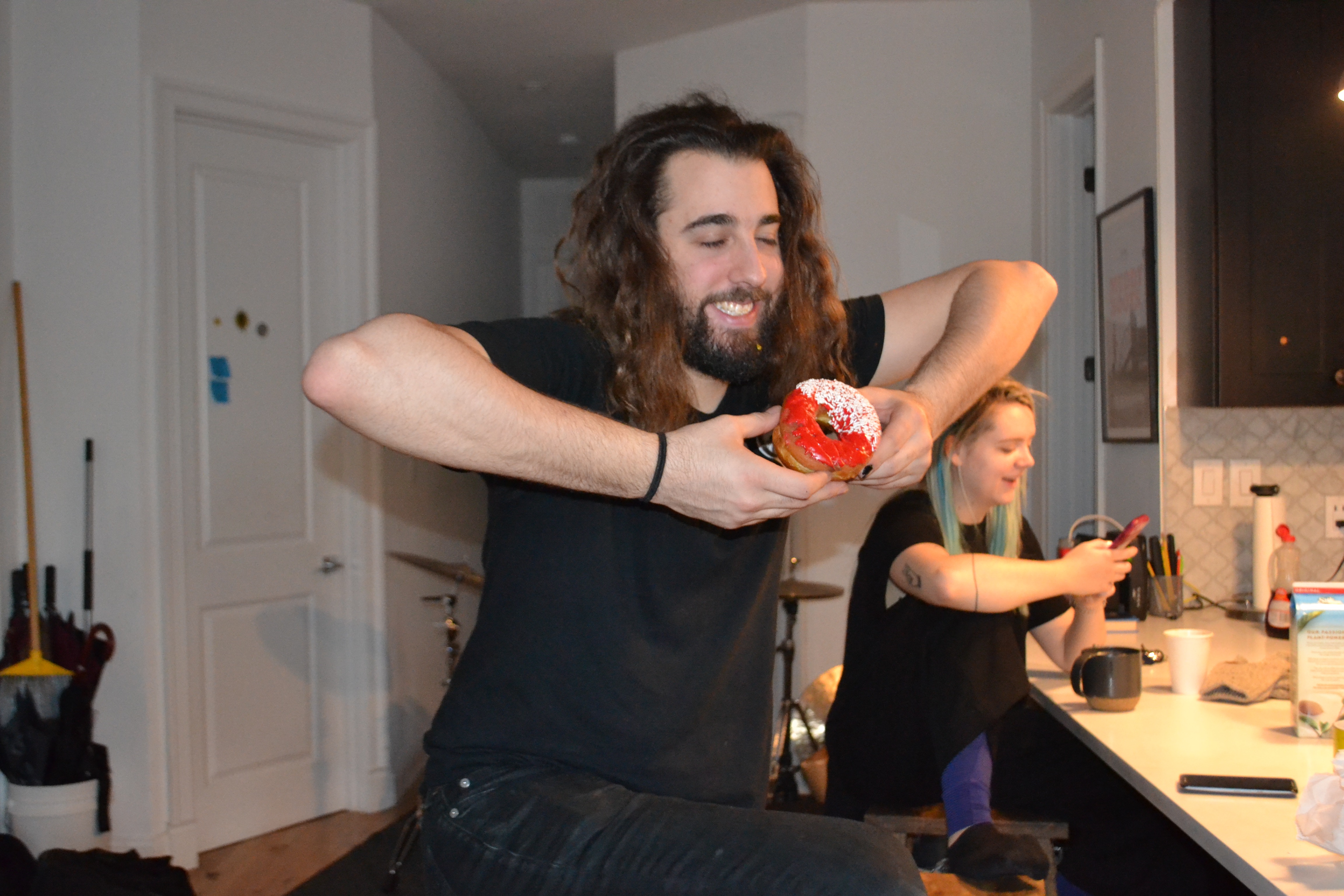
…it’s approximately here when I decide we need donuts immediately, because things are getting real heavy before noon.
12:10 I finally found someone else who was ruined in a permanent in-your-mid-20s-cannot-sleep-without-a-light-on way by The Ring. “I was sleeping in my mom’s bed for a week, and she was like, ‘You need to stop, you’re 13, go away,'” Jordyn says, a classic Homer Simpson donut in her hand. Our conversation has segwayed from our obsessions with heart-shaped glasses, to the plot of Lolita, to things that horrify. The Ring is up there for us both. followed hard by The Grudge, and though she very rarely gets scared, she has a shortlist.
On it:creepy sounds, anything moving slowly, deformed faces, and Jaws which she only watched recently (“it is so good, so effectively scary.”) And then there are things realer than Japanese ghosts and animatronic sharks, like night terrors, car accidents, and being mugged. She was roughed up by a mugging during her Berklee days, an eye-opening experience that confirmed she wasn’t in the safe haven of the suburbs.
“And that was the first time I realized ‘oh, other people will hurt you.'”
12:39 Jordyn’s heading to Alex’s place for their next songwriting session, and in a perfect New York twist he lives right on my street. So she knows about 4 am McGolrick Park confrontations and that one Polish bakery that’s really, really mean. Before we actually cross said bakery she notices a whole cigarette in the street, and there’s a very real moment where we debate saving it before I deduce it’s probably fine if we’re “one less cigarette closer to death.”
We stop at my my apartment and after I give her the grand tour I hand over I’m With The Band, reiterating that it should give her a window on what it’s like for non-musicians in the scene. She’s excited because she’s always wondered about that, whether we get sick of hanging out with musicians.
I never get sick of it, although after she leaves, I still feel perplexed; from best friends to bedfellows, nobody in the scene has ever bothered to ask me who my favorite journalists are before today.
It’s then that I think I’ve figured out Jordyn, and what will undoubtedly make her a good songwriter. Her musicianship and aesthetics (again, v mermaid grunge) are a killer mix for a drummer babe, there’s no question. But once she gets up from the drum kit there is no bullshit rock star pretense, just absolute candidness peppered the occasional adorable observation (i.e. “Not to be a dick, but Wayne’s World 2 is not that cool,” which had me dying).
She instantly embraces you, connects with you, tries to understand you and include you. She’ll tell you her fears, admit to her self-consciousness, and share secrets with you as effortlessly as sharing a beer, a bagel, a cigarette.
Hayes Peebles packed Rockwood Music Hall February 23, where he soothed listeners with his charming vocals and calming aura. Backed by a full band, Peebles showcased his newly released EP Ghosts, and with it, the New York-based singer/songwriter also delivered a much-needed tranquility to the city.
The night was filled with swooning and swaying to Peebles’ laid-back folk music. Peebles has a sound that borders on country in certain songs, with backup “ooh’s” and “aah’s” that could easily be replaced with a “yeehaw.” It’s as Americana as it gets, down to the blue jeans and flannel that Peebles sported onstage.
Peebles creates music that does a remarkable job of dredging up old memories, recalling the feeling of falling in love with someone new, a first heartbreak, a life-changing loss. His tracks are emotional and packed with passion, particularly “Eulogy,” from his new EP. Down-tempo with emotional builds, the cyclical nature of the song perfectly exemplifies the ups and down one goes through after suffering a heart-wrenching loss—one day it feels like everything is getting back to normal only to get hit by the next day, which is full of crushing despair.
He also made his way through other EP singles, “Home,” “Short and Sweet,” and the titular track. “Ghosts” brings it back to simpler times; it’s nostalgic and idyllic, a track made for lingering in the past. To Peebles, the ghosts we know are not always departed loved ones who haunt us, but do live on as the spirits of our memories.
Hayes Peebles’ music will make you yearn for your childhood home, friends, and experiences again. It’s the perfect music to listen to on a chilly fall afternoon—or a warm almost-spring night, packed alongside a bunch of strangers lost in their own memories.
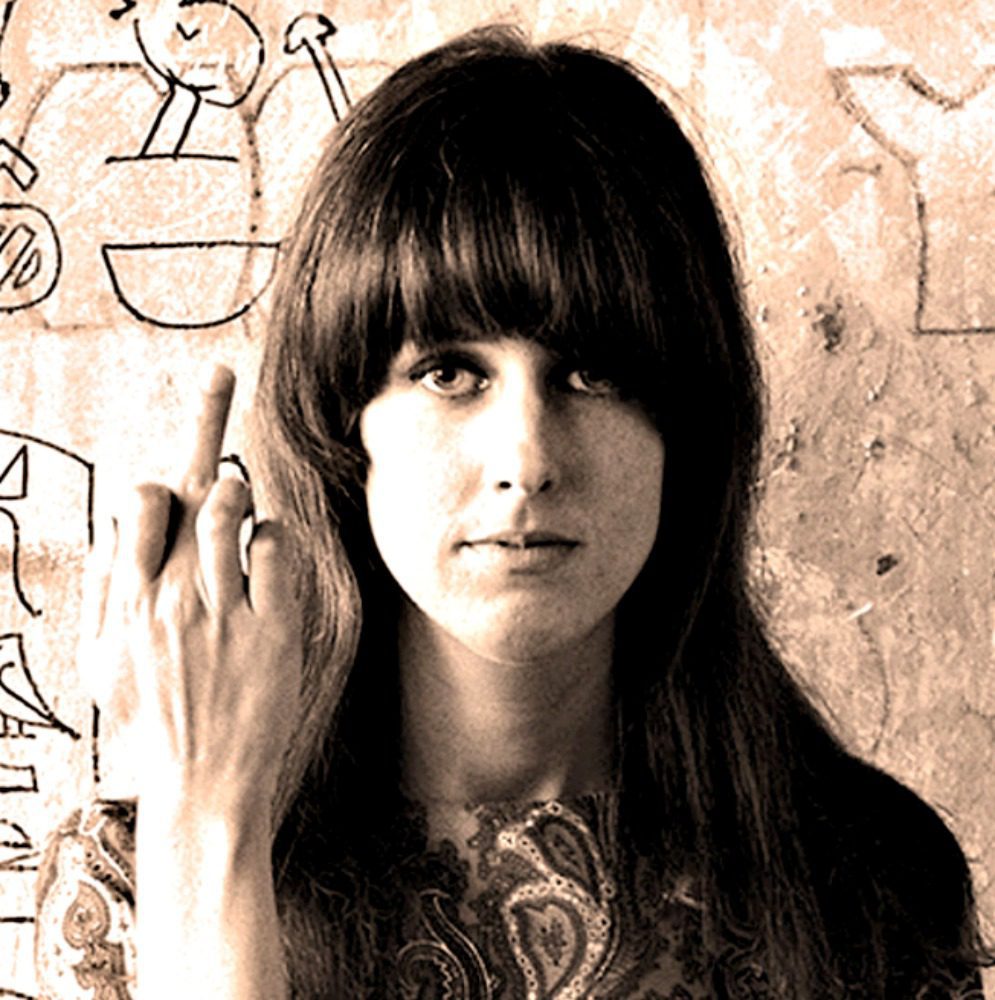
We all know Chick-fil-a is notoriously anti-LGBTQ. You’d think this would make it hard for them to find a musician willing to allow their song in a television ad, but Grace Slick saw their offer as an opportunity. She’s donating all of the money she makes from the ad to Lambda Legal, an organization that fights for the rights of LGBTQ people. “Admittedly it’s not the millions that WinShape [fusion_builder_container hundred_percent=”yes” overflow=”visible”][fusion_builder_row][fusion_builder_column type=”1_1″ background_position=”left top” background_color=”” border_size=”” border_color=”” border_style=”solid” spacing=”yes” background_image=”” background_repeat=”no-repeat” padding=”” margin_top=”0px” margin_bottom=”0px” class=”” id=”” animation_type=”” animation_speed=”0.3″ animation_direction=”left” hide_on_mobile=”no” center_content=”no” min_height=”none”][of Chick-fil-a] has given to organizations that define marriage as heterosexual,” the she wrote in a Forbes op-ed. “But instead of them replacing my song with someone else’s and losing this opportunity to strike back at anti-LGBTQ forces, I decided to spend the cash in direct opposition to ‘Check’-fil-A’s causes.” Now that you know where the revenue is going, watch the ad below and read the op-ed here.
https://www.youtube.com/watch?v=27SLP8JLNE8
New Campaign Fights Misogyny In Music
The mission of Bands Take A Stand is “to create safe spaces and use our collective voices as a vehicle for positive change within our music community.” Specifically, the campaign has teamed up with bands who donate their streaming revenue for a certain amount of time to A Voice For The Innocent, an organization that helps survivors of abuse. Read more here and here.
Fake (Music) News From Richard Spencer
Yesterday, reporter Olivia Nuzzi tweeted that while attending the CPAC, Richard Spencer declared Depeche Mode the “official band of the alt-right” after he was asked if he liked rock music. The band took to social media to denounce the statement, and Spencer clarified that he was joking. Someone later shared a Facebook note in which Spencer ranked 30 years of Depeche Mode albums, which proves why he’s not a music journalist: it’s incredibly boring.
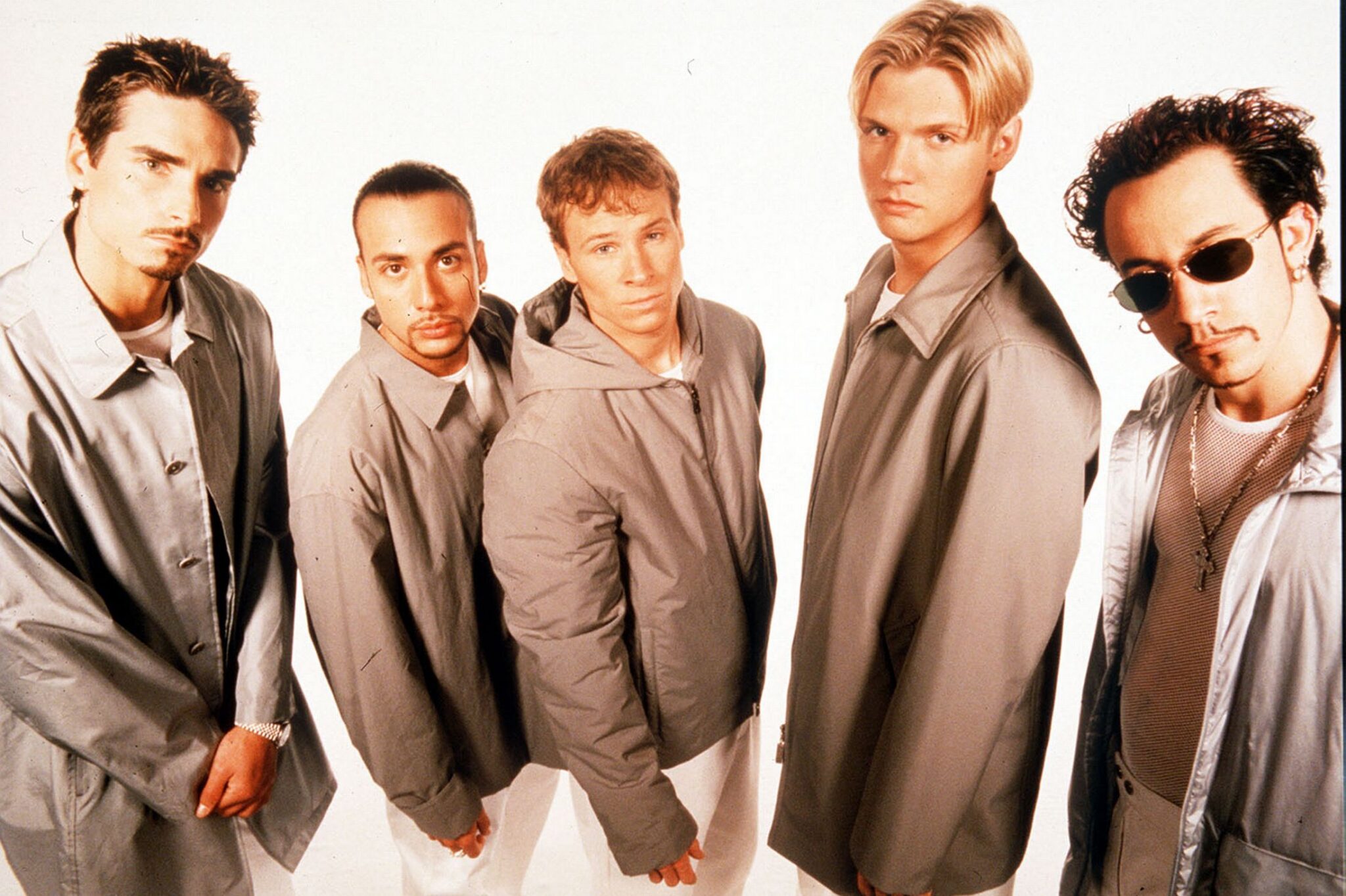
An email has landed in my inbox. It is an arrow, shot from my childhood – and aimed at my heart. Piercing deeply, it stings me with eight simple words:
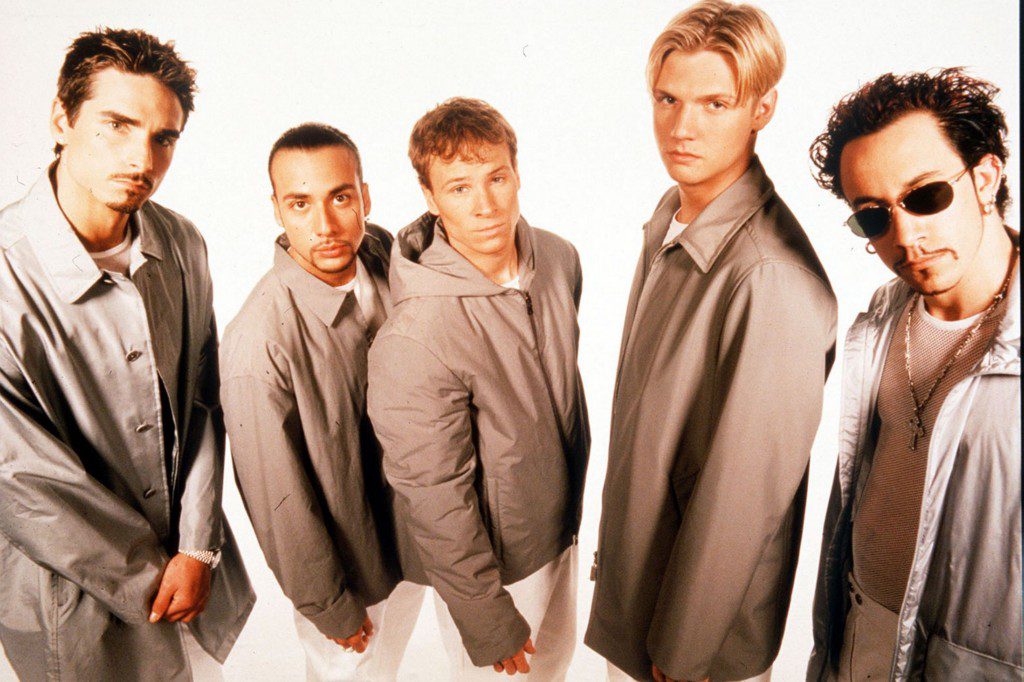
Backstreet Boys Las Vegas Residency Starts Next Wednesday
I am reeling, as if a long gone relative has risen from the dead. Backstreet’s back?! ALRIGHT!
To be painfully honest, I was already planning on writing about Backstreet Boys eventually. The email plugging their Vegas comeback was a serendipitous bonus. But was it really a bonus? Or a sign?
A friend recently asked me what the first record I ever bought myself was. I hesitated to answer. While I’d like to join the tradition of music journalists at least claiming to be born with good taste, my first record was not by The Smiths, or Stereolab, or even the fucking Beatles. Sure, I had an older sister down the hall – but she wasn’t exactly listening to The Jesus and Mary Chain, and even if she were, she wouldn’t have let me in on the secret.
I was a victim of Top 40 radio like all pre-internet, rural eight year olds. Despite a few quirks like an aversion to Beanie Babies, Pokémon, and sports, I pretty much liked what everyone else liked. Yes. I too loved Boy Bands. The first record I ever bought myself was not by The Dead Boys, or The Beach Boys, or The Pet Shop Boys. It was Backstreet Boys, by The Backstreet Boys.
I was an avid supporter of BSB. So much so that when fellow Floridians NSYNC cropped up on the scene slightly after, I leapt to the Boys’ defense. It seemed that they had invented the boy band, and I’d be goddamned if some nobody named “Justin Timberlake” was going to steal thunder from my beloved Nick Carter. My loyalty to BSB over NSYNC was an amalgam of childish polarity, Scorpion dedication, and a fear that giving in to NSYNC would count as some sort of infidelity to the former.
This feud didn’t just live in my head. The BSB vs. NSYNC debate was a very real thing, and a quick Google search will liquefy any doubts you have of its existence. I managed to get into several heated disputes regarding the matter in second grade. It wasn’t that I didn’t like NSYNC’s music – I now acknowledge its superiority – but I felt BSB had been flat ripped off. The five-man structure? The cute blonde, the “freaky” one, the sensitive one, the semi-normal-looking brunette, and the one no one will ever be attracted to? NSYNC had photocopied the pages of BSB’s playbook, and like all eight year olds, I hated copycats. But it was ok. I knew in my heart that BSB would rise to legend status. NSYNC would end up in the novelty hall of fame. That guy Justin Timberlake wasn’t going anywhere, so I wasn’t too worried.
When I wasn’t busy asserting BSB’s superiority over all boy bands (don’t even get me started on 98 Degrees!), I was listening to their music – namely, that first record. While my taste was nothing to brag about, my habits as a music listener were well-formed by then, and Backstreet Boys was on heavy rotation on the boombox. Favorite songs included “Quit Playing Games (With My Heart),” “As Long As You Love Me,” and “If You Want to Be a Good Girl (Get Yourself a Bad Boy),” which in its defense sounds like an off-brand Prince song. Not the worst thing. Oh but there was so much more! “Everybody (Backstreet’s Back) with that unbearable “spooky” music video, or “I’ll Never Break Your Heart,” which an eight year old could really relate to. When Brian sings, “Ooh when I asked you out/You said no but I found out,” it was just like the time at school when I labored over a hemp necklace for Jake Allen, but then he gave it to that bitch Katie Summers. At least BSB understood my pain.
The truthful hero of my boy band days was my dad, however, who sat through every spin of my Backstreet Boys’ CDs and not only tolerated the music – he pretended he liked it. My mom and I lived in a much larger house than the tiny log cabin my dad and I inhabited. At my mom’s I could tuck away into my room to rehearse choreographed dance moves to “We’ve Got It Goin’ On,” out of sight and earshot. She was also smart enough to not have a CD player in her car. But dad had to hear it all. I have one distilled memory of us sitting in his car one winter morning before school, waiting for the windshield to defrost, and playing “Show Me the Meaning of Being Lonely,” off of 1999’s Millenium. He claimed to particularly like that song.
Although I remember purchasing Backstreet Boys more vividly than Millenium, I recall their equal significance. This presents me with an odd internal struggle I am embarrassed to admit. In weighing the importance of these records, I’ve uncovered a shameful desire to appease the “cult of cool.” Translation: for a split second, I somehow created a hierarchy of Backstreet Boys albums. As if their first LP – their early stuff – has more clout in the same way say, the first Wire record does. Jesus.
I’m learning more and more that in order to write about this kind of music, or simply to fess up about it, you have to suspend disbelief like you would at a play. As much as I am tempted to prescribe critical analysis, or nostalgic rose tinting to the music of Backstreet Boys, the best thing I can do is flatly say that I enjoyed it, and that I still enjoy it. This isn’t just nostalgia at work. Nostalgia didn’t preserve a fondness for Nickelback or P.O.D., both of whose CDs I owned. There is simply no logical explanation for why some music tugs at well-hidden heartstrings. It’s the magical pop alchemy we spend our careers trying to understand. I mean –Backstreet Boys actually have a lyric in their arsenal claiming, “You hit me faster than a shark attack.” I can’t rationalize that! It just is. It just, is very bad. And I love it.
And yet, my snobbery is almost as deeply ingrained as my unabashed enjoyment of BSB. I long to tell you that during my Backstreet Boys phase, I was at least more into AJ. I’d love to tell you that I didn’t just want Nick like everybody else. I want to say that I was the quirky, original girl who dug Howie. But I wasn’t. I wanted to be Baby Spice, not Ginger. I wanted things that were blonde and pink. I wanted Nick Carter. Twas his face, torn from the pages of Tiger Beat, lining my bedroom walls in carefully arranged clusters of blonde mushroom cut. I was just like everybody else.
Migration – the sixth studio album from electronic mastermind Simon Green (aka Bonobo) has been met with mixed reviews. But what is interesting music, if not polarizing? Upon first sitting with the 12-song LP, it became instantly apparent to this reviewer that one should hear it in the dark. After hitting the lights, its lush arrangements had space enough to dance around at full capacity. And dance it did.
The title track, “Migration,” ushers us into a rich soundscape with dulcet piano. The keys are minimal yet seductive, much like the work of contemporary pianists Nils Frahm and Ólafur Arnalds. Weaving behind them is an atmospheric collage comprised of distant intonations and rolling snares. It is a song both familiar and impossible to grasp – and there is nothing more satisfying or frustrating for a music critic than to hear a landscape of sound that you don’t have the vocabulary to describe. Green has managed to summon all of this by song one.
“Break Apart” takes a slightly different direction, starting off with hissing tape and slowing things to a slur. Despite the delicate plucking of strings and eventual swell of horns, “Break Apart” is essentially an R&B song, with breathy vocals provided by L.A.’s Rhye. On “Outlier,” we swerve down another path – one with a far friendlier tempo for the club. The first dance track of the album, “Outlier” maintains a uniqueness that defies typical EDM formulae. Whether slow burners or techno pounders, Green’s songs act as sonic narratives that ripen and unfurl each minute. Bonobo’s frequent use of crescendo functions as a climax in these narratives.
“Grains” returns us to the slithering tempo Migration began with, making fine art of the vocoded vocal sample – in this case, the drawling non-sequiturs of Pete Seeger. The sluggish track exemplifies Green’s ability to sculpt enormous depth of sound with seemingly few frills.
While Green entrances with his otherworldly compositions on the first half of Migration, the record’s pure pop, vocal-centric second half is less intriguing. Bonobo’s collaboration with Nick Murphy (fka Chet Faker) on “No Reason” yields a pretty by-the-charts pop song, with Murphy’s voice taking the reigns and Green’s arrangements in the back of the saddle. It should be the other way around. The same dilemma can be found on “Surface,” a Sade-lite number featuring Nicole Miglis. These would be fine as stand-alone singles, but within the record as a whole they dilute Green’s exceptional talent as an electronic composer.
As much as it pains a writer to say: words seem to cheapen the boundless expression Green can convey with his music. Fortunately, Migration weighs heavier on the wordless side – allowing the mind to float in its various intricacies, shades, and tides.
When you’re talking to Jana Hunter, nothing is taboo. As his band Lower Dens has gotten big, he’s used his platform to talk candidly about societal problems, like racism in the music industry and the enforcement of the gender binary, as well as internal struggles, like the temptation of infidelity. The characters in his songs are intentionally genderless, and his latest song “Real Thing” is about a woman who wants to “get out and get it on” while she’s married.
Lower Dens have toured with Explosions in the Sky and opened for Yo La Tengo and Beach House, and they performed at the Day for Night festival in December. The day after their show outside an abandoned post office in Houston, I talked to Hunter about why internalized misogyny is so rampant, how white people screw up by pretending they’re not racist, and how he knows Trump’s a psychopath but Lyndon Johnson wasn’t. (The genderfluid singer/songwriter/musician goes by both pronouns but asked that I use male ones to balance things out, since people use female ones by default.) The interview has been condensed and lightly edited for clarity.
Suzannah Weiss for Audiofemme: I really like your new song “Real Thing.” What inspired you to write that?
Jana Hunter: I really wanted to write a song with an old friend of mine from Houston. He and I had been kind of sharing music with each other for a long time and had never written a song together, so we decided to. One time, when I was back in town, he had a bunch of old porn magazines laying around his house, including a couple of Oui magazine, I was trying to find lyrics, and I looked in one of those and found an advice column. And a woman had written in asking for guidance about how to respectfully step out on her husband, basically. So that’s what the song came from. I really identified with that struggle to be a good person in the face of the desires that are inherent in being an animal with compulsions.
Why did you think that was an important thing to sing about?
Because it’s something that dominates so much of our lives. That’s basically the story of every human. We are animals with really profound, compelling instincts, trying to pretend that we are some kind of super beings that have everything figured out and in control. It’s the struggle at the center of everyone’s life, and that’s a pretty good example of it. We force ourselves into very strict monogamous relationship social structures. We enforce all sorts of rules that don’t take into account our compulsions, our desires, our needs. It’s the beauty and tragedy of all kinds of people’s lives, so you could write a million songs about all different aspects of it.
What would you write if you were the one answering her letter?
You have to talk to your partner and see if you can resolve your desires with one another, and if they’re irresolvable, you have to figure out what to do about that. The thing that you can’t do is act on your compulsions without any accountability to anyone else. That’s where all kinds of conflicts come in. People ruin their lives and a lot more if they’re careless enough.
You spoken before about how we need to talk about our taboo emotions more. What else were you referring to?
Something that I think about a lot lately is how we deal with — how in particular white people deal with — race. Humans generally have a difficult time acknowledging their flaws and their weaknesses and their insecurities, their fears. And so much of the damage that’s done by people who consider themselves white has to do with their inability to acknowledge their insecurity around what they perceive as weaknesses or shortcomings or guilt or their participation in unjust systems.
I think a lot about how much better things could be for so many people if people who consider themselves white or are white-passing could acknowledge those things about ourselves, could accept them and acknowledge them and just move the fuck on, you know?
So much of our problems have so much to do with our inability to accept our flaws, and it’s always confounding to me. It’s so easy to say “I’m wrong. I’m not perfect. I need to do something about it.” It’s so much harder to keep fighting with everyone and insisting that there’s nothing wrong with you. It’s so unrealistic. It’s just so completely unrealistic. None of us are gods. We’re all flawed.
Have you been guilty of that?
I think that there are times when I see people for their race instead of their humanity, and whether or not the intention behind that is a good thing, it doesn’t behave as a good thing. And I feel to an extent like it’s a lifelong practice, a pursuit, trying to figure out how to be a good person in that way, get out of the way and just let people live their lives. Be beneficial without invading space. Those sorts of things. They’re tricky.
You’ve written about exercising that form of denial toward yourself — dismissing the misogyny in the music industry and having to convince yourself it exists. Why do we do that?
I think specifically, if you’re on the receiving end of any kind of discrimination, it’s almost a violence to your own sense of self to acknowledge that other people are behaving in a negative way toward you because of something that you have no control over. In itself, that kind of acceptance is traumatic. And so one way that I think that our psyches are meant to defend us is through denial, trying to deny that that’s happening.
Unfortunately, that usually will mean we will take that sort of offense and internalize it and ascribe it to something that makes more sense, like “I deserve it for some reason.” And so that’s what I mean. My own experiences with misogyny usually end up with some sort of internalized guilt and an assumption that there’s some reason that I deserve it, because the alternative is to accept insanity. Discrimination is completely insane. It doesn’t make any sense It’s impossible to accept on its own terms, you know that I mean?
Do you experience a particular kind of discrimination in the music industry for being gender-fluid?
Not that I’ve noticed. I guess it’s part and parcel with the thing that I was just talking about. It’s very difficult to process discrimination towards oneself and at the same time, it can be difficult, even in the face of it, to recognize it as such. Like, is somebody staring at me because I have something leaking out of a hole in my face, or is somebody staring at me because they can’t identify a gender in me and that makes them uncomfortable? I don’t know, and part of me wishes that I didn’t even wonder. And that’s about as far as I get with it these days. I don’t ask or confront. I just have other things I’m interested in doing besides that. It takes a lot of energy. It’s too exhausting to confront.
What have you been focusing on instead?
Writing. I really want to put out another Lower Dens record. So I’ve been working on that. And then, there’s a lot going on in the world to pay attention to besides oneself, so I feel like I’m keeping plenty busy.
What issues are concerning you most right now?
The election, the continued drama of the election, the liberation of Black Americans, the violence toward trans people of color in particular, the genocide in Syria, the situations in Istanbul and Yemen. There’s so much. And then, you know, I’m reading a book about Lyndon Johnson when I need to look away from the present world.
What about Lyndon Johnson interests you?
He’s a really fascinating character. And he’s also lucky enough to have several really good books about him written by an excellent author. So it’s as much about that author as Lyndon Johnson the man. Lyndon Johnson’s a very complicated creature, very intelligent, very desperate, very clever and crafty and diabolic. He also won major gains for civil rights, but maybe without even believing in them. He’s a hard man to figure out, if he actually believed in anything or if he only passed civil rights legislation because it worked for him politically at the time. He’s a master manipulator in a way that few other people are without being a true psychopath, which is really fascinating to me. A lot of the people who end up in those positions are psychopaths. They really have no concern or care for anyone else. They have no fear.
Do you think that Trump is a psychopath?
Yeah, I do. I think he has all the hallmarks of a true psychopath. He’s entirely too confident in himself, and he’ll say anything. He’ll say literally anything, whatever he believes benefits him in the short term. I don’t think he’s very good at a lot of things, but I think he’s very good at manipulating people in the short term without regard for any consequences. He’s maybe not so smart. It doesn’t even matter if he’s smart or not because he’s got other, more dangerous psychopaths around who are much smarter than he is, and all he has to be for them is a puppet, which he’s doing really effectively.
Who do you think is more dangerous than him?
Oh, Steve Bannon, without a doubt. That guy is very smart. Truly dangerous. People make these understandable but false equivalencies between Hitler and Trump. But I think the equivalences between the people around Hitler and the people around Trump are much more accurate. And of course, they’ll never act in such obvious ways because they’ve learned the lessons of history: mainly, don’t get caught. Don’t be so bold. But their motivations are no less evil. There’s nothing to stop them from taking us all down with them, so to speak.
How do you feel like you’ll be personally affected by Trump’s presidency?
I don’t know. I haven’t given it a moment’s thought. It’s not a time where it really seems possible for me to live anywhere but in the immediate moment. Making the most vague plans in order to know that you are going to have one foot in front of the other makes sense. “I am on a path of some sort” is about the most specific I can get for myself at the moment, but as far as what that’ll look like, especially in a greater context, I have no idea.
I think situations like the one we’re in right now are likely to reveal things to people about themselves that might make them very uncomfortable. And not like their capacity for anger, but more like their capacity for cowardice. What I hope, my only hope, is that his presidency doesn’t reveal to me that I’m a lot more of a coward than I think that I am. You know what I mean? I feel like a lot of people will find that out about themselves if they don’t work really hard against that.
What sort of things are going to bring that out?
There’s a very obvious push right now for people to align themselves with a very dangerous ideology. One of our strongest instincts is to fit in with whatever we consider to be the norm so that we survive. And it’s that sort of situation that could compel a lot of us to ignore the pain and the injustice suffered by other people in the name of us being able to survive comfortably. And that could take many different forms, and it will.
What are you exploring in your next album?
This one we started with a lot of reading about fundamentals of music and how people interpret sound, which is kind of the most indulgent part of it for us. And then, right now, I’m working on the basic kind of song structures, because we have all these instruments and sounds and ideas, technical and experimental ideas about what we want to do with the record. And so now I’m focusing on song structures, making songs that are simultaneously simple enough so that almost anybody can enjoy them, and aren’t so dumbed down so that they hold no substance.
One of the main pitfalls of modern music for me is that you write a song that’s all aesthetic and no substance, and that’s to be avoided and also very difficult to avoid if you’re going for accessibility. That’s where I’m going right now. I haven’t written the lyrics yet. The closest I get to theme is that I want the songs to contribute something to people’s lives that’s a real measurable benefit.
How do you feel like that compares to your past music?
When I wrote solo records, I put really no thought into them at all. I just was writing songs kind of as a form of self-therapy. And then I can’t really analyze them beyond that. They’re just very personal. And then when I started with the Lower Dens records, I wanted to write songs that held up to the songs written by people whom I admired most, and I felt that I needed to put a lot of complex composition into them. When I look back at them, they were needlessly complex, and I feel like the further along that I’ve gotten, the more simple they’ve gotten, and the more condensed and effective they’ve gotten.[/fusion_builder_column][/fusion_builder_row][/fusion_builder_container]
It’s something that was impossible just a week ago: As I write this, I’m listening to Around The World In A Day on Spotify. Prince’s music was formerly streaming only on Tidal, but his estate sued to release it on other streaming services starting last Sunday. On one hand, it’s nice to have easy access to such an iconic artist. But on the other, Prince was notorious for maintaining complete control over how his music was released and distributed as well as made, so it’s hard not to wonder what he’d think of all this.
ICYMI: Let’s Talk About The Grammys
Are the Grammys irrelevant? Why does Beyonce keep getting snubbed? Here are some of the best think-pieces inspired by the weirdness of last week’s awards:
That was fast! After being shut down during a visit by police and moving shows to other venues, the DIY space reopened and began hosting events this week. This weekend’s shows include Dougie Poole’s Wideass Highway EP release show tonight and The Macaulay Culkin Show comedy set on Sunday.
The Shaggs Will Reunite For Solid Sound Festival
The Shaggs were a trio of sisters who played an unconventional music that was simple but enchantingly bizarre in structure and in content. Their only album, Philosophy Of The World, earned them a cult following and the praise of artists such as Kurt Cobain. They’ll be reuniting to play at Wilco’s Solid Sound Festival in MA this summer. Listen to their album below:
Rambunctious, energy-fueled nu-jazz dance band Moon Hooch is in their element on a live stage. This Brooklyn-based trio found each other at The New School for Jazz and Contemporary Music in Manhattan. In their early days they performed their stimulating, rhythmic tunes on street corners and subway platforms. Incredibly, these busking scenes began to draw huge crowds of intrigued folks eager to boogie along and the band quickly became well-known.
In conjunction with the recent release of their free EP The Joshua Tree, they will showcase their considerable presence and talents at the Brooklyn Bowl this Saturday. The Joshua Tree was released as a free, downloadable album in December and shows the band is moving, if possible, in an even more kinetic direction. I was lucky enough to ask horn-player Wenzl McGowen a few questions about the band and what a live concert experience is like for them.
I went to the New School, so I’ve known about you since you first started out as a band. It’s really interesting to see how much you’ve grown. I wanted to ask about your development from around 2010-2011 to now. How do you feel about how much you’ve changed from busking in the subway to playing a Tiny Desk concert?
It’s really unbelievable, incredible. We played a show two days ago in Burlington, Vermont at the Higher Ground and it was sold out. There were 750 people there. We were kind of like, Holy crap. This is insane. We didn’t really expect at all to be supporting ourselves playing shows. We never had any intention to form a band. It all took us by surprise and is still taking us by surprise.
It really feels incredible to see the reaction of the audience after the show. People are often so touched that, you know, we just kind of look at each other, speechless. It really feels like there is a communication happening on a deeper level beyond intellect and beyond words. It’s beautiful that our music is allowing people to connect to each other on a deeper level and express themselves.
I was actually planning to ask you about that. Is there any intention to make that kind of connection? Your music is very social. I’m wondering if over time that intention has changed or the kind of connection you’re trying to make has changed.
I don’t put so much intention of what kind of connection I want to establish. I feel like if I totally remove myself and just become one with the music and be fully present – if I listen to what Mike [fusion_builder_container hundred_percent=”yes” overflow=”visible”][fusion_builder_row][fusion_builder_column type=”1_1″ background_position=”left top” background_color=”” border_size=”” border_color=”” border_style=”solid” spacing=”yes” background_image=”” background_repeat=”no-repeat” padding=”” margin_top=”0px” margin_bottom=”0px” class=”” id=”” animation_type=”” animation_speed=”0.3″ animation_direction=”left” hide_on_mobile=”no” center_content=”no” min_height=”none”][Wilber, providing additional brass] and James [Muschler, on drums] are doing, just do my part – then, naturally, I get into a state of love. And that love sometimes expresses itself in different ways. Sometimes it’s more like a passionate kind of love and sometimes it’s more like a gentle feeling of gratitude. Even the parts of the music that are really intense and angry sounding, that to me is also part of that love. A more passionate, aggressive kind of love.
A cathartic feeling? Letting out your anger?
Yeah. I usually don’t channel that much anger. That’s not my kind of thing. Mike does that a lot, though. He really uses anger as fuel to put himself in a certain flow and express that part of himself. We have different angles, but we meet onstage in the present moment. Also, that we have such different personalities contributes to this really wide musical expression.
I think it’s a healing experience. Like the way that people go to ceremonies to heal. Sometimes I feel that is what our fans are feeling. We’ve had people write to us and say “I had an out-of-body experience at your show” or “after the show I couldn’t stop crying.” People are having deep experiences that could typically be associated with rituals or ceremonies. It’s insane.
We don’t have that much to with it, other than being totally present on stage and giving all of our awareness to each other. That’s how our music becomes powerful. If you really step out of the way and join forces with that presentness, then the music will become powerful.
I also wanted to ask about the way that you create atmosphere. Your music seems to very organically create an emotional connection, particular excitement. Especially when you used to play outside. It was like you were playing and then everything around you became bigger and bigger until it became this wild dance party. How do your shows evolve like that?
How do we create this atmosphere in the streets?
I meant more your thoughts about how it would evolve into this whole scene.
Well, like I said it always kind of happens. All we are really doing is trying to do our best musically and on a personal level. I think the times we’ve played the best on the streets, when we had the biggest crowds, when people were most engaged was, again, when we were present with each other and fully committed to the music. Like, if you stop worrying about what other people will think or if they’ll like it – if you stop caring about other people altogether – then your awareness is freed up from all these psychological concerns. At that point you have more energy to put into the present moment. So, looking back at it there were times we played where it wasn’t good and people didn’t like it – or liked it, just not so much. And then, times where people got off the trains and danced and it would create this insane energy. Those times happened when we just accepted was going on.
In the beginning it was hard for me to let go because we were dependent on the money. On the streets we had to make money. But I gradually got used to it and was able to surrender and not worry about what anyone thought. We started playing for each other, for the sake of playing. That’s what’s happening now on stage. I just try to be as present – I feel like I’m just saying the same thing about everything, but it’s true! I think the key to life is to just stay present.
Then, do you feel that the way it’s liberating for your audience, it’s just as liberating for you? A shared experience?
Oh yeah! I mean, I don’t drink that much. But after shows… I feel drunk after shows. Just like woahh, I can barely speak right now. The energy is so intense it feels like the music is a drug.
Do you guys still like busking at all? Or are you more comfortable with venues?
At this point our music has evolved so far beyond our busking set up. We haven’t done it in years.
That’s what I thought. Do you now have a favorite place to play? Does the atmosphere change at different venues?
I love Burlington. Higher Ground is a good venue. There are some great venues across the country and some venues that really sound like shit. I like the Blue Bird Theater, although it’s a little gloomy. It can be hard to make it sound right.
I like outdoor venues and festivals because you don’t have to deal with the acoustics in the room. It makes for a fun stage. We definitely get to know all of these venues pretty intimately, but at an outdoor festival you just plug in and it sounds good. You don’t have to queue out any resonance patterns.
One last thing – I wanted to know your thoughts on the rise of similar bands. You know, bands that have taken your style or your ideas. They seem to be becoming more prominent these days.
You mean Too Many Zoos and Lucky Chops?
(Laughs) Yeah.
Um, you know we don’t want to take ownership of anything. Like, you don’t own anything. Your life is a gift and everything you’ve learned is a gift from past generations, from every organism and being that has ever lived. What you create is also a gift. So, we just contributed to this wave of saxophone dance music and inspired other people to do the same thing. Some of them became more successful than us, which is, you know, fine and awesome. We’re actually good friends with them!
Moon Hooch close out their current tour with a hometown show at Brooklyn Bowl this weekend! Get tickets here.
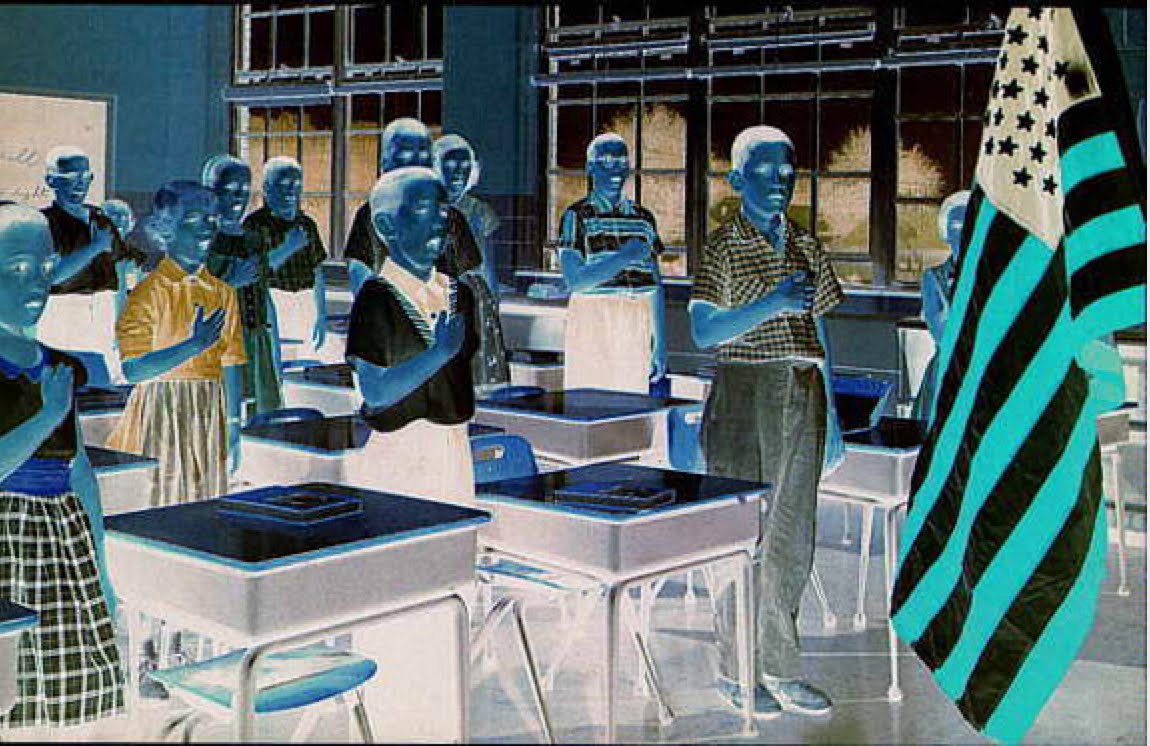
You remember it. You know you do. Every morning, at 9am sharp. Standing. Hat off. Left arm, stiff at your side. Right hand resting on heart – reluctantly. All together now:
“I pledge allegiance to the Flag of the United States of America, and to the Republic for which it stands, one Nation under God, indivisible, with liberty and justice for all.”
There came a time in my elementary school life, when this routine incantation became unbearable to perform. Naturally, this sudden sourness coincided with the election of George W. Bush, and his subsequent invasions and monstrosities. As we approach our first President’s Day under Donald Trump, I imagine school kids everywhere are experiencing a similar sourness during the assemblies leading up to the national holiday, the songs and pageantries one has to perform in public school, K-12.
During these morning customs, I mainly recall feeling so disillusioned with what felt like a national disease; I couldn’t bring myself to touch my heart and recite the Pledge – let alone stand up. The religious overtones of the poem always made me uncomfortable anyway, so I remained seated instead, fixing my gaze on the floor.
This did not go over well.
I lived in a small Republican lumber town – a town of many Carhart jumpsuits, many pickup trucks and several conservative teachers. What were the latter to do with their blue-haired, straight-A student who, by pleading the First Amendment, wasn’t actually breaking any rules? I relished in their visible frustration when they were unable punish me. They couldn’t even win outside of the classroom, as they knew calling my parents would amount to jack shit.
I was lucky enough to have parents who intrinsically distrusted institutional authority – or any authority for that matter. These were parents who routinely arranged “hookie” days to take me to the zoo, or on a ferry ride, or any of the multitudinous activities more educational and interesting than grade school. My political idealism was the least of their concerns; my dad admired it, and my mom was just happy I wasn’t injecting drugs. It was a win-win situation.
Years on, I can sift through all of the mornings, all of the assemblies and pep rallies I sat through, firmly planted on bleachers during the Pledge, the National Anthem, and that cruel excuse for a song, “God Bless The USA” by Lee Greenwood. Perhaps you were of the lucky lot whose school did not require its students to stand and, hand on heart, sing the putrid, nationalistic, country-crossover, garbage heap of a “song” that is “God Bless the USA.” I suspect that everyone in my graduating year could deliver its lyrics with rapid snaps of deeply ingrained memory at its opening chords.
“If tomorrow all the things were gone/I’d worked for all my life/And I had to start again/With just my children and my wife”
Ok, this is already getting problematic for a crowd of school children to be singing.
“I’d thank my lucky stars/To be living here today/Cause the flag still stands for freedom/And they can’t take that away.”
Who the fuck are they? This song was written in 1992. Somehow within seconds Lee Greenwood had married off and impregnated an entire gymnasium full of children, and put the paranoid words “they can’t take that away” into our tiny mouths. That’s creepy. It was a song that sounded born of wartime – where any one of us could be shipped off to the battlefield to fight “them,” and we would never see our Beanie Babies again. Looking back, it was absurd to make a school full of elementary students sing this. A rhyme reciting the Constitution or the Bill of Rights might have proven more useful.
What strikes me most when revisiting these memories isn’t the immense satisfaction I felt while refusing to stand, or the disgust with singing Lee Greenwood’s song…especially that chorus:
“I’m proud to be an American/Where at least I know I’m free/And I won’t forget the men who died/Who gave that right to me/And I gladly stand up/Next to you and defend her still today/Cause there ain’t no doubt I love this land/God bless the USA.”
What really bugs me is that despite my efforts to resist, despite my repulsion with these mandatory rituals, these songs and pledges and poems have been effectively lodged into my psyche forever. I will never be able to reclaim the chunk of brain tissue “God Bless the USA” has set up camp on forever. This is the beauty and the beast of music, however; the bad can be just as memorable as the good… like sex.
But what if, in light of our current President, we could sing different songs at our assemblies? There are dozens of songs that have been written about Presidents over the years, and while Mr. Greenwood was one of the chosen musical failures to play Trump’s inauguration, doesn’t a President in 2017 deserve an update? Here are a handful of President-related songs one could modify for public school assemblies nationwide. Or, if you homeschool or pay for private school, use the originals! You’re kids are going to learn the word “fuck” no matter what. I promise.
Lily Allen, “Fuck You”
There’s nothing I love more than a catchy pop song with cruel lyrics. Lily Allen wrote this for George W. Bush (as she confirmed at a concert in Brazil in 2009), but it works remarkably well as an anti-Trump number.
“Look inside/Look inside your tiny mind,” chimes Allen. “Now look a bit harder/Cause we’re so uninspired/So sick and tired of all the hatred you harbor.”
It’s perfect!
Grade school modification: Change “fuck you” to “fudge you.”
Radiohead, “2+2=5”
Also written in the Bush/Cheney era, “2+2=5” nods at George Orwell’s 1984 – which is currently enjoying an upswing in sales as the public turns to it again for answers. The equation is brilliant for its simple and effective message, which connotes the intentional peddling of misinformation. The song also includes Radiohead’s album title of that year (2003) Hail To The Thief – a spoof on the traditional, President-praising anthem, “Hail To The Chief.” You couldn’t ask for a better President’s Day song this year!
Grade school modification: make sure the children do not walk away thinking that 2+2 actually =5.
YG and Nipsey Hussle, “FDT (Fuck Donald Trump)”
Kids love rap, so this will be an easy assembly sell. With a few modifications, you can Martha Stewart this shit up and have a catchy fight song for your little resisters.
“Yeah, fuck Donald Trump/Yeah nigga, fuck Donald Trump/This is for my grandma!/Yeah, yeah, fuck Donald Trump, yeah.”
Grade school modification: change “fuck” to “funk,” don’t say the “N” word. Ever. Keep that “grandma” bit in. Someone is getting extra dessert for that.
Bright Eyes, “When The President Talks To God”
This one’s great for kids. They will learn about xenophobia, the prison industrial complex, and consonants. There is a line about “dirty coke” but you can just pretend it is the cola variety. This song may have also been written about G. W. Bush, but as you can hear, it is still relevant – unfortunately.
“When the President talks to God/Do they drink near-beer and go play golf/While they pick which countries to invade?/Which Muslim souls still can be saved?/I guess God just calls a spade a spade/When the President talks to God.”
Grade school modification: change “bullshit” to “doodie.”
The Honey Drippers, “Impeach The President”
Simple, funky, and more relevant than ever. This will be a fan favorite. Kids will learn all about the impeachment process and the transformative power of funk. Pretty much the only words are “impeach the president,” which can be easily integrated into preschool programs as well.
Grade school modification: none.
Happy President’s Day y’all. And don’t forget, #Fuck/Funk/FudgeDonaldTrump.
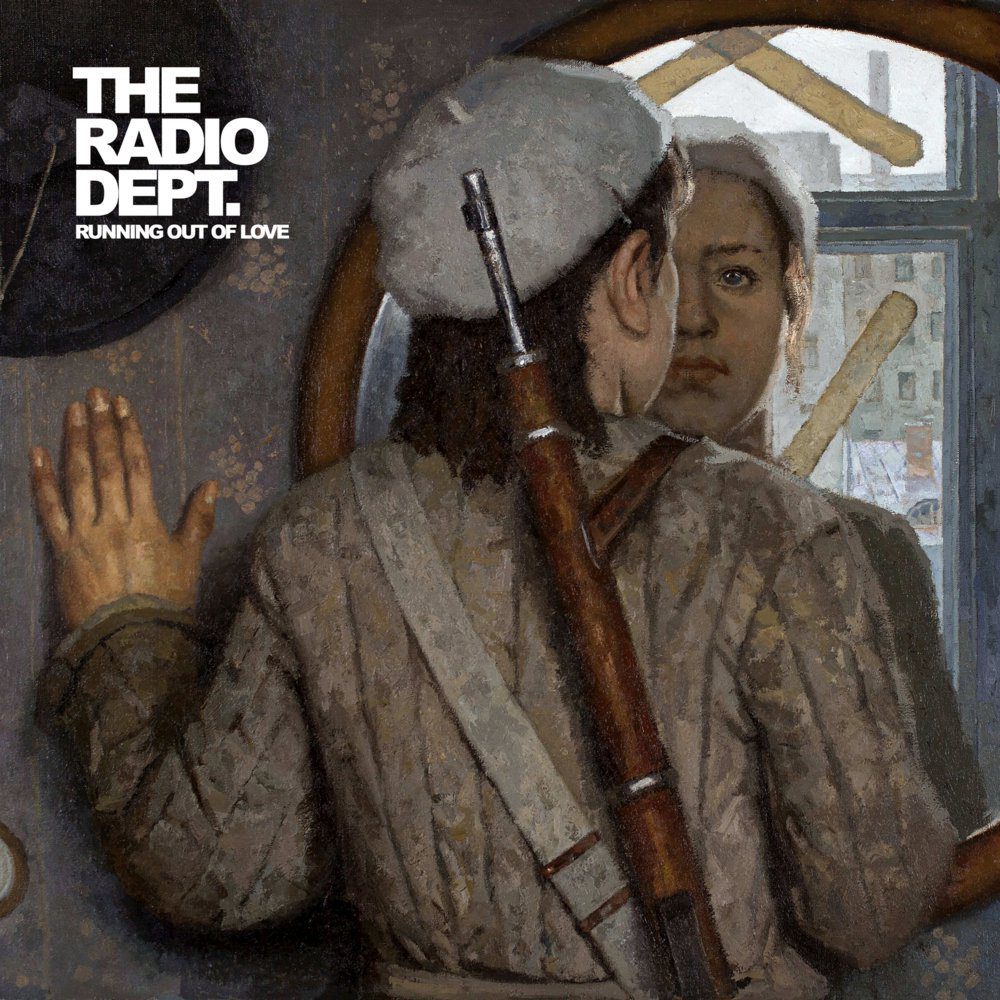
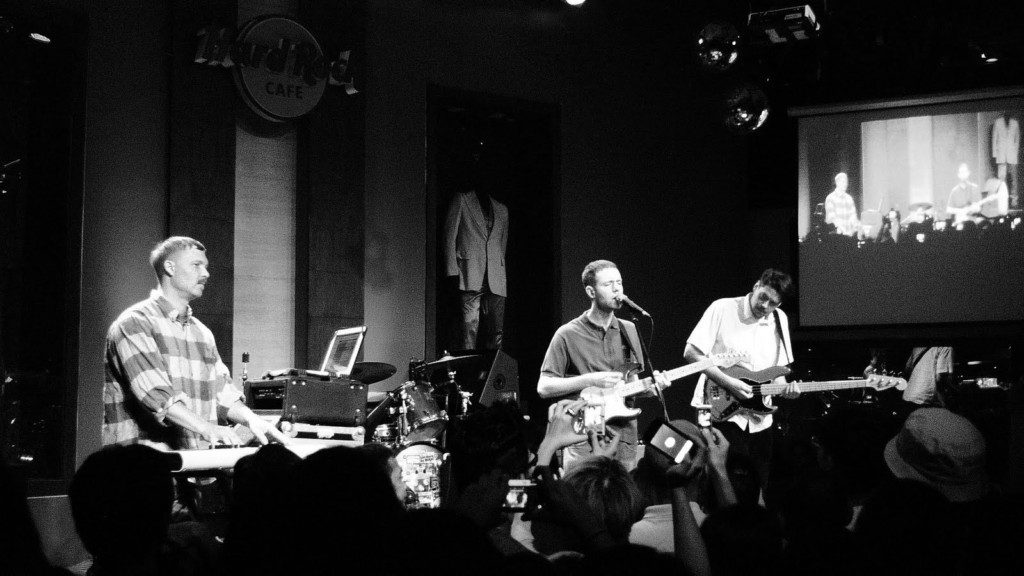
Swedish dream-pop outfit The Radio Dept. has long been revered for combining a mellow haze and hypnotic beats since forming in 2001. Live, this translates to a singular live experience that hits somewhere between being stress-free and imaginatively demanding. Their U.S. tour in support of Running Out of Love (which came out in October of last year via Labrador Records after long delays due to legal battles with the label) kicked off in Philadelphia on Valentine’s Day, and proved to be a thought-provoking and thoroughly enjoyable show.
A former baggage depot in Callowhill, Union Transfer was a fun change from the packed NYC locales I’m used to. It’s intimate and architecturally dramatic but still has a casual feel, with quick, friendly bouncers and a no-alchohol-on-the-floor policy that limits both excessive drunkenness and the nightmare of getting beer sloshed all over your shoes – perfect for Radio Dept. and their meditative set.
The band took to the stage quietly but began with a bang, playing a few songs from Running Out of Love, which has a more steady, rhythmic and electronic focus than a lot of their past music. This branching out of their comfort zone brought the album critical acclaim, but the new material wasn’t their only concentration on stage. The show featured plenty of old crowd favorites from the 2006’s Pet Grief and 2003 debut Lesser Matters, as well as their last proper full-length, Clinging to a Scheme, released in 2010. “David” and “Heaven’s On Fire,” both from Clinging to a Scheme, seemed to be big crowd-pleasers, while “Death to Fascism,” a single released in 2014, saw the band at its most exciting and dovetailed nicely with the subtle political messages on Running Out of Love.
With its impressive treble and the infectious robotic call of “Smrt fašizmu, sloboda narodu!” (Croatian for “Death to fascism, freedom to the people”), the single had sparked new interest in the band after a four year hiatus. Fans had shouted out its request all evening, and while it is doubtful that the heckling had much to do with its eventual delivery, the crowd’s hunger for this song seemed directly tied to the current American political climate. The band spoke through the messages in the music, rather than offering political speeches – frontman Johan Duncanson only spoke between songs to say “thank you” and “thank you very much.” He attributed this “shyness” to the fact that it was their first show on the U.S. leg of their tour. This quietness was reflective of the calm and repetitive motions of the music, a parallel I could certainly respect.
Everyone on stage – even frontman Duncanson – played multi-instrumentalist, switching between bass, percussion and synths. Even though every song had some pre-recorded element (due to the band’s electronic nature) there was a lot of power in the live aspects. The guitar parts were especially rousing; after various intensely rhythmic openings with limited or specific melodies, the guitar and vocals would break in and remind us that The Radio Dept. always tends to its dreamy qualities. There’s something plainly stunning about the combination of more dance-like beats and echoing, fuzzy shoegaze.
The high energy instrumentals from Running Out of Love were significant in keeping the audience from falling into a mesmerized daze. There was plenty of dancing to go with that mesmeric feeling and, although it was disjointed and varied from person to person (a couple basically dirty dancing on side of the floor, a fantastic bald man with glasses and a wool sweater with some incredibly unique and memorable moves, clearly in his own little world, on the other), there was a general agreement with the flow and mood of the music. Everyone bobbed their heads in some kind of unison.
At the heart of this performance was the inexplicable ease to the band’s sound. The songs were layered and complex, but they were effortlessly organic on stage. This contributed more to the natural ambience: heavy-lidded eyes and loose limbs. Buried somewhere in that was a covert political criticism of Sweden that unfortunately applies to the U.S. as well. Closing out with pop-forward “Swedish Gun” single, the clubby “Teach Me to Forget,” and the ominous “Occupied,” all from Running Out of Love, served as a reminder that dancing and resistance are not mutually exclusive.
The Radio Dept. close out their tour with two shows in New York, at Bowery Ballroom March 8 and Music Hall of Williamsburg March 9; the rest of the dates are listed here.
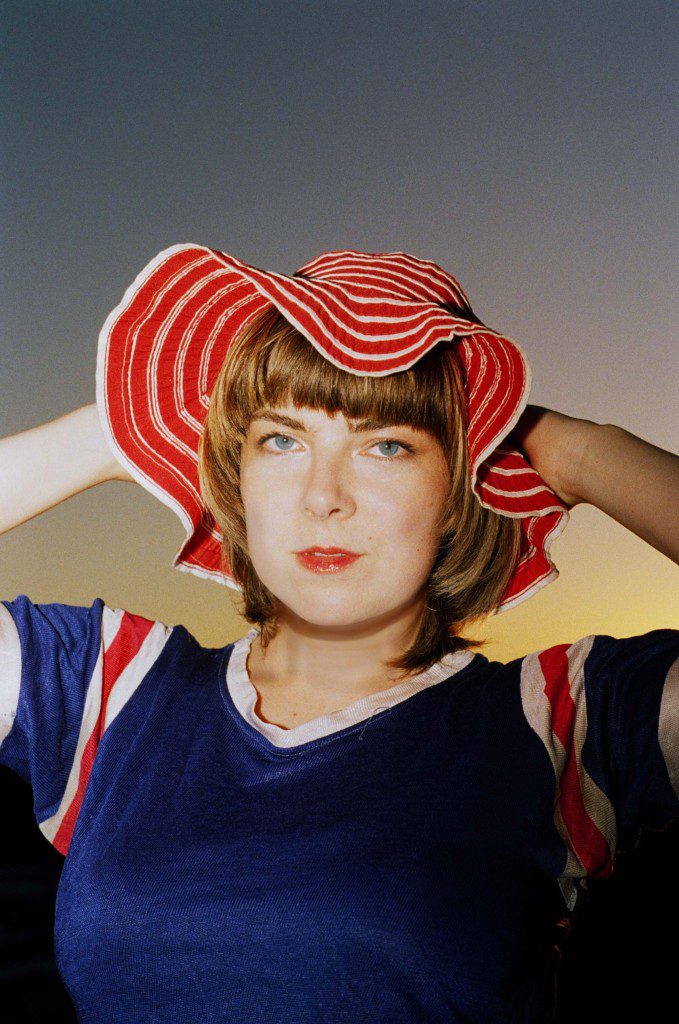
Montreal-based Caila Thompson-Hannant, aka Mozart’s Sister, is set to release her latest album Field of Love on Arbutus Records this Friday, a throw-back to Nineties dance pop and all its glittery, upbeat glory. Thompson-Hannant started working on the record in 2015 as a follow-up to 2014’s Being, and says in a press release that the writing process occurred “at a point when [fusion_builder_container hundred_percent=”yes” overflow=”visible”][fusion_builder_row][fusion_builder_column type=”1_1″ background_position=”left top” background_color=”” border_size=”” border_color=”” border_style=”solid” spacing=”yes” background_image=”” background_repeat=”no-repeat” padding=”” margin_top=”0px” margin_bottom=”0px” class=”” id=”” animation_type=”” animation_speed=”0.3″ animation_direction=”left” hide_on_mobile=”no” center_content=”no” min_height=”none”][she] truly did feel [she] was floating in a field of love.” Those feelings are made evident as the LP’s theme of love comes back again and again, showcasing the butterflies, the warm fuzzies, and that exciting yet scary feeling behind falling deeper in love with someone.
The album kicks off with “Eternally Girl,” an idyllic, charmingly discordant number full of expectation and desire. It makes sense as an opening track – she’s diving headfirst into her music and the feelings that inspired it, simultaneously putting a more positive spin behind the usually stigmatized act of giving yourself entirely to a partner. Following that, “Moment 2 Moment” plays through a first date, full of uncertainty and excitement relayed by punchy drums and pointed synths that emphasize a youthful delight.
Her single “Angel” brings things down a bit, ethereal and drowsy. Thompson-Hannant’s vocals rise and fall in a beautiful cacophony alongside slow, bubbling synths that both puncture and echo it. It’s the type of song that’ll resonate after it ends; listeners will be inclined to hold it as dear as the heavenly partner Thompson-Hannant places on a pedestal in the song’s narrative. Almost everyone has entertained the idea that someone they’ve fallen for is literal perfection, and this track does that all-encompassing type of love a justice.
“Bump” is more provocative and titillating, hinging on repetition and charismatic production. Similarly, penultimate track “My Heart is Wild,” is a whirlwind, up-tempo dance track with just a hint of drama to it. Both tracks feel destined to get large crowds moving, satisfying those cravings for a crowded dancing floor. These tracks assert Thompson-Hannant’s empowering confidence; she pursues romance on her terms, a nod toward the importance of self-preservation in a relationship. She gets caught up, falls head over heels, but doesn’t forget the dance she performs is a delicate one.
“Who Are You” grounds the album; Thompson-Hannant belts “I love you” over and over, the passion and dedication dripping from her vocals. It’s a reflective and honest piece about devoting yourself fully and totally to someone, the reimagining of screaming your love from the top of a building. As if those declarations weren’t enough, Thompson-Hannant closes the record with “Baroque Baby,” describing her partner as a picture of perfection who was “good from the start” as their relationship comes full circle. Sonically, the track milks a nostalgic Nineties R&B vibe, at some points recalling Destiny’s Child classic “Say My Name” with its drops and fast-paced vocals. Overall, the album brims with peppy, feel-good vibes that’ll have you swooning, both for its musical content and maybe your own special someone.
Field of Love is out Friday – pre-order it here, watch the video for “Angel” below, and catch her as she kicks off her tour in Brooklyn Thursday night with a show at Silent Barn.
Stacey MacLeod and Samantha Linn are distressed to impress, sharing their wonderfully warped worldview as as post-punk kitsch queens Dear Darkness on their latest EP She’s That Kind of Person, but I Like Her Anyway.
Released last month, their latest effort doesn’t stray far from 2016’s Get it Here EP. Faithful to their unhinged brand of glitter and grime this sonic adventure is less bashful bedroom eyes and more spontaneous arson speckled with deep throat kissing. Tongue between teeth rather than tongue-in-cheek, Dear Darkness revisits their affinity for braiding danger with crossed-legs innocence.
This time around, the girls turned up the fuzz with additional layers of synths and even more reckless percussive outbursts; taken together, their sound feels like a perfectly orchestrated tantrum. “Birthday Party” is a pouty psych-punk update to Leslie Gore’s “It’s My Party” and “You Had it Comin” could easily soundtrack a David Lynch revenge montage sequence. “Let’s Blow up the Moon” which is, well, about blowing up the moon, is so heavily distorted that you would think they were playing on the moon, loud enough for us to hear back on planet earth but warped by outer space. It’s peppered with enough blood-curdling screams to wake Hitchcock from the dead. Cohesive even in their chaos, Dear Darkness proves once again that you’ve gotta have a light to go on living in the shadows.
Bat your lashes and take names with the latest from Detroit punk princesses Dear Darkness below:
Eric Nizgretsky, frontman of Loose Buttons, oozes satire. The quartet’s Facebook bio proclaims they’re “New York’s very first indie band,” and he jokes about Loose Buttons’ formation when we meet at the first night of their Pianos residency. “It was a Sunday night,” he quips, “and there was an incredible jazz band playing at Pianos, and there was a jacket chilling off to the side and I couldn’t help but keep seeing it. The buttons were so beautiful, so loose. I stared for so long that I then realized it was Wednesday, and I was actually about the play a show.” Lucky to have caught him before he could get distracted by any more loose buttons, we discussed the residency and the band’s new EP, Sundays, which drops February 24.
“The residency is kind of a way for us to promote the EP,” he says. “We usually do one or two shows a month, but we were like, let’s give people four opportunities to see us and have a good time with us.”
Lyrically, Sundays revolves around coming to terms with the end of relationship. “These four songs mean a lot to us,” says Nizgretsky. “It’s like four different stages of a break-up. You realize: wow, this person isn’t right for me; shit, I’m not used to life alone; fuck, maybe it was all my fault; [/fusion_builder_column][fusion_builder_column type=”1_1″ background_position=”left top” background_color=”” border_size=”” border_color=”” border_style=”solid” spacing=”yes” background_image=”” background_repeat=”no-repeat” padding=”” margin_top=”0px” margin_bottom=”0px” class=”” id=”” animation_type=”” animation_speed=”0.3″ animation_direction=”left” hide_on_mobile=”no” center_content=”no” min_height=”none”][then] it’s time for you to really move on.”
The title of the EP is a nod to the lazy Sundays he and his ex used to spend together, but Nizgretsky emphasizes that these songs were a full-band effort. “A Loose Buttons song doesn’t become a Loose Buttons song until all four of us touch it,” he explains. “I might write the lyrics… but they kind of hone me in. I hone them in. We’re very collaborative. It’s like a fun moving company in a sense. We all have our little jobs.”
And although the EP isn’t out yet, Nizgretsky says the band is already hard at work on their debut album. “We finally feel like it’s time for us to take the big boy step, and it’s a little scary,” he says. “We figured ourselves out on this EP, and now the next ones are gonna be even better.”
If his burst of creativity is the result of four years playing together, then the band’s residency can certainly be seen as a celebration of that. “I’m the luckiest guy in the world to have such incredible musicians around me,” says Nizgretsky. “If I were to go on my own, it would be an empty room, constantly.” It’s a humble sentiment, but it reflects Nizgretsky’s personal growth as well. “When I was younger, I was a little bit more insecure as a singer,” he continues. “I learned that if you perform your heart out, people will forget how bad you are.”
His wry modesty downplays his great vocal ability, but along with between-song dad jokes and his turtleneck sweaters, his stage presence compliments that of the whole band. As a unit, they have an uncanny ability to carry their danceable tunes out on stage, making sure the audience has a blast in the process.
Photo by Ysabella Monton for AudioFemme.
Check out the latest track “Between Brick Walls” from the Sundays EP, available on February 24. Until then, catch the guys at Pianos on Wednesdays at 8.
You can call Lindsay Cashews many things; designer, visual artist, passion provocateur, digital warrior, pussy enthusiast, art princess. Though the list is extensive, one thing Lindsay is not is fearful. A courageous voyeur of female identity and explorer of empowerment and kink, Lindsay Cashews is making a statement – and she won’t stop until she’s got your attention. She sat down with AudioFemme to discuss her brand, the word “pussy,” and how being a Detroit artist is both a blessing and a curse.
When did you conceive Skandoughless? What is the brand philosophy?
“Skandoughless” was originally my Tumblr blog name that I started when I was close to 17. For me originally it was an identity crisis, an art experiment, a facade to exist within on social media. It was a way that I could be myself and be unashamed or criticized for all the conceptions you are perceived to have/not have as a young girl.
When I moved to Detroit four years ago, I thought, why not take this name that adheres itself to so many social-status identity crisis I have experienced growing up flat-broke, and self-raised, and apply it to something else? Let’s turn this crisis into a store! Which of course was a fucking horrible idea. Turning the one secret, precious thing [fusion_builder_container hundred_percent=”yes” overflow=”visible”][fusion_builder_row][fusion_builder_column type=”1_1″ background_position=”left top” background_color=”” border_size=”” border_color=”” border_style=”solid” spacing=”yes” background_image=”” background_repeat=”no-repeat” padding=”” margin_top=”0px” margin_bottom=”0px” class=”” id=”” animation_type=”” animation_speed=”0.3″ animation_direction=”left” hide_on_mobile=”no” center_content=”no” min_height=”none”][I had] into [selling] knit scarves on Etsy is not at all what I wanted – not that knitting isn’t a respectable craft, which is a totally different conversation.)
“I took Skandoughless and decided it was a way I had existed to survive.”
I guess if I had to say a philosophy, it would be something along the lines of taking your passion, handle it exactly how you want to without reservations, and use that passion to help people do the same in their lives. The whole point of the brand is to help me and other people step out of their comfort zone while still maintaining self-respect and inner power.
How has your work evolved since its conception?
The work is so much attached to my life. It includes people that I respect and love and it takes so much time to produce the pieces that are physically close to my body during that creation period. That said, every instance that I’ve had in my life – relationships, interaction, jobs, college, having a brain aneurism – have been integral to each and every part of my art existence. I relied a lot on what other people thought about my work in the beginning, was concerned with how people would receive what I had to offer while I was still figuring it out. I want to say at the beginning the work was a little less constrained and tailored. I was younger and naive and had yet to be taken advantaged of by people with huge egos. Recently, I have stopped showing for a while to figure out exactly what Skandoughless is so that I can be pensive on the work that I have created and what it will all add up to.
You work heavily with handmade chainmaille. What inspired this medium and can you touch on what chainmaille expresses in regard to your vision?
Metal weaving for me started as a way to heal and meditate. As someone with a background in costume and fibers, the medium spoke to me. When I moved to Detroit in 2013 I had no friends and was riding a pink scooter around at night and started thinking about ways to defend myself in case someone attacked me. Chainmaille seemed like a good option. The first piece that I ever made was modeled after a tall tee, something in street wear that inspired me. Growing up in Cleveland, it was a garment with a lot of implications of class and status. So I got some pliers and made a dress, because I read online it would take months and I wanted to do it in a week.
After that I got addicted to making these pieces, and started thinking about them more as theatrical and costuming rather then ready-to-wear. So I started playing more in my studio, using patterns from already existing objects that have implications of femininity in Western culture – like oven mitts, sleep masks, aprons etc. And the result was becoming more and more interesting. I had mainly worked in drawing and embroidery in the past, so I felt this medium was finally getting at what I wanted to say.
I was having a conversation with a woman who is new to my life and very inspiring, and she said after the election “You know, chainnmaille is a going to be a very powerful medium now.” And I was like oh shit, I make chainmaille!” That for me was a moment of realization about what being a visual artists means in a society that doesn’t value art.
Tell us a bit about your new knuckle ring line.
After collaborating with a friend we came up with a fictional line called “Protect Your Neck” – chainmaile chokers, knuckles, and other wearable garments that I could possibly make a profit off of while still making a statement. I contacted a friend of mine who had shown me some sketch-ups of knuckle rings her boyfriend had made for her band Odd Hours. “Protect Your Neck” are the self-branded knuckle rings Hell Money Warriors and I created.
They embrace the classic style of the brass knuckle, but also take high-fashion and wearable sculpture into consideration. They are currently made from silver and gold steel. When Kevin (of Hell Money Warriors) and I were conceptualizing them, we talked a lot about defense mechanisms that women wear, such as kitty knuckles, but landed on this unisex design and style. I am super grateful to all of these people coming into my life who share my vision to fight for a cause.
What role has Detroit played in the creation of your art? Has it inspired you? Stifled you?
Detroit, Detroit, Detroit. Okay, let me start here. Detroit has given me the blessing to create art everyday, meet some of the most amazing creative partners I’ve ever met, to explore music, to freely display my work and to define my voice. I have learned how to DJ, model, design, and perform. I have had opportunities to make relationships with people I may never have known in a bigger city. I have also learned how to say “no,” “naw,” and “fuck you.”
Detroit has also put me in life-threatening situations. You can’t escape being a “Detroit” artist here, and there is an extreme lack of professionalism in the small creative pond we often swim in. I feel like I have done so much creative work here for free and been taken advantage of financially with no means to an end that I have to laugh. I’ve had conversations with other artists who feel they have to take their work out of the city to be paid for it. Honestly, I’m so grateful that these things have happened here because everything else seems like a cakewalk. I do feel stifled in the market and scene here in the city because I think a lot of people don’t understand what I’m trying to do and there are definitely times when I feel like I have no room for growth. I have learned to not expect anything in Detroit, and am happier that way.
In addition to wearable art, you are also a visual artist in terms of video production and editing. How do these mediums support each other? What is the overarching story between what you physically create and your video work?
A lot of it is auto-biographical and a lot of it is hustle. Whatever medium I have an opportunity to express myself in I will figure out how to use it. For example, if a club wants me to do visuals in a week, my creative partner and I will shoot video and make a film. If someone is offering me a DJ gig, I will create a spectacle that goes with the algorithms of my pattern-making, but is danceable to that specific audience. My visual work used to be a very private and self-contained practice, but letting it explode into the world has given me a lot of really amazing opportunities.
My physical creations are a lot about the poetic idea of femininity: protection, maternal instinct, sexuality, prowess combined with satirical social commentary that negates these really beautiful things. My video work mirrors this and is best illustrated by my pieceRich Girls Doing Cheap Things. Pieces like this help me make sense of all these opportunities and privileges that people were born with yet they try to act like they have had hardship, or gain a sense of authenticity through looking impoverished. A lot of it goes back to political and class structures, and all of these products are my negotiations of them so I don’t fucking freak out.
Let’s talk about the word “Pussy.” Though the word has been dragged through the mud this past election season, you’ve never shied away from the power of its root meaning. Why embrace the word and what does it mean to you to have one?
So “Pussy” as a phrase to me growing up always had a negative connotation. It was a thing boys – and girls – called each other to insinuate weakness and disrespect. Hearing the word never made me proud to have a vagina – in fact I was always embarrassed of my body. I always believed that women were such beautiful, mystical beings and I was angry that people didn’t see what I saw, and retaliated with obnoxious fashion.
However, in the female-centric rap music that I grew up with (Crime Mob, Ester Dean, Lady, Missy Elliot), PUSSY is a power term. It is embraced and shed of sexual embarrassment. Flash forward to now, I try to use the word pussy as much as I can in my art in a positive sense.
“I think it’s reclaiming the word [pussy] for me… I have embroidered the word over and over in my head to tell myself it is okay to be a woman, it is amazing to be a woman, and I would rather die than give up being a woman. “
How is your art impacted by censorship in social media? Have you found ways to confront it?
I absolutely love censorship. The fact that it still exists is hilarious to me. It is a spoke on the capitalist wheel. You’re telling me if women’s bodies aren’t selling something (i.e. themselves or a man’s power over them) they have no place on the internet? Like, are you fucking kidding me?! It’s crazy too, with the structure of our society and people’s brainwashed ambivalence for free thought that they think it is their right to take down or flag images.
As a personal mode of expression for me, it’s ridiculous. But there are some super radical women whose platforms to discuss these ideas are shut down, patronized and ridiculed. Sexual freedom and comfortability is so lacking in this country. It’s sad.
How has being a woman artist changed in the Trump era? In your eyes what is at stake and how do you intend to use your voice and vision to combat hatred and intolerance?
I was afraid of the word “feminism” at some point in my life and I have never claimed myself to be politically motivated until now. I know there is a chance that my physical and mental liberties are going to be taken away. I need to have a voice for the people who are scared and don’t see a way out. It is no longer a question of “Do I put this online today? Do I share my images freely to the public without recognition?” It has become “PUT THAT SHIT ON EVERY FUCKING MEDIA POSSIBLE UNTIL THEY SHUT THIS BITCH DOWN!”
What is your hope for the future of Skandoughless? What do you see yourself accomplishing in the coming year?
OMG. I hope to accomplish so much. There are not enough hours in the day for me! I want to really strongly differentiate the characters I have created with the brand aspect of Skandoughless. I want to be fully supported by my practice this year. I want to model and DJ more and start painting again. I want to get published, and start gaining recognition for what I’m doing. I want to inspire people, I want to shoot images of people who inspire me wearing my work. Ultimately, I want to eliminate all the negativity in my life and keep pushing other creatives around me.
Shop Skandoughless here and check the site for upcoming shows, performances and new work. [/fusion_builder_column][/fusion_builder_row][/fusion_builder_container]
Eno is a name long associated with experimentation, versatility, and subversiveness (and great production, of course). In the wake of recent musical and political events – the deaths of many progressive and influential musicians, including frequent collaborator David Bowie, and the rise of conservatism in the UK – a new Brian Eno piece feels especially poignant and significant. Reflection follows the same rules and systems of most of Eno’s ambient productions, or generative music as he calls it. The term “generative”, coined by Eno in the 90s, refers to music that is ever-changing and generated by a system, like a computer. This technological aspect of Reflection inspired an app that can be downloaded in place of buying the album. The app has an audio visualizer that changes as the music slowly shifts tones based on the time of day.
After I stumbled across this bizarre, intriguing interview, I felt I had to meditate on the ambiguous, yet apparently political nature of this album and the manner in which seemingly inoffensive music can be political.
I think it’s important to note the indefinable quality of albums like this. Fundamentally, can we call it an album? Holding true to its title, Reflection harks back to Eno’s 1985 Thursday Afternoon in its design. It’s one continual piece of music that moves through nearly an hour of time. Is it one song? One track? That language doesn’t really fit this music and to think of Reflection the way we might a regular album doesn’t work. Expectantly, Brian Eno is trying to push beyond the limitations of a “record”. Generative music, by Eno’s own definition, is primarily structural and mechanical, and part of its inspiration comes from linguistic theory, So, like linguistics, structural, generative work is also surprisingly progressive, full of movement, and difficult to pin down. But the important question: does this kind of music work? Does it break restrictions in a way that is memorable and meaningful?
Here I have to admit a strong affection for Brian Eno’s music, past and present. Here Come the Warm Jets will always be mind-blowing and original with its juxtaposition of melody and dissonance, order and nonsensical chaos. More relevantly, his work on David Bowie’s Berlin trilogy included some fantastic, atmospheric ambient tracks like “Warszawa” (from Low) and “Neukölln” (from Heroes). These songs have an ability to instill an intense and almost visual mood. They’re cathartic and emotive but with no clear meaning or trajectory. This flexibility can actually make the tracks more touching, personal, and imaginative.
I think of Eno’s newer, generative music like an isolation tank: there’s a kind of forced reflection. Like Fripp & Eno, it’s the sort of music you can lie on the floor next to a friend, close your eyes, and listen to – a disparate, yet shared experience. There’s definitely a comforting aspect to the slow, steady design and, particularly, the lower, darker notes in Reflection. But there’s also something that nears over-stimulation – and discomfort – in a deep listen. Its simplicity, its malleability somehow becomes forceful.
In that interview I mentioned, Eno spoke passionately about Brexit and Donald Trump and, thereby, the ways in which his music is political. What he said could strike as absurd or profound:
“I’m interested in the idea of generative music as a sort of model for how society or politics could work. I’m working out the ideas I’m interested in, about how you make a working society rather than a dysfunctional one like the one we live in at the moment – by trying to make music in a new way. I’m trying to see what kinds of models and and structures make the music I want to hear, and then I’m finding it’s not a bad idea to try to think about making societies in that way.”
The article goes on to explain what he means. As opposed to a classical orchestra, society should be built on the more egalitarian model of a folk or rock band, who just get together and do their thing.
These are some provocative words. It’s difficult to think of Reflection, an album with no words and no prescriptiveness, as political. But re-listening, with these words in mind, makes the structural elements of the album more noticeable and thereby, more suggestive and, as I said before, forceful.
Simple as a piece of music, Reflection is perfect for thinkers and daydreamers. Personally, I love this sound. It’s slow and steady, but adaptable and never droning. The subtle, changing melodies on this record are delightfully easy to digest. Like the title of another Eno album (or two) Music For Airplanes, this record is great to listen to in the car or train as you look out the window. The deeper notes that wiggle in throughout are crisp and inspiring. However, I wouldn’t call this easy listening. It takes a certain amount of focus, or prior knowledge of the genre, to give it a good listen.
So, to answer my question from earlier: absolutely yes, ambient music can be memorable and meaningful simply because of its experimental and progressive nature. Like poetry or theater, it may become easier and more rewarding to take in as it sheds the limitations of musical definition. However, it might take a certain frame of mind to reach those conclusions. That is to say, it’s not for everyone. The idea of music (and perhaps specifically ambient music) standing as blueprint for building a society may be seen as absurd by some, but at this point in time it’s an alternative that we might want to consider. Many of us have intense, inexplicable relationships with music that already help to shape our lives. We’re also exhausted by systems that have been put in place over years and years. Following the construction of more harmonious and well-balanced music collectives and systems might not be such a wild idea.
Reflection is available for you to listen to on the app or as a regular record.
DC indie punk band Witch Coast unexpectedly dropped a new EP, Devil Vision, on Friday. Their latest incarnation since 2015’s full length Burnt Out By 3PM, they put this out on vocalist Jon Weiss’s own Babe City Records.
Witch Coast’s relevance rests on their spot-on interpretation of early adulthood ennui, born on their earlier releases and rounded out on this newest EP: working hard but making no money; the flat state of mind achieved only from getting stoned to treat a merciless hangover; allowing your existential worries about relationships, rent, and life in general consume you until you feel physically sick, or better yet, feel nothing at all. Weiss achieves this lyrically, but the vocal distortion is so heavy that these feelings are captured largely in the sound – lo-fi, nearly indecipherable vocals, heavy reverb, wonky psyched-out riffs. The lyrics serve more as a fourth instrument than anything else. The sound can come across as sardonic and darkly comical – the upbeat tracks layered under Weiss’s frantic vocals and lyrical emotional exhaustion. It feels like the white noise of racing thoughts, coming at you so relentlessly you either have to scream or shut down.
With full-length releases from label-mates Bueno and Foozle, as well as significant roster growth (signaling an expansion of the label’s genre wheelhouse – they just signed DC hip hop artist Nappa Nappa), Babe City Records continues to produce some of the most sonically interesting music coming out of DC. With Devil Vision and all its fuzzy riffs, strained vocals, and mental exhaustion, Witch Coast continues to cement themselves as the heaviest act on the label.
Darkwing holds a special place in my heart, which is why I don’t throw a bag of donuts through the second story window of Louis Cozza’s apartment. The band is not picking up their phone, and it’s evident why. If I could hear Darkwing’s warbling and smashing from the street, they’re not hearing a cellphone vibrating. But finally Rich Gold says he’s going to buzz me up, flooding my iMessage with “sorries.”
I was force-fed Darkwing via their Lameonia cassette during CMJ 2015. My first snobby, I’m-hot-shit-cause-I’ve-lived-in-Brooklyn-for-five-minutes assessment was, “Ok, they’re basically Soundgarden.” Three tape-flips later and I was eating my words.
Sure, Darkwing borrows (but never steals) essential grunge 101 elements: the seamless shifting between soft and hard, hazy slacker-cool lyrics, riffs that make you slam-sway back and forth, it’s there. But there’s something inexplicable that sets them apart, somewhere between the ironic coos of, “ooh, ooh, ooh” and the casual nihilism. It’s like, when you feel that tremendously heavy drop in “Endo”—yes, feel, not politely bob your head to—it’s life-altering. I wanted to grab breakfast with Darkwing first since they were my first great musical surprise, and because Rich’s recent move to Brooklyn signifies a bold new era. Lyzi Wakefield is touring with Fruit and Flowers and Zach Booth is AWOL, but two out of four ain’t bad.
So yeah, I brought Valentine’s donuts, because Rich is feeling pretty poor right now. But more on that later.
The Scene: The raw wooden stairway has a good “rustic-and-murdery” vibe, but I survive the climb. The apartment itself is clean, with teensy comic store touches all around. Invader Zim action figures here, a stray Pokemon card there, a DBZ sticker on the fridge, et al.
In a shocking twist, there’s actualfood on the table: crepes, raspberries, blueberries, peanut butter, honey, syrup, blackberries, it’s like I’m in a goddamn French bakery. This is for Louis’s roommates and Louis’s roommate’s girlfriend (…?), so I politely drink coffee with co-opted almond milk instead of diving into carbs. Not wanting to interrupt the band practice flow, I let the boys resume the jam session as we chat about tomorrow’s video shoot for “Vicious” (quick-cut musicians in dark clothing, Rich’s head hovering Wizard of Oz style). “Why do you wear so much dark clothes?” I ask.
It’s an irreverent answer: “My sister would say I’m metal A.F. But I’m not.” This ultimately inspires Rich to put on our breakfast music, Norwegian black metal band Darkthrone.
1:50 P.M. There’s enough leftover batter and I volunteer to make fresh crepes. It’s okay, I don’t mind the patriarchal undertones of cooking for men; the power dynamic is in my favor because they could easily die eating my terrible cooking. Like, it isn’t my intent, but worst case scenario breakfast manslaughter makes a good chapter in my memoirs. The title I’m partial to is “#Brunchwing.”
Rich interrupts my chain of thought by asking the group what we think of Darkthrone as breakfast music. “It’s real soothing,” I answer. He then switches over to Ugly God’s “Bitch!”
2:18 P.M. The crepes are well-received and Louis has this great money-making scheme. So, it involves purchasing a copy of the exceedingly important game Hello Kitty Kruisers. Apparently, it was a small printing with makes it a rare find, so if we all go in on it, we’d have this very expensive game to profit off of in the future. Nobody takes him up on this, which I think is insane.
2:26 P.M. Rich is lying on the floor, saying, “I’m so broke recently that I’m not eating. And I think my stomach is shrinking. And so now I’ve had two crepes and I’m like…” Holy shit, what if I do accidentally kill him?, I think. But no, he’s just stuffed.
Louis has been New York since at least 2011, and Rich, although he’s been musician-ing for years, just made the formal Leonia-to-Brooklyn move within the past few months.He deems living here “chill,” which I read as “incredibly financially straining, especially as I’m trying to find a new job to facilitate this high cost of living and allow me to pursue my passion.” But I could be wrong. No, Rich is fervently looking for steady income, racking up all the potential bartender/barista/barrister (not really) gigs he would like to get/cannot get.
“I’m not good at jobs, I’m good at rock and roll,” is his summation.
2:35 P.M. “Do you guys celebrate Valentines Day?” Darkwing isn’t my go-to band for love songs, but I have to ask. “I would,” Rich says, and Louis has plans to go away the next day, so he’ll just be packing. Having successfully depressed everyone, I decide we’ll celebrate Valentines right now, passing out conversation hearts and Nerds candy that I have hidden in my purse.
Rich gets a blue “<3 UR Self” heart at one point, because that’s incredibly sage advice for a piece of candy.
2:50 P.M. I peel back the plaid blanket forcefield guarding Louis’s album to look through his records and ask what’s his most special purchase, so he breaks out a plastic-wrapped copy of the scrolling-shooter game Aleste II. Very cool, “But I mean in terms of music,” I clarify.
Within minutes my arms are filling up with possibilities, including Japanese heavy metal band Devil Soldier’s Loudness and Beck’s Modern Guilt. He finally settles on two 7 inches from that dog., their self-titled EP and “Grunge Couple” single, and I cradle them all like they are his flat, round, grooved infants.
3:05 P.M. “Have you ever had Special K?” Rich asks, and because I am a delicate baby fawn and this is a breakfast article I counter-ask, “Like the cereal…?” No, not like the cereal. Ahem.
Well anyway, he grabs a donut and starts talking about this song he composed about a salvia trip. It’s called “Ursa Burster” and obviously I’m dying to listen to it.
3:13 P.M. BUT Rich gets a phone call from his dad regarding his car (apparently it’s leaking oil; “very expensive, bad for the environment,” would be distressing if we lived in a seal-rich neighborhood). He closes it off with, “I can’t really talk right now, I’m in a meeting.”
3:36 P.M. So this salvia song sounds starts off all whale noises and heartbeats. “This is great,” I lie, terrified. Rich is explaining how he was imagining his head floating around, approximately at the point where is voice warbles, “I don’t have a body.” “This is fun,” I lie harder, about to have some sort of secondhand anxiety attack, imagining Rich’s green face hovering all over the apartment. And then like a fever, the song breaks with, “DID YOU HEAR ABOUT THE BEAR PUNCHER?”
Oh my God.
3:42 P.M. Louis relocated to the drum set and is over-lapping the track with perfectly-timed beats. Rich is loudly droning over the recording with, “So what? Animals fight, scratch and bite, alright” I’m kneeling on the ottoman in docs and my Grimace-looking sweater, thoroughly rocking out (from the waist up). No, it is great, earnestly great. It’s classic Darkwing.
He backtracks on the trip, recounting, “When you’re going through life, it’s like you’re reading a book, and you’re reading one word at a time. Sometimes you get caught up, you just keep reading that word one over and over.” In this case, Rich read an article about a man who punched a bear in the face and wrote about being fixated on the coolness of that, then out of his high, realizing that, oh yeah, there are way bigger things happening in this sick twisted world. Psychedelia and psychoactivity and the down-sweep of reality.
The bear-punching is still pretty great though.
3:50 P.M. They’re filing through Darkwing demos. The first about a faux-acid trip in Asbury Park. The second has Lyzi at the forefront of a dreamy vocal blend (her and Rich are like, boyfriend-girlfriend, and I can hear it when he appraises the song with “that beautiful voice.”) And we close on a demo that’s bound to be, “a really good pop song,” which they reprise once again on their instruments. I ask Rich if he can repeat the lyrics real quick, and he spells out gooey feelings muddled by jealousy:
“You know I don’t do too well at keeping cool, when some slick idiot comes stepping to my boo, I’m sorry that I yelled, I just want you to know, that when I close my eyes we’re never far apart, a big red he-art-art-art”
Ok, Darkwing isn’t my go-to band for love songs, but they do have a big red heart of their own, crudely cut out out of construction paper. Another great surprise, and how seasonal!
4:03 P.M. The guys walk me back to the G train, Louis to start a shift at National Sawdust, Rich to get his car from Jersey. They’re excited about the video, an album in April, tours in spring and summer. And then Rich stops halfway to debate if he can afford the subway, reminding us once again of the unbearable broke-ness of being a musician. Truth is, it isn’t just him, it’s the problem-of-choice around here.
But that thing that sets Darkwing apart? They’re good at rock and roll. And you can’t underestimate the value in that.
[fusion_builder_container hundred_percent=”yes” overflow=”visible”][fusion_builder_row][fusion_builder_column type=”1_1″ background_position=”left top” background_color=”” border_size=”” border_color=”” border_style=”solid” spacing=”yes” background_image=”” background_repeat=”no-repeat” padding=”” margin_top=”0px” margin_bottom=”0px” class=”” id=”” animation_type=”” animation_speed=”0.3″ animation_direction=”left” hide_on_mobile=”no” center_content=”no” min_height=”none”]In New York this week, we’ve learned that there are no snow days for the humble musician.
Bandcamp Made it Rain For The ACLU
After the site announced it would donate its share(about 12%) of all purchases last Friday, music fans bought about $1,000,000 worth of music. According to Bandcamp, that’s “550% more than a normal Friday (already our biggest sales day of the week).” Combined with the many artists and labels that promised their 88% of profits would also go to the ACLU, the actual figure being donated is close to $100,000. Good job, music fans. And it’s not too late to donate! If you want to get some music out of it, check out the Our First100 Days compilation:
Market Hotel Offers Coworking Space, Hopefully Shows Soon
On 2/7, the venue tweeted that “All citations related to the October ‘gotcha’ raid on Market Hotel, particularly the ‘warehousing’ summons, have been dismissed!” The DIY space was forced to relocate shows in Fall 2016 after what many deemed an unfair police raid, around the time they were applying for a permanent liquor license. No official word on when the space will begin hosting shows again, but in the meantime, it’s being used as a coworking space.
Is Indie Rock Dead? Um, Probably Not
Yes, another debate about the life of a genre was started last night between David Longstreth (Dirty Projectors) and Robin Pecknold (Fleet Foxes) on Instagram, for some reason. Longstreth wondered if the genre has come to be “boujee in the word’s negative sense: refined and effete, well removed from the raindrops and drop tops of lived, earned experience,” while Pecknold’s thoughts on the matter included nuggets such as “Also don’t rly know what counts as ‘indie rock’ these days… like, Whitney, Mac DeMarco, Angel Olsen, Car Seat Headrest? Idk if any of that has ‘cutting edge’ written into the M.O., even if it’s fun to listen to.” The rest of the conversation is mostly indecipherable, but maybe you want to take a stab at it.
Anyway, guys: no kind of music is dead (except maybe disco). This is 2017! The internet is a super useful tool when it comes to looking for great bands of all genres, or for realizing that genres can be meaningless labels. Better yet, get off the internet and go see a show this weekend.