INTERVIEW: Petra Glynt On Making Music That Matters

[fusion_builder_container hundred_percent=”yes” overflow=”visible”][fusion_builder_row][fusion_builder_column type=”1_1″ background_position=”left top” background_color=”” border_size=”” border_color=”” border_style=”solid” spacing=”yes” background_image=”” background_repeat=”no-repeat” padding=”” margin_top=”0px” margin_bottom=”0px” class=”” id=”” animation_type=”” animation_speed=”0.3″ animation_direction=”left” hide_on_mobile=”no” center_content=”no” min_height=”none”]

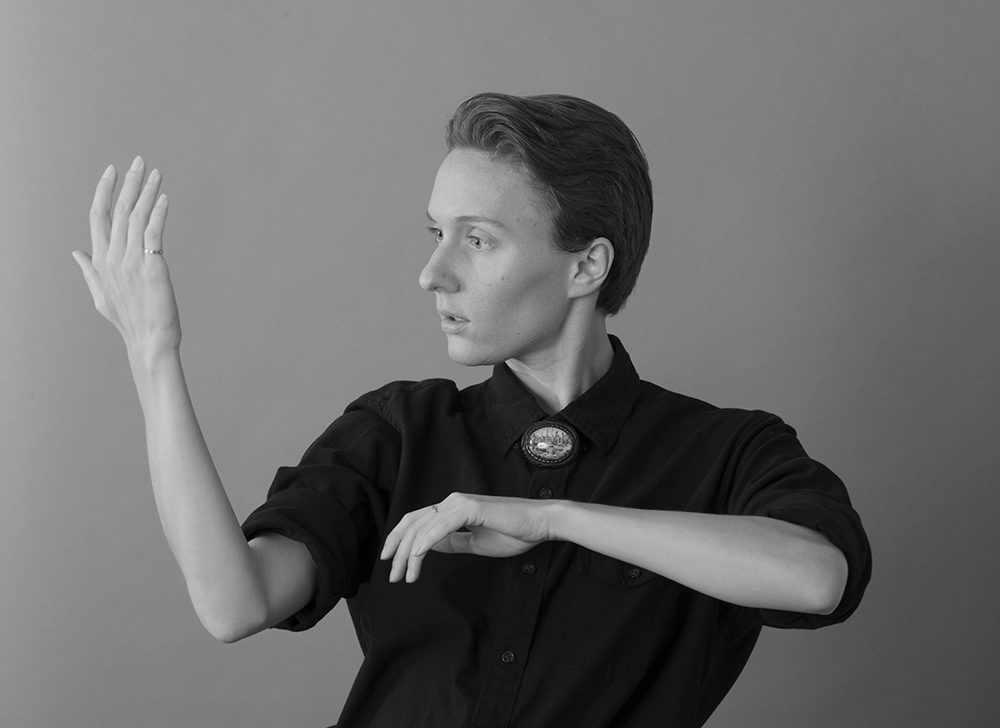
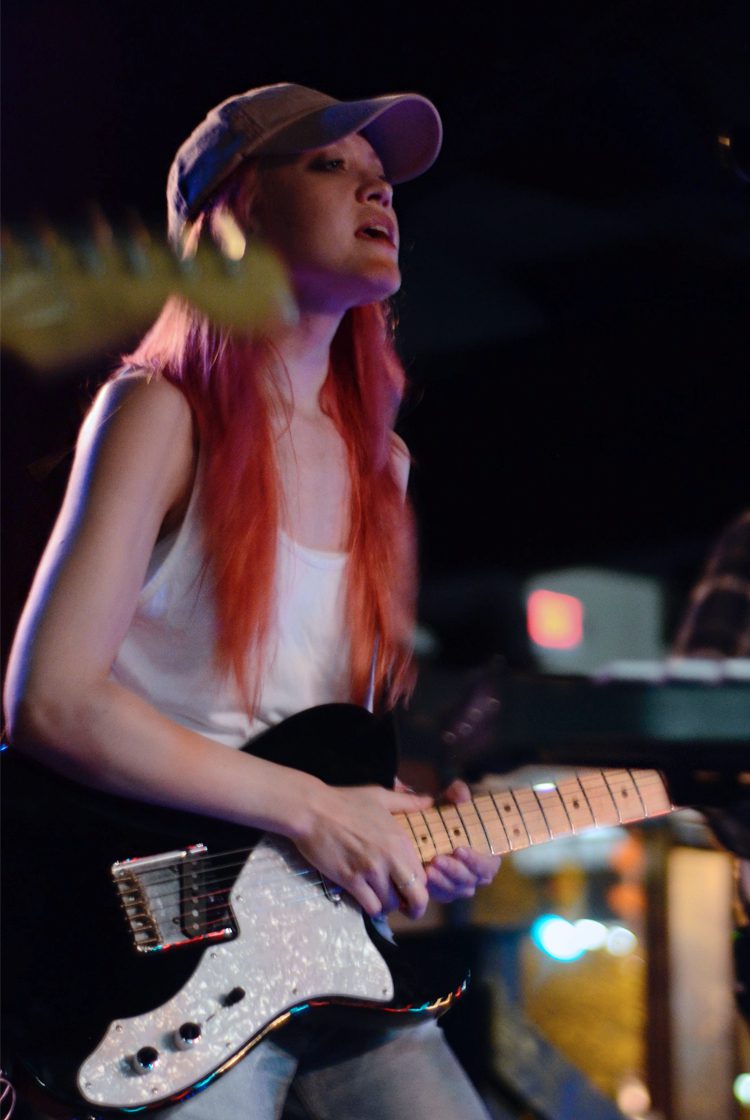
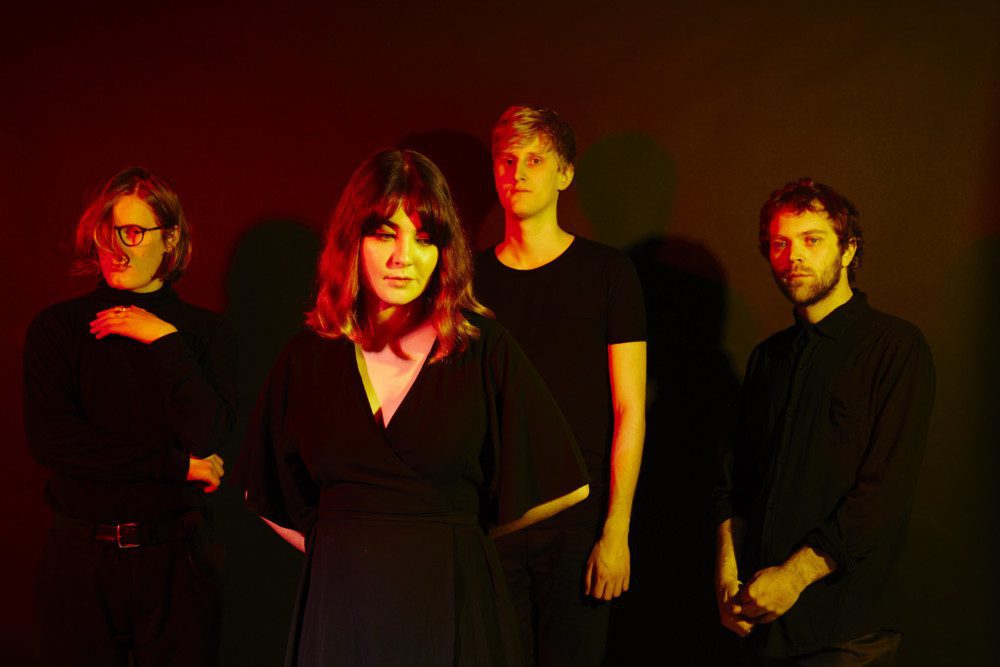
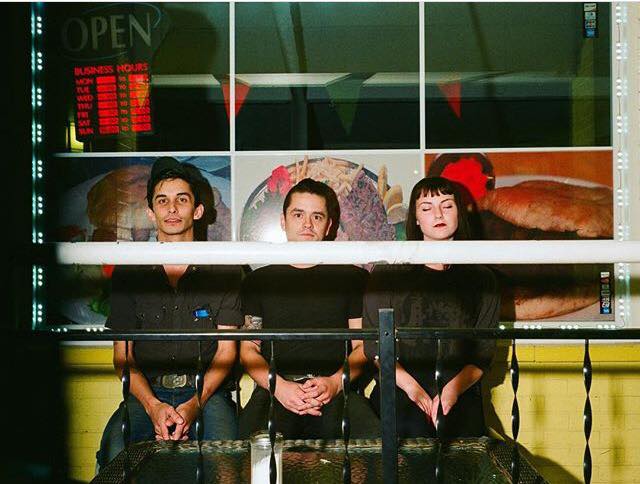
Photo by Alex Mackenzie and Mitchell Jón Stafiej

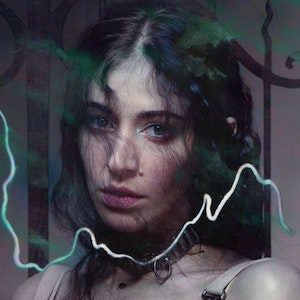
Petra Glynt (a.k.a. Alexandra Mackenzie) isn’t interested in writing love songs. The world is on fire, she has a microphone in her hand, and she wants to you listen to what to she’s laying down.

This Trip is a journey through modern life: government propaganda, climate change, technology, greed. It is a rallying call for a generation poised to make great changes in the world. Considering its dark subject matter, This Trip remains surprisingly upbeat with songs like “Up To The People” playing out like a protest march conga line. It feels like a visual album, with Mackenzie’s voice echoing, shifting, commanding space; the music tells the story of a world on the precipice of disaster, with a few brave warriors ready to do battle.

We sat down with Alex Mackenzie to talk about the forces that inspire her unique sound.

AF: To start, I’d love to hear a bit about your upbringing. At what age did you first take up the artist’s mantle?

PG: I was seven when I went into singing lessons. I was in awe of musicals, and wanted to sing. I took private lessons once a week with the same teacher until I was 18.

[/fusion_builder_column][fusion_builder_column type=”1_1″ background_position=”left top” background_color=”” border_size=”” border_color=”” border_style=”solid” spacing=”yes” background_image=”” background_repeat=”no-repeat” padding=”” margin_top=”0px” margin_bottom=”0px” class=”” id=”” animation_type=”” animation_speed=”0.3″ animation_direction=”left” hide_on_mobile=”no” center_content=”no” min_height=”none”]
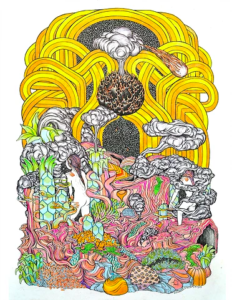
‘Of This Land’ by Petra Glynt. Pen and pencil crayon on illustration board 11′ x 15′.

AF: And did drawing come at a young age too?

PG: Yes! I always drew and made things, but it wasn’t until I was in Toronto for school that I discovered that a person could identify as an artist and go to school for it. So I switched from U of T to OCAD. Art was always a bit more naive in that way.

AF: Tell us about how Petra Glynt was conceived.

PG: It kinda came about in the aftermath of the Occupy Movement. At that point, at the end of summer in 2012, I didn’t have a musical project of my own. I was playing with my partner at the time, but felt really inspired and ready to burst with all kinds of energy from my experience observing and participating in the movement. Up until then I had sang, improvised, and played drums in various bands and musical projects, I felt compelled and ready to start composing my own music.

AF: You wrote the song “This Trip” two years ago, but the song speaks directly to a world in which Trump is president and the earth is in peril due to climate change. You a make a point of saying that Petra Glynt’s music is political AND upbeat. How do you strike a balance between the two?

PG: I started writing “This Trip” when Stephen Harper was the prime minister of Canada. All those feelings I was having towards him, the Canadian government, and the state of the world are magnified now with Trump in power. When I was writing the music for this album I felt a push to be militant, and that still remains, though my writing style and approach have changed. I feel the need to write percussive music and dance music because it’s what moves me personally, and without fail, my lyrics tend to illustrate my stance on the world around me. I’ve never been able to write a love song or something sweet or gentle or frivolous.  I tried writing a love song and it became analytical of love instead. I’m not sure if I’ve found the perfect balance yet. I think it’s part of the journey of my life’s work, and I can’t wait to keep reaching for it.

AF: I love this line from “Up to the People:” Up to the people with the green thumbs / Up to the ones sick of reruns. I feel it encourages people to get out and act. With the constant stream of apocalyptic news, it can start to feel like no headway is being made. What are a few actionable steps you’ve found that people can take?

PG: Thank you. The world is undeniably so heavy right now, with the news a combination of racial violence, climate catastrophe, refugee and immigrant injustices, et cetera. Nothing seems to be routing towards the future we need in terms of what we see in the media. But yes, this song is meant to motivate people and encourage a spirit of action, and also bring people up when so much of our reality is really sad and debilitating. I’m not the one to give direct advice to people; it’s not my place to provide answers. But staying skeptical of government and corporations is a good place to start. Don’t expect that they have your back and that they’re looking out for our best interests. Think of ways to take care of yourself, community, family, friends outside of their aid. That may sound paranoid or something, but I think it might inspire the DIY attitude we need to work together. Also, join in on local movements and check your privilege when you walk in the room.

AF: As I researched Petra Glynt and your other music project Pachamama, I found myself going down a rabbit hole in terms of indigenous references. Why is incorporating these ancient symbols and gods important to you as an artist?

PG: In my early art I had a fascination with occult imagery and fantasy, but I stay far away and clear from any sort of cultural or indigenous appropriation. Pachamama was a music project between myself and my partner at the time who is half-Nicaraguan. Pachamama is Spanish for Mother Earth, and is also the title of anarchist Emma Goldman’s 1920s journal/magazine. Protecting indigenous voices and culture is important to me, but I wouldn’t put it in my artwork.

AF: Watching Petra Glynt perform is incredibly galvanizing. How do you prepare to go on stage? Is there a personae you put on?

PG: I love performing. I think a switch just automatically turns on. I get into the music and the music itself requires a meaningful, strong performance. Anything less and it wouldn’t come across well. I don’t know if I have a personae… I think it changes from show to show depending on how I feel, what I want to wear or how I do my make-up. I think ultimately the drive to perform comes from the sheer love of it and sharing the music as intensely and honestly as I can.

AF: Your artwork and your music feels so unabashedly fierce. No reservations. What advice would you give an artist who hesitates, who is maybe struggling to solidify their voice?

PG: That’s a tough one. Everyone has their own comfort threshold in regards to sharing their art and putting themselves in a vulnerable place or in the public eye. Being an artist takes guts in that way. I think if you are working hard and making your best work, you should be proud and unashamed of sharing it. I’ve always been mostly okay with sharing because I’ve been performing since I was a little kid. But I think my anger and frustration towards corporatized government have allowed me to bypass my personal reservations and hesitations. For me, it’s become more important to contribute than not, and for others, art doesn’t always have to be so outright political. Empowerment can be derived from many forms of art-making. I think it’s nice to think of one’s body of work as being tied to periods in our lives. We may not make our best work ALL THE TIME, but there are reasons for that. Our art grows with us as people. Be patient with yourself.

Petra Glynt’s This Trip will be released on Vibe Over Method on October 27th. [/fusion_builder_column][/fusion_builder_row][/fusion_builder_container]
VIDEO PREMIERE: May Erlewine “Get It Back”

[fusion_builder_container hundred_percent=”yes” overflow=”visible”][fusion_builder_row][fusion_builder_column type=”1_1″ background_position=”left top” background_color=”” border_size=”” border_color=”” border_style=”solid” spacing=”yes” background_image=”” background_repeat=”no-repeat” padding=”” margin_top=”0px” margin_bottom=”0px” class=”” id=”” animation_type=”” animation_speed=”0.3″ animation_direction=”left” hide_on_mobile=”no” center_content=”no” min_height=”none”]

Photo By John Hanson

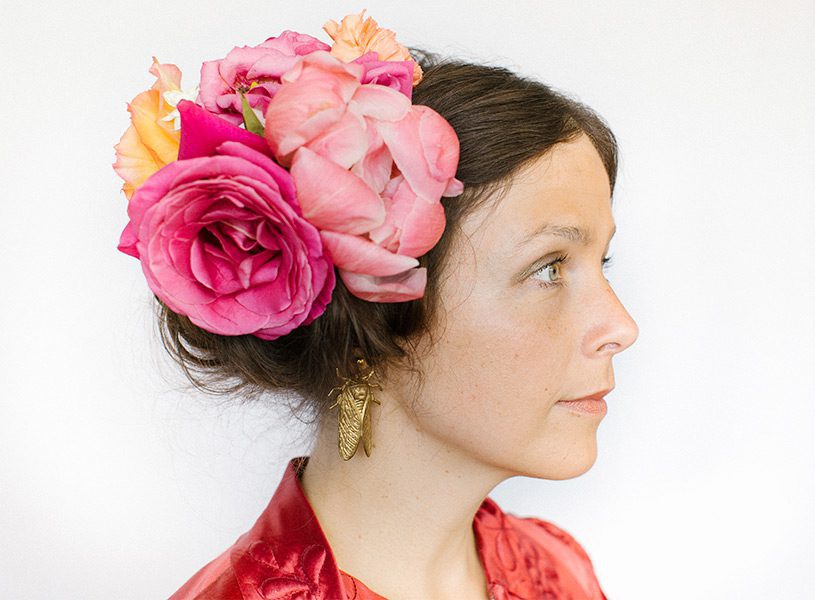
May Erlewine believes that music means community, and she’s spent her career in service to her Michigan roots. Raised by hippies in Grand Rapids, Erlewine grew up surrounded by music, encouraged to explore her own creativity from every angle. Her new record Mother Lion has the maturity of a woman grounded in her roots, looking forward to the future.

“Get It Back,” Erlewine’s newest track, is a slow boil of a song. My mind couldn’t help but see it played against a dramatic movie scene, in which a character reaches a pivotal crossroads. It speaks of temporary moments, faded memories, photos hidden at the bottom of a musty drawer.

We sat down with May Erlewine to talk about her musical influences and the responsibility of being an artist.

AF: You grew up in Big Rapids, Michigan. Can you tell us a little bit about your family and how music played into your childhood?

ME: My parents both came from artistic families. We lived in Ann Arbor before I was born. They practiced Tibetan Buddhism and were vegetarians. My Dad’s mom was a visual artist and my Dad played in bands. Music and the arts were a big part of everything in my family, so they were very encouraging and supportive of any sort of creativity that I wanted to explore. I was home educated for a while in my childhood, so that was another cool thing, a great way to be able to explore the arts a little bit more than maybe a lot of people get to in public school. Music was always on and around; my Dad was a music appreciator and always showing us different kinds of music. He started The All Music Guide, so when that started there were musicians coming and going to write. So I had a pretty rich and active childhood, as far as lots of people being around. But also my family was definitely a really oddball family in a small town.

AF: Who were some of your earliest music influences in terms of styling and what kind of music you gravitated toward?

ME: My Dad listened to a lot of the soul singers like Irma Thomas, Billie Holiday, Fenton Woods, Sam Cooke, and James Brown. That stuff was on and a ton of blues. But then my mom was in love with the songwriters and the folk tradition; she listened to Bob Dylan, Joni, Pete Seeger and stuff. So those two camps were pretty strong, and sort of were the touchstones for a lot of my first inspiration, melodies, singing, and songwriting for sure.

AF: Your new album Mother Lion was partially funded through Kickstarter. What was that process like?

ME: We’ve used Kickstarter before, but I’ve never asked for as much as I did for this one. I’m lucky – the community in Michigan is very supportive, but since I was going for more, I really wanted to put a lot of intention into the video and into what we were asking for. We had a visual team for this whole project; we really kinda went all out on making the video and our communication and explaining what the album was. I just felt grateful that people got behind it one hundred percent, a lot more than I ever anticipated. It was a really beautiful showing of the community, and then also those people sharing it with others. It had a really broad reach and got a lot of support, with over 600 backers in the end. It was a really moving experience.

I’ve worked in the community here and kinda use my music as a service-oriented job, try to be involved in the community, work with kids, work for environmental access organizations, and also social justice issues. So it was kind of a nice way to see that the music I’ve been making is meaningful, that the community there is ready to support not just my art, but that its independent artists are valued.

AF: “You’ve got to live it, every minute that you have / Cause you won’t get it back.” I love that line from your new single. Can you give us a peek behind the writing process of this song?

ME: This is one of those songs that just came. Sometimes you have to toil over them and sometimes they just show up in one piece. I wrote this song on the piano. The chorus came first and it’s sort of interesting because it’s such a kind of quiet, subtle chorus, and then the song started unfolding. It was at a time in my life that was challenging on a lot of levels, and there was a lot going on in the world around us and a lot of pain. I was struggling with trying to figure out how to continue forward, so the song is about the preciousness of what we have. Even when we’re experiencing loss or grief we still have to show up in the moments that we have. As we get older, I guess you start to look back at time, and you realize it just keeps moving on without you, whether you’re happy or sad. Time keeps moving. So the song is about acknowledging that and trying to grapple with still allowing the preciousness of each moment, even when we’re experiencing pain or loss. It’s a song about loss and grief, and then also embracing what we do have and trying to remain grateful for it.

AF: You have a daughter, Iris. Has your writing process changed at all since becoming a parent?

ME: Having a child really shows you what is important and allows me to live from a richer, more selfless place. Also knowing I am my daughter’s example of what it looks like to be a woman in the world makes me want to do the best that I can.

AF: You are a member of the Earthwork Music Collective, “a group of independent artists who share resources and talents to raise both community and self-awareness, along with facilitating and encouraging original music in the state of Michigan.” How did you first get involved with the collective?

ME: Earthwork Music was founded by my ex-husband, Seth Bernard. We worked together on building the collective over the past thirteen years or more. It’s sort of an umbrella for collaboration and mutual support, while focusing on investing and serving our communities as well.

AF: You spoke earlier about how music and community are so closely intertwined for you as an artist. Do you feel like musicians have a kind of responsibility to act as a mirror, helping to reflect the problems of their time?

ME: I believe that all artists do this, consciously and subconsciously. We digest what’s going on around us and then present it back to the world. For me, I also honor the old-school tradition of the singer-songwriter. I want to be intentional about using my voice for things that need awareness.

AF: Alright, now for a couple speed questions. Favorite album you’re listening to right now!

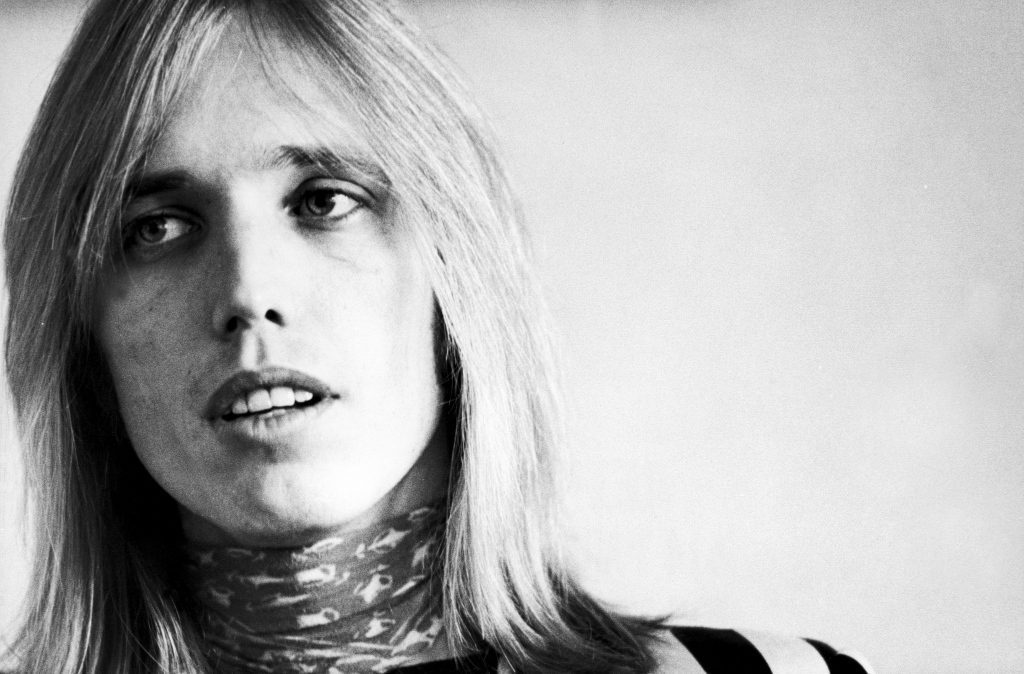
ME: I really love Jason Isbell’s Southeastern and also I’ve been loving Bobby Charles (self titled) and Joshua Davis has a new record called The Way Back Homeand of course dipping back into Petty, given the news.

AF: Favorite venue to perform in.

ME: That’s a bit of a dangerous one to answer for me. I love intimate listening rooms of 400 or less. I also love playing house concerts. There’s something special about no amplification, just making music in the room. I’ve done a few house concert tours, they are magical.

AF: Mother Lion ends with “Grateful,” a piano ballad that echoes the feeling of standing in a church sanctuary. You sing,“I will be strong / And stronger still / Torn from my hopes / worn from my will / When I speak my truth / You’ll hear me say / I am grateful / at the end of the day.” What message do you hope people get from this album?

ME: The album was written to help people feel. With all of the struggle, emotionally, environmentally, politically, socially, it’s easy to become overwhelmed and out of touch with our feelings. This album is holding space for those feelings, both the sorrow and the joy. Trying to help people to get back in touch with their hearts and the slower, quieter voice within. Also, Tyler Duncan, my producer, was a huge part in creating a safe and nurturing place for these vulnerable sentiments to be expressed.

Keep an ear out for May Erlewine’s 10th studio release Mother Lion, due out November 1, 2017.[/fusion_builder_column][/fusion_builder_row][/fusion_builder_container]
BAND OF THE MONTH: Sound of Ceres

[fusion_builder_container hundred_percent=”yes” overflow=”visible”][fusion_builder_row][fusion_builder_column type=”1_1″ background_position=”left top” background_color=”” border_size=”” border_color=”” border_style=”solid” spacing=”yes” background_image=”” background_repeat=”no-repeat” padding=”” margin_top=”0px” margin_bottom=”0px” class=”” id=”” animation_type=”” animation_speed=”0.3″ animation_direction=”left” hide_on_mobile=”no” center_content=”no” min_height=”none”]

photo by Ben Tra

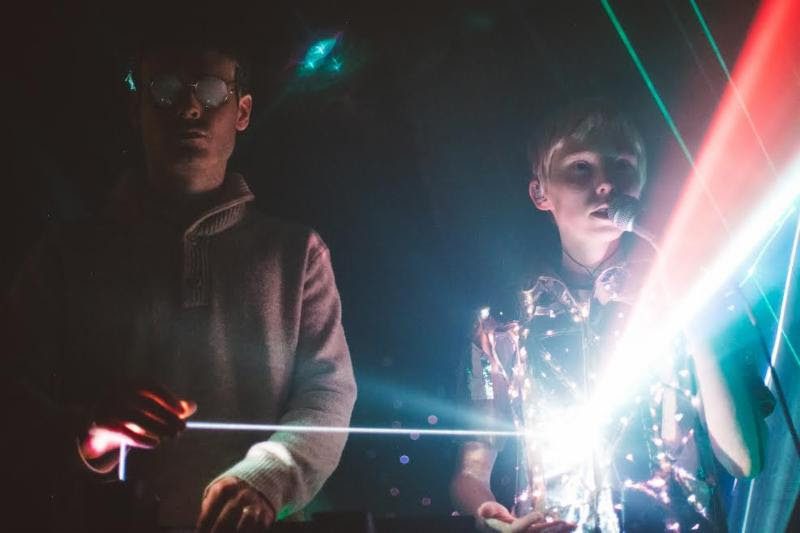
There aren’t many Brooklyn bands that can convince high-profile performance artists like Marina Abramović to brave Bushwick’s divey DIY scene, but Sound of Ceres did just that last August, during their month-long residency at Alphaville. Then again, Sound of Ceres stretches the boundaries of what it means to be a band, interacting with morphing, mesmerizing laser-light visuals throughout their live show. Currently on tour in support of their recently-released sophomore album The Twin (via Joyful Noise Recordings), the band’s constant evolution plays out not just in the show’s visuals, but on the newest album as well; so maybe it’s not so surprising that an artist like Abramović, whose work deals with human interaction and liminal selves, would find an act like Sound of Ceres compelling.

Sound of Ceres was formed in 2014 by partners Karen and Ryan Hover, from the remains of their shoegazey recording project Candy Claws. Alongside Kay Bertholf and a rotating cast of musicians, the Hovers released three albums under the moniker, each more conceptually dense than the last. Their final LP, Ceres & Calypso in the Deep Time, was built around the narrative of a girl (Calypso, Kay’s alter-ego) and her pet white seal Ceres (who represented Karen), traveling through a pre-historic sound collage known as the Deep Time (Ryan, naturally). With a completed narrative arc in the bag, the Hovers felt it was time to move on artistically (and physically – they relocated from Colorado to Brooklyn around the same time).

“We decided it was time to start something new, that a new story could be told,” Karen explains when we speak over the phone. “There were a lot of other members in Candy Claws over the years, and people had moved away, and it just seemed more natural to start something new with different people.” Whereas Candy Claws existed mainly within the confines of a recording studio, the Hovers wanted to tour behind their new project, although Karen would remain the voice behind it – hence the carryover of the name “Ceres.”

“We really wanted Sound of Ceres to expand a little bit,” she says. They tapped guitarist Derrick Bozich, Ben Phelan of Apples in Stereo, and Jacob Graham, formerly of The Drums, though his role in Sound of Ceres was more like that of an artistic director than musical contributor; he’s the one responsible for developing the mechanics behind the band’s innovative live light show. “Pooling all these different influences has created a unique sound that I don’t think we could’ve come up with on our own,” admits Karen. “Sound of Ceres is a lot more synth-heavy; all of the members that we work with now are very interested in analogue and modular synthesizers, so we’re getting a lot of sounds that we haven’t used before just ’cause we never totally went there with Candy Claws.”

The band released their first album, Nostalgia for Infinity, in 2016; around that time, Ryan picked up a copy of The Magic Mountain, the celebrated German novel written by German author Thomas Mann in 1924. It provided the conceptual seeds for The Twin. Karen says that Ryan is “a big reader, and really draws reference from books to make albums.” She adds, “I think it’s hard for him to sit down and make music if he doesn’t have this idea behind it that is kind of inspired from literature that he’s been reading.”

But The Twin also draws on references from modern writers. The band had longtime friend and sci-fi author Alastair Reynolds pen an accompanying narrative based on demos they’d send back and forth as they worked on the record. Reynolds’ story appears on the back cover of the album art, as well as in a specially-printed booklet included with the Limited Edition version of the oxblood-and-bone colored vinyl.

Many of the songs sent to Reynolds, it turns out, changed drastically once Sound of Ceres traveled to Iceland to put finishing touches on the record. Their reasons for doing so went beyond the inspiring setting – they planned to work with producer Alex Somers, whose notable collaborations include working with Jónsi of Sigur Ros, Julianna Barwick, Leif Vollebekk, and Briana Marela. “We’ve known Alex for a few years and have enjoyed each others’ musics,” says Karen. “We were very interested to see how he would apply his own kind of ethereal mystical presence to our record. And just the joy of going to another country and finishing our record in this place that seems so  isolated and very different from the rest of the world was very intriguing in itself.” Somers pushed Sound of Ceres well outside of their comfort zone, Karen says. “We’ve always been afraid in the past to have the vocals be very apparent and on top, [/fusion_builder_column][fusion_builder_column type=”1_1″ background_position=”left top” background_color=”” border_size=”” border_color=”” border_style=”solid” spacing=”yes” background_image=”” background_repeat=”no-repeat” padding=”” margin_top=”0px” margin_bottom=”0px” class=”” id=”” animation_type=”” animation_speed=”0.3″ animation_direction=”left” hide_on_mobile=”no” center_content=”no” min_height=”none”][or use] many layers of vocals. He also had the take on percussion being more in the foreground, which we had not done before either. He added some sampling of his own and really brought the drums and vocals to the foreground.”

Of course, the biggest change was a move away from guitar sounds and into synth-laden territory, something that had already begun to happen with the band organically, but that Somers also encouraged. “Our guitar player Derrick has a Mellotron pedal for his guitar so live, he’s essentially playing the guitar but it sounds like a Mellotron,” says Karen with a laugh. “[We’re] trying to do different things with the instruments that we have to get new sounds.”

The payoff looms large in the otherworldly, expansive feeling of The Twin; Karen’s delicate singing floats in an effervescent wonderland of languorous synth modulations, punched up with textural percussion. Tracks like “Gemini Scenic” and “Humaniora” have positively glacial sparkle, while the title track’s glissandos, pensive riffs, and orchestral flourishes are the stuff of sci-fi cinema. Fans of Broadcast might have to catch their breath at the uncanny similarity; against a kindred background of heady dream-pop inflected electronica, Karen is a dead ringer for the late Trish Keenan. The Twin crackles with the icy isolation of space, but Karen’s plaintive intonations of Ryan’s humanistic lyrics have the spark of warm-blooded terrestrial life meditating on deeper meaning and reaching out for connection across the vastness of the universe.

It’s hard to imagine what that might’ve sounded like before the band’s trip to Iceland; these sweeping changes transformed the album into another work entirely. Karen says shadows of its former execution remained, like a mirror version of the same being, or a twin of itself – hence the record’s title. “The songs were already there, the melodies and lines were developed and such, but when we took it to Alex it really changed a lot,” Karen admits. “We’re very curious to maybe someday release what we had in the first place to see what people would think.”

For now, Karen, Ryan, and the rest of Sound of Ceres are content to let the material continue to mutate into whatever it may be. While on the road, Karen says that even their carefully choreographed laser show evolves from city to city. “Our August residency was the first time we really felt like this was the show we’ve always wanted to have,” she recalls. “As we’re on tour we think of new ideas in the car, like new ways to use the equipment we already have. We’re able to implement the changes pretty quickly, so every night it’s different.” Too many bands get lost in their own egos, but Sound of Ceres’ willingness to shapeshift – bending like a quick flash of laser light, blipping in and out like the faint transmission of a far off galaxy – is what makes them a force to be reckoned with.

The Twin is out now via Joyful Noise Recordings. Catch Sound of Ceres at one of their remaining tour dates below.

10/24 – St Louis, MO @ Foam
10/25 – Lexington, KY @ The Burl
11/11 – South Holland, MI @ Fireside Brew
11/12 – Chicago, IL @ Burlington Bar
11/13 – Indianapolis, IN @ Square Cat Vinyl
11/16 – Greenville, SC @ Cabin Floor Records
11/18 – Lynchburg, VA @ Riverviews Gallery
11/19 – Brooklyn, NY @ Silent Barn[/fusion_builder_column][/fusion_builder_row][/fusion_builder_container]
PET POLITICS: Haybaby’s Leslie Hong Befriends Felines & Fishes

[fusion_builder_container hundred_percent=”yes” overflow=”visible”][fusion_builder_row][fusion_builder_column type=”1_1″ background_position=”left top” background_color=”” border_size=”” border_color=”” border_style=”solid” spacing=”yes” background_image=”” background_repeat=”no-repeat” padding=”” margin_top=”0px” margin_bottom=”0px” class=”” id=”” animation_type=”” animation_speed=”0.3″ animation_direction=”left” hide_on_mobile=”no” center_content=”no” min_height=”none”]

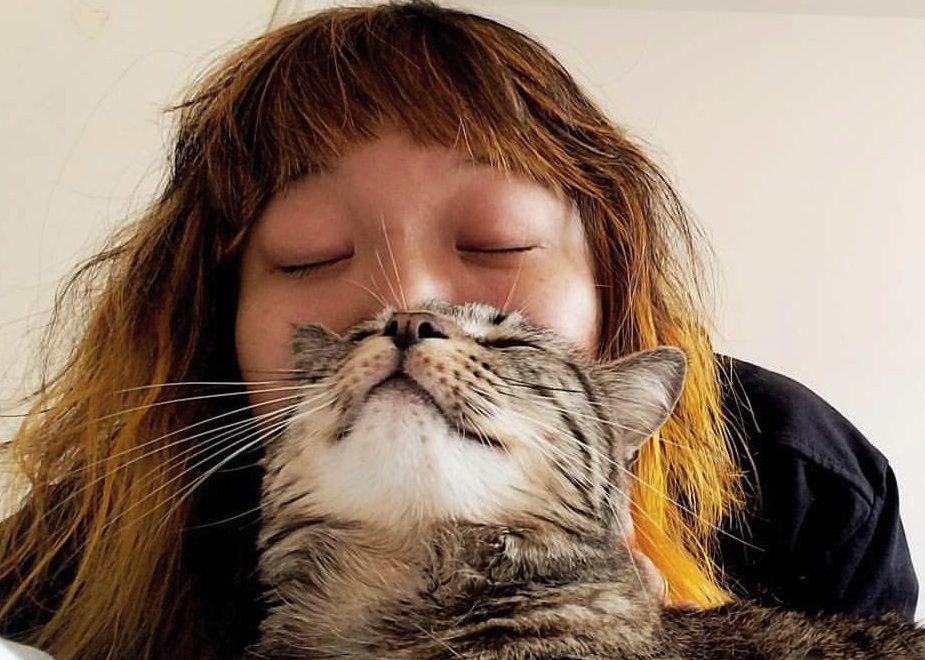
Leslie Hong and her cat Miho. All photos courtesy Leslie Hong.

As an animal lover and musician myself, I wondered whether there was a connection between art (specifically in the music realm) and animals. I wanted to know how pets affect individual artists, and whether love for animals plays any role in bringing bandmates together. Mostly, I just wanted an excuse to talk to people about their fur babies as I hold my own so near and dear to my heart and they are on my mind constantly throughout the day. The last Monday of every month, Pet Politics (named after a Silver Jews song that’s probably not about actual pets) will showcase a different musician and their animal muse.

For my first installment, decided to hit up Leslie Hong, whose bands Haybaby (that’s “Hay” baby, not “hey” baby – so we are talking “hay” as in a horse’s meal) and Granny have made her a staple in the Brooklyn scene. Now she performs solo under the moniker Grandma. Despite her recent departure to Richmond, VA, Leslie continues to gain fans and make waves here in Brooklyn, periodically traveling back to play shows and visit friends. Of course, I am a huge fan of Leslie’s eclectic, dynamic, and catchy tune and know her to be an affectionate pet mom on a personal level. The apartment she once lived in with Haybaby bassist Sam Yield has even been dubbed The Cat Farm.

[/fusion_builder_column][fusion_builder_column type=”1_1″ background_position=”left top” background_color=”” border_size=”” border_color=”” border_style=”solid” spacing=”yes” background_image=”” background_repeat=”no-repeat” padding=”” margin_top=”0px” margin_bottom=”0px” class=”” id=”” animation_type=”” animation_speed=”0.3″ animation_direction=”left” hide_on_mobile=”no” center_content=”no” min_height=”none”]

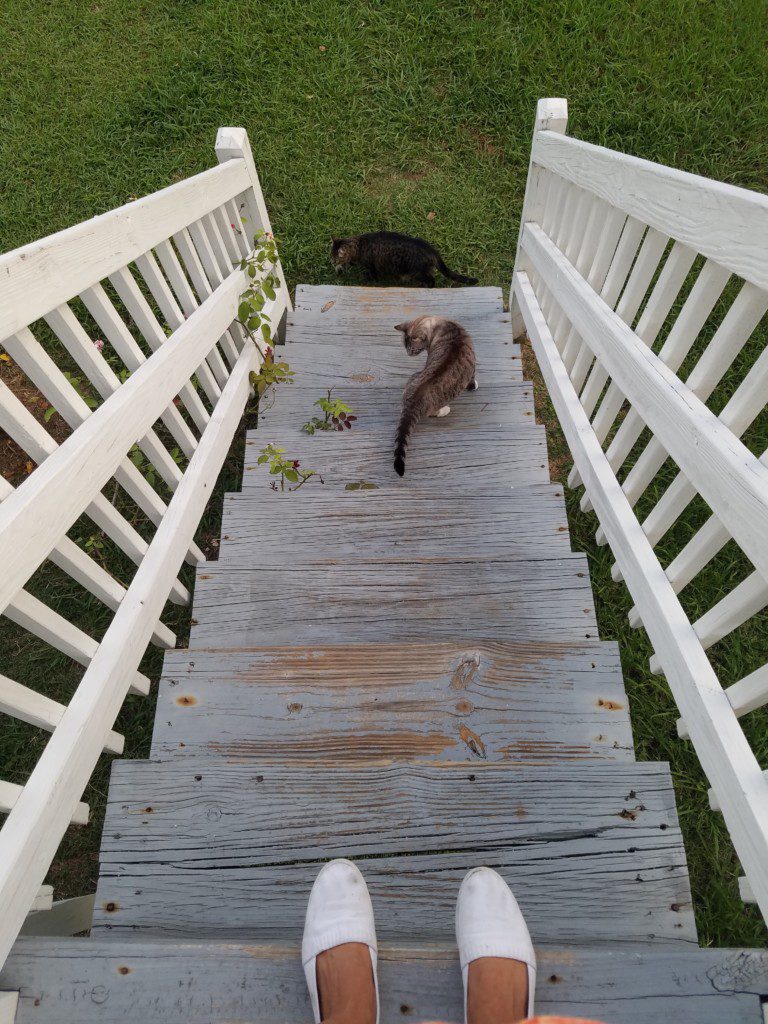
Miho, Lucy, and Leslie’s feet in Richmond, VA

NK: How long have you been playing music and how did you start? What was your first instrument?

LH: *Classic Asian parent move* – my parents wanted me to have discipline from the regimented learning of an instrument from an early age and we were privileged enough to afford it because I am the solo fruit of their loins. I started playing piano when I was six and I liked my teacher a lot. She was old and white and soft and she smelled nice. I can’t remember why but I switched to violin when I was eight, then later viola in middle school orchestra when we had ten violinists and no violists. My viola teacher was a sad young woman who looked like she cried a lot and was super distressed by the way I’d clearly never practice so I started hating lessons/listening to The Ramones. Meanwhile a hot media tech in middle school told me and some friends that we should start a band so I wrote my parents a standard five-paragraph essay on why they should allow me to get a drum kit and they found it so convincing that they let me get the cheapest trash drum kit and from then I was done with Suzuki. I taught myself guitar when my dad lost half the index finger on his left hand in a car accident the next year because he had just bought this gorgeous classical acoustic that was just sitting in the closet.

NK: You grew up in Maryland; can you tell me a little about what that was like? What was your earliest exposure to animals?

LH: The part of Maryland I’m from rests on the northwest corner of DC, so it wasn’t rural in any way. Sprawling suburbs and strip malls like most of America, but more densely populated, still close-ish to nature where there were enough streams to catch guppies with your hands and man-made lakes to spot turtles. My parents were Jehovah’s Witnesses and would take me door-to-door with them. When I was three, a bulldog latched onto my heel and would not let go, so I was wary of dogs until I started touring and getting to meet dogs more intimately.

NK: Who was your first family pet?

LH: Pearl, the hermit crab. I had maybe three consecutively named Pearl but they all died in a few months. Turns out hermit crabs need heat and we were keeping them in a drafty basement!

NK: Who was the first pet you cared for on your own?

LH: Pearl, the hermit crab, when I was six. My mom wouldn’t let me have pets unless I took care of them. I also had many hamsters, a couple guinea pigs, and a rabbit over time. 

NK: Do you have a favorite type of animal?

LH: I just recently moved to a new city where I don’t know anyone so I’ve been spending so much time with my cats and they make me feel #blessed every day. Cats are so cool. When you’ve won one’s affection/company, you know you’re worth their time, because they’re mostly fine hanging out on their own.

NK: What was it like moving to Brooklyn from a more rural area?

LH: I moved to Brooklyn from El Paso, Texas and it was a huge change. Super invigorating, everything I had dreamed of. Disgusting, grimy, human. Rats the size of cats. I was mostly just excited to be independent.

NK: How did you meet your current bandmates? How did Haybaby form?

LH: In 2010 (maybe?) I was playing drums in my buddy Zach’s band and Sam came to a show because he had met Zach at another show. There was one song where we switched instruments and I sang like a baby and Sam came up to me after wanting to start a band called Precious Metal where I’d sing like a baby to metal (obvs). It never happened, but eventually the three of us started playing together as Haybaby. Zach left a few years ago to focus on his current band, The Adventures of the Silver Spaceman. After suffering almost a year with an unreformable narcissist/misogynist bro on drums who would be late to practice because he was working out and would aggressively hit on every woman at every show we played (I’m so sorry every lady who came to a show during this time), we axed the guy. Jeremy knew we were looking for a new drummer and asked to play with us and we said yes please because we knew he was so talented but please but don’t be a perv. And true to his word, he hasn’t been.

NK: What has the transition from a Brooklyn resident to a Richmond, VA resident been like? Does everything feel the same or totally different when you come back to play shows?

LH: It hasn’t been easy. I had thought I was ready to move because New York is both exhilarating and intensely draining, but I find that I miss Brooklyn so much. I miss stimulus. I miss bodegas. I miss the music community that I’m lucky enough to be part of. I miss my friends, and running into people I know on the street. But on the flip side, I love the open sky, paying a third of my rent for three times the space, having a studio in my apartment, standing in the river ten minutes from my place checking out fish, and hearing crickets. I also know there’s a strong progressive music and arts scene here, I just need to find it!

I’ve lived in Brooklyn my entire adult life. You have to be a specific kind of crazy to live and want to live in New York and I’d been there and worked in food service long enough to think I had everybody pegged at first glance. One thing I enjoy a lot about New Yorkers is that we’re all some kind of neurotic. You make a joke in a bar about wanting to die/needing a vacation/general depression and everyone’s like ‘hear hear.’ A lot of people I’ve met in Richmond seem pretty normal and well-adjusted and it’s difficult for me to connect because they actually seem happy. Part of me wonders if it’s because they’re not faced with the abrasiveness of others on a daily basis like the cat-callers, man-spreaders, and open racist comments of just getting to work in Brooklyn. Here, that hate is more insidious and it’s been shocking to see all these Confederate flags and Trump stickers and have to check myself from snapping at men when they call me sweetie or darling. It continues to be a culture shock. When I go back to Brooklyn now I’m more acutely aware of the things I liked about it, and I revel in its familiarity.

NK: You are currently a pet owner. Can you introduce your pets? What are their names, ages, temperament, animal kingdom residence, and how did they come to be under your care?

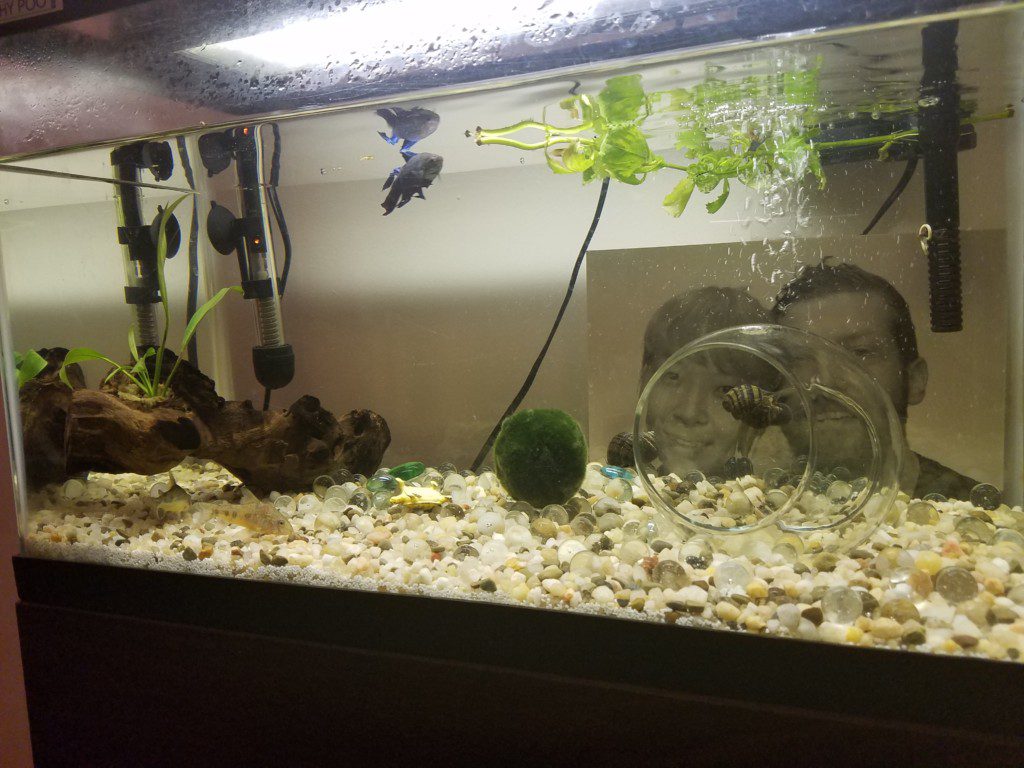
LH: I have two cats, one betta fish, two cory catfish, and two big snails. Miho is the oldest – she is a 12-year-old grey tabby cat with green eyes. I lived in El Paso when I was in high school and this little girl had rescued this tiiiiny kitten from being eaten in Juarez by its cat mom to bring her over the border to my mom. She has always been a princess and snuggle monster but is easily spooked and easily irritated if you pet her wrong and likes to rip cardboard and eat cheese. Lucy, my 8-year-old cross-eyed cream tabby, attacks Miho all the time. She is a bodega kitty who we brought home also as a tiny kitten around Christmas shooting green snot and crusty-faced and is a total badass. She digs in the trash, fights neighborhood kitties, eats pizza crust, and will play attack anything that moves. She also sits on my tummy all the time and it is the greatest. Baby Bo is my betta who I got as a baby from Petco earlier this year when I found out my dad had cancer. His mouth was too small to eat the betta pellets so I painstakingly hatched brine shrimp and pipetted them to him and I found it to be really helpful to have an environment where I am fully god at a time where I felt like I had no control over my life. He seemed bored so I got more tank friends (Mom, Spud, Timmy, Tommy) who are largely personality-less and enjoy dividing their time between frantically searching for food and sleeping on the bottom of the tank.

[/fusion_builder_column][fusion_builder_column type=”1_1″ background_position=”left top” background_color=”” border_size=”” border_color=”” border_style=”solid” spacing=”yes” background_image=”” background_repeat=”no-repeat” padding=”” margin_top=”0px” margin_bottom=”0px” class=”” id=”” animation_type=”” animation_speed=”0.3″ animation_direction=”left” hide_on_mobile=”no” center_content=”no” min_height=”none”]

Leslie’s fish family.

NK: How are your fur babies adjusting to the new environment?

LH: Lucy hyperventilated and meowed her head off for an hour during the drive down until I gave her some Popeye’s. It was tough at first because she is such a city kitty and seems weirdly scared of open space (though she had no problem terrorizing the cats in our blocked-in backyard in Brooklyn) but now she seems to like hanging around the house. We have a lot of sun and two decks for them to go out on and lots of bugs to catch and it finally seems like they have more space to be largely at peace with each other. They’ve territorially divided out parts of the house but now they sniff each others’ faces sometimes. Miho, though previously a solid scaredy homebody, has been enjoying forays into the yard and flirting with George Lopez, the tom next door.

NK: I recall a heartbreaking Haybaby song [/fusion_builder_column][fusion_builder_column type=”1_1″ background_position=”left top” background_color=”” border_size=”” border_color=”” border_style=”solid” spacing=”yes” background_image=”” background_repeat=”no-repeat” padding=”” margin_top=”0px” margin_bottom=”0px” class=”” id=”” animation_type=”” animation_speed=”0.3″ animation_direction=”left” hide_on_mobile=”no” center_content=”no” min_height=”none”][“Edelweiss”] about a certain furry friend you lost a few years back. Would you mind talking about that song and your experience writing it?

LH: I actually think about this song and am periodically embarrassed because it’s so dramatic. I was sitting in my trash backyard in Brooklyn one day (which you can see in the album art of Sleepy Kids) and this comically adorable white rabbit with a fluffy mane hopped up and started sniffing my leg. He would always visit when people were outside and though we brought him in the house during Hurricane Sandy, it was obvious that he was a fully autonomous bunny who didn’t take any crap from anyone. A real Bushwick badass. To me, he became a symbol of New York tough. Then one winter there was an icy sleet that turned into rain and lasted for two days and he never came back. When I started singing the words that eventually became the lyrics they were a placeholder, but it turned out I was able to put a lot of feeling into the words because the song stopped being so much about the death of the rabbit but about the death of a friend you took for granted and realized retrospectively that you could have been better to.


NK: Are there any other songs that you have written that were inspired by animals?

LH: I went through a period in college where I was writing a lot of open chord pop ditties about my cats and fictional dogs because I was flirting with the thought of becoming a writer of childrens’ music. It could still happen one day.

NK: I know you are currently a Cat Mom. Would you consider yourself more of a “cat person” than a “dog person”?

LH: I’ve dogsat a few times and found that I am overwhelmed by the amount of attention they require. It stresses me out when they mope because you’re not petting them enough and it makes me feel inadequate. I feel like I’d make an okay dog mom because my spouse would make an excellent dog dad but overall I think I’d make a way better dog aunt. The entire history of dog breeding/domestication makes me really uncomfortable and sad. That said, I’d really like a smiley Pomerian. Its name would be Paul Meranian.

“Lucy” Lucifer Hong in Richmond, VA

NK: Do you think animal ownership has any bearing on the bond between you and your Haybaby bassist Sam Yield or your former Granny drummer Mattie Siegal, as both are cat parents as well?

LH: 100% totally verifiable facts shows that people who like animals are 100% of the time nicer, more patient, more capable of empathy, and less likely to be homicidal psychopaths. I don’t want to open the can of worms about cat people vs. dog people but in addition to my brief psychoanalysis of people in Richmond vs. people in Brooklyn earlier, I’ll say that people in Richmond tend to have dogs, where people in Brooklyn have cats.

NK: Do you feel that your pets provide you with emotional support?

LH: Absolutely. My cats are my favorite.

NK: How does this translate into your art?

LH: Well my music might be more interesting if I didn’t have cats because I’d probably be a lot more lonely and sad. Sometimes I find it difficult to motivate myself to be productive at home because I would so much rather lay around with them than do anything else.

Leslie lounging with Miho and Lucy at her home in Richmond, VA
[/fusion_builder_column][/fusion_builder_row][/fusion_builder_container]
NEWS ROUNDUP: Planned Parenthood Compilation, Ducktails Singer Assault Details & More

[fusion_builder_container hundred_percent=”yes” overflow=”visible”][fusion_builder_row][fusion_builder_column type=”1_1″ background_position=”left top” background_color=”” border_size=”” border_color=”” border_style=”solid” spacing=”yes” background_image=”” background_repeat=”no-repeat” padding=”” margin_top=”0px” margin_bottom=”0px” class=”” id=”” animation_type=”” animation_speed=”0.3″ animation_direction=”left” hide_on_mobile=”no” center_content=”no” min_height=”none”]

Sleater-Kinney has a new song on a Planned Parenthood Benefit Compilation.

  • New Song from Sleater-Kinney on Planned Parenthood Benefit Compilation

    You can now stream 7 Inches For Planned Parenthood, a collection of 7 inch records that will benefit the organization, ahead of its November release date. Contributors include a wide variety of notable musicians, comedians, and writers, from Margaret Atwood to CHVRCHES, who recorded covers, spoken word pieces, and new songs for set. Pacific Northwest shredders Sleater-Kinney penned a new song, “Here We Come,” for the collection. You can listen to the full playlist below, and better yet, you can buy the set on 11/17 to help Planned Parenthood during a crucial time when women’s access to birth control, health care, and safe, legal abortion are under threat. Full details are available here.

  • Yet Again, Reports Of Sexual Assault In The Music Industry 

    As reported last week, allegations of sexual assaultinvolving several indie musicians continue to surface, including Alex Calder (who has since released a statement confirming the story and apologizing) and producer Gaslamp Killer (who denies the allegations; Brainfeeder label mate Flying Lotus was criticized on Twitter as a rape apologist for coming to his defense at a recent show). But perhaps the most startling developments have been the case against Real Estate/Ducktails guitarist Matt Mondanile, whose unseemly behavior toward women was a so-called “open secret” in the scene. Spin has published the full allegations against him, and most of his Ducktails shows have since been canceled. Meanwhile, Bjork has revealed the harassment she experienced on the set of Dancer in the Dark at the hands of Lars von Trier, and Ariel Pink finds himself embroiled in controversy once again after a reddit user described his “tone-deaf” shenanigans at a performance in San Francisco over the weekend, in which he drunkenly pinned his girlfriend and bandmate Charlotte Ercoli to the ground. If all of this news is depressing, you can take solace in the NPR #MeToo playlist, featuring artists who have used music to validate, work through or transcend their experiences. Listen here.

  • Other Highlights

    RIP Gord Downie of the Tragically Hip, read the story of transgender soul pioneer Jackie Shane, Fox News are not fans of Radiohead, watch new videos from Screaming Females, MGMT and Japanese Breakfast, find out how 100 cars can equal a song, the Michael Jackson Halloween special will air on CBS next Friday, Google’s latest doodle honored Selena, Dan Deacon + rats, Roxane Gay interviewed Nicki Minaj, the history of Homerpalooza, Haim covered Shania Twain, new songs from Tears For Fears and The Go! Team, Jack White’s children’s book, and the latest Taylor Swift single.

https://www.youtube.com/watch?v=5uJrLmSvXMU

https://www.youtube.com/watch?v=kwCJIQ25sV4[/fusion_builder_column][/fusion_builder_row][/fusion_builder_container]
INTERVIEW: Bedouine Turns Refugee Struggle into Universal Truth

[fusion_builder_container hundred_percent=”yes” overflow=”visible”][fusion_builder_row][fusion_builder_column type=”1_1″ background_position=”left top” background_color=”” border_size=”” border_color=”” border_style=”solid” spacing=”yes” background_image=”” background_repeat=”no-repeat” padding=”” margin_top=”0px” margin_bottom=”0px” class=”” id=”” animation_type=”” animation_speed=”0.3″ animation_direction=”left” hide_on_mobile=”no” center_content=”no” min_height=”none”]

photo by Polly Antonia Barrowman

Born in Aleppo, Syria to Armenian parents, Anziv Korkejian says she doesn’t necessarily perceive herself as political, but her music allows her to express her views in an emotional way. Displaced by the Armenian genocide, Korkejian’s parents raised her in Saudi Arabia, but moved to America after winning the green card lottery. Pulled both by familial opportunity and a wandering spirit, Korkejian lived in Boston, Houston, Texas, a horse farm in Kentucky, Georgia, and eventually spread firmer roots in Los Angeles. The nomadic musician has more than earned the name she chooses to represent her artistry – Bedouine. Korkejian’s everchanging geographical journey paralleled her musical and personal growth.

Although Korkejian has always loved music, playing the guitar and songwriting wasn’t on her radar until her early adult life. “My first experience with music was my mom making me take piano lessons somewhat militantly,” Korkejian remembers. “It kind of turned me against it eventually…but I also think that’s part of the reason my past went towards songwriting, because sometimes, when you start getting familiar with an instrument classically, it stunts your growth to see it any other way.”

With a newfound aversion to piano, Anziv tried her hand at the trumpet in her teenage years, before finally picking up her first guitar right before starting college. “I bought a little silver tone guitar at a pawn shop…it was like 80 bucks and it was my only guitar until recently,” Korkejian muses. “I appreciate that facility on the piano but I also appreciate that there are more women playing and growing up on the guitar now. It’s these little things that help you see the evolution of feminism.”

After being granted a cultural scholarship for her family’s experience in the Armenian genocide, Korkejian was able to study sound design at Savannah College of Art and Design (SCAD) and filled her spare time fiddling with finger picking and writing songs that “probably all sounded really similar,” Korkejian describes. “I knew that I loved music enough to know that I wanted a career in it but also, I was too much, and I still am, of a realist to expect any kind of stability in it,” says Korkejian. “So, ever since I realized that I did want music or sound to be a part of my life, I had been grappling with what I could do that was maybe less left up to chance than being an artist.”

Cue Korkejian’s astonishingly successful career as a music editor in Hollywood. After graduating from SCAD, Korkejian headed straight for Los Angeles where she started working first at a video game company on dialogue and sound assets, then dialogue editing and sound effects for a film company, and recently adding her first feature film, The Big Sick, to her CV.

She had been writing songs here and there, but it was when Korkejian switched to freelance music editing and found herself with more free time that she truly honed her artistry. “It wasn’t until four or so years ago when I really developed a voice that was deliberate and I felt proud of,” Korkejian confirms. “I just started picking up the guitar more often and writing. There was a particular month where I was writing so much I hardly left the house. I went through a little crazy phase. It kinda worked to my advantage.”

The fruit of Korkejian’s labor is Bedouine, her vulnerably autobiographical debut album. While cozy, serene love songs like “Nice and Quiet,” and “You Kill Me,” reflect Korekejian’s calm and collected personality and outlook on romance, more emotionally charged songs like “Summer Cold” and “Skyline” shows her cognitive unrest about the place he grew up in and her innate need to wander. Perhaps prompted by Korkejian’s nomadic past, the record itself projects a feeling of impermanence, effortlessly gliding from song to song with easy melodies and soothing vocals. Recorded on analog tape by Gus Seyffert and filled with graceful, swelling arrangements (composed by Trey Pollard) the record is reminiscent of ‘60s folk combined with a tinge of ‘70s psychedelia.

The lyrics on the album are equally as chilling as the stunning musicality. Clever, earnest and poetic, Korkejian’s lyricism brushes topics of learning self-reliance, navigating modern-day romance, and grappling with the unsettling violent happenings in the country where she was born. Korkejian navigates these topics with grace and ease, effortlessly unfolding a series of universal truths.

In “Solitary Daughter,” Korekejian sings:

“I don’t need the walls to bury my grave / I don’t need your company to feel safe / I don’t need the sunlight / my curtains don’t draw / I don’t need the objects / to keep or to pawn.”

These lyrics are a testament to the minimalist way she lives her life, refusing to attach strongly to any person, place or thing. Korkejian admits that this may be, in part, a result of the detachment she feels with the country where she grew up, Saudi Arabia. “Once I left Saudi Arabia, I feel like the home I was closest to sort of dissolved and I didn’t feel any real sense of home anywhere,” she remembers. “So I think that come across a little bit. Just, like, a lack of attachment to any one thing.”

As much as Korkejian projects a lack of attachment, she also sings about love and romance. “‘Heart Take Flight’ is a song about giving yourself permission to love someone because, as you grow older and more comfortable in your skin and you become maybe more particular, it is a much more conscious effort introducing someone or co-existing with someone else.”

Moving from personal to social issues, her song “Summer Cold” is a haunting emotional response to the Syrian weapon crisis and prompts questions about her politics. But while Korkejian says she’s no activist, she admits that her music gives her license to freely express herself. “I mean Nina Simone in that famously viral video says, ‘How can you be an artist and not reflect the times?’ Well, how can you be a person and not reactive?”

Bedouine is currently on tour in the UK and Ireland through November 8. Upcoming U.S. tour dates are below.

11/14 – Washington, DC @ DC9
11/15 – Richmond, VA @ Capital Ale House
11/16 – New York, NY @ Joe’s Pub
11/18 – Allston, MA @ Great Scott
11/19 – Philadelphia, PA @ Johnny Brenda’s[/fusion_builder_column][/fusion_builder_row][/fusion_builder_container]
TRACK PREMIERE: Cassandra Violet “Invisible Man”

[fusion_builder_container hundred_percent=”yes” overflow=”visible”][fusion_builder_row][fusion_builder_column type=”1_1″ background_position=”left top” background_color=”” border_size=”” border_color=”” border_style=”solid” spacing=”yes” background_image=”” background_repeat=”no-repeat” padding=”” margin_top=”0px” margin_bottom=”0px” class=”” id=”” animation_type=”” animation_speed=”0.3″ animation_direction=”left” hide_on_mobile=”no” center_content=”no” min_height=”none”]

Photo by Polly Barrowman

Cassandra Violet, much like Batman, lives a double life. When she’s not teaching high schoolers, she’s creating music that spans the genres of rock, folk, and pop. In the past, Violet’s music slanted toward melancholy modern folk, with songs like “Beyond The Fray” and “Lady” painting portraits of desert sands and long lost love.

Her new track “Invisible Man” is a refreshing drink on a hot day. There’s an aggressiveness, an edge to Violet’s voice that takes center stage, balancing the sweet piano and subtle horn section. In a year full of negative headlines and desperate news stories, “Invisible Man” is a sunny diversion from the darkness.

We spoke with Cassandra Violet about breaking out of her folk roots and how a horn section really does make all the difference.

AF: You’re a rare bird: a native Angelino! You grew up in Venice, which I’m sure has changed a lot since your childhood. What was it like growing up by the beach?  

CV: Venice was really different when I was growing up there! It was less expensive, for one thing, so artists who weren’t wealthy could actually live there affordably. I remember there being some gun violence and gang activity. It definitely was not the Google mecca it is now. My parents still live there (both of them are artists) and every time I go over there, it’s so strange. Like everyone is under 30 and brewing their own kombucha and going to spinning classes. Not to hate on Venice!

AF: Yes, it’s all Andrew Keegan and hot yoga nowadays.

CV: It’s just this insane example of what happens when a place gentrifies the most it could possibly gentrify.

AF: In terms of the art community, do you still see it coming up out of the concrete? Or has the scene mostly moved?

CV: I know artists who still live there, but a lot of them are from my parents’ generation, I think. I know there are exceptions, but I think a lot of creative people have moved further east.

AF: At what age did you first take interest in music?

CV: I was really young when I realized I loved to sing, and that I could imitate a sound when I heard it. Also, my dad taught me how to whistle when I was little, probably around five years old. I got really, really good at whistling, better than him.

I started to play the clarinet in fourth grade, and in middle school and high school I sang and played clarinet in band and orchestra. I really loved music but I always felt really constrained playing classical music. I wanted to experiment more, and I really loved writing, but it took me a long time to sit down and write a song.

So, I guess you could say I come from more of a classical background. The only music that my parents played around the house was classical music and jazz. My dad loves Wayne Shorter. And that was a great musical education, but I had to figure out my own way of creating and accessing pop music. The point of making music for me is that it’s a pure form of expression, and it is completely free for me to do whatever I want, and become whatever person I want to become.

AF: What were some of your early pop music finds?

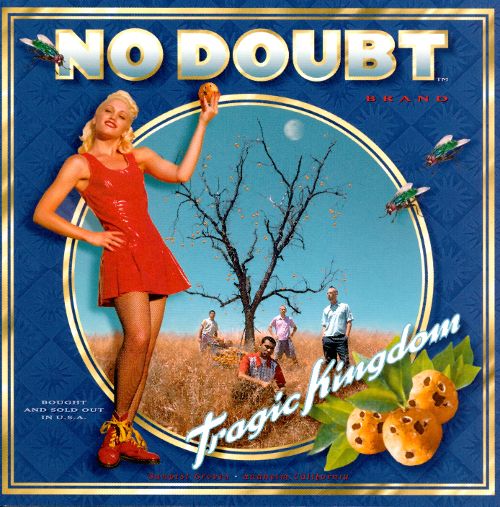
CV: Gosh. Ever since I can remember I have gravitated towards women singing autobiographically. When I was younger I was obsessed with No Doubt and Fiona Apple and Lauryn Hill. I also always loved pop singers from the ’60s like Dusty Springfield, and obviously jazz singers like Ella Fitzgerald and Sarah Vaughn, who have this insane control of their instrument. But I’ve always been most inspired by music that makes me want to move, so I changed things around.

AF: When you’re not weaving tunes, you work as a teacher for the LA Unified School district. You’ve said in interviews that you like to keep those two worlds separate, as your music is of an intimate nature. Do you find that your students influence your creative side in spite of that separation?

CV: I think the separation is pretty essential for me to be able to feel like I have complete freedom to create whatever I want to create. I will also say that the world has gotten pretty dark, and I think making art is one thing that everyone can do to make their voice heard. I constantly tell my students that art is the most powerful thing they can have access to, and encourage them to make art, because they have amazing stories and because art brings people together in these trying times. I always tell them to be vulnerable when they are performing, so I guess it is a little bit of pot calling kettle black. But I don’t want to think about work when I am making music! I want to be completely free.

AF: You said your last EP Body & Mind was created “alone in my apartment with a guitar, a loop pedal, and a tambourine.” What was the process like for your new record?

CV: I write songs by making a loop on my trusty Boss RC50 loop pedal, and then adding words, and then adding more chords. My loop pedal is covered in dust and has probably 100 loops on it right now. For this EP, I really collaborated with Derek Howa, who produced it and also cowrote and arranged the record. We wanted it to sound contemporary but with a retro feel. Brijesh Pandya (drums) and Brad Babinski (bass) were really important to the sound too. In the middle of arranging the record I went to New Orleans for New Years Eve and became obsessed with brass instruments, and I immediately wanted a horn section on the EP. Ryan Kern wrote the horn arrangements and Jonah Levine and Conor McElwain played horns. But all of the songs started with me in my living room on a loop pedal.

AF: “Invisible Man” has such a bright, cheery, upbeat sound. Can you give us a little background on this track?

CV: Yes! I had written some really dark songs with a folky vibe, and I was starting to feel kind of trapped by this folky persona. I wanted to write something honest and true, but I wanted it to sound as poppy and catchy and shimmery as possible. Derek also really helped create that sound with the chord arrangements and the synth lines. So, the song itself is about this sort of universal loneliness and longing for connection, and also about missing someone you love, but you want to dance to it and sing along.

AF: Question lightning round! Album you can’t stop listening to right now.

CV: SZA’s Ctrl.

AF: Favorite Los Angeles music venue to perform in.

CV: Oh gosh! Well I’ve performed a lot at Resident, which is always a great space. I performed at the Regent this past summer opening for Joan Osborne, which was wonderful. LA always has new great spaces to try out, too.

AF: Favorite secret LA hole-in-the-wall.

CV: I mean it’s not super secret. I find myself constantly going to Tacos Ariza next to Lassens, even though they usually have a C rating and I got mugged there once, years ago, at night. Burritos are comforting I guess

AF: Other than upbeat tunes and a horn section (which I find thrilling beyond words), what can fans expect from your new album?

CV: Fully realized songs you can dance to, about super personal and vulnerable topics, including body image, loneliness, self-doubt, and female empowerment, sung in three-part harmony! I think the topics are pretty relatable, and I really wanted it to be music you can move to. I also want to mention my amazing backup singers, Heather Ogilvy and Pamela Kilroy, who do three-part harmony with me and dance moves when we perform these songs live. It’s good vibes about personal heartaches all around.

Are you a Los Angeles native? See Cassandra Violet LIVE October 22nd at Lovesong Bar and again on December 2nd at the Moroccan Lounge. And be sure to keep an ear out for her new EP, out this December.[/fusion_builder_column][/fusion_builder_row][/fusion_builder_container]
PLAYING COLUMBUS: Devin Xo Comes of Age on New EP

“Living like a man that was born without a soul / on paper I’m young / yet I feel so old” raps Columbus artist Philippe Laroque – who goes by Devin Xo onstage – at the beginning of his latest EP, Coming of Age. He continues: “If you don’t understand what you’re going through / then I made this song for you for you.”

As the title suggests, Laroque grapples with growing up on Coming of Age, working through changes that have rippled through his support structure, psyche, and music writing process. And though Coming of Age was only released on October 18th, Laroque has been working on the EP’s material for more than two years. That commitment and attention to detail shows. The project is thoughtful and balanced, considering both loss and love through a self-critical lens, but it is also deeply humorous. Laroque is a funny and deft writer, and on Coming of Age, with its glossy, soul-inspired production, that sense of humor shines through, cutting through the EPs emotional weight. The result is a lighter, more buoyant product than either of Laroque’s previous EPs, Fake Smiles (2015) and Journey to Paradise (2016).

Along with his prolific music output, Laroque is the founder of Give Love, a Columbus-based artist collective. Through it all, Laroque seems to maintain a vigilantly uplifting attitude. On his Facebook page, Laroque says his mission is to “inspire.” And on a recent post promoting his EP release, the rapper hashtagged: #positivevibesonly. Those much needed positive vibes are front and center on Coming of Age – perhaps bringing inspiration not only to Laroque, but to the Columbus music scene as well.

LIVE REVIEW: Chelsea Wolfe @ Irving Plaza

If in the past Chelsea Wolfe has been called a “siren” and a “goddess,” atop the stage at Irving Plaza on Tuesday she was a towering banshee. Swathed in lengths of white cotton – with matching, armpit-high gauntlets, might I add – Wolfe commanded the sold-out crowd with pointed intensity. Wolfe’s tour comes hot on the heels of her 2017 LP Hiss Spun, and by the looks of ticket sales and the gargantuan purple tour bus parked outside Irving Plaza, must be going quite well.

Hiss Spun is Wolfe’s latest offering on longtime label Sargent House. The record is deeply varied, textural, and above all else: heavy. Part of Wolfe’s allure is her ability to craft dark and gruesome instrumental landscapes – often craggy and unwelcoming – and then invite the listener in with her radiant voice. It is a contrast that bodes surprisingly well live. Wolfe is one of those singers whose live vocals not only do the record justice – they sound better, somehow, in person.

As one would hope, Wolfe is an austere performer; she barely says a word between songs. Her black-clad backing band do their work with fervor and excitement, but never distract from the great white witch at center stage, piercing us with charcoal-rimmed eyes. They played a generous hour-plus set, bookending favorites from previous records, like “Carrion Flowers” and “Feral Love,” with material from Hiss Spun.

Wolfe treated us to a two-song encore, beginning with a solo acoustic performance of “Halfsleeper,” from her 2010 debut. Her isolated voice was all the more staggering, and even spooky given the season. It was only then that I noticed a large black “sun” suspended above her like a dark totem. Soon Wolfe’s band rejoined her, plunging into the heady sendoff of “Scrape,” awash in distortion. As she floated off the stage, it was apparent that Chelsea Wolfe’s performances allow her to embody many things – she’s a siren, goddess, and banshee all at once.

PLAYING DETROIT: Anna Burch Keeps It Cool With Polyvinyl

[fusion_builder_container hundred_percent=”yes” overflow=”visible”][fusion_builder_row][fusion_builder_column type=”1_1″ background_position=”left top” background_color=”” border_size=”” border_color=”” border_style=”solid” spacing=”yes” background_image=”” background_repeat=”no-repeat” padding=”” margin_top=”0px” margin_bottom=”0px” class=”” id=”” animation_type=”” animation_speed=”0.3″ animation_direction=”left” hide_on_mobile=”no” center_content=”no” min_height=”none”]

photo by Katie Nuemann

Few Detroit based singer-songwriters have hustled as hard as former Frontier Ruckus songstress Anna Burch, heartbreaker and sorceress of breathy lo-fi honesty. And as of last week, we aren’t the only ones to be enchanted by Burch’s brand of pretty pain and ennui. Polyvinyl Records (Xiu Xiu, Deerhoof and fellow Michigander Fred Thomas) announced Burch as the latest addition to their label last week after discovering her demo by word of mouth. The label celebrated by debuting Burch’s Noah Elliott Morrison directed video for her first single “2 Cool 2 Care.”

Exploring the impossible task of courting someone who is, well, too cool to care, Burch’s debut single shimmers with warmth despite detailing the lonesome effects of the cold shoulder and emotional ghosting. “2 Cool 2 Care” follows a restless Burch delicately trying to capture the attention of a passive lover, following him to his suburb, hula-hooping poolside with the confession “you scare me with your indifference/I like you best/when you’re a mess.” She effortlessly channels the likes of goddess Angel Olsen, but Burch is hardly following in anyone else’s footsteps.

Keep it cool and stay tuned for Burch’s debut LP, due out early 2018. For now, revisit summer vibes and shitty relationships with “2 Cool 2 Care” below:

[/fusion_builder_column][fusion_builder_column type=”1_1″ background_position=”left top” background_color=”” border_size=”” border_color=”” border_style=”solid” spacing=”yes” background_image=”” background_repeat=”no-repeat” padding=”” margin_top=”0px” margin_bottom=”0px” class=”” id=”” animation_type=”” animation_speed=”0.3″ animation_direction=”left” hide_on_mobile=”no” center_content=”no” min_height=”none”][/fusion_builder_column][/fusion_builder_row][/fusion_builder_container]
INTERVIEW: Taylor Grey on Debut LP Space Case

California dreamer Taylor Grey may not be old enough to legally drink yet, but she is more mature and graceful than anyone I ever went to college with. She selflessly helped raise money for victims of the recent hurricanes by reaching out through her social media channels. And she’s also super smart – a neuroscience major at Stanford University – coming off her mini-radio tour just in time for the beginning of the fall semester.

Grey released her debut LP Space Case earlier this summer with notable executive producer Josh Abraham (P!NK, Kelly Clarkson). The album has a likeable mix of pop, electronic, and a smidgen of country. Its first single, “Never Woulda Letcha” was catchy, cute, and embodied those young, first feelings of having an unrequited crush, while the title track, though deceptively playful-sounding, tells her story of craving unexpected undertakings beyond just of chasing boys. Her latest single “Miami” is one of the album’s most mature, featuring Spencer Kane and oozing Flume vibes.

It’s Grey’s ultimate goal to advocate for women everywhere. In an interview with Audiofemme, we quickly learned that her message goes beyond living it up at college frat parties or making through the occasional all-nighter — she wants listeners to find beauty in themselves, inside and out. Check out her album below, and read on to find out why she refers to her sound as “space pop.”

AF: “Never Woulda Letcha” is so catchy and sweet. I like how your feelings were circulating around this guy that broke your heart, rather than the song bringing down the “other” girl. To go through heartache is really tough, especially in a situation like this. What advice can you give girls that are going through a similar situation?

TG: It’s a hard lesson in life to learn. There’s no way to make someone love you, or make someone like you. I think the important thing is taking stride in realizing your worst is not defined by whether or not someone has romantic feelings for you. It’s unfortunate to not have your feelings reciprocated and [fusion_builder_container hundred_percent=”yes” overflow=”visible”][fusion_builder_row][fusion_builder_column type=”1_1″ background_position=”left top” background_color=”” border_size=”” border_color=”” border_style=”solid” spacing=”yes” background_image=”” background_repeat=”no-repeat” padding=”” margin_top=”0px” margin_bottom=”0px” class=”” id=”” animation_type=”” animation_speed=”0.3″ animation_direction=”left” hide_on_mobile=”no” center_content=”no” min_height=”none”][to] feel heartbroken. [These are] totally normal feelings. But at the end of the day, you have to realize you’re worth more than someone’s opinion [of you]… even though if their opinion means a lot. If you’re friends with the person that you secretly like, then… you know, still have that relationship in your life, one way or another!

AF: Definitely. Don’t let it consume you. A hard lesson to learn so young. So, Space Case is such a gem. Is it inspired by a specific event? Or did it spring from this stage in your life?

TG: Thank you!  It’s actually not inspired by a specific event. It’s like when I talk about in the stories, from third person. It talks about this girl who has big dreams, kind of “space cases” [that] aren’t necessarily realized by other people. Her head’s in the clouds. Someone with big dreams trying to actualize them. It’s almost like an alter ego I want to be – I want to be more of this carefree space case. I feel like everyone has a part of themselves that would rather be on Mars. And part of the reason I chose it as the title was that I love the words. Although I write a ton about boys, love, and heartbreak, it’s not what the songs are all about. It’s about [being an] individual. I really wanted that to summarize my body of work. When it all comes down to it… be yourself, be true to who you are. Accept it!

AF: You’ve said you want to be an advocate for girls everywhere, to help them love themselves. What does that mean to you and how did you decide to make that your mission?

TG: I love being an advocate for self-love, because it’s something really challenging. I would have loved to hear it from someone, especially from the music world, because I was always questioning from such a young age. I’m still learning, and growing, and learning how to love myself.  It’s important for young girls to know that it’s not black and white. There are ways to learn and grow. There are some days that I wake up, and I feel amazing… and others, I look in the mirror and I’m like, ugh, no, not today. And it’s okay to not love yourself everyday. I wish I had had that voice telling me that as long as you’re trying, and you’re your own biggest fan, at the end of the day, you’ll feel fine. So, I want to be that voice for girls my age, and younger girls, to [help them] realize that there are others going through this process with them. There are people on this journey with them. It’s not this unattainable thing, self love.

AF: You have a great relationship with your producers. Can you talk about the guidance your team provided?

TG: As a team, we have a lot of trust. I came to them [Josh Abraham and Nico Stadi] with my songs, then it was time to really create sound and melodic structure behind it. They put a lot of trust in me and my message, and in turn, I trusted them with production aspects. I think the goal, what we strived for, was to create a good sound – tracks for the radio, [but with] artistic and different angles. They have been super supportive. We made an album with every song sounding different. Some songs have an alternative vibe, some have a country vibe… and they were like, this is you, all of these songs are different facets of you.[/fusion_builder_column][/fusion_builder_row][/fusion_builder_container]
LIVE REVIEW: Sean Nicholas Savage & Dinner @ Baby’s All Right

The disco balls were in full force at Baby’s All Right last Saturday, where the night’s festivities could have easily marched under one banner: Night of the Weirdos. That is of course, the highest order of compliments coming from my fingers, and while I knew from firsthand experience what a bizarro Canadian crooner Sean Nicholas Savage is, I was delighted to find a kindred kook in Dinner.

Comprised of Danish singer/songwriter Anders Rhedin, with the assistance of a live guitarist affectionately referred to only as “Fielder,” Dinner was intent on making their set as fun as humanly possible. Rhedin succeeded. An angular New Romantic in a split-open, black blouse, the artist expertly intertwined goofs into his deadpan delivery. “This is a song about going out,” Rhedin droned before announcing, “This song is called ‘Going Out.’”

Prior to a banging rendition of “Girl” from 2015’s Three EPs, Rhedin instructed the entire room to “sit down,” before treating us to a sulky serenade from the center of our crouching bodies. Rhedin stood over us, a sparkling shroud of cloth dripping from his head, and then joined us on the ground for a good wriggle-around. As he rejoined Fielder onstage, Rhedin announced that “the genius Sean Nicholas Savage” was to join him onstage… only Sean was nowhere to be found. “Sean! SEAN!” he shouted, and the crowd followed suit, eventually succeeding in our beckoning.

The resulting duet was exceptional – contrasting Rhedin’s somber baritone with Savage’s gutsy falsetto. Savage swayed dreamily as Rhedin danced in typical Dinner fashion – which reads like someone getting ready in front of the mirror on prom night in an ‘80s film. On Saturday night, I can safely say that Dinner was served hot.

Sean Nicholas Savage is a much less kinetic performer than Dinner, for certain, but his command of a crowd is not reliant on bouncing around. In fact, he stays remarkably still while performing, his pipes doing most of the movement for him. In his early moments onstage he stood in blue-striped track pants and a dingy tank top. His closely cropped blue hair was the exact hue of his pant stripes by no accident. A saxophonist stood to his left, injecting even more sex appeal into Savage’s already sultry material.

Unfortunately, the saxophonist retreated offstage before long, leaving Savage with his only accompaniment: the backing tracks he plays from his phone. It may be a modern technique, but I’m certain that only a performer with the talent and charisma quotient of Savage could effectively pull it off. I still long for the day I can see him with a full band. Then again, if that day never comes, I’ll still gladly attend his gigs.

Ostensibly there to present new material from latest LP Yummycoma (released one day prior) Savage also swept through crowd favorites like “Chin Chin,” and “Everything Baby Blue” with his snarling and sweet voice, occasionally taking requests and reading the odd poem, (or “rant” as he labeled “Tarot Boys”). A pared down version of Alphaville’s “Forever Young” truly brought the house down, as did Savage’s encore: the strange and self-aware “Music” from 2016’s Magnificent Fist.

“I knew he was going to end with that!” a man in the audience joyfully shouted. And I knew that Sean Nicholas Savage would keep on keeping it weird.

LIVE REVIEW: Dead Leaf Echo @ Knitting Factory

There is no doubt about it – Brooklyn band Dead Leaf Echo’s brand new LP Beyond Desire is a fabulous stew of shoegaze, ’77 punk, pedals and reverb. Released late last week by PaperCup Music, the band’s sophomore album is expertly produced and mixed, resulting in a sonic meal you can really chew on. It was for this reason I was excited to attend their record release gig at Knitting Factory Brooklyn last Friday (the 13th, of course).

Opening band Parlor Walls – a local duo led by the charismatic Alyse Lamb – were a delight with their art rock set reminiscent of Talking Heads, Yeah Yeah Yeahs, and The Slits. Lamb bounced around the stage in black sequin hot pants like a delinquent Rockette. The band’s most recent LP Opposites was released in March, 2017, and is certainly worth a listen. Glancing at their Bandcamp page, I notice a genre tag more relevant to their sound (and far catchier) than any I’ve mentioned or thought of: “trash jazz.” It’s just a shame it wouldn’t work as knuckle tats.

Dead Leaf Echo took the stage and plunged into their web of sound. Unfortunately, the mix for the evening was a bit murky, and it was difficult to distinguish front man LG’s 12-string guitar from Ana B’s six string riffs. This of course, was not the band’s fault, and is a frequent setback when playing New York’s smaller venues (and sometimes its bigger ones, too. See: Terminal 5).

As much as I enjoy their new record, Dead Leaf Echo’s stage presence left something to be desired on Friday night. Their performance seemed a bit stilted and self-important, which surprised me given the inherent silliness of their music videos. Then again, one less-than-rapturous gig doesn’t say anything about Dead Leaf Echo’s career as a whole, and it certainly doesn’t tarnish the fantastic collection of songs that is Beyond Desire.

CHECK THE SPREADSHEET: Booking Basics

Booking a tour is basically planning a road trip with the goal of playing music every night and (hopefully) making enough money for gas to your next destination. Booking your first tour is a grind, so it’s helpful to have higher purpose that is fun and motivating. Bands usually plan a tour to promote an EP or album release, but the first “tour” I went on was a 32-hour drive straight to SXSW in 2011 with my two-piece band Pool Sharks (my drummer, Lani now plays in Weeping Icon) in order to play one house party at SXSW that was shut down before our set. I’ve been to SXSW seven years in a row now, so it’s a fun place to start!

You could be really creative with your touring intent. Kino Kimino toured down to the Woman’s March on Washington in January (the house party we played in D.C. post-march was INSANE). This past August, Sharkmuffin toured to see the Total Solar Eclipse in South Carolina with our appropriately named friends Wild Moon.

Garage rock/folk blues guitar goddess Melissa Lucciola (of Wild Moon, Francie Moon, and bassist of Kino Kimino) is one of my tour heroes. She has undertaken DIY tours that have lasted 4 months or more at a time, with small breaks in between. One of her main goals as a musician is to tour and will take every opportunity to do so.

“Touring has always had an array of special purposes in my life. I have toured in bands and acoustically from house shows to art galleries to larger venues and have always found great purpose in any of those situations. I went on my first tour ever because I love to travel and play music every day and fortunately we were asked to join another band that knew how to book it. Later on I was asked to tour solo and acoustically. Even though playing acoustic wasn’t my first choice, I figured since I had the opportunity to do the leg work and learn how to tour, the places to play, and how to make some money while at it that I could one day help all my friends who want to play music full time too. I’m still on that path and was able to bring my full band on the road earlier this year on my most successful tour yet, which was very encouraging for me.

Touring has also made me aware and extremely appreciative of this amazing network of people who constantly help each other out. By touring you eventually find yourself in this very large community of fellow musicians, artists, organizers, and just straight up supportive people who are pushing each other along. I am part of a bunch of groups online that are always assisting each other with booking shows, finding photographers or artists to help with merchandise and posters, website designers, videographers for music videos and just simply sharing their music with each other.

I’m really honored to not only be able to do what I love, but be a part of something bigger than me that continuously helps others be able to do it too.” – Melissa Lucciola

[fusion_builder_container hundred_percent=”yes” overflow=”visible”][fusion_builder_row][fusion_builder_column type=”1_1″ background_position=”left top” background_color=”” border_size=”” border_color=”” border_style=”solid” spacing=”yes” background_image=”” background_repeat=”no-repeat” padding=”” margin_top=”0px” margin_bottom=”0px” class=”” id=”” animation_type=”” animation_speed=”0.3″ animation_direction=”left” hide_on_mobile=”no” center_content=”no” min_height=”none”]

photo by Jose Berrio

Whether you want to support your release, support a good cause, or are just craving adventure, here are some basics to start booking your tour:

  1. Give yourself enough time. It’s best to start booking tours 3-5 months in advance. If it’s a tour to a festival like SXSW, the earlier you start booking it the better. Keep in mind that you’ll want to start promoting the show at least a month in advance and it could take two months to lock down the date/venue/supporting acts.
  2. Make friends & trade shows. Pay attention to your band’s e-mail/Facebook messages. Musicians you probably have never heard of are looking to play in your town and may have reached out for your help. If you set up a good show for them in your area, they’ll most likely be happy to return the favor in their town!
  3. Take advantage of online DIY communities. The Internet is a beautiful thing sometimes. Do DIY is a great resource of DIY spaces and organizers in many cities across the U.S. There are also Facebook groups for DIY scenes almost every major city that you can join and post in. While reaching out to people, always include links to your music, bio/other press, the dates you’re looking to play, and if you have any friends/know bands in the area.
  4. Google. When all else fails, reach out to every venue & band you like in a certain area. Go to a venue’s contact page on their website or message them on Facebook.
  5. Use your social media network.  You probably have more friends/fans in different places than you would expect! Posting “Can you help us find a show in these places on these dates?” on each of your social media networks could get many unexpected results when you’re stuck.
  6. Stay Organized. It is easy to get confused and double book dates or forget to fill dates all together. Creating a spreadsheet you can share with your bandmates with the dates, cities, bands, venues contacted, and any notes on the progress really helps keep things clear. And then you’ll also be able to yell at your bandmates to CHECK THE SPREADSHEET in the group text when they ask the same question for the thousandth time!

[/fusion_builder_column][/fusion_builder_row][/fusion_builder_container]
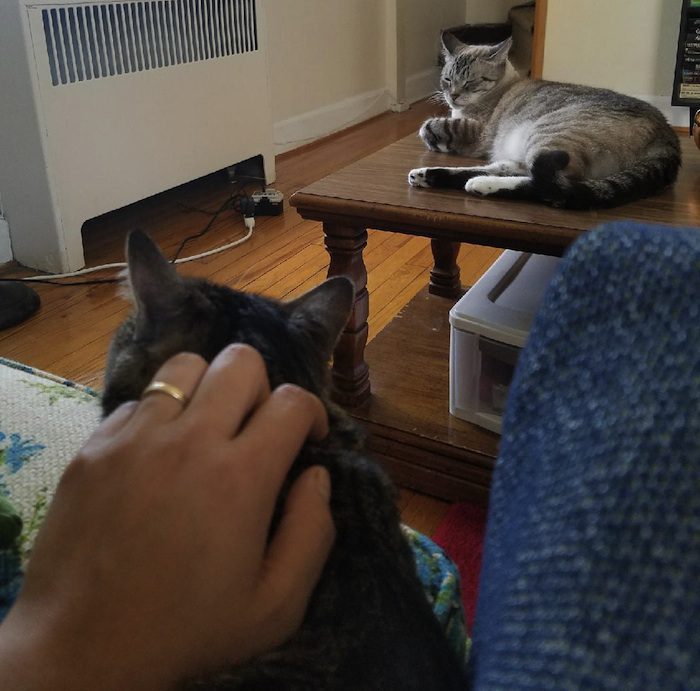
ALBUM PREMIERE: Galleriet “Romantic Gestures”

[fusion_builder_container hundred_percent=”yes” overflow=”visible”][fusion_builder_row][fusion_builder_column type=”1_1″ background_position=”left top” background_color=”” border_size=”” border_color=”” border_style=”solid” spacing=”yes” background_image=”” background_repeat=”no-repeat” padding=”” margin_top=”0px” margin_bottom=”0px” class=”” id=”” animation_type=”” animation_speed=”0.3″ animation_direction=”left” hide_on_mobile=”no” center_content=”no” min_height=”none”]

Photo by Evans Vestal Ward 

Katharina Stenbeck is a prolific Swedish artist who creates thought-provoking electronic music as Galleriet, a solo project she launched in the spring of this year. Stenbeck’s impressive DIY approach led her to self-engineer and produce her debut album Romantic Gestures, premiering today on Audiofemme.

The record is informed by Stenbeck’s varied background in the performing arts. She studied acting in adolescence, experimental and classical theatre in Stockholm and New York City as a young adult, and then broadened the spectrum of expression when the band Folding Legs was formed with friends in 2009. After six years of performing together in New York and honing her skill as a frontwoman and musician, she uprooted herself to Los Angeles where she painted, cleared her mind, and ultimately birthed a solo project with the purpose of presenting a different perspective of what it means to be a “female artist”.

For each of the record’s first three singles, Stenbeck created a music video accompaniment combining dance, theatre, and at times symbolic imagery, like in the video for “Right Wavelength,” to confront themes of gender, death and rebirth. She most recently released a stop-motion video for “Allting är som Vanligt,” a song in her native tongue, that explores the depths of female sexuality.

Audiofemme had the pleasure of speaking with Katharina about the making of Romantic Gestures. Listen to it below!

Audiofemme: Galleriet is Swedish for “the gallery”…what is the significance of this word to you and the art you are producing?

Katherina Stenbeck: I came upon the name “Galleriet” while reading works by the Swedish poet Tomas Tranströmer. “Galleriet” is the title of one of his poems and the name stuck with me. It also felt fitting, as I aim to marry several different art forms into this music project, turning it into a gallery of sorts. I felt passionate about having a Swedish name, as I’m born and raised in Sweden and wanted this project to connect to my roots.

AF: How do you typically write and record your ideas? What is your demoing process?

KS: An idea for a song can come to me at any given time, which I’m sure most creatives can relate to. However, sometimes the vessel just feels more open, and several ideas can come through at a rapid pace. I’ve gotten up in the middle of the night to hum a melody into my iPhone if I think it’s a keeper. Sometimes those hummed or garbled sketches will be the beginning of a song when I sit down at my computer. Other times, I’ll just start playing around on my keyboard with a clean slate and see what comes out. For Romantic Gestures, I wrote everything on a midi keyboard and my laptop, in GarageBand, as I didn’t want to wait to learn Logic while I felt the ideas were coming through.

AF: What is the process like of taking your demos and sketches into the studio and final stages of production? Who do you like to collaborate and produce with?

KS: For this recent album, which is also my first as a solo artist, I worked in a very solitary environment, at home. I self-engineered and self-produced, as I think I needed the autonomy to find my own voice and sound for the project. For future albums, I would definitely be open to exploring a collaboration of some kind.

[/fusion_builder_column][fusion_builder_column type=”1_1″ background_position=”left top” background_color=”” border_size=”” border_color=”” border_style=”solid” spacing=”yes” background_image=”” background_repeat=”no-repeat” padding=”” margin_top=”0px” margin_bottom=”0px” class=”” id=”” animation_type=”” animation_speed=”0.3″ animation_direction=”left” hide_on_mobile=”no” center_content=”no” min_height=”none”]

Photo by Evans Vestal Ward 

AF: What influences your music, visuals, performance?

KS: I draw a lot of my inspiration from theatre and performance art, as my adolescence was spent studying at acting conservatories in Stockholm and New York. I also have a soft spot for old European illustration and animation, as well as somber stop motion videos. People like Jan Švankmajer, Laurie Anderson, David Byrne, Niki de Saint Phalle, Roy Andersson and the music of The Knife have all been very influential on my art in different ways.

AF: What do you find appealing about creating electronic/dance music? 

KS: Electronic music is very empowering, as you are able to draw from all the colors of the musical palette even if you don’t have access or ability to master all the different instruments you desire to incorporate into your soundscape. I love the freedom of being able to create something lush from nothing but my keyboard, my laptop, and my voice. On future songs, I’m definitely curious about incorporating some more organic instrumentation along with my electronic sounds, to see where that takes me.

AF: What is your favorite gear for writing and performing?

KS: For writing/recording, I use a midi keyboard (currently a Novation LaunchKey 49), my MacBook Pro and a good mic for recording vocals (I use a Mojave MA-301FET mic with an Apogee Duet audio interface). For this recent album, I recorded in GarageBand, but I’m in the process of learning Logic now. If all you have is GarageBand, definitely don’t frown upon that – get to work and create your music! GB worked great for me as I was getting my project on its feet. I haven’t gigged with Galleriet yet, but I’m currently in the process of organizing a setup for that, most likely involving Ableton Live and Resolume Arena. I’m really looking forward to playing live again.

AF: What is the theme of the latest video “Allting är som vanligt”? What does that translate to in English? Why did you choose stop-motion for this video?

KS: I have always been drawn to stop motion as a medium. In general, I often find myself gravitating to “DIY art forms” like papier-mâché, sewing and to a certain extent installation art and performance. The title means “Everything is as usual” in English. It’s a rather ironic title, as I wrote the song during a time in my life where a lot of things were changing around me. The video explores that theme of metamorphosis along with meditations on female sexuality, animal instincts, love, and death.

[/fusion_builder_column][fusion_builder_column type=”1_1″ background_position=”left top” background_color=”” border_size=”” border_color=”” border_style=”solid” spacing=”yes” background_image=”” background_repeat=”no-repeat” padding=”” margin_top=”0px” margin_bottom=”0px” class=”” id=”” animation_type=”” animation_speed=”0.3″ animation_direction=”left” hide_on_mobile=”no” center_content=”no” min_height=”none”]

Still from “Allting ar som vanligt” video

AF: What did you learn about performance with your time fronting Folding Legs? Is your stage presence or performance style different in Galleriet?

KS: Folding Legs was a great forum for me to experiment with my stage persona as a vocalist, and it was with the band that I first started incorporating visual art and performance art on stage. With Galleriet, I’m planning to start out by gigging alone with backing tracks, accompanied by some very curated visual effects. Being alone on stage will be quite a departure from my days in the band.

AF: Are you currently living in LA? What are some differences you see between NYC and LA, especially as an artist?

KS: I’m currently living in Ojai (north of LA), after a couple of years in LA and several years in NYC. I really enjoy the openness that LA offers, and the wave of creativity that the city is currently experiencing. New York will always hold a very special place in my heart since it’s where I spent most of my 20’s and where I cut my teeth as a creative. Both cities have unique qualities to offer, and I hope to gig on both Coasts.

AF: What influence has Swedish culture had on your art? Do you travel to Sweden? Do you still have family there?

KS: Swedish culture is my DNA, so it influences everything I do to a certain extent. At the same time, I’ve been living in the States since I was 18, so I feel very at home in the US, too. I think the duality of that is omnipresent in my person and my work. Most of my family and old friends are still living in Sweden and I usually go home a couple of times a year. It really means a lot to me to go home, speak my language and reconnect. One of the most influential aspects that Swedish culture has had on my art would be the normalization of non-commercial creativity and the open-mindedness regarding art that challenges, stupefies and discomforts an audience. Swedish culture doesn’t shy away from the dark, the ugly and the surreal.[/fusion_builder_column][/fusion_builder_row][/fusion_builder_container]
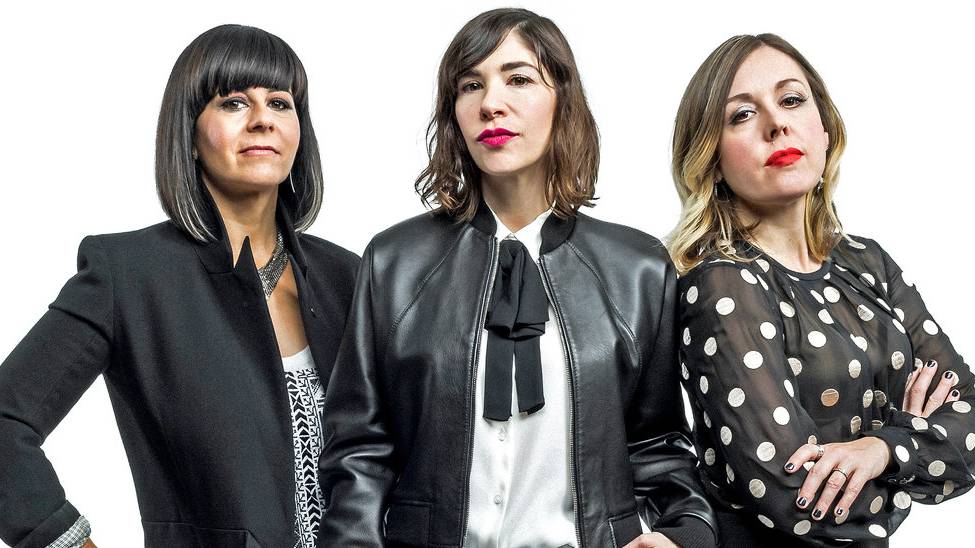
NEWS ROUNDUP: Princess Nokia a Soup-er Hero, Music Industry Assault Allegations & More

  • Princess Nokia Stands Up To Racist, Goes Viral 

    This week, a viral video showed NYC commuters standing up to a drunk guy on the train when he started yelling racist insults at a group of teenagers. At the end of the video, as he’s pushed out of the train car, someone launches a container of soup at them, covering them in yellow goo. It gets better: the hero in this story is rapper Princess Nokia, who tweeted, “Although painful and humiliating we stood together and kicked this disgusting racist off the train so we could ride in peace away from him… [fusion_builder_container hundred_percent=”yes” overflow=”visible”][fusion_builder_row][fusion_builder_column type=”1_1″ background_position=”left top” background_color=”” border_size=”” border_color=”” border_style=”solid” spacing=”yes” background_image=”” background_repeat=”no-repeat” padding=”” margin_top=”0px” margin_bottom=”0px” class=”” id=”” animation_type=”” animation_speed=”0.3″ animation_direction=”left” hide_on_mobile=”no” center_content=”no” min_height=”none”][I’ll be] damned if I let some drunk bigot call a group of young teenage boys racist names and allow him to get away with it.”

  • Women Speak out About Sexual Assault in the Music Industry

    No doubt encouraged by the bravery of the many women who have come forward to share their harrowing experiences with powerful film executive Harvey Weinstein, women are coming forward to call out men in other industries who they say have engaged in inappropriate behavior up to and including harassment and assault. Allegations have surfaced in the last week involving Matt Mondanile (a.k.a. Ducktails) who parted ways with former outfit Real Estate over the allegations last year; The Gaslamp Killer, and Alex Calder. A few of the labels and publicists who have worked with these artists have spoken out as well in a show of solidarity. 

  • Other Highlights

    Watch Beyonce’s video for “Freedom,” listen to an unreleased Bob Dylan song, an early listen of Bully’s Losing, Radiohead songs translated through Spongebobit’s the release day for St. Vincent’s MASSEDUCTION as well as Courtney Barnett and Kurt Vile’s Lotta Sea Lice and Beck’s Colors, watch the new Neil Young video for “Hitchhiker,” Japanese Breakfast directed Jay Som’s “The Bus Song” video, Marilyn Manson discusses his onstage accident, Taylor Swift is starting her own social network, Joan Baez is retiring from touring, Sharon Jones’ posthumous album to be released next month, and read this: The Story of Jud Jud

https://www.youtube.com/watch?v=zAST4Ja7uTU[/fusion_builder_column][/fusion_builder_row][/fusion_builder_container]
PLAYING COLUMBUS: Now, Now Plays A&R Music Bar

I first listened to Now, Now in High School, when a friend introduced the band (then called Now, Now Every Children) to me via mixtape. In the years since, Now, Now has been through a flurry of changes: band members have come and gone, their label has changed, and the music itself has undergone a transformation – from bedroom pop to a crisper, more electronically-driven sound. But the band’s two founding members, KC Dalager and Brad Hale, have stuck it out since the beginning.

When Now, Now kicked off their fall tour in Columbus Ohio last week, the comfortable and kinetic relationship between Dalanger and Hale was center stage. The pair bantered onstage in between songs, cracking jokes and poking fun at themselves and each other. “Sometimes we get yelled at for thanking too many people,” said Hale during a break in the set. “We’ve thanked our cats too many times.” When Dalager’s amp went out during one of the first songs, she laughed too, saying: “we’ve only been in a band for ten years.”

The band’s touring members got in on the fun as well, reaching across their bodies to play each other’s guitars, and performing back to back with Dalager. Dalager herself generated so much movement on the stage that she sometimes seemed to blur into the music. And through it all, the crowd screamed, cheered, and lobbed song suggestions toward the stage.

The set featured several new songs, including singles “SGL” and “Yours,” both released in the past six months. On their newer material, the band sounds more streamlined than previous releases, gravitating toward songs meant for dancing, and away from the songs that made me, and many others, weepy in high school. It’s a marked change, but fans of the band seem to be in it for the long haul. When, launching into one of the new hits, Hale encouraged the crowd to involve themselves, saying “if you know the lyrics, sing along – and that’s an order,” they followed the order. And though the venue was intimate, the crowd’s energy matched that of the band onstage, filling the room with vibrant enthusiasm.

But Now, Now hasn’t abandoned their classics yet. They ended the set with “Thread,” off of their 2012 album by the same name, and brought out two more fan-favorites for the encore: “Oh. Hi.” and “Neighbors.” By the end of the night, both the band and their fans seemed re-energized and soothed. In some ways, surrounded by folks who might have once looked at home in a Hollister or Hot Topic, I felt transported into a younger self. At the same time, Now, Now’s spirited performance grounded me firmly in the present – pulled into myself with each note and gleeful jump. Both sensations were comforting. Most of all, I was moved by the genuine gratitude and empathy Now Now seems to have for their fans. “Thank you so much for coming back,” said Hale, as the night came to a close. “It means so much to us, after so many years.”

ONLY NOISE: With A Bullet


Last week, after publishing “Don’t Take Your Guns to Town,” I took the train across the East River to see a movie. A bit of distraction seemed necessary in that moment, even if it was in the form of a demonic clown named Pennywise. Sitting on the Manhattan-bound C train, I noticed a man in a grey flannel suit to my left. He, like most modern passengers, was fixated on his smart phone. The glow of its screen did not reflect Candy Crush, Snapchat, or Instagram, however, but a P.O.V. shooter game. The tap of his thumb did not cause hearts of affirmation to burst with confetti, but rather, launched bullets from a high-power rifle, bumping off “bad guys” one by one. I watched as my well-dressed neighbor selected guns, tightened his scope, and fired and rooftop gunmen.

At that moment, it had only been four days since the mass murder of festival goers in Las Vegas, and seeing any gun, whether real, toy, or two-dimensional gave me a swift kick of nausea. It goes without saying that the events that plagued Las Vegas on October 1st still plague us today, and will continue to do so – and it is because of that lasting sickness I write on this topic again.

There were a lot of things that didn’t make the final draft of last week’s Only Noise, in part because I felt there was a hierarchy of importance with certain details – namely pointing out the arcane excuses for assault rifle-ownership in America. What I did not have the word count to include, were profiles on the scores of musicians who have had the guts to protest groups like the N.R.A., and ideologies which uphold the mass armament of US citizens with little to no discernment.

Artists like Harry Nilsson, who, after his best friend John Lennon was murdered by a crazed fan with a .38 revolver, became the official spokesperson for the Coalition to Stop Gun Violence (CSGV). In 1981, a year following Lennon’s death, Nilsson told the L.A. Times, “I’ve never been an activist before, but when I was one of the people who had to hold Ringo’s hand after John Lennon was shot, I became involved. I said to Ringo one night just after the shooting, ‘If I could take this from you, I would. But I can’t.’ I was helpless, and that was the worst time in the world for me.” Nilsson’s life work became twofold: music, and gun control. Eventually he became National Chairman of a campaign called End Handgun Violence Week, which ran between October 25th and October 31st in the early 1980s.

247 people have been fatally shot in this country in the 10 days since the Route 91 Harvest Festival. Perhaps the CSGV could bring back End Handgun Violence Week, although the public faces far more frightening weaponry than just handguns these days.

Despite her recent op-ed in The New York Times, Roseanne Cash is no rookie to the gun control debate. Her activism traces back twenty years. She spoke out in 2015, when a gunman at Umpqua Community College in Roseburg, Oregon killed nine people. This tragedy coincidentally occurred on the first of October as well – two years to the day before Stephen Paddock wreaked death on Las Vegas. The day after the 2015 attack, Cash urged citizens to sign a petition to reinstate the 1994 federal ban on assault weapons. “If you are as sick of gun violence in this country as I am,” the country artist wrote on her Facebook page, “then let’s stop talking about it and just do ONE simple thing.”

Unfortunately, this ONE simple thing has not appeared so simple to lawmakers. The 1994 assault weapon ban was never reinstated. Assault weapon opposition does continue to grow, however, especially after so many lives were lost at the Route 91 Harvest Festival. Guitarist Caleb Keeter of Josh Abbott Band was one of the first country musicians to completely alter his stance on gun ownership in this country, after the massacre in Las Vegas (he was at the festival when the shooting occurred). “I’ve been a proponent of the 2nd amendment my entire life,” Keeter wrote on Twitter the day following the shooting. “Until the events of last night. I cannot express how wrong I was.” He added, “We need gun control RIGHT. NOW.”

Unfortunately, there hasn’t been a long list of country musicians who have done a 180 on their firearms position since the massacre – but a few do seem to be distancing themselves from the NRA. On October 2nd, the artist roster on the website for NRA Country (an organization linking upcoming country artists with the NRA brand and lifestyle) shrunk from 39 names to 37 – the slots for Florida Georgia Line and Rhett Miller had suddenly vanished.

Of course, more opposition has come from musicians outside of the country bubble. Artists like Lady Gaga, John Mayer, The Chainsmokers, and Vic Mensa have all spoken out on social media, demanding gun control. Ariana Grande, who has seen her fair share of concert-targeted violence, tweeted, “My heart is breaking for Las Vegas. We need love, unity, peace, gun control & for people to look at this & call this what it is = terrorism.”

Moby posted a meme on his Instagram reading, “MAKE IT STOP” above an assault rifle graphic. Below it, the artist wrote, “How many more mass shootings will it take? How many more lives ended? How many more families destroyed? We need sane, rational, sensible #guncontrolnow. The @nationalrifleassociation and every Republican who opposes gun control has so much blood on their hands. Mass shootings are evil, passing legislation that enables them to happen even more so.”

One can only hope that players in the country music scene – the scene most affiliated with the NRA and gun ownership – will eventually put aside the political demographics of their fan base and speak out. Perhaps country artist Will Hoge put it best when he spoke to Marissa Moss for Politico Magazine:

“Will this be the thing where all of a sudden every conservative artist comes out and supports gun control? That’s an unrealistic idea,” he said. “I do think this is the point where country artists are going to have to take long hard looks in the mirror and ask, ‘What’s more important to me: maintaining success at commercial radio, or doing what’s right?’”

I hope there are plenty of mirrors in Nashville.

PLAYING DETROIT: Folkie May Erlewine Charms with “Never One Thing”

Okay, so she’s not from Detroit proper, but we couldn’t help but feel moved by small-town folk songstress May Erlewine’s video for “Never One Thing,” the first single from her forthcoming record Mother Lion. Erlewine comes from a deeply musical family – her father Michael founded AllMusic – that hails from Big Rapids, and she’s released over a dozen records, both solo and with her husband Seth Bernard, since 2003. Now, she’s signaled her return with a quietly empowering anthem for the ever changing, forever incomparable woman, tinged with a honey soaked sweetness only Erlewine can deliver.

“I’m a streetfighter/I’m a prayer for peace/I’m a Holy-roller/I’m a honeybee” croons Erlewine, praising the many roles that women take on, reminding us that it is never just one thing that defines us. The video follows her delicate reign, perched on various thrones wearing a selection of various floral crowns – perhaps a subtle conjuring of Frida Kahlo. But Erlewine shatters the separation of royalty and commoner with graceful tenacity. A poetically restrained roar, “Never One Thing” is more of a mantra than just a simple folk song.

Feel the power of May Erlewine’s latest below:

[fusion_builder_container hundred_percent=”yes” overflow=”visible”][fusion_builder_row][fusion_builder_column type=”1_1″ background_position=”left top” background_color=”” border_size=”” border_color=”” border_style=”solid” spacing=”yes” background_image=”” background_repeat=”no-repeat” padding=”” margin_top=”0px” margin_bottom=”0px” class=”” id=”” animation_type=”” animation_speed=”0.3″ animation_direction=”left” hide_on_mobile=”no” center_content=”no” min_height=”none”][/fusion_builder_column][/fusion_builder_row][/fusion_builder_container]
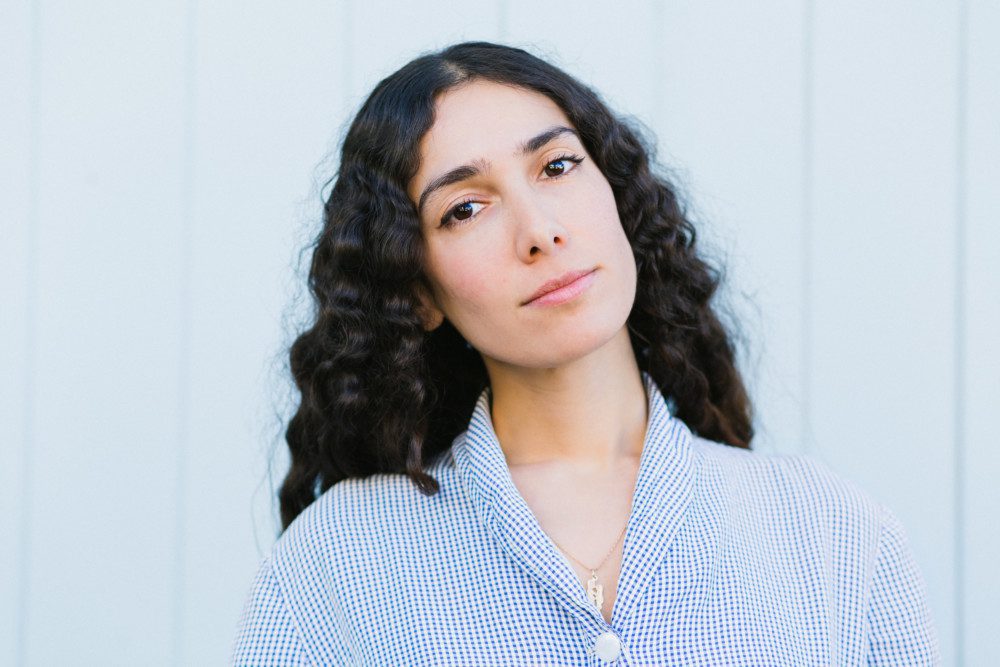
ALBUM REVIEW: Yumi Zouma “Willowbank”

[fusion_builder_container hundred_percent=”yes” overflow=”visible”][fusion_builder_row][fusion_builder_column type=”1_1″ background_position=”left top” background_color=”” border_size=”” border_color=”” border_style=”solid” spacing=”yes” background_image=”” background_repeat=”no-repeat” padding=”” margin_top=”0px” margin_bottom=”0px” class=”” id=”” animation_type=”” animation_speed=”0.3″ animation_direction=”left” hide_on_mobile=”no” center_content=”no” min_height=”none”]

Yumi Zouma photo by Aaron Lee

It’s only been a year since New Zealand’s Yumi Zouma debuted with Yoncalla, a polished batch of ten disco-infused indie pop tracks. But the Kiwi quartet have already returned with follow-up Willowbank, a subdued collection of dreamy songs that explore the fundamentally modern confusion between perception and reality. So much of life these days is defined by how we wish to be perceived by others – the endless highlight reel that is Instagram, the urge to appear “chill” to friends and lovers despite internal floundering. Yumi Zouma expertly deals in what-ifs and hypotheticals on this record, floating in the gap between what we wish for and what we have. It delves into the past tense, like they’re recounting something with the wisdom of hindsight.

The low-key softness of this record is a marked departure from the first. While it retains some of the disco levity of Yoncalla, they tone it down here; lyrics aside, the music itself sounds like you’re telling a secret. This intimacy could perhaps be lent to the recording – Yoncalla marked the first time Yumi Zouma had been able to write and record music in the same place (a natural disaster in New Zealand having forced them to write earlier music across oceans over e-mail), but they were on tour, which infused the sound with a certain energy. This time around, they recorded Willowbank together in New Zealand, and it shows. It’s warm, muted; it feels cozy like home.

It opens with “Depths (Pt. I),” where Christie Simpson’s voice drops in with a more natural comfort, deeper and more self-assured. But she asks “If I was older, then would you still let me win?” Already, we’ve departed from reality “as is” and entered reality “if” as her voice flows into the chorus: “Under the boot of my desire to be / Never taking myself that seriously.” In other words, confined to the image we wish to project to the rest of the world, unruffled and “going with the flow.”

With this in mind, they play with the concept of an unreliable narrator on this album. If we carefully curate our self-presentation, who’s to say what’s true and what isn’t? Simpson sings, “I never struggled to be on my own,” but she also desires to never take herself seriously. If she did struggle to be on her own, would she tell us? As the record slides into the next track, single “December,” she espouses more of this guardedness. “You can’t rely on my past,” she sings, unpacking the way we divulge our baggage in bits and pieces to keep from scaring others away. It’s doused in feigned detachment, as though spoken to someone you once knew very intimately but haven’t seen in years.

The cool quiet of the album – its dulled percussion, swooping melodies – mirrors a world where the distance between real and unreal is always shrinking, where people blow off plans and mask isolation with social clout. On “Half Hour,” which FADER deemed “a love song about death,” she sings, “All my plans are flakes,” bemoaning anxieties about the solitude of dying. On “Gabriel,” she describes “a lie to protect my shame,” exploring the way we become lost when we define ourselves only by our relationship to someone else.

In the end, Willowbank circles back to its beginning with “Depths (Pt II),” which asks the same question: “If I was older, then would you still let me win?” To come back to this exposes the cyclical folly of it all and articulates the lesson Yumi Zouma were trying to impart all along: that unless you learn to accept the present as is, you’ll always be asking “what if?”

Yumi Zouma are on tour now, they’ll play Le Poisson Rouge on October 25th. Willowbank is out now via Cascine.[/fusion_builder_column][/fusion_builder_row][/fusion_builder_container]
MORNING AFTER: Veggie Pancakes and Ale with Lost Boy ?

Origin stories: they’re typically how I kick off these off, some pseudo-enticing meetcute in the heart of the scene. A half-drunken beg for an interview, an impromptu striptease, a deep side-eye at Two Boots Williamsburg. A chat in front of Little Sunnyville Gutterway Footskips Stadium. A bite from a radioactive spider. I mentally collect these origin stories, and yet I cannot remember meeting Davey Jones. Instead it feels like Davey’s been the perennial maypole at the center of our scene, linked to everyone. Lost Boy ?, as you damn well know, is a staple.

Incidentally, I played the everliving fuck out of my creamsicle copy of Goose Wazoo last October, savoring the trillions of clever pop culture references, floating in legitimate lo-fi heaven. Recently, Davey’s really inking and coloring the sound; the most recent Silent Barn iteration of the band is fleshed out by Jeremy Aquilino on bass, Adam Reich on guitar, and Charlotte Kahn on drums (and everyone else on air guitar).

But today it’s just the two of us, because Davey is fam, and with fam, you message them late on Friday like, “Dude, I was serious about having you as my October column, plz let’s hang out tomorrow.”

Anyway, I love a good Saturday morning adventure. Stay tuned.

The Scene: “We’re going to find Davey…and I don’t think that should be hard…because he is approximately…9 feet tall…give or take,” I mumble into my second iPhone, weaving around stacks of post-punk standards.

It’s the Brooklyn Flea Record Fair and in between quick flips of vinyls (hmm, do I need to throw down $10 for the Rock N’ Roll High School soundtrack?) I’m struggling to find Davey. But oh! There he is, and after salutations, he digs out his finds. The objective was Massive Attack, which he found for the decidedly NOPE price of $55.

“But I got Mosquito which is kind of an odd record,” he says showcasing the distressed pastel pink album cover. “It has Jad Fair of Half Japanese, and Steve Shelley, the drummer of Sonic Youth. The vocal, I think, is supposed to sound like a mosquito.”

“Like literally, like a buzzing noise?”

“They have a weird effect on Jad’s voice the entire record,” he says before showcasing the rest of his finds: a bizarro double Cure re-issue, Richard Hell and the Voidoids, and two cassettes. (“One for Nick, one for me.”)

We decide to go into the anxiety-inducing crowd of Smorgasburg and diverge to get our food; he’s gonna get the vegetable pancakes and word is the mozzarella sticks are hella good.

But like Rock N Roll High School, we confirm they’re not $10 good.

12:46 “You gotta get in on this,” Davey says, offering his plate of Okonomiyaki.

“Oh, I’m gonna get in on this.” I say, forking a sizable, quick-to-crumble bite. We’re in line about to grab beer and a table, a slow rendition of “Feel It Still” soundtracking our orders. There’s chit-chat about the Sharkmuffin girls (Nat is his GF, Tara is my Russell Hammond, you may know them from this website and just about everywhere else) and how they’re finally gonna be home after touring all year. Then I ask Davey how he wants to wrap up his 2017.

“I’m thinking maybe I’ll work on one animation specifically, and put it to song. It’s been kinda on my list of things to do. And I’ve been working on this character for a while.”

“THAT’D BE SO COOL, like a Lost Boy ? music video that you’d animate yourself?”

“I actually have like two characters, so I think they might both appear. I gotta figure out what the body would be for the bird with the spikey hair.” I demand receipts for these characters and he graciously provides them:

[fusion_builder_container hundred_percent=”yes” overflow=”visible”][fusion_builder_row][fusion_builder_column type=”1_1″ background_position=”left top” background_color=”” border_size=”” border_color=”” border_style=”solid” spacing=”yes” background_image=”” background_repeat=”no-repeat” padding=”” margin_top=”0px” margin_bottom=”0px” class=”” id=”” animation_type=”” animation_speed=”0.3″ animation_direction=”left” hide_on_mobile=”no” center_content=”no” min_height=”none”]

Courtesy of Davey Jones

“Is he like a donkey…?” I ask.

“He’s kind of like a rabbit meets a bird, and then he has Goofy teeth.”

“I love the hat, the hat is a nice touch,” I say, before he introduces me to Nosey and Bosey.

[/fusion_builder_column][fusion_builder_column type=”1_1″ background_position=”left top” background_color=”” border_size=”” border_color=”” border_style=”solid” spacing=”yes” background_image=”” background_repeat=”no-repeat” padding=”” margin_top=”0px” margin_bottom=”0px” class=”” id=”” animation_type=”” animation_speed=”0.3″ animation_direction=”left” hide_on_mobile=”no” center_content=”no” min_height=”none”]

Courtesy of Davey Jones

I squint at his iPhone screen. “So what are their personalities? This one seems sad…”

“Nosey’s like, obviously a nosey-body,” he explains. “And Bosey’s the kind of character that gets into trouble. Probably drinks too much.”

“Well, that’s why he has the stubble,” I confirm.

“He has stubble and a red nose, and Nosey’s probably always checking in on Bosey and knows too much about what’s going on in his life.”

“He knows all of his secrets.”

“And that’s why Bosey’s kind of depressed.”

“Because he’s an alcoholic and his friend knows that he’s trash,” I confirm, now fairly certain Bosey is my spirit animal. “You know what I love about animation in general? You have to convey certain personality traits but you also have to simplify it since it’s a simpler form of art. Which I think in some ways is more difficult; you either have to exaggerate it or have a good signifier, like a red nose or something.”

He nods. “You can get a personality just by looking at the character, right. You can get it just by the smirk or by the eyebrows. Maybe the mischievousness of even like…”

“…their posture,” we finish together.

1:02 “What was your favorite ride at Disney World?” I ask, and I kid you fucking not, Davey’s face lights up at this as if we’re literally next in line for Star Tours.

“Oh, oh, the Aerosmith ride! Yeah, I loved that ride, ’cause it was so fast, I think I went on that one three times.”

I am very certain that Natalie is a saint because you could not convince me to go on that once, let alone three times.

“That one and the Tower of Terror,” he continues. “I think that was my favorite place to go in Disney. That whole park, it’s more themed for adults. It kinda looks like you’re in Who Framed Roger Rabbit, and there’s alcohol.”

“And there’s alcohol, which is the best part,” I agree, remembering distinctly when my mom bought me a $12 strawberry marg there so I would stop complaining about being in Florida.

Apparently the couple managed to hit up all the rides except the Toy Story shoot-out game and Splash Mountain, tragically closed at the time. It’ll be the first stop for next time though, for sure.

“Are you hot?” Davey asks suddenly. “I feel like you’re in the sun pretty hard.”

“Um, I’m okay,” I say, developing all sort of weird tanlines.

1:27 Favorite Disney character though, go!

 “It’s kind of hard not to say Mickey Mouse just because I love him so much,” Davey says, and remembering his Mickey costume at Little Skips last Halloween, I’m not surprised.

“He’s so classic though,” I feel this feel really hard because Brooklyn Year One was spent wearing a lot of red, white, and Mickey ears.

“It’s also just because Mickey was so innovative for future characters in a lot of other cartoons that aren’t even Disney.”

“He was like a template.”

“It’s not even that Mickey Mouse was the first cartoon, but he was just a perfectly crafted character,” Davey explains. “Now, from my understanding, Walt Disney did not totally create Mickey Mouse, I believe it was one of his good friends that designed Mickey Mouse. But even so, the character and his personality is so well developed, and so influential to Felix and even Popeye. Without Mickey Mouse you wouldn’t have great animation.” He pauses. “Mickey and Minnie Mouse, really,” he clarifies (#equality).


1:32 Btw some point around here we chit-chat of typical Saturday afternoon: propaganda cartoons, the utter terror of this administration, and whether people at their core are more good than evil. And we talk about Halloween costumes—him and Nat are going to “keep rocking the mouse theme” and go as Pinky and the Brain. I’m probably gonna be 1995 Gwen Stefani on this album cover.

“And I’m considered hiring, legit hiring some of my musician ex-lovers to be the three blurry guys in the background,” I explain.

“You should get together a No Doubt cover band of your ex-lovers and call it Tragic Kingdom,” Davey says.

We burst into a fit laughter as I die inside (only a little).

Anyway, I’d love to tell you more about that, but…

1:56 “Goddammit, we might need to hang out more because my phone just overheated and died.”

Luckily, Davey and I are both yearning for ice cream and figure it might be a good plan to antagonize our friends at the Van Leeuwen trucks.

We skim through a sidewalk sale where a man is unloading all of his music. I, someone who hates music entirely, chastise this guy for getting rid of all his Siouxsie & the Banshees impulse buys. Davey, ever a consummate music collector, reluctantly picks up another handful of cassettes, including a last minute Tears For Fears album.

“It’s funny because I was looking for that exact Tears for Fears album, and I didn’t even notice it, I just went back and double-checked.”

“There’s like, few greater joys than finding something in a different way then you’d expect it.”


We say hi to Zach (of Darkwing) at the Bedford hub, before hitting up Nick Rogers (of Holy Tunics and like one episode of Girls), and Lisa Mayer (of…all of our hearts) by Transmitter Park. There is a graphic design expo, so we hit that up before parting ways. The day, regardless of the tech heatstroke and the fact that everyone’s out of summer berry crumble, has been fruitful AF.

In one day we’re centralized in literal and figurative festivals of art, music, friendship and $10 motz sticks (I stroll by the Intimacy Expo on my way home but, mmm, hard pass). I love it: it’s like Brooklyn on steroids. And it feels right that I’d have this mini-adventure with Davey, even though, and now it’s nagging on me, I don’t remember when I met him.

But I guess that’s fine. That’s how it is with ubiquitous characters, particularly ones that define a culture in a few brilliantly simple strokes. You don’t remember being introduced to your big brother. You don’t remember the first time you saw Mickey Mouse.

You’re just grateful that you both co-exist in this weird, wonderful world.[/fusion_builder_column][/fusion_builder_row][/fusion_builder_container]
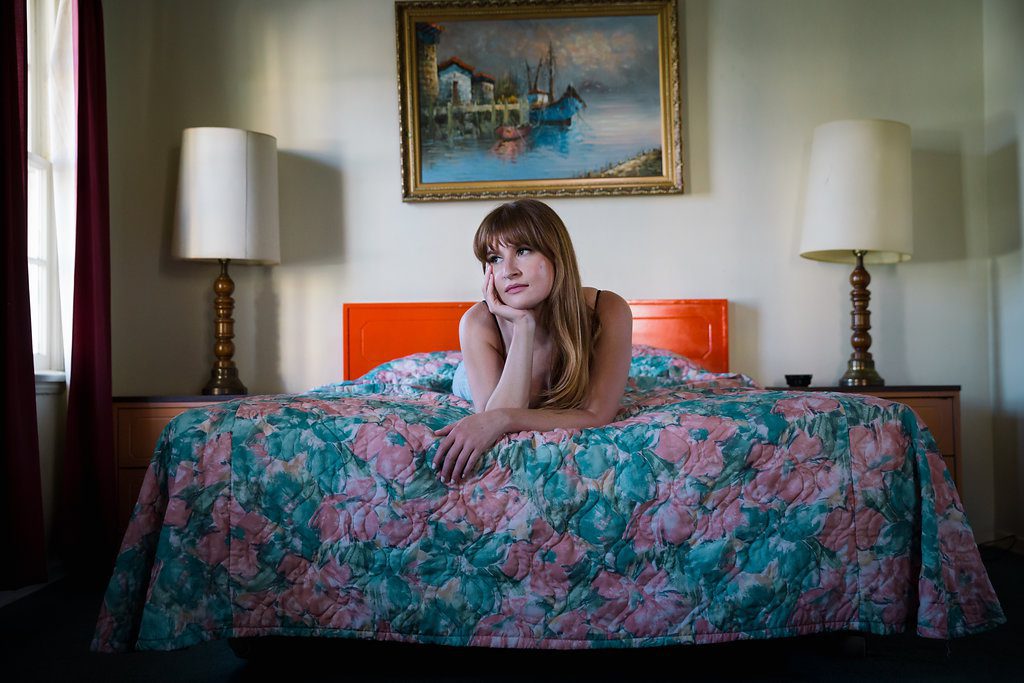
NEWS ROUNDUP: RIP Tom Petty, The Las Vegas Tragedy & More

  • RIP Tom Petty

    The well-loved songwriter passed away on Monday after suffering from cardiac arrest. He was 66, and less than a week before, gave a final interview where he discussed his recent 40th anniversary tour with The Heartbreakers, a new band he was producing, and more (read the full interview via the LA Times). Many musicians who cited him as a huge influence paid tribute to Petty, including Father John Misty, Fleet Foxes, Miley Cyrus, Wilco, Kesha, Emmylou Harris, and more.

  • Shooter Opens Fire on Country Music Festival in Vegas

    On Sunday night, as Jason Aldean played the last few songs of his headlining gig at Las Vegas’s Route 91 Harvest Festival, a shooter opened fire from a suite at Mandalay Bay (located across the street), killing some 58 country music fans and injuring hundreds more before ending his own life. While the incident is still being investigated, the debate on gun control rages on, and many have pointed out country music’s glorification of gun culture. Some stars have spoken out despite the genre’s tendency to stay silent on political topics. Caleb Keeter of the Josh Abbott Band (which performed at the Fest earlier that afternoon), posted a heartfelt statement on his changing views surrounding gun control, while Maren Morris released “Dear Hate” the day after the shooting to benefit victims.

  • Other Highlights

    Happy World Guitar Day, watch St. Vincent on The Late Show, Marilyn Manson was injured during his NYC show, the Needle Drop guy is very problematic, new videos from The Breeders and Tove Lo, Billy Corgan’s Ogilala is out now, updates to Oakland’s Ghost Ship case, Other Music will be replaced by a juice store, and read this: “Should Women Make Their Own Pop Music Canon?

https://www.youtube.com/watch?v=jz2EbH3xO_8&feature=youtu.be

ONLY NOISE: Don’t Take Your Guns To Town

Last Saturday, while performing at New York’s Hammerstein Ballroom, Marilyn Manson was crushed by a falling stage prop. The assailing object was not a steel cage, nor a neon pentagram, but a sculpture of two massive handguns affixed to scaffolding. Manson was rushed to the hospital with undisclosed injuries.

Though it was a frightening incident (and one that led him to eventually cancel several upcoming tour dates), the knowledge that Manson was not in critical condition allowed a bit of black humor to creep into the scenario. Not 10 days prior, Manson pulled a toy gun on The Guardian’s Alexis Petridis during an interview, and later told him that, “the Columbine era destroyed my entire career at the time.”

Manson was of course referring to the 1999 Columbine High School shooting at the hands of teenagers Eric Harris and Dylan Klebold. The post-Columbine news media, eager to blame the violence on anything but America’s lax firearms policies and clueless approach toward disaffected youth, found a horned scapegoat in Manson. Countless pundits and members of the religious right made reference to his devil-worshipping ways, as well as his messages of “hate, violence, suicide, death, drug use, and Columbine-like behavior.” In the late ‘90s, Manson became an even greater pariah than he already was. If, before Columbine, his name evoked satanic orgies and platform shoes, it was now irrevocably linked with one of the most terrifying acts of gun violence in American history.

Knowing all of this, it’s hard to imagine Manson – whose wry and dark sense of humor infiltrates most of his interviews – didn’t at least smirk at the irony of two giant handguns pummeling him onstage. I must admit that after learning Manson did not suffer any serious wounds, I smirked, too. Until Sunday, that is.

The very next evening, across the nation from The Hammerstein Ballroom, a lone gunman opened fire on a country music festival in Las Vegas, murdering at least 59 people, and injuring over 500 others. I paraphrase The New Yorker journalist Adam Gopnik when I say that, the word “injured” is not commensurate with the scope of physical harm and psychological scars inflicted on those 500. Acknowledging the dead dozens doesn’t mend the phantom limbs nursed by their families.

Suddenly, one catastrophic weekend fanned the ever-burning flame of America’s gun control debate, and this time, the music world felt the heat. Country artist Rosanne Cash came forward with a powerful op-ed in the New York Times on Tuesday, imploring musicians – especially country musicians, who are so heavily burdened with the identity of the gun-toting American – to stand up against the N.R.A. and the armed culture of this nation:

“I encourage more artists in country and American roots music to end your silence,” Cash wrote. “It is no longer enough to separate yourself quietly. The laws the N.R.A. would pass are a threat to you, your fans, and to the concerts and festivals we enjoy.”

She went on, “This is a moment in American history that can’t be met with silence. According to PolitiFact, from 2005 to 2015, some 300,000 people in the US were killed by gun violence. That’s roughly the population of Pittsburgh.”

Fellow country guitarist Caleb Keeter, who was playing at the Las Vegas festival that weekend, met Cash’s challenge of squelching silence; the artist’s opinion on the second amendment is now altered forever.

“A small group (or one man) laid waste to a city with dedicated, fearless police officers desperately trying to help, because of access to an insane amount of firepower,” Keeter wrote. “Enough is enough.” In another sick twist of irony, the shooter, 64-year-old Stephen Paddock, bought most of his artillery at a shop so innocuously named, “Guns & Guitars.”

One might think that the deadliest mass shooting in U.S. history – as the Las Vegas massacre has now been classified – would move N.R.A. lobbyists and politicians to the same extent as Mr. Keeter. Instead, the N.R.A. is silent, and President Trump claims that the gun control conversation is, “not for now.”

But the President and the gun lobbyists weren’t at the Route 91 Harvest Festival. They didn’t spend Sunday night dodging hundreds of rounds of ammunition fired from the 32nd floor of the Mandalay Bay Hotel by Paddock. They weren’t there to suffer the carnage, and yet they continue to uphold laws which legalize the very implements that allowed Paddock to fire so relentlessly; namely, the easily acquired bump stock, which makes rapid-fire rifles out of semi-automatic ones, and can be purchased for $99.

Considering the coincidence that Marilyn Manson was once again in the news at the same time as a domestic mass shooting (though this time, not as a scapegoat), I couldn’t help but revisit Bowling For Columbine, Michael Moore’s 2002 documentary about America’s relationship with gun violence, in which Manson is interviewed.

When Bowling For Columbine hit theaters, I was 13. It was the first time I’d seen Marilyn Manson portrayed as a human being; sitting patiently in a chair and not writhing in fake blood or riding a potbellied pig. I was struck by his intelligence – by how articulate and gentle this agent of Satan could be. When Manson sat down with Moore, he spoke of Columbine and the media’s subsequent blame game.

“The two byproducts of that whole tragedy were violence in entertainment, and gun control,” he said, “and how perfect that those were the two things that we were going to talk about in the upcoming election. And also, then we forgot about Monica Lewinsky, and then we forgot about: the President was shooting bombs overseas, and yet I’m a bad guy because I sing some rock n’ roll songs,” he continued. “And who’s the bigger influence, the President? Or Marilyn Manson?”

Manson’s 15-year-old point is particularly sharp today, as conservatives strive to foist the responsibility for Las Vegas upon anything but the true culprit: the ease with which almost any American can waltz into a Walmart, and walk out with assault rifles, ammunition, and accoutrements that were never intended to hunt deer, but rather, humans. And for what?

Ask any Libertarian, member of the N.R.A., or gun-owning uncle why they need their AK-47s and TEC-9s, and they will all say the same thing: “for self defense!” But there are many flaws in that answer. First, look at the cold, hard facts about home invasion and “self defense.” Last year, the FBI released its 2015 crime stats, which proved a 7.8% decline in burglaries nationwide. Moreover, in 2010, the Bureau of Justice Statistics released data that in only 7% of household burglaries did a household member experience some form of violent victimization. That 7% is not to be scoffed at, but it also begs a few questions: 1) wouldn’t it be more difficult for burglars to victimize household members if they too, could not readily access firearms? And 2) Does having guns in the home ever truly make you safer?

According to figures from Aftermath.com, no. From 2005-2010, almost 3,800 people in the U.S. died from unintentional shootings. Over 1,300 victims those shootings were under 25 years of age. Additionally, a 2001 study by Miller, Azrael, and Hemenway reported that regardless of age, people are significantly more likely to die from unintentional firearm injuries when they live in states with more guns, as opposed to states with fewer guns. On average, states with the highest gun levels had nine times the rate of unintentional firearms deaths compared to states with the lowest gun levels.

3,800 doesn’t seem like such a high number for a five year period…when you compare it to the 30,000 gun deaths this country witnesses annually. In 2010, 20,000 of those gun deaths were suicides  – suicides committed by people who didn’t have too much trouble procuring a gun.

I wonder if gun enthusiasts could use their “self-defense” logic on the victims of Mandalay Bay: could the concertgoers have protected themselves if each and every one of them was packing? No. When someone is shooting from the 32nd floor of a high-rise building, there is nothing you can do except run and duck for cover. Shooting back would do no good from the festival grounds – the man in the tower will always have the advantage. And yet, according to the logic of a Michigan Militiaman who was interviewed early in Bowling For Columbine, Paddock’s victims were ‘neglecting their obligation to be armed.’

“It’s an American responsibility to be armed. If you’re not armed, you’re not responsible,” he said in the film, struggling to buckle his belt. “It’s your job to defend you and yours,” he continued. “If you don’t do it, you’re in dereliction of duty as an American, period.” I wonder if that Militiaman could bear to accuse the Mandalay Bay victims of being “in dereliction of duty” as Americans,” today.

To me, passing legislation that allows citizens to purchase assault weapons and their vicious accessories; passively arming millions, and silently watching this happen again, and again, and again, is far more derelict of American duty than not owning an assault rifle. Raising our children in a culture that applauds and abets the “recreational” use of firearms is far more psychologically questionable, than going to town without your guns.

When the “self defense” argument doesn’t add up, gun-loving Americans turn to the Bill of Rights. “The Second Amendment says: I have the right to bear arms!” they shout. Well friends, there’s a big fucking difference between a musket and an AR-15. The fact of the matter is, most of the weaponry sold today didn’t exist when the Bill of Rights was written in 1789, and therefore should not be protected by it.

It is a nonsensical argument veiled in false patriotism and practicality, as if these trigger-happy citizens need their M16s for Fourth of July marches and weekend pheasant hunting. Their entitled cry that it’s “my right” to own an assault rifle bears the same insipid selfishness as a teenager trying to overthrow their parent’s household rules because they just turned 18. “Yes, legally, you may be an ‘adult,’ but you’re still in my house, eating my pot roast,” that parent might say. It seems that clinging to these weapons like toys and brandishing an irrelevant emblem of “freedom,” is more important to anti-gun control lobbyists than human life.

When Bowling For Columbine was first released, the wound opened by Harris and Klebold was still fresh and bleeding. The atrocity of Americans shooting scores of innocent people seemed at the time like a societal outlier. Now, it has become the hideous norm. And while Marilyn Manson will recover from his gun-inflicted wounds, I sometimes wonder if this country ever can.

PLAYING DETROIT: Prude Boys Get Frisky in “Talking to Myself” Video

What do you get when you cross a water balloon fight and karaoke with one of Detroit’s most beloved dive bars? Well, you might get the latest video from garage rockers Prude Boys. The visual for their latest single “Talking to Myself” finds DIY babes Caroline Myrick, Quennton Thornbury and Connor Dodson delivering what they do best: curiously catchy, retro zombie rock whilst smoking in one of the most Instagram’d bathrooms in the 313, Hamtramck’s own Kelly’s Bar, of course.

Shot by the incomparable Noah Elliott Morrison, “Talking to Myself” encapsulates the typical midweek bar malaise of a tipsy Motor City. From an American Beauty Mena Suvari rose petal moment featuring a bearded, intoxicated patron to fence climbing, backyard wrestling and local karaoke superstars, Morrison’s visuals make a perfect marriage with  Prude Boys’ sound. It might be the shiny guitar licks or Myrick’s shimmering warble, but “Talking to Myself” delves into a fun kind of lonely. The track would feel just at home on the soundtrack for the film Clueless as it would on an episode of Netflix’s Millennial dating diary Love. Prude Boys channel montage pop with “Talking to Myself” – crafted masterfully to fit all shapes and sizes of crises.

Sing along, alone (of course) to the latest track from Prude Boys below: