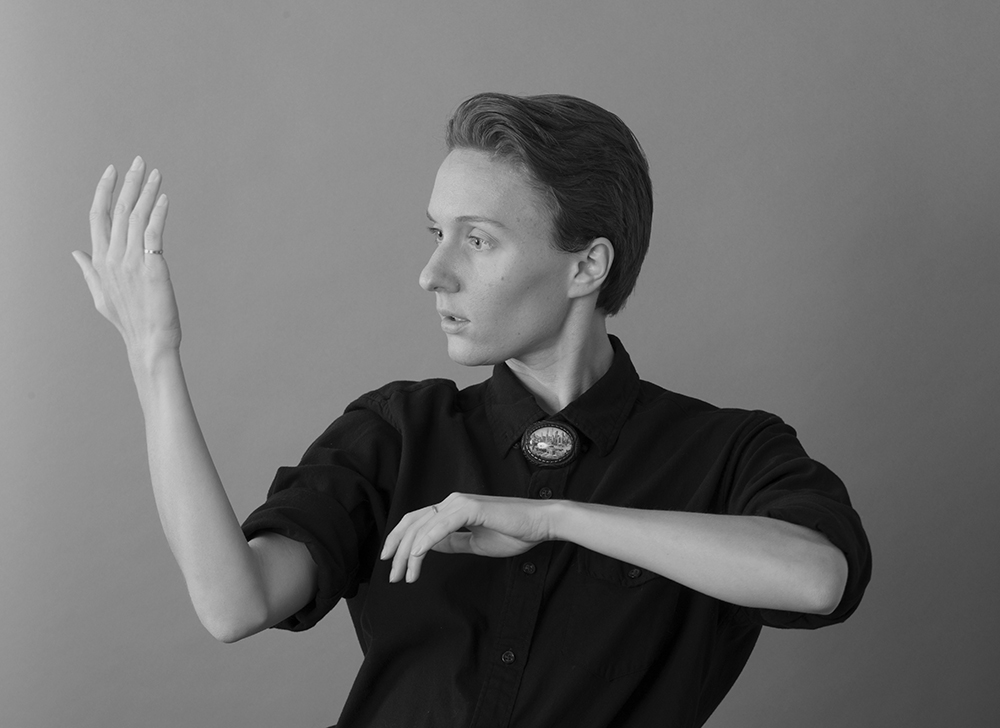
Audiofemme: Galleriet is Swedish for “the gallery”...what is the significance of this word to you and the art you are producing?
Katherina Stenbeck: I came upon the name “Galleriet” while reading works by the Swedish poet Tomas Tranströmer. “Galleriet” is the title of one of his poems and the name stuck with me. It also felt fitting, as I aim to marry several different art forms into this music project, turning it into a gallery of sorts. I felt passionate about having a Swedish name, as I’m born and raised in Sweden and wanted this project to connect to my roots.
AF: How do you typically write and record your ideas? What is your demoing process?
KS: An idea for a song can come to me at any given time, which I’m sure most creatives can relate to. However, sometimes the vessel just feels more open, and several ideas can come through at a rapid pace. I’ve gotten up in the middle of the night to hum a melody into my iPhone if I think it’s a keeper. Sometimes those hummed or garbled sketches will be the beginning of a song when I sit down at my computer. Other times, I’ll just start playing around on my keyboard with a clean slate and see what comes out. For Romantic Gestures, I wrote everything on a midi keyboard and my laptop, in GarageBand, as I didn’t want to wait to learn Logic while I felt the ideas were coming through.
AF: What is the process like of taking your demos and sketches into the studio and final stages of production? Who do you like to collaborate and produce with?
KS: For this recent album, which is also my first as a solo artist, I worked in a very solitary environment, at home. I self-engineered and self-produced, as I think I needed the autonomy to find my own voice and sound for the project. For future albums, I would definitely be open to exploring a collaboration of some kind.
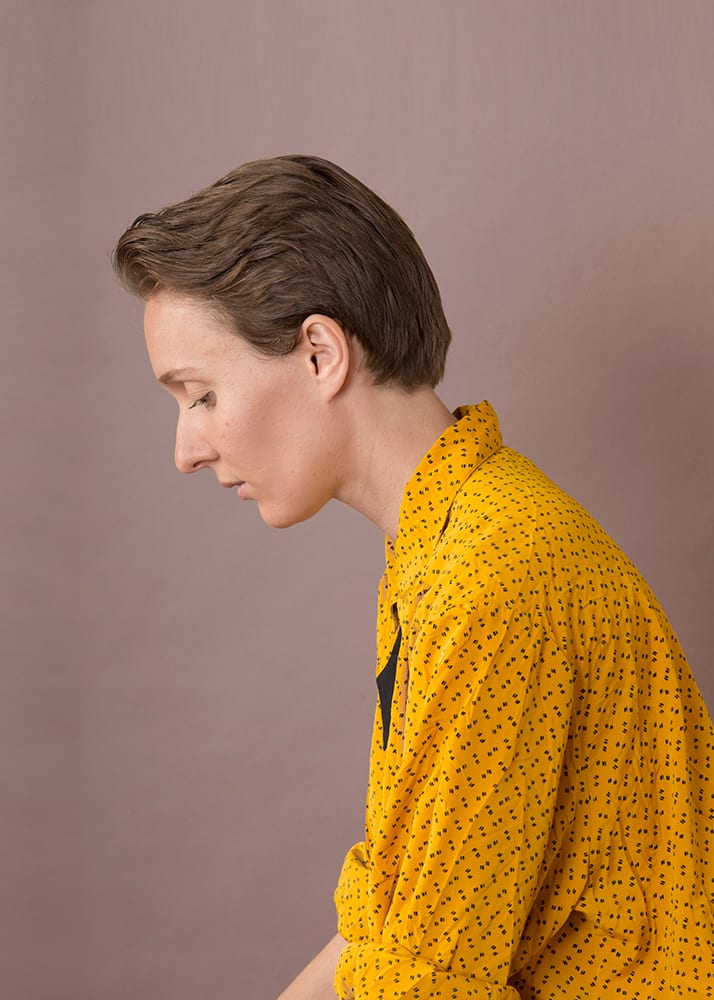
AF: What influences your music, visuals, performance?
KS: I draw a lot of my inspiration from theatre and performance art, as my adolescence was spent studying at acting conservatories in Stockholm and New York. I also have a soft spot for old European illustration and animation, as well as somber stop motion videos. People like Jan Švankmajer, Laurie Anderson, David Byrne, Niki de Saint Phalle, Roy Andersson and the music of The Knife have all been very influential on my art in different ways.
AF: What do you find appealing about creating electronic/dance music?
KS: Electronic music is very empowering, as you are able to draw from all the colors of the musical palette even if you don’t have access or ability to master all the different instruments you desire to incorporate into your soundscape. I love the freedom of being able to create something lush from nothing but my keyboard, my laptop, and my voice. On future songs, I’m definitely curious about incorporating some more organic instrumentation along with my electronic sounds, to see where that takes me.
AF: What is your favorite gear for writing and performing?
KS: For writing/recording, I use a midi keyboard (currently a Novation LaunchKey 49), my MacBook Pro and a good mic for recording vocals (I use a Mojave MA-301FET mic with an Apogee Duet audio interface). For this recent album, I recorded in GarageBand, but I’m in the process of learning Logic now. If all you have is GarageBand, definitely don’t frown upon that - get to work and create your music! GB worked great for me as I was getting my project on its feet. I haven’t gigged with Galleriet yet, but I’m currently in the process of organizing a setup for that, most likely involving Ableton Live and Resolume Arena. I’m really looking forward to playing live again.
AF: What is the theme of the latest video “Allting är som vanligt”? What does that translate to in English? Why did you choose stop-motion for this video?
KS: I have always been drawn to stop motion as a medium. In general, I often find myself gravitating to “DIY art forms” like papier-mâché, sewing and to a certain extent installation art and performance. The title means “Everything is as usual” in English. It’s a rather ironic title, as I wrote the song during a time in my life where a lot of things were changing around me. The video explores that theme of metamorphosis along with meditations on female sexuality, animal instincts, love, and death.

AF: What did you learn about performance with your time fronting Folding Legs? Is your stage presence or performance style different in Galleriet?
KS: Folding Legs was a great forum for me to experiment with my stage persona as a vocalist, and it was with the band that I first started incorporating visual art and performance art on stage. With Galleriet, I’m planning to start out by gigging alone with backing tracks, accompanied by some very curated visual effects. Being alone on stage will be quite a departure from my days in the band.
AF: Are you currently living in LA? What are some differences you see between NYC and LA, especially as an artist?
KS: I’m currently living in Ojai (north of LA), after a couple of years in LA and several years in NYC. I really enjoy the openness that LA offers, and the wave of creativity that the city is currently experiencing. New York will always hold a very special place in my heart since it’s where I spent most of my 20’s and where I cut my teeth as a creative. Both cities have unique qualities to offer, and I hope to gig on both Coasts.
AF: What influence has Swedish culture had on your art? Do you travel to Sweden? Do you still have family there?
KS: Swedish culture is my DNA, so it influences everything I do to a certain extent. At the same time, I’ve been living in the States since I was 18, so I feel very at home in the US, too. I think the duality of that is omnipresent in my person and my work. Most of my family and old friends are still living in Sweden and I usually go home a couple of times a year. It really means a lot to me to go home, speak my language and reconnect. One of the most influential aspects that Swedish culture has had on my art would be the normalization of non-commercial creativity and the open-mindedness regarding art that challenges, stupefies and discomforts an audience. Swedish culture doesn’t shy away from the dark, the ugly and the surreal.