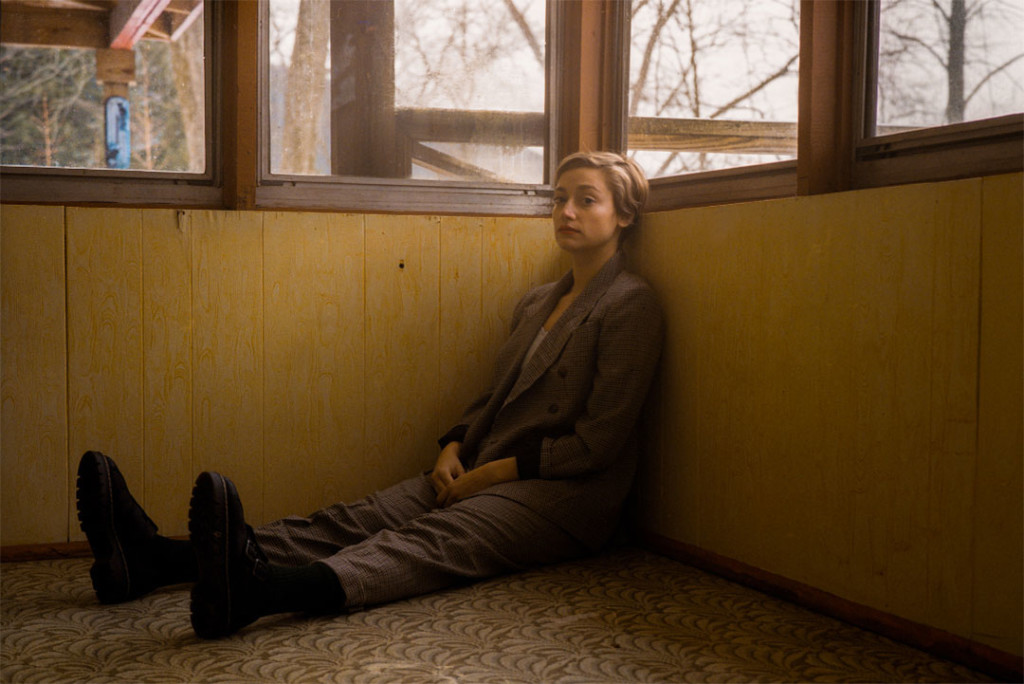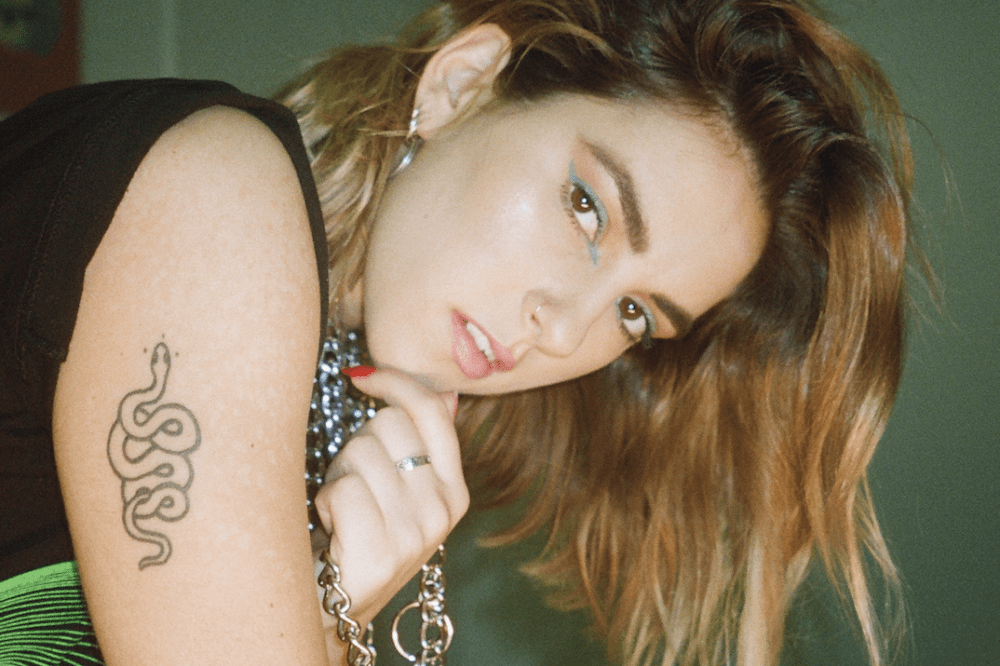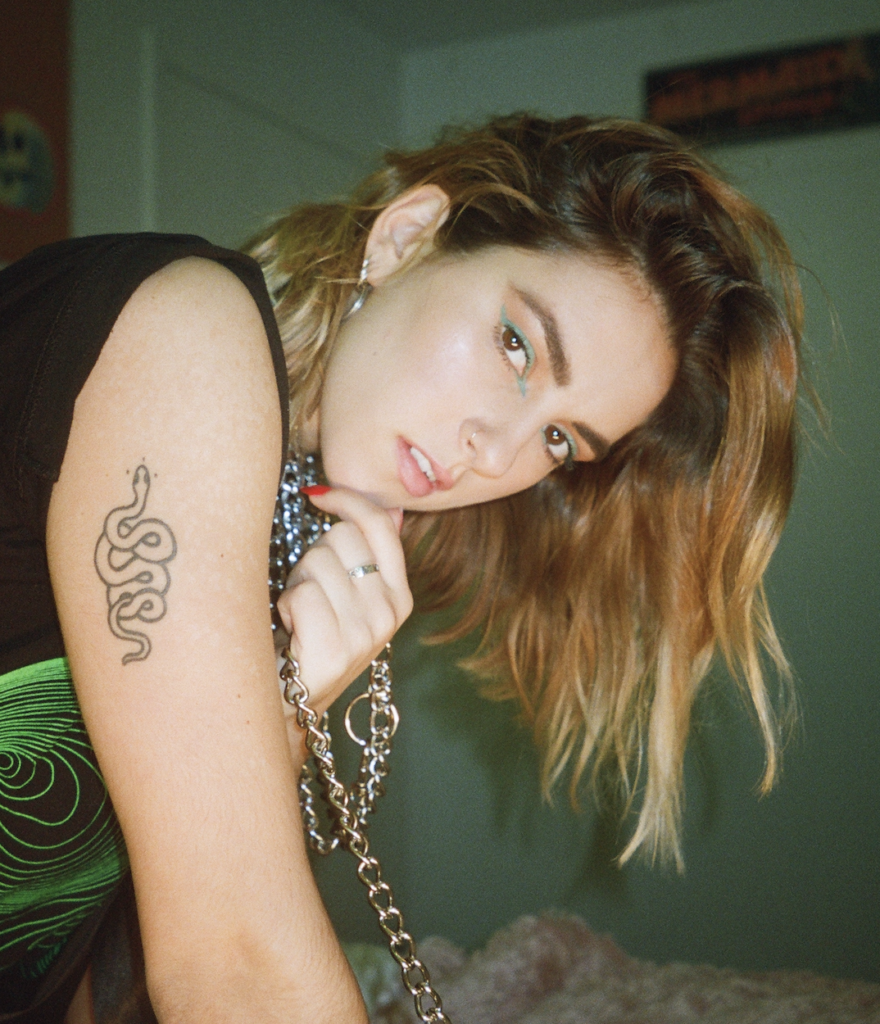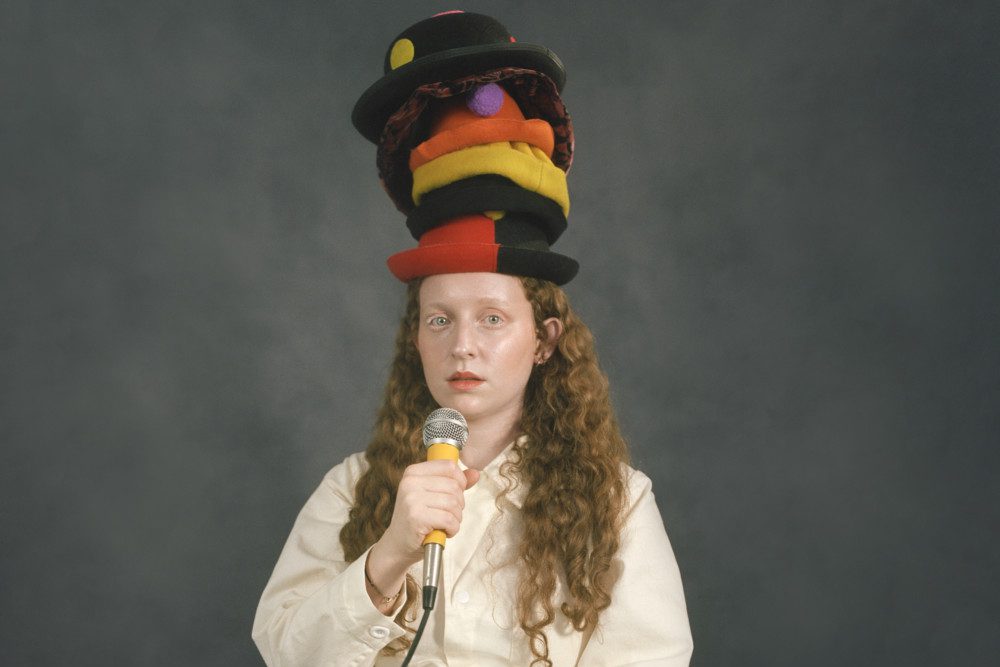
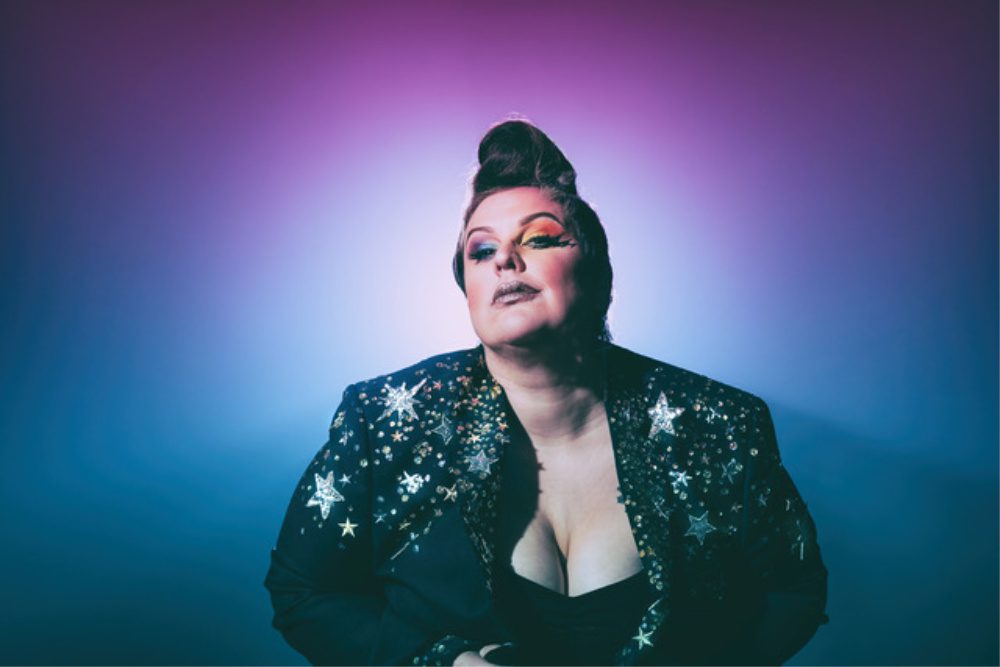
PREMIERE: Sarah Potenza Shreds Shame on “Diamond”

The world doesn’t make believing in yourself easy—especially if you’re treading a path less traveled. No one knows that better than Sarah Potenza, the powerhouse vocalist and songwriter who went from being virtually unknown to wowing judges and becoming a semi-finalist on NBC’s The Voice in 2015. Her stint on the show helped jettison her talents out into the world, but now she’s forging ahead on her own terms—and exuding passion and tenacity in the process.

“Diamond,” the new single off her forthcoming full-length, Road to Rome, is a perfect example of the newfound sense of self she’s uncovered since The Voice. With Potenza’s triumphant lyrics, a soaring background choir, and diverting percussion breaks, “Diamond” is an anthem of self-acceptance and just the sort of song we all need when we’ve lost touch with our own shine.

Listen to “Diamond” and read the full interview with Potenza below.

AF: “Diamond” has such a powerful message. What inspired you to write this song?

SP: From my earliest crushes through my bachelorette years the pattern was always the same: the boys would laugh at all my jokes, be in awe of my talents, and then ask me if my quiet, more submissive girlfriend would go out with them. I spent a lot of time feeling ashamed of who I was. I tried so hard to crack the code, tried to be smaller in every way, but I just couldn’t squeeze myself into the glass slipper. Today I am grateful to have failed, because I wanted things that they could never give to me. “Diamond” is an open letter to a fourteen-year-old Sarah. I want to tell her not to cry over those boys. I want to reach all the little Sarahs out there and tell them, “Girl, just wait. Your turn is coming. You’re a diamond.”

AF: What was the biggest challenge in writing this song? The biggest successes in it?

SP: It was actually a blast to write—it was very freeing, and took lots off my chest. But, pound for pound it was just as heavy. Looking back, I wasn’t kind to myself, and I wasted a lot of time pursuing the attention of boys. My assessment of my own attractiveness was based on the following: Was I pretty? Was small enough? Was I submissive/passive enough? Nope. I was smart, funny, outspoken, a leader, talented and big in every way. I really had to pack a lot, you see? But for me, this kind of anger is healing and acting it out onstage about a hundred times a year really gets that shit out of your system so you can move on.

AF: What’s your writing process look like? Do you have a routine?

SP: It starts with a central concept. Then, I begin to play until I have some words to inform the music. For me, the words dictate everything. If I have to work with someone who doesn’t feel that way, the process can become difficult for me. Next, and still alone, I use my mind to dream of a melody for what little words I have. Then that melody finds its voice. I sing it out loud until it’s solidified, then I go to the piano, find what I am singing, and start to surround it with chords. This turns into a series of pivots and explorations and a lot of times I come back to the first thing I had in the end. But, I have to go searching.

AF: How do you know you’ve landed on something worthwhile? What are your next steps for polishing a song?

SP: Once I have something going that I feel has enough direction—or that I like what I have but feel stuck on—I will record it on a voice memo, send it to my friend Justin, and then he will send me back a garage band file with a more mocked up version of the music, and I track the vocals to that. Typically, that yields a nugget that my husband and guitar player, Ian Crossman, hears. He usually comes up with constructive criticism or a sound or musical idea that gives the whole thing a new perspective. That’s when it gets really fun.

AF: You’re such a confident performer and you wear the RADDEST onstage outfits! What do you do to prep yourself for performance? How do you cultivate confidence in yourself and your work?

SP: I work hard on that shit, then I try to make it look easy. In fact, tonight after we talk, I need to go do my cardio. This new album has been humbling to perform. Lots of fast paced lyrics, big notes and moving around onstage. The songs just call for that, so I gotta step it up. I also watch videos of myself and assess what could be better and what worked. For example, I noticed that the faster songs on this album look better without a mic stand. My lyrics are very playful, so you have to perform them with sass and swag. This is different then my last album, which could mostly be presented on an acoustic guitar while standing still. But, if all else fails, I like to look good. If you’re out there and you feel like a million, you’re gonna show it.

AF: Was there a moment in your life when you realized you’d been undervaluing yourself?

SP: It took me a long time to have that moment. After The Voice, I felt like I had totally lost touch with my inner compass. I was navigating lots of new things, and dealing with adrenal fatigue. Being on reality TV was as much of a confidence builder as it was a killer.

AF: How did you bounce back and find your “Diamond”-ness again?

SP: I was asked to be a part of a project called ‘Sixthman Sessions.’ It’s collaboration of writers assigned to co-write and record an entire album on a cruise ship in three days. I was terrified. I hated co-writing. But when I got going, it turned out I was great at co-writing and it was just what I needed. Because this was not a ‘Sarah Potenza’ album, I was free to fuck it up. And so, I stopped thinking and just chased the ideas, had fun, and stayed focused. With only three days to go, agonizing over every line or chord wasn’t an option. And, the songs were good—like really good. Like, the sound I had been looking for good. After that,  I felt like I could hear myself again. And suddenly I felt 14 again, in a pair of my older brother’s Dr. Martins and my vintage army navy store jacket—I found my confidence.

AF: You definitely have your own authentic thing going on, but I’m wondering what influences helped get you here. Who are you listening to most right now?

SP: When I was writing this album I made a playlist for anyone who was working with me on it. A lot of times, I can’t find the words to describe the sound I want, but I can show them. So, I made this list that I would reference, and it directly influenced me. It’s called S&J—Where is the booty album influences. It was an inside joke about a disco song called “Where is the Booty.” Go ahead and look that song up—you’re welcome.

AF: When is your new album due out? Is there one theme that drives the new album?

SP: International Women’s Day (!!!!), March 8th. The theme of the album is shred your shame. Ditch it.

TOUR DATES
3/8 –  Houston, TX @ Mcgonigel’s Mucky Duck
3/13 – SXSW, Austin, TX @ Midcoast Stage
3/15 – SXSW, Austin, TX @ Party in My Pants Showcase
3/15 – SXSW, Austin, TX @ Rebelle Road Presents
3/15 – SXSW, Austin, TX @ New Nashville Riverboat Road Show
3/16 – Dallas, TX @ Opening Bell
3/17 – Tulsa, OK @ The Stone Church
3/31-4/7 – The Melissa Etheridge Cruise
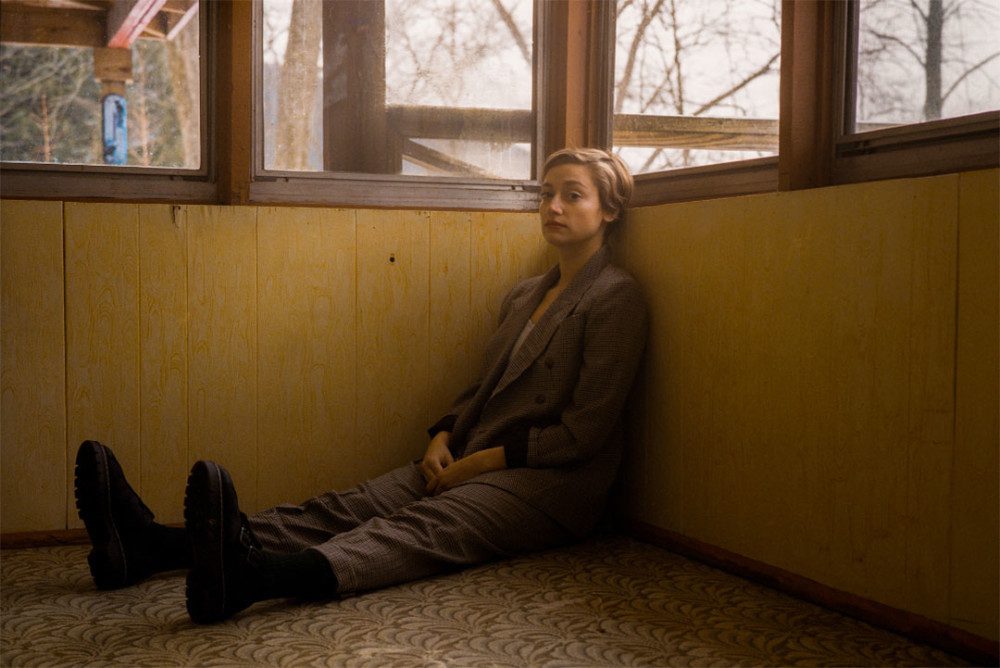
ONLY NOISE: My New Year’s Resolution to Listen to More Women Empowered Me

ONLY NOISE explores music fandom with poignant personal essays that examine the ways we’re shaped by our chosen soundtrack. This week, Tamara Mesko details the resolution that led to revolution when she decided to bring more music made by women into her rotation. Check out her playlist here.

New year’s resolutions are generally difficult for me to keep. Lofty goals are written down, gym memberships are acquired, healthy recipes are copied to a vision board. But a few weeks into the dark winter, all is abandoned in favor of binge-watching shows and eating comfort foods. Instead of repeating this unsustainable cycle, over the past year I’ve set intentions for myself in areas where I actually felt willing to be challenged, and then worked out the details of incrementally pursuing these ideas. As someone who’s almost constantly listening to songs, I’ve realized that the bulk of my music library consisted of albums by male artists. Looking to diversify and expand my music-listening habits, I decided to immerse myself in more music made by women. By devoting my time and funds to prioritize and promote female musicians, I hoped to amplify their voices and support them. Seeking out women who hadn’t been publicized by the traditional gatekeepers led me to discover such an incredible variety of albums that have transformed my life in countless ways. The connection I now feel with these women has revolutionized my perspective, repaired my self-image, and encouraged me in my daily attempts to navigate the male-dominated world.

One of the most transcendent moments of my year was the night I saw Petal opening for Camp Cope in concert. Both bands are primarily made up of women, and the crowd that night was as well. Petal is primarily the work of bandleader Kiley Lotz, who was touring in support of her second album for Run For Cover, Magic Gone. I’d heard a few of her songs before that night, and was instantly transformed by her performance. The unique energy emanating around the venue was overwhelmingly beautiful. I don’t think I’ve ever felt so safe and supported at a show before; at concerts where the band members and crowd skew heavily toward the male side, underneath any positive feelings I have about the music, there’s a constant apprehension, an edgy anxiety that covers my decisions with a shell of protection. Hearing Kiley’s vulnerable stories about mental health between her stunning songs felt like a revelation. Her encouraging and therapeutic presence filled the room with a redeeming light.

Another musician I discovered in the last year was Lucy Dacus. Her latest album, Historian, is a masterpiece, and convinced me that seeing her on a headlining tour early this year would be well worth my time and energy. The evolution happening in my psyche that night was a direct reaction to Lucy’s boldness throughout the concert. Her voice exuded incredible power from the very start, when she opened with a brand new song, to midway through, when she decided something felt off and had to restart another. Her admissions of imperfection spread a sense of authenticity into the audience, urging us to join her in singing through our problems, perceived or real, that we’d carried in with us. As I drove home, I felt my levels of compassion for and confidence in myself rising to new heights.

By extension, I’ve been slightly obsessed with boygenius, a newly formed supergroup comprised of Dacus, Phoebe Bridgers, and Julien Baker (whose music I was already familiar with). All three are masters of their solo craft, yet I was unprepared for the overwhelming harmonies they created together. The day the album was released, I was at the ocean at a women’s retreat, harboring some disappointments while feeling generally directionless. Breaking up the communal times spent with friends by walking along the shore with these songs in my headphones gave me such solace and was a perfect reprieve from “real life.” Singing in community is a sacred act, one that’s sustained me long after that weekend ended. Indeed, the women of boygenius are incredibly supportive of each other, and the music they produced while cheering each other on encourages me to try to infuse my daily tasks with this same love and support for myself.

Lesley Barth’s music came into my life this summer just as I’d canceled on an opportunity to see a male musician playing that same night. I’m sure his show would’ve been good, but seeing Lesley impacted me on a much more deeply personal level. A New York City native, Lesley has been singing and performing for many years. She released her first full-length album, Green Hearts, in 2017, and in a live setting, is engaging and connected to her audience. As part of a local concert series, her set was more of a conversation, with intimate stories to go along with each song. I felt inspired and proud of her as she talked about quitting her unfulfilling office job to pursue being a full-time musician, about how much she loves sad songs, and about how frequently we as women struggle to develop and maintain a healthy self-image.

I haven’t yet had the privilege of seeing Mitski in concert, but she manifests a particular bold energy on her fifth album, Be The Cowboy. These songs seem less personal than her earlier work, though just as powerful. Through a more fictionalized worldview, she introduces a character in “Nobody” who tries on countless personas in an attempt to avoid loneliness. As she progresses through this montage of selves, she realizes that not only is she still alone, but her acts of desperation are destroying the very possibility of connection. Throughout the album, Mitski continually subverts expectations, musically and lyrically, while describing ways to develop a more authentic sense of self.

As a late-December addition to my absolute favorites, I first heard Tomberlin on a podcast, discussing her restrictive religious upbringing. I promptly bought her debut album At Weddings, and was struck by how wise she sounds, how much of her background she’s already deconstructed in a healthy way. Her voice has a stark beauty and a healing quality. She both anchors and directs me in how to dig myself out of my struggles and gracefully move forward. “I’m Not Scared” works its way in mid-album to speak honestly of the female human condition: “And to be a woman is to be in pain / And my body reminds me almost every day.” It’s a song that destroys all my defenses so effectively that I actually don’t want to know specifically what it’s about; I want it to simply exist as a daily incantation for women everywhere to adopt as our own.
For a lot of listeners, music is mainly background noise, something to occasionally notice while they’re busy doing something else entirely. For me, music is a lifeline, and it’s been revolutionary and breathtaking to find new perspectives along that line in the past year. I’ve discovered new facets of my identity that I didn’t realize I was missing. Diversifying how I listen to music and which artists I decide to support has become a year-round, life-long resolution.
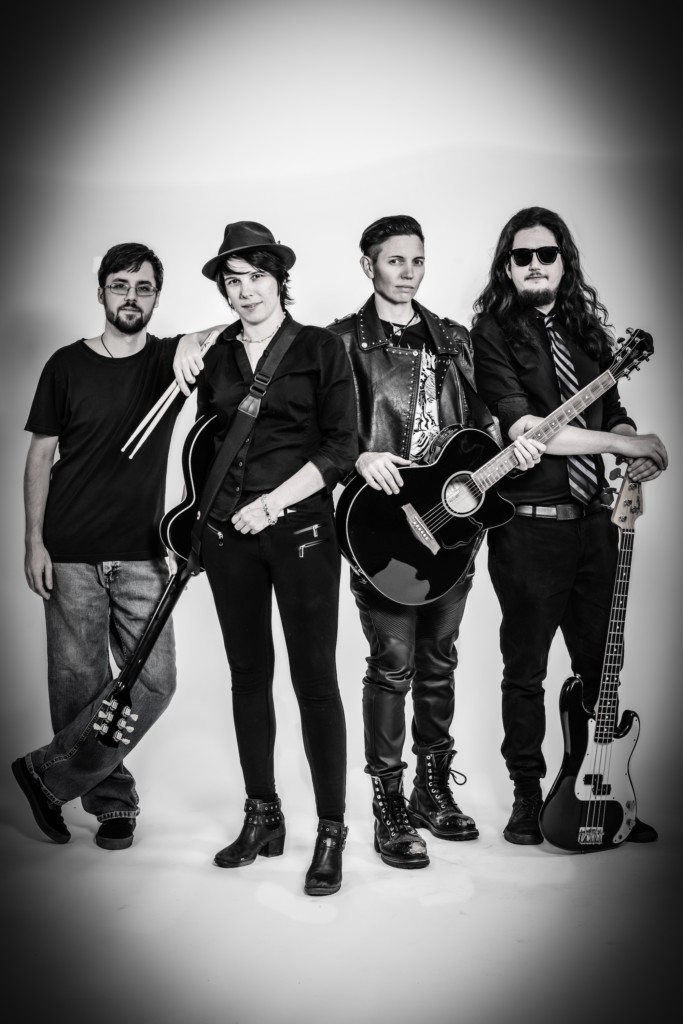
PLAYING ATLANTA: I The Victor Promotes Positivity with “Hypotheticals” Video

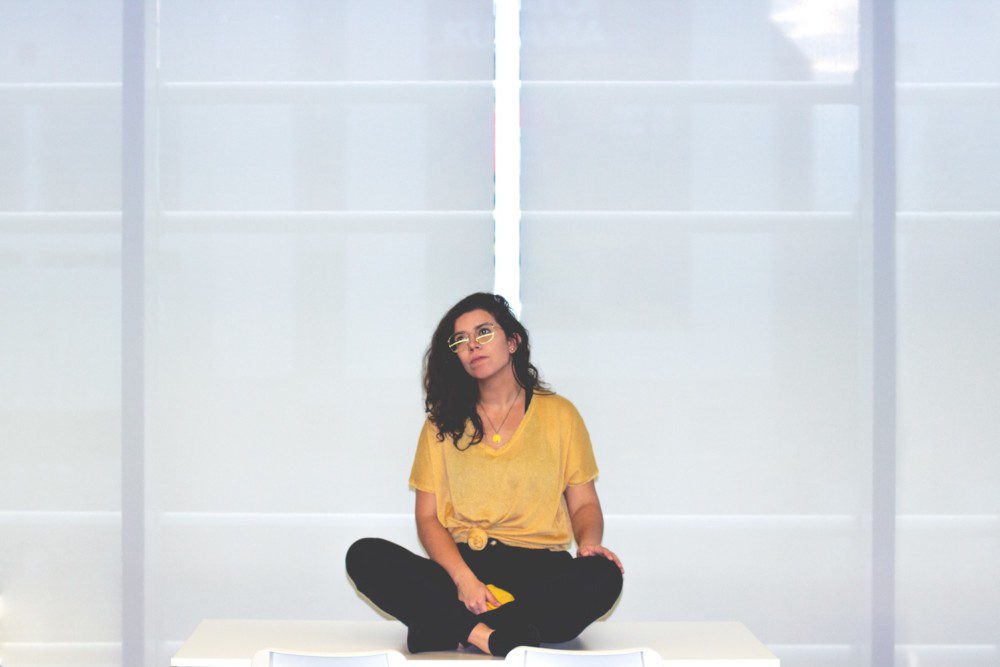
I discovered I The Victor by chance sometime in 2018. My band and I were asked to play an artist spotlight alongside Rebecca Ramos, the heart, brain, and creative force behind the act, that, unfortunately, coincided with a tour we were going on, but I started following her then and loved her bright, open, offbeat aesthetic. Almost a year later, I got the chance to talk with the “posi-rap” artist about all things music, Atlanta, and “Hypotheticals,” her latest release.

AF: Thanks so much for talking with me! Do you mind telling me a bit about your story? How did you get into music?

RR: Of course, thank you! I super appreciate getting to chat. I got into music shortly after discovering Avril Lavigne as a living, breathing, amazing entity on earth. She just really struck me, and from there, I was interested in making music of my own. Not too long after, my parents got me one of those $40 first act guitars, and I was off to the races. I ended up writing really bad songs for a long while and, as I got older, began writing stuff that I was excited about and wanted to put out into the world.

AF: What’s your creative process like? Has it changed over the years, as you’ve toured and recorded and released more music?

RR: Usually it starts at the guitar, but sometimes a line or melody will hit me at a random time, and I try to just drop everything and give it the attention it needs to become something bigger. I try to steer clear from sitting down to write and usually wait for something to come to me, and then I’ll sit with it and flesh it out into something more full. Otherwise, if I try to sit down and be creative, I get pretty in my head about if I’m being organic and real, and usually end up scrapping whatever I write if it feels forced.

As music has become more of the main focus of my life, I have a lot of new toys that have made their way into my process, whether it’s the instrument library on Logic, weird samples, or just messing around with different plugins or vocoders. I think it’s cool, when possible, to start with something kinda eclectic or weird and to pull out some pop sensibility from it. So all that’s in the mix as far as my process, but I definitely try to keep it fluid and let lyrics or melodies come to me naturally.

AF: Who do you consider your greatest influences? How do you draw from those influences while also staying true to what makes you unique as an artist? What inspires you as a songwriter?

RR: I’ve been listening a ton to Billie Eilish recently, along with Glass Animals, Still Woozy, Hippo Campus, Jaden Smith, and so many more. I try not to pull too many direct musical influences; I like to just listen to a ton of diverse stuff, and if I hear a sound or topic that inspires me, I’ll go from there. I do, however, get super inspired just watching artists as they blossom and create worlds around their songs. That’s something I feel like that takes songs to another realm.

I also get inspired by seeing other artists’ merch or marketing rollouts for albums. I love the whole packaging and how far a song can extend into other dimensions like visuals or live shows or clothing. I’ve been really inspired by artists like Halsey or The 1975, who are very meticulous about their aesthetic and the way their visuals and songs transcend into their shows. Anytime I see something unique, I’ll screenshot it and go back to it as I brainstorm for ITV content. I never want to copy what’s been done, but there are always ways of taking cool concepts and molding them into something unique to your own song or vision, so that’s what I try to do!

AF: Everything about you — your music, your visuals, all of the messages you send out to your fans — is so positive. How do you stay so optimistic, in both your music career and your personal life?

RR: Thank you so much! I aim for that. I definitely started writing songs out of a darker and more insecure place, but the purpose was to kind of seek out hope through writing about hopelessness. So, that whole theme of staying positive has just kind of stuck throughout and become this mantra for ITV as a whole, which I am really proud of. The music industry can definitely feel dark at times; there have been times I get so discouraged that I don’t know where else to go than to go back to that place of seeking out hope. I think life is that way too in general: a constant flux and flow of failure versus success, light versus dark, or progress versus setbacks.

I just don’t know what I’d take refuge in if I didn’t have music or wasn’t creating for the purpose of finding hope and staying positive, so I feel really lucky and comforted that it’s naturally become kind of the banner of ITV songs. It’s begun making its way into my mindset day to day, too, which is also lucky. I think there’s just a ton of darkness out there and we all kinda get to feeling alone or hopeless. As ITV grows, I just want it to be a light for people where we can discuss growing pains and dark times but still do that within the lens of hope because we all need that. 

TL;DR – life can get heavy. What would I have if I didn’t have hope? I literally don’t know and don’t want to know. ITV has been a vessel for finding positivity for me and I hope it can be that for others too.

AF: What’s your favorite part of the Atlanta music scene, and how has the city — and the creative community here — influenced you as an artist?

RR: I meet and find more and more amazing people in Atlanta daily, it seems. I adore it. Everything I do with ITV is super DIY or friends-only in a way. We just don’t have a label, don’t have big budgets or resources to do huge productions or outsource a lot of things. The result is myself and my closest friends getting to work on ITV things altogether, and it’s been life-changing. The output is so much more raw and organic, which makes it all the better. I’ve gone to Switchyards quite a bit with my brother and met some amazing designers and creatives there. ITV lets me meet awesome people, too, which is fortunate. It’s just so cool getting to meet people doing creative things that inspire them. It creates such a limitless space for organic collaboration and just freedom to keep doing you; it’s so exciting and definitely a huge part of how anything for I The Victor gets accomplished. 

AF: What’s next for I The Victor?

RR: So. Much! So much. I keep feeling like we’re in the most exciting phase yet, and I get sad thinking about releasing it all because then this phase of anticipation and excitement will have to come to a close! But yes. A lot! Definitely some new music preceding an EP and then we have quite a bit planned to complement the songs coming out, from merch to videos to shows. Excited is an understatement and I feel really lucky for the small community growing around ITV because it’s a super exciting time right now!

Follow I The Victor on Facebook to stay up to date on new releases, music videos, and shows (and your daily dose of positivity in a crazy world).

PLAYING CINCY: Ronin Halloway Soars for the Sun with Icarus EP

Photo by Bradley Thompson

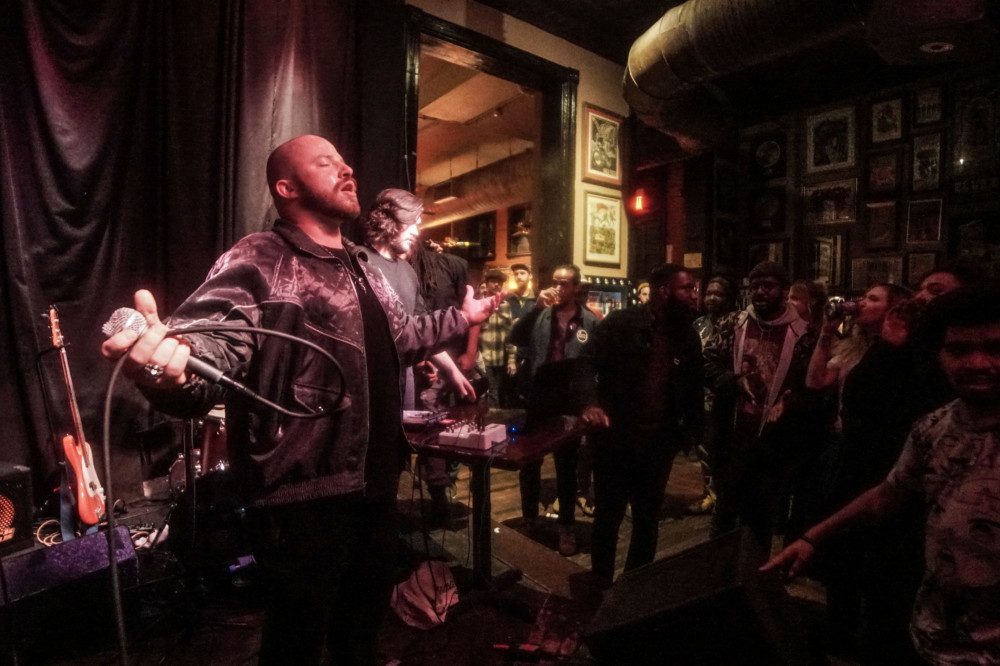
For the past year, Ronin Halloway has been hard at work on The Icarus Trilogy. Released a few weeks ago, the EP is a musical collaboration with JayBee Lamahj, with a visual component directed by Bradley Thompson. Icarus takes listeners through a journey of growth, power, and spirituality, all while giving Ronin and Jay a chance to flex their rapping skills as well as their creativity. Here, Ronin talks about how addiction and sobriety played a part in the themes of this project and how they’ve impacted his upcoming album, Pressure, due in June.

AF: When you were first planning The Icarus Trilogy were you planning it to be an EP or an album?

RH: I think we both always thought it’d be shorter. Especially toward the summertime when we realized we have this song and that song, and maybe one or two more.

AF: And you have an album coming out, too?

RH: The album is my solo album, entirely produced by SmokeFace, and that’s coming out in June. It’s actually four years old. It’s taken a lot. It’s only six songs long, now, but in the same way we did Icarus, it’s gonna be a very visual album. Lots of fantasy stuff. I’m a very David Bowie-inspired artist, I love theatrical stuff, and even making stories that people might not get yet.

AF: What made you name your EP The Icarus Trilogy?

RH: There’s definitely the mythology thing and the title track is called “Icarus.” It kind of teases at the stories I’m going to tell. Of course, the story of Icarus is he made wings from wax and he wanted to touch the sun and his wings melted. The chorus of that song is “Don’t’ fly too high you might end up burning” and really what’s interesting, too, is a common message throughout my music has been my journey with addiction and what that’s been in my life, what self-medication means. Especially now – I’ve started a journey of sobriety – I can look back through a different lens. “Icarus” touches a little bit on getting older, the uses of substances and trying to cope with the world around you. Then “Elijah,” the second song, is a song about being powerful—that was like the flex track—just rapping as aggressively as we both could. And then “Paul” is probably both our favorite song. It’s a very spiritual song, just kind of summing things up like, “Okay, we’re gonna move forward and grab life by the horns.”

AF: Will some of those same themes be expanded or explored in your upcoming solo album?

RH: Pressure – that’s the title of the album – is really dark. It’s very dark, almost industrial sounding, so I think people will get the Danny Brown influence, Run the Jewels influence, maybe even a little Death Grips. What’s gonna be cool and kind of important will be to try to portray it within the context of everything. The videos kind of inform and give you some of the themes I’m talking about. It’s gonna be cool. Moving forward from that I’ll be starting to explore still the intensity of stuff, but also my more whimsical side. It’s definitely a dark record. It’s definitely very vice-driven. But I think people will see, especially with the visuals, [I’m] not speaking on drinking to glorify it, [I’m] reflecting, and not necessarily in a sense of regret but just realizing the gravity of it. SmokeFace and myself decided to step into sobriety together. In the days we started working together it was a ton of partying, so it’s very interesting to now be in a space where we’re looking back on that in a different lens.

AF: For sure, and since the album comes from different times in your life, it’ll have different levels. What’s coming up after that?

RH: So my song “Fruit Fly!” was produced by my good friend Seventeen. We are working on something that’s gonna be like 2020 stuff, but like his sound—he’s like Metro [Boomin] beats, like Southside even. So I’m really excited to work on my melodic side, to work on my catchiness, while still being me and having room to lyrically chop it up.

AF: Who are some of your inspirations?

RH: Kendrick is huge obviously. But I always tell people my favorite emcee is Jay Electronica. He’s my favorite. When Jay raps he doesn’t do a lot of adlibs, his voice is so deep, he’s like a wizard [laughs].

AF: How did you get started rapping?

RH: I grew up as a musician, playing piano. I kind of stumbled into this, meeting people who were really good at freestyling. Then I wanted to get good at it, but it was still kind of a hobby. And then I started writing and it just snowballed, and now it’s my life.

Catch Ronin Halloway’s next performance at the Live on Short Vine Music Festival Saturday, April 6th.

INTERVIEW: TWIN XL Talk Music, “Friends,” and Their Upcoming Debut

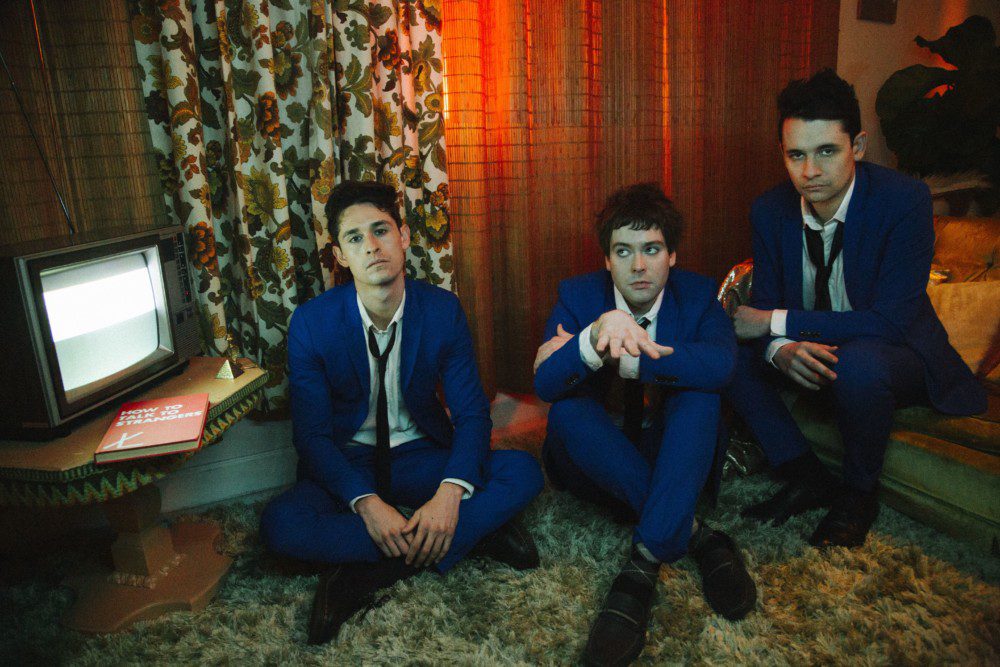
Brothers Stephen and John Gomez and Cameron Walker are no strangers to success. Following chart-topping careers with The Summer Set and Nekokat, the trio united after working together to write and produce music for trailers, commercials, and other artists, such as All Time Low, Lindsey Stirling, and Life of Dillon. The result – TWIN XL – is a high-energy, alt-pop-earworm-making machine, clearly displayed in the release of their latest single and music video, “Friends.”

Whimsical and fresh, they combine youthful energy with the wisdom and experience of music industry veterans and the commercial appeal of alt-pop groups currently topping the charts. As they prepare for the release of their debut EP How To Talk To Strangers on March 1st, the trio took a moment to discuss music, their background on the road, writing, and in production, and all things TWIN XL.

AF: You guys are just a few days away from releasing your debut EP, How To Talk To Strangers. How does that feel?

TXL: It feels absolutely amazing. We’ve been working on these songs for just over a year and it’s sort of like sending our children out into the world. We’ve put blood, sweat, and tears into this EP; we are proud of what we have created, and can’t wait to see what everyone thinks.

AF: What’s the creative process like for you guys?

TXL: We do everything ourselves. Usually, when we get together to work on TWIN XL, one of us has a concept idea, a melody idea, or even just a drum loop or bass riff, and we sort of build from there. Some songs come together very quickly and others take a few days to get it right, but that’s part of the fun. It’s almost like cracking a code. We thrive in the studio together.

AF: What inspires the music?

TXL: Inspiration comes to us in many forms and from many places. We listen to a lot of music from other artists in the studio; sometimes we start our sessions by sharing music we’ve all been into lately and finding some common ground within it. While writing lyrics, we are very open with each other as far as our personal experiences and emotions, and I think that helps us stay genuine and honest in our lyrics.

AF: What was the most challenging part of recording this record, and what was the proudest?

TXL: I think one of the most challenging parts was making sure that we were making music we collectively all loved, and that it was creatively fulfilling for all of us. We have a lot of respect for each other as artists, and we’re very in tune with each other’s musical tastes. One thing we are very proud of is how diverse this EP is. No two songs sound similar. We experimented with so many different drum grooves and sounds that are very distinct from one another. Because the songs are all so different from one another, our live show is quite the journey.

AF: Is there a big difference for you guys when you’re working on writing and producing music for another band versus writing and producing your own music?

TXL: We approach a lot of it exactly the same, but there are some differences. For starters, we aren’t afraid to take our time. Just because a song isn’t coming together the first day we start working on it doesn’t mean we won’t revisit it a few days later with fresh ears and make it happen. Another difference is that we want to make sure all of the concepts and lyrics are things that we really, really want to say, or that represent who we are as individuals and as a band.

AF: What made you decide to form TWIN XL?

TXL: The three of us have been friends for many, many years, and we would see each other out on the road playing in different bands. Eventually, we all ended up living in LA, and we finally got into the studio together. When we did, everything just clicked. It became clear after a few days working together that we had a very special connection as co-writers, and it just made sense that we should write, play, and release music together.

AF: How did your backgrounds in The Summer Set and Nekokat shape you as artists and prepare you for forming TWIN XL?

TXL: We all found ourselves individually as songwriters and performers in our past projects. They both shaped who we all are now and prepared us for where we are going.

AF: Any advice for your younger selves?

TXL: Don’t be so hard on yourself.

AF: What’s next for TWIN XL?

TXL: We are insanely excited to hit the road for the first time ever next month with Jukebox The Ghost and The Mowgli’s. We already have a handful of songs written for future releases and it might just our best stuff yet. In short – we want to keep growing and continue doing what we love.

Keep up with TWIN XL on Facebook, stream their debut release on Spotify, and catch them on the road with Jukebox the Ghost and The Mowgli’s in March. 

TWIN XL TOUR DATES:
3/18 – Minneapolis, MN @ Varsity Theatre
3/19 – Milwaukee, WI @ Turner Hall
3/20 – Chicago, IL @ Metro
3/21 – Detroit, MI @ El Club
3/22 – Cleveland, OH @ Beachland Ballroom
3/23 – Columbus, OH @ Newport Music Hall
3/24 – Pittsburgh, PA @ Mr Smalls Theatre
3/26 – Ithaca, NY @ The Haunt
3/27 – Brooklyn, NY @ Brooklyn Steel
3/28 – Boston, MA @ Royale
3/29 – Burlington, VT @ Higher Ground
3/30 – Providence, RI @ The Met

8 Songs Celebrating Female Masturbation, for Better or Worse

NYC electronic artist Von not only writes about female masturbation, she literally creates songs from her orgasms.

Over the past few years, female masturbation has gone from a total taboo to a popular topic among those looking to add a little ~edge~ to their art. We haven’t made it all the way to normalizing the act, but we have reached this weird middle stage where singing or writing about it is deemed a bold, avant-garde choice. That’s a far cry from the casual way we depict male masturbation, which is just assumed to happen rather than made into some sort of statement, but it’s a step above not talking about it at all.

Now that references to flicking the bean, jllling off, klittra, or whatever you want to call it are seeing the light of day, artists are scandalizing everyone’s pants off with music about female masturbation. Here are some songs that tackle the topic head-on without beating around the bush (sorry, I had to).

“Love Myself” by Hailee Steinfeld

At first listen, then-18-year-old Steinfeld’s first single sounds like a self-love anthem… until you listen closely and realize it’s a self-love anthem. Really, it’s both. “Gonna love myself, no, I don’t need anybody else,” she sings. What’s cool about the song and surprisingly G-rated video is that Steinfeld isn’t portraying herself as dirty, “slutty,” or sexy. Her innocent image conveys that masturbation isn’t just for “bad girls” – it’s for girls working toward loving and taking care of themselves… so, all girls. It’s admittedly a bit cheesy with her “self-service” shirt and lines like “I know how to scream my own name,” which don’t exactly portray female masturbation accurately (unless anyone does that? I’m willing to be proven wrong), but her decoupling of female masturbation from the male gaze makes me forgive her.

“Solo” by Clean Bandit Feat. Demi Lovato

This annoyingly catchy song exemplifies the biggest problems with the ways we talk (and, now, sing) about female masturbation. “I do it solo” is supposed to be some sort of scandalous revelation on Lovato’s part: OMG, she does what solo?! Not to mention, she presents masturbation as a mere consolation for when her ex is not around. We don’t get the impression that her sexuality exists independently of men; we learn that she’s sexual in response to them and uses her hand/vibrator/whatever as a less-than-ideal penis substitute. But truthfully, I lost all hope for this song the moment she started singing “whoop whoop” instead of “fuck.”

“Action” by Von

“Sex-positive synth pop” artist Von took the act of turning female masturbation into music to the next level by making a song out of her orgasm. I mean this literally: She used an app called Lioness to measure her orgasmic contractions, displayed them on a graph, and then used the wave pattern as the basis for the bass beat. The result is a song about sexual independence, with lyrics like “don’t need you to make it happen / one-woman show with the action.” By turning female pleasure into something as accessible as a song, Von aims to give people an easy avenue to talk about it. And by portraying female masturbation based on its internal motions and sensations, rather than its appearance, she presents it in a way that can’t be objectified.

“I Don’t Need a Man” by The Pussycat Dolls

In a similar vein, The Pussycat Dolls declare in this track that they “don’t need a man to make it happen” and “get off on being free.” Even better, they use these lines to shut down guys who think their dicks are God’s gift to womankind. If those lyrics don’t make that crystal clear, “I can get off when you ain’t around” should do it.

“I Touch Myself” by Divinyls

The OG of female masturbation anthems was progressive during its 1990 release for acknowledging that female masturbation is a thing, though it’s expectedly not the most progressive on the list today. Like Demi Lovato, Chrissy Amphlett sings about self-love sessions inspired by a particular love interest — and not only that, but she will fantasize about him and him only, playing into the stereotype that sexual desire is deeply intertwined with love for women. Even in her solo sex life, the man she’s singing about has a monopoly on her mind. The lyrics aren’t the most empowering either; the opening line “I love myself” is undermined by the subsequent “When I feel down, I want you above me / I search myself, I want you to find me / I forget myself, I want you to remind me.”

“She Bop” by Cyndi Lauper

Another classic entry on the list, Cyndi Lauper’s third single from 1983 debut She’s So Unusual was partially responsible for the creation of the Parental Advisory Sticker. The song never makes outward mention of its true subject matter; Lauper said she wanted to maintain the illusion that it was just about dancing for younger listeners. But she also claimed in an interview with Howard Stern that she recorded its vocals in the buff.

“Hump Day” by Miss Eaves

This infectious track is notable not just for confident lyrics like “I know best. I know better / I’m killing this, a real go-getter” but also for a video where Miss Eaves sings in a suggestive cat hoodie while several other women mimic their masturbation faces. They weren’t actually pleasuring themselves in the video, but as Miss Eaves has said, it’s “really good method acting.” With a diversity of women and explicit lyrics, it’s a refreshing break from songs like “Solo” and “I Touch Myself” that make masturbation either a substitute for men or a performance for them.

“Feelin’ Myself” by Nicki Minaj Feat. Beyonce

“Feelin’ Myself” takes on a double meaning here, with masturbation a metaphor for Queen Bey and Nicki Minaj owning their power and being proudly “masculine.” As an astute Genius.com user has pointed out, it may be inspired by Minaj’s “Come on a Cone” line, “I’m not masturbatin’, but I’m feelin’ myself / Paparazzis is waiting, ’cause them pictures will sell.” Whether it’s taken literally or metaphorically, the song gives women permission to be bossy, loud-mouthed, and a bit full of themselves. And, of course, to masturbate.

NEWS ROUNDUP: Webster Hall Reopening, R. Kelly Arrested, and MORE

Webster Hall is Reopening!

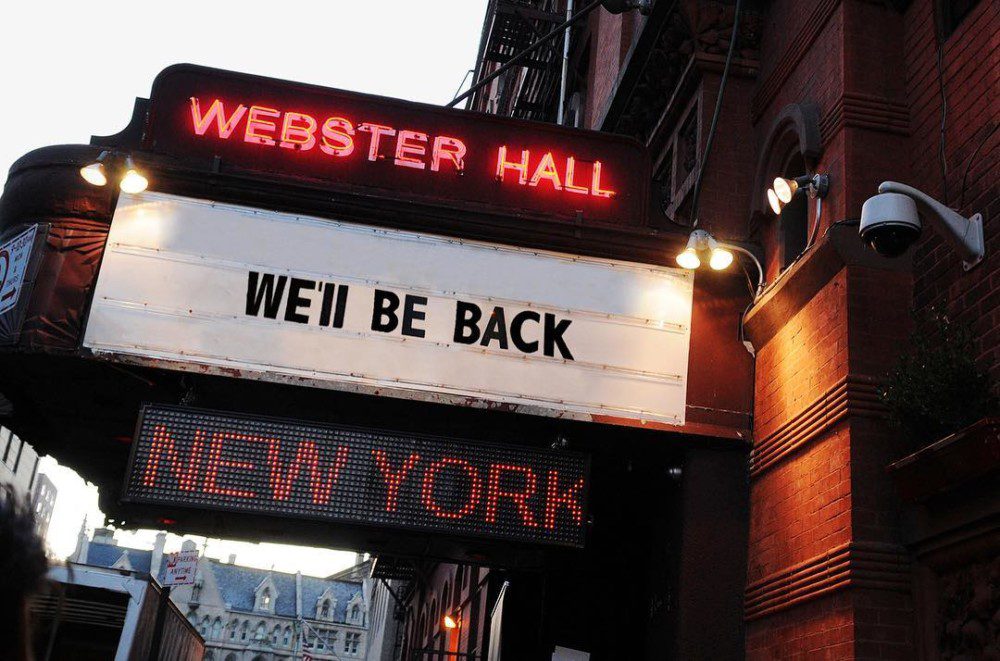
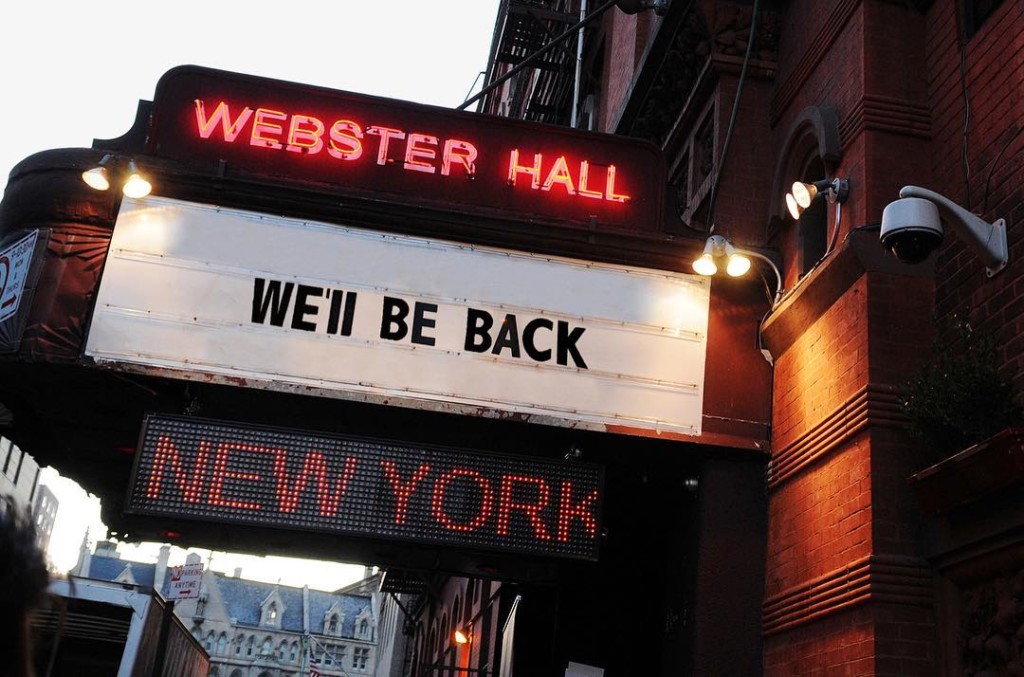
It’s always sad when an iconic New York venue closes, but Webster Hall’s story has a happy update. The 130-year-old venue was shuttered in August 2017 for renovations when longtime owners the Ballingers sold it to AEG. That means Bowery Presents will be handling bookings, and the show schedule looks pretty sick, starting with a christening from punk poet laureate Patti Smith on May 1. Broken Social Scene, MGMT, Sharon Van Etten, Big Thief and Built to Spill are some of the acts slated to play over the next six months or so, and that’s just the initial announcement. The New York Times got a sneak peek into the renovations, and it seems like the $10 million plus project focused mostly on accessibility, with a revamped entryway and the addition of an elevator, as well as updates to the bathroom and soundsystem. Much of the characteristic fixtures in the ballroom were left unscathed, though we’re guessing the floor will no longer feel like it’s about to cave in when the mosh pit gets too rowdy. The Marlin Room will become a lounge, and there’s no word yet on what’s going on with the basement stage. The venue will still have a capacity of about 1,400 – making it an essential part of downtown nightlife once again.

R. Kelly Arrested, Bond Set at $1M

Following increased scrutiny after Lifetime doc Surviving R. Kelly aired earlier this year, the R&B star was arrested in Chicago on Friday and charged with ten counts of aggravated criminal sexual abuse involving four separate victims, three of whom were minors when the abuse occurred. One of the most disturbing pieces of information to emerge in Saturday’s bond hearing was that Kelly met one of these victims at his 2008 trial for child pornography, of which he was acquitted; like the trial a decade ago, some of these charges stem from the discovery of a sex tape in which Kelly appears to perform sex acts with an underage girl. His bond was set at $1 million, and that may be the tip of the iceberg – Kelly is also under investigation by multiple federal agencies for sex trafficking, and it looks likely that there are more victims who have yet to come forward. Let’s hope this is the beginning of the end of their nightmare.

That New New

Audiofemme favorites Sharkmuffin shared rollicking new single “Serpentina,” the first single from their Gamma Gardening EP, out April 5 via Exploding In Sound. We couldn’t be more excited – love you, Tarra & Nat!!!!

While this video for Kate Bush’s cover of Elton John’s “Rocket Man” isn’t exactly new, it hadn’t been released since its recording in 1991. The video comes with the announcement of a four-disc rarities and b-sides compilation called The Other Sides, which will be available March 22. In other Elton John news, his biopic, starring Taron Egerton, comes out May 22.

Tierra Whack is back with single “Only Child,” her first release since blowing up with Whack World.

Helado Negro is currently on tour with Beirut as he prepares for the March 8 release of This is How You Smile; he shared a video for single “Running” this week.

Ella Vos shared an intimate self-directed video for “Empty Hands,” which follows her through the last day of two years of treatment for lymphoma. The single appears on her latest EP, Watch & Wait.

Karl Denson’s Tiny Universe will release Gnomes & Badgers, their first album in five years, on March 8. The TG Herrington-directed clip opens a poignant dialogue about the family separation crisis at the U.S.-Mexico border.

Marissa Nadler released two new songs – including a duet with John Cale – via new imprint KRO Records, who will release the single on heart-shaped vinyl this spring.

CHROMATICS are back with “Time Rider” and a slew of tour dates, but no official release date for an album, which they’ve been teasing for some time now.

Priests released a lyric video for “Good Time Charlie” from their upcoming album The Seduction of Kansas, out April 5 via Sister Polygon.

Empath have announced their debut LP Active Listening: Night on Earth (out April 2 via Get Better Records), and shared its first single, “Soft Shape.”

Alex Lahey will finally release a follow-up to 2017’s excellent I Love You Like a Brother. It’s called The Best of Luck Club and is slated for release via Dead Oceans on May 17; “Don’t Be So Hard on Yourself” is the first single.

TEEN are streaming Good Fruit ahead of its March 1 release over at NPR, and have shared a video for “Pretend.”

With her band Wax Idols on an indefinite hiatus, Hether Fortune has shifted to solo work with the release of single “Sister.”

Shady Bug shared “Whining” from their sophomore album Lemon Lime, out March 8.

Los Angeles noiseniks HEALTH have released their fourth collaborative single since September, this time featuring JPEGMAFIA.

We’re obsessed with “TGM” from 18-year-old newcomer Ebhoni, who reps her Toronto home and West Indian roots all at once.

Palehound kicked off their tour with Cherry Glazerr by releasing a new single called “Killer.”

Indie poppers Pure Bathing Culture  shared a lyric video for “Devotion,” the first single from their forthcoming LP Night Pass, out April 26.

If you’ve ever wondered what Mountain Man’s Molly Sarlé sounds like on her own, take a listen to her debut single, produced by Sam Evian. She’ll play some shows with Mountain Man cohort Amelia Meath when she joins Sylvan Esso for a few shows in their recently-announced WITH tour.

Nilüfer Yanya’s debut album Miss Universe drops March 22. Her latest single “Tears” follows alt-pop bops “In Your Head” and “Heavyweight Champion of the Year.”

Former Shudder to Think frontman Craig Wedren has had an illustrious career scoring film and television, so it’s no wonder the clip for his vibey rework of “2Priests” (from last year’s Adult Desire Expanded) is so gorgeous.

We have a feeling Aldous Harding’s low-key pilgrim dance from “The Barrel” video might catch on well before Designer arrives via 4AD April 26.

Legendary Smiths guitarist Johnny Marr shared a video for latest single “Armatopia” to promote his upcoming North American tour in support of 2018’s Call The Comet.

End Notes

  • Breakdancing could become an Olympic event by 2024.
  • Moogfest has announced the “first wave” of its 2019 lineup, featuring Kimbra, Martin Gore, Matthew Dear, Lucrecia Dalt, GAS, Ela Minus and more.
  • Wilco have also announced the lineup for their bi-annual Solid Sound Festival, taking place June 28-30 in Massachusetts. There will be several sets from Jeff Tweedy solo and with the band, as well as appearances by Courtney Barnett, Cate Le Bon, Tortoise, Jonathan Richman and more.
  • Detroit musicians will be the first recipients of Tidal’s new $1 million endowment program.
  • The 1975 took home British Album of The Year at the BRIT Awards for A Brief Inquiry into Online Relationships, and called out music industry misogyny in their acceptance speech for Best British Band.
  • Stereolab have added a ton of reunion tour dates to their Primavera Sound and Desert Daze appearances, and announced reissues for seven of their records. The band has been on hiatus for a decade.
  • Tom Krell of How To Dress Well launched his label Helpful Music with an EP from Calgary’s Overland.
  • W Hotels have also recently launched a label, releasing two songs with Perfume Genius to benefit Immigration Equality. Watch a mini-doc about the collaboration here.
  • Lydia Loveless took to Instagram to detail sexual harassment she has suffered since signing to her label Bloodshot Records; her abuser doesn’t work at the label, but attended all social events having to do with it as the partner of one of the label’s founders, who has since left the imprint.
  • Someone decapitated Puff Daddy’s wax figure at Madame Tussauds in Times Square.
  • Michael Jackson’s estate is seeking to block the production of HBO’s Leaving Neverland with a $100 million lawsuit; the two-part doc follows the story of two men who say their were abused by the King of Pop as children and is set to air March 3rd & 4th. Watch the trailer here.
  • Stereogum published this handy rundown on the drama that’s dogged Royal Trux’s reunion tour, as well as the release of White Stuff, still scheduled to come out March 1.
  • My favorite Eric Andre gag is getting his own TV special. Thanks Adult Swim!

BAND OF THE MONTH: Thelma

Photo Credit: Grace Pendleton

A guitar is only about eight pounds, but it can feel much heavier when you bear that weight on a shoulder prone to dislocation. Likewise, it’s not easy to play it with swollen and dislocated finger joints. But since she took up playing professionally, Natasha Jacobs – the force behind Brooklyn-based band Thelma – has had to deal with a constant pain that threatened her career. The band released its debut in 2017 while Jacobs studied composition at SUNY Purchase, and while demoing a second record, she began investigating her health issues in earnest. In the course of that journey, Jacobs was diagnosed with unrelated thyroid cancer, which jeopardized her singing voice, and it wasn’t until that was under control that she finally had an explanation for her pain – Ehlers Danlos Syndrome, a genetic disorder that, for her, manifests itself as loose joints and faulty connective tissues. But none of this kept Jacobs from completing her sophomore record, not only because she’s an extremely resilient person, but because, as she would attest to in the very title of the LP, out today, that making music wasn’t just a passing hobby or cold ambition. For her, it was The Only Thing she could imagine doing.

“Apart from music, it just really changed my perspective on life and what I want,” Jacobs says. “Before, I was so focused on making it as an artist, which, we all want that. But I think it really made me value love and friendship in a different way and what I want my life to be like. And also, [I started] really thinking about how you don’t have to be a successful artist to be an artist.” With The Only Thing, Jacobs has learned to be truer to her art: pursuing the pop-oriented sounds that brought her joy as a child; embracing synthesizers because they’re easier for her to “make an aggressive sound with so little effort;” and leaning in to the idiosyncrasies of her voice, which she says friends have described as that of a “primordial baby.”

“In the past I was so focused on trying to make my voice sound perfect or good or something… I realized that wasn’t really working for me,” she admits. “With this record being really symbolic for me, [I was] just trying to have fun playing music, focusing much more on being playful and emotive and just capturing the characters of the songs. I’m a pretty goofy person in general and I feel like my whole life I’ve been known as someone who makes funny voices.” She allows her voice to creak and moan and wail and whisper when the emotional thrust of the song calls for it; even on more abstract tracks like “Sway,” she oscillates between an almost operatic flutter and playful cooing delivery.

Though this way of singing is more akin to the likes of early-aughts freak folksters Joanna Newsom or CocoRosie, Jacobs is indebted to the tongue-in-cheek pop sensibilities of Lana Del Rey and Lady Gaga, too. She inhabits characters, as on “Stranger Love,” who long for the romanticized version of their crushes despite knowing the reality won’t live up to it. The lovelorn narrator of “Take Me To Orlando” is so besought with fantasy that she punctuates her verses with a sharp, breathy intake, almost like a hiccup. Even when she’s adopting these characters, Jacobs’ personality shines through – particularly her sense of humor. In the video for “Stranger Love,” Jacobs leads a geriatric water aerobics class (“That was a real swim class! They let us film it!”) as a sort of metaphor for going through the motions whilst in the throes of unrequited love.

But perhaps the most poignant moments on the record come when Jacobs confronts her health struggles. On “Never Complain,” she seeks a way to “untangle my body like a silver chain;” her voice echoes over distorted guitar, a metaphor for the distance she must cross to do something as simple as go out, “But I do it and never complain.” Jacobs isn’t feeling sorry for herself, just getting caught in a reverie that anyone with a debilitating disorder can relate to. “No Dancing Allowed” has what is perhaps one of the most poignant metaphors for living with chronic pain ever put to song: “Pain is an island with a cabaret law / Right there on the wall / No Dancing Allowed / When I’m alone with no one to enforce, I turn the music loud / My body will remind me, no dancing allowed.” Not only does it suggest her physical discomfort, but also the isolation and frustration that comes along with it.

“I don’t personally have any idol songwriters who have written much about physical pain. I can’t think of many songs that talk about it,” Jacobs notes. “And so much of the population is chronically ill or disabled – I just really hope that these songs can get to those people and help someone in some way.” Jacobs underwent surgery on her shoulder in November to help alleviate some of her pain, though she says it still feels like it’s bruised, with slow healing times being a common issue for those with EDS. She’s on thyroid medication but opted out of surgery due to the threat of vocal paralysis; she monitors it regularly and hopes that if it worsens, there will be less risky treatment options available, and the medical technology around that looks promising. “I feel like I’m still very much in the midst of what I was going through when I wrote the record,” she says, “but I think it will be interesting to see [the songs] from a greater perspective in time.”

For now, she’s realized how many obstacles stand in the way of normalcy for folks with chronic pain and invisible illness. “I would love to tour and I do feel physically capable, but with self-releasing [the LP] and all the money that goes into medical stuff I’m not in a place right now where I can do a ton of DIY touring, physically or financially,” she says. “So many labels, when they reach out to you, they’re like, are you touring? How much DIY touring are you doing? Not only is that really hard or close to impossible for people who are disabled, but it’s also really hard for people who don’t have a lot of money. So I think it’s kind of unfair in many ways, to have those expectations of an artist.” She also says that venues need to step up when it comes to accessibility, and is heartened by the active push for more of that from organizers like Sean Gray of Is This Venue Accessible.

Advocacy was on Jacobs’ mind when she wrote “Chosen Ones,” the album’s stirring closing track and one she says is among her favorites on The Only Thing. She says it was one of the most “impulsively emotive songs” on the album. “The emotion poured out and it happened so quickly and I was like, crying while writing [it],” she remembers. In it, she reminds her inner child that she’s worthy of love, and encourages her to fight for it. “Every day / You’re trying hard just to be brave / For the child screaming bloody murder inside,” she sings, letting her voice flutter wildly. “It’s such a dark thing to say, I just feel like there was no way to say something like that unless you’re doing it kind of wacky,” she says with a laugh. Like many of the songs on this record, the music is disarmingly buoyant given its subject matter, but that’s territory that Thelma navigates handily. “I think that was my only way to cope with what was going on [healthwise],” she says of the album’s swooning string sections and danceable grooves. “Also, it’s funny – I feel so much more since I went through this. I’ve become a much more empathetic person and feel so many more emotions. But I also feel like a little bit – no, a lot – tougher.”

Thelma’s sophomore record The Only Thing is out today; she’s playing a handful of shows over the next few months, where you can cry, dance, or do both, and hopefully say hi.

THELMA TOUR DATES

2/22 – Everybody Hits @ Philadelphia, PA *
2/23 – Secret Project Robot @ Brooklyn, NY *
3/1 – The Chateau @ Albany, NY
3/2 – Wherehouse @ Middletown, CT
* w/ Mutual Benefit

PLAYING SEATTLE: Tacocat Celebrate Friendship and Sub Pop Signing with “Grains of Salt”

Effervescent pop-punk band Tacocat released their new single, “Grains of Salt,” on Valentine’s Day, complete with a colorful music video featuring prominent members of the Seattle drag community. “Grains of Salt” is the first single teasing their third full-length album This Mess is a Place—following 2014’s NVM and 2016’s Lost Time—due out in May and currently available for pre-order.

Tacocat has a history of writing addictive hooks as palpably gleeful and upbeat as they are insightful into the long-term, close-knit friendship between the band members—singer Emily Nokes, bassist Bree McKenna, guitarist Eric Randall, and drummer Lelah Maupin. “Grains of Salt” is no exception. Nokes explains that “Grains of Salt” is about “being a good friend to yourself, turning off the external bullshit for a bit, landing the backflip, and just generally taking yourself back… Loving or even liking yourself can be really hard work, and wondering what is ‘normal’ in comparison to whatever else becomes such a drag. This was just a sweet reminder to myself, and to everyone.”

Keen to capture that vibe visually, the music video for the song puts playful self-acceptance, humility, and their love for each other and their community on full display. Lending a hefty dose of glamour and glitter to the mix are some of Seattle’s brightest drag stars, including Irene Dubois, Cherdonna Shinatra, Cucci Binaca, Connie Merlot, Mermosa, Umlaut, Dion Dior Black, and Beau Degas. Tacocat is in their element – a party where they can dance like no one is watching.

“We never wanted [the band] to be something that jeopardized our friendship or our understanding of one another’s needs,” said Nokes. “We’ve all had super high points and super low points and taking care of each other is what comes first; like any long-term relationship, having that empathy, tenacity, and deep respect for one another is what makes it work. We’re basically family at this point and are in the unique position to understand each other’s experiences in a way not many other people can—we’ve grown up together in this. And our mantra is: We’ll stop doing it when it stops being fun.”

“Grains of Salt” is also unexpected in some ways, too. Though upbeat, it feels slightly more melancholic and self-reflective than past releases.  For instance, in the first verse, Nokes sings, “Wasting so much time/Only knowing doubt/Falling in a line/Only facing out/What do they even know?/Gotta let it go.”

Nokes says that darker vibe is a reflection of the hard time in which they wrote and recorded the album. “This was our first post-election album so it was obviously a pretty jarring time to try and even begin the process of… well, processing,” she said. “I didn’t really want to make it super sad or super angry—even though those are such valid emotions—but even those emotions were hard to access under all the numb. Personally, I felt awful for a lot of different reasons, the world felt awful, all my friends and community were just in such rough shape it felt weird to try and express anything, or be creative at all. But, like every art or writing project for me, I have to come at it like it’s a riddle or a puzzle to solve, and just work on it, or give it space, until it clicks.”

Despite the rough timing, “Grains of Salt” is noticeably more polished and produced than any of their other tracks. Nokes’ voice projects confidently and smoothly and is mixed even more out-front than on 2016’s Lost Time. This is a nod to their brilliant producer, Erik Blood, and to finding a way to warm up her voice well, Nokes said.

On Lost Time we were just getting to know Erik, and now I feel lucky to count him as a close friend,” Nokes said. “That familiarity was really helpful… just knowing that I could get in there and do my thing and not feel as nervous or shy or intimidated or dumb really helped build confidence.”

One notable moment in the video also helps announce some more of the band’s good news—guitarist Eric Randall does an understated jig in a Sub Pop sweatshirt. It’s a sort of shout-out to their new deal with the legendary Seattle label, which was announced along with the release of the single.

“We grew up on Hardly Art—I think we were signed to the label in 2012—and have been so proud to watch the label flourish. We love them. But in some ways it just felt natural to check out what the next step might be,” said Nokes. “We’ve worked hard, we’ve been doing this a long time, and getting signed to Sub Pop was a dream I could have never imagined when we first started this band!”

In this way, “Grains of Salt” is a reminder of what can happen when you find and hold on to your individuality—and your friends—as you unfold and evolve. It all rings especially true at the song’s climax, when Nokes belts, “Don’t forget to remember who the fuck you are.”

This Mess is a Place is out May 3 via Sub Pop. Check out “Grains of Salt” below and catch Tacocat on tour around the US in May and June.

TACOCAT 2019 TOUR DATES

5/9 – St. Paul, MN @ Turf Club
5/10 – Milwaukee, WI @ Cactus Club
5/11 – Chicago, IL @ Lincoln Hall
5/12 – Grand Rapids, MI @ The Pyramid Scheme
5/13 – Pittsburgh, PA @ Club Cafe
5/15 – Cambridge, MA @ The Sinclair
5/17 – Brooklyn, NY @ Music Hall of Williamsburg
5/18 – Philadelphia, PA @ Boot & Saddle
5/19 – Washington, D.C. @ U Street Music Hall
5/21 – Durham, NC @ The Pinhook
5/22 – Atlanta, GA @ The Drunken Unicorn
5/23 – Nashville, TN @ The High Watt
5/24 – St. Louis, MO @ Off Broadway
5/25 – Kansas City, MO @ The Record Bar
6/8 – Seattle, WA @ The Showbox at the Market
6/12 – Spokane, WA @ The Bartlett
6/13 – Boise, ID @ Neurolux
6/14 – Salt Lake City, UT @ Kilby Court
6/15 – Denver, CO @ Larimer Lounge
6/17 – Dallas, TX @ Club Dada
6/18 – Houston, TX @ White Oak Music Hall
6/19 – Austin, TX @ Barracuda
6/21 – Sante Fe, NM @ Meow Wolf
6/22 – Phoenix, AZ @ Valley Bar
6/23 – San Diego, CA @ The Casbah
6/25 – Los Angeles, CA @ The Bootleg Theater
6/26 – San Francisco, CA @ The Chapel
6/28 – Portland, OR @ Aladdin Theater

PREMIERE: Vicky-T “Hollow”

Vicky T AudioFemme

Vicky T AudioFemme

Going solo is an act of bravery. Vicky-T (real name Victoria Asher) has taken flight from home base, exiting as keyboardist for the dance-pop band Cobra Starship. In her first solo effort, Vicky-T takes center stage, showcasing her delicate, effervescent voice in a series of pop songs made for floating on a giant pineapple in the pool.

“Hollow,” Vicky-T’s latest single, utilizes a synth beat and steady rhythm to keep the song light, in spite of a darker undertone. She says of the single, “This song is about being completely void of emotion and unintentionally hurting people along the way. I made this one with two of my best friends Darian Zahedi and Jantine Heij. One of my favorite tracks I’ve done thus far.”

Take a listen to “Hollow” below:

AF: Tell us about Vicky T, the solo artist. What kind of music are you focused on making? What’s the vibe like? 

VICKY T: Most these songs stemmed from heartache I had to process over the last few years. I wanted to make a project that was synthy and fun but with an openness to whatever genre felt right. I have been writing with a lot of different song writers and it has been inspiring. Working with so many people, it’s fun to try out different genres! Vibe is? Fun. I just want the songs to be fun and easy to listen to! I’m not trying to get too deep over here!

AF: What was the production process like on “Kryptonite?” Did you go in with the music in your head or was there a lot of collaboration?

VT: This was a collaboration with my friends Henk Kooistra and Jantine Heij. We all worked on the song together and the overall sound. The production was finalized as well by my good friend Ben Romans. Was an awesome combining of talents!

AF: The music video is a lot of fun, but also looks incredibly intricate in terms of set design and overall production. How involved were you in the story boarding?

VT: I had been a fan [of director Raul Gonzo] for quite a while. I was thrilled when he was down to work together after I DMed him on Instagram. From there the two of us sent various video clips and visuals back and forth that inspired us for weeks leading up to the shoot. It was incredible to see the sets he had built from our exchanges when I arrived to his studio in Sacramento. He’s so talented and fun to work with.

AF: Has the transition from member of Cobra Starship to solo artist been difficult?

VT: Very difficult. From being a part of a team with everything set up: label, management, band mates, etc. to just relying on yourself is an extremely hard transition. After struggling for almost a year to get things started just after the band ended, I was ready to give up. I really have my good friend Clifford Goilo to thank for my music coming together. We met at a party BMG had in Los Angeles, he was visiting from Amsterdam. He told me that if I came to Amsterdam he’d give me all the studio time I wanted. His words were true – I flew out there and he had me in sessions every single day and I left with a body of work. I am so grateful for him – I may not have made any music at all had it not been for him believing in me.

AF: How have live performances gone? Is it strange being front and center?

VT: I have yet to perform live as a solo artist. I did when I was 16 with my first band but it’s been a long time since then! I think it is going to be a bit terrifying at first. I enjoyed hiding behind a keytar and allowing Gabe (our singer) to take over the stage. To be in charge of an audience is quite an intimidating thing to think about for me.

AF: What can fans expect from a Vicky-T show?

VT: I wish I could answer this but I am not sure currently. I’m trying to work it all out at the moment. In the process of looking for band mates should you know anyone!

AF: What do you have spinning on the regular right now?

VT: Toro y Moi, Børns, Christine and the Queens and Ben Platt seem to be my go-tos lately.

AF: Do you have any advice for an artist who’s about to go solo?

VT: Roll with the highs and lows as best you can – all that matters is you keep moving and creating!

Follow Vicky-T on Facebook, Instagram, and Twitter to be the first to hear when she hits the road! 

CUT AND PASTE: A Brief History of Zine Publishing

CUT AND PASTE is a new column that celebrates proto-blog culture by delving into the world of self-published print media – colloquially referred to as zines – which cover a wide scope of the personal and political lives of its authors and their various cultural obsessions. The column will be a mix of zine reviews, profiles and interviews with zinesters, highlights of zine archives and libraries, and coverage of zine events in today’s still-thriving culture. For our first installment, Rebecca Kunin, who teaches a course she designed at Indiana University called  “Punk, Zines, and D.I.Y. Politics,” gives us a brief rundown of zine history.

Zines are handmade and self-published print media. With relatively limited amounts of copies in circulation – both a practical constraint and ideological decision – they critique for-profit mass production. Zines often draw from the personal perspectives. As such, they tend to cover niche topics and come in many different shapes, sizes, colors, textures, and formats.

While the term was first utilized in 1930s/40s sci-fi fandoms, zines were embraced by punks in the 1970s as a counterattack to elitism in mainstream music journalism and the music industry. When punk music exploded onto local scenes, it upended mainstream notions of popular music. The core methodology of this critique was a D.I.Y. ethos. D.I.Y. suggests that one creates something – a show, song, zine, etc. – using the resources at their disposal. It suggests that an authentic message is one that is unfiltered by gatekeepers, who are swayed by corporate interests and the need to market and sell to mass audiences. A “rough around the edges” aesthetic, as it follows, is gladly embraced as evidence of human ingenuity in the face of an increasingly corporate and elitist artistic marketplace. This aesthetic (or ideal) manifested in punk music, fashion, political organizing, and print media, i.e. zines.

Zines became an important form of insider communication in punk scenes. One could turn to a local fanzine for a show review, interview, scene report, and pretty much anything else related to punk or otherwise. Beyond local contexts, zines traveled via touring bands and snail mail, spreading information and drawing connections across regional, national, and international D.I.Y. networks.

Because punks directed their rage towards corporate elitism and promulgated an ethos of inclusivity, it is easy to romanticize their outreach. While punk critiques capitalism, sexism, homophobia, and racism, for instance, it also exists within a world that is capitalist, sexist, homophobic and racist. Far from an egalitarian utopia, queer and femme punks and punks of color have had to exist within what scholar and zinester Mimi Thi Nugyen describes as “whitestraightboy hegemony.” Zines, however, became important sites for such critiques within punk spaces. Because of their participatory nature, more punk subcultures formed along these lines of critique.

One of these subcultures was queercore, a critique of homophobia within punk and conservatism within mainstream gay and lesbian movements. In the 1980s, Toronto-based multi-media collaborators Bruce LaBruce and G.B. Jones published J.D.s and helped to pioneer a local queercore scene. While there are many more titles than can be listed here, some of the most circulated Toronto-based zines included Bimbox and SCAB (Society for the Complete Annihilation of Breeding), Double Bill (Caroline Azar, Jena Von Brucker, G.B. Jones, Johnny Noxzema, Rex Roy), and Jane Gets a Divorce (Jena Von Brucker). Queercore, however, was not only based out of Toronto. Participants collaborated across geographic distances to other cities. Out of Southern California, Vaginal Davis published The Fertile Latoyah Jackson in the early 1980s. Up the coast in San Francisco, Homocore (by Tom Jennings and Deke Nihilson) and Outpunk (by Matt Wobensmith) were circulating widely. Out of Portland, Team Dresch bandmember Donna Dresch published Chainsaw, a homocore and riot grrrl zine. Many of the above-mentioned zines (and more) can be read in digitized formats on the Queer Zine Archive Project’s website.  Although centered on zines, queercore was a multimedia punk subculture that created music, films, and social networks. Outpunk and Chainsaw, for instance, doubled as record labels. By fusing art and activism, queercore reclaimed punk’s queer roots and created networks for queer individuals.

In the early 1990s, riot grrrl grew from local scenes in Olympia, Washington and Washington D.C. into an international movement with local chapters across North America, Europe, and Asia.  This activist art scene developed from feminist punks who were tired of the white boy mentality that dominated punk spaces. Riot grrrls used zines to discuss their personal experiences with sexism. Many members of this scene also performed in punk bands and advocated for feminist values and safe spaces at their shows. Famously, Kathleen Hanna of punk band Bikini Kill would call all the girls to the front at the beginning of their set. While it would be impossible to list all of the riot grrrl zines that were produced, some of the germinal ones include Jigsaw (Tobi Vail), Bikini Kill (Tobi Vail, Kathleen Hanna), Girl Germs (Molly Neuman, Allison Wolfe), Riot Grrrl (Molly Neuman, Allison Wolfe, Kathleen Hanna, Tobi Vail), and Gunk (Ramdasha Bikceem). These, and thousand more zines, connected femme punks across local, national, and international D.I.Y networks.

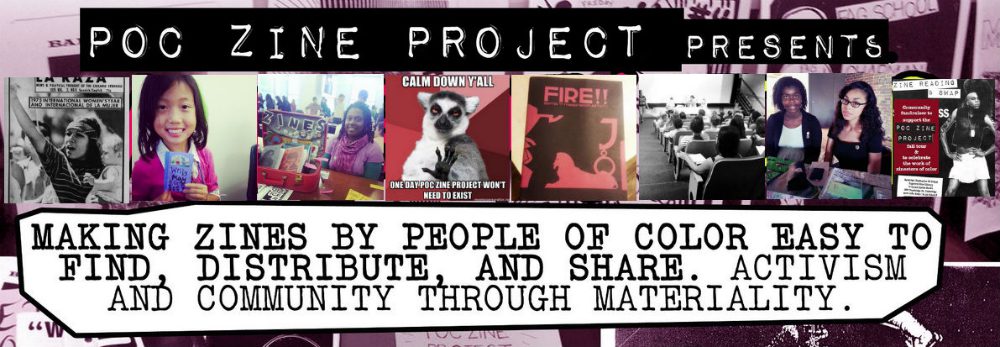
While riot grrrl opened a lot of spaces for women in punk, it is not without its critiques. Riot grrrl was mostly (although not exclusively) white, and many of its participants were middle class.  Punks of color and non-white riot grrrls critiqued riot grrrl for failing to address structures of racism and their own privilege within those structures on more than a superficial level. This critique of the whitewashing of feminist punk echoed a critique of race and racism in punk across many local scenes. In the 1990s, Race Riot emerged within this discussion. Mimi Thi Nguyen and Helen Luu published Evolution of Race Riot/Race Riot 2 and How to Stage a Coup, respectively, which are compilation zines that brought together punks of color to discuss racism in punk spaces and larger societal institutions. Bianca Ortiz (Mamasita), Sabrina Margarita Alcantara-Tan (Bamboo Girl), Miriam Bastani (Maximum RocknRoll),  Osa Atoe (Shotgun Seamstress), and Anna Vo (Fix My Head) are some of the central zinesters who have contributed to this discussion. Many of these zines can be read in digital formats via the People of Color Zine Project, founded by Daniela Capistrano.

By the 2000s, early social media websites and blogging platforms such as WordPress, Tumblr, Myspace, Live Journal, Bebo, and early Facebook introduced a new way for young people to interact with each other in an unfiltered format across greater geographical distances and at higher and faster rates. E-zines and blogs took zines from print to digital format.

Amidst all this, zine culture in its print form has remained alive and well. Zines can be found in cities and towns across North America (and around the world) at record stores, bookstores, comic book stores, zinefests, community centers, libraries and elsewhere. A handful of stores, such as Quimby’s (NYC and Chicago) specialize in zines. Rather than a replacement for zine culture, the internet has become a tool for zinesters to access a wider audience.

Now, when I go to a zinefest, I see zines on a number of different topics. I see zines about everything ranging from music, film, animals, feminism, and racism, to food and more. It is hard to ignore that a significant proportion of zines that I’ve encountered lately relate to themes of health and wellness – a trend that I suspect might be influenced by the inaccessibility of healthcare in the US and the stigmatization of mental illness and trauma. Another widespread theme in contemporary zine publishing is prisoner rights. Ranging from political essays by scholars and activists outside of prison to poems, essays, and illustrations from people who are incarcerated, these zines critique the prison industrial complex from an intersectional lens, exploring racism, classism, sexism, ableism, and homophobia. Tenacious, for instance is a zine written by incarcerated women and compiled by activist Victoria Law.

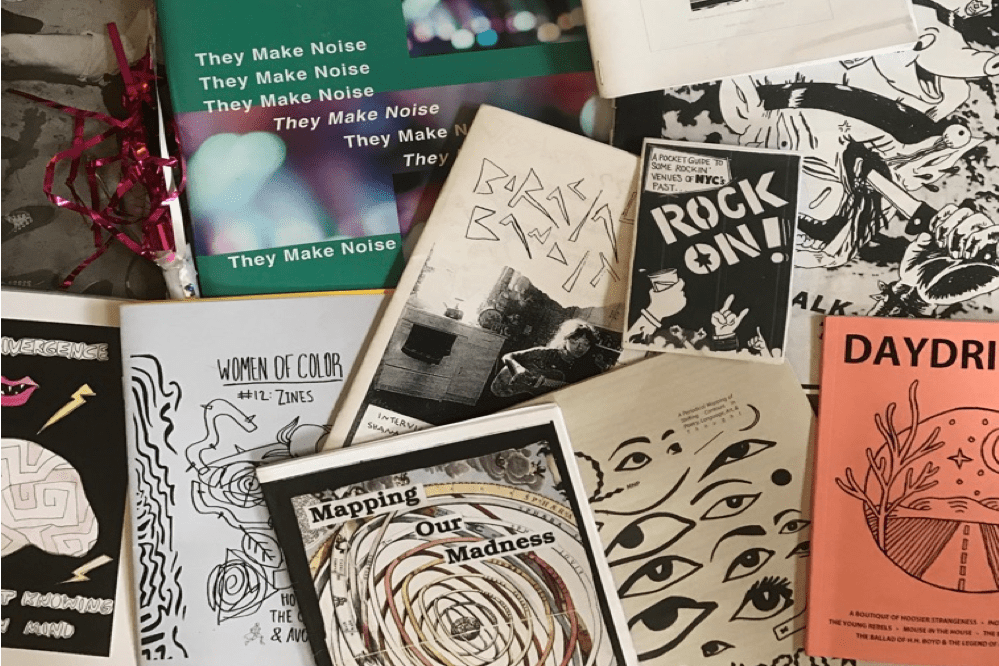
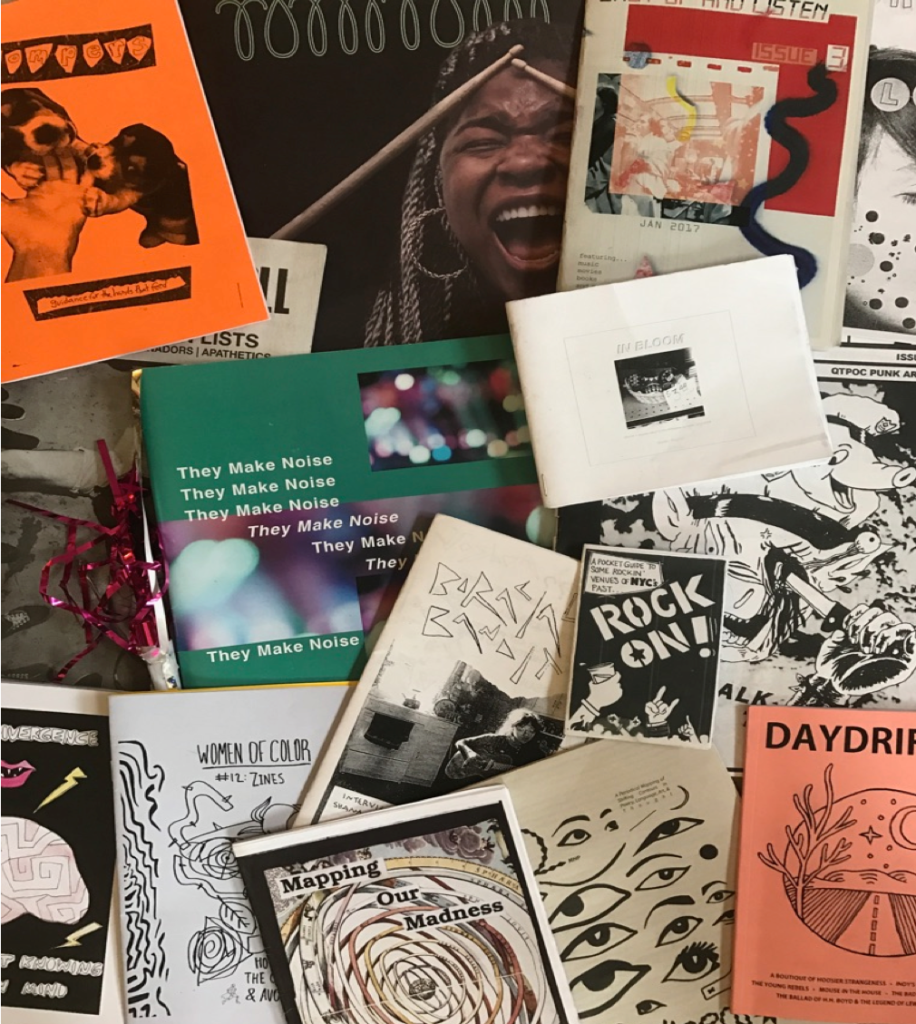
A lot of people in zine culture that I’ve chatted with mention a first zine that drew them in completely. For me, it happened when I was a 23-year-old ethnomusicology graduate student. I was at Bluestockings, a radical feminist co-op in Manhattan’s Lower East Side, and I saw a brightly colored, glossy zine that stood out and immediately drew me in. The front cover was embossed in sections with glitter tape and a metallic noise maker was attached to the binding. It was called They Make Noise by Lou Bank and it featured portraits and bios of underground queer musicians. I remember being stricken by the fact that the zine was not just words on the paper, but a carefully thought out piece of art that someone spent a lot of time and care to assemble.

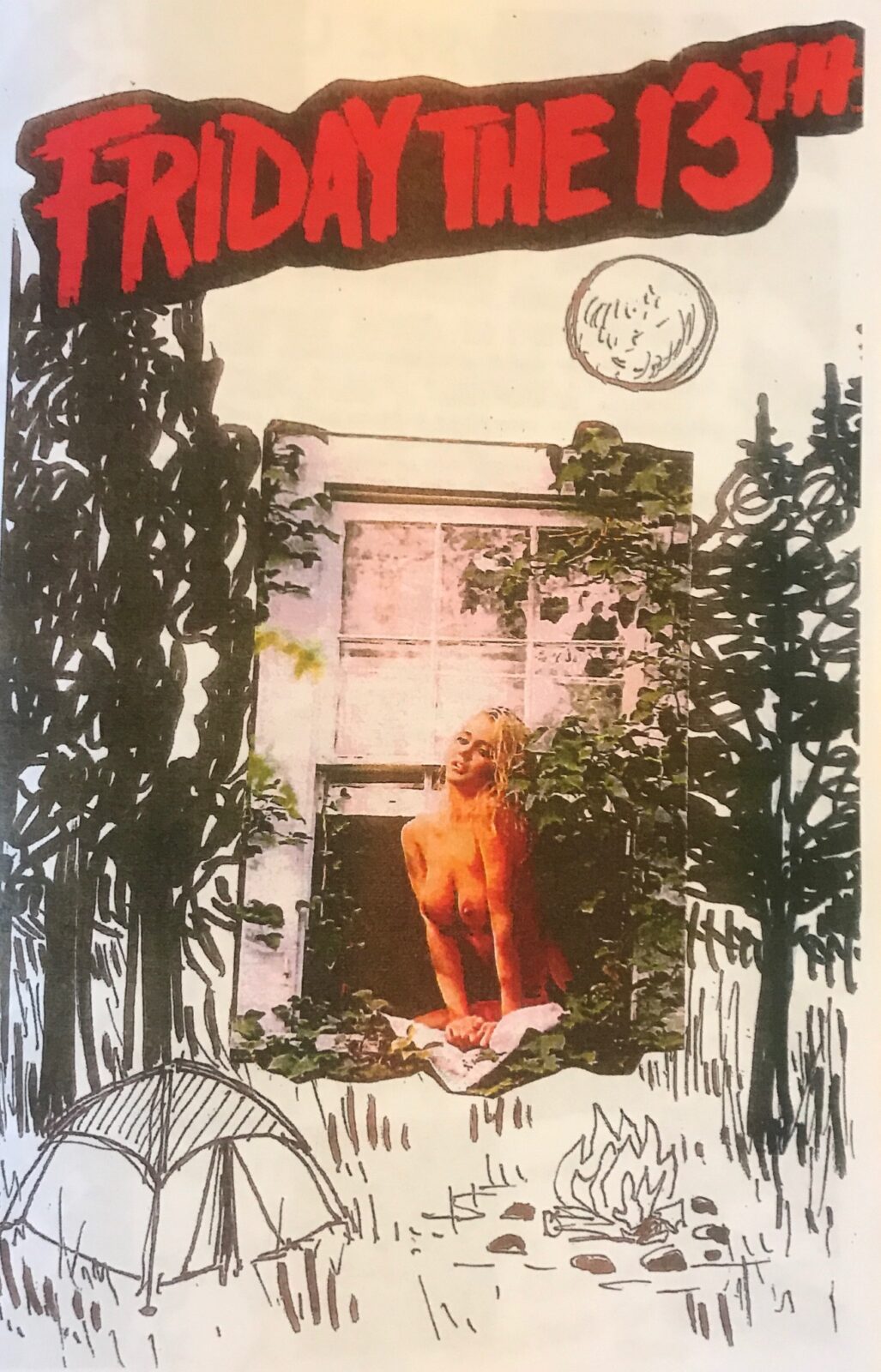
I became quickly consumed by zines and before I knew it, I was collecting them for my own bedroom archive. I made my first zine a couple of months later – my roommate Emmie Pappa Eddy and I collaborated and collectively created a fanzine about Friday the 13th. After that initial step I began to make more zines and after a couple of years, I built up my nerves to table at Bloomington’s Zine Fest. In graduate school, I have begun to work with zines in classroom settings as a creative alternative to elitist (and stodgy) academic formats.  My goal with this column is an extension of this research: to introduce more people to zine culture. As zine culture is fundamentally participatory, I also humbly hope to prompt more people to grab a piece of paper and make a zine.

Cover of Friday the 13th Fanzine. Cover art by Emmie Pappa Eddy

Recommended Further Reading

Queercore: Nault, Curran. Queercore: Queer Punk Media Subculture. Routledge: New York, 2018.

Riot Grrrl: Marcus, Sara. Girls to the Front: The True Story of the Riot Grrrl Revolution. Harper Perennial: New York, 2010.

Race Riot: Duncombe, Stephen and Tremblay, Maxwell. (editors). White Riot: Punk Rock and the Politics of Race. Verso: London, 2011.

Zines: Duncombe, Stephen. Notes From The Underground: Zines and the Politics of Alternative Culture. Microcosm: Bloomington, 2001.

PLAYING DETROIT: February Releases Showcase Motor City’s Diverse Sound

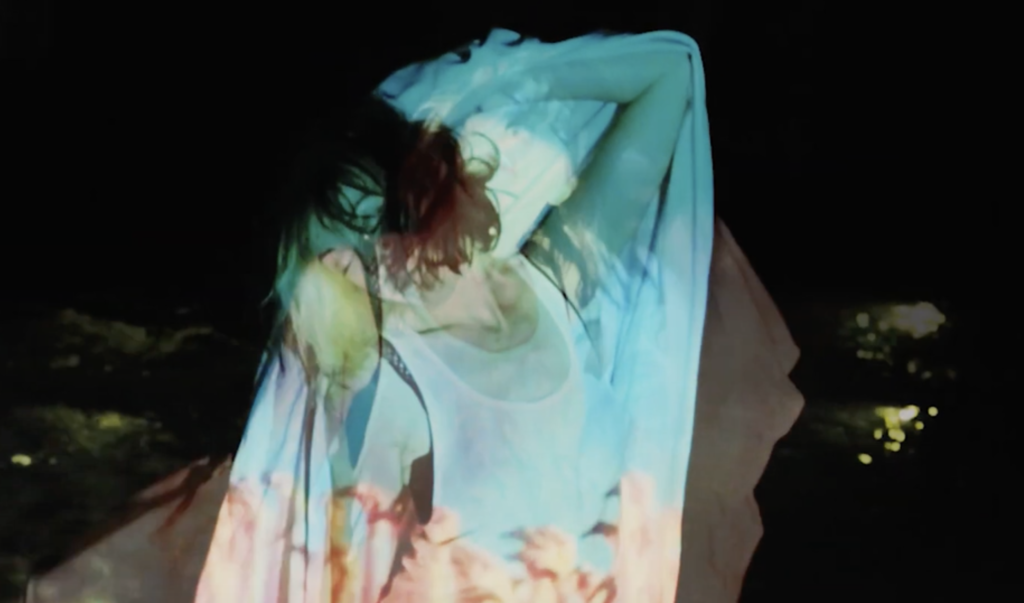
Still from Mega Powers’ “Virtual Boy” music video

If there’s anything 2019 has to offer so far, it’s a wealth of releases that followed in the new year. February was an especially prolific month for Detroit artists, following in the wake of January’s month-long hangover and a few spring-feeling days that turned into a polar vortex. Likely, these artists spent much of this winter hibernating in home studios, scheming their next moves. Ranging anywhere from Britney Stoney’s ephemeral R&B to angst-fueled post-punk from Paint Thinner, these releases crack the surface of the city’s diverse sonic landscape.

Britney Stoney – “Richy”

Britney Stoney’s evolution as a songwriter comes to a full blossom with “Richy.” Following her 2015 experimental indie-pop EP Native, she released ’80s inspired dance tracks”Grip” and “O.D.” “Richy” leans further into the electro-R&B sphere, with production by Jon Zott of Assemble Sound. Stoney’s smooth vocals are at the forefront of the track and deliver a simple message: “Love me before I go away.” Undulating synths and driving percussion echo the urgency of her voice. However, Stoney’s words are less a plea and more of a demand, reminding the lover in question that she’ll keep dancing no matter what the outcome.

Palaces – Palaces

Alt-disco quartet PalacesSean McGraw, Cat Cobra, Rachel Balanon, Dave Cliburne released a new self-titled record bursting with synth-powered indie pop that pulls from the past’s infinite toolbox without feeling contrived. The songs are tinged with perspective, nostalgia, and even a bit of sarcasm, yet remain worthy of any retro dance party.

Mega Powers ft. Jade Lathan – “Virtual Boy” Music Video

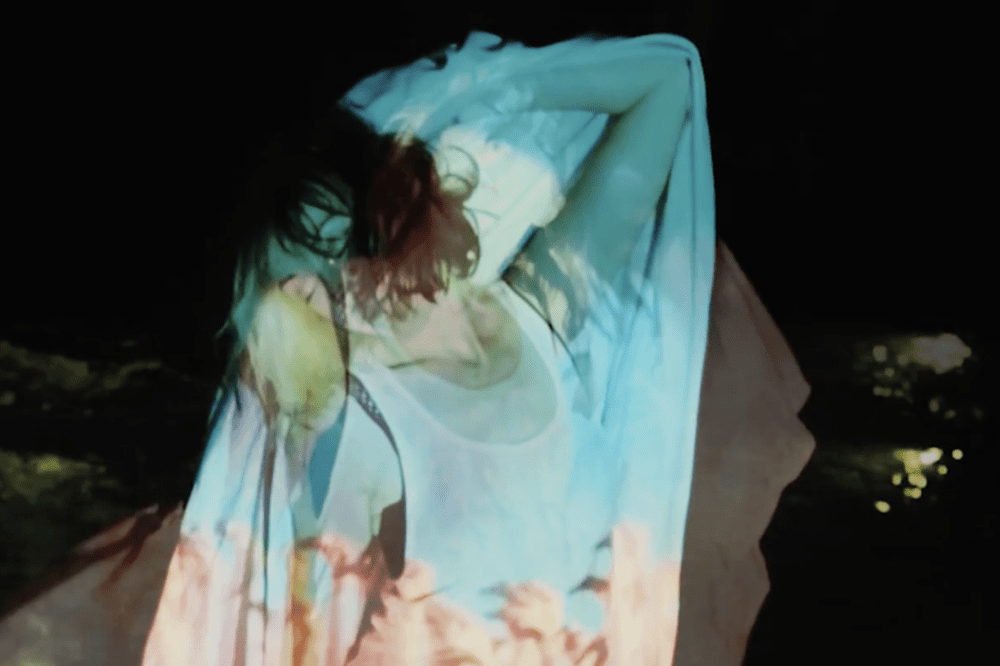
Detroit producers Eddie Logix and Pig Pen make up Mega Powers, a slow-burning electronic project built on collaboration and experimentation. The latest visual for their song “Virtual Boy” is a prime example, as it repurposes a short film called “Flamingo” by artist Michelle Tanguay and filmmaker Andrew Miller that Mega Powers had soundtracked. Even at half of the original film’s 8-minute run-time, the clip manages to tell a story all the same via soft projected images and psychedelic lighting.

Paint Thinner – The Sea of Pulp

Post-punk outfit Paint Thinner released their debut record, Sea of Pulp, via ŌBLĒK. Recorded with Bill Skibbe (Protomartyr, The Kills, Jack White), the album is as clean sounding as a garage-punk record can/should be while exuding elements outside of what you would expect. Yes, we hear tense guitar riffs and heavy distortion (in fact, there’s a song called “Distortion”), but scattered throughout the heavy musical catharsis, there are moments of psychedelia and complex lyricism. There’s even a moment on “Soft Features” when vocalist Colin Simon channels Jonathan Richman circa Modern Lovers.

Sammy Morykwas ft. noMad, King Milo & Khalil Heron – “Into The Skies”

Detroit producer/rapper/songwriter Sammy Morykwas released the second of a long line of collaborative tracks he plans to unveil in 2019. After years of working under monikers and as a ghost producer, Morykwas is ready to take the credit that has long been due for his old-school style R&B and hip-hop production. “Into The Skies” is a contemplative track that features three artists from the underground rap scene. Morykwas is heard singing in the hook, a new role for the producer. Whether he’s behind the scenes or front and center, Morykwas has a knack for creating addictive hooks and beats that stick.

PLAYING ATLANTA: True Blossom is in Full Bloom with New LP Heater

Atlanta’s varied music scene is no secret; in just a few short months, Playing Atlanta has featured garage rock, indie rock duos, Americana singer-songwriters, and disciples of Southern Rock, but even that doesn’t begin to cover the true mosaic of the city.

Audiofemme got the chance to talk with True Blossom, a bright, joyous pop experience, who have just released their newest album, Heater. Read on for more about the quintet, their passion for pop, and big plans for their next release.

AF: What is the True Blossom story? How did the band form?

TB: We knew each other from playing shows together in other bands for years in the Atlanta pop scene, and we wanted to form a new band. We don’t have much of a narrative, only our songs. Like Paula Abdul. We’re the Paula Abdul of Atlanta indie pop.

AF: What drives you to create music, together and individually?

TB: Pure, unbridled ambition. Like that fucking uncut, barrel-strength, Napoleon-whining-about-Alexander-the-Great ambition.

AF: Which bands or artists inspire you the most?

TB: We mostly draw on pop formalists in one way or another, but the specific artists vary. Sophie listens to a lot of pop country and Motown; Jamison likes what you might call psychedelic pop, like Beach Boys, Robert Wyatt, Tropicalia, etc; Nadav likes a lot of that sort of hybrid disco/funk from the ’80s, like the Jones Girls. The sophisti-pop bands are also a big influence: Orange Juice, Prefab Sprout, the Blue Nile, etc.

AF: You recently released a record, Heater. What was it like to release your debut album? What was your proudest moment, and what was the most challenging for you?

TB: We loved making the album! It was easier than we expected. A blessed process. I think the best moment was when we all traveled up to New York together to mix it; we ran ahead of schedule, and finished early somehow, which in retrospect seems impossible.

AF: What’s your creative process like?

TB: We just play songs over and over again until they write themselves. We’re a fairly prolific band, which is amazing because we’re not exactly a well-oiled machine of creative praxis. I think it helps that we limit our palette of sounds, but like, literally, every guitar rock band does that too, so I don’t know.

AF: What’s your favorite part of being in the Atlanta music scene?

TB: When we travel the rest of the country, we notice that the shows often happen in really crummy DIY venues. Atlanta is very blessed by the quality and stability of the venues and promoters. 529 is at least ten years old at this point and remains a great place to play and watch bands. And if it ever closed, we’d probably just utilize the Unicorn more. I think knowing that your band is usually going to be playing on real sound systems allows folks to get more ambitious with the sounds their bands make, and that goes a long way in explaining Atlanta indie pop right now. The trade-off, of course, is that DIY, all-ages venues get choked off a little, which is crummy. My other favorite part of the Atlanta music scene is that you can now get Campari at 529, which is not a thing you used to be able to do. But they don’t have sweet vermouth, which is bizarre. How are they planning on selling all that Campari?

AF: How has the Atlanta scene influenced you as a band?

TB: Talking about the Atlanta music scene is sort of ridiculous because there’s a rap scene obviously, and a hardcore scene, a bunch of old garage punks, Georgia Tech kids making proggy-jazz, squares with acoustic guitars… there are a lot of scenes that don’t overlap. And there’s not really a reason for them to; those garage punks probably will not like our band and are under no obligation to do so. But our little corner of the world is wonderful. Lots of kids getting ambitious with real pop melody, keeping the DX7 patches very bright, a lot of joy to go around. We’re inspired by Fantasy Guys, Red Sea, Breathers, Doug Bleichner’s solo stuff, and that’s just a very short sampling.

AF: What’s next for True Blossom?

TB: We’re tracking our next album in less than a month, so big things popping there. We’re also working on a video and planning a tour for the spring.

Follow True Blossom on Facebook as they prepare for a new release, announce spring tour dates, and take over the pop world, one song at a time. 

PREMIERE: Home Body Subvert Heteronormativity in “DNA” Video

Photo by Anja Schutz

The every day tedium of adulthood is wrought with expectations. Health, wealth, career, marriage, home ownership, children: these are the mile markers of the crumbling American Dream. It’s up to the newest generations to question, break down, and reorganize these pillars into something that looks like a bearable future.

Home Body’s new music video for “DNA” explores so-called traditional values and gender bias through the lens of the stereotypical heteronormative relationship. The backbeat feels like a date night groove, with Haley Morgan’s voice treading softly overhead. Morgan and Eric Hnatow have been making music together in and around Western Massachusetts for over 13 years, and the cohesion is easy to hear; “DNA” doesn’t take a while to wind up, it moves confidently, with the maturity of shared experience. The track appears on their forthcoming LP (and first in five years) Spiritus, out April 26.

Watch “DNA” and read our full interview with the band below:

AF: Home Body formed in 2011. Tell us about that initial beginning. Were you already a couple?

ERIC HNATOW: Yes, we had met and fallen in love at Hampshire College five years prior to Home Body, way back in 2006. We each had our own creative outlets. Haley had been doing lots of site-specific, community-engaged installation work, and I was working on my own music and visual art. Until then, I was mostly working on instrumental music, and had a deep desire to integrate vocals. I had tried doing it myself, but it always fell somewhere between terrible and dangerous with me usually writhing on the ground in a pile cables and power supplies.

HALEY MORGAN: Yeah, I remember being nervous you were going to electrocute yourself or something! I think we both sort of expected we would eventually have a band together, since it seemed like such a great way to live a creative life, connect with people, and travel. I had never been in a band before but had done like, musical theatre growing up and have always loved singing. Eric and I had collaborated in different projects before Home Body though, like both singing in our friend Shira E’s rag shag choir and participating in friends’ dance projects. It took us a while to figure out how to communicate about music though because neither of us are like, trained musicians.

AF: Let’s talk writing process. Your music has such beautiful layering to it. Do you normally start with a beat or lyrics?

HM: The writing process is always different but usually it comes from a place of playfulness and improvisation. We have utilized many different strategies and equations for making songs over the years, but usually jam and find grooves or texture combinations we like, and sculpt from there. Sometimes the song literally just drools out of us and sometimes we work for years on a song and then throw it away, only to rediscover it years later and become re-enchanted with it.

EH: Some of the machines I play in Home Body I’ve used for so long that they seem to have their own life, their own story. There is often little to no memory left on them, so some of the patterns have been kicking around for over a decade, some even closer to 20 years now. In some weird way, it feels as if our machines should have partial songwriting credit, not because they are “doing all the work,” but since it often feels as if they have contributed in a strange and intangible way, having been with me all those years.

AF: How do you approach sound design? Do you go looking for a specific sound (a la Eurorack)? Or do you have a set up you just keep and tweak?

EH: More like a keep and tweak situation. Like I said, I have been using the same variation of machines for a long time now. I use a few Korg Electribes and a Korg MS2000 that I’ve used since the year 2000. The machines and I have been together so long now that they’re like an extension of myself – I almost can hear them talking as if it’s a language. I can often get the machines to sound exactly like I want without having to think too much about it.

HM: Vocally we’ve evolved a bunch though. In the beginning I wanted to sound raw and “real,” but over time we’ve learned how to finesse my vocals so they fit in the overall mix better. And on this new album we’ve really filled out the sound with multiple layers of backing vocals. They sound so lush now!

AF: Do you oscillate back and forth in terms of taking the lead on a song? Or is it organically even?

HM: Though some parts do come together organically, our process also involves a lot of emotional work. It’s important that we both feel heard in our music. We love playing with dynamics and exploring that shadowy space between us, where we’re both extended, where we’re both holding each other up, reaching out towards some shared goal. I think we’ve learned a lot from improvisational dance practices like Authentic Movement about focus, taking up space, and the roles of witness/performer. In the end we are most concerned with serving the composition.

AF: You describe this release as “a departure from our previous releases, in terms of content and production… we followed our delight to its core, slowing down the process, inviting spaciousness and reflection, isolating all the drum parts, and sculpting sonic depth with background vocals and supportive synths…” What delights inspired this new record? Certain books, music, art?

EH: Since we made these eight songs over such a long period of time, it seems a little difficult to pinpoint exactly what music inspired Spiritus. Some artists or albums that immediately come to mind include Talk Talk, Jenny Hval, Sarah McLachlan’s Fumbling Towards Ecstasy, Bonnie Raitt, Enigma, The Eurythmics’ In The Garden, Peter Gabriel, and Mort Garson’s Plantasia. And visual artists like Nick Cave, Alex Da Corte, and Mary Corse, and the choreography of Sonya Tayeh. We are also just really inspired by the things our friends do and make, and by the natural world and our immediate surroundings. Western Massachusetts has many natural swim spots, rock formations, and dense forests that feed our spirits in a big way.

HM: Yeah, I guess the delight we’re referring to there is our own! For this album we wanted to make a real record of our emotional realities, something that was the clearest reflection of our spirits as possible. We’ve been to some dark places in the five years since our last release – dealing with death, heartache, deceit, and the general shit show that is American politics. In that tangled, heavy darkness we experienced a real yearning for light, movement, and resolution. We were both able to heal and move on from these challenges through working together on these songs, through all the little negotiations and agreements, each scratching our own auditory itches, and following our shadowy curiosity until we both felt totally satisfied.

Our process for this album looked very different from our other albums in the way that we really took our time and let the songs breathe so that we could gain perspective on them, recharge our emotional batteries, then go back in and sculpt more. It’s like with a relationship – you need patience, and you need space to process change and growth. You must love and accept yourself in order to be a good partner to someone else. We wanted to really love what we were making – not consider what anyone else wanted to hear but satisfy ourselves, first and foremost. On past albums we’ve rushed the recording process and then found ourselves making concessions and just like, settling – trying to convince ourselves we liked something because it was emotionally easier or financially cheaper that way. With Spiritus we challenged ourselves to prioritize our joy – a task easier said than done for me. Vocals are such a personal thing, and in the past I’ve always sort of cringed at how my voice sounded on recordings. But through the past few years of slowing down to focus on my heart and spirit, learning to take more space, and standing in my own power I find my voice has grown stronger and more nimble, and I love it now.

AF: Are you both yourselves on stage? Or do you have a personae of sorts?

EH: We definitely have a ritual before we go on stage where we transition from Haley and Eric into Home Body. On stage we try to embody the energy of the song and take on the vibe of the room, maintaining focus. Being witnessed and having the privilege of people’s attention is something we do not take lightly. We believe in the magic that is created through being together and sharing a moment. We see ourselves as facilitators, channels, or conductors of that experience. It’s a heady responsibility for sure! We feel we have a job to do when we are on stage, and we want to do it as best as we can.

AF: Tell us about the music video for “DNA.” What’s the concept here?

HM: Writing this song, we had been thinking a lot about inherited and chosen identities, and how ritual can initiate personal evolution and generational healing. We had wanted to work with Patty Gone after seeing their video series, “Painted Dreams,” which playfully explored the cliches and contradictions of gender as told through soap operas and the soft language of cultural objects. Incorporating actual meaningful objects from our personal lives into this sort of absurd display of luxuriant domesticity was a way for us to subvert our own shifting heteronormative narrative.

AF: You’ve done some fundraising as a band. What advice do you have for a young band whose planning their first tour?

HM: Capitalism isn’t structured to value music or music makers. Yet embodied creativity is essential in building an empathetic, resilient, and vibrant society. So it’s up to each of us, as artists, to continuously advocate for our vision and craft. Perspective is priceless. Find little ways to keep pushing to expand and share yours. We’ve learned a lot from self-booking over 400 shows over the years… a lot of it comes down to the art of the follow-up email, the importance of stretching and eating real food on the road, having a solid merch set up, and being conscious of what drains and refills your energetic reserves.

EH: Go where you don’t know anybody. Yes, play with bands you know, have your friends at shows, but also embrace the mystery of an unknown scene.

AF: Y’all have a tour coming up and it is packed! What can folks expect from a Home Body show? I read fake blood may be on the menu…

EH: Ha, no fake blood this tour! Haley operates a light show while she sings and dances, so you can expect to see what it might look like should lightning become human form. We’ll be playing songs off the new album as well as our other material. If you are lucky, you might even catch a glimpse of me squirming on the filthy ground, hopefully not from food poisoning.

Spiritus is out April 26 via via Feeding Tube Records and Peace & Rhythm (preorder here). Dying to see Home Body LIVE? Check out their tour dates below!

TOUR DATES
2/22 – HARRISBURG, PA @ Maennerchor
2/23 – PHILLY, PA @ Dustbunny
2/24 – BALTIMORE, MD @ Holy Underground
2/25 – WASHINGTON DC @ Comet Ping Pong
2/27 – RICHMOND, VA @ Gallery5
2/28 – CHARLOTTE, NC @ Snug Harbor
3/01 – CHAPEL HILL, NC @ Local 506
3/02 – GREENVILLE, NC @ Great Wolf Tattoo
3/06 – ATLANTA, GA @ The Bakery
3/07 – ATHENS, GA @ The Mill
3/08 – SAVANNAH, GA @ Savannah Stopover
3/09 – ORLANDO, FL @ The Nook
3/12-16 – AUSTIN, TX @ SXSW
3/17 – HOUSTON @ Super Happy Fun Land
3/20 – NASHILLE, TN @ tba
3/21 – BLOOMINGTON, IN @ The Bishop
3/22 – ST. LOUIS, MO @ Screwed Arts Collective
3/23 – INDIANAPOLIS, IN @ State St Pub
3/24 – CHICAGO, IL@ Owl Bar
3/25 – GRAND RAPIDS, MI @ Shake Shack
3/26 – DETROIT, MI @ Trumbullplex
3/28 – JAMESTOWN, NY @ The Beer Snob
3/29 – ROCHESTER, NY @ tba
3/30 – ALBANY, NY @ Savoy

PLAYING CINCY: GrandAce Teases Upcoming EP with New Single “GO!”

GO
GO
GrandAce. Photo by Ciara Cruder.

You can easily chart the progression of Cincinnati rapper and producer GrandAce through his evolving lyrics and style. Born Jody Jones, GrandAce first hit the scene with singles in 2016 and 2017. Last year, he released two EPs – the first of which, Colors in the Office, existed as an outlet to release pent up frustrations and disappointment. His second project dropped the following month, and true to its title, Feel Good showed an elevated state of mind. His latest single “GO!” is an optimistic tune with an easygoing rhythm and bars; it will appear on his upcoming EP Also Codachrome, out March 12.

“It’s about progressing to a level where you are successful and love until your surroundings and mentality becomes unrecognizable,” he told DBLCIN about “GO!” and his upcoming EP.

Check out the single below and catch GrandAce live when he performs at Top Cats on February 21, with Dayo Gold, Leo Pastel and Isicle.


PET POLITICS: Two Lovebirds and a Little Honey Form the Core of Synthpop Band The Values

This month, I got to hear from Evan Zwisler and Mason Taub, founders of Brooklyn’s electro-indie-pop group The Values. Mason and Evan take the forefront as a duo—Mason working her deep and vibrant vocals along with the keys and Evan grooving on guitar and backing vocals—to pay homage to timeless R&B vibes and the dance punch of ’80s hits. In 2018 they released their EP Civil and are about to release a new music video for their song “Imposter” (keep your ears and eyes peeled). The Values also share some family values as a band; Mason and Evan recently got engaged (congratulations guys!) and they co-parent a sweet-as-can be pitbull named Honey who joins them on their tours and at photo shoots, and always has an ear-to-ear grin for fans of her family’s band. Is that a rock pup or what?!

AF: Please introduce us to your pup!

MT: Honey is a three-year-old blue nose pitbull, but most people think she’s a puppy when they meet her because she only grew to be about 40 pounds and she loves to be picked up (which is probably our fault honestly). She’s the most physically affectionate and emotionally connected dog I’ve ever had – she needs to be in constant physical contact. She also rarely barks but instead makes the weirdest sounds. Some of our friends have described them as an aggressively cooing dove, an angry baby, and an alien.

EZ: Honey is a hilarious and farty cuddle monster. She’s pretty much my best friend. Sometimes I’ll put on cute dog videos for us to watch together. She loves watching puppies crying! She also loves to be the center of attention, so we’ve actually brought her to a bunch of our photo shoots!

Mason, Honey, and Evan embarking on tour!

AF: How did you two meet, Mason and Evan?

MT: We met a few years ago when we were both nannying for kids who went to the same school in Brooklyn. We struck up a conversation in the schoolyard at pickup and the rest is history!

EZ: Yeah, I saw Mason and pretty much thought she was the most beautiful person ever. I didn’t have anything to say by the time I walked over to her, so I just asked, “Is this where pick up is?” I had been picking up the kids for three months at that point, but it was the best I could come up with!

AF: When did your fur baby come into your lives?

MT: We got Honey a little under three years ago when she was nine months old. A former bandmate of ours was her dogwalker, and the family that had bred her and her siblings couldn’t take care of her and her brother anymore in their tiny apartment. The two pups had been mostly living together in a shared crate, which is partly why I think she’s so aggressively affectionate. They needed a new home for her ASAP, so we met her, fell in love and took her home all in the same day.

AF: What is each of your musical backgrounds like?

EZ: I did the school musical from 6th grade to 8th grade; however, I wasn’t very good. They actually took away my one singing line in Joseph and the Technicolor Dreamcoat and asked me to “Just say it with conviction.”  I grew up in Shanghai so I was lucky enough to play in local bars with my various punk bands throughout high school.  I never went to school for music or anything like that.

MT: I asked for piano lessons when I was six, so everything started there. I studied classical piano privately for 12 years, and have done a fair amount of teaching myself now. I did a lot of musicals in middle school and high school, but I really started singing around 11 years old when I started teaching myself my favorite songs by ear and would wait until my parents were out to sing my heart out to an empty house. I also dabbled in oboe, guitar, and double bass, but none of those really stuck!

Family Values: Evan, Mason, and Honey.

AF: How did you start playing together?

MT: We started dating when Evan was just starting to play shows out in NYC and I was doing a lot of writing on my own. I would help him sometimes when we hung out, just little things like sounding out a melody or recording a harmony on a demo. Eventually he reluctantly let me be a part of it, and it’s evolved into what we’re doing now.

EZ: Mason is being overly modest. Very quickly into working together I realized how talented Mason was – she blows me out of the water. Not only is she amazing at everything she does but she also helps me articulate my ideas in a way that makes sense. I truly feel like I’ve found my partner in everything with her.

AF: Do either of you play in other projects?

MT: I would honestly love to, but we’re too busy to do much outside of our stuff. We have started doing little collabs here and there or helping people with Ableton, but that’s about it.

EZ: We’ve begun to produce for a few other songwriters around New York and Philly and we have a few collaborations planned. We’ve always dreamed of starting a Bikini Kill cover band, so if anyone is into that, call us.

AF: Where did you grow up, and did you have any pets then?

MT: I was born in California but I don’t remember living there because we moved to the suburbs of New York when I was really small. When I was 12 we moved to the Bronx, and I’ve been here in the city ever since! My family got a dog when I was 14. She was a Shetland Sheep Dog (think Lassie). I loved her so much, she was much more austere than Honey is. She was very Downton Abby, while Honey is very much Frank from It’s Always Sunny.

EZ: First, I feel like Honey is way more Charlie than Frank. And yeah I grew up with a bunch of dogs – when I was really young we had a big yellow lab named Bradley and a doberman mutt named Bowie, then a string of Chesapeake Bay Retrievers up through high school. I was born in Taiwan in ’90 and moved to Shanghai when I was 2. I then lived in Shanghai, China from 92-2008. It was a great place to play music because the scene was so small, but so supportive. No one really knew what we were doing – most people haven’t even been to America so it was a lot of earnest intimation.

Honey and Evan enjoying a snuggle session.

AF: What are your spirit animals?

EZ: I really like elephants, but I think Cookie Monster shares my love of life.

MT: Honestly sometimes I feel like Honey and I are each other’s spirit animals. We’re cut from the same anxious cloth.

AF: What instrument do you think Honey would play if she was a human?

MT: She’d be a punk drummer, for sure. She has a lot of upper body strength and looks like a tiny body builder.

EZ: Yeah, that’s absolutely brilliant. I also could picture her playing upright bass, wearing cool sunglasses and a backwards Kangol hat.

Honey reluctantly rocking out on keys.

AF: Tell us a little about your writing process.

MT: We live together so we spend almost every night we’re free writing at home. We tend to write in Ableton and have a bunch of different things going at once. A lot of what we focus on is just establishing groove. Honey often curls up in Evan’s lap or in our gear cases while we work.

EZ: She always wants to be in the middle of the action!  We usually sit down and write something from a fun drum beat or some cool sound we find on one of our synths. Sometimes, Mason will write something on the piano and bring that in.  I feel that we’ve written some of our best songs like that.

AF: How did you decide to take Honey on tour?

MT: Out of necessity, honestly. Dog sitters can be expensive and Honey is just small and cute enough for us to get away with taking her places we wouldn’t normally.

Honey and Mason chilling in the trunk of the tour van.

AF: Can you tell us some funny family tour stories?

MT: We play in Philly a lot, and one time we were playing at this bar where the only place to park the car (with Honey inside) was either far away or illegally right in front. The bouncer, this big beautiful man named Bear, immediately took to her and let us park in front and looked after her while we played. Other times when we’ve played house parties, she likes to curl up in our suitcase on stage with us and sleep.

EZ: Yeah!  She loves to come up on stage and sleep at our feet as we’re playing! She also likes to knock over beer cans and red cups at house shows so she can drink the beer! She’s kinda like Jim Belushi from Animal House in dog form.

AF: Do you have any favorite songs about (non-human) animals?

MT: Ha, no, but when I was little my dad used to tease me and tell me I should write songs about our Chesapeake Bay Retrievers Meg and Annie, but refer to them as my sisters. He was also always telling me to write songs about how much I loved my dad. I never took either of those pieces of advice.

EZ: Does “Werewolves of London” count?

AF: Have you ever written a song about or inspired by animals?

MT: We don’t have any songs just about animals, but I do mention Honey in a line in our song “Civil,” which is a breakup song, that goes, “Tell the dog I love her everyday,” which I think is kind of sweet and silly.

EZ: When I first moved to the city I wrote this song about putting my first dog down that I played at open mics. It was very sappy. I think it was probably an alright song, but it always felt emotionally manipulative playing it.

AF: When is your next show?

MT: March 2nd at the Knitting Factory!

AF: Any other tour dates on the horizon?

MT: We have a few things lined up in Philly (March 1st at Tralfamadore!) and a show in Western Massachusetts on March 15th, so follow us for more news on that!

AF: Do you have any more exciting news to share about your project?

MT: We just recorded a new EP with Holy Fang Studios so keep a look out for those singles to drop!

AF: When and where can we expect to find the “Imposter” video?

MT: It will be coming out next month. We are just finishing up editing it and then it’s ready to go!  We has so much fun filming this one.  We recreated a bunch of our favorite album covers and filmed a video around that.

EZ: I dress up as Lady Gaga and a banana.  Let’s just say we hold nothing back on this one!

NEWS ROUNDUP: Cardi B Makes Grammy History, Ryan Adams is a Creep, and MORE

Cardi B and Offset make their reconciliation official on the red carpet at the 61st Annual Grammy Awards.

Cardi B Makes Grammy Moves

Cardi B made Grammy history on Sunday night with a huge win in the Best Rap Album category for Invasion of Privacy (she had five nominations total). She’s the first solo female rapper to take home the award – the only other woman to have received a Grammy for Best Rap Album is Lauryn Hill, when her group The Fugees nabbed the 1997 honors with their iconic album The Score. Cardi appeared on the red carpet dressed in vintage Thierry Mugler and husband Offset on her arm, signifying the end of a tense hiatus for the couple following rumors of Offset’s infidelity. Cardi also made fast friends with Lady Gaga, who offered support in the face of a backlash D, she also spent time on the red carpet chatting with Lady Gaga, who was quick to support the rapper in the face of backlash from haters following the award ceremony. Cardi took a brief break from Instagram but, never one to rest on her laurels, capped off the week by releasing “Please Me,” a duet with Bruno Mars.

Donald Glover also had a big night, though he didn’t attend the awards ceremony; Childish Gambino’s “This is America” won both Song of the Year (distinctly given to songwriters) and Record of the Year (which goes to the performers, producers, and engineers). It was the first rap single to do so.

Other big winners included Brandi Carlile, who won three of the six awards she was nominated for (Best Americana Album for By the Way, I Forgive You LP and two awards for its single “The Joke”); Kacey Musgraves, who won overall Album of the Year for Golden Hour as well as three additional awards in Counrty categories; Lady Gaga, who won an award for “Shallow” as well as “Joanne” despite it being released two whole years ago; Ariana Grande who nabbed the Best Pop Vocal Album; St. Vincent who won Best Rock Song for “Masseduction;” Greta Van Fleet who won for Best Rock Album; and Best New Artist Dua Lipa.

We’re Not Surprised Ryan Adams is a Creep

“If people knew they would say I was like R Kelley lol.” This is a pretty damning text coming from a 40-year old man who’s soliciting nudes from a teenager, and they came from none other than Ryan Adams, according to an investigative article by the New York Times. The report details the online relationship between Adams and a woman they call Ava, who was just fourteen when the two began to exchange messages that eventually culminated in phone sex less than two years later. The piece has prompted an FBI investigation into the singer-songwriter, though the alleged victim never disclosed her actual age during their relationship and never met in person.

Whether his actions are criminal or not is somewhat beside the point, though, as the rest of the piece establishes a pattern wherein Adams promised young female musicians – including Phoebe Bridgers, Courtney Jaye, and his ex-wife Mandy Moore – a boost in their careers via collaboration, mentorship, production, tour spots, releasing music via his label Pax-Am (an offshoot of Capitol), et al, but then attempted to shift the relationship to something sexual, even exposing himself to women who came to his studio to develop their projects. In instances where consensual relationships resulted from his advances, they often became obsessive and abusive, and he allegedly held collaborative work hostage as a means of keeping contact open. After remaining vague in a profile in Glamour earlier this year that prompted him to refer to her as a “soggy piece of cardboard,” former teen-pop-star turned actress Mandy Moore went into much greater detail about the control Adams wielded over her career and their relationship, admitting that he was psychologically abusive.

It’s no secret that Adams has penned vindictive tunes about his exes; one of his most beloved songs, “Come Pick Me Up,” from his 2000 solo debut Heartbreaker, is said to be inspired by the end of his relationship with music publicist Amy Lombardi (another track on the record is titled with her first name alone). And though his back to front cover of Taylor Swift’s 1989 was critically praised, it certainly raised eyebrows for some. Since the NYT article was published, Liz Phair, Karen Elson, and others have hinted that professional endeavors with Adams went awry due to similar behavior, which through the years has often been seen as erratic, owing to drug abuse an mental health issues. But in an industry that (as many have pointed out) still needs to have its #MeToo reckoning thanks to the seemingly inextricable tangle of sex, drugs, and rock ‘n’ roll, Ryan Adams’ creepitude is a whole new layer of yikes.

That New New

This delightfully bizarre video for “Under The Sun” has got us so pumped for Spellling’s new record Mazy Fly, which drops February 22 via Sacred Bones.

Pecas are all about the smooth grooves on their latest single “T-Shirt.”

Watch an adorable turtle monch some kale in the new Mal Blum video ahead of their tour in support of Lucy Dacus.

This Robyn video is equal parts promotion for her 2018 album Honey and her new clothing line.

Bebe Rexha shared a video for “Last Hurrah” as a teaser for her yet-unannounced sophomore record.

Lizzo shared a video for the epic title track from her forthcoming album, out April 19.

Lydia Ainsworth returns with “Can You Find Her Place,” from the upcoming LP Phantom Forest, out May 10.

Wet shared a video for “Old Bone” as well as another song, “Trust No Man,” before heading out on tour with Kilo Kish.

Rare DM (formerly known as Ermine) release their debut album Vanta Black on April 12 and have shared a video for “Caracal.”

Cold Cave have released a new one-off single ahead of their tour with Adult.

Tim Hecker is releasing more music from his Tokyo sessions with Japanese gagaku musicians, which resulted in 2018’s gorgeous Konoyo. The companion album, titled Anoyo, will be out May 10 via Kranky; Hecker will do a series of sold-out performances with the Konoyo ensemble at National Sawdust next week.

Julia Holter shared a video for “Les Jeux to You,” which appears on last year’s Aviary LP.

Hand Habits’ sophomore album placeholder comes out March 1 via Saddle Creek; the video for latest single “what lovers do” follows clips for “can’t calm down” and the LP’s title track.

Flock of Dimes and Madeline Kenney are releasing a split 7″ after working together on the latter’s 2018 LP Perfect Shapes; Jenn Wasner’s other musical project, Wye Oak, just released a track called “Evergreen” for Adult Swim’s singles series.

Potty Mouth are back with SNAFU, out March 1, and have a new video for “Starry Eyes” to get us psyched.

Gangster Doodles mastermind Marlon Sassy shared a collab between Madlib and Oh No called “Big Whips,” which will appear on his curated comp Gangster Music Vol. 1.


Take a listen to previously-unreleased Tom Petty track “For Real,” which will appear on a posthumous collection called The Best of Everything on March 1.

End Notes

  • Kenny G spent his Valentine’s Day serenading Kim Kardashian at the behest of Kanye West.
  • A shooting at Westlake Recording Studio in Hollywood on Tuesday jeopardized the recording sessions of Usher and Rich the Kid; members of the latter’s entourage were pistol whipped in the apparent robbery, but no one was shot.
  • Katy Perry has pulled a controversial pair of shoes from her website and other retailers after facing backlash from critics who say the design is a little too reminiscent of blackface.
  • Capcom has uploaded the soundtracks to some of their classic video games, like Mega Man and Street Fighter, to Spotify.
  • Louisville, KY’s Forecastle Fest announced their lineup for this year, which includes The Killers, The Avett Brothers, Anderson .Paak, Maggie Rogers, Chvrches, and more, and will take place July 12-14.
  • Ozzy Osbourne is reportedly doing much better after being hospitalized for complications of the flu.
  • Democratic nominee contender Kamala Harris failed at an attempt to seem cool when she claimed to have listened to Snoop Dog and Tupac while smoking reefer in college… before either had released music.
  • Record Store Day has named Pearl Jam its official ambassadors for RSD2019. The esteemed position has previously been held by the likes of Metallica, Foo Fighters, St. Vincent, Run the Jewels, Jack White, Iggy Pop, and Chuck D.

PREMIERE: Taleen Kali Covers “Baby Love”

Valentine’s Day is more than just the seminal masterpiece starring Bradley Cooper, Jessica Alba, and Ashton Kutcher (I kid, I kid). It’s a day of flowers, candy, and hiding away in your apartment listening to sad songs on repeat.
If Adele’s 21 has invaded too many of your Spotify playlists, Taleen Kali’s latest single “Baby Love” will fill your I-bought-myself-chocolate disposition. Originally recorded by The Supremes in 1964, “Baby Love” has that classic Diana Ross cool to it – a detached sadness that pairs perfectly with a shoulder length bob and a glittering pantsuit. Kali’s cover combines a modern beat with a ’60s surfer vibe vocal; it’s a definitively West Coast rendition, the kind of tune Don Draper would spin in his California bungalow. If you’re looking for a gimmick, look elsewhere *cough Weezer*; Kali retains much of the original song’s melancholy, while adding in a style that is all her own.
Read about the song’s production process – with help from former Dum Dum Girl Kristin Kontrol – and listen to “Baby Love” below:
AF: Why did you choose to cover this song?
Taleen Kali: “Baby Love” is the first song I remember singing along to as a kid… I’d sing it to my parents all the time, so this one’s dedicated to them. I’ve always wanted to do a noisy space-rock take on a classic Motown love song, and nobody does girl groups quite like Diana Ross.
AF: What is the experimentation phase like for a song like this? 
TK: This one was a total studio experiment during our Sunset Sound album sessions. I wanted to keep the lyrics old school and subvert the classic love song by shaking up the instrumentation, so we went through a few different vibes with the band. First we tried a grungy take that didn’t land, and then a sleepy shoegaze version that was too saccharine – there was no bite. Once my producer Kristin Kontrol helped us find the right beat, Miles Marsico’s fuzzy bass line was able to take front and center, and then everything else fell into place from there.
AF: Did you have the phrasing down when you went into record or were there a few variations at first?
TK: I always knew I wanted to sing certain parts with that classic girl group affectation of feminine yearning, and then at some point to disrupt it, updating it with an active drive. The phrasing was all done on the spot, line-by-line… it begins with a question and ends with a demand. It feels so empowering.
Taleen Kali’s latest record Soul Songs is out now Lolipop Records. Looking for the perfect date night? Catch her LIVE:
2/13 Valentine’s Single Release @ Alphaville, New York
2/15 Live on the air @ KUCI 88.9FM Radio, Irvine
3/01 DUM DUM Zine Fest @ The Smell, Los Angeles
5/18 L.A. Zine Week Kickoff @ The Echo, Los Angeles

ONLY NOISE: “thank u, next” Became My Recovery Anthem After Falling for an Alcoholic

ONLY NOISE explores music fandom with poignant personal essays that examine the ways we’re shaped by our chosen soundtrack. This week, Rachel Cromidas explores the healing power of Ariana Grande’s most recent pop smash.

I never thought I’d be walking around my neighborhood on a Sunday afternoon singing, “I’m so fucking grateful for my ex,” but Ariana Grande will do that to a girl. That’s the catchy power of “thank u, next” – the surprise single the pop force of nature dropped last fall in the wake of her very public breakup with Saturday Night Live comedian Pete Davidson.

Everyone has their problems, and mine is that I Google people I don’t know way too much. I devotedly tracked Grande’s relationship arc with Davidson (and before him, rapper Mac Miller, who died of a drug overdose in August) with much more than the passing interest I’d otherwise take in celebrity gossip. This past year I also dated an active alcoholic, and then rebounded with a person in recovery. And while the comparison of my life to Grande’s fully ends there, I couldn’t help but view her ongoing statements about Davidson, Miller, and her own emotional distress through the lens of my experiences in Al-anon. It’s a 12-step program, similar to Alcoholics Anonymous, that helps people who love alcoholics find peace, whether or not their person has stopped drinking.

Most people have heard of AA, but fewer are familiar with Al-anon. Much in the same way that many alcoholics find sobriety with the support of a 12-step program, Al-anon is founded on the idea that it can be sad, scary, and painful to have an alcoholic family member or partner. And many Al-anons decide to go through their own process of recovery and healing, after recognizing they’ve been harmed by someone else’s drinking, as Grande herself has alluded. That’s certainly how I felt this past summer when, reeling from a confusing breakup with a man who’d said he was an alcoholic, but did not want to stop drinking, I started going to 12-step meetings.

In that problematic way that the celebrity gossip mill can convince us that the personal life of a 25-year-old pop star is any of our business at all, I read Grande’s tweets and scoured the lyrics on Sweetener for clues as to whether she was in the program herself—and whether she even saw herself as needing her own recovery from the pain of being in love with people who have struggled with substance abuse. Now, after “thank u, next,” I have to say that Ariana Grande is my favorite Al-anon, even if she didn’t intend to write an Al-anon anthem.

That’s because “thank u, next,” is very much a song about recovery—particularly regaining a sense of dignity, gratitude, and self-love after dark times. It’s about finding yourself again and learning how to cope with pain and trauma, not in spite of your crappy ex-boyfriends, but because of them. It’s a wild idea.

With its curt, Internet-shorthanded title that in a parallel universe would be the perfect title for a sarcastic diss track, it’s tempting to view the song as insincere, and the timing of its release – minutes before the weekly airing of SNL – as too on the nose. Or to note, cynically, that, like many of Grande and Davidson’s statements throughout their relationship, it’s meant to fuel a fantasy and capitalize on public fascination. And in some ways, “thank u, next” is selling a fantasy—one in which Ariana is calm, joyful and thriving in the face of a broken engagement and a loved one’s tragic death—when realistically, most people would be an utter mess in her position. But fantasy or not, her voice is beautiful and the song is a total earworm, and I’d argue that there’s enormous power in its repetitive chorus. In the same way I go to meetings every week, where we always recite the same Serenity Prayer and re-read the 12 Steps, I’d like to believe that humming along to the earnest chorus of “thank u, next” might really turn me into the kind of person who can move on with grace and gratitude.

When it comes to exes, conventional wisdom has it that living well is the best revenge. But there’s nothing vengeful in Grande’s insistence that she is thankful for the men she’s dated and that she’s learned meaningful lessons from each failed relationship. “One taught me love / one taught me patience / and one taught me pain,” Grande sings. Pain—whether it’s referring to heartbreak or the emotional weight of knowing you can’t save your partner, or stop them from hurting themselves—that’s the moment in the song when my mind jumps to anger over the times I watched my own ex use drugs and alcohol. But there’s no bitterness in it for Grande: “Now, I’m so amazing,” she concludes.

Being in awe of herself? That’s way better than trying to “win” a breakup. I cringe now to think of the selfies I’ve posted in the wake of my relationship ending, in service of appearing hot and fun and over it all to a person with arguably much bigger problems than mine. To think – all those Taylor Swift lyrics I’ve narrowly stopped myself from morosely subtweeting! What could have easily become another song about men who weren’t good enough (looking at you, Tay) quickly transforms into an anthem of radical self-love instead. That’s something we could all use more of after a breakup, but the sentiment becomes especially powerful in “thank u, next,” knowing that it comes from a young woman whose pain is tied up in having watched someone she loved fight and lose his battle with addiction and self-harm.

Grande has already had to answer to harsh attacks in the wake of Mac Miller’s death, staring down the toxic assumptions that many women face when a partner or ex is struggling with substance abuse. There’s the pressure to stay in a relationship that isn’t working, thinking that your presence could help or even save that person. And then there’s the dangerous tendency to blame the partners of addicts, especially women, when their partners act out.

When Mac Miller totaled his car and got a DUI in May for example, just over a week after Grande broke up with him, many people on social media accused her of being responsible. The young pop star spoke like a seasoned woman in recovery with a Twitter reply to one fan, who bluntly wrote that “Mac Miller totalling his G wagon and getting a DUI after Ariana Grande dumped him for another dude … is just the most heartbreaking thing happening in Hollywood.”

“I have cared for him and tried to support his sobriety & prayed for his balance for years (and always will of course) but shaming / blaming women for a man’s inability to keep his shit together is a very major problem,” she replied, defending her choice to end the “toxic” relationship. “Of course i didn’t share about how hard or scary it was.”

In this context, the second verse of “thank u, next” becomes a blueprint for recovery, as Grande celebrates choosing to cultivate self-love and self-worth. “I met someone else / We havin’ better discussions,” Grande writes, tongue-in-cheek, about spending more time with—wait for it—herself. “Her name is Ari,” she reveals a moment later, singing, “she taught me love / she taught me patience / how she handles pain / that shit’s amazing.”

Loving an alcoholic is a major lesson in better and worse ways to handle pain. I’ve likened it to playing a game of Clue that refuses to end, even when you’re just trying to do something as simple as have dinner, or meet up with friends. You could look for explanations and excuses for why the alcoholic is often running late, acting strange, lying, picking fights, nodding off during conversations, or worse. You could become suspicious and paranoid; you could upend your life trying to predict, plan for, and control the alcoholic’s drinking or drug use. But, after a year of loving a problem drinker, I realized that the answer to the mystery whodunnit was always, disappointingly, the same: It was my lover, with the bottle of whiskey, in the kitchen, in the study, in the bedroom, on and on and on.

Loving alcoholics, whether they’re drinking or not, can make you crazy; it’s frighteningly easy to lose yourself in the need to fix their problems. I don’t know if that was anything like Grande’s relationship with Mac Miller, or if her relationship with Davidson was notably better. But, days after Mac Miller died from an accidental overdose of a lethal mix of fentanyl, cocaine and alcohol, Grande wrote this on Instagram in tribute to the deceased musical artist: “i’m so sorry i couldn’t fix or take your pain away. i really wanted to.”

Many of the Al-anons I know can relate; we say we made it our missions to fix the alcoholics in our lives, and our self-esteem tanked when we realized we couldn’t. We say that a big part of our recovery is figuring out who we are, what our strengths are, how we can be of service to others, without causing harm, without losing ourselves in someone else’s disease. We say recovery isn’t linear—it might look like leaving the alcoholic and then going back; it might look like quickly rebounding with a comedian who’s no stranger to addiction, and then getting engaged to him, and then breaking it off, all in a whirlwind of inextricable distress and elation.

And some of us are a little bit obsessed with “thank u, next.” It’s got us and probably thousands of other people running around town singing about how grateful we all our for our exes, after all. That’s unreal. That’s not something I could have said before the 12-step program, even in the form of someone else’s song. And it’s not something I would have believed, necessarily, if I couldn’t imagine a bit of what Grande has been through over the past few years.

For me, the clarity I needed to understand how much my ex’s substance use was hurting me came from meetings. For Grande, it sounds like therapy has been key. After one fan jokingly tweeted “who is ariana’s therapist and are they accepting new clients,” Grande tweeted back this ringing endorsement of seeking professional help: “therapy has saved my life so many times … u don’t have to be in constant pain & u can process trauma. i’ve got a lot of work to do but it’s a start to even be aware that it’s possible.”

It’s not therapy, but “thank u, next,” also offers a way forward, a start. Infinitely memeable, (is that a requirement to become a top song these days?) “thank u, next” might be the healthiest Internet trend I know. It raises the question of what comes next, in a life of recovery, (and for some, a life of sobriety) and offers this answer: the person who has to come next is you.

PREMIERE: Lovebird Duo The Bergamot Celebrate Valentine’s Day With “Periscope”

High school sweethearts Jillian and Nathaniel make up The Bergamot, an indie rock band based in Brooklyn. The two met in their home state of Indiana and moved to New York together to start their music career adventure, which lead to tours, performing at SXSW and releasing five albums.

Today, they release their music video for their latest single, “Periscope.” Produced by London-based engineer Matt Wiggins, “Periscope” was written by Nathaniel as a love song to Jillian as the couple took a long road trip and traversed across 50 states in 2016. The Bergamot is currently co-producing a full-length documentary also inspired by footage of this trip and the “Periscope” music video includes footage from six of the states over the course of three years. The duo is also set to release a full-length album and go on tour this summer. Here, they talk about their music video, their upcoming album Mayflies and what it takes to be successful partners in music and in life.

AF: Tell me a little bit about your band—are you husband and wife, boyfriend and girlfriend?

Nathaniel: Jillian and I are high school sweethearts from the heartland. We fell in love in Indiana, got married by my great Uncle and partied in a barn until the wee hours of the morning in South Bend, IN (2013). In the winter of that year we moved to NYC and never looked back. Our single “P.D.R.” began a journey for us that culminated with us traveling to London to make our new record with renowned Producer/Engineer Matt Wiggins. Our newest single “Periscope” is the first release from that journey and we could not be more excited to drop it on Valentines Day.

AF: Where was this music video filmed?

Jillian: It includes six States (HI, CA, MI, IL, TX, OR). The music video was filmed over a three-year period. Some of this footage is from our 50 State – 50,000 mile journey in 2016 filming a documentary called “State of the Unity” set to drop this year. The live footage is from a headlining show in Chicago (at Schubas) and from when we opened up for the X-Ambassadors in Austin, TX.

AF: What made you decide to compile three years worth of footage for the video?

Jillian: The last three years of our lives have been spent living out of suitcases all over the world. We have had amazing experiences and some devastating ones as well. With this new release, we really wanted to capture and share some of those real moments with our fans. In a way we wanted to take them on the road with us to see what it was like out there.

Periscope
Photos by A Wild Escape

AF: What’s different about your relationship now that you work and play music together?

Nathaniel: We know our jobs, we know our roles, we help each other out and stay out of each other’s way when needed. I grew up working on a farm and Jillian grew up mowing lawns and saving money. Now we own a record label together. We work really hard and are not afraid to ask for help.

AF: What advice do you have for couples who work or create together?

Both: In the beginning, do everything. No matter what the task, just jump in and learn how to solve problems. There will be plenty of them. After a while, you begin to learn your strengths and weaknesses. Don’t be afraid to admit when you are wrong and if you fucked something up. Ask for forgiveness and help when you need it and sometimes when you don’t. Finally, learn to be strong for each other in times of weakness and never stop loving each other.

AF: Tell me a little bit about the message behind “Periscope.”

Nathaniel: Falling in love is easy, staying in love is hard. I have always been fascinated by the ocean. During our journey in 2016, I was reading the great maritime novel Moby Dick during our journey from sea to shining sea. Most of the book is spent swimming through life at sea. The great sighting only occurs in the last few pages of the book. The real story is the journey – and the journey the story. Road life has a way of stripping life down to the very basics. “Periscope” attempts to paint love as it occurs living out on the road. As if I was submerged under the ocean waters, viewing the vastness of life and love through the narrow lens of a periscope.

AF: Did you write it together?

Nathaniel: I wrote this song for Jillian halfway through our 50 State journey in 2016. It was a vulnerable period for myself and for our relationship. I was a struggling husband trying to let my worried wife know that we will be alright. Even though to this day I have probably never been more scared for our lives and overall well being then during those months. Those days still keep me up at night, the things we saw out on the road that year, but that’s for another time.

AF: You’re gearing up to release an album this summer – what can fans expect?

Both: Our new album Mayflies takes you on a journey. Just as the environmentally sensitive little creature the mayfly journeys fearlessly through its short and vulnerable life, so do we on our human journey. From a release standpoint, we have been pretty quiet over the last few years. Not for a lack of effort, that’s for sure. We had so much to learn and so much to write. When you are out there touring profound stories and wisdom that had been overlooked come to you and change your perspective.

Out here on the road, we experienced awe-inspiring stories and insights from everyday Americans. We had to go to all 50 states to find them, live with them, breathe with them. This was real. We are sick of a lot of the music on the radio and TV – so much posing. We are really proud of this collection of songs on Mayflies – the lyrics, arrangements, and productions. Matt Wiggins and his team are simply genius. We are deeply satisfied with the record we returned with from London.

AF: You’re also going to be touring this year and performing at Wanderlust Music Festival. When will you be releasing your tour stops and dates?

Jillian: Our summer dates are starting to fill up fast. We will be making a big summer/fall tour announcement in the next few months so stay tuned.

AF: Last but not least, how are the two of you celebrating Valentine’s Day?

Jillian: Most likely we will be eating PB&J’s in our van listening to Steinbeck somewhere on I-17 between Los Angeles, CA and Phoenix, AZ. That night we have a performance in AZ for a “Cloth & Flame” event in the desert which will be super fun. With a brand new album and a documentary on the horizon, times are tight but I can feel that our best times lie ahead of us and that is something to celebrate.

Periscope
Credit:A Wild Escape

PLAYING DETROIT: GIRL FIGHT Release Fiery Sophomore Album ‘She’s a Killer’

photo by Studio 29 Photos

Detroit feminist punk/noise band GIRL FIGHT released their sophomore record, She’s a Killer, last week – a politically charged twenty-minutes that barks and bites. Ellen Cope and Jacob Bloom fine-tune their brazen two-piece effort with tighter riffs and rhythms and lyrical prowess that breaks down complex topics and makes them digestible. The result is an album that begs for critical conversation as much as it does headbanging.

Back in 2017, Cope – who manages a team of web engineers by day – had never even touched a drum set, let alone taken to the stage with a microphone. “I have no musical background, I had never played an instrument or sung or done anything my entire life,” says Cope. It wasn’t until they saw British punk outfit Slaves live that the duo decided they were going to start a band. “They have a song called ‘Girl Fight,’” explains Bloom. “Right after the show, I went up to Ellen and I said, ‘We’re going to start a band, you’re going to play drums, and it’s going to be called GIRL FIGHT.”

It wasn’t long before Cope had purchased a children’s drum set from Craigslist and set it up on a Home Depot bucket and milk crates. She and Bloom started experimenting by playing covers of The Cramps. “We started writing our own songs and were like, these are actually pretty good,” remembers Bloom. After getting through their first live performance where the sound engineer asked them to leave the stage (they didn’t), they picked up a bi-weekly gig at a comedy show put on by local comedian and music enthusiast, Jason Brent. The group cut their teeth there and started to see their vision come to life.

A year after they started playing music together, they had a record – Fight Back, which Bloom views more as an EP or sample of what was to come. “Fight Back was like, ‘here is who we are and what we do, and She’s a Killer is like, ‘here is us making an album that sounds good.’” Their latest album was recorded, mixed and mastered by Paul Smith of The Strains and definitely shows a more polished version of the band.

While She’s a Killer is a bucket of water to the face sonically, it is just as hard-hitting lyrically, tackling things like race, gender, privilege and economic disparity. A few songs – “She’s a Killer” and “My Own God” – address personal empowerment and feeling strong and confident within, while “Ladder” is a plea for equality. “The song is about breaking down barriers and how we all have to help each other to get there,” says Cope. “You have to redistribute the power.”

Cope addresses her own privilege in “White Girl.” At first, she confronts white women who act as allies to minorities but end up abusing their power or turning a blind eye just the same. “White girl / think you’re so woke girl / your just a joke girl,” Cope shrieks in her cutting and powerful voice. Later, she turns the blame on herself. “I am a white girl / I am the problem / I am the oppressor.” She acknowledges that even having a platform from which to speak is a privilege. “As a white woman, being in front of a band yelling at people about stuff, I feel like it’s important to say, ‘Hey, I’m here yelling and you’re listening to me, but I’m not the only one you should be listening to.’” Both Cope and Bloom are conscious of their privilege and aim to use their platform as a way to encourage equality, power redistribution, and affecting change.

Listen to the full record and see tour dates below:

2/15 @ Bingle Mansion – Lansing, MI (w/ Rent Strike, she/her/hers, No Fun)
2/16 @ Charm School – Chicago, IL (w/ Pledge Drive, Wet Wallet, Sparkletears)
2/23 @ AIR: Artists Image Resource – Pittsburg, PA (w/ Dumplings, Princex, Jorts Season)

PLAYING ATLANTA: The Ain’t Sisters Talk Music, Feminism, and the Marrow of Life

The Ain’t Sisters are one of the raddest and most versatile groups Atlanta has to offer. Whether playing as an acoustic duo in front of a crowd of fifty at The Red Light Cafe, or captivating audience as a rockin’ quartet, they bring passion, charisma, raw bravado, and a certain indescribable “oomph” to the music.

The dynamic duo – aka Barb Carbon and Arrie Bozeman – sat down with Audiofemme to discuss their latest record, Marrow. 

AF: Thanks for taking the time to talk with us! We know The Ain’t Sisters had an incredible start. Do you mind sharing that story? 

BC: Arrie and I have been friends for close to 15 years. When I met her, she was just a teenager playing lead guitar for the first time for our friend Hollin Gammage. She played some shows with me over the years, backing me up on lead guitar. Over time, we became best friends, and in 2012, we were on a trip to Folly Beach, South Carolina, and we spent a lot of time playing street guitar that week. People kept coming up to us and saying to one of us or the other, “You and your sister are so good!” We, of course, are not sisters.

Jokingly, we said we should start a band and call it The Ain’t Sisters. That joke persisted, and when we got back to Atlanta, she taught me how to play her songs and we started booking some shows under that name. Two years later, we had added a bass player and a drummer, and the rest is history. You’re always supposed to say that at the end of the story, right?

AB: We got into a bit of a situation with the cops at Folly Beach over illegal busking, and Barb told one of them he probably had a small penis.

AF: How did you initially get into music? What made you decide to join together to form The Ain’t Sisters?

BC: Music always felt like a part of me. Growing up in my parents’ house, I was exposed to good stuff. My dad listened to the Beatles and The Highwaymen. Both of my big brothers played guitar and I was always trying to get my hands on one myself. When I was 14, we moved, and the new house had an outbuilding with a bunch of crap in it. The landlord said I could play with whatever I found in there, and, lo and behold, I found a shitty old guitar. The strings were about 2 inches off of the neck and it sounded horrible, but I was determined to learn how to play. I never really had much support musically, so I’ve always had to scrap and scrape and make do. I suppose I still do that. It was a good place to start because I’ve never taken anything for granted.

AB: I’m just here for the ladies. We formed The Ain’t Sisters to confuse straight women and make men wish they had vaginas. We’re sort of like a new facet of feminism.

AF: You recently released a record, Marrow. What was the creative process like? 

BC: Ha! Long. We started talking about making the record in early 2015. In November of that year, our friend and engineer, Critter, gave us a push. He said, “We’re going into the studio next week.” We were so not ready. We didn’t have solid arrangements. We hadn’t done any pre-production. Luckily, we recorded at Woodridge Studios, which is a small home studio that is run by a friend of ours, Phil Abbate. He and Critter both gave us extraordinarily reasonable rates, so in the end, it didn’t completely break us to have to do most of our pre-production in studio. It was the most massive learning experience. Some of us had more prior experience than others, but in this particular scenario, we were all learning as we went to some extent. We got lucky and were able to make it all come together in the end, but we didn’t end up putting the record out until this past November. Three years! That’s a long incubation period.

AB: I got nicknamed TC in the studio. TC stands for Tyrannical C*nt. I think we almost killed Critter, and the band for that matter. I personally had a great time, and I’m thrilled with our results.

AF: What inspires the music? 

BC: Life. Isn’t that the consummate answer? Haha. I would say that, for me, writing tends to be an outward expression of my emotions and my philosophies. I’m a thinker. It never stops. I’m always chugging away on some idea or exploring a new concept. Occasionally I just have a great line pop into my head and I’ll build a song around it, but more often I’m ruminating on a situation in my life… a relationship, an adventure I’m having, stuff like that. I think a few of my best songs have come from a dark place. I write happy, hopeful songs to try and cheer myself up. Sometimes it works, sometimes it doesn’t. Either way, I usually get a good tune out of the deal.

AB: When someone asks, “If ya ain’t sisters, what are ya??”

AF: Which artists and bands have influenced you the most? 

BC: Always my favorite question. Without a doubt, The Indigo Girls were the most formative influence for me. Emily’s writing, Amy’s grit and passion – it was those elements that really gripped me. I would also place Patty Griffin, Michelle Malone, Aimee Mann, Sheryl Crow, and Lucinda Williams up near the top of the list. Those, along with an enormous list of local bands that you have never heard before. Hope for Agoldensummer and Trapper’s Cabin are probably the biggest of the lesser-knowns. I could literally go on all day in this category. Right now, my single biggest influence would be Shovels & Rope. I just love their intensity. I want to have that kind of energy on stage. I want to be some androgynous mix of Carrie Anne and Michael when I grow up.

AB: The Atlanta and Charlotte music scenes have been my greatest influence. So many great songwriters and players. I’m grateful to be involved.

AF: If you could tell your younger selves anything, what would it be?

BC: Practice. Learn music. Don’t just play chords and use guitar as a vehicle for songwriting. Learn how to speak through your instrument. I’m 38 years old and I’m just now truly learning the language of music. It’s never too late, but I wish I’d been told that when I was 16.

AB: Production takes time and patience is key. Growth is constant and inevitable.

AF: What’s your favorite part of being in the Atlanta music scene, and how has the city influenced you as artists? 

BC: I’m sure everybody says this about their city, but there’s truly no place like Atlanta when it comes to our music scene. Whether we’re talking about songwriters or players or the huge, incredibly supportive community of music lovers, Atlanta is the best. The worst part about it is trying to decide which amazing shows to hit up when you have a night off.

I would add that the Atlanta scene and the Athens scene have a massive crossover, and Athens is a monster: R.E.M, Caroline Aiken, The B-52s, Drive By Truckers, Widespread Panic… there’s just such a rich and diverse history of music here.

Lastly, I’d say that the sense of community here is second to none. There’s no competitive vibe here. Everyone is inclusive and supportive of their peers. When we see Adron playing shows with Donald Fagan or Carly Gibson (of The Pussywillows) and Sami Michelsen get picked up on tour with Mother’s Finest, we’re all back home cheering them on. There’s an undercurrent of understanding around here that rising tides lift all ships. When one of us gets a break, it means good things for the entire community. We have no need or desire to tear each other down. Atlanta’s music scene is about symbiosis and love.

AB: I love the inclusiveness of our tribe. Everyone lifts each other up. The abundance of talent and graciousness is humbling.

AF: What’s next for The Ain’t Sisters? 

BC: Oh man! A lot! I’ve been meaning to sit down and write out an itinerary so we can all keep track of where we’re supposed to be and when, but I’ve been too busy, so I guess that says a lot. Our drummer, John Cowin, is off on a grand adventure with his lady in Thailand for three weeks, so Arrie, Boudreau (bass), and I are doing a handful of smaller shows this month. We’re at Square Pub in Decatur on Valentine’s Day and again this Sunday, February 17th. We’ll be at From The Earth Brewery with Donna Hopkins on March 21st.

This might be a secret, but I’ll let the cat out of the bag: Ralph Roddenbery has invited us to be guests on his set at Springfest the weekend of March 23rd in Live Oak, FL this year, which is an amazing opportunity and such an honor. We love Ralph and we love our Florida family. Spirit of Suwanee Music Park has the most magical vibe, too, so we’re beyond excited to play that stage.

When we get back, our next stop will be Grizz Fest at Terminal West on March 31st, where we’ll be joining an all-star lineup of local bands, including The Grapes and Copious Jones, to honor and celebrate the life of our friend Kevin Meaders, who passed suddenly two weeks ago. Kevin was such an integral part of the Atlanta music scene for decades. There’s a huge hole in our community, but this is definitely going to be a joyous occasion because he would have wanted it that way.

AB: We’re making a punk album called Atomic in honor of the ever-looming apocalypse.

To keep up with The Ain’t Sisters as they plan world domination, like their Facebook page and follow them on Instagram

PLAYING CINCY: Tour the Nation’s First Smart Recording Studio

studio
studio
Producer Evan “X” Johnson’s awards line the studio halls. Photos by Victoria Moorwood.

When CEO / award-winning producer Evan “X” Johnson and President Cameron Napier rebranded, relocated and launched Timeless Recording Studio, they had one question on their minds—how can we improve?

The two tech-savvy music professionals had already made names for themselves as innovative and reliable recording studio owners, but they were ready to elevate their craft. And so, the world’s first ‘smart recording studio’ was born.

“A smart studio is defined as a recording facility that has interconnected devices to make the experience for the client very unique,” said Cameron, explaining the concept behind their Cincinnati smart studio. “Specifically, imagine being able to book a recording session and create the environment you want to have—from lighting, interconnectivity from the Wi-Fi, and also having a sense of security for your data and your files, all being transferred all at the click of a button, all at voice automation.”

It sounds pretty complex, but it’s the future of recording technology. Everyday we use smart technology and voice automation to look up directions to nearby coffee shops, lock our doors after we’ve left the house and even order groceries. It makes sense that these technologies should infiltrate the artist recording process, and in Cameron and Evan’s studio, clients see the benefits that these advancements can have on their music.

Unlike analog studios, digital studios offer more flexibility in going back and making changes to recorded audio. A smart studio expands on that and integrates smart technology into the existing and versatile options that digital recording already provides. With the addition of the new tech, more doors are opened in terms of the artist’s recording experience, as well as data security and sharing. But, sometimes, artists just like to use the tech to flex in the booth.

“People book time just so they can come change the lights,” laughed Cameron.

It’s all about creating the most comfortable environment for recording, while using the latest technology to perfect your audio. And if that sometimes means voice-automated lighting color changes, so be it.

studio
Clients and recording artists sign the booth wall after recording.

Of course, smart technology is experimental technology, and a smart studio is not immune to occasional technical difficulties. Whereas Evan seems to have the magical vocal tone that allowed him to change lighting and play music via Alexa, Cameron joked “We fight sometimes” when referring to the voice-activated virtual assistant.

The guys are glad to make Cincinnati the birthplace of this studio tech integration and they hope to expand it to studios nationwide.

“I think this has the potential to be the next big thing,” said Evan. “We’re the first to kind of start the infrastructure and hopefully it can be perfected.”

WOMAN OF INTEREST: NOW WHAT?? Offers A New Approach to Networking in the Digital Era

The three hosts of NOW WHAT?? take questions at the beginning of their roundtable discussion. All photos by Desdemona Dallas.

Spreadhouse Cafe is lit softly with rose-colored neon. A group of creative types gather around a table, excitedly talking about art, projects, new ideas, past ideas, failures and successes. There are about forty people here, but there’s only one computer sitting at the head of the table, and no one pays attention to it. Each person here is here for dialogue – IRL dialogue.

NOW WHAT??, a New York based collective of music industry professionals, has gathered this meeting of the minds at the Spreadhouse to start an honest conversation about what is next for the music industry. They’ve stripped away the social media grandstanding, the trolls, and the fake filtered photos of friends who #wokeuplikethis, and replaced it with a vulnerable experience of honesty they hope leads to empowerment in a new era of networking.

NOW WHAT?? host Vira Byramji adds her own comments and suggestions to the conversation.

Gathering for the first time in 2017, artist manager Eliza Berse, music business woman Lilly Torres, and audio engineer Vira Byramji wanted to create a welcoming atmosphere to break down walls within the music industry through a unique, crowd-sourced question-and-answer forum. The three have known each other for nearly a decade, since attending SUNY Purchase together. One afternoon, while discussing some of the professional pitfalls they’d experienced, the three came up with an idea for a round table discussion, open to others who may be experiencing the same turmoil. They thought it would be a one-off production, but right from the get-go, attendees vocalized a desire for more. Since then, NOW WHAT?? has hosted over a year’s worth of events, each bringing new perspectives and dismantling the roadblocks that seemingly stand in the way of those looking to begin a career in the music world.

“We are opening up the floor to vulnerability and we are giving our audience the opportunity to be the leaders of the conversation,” explains Torres. ” I think that alone changes the dynamic of a regular kind of networking experience, where you are listening instead of being an active participant. So I think that is where we can empower people, and I think its rare to find that in New York.”

In the round table discussion, everyone in the room has a chance to offer questions, advice and ideas for collaboration.

Usually, the events play out like this: someone poses a question to the group about the music industry – everything from how to market your music to how to find an engineer. The evening unfolds organically as members from the audience come forward with guidance, tips and tricks, or sometimes just the honest admittance of also having felt lost. The aspect of commiseration is a humbling one – NOW WHAT?? isn’t a place for know-it-alls, self-appointed experts, and especially mansplainers. Instead, the discussion breaks down both common and uncommon struggles by teasing out particular stumbling blocks in a supportive environment. The room buzzes with a sense of relief, inspiration, and hope that in an overly connected internet age that often leads to feelings of disconnection, we can still find spaces for honest vulnerability.

“I think what we also realized was how important it is for artists and creatives to have that space to even feel comfortable. We always open the conversation by saying, ‘There are no stupid questions – we want to hear what you’re afraid to ask because that’s where we are going to start,'” says Berse. “We are here to talk about the process because everyone can learn from that. I think just the comfort opens up the floor to some really nice conversation.”

We are in a time where pretty much everything across all platforms is changing. Older industry professionals have been media’s gatekeepers for so long, but the internet has disrupted all that, putting the means of production, promotion, and performing directly in artists’ hands – not to mention creating a proliferation of smaller management companies with a hard-working DIY aesthetic. But sometimes these processes remain opaque – if all that’s standing in the way of your music career is the limitations of your knowledge, NOW WHAT?? goes beyond networking to provide a blueprint for opportunities you might not have known existed.

“There is no map right now,” says Torres. “So everyone who is working in it is creating their own lane in one way or another.” Rather than keep their struggles and successes a secret, attendees have a chance to share them, pooling resources and ideas.

But the conversation isn’t open to just music professionals; surprisingly, NOW WHAT?? has also hosted yoga instructors, filmmakers, real estate agents and more. By opening their platform to unlikely members of the music community, they’ve built tangential relationships and discovered unusual ways for everyone to share their work. When the room is full of collaborators – on the same playing field or not – everyone has a bigger impact on the industry.

“I think the big theme is empowerment,”  says Byramji. “I think people get empowered, and then we get empowered, and it’s like a feedback loop. For me as an engineer it’s definitely been great – I have a much broader [understanding] of what happens after the song is done. I think the biggest thing, no matter what, is it’s been a huge boost of confidence. Not in a cocky way, but in a ‘we can get shit done’ way.” She adds that the simple act of inviting people into a room for NOW WHAT?? events even taught her how to be more vulnerable in her work as an engineer. While NOW WHAT?? is certainly invaluable to its community in terms of providing unfiltered knowledge, the curiosity that brought it into existence and the openness to try new things that it encourages has become a lifestyle choice for many of its devotees.

Like any other profession, there are many grey, unmapped areas in the music industry. But the women of NOW WHAT?? use their openness in a radical new way to demystify that uncharted territory. Here, in New York City – one of the largest epicenters of music in the world – these three women ask industry members to slow down, admit their discomfort, and reach out to their community to get the job done.

The next NOW WHAT?? gathering will take place at 7:30pm on Wednesday, February 13 at Spreadhouse Cafe, 116 Suffolk Street in Manhattan, with an afterparty at Beverly’s. RSVP here.