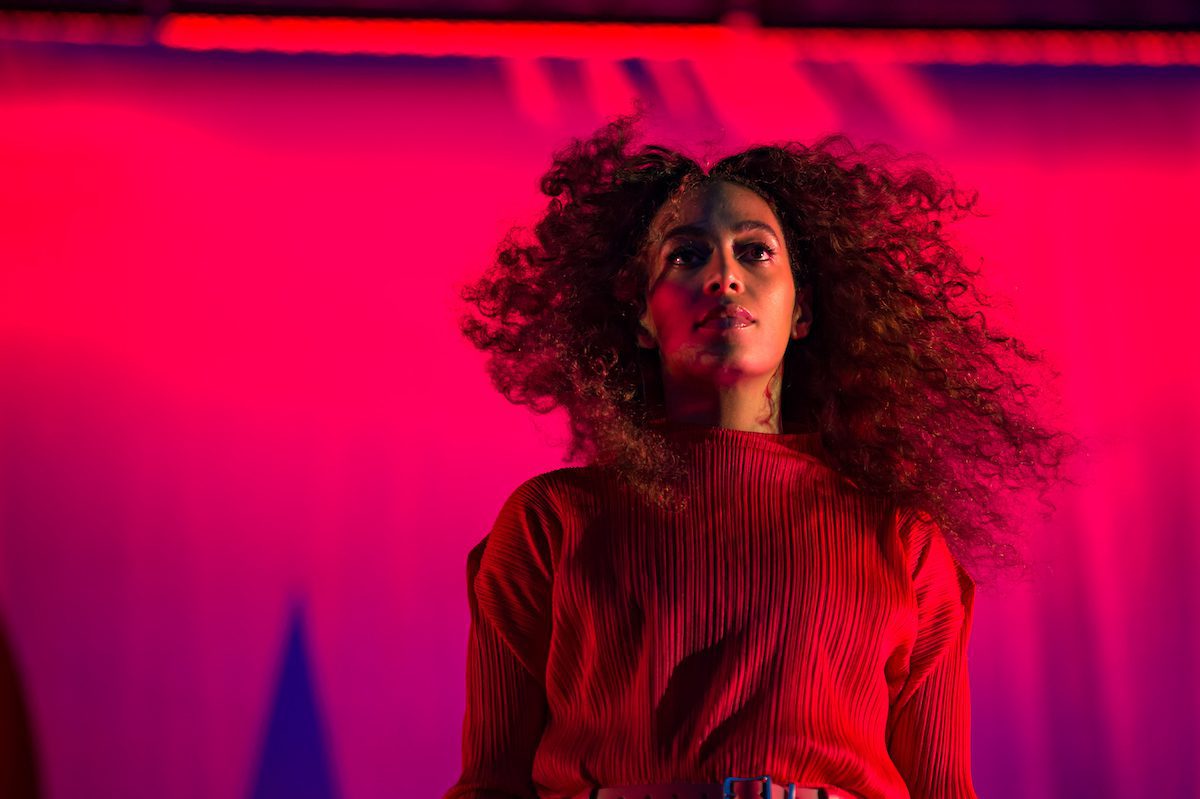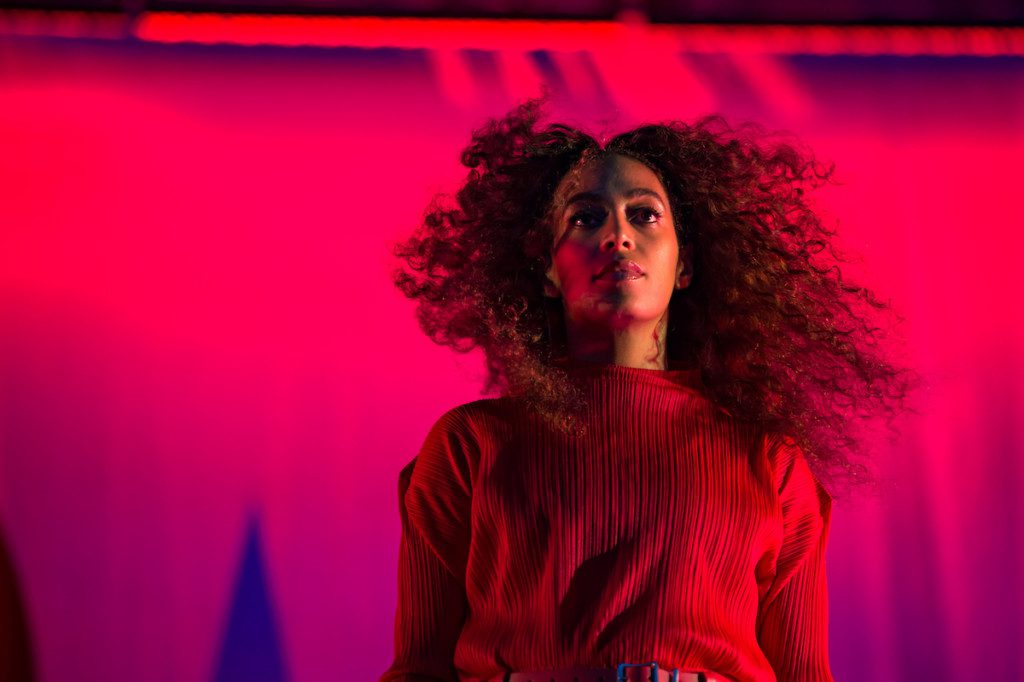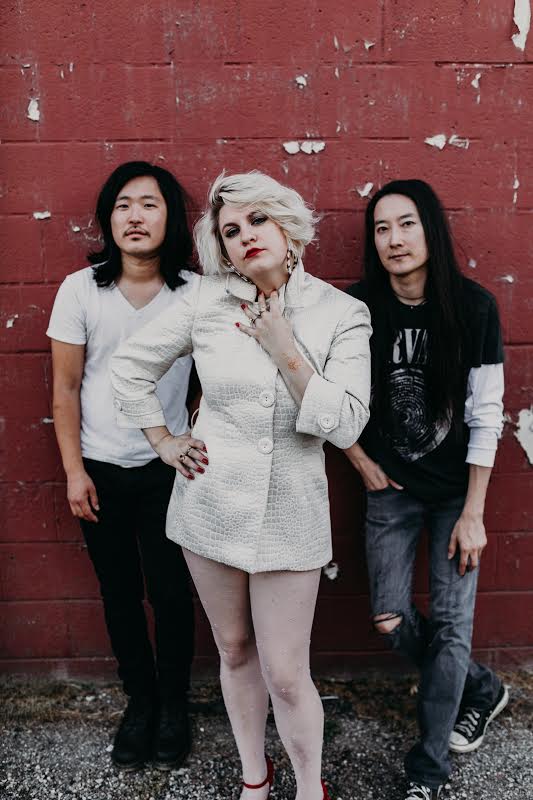
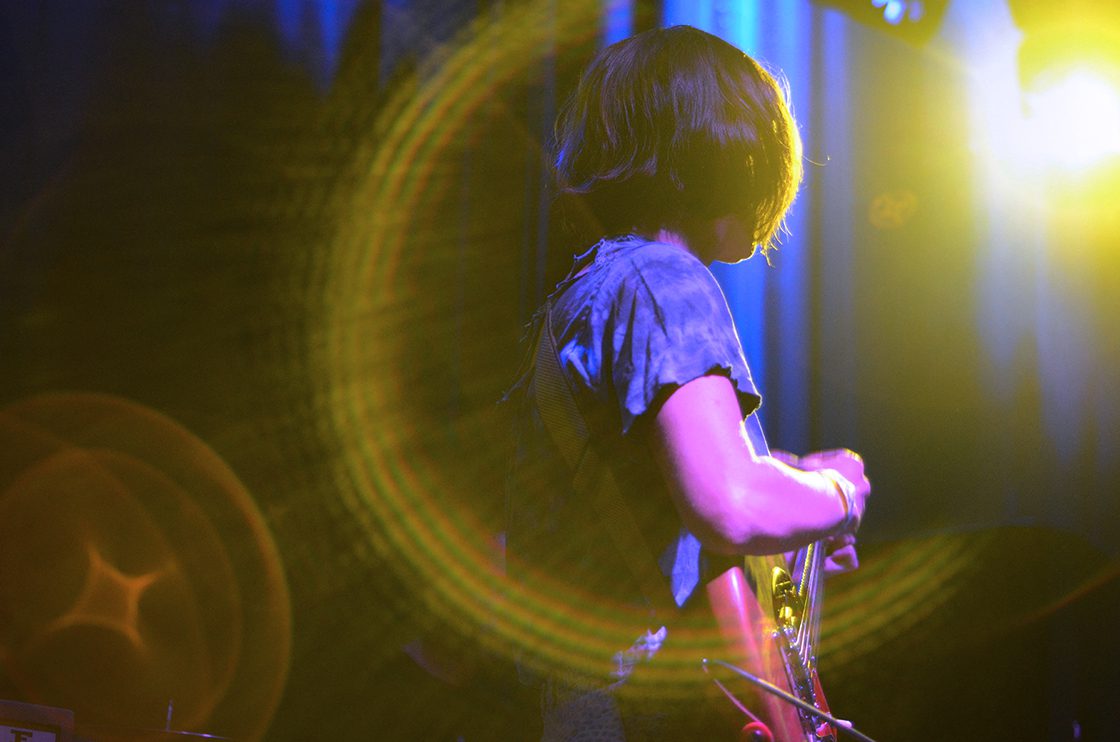
PLAYING COLUMBUS: Stef Chura on power, performance, and karaoke

“I’m sorry, I’m in the middle of the desert,” Stef Chura tells me, after our call has dropped off for the third time. Chura, who has been on tour with her band since August 28th, is driving through Texas to meet up with Jay Som in El Paso. Then, she tells me, they’ll “maybe go to a hot spring.” They were hoping to go camping, but it’s raining now.

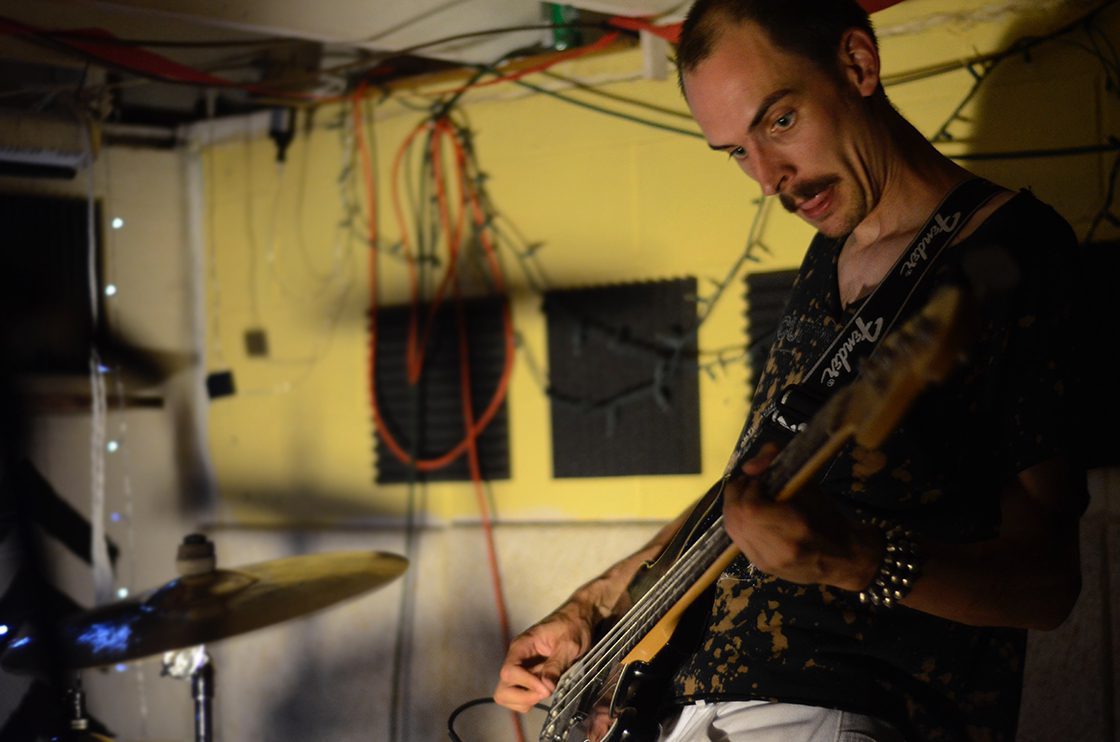
My whole call with Chura is like this: casual, wandering, warm. As we catch up before her Columbus show at Skully’s Music Diner on 10/4, she tells me about the “hard Canadian bagels” they ate in Montreal, and the park they relaxed in before their show. Another time, Chura recalls, they played at Meow Wolf in Santa Fe, New Mexico, which she describes as “ a crazy museum, and the venue is a little stage inside the actual art piece.” Next she mentions a time that the “sex shop” located next to their venue had a “tunnel of love” made up of a rickety bridge and turning swirly lights. But not all of their tour has been this fun and breezy. Chura describes a show in Madison, Wisconsin, when a man walked up in front of the crowd to heckle her. “He can really play!” the man shouted, referring to Chura’s touring bassist, Collin Dekuiper. “Can you play like him?”

At a different gig, Chura says, “I was standing right next to [fusion_builder_container hundred_percent=”yes” overflow=”visible”][fusion_builder_row][fusion_builder_column type=”1_1″ background_position=”left top” background_color=”” border_size=”” border_color=”” border_style=”solid” spacing=”yes” background_image=”” background_repeat=”no-repeat” padding=”” margin_top=”0px” margin_bottom=”0px” class=”” id=”” animation_type=”” animation_speed=”0.3″ animation_direction=”left” hide_on_mobile=”no” center_content=”no” min_height=”none”][Dekuiper], and the sound guy walked up to the stage. And I could tell he wanted to talk to the bass player so much more than me.” Things like this “just happen,” Chura tells me. But at this point in her career, Chura is too focused on her music to talk about her gendered experiences in the music industry for long. “I think I’m starting to get bleaker as I get older,” she says.
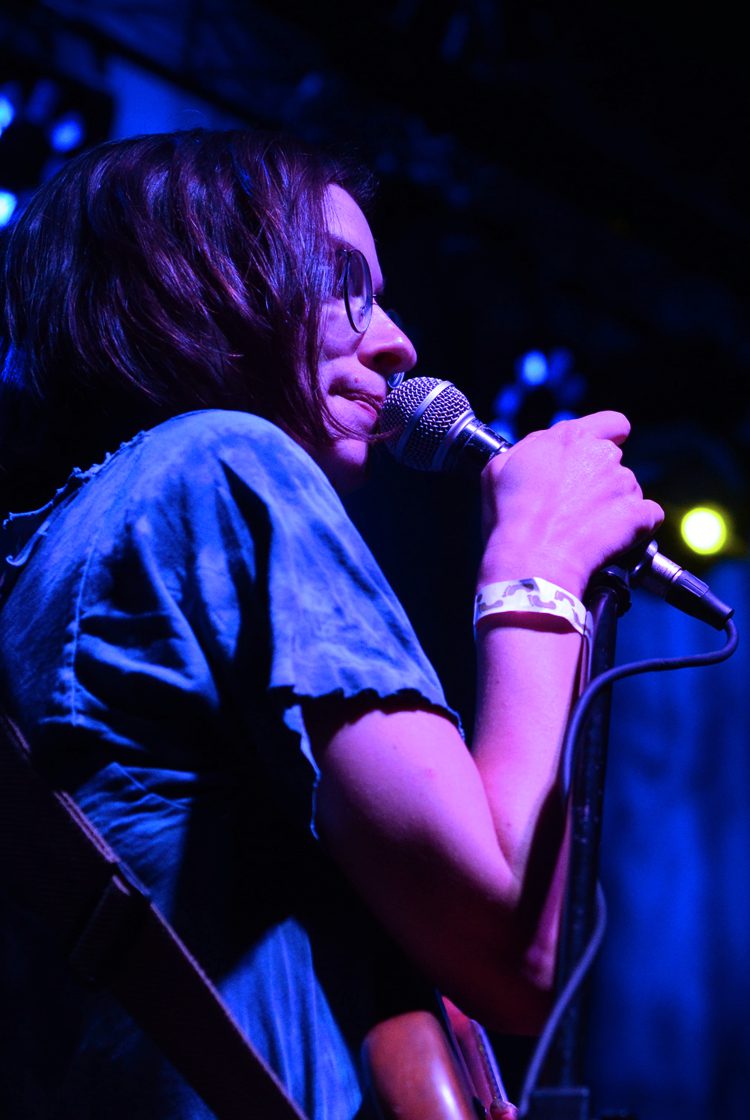
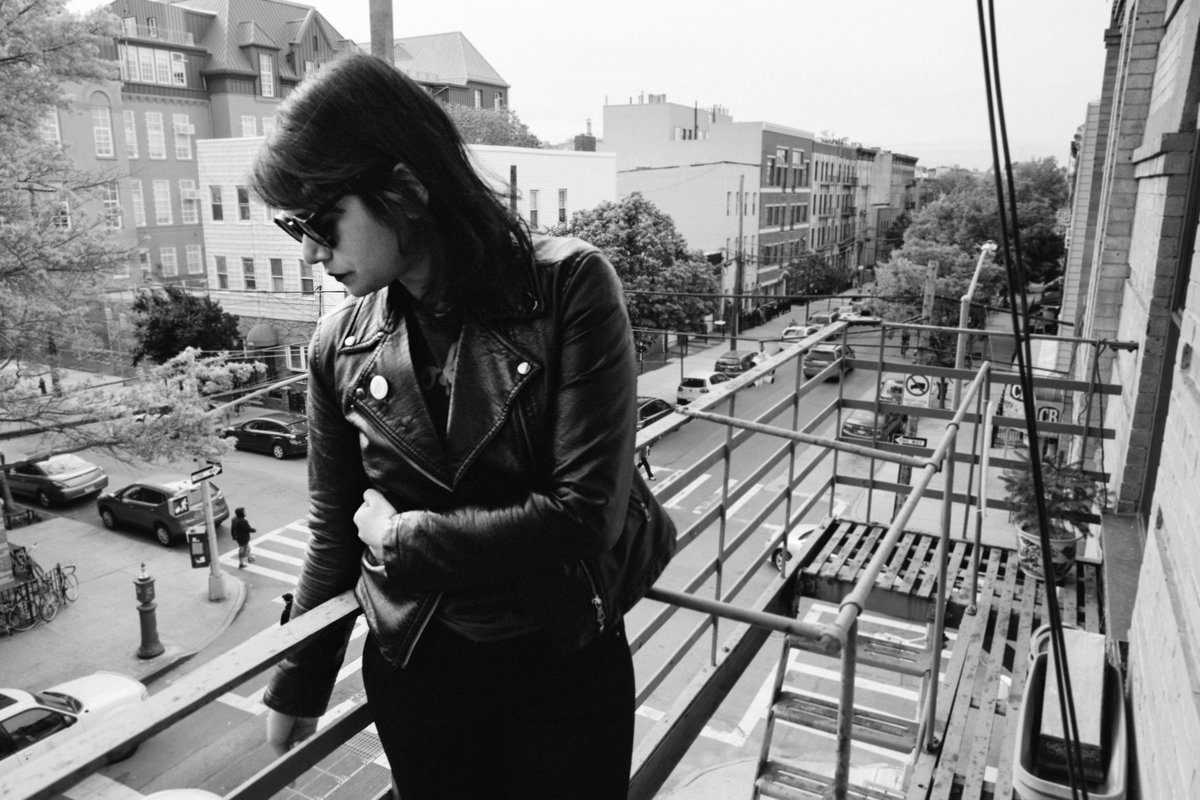
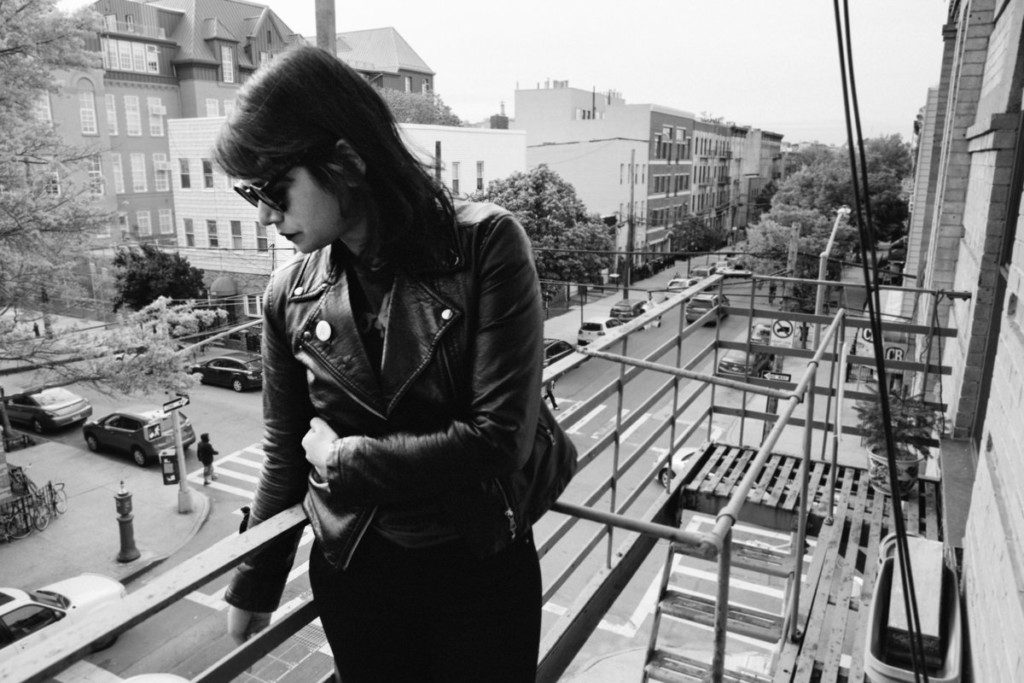
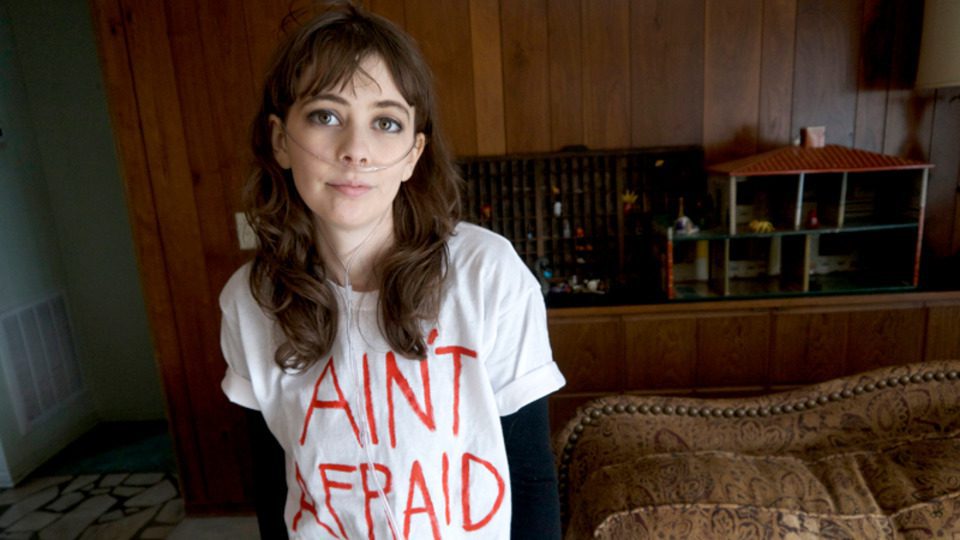
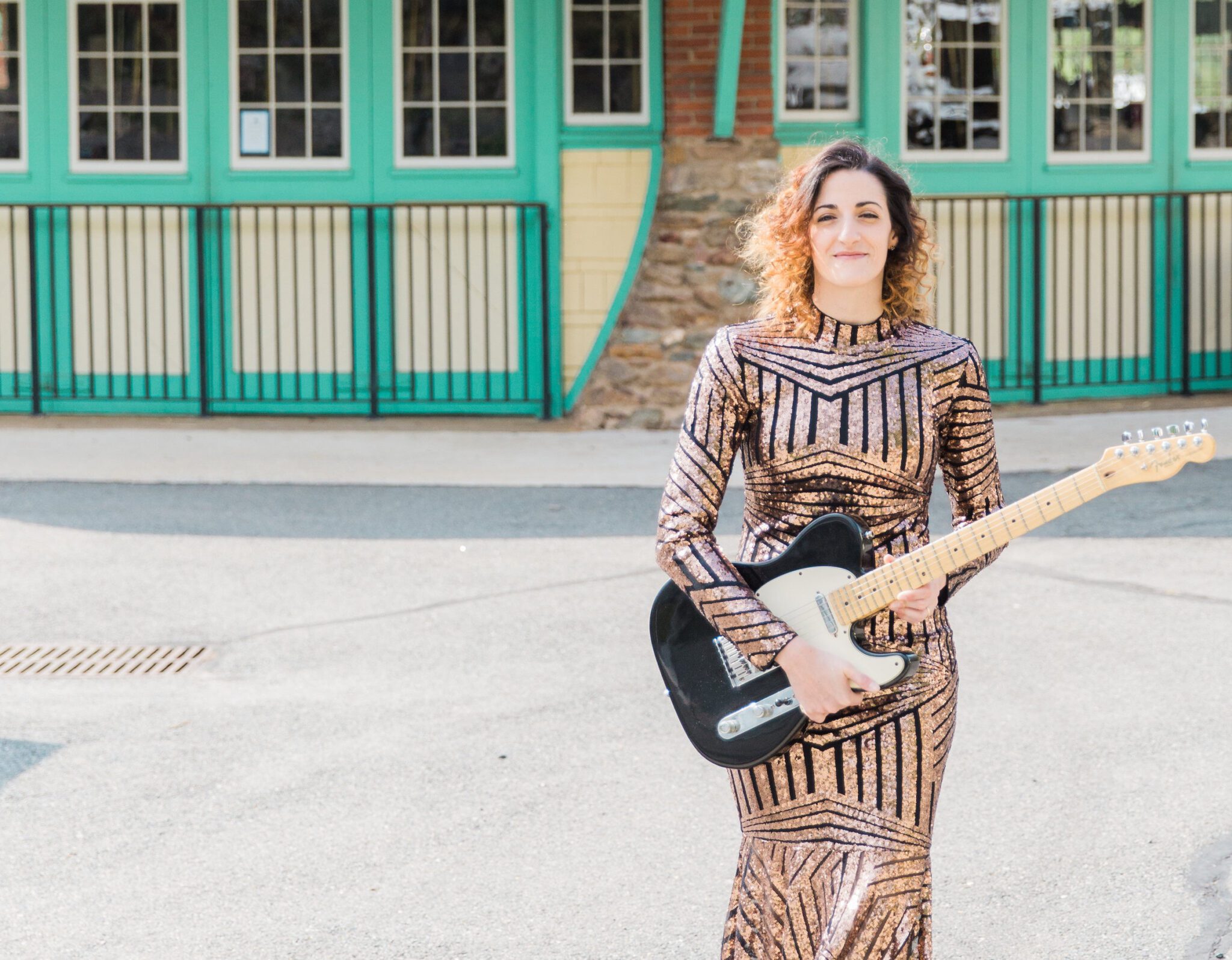
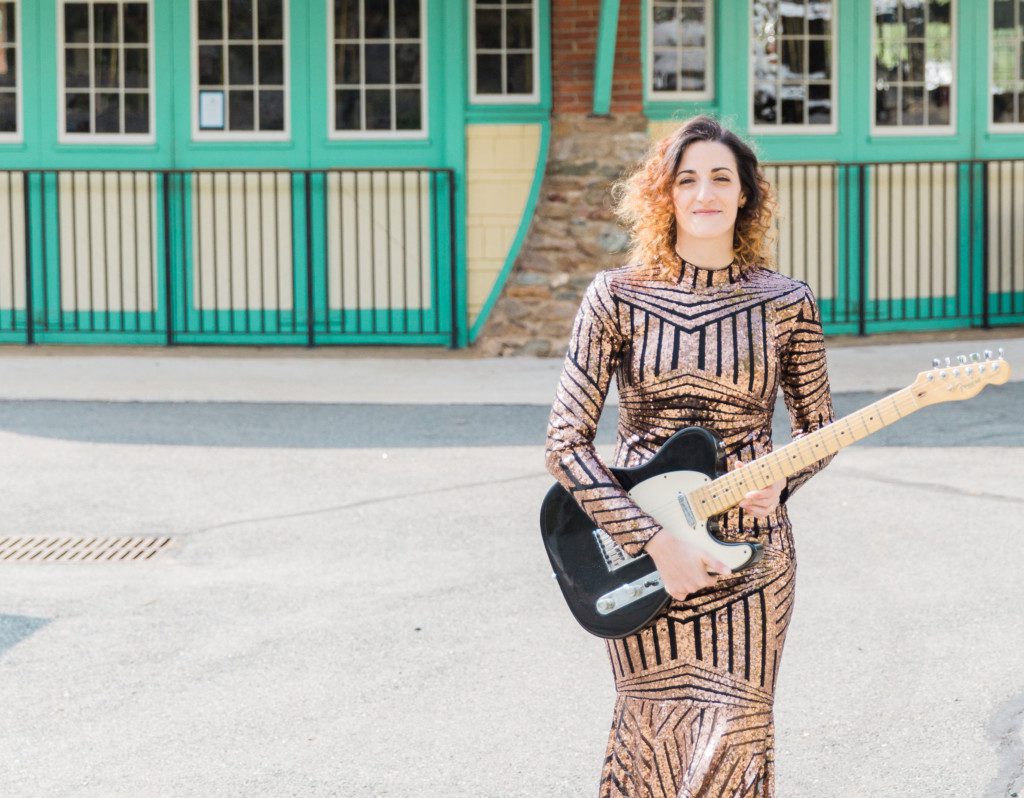
Stef Chura at Skully’s Music Diner. All photos by Kaiya Gordon.

And the music that Chura makes is worth focusing on. Messes, her debut album, is pointed and thoughtful, with expansive arrangements and rumbling guitar riffs. Since the release, Chura and her band have recorded a live EP with Audiotree – recordings with as much air and sprawl as Messes, but infused with the urgency captured during a live performance. Lyrically, Chura drifts through and between varied characters, scenes, and metaphors. “I don’t write in a story-line,” she tells me, “so a lot of the songs are more chaotic for me […] one verse will be about one thing, and another part of the song will be about something completely different.”

What pulls Chura’s lyrics together, however, is her continued exploration of the power dynamics that mold and complicate human interactions. Chura says that when she wrote Messes, she “thought about the songs as having such different content, [but] when they were all together and I was talking to more people about the songs, I realized that there was a theme that I hadn’t expected to be there. The songs are not mostly about romantic relationships, and [are] mostly about power struggles in my life.” Yet Chura’s work is not always read within this nuanced framework. She tells me about one review of Messes’ stand-out “Slow Motion” that particularly impacted her after the reviewer read the song as about “a crush and romance.” “I was super devastated that that’s what my whole music career was going to be like,” she says, “that people were going to think I was just some love-struck girl, writing about my crushes.

A deep-dive into her work reveals that Chura is anything but “love-struck.” While examining power and control, Chura never loses her grasp of intentionality. It’s this self-awareness, nestled within her densely descriptive lyrics, that drew me into her music in the first place. “There you were / Falling through / my hands like sand,” Chura sings on “Faded Heart.” It’s a spare lyric, but an effective one––dry, textured imagery balances the saccharine potential of the song’s title. In fact, Chura tells me, that lyric was inspired by a Joni Mitchell documentary she found at the dollar store.

“It was a really amazing documentary to be only a dollar,” she says, laughing. Chura explains to me that the documentary explored, in part, one of Mitchell’s romantic break-ups, and the letter that break-up produced. In the letter, Chura says, Mitchell wrote “something like: ‘if you hold sand in your hands too tightly, it will just fall through.’” That image stuck with Chura, eventually insinuating itself into the album. But Chura’s approach to the lyric, as always, was rooted in something more complicated than just a crush. “I wrote that song about my friend who passed away,” she says.

Chura’s on the longest tour of her career right now, but as she talks, she seems  as motivated as ever. “We’re playing new stuff right now,” she says, “and we’re actually making a new record when we get [back] to Detroit. We definitely have enough stuff for our new album.” Along with the new material, the band has tweaked a few things for their performances: adding bass lines where songs didn’t have them, etc. “Also,” Chura jokes, “I pause ‘Time to Go’ to do the splits. “
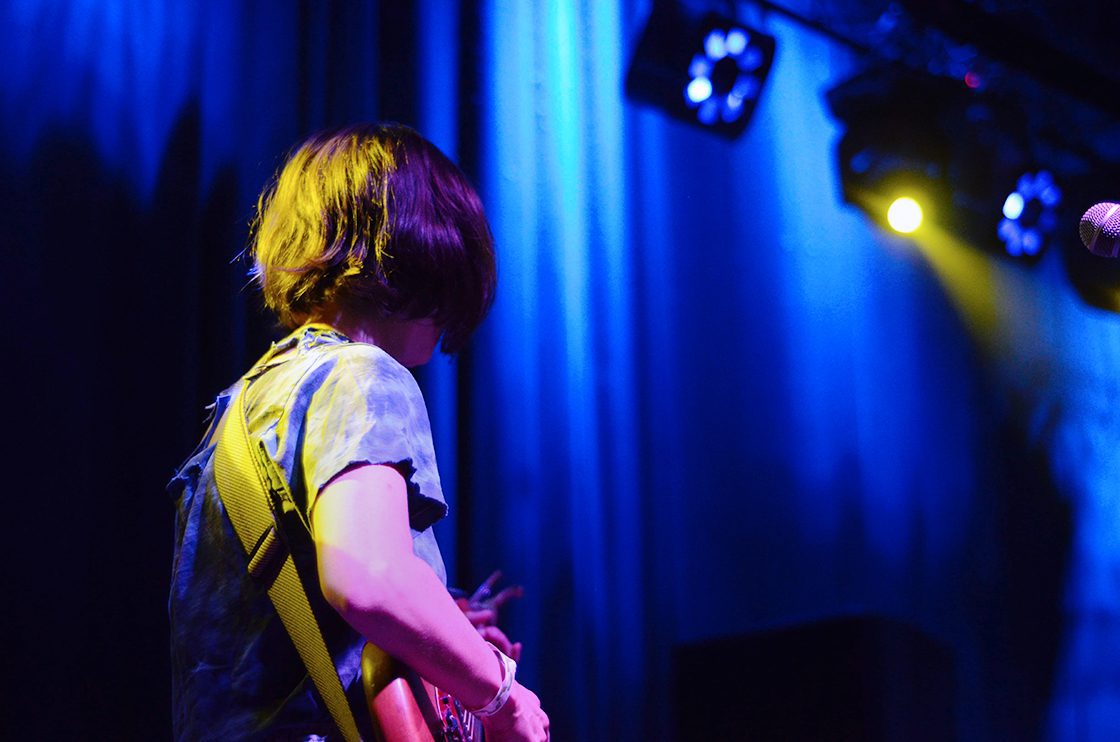
 Along with recording the new album, once home in Detroit, Chura will pick up her karaoke business, which gets put on hold during tour. “[I’ll] have three nights at a couple of bars throughout town,” she tells me. She’s a true karaoke believer: organizing each night doesn’t stop Chura from participating too. “You really have to [sing] the song you’re feeling,” she says. And right now, what she’s feeling is “Drops of Jupiter” by Train. “It’s such a good song!” she says, laughing. “It’s a song that nobody wants to know the lyrics to but they do. And it’s a little embarrassing.”

Chura tells me that the new album, like Messes, will mix new songs with older material. “I was feeling pressure that all of the songs had to be brand new,” she says, “but that’s not true. It’s kind of nice to work with the old stuff.” Opening up the time-frame of the album has worked for Chura before. “Speeding Ticket,” the oldest song on her debut album, is an understated recording with devastating, visceral lyrics. 

At first, Chura says, she was “ashamed” to tell people she had written the song ten years ago. But she still really likes playing the song. “I’m not really bothered,” says Chura. “I was self-conscious at first but […] it’s a good song.” It’s true––it is a good song. Listening to “Speeding Ticket” feels like the few sleepy moments spent under covers after waking up, or the quiet warmth of a day inside during winter.

I think about how long Chura has been writing, and how many opportunities she has had to stop. Ultimately, this is what I love about Chura’s music, and about the unaffected, thoughtful way she speaks over the phone: she has put a lifetime of work into constructing her sound and her songs, and she knows it.

“I feel really sure about these songs,” she says.
[/fusion_builder_column][/fusion_builder_row][/fusion_builder_container]
HIGH NOTES: How LSD Changed Music as We Know It

In 1965, at 2 Strathearn Place in London, John and Cynthia Lennon, George Harrison, and Pattie Boyd sat at their dentist John Riley’s dinner table sipping coffee. A few minutes prior, Riley’s girlfriend Cindy Bury had placed sugar cubes laced with LSD in their cups.

Back then, the drug was just beginning to leave labs and doctors’ offices. Riley didn’t even know what it was. “It was just, ‘It’s all the thing,’ with the middle-class London swingers,” John Lennon told Rolling Stone. “He was saying, ‘I advise you not to leave,’ and we thought he was trying to keep us for an orgy in his house and we didn’t want to know.”

Despite Riley’s request, the group headed out to the Pickwick Club. “We’d just sat down and ordered our drinks when suddenly I feel the most incredible feeling come over me,” George Harrison recalled. “One thing led to another, then suddenly it felt as if a bomb had made a direct hit on the nightclub and the roof had been blown off: ‘What’s going on here?’ I pulled my senses together and I realised that the club had actually closed.”

After that, they headed to another club called Ad Lib, where they screamed after mistaking the elevator light for a fire. “We were cackling in the street, and then people were shouting, ‘Let’s break a window.’ We were just insane. We were just out of our heads,” Lennon remembered.

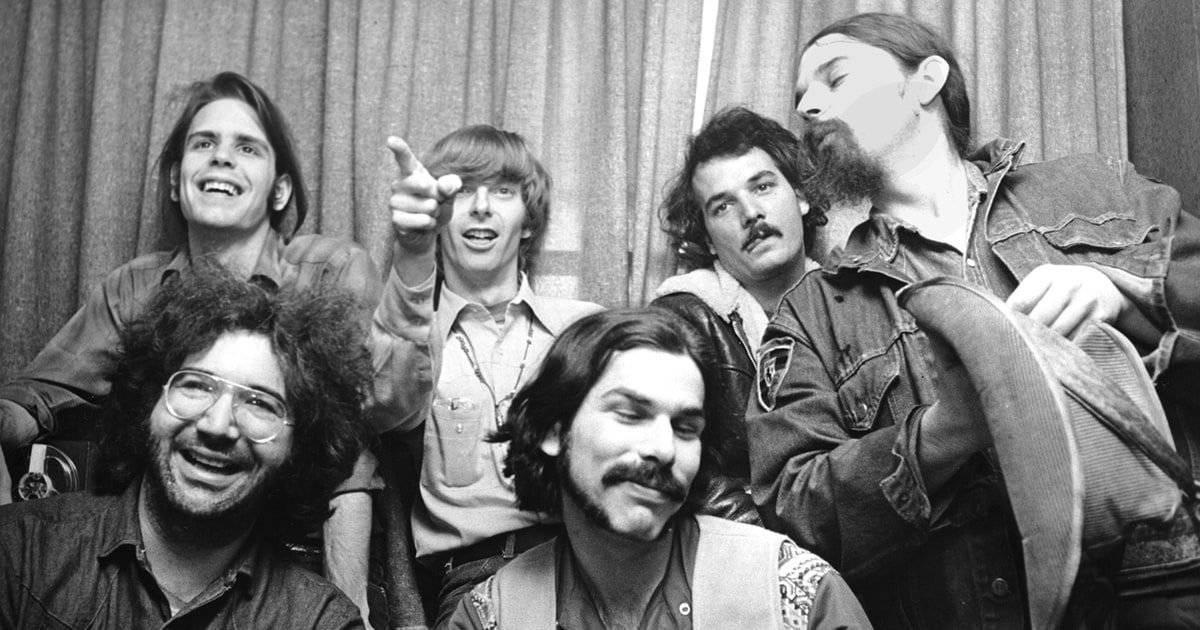
That night would change music history forever. Arguably, it’s why “Tomorrow Never Knows” sounds so different from “A Hard Day’s Night” — and why many songs started sounding different in the 60s, Chris Rice, founder of the Psychedelic Society of New England and author of On Culture: Small minds, big business, and the psychedelic solution, tells me.

Acid “expands one’s mind to things that they could not imagine being possible before its use,” Rice explains. “Sonically, this results in increased experimentation of sound. This lead to things like lead guitar recorded backwards by numerous artists, The Grateful Dead recording air in different locations (dry air, humid air, etc.) because they thought it would add depth and texture to their music, and The Beach Boys recruiting The Beatles’ Paul McCartney to chew celery in the track ‘Vegetables’ to add percussive sound to that track. Clearly, these examples are a far cry from the simple ‘guitar bass drums vocals’ setup that was comfortable and familiar in earlier rock and roll.”

While The Beatles were tripping in London, The Grateful Dead was performing in Northern California’s “Acid Tests,” festivals that combined dance, art, and (of course) drugs, Philip Auslander, a Professor at the School of Literature, Media, and Communication at Georgia Institute of Technology, tells me. Their sound engineer was chemist Augustus Owsley Stanley III, also known as Bear, who manufactured LSD and sold it to John Lennon, Pete Townsend, and other musicians. The Grateful Dead’s music was partially funded by the sale of this “Monterey Purple” and “White Lightning” acid. 

The Dead and likeminded bands and artists like The Beach Boys, The Doors, Jimi Hendrix, and Pink Floyd became known for their improvisational approach and “trippy” sound, which Sheila Whiteley defines in The Space Between the Notes as including “manipulation of timbres (blurred, bright, overlapping), upward movement (and its comparison with psychedelic flight), harmonies (lurching, oscillating), rhythms (regular, irregular), relationships (foreground, background), and collages.”

The distortion and Wah-Wah effects used by these bands mimicked the way acid distorts sound, Ido Hartogsohn, a Visiting Postdoctoral Fellow with Harvard’s Program on Science, Technology & Society, tells me. Layered studio arrangements like those in The Beatles’ Sergeant Pepper and The Beach Boy’s Pet Sounds similarly brought out the sound’s details and arrangements the way LSD might.

Against the backdrop of these cutting-edge instrumentals and production techniques, a new style of lyric writing emerged. Phrases ceased rhyming, and images ceased making sense. The Beatles’ “I Am the Walrus,” for example, is rife with LSD imagery, from “sitting on a cornflake” to the “elementary penguin singing Hare Krishna.”

Even the band names became nonsensical, Richard Goldstein, who was a rock critic for The Village Voice in the 60s and used to drop acid with The Beach Boys, points out. Instead of carrying clear, simple meanings like The Penguins, The Crickets, The Animals, or even The Beatles, names like Jefferson Airplane, The Peanut Butter Conspiracy, and 13th Floor Elevator appeared to be selected purely for their aesthetic properties.

“It’s a very aesthetic drug,” Goldstein explains. Rather than perceiving sounds and images through the lens of a culturally prescribed meaning, people on acid interface more directly with sensory stimuli. This can lead to more universal, culture-transcending experiences with music. “We’re all connected through the subconscious, so when we listen to music on acid, it makes us have more of a tribal feeling,” says Goldstein. “It’s less intellectual more emotional and visceral.”

This shift from the intellectual to the visceral, from order to chaos, from logic to aesthetics, left an indelible mark on music, spawning other genres like pop psych, acid punk, and psychedelic trance and influencing folk, soul, and jazz, says Auslander. You can even hear their influence in modern rock bands like Tame Impala and Of Montreal, Hartogsohn points out. But psychedelic rock’s impact reaches beyond music to culture at large and even politics. It was a contributor, for example, to the counterculture and antiwar movements.

“LSD alters a user’s perception of what is important in life. As a result, the act of war seems entirely ludicrous,” says Rice. “Much of the elements of our culture constructed by our predecessors seem curious if not downright silly when viewed from the outside, as acid is prone to make people do. As a result, people’s worldviews shifted dramatically in the direction of peace and of love and of harmony, which seems, under the influence, to be the true meaning of incarnation in this realm.”

That’s the sentiment behind songs like “Love Is All You Need” and “Give Peace a Chance,” which John Lennon wrote after he became a regular (sometime daily) acid user. “[fusion_builder_container hundred_percent=”yes” overflow=”visible”][fusion_builder_row][fusion_builder_column type=”1_1″ background_position=”left top” background_color=”” border_size=”” border_color=”” border_style=”solid” spacing=”yes” background_image=”” background_repeat=”no-repeat” padding=”” margin_top=”0px” margin_bottom=”0px” class=”” id=”” animation_type=”” animation_speed=”0.3″ animation_direction=”left” hide_on_mobile=”no” center_content=”no” min_height=”none”][We now] assume by default that popular music artists are socially aware and politically committed, a pure legacy of the psychedelic era,” says Auslander.

So, not only can we credit much of the past 50 years of music history to acid; we can also credit it for the spirit of the era this music helped usher in. The effects of LSD are environment-specific, Goldstein explains, but what it pretty reliably does is open people’s minds. Whatever happens to be around us as our minds open up may then get incorporated into our music and our worldview (which could also explain why there are so many stories about people who think they’re orange juice on LSD). And during the hippie era, which was already taking root by the time LSD entered the mainstream, people were tripping amid a call for peace and movement toward globalization.

Though LSD’s history is still palpable in today’s music, Goldstein laments that it isn’t more present. People today are “more interested in the solo cup than they were in the tab,” leaving music devoid of spirituality, he says. Kansas’s “Dust in the Wind” embodies the values Goldstein is nostalgic for with the line, “don’t hang on, nothing lasts forever but the earth and sky.” He looks back fondly on the “naïveté” that brought people to festivals with karma meters and mood rings. Acid “makes it easier to have that kind of reasoning,” he recalls. “Or lack of reasoning. But life is more than reason.” [/fusion_builder_column][/fusion_builder_row][/fusion_builder_container]
NEWS ROUNDUP: RIP Charles Bradley, #TakeAKnee & More

  • RIP Charles Bradley

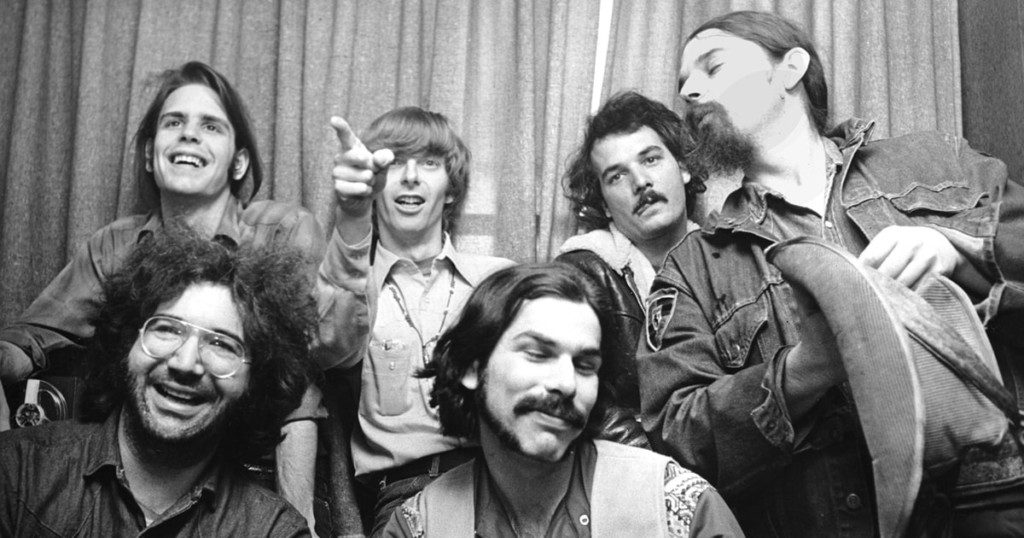
    Though he was able to tour up until the very end, even after battling stomach cancer, renowned soul singer Charles Bradley passed away over the weekend. He was 68. Nicknamed “The Screaming Eagle of Soul,” Bradley was inspired by James Brown from a young age but didn’t release his first album until six years ago. He made a living as a handyman and by impersonating his idol until being discovered by a Daptone Records founder. Watch him perform below.

  • Musicians Take A Knee To Protest Police Brutality

    After Trump insulted football players who chose to kneel during the national anthem as a protest against our country’s police brutality, encouraging NFL owners to fire them, many musicians expressed solidarity with the players. Stevie Wonder was one of the first, kneeling before his set at NYC’s Global Citizen Festival. Other artists who participated include Pharrell Williams, Eddie Vedder, John Legend, and more. Read more a complete account of the situation here

  • Other Highlights

    Watch new videos from Princess Nokia and William Patrick Corgan, Spotify knows your musical secrets, Justin Timberlake will get a second chance at a Superbowl performance, a holographic Frank Zappa is going on tour, Thurston Moore made a techno record, listen to new music from the Yeah Yeah Yeahs and Angel Olsen, collaborations from Courtney Barnett/Kurt Vile, Michael Cera/Sharon Van Etten, and Radiohead/Hans Zimmer, a concert hall created by an algorithm, and it’s way too early for these artists to release Christmas music

ONLY NOISE: One More Cup of Coffee

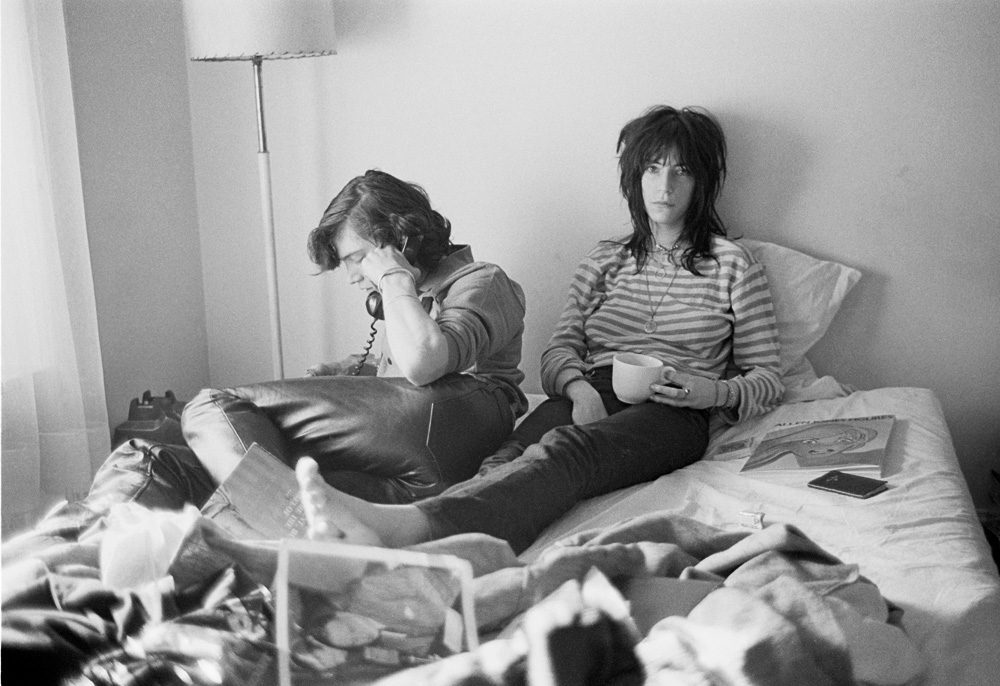
I’ve stopped counting the number of times “coffee” is mentioned in Patti Smith’s M Train. The short answer is: a lot; coffee is the lifeblood coursing through the entire book. Coffee is the daily elixir of Smith’s life, and she finds great poetry in every sip – from hand-selected, highland grown beans in Veracruz, to the charred offerings of Styrofoam deli cups – she wants “to write an aria to coffee.” Yet, quite surprisingly, the poet and songwriter never did. Smith’s connotations with coffee result from her caffeine-fueled memoirs and New York coffee shop patronage, and she is therefore one of the artists I most strongly associate with those bitter brown beans. I imagine that her version of heaven is an eternal corner table in her favorite café, where the brown bread and olive oil never run out and the coffee flows black and hot.

Considering today is National Coffee Day, I can’t help but think about the decades, even centuries long relationship between music and coffee. Who are the musicians who’ve paid homage to the drink named Joe? And which artists, like Smith, evoke coffee shop romanticism without needing to sing of a single sip?

Since Smith never wrote her aria di caffè, I can only speculate what coffee represents to her. In M Train it signifies ritual; each day of import is commenced with a description of her coffee and breakfast regimen, but not in an Instagram diary manner. Smith isn’t keeping a food journal for fitness purposes. Rather, it seems that every sip of coffee transports her back in time, where she can commune with her beloved Beat poets, and sit in Mohammed Mrabet’s fictional The Beach Café for a little while. Surely it must also evoke her greatest influence, Bob Dylan, and his early days at the Gaslight Café.

Coffee pairs with Bob Dylan just as well as cigarettes (a classic duo we’ll get to in a moment.) From his Greenwich Village coffee shop days and his caffeinated delivery on songs like “Subterranean Homesick Blues” and “Talkin’ New York,” to his 1975 ballad “One More Cup of Coffee,” Dylan and java go hand-in-hand. In fact, because of his proximity to the Beats, Dylan was one of the musicians who pioneered the image of a rock n’ roll poet holed up in a café, dousing themselves with free refills and stamping out smokes while scribbling lyrics. Smith merely conjured her idols, and eventually became one herself.

Like Patti Smith, Tom Waits never wrote a song with the word “coffee” in the title – but can you think of a musician more at home on the pleather booth seats of a 24-hour diner? Waits is seemingly made of coffee grounds, burger grease, and cigarette tar. The same year that Dylan released “One More Cup of Coffee,” Waits recorded his iconic live album Nighthawks at the Diner, a jazz-beat-opera to the greasy spoon lifestyle. The most caffeinated track on Nighthawks has to be “Eggs And Sausage (In A Cadillac With Susan Michelson),” which relays the deadbeat clientele and menu options of a roadside-dining joint. “…There’s a rendezvous/of strangers around the coffee urn tonight/all the gypsy hacks, the insomniacs…/eggs and sausage and a side of toast/coffee and a roll, has browns over easy…/it’s a graveyard charade, a late shift masquerade.”

If Bob Dylan and Patti Smith claimed cafés for the poets, Waits reclaimed them for their rightful patrons: nightshift gas station attendants, prostitutes, and aimless drunks. When bars are only open until 4am (2am if you are on the West Coast like Waits), where is one to go in the wee and in between hours? The diner of course, where coffee flows cheaply and liberally. That is the beauty of coffee shops and canteens: they offer refuge for those who don’t have an office or a studio, and can’t afford to wash themselves in fine wine or dine out on the regular. In the coffee shop, you can purchase a single item (a cup of coffee) and sit for hours on end working, reading, or simply sipping. And not too long ago, you could also smoke.

It’s no coincidence that Waits sings of “cold caffeine in a nicotine cloud” in “Eggs And Sausage.” The narcotic pair has been canonized in literature, music, and film for years. Jim Jarmusch’s 2003 flick Coffee and Cigarettes plumbs the eternal relationship between the two vices, and whom does he turn to for much of his cast? Musicians, naturally. Coffee and Cigarettes is comprised of eleven short scenes revolving around the titular pleasures. Three of these scenes involve famous musicians, the most memorable being Somewhere In California, featuring Iggy Pop and, you guessed it, Tom Waits.

The rock icons meet in a corner booth, sipping black coffee and making awkward conversation. Though Pop and Waits both quit smoking long ago, a mysterious pack of Marlboros sits on the table. The marriage of coffee and cigarettes (and coffee and rock n’ roll and cigarettes) is so undeniable, that the smokes have just magically appeared. After realizing that since they’ve already quit, they can now partake every once in a while, Waits and Pop light up and bask in nicotine. “Hey, cigarettes and coffee man…that’s a combination,” says Iggy. Waits nods in agreement. “You know, we’re really like the coffee-and-cigarettes generation, when you think about it,” he says. “Well I mean, in the ‘40s it was the pie-and-coffee generation…”

When Otis Redding recorded “Cigarettes and Coffee” for The Soul Album in 1966, the substances seemed to represent domestic bliss as well as stimulating conversation. “It’s early in the morning/About a quarter till three,” sings Redding, “I’m sittin’ here talkin’ with my baby/Over cigarettes and coffee, now.” Perhaps Redding’s positioning of coffee in rock n’ roll is the most honest – suggesting that its warmth and ceremonial nature recalls home.

Other than booze and blood, coffee has to be the most romantic liquid in the Western Song Book. Cowboys and rappers like it black (unless you’re the Beastie Boys, and must have your “sugar with coffee and cream.”) Blur has it with TV, Squeeze drinks it in bed, and Kate Bush wants it homeground. And in the 1970s, Patti Smith ventured to all the way to Mexico is search of the ideal brew. “It was February 14,” she recalls in M Train, “and I was about to give my heart to a perfect cup of coffee.”

PLAYING COLUMBUS: Alien Boy, Perfume V & Lose the Tude at Organon Arcade

[fusion_builder_container hundred_percent=”yes” overflow=”visible”][fusion_builder_row][fusion_builder_column type=”1_1″ background_position=”left top” background_color=”” border_size=”” border_color=”” border_style=”solid” spacing=”yes” background_image=”” background_repeat=”no-repeat” padding=”” margin_top=”0px” margin_bottom=”0px” class=”” id=”” animation_type=”” animation_speed=”0.3″ animation_direction=”left” hide_on_mobile=”no” center_content=”no” min_height=”none”]

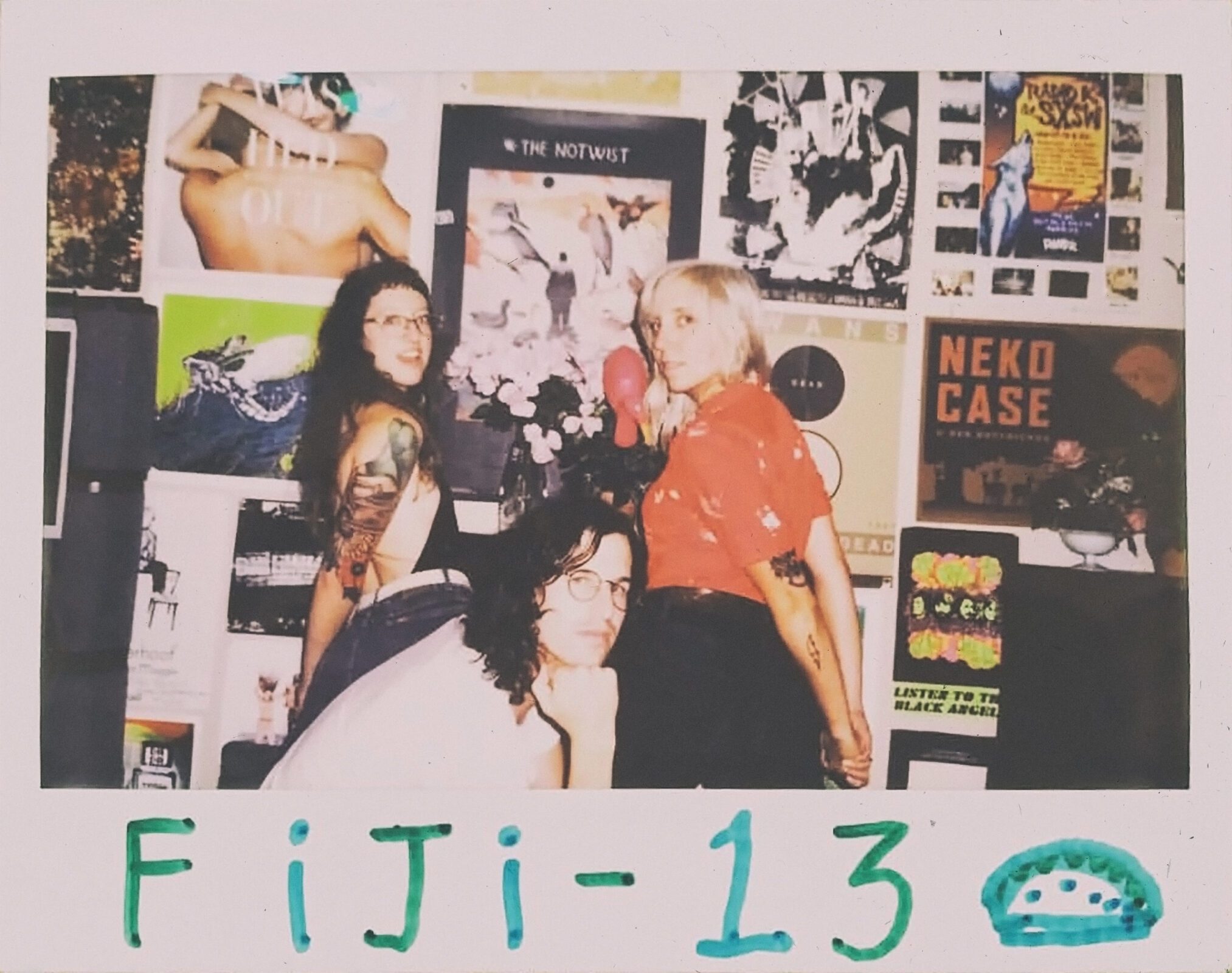
Alien Boy. All photos by Kaiya Gordon.

On my way to the show, I tried to focus on my weekly readings. During my undergraduate experience, I got the bulk of my assignments done on public transportation. I liked the anonymity of the bus; the soft, indiscernible sounds of strangers talking; the sway of the wheels. But between my undergraduate years and the Perfume V, Alien Boy, and Lose the Tude show I attended last Tuesday, the world has become more distracting. Texts from home buzzed in my pocket, and my glasses kept slipping from my nose. But mostly – I was nervous. I was traveling to my first house show in Columbus (hosted by Organon Arcade), and I was alone. Is DIY the same everywhere? I didn’t know.

I slipped into Columbus’ music scene with little splash. Unlike the shows I had been attending in The Bay Area, my previous (and future!) home, Columbus’ events left little chance of running into an old crush, an ex friend, or my therapist. And it was easy to find out where and when things were happening – new shows, showcases, and art events have been popping up on my Facebook feed ever since I touched down here.

It’s easy to find music events in Columbus because, frankly, there are a lot of music events happening here. And though Columbus’ DIY spaces – like their counterparts across the country – have been hit by increased attention and zoning restrictions in the last year, the scene continues to thrive.

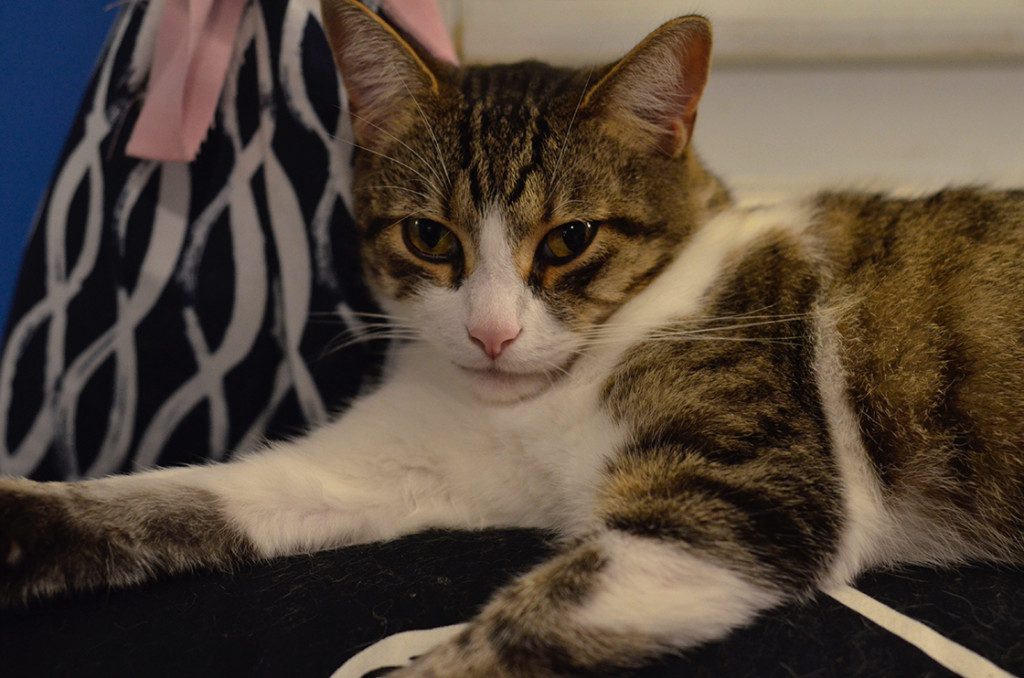
On Tuesday, I made my way into a basement I had never been in before, to see a show hosted by people I had never met. But by the end of the night, I decided that it didn’t really matter who I did or didn’t know; house shows are fun no matter your connection to the home. It’s fun to see the bands try new things, fun to see the in-house sound set-up, fun to watch singers and guitarists run wherever they felt like as they played. And there were many things, beyond the music, that felt familiar – the house cat I petted when I was feeling nervous, the conversations about astrology, the La Croix art I spotted in the kitchen, the house plants, and the carabiners everyone wore.

[/fusion_builder_column][fusion_builder_column type=”1_1″ background_position=”left top” background_color=”” border_size=”” border_color=”” border_style=”solid” spacing=”yes” background_image=”” background_repeat=”no-repeat” padding=”” margin_top=”0px” margin_bottom=”0px” class=”” id=”” animation_type=”” animation_speed=”0.3″ animation_direction=”left” hide_on_mobile=”no” center_content=”no” min_height=”none”]

Organon Arcade’s feline resident.

Though the line-up was dominated by variations of pop and punk, the performers varied in other, meaningful ways. Alien Boy and Perfume V, both touring from Portland, Oregon, have been playing together and recording music for about three years. In contrast, Lose the Tude, described on the event page as “a bunch of OLD men from here who still know how to rip as long as the show is over by 10,” have been making music since 2007. All three bands showed up with gusto. Alien Boy and Perfume V put on crashing musical performances, the vocals of Sonia Weber and Max Pogue – who both play in each others’ bands – complicated by frantic drum sequences and gritty guitar sounds.

Long-time locals Lose the Tude, whose latest album came out in March of this year, put on an enthusiastic hardcore performance. Singer Ryan J. Eilbeck nearly clocked me in the face several times during the set, which, in my opinion, is a pretty good indicator of a fun show. The band’s fervent dance moves – Eilbeck stopped the show, at one point, to clear the area in front of him by circling his hips in exaggerated motions – added to their relentless musical drive. They looked like a band that was having fun playing music together. And the joy of creation – of doing the work – is something to look for, whether in an unknown basement or a sold-out arena.

[/fusion_builder_column][fusion_builder_column type=”1_1″ background_position=”left top” background_color=”” border_size=”” border_color=”” border_style=”solid” spacing=”yes” background_image=”” background_repeat=”no-repeat” padding=”” margin_top=”0px” margin_bottom=”0px” class=”” id=”” animation_type=”” animation_speed=”0.3″ animation_direction=”left” hide_on_mobile=”no” center_content=”no” min_height=”none”]

Lose the Tude.
[/fusion_builder_column][/fusion_builder_row][/fusion_builder_container]
PLAYING DETROIT: JRJR “Clean Up” Nice on New Track

There is an undeniable Paul Simon Graceland vibe veiled in the stripped down honesty of “Clean Up,” the latest track from indie pop darlings JRJR’s unofficial forthcoming record. The band (Josh Epstein, Dan Zott, Bryan Pope and Mike Higgins) have shifted their focus inward and in doing so has found that less is more. Though “Clean Up” is a far cry from their 2015 banger “Gone” it has a staying power for anyone silently wrestling their own inner demons, even without the anthemic production. “Hey, if I don’t go home soon/I’m gonna freak out/And I thought hey, if I don’t clean up/I know I’ll miss out” confesses a defeated Epstein, who has been open about his struggles with anxiety and mental health. Docile and feathery percussions paired with twinkling keys and a somber, hushed guitar, it’s these very subtleties in “Clean Up” that reveal a more vulnerable JRJR.  And though we have no doubts that they haven’t completely shed their penchant for showy pop-rock, it’s refreshing to see a band stripped down by experience and growth opposed to commercial success and label pressures.

Dust off and clean up with the latest therapy session from Detroit based JRJR:


Catch JRJR on tour this fall:

Thu, Oct 5 – Chicago, IL – House of Blues

Fri, Oct 6 – Minneapolis, MN – Fine Line

Sat, Oct 7 – Kansas City, MO – Record Bar

Mon, Oct 9 – Denver, CO – Bluebird Theater

Tue, Oct 10 – Salt Lake City, UT – Urban Lounge

Thu, Oct 12 – Seattle, WA – Neumos

Fri, Oct 13 – Portland, OR – Hawthorne

Sat, Oct 14 – San Francisco, CA – Independent

Mon, Oct 16 – Sacramento, CA – Harlow’s

Tue, Oct 17 – Pomona, CA – Glasshouse

Thu, Oct 19 – Los Angeles, CA – El Rey

Fri, Oct 20 – San Diego, CA – Irenic

Sat, Oct 21 – Phoenix, AZ – Lost Lake Music Fest

Sun, Oct 22 – Santa Fe, NM – Meow Wolf

Tue, Oct 24 – Dallas, TX – Trees

Wed, Oct 25 – Austin, TX – Mohawk

Thu, Oct 26 – Houston, TX – WOMH

Fri, Oct 27 – Birmingham, AL – Saturn

Sat, Oct 28 – Atlanta, GA – Masquerade – Hell Stage

Mon, Oct 30 – Nashville, TN – Basement East

Tue, Oct 31 – Carrboro, NC – Cat’s Cradle

Thu, Nov 2 – Washington, DC – 9:30 Club

Fri, Nov 3 – Philadelphia, PA – First Unitarian Church of Christ

Sat, Nov 4 – New York, NY – Irving Plaza

Sun, Nov 5 – Cambridge, MA – Sinclair

Tue, Nov 7 – Buffalo, NY – Waiting Room

Wed, Nov 8 – Toronto, ON – Velvet Underground

Thu, Nov 9 – Cleveland, OH – Beachland Ballroom

Fri, Nov 17 – Detroit, MI – El Club

Sat, Nov 18 – Detroit, MI – El Club


BAND OF THE MONTH: Belle Game

When Andrea Lo talks about Belle Game, the concept of serendipity keeps coming up. It was serendipity that she met her bandmates Adam Nanji (guitar) and Alex Andrew (drums) when they were all in grade school. Adam went off to McGill, where he met future keyboardist Katrina Jones in a bagel shop; now the two are engaged. It was serendipity when the newly minted band, after releasing their 2013 debut Ritual Tradition Habit, scored a residency at the Banff Center in Alberta with then artist-in-residence Kevin Drew of Broken Social Scene, a fellow Canadian band that had a huge influence on Belle Game’s early sound. It was serendipity that their longtime manager started working with Arts & Crafts, one of Canada’s most influential independent record labels, linking them once again with Drew and also with Dave Hamelin of the Stills, who would produce their long-awaited follow-up. And now, four years later, through all that serendipity and a lot of hard work, too, Fear/Nothing has finally arrived, an album that transformed Belle Game’s straightforward indie sound into heavy-hitting dream pop, almost relentless in its interrogation of the human soul.

At the center of that sound is Lo’s uncommonly powerful voice – one that, in a pop realm, would give Adele a run for her money. While lots of synth-heavy dream pop buries vocals into a swirl of reverb and guitar distortion, Lo’s dramatic, mantra-like lyrics sit right up front in the mix, demanding to be heard and daring listeners to really feel something. Lo says that singing has taught her to really reclaim space for herself. “Many of us grow up in situations where we feel we have to be palatable,” she says. “I think music, for me, has always had a vein of challenging myself to see what goes beyond my current perspective of what I know, what I understand, of myself and of the world.” And it’s working well for her and the rest of Belle Game – in addition to the release of Fear/Nothing, the band is opening for Broken Social Scene’s latest North American tour. Audiofemme caught up with Lo while the band prepped for a sold-out date in Washington DC, and in a candid discussion, the singer discussed her personal philosophies, dished on working with Drew, and described those serendipitous moments in detail as vivid as the lyrics she wrote for Fear/Nothing.

Audiofemme: All in all it took four full years for you to follow up your debut – why was that? And what caused you to shift your sound from more straightforward indie rock to a dream pop, or as you refer to it, “crush pop” aesthetic?

Andrea Lo: When we wrote [fusion_builder_container hundred_percent=”yes” overflow=”visible”][fusion_builder_row][fusion_builder_column type=”1_1″ background_position=”left top” background_color=”” border_size=”” border_color=”” border_style=”solid” spacing=”yes” background_image=”” background_repeat=”no-repeat” padding=”” margin_top=”0px” margin_bottom=”0px” class=”” id=”” animation_type=”” animation_speed=”0.3″ animation_direction=”left” hide_on_mobile=”no” center_content=”no” min_height=”none”][Ritual Tradition Habit] and toured behind it we had the utmost intention of writing and recording the next album right away and releasing it, and in that whole process, we had maybe three or four release dates [for Fear/Nothing] that never occurred, whether the songs weren’t quite right or the market wasn’t quite right or something was a little bit off. And it was serendipitous – despite our impatience in wanting to release the album, I really don’t think it would’ve been anything close to what it is now unless we took those four years. Not to get all existential, but I think it was so necessary because it was a process where we were – I wouldn’t even say discovering – it was like a process of shedding, you know? We had released Ritual Tradition Habit under different ideals and different understandings of what music was and how to create it and how we engaged with it. And in going through the transformations that occurred, both personally or as a group, we were able to create something that was a lot more honest. And I say transformation not only in the terms of tangible situations, but also internally, a lot of things were shifting. We were growing up, as I’m sure many people can relate to. You look back and realize you had no fucking clue what you were doing, even when you thought you had it all figured out. It was a lot of growing up, a lot of stripping away our ideals of who we were, what meant a lot to us, what type of music we wanted to create. We went from wanting to make a certain type of music, to being like, fuck it, let’s just make the space and just create.

“Spirit” was the first song that we wrote for this album and I think it’s a huge explanation of the process that would occur over the next few years as we would continue to write. But essentially what it was, when we wrote that song, it was the dropping of all guards and just moving from a very logic based approach to something that was more of a feeling. And I’m not even talking about an emotion, although emotion does come in, but it wasn’t like, I feel sad so I’m gonna write a sad song. Just physiologically moving through the process, allowing the body to express itself in the way that it wanted to in that moment while we were creating. So a lot of the songs started out with just jamming, messing around with sounds, and we would just all come into this pocket and go, wow, that felt really special, and from there we could do the more technical work of how long should the bridge be, where should we place the choruses, and what not.

AF: Well that time was especially formative too because you had this whole residency at Banff, met up with Kevin Drew, and wound up on Broken Social Scene’s record label Arts & Crafts. Can you talk a little bit about that and how it changed your destiny as a band?

AL: Absolutely. Again, super serendipitous. I don’t know if you’ve recognized this thing in life where sometimes you make a choice, or you make a decision, and it’s almost as if life presents you with all the support that you need to continue along the path, and you’re like, oh, hey, I guess I might be doing the right thing. So that’s kind of what our whole process felt like. We met Kevin at the Banff Center when we were doing a residency there back in fall 2013. We were all huge fans of Broken Social Scene and it had narrated so much of our teenage lives, so we were very grateful to be accepted into the program. And I think, what occurred there – I don’t know, apparently Banff has like, rivers of rose quartz running underneath it, so anyone who subscribes to that would just resonate with how much you feel your heart is being opened. But I think just the environment alone, it feels amazing. So we met him there and we had no fucking clue what to expect. All we knew was that we were meeting one of our greatest idols of all time, and everyone always says never meet your idols. But Kevin Drew, we loved meeting. He was there during the birth of “Spirit” actually. And I don’t know what resonance Kevin had; maybe he just walked around like some sort of spirit animal with a really vibrant aura or something, but he really was one of the huge catalysts in helping us move from logic to feeling. He would listen to our music and be so candid. Like, if he thought something was crap, he’d just be like, I hate this song. But it would be in the most laid-back, loving, matter-of-fact Kevin Drew sort of way. With music, you can’t have a step-by-step manual, and his approach was telling us to get out of our heads. He changed our conversation with music, just like that.

AF: And so now you get to do this whole tour with Broken Social Scene, which must feel really exciting.

AL: Yeah, it’s pretty crazy. We totally didn’t expect to meet Kevin Drew, and then to work with Kevin Drew, and then to be on Arts & Crafts, and then even when we were on Arts & Crafts we weren’t sure if we would get a tour with Broken Social Scene. They had broken up. Then they end up releasing Hug of Thunder almost a month to the day before we finally put out Fear/Nothing, after waiting so long to do it. You can’t argue with the timing, and it wasn’t planned at all. I think about it and I go, how interesting that it took us three years longer than expected, to go through all this, bitching and groaning the whole way through, like why can’t we release this album, to four years later, Broken Social Scene is back together with a new album and we’re going on tour with them!

AF: Speaking of Fear/Nothing, I want to discuss one theme of the record that keeps coming up: the idea of pushing past your comfort zone to reach something deeper. In the video for “Spirit” that’s reflected by the Well of Death rider, it’s also in the album title, it’s also apparent to the sonic evolution of the band. Could you talk a little bit about that process of pushing through to find some truer essence to your music?

AL: Music has been a personal evolution for me and the avenue that my evolution is expressed through. When we first started Belle Game, I would sing with my back to the audience, and I wouldn’t want to go on stage. I’d get violent stage fright. I worked a cushy corporate job before that, and I thought I was gonna climb the corporate ladder. It was really hard to leave that and devote myself to Belle Game fully. But even though I was so afraid of it, there was just something in my gut saying you have to do this if you want to engage in living life. And without even knowing what that would look like or if I’d end up in the poor house, I just said yes to it. I quit my job; they were gonna promote me to like, regional sales manager at this gaming corporation, but I was like, nope, I’m gonna focus on music, I’m not gonna take the promotion. I’ve always had this strong will, this ability to push through calamity. Maybe it’s stubbornness. Just growing up and really facing yourself is challenging. It’s interesting to look back on the four years it took to make Fear/Nothing because it like we’ve been writing it as so many different people along the way, with different understandings of the world, the ways we engage with it, different levels of openness and being guarded. It’s like a picture album, one where we’re acknowledging the grey areas in life, and living amongst fear and living amongst nothingness, and having those two coexist, and the different definitions in those words. Nothingness came as inspiration in so many ways – it came from deep states of depression and having a nihilist view of everything; nothingness in an elevated state in which I felt ecstasy and felt lifted up and without chains; feeling spaces, wanting to dive into a big black void of no sadness, no happiness, no anger, just neutrality and space around you, and the beauty of that nothingness. I think that we sometimes are afraid, when we fear the future or fear outcomes of anything, of not knowing what’s gonna happen. We forget that there’s so much freedom in nothingness, because nothingness provides for infinite possibility.

AF: That duality also works sonically; this album has a darker sound and lyrics than your last but overall there’s a greater sense of triumph. Do you intentionally seek out that dichotomy?

Andrea Lo of Belle Game

AL: One of the most challenging things in life is acknowledging its ugly parts, particularly of ourselves – those parts that we find shameful or are disgusted with. Letting it come into some sort of expression that doesn’t hurt anyone, that’s almost what singing has come to feel like. I’ve faced some challenging and tough things in my life, as we all do in our own way, but I find that singing is now almost a way to feel stripped down and bare and vulnerable and transparent and honest as possible. It’s like a personal exorcism. I always noticed these patterns in my life of going to extremes, so much that I even thought I had borderline personality disorder. But we need that, as humans. We don’t really allow it or accept it but we can learn from the pendulum swinging to the left, to one extreme, and then the pendulum swings right, and we need to learn from that extreme too. And it’s only when we allow it to swing freely and to express itself fully in the way it needs to that it begins to die down and slow down and find the middle. Which I believe incorporates both extremes but in a really healthy, good, balanced expression. If we all learn to live an observed life we can still have our emotions and all of that, but we’re an observer of it. We’re able to speak with it, to recognize it and not be completely swallowed up by it. But no one does it perfectly all the time.

AF: I’m interested in the power dynamics you explore on the record, particularly as they relate to feminine sexuality. Probably the most obvious example of you exploring that dynamic is “Bring Me,” and if you’re comfortable talking about it, I’d love to know what you had in mind when writing that song, and what you’re trying to get across.

AL: That’s the one song where I was thinking, is this too much?

AF: I love that it’s almost too much! It’s really startling and that’s where it gets so much of its power.

AL: That song, ultimately, and all the songs, I’ve heard people interpret in so many different ways, and I think that’s such an important part of music – that my words, no matter what they meant to me, will resonate with people in whatever way they need it to. “Bring Me” started as a mellower song, until we worked with Dave [Hamelin], who asked us to really push it. And I think it was really one of the best things we could’ve done to listen to him and to do that. “Bring Me” is a lot more expansive than some people view it. There may be nuances or nods to a particular relationship, but the relationship wasn’t with a person, it was just with life. I had a lot of trouble singing that song; those notes were really big and I had to push myself to really do them, but it was a reclaiming of space and allowing myself to have those angry expressions. Again, I think I had two dualities – you can see one on “High,” where I’m in a phase of spiritual bypass – but with “Bring Me,” with “Low,” I’m really allowing myself to feel that anger and that perverted taunting of life to “see what I can do.” Bring me all of these things! In that song I allow myself to be accusatory and let myself talk about shit that happened to me and let myself express it in regards to having been affected. It’s so charged because that’s one of the first times I allowed myself to delve into anger, and through that anger, reach empowerment. Life will just find a way to challenge you in many different manifestations, and we go through things we never completely rid ourselves of, we just learn to change our conversation about it and learn to work with it, and it can be even more amazing than if we got rid of it. So “Bring Me” was essentially allowing myself to have anger, to accuse, and to admit to myself that I’ve been affected by things and dare life to throw it at me again, because I’ve gotten to a point where I’m working smarter and feel more in charge.


AF: What is it like to channel that anger and emotion every night on stage? Whether it’s “High” or “Low” or “Bring Me” – really the whole album has an emotional rawness and realness. How do you channel that night after night in an authentic way?

AL: I think, going back to Ritual Tradition Habit, I remember my bandmates pushing me to write more honestly, but I think I felt too raw. When you’ve just achieved some sort of balance, you don’t want to go back there because you feel like you’ll fall off the deep end. But the past four years of writing this album, especially the last two and half years, was an ability to create a much stronger foundation within myself. So now I can visit the pendulum, the extremes, to dip into all of those things and still remain centered and grounded and not be swept away by revisiting it. Even something simple, like taking away my mic stand so I force myself to move around more – that helps me be more honest and vulnerable. The social norm is to keep it contained, but the less fear I feed into that, when I allow for that space around me, the easier it becomes. I actually sleep easier after performing! Such a huge lesson of life is stripping away at ourselves and allowing ourselves more true expression. It’s really healthy for us.

AF: I love that the album places such value on the strength in vulnerability. I love that the repetition of certain lines almost acts like a mantra – even something like “Oh I” which is literally the entirety of the lyrics – the more you hear it, the more the meaning of those syllables morphs. It’s a thought that trails off or it’s something you can’t say, or it’s a sigh. Do you use mantras like that in your personal life or your life as a musician? What do you find yourself repeating that keeps you going?

AL: They’re always changing. There’s so much power in subtle repetition. The best way I can describe how it speaks to me is that whatever I’m facing, it’s like being unable to escape an idea. Instead you have to absorb it and integrate it, and learn how to live with it. If I moved on or forced another line to happen next, it wouldn’t be natural to me. It’s moving on too quick. I haven’t let it sink in yet or learned my lesson. I need to keep repeating it until it’s done. Right now we do a small jam after “Spirit,” and I often sing “feel me now/get better now/I love you now/forever now” just over and over and over again. Just imagine if you were sitting with someone, making eye contact, and you held their hands and just had them repeat that to you over and over again. Fuck. I would be a mess.

AF: Same! And I think the experience of seeing a band play music, though it’s a more communal experience, can have the same effect. Which ties into my last question – what are your hopes for this record and what’s in the future for the band?

AL: Oh man. Big, high hopes. Since we’re in this vein, we really wanna create moments on this tour where we can offer the experience of opening up with and for as many people as possible, because we do that too when we’re up there. That’s a huge goal, to create this ongoing catharsis.

Belle Game opens for Broken Social Scene at Brooklyn Steel on October 4th. For more tour dates, click here.[/fusion_builder_column][/fusion_builder_row][/fusion_builder_container]
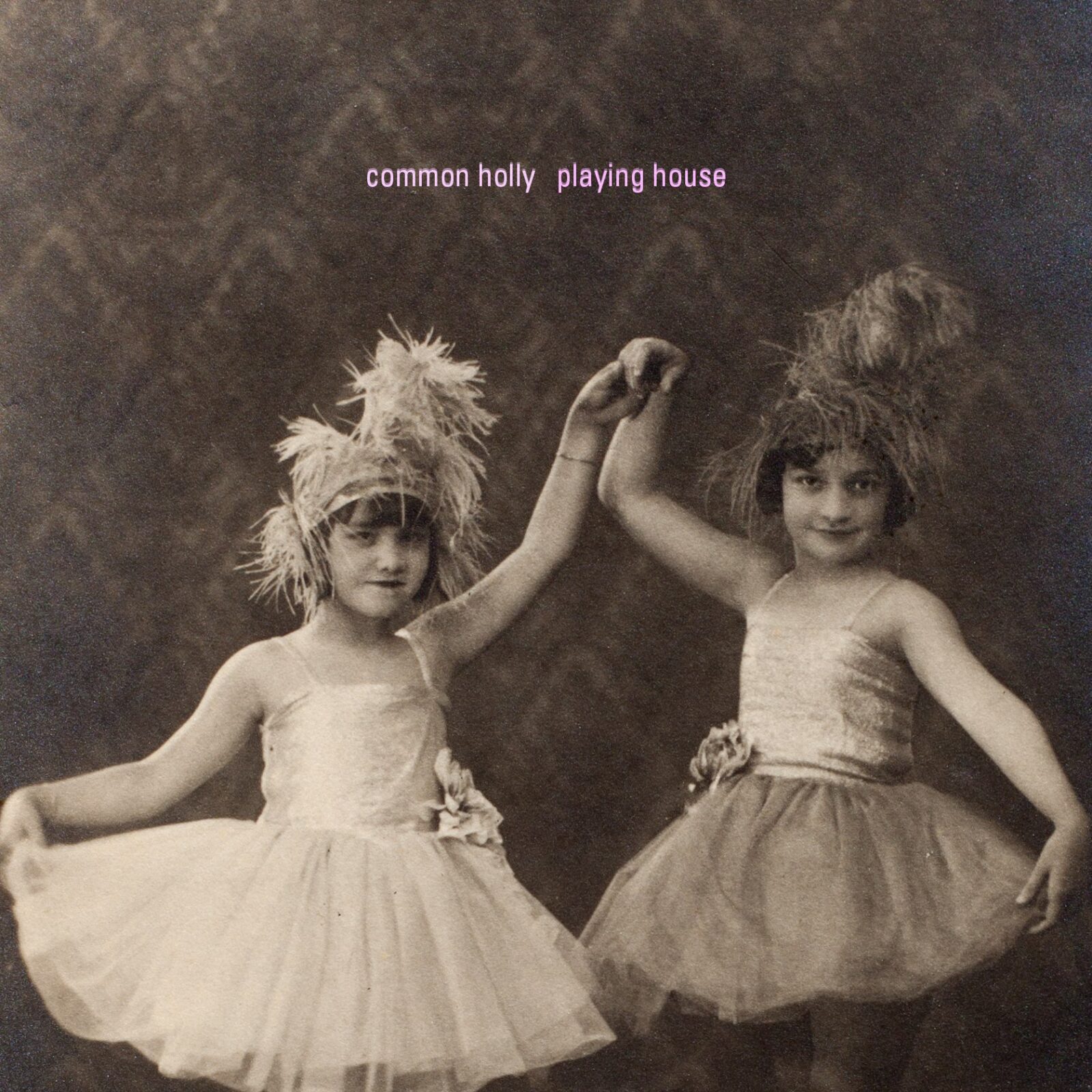
ALBUM REVIEW: Common Holly “Playing House”

[fusion_builder_container hundred_percent=”yes” overflow=”visible”][fusion_builder_row][fusion_builder_column type=”1_1″ background_position=”left top” background_color=”” border_size=”” border_color=”” border_style=”solid” spacing=”yes” background_image=”” background_repeat=”no-repeat” padding=”” margin_top=”0px” margin_bottom=”0px” class=”” id=”” animation_type=”” animation_speed=”0.3″ animation_direction=”left” hide_on_mobile=”no” center_content=”no” min_height=”none”]

photo by Sean Mundy

Playing house is one of the earliest and most innate forms of childhood emulation. It is how we pantomime maturity, and begin to learn self-preservation, domestic upkeep, and the treatment of others. From pretending to prepare a meal, to sweeping the tree house, this form of child’s play is our first expression of wanting to “grow up.” For Canadian artist Common Holly, Playing House is an expression of consciously entering adulthood. It is also the name of her debut record.

Helmed by songwriter Brigitte Naggar, Common Holly greets us with a tender and sophisticated meditation on the end of a formative relationship, and the importance of purposeful decision-making. Of Playing House, Naggar said in a press release that the record “is my first real effort to create something that is entirely deliberate—the beginning of my journey of thoughtful action, and of daring to express myself outside of my bedroom.”

“Deliberate” is the perfect word for Playing House – its stunning arrangements and artful production reflect intent and restraint. Opening track “If After All” is expertly composed, commencing with a font of liquid before breaking down into a multifaceted pop gem, somehow incorporating finger-plucked guitar, swelling strings, and minimalist drums without sounding overwrought. Naggar’s girlish voice carries the same melody throughout the song, but the instrumentation blooms from indie folk to sweeping ballad before culminating in hard rock distortion and busy electric guitar. “If After All” is such a strong composition, I almost wish it was buried deeper in the record, as it’s a tough act to follow.

Though less musically intricate, “Nothing” speaks to Naggar’s ability to contrast form with concept. The dulcet vocals and bedroom rock delivery of “Nothing” portray innocence, while Naggar’s lyrics are anything but. Naggar sings of a crumbling, codependent relationship in which every attempt to problem-solve results in suffocation: “If I got you in a room/ if I got you to hold still/it would probably too soon/to hold you there against your will.”

This level of self-awareness is palpable throughout Playing House. Naggar deconstructs a banal yet dysfunctional relationship throughout the album, holding herself accountable as much as possible. Discussing this theme in a press release, she said, “Especially at the end of a relationship, there comes a time when the best thing you can do for someone is to leave them alone even though it might feel like you’re abandoning them. Sometimes trying to resolve things and being over-present is an act influenced more by guilt than by empathy.”

“In My Heart” is yet another manifestation of that concept. A quietly complex country number, it employs pedal steel and neatly placed piano. The song’s softness negates its harsh message of letting someone go: “Don’t try/In my mind, in my mind I can’t help it/With my heart, with my heart I can’t help you.”

Resting midway through the record is the gorgeous “Lullaby” featuring Montreal pianist Jean-Michel Blais. “Lullaby” depicts Naggar at her thematic pinnacle – the anatomy of the song is true to lullabies, indeed, while Blais’ creeping keys suggest the twinkling of a nursery mobile rotating above a crib. Naggar’s lyrics, however, are biting and brutal despite this naïve melody. “If you’re busy undermining all the things I had to say,” she sings, “I know it would have been wrong for me to try to stay.” The track’s closing coda plays on a familiar children’s game, but turns that on its head for a darker finish: “Come out, come out, wherever you are,” Naggar intones, before promising: “I will keep away.”

The weighty blues of “The Rose” finds Naggar nodding at The Black Keys. The song is soft to start, but builds up and breaks down into Auerbach-worthy guitar, eventually spinning out with grunge distortion. In keeping with this dark turn, “The Desert” is a painterly narrative with sparse string arrangements evoking The Dirty Three. Hand drums and piano crawl behind scant guitar and Naggar’s reverb-heavy croons, weaving a soundscape strong enough to close the record. Though it seems that Naggar didn’t want to end things on such a heavy note. Playing House’s final cuts resort to sweet and weightless melodies instead.

The title track exudes a singsong, sonic innocence. Its melody is full of childlike “doo doo doos” and lyrics that are one word away from being playful: “I’ll play mama, you’ll play daddy and we’ll ruin us beyond repair/at the cabin, on the lakeside, if we take things too far.” It is a song you can almost skip or swing to, until it dissolves into a foreboding vibration fit for Twin Peaks.

Closing track “New Bed” is Common Holly’s most stripped-down offering on Playing House, and perhaps its most optimistic. It is the song that finalizes the breakup; the hopeful closure and calm after the storm. Naggar is vulnerable and resigned when she sings, “I feel that we will get along just fine/if everything goes the way I have in mind.” The song fades out with rain and faint sirens, but what they’re chasing, we do not know.

Playing House is out now on Solitaire Recordings. Don’t miss Common Holly on her upcoming tour.

September 28 – Nomad Folk Fest
November 2 – Brooklyn Bazaar, New York, NY w/ The Hotelier, Oso Oso & Alex Napping
November 3 – Songbyrd Music House, Washington DC, w/ The Hotelier, Oso Oso & Alex Napping
December 5 –  Communion Showcase,  Rockwood Music Hall,  New York, NY
December 8 –  Theatre Fairmount, Montreal, QC w/ Chad VanGaalen[/fusion_builder_column][/fusion_builder_row][/fusion_builder_container]
ARTIST INTERVIEW: SC Mira on Their New EP ‘Keep Crawling’

[fusion_builder_container hundred_percent=”yes” overflow=”visible”][fusion_builder_row][fusion_builder_column type=”1_1″ background_position=”left top” background_color=”” border_size=”” border_color=”” border_style=”solid” spacing=”yes” background_image=”” background_repeat=”no-repeat” padding=”” margin_top=”0px” margin_bottom=”0px” class=”” id=”” animation_type=”” animation_speed=”0.3″ animation_direction=”left” hide_on_mobile=”no” center_content=”no” min_height=”none”]

Photo Credit: Travis Ross

Great bands transform – they remain in a state of flux throughout their career, allowing their music to adapt and change along with them. Winnipeg’s SC Mira has gone from a duo to a full band, from folk-infused to a gritty cityscape of sound.

The initial edge of “Free”, along with Sadye Cage’s witchy, off-kilter voice, makes an immediate impact. “Mexico” follows, with its eerie lyrics depicting a kind of an apocalyptic vacation: “Never been to Mexico/but I imagine it’s pretty/Never been to hell and back/I can’t imagine it’s pretty.” Keep Crawling is a solid shift for a band whose stage presence denotes their usual musical confidence. 

We sat down with Ty Vega (guitar) and Caro LaFlamme (keys) to talk about the band’s evolution:

AF: Let’s start with beginnings. I read that Sadye and Ty met at a Halloween warehouse party. Ty, can you tell us a little about that initial meeting and the music that you created as a duo?

Ty: It was a Halloween party held by a mutual friend here in Winnipeg. I guess we just happened upon each other, started talking about our respective costumes and then went from there. I found out that Sadye was working on some acoustic songs of hers and I had also been in the music scene for a while. From there we started to work on some of her solo material and which expanded into a duo project between me and her. When we started working together I think there was an exact moment that we realized we wanted to do something a little more ambitious, and that’s how we became a band.

AF: 2015’s Waiting Room Baby has a very different feel from your new EP. When did you realize as a band that you were shifting towards a harder sound? Was it a gradual change or a sudden realization?

Caro: Playing every night on tour definitely tightened up our performance and made us realize that we wanted to shift the music to better match the intensity of what was happening onstage. When we perform, we want people to feel that they’ve witnessed something at the show that would not have otherwise come through in the recordings. We’re a very visual band, almost theatrical in a sense.

AF: You’ve termed your new sound ‘Death Pop’. Do you feel like the subject matter explored on Keep Crawling is light years away from your old record? Or is it more that the way you approach the subjects has changed?

Caro: There’s definitely always been a darkness to the music we write, particularly the lyrics that Sadye writes. She draws from her personal experiences, so the content has definitely always been emotional. I wouldn’t say that Keep Crawling is light years away from the first EP – I’d say that the sound now better reflects the content.

https://www.youtube.com/watch?v=l0WE-vXv828

AF: Can you give us an idea of how a song like ‘Mexico’ is written? Is the music the first layer or the lyrics?

Ty: Mexico in particular I found was a fun song to write. In this instance, the lyrics were written first. From there, we built it up sonically very similarly to how the song actually sounds. Different parts, like harmonies or guitar/bass lines were built up layer by layer to complete the song.

AF: The two animated shorts that accompany ‘Free’ and ‘Mexico’ are very cool (pretty hypnotizing in fact). How involved was the band in the creation of those videos?

Caro: We decided that it was important to create some visual content to accompany the music we were putting out. We reached out to some local artists and found Matea Radic, who is known for her very strange animations and characters. We gave her access to the songs and concepts so she could take away what she needed to build visuals. She created this little monster that has become sort of a protagonist or narrator for our songs.

https://www.youtube.com/watch?v=tkdYudEn4hw

AF: I love that idea of a protagonist. When you both are on stage, do you take on a character or persona? How do you prep to go on stage and fully command an audience?

Ty: It actually varies between the personalities in our band. For instance, a person like Mario, our bass player, is a very charismatic individual. He and Joel, our drummer, perform very truthfully to their personalities. For Caro, Sadye and myself, I think it’s a little different. We like to focus on the show that we can create, which includes the visuals that we like to play with, the look that we like to convey and the emotions that we hope the audience can take away from our performances. Altogether it creates a very unique dynamic and stage performance.

Caro: Ty, Sadye, and I definitely put on a hard exterior when we go onstage through styling, and that’s something we find adds power to our performance. In Sadye’s case, as front woman, she postures herself in a way that captivates people, but also says “don’t fuck with me.” I love that we’re able to create an enticing distance that way between the stage and the crowd.

AF: When did you both realize you wanted to be musicians?

Ty: I started playing at a young age as I came from a very musical family. Playing instruments and singing around the house was always a very integral part of my upbringing. As I got older I went through a medically trying time in my life, and music became one of the few things that I could physically do. There was an exact moment that I remember while on vacation one summer where I had just completed a piano competition against other kids much older than me and I thought to myself that this could be a real part of my life. From there I started to explore different instruments and styles in and out of school, and it has led me here.

Caro: I’ve always wanted to be in a band. I came from a musical family as well, and retrospectively, I’m pretty damn thankful my parents put me in piano lessons, because it gave me the skills I would need to be in a project like this. I grew up constantly listening to music and immersing myself in that world — it was very much a part of my identity growing up. I think the turning point for me was attending a new “garage band” program International Music Camp had just set up for students wanting to study music from more of a “band” angle and less of a “classical” standpoint. That was really valuable for me, and I imagine a number of kids who went through that program.

AF: What’s one word of advice that’s meant a lot to you as an artist?

Ty: It might sound a little cliché, but play to your strengths and tell your own stories. Something that we’ve found very important in our band is that it echoes our individual strengths not only musically but also personally. Our diversity on the stage and in our music comes from the uniqueness that everyone in our group brings to the table.

Caro: I think ultimately, you have to take care of yourself as a person first in order to create, and that includes making sure you’re getting what you want out of the experience emotionally. We all care about how we’re perceived by others, which is completely natural, but it’s more important, in my opinion, to be able to walk off the stage after a show feeling like you gave it everything. That to me is the most validating feeling and what fuels me as an artist.

SC Mira’s new EP Keep Crawling is out now on Spotify and iTunes. [/fusion_builder_column][/fusion_builder_row][/fusion_builder_container]
ALBUM REVIEW: Shilpa Ray Triumphs Over NYC With ‘Door Girl’

New York, the city that never sleeps, takes an especially hard toll on those who make its endless nights possible: the waiters, the bartenders, the ticket takers who silently put up with endless shit from drunken idiots. The service industry is favored by artists who need to pay their bills, but at what cost? Shilpa Ray provides insight into this experience on Door Girl, an album that recognizes the soul crushing realities of working in the nightlife industry while ultimately overcoming them. A longtime New Yorker whose “day job” inspired the title of her latest release, Ray is more than qualified to expound on the topic.

Door Girl contains moments that are both beautiful and brutal, sometimes at the same time. Songs such as “Morning Terrors Nights of Dread” and “Add Value Add Time” use comforting, doo-wop vibe to gloss over topics such as anxiety over work, broken dreams and the isolation that comes with city life. Ray has a rich, deep voice that can create a dreamy atmosphere, even if she’s singing about creeps in Manhattan who prey on drunk women. But on “EMT Police And The Fire Department” she switches to a snarl in an instant. The song explodes with rage after a monologue that sets the scene for a night of disaster: “The air was so thick you could cut it with a knife/The sweating crowds so thick it could make you want to cut them with a knife.” From her post, she’s both an innocent bystander and complicit in the madness, screaming, “I’m charging eight dollars to go to hell, it’s right upstairs.”

“Revelations Of A Stamp Monkey” takes a completely different approach, with weary spoken lyrics over a hip-hop beat and a verse of rapping by Skurt Vonnegut. The humor of a repeated line – “Popped collar, who popped the collar/Muffin top” creates a stark contrast to one of the album’s most poignant lines, “You wanna know where my heart went? It went straight to making the rent.” 

There was no better venue to debut Door Girl than Pianos, the very place that inspired “EMT Police And The Fire Department.” Located right in the middle of the Lower East Side’s infamous Hell Square, the area explodes with rambunctious crowds on the weekend. But last Wednesday it was calm, the venue packed but politely focused on Ray’s performance. The audience seemed drawn completely into her world, her commanding presence casting a show-tunes glow over the whole affair. The touristy Statue of Liberty crown she wore made the whole thing even more endearing. Maybe it was a reminder of how someone feels when they first move to the city, when it seems romantic and exciting; before the frustrations of the MTA, the high rent and dread of a dead end job grind them down. Maybe it was a symbol of perseverance, that it’s worth it to live in such a demanding place. Or maybe it was just an ironic prop. Either way, it was a perfect accessory for an album that exposes both sides – the magic and the mayhem – of of New York’s hustle and bustle.

NEWS ROUNDUP: Market Hotel Is Back, NYC’s Cabaret Law & More


  • Market Hotel Ends Their Hiatus

    Bushwick’s Market Hotel will host shows again starting on November 1st, with yet-unannounced special guests playing the grand reopening show. It’s been out of commission while Todd P. and his crew secure the proper licenses t0 turn the longstanding DIY club into a legit venue (in the eyes of NYC officials), but will soon be back with a new sound system. The next batch of announced shows include Tera Melos with Speedy Ortiz, The World Is A Beautiful Place & I Am No Longer Afraid To Die with Rozwell Kid, Pile with Bad History Month, Titus Andronicus, Black Marble, and Royal Trux. See the full schedule and buy tickets here!

  • NYC May Finally Repeal Its Cabaret Law

    In 1926, the Cabaret Law was created to forbid dancing in certain spaces without a license. Many have pointed out the racist implications of the law, which mostly targeted black jazz clubs in Harlem and required its musicians and employees to submit to a background check. In modern times, the law has added a mountain of paperwork to bars and clubs that want to host events with dancing, but hopefully not for much longer; the Mayor’s office has expressed support for repealing the law, as long as certain clubs are required to install more security cameras. NYC, get ready to dance!

  • Other Highlights

    Yoko Ono will voice a character in Wes Anderson’s latest stop-motion feature, Isle of Dogs, Rolling Stone is up for sale, Morissey joins Twitter and announces new song/album, women are keeping guitar makers in business, new videos from Bjork, Downtown Boys, Leonard Cohen and Torres, Avril Lavigne is apparently very, very dangerous, please don’t try to make out with musicians while they’re on stage, Taylor Swift may end up in court yet again, and ICYMI, the Juggalos marched on Washington.

ONLY NOISE: Fall Preview

[fusion_builder_container hundred_percent=”yes” overflow=”visible”][fusion_builder_row][fusion_builder_column type=”1_1″ background_position=”left top” background_color=”” border_size=”” border_color=”” border_style=”solid” spacing=”yes” background_image=”” background_repeat=”no-repeat” padding=”” margin_top=”0px” margin_bottom=”0px” class=”” id=”” animation_type=”” animation_speed=”0.3″ animation_direction=”left” hide_on_mobile=”no” center_content=”no” min_height=”none”]

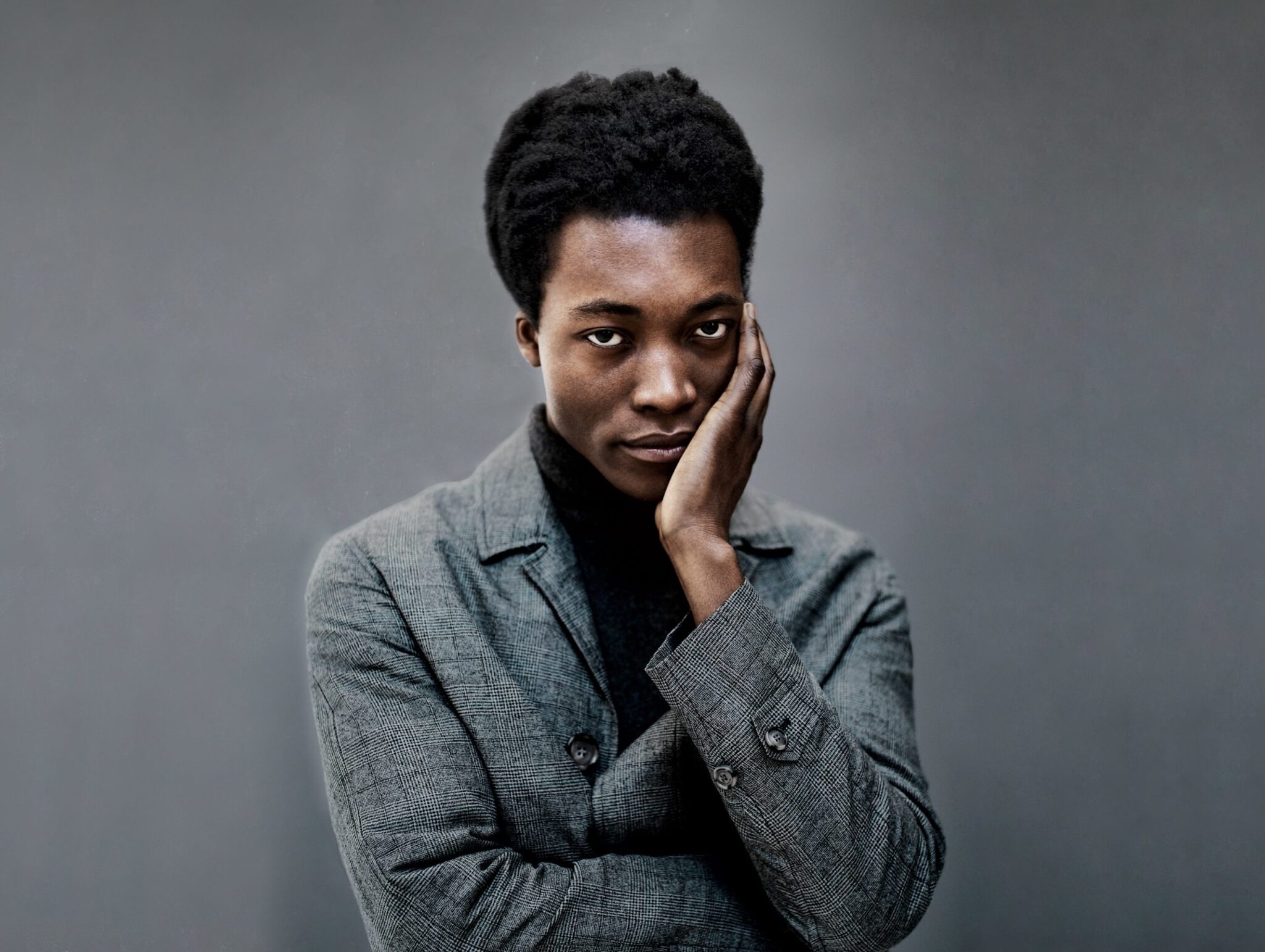
Benjamin Clementine’s I Tell A Fly arrives October 2.

Tomorrow marks the first day of autumn. You might not believe it given these muggy 80-degree days, but Fall is upon us nevertheless. Fall is the best for multiple reasons, including turtlenecks, Halloween, and mock-necks; but it is also a time when things die. Leaves. Bar backyards. Your summer tan. All gone. Looking back on this time last year, I was writing about the death (or at least prolonged hibernation) of CMJ. Now I could add the Village Voice, Rolling Stone, and potentially The Deli Magazine to that obituary. Sure, the Voice is only going out of print, Rolling Stone is only up for sale, and The Deli Magazine is only half the size it used to be – maybe “death” is too harsh a word – but that’s what it feels like.

Today I happened upon one of those familiar red boxes and snatched up the last copy of The Village Voice I will ever hold. The cover was nearly text free, save for the paper’s logo and the words “Final Edition” in tiny print at the top. A black and white photo of Bob Dylan giving a salute filled the page. It is a somber image, and almost made my knees buckle on West Broadway. I could only think: “what next?”

And then, in rare moment of attempted optimism, I asked myself again: “yes, what next?” This time, instead of asking with dread, I asked it with the expectation of wonderful things. New York may be missing some iconic music venues, festivals, and print publications, but that doesn’t mean there won’t be a wealth of great music coming our way regardless. So rather than mourn the lost, let’s look forward to the season’s best musical happenings, shall we? We shall. Here are the Fall 2017 record releases I am most looking forward to.

9/22/17

Godspeed You! Black Emperor, Luciferian Towers

The difficult-to-define, experimental Canadians Godspeed You! Black Emperor will drop their sixth LP tomorrow – the much anticipated Luciferian Towers. Fortunately we don’t have to wait another second to check it out, as the group shared the album in full with NPR last week. In keeping with GY!BE fashion, this record is dense, sprawling, and frenetic. Now we can only hope the band will accompany its release with a US tour sometime soon!

9/29/17

Protomartyr, Relatives In Descent

Next week, Detroit post-punks Protomartyr will release Relatives In Descent – their debut LP for Domino Records. After seeing Protomartyr play a dynamite set at Basilica Soundscape last weekend, I’m especially thrilled for this new album, which according to the band’s Greg Ahee, was inspired by Mica Levi and the Raincoats’ Odyshape. Relatives In Descent was co-produced and recorded with Sonny DiPerri, who has worked with the likes of Dirty Projectors and Animal Collective. What’s not to love?

10/2/17

Benjamin Clementine, I Tell A Fly

Mercury Prize winner Benjamin Clementine is one of the more fascinating characters in contemporary music. While his debut album 2015’s At Least For Now was a sweeping affair between neo-classical and Nina Simone, I Tell A Fly promises theatrics and a bit of the political. The record’s leading single, “Phantom Of Aleppoville” is an album all its own, volleying from marching snares to parlor piano and soul harmonies. It’s a tour de force, and I imagine the whole LP will be nothing short of the same. Don’t miss Clementine when he plays Carnegie Hall on October 5th.

 10/6/17:

Kelela, Take Me Apart

Two very different records drop on October sixth, one being the long-awaited full-length debut from R&B artist Kelela. Take Me Apart (Warp Records) is the follow-up to Kelela’s 2014 EP Hallucinogen and her 2013 mixtape Cut 4 Me. According to the artist, the album is a blend of personal themes, politics, and genre. “Despite it being a personal record,” Kelela stated in a press release, “the politics of my identity informs how it sounds and how I choose to articulate my vulnerability and strength. I am a black woman, a second-generation Ethiopian-American, who grew up in the ‘burbs listening to R&B, Jazz and Björk. All of it comes out in one way or another.” Catch Kelela November 12th and 13th at Bowery Ballroom.

Marilyn Manson, Heaven Upside Down

On the other end of things, Antichrist Superstar Marilyn Manson is back with his first new track in two years. The garage-pop cut “KILL4ME” is Manson’s leading single off his forthcoming record Heaven Upside Down, and it’s far more catchy than disturbing. Perhaps all of Manson’s interactions with Justin Bieber have affected his sound? Manson will perform at the Hammerstein Ballroom on September 30th and The Paramount on October 3rd.

 10/13/17:

Courtney Barnett & Kurt Vile, Lotta Sea Lice

 Mid-October treats include the debut duet Lotta Sea Lice from Courtney Barnett & Kurt Vile, who make such a natural pair it’s amazing they didn’t cut a record together years ago. The record’s first single “Over Everything” is an expert blend of deadpan romanticism and tangy guitar riffs – elements both artists know their way around quite well. Kurt and Courtney (no, not that Kurt and Courtney!) will play The Beacon Theater on November 1st.

King Krule The Ooz

Archy Marshall is set to release his sophomore LP as King Krule. The Ooz is already garnering a lot of excitement from the music community, and if the entire record is half as good as its first single “Dum Surfer,” all the hype will be justified. For those of you who’ve yet to see King Krule live, he’ll be headlining Greenpoint’s Warsaw on October 24th and 25th. Get there early and eat some pierogies while you’re at it! 

10/20:

Destroyer, Ken

The first two singles from Destroyer’s forthcoming LP Ken sound completely different from one another. But then again, that’s the Destroyer sound: constantly morphing. Check out the frenetic and haunting “Tinseltown Swimming in Blood,” and keep an eye open for Destroyer’s 2018 US tour.

John Carpenter, Anthology: Movie Themes 1974-1998

Right in time for Halloween, Sacred Bones Records will release John Carpenter’s Anthology: Movie Themes 1974-1998. This collection of Carpenter’s film scores (that’s right, he directed the flicks and composed the music to cult classics like Escape From New York and Halloween) will be limited to 500 hand-numbered vinyl LPs, pressed on “Anti-God Green” wax, of course. Get your copy quick, and don’t miss Carpenter’s Terminal 5 set on November 16th.

If that list of killer music-to-come doesn’t dissolve your Autumn blues, then I don’t know what will. Perhaps this list of incredible Fall concerts, happening right here in NYC:

9/22:

 The Spits @Brooklyn Night Bazaar

Pill @Secret Project Robot

9/23:

Xiu Xiu @Union Pool

9/28:

Wild Yaks @The Safari Room at El Cortez

9/29:

Songhoy Blues @Bowery Ballroom

10/7:

Alex Cameron @Rough Trade

10/14:

Sean Nicholas Savage @Baby’s All Right

10/16:

Billy Bragg @City Winery

10/20:

Big Freedia @Brooklyn Bowl

10/21:

Sheer Mag @Villain

10/31:

Diamanda Galas @Co-Cathedral of Saint Joseph

11/1:

Ezra Furman @Baby’s All Right

11/2:

The Raincoats @The Kitchen

12/9:

Vagabon @Bowery Ballroom

12/10:

Perfume Genius @Bowery Ballroom

John Waters Christmas Show @City Winery[/fusion_builder_column][/fusion_builder_row][/fusion_builder_container]
PLAYING DETROIT: Tunde Olaniran Goes a Shade Darker on “Symbol”

[fusion_builder_container hundred_percent=”yes” overflow=”visible”][fusion_builder_row][fusion_builder_column type=”1_1″ background_position=”left top” background_color=”” border_size=”” border_color=”” border_style=”solid” spacing=”yes” background_image=”” background_repeat=”no-repeat” padding=”” margin_top=”0px” margin_bottom=”0px” class=”” id=”” animation_type=”” animation_speed=”0.3″ animation_direction=”left” hide_on_mobile=”no” center_content=”no” min_height=”none”]

photo by Jon Dones

In 2015, Flint native, artist and activist Tunde Olaniran enchanted with his vibrant, otherworldly debut Transgressor. Since then, we have been waiting with bated breath for new music. Earlier this month that wish was granted as Olaniran released the incredibly slinky and oceanic single “Symbol” which leads us to wonder if (and when) a new record is on the way.

“Symbol” stays true to Olaniran’s charismatic duality. Olaniran packages a powerful narrative – with topics ranging from identity, racial violence and global injustice – in lush layers and goosebump-inducing vocal cascades. While his new single spills over with jutting water droplet-esque movement, Olaniran flirts with a restraint not frequently found on Transgressor.  Though inherently still a pop song, “Symbol” advances Olaniran’s brooding, tribalistic approach to traditional pop with a slightly more aggressive tone that might suggest that whatever material is forthcoming is going to pack one hell of a punch.

Olaniran spoke with NPR’s Stephen Thompson earlier this month and said this of “Symbol”:

“I wrote ‘Symbol’ as the child of an immigrant, under the global specter of violence against black and brown bodies, and in light of the international refugee crisis. Now, with the Trump Administration, black and brown bodies are again held up as political symbols to attack DACA and feed white nationalism. It saddens me that these lyrics feel like they will be relevant for many more generations. ‘Symbol’ is about still finding joy in the knowledge that despite a dark history, we still became the future, and that my body is the literal wildest dream of my ancestors.”

Listen to “Symbol” below:

[/fusion_builder_column][/fusion_builder_row][/fusion_builder_container]
LIVE REVIEW: Basilica Soundscape 2017

[fusion_builder_container hundred_percent=”yes” overflow=”visible”][fusion_builder_row][fusion_builder_column type=”1_1″ background_position=”left top” background_color=”” border_size=”” border_color=”” border_style=”solid” spacing=”yes” background_image=”” background_repeat=”no-repeat” padding=”” margin_top=”0px” margin_bottom=”0px” class=”” id=”” animation_type=”” animation_speed=”0.3″ animation_direction=”left” hide_on_mobile=”no” center_content=”no” min_height=”none”]

Blanck Mass at Basilica Soundscape 2017. Photo by Samantha Marble/The Creative Independent

Day 1:

I knew this would happen. My one-person tent is sagging like ruined soufflé. Its support beams are in all the wrong holes, and the whole thing is yet to be staked in the ground. The bus for Basilica Soundscape leaves in one minute. At 5:59 in Meadowgreens Campground in Ghent, New York, I relinquish a losing battle with said tent, leaving it in a frightening half-mast tangle, and board the shuttle flushed with defeat. This row would have to be settled later. In the dark.

For a moment I feared that this tent dilemma would prevent me from enjoying myself at all. What if I kept dismembering and reconstructing the tent in my head all night, and missed all of the music surrounding me? It could happen. These obsessive thoughts ceased however, the moment I entered Basilica Hudson. The 18,000 square feet factory building was built in the 1880s, and has produced everything from railroad car wheels to glue, but these days its main export is art. In 2010, musician Melissa Auf der Maur and filmmaker Tony Stone acquired the building, transforming the space into a sanctuary for music, film, and visual art.

Basilica Soundscape offers all of these mediums at their finest. Often described as “the antifestival,” Basilica Soundscape is exactly that – the weekend of music, poetry, and visual art feeling far more intimate than the word “festival” suggests. In fact, Soundscape seems more akin to a house party hosted by wealthy eccentrics, or a wedding held in a medieval hamlet. Within minutes of surveying the grounds, it appeared as though all the romanticism and utopia promised by other festivals was actually here all along, from the rainbow arching across the sky to the flayed chickens sizzling on an open grill.

At 6:30 everyone funneled into the Main Hall, where openers Bing & Ruth plunged into a dizzying set that I can only describe as sounding like the ocean. Pianist David Moore’s technique was both dense and delicate, evoking a sense of moving through water. The blue light enrobing the musicians and the whale songs sung by cello and clarinet added to the seascape of sound. Even the stage decorations seemed marine in nature; plumes of pink silk hung from the ceiling, dissolving into tendrils of rope and swaying like jellyfish. It was only after Bing & Ruth left the stage that I realized they were hand-dyed parachutes and not aquatic invertebrates.

On the other end of the decibel spectrum, Philadelphia’s Moor Mother (aka Camae Ayewa) annihilated all previous serenity with her serrated poetry and beats. Ayewa stabbed through her set, entangling herself in the parachute ropes and assaulting the crowd with glass-shattering backing tracks and car crash raps. Ayewa’s brand of hyper-politicized poetry utilizes the distortion of punk and the rage of metal to potent effect. Her command of the crowd was immense; when Moor Mother demands that you “hug your motherfucking neighbor!” and “slow dance!” you’d be wise to do so. And we did.

The next best display of aggression was black metal band Thou, who filled Basilica’s smaller North Hall with bowel-shuddering screams and swampy instrumentation. Next, Tunisian artist Emel Mathlouthi had everyone looking upwards, as she performed from the building’s rafters, her colossal voice bellowing from above. For one last dose of drama, Baltimore’s Serpentwithfeet charmed us with his occult gospel. Singer and musician Josiah Wise – the snake in question – is always mesmerizing live, as he summons the spirits of Nina Simone, Josephine Baker, and Aleister Crowley. He is a poised and diverse performer, able to traverse songs about mourning with his operatic pipes, and then whip the audience into fits of laughter with his wry wit.

A far less verbal artist, Indiana’s JLIN closed out Friday night with her hard-driving electronic collages, often splicing horror movie screams with chopper-like drum beats. JLIN’s set was weaponized and dense, but that didn’t stop a pack of men from breaking into arrhythmic dance moves in the audience, convulsing like electrocuted lab rats under the strobe lights. I hoped to harness their energy for later…I still had a tent to set up.

Day 2:

Basilica’s second day was filled with far more fury than its first. Notable early sets from Yellow Eyes and Yvette got our blood pumping right off the bat. The former filled the North Hall with unrelenting drums and ear-piercing screams. Fog hung around the black metal trio, while two wrought iron candelabras added a solemnity to their set, which was dedicated to a late friend of the band.

Brooklyn’s noise duo Yvette played a wealth of new material on the main stage, opening with the older, hard-hitting “Radiation” before treating us to new songs. Rumor has it the pair are currently recording another album, and their Basilica set was a delightful preview. The energy harnessed by lead singer/guitarist Noah Kardos-Fein and drummer Dale Elsinger was strategically focused on Saturday, only improving their intensity as performers. If Yvette were previously men of chaos, they now appear to be mad scientists, fiddling with knobs and emitting blips and whirrs amidst controlled fury.

There was unfortunately some overlap during sets by Priests and Protomartyr, but I was able to catch a bit of both. Priests commanded the large stage expertly, lead singer Katie Alice Greer stalking the stage in a spangled mini dress like The Runaways’ Cherie Currie. On the other side of the building, Protomartyr channeled FEAR and The Fall with a one-two punch of distilled punk rock.

[/fusion_builder_column][fusion_builder_column type=”1_1″ background_position=”left top” background_color=”” border_size=”” border_color=”” border_style=”solid” spacing=”yes” background_image=”” background_repeat=”no-repeat” padding=”” margin_top=”0px” margin_bottom=”0px” class=”” id=”” animation_type=”” animation_speed=”0.3″ animation_direction=”left” hide_on_mobile=”no” center_content=”no” min_height=”none”]

Priests at Basilica Soundscape 2017. Photo by Samantha Marble/The Creative Independent

We looked to the rafters one last time for readings by Morgan Parker, Darcie Wilder, and Hole drummer Patty Schemel, who read excerpts from her new memoir Hit So Hard. Schemel’s tales of Kurt, Courtney, and rock n’ roll abounded before Blanck Mass’s Benjamin John Power mounted the smoke-cloaked main stage. The technical headliner for 2017’s Basilica Soundscape was Zola Jesus, but for me, it was Blanck Mass, whose diabolical wall of sound is more a physical experience than a purely sonic one. Power ripped through tracks off his latest LP World Eater, churning out frenzied tapestries like “John Doe’s Carnival of Error” and slow grinding dance cuts like “Please.” Power is obscured during most of his sets, dressed in black and barely visible within the fog and flashes of light. In this sense, he becomes more entity than man – more furious gospel than mere entertainment.

So what was my takeaway from Basilica Soundscape 2017? Go every summer, bring ear plugs, try the chicken, and definitely get to know your tent before next year.

[/fusion_builder_column][/fusion_builder_row][/fusion_builder_container]
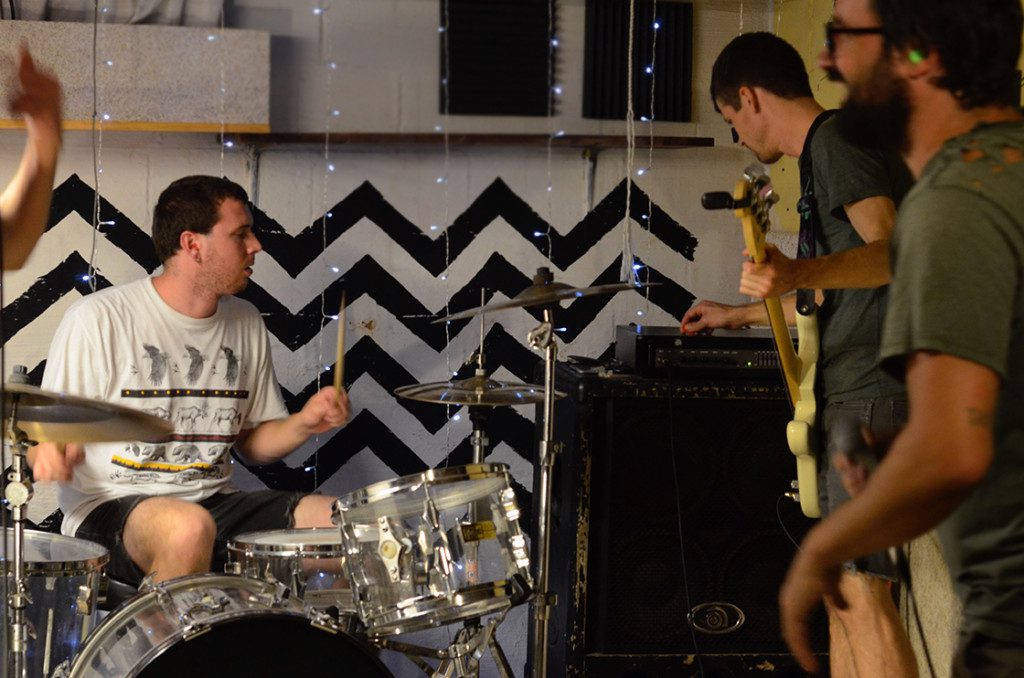
PLAYING BLOOMINGTON: Situation X Brings Peruvian Punk to NOISE Gallery

As a professor of anthropology at Indiana University, Dr. Shane Greene’s focus on Latin American and Caribbean Studies brought him to an unexpected area of research: the various underground punk movements of Peru. For American and UK audiences, punk symbolized rebellion through aggressive music and extreme fashion, but in 1980’s Peru, intense political upheaval and decades of bloody conflict made its underground punk scene frontline commentators on a volatile civil war, the symbolism in its militant message dissolving into one of subversive reality and responsibility. Situation X, a new interactive art show curated by NOISE Gallery founders and local artists Raphael Cornford and Bill Bass, is based on Greene’s book Punk and Revolution: 7 More Interpretations of Peruvian Reality and centers on Lima’s rock subterráneo during the 1980s Marxist insurgencies in Peru, the Maoist Sendero Luminoso (Shining Path) and the Movimiento Revolucionario Tupac Amaru (Tupac Amaru Revolutionary Movement).   

Greene’s book draws heavily from activist and intellectual José Carlos Mariátegui’s Siete Ensayos de Interpretación de la Realidad Peruana (Seven Interpretive Essays on Peruvian Reality) (1928). Employing the structure of Mariátegui’s text, Greene offers elaborations on distinct and overlapping interpretations of reality in the 1980s rock subterráneo, an underground punk scene that positioned itself counter to mass cultural values and global capitalism. “A Series of Situations Resulting in X” is the book’s sixth interpretation and the basis for the art show. Providing content for the exhibit and information on space requirements, layout, and method, this chapter offers a blueprint for the actualization of the performative and interactive art show that followed.

When I arrived at Noise Downtown, the space was packed. On one side of the gallery, twelve texts and twelve designs/digital images hung on the wall. These items contained anonymous and personal accounts of different experiences of the underground. On the wall opposite to these items were vintage zines, a collection of tapes, and a stack of photocopies; guests were encouraged to read, listen to, and flip through these items.  Against the back wall of the gallery were multi-textured art pieces and additional interpretations of X to explore. The show featured contributions from more than sixty individuals spanning the globe, including many from Peru, as well as Spain, Colombia, Germany, and the Latinx diaspora of the US and Canada.

With minimal overarching commentary, Situation X asks the gallery viewer to understand this project as one that exists in fragments, much like the chaotic punk scene in Lima and its diverse interpretations. Those visiting the space are thus tasked to experience the media and draw their own interpretations. Utilizing multiple mediums and formats, the visual, written, and sonic elements of Situation X offer a narrative of underproduction and D.I.Y. that runs counter to most discourse on punk centered on New York, Los Angeles, and London. Punk is always a relative term that must be understood in its cultural contexts and historical realities. Situation X elaborates on these subjectivities by emphasizing dissonance and chaos over cohesion, one of the few central tenets of the aesthetics of underproduction. 


NEWS ROUNDUP: RIP Grant Hart, Jessi Zazu & More

[fusion_builder_container hundred_percent=”yes” overflow=”visible”][fusion_builder_row][fusion_builder_column type=”1_1″ background_position=”left top” background_color=”” border_size=”” border_color=”” border_style=”solid” spacing=”yes” background_image=”” background_repeat=”no-repeat” padding=”” margin_top=”0px” margin_bottom=”0px” class=”” id=”” animation_type=”” animation_speed=”0.3″ animation_direction=”left” hide_on_mobile=”no” center_content=”no” min_height=”none”]

RIP Jessi Zazu

  • RIP Grant Hart, Jessi Zazu and Josh Schwartz

    Grant Hart died on Wednesday, September 13 from cancer. He was the drummer and vocalist of Minnesota rockers Hüsker Dü. After Hart met Bob Mould in a record store, the two quickly became friends and songwriting partners. Their music influenced groups such as Nirvana, the Pixies, and the Smashing Pumpkins. Read a full obituary here.

  • Jessi Zazu, who sang for the Nashville band Those Darlins, died on Tuesday after battling cervical cancer. She was 28. To raise awareness and encourage openness, she made her diagnosis and fight public, including the act of shaving her head during chemo. Read a full obituary, including a tribute by Ann K Powers, here

  • Josh Schwartz played guitar for late 90’s bands Further and Beechwood Sparks. He died on Tuesday at age 45 after years of living with ALS. A statement from his friend and bandmate Brent Rademaker describes the musician as “one of those rare people that really brought out the best in others…. He really was magic.”

ONLY NOISE: Back In The New York Groove

It was native New Yorker Lou Reed who sang, “Give me your hungry, your tired, your poor/I’ll piss on ’em/that’s what the Statue of Bigotry says” in “Dirty Blvd.” The wry piece of poetry was one of many city-centric tracks to grace Reed’s New York LP from 1989. While Reed’s lyrics sound hateful towards NYC, you might consider them more love/hate when you realize that the man who wrote them never left New York (well, New York State, at least). Lou Reed remained a New Yorker when he passed in 2013, and his city praises him still. I am no stranger to the Big Apple ambivalence Reed has put to music since the 1960s. Once you’ve put in enough time here, you tend to make love and fight with this city like a spouse. But good times and bad times aside, New York is hands-down the best boyfriend I’ve ever had.

Today is my first day back in town after being away for more than a month. You can imagine my delight the moment I landed, grabbed my luggage, and ran down JFK Airport’s many moving sidewalks after weeks of sitting. That’s a lot of what you do on the West Coast: sit. I sat in cars, on couches, and at bars, my legs nearly atrophied from disuse. So thirsty was I for the unrelenting motion of this city, and the ability to walk anywhere if you have the time. I longed for efficient but banal things like the Air Train and the MTA, and I beamed when finally boarding them, despite it being 5:38 in the morning. My MetroCard even had $10.50 left on it. Damn, I love this place.

It’s surprising to me that I haven’t written an I <3 NY piece until now, but sometimes you have to step away from something to appreciate it, as the old cliché goes. Fortunately, hundreds – likely thousands – of artists have enshrined their love of New York in song, and that makes things a lot easier for me. Why use my own words, when I can defer to the borough-praising rhymes of say, The Beastie Boys? Their 2004 hit “An Open Letter To NYC” is a sprawling poem to the city, with more New York in-jokes than Seinfeld. But the chorus alone says it all:

“Brooklyn, Bronx, Queens and Staten/From the Battery to the top of Manhattan/Asian, Middle-Eastern and Latin/Black, White, New York you make it happen.”

I can’t boast East Coast origins like The Beastie Boys, but creeping up on a decade of living here, I’m that much closer to earning my I <3 NY t-shirt, and I sure as hell feel all the love for this place evident in “An Open Letter To NYC.”

If you’ve been reading my column lately, you may have noticed a less-than-optimistic taint to my voice. I blame the infernal state of the world, of course – but why the sudden burst of joy? It’s because I am back. And dear sweet New York, I am never leaving you again.

I have just come from Huntington Beach, California, where the idea of culture is bottle-blonde, bronzed, fond of CrossFit. Young professionals can be found dancing to “Margaritaville” and the musical cannon of Pitbull, all while shouting “let’s do shots!” sorority style. One such cultured resident harassed me at a bar a few days ago. She was a former hairstylist-turned-Billabong-clothing-designer and breathing stereotype who proceeded to tell me to shut the fuck up, threaten me with her assault history, and hug me while saying, “I love you” in the span of 10 minutes. Then she flashed me.

If people think New Yorkers are cold, I much prefer our brand of chilliness to the Southern Californian “warmth” I often experience. Everyone makes the assumption that New Yorkers are rude, brash people, but I never get offended more than when I go to other parts of the country, particularly Surf City USA. When the fit, well-hydrated inhabitants of Huntington Beach ask me why I’d ever want to live in such a dirty, crowded city, I just respond with the words of Judy Garland: “The more I see New York, the more I think of it/I like the sight and the sound and even the stink of it/I Happen to Like New York.”

No truer words have been sung. I love New York for its music, and films, and fine art, sure, but also for its sludge, and grime, and smog. When I travel to clean cities, my first question is always, “Where is all your trash?” Cleanliness unsettles me. Dirt=history. Do you think London and Paris would possess the same je ne sais quoi if their cobblestones hadn’t been washed in blood and filth for centuries? No. Filth=character, and if the lyrics of The Rolling Stones’ “Shattered” (“You got rats on the West Side/Bed bugs uptown”) or Fear’s “New York’s Alright If You Like Saxophones” (“New York’s alright if you like drunks in your doorway”) doesn’t convince you of that, I don’t know what will.

You can say what you will of New York. Call our city expensive and wretched and unsanitary. Call us snobs, hipsters, careerists, assholes and aesthetes. We’ve probably been called worse. We don’t mind the hassle or hustle so long as we never run out of music, or museums, or midnight movies to enjoy. And in New York, that’d be pretty unlikely.

Perhaps the countless songs by artists like Leonard Cohen, Grandmaster Flash, NAS, Tom Waits, Bob Dylan, and so many others will better encapsulate the sprawling organism of New York City. I certainly can’t do better than them. So here is a playlist of all of my favorite New York songs. If you still don’t like it here after listening to “Chelsea Hotel #2” or “The Message,” get out. No one is asking you to stay, and the subway’s too crowded.

TRACK PREMIERE: Sara Curtin “Or So It Seemed”

[fusion_builder_container hundred_percent=”yes” overflow=”visible”][fusion_builder_row][fusion_builder_column type=”1_1″ background_position=”left top” background_color=”” border_size=”” border_color=”” border_style=”solid” spacing=”yes” background_image=”” background_repeat=”no-repeat” padding=”” margin_top=”0px” margin_bottom=”0px” class=”” id=”” animation_type=”” animation_speed=”0.3″ animation_direction=”left” hide_on_mobile=”no” center_content=”no” min_height=”none”]

Photo by Amanda Reynolds (Plume Photography)

Sara Curtin’s music is pretty darn dreamy. Her voice creates a tapestry of delicate sound. Half of Washington D.C.’s The Sweater Set, Curtin’s solo effort takes that precious quality and gives it a little edge.

“Or So It Seemed,” the title track off her new EP, is darker than her usual fare. Curtin said she channeled her “inner Jack White” while writing the track, which explores “the mind’s tug-of-war as it comes to grips with understanding perceived memory vs. reality.” “Oh what a waste of time, to hold on to what used to be mine,” Sara sings, reflecting on her own artist’s journey. It’s a song for a subway ride turned hour-long reflection; a song for creative people who doubt the road that got them to where they are.

We sat down with Sara at talked about her writing process, the D.C. music scene, and her past life as a fishmonger.

AF: Tell us a little bit about growing up in D.C. Did you live in the suburbs or the city?

SC: I grew up in the city, not too far from where I live now. I left D.C. to go to college (University of Michigan in Ann Arbor) and then lived in Brooklyn for four years. I’ve been back in DC for about six years now.

AF: What is the vibe of D.C.? Does it have that NYC swagger or is it more laid back?

SC: D.C. definitely has it’s own vibe. It’s a smaller city, so it is a bit slower paced, but there’s a lot going on here. The music and art scene is really exploding. There’s a lot of political energy here, too.

AF: Your mother is a musician, as is your brother. Are you three in simpatico when it comes to music? Or do your tastes differ?

SC: We do have different taste, but my brother and I overlap and we share a lot of musical sensibility, too. We both do production work and often discuss arrangement choices. He made a cameo on this new album, actually! He played theremin on the last song “Run If You’re Ready”. My mom was my first teacher. She taught me how to sing in harmony and how to play the guitar.

AF: Many people may know you as a half of the duo The Sweater Set. How would you define the differences between The Sweater Set and your solo efforts?

SC: For me, making solo albums apart from The Sweater Set is about exploring the possibilities of different sounds. The Sweater Set has been predominantly acoustic and this solo project is driven predominantly by electric guitar. I also arranged these songs with the full band including bass (Ryan Walker), drums (Brendan Polmer), and lead guitar (Olivia Mancini). Maureen Andary, who is my partner in The Sweater Set, is also singing on this album!

Like I mentioned before, I also do production work, so one of the most exciting parts of making recordings for me is always sitting down at my computer, with my voice and instruments and exploring different arrangements. That’s a very personal process and I love taking the time to develop the songs in this way.

AF: Tell us about “Or So It Seemed.” It’s the title track off your new album, and has a very different feel to it than a lot of your earlier work. The opening notes have an aggressiveness to them that I really enjoyed.

SC: Thank you so much! That makes me so happy. “Or So It Seemed” was a hard song for me to write. It began as a tender, pretty song on acoustic guitar with this delicate fingerpicking pattern in 4/4 time. The words were the same and when I was finished writing it, it just felt like something was wrong. The darkness of the lyrics was not coming across. The music was boring and it almost felt dishonest. That’s when I sat down with my electric guitar. I turned my amp up really loud and thought to myself, “What would Jack White do?” I think he’s great and I wanted to make something that felt raw. That’s when I started playing the new guitar riff – almost like a bass line. The time signature is all wacky – my band and I have disagreements on how we count it, actually – and it’s a little bit unpredictable. It felt perfect for the lyrics. Thematically, the song is about reality vs. perception; what percentage of our remembered experiences actually happened the way we remember them? The repetitive and slightly jarring rhythm of the new guitar riff stuck with me as a good representation of what it’s like to feel like you think you know what’s going on one minute, and then be a bit disoriented the next when reality suddenly presents itself in a new light.

AF: Do you normally start with the lyrics? Are you someone who begins a song with a concept, or a line?

SC: Usually, when I sit down to write, the music and lyrics come out together. Then I continue to edit, but normally the skeleton of the song stays the same. This one was different and it took me a little bit longer to land the plane. I’m glad that I threw the first draft away, though.

AF: You launched your own record label, Local Woman Records. You’ve said you wanted to share your experience and “help other artists lighten their load so that a little more of their day can be dedicated to creating and playing.” How is the venture going so far?

SC: I feel really great about LWR’s first release – “Hi From Pillows” by Kaeley Pruitt-Hamm! We were able to work really closely with this release and combine efforts in a way that I’ve never done before. I look forward to working with other artists in the near future! This business is so much about building relationships and surrounding yourself with good people, so I hope I can continue to be that support for others.

AF: You’ve spoken a bit about how supportive the D.C. music scene is. Who are some local D.C. musicians that we should keep an ear out for?

SC: Oh man, there are so many active bands and artists right now! Just this past weekend Black Alley won the first annual Battle of the Bands hosted at Paisley Park in Minnesota. Good friends of mine The North Country are also about to release a new album this fall and I’m really excited for that.

AF: I read that you were once a fishmonger in Brooklyn. Can you give us some details on that?

SC: So, I was a fishmonger in Brooklyn for three years and it was my favorite job. I worked for Blue Moon Fish which is a husband and wife run operation. I worked for them at their market in Grand Army Plaza on Saturday mornings. They actually just released an incredible cook book with beautiful photos and stories!

There’s a line in “Or So It Seemed” that was inspired by my time as a fishmonger: “Made a million dollars, or so it seemed. Serving lines, wiping counters. Make ends meet.” At that time in my early twenties I was living in New York, working the farmer’s market and at a pizza restaurant (both are near to my heart). I felt rich and full. It was wonderful and it was a struggle.

AF: Sounds very Just Kids like to me.

SC: Loved that book! I was living in NY when it came out and I devoured it.

AF: I once bought that book full price and harassed my best friend into meeting me in Union Square to give her that book. Because she was struggling with being an artist and I knew she needed it. One of those “artist to artist, you need this” moments.

SC: I probably would have stood on the corner shouting passages from that book.

AF: You have a few other music projects currently in the works. Can you give us the down low?

SC: Right now I’m performing with this solo project (we go by Sara Curtin Five when we play out), The Sweater Set, and I play with Justin Jones (guitar and vocals in his band), as well as sing with The Cowards Choir which is a folk seven-piece with lots of harmonies and a string section. My lead guitarist Olivia Mancini also has her own badass band and I occasionally jump in with them, as well. Like I said, D.C. has a lot going on! There are local shows pretty much every night of the week here!

AF: Other than shouting Patti Smith’s poetry, what advice would you give a young fishmonger looking to make music?

SC: Did you see the new St. Vincent promo videos?? She says the advice she would give to young musicians is “Go into the film industry.” I’d still like to encourage people to make music, of course. It’s been ten years since I graduated from college and started really performing and recording original music. This will be my third solo album (with four others by The Sweater Set). I guess the advice I could give is just to be patient. Finding your sound and getting to know yourself takes time, it takes mistakes, and I’m still figuring it out. Sorry if that sounds trite. I often need the reminder to be patient.

Sara’s new album Or So It Seemed will be released October 6, 2017 on her own Local Woman Records. Want to see Sara live? Check out her tour dates below!

​Sept 29 – RICHMOND, VA. Hardywood Brewery
w/ Anousheh & Sammi Lanzetta. 6:30 pm.
Sept 30 – BALTIMORE, MD. Holy Underground
w/ Heroine. 8:00 pm. $5-$10 donation.
2021 Maryland Ave. Baltimore, MD.
Oct 6 – BROOKLYN, NY. C’mon Everybody
w/ Adios Ghost & Ruby Rae. 8pm. $10
Oct 21 – ANN ARBOR, MI. Canterbury House
Solo Show w/ Zach Lupetin (of the Dustbowl Revival)
Oct 26 – WASHINGTON, DC. Black Cat
w/ PNMA & more tba. Tix on sale NOW.
Nov 6 – LOS ANGELES, CA. Hotel Cafe
Monday Monday showcase. Solo Set.[/fusion_builder_column][/fusion_builder_row][/fusion_builder_container]
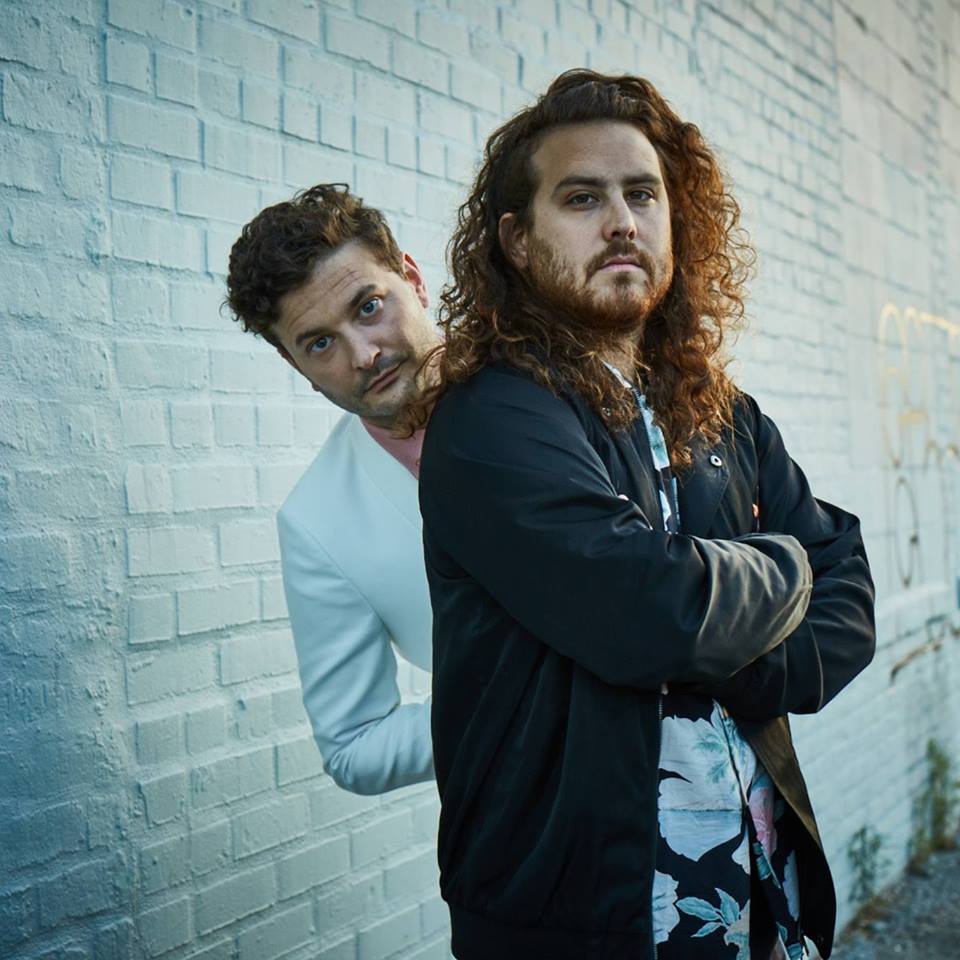
VIDEO PREMIERE: FIJI-13 “Mansplain It To Me bb”

Minnesota is a cold place, full of winter warriors trudging through the streets in search of bars with hot tunes. On first listen, FIJI-13 sounds like anything but Minneapolis: they are peppy, surf-infused, and upbeat. Yet on a closer listen, the reality of life seeps through. “Mansplain It To Me bb,” the first single off of FIJI-13’s new EP Heavy Breathing, swings a bat at the patriarchy with a level of sarcasm that’s pretty impressive.

Sisters Hilary and Heidi James handle lead vocals for the band, as well as writing the scathing lyrics heard on this latest track: “Explain to me how to throw a football pass, and what kind of pants look best on my ass.” It’s a stripped down middle finger of a song that could easily be picked up by a studio looking for the perfect female empowerment track to promote the next Reese Witherspoon box office smash (or the original Goldie Blox Commercial).

We sat down with Hilary, Heidi, and their drummer Steve Crowley to talk about how they came to land in the Midwest and why sex positivity is the word.

AP: I have to start out the interview by telling you all: I’m from Fergus Falls, Minnesota.

Steve: That’s in Minnesota!

Heidi: And that’s maybe all we know about Fergus Falls.

AP: That’s about all anyone knows about Fergus Falls. Are all three of you Minneapolis born and raised?

Hilary: No, we’re all from the far reaches of Midwestlandia. Sort of. Steve is from Milwaukee. Heidi and I are from Denver via Southeast Asia.

AP: Southeast Asia? Alright, we need backstory. Tell us a little bit about how the band formed and how you ended up in Minneapolis!

Hilary: Steve and I met at a bar in Iowa City and became buds. Heidi and I have known each other our whole lives, as we are sisters. We wanted to start a band but didn’t know how to play “rock band instruments” so we each picked one and learned how to sort of play them.

Heidi: Oops we didn’t really answer your question correctly! We all just moved here post-college cuz it seemed like a cool spot and we’re gluttons for weather punishment.

AP: Your sound is much more surf than snow. What inspired Fiji-13’s sound?

Heidi: First off, can we use “more surf than snow” in some bio stuff please?

Hilary: Well. None of us know how to surf but we thought it would be funny if we sounded like we could. Also we really like surf rock bands.

AP: I love that garage band / punk feel. What artists inspire your music?

Hilary: A wide range, from local Minneapolis punk bands like Kitten Forever to Sleater Kinney to the more melodic surfy/grungy bands like La Luz and Guantanamo Baywatch, and Ty Segall. Minneapolis has a really amazing and supportive punk and garage scene, which has definitely influenced our sound.

AP: Your new single “Mansplain It To Me bb” is a fun song about a painfully real problem: Mansplaining. Steve, can you tell us a little about the writing process on this one?

Steve: They sent me a video of themselves playing that song the day they wrote it and I immediately knew it was a smash hit.

Hilary: He is very good at telling us everything we never needed to know. JK, Steve is great.

AP: I’d ask where the song comes from, but as woman I think I know. It feels incredibly organic. As sisters, is it easy or difficult to write lyrics together?

Heidi: We actually don’t do a lot of lyric-writing together. We usually come to each other with songs that are mostly complete, but we do some edits and help each other through the parts where the words aren’t totally right.

Hilary: Sometimes we’ll come up with themes of songs together and then one or the other of us will pick it up and work it out.

AP: Who took the lead on “Mansplain It To Me bb”?

Heidi: I did. Hilary titled the song though.

AP: Your new EP is titled Heavy Breathing. What kind of subject matter can we expect from the album?

Hilary: The subject matter is mostly sex positive songs. As women (who spend a lot of time in the music world/in the normal world) there is such a frustrating difference between how people view sexuality and sexualization between binary sexes. Those songs are an attempt to normalize and be honest about that and poke fun of it all in a way.

Heidi: It’s almost like we’re blowing things out of proportion in order to make the point clear that people need to just chill out about women as sexual beings.

Hilary: There are also some songs on the album that are basically just big ol’ “fuck yous” to the patriarchy.

AP: I love the approach of using humor to tackle something considered taboo or controversial. Have you been able to perform the songs live?

Steve: Hell yea. We play a lot of shows in Minneapolis and around the midwest. We just got back from a little extended weekend tour two days ago. We love playing and bopping around in the car playing shows with our friends.

AP: Can we expect more tour dates coming up?

Steve: Yes. We plan to tour more in spring and mayyyyyybe winter. Heidi and I are teachers so there are very specific times that we are able to have time off to tour.

[fusion_builder_container hundred_percent=”yes” overflow=”visible”][fusion_builder_row][fusion_builder_column type=”1_1″ background_position=”left top” background_color=”” border_size=”” border_color=”” border_style=”solid” spacing=”yes” background_image=”” background_repeat=”no-repeat” padding=”” margin_top=”0px” margin_bottom=”0px” class=”” id=”” animation_type=”” animation_speed=”0.3″ animation_direction=”left” hide_on_mobile=”no” center_content=”no” min_height=”none”][Eds. note: Here’s what they’ve got coming up!

  • 9/16 @ Eagles Club in Minneapolis
  • 9/23 @ Maximum Ames Fest, Ames, IA
  • 10/14 RELEASE SHOW @ Triple Rock in Minneapolis]

AP: Final question: I’m a music fan, a tourist in Minneapolis proper. Where do I go to see some killer tunes?

Heidi: One of our favorite places to play and go see bands is called Eagles 34. It’s like a functioning Order of the Eagles club for veterans, filled with the amazing neon and taxidermic eagle art, weird thrift-store decor and $1 jello shots every night. They have three different stages so you can go on a weekend and hear three very different shows, from Polka or Zydeco bands filled with old couples dancing, to wild heavy metal shows, to bedroom synth pop and more. Also they have the nicest bartender in the world there. Really everyone there is pretty dang nice.

The Homestead Records will be releasing FIJI-13’s new EP Heavy Breathing on October 13th.[/fusion_builder_column][/fusion_builder_row][/fusion_builder_container]
ALBUM REVIEW: Alvvays, Antisocialites

If Alvvays’ eponymous first record articulated a quintessentially modern fear of commitment, then newly released follow-up Antisocialites captures the next logical step, which is an ambivalence about it.

The Toronto band gained momentum in 2014 with their self-titled debut, a nine-song batch of whimsical but sharp tracks that bemoaned romance as a twenty-something in the 2010’s, touching on all the hurdles we face from student loans to threatened personal ambition that comes with partnering up and settling down. In terms of lyricism, frontwoman Molly Rankin combined a wry sense of humor with the warmest sentiments to create songs that could tug on your heartstrings without making you roll your eyes, set against a backdrop of infectious dream pop. Antisocialites offers an aged version of this, matured by three years of life experience.

Lead single and first track “In Undertow” sets the tone for the record as older and more reserved. Frankly, this is a record about not giving a fuck anymore, or at least feigning that attitude. Rankin sings: “Can’t buy into astrology/Won’t rely on the moon for anything.” This is about guarding yourself with pragmatism, approaching life with the mindset of protecting yourself and your heart first before anything else. She lists off the things she does to fill the time now – “meditate, play solitaire, take up self defense” – literally all solitary activities, a means of reinforcing the wall you craft around yourself when something else falls apart.

Already, the sound on the record is dreamier and somehow more solemn than their scrappier, more guitar-driven songs like “Adult Diversion.” That vibe continues as the LP ventures into second track “Dreams Tonite,” alluding more to its slower, sadder tracks like “Red Planet” and “Party Police.” The record’s title is derived from its lyrics, again pointing back to the idea of closing oneself off to possibilities because the chance of gaining something is equal to or less than the fear of losing something greater. Rankin goes so far as to ask if she’s being naive, as if the idea of something working out it so unlikely that she’ll write it off as a failure before it even begins.

But while this guardedness can be dangerous in the sense of shutting oneself off to new possibilities, it can be a godsend in terms of self-sufficiency and demanding more. “Plimsoll Punks” retains the whimsy of the first record while drenching it in jadedness, a rejection of the type of people whose approval you used to crave. “Your Type” is about the refusal to put up with the sort of things you used to look past, about being so satisfied with your life as is that you won’t take someone else on just for the sake of someone else being there: “Let me state delicately that you’re an O and I’m an AB.”

This culminates on arguably the best track on the record, “Not My Baby,” in the sense that it balances the positive attitude towards newfound solitude with a heady dose of realism, the sadness of being alone when you know what it’s like not to be. It’s this track that’s most doused in ambivalence – “No need to sit at home with a dial tone ‘cause I don’t care” – while still retaining a level of melancholy and loss. It’s the relief of it all being over, with the maddening wish that it never had to be. Rankin’s mastery as a songwriter shines through here; it’s easy to slip into platitudes of independence and letting go. It’s harder to admit that while leaving the past in the past is oftentimes the best choice, we always find ourselves wishing that everything had met the lofty expectations once rested on it in the first place. In other words, to admit your disappointment while keeping your head held high, to trade in your “rose-colored shades for a wide lens” – this is invariably the stronger, more mature path to take once your path has diverged from another’s.

Alvvays tie the record up nicely with final track “Forget About Life,” circling back with lunar imagery to catch all the loose ends. Rankin sings of times “when the phases of the moon, they don’t apply / when accomplishing a simple task take several tries,” succinctly articulating her mixed bag of emotions. She can’t rely on the moon but is so tired she longs to have the matter taken out of her hands regardless. It’s worth noting that the titular character from “Archie, Marry Me” (or anyone else specific) is conspicuously absent on this second effort, as though it’s become too exhausting to name ex-lovers with anything more than an ambiguous “you.” It’s exhausting just to care that much.

All in all, Antisocialites is the a well-deserved follow-up to Alvvays. While their self-titled LP captured the white-knuckled grip of commitment, their most recent illustrates the mundane abyss that gapes at you in its absence.

MORNING AFTER: Peaches and Sausage with The Values

Though it feels like it happened 40 years ago, I remember clearly when I first saw The Values. It was in the backyard during Putnam-o-Rama, and three girls passed in matching, spangly sunset-gradient dresses, golds and silvers bleeding into deep orchid. And Sean Jones said, “That’s The Values. You’ll like them, they’re really different.” But I was uprepared. Woefully unprepared.

Because The Values proceeded to pounce on the muddy, murky night with a glitter bomb of soulful voices. While impossible to pin down as one genre – the synth spine of Ladytron, the wardrobe of The Supremes… who even is on this extended family tree? idefk – they never, not for a fucking second, lacked coordination or the ability to dazzle a collection of completely different people in the crowd. Playful lines like “I do my online window shopping, pretend that I have money,” reminded the audience that despite the unrelenting sparkle, they aren’t untouchably manicured. They just try harder, work harder, and play pretty hard as well. It shows.

Different. But inclusive.

So post-set, I ran up to Mason Taub to say “Hi, I’m Mary Grace from the Internet, your band is amazing and we are totally getting breakfast together!” She was all, “That’s great, but also I need to get out of this dress. Do you want to help me warn the crowd that the cops are coming?” “I would be insulted if you DIDN’T invite me,” was my response, and I followed her around the establishment, being generally useless and unpacking whatever That Guy drama I had while she undressed in one of the bedrooms.

Basically.

That was, not 40 years ago, but July. And now it’s a sunny August afternoon and the cork just hit the ceiling. Won’t you join us?

The Scene: Aside from Mason, who just opened the prosecco, the band is streamlined to a core group: Evan Zwisler (frying up french toast), sisters Nathalie and Mel Escudero, and a drum machine called Little Nicky (after former drummer Nick Ciccantelli from The Lounge Act).

So that’s why we’re in Mason and Evan’s kitchen in Flatbush, their precious pitbull Honey at our feet. “Mel, Mason and I went to a party last night and we got home at 2:30 and we were like, ‘Oh, let’s play some tunes…’” Evan says, before we cheers.

“So did you make sweet tunes?” I ask. No, they just stayed up and watched The Great British Baking Show. Through the chaos and hastily downed mimosas (me, that’s all me) Nat mentions that she had the best key lime pie the other day and that Mason makes a boss lemon curd and hummus (maybe not paired together).

“You guys, like, make food and that’s so strange to me, because I’ve fucked up mac and cheese before,” I observe.

“Macaroni and cheese can be hard because cheese is like, delicate,” Mel offers sympathetically.

“I mean, it was literally a box,” I admit.

Laughter abounds, but clearly I’m a trash human being who’s gonna get the deluxe treatment here.

2:06 TOUR STORIES!

“Do you remember that terrible bar in Long Island?” asks Evan, in the midst of food discussions. “There were just people in the bathroom doing cocaine…”

“There was a dude in the woman’s bathroom,” Nat adds.

Mason remembers. “That’s when we saw Misogyny The Band.” (Not their real name. I asked, don’t bother Googling).

“The guy was wearing this t-shirt that said ‘Fuck your sensitivity,” Evan remembers.

“And then,” Nat adds, “he would just say in between songs, ‘penis.'”

The kicker, I’m told, was their signature song – something about this dude choking his girlfriend and coming on her neck. Suffice to say nobody was impressed and the kitchen filled with a lot of “ews” and groans.

“Half of the people weren’t even listening,” Mel recalls. “But the ones that were, everyone was looking at each other. They had to look at someone.”

“And then we went up there and we have this song ‘Zombie’ and it’s about abortion, and so the way I always start it is, ‘This song is about an abortion,'” Mason says. “And there were audible groans when I said that.”

“That says everything about this scene and how weirdly sexist it is,” I chime in. “You can choke a bitch and cum on her neck but you mention a song about an abortion and suddenly it’s ‘Oh, god, NOT THAT.'”


There’s often some kind of audible response, but it’s not always negative. The band is playing a lot of out-of-town shows and their college gigs are filled with impressionable youths (I’m only 26 but I’m condescending) wearing glitter highlights (which the band has adopted in their look). And from them, Mason and the band get appreciation.

“I have a lot of girls come up to me, and it’s always younger girls, and they’re like, ‘We don’t ever see bands at our college with women in there, thanks for coming.’” she says.

Hmm…

2:24 We move into Evan and Mason’s room/practice space, hence the wall of guitars and literal piano near the window. The girls and I waste no time devouring Evan’s breakfast: chicken sausage, sliced peaches, French toast and eggs on the way. “You know what’s really funny? Ev is a vegetarian,” Mel says, but clearly one who can make a boss chicken sausage.

“Should the whole article be just recipes that you guys have excelled at?” I ask later.

Mason’s about it. “We should just include our recipes with our album.”

They consider making the cover of their next album a picture of something they’ve cooked, with production credits and lyrics deleted and replaced by just the recipe for it. Full disclosure: I would buy the fuck out of that album, but in case it never happens, here’s a list of other essential Values dishes:

  • Garlic Mashed Potatoes
  • Pulled Pork Sandwiches
  • Brie Cheese Pie

Evan can apparently make a mean chicken, too.

Invite them to your next party.

2:34 So Mel’s apparently so vocally talented it once got her abducted.

“There’s a story our mom tells us about when my sister was in pre-school and there was a bus driver who would hear my sister sing on the bus,” Nat recounts. “And she was Columbian like us, so my sister was singing this song from a popular Columbian telenovela at the time. And she was like, in love with my sister. So she took her, didn’t take her home to my parents, took her to her home, had her sing in the living room for her family.”

“I’ve never heard this story,” Mason chimes in.

“How old were you?” Evan asks.

Mel’s pretty nonchalant about it. “I was like, 4 or 5?”

Evan freaks out. “WHAT?! YOU WERE KIDNAPPED. THAT IS KIDNAPPING!”

“And my sister’s not aware that she was being taken against her own will. The bus driver took her back home and my mom was like, worried sick,” Nat says. “This was before people took things like this more seriously.”

“Like, kidnapping more seriously?” I ask.

Anyway, we’re all very glad that Mel did not end up a milk carton kid. That really would’ve hindered The Values’ sound.

3:00 The Values are recalling their old rehearsal space in Brooklyn Heights, a hot box in which they had to fit roughly “67” people in a room.

“We were down to our bras in that room and we kept singing,” Mason remembers. “And I vividly remember Phil sitting down and after 5 minutes and I checked him and was like, ‘Are you okay?’ and he was like, ‘I’m not moving, and the sweat is just pouring down my face and I’m not moving.'”

It sounds like a time, but I’m too many mimosas deep to concentrate, and Air is playing, and that was my high school sex stuff music. So.

“I think this is one of the best, funniest songs,” Mason shares. “It still kind of makes me giggle, and just the fact that that’s the hook makes me laugh, ‘Sexy Booooy.‘”

“Well they’re a French band so a lot of it’s just nonsense, they’re like, Oh, yeah, we are a couple of sexy boys. Let’s do it,” Evan jokes, putting on a mangled accent.

“Like Borat?” I ask, confused.

Like Borat.

3:55

Eventually it ends up just Evan, Mason and me watching the dorkiest but purest Foo Fighters fan video, cry-laughing the whole way through. I think I’m still too obliterated to make intelligent conversation, but I’m learning that Evan grew up in Shanghai and Mason grew up in New York.

“I think that’s part of why we get each other. We had similar experiences in high school seeing bands and going to bars and stuff,” she says.

“It’s also like growing up in a big city, there’s always more trouble to get into,” Evan adds. They talk about the lure of these communities, a sort of “chase culture” that draws active, adventurous, creative teens like a moth to the flame. More trouble to find, more troublesome people to run with.

“Chase culture.” I don’t know if I’ve grown out of that yet. Sometimes I worry I never will.

“Can I play with the dog?” I ask. The answer, thank dog, is yes.

I check in on The Values twice more before I write this, supplementing their shows as a date plan, as a 25th birthday plan, a plan that I plug into my schedule whenever I can.

“It’s so refreshing to see a band that actually tries,” my friend Joe Mayer says during the tail end of their Knitting Factory set. Word.

It’s a drive-by appearance, as always, but I chat with Nat in the bathroom about how they killed it with their choreography (choreography, HOW). And in a smokey haze, sunken onto the couch in the Green Room, I catch up with Mason, who asks me about how things are going with That Guy. Different That Guy, but always some That Guy.

There’s always a possibility that I’m an easy crowd member to win over. But more likely, The Values are playing with a brighter spectrum of hues than most. And sue me, I like visiting their colorful world.

I think you would, too.

“I do my online window shopping, just to see some beauty…”

You can follow The Values on Facebook, listen to them on Bandcamp, and catch their eponymous EP September 14th!

NEWS ROUNDUP: RIP Walter Becker, Holger Czukay & More

  • RIP Holger Czukay

    Holger Czukay played bass in the groundbreaking Krautrock band Can, which he founded with keyboardist  Irmin Schmidt, guitarist Michael Karoli, and drummer Jaki Liebezeit. He passed away on Tuesday at age 79 at the band’s Inner Space Studio. Can got their unique sound from improvisation that mixed jazz with rock, and during Czukay’s solo career, he explored the use of sound effects and sampling. His last release, Eleven Years Innerspace, came out in 2015.

  • RIP Walter Becker

    The Steely Dan co-founder and guitarist passed away last Sunday at age 67. His songwriting partner, Donald Fagen, described Becker as having a knack for “reading people’s hidden psychology and transforming what he saw into bubbly, incisive art.” The beloved band was highly influential and advanced in terms of songwriting and song structure, though sometimes derisively referred to as the main progenitors of “dad-rock.”

https://www.youtube.com/watch?v=u_jPs5lUdBc

  • RIP Fat Baby

    The Lower East Side club/venue closed on Saturday, after being bought by an unknown buyer. For the residents of “Hell Square,” a highly concentrated area of nightclubs, venues and bars, this closure was not necessarily unwelcome. Yelp reviews of the hotspot vary from describing a pretty good place for a night out to a crowded pit of despair.

  • Other Highlights

    Lin-Manuel Miranda sings the theme for the “Magic School Bus” reboot, a Prince statue may replace Christopher Columbus, Martin Shkreli is selling his infamous Wu-Tang album, a new Michael Jackson song is coming, meet the Indonesian girls fighting to play heavy metal, NYC’s Power Station recording studio to be restored, new songs from U2, Bill Withers and St. Vincent, how bands are helping hurricane victims, and yes, we’ve established that women are the new face of rock.

https://www.youtube.com/watch?v=jG2Qf-DIofk&feature=youtu.be


ONLY NOISE: Rise

Sometimes, these columns are damn hard to spit out. It’s not always easy to remain enthralled with the music world, especially when the real world seems to be crumbling around us. We don’t have to pretend. 2017 has been a fucking nightmare. We’ve witnessed the inauguration of Donald J. Trump, North Korea launching a missile over Japan, devastating floods in Houston and South Asia, and rallies filled with actual Nazis, just to name few lows.

I’m not a religious person, but I’m starting to expect widespread plague and a swarm of locusts any minute now. Just visiting The Guardian’s World News webpage fills me with terror – especially when the top headline reads: “Armageddon. Scientists calculate how stars can nudge comets to strike Earth.” What the fuck?! I’m a dyed-in-the-wool atheist, but you know what? Maybe there is someone up there, ready to just take us all out with a flaming space rock, because we clearly can’t keep things together down here.

“Um…what does this have to do with music?” you ask.

Here’s the thing: being a music journalist is pretty great. I love it more than any non-human in my life. However, when the world seems to be blazing in what Evangelicals would call “hellfire,” it’s hard to feel motivated to write about anything but serious shit. Rolling out a “think piece” on hidden messages in Taylor Swift’s new video feels like you’re stuffing your soul into a manila envelope and shipping it off to Satan for safekeeping. Even if you understand that it isn’t wrong to write about the VMAs, one still gets the sense that they are ignoring a towering elephant that is not only in the room, he’s bending the baseboards and demolishing furniture.

Of course, when I say “you” and “one,” I ultimately mean “me.” I cannot speak for other music writers. Though I can assume that many of my colleagues, who are intelligent, compassionate people, must feel some of this weight. It’s not possible that I’m the only person who suffers nauseating guilt reporting on Panorama Festival the same weekend journalists discover that North Korean missile tests have the capacity to reach New York.

So what does “one” do? Writing about art and pop culture in frightening times is a delicate matter. To say nothing of the floods, the violence, or the fear seems grossly irresponsible. To mention it only to alleviate one’s own guilt is possibly worse. I would never say making art in times of strife is a waste of time – I will always argue the opposite. I will even go so far as to say that it’s impossible to stall creativity in dire times, as conflict is one of art’s great muses. Critiquing art amidst global devastation, however, can be a task colored with shame. The question often clanging in my head being, “Does it even fucking matter?

I don’t know. I am unfit to answer the question. Here is what I do know. This is my job. My dream job, really. Artists and the music they make are kind of like my religion (or as close as this godless writer comes to it). Even on the worst of days, when my personal and family misfortunes could inspire an entire season of All My Children, I can still be brought to my knees by the beauty of a song. I know it’s corny. I also know that a song won’t drain the waters in Houston, or rewire the brains of white supremacists (if they have anything to rewire, that is). A song can’t do much when it all comes down to it, let alone a writer writing about a song – but artists can.

While I’ve been distraught by this year’s cruel newsreel, the artists who have leveraged their platforms for good causes have given me some sense of pride in humanity. 2017’s first cry from outspoken celebrities occurred at the Women’s March on Washington (and its sister marches around the world), where the likes of Madonna, Alicia Keys, The Indigo Girls, and Janelle Monáe either performed or gave impassioned speeches denouncing Trump’s election. That same month, Canadian electro-pop group Austra released their third LP Future Politics. The album is revelatory and filled with political insight, proving that pop music doesn’t have to be sugarcoated.

In 2017 there have been countless benefit concerts for organizations like Planned Parenthood, the ACLU, and CAIR-New York (Counsel On American-Islamic Relations), to name but a few. Now the charitable hands of artists will extend to Houston. Solange has planned a benefit show later this month in Boston where 100% of proceeds will go to victims of Hurricane Harvey and its destructive floods. Fall Out Boy and rapper Bun B have planned separate but similar benefit shows, and numerous celebrities have either already given money to relief organizations (like $500,000 from Miley Cyrus and the $25,000 DJ Khaled shelled out) or promised to do so in the near future (like Beyoncé, Nicki Minaj, Demi Lovato, and DNCE).

Many of the aforementioned performers are ones I don’t artistically care for that much, but these days I’m elated they’re around. It seems that with their immense command of the public interest and disposable income, artists have taken on responsibilities that our government should have the answers and funds for. It’s a sad and beautiful truth. That these seemingly “frivolous” celebrities go above and beyond their job title in times of crisis is noble; that they even need to in the first place is appalling.

So coming back to that initial question: what does “one” do? Let’s practice some simple logic. Things are bad right now. Things are really bad; and yet, artists both famous and obscure continue to defy the idea that humans are selfish, no-good creatures. If “you” are a music writer – why not write about those artists and their honorable efforts? It’s the least, and sometimes the most “you” can do.

PLAYING DETROIT: Tart Returns as a Trio on New EP Toothache

Sweet, sour and glittering with adrenaline (appropriately named) transcendent Detroit trio Tart have made a reputation for themselves by deconstructing new wave and electroclash to spawn their genre-defying sound. Together, vocalist Zee Bricker, guitarist Adam Michael Lee Padden and drummer Donny Blum form a vibrantly expressive shred-pop outfit who approach each song as a fresh start.

Formed formally in 2014, best friends turned roommates turned sonic architects Bricker and Padden ventured to create a sound that fused the intricacies of their contrasting musical backgrounds: Bricker’s disciplined theatre education and Padden’s untamed, collaborative rock and roll fire. While the then duo explored the marriage of Bricker’s haunting vocal prowess and piercing lyrics with Padden’s intuitive and calculated guitar treatment, it was their inanimate third member, the drum machine, that filled a percussive void yet also strained Tart’s potential.

Blum (who also drums in The Von Bondies) helped them achieve it fully when he began playing with Tart for their live performances in 2016. Both Bricker and Padden discovered a raw beginning within the preexisting framework, Blum being the missing ingredient. It is Blum’s primal endurance and virtuosic stylings that helped birth a new, energized Tart with the same name, but an entirely realized vision.

Earlier this month, Tart saw the release of their third (and in many ways their first) EP Toothache, a well-rounded, eruptive 4-track collection that defines the band’s ardent past and shimmering future with a fully formed ferocity. “Metal Eyes” (which Bricker jokes is their one true “pop song”) feels more Dandy Warhols than glittering excess whereas Toothache is a riotous Tank Girl worthy banger. Pared down from six tracks, Toothache finds a polished momentum that embody what Tart has come to do best: sincere and sinister tornadic shred-pop with a well-roundedness that feels radio ready.

If you’ve got a sweet tooth and a bad attitude check out Tart’s latest below: