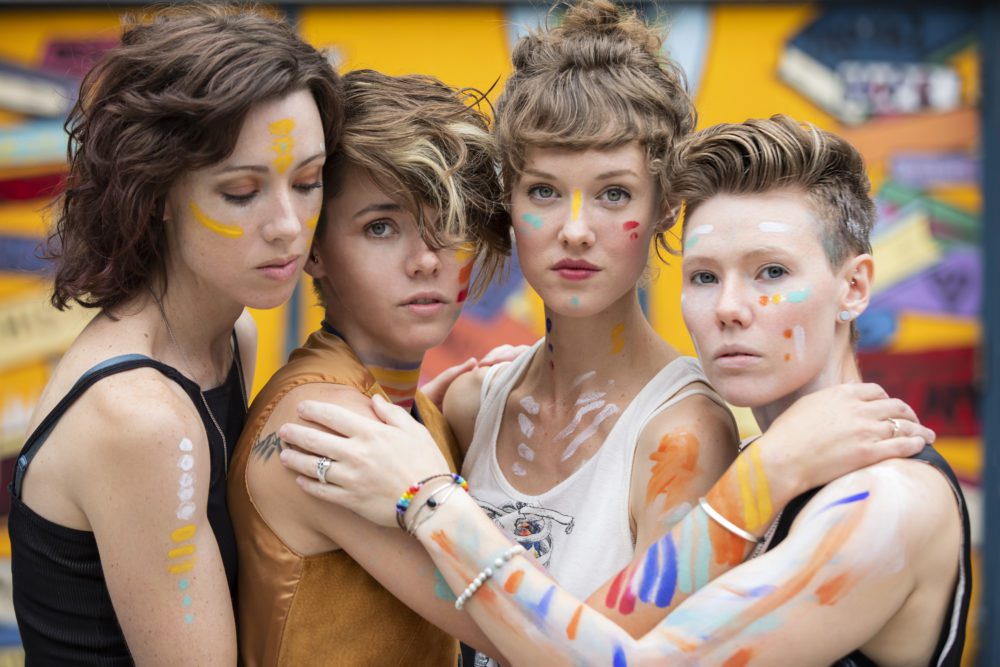
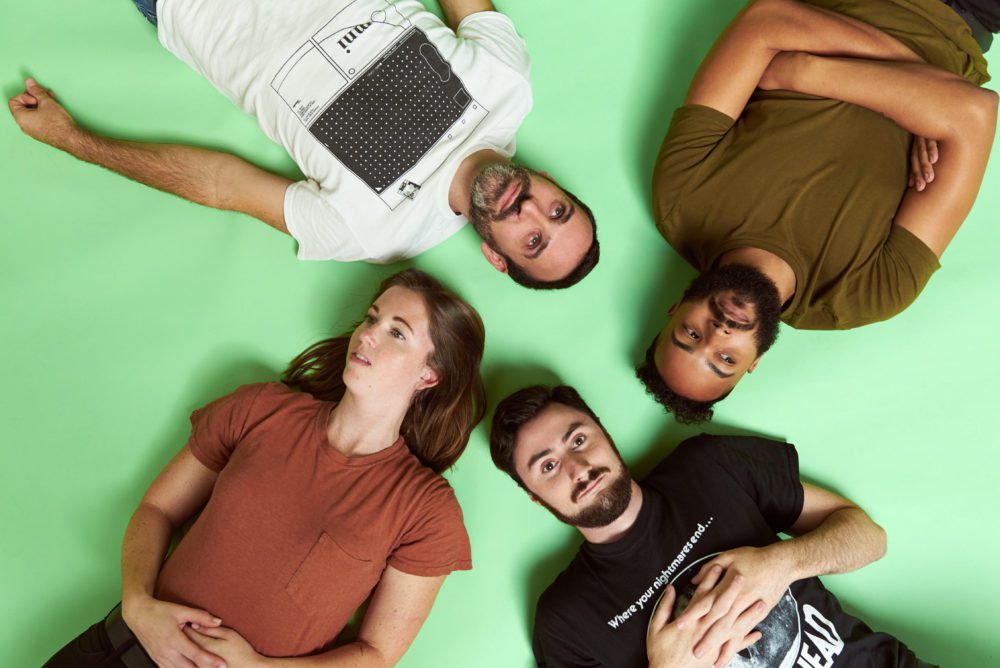
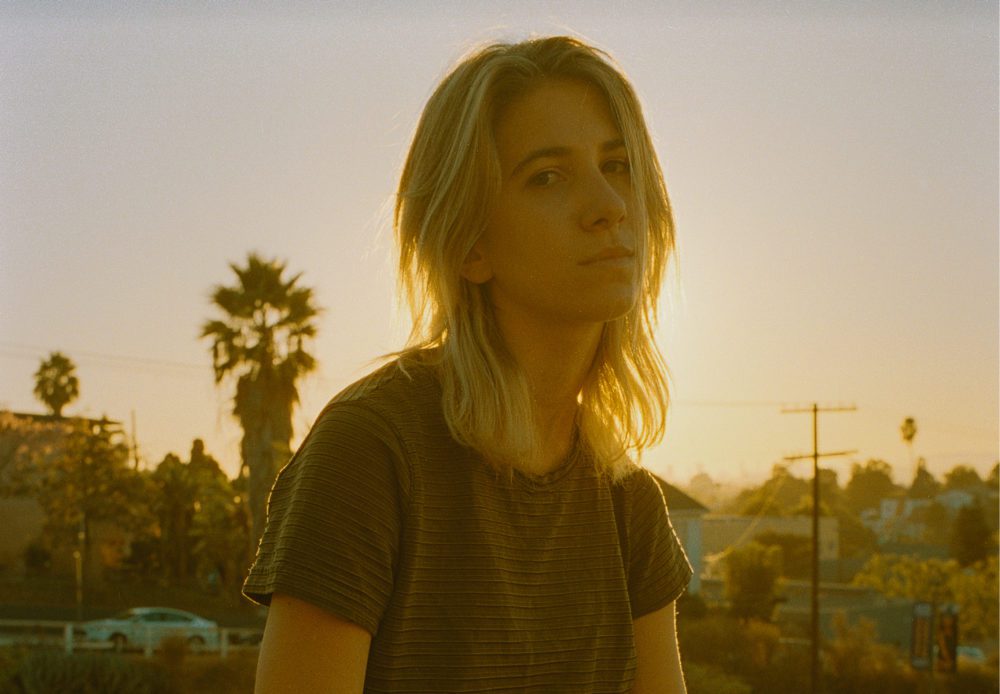
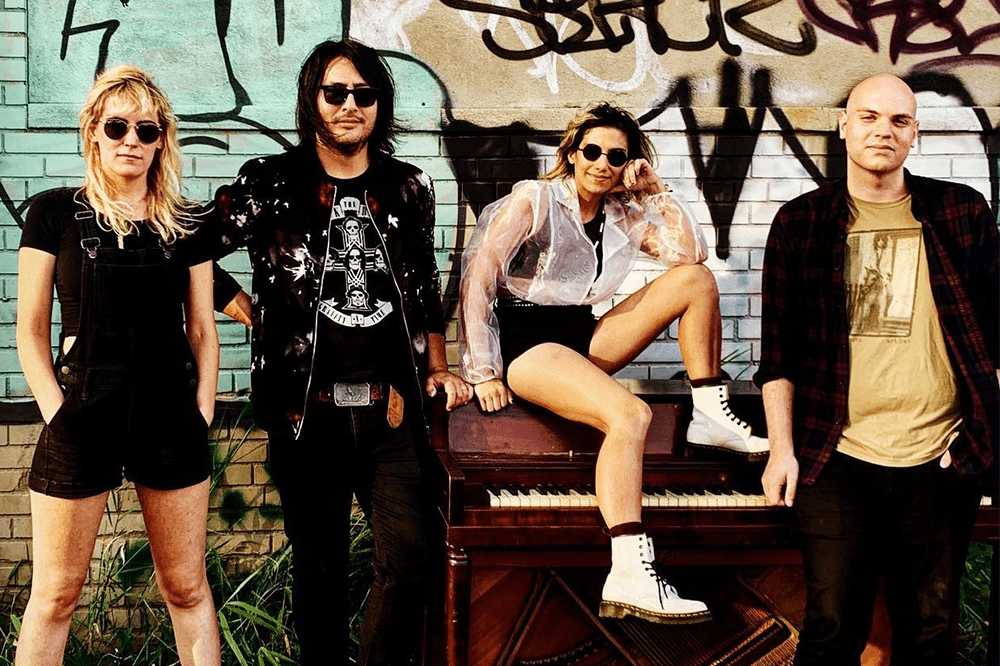
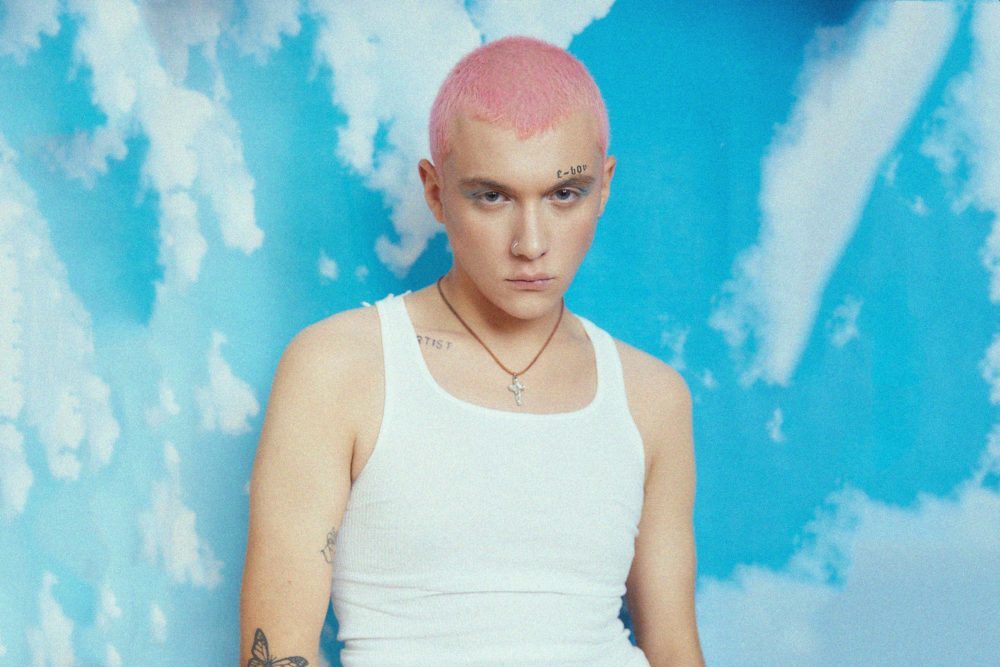
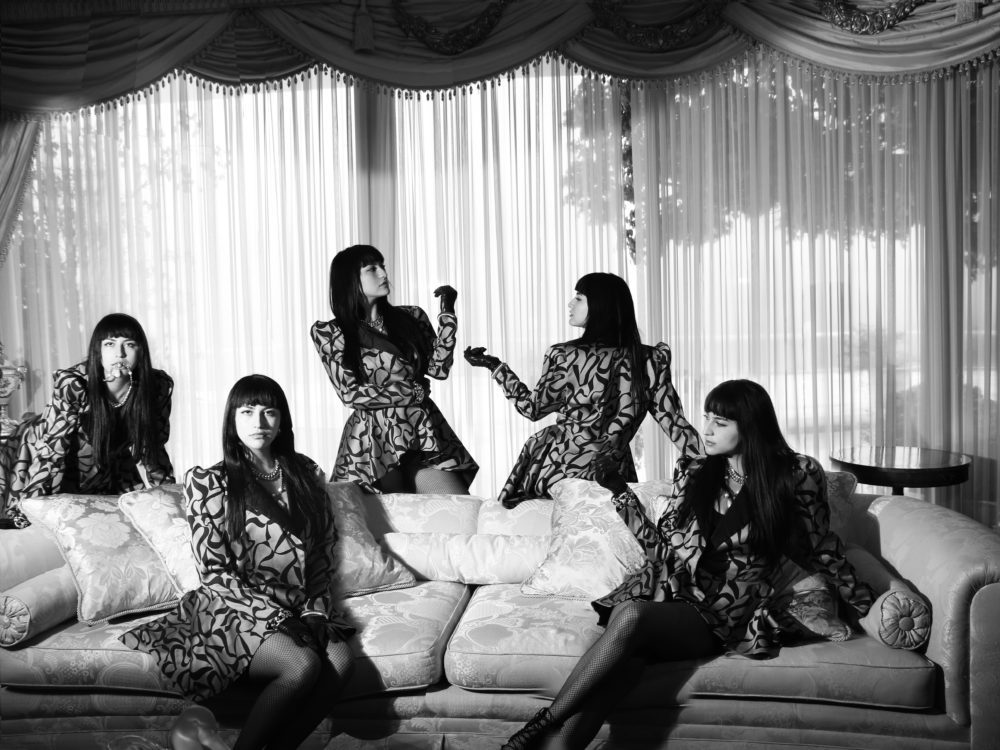
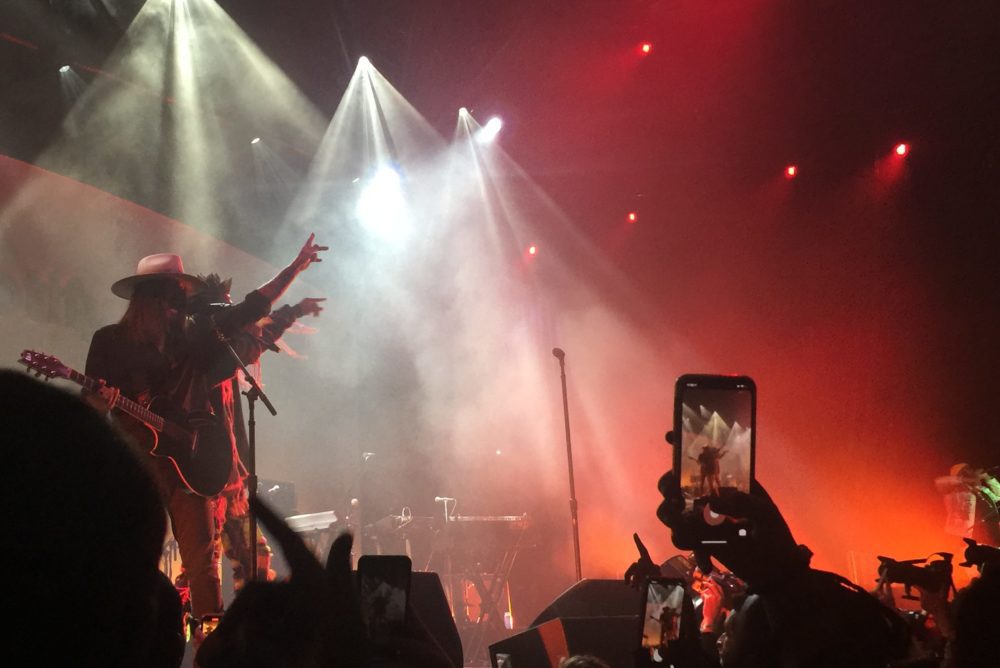
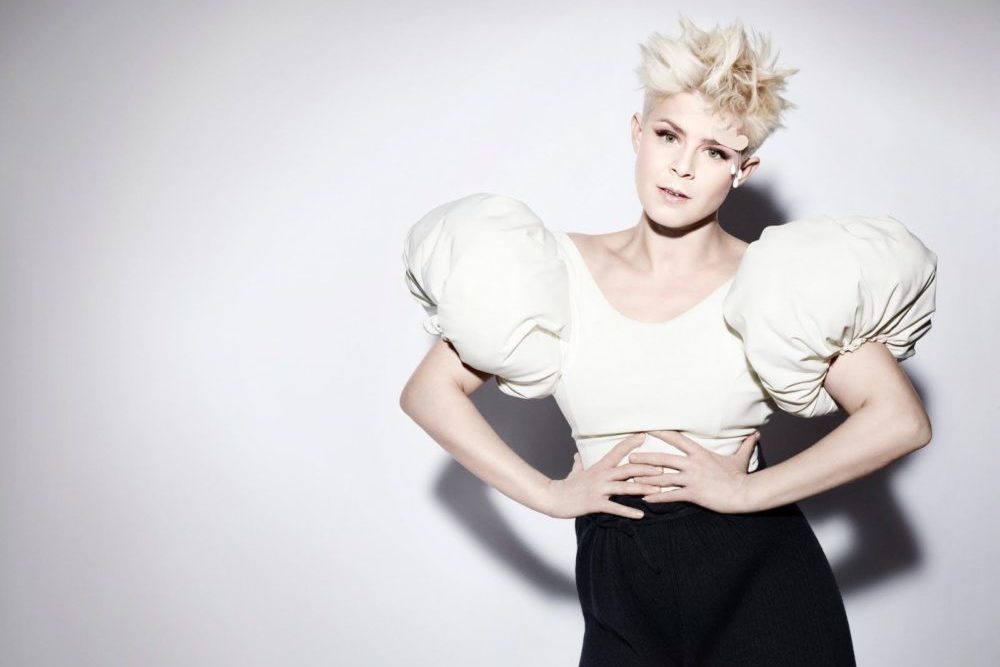
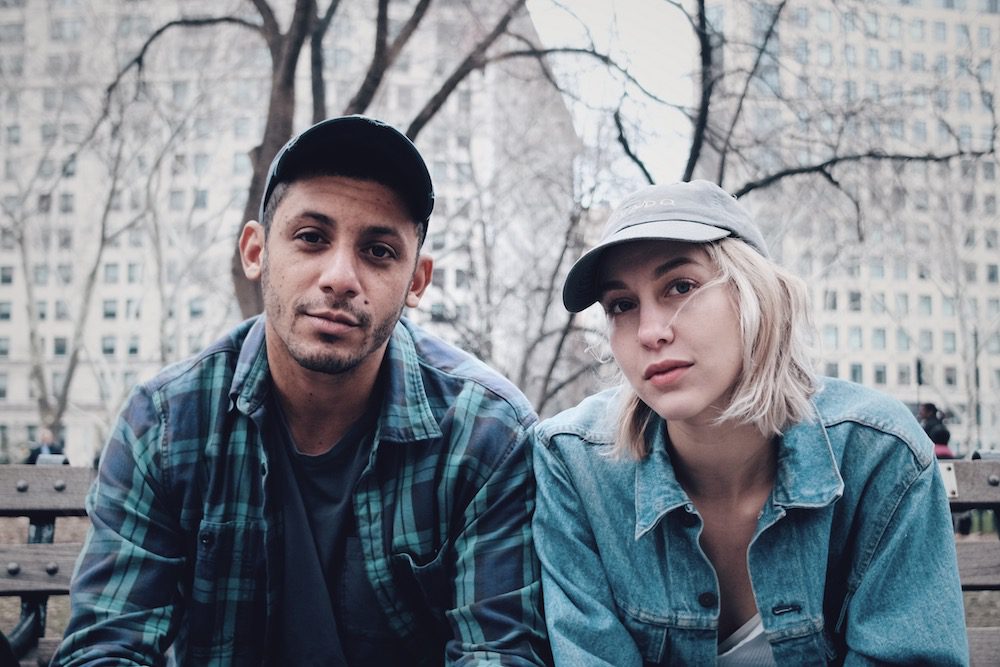
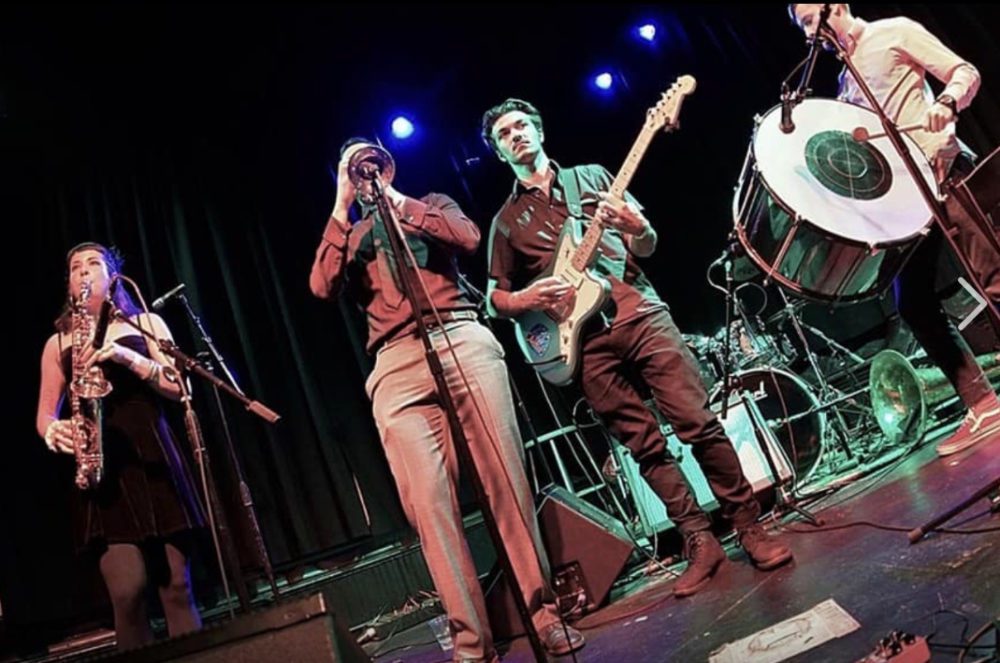
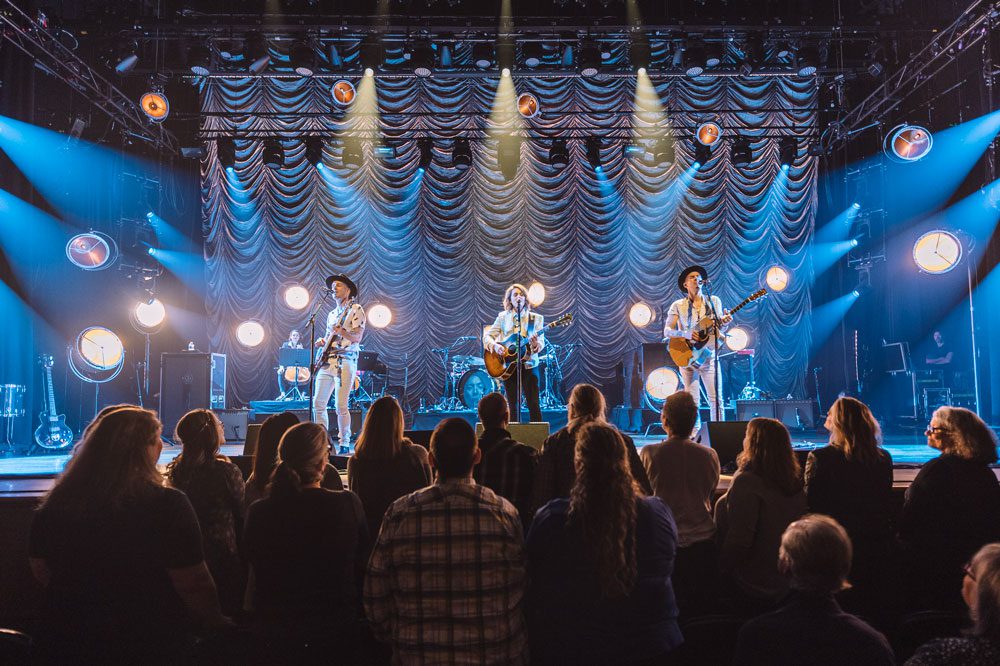
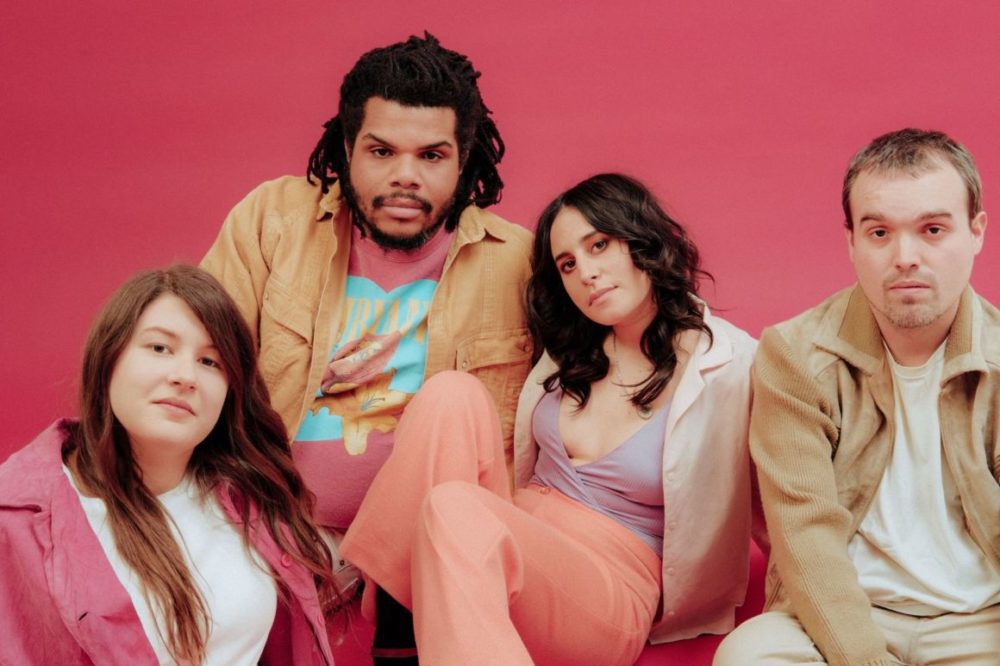
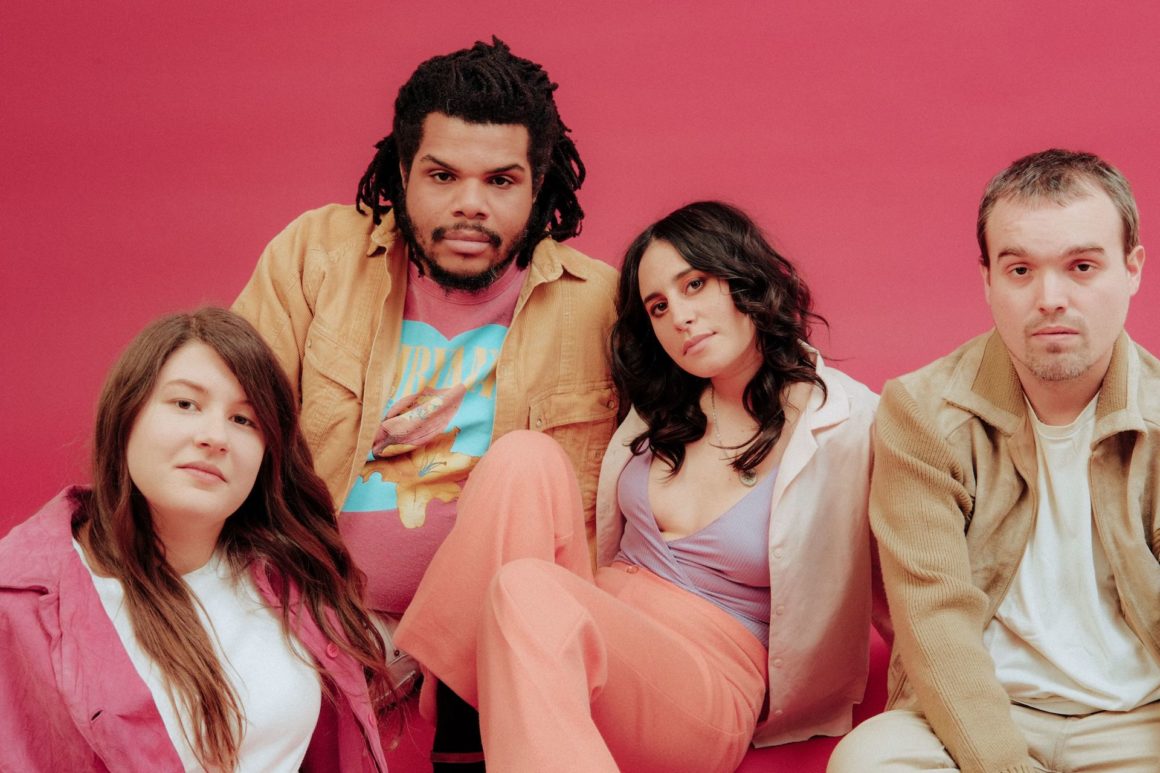
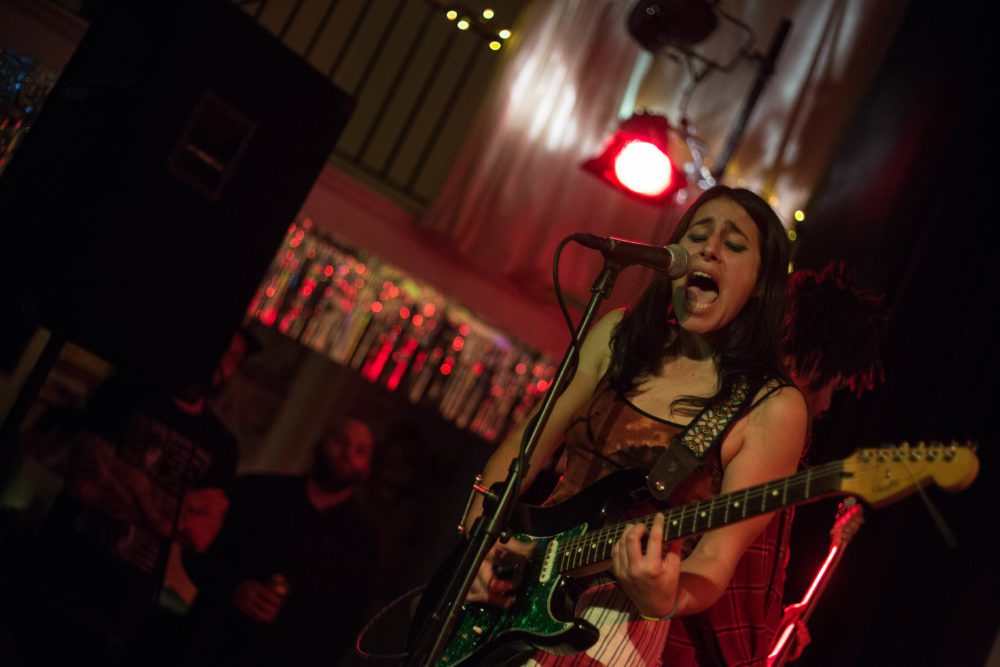
Ahead of their upcoming Wild Child EP, four-piece sister band SHEL has launched a campaign in support of abandoned widows with the release of their new single and video, “Rainbow.” Mandolinist and guitarist Eva Holbrook traveled to Vrindavan, India for the video, where she learned about the women of Hope Springz.
“In many rural societies in India, people believe that the loss of a woman’s husband is a result of her bad karma,” Eva told Audiofemme. “Often, her own children abandon her.”
Hope Springz, a one-room apartment run by James and Asha Joy, works to provide a supportive community to outcast widows. SHEL seeks to shine a light on the women of Hope Springz with their new single and has made the rainbow-colored bracelets that the women design available to purchase on their website. All proceeds from the bracelet sales go directly to Hope Springz, allowing the center to remain a resource for dozens of widows.
Here, Eva chats with Audiofemme about filming “Rainbow,” what she learned from the women of Hope Springz and SHEL’s upcoming Wild Child EP, due out March 6.
Find the “Rainbow” video and Eve’s interview below.
AF: How did you first find out about Hope Springz?
EH: Liza’s girlfriend Chelsea Sobolik was part of the editing team on the documentary Beyond Karma. We ended up at the premiere and the story of the craft center really touched us. It’s a one-room apartment in Vrindavan, India, run by James and Asha Joy. They empower over 30 women with life development skills in that little room. It’s a true act of love.
AF: Why is this cause important to you?
EH: They need love and connection just like anyone else. They need protection, a sense of belonging and purpose. Through no fault of their own, they’ve been cast out of society and abandoned by their families. I would want someone to speak up for me if that was my situation. To tell my story and stand by me.
AF: What did you learn from meeting the women at Hope Springz?
EH: It made me realize that no matter what your situation is you can choose to love and extend a hand to the people around you, and that is a choice to let healing and purpose into your life.
AF: What was filming the “Rainbow” music video like?
EH: Exhilarating! Getting to celebrate Holi with the Maas was unforgettable. My favorite moments in the video were all unplanned. Kyle Rasmussen (the filmmaker for Beyond Karma) is incredible at capturing life on film. Doing this project with him really opened up my eyes to the beauty and healing that like-minded collaboration can bring to life.
AF: What can you tell us about your upcoming Wild Child EP?
EH: It’s really the result of taking responsibility for our values as a family band and putting our sisterhood before the demands of the industry. We’ve experienced a steady recovery from burn out, addiction, and depression, as we’ve created the space to be honest with ourselves and one another.
AF: What do you hope people will feel after listening to Wild Child?
EH: Liberation from fear, hope, a desire to listen to the inner wild that calls us to climb trees and touch stars, to unite in love amidst the storm, to follow the unknown road, and finally, to come home to the warm embrace of family.
Welcome to our weekly show recommendation column RSVP HERE: LA Edition– your source for the best shows and interviews with some of our favorite local live band. For the month of February we will be featuring LA shows!
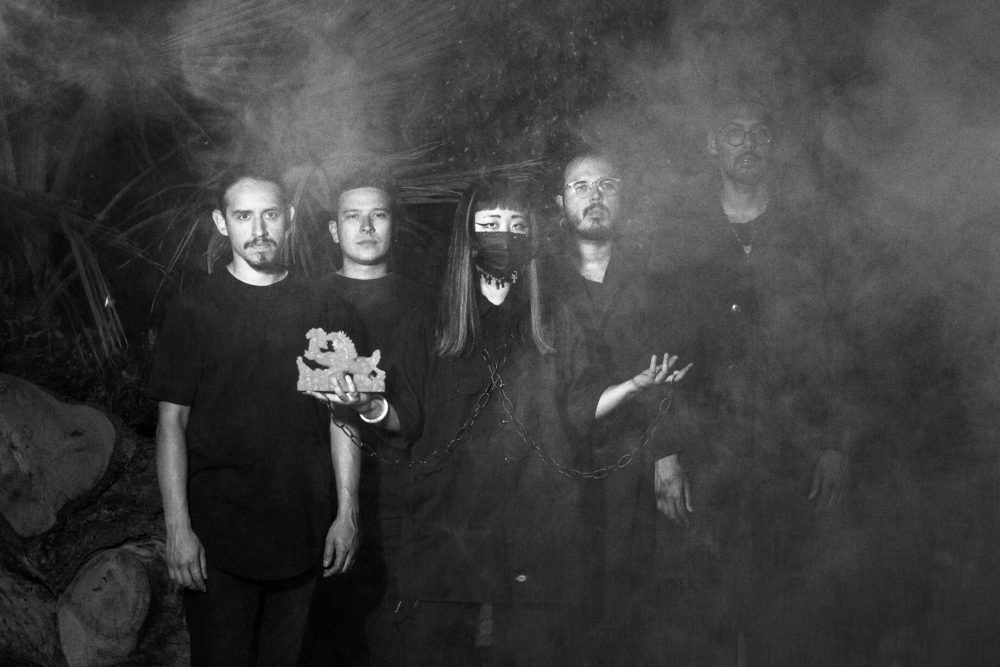
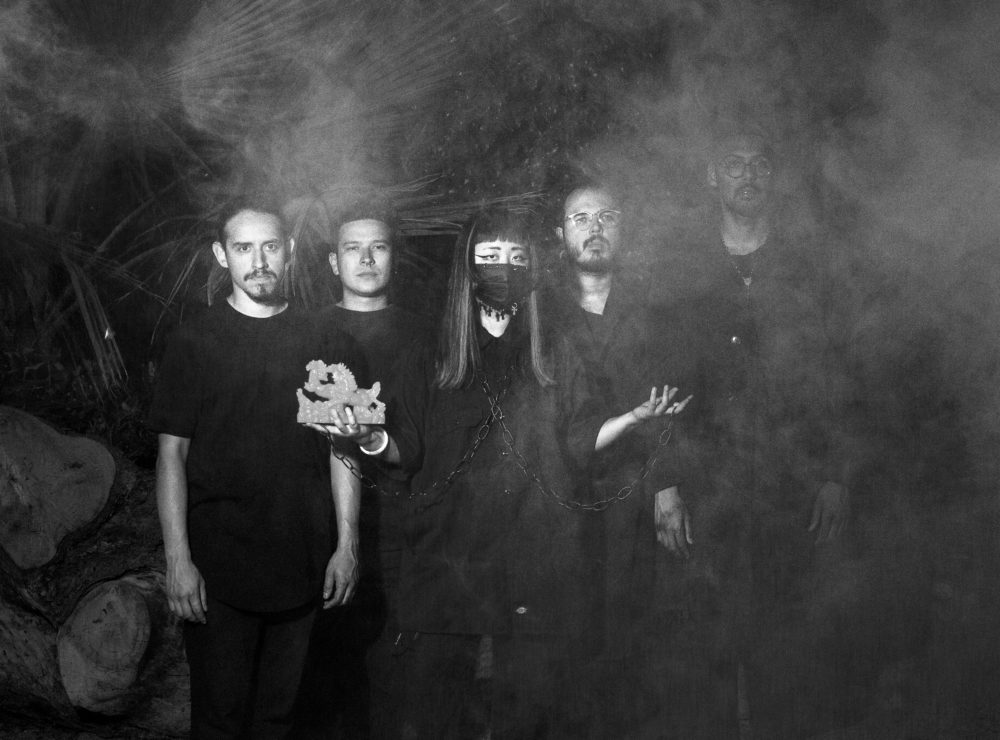
Draag is a shoegaze band from Sylmar, California who create stream-of-consciousness film noir landscape music that is performed at eardrum melting volumes. Starting as the solo project of Adrian Acosta (originally a mariachi singer), the lineup was filled out by seasoned underground musicians Jessica Huang, Nick Kelley, Ray Montes, and Shane Graham, who have influences ranging from no wave to experimental jazz and classical music. Last month they released a music video for their track “Ghost Leak,” and are currently doing a free month-long Monday night residency at The Echo and Echoplex in support of their new EP Clara Luz. The second installment of this residency will be presented by Pretty But Wicked on 2/10 with Orchin, Gold Cage, Sprain, and DJ Bloome at The Echoplex. We chatted with Draag about how they create their live sound, what body of water their music would swim in, and their favorite LA traffic listening.
AF: What are your favorite guitar pedals and/or any other piece of gear that’s important to your live sound?
Orange amps, Sunn amps, Strymon, Earthquaker Devices, Nunez Amplification, Hologram Electronics, Moog, Roland, Korg, Boss, Dave Smith Electronics, Fender, Gibson – without delving too deep into each individual gadget of ours. One secret weapon we can reveal is the Digetech Pds 100 Digital Sampler.
AF: What are your favorite LA bands to play with?
Vinyl Williams, Goon, Ceramiks, The Shaking Hands, Alms, Shaki Tavi, Sam Wilkes, Sprain
AF: What body of water would your music like to swim in?
Tigris and Euphrates
AF: If you were to create a new score any horror, sci-fi fi or cult classic movie that already exists, which would it be?
Rosemary’s Baby, Hereditary, and Street Trash.
AF: What’s your favorite record to listen to while stuck in traffic?
Jessica: My Bloody Valentine B-sides
Ray: Dinosaur Jr. –You’re Living All Over Me
Adrian: J Dilla’s Donuts
Nick: Carpathian Forest – Fuck You All
Shane: Ulrika Spacek’s https://open.spotify.com/album/4P5B6hMF3QavOLvYPfvqRQ?si=IFr-6Yp3TWewGUozk1jfyg
RSVP HERE for Draag, Orchin, Gold Cage, Sprain, and DJ Bloome @ Echoplex on 2/10, as well as for the rest of their February Echo Residency shows. 21+ / Free
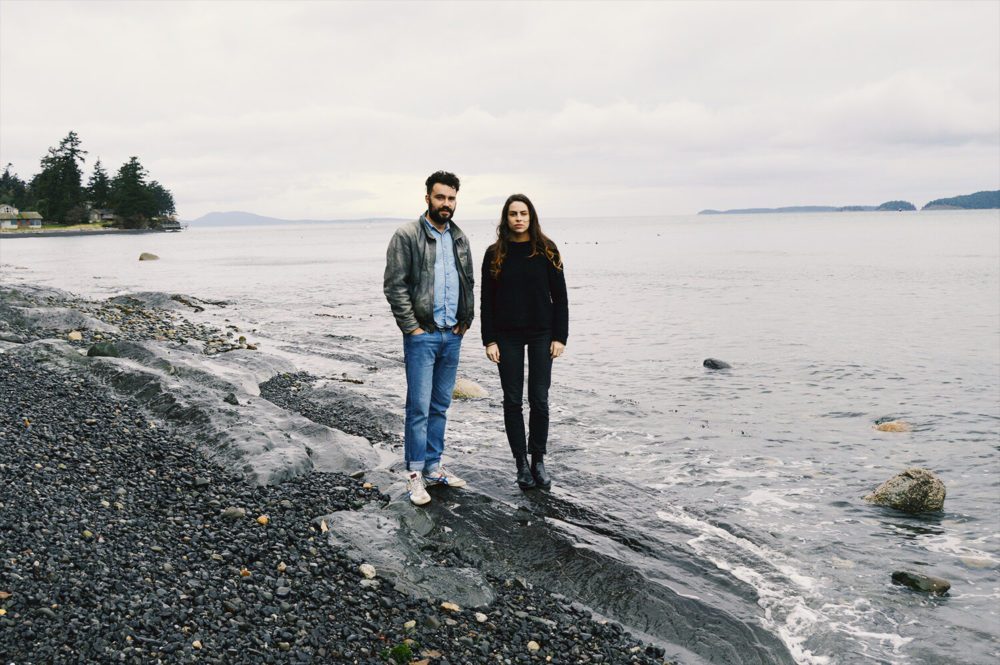
On “Home,” the new remixed single from electro-pop duo White Night, there’s a chime-like synth pattern and haunting vocal loops that swell over a percussive drumbeat. It’s classic indie electronica—and in some ways, not a sound that most people would associate with Seattle. Yet, White Night’s singer and violist, Elizabeth Boardman grew up right here in the Emerald City—this is where her musical journey began, and upon deeper listening, you can hear it.
Boardman remembers her parents playing everything from Nirvana to opera around the house, and at just three, she says she “begged” to start piano lessons. “I remember, from a very early age, taking comfort in the distraction and creative wholeness felt in sitting at the piano and improvising your own little songs,” she says. “I started playing viola when I was eight and as soon as I was old enough to join the Seattle Youth Symphony orchestra program, I fell in love with the sweeping romance and drama of composers like Tchaikovsky and Sibelius.”
After completing Garfield High School, Boardman moved to London to study viola performance at the Trinity Laban Conservatoire of Music and Dance and then later completed her Masters of Music at the San Francisco Conservatory of Music. It was there Boardman met German-born Willi Leinen, a Classical Guitar student, and the two began dating and making music together.
“Both of us had composed a bit on our own and Willi had been in a couple bands, where as I had only dabbled a little in pop songwriting before we started working together,” said Boardman. “But we both had that creative itch that was a relief to scratch amidst the stiffness and stress of our classical studies.”
Initially, Boardman and Leinen were only able to collaborate virtually, sending musical ideas to each other over the internet, since Leinen had moved back to Berlin and Boardman was still in the San Francisco Bay Area.
“Our first songs were put together across the ocean,” said Boardman. “We had our first radio airtime on a German radio station, [and] we hadn’t even played the music in the same room together. We’d only done it long distance.”
Boardman then moved in with Leinen in Berlin, partly to be closer to a major epicenter for classical and electronic music, and to take advantage of the city’s affordable living and vibrant culture. Since, the two have continued to hone the alternative synth-pop of White Night, drawing both on the mood of the Pacific Northwest and the electronic scene in Berlin.
For instance, on the title track from their 2018 debut album, Golden Heart, there’s the sweeping drama of Pacific Northwest scenery adorned with cinematic textures, strings, and a music video featuring many shots from the San Juan Islands. Musically, the track could sit alongside the music of Pacific Northwest indie-folk artists like Damien Jurado, Fleet Foxes, and Noah Gundersen. Meanwhile, another single on Golden Heart, “Money,” has more distinct Euro-pop flavor. A techno dance beat underpins as Boardman speak-sings, “Fancy cars/fancy clothes/what is real/what is fake/Money makes it yours to take.”
This newly-released version of “Home” is the best of both worlds. Originally appearing on Golden Heart, remix duties were handled by their friend, German drummer Hanns Eisler, who goes by INGO. The intoxicating momentum and precision in production ties the track to the vibrant electronic music scene in Berlin. At the same time, there’s also a good dose of the raw authenticity and quirkiness of the Seattle indie folk sound; “Home” brings to mind Northwest-bred Benjamin Gibbard’s work in Postal Service, as well as ODESZA and Feist.
Lyrically, the song explores what “Home” is and there’s a moody tension that swells throughout the track—almost as if the singer is in two places at once. “The song is about the concept of one’s ‘home’ being a collection of memories and nostalgic feelings which are untainted by time. Relationships, individuals, environments and circumstances are constantly evolving, appearing, and disappearing as one goes through life. Home is what we hold still in our minds and in our hearts,” explains Boardman.
The release of this single marks a new period for White Night, who have toured much with Golden Heart throughout Germany and the West Coast of the U.S. since last year. Right now, they are looking forward to writing a new EP, continuing to teach classical music from their home studio in Berlin, and eventually, to getting back out on the road.
“We are very excited to keep songwriting and hone our genre and style before we plan any bigger tours,” said Boardman. “For now, we are back to the songwriting grind-stone!”
Follow White Night on Facebook for ongoing updates.
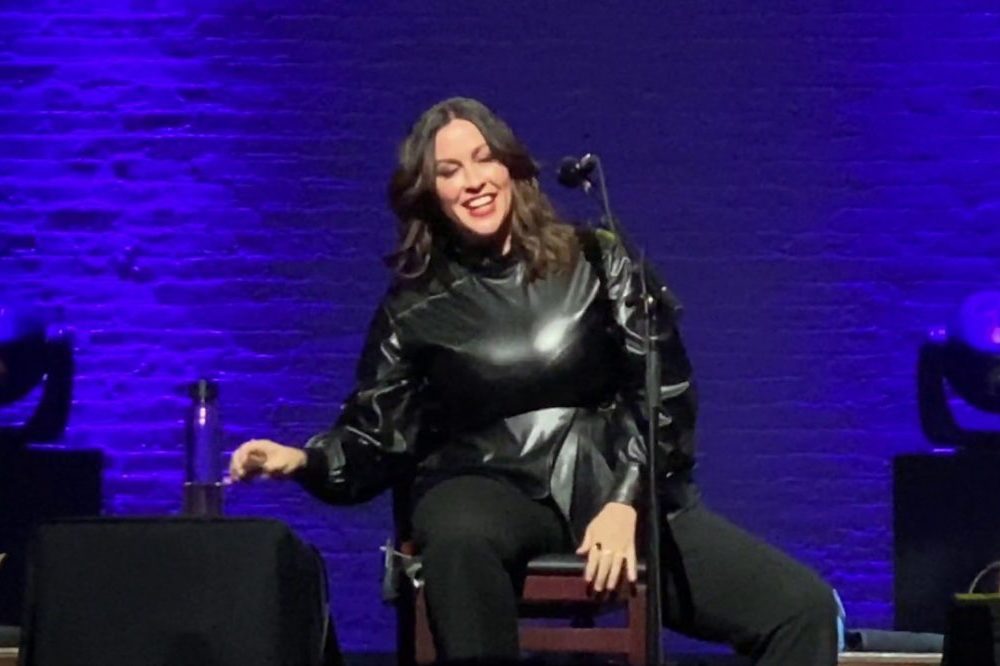
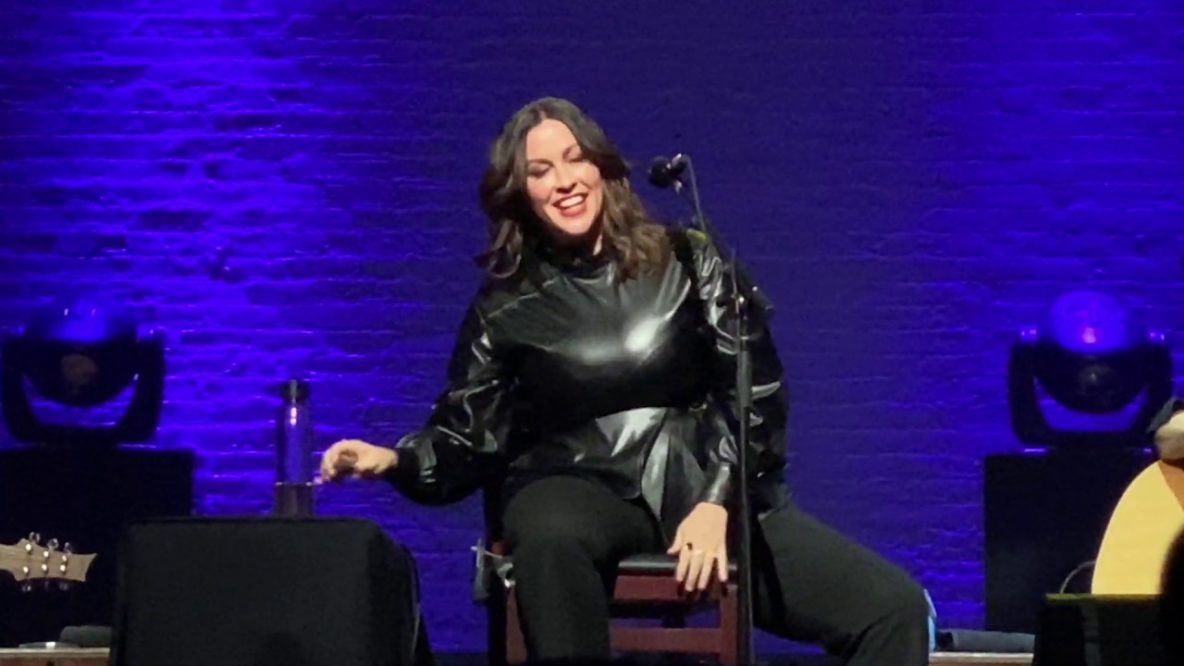
Alanis Morissette plays Jagged Little Pill at the Apollo (YouTube screenshot).
ONLY NOISE explores music fandom with poignant personal essays that examine the ways we’re shaped by our chosen soundtrack. This week, Tawny Lara details how a landmark ’90s album allowed her to feel a brewing childhood rage – and all the things she has to celebrate 25 years later.
November 30th, 2019 marked four years of my continuous sobriety. Each anniversary is celebrated with what I call a SoBerthday gift; past Soberthday gifts to myself have often been travel or some form of live entertainment. When I saw that Alanis Morissette was scheduled to perform a one-night-only show at the legendary Apollo Theater on December 2nd, I knew that was how I’d kick off my 4th year without booze. This special performance consisted of her singing Jagged Little Pill in its entirety to celebrate Jagged Little Pill: The Musical debuting on Broadway, as well as the 25th anniversary of the album itself.
I was nine years old when Jagged Little Pill took the world by storm. Mom and I had just relocated from Northern California to Waco, Texas. Dad stayed behind. They were never married. In fact, I never knew them as a couple. Dad was and is a heavy metal musician. For much of my young life, he was on tour. Going back and forth between Mom and Dad, between Concord and Alameda, then from Texas to California, took a toll on me – a toll I didn’t realize until I heard Jagged Little Pill and saw the video for “You Oughta Know.” It was the first time I heard a woman express what I now know as rage. Her pain was my pain.
It was the first time I saw a woman on TV who didn’t feel the need to present herself as society’s ever-evolving yet ever-unrealistic standard of “feminine.” Decades later I’d finally understand that expressing emotions – all emotions, including rage and anger – is absolutely feminine. But back then, nine-year-old me equated femininity with dresses and makeup and perfectly coiffed hair. Alanis’s demeanor and her sound were an act of rebellion.
Watching Alanis yell into the microphone in a gritty, sienna-toned video helped me learn that it’s okay to be angry and want to scream. I learned that there’s nothing wrong with expressing how I feel. Though I wasn’t old enough to experience a broken heart from romantic love as Alanis had, I had my own sadness from wishing my dad was around more. I missed my friends and family back in California. Starting over in third grade was hard. I didn’t understand why I had to move to a new city and home with my mom. Alanis and I both felt different types of heartache.
The range of emotions represented on Jagged Little Pill helped me identify my own emotions. The lyrics to “You Learn” served as my first self-help book. The simplicity of the music video for “Head Over Feet” captivated me. Even though nothing was happening, I was pulled in and couldn’t look away. Sometimes she’d look at the camera. Sometimes she’d sing with the song. But the whole time she was being authentically Alanis. I wanted to be like that.
As life progressed, I subconsciously learned to suppress my rage and other emotions as a way to cope. I didn’t know how to deal with trauma or anxiety or depression so I drank. And I drugged. And I drank some more. I suppressed said feelings until they erupted from me. I often cried when I drank. Or picked fights – both verbal and physical – with people I loved. I hid from my feelings so often that when I finally let myself feel them, it was too much to handle. So I drank even more until I got sober at age 29.
Jagged Little Pill aged with me. I went back to it when I wanted to feel comfortable. I’ve purchased it in nearly every available format: cassette, CD, mp3, iTunes download, and now stream it on Spotify. This album has been in my pocket (pun intended) for the last 25 years.
At the Apollo, she mentioned that she wrote the album when she was 19 years old. Though I knew the album was turning 25 and that she was now 45, it hadn’t occurred to me to do the math to see how old she was when she literally changed the world. I was in awe of the fact that a teenager wrote an album that spoke to people of all ages, races, sexualities, and genders. How can one album inspire nine-year-old me to connect with the rage I didn’t know I felt while simultaneously inspiring my 34-year-old aunt to finally get a long-overdue divorce? How can that same album still stand to the test of time a quarter of a century later to evolve into a Broadway musical? Because… Alanis.
Her show at The Apollo had campfire sing-along vibes. She sang Jagged Little Pill all the way through, plus “Thank U,” “Uninvited,” and a few new tracks. The sold-out crowd in the 1,500 seat theater sang every single word with her. A steady pool of water collected in my tear ducts throughout the duration of the two-hour show. Being in the same room as the woman who had such a significant impact on my life, on my emotions, was overwhelming. Again, she gave me permission to feel.
Sobriety is like being that nine year girl who just heard “You Oughta Know” for the first time: feelings are brand new again. I can no longer hide from sadness or anger or rage by abusing substances. I have to let myself feel. It’s challenging and uncomfortable, but so much growth comes out of it. Finding ways to process emotions in a healthy way is still a work in progress, but like Alanis tells us: we live, we learn.
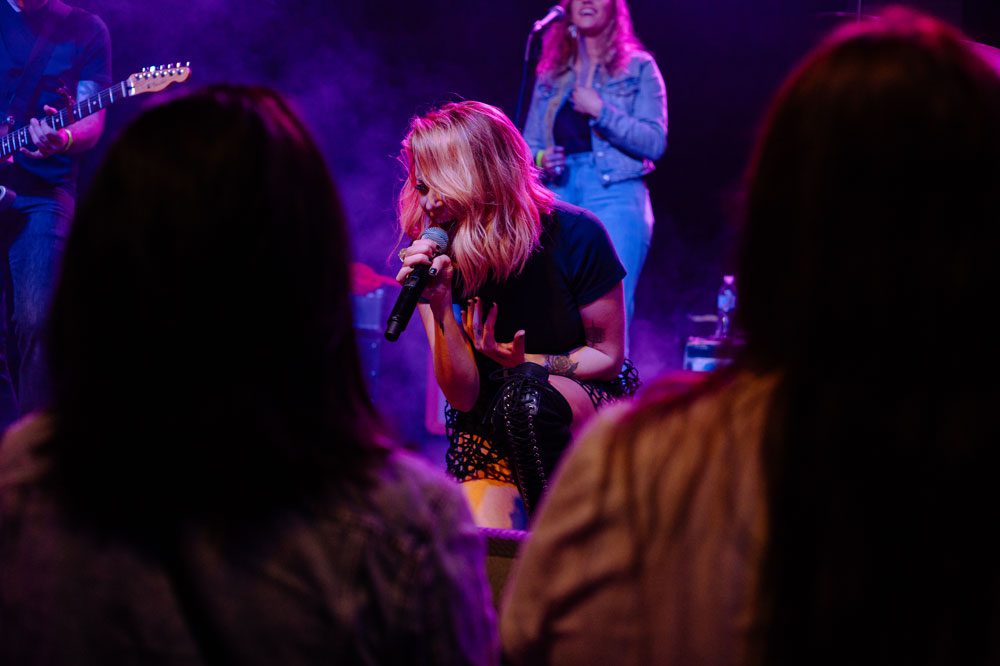
On Friday, January 31, punk-rock-meets-country goddess Kalie Shorr made her debut at Nashville’s famed rock club, Exit/In, for the opening night of her first headlining trek, the Too Much to Say Tour. Throughout her 90-minute set and two-song encore, Shorr treated the room to covers of My Chemical Romance and Nirvana, sandwiched between emotion-packed originals from her critically acclaimed 2019 album Open Book dealing with exes, angst and poignant thoughts about what it means to move forward after the loss of a family member. Here are the top moments from the show:
“The World Keeps Spinning”
After delivering a collection of powerful songs that reflect her no-holds-barred attitude about life, one of the best songs in the set came in the form of “The World Keeps Spinning.” Shorr and her co-writer Skip Black have both lost family members to overdoses – Shorr’s sister Ashley passed away in 2019 to a heroin overdose, while Black’s niece also died of an overdose at the age of 25. The chatter in the room went completely silent as Shorr began to share their stories, speaking as vulnerably as possible about the perspective that comes with losing a loved one in such an intense way.
“Glossing it over doesn’t help me, it hurts me,” she reflected. She’s turned this pain into a stirring song that recalls the tone in her father’s voice the day she got that dreaded call and puts listeners in the seat next to her as they drive by a wedding on the way to her sister’s funeral. Though filled with raw emotion and reflection, Shorr delivered it with poise and confidence, making for one of the most striking moments of the night.
Bold and brash Alanis Morissette cover
Introducing the track as one she wholly identifies with, Shorr did Alanis Morissette justice with her cover of “Right Through You,” featured on one of her favorite albums of all time, Morissette’s iconic Jagged Little Pill. Morissette wrote the song about the qualms of the music industry and someone who wronged her along the way. “Someone who says something really shitty…we all have that one person,” Shorr prefaced before delivering a fast-paced, high-energy performance of the song that throws a metaphorical middle finger to the dark side and politics of the music industry. Shorr rocked out all over the stage, and it was clear even from the back of the room that Shorr felt the song’s message in her bones – Alanis would’ve been proud.
“He’s Just Not That Into You”
We’ve all heard this famous line from friends and family when you’re in a relationship where the other half is clearly not as invested. But Shorr has turned this unfortunate situation into an anthemic jam where she exudes all the sass, dancing around the stage like a teenage girl singing into her hairbrush in her bedroom. A highlight of the performance, and the show overall, came when she took to the crowd almost mosh-pit style, charging into the center of the room and head-banging to her heart’s content as fans surrounded her, making for the rowdiest moment of the evening.
“F U Forever”
Shorr picked the perfect way to end the show with “F U Forever.” “If you’ve ever had a garbage ex, sing along real loud,” she encouraged, her sharp wit and sense of humor coming out full force as she unabashedly shamed a low-life ex with unadulterated attitude and her middle fingers in the air. Shorr oozes with confidence, even when admitting her own flaws. The song is custom made for a live show and a guaranteed crowd pleaser, and Shorr delivered on both fronts, bringing her monumental set to a thrilling close.
Shorr will make stops in Los Angeles and Las Vegas, and play two shows in Conneticut, before wrapping the tour at the Mercury Lounge in New York City on March 16.
When we last caught up with Philadelphia-based indie punk band Church Girls, they were just about to release their third EP Home; as the follow-up to their debut full-length Hidalgo, it showed a distinct evolution trending toward a rougher, more raw sound. That evolution has continued as the band — consisting of vocalist/guitarist Mariel Beaumont, drummer Julien Varnier, bassist Vince Vullo, and guitarist Joseph Wright — has released a steady stream of singles and last year’s Cycles EP. Simultaneously capturing the fun, energetic, beachy vibes of Best Coast, the angsty pop of Paramore and Garbage, and the campy, minimalistic style of CAKE (which Church Girls counts among its influences), the band is set to release its second full-length album this Friday, February 7 on Anchor Eighty Four Records. The Haunt, which ranges from the catchy, high-energy “Better” to the dark, brooding “Recede” and its aggressive title track, is some of the most honest and bracing music from the band yet.
Beaumont wrote the album’s latest single, “Florida,” about the conflicting feelings she experienced in a place where she spent time growing up and then visiting a love interest. The song encapsulates the ethos of a dull vacation in a way that perfectly conveys what it is like to feel stuck in life.
We talked to Beaumont about the inspiration behind her new single and album, the history of the band, and what punk music means to her.
AF: What are the central themes of The Haunt?
MB: I’d say we focused on addiction, like when a loved one or a family member closely is dealing with that, and then beyond that, other challenges that friends and family are going through, such as divorce and even sometimes not living up to your own standards. I was just watching close family and friends going through those kinds of things and was able to relate them with the issues that I’ve tackled myself.
AF: What do you hope listeners take away from the album?
MB: Although we explore some dark themes, the hope is that there is a little bit of hope among the maybe sometimes nihilistic or dark themes. I’d say often, the themes I’ve had are frustration with dealing someone else’s addiction but also knowing that no matter what, I’ll still be there for that person, even if I’m disappointing myself with my own behavior. The idea is that I’m recognizing it, and at least that’s the first step toward moving forward.
AF: What inspired the song “Florida”?
MB: I have a friend who lives down there, a guy I was kind of seeing, and I spent a lot of time down there. My mom actually lives there, too, and we’ve kind of grown up spending a lot of time there. I love it in ways, but I also kind of hate Florida because when you’re there, time kinds of stops, and the weather’s always nice, and you’re at the beach, and it can feel nice in the moment, but I start to feel very antsy after a while — I’m not moving forward. And sometimes I feel like my friend down there is stuck in the Floridian ways, and I’d like to pull him out. It’s nothing against Florida, by the way.
MB: They’re not called Church Girls anymore, but it’s kind of funny. That wasn’t my intent when I wrote it, but I do find it kind of funny that we have a song called “Florida” now.
AF: Where does your band’s name come from?
MB: I grew up going to Episcopalian school, and I was an acolyte growing up. I discovered punk music in high school and started going to a lot of shows, and in a way, that became my new type of church. I’ve always found that live music especially provides the same kind of soul-feeding you’d look for in going to church. It’s communal, it’s cathartic, and it’s reaching at something metaphysical.
AF: In what ways do you find punk music spiritual?
MB: I’ve always loved the way punk music is physical, and there’s aggression in it, but I remember going to a lot of shows growing up — I was scared sometimes in these pits, but I found the people in them were accommodating if people fell down or something. So, there was this combination of tapping at something primal and aggressive, but also, there was a communal aspect to it. I got a feeling it was kind of above cognition.
AF: What are your next plans?
MB: We’re heading out for a seven- to eight-week tour, and we’ll be going pretty much all over the US and hitting SXSW, and then basically spending the rest of the year touring as much as possible and writing our next LP, which we’re hoping to record at the end of the year or early next year.
Follow Church Girls on Facebook for ongoing updates.
Singer-songwriter Leila Sunier just moved to Los Angeles from Colorado in September. The 23 year-old chose L.A. out of a relative familiarity—she once spent a summer interning at a music library in the area—but the change of scenery is also symbolic of her ambitions in music.
“You kind of transplant yourself [here] because you know there are so many creatives focused on their craft and they’re very serious about it and you know that you can hopefully meet people that are like-minded and collaborate with them,” said Sunier.
“Ghost” is the second single released in promotion of her forthcoming EP, If Only to Bleed Out The White Noise. The EP, which drops February 14th, has all the trimmings of indie folk—but with a little something extra. There’s the experimental elements of noise and metal, and the authentic heartache of country-blues and vintage jazz—and she comes by each influence honestly.
“I didn’t listen to contemporary music really until I was 13 [or] 14,” said Sunier. “I grew up in a household where we played a lot of old country. Johnny Cash, Patsy Cline, that was every Saturday. We played a lot of swing jazzers. Frank Sinatra, Dean Martin. And then on road-trips, my dad grew up as like a metalhead, so of course there’s like Aerosmith, those bands from the ’80s, and whatnot. [I had] a very diverse and eclectic background.”
Her debut EP is also driven by the loss and struggle inherent in coming of age, says Sunier. Within the last couple years, Sunier completed her music studies at University of Miami and ended a formative romantic relationship, and the latter is delicately chronicled on If Only to Bleed Out The White Noise. “Ghost” is particularly nostalgic for the initial stages of her romance, and of a life where possibilities were endless and spirits were as high as a kite on a windy day.
The simple video, premiering exclusively on Audiofemme, bolsters the mood of “Ghost.” Crafted by L.A.-based filmmakers Jessie Klearman and Vivian He, and co-starring actor Gibran Zahedi-Mitchell, the video follows two lovers as they frolic smilingly on a beach, soaked in the faded colors of an overcast Santa Monica day, to the tune of Sunier’s misty, almost-familiar melody.
“This song I wrote at the beginning stages of a relationship and I really took this idea of like, ghosting – when somebody just suddenly leaves, there’s no explanation, they’re just kind of gone,” she said. “But then there’s this other side of it. To this day I still think it’s really incredible – how do you get to know somebody? Their story, and their life kind of becomes invisibly intertwined with yours; it’s something that isn’t immediately perceived, you’re just starting to like, join energies or whatnot. That was really the whole crux, the concept. I was watching this relationship start and it was really exciting and new. And then it’s kind of funny, the phrase ‘ghost’ kind of popped up in other songs on the project because in the creation of this project I watched this relationship begin and then end.”
And “Ghost,” is the most optimistic track about this romance. In general, the painful end of this relationship—and the beginning of a new stage of life—gives Sunier’s debut EP a haunting, aching sort of quality. She contends with emptiness and confusion most of the way—the ghosts of what she’s lost in the process of loving and leaving this person. The hollowness is in the background on the first track, “Cut A Smile,” but only continues to grow in urgency as the EP goes on. By the final track, “Outro,” it’s in the foreground, and Sunier addresses the pain directly to herself and her listeners. “I’ve been living with ghosts of myself,” she sings.
“The project was almost called ‘Ghosts of Myself,'” she said. “But then it also really focused on this idea of noise. If Only to Bleed Out the White Noise is a lyric from the second to last song called ‘Young Thing,’ which is me reckoning with growing up and what that means. I think a lot of people my age generally, it’s like ‘Wow, I have to grow up.’”
Through the process of listening to the EP, the listener gets to grow up with Sunier. A certain hollowness is filled. In that way, If Only To Bleed Out The White Noise has the storytelling power of a concept album. After all, Sunier crafted it over a two-year period of her early twenties, a time universally known for its growing pains. With each song, Sunier’s understanding of herself and of her creative voice expand into an ever-widening horizon, and the magic here is how artfully she tells her own story and draws in her listener. By the end of this stunning journey, she’s found her voice—a lush, honest, and individual one at that.
Follow Leila Sunier on Facebook for ongoing updates.
Entering its ninth year, Cincinnati’s upcoming Bunbury Music Festival is going to be a doozy. The mixed-genre fest announced its 2020 lineup on Thursday and will offer an eclectic mix of rock, pop, and electronic music. Twenty One Pilots, Marshmello and The Avett Brothers are set to be the three-day festival’s headliners. Supporting acts will include Kane Brown, Melanie Martinez, blackbear, Ski Mask The Slump God, Alec Benjamin, The Struts, Cake, COIN, Betty Who, Neon Trees, iDKHOW and more. According to a festival press release, additional artists are also expected to perform and will be announced later on. Once again, PromoWest Productions will organize the festival.
A version of the 2020 lineup was first leaked to fans early on Thursday morning. Despite the leak, the final lineup was announced later that night, which showed a new design, artist rearrangements and the addition of Nine Inch Nails drummer Ilan Rubin’s band, The New Regime.
Last year’s Bunbury hosted a large mix of alternative rock and hip hop and also spotlighted a handful of local acts. Featured artists included Machine Gun Kelly, Run the Jewels, Fall Out Boy, Stone Temple Pilots and Cincinnati’s own TRIIIBE.
“I feel like healing is its own vibration. Music carries and supports that vibration,” TRIIIBE’s ex-member, Aziza Love, said of the performing experience. “Joining with people we’ve never met before in that same space, to invite them to do the same thing, I think is so powerful.”
Bringing in around 50,000 attendees, 2019’s festival was possibly most notable for its ease. While some music events can be derailed by overcrowding or poor organization, Bunbury’s adequate number of food and drink vendors, spacious grounds and multiple stages made for a convenient and easy-going festival experience.
General admission, VIP and Ultimate VIP tickets are currently for sale on the Bunbury website. The festival will return to downtown Cincinnati’s Sawyer Point and Yeatman’s Cove on June 5, 6 and 7. According to the website, the daily performance schedule will be announced soon.
Welcome to our weekly show recommendation column RSVP HERE – your source for the best NYC shows and interviews with some of our favorite local live bands.
Catty is a Brooklyn band lottery success story. After their names were drawn out of a hat, they quickly churned out a couple songs to play at a show that night with Ana Becker on vocals and guitar, Manny Nomikos on bass and vocals, Bryan Thornton on guitar, and Don Lavis on drums. Rosie Slater (also of New Myths and Delicate Steve) took over drummer duties after Don moved to Minneapolis. They’ve released a collection of demos in July called Scratch, recorded at Cavebird Gallery and their small practice space. Catty plays Alphaville on January 31st alongside Gorgeous, Drummers Can Achieve, and Feral Scouts (it’s Benji’s birthday bash; he’ll be playing with Feral Scouts and Drummers Can Achieve). We talked with all the members of Catty about how they’re actually bird people, what Prince song they would cover, and they even wrote us a couple poems.
AF: You met at a band lottery. How was that first time playing together and what made you want to continue to play together?
Ana Becker: The first time we played, we were grouped together completely randomly; our names were quite literally pulled out of a hat. We didn’t even really know each other very well, though we knew of each other and the bands we each played in. There was immediate chemistry, both personally and musically. We wrote a couple of songs and learned a cover and played it all six hours later, along with the rest of the groups of the hat-pulled. It was really remarkable how much fun we had, how well we got along and how happy we were with songs we wrote absurdly quickly. After the show I felt like I’d just had a super-promising first date – I was really nervous and excited. Was it all in my head? Did they feel the chemistry too? Or was it just me? Could it be the beginning of something very special?
Since then, our original drummer Don Lavis moved to Minneapolis (we miss you, Don!) and we’ve been super lucky to have tricked the inimitable Rosie Slater into joining us! We lured her with promises of Beatles jams.
Manny Nomikos: Everyone was so generous with their creativity. At first I was really intimidated by each of their individual talent, but the support everyone was showing made it less scary to play music with them. Almost immediately, I felt like I wanted to be with these people all the time.
AF: At your first official show as a band you had everyone vote on band names – what were the other band names that were almost chosen?
AB: I still have the poster board in my room! I’ll have to check it. We wrote down a bunch of options, and gave people post-it notes to write their favorites on. At the end post-its were everywhere so it was pretty hard to count votes, but we did our best. Wrong Legs was one option (I hate snakes, my sister Laura hates spiders, both of them have the wrong number of legs). Our moniker from the band lotto was another choice (“Hayyy Saylor” – not the worst, but probably too whimsical for the vibe of the music). People kept writing THEIR first names on the post-its instead of their favorite band name option… I still find green post-its with random names on them from time to time.
MN: I was just really hoping we didn’t end up being Wrong Legs. I liked Hayyy Saylor, but that would require us write only nautical themed tunes and we only had enough material for two nautical albums.
Bryan Thornton: I really championed the Charlie Manson Band, but quickly found out I bet on the wrong horse. Like bad jeans, the name did not fit.
AF: What is everyone’s favorite kind of cat and/or funny experience with a cat? Since you’re actually bird people, what are your favorite types of birds?
AB: My favorite cat on planet earth is Bruce Squiggleman Kittowitz, whom I recently had to move away from and miss very much. My favorite type of bird is Manny.
MN: I like cats when they get too old to murder. Then they just hang out and it’s alright. I can talk all day about birds, but I’d have to go with Quaker parrots. My first bird (Sproose) was a Quaker and loved music and singing along to songs I played… now I have a nanday conure and she is affectionate but also very complicated.
BT: I’ve grown up with cats always around via both parents – so I’ve always thought that cats are superior to dogs. Dogs are too subservient cause they look at you like some big alien deity that manifests food and shelter, but cats think you’re just another cat (a giant, weird, mostly hairless cat, but a cat nonetheless) so they really don’t mind you much. I like any kind of cat that doesn’t care about my existence so I can try to win their favor and make them think I’m cool.
Rosie Slater: I was raised by cats.
AF: What Prince song would Catty cover?
AB: “When Doves Cry.”
MN: “I Would Die 4 U.” Or “Batdance.”
RS: “When You Were Mine.”
BT: “Kiss” might be cool.
AF: What is the best crowd surfing technique?
MN: Make sure it’s at a rock show, and not a children’s party, unless you want to be uninvited from all future kid parties.
AF: Write me a poem.
AB: You’re the kind of gal I’d cross the street to say hello to
Even if it meant I had to run
We got back from the west coast, and I rented out your bedroom
I didn’t sleep there once
BT: I don’t like massages
And I’ve never been to a sauna
But I once saw your band
Cover Nirvana
AF: What are your plans for 2020? Anything else you’d like to say?
AB: Catty’s organizing our SXSW run at the moment, and we’re cooking up a couple of singles to release soon! We worked on two songs so far with Jeff Berner, which has been a pleasure and a privilege. An LP looms in Catty’s future. Personally, in 2020 I plan to spend as much quality time as I can with my guitar, and my loved ones. I’m feeling very grateful lately and it’s corny as fuck, please forgive me.
MN: MacGregor’s Bowerbirds are an amazing bird species that can mimic about any sound and you should look them up now.
BT: I’m afraid of being canceled by the dog community – dogs are great, but just not as great as cats.
RSVP HERE for Catty, Feral Scouts, Gorgeous @ Alphaville. 21+ / $10-12
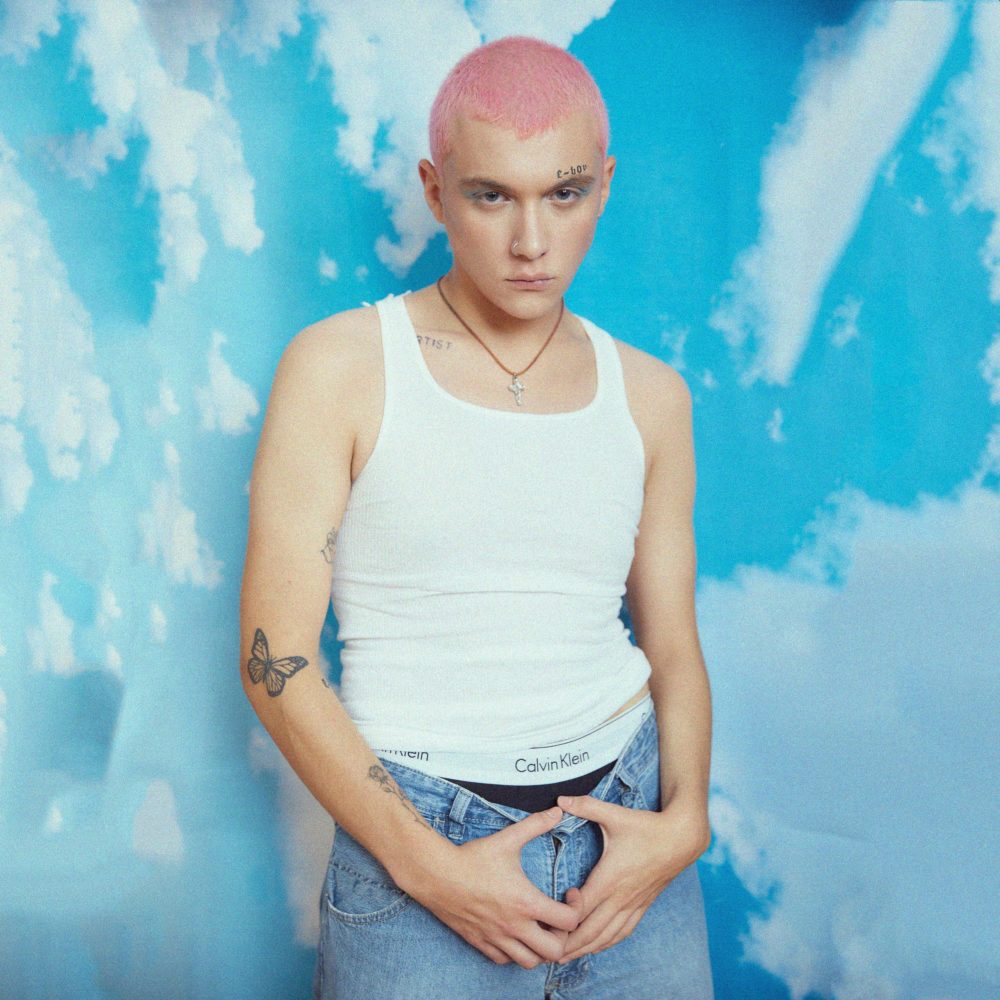
Perusing his Instagram – culled images of internet fantasy, bubblegum pink hair, and over-exposed filters – you quickly learn that it’s more than a passing fad. Daniel is as authentic as they come, employing flashy, modern aesthetics as a means of understanding and establishing identity within a community. He’s a bold firestarter, and his debut EP, E-Boy, out today, speaks to his fearless predilection for usurping pop conventions.
The title track to his debut EP is a magnetic, glitchy, and addicting piece of pop music.“This is not a phase / This is not a trend / Welcome to my world / This is who I am,” he coos through a cotton candy haze. Through glossy immersion, mining the popular subculture of e-boys and e-girls, Daniel finds himself feeling alive and loved like never before.
In simple terms, e-boy and e-girl subculture comments on growing up in the internet age. “We all dress like we’re in the internet age, and we’re very relevant to what’s around us,” Daniel explains over a recent phone call. In his work, he combs the synthetic wonderland in both his music and socials – intertwining them both into an electronic fabric.
“I wanted to create a song around that,” he says of “E-Boy,” now paired with a bright, symbolic new visual. “People think I’m emo, and people think I’m always depressed – but it’s just that we’re e-boys and e-girls who live in this made-up fantasy world,” he continues. “It’s created by the internet and social media. They all come together, and it’s like a big family.”
“Catch me on your feed / I light up your screen,” he also observes, mixing a robotic maneuver with a smooth, silky tone. “When I pop up as an e-boy on your Instagram feed, the people’s faces are going to light up,” he says. “They’re going to see another e-boy or e-girl who is in that subculture living this life they kind of want to live. That little thing can strike happiness in someone, even if it is Kylie Jenner posting a picture. That could be the coolest thing they saw that day.”
The music video, premiering below, was directed by Sideways Studios and guides the viewer through “my days as an e-boy,” Daniel notes, “waking up, getting dressed, doing my social media. We have a lot of different visuals that you’d see on a computer screen projected onto me. It’s basically me looking at myself in the computer the whole time. I’m watching another e-boy doing his day-to-day life while I’m trying to be that e-boy.”
Daniel grew up in Maple, a small Toronto suburb. While downtown Toronto was only 40 minutes away, his hometown felt suffocating and secluded from city life. “When I was young, I loved my town, and now I hate it,” he says. “I feel like it’s really small, and people are more closed-minded there than in Toronto. I always felt more at home downtown with all different types of people. I could walk around the street wearing the craziest outfits and people don’t really look twice at it – if you get what I’m saying.”
His parents remained supportive, allowing him to dabble in musical theatre and dance. No creative expression was off limits. “Since I was younger, my parents always recorded clips of me dancing in our backyard. My dad did music when he was younger, and he plays tons of instruments. So, he was very much like, ‘If this is what you want to do, go ahead and do it.’”
Now 19 and calling Toronto home, Daniel finally comes into his own on E-Boy, a five-song feast of organic-based pop music. Where “Suburbia” aches with the pressures of small town living, “Sad Boy” strikes as a vengeful serpent. “I’m just a sad boy, a fucking sad boy,” he scowls.
Coming of age in the modern era comes with a heavy price. “Sad Boy” speaks to not only the constant race to ramp up one’s social numbers but a falling out with a former friend. “When I was younger, I always felt like an outcast. I never really fit into a certain group of friends. Throwing in social media on top of that, everyone is concerned about numbers,” he says with a sigh, “and if I have more followers than you, you can’t be with us. It’s just something we’re all worried about, and even though we say numbers don’t really matter, numbers do matter for a lot of kids and youth today.”
“Now you go around acting like you’re famous / I don’t want to come across like I’m interested,” he spits in the song. There is a smoldering anger tinted on his vocal, an intentional choice that day in the recording studio. “I had a really good friend, and we were friends all throughout high school. Basically, we were like brothers. He started doing social media stuff. We made a promise that we would never leave each other’s side, and we’d always help each other out,” he remembers. “So, whoever had more followers, we’d always post about each other. At the end of it, he blew up very quickly within a year and had millions of followers. He abandoned me and said, ‘Oh, you don’t have the level of success yet that I have. I can’t be friends anymore.’”
Such emotional pain pulses at the heart of Daniel’s new EP – produced by Andrew Polychronopulous and Brandon Pero. “When I was writing this EP, I was depressed and in a weird space in my mind. I found the best way to get through that was to add in real guitars to show a more raw side of the music. Then, the synth and computerized instruments were a way to show my anger.”
Daniel, who calls Youngblood, Sasha Sloan, Troy Sivan, and David Bowie his biggest influences, marries aggressive pop hooks with messages of self-love and redemption. “I was very conscious about how I looked in pictures. I always wanted to show this image that life was perfect and nothing was ever wrong,” he says of his journey. “Now, growing up doing this, as a career, I learned that people just want to see the real me. There’s nothing to hide anymore. I can look so ugly in a picture, but I can still post that because I was actually happy at that moment. It’s this battle that I’m still dealing with.”
On his Facebook page, Daniel vows to “break the barriers that the industry has put on male pop musicians, through my music and style.” He elaborates on what he means, saying, “When I’m doing music or performing, I love to bring an element of being feminine onstage. I feel like a lot of pop artists are scared or want to follow a certain form. I’m always thinking about how I can twist that around and make it my own. Like in my last show, I performed in heels. It was something I felt most powerful in. I always want to switch around the standards of what people think pop music is. For so long, I was so scared. I’ve never been the most masculine guy. I’m not ashamed now.”
That’s where Julian Daniel’s debut EP, E-Boy, comes in. It’s emotional, empowered, and raw. “I want everyone to know that being you is completely fine,” he offers. “You don’t have to hide yourself from people. There’s going to be other people who accept you and love you.”
In 2018, singer-songwriter Niki Black released her first single, “Not Coming Up,” a harmony-driven track about refusing to apologize for her feelings for another woman. Since then, she’s also gained attention for “Hallelujah,” which explores her loss of religious faith.
Her latest track, “The Other Man,” mixes beat-heavy R&B vibes with religiously inspired lyrics like “I’m a snake without my garden / out of heaven I have fallen into lust / it is too late for me / he’s all I believe.” Later this year, she plans to drop her first album, appropriately titled LILITH.
Hailing from LA, Black draws from the blues and American classics her Chicago-born father introduced her to as well as the Iranian pop tunes she learned from her mother.
We talked to Black about her newest song, her larger body of work, and her experience as a queer Iranian-American artist.
AF: What inspired you to call your album LILITH? Is there something in particular that draws you to that Biblical character?
NB: Lilith is a parable that I was definitely moved by immediately when I was told about her. The story of Lilith for me represents rejecting a feeling of inferiority that is imposed upon you externally and pursuing your own virtue. This is symbolic most obviously of her femininity, and I think she has been reclaimed as an inspiring figure for this age that is more in touch with femininity and rule-breaking when it comes to social conventions and power relations. I wanted to bring that spirit into my own world when putting this album together, and share that empowerment with others as well.
AF: What’s the story behind your new single “The Other Man”? There seems to be a theme under-riding your music, including this song, of falling out of grace with god — what inspired that?
NB: “The Other Man” goes back to the story of the Garden of Eden. Eve, who parallels Lilith to me, is fighting the desire to choose between temptation and new consciousness as represented by the serpent and the apple and a predictable, safe love with Adam. I wrote this song to explore the moral dilemmas of wanting someone else, especially from a woman’s point of view – which is also why I reversed the common trope of “The Other Woman” for this song. When Eve, or me, or whoever is listening relates to going for the other man, that is where I want to question what others would call falling out of grace or giving in to the temptation.
The inspiration in writing about these themes comes from these strict moral compasses that I think people can easily project on each other without understanding the feelings of others, which ultimately has resulted in an isolation from each other shrouded in judgements. I also think it is important to address these desires within yourself, which is why writing them helps me sort through these complicated feelings.
Photo by Matthew McReina
AF: What other themes are you exploring in LILITH?
NB: The album also relates to Dante Aligheri’s The Divine Comedy, which is the journey from hell through purgatory to salvation. I reversed this plot and, as you mentioned before, explore falling out of grace from others’ judgements and the world, and eventually coming to your own self-consciousness and personal salvation. Having a conscious mind and being loving to yourself while being subject to a host of judgements from society, religion, friends, and family that ultimately replace your own narratives is a very important theme to me in this album and in my own life. Another way to listen to the album is in the linear narrative of being in love with someone. You start off with the person so perfectly that you feel like you’re in Paradise, but then ultimately, the love changes so drastically that it feels like it was dragged to hell. Then, the album resolves in finding your own love for yourself again within those painful feelings.
AF: Your song “Not Coming Up” is really powerful — could you tell me about the experience that led you to write that?
NB: That song explores what I personally faced in experiencing that religion really can manipulate how people perceive the most beautiful emotion in the world – love. Particularly, I experienced this in queerness when a religious parent was extremely hateful and disapproving to a relationship I was in. The song essentially is approaching that in saying, “Alright, well, what if I don’t believe any of those thoughts of going to hell for loving, can I escape these judgements? If you say this is hellish behavior, but it feels like heaven, I might as well just enjoy it down here.”
AF: How does your Iranian heritage influence your music? How has it affected how you’re viewed and treated in this industry?
NB: It affects me in the way that I get super excited when I see Iranian artists having an impact– like Snoh Aalegra, or Sevdaliza. I would say that the Iranian heritage I have has given me a deep appreciation and connection to our mystic poetics like Rumi and Hafez. I also love the different tones and melodies that classical Iranian music uses, which I plan on incorporating into my music sonically even more on the next album.
AF: What are your next plans?
NB: I’m going to keep writing, releasing, and performing, of course. I’m trying to now meld a new story after releasing a song from Lilith every six weeks and ultimately the album at the end of it, with visuals as well. I just want to stay inspired!
Follow Niki Black on Facebook for ongoing updates.
Filled with vulnerability and raw emotion, Liz Longley reclaims her personal boundaries in her new song, “3 Crow.”
Through a song that blends Christina Perri-esque vocals with a calming effect akin to Lana Del Rey, Longley paints a melodic portrait capturing the pain she felt breaking ties with a toxic friend. In a phone interview with Audiofemme, Longley shares that she often discusses the stories behind her songs on stage during live shows, but this is one she’s kept close to the vest.
Instead, the song speaks for itself, touching vividly on Longley’s experiences: having to bring a friend home after an altercation at the titular bar she can no longer go to; the time she stood watching with “tears in my eyes” when the friend got pulled over; lines becoming blurred both literally and metaphorically. These memories feel especially poignant because they’re real – the song was written about someone who lived near East Nashville neighborhood and took advantage of her friendship – and over the course of a few tumultuous months, Longley began to realize that actions she initially thought were in her best interest were actually done for the other person’s gain.
“Writing the song was my way of processing being around someone who didn’t respect my boundaries emotionally or physically, and trying to process that and learn how to set my own boundaries so that I wouldn’t set myself up for them to be challenged or disrespected again,” she explains. “I was thinking about it kind of like being under the influence, but of a person. You think ‘I’m a strong, independent woman, I’m not going to get under the influence of a person or fall victim to another person.’ It was eye-opening to realize that it can be a very gradual decline in a situation and it can grow into a situation where you don’t feel safe and it can happen to anyone.”
Longley says she wrote “3 Crow” in a near “meditative” state where the words began pouring out one night after being near this person’s house, leading to an awakening about the uncomfortable situation she was in. “Just the sight of this person’s house triggered me writing this song,” she observes. Vulnerability is an integral aspect of “3 Crow,” particularly as she sings “Slept on your couch/I insisted/You grabbed my mouth/And tried to kiss it/I gave you aspirin/And I swallowed a few hard pills myself.” It’s in these words that Longley expresses a sense of defeat that eventually turns into triumph.
Following “that realization, that hard pill that I swallowed of taking responsibility for letting myself get into this situation and letting it get to this point and almost feeling the defeat and the shame in that,” Longley says she experienced “that turnaround point where I’m saying ‘I’m not going to stand for it anymore, this is not going to happen again.’”
Longley stands firm in her proclamation not to let the vicious cycle continue by repeating “any more” at song’s end. This repetition is symbolic of how she’s standing firm in her strength and refusing to allow this unwanted behavior to be a part of her life. “Sometimes the songs come before the realization of what’s going on… putting this down on paper and then stepping away, I started to realize a lot of the symbolism in it and what I had to learn from writing it,” she affirms.
The Nashville-based singer has since cut off contact with this person and has used therapy and other healing methods as a way to move forward from the experience she expects will “unravel” as time goes on. “3 Crow” is featured on her upcoming album, Funeral For My Past, and marks the first time in four years that she’s released new original music. She hopes that when listeners hear this song, they’ll feel a sense of safety and acceptance. “Each and every one of us deserves to be loved and respected and if you’re not, I just want people to know that they’re worth more and that there is a way out and there’s hope for them,” Longley shares. “I just hope that it resonates with them on the same level that it did for me when I was writing this song.”
“3 Crow” is available now. Funeral For My Pastis expected to be released this year. Follow Liz Longley on Facebook for ongoing updates.
Lil Nas X and Billy Ray Cyrus perform their smash hit “Old Town Road” at Spotify’s pre-Grammy party showcasing Best New Artist nominees. Photo by Suzannah Weiss.
On Sunday, January 26, 18-year-old singer-songwriter Billie Eilish took home an impressive five Grammy awards: best new artist, album of the year, record of the year, song of the year, and best pop vocal album. The week before, I had the chance to attend Spotify’s official Grammy party, which included performances by Eilish and the other Best New Artist nominees.
The party was held at the Lot Studios in West Hollywood, and getting into the venue was an adventure in and of itself. After standing in a line to get on a line to get on another line, I’d unfortunately missed the first act, hip-hop sensation Lizzo, but I did get inside in time to catch Eilish’s performance.
Only at an LA music industry event could there be such an unfazed crowd in front of an artist who is about to win a Grammy. Acknowledging how many people were talking, eating, and otherwise failing to give their full attention, Eilish joked, “I’m sorry to make you be quiet for this.”
The audience’s ostensible lack of enthusiasm didn’t reflect the quality of the act, though. Accompanied by her brother Finneas O’Connell on keyboard, Eilish played a mini-set consisting of “I Don’t Wanna Be You Anymore,” “Everything I Wanted,” and, of course, the haunting “Ocean Eyes.” The highlight, though, was their rhythmic yet mellow acoustic rendition of “Bad Guy.”
Next came a very different nominee, funk and soul duo the Black Pumas, who delivered an eclectic meld of rock and R&B on tracks like “Fire,” which was a bit reminiscent of The Black Keys, “Know You Better,” which contained gospel-like harmonies, and the soulful, catchy “Colors,” which featured an animated keyboard solo.
Singer-songwriter Maggie Rogers then took the stage, giving the night’s most energetic performance. She jumped up and down and danced almost nonstop as she cycled through hits like “Give a Little,” with its gorgeous closing harmonies, and “The Knife,” to which she added a classical piano intro. Singing poppy tracks like “Say It” and “Love You for a Long Time,” Rogers came off like she was genuinely enjoying herself, bending down at one point to give audience members high fives.
The audience favorite, however, seemed to be Lil Nas X, who opened with his second single “Panini.” Afterward, he accidentally called out to the audience, “What’s up, New York?” Everyone cheered nonetheless. He followed with “Rodeo,” then brought out Billy Ray Cyrus for an infectious performance of “Old Town Road,” leading audience members to sway and sing along to “I’m gonna take my horse to the old town road and ride ‘til I can’t no more.”
Spanish pop artist Rosalía came on next, appearing alongside dancers in Flamenco-like garb for a show that was visually stunning as well as musically catchy. I left before I got the chance to see the other two nominees, English singer-songwriter Yola and funk group Tank and the Bangas.
While Eilish was the one to take home the award, it’s clear that none of the other varied nominees will be fading from the public eye (or ear) any time soon. The Black Pumas are speaking to a variety of audiences with music that’s poetic and catchy, oldies-inspired and modern at the same time; Rogers is taking over the radio by adding her own original flavor to pop music; Lil Nas X has released several chart-topping songs at the tender age of 20; and Rosalía has a unique sound that’s catching attention worldwide. It’ll be exciting to see what each of them has done by the time the 2021 Grammys air. I’m betting it’ll be quite a bit.
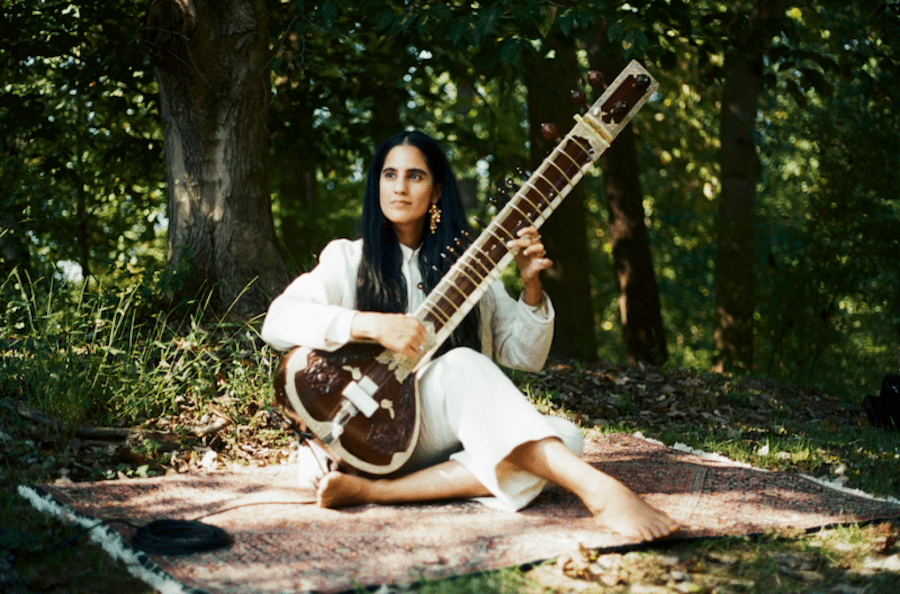
Since the 2011 release of her debut album, Hukam, Ami Dang has carved out a singular career as a sitarist and electronic music producer. The Baltimore-based artist is classically trained, having played sitar since the age of 12 and studying voice and sitar in both the U.S. and India. She’s also a graduate of Oberlin Conservatory of Music, where she studied music technology and composition. All these influences come together in a sound that connects the deep history of North Indian music and 21st century electronic music.
Dang’s solo work has ranged from the experimental pop of her early releases to the ambient exploration of her acclaimed 2019 album, Parted Plains. On Parted Plains, she focused on instrumental tracks, creating rich, emotional narratives without words.
On her journey, Dang has collaborated with equally forward-minded artists like Animal Collective and Pearl and the Oysters. Live, she has played alongside an eclectic array of artists, including Grimes, for whom she opened in 2013, Lil B, Dan Deacon, Bonnie Prince Billy and Beach House.
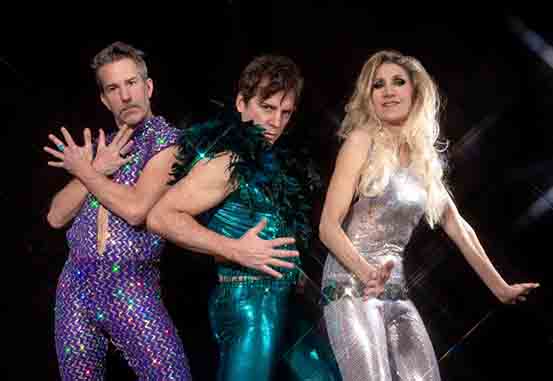
For 20 years, the trio Unitard has chronicled modern life in New York and beyond with sketch comedy that has tapped into everything from street petitioners to Harvey Weinstein to Donald Trump’s hemorrhoids.Mike Albo, Nora Burns and David Ilku are boundary-pushing comedians, unafraid of digging into the darkest corners of 21st century politics and culture. Their bold stage shows have earned Unitard critical acclaim and high praise from fellow wits like Parker Posey and Jennifer Coolidge. Their work has appeared on NPR, CNN, Logo, Comedy Central and other national outlets.
Unitard has performed across the U.S., from Wigstock to SF Sketchfest, but Joe’s Pub has become a frequent haunt for the trio. They’ll return to the venue on January 29 with their current show, “Badassy!,” which initially ran at Joe’s Pub in spring of 2019 and returned in the fall for an extension of their residency.
It’s been a roller coaster of a decade, even on the pop culture front. With the dominance of social media, the rise of streaming platforms and increasingly smarter phones, how we discover, ingest and interact with music has changed drastically. In an era where new hits can have the shelf life of a trending topic and a 40-something year old Dolly Parton song can come back as a meme, Robyn unleashed a tune that would withstand a decade of fast-paced trends and dramatic shifts in technology and culture. With “Dancing on My Own,” the Swedish singer didn’t just give us a song to help define this decade, she gave us the “Jolene” of the 2010s.
Robyn did this with devastating lyrics, a voice that articulates a mess of emotions and a beat that places you inside the club that is the setting for this scene. While ’70s disco and ’80s synthpop are clearly an influence, “Dancing on My Own” is no throwback. Instead, it retains a timeless quality with a sense of musical restraint; the beats and synths never compete with her voice and words. In less than five minutes, Robyn takes the listeners on a ride through embarrassment (“Yeah, I know it’s stupid, I just gotta see it for myself”), frustration (“I’m right over here, why can’t you see me?”) and resignation (“I just came to say goodbye”). In the process, she created something for the dance floor, the karaoke stage, the car and the shower. She made a song that can bring people together for collective solace and one that can make you cry when you think no one is watching.
“Dancing on My Own” takes its cues from the history of sad club music, but at its core, this song has more in common with Dolly Parton’s 1973 country classic. They tell completely different stories. With “Jolene,” Parton sings a plea in an attempt to stop the heartbreak before it happens (“My happiness depends on you”). In “Dancing on My Own,” Robyn sings of pining for a love that has already moved on to someone else (“Somebody said you got a new friend”). Both songs, though, create incredibly vivid scenarios of the gestures people make to try and hang on to a love that might already be long-gone and the pain that results from that. They tap into these visceral emotions so skillfully that you can’t help to sing and dance, even when it hurts to do so.
“Jolene” may not be Parton’s biggest hit, but it’s an enduring one. Over decades, it’s been covered numerous times by an eclectic array of artists that includes ’80s goth-pop duo Strawberry Switchblade, The White Stripes and Miley Cyrus. In recent years, it’s fueled a slew of memes, including a riff on the “distracted boyfriend” image that was shared on Twitter by Parton herself. Meanwhile, “Dancing on My Own,” still less than a 10 years old, is on the trajectory to classic status.
At the dawn of the decade, Robyn was already one of the hippest indie pop singers around. She had flirted with the mainstream in the 1990s and early ’00s, but eschewed that route and launched her own Konichiwa Records for the release of her 2005 self-titled album. Her mix of emotional synthpop (“With Every Heartbeat”) and fun dance tunes (“Konichiwa Bitches”) earned critical acclaim and garnered her a new legion of fans. By 2010, Robyn’s next move was anticipated and she responded with the Body Talk series of releases. “Dancing on My Own” was initially featured on Body Talk Pt. 1 in June of 2010 and reappeared on the full-length Body Talk album in November of that year.
But, that all seems like the distant past now. “Dancing on My Own” harks back to a part of the decade when Barack Obama was only a couple years into his presidency and slogans like “hope” and “change” permeated American culture. Binge-watching TV shows on Netflix had yet to become a major pastime and Instagram was in the midst of its birth. “Dancing on My Own” is, in some ways, a link to the ’00s, when dance floor-friendly indie artists with their genre-blending influences ruled everywhere from nightclubs to music blogs. But, it’s also a song that grew as the ’10s progressed.
Sure, “Dancing on My Own” had some chart success in multiple countries upon release and, yes, it was often praised by critics. However, its stickiness increased with appearances on television shows, like Gossip Girl (2010), RuPaul’s Drag Race (2012) and Girls (2013). No doubt, it benefited from streaming too. To date, the video has been viewed over 52 million times on YouTube. On Spotify, it’s Robyn’s most popular track, with over 150 million plays. By the middle of the decade, “Dancing On My Own” had gained a second life with a cover by Calum Scott that originated on the TV show Britain’s Got Talent. While Robyn has continued to make excellent music over the decade, including her 2018 album Honey, “Dancing on My Own” has become her signature song.
It’s a song whose magnetism has grown with time. You can see that in the way “Dancing on My Own” still draws people to the dance floor. They’ll lip-sync (or, sometimes, even shout) the lyrics. Their dance moves might mirror the song – “Stilettos on broken bottles/I’m spinning around in circles” – or they might move with a faraway look in their eyes, like the song is life right in that moment.
However they groove, it’s with an intensity you no longer typically see for the music of the early ’10s. It’s the sort of response you’ll see for the latest hits or songs that have already aged into the category of forever jams, but really, “Dancing On My Own” is neither. It exists in an in-between area where so many other songs might fade into semi-obscurity until their home decade becomes the subject of a revival. That fate, though, has not hit “Dancing On My Own.” Like “Jolene,” its impact is still profound. These are songs that can leave you huddled in a pool of tears by their end. But, they’re also cathartic, providing the release we need when the world is crashing around us. It’s a rare moment in any decade when artists can do that.
Welcome to our weekly show recommendation column RSVP HERE – your source for the best NYC shows and interviews with some of our favorite local live bands.
If J Mascis and Shania Twain started a band together after Armageddon, it would sound like Drug Couple – an actual couple, Becca and Miles, who met and fell in love in 2016 while working on the record for Becca’s former project. Since then, they have written and recorded their debut EP Little Hits and a forthcoming follow-up, Choose Your Own Apocalypse, while microdosing LCD together. You can check out their dream punk ballads at Baby’s All Right on 1/29 with Edna and Coy Sterling. We chatted with them about their dream roadside attractions, upcoming wedding, and plans to harness the power of mind control in 2020.
AF: What was your first ever show like? What was your most memorable show of 2019?
DC: The first time we played together was actually for M’s solo stuff, opening up for Chairlift in Red Hook; the first time we played as our own project was a house show on the Fourth of July at B’s childhood home in Vermont. Our most memorable show of 2019 was probably when we played at Camp Here Here, a very cool place in the Catskills.
AF: If you could play with any band alive or dead who would it be? What band would you want to play your wedding?
DC: Fucking OASIS! We’re actually getting married this summer, and the plan is to have the afterparty be a big ass show with a bunch of our friends playing throughout the night. Yo La Tengo would be pretty cool though too.
AF: Do you prefer microdosing on shrooms or LSD? How does microdosing contribute to your songwriting/recording process?
DC: DEFINITELY the latter. We were pretty into it while we were writing and recording the last record, but it’s been a minute.
AF: What album would listen to as your soundtrack to the apocalypse?
DC: We wrote our second EP, Choose Your Own Apocalypse (that we’ll be releasing this Spring) as a sort of a soundtrack to the impending apocalypse. It’d probably be pretty stressful though so maybe just some Sam Cooke or Neil Young. We’d say Al Green…but then things get all sexy and you’ve really gotta focus on minute-to-minute survival in that kinda situation.
AF: When you go on tour, what will your first road-side attraction visit be?
DC: M is a fast food connoisseur and B’s never had Wendy’s, Taco Bell, Hardee’s, or Whataburger. So those. Also looking forward to Walmart and hanging out in all those gigantic roadside gas and food centers on 80 in Ohio. This is M’s idea of a good time fwiw.
AF: Beyond that, what are your plans for 2020?
DC: Make beautiful things together that we can be proud of forever. Harness the power of mind-control. Become the surprise late entry candidates in the Presidential election that capture the hearts and minds of a nation and, after winning, save the world from its imminent destruction by being able to actually explain our fucking ideas and plans with a shred of believability, coherence, and authenticity.
As far back as Seattle’s Eleni Govetas can remember there’s been Balkan music in her life. By seven years old, she knew the heat of a Greek summer well, winding through tobacco fields on dirt roads in the backseat of her parents’ car towards the twang of bouzouki in the distance.
“We’d drive with the windows down,” Govetas said, “and listen to find the party.”
After all, Govetas’ parents, Christos Govetas and Ruth Hunter, are two of Seattle’s most prominent Balkan musicians and the founders of Seattle’s annual Balkan Night Northwest, the biggest pan-Balkan festival in the region. Balkan Night Northwest, happening this year on March 7th, 2020, celebrates the cultural similarities among Balkan countries—instead of ongoing tensions.
“The fact that we can have a space [with Balkan Night Northwest] where we’re co-habitating with Albanians, Greeks, Turks and Croats, Serbs, all in the same room is pretty ground-breaking, even though we’re in the United States. These people have a lot of history and things to work through,” said Eleni Govetas.
Christos Govetas and Ruth Hunter met at a Balkan music camp, shortly after Christos immigrated to the U.S. from Greece in 1978. When Eleni and her brother Bobby were born, the family relocated to Seattle to be nearer to Christos’ sister and the large Greek community in the area. Annual trips to Greece were tradition and just one layer of Eleni and Bobby Govetas’ rich upbringing surrounded by Balkan music and culture.
“Community is really important to [my family.] We throw parties all the time at the house. Like 300-people-with-two-lambs-on-the-spit types of parties,” Eleni said.
It was during these sorts of music-forward gatherings, as well as at music camps and festivals like Balkan Night Northwest, that Eleni first got interested in playing and performing Balkan music herself. She began performing traditional Greek music with her parents when she was only nine, playing hand percussion instruments. Eventually, she asked for more instruments—like drums, a stand-up bass, a saxophone, a trumpet—and once she was older, started traveling to Balkan countries to hone her craft.
In November 2018, Govetas co-founded The Melez Band with trumpet player Benji Rifati, who is half Roma. The band also includes Mik Bewsky on electric guitar, and Govetas’ brother Bobby Govetas, on goč, a type of percussion instrument from Serbia. The band just got back from traveling as a collective to Macedonia to study with Džambo Aguševi, a “hot-shot” contemporary trumpet player who’s quite popular in the Balkans.
With The Melez Band, Govetas pivots slightly from her parents—who still play primarily Greek and Bulgarian music. Govetas is particularly interested in another subset of Balkan music—that of the Romani people in Macedonia—but she makes it clear that she is not herself Roma.
“We’re playing Rom music, but we are all white,” said Govetas. “Benji is half Roma, but we all grew up here in the U.S. It’s touchy what we’re doing.”
It’s touchy because, as Govetas puts it, Romani people are the “kicking dog of the world”—especially throughout the Balkans. “There’s a level of oppression and lack of respect and acknowledgement of this minority group being the life of this music. Balkan musicians [are often] taking songs written by Rom musicians and calling them their own,” said Govetas.
For her part, Govetas has spent the time to learn the Roma people’s culture and history of oppression, she says, so she can play their music as respectfully as possible. Govetas has also traveled to Macedonia and Greece to study the music from the Roma people first-hand, and the band works with the Eastern European Folklife Center and Balkan Camp to better understand how they can appreciate Rom music without appropriating it.
“[I think you must] really spend time before you open your mouth or blow through your instrument to put your ego and self aside,” she said.
When they aren’t travelling, The Melez Band seems to be answering a demand for something different in Seattle. They played quite a few gigs in Seattle last year, many of them at major clubs rather than the cultural centers or weddings where Balkan music is more commonly heard. This change in venue is very conscious, and one of several ways Govetas and The Melez Band try to make Balkan music—often written in odd time signatures and keys—more accessible to the average listener.
“Most people just don’t know about Balkan music. It’s not the easiest thing to listen to if you’re new to it. We’re trying to break that wall down and bring people in and show that it’s easy to like,” said Govetas.
The Melez Band will plays Capitol Hill’s Lo-Fi at 9pm on Saturday January 25th, with funk band The Braxmatics and the soul-funk fusion of Holy Pistola.
Brandi Carlile’s multi-night headlining debut at the Ryman Auditorium on Tuesday (Jan. 14) was as much a display of empathy and forgiveness as it was about Carlile’s storied catalog.
The beloved star set this tone by opening with a song that turns sadness into forgiveness with “Every Time I Hear That Song” off her 2019 Grammy nominated album By the Way, I Forgive You, setting the pace for the self-proclaimed “six life-changing, dream realizing nights,” in regard to her half dozen sold-out shows at the Mother Church of Country Music. Carlile shared that she listened to the Grand Ole Opry with her parents growing up on the opposite end of the country in Seattle, citing the famed radio show as “the place of my dreams” that embodied the “selfless traditional art of entertainment,” a quality that Carlile carries into her own work.
These reverent comments lead into her breakthrough hit that solidified her as an icon in the making, “the song that got me here,” she noted (using the phrase that’s often advised to those performing on the Opry) with the harrowing “The Story.” Yet one could hear a pin drop when Carlile and longtime band members and songwriting collaborators Phil and Tim Hanseroth shared the magic of the three-part harmonies they felt 20 years ago on the a capella “The Eye,” soon followed by the poetry that is “The Mother.”
Throughout the night that included a 90-minute set and nearly half an hour encore, Carlile’s devoted fans filled the Ryman to capacity with their faithful support, whether it be in the form of enduring applause or multiple standing ovations that lasted long after she sang the final note. Perhaps one of the reasons why Carlile is able to capture audiences in such a pure, honest way is that she’s willing to offer a glance into her soul, something she did with aplomb throughout her Ryman set, particularly as she spoke about the concept of forgiveness. “I write about it so I know how to do it,” she analyzed, describing forgiveness as “radical,” “filthy” and “dirty.” She shared that through raising daughters Evangeline and Elijah, she’s learned how to see others from a more empathetic view, which inspired a performance of “Sugartooth” about a person living with a drug addiction. This notion of acceptance translated to the audience as Carlile observed, “it’s nice seeing the rainbow flag at the Ryman” as she introduced the Highwomen’s gay country anthem she “loves to sing live,” “If Ever She Ever Leaves Me.” In the midst of these potent messages was a mesmerizing cover of Joni Mitchell’s “A Case of You” that flexed the impeccable range and mellifluous tone Carlile’s long been revered for.
After inviting surprise guest Tanya Tucker to roaring applause for a performance of Tucker’s Grammy nominated song co-written by the pair, “Bring My Flowers Now,” the superstar ended the set with the song whose message she admits she needs to hear as much as she sings it. With a voice that was straight power, like an electric shot coursing through one’s veins, Carlile brought the monumental show to a stunning close through “The Joke.” But she didn’t leave the stage long, soon returning for a multi-song encore that began with a passionate dedication to one of her musical heroes, Kim Richey, before bringing the acclaimed singer-songwriter on stage to perform a peaceful and pristine rendition of Richey’s “A Place Called Home.”
But Carlile truly left the audience with their souls stirring as she officially ended the night on piano with the haunting “Party of One,” the piercing words made even more powerful with her gripping voice and the emotion behind it. With her incomparable voice and beautiful tapestry of words that pour from her soul, Carlile proved with the dreamlike show that she’s a gift that keeps on giving.
“Why won’t you listen?” It’s a simple question packed with dense meaning, and is the core message of Kyshona Armstrong’s new song “Listen,” premiering exclusively with Audiofemme. It’s the title track from her forthcoming LP, set for release on February 28.
Co-written by Armstrong and Toronto-based singer-songwriter Emma Lee, “Listen” was born out of a conversation between Armstrong and someone who’d asked her opinion about a recent societal event, a conversation that became more like a debate. “Sometimes all people want is for you to hear them,” Armstrong shares with Audiofemme.“I noticed even with myself, I’ll ask someone a question and then I’m not even listening because I’m trying to figure out how I want to fix it; what can I say in response to it, rather than just hearing a person.”
Armstrong brought her observations into a writing session with Lee, the two building the track’s instrumental before crafting the lyrics. Like spoken word poetry put to music, the song presents a series of questions that lead to the main point in the chorus that repeats, “Why won’t you listen?” She opens the song with a powerful question: “Why you gotta interrupt/when I’m not done talkin’?’” before proclaiming “Yeah, I know you want to help/but you’re deaf to the mission.” For Armstrong, the latter notion delves into her personal frustration with those who are more interested in the “gory pieces” of her work – with such organizations as the Oasis Center, which supports at-risk youth, or teaching songwriting to women who are incarcerated at the Tennessee Prison for Women – than they are with the meaning behind it.
“’Deaf to the mission’ to me means you’re not even hearing the purpose behind what I’m doing,” Armstrong explains, adding that she feels she can convey humanizing stories to her audience of the people she meets in places such as prisons and homeless shelters. “My mission is to be a voice and a vessel for those that feel lost, forgotten and silenced.”
In the music video, Armstrong captures the subtle tension of the song. She called on many of her family members and friends to help tell the story, pairing them up to have playful, yet effective arguments with one another. While their exchanges are muted, Armstrong reveals that to bring out that tension, the couples argued about a range of topics from what toppings to put on a pancake to her sister-in-law reprimanding her niece about her outfit. “They could feel that hum underneath while they were acting,” Armstrong describes of the atmosphere on set as the song was playing in the background. “This is what the song feels like – it’s just this tense moment. It’s about people and feelings.”
For Armstrong, the idea of “listening” all boils down to empathy, which involves stepping into someone else’s reality and trying to see the world from their point of view. She hopes that through the song, people will feel compelled to take action and engage in true listening. “I think ‘listen’ is a more active thing than it sounds like. Listen to someone else’s story, then try to put yourself in their shoes and see how they might walk through the world and might feel in this moment – just pan out from your own world,” she observes. “I hope people take a moment to really think about how can they listen more – or better.”
After 152 shows touring this year with my three projects – Sharkmuffin, Gustaf, and Gesserit – here are my picks for the best DIY promoters, collectives and venues of 2019! We chatted with everyone about their best shows and overall reflections from 2019.
“2019 was easily one of the best musical years of my life, and I am endlessly grateful for the continued support of the totally badass arts community we have here in Chico. As anyone that’s toured the West Coast knows, the I-5 corridor between the Bay Area and Portland can be pretty lean. But that’s where an isolated little college burg like Chico can step up and blow your mind on any given night. People like to have a good time in this town, and we’ve got excellent local talent, which in turn provides a whole lot of love for touring bands.
I’ve been booking at Duffy’s for close to 10 years now… to see our favorite little rock ‘n’ roll dive consistently included on itineraries chock full of the bars and clubs that you always hope to play in your own band? That does my heart more good than I can express. I was also stoked to take up the booking reins at Naked Lounge this summer, as it’s a great all-ages space and happens to be where so many of us drink our coffee anyway.
As for a show of the year… Well, in April I put on the second annual installment of Valley Fever here in downtown Chico, a small multi-day club fest with 20+ bands. Flat Worms and Warm Drag headlined Duffy’s on the Friday night, and the energy in that room was a constant combination of hypnotic and ferocious. Which is pretty much all you can possibly ask for.”
Band: Piranha Rama Photographer: Andre Magalhaes. Andre Mags Designs
“Lucy Lane is a DIY house venue located in Richmond, Virginia. It was founded by Richmond mainstays Lucy in Battle Armor back in 2014 and they have been hosting bigger and bigger events ever since. The goal has always been to help strengthen the Richmond community by providing a space to network and showcase art with like-minded people. Though music is the focus, artists across all mediums are encouraged to get involved in the events, reinforcing the space as a true collective rather than simply a place to go party and see bands. Shows include live music, live painters, flow performances, stand up comedy, and local craft merchants.
Most events are centered around a touring band with three local acts for support. Touring bands have come to view Lucy Lane as something of an oasis, a relief from the grind of DIY touring. Traveling bands receive a private room with bunk beds and amenities, a home cooked breakfast, a washing machine, and perhaps most importantly, a hot shower. Over the years, Lucy Lane has hosted several noteworthy acts, including Illiterate Light, Zack Mexico, Secret Nudist Friends, Palm Palm, and The Wormholes. Performers and spectators agree: Lucy Lane is the real deal – an operation that would rival any major venue in town any day of the week.
The Lucy crew’s fondest memory of 2019 was hosting a touring act from Japan called MushaXKusha, an avant-garde punk group with a jarring live show that will have you dancing and questioning your own sanity all at once. The vocalist of the group wears traditional Japanese face paint and does interpretive dance throughout the show. When their set was finished, the crowd emerging from the basement all had the same awe-struck look on their faces, like they’d just gotten off a 30-minute roller coaster. Only the drummer spoke English, but the love and gratitude they expressed required no translation. Andrew Smith, who handles the booking for Lucy Lane, had this to say: ‘Communicating with those guys through the language barrier was one of the most surreal and rewarding experiences we’ve had running the venue to-date.’
Lucy Lane has also been branching out into hosting charity events, and last July Lucy Lane hosted an afternoon fundraiser for the local SPCA. The stage was set up outside in the sun and had attendees bring their dogs to run around and play. The event was a success, raising about $400 for the charity. In the coming new year, Lucy Lane is gearing up for more opportunities to grow with the community and showcase up-and-coming artists. As a final thought Smith added, ‘The world can be overwhelmingly bleak; if we can create a space that allows people to forget their worries for a few hours, be themselves, and find a new best bud to share a moment and a warm fuzzy hug with, then we’re doing our part.'”
“Since 2004, Montgomery Drive has worked to facilitate as many inclusive, fun, and safe events as possible. As 2019 comes to a close we’re thrilled to reflect back and see that we facilitated 593 events between FL and MD this year. We consider ourselves extremely blessed to have the opportunity to have worked with so many phenomenal artists and venues. We look forward to going even bigger in 2020 – join us on the ride!”
Material Girls perform at PRFM Knoxville, June 1st, 2019. Photo credit: Nicole Alexis Miller
“One of my favorite shows I worked on this past year was co-organizing our annual Knovxille Punk Rock Flea Market. Around 3000 attendees enjoyed over 100 vendor booths selling everything from records and skateboard decks to comic books and fetish gear. We had two stages hosting over a dozen national and local bands, including Memphis’s NOTS, Atlanta’s Material Girls, Nashville’s Spodee Boy, and Columbus’s DANA. We also had a skatepark in which skaters and BMX bikers ramped through a flaming hoop during NOTS’s set. It was an all-day affair and was a long set up and clean up, not to mention the months of planning, but at the end of the day, the most satisfying event I worked on all year. Looking forward to the next one – October 3 2020!”
“The year kicked off with a big hit to the community. We lost Mark Fletcher, an integral voice and part of our family. We’re lucky to have had the opportunity to continue his memory and passion for the NYC music scene through a free, all-analog recording space he founded before he passed. Celebrating the light he brought, the lives he changed through his involvement and support in the music world has brought us closer together and intensified our mission.
A good part of our summer was spent at Rockaway beach, which was a true highlight and a new tradition for us. We’ve been hosting our annual Summerjam show on July 4th in Rockaway since 20 Meadow wrapped in 2017 and this year we expanded to booking a series of shows with our friends at the great beach-front space Rippers. Hard to beat a beach day followed by a show looking out onto the sea, come on! It’s great to have been able to see new bands like Emmerson and her Clammy Hands, Janitor, Alexander Orange Drink, Dan Francis, Wallet, Greg Electric, Spirit Was [and others] out in the open summer air.
We’ve also continued our tried-and-true collaborations with spaces like Rubulad and Trans-Pecos, including our last show for the Mark Fletcher Studio a couple of weeks ago. We also came closer than ever to finding a [new Shea Stadium] space that had the true potential to work; it wasn’t the one, but we still want [to re-open] more than ever, and seeing how close we’ve come, we know the right one is near. We haven’t given up on the potential of the NYC music scene yet – we live in an incredible city that’s in need of more spaces to let folks come together, collaborate, dialogue and of course, party! 2020 has a lot cooking for us, including many collabs with The Mark Fletcher Studio, Wisebuck’s record release February 6 at Rubulad, and much more to be announced. See ya there!”
“2019 was a big year for Snoodmen and our collective Snood City. It marked the opening of a brick and mortar spot on Grand Avenue in the Historic Arts District of downtown Phoenix. We opened up a neon studio (we do custom art and neon work, as well as set decor for special events) that doubles as a retail and gallery space, that also has a backspace attached to it which is a communal area where we throw events and host local (and sometimes even out of state) talent.
Our Motto is ‘Stay Unconventional’ so our goal is to bring things together in a way that hasn’t been seen before, like showcasing fire and fur in the same space. Each month we rotate the art and have a different set up to keep it fresh.
As a collective we have a lot of different types of artists involved, and Snood City is a platform to collaborate and support our creative peers. For First Friday shows, our residents will bring out and showcase their work to compliment the space. We have everything from graffiti muralists who will throw down doing a live mural on 50’+ wall that we set up outside the shop, to Cheeky Cholla who has a programmable LED wall that can kaleidoscope morph a live feed it’s attached to so attendees can interact and affect the art. We also host music, which sometimes we curate, or we will have a music collective take over and bring out their sound and roster. We host skit performances and even culinary arts, like Chezy Noodz, which is bike-powered man-n-cheese served out of a waffle cone.
Snood City was founded on art that comes off the wall and into the realm of interactive exchange so we aim to highlight that and give people that type of experience when they come to our spot.
“There are so many incredible DIY promoters, venues and collectives in the country and this Facebook community page of almost 30,000 people is incredibly helpful in connecting them. All you have to do is post something that looks like: “Hi, I’m _name_, and I am booking some dates for _band name(s)_. We need help with the dates below. Will happily return the favor in _hometown_! DATE 1 – [tentative location] DATE 2 – [tentative location] DATE 3 – [tentative location] [insert music links and relevant social media links]” and you’ll get in touch with other promoters, DIY spaces, bands, and musicians who will act as promoters and swap shows with you.”
“In chess, the opening moves are the most important,” Lydia Ainsworth tells me, but won’t go into further detail lest future opponents learn to anticipate her strategy. The Toronto-based experimental pop composer took up playing online simulators and later moved to competing with friends and fans who challenged her on Instagram when mysterious bouts of vertigo made it difficult for her to focus on little else. Though the unexplained vertigo faded, playing chess made a fitting theme for a video set to “Diamonds Cutting Diamonds,” the first track on her Phantom Forest LP, released last year. Not only does the song open her album, it was the first one she completed for the collection – an opening move that determined the rest of her shrewd compositional decisions and ultimately led to a victorious marriage of her classical training with modern sounds and ideas.
“I had been working and working on [a new album] for ages, and I couldn’t crack the code,” she remembers. “I called [the song] ‘Diamonds Cutting Diamonds’ because it went through many stages and I was just hacking away at it.” Lyrically inspired by a reading of landmark 1992 tome Women Who Run With the Wolves by Jungian analyst Clarissa Pinkola Estés, the song encourages the same reawakening of the wild inner self – a source of creativity, passion, intuition, and strength – and celebrates the “wild woman” archetype as a means of empowerment. “Baby hides her claws again/She’s twitching but won’t let it show/Masking inner wildlife/Be what you are and let it go,” Ainsworth trills over her slinky synth bassline. She took her own advice to heart, self-releasing Phantom Forest as a means of retaining ownership over her creative work, and embracing what has become her trademark sound – a unique mélange of of ethereal voicework, futuristic textures, orchestral arrangements, and biting observation delivered in a disarmingly dance-worthy package.
At every turn, the video for “Diamonds Cutting Diamonds” reflects both internal pressure and the positive results that can arise from it (as Ainsworth promises, “Failure draws a crystal out from underneath a curse”). Graceful choreography (courtesy of Kalie Hunter, who runs a dance studio called Metro Movement near Ainsworth’s home) depicts a bull and a matador in an endless, teasing standoff; Ainsworth kicks useless pawns out of her path; characters hold signs that boldly spell “HAVE NO FEAR.” Directed by Ainsworth’s younger sister Abby (who also directed a clip for Phantom Forest cut “Can You Find Her Place“), the video has a dream-like feel, owed in no small part to the fact that it was shot mostly in slow motion, with the dancers performing in double-time to accommodate. Ainsworth twirls around the life-sized chess board in a truly stunning costume composed of white feathers (designed by Emily Kowalik), a reference to the “bird of prey” motif in the song, which hearkens back to the wild woman archetype. All of it works together to create an intriguing blueprint of the ideas at play within the song itself, and cements Ainsworth herself as a true artistic visionary.
“The song is about breaking free to your authentic self, not caring what anyone thinks, unlocking your inner wildness and just being you, so I used the chess board as a metaphor for that,” Ainsworth says. “I don’t really listen to trends in music. I try to actually steer away from trends. When I’m writing, first and foremost, I want to write something that I want to hear. It’s not because it’s gonna be popular, which is maybe to my detriment.” Often compared to Kate Bush, Ainsworth leans proudly into that likeness without being derivative. On Phantom Forest, she sings from the point of view of Mother Nature, critiques facial recognition technology, and covers Pink Floyd’s “Green Is The Colour.” Though she’s already mixing new material that she hopes will be ready for release by spring of this year, she’s also remixed four Phantom Forest tracks for string quartet.
“I grew up playing cello, so I’ve always loved string instruments and wanted to reimagine these songs in that way,” she explains. Though Phantom Forest has some subtle string elements, most of it was electronically produced with little to no live instrumentation other than Ainsworth’s voice. “It’s like taking an oil painting and then making it into a black and white sketch,” she says.
This process of constant reinvention, joyful experimentation, and – though Ainsworth jokes that she’s “a terrible procrastinator ruled by fear” – prolific work ethic buoyed by seemingly dauntless confidence can be easily boiled down to one of the most salient mantras offered up in “Diamonds Cutting Diamonds:” “Double dare the old world away.” Ainsworth may have struggled through the process of writing, producing, and self-releasing Phantom Forest, but she makes slaying self doubt look both effortless and fun. With “Diamonds Cutting Diamonds,” Ainsworth provides a surefire anthem of validation for anyone who feels a little at odds with those around them.
Follow Lydia Ainsworth on Facebook for ongoing updates.
Jumping into 2020 head-first, Devin Burgess released his 14-track Alone EP last week. The 26-minute project finds an engaging balance between Burgess’ introspective and unfiltered lyrics and his gritty self-produced beats. The tape’s flow can best be described as short bouts of transparent expression – whether it be frustration, fear or solitude.
“The project is so self-reflective,” Burgess says of the EP. “I feel like this project was for me, so I can exhale. Just get this all off my chest.”
Alone starts off strong, with lyrical notes of insecurity and resentment. Burgess masterfully juggles his introspective yet biting verses, not to be overshadowed by the tape’s hypnotic beats.
On “Freelance,” the Cincinnati MC shares financial woes that many freelancers – including myself – can identify with. “A lot of it stems from insecurity about being appreciated musically,” he says. “That, and I did a lot of freelance work last year and I need my paper! If you’re taking time to do something, you want to be compensated in some way, shape or form.”
Devin Burgess / Photo by Roberto
The EP truly takes form with “Wallet.” A project highlight, the song contains incredible duality. Despite Burgess’ vibe-creating drawl, lyrical undertones confront police brutality, with a gunshot punctuating the track’s abrupt ending.
“There’s a lot of undertones in the project. ‘Wallet’ is about me driving with weed in my car and my fear of being stopped by the police,” he explains. “I’m a black man, and an extremist, so in my mind, I’m thinking if I get pulled over by the cops, it’s a wrap. It’s about me being irresponsible, obviously, but also the fear of police brutality happening to me.”
Alone was predominately recorded at home, so that Burgess could tap into his most vulnerable lyrics. “I’ve been real keen on being self-aware about when I get anxious and what makes me anxious,” he says. “A lot of times when I write [music] I learn things about myself that I didn’t know.”
The project also sees an appearance from Kei$ha, Burgess’ wig-wearing producer alter-ego. “It was a Halloween show, it was costume themed. I wasn’t gonna wear a costume, but I didn’t wanna be the only guy there without a costume, so I got a wig,” Burgess explains about how Kei$ha came to be. “A week later… I was talking with [Cincinnati artist] D-Eight about the time before we were born. I was like, ‘Yeah, my mom thought I was gonna be a girl and she was gonna name me Keisha.’ And he was like, ‘You should be Keisha.’ So I came home, put the wig on, and Kei$ha was born,” he continues. “That’s my producer alias.”
No stranger to artistic antics, the rapper explained how swapping his bathrobe for a wig helps him have fun at shows. “It’s just something goofy to do,” he says. “It’s another way to keep my name in people’s mouths and stay interesting.” Kei$ha’s production style can best be described as a “beats hoarder,” with Burgess saying she adds a little “dustiness” to the EP.
As usual, Burgess has several production jobs on the horizon. But for now, with the release of Alone, he can breathe a sigh of relief.
Mannequin Pussy’s Patience isn’t just my Philly album of the year for 2019 – it’s one of the best records of the year in general. This shouldn’t be a surprise, since Philly has one of the strongest music scenes in the country (@ me, I dare you). But, in a time when the fabric of our scene feels a bit precarious, it’s worth taking the time to celebrate the year’s best moments.
When I was a teenager, I would plug my iPod Touch into the aux cord in my mom’s car, playing whatever music was on my “Recently Added” playlist. Inevitably, some rowdy punk band would come on, and over the discordant screeches, my mom would say, “You like this?”
What draws me to punk music has never been the shouting and wailing – I prefer a living room acoustic set over a gritty basement show nine times out of ten. But Mannequin Pussy’s Patience, their third album and first release on Epitaph Records, is a textbook example of why music doesn’t always need to sound pretty. Sometimes, the only way to get over a brutal breakup is to scream. On Patience, Mannequin Pussy encapsulates grief, turmoil, and recovery in a way that only punk music can. I’ll dare to describe it as a “roller coaster of emotion” without fear of exhausting the cliche: we accelerate up the one-two-punch of “Patience” and “Drunk II,” dive into a hellish descent on “Cream,” then slow down on “Fear /+/ Desire” – okay, you get the point.
Mannequin Pussy thrives when they eschew our expectations of what noisy Philly punks should sound like. This is a band of contradiction – they sell out shows despite having a name that is flagged as profanity in Facebook and Google ads, much to promoters’ dismay. It’s funny. It’s also funny to title a 25-minute punk album Patience, but the short album contains multitudes. It chronicles a hostile relationship, yet ends with “In Love Again,” a hopeful song reminiscent of The Cranberries. On songs like “Drunk I,” Patience oozes the kind of healthy aggression that lends itself to mosh pits, yet the record, despite its brevity, is interspersed with equally thoughtful, contemplative moments: “And if the words I’ve written have fallen apart/It’s insecurity, it’s violence starting to get to my heart,” singer and guitarist Marisa Dabice sings on “High Horse.”
“High Horse” is a painful victory march, beginning mellow and painful as it recalls abuse, only to evolve into a hesitantly confident declaration: “Your world’s on fire, as I watch up from my high horse/Your world’s on fire, and I walk away.” The song, which feels like a movie climax, calls us back to the album art for Patience: a desktop globe against a pale pink background, a small flame beginning to engulf this miniature world. It’s beautiful, yet foreboding, a piece of chaos beginning to spread across a picturesque Earth.
Patience reminds us that things aren’t always as they seem. On kickass single “Drunk II,” Dabice captures what it’s like to appear stronger than you feel. In one of the record’s most memorable moments, she sings: “And everyone says to me/’Missy, you’re so strong’/But what if I don’t wanna be?” Moments later, on “Cream,” we indulge in the catharsis of angry, expressive punk: “I was standing in the gates of my hell,” she shouts. It’s easy to imagine a crowd of punk kids shouting and dancing along as Dabice repeats the refrain. Then, in an unexpected, yet welcome transition, she shouts a Spanish verse, adding a deeper sense of personal intimacy.
Photo by Amanda Silberling
Patience is empowered, yet timid – vulnerable, yet confident. Perhaps this is because we can be all of these things at once as our world falls apart and burns: we can know that we deserve to sever ourselves from the people who push us down, yet still doubt whether we owe ourselves compassion to lift ourselves back up. But Patience is an album that can give you the strength to keep going.
In 2019, it can feel like everything’s been done five times over. But Kim Gordon manages to be provocative in seemingly effortless cool girl fashion.
Take the video for “Airbnb,” the second single from the 66-year-old’s solo debut, No Home Record, a tongue-in-cheek exercise in conceptual art. White, sans-serif text against a black background slowly feeds stage directions for the video — if there had been a budget for it — suggesting what might’ve been: Gordon crawling across a shag carpet, rubbing her guitar on furniture, removing clothing. The lyrics? A checklist of aspirational lifestyle items calculatedly placed about any modern home away from home. The track is trademark noise rock: subdued verse littered with staccato distortion and harmonics before a thundering chorus of screaming, bending guitar notes. “Air BnB/C’mon set me free” Gordon hollers ironically.
With her fashion plate designer vintage style, heavy-lidded smokey eye and sexy resting bitch scowl — not to mention driving bass lines, breathy, throaty sprechgesang and growling, evocative lyrics and stage presence to burn, Gordon’s always been a role model, however reluctant. Closing out a decade that’s seen seismic shifts in women’s place in the societal narrative — as well as recent tour announcements from ’90s alt-grrl cohorts Bikini Kill, Sleater-Kinney and Liz Phair — Gordon continues to develop complex critique through music at a point in her career where many established artists would coast. Instead, Gordon’s seasoned artistic perspective offers fresh takes on the modern world as she lays the groundwork for a brand-new archetype: the Kool Crone.
In the video for album opener “Sketch Artist,” she plays a gold-lidded rideshare driver picking up Abbi Jacobson in drag eyebrows, who joins a buckled-in kindergartner. A few phrases of cello open the song, which quickly kicks into industrial bass beats ahead of an airy piano break. Meanwhile, Gordon cruises through day and night, casting an unaffected side-eye to passersby who falling to the ground, writhing somewhere between a dancey seizure and the rapture.
Ever the chameleon, No Home Record finds Gordon in fine form with the experimental hip-hop beats of producer Justin Raisen, who’s previously worked with Yves Tumor, Angel Olsen, Charli XCX, and Ariel Pink among others. The stripped-down debut record is nine tracks of a modernized take on the avant punk Gordon cut into the musical landscape with Sonic Youth.
There’s the thundering bass beat and marimba on “Paprika Pony” and the Sonic Youth-esque spaciness of the pretty guitar crooner “Earthquake.” The record’s longest track, “Cookie Butter,” comes in at under 6.5 minutes, the latter half of those dripping with signature noise rock droning — against a twisted new-jack swing drum fill. “Get Yr Life Back,” a spoken word track with an ASMR effect, boasts a rare occurrence of a post-menopausal woman mentioning her shivering, erect nipples. And we need more of this.
Gordon has a handful of records and EPs to her credit this decade as half of the experimental guitar duo Body/Head. Her back catalog includes Sonic Youth side project Ciccone Youth, Free Kitten with Pussy Galore’s Julie Cafritz, and, of course, three decades as a founding member of one of the most influential bands in alt-rock history, Sonic Youth. But with No Home Record, she’s not getting the band back together and taking a victory lap as so many male musicians seem to do, putting out new versions of the same old sound. Gordon’s driving straight into the future.
That’s evidenced, too, through her visual art – she’s shown two exhibits in 2019, “Lo-Fi Glamour” at the Andy Warhol Museum in Pittsburgh and “She Bites Her Tender Mind” at the Irish Museum Of Modern Art in Dublin. She’s represented by 303 Gallery in New York.
Gordon’s cemented herself this decade as a renaissance woman, defying the convention that women beyond reproductive age aren’t fit for vanguard status, deemed ineffective aside from what they can offer straight men. Ever on the front lines, Gordon’s taking up space and shattering the stereotype with a stomp of her strappy stiletto. Subtly defying those gender norms has been a hallmark of her career, and No Home Record sees her digging even deeper, proving that you can remain vital and cool as fuck at 66. If current and former indie rock girls need a role model, it’s still Kim Gordon.
Ticket Giveaways
Each week Audiofemme gives away a set of tickets to our featured shows in NYC! Scroll down to enter for the following shindigs.