INTERVIEW: Dan McGee of Spider Bags (+ Track Review “Japanese Vacation”!)

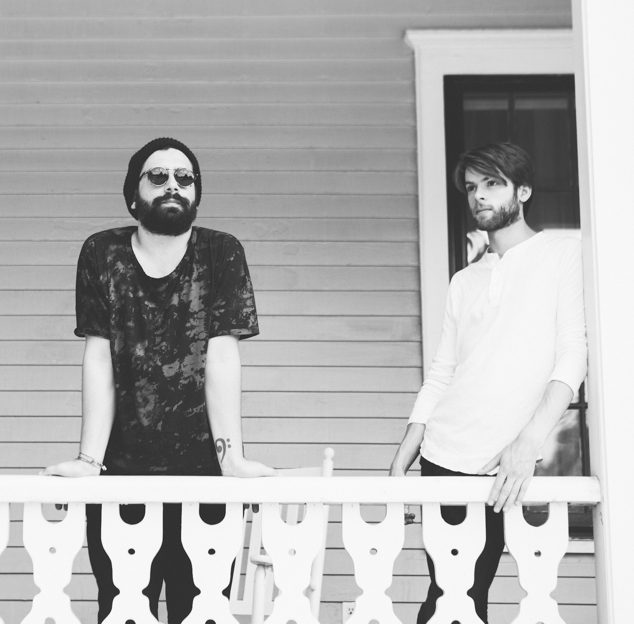
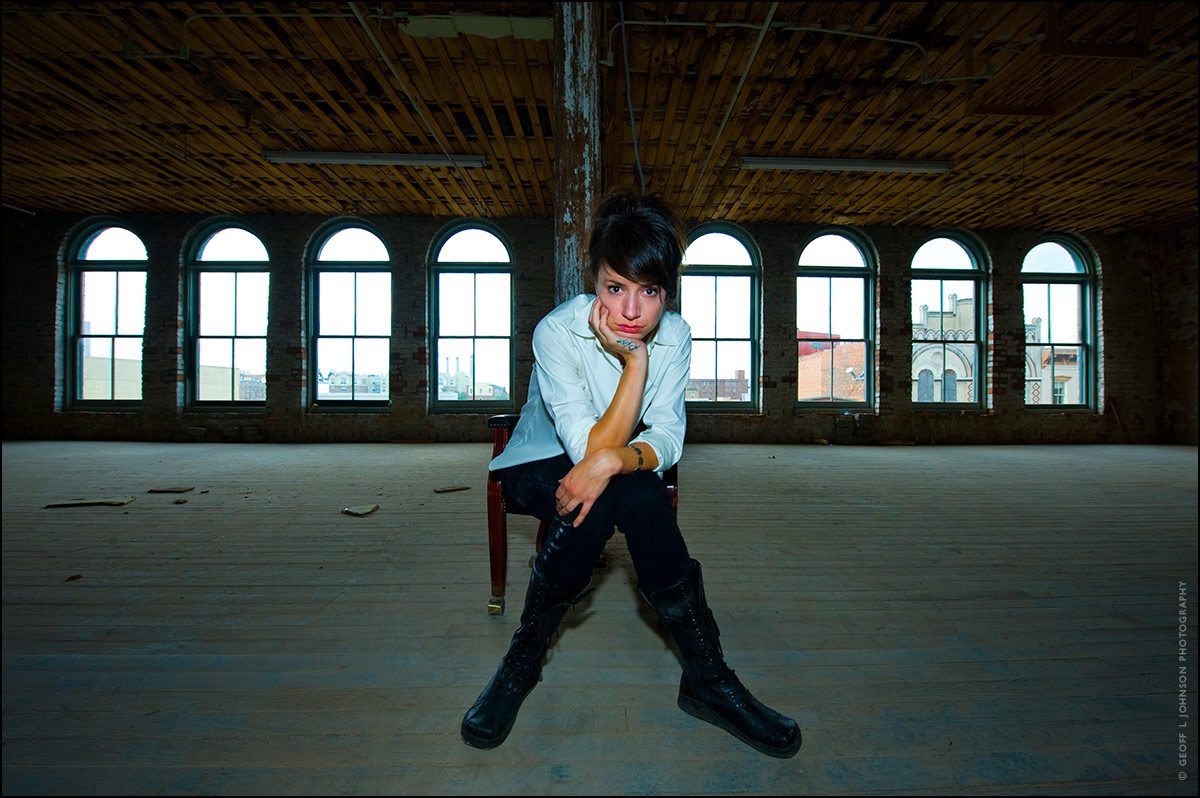
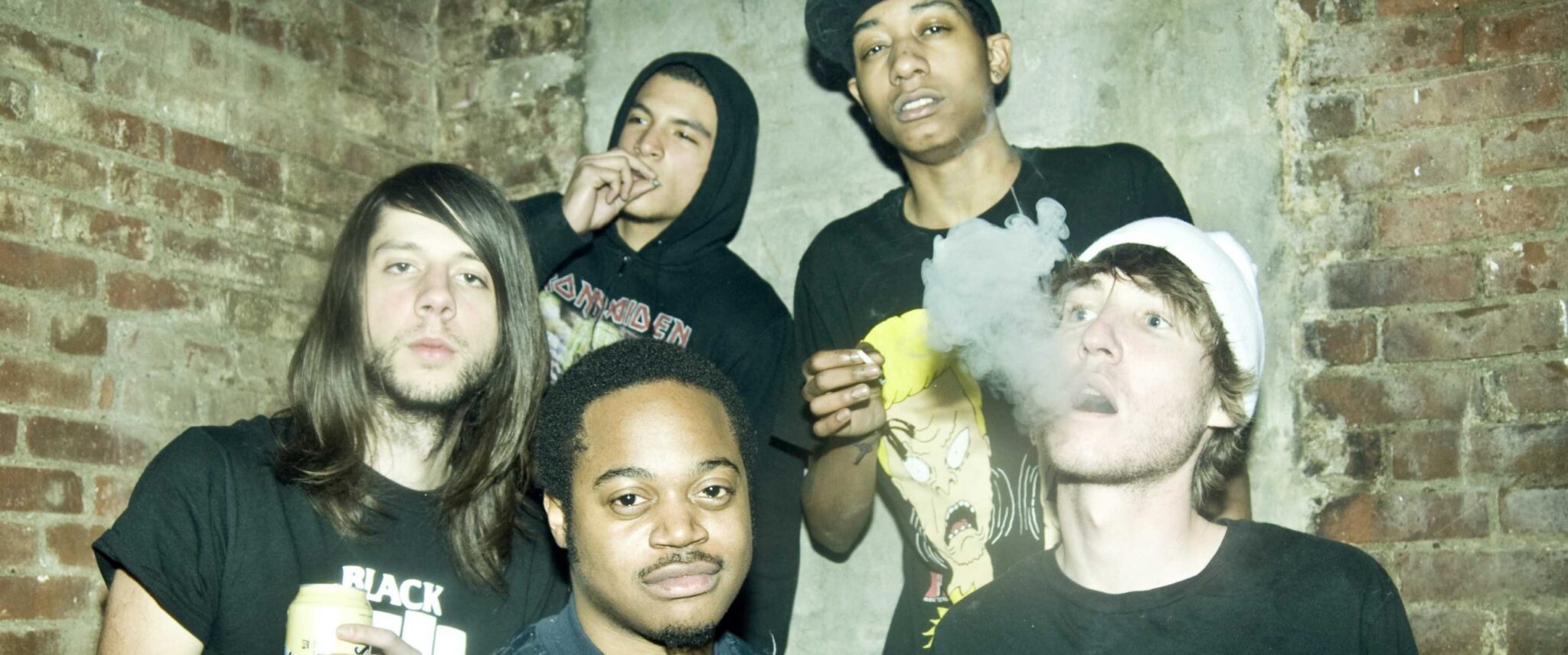
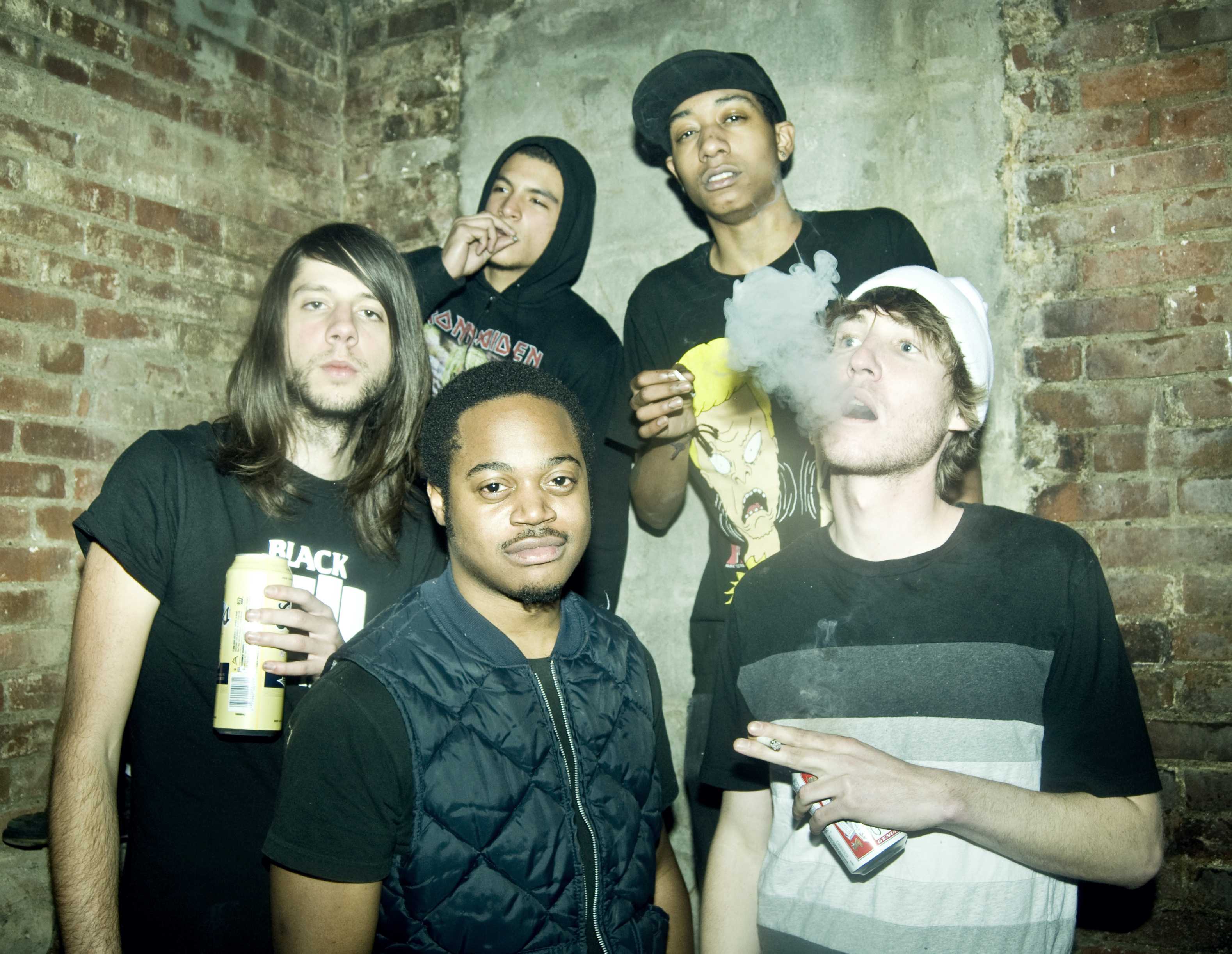
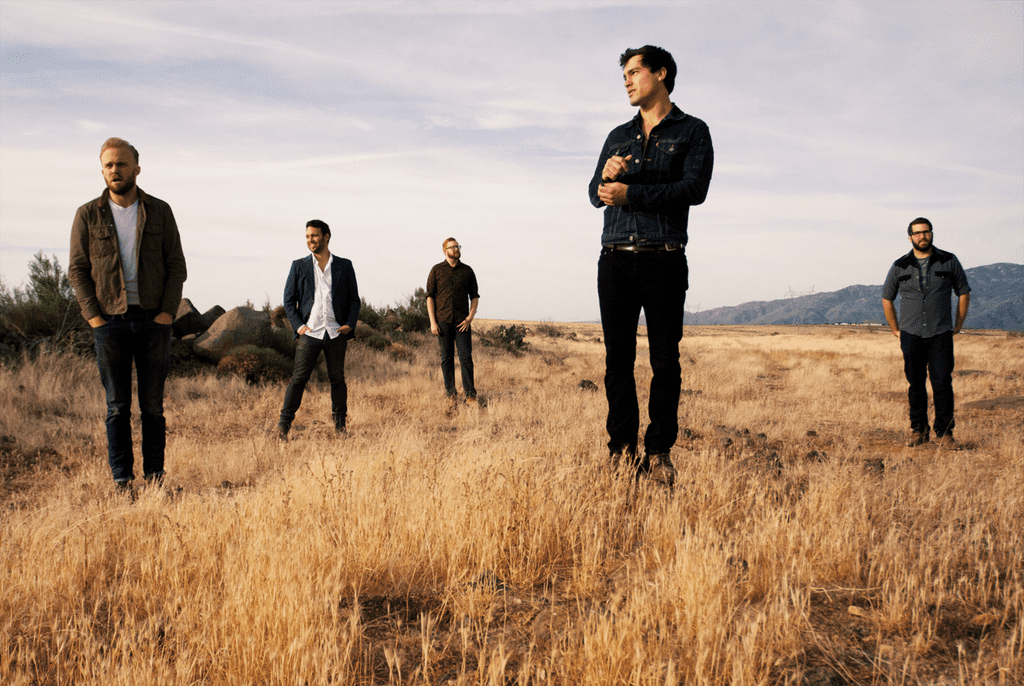
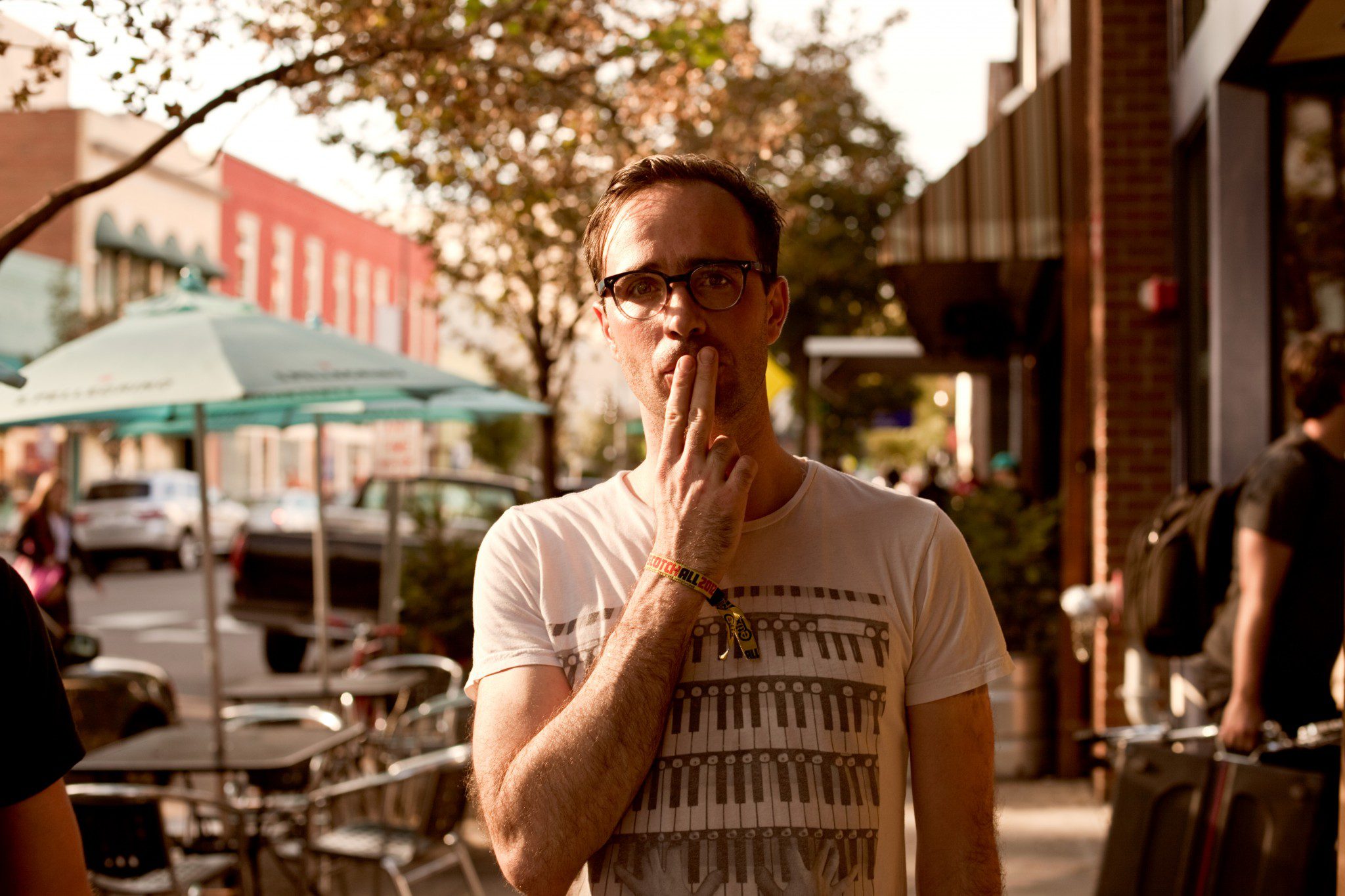
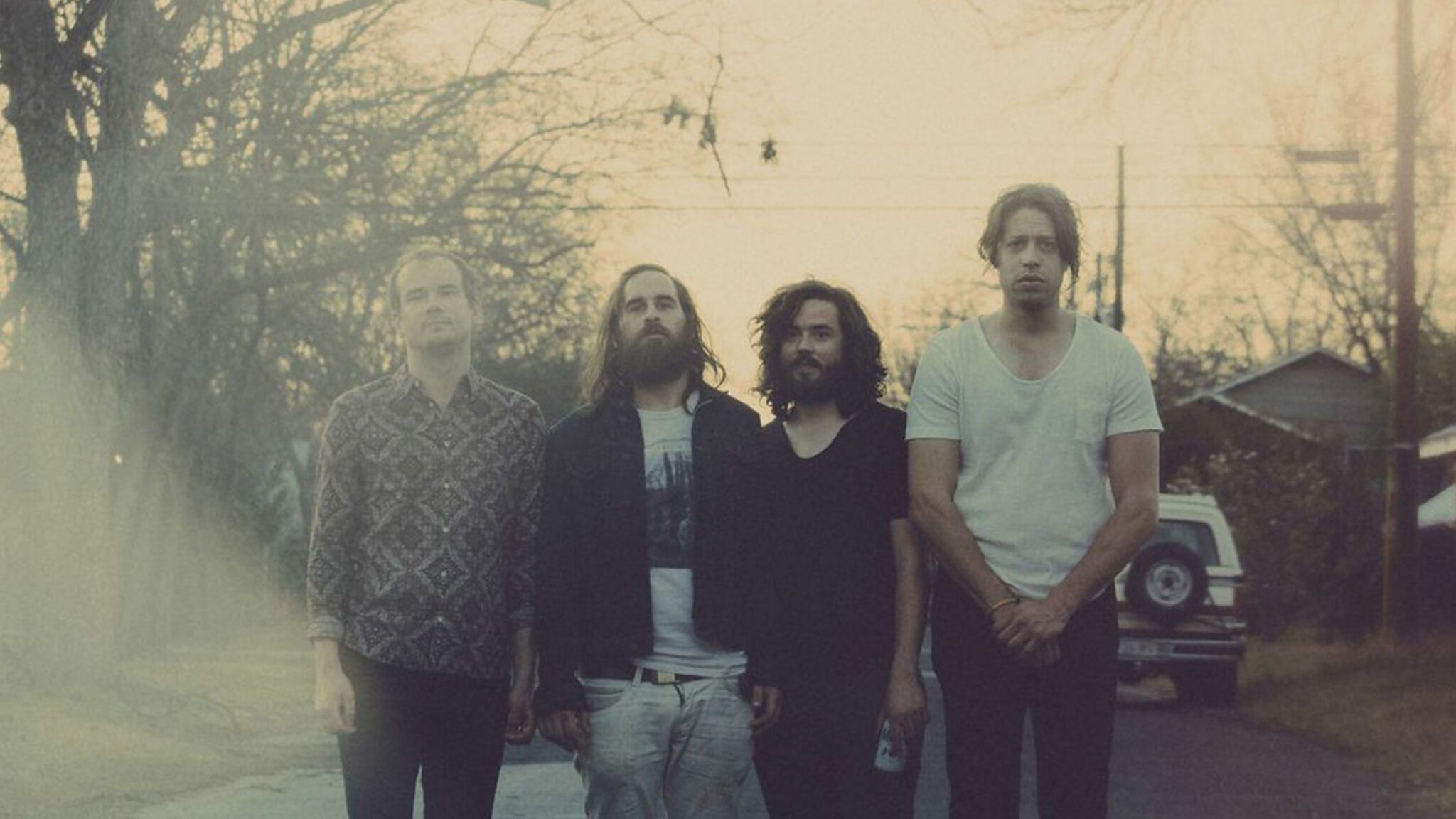
Dan McGee, of Chapel Hill garage rock band Spider Bags, does not have time to grow orchids or build model ships. He works triple duty these days, with a family, a job, and a brand new record, Frozen Letter, due to come out on August 5th via Merge Records. When I called McGee last week, though, he didn’t seem to mind the stress. In fact, being busy suits him: in the early stages of recording Frozen Letter, McGee realized that his wife was pregnant and that he had nine months to get the record finished, but the focus that pressure gave him–and the rest of the group, with Rock Forbes on drums and Greg Levy and Steve Oliva switching off on bass and guitar–led to the Bags’ most cohesive album to date. Here at AudioFemme, we got our paws on “Back With You Again In The World,” the first single off that album, a couple of weeks back, and we were psyched to hear that the Bags haven’t abandoned the sloppy and earnest feistiness that’s always made their music so much fun to listen to. But the musical ESP between the four Spider Bags is no accident, and it’s more apparent than ever on the new record that even when the music is at its noisiest and dirtiest, there’s a complex dialogue going on beneath the surface.
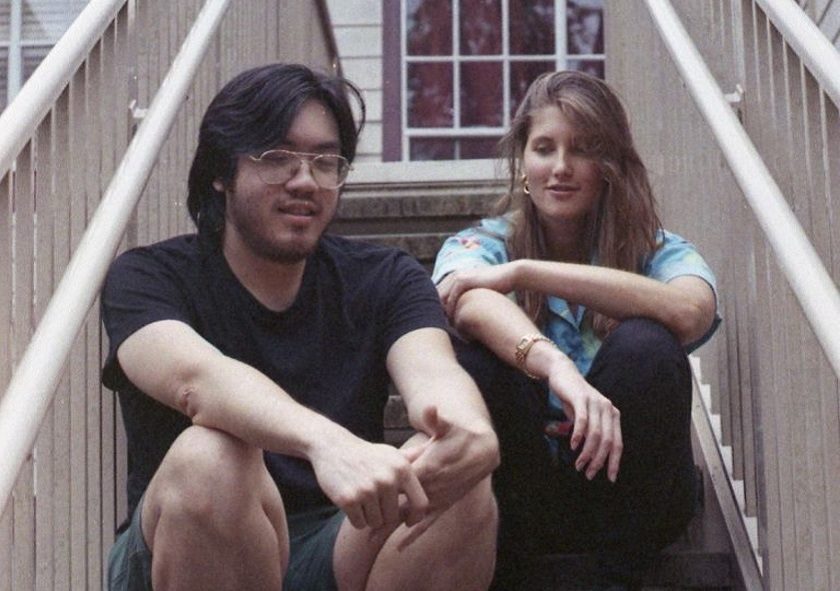
spiderbags-2013-photo

AudioFemme: Congrats on the new record coming out, we’re so excited! What has it been like recording Frozen Letter?

Dan McGee: We started recording in late June-early July last year, with the same engineer I’ve been working with for a while now, Wes Wolfe. I had a lot of ideas for this record and I went into the studio just wanting to see which songs worked together and which didn’t. I wanted to get four or five done. Then, while we were doing them, my wife came to visit with my daughter, and she was smiling a lot, and I was like ‘Oh man, you’re pregnant, aren’t you?’ And she was. So then I realized that I had to think about this record a little bit differently, because I had to get it done in nine months. Instead of doing five songs that weekend we ended up sleeping in the studio and doing eleven. There are eight songs on the record, but we tried three more just to see how they would fit. Actually, this is the closest I’ve ever come to making the record I started out thinking I wanted to make.

AF: So recording it all at once actually had a positive influence on the finished product?

DM: Yeah! It had that external focus, you know? Made me narrow my choices down. Sometimes I think I can get a little too spread out, so it helped that there was a really strict time limit. It was actually the record that I really wanted to make, that I’ve been wanting to make for a while.

AF: That’s fantastic. So what about it makes it the record that you had envisioned?

DM: I had an idea for a cycle of songs. I really wanted to make a record that sounded like a classic rock record, that was mixed like the old AC/DC records, or like Dark Side Of The Moon. I wanted to have songs on the record that would lend themselves to that. There’s only eight songs on the record, you know, and I wanted them to be in kind of a cycle that would have a theme, though that theme wouldn’t be real specific. And I wanted it to sound like a seventies rock record. That was kind of the concept I had going into it, and we got pretty close. I’m stoked.

AF: When you start writing individual songs, are you thinking about the general sound you want to aim for? Do you start with a riff or a chord, or just an aesthetic you want to produce?

DM: Recording songs and writing them is different for me, but most of the time when I’m writing songs I’ll have a pretty good idea–before I actually strum the guitar–what the chorus is, or the melody for the verse. When I start picking through the song on guitar it starts taking on its own life. I don’t ever really go into any specific song with any kind of concept. It’s not the same as a record, where you have to really try to have an idea of what the record is, as a collection. I’ve made a few records now, and some of them are better than others, but I think the better ones are the ones where I’ve had a really clear concept of how the songs relate to each other and how they sound together. I think that’s really important, because the songs that relate to each other are the ones that people identify with, and the other songs fall through the cracks. If I don’t have a concept for a record, I’m not doing all the songs justice. You can’t just put all your best songs on a record, because it just doesn’t work that way. People don’t hear it that way.

AF: Where did you get the idea for the title of the record, Frozen Letter?

DM: It’s from a song on the record called “Coffin Car.” That song starts with an image that I had of walking in the snow and picking up–out of the snow–a big…you know those oversized kids’ magnets that you keep on the fridge? Just the tip of one of those sticking out of the snow, except it’s giant. It’s a pretty ambiguous image. Whenever two words are together, it gives you a feeling, but it could mean anything. It could mean nothing.

AF: What’s the music scene like where you live, in Chapel Hill? Are you a big part of it?

DM: Yeah, I’m definitely a big part of it. When I first moved here eight years ago, it seemed like the musical heyday was kind of in the past–some of the older clubs were closing down, you know, not as many people were involved in the scene–but there’s been an upsurge, and a big part of that has been independent record stores opening again. When I first moved here, Bull City Records in Durham had just opened and that was huge, because it really gave a focal point for musicians and people who like music to hang out. Since then, there’s another record store that’s opened in Chapel Hill called All Day Records. It’s a pretty varied scene. There’s way more rock and roll [fusion_builder_container hundred_percent=”yes” overflow=”visible”][fusion_builder_row][fusion_builder_column type=”1_1″ background_position=”left top” background_color=”” border_size=”” border_color=”” border_style=”solid” spacing=”yes” background_image=”” background_repeat=”no-repeat” padding=”” margin_top=”0px” margin_bottom=”0px” class=”” id=”” animation_type=”” animation_speed=”0.3″ animation_direction=”left” hide_on_mobile=”no” center_content=”no” min_height=”none”][in Chapel Hill] than there was when I first moved here. There’s also a really cool underground noise scene. Synth-driven scene. I feel lucky to live in a town where there’s a really solid scene like that. Even though people play different music and there’s different genres, everybody supports each other, because it’s still pretty small here. There’s not a lot of ‘Oh, I’m not going to that show because it’s a rock and roll show,’ or ‘Oh, I’m not going to that show because it’s a noise show.’ There’s three clubs. You know that if a guy is booking a show at this particular club it’s probably going to be interesting and cool, so you might as well just go.

AF: How did you come to live in Chapel Hill?

DM: I was traveling with a band, I was in in New York, and I had a couple of weeks off. I had friends that I knew from New Jersey who had moved to Chapel Hill. It was kind of nice to come here and relax for a couple of weeks, to be somewhere with a couple hundred dollars in my pocket, sleep on somebody’s couch, enjoy the open air. I met my wife one weekend while I was here and we totally fell in love. A year later I was like, holy shit, I live in Chapel Hill!

AF: How has having a wife and family changed your relationship with rock and roll?

DM: It’s crazy–when I was younger and on the road a lot, friends would talk about having kids and stuff and I would wanna leave the room because I was afraid I’d get the bug. But it’s funny, because at least for me, it’s given me a tremendous amount of focus where I haven’t had focus before. It just enriches your life. It makes things, in an amazing way, have constant perspective. It’s hard because I really miss being on the road. I used to love being on the road and I have a lot of friends all over the country who I don’t get to see as much as I used to. But things change, and I feel totally grateful for my family and lucky that I was able to see this part of life. I can’t imagine not being a father. I have two daughters.

AF: How old are they?

DM: My oldest daughter, Dell, she’ll be three in August. My youngest was born in March, she’s just three months old.

AF: Have they been to any of your shows?

DM: Dell came to a show last year and it totally blew her mind. It was in a bigger club, so she and my wife were standing in the back. She could tell it was me up there and she was totally amazed, and she thought I played the drums because the drums were the loudest. But she was jazzed for the rest of the day, jumping around and singing, totally inspired. But she doesn’t get to come to too many, because they’re usually pretty late at night. And loud.

AF: So what are your plans for after this record comes out? Do you have any hobbies or extramusical activities that you’re excited to get back to?

DM: I don’t have a lot of time, between music, family, and work. I have a lot of interests, but I don’t have time to build ships or anything. Family, music, work. That’s it right now. Maybe when I’m sixty I’ll start growing weird flowers in a greenhouse somewhere.

AF: Are you going to start touring?

DM: Yeah, totally. We’re planning to be on the road–we’re just waiting for a couple of things to fall into place. I want to be on the road as much as possible, to promote this record as much as possible. I feel like it’s the best record we’ve made as a band and I want people to hear it, I want to be out there playing the songs. Nothing’s solid yet, we’re waiting for some things to fall into place. But we’ll be out there, for sure.

AF: Do you like playing live more than recording in the studio, or is it just a totally different experience?

DM: Lately–well, I like them both. I always liked playing live more than recording. In the past, the guys I recorded with wouldn’t necessarily be the guys I took on the road, so we’d learn a song with the band on the road, and then we’d record in whatever town we were stopped in before I lost those guys, and then I’d get back, put another band together, and teach them the songs. But now, with the musicians I have, it’s a totally different process. We record the songs, and if there’s something I feel I didn’t get right when we were recording, we can work it out onstage. The songs have a life, within the three of us playing them together, which is really cool. You can feel a song still growing after we record it. Playing live is a lot of fun especially with the guys I have now. It’s just the three of us onstage, and we have really good communication together. It’s nonverbal communication, where it’s like we’re experiencing something together on this entirely different plane. Very wild.

AF: Your uptempo songs are so high energy, it must be a huge rush to play them for a crowd.

DM: It really is. It’s like this burst of energy that puts everything in life into perspective–like, ‘Oh yeah, this is what I love to do.’ It feels great. There’s a reason why I have two jobs. It makes sense.


Frozen Letter will drop August 5th via Merge Records. To tide you over, here’s the second single from the album, the jangly and raucous “Japanese Vacation.” Like many Spider Bags songs, this track can be read a couple of different ways: at its most basic level, it’s a fun-loving track and unimpeachably simple hook. Behind the catchiness, of course, is something mysterious and even kind of sinister. Lines like Every step is soft and cruel/Like how the raindrops feel/To the swimming pool stick out on “Japanese Vacation,” with imagery that’s ambiguous but vivid. Listen below!

[/fusion_builder_column][/fusion_builder_row][/fusion_builder_container]
ALBUM REVIEW: Clear Plastic Masks “Being There”

Clear Plastic Masks

CPM

The first thing I want to know is: how many cigarettes do I have to smoke to sound like Andrew Katz?  I’m entertaining the thought of purchasing a carton…or eight.  Nashville-based rock quartet Clear Plastic Masks have just released their debut album Being There on Serpents and Snakes Records, and it’s nothing short of brazenly badass.  In this moment of ambient, minimal, chill-wave anti-sound it’s endlessly comforting to hear a band that makes no apologies for their lack of ambiguity.  These guys make pure rock and roll, no holds barred. However, their allegiance to a classic sound doesn’t betray their ability to be relevant – they in no way sound dated or cliché.  These are just four guys, playing their hearts out, and maybe losing a lung or liver in the process.

Being There is a fully fleshed-out record equipped with the proper instrumental formula to give me an eargasm (did somebody say organ????)  There’s just something about good old guitar, bass, drums, and a B3 that gets me.  Throw in a front man with a voice like gravel and molasses in a food processor, and well, I’m sold.

One of the most positive aspects of the record, aside from how tight the band plays and how attentively it’s produced is the diversity it conveys. CPM is the kind of group that could very easily record a handful of songs that are indiscernible from one another, and yet the album provides an admirable range of sounds without coming off as disjointed. The first two tracks on the LP, “In Case You Forgot” and “Outcast,” are characteristically raucous, whereas “Baby Come On” takes us to a slow, sexy place with twangy doo-wop guitar and the sultrier side of Katz’s barrelhouse voice. “Pegasus In Glue” returns the listener to the realm of snotty scuzz rock that could easily share a bill with Black Lips or a Southern-fried version of The Strokes.  The distant reverb in the vocal track makes for a more punk audio profile, and it’s certainly a jam to bounce around to.

Throughout the remainder of the record the boys volley between references to Blues, Soul, Gospel, traditional Hawaiian music (“Aliens”), and maybe even a little Randy Newman (“Hungry Cup”). Being There’s closer, the down-tempo ballad “Working Girl,” is probably the least innovative piece on the LP, but it’s nowhere near a bad song – just a little more sonically generic and lyrically unoriginal than the rest of the album.

With so much momentum from their very first record, I suspect these fellas have a few more in ‘em at the very least.  That is, if they don’t wear themselves out first.

Check out Being There in full via Spin Magazine here.


INTERVIEW: Flagship

flagshipband

Charlotte, NC rockers Flagship recently wrapped up the Three of Clubs tour, co-headlining with Terraplane Sun and Little Daylight in over twenty five cities, including New York, Los Angeles, San Francisco, Nashville and Chicago. Their self-titled debut album, which was produced by Ben Allen (who has worked with Animal Collective, Washed Out, and Youth Lagoon) has been getting a ton of buzz  since its recent release on Bright Antenna Records and can be best described as a folk-rock tour de force.

The band came together in 2011 when solo singer, songwriter and guitarist Drake Margolnick joined local musicians Matthew Padgett (guitar, backing vocals), Michael Finster (drums, programming) and Grant Harding (keys) to from Flagship. In 2012, Christopher Comfort joined on bass. Since then, they have become a staple of their hometown club scene and were voted Best Local Band for Charlotte Magazine’s 2013 Bob Awards.

Michael Finster took some time while touring in the UK to talk to us about their past tour, his musical idols, and the future.

AF: Where do you draw inspiration from when writing lyrics for your songs?

MF: I personally have no part in writing any lyrics, but I know that all the lyrics are pulled from different life experiences that have all happened at different times.

AF: How did the collaboration with Ben Allen as producer on the album come to be?

MF: Whenever we were preparing to record our debut album, we were sifting through different producers. Ben Allen was the name that we felt fit the most in the whole equation. We just truly loved what he had done, and had respect for him.

AF: What would you say is your creative process when writing and recording a new song?

MF: Our creative process is literally just getting in touch with ourselves and what we feel the song needs. Whenever we start writing, we typically know what a song should feel like as soon as it starts. Things just become clear to us very easily when it comes to direction.

AF: What do you like most about going on tour? And what’s the hardest part about it?

MF: The best part about going on tour is meeting brand new people everyday and connecting with people who connect to us through our music. Its truly a beautiful relationship. The hardest part about tour is the lack of independence. At home [fusion_builder_container hundred_percent=”yes” overflow=”visible”][fusion_builder_row][fusion_builder_column type=”1_1″ background_position=”left top” background_color=”” border_size=”” border_color=”” border_style=”solid” spacing=”yes” background_image=”” background_repeat=”no-repeat” padding=”” margin_top=”0px” margin_bottom=”0px” class=”” id=”” animation_type=”” animation_speed=”0.3″ animation_direction=”left” hide_on_mobile=”no” center_content=”no” min_height=”none”][we have] vehicles and individual lives, on the road, we basically have one vehicle and one schedule. It becomes difficult to have alone time.

AF: You just wrapped up the Three of Clubs tour along with Terraplane Sun and Little Daylight. What was your favorite moment from the tour?

MF: My favorite moment from that tour was one specific night in Seattle, WA. We typically like to change around the lyrics to other bands’ songs when we are out on the road. We had all changed around some lyrics to a Little Daylight song. Whenever that song started in Seattle, we all rushed to the front of the stage and shouted our revised (and perverted) lyrics. The looks on their faces were priceless.

AF: What are some other bands and musicians you’d like to tour with in the future?

MF: I would love to tour with some of my personal idols. The National, U2, Coldplay, Noah and the Whale, Arcade Fire, St. Vincent…

AF: I know The National and U2 were big influences for Flagship. What else did you guys grow up listening to?

MF: We all grew up listening to an assortment of music. A lot of it was kind of crappy. I personally grew up in the church and spent a lot of time listening to some Christian punk bands and other things like that. I also really got into Motown as well as the Beatles, and Michael Jackson. I feel like Michael Jackson transcends all generations.

AF: Your self-titled debut album has gotten some really awesome reviews and has, in a way, set the stage for you guys. What’s next for Flagship?

MF: I am currently answering these questions from the UK which is cool because we are touring here at the moment, but we are doing some regional touring over the next month, as well as some writing. We are very ready to write.

AF: What are some of your favorite venues you’ve ever performed?

MF: My personal favorite venue was Stubbs BBQ in Austin, TX. We played on the outside stage in front of a huge crowd. It was amazing.

AF: What are your must have staples while touring?

MF: Whenever I’m on the road, I absolutely have to have my herbal green tea. It calms my body from a hectic touring life. I also need Naked juice drinks. Those make me feel healthier. I also need my headphones, just to shut myself out every now and then and center myself.

AF: Do you think living in North Carolina has had an impact on your music style?

MF: I think everything I have experienced in life has some sort of influence on my musical style. North Carolina brought me together with all the guys in the band, so that is obviously a direct influence. I don’t think that any particular NC music has had an influence on me, but I do believe I’ve been affected by every person I’ve met there.

AF: What has been the most surprising or unexpected part about your journey as musicians?

MF: I think in my personal experience, the most unexpected part about my journey has been changing my expectations for things. I remember being a young musician in high school, and dreaming of being on a label and touring the country, then actually achieving those things and not feeling like I always expected I would. It’s not that life is a disappointment, it’s just that things aren’t always as glamorous as you think. You work your ass off to achieve something, and once you think you’ve achieved it, you work more, and then work even more. Real success comes to those who can find joy in the amount of work they put into their craft.

Flagship are playing festivals and scattered dates throughout the summer. Check out their lyric video for “Break the Sky” below:

[/fusion_builder_column][/fusion_builder_row][/fusion_builder_container]
TRACK REVIEW: Jenny Lewis “Just One Of The Guys”

Jenny Lewis

Jenny Lewis

There’s only one difference between you and me

When I look at myself all I can see

I’m just another lady without a baby

Jenny Lewis has had a long and fruitful career since she began singing as the lead vocalist for Rilo Kiley back in 1998. After putting out five albums with the band – Take Offs and Landings (2001), The Execution Of All Things (2002), More Adventurous (2004), and Under The Blacklight (2007) and rkives (2013) – Rilo Kiley called it quits. During this time, Lewis moonlighted with The Postal Service, providing the female vocal counterpart to Ben Gibbard’s rather infamous electronic project on their debut album, Give Up (2003). Lewis also formed her own band with Johnathan Rice, appropriately named Jenny And Johnny, releasing their debut album I’m Having Fun Now in 2010. Jenny Lewis has also had a successful solo career, and has released two solo albums to date – Rabbit Fur Coat (2006) and Acid Tongue (2008), as well as a soundtrack for Very Good Girls starring Dakota Fanning and Elizabeth Olsen in 2013. Once a child actress herself, Lewis is now set to release another solo album, Voyager, via Warner Bros. Records on July 29th. She’s been performing teasers from the record at live performances, but now she’s officially released “Just One Of The Guys,” the first single off of the upcoming album.

Produced by Beck (who also provides the background vocals), the track is reminiscent of the floating and relaxed country/indie/folk blends that both artists are known for. “Just One Of The Guys” rolls through each verse and chorus with accented 2nd and 4th beats (on a steady 4/4 metre) that acts to keep the song moving while the slow tempo relaxes the mood. The drums actualize this rhythm as an electric guitar lazily strums over the beat. While the bells in the background add to the charm, nothing is more charming than Lewis’ vocals. While she rests in her middle range for the majority of the tune, she stretches into her soprano towards the end of the track, and the breathy beauty in her voice is fully realized – a fragility artfully counteracted by Beck’s lower, grumbling vocals.

Regardless of its musical pleasantness, “Just One Of The Guys” is actually a pretty angry song.  The frustration and dismay inherent in the narrative are mapped out plainly in the opening lines: “All our Friends, they’re getting on, but the girls are still staying young.” Lewis goes on to tackle the particular nuances of gendered double standards, in particular society’s approval of older, single, bachelors and subsequent disapproval of unwed, motherless women of a certain age. It’s not just societal faults that plague Lewis; as the chorus continues into the second verse, she wonders at the thing inside that won’t let her be as disaffected as her cooler male counterparts. And it’s not just her feminine emotions getting the best of her, but also that pesky biological clock. While her honesty is nearly cringe inducing, the last bridge of the song reflects a shoring up of resolve and a recognition of the strength of the so-called “weaker” sex: “I’m not gonna break for you, I’m not gonna pray for you, I’m not gonna pay for you, That’s not what ladies do.” The simplicity of the song belies the potential complexity of its content, and while it’s not clear if Lewis is really attempting to buck tradition or desperately give into it, it is still, in its way, astute and astoundingly relatable. It’s not quite “Just A Girl” but it’s got all the makings of a successful indie pop hit.

Jenny Lewis is currently in the middle of a national tour; Voyager comes out on July 29th. In the meantime, check out the lyric video for “Just One Of The Guys” below:

ALBUM REVIEW: WIFE “What’s Between”

img023dbl_2000

Shortly after Irish black metal outfit Altar of Plagues announced their breakup last summer, the group’s frontman James Kelly unveiled the first glimmers of a forthcoming album to come from his electronic side project WIFE. I–along with pretty much all the metal fans I know–wasn’t ready to be consoled. Altar of Plagues’ disbanding came on the heels of their third and best studio release Teethed Glory and Injury, an album that I loved for its ability to deconstruct and rework the music’s sludgy layers, its clipped, nightmarish, often waltz-time beats, and the near-visual landscape created by  the album’s texture and subtle details. WIFEon the other hand, was a kind of  spacey electro-pop endeavor–no more metal. Was Kelly just being a contrarian? Was he trying to show off his eclectic musical range? Was he simply quitting while he was ahead?

Maybe, but a listen to WIFE’s new album What’s Between, which came out June 9th on Tri Angle, goes a long way toward elucidating the jump between Kelly’s work with Plagues and where he is now. From the first track, “Like Chrome,” What’s Between demonstrates a lot of restraint. It’s an establishing shot that takes its time in developing, expunging any other thoughts and sounds that may be rolling around a listener’s head, effectively clearing a space for the music to come.

That music is strange–slightly dystopian, slightly doom-y–and though I would not call the collection optimistic, Kelly finds a way to develop a sense of wonder, awe, and curiosity as a result of the spaciousness he creates. Even the scary songs, like “Tongue,” get their spookiness from suspense. If an Altar of Plagues album were a horror film, What’s Between would be a psychological thriller. “Tongue” uses every sound at its disposal, shaking and rattling twitchily, like a monster waking up from hibernation and flexing all ten of its talons. That said, the music’s aggression remains implicit, and at no point dominates the album.

The nine songs on this album run about average length, varying from two and a half up to just over seven minutes, but often feel as if they’re on the long side. Many of the tracks, especially “Tongue” and “Heart Is A Far Light,” contain several moods. A poppy and playful couple of minutes give way to larger dreamscapes or house-like heartbeat rhythms. It’s not as if Kelly was ever a conventional black metal musician, but those looking for something to put up the horns to will find it, sort of at least, in “Salvage,” whose distinct and aggressive beat hearkens back to the pounding three-four rhythms of Teethed Glory songs like “God Alone.”

Now that I’ve listened to the album, this observation sounds like it should have been obvious from the beginning, but Kelly’s fixations and devices aren’t all that different as an electronic musician than they were when he was making metal. The album–like the first two Plagues albums, White Tomb and Mammal–runs a little introverted, more interested in developing its themes than in engaging the listener. To be fair, it took three albums to make Teethed Glory. It seems like Kelly could have chosen any aesthetic–metal, electronic, pop, or any other–and go about making music in a similar way: he builds a minimal foundation and expands to fill the space between the walls he’s erected. In the case of Altar of Plagues, Kelly followed the black metal thread until he was satisfied he’d reached the end of the line, and then he moved on. If What’s Between isn’t a perfectly realized electronic pop album, that probably means that WIFE’s not done yet.

Listen to the eerie “Tongue,” off What’s Between, below via SoundCloud. What’s Between is out now on LP, CD and digital release via Tri Angle. Get it here!

ALBUM REVIEW: Girl Talk & Freeway “Broken Ankles”

GirlTalk_Freeway_BrokenAnklesArtwork

Last April, Pittsburgh native Girl Talk dropped his latest EP Broken Ankles in collaboration with Philly rapper Freeway. Several years had passed since his last album, 2010’s All Day, and he had taken a pretty significant hiatus from his relentless tour schedule in 2013, so needless to say, fans have been waiting for something big in the making. The EP doesn’t fail to disappoint, and sees the performer taking bold risks.

Girl Talk – a.k.a. Gregg Gillis – is known for his mash-ups and samplings, combining hip hop, rock, and pop songs into single tracks for a lively, up-beat listening experience. From his first album Secret Diary in 2002, to his breakout 2006 LP Night Ripper and its successful follow-ups, he has sampled everyone from Avril Lavigne to Outkast. But during his break last year, he decided to create more focused beats. With over seventy tracks under his belt, he approached Freeway in the hopes of doing their first collaboration together. In a press release, Gillis says he chose Freeway because of the rapper’s creative, improvisational ability; Freeway is known to have written all of his verses in his head without ever writing down his lyrics. “I wanted the album to be diverse, and I wanted someone who could maneuver around quick changes mid-song. Freeway is the rare rapper who sounds natural on all types of beats, ranging from cut-up soul to menacing synth-jams. His energy is unreal, and he’s able to keep up with any production,” said Gillis.

Gillis has a reputation for vigorous performances, so the team-up with the prolific rapper has, as expected, produced a vital, high-energy collection of tracks.  It’s hard to tell that it’s the duo’s first collaboration; Girl Talk’s production and Freeway’s flow is impressively cohesive and full of life.

The EP opens with “Tolerated”, a track heavy with anthemic trumpets and a forceful flow that will have listeners throwing their bodies to the steady, hyped beat. Featuring a verse from Waka Flocka Flame, this track is all about power and showing these haters who’s really the boss. The transitions in this EP are smooth and endless, melding one track to the other much the way that Girl Talk has stitched together tracks on his previous LPs. “Tell Me Yeah” has a more melodic, soulful beat that somehow seamlessly transitions to the harder, grimier “I Can Hear Sweat”. The EP mellows out a bit with the angelic rhythms for “Suicide” and then turns to something more pronounced and confident with “Lived It,” highlighting the deliberate placement of each track as a stand alone but also as an interconnected entity. Freeway delivers his lines with grit and strength which perfectly mixes with Gillis’ relentless beats.

Broken Ankles is fire, lit with endless vitality and intensity. With featured performances from Jadakiss and Young Chris as well as the aforementioned Waka Flocka Flame, this EP was made for sweaty, muggy summer nights spent in crowded basements on makeshift dance floors. It’s an especially important moment for Gillis to show that perhaps his mash-up mixing days have moved on to something more sustainable, placing him in a realm of  all-star hip-hop producers primed for future collaborations.

Broken Ankles is available for free download on DatPiff. Watch the video for “Tolerated” below and scroll down for tour dates:

Also check out Girl Talk’s live show dates:
Fri. June 20 – Dover, DE @ Firefly Music Festival
Wed. June 25 – Sun. June 29 – Milwaukee, WI @ Summerfest
Sat. July 12 – Seattle, WA @ CHIVEFest Seattle
Thu. July 17 – Sun. July 20 – Pemberton, BC @ Pemberton Music Festival
Sat. Aug. 16 – Portland, OR @ Tom McCall Waterfront Park
Sun. Aug. 31 – Philadelphia, PA @ Made in America Festival
Fri. Sep. 5 – Sun. Sep. 7 – Boston, MA @ Boston Calling
Fri. Nov. 7 – Sun. Nov. 9 – Austin, TX @ Fun Fun Fun Fest

EP REVIEW: Alice Boman “EP II” (+ “Skisser”)

Alice Boman

Alice Boman

I’m not sure how common this practice is, but when I was in elementary school, teachers had this trick where they would whisper at a rowdy classroom to get the kids to quiet down instead of trying to yell over the noise. It worked: kids got curious after ten or fifteen seconds, and wanted to hear what the teacher was saying.

Swedish singer Alice Boman, with her silvery voice and light dusting of backing instrumentals, has the whisper trick licked. The songs on EP II (the digital version of which includes last year’s EP Skisser – Swedish for “Sketches”) draw attention precisely because they don’t overexert themselves trying to command your ears. It’s been well documented that Boman didn’t envision an international audience when she wrote EP II, and even less so with Skisser, which was recorded as a bunch of demos and don’t have titles beyond “Skiss 2,” or “Skiss 8,” etc.

Considering that the album that doesn’t really take audience into account, it’s worth noting that EP II persistently returns to themes of being observed and observing. What do you see when you look at me? kicks off the whole thing, the opening line of the opening track “What.” Lava lamp-like, that song drifts back and forth between melancholy – the eerie brokenness that comes naturally to Boman’s wispy songwriting style – and a surprising optimism. We float onward through “Over” and “Burns,” both of which hit some real transcendence in the high notes, despite lyrics like It burns, it burns, now you are gone. I am done. Those apex moments – usually underscored with an extra pop of vocal harmony or piano melody – pack a lot of wallop into just a little bit of momentum.

Like Skisser, this collection loses focus in places. This isn’t a direct result of its obliqueness,  but Boman still seems like she hasn’t quite figured out how close she wants to be to her audience. Listening to the album takes patience: getting to the payoff requires your full attention but doesn’t seize it by force. EP II showcases a more mature collection than we saw with Skisser, but as a songwriter, Boman still operates very much in her own head on this new release. That will have to change before long–this EP will likely be the last she makes as a little-known performer. It will be interesting to see, on albums to come, what an Alice Boman song looks like when it has been intended for widespread consumption since its inception.

Until then, enjoy the rough drafts. You can go here to purchase the album, which came out last week– if you’re in the US, EP II will include the Skisser EP as well. Watch the video for “Waiting,” off EP II, below:

LIVE REVIEW: Kan Wakan @ Mercury Lounge

KW

Sincerity is a trait I never tire of, and Los Angeles-based orchestral pop ensemble Kan Wakan exude it in abundance.  Forming in 2012, the band is impressively far along for its youth.  They’ve received excessive praise from LA’s KCRW, made it to SXSW, and played a sold-out show at the Mercury Lounge on Thursday night, just two days after the release of their debut record, Moving On.  Not bad for a bunch of Industry two-year-olds.

The band is a producer duo composed of composer/producer/founder Crooked Waters and guitarist/co-producer Peter Potyondy. Potyondy (formerly of Dayplayer) is extremely well versed in guitar and production. They collaborate with many vocalists, such as during this spectacular performance with Kristianne Bautista.

Seeing a group so dedicated to expert musicianship, enrapturing ambience, and textural compositions perform in such an intimate space is always a privilege, and Mercury Lounge suited the band wonderfully.  Whoever was mixing that night gets a tip of my hat.  Every layer of sound was crisp and articulate, and I almost felt as if I was breathing to the score of a James Bond/Spaghetti Western hybrid.  This is not the kind of music that floats around your ears…it penetrates your chest.  I was pierced with impressions of Lee Hazelwood, Mazzy Star, Portishead, and particles of Funk, Soul, and Jazz.  That’s a heady blend of influences for one band to summon.

The stage was as cluttered as the soundscape with keyboards, cords, synthesizers, a drum kit, and amplifiers. The only thing missing was a full orchestra, a supplement I wouldn’t be the slightest bit surprised to see at a Kan Wakan gig.  Each member was monastically focused on their performance, which resulted in the precise weaving of a sumptuous field of noise.  A saxophone was added to the outfit – something I haven’t encountered in any live video recording of the band -which supplied a shrill subversion of elevator music to the moody atmosphere.

At the visual center of the stage, Bautista proved her ability to captivate an audience.  Her voice was impressive – a velvety alto slinking between PJ Harvey and Fiona Apple – and her look was nothing short of stunning. She stood on stage draped in a black jersey dress that just scraped a heavy pair of leather boots, her right eye covered by a slice of charcoal hair.  It’s my firm belief that true beauty often exists in women that don’t behave solely to be considered beautiful. Bautista’s focus on her craft made her that much more lovely, not to mention a pleasure to listen to.

The band finished their set and immediately started loading out – you can’t imagine how much gear they had to haul.  As I left I nodded to the drummer and saxophonist who were trying to wedge everything into the back of a van: “Good set!”

They froze and looked at me wide-eyed as if I’d just handed them a tin tray of BBQ ribs.

“Thank you!”

In a city rampant with egotistical and blasé musicians, it was nice to encounter a little West Coast courtesy.

Kan Wakan’s new album Moving On is out now via Verve Music Group.


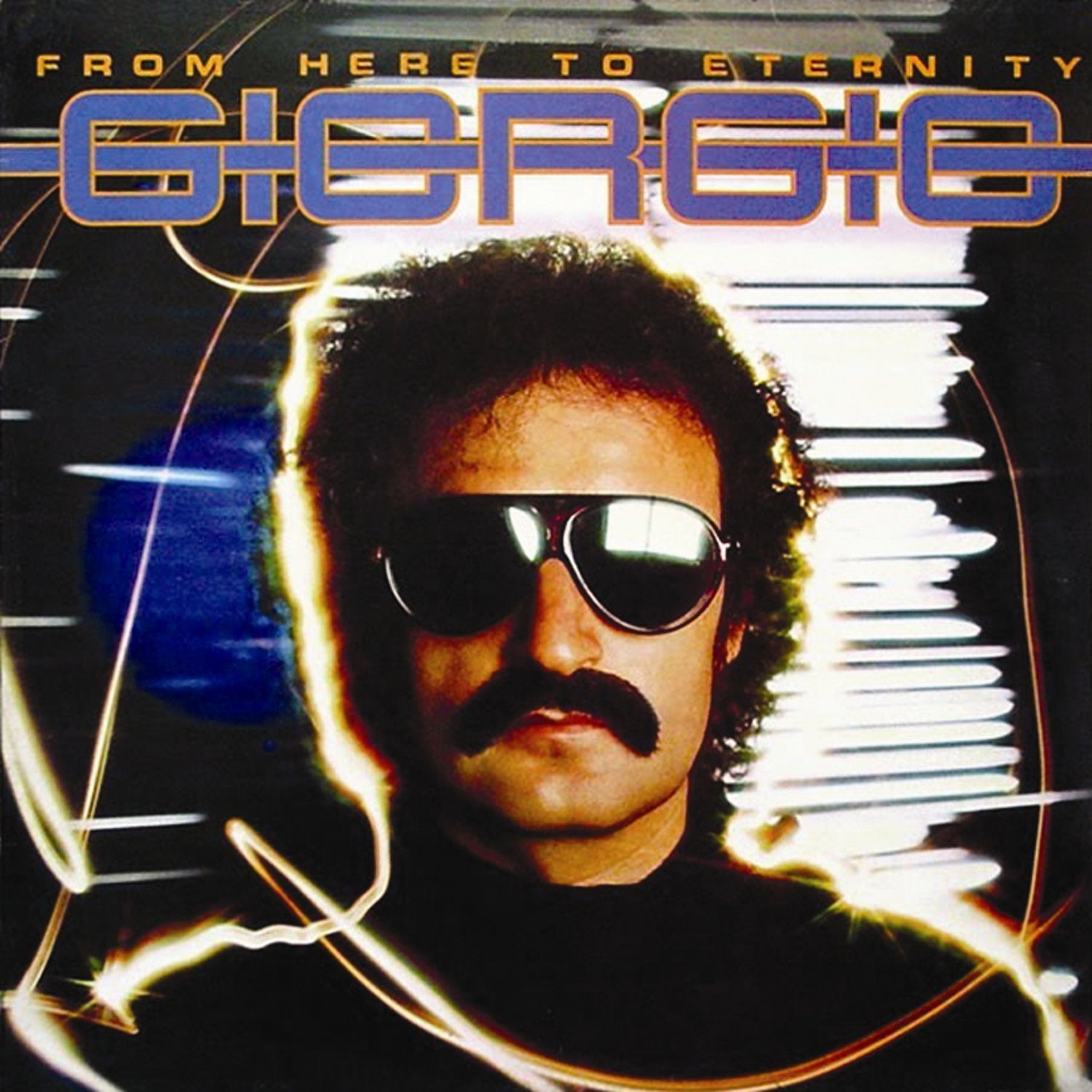
FLASHBACK FRIDAY: Giorgio Moroder “From Here to Eternity”

giorgio

In honor of legendary super-producer Giorgio Moroder’s first solo track in 22 years (thanks to the fabulous Adult Swim series, no less), we put on our finest polyester pants and creepiest pornstaches to revisit his seminal 1977 album From Here to Eternity.

His third solo EP and arguably most famous, it’s a bonafide Euro-disco behemoth that continues to invoke a sense of neon dance floors and Back to the Future-worthy whiplash. Filled with ass-shaking syncopation, distinct four-on-the-floor beats and soaring robo-vocals, it pioneered a futuristic club experience that can still squeeze out a couple of head-bobbers within our bro step-obsessed world.

Powered by a seemingly unstoppable digital drum machine accented by heavenly sopranos and pumping synth lines, From Here to Eternity is an ethereal album for the space-age exotic. Laying the groundwork for modern dance music, as everything from house to juke has its roots in Moroder’s pioneering sound, this banger changed the way people perceived pop forever.

And there’s a good reason for its immense influence. From the glimmering title track to the squelching closer, it’s packed with more electronic flutes and banging bass beats than you’d ever imagine a hypnotic half-hour disc could contain. Born from the same technology bequeathed to Kraftwerk in the late 70s, Moroder just let the man-machine keep its soul with his experimental brand of emotional, movement-inducing pop.

Joyous in its very essence and forever pigeonholed as the go-to music for cheesy celebration, his beats are programmed to exaggerate a sense of fullness, sexuality and voluptuous. All of which is just further proof of his impressive knack for creating something out of nothing. Because when you think about it, assembling an entire synthesized orchestra from a completely artificial assortment of pipes, percussion and bass lines is quite the accomplishment. And it’s not exactly like the dude had Garageband either.

What’s even more remarkable though is how catchy his hodge-podge of instrument samples actually turns out to be. It should be messy, but instead it’s a constant one-two punch of disco hit after disco hit, as we’re constantly floating back and forth from the pulsating highway drone of “Utopia Me Giorgio” to the ho-hum digi-drum of “I’m Left, You’re Right, She’s Gone.” In short, it’s perfect pop.

And for what it lacks in poetical brilliance, it makes up for in pure bump factor. Because while lyrics mostly consist of the track title repeated over and over again by robocoder vocals, it sure makes for great background music at the very least. After all, “Too Hot To Handle” with its bouncing wob and angelic affirmations is optimal strut-your-stuff music. Take it from me.

VIDEO REVIEW: The Mast “Luxor”

the mast

Electronic duo The Mast (vocalist Haleh Gafori and percussionist Matt Kilmer) haven’t had much downtime this year. They began 2014 with the release of their sophomore album Pleasure Island, following it up with a handful of NYC performances and a music video for “Nuclear Dragon.” Now, The Mast share another visual, this time for the vocally multifaceted and musically collaborative track “Luxor.”

Pleasure Island was created whilst Kilmer and Gafori were thousands of miles apart, a true celebration of modern collaboration. Kilmer laid down the beats, then sent them to Gafori, who added her vocals and sent them back to Kilmer, each building on the other’s contributions until the songs felt complete. Nowhere is this dialogue quite so clear as in “Luxor;” the instrumentals and the vocals meld together much like a conversation rather than two separate parts. With Gafori’s intricately affected and mesmerizing soprano vocals constantly interacting with Kilmer’s driving yet nonabrasive beats, “Luxor” is both aesthetically satisfying and musically elaborate.

Directed and edited by Gafori and filmed by Kilmer, the video for “Luxor” again captures the duo’s give-and-take, this time emphasizing a penchant for the exotic and esoteric. The video is a sort of deserted island fantasy. Gafori looks on, licking honey from her fingertips, as a large wooden box washes ashore on an otherwise lonely beach. One by one, three ethereally dressed women (Dina Nur, Iko Shirashai and Alexandra Belle) emerge, dancing hypnotically to the chopped beats of the song. Are the women goddesses? Myths? Just as the title of the song suggests something mystical, opulent, and ancient, these three beauties (as well as Gafori herself) evoke an anagogic awe, twisting and rising as the song crescendos and builds. The video’s visually arresting imagery emphasizes that this is a band who take their craft very seriously, treating it as a precious artifact or historical treasure. And the ambiguous ending gives hints that there’s more magic to anticipate from the incredibly gifted, hard-working pair.

The Mast will play a string of upcoming shows in the Northeast this summer. Watch “Luxor” below and enjoy.

LIVE REVIEW: BAM’s RadioLoveFest presents Ira Glass

[fusion_builder_container hundred_percent=”yes” overflow=”visible”][fusion_builder_row][fusion_builder_column type=”1_1″ background_position=”left top” background_color=”” border_size=”” border_color=”” border_style=”solid” spacing=”yes” background_image=”” background_repeat=”no-repeat” padding=”” margin_top=”0px” margin_bottom=”0px” class=”” id=”” animation_type=”” animation_speed=”0.3″ animation_direction=”left” hide_on_mobile=”no” center_content=”no” min_height=”none”]

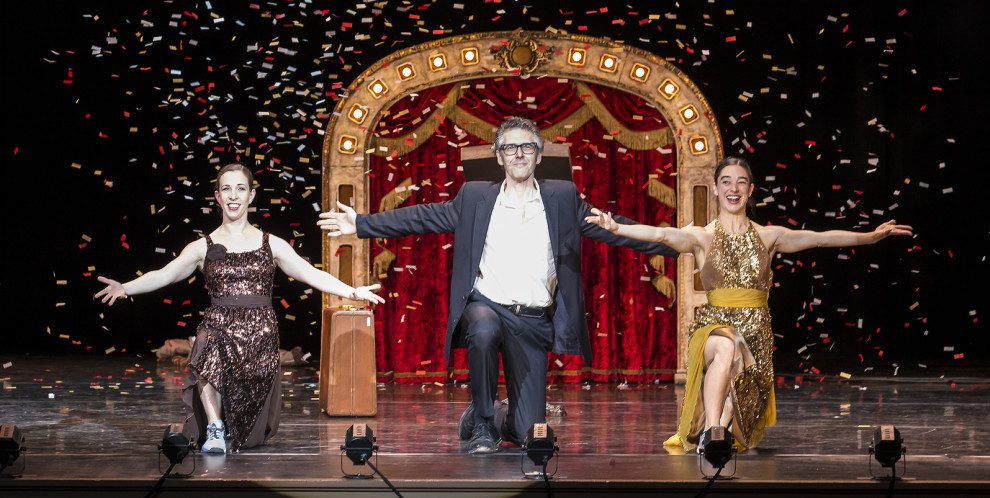
Ira Glass with members of Monica Bill Barnes Dance Company, shot by David Bazemore

Radio could easily be thrown under the bus as one of the least relevant media outlets these days – right above cable television and print journalism.  It seems easy to dismiss the radio as a physical object considering that its top airing shows are often listened to via Internet streaming and podcasts.  But as I sit stranded in my apartment with an absentee wi-fi signal, I’d do anything for a radio right now.

Long a beacon of information, entertainment, and more recently, nostalgia, radio has withstood the fickle curator of time for over 100 years.  It was the first thing I heard every morning for two decades, my Dad flipping its switch at six am, seven days a week.  During power outages and floods we’d pull out the wind-up radio, which only needs a few cranks of a rotating lever to sustain hours of energy.  No iPhone can do that.

As it turns out, I’m not the only one who gets all warm and fuzzy inside at the thought of straightening an antenna.  I had the opportunity to attend BAM’s RadioLoveFest this weekend to see a theatrical interpretation of everybody’s favorite radio show, This American Life, featuring your host and my daydream husband, Ira Glass.  But what exactly is a theatrical interpretation of a radio show?  Well, it’s a bit like tasting color.

Organized in acts much like the original program, the live staging possessed qualities of a variety show.  I suspected both of these approaches, but other than that, I had no idea what I was getting into.  Act One recounted the tribulations of a professional audiobook narrator who found herself locked in a hotel room closet with no phone and limited Internet signal.  Her entire hour-plus of closet captivity was fortunately recorded on the iPad she had with her, and her story was told through a combination of audio clips and Ira Glass’s narration.  But the narrative took an especially comic turn when one-by-one, costumed opera singers trickled on to the minimally adorned stage to sing the tragedy of the girl locked in the linen cupboard.

The next segment, 21 Chump Street, was likewise a true story told through the medium of music, this time with the addition of dance.  Composed and narrated by Lin-Manuel Miranda (In The Heights, Bring It On) it recounted the experience of an undercover NARC sent to a Miami high school to weed out dealers.  This act was enjoyable, but my least favorite bit of the evening given its Glee-like performances.

Writer Joshua Bearman narrated an autobiographical radio drama starring Josh Hamilton (as Bearman) and James Ransone as the author’s brother.  It was the heaviest moment of the evening, dealing with the slow death of Bearman’s alcoholic mother in Florida.  Yet the tale was told with a relatable comic lightness that didn’t dismiss the gravity of its subject matter, but rendered it as catharsis.  It must have been an odd sensation for Mr. Bearman to narrate his own story and watch someone else play it out.  Perhaps this was part of his coping process, and it was admirable that he could share it with a crowd of some 2,000 attendees.

Oddly enough, Bearman’s late mother had an extended presence in the show; as it turns out, she used to baby-sit Magnetic Fields frontman Stephin Merritt, also on the bill for the evening, and one of the main reasons I ended up in those red velvet seats to begin with.  Unfortunately, Merritt only got two songs in the entire night: “How Do You Slow This Thing Down?” and “Nothing Matters When We’re Dancing” off the seminal 69 Lovesongs.  These performances were staggered between other acts, and added a stiff serving of delicious misery to an otherwise merry evening.

Sandwiched throughout the night were comedic tales told by SNL’s own Sasheer Zamata, and stand up comedian Mike Birbiglia, who had me in stitches with his tale of domestic arguments… over domesticated animals.  At one point, an actor in a mouse suit and roller skates was chased across the stage by a man in a cat suit.  That fine feline was none other than Ira Glass.  At times like this, one must swoon.

The final act mirrored that of the first.  Ira Glass narrated a story supplemented by audio clips from the original raconteur.  This account was straight from the mouth of a professional River Dance performer, relaying the details of a lottery pool she and her team went into together.  Feverishly convinced they would win, the dancers went into frenzy with the expectation, sometimes shouting “DO IT FOR THE LOTTO!” during their performances.  As Ira told the story from his podium, the Monica Bill Barnes Dance Company pranced behind him.  Glass said of the performance in a recent interview: “I tell stories, and they dance.  It sounds terrible, but I swear it kills.” Kill it did, especially as the number ended with Ira dancing in unison with the two professionals, a big red rose in his slate-blue lapel.  I’d out-swooned myself.

I went into RadioLoveFest a bit bewildered with what I was to expect.  I left with a cramp in my dimples from smiling so hard.  I don’t know if I’ll ever have the immense pleasure of seeing Ira Glass dance again, but I do know one thing: radio ‘aint dead yet.[/fusion_builder_column][/fusion_builder_row][/fusion_builder_container]
VIDEO REVIEW: Arum Rae “Gold”

arum rae

Back in April, Arum Rae hit the scene with her debut EP Warranted Queen, which has since met much critical acclaim. The five-song EP gives us a good dose of experimentation with moody sounds from her smoky vocals to the perky electronic drum track that is prevalent on most of her songs. Her eclectic sound doesn’t shy away from the power of soul, and her new track drips with the kind that makes you feel like she’s sucking out your own.

“Gold” is all about voice; the bluesy, barebones backdrop allows Arum Rae to expose herself vocally more than ever before. Invoking a rather creepy soundscape, the song crescendos into a distortion battle between Rae and her guitar, and in the end, her warble wins. By the song’s end, we are left with a feeling of awe and emptiness, as she ekes out her final whispered lines over a rumble of receding reverb.

The video for this track plops us right in the middle of a gray, vast wilderness, faced with braving a world unknown and more terrifying than you can imagine. Stark images of unforgiving cold and vicious canines on the prowl mimic the lone-wolf aesthetic of Arum Rae’s impassioned howls. There aren’t enough gray tones in the world to convey the darkness of this video, but Director Philippe Leonard successfully uses grainy black and white film to achieve its ominous appeal. The ambiguity of certain scenes gives the video a sense of foreboding reminiscent of a horror film shot on 16mm, delivering us in a harrowing landscape that allows the song to ring deeply within the soul. When it all ends, you feel stranded, spent, emptied out – and renewed.

“Gold” captures the essence of Arum Rae’s stunning vocal abilities. She’s currently working on an album to be released later this year, and if this single is any indication of what is to come, we are certainly in for a treat.


ALBUM REVIEW: Cerebral Ballzy “Jaded & Faded”

Cerebral Ballzy

Cerebral Ballzy

Let’s get fucked tonight, cuz it’s pretty in the city. Let’s just dance tonight, cuz it’s pretty in the city. Let it go tonight, cuz it’s pretty in the city. One of these days we’ll take the town, but for now we’ll just buy a 40 oz

Cerebral Ballzy entered the music scene in 2011 when they released their self titled album. One thing was pretty clear: the band’s members, Honor Titus (lead vocals), Melvin “Mel” Honore (bass), Mason (guitar), Jason Bannon (guitar) and Tom Kogut (drums) are some hedonistic dudes. They like to drink themselves silly, drug themselves dumb, skate, have sex, and other fun things, all in the overwhelming and chaotic environment of NYC. They documented their various hijinks with heavy basslines, explosive drumming, inaudible singing and guitar riffs that whiz by at a dizzying speed. Their self-titled debut became a hit within the local punk circle, which landed them a spot on Julian Casablancas’ Cult Records. The band enlisted the help of Dave Sitek (TV On The Radio) to produce their sophomore album, Jaded & Faded.

It seems that the members of Cerebral Ballzy have matured both creatively and personally since we’ve last heard them. They still like to get drunk, but maybe not so much that they puke on the subway turnstiles they’re too broke to go through. They still like to have sex, but maybe with the same girl more than once (Woah I’ll never ever forget her, cuz she’s so rad. Got her name tatted right down to the letter, cuz she’s so bad. City slows when we’re together, cuz what we have).  Though they were in high school when they hit the scene and in no position to look at their band as anything more than fucking around, they’re now college freshman. With “reality” on the horizon, it’s clear they’ve decided to capitalize on the professional connections they accidentally made and try to extend the life of the project, even if it means taking a band with a goofy name semi-seriously.

Cerebral Ballzy’s sound has also grown adjacent to their song themes. On Cerebral Ballzy, the guys knew only one tempo: fucking fast. On Jaded & Faded, the gang experiment with tempo.  Most of the tracks on Jaded & Faded include some tempo changes. The intro to “Another Day,” for instance, slows things way down, giving it a hungover feel. After the melody has been established, the guitar accelerates and the music bursts into chaos around the lone guitar riff. The considerable restraint that Cerebral Ballzy shows on the track appears again and again on the new record, making the pockets of combustion that much more intense. On “Parade Of Idiots,” Kogut demonstrates his drumming capabilities by actually holding back on the introduction before erupting at unfathomable speeds throughout the song.

In a way, Jaded & Faded is something of a landmark for band, as they also seem to have developed an ability to work together and listen to each other more than ever before. This is most audible through the interaction of Bannon’s and Mason’s guitar parts on “Fake I.D.” One guitar plays a fuzzy and distorted chordant section while the other picks away at a faster, flashier melody. This interaction creates a fuller, richer sound than they might have gotten if both instruments were simply going full throttle for the entire song. Wild abandon takes a lot of stamina; these boys are now smartly banking on compositional elements to highlight the their ability to shred and let loose, a move that could even earn them a little respect.

Titus, too, gets in on the act, experimenting with new vocal styles, usually with a surprising level of enunciation. From a guttural growling on “Speed Wobbles” to a more melodic “Better in Leather” and an almost-rapped “Fast Food,” Titus finds many ways to stretch the signature bratty snarl that dominated the debut. As much as his aggressive sneer was a highlight on early singles, the explorations on Jaded & Faded give unique personalities to each track, lending them new dimensions. The raw energy of the band’s last record made up for the fact that at times, it could feel flat, but with Jaded & Faded, fans now have the best of both worlds.

Cerebral Ballzy introduced the punk scene to its kick ass, high energy sound on its debut album. Jaded & Faded digs just a little bit deeper, representing a more matured, cognizant stride towards the sound that they have already begun to establish. If the title of the record is telling, they’ve done that all under the guise of feeling tired and bored of all the excess, but I’m willing to bet they’re cementing a game plan that will only extend the life of the party. Jaded & Faded is out June 17th.


TRACK REVIEW: SALES “vow”

unnamed

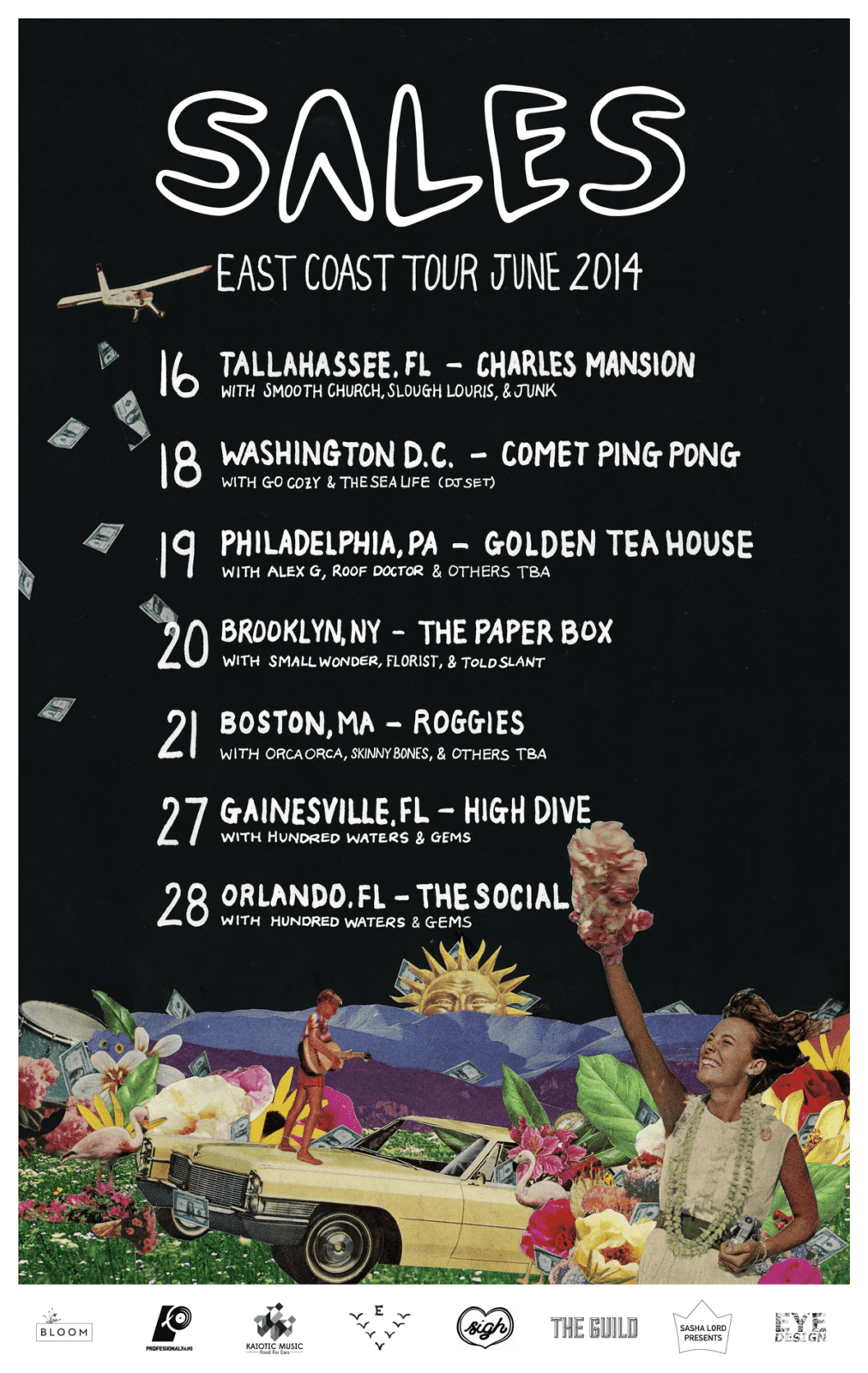
Florida band SALES prepare for their upcoming debut album with their latest single “vow” and a small East Coast tour this month. The duo, comprised of Lauren Morgan on guitar and vocals and Jordan Shih on everything else, create intimate pop music that can equally cause dancing and peaceful moments of contemplation.

“vow” simmers and tiptoes on the line between passion and nonchalance. It feels like a first encounter, like the electric current when you catch someone’s eyes from across a room in a crowded party and you’ve been slightly enamored by them for a good hour. The lyrics are understated, matching Morgan’s even, hushed tone, but underneath you can feel the nerves and the million of thoughts rushing through, like listening to a friend sharing anxious thoughts in a small room. Simple phrases like “fell apart in the lows of a laugh” are somehow so lovely that they’ll have a way of popping up in the mind for days after. The steady drums are contrasted by a guitar line that moves in gentle waves, receding during the verses and surging at the chorus and ending. It’s a sweet song without being overly indulgent; quietly tender and immediately endearing. Honest and low key, “vow” rests comfortably in your ears, so charming and inviting that you’ll play it on repeat for days.

Listen to “vow” and check out SALES’  June tour dates below:

unnamed


LIVE REVIEW: Spanish Gold @ Mercury Lounge

SpanishGold

Some nights, there is absolutely nothing better than heading to a small concert venue in one of your favorite neighborhoods and being blown away by a band you’ve never heard before. This is what happened at Mercury Lounge on June 3rd at Spanish Gold’s gig.

Spanish Gold is made up of the joined forces of guitarist and singer Dante Schwebel (of Hacienda), guitarist Adrian Quesada (formerly Grupo Fantasma) and My Morning Jacket’s drummer Patrick Hallahan. The band’s debut album South of Nowhere is a wonderful example of funky and soulful rock n’ roll with an old-school feel. Schwebel has described the album as “watching a random hour of MTV programming circa 1986-1996” as it has elements of rock, R&B, soul and pop.

Their recent show had me and the intimate crowd engaged the entire time, which is not something easy to pull off.  The thing is, these are all extremely talented musicians who know what they’re doing, and the results are in the music. The album is an exploration of life in South Texas, which is where the band members grew up – most specifically near the Mexican border. When you hear the songs you start imagining a hot day in Laredo, driving in an old Cadillac convertible, smoking American Spirits and drinking tequila.

The show was fun too. Northern Faces, whose EP Southern Faces was released last year, opened for them and did just what any good opening band should do: get the audience excited. The Albany, NY based band is somewhat similar to Spanish Gold in the sense that it also has that true rock and roll sound. And it’s always refreshing to witness a band in its earlier stages because you know they’re truly giving it their all.

Spanish Gold came onstage and it was hard to know where to focus your attention. Schwebel’s voice made it hard to look away from him, but then I’d hear Quesada’s guitar tunes and he’d have my attention, until a drum solo from Hallahan would steal the show. From behind her keyboard, the lovely Silva Belle provided back-up vocals with a little help from Alysse Gafkjen. Though they were difficult to hear in the mix, they had some pretty great dance moves that added to the overall performance. Highlight of the show? When they performed a cover of Bell Bill Devoe’s “Poison;” at that point the audience just lost it.

After an hour and half of a solid performance from beginning to end, I can easily say that Spanish Gold knows how to deliver. These guys may have their individual kick ass projects, but when they are together as Spanish Gold, some really great rock n’ roll happens.

Check out the band performing their single “Out on the Street” on David Letterman:

ARTIST PROFILE & LIVE REVIEW: Jared & The Mill

tz7D1rG2xPScG2ATBsKRuuaiLOy2LN-Z0gwv6njXDRM

As I stood in the back of the packed venue I could feel the anticipation of the audience. Most of spectators did not know there was an opening act, and that they were about to be blown away. I myself was also unaware. Jared & The Mill was one of the best surprises I’ve had all year.

By pure circumstance the first person I met in the Constellation Room was Travis Alexander, the manager of Jared & The Mill. We started talking about music, our jobs and a bit of existentialism. I was promptly introduced to Jared Kolesar, the lead singer of the band, then within a few minutes the concert began. As they walked onto the stage, instruments in hand, the crowd seemed confused at the absence of the main act. However it did not take long for people to become captivated by the absolutely vivacious performance.

For Jared & The Mill this was the finale to over a month of touring with Barry Gibb, one of the founding members of the iconic 70’s band, the Bee Gees. Barry had been looking for an opening act for his tour and, even though musically the two groups have little in common, Gibb was hooked once he heard their sound. The tour had been an incredible journey for them; they went from TD Garden in Boston to The Constellation Room in Santa Ana. Two nights before I met them, they had performed at the Hollywood Bowl (providing some of their parents serious consolation that music wasn’t such a risky career path after all). Hailing from Tempe, Arizona, Jared & The Mill have been playing together for three years and their Southwestern origin can definitely be heard in their tunes and lyrics. Many of the band members had been involved in music long before meeting up – drummer Josh Morin majored in percussion performance and guitarist Larry Gast III studied jazz performance in college. As for Jared, he had been in a business program before he experienced a life-altering realization that he would be happier creating music. Rounded out by Michael Carter (banjo, mandolin and harmonica), Chuck “Bassman” Morriss (electric and upright bass), and Gabe Hall-Rodrigues (accordion and piano), each member of Jared & The Mill has an obvious love for music and this passion shines through when they perform as a group. Each player stands behind a microphone to help create their beautiful harmonies.

In spite of the sound guy’s negligence, they played brilliant concert. I couldn’t help but to give all of them huge hugs and praise. A lot of their songs have a folksy feel, but their sound is constantly evolving and by the end of their performance they had shifted into a more indie rock vibe. After the main act finished we went to In & Out (there is no better place on the West Coast for an interview at 1AM). We talked about their visit to this year’s SXSW, poignant because their friend Mason Endres had been involved in the drunk driving incident outside of Mohawk that left three festival-goers dead. Mason survived but didn’t make it to the band’s shows, so without hesitation the whole ensemble visited Mason in the hospital and sang her favorite tunes. The authenticity and joy they radiate is a key part of Jared & The Mill’s brilliance.

A few picks for their musical dream collaboration included the Fleet Foxes, Brian Wilson and Andrew Bird. They fantasize about performing at Red Rocks Amphitheatre and have a long-term goal of being the first band to perform in outer space. They have been working on reshaping their sound, which for them is a constant activity.

With beautiful lyrics, nearly perfect harmony, intense stage presence, and endearing personalities, the boys enchanted the audience. Their incredible talent and ability to “instill a sense of family” in the crowd make it hard not to be swept away by their sincerity and ease. Meeting Jared & The Mill made my weekend and I can’t wait until the next time our paths cross.

LIVE REVIEW: Run River North @ The Constellation Room

[fusion_builder_container hundred_percent=”yes” overflow=”visible”][fusion_builder_row][fusion_builder_column type=”1_1″ background_position=”left top” background_color=”” border_size=”” border_color=”” border_style=”solid” spacing=”yes” background_image=”” background_repeat=”no-repeat” padding=”” margin_top=”0px” margin_bottom=”0px” class=”” id=”” animation_type=”” animation_speed=”0.3″ animation_direction=”left” hide_on_mobile=”no” center_content=”no” min_height=”none”]

Photo Credit to Josh Telles

There’s a phenomenon called an “island vibe.” This means a person or place is so mellow and easygoing that it rubs off on the surrounding environment. When I drove up to The Constellation Room in Santa Ana there was an obvious island vibe: the people waiting in line had huge grins on their faces, the parking attendants and venue owner were helpful and chatty, even the burly security guards couldn’t help but grin a little in anticipation for the sold out show. I myself could not wait to see Run River North perform again.

This past spring Run River North came to my campus, the University of Massachusetts Amherst, and played a 15-minute set that was incredible but way too short. After I heard one of their songs, which was the only one I caught before their act was over, I couldn’t believe I hadn’t listened to their music before. They had a wonderful tone and balance to their music, and a mix of instruments that make some truly wonderful melodies.

Run River North, previously known as Monsters Calling Home, is a Korean-American indie-folk band whose heritage glimmers through their craft in surprising ways. Though the band hails from Los Angeles, members Alex Hwang (lead vocals and acoustic guitar), Daniel Chae (electric guitar and violin), Jennifer Rim (violin), Joseph Chun (bass), John Chong (drums) and Sally Kang (vocals, keys, mandolin and tambourine) are all children of immigrants, a reality that catalyzed the band’s work ethic early on. All of the members contribute vocals and help with writing lyrics. Joe says the reason why they work so well together is because they “have more fun” when they do. The band released their self-titled album Run River North earlier this year.

Though active since August 2011, Run River North attracted tons of attention due to an interesting interaction with Honda. They didn’t have a studio to record their music videos in and discovered that the Hondas they all drove had great acoustics, so they shot the clip for their song “Fight to Keep” driving around in their cars. After posting the video to YouTube they were contacted by Honda and asked to come to New York to perform for 600 executives of the company. Those Honda execs surprised the band with the news that they had actually been booked to play on Jimmy Kimmel Live.

That performance generated a lot of exposure for the band from all types of people. Usually when I write about shows I try to describe the audience. For this homecoming concert, however, no labels applied. When Run River North performs they create a space of full music immersion. Age, ethnicity, economic background, all these divisions are forgotten once they began to sing. It is rare that you can find a band that can make the entire audience move and sing as one. During one of the songs I looked out to the crowd and not a single person was still, to me that is magic.

With Alex dancing around the stage barefoot, John completely immersed in the beat, Jennifer’s gentle notes, Daniel’s wide smile, Joe’s chill stage presence and Sally bringing the group together, Run River North has created a unique show that is hard not to love. At points Alex danced so hard his beanie fell off. A lot of the crowd was comprised of friends and long time fans from Southern California, and although Alex admitted to being “really bad at Where’s Waldo” the entire audience felt the reciprocated appreciation. During “Growing Up” the crowd became, even if accidentally, the seventh vocal member. And later on Run River North went old school folk and performed the beginning of a song a cappella. During the last part of the set Alex even got off the stage and started a mash pit of sorts. The encore ended things on an uplifting note, with a final song that asked for people to face their problems with love not hate. “It’s a lot easier when people don’t try to hold onto their fists and just let it go,” Alex told the audience.

It is a rare and beautiful thing to see a band perform with such earnestness. Run River North exude grace and kindness behind, expressed simply with elated grins. They have a contagious stage presence and fervency to their movement that pulls the audience into their show. Run River North is silly, warmhearted and all together amazing. I would suggest to anyone that loves dancing, singing, music or fun (or just goodness in general) to check them out immediately. They are touring all over the United States in Summer 2014, with their next show on June 21st in San Francisco.[/fusion_builder_column][/fusion_builder_row][/fusion_builder_container]
ARTIST PROFILE: Orenda Fink

Orenda

We are all searching for something on this earth. Whether it is truth, love, acceptance, or even validation, we’re convinced that the questions we have are deserving of answers. But we spend so much time looking out into the world for answers that we sometimes forget to look within ourselves. Singer-songwriter Orenda Fink’s third solo album Blue Dream utilizes self-exploration first and foremost to answer life’s biggest questions. Prompted by a series of dreams about death, Orenda began writing introspective songs that expressed precisely what she experienced through her dreams. She’ll share those thoughts with the world on August 19th, when Blue Dream is released.

It has been said many times that dreams have varied, and invariably deep meanings, and with Orenda’s new album comes an opportunity for all of us to dig deeper into our own unconscious selves. While her previous solo LPs Invisible Ones and Ask the Night relate to events in her life, Orenda feels as though Blue Dream is far more personal than anything that she has created before. With this album, Orenda finds new ways to cope with immense pain and heartbreak. She truly believes that if we gain a better understanding of death, then we can live a better life — an intriguing perspective that challenges us to dig a little deeper, rather than just continue on, scratching the surface of our feelings. I was fortunate enough chat with Orenda about Blue Dream, as well as her progression as a musician. Here’s what went down.

AF: How would you describe your music and your sound?
OF: I usually use the words melancholic and ethereal for music and sound. I usually write about things that are very personal. I guess it’s confessional in some ways, but maybe slightly a little romantic too.

AF: What affect do you think growing up in the south has had on your music? Do you feel as though it is a strong presence in your songs?
OF: Yeah, I think that growing up in the south definitely had an effect on my music, it’s not an obvious literal musical influence, but it’s not just in sensibilities. I tend to think that the south is kind of romantic. I mean people take issues and they kind of get blown up into these kind of archetypal situations of epic proportions (laughs). At least in the deep south where I come from, and I think I get that flair for the dramatics probably, from the south. But also…you know I think there’s just something about the heat and the humidity there. It kind of holds people, holds emotions in; kind of pulls them together until they’re almost visible, tangible things outside of your own body. You know, like you can…almost have an experience with them. Like ghosts I guess, they’re almost like spirits; and I feel like that’s something from the south that seeps into my work. It’s kind of that true connection with things that could leave you, but they don’t.

AF: Tell us about your upcoming album Blue Dream. What was the creative process like for you, and what are you most looking forward to?
OF: Well the creative process for Blue Dream…I mean it kind of feels like a dream in a way because I started writing it after my dog died. Which doesn’t seem like probably a huge deal for a lot of people, but I had him for 16 years, and we had an extremely codependent relationship with each other (laughs). I mean I took this dog all over the world. So it was really really painful when I lost him. But outside of that, I had this deeper emptiness when he left that was kind of like…in a way, an existential crisis where I realized I didn’t have a framework of how to deal with death. You know, whether it be a dog, or my husband, or my friends, or myself, and it kind of left me reeling for the better part of the year, until I started doing this dream analysis through psychotherapy and during that time I just was having an insane amount of dreams, every single night, and they were all about death. And my dog was in a lot of them, but not all of them. And this went on for about six months, and I felt like I was having the answers or something close to the answers said to me, through my dreams; in a way that I could never have imagined. You know, because in my conscious waking life, I felt despondent and kind of nihilistic about everything at that point. But in my dreams there were different stories unfolding that pointed away from that. It was a powerful time for me and that was when I started writing this record. It’s not necessarily a concept record; it’s not a record about death, or not a record about a dog, or anything like that but these are the things that were happening in my life while I was writing this record. I was just writing and writing and one day I realized at the end of it that I was standing outside of the tunnel looking in, instead of in the darkness and thinking “I think I’m out of the tunnel. And I think I have correctors.”(laughs) So that was kind of what the process was. I think the creative process was going on in my dreams and the writing was just something I did outside of that.

AF: In what ways would you say that this album is different from your last two solo projects?
OF: Some people might chuckle at this, just because of the nature of my writing; but I do feel like this record is more deeply personal than the other two solo records, just because of where I was when I wrote it. You know, when I wrote the other records I wanted to break away from singing about love and love lost which was a big theme of Azure Ray ‘s because I was happily married and I just didn’t really feel those emotions, so I was looking for outside influences with Invisible ones and Ask the Night, you know Invisible ones was heavily influenced by my travels to Haiti, and Ask the Night was kind of like an exploration of southern Gothic folklore if you will, so even though those records related to me in a personal way, they weren’t deeply personal like this record is. This is the first time that I feel like I’ve felt this kind of intense heartbreak of a different nature, but that I had felt during that Azure Ray work.

AF: What is your favorite song on the album?
OF: Hmm that’s a tough one, I mean it’s hard to say because I feel like they do kind of represent different stages of that year, so there’s ones that are more redeeming, and something that are just in the darkness. And so, it’s kind of a journey for me. It’s hard to pick one or the other, but I guess I’d say either “Holy Holy” or “Poor little bear.”

AF: My favorite is definitely “You Can Be Loved” — it’s just so beautiful.
OF: Aww thank you!

AF: So I know that in the past some of your solo music was inspired by Haitian Folk music, is this also the case with your new album?
OF: You know, someone else asked me this question. I’d say probably not consciously, but when I kinda look back at some of the backing vocals, and the treatment for “This Is Part of Something Greater” it kind of has…what I hear as plaintive cries and traditional voodoo folk music. You know, I love the way the women sing and they just belt out these plaintive cries kind of in unison so I think maybe inadvertently I just hear that sometimes in my head as the backing part, without even meaning to. It’s what my ear wants to hear as part of the piece. So I think there could be some unconscious influences in there for sure (laughs).

AF: I feel like many people search for the meaning of life, but very rarely do you hear about someone searching for the meaning of death. So on your journey what did you find, in searching for the meaning of death?
OF: It’s interesting, because I feel like that’s such a good observation, but you know they’re so closely connected, but it’s just that death is scary. It’s horrifying, and that’s why you don’t search for the meaning of death because you don’t wanna think about it. You just wanna think about life, because that’s what’s in front of you, and death is this terrible thing at the end that’s unavoidable but you have to literally deny it in order to live a full life. So it’s really tricky to go down the rabbit hole for the meaning of death, and it was a weird place that I was in but I guess I feel that exploring the meaning of death can help you live your life. Through my dreams I found that I have less of a fear of death, or less of a fear of losing because I don’t feel like anyone can really know what the meaning of life or death is, but I think that through some real searching you can find out what it isn’t. If that makes sense. And I feel like what I do know now is that there is some kind of life after death. What it is? I’m not sure. But I feel like that’s what’s been told to me through my dreams and I think they’re just as good a source as anyone else in the world that tries to tell you what they think, because it’s a direct source from you; your wisdom that you can’t access in the conscious realm.

AF: I read somewhere that you feel very strongly about the idea of human beings healing, through finding their “Interior God.” Could you elaborate on this concept? I’d love to hear more about it.
OF: That is actually a quote from Alejando Jodorowsky. He’s a filmmaker, a writer; he’s made the movies El Topo and Santa Sangre and Holy Mountain. He’s an amazing experimental art film director. He’s also written a lot about spirituality, and magic and art and how they connect. So that quote is a direct quote from him that I just felt like really summed up the work that I had done, the dream work; and the journey I had gone on which is that your Interior God is basically just a way to tap into the source of something that is beyond your conscious mind because our conscious mind only drives about 10% of our actions, our thoughts, our feelings. There’s this whole other welt of something, we don’t understand what it is that is really driving the ship. And I think in that there are some archetypal truths about life and death and humanity and if you can tap into that, that’s your “Interior God.” That’s what anyone who’s ever created any religion has done. Or any kind of spiritual philosophy, I feel like is basically just people tapping into their “Interior God” and trying to essentially translate what their hearing. So I guess that’s why I feel like if you can find that within yourself it’s gonna be the purest source of information. Cause everyone can tap into it. You don’t have to have someone tell you what it is. Not to say that it’s not good to listen to a certain type of religious or spiritual background, but I think that it can work in conjunction to find like a more truthful version of life and death when you listen to your own self. And that to me is your “Interior God.” It’s the collective unconscious, it’s your personal conscious, and it’s tied into everyone that has ever lived.

AF: How have you progressed as a song writer? What are some important lessons that you have learned along the way?
OF: You know, it’s weird when you do this for a very long time, because I feel like you go in cycles that are kind of prolific, and have quality, and a lot of it has to do with inspiration I think, but also there’s an element of craft to it. That I… In previous years sometimes I kind of just scratched the craft element and just went on pure inspiration. So I feel like even though this record is darker than a lot of my other stuff, it’s “poppier” in a way. I kind of like revisited the craft of writing a song. Like the pop structure and I think that’s easy sometimes when you have heady, heavy subject matter. It’s more digestible if you can deliver that in a way that is beautiful and pleasing to the ear, so I guess I learn lessons with every record that I write, but this is where I’m at right now so we’ll see how it plays out.

AF: What are some advantages and disadvantages to being a solo artist as opposed to being in a band?
OF: Well I definitely love collaborating with people. That is where my heart is. But I do think it’s important to release solo records because they are the most self-indulgent type of art. You don’t have to consult with anyone, it’s all about you, but I think like for me, especially on this record; I don’t think it would be fair to another collaborator to even share this material with them. You know, because it is so deeply personal, but I think there is an advantage to having a solo outlet that you can do that, but at the same time I do feel like I am a collaborator at heart, I love working with other people. I feel like mentally it’s really good for an artist because you get to share the creative process, but then you also get to share the heartache, or the celebration, the triumph, all of it. And I think that being a solo artist is a little isolating for me, but I like having the option to do both.

AF: Dead or alive, who would your dream collaboration be with?
OF: Oh Gosh (laughs ). Alive: Dr. John, and Dead: Nina Simone. I actually ran into Dr. John at the Atlanta airport a couple months ago! I got off my gate and he was sitting in the airport wheelchair at the gate that I got off of and I was like: “Oh my God! Dr. John!” And I could tell he was like trying to get help and no one was helping him. So I got up my courage and I walked over and I was like: “Are you Dr. John?” and he was like “Yes.” And then I was like “Do you need help?” And then he was like “Honey, I do need help.” And he said “Would you come stand in that line for me?” And I was like “I would be honored to! (laughs).” So I stood in line for him and I got him help, and he gave me a huge hug and was like “Do you wanna take a picture with me?” And I was like “Yes!” So that’s my weird little Samaritan moment with my biggest idol ever.

AF: You got a picture with him too? That’s so cool! Are there any upcoming shows or live performances that our readers should know about?

OF: Yeah. I’m hopefully doing a tour in September. But we’re still putting that together. So my plan is to do a full length tour but I’m not sure if I’ll be supporting someone or going out on my own so that to be determined. But a tour is being planned, which is something I haven’t done in a while.

Orenda Fink’s album Blue Dream is out on August 19th. Check out her first single off the album, entitled “Ace of Cups,” below.


TRACK REVIEW: PHOX “1936”

phox_photo_1 Love at first listen is a rare occurrence, especially if, like me, you’re a self-proclaimed picky listener. It takes a while to really become smitten with any artist. Those that win me over instantly usually bring something new to the table, reinvigorating music at their given time, and in those moments I can see myself revisiting their songs for years to come.

Madison, WI-based indie-pop band PHOX shows every sign of being the rare act that fits that bill; newest single “1936” is the type of song that makes you fall in love all at once. Dreamy and sweet, the swiftly picked guitar intro draws listeners into the richness that awaits in Monica Martin’s soulful vocal tones, woven through multiple layers of guitars and strings, supported by very calculated percussion and bass. Every instrument shines on this track at very specific moments in the song, from the to the precise and succinct sounds of the percussion in the chorus and the thick bass thudding through the whimsy of the bridge, to the intricate guitar breaks after each verse that thread the whole thing together. With the playful banjo that spices things up about a minute in, and the xylophonic sounds coming from the melding of the various guitar tones playing with each other, the lush instrumentation carries Martin’s voice through the enigmatic, oft-repeated line her blood is our blood too, I know.

Though it feels lighthearted throughout, “1936” centers on coming to terms with our genetic makeup – a family disturbance turned into an understanding of how to navigate one’s familial predispositions. That’s a pretty complex topic to cover in only three and a half minutes, but PHOX accomplishes the task with poetically crafted lyrics and a very evocative chorus.

PHOX releases their debut full-length on June 24 through Partisan Records, and if you know what’s good for your soul, you should definitely give this group a listen. They’re on tour the rest of the summer – see when they’re stopping in your city below.


Tue Jun 24, 2014
 – Omaha NE – The Waiting Room
Wed Jun 25, 2014 – Kansas City MO – Riot Room
Fri Jun 27, 2014 – Austin TX – Stubb’s BBQ (Indoor)
Sat Jun 28, 2014 – Dallas TX – Three Links
Mon Jun 30, 2014 – Scottsdale AZ – The Western
Tue Jul 01, 2014 – Los Angeles CA – The Echo
Thu Jul 03, 2014 – San Francisco CA – The Chapel
Sat Jul 05, 2014 – Portland OR – Mississippi Studios
Sun Jul 06, 2014 – Seattle WA – The Crocodile
Tue Jul 08, 2014 – Salt Lake City UT – The State Room
Wed Jul 09, 2014 – Denver CO – Hi Dive
Fri Jul 11, 2014 – St. Louis MO – Duck Room at Blueberry Hill
Sat Jul 12, 2014 – Champaign IL – Mariposa Music Fest
Sun Jul 13, 2014 – Nashville TN – The High Watt
Tue Jul 15, 2014 – Birmingham AL – The Bottletree
Thu Jul 17, 2014 – Asheville NC – Grey Eagle
Fri Jul 18, 2014 – Chapel Hill NC – Local 506
Sat Jul 19, 2014 – Washington DC – The Hamilton
Mon Jul 21, 2014 – Philadelphia PA – Boot & Saddle
Tue Jul 22, 2014 – Brooklyn NY – Knitting Factory 
Wed Jul 23, 2014 – New York NY – Mercury Lounge
Fri Jul 25, 2014 – Newport RI – Newport Folk Festival
Sat Jul 26, 2014 – North Bennington VT – The Vermont Arts Exchange
Mon Jul 28, 2014 – Montreal QC – Casa Del Popolo
Tue Jul 29, 2014 – Toronto ON – The Drake
Thu Jul 31, 2014 – Cleveland Heights OH – Grog Shop
Fri Aug 01, 2014 – Detroit MI – Magic Stick Lounge
Sun Aug 03, 2014 – Green Bay WI – Meyer Theatre w/ San Fermin
Mon Aug 04, 2014 – Minneapolis MN – 7th St. Entry
Wed Aug 06, 2014 – Milwaukee WI – Turner Hall
Thu Aug 07, 2014 – Madison WI – High Noon Saloon
Fri Aug 08, 2014 – Madison WI – High Noon Saloon – SOLD OUT
Sat Aug 09, 2014 – Chicago IL – Lincoln Hall


LIVE REVIEW + ARTIST PROFILE: Cheer Up Club

10365807_324283047720577_9109281052429478533_n

I wasn’t sure what to expect as I drove to a random address in North Hollywood two weeks ago. I had been invited to witness the birth of a band, but I didn’t know the genre or the members. I wandered to the back of a lockout that was stacked to the ceiling with amps, instruments and boxes packed with who knows what. Ethan Goodman, Schuyler Neilson and German Perez were rehearsing for their first show together, ever. Ethan’s irreverent lyrics and languid guitar strokes, Schuyler’s varied bass strumming and German’s crazy drum beats form the basis for Cheer Up Club, and though they have been playing together for less than three months, they jam like a seasoned band. After Ethan flipped his Beatles shirt inside out (the rehearsal was being filmed) they started to play; I was hooked.

Schuyler (pronounced Sky-ler, he’s Dutch) and Ethan met when they were touring in Europe with other bands. Schuyler was on tour with Poeina Suddarth and Ethan was playing solo as support. It was December 2013 and throughout the tour Ethan slowly pulled Schuyler in, making his solo act a duo after a large bottle of Jameson and a long morning of recovery. Ethan assisted in Schuyler moving down to Los Angeles from Portland by finding him a place to live and a job. After he settled in they started their search for the perfect drummer to round out the trio. Though they nearly lost hope after a succession of bad auditions, German appeared. He was a self-taught percussionist that knew exactly what to play, when to play it and had his own flair to boot.

They were all raised surrounded by music. Ethan had so many great records played for him as a child that he was surprised when he discovered terrible music existed. He used to listen to Led Zeppelin, the Beatles, David Bowie and classical tunes to pick out the different instruments and note how they were used in the songs. German was raised around his father’s musician friends, and taught himself the drums with help from of a friend and daily practice. Some of the earliest music he remembers hearing includes Prince and The Revolution and Madonna. Schuyler was five years old when he plunked out a Blondie song on the piano from memory that, according to him, just happened to be in the right key. Schuyler jammed to Outkast, Weezer and Zappa in his youth.

After eating some delicious pizza and watching Cheer Up Club jam for a few hours I was ready and anxious for their show last Wednesday. The day finally arrived and the audience was full of fellow musicians, family, friends and curious bar-goers. As they walked on stage they did not telegraph nervousness, just pure excitement.

Ethan introduced the band casually, his snarkiness much more dialed down than in rehearsal. The boys wore ties, loosened gradually throughout the show as audience members started to dance. They all have wonderful stage energy and, even though I could only see German by looking at the mirror on the wall, they were all deeply engaged in the tunes. Once comfortable on stage, Ethan’s sass fully came out. “You guys got feet? How long ago did they get cut off?” he teased the audience, though the music itself was certainly enough to make people get up and move.

Ethan’s cheeky attitude, Schuyler’s versatility and German’s exuberance blend to create an entertaining, smart show with a punk edge. Ethan’s lyrics touch on topics ranging from motorcycle crashes to fad obsession to aliens in museums. The brilliance in Cheer Up Club is in their uniqueness. All three members are great people and the stage energy reflects it. But the real joy of the show comes from that wry intelligent stage presence backed by pounding drums and very clever bass playing. Their next show is at The Good Hurt in Venice on July 31. Watch for them, hear them, see them.

ALBUM REVIEW: Sam Smith “In the Lonely Hour”

SAM SMITH-IN THE LONELY HOUR

British crooner Sam Smith finally released his debut album, “In the Lonely Hour”, on May 26 with Capitol Records. After a year prepping for his debut with his critically acclaimed EP “Nirvana” and features on hit songs with Disclosure and Naughty Boy on top of touring even before his album was released, Smith has gained wide recognition not just in his home country but in the U.S. as well. With all these accolades and even TV exposure – on Saturday Night Live no less – it’s no wonder that “In the Lonely Hour” became one of the most anticipated albums of 2014.

The biggest reason for his steadily growing exposure is most likely his powerful, heartbreaking voice. Smith can sing and when he does, everyone will stop and listen and feel a bit more breathless than before. He doesn’t grasp for notes, he easily caresses them and glides through them with incredible passion and dedication. He’s fearless in his vocals, daring to soar to the highest notes and play with dynamics.

Of course with this sort of voice, he especially shines in the genre of “tear-inducing, earth shattering unrequited love music” which is basically the premise for “In the Lonely Hour”. Most of the songs on the album are mid to slow tempo appeals to a lover that will never return Smith’s feelings. The instrumentals also range from isolating guitar lines to grand orchestral movements, all adding to the sweeping loneliness that Smith reinforces with his moving vocals. But other than Smith’s phenomenal voice, there isn’t anything here that could really separate it from other sorrowful, self-pitying albums. The lyrics aren’t particularly arresting; sometimes they almost seem surface-level and at other times, they’re nearly unhealthy in their obsession over this unreturned feeling. It’s not an album you should listen to in large doses unless you want to be pulled down into the abyss of self-loathing and hopelessness.

If this album was put on a heart monitor, it would be a relatively even line with spikes in the beginning for “Money on My Mind” and “Stay with Me” and at the end for “Lay Me Down”, which all happen to be singles. The middle of the album is forgettable although “Like I Can” and “Life Support” attempt to change the pacing. Overall, it’s a solid and safe debut; the only experimentation Smith tries is with his own voice. In a way, it’s somewhat unsatisfying because with such vocal talent, he has a chance to explore different kinds of instrumentation and lyrics. Even if he’s making his words accessible to a wider audience, perhaps something more personal, more specific would’ve given more life to his songs. It’s a concrete start and it’ll be interesting to see where he goes from here. “In the Lonely Hour” is available now in the UK and will be released in the US on June 17.

ALBUM REVIEW: Archie Bronson Outfit “Wild Crush”

Archie Bronson Outfit

Hailing from the charming city of Bath in southwestern England comes Archie Bronson Outfit, who make the kind of blistering rock n’ roll more commonly associated with acts on our side of the pond. Since their debut in 2004 with Fur, Archie Bronson Outfit have released Derdang Derdang (2006), Coconut (2010), and most recently, Wild Crush, all on Domino Records. Consisting of Sam Windett, Mark “Arp” Cleveland, and Kristian “Kapital K” Robinson (who replaced founding member Dorian Hobday) the band has made a name for themselves by creating retro tunes with tight composition, guitar heavy melodies, and quirky instrumental combinations.

Longtime fans of Archie Bronson will note the striking presence of longtime collaborator Duke Garwood, who is featured on the baritone sax for many of the tracks on Wild Crush and provides rich new textures that were absent on previous albums. The tracks here are diverse – so much so that initially, it sounds as though they could’ve come from nine different bands. But upon further investigation, certain underlying compositional characteristics can be extracted from the LP as a whole.

For instance, the trio definitely have an ear for what instruments sound cool together. The combination of cello, keyboard and saxophone on “Lori From The Outer Reaches” is nothing short of beauty. “Love To Pin You Down” melds together a chordant keyboard, melodic saxophone and droning guitar. On lead single “Two Doves on a Lake,” the saxophone plays a rambling discordant melody over a heavily distorted whammy guitar while the bass cuts through to create a powerful and energetic instrumental.

Perhaps the most interesting pairing on Wild Crush is that of Windett’s voice with other instruments as a means for harmonization. The band loves to use vocals as instruments for harmonization any chance that they get. On “We Are Floating,” the vocals and the bass come together at the end of the second verse to initiate the guitar solo and again to finish the song. On a sugar-sweet “Country Miles,” an organ harmonizes at different intervals with the vocals throughout the song. The vocals even harmonize with a flute on “Two Doves On A Lake.” Throughout the record, Windett’s vocals remain diverse, from the restrained spaciness of “Lori From The Outer Reaches” to the aggressive, theatrical “Hunch Your Body, Love Somebody” and the shaky, almost-nervous intonations of “Love to Pin You Down,” a rare track in which the singer’s accent adds a dandy British flair.

The element gluing Wild Crush together most effectively remains the band’s penchant for rollicking solos. Each song diverges slightly from its structure to include a prolonged instrumental section, and oftentimes, that’s where the caterwauling, unhinged sax comes in. All of the songs are driven by distinct and heavy guitar riffs, too, reminding us all that first and foremost, Archie Bronson is a rock Outfit.

And if you need further reminders of that reality, look no further than the myriad nods the band gives to their rock and folk predecessors on Wild Crush. Sometimes it is subtle – the vocals in “Two Doves On A Lake” for instance, would be right at home on metal bands of the ‘70s and ‘80s, and one can’t help but sense a connection to modern-day acts like Queens of The Stone Age. Other times, the parallels are more blatant. The harmonious vocals on “Glory, Sweat and Flow” call to mind The Byrds, while the chorus is strikingly similar to The Velvet Undergrounds’ “I’ll Be Your Mirror.” And whether accidental or lifted as a means of homage, the lyric melody follows Silver Apples’ “I Have Known Love” almost to the note.

Their musical influences may be a little too evident at times, but somehow, Wild Crush doesn’t quite come off as a wholly derivative album.  On the contrary, the band seems to have mastered an understanding of their genre and have developed a self awareness of where they fit inside it.  By embracing the sounds of their predecessors they are ironically carving out a space for themselves through the subtle implementation of a number of distinct and overlaying musical characteristics. Through the development of these signature characteristics, they position themselves more as authorities than copy cats.

Like archaeologists unearthing artifacts and reappropriating them for a new era, Archie Bronson Outfit has found the innovation in the retread, cohesive themes in the random, and complexity in the simplistic.

They’ll be playing a handful of dates, including some festivals, throughout Europe this summer. No word on when they’ll make it to the states for some live appearances. Wild Crush is out now, and you can watch a video for “We Are Floating” below.

ALBUM REVIEW: Stagnant Pools “Geist”

stagnant2

Indiana-based shoegaze duo Stagnant Pools combines the guitar pickings and vocals of Bryan Enas with the rhythms of his brother Douglass. They released their debut in January of 2012 and they’re due to put out Geist, their sophomore record on 6/10 via Polyviny. The band’s name connotes a hazy scene, near motionless. The record’s title implies a phantom or spiritual figure. Geist certainly channels some kind of ghostly misery. You’ll hear a bit of Joy Division, Slowdive, My Bloody Valentine, with an undercurrent of emo. It’s a familiar dream that doesn’t always work – sometimes there’s too much going on to feel much and sometimes there’s just nothing to feel – but it’s great for any creative mind.

The opening “You Whir,” for example, has a loudness to it that doesn’t work with the emotional undertones. I want to know more about the “beautiful nothing” that Bryan speaks of (though it seems cliché), but it’s too difficult to concentrate. Often Bryan’s voice is too affected into a mellow mumble, to the point of slight absurdity. The words to a lot of the songs are also lacking in depth, though that is not necessarily wholly negative. When Bryan conveys hopelessness through “You can’t take it away / It’s never here to stay,” it’s clear: happiness is never there to stay. But, while the music may soothe the creative side of us, that kind of description, in such a dead voice is so unimaginative it’s almost boring. There’s really hardly any vocal variety throughout.

This kind of music is easy to daydream to – more than allowing your mind to wander, it encourages it to. The “fuzz,” as so many like to describe it, that the drums and guitar create combined with repetitive melodies creates a drowsy effect. That sleepy brain is ripe for the lazy feelings Stagnant Pools’ describes. The music, on the whole, does reflect the lyrics, in that it is cyclical to the point of losing my interest.

Tracks like “Filed Down” engage the listener at first by taking the deadened misery implied in the title and following through with the vocals and music. There is a strong sense of emptiness. But it’s hard to listen to something like that for more than a few minutes. There simply isn’t enough force to keep your attention.

Look out for Geist which will be released this June and check out “Intentions,” in the mean time:

LIVE REVIEW: The Menzingers @ Webster Hall

Menzingers Webster

[fusion_builder_container hundred_percent=”yes” overflow=”visible”][fusion_builder_row][fusion_builder_column type=”1_1″ background_position=”left top” background_color=”” border_size=”” border_color=”” border_style=”solid” spacing=”yes” background_image=”” background_repeat=”no-repeat” padding=”” margin_top=”0px” margin_bottom=”0px” class=”” id=”” animation_type=”” animation_speed=”0.3″ animation_direction=”left” hide_on_mobile=”no” center_content=”no” min_height=”none”]
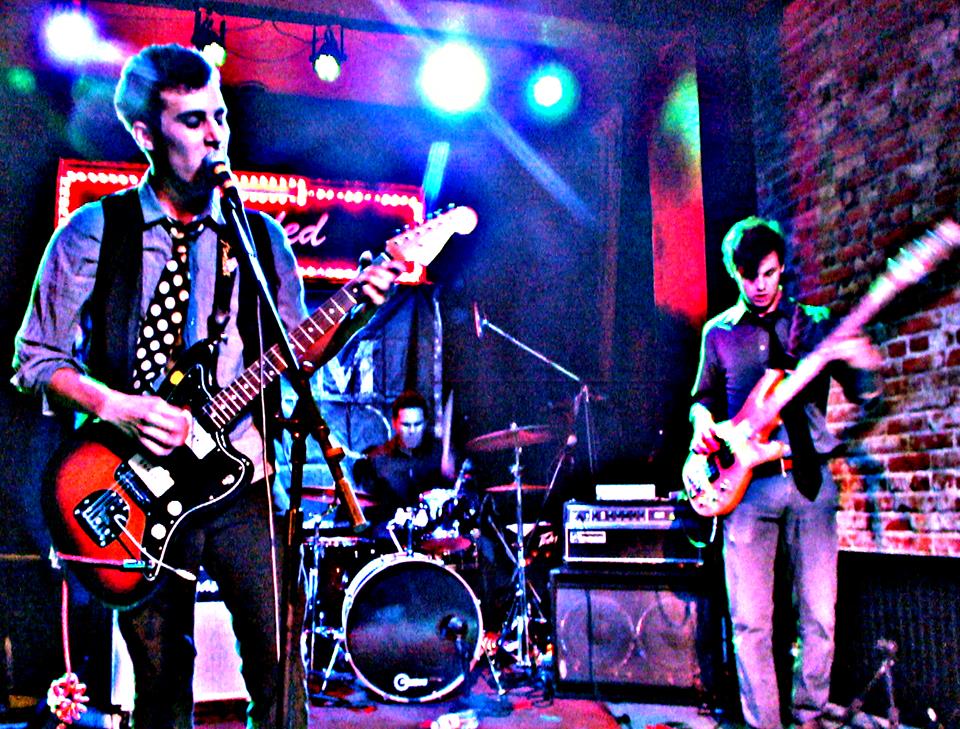
Menzingers Webster
The Menzingers at Webster Hall, shot by Greg Pallante for Bowery Presents

Last Friday I rushed from my part time job to Webster Hall and made it just in time to catch The Menzingers‘ headlining show. A larger venue than they have played at in the past, I was really curious to see how these angsty pop-punkers would rise to the challenge. I am a relatively new Menzingers listener, but my obsessive personality definitely made up for lost time since their newest album, Rented World, dropped mid-April. The album is a perfect extension of the beloved sing-a-longs from their previous albums, and is chock full of catchy and head-banging tunes.

As I made my way up to the balcony to get a good view of the stage, I peered over to a sight of a sea of men in their late twenties waiting patiently as the members’ guitars were being tuned. With a Modelo in hand, a wave of alcoholic beverages and band-tee’d backs catapulted into the barricade while the lights dimmed. Without so much as a “Hi New York, we’re the Menzingers,” or a “Thanks for coming blah blah blah,” they dove right into their two most popular tracks: “I Don’t Wanna Be an Asshole Anymore,” and “Good Things.”

I found myself surrounded by the emotional family members of the band, screaming my favorite Rented World jams right alongside them. The Menzingers barely took a breath in between songs, each one crashing headlong into the last. Their energy was captivating, and so exciting to watch from above as the crowd and band’s energies bounced back and forth. One of the only pauses they took throughout the show was to explain how in awe they were, and that it was “the best night of their life.” They’ve always had a big, enthusiastic fanbase, but the scale of a sold-out Webster Hall crowd clearly blew their minds.

After all those mosh-worthy moments, The Menzingers closed out the show with one of their more heartfelt tunes, “Transient Love,” which was a fitting finale considering the song’s wistful lyrics. The guys returned for a three-song encore, which included “Gates” from 2012’s On the Impossible Past, the title track from their 2007 debut LP A Lesson in the Abuse of Information Technology, and 2011 single “The Obituaries.” How appropriate. After realizing it was only the second night of their Rented World tour, I finally understood how overwhelming having a sea of people screaming their new lyrics back at them must have been. It was a joy to share mutual exhilaration with such an appreciative act.

Check out The Menzingers in a city near you:

Menzingers Tour Dates[/fusion_builder_column][/fusion_builder_row][/fusion_builder_container]