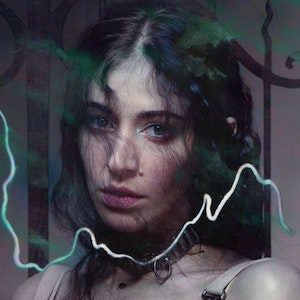
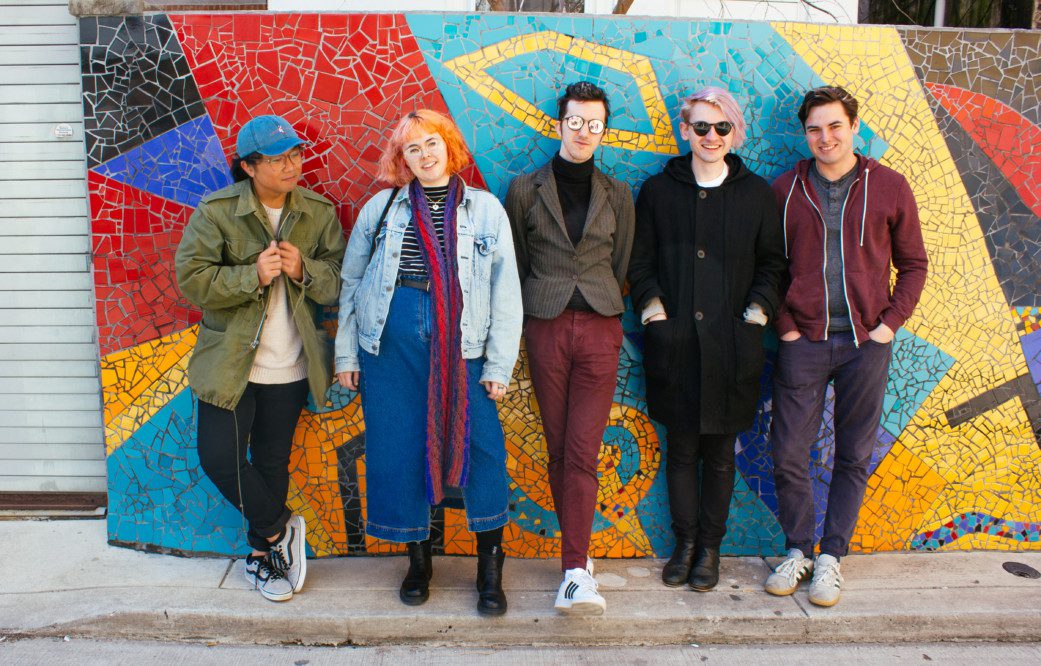
PLAYING ATLANTA: password:password Discuss New Singles and Dream Pop Vibes

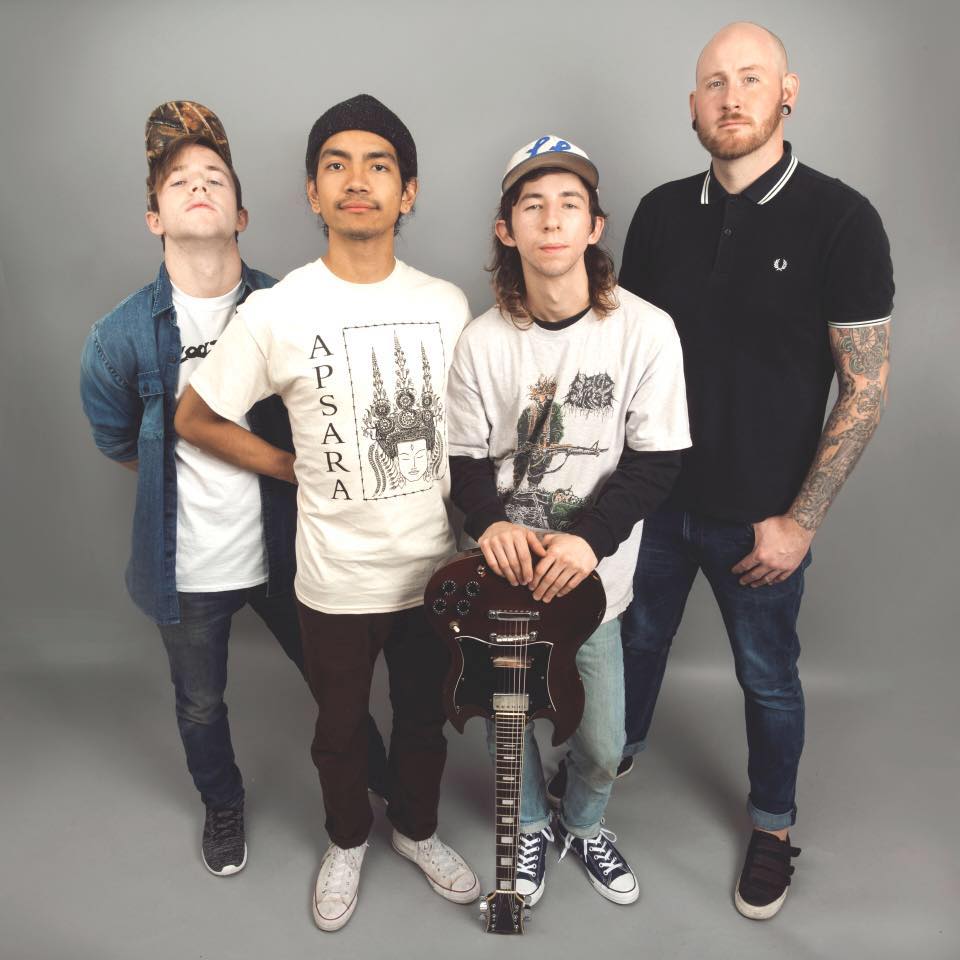
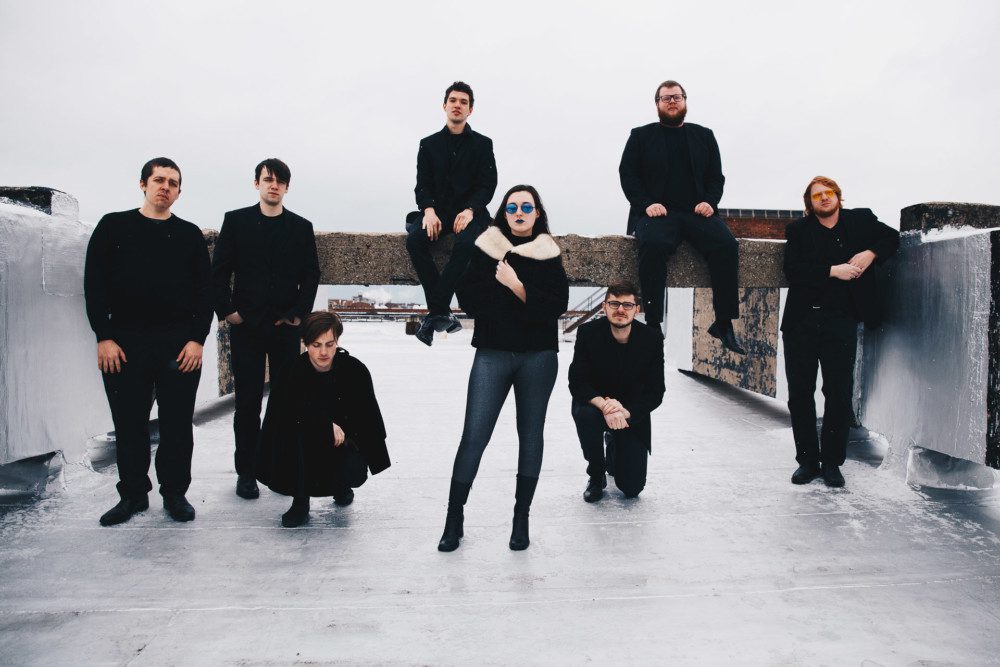
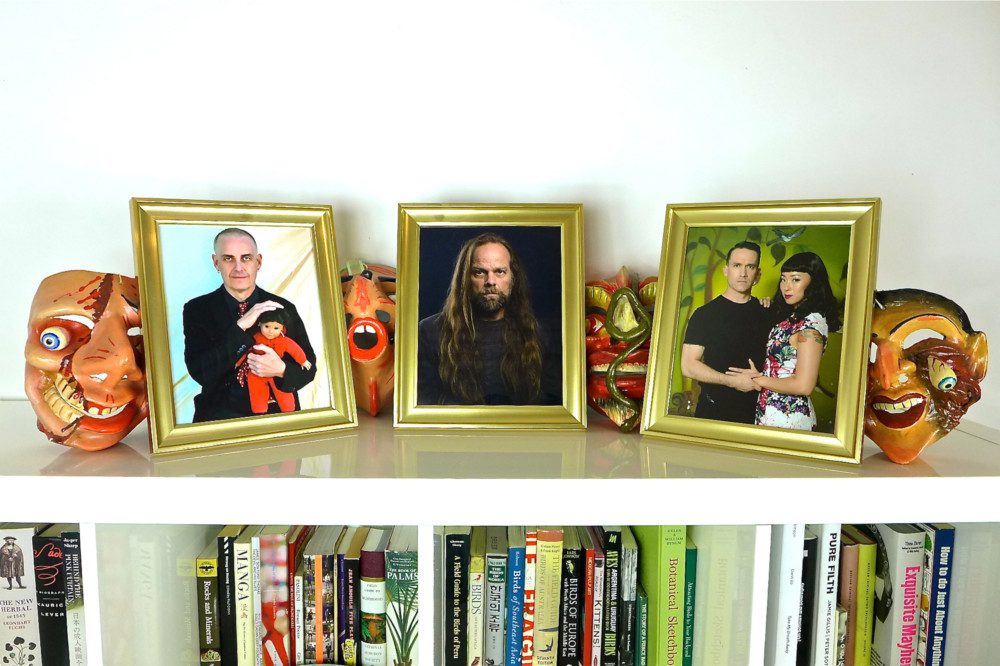
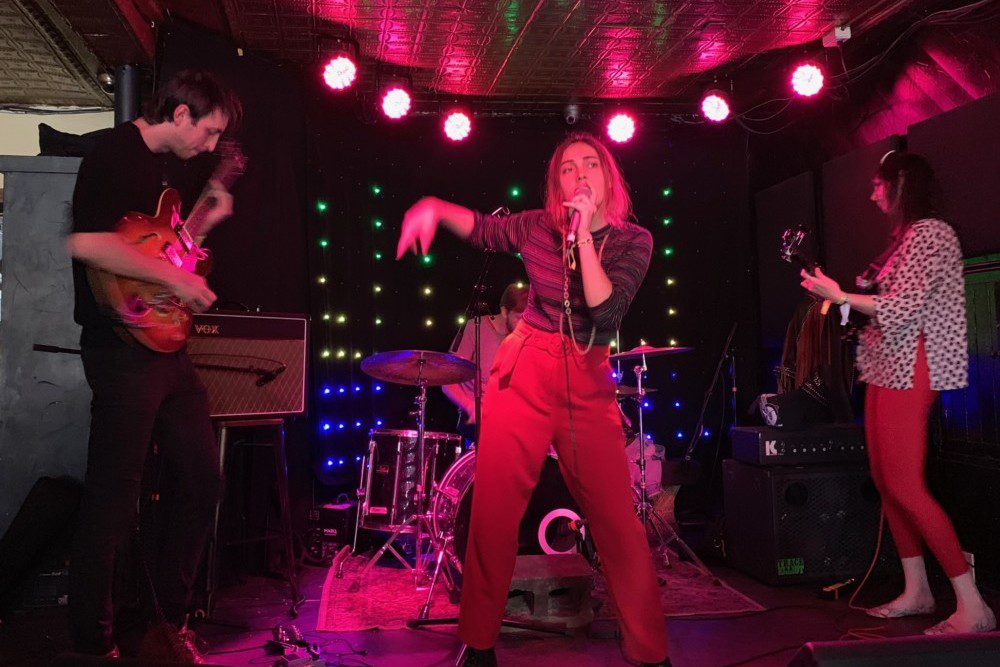
We’ve really got it all here in Atlanta: rock ‘n roll, pop, R&B, soul, and – with the resurgence of the indie scene – some of the best shoegaze-y dream pop a music lover could want. Atlanta-based, Georgia Tech-born quintet password:password is at the helm of the movement.

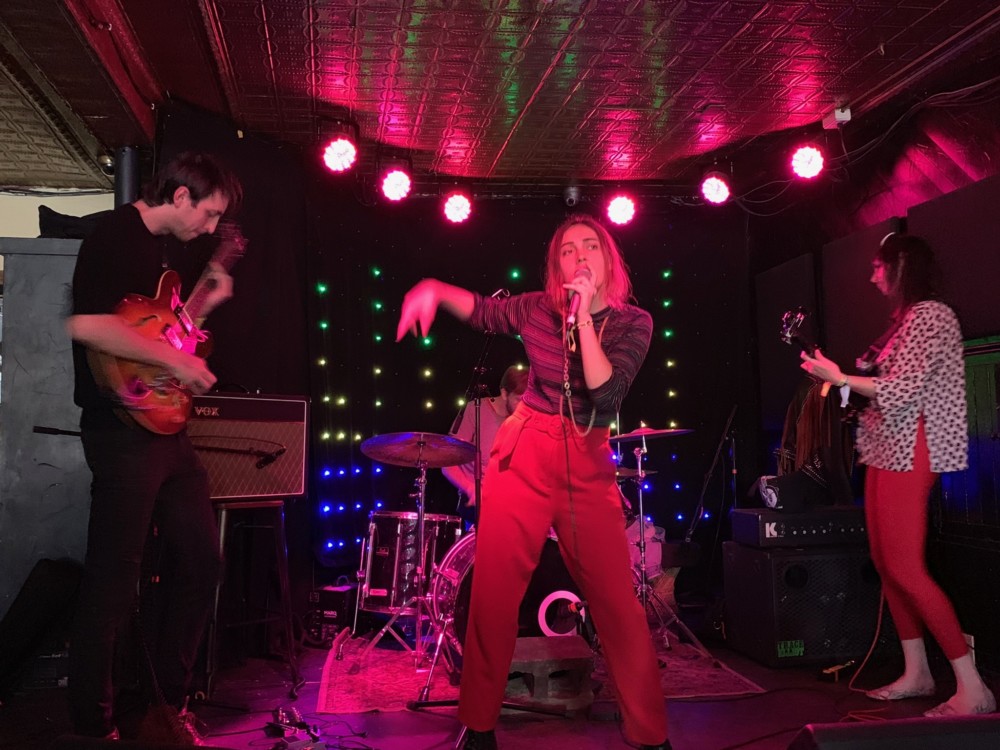
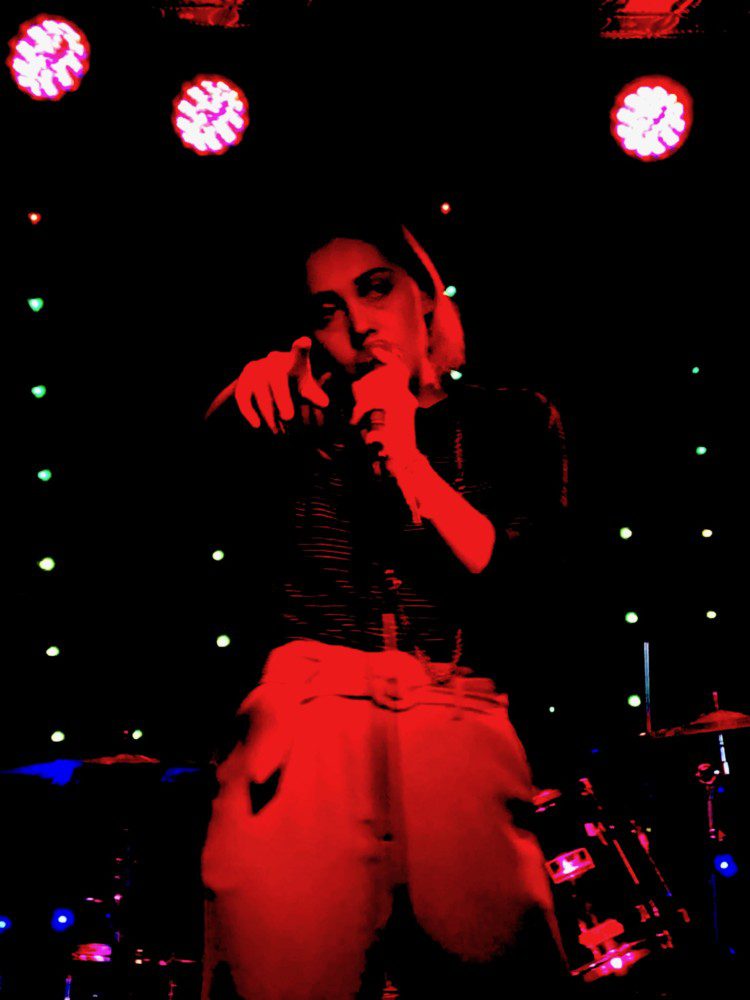
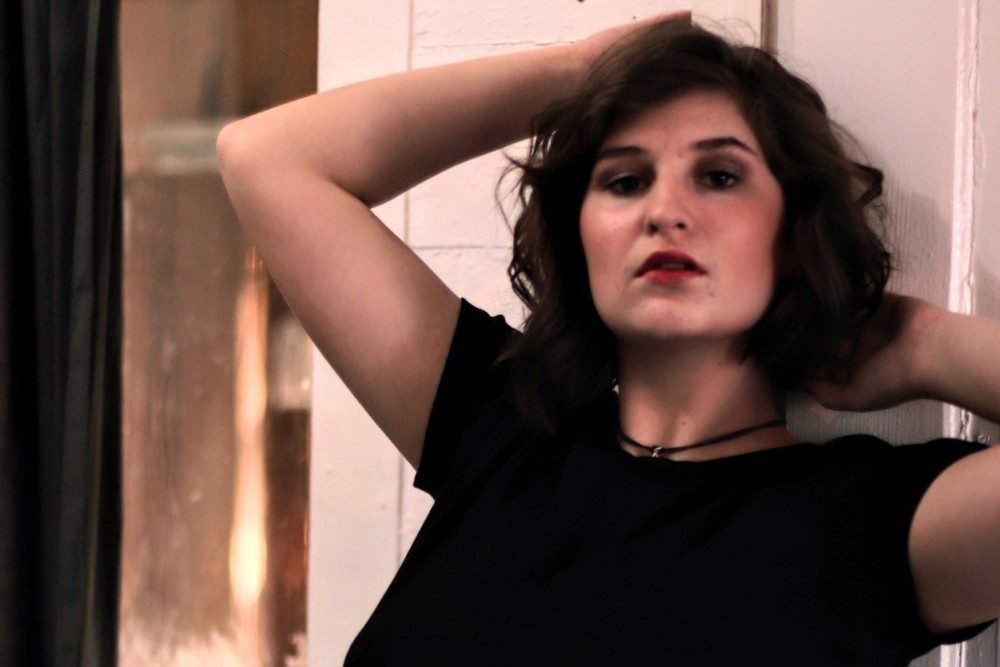
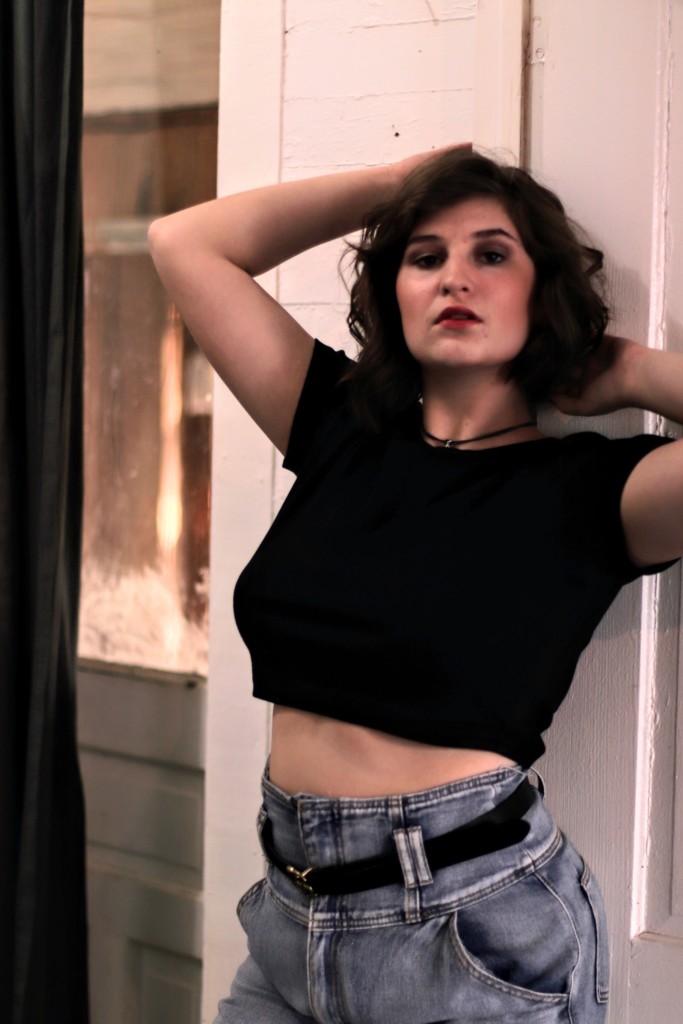
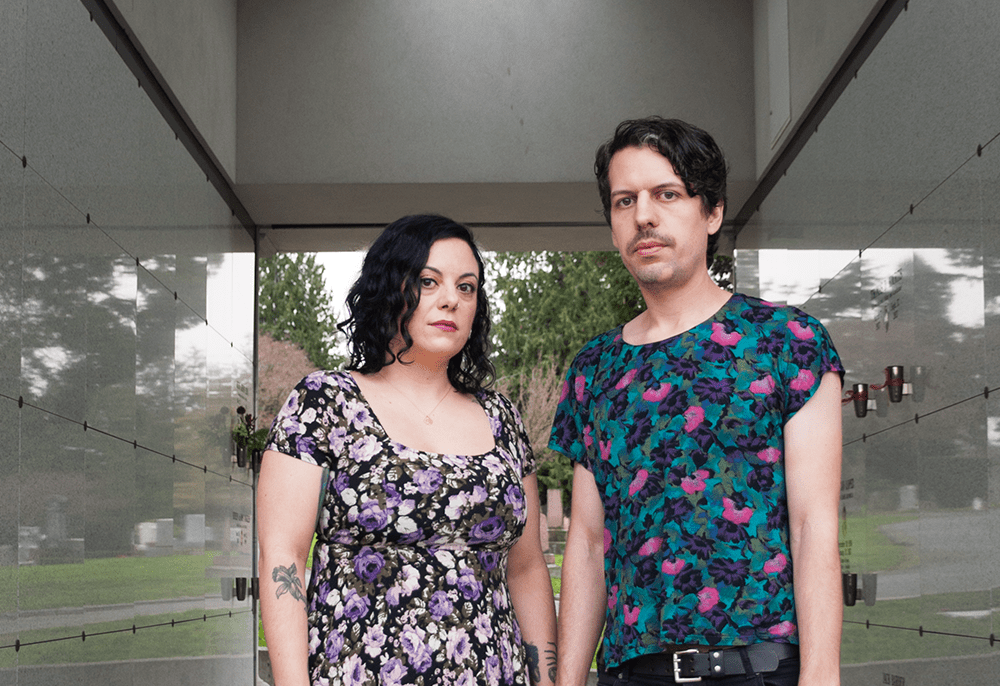
Fronted by lead singer Claire Lacombe and backed by Chris Mickas on guitar, Heath Murphy on synth, guitarist Jed Paz, and bassist, Merritt Treaster, the group takes DIY to the next level, writing, recording, and producing their own music, while blending the swirling, experimental sounds of My Bloody Valentine and Phoenix with classic synth-pop acts like Pet Shop Boys.

The band released their debut EP, Session Boyfriend, on Valentine’s Day. Just over four months later, they’re gearing up to put out a new single on June 28th, with a b-side that pays tribute to another local act. Check out our interview below to hear more about what they’ve been up to and how it all began.

AF: All five of you have been in bands before; how did password:password get started? 

We met while we were all students at Georgia Tech. We were each a part of the Musician’s Network there, which is a student organization that connects musicians at Tech and runs a student-run venue/practice space called Under The Couch. MN has a thing called New Band Showcase every fall, and in the fall of 2017, we got together to compete. A lot of us had been in bands together before (Merritt and Chris in Yes! Hornberger!, Jed, Merritt, and Chris in Priam, and Jed and Claire in Junior Prom), but for the 2017 showcase we decided to start a new project. 

AF: Which bands do you consider your greatest inspirations when writing and performing?

Shoegazey stuff like Slowdive, Cocteau Twins, and My Bloody Valentine, newer indie pop like Alvvays, Japanese Breakfast, Beach House, M83, MGMT, Phoenix, and older synth-pop like Pet Shop Boys, Eurythmics, Nena, and all that. You can hear joy division in some of Merritt’s bass playing. There are some other pulls that we’ll make for little details and stuff, but those are probably the biggest influences.

AF: How did your sound develop as you began writing and playing together?

We actually set out to start a dream pop band from the beginning. All of us have an appreciation for sonic textures and a mutual love of bands that experiment with it. When the five of us got together to start creating our own music, those mutual influences came through. Also, having a dedicated synthesizer/keys player in the band ends up pushing the tone of the music in many different directions. Combine that with constant tinkering of effects pedals, and we end up where we are now. 

As far as the instrumental arrangements go, we all have an appreciation for simpler parts. Chris and Heath have jazz backgrounds, and we know a decent bit about music theory, but we try to convey that through atmospheric and interesting sounds rather than really technical pieces. 

AF: What’s your creative process like? Do you usually write together, or does one of you come in with a finished idea and jam it until it feels good? Has it changed over the years, as you’ve played together?

Most of the time one of us (usually Jed) comes to practice with an idea or a written demo, usually one that consists of one or two parts and possibly a melody. We play around with it for a bit to get a feel of where the song needs to go, and then a lot of the song’s progress comes from us working on it from home. Merritt has a knack for fleshing out what would otherwise be a boring midi demo, which really helps us get a feel for the potential of the song. We’ll send each other updates or additional parts and then come together at the next practice to try them out as a band. All of the lyrics and vocal melodies come from Claire, so after listening to the rest of the band playing around with the song structure, she’ll write the rest of the song on her own. It’s overall very collaborative and everyone kind of holds their own. 

AF: You’ve got some new tracks coming out soon! What can you tell us about them? What was the recording process like?

“Just Yours, Not Mine” is our first single written after our EP, Session Boyfriend. It’s the first time we’ve approached a song with a drum machine base, resulting in Jed playing guitar for this song. We’ve started to utilize backing drum tracks a lot more, but this is the first song we’ve written with it in mind since the start. Also! “Just Yours, Not Mine” includes a couple samples that come before each chorus. One is from our friend Dennis Frank when he performed his solo set at Under the Couch. The second is when Claire was testing out her digital recorder and caught Jed talking about how researching Buddhism helped his outlook on life. 

“Gold Room” is a song originally by our friends in The Organ Machines, who have graciously allowed us to perform and record the song. It’s probably our favorite song by them, and we hope that we do it justice!

We recorded both of the songs on our own at Standard Electric in East Atlanta. Merritt used to intern there and is close with the owners, so they let us rent the space to ourselves when we need to record. Merritt oversees the whole session, and we each come in, hang out, and record our parts. It’s really a great space with a lot of cool equipment, and we’re lucky to be able to use it. 

After all of the parts are recorded and tidied up a bit, we send the initial mixes off to our friend Cody Lavallee in Murfreesboro, Tennessee to mix and master them. Heath has known him since elementary school (they were in a band together in high school), so it’s a great set up to have him help produce the songs. He did both Session Boyfriend and the upcoming singles, although our first single [from the EP], “Thursday,” was mixed and mastered entirely by Merritt. 

AF:What inspired “Just Yours, Not Mine”? What made you decide to release it as a single?

We’ve been playing “Just Yours, Not Mine” at shows recently, and people have been super receptive to it. It has a strong energy. We really think the studio version will do that justice. 

JP: I had been playing around with the chord progression for the verse of “Just Yours, Not Mine” for a while before bringing it to the rest of the band, and at first I had planned for it to be a much more downtempo song. My main source of inspiration for the feeling behind the progression came from lo-fi hip-hop. I’m really glad it evolved past that though. I think what it became is a million times better than what I originally had in mind (which has been the case with all the ideas I’ve brought to the band so far).

CL: For lyrics, I liked the idea of an upbeat song with a sad story attached. It’s about feeling like you aren’t an individual once you’ve been in a relationship for so long, on top of feeling distanced from the other person in said relationship. It resolves with a repeating “don’t go,” because in the end, you are so dependent on this person it would be way worse off alone. 

AF: What do you consider to be the greatest challenge when it comes to writing, recording, and performing? The greatest victory for you as a band?

Making time for the five of us to get together is always a bit of a challenge. We also record all of our own music at Standard Electric Recorders, so acting as both the artist and the recording engineer typically leaves us pretty exhausted. Performing, practicing, and writing together is really enjoyable still. We’re all really close friends, so any time that we have to work on password:password stuff is pretty great.

AF: Claire, this one is specifically for you: can you talk about your experience as a woman in the music industry? Do you ever feel like you’ve got to “prove yourself” or work harder to be taken seriously? How do you use your platform to encourage more women and girls to be active members of the music industry?

CL: There have definitely been times where I am at a show and I look at the bill and am like, “Wow, I am the only woman performing tonight.” Especially coming from Georgia Tech, which is majority male anyway, I kind of got to expect that I was always going to be a minority. The issue of women in the scene is kind of a conundrum because women will be encouraged to join the scene when they see other women in the scene, but, like, there have to be women in the scene as an example first. Also I think that women have to be more original, talented, and have a better thought-out presence to make it big or do well in music, which can be discouraging. Like, why can’t I just be as good as everyone else? Why do I feel like I have to be better to make it the same distance?

I try to use what platform I have just to encourage women to jump in with no reservations. That’s what I really like about DIY shows; they are low pressure and you can really just mess around as much as you want. You don’t have to be this amazing new concept that’s going to “make it.” On that same note, you don’t have to be amazing at your instrument to contribute and play in band if you want, so for sure, learn a new instrument and experiment as much as you are comfortable with!

AF: This column is dedicated to Atlanta bands, so let’s talk about the industry in the city! It’s expanded rapidly in the last few years, and is continuing to grow. What’s your favorite aspect of being part of the Atlanta music scene?

The best part about the expanding indie scene in Atlanta is definitely the “expanding” part. Having new venues and bands pop up every year means there is so much opportunity to move up and get into the fold. Compared to what I’ve seen in other cities, it’s pretty good about including women and LGBTQ people, too. With Claire as a frontwoman, and Heath as nonbinary, it’s very nice to have other groups around and venues that are receptive of that. 

AF: What’s next for password:password?

We’re continuing to play shows around town over the summer. We’re also taking some time to focus on writing new songs. You should see some bigger releases from us somewhat soon™. 

AF: Last one! Best show you’ve ever seen in Atlanta?

JP: Definitely Mitski, Japanese Breakfast, and Jay Som at the Masquerade back in 2016. Looking back, it’s a dream bill of mine, even if I didn’t realize it at the time.

HM: Oof, this was one that I arranged and password:password played at, but Couchella 2018 was so much fun. Superbody, Lunar Vacation, and Delorean Gray were major highlights. Seeing Kero Kero Bonito and Tanukichan at 529 was also a great one.

CL:Easy; Anarcticats’ album release show at Drunken Unicorn. Everyone was so hype, and they overpacked Drunken Unicorn by like 30 people. It’s really cool to see your friends so lifted up like that. 

CM: Julien Baker. I saw her a few days before her most recent album came out, and the crowd was almost silent when she was performing new songs because everybody wanted to hear every word she was singing. It felt very unique and intimate. 

MT: Tame Impala at the Tabernacle in 2013 for sure.

Dreaming of more? Follow password:password on Facebook and keep an eye out for more music coming soon.

PLAYING CINCY: Cincinnati Throws Down At Bunbury Music Festival

bunbury

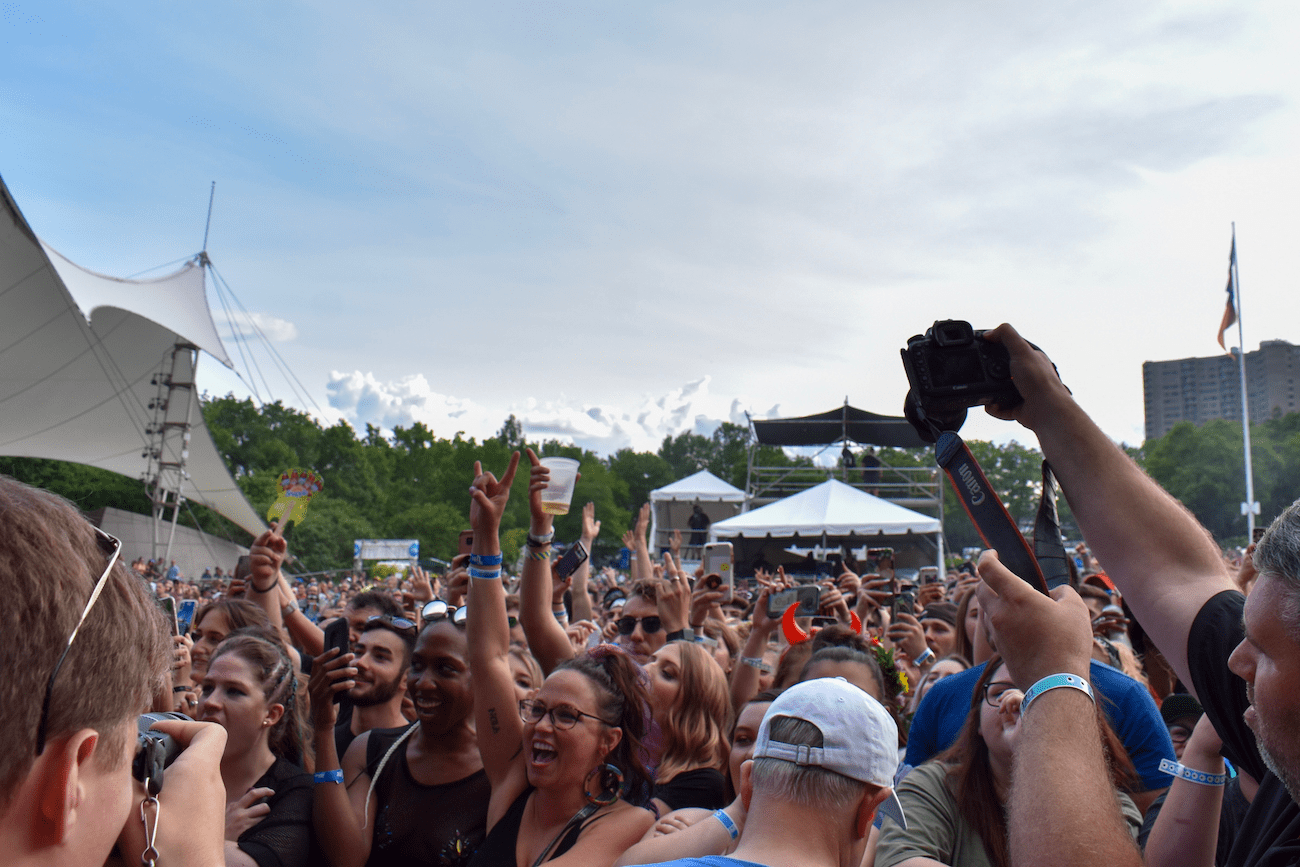
Last weekend, the city of Cincinnati gathered along the Ohio River for the 7th annual Bunbury Music Festival. The three-day fest featured headliners like The 1975, Greta Van Fleet and Fall Out Boy, along with impressive supporting acts such as Machine Gun Kelly, Girl Talk, Run The Jewels, and Sublime with Rome. Local talent, like TRIIIBE, was also represented.

Bunbury
Machine Gun Kelly performing at Bunbury Music Festival 2019. Photos by Victoria Moorwood.

Bunbury is a perfect example of why festival veterans prefer the smaller fest experience. With over 50,000 in attendance, compared to Coachella’s 250,000+, festival-goers had room to spread out amongst the vendors and multiple stages that stretched along the riverfront.

Miller Lite and local Braxton Brewing Co. provided the drinks with tents near every stage and a wide variety of over 20 local and delectable eateries–like INJOY, Mikey’s Late Night Slice, and Island Noodles–arrived in food truck fleets for attendees to enjoy.

The lineup hosted a complimentary mix of alternative, rock, hip hop, and nostalgia. Reignwolf stood out as a wildly talented rock trio, while MGK and Run The Jewels held down the fest’s hip hop and Fall Out Boy and Stone Temple Pilots reignited 2000’s favorites. Girl Talk had the entire crowd dancing with his signature mix of pop and EDM hits.

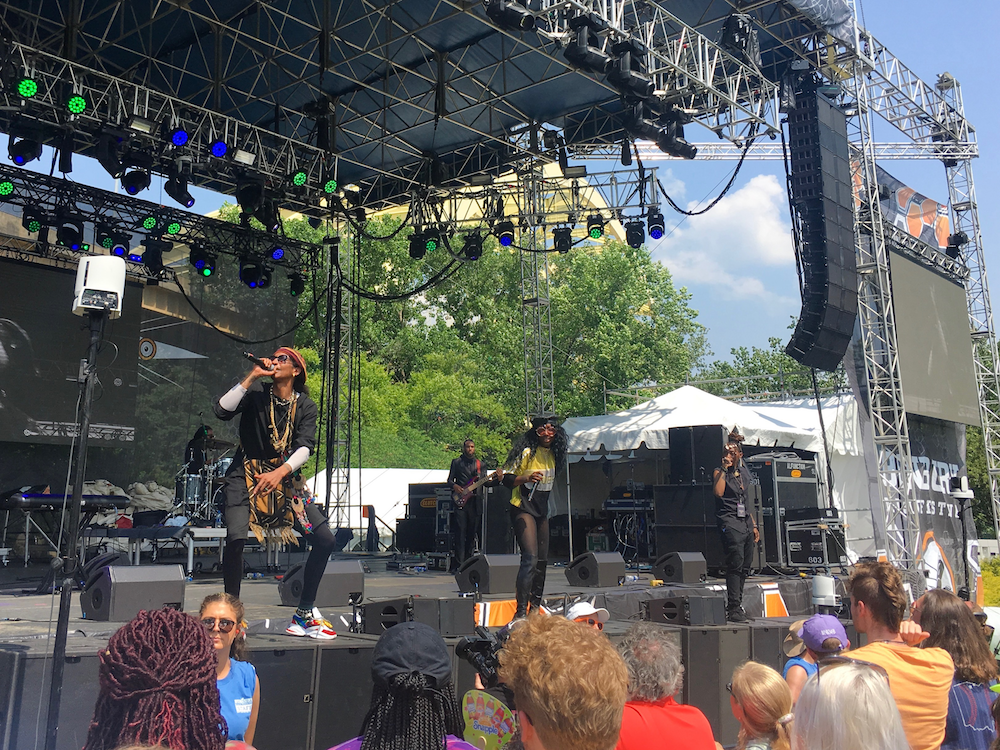
Local hip hop trio TRIIIBE kept the energy going all through Sunday with a set that vibrated positivity. “Say, ‘I love you!’ Now, ‘Say I love me!'” they prompted the crowd.

(Left) Pxvce, Aziza Love, and Siri Imani of TRIIIBE performing at Bunbury on Sunday, June 2.

“I feel like healing is its own vibration. Music carries and supports that vibration,” Aziza Love of TRIIIBE told AudioFemme. “Joining with people we’ve never met before in that same space, to invite them to do the same thing, I think is so powerful.”

Bunbury’s lineup maintained the audience’s energy throughout the three days, with fireworks ramping up the wow-factor on the very first night. The amount and variety of foods, spacious and spread out location and lineup marked Bunbury as a Cincinnati summer highlight.

Only 358 days ’til the next one!

bunbury
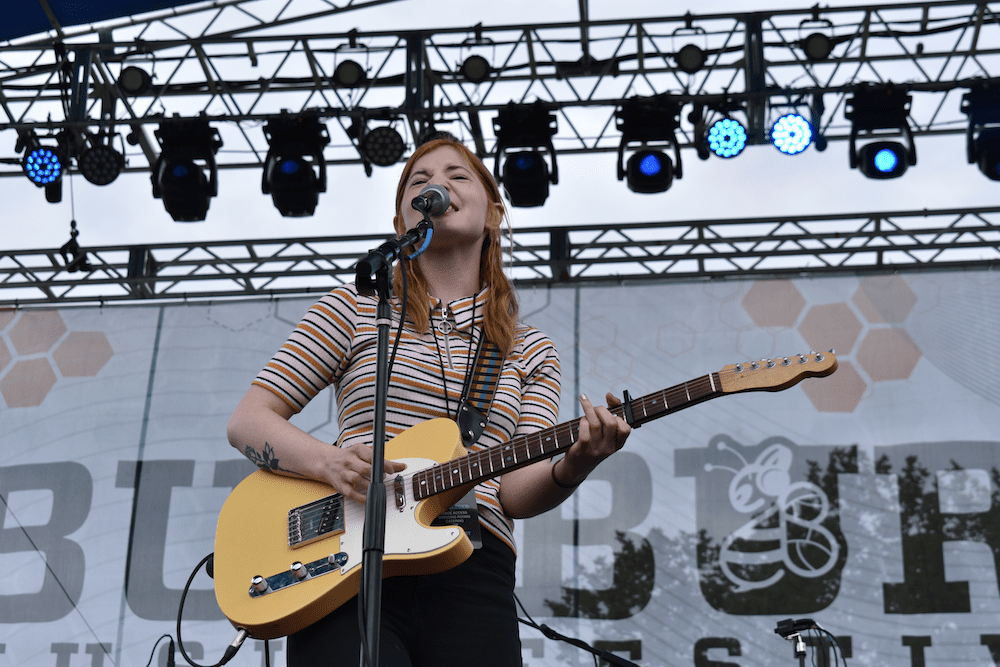
Canadian singer Taylor Janzen singing her Bunbury set.

PLAYING ATLANTA: Seersha Returns With New Single, “Lecture Me”

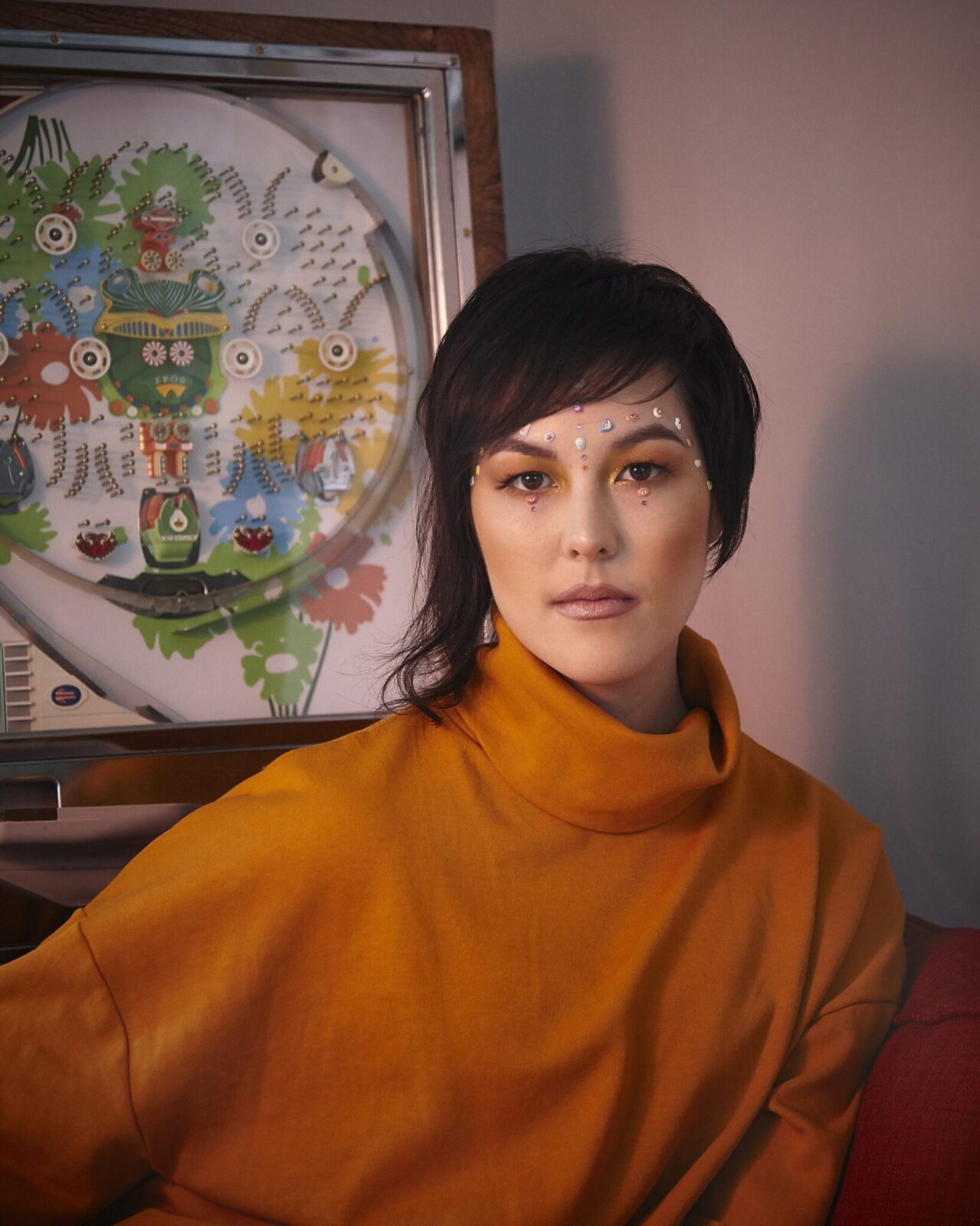
It’s been almost two years since Atlanta’s chill electropop artist Seersha – aka Kara Revnes – shared any music with the world, but at long last, she’s back with her latest single, “Lecture Me.”

The singer, songwriter, and producer’s seemingly effort ability to create ambient soundscapes that are equally driving and oh-so-chill is unrivaled, but I was immediately impressed by her ability to draw listeners in while watching her perform live at The Vinyl. Her presence is calm, subdued, and self-assured on stage, and she takes that easy confidence with her into the studio, imbuing each song she writes and produces.

Three days after the release of “Lecture Me,” Revnes sat down with me to talk all things music, Tiger Moms, and dancing across the line between her Korean and Irish roots.

AF: Thanks so much for taking the time to chat with me! This is definitely the world’s most over-asked question, but how did you create the name Seersha? 

KR: Seersha is the phonetic spelling of Saoirse, an Irish/Scottish name that means freedom. All the matriarchs on my dad’s side are Irish, and I thought “Seersha” looked like it could be a K-Pop name…homage to both sides!

AF: How did you get started in music? Was it something you grew up in, or did you grow into it?

KR: A little bit of both, I would say. I remember playing piano in church band starting at age 10. My wonderful Korean “Tiger Mom” strongly encouraged me to stick with piano lessons from age seven to age 18; I’m so grateful to my parents for that gift. I wrote my first songs around age 14. But I never considered music as a possible career until I was 24. I feel like that’s when things really got started for me.

AF: Who do you consider your greatest influence when it comes to writing, creating, and performing music?

KR: Specific to the Seersha project, I would say artists like Grimes and HANA. When I first started producing myself, I was looking for other women who had done the same, and they were beacons of light for me.

AF: Why do you feel driven to create music?

KR: Making music is precious to me. There have been times in my life when I haven’t had space or time to create music, and those were very dark times. I believe that music is about connecting with people, at its core. I create out of my own need to express myself, but always in the hope of connecting with someone else who might not have a way to express what they’re experiencing. I also believe representation is important, so to be a multiracial woman producing and writing on my own feels vital. I do wish I had seen artists and producers like myself when I was younger; I think I may have considered music as a career earlier if that had been the case.

AF: You’re gearing up for the release of your upcoming single, “Lecture Me,” the first in two years. Can you tell us about it? What inspired the song, and how did you know it would be the one you released first?

KR: It kills me that it’s been that long! I’m so excited to release this music. The catalyst for this song came out of a painful situation where I felt pressured to change by someone who was close to me at the time. I’ve always been a bit of a rebel and, really, that’s what this song is about. I wanted the first single from the forthcoming EP to be upbeat but also a little angsty. “Lecture Me” jumped out from the get-go.

AF: What’s your writing process like?

KR: My process is not having a process. Sometimes I will make a track and write on top of it. Sometimes I start with a melody (they usually come to me in the shower or in the car) and go from there, either into production mode or just building an arrangement on guitar or piano. Or I might sit down with an instrument and start writing. I have a bunch of notes on my phone of one-liners and short poems that could lend themselves to songs.

AF: What do you consider to be the greatest challenge you’ve faced in the music industry yet? The greatest victory?

KR: [The greatest challenge was] figuring out how to break through the crowded media landscape to connect with new fans. Victory? Teaching myself how to produce. It will be a lifelong learning journey but I’m really proud of how far I’ve come.

AF: You’re a woman in an industry that, while changing, is still heavily dominated by men. What has your experience been? How have you used your platform to help drive change?

KR: I feel so fortunate that I have not had any significant negative experiences with men in music-creating settings. I have been very frustrated at the kinds of questions I get from men on the business side of the music industry—questions like, “Do you have kids?” or “How old are you?” that I know they wouldn’t be asking their male colleagues. I try to work with female engineers when I can, and to support my fellow female artists and producers. I think the best way women can drive industry change is to keep working, creating, supporting, and advocating for each other.

AF: The Atlanta music scene is booming, and you’re such a well-known and active part of it! What is your favorite aspect of the Atlanta music scene?

KR: Ah, I’m blushing! I would say the diversity of artists and genres. Atlanta is known for hip-hop and R&B, of course, but I know artists making straight up rock and roll, chill electronic, dream pop, indie rock, ambient, and experimental music…the list goes on.

AF: What’s the best place for a great show in Atlanta?

KR: My favorite venues are Aisle 5, 529, and Terminal West.

AF: Last one! What’s next for Seersha?

KR: “Lecture Me” came out on June 7; look out for the video in a few weeks. You can expect at least one more single and video this year. I’m working on some local shows this year, with a goal to tour in 2020.

PLAYING SEATTLE: Leeni Ramadan Goes from Craigslist Collaborator to Prom Queen

By Carol Hodge

With her teased bouffant, vintage A-line dresses, red lipstick, and coy, lilting voice, musician Celene “Leeni” Ramadan, who releases music as Prom Queen and as Leeni, stands out as one of Seattle’s most unique exports. Though she currently lives and works her day job as an editor in Los Angeles, she has resided in Seattle and travels here often to play with long-time Prom Queen band members.

This blend of locales is part of what makes Ramadan’s music stand out. Ramadan called the most recent Prom Queen album Doom-Wop, and indeed, her music is an interesting mix of mellow PNW gloom and surfy-bright L.A. pop. In that way, her coziness with the Twin Peaks fan community comes naturally (Ramadan, as both Leeni and Prom Queen, has played many a Twin Peaks-themed event). Like the aesthetic of the hit ’90s show created by David Lynch, Ramadan’s music combines 1950s and ’60s nostalgia with an eerie otherworldliness. In 2017, Ramadan even combined the themes from Twin Peaks and Netflix hit Stranger Things into a viral Prom Queen single called “Stranger Peaks.”

Later this month, Prom Queen will open for Har Mar Superstar at the Crocodile. It’s a pairing that seems unlikely at the outset, but actually makes a lot of sense upon further examination of each artist’s knack for dark, clever humor. Audiofemme got the chance to talk to Ramadan about Har Mar Superstar’s “similar sensibilities,” the origin of the her unique songwriting style, and the new album Prom Queen has in the works.

AF: Tell me, briefly, how you did you get into music?

LR: Music was always in my family growing up. My father was a drummer and singer when he grew up in Egypt and he and my mother always encouraged my two sisters and I to play music. We ended up being a very musical family. My sisters and I all played multiple instruments and sang in choirs throughout our entire childhood and through high school. We even did music camps and all-state competitions… some failed attempts at rock bands… just lots and lots of music! 

AF: What was the first song or artist that you remember being really jazzed about?

LR: The first song I remember being obsessed with was a song by The Monkees called “I Wanna Be Free.” It’s a sweet, pretty song and we had the vinyl and I remember listening through to the end and then putting the needle back to the beginning of the song. Over and over and over again. 

AF: How did Prom Queen come about? What about that nostalgic notion felt like a fitting name for your music?

LR: First came “Romeo + Juliet,” a long-distance collaboration between myself and a musician I met on Craigslist from Pittsburgh named Jon-Michael. We made an album together under that moniker called Month of May and that year (2010) was maybe my most prolific year of writing to date. I wrote a bunch of songs for future Romeo + Juliet albums, but as time wore on, I wanted to do something that wasn’t long-distance. Something that I could grow into a band that played shows in Seattle and beyond. So I took a handful of those songs and started Prom Queen. I chose the name out of thin air, and partially as a joke because I never went to Prom. I also liked it as a play on my mother’s last name, which is “Queeno”, a name I’ve adopted in recent years as my chosen middle name, since I never had one. It all just seemed to fit – and no one had the name yet, which—if you’ve ever had to name a band before—you know it’s a miracle!

AF: What are some goals you had for Prom Queen when you first created the persona/music? How have those goals changed and evolved?

LR: The main goal hasn’t changed much since the beginning—I just wanted to craft something myself that I could mold and change and grow into whatever I wanted it to be. And I wanted it to succeed to where I could do it all the time. I still want that. It’s hard to want that out loud. But I do.

AF: A few years back you had the viral Stranger Things-Twin Peaks mash-up. What kind of doors did that open up for you?

LR: It reinforced the lesson that sometimes the things you do as a one-off sitting at your kitchen table yield the best results! It happened to me once before where I recorded a cover of Echo And The Bunnymen’s “Nocturnal Me” in my apartment, only to have the band eventually find it and their manager reach out to me and ask me to open for them! “Stranger Peaks” was similar. I don’t have a PR person or any money to hire anything like that, so to have a totally spontaneous one-off creation enable the name Prom Queen to be splashed across so many reputable online publications was a real win for me. I wasn’t expecting such a huge and wide response and such a great reception, too! In terms of opening doors, I think it just strengthened our ongoing relationship with the Twin Peaks community. Prom Queen has been embraced by that community and we’ve been able to perform at festivals and events that are Twin Peaks themed over the years. It’s a really wonderful family and we feel really lucky to be in the mix. 

AF: Tell me a bit about a day/week in your life. Is Prom Queen your main gig? Do you have a day job? Do you have other musical projects going on simultaneously?

LR: I would love Prom Queen to be my main gig, but at the moment, I still have a day job. I am a video editor by day, I’ve been doing that for over ten years. Sometimes freelance, sometimes full time. I also do music composition for videos and podcasts on the side to make a little extra cash. I have an electronic / synth-pop solo project under my name Leeni that I’ve been doing since 2005 (before Prom Queen) and I’ll occasionally do shows and release things under that name, too. I have a love for electronic music, so I like that have an outlet to produce music in that genre. 

AF: I’ve seen you list LA as your hometown for certain projects and gigs. Do you bounce back and forth between LA and Seattle?

LR: I currently live and work in Los Angeles, but the rest of my band is in Seattle. I still call us a Seattle band and will go up to do shows. So, in that sense, I bounce back and forth because we get some great opportunities in the PNW and it’s easier for one person to travel than to have four people travel! 

AF: Your sound is a really unique blend of modern pop/rock, vintage doo-wop and jazz, all with darkly humorous and gloomy lyrics. What inspired you to combine those two sort of competing vibes? Does it have to do with your connection to LA and Seattle and how both places influence the music?

LR: I really just made the music I wanted to make. I am not sure how my surroundings may have influenced any of that. I love all of those elements and it’s difficult to trace where it all comes from or where I’m pulling inspiration. 

AF: Are there any bands in Seattle that help inspire you and feed your own music?

LR: I’m a total fangirl of my bandmate’s band Von Wildenhaus. Ben Von Wildenhaus has been in Prom Queen since the beginning of it being a band. We used to do solo sets adjacent to each other and I asked if he wanted to play together sometime and lucky for me, he said yes. That was the first piece of this ever-growing and ever-shifting puzzle of this band. Through Ben, I found Jon Sampson, who now plays saxophone with Prom Queen. Jon is an incredible talent. Ben writes some amazing stuff and his band is spellbinding in every iteration it’s taken, but the most recent iteration, with singer Amanda Bloom, is really arresting and haunting in a whole new, exciting way. I just love love love that band and I want us on every bill together.

AF: Any projects in the works? Tours? What’s next for Prom Queen?

LR: I have lots of projects in the works! The main thing is that I am currently writing a new album. It’s still the beginning phases, so I don’t have a realistic timeline yet. I’m just trying to work on it slowly and not force anything. I have a few other things not quite ready to announce yet, too. But I will do so soon! And touring – good lord. I will never do it again if I have to do it all myself. So if any experienced person out there feels really excited about the idea of Prom Queen touring and wants to help us put a tour together, please contact me. I need help. And I’m not afraid to say it!

AF: You’re performing with HarMar Superstar in a couple weeks here in town. What brought that show about? How does Prom Queen connect to his music?

LR: We are thrilled to be opening for Har Mar Superstar! Because… I just wanna be AT that show! I’ve never seen Har Mar and I’ve always wanted to—and I think the Crocodile will bring the best kind of energy to that music! It really feels like the perfect venue and we haven’t played there in ages. The Crocodile reached out to us for the support slot, and we were very flattered they thought of us. I think it’s a great bill because we have similar yet complimentary sensibilities. 

PLAYING THE BAY: Slumped Prepares for Summer Onslaught with Self-Titled LP

photo by Zoe Griffing Heller

The genesis of summer is upon us, and with its verdant green and gold also comes a reckoning. What do we do with the remnants of ourselves left over from winter and spring? If you’re heartbroken or enraged or otherwise blasted to bits, the long, sun-soaked hours practically beg you to use their battery life to extract all those bits and pieces of bad like some three-month-long game of Operation, one discarded beer can at a time. On their recently released self-titled LP, which comes on the heels of their 2018 split EP with Grumpster, Oakland rockers Slumped seem well aware of the fact that summer is the only time of year you can scream your frustrations without the wind throwing them back in your face. Just a scan through the song titles feels like hearing a friend cycle through their go-to self-effacing speech: we start with “Felon,” and we end with “Self-Destruct.”

Beyond diving into this album, I also had the pleasure of speaking to Slumped’s vocalist and guitarist Nate this week. The band’s primary songwriter, Nate brings his in-process songs to his bandmates Conner (lead guitar), Connor (base), and Jacob (drums), where the foursome work together to flesh out the finalities of the sound. While there is always going to be “tons of compromises,” during such a process, it’s clear to me that Nate is grateful for the ease of collaboration he has cultivated with his bandmates. 

Slumped went in to the creative process of this album looking for, according to Nate, a “thicker” sound. “Gibson over Fender” he emphasized. Crunchy guitars certainly are the name of the game here, topped with distorted vocals and some hints of a more theatrical, White Reaper-esque brand of garage rock, most notably felt during the ascending, wa-wa ending guitar riff on “Sometimes,” which had me wishing I was in the hills (of Oakland, Berkeley, take your pick) air-guitaring with a madly sloshing La Croix.

“Cowboy Riff” and “Quiet Place,” both pre-release singles, don’t sound like they would be out of place on the Freaky Friday or 10 Things I Hate About You soundtracks, an assertion that may seem like an insult to some, but couldn’t be anything further from it. Both of those soundtracks were expertly crafted by someone who recognized that a dash of alternative could elevate the pop leanings of typical teen fare — and vice versa. (And how can you have two pissed-off turn-of-the-century rock girls without some actual rock?) The humming repeated chorus of spiral!/spiral! and entreaties of yeah I’m trying/can you hear me? on “Cowboy” and the bouncy guitars and air-punch riffs of “Place” only make me think that Slumped has more pop sensibilities than they care to let on — at least for now. “Place” is a point of pride for Nate, who wrote it while grappling with becoming an adult and learning that you “can’t expend your energy on people all the time,” quoting the song’s core line to me: on accident/I give everyone everything.

Nate described his work as a feeling like a “diary for myself.” While this isn’t a surprising sentiment to hear from a writer, he also found it gratifying to know that his close friends were likely aware of the meanings behind the songs, regardless of how ambiguous he may have set out to make them. Nate also finds himself fascinated by the experience of Slumped’s listeners. He likes the idea that people are forming theories that may be completely separate from the truth, perhaps reflecting the listener’s experience more than his own. And yet, he was delighted when I told him of my interpretation of “Ruin My Life,” which he confirmed as pretty spot-on. The process of song creation seems to be a constant mirror flip for Nate, switching between the realm of the intensely personal and introspective to the exhibitionistic. I appreciated his honesty about it, mainly because I think most writers — including myself — find some playful satisfaction in the two-sided coin of our venerability and our own perceived mystery.

The gut-punch “Ruin My Life” was my favorite of the bunch, a stop-in-the-middle-of-the-street summertime catharsis song. Listening for the first time on my bed, my face must have looked exactly like the frown emoji, and I may have actually uttered aww aloud. The lyrics are a simple but effective portrayal of the hand-twisting drama of wanting someone to see right through your attempts at neutrality while also wishing you could hide all your feelings under the world’s biggest blanket fort like a reverse Princess and the Pea. Preceding a raucous instrumental lead-out, the song’s final lyrics get at this best: oh god I hope you haven’t figured me out/pick up the phone and/ I’ll tell you now/if you just pick up I could/tell you right now.

Today, it is a shocking 73 degrees. I can’t wait to fling my first piece of wintertime shrapnel aside with that line echoing in my head.

Nate’s local band recs: Grumpster // awakebutstillinbed // Pity Party // Kevin Nichols

Check out Slumped’s Facebook for tour updates — they’ll be back in the Bay on June 29th, opening for Decent Criminal.

PLAYING DETROIT: Tiny Jag Smashes the Patriarchy With Horror Rap on Salem EP

Photo cred: Se7enfifteen

If you haven’t boarded the Tiny Jag train yet, it’s time to hop on or forever be asleep. The Detroit-based rapper has had an explosive year since her debut EP Polly last year, and she just dropped a brand new tape, Salem, which brings her cheeky horror-rap to the next level. “This tape has a lot of different layers and themes, but right now let’s just have fun and hear the first track which is me being a zombie and eating people,” Jag said at her first show since the release at Detroit’s UFO Factory on June 1st.

Jag’s hard, matter-of-fact delivery is what drew fans to her upon her first release, and there’s much more where that came from on Salem. “I can’t keep responding to these bitches cuz that shit annoying,” Jag tells us on “Nagasaki Zombie.” Part of her appeal is her ability to say what all of us are thinking – whether you’re working and sick of playing nicey-nice on email or a burgeoning trap-pop star on the rise, sometimes, these bitches can just get annoying.

The question is, who are these bitches? To Jag, the majority of Salem attacks the patriarchy and its stronghold on feminine creativity and expression. “When I was making Salem, it was during a time when I really just needed that dump, that vomit of emotion,” says Jag. “I was in a space where I was ready to get back to raw self. I was running into recurring themes that were limiting my process… and they all had to do with the expectation of maturity and femininity.”

“Nagasaki Zombie” in particular was centered around the feelings of dissociation and loneliness that one can feel when dealing with relationship problems. “It’s like this zombie state where you feel like you’re in a foreign land and so isolated from everything when really, everybody deals with it,” says Jag. “But, in that moment, you feel like your heart’s broken. You’re having all these crazy ideas like, ‘If I see him with a girl, I’m gonna pull her out of this car.’”

Jag explains that most of the record was created in a space of rebelling against all expectations of what it means to be “ladylike” or exist inside the patriarchy. Take, “Bizarre,” an ode to the highest level of no fucks given. “I’m so bizarre bitch, what? / I don’t give a fuck / I need bread bitch yah,” is the hook, which simply and bluntly describes Jag’s current mood. These lyrics are the perfect example of saying a lot with a little: I’m me, I don’t care about societal standards, and I don’t need a man or anyone else to provide for me. It’s the independent woman’s anthem that reinforces the message Destiny’s Child has been trying to tell us for years.

As far as the title, Jag says that she’s setting out to reclaim the blame put on women that started at Adam and Eve, led to things like the Salem Witch Trials, and beyond. She figures if we’re gonna take the blame for letting all the “sin” into the world, we might as well acknowledge all the litness it brought with it. “Whether we wanna admit it or not, some of the best or worst times of our lives have been in these areas that would be considered ‘sinning,’” says Jag. “So it’s like, okay, we can blame Eve, but we’re also gonna have to give her some credit for some amazing ass moments  well.”

Fair point, Jag, fair point.

Whatever you believe, the record itself is an exhilarating listening experience from front to back, especially if you, too, believe in dismantling the patriarchy. In Jag’s own words:  ”It’s just a really good release and a good, therapeutic fuck you.”

PREMIERE: Loamlands Explores Southern Queer Roots on Lez Dance

Kym Register’s voice is familiar, the kind of husky twang you traditionally hear on old country records. While the medium of folk music is timeworn, the stories Register spins have a modern slant, as they speak from the perspective of a genderqueer musician living in North Carolina.

“We gotta love that’s so hard to define / Still gotta work and we have to be kind / What is it worth if I’m always on your mind?” Register croons in “Stage Coach,” the second song off Loamlands new LP. Lez Dance is full of music that needs a few turns to truly make its way into your soul; the songs are sweet and complex, dripping with tender, forlorn love. “Maureen” is the kind of sleepy tune that sticks to your bones after a few listens, with haunting lyrics that paint pictures of romance under an Appalachian moon. It’s the raw need, the helpless surrender to passion, that make song after song stand out.
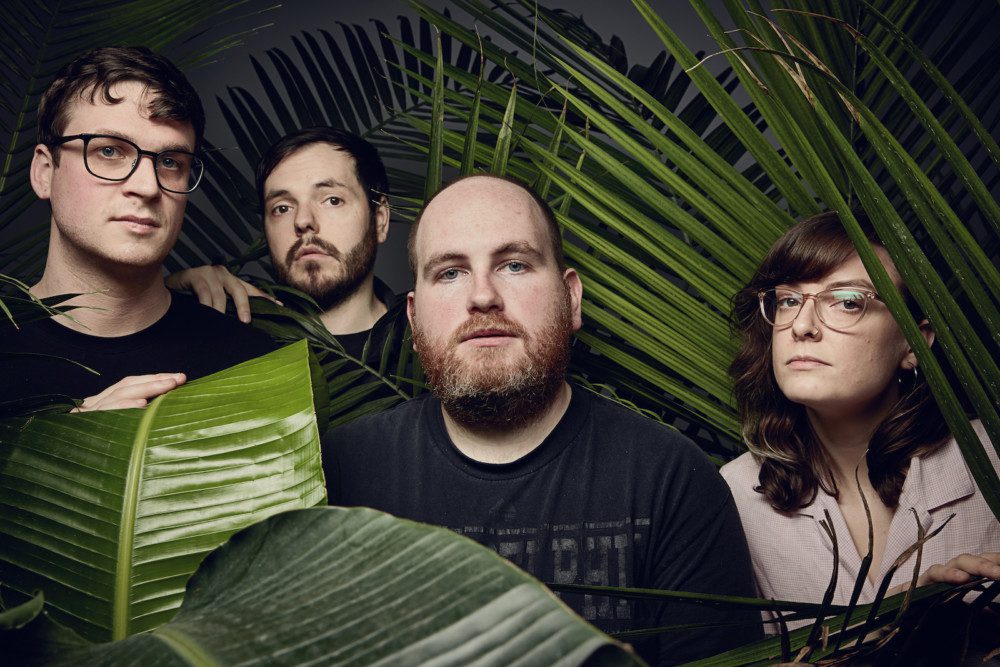
We spoke to Kym about their writing process and how they define their sound. Listen to Lez Dance and read our full interview below.

AF: You grew up listening to your parents’ records, Fleetwood Mac becoming a touchstone later on in your career. What caused you to reject that music initially and what led you back to it?

KR: I think rejection of authority and the need to find my own identity – basically preteen puberty – made me reject that kind of music in the first place. And to be clear – my parents listened to a lot of pop country and a little classic rock. Growing up in the south, classic rock was just the music that defined southern and elder, two concepts that as I grow older I start to embrace rather than reject. This isn’t to say that the rejection wasn’t important, but it feels natural to work through the stigma that I had surrounding country and classic rock and for this particular record, Lez Dance, gay culture. I suppose not everyone goes through as much anti identity as this. I don’t want to assume that it is normal for someone to constantly need to be individual or different. But that is a facet of counter culture or subculture and I’m very into the weirdness and wildness that comes from those movements.

AF: Music seems to be in your family line. You play your grandad’s electric guitar and even use his amp! Are there any lessons you’ve learned from your family in terms of writing and performing?

KR: I’ve moved on a bit from my grandad’s amp and guitar – but still have them and write with them! Music has always been in my family – but not as creators necessarily. My mom can’t carry a tune – but sings loudly anyway. I don’t remember a lot about my dad but I do remember that he loved old soul / beach music. I never knew most of my family well – and never saw my grandad perform except in his house with some smokey old men. So I think what I learned about performing I learned from my queer community, open mics, friends, parking decks, elders that took me on tour from a young age. I got to play the Fillmore in San Francisco at age 27 with The Mountain Goats because John [Darnielle] met my band at the time and just wanted to hang out, liked our energy. He’s not much older that I, but that kind of elder really showed me the ropes of booking and performing. All of the conversations I’ve had with “elder” performers albeit in age or experience like Mirah, Mal Blum, Sadie Dupuis, Kimya Dawson, Sharron Van Etten, Katty Otto, Amelia Meath – I mean so many female and queer folks that are open about their experience in this field – that’s who has taught me. I’m ever grateful and indebted to the kindness that these people, who I’ve made friends with and many who have been open on the fly during a tour or short hang, have shown me over the years!

AF: How do you go about writing a song? Do you start with lyrics or is the melody the jumping off point?

KR: I just hole up in the studio and start writing. First comes the tune – then comes whatever words are on my mind. Then I analyze – what am I thinking about? That’s generally the process. For some of the more historical / storyline songs I submerse myself in news and knowledge about a story that is captivating first, then just open the gates later. I’ll edit and make sure that I’m not slinging my privilege or skewed perspective all over the place (hopefully), but it’s really free form!

AF: Loamlands is described in many ways online: folk, country, rock, punk. How do you define the band’s sound?

KR: Just like that! Influenced by Bonnie Raitt / Stevie Nicks / Prince / Kim Deal (who I have tattooed on my body) and rounded out by friendships and queer community.

AF: Your music encompasses personal experiences, a genderqueer perspective, life in the South. It’s a punk soundtrack if there ever was one. Do you ever feel pressure to represent, to accurately encompass, to be a strong voice for these often marginalized groups?

KR: Thank you for asking! No! I don’t… I recognize the privilege in making music. I can only represent my experience and tell stories that I hear from others. I hope to be able to help create space for those that want / need to tell their own stories though. That’s what I think my whiteness and economic privilege can do. And to tell stories that speak to people both in an out of the south about queerness that either they can relate to or that can help them relate to others.

AF: What albums do you currently have spinning at home? Any new artists we should check out?

KR: So many!  LIZZO all the time. Your Heart Breaks and Nana Grizol and anything off of Cruisin Records. That new Daughter of Swords and Molle Sarle (Alex’s and then Molly’s new project from Mountain Man). Always Flock of Dimes (Jenn from Wye Oak) and old school Des Ark! Team Dresch is reuniting so a lot of that right now. So much! Courtney Barnett! Solar Halos who just released a new record!

AF: Where can folks see ya’ll live? And what could someone expect from a Loamlands show?

KR: Well, it’s stripped down through the fall to promote this new record. But it’s always an adventure. I’m very ADD and can tell a story or ten in one, depending. So there is definitely rambling and always something awkward – which I live for!

We have a smattering of full band and solo shows and are looking to hop on some tours this fall and record another record so – stay tuned!

Loamlands’ new LP Lez Dance will be out 6/7 on Cruisin Records.

TOUR DATES
6/8 – Durham, NC @ North Star Church of the Arts *Record Release*
7/27 – Saxapahaw, NC @ Saxapahaw Summer Concert Series

PLAYING CINCY: TRIIIBE’s Siri Imani Talks Gentrification on “513” She-mix

Photo by Taylor Hughes.

TRIIIBE‘s Siri Imani called out Cincinnati gentrification in her new “513” she-mix of Drake and BlocBoy JB’s 2018 hit, “Look Alive.” The addictive beat of the track puts it on instant replay as Siri brings light to the inequality and displacement currently affecting those in Cincinnati’s downtown Over-The-Rhine area.

TRIIIBE is no stranger to spotlighting – and helping to fix – societal challenges in their city.

“I haven’t lived in OTR my whole life; however, I’ve always went to school there and have countless friends and family,” says Imani. “Gentrification has shaped a lot of the community that was once inhabited by generations of families that grew up there.”

In the past decade, herds of new businesses have moved into the downtown area, providing retail and local eateries, but skyrocketing rental prices and chipping away at long-grown culture. Imani and her two TRIIIBE counterparts often dedicate their art to opening an honest dialogue within their community, and Imani doesn’t plan to stop with “513.”

“Music is universal and to me. It’s a more efficient way of getting my messages out,” she says. “We listen to, and memorize, songs better than we do the words actually spoken to us. Music resonates and evokes feelings on a level that can be hard to match verbally.”

As for remixing such a repeatable hit, Imani did that deliberately, too.

“All of the she-mixes use well known, male-dominated songs,” she says. “‘Look Alive’ was big last year and I needed something people could easily compare lyrics to.”

The Cincinnati songstress is currently working on her debut solo EP, Therapy, set to drop July 19. She, along with TRIIIBE, will also be performing at Bunbury Music Festival on Sunday, June 2.

HIGH NOTES: 7 Songs About Cocaine That Will Make It Hard to Feel Your Face

When you think of sex, drugs, and rock and roll, cocaine is probably at least one of the drugs you think of. Celebrities, musicians included, have a reputation for snorting coke at their Hollywood parties, as well as in their daily lives — and they’re not afraid to sing about it. Here are some of the most notable cocaine references in music, both obscured and obvious.

“Can’t Feel My Face” by The Weeknd

This one falls into the “obvious” category. If you’ve ever done coke, you probably don’t need me to explain the meaning of this song. It’s right in the title: The Weeknd has ingested so much cocaine that he has lost sensation in his face. Indeed, the drug’s numbing properties are so significant, medical professionals have used it as an anesthetic. Still, “Can’t Feel My Face” can also be interpreted as a love song about numbing yourself to the pain of heartbreak, with lyrics like, “And I know she’ll be the death of me, at least we’ll both be numb.” Perhaps he is literally using cocaine to forget about the pain this relationship has caused him, because it numbs him emotionally as well. Deep stuff here.

“Casey Jones” by The Grateful Dead

This song describes famous railroad engineer Casey Jones “driving that train high on cocaine,” although there’s no evidence that he actually used cocaine during his fatal crash. Nevertheless, cocaine was a major influence behind the music. “I always thought it’s a pretty good musical picture of what cocaine is like,” Jerry Garcia said of the song in an interview for the book Garcia: A Signpost to New Space. “A little bit evil. And hard-edged. And also that sing-songy thing, because that’s what it is, a sing-songy thing, a little melody that gets in your head.”

“The White Lady Loves You More” by Elliott Smith

With lyrics about a loved one ditching the narrator for cocaine, this track is as depressing as you’d expect from Elliott Smith. Some have speculated that the “white lady” is actually heroin, as Smith’s addiction to heroin is extensively documented. Either way, it gives a raw and emotional account of what it’s like to be in a relationship with someone addicted to drugs.

“The Girl You Lost to Cocaine” by Sia

Sia shows the other side of being in a relationship with a coke addict by singing about leaving a partner who can’t get their shit together as the drug takes over their life. Gigwise called it a “strong, confident, infectiously melodic and immensely hummable romp through the highs and lows of Sia’s unique character and upbeat independence.”

“This Cocaine Makes Me Feel Like I’m On This Song” by System of a Down

This song doesn’t actually mention cocaine, though it implies it in lines like “we’re crying for our next fix,” interspersed between nonsense lyrics like “Gonorrhea gorgonzola” — perhaps the way one would talk on coke, with their thoughts racing haphazardly from word to word? The title reverses a common narrative about music making you feel like you’re on drugs, potentially conveying how high the band gets off music itself.

“Coke Babies” by Radiohead

These lyrics are so cryptic, it’s hard to say if the song is really about coke: “Easy living, easy hold / Easy teething, easy fold / Easy listening, easy love / Easy answers to easy questions / Easy tumble, easy doll / Easy rumble, easy fall / I get up on easy love / I get up on easy questions.” That’s it. For all we know, it’s about Coca-Cola. Reddit seems to agree that the meaning is a mystery, but it’s nevertheless one of the band’s most haunting and underrated songs, released as a b-side to the 1993 Pablo Honey single “Anyone Can Play Guitar.”

“Master of Puppets” by Metallica

This brutal depiction of drug addiction seems to be written from the perspective of the coke itself, with lyrics like “Taste me you will see / More is all you need” and “I’m pulling your strings / Twisting your mind and smashing your dreams.” It could be any addictive drug, though lines like “chop your breakfast on a mirror” suggest that it is, in fact, about cocaine.

PREMIERE: Fay Ray “Up & Away” and “Restless Sleeper”

Photo by S. Fuehring

Fay Ray is not a defunct new wave band. Okay, Fay Ray IS a defunct new wave band, but it’s also a very active eight-person funk-tastic soul-pop band out of Chicago. The band’s latest double single, “Restless Sleeper /Up & Away,” is effervescent, the perfect taste of champagne fizz on a hot, humid summer day.

Lead singer Mariel Fechik’s silvery vocals remain cool and calm on “Up & Away,” creating a nice dissidence between herself and the rest of the band: Noah Gehrmann (Guitar), Erik Opland (Bass), Tom Kelly (Drums), Rob Osiol (Keys) and Joe Meland (Organs/Synth). The changeup around 2:30 offers a satisfying release of tension, the kind of beat drop made to lure wallflowers onto the dance floor.

“Restless Sleeper” is about “the experience of watching a loved one have nightmares and night terrors, and the sense of helplessness that accompanies that experience”, according to Fechik. The tone is cooler, the vibe more laid back than “Up & Away”; the song may be about restless nights, but the feel of the music is afternoon magic, hours spent wandering city streets, the ice in a glass of cold tea melting in the sun.

We spoke to Mariel about what it’s like to write in an eight-person band and how the city of Chicago shapes Fay Ray’s funk.

AF: Where did the name Fay Ray come from? My initial google search popped up a new wave band.

MF: A couple of years ago now, we went through a name change. We actually used to be Church Booty. This was a name that served us well through college, but started to get a little tired once we moved up to Chicago. After a very long process of name brainstorming, I suggested Fay Ray because I liked the way it sounded, and it stuck! It’s based off of the actress Fay Wray (known as the original scream queen) of King Kong fame. It wasn’t until after I suggested it that my mom told me my family was related to her by marriage! Unfortunately it was also after we’d settled on the name that we found out about the defunct British new wave band with the same name.

AF: Fay Ray started out as a ten-piece band. How in the world do did y’all navigate songwriting? And has the process changed since members have left?

MF: It was a lot, as you can imagine. Typically, someone would bring something in and we’d go off of that. Our previous sax player and singer did the bulk of the writing. Since they’ve left, it’s become a little more group-oriented. Often, a smaller group of us will just hang out in someone’s bedroom and work on ideas. Once we have the bare bones, we’ll often rehearse in full, working on arrangements. It’s become a really enjoyable and collaborative process that’s led to some exciting stuff.

AF: Can you give us some insight into band dynamics? Who’s the foil?

MF: We’re one big dysfunctional family! We’ve all been friends for so long, and so many of us have lived together in various formats through college and after, we’re just kind of like a big group of siblings at this point. Up until very recently, I was the only girl in the band, and I’ve always been the little sister that gets picked on (but still supported). We all annoy the hell out of each other sometimes, but we’re all very loving and supportive friends. Hmm…the foil. Probably our guitarist, Noah. He’s a goof and a ham and will frequently quote songs like Inspector Gadget or the Imperial March in the middle of his solos.

AF: What role does the city of Chicago play in your music? Does the city effect the sound and subject matter at all?

MF: Since coming to Chicago after graduation, we’ve found a really wonderful community of fellow musicians. We definitely take inspiration from a lot of our peers around the city, and of course, Chicago has such a specific sound to so much of its music. It’s almost impossible for it not to affect our sound!

AF: What are your favorite Chicago music venues to play in?

MF: Part of the beauty of having so many members is that a lot of us are involved in many other projects, as well. Our keyboardist Joe Meland works under the name Uuskhy. I sing with Emily Blue and we have a band together called Moon Mouth, and I sing in Tara Terra. Noah, Tom, and Rob are in a band called Miss April. Erik is in a cover band called The Hitmen. So lots of us have played in venues that the others haven’t. Some of the favorites are The Hideout, Schubas, Sleeping Village, Tonic Room, Lincoln Hall, and Subterranean!

AF: Do you ever listen to music together as a band? What groups are y’all listening to? Any new music we should keep an ear out for?

MF: Since there are so many of us, we bring a lot of eclectic tastes to the table. We’ve often had albums or bands that we’re collectively obsessed with. A few years ago it was Hiatus Kaiyote’s Choose Your Weapon. And then I apparently ruined it by loving it too much. We loved Kendrick Lamar’s To Pimp a Butterfly. We love NAO and Louis Cole and PJ Morton and Vulfpeck and Stevie Wonder and a million other things. We even have a “listen to this” channel in our Slack! Some great Chicago bands we’ve been loving lately are Astro Samurai and Human Bloom, both of whom have some great new music out. Melvin Knight, our former vocalist, also has an incredible project and a brand new single called “Pass the Time.”
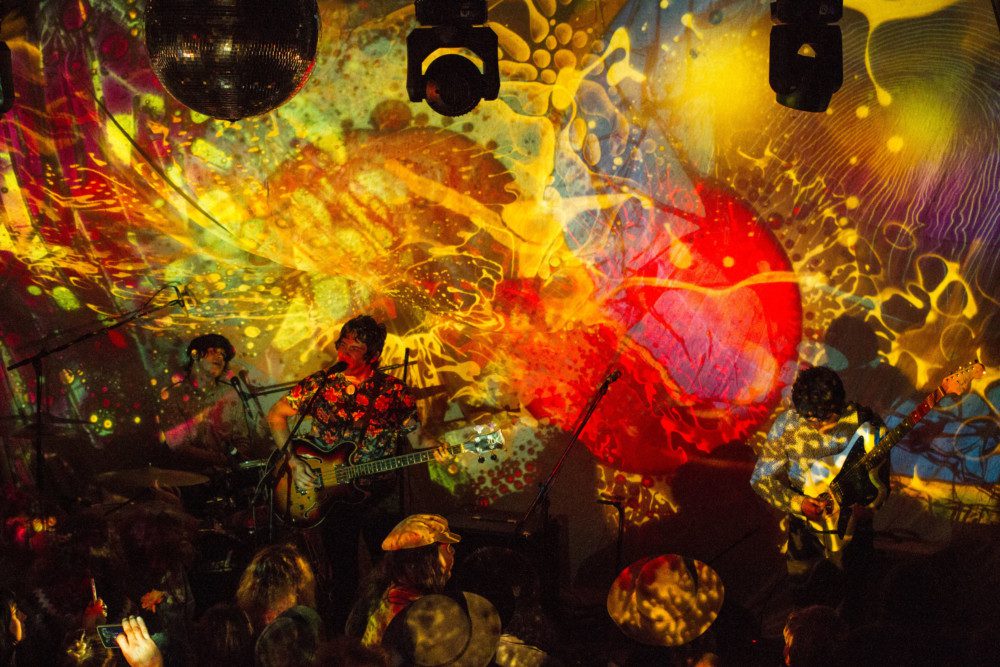
AF: I recently visited Red Rocks Amphitheater and was blown away by the setting. If you could perform in any venue, anywhere in the world, where would you perform?

MF: To be honest, mine would actually be Red Rocks! I’ve never been and it’s definitely one of my top destinations. I would also love to play at the Whiskey A Go Go in LA. It’s iconic. Some other thoughts were Austin City Limits, Madison Square Garden, and Tiny Desk.

AF: What can an audience expect from a Fay Ray show?

MF: We always try to bring the funk. Our live shows are loud and energetic, and we always love when a crowd gives us that energy back. Some of our most fun shows have been in tiny venues where the audience is practically on top of us. We always love to throw a surprising cover or two in there, too. Lately it’s been “thank u, next” and Thundercat’s “Them Changes.” We want to get people dancing!

FAY RAY TOUR DATES:

6/15 – Griffith, IN @ Rockopelli Fest
6/23 – Chicago, IL @ Ravenswood On Tap
7/11 – Chicago, IL @ Sleeping Village

PLAYING ATLANTA: Victoria Blade Talks Lo-Fi Love Songs and the Long Road Home

For singer-songwriter, actress, and filmmaker Victoria Blade, home is less of a place than a state of mind.

Michigan-born, Blade has since called Detroit, Chicago, Brooklyn, and – finally – Atlanta home. Before you start calculating how much time and energy it would take to simply move from city to city, let me add another daunting task to the list: on top of all of her own creative endeavors, she’s also the co-founder of independent record label, Already Dead Tapes with her husband, Joshua Tabbia.

Her latest release, the warm, deeply intimate debut LP, Lo-Fi Love Songs, is more of a look into Blade’s personal journal than a generic singer-songwriter record. Written and recorded alone with the use of a Tascam 4-track, Lo-Fi Love Songs details the lives of Blade and her husband over the last seven years, at times chronicling their adventures together before diving inward, examining the ongoing changes – and challenges – of the life of a creative nomad. Set to a delicately precise sonic backdrop that blends folk with the sweet sensibility of indie pop, Blade is equal parts studied and effortless, good-natured and introspective, and always – always – carefree in her delivery.

In the midst of days on set, in studio, and on the road, I caught up with Blade to talk all things moving, music, and the simple joys of cheap champagne and hot jazz.

AF: Let’s start from the beginning! When did your musical journey start? Was it always a part of your life, or was it something you grew into?

VB: I’ve been singing forever. I remember discovering a stack of Jackson 5 45s in the garage as an eight-year-old and I was done for. When I was 10, I auditioned for the musical Annie and got the lead role, even though I forgot the lyrics at my audition. I continued to do musical theatre for years. In college, I started songwriting with my soon-to-be husband and composing songs for original plays. I started to realize I had a gift for combining lyrics and melodies in a way that helped make sense out of life. In Chicago, I fell in with a group of songwriters at our local church. It was an incredibly supportive community with lots of creative freedom. I was encouraged to be myself and write whatever I wanted. My songwriting exploded and became a constant source of inspiration in my daily life.
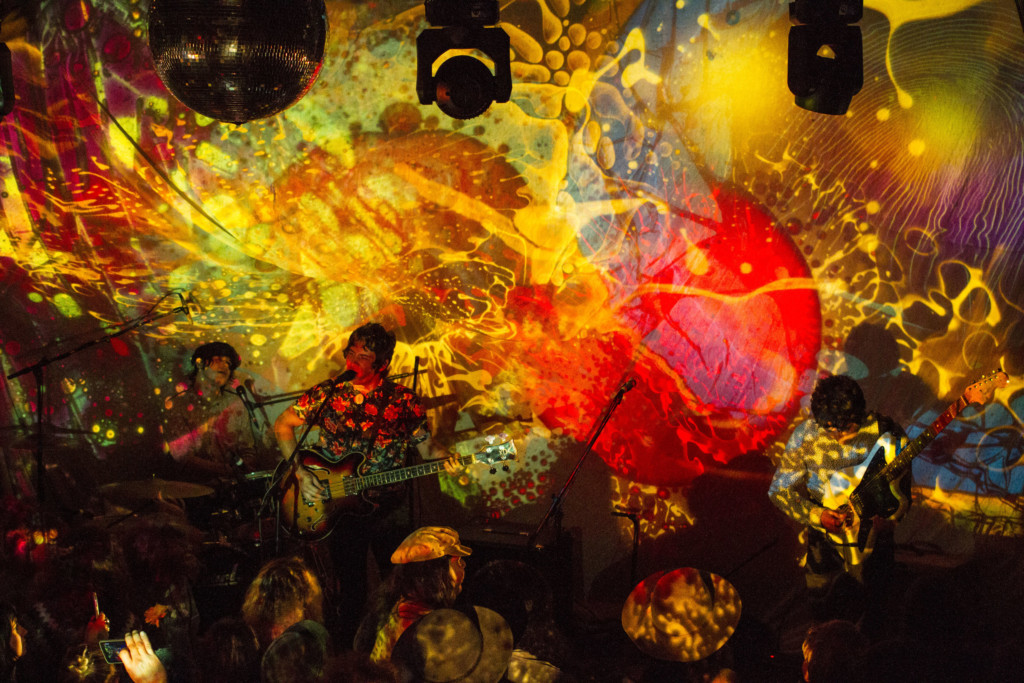
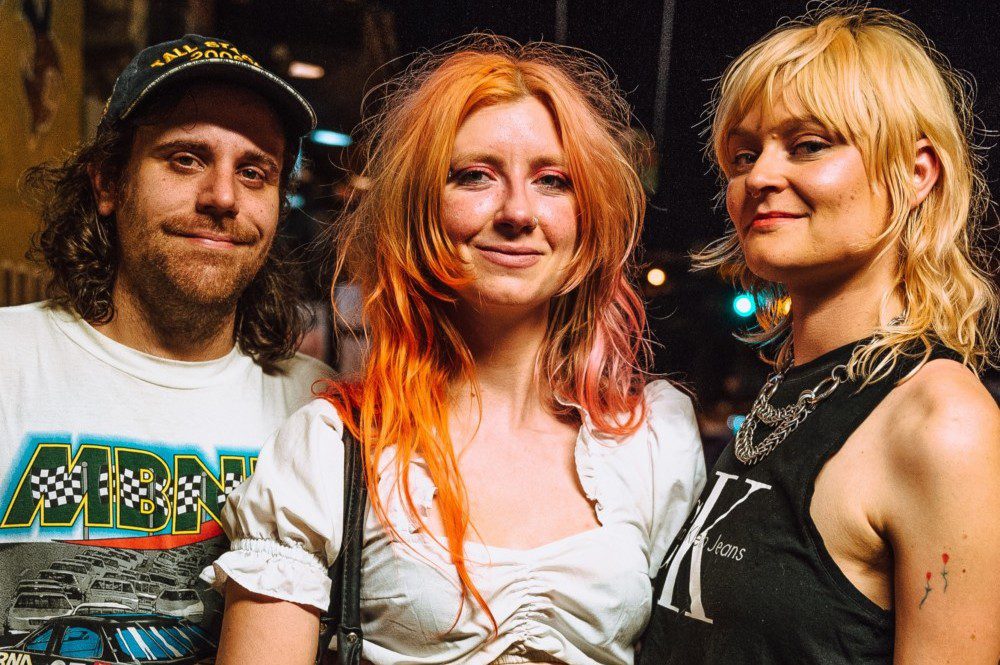
AF: Who do you consider your greatest inspirations?

VB: Otis Redding, Charles Bradley, Elvis Presley. I love their soul and raw vocals. Right now I am really inspired by The Garden and Shabazz Palaces. I’ve always loved Ben Kweller. Also, my husband, Josh Tabbia, is a total badass because he’s a doer and not a talker, writes beautiful music and built Already Dead Tapes from the ground up.

AF: You recently released a pair of new singles: “I Don’t Wanna Worry” and “Moving Song.” What inspired the songs?

VB: Growing up, I was surrounded by a lot of over-thinkers and couch philosophers. “I Don’t Wanna Worry” is a rejection of that way of life. It’s just me processing some bad habits from my youth. My husband is the exact opposite kind of person. He doesn’t overanalyze things. He just works really hard on what’s important to him. And we have a lot of fun!

“Moving Song” is about the pleasure and pain of leaving what you love to discover something new. I used to crave a permanent home. A city I could live in forever. But it hasn’t panned out that way. I’ve moved from Detroit to Chicago to Brooklyn and now Atlanta. I love discovering new cities and tend to get bored once a city is too familiar.

AF: What drew you to Atlanta? Do you think you’ve found a home base? How does the scene differ from other cities?

VB: I’ve learned to embrace change and almost expect it these days. Atlanta was a total surprise. We were living in Brooklyn and ready to move on. NYC is an incredible place but it takes a toll. I’m an actor and started doing research on the film/TV industry in Atlanta. I talked to some actors in Atlanta and couldn’t believe the amount of opportunities here. We decided to dive in and try it. It’s been exhilarating and fun. Wherever I am is home base. It’s never my goal to move. As a couple, we are creative nomads. We move wherever is going to nourish us as artists the most. And right now, that is definitely Atlanta! Atlanta feels like a small town compared to NYC and Chicago. But that’s not a bad thing. I’m not an expert on the local music scene yet – that’s going to take some time. There’s a lot less of everything here, which is refreshing.

AF: What’s your writing process like? Do you typically write alone, or is it more collaborative?

VB: It just depends on the project. Everything on Lo-fi Love Songs is super intimate and simple and written by just little ol’ me. I’ve collaborated a lot over the years and I love that way of creating just as much as writing alone.

AF: Your debut record, Lo-Fi Love Songs, released on May 31st. What message do you hope to share with your listeners? Why do you think it’s so important for them to hear, feel, and connect with that? 

VB: My main goal is to reach people’s hearts. To offer hope, encouragement, and love. That is the motivation behind everything I do as an artist. There’s so much pain and suffering out there. My desire is to uplift and empower others. Life is messy and these songs help make a little sense out of the chaos. When we tune into our heart, we can live with more clarity and authenticity.

AF: What inspired you to write this new record? What do you consider to be the most exciting part of recording it, and what was the most challenging?

VB: The album was inspired by my husband’s and my creative journey as wayfaring artists. The tracks were selected from the many songs I’ve written over the years telling our story. I wanted the recording quality to match the intimate atmosphere of the music. The most exciting part of recording was capturing the warm, lo-fi sound I was going for. This was also the most challenging part as I had to learn to slowly capture each song on a Tascam 4-track that I had never used before. It was a delicate and technical process that I got the hang of eventually.

AF: You’re an actress, producer, and singer-songwriter. What drives you to create? Do you find one of these mediums more authentic or expressive to you, or do you find that they all offer a way for you to express yourself at different times and in different ways?

VB: Songwriting in some ways feels like the easiest and most immediate way to express myself creatively. Acting and filmmaking require so many other steps and collaborators before you can finish or share anything. It can be challenging. So songwriting has been a creative life-saver for me over the years.

AF: You’ve been in Atlanta for just over a year now; what’s your favorite aspect of the Atlanta music scene?

VB: Everything in Atlanta feels so accessible. It feels like an open door. There are a lot of great people here who are doing things out of sheer passion and that’s exciting.

AF: Favorite place for a good show and a drink?

VB: I really like The Earl. But there are so many great venues in Atlanta it’s hard to choose. One of my favorite places in the world for live music is The Green Mill in Chicago where the jazz is hot and the champagne is only $6!

AF: Last one! What’s next for Victoria Blade?

VB: I have a music video for “Moving Song” that will release this summer and I’m looking forward to planning a tour for later this year! Acting wise, I have roles on a few upcoming HBO shows. I’m also shooting a top-secret project with Janelle Monae next month.

Keep track of Victoria and her travels on Facebook, and stream Lo-Fi Love Songs on Spotify this Friday. 

LIVE REVIEW: Xiu Xiu @ The Chapel

Xiu Xiu, touring with members of Swans’ live ensemble, played SF’s The Chapel on 5/28. Photo by Shomei Tomatsu

“Loner,” Thor Harris murmurs matter-of-factly, temporarily seizing the mic from Xiu Xiu frontman, Jamie Stewart. “Lonerrrrrr.” It’s a fitting accusation to thrust into this particular sea of transfixed eyes, as it’s just about halftime and the notion of being little more than jumbled limbs in a heaving crowd has been hastily forgotten. Not long after Xiu Xiu’s sonic slink into the ether, the average schmuck is far too agog to notice the quivering mass of those that are surely sweating on arms and breathing on necks. No, we’ve collectively embraced a healthy dose of social apathy, and we’ve got Stewart’s yowling to thank for it. So when Harris calls out for the loner, we silently respond en masse. Of course, he’s simply reading the first few lines of “Pumpkin Attack on Mommy and Daddy,” the fifth track off of Xiu Xiu’s latest album, Girl with Basket of Fruit. But it feels as if he’s addressing each one of us directly, rubbed raw by Stewart’s aching bellows and the throbbing bassline of guest bassist Christopher Pravdica, best known as the longstanding bassist of Swans.

The Chapel (a former funeral home in the San Francisco Mission District) possesses the warmth and coloring of an internal organ. Indeed, the Suspiria-red walls fractured by Blue Velvet-hued lighting creates the sort of glow one might discover if they were to slip through a pulmonary artery. However, Xiu Xiu appear to be right at home. They graciously open with perhaps their most well-known song, “I Luv the Valley OH!” and Stewart ensures that that shriek of an OH! is just as gloriously cathartic as it is on the recorded track. Following this nod to their 2004 album, Fabulous Muscles, the trio eagerly launches into their latest, including the aforementioned “Pumpkin Attack on Mommy and Daddy” (sadly performed without the intoxicating vocal contributions of lyricist Angela Seo), “It Comes Out as a Joke,” “Scisssssssors,” and the album’s namesake track.

Wasting no precious energy on mindless banter between songs, Stewart commits to the performative purge: jumping, jerking, and writhing onstage. His characteristically precarious wail travels from bellowing roar to splitting shriek to curious quack to seductive whisper and back again. In short, the man is seriously well-equipped. The instruments Stewart samples over the course of the show span an equally compelling range (including a slide whistle and what appears to be a makeshift maraca), and his cowbell clanging and cymbal slamming during “It Comes Out as a Joke” is absolutely no nonsense. Thor Harris, Xiu Xiu’s congenial drummer (like Pravdica, known for his work in Swans), also scrambles standard instrumental roleplay. In addition to his spoken word-esque reading of the “Pumpkin Attack on Mommy and Daddy” (which nonchalantly closes with “And I am kind of a dopey-ass goofball weirdo so I can get why some people don’t like me”), Harris bashes a gong and samples wooden claves. Pravdica, too, is not confined to the bass guitar. One would be remiss to forget his brief affair with those castanets during the encore performance of “Sad Pony Guerilla Girl” (A Promise, 2003).

In pathetic sum, language seemed pretty superfluous by the time I stumbled out of The Chapel, lulled into an awe-bitten, catatonic state. I haven’t even mentioned the lolling lament of “Get Up,” (FORGET, 2017), the absolute blessing of “Clowne Towne” (Fabulous Muscles, 2004), and Stewart’s literal use of snapping scissors as percussive party to the performance of “Scisssssssors.” Fellow affected attendees sucked on cigarettes outside the venue, speechlessness the rule. Given the glaring limitations of the English language, perhaps it is best to refer now to the absurdist bio supplied by Xiu Xiu for their show listing, excerpted from “Ice Cream Truck” on Girl with Basket of Fruit:

“It could be handfuls of reds,” it begins, followed by absurdities that vacillate between the disturbing and the delicious. “It could be mescal in a bottle & baby on a boob, hair dyed blonde for nobody, nobody move.”

It could be that the act of writing this review was an exercise in futility.

It could be that was the best twenty bucks I ever spent.

ONLY NOISE: Real(istic) Love


ONLY NOISE explores music fandom with poignant personal essays that examine the ways we’re shaped by our chosen soundtrack. This week, Erin Lyndal Martin shares a selection of songs that jar her out of a sardonic mindset when it comes to romance.

There’s nothing wrong with sugary love songs. But I don’t trust them because they tend to be completely non-specific. The poet in me cries out for more details. The realist in me wonders how the people in these songs ever get their laundry done if they’re always high on love. And the cynic in me thinks of all the bad dates, all the times I’ve swiped left, all the lore about how undesirable women are after 30, all the fat shaming, all the dick pics. But I feel hopeful when I hear songs about smart, jaded people who’ve found love, often unexpectedly.

These are some of the songs that give me hope.

“Miss You Till I Meet You” by Dar Williams (from My Better Self)
Dar Williams is a talented singer-songwriter who frequently tackles real-life situations in songs that address coming of age, going to therapy, and finding one’s place among gentrification.

Bad dates are not all alike. Sometimes I’ve come home from a date feeling down because my date and I had nothing in common, or maybe it just didn’t seem like the right time, or my date asked me weird questions like if I wrote “human interest fiction” or “technical fiction.” Afterwards, it helps to think about telling these stories to someone I do want to hang around. Someone I want to hang around me.

“Papa Was a Rodeo” by The Magnetic Fields (from 69 Love Songs – Disc 2)
Helmed by Stephin Merritt, the Magnetic Fields bring an irreverent sensibility to matters of love, usually with a twist of magical realism, as on their 69 Love Songs trilogy.

At first, labeling this song as “realistic” is a tough sell. What are the chances that two people could bond over their childhoods spent roping steers, only to spend decades wrestling alligators together? But, like a lot of Magnetic Field’s 69 Love Songs, there’s a grain of truth here. At a certain point, you stop hoping you’ll meet someone who has zero baggage. Not only is it impractical, but it has ceased to even be appealing; instead, you daydream about meeting someone who understands your baggage, who sees you and sees your baggage and says “yeah, me too.”

“Something Changed” by Pulp (from Different Class)
Pulp is a Britpop band known for songs about perversion and classism (not usually at the same time).

I got the Different Class CD in high school and remember flipping through the booklet and seeing the request not to read the lyrics while listening to the music. I listened for the snotty Britpop protest songs and lurid perversions, and then this song came on – a love song written for acoustic guitar. I was surprised, but I trusted Pulp not to mess with me too much, and I thought about this as being a love song for the sort of people who trust sneering Britpop bands with love songs. I love that it retroactively assigns importance to all the little things done on a day that ends up coincidentally being the day one falls in love.

“I Hope That I Don’t Fall in Love With You” by Tom Waits (from Closing Time)
Tom Waits is an iconic songwriter and musician known for his gravelly voice, rich lyrical imagery, and jarring songcraft.

I can’t tell you how many times I’ve gone to a bar alone with just a novel and a notebook, nursing a drink and scribbling down ideas while watching people around me. This song always reminds me of those nights. I’ve had many nights where that’s all that happens. If I’m lucky I write a few good lines or draw a cute picture of a cat. But those nights tend to blur together and I mostly remember the outlier nights, when a conversation with a stranger just happened, and I was excited and terrified to see where it went next.

“Yellow Brick Road” by Kris Delmhorst (on Five Stories)
Kris Delmhorst is a singer-songwriter-fiddler from Massachusetts known for her pithy lyrics and lovely melodies.

Once I was at a wedding where the best man’s toast included the line “now your real life can begin.” Wow. Just wow. As if there are any parts of our lives that aren’t real and everything we do before we have an official, government-sanctioned bond just doesn’t count. This song celebrates who we are as individuals within a couple. “I’m not on a yellow brick road/Got a mind and a heart and guts of my own/Not looking for someone to set me free,” Delmhorst sings. “I’m not on a yellow brick road/I’ll find my own way home/I just want someone to walk with me.”

“Kathleen” by Josh Ritter (from Hello Starling)
Josh Ritter is an acclaimed and prolific singer-songwriter once voted among Paste Magazine’s Top 50 living songwriters.

This song makes me happy. Very happy. It’s about a guy who drives a beautiful girl home from a party. He knows they’ll never fall in love, but he’s so excited to be the one who has that time alone with her, that “only both of us know about.” When you don’t have the love life you want, you learn to make the best of these little moments of connection: driving someone home; smiling knowingly at a stranger on the bus when a passenger shows the bus driver her groceries; standing next to someone while you look at a painting in a museum.

“Reservations” by Wilco (from Yankee Hotel Foxtrot)
Wilco is a highly regarded alt-country band, and their 2002 album is already considered a classic.

Recently, a romantic partner I hadn’t seen in years came to visit and I was really stressed out, which was funny because I realized I had zero anxieties about this particular person. We know each other well and have a great time together. But the thought of sharing my living space with anyone, even for a few days, was terrifying. I wanted everything to be perfect. In the end, he was an amazing houseguest who did my dishes and bought me good bourbon and let me play him videos of goats and magicians. And I did get sick towards the end of his visit, something I feared, but that won’t be what I remember. What I will remember is that even the worst anxieties can disappear with someone who really sees me.

“Unison” by Björk (from Vespertine)
Björk is an Icelandic musician known for her conceptual albums, creative collaborations, and quirky individuality.

Unsurprisingly, Björk is wonderful at writing songs that balance realism and reverie. She has a number of them, but “Unison” is my favorite. “I will grow my own private branch of this tree,” she sings, celebrating her individuality. But trees — and people — can bend, and the refrain continues, “I never thought I would compromise.” When you’re single, it’s so easy to get lost in thought loops about who you want to be with and if you’d even want to make room in your life for another person. Björk reminds us that we don’t have to choose between ourselves and being with another person.

PLAYING THE BAY: MUSH Delivers “A Night of Black Magic” with Maya Songbird and Ah Mer Ah Su

Last week I traversed to Jack London Square for the second show of BFF.fm’s summer concert series, MUSH. With the goal of highlighting the diverse sounds of the Bay Area music scene, MUSH promises a small outdoor concert experience a stone’s throw from the Jack London square eateries and nearby bars.

While BFF.fm still has a few wrinkles to smooth out in terms of running multiple outdoor sets, whatever was lost in technical translation was made up for by the intimacy of the show. For the first half hour, BFF.fm DJs spun their favorites as a small crowd gathered, perching on a set of yellow bleachers or curling up on jackets and blankets on the grass.

Castro District native Maya Songbird started the concert off with with a determined chant for us to get up and dance, setting the mood for her high-energy catalog. Her beats are straightforward and insistent, with clear funk influences. My favorite part of her set was definitely the last few songs, when everyone in the audience got on their feet to bop along. The most notable dancer in the crowd was headliner Ah Mer Ah Su, who had been watching from the grass for the entire performance, cheering on her fellow songstress and gleefully chanting “slut, slut, slut!” at Maya’s request during “Regal Slut.”

This moment stood out for me as something one is rarely privy to during a larger show. Performers may thank their tour mates or bring them on stage for a song or two, but watching Ah Mer Ah Su cheer Maya Songbird on, at one point twerking freely on her picnic blanket while the rest of us huddled together, not yet warmed up enough to dance, seemed to exemplify the goals of this concert series — to elevate Bay musicians and strengthen the community of performers and listeners alike — more than anything else I saw that evening. That, and the very cute moment during Ah Mer Ah Su’s set when she declared, as she and Maya are both witches, that it was “a night of black magic.”

After Maya Songbird finished, my friend and I meandered to the docks while another BFF.fm DJ took over. We stayed there, enjoying the last gasp of golden hour, until we were drawn back by an absolutely rousing remix of “9 to 5” by Dolly Parton. A few minutes later, Ah Mer Ah Su started her performance.

Based in Oakland, Ah Mer Ah Su sings over electronic beats not unlike Maya Songbird’s, but with a more soulful, introspective lyrical approach that touches on her experience as a black trans woman. Ah Me Ah Su is more guarded as a performer than the exuberant Maya, but her stripped-down vocal delivery provided more than enough venerability. Her voice is powerful, and while her instrumentals don’t require a full band, I found myself dreaming of horns, violins — whatever would take the drama to a next level. “Perfect” and “Powerful” were audience favorites, the former an ode to letting go of the impossible expectations we place on ourselves, the latter an examination of the concept that the only thing we reliably have control over is our reactions.

The idea of control — losing it, desiring it, letting it go — seems to be a prevalent theme in Ah Mer Ah Su’s music. She established this early on with “Klonopin,” a slow building lament of drug dependency that builds into a layered chorus of schoolyard-like rhymes that served as one of her first singles. Sang at the concert with a new arrangement that will back an upcoming dance performance, I can only imagine how powerful of an experience it is to be able to revisit old works and adjust them to more accurately represent who you are now — or who you wish you could have been when you first created them.

BFF.fm’s summer concert series continues every other Thursday through June 20th.

PREMIERE: Studio Session “Audience of One” by GKCB ft. Elliott Skinner

Gideon King & City Blog, the critically-acclaimed New York jazz/ rock fusion act, teamed up with Elliott Skinner of Thirdstory to release the beautifully painful single “Audience of One.” Skinner’s trademark wince and emotive vocals loom delicately over King’s grounded jazz guitar. In their video premiering today, a live studio session captures the pair’s passion and chemistry heard within the textured track.

Here, King talks about recording the song, working with Elliott Skinner and what’s up next for Gideon King & City Blog.

AF: How did you link up with Elliott Skinner for “Audience of One”?

GK: A great singer I’ve worked with, Grace Weber, said she thought Elliott had this beautiful and soulful style of singing. So I checked him out. Grace was right. The guy is unique in the way he approaches singing. [The] talented cat he is, he ended up singing on my first CD and I hit him up again to do this tune. He can always sing my stuff – makes me look better.

AF: You’re gearing up to release some new music. Will it be a full project or singles?

GK: Yeah, I have written a bunch of new stuff. I will probably release some singles. On the other hand, this paradigm of releasing singles sometimes feels empty to me, as there seems to be less of a premium placed on creating a full expression, a full album. Not sure what to do.

AF: With this video, we get to see an intimate live session of the song. What was recording it like?

GK: Just as you see it. The tune just flows. It’s not meant to be “in time” or perfect or anything. Just a passing declaration of some form of desperation.

AF: What else are you currently working on?

GK: Well, we are working harder and harder at becoming a unique live act, a differentiated kind of crossover music presentation. I’m certain what I just said means nothing. This is our problem – we lack meaning.

AF: You’ve created music with several acclaimed acts. What’s one thing you’ve learned from working with a variety of talented people?

GK: To listen to their suggestions and incorporate at the very least a touch of their bent into my bent.

PREMIERE: Drum & Lace “Outsider Complex Part 1”

D
Press photo by Ellie Pritts

Setting a mood takes more than wine, moonlight and the smell of jasmine in the air. The right music can inspire love, or, in the case of Drum & Lace’s latest single, fear. “Outsider Complex Part 1” starts off with a chorus of violins giving warning, their single note casting light into the darkness, allowing glimpses of a scene to come into view.

The song was originally a “late night piano doodle,” says Sofia Hultquist, the composer behind Drum & Lace. “When I was writing and fleshing this piece out, I was going through one of the many moments when I felt like I didn’t quite fit into any ‘boxes’ musically – a feeling I think we all go through,” she explains. “‘Outsider Complex Part 1’ allowed me to explore my anxieties and vulnerabilities in a more freeing way than I had done before.” The piano peeks in about a third of the way through the song, lending a playful tension to the violins; if the violins are the light, the piano is the protagonist, fighting her way through the darkness.

The song is set to appear on Drum & Lace’s debut album semi songs, scheduled for tentative release in mid-July.

Hultquist began her music career working within the fashion industry, scoring runway shows and short films for indie designers. Her work is now mainly in the film industry, working on films such as The First Monday in May, a documentary she co-composed the music for. That score landed her on the shortlist of composers for Best Original Score at The Academy Awards.

We spoke with Sofia about growing up in Italy, music school, and what it’s like to score a film. Listen to “Outsider Complex Part 1” and read our interview below.

AF: The name of your project perfectly sums up its original intent: to be the juxtaposition between indie fashion and composition. Can you tell us about the genesis of Drum & Lace and how you got your start in the music industry?

SH: Yes! I’ve been writing music and performing for as long as I can remember, and I started to write and work as Drum & Lace about five years ago. I’d been debating about whether to enter the freelance world using my name or whether I wanted a moniker, and in retrospect I’m glad I went with a different name. As musicians we’re all multifaceted and multi-tasking, and I felt like keeping my name for me while then encompassing all that Drum & Lace is under a different name was going to work best. Coming up with name was nearly a joke at first, as I was writing down potential names and this was the first one that stuck. I’m a big electronic music fan but then also it had a hardness and softness that I could relate to. Also it’s pretty catchy. Once I had the name, I started by trying to compose specifically for fashion and fashion film, with the intention to then progress into feature films and more. It was a great way for me to start, as I felt like I knew enough about fashion to be able to wing it and because I’ve always been really inspired by colors and textures.

AF: You grew up in Florence, Italy, which to Americans sounds like the most romantic upbringing ever. What kind of music did you grow up listening to?

SH: I get the question “why did you ever leave?” quite often actually, and yes, Florence is beautiful and it’ll always be one of my favorite places on the planet, but for what I wanted for myself it just wasn’t a good fit. Culturally and historically it is so rooted in classical art, and the city (and most Italians) are very set in their ways – change comes slowly, which can also be magical (just not for me). On top of that, when you’ve lived in the same place for 18 years, no matter how beautiful, you tend to feel like you’ve outgrown a place and need something new, which is what I was able to do! I grew up listening to so many different types of music, each style defining parts of my childhood. There was always a strong presence of classical music that came from my grandmother, whose piano I learned to play on. Once I started actively listening to music it ranged from rock and pop, to folk and electronic (house/trance) music.  My first obsessions and CDs were those of No Doubt, Alanis Morissette and Smashing Pumpkins, but then I discovered iconic acts like Ricky Lee Jones (my mother’s favorite), Nina Simone and Led Zeppelin. I also remember a summer where all I listened to was Tori Amos and Radiohead’s Pablo Honey. Unsurprisingly, I went through a big enough Rolling Stones phase that my high school final paper was analyzing the socio-political and musical aspects of two of their songs. To top all of this off, in high school I worked in clubs where a few nights a week I was immersed in house, techno and trance music. And then of course I grew up in the glory days of super-pop (Spice Girls, Britney, etc)…  Needless to say, I jumped around a lot, but all these influences have stayed with me for sure.

AF: Did you experience any culture shock when you came to the U.S. to study at Berklee College of Music in Boston?

SH: Absolutely, even though I’m glad that I went to Boston rather than a larger city. The biggest difference that I felt was the cultural day-to-day conversations that were rooted in a slew of pop culture references that I didn’t know. On top of that, the food was a bit of a culture shock for sure, and I definitely lost the ‘freshman 15’ rather than gaining it. It took a few months to adjust to things, but everyone was going through it at the time so it didn’t feel like I was more particularly lost than others.

AF: What’s one piece of advice you got in music school that you’ve used as a touchstone in your career thus far?

SH: One experience I can think of wasn’t as much as advice as it was realizing something that I still hold onto to this day. During my last year at Berklee, those who are in the film scoring major have to score scenes from films/TV shows as part of our courses. For one of these, I scored a scene and when it came to sitting with my professor to go over the project, he looked at me and said “I don’t even know where to start.” I was discouraged, as he seemed to imply that what I had done was wrong, but it also made me realize that my music is never going to sound generic nor cookie cutter. This very sentiment, as hard as it was to hear back then in that context, has been such a big part of my music making ever since. Realizing that people hire me for what I sound like has been incredibly gratifying – it has taken longer to find perfect fits for projects but all in all I haven’t felt like anything I’ve worked on was something that sounded like anyone else.

AF: Many of your earlier collaborations came about by finding artists to work with on Instagram. Were most of these artists willing and excited to collaborate?

SH: I did, and feel so grateful that the platform at the time was able to be such a great tool. I still meet a lot of people and get work from Instagram, but not like it was a few years back. Most people were pretty willing to work together, and others were curious as to why a composer would reach out to them, seeing as my messages were completely random. All in all, I think that most of the people that I reached out to I never heard back from, which is pretty accurate if you think of it like a blind email. Starting off was really hard, and most of the people who did get back to me were those who were also just starting out.

AF: Was there a big learning curve between writing for fashion projects and writing for film?

SH: From my experience, not really – the biggest difference is obviously the amount of music and the development of more thematic ideas. The thing with a lot of the fashion projects is that they are a fast turnaround, and I mean fast. With a feature length film, or TV project, you still have deadlines but they tend to not be as sudden or tight. In a way, I think working on fashion projects and films helped hone in the idea of working to a deadline, and also working based on emotion and colors. If anything, composing for fashion is sometimes more daunting as there is seldom ever any dialogue, so the music really has to stand as a voice of the project. With film, it tends to be more nuanced, and you’re oftentimes working with and around dialogue.

AF: What music do you have on rotation right now?

SH: I’m not going to lie, I love listening to my friends’ music! So every week I’ll make sure to listen, like, love, save their music. Lately that’s meant at least 4-5 singles per week, which is amazing! The LA music scene and beyond has been so giving lately, and it’s incredible. I also tend to make Spotify playlists for myself (that I usually share) that capture different moods. Lately I’ve been on a bit of an ambient, neo-classical and slow-jam kick, and some of the artists I’ve been listening to are Kelly Moran, Rival Consoles, Delhia De France, Four Tet, Ryuchi Sakamoto and Sudan Archives.

AF: If you could look into the future, how do you see Drum & Lace evolving over time?

SH: I would love for Drum & Lace to evolve into doing more of what I am now, but on a bigger scale. I have all these ideas that I would love to pursue and bring to life involving film, dance, spatial audio and concert works. It’s taken a handful of years to hone in on what it is that I want to do moving forward, but I feel like my vision is stronger than ever. I can also see this not being easy, as a lot of the things that I want to achieve take time, so the biggest thing will also be to constantly learn to be patient and confident in the work that I’m doing.

‘semi songs’ LP, a new chamber-electronic record by Drum & Lace, is set to release July 19th on EverybodyHz Records. Pre-order the album HERE

PET POLITICS: Eliza Black of Gesserit Talks Turtles, Cats, and Solo Songwriting

Eliza and Lazer (all photos courtesy of Eliza Black unless otherwise noted).

Eliza Black has the haunting, resounding voice of a fallen angel. With her low, slow, speaking voice – not quite a drawl but dripping a bit of Texas, her large, melancholy eyes, endearing gap-toothed grin, thick waves, liquid limbs, and flowing skirts, she channels some serious nereid stage vibes. I first saw Eliza perform in rock group Fruit & Flowers in 2014. It was their premiere set, and they played to a packed and enthusiastic room at Muchmore’s. Since then, I have seen Eliza make appearances on many instruments in many bands across the Brooklyn scene: Cindy Cane, Ecstatic Union, Gustaf, Darkwing, Faidy Cat, and Plain Dog… I was familiar with some of her co-songwriting via FxF, but it wasn’t until February 2018 that I saw Eliza play a solo set. She played electric using an echo pedal. I was very enchanted (and so were a number of my Instagram followers, spewing heart emojis and “new crush” under the brief video clip I posted of one of her tunes). And I was thrilled when she finally got her own band together to play out those songs: Gesserit. Gesserit released a beautiful debut single entitled “Silence” this past winter. Eliza Black is also a single mom  — to one of the friendliest cats in town and one of the chilliest turtles around.

AF: Please introduce us to your fluffy friend and your scaly friend.

EB: Introducing Lazer Beem the kitty cat and Lemen (Lemmy) the turtle!

AF: How did Lazer become a part of your life?

EB: Maybe seven years ago at this point a friend of mine back in Amarillo decided to head to Austin to live a vagabond lifestyle and trusted me to care for Lazer. We became fast friends and she’s been a huge part of my life ever since.

AF: What about your little turtle?

EB: I actually adopted him from the streets of Brownsville when I used to live there back in 2017. A neighbor was chilling outside as he always did, but one day he had a turtle in a Tupperware container and asked me if I wanted him. I was on my way to a concert, but I accepted. I immediately found a proper container for him and his been a part of the family ever since.

Lemmy the Turtle.

AF: What are some of your favorite activities to do alongside your pets?

EB: Me and Lazer love to sleep. She follows me everywhere I go in the apartment, so she is always part of my daily domestic activities. Lemmy is kind of hard to engage with but I’ll let him roam around the apartment every now and again.

AF: Tell us about your life growing up. Were you around many animals?

EB: I always had pets, from tortoises to fish, cats to dogs, horses to goats, hamsters, rabbits, a parrot…

AF: Are there other musicians in your family?

EB: My father is a very talented musician. A lot of that side of the family is musically inclined. My great grandpa used to play fiddle with Bob Wills at ranch house parties. It runs in the blood for sure.

AF: Who or what inspired you to become a musician?

EB: My father, Cher, Shania Twain, and George Strait.

AF: What instrument did your start on?

EB: Piano. I could play guitar and eventually took guitar lessons, but I hated practicing. I always felt like I could improvise on piano and it would still make “music.”

AF: What was the name of your first band?

EB: Gesserit is my first band! My first band of exclusively my own material. I had a SoundCloud account under the moniker “The New Rebecca” dating back to 2011 but it was never a fully realized band. I was always composing and playing alone.

Gesserit performing at Waking Windows in Winooski, VT (Photo Credit: Natalie Kirch).

AF: When did you move to Brooklyn, and what prompted your move?

EB: I moved here in June of 2013. I was getting restless in Amarillo and drugs were being introduced into my life. I was just partying all the time. I wanted something more than that. I wanted to move to New York to pursue a visual arts career and eventually become a curator at a museum. I always felt more comfortable in musical abilities, so I ended up working in that direction full time.

AF: Give us a run-down of your Brooklyn projects, past and present.

EB: Oh Jeez. Crafting songs alone on my mandolin and synth. That’s when “Gesserit” actually started. I wanted it to be an ambient noise/movie score project…

Co-creating Fruit and Flowers. Playing and touring extensively for a few years. Leaving FxF to focus on and actualize “Gesserit.”

AF: What is your favorite song about animals?

EB: “Fishing for Fishies” by King Gizzard and the Lizard Wizard, “Animals” by CocoRosie… Does Pet Sounds by Beach Boys count? Ha ha.

AF: Have you ever written a song about (non-human) animals?

EB: Yes, sort of. I’ve compared freight trains to animals in a song.

AF: Do your pets inspire your writing process (or distract you) in any way?

EB: The only time I find them distracting is when Lazer lures me into a nap or when I forget to turn off Lemmy’s turtle tank filter when I’m recording in my room and I can hear it on the track. But I’ve actually used that in songs before and it can be quite nice.

AF: If your cat and your turtle were to form a band, what would the name be?

EB: Le Reptazer

AF: Who would play what instrument?

EB: Lemen would high dive into a mic’d bucket of water and Lazer would claw on a drum kit.

Eliza says drums, but looks like Lazer’s taken to the guitar.

AF: If you could have any type of pet as a sibling to your current ones, what species would it be (real or fictional)?

EB: Lazer really hates other animals and I have a feeling Lemmy isn’t too fond either. I guess I would be the ghost of a bird and be their guardian angel.

AF: What spirit animal do you identify with?

EB: A wild horse or a “spirit bear.”

AF: I’ve heard some friends say they think Lazer looks like you. Do you think this is true? What do you think is behind that human-animal bond theory that causes this phenomenon?

EB: Lazer and I definitely have similar interests and mannerisms. Maybe even a similar unbothered gaze. I think when any creatures spend enough time together, they become a reflection of each other.

AF: When is the Gesserit debut expected to release?

EB: Can’t say. As soon as I acquire a label deal then I will know.

AF: Are you going back on tour any time soon?

EB: I don’t plan to tour until there is a record to promote.

AF: What do you miss the most about your fluff and shell baby the most when you are away?

EB: Cuddles with Lazer. Lemmy is somehow in my dreams when I’m traveling, so I don’t miss him too much.

Lazer snuggling up.

AF: Any upcoming Brooklyn shows?

EB: We play May 25th at Rough Trade and June 3 at the new clubhouse The Broadway! Super stoked for those.

Eliza Black wants YOU to check out Gesserit (Photo Credit: Natalie Kirch).

You can also catch Eliza Black solo at Two Boots Pizza in Williamsburg on June 12th.

PLAYING ATLANTA: Grace Conley Lives and Learns on Debut EP Indigo Sky

For singer-songwriter and high school senior Grace Conley, change has almost become second nature. As she approaches the next chapter of her life, however, she felt compelled to look back and chronicle her growth through some difficult goodbyes, painful moments, and take a big leap of faith into a world that’s full of the unknown, the terrifying, and the wonderful.

The result is a soulful, poppy five-song EP titled Indigo Sky; like its lead single, “Things Will Change,” its central motif is growing pains and the healing that follows, imbued with a wisdom beyond the singer’s years. Grace sat down with Audiofemme to share the story behind “Things Will Change,” the artists who have inspired her the most, and her favorite Atlanta venues.

AF: Thanks so much for agreeing to chat with me! Let’s dive right in; how did you get into music? Was it a lifelong passion, or something you grew into?

GC: Music was something that was always on the back burner for me at first. I grew up singing in church choir and taking piano lessons here and there, but I really got serious about it around two years ago. I’ve had a lot of passions and hobbies in my life, but when I started music something just clicked, and I knew it was what I was meant to do.

AF: Who do you consider your greatest influences?

GC: My greatest influence has got to be Jennifer Zuiff, aka Indee Killed The Popstar. I started taking vocal and guitar lessons with her, and she really encouraged me to start writing and performing. I wouldn’t be where I am today without her. Other influences would definitely be Andrew Hill and Patrick Taylor, who’ve really taught me a lot and helped me grow as an artist — and as a person — in the last year.

AF: You recently released a new single, “Things Will Change.” Can you tell us a little bit about the song? What inspired it?

GC: I wrote “Things Will Change” as a way to move on from a broken friendship. I didn’t write it until probably a year and a half after the “breakup,” as I call it. It took a long time for me to acknowledge the fact that I was still hurt, and an even longer time for me to recognize that it was time to heal. This song has really meant a lot to me, and I hope it reaches someone who needs to hear it.

AF: What’s your creative process like? Do you generally write alone, or is it more collaborative?

GC: Every song comes out differently, some in ten minutes, and others take hours. I normally write alone, except when I feel a song is missing something. Then I take it to Andy, who produced my [Indigo Sky] EP and my previous releases at his studio, Off The Record, and he always knows just what the song needs. Sometimes you just need another perspective to polish things up, and I think getting a second opinion is really valuable when it comes to songwriting.

AF: Can you give readers a little bit of an inside look at the record? How long have you been writing the songs, and how did you know it was time to release? What message do you hope your fans take from it?

GC: All the writing for the EP has happened over the last year, and I knew I really wanted to release it this spring. As a graduating high school student, I think it really signifies the jump into the next chapter of my life. This EP really encompasses the feeling of being a foreigner in your own skin to me, and I hope that listeners who feel alone in their journey find reassurance and hope through listening.

AF: What’s has it been like to get your start in the Atlanta music scene? How has the scene — and all the incredible bands, artists, and players — impacted you as a musician, songwriter, and performer?

GC: I’ve been so privileged to be surrounded by a group of incredibly talented and compassionate musicians from the very start of my career. There’s definitely a built-in support system that comes with being an Atlanta musician, and I wouldn’t give that up for the world.

AF: What’s next for you?

GC: I’ll be out playing a lot of shows this summer, and I’m already planning my next release. There’s a lot of exciting things in the works for me, and I can’t wait to see how it all plays out!

AF: Last one! Favorite venue you’ve played in the city?

GC: Favorite place I’ve played so far has got to be Aisle 5, but I have a show coming up at Vinyl on May 24th, which is my favorite venues in Atlanta. A lot of artists who I really look up to have played there recently — Noah Kahan, Hollow Coves, Allman Brown — and I think it’s definitely going to take the top spot!

Follow Grace on Facebook, and keep an eye out for her upcoming release on Spotify.

PLAYING SEATTLE: The “Cosmic Glitter” of Golden Gardens

Cosmic glitter. That’s how singer Aubrey Bramble describes Golden Gardens, the band she co-founded with Gregg Neville in 2012. She’s dead on, of course.

Their last album, 2016’s Reign, is one ethereal, melancholic starburst after another. Likewise, the listening experience of  their newest single, “Desert Rose,” is less a walk on parched earth than it is a flight through iridescent heavens. There’s mirage-like synth, shimmering guitars, and Bramble’s vocals lingering across it all like a comet tail.

Currently in the midst of an eight-week tour, Bramble works as an energy healer on the road from the band’s converted minivan before sailing into a dreamworld at night. She took some time out of her busy day to chat about her love of poet Mary Oliver and musician Bryan Ferry, the beloved Seattle park that inspired Golden Garden’s name, and what the future may hold for this powerful trio.

AF: Hi Aubrey. Tell me, how did you get into music? 

AB: Golden Gardens is my first real band. I’ve always loved singing and secretly wanted to do it professionally for a long time but never had any formal training. I just sang along to a lot of Sundays, Cranberries, Cocteau Twins, Cardigans, and Kate Bush growing up and fantasized about performing on stage. I played a little violin in elementary school and can also play some bass and keyboard but that’s mostly by ear. 

AF: What about the rest of the band? How did the band meet each other? 

AB: Golden Gardens was originally just Gregg Neville and myself. I met Gregg in 2006 or 2007, when we were both living in Tampa, FL. I curated and hosted a bunch of art, film, and music events at the local skatepark there and I booked his solo noise project a few times. We didn’t start the band until after I moved to Seattle; he was still living in Tampa. Eventually he moved to Seattle so we could do the band thing for real. That was in 2012. We were looking to add a drummer to the lineup directly following the release of Reign and that’s when we met Carl. He joined the band in 2017 as a drummer, but he now plays guitar predominantly (in addition to other instruments in the studio). He and I make up the current touring/writing lineup. 

AF: What’s the story behind your band name? Does it have to do with the beloved Seattle park by the same name?

AB: Our band name does in fact come from the Seattle park! I hadn’t been in Seattle very long when we were trying to think of a name and I remember seeing the sign for Golden Gardens while driving over the Ballard Bridge one day, thinking that it sounded like such a magical place. Very Alice in Wonderland and dream-like. Turns out the park is pretty beautiful — it’s on the Sound and there’s spectacular views of the Olympic Mountains and these giant brightly-colored poppies grow there in the Spring too. So, it just felt perfect. 

AF: I know you’re influence by Bryan Ferry, Cocteau Twins, and Depeche Mode. What about these artists reach you as a band and inspire you?

AB: I’m pretty inspired by the pageantry and sense of luxury in the music of Bryan Ferry. It’s all very exaggerated and lofty and wafting and velvety. It inspires me to lean in to the glitter factor whenever possible. I don’t think you can be too extra when it comes to art.

The power coupling of dream-like, layer-cake guitars and ethereal, otherworldly vocals of the Cocteau Twins has always made my heart burst sonically. It’s a vibe I aspire to (but don’t want to mimic exactly). My intention for our music has always been to hypnotize and lull listeners into a rainbow-colored, aural reverie. Like Audrey Horne always says, “Isn’t it too dreamy?” That’s my goal – dreaminess. 

As for Depeche Mode, it’s all about the sparkly darkness! I love their moody, gothy, seductive aesthetic. Not to mention, the synth programming is so impeccable in all of their songs, especially on Music For The Masses. That level of sharpness, attention to detail, precision, and focus is something that is really impressive to me. Plus, they’ve produced some pretty fire bangers. 

AF: Do you feel like you’re in conversation with any other bands in Seattle musically? What about outside of Seattle?

AB: We don’t really feel like we’re in conversation musically with any bands in Seattle at the moment, but there are a bunch of bands in town we really love like Wind Burial, jjjacob jjjames, Belgian Fog, somesurprises, Charlatan… the list could go on. As for bands outside of Seattle… Beach House, Drab Majesty, and Tamaryn are all bands we feel sonically connected to. 

AF: Tell me about the instrumentation of the band. How do you get that dreamy sound?

AB: On the guitars we use a lot of stereo delay and stereo chorus, as well as some pitch shifting. We also use some of those same effects on the drums. For the synths we are really inspired by a Pure Moods-mixed-with-’80s-post-punk kind of vibe so we look for plug-ins and analog settings that can achieve that sound, and then we’ll usually add some of our own effects on top. 

AF: What inspired “Desert Rose,” the new single?

AB: Lyrically, the song was inspired by my favorite Mary Oliver poem, “Wild Geese.” It’s a good one to look up if you’ve never read it. To me, it’s about how much we torture ourselves unnecessarily — how we hyper-focus on the small picture instead of opening our eyes to the bigger one. There’s a line that I adore: “you only have to let the soft animal of your body love what it loves.” It’s so beautiful. It’s a pretty powerful message and it really came to my rescue during a particularly anguishing emotional time for me last year. 

AF: Does this single feel like a next step in the band’s evolution? How so?

AB: Definitely. Carl and I wrote this song together and it’s a very different process than how we previously wrote songs as a band. It was a very collaborative experience where we sat in a room together and programmed everything out and made musical decisions in real-time (versus working independently). I wrote the bass part (and play bass on the recording), which was really fun for me since I’ve previously just stuck to vocal melodies. We also worked with the amazing producer Randall Dunn (Zola Jesus, Chelsea Wolfe, Marissa Nadler) to record the track; it was a way more immersive and organic experience than what we’ve done in the past. He challenged us to come up with improvised parts in the studio and pushed us out of our comfort zone. 

AF: Is it teasing a forthcoming album? If so, tell me a little bit about that album and when it will drop?

AB: We are definitely working on more songs but that’s all I want to say at the moment. 

AF: Tell me about your tour — how long will you be out there? 

AB: We are touring for almost eight weeks! We are making a big loop around the entire country. We started in Seattle, went south through Oregon and California, across the Southwest, into the South, and up the east coast. I am currently answering from Madison, WI where we have a show tonight before hitting the road to Minneapolis in a couple days and then continuing our westward journey towards home. It’s a big trip but Carl and I both work jobs that don’t conform to a traditional 9-5 schedule (he’s a music teacher and I’m an energy worker), so we wanted to use that freedom to our advantage and really do it. Plus, it made more sense as far as gas and travel time and booking went.

We are driving around in a minivan that we converted into a stealth camper – we built a full size bed for the back and also have a camping stove, long term cooler, etc. so it makes it fairly simple (and cheap) to tour. We’ve also been staying with friends and family here and there along the way. It’s been a pretty wild adventure! 

AF: Is touring a creative time for you as a band? Or a dormant one? 

AB: Tour has been creatively nourishing for sure, and we’ve been coming up with a lot of ideas for what we want to do next. I’ve been keeping a journal where I write down potential lyrics and subject matter for new songs. We haven’t had a ton of time to write on this tour, but we did just finish a song that we had in process on a day off in Philadelphia and then added it to our set in Chicago. I feel like playing live and getting feedback night after night has been really valuable for our creative process also. 

AF: What are some goals you had as a band that you’ve accomplished? What are some you’re still hoping to achieve?

AB: I just feel so lucky that our music seems to resonate with people — that’s probably the biggest accomplishment I could hope for. Obviously I’d love to get a song on a commercial or movie soundtrack and we definitely want to tour in Europe. Mostly though, I just want to continue to grow and evolve as a musician and make music as much as possible with people I respect and admire. 

PLAYING PHILLY: Big Nothing is Back With Debut LP “Chris”

When Philly four-piece Big Nothing broke onto the scene back in 2017 with their self-titled 7” EP, they brought with them an impressive lineage. Guitarist Pat Graham fronted the punk trio, Spraynard, and fellow guitarist Matt Quinn played with Beach Slang’s Ed McNulty in band Crybaby. Liz Parsons played bass in NJ punk outfit Casual, and Chris Jordan (drums) hails from Gainesville, FL’s Young Livers. With that level of punk rock pedigree, it’s not shocking that their first release was well received, but with just four tracks clocking in around ten minutes total, it left fans in the Philadelphia scene wanting more.

Two years after their debut, Big Nothing has delivered. Chris, the band’s first LP, dropped May 10th, and it brings with it a heavy dose of 90’s-era indie (think: Superchunk), with laidback skate-punk vocals and the looseness of garage acts like the Replacements. What really sets Chris apart though is the piercing melancholic backdrop of the album juxtaposed against the infectious riffs that are on display in almost every song.

Big Nothing seems to have the unique ability to peer into the vast void of existence, and pull out songs that are sublimely catchy yet steeped in personal catharsis. “Being in a band is often a cheap alternative to therapy,” quips the group in their bio, and you’re inclined to believe them. As a whole, Chris is self-reflective and angsty—hurling itself toward big questions of existentialism (“If I don’t know why I’m looking/then what can I hope to find out?” rasps the album’s opening track “Waste My Time”) just as quickly as it voices more immediate frustrations (“I’m caught in a daydream about leaving here for good/Maybe if I move down to Virginia, I’ll find myself in a better mood” on “Autopilot”).

Though it grapples with understanding the looming “big nothing” that challenges our existence, the album is exceptionally big-hearted and vulnerable. It’s an accessible meditation on the human condition that speaks directly to lingering quarter-life anxieties but also has you singing along to its massive hooks—relishing in melancholy rather than being dragged down by it.

While the full album is worth a cover-to-cover listen (and with three different songwriters writing in widely different lyrical styles, you’d be cheating yourself if you tried to cherry pick), entry points to the LP include its lead single “Real Name,” featuring a bursting chorus and achingly relatable lyrics on being “seen,” and “Honey,” a track with soaring melodies and themes of externally seeking self-validation.

Listen to Chris via Bandcamp below, and follow the band on Facebook for updated tour dates if you want to see what promises to be a dynamic stage show with your own eyes.

PLAYING THE BAY: Psych Rockers Cellar Doors Take a Ride on Self-Titled Debut

Cellar Doors play a show at Milk Bar, with projections by Mad Alchemy. Photo by Tyler Loring.

Hello Audiofemmes! I’m Sophia, your new Playing the Bay columnist. I am: native Berkeley garbage, a sweet-n-sour enthusiast, and a novice mosher. Got some good bands for me to check out? Let me know on Instagram @norcalgothic

My first listen of Cellar Doors’ self-titled LP started on a city bus ride home at ten pm, and I can’t help but think that was the perfect introduction. The album sat alongside the rumbles of the engine like an old friend, and as I got deeper into its opener, the velvety “City Girl,” the hum and coo of the bus slid into the song like a backing instrumental.

Some of my strongest ties to music have been created in moments of transition. A song will get me from block to block; an EP from neighborhood to neighborhood; an album from city to city. So it was only fitting that, sitting there on that hard plastic seat with my legs swung up on the rail, I felt Cellar Doors could certainly provide the proper soundtrack for this City Girl to drag her tired self from A to B.

Hailing from San Francisco, Cellar Doors are Sean Fitzsimmons, Miki Rogulj, and Jason Witz. Heavily influenced by ’60s and ’70s psychedelica, they make woozy rock with a modern edge. Like a lot of psych rock, Cellar Doors enjoy letting the sound win; frequently, the vocals weave in and out of layered instrumentals – most notably heard on “Prism,” where Fitzsimmons’s voice seems to sink into a quicksand of drums and cymbals. On “Sirens,” he pointedly implores us to “look around you/listen to the sound.” For me, this approach is most effective when they seem to really have something to say in return for our silence.

On “Frost,” the bridge sidles into what appears to be an electric string instrument solo. Not only does this bring some focus to a dreamy, disconnected song, it’s an example of what ties together the album’s best tracks: “City Girl,” “Silhouette,” the lovely “Heroine,” and album closer “Wild Heart.” They are the most lyrically focused (possibly about the same person), and as much as they lean into the good-natured muddle of shoegaze and playfulness of psych, they feel distinct and effective, especially with the addition of smart choices like the tinkling percussion on “Heroine.”

Looking at the cluster of adjectives I’ve used to describe this LP, I wouldn’t hesitate to say this is an album of ease. This is not in regard to what I’m sure was an exhaustive process of creation, but more so about the feeling of listening to the album itself. While the songs don’t move from one to the next imperceptibly – in fact, I believe some care was taken to let those seams show – they have a warmth reflected in the amber-tinted ambiance of the LP’s cover.

The cover snap is, serendipitously, of a hallway – another moment of transition. I feel this sense of movement in the band, as they work to find the balance between old influences and modern instinct, and I look forward to seeing what remains when their tired selves, too, make it all the way to point B.

PLAYING CINCY: Leggy Talks New Album, Tour & Videos Coming Soon

Leggy

Initially coming together in high school and emerging as a dreamy punk-tinted band after college, the Northside-bred, female-fronted Leggy has grown into Cincinnati’s latest long-reaching musical output. They signed to independent UK record label Damnably (Wussy, Golden Gurls) in 2016, after label head George Gargan heard them perform a live set on the local radio station WAIF 88.3; soon after, they released a self-titled compilation of their first three EPs. But the release of their latest studio album, Let Me Know Your Moon, in late March, has brought the trio even greater recognition – and lots of critical acclaim.

The band – made up of Veronique Allaer, Kirsten Bladh, and Chris Campbell – just finished up a headlining tour, so now they’re diving head-first into upcoming summer shows. Here, Leggy lead singer and guitarist Veronique explains the origins of the 12-track LP, reflects on the trio’s beginnings and gives some deets on visuals in the works. Make sure to stream Let Me Know Your Moon and check out their upcoming shows below.

AF: How did you all come together?

VA: We started the band a year after college, when [I] moved back to Cincinnati from Washington DC. The three of us moved into a house in Northside together and talked about starting the band for a while before actually doing it. We named our first EP Cavity Castle after that place. I still walk past the place all the time and it makes me when I think about us all living there!

AF: Let’s talk your new album! The stories reflect the ups and downs of lust and heartbreak. Was it anything specific that inspired these concepts?

VA: Just relationships. All my lyrics are mostly inspired by real things. I think you can tell when it’s inauthentic and those songs don’t really appeal to me. But also, I don’t think each song needs to be about a specific one person or incident. I will mash up lyrics or ideas or something to make a better song. Some of the songs have been slowly evolving for years. For example, I wrote the chorus lyrics of “Eden” back in 2013, but the verses were written write like a week before we recorded the album.

AF: What’s each of your favorite song to perform off Let Me Know Your Moon?

VA: “Eden”
KB: “My Room”
CC: “Eden”

AF: Will you release any visuals for the album?

VA: Yes! We are cooking up music video ideas with Jo Shaffer, who co-directed all of The Ophelias‘ music videos. They have a really keen eye for simple and gorgeous aesthetics! We are super excited.

AF: You also just finished up your tour, how was it?

VA: We just got back from a three-week long headline tour, which we haven’t done in a while! It was really fun. It’s also really intense to be on a tour that is so long – essentially you’re spending every minute of every day 24/7 for three weeks straight with your bandmates. Even the nights we didn’t crash at someone’s house and splurged on a motel, we would have to take turns sitting in the van to call our [signficant other] just to have some privacy. It feels good to know that we are still able to tour and have a good time and respect each other’s boundaries and need for space [and] alone time. We’ve all known each other since we were 14, so sometimes it honestly feels like touring with siblings. We are about to go on a shorter tour with The Ophelias who are a super sick band also from Cincinnati. I’m very excited to spread the Cincy love.

AF: Are you planning on stopping in Cincy any time soon?

VA: We have a few local summer shows that we are really excited for.

AF: Anything else you’d like to add?

VA: Audiofemme is sick, thanks so much for having us. Cincinnati has a ton of really amazing bands right now – people should check out LUNG, The Ophelias, Strobobean, Electric Citizen, Soften, Triiibe, Fruit LoOops, Smut, Pout, Slow Glows and Lashes off the top of my head. Thanks for having us!

Leggy
Photo by Will Fenwick.

Upcoming Leggy Shows:

June 8 – Bay City, MI @ Riverscene Indie Fest
June 9 – Detroit, MI @ PJs Lager House (with The Ophelias)
June 10 – Cleveland, OH @ Beachland Tavern (with The Ophelias)
June 11 – Rochester, NY @ Small World Books (with The Ophelias)
June 12 – Brooklyn, NY @ Alphaville (with The Ophelias)
June 25 – Columbus, OH @ Ace of Cups (with Potty Mouth & Colleen Green)
July 11 – Cincinnati, OH @ Urban Artifact (with And The Kids & Strobobean)

SHOW REVIEW: Daddy Issues, Foxing, and Now, Now Deliver a Divine Performance At August Hall

I’m not a very religious person, but I do think that whatever I’ve lost from not going to temple I’ve gained back at all the live shows that hit me hard.

That’s certainly what happened to me last Wednesday night at at the small-but-mighty August Hall, where I caught Foxing and Now, Now on their joint tour.

Daddy Issues, a grunge rock band from Nashville, Tennessee, opened the show. To my great chagrin, I actually missed about half of their set, but in my defense, I thought the day that a rock show started on time would be the day the rapture starts for real.

I’ve been listening to Daddy Issues for a while now. Their menacing cover of Don Henley’s “Boys of Summer” was the perfect soundtrack to last August, when there everything felt as languid as their fuzzed-out take on Henley’s immediately recognizable riff. Their debut album, Deep Dream, paints a picture from the get go, one where failures seem inevitable, your small-scale destiny of mundanity is written in stone, and lying back in the sun with a hand over your eyes with this album growling in the background is the only possible solution to your ennui.

In person, Daddy Issues were delightful. They recently acquired a new bassist with infectious on-the-balls-of-her-feet energy, who had, apparently, skipped her graduation for this tour (who wouldn’t have?). As dark as Deep Dream may be, on stage the band exudes nothing but gratefulness, not only to be seen and heard for the slim half hour allowed to opening bands everywhere, but clear gratitude for their tourmates, a sentiment returned many times over by the headliners.

Something difficult, I think, about creating art of any sort is that you need to get used to the feeling of unloading your secrets over and over again. The veil of deniability is never as thick as you want it to be, and revisiting old work, whether it be a song performance or a drawing, can feel like picking at a scab. It was a shock to me when the band I thought would stumble onstage under the weight of their own malaise instead were laughing, giggling, joking, and, frankly, beaming— yet another needed reminder that knowing a band’s music is eons away from knowing anything, truthfully and fully, about its members.

Daddy Issues ended their set with “Dog Years,” a teeth-gnashing I-bite-my-thumb-at-you kiss off with the eminently quotable (if hissing into someone’s ear as they sleep counts as quoting) line we’re not gonna be friends/in dog years you’re dead. And while I was happy to have caught a favorite, the dreaded break between sets loomed heavy. I learned from some genial fans that Foxing was up next; having heard maybe a few bars of their most popular song and unfamiliar with the rest of their catalog, my hope had been that Now, Now would play first so I could get home in time to get some sleep before work tomorrow. I sighed and headed to the outskirts of the audience, sliding down to sit on the floor and prepare myself for an hour of waiting. Stage prep proceeded normally until the stage went dark during an old ’50s song — it kills me that I can’t remember what it was — and as the final note fell away, Foxing emerged in a blast of light. And so set the tone for what turned out, to me, to be a reverence-inspiring show.

Foxing’s first song plunged through August Hall like a cold wave. I stayed on my perch at first, but it didn’t take long for me to wander into the crowd, phone in hand as I tried to capture the sound and fury of Foxing’s frontman, Conor Murphy. Murphy is the rare sort of stage presence whose charisma almost overtakes his entire body, a red-hot coil reaching towards whatever divine presence grants him the energy to his thrash and claw his way through the set. His bandmates Jon Hellwig (drums), Eric Hudson (drums), Ricky Sampson (guitar), and their two additional touring members were all equally impressive – talented, confident, and here to deliver a hell of a show.

I was truly hypnotized by guitarist Hudson, who seemed to let the music pass through him like the fuckin’ holy spirit of rock n’ roll, the audience watching it all happen, biting their nails to see who would maintain control of the host body.

I’m just going to say it: I’ve never seen such sexy guitar playing.

August Hall itself was a character in all of this, its shining stained-glass coins of famous Bay faces observing us benevolently as we bounced on our heels, as we danced, as we chorused why don’t you love me back from “Rory,” in the show’s softest, slowest moment of audience-wide introspection. At one point, during the title track from their most recent album Nearer My God, blue stage lights arched above the audience while Murphy threw his hands up in supplication, asking God, Buddha, me, the sound people, the couple making out behind me…does anybody want me at all?

And, just like actually asking that question of God, Buddha, and the rest, there was no answer. So what does Foxing do? They enter a full-scale drop into roiling rock pandemonium.

This seems to be a favorite move of Foxing — lull the people into a moment of quiet, then let loose the mighty force of all six musicians on stage who fling the music out like we’re all trapped in some reverb-loving pinball machine. The drums were so loud, in fact, that a few times I found myself pressing my hands to my chest like there was a real possibility my ribcage would come unknit completely.

But no — I remained whole, perhaps even a little fuller than when I came in; it’s only been a few times I’ve loved a band based solely upon a live performance, and this was one such rarity.

Next up was Now, Now, presenting their most recent album, Saved – also known as 2018’s primo makeout album. The otherworldly tome of songs sound good no matter what you listen to them on, from vinyl to car stereo to shitty broken headphones.

I managed to finagle my way front and center during the break— a first! — inadvertently setting myself up for truly strange feeling of being feet away from those you are used to interacting with in ones and zeros. While I don’t know what its like to be a frontwoman, having KC Dalager three inches away from me while she curled her body around the mike only inspired the idea that my own emotions, on display in the presumed safety of the audience, were being watched, unnoticed, from behind KC’s curtain of orange-dyed hair.

Despite KC being on her way to losing her voice, Now, Now’s set was enjoyable, especially sexy album opener “SGL.” The set didn’t hit me like the last time I saw them live, when KC entered the audience for the closing song and proceeded to lie on the sticky beer floor to quaver out the album’s final words (loving me, baby, is easy/where do I begin), but I wouldn’t expect it to.

KC likes to hide, even on stage. Even when she was a few inches away, I was never sure if we had made eye contact, and she reserved her moments of true vulnerability for a few chosen members of the crowd. According to the overwhelmed fan next to me, whose hands KC had grasped a few times, KC’s gaze was so intense that she wasn’t sure where to look.

I wouldn’t have known either, but I do know this: it’s no mistake that Now, Now’s last album was called Saved.

Though none of the acts at that night at August Hall are explicitly religious bands, all three found ways to channel the divine into their live show, with performances of such spirit it couldn’t help but rub off on those that worshiped at their feet.

PLAYING ATLANTA: Sarah Zúñiga Opens Up with “Heart of Mine”

Athens-based, New-York-born, Ecuadorian-and-Nicaraguan singer-songwriter Sarah Zúñiga brings an intimate sensibility to her unique brand of alternative-folk, blending sharp observation with the textured poeticism of traditional Spanish folk music. An alum of the University of Georgia who spent her senior year studying in England before graduating with a bachelor’s degree in International Affairs, Zúñiga’s emotive vocals and distinct playing style combine with an unparalleled ability to transform emotion into poetry and music into a tool for connection.

With her highly anticipated winter release, “Heart of Mine,” Zúñiga dove deep into anxiety’s ability to distort our thinking and shape our relationships, both with ourselves and our loved ones. As friends and fans wait for even more new music, Zúñiga sat down to share the story of “Heart of Mine.” 

AF: Can you tell us a little bit about your story? What drew you to music initially, and when did you realize it was more than a hobby?

SZ: I’m going to be honest here: initially I picked up a guitar so I could “be cool,” or, at least, so I thought. I grew up singing with my dad, who was a popular Ecuadorian folk musician in New York City; it was our little party trick. I realized that songwriting was more than a passion and a hobby for me when I dropped out of the American Musical and Dramatic Academy in New York City at 17-years-old. When I was done with class, I’d go straight into a practice room and write. I’d sing on the streets on my way back home, and then practice covers when I got back to my apartment. I realized then that songwriting had been my roots, my history, my therapy, and my lifestyle. 

AF: Who do you consider your greatest inspirations? 

SZ: My parents influence a lot of what I do, and if it weren’t for them, I’m not so confident I would have had the bravery to continue in this field at my young age. My musical inspirations include Stevie Nicks, Ingrid Michaelson, Norah Jones, and KT Tunstall. These woman to me embody freedom, spirit, and extreme musicianship. They don’t use their bodies for to gain fame; rather, their storytelling and words. They created their own complete style of music, vibe, and a world that people feel compelled to be a part of. Their songs and voices latch onto our memories. Whatever they write is catchy, meaningful, and timeless. This is what I strive for as a singer-songwriter. 

AF: You’re of Ecuadorian and Nicaraguan descent; how does your heritage influence your music? How do you combine it with other influences to create something that celebrates your background while blazing a new path creatively? 

SZ: Just like the women I mentioned above, I like to create my own little world, which can only be done by incorporating the very things that make me unique. My culture influences who I am as a person and, in that, my telling of it. So I would say my heritage influences my music in the innate uniqueness of my lyrics and the perspectives I hold because of where they come from and how I grew up. 

On a more literal level, my songs use a lot of imagery and take on the feel of a conversation with life, very much influenced by Ecuadorian folk music. In my performance, I take inspiration from Latin culture in that I love getting everyone to sing and dance, just like if I were with my family back in Ecuador or Nicaragua. It’s a beautiful thing, and if you come to my shows, don’t be shy! 

AF: You’re fluent in English and Spanish, and have written songs in both languages; do you prefer one to the other? How do you decide whether a song would be best suited to English or Spanish? 

SZ: The first full song I ever wrote at 14-years-old was in Spanish…easily, my most dramatic songs are. English songs come more naturally to me. You see, songs in Spanish — not the ones you hear on the radio, although I love those, too — are a whole other level of poetry. They are incredibly profound and strategic, especially old folk songs. Therefore, I hold myself to a different standard when writing songs in Spanish, so it’s more challenging in that regard. I do, however, love to perform songs in Spanish, especially ones where I can get the audience swaying their hips! 

AF: Your latest single, “Heart of Mine,” was released in December. What inspired the song, and what was the writing process like?

SZ: It’s still a little awkward to bring up, but the song is about dealing with and trying to embrace anxiety. It’s about how anxiety has affected my way of thinking, my relationship with myself and loved ones, and why even though I’m present, I’m distant. The song starts off kind of complaining about how it isn’t fair to have to deal with it, and more so, the people that have to deal with you dealing with it! A couple of things sparked this song: I had a panic attack and recorded it that time, someone told me that I was so sweet they could never picture me getting upset or overwhelmed about anything, wanting to show this side of me because I always want to strive to be as honest as possible, and, just like my music in general, turn something negative into art. 

AF: You’re originally from New York, which most people would consider the music epicenter of the east coast. What drew you to Athens and the Atlanta-Athens music scene, and what made you stay?

SZ: I was unwillingly taken from New York and brought down to Georgia by my parents, who lured me with the promise of grits and cheese and biscuits and gravy. I grew up in Athens, lived in England for a year, and came back. Honestly, if it weren’t for my initial move to Georgia, I don’t think I would have learned how necessary folk music and nature are to my life and well-being. It’s a big part of who I have become, and because I never fit in, I had to find and rely on my understanding of identity.

AF: You’ve played your music all over the world. What’s it like to play songs in a pub in England, then come back to Atlanta or Athens and play to your hometown crowd? 

SZ: Every show has something special to take away. England and Ireland were fun to play because everyone was keen to sing along, and the venues were incredibly cozy. Playing in my hometown will always be a great because I’m surrounded my friends and family. No matter where I play though, I am always thrilled to meet people who tell me how one of my songs really touched them, and share a personal story with me. Human vulnerability and trust is liberating, and I’m so glad they feel it can be shared with me. 

AF: You’re a woman in the music industry, and — even more specifically — you’re a woman of color in the music industry. How do you think that reality has impacted your musical journey? 

SZ: This is a generally complex topic to talk about because it’s hard to pinpoint subtle prejudices. You’ll have to take me out to lunch for the entire run down! No one likes to talk about it, but the reality is that even though I am continuously blessed in my life and in the pursuit of music, there have definitely been opportunities harder to achieve. Luckily, more and more places want to encourage diversity, but even if venues and booking agents do, the audience and general music supporters don’t realize how vital their support is. When you help support someone of color, you are helping them get a bigger platform to be representative of an already prevalent culture filled with less spotlit talent and hard work. I can only speak of my experience in Athens, but it still has a lot of growing up to do. 

AF: How do you use your platform to draw awareness to your heritage and celebrate what makes you who you are, whether it’s sustainability, working with non-profits, or touring the world? 

SZ: It’s all about storytelling and relatability. Last year a man told me I didn’t look “American enough” to pose for this photo shoot he was doing, when I jokingly offered to participate. Although I represent a very large community of Americans with Latin roots, people aren’t used to seeing a somewhat “normal” telling of this Latin female narrative that isn’t overly sexualized and objectified. 

That being said, although I will always be proud of my heritage and show it off where I can, my brand and music is meant for people who are hurting. For those struggling and want to make light of their situation. My music is not just a career, but a lifestyle, so I want to embody that as best I can in supporting my favorite charitable organizations, supporting local art, and supporting our mother earth. 

AF: Last one! Best place in Athens for a drink and a show?

SZ: My favorite memories have been made at Nowhere and Caledonia Lounge! You should come and have a drink with me some time! My treat!

Keep up with Sarah on Facebook, and stream her entire catalog on Spotify now.