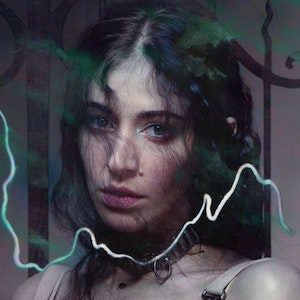
The art of listening to an album—front to back—is in some ways, a lost one. At least, this is what Colleen “Cosmo” Murphy believed when she founded Classic Album Sundays, a worldwide podcast and website made specifically for album lovers that features filmed interviews with artists, stories behind classic albums, curated playlists and more.
“I founded Classic Album Sundays in 2010 as a response to a societal disposition that I felt was devaluing music, the act of listening and the significance of my beloved album format,” she writes in the introduction to the new book, Classic Albums By Women, released by Classic Album Sundays and ACC Art Books.
Conversely, Murphy noted the devaluing of the albums of women musicians despite their manifest, and emotionally resonant, contributions. So, a few weeks before International Women’s Day in 2018, Murphy set out to highlight those women-made albums with a social media campaign.
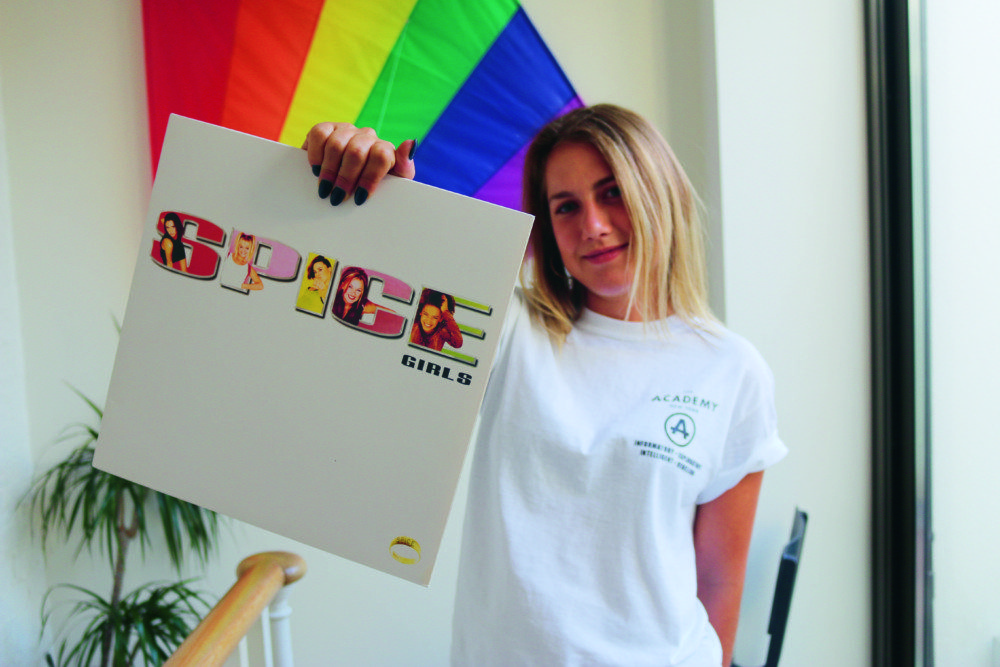
“I came up with the last-minute idea to ask our friends in the world of music to nominate their favorite album by a female musicians by taking a ‘selfie’ of themselves holding up their chosen album, and giving an account as to why that album held such personal importance,” she wrote.
Murphy received over 100 entries, and eventually, those entries turned into the 200-page “Classic Albums By Women,” which features the album picks of music industry players from across generations and genres.
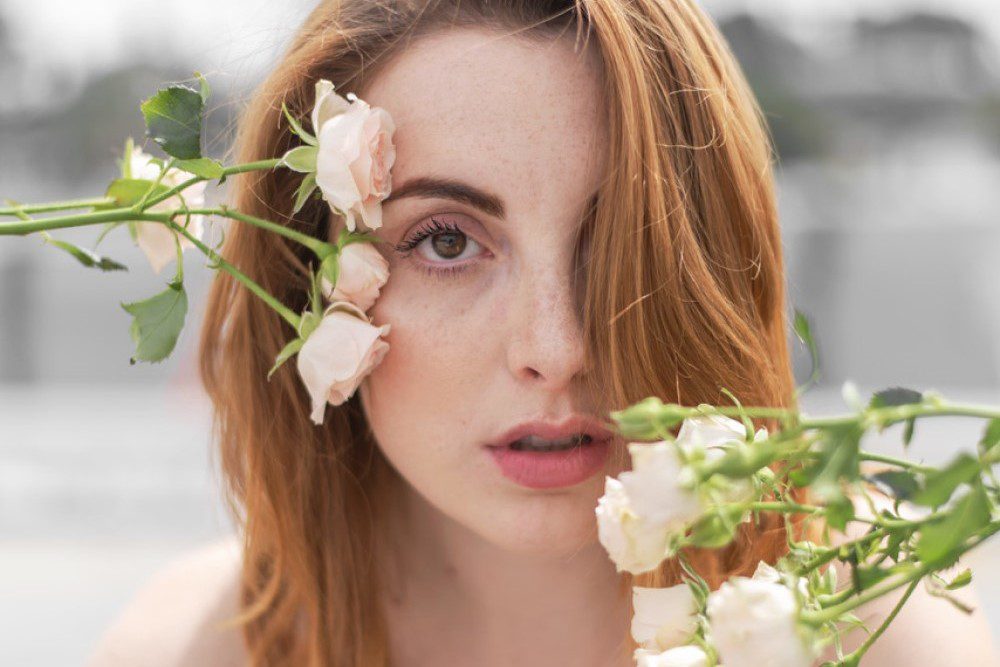
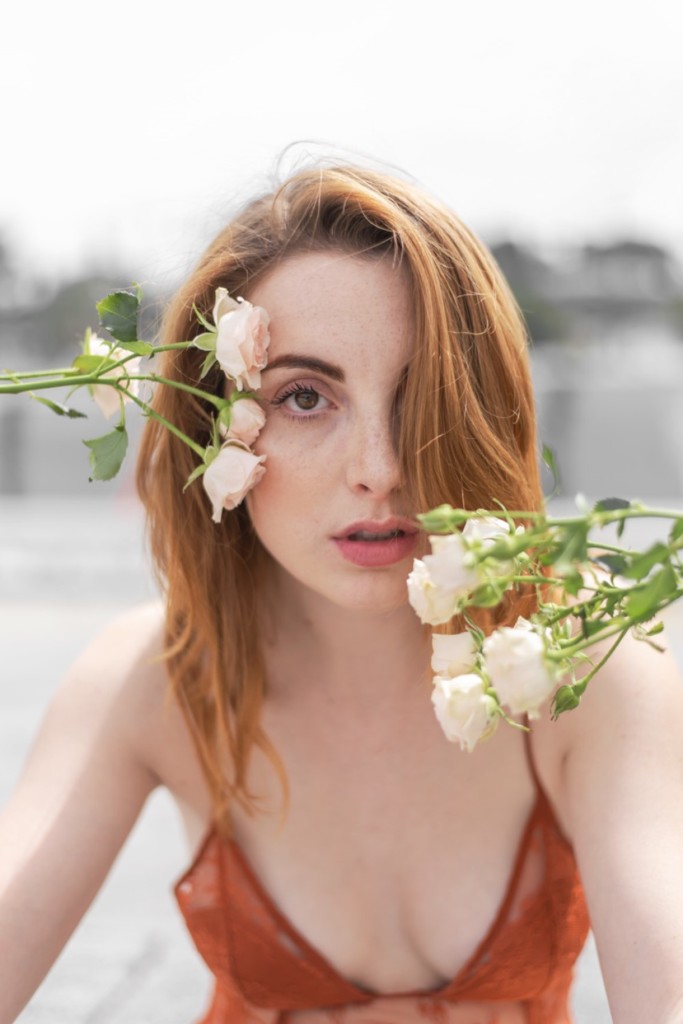
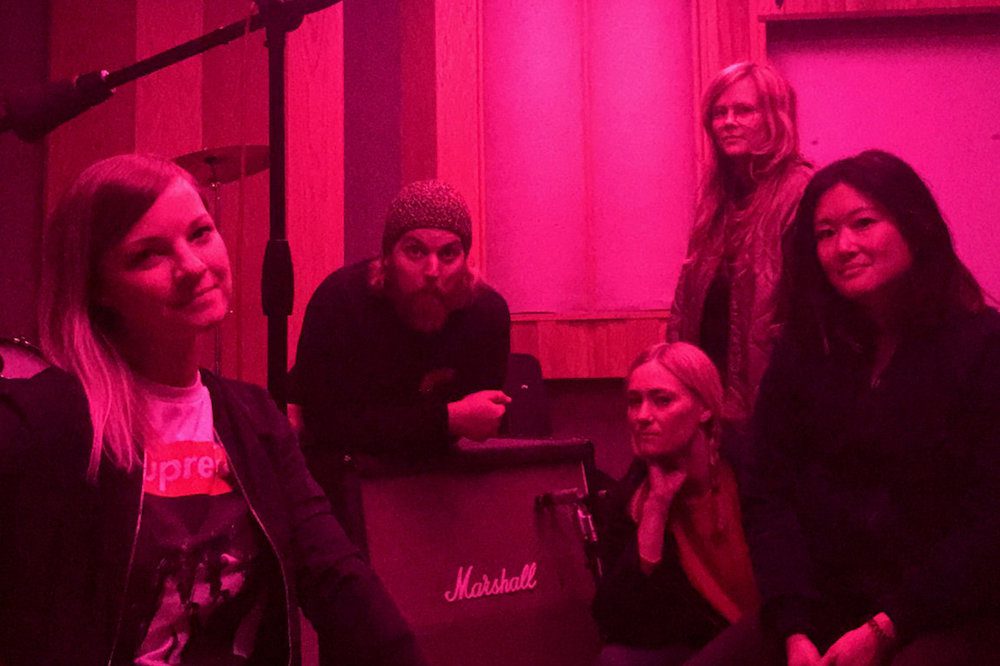
Elsa Hill, DJ from Worldwide FM, holding her favorite women-made album.
While reading the book, you may not immediately recognize the name of every curator—but Classic Albums by Women contains the views of some industry heavyweights. For instance, Michael Kurtz, the co-founder of the ever-popular Record Store Day, contributes his pick.
“I have so many favourite albums by the likes of Joni Mitchell, Laura Nyro and Regina Spektor (to name a few), but right now the album that demands my attention and makes me see the world differently is Rabbit Hole by Mindy Gledhill,” he writes in the book.
Additionally, the music critic at the Daily Telegraph, Neil McCormick, vouches for Beyonce’s Lemonade. He notes, “Female musicians have been undervalued, undermined and underpromoted ever since there has been a music business…There has never been so much great music by woman as there is right now. Beyonce is a towering start making shape-shifting, genre-busting R&B hip-hop pop with depth and purpose.”
The book also highlights how the albums of women inspired new generations of women to pursue music-making.
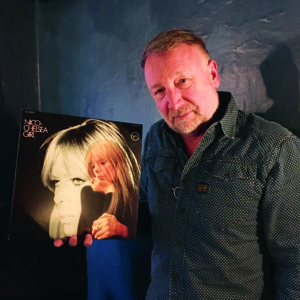
Peter Hook of Joy Division/New Order, with his favorite album by a woman.
“I remember the first time I heard [Carole King’s] Tapestry,” writes musician KT Tunstall. “It became my song-writing bible; a masterclass in how to remain strong and vulnerable in equal measure.”
Likewise, as DJ/producer Honey Dijon writes about her pick, Island Life by Grace Jones: “Grace Jones is the reason I felt free enough to become an artist,” she writes.
Overall, this little book—perfect for quick, casual coffee table thumb-through or a more thorough read before an album listening session—is a great way to learn more about your favorite artists, and learn about some new women that have impacted people along the way. The long list of curators involved with the book also provide a tether to the worldwide, album-loving community so you can find your next favorite podcast or music journalist. Most importantly, Classic Albums by Women is a towering testament to the power women artists have had, and continue to have over listeners of all walks of life.
Classic Albums by Women is available on Amazon or through the publisher, ACC Art Books.
NYC-based alt-pop artist PETRA started playing piano before she could walk and got her first electric guitar when she was six, after she complained to her mother that she wanted to be her “own kind of musician.” Today, this philosophy of independence is still in her music, which contains empowering lyrics about embracing singlehood and not settling. She made her debut in 2015 with “Glamour Girl,” a playful and flirty love sing with lyrics like “You hit my radar like a blazing laser.” Her latest single “Just Stay” is a little different, showing a more vulnerable side of who she is in relationships. She plans to compile her music into an album that she’s releasing on November 12, titled Dancing Without You. We talked to her about her latest music, future plans, and the trials and tribulations of modern dating.
AF: So what’s the story behind your new single “Just Stay”?
P: It’s definitely one of my more heartfelt songs on this album, and it’s mostly inspired by this conversation I had with a former partner. It came at this really critical time in our relationship where we seemed to be at this crossroads, and it was really hard to talk about how we felt because somewhere down the line, the love faded, and instead of addressing it, we waited until this final moment. But even though things got bad, I was still telling him, “I want you to stay.” It was interesting because I’m a hopeless romantic, and I think love is so powerful, love can fix all these things — and it was the first time I doubted that thought because love is not always strong enough to keep things together. That song was me pleading to him to stay and saying we can fix things, but he felt otherwise, so that’s where the conversation came from.
AF: A lot of your songs about being self-sufficient and not relying on relationships. How do you balance that with being a hopeless romantic?
P: When I’m in a relationship, I can be quite prideful sometimes, and there’s a line in the pre-chorus that goes, “Forgive me for I know I’m weak, but I’ve shredded all my dignity on you.” I can be independent — I run my own life — but in that moment, it was just this overwhelming sense of vulnerability that I just faced head-on. And usually, I’m not somebody to give in to that feeling, but in that moment, it was so intense and hard to ignore, and I was accepting a moment where I feel so weak and feel I need someone, and even the most independent of people can feel vulnerable in those moments.
AF: Your previous single, “Luckboy,” sort of embodies that fiercely independent attitude. What inspired that one?
P: It’s funny because “Just Stay” and “Luckboy” are pretty much the opposite of each other, but it’s kind of interesting to think that this is the next single because this album is such a good example of the different parts that encompass my personality. And with “Luckboy,” it definitely dug into that fierce boss lady attitude that I always carry myself with, going to the idea that I just don’t need anybody, that I can function on my own, that sort of “screw guys, who needs them” attitude. This song came after “Just Stay” in a way because I needed to get myself back into the game and feel like I was in charge again after going on so many terrible dates, especially one specific one where I was like, “I don’t need anybody. I can do this on my own.” I do think of myself as having these different sides of my personality. I lean to more the fierce PETRA idea, but “Just Stay” goes into my more vulnerable side.
AF: So what was the date that inspired “Luckboy”?
P: I was seeing a guy. He was pretty cool. We went on a couple dates, and I was just more interested to see where things were going. And after one date, we were sitting down, and he said things were not working out for him on his end. But instead of it being a nice conversation, it was like he said his piece then gave me a high five and said, “Are we still gonna be friends?” And I was just in that moment like, “Cool, this is an interesting way to have this conversation.” Then I got up and left, not wanting to have this conversation. I was like, that took me by surprise. Just let that one go.
I sort of had this emotion because I went on a couple different dates, and some New York guys have a similar one-man-for-themself, don’t-have-the-time-and-energy-to-invest-in-someone-else attitude, and that was unfortunately the type of guy I was seeing at the time. And I sort of took the experiences I had from these various dates and constructed “Luckboy,” which is a play on the word “fuckboy.” I like to think I can be very coy with words, so instead of “fuckboy,” I said, “You’re running out of luck, boy.”
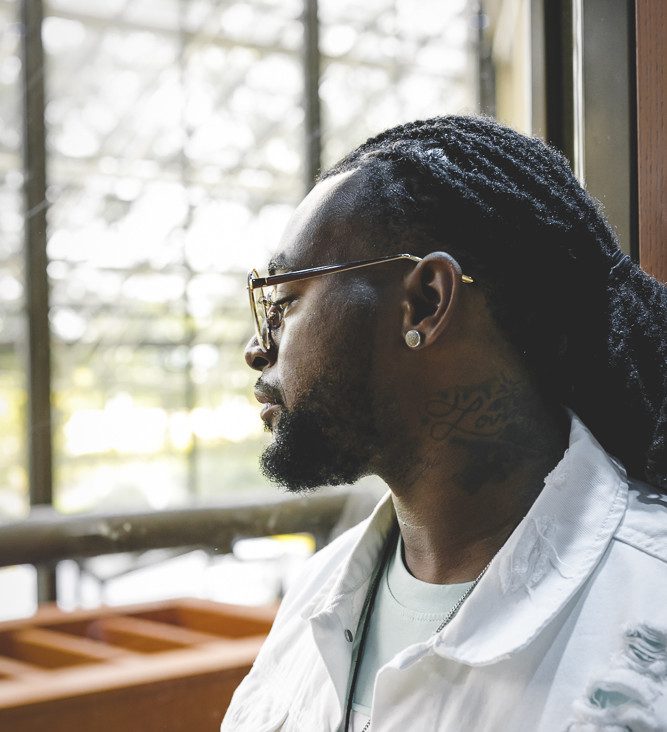
Credit: Andrew Bordeaux
AF: How does being a woman of color play into it for you?
P: In the past, in the pop world, I feel as though there weren’t so many women of color at the forefront. Nowadays, Lizzo has changed that perspective. Yes, she raps, but in terms of being accepted by the pop world, she’s one of the biggest stars of the moment — also super body-positive. When I started my music journey, people were like, “Are you sure you want to do pop? Because it sounds like you should be doing more urban-based music.” And I love that kind of music, but it’s not what I identified with. So, with my music, I wanted to hone in on, “Yes, I’m a woman of color. I sing pop music. But I can still sing about the same subjects as my counterparts and be part of that world.
Nowadays, it’s much more accepted, and there’s more visibility and inclusivity in the pop world, so the perspective I can give is talking about the same subjects, like love, romance, heartbreak, death, and loss, in a way that hasn’t been addressed by other pop artists — so, taking back the idea that this is an inclusive genre and including that there are different races and ethnicities, so I can be that person i didn’t see growing up on television or on the radio.
AF: Who are your biggest influences?
P: I would say I’ve always been influenced by a lot of ’60s and ’70s rock and roll, a lot of Rolling Stones, The Beatles, The Who, I would say Queen was a big influence, but also I love Fleetwood Mac, Cher, my list can go on and on. So, I’d say a lot of ’60s and ’70s music was the core of my sound because that’s what I grew up listening to via my father. Then, some old-school pop. I’ve always loved Britney Spears, how can you not? I’ve always melded these old-school songs with modern-day pop, so that’s where the balance of my songs comes from.
AF: What are your next plans?
P: There’s going to be this really awesome album release show at Knitting Factory at the end of this month. The album comes out November 12, and in spring 2020, I’m planning on going on a cross-country tour. The details of that are still in the works and will be announced early next year. I’m really excited because I love performing live and can’t wait to get back out on the road.
Juliette Goglia is steeped in vulnerability on her new single, “Time.”
The actress, known for her childhood roles on That’s So Raven and Hannah Montana to modern day appearances on shows including Mike and Molly and The Neighborhood, has proven to be a multi-talented artist with her new song “Time,” premiering exclusively with Audiofemme.
The acoustic song puts Goglia in a candid position as she ponders if “pretending” equates “growing;” the juxtaposition of the lyrics “time speed up now / slow down now” conveys the push and pull of wanting time to progress while also remaining present. “In this song, time is kind of a character itself. Time can offer so many things, mainly healing, but the agony of sitting through time can be unbearable,” Goglia says, adding that she was “pissed at time itself” while writing the track. “I wanted to speed up to the part of life where I have everything figured out (does that even exist?), but I also am in an industry that fetishizes youth, so I’m terrified of aging and losing relevance.”
Throughout the song, Goglia confronts her battle with depression and anxiety. Stemming from a relationship she was in at the time, the singer gets brutally honest with herself as she admits that it was difficult to not only watch her partner’s career thrive, but her peers’ as well. The lyrics navigate the conflicting feeling of being happy for him while struggling to accept her own situation and the insecurities she felt. “Sometimes it’s hard for me to watch you succeed / does pretending that you’re winning secure the trophy / does the trophy mean that everyone will like me?” she sings with a gentle voice filled with curiosity.
Goglia cites these powerful lines as the “scariest” to write, as she questions the legitimacy of manifesting one’s destiny. “I’m pondering ‘does envisioning you have what you want, secure what you want?’” she explains. “I was feeling isolated and unsupported by peers and seeing people around my age ‘blowing up’ and everyone posting about them and supporting them. So I was kind of wondering, once I, let’s say, have a career that I want, will everyone suddenly want to be my friend?”
Goglia calls “Time” the most “honest” song on her upcoming EP, I’m Not Sweet. She hopes fans identify with the universal challenges she relays in the song, while aiming to de-stigmatize depression and anxiety. “I hope people learn that it’s okay to struggle, it’s okay to feel discontent, and we all feel it. There’s a lot of cynical humor in the song as well that I hope people catch. But basically, if you’re feeling something, there’s a large chance other people feel it too,” she shares. “And the way to feel better is to discuss this.”
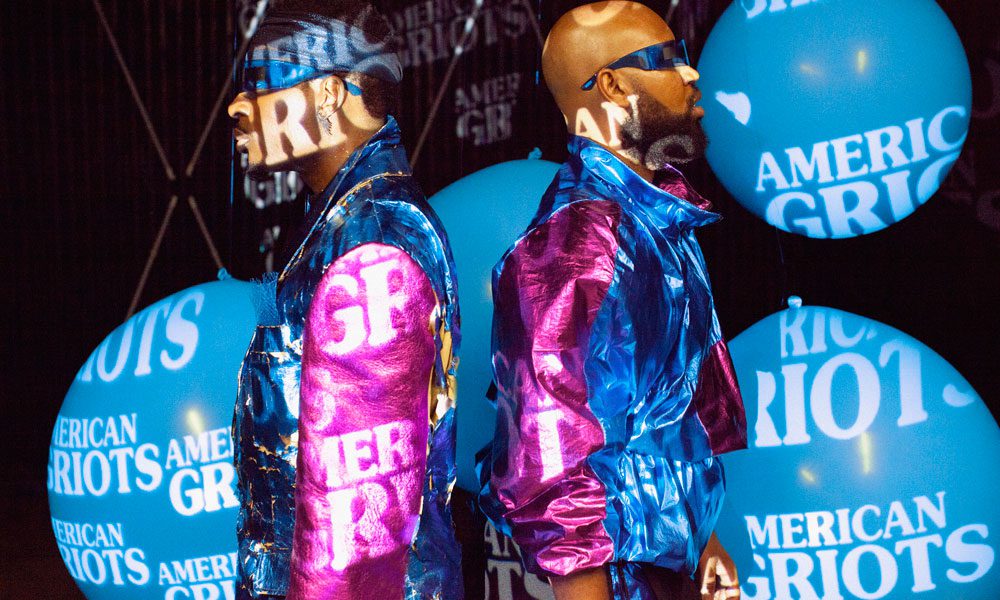
A “griot” is defined as an oral storyteller in West Africa, the roots of the tradition tracing back centuries. Nashville-based duo Louis York not only bring this tradition into the modern era with their debut album, American Griots, but prove they’ve long been griots themselves.
The journey begins with Claude Kelly and Chuck Harmony, Grammy nominated songwriters and producers who spent more than a decade writing era-defining pop hits (Kelly wrote “Party in the U.S.A.” by Miley Cyrus and Bruno Mars’ “Grenade,” while Harmony penned Rihanna’s “Russian Roulette” and produced Ne-Yo’s six-time Grammy nominated album, Year of the Gentleman). After breaking away from the grind of the mainstream music industry, they created Louis York and launched their own artist collective, Weirdo Workshop, in Franklin, Tennessee (just outside of Nashville) in 2017. Deriving their namesake from Kelly’s native New York and Harmony’s home city of St. Louis, Louis York introduced themselves as a genre-defying act with an important message to share on a succession of EPs: 2015’s Masterpiece Theater – Act I, 2016’s Masterpiece Theater – Act II, and finally, Masterpiece Theater – Act III, released in 2017.
But with the turn of the new year in 2019, the duo knew it was time to create a comprehensive body of work in order to evolve, setting their sights on a debut album. As they began writing songs and developing themes for the impending project, Kelly and Harmony discovered the word “griot” – a traveling musician, poet or performer who would visit the villages of West Africa and share stories of the people and culture through art. “That part really resonated with us because it felt like there was an ancestral tradition to why music and soul music and this mission will always feel so familiar,” Kelly tells Audiofemme. “That was a beautiful thing to embrace.”
The album reflects a tapestry of the experiences, frustrations and lessons they’ve gathered through their journey, reclaiming the griot’s mission of transforming valuable life lessons into art that not only entertains, but instills education, intellect and spirituality. “We’re asking more questions than we’re giving solutions,” Harmony says of the project. “The songs go different places and take on different twists and turns in ways that I think a lot of people now don’t think fans and consumers can take, but we don’t buy that. We know that music has always been adventurous and progressive and fun and poetry, that’s what we fell in love with when we first came into it,” Kelly describes. “These are all soul songs, each one is kind of a realization for us.”
Louis York called on a team of Nashville griots to help them share these realizations. Caroline Randall Williams, an award-winning poet and co-author of NAACP Image Award winning book Soul Food Love, opens the project with her “piercing” voice, as Kelly notes, on an original poem that proclaims over a groove of horns and drums, “this, an American story / a fists up story / an our power story.” Her moving words take shape again on the reprise of “Teach Me a Song,” the duo’s duet with country star Jimmie Allen, while The Shindellas, the powerhouse trio founded under Weirdo Workshop, follow in their footsteps on “No Regrets.” The ’80s style electro-funk melody doesn’t disguise the uplifting lyrics that encourage self-love and personal freedom, and The Shindellas’ glistening harmonies shining alongside Kelly’s voice as they declare, “I want the world to know / you don’t have to be alone / we don’t have very long / so love anyone you want.” “That part was an important message, so we chose to repeat it over and over again so it could be drilled in people’s heads,” Kelly says.
For Harmony, the album’s profound identity lives in “I Wonder.” Originally released on Masterpiece Theater – Act I as an eclectic R&B number titled “Nerds,” Louis York give the song a new identity on American Griots. Inspired by hymns and Negro spirituals, “I Wonder” intertwines spoken word poetry, jazz, hip-hop and R&B to ponder how Civil Rights pioneers Martin Luther King, Jr. and Malcolm X would perceive the world today. The almighty voice of opera singer Patrick Dailey unites with Harmony’s cinematic production of strings and booming drums to elevate the compelling notion, “I wonder / if Martin was alive now / would he be proud? / I wonder / if Malcom was alive now / would he be proud?” “It’s such a vital part of our social message and it’s a missing part musically in pop culture,” Harmony explains. “It feels like it’s encompassing all of what African Americans have contributed artistically to pop culture, and still sounds futuristic,” Kelly remarks, calling Dailey’s presence a “stand alone moment.” “We wanted to feel reverent, but we also wanted it to feel like it was the best of who we are.”
The griot tradition is in capable hands as Louis York continue on an artistic journey that finds them channeling expression, attention to detail, honesty and true musicianship into their craft. These elements reward them with a true sense of freedom, the liberating gift they pass on to those who embrace American Griots. “With us spilling our guts and pouring our hearts on this album, we’re hoping that listeners will have a revelation, which is deeper than inspiration,” Kelly says of the most “complete” body of work they’ve created in their careers. “This album is also a reminder to them that this is what freedom can sound like. Now take that same feeling and apply it to yourself.”
“The only thing that we can offer people is love and happiness and having fun and being introspective. But at the end of it is love,” Harmony observes. “That’s what the world needs.”
The self-titled debut EP from Bay Area band Sleepover starts with the kind of intro you would expect to hear on a Best of the ’50s compilation album. Take me with you, begs lead singer Pakayla Biehn on the cheekily-named “Lullabye,” the instrumentals slowly racking up in intensity before diving into a snarling pit of punky menace.
This is the general sentiment of the EP, which is a fun mix of ’90s grunge, ’70s rock songstress, and modern punk (with a little do-wop thrown in). The ’70s influence is felt most strongly on “No Place Like Home,” which makes a “California Dreamin’” reference within the first thirty seconds before slowly building to a killer chord progression that makes me feel like I should be at a tailgate party wearing corded bellbottoms, burning my nose in the sun.
EP closer “Let Me Go”sees me at an impasse — on one hand, it pours some ice water on unrelenting high intensity since the latter half of “Lullabye,” but on the other, the repetitive chorus is a little too much of a Jefferson Airplane throwback to end the EP as strongly as “Lullabye” opened it.
Would have died a hundred times/to trade her fate for mine, sings Biehn on “Let Me,” a evocative line with the kind of specificity I wish was embraced more throughout the song. Not that receptiveness is automatic anathema — it’s quite effective on “No Place,” especially in the second half, where Biehn’s vocal stylings are supported by yet another great riff, as well as the loopy, yellow-brick-road associations with the song title itself.
The dreamlike quality and soft/rough vocals of Biehn — who, incidentally, I think could make some serious magic with Thank You Come Again’s Izzie Clark — are quite effective and appealing overall, especially when she keeps her feet firmly on the ground, allowing her to go toe-to-toe with the EP’s crunchier moments.A great example of this is when she cries you can’t go back again on “No Place,” her voice ever so slightly distorted before the song moves to highlight the riff. Clearly, the band has good instincts when it comes to mixing together their variety of inspirations and influences — but I do think they are the most successful when one does not overpower the others.
The band — Biehn, Gabrielle Tigan on rhythm guitar, Lauren Diem on lead guitar, Cindy Yep on Bass, and Jack Douglas on drums — tagged themselves on Bandcamp as “dreamgrunge,” which might seem like a bit of an oxymoron. However, what is a dream other than distortion and discordance, two paramounts of grunge? Either way, Sleepover knows what they are about, even if there are a few kinks left to iron out.
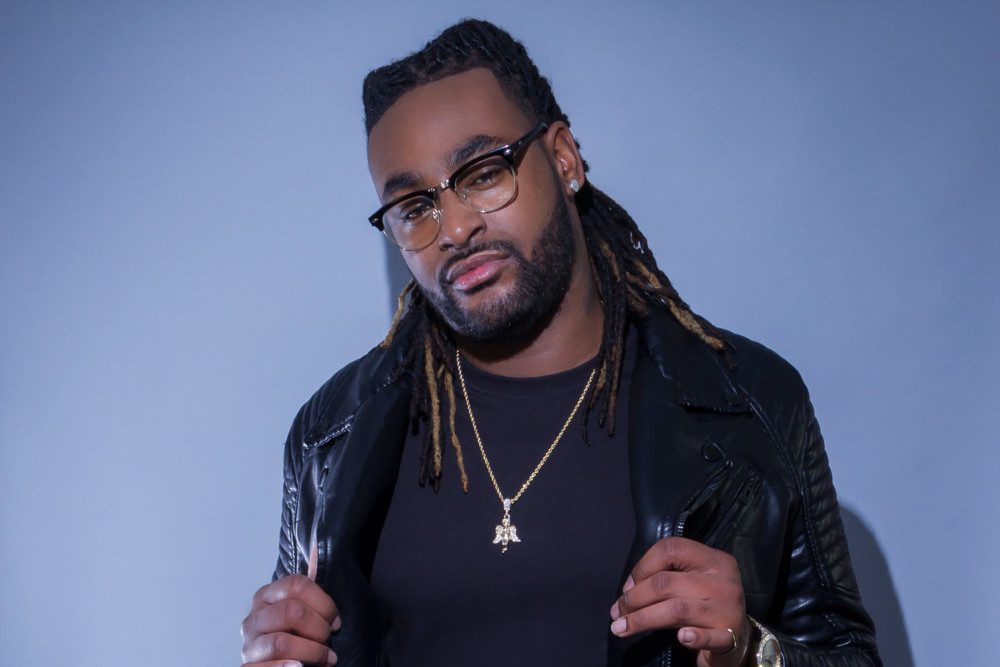
Zell’s World released a fun video for his new single, “That’s What It Is.” The turn-up track marks the first offering from Zell’s forthcoming sophomore effort, Welcome 2 Zell’s World. The Chicago-bred and Cincinnati-based rapper last dropped his 5-track Want No Love EP in 2016.
“With this next project, I’d say, people should expect to hear a totally different Zell’s,” he tells AudioFemme. “I’ve angled more toward the club, the turn up [and] the gritty, mature type sound.”
While Want No Love‘s subject matter centered around relationships, Zell’s ready to get into his party bag on this next project. He says his latest single, “That’s What It Is,” is a good indicator of where his style is heading.
Zell’s World / Photo by Tef Jones
“The overall sound is something totally different from what I usually do, but I had to find a style and sound that really captured who I am and showed my personality,” he says. “Me and my team are really expecting great things to transpire from the release of this project. We’ve even had several meetings with the talk of a potential major EP deal, so we’re very optimistic.”
As for the video, Zell’s enlisted Cincinnati videographer Dre Shot This, and several friends, to shoot a high school-themed clip that caters to the song’s fun and laid back lyrics.
“It was so much fun, and lots of people showed up, which I thought was dope as hell!” Zell’s says of the video shoot. “When we shot, I just thought about being a class clown like I was in high school! That’s really where it all came from. I’m overall silly, but I wanted that edgy content to compliment the song.”
Zell’s is gearing up to release his Welcome 2 Zell’s World album before the end of this year.
“I am beyond excited,” he says. “This is a great milestone that shows growth, change, and maturity. I’m really looking forward to what people think!”
For now, check out his latest release, “That’s What It Is,” and watch the video below.
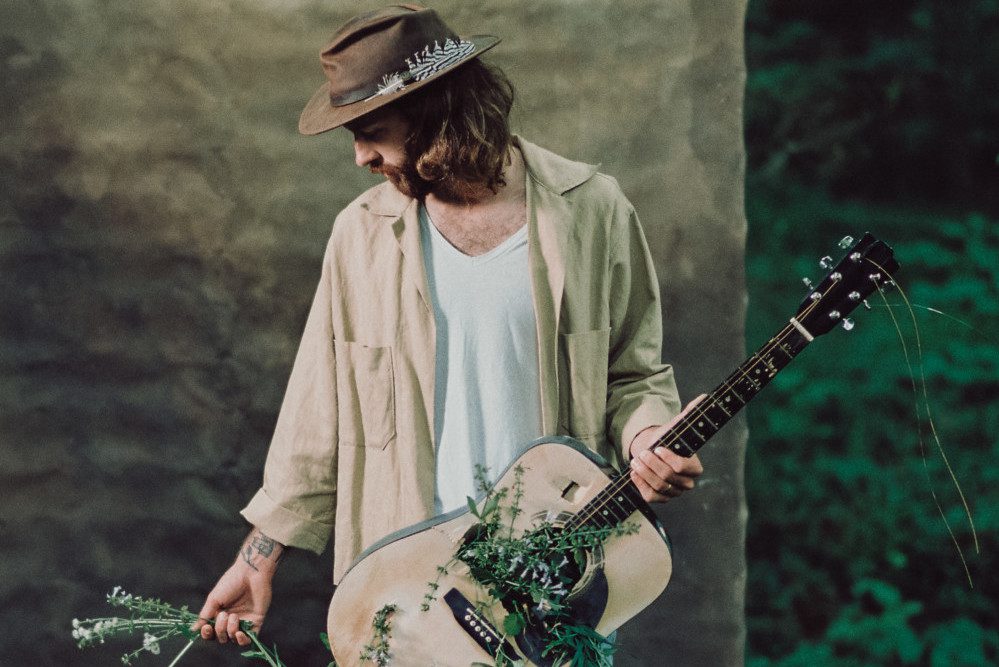
Autumn is officially underway here in Atlanta, bringing in cooler weather, colorful leaves, and the perfect Appalachian folk-inspired songs to hum while drinking coffee on a crisp morning, thanks to singer-songwriter Sam Burchfield and his latest single, “Colorado.” The wanderlust-inspiring track, set to a delicate backdrop of plucked acoustic and subtle percussion, is dreamy enough to stick in your head for the rest of the day and send you looking for the next flight out west (consider yourself warned).
Sam Burchfield has been a longtime favorite of mine after I was introduced to his music through his wife, Pip the Pansy. Raised in the foothills of the Blue Ridge Mountains in South Carolina, Burchfield was surrounded by the sounds of traditional Appalachian folk and bluegrass from a young age. Years later, he returns to the sounds of his childhood as he reconnects with himself, the natural world, and the people he loves most.
AF: How did you find your way to music? Did you grow up in a musical household, or was there a moment where you heard a song and fell in love with it? Did you ever think you’d be making music as a career, or was it more of a hobby for you?
SB: I started playing guitar and upright bass in fifth grade and just got addicted. My sisters both played music in orchestra so I guess I saw that and thought it was cool. By the time I got to high school, I had put out a few “records” with my garage rock band and had started a pseudo solo career burning CDs for my friends (who were kind enough to buy them). I went to UGA to study Music Business and pretty much had decided it’s what I was doing with my life. That didn’t become a reality until my junior year of college when I started recording my first real release.
AF: How did growing up in the Blue Ridge Mountains and the Appalachian musical tradition influence you as a songwriter?
SB: If you listen to my catalog for like a second, you will hear a million references to mountains. That’s just sort of who I am. I’m divinely inspired by the natural world and have always felt at home in Southern Appalachia. I grew up going to my Granny’s house near Sylva, NC, where I’d play in the creek and hike and pick blueberries and pretend to be Davy Crockett. I guess a lot of my music is trying to touch those memories in some way. Also, just being around bluegrass and Southern music sort of makes that the norm, which meant that as a kid I was rebelling against Southern traditional music. It’s finally come full circle where I feel more connected to those roots and the raw honesty that the tradition calls on.
AF: What drives you to keep creating music?
SB: At this point, probably inertia. Writing songs is what I love most, and I want to always be digging for a more powerful, honest, and better song to connect with people.
AF: Who do you consider your greatest inspiration?
SB: Randy Travis.
AF: Your music toes the line between folky singer-songwriter and more soulful tracks like “Dinner,” released last year. Do you feel more drawn to one or the other?
SB: I think at the moment I’m more drawn to folk songs. It’s what I’ve been writing and it’s more of who I am at my core. I do like to have some fun and play soulful and funky jams with the band live though.
AF: Do you try to maintain a certain sound or style while writing, or do you follow the voice of each song?
SB: In the past, I almost tried too hard for my songs to be different, but lately, working on a record has really made me write for the record, which I think is important. Learning to make something a cohesive body of work is an art in and of itself. It’s a way to weave all of the unique voices of songs into a choir. But I generally let the song be discovered rather than having a preconceived sound I’m going for.
AF: What’s your writing and recording process like? Do you write, produce, and record your own music, or do you prefer to collaborate with others?
SB: Lately I’ve been doing it all myself. In the past, I have collaborated in a million different ways, whether with friends, writers, producers, or band members. I prefer to be pretty in control with the occasional feedback from people I trust a lot and who can be honest with me. Writing for me is normally about getting my mind to shut off and shut up and let ideas flow freely. At some point I just have a gut feeling on an idea that needs to be fleshed out. Sometimes that happens instantaneously, or sometimes it’s five years later. Recording is always a bit different. I want to serve the song, so sometimes I track things live on my own or with a band or overdub and layer the pieces together. I try to be present to what feels the best and trust that as much as possible.
AF: You crisscross the country quite a bit! How do your travels influence your writing? Do you tend to write while you’re on the road, or do you save it for the off-season?
SB: If I am solo driving, I write all the time. I think while I’m driving it’s easier for ideas to flow because I’m just distracted enough to not overthink things. I would say I’m pretty constantly writing or working on some idea in the studio. All the traveling has definitely inspired a lot of my new music, especially seeing some areas of the country I had never seen, like Colorado and Utah.
AF: You’ve released three singles this year: “Blue Ridge June,” “Waking Up,” and “Colorado.” Can you tell us a bit about the songs? What inspired them?
SB: “Waking Up” and “Colorado” were inspired by traveling out West, but all of them are about reconnecting with the natural world and each other. I did some soul searching over the past few years and decided that was sort of my musical mission. “Blue Ridge” is about where I grew up and was a co-write with my wife [Pip the Pansy]. Really my favorite co-write ever, I think. She’s a brilliant lyricist and really brought the feeling to life of missing the Blue Ridge and personifying the mountains as a fairy nymph or something.
“Waking Up” was a very old idea that I started probably five years ago, and then after going out west for the first time, I found the inspiration to complete it. It maps out a sort of spiritual/natural awakening. “Colorado” was obviously inspired by Colorado. Pip and I fell in love with that place and have made some incredible friends there. It was another sort of co-write with her, and originally we just had the verses with nothing else. [I] loved the verse melody so much that I couldn’t put a chorus to it, until one night at like 4 am I was working on it and came up with my first one-word chorus: “Colorado.”
AF: You and your wife, Pip the Pansy, are both incredibly talented musicians and songwriters! How do you influence each other? Do you collaborate often?
SB: We definitely collaborate. We don’t often do it intentionally; it’s more of just a passing thing since we are around each other all the time. I did help write and record her latest project with our buddy Caleb Hawley in NYC, which was a cool week of collaboration. I like to think that we keep each other grounded and hopefully keep each other true to ourselves. That’s such a hard thing to maintain, so it’s awesome to have a very talented partner who can give me honest feedback on my songs but also on my heart.
AF: What’s been your favorite experience as a husband and wife creative duo?
SB: Specifically in the creative realm? We really do love to travel together so it’s awesome when music takes us to beautiful new places. Star-gazing in the Utah desert was certainly a highlight.
AF: You are such a huge player in the Atlanta music scene; what’s it been like to be a part of as it has grown and changed? Do you ever miss the way it used to be?
SB: I’m not sure I can really speak to how it is changing – I think it’s an awesome community of people and it’s still trying to figure out what it is as a “scene.” Smaller towns I think have it easier in a way; it’s more of a natural local scene in a place like Athens. Atlanta is a bunch of scenes all swirling around each other and intermingling, which has pros and cons I’m sure.
AF: What’s been your favorite performance in the city? Do you have a dream venue you’d like to play?
SB: Favorite performance in Atlanta was probably my first time selling out Eddie’s Attic. I’d be incredibly pumped to play any legendary music venue; Red Rocks would be towards the top of that list, but I really am enjoying the cozy intimate rooms that I get to perform in now too. Something about a small space really changes how you can connect with folks, and I’m trying to fully appreciate that while I get to do it!
AF: Last one! Is there a new Sam Burchfield album coming soon?
SB: Yes! There is. Still finishing it up as we speak. But my new record Graveyard Flower should be out soon.
Follow Sam Burchfield on Facebook and stream “Colorado” on Spotify now.
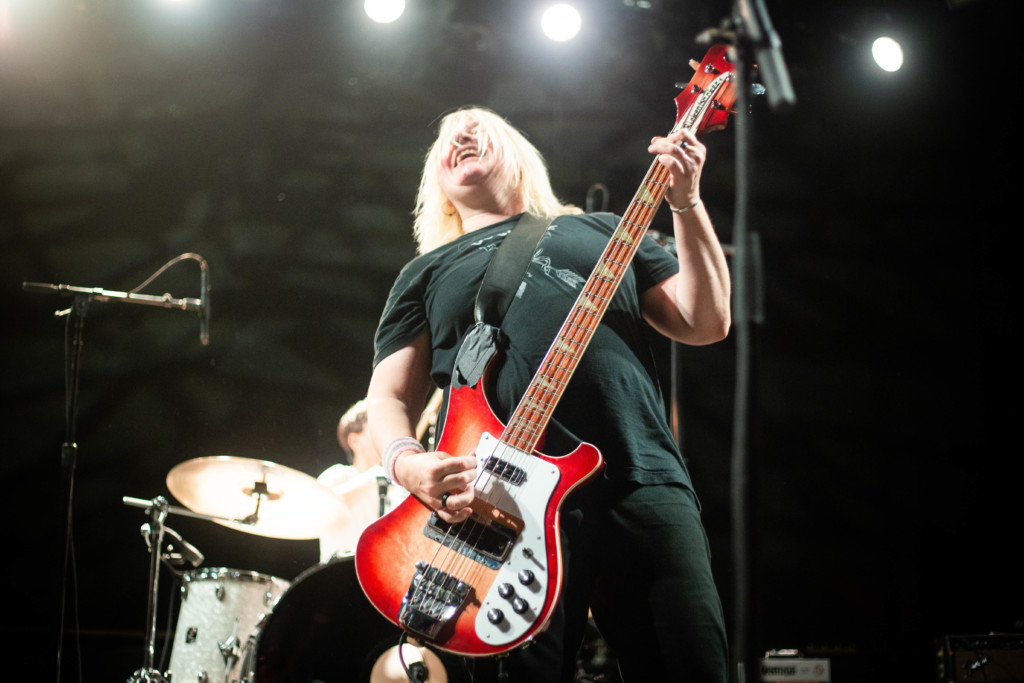
Team Dresch pulls a fan on stage to sing “Hate The Christian Right” at Union Transfer. All photos by Amanda Silberling.
Before Team Dresch performs their 1995 anthem “Hate the Christian Right” at Philadelphia’s Union Transfer last week, singer and guitarist Jody Bleyle pulls a longtime fan from the crowd on stage.
As the queercore legends get ready to rip into the next song on their long-awaited reunion tour, the fan – Marlene – yells into the microphone, breathless: “I want you all to know… Dreams do come true.” Seconds later, she’s dancing on stage, playing air guitar back-to-back with Kaia Wilson, screaming the decades-old (yet still relevant) anti-authoritarian lyrics: “You never wanted to care/You kill, you kill, you kill!”
Reunion is in the air these days – there was Sleater-Kinney, Bikini Kill, and now, Team Dresch. As someone who spent the Riot Grrrl movement in diapers, I sometimes feel like the significance of these “triumphant returns” is lost on me. In the crowd, I listen to queer punks wax poetic about how it felt to discover Team Dresch – an all-lesbian punk band – in the ’90s, and how surreal it is to see them perform so many years later (only this time, they had to pay for babysitters). Whether you’re an old fan or a newbie, Team Dresch shreds – but now, a week after the show, I’m most affected by how it felt to watch Marlene’s “dream” come true – to see someone derive so much pure joy from the love of music.
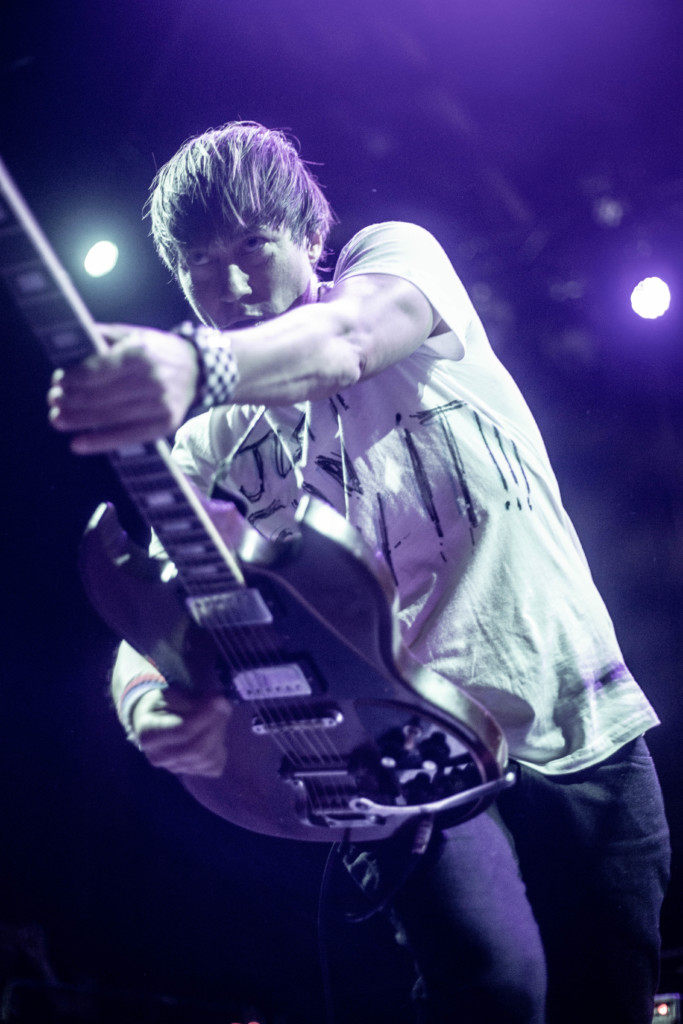
Team Dresch plays Union Transfer. All photos by Amanda Silberling.
I find myself feeling jaded these days, which is worrisome, because I’m only as old as Team Dresch’s second record, Captain My Captain (1996). I work at an art museum – something I’ve dreamed of for all of my life – yet, something feels off when I listen to my coworker tell me about her exciting visit to another gallery last weekend.
“Do you ever get tired of going to museums?” I ask her. “Since, you know, we spend so much time in one?”
“Oh, god no,” she says.
It’s not that I’ve lost my passion (just recently, a Bruce Naumann sculpture made me openly weep). It’s just that the older I get, I find myself less excited about the things that I love so fiercely. I’m terrified. I used to line up outside of concert venues hours early, yet now, going to shows can feel like a chore, no matter how much I still do – and always will – love music.
This is on my mind when Des Ark opens the show, reluctantly coming out of a sort-of-retirement as an homage to Team Dresch, a band that frontperson Aimée Argote credits with “saving [her] life.”
After years of touring – pushing through the physical and mental toll of being a full-time punk musician – Argote woke up one day in 2016 and realized she was burnt out. She tells IndyWeek, “I sat up and was like, it’s gone. It’s gone. It’s gone. That thing that you have inside of you that says, go to work, make music, do your thing. There’s nothing there.” Despite leaving the precarious, unrewarding lifestyle of punk rock behind, Argote’s appreciation for her longtime idols was still enough to get back on stage for one last mini-tour before she quits music for good.
Des Ark performing at Union Transfer. All photos by Amanda Silberling.
What must it be like to achieve “the dream” – to “make it” in music, develop a fan base, and perform night after night – only to discover that in this dream, something indiscernible feels wrong, and it’s kind of a relief to wake up in the morning? What does it mean that, for Marlene, the dream is to get on stage just once, yet for Aimée, living the same dream night after night isn’t as glorious as it seems? Is our collective dream – of spending day after day surrounded by our passions – one that deteriorates as you approach it, like when you get to the best part of your dream, only to wake up suddenly?
During Des Ark’s set, Aimée Argote takes a moment to preface “Ashley’s Song,” a song about processing a sexual assault. The crowd is silent as Argote explains the pain of telling people what happened. Then, a voice shouts from the back of the room: “We believe you.”
What’s so special about the bands who played that night – Team Dresch, Screaming Females, and Des Ark – is that, if you’re a fan, you’re probably not an asshole. So, if you showed up to their gig, you’re probably not an asshole. And maybe “the dream” isn’t so much about the music itself, but rather, the dream is to spend as much time as we can with people who aren’t assholes.
Jody Bleyle says: “Every night I feel like I get more inspiration to just continue… being alive, but also just doing the work of being a person in the world that is on the left, and a freak, and fighting fascism, and having to live in this world that we’re living in right now, going into the streets, fighting climate change… All the shit we have to do day to day when you’re not at a show.”
It’s tempting to view Des Ark’s farewell and Team Dresch’s reunion in contrast with one another, but they aren’t. Maybe the dream, like any progress, is not linear, nor is it static – I sympathize with Argote’s decision to leave music, especially given the misogyny that still infects even the most “alternative” of spaces. Even Bleyle openly admits: “Mental health issues drove me away from full-time rock.” Yet at the same time, even decades after their emergence, I feel immensely relieved to have a band like Team Dresch back on the road and recording a new album. We need more bands like Team Dresch (and Screaming Females, and Des Ark) in our lives to remind us of why we fell in love with music in the first place, and why every once in a while – even if you’re exhausted from the 9-to-5 grind – it’s worth it to get yourself out to a show.
When Marlene tells us, her fellow fans, that dreams come true, maybe she doesn’t mean that all of us will one day get to perform on stage with our favorite bands. Maybe the dream is more simple: to merely surround ourselves with the right people. And thank god that some bands have a knack for bringing the right people together.
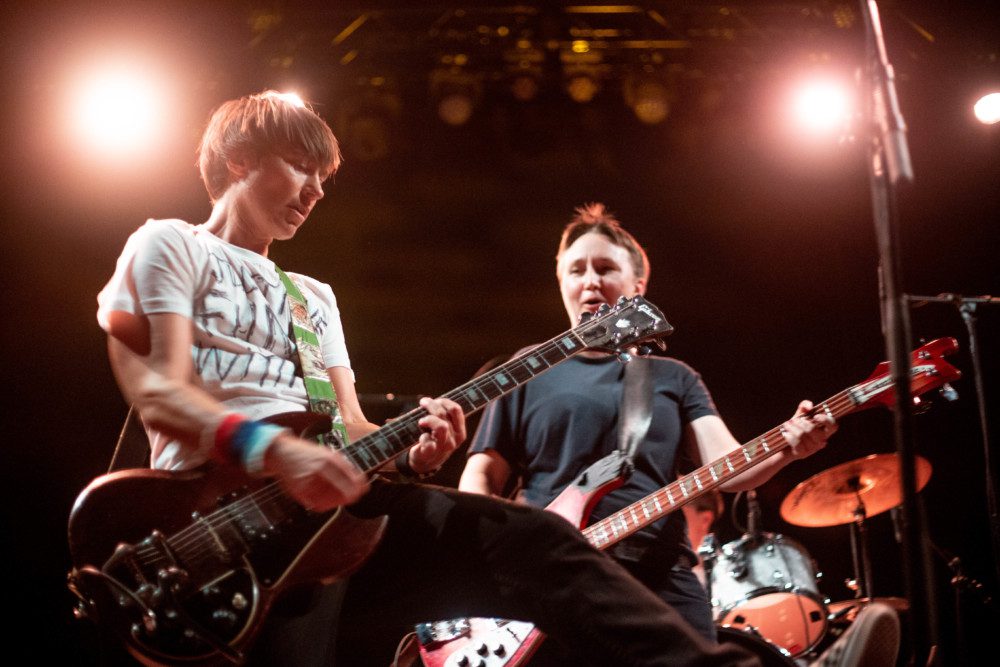
Team Dresch performing at Union Transfer. All photos by Amanda Silberling.
Find the rest of Audiofemme’s chat with Jody Bleyle and Donna Dresch below:
AF: What was your dream when Team Dresch began, and how has that changed after deciding to record another album after 23 years?
JB: I feel like, to me, the dream is similar to what it was when we started the band when we were younger, which was just… the need to find similar people, the need to find dykes to play music with, and not just any music, but the kind of music that I love. I think we all felt like we needed to find people that really, we could relate to, in terms of loving the same bands, in the way that you have that burning desire, but also dykes. It really felt like life or death. Like, “I don’t know how I’m going to move forward into life if I don’t find this.” And it doesn’t feel like that anymore, but it feels like the dream is the same in terms of just wanting to be with these people – wanting to play music with these people, having that be such a big part of being able to be happy, and feel good about yourself in the world. It’s definitely not about anything more than just wanting to connect with people, and being able to play shows, and being able to connect with everybody who comes to the show.
AF: Each band on the lineup – Team Dresch, Screaming Females, and Des Ark – really did seem to have a knack for connecting with the audience. It was such an emotional moment when Des Ark introduced “Ashley’s Song,” and she was talking about coming to terms with an assault, and someone shouted, “We believe you.”
JB: Let’s assume that most people in that room have people at this point in our lives who believe us, but to have that next level where you’re in a room with some people that you know, but mostly strangers, who you can have that same feeling of intimacy and connection with – it’s just so deeply powerful and comforting. I don’t know, every night I feel like I get more inspiration to just continue… being alive, but also just doing the work of being a person in the world that is on the left, and a freak, and fighting fascism, and having to live in this world that we’re living in right now, going into the streets, fighting climate change… All the shit we have to do day to day when you’re not at a show. It’s hard! It’s crazy!
AF: It’s tempting to say that all these bands from the Riot Grrrl era are reuniting because of who is President now, but I think they would have reunited either way, because there is always something to fight for.
JB: It’s all the same river, and we’re all in it together. It never ends. Sometimes, people will talk to us and be like, “Can you believe that we’re still fighting the Christian right?” but you know, it never ends – the struggles to be seen, and help other people… It’s been going on for thousands of years, and it will keep going on. It’s in the river.
AF: Is it weird to go between a day job and punk rock?
DD: I like my day job! I go there every day!
JB: I like my day job too. I don’t mind the balance, like… your life might not be exactly as you planned that it would be or whatever, I don’t know. As I got older, I personally started to really feel like I really needed and appreciated having balance in my life, of different things. It’s always a question of figuring out how much I need at a minimum of which different things, and to just kind of keep it all in balance, you know? Like, I don’t have to play music with Team Dresch every day of the year, but if I didn’t play at all, I’d be really sad. But I like having my day job too, because, I don’t know, when I was only playing rock, it drove me over the edge. I’d already had two surgeries from rock music by the time I was 26, and I was like, “Whoa, I’m not going to make it!” And I have kids, and I really appreciate being home with them. I think it would be really hard. Even in my other job, I don’t choose to travel, so I feel like I have a good balance going, and I think a lot of people as they get older appreciate that balance, because there’s always going to be more than one thing in your life. Although, at that age, I do remember being like… You just give your life to music and nothing else matters. Your health doesn’t matter, your girlfriend doesn’t matter, it doesn’t matter whether you have kids… It doesn’t matter if you die by the time you’re 29. Nothing matters but writing the next song. But then you’re like, you know what else is fun? Buying a down comforter and having a really cozy bed.
AF: Full-time rock is hard!
JB: Mental health issues drove me away from full-time rock.
AF: Was it difficult to bring the band back together?
DD: We hang out all the time anyway. This is my family. If I need to talk to my best friend, I call Jody. We get together, like, one of us has an idea like, “I want to play in Brazil,” and once a year, every other year, we learn the songs again and play them.
AF: Now that you’re recording a new album, what have you learned since the last record you released?
JB: We learned a lot of things that you just learn as you get older. We have to be patient with each other, we have to practice with each other and understand who we are and respect each other. We have to be better with our communicating, we have to be better with our boundaries, and we have to learn things that lucky people learn when they’re 14, but we learn when we’re in our mid-to-late 30s, possibly 40s. Of course, taking a break, you appreciate it more – because we don’t play full time, we don’t take it for granted. It’s so special to get to play these shows with people. It’s so incredible to hear people sing songs you wrote, to have people give you the love they say you’ve given them… It’s incredible. We’re really lucky.
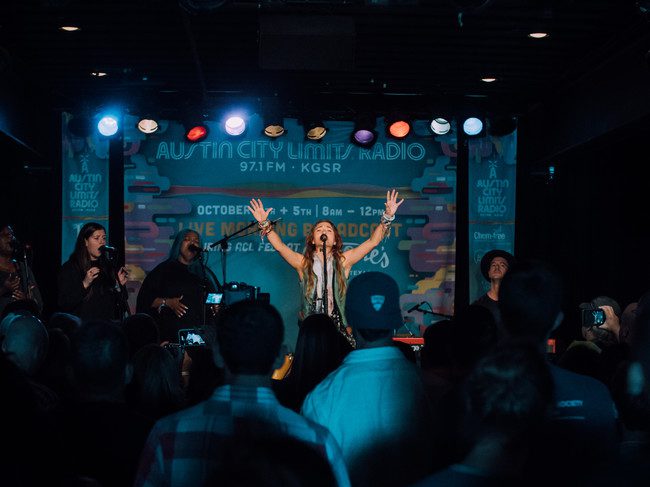
It’s a hot day in October. The summer hasn’t ended yet in Austin, Texas. Nevertheless the Austin City Limits Festival began last weekend and continues this afternoon through Sunday in Zilker Park – and thousands of people will stand in the sun to experience it. Last Friday, a smaller crowd had gathered to celebrate what has become a beloved tradition: the Austin City Limits Live Morning Broadcast.
This event occurs yearly in the mornings before the weekend of the festival. It’s a chance to see some of the Austin City Limits artists in a more intimate (and shaded) setting. For five dollars, anyone can come in and watch. The cover is donated to HAAM (Health Alliance for Austin Musicians), an organization devoted to providing “access to affordable healthcare for Austin’s low-income working musicians, with a focus on prevention and wellness.” Tacos and coffee are available; it would barely be an Austin event without this promise. They come courtesy of Kerbey Lane Cafe, a popular casual dining spot for both tourists and locals.
Austin City Limits Radio, host of the Austin City Limits Live Morning Broadcast, was formerly known as KGSR. The station has been around since 1990. KGSR established a strong presence in Austin with live concerts, broadcasts and an annual benefit compilation disc of live performances. After a buyout by Emmis Communications, the station was faced with the challenge of balancing local performances, eclectic alternatives and popular music. They recently chose to rebrand with Austin City Limits Enterprises who “licenses the name to C3 Presents/Live Nation for the ACL Music Festival and to the Downtown venue ACL Live.” Now the radio station has the additional brand value created by their association with the popular “Austin City Limits” name and is shifting their programming to artists that fall under the Austin City Limits umbrella (having played at the ACL Festival or been on the Austin City Limits TV show).
This event used to take place at the Riverside location of Threadgill’s, a “comfort food cafeteria” and live concert venue fairly close to the Austin City Limits festival. However, Threadgill’s became a victim of the rising cost of Austin rent and was forced to close down in the last year. After the closing, the Live Morning Broadcast found a new venue in Antone’s, Austin’s “Home of the Blues.”
After changing locations several times over the decades, Antone’s now rests in a somewhat small building, in the shadow of the Hilton a few blocks from the highway. The space is largely open. The Friday crowd was fairly sparse. Andy Langer, Austin City Limits radio host, was on hand to introduce the acts and spoke warmly to the radio listeners, informing them that there were plenty of tacos still available.
Up first was rising Austin star Alesia Lani. Her voice is both soothing and electric as she glides over notes. She moves and dances with festival ready energy and it’s easy to see why she made the cover of this week’s Austin Chronicle.
After Lani came charismatic country singer Rob Baird, another Austin local. Langer chatted with him about his local status and the recent attention he’s gotten (one of his songs was featured in the hit show Nashville, which helped him gain some recognition). His southern-style vocals were smooth with enunciated twangs on “Run of Good Luck,” a sad sort of song about leaving, love, steel, and leather; he fits in well in the company of Texas country.
The final act on Friday was Alejandro Aranda, who performs as Scary Pool Party. Aranda rose to fame in part after his appearance on the 17th season of American Idol, and his set was highly anticipated, especially by several ladies standing at the front who cheered wildly each time he had been mentioned throughout the morning. Langer even made note of their enthusiasm in his introduction.
Aranda appeared on stage dressed in casual leisurewear, looking like he’d just rolled out of bed, strapped on his acoustic guitar, and set out to charm. His playing is delicate, deft and quietly captivating; his vocals are smooth and include an assortment of well-placed “oooh and ahs.” Aranda performed touching ballads of millennial love and the phone screens that divide us.
The crowd was much larger on Saturday. Either word had gotten out, or everyone had been waiting for the weekend. The much buzzed-about Swedish American indie pop group Flora Cash kicked things off with one of their biggest hits, “You’re Somebody Else.” Consisting of wife-and-husband duo Shpresa Lleshaj and Cole Randall, their vocals are closely harmonized and well balanced, though their set was more acoustic and withdrawn than their typical electronic performance. Clad in their brightest festival fashions, they bounced with infectious charisma and mutual chemistry that the crowd seemed to appreciate. Their final song, “Missing Home,” was a new release; it’s a catchy pop-styled number with an approachable sense of joy and longing, a restrained drumbeat and dreamy harmonies.
Bringing a different style to the stage, Austin locals Black Pistol Fire followed, with Kevin McKeown on guitar/vocals and Eric Owen on drums. Kevin McKeown alternates between sparser lines and full blast rock energy with vocals in the blues tradition of wondering “who’s keeping ya” and keeping people satisfied. But it was McKeown’s pure unbridled energy and a crazy amount of enthusiasm that truly won the crowd over. He’s on stage. He’s on top of something. Now he’s in the crowd. Now he’s back on stage. In an ongoing banter with radio host Andy Langer, Langer asked him what it was like to perform an afternoon set in the Texas sun; McKeown admitted that it was actually very difficult.
MisterWives, or one third of them, appeared next. Normally a six piece, they played a stripped down set with just Jesse Blum on keys and vocalist Amanda (Mandy) Lee Duffy while the other members of the NYC-based band prepped for their ACL performance. As one would imagine, this approach gave the songs a completely different vibe than their more danceable and rousing original versions, particularly recent single “whywhywhy;” here, the chorus came off as less of an accusation and more of a lament. Duffy’s voice alternated between fragile softness and powerful outcries, highlighting her skill as a vocalist.
The final act – and biggest name of the day – was Grammy-Award winning contemporary Christian artist Lauren Daigle. Langer emphasized how exciting was to have someone like Daigle playing such a small, intimate venue like Antone’s. Her setup took a little longer, with three additional mics for her backup singers. She began with a brief interview, in which Langer questioned her about the pressures of being a role model and source of religious guidance. She both accepts and deflects the role, explaining that people should seek out experts for that sort of thing. Still, the nature of her responses indicated both awareness of the impact of her words and a thoughtfulness overall of their ramifications.
Daigle’s voice is husky and powerful. She gestures broadly with her notes and her assortment of bracelets jangle with each movement. She sings in smooth harmony with her three vocalists. Their chemistry is evident and the crowd is captivated; this, evidently, is the talent that made her a crossover success as highest charting female Christian performer of the last two decades.
Despite the change in venue, The Austin City Limits Live Morning Broadcast continues to be the most exiting thing that happens before noon during ACL Fest. Those who didn’t spring for tickets to the main event can experience live music from festival artists. The acts were small and big, near and far. The radios station broadcast extended the reach even farther so all in the region get to have some part of the festival magic. With genres ranging from soulful gospel to hard rock, Morning Broadcast offered a great representation of the many types of music and musicians that live and perform in Austin, Texas.
Austin City Limits continues through this weekend in Zilker Park; check out the full schedule here.
To Moon Baillie, an immigrant from Buenos Aires and the lead singer and songwriter of Seattle-band PAMPA, to be an expat is to “look at yourself, where you come from, understand it, digest it, and express it” in order to add to your new home. For Baillie, writing songs for PAMPA has been a vehicle of self-exploration, and the reason PAMPA’s sound on the whole is a “cultural salad,” Baillie said.
It’s a mighty good “salad”—PAMPA, which first formed in 2017, seamlessly combines Seattle’s low-fi melancholy with the ’70s rock storytelling of Neil Young and the exuberance and bilingualism of Latin music.
PAMPA’s sophomore album, La Contumacia, which drops on October 11th, is a good example. La Contumacia means “contempt” or “stubbornness” in Spanish—and as he traverses a psych-rock desert, rich with mirage-like cymbal kicks and harmonizing guitars—a battle inside Baillie boils over. Throughout the new release, Baillie’s voice cries out in English and Spanish, accented with bursts of trumpet and accordion, while jangling guitar harkens back to classic American pop/rock melodies. La Contumacia is the sonic portrait of an Latin immigrant in Trump’s America simmering in toil and triumph as he straddles two cultures.
The release show for the new album will be at the Sunset Tavern on October 12, at 9 p.m. Before the show, read about the making of PAMPA’s La Contumacia, how the members met at Seattle music store Trading Musician, and Baillie’s desire to cultivate more appreciation for Latin culture in America.
AF: How did PAMPA meet? What made you and the other members want to collaborate musically?
MB: Steve Lykken (drums) and myself are the original members. We met while working at The Trading Musician. I remember he was wearing a trucker hat with the old Motown label that is on the vinyl, and I knew he would understand. Kerrick Olson came through the Quiet Ones connection. During our rotating cast of bass players, John Totten took the role for a bit, and we brought him on board. We have a great back and forth interaction as singers and guitar players that continues to grow. I met Nate Rogers at The Trading Musician too, and loved him right away. His perspective on harmony as a keyboard player has added an enormous amount of arrangements to our music. He joined the band weeks before recording In the Flatlands so that is how good our chemistry is. He joined a year after Kerrick. John Carlson was the bass player on In the Flatlands but left for school after tracking La Contumacia. I have known John for a long time, and his minimal, and a tad punk approach to bass playing, was an element we were looking for in the early days; that punk-folk dynamic. An example would be “Where Do We Go Now” from the first record. Jack Peters from Loose Wing has joined the band as a permanent member this last summer. I met him when he was playing bass for Mindie Lind, and really like his awareness. He serves the song very well. I still enjoy said awareness a lot.
AF: Why did you choose the name Pampa? What’s it mean?
MB: When I lived in NYC, I use to spend evenings at the National Museum of the American Indian. There I learned that “Manhattan” comes from the Leni Lenape word, the indigenous people of the Northeastern Woodlands, “Manahatta,” meaning “land of many trees.” I was intrigued by this, and decided to look for an Argentine equivalent. “Pampa” means “plains, or flatlands” in Quechua, an indigenous language derived from the Peruvian Andes.
AF: Moon, you’re from Buenos Aires and still living there part-time correct? Tell me about living there, and in Seattle, and how that contributes to your creative process?
MB: I am indeed a Porteño. I do not live part-time there, but I’ve taken five, six month-long trips to it. I believe I became more of an Argentine living in the states, merely because of the perspective on the cultural media eclipse that is the image other cultures have of America. Buenos Aires is an amazing city. Unpredictable, and exciting. Like a book, you can’t wait to turn to the next page. Constantly. A mother of cultures that is different every time I go, and it constantly brews.
Seattle is my home. If the world is mad, I can smell the ocean, or get lost in the woods. Be in a moody day, and relate to it. Here the weather is emotional, and the people harmonious. I dig the PNW a lot. I respect its peace from which I never cease to learn. I think it all transpires into our music. Our strength is that we are a balanced mix band. Even our songs in Spanish, local folks can relate to the music, opening other channels. I write through Osmosis, and I am from here now. I got here in 1997.
AF: Why did you first come to Seattle, and decide to make music here? What are your thoughts on the Seattle arts scene, as compared to Buenos Aires and other places you’ve experienced?
MB: I came to Seattle through Cornish College of the Arts, so my community was strong. I was enveloped by progressive views that challenged, and changed my concepts. I feel it was good to leave Buenos Aires because I was able to be more independent, and become myself here. I especially sense that now that I am older. I was raised in Buenos Aires, but I am still learning from Seattle. I lived in NYC for two years, and I came back because I felt more at home with the Seattle community.
AF: I’m really interested about how heritage plays into Pampa’s sound. Are there particular musical tropes or themes from Latin culture that you like to meld with your melancholy Seattle indie sound?
MB: I think there is a strong bluegrass and folk heritage in the PNW. There is a song in the new record, and is currently out in Spotify, named “Maniobrando” that is a great example of how we write. Steve wanted to play with different rhythms, and we were listening to Brazilian batucadas, and Uruguayan candombe. I was thinking about the definition of folk fusion, and got it down to the suspensions on Neil Young’s intro chords to “Old Man.” The melody was inspired by a famous tango by Carlos Gardel named “Por una cabeza.” Leilani Polk from The Stranger said about the song “… darkly-urgent Crazy Horse-vibing rock.” All these create a cultural salad that is very PAMPA.
AF: By the same token, in what ways does this album—and Pampa’s sound in general—belong to Seattle?
MB: This record has matured in sound. It is more inclusive, yet in a similar direction, and continuing where the previous record is going. To me, to be an American, I gotta be an Argentine. Being an immigrant, rather than trying to fit, is adding to the whole. To do this, you have to look at yourself, where you come from, understand it, digest it, and express it. It’s a very Seattle thing to be progressive. In the time that I have lived here I have seen this place grow non-stop. PAMPA is a product, or a result of that growth. In the last couple of years there has been a strong surge of unique Latino pop culture in the States. Strong like never before. We feel very identified with this circumstance, because we are a blend of cultures. All PAMPA members but me, are originally from here.
AF: La Contumacia is your sophomore release. Tell me a bit about the process of making the album, and how it builds on your debut full-length, In the Flatlands?
MB: The process of La Contumacia was more of a group writing than the first one. I still write the songs, but we truly started expanding harmonies and adding arrangements. On the first record, particularly the first side, it sounded a bit more one dimensional. On the second side you get hints of where we are going.
The other strong element of this record is all the guest musicians. We discussed arrangements, but ended up working with the musicians in the studio. A lot of the ideas you hear on the record where suggested by them, and make some of my favorite moments.
We starting tracking the band live to tape with Johnny Goss, who recorded La Luz and Lonesome Shack among others, at Dandelion Gold late November 2017. Then I went on a five month trip to South America. The second set of sessions took place around May of 2018 with all the guest musicians. The sessions were loose, and the need dictated the direction, rather than a model. Working with Johnny is always productive, a learning experience, and a pleasure.
AF: What goals did you have for the album going in? What was the most challenging part of making this album?
MB: We sensed a need to step it up. We are constantly growing, and we felt the need to mature. It all happened naturally, though. The only goal we set out to achieve was to record, and put out a record. We didn’t even think about us liking it or not, because we already believed in the songs. We did set out to work more on arrangements, and guest musicians. We explored musician options, and worked on it quite extensively.
I’m going to be honest: the most challenging thing about putting out an album to me, is the expectation, and the financial push. We invest a lot of ourselves into sharing something we strongly believe in, and we are extremely proud of how we stepped up to the challenge. Truly, bands that endure the business side of things, and continue, are the ones that last.
AF: The press materials for this album said: “each of the songs… focused on pinpointing a specific moment and feeling of American experience.” How did writing these songs help better clarify your “American experience”? When you began writing these songs, what were some of the most pressing questions about your identity you wished to answer?
MB: When I first started the process of “living in America” I dived deeply into American culture. My English is pretty good, so I immersed myself into the mechanics of American English to the point of having a bit of a hard time speaking Spanish, because I didn’t use it. It was deeply disturbing to me. I realized then that when you become a citizen of the USA you are expected to become an “American.” I needed to get in touch with my roots again. Because of this cultural challenge I explored Argentine culture like never before, liberated of the blindfold that is the projected American image to the world, and with raw models I identified with, the momentum I was spun into became my American suit. I understand now that if I want to be a citizen, or a part of this North American society, I have to be an Argentine and add my grain of sand to the every day thing that is America. This is why I sing in Spanish.
AF: In the Trump era (and even before), as I’m sure you know intimately, American immigrants have been politicized and persecuted. How do you bear that weight personally and musically? Do you consider your songs to be inherently political?
MB: Being an immigrant is political. It is something new, which is always uncomfortable for conservative types. Trump is extremely offensive. I have felt the pain his attempt to humiliate Latino culture has inflicted. That’s why we named our record La Cotumacia. We wanted a title in Spanish, and the meaning of the word, contumacy, I believe is part of immigration.
AF: What are your biggest hopes for La Contumacia? What do you hope people take away from it?
MB: I hope people listen to it. I hope people become more aware of us. I hope it helps us play more shows, tour more towns, keep the ball rolling. My one and true hope since being a teenager though, is to connect with people. I hope people look at Latino culture as a local thing, rather than a foreign culture. I hope they are captured by our tunes, and transcend passports in this melting pot that is where we live.
AF: Oct 12 is your release show for the new album, but are you touring with La Contumacia? If so, please include tour dates.
MB: We will be playing shows locally and around Seattle. We are playing November 13th at the Conor Byrne with Beautiful Dudes and John Calvin Abney from Mamma Bird records, and November 27th at the Sunset for the Double or Muffins record release. After the holidays we plan on touring down south on the West Coast all the way down to L.A. We have been invited to a few festivals in Mexico around late April, and we are waiting on SXSW’s response. My brother plays in El Kuelgue in Argentina, and we have invitations extended in Uruguay, Brazil, and Chile. We are planning on touring South America next year hopefully.
Time and distance often having a cooling effect on the memory, but in Sondra Sun-Odeon’s case, they gave her the tools she needed to sharpen the knife. It’s been seven years since her debut album Ætherea, and with her newest offering she steps firmly back into the musical orbit. “Roses in the Snow” is five minutes and 47 seconds of intense meditation on grief and anger, but ultimately also a reflection of healing – a hot bath in which soak an addled mind.
“Roses in the snow / I gave you everything,” Sun-Odeon sings, striking an eerie tone and timbre right from the start. The driving guitar and drumbeat create an unusual dissidence with Sun-Odeon’s soprano vocals, reminiscent of Kate Bush’s soaring, witchy style. The song is a kind of rumination on those first lyrics, the repetition swirling out of control near the finish, where we’re enveloped in a guitar solo that winds and crashes its way to an ending.
Listen to AudioFemme’s exclusive stream of “Roses in the Snow” and read our interview with Sondra below.
AF: Tell us about your childhood. You’ve said your family was pretty poor and “had no stereo or radio growing up“. You were introduced to the piano and learned to play from Chinese opera videos. Did that restrictive musical lens help foster a curiosity in you about other kinds of music?
SSO: My parents were poor immigrants and my sisters and I are the first generation of the family born here, so we didn’t have much beyond the basic necessities growing up. My parents didn’t see the necessity of things like a stereo or radio, but at the same time, they felt it was important for us all to have piano lessons, for some reason! So my first experiences with music were actually the classical music I was playing in orchestra (I also played violin at school) and on piano, as well as the music of Chinese opera videos my parents would watch, which I was fascinated with, mainly for the costumes! I would not call these lenses restrictive, however—they probably aren’t typical for someone making the kind of music that I do right now, but I think my experiences inform a unique perspective on music and what my brain likes to hear and write.
AF: It’s been seven years since your debut solo albumÆtherea. Did the development process for your new album take time, or were there some scrapped projects along the way?
SSO: I actually started recording some of these songs in 2013 with my Brooklyn band, but some relationships within the band deteriorated during these sessions and I also was dealing with personal trauma, so recording came to a halt when I decided to leave NYC to tour solo.
After touring the country and bouncing back and forth between LA and NYC for a year, I desperately needed grounding and found myself in LA, unable to move back to NYC like I had planned. I needed space to process the really fucked relationship I had been in and completely detox from what felt like an addiction to a relationship in which I lost all sense of who I was, with a person whose behavior toward me was at times disrespectful and took advantage over me. During this time, I did a lot of personal work, undergoing an intense emotional/spiritual growth spurt from having crawled out of a deep hole of depression and shattered delusions. It took three years before I could get to a point of even wanting to hear some of these songs again (because they were largely written about experiences I’d had in this very fucked relationship).
I had been severely disconnected from my own self as an artist while working in the NYC fashion industry, and I needed to bring my life back into alignment with my values. I became a yoga instructor and committed to healing myself and expanding my artistic practice. In the time since the last album, I’ve explored performance beyond the band format – performing my written prose and long-form poetry along with vocal manipulation live. In the first year of being in California, I played a lot of 12-string open-tuned acoustic baritone guitar inspired by Robbie Basho and have an EP of those songs I’ll release someday. I also composed and performed an hour-long vocal/instrumental drone piece called “Unsilencing” at Basilica Drone earlier this year, that is based on a song from the album, Drowning Man: An Invocation for the Demise of Patriarchy.
AF: How do you go about writing a song? Do you normally start with a subject in mind or does the music come first?
SSO: Most of the songs are written in the moment of feeling deep emotion and come fairly instantaneously. It’s usually a feeling that comes first, the music, then the words. But sometimes, the music comes first—a phrase, a melody line. My songwriting process is changing though; instead of waiting for the strike of emotional spontaneity, I am taking a more compositional approach lately.
AF: “Roses In The Snow” started as a reaction to an out-of-body experience you had. Was it a kind of sleep paralysis?
SSO: No. The experience came from deep emotional distress. I felt my soul and consciousness wanting to leave my physical body and hovering above it because of the psychic pain it was in; I was in profound trauma from having just ended a pregnancy amidst the crumbling aforementioned relationship.
AF: Your upcoming album DESYRE continues in the tradition of Ætherea by featuring an astounding lineup of collaborators including Thor Harris (SWANS), J.R. Bohannon (Ancient Ocean), Lia Simone Braswell (A Place to Bury Strangers) and Mary Lattimore. Why is it important for you to feature other artists in your own work?
SSO: I love working with the energy, ideas, and talents of the many incredibly talented friends I’ve been blessed to have in my life. Working together to create something larger than yourselves is one of the most satisfying endeavors in life. It’s also way more fun to share the creative process with others. What a gift to be able to collaborate with others, to be present to the expression of who they are via how they hear/see and contribute to your work!
AF: What musicians are you currently listening to?
SSO: I don’t listen to music when I’m writing because I like to keep my mental canvas blank, but when not in writing mode, I mostly listen to music by friends, like John’s (J.R Bohannon) beautiful solo guitar work, Mary Lattimore’s music (which I play heavily in my yoga classes), Lia’s solo project Lalande and her band APTBS, Thor & Friends, Jolie Holland. I’ve also been enjoying Aldous Harding, the newest Low album, Tim Hecker, Arca, and Natalie Rose Lebrecht’s new album of late.
AF: What are you reading?
SSO: I just read Margaret Atwood’s Oryx and Crake. Ooof, chilling! So dark, so brutally insightful. She’s a genius. Also, heavily reading all things Rebecca Solnit these days. Currently reading her book Men Explain Things to Me. Also, Harriet Lerner’s The Dance of Anger.
AF: What do you hope an audience member takes away from a Sondra Sun-Odeon performance?
SSO: I hope they are moved in some way to feel something, anything.
Sondra Sun-Odeon’s second full-length album Desyre is out November 22 and is available for pre-order on Graveface Records.
ONLY NOISE explores music fandom with poignant personal essays that examine the ways we’re shaped by our chosen soundtrack. This week, Erin Lyndal Martin shares a selection of songs that bring back the rush of a schoolgirl crush.
No matter how old you get, there’s something that stays dreamy about teenaged crushes. I call these my schoolgirl crushes, remembering the flush of excitement every time my crush asked to borrow a pencil. As we get older, schoolgirl crushes seem so much more innocent. We never worried about the bad things our crushes had done or why they’d been divorced twice or if their time management skills were lacking. We just wanted to lie on our beds and listen to songs that reminded us of their dimples.
These songs go back to those dreamy crushes. They all have an element of escape to them — slipping away from parents, from responsibility, from a place that holds you back, from anything that isn’t basking in your lover’s presence.
“The Ghost In You” by The Psychedelic Furs (Mirror Moves) Formed in 1977, the Psychedelic Furs have explored a number of rock genres, including post-punk and New Wave.
“Ghost In You” could well be the theme song of this whole collection. “Inside you the time moves/She don’t fade,” Richard Butler sings, his thick British accent making the song all the more charming. And he’s right. When I remember my high school crush, the boy with the beautiful dimples, I remember him not as a teenager but as a man, the two of us always on the brink of a great romance.
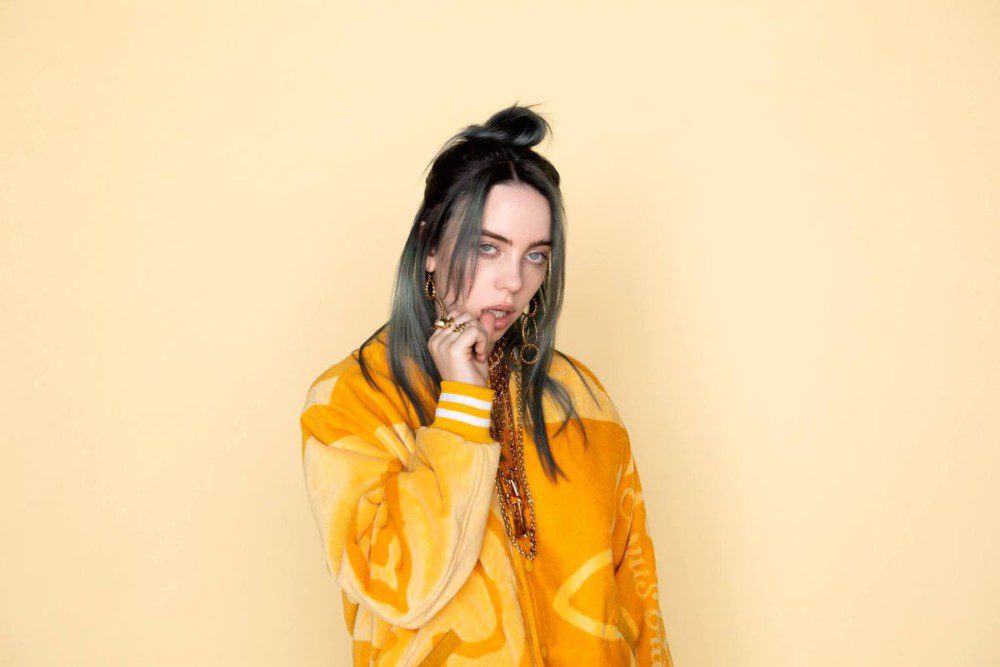
“ocean eyes” by Billie Eilish (don’t smile at me) Billie Eilish is a 17 year-old singer/model/dancer from Los Angeles.
The power in this song is its slow, sensual flow. Listening to it brings back how mind-blowing it was when making out was new, when every breath on your neck made you tremble on the brink of a new world. Eilish’s soprano mimics the intoxication of touching someone for the first time.
“Anthems For A Seventeen Year-Old Girl” by Broken Social Scene (You Forgot It In People) Broken Social Scene is a Canadian musical collective comprised of members of other bands, mostly based in Toronto.
This song balances innocence and obsession in a perfectly winsome way. Emily Haines’s vocals are breathless, smeared slightly with distortion, and stay quiet even as the song intensifies. Every lyric in the song is repeated several times, building up to a single line (“Park that car, drop that phone, sleep on the floor, dream about me”) being repeated 13 times. Meanwhile, the instrumentation builds from sparse banjo strummed to an ecstatic violin and percussion. While the song is more about nostalgia than love, its giddy take on fixation speaks to the 17 year-old girl in all of us.
“I Know Places” by Lykke Li (Wounded Rhymes) Lykke Li is a Swedish singer, songwriter, and model who blends folk and electropop.
This is a song for the schoolgirl crushes I feel as an adult. For the rush of first getting intimate with someone and wanting only to be together, to ignore the world. “The high won’t fade here, babe,” she promises. Ambiguity is part of why the song is so captivating. Maybe they’re seeking literal places to escape, or maybe getting intoxicated on one another in bed, or off in a forest or on a beach.
“Thunder Road” by Bruce Springsteen (Born to Run) Bruce Springsteen is a legendary singer-songwriter from New Jersey known for writing about working class struggles.
“Thunder Road” has to be a contender for one of the best songs ever written, and it’s all in the incredible imagery, the swell of the music, and even in the way Springsteen mumbles divine lyrics. However old you are, whatever your situation was growing up, he brings to life the glory of a brief escape from town where Mary’s past lovers haunt her from “the skeleton frames of burnt-out Chevrolets,” her graduation gown long tossed to these boys. The narrator sings about putting out to win from a town full of losers, and you get the sense there’s really no hope of it, but in the moment, you believe in that love, and any young love that’s made it seem possible to escape the limitations of your current life.
“XO” by Beyoncé (Beyoncé) Beyoncé Knowles is one of the most acclaimed singers and performers of the day, and was ranked most powerful female in entertainment by Forbes in 2015 and 2017.
“XO” manages to be both intimate and urgent, full of both love and lust. The song takes place in a crowded room where the lights will be turned out soon. The driving beat reinforces the urgency of finding each other in the impending darkness, but the soaring chorus and backing vocals create atmosphere. The lights going out take on different meanings, mostly with Beyoncé begging “baby love me lights out.” The immediacy of the song brings back the thirsty makeout sessions of adolescence, all the more urgent because a curfew was usually involved.
“There Is a Light That Never Goes Out” by The Smiths (The Queen is Dead) The Smiths are a Britpop band known for melodramatic but highly melodic songs.
For me, and for many of my friends, this song inspires the same feeling in us now as when we were 16 and first listening to it. The synthesizers swirl like ribbons, and lead singer Morrissey pouts in his falsetto, and it’s so triumphant. Like “Thunder Road,” this song celebrates an escape from real life (“Take me out tonight/I need to see people and I need to see light”) and the magic of finding escape velocity with a lover. So much magic that it becomes romantic to think about dying in a crash with a ten-ton truck. That’s some seriously potent escapism.
“All Through the Night” by Cyndi Lauper (She’s So Unusual) Cyndi Lauper is best known as a pop singer who rose to fame in the 1980’s.
Originally a folksy song by Jules Shear, Cyndi Lauper’s twinkly synthesizer and sweetly pouting voice made it her own song. She includes details from the real world, like stray cats crying, but the real world is irrelevant. “We have no past/We won’t reach back,” she sings in the chorus as the music swells. “Keep with me forward all through the night,” she sings, another way of saying “We’re in this together. It’s only us now.”
Glenn Branca didn’t want people to dance to his music. “I want them to sit there and be blown away,” he once said in an interview. No one was seated at Brooklyn’s St. Vitus Bar on Sunday, where the Glenn Branca Ensemble played in tribute to the late composer, who died last year after a battle with throat cancer. But you’d be incorrect to call the crowd’s movement “dancing.” Dancing is not always an act of free-will, but it is fueled by more intention than involuntary spasms. Looking around, there was no way any of us were moving this way on purpose.
Having the ability to stand at the Glenn Branca Ensemble’s performance of The Third Ascension allowed for an entirely new interaction with Branca’s music. The event was held in conjunction with Branca’s final work—a 2016 live recording of The Third Ascension was released on Systems Neutralizers two days prior. The concert was held on what would have been Branca’s 71st birthday. Like the new record, it was made possible by his wife and longtime collaborator Reg Bloor, who has played guitar in Branca’s ensemble for years.
I’d only ever experienced Branca’s ensemble concerts sitting down. The chair felt like a safety seat on a rollercoaster, and it would have made sense if it was equipped with a metal bar to pull against your chest. Even sitting down, the music felt dangerous enough to eject you from your seat. Without this precaution, what might we be capable of? I feared (and maybe hoped) that the crowd would be whipped into a frenzy of id and alcohol, rushing the stage like a pack of feral animals.
This did not happen, likely because Glenn Branca was not conducting, and because it is no longer the 1970s. But what was particularly exciting was the potential energy threatening that it could happen at any moment. Seeing Branca’s work live is far more of a physical experience than just a sonic one. The music seems to reach from the speakers and slap you in the face, punch you in the gut, and pull out your still-beating heart Temple of Doom-style. It’s not just loud, it’s emotionally exhausting. After every song I drew a deep breath, sucking in oxygen and blasting out a big sigh. Each piece made me feel like I’d just had a long, drawn-out argument with my husband, and I don’t even have a husband.
Branca’s work, especially when played live at such extreme volumes, can at times sound like the mind tearing itself apart. There is a beautiful dissonance between the performers, very diligently reading their sheet music, and the unraveling effect their playing has on the psyche. Conductor Brendon Randall-Myers gave a spirited interpretation of Branca’s work that could be measured in ounces of sweat. The remaining ensemble followed suit, smiling widely when they weren’t grimacing from overexertion. In addition to playing The Third Ascension in its entirety, Randall-Myers led them through Branca’s 2016 Bowie eulogy “The Light (for David).”
There was almost no talking between songs, save for logistical exchanges with the sound technician during tuning breaks. It was in those minutes that Branca’s presence was especially missed. These were the moments when you could really get a glimpse of Branca as a person—a wry, mischievous, and deeply funny human being who still loved what he was doing in a way that radiated through the room. “The only reason I even bother to pay the slightest attention to this fucking world, is because I love music,” Branca once said. “I love to write music, and I want people to hear the music. Otherwise, this fucking world is an utter waste of time.” Even in his absence, that love is still palpable.
Cincinnati singer-songwriter Elsa Kennedy released the beautifully forlorn “Redwoods” as the first in a series of singles that will lead up to her EP, Cadmium.
“‘Redwoods’ is an expression of acute longing,” she told AudioFemme. “I find longing endlessly gorgeous. It’s so painful, but it means so much because we never long for things that we don’t cherish in some really honest way.”
The single was born out of feelings of chaos and hopelessness and written for Kennedy’s partner, Amy, and the life-changing people whose love brings us out of dark times.
“I wrote ‘Redwoods’ in one night, and I was very sick, just out of ICU,” she said. “I was feeling a bit dismayed by the weird clusters of catastrophe that have riddled my personal life, longing for some quiet predictability – this was just as the fires in the Amazon were first being heavily-publicized.”
Elsa Kennedy / Photo by Madeleine Hordinski
“‘Redwoods’ is essentially the amalgamation of longing for all of these impossibly magnificent parts of the world to somehow make it through all of this – including my love, Amy – who is perhaps the most unbelievable, enchanting force in my life. And it’s a promise, to her, the world, and myself, to keep unflinchingly yearning for wonderful things.”
The track marks the first of four singles that Kennedy will release at the end of each month, leading up to the release of her four-song Cadmium EP on December 27. She will also release a video for “Redwoods” on October 11.
“I feel lucky to be able to yearn for things, to love someone so deeply, that the longing for them becomes songs, sketches, paintings, and poems, or new ways of seeing things, new ways of listening to the world,” Kennedy continued.
“It’s a dogged love, that’s almost larger than life, like the redwood forests, like the people closest to us that somehow shape our entire world, like the upside-down galaxy of the ocean. And feeling all of that, the impossible beauty of it all, it transcends pain, life, death, everything.”
Isabella Steinsdotter, known simply as Steinsdotter professionally, is best known as a visual artist. However, she recently debuted her first single, “Hidden Child,” a song about reclaiming your body in the aftermath of a sexual assault. The music and its accompanying video (directed by Fayann Smith) are equal parts gorgeous and haunting, featuring Steinsdotter singing eerie lyrics like “seduction lies in cold disguise” in a soprano voice as she walks down the street in a lacy white dress and then shaves off all her hair on a beach. Hailing from Norway and currently living in London, Steinsdotter is a descendent of a viking witch warrior whose jewelry resides in the British Museum, and this ancestry influences much of her work. We talked to Steinsdotter about her music and artwork, its incorporation of witchcraft, and her efforts to empower sexual assault survivors.
AF: What was the thought process behind your debut single “Hidden Child”?
IS: “Hidden Child” is to me a song about the loss of innocence. You’re in a dark place and you see nothing, and you try to create that hope for yourself. It’s a song about creating hope where there is no hope. There’s a certain darkness to it because it’s very real, so it’s not just the nice things you want to remember but the real things.
AF: What made you want to write about this topic?
IS: It’s a very personal song because it’s a song about surviving sexual assault at the end of the day. It wasn’t like I planned that would be the first song I released, but at the same time, when it was finished, it seemed like a very natural way for me to be introduced to music because it says a lot about who I am. I guess I wanted to release something that was real, and I feel like it is very real. I’ve had a lot of people reach out to me who have been in similar situations who have also had sexual assault, and it’s been very empowering to have all those people share their stories and be empowered by it.
AF: What message would you like to send to sexual assault survivors with the song?
IS: Basically that you’re not alone; that regardless of how overwhelming and challenging it is, if you are in that situation, there are ways that you can take back your own power. You don’t have to stay in that state of being. It’s very overwhelming when it happens, and I think the good thing about it is, the awareness about it is becoming greater. We talk a lot about it nowadays. It’s not so easy to get away with, and I feel like it’s a time for people to come together and tell the truth about it. I’ve seen even men who have done bad things to women are almost brave enough to say it out loud now because it’s so obvious that it’s wrong. It’s not really a simple message, it’s not one thing, but it’s openness and awareness – basically, showing that it needs to change and that we need to change consciousness around it more. I just don’t want women to have to feel unsafe because that is the worst feeling, and it’s nice to find something powerful in it somehow that you can take for yourself. That’s kind of what I was trying to do for myself by writing it, finding something powerful, not just something broken.
AF: What is the significance of you shaving your head in the video?
IS: It was so powerful for me personally. It was very tense because when we filmed the video, everything happened in real time. Nothing was staged. It was all about letting go of the projections that people put onto me — not just me, but as a woman, you constantly have to battle all these projections people put onto you, and you’re an object of many things, and it’s not necessarily like you want to be that. So, for me, it was about stripping everything back, getting it all off me, then starting fresh with just me. The symbolism was to get rid of all the extra things, back to the organic self.
AF: I read that you’re a descendent of a viking witch. Do you identify as a witch?
IS: Yeah, I definitely identify as a witch, and ever since I found out, it’s been extremely empowering for me personally. I know a lot of really amazing witches. It seems like it’s one of those things that is also becoming okay — it’s not something that you necessarily cannot talk about, and I just see that everything’s changing into a more open discussion, and I really like that.
AF: What does being a witch mean to you?
IS: To me, it just means being organic and in touch with our own emotions and nature in a way that is nurturing for you and people around you. It doesn’t necessarily have to be more complicated than that. I feel really humble to nature, and in some ways, that is the most important relationship to worship as a witch because nature can lead me to where I should be.
AF: How does witchcraft affect your work?
IS: In my process of writing or even singing or rehearsing, I will go outside, walk around barefoot, or sing in the woods to get centered when I’m really nervous, because I get really nervous if I have a show or something. I have to work really hard to stay grounded.
AF: I was reading about your photography, video, and performance project Seiðr, which is described as a “ritual inspired by the female vikings.” How does that incorporate your witch ancestry?
IS: Seiðr is a name for spirituality that the vikings would use. We went to Norway, and we were out in minus 12 to 18 degrees, and we found this presence where we just lit a fire and wanted to humbly give our thanks to our ancestors and to nature. Because we were hunting for the northern lights, we were dancing around the fire, and everything is intensely about visualization rather than straightforward words. Let’s say, for example, for me, a ritual can be singing and the energy you’re putting into that song. Seiðr is about working with the organic ways of nature, but being very present in that place and following your intuitive mind rather than your rational mind. That’s the state of mind you want to be in so you can communicate with something greater than a singular person. It was very refreshing. Have you ever been in minus 18 degrees? Your brain just kind of freezes, and you can’t feel that you’re cold because you can’t feel that you’re there anyway, and your phone dies quickly because it’s so cold — it just sucks the battery out of it. It’s really strange.
AF: Are you working on any new music?
IS: I am. I’m basically working to release my next song, which will be released in early November, so that’s what I’m doing at the moment. I’m also working on finishing the music for the video for Seiðr, which is going to be in a museum in Rome for a month. I have the music. I’m making music for it, so that’s very exciting.
AF: What kind of music?
IS: This one is a little different from the way I normally do it because I’ve been walking around collecting sounds in nature and stuff. I love atmospheric music in general and kind of classical, but it will be not a straightforward singy-song but more atmospheric. I’ve been very influenced by Seiðr itself and the viking-sounding music. I really like what’s coming out of Scandinavia.
AF: That’s so cool. Is there anything else you wanted to mention?
IS: It is quite funny that in the “Hidden Child” music video, the dress I’m wearing is also actually made out of the curtains that came from Buckingham Palace, so basically, they’re the queen’s curtains on the dress. So it’s even more symbolic, ripping it open. The symbolism of ripping that dress is even stronger because of where it came from.
AF: What does that represent to you?
IS: An old world that is not very functional anymore, because I don’t believe that anyone should be born with the right to be better than anyone else. It makes no sense in this society anymore.
Follow Steinsdotter on Instagram for ongoing updates.
Ten years ago, I saw Incubus at Radio City Music Hall. It was also 10 years after my favorite album of theirs, Make Yourself, came out. Though I first fell in love with the band back in high school, we’d grown apart since, and we rekindled our romance that summer, one-sided as it was. I’d been going through an existential crisis of sorts and found meaning in tracks like “Make Yourself” and “The Warmth,” where the band’s spirituality and wisdom shine through infectious intros and intensely dark lines. On this album, frontman Brandon Boyd sings about resisting capitalism and conformity, becoming the pilot of your own life, and staying optimistic amid a world that’s “fucked up and cold.” Taken together, the songs made me feel connected to something greater, something transcendental yet wholly my own — and, of course, to the band itself.
Last week, 10 years after that pivotal concert and 20 years about Make Yourself’s release, I returned to Radio City for a show celebrating this two-decade anniversary. It opened with a montage of footage of the band’s members discussing the album’s significance, explaining that it marked the point when Incubus found their unique style and broadcast it to the world — where they made themselves, one might even say. Then, the band took the stage with the same contagious electricity they emitted 10 years prior, the kind that makes you want to jump up and down and bob your head until your hair bounces along with Boyd’s.
The set opened with “Privilege,” the metal-influenced album opener with forceful guitar riffs and cutting lyrics like “Isn’t it strange that a gift could be an enemy? / Isn’t it weird that a privilege could feel like a chore?” They stayed true to the album tracklist, playing Make Yourself beginning to end, with Boyd ad-libbing a few lines from The Cars’ “Drive” to the Incubus hit of the same name, with turntablist and keyboardist Chris Kilmore mixing the music on a DJ board. The band also opted to take a new route with “Pardon Me,” starting the angry anthem slow and acoustic.
One of Incubus’s unique talents is selecting the perfect imagery to accompany its songs — unsurprising given that Brandon Boyd is also an artist — and this show was no exception. As the band performed, biological imagery on multiple scales, from cells to oceans to planets, floated across the screen behind them, the shapes morphing and colors bleeding into one another. “The Warmth” was accompanied by a design resembling the inside of a brain, illustrating the themes of appreciating human potential and taking control of your reality through your dominion over your own mind.
The enthusiastic crowd spanned all genders and age groups, singing along to famous lines like “And if I fuck me / I’ll fuck me in my own way” and “whatever tomorrow brings, I’ll be there with open arms and open eyes.” After completing Make Yourself with “Out From Under,” the band moved on to newer songs like “Into the Summer” and “Are You In.” An Incubus concert would not be complete without Brandon Boyd’s bare torso, and he delivered on that as well, eliciting squeals from the audience as always.
When the set closed, it was still gnawing at me that they hadn’t yet played “Wish You Were Here.” As if reading my mind, they came back for an encore, closing the evening with the dreamy, ambient single from 2001’s Morning View, bidding farewell to the crowd with the line, “Wish you were here.” I was glad I was. May they solve existential crises with screamed swear words and head-bangs for years to come.
The Make Yourself & Beyond tour continues tonight in Philly. See all remaining tour dates below.
10/7 – Philadelphia, PA @ The Met Philadelphia
10/8 – Boston, MA @ Boch Center Wang Theatre
10/9 – Portland, ME @ State Theatre
10/11 – Mashantucket, CT @ The Grand Theater at Foxwoods Resort Casino
10/12 – Washington, DC @ Warner Theatre
10/13 – Washington, DC @ Warner Theatre
10/15 – Toronto, ON @ Sony Centre for the Performing Arts
10/16 – Detroit, MI @ Fox Theatre
10/18 – Chicago, IL @ Byline Bank Aragon Ballroom
10/19 – Omaha, NE @ Orpheum Theatre
I’m a nostalgic person. I love anything that reminds me of the classic rock, country, and introspective singer-songwriters, like Joni Mitchell or Simon & Garfunkel, I listened to growing up. Having wiled away many a day to the sound of harmony-laden songs playing through a radio, the overwhelming feeling of delight and pure bliss that washed over me when I heard Athens-Atlanta folk group Cicada Rhythm for the first time took me right back to the slow, late summer days of my childhood.
Melodic and unassuming, Cicada Rhythm has a way of subtly blending the sweet simplicity of ’60s and ’70s folk music with the hustle and bustle of 21st century life between the slide of fingers on acoustic guitar strings, the swell of a standup bass, and crisp harmonic vocals. Founded in the most Americana of manners by bassist Andrea DeMarcus and guitarist Dave Kirslis, Cicada Rhythm has wandered far from its beginnings in the sleepy college town of Athens, GA, sharing the stage with the likes of modern folk heroes The Wood Brothers. But rest assured, the group’s roots run deep.
I got the chance to catch up with Andrea and Dave following the latest installment of their Stuck in My Head cover series, the Simon & Garfunkel classic “Cecilia,” to talk all things touring, musical guilty pleasures, and brand new Cicada Rhythm music.
AF: How did the magic that is Cicada Rhythm get together? Was this the first band for both of you, or were you in bands before?
AD: This was my first band! Dave had played in multiple bands, mostly local acts. We met when Dave hopped off a freight train and called my friend to pick him up. I was in the car! From there, we would casually share songs we had written and eventually decided to play together.
AF: How did you fall in love with music in the first place?
AD: I played piano from an early age and sang in the church choir. At 11, in my elementary school musical program, I chose to play bass in the orchestra. After that, I had many encouraging teachers who helped me pursue classical music as a career. Dave picked up the guitar around age 11-12 because his dad found one on the side of the road. He mostly taught himself to play, and is just generally still fascinated by the instrument. He plays every day and jamming with his friends evolved into playing in bands and booking shows.
AF: You guys tour all the time; how does being on the road affect you as writers? Do you write while you’re touring, or save it for the off-season?
DK: Writing on the road is something that I want to learn how to do. Reading or writing in a vehicle has always made me feel dizzy, but it’s something I’m trying to overcome. I’ve spent a lot of time on the road this year. In the past I’ve mostly written at home, but I’ve learned that has to evolve and I’m excited to change the environment I create in. Andrea is prolific and can write a song in her sleep. I’ve seen her create them at home and on the road!
AD: It’s true, I have written a song in my sleep! But I have to wait until the muse strikes me. Songwriting has never been something I can prescribe myself daily. I can write on the road, if I’m feeling that spark, but mostly I write at home. I feel like my writing has changed a lot since we started performing with more band members and on bigger stages. So much more is possible! But, writing is very emotion-based for me. I think it stems from the necessity of wanting to explore my deepest goings on, my true thoughts.
AF: Cicada Rhythm is based between Athens and Atlanta. What’s it like to be part of the music history of Athens and the booming music scene of Atlanta at the same time?
DK: The music scenes of Atlanta and Athens are vastly different and uniquely special. Surprisingly there is not much of a connection between the two scenes, despite only being 70 miles from each other.
In Athens, there is Point A to Point B. In Atlanta, there is Point A to Point Z5. Atlanta is so spread out and the music scene is not centralized like in Athens. Athens is a couple square miles packed with studios and venues whereas Atlanta has a massive surface area encompassing many outside cities in its music scene, with artistic spaces scattered among them. We feel lucky to have been deeply connected to both music scenes; they are both so special and filled with talent, and a lot of that talent is under the radar.
AF: If you had to pick one place in Atlanta and one in Athens for a great show, where would it be?
DK: For me, Northside Tavern in Atlanta and Georgia Theatre Rooftop in Athens.
AD: Well, The Earl has a special place in my heart. And in Athens, I would also pick the Georgia Theatre!
AF: Now for the fun question: any musical guilty pleasures?
DK: I love some John Anderson songs. I drive [the band] crazy listening to “Wild and Blue” or “Seminole Wind.” His voice just does something great for me.
AD: My guilty pleasure is definitely the Dixie Chicks! I know some of those songs by heart!
AF: What’s next for Cicada Rhythm?
AD: Cicada is looking forward to our next recording project! We hope to have it done sometime in 2020, so keep your ears open!
Cicada Rhythm is currently on tour with Kishi Bashi (see dates below). Follow them on Facebook for ongoing updates.
CICADA RHYTHM TOUR DATES:
11/1 – Norwalk, CT @ Wall Street Theater
11/2 – Brooklyn, NY @ Brooklyn Steel
11/3 – Boston, MA @ Royale
11/4 – Philadelphia, PA @ Union Transfer
11/6 – Indianapolis, IN @ The Vogue
11/7 – Cleveland, OH @ Beachland Ballroom & Tavern
11/8 – Washington, DC @ Lincoln Theatre
11/9 – Charlottesville, VA @ Jefferson Theater
Madonna in an MDNA era shoot by fashion photographers Mert Alaş and Marcus Piggott.
MDMA has long been closely intertwined with music. It’s many festival and nightclub-goers’ drug of choice, and for good reason: it has a way of making every song sound infectious and every flashing light look vivid and brilliant.
It’s not surprising either that a whole lot of artists have chosen to sing about this energizing, psychedelic substance. Here are the funniest, realest, and most poetic songs sung about MDMA.
MDMAmazing by Beans on Toast
Perhaps the most straightforward of the bunch, this song is relatable AF to anyone who’s rolled at a music festival. Beans on Toast narrates all the best and worst parts of an MDMA trip, from “we danced to an unknown DJ and sneaked a little kiss” to “I’m gurning my face off, but I’m really really glad.” It ends on a less cheerful note: “Well I’ve missed my lift to London / my moneys all been spunked / I’ve even lost my mobile phone/ I think I’m fucked.” But it’s all good, because then his dancing/kissing partner comes back with acid. All’s well that ends well.
“We Can’t Stop” by Miley Cyrus
Is she singing “dancing with Miley” or “dancing with molly”? The eternal question. The truth is, it’s intentionally ambiguous. “If you’re aged ten [the lyric is] Miley,” she told The Daily Mail. “If you know what I’m talking about, then you know. I just wanted it to be played on the radio and they’ve already had to edit it so much.” With lyrics like “Red cups and sweaty bodies everywhere / Hands in the air like we don’t care,” it’s easy to see how it could be molly, which Cyrus has called a “happy drug.”
“Take Ecstasy With Me” by The Magnetic Fields
This dreamy, nostalgic song will likely conjure memories of your very first roll. The Magnetic Fields convey the joyful and easily distractable state one might be in under the influence of MDMA with lyrics like, “I want to slide down the carpeted stairs / Or down the bannister / I got a new kaleidoscope / And I got a stack of records / It’s on your head so don’t dare move / We could be happy just listening to your pulse.”
“Molly” by Tyga
In this song, Tyga is on a mission: to find molly. He enlists the help of Siri, whose voice rhythmically repeats “molly” throughout the track, and raps about an adventure that seems to involve a number of other substances as well: “Weed so loud it’s distorted / Got champagne and we pourin’ it / She poppin’ it and she snortin’ it.” Let’s just hope he’s not mixing all these drugs.
“I’m Addicted” by Madonna
Madonna’s love for MDMA is well-documented; she did, after all, name one of her albums MDNA (presumably a portmanteau of MDMA and DNA) and ask a crowd at the music festival Ultra, “Have you seen molly?” She also sprinkles her fair share of MDMA references into her music. In “I’m Addicted,” she compares it to a lover, singing, “Now that your name / Pumps like the blood in my veins / Pulse through my body, igniting my mind / It’s like MDMA and that’s OK.” She then sings “I need to dance,” which… yeah, sounds appropriate, and closes the song by repeating the letters MDMA repeatedly.
“Empire State of Mind” by JAY-Z featuring Alicia Keys
“Came here for school, graduated to the high life / Ball players, rap stars, addicted to the limelight /MDMA got you feelin’ like a champion / The city never sleeps, better slip you a Ambien,” JAY-Z raps in this song. Great rhyme, though again, let’s hope he’s not actually combining those drugs.
“We Found Love” by Rihanna
Is the “hopeless place” Rihanna found love in an MDMA trip? Some think the “yellow diamonds” in the lyrics represent molly, but the real giveaway is the video, where Rihanna and actor Dudley O’Shaughnessy skateboard (possibly a subtle reference to rolling?) and have passionate sex amid montages of pills and dilating pupils. Anyone who’s ever taken MDMA with a partner will feel heartbroken by the unbridled joy shattered by the devastating comedown in this video.
Cerise Zelenetz is a Vermont raised New York artist who left her heart in Paris. With a striking doll-like composure, stark demeanor, and coy sense of humor, Cerise creates curious illustrations that encapsulate her unique and thoughtful perspective on the world. Her portfolio of work resonates with both satire and emotional undertones, and has been featured in print and digital publications such as The New Yorker, The Paris Review, and NYLON. Although Zelenetz works predominantly in watercolor and ink, she has lent her introspective eye to a wide array of mediums and projects, from collage to video and sculpture. After studying in Paris, Zelenetz graduated from Parsons School of Design in 2014 with a BFA in fashion design. Her work has previously been featured in group and solo shows throughout New York and Paris. Her drawings reflect relatable instinctual human nature, an inner life of uncommon objects, and nuances we almost always feel but don’t typically share.
We chatted with Zelenetz about
AF: What was your first aesthetic memory as a child?
CZ: I grew up in Vermont, surrounded by an abundance of color, texture, and natural beauty. I remember watching caterpillars crawl on the concrete, and noticing the fluid vibrancy of their bodies contrasting against the rough, grey sidewalk. It’s hard to pinpoint a first memory of aesthetic appreciation, but a few that remain vividly in my visual memory are discovering the ruby red wild strawberries hiding in the green grass of my local playground, plucking purple chive blossoms from the cracks in the stone wall paths, and watching a butterfly emerge from its lime-colored chrysalis in kindergarten. Everything as a child was set against bright green, which is still one of my favorite colors.
AF: Where does your inspiration for narrative drawings stem from?
CZ: I’ve always liked making things up. I like the idea that seemingly simple objects and spaces have all had a past of their own that they can’t themselves relay. I like to imagine what they’d tell us if they could. Time and space play a big role in my process and work. I was an introverted child, and traveled in Europe straight out of high school. Not speaking the language around me definitely had an impact on my outlook as an observer. Travel and food are two of my biggest passions and inspirations because of their transitory nature. Knowing that everyone has a different viewpoint on the same things. I’m always trying to think in different perspectives, or imagined mindsets. I try to get to the bottom of how others think and process emotions and experiences.
AF: What projects are you currently working on?
CZ: I just completed a mural in Boston for Oddfellows Ice Cream which was exciting! It’s my biggest piece for them yet. I’m working on a personal book of short stories, and illustrations centered on food memories. This past summer I went to Formentera Spain for a week-long environmentally focused residency. I’m involved in launching a shirt line of handmade prints, as well as a number of secret collaborations with independent brands and designers.
AF: Can you talk more about the residency in Spain?
CZ: It was a collective of artists from all different practices spanning music to painting to cooking, focused on raising environmental awareness and preserving the beauty of the island. I was honored to be a part of it, and was inspired by the newness of the whole experience.
AF: Can we talk about how you connect food and lifestyle to your work?
CZ: It’s a big part of my inspiration and process. I have trouble sitting still for too long, and I find that I often work better when I switch locations every few hours. This means I spend a lot of time drawing from cafes and wine bars. I’m very impacted by the feeling of my environment. My work reflects that in color, line work and mood. I also like to sketch from real life as an exercise and sitting alone in public spaces is a great way to capture different characters without having to change perspective. It’s like a free live drawing class for the price of a glass of Sancerre.
AF: If you could exist as an edible treat in human form, which would it be and why?
CZ: They have this uni pomme dauphine at one of my favorite restaurants in New York, Mimi, which is basically just a really fancy tater tot topped with sea urchin. I think that pretty much sums me up. It’s a seemingly bizarre, mushy meld of unapproachable flavors. It appears in mysterious orange shades at first, but once you take a bite, your tongue recognizes the familiar taste of potato, and you’re left in a state of perplexity as to what just happened to you.
AF: If you could live in any era of art in any European city which would it be?
CZ: Definitely Paris. I’d love to be able to experience it in the time of Dali, Breton, and Louise Bourgeoise when surrealism permeated the boundaries of both visual and written realms. Sitting at a cafe in Le Marais writing exquisite corpse poetry over a bottle of wine is my idea of a perfect evening. If I could live there now I’d take that offer too.
AF: What is your advice to your former child self?
CZ: Don’t stress out about grades so much. You’re not going to law school.
He’s unapologetically queer, and as you’ll witness in his “Confident” music video, he commands the room. His presence is both imposing and inviting. He slinks through the crowd, drawing admiration and awe-struck swoons, and the hazy reds soak his senses nearly as much as the liquor and weed. “Puff, puff, pass,” he sends up his words as smoke rings in the dark.
Such confidence was hard to come by, however. His song “Impossible,” another cut from his debut EP, Have You Ever Seen a Boy Break Down?, perches on the other end of the spectrum. Backed by a rich gospel choir, he drowns beneath his depression, and the lilting edge of the song deceives the deep-rooted anguish. “It doesn’t have a happy ending,” he says on a call from his newly-minted Los Angeles residence.
“I want people to listen to it and allow themselves to feel that emotion and be like, ‘It’s OK to feel sad sometimes.’ I go through phases. Some days, I’m like, ‘I’m the baddest bitch.’ Other days, I’m like, ‘I suck. No one loves me.’ Instead of running from that and allowing myself to think I’m crazy, that is me,” he confides. “I’m an extreme person. I feel every emotion very strongly, and I can’t allow myself to feel ashamed about that. I’m going to allow myself to bask in both emotions and explore them and make songs about that.”
The title song, which displays Vara in his most vulnerable state, combs his conservative upbringing in small town America. “Do I want attention / Do I want affection / Do I just want something / ‘Cause everyone has it,” he sings. He wrestles with not only his identity but attempts to reconcile what he was taught to believe and the man into whom he’s blossomed. “Everybody loves to watch a tragedy,” he later admits. He paints the brutal weight of feeling unloved with a remarkable poeticism.
His voice immerses you in all of it, every ripple of sadness washing over your skin. “Growing up, I never felt understood. I was always different,” he says. Out of South Carolina, his father once owned a string of very ritzy nightclubs, and a wide-eyed little boy was first exposed to plenty of punk and dance music, from Whitney Houston to Britney Spears, styles that are generously embedded into other moments like “Looking for Love.” When he was seven, things took an unexpectedly religious turn when his father pulled out a bottle of holy water and vowed to live an austere, God-fearing lifestyle.
Vara was left hanging in the balance. “It’s been a battle, and it’s taken me years to decipher all of that. Coming out, I had to reevaluate a lot of my life and who I was,” he says. A cultural makeup of Latin and Greek (his father’s from El Salvador, while his mother is of Greek heritage), he also grappled with masculinity and a fear of sharing emotions. “I’ve always been emotional. It’s definitely something I’ve always been ridiculed for. I never want to hide my emotions. I always want to say how I feel and unapologetically feel every emotion. I hope other males can listen to [this EP] and be like, ‘Yeah, it’s OK for me to feel that, too.’”
“I think it’s fucked up that there’s this unspoken thing that men aren’t allowed to be emotional or insecure. I think that’s stupid. It’s a real thing. I’ve gone to therapy because I’m so anxious about things – who I am and the way I look,” he says. “It’s important to speak out about it. We all feel emotions and should be allowed to cry and have a little break down.”
Despite everything, Vara remains thankful he was “raised in an environment where music was something that was really revered. My mom can sing, and she’s honestly one of my biggest inspirations. I love that woman. She’d always sing in church, and even before church, she would always sing.”
“The intent of music was always to awake emotions in people. It was a very spiritual. I’ve been able to carry that into my life now,” he says.
He stops for a moment to collect himself. While his mother is still his biggest fan, his father remains a bit detached. “I don’t think my dad has heard any of the music. So. I don’t know what he thinks about it. It is what it is,” he says, his curt response speaking volumes. He quickly adds, “My mom thinks it’s good.”
Amidst such upheaval, Vara’s health also went into swift decline. At 15, he was officially diagnosed with Tourette’s Syndrome and was removed from a normal high school life. “I felt betrayed by myself. I didn’t know if I’d ever get better. It was a dark time. I felt alone. I remember my mom would be just sobbing,” he remembers. He spent the next year locked away in his room, and music became his only way to cope and process what was happening to him. “It made me feel understood. It was a painful era of my life, but the blessing out of that is music is my medicine.”
He soon flicked through the catalogs of such music icons as Queen, Janis Joplin and Beach Boys. Even now, his work feels both throwback and contemporary, covered in a thick layer of charm that only Vara possesses. Musically, much of his debut, including third single “Want Me To,” thrills the eardrums with a breathtaking splendor and could very well fit among such Queen classics as “Somebody to Love” and “The Show Must Go On.”
After saving up a month’s rent, the burgeoning songwriter relocated to Nashville to not only cut his small-town ties but to fulfill an unexplainable hunger in his core. Still in high school, the then-18-year-old felt the buzz of Nashville’s dazzling neon lights and the promise of superstardom. He took online classes and worked a full-time serving gig at Chili’s. “I was hustling, poor as fuck and very emotional. I had no backup plan and no connection there. I was also in the closet. So, I was going through all these emotions, all at once,” he recalls.
“I think everybody thought I’d be back after a month. I refuse. I would have been living on the streets before I went back. Failure was not an option,” he reflects. “Sometimes in life, you have to put yourself in a situation where you’re either going to sink or swim with nobody else to hold on to. I had to learn how to swim. I almost drowned a few times, but I survived.”
“Have You Ever Seen a Boy Break Down?” is stars colliding, a cosmic summation of his entire journey so far. It’s emotional. It’s angry. It’s liberating. Meanwhile, during the song’s inception, he was negotiating his contract with Warner Records. “I had this moment one day when I was in a session, and I was feeling heavy. Now, people want me and think I have something to say,” says Vara, who moved to sunny LA earlier this year. “But the only reason was because I was so depressed and hated myself. I made art because I hated myself. It took me hating myself for people to appreciate me. That had this weird affect on me.”
He adds, “I remember writing it and having this vision in my head of me in a circus rink sobbing and seeing this crowd of kids and families around me clapping and cheering.”
Vara’s Have You Ever Seen a Boy Break Down? is an exuberant display of a singer and songwriter finally coming into his own. Everyone will most certainly be clapping and cheering soon enough, but it’ll be because a superstar has emerged right before their very eyes.
Follow Carlos Vara on Facebook for ongoing updates.
Island Hopper Songwriters Festival, a Florida-based fest that celebrates the songwriters behind country’s biggest songs, hit the scenic beaches of Fort Myers and Sanibel last week for its 6th annual 10-day stretch. Over 80 artists performed, including Kristian Bush, Ashley Ray, Jerrod Niemann, Carly Tefft, Ryan Hurd, Gone West, Stephanie Quayle, and headliner Rodney Atkins.
Rodney Atkins headlines Island Hopper Songwriters Festival.
Island Hopper included many things good festivals should have. Veteran songwriters were paired with bright-eyed new performers, local talent was on full display, an easy-to-use app helped you plan your days, and the multiple venues – many of which were free to attend – made the event accessible and non-intrusive for residents.
However, what made Island Hopper extra special was the fest’s apparent dedication to female country songwriters, many of whom are currently under represented in the industry and have responded by banding together in Nashville, and elsewhere, to make their voices heard.
A crowd gathers for the final performance at the Pink Shell Beach Resort in Fort Myers, Florida.
Sheena Brook, an annual Island Hopper performer, hosted an all-female event in partnership with The F.E.M. Collective. Brook launched F.E.M. (Female Empowering Musicians) at last year’s Island Hopper and has since taken the female-fronted show to venues throughout Florida and Nashville.
“[Island Hopper] has more females than any other festival,” she tells AudioFemme. “[F.E.M.] started with a bunch of my friends from Nashville that I write with and it came from us discussing that there aren’t all the places in the world for us to play because we’re not necessarily being offered spots. It’s a male-driven situation right now, and I wanted to make a space for us.”
Sheena Brook (left) and Megan Linville (right) at Island Hopper’s F.E.M. Collective show.
While some festival performances can stir competitiveness or stress, Brook’s F.E.M. shows – at Island Hopper and elsewhere – make female songwriters of all different styles and skill levels feel welcome.
“All you have to do is show up and be yourself,” she says.
Brook’s F.E.M. shows and Island Hopper’s inclusiveness are just a part of a wave of response from country’s female songwriters. A major catalyst of the sentiment, the infamous ‘tomato-gate,’ is still inspiring country’s women today.
“A couple of years back, Lucy Collins was here and she was telling the story of the radio guy who told her [that] women in radio – women songwriters – are tomatoes in a salad, you only need a few,” Brook recalled of the 2015 incident. “I think slowly, and I say slowly because we’re nowhere near where we need to be in terms of equality, but I think we’re working on it.”
Sheena Brook performing at Cabanas Beach Bar & Grille.
Launching in Nashville, artists have started podcasts, female-run record labels, and showcases like the Song Suffragettes, to carve out a space where they were once told they didn’t belong. There is no end-all solution. The goal for these organizations, like Island Hopper and Brook’s F.E.M., is a snowball effect, rather than a one-size-fits-all.
“There’s so many of us. No one can have one group and everyone feel like they matter,” says Brook. “I really love what they’re doing [in Nashville] and I’m gonna do something, too. There’s room for everyone.”
Brook says she’s already looking forward to returning to next year’s Island Hopper and, of course, hosting her F.E.M. show. The 7th annual festival’s dates have already been announced, landing from September 18-27, 2020.
“[Island Hopper] does a lot of great things for our culture,” says Brook. “That support that they’ve given us, is what it takes to change things.”
Man Man’s tech rider must read like a sideshow’s inventory.
6 sparkly purple capes
5 bouquets of paper roses
2 black boxing gloves
4 sets of keys
1 human skeleton (authenticity optional)
2 white fur coats
1 taxidermied deer head
24 jumbo feathers, red
An assortment of hats
1 signing plastic owl
That all or any of this could be incorporated into a performance without making it stink of student theater would be a minor miracle. Fortunately, Honus Honus and his band of merry pranksters are miracle men. It’s been four years since Man Man played New York, and six since they released an album, 2013’s On Oni Pond. In the meantime, it seems they’ve done nothing but rehearse, write new music (they released the two-song single “Bleach” earlier this year), and perfect a stage show fit for a traveling circus cult.
Man Man played a generous 90-minute set at Brooklyn Bowl Tuesday night, but before the six-piece took to the stage, opening act GRLwood threatened to steal the show. The rowdy two-piece from Louisville, Kentucky peddle what they call “SCREAM-POP,” summoning a roar with only drums, guitar, and vocals. Singer/guitarist Reg Forester has a shriek that could shred paper, and the wit to match. Forester and percussionist Karen Ledford gave brief, droll introductions to their songs, which included “I Hate My Mom,” “Wet,” “Bisexual,” “Nice Guy,” and “I’m Yer Dad.” The latter two tracks were the best, addressing abusive men of different stripes (overtly machismo vs. inconspicuous predators) with incisive humor. Both songs included improvised rants about everything from pizza rolls to Facebook stalking that are sadly absent from GRLwood’s 2018 LP Daddy.
Aside from their infectious energy and sly quips, one of the most intriguing things about GRLwood was Forester’s double life as a singer; one minute, she’d be tearing her vocal chords to meat scraps, and the next, piercing the ceiling with a pristine falsetto that inched toward the whistle register. You can’t help but wonder if this self-described “Kentucky fried queerdo” has a secret history singing in church choirs.
Forester might’ve sang like an angel, but Man Man mastermind Honus Honus commanded the audience like the messiah himself—or at least a convincing impostor. Before Man Man descended onto the stage from Brooklyn Bowl’s lofted greenroom, a purple-caped saxophone player led the crowd through a group exercise designed to rid us of our inhibitions and emotional baggage. Then he coaxed his bandmates down with a blow on his horn.
The rest unfurled like a trapeze act. No one stayed in the same place for very long, except for the drummer, who was burning more calories seated than most expend on the treadmill. He was also the only band member with a clear job description. The others were a dizzying collection of multi-instrumentalists; the saxophonist switched to what looked like an electric clarinet, the xylophone player put down his mallets to jump through a guitar strap, which was held out by the guitarist as he made his way to play keyboard. There were maracas, and melodicas, a double guitar, and a trumpet—and those were just the recognizable instruments.
Instead of the typical banter between songs, Man Man opted for endless theatrics: shaking clusters of keys on “The Ballad of Butter Beans;” wearing a mask of Shia LeBeouf; holding a fur-coated skeleton in the air before setting it out to crowd surf during “Loot My Body.” Honus Honus has perfected the art of ritualistic performance, sprinkling holy water on the audience, and brandishing a deer head above us like Rafiki holding Simba atop pride rock in The Lion King. He had us singing back up and baaing like sheep, and I can’t remember a time I’ve been so willing to participate.
After a brief absence, Man Man returned to the stage for a three-song encore. The sax player once again cajoled them with his instrument, simulating the lure of a snake charmer. They closed the night with an extended version of “Whalebones,” the final track on 2008’s Rabbit Habits. As the ragtime nocturne slinked along, the band left the stage one by one, while the crowd and remaining members sang the song’s unanswerable coda: “Who are we to love at all?”
Last month, Sara-Danielle released her sophomore album, Healing. The 6-track project finds the Canadian artist excelling in her personally-carved out genre – a niche that she’s coined “Ginger-ale-pop” – atop smooth instrumentals.
The project seeks to personify duality, as Sara-Danielle’s lyrics live between several points of contrast. She sings introspectively about her shortcomings and her triumphs, and expresses a romance that is both her anchoring muse and an intangible pleasure. The contrasting attitudes of confidence and unsureness, in both her own self-examination and her relationship, are refreshingly honest and extremely relatable.
Healing starts off on a mixed note of vulnerability and strength. “With You” finds Sara-Danielle expressing the strength that she’s garnered from a relationship. Seemingly romantic in nature, the bond keeps her grounded during times of self-doubt. However, the track also explores the paradox of allowing vulnerability – in this case, opening oneself to love – to be a catalyst of strength.
Sara-Danielle remains introspective throughout the next song, “Flawless,” in which she explores her own shortcomings. Her lyrics bask in self-awareness and honesty as she is able to identify what she wishes she could be and what she isn’t, finally questioning if her own introspection is selfish.
“Why am I so angry with myself, the others / Why am I so selfish, caught up in my own world,” she sings. “I wanna be good / I wanna be flawless / But it’s always all about me.”
She becomes more confident in her self-analyzing lyrics on “Sometimes,” where she expresses losing herself in a relationship – or in her own head – but always being able to find her way back. On “Waterfall,” the album’s closer, Sara-Danielle again plays with the duality of relationships, singing “Our love is like a waterfall / Falling, dripping, but never-ending,” she sings in the chorus. “I want to hold you so strong, but you don’t want me for that long / I want to make you happy, but everything else seems better than me.”
On this final Healing track, Sara-Danielle not only examines a “never-ending” love that remains out of reach, but also returns to her own insecurities, exacerbated by the unstable romance. This remains a theme throughout the album, where she bounces back-and-forth between analyzing herself and her romance, finally settling on the intersecting subject of self-love.
“Healing reflects on these past two years, as I’ve been having rough times and trying to heal, to get better,” she told AudioFemme. “It’s about finding light in the darkness and trying to stay with it. It’s about learning to be gentle with yourself.”
This goal extends through her sonic choices, which equally compliment her singing style and gently appease the listeners’ ear. Feeling both extremely personal and widely relatable, Sara-Danielle’s sophomore effort proves to be a courageously vulnerable album.
It’s inevitable that your favorite bands will eventually release an album that challenges you in some way. Georgia band Microwave’s newest release, Death is a Warm Blanket, is certainly one of those albums for me.
Their 2016 LP, Much Love, a heartrending thirty minutes of beautifully written and arranged tracks lamenting the complexities of love, metal health, and crises of faith, made quick work of cementing its place on my all time favorites list. This is partially due to the machinations of main vocalist Nathan Hardy, whose incredible voice finds the perfect balance between raw and tender with deceptive ease. One of Much Love’s trademarks is songs that switch gears halfway through, with ambling, lullaby-like melodies that devolve into vocal stylings one would expect to hear on a full-blown emo album.
On Death is a Warm Blanket, Hardy and his bandmates Tyler Hill (bass), Timothy Pittard (drums), and Wesley Swanson (guitar) have certainly not abandoned their love for frequent tonal shifts, but instead have decided to lean more heavily into their propensity for discordant sounds, throat-shredding vocals, and couch-tipping despair.
Write off all of your old friends, advises Hardy on album standout “Hate TKO.” Tolerance is a well-swept path to hell. Something I’ve always loved about Microwave is that not only can they deliver a gut-twister of a line about romantic relationships (see: Cause I’m not yours/no, that’s not right/I’m just a novelty you’re toying with to complicate your life from Much Love’s “Whimper”) they can deliver equally heartrending lines about the complexities of friendship, or, worse, your relationship with yourself.
Considering that my relationship with Microwave so far has been one of tunnel-minded infatuation with Much Love, Death is a Warm Blanket required some adjustment on my part. The band’s writing prowess is still undeniable, but upon the first few listens of Death it was hard for me, as someone who does not gravitate towards emo/post-emo and hardcore music, to connect as immediately with the new songs.
Despite this, a few weeks out from release, I have had a love affair with almost every song on Death is a Warm Blanket, always a good sign for an album’s potential staying power. Of course there are those albums you experience like a burr in a blanket, the ones that enjoy repeat plays for weeks, months, even years, but it take a special succession of episodic experiences for an album to stick with you for the long haul, a knot tied tight in the tapestry of your musical life.
Unlike Much Love, Death is a Warm Blanket is not a easy listen. Microwave still pays close attention to the transitions between songs — the one between “Pull” and “Love’s Will Tear Us Apart” is so imperceptible as to almost seem like an accident — but there is no one and nothing to blame for the lack of ease other than the plain fact that this album choking with disappointment. I think it’s too easy to say that an album with one hand gripped firmly around the emo moon landing flag is “angry.” Anger, to me, implies a baselessness, a throw-it-at-the-wall-to-see-what-sticks attitude, like the punks of yore punching down with reckless abandon, using the guise of rebellion to hide the fact that they’ve got their heads as far up their ass as the rest of us.
There is nothing baseless about the disappointment and exhaustion that coat this album. There is certainly a level of theatricality — the Frankensteinian townspeople metaphor in “Hate TKO” comes to mind, as well as the fact that they opened the album with a song called “Leather Daddy” — but the title song really distills the album down to its discomforting essence with a single line. I really needed a blanket/I didn’t know how to ask, Hardy sings on “DIAWB,” his voice distorted to near-intelligibility. It’s lines like this that keeps me coming back, even if I have to plunge a pickax through the arrangements to find them. Somehow, this line manages to feel both far-flung and claustrophobic, this small horror of navigating adult life: I didn’t know how to ask.
It’s not all wolflike screams and shaking fists at the sky, however. At turns beautiful, at turns grating, “Pull” begins with a haunting, lantern-light melody that sounds like Hardy is chastising someone for not letting him go while standing in their doorway. I secretly would kill for a fully acoustic version of this song (I literally had a dream about it) but have come to accept the plunge into crunchy guitars and screams that happens seconds after Hardy half-whispers I can’t do this again.
“Hate TKO” (See R&B singer Teddy Pendergrass’s 1980 hit “Love T.K.O.” for likely title inspiration, T.K.O. meaning “Technical Knock Out”) also slides into a moment of strange softness — or, at least, a softness reminiscent of submersing yourself in white noise a la Eleven from Stranger Things — as a childlike, accented voice reminds us that we have an endless supply of love within us for anything we choose.
Album closer “Part of It” is a bit of a sleeper hit, tonally similar to their earliest work in the sense that Hardy has found himself perched between the false promise of religion and the dark pit of believing in nothing, still certain the latter is the lesser of two evils, but still pretty unhappy about it. In a perfect world I don’t think I would sing/my voice would shrink in peaceful atrophy, he muses, a killer line that genuinely pissed me off the first time I heard it, because I’m almost sure I’ll never write anything that good.
While only time can determine if Death is a Warm Blanket will stitch itself into my musical tapestry the way Much Love so confidently did, I know that I’m in it for the long haul with this band. If I wasn’t willing to challenge my musical taste at all, I probably would never have taken the steps that led me to discover Microwave in the first place. And that would be ever so much further away from that perfect world.
Microwave is on tour now. Follow them on Facebook for ongoing updates.
Ticket Giveaways
Each week Audiofemme gives away a set of tickets to our featured shows in NYC! Scroll down to enter for the following shindigs.