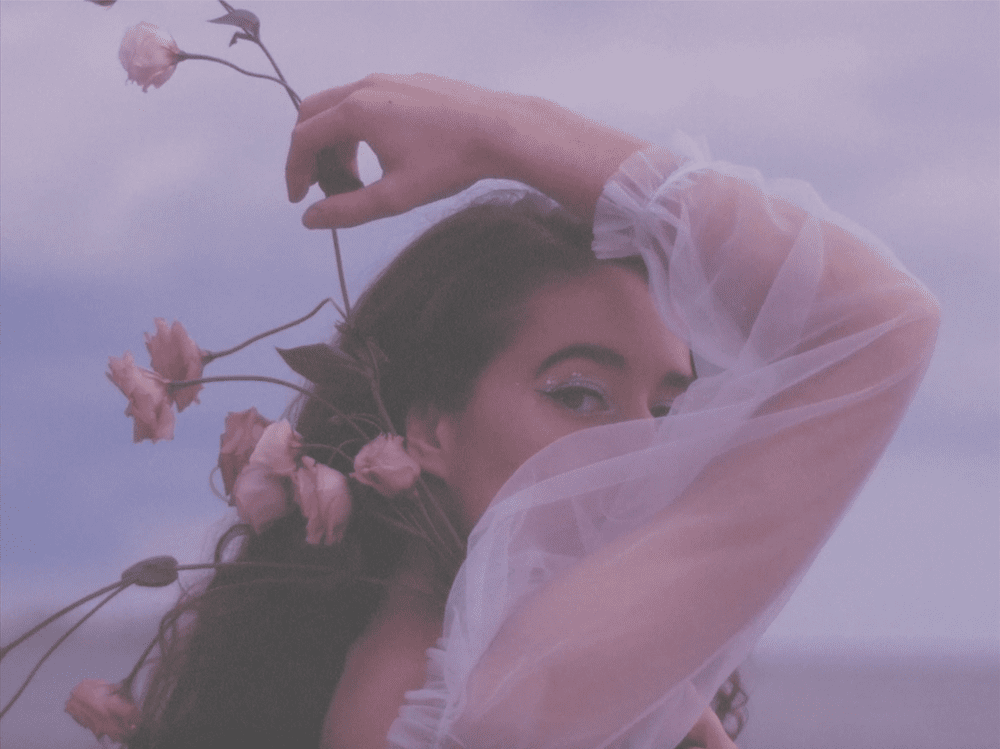
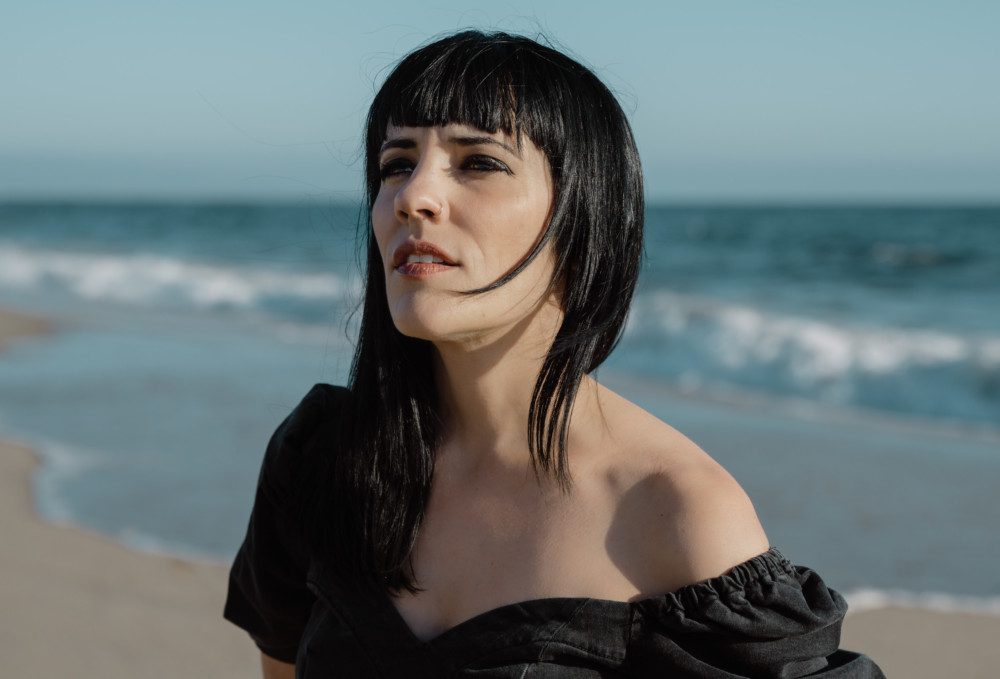
Last month, pop-tinged R&B artist Maryze released her first-ever music video – a dreamy visual for her tender single, “Soft.” The Montreal-bred singer teamed up with Paris-based director Amanda Louise Macchia for the beach-set clip.
“’Soft’ is about abandoning insecurities, reconnecting with your sensuality, and allowing yourself to be with someone entirely,” Maryze explained. “For me, truly connecting with another person, both physically and on a deeper spiritual level, has to begin in a place of self-love. As many womxn do, I have a complicated relationship with my body and sexuality, largely because of the societal shame around expressing those parts of ourselves.”
“This song was inspired by a relationship that really helped me regain a sense of trust, and embrace the softness and strength it takes to be vulnerable,” she continued. “It feels powerful, and a little magical, to reclaim our bodies and sensuality in whatever way we choose for ourselves. I also don’t often play with my softer, feminine side, so I had a lot of fun exploring that in this video.”
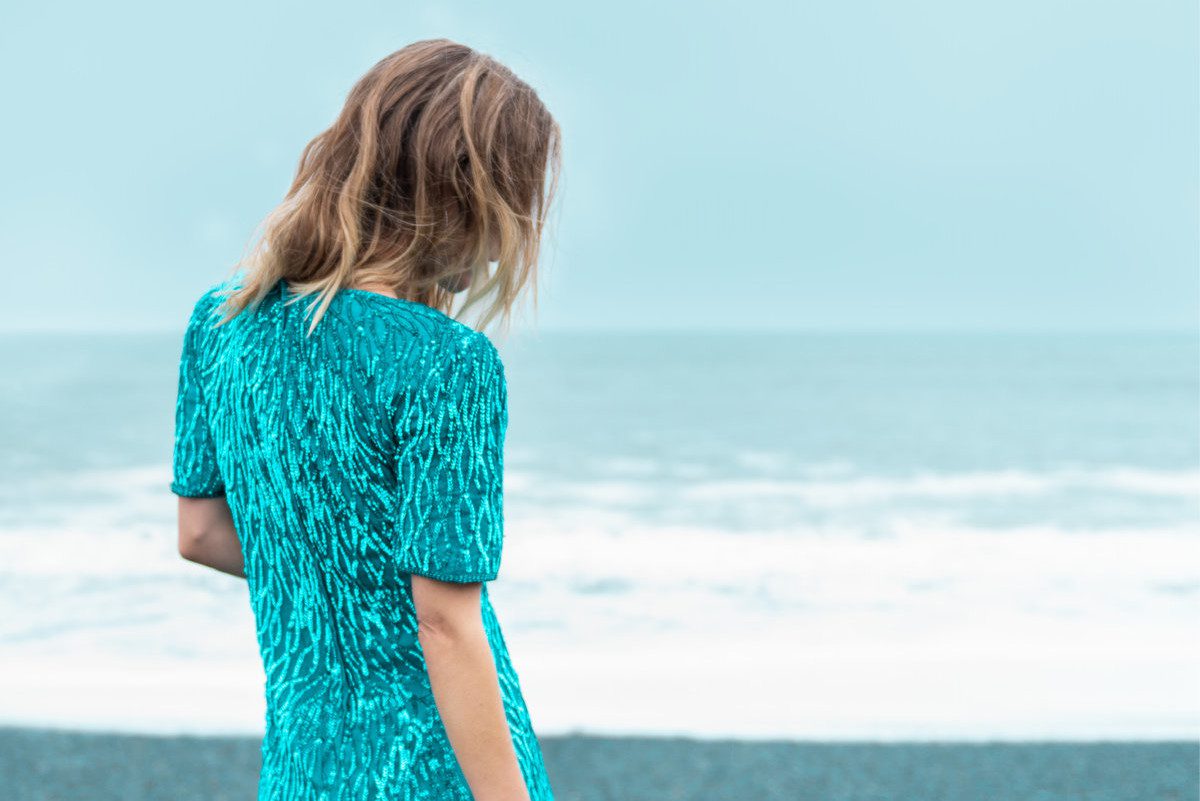
The cinematic clip opens up on Maryze holding flowers on the beach. Shadowed by billowy pink clouds, the visual’s soft editing and lush scenery perfectly capture the serene sensuality of Maryze’s voice.
Produced by Jordan Esau, “Soft” served as the leading track for Maryze’s bilingual debut EP, Like Moons, which she released this spring. The 5-track project included production from Solomon K-I, Ulysses, BrotherNature, and Jordan Esau, as well as French single, “Dis-Moi.”
The new “Soft” video also ushers in a series of upcoming new music and videos from Maryze, which she will be blessing fans with later this year.
Watch her beautiful debut visual for Like Moons track, “Soft,” below.
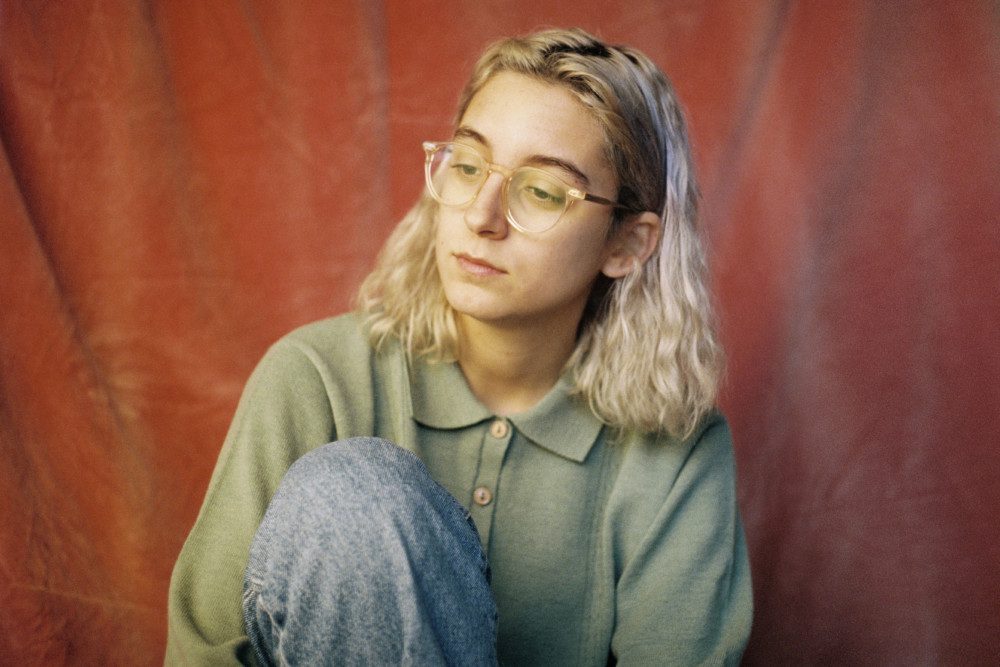
Portuguese alt-folk-rock artist Filipa Marinho, who performs eponymously under her last name, was raised on American cartoons and the sap-fest that was ’90s rom-coms. Against this colorful backdrop, her delicate brand of snark was born. Marinho’s new single “I Give Up and It’s Ok” takes the expectations of childhood and throws them out the window.
“It came to me while trying to climb a volcano in the Azores and failing to finish due to harsh weather,” Marinho explains. “As I sat there alone and tired, 80 feet from the mountain top, I suddenly realize that sometimes you can’t fight against obvious obstacles — whether harsh island winds or someone else not willing to meet you halfway. It’s best to let go of what you’ve idealized. Sometimes it’s ok to give up.” It’s an all-too-familiar feeling, the sense of panic when you’re forced to quit; whether it’s a personal goal, career or a relationship, it can be a long journey of acceptance to get yourself to that Jerry Maguire “Free Fallin'” level of okay.
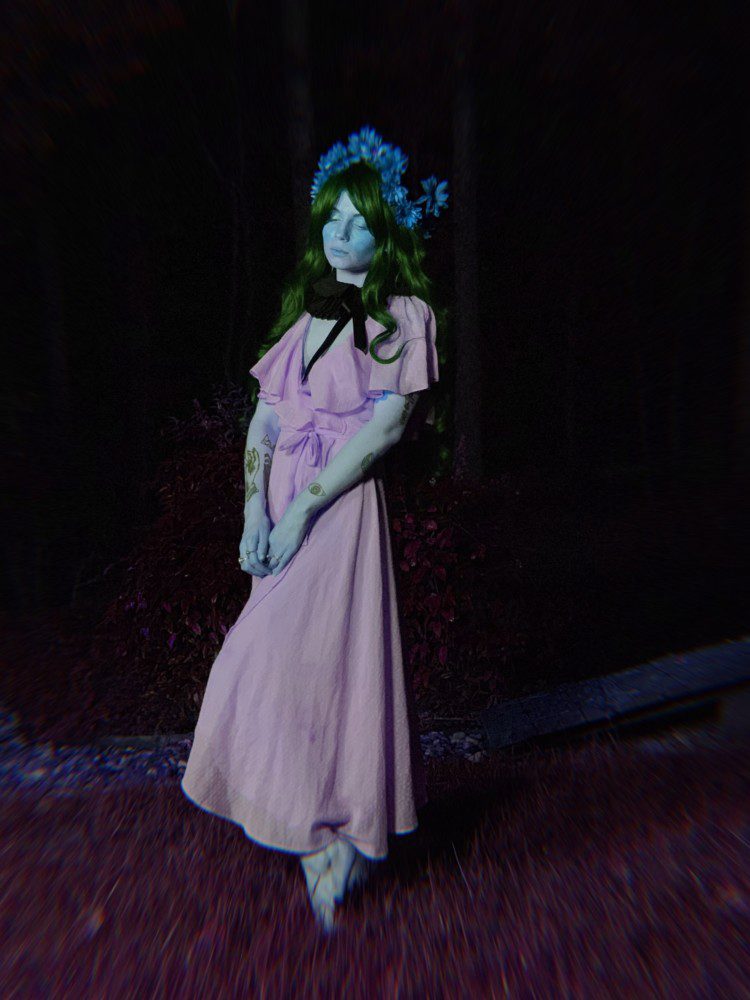
On a first listen, Marinho’s music has the instant relief of Xanax: there’s an unaffected, straightforward quality to her voice that soothes and relaxes. The video for “I Give Up and It’s Ok” follows Marinho as she wanders by foot off the road, through the woods, and towards a distant building on the top of a hill. When she reaches a stream, she stops, seemingly to unwind, and is confronted with a blue-faced version of herself hiding in the woods. The ensuing dance sequence summarizes Marinho’s vibe pretty well: upbeat, quirky, surprising.
Watch AudioFemme’s exclusive premiere of “I Give Up and It’s Ok” and read our full interview with Marinho below.
AF: “Born in Lisbon and raised in front of the tv” – I absolutely love that line from your bio. As an artist, what did you take from your childhood and what did you throw away?
FM: Thanks, I like it too. Could maybe turn it into a song.
As a child I quickly learnt to live with dichotomy. My dad had a strong character that was both the pain causer and joy sparkler in our household. He would either be a source of music, laughter, and bring us into contact with some of the most interesting people (musicians, artists, politicians, football players, filmmakers…), or on the other hand, turn into the authoritarian and emotionally violent figure that made us hide away in our bedrooms and survive on solitude and imagination.
As an artist, and as a person really, I still carry that with me. The capacity to feel and live in between opposites. Even musically I am drawn to that, to join elements that wouldn’t normally go well together. For example, some guitar and bass lines on the record are kind of fighting against each other but that’s what makes the final songs so interesting to me. Just like my favorite people are the ones that can live with their own inner conflicts.
AF: At what age did you start taking an interest in music?
FM: I was born into it really. I don’t remember a time when I wasn’t interested in music. It was kind of a mandatory thing around my family. Some older members already played piano and guitar. And my father was, and still is, the biggest melomaniac person I know.
AF: What musicians / bands have most influenced your sound?
FM: That’s a tough one. In terms of production I often went back to Big Thief for references on how the instruments take up space and respect the storytelling at the same time. Some folks have told me the tracks feel reminiscent of Black Belt Eagle Scout, Mac DeMarco, The Smashing Pumpkins, and even Alanis Morissette. So I don’t really know… I guess it all sounds like me.
AF: You’ve been touring like a wild woman this year. How’s the road been?
FM: Indeed, I was lucky enough to play a lot of shows in different formats. Some small intimate gigs and some bigger festival venues. It’s all been humbling and reassuring that I’m on the right track. And the stage feels like home.
AF: Tell us about “I Give Up and It’s OK” – what was the genesis of this song?
FM: It came to me while trying to climb a volcano in the Azores and failing to finish due to harsh weather. As I sat there alone and tired, 80 feet from the mountain top, I suddenly realize that sometimes you can’t fight against obvious obstacles — whether harsh island winds or someone else not willing to meet you halfway — it’s best to let go of what you’ve idealized. Sometimes it’s ok to give up to avoid becoming something you’re not. The video is about that too. The blue character that lives on the top of the mountain is the fool that one can become if they don’t give up on their idea of self.
AF: If you could open for any act, living or dead, who would you open for?
FM: Joni Mitchell.
AF: Where is your favorite place on earth?
FM: The beach. Or the studio. Or the stage. Hard to choose…
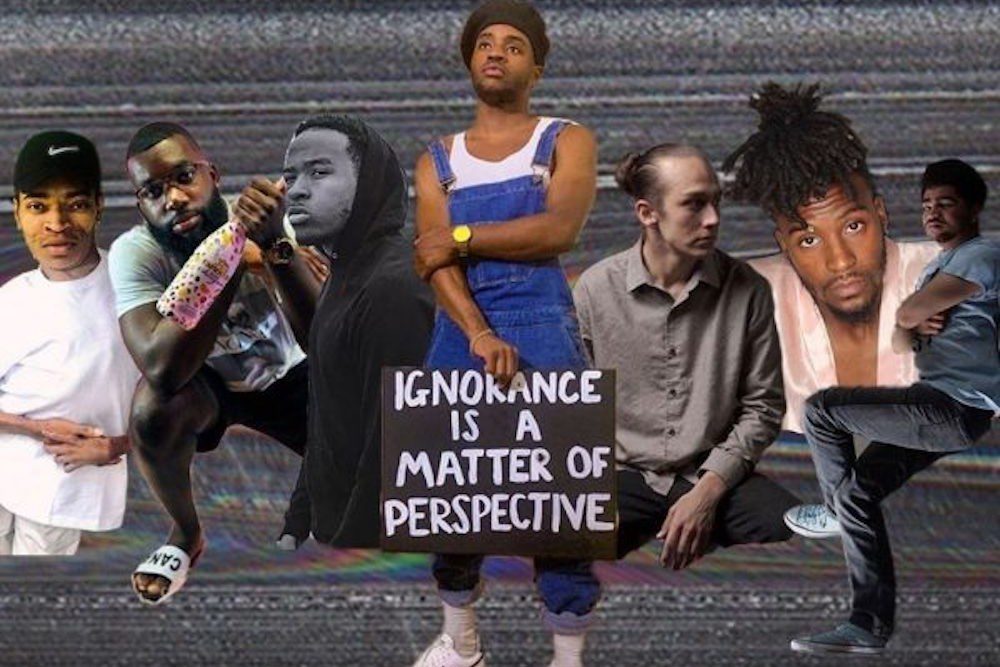
Earlier this year, Cincinnati rapper Khari released his debut project, Sinsinnati. Now, he’s enlisted some of the Queen City’s best talent to hop on a remix of the standout track, “Da Art of Ignorance.” Maintaining his hard-hitting chorus, Khari swaps his verses out for bars from Allen4President, Dayo Gold, Phresh Kyd, Roberto, B.A.N.K.$. and ¡Jay Hill!
The original “Da Art of Ignorance” arrived with a thought-provoking visual, directed by Kevin Garner and backed by Khari’s affiliated production company, Be The Best Entertainment (BTB). In the newly remixed version, the Cincinnati emcees apply the pressure to the bold and dance-worthy track.
After Khari’s initial hook, Allen4President cuts in around the :40 mark. “I seen it all / From the dope killings and the potholes / From the Queen City to the King’s Island / We got queens, really, so why kings wildin’?” he raps.
“I hopped on the remix for numerous reasons,” Allen told AudioFemme. “It’s a good song and I can relate to it. I truly believe it’s a crazy world, but I can’t speak to what I don’t know. I’ve seen, heard, and have done a lot in Cincinnati. It just made sense and was on par with what I normally make music about – the real-life experiences of Cincinnati.”
“I’m happy for Khari, simply because I like all of the moves he makes, along with his team,” he continued. “There’s a big support system behind Khari and the rest of BTB and I’m happy he reached out in the way he did. He’s 1,000% accomplishing a lot in a small amount of time and it’s inspiring to see. Gotta respect and show love to the real!”
Following Allen’s verse, Dayo Gold arrives to lay some heat of his own.
“Khari is just a guy with a lot of energy and passion when he’s performing and I immediately connected with that,” Dayo said of working with Khari. “He hollered at me about jumping on the remix and I said yeah, no question. I’ve always wanted to jump on a remix—it’s just so hip hop to me. Especially with the song being from someone I view with dope talent.”
Landing at around the 2-minute mark Phresh Kyd hops in with his own flow. “What’s inside I bet will differ / From whatever you consider / Let me guess, I’m a high-class pothead / On the way to penitentiary since I’m not dead,” he spits.
B.A.N.K.$. marks the track’s next arrival with a boost of energy. “Mr. Miyagi, we turn up the party / Popping the bottles, I’m pouring Bacardi / Feel Like a Migos, I’ll take a Ferrari / Offset, now I got me a Cardi,” he raps.
Patterns of Chaos’ ¡Jay Hill! and Roberto trade the remix’s remaining bars, maintaining fierce intensity until Khari closes out the track.
“I decided to recruit those guys because, first and foremost, they are good artist friends of mine here in the city and I respect all of their artistry,” Khari said. “The idea of doing a remix came about when I put on my show for my album Sinsinnati. All those guys were on the bill with me and we all put on a great show in front of a nice crowd at Arts’ OTA. The idea hit me instantly after seeing everyone rock their sets to do a remix with those guys.”
“‘Da Art of Ignorance’ was the fan-favorite off my album and every time I perform it people sing all the words,” he continued. “So it felt right to bring the city together even more with a remix that included some of my favorite Cincy artists.”
Check out Khari’s remixed “Da Art of Ignorance,” featuring ¡Jay Hill!, Roberto, B.A.N.K.$., Phresh Kyd, Dayo Gold and Allen4President below.
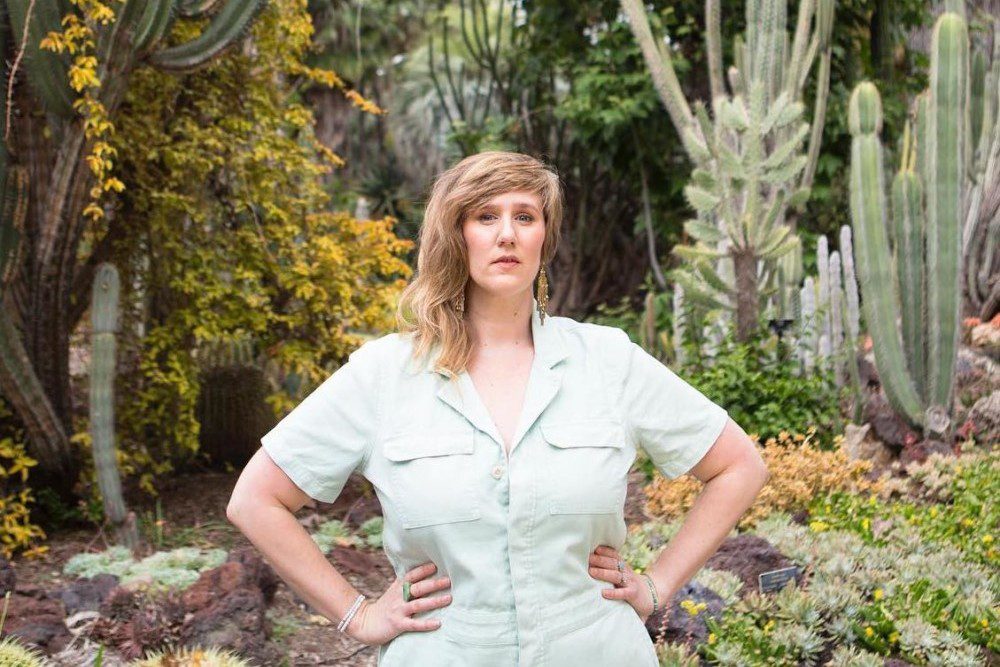
Los Angeles isn’t the never-ending traffic slog that people may imagine when they visualize the City of Angels. It’s a breathtaking metropolis surrounded by mountains, hugged by the ocean on one side and the desert on the other. Originally from Madison, Wisconsin, Anna Vogelzang embraces the wild and weird terrain of LA in her latest video for the title track to her forthcoming LP Beacon.
“This video was a love letter to LA, ” Vogelzang explains. “Abby beautifully caught these glimpses of moving through my neighborhood, the night sky, the feeling of driving with the windows down in Highland Park. This whole album was written to the backdrop of the city, and I wanted something that created a visual testament to that.” Vogelzang beautifully captures the feeling of creating a nest, a quiet space in the middle of a chaos. While watching the video, I paused and leaned in at times to see if she had added nature sounds: rustling leaves, a chickens burr, a child’s footsteps. The sounds weren’t there, but the music perfectly captured the magic on screen.
“Beacon” is a song for those brave enough to move to Los Angeles, but even more so, it’s a song for those who are willing to dig a little deeper into the soul of the city, to find those secret streets and hidden highways that lead out into the lush beauty that is California.
Watch AudioFemme’s exclusive premiere of “Beacon” and read our full interview with Anna below.
AF: You can play guitar, ukulele, baritone ukulele, banjo, and kalimba…When did you first take an interest in music and what led you to these instruments in particular?
AV: I grew up in a house full of music; my parents both sing and play – my mom professionally – and almost all of my extended family members are musical, too. So I don’t really remember first taking an interest – I’ve always loved to sing, and started playing piano when I was four. I switched to guitar when I was a teenager since it seemed like the songs I liked were all played on guitar, and that it was an easier instrument to teach myself (hah!). Really, the instruments were always just ways to support my writing, and singing – I wanted something to accompany my words and melodies, and so whatever worked, stuck. Now I’ve moved through that and have really been learning more about guitar, appreciating the different avenues you can take with it, trying to become a better instrumentalist. I’d say at this point it’s my main instrument for sure.
AF: Beacon is your 7th studio release. Has your writing process changed at all from your first EP?
AV: I’m so glad that it has – if I was still writing the way I was when I was 18, I’d be worried for myself! So many things have changed over those years – learning about the studio, learning what I want from different sounds, my taste in music, which directly affects the music I make… the list goes on. I’m at a point now where writing is an exercise, a muscle that I try to keep in shape, and the best songs are the ones that make it to the album. When I was starting out, every song was a diary entry, and each one got equal attention at shows and in the studio – every song was a precious gem and needed its moment in the sun. Now, the ones that I share are from the top of a mountain of songs that most people won’t really get to hear. I’m much more selective, because there are so many more songs now – because I’m not just waiting for the muse to strike. I’m putting in the work.
AF: When you initially moved to Los Angeles, you started a Salon series with your friend and guitarist Adam Levy; that series ended up moving to The Bootleg Theatre. What an incredible venue to perform at! Can you tell us a bit about the process of bootstrapping the series and how it landed at The Bootleg?
AV: Yes! So Salon actually began as a songwriting group that met at my house. Adam Levy and I co-hosted other songwriters once a week and we all tried to bring a new piece of writing to be workshopped. It was great for our output – once we got in a groove, a song a week became the norm. Bringing those songs to our friends at Salon helped us to figure out if it was just an idea, or something worth working on further, and helped us to dive into the editing process. Every song on this new album went through that group of people, which feels extraordinarily lucky.
We decided to bring it to the public and pitched our idea to the Bootleg, who were happy to host us for a month long residency – the team at the Bootleg is amazing, and we wouldn’t have wanted to do it anywhere else in town. Adam and I featured four different songwriters every week, and then had surprise guests each play a song in the middle of the evening. Some weeks there were 11 songwriters on stage by the end of the night. We shared new songs and talked about the writing process with each other on stage – it was really a dream show. We had so much fun.
AF: You’re a mom now (as am I). Living with a toddler has many unique challenges. How do you carve out time for music? And has your writing process changed dramatically?
AV: Ohhhh yes. GO TEAM MOM! It’s pretty crazy, isn’t it?! I cannot do it without help. Usually, if I’m not momming, I’m working on my business while my fella or family members or sitters watch my kiddo. Unfortunately “working on my business” usually means emails and promotion and merch fulfillment instead of creative work. What’s worked for me in the last two years is carving out time for my creative work the same way I do for the rest of my work. So if I have a sitter for four hours, I work for three and write for one. The days of waiting for the muse to hit are long gone – so in that sense, yes, my writing process was forced to change. But thanks to the accountability and routine of Salon, it had already gotten into that new rhythm before I had a baby, so it wasn’t too much of a shift.
AF: What currently gets you up in the morning (other than your little)? Books, music, food?
AV: Right now it feels like I am just barreling through this season of transition as the album comes out. I wish I’d been reading more. I feel like my version of books right now are my favorite newsletters: my friend Marlee Grace; my friend Sarah at Modern Women; I am obsessed with empowerment/magic/horoscope newsletters. They give me a little oomph in the morning. I’m loving my friend Madison Cunningham’s new record, and my friend Rosie Tucker just dropped a single called “Ambrosia” that I’ve loved hearing live forever – I’m so glad it’s out. Jamie Drake’s new album is gorgeous. I can’t wait to hear AO Gerber’s new album whenever that comes out down the line, and this month I’ve been going back into the Mirah archives, who is a forever-favorite of mine and listening to all of my old favorite songs over again.
AF: You work with Girls Rock LA Camp, an institution we’re big fans of here at AudioFemme. You yourself struggled with guitar at first (hand strength is the bane of my existence). How do you encourage girls who get frustrated at the plateau?
AV: I love Rock Camp so much. The thing about camp is that we don’t usually hit that plateau stage, luckily. You’re all so focused on the goal of the showcase at the end of the week, that it’s really just figuring out how to empower the camper with whatever tools they need to feel great about the getting on stage in four days and play something that works for that song, that moment. With longer term students I’ve had (who are mostly at the college level), I use that same camp framework and create short term goals. If they’ve gotten to a point where they can pass but can’t progress, if you will, a lot of times we’ll find one thing that’s really challenging (a new time signature, fingerpicking versus strumming, playing a specific lick) and just work on that, one foot in front of the other. I try to give myself the same assignment, too – a lot of times the best way to achieve that is through covers, which makes it a funner process for everyone.
AF: You’re going on tour in October. What should fans expect from an Anna Vogelzang show?
AV: My album release show in LA on the 4th is going to be full band, which I can’t wait for. We’re going to play the whole album front to back – so it will sound like the album, I hope! I tend to chat a lot at shows… not too much, but you can’t avoid catching some feelings, you know? On my Midwest and East Coast runs, I’m going to be solo, which I’m also super excited for – bringing these songs to folks the way they were written, in their most vulnerable state. Plus, that way I get to experiment with pedals, textures, an affected vocal mic – in order to recreate some of the ambiance of the album. I can’t wait to hit the road… I guess people should expect a good hang and honest songwriting. And lots of La Croix.
Playing Atlanta readers, you’re in for something special this week! Atlanta indie-rock group Lesibu Grand is officially the first fresh find of the fall, and I have a feeling you’ll be just as excited about them as I am.
Founded by lead singer Tyler-Simone Molton and bassist John Renaud in 2017, the group has since expanded to five members as they prepare for the release of their debut record, featuring guitarist Brian Turner, drummer Lee Wiggins, and Chris Case on keys. Combining sharp vocal melodies with the perfect splash of zesty synth, the group channels new-wave influences like Blondie or the B-52s with a poetic hip-hop prowess and enough funk to keep fans movin’ and groovin’ all night long.
I got the chance to talk with the group’s founding members days before the release of their self-recorded debut LP, The Legend of Miranda. Read on for all the details, then kick back and crank up the volume on your new favorite band.
AF: How did the two of you get into music? Did you grow up in musical households?
TSM: I did not grow up with parents who were particularly musical; however, I was always surrounded by music. Whether it be a Saturday afternoon doing chores or road trips to visit family members or just hanging around the house, music always surrounded us. I was also encouraged to play an instrument by both of my parents, which I did (violin) from age 11, so that introduced me to music in a more technical way.
JR: My experience was similar to Tyler-Simone’s. Neither parent played an instrument or sang, but we had music around the house and always on road trips. My folks liked the Beatles, Beach Boys, Johnny Cash, and the Eagles, so I was brought up on classic ’60s and ’70s rock. I’ve been told that my grandfather Felix Renaud was a natural musician who played piano, banjo, ukulele, and harmonica without any training. I also have no training, and so I feel I got any musical talent from him.
AF: Tyler-Simone, you grew up in Atlanta and loved the local superstars like Outkast and Erykah Badu; how did the hip-hop scene influence you in the early days, and how did you go on to combine that with other influences? What do you think you draw from your favorite bands, and how do you use it to create the magic that is Lesibu Grand?
TSM: I think that [one of] the two biggest takeaways that I got from my love of hip-hop is the depth of the lyrics. Hip-Hop can be very poetic and I feel like I use some poetic devices when writing. Secondly, I pay attention heavily to nice bass lines and drum beats. I think that comes from my hip-hop influencers as well.
Regarding the new-wave style’s influence, we love the tight, punchy vocal melodies that typify the best in the genre, like Blondie and the B-52s. Also, the prominent use of synthesizers, making them equal with the more traditional rock guitar. That adds a glitzy shimmer to a recording and can really elevate a song. Of course, new-wave and hip-hop grew up together in late ’70s NYC, so they’re not really all that far apart in some ways. With punk bands like The Ramones and The Clash, it’s the energy and emotional directness that influence us. Punk pushes both of these elements way up from what they typically were beforehand, and we like to create in those zones.
AF: John, you moved down from New England with Ace of Heart Records’ alt-rock band Crab Daddy and ended up in Atlanta. You’ve got quite a background in alt-rock and funk; what do you draw from those influences to create the synth-drenched indie-pop sound of Lesibu Grand?
JR: Crab Daddy was my first serious musical project and I learned tons from that experience, including the basics of music theory, the joys and frustrations of songwriting, and how to deliver a solid energetic performance even to a nearly empty room. Much of what I learned music-wise, I got from Crab Daddy’s singer, songwriter, and guitarist, Matthew Chenoweth, who still performs often in the Atlanta area. So, the influence there is deep, and probably comes through everything I’ve done musically since.
When that band wound down in the mid-90s, I got more into jazz and funk, eventually forming the instrumental jazz-funk band, Cadillac Jones. With that project, I really focused my attention on creating funky and/or melodic bass lines. And while I would not call Lesibu Grand a funk band, I still seek to establish – and then build up – a strong groove with a memorable bass part.
AF: How did the two of you meet? Was it an instant connection? What made you realize “Oh, we’ve got something here”?
TSM: We met a few times very casually at Turner, where my mother and John worked together. We did not connect musically until we ran into each other at a Pains of Being Pure at Heart show at The Earl. From then on it did seem like an instant connection. We quickly became best friends, and through our positive, supportive, creative relationship we’ve been able to write non-stop.
Writing songs with someone else can be very challenging. For example, you end up sharing parts to songs you’re not really happy with yet, or you may want to change some aspect of what your partner created without insulting them. Doing this requires a lot of comfort and trust, and I feel we have that. I’m not saying we never clash over songwriting, ‘cause sometimes we do, but it’s usually fleeting and then we get right back to doing our best to make our songs work.
AF: You’ve just released your latest single, “Runnin’ Round” and your debut LP, The Legend of Miranda, drops on October 4th. Can you tell us a bit about the writing process? Do you tend to write alone, or is it more collaborative?
TSM: Our writing process is inspired by the Lennon/McCartney approach. Some songs I write the lyrics, bring them to John and he comes up with chords, and we develop it together from there. Sometimes, he writes the lyrics and I develop a musical melody. It can spark from one of the two of us but ultimately, the songs are developed with both of us vibing out on our creation. Overall, it’s squarely in the collaborative category.
AF: Can you tell us a bit about the tracks on the LP, specifically the title track, “Miranda”?
TSM: The tracks on this album are all telling their own stories about our experiences figuring out the trials in life — sorting out the dreams from reality and being able to live out some of those dreams.
As for “Miranda,” it tells that story very plainly. If you watch the video you see that the couple shown is facing a struggle in their relationship that their love has, for some reason, died out. This can be because of many factors. Much like in our real lives, relationships go through seasons of love fading and returning to us. It sometimes takes an outside force or event or, in the case of “Miranda,” an alien space invasion. We have to try to fight for what’s important to us and find our way back to our heart/true self.
There’s one line in the song, “Take me by the hand,” that is repeated to show that sometimes you need a helping hand to get back to the place where you belong. I think that teaches an important lesson that we’re all in this life together and experience the same struggles, so it’s okay to need a helping hand. You’re not alone.
AF: How does it feel to be releasing your debut record?
TSM: It feels great! Like the first of many. We are here to stay and we’re just getting started.
AF: Did you record the record in Atlanta, or did you travel for it? What was the recording process like?
TSM: This is a self-recorded LP, so, yes, it was done in Atlanta. Specifically, drums and bass were recorded together in our drummer Lee Wiggin’s home in Doraville, and guitar, keys, and vocals were done in John’s place in Edgewood. We would sometimes take MARTA between the two since they both have stations, listening to the results on headphones along the way. While in some instances we might have been able to get better sounds in a professional studio, we were still in the process of becoming a band, so it was nice not to have the pressure of a rented studio space.
AF: How have the Atlanta and Athens music scenes influenced you as a group?
JR: Atlanta and Athens carry distinct musical brands (Athens being deeply associated with indie rock, and Atlanta being a dominant hip-hop center), but having lived and played in both places, I don’t really think they’re actually all that different. There is great hip hop in Athens (check out Linqua Franqa, for example) and tons of excellent, widely appreciated indie rock in Atlanta (Deerhunter, Omni, and Black Lips come quickly to mind, but there are many others).
I tend to consider both towns to be a part of one big North Georgia music scene, with many bands having members in both places. The best part about it is a willingness to mix styles, genre, and identity. While each town is known for its most successful musical exports, the scenes are not so wedded to one genre that you can’t break out with something that looks or sounds completely different or hybrid. I think Lesibu Grand is a good example of that, but there are others as well.
AF: What’s your favorite venue in Atlanta?
TSM: There are lots of great venues in Atlanta, but if I had to pick a favorite, I’d have to say The Earl. Their stage is a good size, lights and sound system are solid, and it’s got a very rock ’n roll vibe. Despite that vibe, they book incredible musicians from all genres. Not to mention the food is bomb!
AF: Who is your favorite local group?
TSM: There are so many good ones, but I would say Ruby Velle & the Soulphonics. They are a cool, groovy band and you can’t help but dance and sing along at their shows.
JR: I’m partial to K. Michelle Dubois, formerly of Ultrababyfat and Luigi. Her solo work is really fantastic. Her last album, Harness, is spot on. Also, newcomers Rosser made a great debut album.
AF: Last one! What’s next for Lesibu Grand?
TSM: 2019 has been an incredible first year for us thus far. We recorded our first record, released two videos, and have a third video for “Runnin’ Round” on the way in a few weeks. After that, we’ll have a fourth video for “Mi Sueno,” which we are filming in the attic of a 19th century home in Kirkwood. Also, we have already started recording our second album with Dan Dixon at RCRD studios in Peoplestown, which we’ll release some time in 2020. It will be much harder rock than Legend of Miranda, and with sharp socio-political focus. It’s gonna turn heads!
Follow Lesibu Grand on Facebook, and keep an eye out for their upcoming debut record, The Legend of Miranda, out October 4th.
When Dori Freeman broke out in 2016, it felt as if the whole world was hanging on her heart-wrenching voice and vulnerable storytelling. Three years and three albums later, Freeman’s work still has that power, and yet she’s replaced heartbreak with the buoyancy of a happy marriage (to her drummer, Nick Falk) and raising her daughter. Still, happiness can introduce its own challenges for songwriting, and her new album, Every Little Star, out Friday, traverses that ground with grace and curiosity.
The listener is along for a wistful ride with “I’ll Be Home.” Freeman writes and sings the song from a place of internal conflict, from the spot where motherhood and music compete for her attention. As it begins, Freeman is leaving home before dawn, not “daring” to kiss her daughter goodbye and wake her. As she reluctantly takes off from home to play music and make the living that “must be made on a microphone,” the guitar swells tenderly and the vocals croon bittersweet. It’s the perfect lullaby from a devoted working mother.
In conversation with Audiofemme, Freeman explores the inspiration for this Teddy Thompson-produced new single, the challenges of balancing motherhood and career, and how happiness has helped her find new ways to write on Every Little Star.
AF: Tell me about what birthed this new single, “I’ll Be Coming Home.” In the lyrics, I hear you working to balance your flourishing music career with raising your daughter. What is it like balancing your motherhood with your music, and why did you choose to write more about it on the forthcoming album?
DF: I wanted to write a song I can play on stage when I’m away working that reminds me of my daughter so I can feel like she’s part of what I’m doing. Finding a balance between motherhood and my career is difficult – like it is for any working mom. I’m home more than I gig in the grand scheme of things and I just try to give all my attention and focus to whatever role I’m in at the time, be it mother or musician. I wanted to write more about it for this record, because there aren’t enough songs about motherhood and the relationships between parents and children. People seem to really respond to them, so there’s obviously a desire to hear more songs about those parts of life.
AF: Obviously, you’ve really honed in on how to channel parts of motherhood into your creative pursuits. Quite a feat when you consider how energetically demanding motherhood can be. How have you learned, or are you learning, to balance these two parts of your life?
DF: I’m still learning how to balance the two. I’m sure I always will be. I try to be a really involved mother and also to include my daughter when circumstance allows in my work. So anytime she can travel with me and see me perform, experience new places and things – that’s great.
AF:In general, what’s your songwriting process like? I’d love to hear about it, down to the cup of tea you make or spot you sit in. Is it consistent every time?
DF: I don’t have any specific rituals or habits attached to songwriting. I tend to write at night when my family is asleep or when I have the house to myself. Usually it starts with a melody, but sometimes words come first. Then I just try to build off of what I have and see if it starts to turn into a song. I can usually tell pretty quickly if a song is worth finishing. I typically write from experience, but occasionally imagine characters and stories or glean ideas from the stories of friends and family.
AF: Tell me about the new album, Every Little Star. What are some through lines or themes that were the original kernels of inspiration for it? What has been the most challenging, and the most rewarding parts of seeing it come to fruition?
DF: I’d say it’s the most optimistic album I’ve made. I’m in a much different place emotionally then I was when I made my first record. I’m happily married now for one, and writing songs when you’re happy can be ironically challenging. I wanted to write about motherhood and try to tell some stories that weren’t from my own personal experience. A friend shared a story about a relationship she thought would make a good song, I wrote a cowboy (girl) song. This record is a good balance of autobiographical material about love and motherhood and imagined storytelling.
AF: In 2016, your break-out album blew everyone away, particularly because of the poignancy, strength, and clarity of your voice. When did you start to sing, and why? I know you come from a musical family —how did that look day to day?
DF: I’ve been singing since I was little. I’d sing along with whatever my mom and dad played in the car and joined choir when I was 11. I also grew up with a musical family and saw my dad and grandpa perform a lot. As I got older I started performing songs with them here and there and eventually decided it was what I wanted to do professionally. I’ve also been fortunate to work on a project with my grandpa, recording the songs he’s written over his 87 years. That was a very dear experience for me. The project is called At Home In the Blue Ridge.
AF: Your breakout album had an edge of being wronged and heartbroken, and it gave your music a certain weight that was undeniable. Now, you seem much happier, and still the music still has that weight, or draw, that makes you go, “This is really good.” I mention this because many artists find happy times to be some of the most challenging for inspiration, because darker emotions had always been their fuel before. Do you find this to be the case? It seems you have found ways to mine your life, no matter what’s happening, for great songs—how do you do it?
DF: It’s much more challenging to write songs when you’re happy. It’s a trade off. I’ve had to work at it, but I think I’ve found ways to write songs that aren’t about personal heartbreak that are still good songs. Writing about motherhood has been a wonderful experience. Imagining characters is also fun.
AF: Give me a little context on your history with Teddy Thompson and, if applicable, the rest of the Thompson family (I love love loved your cover of “Bright Lights” on the last album, by the way!)? How did you two meet, and what has he brought to your music and career?
DF: We met through Facebook. I sent him a message in 2014 of me covering one of his songs and told him I wanted to work with him somehow. He actually responded and eventually he offered to produce a record for me. Now we’ve made three albums together and it’s been such a wonderful experience working with him. He opened a lot of doors for me and he’ll always be a dear friend.
AF: Will you tour with the new album?
DF: For now, I have some dates in October. Oct. 13th at Richmond Folk Fest with my grandpa; Oct. 17 at Cock N Bull, Galway, NY; Oct. 18th at Town and City Festival, Lowell, Mass; Oct. 19th at Frinklepod Farm, Arundel, ME. I’ll probably add a few more for the end of this year and will tour more in 2020.
Follow Dori Freeman on Facebook for ongoing updates.
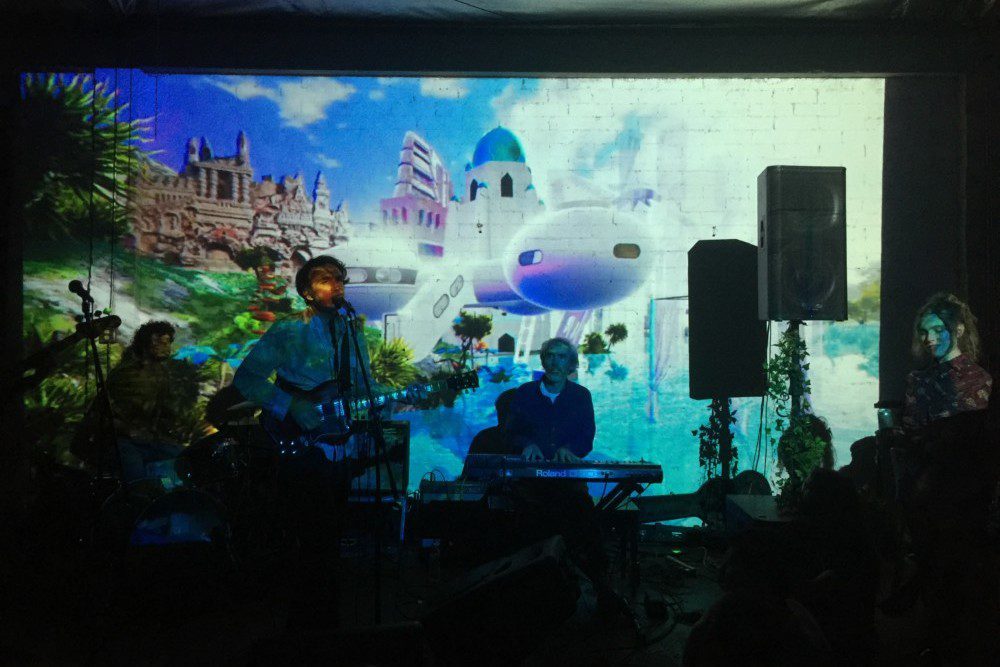
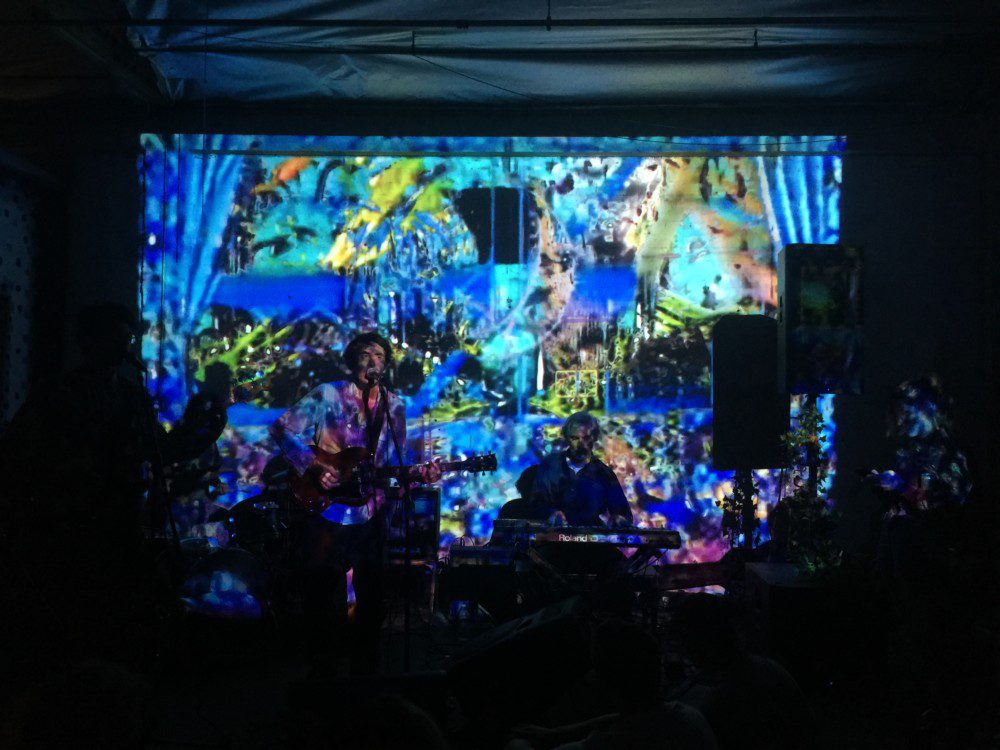
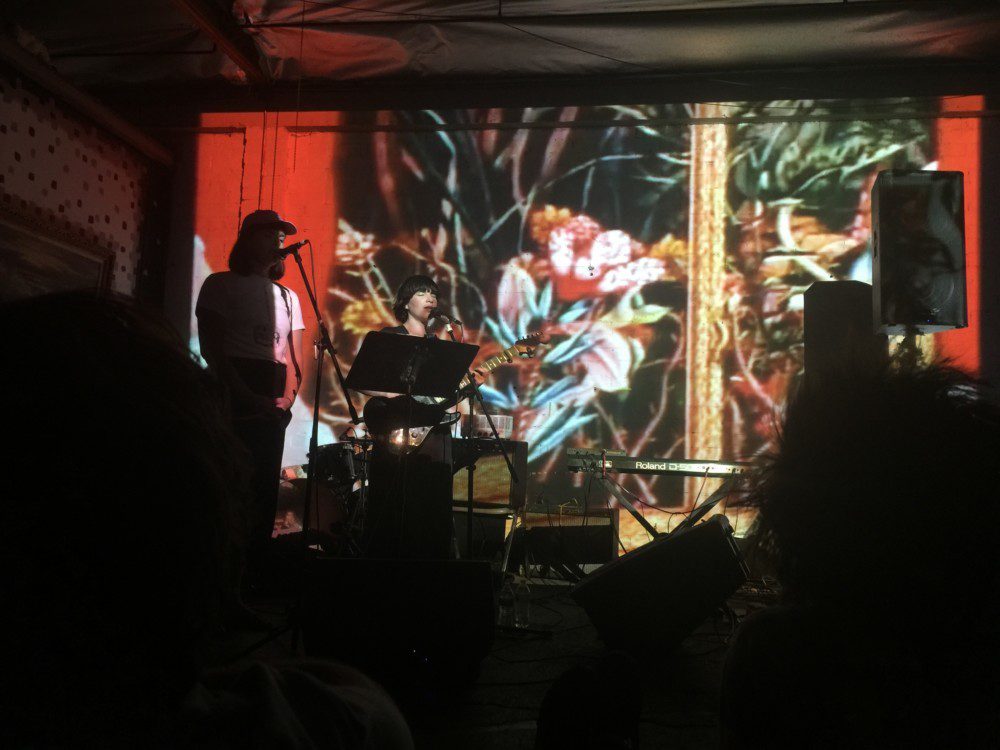
They say getting there is half the fun, and that was definitely true for indie art-rock artist Chris Cohen’s latest show at Non Plus Ultra in LA. The underground venue’s address is ever-changing, as I discovered when I arrived at the one listed online and found only houses. Thankfully, I made some new friends who were looking for the same show, and we finally found the right place together.
It was worth it: Not only did I meet new people; I found myself at a visually fascinating warehouse-like building that looked more like an art gallery than a concert venue. Graffiti covered the walls, colorful jellyfish hung from the ceiling of the bar, and even the bathrooms were artfully painted.
The show was scheduled for 8 p.m., but it started around 9:30 with an experimental set by multi-instrumentalist Sam Gendel, who mixed music on his computer while speaking, singing, and beat-boxing into a microphone. As his voice warped against jazzy piano tunes in the background, animations of snakes, ballerinas, and other cartoonish figures appeared on a screen behind him. His unique style fit the artsy undercurrent of the whole event.
Next, indie folk artist Ruth Garbus performed several songs on vocals and guitar with the vocal accompaniment of Julia Tadlock, their voices harmonizing on poetic lyrics like “we’re waiting on the sun.” Garbus played part of the set alone, her voice operatic and airy and a bit reminiscent of Kimya Dawson, painting scenes of squirrels and other natural imagery. At one point, Gendel accompanied her on the saxophone.
At last, Cohen took the stage around 11:30 p.m., beginning with the slow-paced, dreamy “Edit Out.” The audience swayed as he crooned, “I rub my eyes and look around / You can hardly tell at all / Estimated what they’d edit out / Maybe nothing there at all.” Chimes filled the room with psychedelic echoes as he sang “No Time to Say Goodbye,” and the screen behind him matched, with gorgeous technicolor outdoor scenes that made it feel like I was inside a video game. Cohen doesn’t give the most animated performances, yet his expressionless face and gentle rocking compliment his mellow tunes. He picked up the pace to close the night with “Heavy Weather Sailing,” building on the event’s fantastical atmosphere as he sang, “Put the brakes on if you can / Weigh the world on a scale / Tell any story to suit you / Like Jonah swallowed the whale.”
Personally, I’d been hoping for him to play some of his more energetic and upbeat songs, like “Torrey Pine” and “Drink From a Silver Cup,” but I’ll take whatever he’ll give me, and his selections fit the dream-like setting of Non Plus Ultra’s tucked-away wonderland.
For Moriah Piacente, Athens-and-Atlanta-based artist, vintage fashion curator, and lover of all things weird, wacky, and wonderful, the lines between visual art and music are nonexistent. Blending the enigmatic charisma of Gene Wilder’s Willy Wonka with the delicate, ethereal creativity of David Bowie, Piacente exists in a glittering, psychedelic, purple-tinted Victorian Wonderland where modern fashion caves to ’60s-Mod stylings and drudging normalcy is the only unwanted guest.
After her elegant yet visceral performance in Pip the Pansy’s “Siren Song,” I was thrilled to land an interview with Major Mars herself. Read on for a sneak peek into Piacente’s mystical world.
AF: Let’s start at the very beginning: how were you introduced to visual art? When did you realize you wanted to pursue it, or that it was your life’s calling?
MP: Oh my gosh I am insanely excited and blessed to have my first ever interview with you! Thank you so much for having me! I would say it first sparked my interest I when was introduced to Of Montreal. The way they created this insane atmosphere and brought their own world to life made me want to do the same.
I’ve always been passionate about music, and, for a long time, I thought it was what I wanted to do with my life. I could never really fully express myself through it though. I started getting into fine art photography in 2015, and I was hooked. I worked with a photographer out of Athens, Ben Rouse, and he ended up introducing me to a bunch of amazing creatives in the Athens scene. That ended up connecting me with a visual artist, Dana Jo, who was kind of mentor to me. She asked me to be a part of her DJ set at the 40 Watt during Slingshot Festival 2016, and that was my first ever experience on stage! I realized that being able to express my passion for music visually was all I’ve ever wanted and more. As lame as it sounds, my soul ignited that night.
Photo Credit: Beau Turner // All editing & design by Moriah Piacente
AF: Who do you consider your greatest inspirations? Was there any one person who made you say, “This is what I want to do with my life”?
MP: I’d say my greatest inspiration is David Bowie. I’m also very inspired by the director David Lynch, but I’d say I’m the most inspired by a good, strange film: Valerie and Her Week of Wonders, Weekend, The Holy Mountain, and Clockwork Orange are some of my favorite films to flip on when I want to feel inspired. I really love how visually stimulating and bizarre those films are. It made me want to create my own world outside of my mind that others could enjoy. I’m also just super inspired by the people around me. I’m lucky enough to know some amazing musicians and artists that inspire me on the daily.
AF: How has visual art allowed you to truly express yourself at times when you don’t feel like you can otherwise?
MP: I can be a pretty shy, awkward person when you first meet me. I can be really bad with words. I get nervous and shy and make myself feel small. However, when I’m creating or performing or whatever, I’m focused on that and putting my all into it. I put all of my emotion into it. And sometimes when I’m feeling super depressed or anxious, but don’t know how to say it, I can go and take that energy and create something beautiful from it. That’s probably why most of my art is a bit creepy. Depression and anxiety are feelings that sometimes don’t have reason backing them up, so when I can’t find the words, I just go be weird.
AF: You’ve been part of some incredibly powerful performances with POWERKOMPANY, as well as music videos like Pip the Pansy’s “Siren Song.” What experience has been your favorite?
MP: I’m super proud of everything I’ve done and been a part of! My favorite experience, so far, was driving down to Vero Beach with Pip The Pansy and three other girls to shoot the music video for Siren Song. I had never done choreography before, and I didn’t know these girls very well so I was super nervous! It ended up being one of the most beautiful and rewarding experiences ever. Pip is incredible, and I love that she’s always down to create and try weird things. Working with her is amazing!
AF: What’s your dream performance?
MP: Oh gosh, that’s a tough one. There’s a lot of artists I’d love to collaborate with, and I’d also love to do an art installation. Does that count? I’d love to do an art installation.
AF: Do you prefer to work alone, or in a collaborative environment? Who would be your dream collaboration, living or dead?
MP: I prefer to work in small groups. Two to four people is my sweet spot. I feel like I get the most creative when I’m brainstorming with others and having a good discussion. I’d love to collaborate with a bunch of artists I’ve met over on Instagram like Danielle Hibert or Storm Calysta or Miss Lucy Fleur, but don’t make me decide, ‘cause they’re all too dreamy!
I’d absolutely love to collab with Jordana Dale. She’s a photographer out of Atlanta. I worked with her on a shoot for Pip The Pansy and she was incredible! Her work is insane. It was also my dream to work with Pip, and I’m so thankful that dream became reality! There are also lots of musicians I’d love to collab with. Hit me up, yo.
AF: You’ve also got a beautiful online vintage shop, Major Mars Vintage. Where did you get the name from (because it’s so rad)?
MP: Thank you so much! When I was first starting the shop, I was brainstorming with my boyfriend. He actually came up with the name! It’s supposed to be kind of like Major Tom, but it’s Major Mars, cause ya know that’s me! I’m Mars.
Photo Credit: Beau Turner // All editing & design by Moriah Piacente
AF: What part do you think fashion plays in visual art? Do you consider fashion design to be an integral part of visual art, or visual art itself? Did you ever consider going into fashion design?
MP: I think it plays a huge part. I think fashion is visual art if you want it to be. Fashion is a way to express yourself freely. That’s absolutely art. I mean, look at the Club Kids. Some of the coolest art I’ve ever seen! I’ve thought about it, yes. There’s just too much math there, though, honestly.
AF: What would be your advice to your younger self?
MP: Stop putting your energy into others that don’t give a shit and start putting it into yourself and your art. Speak up and stick up for yourself. Focus on making yourself proud of you. You’ve got this. Keep fighting the good fight.
AF: That’s beautiful advice! How can your followers and fans keep up with your work, and support you as you create even more magic?
MP: As much as I hate to say it, social media is huge for small artists like myself. It really helps a lot when you share posts and comment and all of that. I’m also on Patreon! You can follow me over there to support my art and keep updated on the projects I’m working on!
AF: What’s coming up for you and Major Mars?
MP: I have a few things in the works for the rest of the year! Podcasts and pop-ups and all kinds of weird. I’m not sure about the dates just yet, though, so keep an eye out on my Instagram!
Keep up with Moriah on Instagram, and shop her curated vintage store, Major Mars Vintage, for all the mod stylings and psychedelic pieces you could ever want.
Colleen D’Agostino has been in the game for a few years now, first as the lead singer of The Material, then as a collaborator with deadmau5, a relationship that spawned the platinum-certified single, “Seeya.” On her second solo EP Sleepwalk, D’Agostino collaborated with producer EEKKOO, honing a mature, restrained sound that acts as the perfect foundation for her velvety vocals.
“I don’t wanna run / I don’t wanna run in place / So tell me can you keep the pace / I can’t figure out / How the fear overtakes me but never ever breaks me down,” D’Agostino sings in “Complicated,” the lead track off the EP. Producer Eekkoo’s influence can be seen clearly in the track: metallic accents, the kind of driving beat you find pulsing inside a speeding car. “Somewhere In Between,” the second track off the album, reveals the fears and realities of D’Agostino’s recent motherhood: the late nights grasping in the dark, the too-early sun-drenched mornings.
The album’s confessional lyrics, mixed with EEKKOO’s smooth, melodic production style, generate some major earworm vibes upon repeat listen. It’s a record for late night drives on the PCH, headlights pointed north towards Malibu, tears on the edge of falling down.
Listen to Sleepwalk and read our full interview with Colleen D’Agostino below.
AF: You started singing at age 7. At what age did you start writing music?
CD: When I was in high school I started getting really into music and writing poetry. Up until that point I had really only listened to what was on pop radio and the music I had performed as a kid in musicals. I think the exposure to bands like Dashboard Confessional, Taking Back Sunday, and Brand New is what made me want to start turning my poems into song lyrics.
AF: How has your writing process changed since you first started?
CD: When I was starting my band The Material, we would sit in our rehearsal studio for hours and hours and write songs. It was a great way to collaborate, but I think at this point in my career, the lyrics and music come out more thoughtful and well crafted when the song starts with just an acoustic guitar or piano, and me and my lyrics and melodies. If the song is an electronic collaboration, then I like to sit alone with the instrumental version for a few days and come up with different top line melodies (I usually get my best ideas in the car while stuck on the 405 lol). I’ve been in plenty of awkward situations where a label throws you into a writing session with a bunch of producers and they stare at you expecting you to come up with something amazing on the spot. Sometimes it works, but most often my best songs are written when I’ve had a chance to write on my own before meeting with the producer. I wrote and recorded the lyrics and melody for the track “Stay” with deadmau5 in my friends living room. Then I sent Joel the stems and he transformed it into what it is now, before we had even met.
AF: You worked with EEKKOO on this EP. Did you meet through deadmau5?
CD: EEKKOO and I met backstage at a deadmau5 show when we were both on mau5trap records, and he invited me to a writing session he was doing with Matt Lange. The three of us wrote what is still one of my favorite tracks: “Where Did You Go,” from my Collide EP.
AF: You’ve said in the past that your process varies from project to project. How did this EP stand out, in terms of writing?
CD: I had really enjoyed working with EEKKOO, but he’s from Montreal so he would just send me a track every now and then to work on. Last year we wrote a song called “Somewhere in Between” that meant a lot to me. I wrote it shortly after the birth of my son Maddox, and that’s when we started talking about turning these songs into an EP. I really love EEKKOO’s production style, and writing long distance means we each have the freedom to do what we do best. I think the end result is an EP we are both really proud to share.
AF: Do you plan on releasing any more music with The Material?
CD: My husband Jon [Moreaux] and I literally put everything into The Material for many many years. We threw all our belongings in storage after our honeymoon and toured the country in a van for eight years with that band. So I don’t think we’ll ever be “done” with The Material. We put out a record last year called Gray States after a long hiatus and it felt so good to write a rock record again. That being said, we don’t have any immediate plans for new music, but you never know.
AF: What music are you currently spinning at home?
CD: I’m liking the new Bat For Lashes record, also new Banks, and Tycho is always on repeat. If I’m looking to rock out, I put on The Fever 333.
AF: Do you have any advice for artists who are breaking away from their band to create solo work?
CD: I respect the loyalty that one has to a project you’ve been faithful to for years, but if you’re like me, you listen to a variety of genres, and I don’t see the harm in trying out different styles of music from time to time. It’s definitely a challenge going from writing with a band to being on your own. But ultimately if it feeds your soul, then that self-expression is good for you, and in turn it’s good for the listeners.
Nublu 151 looks like the inside of Satan’s jewel box. Kaleidoscopic projections swirl on the walls and a dangling disco ball takes the place of a wind-up ballerina. But it’s the pervasive red and blue lighting that really lends a sinister tint to the venue. The colors radiate over the main floor, the hallway, the balcony bar where attendees can peer over the band’s backside as if looking down into a dog pit. Even the bathrooms are trapped in the eerie glow; as I flushed the toilet, a woman’s hand smacked firmly on the semi sheer wall to my right. I almost expected the glass to be streaked with blood.
Eric Lane, the house piano man, only added to the evening’s Lynchian ambiance. He delighted us with cocktail-hour salsa standards, a Beach Boys ballad, and Angelo Badalamenti’s opening theme to “Twin Peaks.” His playing went down like a glug of brandy, warming the throat and coating the stomach. By this point, I’d nearly forgotten that it was a reasonable hour, that I hadn’t had anything to drink, and although I felt as if I was waiting for a heartsick chanteuse to traipse onstage, I was actually there to see Landlady.
Wednesday night marked Landlady’s second in a series of three weekly concerts at Nublu 151 (their final date lands on September 25). Each night of the residency is opened by a different artist, and singer-songwriter Allegra Krieger warmed the crowd with the help of her intuitive backing band, who improvised ambient passages on bowed bass and guitar during Krieger’s multiple tuning breaks. Krieger’s music is haunting and delicate, and strengthened by the tasteful contributions of her bandmates. Her voice is somehow breathy yet potent, reminding me of Big Thief’s Adrianne Lenker. If you weren’t paying attention, you might be fooled by Krieger’s airy register and fresh face—but you’d be missing out on her wry songs about suspicion, solitude, and the “decaying human race,” to borrow her phrase.
If Eric Lane’s piano interludes seemed to be courting dark forces, Landlady’s set felt like a sermon. Adam Schatz and his bandmates always give a rapturous performance, with no shortage of instrumental freakouts or full-body contortions. Schatz has a way of moving that suggests divine possession, though at times he simply prances around, arms crunched close to his body like a T. Rex. The band bulldozed through songs spanning all three of their studio albums, pulling off an impressive four-part harmony on “Under the Yard” from 2014’s Upright Behavior (guitarist Will Graefe was tasked with the highest notes, and he delivered admirably).
Despite a leaking ceiling and a couple of sound issues (we learned that the bassist couldn’t hear anything when he accidentally said so directly into his microphone), Landlady flew seamlessly between high energy versions of “Electric Abdomen,” “Dying Day,” “Solid Brass,” and a handful of new songs. The unrecognizable tracks were some of the most thrilling, invigorated by Ian Chang’s inspired relationship with his drum kit. Of course, no Landlady gig would be complete without Schatz’s clever rambling. Landlady’s leading man is so charismatic and hilarious that at times you want him to just keep talking… about Cheers and Frasier, or mundane fiascos, or anything. Whether his wit is calculated or compulsive is unclear, but it’s an absolute treat either way.
When Schatz announced that Landlady had two songs left, I wouldn’t have guessed that the Traveling Wilburys’ “Handle With Care” would be one of them. Allegra Krieger hopped back onstage to tackle Roy Orbison’s part while Schatz vamped around for the rest. But after the carefree fun of a cover song, Schatz got earnest, dedicating the somber “Above My Ground” to those we’ve lost as of late: Daniel Johnston, David Berman, Neal Casal… people we have never met, and people we’d do anything to see again.
Erin Bowman follows the singer-songwriter playbook for conveying vulnerability in her new song, “Spilled Milk,” premiering on Audiofemme.
The rising star made a name for herself when her irresistibly catchy hit “Good Time Good Life” was featured in an episode of season 1 of This is Us and promotional ads for the 2017 Academy Awards. Following a move from the East Coast to Los Angeles, she’s now honing her craft for sincere songwriting on her upcoming debut EP, Apartment 101.
With the simple piano ballad structure of “Spilled Milk,” Bowman gives off Christina Perri vibes, while haunting production evokes the emotions of self-analyzing a relationship that ended with a broken heart. “I had been seeing this guy and it ended on not so great terms. I was really hurt and disappointed. I didn’t see it ending the way it did with him. It was a real bummer,” Bowman explains about the inspiration behind the song. “I ended it with the guy I was seeing and started coming to all these realizations. I was surprised because I thought I knew him so well and I never expected it.”
Throughout the song, Bowman gently expresses the pain she felt going through the breakup while sharing the frustration that stems from having a deceitful partner. “No point in chasin’ / chasin’ the ghost / no point in stayin’ / oh but you’re keeping me close / and I thought I knew you / so it hit me hard / facing the fact / I don’t know who you are,” she proclaims. These striking lines are “quite powerful,” she says. “Somebody keeping you close but not too close, having you around when it’s good for them, on their terms. That seemed to be a theme in my love life for a bit.”
While she draws from a pool of emotion to tell her story, Bowman doesn’t shy away from adding subtle humor to her heartache, comparing her disappointment in the relationship to the song’s title. “No use crying over spilled milk right? But actually I was quite upset and there was a lot of crying. In all honesty it was probably me trying to throw a jab in there,” she laughs.
“Spilled Milk” is included on Apartment 101, set for release on November 1, alongside previously released singles “There You Go Again” and “Your Mother.” Recorded in London, the EP includes seven original songs and a serene acoustic cover of “Kiss Me.” The idea to record in London arose when Bowman and a friend were performing at an open mic night in the city and met a pair of producers. Feeling instant chemistry with them, Bowman returned to London several times to create Apartment 101.
“I had such an amazing time recording this EP in London, which is good, because the experiences that inspired the songs weren’t my best,” she describes, adding that she’s an open book throughout the EP, delivering strong doses of honesty. “I am giving details on top of details, pretty much just pouring my heart out.”
Follow Erin Bowman on Facebook for more updates, or catch her at a record store near you during her National U.S. Indie Music Store tour.
As much as the Seattle sound is about notions of counterculture and nonconformity, the ever-present majesty of the area’s natural surroundings is embedded within it as well, offering a sense of cohesion among what is otherwise a city of musical eclecticism. The melancholy gray skies, majestic evergreen forests, and churning waters of the Puget Sound all have their way with the music made in this area. Lemolo—vocalist and multi-instrumentalist Megan Grandall—is a perfect example of this phenomenon.
Lemolo’s forthcoming release, Swansea, out Oct. 11, is a little pop/rock, a little ambient electronic, a little folk singer-songwriter. Grandall draws many different musical influences that, on their own, are seemingly disconnected from place. But, when knitted together organically by the demands of her lyrical inspirations—her turbulent inner-world and the lush environment of Grandall’s hometown of Poulsbo, WA—there’s a through-line that wasn’t there before. Swansea’s eleven original roiling soundscapes—echo-y, ambient canvases kissed with Grandall’s gentle vocals—are magnificent, pensive and intoxicating. It’s an album that can only be from the Pacific Northwest.
Lemolo gave Audiofemme an exclusive premiere of the single “South of Sound,” below, discussed her collaboration with legendary Seattle-area producer Nathan Yaccino (who’s worked with Seattle music royalty like Soundgarden), and explained the difficult and miraculous experiences that birthed her third tender and triumphant full-length, Swansea.
AF: Is this single “South of Sound” a tribute to your South Seattle home? Or, does it have another meaning? How was the song born?
MG: The song is about the ending of an unhealthy relationship, and knowing it was unhealthy before it was over. When I’m singing that “we’re headed south of sound”, it’s a play on words to mean that my partner and I were heading in a bad direction where things are no longer “sound” or safe. But I also like how the song incorporates water imagery which is a slight homage to the Puget Sound where I live.
AF: Tell me about your childhood, and how you were first exposed to music. How many instruments do you play? Are you self-taught?
MG: I grew up loving music, and started playing the piano when I was 3 years old. I took piano lessons throughout my childhood, and then taught myself how to play guitar and write songs in high school. Music and songwriting has always been an important outlet for me and I’m so grateful I found it at a young age.
AF: What are some staples of your songwriting style, in your eyes?
MG: A common theme in my music is that all of my songs are very personal accounts of my own life and experiences. I’ve used songwriting as a tool to help me find healing in my own life and process my emotions. I’ve also heard people tell me that they can tell that I’m from the Pacific Northwest when they listen to my music. The landscape where I live is filled with natural beauty – I named my band after Lemolo Shore Drive in the small town where I’m from and where I live now – Poulsbo. It is sandwiched between the Puget Sound and the Olympic National Forest. And I think the natural world around me definitely inspires the mood of my music.
AF: When you formed Lemolo in 2009, what would you say your artistic mission was? Has it morphed over the years?
MG:My mission has always been to make music for as long as it brings me joy and healing. Lucky for me it is still the case, which is what motivates me each day as an independent artist.
AF: How does Seattle—specifically its landscape, music history, even its tech-y present—inform your music?
MG: Being a part of the Seattle music community has been a really positive experience, and I’ve found that musicians here are very supportive and encouraging rather than competitive. There is also a wonderful community of people who support local and independent art, which I am grateful for every day. I am a huge supporter of KEXP 90.3 FM as well, and they have played a big role in me being able to share my music with people around the world and have a larger platform. And as I mentioned, the natural beauty of the Pacific Northwest is a continual source of inspiration for me.
AF: Your forthcoming album, Swansea, is due to drop Oct. 11. Why did you decide to call it that?
MG: I learned of the word Swansea when I received an online order for one of my records from a fan living in Swansea, Wales about five years ago. (I serve as my own record label, so I handle my own shipping and order processing which has been a wonderful way to meet my fans!) When I read the word it immediately struck me, and I couldn’t get it out of my head. It conjured up a lot of imagery for me, and I kept it in the back of my mind while I was writing the songs for this record. As a songwriter, I’m always keeping track of words that intrigue and inspire me. I created a whole concept of what Swansea means to me in relation to this record.
AF: Tell me about that concept. I see the definition of “Swansea” quoted in your press release: “The vast place we find ourselves in when we lose someone. We are alone for the first time in what feels like forever, almost as if we are out to sea in our own solitude. But it is not necessarily a sad place. It is where we find strength in remembering how to stand on our own two feet.” Is this feeling coming from an autobiographical place, post-loss?
MG: Yes. This whole album is themed around loss of various forms that I have experienced in the recent past. The songs are about a combination of different types of loss, from the loss of love, the ending of relationships and friendships, and the loss of a friend due to suicide. Writing this album was very therapeutic for me, and was a good reminder that I can be okay on my own.
AF: Tell me about the personnel on the album, especially the string players who give it a really special, ethereal sound. You worked with Nathan Yaccino to track this record. What sort of insights did he give you?
MG: I worked in close collaboration with producer Nathan to create the sound of this record. I brought the finished songs to him, but we then spent a lot of time working together on just pre-production, tweaking the songs and experimenting with layers and structures before we even started recording. And once it came time to record I was honored to work with him on drums, percussion, vibraphone, and various other layers throughout the record. He’s a very talented multi-instrumentalist. We also worked with Alex Guy (of Led to Sea) who arranged and performed the strings on four of the songs (“Seventeen,” “South of Sound,” “Swansea,” and “Running Mate”), Maria Scherer Wilson on cello, and Jon Karschney on french horn. And I had the pleasure of performing vocals, keys, guitar, and synth bass, and various other additional layers as well.
AF: What does the future hold for Lemolo?
MG: I love to write songs and make melodies, and I have so many more new songs than I’m able to keep up with. So it is my dream that I am able to continue to record and share them, for as long as it continues to bring me joy. And I’m hoping that my new album is able to connect with people and move them in some way as well.
AF: Will you tour with Swansea?
MG: Yes! We leave for tour today (Thursday)! And I’m dreaming about touring the east coast with this new record too. Hopefully in 2020!
Follow Lemolo on Facebook for more updates, and check her out on one of the tour dates below.
9/19 – Bellingham, WA @ Wild Buffalo* | Tickets
9/20 – Mission, B.C. @ Copper Hall^ | Tickets 9/22 – Spokane, WA @ Lucky You Lounge* | Tickets 9/24 – Boise, ID @ Neurolux* | Tickets 9/26 – Salt Lake City, UT @ The State Room* | Tickets 9/27 – Denver, CO @ Bluebird Theater* |Tickets 9/28 – Fort Collins, CO @ Washington’s* | Tickets 9/30 – Kansas City, MO @ recordBar* | Tickets 10/1 – Minneapolis, MN @ Fine Line Music Cafe* | Tickets 10/2 – Milwaukee, WI @ Colectivo Coffee* | Tickets
10/4 – Chicago, IL @ Lincoln Hall* | Tickets 10/5 – Indianapolis, IN @ The Hi-Fi* | Tickets 10/6 – Columbus, OH @ A&R Music Bar* | Tickets
10/12 – Seattle, WA @ St. Mark’s Cathedral with Special String Ensemble | Tickets 10/18 – San Francisco, CA @ Neck of the Woods | Tickets
10/19 – Los Angeles, CA @ Hotel Cafe (9-10 PM) | Tickets
11/2 – Bellingham, WA @ Wild Buffalo+ | Tickets
11/16 – Portland, OR @ Mississippi Studios+ | Tickets
*with Noah Gundersen ^with Andrew Judah +with Kuinka
Austin-based singer-songwriter Kae Astra isn’t pulling any punches with her latest video “Medicate,” which features soaring vocals, trippy synths, overreaching plants, and a farmer from a different time. Its verses describe the quest to heal inner pain, and the agony of empty solutions. “The verses explore the struggle of knowing there’s something beyond this negative state, but feeling paralyzed by it,” Astra says.
“I wanted to shoot something based on how the sounds of the music made me feel,” explains director John Valley. “I didn’t want to worry about a narrative arch or nuanced characters. I only followed the lyrics in a general sense. I didn’t try to decipher a specific interpretation of Kae Astra’s lyrics. For one reason or another I kept thinking about electronics and machinery all working in congress but not really going anywhere.”
“Medicate” takes on the feeling of laudanum, waves of euphoria building and crescendoing just out of reach. In the video, Astra pulls from outside the camera’s gaze, drawing floating objects in around herself. Her starry-eyed incantation has a depth of sound and subject that’s especially surprising, considering this is only Astra’s second single. Both “Medicate” and the previously released “Dreams” will appear on Astra’s debut EP, Fortune, slated for release November 1st via Austin imprint/management company Modern Outsider.
Watch AudioFemme’s exclusive premiere of “Medicate” and read our interview with Kae Astra below:
AF: At what age did you start writing music?
KA: I started taking piano lessons at a very young age, and started writing piano compositions around 8 years old. My parents are both Armenian and, like a lot of parents who immigrate to the states, strict rules were a popular thing in my household. I made a habit of breaking them. My mother was a stickler for the rules, and chastised me for not “practicing” what was on the page and expressed her frustration of my lack of wanting to “discipline myself strictly to the metronome and Suzuki piano book 2”. But, consciously and unconsciously that never worked for me. My hands seemed to drift away from the pages and into a world of their own. Fortunately, my piano teacher recognized this as a strength and encouraged it more. My teacher extended my weekly lessons to include both theory and composition.
AF: Were those first songs in a similar vein to what you write now?
KA: The first full “pop” songs I wrote were what you might expect from a 12 year old – terrible. They consisted of lost love, wishing upon the stars in the sky to make everything better, and other life or death anthems. I thought they were instant gold at the time. I had a lot to learn.
AF: Your music has such a haunting, otherworldly feel to it. Is your writing autobiographical or do you create other characters and worlds?
KA: The majority of my writing is autobiographical in one way or another. Occasionally, I pull myself out of my own head and try to live in someone else’s experience for awhile. Either way though, if the story isn’t drawn from real life, the emotion is always very much rooted in some kind of personal experience.
I tend to write a lot about grief. It’s an emotion I have experienced in multitudes over the course of my life. I don’t say that for pity, but hopefully so that others who have also been through inordinate amounts of adversity can find some solace in my work. I believe music and art is a very healthy release to channel out personal or shared pain.
AF: Your EP was produced by Austin’s own Walker Lukens and Curtis Roush (of The Bright Light Social Hour). Is this your first time diving into collaboration, in terms of production, mixing, and mastering?
KA: It’s my first time collaborating with other artists in this way. I haven’t had a producer anywhere near as invested as Walker has been. He has repeatedly gone above and beyond to not only help me shape these songs but also start to shape my career. Walker is a true curator of talent and knows exactly who to pull in for what.
Walker got Curtis involved to engineer and Danny Reisch to mix. I have felt extremely supported by him and everyone else that’s been part of the process. Aside from it being a fair amount of hard work, it’s been a pretty magical experience overall. He and everyone who has touched this EP have been an absolute dream to work with.
AF: How do you go about writing a song? If it were a recipe, what is the first ingredient you throw in the mix?
KA: I’m not sure that I currently have a “set” process at this point. It’s more of an art than a science for me. So, if there was a first ingredient, I’d say it’s emotion. I often find myself sitting at the piano and holding space for the emotion that I want to write on and I just see what flows out of me. Other times, like many artists, I may be driving or doing some other innocuous activity and, all of a sudden, a melody floats into my head and I quickly grab my iPhone to sing what I’m hearing into a voice memo before I lose it. Thankfully we have good technology that allows for that. I can’t imagine what it must have been like for artists in the past who had to just commit their ideas to memory.
One thing that does seem consistent for me is that the lyrics almost always come last. I usually know what I’m feeling and what I want to say, but struggle to find the exact phrasing to capture those ideas. My fiancée is a writer and wordsmith so I also run some of my lyrics by him and we have collaborated on occasion. I’m big on collaboration. It makes for more relatable art.
AF: Tell us about the video for “Medicate.” Is this the vision you had while writing the song?
KA: Honestly, I didn’t have a strong visual in mind for the video when writing the song. I wanted to evoke a feeling, which we definitely accomplished. I adore what the video became, and strongly trusted John Valley’s intuition and vision for the video. He is a genius at what he does. The visual dichotomies he came up with reflected the structure of the song well. The verses felt like the heaviness of hitting a really bad depression, and the choruses had that fleeting manufactured sense of some kind of manufactured euphoria.
AF: You currently live in Austin, Texas, which is known for its robust music scene. Where are your favorite places to watch music and perform?
KA: I love a lot of venues around town for very different reasons, and I love the genre diversity that Austin has cultivated within the scene. Cheer Up Charlies has been one of my favorite venues to both visit and perform for the past 7-8 years. The staff really treat their musicians well and always curate a killer line up. I also really love Empire Control Room, Mohawk, and Stubbs.
AF: Any local Austin artists we keep an ear out for?
KA: Carrie Fussell, Mobley, MAMAHAWK, Slide Show, Shy Beast, and (of course) Walker and Curtis’s projects are in my current rotation.
Kae Astra’s new EP Fortune will be out November 1 via Modern Outsider.
In Fritz Lang’s classic film Metropolis, the main character is jolted out of his privileged life and given a glimpse of the underbelly of the city, its workers struggling to survive while the bourgeois eat on plates of gold. New York-based experimental pop artist/female producer Dani DiCiaccio, aka KYOSi, takes the pleas of the proletariat and sets them against a steady dance beat: a modern protest in action that permeates her latest three-song EP, Negative Space. In the video for her single “Boo Radley,” KYOSi reimagines the mysterious Harper Lee character in To Kill A Mockingbird as a a modern day everyman, a mere “cog in the machine.”
“To me this is ALL about class and the juxtaposition of the haves and have-nots,” DiCiaccio said of the song. “I wrote the track after a long rehearsal in Soho, where I was two floors underground in a raw artist space. It’s one of the wildest and most hidden places I’d ever been in NYC, yet we were beneath a luxury building. As I walked around thinking about what it might be like to live there I got to thinking that the only reason those people want to be in a luxury building in that location is because artists and thinkers have done the hard work to make it desirable.”
The video utilizes archival footage from the industrial and worker’s revolution, its black and white moving pictures set within the faces of dancers Shareef Keyes and Frankie DiCiaccio. It’s a clear message that not much has changed since Harper Lee’s time, as the everyman continues to suffer under the boot of the 1%.
Watch Audiofemme’s exclusive premiere of “Boo Radley” and read our interview with KYOSi below.
AF: When did you first begin creating your own music?
DD: As a kid, really. I was a chorus and musical theater nerd in high school. And in my car I had a little book and a pen that never moved – the idea being that I would write everything I heard on the radio. Out of college I ran a non profit music studio in Ithaca and learned to use pro tools and logic there. I’d always been writing music but that’s when the creation process I use now started to codify.
AF: What artists were your early influences?
DD: Avishai Cohen, Björk, Boyz II Men, Samuel Barber, TV on the Radio. There are so many more but these are the ones that come to mind immediately.
AF: The video for “Boo Radley” feels very fresh. Can you tell us about the story boarding process, working with the dancers, etc?
DD: I put the idea into words and dug up some examples of things I like or wanted to emulate. Todd and I filmed Shareef and Frankie first and gave them complete control over the choreography. We asked them to try some things on the spot but for the most part they took the concept and ran with it. I’ve seen both of them dance so much and love the way they move – at most I’m “proficient” in dancing which is maybe why I appreciate it so much. So I had no doubt they would come up with something beautiful. Then we handed it off with the detailed brief to the motion designer, Jeff Watts. It took a lot of talking through it early on to poke holes in misunderstandings, getting the others’ ideas, all that.
AF: Why did you name the song after Boo Radley?
DD: I kept some qualities of the character, Boo Radley from To Kill a Mockingbird, like being misunderstood and brave, but then recontextualized him as a modern day Everyman; a cog in the machine that becomes almost sympathetic and protective to the machine itself.
AF: Your music layers in a lot of interesting soundscapes; “Negative Space,” in particular, had an interesting jazz vibe to it. Do you create sounds as you build the song in Ableton, or do you have a file earmarked “eclectic sounds”?
DD: Ha! Nah I don’t have a folder called that but good tip. I love jazz and I wrote this EP with Todd Brozman, who has roots in jazz. I think that’s one of the reasons we click.
AF: Civil action is a mainstay for your music. Do you normally begin writing with a subject in mind, or does the music inspire the subject matter?
DD: Neither, actually. Or at least I wouldn’t describe it that way. This is just what I’m thinking about, all the time lately. It usually starts with bass and drums, then I fill in the mid section with a pad or sample. Once the bones are there I put the track in my headphones and walk around NYC writing and see what happens.
AF: Who or what is currently inspiring you? Music, food, books?
DD: I’ve been waiting 12+ years to know what happens in The Handmaid’s Tale so I was up til 3am reading The Testaments. I resisted watching the show past season one because it felt like what my brother dubbed Trauma Porn.
Just got a subscription to New Yorker. I recently bought It Came From Something Awful by Dale Beran. I’m a big fan of Marc Maron’s podcast, WTF.
AF: You currently live in NYC. What are your favorite venues to perform in?
DD: I performed in the basement of Trans Pecos a couple years ago and it was dope. It got sweaty and packed and was just overall a great time. I’m dying to play National Sawdust – I hope to make that happen in 2020.
AF: What do you want someone to take away from a KYOSi show?
DD: I always want people to get the best sonic experience possible. I hope they walk away with a little melody in their head, or wanting to know more about the world I’ve created.
“Goner,” the new single from Oakland band Half Stack, comes two years after their last release, 2018’s full-length Quitting Time. With an easy narrative and simplistic lyrics, it’s the first track from their upcoming EP, Aw Hell.
Half Stack have always played on the contrast of their youth with the twang of their old-school sound, the latter of which has caused them to stand out in the traditionally punk and rock-saturated Bay Area music scene. “Goner” leans into the band’s country inflections even more heavily than on Quitting Time (despite some distinctly more understated album art). Coupled with the EP title, it’s my guess that Aw Hell will be an exercise in storytelling as much as anything — a love letter to the idea of being a cowboy, as opposed to the reality.
Not that there is anything wrong with that. It’s always exciting to find bands that are willing to challenge the norm musically while still having one foot firmly planted in the Bay Area — in fact, Quitting Time was mixed and recorded by LA-based musician Jay Som, who was raised in Brentwood.
The strength of “Goner” lies in its chorus, a rambling promise that sounds like a lie even as it falls from singer and guitarist Peter Kegler’s lips. The band sounds most confident here and the first verse, which holds my favorite line of the entire song: sometimes I wake up talking to the wall/thanks for leaving/the light on in the hall. Small moments like this are some of my favorites in any genre, lines that could apply to any flavor of relationship or friendship but still evoke a palpable sense of intimacy, and, in this case, claustrophobia. The whole thing is very Creedence Clearwater Revival-esque — another Bay Area band with Southern leanings — but with some Eagles sprinkled on top, especially in the twangy instrumental outro that made me feel like I had been dropped straight into a plastic inner tube on the Russian River by some unseen giant’s hand.
Later verses are not as effective, leaning too heavily on the goodwill of country’s straightforwardness, leaving us with a string of overly simplistic rhymes that don’t invoke much, especially compared to that strong first verse. Half Stack clearly understands the power of colloquialism and word choice — calling their EP Aw Hell indicates as much — so it remains to be seen where they’ll place the bulk of their attentions when the full EP drops on September 27th.
Indie folk band The Mountain Goats has been around for nearly 30 years, but its members are still going strong. They released their 17th studio album In League With Dragons in April, and they’re currently touring around the country, stopping at the House of Blues in Anaheim, California (best known for its Disneyland resort) on Monday, September 16.
The evening began with a set by singer-songwriter Lydia Loveless, who sang a collection of heartfelt songs with country and folk influences. Her soulful voice told stories of the ups and downs of relationships with vivid lyrics like “I was thinking of things I’d do if I had the time/Until my fingers smell like pussy and Lucky Strikes” as she accompanied her own vocals on the guitar and keyboard. Her voice was a bit whiny for my taste at times, but she ended on a good note with a fast-paced and catchy tune that set the stage for the rest of the show.
After a short interlude, the Mountain Goats opened with a slow, staccato “An Antidote for Strychnine,” from their most recent album. Lead singer John Darnielle’s distinctive voice sounds just like it does on recordings. There’s something almost foreboding in the way it quivers as it lingers on certain lyrics, and the songs sound almost like spoken stories as he clearly enunciates each word. Watching the band perform feels almost like hearing a friend tell anecdotes from their life — except it’s a friend who speaks in poetic verses with infectious melodies.
The band’s quirks shined during the performance; Darnielle cracked jokes about dragons and politics, an unexplained snake and apple rested on the keyboard for the duration of the set, and pianist Matt Douglas treated the audience to several saxophone solos. Darnielle played part of the set alone, and his band joined him for the beginning and the end.
“Sax Rohmer #1” off 2008’s Heretic Pride was a crowd favorite. People shouted as Darnielle belted “And I am coming home to you / With my own blood in my mouth / And I am coming home to you / If it’s the last thing that I do.” Another highlight was “Wear Black” from 2017’s Goths, which featured canorous harmonies and dreamy keyboard tunes.
With their spirited dancing and enthusiastic head-bobbing, it was clear that the band hasn’t gotten bored of live performances, and it was just as evident from the crowd’s cheers that their fans haven’t gotten bored of them either.
Fresh off the heels of his F*ck A Job album release, Oski Isaiah drops a new clip for smoothly-served project cut, “Company.” Oski released the 10-track Autumn Jivenchy-produced album this summer, which celebrated the Cincinnati rapper focusing full-time on his music career.
Directed by Dre Shot This, the clip opens up on a signed poster for Oski’s Sept. 6 “F*ck A Show” at Madison Live. The concert celebrated the rapper’s latest album and was filled with lively F*ck A Job performance cuts, along with guest performances from Cincinnati’s Bla’szé and Chris Crooks. Oski also brought out his album collaborators Aziza Love, who is featured in “Anytime,” Jus Clay, who raps in “Business,” and Monty C. Benjamin, who can be heard on “Over.”
The visual goes on to compile footage from the show, from backstage to the jumping crowd, to the For Tha Cribb merch table. With F*ck A Job being one of Oski’s most successful projects to date and with stunning performances from the show’s featured acts, the venue was bursting at the seams with crowd energy and support. As the first visual to drop since the show, the new “Company” clip perfectly reflects the night’s contagious energy.
“It was genuine,” Oski said of the video. “It couldn’t have existed without such good energy from everyone. The crowd included. Everything fell into place.”
Oski Isaiah/ Photo by Dre Shot This
The “Company” video follows previous album visual, “Anytime,” directed by Dre Shot This and CEOPE$O and featuring TRIIIBE‘s Aziza Love. F*ck A Job is Oski’s third album to date and follows his 2018 sophomore record Adventure 2 and 2019 singles “Rent” and “Catch It.”
Check out Oski Isaiah’s latest F*ck A Job clip for “Company” up above and stream the album below.
When one considers the music industry, generally the first thought is of the musicians themselves: a sweat-soaked Mick Jagger convulsing across the stage; Freddie Mercury, fist raised high before the crowd at Live Aid; a hazy image of Joni Mitchell, all blonde hair and sharply intuitive eyes nearly hidden behind an acoustic guitar. The music follows – a whisper of a melancholy melody or a ravenous guitar line demanding to be heard, carried along by the captivating rhythm of the drums. We’ve all experienced powerful memories of music to some extent. In fact, I would venture to say it’s generally universal.
But when was the last time you stopped to consider the photographers who captured the greatest moments in music history?
Well, today, PLAYING ATLANTA is doing just that. I got the chance to sit down with photographer and graphic designer Alexandra Scuffle. An Atlanta native of proud Peruvian heritage, Alexandra is known for photography that pulses with life, vivid, colorful graphic design, and an uncanny ability to capture an experience in a single photo. Read on for more about her inspirations, her artistic lineage, and her ultimate photography gig.
Pink @ State Farm Arena. All photos by Alexandra Scuffle.
AF: Alexandra, you are officially the first rock photographer I’ve featured on PLAYING ATLANTA (and also one of my all-time personal favorites). Let’s jump right in; how did you get into photography? Was it something you were always passionate about, or was it a hobby for a while?
AS: It all started when I was in elementary school. Whenever I went on a field trip, I would grab a disposable camera. I really got into it because it was fun, and because of the exciting part of how the photos turned out after waiting for a few days. I didn’t see it much as a hobby; it was [something] I felt passionate about. I saw that there was [the] potential of growing it into a career.
AF: Who are your personal photographer icons and inspirations?
AS: Annie Leibovitz, Tim Walker, Mario Testino, Ross Halfin, Mick Rock, and so on. Mario Testino was the first photographer that I looked up to. My mom’s best friend is best friends and working partners with Mario. That was always close to me. I used to have stacks of fashion magazines and make myself study his photos. I was in awe of his amazing work.
AF: What’s your favorite style of photography to shoot?
AS: Concerts, fashion, nature, and behind-the-scenes.
AF: Music and photography have a decades-long romance; what drove you to make a career in music journalism and photo-journalism?
AS: The creativity and getting to meet people with similar interests. I love the fact that my camera can take me places and your office can be anywhere you go. I’m still chasing further to become a personal world tour photographer, traveling with big-name bands, and dreaming of having my work on the cover of Rolling Stone magazine.
Charly Bliss @ The Masquerade
AF: You’ve gotten some amazing shots from the biggest shows and festivals Atlanta has to offer. Do you have any personal favorites?
AS: Thank you! I’ve shot Taylor Swift, Katy Perry, and P!nk. When I shot Taylor Swift, I was told that the stage will shoot out flames. My shooting spot was at the soundboard. It was about a hundred feet from the stage, a little farther than usual. I kind of knew it was coming, but it really surprised me how incredibly intense the heat was from the flames. I thought my camera was going to melt!
AF: What’s your favorite Atlanta venue to photograph?
AS: The Fox Theatre. It’s full of art and history; that’s what I like about it. Since it’s a seated venue, it’s easy for me to navigate through the crowd during the show. The security and staff are very friendly and helpful, which helps a lot when I work.
AF: If you could photograph one touring band, who would it be? What about a band that no longer tours today?
AS: Hard to pick just one touring band! I would love to photograph Cage the Elephant and Joe Satriani. The no-longer-touring-band that I would like to have a chance to shoot is My Chemical Romance. They were my middle school crush. I had photos of them all over my locker door. I know there are rumors out there that they could possibly come back together. I’m keeping my fingers crossed hoping they will tour again!
Maggie Rogers @ The Tabernacle Atlanta
AF: You work hand-in-hand with musicians to capture the results of hours in the studio. How do you use photography to tell a story that some people may only experience through the images you create?
AS: When I shoot a band at a show, each song tells a story. I like capturing each song with the singer’s emotion and movement. The stage lighting can change the mood of the song, and the audience, how they react. Photography is one of the best ways to document, especially keeping the story alive.
ATL’s own Starbenders open for Alice in Chains at State Farm Arena.
Follow Alexandra on Instagram to keep up with her latest concerts, shoots, and all the trippy graphics you could ever want (plus her new puppy!).
Before I introduce our next interviewee, I want to take a moment to dedicate this month’s interview to three incredible artists we lost over the past couple of months: David Berman, Daniel Johnston, and Ocasek. Without David Berman, this column would not have a title. For those who are unaware, David Berman was the singer of Silver Jews who we lost in August to suicide. “Pet Politics” is one of Silver Jews’ many excellent songs; everyone who hasn’t should check them out. Daniel Johnston was an influence to influencers. He was an outstanding comic artist as well as songwriter, an artist whose folky pop tunes are truly indie in that it would be impossible to lump into one genre; they are too singular. Daniel has such a cult following that on his 58th birthday this past January, a cover album was released containing songs covered prior to the date by greats such as Yo La Tengo, Karen O, Sparklehorse, Tom Waits, Wilco, Dead Milkmen, and Beach House. Ric Ocasek was a musician, producer, and visual artist most widely known as the singer-songwriter of the rock band The Cars. Ric was a jack-of-all-trades in the music business, producing bands like Weezer, as well as playing Thank you Daniel, Ric, and David , for your wonderful contributions music. My deepest condolences extend to your family and friends.
Ric OcasekDaniel JohnstonDavid Berman
Our next interviewee is Colin Lord, a Brooklynite who hails from Brewster, NY. Colin is a skilled bassist, guitarist, and singer. Currently, he plays guitar in Brooklyn band HYPEMOM alongside bassist Luke Santy (both share vocal duties) and drummer Matt Caldamone. The pop-punk trio self-released an EP What Are You Wearing?, engineered by Alex Mead-Fox, this past March. The following month, Colin released a series of tracks entitled Emmett under the moniker Alex in the Attic. AitA features tracks inspired by found sounds and clips of conversations, and Colin acts as a one-man-band in each song. In addition to a love of music, Colin also has had a long-time love of animals, and is a newfound cat dad to an adorable black cat named Trousers. On October 17th, they will be playing a show at Gold Sounds in Brooklyn to celebrate the release of a 2-track EP entitled We Had No Idea You Were Coming.
Colin and Trousers relaxing at home (All photos courtesy of Colin Lord unless otherwise noted).
AF: Was there a particular song, artist, individual, band, or moment that inspired you to become a musician?
CL: Just good fortune. From early on, my folks liked music and always had Sonic Youth and Dinosaur Jr. and Yo La Tengo on the stereo, loud. My best friend’s dad was a drummer with a recording space where he and I could practice — it was a pretty clear-cut path to musicianship. I’m really lucky.
AF: What was the first instrument you picked up? What other instruments did you expand to from there?
CL: Started on guitar and bass, then sort of found my way around keyboard-based instruments. My grandfather gave me his accordion and electric organ, which I can’t play but can generate sound from with some intentionality. Vocals I’m always trying to learn, but usually under the protection of noise and considerable distortion.
AF: What was the name of your first band?
CL: When we were in 4th grade my friend and I started a band with two other kids (whom we never consulted) called Crossing Over. We even had a tagline: “An intense rock band.” Never made it beyond that point, thankfully. A couple years later we started The Justice League — no tagline and all members on board — so that’s probably the official first.
Trousers strutting around her apartment (all photos courtesy of Colin Lord unless otherwise stated).
AF: Please introduce us to your feline friend.
CL: This is Trousers. She’s a kitty.
AF: How did you and your kitty come to find each other?
CL: I got her at a shelter called Best Friends Lifesaving Center. Trousers (née Amy) was hanging out in a box and let me pet her, so that pretty much fulfilled all my requirements.
AF: Give us a rundown of your pet history.
CL: I had dogs growing up. My first was Jim — a name I never learned was unusual until way later in life. He was a Dane-Lab mutt who liked running away and drooling. Then we got Lily who was another lab mutt but smaller and more conventionally good looking. She would run laps up and down the stairs to get her excitement out, which I thought was pretty cool. Both of them had a physicality I really loved — they were big enough to fight with or lie on and not worry about hurting them.
AF: What was it like switching from canine companions to a kitty companion?
CL: I honestly never really liked cats. My mom was allergic and my best friend had a really shitty one, so I kinda wrote them off. But since then I’ve met some charmers, and I just really wanted a companion. It’s a pretty great feeling to come home and say “Hi Trousers!” She’s really talkative which is endearing until it isn’t anymore but then somehow it is again.
AF: Do you have a favorite (non-human) animal-themed song or band?
CL: There’s a great song by El Guincho called “El Tiburón“; I can’t make out all the words but he is equating someone to a shark who “knows about fish but nothing of love.” As for the vegan selection, Monk’s version of “Just a Gigolo” is a long-time favorite.
AF: Have you ever written a song about an animal?
CL: I’m planning on using some Trousers purring samples on my next song, so maybe some lyrics will grow out of that.
AF: How did HYPEMOM form?
CL: As we begrudgingly remind ourselves when other bands who share our space use our gear without permission, we formed when Luke borrowed someone’s gear without permission. Matt and I had the bones of some songs that needed bass. Luke didn’t wanna play bass and he still might not, but he does and it’s great.
AF: Do you have a particular method for songwriting? Do you all contribute to each song or do you contribute separately?
CL: I’m pretty difficult when it comes to organic songwriting, and I don’t like “jamming.” I kinda need to perfect my parts in order to like them. So I usually either start with a riff or we start a song and I go off and write my own part.
HYPEMOM (Photo credit: Jane Clausen).
AF: Tell us about Alex in the Attic.
CL: So this started with me getting a usb audiobox and recording little tidbits. I was really interested in the idea of writing fragments of songs and stitching them together almost as samples. I get bored quickly so I always want the song to change before it can feel redundant. Anyway, that was the idea behind Alex in the Attic: a lot of fragments of songs that feel like opening up old boxes of stowed away stories.
AF: Where do you usually record?
CL: All of it is recorded either in my apartment or captured sound out in the world on an iPhone. The audio quality is really low production — there’s no mixing or mastering going on. I’m sorry to real recording engineers, I’m sure it’s torture to listen to. This whole project is a learning process as much as it is songwriting.
AF: Does your kitty have a favorite “human” food?
CL: She might but so far I haven’t let her have anything. We’ll see how long that lasts…
AF: Does she seem to have any favorite genres of music?
CL: She gets pretty freaked out by things with twitchy high frequencies. And samba usually makes her paw the speaker.
AF: If your cat was a human, what career path do you think she would pursue?
CL: Something like what Fred Flintstone did. A lot of sleeping punctuated by really spastic outbursts. Also she bellows.
AF: Can you recommend a shelter for anyone looking for an animal companion?
CL: Only know of Best Friends but I definitely recommend it! They were really responsive after I brought Trousers home, especially since I was new at cat-dadding.
Colin and Trousers sharing a tender moment.
AF: What musical projects do you have in store for us for the rest of 2019 and 2020?
CL: I took a break from AitA after the first EP but I’m picking it back up now. Summer is a hard time to stay inside wearing headphones. But it’s allowed me to amass more recordings and practice more, which will inform everything ahead.
AF: When can we catch your next live set?
CL: Very stoked to say HYPEMOM has a show with Bike Thiefs on October 17th at Gold Sounds. They’re on tour, Ontarian, and on some next-level shit. Come out!
Priestess is the haunting doom incarnation of Brooklyn-based songwriter Jackie Green. Green straddles worlds as divergent as day and night with a grace that understates her inimitable work ethic, playing music in what little spare time she has entering her second year of law school. Flanked by a new line-up of bandmates, she premieres her debut self-titled EP today on Audiofemme.
Raised upstate, Green had nearly fifteen years of classical violin training under her belt before she first picked up a guitar three years ago. She cut her teeth playing in a handful of Brooklyn bands, like Evil Daughter, while growing as a guitarist at home by writing her own songs. “I taught myself a lot about how to play guitar by writing songs that I couldn’t play yet and mastering them,” she explains. “The goal is always to be as good as Black Sabbath, but no one ever will be, including me!”
The EP articulates Green’s love of psychedelic rock and heavy metal well, though her take on these classic sounds is modern, nodding heavily towards contemporary doom metal. The looming riffs of opening instrumental track “L.V.B.” evoke the early King Woman EP Doubt, and the cadence of Green’s vocals throughout the EP, namely on lead single “Locomotive,” call to mind those of Pallbearer’s Brett Campbell.
Citing her extreme form of organization and time management, Green managed to get this EP written, recorded, and mastered while also putting together a new cast of bandmates and finishing her first year of law school. While on the surface it seems like she leads a double life, Green has come to the conclusion that she’s merely a multifaceted person. “I’ve almost kind of criticized myself, and I’ve sort of judged myself, like, you’re two-faced! Pick one! Like, who are you?” she says. “But I realized they’re really not so different, everything is still me – I like to work hard. I work hard at music, and I work hard at school, and I like to feel challenged and intellectually stimulated.”
Photo by Noelle Duquette
She says this with a marked humility that minimizes such an impressive achievement, to release music she wrote on an instrument she taught herself to play not all that long ago while completing arguably one of the most difficult academic tasks one can attempt. She believes one provides an escape for the other, between the cerebral and the physical realms – a refreshing take on the balance so many young creatives struggle to achieve in their lives. This form of intentional escape is evident in the EP itself, brimming as it is with the truth and freedom of an artist fully immersed in her present moment, a few hours stolen away from a packed schedule.
Priestess celebrates the EP with a release show this coming Monday, September 16 at The Broadway. Expect to hear tracks from the EP updated and evolved by new bandmates, as well as newer material. Green hopes to take it on the road while on break from school in January, and aims to be back in the studio recording a full-length this time next year. I have no doubt she’ll pull it off.
Late last month, Strobobean released two new hauntingly beautiful singles, “Ghost” and “Walking Alone,” ahead of their fall tour. The Cincinnati shoegaze post-rock trio is fronted by Pop Empire‘s Katrina Eresman and Jake Langknech and Soften‘s Brianna Kelly. Their debut 4-track EP, Winter, arrived this past May.
“I’m excited about our new tracks because they feel more mature and more intentional than the recordings on the Winter EP, which we did ourselves for demoing purposes, but then liked them enough to release them,” Katrina tells AudioFemme. “I like those still, but in the case of the two tracks, ‘Walking Alone’ and ‘Ghost,’ we had more experience playing together and maybe more confidence and style going into it. Plus, we had our talented friend Henry Wilson do the recording for us, which let us relax into the songs and the parts rather than worry about things like mic placement.”
Anchored by iridescent guitar patterns and hypnotic vocals, “Ghost” and “Walking Alone” can be streamed digitally and are available as a split cassette tape with Cleveland surf band Forager. With their first year behind them and their debut EP and two new singles out, Strobobean hits the road this October.
“Making this single reminded me how much I like the recording process, and how transformative it can be to a song,” says Katrina. “‘Walking Alone’ was the very first song I wrote for this project, and it became my least favorite to play. But when we workshopped it for the recording we ended up tweaking a few small things, like how it starts and how the guitar sounds, and made some slight adjustments to the arrangement, and now I love it again.”
“I think the two songs pair well together, too, which is nice, like a little soundtrack to a campy spy movie,” she adds.
Check out Strobobean’s current tour schedule – with more stops being added soon – below.
STROBOBEAN TOUR DATES:
10/30 – St. Louis
10/31 – Lawrence, KS
11/1 – Sioux Falls, SD
11/2 – Minneapolis, MN
11/4 – Chicago. IL
11/8 – Birmingham, AL
11/9 – New Orleans, LA
11/19 – Louisville, KY
11/20 – Yellow Springs, OH
Pharmakon is Margaret Chardiet, a native New Yorker who sprang onto the local underground experimental scene at the tender age of seventeen. That, however, is the only tender thing about this noise project. A founding member of the Red Light District Collective in Far Rockaway, she has always been a fundamental figurehead in this subculture. Her voice is her main instrument as she catapults it between visceral screams and haunting melodies, all of which lay under heavy layers of reverb to create a demonic wasteland of brutal, bruising sound. The goal is always the same: that is, to explore what it means to be human at its most bare, uncomfortable truth.
She has recently released Devour, the fourth Pharmakon album for Brooklyn imprint Sacred Bones. The previous three releases explore humanity more inwardly, an exploration of Chardiet herself: The first Sacred Bones release, Abandon, examined intrapersonal violence. She penned Bestial Burden while recovering from major surgery, grappling with ominous reality that our bodies can betray us at any moment, “the human as an isolated consciousness stuck inside a rotting vessel.” The next release, Contact, flipped the focus, examining the ways our minds can transcend our physical forms.
Devour focuses on humanity’s tendency to self-destruct, as evidenced by the album art itself, an image of Chardiet consuming a plaster cast of her own face. However, she pulls back the lens to look at the world more broadly, the ways in which an increasingly uncertain and violent world harms its inhabitants mentally and physically. Employing this imagery of self-cannibalization, she goes so far as to suggest self-destruction as the only antidote to the chaos, articulated best on “Self-Regulating System,” on which she haunts us with lyrics like: “Caught in a cycle of cause and effect / maybe self-destruction is a viable self-regulating system.” Each of the five tracks represents a stage of grief, all “associated with this cyclical chamber of self-destruction and the chaos surrounding us that leads us to devour ourselves in an attempt to balance out the agony,” a statement released in anticipation of the album read.
That being said, Chardiet never intended the album to be consumed as piecemeal tracks, instead wishing it to be heard as two sides, A and B. Each side was recorded as a continuous vocal take from start to finish, meant to emulate the urgency of her live performances. Layered with dense electronics, funkier hooks, and her trademark animalistic vocals, she succeeds.
All in all, this is a satisfying listen, though not an easy one. You will come out the other side shaken and bruised. It says a lot about the state of the world that the last three albums I’ve reviewed, this one included, explore the myriad ways this constant chaos has negatively impacted our wellbeing, from the softest modern Americana to the harshest industrial noise. At this point, all we can do is sit back and listen.
Fluorescent colors and shoulder pads? Check. DJ Khaled screaming his own name at the beginning of the first track? Check. The greatest music video of our generation? Well, if you ask Sexbruise?, the answer is a resounding yes.
Sexbruise? hardly needs an introduction, but if you’re not yet familiar with the internationally famous eletronica-erotica-EDM quartet who is almost bigger than the Rolling Stones, today is your lucky day. Larger than life and more than a little out of this world, Sexbruise? – made up of Julie “J-Dollar-Sign” Slonecki, John “Bitcoin” Pope, Stratton “DJ Strap-On” Moore, and Will “Evan Williams” Evans – splits time between Atlanta, Charleston, South Carolina, and wherever their yacht takes them along their journey to conquer the world and bring the party to the people (including three in Brazil).
With a tracklist that will keep you dancing like it’s 1989 and live antics that include pancakes made from the stage (to fuel the dancing, of course), Sexbruise? offers something that all of us are looking for: a chance to escape the world we’re living in and return to the simpler days of Walkmans, hairspray, parachute pants, and yacht parties. Read on for your ticket out of here.
AF: I’ve already had the chance to catch up with Julie (aka J-Dollar-Sign) but would love to get the inside scoop on the band that “Donald Trump” described as a “plague on our country, an incredibly sexy plague that must be stopped.” How did the rest of you fall down the rabbit hole into the rad electronic-erotic-EDM world of Sexbruise?
Well, once we had the name, we were pretty much instantly famous. We actually won electronic band of the year in our home town with only one show under our belts, largely due to us claiming that we won days before the voting closed. I think we were all longing to be part of something bigger than ourselves, some would say bigger than the Rolling Stones.
AF: How did the four of you meet, and how did you come up with the idea of Sexbruise?
Every member of Sexbruise? claims the band was their idea. But Stratton “Strap-on” Moore is largely credited with the fever dream state that resulted in our name. In the early days, we were so hopped up on pancakes and Sudafed it’s all kind of a blur, but I think we all met individually in the missed connections section of craigslist.
AF: Who do you consider your greatest influences? Greatest music guilty pleasures?
Greatest influence: Sexbruise?
Guiltiest music pleasure: listening to DJ Khaled while cat-fishing senior citizens on Facebook
AF: Do you ever find it hard not to take yourself too seriously in the studio? What’s the best remedy when you’re feeling creatively stuck?
Since all of our songs are platinum hits, it’s pretty easy to get in the studio and just think about how rich they are going to make us. We also like to think our lyrics really touch the hearts of tens of people all over the world, including three in Brazil.
We usually manage to write 99% of each song in under five minutes and then spend weeks finalizing the last 1%. Recording is a process that can make anyone sick of their own songs, but it’s even worse when all of your lyrics are incredibly good/stupid.
AF: You’ve got a brand new video that dropped September 8th called “Party in the 80’s.” Can you tell us a bit about the production process? Did you have an idea of what you wanted the video to look like, or did you just roll with it?
We collaborated with our good friends at Seamless Productions to make what some people are calling “The Greatest Video of Our Generation.” We had a general concept in mind – us being on a yacht, looking super dope, etc. – but Barret and Kyle at Seamless productions really took it to another level. It looks more dope than we could ever have imagined. Shooting Will “Evan Williams” 80’s guitar solo on the yacht using leaf blowers was so funny that we struggled to not pee ourselves behind the cameras. Bottom line, it’s worth the 4:20 to watch it.
AF: Julie, you recently released a single called “88,” and you sing about wishing it was ’83 in “Party in the 80’s.” Is it purely coincidental, or is there some serious nostalgia going on? If you could go back to the ’80s, would you?
I think most people these days wish we could time travel, between the Amazon burning and the large child in the White House. So maybe the ’80s wouldn’t be too bad of a place; there was cocaine everywhere, and no one seemed to have an issue with it. Simpler times. But I do think people are trying to reach back to recall times where the impending apocalyptic doom seemed further off.
AF: You’re based between Atlanta, GA and Charleston, SC. What’s it like to be in a band that’s split between two cities? Do you find one city more conducive to a creative environment?
With J-Dolla-Sign being in Atlanta, it can make writing hits a longer process (almost 6 minutes), but thanks to the internet, we are able to have “Virtual Conference Calls” every week or so to make sure we stay on track. We also have THE most lit text group/conversation anyone has witnessed, where we toss out ideas, make fun of each other, and tell each other how much we love one another (D’aawwwww). The ‘Bruise? can generate hits in any city, whether it’s Atlanta, Charleston, or North Korea. Even though more travel is involved due to the band being in two cities at the moment, we are actually on a roll – DJ Khaled just screamed his name at the beginning of one of the tracks on “Real Gold,” which is impressive.
AF: You market yourself as a “fake” band despite having thousands of followers. You’ve made pancakes on stage (yum), brought out dancers in animal costumes, and hired fake demonstrators to protest your shows. I love it! It’s so gutsy. Do you guys ever come up with an idea and say, “No way, that’s too far”?
Look, we are real, and we have real likes, okay. We push the limits, and no idea is too far. That’s the whole premise of the band. “Guys, what if we made piña coladas on stage while we played a terrible cover of “Escape (The Piña Colada Song)”?” The answer is YES. “What if we made mayonnaise sexy?” YES.
The fact is, John “Bitcoin” Pope wanted to have a recording of DJ Khaled yelling his own name at the beginning of every song on our new album. He got talked down to just one (“The Weather Channel”).
We also started writing a song called “fuck your festival” after being turned down from a venue for not being family-friendly enough. That one may never see daylight… but you never know.
AF: What do you hope your audience takes away from a Sexbruise? show?
We want to immerse people in a musical experience where they can hopefully lose their own inhibitions and insecurities by watching a bunch of lunatics dance around and throw snacks. Essentially we just want to have a giant party where people are entertained 100% of the time, and we think we are achieving it. Our fans are awesome and a big reason we keep doing this.
AF: Now, for the question everyone is dying to know the answer to. When is Sexbruise? playing a show in Atlanta? And will there be pancakes?
We’ve actually played a number of secret shows in Atlanta, but we are working with some very famous promoters to put together something open to the public. We have literally tens of fans in Atlanta, and we have to give them what they are asking for. While pancakes are fun, we’ve been trying to move towards a “braised short rib and scalloped potatoes” direction lately.
If any Atlanta bands are down with the ‘Bruise? they should hit us up and we’ll put something together. Send inquiries to sexbruisemusic@gmail.com plz.
Keep up with the world’s greatest future band on Facebook, and stream their brand new EP, Real Gold, on Spotify now.
Heroin is not a drug you fuck around with. It is not a drug you joke about. But it is a drug you can sing about — and one that many people have sung about, in fact. From 50 Cent to the Rolling Stones, here are some songs shedding light on all the different dimensions of one of the world’s most addictive and life-consuming drugs.
“Not If You Were the Last Junkie on Earth” by the Dandy Warhols
This fun track is actually very morbid, leaving no doubt as to what it’s about with the opening line, “I never thought you’d be a junkie because heroin is so passe.” Apparently, it’s not, because the song topped charts when it came out in 1997. In case the lyrics aren’t macabre enough, the video features dancing needles and gravestones — an odd juxtaposition with the colorful scenery and exuberant dancing.
“Needle in the Hay” by Elliott Smith
This gorgeously haunting song seems to tell the story of Smith’s own heroin addiction, with the “needle in the hay” representing the needle he’d shoot up with. “The White Lady Loves You More,” off the same self-titled album, is also debatably about heroin and/or cocaine.
“Under the Bridge” by the Red Hot Chili Peppers
Red Hot Chili Peppers frontman Anthony Kiedis has said that this song was about a low point in his heroin addiction, when he shot up under a bridge in LA, and his desire to never be in that place again. The last verse gives away the meaning: “Under the bridge downtown / Is were I drew some blood / Under the bridge downtown / I could not get enough / Under the bridge downtown / Forgot about my love / Under the bridge downtown / I gave my life away.”
“Pool Shark” by Sublime
In this incredibly depressing song, Sublime’s frontman Bradley Nowell sings, “Now I’ve got the needle / And I can’t bleed, but I can’t breathe / Take it away and I want more and more.” The last line — “one day I’m gonna lose the war” — eerily foreshadows Nowell’s 1996 death from a heroin overdose.
“A Baltimore Love Thing” by 50 Cent
50 Cent sings about struggling to detox from heroin here, personifying the drug as if it were an on-and-off lover. “Let’s make a date, promise you’ll come to see me / Even if it means you have to sell ya mama’s TV,” he raps. Formerly a drug dealer, 50 Cent has said that he has managed to become drug-free.
“Heroin Girl” by Everclear
“I can hear them talking in the real world / But they don’t understand that I’m losing myself / In a white-trash hell / Lost inside a heroin girl,” declares Everclear’s lead singer Art Alexakis. Like most songs on this list, this one ends morbidly: “They found her out in the fields / About a mile from home / Her face was warm from the sun / But her body was cold / I heard a policeman say / Just another overdose.”
“I’m Waiting For The Man” by The Velvet Underground
“The man” in this song is ostensibly a heroin dealer, who’s “got the works, gives you sweet taste / Ah then you gotta split because you got no time to waste.” Lou Reed later told Rolling Stone that “everything about that song holds true, except the price” — $26, in case you’re wondering.
Ticket Giveaways
Each week Audiofemme gives away a set of tickets to our featured shows in NYC! Scroll down to enter for the following shindigs.