NEWS ROUNDUP: Pazz & Jop Lives, 21 Savage vs. ICE, and MORE

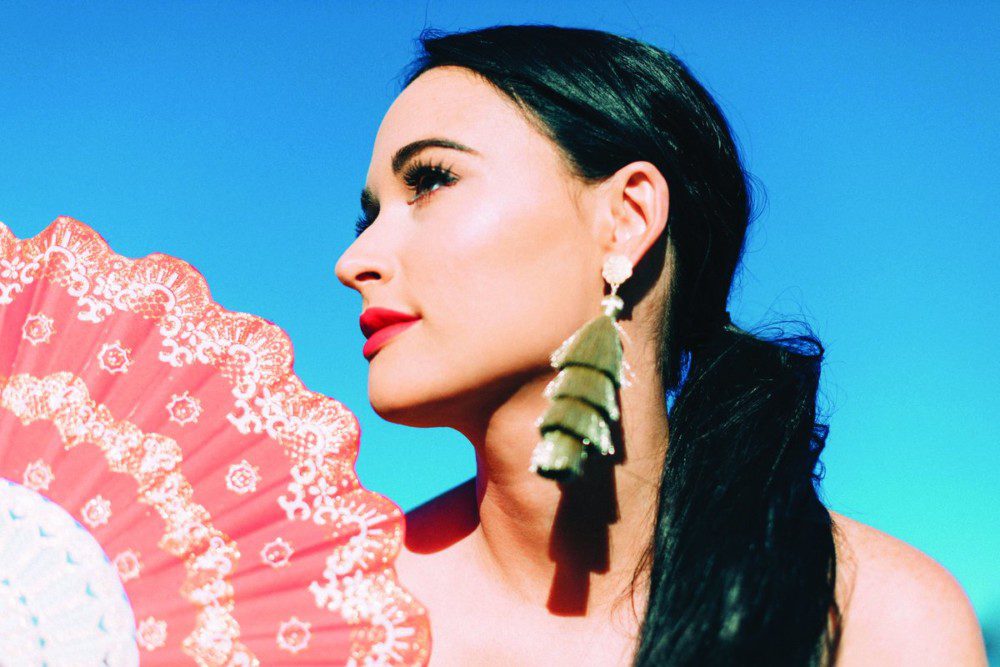
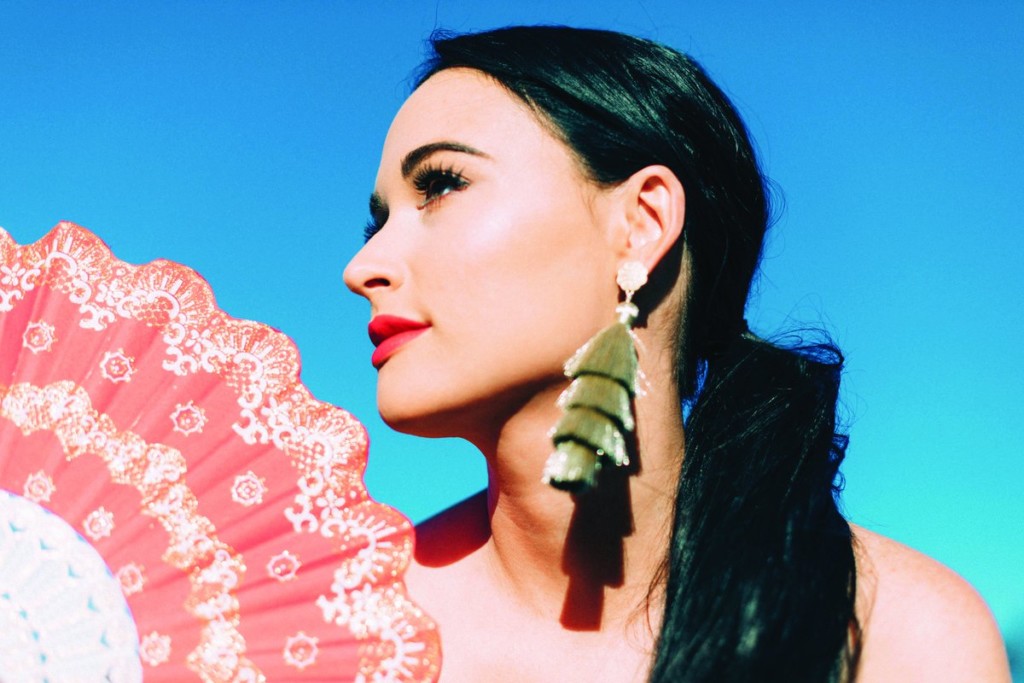
Kacey Musgraves topped the 2019 Pazz & Jop Albums List with Golden Hour.

Pazz & Jop LIVES – Even if the Village Voice Doesn’t

When I received my Pazz & Jop Ballot in December, I couldn’t have been more shocked.  I’d assumed that when the Village Voice shuttered in August, the music critics’ poll would go along with it. As an NYC resident and regular Voice contributor I was sad to see the paper go, but the loss of the poll was like salt in a wound; there was something so methodical, so definitive, so objective, about tallying hundreds of critics’ top ten albums to determine the year’s best in a way that wasn’t influenced by the branding of any particular publication. And while the top of the list was interesting, the real value I got from the poll came from scouring the ballots of critics with similar taste to mine, mining for overlooked gems.

The Voice had published only one piece since its death, though an archive remained online. No one seemed to know who would helm the poll itself – some critics even thought the email ballots that had been sent were a  a ghostly, automated mistake, though some of the copy had been changed. The defunct alt-weekly began running Robert Christgau’s old year-end analyses, stretching back to 1971, when the poll began. And then, this week, a flurry of essays from Christgau, Jessica Hopper, Sasha Geffen, Tirhakah Love, and a roundtable of former editors, not to mention the poll itself, appeared.

There are five women at the top of the album list – for the first time in the poll’s history. Kacey Musgraves got the top honors, with her breathlessly praised Golden Hour, followed by Janelle Monáe’s Dirty Computer. Next comes Cardi B, Mitski tied for third, and Robyn’s Honey rounds things out. Noname and Lucy Dacus appear in the top ten as well. And though Childish Gambino’s “This is America” was deservedly voted best single of the year, the rest of the year’s top songs feature Cardi, Janelle, Ariana, Robyn, Mitski and Kacey as well.

While it’s hard to say if there will be a Pazz & Jop next year, this year feels at least a little triumphant, and not just for the women who dominated year end lists. It’s a reminder that music journalism, while on shaky ground, has the potential to grow, change, and most of all, to keep existing, so long as there is a community of critics willing to sound off. Ann Powers says it best: “With Pazz & Jop I bring a different mind-set to it. I am thinking about the larger community of music writers. And I care about the larger community of music writers a lot. I want us to have a home to be together, and that’s what Pazz & Jop gives us. And so, the fact that this poll still lives, it makes me feel like I still have a bigger home.”

21 Savage vs. ICE

U.S. Immigration and Customs Enforcement (ICE) detained 21 Savage on Sunday, claiming that the Atlanta-based rapper was born in the UK, is in the US on an expired visa, and that felonies stemming from a 2014 arrest could lead to his immediate deportation. 21 Savage, whose real name is She’yaa Bin Abraham-Joseph, confirmed that he was indeed born in London, but that he was already in the process of renewing his visa after becoming aware of his “illegal” status in 2017. A representative for 21 Savage pointed out that while the rapper had indeed been arrested on felony drug charges, he was not convicted and has a clean record, and should be allowed to remain in the US until matters of his citizenship are settled, given his fourteen-year residency and the three children he has fathered in this country.

Immigration is obviously a hot-button issue in this political climate, and some have pointed out that 21 Savage has been critical of the government’s separation of families at the US-Mexico border. Though he came to prominence rapping about life in the streets – including gang violence, drug dealing, murder, and guns – he’s given a lot back to the Atlanta community as of late, and his latest album, I Am > I Was has been a huge success. Despite lots of support from fans and the hip-hop community at large, 21 Savage has a long legal battle ahead of him – we can only imagine what is like for those facing the same battle, but without resources.

That New New

Just in time for Black History Month, Chicago neo-soul singer Jamila Woods announces her next album, Legacy! Legacy! whose thirteen tracks each honor a different person of color; the latest single from the LP is dedicated to writer Zora Neale-Hurston.

Patio shout out fellow NYC DIY band Washer in their latest single, “Boy Scout,” from their forthcoming debut LP, Essentials, out April 5.

Michelle Zauner of Japanese Breakfast directed the latest video from Charly Bliss. “Capacity” will appear on the band’s sophomore LP Young Enough, out May 10 via Barsuk.

Foxygen’s new album Seeing Other People will arrive April 26 via Jagjaguwar and have shared its lead single.

Neneh Cherry shared a video for “Natural Skin Deep,” from her phenomenal 2018 comeback album Broken Politics.

Death Hags shared “Electrochemical Communication.”

Andrew Bird is equal parts Frank and Richie Tenenbaum in the new video for “Sisyphus,” from his cheekily-titled My Finest Work Yet LP, which comes out March 22 via Loma Vista Recordings.

The Japanese House will release their debut LP Good At Falling on March 1 after releasing a string of buzzy singles.

Thelma shared a delightfully weird video for “Stranger Love” as well as a new single, “Sway,” both from her sophomore record The Only Thing, out February 22.

Madrid duo Yawners have confirmed their first live appearances in the US will take place at this year’s SXSW; to celebrate they’ve released a video for “Please, Please, Please,” the lead single from their debut LP Just Calm Down, out March 22.

SOAK (Derry, Ireland based singer-songwriter Bridie Monds-Watson) releases sophomore LP Grim Town on April 26 and has shared its very timely first single “Valentine Shmalentine” with a cute visual.

Khalid dropped this Disclosure-produced banger from his latest album, which will be out in April.

iamiamwhoami vocalist ionnalee announced her sophomore solo album REMEMBER THE FUTURE (out May 31) and subsequent tour with lead single “Open Sea.”

Bibio shared this smooth-as-fuck track from an as-yet-unannounced follow-up to 2017 LP Phantom Brickworks.

Ariana Grande just dropped thank u, next, only six months shy of last year’s Sweetener LP.

End Notes

  • The 61st annual Grammy Awards will air on CBS this Sunday, featuring performances by Janelle Monáe, Cardi B, Camila Cabello, Brandi Carlisle, Lady Gaga, Dolly Parton, Kacey Musgraves, Dua Lipa with St. Vincent, and, in what is sure to be a train wreck of mediocrity, Post Malone with Red Hot Chili Peppers. But Ariana Grande has dropped out after the show’s producers refused to let her perform recent single “7 Rings.”
  • The Smashing Pumpkins’ Billy Corgan has been reunited with his Gish-era Stratocaster after it was stolen nearly thirty years ago.
  • Recently released from a year-long prison stint, DMX has announced an anniversary tour to commemorate his 20-year-old debut, It’s Dark And Hell Is Hot.
  • Early-aughts dance punks The Rapture will reunite for a Brooklyn show and festival appearance (at Long Beach’s Just Like Heaven).
  • Big Boi, whose very brief appearance was literally the only highlight of Super Bowl LIII, has also announced a tour with Goodie Mob and other members of Atlanta’s legendary Dungeon Family crew (but hopefully not Cee-Lo Green?).
  • Merge Records turns 30 this year, and the iconic indie imprint will celebrate in July with the MRG30 Music Festival in Carrboro and Durham, NC. The lineup will of course feature Superchunk and other label stalwarts like the Mountain Goats, Wye Oak, Fucked Up, Destroyer, and more. Tickets went on sale today.
  • Kim Gordon is getting her first-ever solo art show at Pittsburgh’s Andy Warhol Museum; featuring figure drawings, sculpture, paintings and sound installation; the show, titled Lo-Fi Glamour, goes up mid-May through September 1st.
  • Jonah Hill and Vampire Weekend took over the UWS Zabars to shoot a music video.
  • Dinosaur Jr. mysteriously appeared on the Japanese Billboard Hot 100 with “Over Your Shoulder.” The track appeared on 1994 LP Without a Sound, but unlike that album’s inescapable alt-rock jam “Feel The Pain,” was never released as a single.
  • 52-year-old Gorilla Biscuits guitarist Alex Brown passed away from a brain aneurysm last Friday.
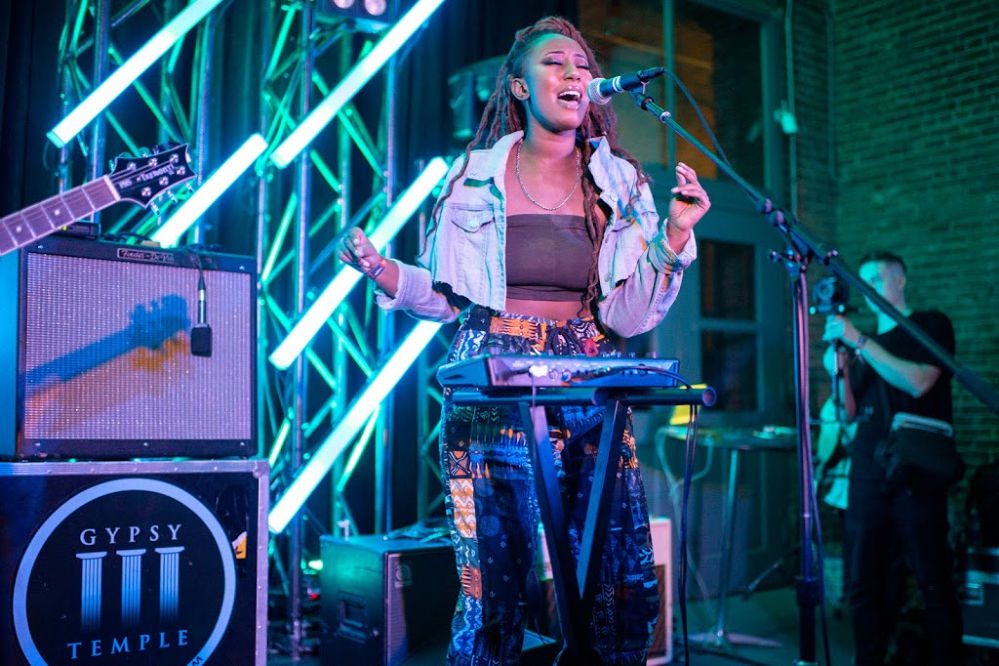
PLAYING SEATTLE: Parisalexa Lets Anger Burn Bright on New Single “Hothead”

(Photo by Victoria Holt)

On Feb. 4, Seattle singer-songwriter-producer Parisalexa dropped a blistering new single, “Hothead.” The track, both defiantly relevant and subtly creative, takes the confidence Parisalexa had on display with her last two releases to new heights.

“Hothead” is perhaps one of Parisalexa’s most straight-forward pop releases. Rihanna and Ariana Grande come to mind upon listening—as Parisalexa mixes up something that’s a little-bit trap, a little-bit Erykah Badu—with lyrics that point toward a larger conversation about the injustices in today’s world.

As the single starts, Parisalexa sings, “I don’t really give a fuck/Feeling like I had enough/You don’t wanna start that shit with me,” and as she sings silkily, “you got me so hot,” the subject seems like an object of sexual desire. After all, both anger and sex are equated with passion, and Parisalexa’s vocal delivery teases at that dual meaning.

But, then we arrive at the chorus: “I feel like I’m/ Pissed off/ Shadow boxing.” This part seems to introduce another invisible, elusive challenger, and as her synth-y beat escalates, it feels much greater than a single individual. And when a snare beat repeats like rapid gunfire in rapper Laza’s verse, it seems to imply her eyes are looking to broader themes.

In this way, Parisalexa joins the larger national conversation in pop music about anger—at sexism, racism, facism, or just plain old ugliness in the world—which has been a more palpable undercurrent in recent hits from top pop artists like Kendrick Lamar, Beyonce, Justin Bieber, and Solange. (The song “Mad” from her smash 2016 album A Seat at the Table, couldn’t be a better example).

But Parisalexa said that when she looks back, she can’t remember what made her so furious.

“The process of writing ‘Hothead’ was pretty spontaneous,” she said. “My producer, Elan, and I were in the studio and I’d come in a bit irritated that day, so we decided to write about it. I started the first line with ‘I don’t really give a fuck’ and from there, I just let the words kind of spill out. Almost all the lyrics just came out in the moment from the pure emotion of being pissed off. Now, I actually don’t even remember why I was so mad. But I just knew how perfectly the explosiveness of the beat at the hook would lend itself to the song’s overall sentiment.”

Sure enough, “Hothead” ebbs and flows with Parisalexa’s slow-burning rage—and it’s intoxicating. It’s a space for listeners to finally release any heat of their own.

ONLY NOISE: Touching Modigliani – My Patti Smith Pilgrimage

ONLY NOISE explores music fandom with poignant personal essays that examine the ways we’re shaped by our chosen soundtrack. This week, Jennavieve McClelland tours Patti Smith’s New York City in a post-graduate stupor, looking for tangible inspiration from punk’s poet laureate.

All photos by Jennavieve McClelland

I sought my kind & found none. How you rescued me, your peasant hands reaching through time,
wrapping my young heart, your poems found in the stall by the greyhound station.

Patti Smith, “Une Saison en Enfer”

In Dream of Life, the 2013 documentary that took Patti Smith and Steven Sebring 10 years to shoot, she notes: “I like to feel the skin of a canvas. I know it’s not right to touch paintings. You know, when you go to museums, first time I got yelled at I was a teenager, touching Modigliani. I just had to feel the texture, just the way the paint [trails off, touching her own painting]… It’s like, I almost have to put mittens on.”

Smith moves beyond sight into that which can be felt, feeling for the granular effect of the paints used by Modigliani and De Kooning – and in doing so, the auras and energies of the subject that is bridged in moving closer. Seeing is not believing: Smith lies with her muses as she moves into the Chelsea Hotel, “next door to the room where Dylan Thomas had written his last words;” as she “comb[s] the city [of Paris] in search of where Piaf had sung, Gerard de Nerval had slept, and Baudelaire was buried;” as she studies photos of Keith Richards in rock magazines to style her own hair, managing to “machete [her] way out of the folk era.” Smith leaves minimal room between her and her beloveds.

I dogged, dreaming of escape, words I could not comprehend & yet deciphered by blood illuminated adolescence.
I wrote with the image of you above my work table, vowing one day to trace your steps,
dressed in the watch cap & coat of my present self.

I discovered Patti Smith on a family trip to a furniture warehouse called The Brick when I was thirteen. My father was in search of a couch he could install in his new bachelor pad, in the basement apartment of his friend’s townhouse. I sat on the first pleather couch I saw, fixed in front of a huge plasma screen TV. It was playing muted concert footage of a tall, lanky woman with spidery black hair, screaming into the microphone. My dad interrupted the sales associate he was chatting with, tapped my shoulder and leaned down: That’s the godmother of punk, he whispered.

This was appealing to me at exactly this moment in time because a) my parents had just shared the news that they would be filing for divorce, which meant b) I wanted to scare any potential new romantic partners of theirs from penetrating our now vulnerable circle. Punk was going to give me the escapism I needed, a treehouse in the backyard of my distended domestic space. Punk would also clothe me in the armour I needed to stay on land when escapism wasn’t possible. Punk was abrasive, and punk was healing. I had received Mojo Magazine’s Punk: The Whole Story for Christmas a few days before our furnishing excursion, a Bible of a book and my new holy scripture for a philosophy that I did not have access to in my own sleepy suburb. My parents continued their tour of the warehouse while I sat and stared at my new heroine.

This morning pulling into your town, I walked the streets that you despised.
The streets I love for you having despised them. I will go to the train station in Rouche.
I will touch the remains of the walls of the farmhouse where you wept.

You’re not an artist until you are published, an acquaintance once told me. I had met him at a local Smiths DJ night. It turned out that he worked for a visual arts professor I had in university, the one who urged me to leave the arts behind. The class was called “Time-Based Arts,” and for our first assignment I created an audio piece to emulate the sound and feeling of waves through the use of an electric tambura, guitar loops, accordion and my wailing voice. I was asked to redo my piece after my professor found out that I often worked in the audio/sound medium. Every week after class, I would wait to talk to the professor and make a new argument for my piece, refusing to write another one on the basis of my musical history. Finally, agreeing to disagree, my professor let me off with a 60% – and a warning that the arts were probably not for me. I thanked him for his opinion – but in my l’esprit de l’escalier I gave him all kinds of hell. I made my way silently through the rest of the visual arts program, unparticipatory and mouse-like.


I graduated from my bachelor’s as winter arrived. This was my first time out of school since junior kindergarten. I remember being in shock, leaving my 8:30 A.M. alarm wakeups from my library days scheduled on my clock out of pure confusion. I gave myself readings even after I no longer had an official syllabus, unsure if I was ready to bargain with the art world outside of my bedroom walls without more Rainer Maria Rilke, more Anaïs Nin. I continued to study the selfportraits of Frida Kahlo, trying to orient myself within her painful mandala. Carsick: John Waters Hitchhikes America had just been published, and I tagged along in the backseat of his cross-country journey. Waters had predicted the best and worst outcomes he could anticipate of his travels, ending with the true story, what really happened, which was less eventful than his visions and required him to spend mild hours waiting on the side of the road for friendly passersby for the majority of his trip. My Apollonian trajectory, investigating the artists who gave me my only motivation, brought me to my office – a café called Loveless across the street – by 9am every day.

Just Kids – Smith’s first memoir – was on my personal syllabus through my post-graduation haze, and I spent my mornings with her and Robert Mapplethorpe until noon released me back into my abyss (AM to PM signaled a necessary change of pace for me). Smith’s was a story of conscious living, of connecting to another plane of being, entirely her own, and channeling it into a hot, magnetic flash of raw sound and poetry. Smith recognized at a young age that she needed more than what traditional 9-5 work could offer, and a burning obsession with freedom drove her to find fulfillment through writing and, eventually, the visceral performance of her writing through music. After my furniture warehouse introduction, I had “Land” on repeat for almost a decade until I read her memoir and delved a little deeper into her personal geography.

Smith begins her memoir in rural South Jersey, finding solace in a copy of Rimbaud’s Illuminations that would deliver her from the isolation of factory life, later crossing the ocean to explore the Charleville that Rimbaud was born and buried in between his own border crossings. Rimbaud’s “d’encre de Chine” – Chinese ink – illustrates the blackest of all inks, a blackness which is proof of the beginning of the experiment, a time of melancholy and dissolution, but of hope as well. Only when the blackness appears can the first stage of the alchemic practice begin, and the possibility of gold be discovered. Submerged in my own shades of black from a lack of cohesion in my familial and artistic life, my need to retrace Smith’s steps (just as she’d done with Rimbaud) fostered in me an incredible desperation. My escapist fantasies became my only thoughts. It was time to act, to erase the cage I had drawn myself. Two days later, I got on an eleven hour bus ride to New York City.

I will be there at the train station. I will piss in the urinal you pissed in.
A young man cursing existence & then a dying man.
I will squat & rise. I will stand. I will give you my limbs, no longer young but sturdy all the same.

I traveled to New York with the guise of a literary tourist, using Just Kids as my guide through the spaces that had fostered Smith through her formative years: my Patti Smith Pilgrimage. Smith’s was the first voice to rebuild what had been unsettled by my external world, a screaming reminder of my youth, my fire, and my “gradations of gold” (to use the language of Rimbaud). I wanted to connect with more than the pages of the books I had been clinging to; I wanted to touch the paint. I went to New York City to experience Patti Smith’s youthful impulses in lieu of my own.

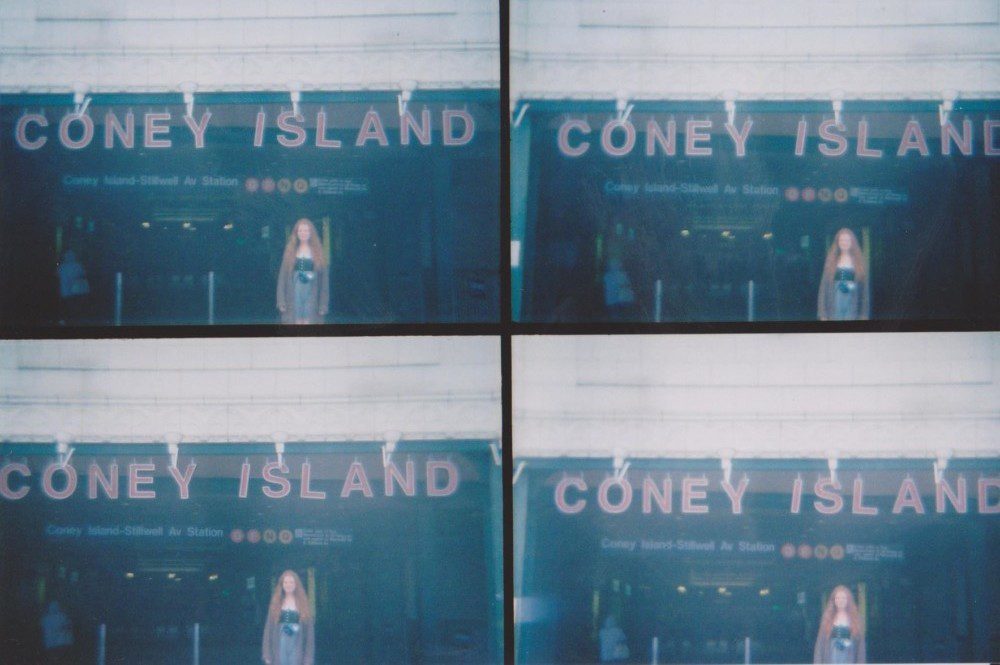
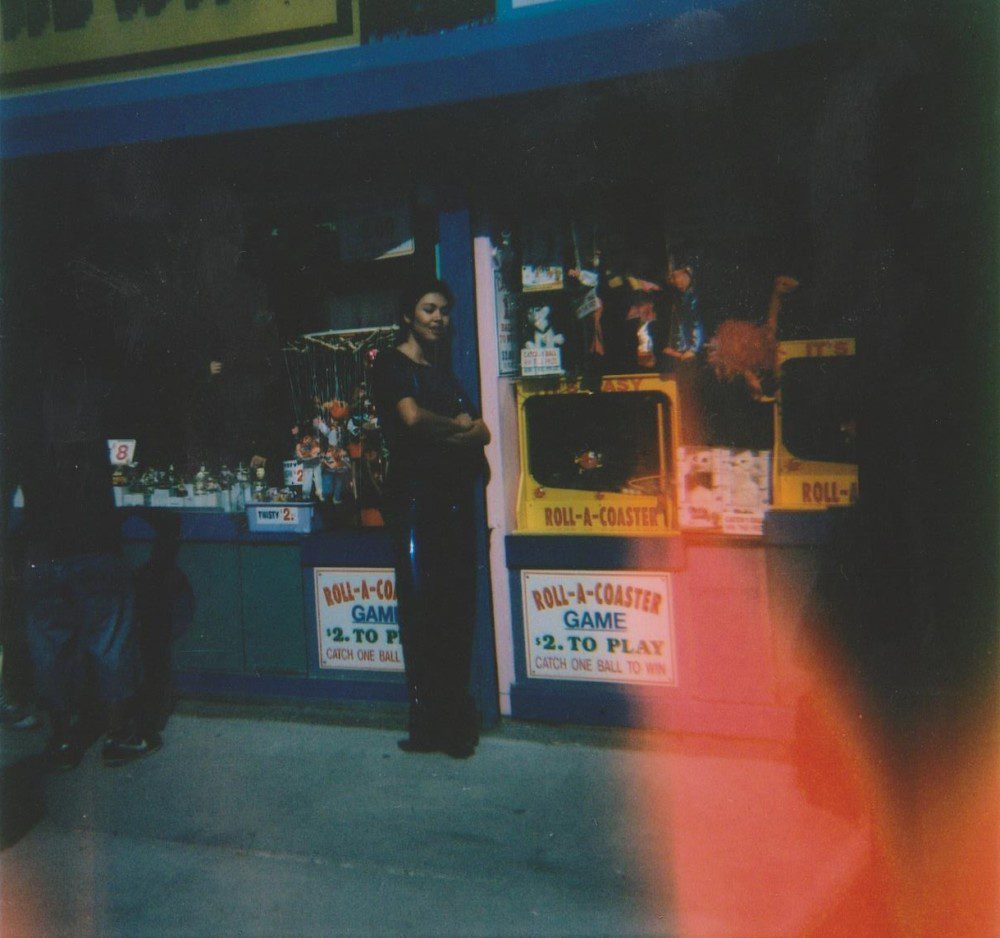
I walked Patti’s map of the city, gliding through Tompkins Square Park (where Smith’s friend Robert Mapplethorp saved Patti from an awkward date), buying an egg cream at the Gem Spa (where he took her after), then moved further away, taking a Sunday trip to Coney Island and buying hot dogs from Nathan’s (which has either suffered from inflation or was always crazy expensive), walking down the boardwalk and catching Coney Island folk mid-fashion shoot.

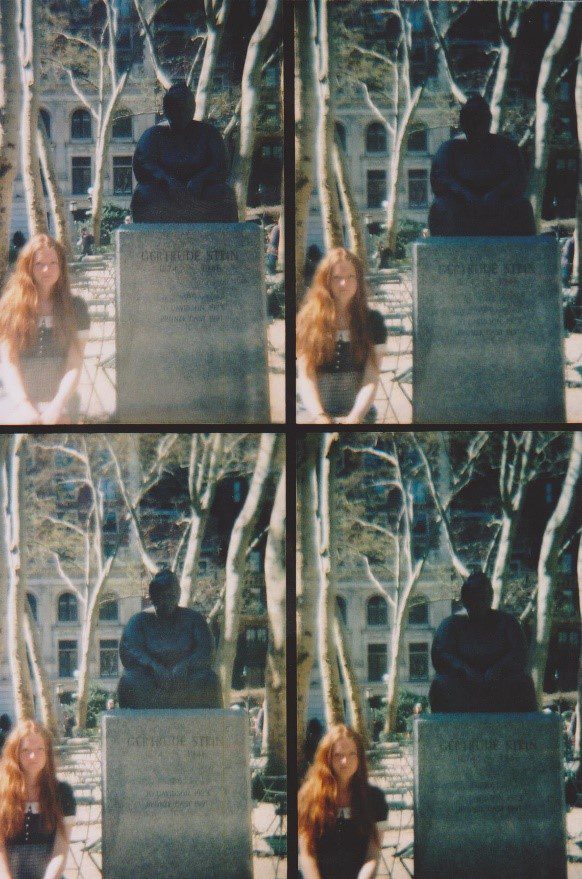
Patti’s previous workplaces, where she spent her minimum wage days: the Strand bookstore, and the art deco beauty that is the old Charles Scribner’s Sons bookstore which has since transformed into a Sephora but still boasts the watermark on the side of the building as well as the gorgeous black and gold engravings. I visited the Metropolitan Museum of Art – finding more solace behind the building, where I took a nap on the grass and the fallen pale pink petals of the magnolia trees, than I did inside with the hustle of students and teachers – though frequent trips to the bathroom, located through the collection of ancient Egyptian mummies, had a way of reminding me of life. I visited the Museum of Modern Art where I felt something for Duchamp’s alter ego Rrose Sélavy. I visited the NYC Public Library and spent the rest of my American money on a beer in Bryant Park where I read Rimbaud’s letters and wrote some of my own. I visited Electric Lady Studio, where Patti first met Jimi Hendrix when she was still an unknown poetess, both feeling socially awkward at its opening celebration. I visited the Chelsea Hotel, walking inside to see the foyer that Patti sat, wrote, and drew in, where Salvador Dalí christened her his gothic crow. The concierge eyed me hard, probably knowing my business would not end in any financial transaction.

Ay Rimbaud, the rat poet laureate. A rat is all I have been, scurrying through the streets of the city of brotherly love.
I am where you were & I feel as if I could find you waiting.

Shadowing Patti’s ascent, I am where you were, is that first light of creation; culture is no longer a shield when one finds the doorways to communion. The deficit I encountered in my post-collegiate days now appears to me as a necessary gaze inward. This gaze, in its present moment, appeared in hues of escapism, a thin skin distant from something much more insidious: that of nihilism. The abrasion of punk is twofold – it is destruction, and it is creation. It is the blank generation, it is the void sublimated; it is absolute freedom, it is that nutrient which offers illumination, it is filling (fill me! fill me!).

Patti Smith offered an entrance, opening a world that I wanted to live in, reflecting light, colour, and sound that welcomed me into its foreign arms. I stayed in New York City a week, waking early enough on my seventh day to see the sun rise and with it, the last licks of night life, still with whiskey in hand. To touch heightened myth – with our fingertips! – is a brush with the artist’s divinity.

On the bus home I returned to playing “Horses” on repeat, the beginning and the end: Jesus died for somebody’s sins, but not mine.


PLAYING ATLANTA: Stop, Rock & Roll with The Ides of June

Atlanta’s music is as varied as the people who call the city home, blending the sounds of pop, rock, alternative, R&B, hip-hop, and singer-songwriter to create a constantly moving, evolving scene. Even so, there’s no mistaking the history of music in the region… or the city’s proximity to Southern Rock’s hometown, just two hours south in Macon, Georgia.

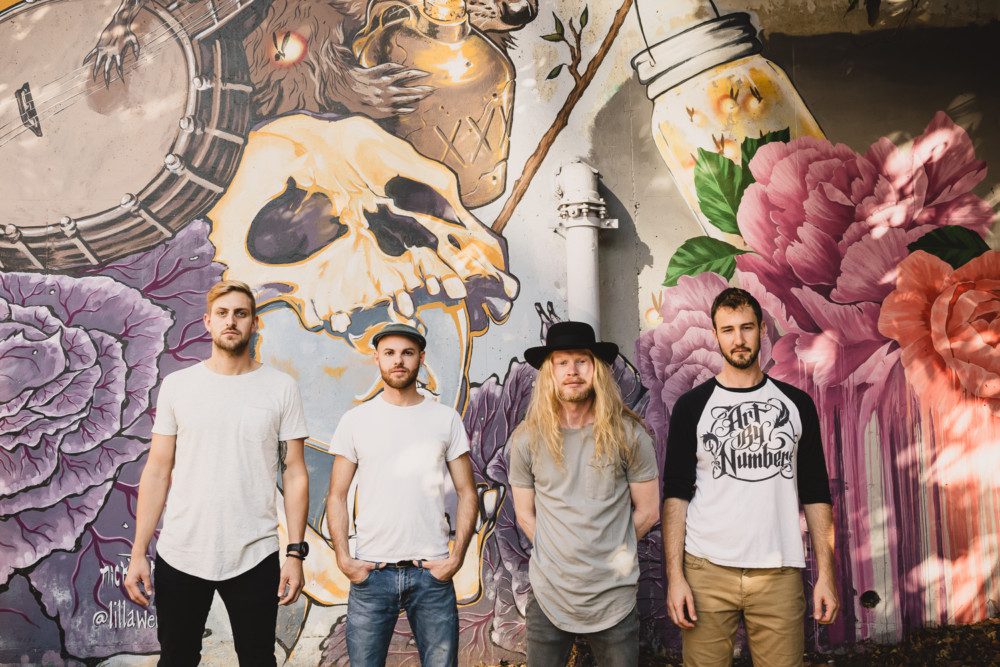
No Atlanta band is as inspired by that Southern Rock history than The Ides of June. The quartet – made up of Dusty Huggins, Clay McConnell, Justin Nelson, and Alex Gannon – blend heart-thumping rhythm sections with soaring guitars and a heavy blues influence to create a sound that’s equally impactful when witnessed live or through speakers.

Despite a busy schedule promoting their latest record, Stop, Rock & Roll, the guys sat down with us to tell their story and talk all things music, writing, and rock ‘n roll.

AF: Thanks so much for taking the time to talk with me! Let’s jump right in. How did you guys come together as a group, and where did you get your band name?

Dusty and Clay got together and decided they wanted to form a band, so they simultaneously learned to play their instruments and began writing songs. They began playing with different people until they found a core group on board with the project’s sound. The band has gone through a few lineup changes over the years, but is currently a four-piece band consisting of bass, drums, and two guitars.

The name “The Ides of June” is derived from Roman folklore – the Ides of March is a day in the Roman calendar signifying March 15th. Caesar was told by a seer that he would not survive the Ides of March. He was stabbed to death that very day by members of the Senate at an official meeting that the seer warned he should not attend.

The modern day version for the Ides of June is the tale of a curse. On June 15th of 2012, front man Dusty Huggins’ mother was taken off of life support due to a suicide attempt that left her with zero brain activity. In the following years, his group of friends would endure car crashes, motorcycle wrecks, and many other oddly occurring events on The Ides of June. When the date was approaching, Huggins would exclaim, “Beware The Ides of June!” After a year of searching for a band name, Huggins said the phrase per usual, and McConnell was stricken with the idea for a band name. That night the two agreed that their future name would be The Ides of June. 

AF: You guys released your last album, Stop, Rock & Roll, a few months ago; what was the creative process like?

Usually, one member comes up with a riff as a starting point, then we would jam on it as a group for about 25 minutes until it started to take shape. We throw ideas out for structure; sometimes lyrics are already in place, sometimes they come later. In the case of “Face in the Mirror,” Clay came up with the riff and Alex put lyrics to it later.

AF: What inspires the songwriting for you guys?

The first album was bursting with fuzzy tones and dark, angry lyrics. The songs on this album are mostly songs with lessons and learning, but many end with despair, such as the song entitled “The Ides of June.” Today, its meaning is positive and uplifting to the band members. The group talks about itself with the simple nickname “The Ides.” The music has also gained a more refined sound with uplifting overtones. This is due in part to the changes and progressions in the music and lives of the original members, and largely in part to Gannon’s addition to the band.

The Ides is no longer a curse. It is a cause for celebration of life and what a group of people can do together, whether it be pulling together to help a friend through his mother’s death or spending two years grinding through practices, on the road, and in the studio in order to make an album that we’re proud to call our own.

AF: Who would you cite as your greatest influences when creating your sound?

Each member kind of pulls from different influences. Dusty is without a doubt infatuated with The Black Keys, especially the lead singer Dan Auerbach. There is a definite blues element to the music we play, but also an obvious taste of southern rock. The Allman Brothers are also a major influence on the general style of the band. 

AF: How do you blend that iconic Southern Rock sound with more modern influences and styles to create something unique to you?

We think that is what makes our music stand out – there is an obvious blend of backgrounds. Dusty’s vocals pull a lot from more modern rock artists, while Alex’s multi-faceted background brings the blues, as well as a more technical approach to creating music. We don’t actually try to produce any particular sound. When we get together to play, our sound is just the unplanned result of multiple backgrounds coming together.

AF: What’s it like being a part of the Atlanta music scene? How has it impacted you as a band?

It is very rewarding to be a part of such an awesome group of people. We have met many great bands that, over the course of time, have turned into great friends. It has let us know that there is amazing support out there in what can be a very intimidating career. We have seen friends in the Atlanta rock scene start to make a name for themselves, and we are both proud of their achievements and honored to get to play alongside them. It is very inspiring for us as a still relatively young band in the area to see such successes.

AF: What’s next for The Ides of June?

We plan to continue promoting the new album, Stop, Rock & Roll. We are lining up quite a few shows between now and the end of summer to do so. We are very excited to see what this new year has to bring us and looking forward to meeting new people/bands and making new friends. 

We are considering what our next music video will be as well. We have already begun throwing around ideas for new songs that will ultimately go on the third album. However, that is a ways in the future.  

Follow The Ides of June on Facebook and Instagram, and stay tuned for their upcoming tour dates. 

PLAYING DETROIT: Kari Faux and Mick Jenkins Warm Up Detroit Post Polar Vortex

photo by Sam Schmieg

Chicago rapper Mick Jenkins came through Detroit with spunky come-up Kari Faux last week and it was as underrated as Michigan winters are long. Jenkins, who spent the last few years in a reflective state, taking a break from touring, came back to the stage with a fresh perspective and a conscious mindset. Faux’s literal, sassy critiques on modern culture offered a light balance to Jenkins’ serious approach, discussing fatherhood, faith and perseverance.

Nestled in the basement of St. Andrew’s Hall, otherwise known as “The Shelter,” Kari Faux opened the show with the exuberance of being on a stadium stage. Her infectious energy and genuine excitement to be there lit up the room as she started her set. Although Faux is far past the point of having to introduce herself, she humbly took a census of people who knew of her in the room. “Raise your hand if you know who I am,” she joked. About half the room gave a loud cheer, while the other half waited for her to add, “Raise your hand if you don’t know who the hell I am.”

Whether or not the audience had hear her music before, her snarky lyrics had everyone in the room singing along. Before long, the basement was reverberating with the brash catch phrase from Faux’s 2014 song, “On The Internet”: “I don’t give a fuck if you’re famous on the internet.” Although the song was released a few years ago, it’s meaning has only amplified in relevance with “Instagram celebrities” reigning over pop culture. Faux asserts her ambivalence toward the cult of followers, reminding us that it’s more important how people act in person rather than how many followers they have.

Faux’s cheeky lyrics paint her more as a sassy best friend than a jaded performer, and this impression solidified when she opted to play a song outside her set for a fan. “You better sing along because I’m doing this one for you,” Faux said to a girl in the audience before performing “Color Theory,” one of her more recent releases. In fact, Faux’s natural interaction with the audience throughout her performance made it feel like we were all friends hanging out instead of strangers in the crowd. She has ways of saying things that are so poetically blunt, you wouldn’t dare disagree with her.

This lyrical poignancy is especially evident on “Fantasy,” a song about refusing to mold her personality or look to fit the standards of a man. “I’m no man’s fantasy, and I never plan to be,” Faux sings in the song’s hook. This song and most of her others – including her closing song “No Small Talk” – offer a particular type of empowerment that promotes expression and individuality, focusing on yourself and your own growth, and staying positive throughout the process.

Jenkins’ following performance was of a different vibe but followed in the same positive steps that Faux set forth. He entered the stage with his band – Zachary Smith (DJ), Manoah Hyppolite (Drummer), theMIND (Singer), Brent Hoyte (Bass) – and a reflective attitude. After his first song, he thanked the audience for supporting him after his brief hiatus. He explained that the record he released in October, Pieces of a Man, finds him in a different stage of life. “I’m coming from a place of reflection and looking back at where he’s been and where he’s from,” he explained.

But although Jenkins further embraces faith and spirituality on this record, he doesn’t fail to acknowledge all of the things that make him human. Before performing “Grace & Mercy,” he asked the smoke-filled room to “make some noise if you got up and got God today.” Almost everybody hollered back in response, even if it meant taking the J out of their mouths. But Jenkins’ God isn’t one who scorns at street life or a little bit of light drug use; instead, Jenkins sees God as someone looking over each of his decisions – questionable or not – as he’s grown in success over the years. Jenkins’ God is someone his fans can relate to and feel accepted by, whether they believe or not.

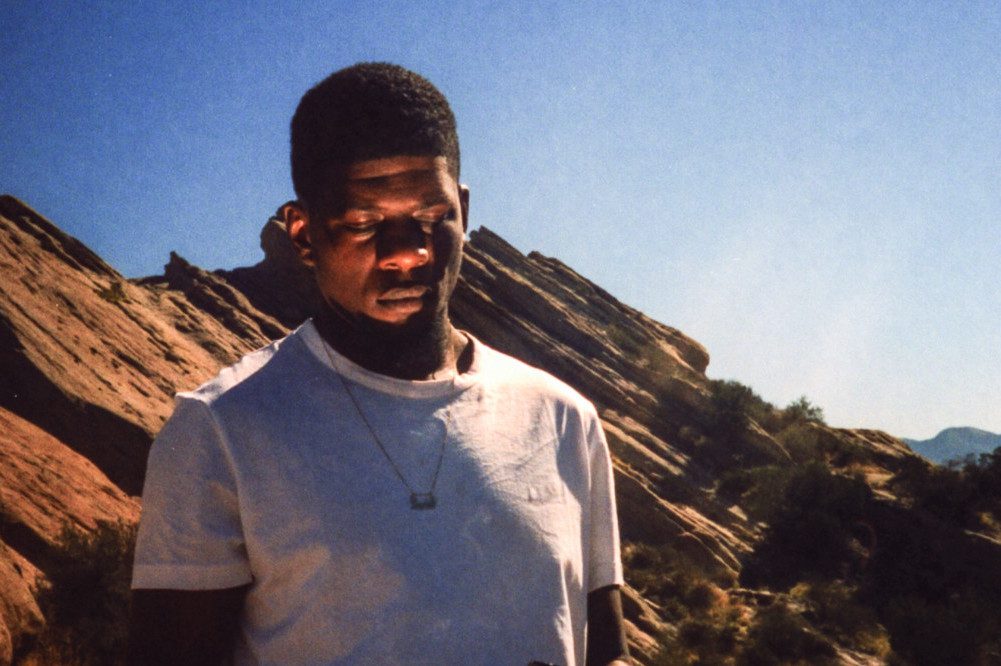
Jenkins made it easier to believe in a higher power every time he surprised fans by seamlessly floating into his singing voice, showing a different, vulnerable side of the rapper. Though Jenkins sings on his record, hearing him do it live feels like a special secret – like we’re witnessing him in a quiet moment when he thought he was by himself. In fact, his whole set felt almost conversational. His verses told the stories of where his mind has been the past two years and what he values now. He feels natural and confident, but not boastful, and grateful to be performing to a crowd that is echoing his every word.

Listen to Pieces of a Man below.

PLAYING CINCY: Bunbury Music Festival Lineup Revealed!

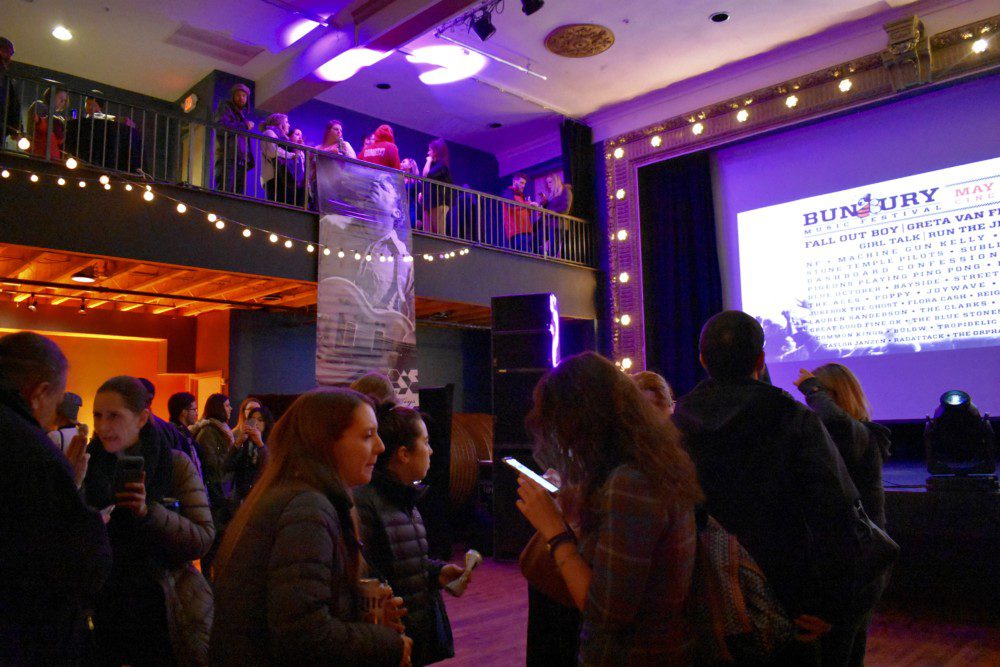
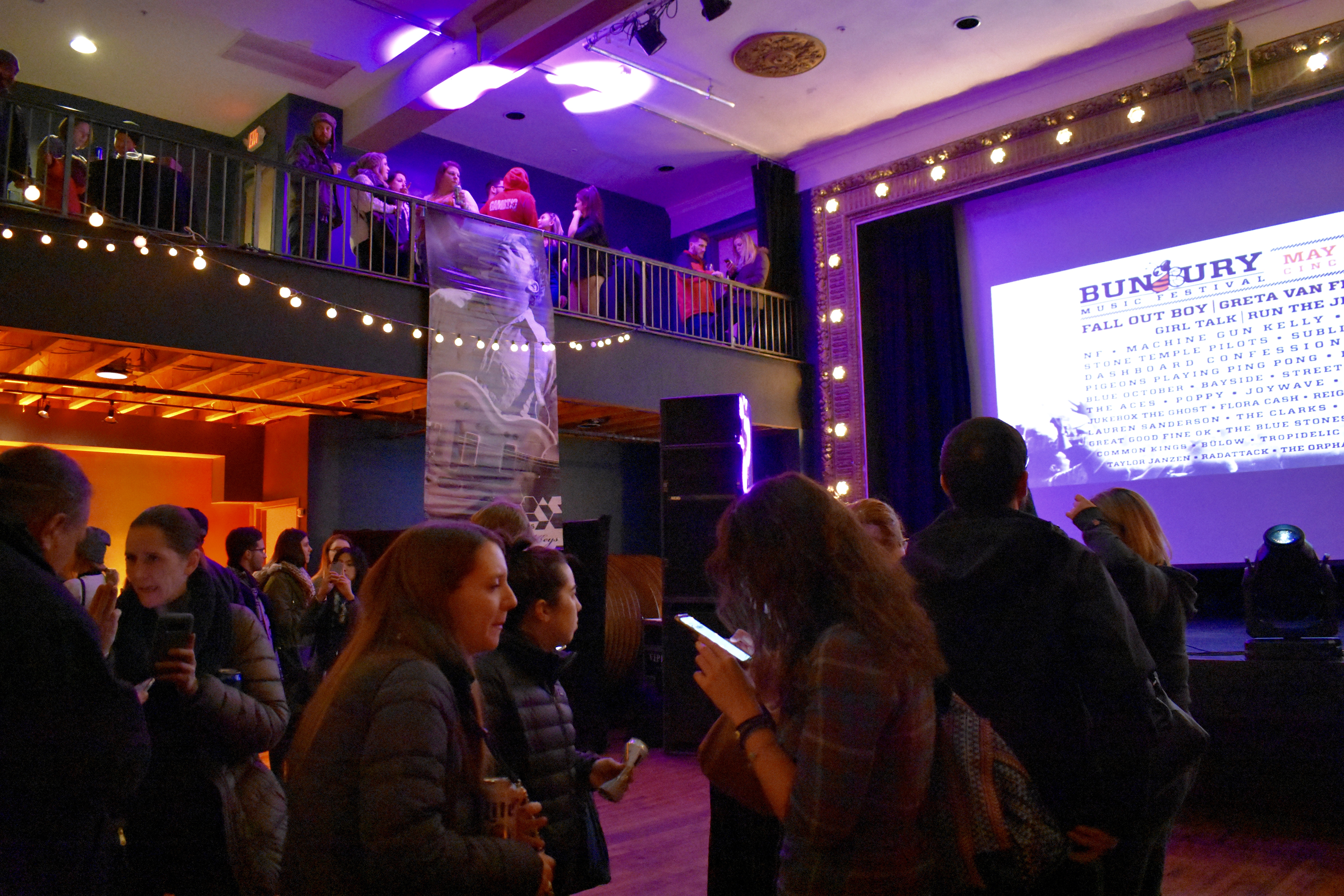
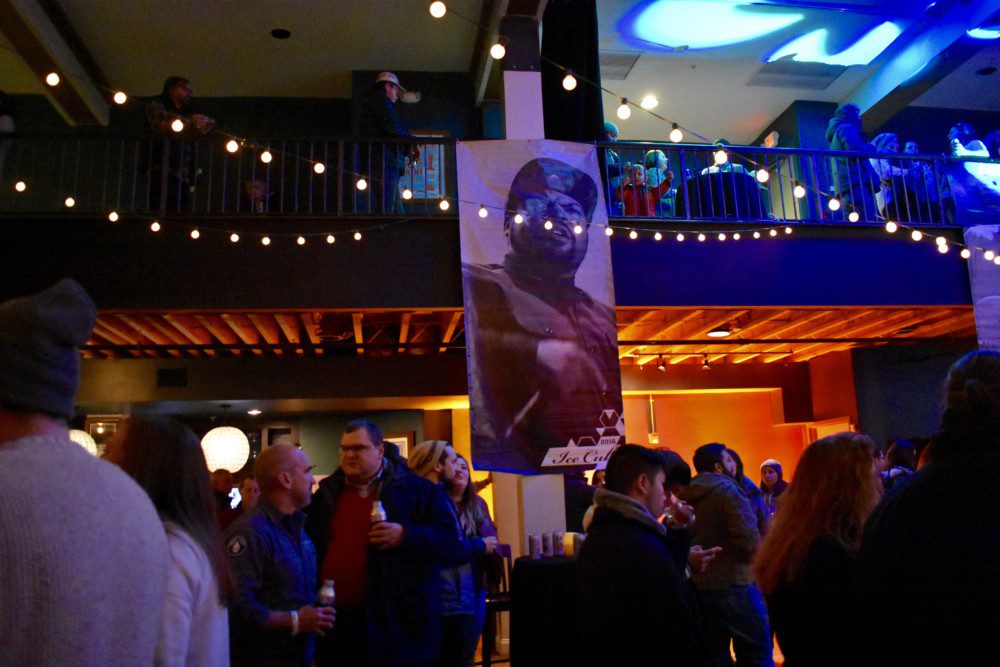
In a huge party thrown at The Woodward Theater on Thursday night, the eighth annual Bunbury Music Festival lineup was revealed. The festival, which takes place May 31- June 2 in Cincinnati, has hosted artists such as Post Malone, Tom Petty, Ice Cube, The Chainsmokers and more on their two main stages. This year’s lineup boasts artists such as Fall Out Boy, Greta Van Fleet, The 1975, Girl Talk, Run The Jewels, Machine Gun Kelly, NF and several others.

Bunbury
Attendees enjoy a first glimpse at the Bunbury Music Festival lineup. Photos by Victoria Moorwood.

Over 250 people gathered at The Woodward for the unveiling and the reveal was met with applause. The crowd, enjoying beer and food truck pizza, were also able to buy their Bunbury tickets at a discounted price and take photos in front of a logo wall.

Bunbury

The upcoming festival has something for everyone, with the mixture of alternative, rock and hip hop genres that Bunbury is known for. Unfortunately, for the second year in a row, Blink-182 cancelled their Bunbury performance, this time saying it was due to their current album recording schedule. However, fans didn’t seem too upset and the lineup still includes a diverse range of impressive acts.

Tickets can be purchased on their website.


HIGH NOTES: Why Drug Testing Works — and Why More Festivals Don’t Do It

An at-home drug testing kit available via DanceSafe

If you grew up in the US, you probably heard “say no to drugs” in middle school health class, but you probably didn’t learn how to reduce harm if you did use drugs. And, chances are, you didn’t follow DARE’s advice. The majority of American adults have smoked weed at some point, according to a 2017 Marist College poll, and a 2014 National Survey on Drug Use and Health survey found that over 17,000 Americans ages 12 and over had used MDMA, over 22,000 had used magic mushrooms, and 25,000 had used acid.

Music festivals in particular are popular sites for drug use; a March 2015 DrugAbuse.com study of Instagram posts about 15 popular music festivals found that 25,605 mentioned MDMA, 9,705 mentioned weed, and 4,779 mentioned cocaine.

In order to reduce the risk of drug-taking at music festivals, some organizations like Energy Control and DanceSafe set up booths on festival grounds, where attendees can get their drugs checked for contaminants and receive information about harm reduction. These programs have garnered some pushback from people who believe they could encourage drug use.

Paul Komesaroff, Professor of Medicine at Monash University in Australia, President of Adult Medicine in the Royal Australian College of Physicians, and a practicing physician, is an advocate for drug-checking programs who has researched the analytical techniques they utilize. I asked him about how drug-checking works, what impact it has (and doesn’t have), and what obstacles are preventing it from becoming more widely available.

AF: Why are drug-checking programs at festivals important?

PK: I think it’s important for us to understand that drug-taking is something that’s here to stay, but drug-taking is not just one thing. There are different people who take all sorts drugs for different reasons. Homeless people who are on the street and shoot up heroin are very different from young university students who might go to dance parties or music festivals and take ecstasy, for example, or smoke marijuana. So it’s important not to think of drug-taking as one thing. For some people, it’s a deep attempt to escape reality. For some, it’s a lifestyle choice, or people may do it to alter their experience or perceptions of the world. There are different reasons, some more valid than others. When we’re thinking about the way in which society should respond to recreational drug-taking, it’s important to understand this variability and to focus on what particular risks people face in different settings and what their needs might be in recent years.

It’s well known, of course, that a major problem with illicit drugs that are obtained through dealers, illegal networks, is that the purity is very variable because you depend on the word of someone who is supplying it, and they’re often produced in risky circumstances. Some of the testing programs have shown that of substances that have been taken for testing, up to 50% don’t contain anything they refer to, or they have contaminants. Contaminants may be things to pad them out — there are powders, there might even be toothpaste to increase the bulk and the weight — there’s no limit to what those substances can be. There’s been a lot of unfortunate events at music festivals — people supply drugs of poor quality, and people are taking overdoses or dying or becoming critically ill because of the impurity of the substances.

So, in this setting, the possibility has arisen of giving somebody advice and guidance without judging them, still recognizing these behaviors are going to occur but with the purpose of minimizing the chance of experiencing serious harm. In the past, law enforcement or public policy approaches to drug taking have been very crude. It’s focused on large-scale messages: “say no to drugs.” We know those don’t reduce harm associated with drugs. They increase the harm by driving people into criminality and by insuring the substances supplied are of unknown composition and impurity, and they often have toxic, dangerous contaminants, and it’s in this setting that pill-testing has come out.

AF: How does drug-testing at festivals work?

PK: It’s been around in European countries for more than 20 years. We can offer people the opportunity to test for particulate contaminants, and we can test for the concentration of what they think they’re taking. We can test to determine the purity, and technologies have a pretty high level of reliability right now. But we can combine that with a process of counseling, information, and advice.

The programs operate a bit differently in different places, but typically, what would happen is, there’s a testing caravan set up in a corner of the venue, and the people will be invited to attend. There would have to be an arrangement with the local authorities and the police because you don’t want people who, in good faith, are coming to obtain advice, who are then accosted by law enforcement. The people in the testing center will be asked to sign a waiver recognizing there are limits to the information being given and there won’t be any legal consequences to the information or advice they receive. They would be assured of confidentiality, and then they’ll speak to a counselor, who will talk to them about what it is they’re planning to do and what the questions might be. They may be asked to fill out some forms, or it may be offered to them to fill out some forms. The data may be collected on who’s coming and what their needs are, and that’s important to prove that such programs do what we think here likely do.

Then, they’ll be given an identification code and they’ll go away, and the substance will be put through the testing machine. There are rather sophisticated technologies that can be used, and the result can usually be delivered in 40 or 60 minutes now. The results will be posted outside the compound, so there might be a board saying ‘the substance with this ID code number has dangerous substances, don’t take it” or some more specific information. People will provide a sample of what it is they’re planning to take — they might buy half a dozen pills and give one to be tested or something like that — so there’s no question of returning materials. So the choices are with the young people themselves of whether they take the advice, but the people running the testing programs have the opportunity to ask them if there are particular concerns they have, then to provide them with data from the scientific tests.

AF: What are the obstacles to these programs?

PK: There’s a lot of opposition to pill-testing programs. There are two main concerns, both of which have validity. The first is how accurate the testing can be, and the second is whether you’ll do more harm than good by luring people into a false sense of security. The reliability of the testing is good but not foolproof, and you can only find what you’re looking for. You can test for known toxic substances. It’s important that the information is not overstated or exaggerated and the people who are seeking the information are informed about what we can and can’t know.

What’s often found in pill testing is, the substance either doesn’t contain what’s being promised — it may not have any cocaine or MDMA — or they might have specific dangerous contaminants. As an additional potential benefit, if it looks like there’s something going around, then a warning can be issued to everyone around saying, “Be careful, we know there are substances of this sort going around.” So the reliability is reasonable, but it’s not perfect, so it has to be carefully stated so people are not misled into thinking they’re safer than they are.

The other question is more tricky, which is whether or not, if there’s pill testing, people will actually be encouraged to take dangerous drugs. And that’s the main reason for opposition, particularly from conservative critics. The evidence really doesn’t support that view, however. If someone actively seeks information about a substance — they come to a testing center and they speak with someone face to face and say “I want to make sure this doesn’t have some toxic ingredient” — it’s extremely unlikely that this will increase their activity. The emphasis is not on encouraging people to take drugs but to give them the information so they can make whatever choices they want to make themselves.

AF: Do these services actually prevent people from using dangerous drugs?

PK: There’s good evidence with the programs operating in Europe that with an approach like this, we can reduce the harm people are exposed to. It’s not a panacea for the drug-taking problem. It’s not a way to stop people taking drugs en mass. It doesn’t necessarily change any of the other programs in operation. But a certain group of people who are at risk who are actively seeking information about what it is that they can take, it will actually reduce the harm they’re exposed to.

It’s really difficult to collect reliable data in this area for some obvious reasons: people come anonymously, and we don’t follow them up because that’s part of being able to conduct these programs safely. So, it’s difficult to assess whether we’re saving lives by undertaking programs like this. That’s one of the major controversies about pill testing, so we need to be able to find ways to address that. I mentioned before that nowadays, people coming to these centers would be invited to fill in some forms about themselves. They might be asked to give some demographic information about their age or status or ethnicity so we can see who is using these centers or what sorts of concerns they might have.

What we do know is that when we ask people in general terms about how they would deal with information of this sort, about 80% of people say that if they are advised that there is something wrong with the the pills they provided for testing, they wouldn’t take them. That doesn’t mean that’s what people do in practice, but if someone comes to the center actually seeking advice and they give one of their pills to be tested and then are told its dangerous, it isn’t logical they’d ignore that advice if they’re going through all that trouble.

AF: Do you know why these programs seem more popular in Europe than the US?

PK: I think the obstacles are cultural and legal more than anything else. I think it’s fair to say the culture in the US is a bit more conservative than in some European countries like the Netherlands, which has led the way in drug policy. I think the broad cultural environment is probably the main thing, and the legal enforcement approach also will follow from that.

AF: Anything else you want to add?

PK: For a long time, in this area and others, the approach to potentially dangerous substance use — and that includes alcohol and tobacco as well as recreational drugs — the main social policies have focused on prevention and law enforcement, and the educational advice has just told people blindly not to use them, and we know that doesn’t work. We know that’s not effective in some areas, such as alcohol and tobacco use, and other areas associated with public safety, such as road safety.

We’ve got to have a range of more sophisticated approaches for the road. We have seat belts, air bags, and a range of educational programs about alcohol use and speeding. And we know, together, this array of approaches does have an effect on road safety. The same applies to alcohol: Telling people not to drink or to drink in moderation is not enough to reduce harm associated with alcohol use. You need a range of programs that includes education in schools, ways alcohol might be advertised or packaged or produced. The same applies to tobacco and other things. We know that simply telling people not to do things or punishing them for doing them doesn’t reduce the harm to society but may increase it.

The same applies to use of recreational drugs, and we do have the experience of safe needle programs, safe injecting rooms, and so on. There is good evidence that these programs reduce the transmission of HIV, AIDs, hepatitis C, or other communicable diseases like that, so we’ve got evidence from other areas to support the idea that carefully focused and modulated messages to particular groups of people who can hear what it is that they’re saying can have a beneficial effect on people’s behaviors.

NEWS ROUNDUP: Kesha Vs. Dr. Luke, New Music, and MORE

New Motions Filed in Kesha / Dr. Luke Legal Battle

Kesha’s ongoing legal battle with Lukasz “Dr. Luke” Gottwald rages on, with a few new developments this week. Though a New York judge sided with Dr. Luke and Sony music following Kesha’s 2014 allegations that the producer had drugged and assaulted her, Dr. Luke is now suing for defamation, and other pop stars have been pulled into the back-and-forth.

Both Lady Gaga and Kesha made statements implying that Dr. Luke had also assaulted Katy Perry, though both Dr. Luke and Perry denied any assault had taken place back in August. This week, Kesha’s lawyers pointed out that this doesn’t mean an assault did not take place, in a response to Gottwald’s summary-judgement motion.

Lady Gaga’s 2017 deposition was also unsealed, and Gaga made some pretty powerful statements in support of Kesha, saying that as a survivor of sexual assault herself, she recognized Kesha’s “depression and fear” as evidence that something terrible had happened between the two. As Luke’s lawyers questioned her testimony, Gaga said they should be ashamed of themselves and that they were all a party to Kesha’s ongoing victimization; and her words are heartening for all survivors of sexual assault: “Well, you know, when men assault women, they don’t invite people over to watch. And when this happens in this industry, it is kept extremely secret, and it is compounded by contracts and manipulative power scenarios that actually include this very situation that we are all in right now…. How about all of the women that are accused of being liars and how she was slut shamed in front of the world, how about that?”

Of course, many have pointed out that while Gaga seems to support assault victims, her willingness to work with accused pedophile R. Kelly sings a different tune. Though Gaga has since apologized for the unfortunately-titled duet “Do What U Want (With My Body)” and removed the 2013 single from streaming platforms, critics say she still has to answer for her collaborations with Chris Brown and photographer Terry Richardson – both of whom have been accused of sexual assault.

Bottom line – though much of the entertainment world is having its Time’s Up moment, the music industry still has a lot of reckoning to do when it comes to the #MeToo movement.

That New New

Rico Nasty burst onto the scene in 2018 with her mixtape Nasty, and so far, 2019 looks promising as well; the rapper’s latest collab with Kenny Beats follows the equally infectious “Guap (LaLaLa).”

Brooklyn post-punks Weeknight have expanded their lineup from a duo to a quartet, opened a bar in Bushwick, and today released their sophomore album Dead Beat Creep.

King Gizzard and the Lizard Wizard took a short break last year after releasing five (!) albums in 2017, but they’re back with a kitschy new video for “Cyboogie.” They haven’t released further details, but it’s likely there’s a new record (maybe even multiple records?) on the horizon from the Australian psych-rockers.

Yves Tumor released a powerful video tackling police brutality for “Noid,” one of our favorite singles from last year’s excellent Safe In The Hands of Love.

Stella Donnelly shared a video for “Lunch,” from her forthcoming Secretly Canadian debut Beware of the Dogs, which arrives March 8th.

Emily Reo will release Only You Can See It, her follow-up to 2013’s Olive Juice, on April 12 via Carpark Records, and has shared the first single, “Strawberry.”

Animal Collective’s Avey Tare (a.k.a. Dave Portner) announced his latest solo album Cows On Hourglass Pond with a new video.

Empress Of has teamed up with Perfume Genius to record a new version of “When I’m With Him.” The track originally appeared on last year’s album Us.

On the heels of last year’s studio album Marauder, Interpol have released a stand-alone single, “Fine Mess,” to drum up more buzz for the world tour.

Dua Lipa released an epic video for “Swan Song,” from the soundtrack to “Swan Song,” from new movie Alita: Battle Angel, which arrives in theaters on Valentine’s Day.

The Chemical Brothers will release their ninth studio album No Geography on April 12, their first LP in three years. They’ve previously shared singles “Free Yourself” and “MAH.”

The Mountain Goats will release their 578142268539th record via Merge on April 26th. It’s called In League With Dragons and is vaguely themed around a wizard doing normal things like attending a Waylon Jennings show and trying out for a baseball team.

Canadian punks PUP share their vision of a dystopian future in a clip for “KIDS,” from their forthcoming album Morbid Stuff, out February 5.

End Notes

  • Ariana Grande got a shitty, culturally appropriative tattoo and surprise! the Chinese characters don’t mean what she thought they meant. Kingsford Charcoal responded with the best troll ever. The singer released a new remix of “7 Rings” featuring 2 Chainz this week.
  • Tekashi 6ix9ine (rapper Daniel Hernandez) pleaded guilty to nine counts including firearms violations and racketeering stemming from his November arrest. His charges could have resulted in a mandatory minimum of 47 years, but his cooperation with authorities to identify members of his alleged gang may yield a lighter sentence. Tekashi was on probation for a 2015 incident in which he appeared in a sex tape involving a minor.
  • There’s an ABC drama in the works that’s based on John Mayer’s song “Heart of Life,” from his 2006 LP Continuum.
  • Cardi B and Offset are back together… for now. The couple welcomed their daughter, Kulture Kiari, in July, but split soon after due to Offset’s reported infidelity. Cardi recently starred in a Pepsi commercial set to air during this Sunday’s Super Bowl, despite having declined to perform in its halftime show out of solidarity with kneeling players.
  • Portishead’s Beth Gibbons and the National Radio Symphony Orchestra will release a live album titled Henryk Górecki: Symphony No. 3 (Symphony Of Sorrowful Songs) on March 29 via Domino; check out the trailer and interactive website detailing the performance.
  • NPR is streaming Jessica Pratt’s new album Quiet Signs ahead of its February 8 release date.
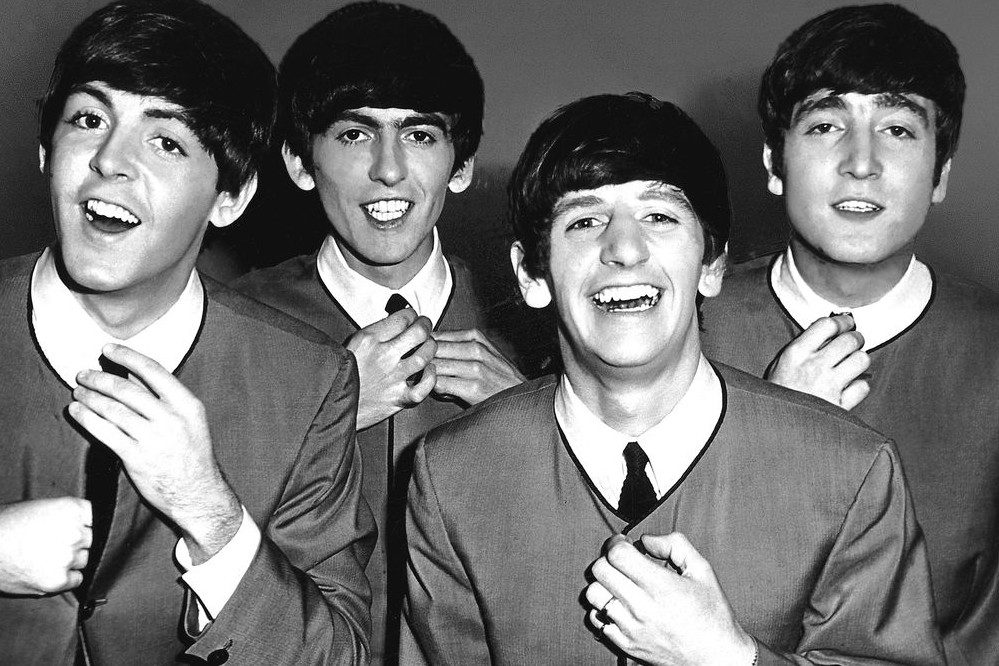
  • LOTR director Peter Jackson is said to be making a documentary about the Beatles’ Let It Be.

ONLY NOISE: On Loving the Beatles As a Black Woman

ONLY NOISE explores music fandom with poignant personal essays that examine the ways we’re shaped by our chosen soundtrack. This week, Stephanie Phillips finds a way to relate to the Beatles – even though, as a black woman, their version of Britishness didn’t reflect her own experience.

Whether it was the power chord-driven emotional roar of Olympia’s Sleater-Kinney or the proto-riot grrrl wail of X-Ray Spex, as a young black girl who who spent all of her free time devouring new music, these musicians made my little teen self and all of my complex emotions feel seen. Yet, growing up in England in the ‘90s, there was one inescapable group that epitomized the way the country liked to see itself: The Beatles. As four white men who first made their name first reinterpreting the work of black artists, The Beatles were as British as the Empire itself – a glorious example of the British bulldog spirit and post-war triumph. In a country that, at the best of times, treats people like me with complete disregard (and at the worst has seen grown men making monkey noises at my ten-year-old self), how could I possibly feel connected to the four men they’d chosen as their ambassadors of Britishness? I wrote them off for as long as I could, deeming their work too misogynist, too irrelevant, or too old. So I was as stunned as anyone when The Beatles became one of my biggest influences as a musician and lover of music history.

The Beatles were so ubiquitous I can’t recall where I was when I first heard their music. Maybe I had to sing it as part of the alternative, contemporary songs portion of service at my church. It could have been background noise whirring from another TV special as I obliviously played with my brother as a kid. There’s always a chance the Fab Four blared out over tinny speakers at the local supermarket as I perused the perishables aisle with my mum. You were never introduced to The Beatles, they were just there, woven into the fabric of everyday life, an immovable presence in the British musical canon, one which no one would openly question.

Almost because of their popularity, they are also one of world’s most misunderstood bands. The source of the misinformation is usually middle-aged, know-it-all male fans – the kind who only drink real ale and, after a few pints, speak too loudly on the opinion that modern music is rubbish. These tiresome messengers of the drab bring the Four down to their level of mediocrity with their lacklustre covers of “While My Guitar Gently Weeps” and their insistence “Hey Jude” is the best Beatles song. It’s not, by a long stretch. This left me with the impression that the Beatles’ music only sounded sickly, sweet, and terribly dated.

The sad dad army wreaked havoc on the Beatles’ legacy and that’s even before you get into the steaming layers of toxic masculinity surrounding the band. Each member has had to answer to how they treated the women in their lives and we all know the stories of violence and macho aggression that are associated with John Lennon. How could I love a band who perhaps didn’t love women like me? I didn’t know how to get over these barriers. I decided I couldn’t and gave up, following my path into the exhilarating world of riot grrrl.

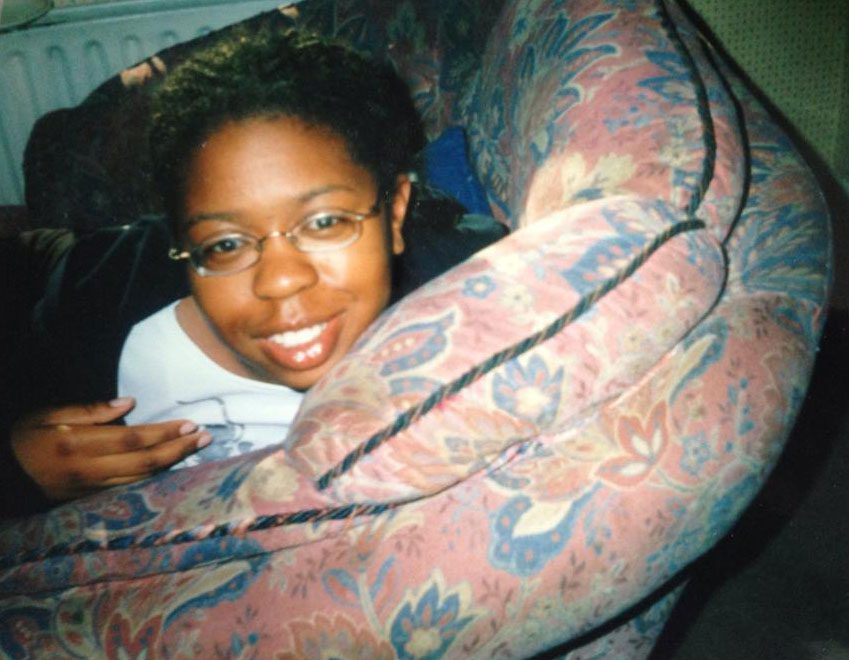
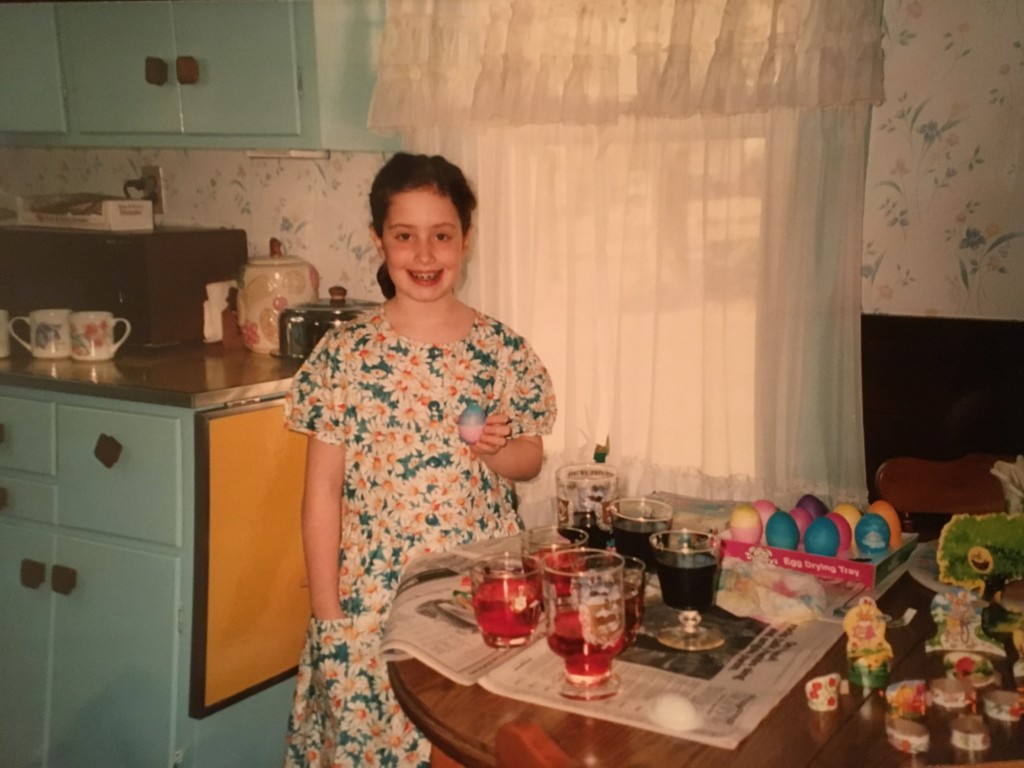
The author as a teen.

My early twenties were spent lying in my room listening to Giant Drag, Le Tigre and The Long Blondes, expanding my tastes by finding bands that were connected to them and repeating that same process. Looking back it was inevitable my aimless mission to devour all the music would eventually lead me to The Beatles; much like Six Degrees of Kevin Bacon, it was obvious that many bands would be inspired by or connected to the Beatles’ in some way, especially with the music industry continually pushing them to the forefront. Given my disdain for the Beatles’ association with British culture, it seems apt it that American bands eventually drew me into the Beatles’ genius. The Pixies, Breeders, and Throwing Muses all covered songs from the White Album; some were b-sides lovingly recreated, others were carefully reinterpreted takes on the original.

The Pixies’ cover of “Wild Honey Pie,” for instance, took what was a short, frenzied, carnival-esque snippet of a song and transformed it into an art rock scream fest. The Pixies used the repetitive nature of the song to further amp up the passion at the beating heart of the track. It was a brilliant homage to the kooky original, which was one of a collection of songs that illustrated the Fab Four’s love of all things odd.

The Breeders recorded a slower, moodier take on “Happiness is a Warm Gun” on their debut album Pod, while Throwing Muses released on haunting version of “Cry Baby Cry” on their 1991 single “Not Too Soon.” All in all the mysterious lyrics, complex time signatures and raw attitude spoke to me. I needed to know more, so I sought out the album.


The pressure to automatically revere a band instantly sucks all of the joy out of the listening process, like force-feeding yourself chocolate cake – it’s good, but you’d prefer a smaller slice on your own time. Taking The White Album in note by note, the world of The Beatles started to reveal itself to me. Far from being the unlistenable nonsense I always associated with them, the album was challenging, deep and experimental without showing off. I finally understood the melancholy outlook of “While My Guitar Gently Weeps” and its untamed classic rock guitar noodling. There were manically upbeat songs like “Everybody’s Got Something to Hide Except for Me and My Monkey,” sparse proto-goth tunes like “Dear Prudence,” and garage blues punk on “Helter Skelter.” I listened to the album over and over again, taking in the incredible number of influences and genres that made this epic project. The album wasn’t coherent – the songs rarely followed any pop structure, and had unpredictable twists and turns. I was fixated with these sounds and finding out how they came to be. With each listen I heard so many of the bands I already loved in this one album. Turns out, I had been listening to the Beatles far longer than I’d realised, and I had to admit I’d been was wrong about them. They were a missing part of my music history puzzle.

If I was wrong about this album, I had to reason I might have been wrong about the rest of their music, so I kept listening and searching. There was a lot of ground to cover – decades worth of recordings, documentaries, films, rereleases and a lifetime’s worth of coverage. I devoured it all and came out the other end a Beatles devotee.

I had to admit that their cheeky, laddish attitude was addictive to watch, and a lot of the praise they were given is arguably true. I found as much beauty in their early recordings as I did their backstory. The reason their work resonates with so many is because their songs were simple and about universal themes of love and lust. The desperate appeal to an inattentive lover on “Please, Please Me” is sadly relatable. When I heard the crack in John’s voice on middle eighth of “This Boy” it hit me as hard as as any of the most eloquent poetry on heartbreak and loss. When The Beatles got it right they managed to create a world where anyone, no matter their background, could live vicariously through them. That’s when it clicked. The real winning element of the Beatles goes beyond their songs and exists in their story as a group.

And yet, I know so many black people who struggle to connect with the band, that feel disconnected from the white culture the band represent, and are far too aware that the Beatles built their reputation by imitating African American soul and R&B. I felt the same and it is true. The Beatles connection to whiteness and England is rarely discussed. It was a huge barrier that made liking the band seem insurmountable. The gatekeepers of rock and roll had told me that this was the greatest band in modern history, erasing the contributions of the genre’s black pioneers, and that was extremely off-putting. But the more I listened, I heard the influence of black musicians, like Chuck Berry, Little Richard and Motown acts like The Marvelettes. The Beatles could interpret any music style to their own benefit, and were emotive and adaptable songwriters, but unlike Led Zeppelin or Eric Clapton, they did not try and pass off black innovation as their own. The Beatles covered their favourite songs, put their own spin on them so as not to rip them off completely, and pointed fans in the direction of artists they were inspired by. Their effort to do so still resonates today, considering many white musicians fail to meet these basic requirements.

As a black female creative who often struggles to buck up my confidence and go out into the world, listening to The Beatles gives me the strength to imagine what I could be. It reminds me what I could create if capitalism, white supremacy and misogyny weren’t rooting for me to fail. Because despite the numerous books and documentaries declaring so, John, George, Paul and Ringo were not geniuses. Their ten year soap opera of a story gave me permission to dream of what could happen if I had everything – the money to buy whatever I wanted, the time to write, the confidence provided by millions of adoring fans. Perhaps when teenage girls screamed themselves into delirious frenzy at the sight of the boys, they weren’t just caught up in teenage lust, but were hungry to be any part of something as alive and powerful as rock and roll.

In a world where black bodies are policed at every available moment and black joy is looked on with suspicion there is rarely an opportunity for black people to dream freely. It’s why I always tell my friends about the power of The Beatles, though my sales pitch often falls on deaf ears. Who would believe black people could find respite in the words of four white guys from Liverpool? Though it’s likely that was not their intention, their enduring music gives me space to fully realise myself. I can sit back and take in the best of Revolver or Rubber Soul while imagining who and what I could be as a musician, a music fan and a black woman.

LIVE REVIEW: Sophie Meiers @ Baby’s All Right

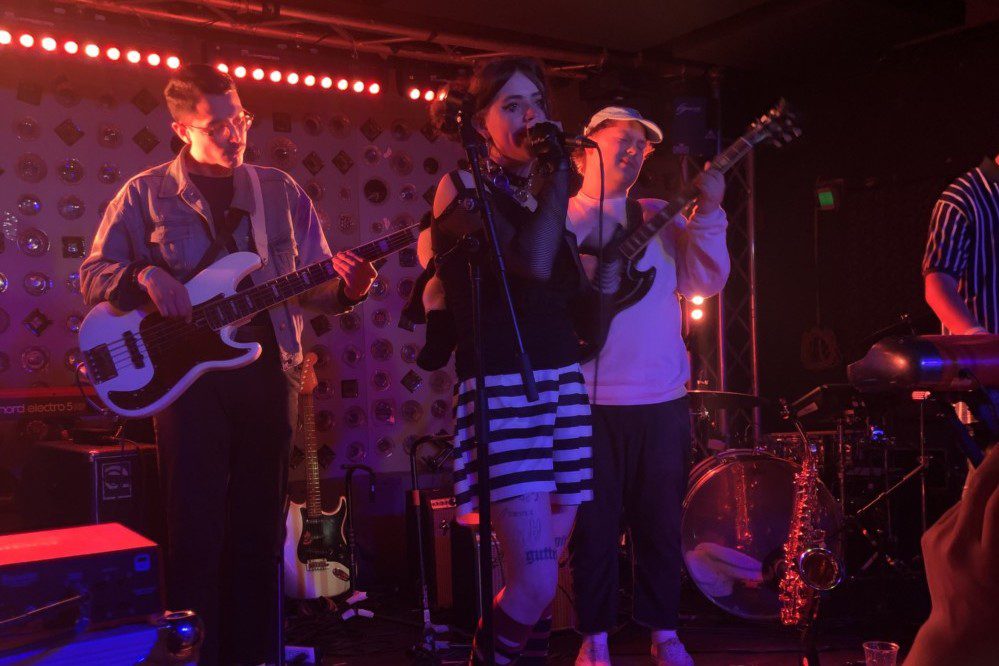
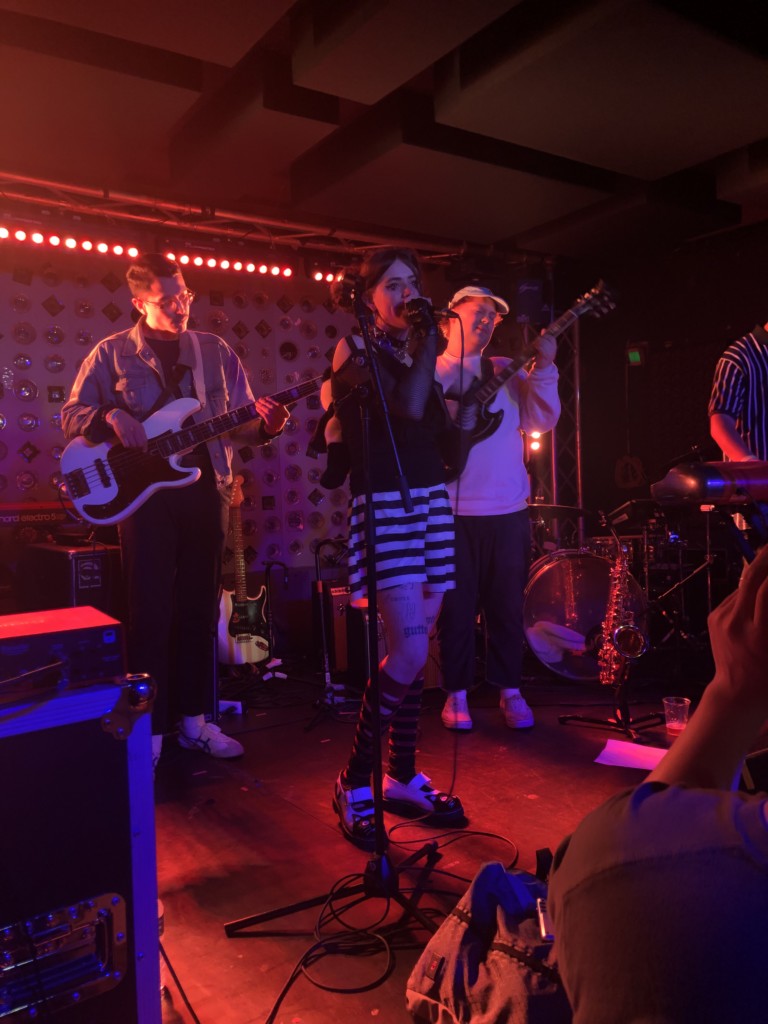
In the bar prior to the start of the show, I notice a girl behind me by her soft laugh that contrasted the sad clown makeup dripping down her eyes. Heavy BDSM-inspired leather jewelry, fishnet fingerless gloves, and torn-up knee-high socks weigh down her 5’3″ stature. Commanding attention in the most unassuming way, this girl – unmistakably Sophie Meiers – is playing what is only her second show in New York City tonight at Baby’s All Right. The next time I see her is on stage setting up for her performance, turning around to reveal a plush panda backpack. I joke to a friend that I hoped she’d keep the backpack on; she did, for the duration of the performance.

Having gained a following by posting songs to Soundcloud over the last two years, tracks like “Wet Socks” and “Don’t Be Scared” conducted the crowd into a uniform sway, floating on her flawless pitch. A standout of the set was a song of nearly painful selfless devotion, the Nion-produced “Broken Toys.” Embellished with imagery of Meiers as a “pretty package” adorned in “ribbons and colors,” her visceral, yet plaintive cry of “Did you see, the note on the inside?/It said ‘eat me alive'” shouldn’t sound as romantic as it felt in that moment. It’s thanks to her airy timbre resonating a blissful effervescence without sacrificing any strength.

Her covers of fellow R&B crooners Allen Stone and Corinne Bailey Rae were lovely breaks in the set. The bedroom synth re-imagining of Stone’s “Unaware,” a song about economic strife, felt optimistically warm. Meanwhile, her voice suited “Put Your Records On” so well that you’d almost believe the song was written to be heard in low fidelity. There was little banter between songs, just genuine “thank yous” and that same soft giggle that I’d heard inside the bar.

Her allure draws me closer to the stage (as does that of her standout sax player Jason, if we’re being honest) where I then notice the cat faces on her shoes; it’s an aesthetic best described as “Hot Topic baby,” or better yet, “gutter girl” flavor, a title she has branded across the top of her thighs. She looks perfectly in place before the sparkle of Baby’s All Right’s unmistakable backdrop. A fan in the front row had a bold, inky eyeliner design to rival Meiers’ own.

Closing song “Forget Me Not” offered a sudden increase in tempo and heavier bass that manifested the young crowd into the softest form a mosh pit could ever take. She floated off the stage as quietly as she came on, leaving me feeling haunted, wondering when I might next be graced with her presence.

PLAYING ATLANTA: Chris Coleman and The Reason He Leaves

One thing that I’ve noticed as the years go by is that, as we get older, our lives get simpler. Not that the problems, stresses, or worries disappear, but the things that kept us rattled as teenagers into our early twenties seem to settle into their designated place, and the things that really matter – family, friends, our four-legged children – become our focus.

Atlanta Americana artist Chris Coleman knows that all too well. After years on the road, as a solo artist and a sideman, he captured that wisdom on 2017 LP The Reason I Leave. It’s an intimate, emotive, eleven-track time capsule of the lessons learned, the mistakes made, and, ultimately, the peace he found on the road and in the music.

Though he’s been hard at work on his next record, Chris sat down with Audiofemme to talk all things music, travel, and a lifelong love for freedom.

AF: Thanks so much for taking the time to talk with me, Chris! Let’s dive right in. We know you’re an avid traveler; how has your time on the road inspired you as a musician? 

CC: I grew up in an army family, so in a way, I’ve always been a transient person. I remember as a kid, we would move every two or three years. I’ve lived everywhere from San Diego, to Washington D.C., to Atlanta, and now my wife and I live in Athens, Georgia. We have a Sprinter Van we’ve built out as a camper and travel in quite often. When we aren’t on the road for work, you can usually find us road tripping to our favorite places or snowboarding. I find myself so inspired traveling in the van, simply because most of life’s distractions are thousands of miles away.

AF: Your songwriting is reminiscent of Ryan Adams, Neil Young, and Dawes, diving deep into your stories and experiences. How does music allow you to express yourself? Do you ever find it difficult to translate your emotions and experiences into music? 

CC: I started playing guitar and writing music really young. Moving to new places so often as a kid, I definitely struggled to find where I fit in. I’ve always had my guitar and a passion for music. All of the artists I admire tell a story with their songs, and I try my hardest to do the same. I find the best kind of peace when I write about the things that are difficult to talk about. For me, it’s way easier to write a song about my emotions or experiences than it is to talk about them.

AF: Was there a moment when you realized music was more than just a hobby? 

CC: Music has always been my life. I’ve kind of felt my whole life that music is what I was made to do. I just turned 31, and I’m at that age where a lot of my friends are slowing down from touring, focusing on side hustles, and studio stuff. I really can’t picture myself doing anything but traveling, playing music, and writing songs. It’s my passion, it’s my hobby, it’s my career.

AF: You’ve recently built a studio of your own. Do you plan to record your next album there?

CC: I’m really excited about my new space! We moved from a 500-square-foot tiny house, so we’re really enjoying the elbow room. Just having all of my instruments out and accessible has been huge. I’m not sure if I’ll do my next record here or not. I’m writing a bunch and demoing new ideas here for now though!

AF: What’s your creative process like, and what inspires the music? 

CC: The creative process always starts with a trip for me. I wrote this last record in Park City, Utah and in the van on a National Parks road trip. Being outside someplace beautiful, with no cell phone service, really inspires me. There’s something about being outside with just my wife, my dogs, and my guitar that clears my head. I’ve been trying to conjure that same inspiration at home my whole life.

AF: How has being in the Atlanta music scene impacted you as a musician? 

CC: Freelancing for different artists as a guitar/keys/bass player over the years has forced me to branch out and try many different styles of music. I’ve gotten to meet and learn from a ton of different great players with a variety of styles. I can’t imagine how different my playing would be without Atlanta’s influence.

AF: What’s next for you?

CC: I’ve been writing for my next record and touring with a new Atlanta band, MyFever. It’s been a huge stretch for me since their style is new for me. I’ve enjoyed the challenge though.

Keep up with Chris and his travels via Facebook and Instagram, and stay tuned for his upcoming release. 

PLAYING DETROIT: Chandra Brings ‘Transportation’ EP to Third Man Records

photo by Kate Young

Chandra Oppenheim was a one-of-a-kind type of child sensation. Unlike today’s child stars that come to fame because of their popularity among their peers (think Justin Bieber or JoJo), Oppenheim was revered in New York’s 1970s underground post-punk scene. As the daughter of famed American artist Dennis Oppenheim, she was influenced more by her father’s contemporaries than her own. At the age of twelve, Chandra released an EP with bandmates Eugenie Diserio and Steve Alexander (of Model Citizens fame), sold out a show at Berklee College, and opened for avant-garde artist Laurie Anderson. The 1980 EP, Transportation, is a snapshot of the new wave/post-punk/noise movement, as told through the unfiltered eyes of a middle-school girl. But instead of sounding juvenile, Oppenheim’s forthright lyricism offers an innocent and universal perspective on everyday life.

In “Kate,” Chandra delivers Talking Heads-esque lyrics depicting the intricacies of young female friendship, societal beauty standards, and the male gaze. It’s a song that’s as brazenly relevant today as it was thirty years ago – a fact that is as astounding as it is unnerving. “Subways” paints a disorienting picture of getting lost underground –  a song as anxiety-inducing as any adult could have written. It seems that Chandra, before the age of thirteen, accomplished a level of artistry that most musicians strive for. But then what?

Now 50, Oppenheim has reissued Transportation for the second time along with a few unearthed recordings from band practice during that time. After teaming up with her Toronto-based band, she’s been performing the songs of her childhood in various venues across North America – including Detroit’s Third Man Records this Friday, February 1st.

The multi-disciplinary artist opened up to Audiofemme about her life between Transportation and now, and how we’re pretty much all just middle school girls at heart.

AF: What do you remember about the time when you recorded Transportation?

CO: The first set of studio recordings… came out in 1980. I was 10 or 11 when we were recording those songs, that first set. I was probably about twelve when we did the second set.

They do feel like two separate things because, I guess at that age, time passes slowly and there are so many things going on. For Transportation – because the other four songs weren’t released until the reissue in 2009 – I think it was what had to come out and it came out in the form of song. Whatever frustrations I had, fears, just trying to figure life out from that ten-year-old perspective. [It had to do] with what was going on around me too, because my dad [was] a big influence in my life and seeing his work and his thought process and these characters that he hung out with that were a part of my life – that was probably the number one influence. That, combined with being at school, and what my life was with my friends or people I had friction with.

AF: How did you feel recording and performing with these adult musicians? Did it feel different or just another part of your life?

CO: It was very natural. My father would pretty regularly have his kids as part of his art pieces. I grew up doing that and this seemed like a natural extension. It was just now me doing my art. In fact, if I hadn’t been doing that, I think something might have felt strange to me.

AF: After you released Transportation and went on tour – was there a point in time where it dropped off or you changed paths?

CO: What I remember is that the demands of school began to interfere with our band practice. There was this fork in the road – either I have all my focus and energy available for school, or I need to kind of let that go a little bit so I can focus on the band. And I chose the school route, thinking that at any moment that I wanted to have that back in my life, I could. And I didn’t realize that that’s very difficult to achieve, whatever the recipe is of whatever you’re creating and connecting it with people. I went to high school and went to college and maybe did a little bit of music during that time. I was probably always writing but I wasn’t in bands or anything like that. And then, after that, basically began decades of doing music because that’s what I did and that’s what I wanted to do, but nothing ever – it didn’t catch. The cogs of the machine did not sync up.

AF: What was the music you wrote in adulthood like? Was it along those punk lines?

CO: Yes, definitely. Especially I would say, lyrically. There was always this – which I share with my father’s aesthetic – this dark humor. Always questioning – the idea was that as a listener, you might not know – is this supposed to be funny? Because it’s really weird and scary but you can’t help but laugh… that’s kind of what I was going for but again I wasn’t trying to for that, it’s just that’s how it came out.

AF: Do you have any recordings from that time?

CO: I do and it is my big next life project to go through my archives and release some music because nothing was ever officially released. I mean there was one band I had where we actually did the whole thing – I think we have 12 songs on that record. We went into a really nice studio and the board was the same one that was used for one of Bowie’s albums. We did it on tape. It was in the ’90s and mixed and mastered, did the whole thing. But then we didn’t really put it out. And then I had this alternative rock boss nova band. We did an EP, we mixed it, didn’t master it so there it sits. That’s just two of the things. I also did stuff solo and I just have my own little recordings of that. They’re probably good quality enough too. If I get them spruced up I can out them out.

AF: Why do you think none of it was ever released?

CO: I wonder as we’re talking about this if there has to be some – I don’t know, there are millions of reasons. For myself, I’m wondering if there just wasn’t that magnetic pull of an audience asking for it that would’ve brought it over that edge to actually complete it.

I did this because I wanted to make it. But If I pressed it back then to CD or – it’s funny because everyone is listening to cassette everything now, and the ’90s band I was in where we mixed and mastered, I do have cassettes of that. So, like, I go to the extent of pressing this to some format, but then what? Who am I gonna give them to or sell them to? But the other thing for me, which I’m learning over time, is that I’m so into the process, that once I have the result, that’s where it ends. Its almost as if I don’t need the outcome. It’s just the process that I’m interested in.

AF: That makes sense. What do you think prompted this resurgence of the Transportation recordings?

CO: So, the history of that is Cantor Records in Canada.  It was a new label and this was the first record they wanted to put out – it was Aaron Levin’s record label. He contacted me out of the blue. Somehow, he tracked me down. I’m not on Facebook, so no one would be able to find me anyway, but it was long before that. So, he found me somehow through my father. That was 2009 – we reissued Transportation, plus the four tracks we unearthed in 1992 were released. Then from there, that’s how I met my current Toronto-based band. It was time to re-press that reissue because it was sold out and that’s when Telephone Explosion contacted us and asked about this deluxe reissue and asked if there were any other tracks and that’s when we brought out those demo tracks.

AF: What’s it like performing these songs you wrote as a pre-teen as an adult?

CO: It’s funny because I was just thinking about that. When I first started playing with the band in 2013-14, I really was in disbelief. The music was live. I had not heard live musicians playing this music in three decades. It was really hard for my brain to believe it. At first, I had to re-learn the songs and I probably hadn’t been singing all that much at that point in my life so I had to get back singing. So, it was challenging and the keys were high so there was that bumpiness to kind of get through. And now we’ve been playing a lot so it feels really comfortable and things are gelling really nicely so now I can relax into it and completely enjoy it and not trying to be remembering lyrics and everything. Really, for all of the songs, I’m able to immediately connect with myself at that time and the feeling of it. It doesn’t feel like someone else wrote them, other than that I wouldn’t be able to write lyrics like that now. I wouldn’t be able to access that strong connection to whatever that creative force is. In my way I do, but it’s years of all this stuff that bogs down the creative process. But other than that, it almost feels like there isn’t a passage of time. In a way, that is me and that’s how I still feel today about things. If not, more so, I mean some of the lyrics feel like premonitions of what we’re currently dealing with.

AF: Have you been writing any new material?

CO: The odd thing is that after writing songs almost every day for my entire life, over the past couple of years it hasn’t been there. Talk about missing something – it’s very strange not to have that. In a way, I don’t have my bearings. Recently, it’s started to come back. There’s a drip and a drop – a little something starting to come out now.

AF: What do you think led to that period of not really writing?

CO: Well, I worked on a performance art piece for ten years. I was still working on music, just not that particular piece. Anyway, that undertaking kind of did me in creatively. It drained me in a way. Normally, I’m fed by creative output but in this case, I guess I needed some time to recuperate. I had to actively end it because it was not serving me. I do have a recording of that – that one did get released actually. But there’s no way to find it. I make these things but then they’re not available. If someone wanted one and asked me for it I’d give it to them but, otherwise, they’re not available.

AF: Will you play any of the music that you wrote in your adult life on this tour?

CO: No, and that’s very intentional. I feel like people who like Chandra and Transportation – I want to keep that as its own thing. So, I will only play things from that time period or things we unearth from then.

Order Chandra’s Transportation EP here and keep an eye out for more tour dates.

PLAYING CINCY: Watch Rapper Allen4President Kill This Friday Freestyle

Alex4President

The rapper mentions Bird Box, the government shutdown, cell phone surveillance and homelessness in Cincinnati.

Last week, Cincinnati rapper Allen4President appeared on The Wiz radio station’s Freestyle Friday. Although a talented lyricist in the booth, Allen4President proved he’s just as comfortable and quick on his feet in a freestyle. He raps “lifestyle music,’ as he calls it, and recalls inspiration from things he’s seen to immediately spit over the air.
The hip hop artist also recently dropped The President’s Room, a 13-song album featuring Chris Cooks, LaBron Denair and TkoLa, but Allen4President stands out with his thoughtful verses and steady flow.

Freestyles are a central part of hip hop culture as well as one of the best tests of emcee talent. Right now, he’s riding high off two successes in a row, but he’s sure to impress us again very soon.

Allen4President
Photo by Kevin J. Watkins (@ohthatsdubs)


PREMIERE: Rachel Goodrich “Gucci”

Rachel Goodrich Interview AudioFemme
Photo Credit: Michelle Shiers

Summer is already on the horizon for those of us living on the west coast. Cold, cloudy weekdays easily morph into downright warm weekends. Rachel Goodrich’s new single “Gucci” is the right kind of chill for a poolside afternoon.

Goodrich has delivered eclectic, playful tunes since her debut Tinker Toys in 2008; her single “Light Bulb,” with delicate ukulele and cheerful vocals, made it onto an episode of Weeds (can’t you just picture Nancy sipping her iced coffee with a smirk on her face?). You might notice a vibe shift on “Gucci” – the impish, winking lilt has undergone a maturity overhaul. Goodrich is laid back, confident, and sarcastic as all hell. She had this to say about the track:

The inspiration for “Gucci” came from a place of insecurity. Feeling as if I’m not good enough or attractive enough. The verses are filled with the struggle of expressing those emotions honestly and instead I resort to a pessimistic, sarcastic, in-your-face kind of tone. The tune carries a dark vibe, but by the end of the song I realize I’ve been swayed by all the illusions and distractions in the world that have steered me away from making an authentic connection with myself. I accept my insecurities and can turn them into confidence. Beauty lies within. We are all Gucci.

Listen to “Gucci” below:

AF: It’s been five years since your last album, Baby, Now We’re Even. What have you been up to?

Rachel Goodrich: Man, time flies! I actually met a boy in between that time and wrapped my world around his heart… which has been totally rad. But I lost sight and I’m actually sitting on a couple of albums I never released. I’ve been adventuring, writing and shelving music but finally feel really excited about these new tunes and I’m putting them out while they feel fresh!

AF: You’re an LA transplant, having moved cross country from Miami. Do you still live in Venice? How does the city inform your music writing? 

RG: Yes, I am still in the Venice area. Well,  the beach in general has always been a main source of circulation and freedom… creating a non-judgmental space for me to just breathe and be myself. Venice is wild… it’s the beach that keeps me sane.

AF: I was psyched to see you opened for Ezra Furman a few years back. What LA show has been your favorite so far? 

RG: You were there? Cool! My favorite LA show was probably a recent show I played over at The Moroccan Lounge. It was my first time playing these new songs with the new band. It felt so raw and so fresh. I love playing with my new band. Some of the raddest individuals I’ve ever met.

AF: What music do you currently have on rotation? 

RG: Currently spinning Parliament-FunkadelicErykah BaduThe Meters and The Grateful Dead.

AF: “Gucci” is a sexy song. It feels light years away from the sweet ukulele sound of “Light Bulb.” What inspired this new direction?

RG: I’m not sure! I’ve always kind of messed around with making beats and talking shit… it’s fun for me. But I guess it’s also pretty sexy.

AF: What producer did you work with on this single? Any collaborations?

RG: I recorded this track with Matt Linesch (the boy…reference question 1) at his studio, Infinitespin Records, in Van Nuys.

AF: You’re known for employing a wide array of instruments (guitar, ukulele, kazoo) in your music. Has this eclectic feel continued on the new album?

RG: I think so! Definitely incorporating some fun sounds and using some of the same instruments I featured on my first album, Tinker Toys.

AF: What can someone expect from a Rachel Goodrich performance? Other than some “shake-a-billy” dance moves?

RG: Some funky fresh tunes maaan. Good vibes and vibrant colors.

Watch out for Rachel’s new album, set to drop in summer 2019. 

NEWS ROUNDUP: Alternative Beef, Cancel Chris Brown, and MORE

Courtney Love & Kathleen Hanna have had ongoing beef since the mid ’90s.

Can’t We All Just Get Along?

Rekindling a decades old beef, Courtney Love had some choice words for Kathleen Hanna following the news that the latter’s riot grrl act Bikini Kill would play a handful of reunion shows in LA and NYC this spring. In the comment thread of a Bust Magazine Instagram post lamenting the shows’ record sell-out times, Love referred to Bikini Kill as “the biggest hoax in rock and roll,” later adding: “Two of the band total amateurs. Hanna is a good hype man but her persona is such a diy nonsense dilettante. A big idea they cannot convey, because they suck.” Hanna has not responded and Love has since deleted the comments, but her words reminded everyone that these two feminist icons haven’t seen eye to eye since Lollapalooza ’95, when a backstage altercation ended any hope of them uniting to crush the patriarchy. We have a sneaking suspicion that Love’s dislike of Hanna is rooted in jealousy over Hanna’s friendship with Love’s late husband Kurt Cobain (Hanna is credited with inspiring the title of Nirvana’s breakout single, “Smells Like Teen Spirit”). We’re taking Hanna’s side on this one; Love’s comments were petty and we’re impressed Hanna didn’t take the bait.

The saga between Grimes and Azaelia Banks deepens! Back in August, Banks visited Grimes at the home of Grimes’ then-boyfriend, tech mogul Elon Musk. The two musicians were supposed to collaborate on a single, but in a series of social media posts, Banks described being trapped in the home as Musk did damage control over a tweet where he claimed he planned to take Tesla private at $420 a share. Banks says that Musk was on acid at the time, and postulated that he and Grimes had invited her to Los Angeles for a potential threesome. But because the Securities Exchange Commission sued Musk over the tweet, texts between Grimes and Banks from that time period have been subpoenaed, and Banks posted some of the exchange on Instagram; the posts were deleted, but not before someone grabbed screenshots that Jezebel was all too happy to repost (and we are all too happy to recommend you go and read immediately). We can’t get down with either going for the low-hanging fruit of insulting one anothers’ appearances, but have to name Azealia Banks the winner of this spat. Maybe it’s all the practice she’s had talking shit to or about damn near everyone on the planet, but we have to give props to the biting specificity of referring to Grimes as a “brittleboned methhead” who smells “like a roll of nickles.”

And finally, Princess Nokia noted the similarities between her song “Mine” (from her 1992 mixtape) and recently released Ariana Grande single “7 rings.” “Ain’t that the lil song I made about brown women and their hair?” she asks in a video posted to Twitter (and since deleted), concluding “Hmmm… sounds about white.” Soulja Boy also chimed in, claiming Grande had ripped off portions of his 2010 hit “Pretty Boy Swag.” The opening bars of Grande’s single crib more obviously from The Sound of Music‘s “My Favorite Things;” though Julie Andrews has yet to jump on the outrage bandwagon, someone who must be a literal genius mashed up all four artists and it kinda slaps. While we’re no fan of Grande’s ongoing issues with cultural appropriation, we’re calling this beef a draw – there’s nothing new under the sun, especially when it comes to hip-hop samples.

Chris Brown Accused of Rape in Paris

We’ll never forgive Chris Brown for using former girlfriend Rihanna as his personal punching bag – but we’re especially disgusted by the new lows he’s reached this week. A 24-year-old woman accused the singer and his entourage of taking turns raping her in his hotel suite at the Mandarin Oriental in Paris, where Brown had been attending Fashion Week events. The French are notoriously skeptical of rape victims, so it’s no surprise that Brown and the two other men accused of assaulting the woman were released within a few days on their own recognizance; the investigation is still ongoing. Rather than lying low, Brown took to social media in an attempt to discredit his alleged victim, even going so far as to create some truly tasteless merch that plays on the unfounded trope that women lie about sexual assault.

For what it’s worth, this isn’t the first time that someone has accused his entourage of mistreating women in their periphery – there’s a pending legal case against Brown, in which a woman claims she was raped by one of Brown’s friends at one of the singer’s drug-fueled parties.

That New New

Spanish sensation Rosalía released what has to be our favorite video this week, with a clip for “DE AQUÍ NO SALES” from her stunning 2018 album El Mal Querer.

Jenny Lewis is back with Stevie Nicks-ish jam “Red Bull & Hennessey,” a drink we do not recommend. It’s the first single from On The Line, due March 22.

Broken Social Scene shared details on their forthcoming EP Let’s Try The After – Vol. 1, which will arrive next month, along with early single “All I Want.”

Sneaks, the difficult-to-define solo project of queer black feminist Eva Moolchan, returns with Highway Hypnosis, her third studio album.

Sascha Ring, who produces electronic music as Apparat, announced LP5, his first album in six years, with diaphanous lead single “Dawan.”

J. Cole is producing a comp featuring artists from his Dreamville imprint entitled Revenge Of The Dreams II; his track “Middle Child” is the project’s official first single.

Groove Denied, an electronic solo album by Pavement frontman Stephen Malkmus that was reportedly rejected by his label, will be released via Matador in March. The first single is the delightfully weird “Viktor Borgia.”

Lady Lamb announced her next album Even in the Tremor will arrive April 5th on Ba Da Bing Records, and has shared its title track.

Teyana Taylor,  Lena Waithe, and Mykki Blanco vogue their way through a ballroom dance-off for the ages in Taylor’s new video for “WTP,” from last year’s Kanye West-produced K.T.S.E.

Capping off her EP trilogy in March with Blue Pine, Munya shared the first of its three songs, “It’s All About You;” all three EPs will be packaged together as a full-length LP released on the same day.

Seattle’s Dude York have released two new singles alongside two previously released singles as the aptly titled EP Happy In The Meantime via Bandcamp.

Phoebe Bridgers and Conor Oberst have appeared on each other’s albums in the past, but now the pair have teamed up to release a surprise record as Better Oblivion Community Center.

Vampire Weekend are back with a pair of singles, titled “Harmony Hall” and “2021;” both will appear on their fourth album and first in nearly six years. Titled Father of the Bride, it’s supposedly got 18 tracks and future singles will be released in pairs as well.

Florence + The Machine released a jazzy stand-alone single and its b-side on the heels of last year’s rousing High As Hope LP.

End Notes

  • Ariel Palitz, NYC’s new Nightlife Mayor, sat down with Billboard to share what she’s learned in her first year on the job, and how she plans to support the city’s DIY music community.
  • A Michael Jackson musical is in the works.
  • The Oscar nominations are in and we’re totally rooting for Lady Gaga, who’s up for Best Actress for her role in A Star Is Born. The film is nominated for best Best Picture, alongside Queen biopic Bohemian Rhapsody (despite some recent sexual abuse allegations against its director). Lady Gaga and Bradley Cooper seem like favorites to win Best Song for “Shallow” but Kendrick Lamar and SZA could give them a run for their money with “All The Stars,” from Black Panther. David Rawlings and Gillian Welch (“When A Cowboy Trades His Spurs For Wings” from The Ballad of Buster Scruggs), Marc Shaiman and Scott Wittman (“The Place Where Lost Things Go” from Mary Poppins Returns), and Diane Warren and Jennifer Hudson (“I’ll Fight” from RBG) round out the Best Song nominations.
  • Spotify introduced a “mute” feature that allows users to essentially block particular artists from popping up on your playlists. It’s a nice compromise given their failed attempt to censor artists they’d deemed problematic, not to mention allowing folks to avoid that overplayed earworm-of-the-moment.
  • Pickathon 2019 lineups have been announced, with Nathaniel Rateliff & the Night Sweats and Khruangbin scheduled to headline.
  • It’s been a good week for cool band merch – check out this stuffed Ozzy Osbourne bat (with detachable head) and the new Morrissey Funko Pop.
  • We’re still not sure if it’s really the Pixies without Kim Deal, but the rest of the band are gearing up to release their seventh studio album (due in September), and a podcast about the band called “The Past Is Prologue” and hosted by Tony Fletcher will debut in June.
  • Some of hip-hop’s biggest stars, including Jay-Z and Meek Mill, have founded REFORM Alliance, aimed at much-needed criminal justice reform.
  • As the government shutdown stretches on, musicians from Kiss to Nile Rodgers are donating concert tickets, hot meals, and more to furloughed workers.

ONLY NOISE: This Is A Man’s World

Luci Turner performing on stage with her band, BEAU + LUCI, in 2018. Photo by Alexandra Scuffle.

ONLY NOISE explores music fandom with poignant personal essays that examine the ways we’re shaped by our chosen soundtrack. This week, Luci Turner takes stock of the trials, tribulations and triumphs she’s experienced as a young woman working in the music industry.

Life in the music industry isn’t easy. As Hunter S. Thompson said, “The music business is a cruel and shallow money trench, a long plastic hallway where thieves and pimps run free, and good men die like dogs. There’s also a negative side.” What Thompson never had to face, however, was a drunk fan telling him to smile more, or attempting to grope him behind the merch stand. 

As an indie musician, music journalist, and editor by trade, and publicist, social media manager, band manager, tour promoter, head of merchandising, marketing team, and handler by necessity, I’ve worked on every side of the industry, accomplished tasks I never thought I’d have to out of absolutely necessity, and learned skills I probably would’ve been just as happy never learning. I’ve seen the good, the bad, and the really ugly: the unfortunate (read: nonexistent) restroom situation at an off-road mud park in the middle of nowhere in south Georgia; the incident involving a very intoxicated young man who managed to land himself in a trash can in an attempt to get an arm around my sister’s waist; the Gollum-esque man who got a nice grip on my right buttocks and proceeded to tell me, “No, it’s okay. I’ve got daughters.” Obviously that did not make it okay, and I’ve still got questions.
As I look back on these occurrences, it’s obvious that despite the advances made over the decades, the music industry is, in many ways, still a man’s world. But my belief — and my hope — is that, with the music itself as an equalizer, it doesn’t have to be this way. 
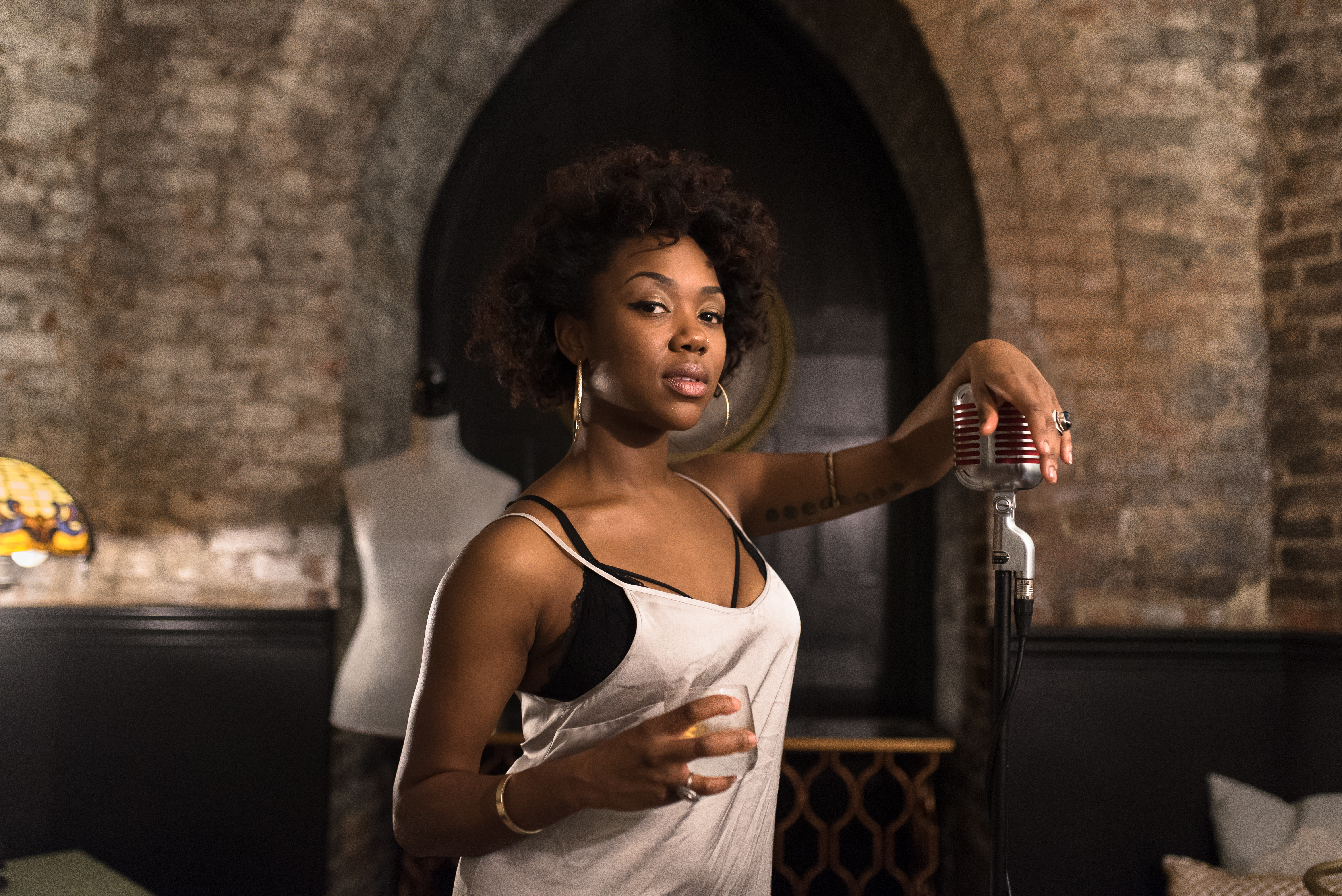
I grew up in a very small town, a back-pew Baptist born with the somewhat shameful affliction of being a female. I learned to sit down, cover up, and keep my mouth shut at a young age, because that was what was acceptable and expected. I learned to cross my legs and hold my tongue, and I learned at the age of ten that I had to stand farther away from the microphone because I could belt out a song with greater volume and enthusiasm than the boys in the choir. 
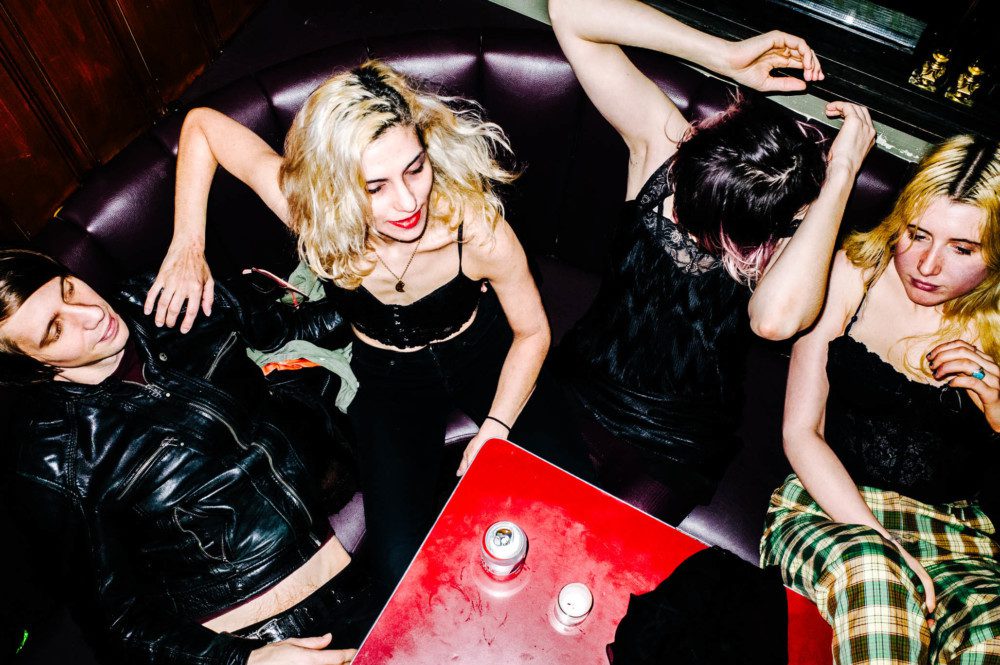
But my “alternative education,” as I call the music my father exposed my siblings and me to, told a different story. There was power to be found in being a woman; pride, even. I remember seeing photos of Debbie Harry, clad in short, skin tight dresses or ratty oversized t-shirts, her hair bleached an impossible shade of white and her eyes lined with heavy black liner, glamorous and provocative and undeniably female, and thinking, “I want to be just like her one day.” She was strong, fearless, bold, and utterly unconcerned with what anyone thought of her. She was the antithesis of what a Southern Baptist girl should aspire to be. 

Debbie Harry opened a door for me. In fact, she blew the whole house up and put a whole new world on display. As I listened to Blondie obsessively and began to discover other bands fronted by powerful women — Joan Jett and the Blackhearts, Heart, Patti Smith — I couldn’t help but wonder why it had taken me twelve years to discover them. Didn’t anyone ever wonder where the women were when listening to the classic rock stations? My exposure to rock wasn’t limited, so why were all of my favorite bands comprised solely of men? Hearing “Heart of Glass” for the first time was so impactful that it startled me, even at such a young age, with the realization that so few women were represented on the radio, or in the pile of CDs hidden away in a spare closet.

Years later, as my sister and I made our way into the music industry as singer-songwriters fronting a rock band, that realization — and the questions it sparked — never left the back of my mind. As we found ourselves leading a band of four young men, working with male producers and engineers, and dealing with various managers/snake oil salesmen looking for a quick buck and a plane ticket to Australia, Los Angeles, or New York, we were constantly reminded that we were girls — young girls, with little experience, no technical training, and no family or friends in the industry who knew the business and had already walked the path. But at the same time, we found ourselves in the precarious situation of being forced to learn our own lessons, own up to our mistakes, and take ownership of the victories, despite the producer who made a point to exclaim, “Who’s your daddy?” in the moments where tensions rose and creative control was questioned. 

Looking back, I still remember the sickening realization that I would never be considered an equal by that producer. His words spun around in my mind, infuriating, subjugating, and disrespectful. Would he have said “Who’s your daddy?” to a man — regardless of age — or simply considered the options and allowed the artist to follow his gut? We were faced with a similar maddening situation on the stage, as well, in a group of men hired to back us. All four were older, if only by a few years, set on holding their experience, credentials, and manly wisdom over the heads of two young women who, in their opinion, lacked everything but marketability. 

We weren’t considered equals. We were “the girls” — a product to be sold — and they were the musicians. We couldn’t possibly have the same knowledge, connection, or love of music; we were too young and too female. It was an attitude enforced by management, of systematic inequality and a lifelong belief that to be male was to be more: powerful, intelligent, worthy. It was with that group, however, that my sister and I experienced the most growth, because we were constantly and consistently challenged. There were private moments of great frustration, when I felt like I was either going to burst into tears or lose my temper, because it could never be easy; our opinions were always questioned, our ideas met with egos. 

Letting that group of players go was one of the most relieving moments of my life, but the endurance and sheer tenacity it created in me was one of the greatest gifts I’ve ever received. Still, though, I had no answer to the question that haunted the back of my mind: where were the women, and what would happen if, instead of having to prove ourselves to men, we were surrounded and supported by other women? 

That question was answered, at least partially, in the span of a few short months, as we became more involved in the Atlanta music scene. We were befriended by musicians of every age — male and female — who made one thing very clear: there, and on stages across the country, we weren’t “the girls from Waycross.” All that mattered was the music and what we could do with it. 

The playing field was level when it came to the music. Worth was based on how good we were, how passionate we were, how willing we were to look foolish, make mistakes, and feel vulnerable, not our age or gender. Money and marketing teams can’t change that. Radio directors and talent buyers can’t, either, and while the issue of women’s presence on the radio, at festivals, and in the music industry as a whole — not only as artists, but as producers, engineers, journalists, and executives — demands to be addressed and improved, in my heart, there’s only one reason that it matters at all. 

In music, we are equal. Not in the festival lineups, the radio play, or the mindsets of too many — not yet — but we’ve tasted and felt the equality that some of us may have never known before. Once you get a taste of it, there’s no satisfying the hunger. As long as there’s music to be played, there will be women fighting for their place on the stage, men and women who rally around us and stand beside us, and generations of songwriters coming behind us, ready to prove again and again the revolutionizing, unifying, unspeakable power of music. 

While music, at its core, is equalizing, there’s a long way to go in equality for women in the music industry. For more information, check out these 5 Women in Music Organizations to get involved. 

PLAYING ATLANTA: Pariah Recorders Launches with a Bang

So far, Audiofemme has had the chance to connect with some incredible Atlanta bands through Playing Atlanta. This week, we’re taking it a step further into the music scene to chat with Nick Magliochetti, the owner of Pariah Recorders, a brand new studio opening its doors to the Atlanta scene.

AF: You’ve just opened a studio with a ton of analog gear in a time when more and more people are DIY-ing it, in bedroom studios and on laptops. What made you decide to stick with analog?

NM: It’s the way I like to work. I can work extremely quickly and efficiently in a scenario where I can be hands-on with equipment that I know very well. In a digital world with endless plugins and decisions with amp modelers and drum samples, people have a hard time picking and committing to a sound. If you’re looking for a specific sound, I know how to get to it fairly quickly with analog equipment. It’s a more unique experience that way. It’s not always the same and is more fun to experiment with tactile equipment. Why use the sounds everyone else has on their hard drives and laptops when we can create our own sounds? To me, it helps the artist or the band not focus so much on what’s on a screen. I like moving air with a band and tracking drums and guitars and everything all at once, and analog equipment makes that really easy. My style of working isn’t for everyone, but I’ve never been really super excited to plug into a laptop to record a guitar part. There’s more of a mysterious element when you don’t exactly know what will happen, rather than clicking on an AC30 patch on your virtual guitar amp. 

AF: We’ve all seen the legendary studios — Abbey Road, Electric Lady — but, in the grand scheme of things, very few musicians will have the chance to record their music there. How do you plan to bridge the gap between those massive studios and incredibly talented indie musicians who want a similar recording experience?

NM: Those are all great rooms with amazing equipment and an incredible history. That is inspiring for many artists, though some artists get a little intimated when you say, “Johnny Cash recorded with this microphone.” 

I like to think that at Pariah Recorders, we offer a similar experience with a more at-home feeling. My room was acoustically designed, and we have some amazing equipment, but I’m able to offer it at a more affordable rate than the big name studios. We can really make ourselves at home at my studio; we have pinball and arcade games, video games, a kitchen, an office, bedrooms. I want to make it an immersive experience for the artist, so they can really feel at home with their music and be hands-on with the creation of it.

AF: You’re the lead guitarist and major creative force behind the music for your personal projects. How does your role change as the producer?

NM: I think being on the outside and being let into a project is always a really cool experience. I have a lot of ideas, and, in my personal projects, I may throw out a lot of them. Sometimes we do all of them and sometimes none of them. That’s how it can be for a producer, too; sometimes you just guide the artists, and it’s more of a spiritual connection to the music, and then sometimes it’s a more technical or musical position. A fresh set of ears that you can trust is always an interesting take. I feel I know enough about producing and recording that I have something to bring to the table in most scenarios, whether it be technically or musically. 

The Howling Tongues’ “Get What You Paid For,” recorded and produced at Pariah Recorders.

AF: How did you get into audio engineering and production?

NM: I got into it by doing live sound and being an assistant. I learned the ins and outs of being a live sound engineer by being thrown into the fire. It was a great experience, and I think it’s the best way to learn about audio before you get into recording. Recording can be a little slower paced and experimental, and, in live sound, you set it up as fast as you can and go. 

I got into recording a couple years after learning live sound. I started recording all of my friends and really honed my skills. I read everything I could, watched every video, read every manual, went to two schools for engineering, and even ended up teaching the analog class. Then I got into a band and started engineering all of our stuff and got super deep into it. My ultimate goal is to continue to grow as a musician, producer, and engineer and help people make their favorite records.

AF: Do you have any special tricks up your sleeve to produce a great track?

NM: I have a lot of tricks that I can use in the studio, but my best advice is to make it sound how you want it to sound at the source. It should sound like it’s been mixed before it gets to the mixing. Build the mix into the track with everything flat before you start reaching for EQs and compression; that’s how they used to do it back in the day, and ever since I started adopting that philosophy, my work has gotten better and needed much less. Make sure it is exactly what you want at the source, and have great players who believe in the song. If you have those two things, you will have a great track. 

AF: Atlanta is a city full of indie and DIY musicians, with a seriously diverse and growing creative community. Why did you think the city was a good fit for your studio, and how do you hope to add to the creative scene here?

NM: I think it is a great scene that continues to grow rapidly and inspire me. With the film industry blowing up here and the music scene, I think it’s going to be a wonderful place to put my roots down with my new studio. My hope is that I can help some of the artists around here make some music that they’re proud of. It is all about experimenting and having fun, and I think I can really help my clients make records that are unique, exciting, and most definitely fun. Even sad songs can be a fun experience to record! The scene is amazing, with punk, rock, pop, country, hip-hop… this city has a lot to offer. I think if I can connect some of the dots and help foster the music scene in Atlanta, that would be amazing.

AF: One more! Who are your heroes in the recording world, and why?

NM: I have a lot, but I think my Mount Rushmore of the recording world includes Vance Powell, George Martin, Daniel Lanois, and Sylvia Massy. All of them are so different from each other but at their core, they bring out the BEST in an artist. Vance Powell is incredible, He’s a live sound guy turned Grammy-winning recording engineer; his technical experience and analog workflow are the best. But he tailors his flow to the artists he works with, and makes amazing sounding records. George Martin was the fifth Beatle and did some of the best string arrangements and sound production to exist; it still blows my mind. He also created a lot of the tricks we know and use today. Daniel Lanois is like this spiritual mentor type of guy that you just love to have in the room. He just has this vibe and is incredibly gifted at finding cool sounds. Sylvia Massy is a total badass. She takes the rules of recording and flips them upside down; to me, she’s like a modern day George Martin. Some of the most unique stuff comes from her recordings. She’s so knowledgeable and every video she’s ever been in is a must-watch for an aspiring engineer or producer. 

Keep up with Pariah Recorders and stay tuned for more Pariah acts on Audiofemme

PLAYING DETROIT: River Spirit Embrace Surrender on Debut LP

Photo by Hillary Ilyssa

On its first full-length release, Detroit-based experimental group River Spirit delivers a lush collection of songs that seamlessly floats between genres and sends a clear message of renewal and reflection. Vanessa Reynolds (vocals, guitar), Dan Steadman (guitar) and Paul Wilcox (drums) strike a stunning balance by combining addicting melodic structures with unexpected chord changes and sonic textures to create a captivating sound on Me I Fall.

Reynolds says that its title track and first single set the tone for the album as a whole. “In some sense, I feel like a lot of our thoughts around it have been about transitional spaces,” says Reynolds. “‘Me I Fall’ references a fall into the well of whatever your anxieties might be… whatever comes out of that introspection to make room for the future and opening up and introducing new patterns of thought.” Reynolds’ urgent and cascading vocals mimic the feeling of losing balance and surrendering to whatever happens next. Joined by Steadman’s cyclical riffs and bassist Betsy Soukup’s vast string melodies, the song descends into a whir of confusion and possibility.

This pattern – first confusion, then resolution – seems to be a theme throughout the record. As a lyricist, Reynolds has a gift for making some of life’s toughest phenomenons – aging, uncertainty, regret – sound eloquent. But even when reflecting on darker moments, she chooses to lean on the side of optimism rather than nihilism. In “Dim The Light,” Reynold’s refuses to let other people or her own past decisions determine her future or self-worth. “I change my mind / I don’t want to go another day reflecting on how I can change the course of yesterday,” she sings in the song’s refrain. Steadman and Reynolds’ undulating guitar melodies serve as a call and response, mirroring the mind’s internal dialogue.

The record takes a break from introspection and allows for a moment of pure bliss on “You,” the album’s most R&B forward track. Reynold is both conversational and poetic on the song’s refrain: “You’re my one and only and no one can hold me but you / You can be my homie / You can come and hold me / Show me what’s inside when you open the door / And I don’t have to look anymore.” Her voice sounds like rippling water, always moving but still crystal clear.

Perhaps the strongest moment of clarity comes on “20 Years,” where Reynolds is joined by her two sisters, Juanita Reynolds and Cynthia Burton, for a gorgeous meditation on the passage of time. Ultimately, she comes to peace with the notion that we are just a combination of where we’ve been and where we’re going: “You know there’s still time and you surely aren’t the person you were then…but every day you wait on the bridge of where you are and where you’ve been.”

Reynolds says it best herself when she ties Me I Fall to a tarot card reading given by a friend on the way to band practice. “One of the cards was the death card,” says Reynolds. “I always loved the death card… it’s about transition and letting certain parts of yourself die to make room for more expansive places. I think that another thing about the death card is fate – letting yourself go to fate even if you don’t know what’s coming up next.”

Me I Fall will be available for streaming on January 25th. You can pre-save the album here, and listen to the album’s title track below.

PLAYING CINCY: Meet Lauren Eylise, the Vocal Powerhouse Who Will Soothe Your Soul

photo by Kevin J. Watkins (@ohthatsdubs)

“Peace and blessings onto you,” Lauren Eylise says to the barista bringing over her dirty chai, seated in a crowded cafe surrounded by people escaping the chilly January afternoon. I don’t know if it’s her smile, her voice, or the bourbon in her latte, but this soulful Cincinnati singer exudes enough warmth to counteract the snowstorm going on outside.

Lauren Eylise is all about truth, transparency, and love. Her latest album, Life / Death / Life, is the perfect showcase of her ability to weave storytelling, openness, and unapologetic authenticity with hypnotic vocals over bluesy-R&B-soulful vibes.

The album was born from Lauren’s fearless post-grad decision to move to New York for an internship and the new challenges she faced coming home with less money, a baby on the way, and a million stories to sing.

We had the pleasure of chatting with Lauren about motherhood, spirituality, the healing power of her music, and more. Her next show is March 1st at The Woodward Theater.

AF: Tell me about your latest album Life / Death / Life?

LE: Life / Death / Life was my healing project. Between the time that project dropped and when I began it, a lot of shit went down in my life. I had a big breakup with a guy I was with for like two and a half years through college. We broke up like a week before I found out I was pregnant. I had just moved to New York two years before, living my best life, and then just had to drop all of that. The events leading up to me going to New York weren’t the brightest. I graduated from University of Dayton, which was a PWI—predominantly white institution—and there is a great deal of struggles therein. I mean, the African American percentage was like 2 percent, so that speaks volumes, and we were the highest percentage of minorities. It was a very heartbreaking reality-check – things that you would believe happened in the 1930’s or something, but to live it and have those things happen to me.

I went to New York when I graduated because I couldn’t find a job – I double majored in public relations and women and gender studies. Life was great. I got pregnant, and I moved back with less money than I went out there with. So, long story short, Life / Death / Life was all of that. All of my wounds and experiences and my release that I never really gave myself an adequate amount of time to process. And some of that healing wasn’t even finished with that, it was just the beginning. Life / Death / Life was for me, and holding up a mirror to myself and a lot of women who have had similar experiences, even if they’ve manifested in different ways. It was the catalyst for my healing, in a very open and raw way. For that, I’ll always love Life / Death / Life. It was inspired by a book—my bible—Women Who Run with the Wolves. That book is an exploration of the female spirit, and the concepts she was presenting I was finding within myself.

AF: Do you have a couple favorite songs off that record?

LE: Right now, “The Most (Madonna-Whore Interlude).” It’s still one of my favorites.

AF: What made you choose that title?

LE: I’ll tell ya! That has always been something I’ve struggled with. I grew up in a very loving household. We didn’t have much money, but I was spoiled in love. My parents didn’t talk to us about sex so I never really had any real communication about sex. All I knew about it was very religious—don’t have sex until marriage. My mom, she’s a nurse mind you, she tried to teach me when it came to my period about all that—but that’s not really sex, that’s not what it’s about and what it means. And I have problems with that, how women are taught about sex at a young age. Because what it does, is stifle a very natural instinct and makes it dirty and we, as women, have that experience while our counterparts, men, have a whole different experience.

So in life there’s just this natural-ass drama because you’ve been taught about it in your own toxic way, as a man, and we’ve been taught about it in our own toxic way, as a woman. That concept, in “The Most (Madonna-Whore Interlude),” is the idea that women are either pure virgins or just prostitutes, extreme, there’s noting in the middle—it’s just crazy. The song is about the amazing expression of female sexuality. I just got into my own world and let the words create a canvas of beauty—because it’s a beautiful thing. I mean, we are the gateway to life, how dare they tell us these lies! I really wanted to drive my point that I’m going to talk about sex how I want to, and I want every woman to do that. And it is okay for women to express themselves anyway they want to.

I also love ”Voodoo,” that’s my baby. I’m in the process of re-recording it at Gwynne Sound, best studio in Cincinnati. Great artists like John Legend, CeeLo Green, have come here to record there. Long story short, I’m re-recording “Voodoo” and it is a moment, sis. “Voodoo” is an ode to the women before me, women I don’t even know personally, but to my lineage, to my bloodline, because blood has memory. Sometimes things present themselves in our lives, which we don’t understand. The spirit world is real. So that being said, “Voodoo” was my song where I was like how do I give remembrance to the gift that I was given to those who paved the way for me to be here? I do believe that in our society today, black women, especially, are not always presented in the most eclectic and diverse of lights. There are these very concrete stereotypes and I don’t fuck with that because women of all colors come in all shapes, sizes and beliefs. We don’t all move the same and I think that really has to be respected and spoken about. I like the pun, because when people say voodoo they have certain things in mind.

AF: I love how you did that because it’s commenting on society’s labeling of something it doesn’t understand as scary.

LE: Exactly! The same is said to black women. When you think ‘black woman,’ these images come up that aren’t always the best. So, I was thinking voodoo, black magic, black girl magic—I thought it was very clever.

AF: How are you changing it in the re-recording?

LE: I wanted it to feel like a tribal thing, like we are a tribe of women. This is our anthem. Wake up in the morning and sing it everyday, it’s an affirmation. I feel like on Life / Death / Life, it’s a suggestion. Now, it’s an affirmation. It’s gonna move you. You don’t even have to be black for it, I feel like you hear it in your heart: who am I? Who am I. I love it.

Lauren Eylise
photo by Kevin J. Watkins (@ohthatsdubs)

AF: How did your time in New York affect your music and career?

LE: New York is my second home. I always say, Cincinnati raised me, New York made me. It brought me into my womanhood in a whole different way. I go back often – the city always welcomes me back. So much of my growth happened there, it’s all of my music, it’s all of me. I play a lot of shows in New York, it’s like home.

AF: Tell me a little bit about healing people with your music.

LE: The concept of healing, it wasn’t an intentional thing for me. I want to sing; it’s a natural instinct, its like breathing. My energy, I’m aware of, is very infectious. I became aware of the healing power of my music from people telling me. People messaging me, like, ‘I just want you to know your performance really got me through my day,’ or ‘I’m going through some shit, this helped,’ or ‘you healed me tonight,’ and I can’t judge your truth. I get chills about it. In that respect, it’s serious. And all I can do is walk in my truth and if walking in my truth heals you, then I guess I’m a healer and that’s that. I’m grateful to have the opportunity. And the same way that I affected you, somebody else has affected me. It’s an honor; I don’t take it lightly, I don’t take it for granted. I hesitate to call myself a healer, but I can’t argue with your truth.

AF: So you’ve been playing instruments and singing almost your whole life – what’s the first instrument you learned to play?

LE: My first instrument was my voice. I’ve been singing since I was two. I went my whole life, no lessons. I couldn’t afford them. My mom sang in a choir, my dad just loves music. He can’t sing but he loves it. When I got to college and I got the money I did take lessons for a year, a lot of classical training. I had to drop out of those because of money. I would like to be trained, if anything, for vocal maintenance. I’m seeing that now. You’ve got to keep maintenance for your instruments. I picked up the guitar summer of 2009. I was working at Coney Island. My friend taught me like three chords and I taught myself the rest. When I was 13, I started playing the piano, self-taught with that as well. Songwriting is what helped me learn those instruments. I hear a chord, find it. That’s how I built my knowledge.

Lauren Eylise
Photo by Laura Kinney.

AF: Who are some artists you’re inspired by?

LE: I love the Isley Brothers. I currently am listening to a lot of Steely Dan. Some new artists like Jacob Banks, Jordan Smith. I love Rihanna and Beyoncé, more so as entertainers and the kind of career I want. I love Rihanna because her authenticity is undeniable. She’s so unapologetically herself. Bishop Briggs—that girl is bad! She can sing her ass off.

AF: So what’re you working on right now?

LE: I’m so glad you asked! I am working on my next project. I don’t know if it’s gonna be an EP, a full album, I don’t know. All I know is I’m waist deep in emotions, in lyrics, working with some new writers. I really want to stretch myself, dabble in different genres. I’m going to be doing a lot of touring. But my focus right now, is this.

AF: Will this be a continuation of Life / Death / Life?

LE: I would say so. There’s one song called “Peaks and Valleys” that I wrote as the conclusion of New York. “Peaks and Valleys” is like, this is happening, this isn’t happening to me, I made a choice, how am I going to act like a responsible grownup about this. So, it’s a transition form Life / Death / Life. It connects the two. I might call that shit Life / Death / Life

AF: Part 2!

LE: [Laughing] We’ll see!

AF: Do you think you’re going to be done with it this year?

LE: Yes. I don’t know if we’ll release it this year. But it’s definitely going to be done this year. By the end of this year, I’m probably going to have like three projects under my belt.

AF: Tell me a little bit about how being a mother has impacted your art, your career, and your life?

LE: Aeon Ezra is a force. He’s three now. He is a part of me. It’s like I do things without even having it consciously in my brain. The moment my body detected life in me, I started moving differently. I knew I wasn’t ready for a baby when I got pregnant. I’m never gonna lie about that. I spit on shame. I don’t think women should ever feel ashamed of how they feel, especially during motherhood. Some of us do not want children, and that’s okay. Some of us get children and we do not want children, and that’s okay. I was one of them. I was living my best life by my goddamn self. I struggled. I wanted to get an abortion—part of me. And the other part, didn’t. The other part that was just like, I know this baby will be loved. If I was from a different family and I thought that he wouldn’t be, or I knew myself and thought I’d resent him, then maybe that decision would’ve been different. But I knew he’d be loved, and that’s what’s most important to me. I know my family, I know myself, and I was right—he’s loved as fuck.

When I talk about my early stages of motherhood, I’m unashamed and I’m unapologetic about how that felt. It was hard. But he was loved through it all, and that love grows everyday and some of that love was learned, and that’s okay. Every woman is different. I applaud women who come forward and speak about their experience because awareness is key, you can’t lie to yourself. The way I nurture and care for my son, I try to treat the world that way now. My lover, I choose to forgive him, love him, and nurture him—as long as it doesn’t sacrifice my own peace or self-love, because that’s something else. You can’t love someone else if you don’t love yourself and I think you should love yourself first and most of all. When you’re on an airplane, they tell you to put the mask on before your child. My son has taught me how to love. He’s made me a better person. A better warrior.

AF: Beautiful! Final thoughts?

LE: Know yourself. If you don’t know yourself, learn yourself, because in learning yourself, you learn love.

Lauren Eylise
photo by Kevin J. Watkins (@ohthatsdubs)

CHECK THE SPREADSHEET: Documenting A DIY Tour with Tips From Steven Anselm

Touring is eventful and exciting, but the days eventually begin to blend together. Venues and bands blur, and people’s names are the last thing that will stick in your mind. It’s best to appoint a member of the band to take photos and/or journal your time on the road, or even bring along a tour photographer just for that purpose! We chatted with tour photographer Steven Anselm, who takes amazing candids, about his advice for the aspiring tour photographer.

“If you are in this for wealth and fame, quit. Money and recognition won’t sustain you when, buzzing 4 AM on a dim highway between low-frequency towns you question the meaning of music and every decision you have ever made. They will not buy answers to doubts that wake you up with too little sleep, too few reassurances, and too many fights—late again, may or may not be a real problem; bad show, may or not be a real problem; new lover, may or may not be real.

You will be there as relationships fall apart and new ones form. And you will find new friends in ideas that have little to do with music but everything to do with that singular purpose: say something or at least be there. With ears ringing at the party that goes on so long you doubt you should stay, remember you are there to document as it dips into distress, climaxes at the after-party, and exhales heavy into the aftermath.

As for the practicalities of one day to the next: be decent, have empathy, get close, listen well, wear black, use earplugs, add keywords, read books, and know when to put the camera away. No one with a thought worth hearing cares about your photo machine.”

These photos are part of a series that began in 2016 documenting Brooklyn-based band Fruit & Flowers:

All Photos by Steven Anselm

More tips for documenting your tour experience…

  • Keep a tour diary: Long tours can feel monotonous since every day is similar to the last one. If you keep a record of your experiences it will break apart the trip and help you remember weird and interesting happenings in each city, potential contacts in various cities, and so forth.
  • Photos: You’ll be taking photos for Instagram anyway – might as well take more for your own private collection. Be sure to back them up somewhere as well.
  • Film/Physical Photos: If you’re feeling nostalgic it’s nice to bring a Polaroid or disposable camera. You can print out photos from your phone for relatively cheap at Walgreens and other drugstores. My bandmates like to make scrapbooks of photos taken throughout the year – it’s a great way to look back!
  • Recording your set: Some venues can record your sets from the board, and you can even bring your own camera to set up by the stage to film yourself. It’s really nice to have an archive of where you’ve been and how you played.

NEWS ROUNDUP: Bikini Kill Reunion, Toto Forever, and MORE

photo by Tammy Rae Carland

Bikini Kill Sells Out Reunion Shows in Minutes

Girls to the front! Earlier this week, Bikini Kill’s original members – Kathleen Hanna, Tobi Vail, and Kathi Wilcox – announced three reunion shows: 4/25 at the Hollywood Palladium; 5/31 at Brooklyn Steel; and 6/1 at Terminal 5. The band has been officially broken up since 1997 (they played “For Tammy Rae” at a book release party for Jenn Pelly’s 33 1/3 Raincoats tribute in 2017) though Wilcox and Hanna still play together as 2/4ths of The Julie Ruin. Bikini Kill have been steadily releasing vinyl reissues of their back catalog via their own eponymous imprint, as well as archiving materials – zines, flyers, demos, artwork, merch, personal photos – from the dawn of riot grrl, a movement they basically invented. But the “tour” announcement was definitely a pleasant surprise.

The punk band drew criticism, however, because tickets were only available through AES’s ticketing platform AXS, which of course left some fans out in the cold, even as scalpers began posting tickets via secondary markets in excess of $900 (face value was just under $50 with service fees). The band immediately announced a second L.A. show for April 26th; it sold out just as quickly. It’s certainly possible that more shows could be announced (particularly in New York, Hanna’s homebase) but it’s always a bummer to have to hit refresh dozens of times to no avail. At least there are plenty of YouTube clips from Bikini Kill’s heyday.

Toto Forever

When Toto penned their only number one hit, “Africa,” released in 1981, they probably didn’t think about the tune’s longevity. Sure, it’s catchy, but no one could’ve predicted its late-exploding popularity as the lyrics made their way into countless memes and TV shows like Stranger Things and South Park boosted recognition. Now, thanks to Namibian-German artist Max Siedentopf, “Africa” is never going to go away – because he’s erected an installation in the Namib desert, in which six solar-powered speakers play an MP3 of the song on a constant loop.

Siedentopf told NPR that the installation was “supposed to be a bit like a treasure that only the most loyal of Toto fans can find.” Indeed, it could be anywhere along the West Coast of Namibia, as the desert stretches some 1200 miles along the coast. Being a desert, the area is “nearly rainless,” and its name is derived from the Nama language, implying “an area where there is nothing.” And while it isn’t one of the two specific African landmarks mentioned in the song (Kilimanjaro/the Serengeti), maybe the installation will finally put Namibia on the map for Toto devotees.

That New New

Panda Bear teamed up with Dean Blunt to create the video for “Token,” from PB’s upcoming LP Buoys (out February 8 via Domino).

James Blake dropped a new album with very little fanfare; stream Assume Form below.

Weyes Blood hasn’t officially given any details on her forthcoming record, but she’s shared its first single, “Andromeda,” which was produced by Foxygen’s Jonathan Rado.

HEALTH is slated to release VOL. 4: SLAVES OF FEAR via Loma Vista Recordings on February 8 and have shared its blistering second single.


Dawn Richard (aka D∆WN) shared “sauce” from her forthcoming LP new breed, which is currently streaming over at NPR ahead of its January 25th release.

Experimental found-sounds duo Matmos celebrate the upcoming release of Plastic Anniversary (and 25 years as a band) with first single “Silicone Gel Implant;” they debuted some of their latest compositions at a Yo La Tengo Hannukah show this past December.

Swedish punks Makthaverskan are putting out a new 7″ and have shared its A-side, “Demands.”

SPELLLING shared “Under the Sun,” from forthcoming Sacred Bones LP Mazy Fly (out February 22).

Following a few sold-out reunion shows, San Jose art rockers Duster are back in the studio and have released their first single since 2000 album Contemporary Movement.

Xiu Xiu shared a disturbing video sequel to the equally disturbing “Scisssssssors;” both singles appear on Girl With Basket of Fruit, out February 8th.

Cardi B teams up with City Girls in a video for “Twerk,” which seeks to reclaim the booty-shaking dance move for black women everywhere.

Along with additional details about their upcoming collaborative album Lux Prima, Karen O and Danger Mouse shared the LP’s next single, “Woman.”

Lastly, we can’t get enough of this Leggy track from their upcoming LP and are super pumped about their January 23rd show at Baby’s All Right with Daddy Issues and Desert Sharks.

End Notes

  • Lana Del Rey, Jared Leto, and Courtney Love starred in a Gucci commercial released this week, soundtracked by Link Wray.
  • Cardi B posted an expletive-laden political rant via Instagram on Wednesday, criticizing the government shutdown. It’s already been remixed by the Autotune the News dudes. Belcalis Almanzar 4 Prez in 2o20!
  • Panorama Music Festival is going on hiatus as parent company AEG looks to secure a new location.
  • Sony has finally dropped R. Kelly in light of the disturbing allegations of his behavior toward women. Scrutiny has intensified for the artist since Lifetime aired their much-discussed Surviving R. Kelly documentary earlier this month.
  • Matt Daniels has updated his chart mapping the largest vocabulary in hip-hop, with Aesop Rock topping the list. You can toggle it so that it shows only members of Wu-Tang Clan, who clocks in at #5 (the GZA’s solo work is ranked one spot above, at #4).
  • Speaking of the Wu, there’s a documentary coming to Showtime in the spring that features the iconic NYC rap crew.
  • Bandcamp is opening a brick-and-mortar outpost in Oakland in February.
  • Gladys Knight has agreed to perform the National Anthem at Super Bowl LIII on February 3rd. The soul singer made some controversial statements about Colin Kaepernick, the quarterback whose police brutality kneeling protests left him a free agent. The halftime show will be headlined by Maroon 5, with special guests Big Boi and Travis Scott.

PLAYING SEATTLE: Three Eclectic Releases for the New Year

For me, the new year signals a time to refresh, and that also goes for my music collection. This is when I dig through Bandcamp, attend shows with bands I’ve never heard of on the bill, and get recommendations from friends in the know. Here are three off-the-beaten path local releases I’ve discovered in the new year.

photo by Seth Halleran

SmackTalk – Servin’ It Hot (out March 7)

Saxophone-fronted collective SmackTalk is the brainchild of Sidney Hauser, a brilliant Seattle-bred saxophonist and songwriter whose funky, angular, and soulful compositions have, in the case of Seattle jazz, exploded expectations about what sort of music is made in Seattle and who can make it. Through songcraft, musicianship, and bold authenticity, Servin’ it Hot makes me single-handedly optimistic for the future of Seattle’s music scene.

Hauser, a graduate of the University of Washington, brings together a band of talented Seattle twentysomethings on the EP, proving that jazz isn’t just for baby boomers. But also, SmackTalk is far from purist about jazz – while Hauser definitely draws on her background in jazz harmony and improvisation, her compositions bring in funk energy, the tender sensuality of neo-soul, the exploratory nature of creative music, and the addictive quality of earworm pop melodies and digital effects.

On “Beams,” the album’s only vocal track, singer Emma Horton’s smooth, dexterous voice pours forth like honey, accented by soaring moments from the saxophone section – Hauser, Natalie Barry on alto and tenor— playing in artfully-arranged harmony.

“Tidal,” the third song on the five-song album, starts by featuring these saxophonists with a sort of cheerful, churning pattern that steadily swirls, bringing the rest of the band into its grasp. Interesting synth and saxophone moments add energy and excitement to the piece, which feels like a climbing wave, eventually cresting in a funky solo section that spotlights the solidity of the rhythm section’s interlocking groove.

Each song on Servin’ It Hot works this way—starting in familiar space and then pushing past expectations, offering some really new and fresh sounds for the city. Only SmackTalk’s second release, Servin’ It Hot is unabashedly brave, capturing Hauser’s growth as an improviser, songwriter, and band leader, and underscoring the work SmackTalk are doing to find their own voice as a band.

Servin’ It Hot drops in early March. For more details visit SmackTalk on Bandcamp.

photo by Jason Trinkle

Annie Ford Band – At Night (out February 8)

Annie Ford is the sort of artist one can literally stumble upon while walking the streets of Pike Place Market, where she has been a busker for a decade. But she’s no forgettable distraction for a passerby. She sings as if she’s having a candid conversation, and she draws her listener into a secret with humor, pep, and charm.

That’s how it goes with her newest release At Night, which drips with flavors of country, klezmer, folk, and even a little bit of psychedelia. It proves that Ford, and her co-songwriter Matt Manges, have further-honed their talent for original folk songs unlike any others found in the Seattle-area.

On this new album, it’s clear Ford and the band are feeling in limbo. On “Ain’t No Place,” she’s a woman leaving Mississippi for the unknown; on “Demon Lover,” she forsakes a husband and three children for a new man; on “Restless Dreams” she walks a tightrope into a world suspended from time. With this in mind, the album mirrors Seattle’s present crisis of identity, a product of the ripple effects it has on the individual identities of the people who live here.

This sort of tension comes up lyrically, as well as musically. Additions like the other-worldly whine of Olie Eshlemen’s pedal steel and the bestial rumble of Ivan Molton’s baritone sax imply the sort of strange, liminal state that the Annie Ford Band contends with.

Overall, Ford and the band have more of a fierceness than ever before on At Night. A big part of that is Ford’s crisp, resolute, and honest vocals, hanging in the foreground without facade or effect. Ford isn’t playing tricks on her audience – she’s bracing them for transit.

At Night drops February 8th. For more details visit Annie Ford Band on Bandcamp.

photo by Kyle Todaro

Antonioni – The Odds Were All Beating Me (out now)

Antonioni may as well be a meteor out of nowhere. The Odds Were All Beating Me, released January 12th, is Antonioni’s first in two years, and only their second EP ever—but it’s a formidable ball of indie-rock fire. While they exhibit that grunge-punk quality that lives inside much of the music from this area, lead singer Sarah Pasillas – whose lilting, ethereal voice recalls Sinead O’Connor, Bjork, and Enya – brings a dreamier vibe to their music.

“Snow Globe” features this aspect of Pasillas’ voice prominently, making her the foreground to a thunderhead of odd sounds – coins falling to the floor, a person talking into a seashell, a Tibetan singing bowl. Her voice arises from the controlled mess.

The EP’s first track, “Creature Feature,” designates Antonioni as part of the same contemporary scene that’s birthed other currently-popular indie bands like Great Grandpa and Dude York: taking the mumble-singing, a raw guitar sound, and feeling of encompassing dreariness that Nirvana made big, and invigorating it. Antionioni make it a bit lighter by adding more upbeat pop diversions and effects. “Old News,” on the other hand, almost sounds like the Cranberries—Pasillas sings assertively, with turns and inflections like Dolores O’Riordan, while the repetitious guitar pattern has the same sort of jangling, broken-sounding chords that Cranberries’ lead guitarist Noal Hogan mastered.

The album is an interesting snapshot of Seattle, torn as it is between so many different moments in the scene’s musical history and looking for a place to rest. With Antonioni, the city may have found a band with which they can sit and stay awhile.

ONLY NOISE: My Parents’ Tapes Taught Me How to Love ‘Uncool’ Music

Kiri Oliver dyes Easter eggs at her grandparents’ house in the Car Tapes era.

ONLY NOISE explores music fandom with poignant personal essays that examine the ways we’re shaped by our chosen soundtrack. This week, Kiri Oliver takes us on a trip with the soundtrack to her childhood – before “coolness” dictated the playlist.

Growing up, my parents rarely played albums in the house — I mostly remember hearing classical radio in the background. But they had three portable cases of cassettes that they brought on car trips, most often to my grandparents’ house in Connecticut. It was an eclectic mix of ‘80s and ‘90s albums, many of which remain among my favorites to this day.

I’ve realized over time that these albums embody a strong sense of nostalgia for me — nostalgia for a very specific set of circumstances that allowed me to listen to and absorb music without context. It was the pre-internet era, and therefore pre-everyone having takes on everything all the time. It was also before I started talking to other people about music, going to shows, being a part of scenes, and building my identity around the bands and genres I liked.

I really appreciate that I had the experience of learning what I liked musically as a kid and preteen without anyone telling me what was cool or not—messages I later had a hard time disentangling from my tastes. In some ways, I knew what I liked when I was nine and rocking out in the backseat more than I did when I was 19 and hanging out with indie rock snobs who worshiped Pere Ubu and said things like “don’t worry, your tastes will mature.”

And now, when I go back and listen to what my nine-year-old self flipped out over, I still hear what excited me so much the first time around. I also hear so many of the elements I’m still drawn to as a fan and songwriter, including theatricality, giant hooks, piano, harmonies, and vocals shot through with emotion. A few highlights from the car tapes are below, and my full playlist is here.

Enya – “Book of Days”

I don’t know why my parents were so into Enya, but we had at least four of her tapes in the car. My favorite song was “Book of Days,” a lush, rousing number with approximately 1,000 layers of vocals in Irish Gaelic that predicted my obsessive love of the Titanic soundtrack. I listened to it just now and had a minor life crisis wondering how I never noticed the chorus was in English—according to Wikipedia, the original version was replaced with a bilingual one that now appears on the album instead. Irish Gaelic 4ever.

REM – “Try Not to Breathe”

REM was another heavy hitter in the car rotation. “Try Not to Breathe” from Automatic for the People was always one of my favorites, but I honestly didn’t realize until now that it’s about death. How did I not get that before, you might ask, when it includes lyrics like “I will try not to breathe/This decision is mine/I have lived a full life/And these are the eyes that I want you to remember”? I have a different relationship to the music I loved when I was very young, which I didn’t necessarily absorb or connect with on a topical level even though I could sense the feelings being expressed. So I knew this was a sad song—just not this sad.

Phil Collins – “Something Happened on the Way to Heaven”

I still haven’t figured out whether liking Phil Collins is definitely uncool, or passably cool if it’s ironic, but I don’t care—I love Phil Collins. This song’s dramatic, horn-laden introduction sounds like the lead-up to a West Side Story-style dance fight. In 2018, the chorus lyrics “you can run and you can hide, but I’m not leaving unless you come with me” sound a bit ominous and coercive. But in the song, Phil sounds naively hopeful enough to pull it off—and the cheery horns definitely help.

Sarah McLachlan – “Vox”

Before she was known for her coffeeshop fare and Lilith Fair, Sarah McLachlan made ethereal new-age albums in the ‘80s. My evidence backing up this statement is that I listened to her album Touch a LOT and the tape said 1989 on the back cover. Anyway, “Vox” is music for frolicking fairies, full of sparkling acoustic guitar and soaring vocals (including a less-angsty version of a Tori Amos wail). It also has a bouncy synth riff thrown on top of all this, which both makes no sense and is perfect.

Live – “Pillar of Davidson”

Is it weird for a 5th grader’s favorite song to be an almost 7-minute album track that I just learned is about factory workers’ rights? Probably. Does this song still rip? Absolutely. It starts with an old western, rolling-tumbleweeds feel and escalates into one of the biggest choruses I’ve ever heard, with Ed Kowalczyk rhapsodizing about “the shepherd of my days” while the drummer goes to town on the ride cymbal. I still lose it every time I listen.

Patty Smyth and Don Henley – “Sometimes Love Just Ain’t Enough”

This is a beautiful and melancholy duet about adult heartbreak that I couldn’t have possibly understood at the time, but it still genuinely moved me. Did I know from my ten years of life experience that “there’s a danger in loving somebody too much”? Definitely not. Did I personally relate to Patty’s lament in the bridge that “there’s no way home when it’s late at night and you’re all alone”? Nope, but I’ve apparently always been a sucker for power ballads.

Meat Loaf – “Everything Louder Than Everything Else”

My revelation from revisiting Meat Loaf’s albums is that Bat Out of Hell is the original American Idiot. Listen to this song from part II: it starts with a chant of “wasted youth,” it ambitiously crams a ton of parts into 7.5 minutes, it has a whole background choir, AND it’s about both war and chicks. Key lyric: “You gotta serve your country, gotta service your girl/You’re all enlisted in the armies of the night.” It’s insane to me that it took until 2017 for Bat Out of Hell The Musical to exist (it ran in London and Toronto, with a tour and NYC run in the works).

I think my parents still have the tapes in the back of a closet, although they’ve long since upgraded their car to one without a tape deck, and I’ve achieved the stereotype of native New Yorker who can’t drive. But I’ve been rocking out to my Car Tapes playlist for a few years now, and I’ve found that it brings me comfort, joy and a break from the endless pursuit of keeping up with new media. We spend so much time taking in new information so we can carefully curate our image and tastes for the consumption of friends, acquaintances and strangers; it feels like a radical act of self-care to detach and dance around my room to a goofy song I loved deeply and unironically when I was nine. I was so sure then of what spoke to me, without needing to explain or even understand why. All these years later, with a head full of countless other people’s musical opinions, it feels so good to tune that out and tune into a channel that feels like mine alone – a channel that happens to play a lot of Enya.

PLAYING ATLANTA: MammaBear Speaks Volumes With Latest LP SAY

It’s easy to describe Atlanta psych-rock group MammaBear with one word: wild. The brainchild of band leader Kyle Gordon, a MammaBear show is an intense ride from start to finish, unlike anything most millennial music fans have ever experienced.

As the band prepares to release their upcoming record, SAY, in March, Gordon took a few minutes to chat with Audiofemme about making music and living life in the fast lane.

AF: Okay, I’m starting with the most obvious, so bear with me (pun partially intended). How did you come up with the name? 

KG:When forming this project, I wanted it to have a name that was in most English-speaking peoples’ vernacular, something that would be very easy to remember. I also liked the contrast between how soft the name sounded verses how destructive I am live. Some people have told me that it’s their favorite band name, but most people scratch their heads and say they don’t get it. I love it.

AF: You’ve been making music as MammaBear for five years; what did you do before, and what made you decide to start this project? 

KG:Before I formed MammaBear in 2013, I was playing in the Atlanta band Young Orchids. In 2011, we released an album called Afterglow, and shortly after were working on songs for a follow-up EP, Knives. I had been making music and playing shows somewhat professionally for over a decade, and I had become a severe alcoholic by that time. I was making a lot of bad decisions and not taking myself, my personal life, or my art very seriously, and in the process, I did some serious damage to my loved ones, my reputation, and the band as well.

Over time, the band’s writing process began to break down and there were a lot of resentments and doubts about our future together; it was a negative time creatively. At that point, I had seen three other bands that I had formed come and go due to “artistic differences,” and thought to myself, “I want to make an album by myself, and I don’t care if anyone thinks any of the songs are worth a damn. I have to do this for me or I’ll die creatively.”

I decided I wanted to make an album after writing three particularly good songs that were somewhat different and more evolved than my previous work, and – due to the situation with my band at the time – I didn’t want to share or give them to a project whose writing was on the wall. I had been writing and demoing my songs my whole career, but never had the nerve to just go into a studio and do all the instrumentation myself with no one to blame or thank but myself.

The results are MammaBear’s first full-length album, released in 2013, Vol. 1 Birds of Paradise. Since then, I’ve had many lineups to perform my songs, the longest of which has been Troy Wolf, who has been playing drums for MammaBear for about three years now, and Josh Longino, who played guitar with the original lineup and now plays the bass and does backing vocals. I play the guitar and sing lead vocals for MammaBear.

AF: You’re a little bit rock, a little bit psychedelic, and you’ve got a twist that’s all your own. How did you go about developing this sound, and what bands have inspired it? 

KG:MammaBear’s sound has evolved quite a bit over five years. Originally I wanted to do something not too far away from early Squeeze, but without ripping on them in any way, of course.  I just loved the songwriting and the production of their album Argybargy and felt like what I was writing at that time reflected some of that same energy. After Vol. 1, I wanted to make an album that was a little bigger, more in the vein of Peter Gabriel or Kate Bush, but less electronic, so I hooked up with my very good friend Kris Sampson (formerly of Ponderosa), and he and I produced MammaBear’s 2nd full-length album, Chocolate, released in 2016. The album is more orchestral then any of my former work and proved to be extremely difficult to play live, especially when the band plays as a three-piece. In between the two albums, I released two EPs, Strange Love and Hell Cat. They sit somewhere in between ’90s grunge and The Kinks’ late ’60s pop.

I’ve received criticism that our recorded sound does not match up with our live sound, so our upcoming album release is an attempt at capturing us in a more live and guttural way. I did this not only because I agree that our recorded sound doesn’t represent what we are live in the slightest, but also because it sucks making albums you can’t play live.

AF: What’s your creative process like?

KG: MammaBear’s creative process evolves mainly from me honing an idea I think will go well with a live band, getting a rough demo to the players, then hashing it out in a live setting.  When in the room, we will play the song four or five times in a row without much talking or any notes to each other, just focusing on remembering the changes of the song and learning the chord patterns.

Usually, after a few rehearsals, the song will start to really have some life. It’s important for everyone to have their own voice with a song; what I do on a demo is not necessarily what I’m looking for in the room with a band. Whoever I’m playing with  – and I only play with great players – brings different muscle memories, different techniques, and alternate rhythms that aren’t innate in me, and some of the best stuff MammaBear does comes from my players being musically creative and feeling free to express themselves in their own way outside of my instruction.

When writing I try and be patient with myself, as good ideas cannot be planned; you have to be open and ready for creativity to hit you at any time. I try and push myself to be as creative as possible with my arrangements and rhythms, and know that everything musical has already been done, so it’s what we say and how we say it that makes our music stand out. For me, lyrics are always the last piece of the puzzle, as it’s the hardest part of relating to people for me; I’m so lazy that I will often wait ’til an album is about 90% done being recorded to start to write lyrics that don’t make me cringe.

AF: How has the creative community in the city impacted you as an artist? What’s your favorite part of being in the Atlanta music scene? 

KG: I love the Atlanta music scene, and I think it’s one of the richest and most vibrant I’ve experienced anywhere in my time as a traveling musician. Atlanta attracts a lot of different people from all over the world and the U.S., so the scene is constantly changing and evolving. I’ve seen some good friends do amazing things with their music, and it feels incredible to see them making names for themselves in the greater world of art. I feel extremely fortunate to live in a time where a musician such as myself can record and release any type of music I want. That is freedom.

AF: What’s next for MammaBear? 

KG: MammaBear will be releasing our third album, SAY, in March. I teamed up with David Prasse of Slush Fund Records to record the album and think we really captured something close to our live sound. After we finished recording, we signed with Slush Fund and have been hard at work on a handful of music videos, and have a tour lined up for early May.

Before we hit the road we have a double album release with Sash the Bash at The Earl on Friday, March 22nd, so mark that shit on your calendars so you can grab your own album or vinyl! In the meantime, check us out on Spotify, Apple Music, etc. for our previous releases, and our YouTube page is chock full of our music videos. Cheers!

Can’t bear to reach the end of such an awesome interview? Connect with MammaBear on Facebook and Instagram, and join them at The Earl on March 22nd for the release of their newest record.