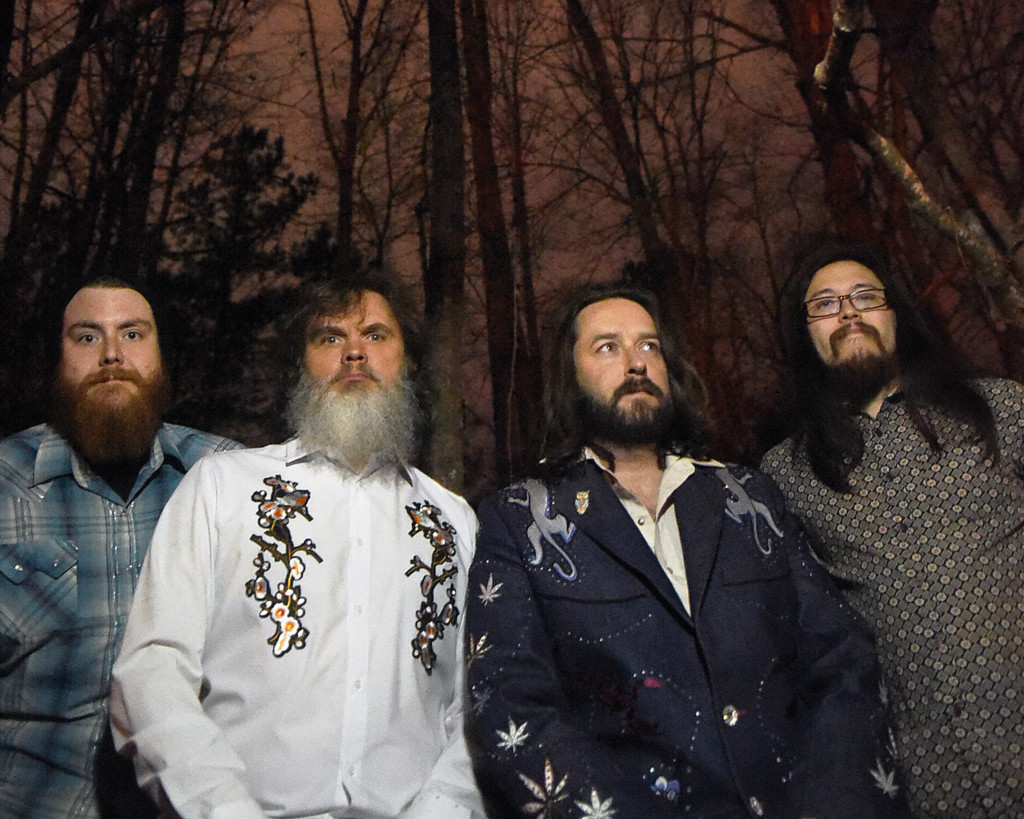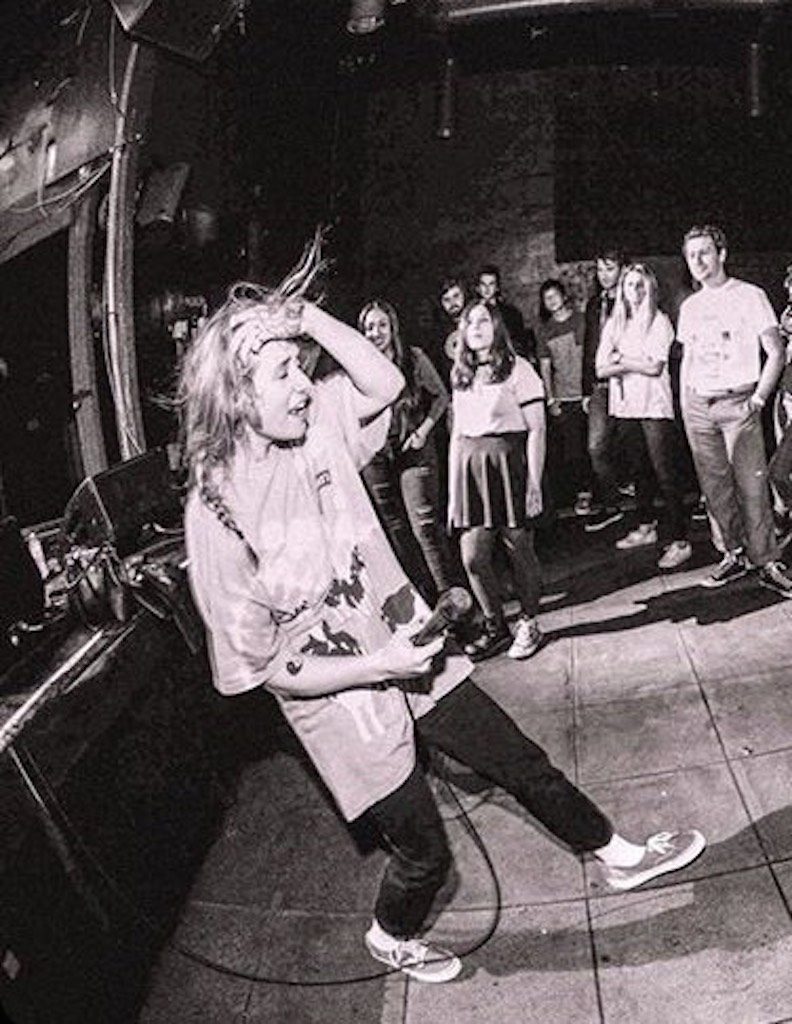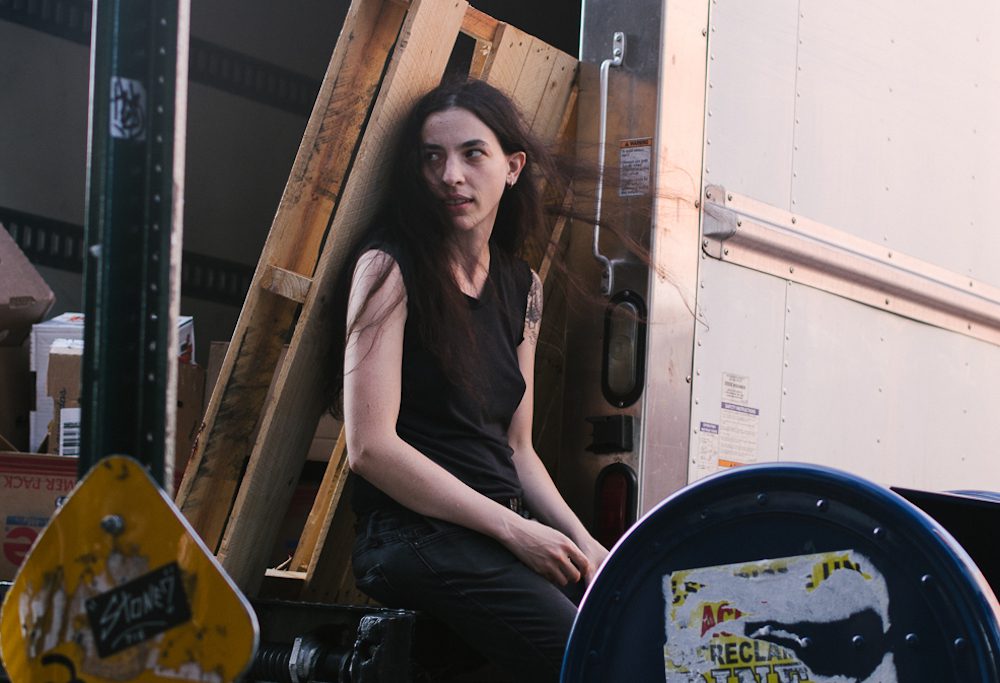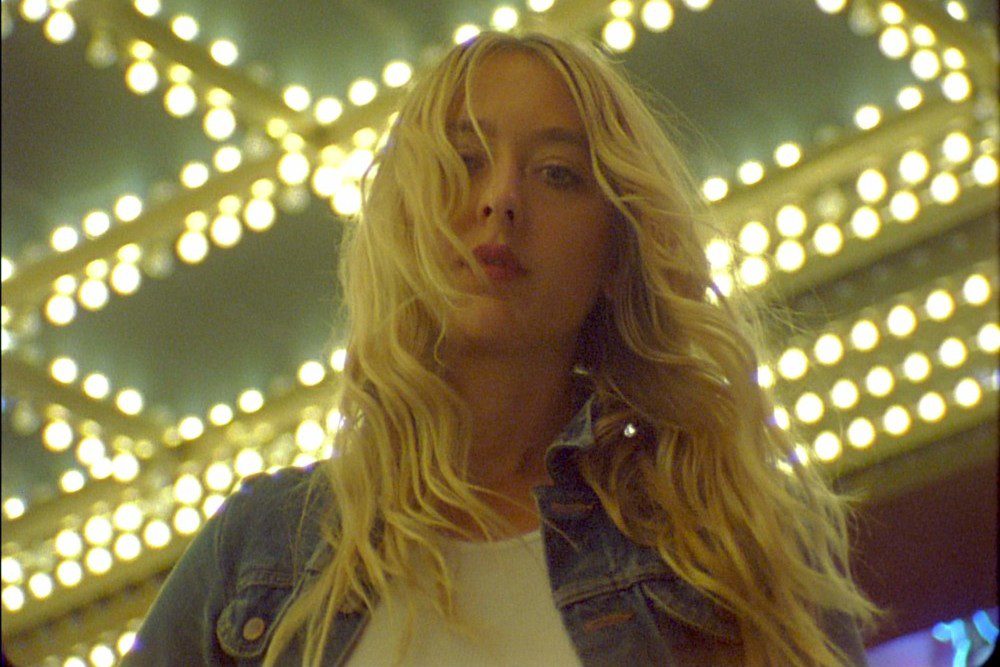
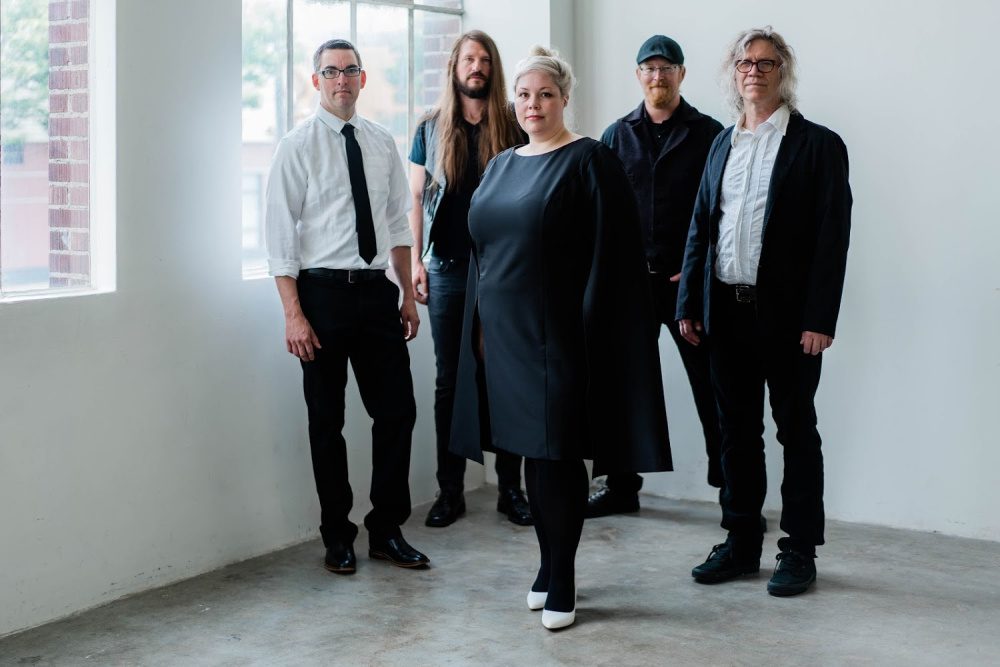
Confronting Death With Amanda Winterhalter

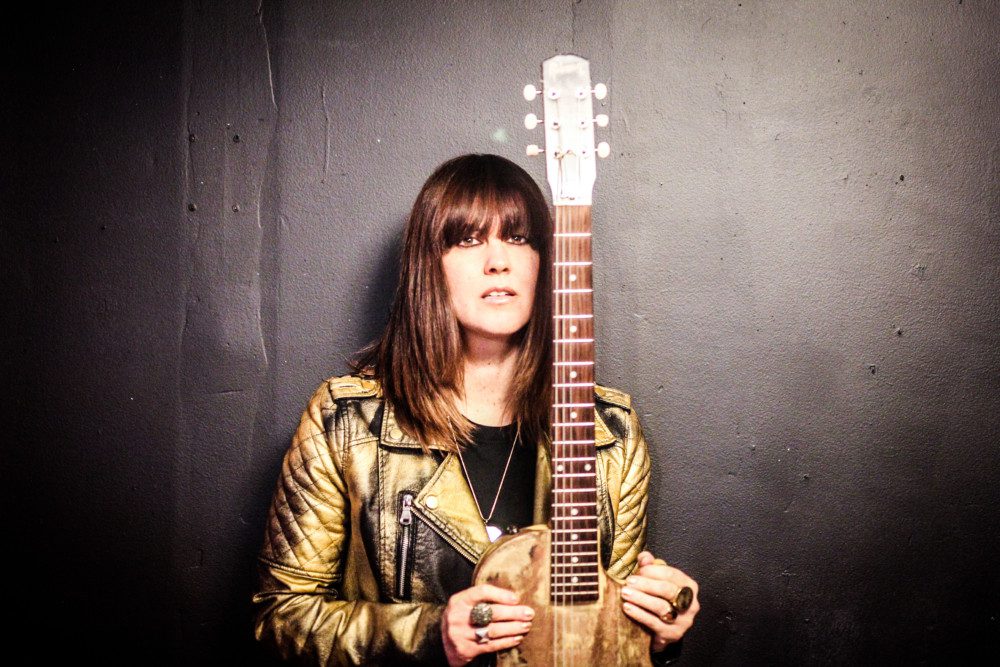
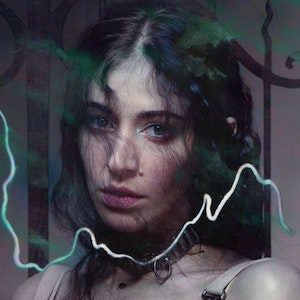
Photo By Nikki Barron

On the title track of her new album, What’s This Death, Amanda Winterhalter sings, “You don’t talk to death, you listen close.” It’s the perfect set-up for the powerhouse 7-track record, which leans in to the stories we tell about death and loss, and reflects them back in a fresh light.

This bittersweet nature of What’s This Death, released on October 4th, was born organically out of Winterhalter’s penchant for gothic Americana and the losses she endured in the last three years. What’s This Death, which shimmers with inflections of Southern rock, rockabilly, and tender indie folk, explores death in its myriad of forms. From the loved on who’s passed on and the once-close friendship that’s grown distant, to more symbolic deaths—like the parts of ourselves that transform along the way.

“I’ve always been interested in death since it’s such a universal part of living, and there’s so much story around it/through it,” Winterhalter said about the record. “My only grandparent I ever knew died a few years ago and I experienced the death of a few significant relationships over the last three years, so all of that definitely influenced these songs as well.”

In conversation with Audiofemme,  Winterhalter dove deep into her early life in a rural town on the outskirts of Seattle, her muses, and the raw space of writing and recording What’s This Death.

AF: Where are you from? What got you into music?

AW: I grew up on a small farm about an hour north of Seattle, and I’ve lived in Seattle for about eight years. I had a lot of opportunities to participate in music and performance as a kid – my parents made me and my brothers take piano lessons (I loved playing piano, but I hated practicing!), I sang in church and school choirs, and began to perform as a singer/songwriter and play in bands when I was a teenager.

AF: Is music your full-time gig?

AW: Hahaha – no. That’s a hard full-time gig to muster, and I feel really lucky to work at a fantastic arts & culture nonprofit in Seattle that gives me enough flexibility and energy to also play a lot of music. It does sometimes feel like having two full-time jobs, though.

AF: Your sound has been described as “Gothic Americana.” What does that mean to you? What are some major muses for your music?

AW: Yeah, a lot of people see or hear the word gothic and immediately think goth, or even metal, but we land at a different spot on the genre wheel. Gothic Americana shows up in our sound through a whole lot of grit with a good balance of tenderness on a foundation of some traditional American musical approaches. The pedal steel, soaring choruses, and upright bass lend the backbone of the Americana, and the overdrive and dig and lyrical content provide the gothic feeling and visuals. Some big influencers of our sound as we’ve developed as a band have been Gillian Welch, Townes Van Zandt, Patty Griffin, Cinematic Orchestra, Brittany Howard and Alabama Shakes, Sturgill Simpson.

AF: What’s the story behind What’s This Death? What inspired the album and how long did you spend making it?

AW: About half the songs were written on trips I took around the Pacific Northwest – a cabin at Lake Quinault, a tent on the coast of Haida Gwaii. Some of the tracks are inspired by works of literature that I wrote to perform for Bushwick Book Club Seattle shows. When we were ready to head into the recording studio, these seven songs were the ones from the basket that worked the best as a whole, all coming together around a death theme expressing different manifestations of that through lyrics on loss, distance, disconnection, and grief. We started recording with Johnny Sangster at Crackle & Pop! Studio in January 2019 and in between his tour legs performing with Neko Case, we wrapped up the project by March. Rachel Field at Resonant Mastering put on the final touches, and we spent the summer getting ready for the release in early October. 

AF: How does What’s This Death build on your previous release, Olea?

AW: Olea presented a lot of different musical influences, from jazz and folk to rock and Americana. I think What’s This Death shows our development as a band and zeroes in on the balance of grit and tenderness with a bit more cohesion across the tunes. It feels like part of a crescendo, and I think the next album will be a really exciting next stop on that swell.

AF: Is the new album in conversation with the past, present or future? In other words, where was your mind as you were writing these songs?

AW: There’s a lot of conversation with all three on this album. Some of the songs deal with my disconnection from Christianity and the church and that culture and community. Some of the songs are dialogues or monologues of self-talk that both reflect on the past and process the present, as well as try to imagine the future. In all, I think there’s a constant voice of reassurance that even though the future is uncertain, you can anchor yourself and take the agency you need to move forward.

AF: What were the biggest challenges making this new record?

AW: Oh, recording is always a pretty raw and vulnerable space. It’s a really fun time, and provides a lot of inspiration and excitement to hear things coming together as a whole. But when you hear your voice or your instrument isolated while mixing or recording, you hear all your mistakes and flaws. Which is necessary for growth, of course! But there’s always a little soreness and self-consciousness as you’re building your muscles to make your output match your vision.

AF: Tell me about the title track—I hear old time influence in it especially. Did you grow up learning bluegrass, old time, or traditional folk? What’s your relationship to those traditions?

AW: No, I didn’t grow up with that kind of music at all, actually! But I was very drawn to it. Mostly I discovered roots and traditional music through movies with, like, T Bone Burnett or Quincy Jones soundtracks (Oh Brother, Where Art Thou?The Color Purple). I discovered old jazz and blues at a young age on my own, and that was kind of the first flag of individuality in my music taste since the music in my environment was mostly contemporary Christian and country and some oldies sprinkled in. It wasn’t until my late teens and 20s that I got deeper into the canon of 20th-century music and the incredible local music scene in Seattle. Roots music is so important and resonant to me because of core storytelling – I’m fascinated by the time traveling experience that music provides, and the ability to see into cultures and a broad human experience.

AF: What’s your favorite track on the album? Tell me about the process of writing it.

AW: I love them all! I think my fallback favorite is usually “What’s This, Death?” because it really encompasses in every way – lyrically, musically, conceptually – exactly who I am as an artist and what we do as a band. Every instrument and piece of the band is featured in that song in some way, and I love that!

AF: How does a song start for you? A melody, an idea, a combination of both?

AW: For me, the seed of a song is almost always a melodic phrase. Usually an actual phrase of words pops into my head and my brain puts some notes underneath the words. I’ll build the rest of the song out on my guitar around that melodic phrase, and once I have the musical framework, I’ll finish the lyrics. Sometimes all of the lyrics come along as I build out the song musically. I kind of need both – if I don’t have both a basis of melody and words/concept, it’s tough to move forward and create a whole song.

AF: What do the next few months look like for you? Are you on tour?

AW: We are currently wrapping up little northwest tour! We’ve been making our way through Oregon and will end in Clarkston, WA on 11/22 and Moscow, Idaho on 11/23. Then we’ll do one last show of the year at Tim’s Tavern on December 13 with Claire Tucker and Frames In Motion. And then we’re super excited to start off 2020 playing at Timbrrr! Winter Music Festival in Leavenworth on January 25!

AF: What are you goals with music? What have been the biggest obstacles to those goals? The biggest help?

AW: My main goal is just to keep making music! My vision for sound and songs is always expanding, and I want to keep growing as an artist to always get closer to realizing that vision. I love challenging myself to create music that makes me feel something, and when it resonates deeply with an audience, too, that’s just the best experience in the world. I’d love to keep creating and keep sharing our music with more and more people. The music industry isn’t in a state that provides much support for artists. And while I think the democratization of music is good and necessary, it also creates a lot of over-saturation. But I believe there’s space and an audience for everyone who wants to work at their craft and share it with the world. And finding communities that share that belief is the biggest help. I don’t believe anyone gets anywhere without the support of a community of collaborators, and I’ve been really lucky to find mine. The people I make music with are the best people I know, and we all have so much appreciation for one another. 

Follow Amanda Winterhalter on Facebook for ongoing updates.
RSVP HERE: Bethlehem Steel Play Trans Pecos + More

Welcome to our weekly show recommendation column RSVP HERE – your source for the best NYC shows and interviews with some of our favorite local live bands.

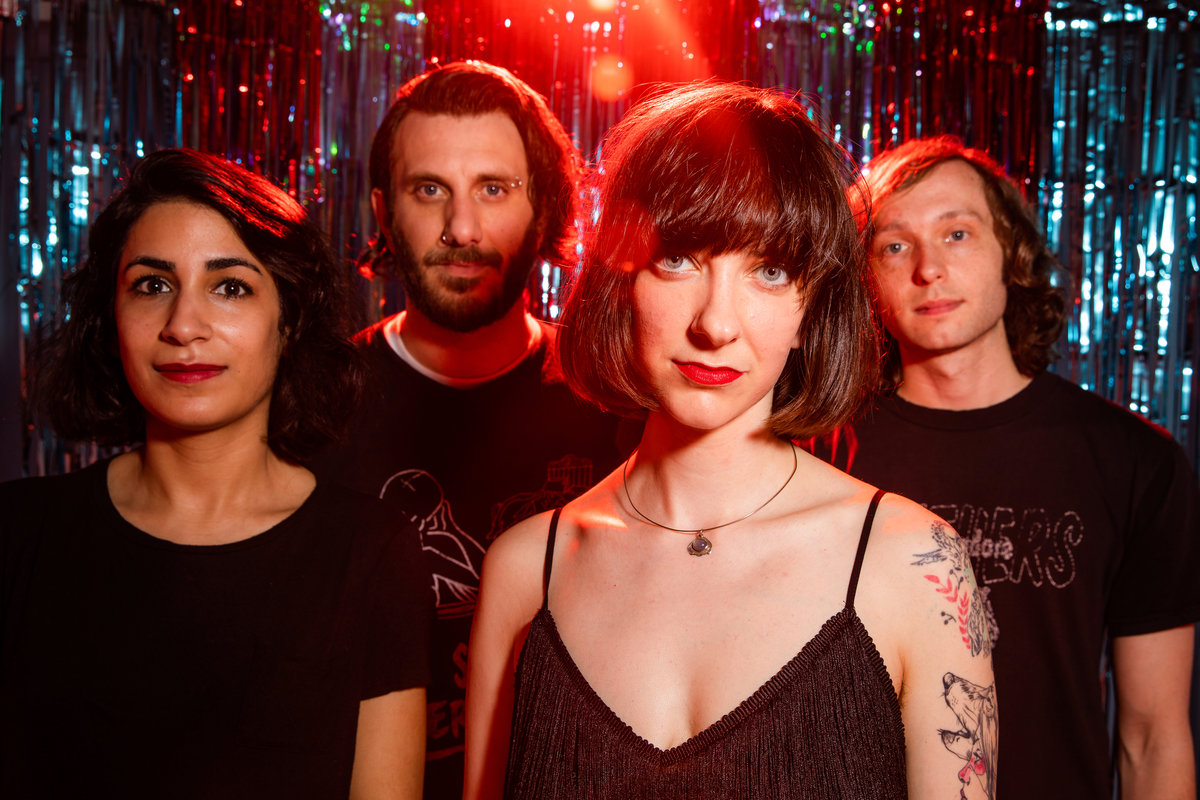
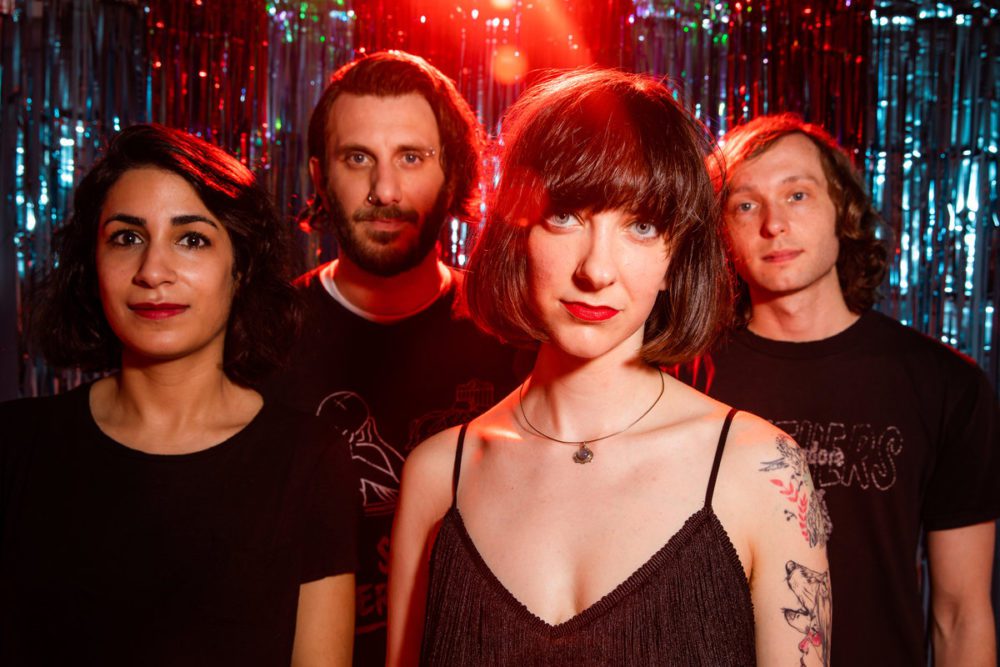
Bethlehem Steel released their sophomore self-titled record on Exploding in Sound Records September 13th and have been on tour since. They are set to return to Brooklyn this Sunday 11/24 with a show at Trans Pecos with Ben Seretan, Sinai Vessel, and Lightning Bug. Bethlehem Steel formed in 2012 as a trio consisting of Becca Ryskalczyk on guitar/vocals, Jon Gernhart on drums, and Zephyr Prusinski on bass. Their second record features singer/guitarist Christina Puerto, who toured with Bethlehem Steel around their debut record Party Naked Forever. She was asked to join the band full time and contributed to the songwriting process of their latest release, resulting in a more empowering record that lyrically grapples with “being taken advantage of, or abandoned or fucked over.” We chatted with Bethlehem Steel about their favorite tour stories, the challenges of long haul touring and why you need to watch out for pizza prices in California…


AF: You’re finishing a super long tour supporting your self titled record out now on Exploding in Sound. What was your best show, favorite city, and favorite animal you’ve met on the road?

BS: Our best show was in Seattle. It was good to cross paths with Pile mid-tour and we had a great time playing with them at Chop Suey. Favorite city would have to be Austin because we got to swim in a lake under the stars at our friend’s house after the show. Our favorite animal(s) we met on tour were Brody and Griz. Griz is a big friendly cat and Brody is a little blind chihuahua and they both live with our good friends Brian and Brenda in Minneapolis.

AF: What are the challenges and advantages of a seven week tour?

BS: Not getting sick is definitely a challenge, as is dealing with the very long drives, and being so far away from home for so long. But playing this many shows in a row is a really good opportunity to work on the live performance aspect of things, and visiting friends and making new ones all across the country is always a wonderful thing.

AF: What is your favorite thing to do on your days of? What do you listen to in the car?

BS: We usually end up going to a thrift store to look for nutcrackers. We also like to do movie scene re-enactments, and will almost always try to find any type body of water to swim in. As far as car listening, Pat puts on this playlist he made called “Pat the 80’s” a lot.

AF: When you get a flat tire, who’s the first person to try to fix it? When your van breaks down, who cries the most?

BS: We have a Tacoma and it does us good.

AF: Any other crazy stories?

BS: We each payed $9 for a slice of pizza in Sacramento. We didn’t see the prices until it was too late.

RSVP HERE for Bethlehem Steel with Ben Seretan, Sinai Vessel, and Lightning Bug @ Trans Pecos Sunday 11/24! ALL AGES / $10

More great shows this week:

11/22 Eaters (Armonica Set) with Greg Fox, David Watson, Michael Shea, Kate Mohanty @ Trans Pecos. All Ages / $10 RSVP HERE

11/22 88Palms, HRY FLWR, Safer (single release show) @ The Broadway. 21+ / $12 RSVP HERE

11/22 + 11/23 Crumb, Divino Niño, Shormey @ Music Hall of Williamsburg. 18+ / $26 RSVP HERE

11/23 Fraidycat (Reunion Show), True Dreams (Album Release), Wooing, PowerSnap, @ Alphaville. 21+ / $8-$10

11/23 NY Night Train Soul Clap & Dance Off, Nobunny, Gnarcissists @ Brooklyn Bazaar. All Ages / $15 RSVP HERE

11/25 Nicole Yun (of Eternal Summers), Coltura, Desert Sharks, Queue @ Baby’s All Right. 21+ / $10 RSVP HERE

11/26 Military Genius, P.E., A. Savage (of Parquet Courts), Strange Magic (DJ Set) @ Alphaville. 21+ / $10 RSVP HERE

11/27 M.A.K.U. (Record Release), Salt Cathedral @ Sultan Room. 21+ / $12 RSVP HERE

Carrie Underwood Follows CMA Snub With Brash New Video

Photo by Jeff Johnson

Carrie Underwood gets in touch with the bold side of her artistry with her new single “Drinking Alone.”

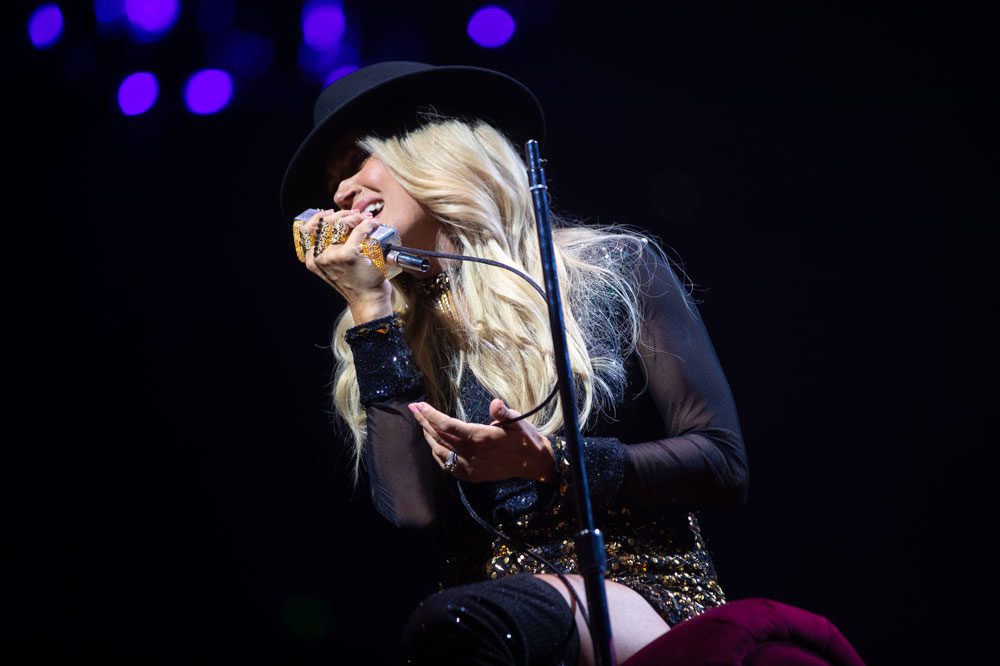
This week, Underwood released a music video for the smoldering track, and in the four-minute clip, the superstar acts as a singer in a swanky club, donning a fedora and sequined, sheer black ensemble, making eyes with a heartbroken stranger from the stage. It turns out the singer is a lonely patron herself, later joining him in a corner booth, sipping a glass of whiskey as she croons “We should be drinkin’ alone together/Drownin’ the pain is better/With somebody else who got problems/We ain’t gonna solve ’em/The misery loves company.”

As beguiling as the video is, the real intrigue lies in the song itself. “Drinking Alone” finds Underwood tapping into an R&B sound she hasn’t really experimented with before, mixing jazz flavor with slick wordplay. She doesn’t go over the top with her vocals, belting out the powerhouse notes when need be, but letting the softer tones in her voice really do the talking. The track has long been a standout and fan favorite on Underwood’s acclaimed 2018 album Cry Pretty, pushing her out of the sonic comfort zone that’s largely seen her play it close to the mainstream country line, whereas “Drinking Alone” feels like a significant growth spurt.

The video’s release comes on the heels of Underwood’s killer performance of the track at the 2019 CMA Awards. It was more of a theatrical display, really – oozing with confidence and flawless vocals. The show marked the twelfth consecutive year that Underwood served as host of the awards show, previously sharing duties with Brad Paisley.

This year, the CMA’s tone shifted to shine a spotlight on the women of country throughout the broadcast, pairing Underwood with legends Dolly Parton and Reba McEntire as co-hosts on a night that opened with a tribute to generations of hits recorded by women and featuring performances by the all three of them, along with The Highwomen, Martina McBride, Sara Evans, Tanya Tucker and many more.

But the female-centric night ended with Garth Brooks being crowned Entertainer of the Year – one of the highest honors in country music – for the seventh time, an outcome that somewhat rattled the Nashville industry. Eric Church, Chris Stapleton, Keith Urban, and Underwood herself were all nominated, with Underwood considered the top contender.

But Entertainer goes beyond touring. Many industry giants (including Miranda Lambert) had voiced their support for the lone woman nominee in the wake of her massive Cry Pretty Tour 360 that had her selling out arenas throughout 2019 and doing her part to support women in the genre by bringing duo Maddie & Tae and trio Runaway June as her opening acts. Cry Pretty is one of the most critically acclaimed albums Underwood has released in her 15-year career, on which she served as producer for the first time, during a season that saw the reserved star opening up about her experience with three miscarriages in a two-year period before welcoming a second son, Jacob, in January 2019. She also continues to cultivate her lifestyle brand Calia and is working on a health-focused book, Find Your Path: Honor Your Body, Fuel Your Soul, and Get Strong with the Fit52 Life, to be released in 2020, and has made impact outside of the genre, as NFL fans know her as the singer of the Sunday Night Football theme song.

Albeit, Brooks was headlining stadiums this year, setting records with ticket sales of 80,000 or more each night, while simultaneously reaching fans in a more personal way with his Dive Bar Tour that sees the superstar performing in intimate dive bars across the country. Still, this truly felt like Underwood’s year. While she’s the first woman to be awarded Entertainer of the Year twice consecutively at the ACM Awards, she hasn’t been able to break that glass ceiling at the CMAs, despite the buzz surrounding her with nominations in 2016 and 2019. While she’s always been at the center of a grand production, the Cry Pretty Tour was a spectacle, taking her show-womanship to the next level with fireworks, moving stages and interactive 360 degree staging that literally put her in the center of the crowd. And speaking as a fan for over a decade, she had me in tears throughout the show, taking us through a “walk down memory lane” segment where she shared her connection to a collection of early fan favorites while also realizing she now has so many hits that she had to perform snippets of several in one take. These are just a few of the factors that proved how much she’s grown as an entertainer since the first time I saw her in concert in 2012.

If you’re going solely based on ticket sales, it makes sense why Brooks was awarded the elite prize. But if you take into consideration the impact of an artist’s branding, how they challenged themselves musically and in their stage show, leading to overall growth as an artist, then Underwood defines the title of Entertainer of the Year.

Underwood is nominated for Favorite Female Artist (Country) and Favorite Album (Country) for Cry Pretty at the 2019 American Music Awards, airing on Nov. 24 on ABC. Here’s hoping she finally gains some long-deserved recognition.

Morning Hands Get Mystical on New LP

Morning Hands’ self-titled LP sounds as though someone’s Dungeons and Dragons wizard character made an ‘80s synth-pop version of his spellbook.

Maybe that’s a bombastic statement for the opening sentence of a review, but once I got to track four, “Moving Through Water,” I knew my initial inklings were correct; the whole album shimmers with folkloric mysticism, from the chorus of opener “Santa Fe” to the final track’s Stranger Things-esque opening riff.

The former (I let the right one in/before the meal could be finished) had me wondering if Patrick Tabor (vocals and lyrics) and Douglas Du Fresne (music) were purposefully referencing the 2008 Swedish romantic horror film Let The Right One In, or, possibly, if they were paying homage to Elijah, every Jewish kid’s favorite Passover visitation. Such is the power of synth-pop: it can pull from a variety of inspirations beyond the obvious without sounding like the music version of a Scholastic I Spy book. It can inspire the sci-fi scaries just as easily as it can the aww shucks goofiness of literally any ‘80s teen TV show.

This is why albums like Charly Bliss’s Younger Now can exist in tandem with Morning Hands’ self-titled without one seeming like the “right” way to use a synth, and why it (hopefully) appears to me as if more pastiche-loving bands have started to gravitate towards synth pop/rock as opposed to psych rock (please god).

“Moving Through Water” gleefully leans in to the fantasy analogies, with a verse that accuses some unknown enemy of scanning every angle from your teeth to your claws/the corners of your mouth reveal your sinister plots. The chorus is delivered with a little less of a wink, but still uses similar inspiration to explain the discomfort of seeing someone’s betrayal coming a mile away (I know I sense what’s been gathering around me/It feels like a curse from another century).

“Gagged and Bound,” a standout from the second half of the album, feels like the song two storybook children would sing before encountering a witch while skipping through the woods.  Tabor’s voice is at its best here, switching seamlessly from sing-song (a cut of life too big to fit/your little hands in oven mitts) to a growly troll-under-the-bridge moment during the song bridge. Its bouncy-ball synth backing affords the last few songs of the album the energy it needs to end strong, though “Gagged” and “I Wanted You” are more of a power duo than anything, making closer “World of Color” seem like the odd one out even if, thematically, it makes sense to end an album so concerned with metaphor and mysticism on more of an introspective note.

“I Wanted You” is one of the most straightforward songs on the album in terms of lyrics — the title itself is pretty self-explanatory — but a little breather from the more overt fantasy elements was necessary, I think, to keep the LP from slipping too far into concept or one-off territory. And the song still brings forth some great lines without it (we’ve both been so wrong/some forces just can’t coexist/now I’m disgusted/that I’ve let it come to this) that are elevated by Tabor’s self-aware delivery that never shies away from wringing every emotional shift he can from a single rhyme scheme.

All in all, whether this was a fun lyrical experiment or just the lens through which Tabor sees the world, the album is cohesive, atmospheric, and most of all fun, a triumph in any genre. Plus, the album art is — and there’s no other way to say this — sick as hell.

Lindsay Kay Reveals A Song’s Evolution on New EP

Calling from a six-week writer’s residency in the small mountain town of Banff in Alberta, Canada, Lindsay Kay is feeling a creative high these days – while also enjoying a much-needed recharge. “This place is really fantastic. They literally cook all your food for you. You’re sort of living in a hotel, almost, so you don’t have to make your bed, even,” she says with a laugh. “It’s so wildly privileged… but it’s completely immersive. All you have to do is music. They fund you to come.”

Banff lies roughly 90 minutes away from Kay’s hometown of Calgary, and so, it feels a bit like a homecoming. She previously attended this same residency four years ago as she prepared her debut album, 2018’s For the Feminine, By the Feminine, an especially moving and timely collection centered on womanhood and the meaning of femininity. Every collaborator on the album, from producers to studio musicians, was a woman.

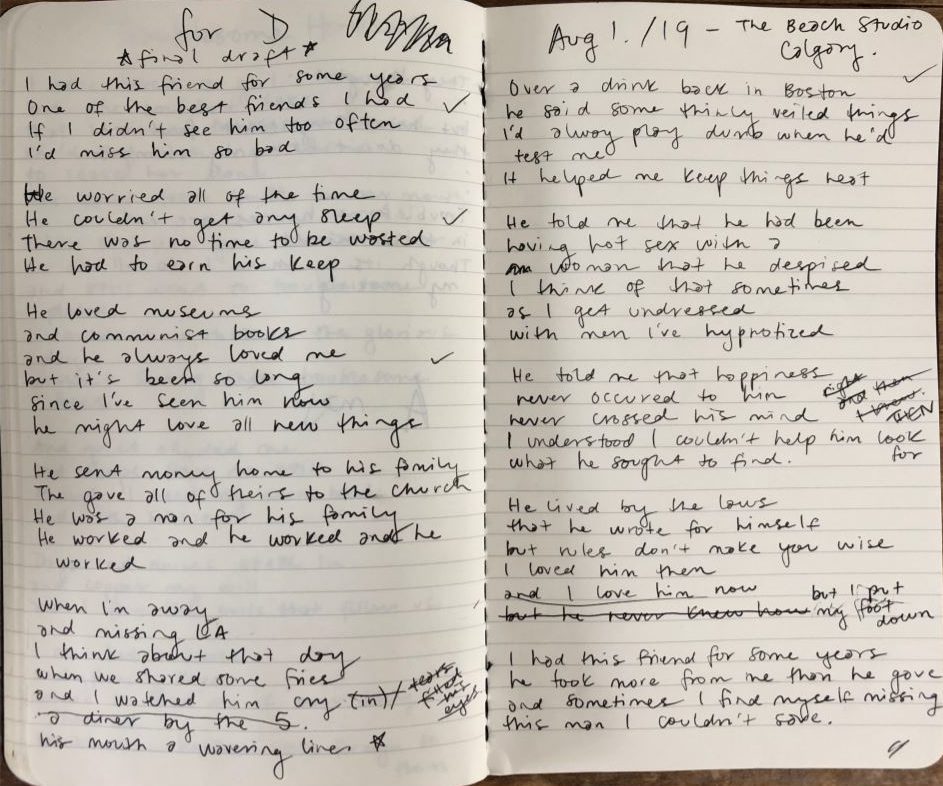
Now, she offers a glimpse into the great depths of her songcraft with her new EP, showcasing the same song in three different versions. “For D”/“I Had This Friend” is a study in songwriting, and each iteration is a puzzle piece to a much bigger story. “I was actually, funnily enough, at another artist residency when I first wrote this. I was in this really small town called Noyers-sur-Serein in Burgundy, a couple hours south of Paris. It was very different than here. It’s very small,” she recalls. “You’re sort of living in this tiny, medieval house. It was just me and one other woman in residence together – my dear friend [writer] Kelsey Donk. We were there for a couple of months working and writing. That was real seclusion.”

“I Had This Friend” moves from the rough cut of the original 2016 iPhone demo to something more visceral and tangible in the second demo to a finished product that marries creamy studio work with a still jagged presentation. While the final version remains unmastered, it still allows the listener to feel an emotional richness that drips from Kay’s voice and the steady heartbeat of guitar and piano.

“He worried all of the time / He’d never get any sleep / There was no time to be wasted / He had to earn his keep,” she sings. Her words paint faint, foggy images of a person who quickly, sorrowfully faded from her life. “In life, some people are there for a long time, and some people are there for a short time. This person was in my life for a shorter amount of time,” she offers with a palpable heaviness. “When I wrote this song in France, we were still dear friends and speaking pretty regularly. He was present in my life, and I felt inspired to write a song about him.”

“I cared about him very much, but I worried about him for all the reasons that I list in the song. He overworked himself. He sets too high expectations for himself. I felt I wanted to put that into words. Coming back to this song later, things had changed slightly. I was figuring out how to deal with that.”

Listen to AudioFemme’s exclusive stream of “For D” / “I Had a Friend” and get even more insight into Kay’s work below.

AF: What drew you back to the song three years later? How had things changed?

LK: I came back to the song this year. I was in Calgary visiting my family. I was thinking, “Okay, it’s time to start the process of writing new music and figuring out the next type of album that I want to make.” Sometimes, it’s a little bit easier to revisit old work as opposed to diving right into making something new. Writing songs is the hardest thing ever. [laughs] It’s so terrifying to have the blank page looking back at you. So, sometimes, it’s a softer landing to go back into the journals and the voice memos and see if there’s anything that can be mined from the past.

That’s what I was doing. I was going back and listening to a bunch of the music I wrote when I was in France and stuff I wrote that coincided with my last album that didn’t make the cut then. This song was one of those songs. It didn’t really fit in with the overarching theme of my last album, but I still felt the song had something special and sweet and nostalgic to it. I like the song.

In listening back to it, it’s interesting, of course. The first demo was in the present tense, and I thought to myself, “Do I have any sort of responsibility to keep the song the same to respect the way it was written the first time?” But it’s my song, so I can do whatever I want. There are no rules. So, I thought, “Well, we grew apart in a natural, normal way. Nothing dramatic or terrible about it, but how do I make this song true for right now?” The first thing I chose to do was put it into past tense, which took some finagling. It was interesting, because I had never done that before. I had never taken a present song and put it into the past. It was a cool thing to work on. I really enjoyed that process.

AF: How did the song feel to you then, emotionally?

LK: Honestly, I think it felt quite similar. I actually had a lot of the same feelings I had when I wrote it. It was just love and care for this person – despite the fact that I no longer speak to him very often. When I listened to the song, I was taken back to that feeling of care and concern. It made me think of our friendship fondly. I saw things slightly different, I suppose, which you can see in the lyric changes. It’s a little bit more critical view, perhaps, in the last version of the song. I had time to reflect on our relationship and our friendship. It still rang true in some way, at least.

AF: A month later, you recorded the final version. What did you want the song to evoke, musically?

LK: I wanted to record something very quickly, very messy, not too polished. I wasn’t initially planning on making an EP in this way. When I went into the studio, I just had access to studio time in Calgary. This was the song that was at the forefront of my practice and mind at the moment. I wanted to record it in the way I felt it was finished. After I had recorded the song, I was going back and listening to the different versions. Then, I had the idea, “Well, what if I put this all together with the iPhone demos and show the evolution?”

It all came together after. The song isn’t even mastered. It’s very barebones. It’s very live. I recorded everything completely live on the floor. I did the voice and guitar master take all together. It’s one good take. I quickly layered another guitar part on top and a bit of piano. That’s the whole song. It was literally a few hours in the studio. Sometimes, as artists, we get quite precious about our work, which I think is important – to want to refine and polish. It’s sometimes fun to let people into the more creative process as opposed to being really attached to perfection.

AF: Do you ever have trouble stopping yourself from tweaking and letting go of a song?

LK: Of course. For this project, it was almost an exercise in not doing that. I really actively did not do that with this. I was super lax on my technical expectations. It was almost an exercise in letting go of songs really, really fast. That was really helpful. With my last album, I had a lot of moments of wanting to continue to add more and tweak. It never really felt finished. But eventually, you have to learn to let go or have someone you trust by your side telling you when maybe it is time to let go. I had the same experience with music videos and editing them. There’s always more. There’s always something that can be added or removed or tweaked. It never is perfect. There’s an art in knowing when to let it be.

A page from Lindsay Kay’s lyric journal offers insight into how the song evolved over time.

AF: What lyric of this song sticks with you most?

LK: I’ve been trying to actively think about how to incorporate writing about intimacy and sexuality in my work that’s not draped in symbolism all the time. I was skirting around this lyric, but then, I put it in blatantly. The lyric is: “He told me that he had been having hot sex with a woman that he despised.” That lyric is just pretty clear. It’s not necessarily uber poetic or nuanced. It’s clear and to the point. That’s something I’m trying to explore more in my writing.

That lyric felt powerful to me when I wrote it, and I felt excited about having that in there. I also like the lyric: “When I’m away and missing LA, I think about the day we shared some fries, and I watched him cry.” Sometimes, it’s nice to put in weird little details. Sharing a plate of fries with someone is such a normal, friendly thing we all do.

AF: Do you have an idea where you’re headed next in your music?

LK: I’m at the very beginning of the process. I was just in Spain for the last, almost, three months. I’m going back and forth between Los Angeles and Barcelona at the moment. I was writing there quite a lot. I wrote maybe four or five new songs. Now, I’m here continuing to polish those and write more music. A full-on shape has not taken form yet. There’s no clear path as to when an album will come or what it will look like. Right now, I’m firmly in the creative writing process. I’m trying to protect that space as long as it feels good and can keep it.

Follow Kay on Facebook and Instagram for ongoing updates.

Wild Moccasins “Boyish Wave” Video

Wild Moccasins press photo by Arturo Olmos.

In the midst of a tour supporting their sophomore breakout album 88 92, Houston indie band Wild Moccasins were breaking up. Founding members Zahira Gutierrez and Cody Swann had been romantically involved for nearly a decade at that point, and as the band’s lineup expanded and contracted, amassing fans along the way, they remained its constant core, despite the personal turmoil between them. It all became fodder for their 2018 LP on New West Records, Look Together, centered on the deterioration of their relationship and their determination to keep moving forward for the sake of the music.

That narrative, of course, made its way in to everything written about the project. But just over a year later, the band has returned with a fresh perspective on what they’ve been through, where they’re going next, and a new video for the LP’s lead single “Boyish Wave.” Referencing French New Wave films of the ’60s – or, more specifically, their trailers – like Louis Malle’s Elevator to the Gallows, Jean-Luc Godard’s Weekend and Breathless, Alain Resnais’ Last Year at Marienbad, Agnès Varda’s Cleo from 5 to 7, and the love triangle in François Truffaut’s Jules and Jim – the visual pokes fun at the drama that nearly destroyed them and officially caps off the album cycle as the band gears up for the next big thing.

“If you watch the trailers for all these films, they’re very dramatic, and they’re telling you what the film is about, but they’re also extremely ambiguous,” Gutierrez explains when we talk over the phone. “You’re just getting the best lines, seeing the most dramatic parts of whatever relationship is going on in the film.” This particular clip sees Gutierrez caught in a love triangle with Swann and Wild Moccasins drummer Avery Davis, following them through surreal scenes, subtitles and all. Seemingly taken out of context, the video is a trailer for a movie (or a relationship) that will never exist. “All of the most dramatic things you could say to to each other or do with each other when you’re going through a relationship are just kind of condensed into this like fake trailer,” Gutierrez says.

There’s no concrete timeline, narrative, or reality, which Swann says adds to the feeling of conflict. “But one thing we were trying to touch on,” he adds, “Is that when dating, you end up going to a lot of the same places with different people – your favorite restaurant, favorite place, favorite park. And a lot of times we live these mirrored moments, but we wanted to touch on the very positive aspect of how even something so familiar can be made completely new when you’re with the person you want to be with.”

The band plotted the “Boyish Wave” video shot for shot while on tour behind Look Together, releasing self-directed videos for “No Muse,” “Doe-Eyed Dancer,” and “Longtime Listener” with the same production team in the meantime. Swann says the band narrowed down the list of potential shots from around a hundred to about sixty, and that though it was extensively planned, they couldn’t account for all the “happy accidents.”

“A lot of that goes out the window whenever a shot doesn’t work out the way we thought it would, or sometimes a throwaway becomes the thing that everything hinges on,” Swann says. A perfect example is the still that became the video’s screen cap: Gutierrez points a prop gun at Swann from the opposite side of a picture frame he’s holding – Swann says he found the frame on the side of the road the day before the video shoot. It had such surprising visual impact, he says, “we had to arrange around it afterwards.”

The band remained heavily involved as the rest of the video came together. “Most cinematographers will not let you sit in through the editing process but we actually sat through the editing process from beginning to end and looked at every single scene and shot that we filmed and placed them carefully,” Gutierrez remembers. The subtitles were pulled from a notebook Swann has kept for nearly fifteen years, writing down quotes from his friends – and from Guitierrez, too.

“Most of the lines that are featured as dialogue are things that Zahira said maybe ten years ago, and she’s like, ‘I remember saying that!’ and I’m like, ‘Well it’s been sitting in my notepad for ten years,'” Swann chuckles.

Meanwhile, more than a year after putting out “Boyish Wave” as a single, the song itself has taken on new meanings, as both Swann and Gutierrez explored new relationships (and watched those end as well, due to the band’s relentless touring schedule). “We’ve all been through it together as a band,” Gutierrez says. “[On tour], you’re essentially living with the same people for a year and a half. There will be some sort of drama. The way I feel now looking back, everything needed to happen the way that it has happened for us to move on to the next step. As a band, I think our main goal is when we do something new we want it to be different, get out of our comfort zone. There were a lot of emotional moments but it all needed to happen for us to end up here.” She adds, “with the video, I don’t think the script could have been made when the song came out a year ago. Certain things had to happen – we had to go through things as people, as a band – for it to come out the way that it did.”

Swann says that growth as a band gave them the confidence they needed “to do something as scary as the next step.” Rather than participate in another grueling tour, both agree they’d like to “act with more of a sense of urgency” as Swann puts it. “If there’s one thing we’ve learned through the process of making these albums, it’s that the amount of time that goes into making one always keeps you away from entertaining. And you don’t get to make an album when you’re out touring. And we’d like to do both a little more often.”

“We are trying to figure out a balance. This last record, we went through a very intense studio/writing process and a very intense touring process,” Gutierrez says, adding that the band is always writing, but is leaning toward stand-alone releases, rather than a full album, in this transitional phase.

Evidently, the turmoil has only made the friendships within the band stronger – the fire to the fuel Wild Moccasins need as they begin their next chapter. “Though there’s always something new, there’s always something that we’re moving on to, it’s been really an absolute pleasure to get to grow with Zahira through all of it, through each step,” Swann confesses. “That’s something I don’t take for granted – that friendship that started with us as kids in a band and got us where we are now.”

Look Together is available on all streaming platforms. Follow Wild Moccasins on Facebook, Twitter, and Instagram for ongoing updates.

Gear Repair

My Les Paul Jenna Nelson repaired after I destroyed it on my first U.K. tour

The best way to prevent the inevitable panic attack of your gear failing while on the road is to be prepared. When you use your gear every day in volatile environments with varying weather conditions and sobriety levels, it’s likely your shit will break at some point. One time my guitar amp fell out of the back of my van and smashed the tubes. The next time that amp fell out of my van the reverb tank magically worked again. You just never know!

We interviewed my favorite Brooklyn guitar tech, Jenna Nelson (who also plays in the garage band Sic Tic), and Rosie Slater (frequent touring drummer for New Myths, Delicate Steve, and Catty), about what you can do  when your gear situation gets wacky.

photo by Micheal Cooper

AF: What are the most common things to break on guitars/basses?

JN: Jacks come loose. Tuners get bonked. Knobs come off. Strap buttons get wiggly. Electronics get dirty and cause crackly or intermittent signals. Nuts get cracked… On a more serious level you have your headstock breaks which are relatively common on Gibson style instruments where the headstocks are pitched backwards at an angle.

AF: What are some easy fixes people should learn before going on tour?

JN: Carry a little multi-tool or assortment of screwdrivers, pliers and wire cutters in your case to tighten any loose hardware while you’re out. I’d also carry a bit of electrical tape wrapped around a Sharpie for emergency (temporary!) wiring fixes. For the more advanced, a wrench to adjust your truss rod (please make sure you use the correct size and shape!) can come in very handy for tours where you’re passing through wildly differing weather.

AF: What is a guitar set up and how often should you get your guitars set up?

JN: I recommend setting up your guitar or bass twice a year [in] spring and fall – right after a big humidity change is a good rule. Some instruments can hold onto a setup for longer, but most necks like to move around with the weather. If you’ve got a recording date or tour coming up, that’s also a good time for a setup to take care of any fret buzz, intonation issues, or general wonkiness that’s going to get in the way of your best playing.

I begin all setups by first talking to the person about how they play their instrument and any issues they’re having with it, hear any concerns or questions they have, and make notes on their desired “action” (how high the strings sit above the frets), any special tunings, and their string gauge preference – as the pitch and thickness of the strings affects the way the neck bows. Setups are very personal. Not everyone wants shredder-low action and if you always play in drop-D tuning, your tech should know to set it up that way.

After I have the instrument on my bench, I’ll play it and take some measurements of the neck relief and action, noticing where any buzzing may occur. I check out how the strings sit in the nut, and visually inspect the instrument for any cracks, scrapes, or dings. Then I make some neck adjustments using the truss rod. I’ll move the bridge and/or saddles around to where I think they should be and then I test every note. I’ll do this back and forth until I’m happy with the way it’s playing and then make any adjustments needed at the nut.

Next, I remove the strings (although I’m happy to keep them on during the setup for bassists), polish the fret tops, remove any fretboard grime and condition the wood, and run some graphite through the nut and saddle slots to keep the strings from getting caught up in there. I clean the instrument’s body, checking all screws, strap buttons, tuners, jack, etc. for tightness. I’ll then restring the instrument and make sure everything is still good before stretching out the strings and setting the intonation as perfectly as possible.

Finally, I plug it in and adjust the pickup heights (although this is also very personal and I am happy to work with people and make any little adjustments when they come to pick up their guitar or bass), and check that all the controls function smoothly and as they should, using a deoxidizing cleaner when needed.

Getting regular setups can prevent you from needing more serious work down the line, or at least delay it. Longer scale instruments like basses can be especially prone to settling into a bad neck bow and not wanting to let go if they’ve been that way for too long. The frets can also wear out unevenly if the neck has been too bowed or too straight for a long time. I always check for any excessive fret wear or neck twisting during a setup and make any recommendations for further work or things to keep an eye on. In the case of acoustic guitars, the glued-on bridge can start lifting off the body if the guitar has been too dry or left with a badly bowed neck or too much string tension.

AF: How can you take better care of your guitars/basses in general?

JN: Humidify them! October-April, roughly. Keep them stored away from radiators and drafty areas. Electric instruments don’t need that much, but New York apartments are brutal places for acoustic instruments. Sponge humidifiers need to be refilled every couple days and can be DIY’d easily if you’re on a budget. This will save you lots of money and heartache in the long run.

Bring a collapsible stand to your gigs if you’re worried about your guitar taking a fall. I’ve actually got my eye on this little rubberized block thing that you can rest on top of your amp and it secures the neck in place sans stand. I play a Thunderbird bass which is particularly difficult to lean on things.

My strongest advice is to get to know what you like about your instrument and play it often! Treat it with respect and it will give back to you. Even the most unlikely of instruments can bring mountains of inspiration and joy, so I treat them all equally.

AF: Any other tips?

JN: Don’t be afraid to ask questions! There are things you only learn after doing something 50 times, or 500 times, or 5000 times. I learn something new with almost every instrument I touch, and I’m excited to share the knowledge that comes with that experience with anyone who comes into my workshop (AKA my bedroom, lol).

photo by Eleanor Petry

AF: How do you keep your drums in tip-top shape while on the road?

RS: The road is definitely tough on drums, but I’ll take some extra time (if there is any) when I set up to make sure that all of the drums are tuned and warm, and then making sure everything is put away carefully at the end of the night. I also keep everything in either hard shell cases or really padded bags.

AF: What are the most common things to break on drums while touring?

RS: There are so many tiny little tension rods and screws on a kit and the vibration from being in the van for long drives can make them loosen and fall out. I’ve cracked a couple of cymbals, broken sticks, popped snares, popped bottom heads… it seems like there is always something, but I’d have to say that loosing tension rods, felts and wingnuts is probably the most common.

AF: How do you change a drum head and how often should you do this?

RS: I probably don’t change them as regularly as others might? My policy is to change them when they start sounding weird and no amount of tuning and tape can help… I have a couple snares that I should probably change but they still sound great so I’m just hoping they don’t break! Changing heads is not too bad. First, you loosen all of the tension rods (I loosen them but don’t pull them out of the rims because there are tiny separators between the tension rod and rim that can get lost really easily). Next, you take the old head off and put the new one on. Once you get it situated with the rim and tension rods lined up with the lugs, I like to tighten each rod by hand until there is a little bit of tension on each. Then you tighten each rod with a key until the tension is slightly tighter, but even (the drum head will make some cracking sounds as it gets tighter). When the tension is pretty even, I like to just make slight (quarter-ish) turns, moving across the head instead of clockwise, until the head is tight. Keeping the tension on each rod even is really important. You can check by tapping the head in front of each rod and if it sounds the same, you’re good to go. Then it’s really just about getting the drum to sound the way you want it to. It takes a lot of trial and error until you get more comfortable matching the sound you want with the feel of the head and tension rods. To be fair though, I read an interview with Taylor Hawkins and it said something to the effect that he puts a head on a snare, makes it super tight, says a little prayer, and hopes for the best… I’ve tried that too and it works, haha.

AF: Any other tips for keeping your gear safe and sound?

RS: Cover all your gear up in the van and keep an eye on it in clubs.

More tips on how to take care of your gear on the road:

  • Invest in good cases. Gatorcases have great padding, but hard cases are your safest bet.
  • Pack extra quarter inch, patch and XLR cables (usually the first things to go).
  • Watch this over/under technique demo and wrap your cords properly.
  • Pack extra sets of guitar and bass strings.
  • Pack extra tubes.
  • Pack as many guitar picks as you can and keep them in your wallet or small container, like an old Altoid tin.
  • Learn how to fix your gear and troubleshoot before you leave for tour.
  • Label everything with your name and contact info. Be fancy and get a stencil with your band name!
  • Keep an Emergency Repair Kit with the following supplies:
    • Duct Tape – Can fix anything!
    • Soldering Kit
    • Cable tester
    • Screwdriver / Allen wrench

Van Pack Tetris 101

  • Heavy Stuff goes on bottom
  • Soft cases go on top or next to amps
  • Make guitars and other breakables easy to access so you can take them inside when you’re staying at motels, with friends, or any kind randos.

Even if you’ve taken every precaution sometimes things will still break! When this happens we like to blame it on Mercury Retrograde. Check Ismercuryinretrograde.com to cover all your bases.

Cold Beaches & Emily Blue Unite For Planned Parenthood Benefit Tour

Planned Parenthood Benefit Tour
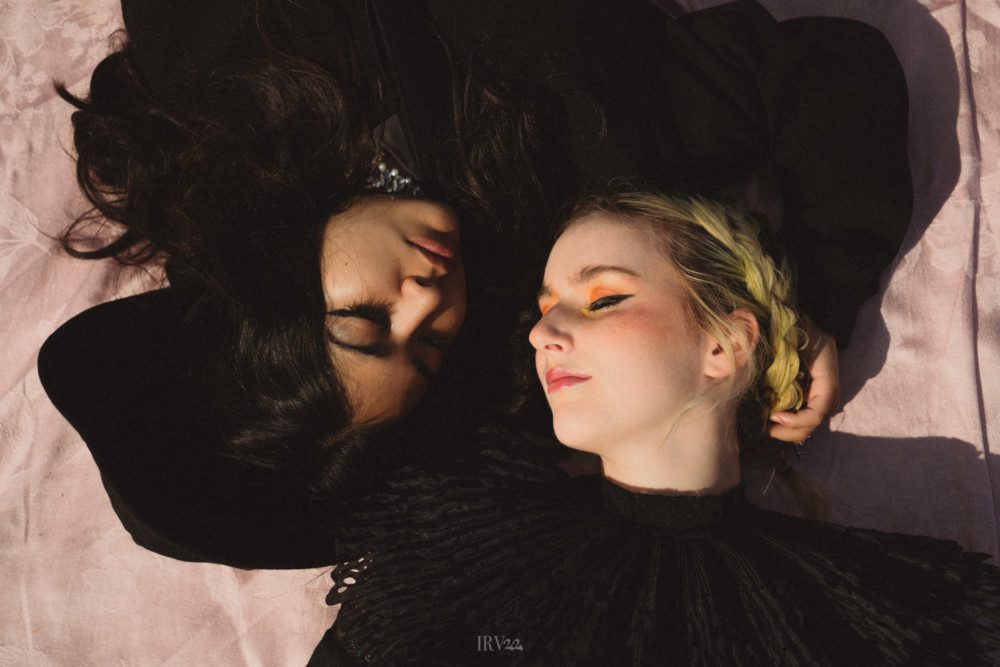
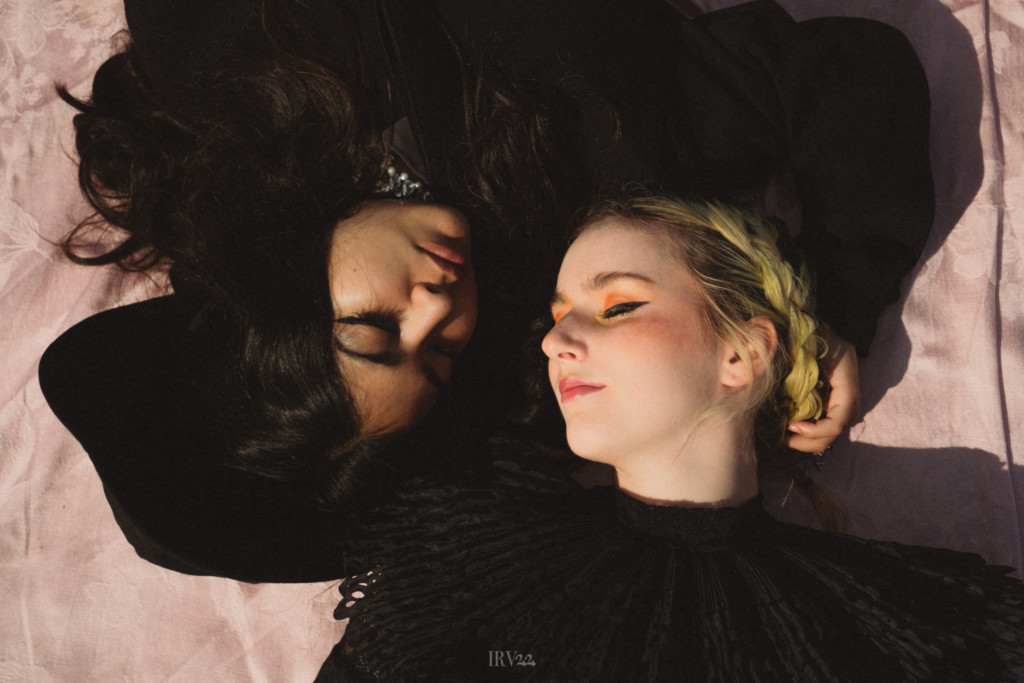
Emily Blue & Cold Beaches photo by Irving Vasquez

This August, Planned Parenthood withdrew from the federal funding program, known as Title X, to avoid a new policy that forbids referrals to doctors who can perform abortions. This year alone, nine states have passed some of the country’s strictest anti-abortion laws to date, with Alabama outlawing the procedure in almost all cases and Georgia, Kentucky, Louisiana, Missouri, Mississippi, and Ohio passing restrictive “heartbeat” bills.

“I have been passionate about publicly endorsing women’s rights to reproductive health and sexual wellness since the start of my career,” Cold Beaches singer/songwriter, Sophia Nadia, told AudioFemme.

In an effort to raise funding and awareness about the healthcare organization, Cold Beaches and singer Emily Blue have organized a Planned Parenthood Benefit Tour, which kicks off Tuesday in Virginia.

The Chicago-based artists will perform at venues on the East Coast and in Eastern Canada, hand out informational brochures, and help to inform women about their healthcare options moving forward, as well as stop by local women’s health clinics to speak with staff and women about how Planned Parenthood’s defunding will affect them.

“When Trump got elected in the fall of 2016, I organized and played six benefit concerts for PPVA. I had the idea to interview representatives of local Planned Parenthoods in the states I tour,” says Nadia. “I want readers and listeners to see how different states face different political climates/fiscal obstacles so they can learn how to help those specific communities.”

“As a woman of color in a white male-dominated industry, promoting the significance of women’s health centers has grown to be an imperative part of my identity in the music scene,” Nadia continues. “Having firsthand witnessed victims of sexual violence being refused proper healthcare and seeing the societal pressures placed on womxn to have children, I am determined to do whatever I can to make a change.”

The tour, which spans from Nov. 19th through the 25th, will offer limited-edition merchandise, with 40% of the proceeds donated to Planned Parenthood. The artists will also collect donations for the organization at each tour stop.

“I believe strongly in the connection between art and activism. As artists, we have something rare, which is a public platform and listening ears,” says Emily Blue. “My personal goal with interviewing others is to lift their voices and spread awareness on some vital women’s issues. We are also using this tour to raise money for Planned Parenthood, an organization that has always helped me with my health and reproductive needs. I can’t wait to take this to the road, meet new people, and learn something along the way!”

Cold Beaches & Emily Blue Planned Parenthood Benefit Tour Dates:
11/19 – Richmond, VA @ Gallery 5 (All Ages/ $10)
11/20 – New York, NY @ Bowery Electric (21+/ $12)
11/22 – Montreal, Quebec: House show/ La Plante with The Leanover (All Ages / $10)
11/23 – Ottawa, Ontario @ Black Squirrel Books (All Ages/ $12)
11/24 – Toronto, Ontario @ Baby G (19+ / $10)
11/25 – Detroit, Michigan @ PJ’s Lager House (All Ages /$10)

Mothica Talks Metamorphosis Ahead of Blue Hour LP Release

Part suburban Oklahoma cowgirl, part Brooklynite, recent LA transplant McKenzie Ellis (who has released two EPs as Mothica) uses her cunning wit to balance clever wordplay while exploring intimate and often dark autobiographical experiences. Mothica is an alter ego that isn’t afraid of honesty, and echoes strength in vulnerability. You can find her distinct, raspy, yet honey-soaked voice speaking directly to her camera lens, breaking the third wall on social media platforms while simultaneously spreading her words of wisdom and personal truth. These truths come in an array of textures and topics, ranging from her passion for Matcha, to her personal journey as a survivor of childhood trauma, substance abuse, and self harm. Her unexpected pop writing style incorporates nocturnal melodies and siren vocals with a metallic silver lining.

Meanwhile, the videos she’s released to promote her forthcoming album Blue Hour are ultra-personal, drawing viewers deep into her world and its history. “Love Me Better,” released in August, was shot on her final days in New York City, just before she moved to the West Coast. And she recently returned to Oklahoma to shoot a mini documentary/album trailer that revisits her now-abandoned childhood home, her high school, and an old chapel scheduled for demolition. Included are home videos and painful confessions, but her message, ultimately, is that there’s hope – Mothica found it in  seeking help outside herself, making sweeping changes in her surroundings, and most of all creating her beautiful new record.

Audiofemme is pleased to host Mothica at our relaunch party on Sunday, 11/17 at 7:30pm at the Rosewood Theater in Manhattan, along with Zola Jesus, Jess Williamson, Purple Pilgrims, tarot readings, and a tattoo booth – if you’re in NYC we hope to see you there! Read on below to hear more about Mothica’s metamorphosis.

AF: How did the mystical Mothica come to exist?

ME: The name Mothica came long before the music. I felt this kinship to moths and my friend made a joke about me being “Mothica” rather than “Gothica.” The metaphor of a moth attracted to the light has been super prevalent in my life. The “light” I’ve been attracted to has changed over time, whether it was chaos, unhealthy relationships, drugs and alcohol, dark thoughts, or recently, self-care and recovery.

AF: Can you talk about growing up in Oklahoma during the age of internet?

ME: Oh, yes! When I was in middle school I had one of those little block Nokia phones with no graphics. My first experience with self-expression and technology was setting my ringtone, and picking from the default backgrounds. I remember the drama of who made it into your top 8 on MySpace, or what your away message displayed on your AIM account. Growing up in suburban Oklahoma, I dreamed of living in a big city. I was always friend requesting musicians and artists from all over the world. Lookbook, Tumblr, and Pinterest were huge tools in visualizing my escape plan.

AF: If you could choose any decade to grow up in – which would it be?

ME: I used to say the ’80s because of the fashion, and because drugs weren’t regulated but that’s probably my addict brain speaking. I still think the ’80s would be an incredible time to make music with all the new synthesizers that were coming out. I’ve always been into John Cusack movies of course.

AF: If there was a glitch in the Matrix and you morphed into another version of yourself – who would this person be?

ME: I think about this a lot, and the concept of reality. Every little decision you make can alter the course of your day and create a domino effect in the rest of your life. I wouldn’t be pursuing music if I hadn’t met certain people. I wouldn’t have met those people if I wasn’t in the right place at the right time. I think in an alternate reality, I’d be pursuing something that combined neuroscience and visual art. My ultimate goal is to live in a unique home outside of a major city. I’d like to be surrounded by nature, with an art studio, small recording studio, lots of books, a grand piano and a dog. To be able to create freely and inspire others. Hopefully that happens in this lifetime and doesn’t involve a glitch in the Matrix.

AF: How do you feel about the shift in the music industry shedding light on Mental Health Awareness?

ME: It’s very necessary, but it has a long way to go. I was just talking on Instagram stories about the conflicted feelings I have towards artists that market themselves as “sad” and make money by selling merchandise that romanticizes mental illness. Depression is a serious disease, not something cool and sellable. My depression has lead to hospitalization, self harm, and suicide attempts. I don’t believe in rocking a shirt that glorifies depression unless the profits are going to a a charitable cause.

AF: Can you discuss the inspiration and backstory of your new song “Love Me Better”?

ME: Some songs come easily, and some take a drawn out, winding journey like this one did. I had the lyric “you love me better than myself” in my notes for years after a writing session in Los Angeles. I occasionally revisited it, trying to work out the concept but I had no idea who the ‘you’ was referring to. I got into a relationship with someone who truly embodied that lyric. I met him when I first started trying to get sober. I was seeking safety in the co-dependency of the relationship, to avoid facing myself. He moved in with me within the first week of the relationship. You can say we jumped in head first. I rarely left the house, because I knew that I would end up in a bar if I did. I had this unrealistic expectation that being with him would somehow ‘save’ me from myself. After months of failing to become sober, I had a drug induced mental breakdown. I self-harmed with the intention of being admitted to a rehab facility. During this time, he stayed with me until I was released from the hospital. The cover artwork is a film photo he took of me on our last trip together. We ended things because I had to focus fully on my recovery. This song was the perfect fit to release before my album, which is about that later journey.

AF: What was the inspiration behind your new single, “NOW”?

ME: “NOW” was the first song I wrote for Blue Hour, and it came out as a freestyle in the vocal booth. I had recently gotten a tattoo that says NOW on my inner arm which helped inspire the title. The song is a warning: “If you expect me to be happy all the time, you better leave now.”

AF: What has the response been like for the powerful mini-doc/album trailer for Blue Hour?

ME: The response to the mini doc has been beautiful. I received a lot of really thoughtful messages, and some heartbreaking stories from people who experienced something similar. It was such an important story for me to tell, and while the quantity of people that have seen it is small, I feel like it had a strong impact.

AF: What are your goals and hopes for the new record? What do you think will surprise listeners most, after you’ve been so open and honest about your personal struggles leading up to its release?

ME: I think these songs are the most true to me, sonically and lyrically. I tried to be a bit more accessible in the past, opting for more upbeat or EDM sounding production to compensate for lyrics that felt TOO dark. In Blue Hour, you’ll hear explicit lyrics, electric guitar, and analog synths – I’ve embraced my darkness.

Vanessa Silberman plays The Broadway & Premieres ‘Don’t’ Music Video

Welcome to our weekly show recommendation column RSVP HERE – your source for the best NYC shows and interviews with some of our favorite local live bands.


Fresh New York City transplant and DIY queen Vanessa Silberman is playing at The Broadway this Thursday 11/21 with Nihiloceros, Top Nachos, and Sharkswimmer. We are psyched to premiere her colorful stop-motion music video for “Don’t,” off her new EP Brighter Than Bloom that recently recently released on her own label. We spoke with Vanessa about her heavy touring schedule, running her own label, and what keeps her motivated, organized, balanced…

AF: You recently relocated to NYC from LA. How do you like New York so far? What are the advantages to having home bases in cities like New York and LA?

VS: I love it! I love the music scene and people here. It’s thriving, inspiring and there are so many venues! I love LA too but it’s very different. I was in LA for so many years but was really just ready for growth and a life change, especially for when I’d be coming off tours. I just wanted a different place to come home to and always wanted to try New York. Over the last few years I had been spending quite a bit of time in NYC and on the East Coast working with a lot various artist/bands recording in-between touring and really enjoyed it!

Some of the biggest advantages I see to being based in ether of these cities is the multitude of opportunities and business for people. There’s a lot of music in both cities too. I think people can only go so far in smaller cities depending on their goals. NY has an amazing advantage of being so close to so many other states and cities, making it easier for an active artist to get out and play out of town shows but not have to drive far. You also don’t have to own a car – I’ve been walking a lot and making up for all the insane hours of siting in the car on tour! NYC has this magic too – I have no idea what it is but just walking through the city you feel it. Its a very exciting city that’s fast paced, which I love and matches what I am very used to.

On the other hand, I do love things about LA, Hollywood and the magic that is there. It’s just really easy to live there and the LA weather is so beautiful. There’s a lot of opportunity in the music business there especially for someone starting out, depending on your goals, or for an artist/band who has the pieces but is ready to go to the next level. Though, I do think it’s up to an individual to cultivate and create what they want wherever they are. With the internet you can do that from a lot of places these days.

AF: You do everything yourself and wear pretty much all the hats in the industry. How do you balance songwriting, leading a band, booking, touring, producing/engineering other musicians, running your own label, etc.?

VS: I definitely use a lot of to-do lists and plan a lot in advance. Even when it is a juggle it somehow just feels right doing everything. I love music so much and I love playing as well as helping other bands and artists. I also think in this day and age it’s imperative for artists to be multi faceted (like a brand) and be able to be visionaries, creating their career before bigger people get in the picture.

Some of it is learning how to balance as you go. I was on the road for over 3 1/2 years and I didn’t have a home because I was touring so much (plus recording, doing co-writing and my label work in between being on the road). I love it but also the more people involved the more moving pieces there are. I think it’s hard to stop once you have been out that long and balancing so much. I have had a couple moments where I have needed to just say to myself “Okay, I need a spiritual break to collect myself, to rejuvenate, take a minute off touring, rest, exercise, have quiet time, expand as a human, just experience life in one place so I can re-balance.” I put out a lot of energy and it’s hard for me personally to allow myself to stop but it is needed for expansion, assessment and growth as an artist so one can produce really good material. I think also working for other bands and artists gives me a very good perspective.

I do start to feel uneven or even stagnant if I’m just focusing on one of thing for too long. Like if I’m just playing shows, booking, promoting (basically running a tour) I feel so self-reliant and extremely fulfilled but I do miss creativity in recording so I like to record other artists in between playing or even mix and co-write from the road. Then on the other hand if I’m just in the studio I absolutely miss the road and feel like I need to get out into the world. Same thing too with business/admin work – too much of it and I feel very unbalanced, but as soon as I play I feel a lot better. I think I’m the happiest doing everything and plus I have multiple streams of income. I spent a couple years just mainly working like 12-14 hours in the studio and then going to shows late at night to get out. I just have a lot of energy! I love having a label too and it is really fulfilling to help build artists’ careers. Everyone I have ever been inspired by has wore a lot of hats in the music business and were also artists and/or producers. I feel a complete knowingness around what I am supposed to do on my life path. I think the only tough thing that truly has ever been hard to balance is a personal life. Relationships are challenging.

AF: How long have you been a touring musician and what have you seen change over the years? What’s your favorite part about touring and what keeps your motivated in general?

VS: I did my first tour in 2005 (when I played under my old band moniker Diamonds Under Fire). When I first started there were only yahoo maps and we had to print them out! There are so many more resources now, it’s incredible. Everything from venue resources to food, hotel and cheap gas station apps. You name it! I also feel like now more than ever you can really find so many different avenues of reaching people and getting people to shows. There are a lot of options, especially if you’re willing to put in the work. You can actually make a living DIY touring. You don’t need a label, agent or a lot of money to tour. I love waking up every single day and playing for people, traveling and connecting to music fans about life and learning about different places.

What keeps me motivated? Wanting to change the world in a positive way through music is an absolute motivation – it’s like a fire that won’t burn out. I just want to impact and motivate people through music, whether I’m playing live, putting out someone’s record or producing them. I want to get people excited and make them feel. I just want to make things happen and amplify everything.

RSVP HERE for Vanessa Silberman with Nihiloceros, Top Nachos, and Sharkswimmer @ The Broadway Thursday 11/21! 12+ / $12

More great shows this week:

11/15 Tall Juan and Wild Yaks @ Baby’s All Right. 21+ / $12 RSVP HERE

11/15 High Waisted (Birthday Show), Close Talker, Seafoam Walls, and Wooter @ The Sultan Room. 21+ / $12 RSVP HERE

11/16 Leftover Crack, Days N Daze, Cop/Out, Alexander Agent Orange @ Market Hotel. 21+ / $20 RSVP HERE.

11/16 Goon, Big Bliss, Monograms @ The Broadway. 21+ / $12 RSVP HERE

11/17 AUDIOFEMME RELAUNCH PARTY! We’ll see you at the Rosewood Theater with sets from Zola Jesus, Mothica, Purple Pilgrims, Jess Williamson, tarot readings, a tattoo booth, and more! 21+ / $25 / 7:30pm RSVP HERE

11/17 Emmerson & Her Clammy Hands (Acoustic Residency) with Shilpa Ray, Odetta Hartman, and Joanna Schubert  @ The Footlight. 21+ / Free / 3pm RSVP HERE

11/18 Blood, Tredici Bacci, Cindy Cane, Poppies @ Baby’s All Right. 21+ / $10 RSVP HERE

11/18 Drug Couple (Record Release), Moon Kissed, Color Tongue, Atlas Engine @ The Broadway. 21+ / $12 RSVP HERE

11/20 Mikal Cronin, Shannon Lay @ Bowery Ballroom. 18+ / $18 RSVP HERE

11/21 Combo Chimbita (Doc Martins Presents) @ Barbes. 21+ / Free RSVP HERE

Guayaba Melds Bossa Nova, Psychedelia and Horrorcore on New LP

Photo by Úna Blue

In 1959, in the midst of an American craze for bossa nova, Brazilian director Marcel Camus made his stunning film Black Orpheus, an adaptation of the Greek tragedy of Orpheus and Eurydice set in the mid-century favelas of Rio de Janeiro. In the opening scene, a clamoring procession of villagers play tambourines and drums, women transport jugs of water on their heads, and children play dice in the dirt. Slowly, soft singing and nylon-string guitar fades in like a gloomy, mysterious fog. This is “saudade,” the Portuguese word for a profound, encompassing melancholy, and the essence of Fantasmagoría, the new spell-binding album from Afro-Cuban rapper Guayaba, which arrived November 11.

The follow-up to 2016’s Black Trash/White House, Fantasmagoría is more than Black Orpheus—it’s a fever dream imbued with elements of South American psychedelia, negro spirituals and horrorcore. With artful concept and elaborate production, Guayaba guides the listener through revenge, magic, and death, then brings us back to life again. The album channels saudade, as well as magical elements of Candomblé, an Afro-Brazilian religious tradition akin to Santeria, and the concise, pared-down beauty of bossa nova. In fact, the film Black Orpheus—which Guayaba “enjoys quite a bit”—is referenced directly in a track by the same name.

Audiofemme caught up with Guayaba to hear about their early days of performing, their wordplay and theme-driven songwriting process, and the making of Fantasmagoría.

AF: Tell me about how you got into music – what inspired you to start performing?

G: Music has been in my life for as long as I can remember, which may be a stereotypical answer. I was in choir from a young age, sang in a few school talent shows, had a bit of classical training in community college and some vocal music classes in college. I was absolutely terrified of performing in the beginning, so I worked my way up in a somewhat linear fashion; uploading music semi-anonymously to myspace, then uploading videos of myself on youtube, onto coffeeshops/busking, and finally my first live show in January of 2015. By then I felt prepared enough to perform in front of others, but it was somewhat of a journey. As for my inspiration, I wanted to do operatic vocals for a gothic metal band. I wish my origin story was more exciting.

AF: Do you have a creative process? Do songs most often happen in pieces, on-stage, or all at once in the studio for you?

G: My creative process definitely takes place in pieces. It may take a minute for me to put together a song; sometimes it’s very easy, sometimes it’s 3D chess. I like to include particular themes and wordplay in my music that I do have to think about, so I’ll often revisit lines to see how I feel about them. 

AF: How do you define your sound and influences? Or do you prefer to let it all be undefined and organic?

G: I jokingly have referred to my music as ‘funeral trap’ before, but I do feel like that’s a somewhat accurate description of my rapping. I stand at a crossroads of horrorcore, alternative r&b, psychedelia and latin music. and I like to play with the idea of what things are or aren’t musically. Things are developing so rapidly in the musical climate, especially in hip-hop. As a joke I often call myself a grindcore musician as my songs are often short. 

My influences are extremely broad; I minored in ethnomusicology at Evergreen and have an appreciation for every genre. For this album specifically, my influences are across the board; from Yma Sumac to Billie Holiday to Diamanda Galas and so on. I was and am a huge metalhead and goth kid, and elements of that slip into this record as well. There’s an overwhelming sense of dread hanging over the head of the listener, and it invokes a sense of saudade despite there being very subtly bossa influence. We’ve taken South American psychedelia, negro spirituals, choruses of the dead, and dances of the living and invited them to stay here for a while.

AF: Tell me about the inspiration behind your new album, Fantasmagoría. What does the title mean? Or rather, where is Fantasmagoría? It feels like you’ve taken us to a new place.

G: The definition of Fantasmagoría is “a sequence of real or imaginary images like those seen in a dream.” It was also a form of horror theatre that used projected images and often sensory elements. The album’s overarching themes are sleep, death, magic, and revenge, and guides you through an uneasy dream that turns into a nightmare within a nightmare. It is largely based on my own dreams, of which I am lost deep in forests being chased, feeling a terror I’d never feel in the waking world. Fear that gives me the anxiety of death and forces me to come to terms with it. I float down rivers of crocodiles and wild dogs snap at my heels. I wanted to build a sense of urgency that occurs when you have to run, but it feels as though you’re running through quicksand. I want to portray the feeling of seeing who you hate the most, but only being able to hit them in slow motion. The frustration, the fear, the anxiety; it’s something we all experience. But the way I experience it lies deep within a jungle and I will only take you deeper.

AF: How did the new album challenge you? How do you think it expands on your earlier work?

G: This album challenged me in ways that I could never imagine. I’ve never put so much work into a piece of art before, and I’ve never invested so much of myself into something like this. Black Trash/White House was a fun experiment in finding my sound/establishing myself as Guayaba. It was recorded in Luna God’s (the producer’s) bedroom and I just didn’t take it as seriously as I could’ve. We put a lot of hard work and time into Fantasmagoría; I wanted a cohesive concept that I felt proud of, not just something I slapped together out of what felt like necessity. BT/WH was surprisingly well-received, and I had to elevate that. I had to take my time, but things happen for different reasons.

 AF: Who was essential to making this album happen? Who appeared on the album and what did they bring to the table?

G: Eric Padget is the other essential person on this project I couldn’t have done myself. Eric had me come in for sessions in his isolation booth, engineered and mixed the record, and has generally taken care of every aspect of what needs to be done that I’m not able to take on (distribution, promotions, etc). He is also just an amazing friend who got me through hard times when I thought I was going to give up, or on days where it felt like I could sleep through a week. Eric is amazing and this project would not exist without him.

Fish Narc is the producer of “Mariposa Mala,” and WOLFTONE produced the rest of the beats on the album. He’s a good friend who made the beats for me knowing the sound I was looking for, so I just went for it. We brought in Lori Goldston, an amazing noise cellist, and Michaud Savage, who played the classical nylon stringed guitar. Eric also played the cornet which was excellent. I did all of the percussion and vocals/animal sounds as well.

Without their involvement, this would’ve been a completely different album. Eric is amazing to the point that, towards the end of the record when I asked about adding live instruments, he asked “What did you have in mind?” without hesitation. They added an entirely new dimension to the beats and made them stand out in a way that I think is really exciting.

AF: As a fan of Latin music, I was really interested in your song entitled “Black Orpheus”—which, in some ways, fees like a modernized version of the classic by Antonio Jobim. What’s the story behind that one?

G: Black Orpheus is a film that I enjoy quite a bit. Stunning music and visuals, I love the intersection of the greek tragedy of Orpheus and Eurydice in the setting of Carnival. It’s not a concept I’d seen before and it’s quite interesting to see how that was interpreted in 1959, as many black actors in starring roles in a film in North America would be unheard of at the time. It also touches on elements of Candomblé, which has very similar elements to Santería. There are touches of bossa nova throughout the project; the saudade invokes a melancholy that goes with the tone of the album, and in a way is a neighboring diaspora that has many similarities to Cuba; there is a large black population, but only white Brazilians are praised and put into the spotlight. Orfeu Negro was refreshing for that reason as well. I wanted to draw those parallels to a modern setting while also keeping elements of the Greek myth intact.

AF: I love “ D.U.M.E.” It’s like a scorned lover incanting a curse, and it aches in such a gorgeous way. Is this song based on real life, a character, or a combination of the two? Do you tend to write from real life or by embodying other characters/points-of-views?

G: This is rather dark, but “D.U.M.E.” is a spell I’ve cast on an abuser of mine who froze my life for a second and that I was able to break free from. I’ve never felt such a blind, visceral hatred for someone to the point of putting so strong of a curse on them; but this person is dangerous and harmful to black women, and I bind him from hurting others the way he hurt me. There isn’t much to be done about the damage caused, but this song was a way for me to help release some of the hurt and hatred I have inside, because it felt like it truly did something. I’d like to think that it’s a spell that can be  used for anyone who feels the way that I do about someone, but only if the person is still being actively harmful. The “D.U.M.E.” candle is one of the most powerful and isn’t to be toyed with.

I often write from real life, but I like to toy with different ideas and experiences for sure. I’m working on an upcoming EP and there’s a song about a haunted phone number, for example. I rap as a more fantastical version of myself, who is able to say what they wouldn’t be able to in real life. I’m rather shy off stage and its great to tell the stories I’d like through performance.

AF: What are your thoughts on the rapidly changing/contracting Seattle music scene? What has been the most challenging about the change? Do you plan to remain here as an artist?

G: The changing of the music scene in the city has a direct correlation to the city changing as well. The city has become more corporate and I think that means they are looking for safer, more radio-friendly artists to play events, and I do still feel like parts of the city are afraid of hip-hop. Seattle drains me as a city. People are (usually) extremely kind to me when I perform, but there’s still a veneer of strange, unwarranted judgement that drives many artists away from performing live. I’ve definitely gotten off of the stage and cried a few times due to the passive aggression of reactions to my performances; I know others have experienced that as well, and if it keeps happening, there won’t be many artists left.

I, like a few others, are tokenized as being the “alternative women” rapping in Seattle. There’s a rather obvious rotation that we’re included in to diversify bills, and it really makes you question whether you have talent or if you’re just filling a slot. 

Many, many artists are realizing the stagnation of the city and are leaving after a certain point. I completely understand. I’m lucky to have a wonderful audience of fellow queer folks, but many of the tech bros (as a whole, there are obvious exceptions) that attend shows are belligerent, rude, and downright people I don’t care much for performing in front of. I’ve never lived in Seattle in my life and likely never will; it’s a city that makes me wildly uncomfortable that is only going to get worse as Amazon roots deeper into the soil; but I play music there and seeing the change has been astounding.

AF: What are your goals as an artist overall?

G: My goals are to be able to make the exact music I have in mind, and to collaborate with artists that I respect and think I’d work well with. I’d like to work with multiple producers who have me in mind, I’d like to go all out with performances, and I’d like to hone my craft overall; I never want to stop learning and growing as an artist. I’d like to DJ at some point as well. Ultimately I don’t think I’ll be rich and famous and have no desire to be; I’d like to be able to take care of myself and my tía, be able to tour around the world, and to just quietly spread my sound through alternative genres and be recognized as an artist that puts a lot of work into their craft.

Follow Guayaba on Facebook for ongoing updates.
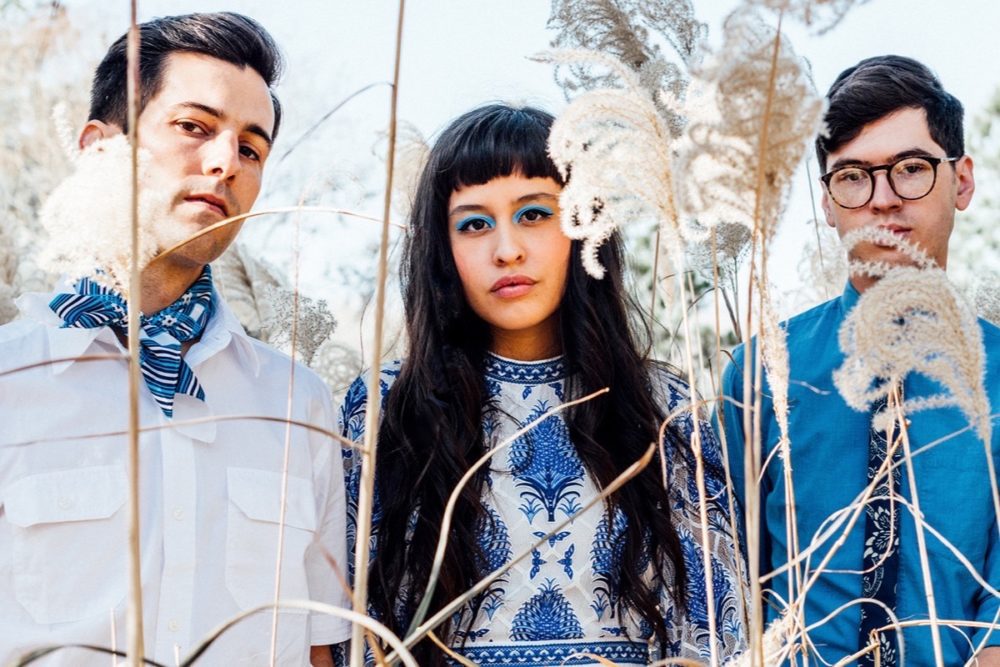
SHOW REVIEW: Brutus @ St. Vitus

On the one hand, it’s hard to imagine a better venue than Greenpoint mainstay St. Vitus for the stateside return of a band that integrates black metal, punk, and post-hardcore into their dizzying sound. But even if it seemed appropriate on paper, the stifling black box of  the venue was hardly enough to contain Belgian trio Brutus, whose towering sophomore effort Nest has easily placed them in the running for many a genre-spanning year-end list. Though the densely packed room and breakneck speed at which they played muffled some of the more dynamic qualities of their recorded output, there was no mistaking the explosive energy of drummer/vocalist Stefanie Mannaerts, guitarist Stijn Vanhoegaerden and bassist Peter Mulders. The force with which they played is practically begging for bigger rooms, better soundsystems, and longer sets allowed to linger beyond the neighborhood curfew.

Opening with atmospheric, disembodied synths, the band humbly took the stage and immediately launched in the slow-burning assault of opening Nest track “Fire.” Mannaerts’ drum kit was situated stage left, facing Mulders in the middle and Vanhoegaerden at house left; her mic was perched over her left shoulder, there to amplify her full-throated howls and yet somehow remain out of the way of her rapidly moving arms. She seemed to perform mostly from muscle memory, pounding out complicated blast beats and thrashing her cymbals as if her life depended on it. Her voice channeled “Human Behavior”-era Björk, the air pushing from her lungs in a raspy, desperate wail.

Vanhoegaerden was mostly stoic, focused on threading raw-nerved guitar through ominous bass and careening percussion; every so often, he’d wander toward Mannaerts’ kit, as if checking to make sure she wasn’t about to keel over from sheer exhaustion (incredibly, she showed little sign of fatigue). Mulders, meanwhile, hammed it up, throwing devil horns and sticking out his tongue after the band nailed more difficult stretches of music. It helped that he is comically tall – for those stuck in the bottleneck by St. Vitus’s soundboard, he was the only visible member of the band. The show was sold out, one of only a few U.S. dates the band had booked around their set at Austin’s Levitation showcase with Sargent House labelmates.

There wasn’t much banter between songs but Mannaerts in particular espoused her thanks at every opportunity – the band seemed truly blown away by the positive response to Nest, not just in the sold-out room, but the world over. After their Los Angeles show at The Echo, they posted a heartfelt message to fans on Facebook, saying, “When we started this band, we had no idea what it would bring for us. We had big dreams, and we thought we were ready. But we were not.” They went on to explain that Nest was written in the wake the initial success they experienced surrounding their debut LP Burst, “for our loved ones, left in the dark at home while we were on the road chasing this weird and unpredictable light.” It was certainly revelatory to bask it its glow, if only for a moment.

BRUTUS TOUR DATES:
11/17 – Mexico City, MX @ Corona Capital
11/24 – Berlin, DE @ Festaal Kreuzberg
11/25 – Köln, DE @ Stollwerck
11/26 – Amsterdam, NL @ Melkweg
11/28 – Leeds, UK @ University Stylus
11/29 – London, UK @ Electric Ballroom
11/30 – Paris, FR @ Le TrianoN
12/03 – Milan, IT @ Alcatraz
12/04 – Ljubljana, SI @ Kino Siska
12/05 – Munich, DE @ Backstage
12/06 – Vienna, AU @ Arena
12/08 – Warsaw, PL @ Progresja
12/14 – Brussels, BE @ AB Brussels (SOLD OUT)

How I Fell in Love With 7-inch Singles and Why They Still Matter

ONLY NOISE explores music fandom with poignant personal essays that examine the ways we’re shaped by our chosen soundtrack. This week, Beth Winegarner flips through an old collection and finds it relevant even today.

When I was a teenager, I had a ritual every Saturday afternoon. My mom and I would go to Coddingtown, the Santa Rosa shopping center immortalized on Primus’ Brown Album, and I would make a beeline for International Imports, which sold rock-band posters and T-shirts and had a small, well-curated rack of 7-inch vinyl singles.

I was methodical. I would flip through the singles alphabetically, fingertips brushing against the colorful paper sleeves, working my way from A-Ha to Dweezil Zappa. I wasn’t a completist; I didn’t need copies of every single, not even every single by my favorite musicians. With an allowance of five bucks a week, I couldn’t afford to be.

My love of music started when I was about 10, with albums like Cyndi Lauper’s She’s So Unusual, Duran Duran’s Seven and the Ragged Tiger and Madonna’s self-titled debut. I spent my afternoons and weekends listening to them over and over, flipping the cassettes every 20 minutes in my cheap plastic boombox. When an album didn’t come with a lyric sheet, I would lie on the floor in my room with a notepad and pencil, the tape deck close by, stopping the tape after every line to write down the words, rewinding when I needed to hear it again to puzzle out what they were singing.

Music dropped me straight down into my feelings, which were swirling thanks to puberty. Music made me want to cry, laugh, move my body. It made me want to kiss the boy in my class that I’d had a crush on since fourth grade. I felt it in my heart, my belly, my arms and legs, my stomping feet. Nothing else came close to making me feel so good, or feel so much.

Sometimes I saved up my money to buy full albums on cassette, but there was always a risk that those albums were just a few hit songs and a lot of boring filler. Seven-inch singles were cheaper, and you were guaranteed at least one good song; often the B-side was great, but other times it was a dud. Partly because of the posters and t-shirts, International Imports was my favorite place to shop for singles, even though it didn’t always have the best selection. Some Saturdays the rack looked like it had been picked clean by collectors, down to its last Debbie Gibson or Phil Collins 45s.

Over time, I built a small collection of about 50 singles, several of which are now considered classics. Among them are Bon Jovi’s “Wanted Dead or Alive” (backed with “I’d Die For You”), The Cure’s “Just Like Heaven” (b/w “Breathe,” which I immediately loved more than its poppy, whirling A-side), INXS’s “Devil Inside” (b/w “On The Rocks,” an unreleased track) and Prince’s “When Doves Cry” (b/w “17 Days”).

Many others are one-hit wonders only a teenager in the mid-1980s could love. Does anyone else remember Icehouse’s “Electric Blue,” Noel’s “Like a Child,” Times Two’s “Strange But True,” The System’s “Don’t Disturb This Groove” or Pebbles’ “Girlfriend?” If you’re a true aficionado of ‘80s music, sure. I have them all on 7-inch vinyl, and I’m not sure I would still remember them if I didn’t.

Although we shopped regularly in Santa Rosa, a medium-sized Northern California city, I lived 12 miles away in Forestville, an unincorporated town that had a population of just a few thousand. We didn’t get access to cable television – and hence MTV – until 1987. Before then, I relied on popular radio stations and the DJs at our school dances to find out about new music, and as a result my tastes were strictly mainstream. The vast majority of the singles I bought were from stars popular with teens, including Tiffany, Duran Duran, Madonna and Wham! But several are a reminder of how R&B and rap mingled with pop at the top of the charts, then as now: Rockwell, Terence Trent D’Arby, New Edition, Billy Ocean, Salt N’ Pepa.

The Saturday-afternoon Coddingtown visits were only part of the ritual. Once we got home, I would immediately listen to any singles I’d picked up. We had a respectably nice Sony record player in our family room, although that meant either subjecting my parents and little brother to the latest hits, or sitting on the floor with headphones as the songs played in my ears, since the cord didn’t reach to the couch or my dad’s recliner. More commonly, I listened to them in my room with the doors closed. I had one of those portable turntables that folds up like a small plastic suitcase, the outside decorated to look like it was made of patchwork denim. The turntable’s small, single speaker made everything sound tinny and far away, but being able to enjoy my favorite songs on my own terms made up for a lot.

I dreamed of buying a jukebox – I could load all my 45s in it, and choose among them at the push of a button! The sound quality would be much better, and I could listen to a dozen songs in a row without having to get up and change the record every three to five minutes. I had no idea, at the time, how much a jukebox would cost. Finally I saw one listed in my dad’s Sharper Image catalogue, and my heart stopped when I saw the price: about $10,000. There was no way I would ever be able to afford that, and no way I could convince my parents to buy one for me.

My love of 45s came just as the format was on its way out. Seven-inch singles existed throughout the 20th century, and were hugely popular in the 1950s through the 1970s, when they made popular music easily portable for the first time. Sales were already on the wane by the 1980s, although it was still standard procedure for pop artists to release their latest hits on 45-rpm vinyl. Some record companies lured buyers by wrapping the singles in a large poster, folded to create a kind of envelope, although that left you without a sleeve if you wanted to put the poster up. My copy of Duran Duran’s “The Reflex” spends its days in a sleeve I made out of printer paper after I pinned the promotional poster to my wall. The poster is long gone, but the paper sleeve I made remains.

Seven-inch singles carried me through from the beginning of my passion for music until 1987, the year I turned 14. It was a year of big shifts, both for me and for the 7-inch single. That was the year American record companies largely abandoned vinyl singles in favor of the cassette single, the unfortunately nicknamed “cassingle.” It was also the year I gained access to MTV and the year I entered high school, leaving my pre-teen tastes behind me. Glam-metal and hard rock were on the rise, particularly bands such as Dokken, Poison, Guns N’ Roses, Motley Crue and Whitesnake. My collection of 45s reflects this; some of my last purchases include “Wanted Dead Or Alive” and Def Leppard’s “Love Bites” (b/w a live version of “Billy’s Got a Gun”).

International Imports stopped selling 7-inch singles and I stopped buying them, although I kept visiting for things like posters and shirts, plus more “international” items like funky jewelry and nag champa incense. I turned away from pop and R&B and towards anything featuring electric guitars and scruffy-looking male howlers. And instead of buying cassingles – which needed flipping just as often as a 45 but lacked the elegant ritual of moving the needle, turning the vinyl over and setting the needle in the groove – I recorded videos from MTV’s Hard 60 and Headbanger’s Ball and watched them repeatedly until my tapes just about gave out.

I still have all my 45s, tucked alphabetically inside a specially designed box on a shelf with the rest of my vinyl records. I rarely listen to them anymore, but I can’t bear to sell them or give them away. A few musicians today release their singles on 7-inch records, mainly as collectors items, but it’s rarely musicians whose music I love. The most recent vinyl single in my hoard is “Backworlds” by Lusk, a psychedelic rock band co-founded by former Tool bassist Paul D’Amour; I received it as a promo when I wrote a feature about Lusk in 1997.

Record collecting is often thought of as a man’s activity, epitomized in Nick Horby’s High Fidelity (and the movie based on it). There’s an assumption that only men would be so obsessive, so knowledgeable, so nerdy – or that it’s a club to which women are not allowed to belong. As academic Emily Easton has pointed out, research on record collecting has pretty much excluded women, even though there are plenty of female vinyl nerds out there. “Records remain one of the most important forms of objectified cultural capital in many musical communities because they have been recognized as a symbol of musical expertise and investment,” Easton says. “Understanding how women have participated in these practices contributes to an emerging body of knowledge on the experience of the female music fans and connoisseurs.”

Flipping through the singles at International Imports, it never occurred to me that my passion for collecting 45s might make me part of an unusual or under-recognized family of music fans (I mean, when Rob Gordon says he’s rearranging his albums chronologically, I knew exactly what he meant). I only knew I was following my 10-, 12-, or 14-year-old heart, bringing home the songs I loved in a format that felt good in my hands and sounded good on the turntable. Knowing now that female vinyl collectors have been sidelined and ignored makes me want to clutch my records to my chest in defiance and never give them up. Maybe someday I’ll buy myself that jukebox after all. I’ll push the buttons, flip “Pump Up The Volume” by M/A/R/R/S or “Paranoimia” by Art of Noise (featuring Max Headroom) onto the player, and dance.

CMT Next Women of Country Proves There’s a Sisterhood in Nashville

Each year in Nashville, the women of country music gather to celebrate one another and provide an important platform for the new artists working to break ground in the genre through CMT Next Women of Country.

Founded by CMT Senior Vice President of Music Strategy & Talent Leslie Fram in 2013, CMT Next Women of Country shines a spotlight on nearly a dozen promising new female acts in Nashville, providing them with tools and resources to be successful in a male-dominated industry, with past inductees including Kacey Musgraves, Maren Morris and Kelsea Ballerini. During the 2019 CMT Next Women of Country event co-hosted by Fram and Martina McBride at the Country Music Hall of Fame in Nashville, the 2020 CMT Next Women of Country class was unveiled, comprised of Gabby Barrett, Caylee Hammack, Hailey Whitters, Madison Kozak, Walker County, Avenue Beat, Abbey Cone, Kylie Morgan, Sykamore, Tiera and Renee Blair.

A consistent theme carried throughout the annual event is empowerment, whether the artists are championing one another or singing introspective and thought-provoking songs they’ve penned. The 2019 event reflected the variety of the music these women are creating through an acoustic songwriters round that invites each of the new inductees to perform an original song. Caylee Hammack delivered a stirring performance of “Small Town Hypocrite,” a song inspired by the ex-boyfriend she gave up a scholarship for who ended up cheating on her, while Hailey Whitters also proved to be a compelling songwriter with her depiction of a fictional character named Janice, an 80-year-old woman who offers sage life advice like “stay off the pills, but get on the pill if you ain’t ready to start a family,” the line calling to mind Loretta Lynn’s 1975 feminist anthem, “The Pill.” Madison Kozak, the first artist signed to Nashville’s new all-female label Songs & Daughters led by groundbreaking songwriter Nicolle Galyon (Camilla Cabello’s “Consquences,” Dan + Shay’s “Tequila”), held every heart in the room like it was made of glass with “Household,” touching on the universal feeling of wanting to leave home, but longing for that very place when you’re finally gone.

Photo by Rick Diamond/Getty Images for CMT)

The talent displayed in the room reflected country radio’s glaring lack of inclusion for such artists. In December of 2018, it was reported that for the first time in the 28 years since the Billboard Country Airplay chart launched, there were no women in the Top 20. However, up-and-coming artists are slowly fighting their way out of these alarming statistics, as Hammack’s debut single “Family Tree” has cracked the Top 40 on the country charts, Ingrid Andress is in the Top 20 with “More Hearts Than Mine” and Runaway June became the first all-female trio since the Dixie Chicks to have a Top 5 hit with “Buy My Own Drinks.”

But the conversation surrounding the lack of women on country radio still lingers, with Mickey Guyton remarking on “the elephant in the room” the moment she took the stage to open the show. “There is without question an injustice happening to women in country music. There are a lot of great songs that are not getting a shot,” Guyton professed before performing her new song “Sister” with her country music “sisters” Tenille Townes, Clare Dunn, Rachel Wammack and Leah Turner. “But one thing is for certain: it is going to take us women to lift each other up out of these trenches.”

A burgeoning superstar who has gone above and beyond to support her female contemporaries is Brandi Carlile, who was honored with the Next Women of Country Impact Award. Carlile, who scooped up three Grammy Awards in 2019 for her acclaimed album By the Way, I Forgive You, has made it an integral part of her mission to elevate the women around her, curating the all-female stage at the 2019 Newport Folk Festival that featured her supergroup The Highwomen and a surprise performance by Dolly Parton, in addition to creating the women-centric festival Girls Just Wanna Weekend. She’s also pivoting her support for women into a behind-the-scenes role, serving as co-producer of Tanya Tucker’s new album While I’m Livin’ with Shooter Jennings.

Photo by Rick Diamond/Getty Images for CMT)

Rather than point a finger at country radio, Carlile encouraged radio employees in attendance to be intentional about the songs they’re sharing through the format while expressing the reverence she has for the genre that raised her. “If country music is the story of rural America, then what is the story that we’re telling to our young girls?” she questioned. “What we’re hoping, and what we’re inviting country radio to do is to catch up with the way that we all understand. I would urge anybody that’s involved in country radio…ask yourself the question every morning before you go to work ‘what do I want my job to say to my daughter today?’ Because she’s an American girl, she’s in love with a boy, she needs wide open spaces, she’s a wild one,” she continued, referencing iconic songs by Trisha Yearwood, the Dixie Chicks and Faith Hill. “She’s more than a pair of blue jeans in a cab of a truck.”

Additionally, a handful of behind-the-scenes movers and shakers were present at the ceremony, including Cindy Mabe, president of Universal Music Group Nashville, who made it a point to continue to call for change in the industry regarding support for women. “We can all keep moving through and thinking that things have changed at the rate that they need to change, and they haven’t,” she stated. “This is about how we give a voice and a perspective to half the world.”

She encouraged emerging artists to explore other methods of promoting their music outside of radio, pointing to artists like Musgraves, who received little attention from radio for her Grammy winning Album of the Year Golden Hour, instead reaching listeners through other formats like social media. “Women are bringing more adventurous, interesting, state of the art, cutting edge music and it doesn’t go and fit in a box. We will spend the next years figuring out how we get it exposed, one foot in front of the other,  because great music should always rise and it’s not about fitting into a box,” she said, actively taking Carlile’s words to heart. “I have to get out of bed every day and make a movement towards making women’s voices matter again.”

The program continues with the CMT Next Women of Country Tour, headlined by Tanya Tucker, in early 2020, with supporting acts and dates to be announced in the coming weeks.

PREMIERE: Fay Kueen “Atmospheric Zebra”

Experimental pop artist Fay Kueen enjoys blurring the lines between classical music and indie rock. The video for her latest song “Atmospheric Zebra” bends space and time, following Kueen around New York City as the city morphs and twists around her. The song was written in 2013, during a time when Kueen’s US citizenship was in flux (she was raised in Bejing). The video makes a clear delineation between Kueen’s avant-garde sound and her struggle for naturalization: disorienting turns, barriers, moments of confusion and panic followed by long stretches of uneasy silence.

It follows, then, that “Atmospheric Zebra” has an off-kilter vibe, with cryptic lyrics and lots of tension. “Ten islands in silence. Nine cats in the bed. Eight birds in purse. Seven days without jays. Six months chasing over five nightlines. Four souls in three bowls. Two horses play morse. One man with no hands, he stays,” Kueen titters slowly into the camera, her vocal patterns playing out like a cat sneaking up on a wounded bird. Kueen plays with that feeling of anxiety, winding up the listener to an almost uncomfortable point, never quite letting you settle in or make yourself home.

In an interview with Audiofemme, Kueen explains that the discomfort is directly tied to a period in her life where she was without a home, feeling lost between two continents – a theme that runs throughout her forthcoming EP, A Place Called Home Is Not A Place, out December 4. Watch AudioFemme’s exclusive premiere of “Atmospheric Zebra” and read our interview with Fay Kueen below.

AF: Your mom was a soprano singer and your dad is a musicologist. Would you say that your initial interest in music was mostly a familial shove or were you always drawn to it?

FK: Doing classical music definitely came more from a familial shove. I grew up listening to lots of classical music and started playing piano when I was 4, but I was never really drawn into the music. I appreciated it but it never felt personal to me – perhaps it just doesn’t fit my personality and vibe. With piano, I was one of those kids that didn’t really like practicing other people’s music, but was always improvising tunes and little songs. With singing, I grew up hearing my mom sing opera, but starting in middle school I got much more interested in trying to mimic pop/rock singers. My dad often bought me western pop records from abroad, and I collected cracked CDs from indie record stores in Beijing myself. I wouldn’t say that it was so much a teenage rebellious thing to be drifting away from my family’s tradition, more a natural process of self-discovery. Classical music is very prim and proper, but I like things that are free, wild and don’t restrict my body, emotions, or senses.

AF: You studied at Beijing’s Central Conservatory of Music (the composition program). During those years, you said you hung out with “Chinese hipsters” and listened to a good deal of Western indie music. What artists were inspiring to you back then?

FK: After getting into the composition program in CCOM Beijing, I started appreciating contemporary classical composition more. I got to know lots of modern composers’ music, which was much more intriguing to me than traditional classical music. I became friends with electronic musicians, sound engineers, and rock instrumentalists. I had a few casual bands that played regular gigs at bars and hotels. Back then I was really into bands like Radiohead, Portishead, Pink Floyd… more on the moody/intense side. A lot of big-name female rockstars from the last generation like Bjork, PJ Harvey, Patti Smith, Kate Bush, Tori Amos… also influenced me a lot, as well as younger ones like Fiona Apple. Me and a group of my friends were super nerdy about the Japanese rockstar Shiina Ringo and we even had a band that covered her songs.

AF: What music artists do you have on repeat nowadays?

FK: I listen to different stuff depending on my moods and what’s going on in my life. I often like playing down-tempo trip-hop tracks on loop when I’m cooking. I have a playlist of walking music, which includes music from Kendrick Lamar to The Prodigy. I still like listening to Radiohead’s later records and recently I’ve been really into some vintage disco music from the ’80s. When I’m depressed I tend to listen to dark music to be healed. This past summer when I was feeling somewhat hopeless, I was listening to David Bowie’s last album before he died a lot, the soundtrack from the German Sci-fi show DARK, and Ryuichi Sakamoto’s latest solo record since recovering from his cancer. Recently I’ve been looping songs from Mitski’s latest album, as well as the new album of my friend’s band San Fermin.

AF: Give us a glimpse into your writing process. Do you keep a notebook with ideas? Do you normally have source material you draw from or is your work more autobiographical?

FK: When I have immediate ideas in terms of song structures and arrangements, I’ll type those down in my phone. When vocal melodies come across my mind, I’d record them with my phone too. When I’m writing something like an orchestra piece, I write a sketch or short score using keyboard to try out chords, and then expand and orchestrate using a scoring program. When I’m producing songs, the vocal lines and the chords often come into existence together – they can’t be separated, since the chords contain the signature colors for the melodies. Then I arrange the whole song in an audio workstation, usually Logic Pro. The songs often have a basic theme first, but the detailed lyrics actually always come after the music.

The content of my songs goes in phases. I’d say most of my songs so far are autobiographical. They are always about a personal experience, an emotional state, or how I feel after watching/attending something. Some of the lyrics that I wrote for my Chinese pop songs are more like contemporary poems. But you could also say that there is source material that I draw from, since there is always a subject or a character in each song, such as a samurai, a dream interpreter, etc. The songs in this EP are more abstract, and I was influenced a lot by surrealist artists. Each song has a lot of objects and images in it, each of which has a story behind it. Right now I’m working on a new set of songs that’s more influenced by modern social events, culture, and common psychological issues within different groups of people.

AF: “Atmospheric Zebra” has such beautiful tension in it, this kind of winding up it does throughout the piece. What was the idea behind the video?

FK: I wrote this song after I left Yale and was basically homeless, moving between temporary places while going through an intense breakup and other personal crises. The song’s lyrics are a bunch of unrelated objects that form the shape of a larger object, inspired by Dali’s surrealist paintings. I named the song for a zebra because of the animal’s black and white looping pattern, which – like a tree’s growth rings or a time tunnel – represents Nietzsche’s idea that with infinite time and a finite number of events, events will recur again and again infinitely. In the music, these loops are represented as multi-layered repeating patterns in the background of the song. The second part of the song kind of falls apart, then puts itself back together for a last chorus, echoing the way I felt my own life moving into chaos and self-destruction, then putting itself back together again.

The video was shot in multiple places in NYC within 24 hours. My composer friend Pugan Zhang carried one camera and one stand. This was his first video work – he filmed and edited everything himself. We treated the video like an experiment and a game. I brought a few dresses with me, dressed completely different styles in different locations and times. We started shooting at abandoned buildings in Brooklyn, in subways, and in central park. The fun part was shooting the scene at Time Square next to the policemen and cars. There were a lot of people running around us and we had to find the right timing to take the quick shots without annoying them. The video has lots of sections and fragments of various lengths and paces, which are all shuffled up: some are flashbacks, some are flash forwards, also fast forwards and reverse in different paces, to match the time theme of the song.

AF: The song was written in 2013, during the time you were struggling with your immigration status. Can you tell us more about the themes on your upcoming album A Place Called Home Is Not A Place?

FK: As an immigrant, home doesn’t feel like a physical place, but an inner space that contains a feeling of security, or an individual that makes you feel like home. The title track is like a spirit flying across the world, observing and experiencing all the natural events – the lives in the Dead Sea, the wolves on Siberian Plain. One of them was actually a real story – the “suicidal” cows that threw themselves off a cliff in Lauterbrunnen. And eventually when the human body and nature become one, “home” is ourselves and is everywhere on this planet.

[The lyrics for] “Larpo Neptune” are a set of self-conflicting activities/ideas, representing the struggles between oneself and the surrounding environment. “Bunny Bastard” is kind of playing with that same idea of juxtaposing conflicting ideas – gentle bunny vs. evil bastard – and the title is a homophone of Honey Mustard.

AF: How are you planning on performing this album? Will you have a band tour along with you?

FK: Me and my dudes – guitarist Brendon Randall-Myers and drummer Mark Utley – are playing a show as a trio on November 20 at Berlin Under A in New York. We might keep this set for a while. When it comes to tour, I hope to add one more player in the band. If it’s a bigger space, I’d like to have a fuller set and maybe include a couple of classical instruments.

AF: Do you ever have difficulty translating studio work to the stage or do you work with other musicians in studio already, making it more seamless?

FK: The arrangements of the studio versions are often different from their live versions. I do basically all the studio arrangements myself. My husband Brendon records the guitar parts, and my long-time collaborator producer Mark Lee does all the mixing and mastering and has a lot of input on the programming/production side. I always need to do new arrangements for the live shows. When I have good musicians, they will have awesome ideas themselves after hearing the recordings. I really like working with Brendon and the other Mark (the drummer) – I feel like musically we understand each other and cope with each other easily.

AF: What advice do you have for a young musician just starting to find their voice as an artist?

FK: I’m not a very good advisor since I believe that I’ve made bad choices in my life before, and I’ve been really slow on getting things done. My music career has gone in many directions to fit my different needs and tendencies. I’d say always follow your intuition at the moment and never doubt your abilities, never wait or be distracted by others’ comments. Everyone’s different, and it’s important to find what type of artist you are, whether that’s a multi-phased experimental artist, or just digging deep into one thing. Focus on the characters that define the real you, and don’t hesitate to look for the right way to amplify them.

A Place Called Home Is Not A Place is out Dec 4th. Follow Fay Kueen on Facebook or @fay_kueen on Instagram for ongoing updates.

Mysterious Indie Pop Outfit smiles Shines on Slumberland 7″

smiles new ep

Oakland band smiles are elusive – despite releasing a steady stream of stand-alone singles throughout the summer via a bandcamp account that stretches back to 2014, there isn’t much available information on who is behind the music. Melters, the San Francisco record shop distributor of one of smiles’ earliest EPs, cites echoes of late Elliot Smith in their descriptor, a comparison I wouldn’t have considered but now can not unhear, especially in the drawn-out vowels and throaty delivery. It isn’t a ghost you’re hearing though – a song called “nothing matters anymore,” posted in 2018, credits the project to someone named “manny” – and recently, 7″ purveyors Slumberland Records added some legitimacy to the entire operation by including two smiles tracks (“Gone for Good” and b-side “This Boy”) to its 30th anniversary 7″ subscription service, which wraps up this December.

“Gone for Good” falls under a genre I like to call “Acoustic Plus”— not as stripped-down as pure acoustic, but still holding simplicity close to the chest, any additional instrumentals served pillowy and light. smiles’ lead singer rasps his way warmly through the song, his vocal affectations a wink and nod to the chillest purveyors of early 2000s indie rock.

Even if the lyrics hint at some greater desperation — and I know that I let you down/this time for good — they are still delivered with what I can only describe as a purposeful tenderness, even as we hear lyrics like you’ve got your finger on the trigger during the outro. “Finger on the trigger” is a classic analogy for a slate of lyrical needs — sexual tension, righteousness, anger — but when proceeded by twangy guitar and a sighing Greek chorus backup, “Gone for Good” manages to deliver its melancholy with a spoonful of sweet meringue.

“This Boy” opens with a question — this boy/wants to know/when will you go away?/ when will you say goodbye?/but I’ll never let these feelings show/keep them away inside. Lyrically, this sounds like a fatigued diary entry written after a eighth grade dance, yet somehow, it works. “Boy” is rarely how an adult man will refer to himself, and is likely to be disparaging when used as a self-descriptor, but here, it comes across as an honest look at the self in the mirror — smiles really does feel young and naive in the face of a slowly encroaching loss.

Barely over two minutes, “This Boy” feels especially abrupt;  with only these two songs to go on, whatever story that’s being told here feels a little unfinished (though the spate of tracks on bandcamp hopefully hints at a larger project in the works). It’s as though the 7″ is sat firmly in the middle of the five stages of grief, with “Gone for Good” as Denial and “This Boy” as Bargaining. Regardless, I’m ready for Depression and Acceptance, especially if it is delivered with the same soft hands as “Gone for Good.”

PLAYING CINCY: SIOUX Finds His Groove On ‘Whiskey House Bar Music’ EP

SIOUX

Earlier this week, SIOUX flexed his introspective side on his new EP, Whiskey House Bar Music. Over danceable lo-fi beats produced by Rocco., the Cincinnati MC expresses extreme relatability when it comes to all sides of love—the good, the bad, and the ugly.

Whiskey House Bar Music is an idea of a project fully consumed out in the middle of nowhere with little to no resources when it comes to quality,” SIOUX explains.

In an interview with AudioFemme, he described what he was going for in terms of experimenting with “low-quality sound” and how he was feeling during the recording process.

“Basically, I wanted to make a broken-love project,” says SIOUX. “That means I wanted almost a low-quality basement sounding project that seems like it was made really quick, due to a broken heart, and fresh off the feelings of that.”

Lyrically, SIOUX dips into both the darkest sides of love and the euphoric highs that it can bring, all while easygoing instrumentals create a comforting backdrop.

“I wanted to use very familiar-sounding beats but with a dark/metallic sound with my voice but with very true and echoing lyrics that love can bring,” he continued. “The good and bad—great and disastrous. You could say a ‘beautiful disaster’ in the lovelife of a sensitive person.”

“Everybody that has loved can connect with these words,” he told AudioFemme.

During the recording process, which spanned across two months, SIOUX used visualization to elicit—and buffer himself from—the vulnerability that the project demanded.

“The reason I called it Whiskey House Bar Music is because for some reason I couldn’t stop visualizing that this is the type of music you might hear in a random bar out in the middle of nowhere,” he said.

SIOUX
SIOUX / Photo by Chris Williams

“The type of scene that [I pictured] is one guy in a strip bar sipping on Coke and rum, with a single stripper in the building dancing from a distance,” he continued, describing the contrasting feelings of intimacy and isolation that are found in the EP. “It’s almost like they’re connecting on a broken-down, personal level. That’s the scene that was in my head while recording this.”

SIOUX, who belongs to the Ohio-based hip hop collective Casual Crooks, has been steadily releasing music this year, with his sophomore album, Grounded Star, arriving this past September.

Stream SIOUX’s Whiskey House Bar Music EP below.

PLAYING ATLANTA: The Pinx Reinvent Rock ‘n’ Roll with Music Video for “Mercy!”

Photo by Chris McKay

The Pinx rock. That is all.

Okay, that’s not all, but the Atlanta-based rock quartet truly does rock…and roll, and boogie-woogie, and power-pop all night long. Drawing on influences as varied as Duane Allman, MC5’s Fred “Sonic” Smith, and the lush Stax catalog, as well as rock standards (if you can call them “standard”) like Led Zeppelin and The Rolling Stones, The Pinx’s dedication to drawing listeners out of the mundanity of every day life and into a groovy state is equally evident on the stage and in their latest music video, the power-packed, haunted-hotel-based rocker “Mercy!”

I caught up with founder and lead vocalist/guitarist Adam McIntyre and lead guitarist/vocalist Chance McColl to talk all things The Pinx, shooting a music video in a 100-year-old ballroom, and rock ‘n’ roll’s ability to desegregate and unify.

AF: You guys are the definition of pure rock; how do you draw from such a rich history and create something that feels fresh and unique to you? 

AM: I don’t think the band could ever move very far away from the overall trifecta of The Kinks (all we did was change a letter, and then a few years later our original drummer Jim changed the “ks” to an “x”), The Rolling Stones and Led Zeppelin. Chance and I have a lot of influences from blues guitarists.

At any time, I’ve usually got four main influences that we’re more conscious of, with lots of little decorations… sort of like four legs on a table, which can support all the other things we like. Once everything in the world has been recycled 1000 times, the simplest way to start finding your own voice is to take a look at a handful of things you point to and say “that feels like how I feel” and you start warping that. For the first record, I feel like the “legs” on the table were Led Zeppelin, DEVO, Eagles of Death Metal and Muse. Second record was specifically drawing on Cheap Trick, Motörhead, The MC5 and Tom Petty. I did every solo on that record holding a guitar pick Rick Neilsen handed me, but I was thinking about the MC5’s Wayne Kramer and Fred “Sonic” Smith.

For the new album, Sisters & Brothers, I feel that the influences got wider apart, the table got bigger, weirder and may have made specific influences harder to pinpoint. I felt the Atlantan ghost of the Black Crowes acutely on this one, and I feel like Chance may have evoked some ZZ Top. I know our power-pop forefathers Big Star bubbled to the surface for not the first time, and I worked hard to do Otis Redding proud while the band evoked a Stax sound. I guess we had Memphis on our minds with the whole Stax/Big Star thing, plus I feel like a little more ’70s metal showed through. It’s half brown leather and half black leather. My point is that I feel like originality is in a unique combination of influences based on mood, not simply taking a band’s songs and changing a thing or two. Though that can be fun, with the original songwriter’s blessing.

AF: What is your personal musical history? Did you grow up in musical households, or did you find music later? 

CM: My mother’s father was a great bluegrass guitarist. Big influence on me. Otherwise my big influence was my older sister’s record collection.

AM: I did not really grow up in a musical household except for the records, of course. Dad owned an acoustic and an electric but I can count on a couple hands the times he played them in front of me. He really resisted the idea of me catching the music bug, but I did. I found a ’60s R&B group called Bobby Moore & The Rhythm Aces when I was about 8 and talked my way on stage with them in spite of knowing nothing about guitar. They let me sit in for two songs while coaching me, and when I came home that night, all I could think about was getting back on stage to play music somehow. I’d get in trouble for touching Dad’s guitars, so for a few years all of my guitar time was spent hiding in the closet with a blanket over me.

AF: What led to the formation of The Pinx? 

AM: Indie rock and power pop had been my genres as a solo guy. I really wanted to be the next Todd Rundgren or Matthew Sweet, and something about that always felt forced. In Nashville, any time I rocked, people hated it. Any time I jumped or got loud, people hated it. Any time I did anything that felt like me, people hated it. So when I moved to Atlanta in 2006, I immediately began putting together a rock band. I wanted to see how it felt. It felt great. And the wilder I got, the more people here liked it. The harder I rocked, the more people liked it. I realized that Nashville just was not a good fit and never had been. I decided that the band would be a celebration of everything I and my bandmates love about rock and roll. Things might get bluesy or heavy but I think right in the middle of our influences, Little Richard is banging on a piano and yelling “wooo!” 

I’ve been lucky to find kindred spirits along the way, and Chance definitely is that. He’s a lead guitarist’s lead guitarist, versatile among many styles. Chuck is a recruit from a Desert Fuzz Rock band called Buzzards of Fuzz, and Cayce was in a brilliant sort of indie rock band called the Lord High Admirals before we got him.

CM: I had recorded a solo record and Adam was suggested to me by a fellow musician to do the mixing. We met, I then started following Adam’s musical career and loved what I heard, and his mix was exceptional. When it came time for an album release, I asked Adam to join the band for that night. I immediately knew there was something there based on how well we gelled as guitarists. It seemed like he played the parts he needed to while I played the parts I needed to and the parts perfectly meshed. That’s been a rare event in my life – to blend so well with another guitarist. Shortly thereafter he asked me to join The Pinx.

AF: Let’s dive in to “Mercy!” It’s your latest music video from an album where you handed over some of the “hats” to producers Brian Carter and Joey Jones. How did it differ from your previous releases? 

AM: It’s a bit more hi-fi. Normally I feel like I’m playing Twister when I’m making a record with a band; I’m supposed to be paying attention to my job as a frontman while also getting good takes out of a band with sometimes complicated interpersonal dynamics, I’m supposed to be getting good sounds recorded while also keeping the energy level high, and I’m supposed to be playing perfectly while also knowing what’s close enough without going overboard? I got tired of compromising one thing for another and just wanted to do MY job while everyone else did theirs. I think Sisters & Brothers came out sounding like a million bucks because I didn’t hang on to the “but I’m a producer!” hat. Plus, nobody trusts you to maintain objectivity on their performance while you’re concerned with your own.

AF: Do you feel like you were able to be more experimental without having to worry about manning the controls? 

AM: I think we got to have the usual fun in a great studio. Our biggest experiments are yet to come.

AF: What was the collaboration like, and why did you decide to go that route as opposed to your previously self-produced releases? 

AM: Things started out still pretty me-centric years ago and therefore happened all at my studio. As things progressed, the BAND became the focus. I always want the next album to be bigger and better and sound like a band, so recording it live with few overdubs actually served multiple purposes. The sound quality definitely went up that way.

AF: What inspired “Mercy!” – lyrically and musically? 

AM: I was thinking about the band Redd Kross, and I reached back to a memory of being about to play and getting slapped on the ass by a lady who thought I was her husband. I flipped the roles. I wrote a rough draft a few years ago and presented it to The Forty-Fives, who passed on it. I finished it up and the guys were playing it just like it is on the record within a few minutes of my showing it to them.

AF: What are your songwriting and recording processes like? 

AM: Songwriting happens however it can. I write a lot of lyrics, I record a lot of riffs into my phone and I also beatbox and scat a lot of garbage into my voice notes. At some point I do some editing and get the raw materials together and either call a song done or I bring it to Chance to see what he thinks it’s missing. Chance presents me with fully realized instrumentals to write lyrics to, or he brings in a full song like he did on “Time & Trouble” which is one of my favorites on the new album. From there, the band makes lots of choices on their own. I try not to choke the band’s ideas about the songs because so much of the time, things turn out better than I expected thanks to their ideas.

AF: You guys filmed the music video at a 100-year-old haunted hotel. What drew you to the location, and what was it like to film a rock video in a historic ballroom? 

AM: Our drummer Cayce and his wife run that hotel and were kind enough to let us shoot there. It’s a haunted old place and a charming location. We did disturb some guests at the hotel with our loud video shoot, so I don’t think it would be okay to do that again. We ran through the song a few times and had a lot of fun. Stupid good fun.

AF: You’re such huge players in the Atlanta scene! What has it been like to translate your music to the stage? What do you hope your audience takes away from every show? 

CM: For [Sisters & Brothers], so much of the record was recorded live based on how we’d already been auditioning the songs live so it was easy.

AM: We take the translations one step at a time, but as I said before, the new album was pretty much live in the studio, so it required very, very little adaptation.  We just rehearse and pour ourselves into it until suddenly the song becomes another character in the room with us. What I love hearing is the person who comes up to me saying “This is what rock and roll feels like – I’d forgotten!” or some variation. I also want people to walk out feeling lighter than they came in. Shake off that bad energy. Walk out with a grin.

AF: Georgia’s got a massive rock history, but a lot of it is rooted in Macon. What’s it been like to not only play a part in revitalizing the genre but bring it a little farther north to Atlanta? 

AM: This band is by definition a celebration of all that’s rock and roll. I throw all sorts of things into that; my mentors, the MC5’s heavy Detroit rock, the Led Zeppelin-meets-Devo sound that used to get us called “stoner rock” for years around Atlanta, the slide-based “Thunderboogie” sound that mixes Bo Diddley with big riffs, that Rolling Stones “Chuck Berry in a western suit” type thing they had on Exile On Main Street, and just huge blacklight doses of Sabbath, Zeppelin and Deep Purple’s trippy heavy jams. Does Duane Allman fit into that? Sure does. So does all that other stuff, with a big old grab bag of every American blues artist that every white British guy ever claimed changed his life. Southern Rock is a necessary part of that equation, but one or two songs a record is almost more than enough.

AF: What’s next for The Pinx? 

AM: More songs, more recordings, more shows. Weirder, harder, faster.

Keep up with The Pinx on Facebook and stream their latest album, Sisters & Brothers, on Spotify now.

RSVP HERE: GYMSHORTS Play Rough Trade + MORE


Welcome to our weekly show recommendation column RSVP HERE – your source for the best NYC shows and interviews with some of our favorite local live bands.

Providence, Rhode Island rockers GYMSHORTS join Dune Rats on a couple dates of their tour, including this Tuesday 11/12 at Rough Trade. Frontwoman Sarah Greenwell formed GYMSHORTS with guitarist Devin Demers in 2012. They’ve been heavily touring ever since, bringing their stoner punk goodness to the world. We chatted with Sarah about how they spend their time on tour and the best ways to spend your extra daylight savings hour…

AF: How do you pass the time in the van on tour?

SG: We play the coolest game ever!! It’s called “cows on my side!” Basically you just yell out when you see cows! And when you see a cemetery you say “ghost cows.” It gets super competitive and we’ve made some new rules along the way but it’s pretty much the best tour game I’m pretty sure.

AF: What’s your favorite city/venue to play in?

SG: I love playing anywhere in California – it’s so fun! And Fort Wayne! The Brass Rail rules!! Honestly, I love playing in New York too. We played in Bangkok back in May too which was very sick!

AF: Daylight savings just happened last weekend, what did ya’ll do with your extra hour?

SG: This question is the best!! We actually have a song about daylight savings and how it’s so cool cause you get an extra hour of hours!! I think I was probably sleeping this daylight savings but there was one daylight savings where we were driving overnight from Detroit to Chicago and there is a time change of one hour and then also it was daylight savings so it was like 2 am for 3 hrs or something crazy like that! It was wacky as hell! That was a good daylight savings!

RSVP HERE for GYMSHORTS with Dune Rats, and Sonny Hall @ Rough Trade Tuesday 11/12! 18+ / $15
More great shows this week:

11/8: Smock, Priestess, Wicked Willow, Animal Show @ Our Wicked Lady (Rooftop). 21+ / $10  RSVP HERE

11/8: Junglepussy @ Pioneer Works. $15 RSVP HERE

11/9: Hard Nips, Lockette, Eliza and the Organix, Onesie @ The Gutter. 21+ RSVP HERE

11/10: New Myths, Wet Leather, Caravela @ Baby’s All Right. 21+ / $10-12 RSVP HERE 

11/11: Black Midi, Onyx Collective @ Warsaw. All Ages / $18 RSVP HERE

11/12: Maneka, Lost Boy ?, Sonny Falls, Groupie @ Alphaville. 21+ / $8-10

11/13:  Charly Bliss, Chloe MK @ Webster Hall. $22 RSVP HERE.

11/14: Tom Tom Magazine Ten Year Anniversary Party @ Baby’s All Right. 21+ / $10-12 RSVP HERE

11/14: Karen O / Danger Mouse @ Kings Theatre. $49.50 RSVP HERE

PREMIERE: Stimmerman “Dentist vs Pharmacist”


Parental expectations can be fraught with peril. Some parents expect their kids to take over the family business, some envision their children as doctors or lawyers, and in some circles dwell Alex P. Keaton types whose hippie parents shudder at the thought of white collar work. “Dentist Vs Pharmacist,” the latest release from Stimmerman (aka Eva Lawitts), addresses familial pressures with a rolling guitar lick, piercing vocals, and one hell of a horn section.

A native New Yorker, Lawitts grew up attending a prestigious magnet school; it was within these corridors of rigorous practice and imaginary success that Lawitts first honed her music prowess. It gave Lawitts the distance she needed to look at her family history and question the values and assignments that were passed from generation to generation.

“You know who you’ll be / There’s a consensus: A pharmacist or a dentist / Scientific Thesis / Pick up shattered pieces / Take my sword and let it break,” Lawitts screams into the void. A veteran bass player with a history in bands that kick butt (Princess Nokia, Vagabon, Rotem Sivan, Citris), Lawitts’ forthcoming album Goofballs takes her rock persona and makes it personal. “Dentist Vs Pharmacist” offers the kind of perspective one can only garner after the youth and drugs and fear fade, leaving an angry hull that is adulthood.

Listen to AudioFemme’s exclusive stream of “Dentist Vs Pharmacist” and read our interview with Eva Lawitts below.

AF: Your Spotify page says Stimmerman is “for fans of At The Drive In, Gillian Welch, and Dirty Projectors.” How do you define the music you make?

EL: I have so much trouble defining any music at all. For a while I was calling Stimmerman progressive emo, which is not correct at all, even though it felt like it described my approach. I have this desire to be a “songwriter” (which I feel like I’m still striving towards), and to create these self-contained worlds with each song, and I also crave performing music live and in that way I want the music itself to be challenging and fun, and to provide a cathartic experience for myself and my bandmates and the audience, and I’m always trying to be more concise and honest lyrically, and all of those things have sort of coalesced into Stimmerman music, which is angular, high-energy, sadness. See? I kind of got there.

AF: You went to Fiorello H. LaGuardia High School of Music, Art and Performing Arts. Can you give us a little inside look into what it’s really like in a performing arts school? Obviously there was much dancing in the lunch room, we assume.

EL: There was a lot of dancing in the lunchroom, haha. Not by me, but certainly by someone. My feelings about these specialized magnet schools are inseparable from the subject matter of Goofballs, although I don’t think they’re ever really directly addressed. Basically I feel like as a teenager I was extremely motivated and competitive about music (and also my teen ego was totally out of control), and so I thrived at LaGuardia, which in turn provided me with an exceptional music education. But at the same time, I feel like the culture of that kind of school can be insidious in a way – I think it discourages kids who aren’t at the top of their field by age 15 from pursuing what they love after high school (this is still my observation keeping in touch with my high school chums ten years down the line) and I also feel like that same air of discouragement is what caused a lot of my friends to sink deeper into a special kind of adolescent despair that included a lot of drug and alcohol use, and a lot of ambient self-destruction. Of course some of that is just par for the course of adolescence… there was an added benefit to LaGuardia insofar as you often had extracurricular rehearsals and such that would keep you at school till 9pm or so… so it became really easy to stay out all night and just tell your parents that you had rehearsal. That excuse combined with a student Metrocard can afford you a lot of mischief. That’s not the school’s fault, but it was, in my experience, part of the culture. I could talk about this for hours but I’ll stop here.

AF: What were you initially studying in school? An instrument or a specific kind of music?

EL: I was studying upright bass, and mostly studying, if we can speak extremely broadly, “classical” music. When I entered LaGuardia my ambition was basically to be in the MET Orchestra or something… I still play upright bass quite a bit, but the scale has tipped significantly. Throughout middle and high school and even most of college, the only time I played electric bass was in my old band Sister Helen. Now I feel like the electric bass is more a part of my voice, and certainly more aligned with the types of music I want to create.

AF: Tell us about “Dentist vs Pharmacist.” Where did this song originate?

EL: I wrote this song directly after having lunch with a friend of mine who went to middle school (Mark Twain) and high school (LaGuardia) with me, and it was directly influenced (stolen? I don’t know) by a conversation we had about this kind of half-joke about modern Russian fatalism, which was that so many of the kids we went to middle school with were raised with only two possible tracts they could follow into adulthood – they could become a dentist or they could become a pharmacist. This is the highest achievement you could possibly attain. This was the gleaming dream of our Russian and Jewish cohorts of yesteryear. We were being silly about it, but within that silliness are many real wounds about the expectations of our own parents, their parents, and an examination of how we can possibly honor the sacrifices made by our families while still attempting to function in a world that is basically incalculably different than anything they could have possibly conceived of when they made those sacrifices. Fuck! And also I just wanted to scream.

AF: You recently spoke with Street Wannabes about the struggle of co-founding Wonderpark Studios – the balance of working on other artists’ work and finding time for your own music. What does your typical day look like?

EL: Right. I run Wonderpark with Chris (Krasnow), who is also in Stimmerman doing guitar and some vocals in the live band, and he also contributed engineering, mixing and mastering to this album as well as guitar, and vocals and even some drums! Wow, just had to say it. Anyway, I think Chris is really the genius audio guy within Wonderpark. I do a fair amount of engineering and producing as well, but I handle all of the “business” of Wonderpark, meaning I spend an absurd amount of time doing our books, writing Facebook and Instagram ads, keeping up with clients, doing pre-production, meeting and haranguing new clients, and other things of that nature. So a typical day in the studio might look like coming in around 10 and helping Chris get mics on stands, making various choices regarding the session, and then spending between 8-10 hours working our butts off trying to get the best possible recording made, and trying to help people have fun doing it! Then usually an hour and a half of so of cleaning the damn studio. A typical day working from home is just a love affair with my hideous laptop and cell phone – lots of calls, lots of numbers, lots of writing. I love it but we often work 15 hour days and by the end of the “week” (which is sometimes 3 days and sometimes like 15 days) I’m usually spent.

AF: As an artist, do you keep a schedule in order to carve out creative time?

EL: I recently started keeping up with a pretty strict morning routine. Part of that routine is that I try to write a song a day, and I only give myself 15 minutes to do it. A lot of them are simply dreck, but some of them are really good! And just being in the habit of getting the juices flowing when I get up has helped the creative process overall.

AF: What’s the one piece of advice you have for a young band coming into the recording studio for the first time?

EL: Most young bands drastically underestimate how much time they’re going to need to make an album. Some bands can come in and blast out an album in one 8 hour session, but I would say 99% of them can’t. Something I would suggest is, if you’re heading into the studio for the first time – make a single! Set one full day aside and try to track one song, see how you like the process. Another mistake I see with a lot of first-time bands making is trying to set a release date before they even start recording! This is always a disaster. Wait until you have the masters of your album to set the release date! The fervor that’s created when you ignore that precious rule is maddening and it often ruins the music because you rush through the entire process and become more focused on an imaginary deadline that YOU made up instead of the music which in theory is the important part.

AF: Tell us about Invisible Planet Records. How’s it coming along?

EL: Yeah! So Invisible Planet Records is still semi-top secret, but Goofballs is coming out “on” it. Basically we’re trying to create a label component to Wonderpark and Stimmerman was the soft open. We have a couple Wonderpark bands and artists lined up to release music through us in 2020. Basically I just wanted a way to help the bands I like best do the most with their music after leaving the studio….or maybe I just wanted a way to justify all the free labor I do consulting people on how to best release the music they record with me and Chris. More about this in 2020 but for right now we’re considering it to be in beta!

AF: What art/books/music are currently moving the needle for you right now?

EL: Lately the music I’m most inspired by is the stuff made by my friends and peers and clients of the studio, and some people I’m playing with. I always thought that concept was kind of cliche but as I get older it’s just the truth. A short list of those names? Joanna Sternberg, Kat Lee/Tiny Gun, Grey McMurray, Carlos Truly, Eli Greenhoe, Rust Ring, Danielle Grubb are all people who have released music THIS YEAR that has really blown me away. As I’ve said about a thousand times, I think we’re in a weird renaissance period in NYC for weirdo rock-jazz right now and, in addition to some of the names above some of the people here that I feel like I’ve wanted to heavily steal from are Wasabi Fox, Kadawa, and Adam O’Farrill. Go check out their discographies so that when I steal from them you can call me out.

AF: We’re at a Stimmerman show. You’re about to come on. What can we expect?

EL: The house lights go down. A single spot light pierces the darkness with that familiar KA-CHUNK sound effect that we associate with a spot light turning on, even though we have no idea what the physical mechanism is. A man stands alone on stage – who is he? He stares silently into the crowd for seconds, then minutes, murmurs begin to ripple through the room. His lips tremble, a single tear rolls down his cheek. He announces that Stimmerman has been in a terrible car wreck – will they survive? The audience weeps. Bitter, bitter, merciless tears. Then! Suddenly! The door in the back on the venue whips open. I crawl, belly slithering across the floor like the snake I am, through the crowd. Using my immense upper body strength, I hoist myself onto the stage, throwing myself at the feet AND mercy of this mysterious man. He holds a microphone to my cracked and bleeding lips. “Stimmerman….forever” are the sounds that croak from my hideous throat. And the crowd agrees.

Stimmerman’s latest album Goofballs arrives this December – follow them on Facebook for ongoing updates.
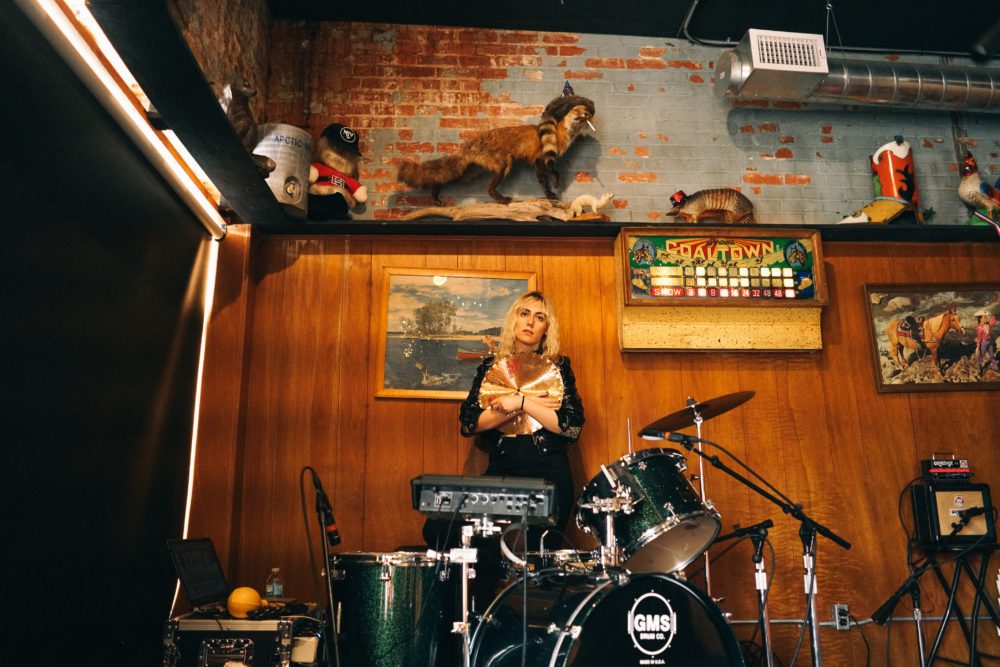
PREMIERE: Lauren Rocket “Rattlesnake”

Singer, songwriter, and multi-instrumentalist Lauren Rocket is the embodiment of the word “badass,” and that’s no clearer than in her latest single, “Rattlesnake.” In the video for the fierce, beat-driven rebel anthem, we see Rocket dancing around the house, ravenously eating sweets, and posing in an “Anarchy” shirt while singing lyrics like, “I like the pain because it keeps me awake / can’t sleep, don’t put on the brakes.”

Rocket signed her first record deal at age 18, toured with artists including The Child and The Pink Spiders as part of her pop-punk band Rocket, and has most recently toured alongside Rilo Kiley’s Blake Sennett and The Honorary Title’s Jarrod Gorbel in Night Terrors of 1927. As a solo artist, her music has included catchy, danceable, elecropop hits (like “Sharks” and her cover of Echo and the Bunnymen’s “The Killing Moon“) that project a sassy, self-assured persona.

We asked her about the evolution of her music, what it was like to be in an all-female punk band, and what “Rattlesnake” means to her.

AF: What is the concept behind the song and video for “Rattlesnake”? What inspired you to come up with it?

LR: With “Rattlesnake,” I wanted to write a song about living life dangerously, doing what you want daily, and enjoying your limited time here while imposing a strong belief in trying everything at least once.  When I got in the studio with my co-writers Jason Bell and Jordan Miller (aka HEAVY), they totally got the vibe and concept, and we kind of effortlessly weaved our way through the song. I wanted “Rattlesnake” to not only convey that lyrically, but I wanted it to feel alive (“rattlesnakey”) in a sense.

Visually, my co-creater Zoey Taylor and I envisioned a video that really was pure, moving picture “mood,” capturing the essence of momentary youthful freedom and a strong amount of weirdness. We are both giant fans of Harmony Korine and love how his movie, Gummo, is a series of unforgettable vignettes that all work together to create a solid, visceral movie that you can feel in your bones and heart. He was our main inspiration, and our goal was to make it feel like the viewer is experiencing another life in little glimpses — maybe escaping into that world for a couple minutes, maybe questioning it, but maybe not.

AF: What does the rattlesnake symbolize to you?

LR: Snakes in general represent the obvious: temptation, danger, seduction, toxicity, etc. They can kill in one moment, which makes them super powerful beings. Rattlesnakes, to me, are symbolic visual representations of what I imply in the song with the line, “I wanna live like I’m dying today.”

AF: I know you’ve collaborated and toured with a number of accomplished artists and songwriters. Have they influenced your music? Who would you say your biggest influences are?

LR: I have learned so much from so many people on this journey, and I am grateful for every writing and touring experience I’ve ever had, as they’ve just made me a better version of myself as well as a better writer. I strongly believe that it’s pretty hard to grow without collaboration, because there is so much to learn from others. It’s kind of essential to creation.  I have a ton of influences, so it’s hard to only name a few and not bore everyone, so I would say Dolly Parton for her grace, innate talent, and authenticity; Freddy Mercury, no question; and Deborah Harry because there’s just no one cooler. And how could I not mention David Bowie?

AF: Would you say there’s an overall theme to your music? I know you once said you write about everything butlove — why is that?

LR: I guess I could write love songs all day long. It’s a go-to for me, and I could cry and write them for hours, so the challenge for me is to write about other subjects, like aliens and snakes and wizards. I only laugh and never really cry unless I’m laughing too much, so it’s a win-win situation.

AF: Pop-punk seems to be very male-dominated — what was it like having a female band in this genre? Were there particular challenges or stereotypes you faced?

LR: Just being marginalized as a “girl band” was limiting in itself. There’s a different psychology behind how people view all female bands, and it’s a whole thing. There was this weird underlying feeling of having to prove ourselves as a musicians and performers. It was yucky, but there was another side that was beautiful and amazing. We just did our thing and had so much fun playing shows all over the country. I feel so lucky to have had those experiences in life. We simply loved playing music and touring around in a beat-up van, eating chips. I love playing with women. There’s something magical that happens when we work together.

AF: In what ways would you say your music has changed since Rocket?

LR: I’ve grown a lot, experienced a lot, and learned a lot since Rocket. That band had a bevy of puppeteers expressing their opinions on what we should sound like and act like. We were super young and green. I’ve learned a lot about myself and dug real deep in these past few years while practicing a lot of internal and spiritual work, which my soul really craved. In turn, this project is definitely the most authentic representation of who I am creatively at this moment in my life and expresses my inner thoughts, sometimes obviously and sometimes abstractly.  These are the songs that I hear in my head when I’m just walking around, living my life every day.  I know exactly how I want them to sound. It’s been a really inspiring and exciting journey so far, and I’m excited for it to keep unfolding.

Follow Lauren Rocket on Facebook for ongoing updates.
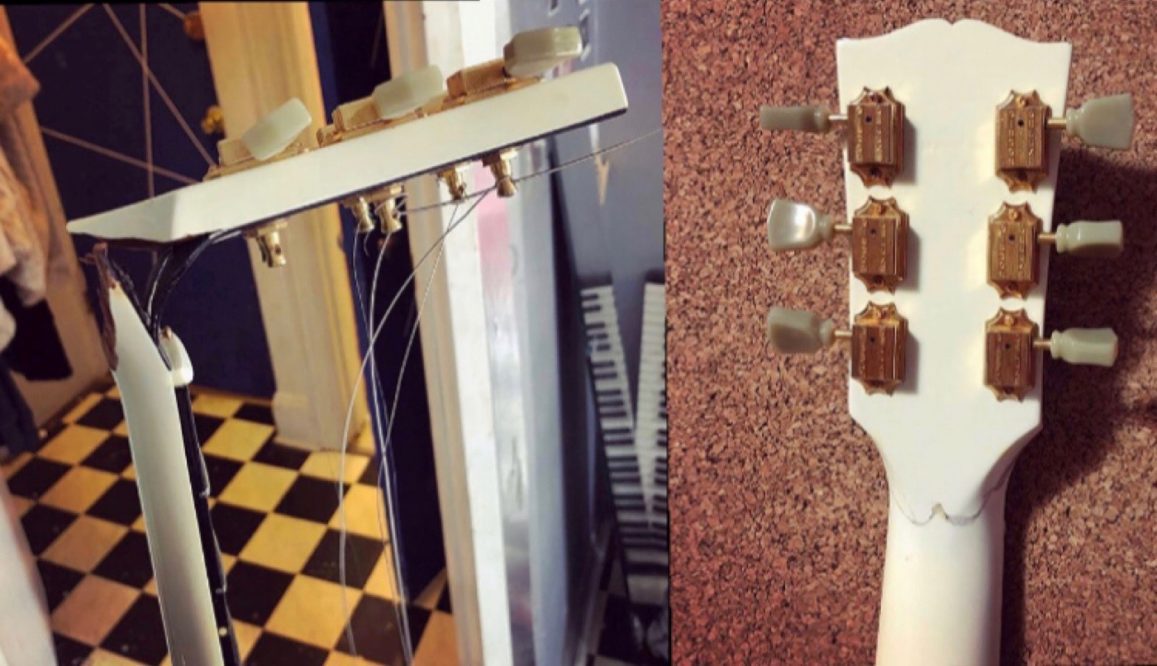
ONLY NOISE: The Long Way Around

ONLY NOISE explores music fandom with poignant personal essays that examine the ways we’re shaped by our chosen soundtrack. This week, Katie Wojciechowski finds footing in unfamiliar territory thanks to the late discovery of an infamous hometown favorite.

On March 10, 2003, Dixie Chicks’ front woman Natalie Maines told a London audience she was sorry about what our president was doing to the world, and she was ashamed to share her home state Texas with him. What happened after was entirely outside the scope of my fifth-grade awareness—but thankfully for my 2019 curiosity, Google’s first answer box aggregates the question apparently still on the Internet’s mind: “What did the Dixie Chicks say that got them in trouble?”

I’m a late-bloomer Dixie Chicks fan. It took much longer than it should have—plucky woman-fronted country is right up my alley. When I dove right into Spotify’s “This Is…” compilation a few months ago, it was love at first listen: friendship, fiddles, rebellion, and leaving home.

When I was 24, I became the first in four generations of my family to move out of Texas. There’s a reason people stay in Texas, particularly in Austin, “in the same ZIP codes where their parents live”: it’s a great place. But there had always been something calling me to the West Coast, and after college, I left. As Maines and her gals sing, “Said she could hear me singin’ in the choir / Me, I heard another song / I caught wind and hit the road runnin’ / And Lord, I’ve been a long time gone.”

I’m sure my Portland pals think I came by my Dixie Chicks love naturally. But really, I’ve taken the long way around. The Chicks were yet another casualty of my stubborn teenage refusal to listen to anything “uncool,” an affliction that lingered through my mid-twenties. Life is so much more melodic now that I’ve embraced my love for pop, boy bands, and yes, even country.

I wish I’d had the Dixie Chicks when I drove to Portland three years ago. I felt so aimless; the adventure of a lifetime was sitting right on my Prius’ dashboard, so why did I feel empty and scared? My new husband and I cycled through all our favorite playlists by about day two (Boulder, CO). What lay ahead of us? A Northwest city we’d never been to. Perhaps an apartment, but who could say. Perhaps jobs, but nothing was guaranteed. I wish I’d had “Wide Open Spaces” to pave my way Westward. I wish I’d had “The Long Way Around” to say what I couldn’t: “I could never follow.”

Moving got me in trouble in a million little ways. Finding a job was horrific. Portland? Not always what I thought it’d be. Each soggy, rainy day had me questioning everything. I hit the road looking for belonging and, three years later, I’ve never felt more adrift. As I began to devour the Dixie Chicks compilation a couple months ago, I quickly realized that they could relate.

Natalie Maines’ 2003 comment at the London concert got them blacklisted from country radio for years. The Chicks certainly weren’t the first women in country to dissent from conservative norms (see: Dolly, Emmylou, Shania, Reba, etc.), but in the Bush era, they became Undesirables #1-3. In a moment of staunch, gun-slinging patriotism, for which country radio tended to be an echo chamber, Maines and company diverged. The adventure and the running wild and the Wide Open Spaces led them somewhere they, perhaps, never intended to go, but for them, remained the only way that felt true.

In “Long Time Gone,” they sing, “Now they sound tired but they don’t sound Haggard, they’ve got money but they don’t have Cash” and if there’s anywhere that rings true, it’s Portland. The lack of charm, of soul, of personality here is jarring to me. I guess it’s something I always took for granted in Texas. As much as I wanted to get away from the Bible Belt, there are notes in Texas, in Austin, that simply ring clearer for me. I guess I had to leave to find that out.

But what if I’d stayed? It wouldn’t have felt true. I’ve always had a wild streak, a curiosity that tends to take the wheel. So I left in search of myself. Just like the Dixie Chicks, it’s the only road I know.

I still don’t really know I was looking for. But I did find this: there’s no particular city or coast or even open road that’s going to fill the home-shaped hole in your heart. Portland included. Texas included. Learning this doesn’t make the world any softer. But I hear my rocky journey westward sung back to me by my three new friends:

Well, I never seem to do it like anybody else
Maybe someday, someday I’m gonna settle down
If you ever want to find me, I can still be found
Taking the long way around

Maines has recently hinted that a new Dixie Chicks album (what would be their fifth studio release) is in the works. For now you can catch them live in New York on 12/12 at The Town Hall to benefit queer and trans youth, and in Austin at The Moody Theater with Gary Clark Jr. to benefit Voices for Justice.

PLAYING PHILLY: APHRA and Control Top Release New Videos

APHRA photo by Megan Matuzak

Between APHRA’s solemn plea for “Love & Affection” and Control Top’s wildly cathartic “Office Rage,” this week’s new releases in Philly music seem to span completely opposite facets of human emotion. That may be an exaggeration, but you’d be hard-pressed to find two new music videos that are as different from each other as these two are. At the same time, though, these songs share a particularly similar sincerity and urgency. Through APHRA’s soulful, somber pop and Control Top’s anti-capitalist punk rage, these Philadelphia-based musicians each beg us to remember that we must take care of ourselves, because if we don’t, no one else will.

APHRA – “Love & Affection”

APHRA, the solo project of multi-instrumentalist Rebecca Waychunas, released the full-length record Sadness is a Gesture in 2017. Now, the native Philadelphian is back with “Love & Affection,” a stand-alone single and video directed by Pollyanna Highgloss.

Like any APHRA song, Waychunas hooks you with her deep, expansive vocals, hypnotizing when layered over electropop guitar riffs. The video itself is nostalgic, echoing the intimacy of a childhood VHS recording. Waychunas skateboards through some faceless, suburban streets and sits at a coffee table among a sea of condolence flowers as she wails, “The thought of losing you/and your love and affection/It’s all I need.” However, after the song ends and the video credits roll, APHRA pulls us in deeper, sharing a voicemail from an unidentified family member. The message is supportive, yet somber: “If you feel you’re being coerced, Rebecca, in any way, by guilt, or a feeling of duty… My suggestion to you is put yourself first, honey.”

APHRA isn’t shy to share details of her personal life: her parents, both musicians from Philadelphia, died in 2017. In this light, it’s hard not to read Waychunas’ own grief into the video and voicemail – but, no matter how personal APHRA’s music may be (or not be) to her own experiences, her soothing, yet haunting songs retain a certain ambiguity that invites the listener in to project their own feelings into APHRA’s dreamy world.

CONTROL TOP – “Office Rage” 

Kristen Stewart made SNL relevant again this weekend as she dressed up like Paramore’s Hayley Williams and raged against corporate America. The punchline of the short is that punks need jobs too, and who would pass up a promotion to the twelfth floor sales team?

But “Office Rage,” which comes from Control Top’s first LP Covert Contracts (2019), tackles more serious issues than being bored in a cubicle. It’s passé to whine about “working for the man” when we all have to pay our bills somehow, but Control Top isn’t arguing against having a job – they’re arguing against having a job where you’re treated as sub-human. Vocalist and bassist Ali Carter tells Kerrang: “In a society driven by profits over people, it’s increasingly rebellious to say, ‘My well-being matters.’”

Control Top live photo by Alec Pugliese

With its brightly contrasting primary colors and wailing guitar riffs, the video is reminiscent of The White Stripes – the three-piece begins in a bland, black and white studio, only to emerge into a vibrant red and blue room where they can rest. Among Carter’s shouts to “Quit your job today,” guitarist Al Creedon grounds the anthemic punk song in the melodies of his boundless guitar riffs.

“Office Rage” is, of course, about the workplace, but its message holds true beyond break room politics: we deserve to prioritize our sanity.

PLAYING NASHVILLE: Zac Brown Guests on Latest Episode of “Bear and a Banjo” Podcast

Zac Brown has found himself in the company of a cast of unique characters.

The country star and frontman of the Grammy Award winning Zac Brown Band is set to be the next guest on the innovative new podcast, Bear and a Banjo. Launched in October through iHeart Radio, Bear and a Banjo was created by Jason “Poo Bear” Boyd and Jared Gutstadt, a pair of elite producers whose client list ranges from Steven Tyler to Usher. Boyd is most commonly known for his work on Justin Bieber’s catalog, penning such hits as “What Do You Mean?” and his duet with Ed Sheeran, “I Don’t Care.” He also produced the wildly popular remix of “Despacito” and co-wrote the superstar’s new collaboration with country duo Dan + Shay on “10,000 Hours.” Meanwhile, Gutstadt is a songwriter and producer who has ventured into the world of country music, working with the likes of Dierks Bentley, Brad Paisley and Angaleena Presley of acclaimed trio Pistol Annies.

The longtime collaborators have joined forces to create the larger-than-life podcast that’s described as “an immersive musical journey through old weird America during the big bang of recorded sound.” With Boyd as “Bear” and Gutstadt as “Banjo,” they transform into a fictitious Americana duo traveling through time from the 1930s to 1970s, visiting monumental moments in American history, with music serving as the throughline between each story. Each of the eight episodes turns a significant moment in music into vibrant folklore, whether helping blues legend Leadbelly escape a chain gang to witnessing gospel icon Sister Rosetta Tharpe’s extravagant wedding at Griffith Stadium in Washington D.C. in 1951. All eight episodes feature an original song written by Boyd and Gutstadt, while Bob Dylan contributes to the podcast as co-writer of “Gone But Not Forgotten” in the final episode.

With Dennis Quaid acting as the character of Dr. Q, who narrates Bear and Banjo’s journeys through history, the podcast is more of a cross between musical theatre and the storytelling nature of vintage radio, with writer and producer Bill Flannigan comparing it to the way Roy Rogers and John Wayne told stories “but a different cast of characters,” he says in an introductory video. “Podcasts haven’t really leveraged the power of music yet and to be able to create a first of its kind musical for the podcast space seems like a no brainer,” adds Gutstadt.

Brown stars in episode five, titled “Can You Hear Me Now?,” released today, as a guest actor who discovers one of Bear and Banjo’s songs that gets its namesake from the episode. In Brown’s remix of “Can You Hear Me Now?” it feels as though you’ve been thrust into a chaotic universe through the stormy beat of guitar intertwined with banjo and layered with R&B production, creating an eclectic mix of Americana and hip-hop. The country singer also collaborated with Boyd on his experimental new album The Controversy on such tracks as “Time” and “Dream Sellin’.”

Brown and Poo Bear’s individual versions of “Can You Hear Me Now?” will be available to stream on Friday. Bear and a Banjo is set to culminate with an album produced by T Bone Burnett that features all eight songs created during the series.