DEMO REVIEW + EXCLUSIVE: Violet Machine

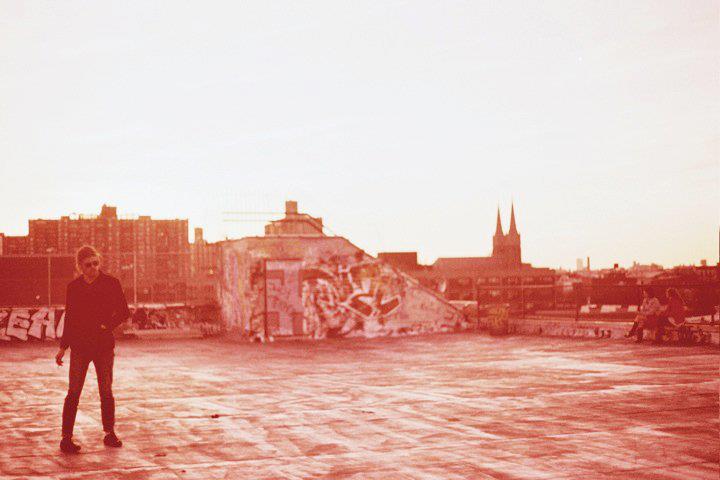
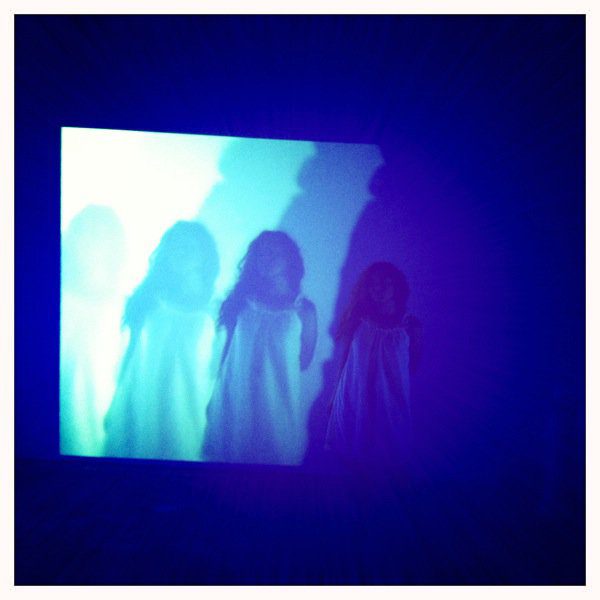
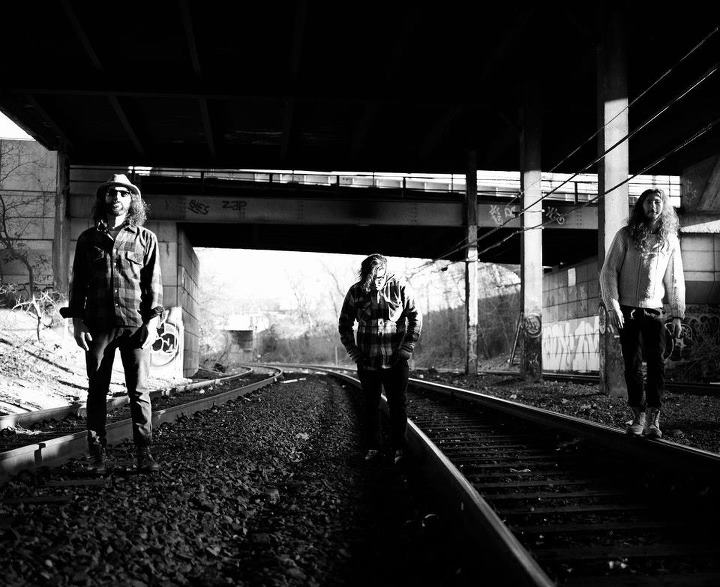
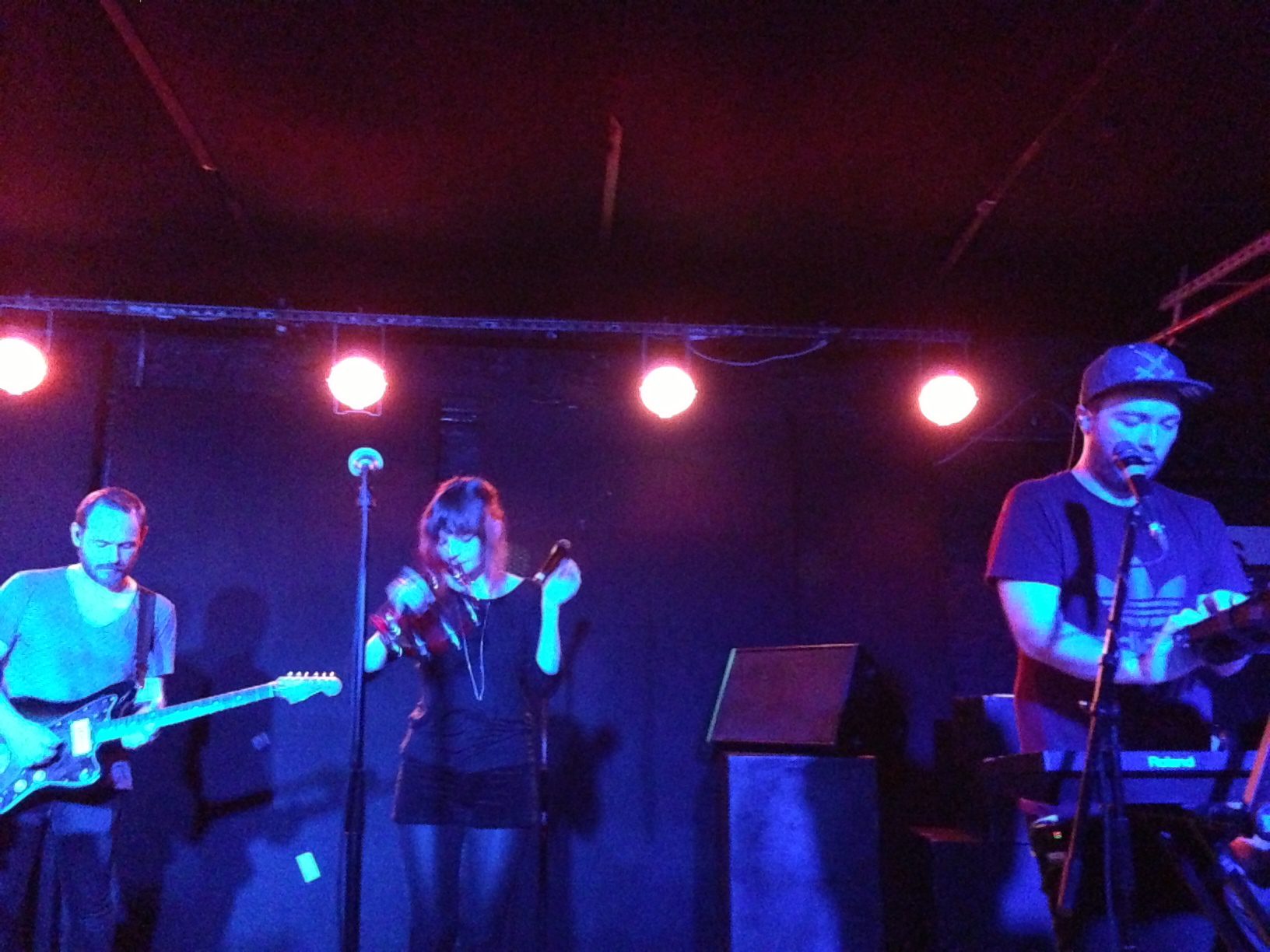
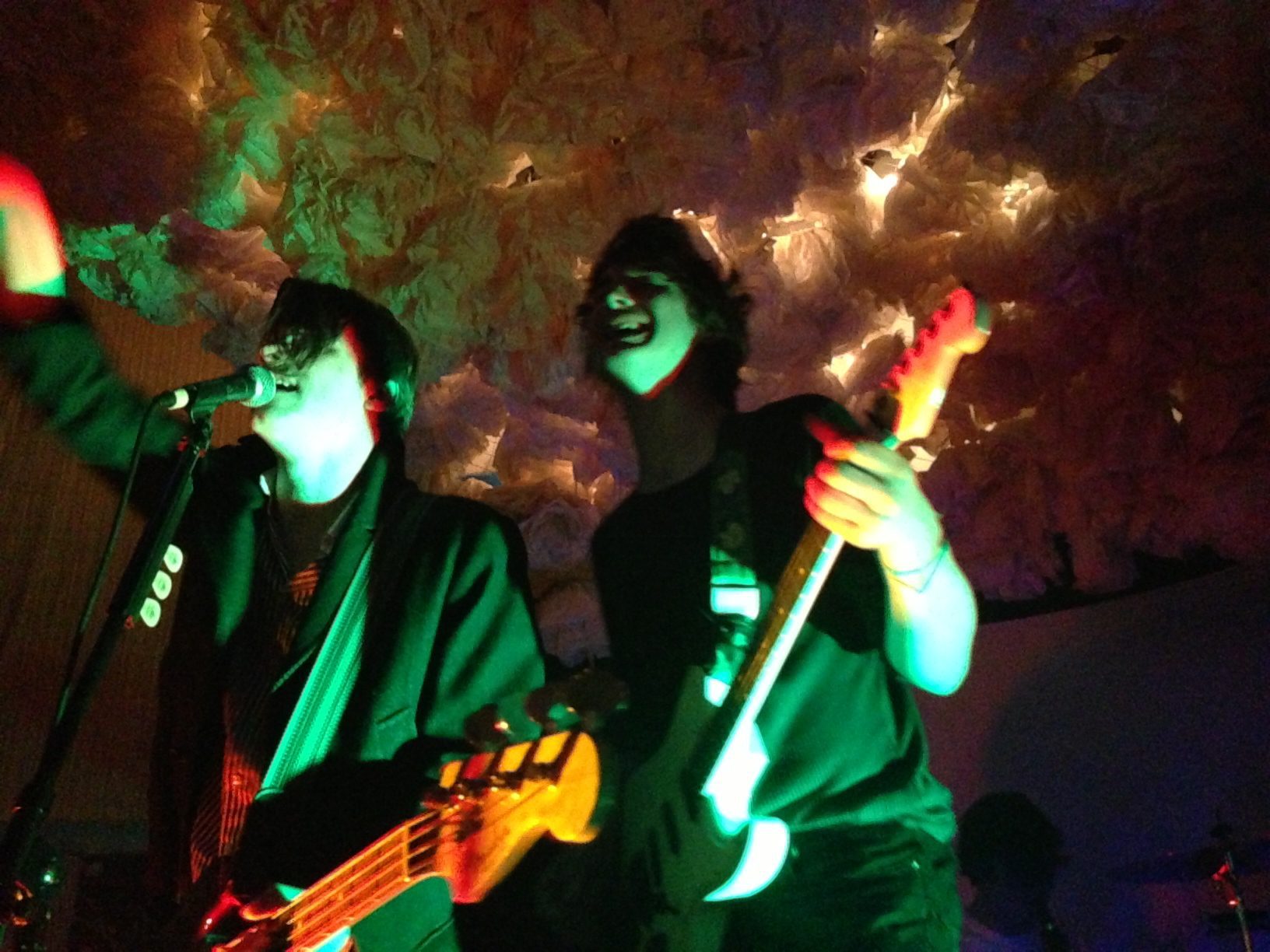
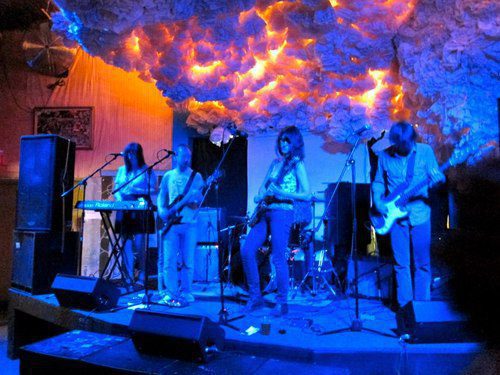
VM StageViolet Machine, a recently-formed indie rock quartet from Brooklyn makes music that inspires nostalgia for the early 00s.  You remember, that one year Interpol hit the scene and provided NYC’s newest batch of millennial transplants with a soundtrack that, for most of us, will never ever lose its meaning or cease to make our hearts pound when we hear it? Many bands tried to follow in their footsteps; tried to scale those same illustrious heights the New York darlings managed to conquer within a matter of years, thanks to two momentous albums.

Most failed miserably at the task of building on the foundation Interpol laid, because their specific brand of drawling, brash, stripped-down indie rock just sounds derivative at best unless every musician in the band can deliver on the underlying conceit of the songs they’re writing. And this requires more talent than most possess. Subsequently, the tunes often fall flat, so to speak.

Violet Machine emerged onto the Brooklyn indie circuit early this year, and within a few months, breathed life into, and provided direction for a genre that had lost its way over the last decade. In essence, they are achieving what so many before them failed to. Their demo comes out next week, and promises everything we’ve been missing: the perfect balance of instrumental complexity and gripping, affected vocals that capture the attention of the listener and transport them into another world of city lights, heartbreak, longing…all those motifs that most artists seek inspiration from, but can never really in turn, transform into sources of inspiration unto themselves.

The first track off their demo, “Starlight”, begins with what could be construed as a formulaic, gritty and textured minor chord progression underpinned by catchy drums. Until that is, the vocals come in, soaring and tinged with retro hues, and hook you. The instrumentation is suddenly lent depth and dimension that wasn’t apparent before and the song itself as a whole begins to expand and appropriate space in the room, leaving one eager for the next verse. Though the melody is reminiscent of those written by so many before it, from shoegaze trailblazers like The Pixies to the resident bad boys of The Strokes, there’s something refreshing about lead singer Rob Majors’ voice. Most likely, it’s that you know it reflects how he actually sounds, as there’s very little post-production tinkering to the songs. However, there’s also an ineffable quality to it, that can best be described as simultaneously relateable and otherworldly.

“So Close The Birds”, their second track, begins with an ominous guitar line executed with Flamenco stylings that leave one wishing for snare drum or at least fuller percussive dimensions –perhaps the one element I would surmise this composition lacks. Majors’ vocals come in after a few bars though, and  jolt the listener back to some memory of a times passed, not too distant a memory that it feels illusory, but distant enough to jar the nerves. Once again, the strength of the songs lie in their capacity to capture and expand on music that already happened, of which there wasn’t nearly enough.

“On The Take” also begins with an iconic guitar melody (definitely sensing a signature style emerging), that provides a foundation for the rest of the song, which is perhaps slower-paced, and more soothing than the prior two tracks due to its washed vocals that blend in with the guitar and bass for most of the song. It sounds almost as if you’re hearing through the receiver of a telephone, melodic and lyrical intimations that can feel placating and exciting alike.

Violet Machine has a long trajectory ahead of them, especially given the fact they are retrieving a genre of music that got seemingly kicked to the curb years ago. Their demo gives us a narrow glimpse into what they are capable of musically, and what lies ahead for them creatively. We got our hands on an exclusive release of the first track off the mix, “Starlight”,  so you can see for yourselves.

STARLIGHT-Violet Machine


Liars Bring New Songs To NYC

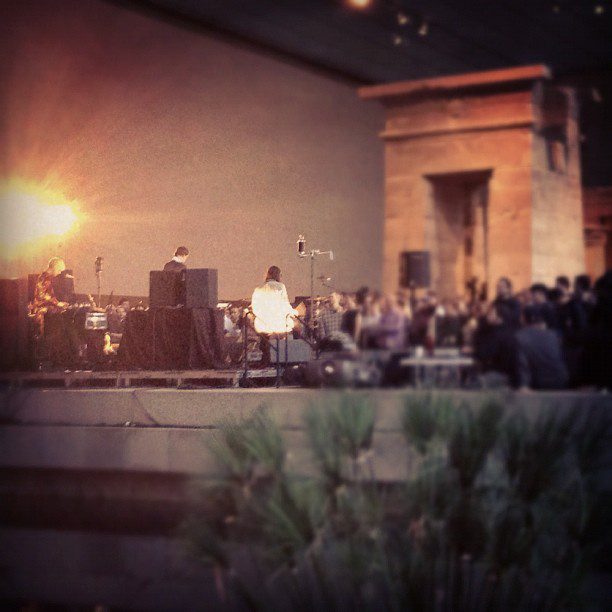
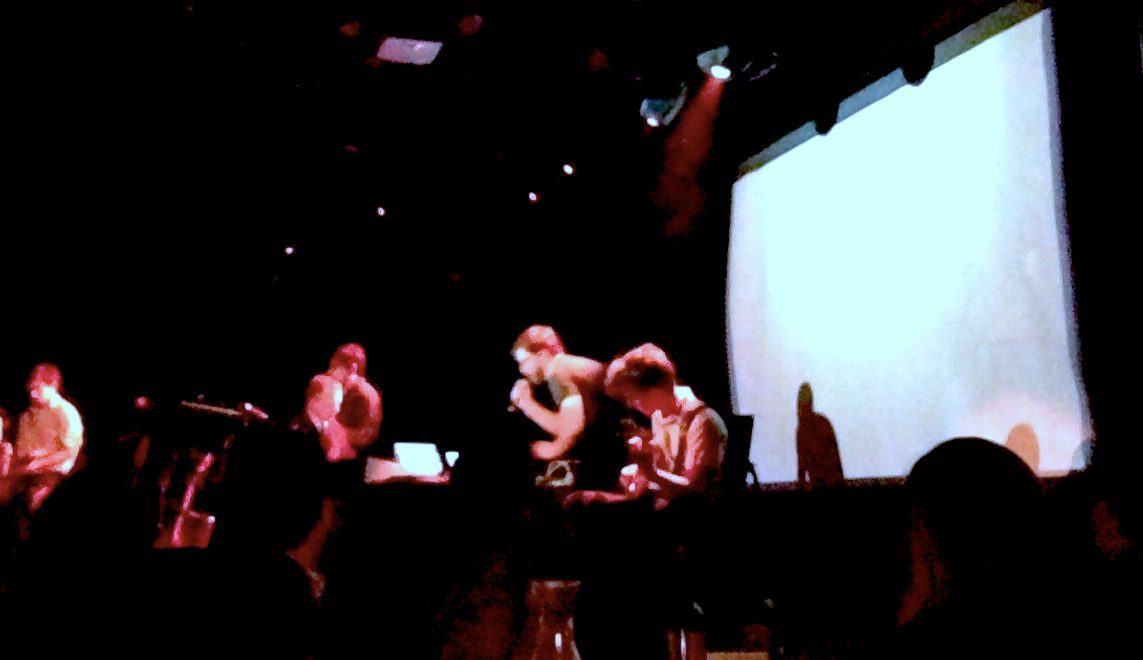
After thoroughly enjoying last summer’s set at Webster Hall, I was pumped to see Liars not once but twice this past weekend.  The first show was in the Met’s Temple of Dendur, which is about as epic as a setting gets.  The band literally played amongst the ruins of the monument, built in 15 BC by Petronius, Roman governor of Egypt and relocated to the museum’s Sackler Wing in 1978 after being gifted to the United States to save it from flooding created by the Aswan Dam.  The acoustics were either awesome or jarringly echoic depending on where you were standing, and where you were standing depended on gallery officials adhering to fire codes, but hey.  The trippy projections flashing behind Angus Andrew and company were probably more than twenty feet wide and plenty enthralling if your vantage point was less-than ideal for watching the band.

[fusion_builder_container hundred_percent=”yes” overflow=”visible”][fusion_builder_row][fusion_builder_column type=”1_1″ background_position=”left top” background_color=”” border_size=”” border_color=”” border_style=”solid” spacing=”yes” background_image=”” background_repeat=”no-repeat” padding=”” margin_top=”0px” margin_bottom=”0px” class=”” id=”” animation_type=”” animation_speed=”0.3″ animation_direction=”left” hide_on_mobile=”no” center_content=”no” min_height=”none”]

Liars in the Temple of Dendur.

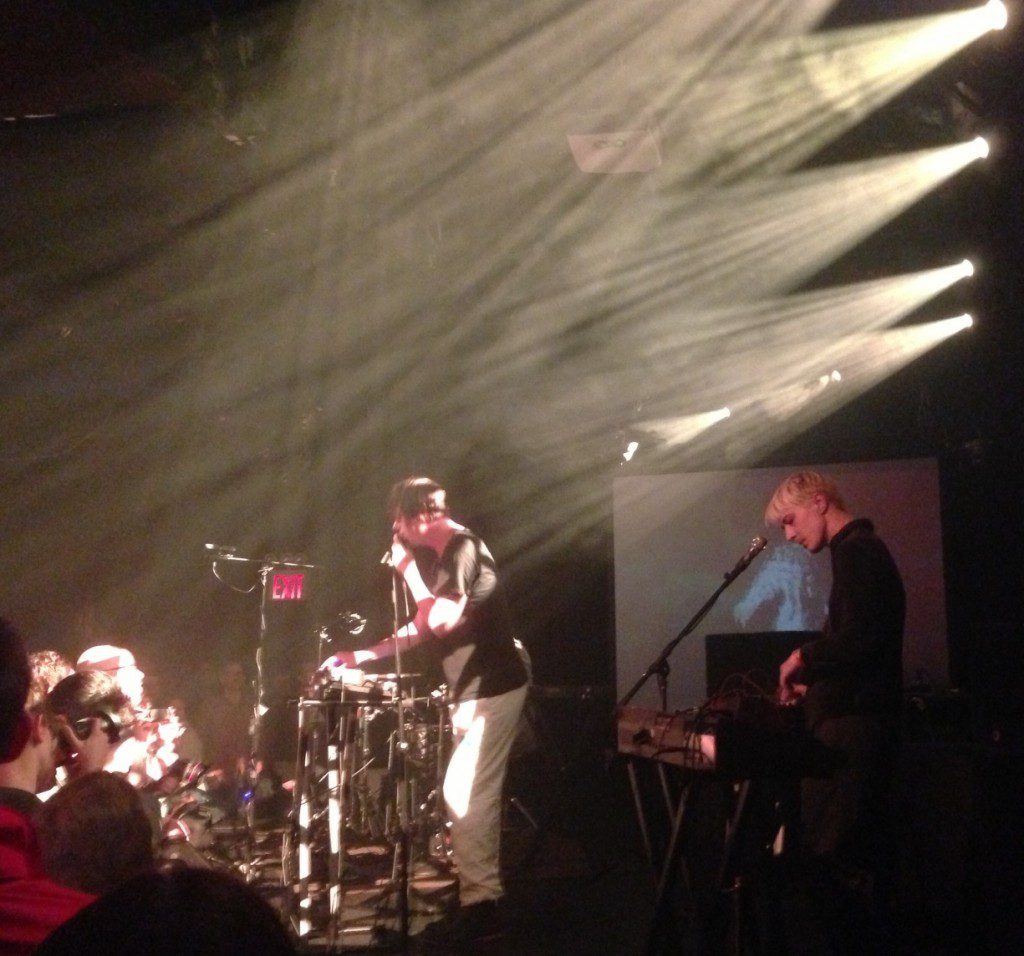
The following night, Liars visited (le) poisson rouge for a show that by then was starting to seem like it had been cursed by King Tut himself.  First, the venue changed from Brooklyn’s Masonic Temple for unspecified reasons.  Scheduled openers Lower Dens dropped off the bill around the time the venue change was announced.  Doldrums stepped up to occupy the opening spot but were foiled by the theft of Airick Woodhead’s laptop and passport, so the Toronto band never made it to Brooklyn, and Liars took the stage promptly at 8:30.

liarslpr

Both sets included songs from WIXIW, Liars most-recent (and most electronic) release.  Considering that they’d already toured in support of the record, it was surprising they were doing these shows at all; as it turns out, the purpose of both was to debut all-new material.  The new songs are, once again, heavy on the electronics and driven by pounding beats, but possess a darkness and urgency not unlike the mood of 2004’s witch-worshipping classic They Were Wrong, So We Drowned.  The only actual foray into that material was during the encore at LPR, which ended with crowd pleaser “Broken Witch”.  There were no encores at the Met so for those who, like myself, had attended both, it felt like a treat.

You can watch a video for “Who Is The Hunter” (from WIXIW) here.  Below, check out video of a new song, which according to their somewhat cryptic handwritten setlist might be called something like “Can’t Hear”.  It’s far more relaxed and sparse than some of the other new stuff they played, lest ye naysayers worry Liars are losing their edge.  The fact that Angus Andrew is pushing forty at this point doesn’t seem to be slowing him down at all.  They’ll be playing MoMA PS1’s Warm Up this season on August 31st.

[/fusion_builder_column][fusion_builder_column type=”1_1″ background_position=”left top” background_color=”” border_size=”” border_color=”” border_style=”solid” spacing=”yes” background_image=”” background_repeat=”no-repeat” padding=”” margin_top=”0px” margin_bottom=”0px” class=”” id=”” animation_type=”” animation_speed=”0.3″ animation_direction=”left” hide_on_mobile=”no” center_content=”no” min_height=”none”][jwplayer config=”AF01 YT” mediaid=”2649″][/fusion_builder_column][/fusion_builder_row][/fusion_builder_container]

Single-Minded Obsessions, Exaggerated Enthusiasm

Deerhunter released their fifth studio album, Monomania, and didn’t play an NYC show.

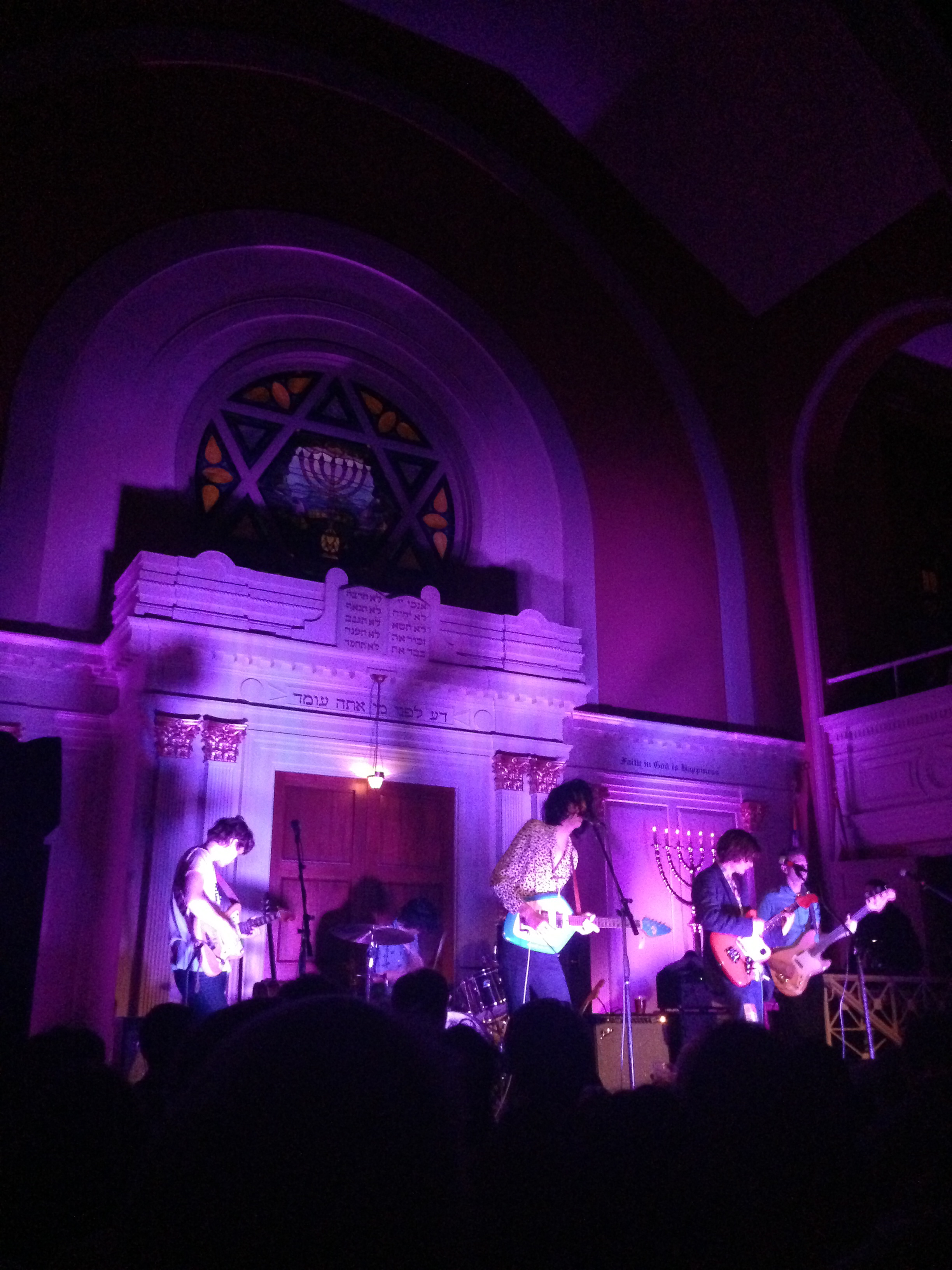
So Audiofemme went to Washington, DC.Deerhunter at Sixth & I Synagogue


Bradford Cox seems to me at times less like a human being and more like a mutable idea, an enigma, more persona than person.  And after nearly ten years of Cox’s well-documented onstage antics and acerbic attitude I’m almost positive that’s the way he wants it.  The music he’s made, both under his solo moniker Atlas Sound and with his band Deerhunter, has defied definition by drawing from many stylistic elements so as never be pinned to just one genre, but with newest effort Monomania (out May 7th on 4AD) Cox may be making an attempt to affix himself to a grittier, more garage-influenced sound.

This time around we see him ditching the dresses for a get-up one might find on a thrift store mannequin – ratty black wig and snow-leopard print polyester.  He famously debuted this alter-ego (referring to the character a few times in the media as “Connie Lungpin”) during an unhinged performance on Late Night with Jimmy Fallon, walking offstage at the end of the performance with his band still playing, his fingers bandaged and looking bloody (which was a supposed tribute to his father who’d had a woodworking accident a few days prior).  The amount of buzz the performance generated is as good an indicator as any that Cox knows exactly what he’s doing.

There’s a specific segment of the population that can hear a phrase like “nocturnal garage” and go oooooooh! and with Deerhunter fans, the overlap is ridiculous.  When the band’s website announced Monomania describing the material as such and casually hit other reference points like fog machines, leather, and neon, Cox’s single-minded obsession became our own.  Recorded in NYC in January and February by Nicolas Vernhes, the material on Monomania is culled from  a supposed caltalogue of over 600 songs which seems like a lot unless you’re familiar with the way Cox operates.  Just before the record’s completion, the band saw the departure of bassist Josh Fauver, an event that almost shelved the whole project.  Josh McKay stepped up to fill the position, and along with new guitarist Frankie Broyles, the newest incarnation of Deerhunter was born.

With it has come announcements to headline and curate ATP London, where Cox and co. will reportedly play three of their studio albums in entirety and Cox will also perform as Atlas Sound, meaning that Cox is going to be playing pretty much nonstop that entire weekend, and that it’s clear he thinks the only music worth hearing is his own.  The band is also scheduled to play a slew of other festivals, from Austin’s Psychfest to Portugal’s Primavera to NYC’s Governer’s Ball, but no proper tour has yet been announced.  I kept waiting for an announcement about some secret show in Brooklyn’s back alleys, but the closest they were coming was to Sixth & I in DC.  And I had to know.  Would Cox show up as Connie Lungpin?  With or without fingers?  And what would nocturnal garage sound like in a synagogue?

By the time the show rolled around I’d heard the album in its entirety and though it didn’t immediately blow me away, Deerhunter albums almost never do; something about them creeps up on me and then I realize it’s all I’ve been listening to.  More than anything I wanted to hear the songs in a live setting, more raw and more raucous.  The space was gorgeous and the sound super loud, the audience of around 200 seated in pews for the college-radio sponsored show.  The first act, Mas Ysa, was a bedroom-producer type who sampled Counting Crows and worried he was going to cry – needless to say, a bit awkward.  Jackson Scott performed in between – as a band, not as one person, although presumably one of the people in the band was the 20-year-old Asheville songwriter.  While the group started off sounding a little too derivative of the headliners, by the end of the set they offered up uniquely textured shoegaze-tinged stoner jams.  It had to have been one of their first shows and it’s got to be nerve-wracking to open for an act that so clearly falls in line with your influenced, but they managed to pull it together nicely.

Cox, replete in his Fallon get-up, apologized early in Deerhunter’s set for any incongruities, explaining that this was only the band’s second show (meaning with its new members, obviously).  They opened with a droning jam that lead into “Cryptograms” which set the tone for the rest of the night; the majority of the set drew from Monomania, with a few tracks from Halcyon Digest, but everything seemed filtered through Cryptograms-era effects.  Most tracks were lengthened by long, noisy solos and connected by interludes in the same vein.  The sound cascaded in the dramatic, domed space, rumbling guitars causing old woods to vibrate.  The audience didn’t move much, caught in the trance the band was bent on creating.  And Cox was relatively tame, allowing Lockett Pundt to take lead vocals here and there, swinging his guitar haphazardly above his head only sparingly.  They closed the set with “Monomania” and Cox abandoned the stage while his band played on, slinking down a hallway only to return for a blistering fifteen-minute-plus encore of “Lake Somerset”.

[fusion_builder_container hundred_percent=”yes” overflow=”visible”][fusion_builder_row][fusion_builder_column type=”1_1″ background_position=”left top” background_color=”” border_size=”” border_color=”” border_style=”solid” spacing=”yes” background_image=”” background_repeat=”no-repeat” padding=”” margin_top=”0px” margin_bottom=”0px” class=”” id=”” animation_type=”” animation_speed=”0.3″ animation_direction=”left” hide_on_mobile=”no” center_content=”no” min_height=”none”][jwplayer config=”AF01 YT” mediaid=”2581″]

Noticebly absent was anything from Microcastle/Weird Era, but that doesn’t mean the show wasn’t satisfying. The live versions of the new material proved to have the flesh they’ve been accused of lacking, thanks mainly to the vitriolic snarl of Cox’s live vocals, so doused in reverb on the recording.  Overall, Monomania has the messy feel of a careening drunk who passes out before anything catastrophic happens but in that way it’s also less exciting than you want it to be.  As the band’s fifth album, it’s also a bit of a promise that Cox has made to the world – making music is not only the one thing on his mind, but that’s all that ever will be.  No matter what bizarro personas he adopts or madcap stunts he pulls, no matter how he tries to obscure it with the act of performing the part of rock star, he will always be driven to create – nothing else really matters, regardless of who blogs about the charade surrounding it.  The costumes, the masks, the droll, quotable witticisms he tacks to these projects are more a way to amuse himself, and he allows us to participate in that entertainment, questioning what it all means.  But at the core, it’s the music which he’s obsessively written and recorded that will be his legacy.  Bradford Cox does not care if you get the joke, no matter how much time you spend wondering if you’re in on it.[/fusion_builder_column][/fusion_builder_row][/fusion_builder_container]

Gone, But Not Forever: A Jason Molina Tribute

If a voice could be like a landscape, Jason Molina’s mirrored perfectly the Ohio in which I’d grown up – fertile though a bit bleak; not so dramatic but constant and comforting, even if somewhat mournful; tired cornstalks waving beneath gentle Appalachian foothills, meeting gritty, unglamorous industry; a landscape that presents itself casually as if to say here this is, it’s pretty much nothing but you can have it.

The fact that Molina, like myself, was from Ohio made me feel an instant kinship to the music he made, whether it had the folksy qualities of his earliest releases, the gospel overtones of Didn’t It Rain or the blues-infused urgency of Magnolia Electric Co. recordings – it all felt like sides of the same coin and it gave everything a sad, romantic twinge.  I loved that he referenced things and places I knew, that we even had friends in common (though we never met).  I can’t tell you how many hours I spent alone in a car with that voice and that same landscape spooling outside my window during trips across state to visit my parents in Cleveland while I was going to school in Columbus, or how I’d mouth the words “you can’t get here fast enough” in the throes of a long-distance Kent-Columbus relationship, with “The Lioness” on repeat.

The day I found out that Jason Molina died would have been my friend Robert’s 33rd birthday.  Robert, like Molina, had succumbed to drug addiction, alone, suddenly, and far too young.  When Robert died, I turned to Molina for comfort because we had both loved those songs.  I even posted lyrics from lyrics from “Goodnight Lover” on his facebook wall after his passing: “How will I live without you / Without your customs… How selfish for time to conclude / what would be the day / for leaving to work its charm on you”.  And when I thought of Molina dying alone in a hotel room with a single number in his phone (as reported by his friend Henry Owings on Chunklet) I again combed lyrics for comfort, and finding relevant verses was pretty much the only easy thing about the whole situation.  Every other song concerns itself with death and ghosts and depression and passage from one part of life into the next.

Later that day I was discussing Molina’s death with another friend of mine who has also struggled with depression and had found particular resonance in that aspect of the music.  He had this hypothesis that Molina’s biggest fans were all depressed to some degree, and that was why we gravitated toward it so.  It feels like a thing that could be absolutely true, but it’s also a truth I didn’t want to subscribe to wholly; I’d have to lump myself into that category.  To say Molina’s work meant a lot to me is an understatement – it feels more like the fiber of my being: roots of a family tree, blood running through my veins, equal parts biography and biology.  And yes, it has supported me through some difficult times.  But in the end I always looked to his lyrics for bits of beauty and promise.  The darkness was there but there were glimmers of light – the moon, the stars, headlights on an otherwise lonesome highway.  As often as Molina sang about endings, he sang about being thrashed by hope.  It never came off as hokey because it was bathed in this harsh brand of realism, a harshness that gave every note poignancy.  It wasn’t just in the words themselves but how he sang them.  It reverberated in every strum of his guitar.

And he wasn’t as morose as all of this makes him out to be.  He was warm and funny and extremely hardworking.  Below is a recording my roommate made at a Columbus show in 2004.  He had this to say about the performance:

The set is fun, varied, relaxed, and seems to be a transitional time for Molina as he had just switched monikers from Songs: Ohia to Magnolia Electric Company. He cracks jokes, plays Ozzy riffs between songs, apologizes to Scout Niblett for forgetting to ask her on stage during “Riding with a Ghost”, and ends the set with two covers eventually flooding the stage with people for a rendition of “You Ain’t Going Nowhere.”

[fusion_builder_container hundred_percent=”yes” overflow=”visible”][fusion_builder_row][fusion_builder_column type=”1_1″ background_position=”left top” background_color=”” border_size=”” border_color=”” border_style=”solid” spacing=”yes” background_image=”” background_repeat=”no-repeat” padding=”” margin_top=”0px” margin_bottom=”0px” class=”” id=”” animation_type=”” animation_speed=”0.3″ animation_direction=”left” hide_on_mobile=”no” center_content=”no” min_height=”none”][fusion_soundcloud url=”http://api.soundcloud.com/tracks/89633752″ params=”” width=” 100%” height=”166″ iframe=”true” /]

By all accounts, the last few years of Molina’s life were a struggle.  He didn’t stop making music as he was shuttled around from rehab to hospital and back again, but lack of insurance and the tolls of addiction finally brought that struggle to an end.  Molina was relentlessly creative and contributed more in his short life than most ever will, and we’re lucky to have the stunning body of work he left us.  I was going to end this piece with some of Molina’s own words as they really do make the most fitting epitaph, but there was really too much to choose from.  Instead, I urge those unfamiliar with his work to explore the catalogue and find meaning within the work as it applies to living the fullest life possible, whatever beauty and pain that entails.

To make a contribution in memoriam, please donate here.[/fusion_builder_column][/fusion_builder_row][/fusion_builder_container]

LIVE REVIEW: Goat at Music Hall of Williamsburg, 4/23/13


[fusion_builder_container hundred_percent=”yes” overflow=”visible”][fusion_builder_row][fusion_builder_column type=”1_1″ background_position=”left top” background_color=”” border_size=”” border_color=”” border_style=”solid” spacing=”yes” background_image=”” background_repeat=”no-repeat” padding=”” margin_top=”0px” margin_bottom=”0px” class=”” id=”” animation_type=”” animation_speed=”0.3″ animation_direction=”left” hide_on_mobile=”no” center_content=”no” min_height=”none”]

If Scratch 'N' Sniff internet had already been invented, this would smell like weed.
If Scratch ‘N’ Sniff internet had already been invented, this would smell like weed.

Post college, I lived in a house with a couple of record nerds.  You know the type – usually dudes who have more vinyl than a human being could possibly listen to and just leave everything sealed so it will be worth more money when they die alone in their basement apartments.  I don’t really mean that to sound so scathing; I had (and still have) a great affection for folks whose obsessive collecting is based in music adoration and not just hoarding rare albums.  Without “my” record geeks, I might never have discovered Comus, an anonymous 1970’s Satan-worshipping psych collective.  The music was complex and arboreal but also sort of frightening.  Mostly, I was enchanted by the idea of some cult running around in the forests of Great Britain (or haunting the moors or whatever they have there), jamming to their trippy tunes by day and sacrificing virgins by night.

I felt twinges of that same awe when I listened to World Music by Sweden’s Goat.  Their multi-layerd fusion of psych, funk, and disco is energetic enough to pull anyone in, but the mythology surrounding the band is equally fascinating.  They supposedly hail from Korpilombolo, a tiny village founded by a voodoo priest, where the residents have collectively composed songs and played music as Goat for generations.   World Music is the first release by the current incarnation of this project, an appropriate title given its timeless and eclectic feel, where the only rule for embracing a particular style of playing is that it be ecstatic.

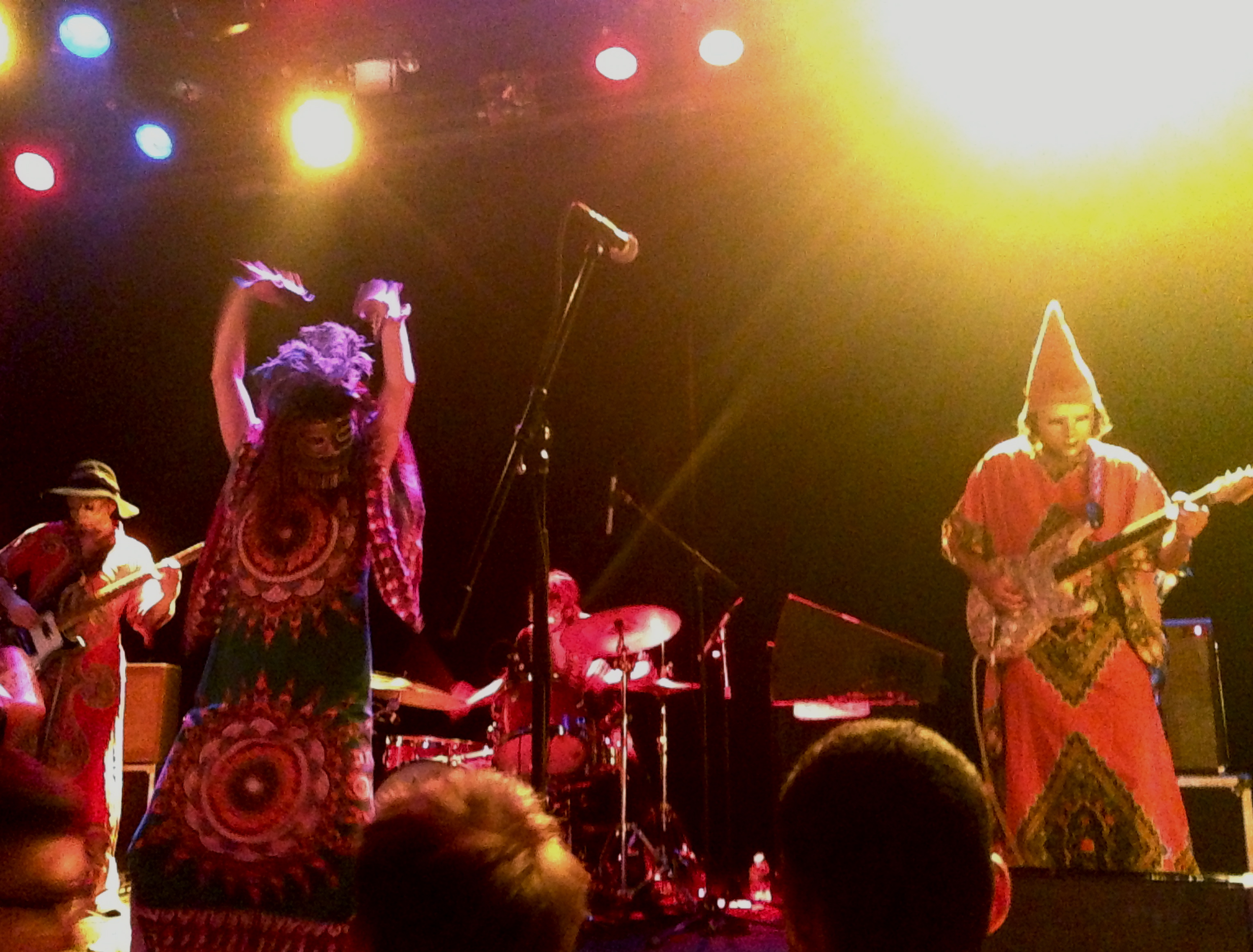
Videos of the band’s live performances do little to reveal their identity; the performers wear mardi-gras style masks and dashikis.  Members of the band have suggested in interviews that all of this obfuscation is a way to help center focus on the music itself rather than the personalities behind it, though the irony here is that these antics tread on gimmicky territory.  In the end, though, it doesn’t matter if the folklore is truth or make-believe or a little of both, because the songs stand up on their own just fine.

[/fusion_builder_column][fusion_builder_column type=”1_1″ background_position=”left top” background_color=”” border_size=”” border_color=”” border_style=”solid” spacing=”yes” background_image=”” background_repeat=”no-repeat” padding=”” margin_top=”0px” margin_bottom=”0px” class=”” id=”” animation_type=”” animation_speed=”0.3″ animation_direction=”left” hide_on_mobile=”no” center_content=”no” min_height=”none”]

All hail the Goatlord.

I was pretty excited to catch the act at Music Hall of Williamsburg; originally scheduled for Glasslands but moved to accommodate a larger crowd, the event promised to be at least mildly spectacular – it was the band’s North American debut, after all.  Two guitar players, a bass player, and two percussionists took the stage in outfits ranging from “creepy vintage  clown marionette” to “gold-lamé clad fencing champion”.  At first, the vibe was actually pretty stoic, leaving me to wonder if the performance was going to amount to that of the animatronic characters at Chuck E. Cheese.  But that vibe went from zero to sixty the second Goat’s two female vocalists came on stage, gyrating, hopping, twirling, shaking tambourines and bells, chanting, and otherwise becoming the life of the bizarre psych Cirque du Soliel I was now witness to.  If there’s one thing I’ve learned from years of going to psych and noise shows, it’s that no matter how long the recorded version of a song is already, it can always be longer, and Goat took the opportunity to extend the relatively succinct tracks on World Music into longform improvisations without alienating even one member of the audience or allowing for any stale moments.

The thing is, the band kept it fun.  What could have been somewhat spooky or pretentious basically felt like a happy-go-lucky hallucinogen tasting.  It’s true that Goat sings about worshipping a “Goatlord” but it’s also true that Goat sings about worshipping disco, and everything else is a permutation of one or both of those concepts.  In the end, the show was a party, not a seance, and those watching were primed to celebrate.  During “Let It Bleed” the band was joined by a sax-playing guest in a white robe and from the level of cheers it elicited you’d think Jon Hamm was under the mask or something (maybe he was, there was really no way to know).

It’s also hard to know if Goat will have the same cult following that bands like Comus inspired; because of the internet everything these days is a little too accessible, but then again it’s way easier to disseminate legend if that’s your marketing plan.  Would revealing the identity of the musicians in Goat ruin the novelty inherent in their current buzz?  Probably.  But even if it put a dent in the build-up, there’d be plenty left over for fans of psych to enjoy.  The kitsch factor barely factors in when you consider the talent and enthusiasm that truly makes Goat an interesting act to follow.  I bought my copy of the LP like any good record nerd would.

[/fusion_builder_column][fusion_builder_column type=”1_1″ background_position=”left top” background_color=”” border_size=”” border_color=”” border_style=”solid” spacing=”yes” background_image=”” background_repeat=”no-repeat” padding=”” margin_top=”0px” margin_bottom=”0px” class=”” id=”” animation_type=”” animation_speed=”0.3″ animation_direction=”left” hide_on_mobile=”no” center_content=”no” min_height=”none”][jwplayer config=”AF01 YT” mediaid=”2594″][/fusion_builder_column][/fusion_builder_row][/fusion_builder_container]

LIVE REVIEW: Sean Kennedy and Bill Bartholomew @ Rock Shop

406256_10152017955950384_1693866279_nThe Rock Shop is a seductive, darkly lit bar with a rock n’ roll vibe, which unfolds into a cozy performance space in the back.  As a Park Slope local, I’m keenly aware it’s one of the few solid venues in the neighborhood to catch independent musicians. I still mourn that South Paw is being turned into a rock wall gym for children. The Park Slope moms won that round.  But still, Rock Shop leaves hope for local indie rock lovers.  This night celebrated folk/Americana artists with dynamic lead singers.  Listening to solo artistSean Kennedy and self-titled band Bill Bartholomew back to back, I was struck not only by the contrasting vocal styles, but also by their divergent approaches to songwriting and performance.

Folk music has seen a revival and reinterpretation as of late, but is still rooted in its oral tradition.  Stories pass down from generation to generation in the form of lyrics, and focus on themes centered around class.  The Americana genre encompasses music that is patriotic, nostalgic, and rooted in early American music forms such as bluegrass, folk and country.  Bill Bartholomew captures the essence of both genres, and melds these characteristics with his own rock and roll vision.

Bartholomew’s lyrics take precedence in his songs, and his vocals give a crystal clear, clean-cut delivery.  His music tends to carry listeners along with his upbeat, energetic demeanor.  A few poignant folk style ballads are in his repertoire as well.  “Morgantown” looks into social responsibility of small town lower class struggles.  These ballads capture Bartholomew’s vocal expressiveness best.

Vocalist Gabriella Rassi is truly what makes this group unique.  She added beautiful harmonies to Bartholomew’s singing, and also plays the harmonium, which for those not familiar, is a portable pump organ made popular in the late 19th century.  This piece adds a fantastic vintage sound to the music, and without her, the band risks sliding into too commonplace a sound.  Already Bartholomew’s vocals and songwriting style are reminiscent of folk rock band Wilco, which in many ways is a compliment, but without a compelling difference in sound, Bartholomew’s music has already been done.

Bartholomew has put in the work with songwriting and fronting the group, and he often does perform his sets solo.  But as an audience member, I found it frustrating that some potential stand out moments from the other artists were overshadowed and struggled to cut through the mix.  Rassi’s voice and harmonium playing were often buried in the songs (although this is partly a sound engineer issue).  Overall, the set was energetic, honest and well honed.  Bill Bartholomew and the Governours’ song “World on a Wire” is a notable song to check out.

Another performance of the night was Sean Kennedy, who is not to be confused with the Scottish Michael Bublé doppelganger of the same namesake (yes, this is a real person). Kennedy performed a solo act with guitar and exposed, emotive vocals.  His stripped down performance and sorrowful, sensitive mystique garnered the rapt attention of a few young, single ladies in the crowd.  A ways into his set, he divulged some lyric meaning to reference a time he recently spent living with his grandmother to save money.  His grandma’s neighbor was a woman who apparently had the hots for him.  His storytelling is unusual at times, but also strikes a chord with the dreamer and the struggling artist.

Kennedy’s singing voice is striking.  He has a wispy tenor timbre, which is exposed and sorrowful.  This distinctive vocal choice can be a dangerous one if not kept in check, as these higher, mood driven tones can border on a whiney quality if not backed with strong conviction and depth.  Kennedy crossed this line a few times.

As I listened, I imagined his music fitting best on an indie compilation, where artist variation is sought after.  His sound is well packaged and immediately accessible.  Yet by the end of the 45-minute run, my ears began to fatigue of such similar emotional content.  Kennedy could do well to add another musician to the mix for longer sets.  The power in his emotive, sorrowful sound could be explosive if balanced with more instrumentation and fully exposed only on rare occasion.

The evening’s folk/Americana vibe was refreshing to hear, as each artist added his or her own signature twist to the genre.  Folk and Americana styles are relevant today as the storytelling tradition continues to express the experiences of our time.  The singer/songwriter tradition is alive and well in Brooklyn, and elsewhere.

LIVE REVIEW: Chris Dave and the Drumhedz @ Highline Ballroom

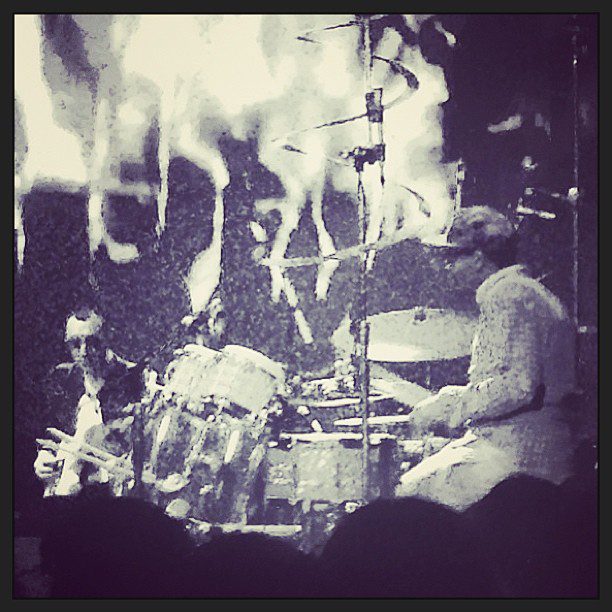
Chris DaveChris Dave has recorded and performed with a slew of chart topping artists, from Beyonce and Adele to Wynton Marsalis and Dianne Reeves.  Far from a chameleon, he brings his own dangerously unique technique to each artist’s sound, and stamps his signature style on a handful of different genres.  He reinvents the musical tropes we’ve come to know with a groundbreaking approach to rhythm, and performs with a tricked out drum set most drummers only dream of.  The Drumhedz gives Dave a chance to show off his revolutionary style and indulge in technically staggering drum solos and experimental song structure.

Chris “Daddy” Dave took stage at Highline Ballroom this Sunday evening by setting down an open bottle of Patron in arm’s reach of his drum kit.  He then addressed the audience to “open your mind, close your eyes and join us on the journey.”  Dave, who stated his hatred for public speaking, only addressed the crowd at the opening and closing of the show, and careened through the set list without waiting for any applause.  In fact, the only true pause he took in the entirety of the show was to affix a Sabian Hoop Crasher on his snare during the middle of a song.  The whole band paused so he could add it, and fans had to smile that Dave’s extreme attention to detail could hold up the whole show.

Band members alternate from show to show, but musical expertise remains a constant.  An occasional surprise guest artist is known to show up as well.   Superstars Beyonce, Mos Def, and others have made unannounced cameos during Drumdhedz shows.  Tonight included the talents of Pino Palladino on bass, Isaiah Sharkey on guitar, and Kebbi Williams on sax and flute.  The members all have long track records with top recording artists and collectively have a few Grammy Awards under their belts.

The drum set Chris Dave plays on could be mistaken for a wizard’s laboratory.   Zildjian Spiral Trash cymbals hang down several feet on either side of him, and his clear Plexiglas suspended floor tom and kick drum give the illusion of a half invisible kit.  It was easy to spot the drummers in the crowd, as a number of them pushed up to stage right side to catch Dave’s every move.  The music of The Drumhedz centers on  Dave’s playing, and the performances showcase mostly original compositions.

When describing the sound of The Drumhedz, Chris Dave emphatically points out his music should not be pinned to one genre. Indeed, the band takes pride from drawing on many influences.  The show opened with a non-traditional cover of John Coltrane’s “Giant Steps” and rounded off with Jimi Hendrix’s “Hey Joe.”  The band also cites inspiration from artists D’Angelo, Fela Kuti, Radiohead, and J Dilla.  The sound is an amalgamation of R&B, funk, rock, jazz, hip-hop and electronica, and the band switches genres at the drop of a hat.  Besides mixing genres, the musicians play with the audience’s perception by overlapping different rhythms on top of one another.  The result is heady, intelligent layering that requires its audience to pay close attention.

Technical flair does overshadow emotional intent, and this imbalance can dampen the mood.  By the encore, my ears were fatigued of hearing such densely packed rhythms and intricate, lengthy solos.  Chris Dave is undoubtedly an impressive, well studied artist, and he specializes in impossible, obtuse rhythms that somehow fit in with the overall picture.  But he over stimulates his audience, and could effectively hold back a few times to pack a punch, rather than playing full out the whole set.  I craved a song that could let us see Chris Dave exercise an ability to withhold for dramatic or emotional effect.

Kebbi Williams played an electronically enhanced saxophone and flute, which allowed him the ability to morph into a gritty, gravely wail, a reverb drenched echo, or into other instruments entirely.  Williams brought soul to the performance, and carried the melody line for much of the show.  As a strikingly tall man rarely to be seen onstage without his signature top hat, Williams was an unforgettable, indispensable part of the band.

Since the 90’s, Chris Dave has been attributed with redefining the role of the drummer.  His highly stylized, well-honed approach has earned him accolades, and scores of drummers cite him as a major influence.  The Drumhedz gives Dave a chance to forge original music that breaks away from the pop mainstream and gives listeners insight into his un-categorizable technique.  This turn away from the mainstream is particularly exciting to hear from an artist so well versed in established music styles.  Chris Dave breaks every mold he’s ever been placed in.

Chris Dave’s Drumhedz Mixtape is now available for free download at http://chris-dave.com/

EXPERIMENTAL REMIX COMPETITION WITH HARVESTWORKS

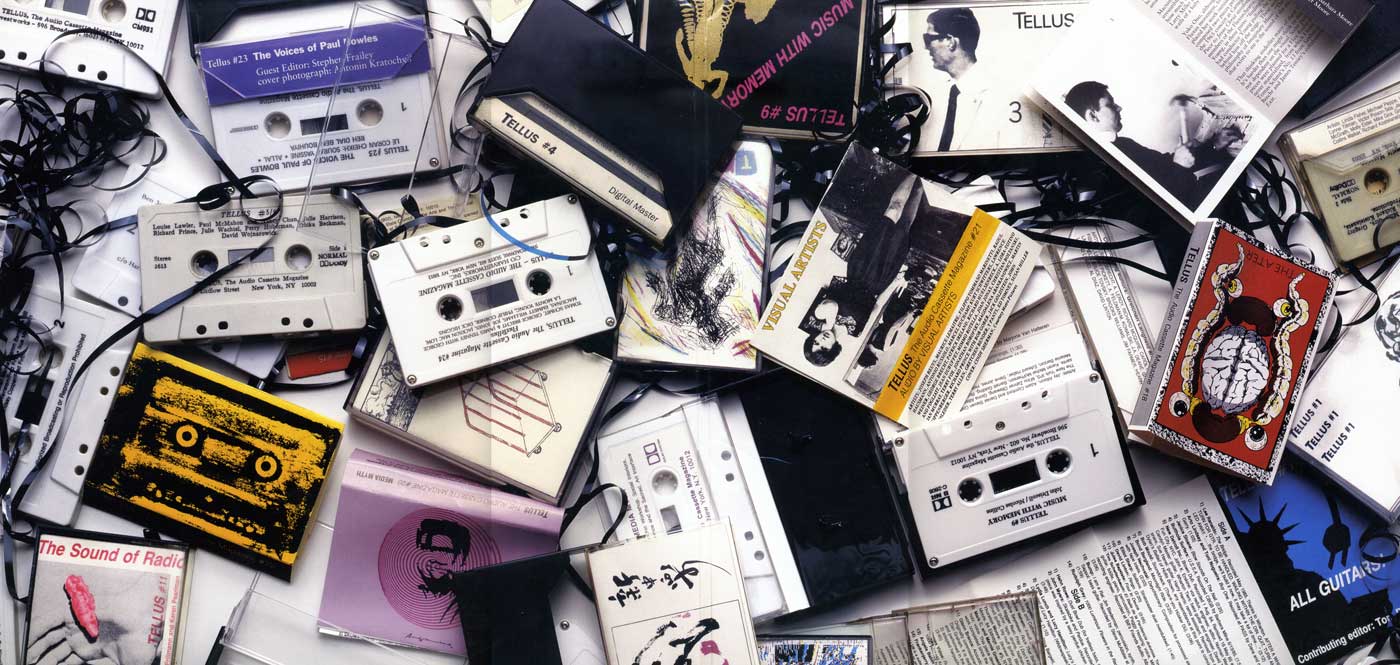
KatOriginally released as a Limited Edition Double Vinyl Set, TELLUS TOOLS, curated by Taketo Shimada, was intended to be used as a tool for DJ’s to create original mixes of a compilation of works by artists including Nicolas Collins, Kiki Smith, Catherine Jauniaux & Iuke Mori, Joe Jones, Alison Knowles, Louise Lawler, Kohondo Style, Ken Montgomery, Christian Marclay, Isaac Jackson and the Bonus Break Artists.  Since the release of this compilation in 2001, the idea of the mix and the methods in which one creates a remix has drastically evolved.  Harvetsworks, a digital media arts center based in New York, is hosting this competition, and seeks to create a dialogue between DJ’s, electronic producers, and experimental artists.

For this exhibition, artists are asked to create an original remix of the tracks provided that utilizes an innovative mixing method. The creations will be submitted to soundcloud.com/groups/harvestworks-tellus-tools-remix-competition/dropbox by April 3rd 2013. Each creation will be posted publicly and reviewed by the Harvestworks Curatorial Panel. The selected creations will be exhibited in Harvestworksʻ Studio C.

SLEEP ∞ OVER x Spectacle Theater

sleepoverOur friends over at Spectacle Theater sure do know how to party.  On April 15th, 2013 they’ll be screening a re-cut 3D version of Robert Weine’s 1924 silent horror classic The Hands of Orlac.  As of that weren’t exciting enough, Austin-based psychedelic electropop producer Stefanie Franciotti, a.k.a. SLEEP ∞ OVER, will perform a live re-score during the screenings.

We love SLEEP ∞ OVER’s ethereal debut LP Forever, released in 2011 by Hippos In Tanks.  She’ll play two sets at Spectacle (one at 8pm and again at 10pm), likely veering into the dreamy ambient territory she’s best known to inhabit.  It’s a unique opportunity to see the artist play a show like no other, so if you’re in Brooklyn we highly recommend it.  View a trailer below.

Spectacle Theater is located at 124 S. 3rd St. (at Bedford Ave.) in Williamsburg.  All shows are $5.  SLEEP ∞ OVER will also open for Memory Tapes at Mercury Lounge on Sunday, April 14th.

DISPOSABLE HANDS RELEASE CACTUS NO. 9 VIDEO + TOUR DATES

Disposable HandsBehold, a beautifully shot, brand new video from one of our favorites here in NYC. Check these guys out as soon as you have the chance to at one of their many shows in the area:


Disposable Hands is an ambient rock band led by writer and singer Charles Pinel, an import from Paris to New York’s West Village, and producer/ keyboardist Sam Raderesht. Their debut EP “The Waiting Room” comes out April 7th. Take a look at their video for the first single “Cactus No.9” also available for download on Bandcamp.


Tour Dates – New York
3.16- Hank’s Saloon w/ Del Water Gap

3.24  Sidewalk Cafe

3.31- Goodbye Blue Monday

4.7 – Pianos w/ Manic Sheep

4.23- Bowery Electric w/ Del Water Gap

4.27- Hanks Saloon

5.10- Parkside Lounge

5.15 Wicked Willy’s

5.23- Trashbar

NEW BIRD COURAGE ALBUM IN THE WORKS

Bird CourageBird Courage, the BK-based indie folk trio recently launched a Kickstarter campaign to fund their debut full-length, Maia Manu. Though they are bona fide  staples on the live music scene here in NYC, they need a bit of TLC to get the last few songs of their new album recorded, mixed and mastered. They are nearly half way to full funding, and have another month left of their campaign. If interested in donating click here.


ARTIST EXCLUSIVE: DATALOG “Everything Is Essential”

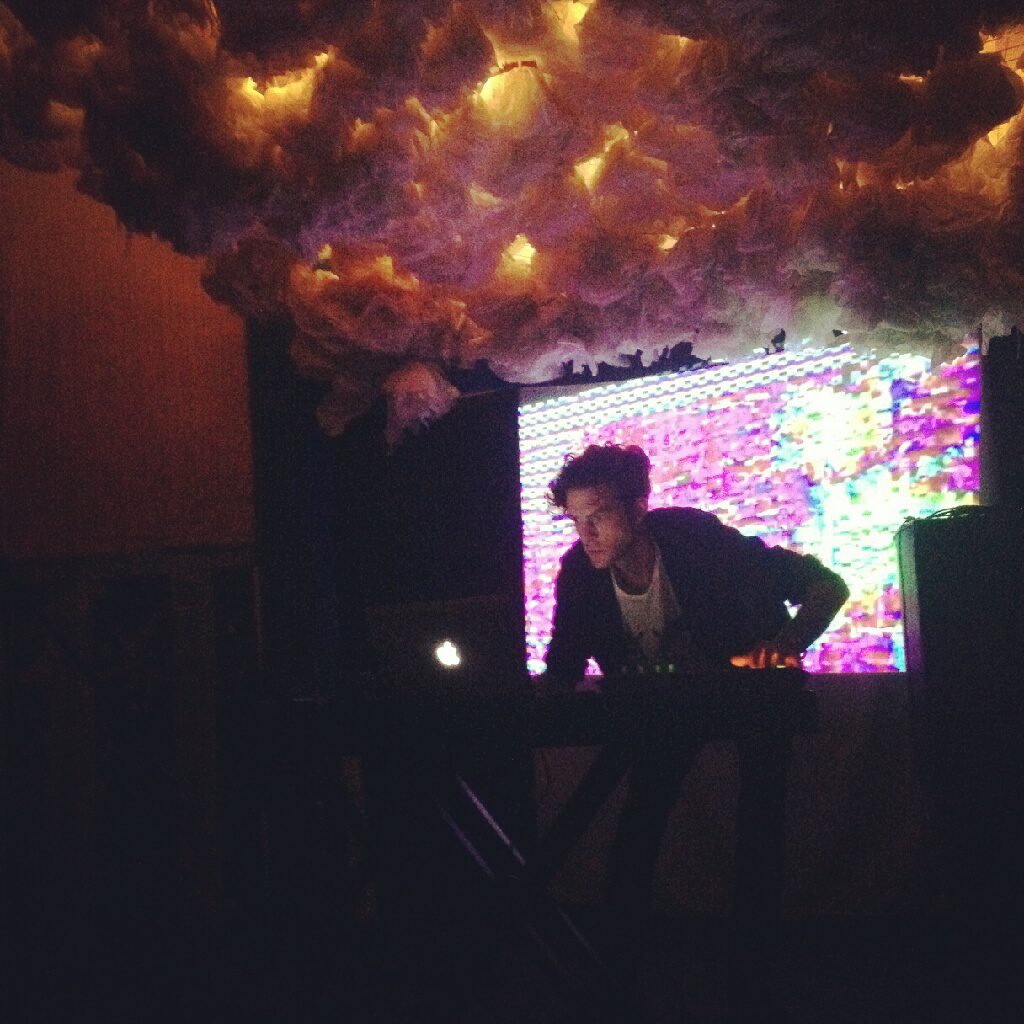
DatalogDATALOG (moniker of Brooklyn-based digital artist Conor Heffernan), is garnering momentum and buzz on the NYC indie electronic circuit for his recent live performances, many of which have included stunningly curated videography that rivals any I’ve seen in quite some time. His body of work is immense, and reflects the inclinations of an artist coming into his own, though he has yet to release a full-length album. The genre that he deals in—namely live electronic music that incorporates visual or performance art—is an increasingly compelling medium for performers and audiences alike, and hence includes its fair share of mediocrity. In fact so much mediocrity that you could say its heyday is up. Or needs to die and be reborn I suppose. From what I’ve seen, DATALOG is at the forefront of that rebirth, and people should be taking notice.

His tracks embody an expansive classical and jazz pedigree, often layering self-composed, complex instrumentals and polyrhythmic beats into thoughtfully arranged digital sequences that are at once ominous, chaotic, soothing and purposefully glitchy; they call to mind early Notwist albums (minus vocals) and expand on the style of Four Tet, Underworld and the like. His older work, including 2011 EP Threads as well as his impressively thorough collection of singles tends toward the more formulaic aspects of deep house, with heavy beats underpinning jazz and funk infused melodic motifs. His newer tracks however, showcase a growing confidence in his own capacities as an artist, and perhaps more importantly underscore Heffernan’s exploration into darker, more untapped genres of electronic music. There seems to be more negative space in his compositions, in which silence is equally as important as noise, and through which tension is cultivated—not by an accelerating BPM, but by the inclusion of ambient noise and languid, extensive, drawn out expository themes which are often based on two or three notes of music. When performed live with video the result is as much dark and gripping, as it is accessible and visually gratifying.

AudioFemme was lucky enough to get its hands on an exclusive from him. “Everything Is Essential”, a brand new track from Heffernan, seems to signpost a new era in his creative life. It displays in equal measure his prodigious rhythmic abilities and eye for detail as well as his desire to edit and restrain his compositions to create a more sculpted and deliberate sonic narrative.  The first minute or so is quiet for the most part, and plays entirely on three notes of a major scale. Then come just enough hints of bass to keep one guessing whether it might just be a dance track. When the beat finally cuts through, it amps up and resolves this quandary simultaneously. Frantic, like the pulse of an animal in flight, it hovers over the melody for a few minutes until the composition as a whole begins to dissolve into artfully conceived progressive house/trance. By the time it wraps up, right where it started with only a three-note melody, one is left breathless: a rare feat even for those artists who inhabit the upper echelons of electronic music. DATALOG is clearly just getting started.

Listen to “Everything Is Essential” here.

Everything Is Essential


INTERVIEW: Prince Rupert’s Drops

There are plenty of bands playing shows these days that borrow heavily from the sounds of decades past, but no one merges garage, psych, and Americana so profoundly as Brooklyn’s own Prince Rupert’s Drops, who also manage to update these sounds just enough for their work to sound wholly new.  The band released their debut LP, Run Slow, on Beyond Beyond is Beyond Records last November.  It was the first release for the new label, run by East Village Radio’s Mike Newman, and hits all the reference points of a record store clerk’s dreams.

Guitarists Leslie Stein, Bruno Meyrick-Jones, and bassist Chad Laird share vocal duties, sometimes harmonizing and sometimes taking turns track for track.  Each member of the band, rounded out by drummer Steve McGuirl and Kirsten Nordine’s synths, bring unique elements to every track, and those tracks in turn take on varied personalities. Leslie’s stoney twang, for instance, lends folksy vibes to tracks like “Lungs”, “The Fortress” and “Like A Knife”, but a few heavy doses of reverb later and you’ve got a raucous, tumbling psych jam like “Pillar to Post”.  “Almond Man” has a bit of a groovier feel, but stays alert and snappy with energetic “hey heys” and touches of sitar.  No one song follows any formula, from the churning and lysergic “Plague Ride” with its spiraling guitar work, to the scorched haze of “This Evening’s Arms”, giving the album great depth and a texture.  Each instrument gets its moment as the tracks unfold, every note imbued with a singular quality, and it never wears thin, even when tracks like album closer “Run Slow” extending over nine minutes.
PRDimg

There are very few bands who can pull sounds like this together, but Prince Rupert’s Drops do it with aplomb both on the album and in a live setting.  We’ve been bowled over every time we’ve had the pleasure to see them perform, and were pretty, well… psyched when they agreed to do an interview with us.  Their words give us insight as to how the band came together to make the kind of magic we hear all over Run Slow.

AF: Leslie and Bruno, you met while working together at Kim’s Records in NYC.  Was there an immediate connection or collaborative spark?

Leslie: I think most people have an immediate connection to Bruno, he’s a popular guy! We were fast friends and spent a lot of time hanging out. He needed a place to live at the same time I needed a roommate so he moved in. After that we would spent many nights in collaborating on drawings and making odd little songs just for fun.

AF: Can you talk about Brad Truax and the role he had in helping to form the band?

Bruno: Brad was really the one who made it a proper band- previously, Leslie & I had played music together a fair bit & made up weird songs with her acoustic guitar and small keyboards, but nothing structured or that was ever played twice. Brad & I had played in the Broke Revue together, as had Steve briefly, and this was also an opportunity to continue playing music with them. He also kindly gave me a guitar on my birthday around then, which has been very helpful. I very much doubt we’d have got our act together had it not been for him.

[fusion_builder_container hundred_percent=”yes” overflow=”visible”][fusion_builder_row][fusion_builder_column type=”1_1″ background_position=”left top” background_color=”” border_size=”” border_color=”” border_style=”solid” spacing=”yes” background_image=”” background_repeat=”no-repeat” padding=”” margin_top=”0px” margin_bottom=”0px” class=”” id=”” animation_type=”” animation_speed=”0.3″ animation_direction=”left” hide_on_mobile=”no” center_content=”no” min_height=”none”][bandcamp track=1306247888 bgcol=FFFFFF linkcol=4285BB size=venti]


AF: Not many people realize that Prince Rupert’s Drops formed in 2005.  That’s an incredibly long gestation for a band these days.  Was that timing part of a conscious effort to develop a distinct sound and working relationship?

Steve: It wasn’t a conscious effort. We just kept doing it (except for about a year off), having a good time, playing shows (some good, some bad), and just followed the path the band took, curious as to where it would go. The sound has changed a bit over time, but our earliest stuff is still recognizably ours. Leslie once described us years ago as “the least ambitious band in the world!” We didn’t even consider having a Facebook page until late last year. That’s all changed, and now we want a #1 record. Anyway, by playing together for a while, hopefully a distinctive sound has emerged, and we know each other pretty well. Our working relationship is, for the most part, really solid, really relaxed. We are all good friends, which helps.

Leslie: I think we’ve always been ambitious musically… Bruno writes these complicated songs that threaten to implode at any moment, I always try and sing better than I can. In a way we write above the level of our talents.

AF: How was taking that time valuable in launching the band? Is the record’s title a nod to that?

Steve: No, the record title is just taken from the longest song on the LP. Somehow, that made sense—it sounded like a good record title.

Bruno: It’s probably helped us to solidify our sound a bit- the songs are a lot longer these days too, mainly to accommodate all the soloing that wasn’t there at first.

AF: All of you have played in other bands.  How do you approach collective songwriting?

Steve: We all write songs, but the vast majority are by Leslie & Bruno. Some come in practically finished, some take a lot of working with ‘til they sound right played by this band.

Leslie: I used to write parts for the guys for my songs until I wised up and realized they are all better musicians than me. Now I just come in with two or three parts and they help me shape the songs. Bruno’s really good at writing these awesome little leads that accentuate the way I sing, Steve and Chad are really the ones that are good at structuring songs. When Chad writes songs he generally thinks about the strengths of each member and writes around that.

[bandcamp track=3421341535 bgcol=FFFFFF linkcol=4285BB size=venti]


AF: How did you meet Mike Newman at EVR?  Did you feel any pressure putting out the first release on his Beyond Beyond Is Beyond label?

Steve: We met Mike through our mutual pal, Chris Milstein (he plays drums in Psychic Ills and is a longtime friend), who recommended us to BBIB. Mike and his partner Dom saw us live at 285 Kent, and asked for some recordings. They then got us really drunk, outlined a complex, air-tight, 20-point plan for world domination by October 2013, and put a contract under our noses and a pen in our hands. We signed it.

Mike puts a lot of pressure on us—he’s pretty ruthless. He’s a Record Man of the old school, like Syd Nathan or Morris Levy. There are always these hired goons lurking over his shoulders during meetings in his office, giving us the evil eye.

AF: At a time when more artists are bringing electronic elements into their production and stage show, you’ve remained true to a more traditional approach.  Do you think that’s given you an advantage or changed the sort of audiences you attract?

Leslie: We’ve never really considered adding any electronic elements. I’m personally not opposed to it, good music is good music and it can be made any which way, but we already have a lot going on with five members, so I think we are sonically set for now.

AF: You have a great reputation as a live act.  What’s the best thing about playing live?

Steve: Thanks! I guess seeing friends and strangers both having a good time, looking up and seeing folks nodding along trance-like. That’s all pretty nice, but drink tickets rule! But most venues are so stingy with them these days it’s horrible.

Bruno: I’d say the best thing about playing live, aside from seeing other bands for free, is just the playing itself- if it goes well. It’s obviously good to be in the same room as the audience, though, since you can have some idea of how the songs are being received, and can then hopefully act accordingly.

AF: Do you have favorite venue to play here in Brooklyn (or beyond)?  You’ve shared a bill with lots of great acts, especially of late – who would you love to play with next?

Steve: Playing parties at Wild Kingdom is always great. We played Bowery Ballroom recently, and that dee-luxe stage was a nice change of pace from the usual DIY dumps. The act I vote for is ZZ Top!

Leslie: I like playing the Cakeshop because we had our first show there and to me it feels like home. I want to open for Tame Impala, I love them.

[bandcamp track=3971824008 bgcol=FFFFFF linkcol=4285BB size=venti]


AF: Any plans for a tour?

Steve: We hope/plan to, but lately day jobs keep conspiring against us. If you’re reading this, and are in a popular band looking for an opening act on an American tour this summer, let us know!

AF: What’s next for the band?  Will it take another seven years for a sophomore release or are you already working on new material?

Steve: We are always working on new material, and have tons of old stuff that isn’t on “Run Slow.” Our next release should be a boxed set.

Leslie: Yeah, I was talking to Mike about this recently and he was maybe thinking next year for another release which would be great and totally feasible.

AF: I also wanted to mention Leslie’s brilliant comics project, Eye of The Majestic Creature!  Do your instruments talk to you?  Will you write a comic about your experience in PRD or will the band make an appearance in your graphic work?

Leslie: They just talk to me in my comics, I am quite sane! Actually Bruno, Steve, and Kirsten are already characters in my comic, but the band hasn’t shown up as a whole yet. It’d be fun to do an issue where my imaginary instruments have to deal with real instruments. I bet the band stuff would mostly be boring stuff like us going out to eat after practice and naming movies that have baby bandits in them and talking about making a Ray Milland looped tape to play behind us at shows. Y’know, all the obvious stuff.

[bandcamp track=67888118 bgcol=FFFFFF linkcol=4285BB size=venti]


Prince Rupert’s Drops plays Union Pool on Thursday, March 28th.

[/fusion_builder_column][/fusion_builder_row][/fusion_builder_container]

Highlights from Austin: SXSW 2013

[fusion_builder_container hundred_percent=”yes” overflow=”visible”][fusion_builder_row][fusion_builder_column type=”1_1″ background_position=”left top” background_color=”” border_size=”” border_color=”” border_style=”solid” spacing=”yes” background_image=”” background_repeat=”no-repeat” padding=”” margin_top=”0px” margin_bottom=”0px” class=”” id=”” animation_type=”” animation_speed=”0.3″ animation_direction=”left” hide_on_mobile=”no” center_content=”no” min_height=”none”]

Hello, Austin.

The whirlwind is over for another year.  South by Southwest, Austin’s prolific music festival, drew to a close this past weekend after an onslaught of performances by close to a thousand acts from all over the globe.  AudioFemme was on-hand to witness the spectacle and to attempt to cover as many of these performances as is humanly possible.  For us, SXSW represents a chance to catch bands on the rise, to see what they bring to an audience in a live setting, and to chat with them as well as with others in the industry.  For those who live, breathe, and love music, there’s nowhere else to be come mid-March.

[/fusion_builder_column][fusion_builder_column type=”1_1″ background_position=”left top” background_color=”” border_size=”” border_color=”” border_style=”solid” spacing=”yes” background_image=”” background_repeat=”no-repeat” padding=”” margin_top=”0px” margin_bottom=”0px” class=”” id=”” animation_type=”” animation_speed=”0.3″ animation_direction=”left” hide_on_mobile=”no” center_content=”no” min_height=”none”]

AudioFemmes on the loose!


But when Zachary Cole Smith, lead singer of Brooklyn band DIIV, drafted a disgruntled tumblr post early in the week about corporate greed running rampant at SXSW, I couldn’t simply dismiss it with a roll of the eyes.  SXSW is a thing that exists largely due to corporate sponsorship, as is made evident by the towering Doritos advertisements, free booze, and brand names attached to most any showcase.  These are all brands that are geared toward a young, music-loving demographic, from Doc Martens to Dolce Vita, from Spotify to Hipstamatic, from Taco Bell to Tito’s Vodka.  There’s no better place to sell wares to a generation that can’t focus on anything for longer than five minutes than to drop a banner behind a stage where Macklemore and Ryan Lewis are jumping around.  And there’s no better way to keep the ads coming, straight to the email inboxes of that hip demographic, than to make everyone RSVP to corporate-sponsored events.

So when Smith denounced SXSW as a “glorified corporate networking party” he wasn’t incorrect.  Diiv has never been afraid of name-dropping, dating models, or posing for fashion photographers, and later admitted to having a blast at SXSW despite the cynical outburst.  Though the post made some waves, there wasn’t a single person who disagreed wholly with the statements therein; if anything, a resounding “DUH” was heard throughout the festival.  And we partied anyway.

Avoiding the corporate goons, as it turns out, isn’t all that hard.  We recommend taking off the badge and trekking (or pedi-cabbing) over to Austin’s Eastside, where entrance to free shows – night and day – don’t require so much as proof of drinking age.  There, the quality of local artisan food trucks is leagues above lukewarm free tacos, and girls sell vintage clothes to help save their dying pit bulls.  It was home to some of the most inspiring performances I had the pleasure of seeing at SXSW this year, including a rambunctious 45-minute set from Thee Oh Sees, Impose Magazine’s expertly curated showcases, and several raucous Burger Records’ shindigs to name a few.

[/fusion_builder_column][fusion_builder_column type=”1_1″ background_position=”left top” background_color=”” border_size=”” border_color=”” border_style=”solid” spacing=”yes” background_image=”” background_repeat=”no-repeat” padding=”” margin_top=”0px” margin_bottom=”0px” class=”” id=”” animation_type=”” animation_speed=”0.3″ animation_direction=”left” hide_on_mobile=”no” center_content=”no” min_height=”none”][jwplayer config=”AF01 YT” mediaid=”2419″]Thee Oh Sees “Contraption/Soul Desert”

Burger Records represents a paradigm in stark contrast to Smith’s blithe assertion that “music comes last” at SXSW.  Label founders Sean Bohrman and Lee Rickard have spent the last six years putting out limited run cassettes and vinyl to an adoring audience, breaking artists like King Tuff and Ty Segall. If you want to know what’s next in terms of noise punk or kitschy garage or lo-fi pop, you could do much worse than to spend a few hours perusing Burger’s catalogue.  At SXSW, Bohrman and Rickard made it extra easy, throwing two large showcases and several satellite parties (including one at Trailer Space Records that had to be shut down by the fire department), giving the sunburned masses at SXSW a rare opportunity to absorb as much Burger in one sitting as their damaged ear drums and short attention spans could allow.  Frenzied sets by Audacity, Nobunny, Lovely Bad Things, Useless Eaters and Gap Dream – among many, many others – proved that there’s a lot of diversity and innovation within Burger’s staple sounds, and much to get excited about.

[jwplayer config=”AF01 YT” mediaid=”2420″]Lovely Bad Things

If there’s anyone more genuinely stoked about repping their local scene than Californians it’s probably Canadians.  I finally got to see Young Galaxy perform during Pop Montreal’s day party at The Liberty and my high expectations were met in every way.  This is a band who make songs about loving music wholeheartedly; on the b-side for the lead single from Young Galaxy’s newest album, Ultramarine (out April 23rd on Paper Bag Records) lead vocalist Catherine McCandless sings “I wouldn’t mind dying at all / If it weren’t for the songs I’d miss”.  Though they didn’t play it during the six song set at The Liberty, they closed out with newest single “New Summer”, an anthem to warm-weather flings and driving in cars with the “windows down and the stereo loud”.  Most poignant of all was the band’s affirming rendition of “Pretty Boy” (also on the forthcoming record).  Maybe it’s the fact that the band’s drummer is out as a lesbian, that I have friends struggling with gender identity, or the current political climate toward trans and gender queer folks, but it felt huge to hear McCandless singing “I felt your pain when you changed your name / We were each other’s only family” and then follow that up with “I know you feel isolated / and I hear what you won’t say / Who cares if they disbelieve us, don’t understand / You’re my pretty boy, always”.  That’s some pretty heavy shit to mask with upbeat synths and pop rhythms, but that’s Young Galaxy’s bread and butter.  Tackling those epic sorts of feelings and making people dance to it is what they do best.  And after playing six shows in four days, those emotions still felt authentic.

[jwplayer config=”AF01 YT” mediaid=”2411″]Young Galaxy “New Summer”

Playing zillions of shows in one week has got to be taxing, which probably contributes to the jaded attitudes that some bands have in their approach to SXSW, but there are just as many artists who embrace it.  Captured Tracks wunderkind Mac DeMarco (also from Canada, go figure) claims to have played seventeen shows over the course of the week and that probably wasn’t an exaggeration; his name popped up on more bills than any other.  I caught his last set on Saturday night at The Parish, where he started the evening by watching labelmates Naomi Punk from the side of the stage.  He mentioned several times that he was getting sick, but that didn’t stop him from delivering an energetic performance.  While he wasn’t swinging from the rafters as he had literally done at some shows a few days prior and didn’t put up much of a fight when then sound guy told him he was out of time, he retained the air of bratty whimsy for which he’s known as he mashed up favorites “Freaking Out The Neighborhood” “My Kind Of Woman” and “Rock and Roll Night Club” with the Beatles’ “Blackbird” and Rammstein’s “Du Hast” (no, really).

[jwplayer config=”AF01 YT” mediaid=”2416″]Mac DeMarco “Du Hast/Freaking Out The Neighborhood”

Zac Pennington from Parenthetical Girls is yet another performer who proves that attitude and persona are everything.  Before his band’s set, he got into a bitchy spat with Valhalla’s sound man.  During the set, he paraded around an audience mostly filled with bros in attendance to see Maserati, draping himself over staircases and belting it out from the top of the circular bar like a cabaret version of Coyote Ugly.  Similar bravado appeared elsewhere as well – Mykki Blanco’s ferocious party jams transformed the mermaid grotto behind Easy Tiger into vogue-fest, followed by Angel Haze’s provocative mile-a-minute raps.  During “New York” Angel Haze descended from the stage, moving through an awed audience, and danced with yours truly while Edinburgh-based rappers Young Fathers looked on.  Young Fathers brought slick production, badass style, and sick dance moves to their SXSW performances, and was the one act that hands-down truly blew me away this year when I saw them Tuesday night at The North Door (look for an interview on AudioFemme soon).

[jwplayer config=”AF01 YT” mediaid=”2413″] Parenthetical Girls “Curtains” [jwplayer config=”AF01 YT” mediaid=”2417″] Mykki Blanco

Not that there wasn’t plenty to be blown away by.  Waiting in line to see Phosphorescent, Metz and Youth Lagoon at Red-Eyed Fly, I ran into Ahmed Gallab, better known these days as Sinkane.  Ahmed and I go way back, having known each other from our years in Ohio where we met over a decade ago.  I’ve seen every band he’s ever played in, from the Unwound-esque Sweetheart to Pompeii This Morning (in which he played bedroom-produced dream pop before that was even a thing) and then, after he was asked to stand in for Caribou’s drummer through two tours, in Of Montreal and Yeasayer.  His Sinkane project is different in that it is wholly his endeavor, and his personal signature is always apparent.  He uniquely marries funk and psychedelica and Afrobeat and through consistently stellar live performances is finally starting to get the attention he deserves – even, it seems, from R&B megastar Usher.  Usher invited Ahmed on stage and performed Sinkane’s “Runnin'” to a packed Fader Fort, with Afghan Whigs as the backing band.  Watching this from backstage was one of my favorite moments of SXSW, not just because Ahmed got to play with such heavyweights but because they were singing his song.  And it could only have happened at SXSW, in part because of the corporate sponsorship Diiv railed against.  The fact of the matter is that bigwigs bring in big acts, allowing smaller bands who are trying to make it big the opportunity to meet those that inspired them and, dare I say it, connect, network, and collaborate.

That goes, too, for folks like myself who might easily be lumped into the “industry vampire” designation Zachary Cole Smith’s tumblr post pointed out.  Not only do I get to spend a week basking in the sun (or, you know, burning to a crisp) and drinking free bourbon that tastes like maple-syrup infused cake frosting, it’s an opportunity for me to meet other people who actually really do care about music, to trade notes, recommend bands, invade pedestrian bridges at 2am because Merchandise is playing a show on one.  Sure, it’s disappointing when bands have technical difficulties due to the strain of quick set-ups or shortened sets thanks to lightning-fast turn over, but just as often it’s inspiring to see a band make it work despite those constraints.  It’s also exhilarating to walk down a bustling street and actually hear music coming out of every bar, flowing together, washing over the crowd.  With any huge event like this, there are bound to be positives and negatives.  It would be nice if all this was just a random grouping of DIY efforts and corporations didn’t have any hand in it, but that’s not the case.  Even so, it manages to fulfill many of my music-loving fantasies, and that’s what keeps me going back over and over again.

[jwplayer config=”AF01 YT” mediaid=”2421″]SXSW Vine Compilation. In order of appearance: Avan Lava, Young Fathers, Nicholas Jaar, Radiation City, The Coathangers, Colleen Green, Psychic Twin, Parenthetical Girls, The Soft Moon, Marnie Stern, Palma Violets, Destruction Unit, a breif tour of 6th St., Bleeding Rainbow, Thee Oh Sees, Mykki Blanco, Angel Haze, Bridge Party feat. Merchandise/Parquet Courts, Metz, T.I. / Pharrell / B.O.B. etc., Sinkane / Usher / Afghan Whigs, Usher encore, Young Galaxy, Sam Flax, Lovely Bad Things, Audacity, Nobunny, Chris Cohen, Mac DeMarco, Conner Youngblood, Brooke Candy, and a night ride in a pedi-cab.[/fusion_builder_column][/fusion_builder_row][/fusion_builder_container]

LIVE REVIEW: Chvrches @ Mercury Lounge 3-18-13

Imagine being an unassuming electropop band from Scotland.  You get together with your mates and nonchalantly make a few tracks, posting them on soundcloud because it seems to go well.  But then the Guardian notices.  BBC notices.  Pitchfork notices.  Sirius XMU starts playing your songs, to your delight and surprise.  On the strength of that, you book your first brief US tour, playing a handful of shows in Austin, which SXSW-goers rave about, and then head for New York to play a show that sold out so quickly more were immediately booked.  Those shows also sell out, almost instantly.  You make radio appearances.  You’re featured on every other music blog or blogging outlet.  Your first EP has yet to see release but Glassnote can barely put it out fast enough and the truth is, you have a whole album’s worth of smash-hit material for which your newfound fans are absolutely rabid.

[fusion_builder_container hundred_percent=”yes” overflow=”visible”][fusion_builder_row][fusion_builder_column type=”1_1″ background_position=”left top” background_color=”” border_size=”” border_color=”” border_style=”solid” spacing=”yes” background_image=”” background_repeat=”no-repeat” padding=”” margin_top=”0px” margin_bottom=”0px” class=”” id=”” animation_type=”” animation_speed=”0.3″ animation_direction=”left” hide_on_mobile=”no” center_content=”no” min_height=”none”]

Chvrches at Mercury Lounge Monday night.

All of this is not so hard to imagine for Lauren Mayberry, Iain Cook, and Martin Doherty of Chvrches.  The band has done everything right, remaining humble in interviews and onstage when it would be easy to gloat about their “overnight” success.  The reality is that each musician has put in considerable time playing with other bands (the most successful of which being Doherty’s stint as touring keyboardist with The Twilight Sad), and although Chvrches as a project hasn’t been that long in the making, they’ve tapped into something worthy of all the buzz.  Most importantly, they’re not shy about working hard, willing to headline twice a night at Mercury Lounge and then play a show at 285 Kent the next day.  Rather than complain, they seem grateful for the opportunity, incredulous that anyone has noticed let alone given a damn.

But take a listen to “Lies” or “The Mother We Share” or newest cut “Recover” and it’s easy to hear why everyone’s losing it over Chvrches: glossy production, shimmering synths, dance-ready beats with sometimes whimsical flourishes, and aggressively sweet vocals that bounce along casually but deliver more weighty lyrical content than such glistening pop usually provides.  Oftentimes, those lyrics focus on the emotional rift between two people and the sadness therein, but there’s always a suggestion of hope that things can be repaired.  Bright percussion, playful loops, and keys alternating between airy and surging only help to emphasize that mission statement.

[/fusion_builder_column][fusion_builder_column type=”1_1″ background_position=”left top” background_color=”” border_size=”” border_color=”” border_style=”solid” spacing=”yes” background_image=”” background_repeat=”no-repeat” padding=”” margin_top=”0px” margin_bottom=”0px” class=”” id=”” animation_type=”” animation_speed=”0.3″ animation_direction=”left” hide_on_mobile=”no” center_content=”no” min_height=”none”]

Mayberry and Cook doin’ the thing.

In a live setting, these elements are amplified tenfold, and the band as a whole has charisma that somehow manages to go beyond Mayberry’s apt persona as front woman.  She is tiny and adorable and chicly stylish – sometimes wearing extravagant makeup but otherwise keeping it simple – but it seems dismissive to admit these things when you consider that she’s a brilliant pop songwriter, has a law degree and a master in journalism, and helps run the feminist collective TYCI.  At the late Mercury Lounge show, she sipped tea and invited the audience to pretend it was a “huge beer” and in the next breath voiced concern that someone might put something in it, with the ominous warning “roofies are real”.  She also expressed disgust over Michelle Shocked’s recent gay-bashing outburst, and befuddlement as to why there is peanut butter in everything the band has eaten stateside.  Her intelligence and wit, and how those threads appear in Chvrches’ songs are what make her truly captivating.

At the same time, Cook and Doherty demand equal focus, providing back-up vocals on several tracks.  Cook shifts impressively between guitar-weilding and manning the fortress of synths that surround him, while Doherty lays down drum-machine beats that he himself can’t help but dance to.  During the band’s second-to-last song, an unreleased track called “Tide”, Doherty and Mayberry switched rolls, Doherty taking front-and-center with his own yearning vocals.  It was a nice shift that left me longing for the band to do a track where the two alternate from verse-to-verse.  There are just so many places for this band to take their sound, all of them promising, that it’s impossible not to be excited by the prospect of a proper LP.

Chvrches haven’t been around long but their set proves they’re more than ready for a full-length release.  They covered Prince during the encore but the rest of the set was heavy with original pop masterpieces, any glittering gem of which could be single material.  I particularly liked “If We Sink”, the refrain promising “I’ll be on your side ’til you die / I’ll be on your side for all time”, the rhythms kinetic and the energy reminiscent of M83 (and yes, of The Knife’s early work, oft cited in direct comparison).

Immediately after the show ended, I wanted more.  I wanted to put on headphones and spend my train ride home listening again and again to songs that haven’t yet seen the light of day (unless you count the outside stages of SXSW, but I’m not speaking so literally here).  I saw my whole summer unfold and in it, I was dancing to Chvrches, unable to get enough.  If the sold-out crowds and legions of fans waiting patiently for Chvrches to make their next move are an indication, Chvrches will humbly provide for our cravings and I won’t be dancing alone.

[/fusion_builder_column][fusion_builder_column type=”1_1″ background_position=”left top” background_color=”” border_size=”” border_color=”” border_style=”solid” spacing=”yes” background_image=”” background_repeat=”no-repeat” padding=”” margin_top=”0px” margin_bottom=”0px” class=”” id=”” animation_type=”” animation_speed=”0.3″ animation_direction=”left” hide_on_mobile=”no” center_content=”no” min_height=”none”][jwplayer config=”AF01 YT” mediaid=”2353″][/fusion_builder_column][/fusion_builder_row][/fusion_builder_container]
SHOW REVIEW: Bosnian Rainbows @ Highline Ballroom

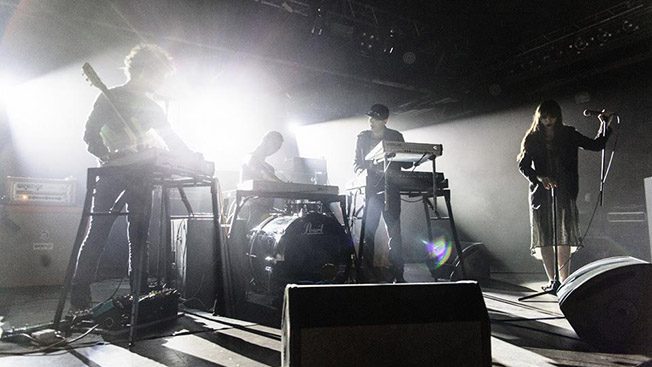
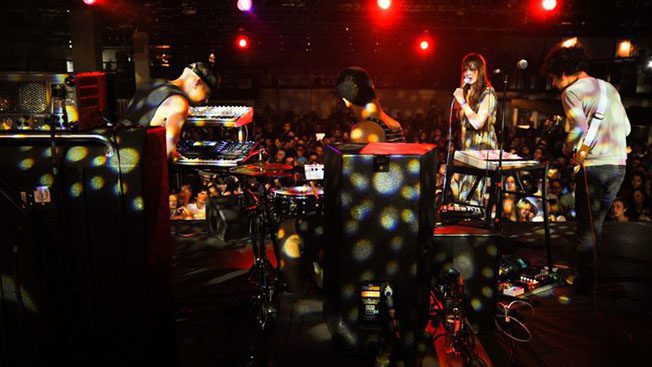
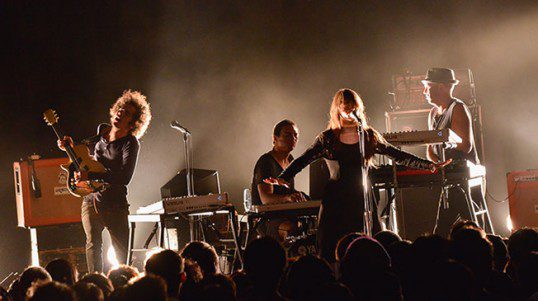
Bosnian-Rainbows-3_652x367Longstanding The Mars Volta fans packed into Highline Ballroom this February 19th in anticipation of guitarist Omar Rodríguez-López‘s new music project.  The performance marked the band’s fifth show under the Bosnian Rainbows billing.  Rodríguez-López surprised fans throughout the night with his embrace of new ideas and fresh performance approach.  The night’s first twist was the presence of an opening band, which Rodríguez-López is usually known to forgo.

Opening band Marriages is most accurately described as mood-rock.  Singer Emma Ruth Rundle’s haunting, smoldering vocals are lulling yet carry weight. Her voice floats amidst power driven drum beats and an undertow of guitar slides, pitch bends, and rock guitar distortion.  The band is comprised of Greg Burns, Andrew Clinco, and Emma Ruth Rundle, who previously performed together in the post-rock collective Red Sparowes.  The group signed to Sargent House label in 2011 and released the album Kitsune in May 2012.

Marriages sound is uptempo yet darkly crafted and slightly unhinged.  The band is subdued in comparison to the following act, yet embodies similar emotional content.  The overall structure of the songs did not vary greatly, and I would have loved to hear the musicians step out into more experimental or unconventional instrumentation and delivery.  “Ten Tiny Fingers” was a stand out song in the set, with catchy guitar riffs and stark, punchy lyrics.  Other times the guitar effects create a wash of sound that carries over from song to song, and leaves less room for contrast.  At times the music delves into a sort of hypnotizing soundscape that results in some beautifully vulnerable moments.  Marriages has a strong sense of identity that will continue  to carry the music into deep, richly mood-driven territory.

Bosnian Rainbows is the new incarnation of Omar Rodríguez-López’s music project following the break up of his band The Mars Volta. The group consists of former TMV member Deantoni Parks on drums and keyboard, along with new members Nicci Kasper on keyboards and Teri Gender Bender on vocals.  Bosnian Rainbows holds on to Rodríguez-López’s past musical influences, but performs shorter, more stripped down songs with hooks and refrains geared more towards mainstream radio play.

Rodríguez-López considers Bosnian Rainbows to be a break away from the pattern in which he’s approached music over the last ten years.  In a 2012 interview with Australian Musician magazine, he states  “My first hurdle that I need to jump over is collaborating with my own band members, because for the last ten years it hasn’t been that way.”  Rodríguez-López goes on to say he’s held the reins as “dictator” of The Mars Volta, and he now seeks to harness the spirit of collaboration in his music writing process.  Bosnian Rainbows is the result of this new creative freedom.

Bosnian-Rainbows-2_652x367

Hardcore TMV fans may be inclined to size Teri Gender Bender up before hearing and seeing her, and I admit I found it hard to imagine another lead singer taking the place of larger than life Cedric Bixler-Zavala.  Cedric’s distinct vocal contributions to The Mars Volta branded the music with raw emotional intensity, and a tortured, pressurized narrative.  Listeners can undeniably pick his voice out in mere seconds.  Yet when Teri Gender Bender took the stage at Highline Ballroom, I was won over by her wildly expressive voice and dangerous abandon, all within the course of the opening song.

Teri’s performance is exhilarating to watch as she becomes so absorbed in the music that at times she looks as though she’s forgotten the limitations of her own body.  She dances as though possessed by the music.  She throws herself out into the crowd without a moments notice. At one point she became so worked up that she punched herself in the throat while singing.  People in the crowd glanced at each other in shock and awe at witnessing such “rock n’ roll” conviction.  She’s a powerhouse.  Previously the lead singer in the punk rock duo Le Butcherettes, she is no stranger to the stage. Her vocals employ frankness and strength, and a beautiful depth of vulnerability, anger and theatricality.  She shines on songs “Torn Maps” and “Turtle Neck”, which give her more of a pop format to follow, and she is versatile enough to transition into effect heavy songs that wind on in Rodríguez-López’s expansive tradition.

The most thrilling aspect of Bosnian Rainbows’ performance is the excitement and passion these seasoned musicians imbue into their performance. The signature guitar stylings of Rodríguez-López were ever present, yet the songs had fresh influences contributed by Parks, Casper, and Teri.  Each band member has a dynamic personality that brings character to the performance, but audience members will find it hard to take their eyes off Teri Gender Bender.  She exudes endless energy throughout the  the show, and steals the spotlight with her intense conviction to the music.

Bosnian-Rainbows-1_652x367-538x301

This new project seems destined to make a mark in the commercial world, as well as among TMV’s mainstream-defying, dedicated fans.  It’s too early to tell if Bosnian Rainbows will be the first in a series of Rodríguez-López collaborations, or if the band will solidify and compete with TMV’s long track record.  Either way, Bosnian Rainbows embodies the rawness and excitement of an underground show, and the musicianship of seasoned performers.  The combination is a promise of many more surprises to come.

SEX.SOUND.SILENCE ACCEPTING EDM SUBMISSIONS

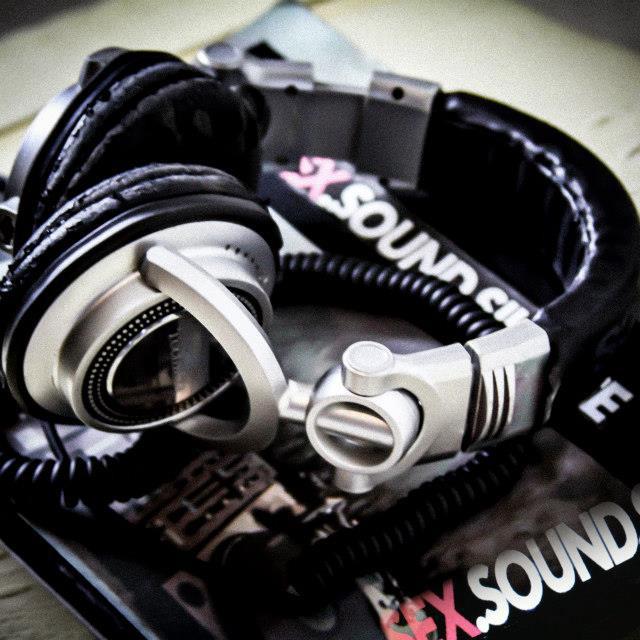
headphones sss

For all you aspiring electronic music makers, this should peak your interest. Sex.Sound.Silence is a film, yet unmade, about female DJs endeavoring to break the glass ceiling in the electronic music industry. The producers are in the throws of an indiegogo campaign to generate funding to complete the project, however in the meantime are accepting submissions from EDM artists who would like their work to be featured. If picked, their song will be used in the film (the producers may potentially ask for more music). The judges are those who have contributed to the campaign, and the winning song will be picked based on votes. No fee to enter, so hurry up and do it!

Check out the link here.

PICKATHON 2013 ANNOUNCES LINEUP

getvidpictureHappening Friday, August 2nd – Sunday, August 4th at Pendarvis Farm in Happy Valley, Oregon! What started out as a “picnic party” with less then 100 people has turned into a national festival, and us Femmes want in on the action.
Pickathon prides themselves on being unique and off-kilter, from their lineup (Divine Fits, Shabazz Palaces, Felice Brothers and Sharon Von Etten to name a few) to their six insane performance stages. The festival is also recommending festival goers bring their own plates, silverware, and beverage containers they’ll wash themselves using a custom-built industrial dishwasher.

Did we mention each band plays TWICE??

KRAFTWERK TO HEADLINE T IN THE PARK

up-kraftwerkLGKraftwerk, the (still even today) avant garde, post-industrial quartet from Germany, whose influence on electronic music has gone unrivaled over the decades, announced it will be headlining Scotland’s T in the Park festival this coming summer. The band is currently holding court at the Tate Modern, following a residency at MOMA, the tickets for which were being traded on the black market for kidneys and such, if I remember correctly. All to say: It will be a good show. Puh-leez go if you’re anywhere remotely near the UK.

ALBUM REVIEW: Chords of Truth Remixed Project

avatars-000026884949-yu9mzw-crop

Singer/songwriter Jason Garriotte released his folk flavored acoustic EP Reflections of Reality this last February 2012.  The album is supported with folk guitar stylings, his own vocals and sparse acoustic piano riffs.  One year after the release of this EP, Gariotte announced the release of his two disc electronic folk project Chords of Truth Remixed.  Garriotte teamed up with a slew of electronic music producers from around the world, and the result is a series of genre bending songs.  The remixed album covers electro, industrial, dubstep and acid rock styles and hybridizes these genres with folk aspects.

As I wrote in a recent article for Audiofemme, one of my top electronic albums of 2012 was Re:Generation, a remix project that involved heavyweight electronic music producers who were challenged to work in a genre outside of their comfort zone.  That same spirit of collaboration resides in Garriotte’s remix project, and I commend him for re-envisioning his music and embracing a production style outside of the boundaries of traditional folk music.  Chords of Truth Remixed defies typical categorization, but may land somewhere in the realm of “folktronica.”  With 14 different electronic music producers on board, the texture of each song varies, yet the ultimate vision of re-inventing Garriotte’s folk brand remains present throughout.

The most prominent aspect that anchors these songs to the folk tradition is Garriotte’s inherently folk influenced vocal style.  He has a storyteller’s delivery and a unique vibrato effect that bring character to his voice.  His lyric choices touch on material that bring listeners back to a time of singer/songwriters of the 60’s who sang of journeys and self discovery.  Garriotte’s collaborators mined his songs for his most iconic folk style riffs and vocal lines, and set these ideas to club induced beats, bass wobbles, side chained synth pads, and many more classic house, techno and electro sounds.  The repetitive club beat of songs like Tune Your Mind (Momentum Folkhouse Remix) lend themselves to the dance floor, and manage to transport Garriotte’s folk sounding vocals into a modern, refreshing context.

The collaborators on this album vary in their ability to inspire with creativity.  The Power to be Alive (LORDBRET Progressive Remix) feels like a generic attempt at progressive club music, and does not capture the raw energy often associated with this genre.  Moments (Oopoe Electrofolk Remix) on the other hand revels in the stripped down nature of Garriotte’s style, and enhances his musical ideas with subtle reverberations and an intuitively fitting beat.  This album appeals to a variety of listeners who can appreciate a wide range of electronic styles.

Garriotte’s lyrics encourage listeners to search for deeper self awareness.  The lyrics ask for an intellectual or existential interpretation at times, and typically, the lyric themes include questions about truth, history, and ideologies about existence.  I appreciate Garriotte is searching for truth within his lyrics, but I find them too heavy handed at times.  As the album progressed, I found myself wishing for a greater level of abstraction in his lyric writing.  The lyrics at times are so literal in their explanation of the artist’s ideology that he leaves little to the imagination.  The song Pop or Soda departs from the typical heavy subject matter to poke fun at colloquialisms and shows off Garriotte’s lighter side.

Jason Garriotte says of the project that “it is truly amazing how a different perspective on even a song can change almost every aspect of the experience. Imagine the impact a different perspective can have on our life/habits/beliefs if we just keep an open mind and consider the possibilities.”  Reflections of Reality (Remixed Double LP) is due for release March 12, 2013.

LIVE REVIEW: Matmos @ (le) poisson rouge

There isn’t really a noise, audible to human ears or otherwise, safe from the all-absorbing sonic stylings of experimental electronic duo Matmos, whose ninth studio LP The Marriage of True Minds is out on Thrill Jockey later this month.  On Monday M.C. Schmidt and Daniel Drew dropped into (le) poisson rouge, offering a rather psychedelic testament to their inquisitive and avant-garde creative approach.

[fusion_builder_container hundred_percent=”yes” overflow=”visible”][fusion_builder_row][fusion_builder_column type=”1_1″ background_position=”left top” background_color=”” border_size=”” border_color=”” border_style=”solid” spacing=”yes” background_image=”” background_repeat=”no-repeat” padding=”” margin_top=”0px” margin_bottom=”0px” class=”” id=”” animation_type=”” animation_speed=”0.3″ animation_direction=”left” hide_on_mobile=”no” center_content=”no” min_height=”none”]

Matmos.
Matmos.

It’s hard to define the kind of person who’d be fascinated enough by these processes (not the mention the songs produced by them) to attend their live recreation, though to say fans of Matmos tend to be sort of geeky is probably an obvious start.  I never know what to expect in terms of set-up at LPR; the versatile venue sometimes offers seating, sometimes standing only, and the stage migrates throughout the club (my personal favorite set-up being in-the-round).  When I bought a ticket at the door seating was offered so I took it, figuring I’d be better able to focus if I wasn’t relegated to a table-less corner where I’d be subject to constant jostling.

Focus proved to be the best asset in truly appreciating the performances that evening, kicked off by Dana Wachs (who performs under the moniker Vorhees).  Wachs has been recording as Vorhees since 2005, but her live performances tend to be attached to projects other than her own – she’s soundtracked everything from short films to dance performances at PS122 to fashion shows for Rachel Comey, Imitation of Christ, Y & Kei, Wink, Sebastian Pons and Jess Holzworth.  It’s worth mentioning that her resume includes production work for Cat Power, M.I.A. and St. Vincent (among others), though in a way it’s misleading to group her with those artists.  The vision she seeks with her explorations in Vorhees is totally separate – a turbulent study in soft electronic loops, her hushed sing-song layered with washes of white noise, droning guitar and loops she creates in front of the audience, rather than relying on a laptop filled with pre-recorded beats.  The result is towering but overtakes the listener in subtle builds.  As the lone performer on stage, Wachs is a stark but mesmerizing character, releasing bursts of sonance in controlled fashion, giving each element of the track its own time to resonate before adding another airy strata.

[/fusion_builder_column][fusion_builder_column type=”1_1″ background_position=”left top” background_color=”” border_size=”” border_color=”” border_style=”solid” spacing=”yes” background_image=”” background_repeat=”no-repeat” padding=”” margin_top=”0px” margin_bottom=”0px” class=”” id=”” animation_type=”” animation_speed=”0.3″ animation_direction=”left” hide_on_mobile=”no” center_content=”no” min_height=”none”][jwplayer config=”AF01 YT” mediaid=”2287″]

Horse Lords.
Horse Lords.

Horse Lords approach from almost the opposite angle, attacking the senses with an onslaught of dense guitar work and pounding polyrhythms delivered by not one but two live drummers, all members of the band performing with scientific focus.  That intensity revealed much about the intention behind their work in terms of both composing songs and performing them live; their material hinges on intonation tuning, in which note frequencies relate to mathematical ratios.  Even if that concept is a bit over the heads of most casual listeners (mine included) the essence of what it accomplishes is readily apparent.  Lead guitarist Owen Gardner actually had to add and painstakingly reposition his frets to accommodate the precise tunings, and the resulting uniqueness of the guitar sound is easy enough to perceive even without calculating algebraic equations.  Their work draws on disparate influences, incorporating  brass instruments and computers alike.  For all of the headiness, though, Horse Lords do not fail to offer something that seems vital rather than removed from itself.  If the music itself did not feel so immediate, it would be in danger of becoming obscured by its own elaborate nature.  That’s where Horse Lords really get it right – by keeping the music lively they’re free to explore, to take their most intricate concepts to their fullest expression, without losing accessibility.

It’s pretty obvious why a duo like Matmos would be interested in taking Horse Lords under their avant-garde wings (in fact, Horse Lords will continue to open with the band as they embark on a US tour, and Gardner makes a guest appearance on the new record); one can just imagine the hours of music nerd shoptalk going on without end.  One can also imagine the collaborative thoughts flying, oddball concepts for albums of the future taking shape, philosophies being debated and debunked, weird noises coming from nowhere or everywhere.  It’s easy to imagine because everything Matmos does is based on divine collaboration – with each other, with other musicians, and with objects in the surrounding world.  Sometimes that takes the shape of recording an album composed of sounds culled from liposuction surgeries.  Sometimes it’s about making a recording in a cow’s uterus and dedicating it to someone who inspired them.  And sometimes it means rounding up test subjects, putting them on their backs on a table in a room with with soft red lighting, covering their eyes with two halves of a pingpong ball, and pumping white noise into the headphones they’re wearing while telepathically projecting the concept of the album into the “percipient” brain.

And naturally, that’s exactly what Matmos did, encouraging these newest collaborators to hum or sing whatever sounds or melodies played through their empty, sensory deprived psyches, to describe objects or ideas that did the same.  Conceptually, it explores the Ganzfeld effect as much as it attempts to prove or disprove the validity of extra-sensory perception.  Sonically, Matmos take a wide berth in interpreting the data they collected and translating it to music.  The most obvious difference from their previous work is the appearance of predominant vocals from a slew of guest artists (Dan Deacon, Angel Deradoorian, Jen Wasner to name a fraction) as well as from the members of Matmos themselves, harmonizing on record for the first time in their twenty-year career.  But all the quirky sound collage Matmos is known for provides the backdrop – amplified rubber bands as bass lines, sloshing water, sirens, bells, and telephones, tap dancers dancing across a concrete floor.  The shuffle of these myriad textures creates a ceaseless movement that makes it easy to forget it was conceived using sensory deprivation.  “Teen Paranormal Romance” is ecstatic and burbling and awkward, less like the Twilight saga and more like the aural equivalent of two adolescent spectres fumbling in the dark.  “Tunnel” drops out at its most frenzied moment to a creepy whispering, then speeds off again into some mysterious light, all ragged guitars and pitch-shifted synths.  The album closes with a schizophrenic cover of The Buzzcocks’ “ESP” and the words “So… think”; the vinyl version has a locked groove of white noise to allow its listeners time to do just that and see what visions come along.

In a live setting, Matmos couldn’t possibly go to all the trouble of recreating the experiment, and if any ticket-holders had been asked to listen to nothing and just envision a Matmos concert, a good portion might have asked for the money back.  Instead they opened with an expansive, lysergic iteration of “Very Large Green Triangles” replete with incantatory instructions on how to meditate.  There were, of course, hallucinatory projections flickering across the screen behind the musicians, containing visions of, yes, green triangles.  There were also mystical hand gestures.  This went on for roughly thirteen blissed minutes during which I was exceedingly grateful to be sitting in a chair.

[jwplayer config=”AF01 YT” mediaid=”2286″]

The rest of the set was truly a retrospective of some of the band’s most playful moments, including material that went as far back as 1998’s Quasi-Objects, during which Schmidt blew up a pink balloon and manipulated its surface and the air within it matter-of-factly, as though it were a more conventional instrument.  A song from 2001’s A Chance to Cut Is a Chance to Cure featured some queasiness-inducing projections of someone’s insides, yet somehow retained a potent danceability.  Despite the fact that Matmos have made a name for themselves as diligent sound collectors as much as musicians, they don’t take themselves too seriously.  It was delightful to witness such creative music-making, and easy to laugh along with with their stage banter.  One particularly tender moment came when Schmidt realized he was missing an adapter; Drew produced one from his pocket, and Schmidt quipped that it was a dream come true to have a boyfriend who kept such necessities so handy.  Up to that point, I’d never considered that the two were a couple, but now it’s easy to see them as insatiable cohorts, conspiring to dream up their lofty album concepts and outlandish recording techniques, and working fearlessly together to share those visions with the world.  In that way, The Marriage of True Minds could double as a title for the group’s autobiography as well as its latest record, their perfect synergy and avid curiosity being the impetus for their ground-breaking, genre-defying output.[/fusion_builder_column][/fusion_builder_row][/fusion_builder_container]

MY BLOODY VALENTINE RELEASES NEW ALBUM

601244_404755779615325_1543247908_nAfter a 20+ year hiatus, MBV  finally released their third album tonight. Available online (and eventually on vinyl), the band’s long-awaited work has been garnering buzz for weeks now, and fans have endured the highs and lows of a feverish rumor mill with regards to the veracity of the release date. They can all let out an enormous sigh of relief though : the album can officially be purchased right here. Atrocious cover art aside, we are super excited for this!!

SHOW REVIEW: Palma Violets turned loose in Brooklyn

Hype is a strange, ephemeral beast.  While it doesn’t come without its negative connotations – that that which is hyped is undeserving of such interest, for one – there are very few independent bands who can make much of  a name for themselves these days without at least a little bit of it.  When pressed to define what constitutes hype, what is a ‘good’ level of hype for one’s project to have, or where hype comes from, it’s a bit tricky to nail down.  We’ve long heard terms like ‘the next big thing’ being fastened to all manner of artists, some that go nowhere, others that reach the level of success predicted, and still others that become popular only to self-destruct.

In the case of UK punks Palma Violets, it’s impossible to know how far they will go and what will become of them, seeing as how they’ve not yet released more that a single.  No one can predict the future, after all.  But it’s certainly interesting to note their trajectory as a virtually unknown band that grew a great reputation on the strength of their live performances, then blew up overnight when NME named “Best of Friends” single of the year for 2012.

That sort of occurrence is pretty much the definition of hype and a perfect example of what it can mean to bands with burgeoning careers.  Palma Violets have signed to Rough Trade and will release their debut LP, 180, on February 25th.  And because the band clearly needs to generate yet more buzz, they crossed the pond for a handful of Brooklyn appearances, including a loft party, an appearance at DIY venue Shea Stadium, two dates at Glasslands and a BrooklynVegan-sponsored early show at Piano’s announced just hours before it took place.

[fusion_builder_container hundred_percent=”yes” overflow=”visible”][fusion_builder_row][fusion_builder_column type=”1_1″ background_position=”left top” background_color=”” border_size=”” border_color=”” border_style=”solid” spacing=”yes” background_image=”” background_repeat=”no-repeat” padding=”” margin_top=”0px” margin_bottom=”0px” class=”” id=”” animation_type=”” animation_speed=”0.3″ animation_direction=”left” hide_on_mobile=”no” center_content=”no” min_height=”none”]

Chilli Jesson & Sam Fryer: happy, shiny punks
Chilli Jesson and Sam Fryer: happy, shiny punks

After seeing their final show in Brooklyn last Monday, it’s a wonder that had the energy to do this.  Sam Fryer and Chilli Jesson are known for exhibiting an animated camaraderie on stage, each reacting to the others’ movements, playing guitar and bass while facing one another, singing in call in response or shouting in unison.  Their pep is absolutely contagious – they look as though they’re having the time of their lives and are just trying to provide fun for audiences in leading by example.  Their effervescent merch guy served as hype-man by introducing the rockers, reminding everyone that it’s rare to get second chances (though if he’s referring to a chance to see Palma Violets in action, this was really more like the fifth chance).  He would appear again bouncing through the audience and heckling the band during the brief interlude between the proper set and the one-song encore in his cheeky British accent.  When it came to stage banter from the boys, Chilli Jesson did most of the talking, at one point professing a deep, deep love for the whole of Brooklyn before diving offstage (later he would express this sentiment again before pulling several members of the audience, myself included, onstage for the final number and some very bouncy dancing).  Comparatively speaking, Pete Mayhew seemed stoic behind his keyboard while Will Doyle’s assured, kinetic drumming provided an anchor to the more extroverted antics of the two singers.

But Palma Violets are not the first of their ilk to provide a spirited stage show.  It’s not just their youthful vivacity that’s so intriguing, but the quality of each of their songs that makes the band unforgettable in a sea of snarling garage bands.  Each song is fully formed and well executed; moreover each sounds detectably different from the last, a pitfall that many folks playing music in this genre can’t seem to avoid.  They also seem like nice guys – gentlemen, even… albeit party-ready gentlemen who love to have a good time, to which their flashy rainbow-colored stage lights can attest.

[/fusion_builder_column][fusion_builder_column type=”1_1″ background_position=”left top” background_color=”” border_size=”” border_color=”” border_style=”solid” spacing=”yes” background_image=”” background_repeat=”no-repeat” padding=”” margin_top=”0px” margin_bottom=”0px” class=”” id=”” animation_type=”” animation_speed=”0.3″ animation_direction=”left” hide_on_mobile=”no” center_content=”no” min_height=”none”]

This is about as close as I wanted to get to Devin.

Absent is the brattiness exuded by bands like openers Devin, whose baffling choice of a supposed Ike & Tina Turner cover described a thirteen year-old girl forced into a threesome after being molested by an uncle.  That was just one misstep in a set plagued by them.  Folks in the audience didn’t really seem to mind the (almost) impressive range of the the lead-singer’s squeals, yelps, shouts, and screeches, but the general nasal quality to his tone and snotty delivery turned me completely off – not to mention the  immature content of the band’s original lyrics, which included praise for a girl who “looks like she’s starvin’ to death”.

Palma Violets, though, are a punk rock band apt to provide discerning audiences a more fulfilling experience than what they might otherwise see.  Their eagerness to do so is no doubt the biggest driving force behind their becoming darlings of the scene.  They will, of course, be returning stateside for SXSW and are likely to play a handful of dates elsewhere.  With performances not to be missed and near-complete certainty that 180 will pack as much punch as their live set, it’s lucky for us that the hype in this case is well-deserved.

[/fusion_builder_column][fusion_builder_column type=”1_1″ background_position=”left top” background_color=”” border_size=”” border_color=”” border_style=”solid” spacing=”yes” background_image=”” background_repeat=”no-repeat” padding=”” margin_top=”0px” margin_bottom=”0px” class=”” id=”” animation_type=”” animation_speed=”0.3″ animation_direction=”left” hide_on_mobile=”no” center_content=”no” min_height=”none”][jwplayer config=”AF01 YT” mediaid=”2180″][/fusion_builder_column][/fusion_builder_row][/fusion_builder_container]

SHOW REVIEW: Ari Hoenig Quartet

ari_hoenig_2_web

Smalls is a staple New York jazz club, and has a history of fostering rising talent on the jazz music circuit.  With a capacity of 60, the club induces an intimate setting for taking in new jazz works.  The artists who fill the aptly small stage are known to exude as much character as the club imbues.  Ari Hoenig and his quartet are a perfect fit for this venue, and it’s no wonder he’s been granted an ongoing residency there.  Hoenig plays with a shifting cast of band members, but usually performs in his trio or quartet setting at this venue.  This evening’s show included Gilad Hekselman on guitar, Tivon Pennicott on saxophone, and Orlando le Fleming on upright bass.  The group performed Hoenig’s compositions, and embellished with a healthy dose of improvisation as well.

Ari Hoenig is fascinating to watch perform due to his unpredictability as a performer.  Many drummers will find a beat to cling to for the majority of a song, whereas Hoenig continually changes up rate, phrasing and orchestration to create more interesting textures.  Without knowing a great deal about jazz drumming, I still found his performance exhilarating to watch unfold.  Hoenig’s playing was certainly the centerpiece of the quartet, and many of the songs make way for meaty drum solos that indulge in complex rhythms.
The group as a whole listens well to one another, and was able to trade off the spotlight seamlessly.  Clearly these artists have an ongoing rapport with one another.  Pennicott’s saxophone solos were particularly notable.  I admit I’ve had a hard time reconciling jazz saxophone solos in the past, as I’ve often found the sounds to be a bit cheesy, but Pennicott plays with a subdued, rich timbre that erased any preconceived notions I’d had.  He plays with great ease and expression, and creates a smooth counterpoint to Hoenig’s energetic style.

Drummers are placed under a magnifying glass at Smalls.  A hanging mirror reflects every move Hoenig makes, and gives audience members a close look at his technique.  Music students can delight in such onstage transparency.  I enjoyed the insight into Hoenig’s playing, and left feeling I understood better what he brings to the stage.  Hoenig began performing at age 14, and has since performed with an array of top jazz musicians including Herbie Hancock and Wynton Marsalis.  Currently Ari leads several groups that play his original compositions.  Besides the Ari Hoenig Quartet, he also plays with a trio, various duos, and the groups Punk Bop, Oscillations Quartet, and Pilc/Moutin/Hoenig.  Hoenig is in high demand, so seeing him perform in a cozy setting like Smalls is a treat.
Green Spleen is a standard piece in Hoenig’s shows, and the band typically saves this upbeat, dynamic song for last.  The piece takes on new iterations each time it’s played, as performers and various instrumentations are subject to change.  I had been familiar with a recorded version of this song that included jazz piano.  This live version replaced keys with guitar, and Gilad Hekselman filled in with highly lyrical riffs on electric guitar.  Hekselman embodies a sound that is expressive and anchors the mood.  This song lets the audience in on a little bit of tradition, and is a nod to Hoenig’s fans.

The quartet also played Wedding Song, which is a tender departure from Hoenig’s typically complex, upbeat style.  Hoenig garnered laughter from the audience as he explained he would wait for the dishwashing machine in the club’s kitchen to stop running before he could begin this song.  I was glad he held for silence, as this composition begins with a gentle, subdued mood that slowly builds to a joyous, heartfelt climax.  The range of dynamics gives the main theme in this song greater significance.

Smalls plays a central role in the tradition of jazz music in New York City.  In between traveling for performances, Hoenig has kept up a residency at Smalls, and plays there often.  For his schedule, see http://arihoenig.com/schedule/.  Smalls does not take advance reservations, so be sure to arrive a half hour early to stake out a seat.  Ari Hoenig is a must see for jazz lovers and those who appreciate a well-honed performance.