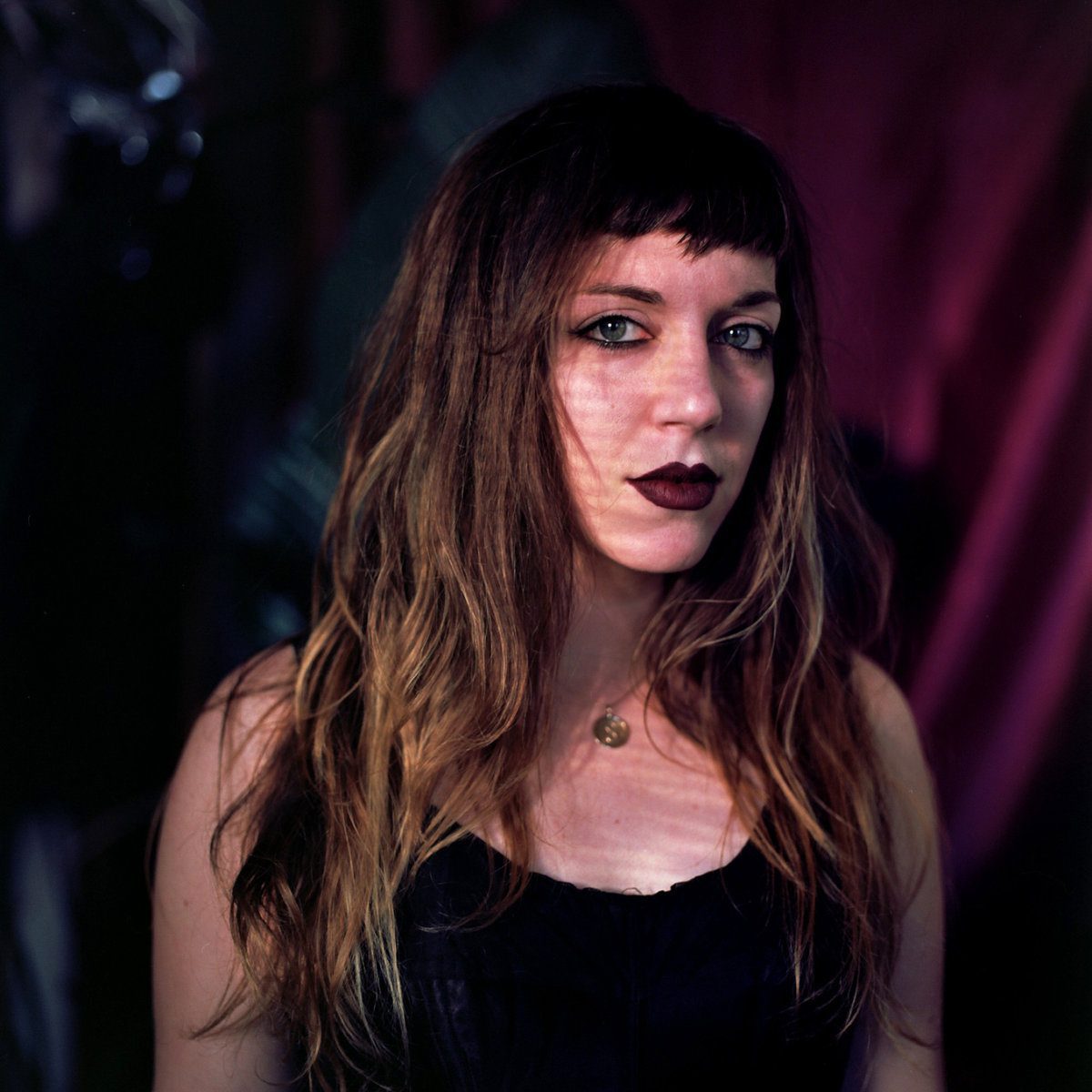
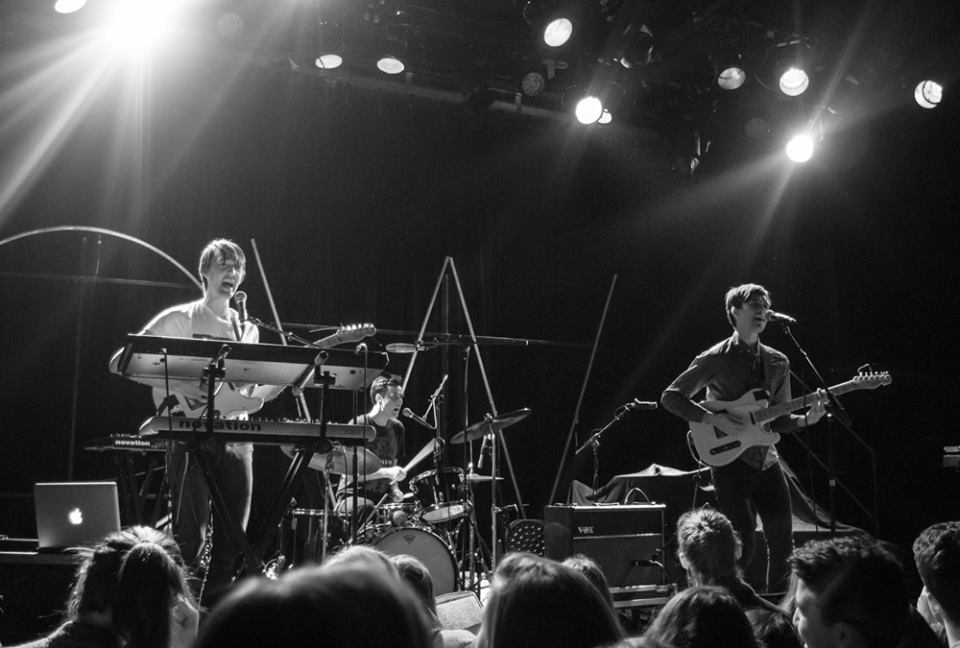
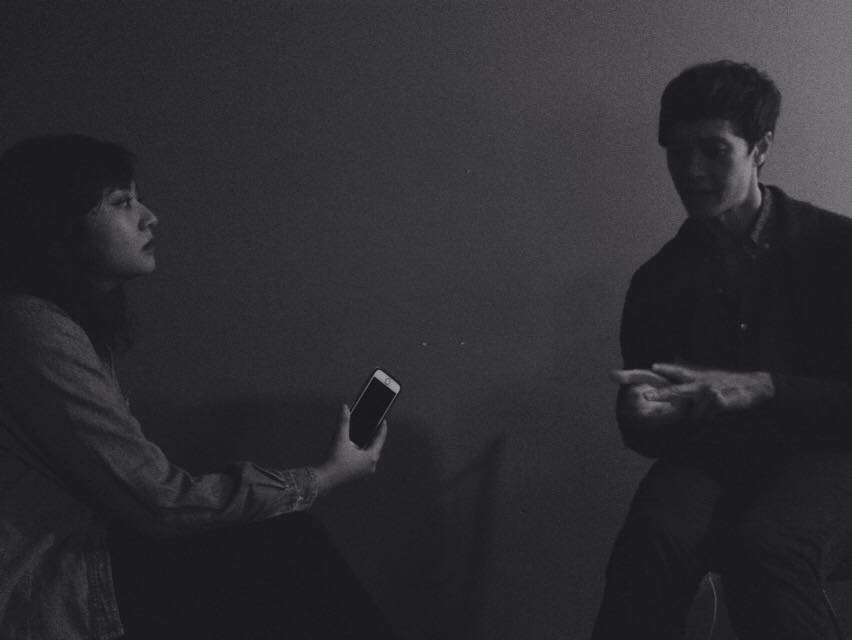
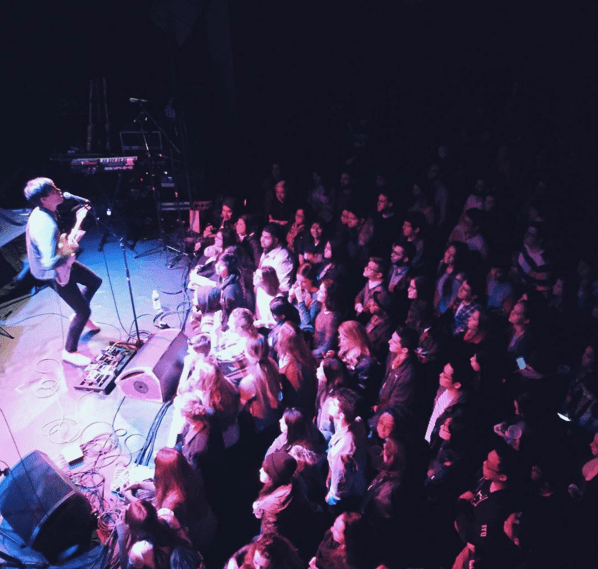
A star by any names, Joanie Wolkoff, formerly performing under Her Habits, an AudioFemme Artist of the Month, is back. Wolkoff’s addictive collaboration with The Hood Internet, “Going Back” is still stuck in my head, yet her latest release, “The Homecoming” might just be the first song by any artist to start a new reign in my grey matter.
“The Homecoming” is the Canadian-turned New Yorker’s first song off her debut album, Without Shame, due out April 15. Indeed, shame is for humans, in the synth-pop artist’s transformation to surname recognition she flutters into goddess territory. On “The Homecoming,” Wolkoff’s signature vocals remain, delicate yet undoubtably lethal, like assassination via tai chi. They’re paired with glittering and hypnotic synth beats; the song and album were “inspired by symphonic 90’s euro-pop and deep house coupled with new wave motifs.” Adding spice to the cauldron, the album was engineered by the Grammy-winning Ariel Borujow and produced by Icarus Moth.
“The Homecoming” just premiered on Noisey, take a listen below.
To set you up for the come down from Valentine’s Day, for this New Music Monday, take a listen to Philadelphia newcomer Valerie Broussard‘s “A Little Wicked.” The soulful, dark, and hauntingly full vocals are just what you need to forget about sweet nothings and boxes of chocolate to invoke the dark goddess within.
In the 11-minute long video, the two go on a hike before dropping acid. The last few minutes are slow motion footage of people frolicking in a swimming pool, set to a gentle piano ballad. According to Father John Misty, the video was inspired by a time he took acid at a Taylor Swift concert. Uh, sure it is. Read our review here.
Inaugural Daytrotter Downs Fesitval Starts Next Week
What is Daytrotter? They bring in fairly well-known artists for recording sessions featuring alternative or reworked versions of their songs, and sometimes brand-new material. And from February 18 to February 20, they’ll be hosting a music festival in Davenport, IA featuring artists such as Lizzo, Mothers, and Curtis Harding. Check out a Daytrotter session from the Alabama Shakes below:
https://www.youtube.com/watch?v=Mo-qvB9hZtU
Beyonce Drops New Video, Internet Explodes
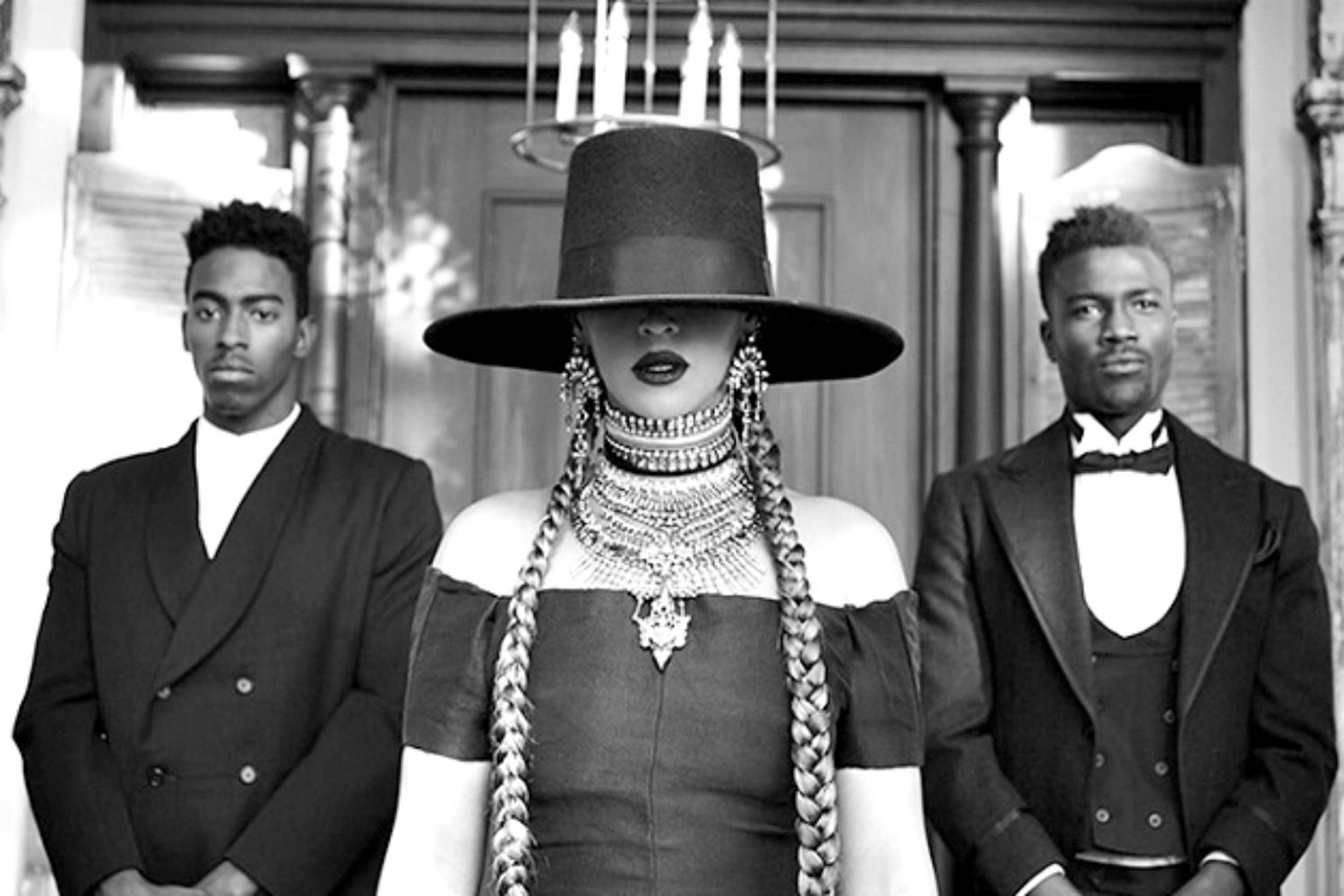
There’s not much left to say about Beyonce’s “Formation;” she released the song and video the night before the Superbowl, but didn’t stop there. After her halftime performance, she announced a 2016 tour and a new, upcoming album. Trying to buy some cheap tickets? Good luck.
Happy Valentine’s Day From Paul McCartney & … Skype?
Nothing says “Rock & Roll” or “I Love You” quite like corporate sponsorship. Skype is introducing some new love-themed Mojis, and the company put Paul McCartney to work recording their sound effects. Meanwhile, I’m still waiting for some desperate artist to do a MailChimp collaboration.
OK Go Release Video For “Upside Down & Inside Out”
“Gravity’s just a habit that you’re really sure you can’t break:” OK Go is known for their off-the-wall music videos, and “Upside Down & Inside Out,” which was released yesterday, is no exception. It features the band literally bouncing off the walls in zero gravity along with some dancing flight attendants. While the song was included on the 2014 album Hungry Ghosts, it’s safe to assume to the delay was necessary to rehearse in that crazy setup.
The flower princess of pop nihilism, Lana Del Rey, returned this week with another installment of her haunting visual diaries with the video for “Freak” from 2015’s Honeymoon, featuring none other than the sensual prince of sardonicism Father John Misty. Lana leads us on a disturbingly enchanting 11-minute trip through her dizzying rose tinted world where the word “baby” is seductive currency.
Allegedly inspired by Josh Tillman’s (Father John Misty) own acid trip at a Taylor Swift concert, “Freak” reads as a modern day Charles Manson/Jim Jones-esque hallucinational tale complete with Kool-Aid and airy angel followers donning sandy blonde hair and wispy white clothes. The video opens with Tillman manically waving a large walking stick into the air at a California sky as Lady Lana leads him to a sandy overlook. It would be safe to assume that Tillman is the cult leader, with his Manson beard, but it is revealed to us that it is actually Lana who calls the shots as she places a square of acid on his tongue. It is from this point that we find ourselves with Lana, alone, in what is presumably her cabin lair paired with juxtaposing flashes of her and Tillman tripping through the hills. Eventually, we are shown the ethereal gaggle of disciples draped over a tranced out Tillman. Lana, all the while, is sloppily drinking her own ritualistic Kool-Aid concoction of beguilement.
“Freak” trails off into silence as Tillman dips Lana in a twisted waltz engulfed by white light and smoke fading into heavenly ether. Enter Debussy’s 1905 “Clair de Lune” as the cast is entangled with each other underwater in a baptismal dance that challenges death and rebirth, with a paramount acuteness to the push and pull relationship between the possessed and the possessor.
Could this video be artistic coding for Lana’s recently troubled encounters with fandom? Possibly. But more than likely “Freak” is a call to, well, freaks, and when our velveteen temptress coos: “Baby, if you wanna leave/come to California/be a freak like me, too,” I can’t help but think this video is simply meant as a captivating heretic anthem for the dazed and suffused.
Glancing at the tracklist for Money’s sophomore LP Suicide Songs, one might suspect singer/songwriter Jamie Lee has a tenuous relationship with subtlety. Titular track aside, the record touts audacious titles such as “Cocaine Christmas and an Alcoholic’s New Year” and opening anthem “I am the Lord.” The album art is no less provocative, featuring a par-naked Lee balancing a knife on his forehead. Though these names and images may seem flippant on paper, the gorgeous density of Money’s music elevates them contextually; there isn’t a scrap of irony to be had here.
The Mancunian band made a grand entrance with their debut record The Shadow of Heaven(Bella Union) in 2013, a dazzling hymnal pop opus that is nothing if not beautiful and original. The album dealt with dense themes, manifesting in songs such as “So Long (God is Dead)” and “The Cruelty of Godliness.”
In keeping with the last record, Lee is approaching concepts laden with baggage and trying to look at them from a different vantage point, perhaps imbuing them with new meaning along the way.
“Above all else, I’m just trying to project and portray a poetic truth,” Lee said in a press release. “Suicide is about anonymity, to the point where you don’t exist, which I definitely feel in my songwriting and as a person. But rather than writing myself out of anonymity, I want to remain there, in this record at least. It’s recognizing a kind of sacrificial nature, in making artistic choices. By rummaging around in your feelings and trying to make sense of life, to the detriment of your health, there might be some poetic value to what you have created.”
In a strange way, despite the intensity of Suicide Songs, it does seem Lee has achieved a sort of anonymity, if only due to the force of the album’s instrumental arrangements. His vocals are less pristine on this new material…there is a drunk and snarling slouch to them, and they easily surrender to the orchestral maelstrom of each track. He sounds raw, worn and drowned by desperation, but with good reason. In a press release, Lee confirms that he “wanted the album to sound like it was ‘coming from death’ which is where these songs emerged.”
It seemed that The Shadow Of Heaven would be a difficult act to follow up, but this new record is nowhere near slumping. Instead, it’s leaping upwards towards vast sonic peaks employing horns, strings, choirs, sorrow, and pandemonium. It is, in a word, a BIG album. Sprawling and open, it practically generates its own tidal system.
“I am the Lord” kicks off with lulling strings that resolve to twanging guitar. It builds with atmospheric hand drums, and ghostly harmonies reminiscent of Cocteau Twins. Lee diminishes the implication of the song’s title when he sings “I don’t want to be god, I just don’t want to be human.” It’s the kind of otherworldly, yet oddly relatable statement that has become Money’s lyrical trademark.
Part lullaby, part funeral ballad, “You Look Like a Sad Painting on Both Sides of the Sky” is a strangely sweet song. It is one of the more sonically sparse offerings on the record, sticking to hushed acoustic guitar and piano, with understated drums and cello. But its pretty simplicity doesn’t ebb its melancholy. In fact, the contrast seems to heighten our sense of woe as Lee belts out lines such as: “there will be music all around, when they put me in the ground.”
The entire album is rife with this sort of tension, whether it lies in the discrepancy between lyrical content and the key of the song, or Lee’s ability as a composer to make you feel uplifted and miserable at the same time. This isn’t a record for people who like background music. The closer you listen, the more nuances you can enjoy. It’s a piece of work that unfurls more with every play.
In “Night Came” Lee establishes himself as a modern maestro of crescendo. The track commences in sprawling, muted riffs only to rise steadily into a skyward collision. But the album’s most powerful track is without a doubt “All My Life,” a banging six and a half minutes of heartrending majors and plummeting minor chords. This is Lee at his biggest, holding nothing back. Not reverb, not gospel harmonies, not lead guitar, and certainly not a full drum kit. But once again, the emotive scale of the song is undercut by bleak lyrics. In the chorus Lee confesses “all my life I’ve been searching for something, so I always ended up with nothing,” a truth that leaves him neither here nor there.
Part of what makes this record so great is that it was composed as nothing less than an album; as a continuous narrative in which each song sonically relates to the next, like chapters in a book. While so many contemporary LPs seem thrown together as a compilation of disparate tracks, Suicide Songs maintains a dense thread throughout its 42 minutes. And this thread is as much formal as it is textual. Lee delivers a consistent dose of heady subject matter, yes, but he’s also managed to arrange this album to bear the aural equivalent of dramatic structure; grabbing our attention with “I am the Lord,” building to the crashing climax of “All My Life,” and settling with “Cocaine Christmas and an Alcoholic’s New Year” (the latter having Lee at his most Tom Waits).
At the end of the day, Lee does seem to prefer the overt to the subtle, as he plainly explains that “the record is morbid and bleak, and never resolves itself. The only real kind of triumphant realization is being able to express the morbidity of the situation I found myself in.” It’s the kind of statement you’d expect from someone like Lee, a self-effacing British musician, but I’d say that Suicide Songs is triumphant all on its own. Period.
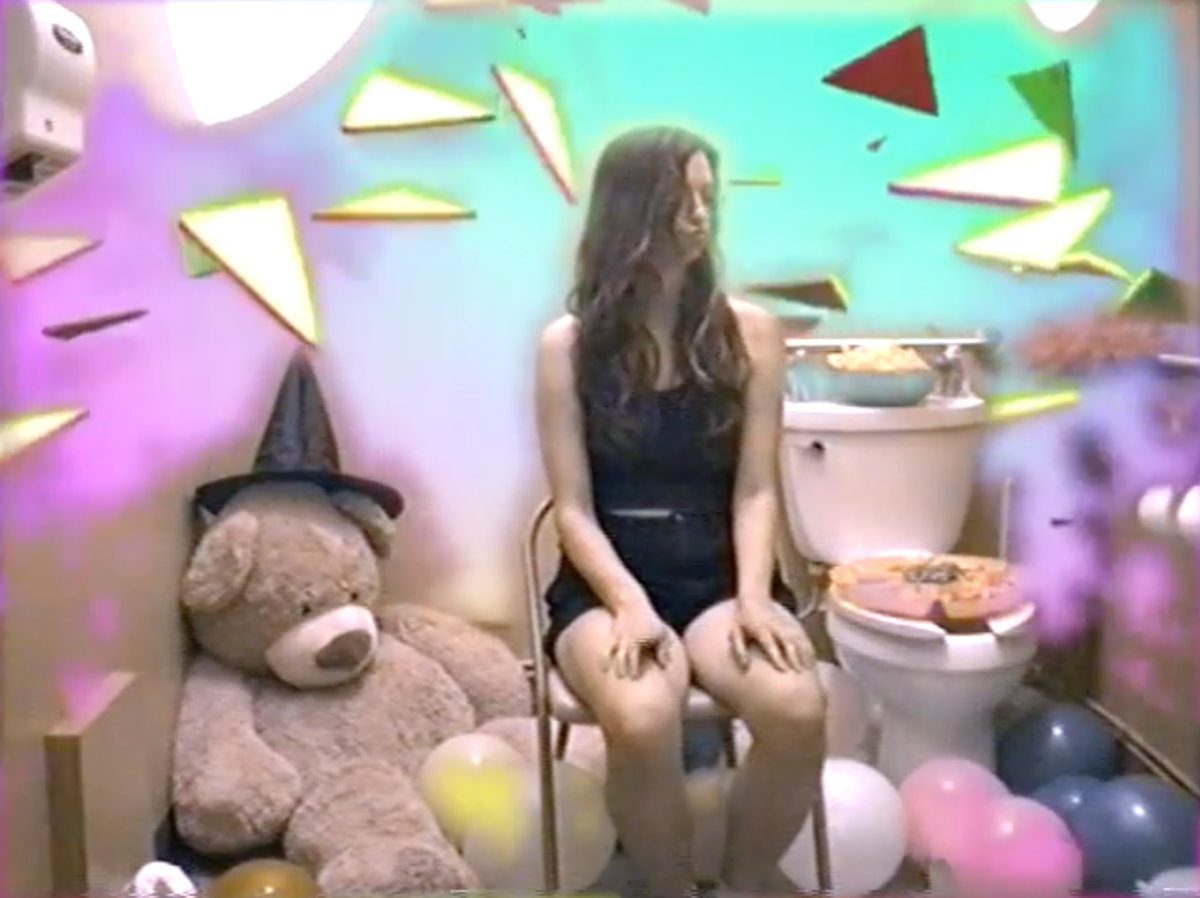
[fusion_builder_container hundred_percent=”yes” overflow=”visible”][fusion_builder_row][fusion_builder_column type=”1_1″ background_position=”left top” background_color=”” border_size=”” border_color=”” border_style=”solid” spacing=”yes” background_image=”” background_repeat=”no-repeat” padding=”” margin_top=”0px” margin_bottom=”0px” class=”” id=”” animation_type=”” animation_speed=”0.3″ animation_direction=”left” hide_on_mobile=”no” center_content=”no” min_height=”none”]video still for “Slow Motion” filmed by Molly Soda
There’s something unidentifiably exciting about Stef Chura. It would be an easy out to say her warbled, playful vocal contortions are the key to her aforementioned excitability, which are undoubtedly fearless and perfectly flawed. Last month, I referred to her vocal playground as one crafted by Karen O meets Johnathon Richman, but with the recent release of “Slow Motion” off of her up and coming album Messes, I can see how I quickly generalized her aesthetic. Chura creates space and fills it with confessionary uncertainty. What Chura is doing is entirely all her own.
“Slow Motion” encapsulates personal frustration and manages to make a lo-fi cry for clarity anthemic for anyone who has ever wanted to control the speed of their own reality. The lyrics “you bottle/me in your pocket and explode/give me something/and I don’t know what it’s for/and right when it starts/ to feel like home/it’s time to go” paints an universal exploration of impermanence in feeling comfortable with ourselves as individuals, as well as our comfortability as a piece of our respective social quilt. With Ryan Clancy on drums and producer Fred Thomas on bass, Chura’s vocals are practically framed by the jumpy, hazy rhythms allowing her to use her beautifully tortured voice to maim and repair parts of the song at her leisure.
The video, which is a desaturated Microsoft Paint snack party in Detroit’s UFO Factory bathroom (inarguably the most popular bar bathroom for selfies) poses Chura as an unenthused guest of honor surrounded by balloons, toilet snacks, and a listless oversized stuffed bear. Shot by internationally acclaimed digital artist and Detroit implant Molly Soda, “Slow Motion” is a vivid collaboration between wanting to feel part of a whole and wanting to fall apart, whisked together with whimsy and an old screensaver from the 90’s. The party gets tripped out and psychedelically rambunctious as the guests go crazy with silly string and happy face balloons that seem melancholic in context. The video is a play on party culture and for Detroiters, gives a voice to an iconic space while touching base with those deep-rooted sad girl vibes, that need someone like Chura to portray with sincerity and unapologetic malaise.
You can pretty much tell The Saint Johns vibe well together once the first guitar chord is struck in “Lost the Feeling,” and this is just further confirmed when you hear the way their voices swirl together in perfect harmony. Upbeat yet ethereal vocals come from singer Jordan Meredith while Louis Johnson provides a more savory sound as well as crisp guitar riffs—like I said, they really just complement one another so well. Their newly released official video for “Lost the Feeling” starts off a bit reminiscent of “Spring Breakers,” the rush and excitement of a successful robbery fresh in the air as the Americana duo plays in what appears to be a small town bar. Tension mounts and ultimately dispels, following the ebbs and flows of the song just perfectly. It’s the type of track you want to know the words to immediately so you can sing along to it—maybe a bit loudly, but who’s judging?—in the privacy of your bedroom.
Luckily The Saint Johns are currently touring, so you have the chance to watch their dynamism live. And for those of you who are also in the New York area, maybe I’ll catch you at their show at Gramercy Theatre on March 31.
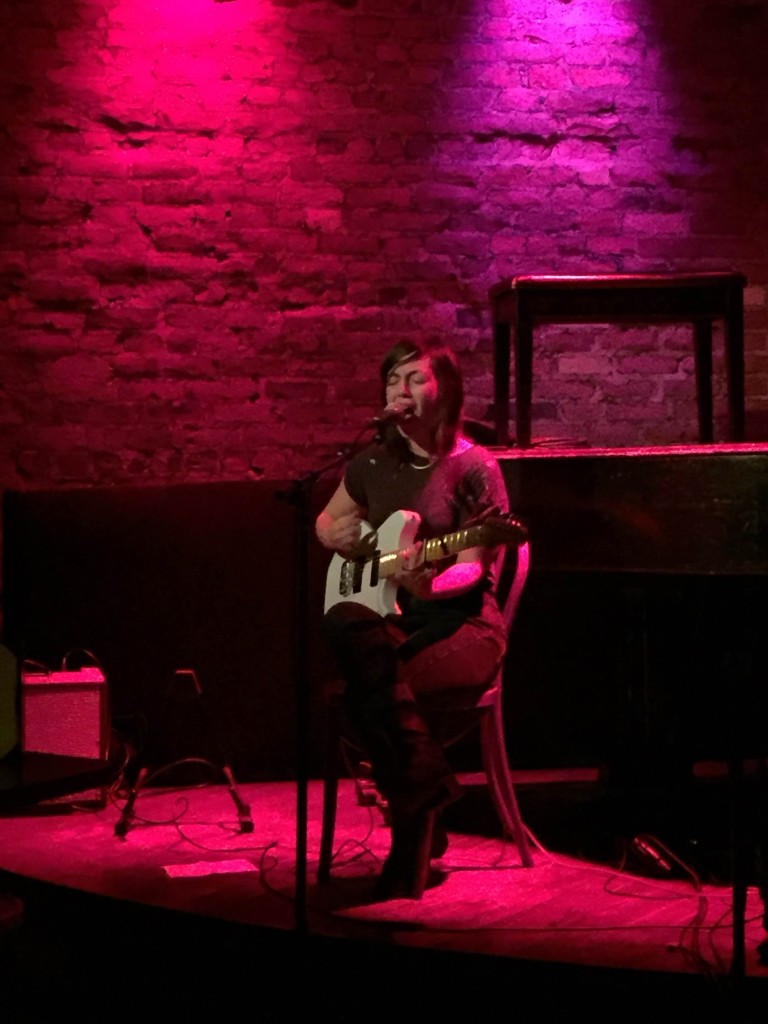
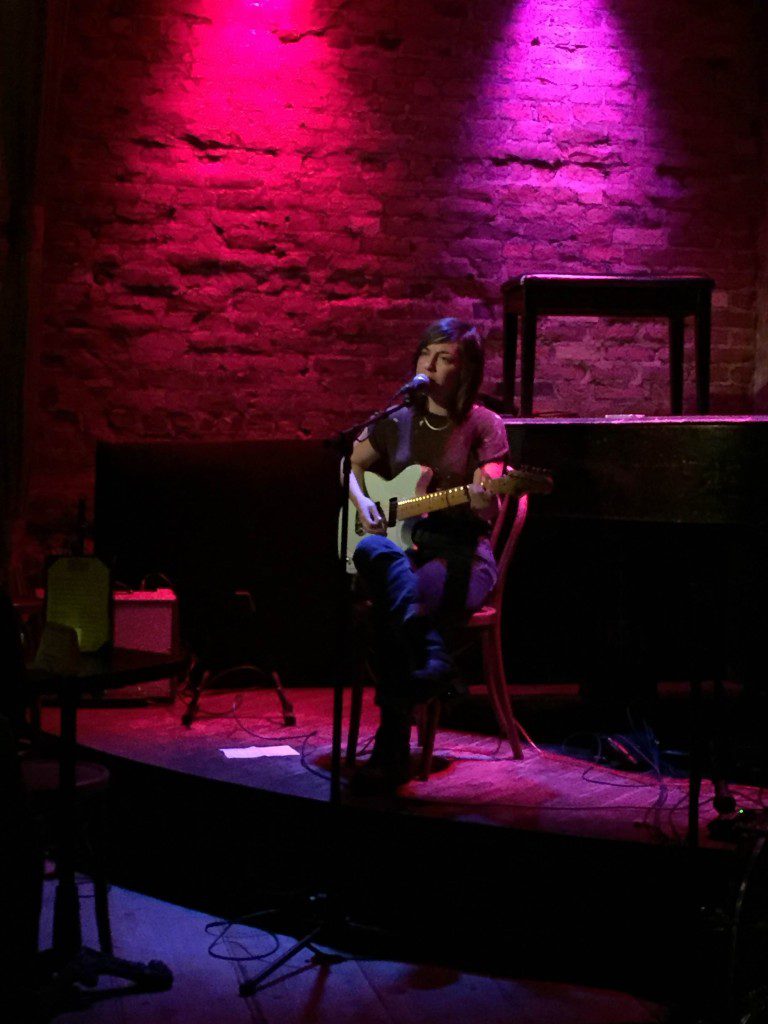
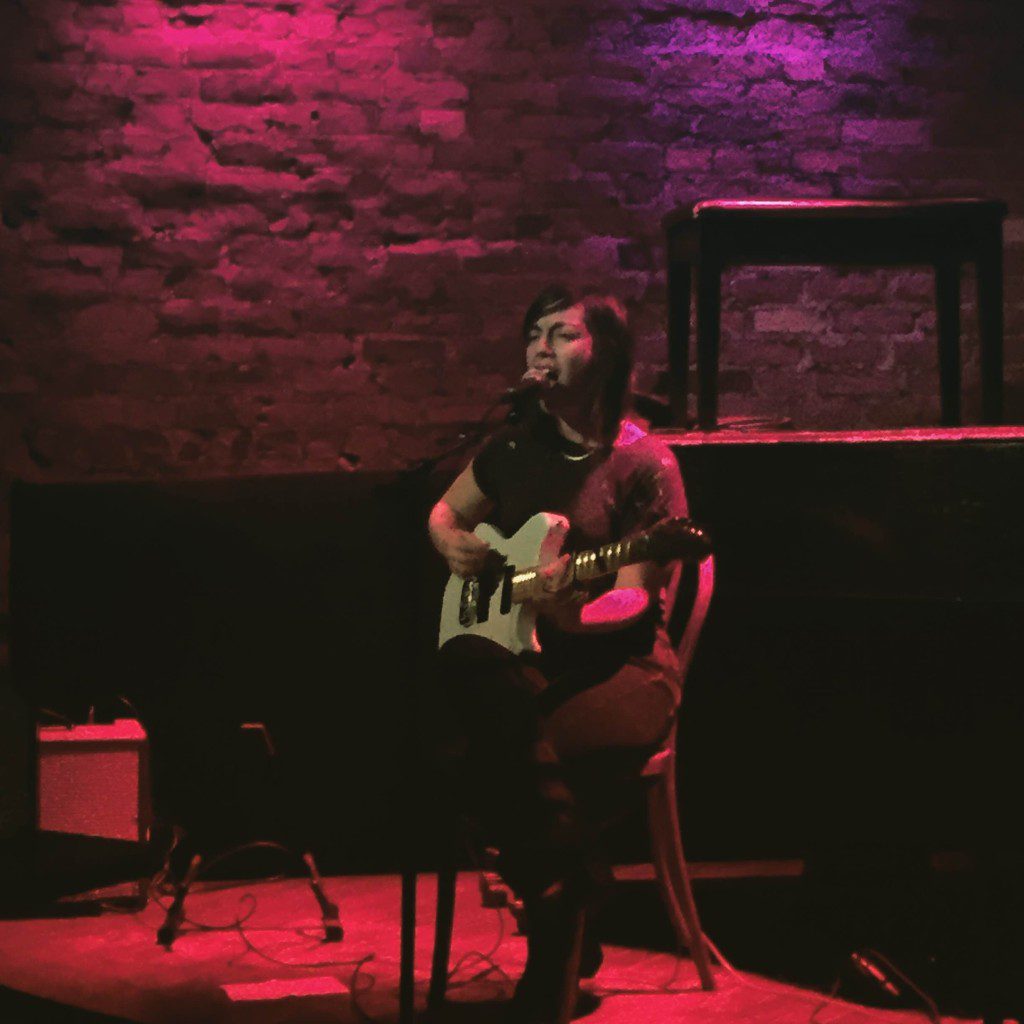
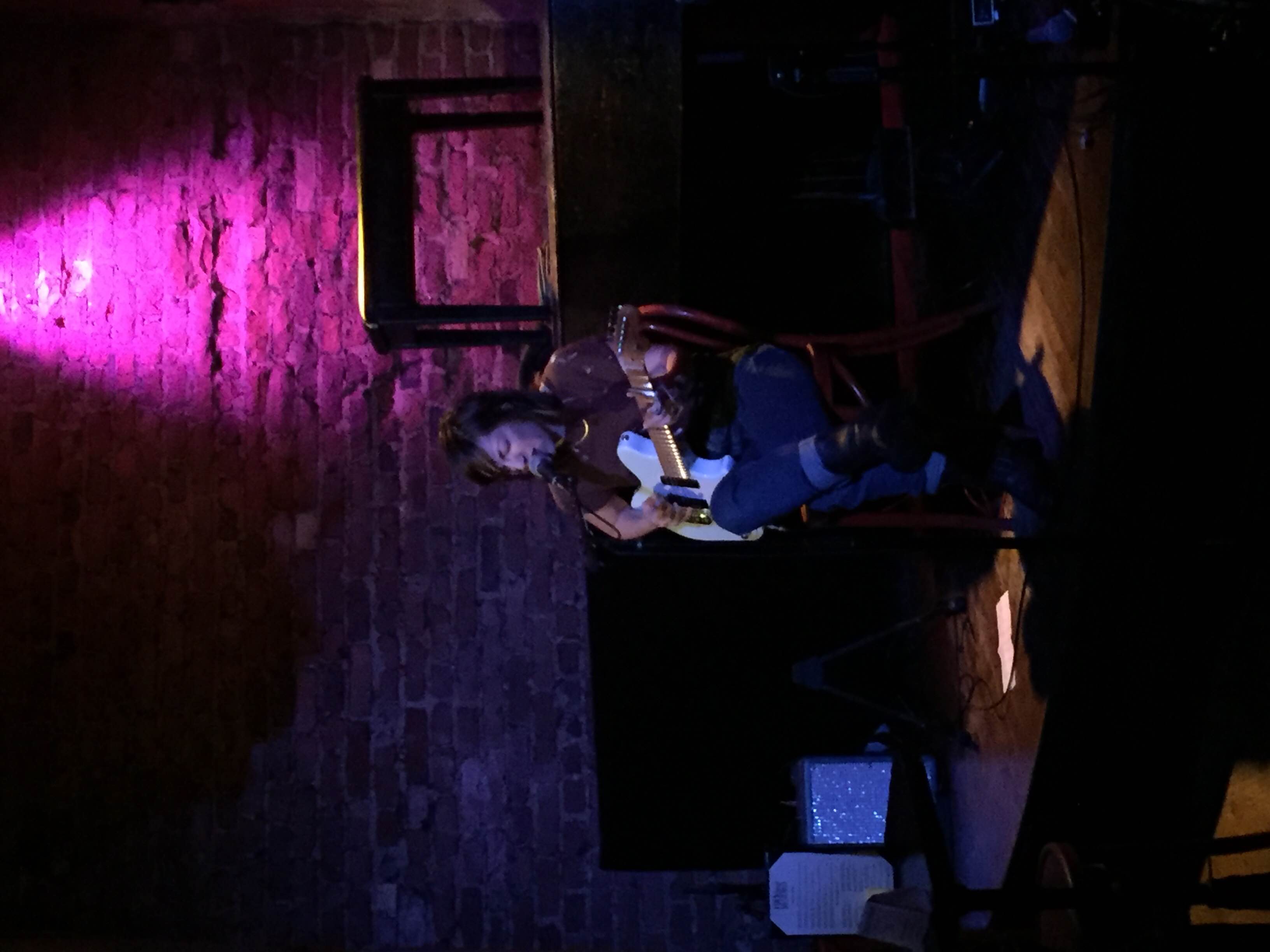
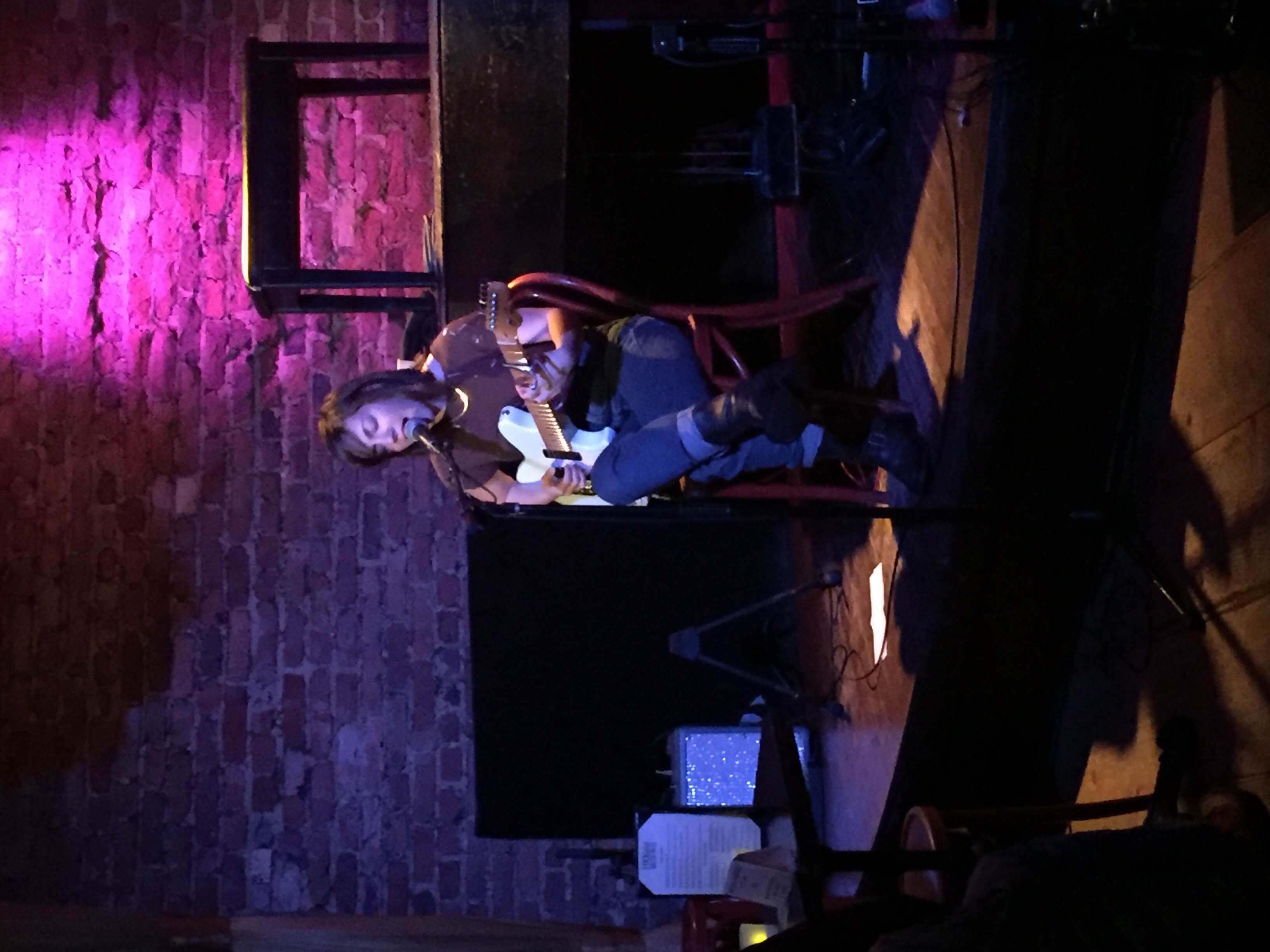
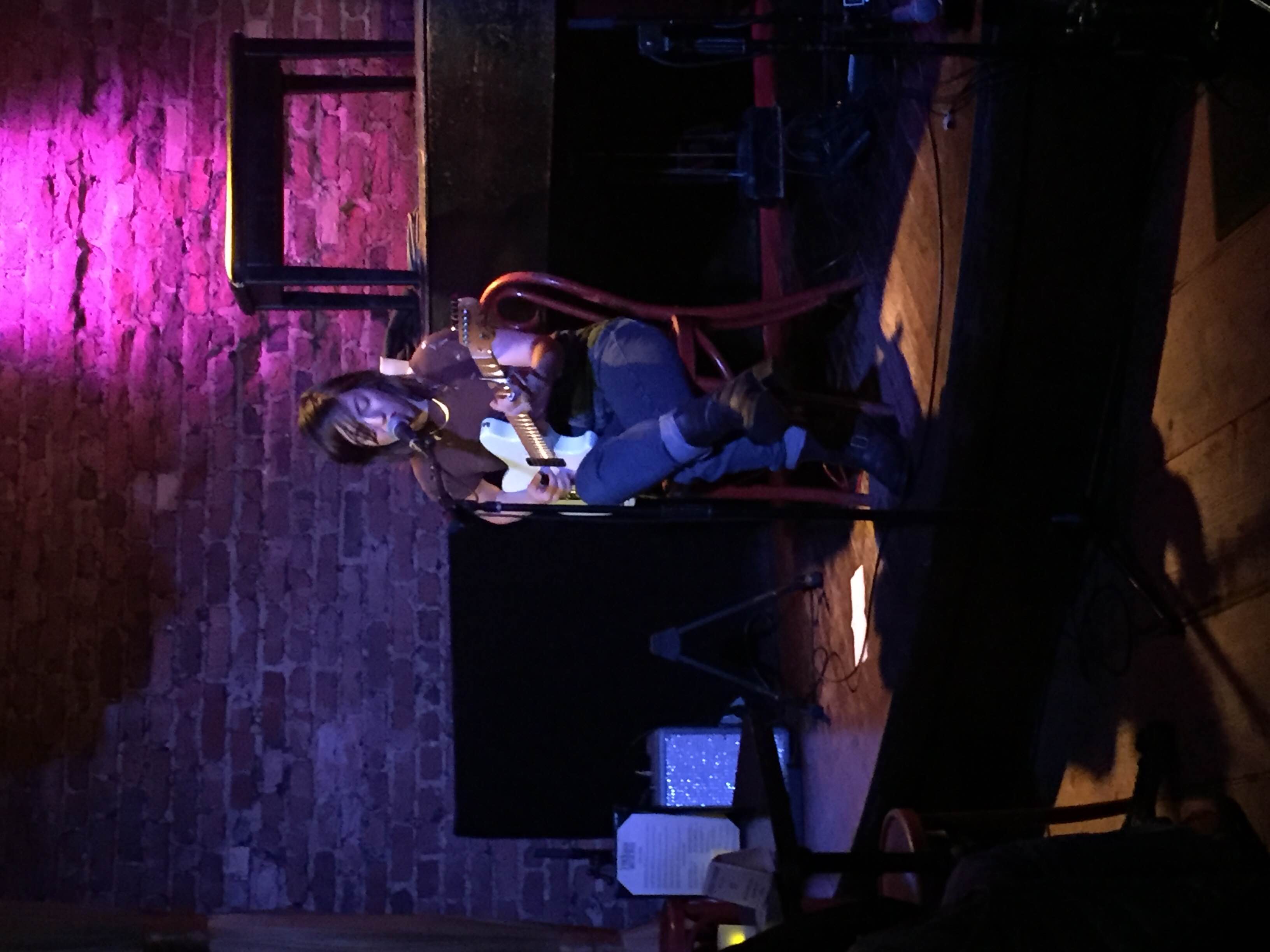
An entrancing voice and charismatic presence are the perfect ways to define singer/songwriter Shira and her recent show at Rockwood Music Hall on January 26. Shira captivated the audience by playing tracks from her upcoming album, Subtle Creature, as well as chatting with the crowd in between each song.
Sitting on the stage basked in dark red and purple lights, she crooned and jammed out on guitar, breaking from her normal routine of sampling and electronic influences. She played singles like “Heartbeat is a Prisoner,” “Dark Snow,” and “Tiptoe,” making sure to provide a background on the process behind the songs and what they meant to her. It was a more intimate setting for what felt like a personalized show—watching her perform and engage with fans, you recognize immediately she isn’t holding back; she has an honest connection with music, and delivers it as such.
After seeing Shira perform, I pretty much knew I had to talk to her, even if just for a little bit. Luckily I got the chance to have a brief email interview with her, which can be seen below.
Nicole Ortiz for AudioFemme: I remember at your show you mentioned that you have an album coming up. Can you tell me about the album and the work that went into it? What’s your favorite song on the album?
Shira: I’m releasing “Subtle Creature” this August 2016! I’m so excited about it. It’s been two years in the making. I wrote primarily on the Roland-404 Sampler, then added a ton of textures: drums, electric guitars, synth, cello, horns. It’s turned out to be a really undefinable, genre-switching album. I got to work with some of my favorite artists: the sister-trio Joseph, Shannon F. of Light Asylum, Neon Music of Youthquake, Jamila Woods, Mal Devisa, and cellist Emily Dix Thomas. My favorite song is the title track. It’s eight minutes long—the longest song I’ve ever written and produced. It really got away from me and started doing it’s own thing. It’s got like four verses and two choruses and tons of swimmy instrumental sections! I tried to reign it in and hold it down, but it refused. I like work that guides the way and demands you to stretch. Now when I listen to it, I hear an epic. I trusted where it was going (eventually!), and it lead me somewhere far vaster, cooler, stranger.
NO: I know you’ve been considering making another music video as well with a director whose work really spoke to you. What do you hope to show through this collaboration?
S: I recently saw the video for the song “Relief” by Wilder Maker directed by Evan Cohen. It’s an incredibly patient, inventive video. We live and work in such a fast-paced culture that, to see a video that sort of asks the viewer to lean in, that doesn’t beg or hit over the head, really stayed with me. I immediately got in touch with Evan. We’re both excited to get lost in the creative process together, to make something tender and unexpected.
NO: During your show, you mentioned a song about your grandmother and also spoke openly about being diagnosed with bipolar disorder, which resonated with me as I’ve suffered from anxiety for most of my life. Do you think this awareness and openness come into play in your creating process? How do you think it affects your music?
S: If we’re lucky, our art makes us more honest. It demands us to look closer at ourselves and the world. There’s a realness, a rawness it desires. It acts like a friend who would never let us fool ourselves. I know that it’s a choice I make to reveal parts of my personal life, including my health, but in some ways I don’t feel I have a choice. To be quiet, or stealthy, about vital parts of my being feels like choking myself, my truth. It’s just a part of my nature—I feel compelled to be honest. I know that when we risk honesty, we reap intimacy. I have no shame about my mental illness, and I want to welcome others into the conversation. That’s why I speak about it. As for my music, it’s a literal record of my life—how amazing is that? To have a lifelong sonic diary. When I look back on my life, I’m excited to have literal “records” of 2002, 2006, 2010, and so on and so on. When I look back, I want to see/hear where I was at truthfully, not a costume of where I was at. This requires a certain willingness to be transparent and take risks.
NO: I see on your site that you also create poetry, art, offer classes, and have a zine—you’re kind of an artistic jack-of-all trades! Do you ever showcase these pieces as well? Which outlet do you feel the strongest connection with?
S: Each outlet fulfills a need. Sometimes I don’t want to talk or think or make a sound, so I draw. There’s a quiet, a privacy, that my whole being desires. That’s why I endeavored on my SQUARES project, a year-long visual diary built of 1 x 1 inch squares. To daily enter that quiet [fusion_builder_container hundred_percent=”yes” overflow=”visible”][fusion_builder_row][fusion_builder_column type=”1_1″ background_position=”left top” background_color=”” border_size=”” border_color=”” border_style=”solid” spacing=”yes” background_image=”” background_repeat=”no-repeat” padding=”” margin_top=”0px” margin_bottom=”0px” class=”” id=”” animation_type=”” animation_speed=”0.3″ animation_direction=”left” hide_on_mobile=”no” center_content=”no” min_height=”none”][and] just be with myself. Sometimes I need to untangle a moment that got stuck—often that’s where poetry comes in. I’m working on a poetry manuscript, “Odes to Lithium,” which is entirely composed of praise-poems to the medication I take. Nearly every poem in that collection is me running my hands along a moment of stigma, mistreatment, or misunderstanding and breathing new understanding into it, or at least acknowledgement. Then there’s music—that’s like getting set loose in a candy store. I just lose myself. I never had a sister, so maybe it’s a bit like that, having a sister—I make a sound, [and] it becomes separate from me, almost like another’s voice. There she is—I listen to her, I hear what she has to say, I feel less alone. Ultimately it’s all about connection. Connection to myself. Connection to others. The Zine, the classes I teach, the work—it all fosters that, just from different angles.
NO: Do you have any other upcoming shows planned, or are you going to tour anywhere?
S: Yes! I constantly play in New York. You can always check my site for updates. I just got back from a month-long Writing Residency at Vermont Studio Center after touring the Midwest with Andrea Gibson. I’m cooking up plans for spring and summer shows as I get closer to the album release.
RYAL is Jacque Ryal, an alt-pop artist from San Diego, CA who moved to New York when she was 18. Although her earlier work was considerably darker and drew comparisons to groups such as Portishead, RYAL has challenged herself to write songs that were both optimistic and timeless on her upcoming release.
Though her new music aspires to be happier, I sense the same longing in the song “Wish” as I feel everyday from November to April: What happened to summer? Why did summer have to go away? It helps that the track invokes a trip to the beach; along with producer Aaron Nevezie, she’s created a bouncy, but focused beat with splashes of tropical guitar and synths that will have you missing the good days when the sun didn’t set before 6pm: “We had a good love/ Not just a summer fling…I miss you bad when the sun falls on to its knees.” Her words capture the bittersweetness of a fleeting romance, while the music reflects the brightness and happiness she experienced before she knew it was gone.
The RYAL EP will be available on February 19, but we have the exclusive stream below.
This week’s New Music Monday track is “Sanity,” the first single from soul artist Francesca Loeber’s debut EP of the same name. It’s a slow and sultry number that will make it even harder to get out of bed today, as it’s a song fit for lighting red candles and making a cocoon out of bed sheets. Check out the entire EP below.
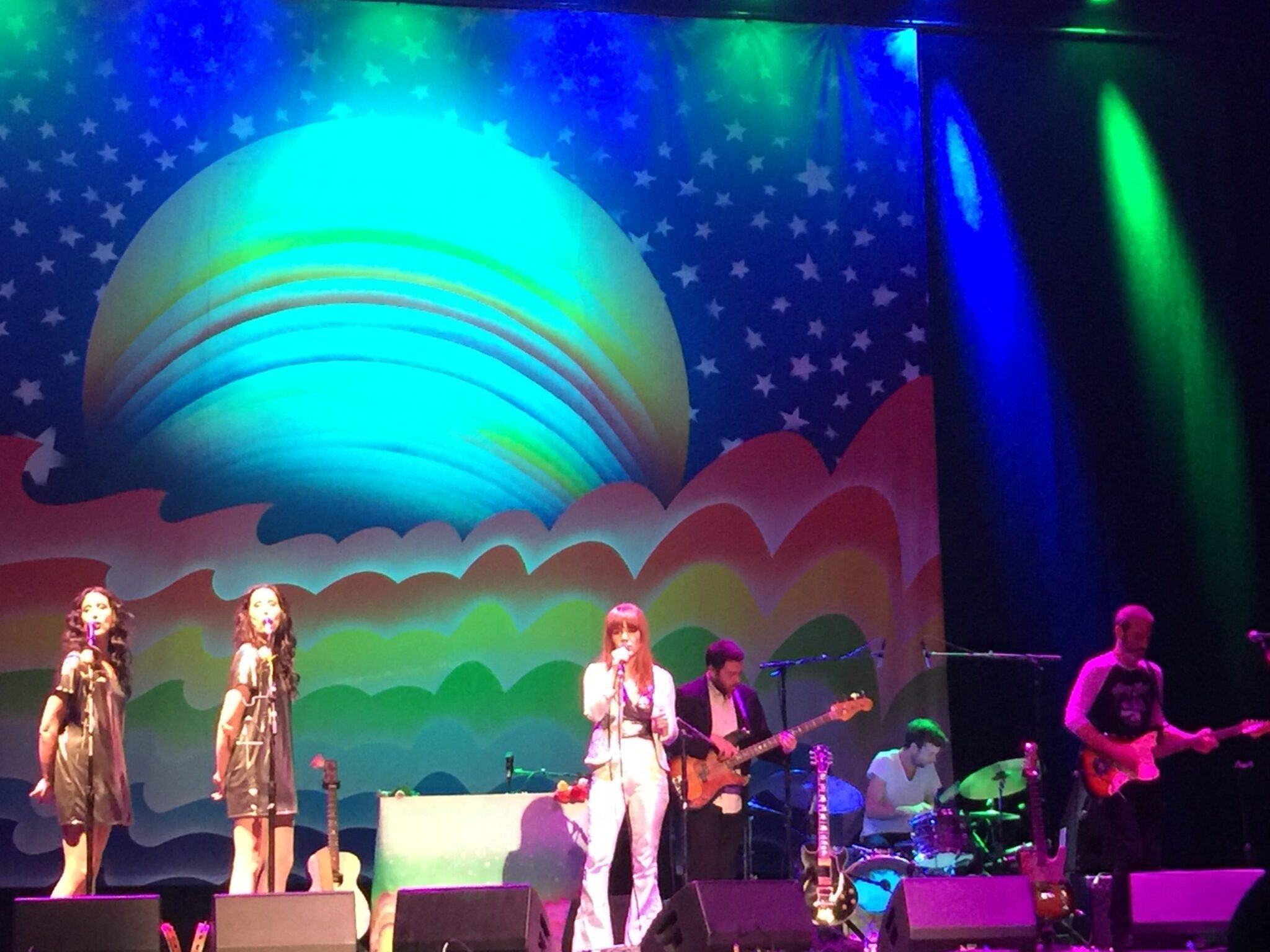
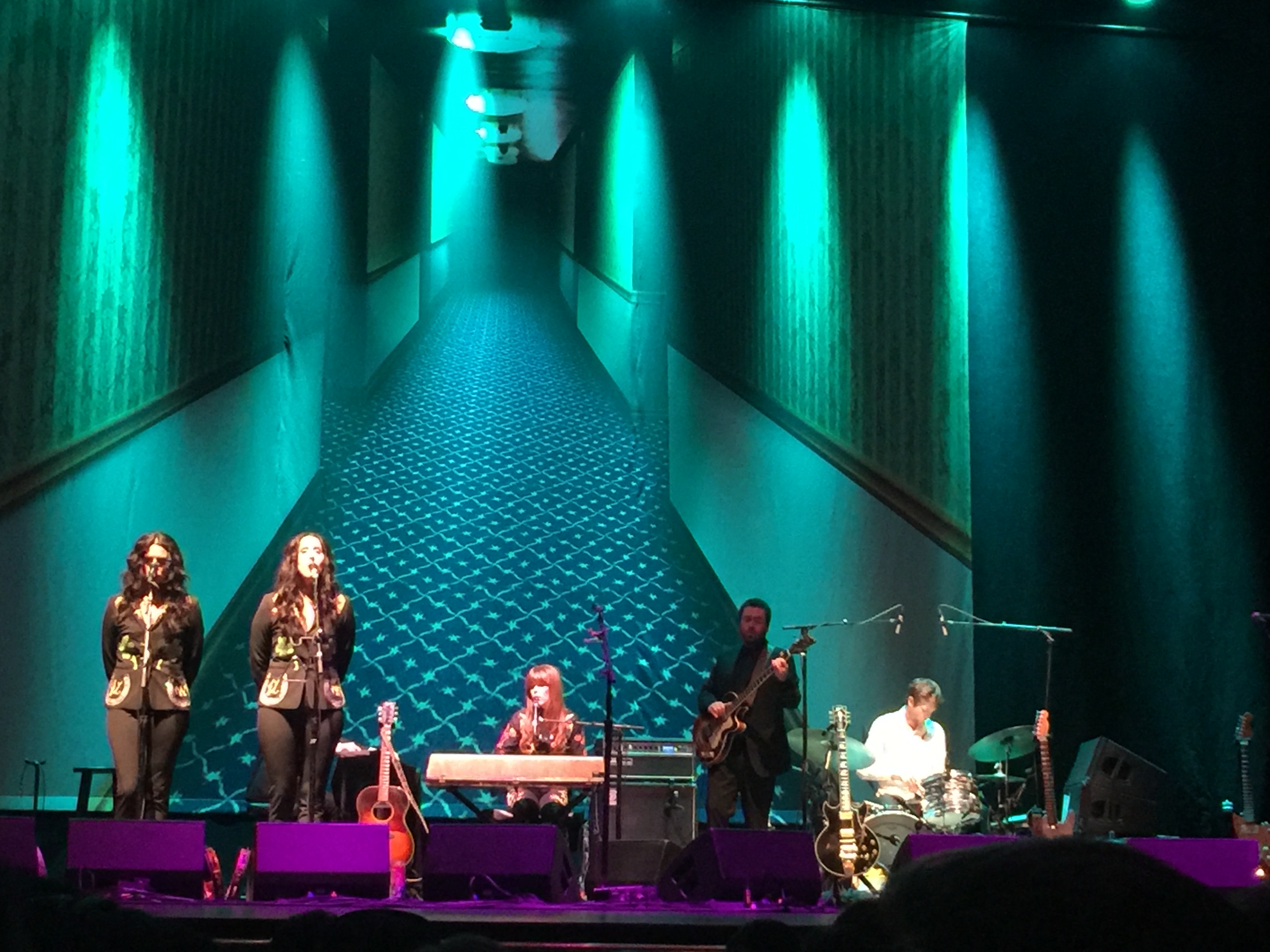
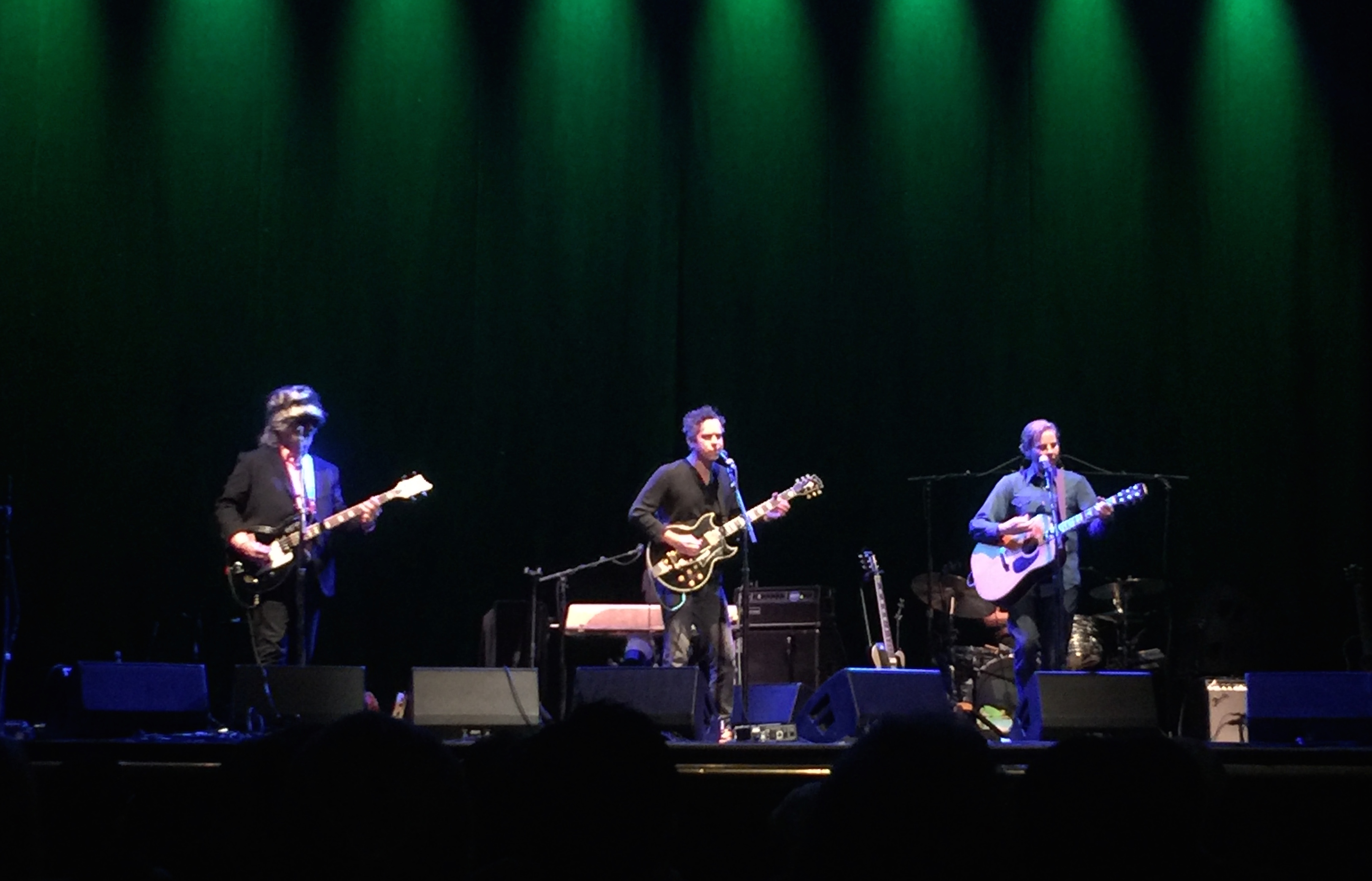
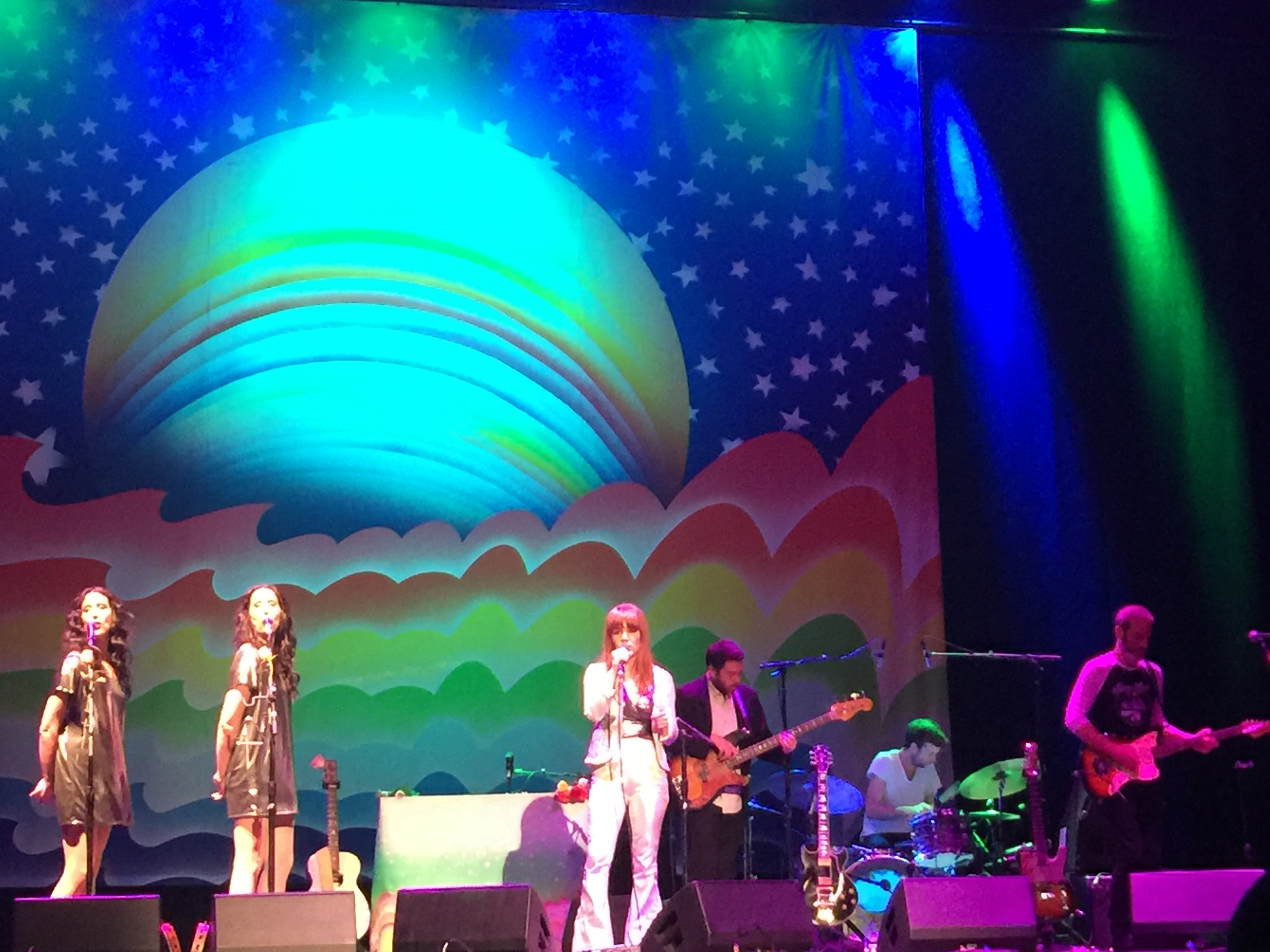
The Beacon Theatre‘s playbill for Jenny Lewis’s concert last Thursday displayed a curious itinerary: M. Ward at 8PM, Rabbit Fur Coat at 9PM, and a “voyage through the past, present and future” at 10PM.
“Voyage” was a reference to both Lewis’s latest solo album The Voyager and her musical journey from 1998 to the present — a trajectory that became palpable as the night unfolded.
2016 marks 10 years since the release of Lewis’s first solo album Rabbit Fur Coat, which was just reissued on red vinyl. The record broke from her work as lead singer of indie-pop band Rilo Kiley, incorporating country and folk influences and featuring collaborations with indie-folk legend M. Ward, former Bright Eyes frontman Conor Oberst, and alt-country sister duo The Watson Twins.
Two of these three collaborators shared the stage with Lewis Thursday night. M. Ward’s opening set, which included a cover of Tony Martin’s “I Get Ideas” that was featured on HBO’s “Girls” and a track from his upcoming album No Rain, delivered the solid performance expected of an artist who has been releasing albums since 1999. He shone brightest, though, alongside the headliner.
For part two of the performance, Lewis entered with The Watson Twins, each holding a candle and harmonizing on “Run Devil Run,” Rabbit Fur Coat‘s first track. In fact, the entire segment followed the album’s order, ending with a reprise of the bittersweet ballad “Happy.” Ward contributed his guitar to several numbers and sang in “Handle with Care.”
At age 40, Lewis is no longer the damaged former child actor who belted her quarter-life angst as Rilo Kiley’s frontwoman. The band, which dissolved in 2011, explored unrequited love, suicide, and other themes that let millennial teenagers know at least someone somewhere was as sad as them.
Rabbit Fur Coat tackles more mature experiences like growing disillusioned with religion, coming to terms with a dysfunctional upbringing, and overcoming fear of intimacy. In its 12 tracks, Lewis makes peace with her troubled past and accepts responsibility over her future.
Lewis’s performance style has paralleled her personal and musical growth. She shouts less and smiles more than in her Rilo Kiley days. Like M. Ward, she’s been making music since the late 90’s, and she commanded the stage with the professionalism and ease only a music industry veteran can project.
The flip side of Lewis’s musical evolution is that she comes off less connected to her older songs. During the concert’s third portion, “Silver Lining” felt detached without her former sass.
Throughout the evening, Lewis’s lyrics came to life, taking on new meanings amid her psychedelic set. Rabbit Fur Coat‘s eponymous track, which sounds like an amusing cautionary tale about materialism in recordings, became an intimate confession about her estrangement from her mother as she sang it alone with no instruments but her guitar. “It Wasn’t Me,” a cynical song about dodging responsibility, became funny as she lackadaisically belted, “it doesn’t count because I don’t care.”
At one point, though, she actually altered the words. In “The Charging Sky,” where the recording describes her parents as “spreading infection, somehow we’re not affected,” she instead sang, “somehow I’m not affected.”
Whatever her intentions, I couldn’t help but read this slight rewording as a testament to Lewis’s transformation from part of a “we” to a freestanding “I,” connected to but independent from her former band and upbringing.
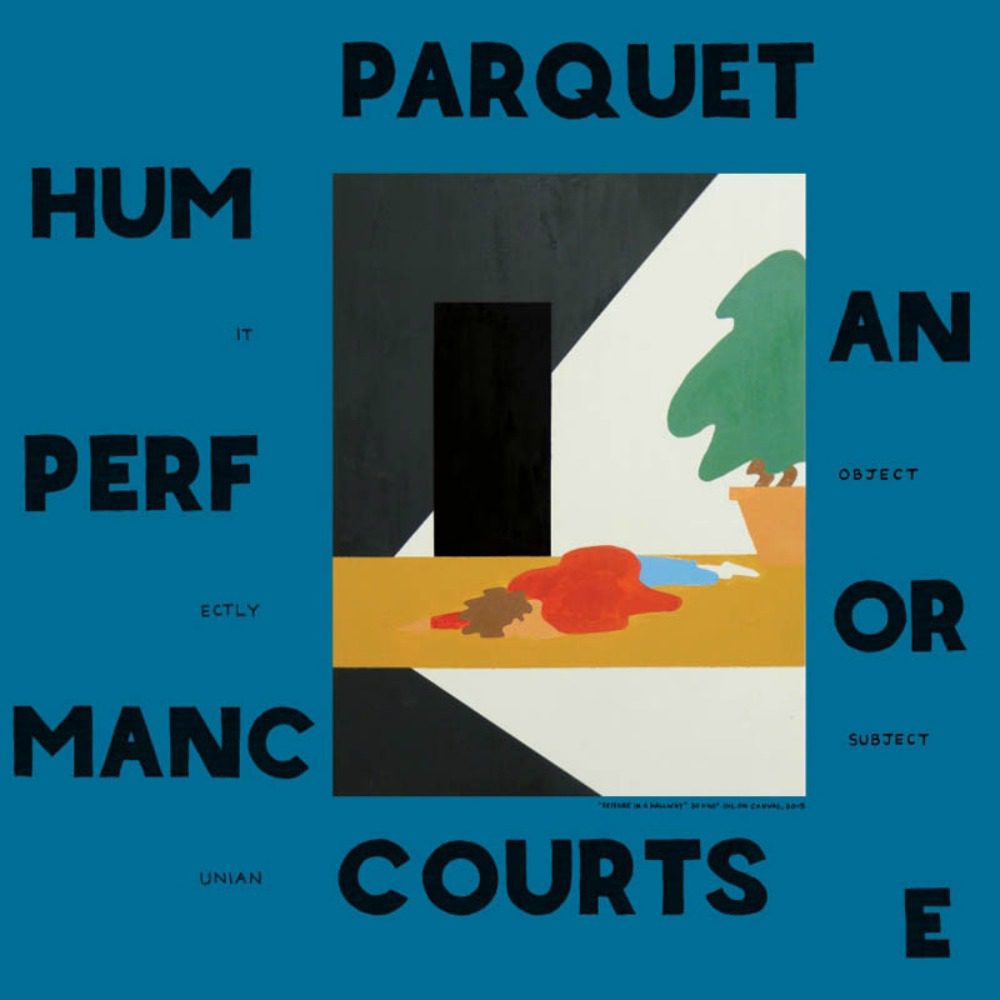
The Brooklyn-via-Texas punks performed “Dust” and “Outside” on WFUV, and also announced an upcoming album titled Human Performance. “Dust” has a loping, cowboy Western feel, spacing tendrils of guitar riffs between suffocating lyrics: “It comes through the window, it comes through the floor/ It comes through the roof, and it comes through the door/ Dust is everywhere/ Sweep.” As you can see in the creepy video – which features dust personified- dust is a metaphor for the distractions of modern life. In a way, the song is a more subtle version of the band’s “Content Nausea.”
Bernie Sanders Gets Musical Endorsements
I’m not saying that anyone should base their vote on what celebrities think of the presidential candidates. But if they did, I think we know who would win; members of Vampire Weekend and Dirty Projectorsjoined Bernie Sanders onstage to sing “This Land Is Your Land” during a Iowa City rally for the candidate on January 30th. If you live in Brooklyn, you may have also noticed a bunch of shows dedicated to raising money for Sanders. Meanwhile, Donald Trump has earned only the endorsement of Kid Rock, and the wrath of Adele and Steven Tyler for using their songs without permission.
Listen to Animal Collective’s “Lying in the Grass”
On the cartoonish, slightly schizophrenic track, voices bounce around, occasionally running into a glitch or a saxophone lick as the song builds. Listening to “Lying in the Grass” is like following instructions to make an origami box, only to realize you’ve somehow made a crane. Maybe that doesn’t make sense, but it’s kind of pretty, which sums up the track. Check it out below:
Johnny Cash Lives On, In Arachnid Form
Fourteen new species of tarantulas have been recently discovered in the United States, and one of those, Aphonopelma johnnycashi, has earned the namesake of the country singer Johnny Cash. Why? It lives near Folsom Prison, and is jet-black, the color that Cash was known for wearing almost exclusively. It’s almost too perfect.
https://www.youtube.com/watch?v=N5Ts4M3irWM
RIP Maurice White
Maurice White founded the incomparable Earth, Wind & Fire. He passed away yesterday from Parkinson’s at age 74, six years after he was inducted into the Songwriter’s Hall of Fame. His band was one of the most renowned, universally liked musical groups- for a thorough obituary, see The New York Times.
Philly Musicians Bill to be Withdrawn
Remember that bill we mentioned last week, the one that would require all performers coming to Philadelphia to register with the police? Maybe you even signed the petition to stop it. Well, a spokesperson for Mark Squilla, the councilman who proposed the bill, has said that he intends to withdraw it. That definitely falls under the category of “good news.”
The dimly-lit green room at Music Hall of Williamsburg smells of cigarettes, but in an unassuming way, perhaps because Chris Chu of POP ETC kindly apologizes to my plus one, Caroline, and I in advance. I hardly noticed what he meant once we got up there, and no one else seemed to mind either.
Before we sit down, Chu offers us a drink.
“Water? Beer? How old are you guys?”
I feel nervous that if I say yes, I’m imposing, though I notice the array of drinks in the mini fridge: Tecate beer cans, water bottles, and a Snapple that Chu brings out to sip occasionally, post-interview.
—
Ysabella Monton for AudioFemme: Between The Morning Benders and becoming POP ETC, and even between the POP ETC album and Souvenir, I’ve noticed changes in the sound and your evolution as a group. You guys have had this awesome, loyal fan base, and you’ve done a great job of doing something new while maintaining that. What do you want your old fans to take from Souvenir?
Chris Chu: Well, love our fans and we do a lot to show them that. We respond to everything, we get people into shows all the time and give away all our guest list spots. We’re thinking about our fans a lot, but when we’re making music, the idea of trying to cater to any kind of specific listener or demographic is just dangerous. So, for Souvenir, we took our time, wrote tons of songs, and waited until a family of songs or a sound just emerged from that. And we’re happy with it. I just think, if you’re catering to your fans or trying to do something with your previous sound or anything like that, at least for us, it feels really stale. It’s hard for me to honestly sing songs like that or go on tour to play songs if we’re not excited about them. I think people notice that, so it would be a disservice to our fans to do the same thing over and over.
YM: No, I know what you mean. [laughs] Well, if you’re constantly having these new ideas, especially over the past three years — it doesn’t seem like it hasn’t been that long since the last record, but I think the change shows. What are you guys drawing inspiration from these days?
CC: It’s all over the place. For this last album, because we made the decision to take our time and approach it really patiently, we traveled a lot. For the last couple of years, I spent probably half my time in Tokyo, where I was working on other projects. So that was a huge difference, just working with people in Japan and being introduced to all this Japanese music. That was amazing, because there’s bands that are equivalent to The Beatles here that no one knows outside of Japan. Like, the number one albums in Rolling Stone Japan. I felt like a kid in a candy shop discovering that.
—
Something about inspiration leads us onto a tangent, reminiscing about 80’s music. I use “reminiscing” lightly, since neither of us were actually spinning those records through the decade. As Chu explains, “It’s similar to some of the ways we became interested in Japanese culture with rediscovering that music from the 80’s. We’re too young to have grown up with it, but our parents listened to it and we knew about it.”
I tell Chu a story about being in the car a week ago with my mom, listening to the likes of Tears for Fears, Spandau Ballet, Culture Club. Just for fun, I threw in “Running in Circles” from Souvenir.
“A seamless transition,” Chu laughs.
My mom thought so too. I tell Chu her review of the song: “I’ve never heard it, but I bet it probably played in the disco.”
—
Mid-interview, photo by Caroline Sugg for AudioFemme.
CC: That’s amazing. Similar to how I was describing the stuff in Japan, the cool thing about the 80’s is that it didn’t happen long enough ago that it’s been canonized in the same way. I grew up listening to The Beatles, The Beach Boys, Neil Young and all that stuff, Dylan. It’s so long ago that there are so many lists, so much critical discourse about music from the 60’s and you can still go and explore it yourself, but in general, it’s like history’s been written whereas with the 80s, there’s hit songs here and there but there’s a lot of records that people just haven’t given fair due because not enough time’s passed. Tears for Fears, for instance, I feel like people only know the four or five singles…
YM: Tracks like “Everybody Wants to Rule the World.”
CC: Yeah, and that’s one of my favorite songs, ever. Not knocking those songs, but I think that got us excited, like we could go back into the 80’s and write our own history and find things that spoke to us. It makes sense because we’re always listening to pop music. It’s like going into Cyndi Lauper records and Madonna records — again, people know the singles, but there are so many good album tracks.
YM: Definitely. Along with the 80’s influence I noticed some R&B as well in a few songs. I listened to “I Wanted To Change The World But The World Changed Me” and immediately the guitar at the beginning reminded me of “No Scrubs” by TLC.
CC: Yeah. [laughs] Actually, somebody else told me that, and we didn’t think about it, but it totally makes sense. It probably subconsciously made its way in.
YM: Was R&B something you were also listening to growing up?
CC: Yeah, I mean, growing up in the 90’s, you kind of couldn’t escape it. But with every song, especially from a production or sonic standpoint, we never wanna make anything that feels too dated. We’re happy to wear our influences on our sleeves, and it’s only better if people use our music as a gateway to all these 80’s bands that we love. We’re covering Tears for Fears in these shows and I’m sure especially younger kids don’t know that band, and we’d love for them to check it out. With “Running in Circles,” for instance, in the beginning it feels really 80’s, but then in the chorus, the way the guitars kind of sit in the mix, the sound of that feels almost more 90’s rock to me. Then in “I Wanted To Change The World But The World Changed Me,” we were using kind of deeper, subby, 808 kinds of sounds that have that hip hop and R&B influence for sure.
—
As he describes that process of putting together different sounds from different eras, there’s a bit of a twinkle in his eye. It becomes clear very quickly that he’s rightfully proud of what POP ETC has accomplished in this regard.
“We love music,” Chu says, “so we’re just listening to stuff all the time and putting it all together.
I ask if that’s where the “et cetera” comes from, since the music they make transcends the meaning of the word “pop” on its own.
“Yeah, we were very intentional about choosing that name,” says Chu. “When we chose ‘The Morning Benders,’ we didn’t even think it would be a real band. But with ‘POP ETC,’ we like the idea of it. Not only does it kind of feel like a genre, so we can say we play “pop et cetera,” but we like it as something bigger than a band, like a kind of concept.”
Especially seeing as “pop” tends to have a negative connotation nowadays, the way that POP ETC have branded themselves is an effective, cohesive labor of love.
“We’re making shirts and stuff, we love it from a design perspective,” explains Chu. “Now, we’re putting things out through our own imprint called ‘POP ETC Records.’ I like how it fits into all these different arms. It all serves the music. And we do play ‘pop et cetera,’ that’s our genre.”
Photo by Bee Vivian.
—
YM: Since you mix genres so effectively and all these different aspects go into it, when you have an idea for a song, how does that become a collaborative effort?
CC: Well, it actually changed substantially for this record. Especially with The Morning Benders, probably because I was younger and scared of letting go of total control, I wanted to wear all the hats and try to engineer it, mix it, produce it, and direct everyone exactly how to play things. With this record, and with my brother in the band, and Julian, who I’ve known for half my life, I really trust them. I’ll still write the core of a song by myself, and they give me very honest and merciless feedback. They’ll often be like, “We don’t like this,” and I’ll trash it, or, “The chorus is working, but the rhythm in the verse isn’t,” something like that. They help curate the songwriting even though they’re not writing lyrics or melodies that much. Then from a production standpoint, everyone plays. Julian is just a natural drummer, and as he’s playing drums, he starts guiding a song in a certain way from his style and his idea of what he likes. So yeah, I think this is the most collaborative record we’ve ever made.
YM: Does that have to do with it being recorded in the apartment?
CC: Yeah, that’s a huge factor. I get kinda stressed out being in a studio. I mean, you can find a great studio and make it warm and cool and if you can kind of bunker down for a month or something and you can feel comfortable there, but it’s just harder and harder to do that these days…I just always felt, especially with vocals and things that I wanna do in a really heartfelt, personal way, it’s kind of odd to do it in a studio where you don’t know the space or you don’t know anyone. There’s assistants standing around, staring at you or whatever. We just liked kind of being at home and having the freedom to really be patient. If I wanted to geek out over a certain way I sung a line or something for a couple hours, I could do that, whereas in a studio, you feel bad because you’re having an engineer do this thing over and over, and you just wanna get on with it.
YM: So did you not bring too many other outside people into it?
CC: No, no. We ended up having a couple of people mix it, so we sent it off for that phase just because we thought it would be nice to get some clarity. We ended up spending so much time on this record that we all felt like we were too close to have clarity on organizing sound. But we produced everything and played everything ourselves.
YM: So in the last three years, it wasn’t like a, “We spent most of this time writing, most of this time recording…”
CC: That’s the thing with being able to record at home now, it’s all much more ambiguous and those lines don’t really exist. When we did our first record, it was all the tape and we knew that we’d be going into the studio with not much time so we’d learn all the songs really well, went in and banged it out, and made a record. But with this it’s just everything is a moving part. You’re not committing something to tape where you can’t change it…The songwriting, and the recording and production are all intermingled. And some songs, we’d be fully recorded and go back and rewrite the chorus or a lyric or something. There’s substantial changes to every facet of a song.
YM: So how does that process reflect in the title of the album being Souvenir?
CC: We named it Souvenir for a lot of reasons, but in regards to that, because we took so much time and spent these years making this record, and it really felt stretched out across those years, it wasn’t like we did a couple of months and then vacationed for six, we were really tinkering with it. So I think it feels like a snapshot of what we were going through during those times. We liked the idea of having a souvenir that we could hold onto and keep with us going forward.
—
At this point, Jon, Chu’s brother and bandmate, pops in, waiting for a lull in the conversation. I turn to ask if he wants to add anything.
“Oh no, sorry to interrupt,” he says, “We just didn’t submit a guest list.”
Soon, drummer Julian Harmon comes in too, reaching for the beers and taking a seat on the couch with a few other people. There’s an air of ease in the room, no tension despite there being an interview going on and show time in around fifteen minutes.
“I thought Christine would’ve done that, but I will send it to you,” says Chris
“I’ll send that to you now,” says Chris, and Jon thanks him and apologizes again. “Okay, I sent it to both of you guys.”
“Are you guys doing an interview?” Harmon asks.
“Yeah, and we’re recording,” says Chris, jokingly adding, “So get the beers, and go.”
They leave the room and I get nervous, as it seems like I’m intruding on their time to hang out before the show.
“I mean, the only other thing I was wondering was…” I begin.
“It’s fine! Take your time,” he reassures me. “Don’t worry about them, there’s always something going wrong.”
—
YM: What kinds of things do you want new people who are discovering your music to draw from?
CC: That’s a good question. I don’t know.
YM: Not that you have to peg it for anything specific.
CC: I mean, obviously we put so much time into this record, I hope that people connect with it. In the same way that it’s a souvenir for us and we have it for these times, I like the idea of people having it — and for me, this is how music works in my life — as I’m living and listening to a record, my life experiences get kind of wrapped up in that, so ideally, that was what would happen. It could be a souvenir for other people.
YM: Yeah, definitely.
CC: To bring it full circle with what we were talking about early on, I really want fans to know how much we appreciate them caring about what we’re doing. I would like them to connect with us, especially with all the social media ways you connect with fans directly. I really think that it’s a blessing that we get to make music all the time for a living. We really do believe in that exchange and we’re feeding off the energy of our fans. Their support really does affect us and our music.
I met with Thundera on January 19 at Smash Studios in Midtown, where they practice weekly. I got there a few minutes late and could hear through the door that they were in the middle of a song. I awkwardly stood outside, debating whether I should wait for the song to be over. Even muffled through the door, they sounded great- hard, steady rock that gives a nod to punk without relying on the simplicity that is sometimes a cliche of the genre. Finally, I walked in.
Thundera formed in 2011, their first practice sessions starting that Spring. After a string of bad luck with bassists, they decided to stop looking for one about a year ago, and remain a trio: Rissa on vocals, Marianna on guitar, and Bruni on drums. Rissa and Marianna met at City College of New York, where Marianna is finishing her last semester, and Rissa just graduated. After some hesitation (“I get nervous about these things”), Marianna answered a flyer that Rissa put up. Marianna’s sister then found Bruni on craigslist. “She was looking for a used car, though,” Bruni jokes.
We could faintly hear the sounds of a cover band start practicing in the room next to us – it sounded like they were playing a bad version of “Roxanne.”
Bruni said that she had been looking for a band for awhile before meeting the rest of Thundera, but hadn’t had much luck. “Some Craigslist ads are really weird…there was always some weird angle to it. Some people get really specific. Like – we really love Meg White or whatever. So you have to kind of look like her. And you have to play this way, the way she did in this concert. It’s not a costume party!”
Rissa’s flyer mentioned the bands she was hoping to find a common interest with potential bandmates: Joan Jett, The Clash, (Well, I like The Clash,” she clarified) Iggy Pop, and Bikini Kill. Though those groups are the band’s foundation, Marianna admits a love for grunge acts such as Soundgarden and Nirvana, and Bruni has eclectic tastes – except for thrash metal. After a brief discussion about whether early Metallica falls under that genre, she clarifies, “They’re still audible in their early stuff. I mean when people are singing like, rarghgargharhga.”
The way they chose their name fits the trio’s playful, laid-back vibe: they drew names out of a hat. Potential titles include The Swirls and The Electronics, but Thundera, which was Bruni’s suggestion, was chosen. Was it rigged? “Maybe,” Bruni laughs. “It was her hat,” Rissa adds.
The cover band next door began an attempt at Daft Punk’s Random Access Memories.
Rissa says they try to play two shows a month; they’ve played venues like the Paper Box, Bowery Electric, The Fifth Estate, and The Grand Victory. When I ask them what their favorite venue is, Bruni jokes, “Madison Square Garden. I like the way they treat me there,” before agreeing that it depended on the venue’s sound. “We’re really lucky, because we know a lot of female bands,” Bruni said. “We play a lot with the same bands, because we’re kind of all grouped together in the Riot Grrl/punk scene. Other shows that we book independently, we’re kind of the only girls.”
“It’s a nice little community to be a part of,” Rissa adds. But, being in a working band takes, well, work, Bruni says:“People want to say that they’re dedicated to music, but because it’s something artistic they also wanna say they’re not tied down to it. But you have to be really serious about it if you want to get anything out of it. It’s like having another job.”
I asked Thundera about their recordings on Reverb Nation, and they collectively groan and describe the recording process as “a weird set-up.” At the end of 2015 they recorded 11 songs for their next album, were starting the mixing process the weekend after the interview. Hopefully, they said, it would be done by the summer.
For a good idea of the band’s sound, check out their performance of “Thundera:”
My favorite gush worthy trip-hop duo, Gosh Pith, returned this week with another treat from their upcoming EP, Gold Chain, due out February 26. Directed by Shane Ford and chock-full of my friends, acquaintances, and fellow kindred city spirits, “K9” is described as “a story about a young love triangle in the heart of the Detroit underground.” The video is dizzying, enchanting, and perfectly encapsulates the hazy romanticism of Detroit’s landscape.
Shot through the eyes of explorative youth who are tempted with growing up too fast, “K9” is met with a thoughtful innocence and sweetness that speaks to that nostalgic space of feeling small in a big world and the desire to be taken seriously. Each scene explores familiar rites of passage. From stealing a gold bottled beverage and gold chain candy bar from the convenience store, to becoming blood brothers and sisters on the steps of an abandoned house, to sneaking into an after hours club where they yield a gun for fun and turn down the offer to snort lines of gold glitter. As the viewer, you never fear for these kids and you don’t criticize their judgment because what “K9” does best is connect us to the restless teenager buried within our jaded adult skin.
More like a film than a video, Gosh Pith found a poetic way to capture ennui, peer pressure while still remaining “cool,” which seems to be the shared goal of our three, baby faced actors. The repeated hook, “We just don’t know nothin’ baby” is simple and telling of the human condition (and the teenage one, respectively) and reads more like a movie script line than a lyric, making “K9″ an unexpectedly evolved and evocative experience.
Today for New Music Monday, we have for you the debut single “You Give Me That” from New York’s soul singer Raveena. In an email to The Fader, she wrote: “The lyrics I wrote are about submission, perhaps not even in a sexual sense, but completely losing yourself in something sensual and human with no care for anything else you have to do that day.” Rather than fight the lethargic Monday blues, nestle into your chair, take a listen, and submit to that something something.
We’re not going to talk about Kanye’s Twitter breakdown. Here’s some real music news instead:
FJM Posts Creepy Lullaby to SoundCloud
Last weekend, most of us were stuck inside while snow piled up, and it looks like the cabin fever got to Father John Misty pretty early. On Saturday, he uploaded a hilariously terrifying lullaby to SoundCloud. According to its description, the song was written for a Stephen Colbert skit but had to be cut for time/content. Well, the content is a super creepy description of a very, very bad dream, which includes a pile of dead birds, maggot-filled Lunchables, and human hair hats.
Unreleased Elliot Smith Track Now Available
The upcoming Elliot Smith documentary Heaven Adores You will feature a new mix of the track “True Love,” which was originally recorded in 2001 with Jon Brion. According to the documentary’s producer, Kevin Moyer, it was one of the last songs Smith played at Largo, a L.A. music club where Smith would usually play after-hours sets. He also said that the gentle, haunting track originally started out as focused on love, but then shifted to drugs: “My love had gotten so strong, just to try to being back on my own/ I had to go to rehab.”
“True Love” and other rare or unreleased Elliot Smith songs will be available on the Heaven Adores You soundtrack, available February 5th. Listen to “True Love” here, or the full soundtrack at NPR, and check out the documentary trailer below.
Interesting Revelations Arise About Bowie & Michael Jackson
Maybe this isn’t so surprising, but Coldplay’s Chris Martin andAnthony Kiedis of the Red Hot Chili Peppers have revealed that the late David Bowie turned down offers to collaborate with and produce the two bands.
I played a lot of Sonic The Hedgehog as a kid, and the mere mention of the video game gets its theme music stuck in my head for hours. Turns out there’s a good reason it’s so catchy: Michael Jackson wrote a lot of it, but asked to remain uncredited when he realized his music would be translated into synth-y video game sounds instead of gamers hearing his original recordings.
Important News For Philly Musicians
A proposed bill in Philadelphia, PA would require all performers playing at venues with a 50+ capacity to give their names, addresses and phone numbers to police. Police would then create a registry of entertainers, and be able to prevent certain acts from playing in the city if their events have previously been associated with violent incidents. A change.org petition against the bill states that, “Not only is it unnecessary and likely to cause a massive administrative backlog, it’s a gross violation of our civil liberties. Philadelphia is currently one of the best cities in the country for live music-this bill would make it one of the worst. We call on City Council to reject this dangerous, costly, and unnecessary bill, and to continue to protect the civil rights of its residents.” We agree- if you do too, you can sign the petition here.
Accompanied by an animated Nathan Lithgow on bass and Brian Wolfe on drums — to call them a band would be a misnomer, since Worden performs with different instrumentalists in nearly every show — she opened with the heavy, quick-tempoed “I Am Not That Bad Guy.” The intimate crowd at the Lower East Side’s Rockwood Music Hall erupted in cheers as she prefaced the song by belting “Put on your red shoes and dance” as a nod to David Bowie. The electricity of her guitar and bright purple hues of her pantsuit jolted awake any audience members who were fading after the night’s three previous acts.
Though My Brightest Diamond’s entrance elicited the most excitement, the evening’s greatest charms were the lesser-known openers. Kate Davis, one of MTV’s “fresh females who will rule pop,” sung emotive ballads like “We Are Growing Old” in a rich voice designed for folk tunes and reminiscent of The Weepies’ Deb Talan. Chris Eldridge of progressive bluegrass group Punch Brothers performed a haunting cover of Elliott Smith’s “Angeles,” as well as more lighthearted melodies, one inspired by the PlayStation 2 game Rygar, alongside double-bassist Sam Grisman.
Rockwood’s biggest treat, however, was singer-songwriter Gabriel Kahane’s musical rendition of a Craigslist ad titled “Neurotic and Lonely,” in which a “slightly hunched, occasionally employed” 20-year-old living with his parents solicits the company of a “gorgeous, artsy, genius woman” with a video game system. This number was from Kahane’s opera Craiglistlieder, but he also performed poetic tracks from his latest album The Ambassador with Bon Iver guitarist and violinist Rob Moose.
After My Brightest Diamond closed with “Inside a Boy,” the audience chanted for an encore to no avail; the group remained backstage. I’d been crossing my fingers for “Something of an End,” but perhaps any extra ingredients would have thrown the lineup’s eclectic recipe off balance, and I felt sated.
Joseph Sant just released Sea White Salt, and it’s a pure string of ambient tracks. His new EP includes the single “Nor’easter,” which can possibly relate to his voyage from Seattle, to right here. He now seems to like Brooklyn, performing at places like Pete’s Candy Store, with no shortage of dreaminess. In the core of the new release, there lies influences of the atmospheric presences of New York City. Performing along with Sant is Gabriel Galvin on guitar, Georgia Tan playing bass, Stirling Krusing on harmonica/lap steel, and Tyler Graham with percussion. Together, they deliver some organic, shapely harmonies.
If you’ve seen the cover of this month’s TIME Magazine or have recently tuned into any national media outlet, you know that Detroit’s sister city, Flint, is in crisis. Due to corrupt government, dangerous mismanagement, and incompetence, thousands of Flint residences have been poisoned by lead through the water system.
Long story short, Flint was getting its water from Detroit until 2011 when Gov. Rick Snyder, due to economic disparity, decided that Flint would begin receiving water from the Flint river, despite the water’s highly corrosive makeup and the cities aging, weathered pipeline. The water itself is not poisoned with lead, but is so corrosive that it is stripping the lead pipes. Last fall, auto manufacturers refused the usage of Flint water as it was corroding the auto parts, yet it continued to pump into every household, poisoning an entire city. Despite the President issuing a state of emergency and the allocation of 80 million dollars in FEMA relief funds to assist Flint in its recovery, the damage is irreversible.
I know what you’re thinking. What does this have to do with music? Well, nothing, really. Other than the fact that I feel that I bear the shared responsibility of social consciousness as an artist and fellow human taking up space on this floating ball in space. I couldn’t help but search for some convoluted way to draw attention to this issue, while also finding personal solace through the only outlet that I knew. I’ve curated a playlist of “water songs” by Michigan artists with the hope of a healthy resolve for the millions of people around the world who do not have access to safe drinking water, which now include the thousands of children and families of Flint, Michigan. Let these tracks wash over you and extinguish any unwanted fires.
Eddie Logix and Blair French are BLKSHRK. Released last year, Jellyfish on Cassette is an ocean of temperamental pulsations. The project fuses programmed sampled, live takes and improvisation all of which swell. “Arm Floaties (Night Swim)” gives gives the aural allusion of treading deep water.
This alternate take of “Tidal” from 800beloved‘s dreamy sophomore record, Everything Purple, is a trembling and sedated beachside lullaby. Lynch’s breathy vocals paired with the distant and upbeat pop distortions forms the sensation of having a sun stained memory you wish you could return to.
A standout track off of their 2013 album Wormfood, “Water” is drowsy and pleasantly complacent, much like falling asleep in a filled-to-the-rim bathtub. It’s a smug track about the things we normally don’t have the guts to confess about the disinterest in meaningful love and sex. It’s the type of song that demands hydration; a sonic hangover.
Before they dropped the Nascar kitsch, JRJR released Patterns. “Dark Water” is reminiscent of The Shins with hints of Jon Brion, making it both sugary and brooding. The Beach Boys-esque harmonizing and piano crescendo mask the heaviness of the repeated imagery of drowning which makes this bubbly pop track ironic and bittersweet.
One of my favorite Detroit duos, Gosh Pith, channel a sleepy Animal Collective/Vampire Weekend vibe with a track off their 2015 EP, Window. “Waves” challenges the listener to let go, internalizing the symbolic properties of water via a gentle, lapping synth pop track.
The Gories: “Goin’ To The River”
[/fusion_builder_column][fusion_builder_column type=”1_1″ background_position=”left top” background_color=”” border_size=”” border_color=”” border_style=”solid” spacing=”yes” background_image=”” background_repeat=”no-repeat” padding=”” margin_top=”0px” margin_bottom=”0px” class=”” id=”” animation_type=”” animation_speed=”0.3″ animation_direction=”left” hide_on_mobile=”no” center_content=”no” min_height=”none”]
The Gories formed back in 1986 and were fearless in welding 60’s garage rock with hyper rhythm blues. “Goin’ To The River” from I Know You Fine, but How You Doin’ released in 1990, is defiant and demands rowdiness. This track by The Gories is a perfect example of their lasting and often overlooked influence.
What I consider to be the most under appreciated album in Iggy Pop’s catalogue and one of the most important contributions to post-punk, New Values is full of songs as jutting as this one. “Endless Sea” is particularly provocative. The synth breakdown along with seductive, temperate vocals are the perfect pairing for giving the drugged sensation of literal endlessness.
The Dead Weather: “Will There Be Enough Water”[/fusion_builder_column][fusion_builder_column type=”1_1″ background_position=”left top” background_color=”” border_size=”” border_color=”” border_style=”solid” spacing=”yes” background_image=”” background_repeat=”no-repeat” padding=”” margin_top=”0px” margin_bottom=”0px” class=”” id=”” animation_type=”” animation_speed=”0.3″ animation_direction=”left” hide_on_mobile=”no” center_content=”no” min_height=”none”]
The Dead Weather may be my favorite collaboration from the diverse repertoire of Detroit’s golden child, Jack White. White along with Alison Mosshart (of The Kills) make for a sexually hypnotic rock experience. “Will There Be Enough Water” is a smokey, blues infused anti-apology that is as thirsty as it is satiated.
The folkiest track on the playlist, “Waterfall” off of Fred Thomas’ Kuma is moody and textured like a messier, sleep deprived Elvis Perkins. The song begs “Come on everyone/it’s time to go see the waterfall” an uplifting chorus partnered with moaning string arrangements keeps “Waterfall” in the heartache category.
This track off of Don’t Wait by experimental pop duo Valley Hush could easily be a secret video game level trudging through sparkling, underwater sludge where Lana Del Rey meets St. Vincent. It’s more sensational than literal, but the ominous gurgling noise is animatedly visual.
If you would like to learn how you can help the residents of Flint, Michigan, click here.
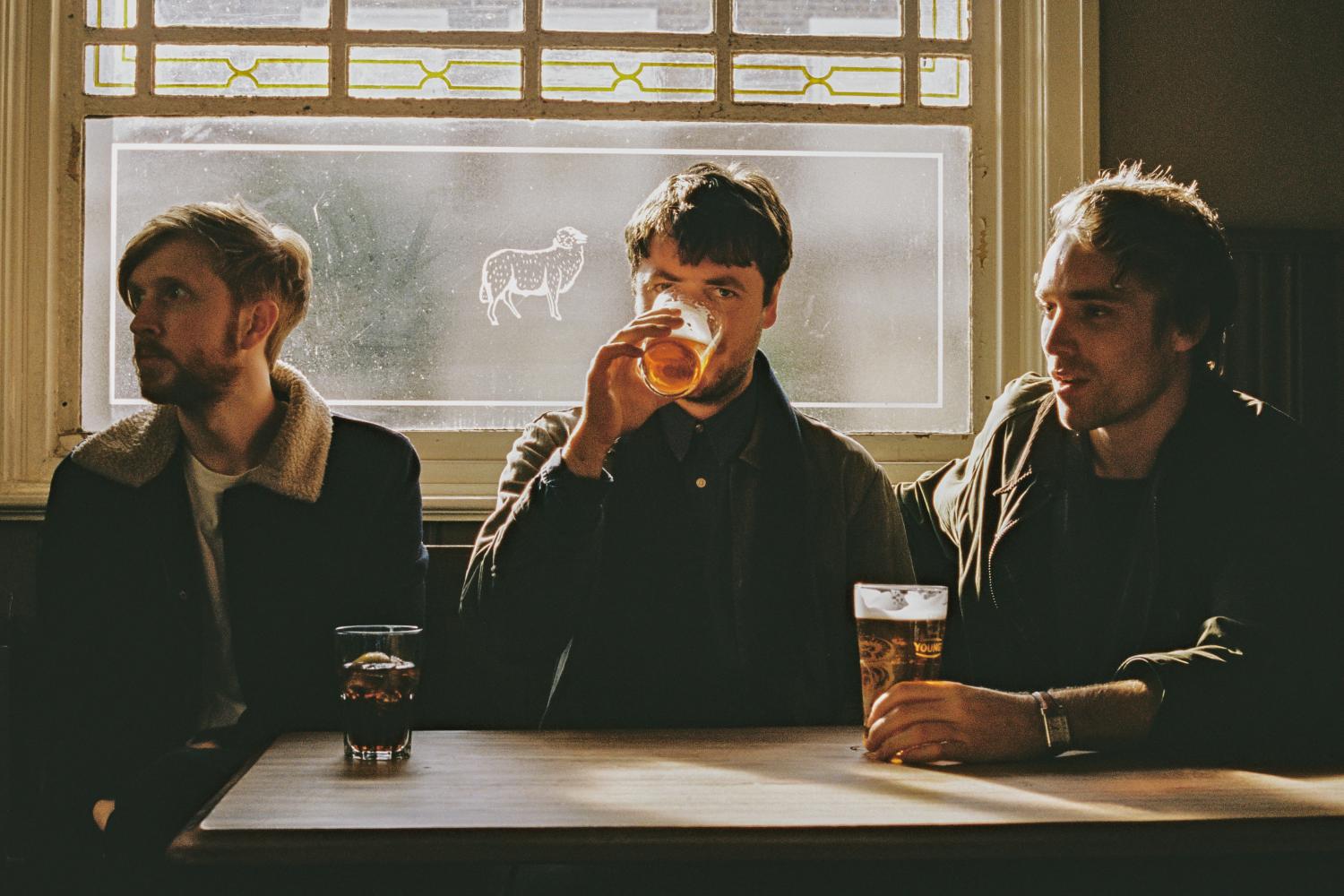
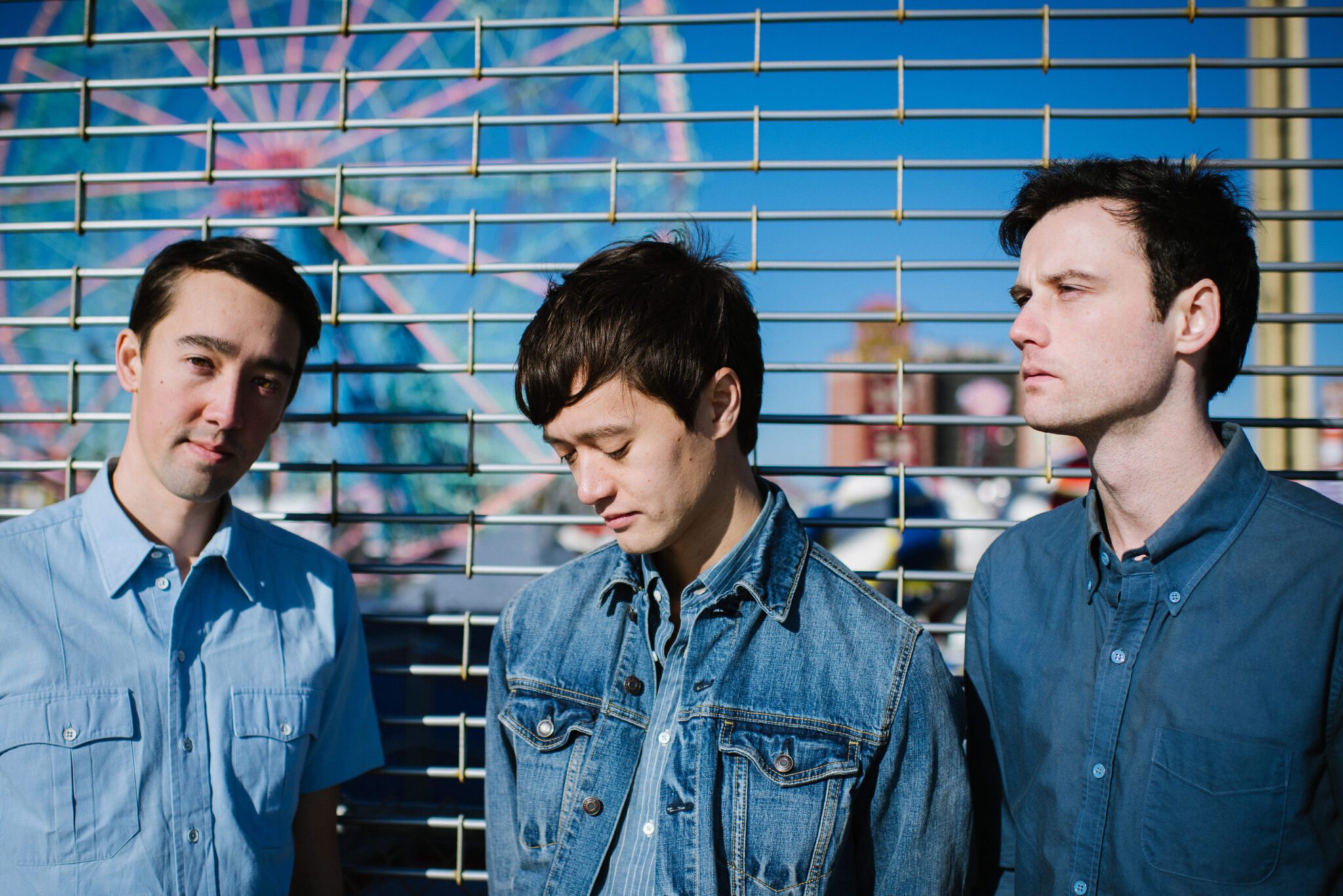
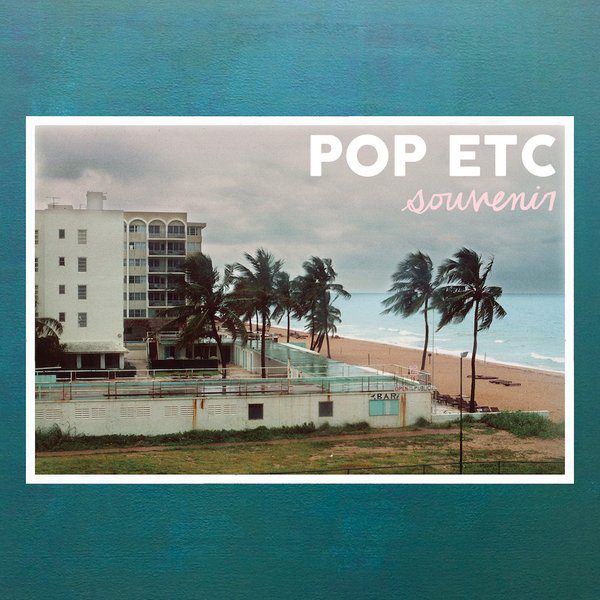
Berkeley-born and Brooklyn-based trio POP ETC are back with Souvenir, a follow up to 2012’s eponymous release.
In the last three years, the band has traversed in an even poppier direction, almost a little cheesy. But in a time when “pop” is considered an obscenity, a genre to be left for the tweens, POP ETC makes something shimmer on Souvenir.
The first single, “What Am I Becoming?” stands out as one of my favorite tracks, right next to the relentlessly catchy “Vice,” where lead singer Chris Chu sings, “You’ve got that vice that I like/No matter how hard I fight/It takes a hold of me right now.”
“Your Heart is a Weapon” and “Running in Circles” most clearly relay the 80’s synth-pop feel dominating the album. Slowing it down, “I Wanted to Change the World But the World Changed Me” (apart from being a mouthful of a title) is set in motion by a catchy guitar hook immediately reminiscent of “No Scrubs” by TLC.
The album is sprinkled with bits of R&B influence throughout, and it’s fair to assume these guys have spent some time listening to the likes of both Duran Duran and Mariah, and everything in between.
Perhaps that explains where the “et cetera” comes from.
There’s a clearly deliberate cohesion on Souvenir that was lacking on the overdone POP ETC. Simplifying the production and easing up on the auto-tune makes for a delightful listen, and a pretty good dance party playlist for fans of other contemporary indie pop artists like Ra Ra Riot or Washed Out.
The boys are currently on tour with Oh Wonder, and will be playing Music Hall of Williamsburg this Friday and Bowery Ballroom on Saturday.
The mysterious electro-R&B 4am released their debut track, “More,” and we’re here to share it with you on this New Music Monday. There’s little known about the male/female duo, but fans of The XX, James Blake, and Chvrches will dig the haunted, sexy cool electro beats, as staticky female vocals poke through to explain: “I need more…” The song invokes emotions surrounding that distinct mental break, hot with both sadness and the thrill of self confidence, when you finally say out loud that you need more, and decided to go out and get it.
Sadie Dupuis (of Speedy Ortiz) and Lizzo released “Basement Queens,” on Wednesday, a song with a meta topic: women taking charge in the studio. The songwriting/recording process for the track was filmed by Google Docs, who sponsored the collaboration (in the video, you can see the two working on lyrics using the computer program). Next up: A Waxahatchee collaboration sponsored by MailChimp.
PJ Harvey Announces New Album
The singer, songwriter, saxophonist and guitarist released video previews, and a full track, of The Hope Six Demolition Project. Set for release on April 15th, the album was recorded in a special studio that let members of the public observe the recording process. The album trailer below hints at a record full of political commentary, and “The Wheel” is a grim look at the consequences of war.
Josh Homme & Iggy Pop Also Announce New Album
The frontmen for The Queens of The Stone Age and The Stooges announced that they secretly recorded an album together, and will be touring to promote it. Post Pop Depression comes outMarch 18th and also features Dean Fertita of the Dead Weather and Matt Helders of Arctic Monkeys. Homme, who records drums with the Eagles of Death Metal and occasionally plays live with the band, said working on the album helped him process the ordeal his bandmates went through when their concert was a target of terrorist attacks in France. Check out Homme and Iggy’s performance on The Late Show With Stephen Colbert last night:
https://www.youtube.com/watch?v=DngIWkQVPgU
The Music Industry (Still) Has A Problem With Women
Twitter exploded on Monday after Amber Coffman, of the Dirty Projectors, shared her story of being groped by Life or Death PR & Management’s former CEO, Heathcliff Berru. After other women in the music industry spoke up about Berru’s pattern of harassing women, many artists who had ties with his firm quickly severed them, including Wavves, D’Angelo, Speedy Ortiz, and DIIV.
Berru released a statement blaming his behavior on alcohol on drugs, but as this piece points out, substance abuse does not suddenly make someone a sexual predator. As bad as his refusal to accept full responsibility is, what’s just as troubling is that many people in the industry seemed to know about his reputation, yet did not speak up and continued to hire him. The lack of consequences people like him face enforces a dangerous norm in the industry:
Glenn Fry of The Eagles passed away this week. He was 67. As all of our favorite rock’n’roll icons start to age, this is going to happen more and more frequently, making the next decade or so a very depressing one. Happy Friday!
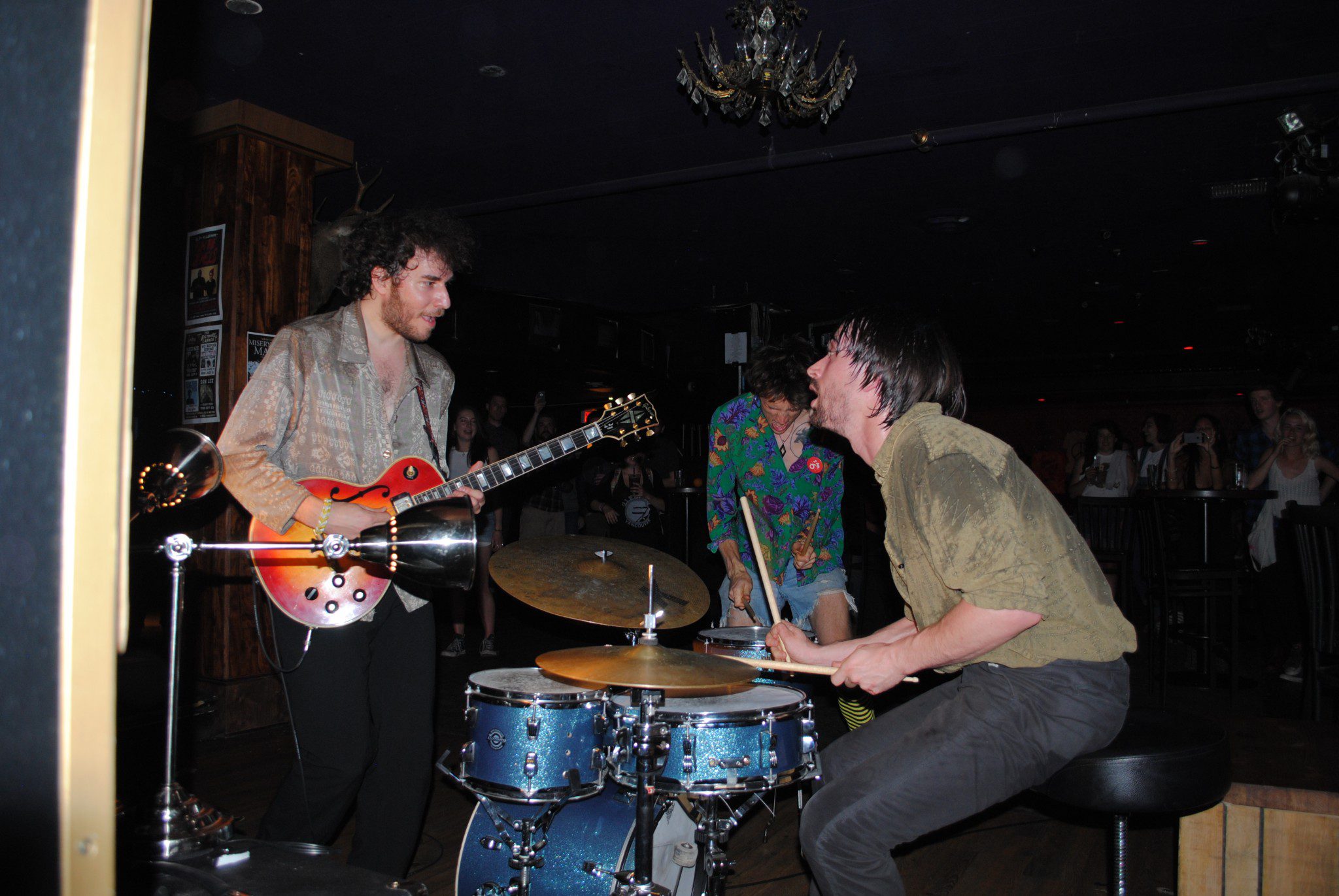
For all of the venues we’ve lost in the past couple of years: Death By Audio, Glasslands and 285 Kent to name just a few, I sometimes find myself creeping back into Manhattan in search of a cozy room. The Mercury Lounge is one of those spots that, despite its address in the oft-maligned Lower East Side, has yet to fail me as a concert hall. Where else can you see acts as disparate as Nathaniel Rateliff and Ty Segall? Where else is there an intimately sized space with a soundman who actually knows what the hell he’s doing? Where else would Yonatan Gat be able to order half the crowd to mount the stage while the rest of us encircle him and his band on the floor?
I went into Friday night not quite knowing what to expect, an outlook I’ve always believed yields the best results. I had never seen Monotonix in their heyday, but of course was well aware of the legacy…and the riotous, hedonistic, often-flammable sets they played. Would the night end in sirens? Fisticuffs? Human sacrifice? None such luck for the sadists, but I can say us music lovers were well pleased as Yonatan Gat and Co. delivered the best live performance I’ve seen this year.
Warming the crowd for Gat was local band PC Worship, who I’ve been hearing good things about for a while now. Their set was somber and hard-hitting, with more complexity than you see from most openers. Right off the bat I catch sight of drummer Shannon Sigley, who I can’t help but liken to a young Sandy West. Aside from being ace behind the kit, Sigley is no doubt the charismatic core of the band-with a kind of sex appeal that isn’t tawdry, just plain badass. What can I say? I love a lady drummer!
Vocalist Justin Frye manages to be the technical bandleader while giving his fellow musicians enough breathing room, which makes all the more sense when you learn that many PC Worship members were once New School jazz majors. The length and the freedom of their songs speak to that fact-at one point I split for the restroom mid-track, only to return to the same song, still droning.
PC Worship is a difficult band to genre-baste. Their music is far too texturally interesting to sum-up in one word. There’s punk, jazz, shoegaze, grunge, kraut rock, space rock, jam band…space jam? Whatever you want to call them, you have to hand it to a band who’s bassist doubles as a squealing sax man, and who’s rhythm guitarist can opt for the conga while sat on a cinderblock.
I wasn’t entirely paying attention to the set up between PC Worship and Yonatan Gat, and I have my companion to thank for noticing in time that Gat’s gear was being assembled on the ground. Audience members formed a circle around the instruments and a sharp green light beamed from its nucleus. By the time Yonatan Gat, drummer Gal Lazer, and bassist Sergio Sayeg took to the…floor, there was a tangible buzz in the air.
Something I think of far too little as a music journalist is the crowd – and what an integral part of a show they are! The séance-like encircling of Gat’s band provided a panoramic view of the fans and a chance to stare into the eyes of your peers while sharing the excitement of this one moment in time.
And what excitement! We got 45 minutes of near-unpunctuated noise. Yet another genre-swapping band, the trio volleyed between psych-rock, garage, punk, surf, jazz, and just general sonic mayhem. Both Gat and Sayeg were wizzes on their respective strings, but the drummers stole my heart that evening: Gal Lazer was off the chain.
An immensely skilled percussionist, Lazer looks like Iggy Pop and drums with the thrashing insanity of Keith Moon-a sort of precise madness that you don’t see too often. His style was sexy, staccato, punk-jazz genius. I couldn’t take my eyes off of him…or his unzipped fly, the latter of which may have distracted me from the fact that his brilliant playing was emanating from a toy drum kit. He played so fast that I originally thought he was working a double bass pedal, but I don’t think those have saturated the Fischer Price My-First-Drum-Kit market quite yet.
The colorful workman’s lamps set up by each band member suddenly flicked off, leaving us all in darkness for a moment. As cheers swelled the band remained fixed. Eventually the lights slapped on again to the sound of Gat saying “thank you, very clever.” As it turns out, encores are just as exciting when the band never leaves the room in the first place.