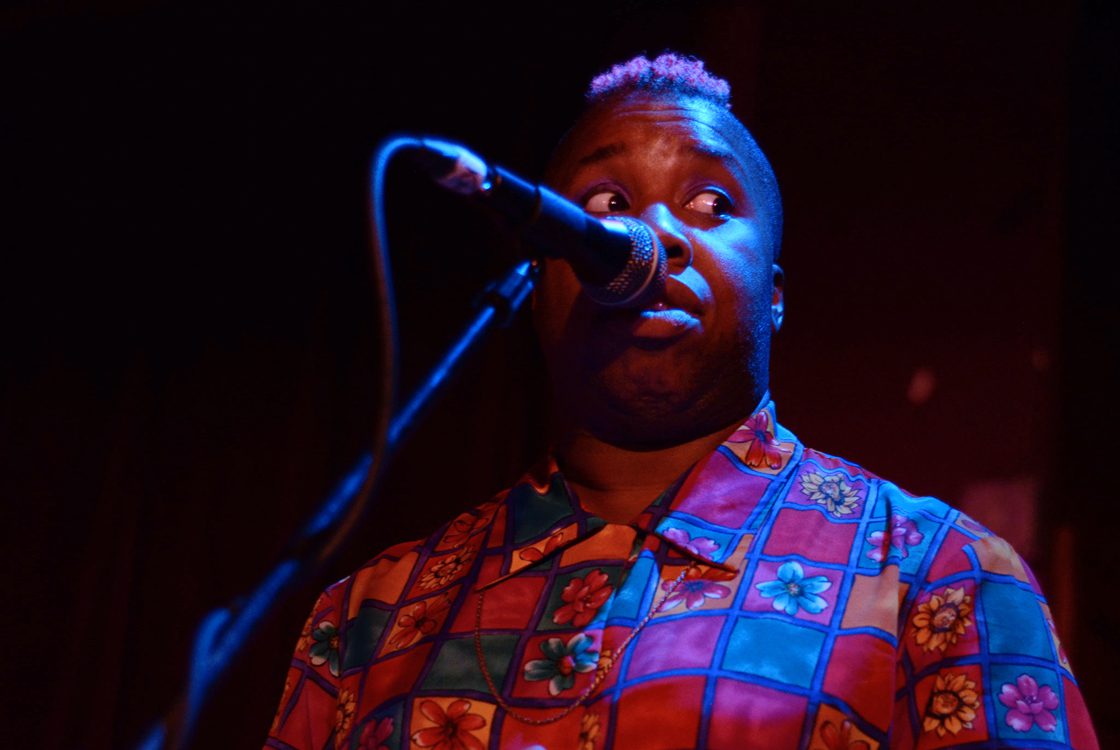
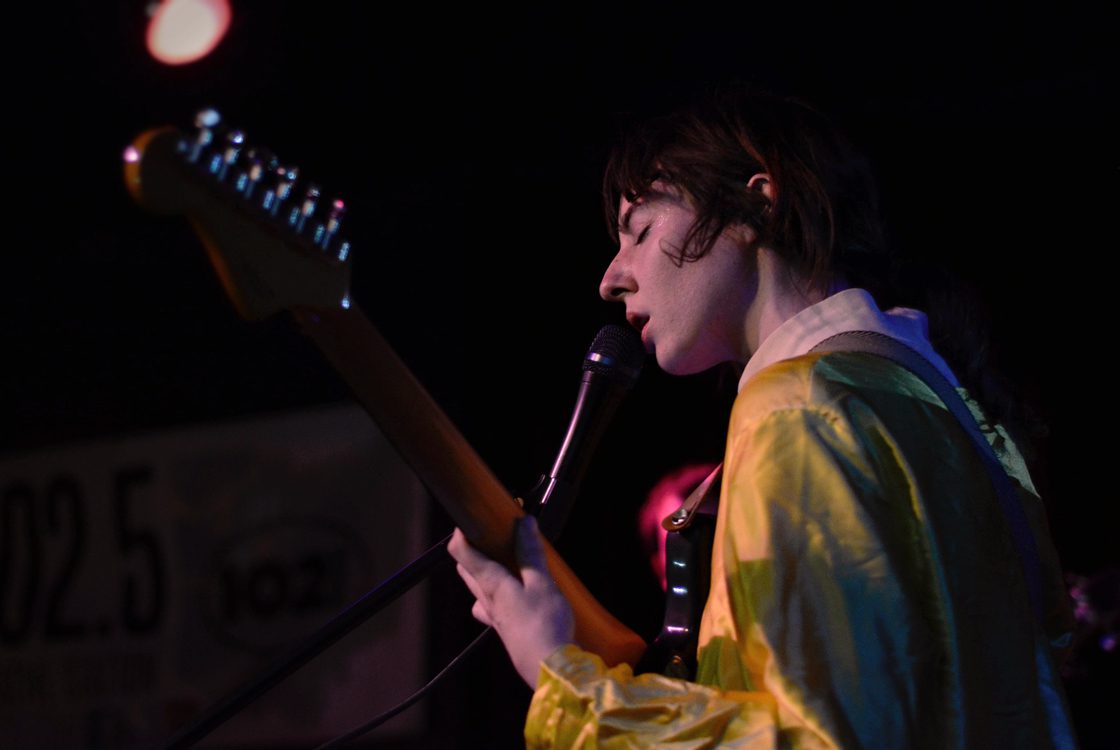
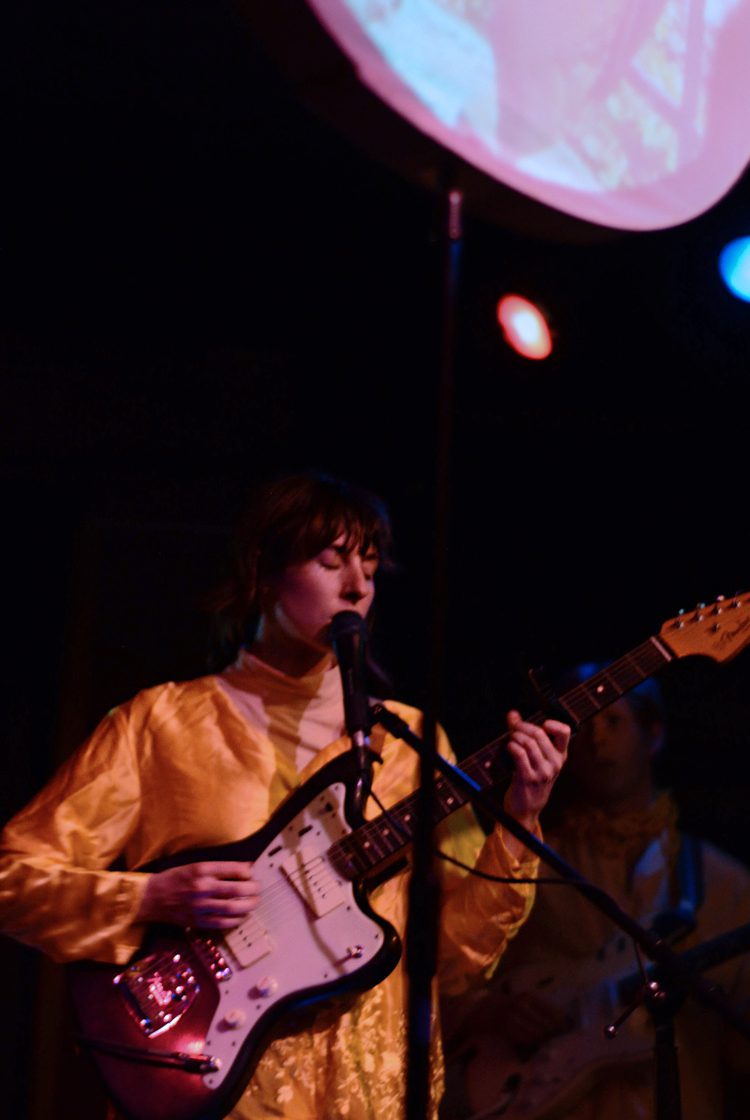
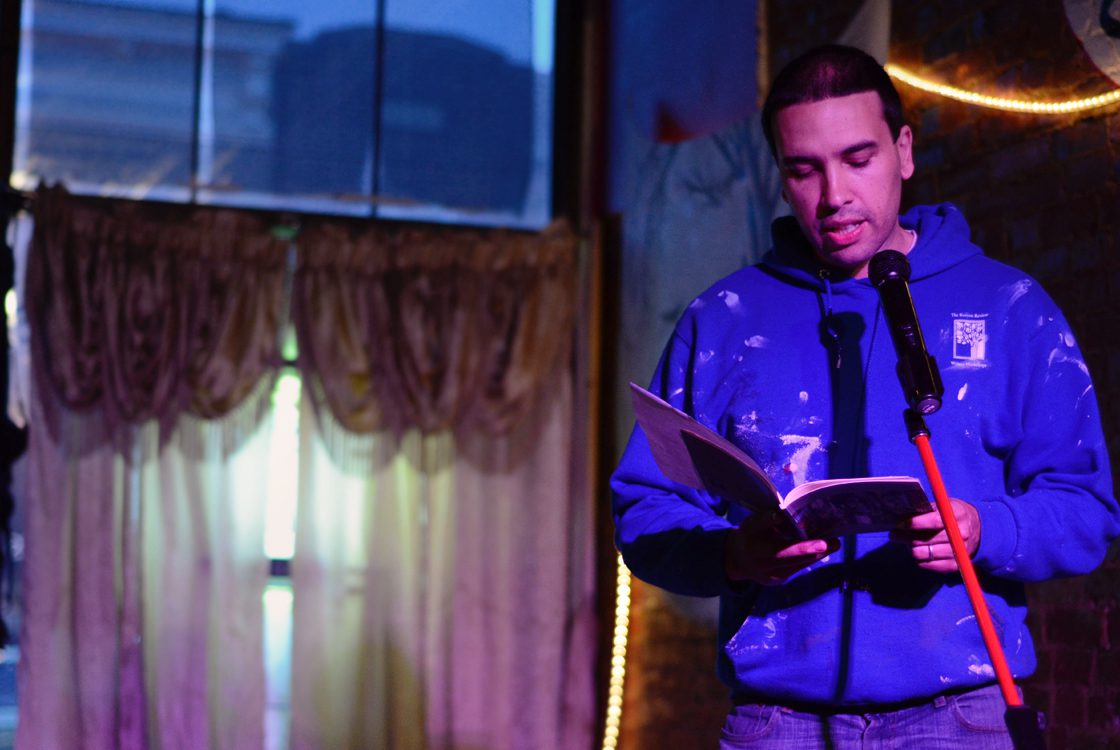
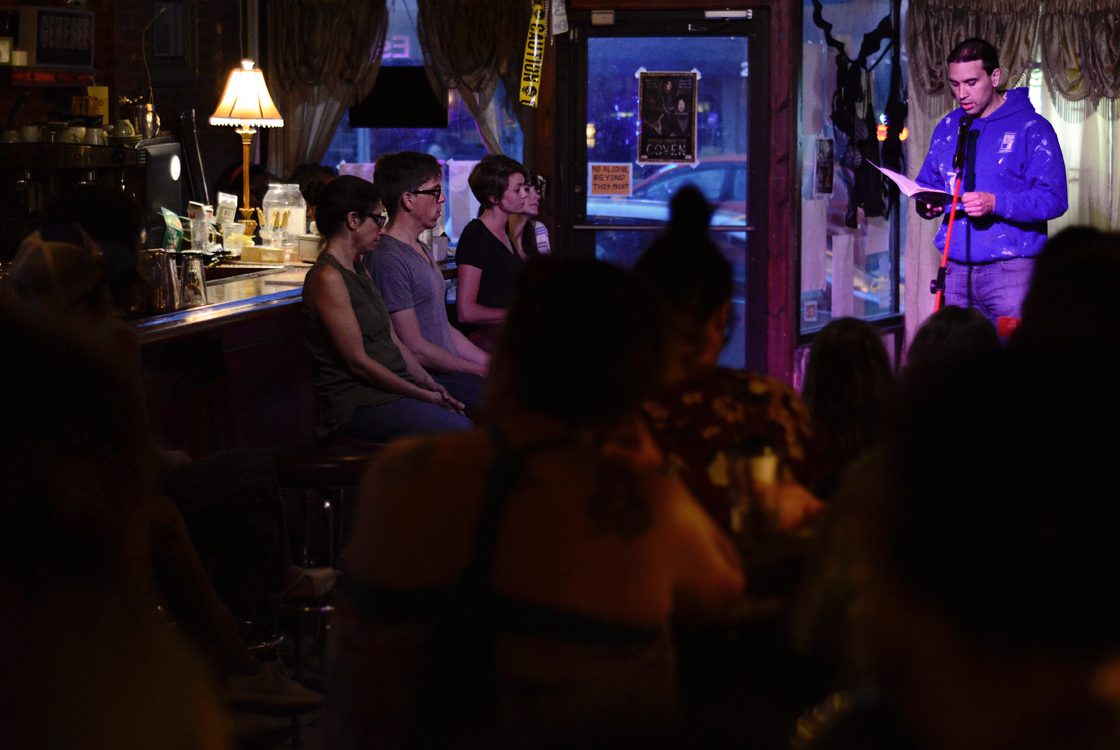
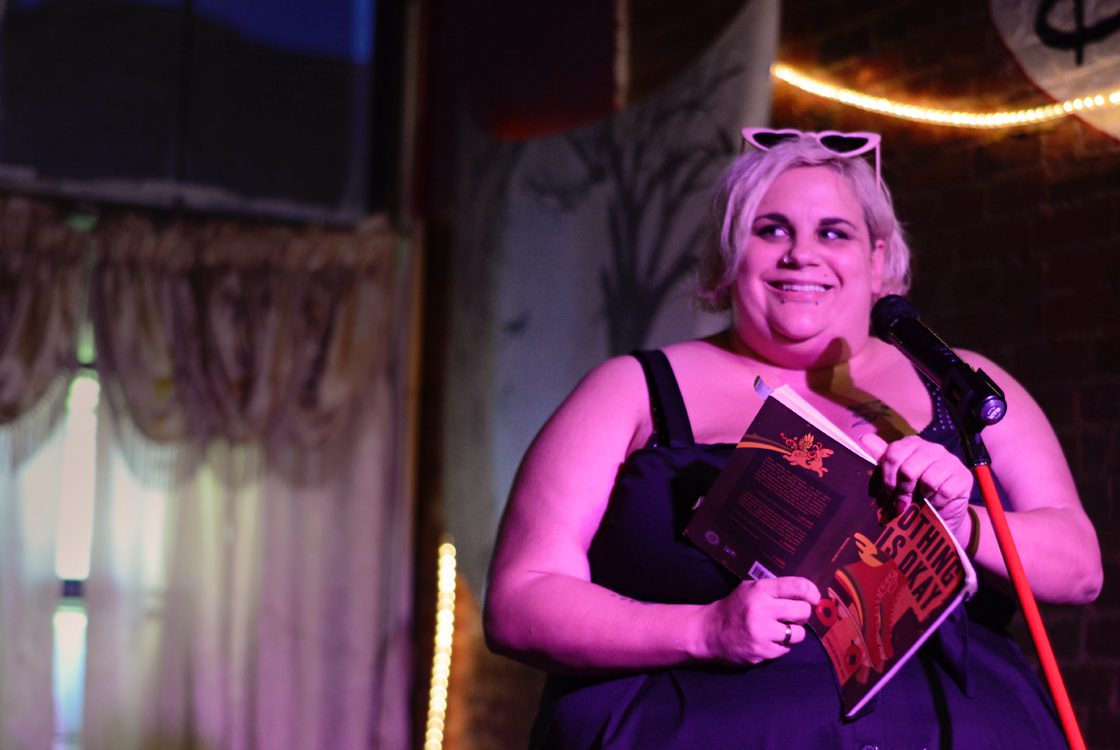
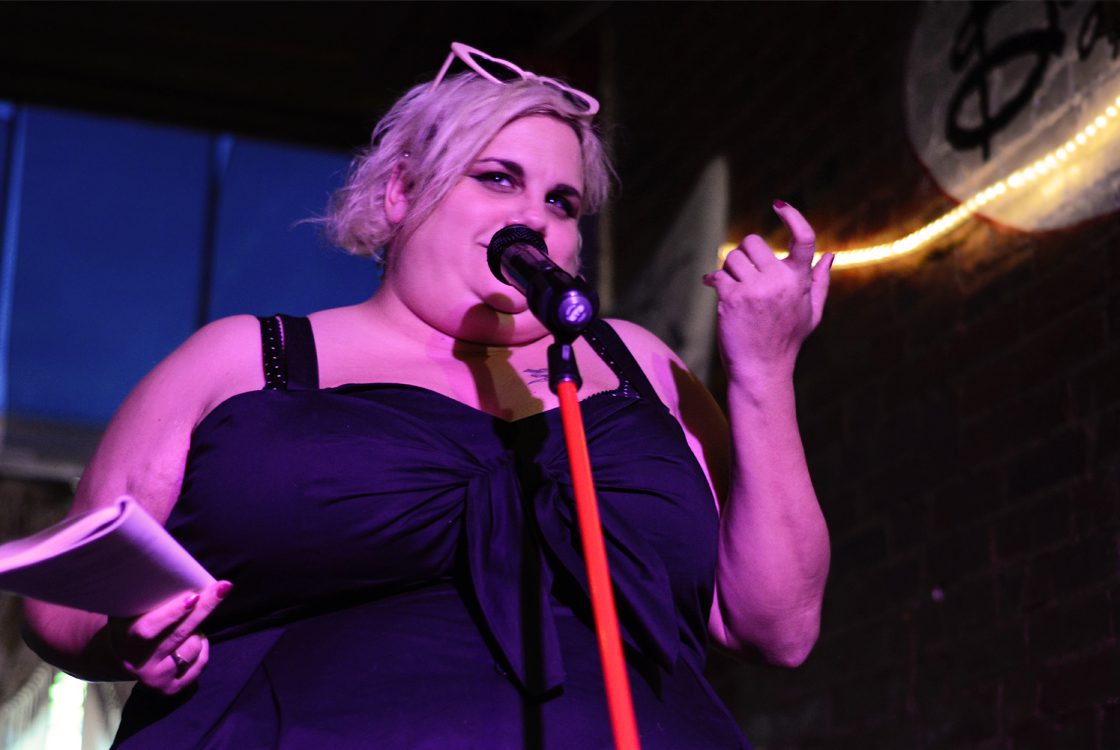
Over the past eight and a half months I’ve spent living in and writing about Columbus, I’ve been introduced to so many crevices of the city’s arts and music scene, each one as remarkable and needed as the last. Columbus houses long-term open mic nights, hip-hop collectives and labels, jazz improvisers, experimental electronic musicians and DJs, publishing houses and presses (both well-known and new), a DIY scene that draws touring acts from around the country, locally-own galleries, and ever-expanding dance companies. It is, in relative terms, a small city; one in which even the most illustrious artists can be seen in intimate venues with dirt-cheap well drinks. In Columbus, I can see slam champion Rachel Wiley at a small burlesque bar; award-winning writers Hanif Abdurraqib and Kaveh Akbar in a black box theater; rising star Nnamdi Ogbonnaya on a stage almost floor-level; I can go to a book fair hosting emerging neighborhood library projects alongside punk cornerstone Don Giovanni Records. And–for better or worse–in Columbus I can (and will) run into people I know at each and every one of those events: teachers, colleagues, co-organizers, classmates, and friends.
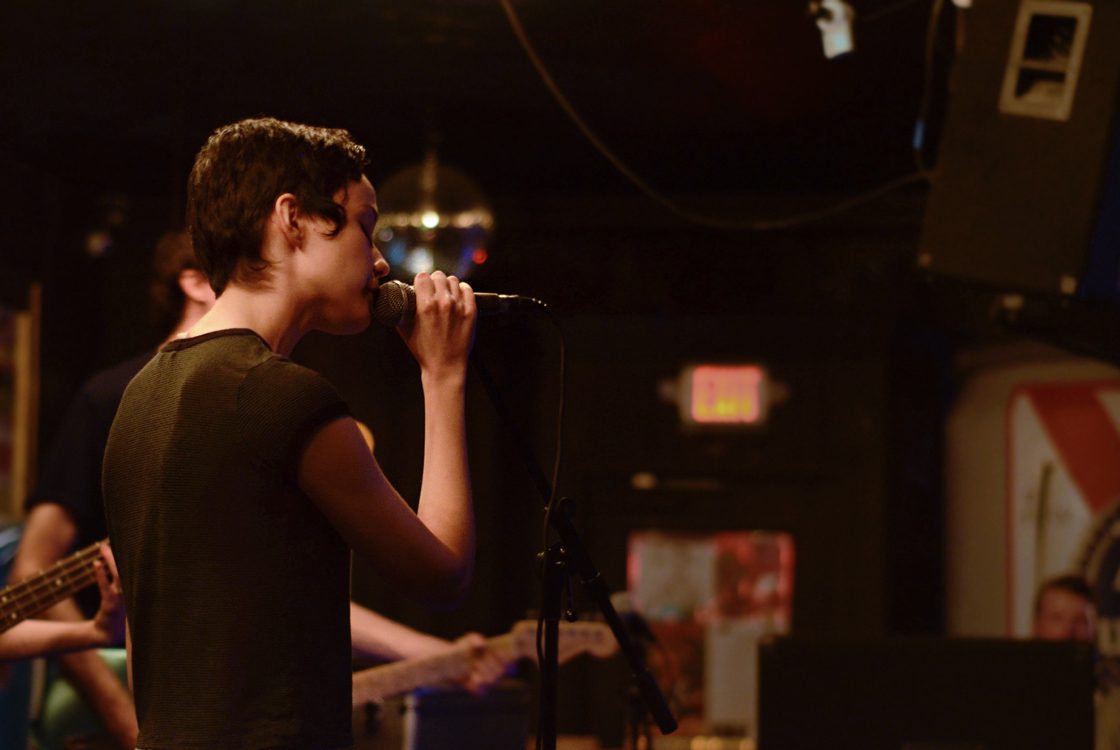
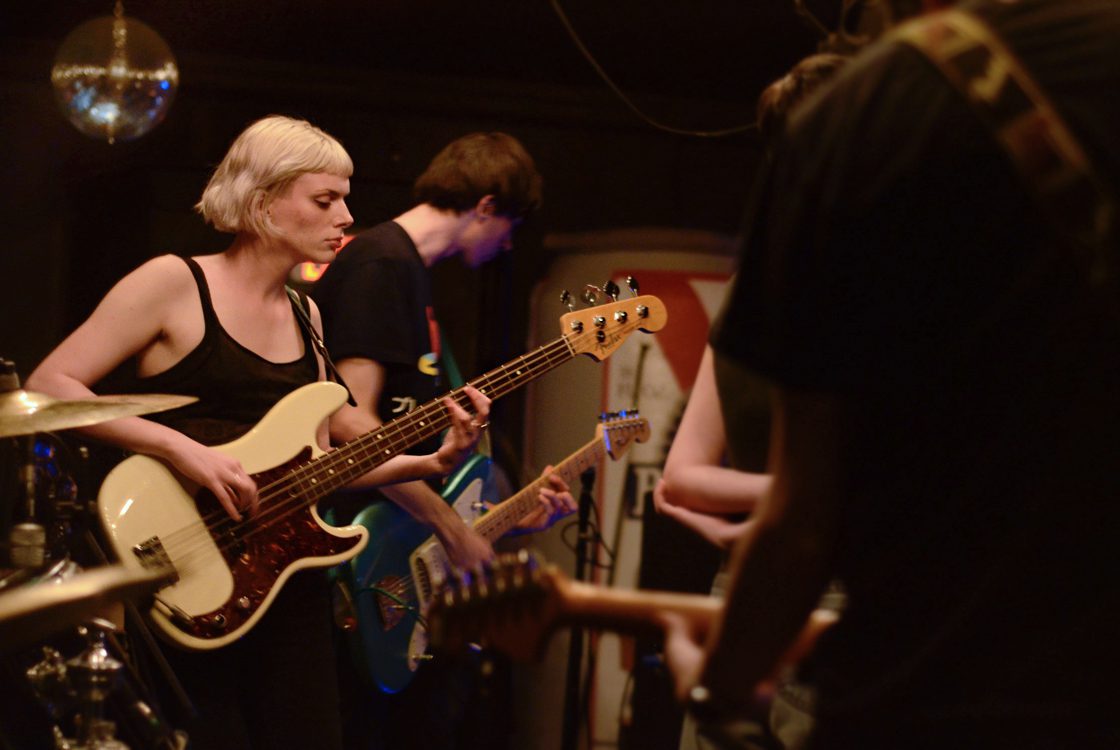
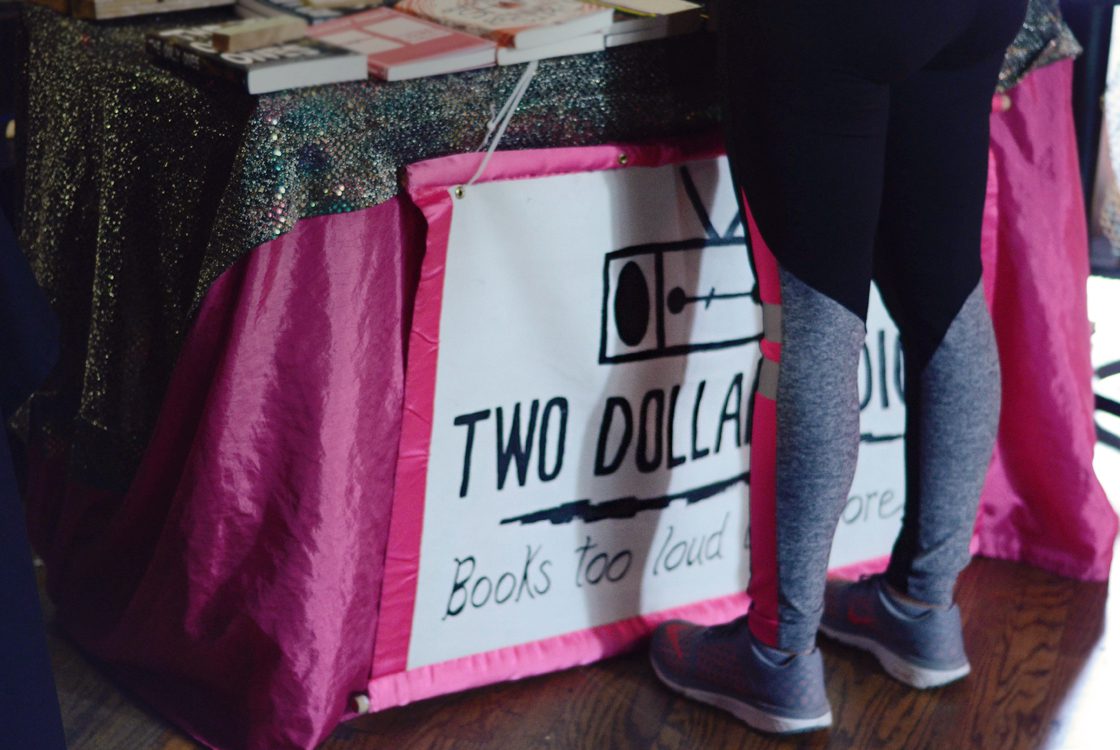
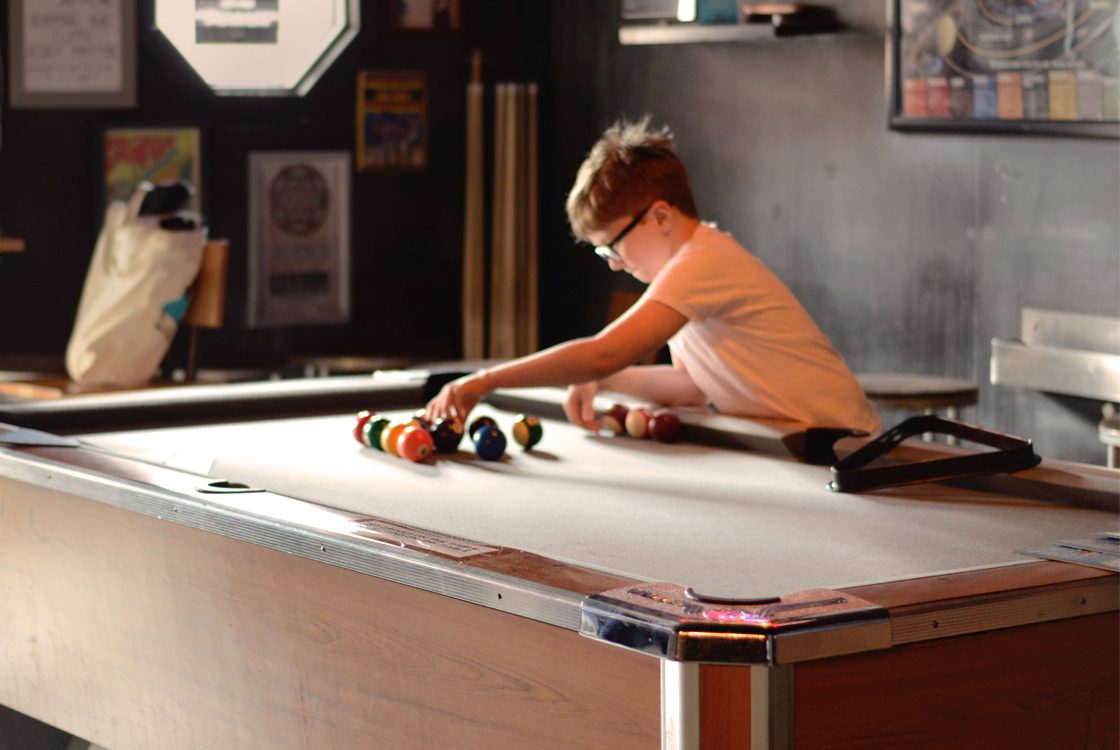
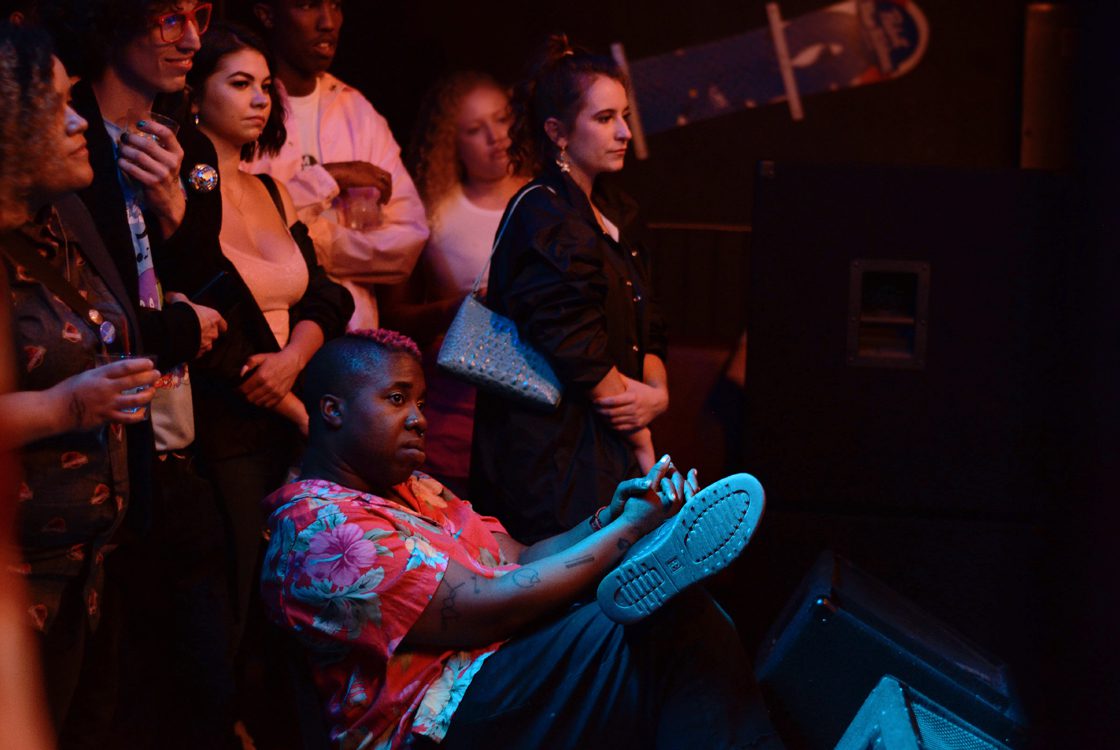
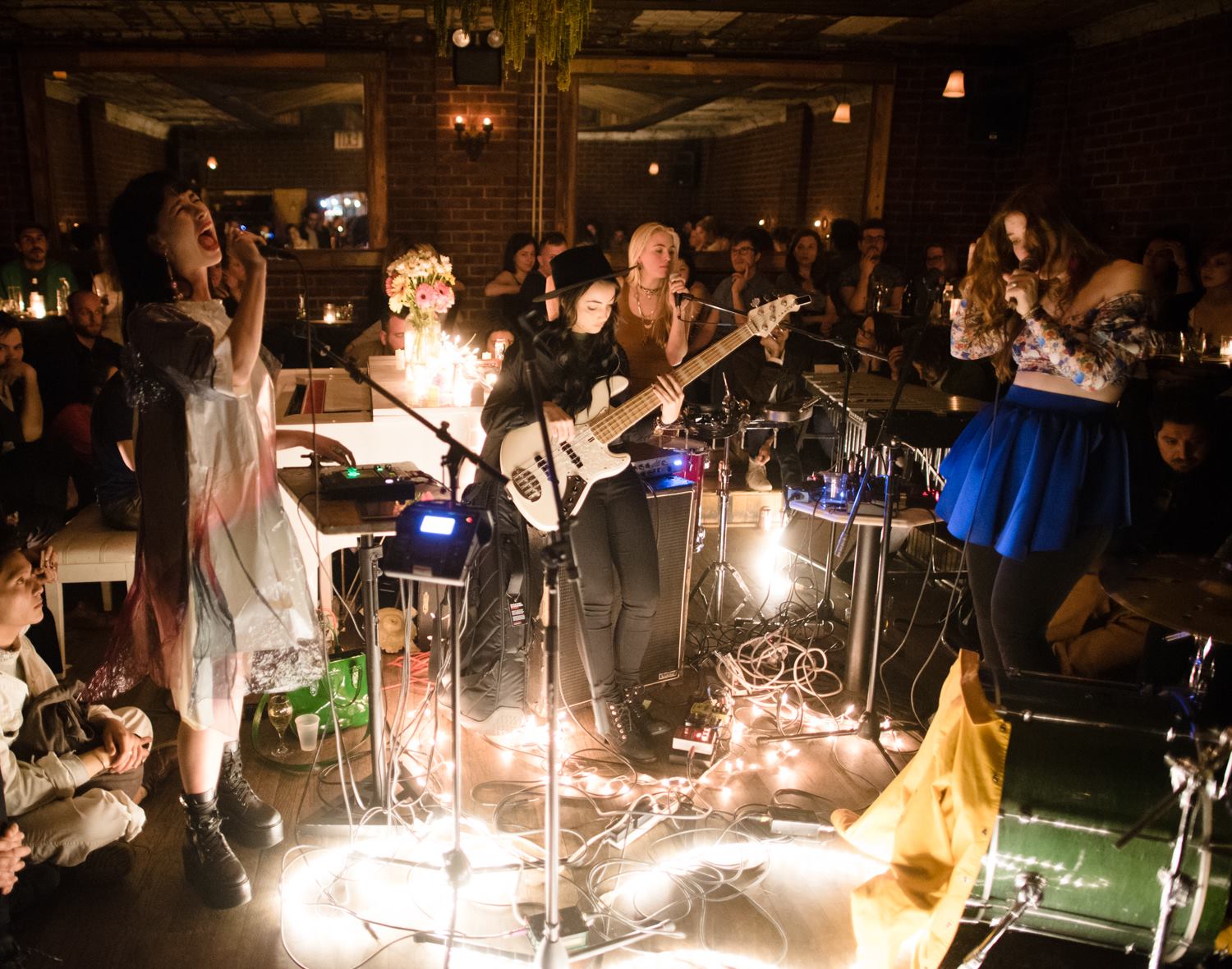
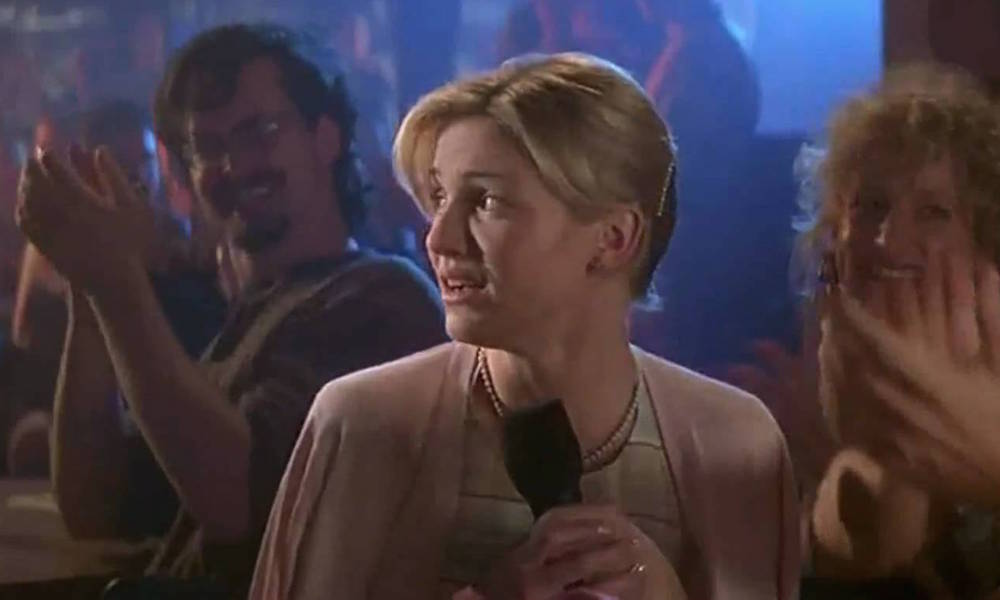
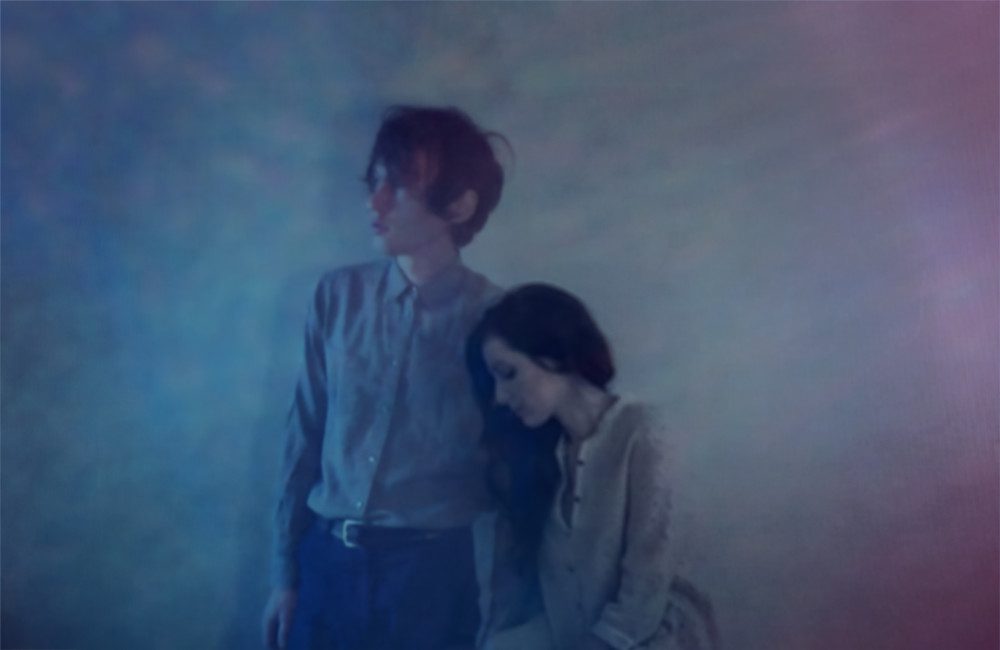
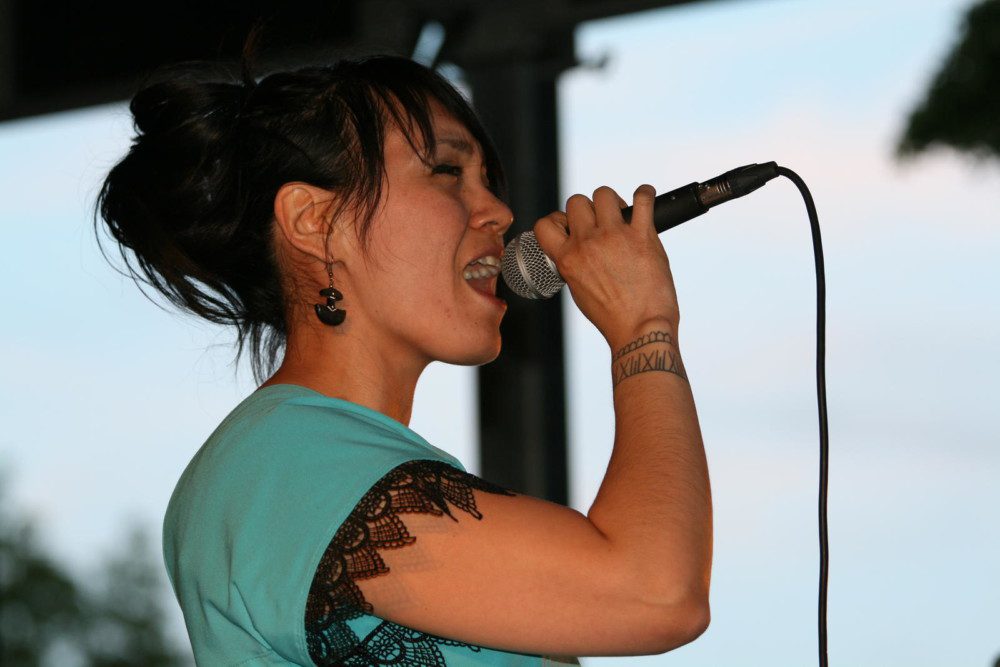
Last weekend, at Columbus’ Flyover Fest, I did all of those things–all of the events, the socializing, the book buying, and more–within a two-block radius. The Fest, which was started last year by Two Dollar Radio, a local book-publisher and film producer, is held in a smattering of independent bars and venues, as well as in the Wexner Center for the Arts on OSU’s campus. Stages are shared by both community and touring artists, and at the heart of the fest is an interdisciplinary approach to the city’s art-making scene. I was excited by the varied bills, which never stuck to one genre or aesthetic, and which, though long, always felt worth staying through. Crowds were casual and light-hearted; unlike so many of the shows I go to, I was never pushed, or hit on, or yelled at, or spilled upon. It was nice.
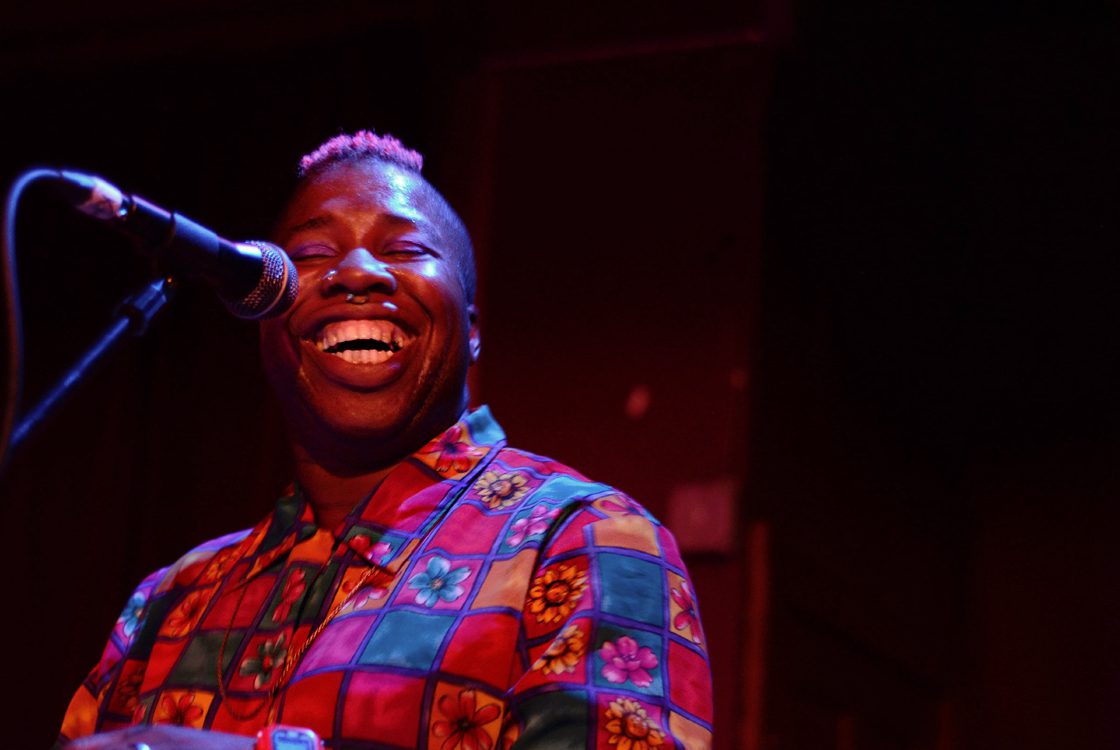
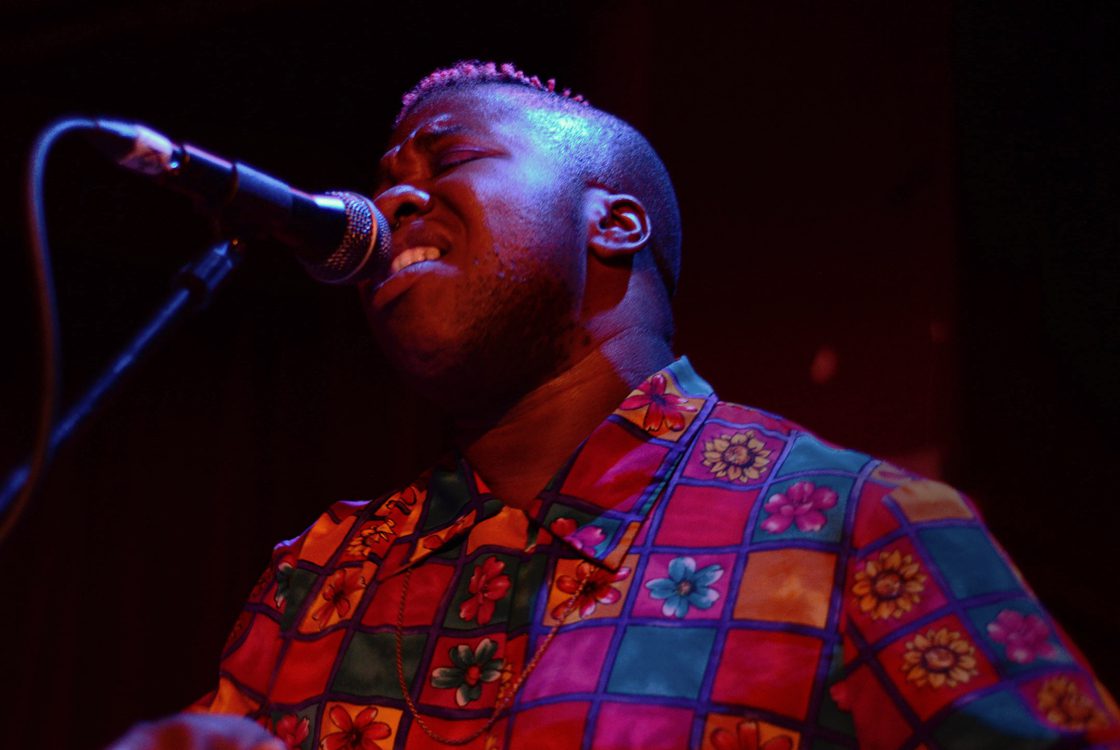
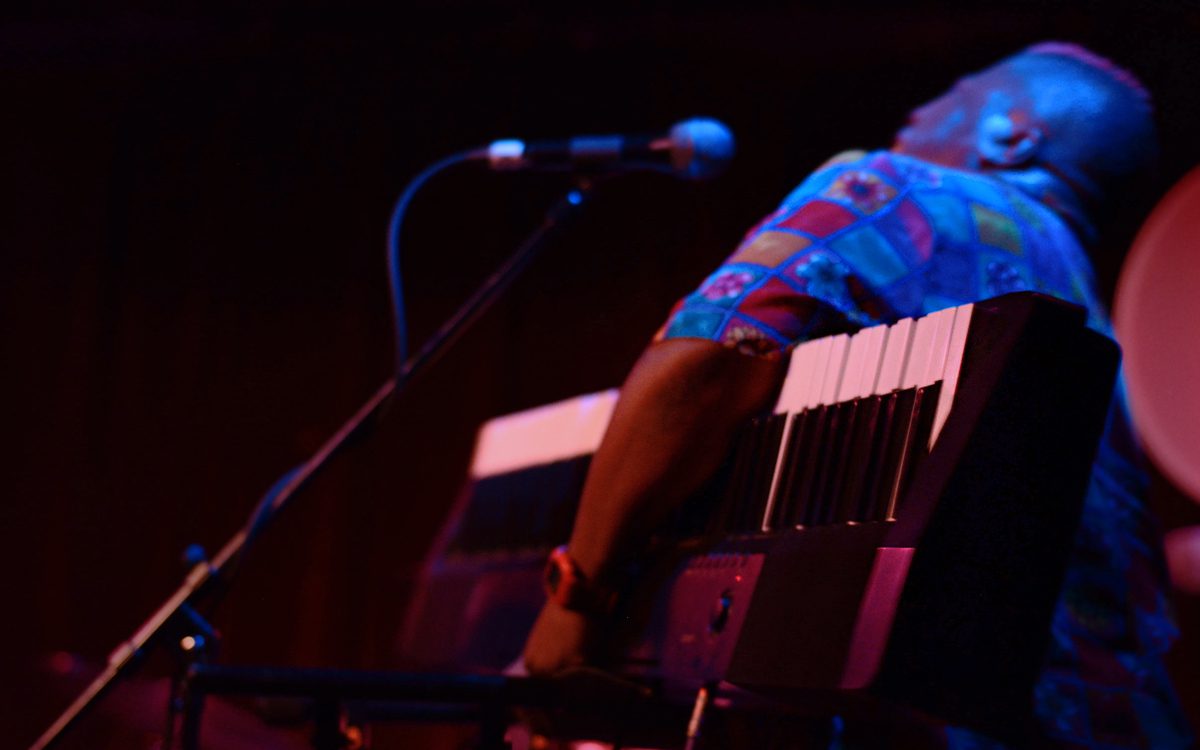
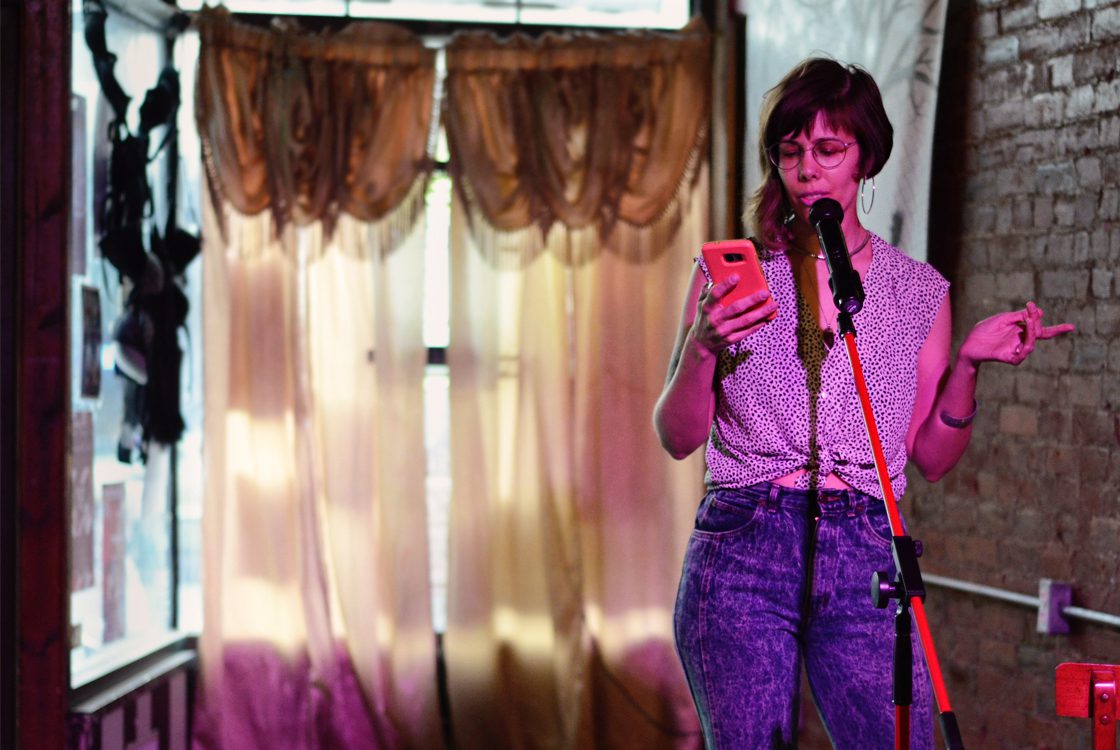
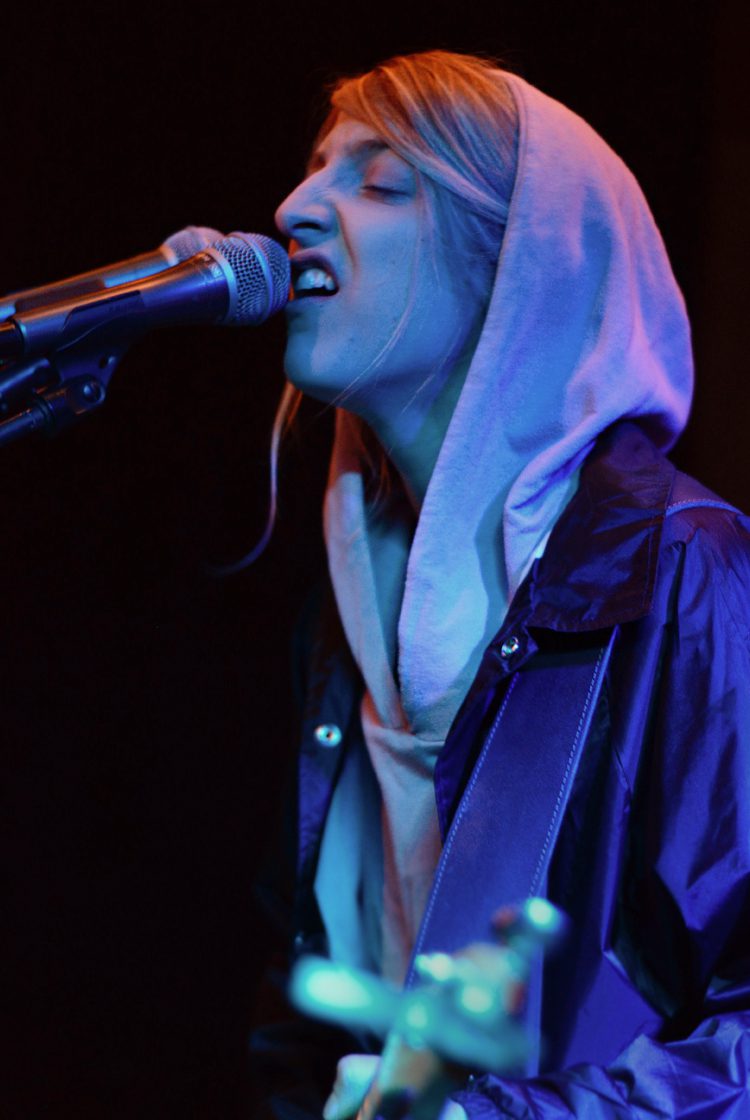
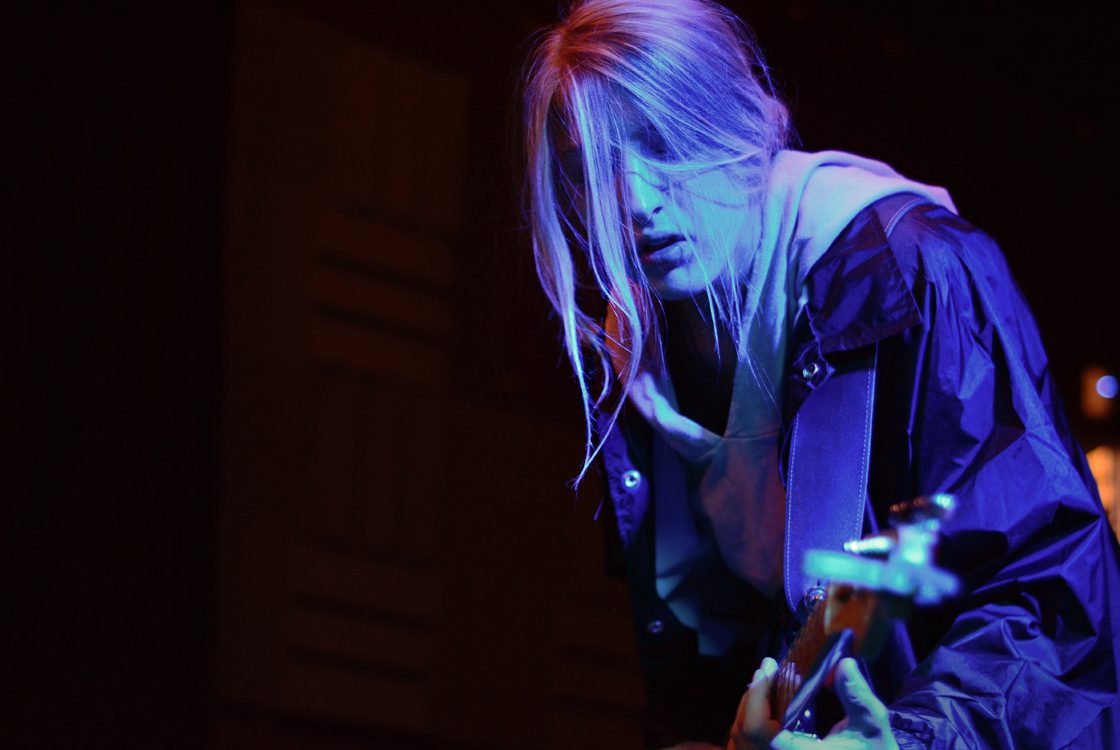
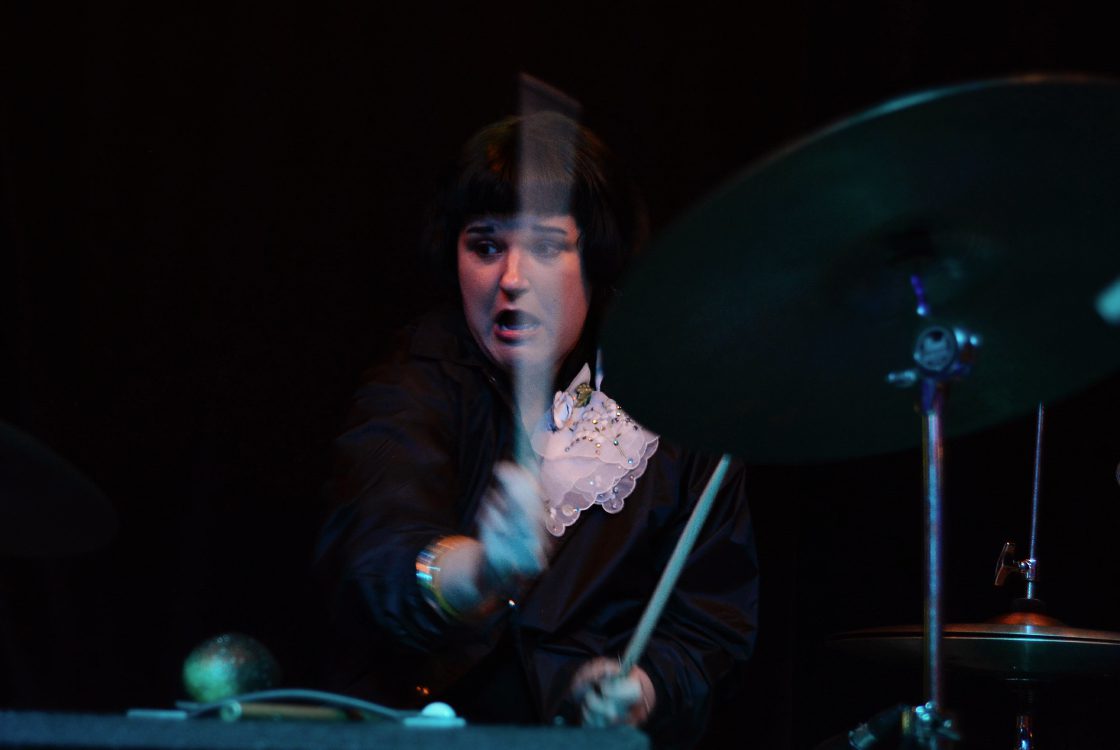
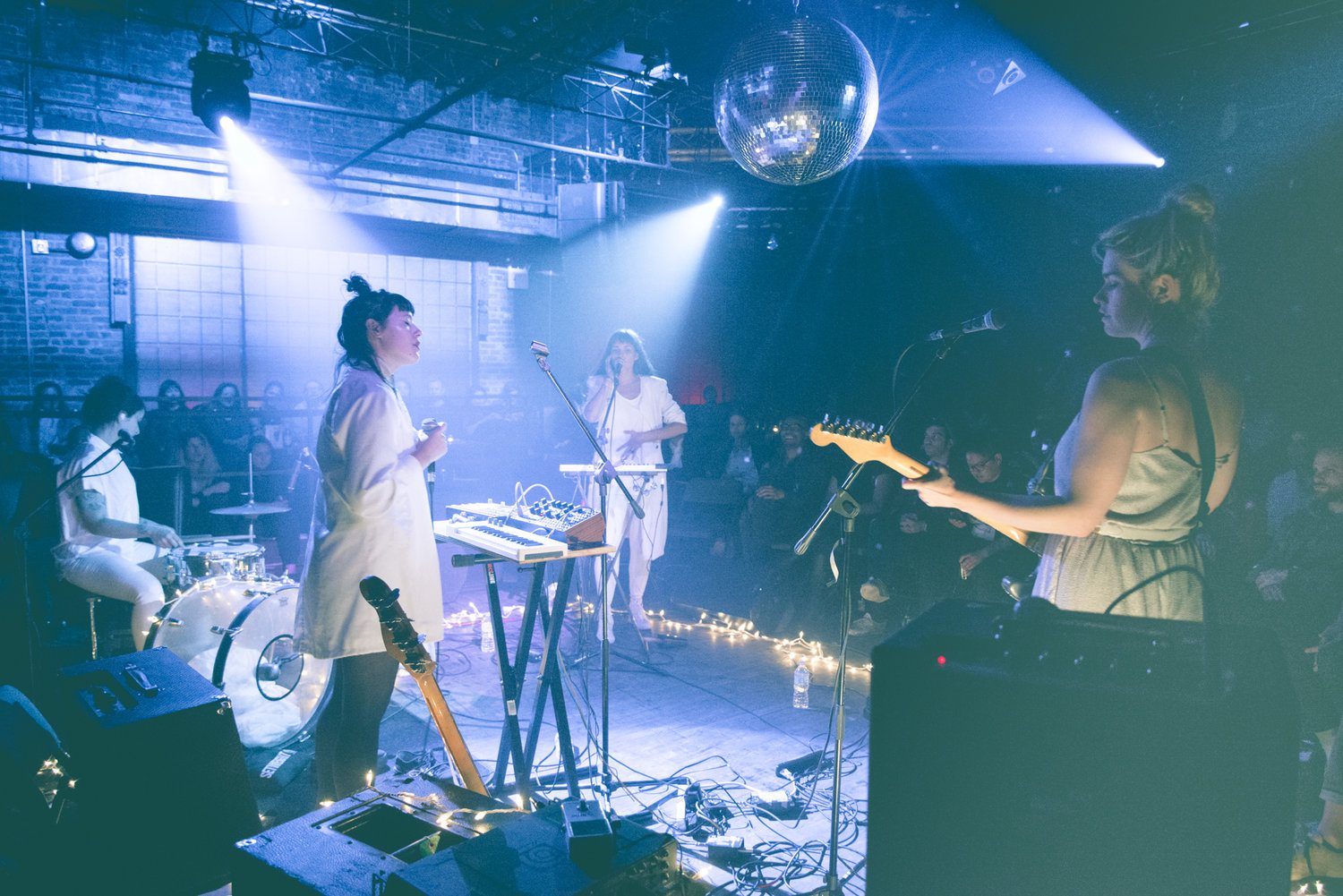
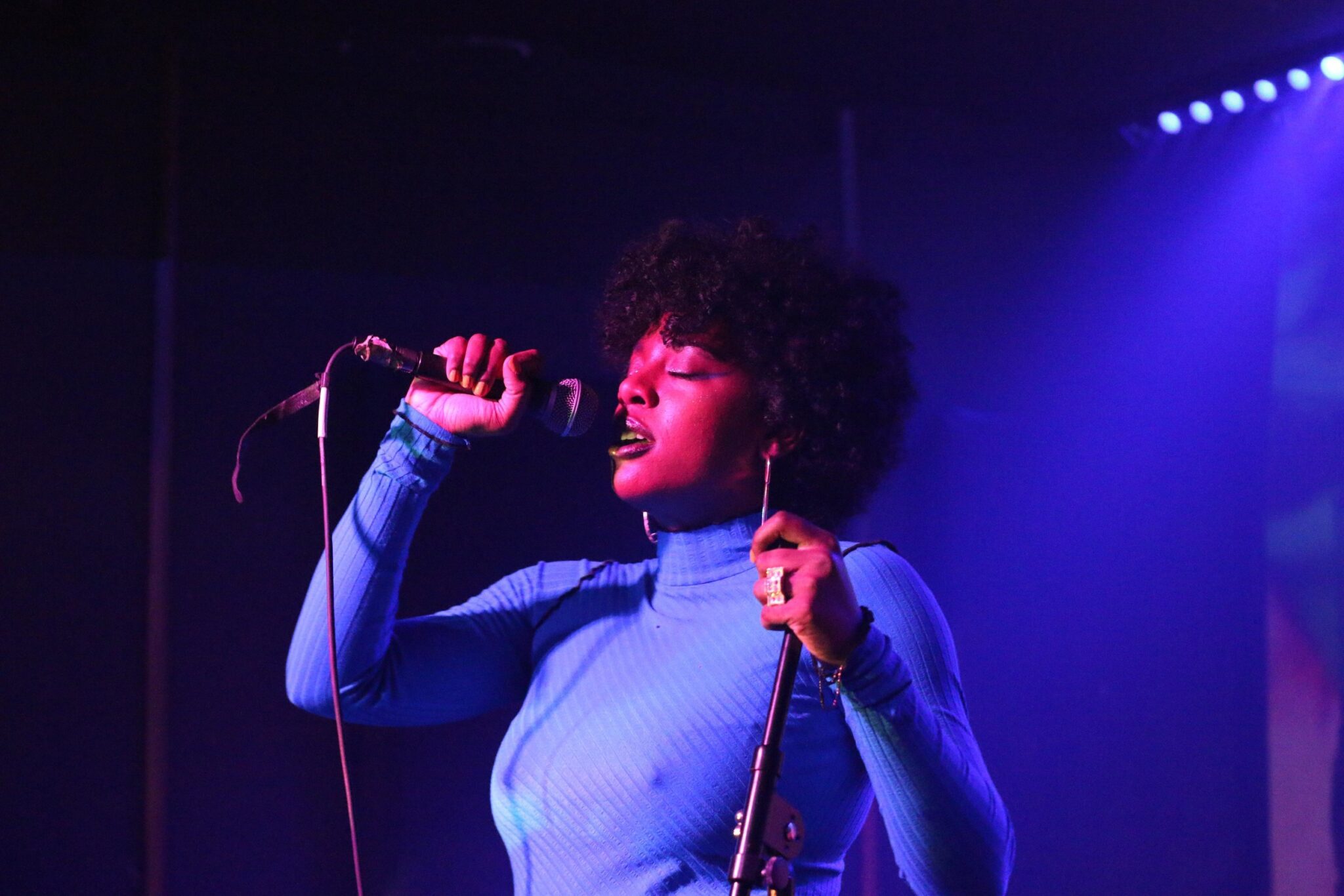
The moments when I felt most held, most inspired, came while watching performances by local musicians. Sharon Udoh of Counterfeit Madison, who played at the Ace of Cups on Friday night, continues to be one of the most joyous and talented performers I’ve ever seen, able to simultaneously play an almost impossibly electrified keyboard, breeze through a technically challenging vocal performance, and recklessly manipulate her body onstage. While Udoh flipped her keyboard from its stand, continuing to play it even as it dropped across her body, my friend turned to me, amazed. “I can’t believe how much control she has,” he said.
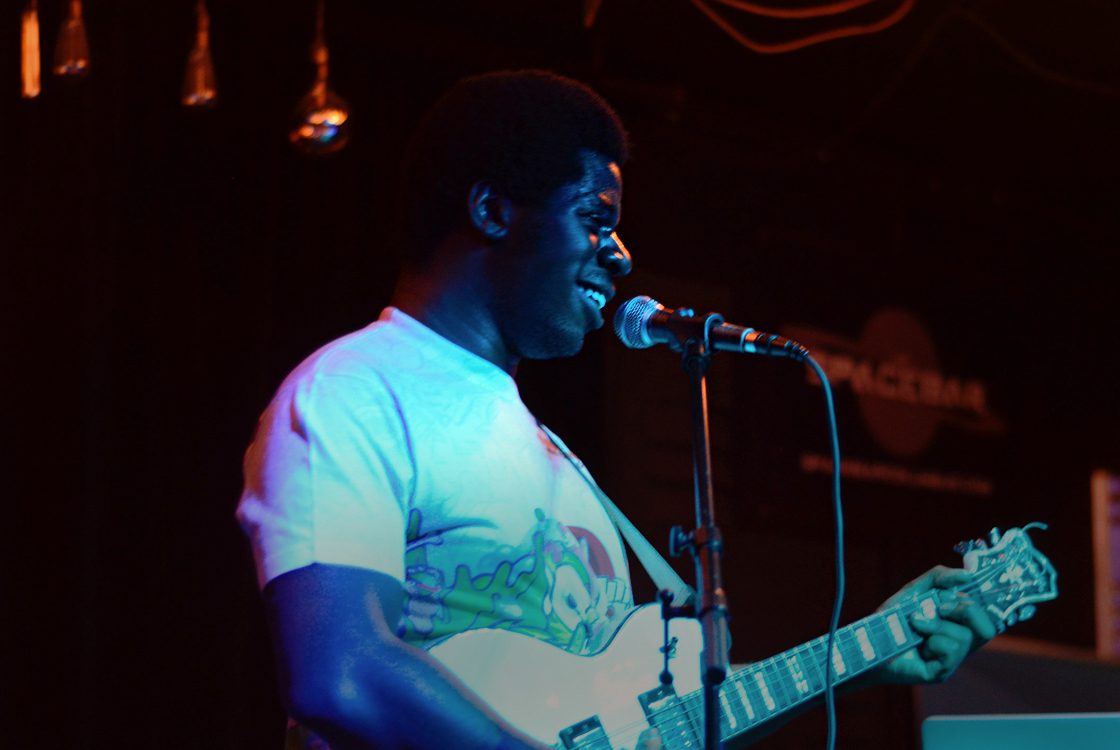
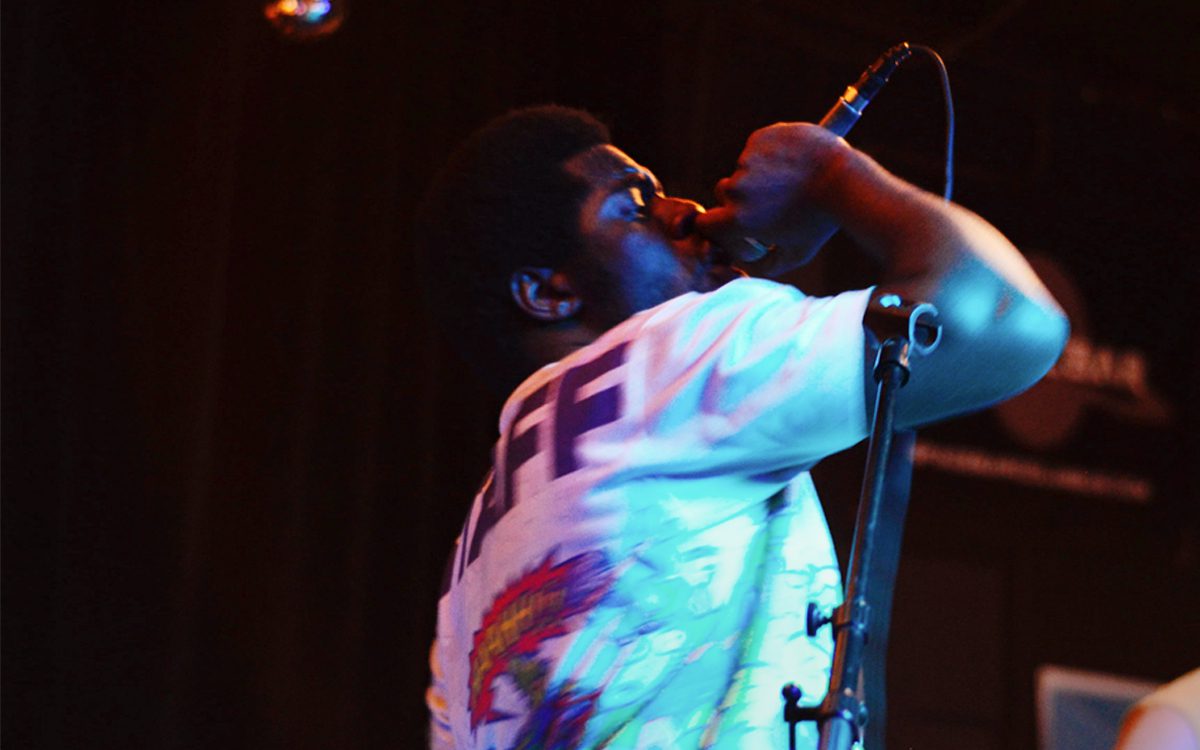
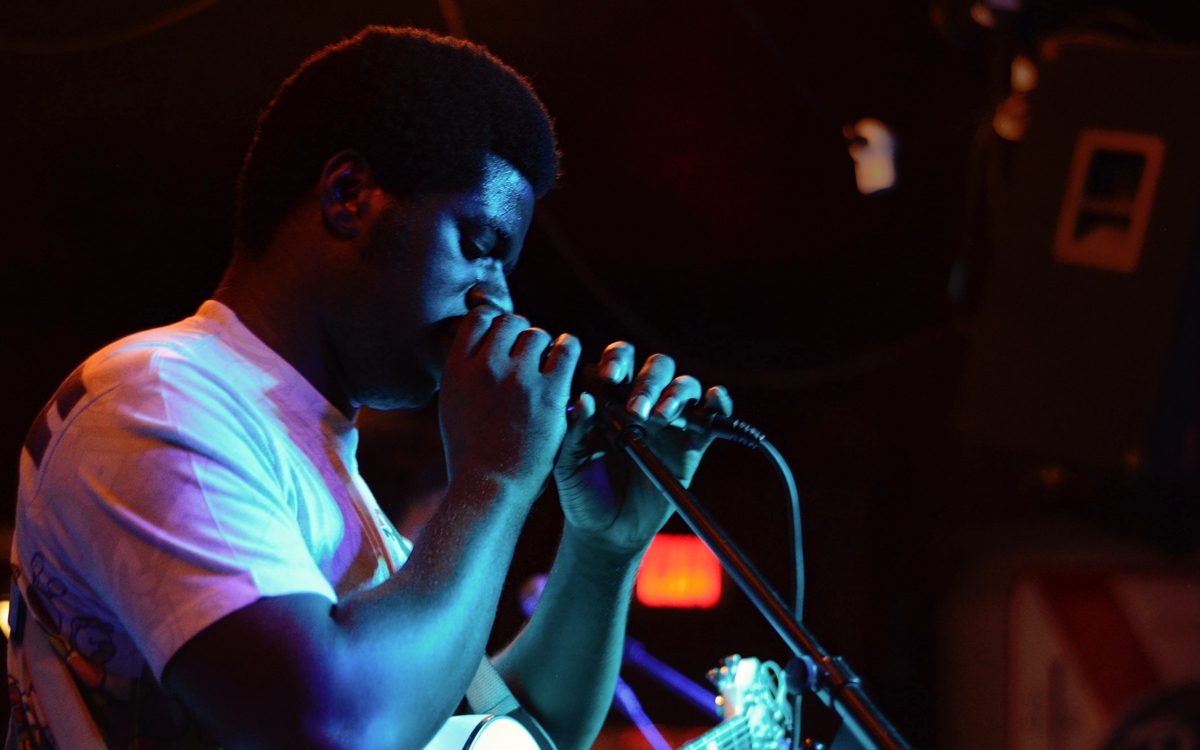
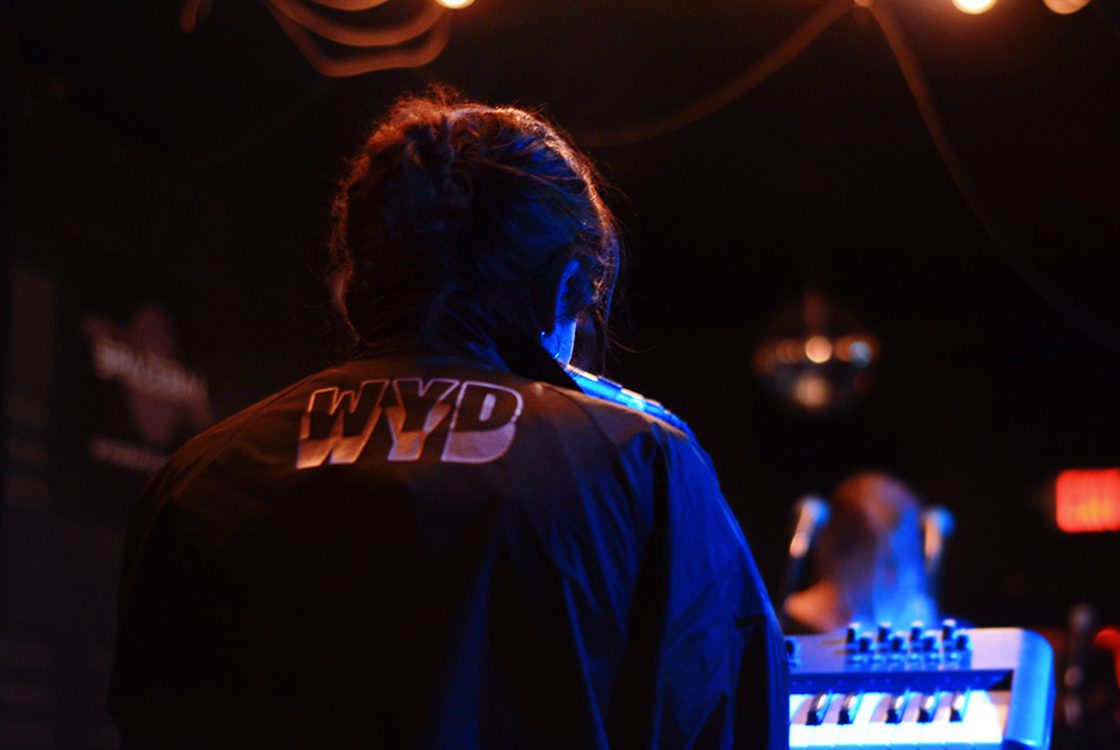
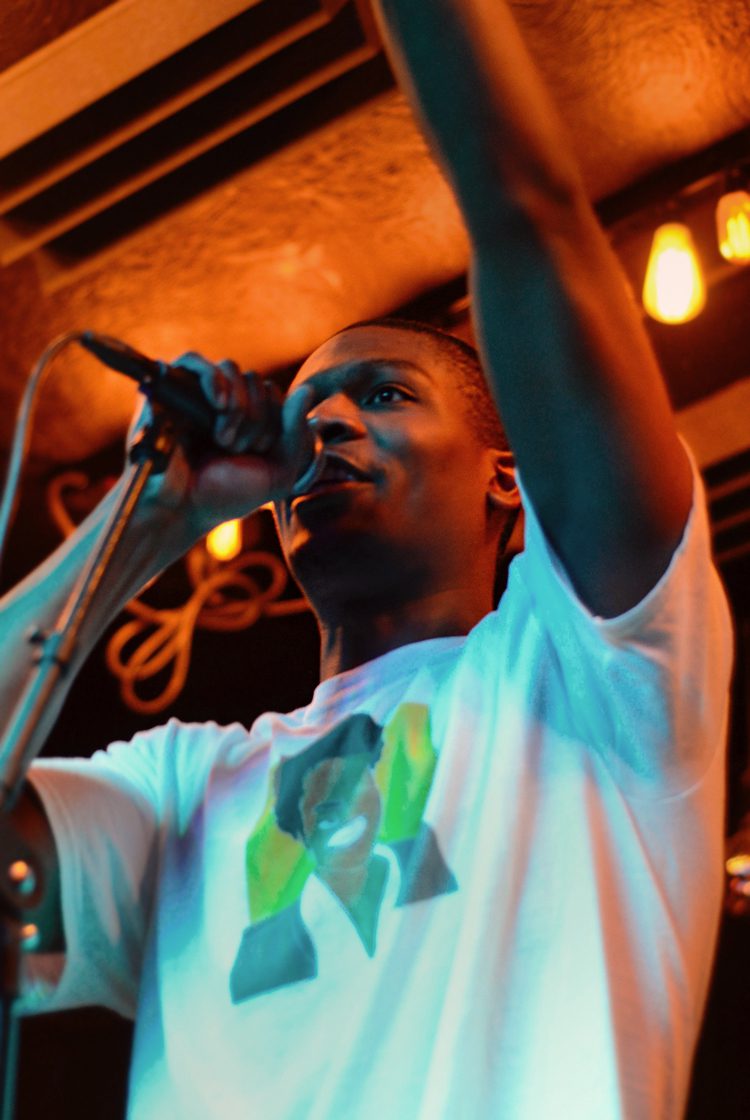
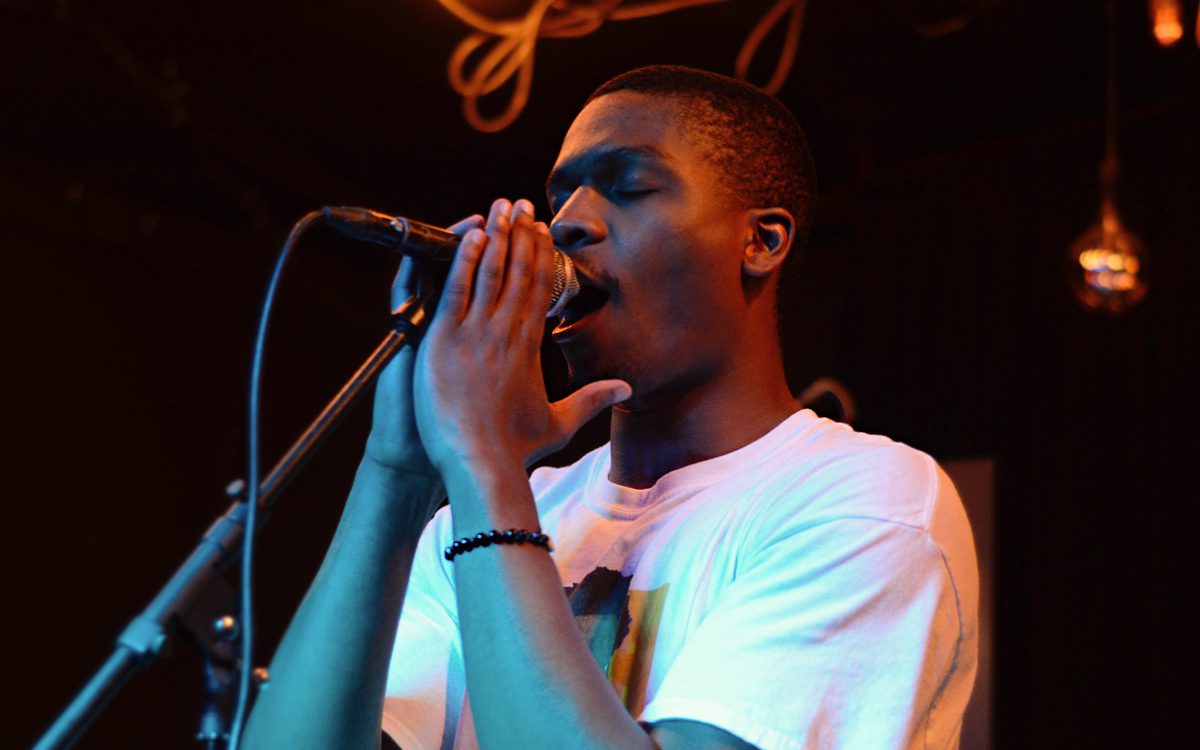
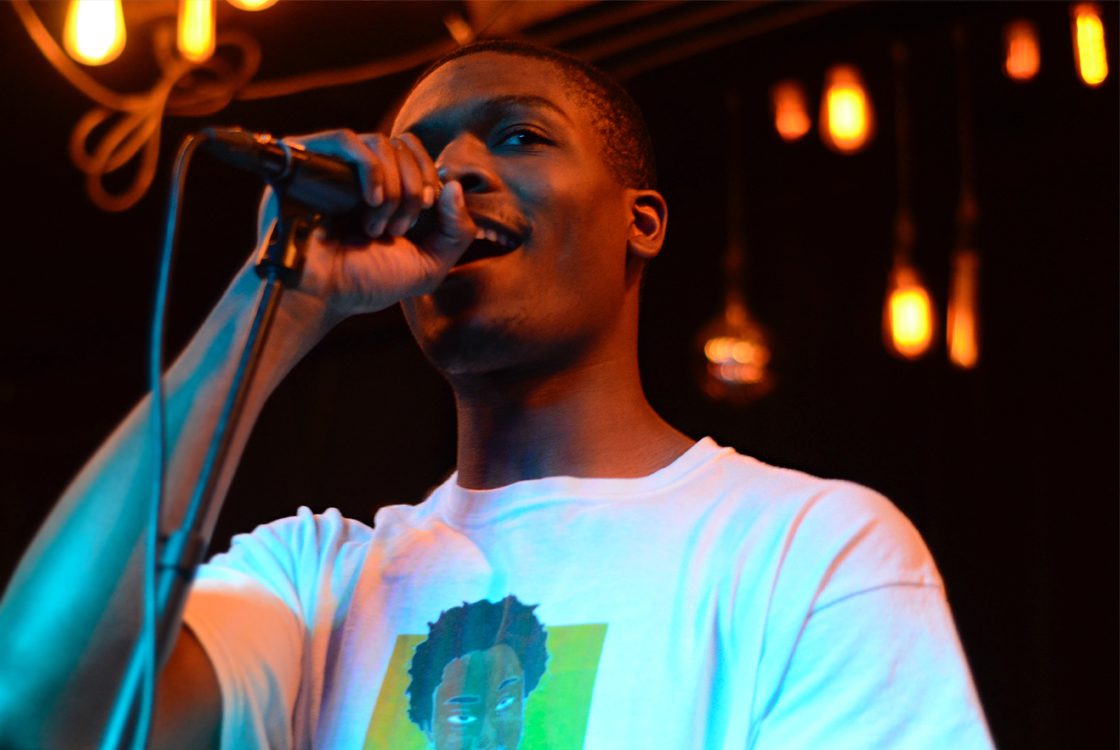
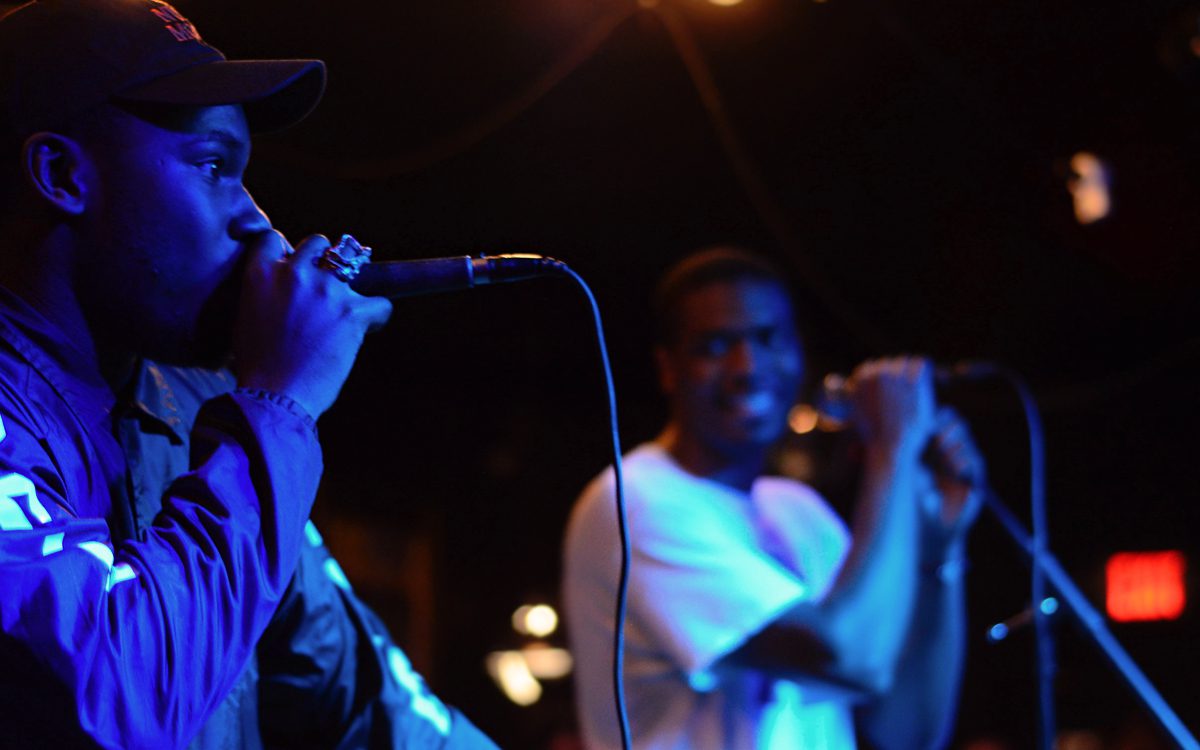
Equally exciting was Sarob’s performance at Spacebar on Saturday night. The rapper was sandwiched between local band WYD and hip-hop pillar Open Mike Eagle, who Sarob repeatedly cited as an inspiration and icon. Sarob is young, but looms large during his performances, engaging willfully with the crowd as he dances and jumps between the stage and the floor. His songs move between soul and verse; even when he raps too fast to catch all of the words, the delivery is sharp enough to sting, smartly, like a slapped ruler. Like Udoh, Sarob plays at local shows frequently, and, like Udoh, he’s worth seeing at every possible opportunity.
Check out my photos from Flyover Fest to see more of my favorite moments:
SMUT / NNAMDI OGBONNAYA AT SPACEBAR
COUNTERFEIT MADISON / MOTHERS AT ACE OF CUPS
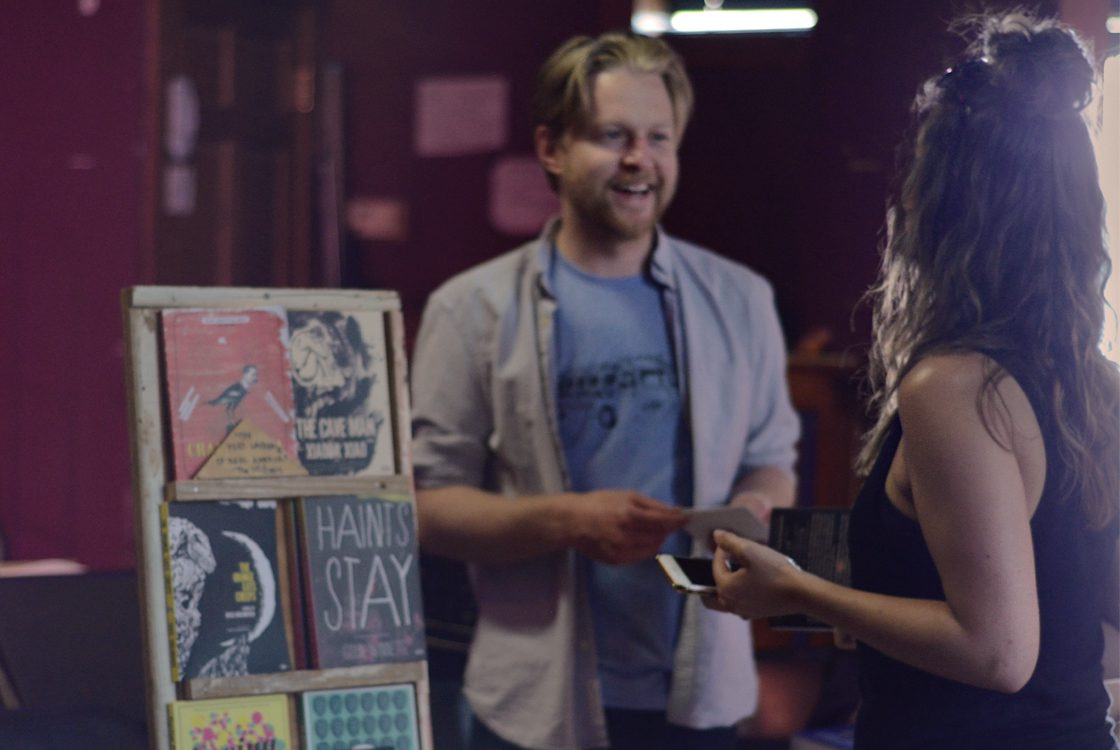
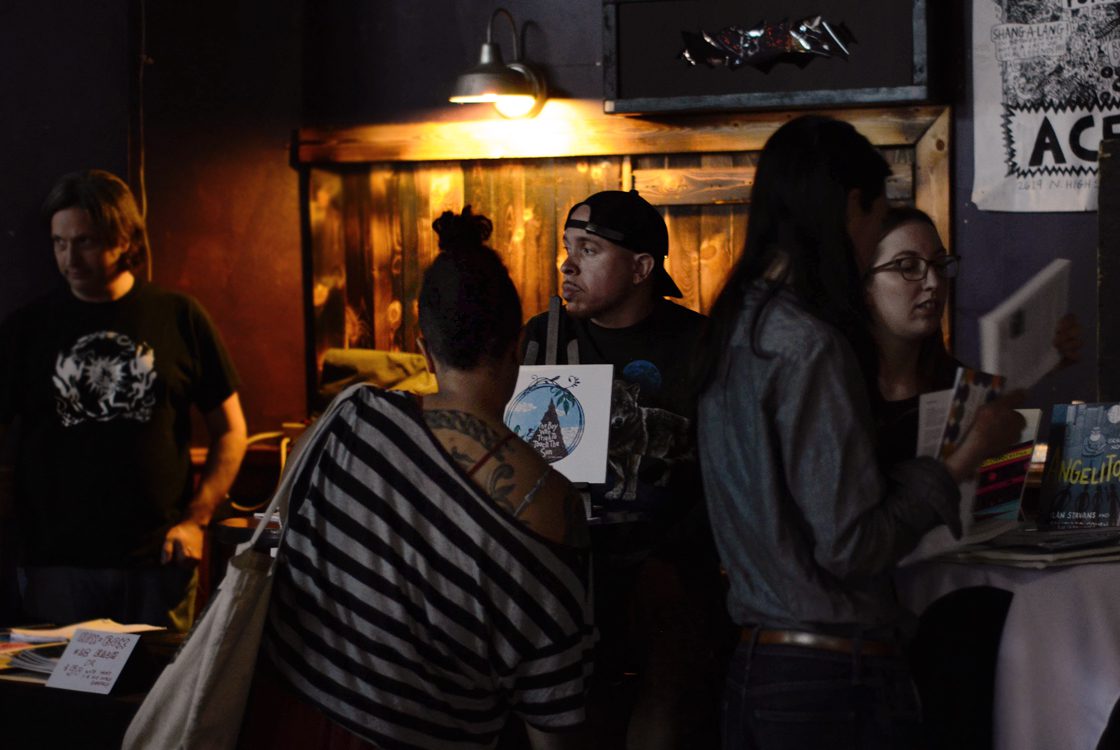
JENI’S SPLENDID BOOK AND RECORD FAIR
JENN MARIE NUNES / MARCUS JACKSON / RACHEL WILEY AT BOSSY GRRLS PIN UP JOINT
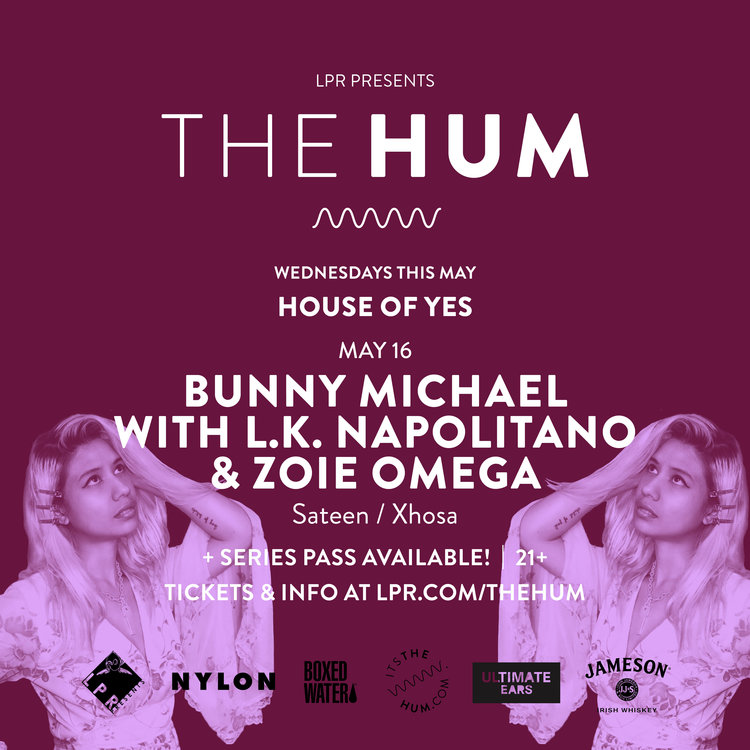
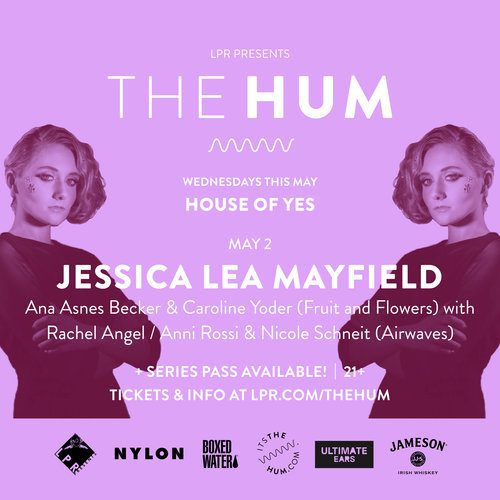
The music industry has been created around the aesthetic, ideals, and myths of a group of gatekeepers who don’t always allow access for the artists whose views are breaking the mold. Hypnocraft Presents is opening a new archetype of gatekeeper, developing a platform for the obscure and marginalized. This week The Hum series, continues at the House of Yes, and will be a tribute to a variety of Brooklyn based musicians who have found a voice in being prophets of self love, positivity and empowerment.
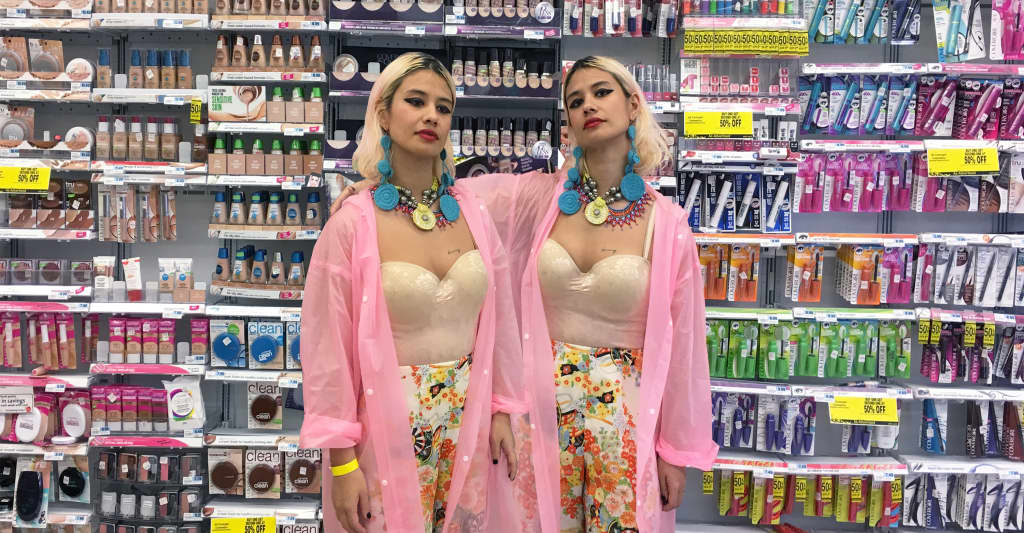
AudioFemme had the opportunity to speak with Bunny Michael and Xhosa about the inspirations, journeys, and struggles of staying true to the expression of self love, positivity and the never ending exploration of conscious expansion.
Bunny Michael
AudioFemme: What started first, the memes or the music?
Bunny Michael: *Laughs* The music. I’ve been actually performing and making music for almost 10 years now.
AF: How did you first start getting into it?
BM: I had never made music or anything before, and I was hanging out with musicians, and we started free styling. I think this was back in 2004. I started free styling about a bunny rabbit. Then the next day my friend was like let’s put out a record. We toured a bunch, and we were part of that Myspace wave. So we were able to do all these things based on this Myspace hype and it was really fun. Then we broke up and I basically have been doing other projects and learning how to produce music and make music on my own. So my first solo thing was under Bunny Michael.
AF: When did you start doing the spiritual memes that you are becoming more known for now?
BM: It’s funny how it kind of ended up happening through that. I had been, like everyone else, dealing with childhood trauma or dealing with pain stuff, just trying to learn how to heal myself and feel good about myself. So I had been already exploring different ways, through yoga and meditation, and I was reading a lot of spiritual books. I kind of had a spiritual awakening after the Bunny Rabbit project ended, because I was at a really low point at that time. I was doing music with somebody, who I was in a romantic relationship with and it was really abusive actually, to be honest, and I had to heal myself after that. So I got really into spirituality and have just been on that path ever since. Then a few years ago I had a meditation and I could see one version of myself, hugging the other version of myself, and it was the healing vision.
I had already been making photographs and art with two of me. I had actually already had an art photography show in Bushwick even before the memes. It was all digital photos of two of me. But I didn’t start making the memes until like two years ago. Then I decided to only do the memes on my instagram.
AF: How do you get people informed about all these different kinds of pieces that you are creating?
BM: The music has always been about consciousness exploration, and higher stages of consciouness, that has always been the message behind the rapping. In the past year I’ve been really trying to merge the two worlds together. During my live show I have parts where I talk to my higher self on the phone and he answers back. I’m really trying to build a world that is beyond memes, and incorporating it into the music more and more and being known for the message. Because to me that is the most important part of the entire, whatever I’m doing. It isn’t really the form, it’s the message behind it. I’m still finding creative ways to merge the music and the higher message together.
AF: It is so powerful when an artist can transcend aesthetic and medium to focus on the message.
BM: Yeah that’s how I know I will always have something to do. The purpose is beyond me, beyond my agenda, or my success. The purpose is the inner journey, and I’m always gonna be on it. It’s kinda of like I set myself up for this thing, that I can’t really get out of at this point.
AF: Will you be collaborating with someone else for The Hum, or will you be performing solo?
BM: It is going to be my music, but two of my really good friends are going to be backing me up, on drums and guitar. I have been friends with them for a long time, and we have never played music together. One of them is named Zoie Omega and also L.K. Napolitano, and they are really excited to be playing. It’s been really fun to practice with them and we’re really excited, now we want to start a new punk girl band.
AF: What is the significance for you of having a space like The Hum, a more female oriented musical space?
BM: For me, I think about gender as a reconditioning process, and we are all at different points in our growth right now. It’s exciting that there’s obviously more awareness and people are becoming more vocal about how brain washed we are to believe in this binary situation. We are all at different points, so right now it is very necessary to have these events that are exclusively this way to bring more attention to the necessity of those things. So it’s a very important step in the growth and achievement of that.
I normally play with the guy that I work with on production, he normally plays on stage with me. And so I was like “I can’t have you this time”. So it was good for me too, because it got me to reach out to other people.
AF: This lineup of The Hum is specifically focused around artists who are not just musicians, they are all icons for an idea.
BM: I think that is sort of just how we are growing to be as artists, because you can’t really separate yourself from the work now in so many ways. It’s more about the artist and their journey, that’s becoming so much a part of why people are interested in things. It’s the story behind it, and I think that’s really great. Because it’s also enabling a lot of access to people who wouldn’t normally have it. So it’s a really exciting to be courageously putting your work out there and doing it for the right reasons.
Xhosa
AF: How does having a space like The Hum help you maintain an essence of femininity and vulnerability in your music?
X: I like that this series helps celebrate that idea and focuses on that specifically. I was really excited to hear the lineup for the show is Bunny Michael, and I already knew I was playing with Sateen, but I just think that between the three of these acts, it’s going to be a very positive empowering show. I was just excited to see everyone who is a part of it to be honest. I feel like the music that is being pushed to the fore front in this series should get more love, so I’m glad that The Hum is doing it.
AF: What impact do you think The Hum has on the community of artists that are trying to bring these positive messages to life?
X: I feel like in the music industry can get a little discouraging as a whole for artists that aren’t feeding into this massuline narrative. In many ways artists that don’t do that get overlooked or disregarded, and there is twice the amount of pressure to be strong, but also look good. You have to prove yourself and prove what you’re doing is actually technically good. I feel like The Hum series kind of weeds through all that, and just showcases that these people are actually talented musicians and need a platform to share that. That doesn’t really happen in this industry as a whole. Because a lot of the gatekeepers don’t really see the value.
AF: The aspect of the gate keepers is definitely a huge issue, and who those gatekeepers are and what kind of influence they have on what we see and consume artistically.
X: A lot of time they’ll look at a woman artist and automatically assume that what we are saying is less important, that what we are playing is less difficult, that the work we are putting into it is not as much. In a lot of cases we have to work twice as hard to prove something.
For audience goers I think it’s important to see themselves reflected in the people that are there on stage and showcased. The industry was kind of set by minimizing females rolls in the industry. When I think a lot of music listeners are looking to get empowered by people who look like them, or represent the values that they have.
AF: Is there anything that you’ll be performing at The Hum that you’re really looking forward to?
X: I’m excited for all my songs equally, but I’m going to be performing some unreleased stuff that I’ve been starting to perform more lately that I’m really excited about. It’s all stuff off my upcoming mix tape, LVL 9. Usually I produce all my music but with this mix tape the concept is that I’m collaborating with the artists around me more so. Showcasing the people that inspire me directly and inspire my sound, and it’s got more of a hip hop influence.
I’m excited about performing that because I feel like it will kind of contribute to the hype of the night. There are some songs off of it that I think are really important, like “Vision” that’s a call to action. Cause it’s important throughout this self help positivity thing that we are all preaching that we put a sense of responsibility behind that, and an edge and an aggression too. It’s not all “I’m happy now and then the world is better. If I just love myself hard enough then all my problems will go away”. It’s a balance of both and being fierce in that, and taking responsibility in that too, to spread that message, and influence people positively.
AF: It’s important to discuss that, because yea you can love yourself, but shit’s still gonna be hard.
X: That’s basically something I’ve had to come to terms with personally. A lot of the time my optimism is to fault. I express that a lot in my music, because it is an outlet, and it helps me get through certain things personally. I had to learn that just looking at the bright side all the time doesn’t necessarily make the situation better. Just because I know it could be doesn’t mean I don’t have to work to make certain decisions to make sure that is the case.
If you combine the soul and melodic sensibility of artists like Mariah Carey and Lauryn Hill with the laid-back production and honesty of indie songwriters like Fiona Apple and Bedouine, and you’ll arrive at the gorgeous hybrid that is Knotts, the solo project of Cincinnati-based singer-songwriter, Adalia Powell-Boehne. We’re excited to debut “Your Mind,” the third single of Knott’s upcoming debut LP, Is It Art Yet?
Highlighting Powell-Boehne’s powerful voice, “Your Mind” is a meditation on things left unsaid and a call for transparency. “I write when I really need to get something out,” says Powell-Boehne. “I feel like we all have times when we wish we would’ve said something or we didn’t say the right thing. So, I was like, ‘Can I just say what I want to say and you just say what you want to say?’”
Throughout the song, Powell-Boehne repeats the phrase, “Say what’s on your mind/I’m so tired of pretending.” Her steady voice is neither a beg nor a command, but the clear and honest request of someone who’s done playing games. The simple keys and percussion act as a steady guiding force to Powell-Boehne’s razor sharp vocals. She relinquishes her strength for only a moment when she sings, “I don’t know how to win, I don’t know how to lose/I wish you’d stop asking me to choose,” in a hair-raising falsetto, showing her vulnerability and opening doors for compromise.
Listen to the single below and look out for Is It Art Yet? on May 26th.
1. Tell us about the writing process behind Digital Sleep?
This is one of those songs that I’ve been writing piece by piece over the last year or so, and just kept revisiting every couple of months. Originally it was actually an offshoot of another song I wrote I while back. It was just piano, a lead vocal and some minor drums at first… and before I knew it I had about 60 vocal tracks on my hands :) – I swear I don’t remember what happened in between; I never do!
2. What’s behind the name and the general concept of the song?
I think I’m guilty of mixing metaphors here. The initial working title of the song was “wake up”, but I thought that was a little on the nose. One way or the other I keep coming back to describing some sort of trance in the song… “Digital Sleep” can – to me – refer to anything from a very basic state of being in which you’re almost reduced to Ones and Zeros, in which everything – in it’s foundation – is reduced to Ones and Zeros. To the complete opposite, in which there there is no basic state of being, because we’ve skipped the analogue – so to speak – and jumped straight to the digital. See, I’m mixing metaphors!
3. How has your work evolved over the past few years since you started releasing music?
Not enough! I feel like I’m still scratching the surface to be honest. I think I’ve become more surgical as to how I produce music, but am still working off of the same creative and intellectual repertoire in a way. Not that the ideas are the same, I have a new idea for a song almost every day, it’s just that the ground on which they grow hasn’t changed much. I think I execute these ideas in a more direct way now than I used to though… just more focused on the basics like melody and lyrics, and trying to stay in touch with the listener more as a singer – I suppose I’ve been trying to create more intimacy in general.
4. Will you be releasing more music soon?
Definitely! I’m never gonna take that long a hiatus again.. or at least not anytime soon. I’ve just finished producing my second EP – so stay tuned for more releases this summer and fall :)
5. When can your fans expect to see you live again?
No specific dates lined up just yet, but hopefully very soon… I have a bunch of new songs, so there’s quite some rehearsing to do first. I’m sure we’ll be playing a bunch in the NYC area over the next couple of months though.
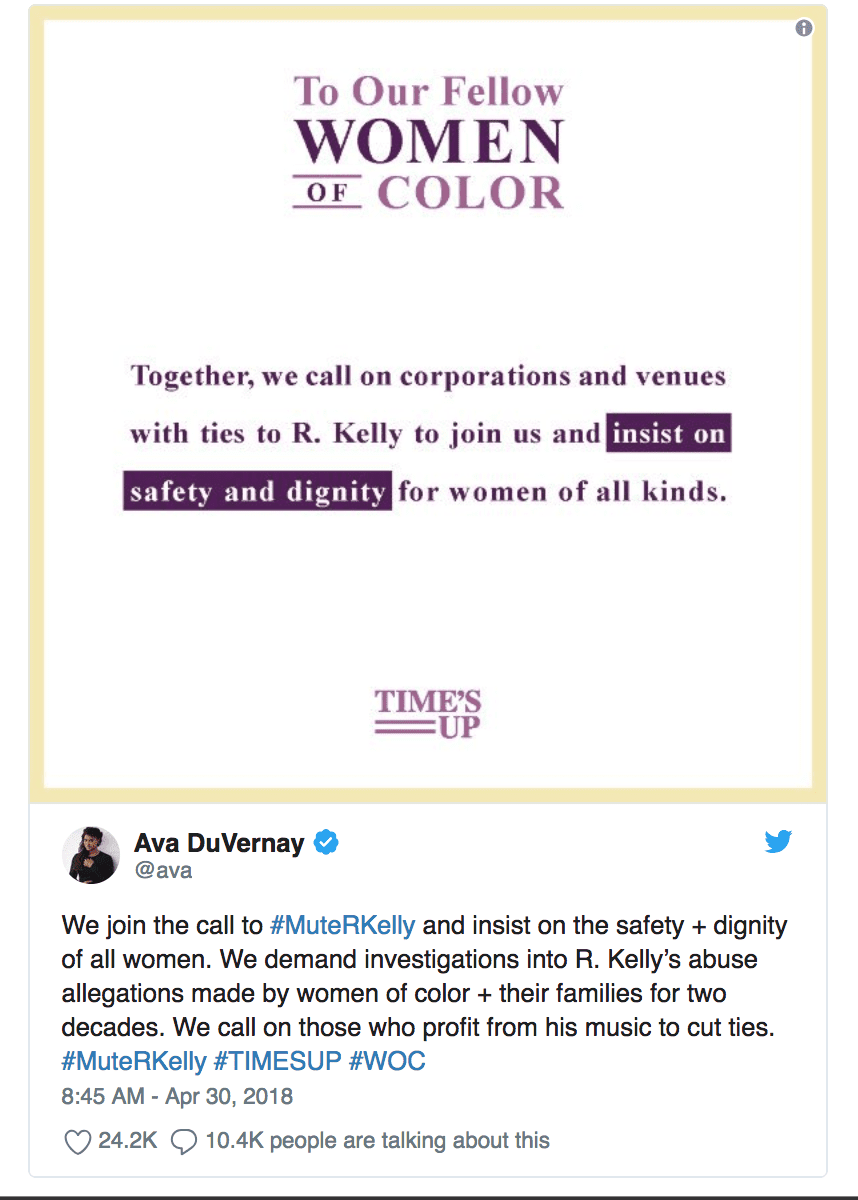
Last week #MuteRKelly gained speed as Time’s Up’s women of color added their support and yesterday the movement got a boost from a Spotify. While the streaming giant did not cut all ties with Kelly, Spotify did announce that they will remove the alleged sexual abuser from all playlists and other suggested conduct so he will no longer be actively promoted on the platform although his discography will still remain and be searchable. The move comes as the result of Spotify’s new rule pertaining to artists accused of misconduct or of having songs with objectionable lyrics. Spotify tapped consultants from the Southern Poverty Law Center, The Anti-Defamation League, GLAAD, and other advocacy groups to create their “hate content and hateful conduct” policy which addresses “hate speech” in music and states that “when an artist or creator does something that is especially harmful or hateful (for example, violence against children and sexual violence), it may affect the ways we work with or support that artist or creator.” In response to Spotify’s action, R. Kelly’s team accused the company of engaging in an “attempted public lynching.” His PR team’s use of the historically-loaded phrase in defense of the “I Believe I Can Fly” singer has sparked a separate controversy.
Spotify’s new policy is making waves in the industry and has many wondering what other musicians will be affected. Perhaps Chris Brown and Young Lo? Let the censorship debate begin!
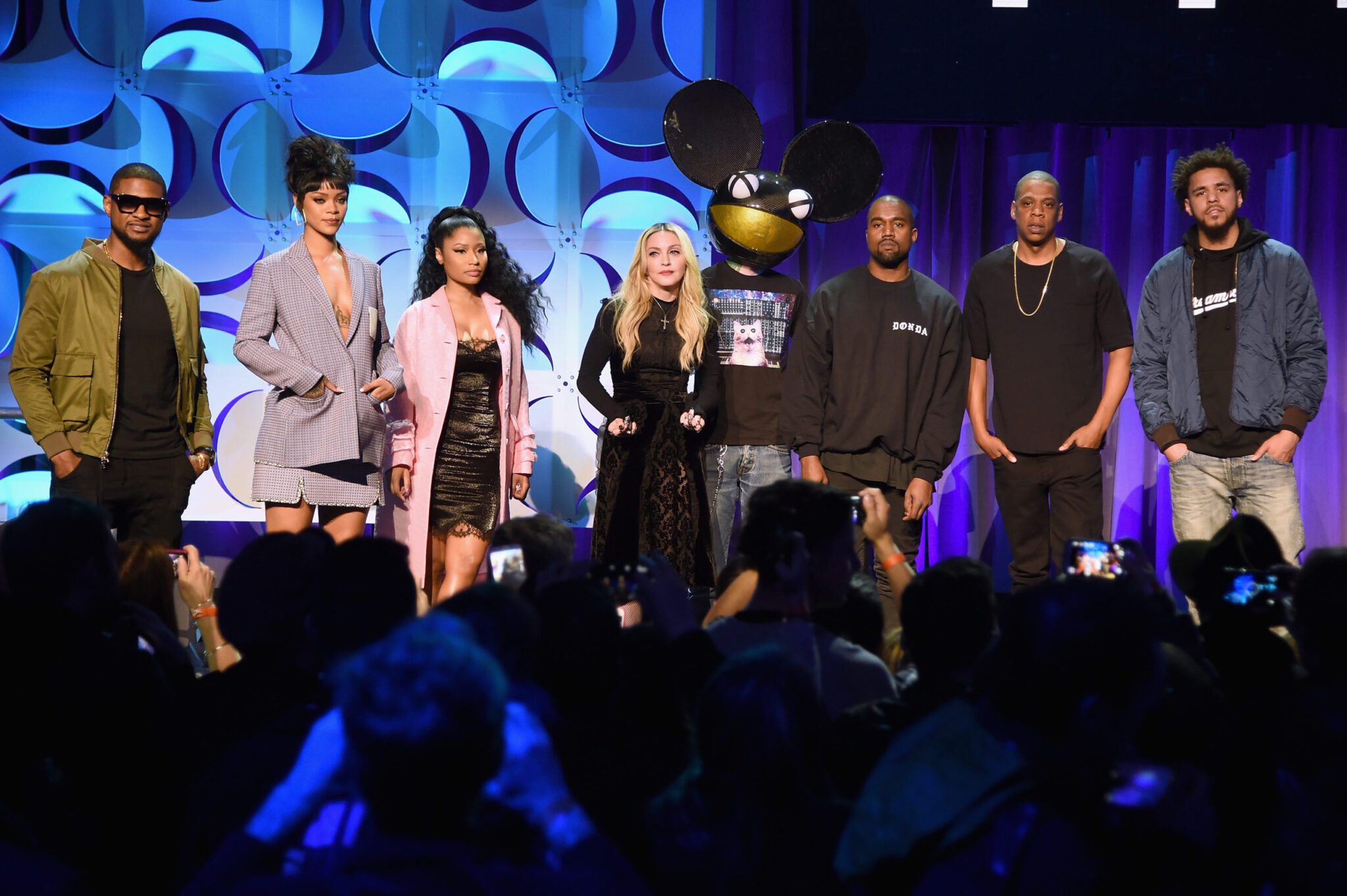
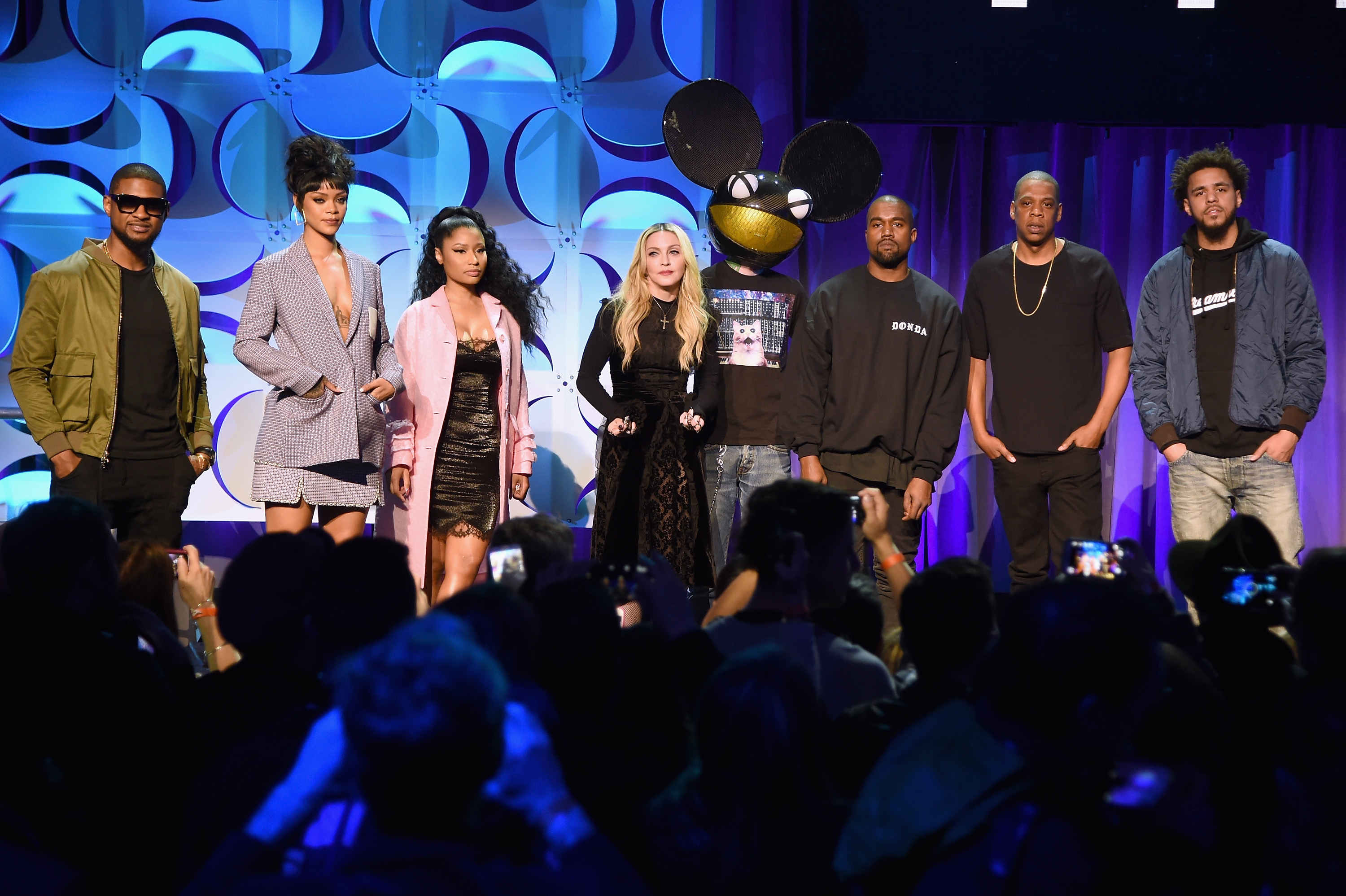
In other pay-for-play streaming news, Tidal has been accusedof faking millions of plays in an effort to make it look like Beyoncé’s Lemonade and Kanye West’s Life of Pablo were streamed more than they actually were. Norwegian paper, Dagens Nærengsliv obtained a hard drive with Tidal data reports that showed many users streaming the albums a suspiciously large number of times in one day.
Based on the obtained information, each of Tidal’s claimed three million subscribers would have had to play West’s Life of Pablo eighty-three times. Knowles and West both have business stakes in Tidal. Nærengsliv contacted one Beyoncé fan who was in Tidal’s records as having streamed Lemonade fifteen times in one day. She verified their suspicions of fabricated plays, saying “I love Beyoncé — but 11 hours? No.”
In traditional radio, it is illegal to pay DJs and promotors to play certain songs but streaming platforms still exist in a legal grey area – labels and artists can purchase slots on playlists. Perhaps the accusations against Tidal will lead to a change in the way all streaming services conduct business. Watch out Discover Weekly – they’re coming for you!
In a separate report, Tidal has also been accused of inflating their number of subscribers.
That New New
Arctic Monkeys head up the big releases of the week with their new studio album. Tranquility Base Hotel & Casino is the British band’s first full-length in five years. Arctic Monkeys refrained from dropping any singles ahead of the album’s release so the sound is completely new to fans.
Christina Aguilera released the second single off of her upcoming album Liberation. “Twice” sees the singer return to form with soaring vocals and personal lyrics. Christina heads on tour this fall; she’ll play two dates at Radio City in October.
French duo Justice are also back with a new release. They just announced the date for their upcoming live album, Woman Worldwide, out August 24 via Ed Banger.
Sigur Rós dropped a mixtape of “endless” ambient music this week. Liminal is an hour-long collaboration between Jónsi, Alex Somers, and Paul Corley.
End Notes
NYC fans of Superchunkand The Breeders are about to get reacquainted with the seasoned musicians. Both bands play free shows in Prospect Park. Start the season off with Superchunk on June 20th, close it out with The Breeders on August 11th.
Random couple alert – Grimes and Elon Musk showed up at the Met Ball together on Monday night. Grimes wore a Tesla choker to the exclusive event. The next day Musk tweeted that his favorite Grimes songs are “Flesh without Blood” and “Kill V Maim.”
Legendary hip-hop label Loud Records is coming back. Founder Steve Rifkind is starting it up again, this time with Sony and RED. The trio is debuting a brand new sound for Loud’s rebirth! Just kidding – one of Loud’ first projects will be a remake of an iconic release. They’re bringing back Enter the Wu-Tang (36 Chambers) but this time contemporary hip-hop artists will play the characters of the classic LP.
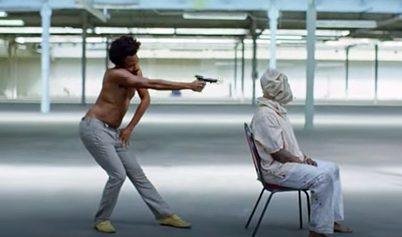
It is the job of the artist to question society, to be able to shine a light on cultural truths and shake the status quo. On Saturday Night Live this past weekend, Atlanta’s Donald Glover, known on stage as Childish Gambino, set the internet on fire with a video that did just that.
“This is America” is a hauntingly honest view of our current American reality. The video is a series of long shots following Glover through a large warehouse. The music fluctuates between light-hearted South African melodies and a heavier Southern trap sound. Glover visually cuts this music with scenes of him shooting someone each time the music changes.
The lyrics call out materialistic hip-hop culture at its intersections with ministrel performance: “We just wanna party/Party just for you/We just want the money/Money just for you.” The frames of the video engage in that disparity further, juxtaposing the celebration of black culture with the struggles of black life in America, be it systemic racism, gun violence, or mass incarceration.
Tackling gun, police-related, and community violence in America, Glover’s video depicts intertwined issues stemming from racism and how it impacts communities of color. Glover is dishearteningly honest in his portrayal of this message. Using a variety of visual representations, the video encapsulates current day happenings such as the Black Lives Matter movement, Nazi riots in Charlottesville, and the church shooting in Charleston.
“This is America” highlights the truly nightmarish aspects of our country in a way that might seem mocking, if it weren’t such a potent call to action, a wake up melody for anyone still living in the delusion and privilege of safety.
Kelsey Lu wrote her latest release while squatting in a leather factory in New Jersey. Deeply depressed at the time Lu’s writing process pulled her out of this emotionally dark space. The video for her song “Shades of Blue” seamlessly moves through the process of depression, and how one finds themselves on the other side of despair into the beauty of a life that might still be coated in sadness.
Aurora, herself says it best: “Queendom is about celebrating all the differences in us: the quiet ones and the introverts, where they can sing and be seen. It’s about the shy people and the lonely people and I hope it can be a place where we can come and be lonely together and then not be lonely anymore. Queendom is a place for all of us.” With Lorde-esque production and vocal qualities, the single brings life to a world Aurora pulls straight from the inner workings of her inspired imagination.
Serpentwithfeet creates a collage of the weird in his latest video for “Cherubim.” Lost in the ruins of a porn house with a dancing lover, the video for “Cherubim” feels like the visual representation of being trapped inside the mind of a psychotic break, the psychosis slowly intensifying through the video. “Cherubim” comes from serpentwithfeet’s upcoming debut soil, set to be released on June 8.
After nearly four decades of producing music, U2 stepped out of the spotlight for the most recent video releases from their 2017 album Songs of Experience. Well-known fashion and street photographer David Mushegain takes on the task of visually representing the single “Love Is Bigger Than Anything in Its Way.” After documenting the youth of U2’s native Dublin, Ireland for the past seven years, Mushegain is back to his familiar stomping grounds. Sharing small clips of these cool kids, Mushegain represents the “love yourself” message of the U2 single through the carefree and expressive attitudes of the Dublin youth.
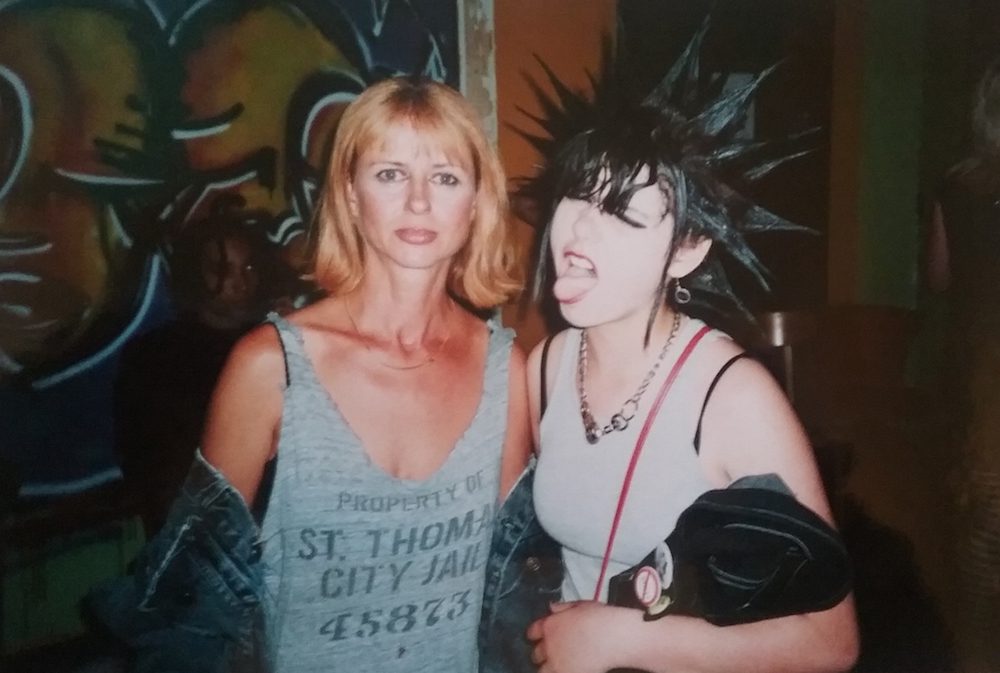
“Punk Rock Mom” was a distinction of honor my mother appointed to herself, and though the title mortified me on more than one occasion, she’d well earned it. She was the one helming the two-hour, round trip commute between my hometown of Arlington, Washington and Seattle, where any and all rock concerts worth two hours on the road took place. These gigs often occurred on school nights, no less, but my mom didn’t seem to mind. She’d just as soon climb behind the wheel of her late Subaru Forester (RIP) on a weeknight as she would let me go to school the next day reeking of bar smoke and brandishing the fresh hematomas I’d acquired in the pit the previous night. She didn’t need to prove anything to anyone.
It’s astonishing to think back on those nights and fully absorb how goddamn lucky I was to have parents who not only helped me dye my hair blue, but who were smart enough to run their separate households like meritocracies: get straight A’s, and you can look as funny as you like. Do your homework, and we’ll haul your ass to a seedy bar just under a freeway off ramp on a Tuesday so you can hear music we can’t stand. Except my mom did like the music, or at least pretended to for the sake of Punk Rock Mom point accumulation.
While my dad and stepmom would typically find a nice restaurant to abscond to, or a nearby watering hole to imbibe craft cocktails in as I palled around with drunks n’ punks, my mom would stay glued to a barstool in the venue. I appreciate why my dad didn’t want to stick around these grimey shows; he would make the long drive just like my mom, but he’s always been more of a fan of melodic music, and I never blamed him for not wanting to stew in a smoky dive while listening to the sonic stylings of Clit 45 or Toxic Narcotic. Ma, on the other hand, was in hog heaven. A woman who coughs up more smoke than a coal refinery and could drink Hemingway under the table (and probably outwit him just as easily), my mom basked in the grit and glory of the go-to punk venue at the time, The Graceland. It was dark, cheap, socked-in with cigarette smoke (these were the glorious, pre-smoking ban days, circa 2003-2005). The Graceland answered with a resounding “yes!” to one of my mom’s most crucial questions: “Is there a bar?”
It never occured to me at the time, but I now suspect that my mom had a much more interesting time in the Graceland bar than I ever did watching the bands. She actually met people, and spoke with them, while I tended to collect more bruises than friends over by the stage. Her bar buddies were often members of the bands I was there to see, and I would simmer with jealousy when I learned she’d gotten quality time with my punk rock heroes. She chatted with Matt from the Hollowpoints, my favorite local band at the time. She had a couple of beers with Mark Stern of Youth Brigade, and learned that he had a three-year-old daughter at the time who was also named Madison. She unveiled this detail with a measure of pride, and told Mark Stern all about her own Madison. I recoiled in horror at the thought of the conversation she must have had with Stern, no doubt assuring him that I was Youth Brigade’s biggest fan (not true) and that she was my “Punk Rock Mom” (pretty true), a title that also graced one of the band’s later singles.
Most kids grow up worrying that at some stage, their parents will embarrass them in front of their friends. I grew up in the unique, opposite position: I was in constant fear that I would never be as cool as my mom. I have been assured by my friends that I never will be. All of the best items in my wardrobe have come from her. The knee-high leather boots, threadbare t-shirts from Muscle Beach, Germany, and Spain, and a pair of Levi’s I can barely squeeze into. I have a train chest overflowing with costume jewelry she no longer wears, and though a small cobalt box nestled inside of it holds her wedding and engagement rings from my parents’ nine-year marriage, it is a single earring in all that metal that most reminds me of her. A brass ear cuff in the shape of a little lizard – well, half of a little lizard. Only the butt and tail of the metal critter was cast, and when you affix the piece to your ear, it looks as though the front of his body is crawling into your ear canal. I feel like this small bauble is a pretty good summation of my mom: small, charming, and pretty; witty, dark and strange. An all-around gem, and a little fucker in the best way.
It is perhaps because I already took all of my mom’s cool clothing and accessories that I haven’t robbed her of her records (yet). Then again, I don’t remember her ever offering them up like she so readily did with her collection of clothes. Because of her humble collection I discovered Wire, the Pretenders, the Specials, the Rolling Stones, General Public, and of course David Bowie. She didn’t have anything by GBH or the Subhumans, but I realize now that my mom was so punk rock, she had every record that influenced my favorite bands as a teenager. Maybe “Proto-Punk Rock Mom” would have been a more apt title.
I look back at pictures of my mom from the ‘70s and ‘80s and wonder if we would have been friends if we grew up across the street from one another, if I could simply bask in her coolness instead of reject it, like I did as a teen. I’d like to think we’d be friends, because if there’s one thing those photos tell me it’s that she had a blast, and considering how good she looked, I suspect few people ever told her “no.” There’s one photo in particular from the mid to late ‘80s that I love. She’s standing in the driveway of my grandma’s house in Huntington Beach, California, with my toddler sister perched on one hip. She’s wearing a straight black sleeveless dress that stops above the knee, and she has a short mop of hair that I have copied three times in my adult life so far. She has a customary cigarette poised between her free fingers, and dark shades, and a long, thin braid of hair stemming from the base of her neck. She looks badass, and yes, even a little punk rock. Recalling that photo today, I decide, yes, we would have been friends. But I like it better this way, with her as my Punk Rock Mom.
Sometimes a new record has a familiarity to it that feels like curling up under a warm blanket. Flower Moon Records Compilation Friends and Family Vol 1 puts a listener at ease; its laid-back cadence urges you to close your eyes and relax. These are old friends reintroducing themselves.
Dead Fingers’ “Whistling Song” stands out as the kind of nouveau standard that requires a google search to make sure it isn’t a cover, though with graceful lines like “Life is a series of ups and downs / overs and unders and round and round / I think I’m gonna make it to the down down down / Eventually I’ll find a way out” it’s certainly a YouTube ukulele video in the making. It makes sense that the album features artists who have worked together and identify as friends in the music world; the collaboration is effortless, straightforward, well tuned.
We sat down with Flower Moon Records co-founder and musician Maria Taylor (of Azure Ray) to talk about the album’s genesis, what it’s like to run a record label, and how she balances music & parenthood:
AF: You were 15 years old when you and Orenda Fink founded Little Red Rocket. What were your earliest songs written about?
MT: Our very first song was called “Follow You For Now” but we named it that because we had huge crushes on these guys in this band Follow For Now. The lyrics to our song was “Wherever you go, I’ll follow you, follow you for now. I’m not doing this for you, I’m doing it for me… I’ll follow you…for now” They were mostly about love but we also had some of our friends who were poets write poems and we would put them to music.
AF: Your career is full of collaborations, whether it’s with Orenda, Moby, or Bright Eyes. Do you find yourself looking for artists you’d like to work with or is is it more organic than that?
MT: It’s more organic. Mostly it’s that my friendships play such a huge role in my life and through our friendships we collaborate on music.
AF: Flower Moon Records was founded by you and your husband Ryan Dwyer, who is with us for this interview. What was the catalyst for creating your own record label?
MT: I had been thinking of doing this for some time now, but I knew that I couldn’t do it alone. Ryan is (among many things) a businessman, and I knew that with my understanding of the industry and my connection and his business skills… we could do it.
RD: For me it was a few reasons. One is that I’ve always been a fan of music (especially the bands that are featured on the Friends and Family Vol 1 compilation) and I’ve always loved the idea of working at or running a record label. I was in bands when I was in high school, but my career took me into politics and public relations – which leads into the second reason. From an outsider looking in at the music industry – especially now, how it’s changed so much and the uncertainty around where it’s going – I wanted to bring what I learned in those fields and apply it to a label.
AF: How do you both find artists for Flower Moon? Is it through submissions?
MT: At this point it’s just literally our good friends and family. We’ll see how the label grows. Ryan is already the busiest guy I know, so he pretty much can only focus on one release at a time. We started out only planning on releasing my music, but then we heard my friend Louis Schefano’s record and decided we just had to release that too. And now Azure Ray is planning on releasing something in the future. And my sister and brother-in-law have a band called Dead Fingers which we will be releasing too! With these releases, plus the compilation, makes our hands super full of love and music.
AF: You have two children together. I know this is a tired question, but as an impending mother myself, how do you balance running a label, being an artist, parenthood, and finding time for yourselves as a couple?
MT: It’s hard balancing it, I’m not going to lie. Ryan is better at multitasking than I am. I try to find a little time in the day to sit and write, but I find that it takes an hour just to clear my head of the chaos and then my time is up and I’ve gotten nothing accomplished. I’m also exhausted at night and I fall asleep when I used to stay up writing. So – it’s possible to balance, but it’s hard and I’m still trying to get the hang of it. I have taken my kids on a few tours and I’m lucky to have a husband who can work from wherever and a mom who is retired and loves to travel. Ryan is a machine. He’ll read to the kids and then watch a movie with me while making band posters and Instagram posts. He’s always doing five things at once and doing them well. And as for us as a couple, we try to do a date night at least every couple of weeks. And I try to stay awake for our “Homeland date” every Sunday night.
AF: When did the idea of creating a compilation record start?
MT: Ryan and I both love our playlists. We love having parties and we spend so much time getting all of our favorite songs together to create the mood. This compilation is just that: a bunch of our favorite artists together on an awesome double colored vinyl. These artists also happen to be our greatest friends and family! Now that we did it, I can’t wait for Volume 2! I honestly have listened to the comp so many times and I love all the songs. It’s such a great way for us to all get exposure and build something together.
AF: What was the compilation process like? Are most of the songs previously released or were some written especially for this project?
MT: Lots of the artists had these songs previously recorded. Some friends gave us a few options and we picked the song we liked the best. As for me, I wrote something specifically for the compilation. I liked the idea that I could have a little more freedom to do things differently since it was for a compilation and not a full length album. I didn’t edit the song… I just let all six minutes roll on by and the F bomb roll right off of my tongue. None of the songs have been previously released, that was the only thing we asked for.
AF: This album covers a lot of topics, including rebirth and living in the era of Trump. Was there an overarching theme or feel you were looking for?
MT: No, we weren’t looking for a theme, but I think we are all living through these crazy times together so it would make sense that there is a common thread or theme.
Flower Moon Friends & Family Volume 1 is officially out TOMORROW on Flower Moon Records. It features 16 new and unreleased tracks from Louis Schefano, Whispertown, Dead Fingers, Doctor Samurai and the Firekeepers, ghosts, Nik Freitas, High Up, Orenda Fink, Maria Taylor, Umm, Taylor Hollingsworth, Jake Bellows, Viva Violet, Ryan Dwyer, Brad Armstrong, and Mike Bloom. Order it here.
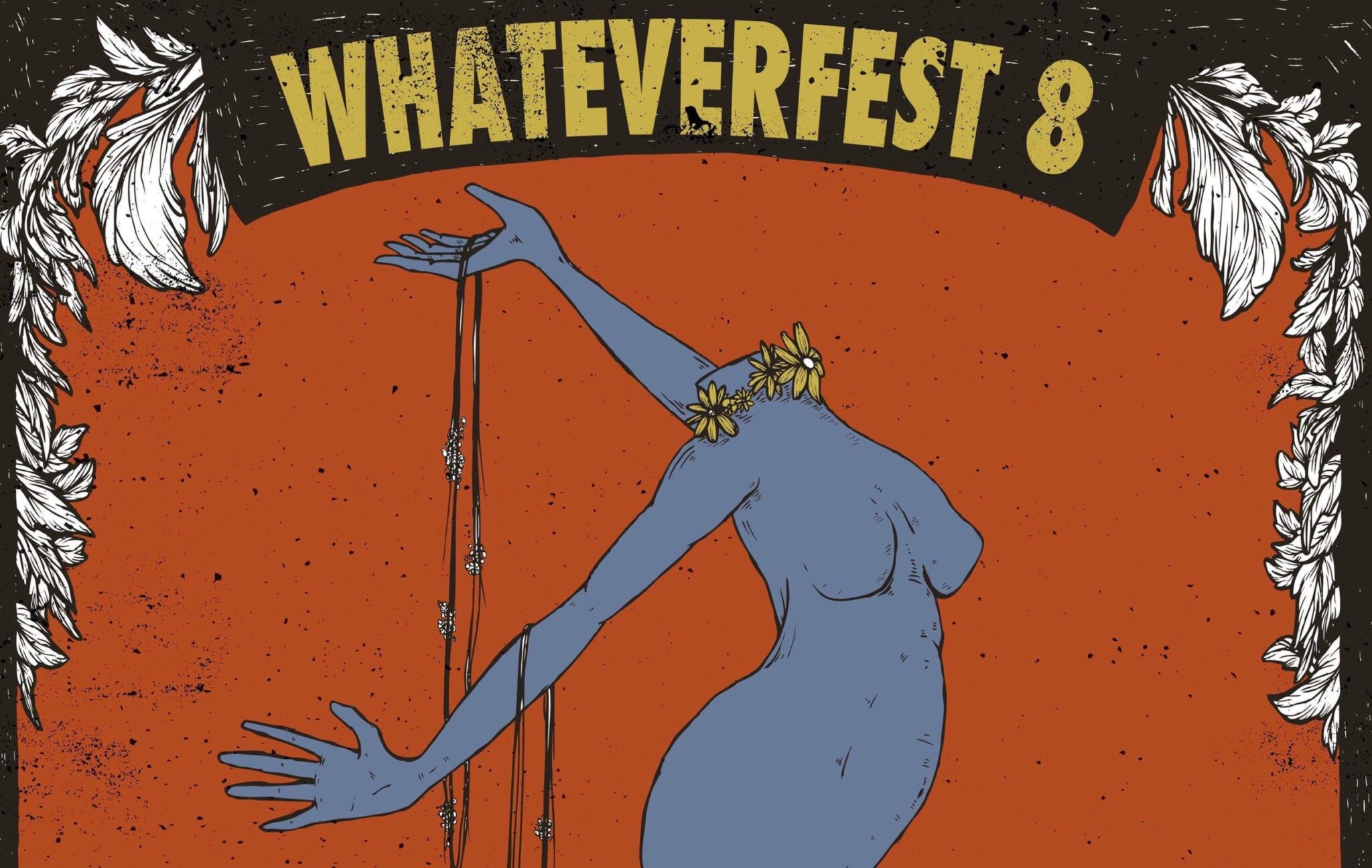
When you think about music festivals, it’s easy to picture giant stages, overcrowded drink lines, and teenagers in various species of headwear. Whateverfest – an all-genre, all-ages DIY festival based in Detroit – is pretty much the opposite of that. Born from a “what if” conversation between friends in 2011, Whateverfest has grown from a few bands occupying every apartment in the Hyesta building to over 40 bands, spanning nearly every genre, playing at the Tangent Gallery. This Saturday, May 12th, the fest is returning for its eighth year and is set to go from 12 pm to 6 am the next day.
The fest’s lineup includes a vast array of Michigan bands as well as acts from Toronto (Rooftop Love Club), Chicago (Aathee Records), and Indianapolis (Gwendolyn Dot). One of the original festival organizers, Soph Sapounas, says that the event’s musical diversity comes from the laissez-faire ethos indicated by its moniker. “Whoever wants to play plays,” says Sapounas. “We’re all just trying to have a good time – it’s whatever. That [word] starts getting thrown around a little too much on the day of but it’s okay.”
Though the organizers strive to be as inclusive as possible, the festival’s popularity attracts a slew of submissions every year, which the team reviews in a democratic fashion. They host listening parties and make sure that the roster of artists performing represents the city as a whole. “We want to be a platform for artists and musicians in Detroit in general. Not just for rock, not just for techno – we want to include all of it,” says Sapounas. “That’s one of the things that keeps recurring, is people telling me that they think it’s really cool to see all the different scenes here and everyone having a good time together and not having that cool kid standoff.”
With groups like Spaceband (a nine-piece experimental funk collective), Ex American (new age electronic), and a handful of techno artists holding down the late-night sessions, the festival undoubtedly reps staple genres Detroit is known for and everything in between. If you’re in or around Detroit, this fest is more than worth checking out. If not, check out some of the amazing under-the-radar artists below – I’m betting they’re more eclectic than your Discover Weekly playlist.
Emma Hern is as grounded as they come. As a young musician, some might expect a bit more hesitation in a debut EP. Hern’s self-titled freshman effort is slick and satisfying, drawing its inspiration from traditional rock and blues.
“Then you held me tight / Almost every goddamn night / You whispered in my ear, only the midnight train could hear me coming undone.” Simplicity is underrated. Songs like “Fool Who Should Have Known” showcase so clearly that direct lyrics and a powerful voice can move a listener. It’s an album of familiar themes, love and loss, yet on repeated listens it resonates with a crisp flavor all its own.
We talked with Emma about going to Berklee School of Music, her move to Nashville, and how she finds the “fresh” in retro rock.
AF: You grew up in Richmond, Virginia. What’s the music scene like in Richmond?
EH: Richmond has an extremely diverse music scene and is home to some wonderful festivals like Friday Cheers or River Rock (think music festival + extreme sports + a beautiful river) The town is really supportive of live music.
I was pretty young when I first started playing in Richmond. Actually so young that often times I had to have my parents with me to get into the bar or venue I was playing at that night. I was around 14 and was in a band with some older guys and teachers, mainly doing covers, sometimes until 1 a.m. on a school night. My parents were so supportive during that time – as long as I finished my homework. Now that I am older, I love to go back to Richmond whenever I get a chance and see who is playing or what new venues have opened up.
AF: Who were your earliest musical influences and what about them inspired you to start writing?
EH: I asked for an Aretha Franklin CD for Christmas when I was five… so she was certainly my earliest musical influence. I used to literally scream “Chain of Fools” and “Natural Woman” in the shower. Again, my parents were very supportive during this time of “creative exploration.”
I honestly didn’t start writing until I made it to college. Patty Griffin and Lori McKenna were huge influences for me at that time of my life. I learned a lot from their styles while I was trying to find my own voice as a writer.
AF: Graduating from Berklee is no small feat. What was your college experience like?
EH: When I first showed up it was really difficult for me. Although I had been performing for years, I had never taken music lessons growing up and found myself thrown into the deep end with kids who were years ahead of me in music theory. However, I learned a lot while at Berklee. It provided me with a safe environment to experiment with my sound and for that, I am grateful.
I really struggled finding a balance between my love of simple blues and soul lyrics and being taken seriously [fusion_builder_container hundred_percent=”yes” overflow=”visible”][fusion_builder_row][fusion_builder_column type=”1_1″ background_position=”left top” background_color=”” border_size=”” border_color=”” border_style=”solid” spacing=”yes” background_image=”” background_repeat=”no-repeat” padding=”” margin_top=”0px” margin_bottom=”0px” class=”” id=”” animation_type=”” animation_speed=”0.3″ animation_direction=”left” hide_on_mobile=”no” center_content=”no” min_height=”none”][by my songwriting peers] as a lyricist. For some reason I had it in my head that if my lyrics were not earth-shattering metaphors posing the ultimate question by the first chorus, I was less of a writer. It took me a while, but I finally realized I am who I am. I write and sing in the style that I grew up listening to and that shaped me. I love it and there’s nothing wrong with simple. Of course, as an artist you always want to be pushing yourself to be a better writer, but I’ve found a happy medium.
AF: What is it about Nashville that made you want to move there over NYC or Los Angeles?
EH: I was SO against moving to Nashville. I really wanted to branch out and head out on my own to NYC or LA. I was visiting some of my bandmates in Nashville the summer before I was planning to move, and they took me to this dive bar, Dino’s. Flash forward three months – I was packing up all my things and making the drive to Nashville. It was one of the best decisions I’ve made. I am blown away by the music community in this town and have never felt so supported in my music. (Dino’s is still my favorite dive bar.)
AF: Nashville is a breeding ground for talent, yet it’s also a very saturated space. What was your strategy in terms of standing out from the crowd when you first arrived?
EH: Whew. I don’t think there is a right way or wrong way to do this whole music thing.
When I moved down here I just hit the pavement running. I said yes to every opportunity. I worked REALLY hard and heard so many nos.
I think maybe I got lucky. When I first started playing out in Nashville, the band and I were just trying to figure out our sound and having a blast doing it. Everyone was smiling and laughing on stage while I was dancing around. I think in a sea of acoustic guitars, that may have helped us stand out a bit.
AF: Your self-titled debut EP has a familiarity to it that feels really good. How do you balance writing within such a distinctive genre (retro rock / soul) while also keeping your music fresh?
EH: I think that rock and soul sound is what naturally comes out of me when I sit down to write. It is ingrained in my heart, so I focus really hard on trying to add some pop sensibilities in my choruses to make it more current. It’s always a battle, but I try to think about making blues and rock and soul accessible to a mainstream audience. Most of the EP was tracked live. The band and I were all together in one room doing full takes of the songs, so the arrangements and mixing process were really vital in keeping it fresh. I think where we placed certain things in the mix really helped to make it more current. Kyle Dreaden did a great job of working with me on that.
AF: What current artists are you listening to on the regular?
EH: Anderson East, Lake Street Dive, Theo Katzman, PJ Morton, Phoebe Bridgers, Tedeschi Trucks are on repeat and I’m always listening to my mom’s old vinyl.
AF: Do you have any plans to tour in the near future?
EH: Of course! Keep your eyes peeled for summer dates.
Emma Hern’s self-titled debut EP is out May 11. [/fusion_builder_column][/fusion_builder_row][/fusion_builder_container]
When Rachael Pazdan, curator of The Hum, first told me about the series years ago, she explained to me that despite it featuring all female lineups, she didn’t want that to be the only defining aspect of the showcase. Over the years The Hum has been spotlighted by media outlets, from The New York Times to Nylon to The Village Voice. Each one has focused heavily on the central aspect of The Hum as a female based residency. However, there are other unique aspects of The Hum that deserve to be highlighted.
While the artists for these events understand the importance of having an all-female space to perform in, there is a piece of the puzzle that gets overlooked when this becomes the only focus of the evening. The Hum is not merely a stage allotted for female artists – it is, down to its curation, a work of art. In each well crafted evening, Pazdan has complexly united a group of artists mined from her expansive work with the indie music scene. This is no hodgepodge of random artists, nor is it a night to go see your favorite musicians to hear their album tunes. The Hum is a stage for exploration and experimentation.
The feeling created on stage at The Hum is the closest audience members will get to experiencing the practice space of the musicians that inspire them. There is a vulnerability to this kind of space that pulls the imagination out of these performers and asks them to show the audience their unpolished selves.
In turn, the audience experiences a one-night-only evening of music which may only exist for the few minutes the musicians take the stage. A potent magic cumulates in the spontaneity and serendipity when a room full of people silently agree to participate in the unknown.
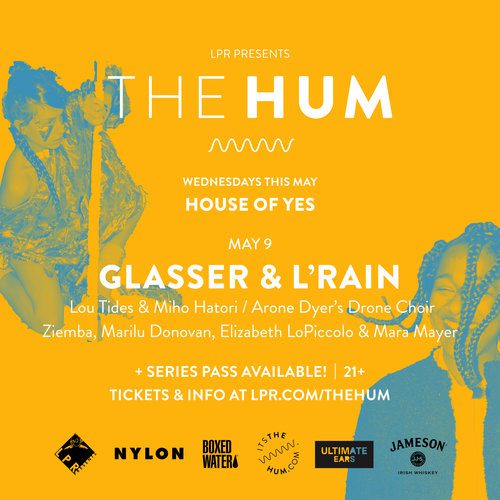
This Wednesday The Hum returns to The House of Yes with another incredible lineup of musicians. Lou Tides and L’Rain spent some time talking to Audiofemme about their previous experiences with The Hum, and what they are looking forward to this time around.
L’Rain
AudioFemme: This is your second time playing for The Hum. What was your first experience like?
L’Rain: It’s a little scary. It’s daunting to have all this time that you have to fill with new material with people that you haven’t played with before. But it’s the sort of thing that you want to do because of the people that are doing it. Building in an opportunity to work on new material is really important, and if you don’t have someone kick you in the butt it’s hard to do sometimes.
AF: Did you bring some of those experiences with you into the music that you created after The Hum?
LR: I will be. I wasn’t expecting to at all. I was kind of like, “Okay, these are some songs that we are gonna play once and that’s it,” but I’ve been thinking a lot about them lately. I’m hoping that I can find a way to build them into the next record that I make.
AF: You and Glasser will be collaborating at The Hum – I’m curious how you are bridging the difference between your slower and melodic style to Glasser’s more pop infused style for your performance?
LR: I feel like in the sessions that we’ve been having, we’ve been just improvising a little bit and seeing what comes out of it and it’s been sort of meditative in a way. Which I guess is half expected and half unexpected. We both are really into, I don’t want to say ambient music, but we both have an interest in Alice Coltrane, and textural electronic music, and I feel like that comes out in a lot of this. It could change in the next couple days, but at least right now, we both are playing synths and we’re singing and she’ll probably have some stuff in Ableton. Which I think is a totally new set up for both of us.
AF: How does having access to a showcase like The Hum impact your music individually, and your Brooklyn community of musicians?
LR: In my day job I program music and I often find that a lot of the other people I know who are booking music are usually not women. It’s been really nice to befriend someone [fusion_builder_container hundred_percent=”yes” overflow=”visible”][fusion_builder_row][fusion_builder_column type=”1_1″ background_position=”left top” background_color=”” border_size=”” border_color=”” border_style=”solid” spacing=”yes” background_image=”” background_repeat=”no-repeat” padding=”” margin_top=”0px” margin_bottom=”0px” class=”” id=”” animation_type=”” animation_speed=”0.3″ animation_direction=”left” hide_on_mobile=”no” center_content=”no” min_height=”none”][like Rachael Pazdan] who thinks about the composition of bills from an aesthetic standpoint with care, and also thinks about the people who are making that music. One isn’t more important than the other but she really thinks about them in tandem. There are so many people that are really careless with how they think through women and female-identifying musicians on bills. They’re like, “Oh, here are some women and they have nothing to do with one another,” and that has sort of become the norm in a lot of ways. That’s really lazy and infuriating so I think it’s important to have a series like The Hum. And the structure of it too, I feel like I have an opportunity to develop deeper relationships with musicians that I ordinarily wouldn’t. So it builds a community not in a superficial way, but in a real way.
AF: What is it about The Hum that creates that community and camaraderie?
LR: Each week is basically a series of mini commissions, so I think that structure, when you are working with someone that intently or that intimately on something, you just form a different kind of relationship with someone. Rather than just being on a bill with someone and there’s nothing that binds you to that person or connects you to that person. I think the focus on the process is an important one, and one that isn’t necessarily considered as much.
AF: Do you see the potential for something like this becoming more common?
LR: Yea. I think there’s been a little bit of a shift in the way people think about live music. I’ve seen more artists in general being interested in curating bills, and people generally trying to make special live experiences which is really great. I think there’s a lot of potential for more of that for sure. I think that people are hungry for creating special live experiences that you can’t find in other places and that audiences also are kind of seeking that out.
Lou Tides
AudioFemme: How did you get involved with The Hum?
Lou Tides: I did the first iteration of The Hum, which was at the Manhattan Inn. I think Rachael just told me about what she was doing, and I thought it was an interesting project, and so I decided to do it. That night I got to play with two people I had been wanting to play with for a while – Zoe Brecher, who plays drums, and Jen Goma, who has become one of my main collaborators musically, and just one of my best friends.
AF: And that was the first time you met Jen Goma?
LT: No, we had met previously at a friend’s house, and I really liked her vibe, so I asked her to do The Hum with me and had a great experience working with her, and Zoe as well. But Jen and I in particular continued a pretty special friendship and collaborative relationship ever since then.
AF: For this iteration of The Hum, you’ll be collaborating with Miho, correct?
LT: Yes. I don’t know if you know her music but she’s really amazing. We are going to do a more improvisational set. That’s something that will be new for me. Miho does a lot of improv. I’ve done a fair amount, but it’s not necessarily the thing that I do often, so it’s a challenge and it’ll be fun. I also adore Miho and her music, she’s a really amazing musician. I look up to her a lot so that’s exciting to have the opportunity.
AF: What is that process like when you are doing a collaborative improvisation?
LT: We are sharing a little bit of music beforehand, and then it’s gonna be pretty much flying by the seat of your pants. I find with improv that sometimes less preparation can be better, because then you have to be super present, and be in the moment. I’m also extreme so I’m sort of like either/or. I’m either gonna be super prepared and rehearse a ton, or you just go into it kind of having no game plan. I also have never worked with Miho, so it’ll be really interesting to get into a room in front of people and do live experimentation. Which is nerve racking, but is also so exciting at the same time.
AF: How has collaborating with Jen Goma and other female musicians impacted your work?
LT: Well, I suppose something that was big about the collaborative process of The Hum, for me, was that, I’ve been in a lot of bands which are naturally collaborative, but also sometimes there tends to be one person who is the leader. Jen and I went into that situation as equal songwriters, so it’s been really interesting working with her. Really, really stepping back and exchanging ideas 50/50, rather than there being more of a songwriter/band dynamic. It’s enjoyable to create something as a whole, and not with so much ownership. And I think women can be pretty open with that too. I mean men can too, but there’s something about women – sometimes they’re a little bit less possessive of their ideas, so that’s been a really good practice for me to let go, and not be possessive, because it creates so much more beauty.
I also find it really enjoyable to listen to afterwards, because then I don’t hear as much of myself in it. So I become, therefore, less controlling. Collaboration has just become a much more interesting thing to me. And a lot of that has to do with The Hum, because I didn’t always collaborate as a songwriter before that.
AF: You’ve been switching your musical identity – can you speak a little on that process?
LT: I’ve been playing in bands for 10 years now – well, longer, but really actively and furiously, my two other projects added up to about 10 years. I think maybe it’s just time to try different avenues for myself. I’m interested in exploring a different way of doing things. It’s been an incredible amount of hard work and very difficult and very taxing, just as far as reshaping myself. Because I don’t have anything released I haven’t had some catharsis of the letting go of the process because I’m still in it, and it can be kind of exhausting. It’s a little abstract, I don’t know how much I can fully dig in without getting really out, I suppose it’s been about being less attached to form, and less attached to the idea of what something should be, and really just following where something wants to go. I’m trying to find new pathways. It’s both exciting, and scary, and exhausting at the same time.
AF: How does having access to a showcase like The Hum affect the Brooklyn music community?
LT: I think it’s great in the sense that – again back to the idea of ownership, and lack of ownership – part of collaboration is community and creating community. I think that especially in a time where it’s very difficult to make money and a living at music, that all the more emphasis on community is important. An event like The Hum is wonderful in that sense because it brings people together for those reasons. I hope that it encourages other programming that is more about a night and celebrating people doing something as a collaborative mass. People are going to the event to see the event, rather than paying all this money to see this person that is celebrated and in tons of print and magazines or whatever, because people think that’s what they should see, or because that’s the great person of the moment. It’s about celebrating community, and we don’t see much of that these days, so it’s definitely refreshing.[/fusion_builder_column][/fusion_builder_row][/fusion_builder_container]
When I first started going to music festivals, drugs were among their main appeal. Then, my body started telling me it couldn’t handle drugs like it used to, so I had to get creative. Over several sober weekends, I developed methods to preserve festivals’ excitement without the illicit substances.
That’s not to say, “Don’t do drugs, kids.” But it’s always good to have alternatives, because most drugs will take back what you owe them (if not in the form of a comedown, then in the form of a hangover). If drugs have become too hard on your body, or you just don’t want to deal with any negative side effects, here are some ways to get high on life at your next festival.
Talk to people who are on drugs.
Part of the fun of doing drugs in a group is socializing with people on drugs. But you don’t need to do drugs to get that! Talking to rolling people in particular is a joy in and of itself. They will say the nicest things and answer the most personal questions. Stoned people aren’t bad either. They’ve got some interesting theories about life. That’s doubly true if you find someone on psychedelics. Rolling people are the easiest to spot though. Just look for someone wearing sunglasses and chewing gum.
Make out with someone.
You don’t need drugs or alcohol as an excuse for a make out sesh under the strobe lights. Just make sure the other person is also sober enough to consent.
Wear a music-responsive sex toy.
I’m not even kidding — they make these. I can attest to that. I wore the OhMiBod Club Vibe 3.OH to Ultra Miami, and it was an adventure. It fits inside a pair of underwear and vibrates when it detects sound. Because the music is so loud, nobody will even hear the vibrations — or your moans. In all seriousness, though, there probably won’t be any moans, because the vibrations are quite weak and inconsistent. Nevertheless, the way they buzz in tandem with the beat definitely adds a little something.
Eat a ton of delicious food.
I won’t deny that festival food is absurdly overpriced. But if you consider how much money you’d otherwise spend on drugs, it evens out. Some of the best festivals for food are Tomorrowland and Day for Night. Come for the music, stay for the taco trucks.
Crowd surf.
Literally putting your fate in the hands of a crowd of drunk, high, dancing people will give you more adrenaline than a line of coke.
Feel the incredible energy.
Nothing beats that moment when a song everyone loves comes on, the performer pauses right before the hook, then it gets fast and loud and everyone jumps up and down. Music festivals exist for those moments. Those moments will give you a rush of endorphins unlike any other drug. And yes, I mean “other” — because music itself is a drug.
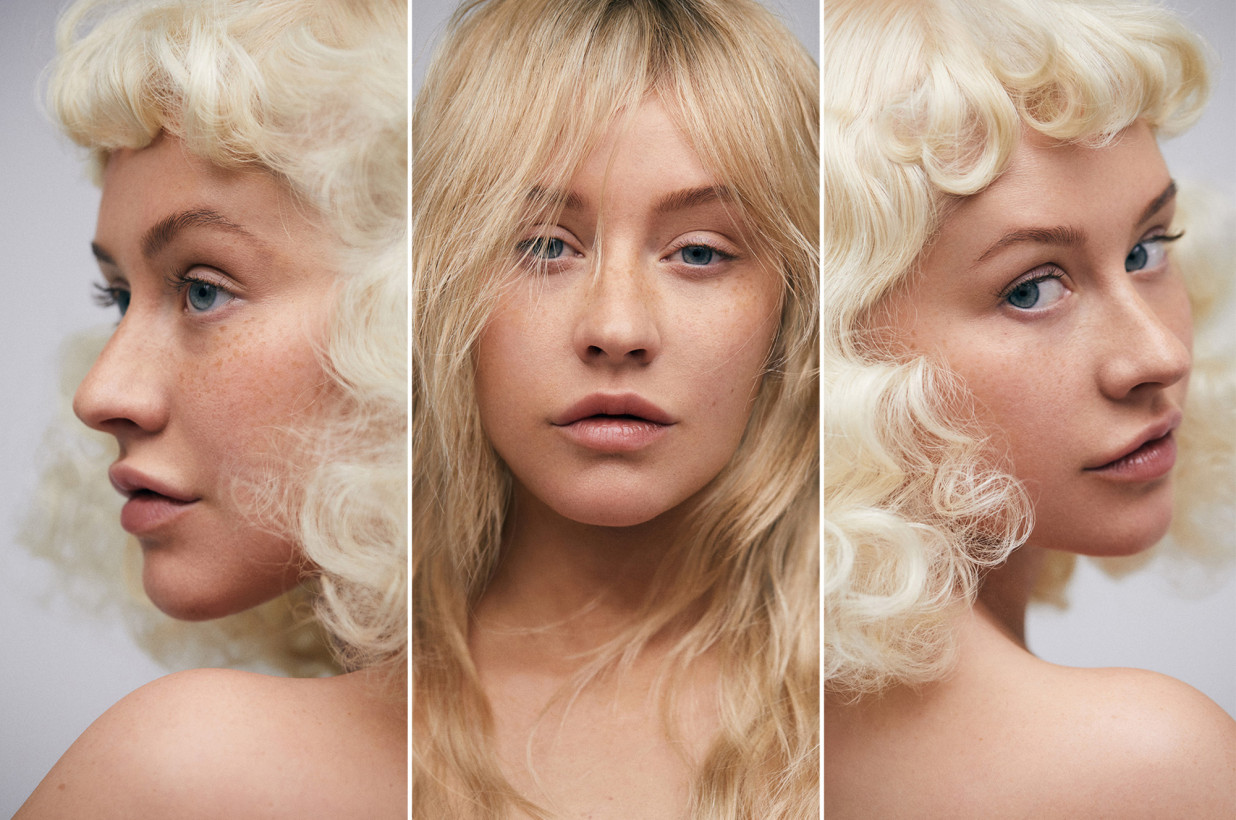
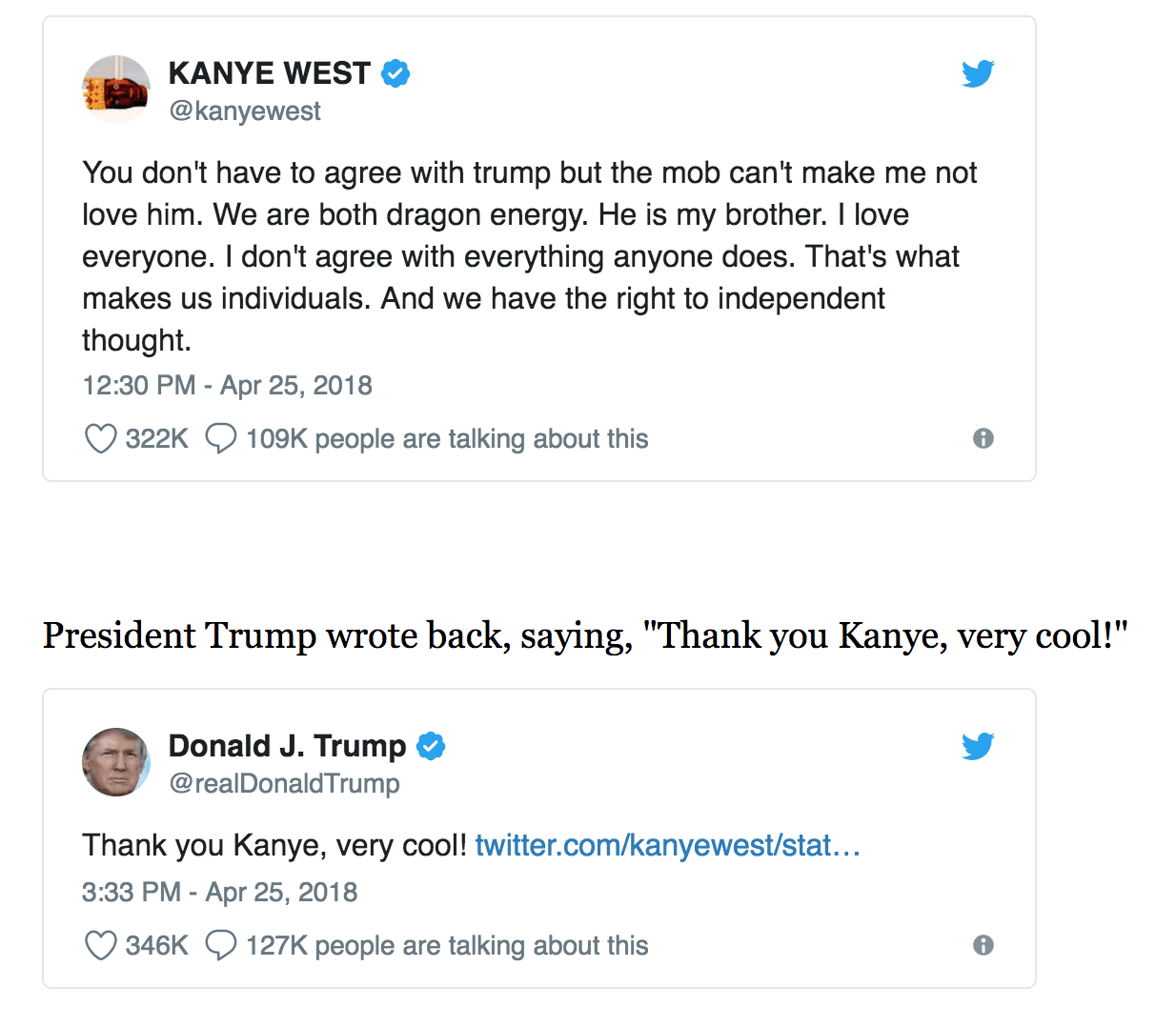
Early noughties preteens, rejoice – Xtina is back! Yesterday, the Stripped singer announced the release date and tracklist of her upcoming album, Liberation. While the LP won’t come out until June 15th, the first official single just dropped yesterday with a clip that features the new, natural, Christina. Produced by Kanye, Aguilera’s “Accelerate” is the only positive thing we’ve heard from West in weeks!
Despite the fact that R. Kelly has been accused of many disturbing acts of sexual assault, pedophilia, and abuse, the music industry has been disturbingly slow to address the Trapped In The Closet artist’s misconduct. That may finally be changing – this week a grass-roots campaign that has steadily been working to create a widespread of boycott of R. Kelly gained additional traction with the help of some Hollywood heavyweights.
The #MuteRKelly campaign was started last July by Oronike Odeleye, an Atlanta Arts Administrator. Since the movement’s start, ten R.Kelly concerts have been cancelled. On Monday, women of color members of the Time’s Up movement put their considerable influence behind #MuteRKelly when they penned an open letter asking organizations (including Spotify and Apple) to boycott R. Kelly. He is currently represented by RCA Records, a division of Sony.
Read the full letter here and find out how you can help #MuteRKelly here.
[/fusion_builder_column][fusion_builder_column type=”1_1″ background_position=”left top” background_color=”” border_size=”” border_color=”” border_style=”solid” spacing=”yes” background_image=”” background_repeat=”no-repeat” padding=”” margin_top=”0px” margin_bottom=”0px” class=”” id=”” animation_type=”” animation_speed=”0.3″ animation_direction=”left” hide_on_mobile=”no” center_content=”no” min_height=”none”]Director Ava Duvernay expressed her support for Time’s Up letter to boycott R. Kelly.
That New New
Princess Nokia dropped a new video yesterday. “For The Night” comes from her recent mixtape, A Girl Cried Red. Florence + The Machine announced that their highly anticipated followup to 2011’s Ceremonials will drop on June 29th. They just released “Hunger,” the second single off of the album. Dirty Projectors released “Break-Thru” a new video off of their upcoming album. Lamp Lit Prose is out July 13th and the band embarks on a massive support tour this summer. My Bloody Valentine, Angel Olsen, Raphael Saadiq, Death Cab for Cutie,Father John Misty, and Audiofemme favorite, Wax Idols, will also hit the road soon.
End Notes
NPR got the lowdown on the most random collaboration in recent memory. Hear Sting & Shaggy talk about their recent reggae-influenced album, 44/876, here.
BRIC has announced the lineup for their free concert series, Celebrate Brooklyn!
Rapper Meek Mill, who was freed from prison only last month, spoke openly about his opioid addiction and called for criminal justice reform at a press conference in Philly this week.
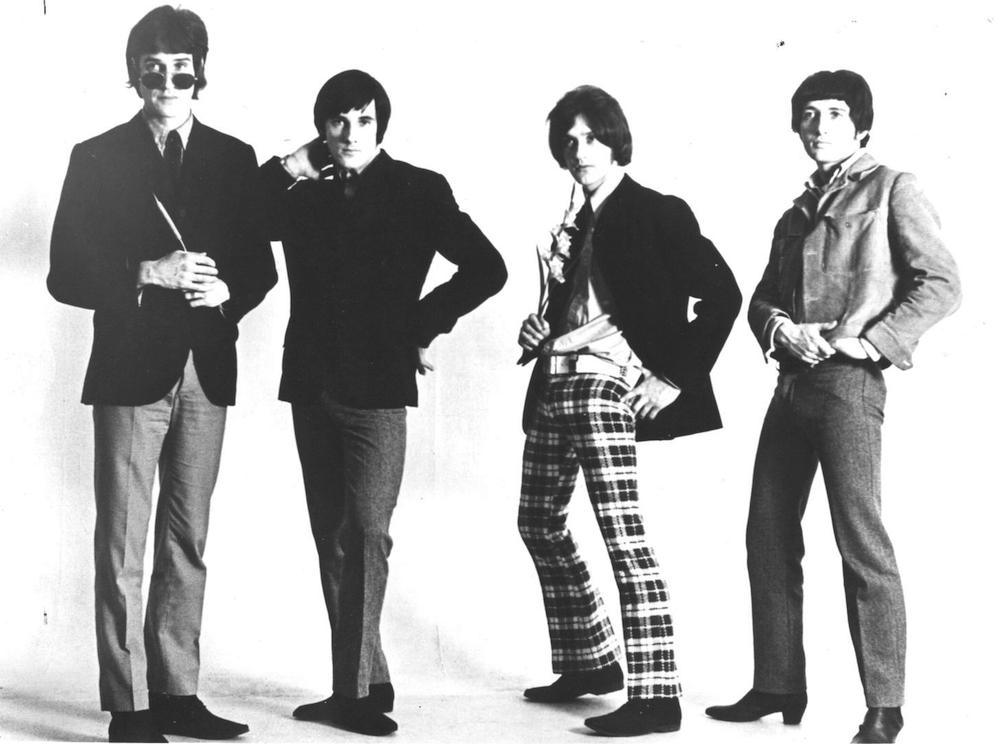
Waterloo always sounded like an exotic place to me, an English garden oasis dotted with fountains and plum trees and those little stone statues of naked angel-babies. The name suggested a swan pond, croquet matches, and crustless triangle sandwiches served at 3 p.m. for tea. Little did I know that the “Waterloo” Ray Davies was singing about in the Kinks’ “Waterloo Sunset,” which first topped the pop charts 51 years ago this week, in fact referred to a bustling train station in the center of London, far removed from the green gardens I’d imagined.
It took living in London to come to this realization. Prior to moving there at 21, I had a vague and filmic idea of the place, which would be better described as ignorant and romantic. I had no perception of London as a real metropolis. Like my relationship with New York before moving here, I simply knew I would love it. I decided to love it. And most of that preemptive love came from the British music I listened to as a child and into my teenage years. The influence of U.K. rock stars and punk urchins so influenced my tastes that as a middle schooler I dreamt up a future business plan that paid homage to my heroes across the pond.
When I was about 12 or 13, I let my dad in on this grand scheme of mine. I told him that when I was older, I was going to open a concert venue (/record store/clothing store/cafe, obviously). I would call it, “The London Underground.” My dad, a person who had actually been to London, as well as many other places, explained to me that this name was already taken, and the use of the word “underground” in that name did not mean “obscure” or “edgy,” but “underground” in the most literal sense. This was because that name belonged to the London metropolitan commuter train, which was in fact, subterranean. It would take me a decade to experience what he was talking about firsthand, but by then I’d at least figured out that owning your own brick and mortar business was a pain in the ass, anyway.
For years I subconsciously learned about different parts of London from songs by my favorite bands. The names of neighborhoods and streets would slip out of the mouths of the Jam’s Paul Weller and the Streets’ Mike Skinner, and funnel straight into my memory, where I kept them tucked away as useless scraps of information about a place I’d never been. The English music I loved so much was imparting me with a partial education on the city all along, but I wasn’t able to utilize until I moved there.
I knew from my favorite Tom Waits songs, for instance, that the “dirty old river” Ray Davies sang about in “Waterloo Sunset” was pronounced “temms,” not “Thames” despite its spelling. I’d like to think this saved me from being pegged as “too American” by my British friends, but my refusal to call bathrooms “the toilet” doomed me from day one. I knew there was a Wardour Street from one of the many Jam songs I loved in college, though I did not know where this “Wardour Street” was. When Morrissey sang about “Battersea” in “You’re the One for Me, Fatty,” I thought he was saying “All I’m about to see;” I had no idea he was talking about a South London power plant. I gleaned that Squeeze’s Glenn Tilbrook was singing about a poor couple getting pregnant and falling on hard times in “Up the Junction,” but didn’t realize the title was a pun combining a British euphemism for pregnancy (“up the duff”) and the northeastern neighborhood of Clapham Junction until I was informed otherwise.
When I moved to New York, the city felt paved with scenes from my favorite movies. When I moved to London, I navigated its circular streets with lines from my favorite songs. These songs followed me as much as I followed them, and my daily commute often felt like an interactive playlist. In 2013 I moved back to London for a summer, and spent two months interning at a fashion house in the southwest corner of the city. My commute took about two hours each way, as I lived on the exact opposite side of town. I’d get on the bus at Clapton Pond at 7 a.m. and transfer at Victoria station roughly an hour later. The moment the bus docked at Victoria, my mind’s DJ would invariably cue up “Victoria” by the Kinks. This was the schedule everyday, and it at times felt like the “I Got You Babe” alarm clock in Groundhog Day. Same song. Same Time. Every day.
From my second story bus seat I could see every street name as we rounded their corners. These were names I knew well, but I didn’t understand the significance of them until those early morning commutes. I passed by Wardour Street, where fortunately, there was no a-bomb. I saw signs for Brixton Station, which brought to mind the Clash’s dub-heavy classic “The Guns of Brixton.” I passed Trafalgar Square, and Leicester Square, and Sloane Square, each of which was lassoed to a song in my memory.
These associations are deeply ingrained in my hippocampus, and it never took much for a particular song to spill from my subconscious into my waking mind. When passing Vauxhall station, I thought only of Morrissey’s 1993 solo record Vauxhall and I. When my bus careened through Piccadilly Circus, Morrissey was there, too, with his brazen opening track from 1990’s Bona Drag, “Piccadilly Palare.” At times it felt like my brain was home to a 6-CD changer that swapped discs with the slightest provocation. After five years of living Stateside, things have changed: now when I listen to my favorite U.K. bands, I can picture the days when I stood exactly where they sing about.
Lillian Frances rolls with the punches. When she developed tendonitis, losing the ability to play guitar, she knew it was time for a shift musically. Her resulting sophomore EP Timeism is light-hearted romp on an electronic playground, made for early summer days by the pool.
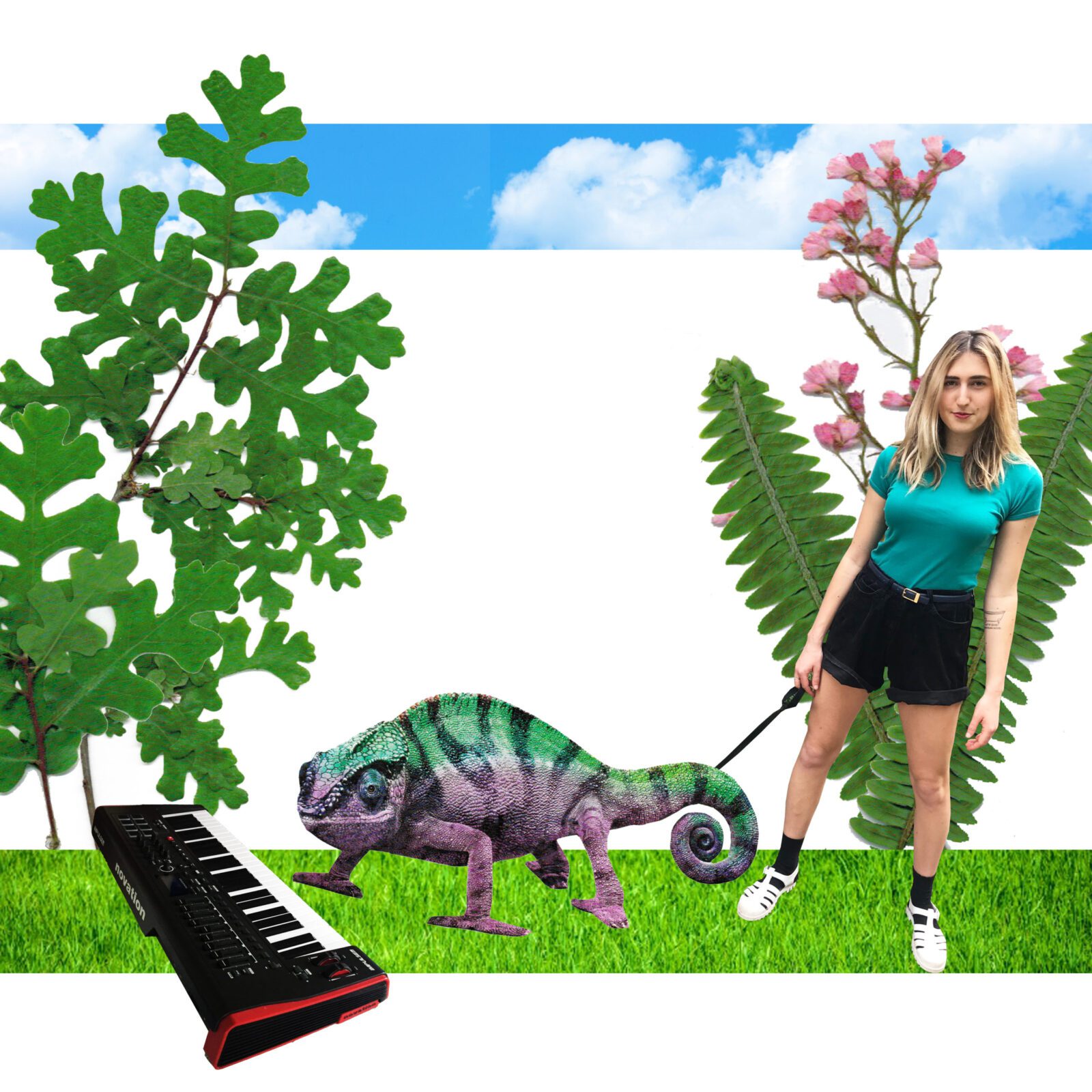
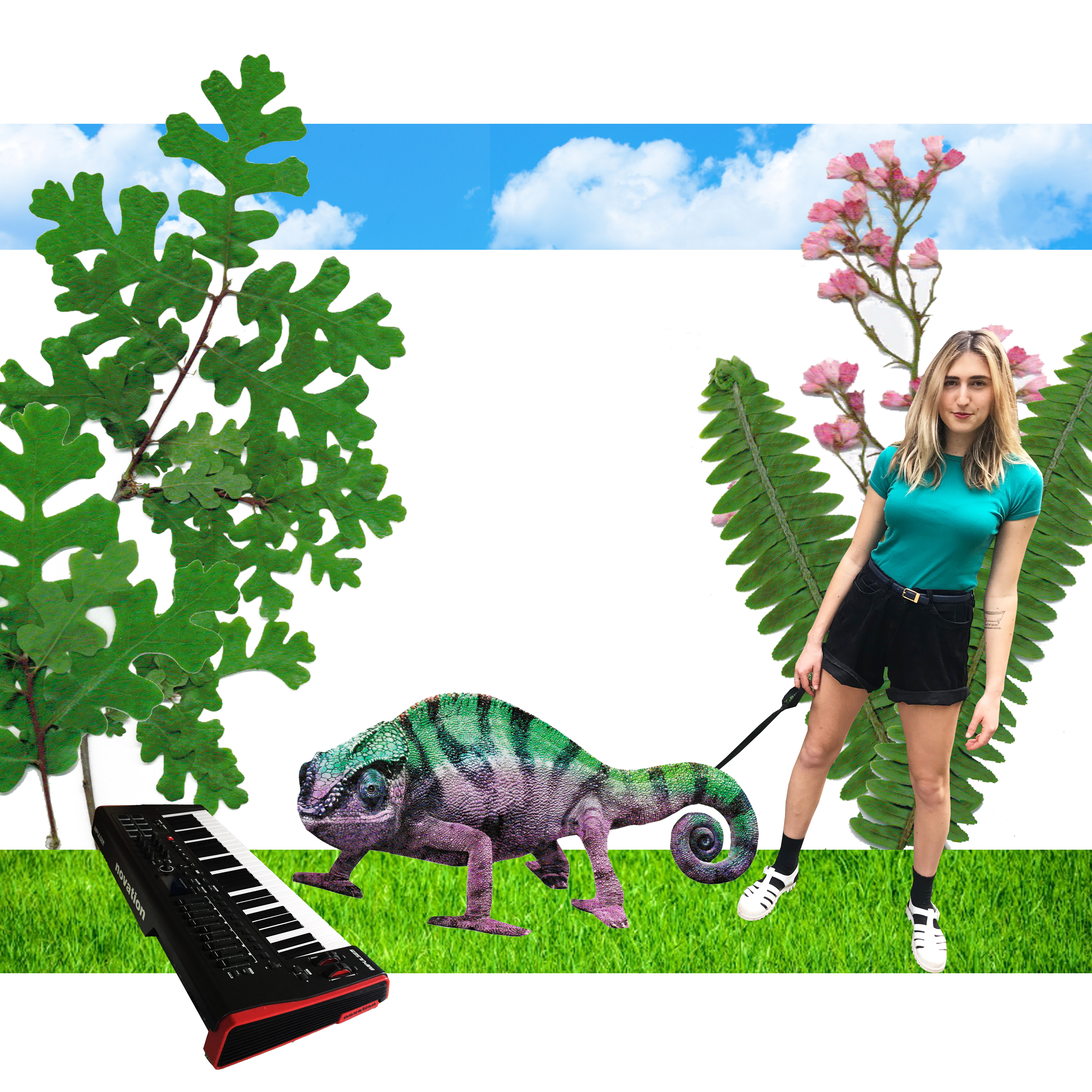
Like many artists nowadays, Frances is in tune with her image, curating it from the ground up, musically and visually. Her collage artwork features the dishwater blonde amongst flying saucers or carefully placed atop a Polly Pocket toy. It’s this tongue-in-cheek attitude that translates easily to sound, displayed openly in tunes like “Netflix + Chill”.
We sat down with Frances to talk about her life in Davis, California, finding inspiration in Death Valley and how Spanish speaks poetry in a way English never could.
AF: I have to start out with a strange question: Is Lillian Frances your given name or your stage moniker? A google search brought up Lillian Frances Smith, a Wild West sharpshooter, so I was curious.
LF: I love that google tells you that. My middle name is actually Frances, and my real name is Lillian. So BAM! I’d say one in eight people tell me their grandma is named Lillian. Which is nice because I feel like I’ve already made a good first impression with them.
AF: Definitely a good first impression (#GrandmaStatusUnlocked). You grew up in Davis, California and you currently live there. Can you give us a little glimpse into life in Davis?
LF: You probably already know Davis because your cousin’s best friend studied agriculture there. But Davis is really a quaint town. Bike capital of the US. Surrounded by fields and farmland and we get the BEST tomatoes in the summertime. There’s not a huge music scene, but there are tons of students so the demand for music is always there—it’s just not really concentrated anywhere. We’re also right next to Sacramento, which has a much doper music scene.
AF: When did you first show an interest in making music?
LF: Apparently I was singing when I was two. And when I was a kid I would have my musician uncle notate music with me on the piano. I would love to find that sheet music now! So I’ve always sung, and picked up the guitar in high school. I started writing my own songs in college, and recording at my student-run recording studio.
In 2014 I saw Sylvan Esso perform at the Make Music Pasadena festival, and lost my gourd. I loved it. And standing in the crowd I was like… that looks like the most fun thing I could possibly do and that is what I am going to do. So after I graduated college I went to music production school at the Beat Lab Academy in LA, and I’ve been honing my craft ever since!
AF: Tell us about a song like “Bailamos con el humo.” Where does the song begin? Do you start with a beat, a melody, lyrics?
LF: Dang, where did that song start? I was just messing around making beats and playing with melodies. Collaging my sounds, you know. Basically anything I make that sounds good is an accident. I never go out to make a particular sound. I focus on experimentation, and eventually something sounds good or interesting, which to me are basically the same thing. So for “Bailamos con el humo,” when I ended pulling it all together it just hit. And I loved the melody.
Then I went to Death Valley with some friends for New Years. It was so beautiful. On New Year’s Day we all took acid and walked into the canyons surrounding the valley, and had a really fun and intimate experience with mother nature/each other. That sunset, as we walked out of the canyon, we watched the full moon sail out from behind the mountain, illuminating the world. It was one of the most beautiful things I’d ever seen.
That night we danced around the campfire and smoked weed and just jammed out. I felt so full of life and love and new energy. When I came home, the lyrics immediately tumbled out, and matched that melody I had been working on. And I wanted to write it in Spanish because it felt more poetic to me. There’s a line in the song that goes “my name in cursive, escapes from your lips,” —which is how I imagine my name is spoken when someone really knows and cares for me. And for me, hearing Spanish feels like listening to cursive. So it just matched the vibe.
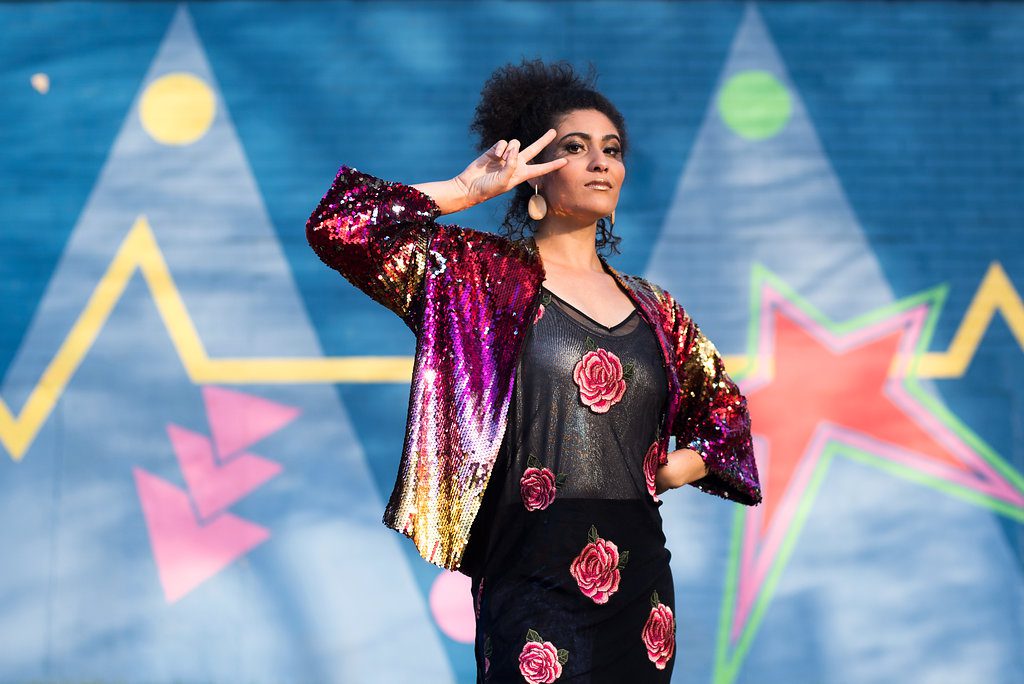
LF: The process is me hitting up my homie and going “Let’s make a video” and him going “Down!” So we just set up shop in my bedroom and recorded a session of me performing “Phone Keys Wallet.” The sun was shining through my window at just the right angle, illuminating my sequin jacket and turning me into a human disco ball. It was better than we could have planned! It’s my second time participating in the contest. It’s been an great experience, and I’ve made a lot of connections in the local music scene through my submission and by watching others. I already have two shows set up with people I met from the contest.
AF: “Phone Keys Wallet” is about you getting tendonitis and losing the ability to play guitar. Did your music change drastically in terms of story/tone as you shifted into the electronic space?
LF: Yes, absolutely. I think my story changed because I was just at a different place in my life and was experiencing different things. But in terms of tone, oh yeah. I had this whole new palette of colors I had never had before. The vibe is super different, it’s so hard to compare!
Electronic music lets me tell the story I want to tell a little more precisely. You immerse the audience in truly any world you want to imagine. That allows me to be very specific with the vibe and energy I want to invite the listener into. With an acoustic guitar… it’s always gonna sound like an acoustic guitar. I mean, in its unprocessed state, of course.
AF: I love the collages on your Instagram. How does visual art impact your songwriting?
LF: I am always fishing through magazines, cutting out images, and scanning them into my computer. Then I edit them in photoshop. The way I approach visual art is similar to music production. Because I’m not necessarily a trained artist in any sense of the word, and I can’t draw or paint with precision, or just play any instrument I touch, I rely on collaging to create these visions and textures and concepts that I wouldn’t normally be able to articulate.
In Ableton (the music production software I use), I can paste together and manipulate all these sounds to get a really unique soundscape, and I’m not held back by my lack of, say, bass skills. It’s the same with collaging—I get to use pretty pictures other people have taken—and give them a new life.
AF: What artists do you have on rotation right now? Any up-and-comers we should be aware of?
LF: Currently jamming out to Kali Uchis. I literally have not stopped listening to Isolation since it was released a couple weeks ago. Been listening to a lot of Milo lately. I heard his song “Souvenir” and it felt like a little puzzle piece slipped into my body I hadn’t realized was missing. Billie Eilish. All day every day.
AF: Do you have any plans to tour in the immediate future?
LF: I’ve got a lot of upcoming shows in the Sacramento and Bay Area, and then mid June I jump off to Spain for the summer, so my live shows in the US will be on hold… but we’ll see what I get into overseas. I’ll be doing the summer festival scene next summer, though!
Instead of eating tacos and getting drunk on tequila like a dumb American this Saturday (which happens to be Cinco de Mayo), Detroit residents would be better off seeing Y La Bamba at El Club. Mexican-American singer-songwriter Luz Elena Mendoza has combined traditional Mexican folk music with atmospheric synths and experimental instrumentation to create a sound that is near transcendental. The Portland, Oregon-based artist’s most recent release, Ojos Del Sol, is a luminous call for self-discovery and actualization. Guided by Mendoza’s hypnotic, vocals, the record glides through peaks and valleys of sound and emotion, bringing the listener along with every song.
While the album’s title track undoubtedly features Mendoza’s expansive vocal range and ear for haunting melodies, songs like “Libre” and “Nos Veremos” open doors for audience participation and feel like gathering around a towering bonfire on a cool summer night. The show will undoubtedly be an elevated spiritual experience and a chance to sing and dance with old and new friends. If you’re not in Detroit, check out a list of Y La Bamba’s tour dates and listen to Ojos Del Sol below.
Brooklyn will be humming every Wednesday this May with the music of female-identifying artists and their fresh collaborations. Rachael Pazdan, the mesmerizing mind behind Hypnocraft, began curating wildly popular Brooklyn-based pop-up events at venues like Greenpoint’s now-shuttered Manhattan Inn. Arguably her most beloved brainchild, The Hum brings together a varied mix of sounds made by women, and May 2 kicks off its latest residency at the House of Yes in Bushwick.
Now in its third year, The Hum is returning with another run of talented performers, some returning to the residency and others who will become members of this musical family for the first time. Since its inception, The Hum has developed a powerful platform for women to share their talents, voices and artistry, while showcasing Brooklyn’s multi-faceted music scene.
Follow AudioFemme weekly throughout May as we meet up with a variety of artists who will be joining the ranks of Hum performers. This week we shared question and answer sessions with both headliner Jessica Lea Mayfield and Brooklyn-based drummer and second-time Hum collaborator Rachel Housle. Both women discuss the distinct difference between working with women vs. men in an industry that is still very divided by gender.
Jessica Lea Mayfield
Audiofemme: What will you bring to this week’s Hum?
Jessica Lea Mayfield: Two of the things I wanted to do may be happening, but I’m still not sure, so I don’t want to talk about it, in case it doesn’t happen. Whether those things happen or not, I will have Emily Maxwell from Daddy Issues on drums, and Audrey Whitesideon bass, and harmony vocals. Those are some of my favorite bands, one of my favorite lineups, and two of my favorite females to play with. So that alone is gonna be really energetic and fun.
AF: Do you work with them regularly?
JLM: Yea, I used them for a tour a couple months back and it was awesome. Audrey lives in New York and she plays with a ton of people, so she’s always touring. I was really fortunate that she was able to do this, because I really didn’t think she would be. She’s almost always booked.
AF: Have you been involved with The Hum before?
JLM: No. I’m excited to have been asked to be a part of it.
AF: Do you usually get to work with other female artists?
JLM: Over the past year I’ve tried to more. I used to end up working with a lot of men, and I kind of realized I wanted to make an effort to hire females that I respect and female friends and even younger females who I can help give experience to. That has honestly improved my life by like 2,000 percent – having female energy in my workspace. It’s insane how drama-free touring becomes when you get the right personalities together, male or female. Definitely when you have the right type of sensitivities and like mindedness, because you know everyone is trapped in a rolling box together, then they’re backstage, then they’re onstage, then they’re at the hotel. You’re always around each other, so you have to absolutely love the people that you are working with.
AF: Have you been a part of any other female dominated showcases like this?
JLM: I’ve done stuff with She Shreds; I love that magazine.
AF: What kind of impact do you think having those kinds of showcases, and ones like The Hum, has on the music industry at large?
JLM: I have mixed feelings. People will say to me “Oh, I saw your female drummer,” and they’ll name like three female drummers, and go “Well there aren’t that many.” And it’s like no, literally half of all drummers are female. But those aren’t the ones that you see everywhere and hear people talk about, so it’s good when things like this put them out there. But at the same time I think all female musicians strive for a time when things are no longer gendered. We have to fight to just say we exist first, before we even get to that point to where the gender lines don’t exist. Men shouldn’t be the normal thing and women are something different. It’s a weird gender segregation in music that is getting better but its still problematic.
AF: Do you feel inspired in a different or unique way when you are working with other women?
JLM: I think for me, I’ve noticed that playing music with other women that I’m close with, I feel I can be a little more comfortable. You kind of let down your guard, because there is that societal gendered thing in music where when you’re playing with men, whether they realize is or not, they treat you a little differently. So when you’re playing with women there’s none of that weirdness – we’re all the same.
Rachel Housle
AF: How did you get involved with The Hum?
Rachel Housle: I performed at The Hum in 2016 for the first time. Rachael Pazdan approached me and it was kind of like a musical blind date with me and a few other people. I had a really great experience then, and I got asked back by one of the musicians that I originally performed with at the first one that I did. She sort of hopped on board with the two ladies from Fruit & Flowers, so Rachel Angel had asked me to drum with them. Getting together with them had a total communal feeling pretty instantly. I’d worked with Rachel [fusion_builder_container hundred_percent=”yes” overflow=”visible”][fusion_builder_row][fusion_builder_column type=”1_1″ background_position=”left top” background_color=”” border_size=”” border_color=”” border_style=”solid” spacing=”yes” background_image=”” background_repeat=”no-repeat” padding=”” margin_top=”0px” margin_bottom=”0px” class=”” id=”” animation_type=”” animation_speed=”0.3″ animation_direction=”left” hide_on_mobile=”no” center_content=”no” min_height=”none”][Angel] before and she is currently playing with Fruit & Flowers, so it’s just a total connection.
AF: What is the approach that you took in creating your performance for The Hum?
RH: We each brought in a song that we had written previously. So it was actually cool to hear it played in this group of musicians. It just kind of adds a different life to it. We are also working on writing a song together.
AF: What is that process like for you, to come together with a group of musicians you haven’t worked with a lot and build a brand new piece together?
RH: I feel like at first there’s that moment where you have to break that threshold a bit, kind of break the ice. I feel like personally this time we gelled really well, the conversation was instantly happening, and the music sort of mirrors that level of interaction. So we just kind of dug in and started playing songs that we had sent each other voice memos or recordings of and then after that we got a sense of each others’ playing and musical personalities. There would be these little interludes where we would be playing through these ideas and we didn’t even realize we were doing it.
AF: What do you feel like The Hum adds to the music community of Brooklyn?
RH: I think something like The Hum adds so much. As somebody who plays in different bands, there are a lot of times where I show up to a gig and I am the only person who is not a man, or specifically not a white man, at the entire gig. I feel like there gets to be this very insular environment of dudes calling other dudes to play in bands. And when you can really showcase this entire network of people, not only do you have this one great guitarist who happens to be female on a gig that you know of, but then that person gets connected to all of these other people, and it becomes this network of musicians.
AF: How is the writing process different for you when you get to work with other female musicians?
RH: There is a different flow to it. I think they are more willing to work within the framework that you bring, as opposed to trying to change things right off the bat, or trying to educate you about something, when you’re trying to work through and idea. Which is not to say that all men do this, but I find that men in the room tend to be very used to taking a leading role. So when a woman comes in with her own composition it’s kind of blurry sometimes who is actually leading that moment. I think that it’s more of an equal footing, and a more collaborative process [when working with women].
AF: Is there a different essence that comes out of your music because of that more open collaborative feeling?
RH: I think there is. I think that energy gets transferred into how that song is played, and I think there’s just a whole different set of ideas that you can then follow through. There’s more of an openness to take it somewhere different and special. Now that I know this network of really great, female musicians, I feel more inclined to hire a woman for something that I’m doing. Now that I have all these people that I know, it makes it much more approachable to say, “Oh I really want to bring this person in.”
AF: How has being a part of The Hum influenced your own music?
RH: One of the greatest things is I developed a really cool musical connection with Rachel Angel and we’ve been performing together ever since. So the musical blind date worked out really well. It’s such a great showcase to be able to meet all these women in the same show as you, and make it accessible for future collaborations. It really brings each person to the forefront and highlights their individual contribution, whereas you might feel like you get lost in the background, especially on the drums. I think each individual person is very appreciated and recognized after the show.
Ryan Foster is an awesome shredder and an affable goofball. I was able to spend nearly a month on the road with him and he was constantly cracking jokes and breaking ice. But one of the few things he takes very seriously is his role as a cat dad. I have seen Ryan rip the guitar for Lost Boy ? and Toons, but recently, he took the forefront as singer/songwriter as well in his project Warm Body. I was interested in how Ryan’s feline friend, a Persian named Romeo, contributed to his musical side.
AF: Happy belated birthday! Did you do anything with your feline friend to celebrate? Do you know what Romeo’s birthday is/what sign he is?
RF: Thank you! Actually I was fortunate to be awoken by Romeo on my birthday, as on most days, by him first resting on my chest and purring loudly and then walking up onto my head and purring loudly. That’s sort of his M.O., and it’s become my alarm clock for the past year! I love that we are in sync, or maybe my habits inform his. His birthday is June 11, 2009, so that makes him a frisky little Gemini.
AF: Tell us a little about your projectWarm Body. How did it start, and where did you meet the other members?
RF: Warm Body was conceived because I wanted to record my own fully-formed songs with a singular vision. I’d always found it difficult expressing my own creative ideas to others as they came to me, but always sensed strongly that they were valid and often times even the best ideas being presented in a group setting. While I wanted to focus on keeping the songs singular and establish a sound of my own, I was always still keen on collaboration and that shows from some of the recordings; eventually that turned into full on recruitment, and I was so blessed to capture the attention of Philip, Rick and Milli, whom I’ve known for years – all in tangential ways. In fact, this technically came together because I asked Philip to track saxophone on a new song and one thing led to another. Those boys are not only amazing players technically, but they’re literally the perfect people for this band and the furthest from the types that would phone it in; nobody in Warm Body lets their ego dominate the assembly. It feels really good.
AF: What is your instrumental background? When did you start playing guitar and singing, and are there other instruments in your regular repertoire?
RF: I started learning passable versions of well-known riffs on guitar at around 12; it wasn’t under much guidance. It wasn’t until my friends wanted to take things to the next level that I felt motivated, which is to say they wanted to play the talent show. I just wanted girls to notice me, basically. Singing came much later and doing both at the same time is still a work in progress. I’m convinced that all of my musical abilities fall in the category of ‘fake it til you make it’, but with that said I’m always one to pluck a bass and dabble in synth and with drum machines.
AF: You have an adorable Persian cat named Romeo. Did you choose him or did he choose you?
RF: Thank you so much! As a matter of fact I am certain that Ro chose me; he literally found me and shadowed me.
RF: Our story started when I was doing contractual electrical work inside of this big house in Great Neck on Long Island. Romeo was that family’s cat for many years, having been adopted and cared for by them, and he caught me off guard one day as I was flipping circuit breakers in the laundry room there. I didn’t even know they had a cat; the house was a maze and there were big dogs too. By all accounts it seemed as if he was largely ignored or sort of just not appreciated the way I felt he ought to be, but anyway, he saw me and I saw him and it literally just clicked. This cat would yearn for my attention and keep me company all day in this house while I did this and that. I would become sad to leave him when work was over. Finally I guess the stars aligned because the family saw our love wouldn’t be denied, and I was able to take him home with me for good! I was given all his documents and his food and bowls and all that, and I couldn’t believe there was no heavy heart about it, but I got him.
AF: What was your inspiration in adopting a cat? Are you new to being a cat owner, or did you have cats growing up?
RF: I’ve always had cats and dogs around, so it’s very natural to see a place for them wherever I end up. I love their company, and Romeo made it very easy by wanting to be around me and by being so adorable. I honestly never gave adoption much thought but I told myself after meeting him that I’d adopt this 8 year old cat in a heartbeat and thats ultimately what I did.
AF: Romeo stars in some of your music videos – would you like to share some of them with us?
RF: To date Ro has been the subject of only one of my videos – “KOOL” – but I do think his inspiration carries on in all that I do. The video is about him rescuing my friend John’s stranded pet turtle Rambo and the bromance that follows. I shot the whole thing on my iPhone and it was just a blast.
AF: In what ways does Romeo inspire your creativity?
RF: Ro likes just being around me, even if it means he’s just found a new spot to nap by me. I’ve had a few cats, both boys and girls, and I know that not all cats truly warm up to their owners. Romeo actually likes me, and I think by virtue of his being so friendly and easygoing makes him endearing to me and watching him do his thing is like getting lost in a song. He’s just like most of the things that would inspire me really.
AF: Do you have a specific songwriting method or is every song written in a different way?
RF: It usually starts when I have the desire or time to express a feeling, or just the opportunity to play around with a musical idea. Being both armed with an instrument and receptive to a moment that may or not ever come is the next step, but that’s not assured, and it’s even accidental sometimes too. Lately I find I really enjoy experimenting with loops and samples. Switching it up yields the most interesting results, but not necessarily the best songs I’ve written. Since my music is quite personal to me, I feel silly trying to put something so intangible into words.
[/fusion_builder_column][fusion_builder_column type=”1_1″ background_position=”left top” background_color=”” border_size=”” border_color=”” border_style=”solid” spacing=”yes” background_image=”” background_repeat=”no-repeat” padding=”” margin_top=”0px” margin_bottom=”0px” class=”” id=”” animation_type=”” animation_speed=”0.3″ animation_direction=”left” hide_on_mobile=”no” center_content=”no” min_height=”none”]Ryan playing a Warm Body set at The Footlight (Photo Credit: Natalie Kirch)
AF: Tell us about your recent release on GP Stripes.
RF: It was funny being asked to put a tape of my music out in 2017, but it was humbling to be asked to put out a tape on a label I respect. Jordan, Nick, Davey, they’re all just good people and inspiring to be around, so it was a no-brainer. I had this feeling like they really care and would very likely put their hearts and souls into the process of making it and with any luck promoting the piss out of it. That tape is actually the first ‘official’ physical Warm Body release though, and I’m proud of the songs. It’s just the first two EP’s: 8 songs in a continuous flow. Sort of power pop, a little bit of 90’s rock, a bit psychedelic too.
[/fusion_builder_column][fusion_builder_column type=”1_1″ background_position=”left top” background_color=”” border_size=”” border_color=”” border_style=”solid” spacing=”yes” background_image=”” background_repeat=”no-repeat” padding=”” margin_top=”0px” margin_bottom=”0px” class=”” id=”” animation_type=”” animation_speed=”0.3″ animation_direction=”left” hide_on_mobile=”no” center_content=”no” min_height=”none”]Romeo repping the Warm Body tapes released on GP Stripes
AF: If Romeo was an actor, what film would he star in (other than the obvious Romeo and Juliet)?
RF: I tend towards comedy and I find him funny sometimes, so part of me would really like to sub him in for the little weird alien called Mac from Mac & Me, and have him get into all those crazy situations and dance-offs in McDonald’s and pop up with a funny face out of nowhere at random times like when the kid in the wheelchair rolls down a hill and goes off the cliff into a ravine. But really, who are we kidding? He looks like an Ewok, so clearly he’s gotta go to Endor for Return Of The Jedi.
AF: You mentioned to me the other night that Romeo would not have many positive things to say about Trump. How has Romeo been a comfort to you during this current political climate?
RF: I find that, to me, Romeo is the impossible in these times: he’s this fluffy cute creature who makes everyone smile and reminds me of the simple wonders of life. I don’t know if he’s ever even killed a bird, so I guess he’s pretty innocent too. He also likes me, which I’m certain that our president does not!
AF: What is the first word that comes to mind when you think of Romeo?
RF: CHIB.
AF: You have played in several other bands over the years in addition to your project Warm Body. Can you talk a little about those projects and how they formed, and the difference in the songwriting process between leading a project with your own songs and collaborating with others to write songs?
RF: I could likely write a book about that subject! I came up just playing guitar and seeing that as a way to channel my feelings, and I had always written songs, but they were primordial at best. I was better at just knowing what a song needed from its guitar parts, and in that way I suppose it was collaborative. So I was never a songwriter per se until I had Warm Body; I diligently just tried to serve the songs and make them all as special as I could. It’s easy to start a band and it’s like a marriage if it’s good, I think. You wanna make it work and you get what you give. I’ve been adept at balancing as many as three bands at once and with writing it’s never the same experience from one to the other; it’s down to the very distinct clash of personalities at hand as much as the talent on board. Same token, it’s also a matter of some bands just being a dedicated vehicle of their central songwriter; basically a formula you stick with because it works. It takes time to form a chemistry with a group of people, and that’s really the secret to writing with others, otherwise it seems it’s like one person does all that and you play off that person. I write songs frequently but I’ve worked with some people who write and record their songs completely at a breakneck pace. Davey Jones – whom I play in Lost Boy? with – has always worked that way, and it floors me. Seeing that kind of workflow with a consistent quality to the output was one of the factors that made me start doing it for myself as well.
[/fusion_builder_column][fusion_builder_column type=”1_1″ background_position=”left top” background_color=”” border_size=”” border_color=”” border_style=”solid” spacing=”yes” background_image=”” background_repeat=”no-repeat” padding=”” margin_top=”0px” margin_bottom=”0px” class=”” id=”” animation_type=”” animation_speed=”0.3″ animation_direction=”left” hide_on_mobile=”no” center_content=”no” min_height=”none”]Ryan rocking out with Lost Boy ? at the Pine Box (Photo Credit: Natalie Kirch)
AF: Where can we catch your next live sets?
RF: You can catch me playing guitar in Lost Boy? at Elsewhere in Brooklyn on 5/24 – we are playing with Thick & GymShorts and that is going to be a blast.
Warm Body has only one show on our calendar currently – at Ghost House in New Paltz on 5/26 – but keep your senses peeled for the dates we will be announcing soon!
AF: Any big plans in music for the rest of 2018?
RF: Currently we are wrapping up recording for a new 7″ but it’s still a bit soon to give you a release date. Behind the scenes there are a lot of new songs demo’d and I’d like to get them out into the world this year as well.
AF: What is Romeo’s favorite pastime?
[/fusion_builder_column][fusion_builder_column type=”1_1″ background_position=”left top” background_color=”” border_size=”” border_color=”” border_style=”solid” spacing=”yes” background_image=”” background_repeat=”no-repeat” padding=”” margin_top=”0px” margin_bottom=”0px” class=”” id=”” animation_type=”” animation_speed=”0.3″ animation_direction=”left” hide_on_mobile=”no” center_content=”no” min_height=”none”]Romeo trying to steal some of Dad’s food (Photo Credit: Ryan Foster)
RF: Ro is like a little kid that needs and enjoys lots of playing around, which typically involves either the laser pointer or waving a ribbon around in the air for him to catch. That might actually be a draw, because he also likes lingering while I eat. This cat will eat anything I put in front of him, and if I won’t, he steals! Don’t leave any bacon unattended.
Compared to the film industry, the music has been slow to acknowledge the #MeToo movement. While the rock and rap blares, sexual abuse accusations against major musicians have largely fallen on deaf ears. Thanks to Kelis, this may be about to change. Yesterday, in a seemingly routine interview with Hollywood Unlocked, the “Bossy” singer dropped a bombshell when she revealed that her ex-husband Nas was physically and mentally abusive during their five years of marriage. They married in 2005 and were instantly seen as one of music’s most indomitable pairs. However, their public image was far from Kelis’ reality – in the interview she described a highly explosive relationship, where Nas would become highly intoxicated and physical violence would follow. The couple divorced in 2009, citing “irreconcilable differences.” Kelis has been largely silent on their split, until now. She told interviewer Jason Lee, “I have edited myself for nine years and I woke up this morning and said, ‘not today.’ “
Avicii Dead of Possible Suicide
The EDM world was hit with a major tragedy late last week after it was announced that mega-DJ/producer Tim Bergling, better known as Avicii, was found dead at age 28. The “Wake Me Up” artist had long suffered from health issues, partly due to excessive drinking. Yesterday his family released a statement hinting that he may have taken his own life, writing, “He really struggled with thoughts about Meaning, Life, Happiness. He could not go on any longer. He wanted to find peace.”
That New New
Janelle Monae’s new album, Dirty Computer, is out today. The “Make Me Feel” singer blew up the internet this week after telling Rolling Stone that she identifies as pansexual and is “someone who has been in relationships with both men and women.” She premiered a 42-minute film in support of the album on BET last night.
Today is a big day for jazzy genre-blasters; The Internet released a video for new single “Roll.”
Grouper’s new LP is out now. She hits the road today in support of Grid of Points.
Neil Young and Crazy Horse are approaching 50 years together; they’ll celebrate with California shows on May 1st and 2nd at Warnors Theatre in Fresno.New legends, Florence + the Machine, are also playing a few special shows in May. Tickets go on sale today for May 13th & May 14th shows at Brooklyn Academy of Music. Also on sale this week are tickets for My Bloody Valentine’s seven United States stops.
End Notes
When fame emerges, lawsuits are sure to follow. Cardi B is being sued by her ex-manager for $10 million. In unrelated Cardi news, the “Bodak Yellow” artist just announced cancellations of her spring and summer tour dates due to her pregnancy. Sorry New Yorkers – that means no Panorama appearance.
With the impending release of their third studio record, Love Is Dead, slated for release May 25, Scottish synth-poppers CHVRCHES shared a video for the LP’s fourth single, “Miracle.” It’s a bit of a bait-and-switch, featuring lead singer Lauren Mayberry lit in gauzy neon hues, her voice sweet from the song’s first notes. But the glimmer fades to a heavy drop, her vocals distorted with ’90s alt-rock fuzz, reminiscent of The Breeders’ “Cannonball.” The video reflects that change by bursting into violence – extras and band members alike clash in carefully choreographed slo-mo fights, turning the once ethereal setting into a war zone. The surreality of it, along with the appearance of a pulsating blue heart, might remind some viewers of Darren Aronofsky’s recent cinematic raspberry, Mother – but that’s territory CHVRCHES already has covered.
The band’s next scheduled New York appearance will be in June at Governors Ball; most of their dates this summer include high-profile stops on the festival circuit throughout Europe and the United States.
J.Cole released his fifth studio album KOD last Friday, and instead of getting lost in hype he’s staying true to his message. The artist is known for socially-conscious hip-hop, eschewing common tropes on women, making money, and drinking Hennessey in favor of more serious issues like capitalism, addiction and death. His latest video for “ATM” makes a very blatant statement on the perils of addiction to money; things quickly turn dark as we see just how far someone might go for the dollar.
Yes, Janelle Monáe has made our list quite frequently as of late, but with Dirty Computer finally arriving tomorrow, her creative antics haven’t slowed one bit.
While I can’t say the song itself is a stand alone favorite, Seinabo Sey’s video for her single “Breath” is full of beautiful imagery. The video depicts simple vignettes of mothers, daughters, and the strength of female sisterhood.
The Flaming Lips released a 7″ pressed with beer (you heard me) on Record Store Day, and to generate a little more (ahem) buzz, they’ve created a playful new video for its a-side, “The Story Of Yum Yum and Dragon.” Reviving the beloved space bubble that Wayne Coyne spends so much time in, this video feels like an ode to the goofy indie rock spirit of a decade ago, even as the band looks for new a take on the old framework.
In what world does this sound like a good time? You are in a dark room, surrounded by drunks you don’t know, and some you know too well. Your favorite song is playing, only it’s a compressed, simplified version void of lyrics. You are holding a cheap microphone, and the fate of the next three minutes is in your hands, and most crucially, your voice. For many, this sounds like a grand ol’ time, and it is the enthusiasm of that majority that keeps karaoke alive. For me, it is the stuff of nightmares.
One might assume that any avid music fan, particularly someone that makes a living writing about music and fandom, would enjoy nothing more than showing the whole wide world, or at least the whole wide bar, their hidden chops and impeccable tastes. Music critics are all supposed to be failed musicians, right? What better way to display our unappreciated talent, to walk our daily talk? Obviously not all critics have left trails of defunct bands behind them, but it’s true that many of them love their karaoke—and I certainly know a few who have the same passion for it that John Goodman’s character has for bowling in The Big Lebowski. Things get competitive. Not only is vocal technique scrutinized, but the very song you choose to sing might as well have its own scoring category.
There are only three approaches to choosing a crowd-pleasing track. Your selections will typically go well if they fall into one of these categories: 1) Timeless Songs, i.e. “Crazy” by Patsy Cline, or “Crying” by Roy Orbison, though I strongly deter you from both unless you have serious pipes. 2) Nostalgic Songs, meaning songs that the crowd grew up on. These are often cuts once thought of as bubblegum garbage, but with the passage of time have been crowned in the High Court of Pop Classics. For instance, Justin Timberlake’s “Cry Me a River,” and anything by Britney or Destiny’s Child. And then there’s category number 3) Ironic Songs. In my experience, this is the most mined category, probably because everyone is in for a good laugh at 2:45 a.m., and no one has to worry about the quality of their voice while singing “Last Resort” by Papa Roach. Apply this formula the next time you go to Korea Town and rent a room. I assure you, it works, and I learned it from years of going to karaoke parties, doing nothing but watching from afar.
In fact, I was just at one last weekend. Unfortunately for pedestrian karaoke enthusiasts, this shindig was 90% musician-populated, which results in a disadvantage to the less musically-inclined folks in attendance. Still, the formula applied. Someone sang George Jones (Timeless), a couple dueted Sugar Ray (Nostalgic), and a trio of dudes unleashed their worst alt-rock baritone for a rendition of Lifehouse’s “Hanging by a Moment” (Ironic). About midway through the performances, a friend asked me, “So, are you going to sing anything?” “Oh no,” I said, “I’m a sadist. I only watch.”
Friends and family usually interpret my refusal to sing karaoke as some kind of repression, or at the very least, a curmudgeonly, fun-hating trait of mine. I don’t blame them for thinking this, but it’s just not true. The fact of the matter is: I simply loathe performing. I hate the game, not the players. Nothing makes my skin crawl more than the thought of being in the center of a room, shuffling through a song and dance while being watched by others. I’d rather swim through an in-ground pool filled with mayonnaise (again, while no one is watching) than bare my soul, and exhibit my most private pastime to an audience.
It’s not that I dislike singing. Quite the contrary, in fact, I love it. The first thing I do when I realize I’m alone in my apartment is blast tunes and sing along at the top of my lungs. Sometimes these private karaoke sessions are paired with elaborate, and slightly dangerous dances through the kitchen. I can be very performative, but I’m not an exhibitionist, and my spoon wielding, choreographed versions of Kate Bush’s “Suspended in Gaffa” are for my eyes and ears only.
Maybe I could trace my fear of public singing back to a wedding I attended with my dad over 15 years ago. It wasn’t a particularly fancy wedding, but what it lacked in panache it made up for with a karaoke machine (aka, a humiliation station). My father, who has been a musician since childhood, may or may not have sung a song that day; I truly can’t remember. What I do remember was him shuddering when someone went sharp, grimacing if they fell flat, and quietly critiquing their mic technique (or lack thereof). A large portion of my family are performing musicians, and sometimes I think they’re waiting for the day I’ll burst into song along with them by the campfire. But sitting with my dad and listening to that wedding karaoke over a decade ago, I think I learned that I like things a lot better on the other side of the microphone.
Exitmusic has always had a flair for the dramatic; between their music, with its wall of sound intensity, and their backstory (two teenagers meet on a train), it’s easy to see scrolling credits at the end of each album. Their latest (and perhaps final) record gives fans the depth and the darkness they’ve come to expect.
Created during the chaos of Exitmusic duo Aleksa Palladino and Devon Church’s divorce, The Recognitions is not all gloom and doom. There is surprising lightness throughout the album, with songs like “Iowa” giving off a feeling of rebirth, though Church describes the song as the moment “our relationship finally cracked.”
“…Aleksa took a break from recording to work on a film in Iowa. It takes place on a lake so deep, indigenous people believed it had no bottom, and was a portal to the spirit world. When Aleksa returned from shooting, I could tell immediately something major had shifted. She described an experience of standing up in a boat on the lake and seeing her reflection in the water, and having the realization that we had only been living on the surface of life—that there were fathomless depths to be explored if we were able to set each other free.” It’s in these moments of reflection that Exitmusic’s ten years of music-making truly shine, their ability to work through the pain made clear.
We sat down with Aleksa to talk about the album’s genesis, how music and acting intersect, and what the future holds for her as a musician in her own right.
AF: Tell us a little about your upbringing. Your grandparents were painters and your mother was an opera singer. Were you artistically inclined at an early age?
AP: Yes. Art was what we used in place of religion in my household. My grandfather thought communication was the most important thing humans could engage in and felt that art was the most universal language. I grew up really absorbing a lot from all of them. They never sat down to teach me anything, I just learned from watching their passion and their dedication to their craft. I started playing instruments, mainly piano and guitar really young and wrote songs. When I was 13, my mom bought me a 4 track and then I started recording, but it really seemed to me that nothing had more power than art.
AF: What was the subject matter of those first tunes?
AP: They were weird. Pretty dark and clumsy. Mostly about feeling alone in a body that would decay… I felt very connected to my family, but not so much with the rest of the world at that point.
AF: Did you listen to opera and draw from that? Or were you totally off in a different direction from your mom’s music?
AP: Yeah, I didn’t like opera when i was little. I couldn’t find a way into it until much later and then it did influence me a lot – the drama, the life or death urgency. And I also like playing with the idea of musical themes within a “pop” song structure.
AF: You and Devon met on a train in Canada when you were just 18 years old. The story goes that he started writing you letters after that, but got no response for a couple years. It’s very Before Sunrise.
AP: We heard that a lot, we never saw the movie because we heard so much about it. But yeah, that’s how it happened, it’s all true.
AF: You’ve worked together musically for over 10 years. Can you tell us about what the collaboration process is normally like? Do you start with lyrics or does the music establish the initial base?
AP: Music always first. We record as we write. We’ll both sit there with our instruments and start layering one thing at a time… Once there is a mood, or as I call it a “world,” I’ll start playing with a vocal melody; once I find that, we layer more sounds to finish the world, then I bang my head against the wall and try to find the right words. That’s the typical process, but on rare occasion the words just flow while I’m laying down the vocal scratch and that’s when it feels like magic.
AF: Many people might know you as Angela Darmody in Boardwalk Empire. How has your acting career affected your music? Do you find that certain roles inspire your writing? Or is your inspiration drawn mainly from personal experiences?
AP: Less and less people know me as Angela Darmody as time goes by. There is a whole generation in the mix now that has never seen the show. It’s an interesting feeling to experience being forgotten, a small glimpse of my own actual fate. I think my acting career made some people more interested in listening to EXITMUSIC, just because it was something that they could identify right away. But I was more surprised by how many people never made the connection at all. I think the media is more interested in things like that because it’s “something to talk about,” but I find people just go with what they like and don’t really read the press too much.
Roles that I am living in definitely inspire my writing. They inspire my whole life actually. I don’t think of acting as pretending at all! To me, it is like moving different traits and experiences you all ready have to the surface. It’s all you, just in different configurations. You can’t play what you can’t see, and you can’t see what you haven’t experienced in yourself. It’s all personal experience in the end, the scripted and the unscripted.
AF: The Recognitions was created as you and Devon went through your divorce. Did the writing process change at all during the making of this record?
AP: Surprisingly, no. We had written so much together at that point that that part of our relationship was the only part that had any comfort still intact. EXITMUSIC was a passion for us. We shared it so fully that it seemed more important to engage with even while we knew as a couple we were disengaging.
AF: Your music has always felt like a cathartic release of emotion – a wall of sound, a deep well of feeling. Who are some music artists that currently inspire you?
AP: It’s always the same ones for me. Like I was saying before, Art is what I have in place of religion really so I always go back to the good book, so to speak. Bob Dylan, Leonard Cohen, John Lennon, Roberto Murolo ( a Neapolitan singer). These people make me need to write. Where they connect to in themselves mirror where I connect in myself and then I have to do it. Other bands have influenced me more sonically, but these guys make me HAVE to do it.
AF: We’ll see you next on the The Irishman, an upcoming American biographical crime film directed by Martin Scorsese, that will premiere on Netflix. With Exitmusic ending, where does music fit into your life right now? Are you planning on focusing mainly on acting or can we expect to hear solo work sometime in the near future?
AP: I’m always writing and recording, but I don’t want it to be my job. I want to release music, but in a different way than I have before. I’ve written two short films that I want to direct, one of them this year, and I’ll score the soundtrack to it. I might wind up releasing music this way, but who knows. I’m sitting on an album’s worth of finished songs, so it could be possible. I wouldn’t count me out.
AF: What advice would you give to a young artist who, like yourself, is balancing a career in two different art forms?
AP: One feeds the other. Mental breakthroughs in one craft inform the other. Just be authentic, don’t try to fit in to the moment. It’s all fleeting and everyone is searching for something that feels real.
Exitmusic’s new record The Recognitions is out now on Bandcamp. Get it HERE. [/fusion_builder_column][/fusion_builder_row][/fusion_builder_container]
Here in Michigan, we are the type of freaks that wear shorts when it’s fifty degrees out. After a long, long winter, the sun has finally graced us with its presence, lifting Detroit from its collective seasonal depression. Just in time for this changing of the seasons, local producer and songwriter Sammy Morykwas released his first solo single, “AP,” and it is, in my humble opinion, the song of the summer.
“AP” is a deliciously nostalgic hip-hop track that flows as easily as those tall-ass Arizona Arnold Palmer ice teas, which Morykwas sings about with impressive ease (try saying Arizona Arnold Palmer five times fast). Railing off totems of yesteryear, like Hi-C, superman ice-cream, and the word “hyphy,” Morykwas brings us back to a simpler time when summers were spent drinking Four Lokos and passing out in a field somewhere. The song’s bouncy rhythm and Morykwas’ clever rhymes make the song feel like a more sophisticated, upbeat version of LFO’s “Summer Girls.”
After one play, you will undoubtedly be singing about Arnold Palmers for days and itching for a carefree summer fling. Listen at your own risk below.
“Takugiursugit” begins with bass and guitar lines which dance with and through each other; resonating in their crossing. I’m listening to the song with awful earbuds, in my office, where the air conditioning never stops buzzing, but the opening notes reverberate, thickly, through my head. The song curls into me and stays; a sensational experience as much as an auditory one. I feel the song; feel the beat of my alive body; feel warm.
The song, a single off of Beatrice Deer’s upcoming album, My All To You, was written and composed entirely by Deer. Like many of the other songs on the album, it is sung in Inuktitut – Deer’s first language – and folds Inuit throat singing into a carefully balanced arrangement made up of several stringed instruments, a drum and snare, and Deer’s vocal melodies. As I listen, I imagine Deer as a conductor, guiding each component of the song into its carefully fitted place.
My All To You, which will be released on May 11th, is filled with many such vocal puzzles and harbors; moments where the music vacillates between elements, joining and un-joining instruments and melodies so that that rhythm itself organizes the listener’s attention. I’m fascinated by Deer’s composition – not only on this particular single, but on the album as a whole – especially because, though this is her fifth album overall, it’s her first in which she has taken compositional ownership over all of the songs.
Deer’s voice, too, is complicated. For the majority of the song, her vocals hang above the rest of the instrumentation, leading both the lifts and falls. Halfway through the single, her vocals quicken, blooming, eventually, into Inuit throat singing. Most beautiful, I think, is when Deer’s throat singing becomes a mitigating beat for her Inuktitut melody. The two strands of Deer’s voice entwine together, becoming more complicated in their mirroring.
Therapy, Deer has said, played a big role in the making of My All To You, and “Takugiursugit” is therapeutic in its slow burn, patiently revealing new relationships between compositional elements which build, over and over, the song’s meaning and tone. When Deer’s voice rises, so do I, the physical effect of her music pushing the cells of my body up towards something more living, aware. Perhaps it’s the turning season which has caused me to lift. But, like new growth, I think the intentionality in Deer’s music – the weaving, the spring of it – has opened me up.[/fusion_builder_column][/fusion_builder_row][/fusion_builder_container]
Ticket Giveaways
Each week Audiofemme gives away a set of tickets to our featured shows in NYC! Scroll down to enter for the following shindigs.