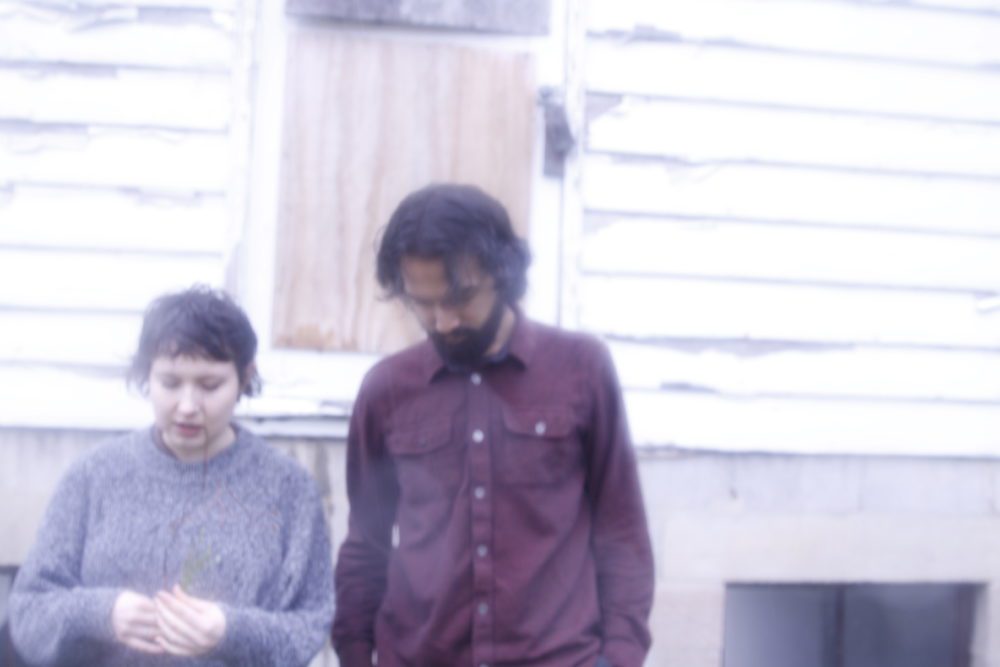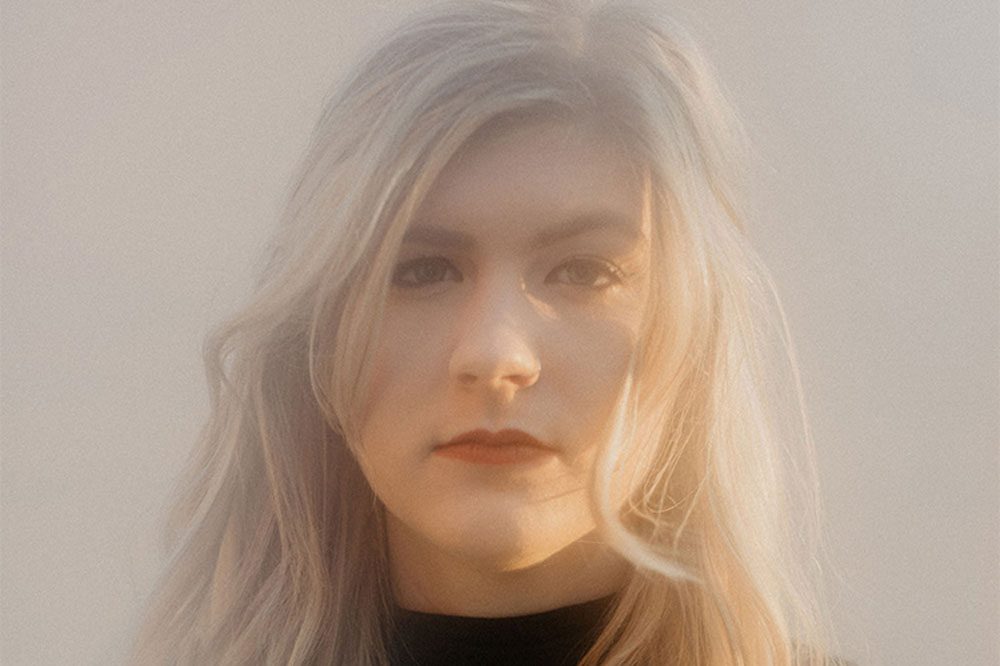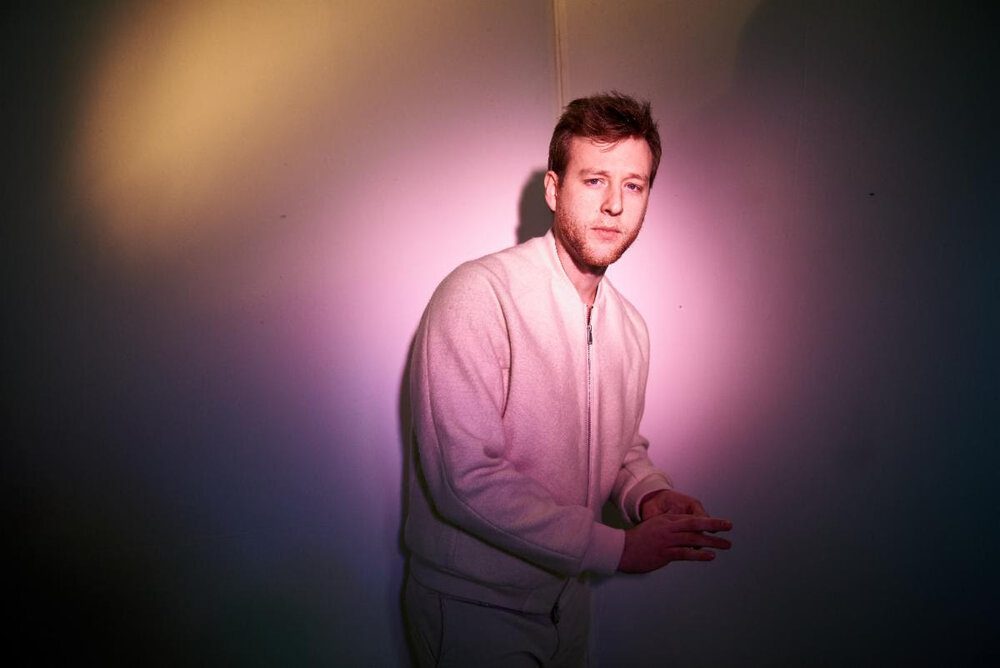
The Venomous Pinks Speak Out About Immigration Crisis on “Todos Unidos”

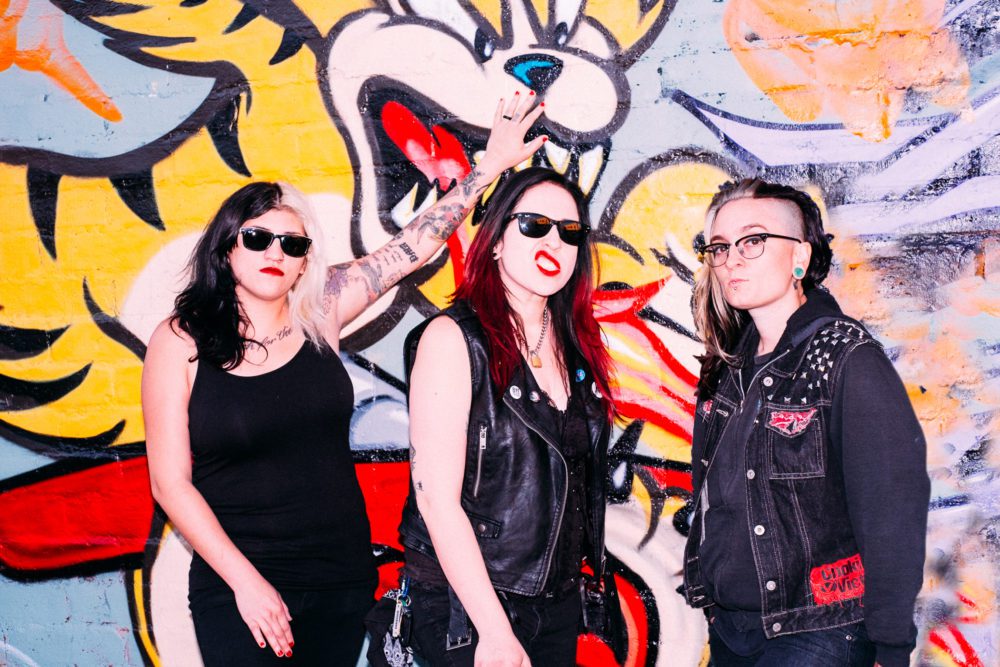
With every headline these days centered on COVID-19, it’s easy to forget there are other things going on in the world. Let punk trio The Venomous Pinks’ latest song “Todos Unidos” remind you that the usual problems plaguing society – namely, the United States’ treatment of immigrants – have not gone away.

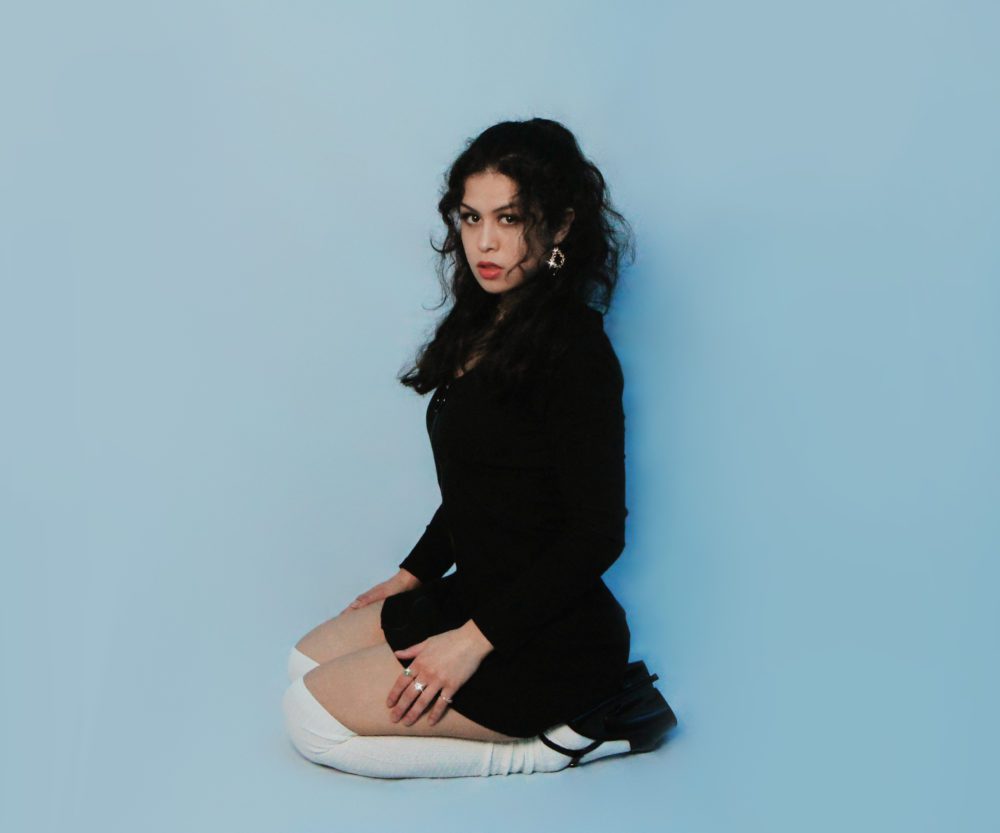
“Todos Unidos / never be divided / nuestra familia / we stand united,” they sing in Spanish and English, calling for listeners to support undocumented immigrants. Together, the three band members have parents and grandparents who have immigrated to the U.S. from Mexico, Colombia, and Palestine, and they wanted to make a statement in support of people in that situation today.

“People are fleeing from other countries to escape violence and poverty, hoping for asylum in the United States,” says the band’s drummer Cassie Jalilie. “The song was an artistic decision to encourage cultural unity. ‘Todos Unidos,’ which translates to ‘everyone together,’ demands listeners to stand up and fight against these political issues.”

The band felt particularly compelled to speak out against Trump’s threats to abolish DACA, as well as attacks on immigrants in their own communities. “We just want to use our platform to help people see what’s going on and become aware that the only change that’s going to happen is from us,” says Jalilie. “Even with the coronavirus, we’re still hearing about ICE raids going on, which is crazy because we’re in the middle of a global pandemic.”

She hopes the song inspires people to push for reform in immigration laws. “You have families being separated, locked up in cages, and that’s just not right,” she says. “We can put people in power who can change some of those things.”

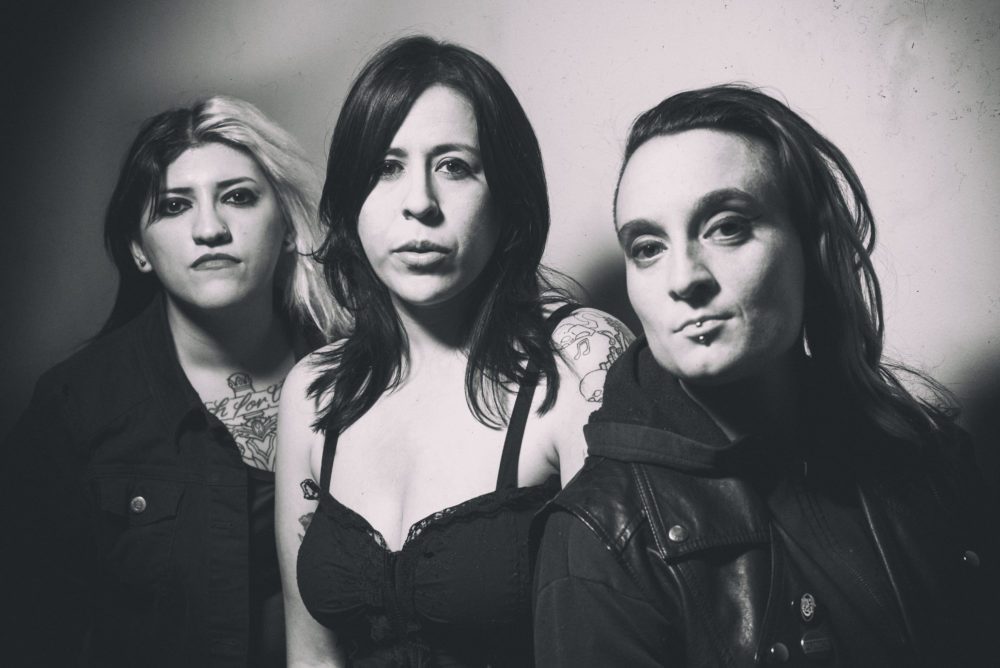
The Mesa, Arizona-based Venomous Pinks — a name inspired by the pink ladies from Grease — just signed to Die Laughing Records. On their upcoming album, I Want You, the band also sings about the need for government transparency, making healthcare a human right, and race, gender, and economic equality. It’s not just their music that’s working toward good; they also volunteer for The Sidewalk Project, which brings art, music, and food to the homeless in Los Angeles and Phoenix.

As part of an all-female band, the members face their fair share of discrimination, but Jalilie is encouraged to have seen things changing since she and her bandmates started making music as teens. “Sometimes we feel like we constantly have to prove ourselves. You’re usually categorized, and people will underestimate us, but luckily, our music and performance speaks for itself,” she says. “Growing up, there were fewer women role models in the punk scene and even fewer female musicians our own age. Now, there are many publications run by and focusing on women in music. It’s not as uncommon to see women both on stage and in the pit.”

She hopes to start seeing even more women pursue their musical interests. “A lot of women will tell us ‘I wish I could play drums’ or ‘I’ve always wanted to play guitar,’ but they just didn’t really have the courage to do it,” she says. “We just want women to not be afraid to pick up the guitar and just play. There are no rules.”

Follow The Venemous Pinks on Facebook for ongoing updates.

RSVP HERE: The Fantastic Plastics Live Stream Via Twitch + More

Welcome to our weekly show recommendation column RSVP HERE. Due to live show cancellations we will be covering virtual live music events and festivals.

Photo by Angelyn Toncray

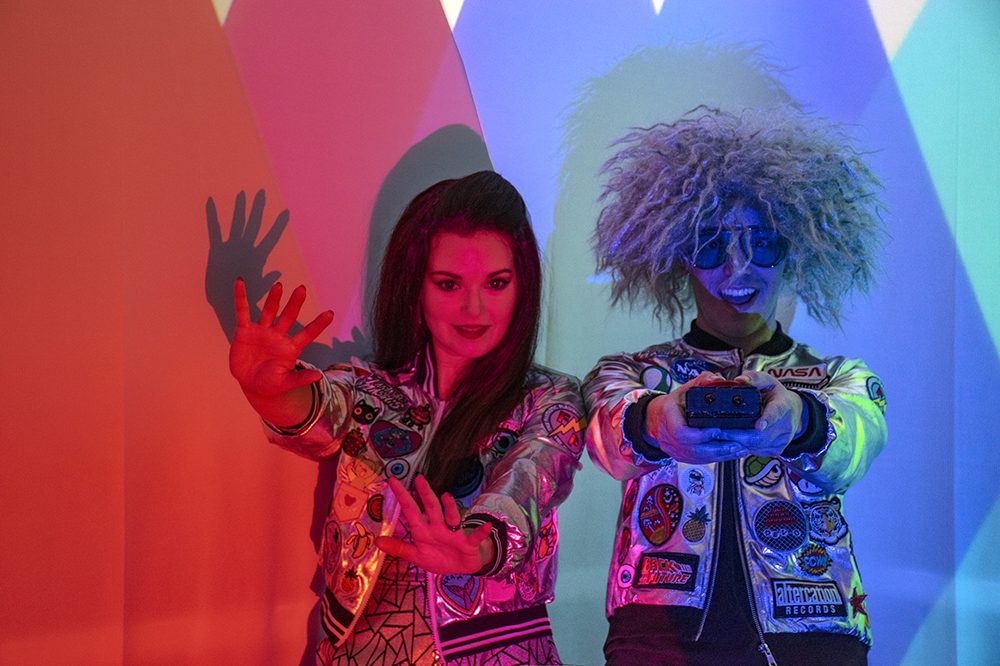
This week marks the one-month anniversary of most COVID-19 lock downs in the US and everything that came along with that. Mass amounts of tour cancellations have ushered in a new world of consistent live streaming on social media. While most bands are still adapting to this new quarantined way of being, NYC-based synth dance punk duo The Fantastic Plastics are about to celebrate their one year anniversary of live streaming on Twitch. Self-described as “the future of the future,” the Fantastic Plastics are heavily influenced by Orwell and sci-fi movies, so maybe they knew this particular dystopian fate was coming all along. Their visually stimulating live show includes matching outfits, backing projections, Moog synths and a theremin and is guaranteed to captivate your attention, whether in person or from the comfort of your phone screen.

The Fantastic Plastics’ interactive Twitch stream is tonight goes live every Wednesday and Friday at 9pm EST, with occasional bonus shows on Sundays and Mondays – your next opportunity to tune in is tonight, April 17th! We chatted with The Fantastic Plastics about some of their live stream effects, their sci-fi movie favorites and their advice for starting your own Twitch channel.

AF: You were in the live streaming boat far before quarantine started. Coming up on your one year anniversary on Twitch, how has your performance style grown over the year? How has your fan base changed?

FP: Our performance style over the last year on Twitch has evolved to become more interactive with our audience. Before we started live streaming, we were accustomed to jumping on stage to play a quick 30-45 minute set and then tearing our stuff down off of the stage as quickly as possible. Now with streaming, we stretch our performance out over 3-4 hours with lots of chatting with our audience between songs. Our fan base has changed in that we spent years touring and trying to find our audience, whereas with live streaming, most of our audience has found us instead. We are also able to reach people in parts of the country and world that we’ve never toured.

AF: What goals do you have for streaming in the year to come?

FP: Streaming more often, making our stream more interactive, and branching out with a variety of content.

AF: Have you noticed a change in your audience since the quarantine began? Has the quarantine affected your creative process in any way?

FP: Since the quarantine began we have noticed that our audience, as well that of many other musicians on Twitch, has grown quite a bit as people are searching for new ways to see live music. As far as our creative process goes, we’ve been putting more energy into ways to make the stream more interactive and visually stimulating, and of course there’s always the pressure to keep writing new music.

AF: How do you make your outfits change pattern during your set?

FP: We are misusing the chroma key effect, haha! We actually used this same effect in a music video we filmed for our song “Teleport” in 2017 and thought it could work really well with our video projection show in the background on Twitch.

AF: What are your favorite sci-fi movies? What movies have had the most influence on your sound?

FP: Most sci-fi movies that we like, such as Barbarella, 2001: A Space Odyssey and Blade Runner, influence more of our aesthetic vs. our sound. Musically and lyrically, we have always been really inspired by William Gibson novels and of course 1984 by George Orwell.

AF: How do you think an extended quarantine is going to affect musicians’ (and humans’ in general) relationship with technology and live music?

FP: There has definitely been a shift and more of an appreciation for watching live music performances via streaming, and it seems like people are making a switch from passively watching Netflix to enjoying the chance to have more interaction with the musicians and bands they like via streaming. Hopefully after things start opening up again, this will be beneficial for both streaming and live, in-person gigs as we know everyone really misses the energy of being in live concert venues and is looking forward to seeing those rescheduled concerts.

AF: What advice would you give someone starting their twitch channel?

FP: The best thing to do if you are thinking about starting a Twitch channel is to just watch as many other streamers on Twitch music as you can – most importantly to learn the culture. Once you start streaming, just be consistent, and don’t give up.

AF: What are your plans for the rest of 2020 & beyond?

FP: We have a remix album, MLFNCTN, coming out at the end of the Spring/early Summer this year, and we just plan to keep writing new music, releasing more videos on our YouTube channel and streaming on Twitch as much as we can.

RSVP HERE for The Fantastic Plastics live stream on Twitch 4/17 9pm est. 

More great live streams this week…

4/17 Zola Jesus via Saint Vitus Instagram. 8pm est, RSVP HERE

4/17  Jeff Tweedy via Recording Academy’s Facebook page, Amazon Music’s Twitch page, and Pickathon’s YouTube page. 1 p.m. pst, RSVP HERE

4/17 Mima Good via Baby’s TV. 10pm est, RSVP HERE

4/18 Air Waves, Juan Wauters via Baby’s TV. 3pm, RSVP HERE

4/18 Lauren Ruth Ward, Veronica Bianqui & More via Youtube – Couch LA. 6pm est. RSVP HERE

4/18 Global Citizens Fest feat. Alanis Morissette, Paul McCartney, Lizzo, Lady Gaga + More via Youtube. 8pm est RSVP HERE

4/19 Erykah Badu via Instagram. 8pm est, RSVP HERE

4/20 Weedmaps “Higher Together: Sessions from Home,” featuring Wiz Khalifa, Billy Ray Cyrus, and more. 12 p.m PST, RSVP HERE

AUDIOFEMME PRESENTS: Backstage Pass with Lola Pistola

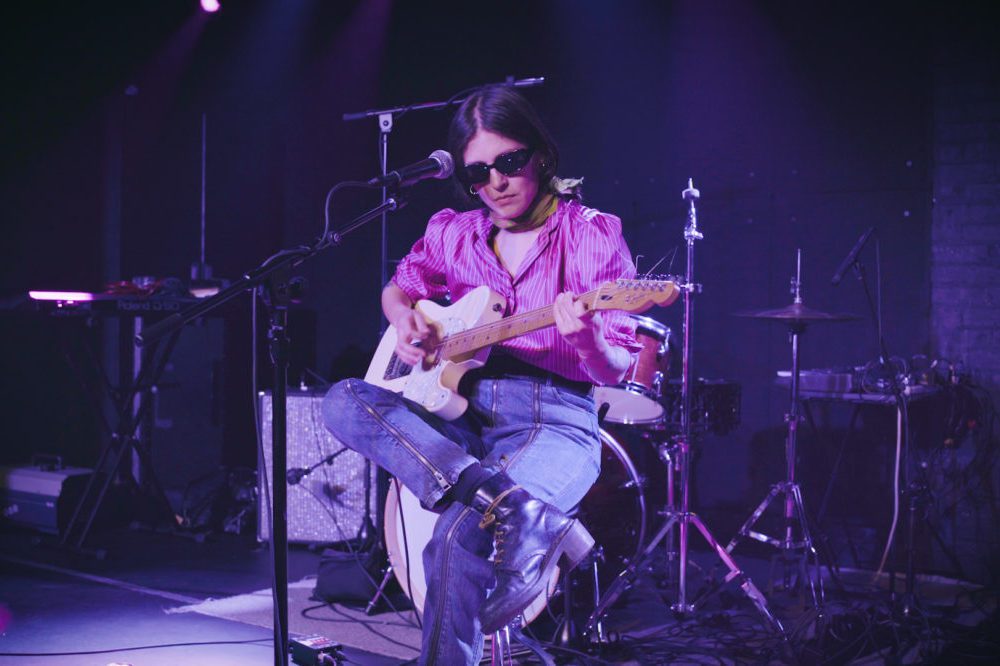
On International Women’s Day this year, Audiofemme curated a showcase of talented musicians to play the opening of For The Record, a portrait series showcasing women in the music industry shot by Ebru Yildiz, at Ridgewood venue TV Eye. Our videographer Molly Mary O’Brien shot a candid interview with Lola Pistola (aka Arvelisse Ruby Bonilla-Ramos) before her solo acoustic performance, as well as these rare renditions of “Doomed” and “Wild, Rich & Loose” from 2017 debut Curfew.

Lola Pistola started out in San Juan’s punk scene, singing back-up for longtime friend AJ Dávila. After moving to New York she began writing solo material in earnest; though informed by her punk roots, Curfew is moodier and more atmospheric, like Mazzy Star’s Hope Sandoval singing grunge-folk after smoking a pack of cigarettes. She quickly adapted to the touring life, with Robert Preston backing her on drums, but this TV Eye performance sees her flying solo, offering these songs in their rawest form. Punctuating her set with the rousing onstage banter she’s become known for – sometimes political, sometimes tender, often hilarious – Lola Pistola’s rock ‘n’ roll aura permeated the room regardless of her stripped-down delivery.

Now that live performance is momentarily side-lined (the impact of which Lola Pistola recently wrote about for Alt Citizen), we hope you’ll enjoy this captivating moment from our IWD showcase. You can follow Lola Pistola on Facebook for ongoing updates.

Charles Fauna Crafts Timely Sci-Fi Concept Album With Debut Yonder

You have to let Charles Fauna’s Yonder wash over you. It’s the kind of record that soothes an anxiety-ridden mind. His lush, effervescent soundscape ─ extracted from such influences as Kid Cudi, St. Vincent, David Bowie, and Joe Goddard ─ numbs you into a meditative state, and you begin a deep probing of your mental facilities to make sense of it all.

Yonder is a monumental debut, expansive yet immersive, brimming with hope and brightness, and it could not have arrived at a more appropriate time. During the massive COVID-19 pandemic, the 12-track collection deals out far more poignancy than even he could have expected. “I do feel as though one of the unintended consequences of the quarantine is a lot of time for self-reflection and reckonings with our internal selves,” Fauna tells Audiofemme. “I feel as though it’s the kind of album that wants to help people, so it would be weird to put it out during a gorgeous and peaceful summer, you know?”

Based in Brooklyn, the indie-pop mastermind juggles his desire to celebrate such an impressive bow and a new creativity already coursing through his body. “The moment I finish a body of work, I usually spend a few weeks head-over-heels in love with it and then am on to something else,” he confides. “With albums, you usually finish them, and it takes half a year or more to actually put them out. I look at this album very fondly and am so proud of it, like a parent watching their kid do a school play for the first time.” Yonder sets a high bar, but Fauna eyes even more soaring artistic heights. “Whatever comes next will exceed it in every way,” he says.

Part of Yonder’s triumph came from the pressure Fauna felt to make his debut LP memorable. He didn’t want to simply slap together 10 or 12 songs and call it an album. It needed to mean something in the world. “I wasn’t just writing for the sake of writing. I really wanted to create something profound and epic ─ the kind of album that might live longer than I would.”

“More than anything, I just didn’t want to do what was expected of me. It was important to me that this, at least in an abstract sense, feel like a real journey,” he adds.

“Over Yonder,” a wondrous spoken word introduction, sets the scene like a Greek tragedy. Initially written as a poem, almost as an “entity remarking on someone’s mental state,” he says, he soon realized the album needed to be framed through another’s perspective. “I decided then that I didn’t want these songs to be explicitly from my point of view, but rather to imagine the music through the eyes of someone else. A character,” he explains. “Apollo” follows, pummeling the eardrums as a rocket ship cruising through the Milky Way. It was within such a synth-y cosmic web that the story unfolded. Centered around the idea of “people in the future going to live on Mars because we had exhausted the Earth of resources,” the groovy little number cemented the album’s inevitable story arc in his brain.

“I thought to myself, ‘What if the character in the poem was one of these people who was forced to leave Earth and go to Mars? What would that actually feel like?’” Fauna then began piecing together his arsenal of songs and beats into a more focused, streamlined vision, and these common themes emerged: outer space, leaving home, and reckoning with the void. “I’ve always been a bit of a space cadet and am constantly writing and imagining stories in my head,” he says. Fauna shuffles through his own mental anguish and projects his findings through the eyes of a 16-year-old girl. The unnamed protagonist mounts an expedition away from the only world she’s known for a “journey of self-discovery,” he says.

Taking the notion of being a “hopeless millennial yearning for something profound” – an ache most of us feel these days – and reapplying it on a far grander scale, Yonder filters Fauna’s personal turmoils and anxieties over political, socio-economical, and environmental issues through a universal lens to tap into today’s swelling fears. “More than anything I learned how many people feel like I do,” he offers. “I realized that my feelings of existential malaise were in no way unique to me ─ that there are so many young people who feel deeply stifled by their lack of faith in humanity.”

From breaking soil on “Mars” to the celestial beauty of “The Divine” and the addicting, syrupy throb of “A Total Dream,” Yonder blossoms into a record “about exploring this lack of faith and trying to understand where to place one’s belief. Ultimately what I came to learn, and what I hope the record expresses above all, is that we place that faith in ourselves. And each other.”

Fauna also expresses spirituality in a freeing, unapologetically accepting way ─ a threshold which proved to be indescribably healing. “When I finished [the album], I felt in many ways that I had said all I wanted to say. It felt complete. That in and of itself was healing for me. I spend a lot of time trying to maintain social equilibrium,” he explains, “I’ve often kept my deeper, more spiritual opinions to myself out of fear of being judged. Expressing these ideas was very cathartic. It also heals me when someone who has heard the music reaches out to let me know that it meant something to them, or that they got something out of it. Even one person having heard me out makes it worth it.”

Yonder is a collective, hyper-realized journey. It’s not just Fauna’s or mine or my neighbor’s. It’s everyone’s, and we’re all in this together. “I want the listener to realize they are not alone. The philosophy behind [this album is] that we can always be better, that we can always improve, be kinder, be more open, more intelligent, more empathetic towards each other. And for them to find peace in searching for something entirely without the self.”

For much of his life, Fauna has been bound and tormented by his anxiety and, perhaps, “blind to some greater truth just beyond my sight,” he says. “I felt so trapped by the monotony of the everyday. More often than not, my head was tilted downward ─ obsessed with my internal world rather than the boundless external one. Where most of my music up to now reflects this, [this record] is my deliberate attempt to look up: to see more, to be open to anything, and to connect with others.”

Hunger for human connectivity glues the record together, and such craving has never been felt more right than now. “I can’t speak for everyone, but I can say that for me personally this has been an intense reminder as to the value and importance of my friendships. The next time I am able to meet my friends at a bar, to see them in person, hug them, celebrate being alive, I think I will probably cry,” he says of the ongoing global crisis. “There will be such overwhelming beauty in doing the simplest of things, in reclaiming normalcy. I will have gained a deep appreciation for things that a month or so ago I would have not thought twice about. I should hope that it expands the quality of our connections with others.”

Below, Fauna gives us a track-by-track Yonder breakdown, its many themes, and the journey of our protagonist.

“Over Yonder (Intro)”: The intro, interlude and outro of Yonder are where the bulk of its narrative is told (though in vague terms). The intro establishes our protagonist – a young person desperately seeking something more, in dire need of a change, feeling stuck and stagnant, seeking WONDER. She imagines a world where she could be the person she wishes to be.

“Apollo”: Real life circumstances grant the protagonist her wish as she and her family are among the first to leave planet earth as it nears the point of being inhospitable. “Apollo” is an unabashed leap into the unknown, knowing full well that some bones may be broken in the fall. It’s fraught with uncertainty and anger, a bitterness towards the people who have ruined this earth for our protagonists’ new generation, yet there is still hope within.

“Listen”: This song probably has the least to do with the overall narrative and is more just a moment of true vulnerability after an immense risk. More than anything “Listen” is meant to conjure feelings of empathy, toward any and everyone. I imagined that this song transpires during the journey from Earth to this colony on Mars where humans are relocating.

“Mars”: Here the protagonist and her family arrive on planet Mars where a high-tech colony, Project Yonder, has been established as a new capital of human civilization. Having narrowly escaped the fate of their home planet, people drink, sing, and revel in their successful brush with death. This disturbs our protagonist, who feels there is no cause for celebration and that we are responsible for a terrible catastrophe. The euphoric yet dark house vibe on the track is meant to play against that feeling of catharsis while also speaking to the layer of skepticism our protagonist feels underneath.

“Kerosene”: Here is the major turning point for the protagonist. Feeling lost, angry and disconnected from her fellow humans, the protagonist decides that this new Martian colony is not home for her. That even beside her loved ones, she cannot be content, she cannot be happy, and she cannot sit by while humanity repeats its same damning behaviors. Stealing her own small ship, she departs in secret completely by herself to an unknown destination in the cosmos. As she floats in space, the lyrics of “Kerosene” reinforce her mission, that no matter what she will survive. That no matter what she will prove to herself that there is more out there than what she has come to know. That Yonder couldn’t have been all there is.

“The Divine”: Another song that is more of an emotional moment than a narrative one. I imagine here that the protagonist has been floating in space for a few weeks, is probably low on food and questioning her decision to leave her family behind. She reaches out spiritually for some understanding, some sign from some god that things will be okay. That her search isn’t in vain. Musically and lyrically, this song is the speaker (and by extension me) on their knees, completely open and vulnerable to forces greater than themselves.

“One Foot First (Interlude)”: As if to answer her prayers, the voice in the interlude responds. Though, much like a Greek chorus, his words are meant more for the listener than the characters. The voice offers encouragement, imploring patience in times of tremendous change.

“A Total Dream”: Side two starts with a bang as our protagonist’s ship makes sudden contact with an alien world. She lands to discover a surreal, hyper colorful landscape: a place where dreams seem as real as any truth she has ever known. Pink skies, lush grass fields of lavender and orange, bioluminescent wildlife, a neon Eden. Full of elation and possibility, she sprints through this new world with reckless abandon, seemingly in harmony with her surroundings for the first time in months. Youthful, euphoric, indie rock.

“Wayfarer (Instrumental)”: As she continues to explore this new world, our protagonist finds herself in a forest – trees above obscuring the neon sky and glowing fauna on the ground drawing her into this mesmerizing wood. I used sounds here to imagine the chirps and squeaks of alien life. As she walks in silence, she begins to have visions of her loved ones. A concerned mother, a scared little brother, a young man (perhaps a boyfriend) staring at her picture on his desk. They are visions of her absence in others’ lives, and they begin to make her feel profoundly empty. What was once a place of pure freedom slowly becomes something darker, sadder and lonelier. Here she begins to realize: the farther out she goes, the farther away she gets from what makes her HER. Confused, she returns to her ship with the intent to send a message back home.

“Always You”: This song is lyrically written as a letter (or transmission) from the protagonist back to her worried parents on Yonder. She explains why she felt she had to leave, why their new life on Yonder was not enough for her. Why, even at the cost of her own sanity, she feels she had to do this. The more she writes the more she unravels, until by the song’s end, she realizes the desperation of her situation – alone and without food in an alien world. The song ends as she finally yields, and wishes she was home, whatever that means, and fades into a deep sleep. The song is dark, brooding and intensely intimate.

“Church”: Lights from above tell her that she is saved. Her transmission back to Mars was successful and her parents and brother have come to bring her home. Lyrically, this song is an examination of self-hatred, and how sometimes we push the people we love away when in reality we need them most. As the song builds, a thousand voices of doubt and loathing creep into the listeners ear, only to be dispelled by a violent STOP from the protagonist. “Church” is the euphoria of certainty: finally knowing what it is you have to do and what exactly has been hindering you for so long.

“Over Yonder (Outro)”: Having seen this alien world, the protagonist realizes that as much as she detests other human beings, her place is with them. That she is one of them. As the narrator says, her purpose is to “levitate, but not to fly free.” She finally sees that what she has been missing this whole time – the emptiness, the lack of connection, is not something that she sought from God, or nature but from PEOPLE. She had been alone. And so sought love and acceptance elsewhere. Anywhere. As she returns to Yonder with her family, she sees it in a new light. A young man waits for her on the landing dock as the ship lands on Mars. She looks down on him with a tearful smile, realizing she was never alone at all.

Sage Avalon Taps All Female Crew for Debut EP In Vivo

Sage Avalon is a sophomore studying biology at UC Santa Barbara — and she’s also a dedicated musician. Both these pursuits came together to create her debut EP, In Vivo.

The name of the EP was inspired by a biology class where she learned about in vivo experiments — ones done within the body. To her, it means “really appreciating that you’re alive and that you’re human”— or, in colloquial terms, “really in this bitch.”

With Avalon performing all the vocals, guitar, bass, production, and instrumental engineering and her female colleagues taking care of the photography, filming, and audio engineering, the project is entirely woman-made. The fact that she worked with other women who already knew and supported her helped her feel freer to try new things and make mistakes. “There was definitely a level of openness and willingness to experiment and a level of trust,” she says.

During her first year of college, Avalon had been writing and playing songs on her guitar, but she got tired of the same old sounds and wanted to learn to produce music. So, she got herself her first digital audio workstation, and she began to feel inspired to write more songs. “The EP is kind of just a snapshot of eight months of me learning my new writing style and finding my sound,” she says. “I learned a lot… and created this production that has a lot of layering and many instruments, and that was a huge learning curve.”

She would focus on school during the day and then work on In Vivo from her dorm room at night, with the exception of some of the vocals, which were recorded in San Diego. She ended up driving back and forth several times after realizing she didn’t like the way her voice sounded. “For two weeks, I didn’t sleep at all — I had 8 a.m. classes, and when I’m writing, I just want to get the song out,” she says. Still, she managed to both get good grades and put out the EP, which she says was influenced by artists such as Lana Del Rey, Placebo, and Björk.

Avalon’s rich, earthy, mellow voice narrates deep, emotional life experiences. The first single, “Pure December,” is about “recovery from addiction and seeing that life has so much to offer and embracing that, [like] seeing in color for the first time,” she says. She bought a five-string bass and used it for the first time just for this song. The title was inspired by a trip she took to Alaska in winter 2017, and the lyrics tell a story of struggle and triumph: “Keep my gaze wide/I am untied/In my purest form/You take me further/Love despite fear/Always a rollercoaster ride/But I am still here.”

Its accompanying music video encapsulates the mood of Avalon’s San Diego upbringing, featuring landmarks like Windansea Beach, where she’d go when she played hookie, and the 1950s-style Corvette Diner. Her cinematographer happened to be a friend who was visiting California for the first time, so they captured the footage while showing her around.

Orchestral string instruments and keyboard give “9 Lives” a darker sound as Avalon sings about a broken relationship: “If you wanted a war/Well I hope I gave you everything and more/I will make it alone/Swallow my fear as I’m stepping into the unknown.” The vivid imagery carries through on “Lightning in a Bottle” as it explores the destructive sides of love: “Bite me like a snake/Shoot me up with all your poison/Beating in my heart/Squeeze it tight til you destroy it.”

Another track off the album, “Shallow Rivers,” is a cover of a song written by Everlucyd, a friend of Avalon’s who passed away several years ago. Avalon has been playing this song live for some time and decided to include it as a tribute. The singer-songwriter has also covered artists like R.E.M. and Gnarls Barkley in her live performances.

Music has long been part of Avalon’s life. She’s been singing since elementary school and playing guitar since she was 15. Since producing her latest EP, she’s written two more songs, which she may release either as singles or as part of another EP.

She’s unsure what exactly her future holds at this point, but she hopes to make it as a full-time musician after college, and whatever happens, she plans on making music throughout her life.

Follow Sage Avalon on Facebook for ongoing updates.

PREMIERE: Sans Soucis Embraces the Incomplete on “Unfinished” EP

Photo Credit: Luca Perrin

When an artist releases a body of work, it’s often expected to be polished and perfected to their liking. But that’s not always how it feels. London-based singer-songwriter Giulia Grispino, aka Sans Soucis, decided to embrace this incompleteness by titling her second EP Unfinished.

“We’re so focused on figuring out things, and I wanted to make a big statement: unfinished is not something bad,” she says. “We are unfinished, which means we still need to figure out things and we’ll always be figuring out things.”

Dramatic orchestral instruments give the title track a haunting, nostalgic sound a bit reminiscent of Joanna Newsom, as Grispino sings of coming to terms with childhood trauma. The second track, “Red,” is sweeter and gentler, with angelic harmonies providing the backdrop for Grispino’s poetic narration of a story about a lonely woman: “I colored the walls of all the cities I know / Red is my heart, my blood and soul.”

On the last song on the EP, “Make One From a Two,” strings figure heavily for a simultaneously classical and poppy sound. This was Grispino’s first time working with string instruments, which was a long-time goal of hers.

Grispino started making music and producing it independently in college and started a band, then began her career as a solo artist under the name Sans Soucis last year. The moniker is a French nickname that Grispino’s grandmother gave her when she was little, and it translates to “no worries” — a spirit she strives to bring to her work.

“When I decided to embark on this project of mine, it felt like my songwriting had to be in tune with my childhood, which is the best version of anyone,” she says. “Experience makes us heavy, but I wanted to make sure my music was liberating for me and other people.”

Even though her music carries the positivity and curiosity of childhood, it still deals with weighty subjects; much of it centers on examining and overcoming trauma. She hopes her music conveys to listeners that “traumas don’t define us,” she explains. “It’s something that we deal with day by day. Purposes stay the same, but goals change, and overcoming trauma allows us to actually keep changing and keep being unfinished.” Her past releases range from the indie-pop-esque “Visible” to the spiritual, harmony-driven “Unchained.”

Her influences also represent a wide range, from jazz to rock to folk, with Nick Drake inspiring her latest EP. “I loved his music and wanted to create this songwriting that is evocative and folky and has string elements and reminds me of jazz,” she says. “It brings me back to childhood for some reason.”

Grispino feels the EP’s timing is appropriate given what’s going on in the world. “It’s something really intimate, and I know that when people listen to music, they need to be in the mood for it,” she says. “I think isolation is the best mood for this EP, and I hope it brings a bit of introspection for them.”

Follow Sans Soucis on Facebook for ongoing updates.

Country Artists Use Music as Healing During the COVID-19 Pandemic

Nashville is known for being a giving community, a gift that’s often expressed through music. As the world grapples with the jarring reality of COVID-19, many artists continue to share music as a source of healing, including many of Nashville’s finest. Whether releasing original songs or delivering powerful covers that provide light during these dark times, here are some standout musical tributes from the country music community.

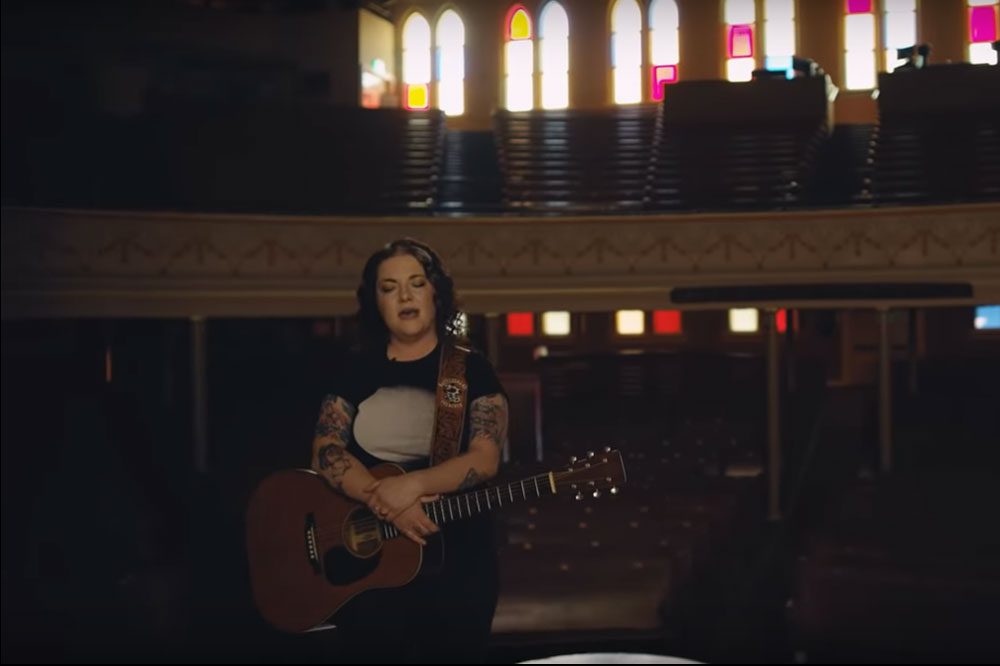
Ashley McBryde stuns with “Amazing Grace” at the Ryman Auditorium

The Ryman Auditorium has been a sacred place since its inception in 1892, but Ashley McBryde brought an especially harrowing energy to the venue with her performance of “Amazing Grace” in honor of those we’ve lost due to COVID-19. McBryde’s voice on its own is incredible, but pairing it with the spirit of the Ryman takes it to a whole other level. McBryde was so overcome with emotion that it took seven times to get the performance right – and that emotion pours through on screen. As she stands on the stage solo in the hallowed venue, her voice fills the room in a way that’s bound to bring a tear to one’s eye.

“Some things just can’t be healed. Some losses can’t be reconciled and some wounds will never heal. Sometimes we don’t get closure the way we want to. All we can do is honor our predecessors and hope that we touch the hem of heaven sometime in our lives. I wouldn’t normally sing this song but we all may need this right now and there isn’t a better place to sing it at than the Ryman,” she writes about the experience. “The mother church pulls things like that out of you and will tell you what to sing and when to sing it…even if you can’t.”

Brandi Carlile covers John Prine’s “Hello in There”

The music world lost a true pioneer when John Prine passed away due to complications from COVID-19 on April 7. Many artists paid tribute to the iconic folksmith in the wake of his passing, but Carlile’s cover of “Hello in There” on The Late Show With Stephen Colbert demonstrates a sense of empathy the world needs right now. Creating a simple stage on the staircase next to a fireplace, Carlile’s performance is touching, connecting Prine’s lyrics, penned in 1971, to modern day. Her voice soars over his poetic words that prompt us to truly see one another, especially in times of loneliness. But her introduction to the song is just as urgent, encouraging viewers to respect older generations and the impact they have on our lives. “This song refers to the people that we’re all staying home to protect and it reminds us that older people aren’t expendable, that they made us who we are and they’ve given us every single thing that we have,” she prefaced, offering a grounding perspective alongside the beautiful tribute.

Thomas Rhett is a “Light”

Thomas Rhett brings heartfelt meaning into his new song, “Be a Light.” Rhett originally wrote the song in 2019 as a response to the divisiveness he was witnessing in the world, but decided to release it now as a sign of encouragement during these trying times. Combining the soothing nature of a lullaby with the power of compassion, Rhett called on his friends and fellow superstars Reba McEntire, Keith Urban, Hillary Scott of Lady Antebellum and Chris Tomlin to help deliver the timely message. With such lyrics as “In a time full of war be peace/In a place that needs change make a difference/In a time full of noise just listen/In a world full of hate be a light,” he presents us with sobering advice that’s important to keep at heart even after the pandemic passes.

“We are in the middle of a world-wide pandemic affecting every single human on earth, all while our town of Nashville is still healing from devastating tornadoes that destroyed so much of our city less than one month ago. But, among the wreckage, I see us come together in ways I never dreamed possible,” Rhett expressed about the uplifting track upon its release. “I hope this song serves as a reminder that we are all in this together.”

He also dedicated “Be a Light” to a new program called Gratitunes that sees artists and fans donating songs to a playlist streamed to the medical professionals at Vanderbilt University Medical Center as they work tirelessly to save lives.

Keith Urban’s live streams

Keith Urban is one of the many artists who has hosted virtual concerts during this era of social distancing, but it’s the heart of his shows that make them stand out. Urban has delivered two sets performing many of his biggest hits, and one of the best aspects about them is his wife Nicole Kidman. Between serving as his guitar tech and sole audience member who dances around the room thoroughly enjoying life, there’s a sense of joy that shines through with Kidman’s presence. Additionally, Urban always makes a point to recognize healthcare workers in his broadcasts. “All of you first responders out there, all of the families of all of you and your friends that are supporting you through this time, we are right here with you, and we thank you from the bottom of our hearts,” he vows. “Our whole family thanks you for everything that you are sacrificing and doing right now.”

Brad Paisley keeps the laughter flowing on Instagram

Since the quarantine began, Brad Paisley’s Instagram has become a holy ground of humorous musings. Between recording virtual duets with Carrie Underwood, Tim McGraw and Darius Rucker and posting cover videos, scrolling through Paisley’s Instagram is likely to put a smile on your face during these somber days. Paisley has also contributed to the Gratitunes program with an acoustic version of his hit “Southern Comfort Zone” that he used to thank all of the healthcare workers on the front lines during the pandemic. But perhaps his most noteworthy effort is that he and wife Kimberly Williams-Paisley have set up a special grocery delivery service for the elderly and those in need through their nonprofit, The Store – one of the many ways the Nashville community continues to give back.

Country music will also be represented in the upcoming global virtual event, “One World: Together at Home” in support of healthcare workers around the world. Urban, Kacey Musgraves, Maren Morris and Lady Antebellum will perform during the online broadcast that benefits the World Health Organization’s COVID-19 Solidarity Response Fund. It will air on major TV networks and stream online on April 18.

Raia Was Shares Love Song to Anxiety with “You Are”

Photo Credit: Lissy Laricchia

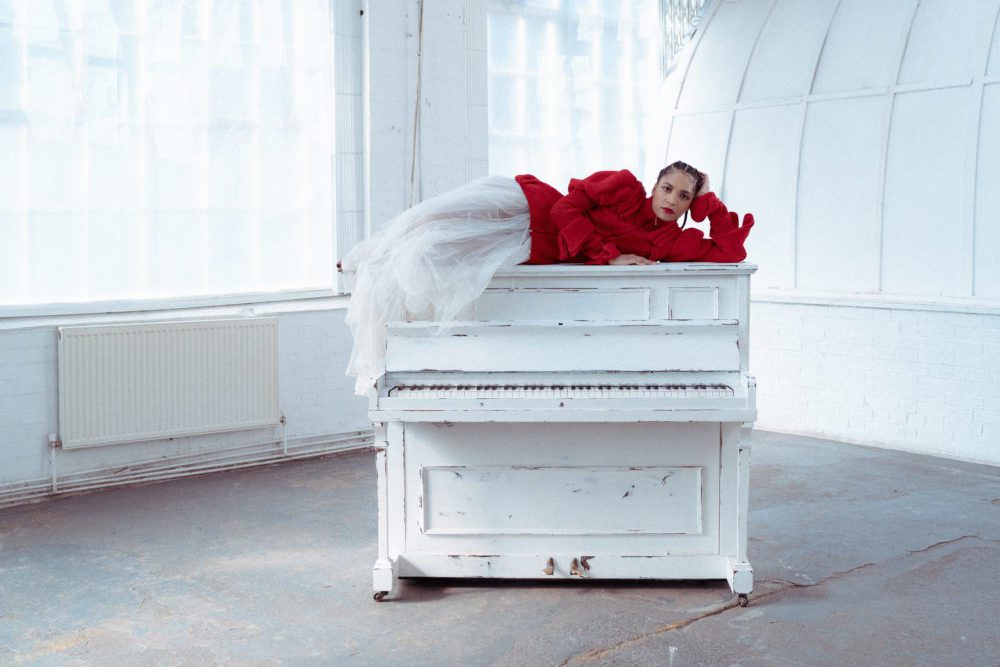
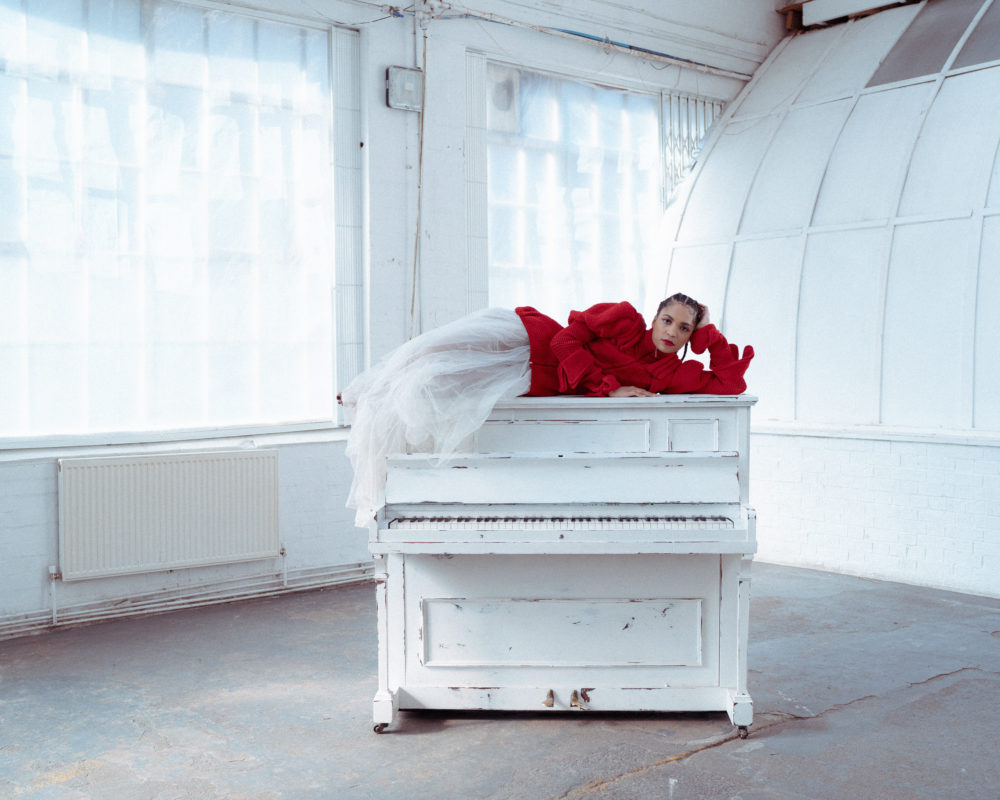
I came to know Raia Was from booking her to headline an ongoing concert series I curate in collaboration with Soho House called Future Female Sounds. It was summer 2019, and Was was about to release Side A of her debut album Angel I’m Frightened. Upon meeting her, I was taken aback by her open, bubbly, yet professional demeanor, so different from the serious and often sullen tone of her music. I felt aligned with her – instant kindred spirits. We awkwardly played the “Guess My Age” game, followed by small talk about combating ageism in the music industry as a female artist. With her undoubtedly clear vision as a performer, I was excited to see her live show. Her experimental performance captivated Ludlow House and sparkled with analog textures and emotive lighting. Alluring the crowd through haunting theatrics, her transcendent vocal performance commanded The Velvet Room.

A main lyrical theme in her body of work explores the question: if we all contain many personalities, which one is “true”? She takes intentionally antithetical approaches to addressing this idea, as the record remains in constant conversation with itself. In an era where so little makes sense – Side B of Angel I’m Frightened arrives just in time to ease the duality of our own inner demons and incessant inner monologues.

“You Are” is the first single from Side B, and it’s something of a love song to anxiety – a feeling so familiar one might even miss it when it’s gone. New York currently feels like a temple of angst, as we spend a majority of our time in our minds reflecting the past, present, and uncertainty of the future. “You Are” may be the existential musical backdrop New York (the epicenter of the madness) has been searching for, or patiently awaiting during this time of social distancing and introspection.

AF: As a native New Yorker, has the city influenced or driven your sound and vision?

RW: For sure. I’d say growing up in the city gave me the idea that I could be an artist in the first place. It felt as natural a path as anything else. I also wasn’t afraid to be a weirdo, to have quirky interests, or to stand out. I’d say it has fundamentally influenced my vision for what life can look like.

AF: How did you connect with your ongoing collaborator Autre Ne Veut (Arthur Ashin)?

RW: We met through a friend right as he was getting ready to release Age of Transparency and he asked me to join his band playing keys and singing for that tour. I had just started thinking about my solo project at the time and after the tour he started working on it with me and the rest is history. He has been one of the most important people in my life –  musically and otherwise! He is the most generous translator of my ideas, he pushes me when he can tell there’s farther to go, and has such a wide scope of influence that it makes anything feel possible.

AF: Can you discuss the repetition of your music and themes of duality?

RW: I’ve oscillated a lot between being verbose in lyric writing and being super minimal. I think I’m inclined toward the minimal though, because for me certain phrases sort of lose their day to day meaning when you repeat them and the really good ones send me spiraling emotionally to a place I really enjoy performing from. I used excerpts of these repetitive songs in my live shows to get me to that place and eventually started recording them (though they were more slippery to get right on record than the other tracks were). Thematically though, as a whole, the record is not repetitive in character – each song insists on its own narrative, and pitted against each other they lie and contradict. But also it’s all true. We are different versions of ourselves. This record explores the dusty corners of that for me.

AF: Can you discuss packaging all of the cross-disciplinary elements (production, PR, visuals, lighting, live show) as an independent artist?

RW: I find much of the process of translating the vision of this project to be really exciting – especially curating the live show, ironing out all the transitions, creating new textures and diving deep into the primary elements of the music to bring the show to life. At it’s best, PR and social media can do that too, though it’s much harder for me to feel like I’m looking you in the eye in those settings. In my shows I’m building up a ton of courage and so much planning goes into it that I feel like I can really spiral and be in it with you.

AF: Are there other practices in your life that influence your process of making music?

RW: I’m a habit person. If I’m in a good practice of writing and playing music I can stay in that space all day. But it has to be an every day commitment. Otherwise I fall out of it and have to find my way back. I’m also particularly sensitive at the start of my day. If things go too slowly, if the day doesn’t feel empty enough, if I’ve distracted myself for too long, then it’s even harder for me to get started. The practice is sort of the whole thing I guess…

AF: Did you have strong female role models growing up that influenced your career path into music?

RW: Absolutely – I feel very much like a woman raised by women. Though I didn’t necessarily know female (or any?) musicians other than my teachers growing up, I was pretty unequivocally encouraged to create and express myself. Which just feels like the ultimate gift.

AF: Who are your contemporary musical influences, from the underground to the mainstream?

RW: I’ve been listening to Cocteau Twins almost non-stop lately – I often don’t listen to much music when I’m in a writing period because it gets harder to hear my own thoughts but I’ve been clinging to Heaven or Las Vegas for the last month or so. I’ve loved Nilfur Yanya’s last record. Also Jlin! I spent a lot of time with Black Origami. Björk has definitely been an enduring influence for me. And Erykah Badu. And Joni Mitchell.

AF: Let’s talk about your ongoing collaborations with Arthur Moon. How did that come about?

RW: I met Lora-Faye Ashuvud (Arthur Moon mastermind) in 2012 maybe? We’ve been playing together pretty much since the moment we met – I went on the road with her the following year and was a longtime member of the band that turned into Arthur Moon. Even since leaving the group and starting my solo project our musical lives have stayed very intertwined but now we do have more time to just be forever friends.

AF: How have you been coping with social distancing?

RW: Every day is different. Some days the weight of what’s happening keeps me really quiet and slow. Some days I feel like I can make things. I’ve recently thrown myself into a fundraising project compiling unreleased tracks from artists based in NYC to raise money for food relief efforts (more on that soon I hope). I’ve been nervous about my mom and her partner who live in downtown Manhattan and haven’t been outside in three weeks. I sent her an exercise bike.

AF: What advice would you give to women looking to start a music project, or looking to musically reinvent themselves? 

RW: Do it. Do everything. Reinvent yourself a million times, no one’s keeping track. And try and keep your blinders on while you do – there are so many things waiting to distract you or cloud your judgement. But if you feel called to this work, please find a way to make it.

Follow Raia Was on Facebook for ongoing updates.

Celebs Like Mandy Moore Give Back via Cameo – and Help Ease COVID Anxiety

I was supposed to see Mandy Moore at the Beacon Theater on March 24th. As a lifelong Mandy stan (Standy?!?), I was looking forward to her comeback tour. This would have been her first tour in 13 years; she was promoting Silver Landings, the long, long, long awaited follow-up to 2007’s Wild Hope. Like all other live events, her concert was postponed due to the global pandemic. I’ve been listening to Silver Landings on vinyl – “Trying My Best, Los Angeles” has become my quarantine anthem, even though I’m a New Yorker who’s stuck in a tiny Manhattan apartment.

On a Monday night in March, during my somewhat typical quarantine sobfest, I scrolled through Instagram seeking respite from reality. I saw that Mandy Moore, and other celebs like Lance Bass and Busy Philipps, are recording Cameos for charity. I impulse-purchased two minutes of Mandy’s time in exchange for a donation to No Kids Hungry.

Two days later (on the night I was supposed to see her in concert), I received a glorious text that read “Your Cameo is ready!” My hands fumbled in excitement – I couldn’t click on the link fast enough. I sat on the couch, tearing up while watching Mandy’s sweet message. Her warm, genuine, personalized pep-talk turned out to be the best form of self-care I’ve ever done for myself – and I can rewatch it anytime. It’s the self-care gift that keeps giving.

It’s a strange experience to receive a deeply personalized message from someone whose career I’ve followed since 1999, when Mandy was singing about craving love sweeter than candy. In the Cameo, Mandy sits in the comforts of her own home, talking to me like she’s just another human who’s also struggling with COVID anxiety – because she is. Hearing her personal account of how this pandemic makes her feel made me feel less alone, less overwhelmed. Technology, as annoying as it can be, has made moments like this possible.

I first learned about Cameo when Mark McGrath from Sugar Ray made a breakup video that went viral last fall. The man who hired him turned out to be behind a hoax, but Cameo and McGrath’s fundraising for AIDS research are very, very real. That viral video served as many peoples’ introduction to the world of Cameo.

Cameo’s website states their service perfectly: “Book personalized video shoutouts from your favorite people.” The app lets high-profile celebs film selfie-style videos for charity while those lesser-known folks can use Cameo as an additional income stream.

I’m not the only one seeking comfort in the power of a selfie-style celeb video during the pandemic. Lisa Smith, an author, lawyer, and recovery advocate recently sent a birthday greeting to a friend in Singapore from singer Lisa Loeb. “We’re both fans it felt like the three of us were connected and celebrating together. It absolutely blew him away!” she gushed.

Want to buy yourself or someone else a Cameo as a form of self-care that also has a charitable component? Here are some other musicians who are recording personalized messages for a good cause:

  • Country singer Lee Brice is donating 100% of the first 100 videos he makes to MusicCares.
  • R&B singer Sparkle, also seen in the docuseries Surviving R. Kelly, is raising money for an undisclosed charity.
  • Grammy-winning guitar legend Steve Vai is collecting donations for Make a Noise Foundation.
  • NSYNC’s Lance Bass and Chris Kirkpatrick are also collecting donations for unnamed charities.
  • And of course, you can always book Mandy Moore.

Broadway’s musical theater world has joined in on the charitable ventures, too:

  • RENT’s Anthony Rapp is donating a portion of his video for (RED) for the fight to cure AIDS.
  • Tony-Award winner and cancer survivor Marissa Jaret Winokur lets her fans pick which charity their money will go to Trevor Project, Animal Avengers, or Prevent Cancer Foundation.
  • Beetlejuice’s Dana Steingold is raising money for Benefiting the Actors Fund.

Cameo has even launched a 3-day online event April 16-18th benefiting people who’ve been impacted by COVID-19 featuring Mandy Moore, Akon, and more. Events include Celebrity Game Night, Drag Queen Lip-Sync Battle, and Love is Blind convos. Saturday night’s music-based events include Iconic Rockstars: a panel of rock stars, including Andy Black and Dee Snider, talking about life in the music biz, a hip-hop panel with N.O.R.E., Akon, and Trina, then they’re closing it down with a Saturday Night Jam with musicians of all genres.

Thanks to the internet, I’m still able to be a Standy (I’m still trying to make Standy happen) by catching up on This is Us or watching Mandy and her hubby’s Sunday night Instagram live performances. And of course, I can rewatch my Cameo to bring me out of my quarantine sobfests.

PREMIERE: Stephanie Lambring Examines Dynamics of Abuse with “Mr. Wonderful”

Photo Credit: Brandi Potter

Stephanie Lambring spent the bulk of her music career as a songwriter at BMG and Carnival Records, writing four songs that appeared on Nashville and others for artists like Andrew Combs, Hailey Whitters, and Mary Bragg. But she soon got tired of the “machine-like approach to writing” and of muting her dreams of singing her own songs.

Hoping to write and perform her own music without worrying about whether her songs were “too jarring or too sad,” she left Carnival a year early. One song that came out of Lambring’s newfound solo career is “Mr. Wonderful,” an exploration of controlling and possessive relationship dynamics. 

Lambring’s songwriting background is evident in her poetic and evocative lyrics. “So you met Mr. Wonderful / Isn’t he wonderful? / You thought you had it all / ‘Til it all had you,” opens the haunting track off her second album, Autonomy, to be released on October 23. “Every day gets harder to crawl out of the confusion / Red flag anger, good behavior / Which is the illusion?” You can hear country influences in the vocals, and the music’s pop structure makes the story Lambring tells seem almost eerie.

A lot of this song comes from my personal experience in a controlling relationship several years ago. Other pieces were gleaned from friends’ experiences in their verbally and/or physically abusive relationships,” she says. “Before my experience, I had no idea about the complexity of the dynamic of an abusive relationship. I simply thought I would never be ‘that girl.’ Well, I was. We need to raise awareness about the red flags and have more candid conversations. It’s more common than we think.”

Lambring released her first album, Lonely to Alone, her senior year of college. BBC2 radio presenter Bob Harris played the album’s eponymous track on his Saturday night program, leading to several UK tours. “I had a bit of momentum going, but I put my artist path on the backburner. I wasn’t ready for it yet,” says Lambring. 

She describes her new album as “a deep dive into the human experience,” tackling body image, sexuality, religion, and family relationships. She wrote the first track, “Daddy’s Disappointment,” while she was waiting tables, and songwriter Tom Douglas challenged her to start writing music again. In it, she explores the impact of growing up with overcritical parents, as well as the pressure to make music based on profit rather than passion. 

Each song, in its own way, is about questioning and breaking free from tradition to carve out one’s own path. “Joy of Jesus” deals with slut-shaming and homophobia in Christian communities, “Fine” validates the choices of single, childfree women, and “Little White Lie” portrays the dissolution of a marriage driven more by external pressures than fading love.

I enjoy exploring the uncomfortable places — the uncensored, raw truths inside us,” she says. “The thoughts and feelings we’ve learned we ‘shouldn’t’ express, not to mention even have. It’s healing for me to sit with the discomfort, lean into it, shed some light on it, and in the end feel a little less alone in it.”

Follow Stephanie Lambring on Facebook for ongoing updates.

Emma McGann Premieres “Anyone Else,” Announces Virtual Tour

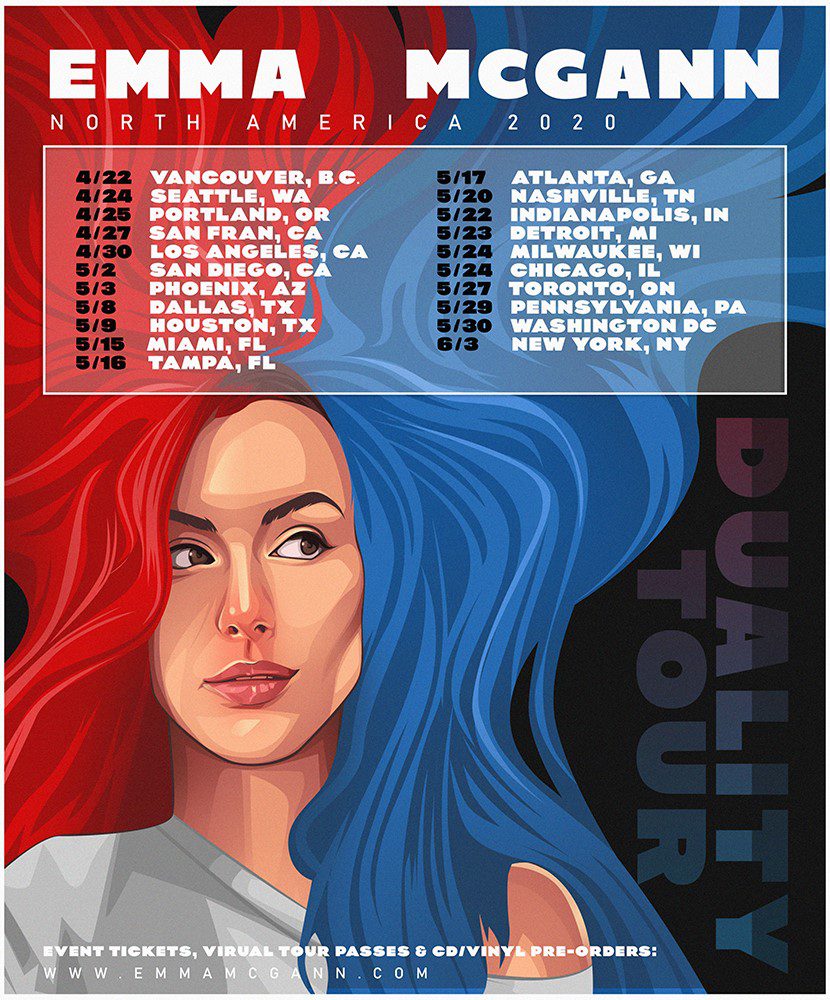
British pop singer Emma McGann has always been a pioneer in promoting her music online, and she’s now using this skill to her advantage. She created a hybrid tour format that includes both virtual and in-person elements last year, and now, with many artists’ tours shutting down due to the coronavirus, she’s putting the virtual element to use.

Inspired by artists like The Runaways, The Donnas, Katy Perry, and Alanis Morissette, McGann’s music is uplifting and adrenaline-pumping, presenting classic pop conventions with a twist. She spent her early career living in a van and touring around England, then quickly discovered she could get more attention by live-streaming her performances. The in-person elements of her upcoming “Duality Tour” have to be rescheduled due to the pandemic, but online, the show goes on.

The tour will support her forthcoming EP, Monsters (April 17). Ahead of its release, McGann is premiering her catchy, danceable new single “Anyone Else” exclusively on Audiofemme. On it, McGann describes an all-consuming love: “I don’t know, I don’t know / How to love anyone else / Anyone else but you / Holding up a flare and it burns for us / I’ll always find my way back to what I love / Fingers in the air to the other ones / They’ll never know how to love you enough.”

We talked to her about her new music and how she’s taking advantage of technology during these strange times.

AF: What inspired the song “Anyone Else”?

EM: “Anyone Else” is about carving out a future with someone while the roots of the past creep to the surface. It’s inspired by my own relationship. My boyfriend and I have been together for 10 years. We’re partners in this sense, but also in the studio, too. James, or MIRLYN (his producer name), is a wildly talented and underrated producer, and it was a very raw experience bringing this one to life together. The tone is darker compared to what I usually write, so it felt like new and exciting territory for me during the writing process. We’re both so proud of it. It’s the first chapter of my Monsters EP. 

AF: What else is Monsters about? 

EM: For Monsters, I wanted to throw out the fluffy pop sound I usually go for, bring some gritty realness, and expose love for what it is: in every case, imperfect. “People can be monsters when in love.” That’s a line taken from another track on the EP. We’re the Monsters. It’s a term of endearment for ourselves and the people we love, because we’re all imperfect.

Many want to live up to the lives they see online – they question their own relationships and compare what they have to what others have. But IRL, relationships aren’t polished Instagram moments. They go much deeper, they’re multi-faceted… uglier. And that isn’t a bad thing. It’s a very real, beautiful thing. A lot of what I’ve written for the new EP sets out to unearth these darker sides of love from a positive perspective. Monsters will celebrate recognizing the beauty in the imperfections we all have in ourselves and in our own relationships.

AF: Tell me about the hybrid in-person/virtual tour you’ve created.

EM: Last year, I set out to create a touring business format that could work for the online creator — a model that would make touring financially viable for someone whose core audience lives online, or for someone touring for the very first time. I wanted to create a hybrid in-person/virtual live-streamed run of dates called the Duality Tour that would be inclusive for supporters on the other side of the world, who might never get the opportunity to experience a live show if you don’t ever tour their country.

So, I created the Virtual Tour Pass, which gives the holder exclusive access to the livestream shows, as well as other perks. It was important to me to make this option affordable and community-centric. One VT Pass ($25) not only gives supporters access to all livestream shows on the tour, but also brings other perks – every purchase plants a tree, their name is written on my guitar case, etc. They can also buy bulk passes for others in the community, which brings even more rewards.

As has been the case for many other artists out there, COVID-19 has meant I’ve had to postpone the in-person element of the tour. It would’ve been the biggest tour of my career to date — 21 dates across the US. But the virtual element remains, and I’m happy to say that the originally-scheduled virtual shows will still take place from April 22nd.

Traditional touring determines where your fans are at: You decide the locations you play, and by default, your fans and traction typically come from those places. With the evolution of music-streaming platforms, playlist placements almost determine that for you, leaving many artists out there with a good chunk of streams online, but sporadically placed fans dotted everywhere around the world. This means traditional touring success falls short. No one is localized. I see my idea for Virtual Tour Passes as something that could balance things out. I think it could benefit online creators looking to tour, as well as artists who have found streaming success but lack that localized following to tour in a financially viable way.

AF: How else have you used live-streaming in the past?

EM: Over the last six or seven years, live-streaming has enabled me to grow a connection with supporters that I could never have done by just traditionally touring alone. It’s like I’ve opened up a window to my life as an artist, showing them the real ins-and-outs of what it takes to create, release, and perform independently. Over the years, I’ve streamed behind-the-scenes during music video shoots, broadcasted takes from the vocal booth, streamed for eight hours on a single release day in 2015 with my community helping me reach the Top 15 in the iTunes Charts in real-time… and at one point, my supporters even helped me raise $30,000 during my livestreams for a Kickstarter campaign to release a 23-track album. The level of support for my music through the medium of live-streaming has always been unreal. More often than not, though, we keep it casual — I share my music and we just… hang out. It’s that simple.

AF: How do you see live-streaming changing music?

EM: In recent years, we’ve seen live-streaming become integrated into social platforms we all use daily. More and more artists over these last few years have begun to integrate the live-streaming format into how they connect with their audience. As someone who started experimenting with live-streaming at the beginning of its inception, it’s really exciting to see it being used so widely today.

In the beginning, I had a job explaining to most people what it was and how it was benefiting me as an artist. I think a lot of people didn’t understand the concept… that is, until they tuned in or I went live and showed them how instantly I could connect with viewers who would jump straight into the broadcast.

I live-streamed for YouNow (my primary livestream platform) during a panel they were on around four years ago at SXSW. The panelist asked the audience at the conference if anyone had a birthday, and the room erupted with joy when I was prompted in the chat to sing Happy Birthday to that person, live in real-time. It was a unique moment for a lot of people then who hadn’t experienced live-streaming before. I think the audience during my TEDx Talk felt that same experience. It’s weird that it’s now the norm and it’s a format that everyone knows, understands, and has experienced.

I think it has already changed the industry. More and more artists are letting down their walls and allowing their audiences to hang out with them. People finally understand that musical content plus personality-driven content is a recipe for success.

AF: What role does social media play in your work?

EM: Connection to audience is the most valuable thing any individual, artist, or business can have. The internet plays a crucial role in what I do day-to-day as an artist. Whether it’s a YouTube upload, a Q&A on Instagram, or a livestream, it’s at the core of how I work and reach new and existing supporters.

As the broadcaster, interacting in real time does put you in a vulnerable position. If you make a mistake, that’s it. It’s live. There’s no smoke and mirrors. People see you for who you are. I think that’s what a lot of audiences crave to see from their fave artists. I think for a long time, people have been afraid to break down that mystique that artists are expected to uphold. But I truly think audiences look up to you not just as a means to hear the music you have, but to see a part of themselves in you too. We’re all human. Viewers appreciate you sharing your music in that vulnerable way. The internet can be malicious and toxic at the best of times, but it has undoubtedly connected us in very positive ways, too.

AF: Which other artists have inspired you?

EM: I’m hugely inspired by women who are using their voices and platform beyond their own music and profile to stand up for what’s right. Lady Gaga, P!NK, Taylor Swift… all fine examples. But I’m largely inspired by those who are doing things completely differently, too. Amanda Palmer and Imogen Heap come to mind. Imogen is a pioneering artist in music tech… Amanda’s TED Talk blew my mind when I first saw it as a student. These women and many more continue to inspire me. There’s a quote by Stevie Nicks that I adore and have pinned up in my broadcast studio. It reads: “Don’t be a lady, be a legend.”

AF: What are you working on now?

EM: I’ve been fundraising in an effort to help nurses and doctors on the front lines, particularly for healthcare professionals working in ICUs during the COVID-19 outbreak. I wrote and recorded a raw, acoustic 10-track album in the first 10 days of lockdown and have made that available on Bandcamp, with 100 percent of the proceeds going to the Intensive Care Society in the UK. That mini-album is called Jungle Tapes.

I’m also working on my first podcast series, which will be a weekly discussion highlighting inspirational women across different industries, diving into their stories of success and outlooks on life.

Follow Emma McGann on Facebook and Instagram for ongoing updates.

AUDIOFEMME PRESENTS: Backstage Pass with Parlor Walls

On International Women’s Day this year, Audiofemme curated a showcase of talented musicians to play the opening of For The Record, a portrait series showcasing women in the music industry shot by Ebru Yildiz, at Ridgewood venue TV Eye. Our videographer Molly Mary O’Brien shot a candid interview with Alyse Lamb and Chris Mulligan of Parlor Walls before their performance, as well as the live version of “Lunchbox” from their latest LP Heavy Tongue, released earlier this year.

Parlor Walls are veteran performers, having been active in Brooklyn’s music scene for nearly a decade. Lamb’s solo project EULA naturally evolved to fit the improvisational approach Parlor Walls takes to writing music, something you can hear on their 2017 debut Opposites, as well as the band’s two EPs, Cut (2015), and EXO (2018). Though Heavy Tongue feels like the band’s most deliberate collection yet, it’s still informed by the raw, collaborative exchange between Mulligan and Lamb, who are constantly finding new ways to transition between the songs in their live sets. Careening between explosive catharsis and slow, melodic builds, Parlor Walls keep audiences on their toes, and Lamb’s confident delivery is enthralling to watch.

Now that live performance is momentarily side-lined, we hope you’ll enjoy this clip from our IWD showcase. You can follow Parlor Walls on Facebook for ongoing updates.

Detroit Artists Keep the Music Coming During Quarantine

courtesy of Vinny Moonshine

As we move deeper into the quarantine vortex, Detroit musicians continue to use their open schedules to release new songs. While most things are still up in the air, it is a simple comfort to know that there will always be a steady stream of more music. From Saajtak’s experimental jazz stylings to Zilched’s apathetic noise pop, this smattering of releases shows the breadth of Detroit’s creative well. I’m at a bit of a loss for words this week, so I reached out to the artists to give us a little insight into what the music means to them. Enjoy!

“Unknown Landscape” – Vinny Moonshine

“’Unknown Landscape’ is Vinny Moonshine’s first collaboration with the group Future Trash and was recorded at Medieval Times studio in Detroit a couple months before the pandemic. The song is a deranged lounge mantra for a failing world – as the title suggests, it describes the confusion of living in strange territory, tearing away from the past, moving forward into an uncertain future. The individual often feels tethered to preconditioned states of being; in the song, the ground breaks apart. The road ahead is paved in gold.” – Vinny Moonshine

“Hectic” by Saajtak

“Hectic” is the first music video of Detroit art rock band saajtak (pronounced “sahge-talk”), whose music has been described as an impressive, explosive combination of electronic music, free jazz, opera, noise, and chamber music. The video, composed of iPhone footage and 35mm stills, was shot, edited, and directed by Pittsburgh filmmaker and crooner Elliot Sheedy with additional visual processing by saajtak’s own keyboardist, the multimedia artist Polyhop. You can find the members of saajtak working on their debut album or recently collaborating/sharing stages with the likes of My Brightest Diamond, Deadmau5, Meshell Ndegeocello, Xiu Xiu, John Maus, Toshi Reagon and more.

white ceilings – whiterosemoxie

“I’m surrounded by white ceilings. Every room, every studio, every basement that I have grown in, created in, partied in… they all have white ceilings. My life has been full of people putting limits on me, constantly putting a ceiling on my potential. This project is about those ceilings and how they don’t actually exist. The only ceiling I allow in my life is white. A white ceiling is a ceiling undefined, a ceiling whose limits have no definition.” – Moxie 

“Sleeper” – Zilched 

“’Sleeper’ is basically about biting your tongue in conversations that make your eye twitch. I wanted the music to reflect that repetitive, performative communication where you’re internally screaming or rolling your eyes but outwardly you just go along with it. Maybe you tell yourself you won’t put up with it again but chances are you will.” – Chloë Drallos (Zilched)

“Get Your Love” – Jacob Sigman  

“‘Get Your Love’ was one of those songs that happened all at once. It’s about falling for someone you’re not supposed to, like someone who’s already seeing someone else. I was in that situation and just needed to vent and the whole song just kind of came out that one night. I spent the next month trying to re-track the vocals because I had recorded them on a shitty sm58 but, couldn’t recapture the emotion from that night, so I kept them the same.” – Jacob Sigman

“Last Money” – Sam Austins

“I wrote ‘Last Money’ about times when I wasn’t able to have shit. My money was so low, my back was against the wall so I had to find a way to make the bread. The song and visual takes you through the journey of the bottom, the quick come up, and how fast it can all turn. The inspiration behind these different scenes is that I wanted to take scenarios from TV shows, movies like The Wire & The Dark Knight, and use it for the narrative of ‘Last Money.’ I turned my seemingly normal life into a visual experience, based on the media we used to watch as kids… plus getting away from the feds in my joker fit was fucking amazing.” – Sam Austins

Quarantine – Ytl77232 (Prada Leary)

“This project ‘Quarantine’ is the first under my new artist name YTL77232 (formerly Prada Leary). It’s a newer sound that I’ve grown into over time with smooth and aggressive beats throughout. I made half of this project in Cali and the other half in Detroit. Changing my name is an evolution for me. The YTL means young Timmy Leary and the 77232 means Prada in T9 text. I hope you all enjoy the growth.” – YTL77232

Little Shrine Teases New LP with Premiere of “Sound Barrier” Single

Photo Credit: Ginger Fierstein

Jade Shipman used to be in several Bay Area rock bands, though never as the main songwriter. But after going through a difficult period involving a divorce and the loss of several people she loved, she funneled her emotions into songwriting – and now, as the leader of Little Shrine (featuring guitarist Tony Schoenberg, violinist Ryan Avery, drummer Andrew Griffin, and keyboardist Garrett Warshaw) she’s returned with a sophomore album that showcases those heartfelt songs.

“They were tender and sensitive, definitely not rock songs, and it pissed me off, actually,” she remembers. “I don’t like sharing that side of myself unless I’ve built trust with someone. Yet I felt this weird sense of responsibility to the songs, almost like they were little kids that needed to be cared for. I felt like it was my job to shepherd them somehow, and that I’d regret it if I didn’t.” Following 2017 LP Wilderness, Little Shrine will release The Good Thing About Time on April 17.

The album features the single “Sound Barrier,” which is about “that moment where you realize you have to get out of a situation,” says Shipman. She wrote it after a partner of hers decided to get a pastry and “chill” at a coffee shop instead of meeting her at the hospital when she was sick.

“This song is essentially me saying no to the relationship,” she explains. “Maybe that’s why the chorus repeats three times at the end. Like no, no, and no again. Do I have to yell it? Because I totally will.” The quick tempo and happy-go-lucky tune add humor to the dark situation described in lyrics like, “Each month zooms, we push faster still / The speed of it makes me ill / I pull the eject, your anger reflects, confirming expectations.”

The rest of the album addresses issues that are both personal to Shipman and common to many women, like “I’m a Ghost,” which tackles the toll of emotional labor, and “Lost Potential,” which is about Shipman’s abusive father and how, “as women, we have to worry about pleasing a man to stay alive,” she explains. “To grow up like that, it takes a big toll. That fear of someone bigger and stronger than you, it’s very visceral,” she says. “I spent a lot of time trying to be small and not anger him. I felt like a piece of paper, trying to flatten myself against a wall. It’s taken a lot of work to make myself 3D again. I’m still working on it.”

She describes “Come On,” another song on the album, as a piece about pushing against the limitations described in those songs. “I almost didn’t put it on the record because I felt it sounded bratty to sing that ‘I want what I want, and I don’t want to say I’m sorry,'” she says. “When I was talking about it with our producer Ben Bernstein, we discussed how a man would probably not hesitate. So I thought, let’s do it. It turns out it’s one of the most fun and freeing songs to perform live, especially as a full five-piece band with Garrett Warshaw on keys and Andrew Griffin on drums. I feel alive and unselfconscious, which is a real antidote to the fear I felt growing up.”

Shipman sings in an almost conversational manner that invites the listener into her inner world, and the music combines standard rock instrumentals with violin, which gives it a folk vibe. All in all, she hopes her music inspires “liberation, people freeing themselves from their patterns and other people’s crap, and really anything that holds them back.”

She’s currently spending her days “singing to the cat” and getting inspired on walks through an empty San Francisco. “The city’s landmarks, like the Palace of Fine Arts or the paths leading to the Golden Gate Bridge, look incredibly different with zero people,” she says. “There’s a surreal vibe, but in a way, the emptiness is a sign of love. Some of that feeling might make it into a song.”

Follow Little Shrine on Facebook for ongoing updates.

Electronic Duo 18th Vineyard Show Versatility With ‘2 Deep’ Debut

2 Deep
2 Deep
Photo Credit: Josiah Seurkamp

The debut effort from Cincinnati-based production duo 18th Vineyard, 2 Deep, has arrived. The two-track EP delivers an experimental hip-hop/jazzy beat on “Adam Levine” – expertly paired with somber bars from Jay Hill and Roberto –  while both electronic and live sounds on “False Idols” offer as many sonic twists and turns as a winding psychedelic road.

Comprised of Ziaire Sherman and Gerred Twymon, the duo first met in middle school and played together in the Ohio Music Education Association jazz ensemble. After reuniting during an audition in Boston, they decided to create their first joint project as 18th Vineyard.

“Our goal for our debut project was to show versatility,” Twymon told AudioFemme. “We wanted something that could catch the eyes of people that enjoy hip-hop, but also like electronic music.”

As for linking with Patterns of Chaos‘ Jay Hill and Roberto, the 2 Deep collaboration was born out of a like-minded 16-hour jam session.

“Roberto has been a good friend of ours for a while and we are both big fans of Jay Hill’s work with Patterns of Chaos. We ended up playing a gig together and the vibes were just all clicking,” Twymon explained. “A few days later, we decided to hit the studio and see what [came] out of it. It turned out to be almost a 16-hour session. During this time, we were able to get two tracks and a beat done. It also started at 10 pm, so throughout the session, one of us would take a nap while others were working, and we alternated throughout the night.”

The evident sonic variety comes from both members’ diverse musical backgrounds.

“I have strong roots in gospel music and fusion, where Ziaire has more roots in electronic music and jazz,” Twymon said. “Through many years of jamming, we have developed a sonic space that allows us to call on all of these influences. Our biggest goal with every song is to present a story or a journey sonically that the listener can join in on.”

After releasing their debut project, 18th Vineyard is currently working on a follow-up two-song release, titled 2 Packs. Looking ahead, 2 Deep will also be followed by a collaborative poetry EP with California-based artist and animator Devon Iverson, which will feature a “diverse range of poets” and provide “sonic palettes to help them tell their stories.”

For now, get to know 18th Vineyard through their 2 Deep EP below.

Blimes and Gab Debunk “Female Rap” Stereotype With Forthcoming Debut & TV Show

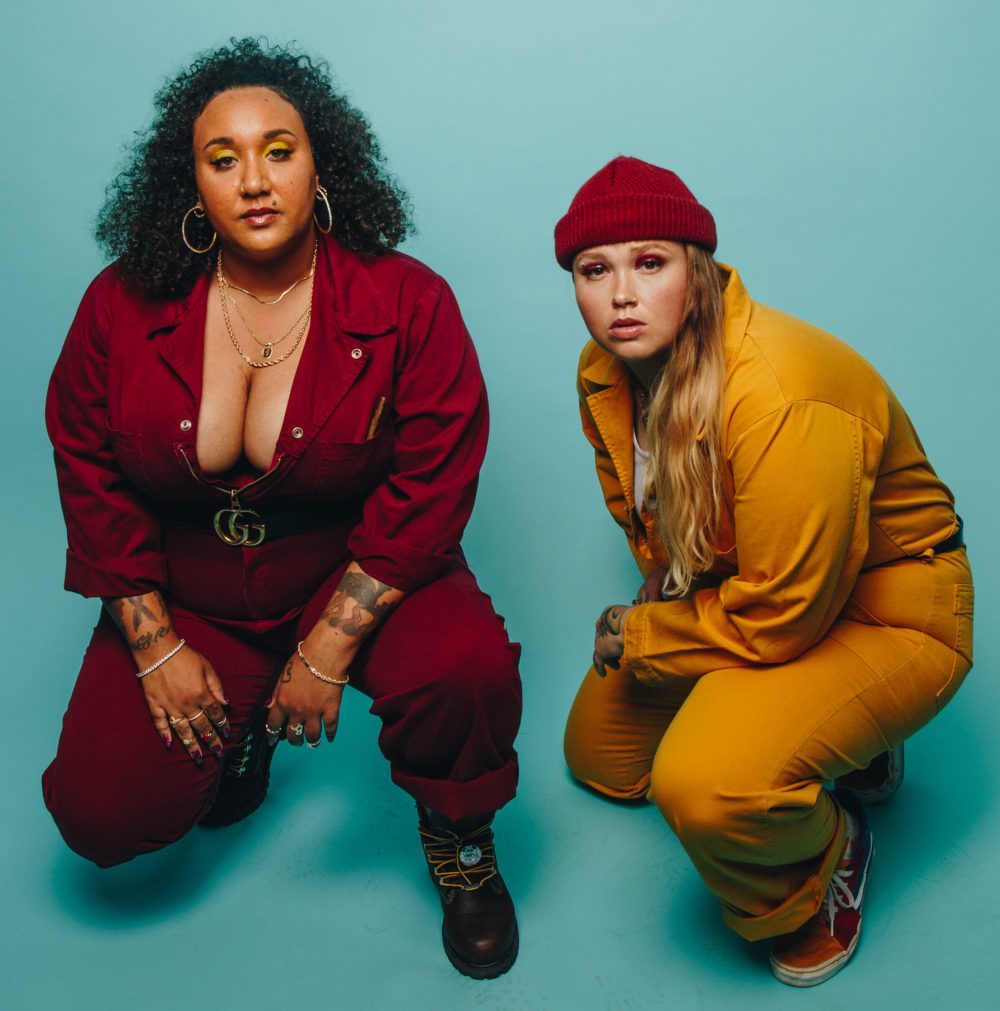
Tía Blimes (aka Blimes Brixton) and Gabrielle Kadushin (aka Gifted Gab) first met on Facebook in 2017 through a mutual friend, and when they met up in person in Seattle, it was clear they had a special connection. “We solidified our bond IRL during a street fight with a girl who kicked the car we were passengers in,” Blimes remembers.

The next time they hung out, they wrote and recorded their first song, “Come Correct,” whose video got over 10 million views. In it, they rap about brushing off haters — “We be the mama and the papa / so every time you bullshit us / all we hear is blah blah” — then close the video with a fist-bump. The public’s positive reaction to the song encouraged them to officially become a musical duo, dubbed Blimes and Gab.

They’ve recorded several more songs since, culminating in a debut album called Talk About It that comes out this summer. The tracks range from “Feelin It,” which captures the mood of a rowdy house party, and “Magic,” a celebration of hard-earned career success.

The overall message of their music? “That we’re not the ones to fuck with because we’ve done the work and paid our dues, that we know how to have a good-ass time, we’re self-accepting and loving, and that we don’t take ourselves or this business too seriously,” says Blimes. “Oh, and that we can rap and sing hella good.”

The artists’ musical careers go way back. Blimes participated in rap battles in middle school, which is where she adopted the first iteration of her stage name, “Oh Blimey.”

“I was into UK hip-hop and admittedly really loved the Harry Potter series, so I grabbed that term from the British slang phrase used to express one’s surprise, excitement, or alarm,” she says. “I hoped to alarm my opponents when we battled and sometimes put on an accent as a character to throw off the competition. Iono, some 12-year-old shit.” Gab’s name, more predictably, is an offshoot of her real first name, taking into account the “gift of gab” she possesses.

Blimes and Gab are currently writing a scripted comedy series about their friendship and their journey to gain recognition in the music industry, which will be directed and produced by Nelson George (A Ballerina’s Tale, Life Support, Brooklyn Boheme). 

They sometimes get categorized as “female rappers,” but they hope to debunk the misconception that “female rap” is something distinct from regular rap. “Women have been around in the game just as long as the men. We are not new to this,” says Gab. “You hear ‘female rapper,’ and most people have a preconceived notion without ever even hearing you. Luckily, when they do, they more often than not switch their tune.”

Blimes, who identifies as gay, views being part of the LGBTQ community similarly: It’s not so much about making music about LGBTQ issues as elevating the community by modeling success. “If I can be myself and be respected in the mainstream, then I’m advocating for the LGBTQ community,” she says. “That’s my goal: not to be looked at for my gender or sexual preference but for my ability to make dope music.”

Follow Blimes and Gab on Facebook for ongoing updates.

AUDIOFEMME PRESENTS: Backstage Pass with Ziemba

On International Women’s Day this year, Audiofemme curated a showcase of talented musicians to play the opening of For The Record, a portrait series showcasing women in the music industry shot by Ebru Yildiz, at Ridgewood venue TV Eye. Our videographer Molly Mary O’Brien shot a candid interview with Ziemba’s René Kladzyk before her performance, as well as the intimate sing-along version of “All Doors Have Keys,” from Part 3 of last year’s concept LP Ardis.

In a previous interview with Audiofemme, Kladzyk told me that she often incorporates co-operative harmonizing into her shows. “Creating spontaneous choirs reminds people of how joyous it is to sing with other people,” she explained. “I think there’s a lot of people who really long to sing but don’t, because maybe they fear judgement that their voice isn’t good enough or they can’t sing perfectly. But if you’re singing in a group of people, something happens. I don’t even know exactly how to name it. It forces you to be openhearted. You have to be vulnerable and you have to listen and respond and communicate in this way that’s not necessarily linguistic. Non-linguistic forms of communication are very helpful for enhancing empathy and being better humans.” This is reflected not only in Ziemba’s live appearances, but in the work Kladzyk does with Colin Self’s XOIR.

Now that live performance is momentarily side-lined, we hope you’ll enjoy this powerful moment from our IWD showcase. Tomorrow, Ziemba launches her Ampled page – Ampled is a new artist-owned cooperative music platform, where people can support artists directly (similar to Patreon, but specifically for musicians; the revenue goes to the musicians, not venture capitalists). Be sure to check that out as a means of keeping in touch with and supporting artists like Ziemba – you can also follow Ziemba on Facebook for ongoing updates.

Ayelle Discusses NOMAD Mixtape and Shares “Overtime” Single

Photo Credit: Polly Hanrahan

On an overcast drizzling Friday morning, I gave independent R&B pop chanteuse Ayelle an audio call on zoom, a tool we’ve come to know all too well during an era of social distancing. We discovered we were only a few blocks away from each other, and connected over the daydream that in another reality we could have met up at an actual coffee shop. The Swedish-Iranian Ayelle recently moved to New York, the perfect scene for passionate, nomadic storytellers. “Throughout, my life I’ve never felt fully rooted anywhere,” Ayelle admits. “On my dad’s side my family comes from a nomadic tribe called Qashqai and this resonates with me a lot as I can never seem to stay in one place for too long.”

Known for her bittersweet, emotive vocals and compelling, vulnerable lyrics, Ayelle draws inspiration from her own life experiences, exploring a range of topics such as self-worth, power dynamics within relationships, and challenging the status quo. She recently released “Overtime,” the latest single from her NOMAD mixtape (out May 15th), a collection of songs written over the past two years whilst traveling every two to three weeks between places like London, New York, Los Angeles, Texas, Valencia, Barcelona, Bali, Cambodia, Vietnam, Stockholm, and Amsterdam. “Every song on this mixtape represents a part of that journey and something I’ve learnt about myself, or something I’m still trying to figure out,” she explains.

From an industry perspective, Ayelle is one to watch. With over 500,000 monthly listeners on Spotify alone, she’s garnered support from Billboard, Pitchfork, Complex, BBC 1Xtra – the list goes on.

In an era of media streaming and the hype of chasing stats and reposts, it’s easy to lose track of an artist even being human, let alone having a backstory. Ayelle’s sonic range, unique beauty, and universal cool echoes an uncanny resemblance to the iconic Lil Miquela (a computed-generated Instagram influencer). Luckily, the mystical Ayelle remains the furthest thing from an avatar.

Growing up in Sweden with her conservative father and stepmother, Ayelle didn’t fit into the Swedish archetype of beauty. In her predominantly white suburb, she suffered from social isolation and experienced backlash with opposition to her father’s vision and hopes she’d take a more conventional path. Musical guidance and support first came from her music teacher Ted Krotkiewski, who began nurturing her original writing. During every break at school, he would mentor Ayelle through lessons in songwriting and vocal technique. Her first studio experience was recording a demo in his classroom, as part of her alternative project-based education. At fourteen, when Ayelle went to live with her more progressive mother full time in Valencia, Spain, she brought this demo with her.

Like many ambitiously musical children, Ayelle craved a lifestyle of freedom to grow and make mistakes, without the backlash of criticism from a conservative household. Her creative life blossomed and expanded under the guidance of her supportive mother, a professional fortune teller, which never seemed out of the ordinary to Ayelle. “I just thought it was cool,” she remembers. “I’ve just grown up with her always reading me my tarot cards. I’ve always believed in it. It’s always made sense. It’s always been this guiding light in my life whenever I had a doubt or didn’t know if I was on the right path. I could turn to her and the cards and get some clarity.” Ayelle would eventually discover her own unique practice of spiritual mindfulness.

As a teenager in Valencia, Ayelle stumbled upon some of the only people making R&B, like producer SammySuprm. She became mentored by these producers through lessons in Cubase, an accessible audio production DAW for beginner producers. This led her to enroll in Creative Musicianship, a four year program at the British Institute of Modern Music. Although given the opportunity to find her own sound through sonic experimentation, she also experienced a wall of deep depression. “I was in a really dark place, and it wasn’t until then that I read the book The Power of Now, which my mom had been recommending I read for years,” she remembers. “That book just flipped everything – it was like a switch, and the first time I was able to quiet my mind and not have any thoughts. The relief was so huge it was like a opened a portal inside of me.”

In her early adulthood Ayelle turned to a practice of meditation, harnessed with magical thinking, to create a mindset that would enable her to block out frustrations. She gained clarity, differentiating her authentic self from negative responses to past trauma. Ayelle built a fortress to protect and cultivate her creativity, and discover her true voice. “There’s a little voice in your head that’s constantly talking. You think that that’s you. Whatever that voice says, you identify with and you think that it’s your inner monologue,” Ayelle points out. “Actually, you’re the person that’s choosing to listen to that voice. How can you be that voice, if you’re listening to that voice? There’s a duality going on within you – that little voice is programmed by everything you’ve experienced in the past and projected. You don’t have to take everything seriously that it says. Just observe it, and if it’s negative just realize it’s not you – it’s regurgitated information.”

Photo Credit: Polly Hanrahan

In London she was exposed to and inspired by exciting new left field experimental genres of pop music, and began collaborating with London-based producers. Building industry contacts through self-releasing music on the internet, Ayelle slowly built momentum, and a professional team. “Whenever people tell me the industry works a certain way, I let it go in one ear and out the other. I decide how I want the industry to work instead,” she explains.

Listening to Ayelle’s recordings, there’s a prevalence of the perfection of Swedish pop influence. As a developing writer, revisiting her homeland through writing camps enabled her to discover a deep appreciation and respect for the legacy of her heritage, and fundamental foundation of her music. You can hear the reclaiming of her Swedish sound through effortlessly smooth tracks and iconic hooks on tracks like “Overtime” and “Choice.”

“I wrote ‘Choice’ with one of my favorite people – and London collaborator – Rationale,” she says. “When two broken people start falling for each other, a lot of old fears can start resurfacing, and you have a choice of whether to go through the fear or avoid it. That’s a choice we’re all entitled to, and even though it hurts when someone decides not to take the risk of allowing themselves to fully fall for you, that’s still their choice and no one else’s.”

Ayelle is a feminist, both with her own artistic agency and a collaborative vision for the next wave of independent female artists. She strives to actively flip the narrative, and shift from cut-throat competitiveness to an open, optimistic, and inclusive vision of success. “Celebrating other artist’s successes doesn’t take away from one’s own power,” she says, agreeing that there’s still a long way to go to achieve gender equality in the industry, especially when it comes to music production.

“The best we can do is to try and break the mold by lifting more women up, by offering opportunities whenever we can and shift the narrative,” she says. “I believe that if all of us start to create our own reality, to believe in ourselves, it will change. You have to believe in something to be able to do it, even if it seems impossible. I believe that it can become a reality. That’s how I’ve shaped my career.”

Follow Ayelle on Facebook for ongoing updates.

Genevieve Stokes Shares “Running Away” From Forthcoming Debut EP

18-year-old Genevieve Stokes is an up-and-coming artist to watch. Her debut EP, coming out this summer, was originally conceived as a high school project. But her refined sound belongs to someone who’s been in the business for years, which she has in a sense; she’s been writing music since age eight.

You can hear hints of artists like Bon Iver, Regina Spector (who she counts among her influences), Maria Taylor, and Fleet Foxes in her music, from the melodious “Surface Tension” to the soulful, dreamy “Simple Love” (the debut single she released just a year ago) and the nostalgic “Portland Nights.” “Morning Dove” spotlights her songwriting, with lyrics like “There’s a weight to your defiance/So I’ll wait to break the silence.” She classifies her music as folk and pop, describing her sound as “ethereal.”

On Friday, she released her latest single “Running Away,” which was written about a love she thought was unrequited at the time. As it turned out, she was wrong – now she’s dating the subject of the song. “I haven’t fully actually talked about it, so he’ll probably find out [it’s about him] once he reads this, but I’m not too worried about it because I feel like he probably knows,” she laughs.

“I couldn’t see you coming / I was always running away / You hit me out of nowhere / Will you stay?” her crisp voice sings wistfully.

“I just really hope people relate to my music and feel emotionally connected,” she says. “A lot of my songs are really personal, so it’s cool when people reach out that feel really connected to it. That’s a really exciting thing, and it’s already happened a little bit.”

Stokes’ music has gotten a fair amount of traction in a short time span, thanks to social media. “Simple Love” was the backdrop to a video on the TikTok account Nick&Sienna that gained nearly a million likes. “I got such a huge response from that TikTok, so instantly, so it was crazy to see this flood of followers and people who were listening to that stuff,” she remembers.

Stokes is currently taking a gap year and deciding whether she wants to go to college or just continue making music. Whatever route she takes, it’s certain we’ll be hearing much more from her over the coming years, and that it will be exciting to see her style develop as she continues to blossom as an artist.

Follow Genevieve Stokes on Facebook for ongoing updates.

RSVP HERE: SUO Bartends Listen Bar’s Virtual Happy Hour + MORE

Welcome to our weekly show recommendation column RSVP HERE. Due to live show cancellations we will be covering virtual live music events and festivals.

SUO is the solo project of artist and musician Saara Untracht-Oakner that came to fruition after 15 years of songwriting and a decade of touring. SUO’s retro-inspired debut Dancing Spots and Dungeons was released October 2019 via Stolen Body Records and was followed up with a European tour with dates supporting The Growlers in February. Soon after that tour ended Saara quarantined in Brooklyn with her roommate Lorelei Bandrovschi, the founder of the NYC booze-free bar Listen Bar. What makes Listen Bar special is that their bartenders are exclusively musicians that curate great playlists that are played during their shifts. On 4/11 you can tune in to see Saara and Lorelei demonstrate how to make Listen Bar’s signature cocktails during their virtual happy hour. It is now a FREE event thanks to support from Lyre’s Spirit Co., but when you RSVP you can make a donation for Listen Bar’s staff that has been effected by the covid-19 closures. We chatted with Saara about her favorite Listen Bar cocktails, what will be on her playlist, and her favorite European cities…

AF: What Listen Bar cocktails will you be making for the virtual happy hour? Which is your favorite?

SUO: This time around we’re going to be making “Smoked with Snoop,” “Because The Night,” and “Spritz Lyfe.” All are made with Lyre’s brand spirits. I haven’t actually tried any of these but I’m most excited to try “Because The Night” – it’s like a twist on a spiked coffee drink with coconut whipped cream. I’m lactose intolerant so any time I can indulge in dairy-free treats I’m excited.

AF: How did you get involved with Listen Bar? If you were bartending Listen Bar IRL, what songs would be on your playlist?

SUO: Lorelei is my roommate. She says I was the inspiration for having musicians as bartenders at Listen Bar. And this is IRL now and I will be playing my Playlist #3 this weekend. Weeks #1 and #2 include Jacques Dutronc, Doris Troy, ABBA, Los Saicos, and contemporaries like Faux Real, Brower, The Josephine Network, Habibi, Sunflower Bean and a little SUO ;)

AF: Other than making great nonalcoholic drinks, what does your daily quarantine life look like?

SUO: I do five minute planks and stretches at some point each day. When it’s sunny I spend the daytime in my yard reading and tending to the garden here and there. I go on at least two walks with my dog. I’m learning French on Duo Lingo. I try to do at least one creative thing a day, pick up my guitar, make a drawing or painting. And a shower. I make my room smell good with some Palo Santo and my room spray by Shocks Of Love. I spend a lot of time just laying and thinking. I’ve made a few dishes I’ve never cooked before.

AF: How was your recent European tour with the Growlers? What were your favorite shows and cities?

SUO: It was so amazing and it was already hard to come home after it. Seems like we were riding just in front of the Corona wave. Every show was so different that it’s hard to pick a favorite. We got the whole spectrum of crowds and venues from 1,000 capacity rooms to small cafes. But the crowds were always good and vibrant. I’m in love with Basque Country and southern France. Favorite shows include Paris, Lyon, Madrid, Valencia, Brussels.

AF: If you could be quarantined anywhere else in the world than where you are now, where would it be?

SUO: Somewhere tropical where I could surf everyday and eat fruit off a tree. I think that’s my wish quarantine or not.

AF: Do you have any other live streams planned for the future?

SUO: No plans. Every day is just day to day.

RSVP HERE for Listen’s Bars Virtual Happy Hour 4/11 at 2pm est featuring Saara from SUO and founder Loreli Bandrovschi.

More great live streams this week…

4/10 Frankie Cosmos via Instagram. 9pm est, RSVP HERE

4/10 Pheobe Bridgers via Instagram. 4pm est, RSVP HERE

4/10 Coachella: 20 years Nn The Desert via Youtube Premiere. 3pm est, RSVP HERE.

4/11. The Frights (playing self-titled) via Instagram. 7pm est, RSVP HERE

4/11 Angel Olsen via Veeps. 6pm est, RSVP HERE

4/11 Noisey Night In: Margo Price, Diet Cig, Black Lips and more via Youtube. 5pm est, RSVP HERE

4/12 Princess Nokia via Instagram. 9pm est, RSVP HERE

4/14 Elephant Stone via Sacred Sounds Sessions. 6pm est, RSVP HERE

4/14 Toth via Sultan Room Sessions Instagram. 8pm est RSVP HERE

How The Artist Formerly Known As Madelin Transformed into That Brunette

Photo Credit: Elisa Quero

Starting from scratch was a major risk, but she was willing to take it.

Formerly known as Madelin, Brooklyn’s queer-pop goddess reemerges this year as That Brunette, a purposely nondescript moniker, the vagueness part of her mystique. Even as she began recording new music – the follow-up to her 2019 release Then Her Head Fell Off – changing her stage name wasn’t something she was planning to do. But by early 2020, she reconciled leaving behind her growing catalog for forging ahead into uncharted waters ─ thus liberating herself from a past that kept leaching off her skin. She needed to cut the cord and move on. And that’s exactly what she did.

She scrubbed her Instagram, archiving what she wanted to keep, and completely unplugged for several months. She didn’t post a single candid photo or hyper-majestic photoshoot still. That action alone was liberating in a way she never expected. “I loved not having to have amazing photos to post. I love doing photo shoots, but not thinking about Instagram likes for a couple months was really therapeutic,” she tells Audiofemme over a recent phone call.

Since her return, on February 28, she discovered her thirst for likes had waned. “I realized that the people who are engaged with me online are the ones that care and are interested. I don’t have to worry about impressing or pleasing every person. I think everyone should stop posting on Instagram forever,” she laughs.

Up until her creative rebirth, she had amassed several singles and two EPs, but a bitter taste hung in her throat. Many of those cuts were written during her BMG days – an experience that, while instructive, left her feeling jaded about the industry. “To be honest, I was more excited about the newer stuff,” she says. “I’m glad it was out in the world, finally. I had released music independently before, but I really did my best to get as much PR as I could independently and have coinciding photos with the release. I tried to have all my ducks totally in a row. It was a struggle to do it all myself. My focus was on what my next move was going to be.”

Her decision to totally rebrand stemmed from a conversation she had with her producer Joe Endozo, who is also known as one-half of indie-pop project HOT FUN. “We were talking about how I wanted to give this new music its own life, separate from ‘Madelin,’” she says. “I wanted to let go of a name that had negative connotations for me and find something that felt more authentic and chosen.”

“Something just clicked in me when I really started to think about this whole 2020 rollout. If I was going to change my name, it was now or never,” she adds.

Once she locked into a new chapter, the next hurdle was picking out an appropriate name. “I was literally wracking my brain for anything I could think of. I’d wake up, look around my room, and go, ‘Paper towels. Water…,’” she chuckles. “Literally. Anything I saw, I thought, ‘Is this a good name?’ I was going crazy thinking of names. I made a list of ones I thought could work. The first one I thought of was ‘Miss Elegance.’ That was an actual award I won when I was in third grade and did cotillion. But then I thought, ‘I’m not that elegant. I don’t think it really comes across if I don’t explain that entire story every time.’”

“Then, I thought, ‘What am I, really?’ I wanted something streamlined and a little ‘this could be anyone.’ The art is going to speak for itself because the name is either nondescript or more general. I thought of things like ‘Girl 31’ and ‘She.’ Then, when I thought of the word brunette, I was thinking of ‘Real Brunette,’ ‘Cool Brunette,’ ‘Rude Brunette.’ I was like, ‘Wait. That Brunette! I’m just That Brunette… over there.’”

There was another, perhaps more daunting, element that struck her: she would have to totally rebuild her Spotify follower base. “I just had to decide that I was okay with completely starting from scratch. That was definitely an emotional process. It sounds depressing but I had to think of it as accepting defeat,” she confides. “I had to come to terms with the fact that something I had tried really hard at for a number of years wasn’t quite clicking both with me, and with life, I had to be okay with the idea of letting that era of my life go so I could start over and be my authentic self.”

With an adventure, both unknown and exciting, looming before her, she takes a moment to reflect on her journey. “I don’t think I could have done this a year ago. I wasn’t in that state of mind,” she says. “I was holding on so tight to something I thought I needed. I’ve gone through so many different phases over the past year where little by little I released myself from the expectations I had of myself. I have come to this place where I feel I have nothing to lose, and I want to start over as the older, wiser, almost 28-year-old woman I am. I’m not that confused, starry-eyed 22-year-old anymore.”

That Brunette is not abandoning who she is at the core, though. She is still the same quirky, electric, and bodacious 20-something singer-songwriter she’s always been. “I’m not going to change who I am as an artist. The background I’m putting myself in front of is different. It’s neutral, clean, and gives me space to be decisive with what I put out into the world. I have the opportunity to build a really cohesive and interesting sound and repertoire that defines who I am in the present, and I’m very excited about it.”

Her new song “Astrology,” out everywhere today, keeps her bubbly weirdness intact, but it sees her zipping along a thrilling new path. “I don’t want to make you any less free, honey / You can love him / You can love me,” she warbles into a synthy haze. She juggles her emotions, eyeing someone across the room with a flirtatious nod and smirk.

Billie Eilish’s drummer Andrew Marshall, with whom she went to college, lends his skills to a track that washes over the body. It’s aptly intoxicating, slurping together the organic with the synthetic as a way to engage the senses in the process. “This song is about loving someone from afar, and not wanting to disrupt them. You can admire someone, appreciate their beauty, memorize their astrological chart, without expecting anything from them in return,” she explains. “For me, this person was a beautiful flower I was content not to pick – as long as I could enjoy its presence, I thought that would make me happy enough.”

The song also includes long-time collaborator and friend Jon Sacca on guitar. “I’m obsessed with his style of playing. I love to combine organic and electronic elements and blend them together seamlessly. It has this pop groove to it, but there’s these really melodic elements, as well.”

With plans to continue releasing new singles throughout the rest of 2020, she expects to release a string of singles, “Astrology” represents the beginning of what promises to be a liberating new chapter.

PREMIERE: Satellite Mode Navigates Technological Dystopia in “Click Now”

We’re living in strange times, where the internet age has taken on an entirely new meaning, thanks to the coronavirus and social distancing. This makes the latest single from NYC electro-rock duo Satellite Mode, consisting of Jessica Carvo and Alex Marko, especially timely.

“Click Now,” off the band’s EP Robots Vs. Party Girls, to be released this summer, is about “cutting through the haze of modern life to foster connection,” says Carvo. “It paints a satirical picture of a tongue-and-cheek dystopian future, calling our listeners to strive for clarity and purposeful living in our detached world.”

“Hey kid / your life is now or never / you can have everything we choose,” she sings in the catchy chorus. “Hey kid / click now for your new future / there is no future left to lose.”

The video features lyrics flashing across various screens, depicting how “technology is always stalking us, lurking in the background and informing a lot of how we interact with the world,” says Marko.

The role of technology in our lives has always been a topic of interest for the duo; their original band name was Aeroplane Mode (a riff on “airplane mode”). But the idea for “Click Now” came to them while they were on tour. “Alex and I noticed the stark contrast between our lives on the road, where adventure was so tangible and present in the physical world, versus everyone living their ‘best life’ while glued to their iPhones, comparing themselves to others on social media, all the while being sold to and surveilled,” says Carvo.

Carvo describes the EP, which combines traditional singer-songwriter roots with dance beats, as “a cry for truth and transparency,” which is particularly relevant today, when accurate information is crucial for our health and well-being. “There’s no time for dancing around the heart of the matter — we are vulnerable, and it’s dangerous for us to be scrolling through any curated feeds of partial lies,” she explains.

The title Robots Vs. Party Girls was inspired by two alter egos of Carvo’s, one of them being a “party girl” named Stacey. She’d evoke this character when she wanted to sing with “a little hoopla and eccentricity” instead of her usual “matter-of-fact or stoned-sounding” vocals. “I like to imagine her as a 1994 party girl with bleach-blonde hair, tied up with a hot pink scrunchy, colorful cocktail in hand,” she says. The other alter ego, the robot, is the monotonous voice you hear in “Click Now.”

“The Robot (algorithms) and the Party Girl (influencers) symbolized two archetypes in social media that serve to mask and disrupt real truth and connection between humans,” says Marko. “We saw that to be truly happy, we had to use technology to connect with people instead of using it as a tool to project what we think our lives should be like.” That’s a message many people could benefit from hearing right now, whether they’re party girls, robots, or a little bit of both.

Follow Satellite Mode on Facebook for ongoing updates.

PLAYING PHILLY: Sea Offs Take Root with Playful, Soothing Dream Folk EP

Photo Credit: Ann Bi.

When I met Sea Offs months ago at my favorite coffee shop, I didn’t expect that our meeting spot would soon close down, or that I’d eventually write about the band while watching the children across the street play outside in hand-sewn masks. Similarly, Sea Offs didn’t anticipate debuting their first release in three years during a time of collective trauma. But if you’re feeling anxious (which, you probably are), Sea Offs’ new dream folk EP En Root offers a moment of solace in its delicately powerful declarations of vulnerability and self-acceptance. 

En Root, with its silly wordplay, evokes slow, sturdy growth, which fits the EP well. But if Olivia Price and Rashmit Arora love anything as much as they love a good pun, it’s an unexpected song structure. Grounded with vocal harmonies and finger-picked guitars, En Root is soothing, yet never boring. You can sense the care that goes into the beautiful, multi-instrumental compositions of songs like “To Find Your Side” and “For Familiarity’s Sake,” but the duo is their best on “Will (You),” which recalls the emptiness of sex without intimacy. Price sings, “Will you make me doubt/My own amount/I lay complacent like a ragdoll.” Like the other songs on the record, it begins on the mellower side, yet unexpectedly erupts into a shouty (yet still beautiful) rejection of the bullshit and baggage that comes along with being treated as less than what you’re worth. 

The following track, “Fight Song,” is surprising in a different way – recorded in one take, you can still hear the metallic scratching of the guitar as Arora and Price harmonize in the folkiest way. With their witty sense of humor, it makes sense that “Fight Song” is a raw meditation on arguing with those you love, rather than an aggressive chant. But, especially in uncertain times, there’s nothing better than a band that is soothing, yet exciting all the same. 

Read what Olivia and Rashmit have to say about the new EP in the interview below.

AF: What has your experience working as a duo been like?

OP: Writing with someone, or doing anything artistic with someone, is such a vulnerable experience. You’re opening yourself up and your emotions up in so many ways that you really have to build that comfort with another person. I’ve played the odd solo set, like when Rashmit went back to India one summer… you become totally reliant on the comfort of having another body on stage with you that, [so] when you’re stripped of that, it’s like, “Oh my god, I don’t know how to talk to anyone.” It’s an interesting dichotomy that, to be an artist, you’re making a spectacle of yourself. And there has to be a degree of narcissism with being an artist where you have to have confidence in what you’re doing to showcase it. But at the same time, you’re so insecure and so afraid of being in the spotlight. 

AF: It’s hard, because you have to take yourself seriously, but also not take yourself too seriously.

OP: Sometimes I wonder when you get writer’s block, if it is just a product of taking yourself too seriously, or you’re being too hard on yourself, versus just letting it be a judgement-free zone, letting it fall out, but you have all of these thoughts like, “You’re not good enough!” Even writing something down and not having a final product is fine too. It’s not time wasted if you don’t sit down and write a song. It was still valuable. I think that’s hard to get past – feeling like you need to produce something. 

AF: How do you find the scenes different in State College, where you met, and Philly?

OP: I’ve never really felt comfortable playing house shows in any city, and I think it’s because I think the people are so trendy, and I’m like, “I want to be cool!” But that said, I feel like the folk scene in any community is just… to me, the most welcoming and down-to-earth people, and those are like, the living room shows! I always come away from those shows with friends, and I love the personal conversations that you have with people.

RA: There’s a lot more competition in Philly in order to get heard, but there’s also the fact that there’s such a good music community here is a big boost actually. I don’t know how much playing local shows actually adds up to you being a conventionally successful band these days. The measurements are changing, and how you get a following is moreso online, I think, than going to play a show where kids are just there to get drunk. But in Philly, people are there for the music, and that’s rare.

AF: It’s funny how there really is a huge difference between a basement show and a living room show. 

OP: It’s a different crowdgoer, too. But I like more of a sitting-around-in-a circle-listening type of thing. Those shows that we’ve played with other local artists, I keep in touch with those people still, and any time I pass through their area I hit them up, and we’re just keeping up with each other’s music. I think there’s a lot of support. Once you do find your scene here, it’s very supportive, but it takes a little bit to find your crowd. 

AF: The title of your EP En Root is a pun – is there any deeper meaning to it, or is it just funny? 

OP: I mean, Sea Offs is kind of a pun too.

RA: We have a lot of puns. You know when you’re seeing someone off? But it’s the sea. You’re seeing off the sea, maybe? Climate change? I don’t know! The other pun – our first EP was called Sea the Blind. It’s just a play on words. 

OP: For En Root, I think I just needed a title, and I was like… the phrase “en route,” I say that all time when I actually haven’t left yet, and it seemed appropriate, but then we were like, “Let’s just keep with the weird spellings.” Maybe it’s about feeling rooted. 

AF: Speaking of plays on words, I like that you have a folk song called “Fight Song” on the record

RA: That was a last minute song, and the recording is a one-take recording. We were both sitting on two sides of a figure-8 microphone so it captures sound on both sides. We have a video of us doing that.

OP: The song itself was about a fight, so it’s very literal in that sense, and even when we were trying to think of a title, Rashmit was like, “I think it’s funny that it’s going to be this rock anthem, but it’s not at all.” We like to throw in some little weird things.

Photo Credit: Ann Bi.

AF: What are you excited to share with people from the EP?

OP: I think this was just the first thing we’ve done where we had a third party in on the process, a producer, someone mixing it. So Kyle Joseph is who we worked with, and he really forced us out of our comfort zone. On “Somehow,” the structure is totally different from where it started, and it’s so much better now, but it was such a fluid process where he really took the time to research what our influences were.

RA: Even on “Will (You),” the single, there’s this entire tempo ramp-up in the middle. The idea of doing a ramp-up came from him, and we wrote the music to get there. 

OP: We had the space and resources to get weird on this one. We didn’t have to worry much about a time constraint. We could be in the room and be like, let’s try this.

RA: We had ten days in a studio in Brooklyn.

OP: We probably have a bit of a track record of writing long songs.

RA: But also, not having conventional song structure, because I am not into just the standard structure. I think we like writing things with two sections, but this might be one of the first explicitly A and B section song. 

OP: The build up is really slow, but what I like about how it turned out is that it’s so atmospheric with the textures that keep getting introduced that I feel like, lyrically, there’s a part A and a part B, where the first half is your realization of the role in the relationship, and the last part is when you’re almost in this place of  anger that you’re in that role, and I think the music reflects that. 

AF: What Philly bands have you been into lately?

RA: One of the bands I really like is called No Stranger. It’s kind of a mathy rock band, very unlike Sea Offs. Friendship is awesome. 

OP: Eliza Edens always has a special place in our hearts. When we released the last LP, we were both featured on The Key in the same listing, and her little tidbit was saying how she just moved to Philly, and that was around when I just moved here, so I reached out via email like, “We should be friends! I really like your music!” And then we met up, we’ve stayed in touch, played shows together, and she’s a wonderful songwriter. 

AF: What makes Philly special to you?

OP: I like that everyone’s so down to Earth. I really do think it’s the brotherly love thing, where you can be total assholes to one another, but god forbid anyone else talks shit on a fellow Philly person – you’ll like, defend them to the grave.

Follow Sea Offs on Facebook for ongoing updates.

Nashville Songwriter Gatlin Charts Personal Evolution Through Music

Photo Credit: Sydney Whitten

Gatlin Thornton is on a spiritual journey, one you can follow along with through her music.

The Nashville based artist, who goes by the stage name Gatlin, describes herself as a “toned down Maggie Rogers,” layering modern pop production with folk lyrics, her ethereal voice draped over mystifying melodies of soft, thumping drums and guitar.

Gatlin walked a winding road trying to decipher what genre suited her style best. She initially gravitated toward Christian Contemporary, inspired by years she spent singing in church choir. In high school, a cowboy boot-wearing phase heralded a shift toward country music. Now, the 21-year-old’s newfound love is that of modern folk-pop, a niche she discovered upon moving to Nashville, a city that’s had a profound impact not only on her musical direction, but her personal journey.

Gatlin relocated from her native Orlando, Florida to Nashville in 2017 to study religion and the arts at Belmont University, but after two years, she quit and became a songwriter full time. She got a taste of the city’s pop scene when she began working with a diverse range of songwriters, proving to the longtime pop snob that she doesn’t have a distaste for all pop music – in fact, she has a gift for creating her own style of the genre. “That time in my life, I learned the most because I was writing with someone new every day,” she tells Audiofemme via phone interview.


Coming from a Christian background, stepping into the diverse Nashville culture broadened Gatlin’s horizons, causing her to challenge the conservative ideals she was raised on. “I got out of my little bubble and I realized that things aren’t so black and white. I went through this huge doubting phase. I am a Christian, but it looks a lot different,” she professes. “It’s a spiritual journey now. I’m trying to figure out a lot of stuff and I feel like that comes through in some of my lyrics.” She addresses this point head on in her song “Curly Hair” as she sings, “and I love Jesus, but he’s busy upstairs, and I’m a first world nothing.”

“I think everyone’s on their journey, and growing up super conservative Christian, it wasn’t okay that it was a journey, you had to have it all figured out,” she continues. “Where I land, I still think God is real, I just don’t think everything is so black and white, I think it’s pretty gray and it’s different for each person. I think I’m trying to figure out the normal things people believe as far as religion and Christians go. I don’t have an answer for literally any of it – [I’m] just figuring out as I go what is true for me.”

Gatlin takes listeners on this journey, exemplified in her latest track, “I Think About You All the Time.” Co-written with friend Victoria Bigelow, the song is based on Gatlin’s experience being a relationship where feelings developed on her end, but not her partner’s. The video captures this sentiment through a dark red hue cast over scenes of Gatlin surrounded by friends as they enjoy life, yet she’s lost in a daze of sadness and confusion.

“With this relationship, I literally could not enjoy parties with my friends, because my mind was trying to figure this relationship out,” she describes. “Then the moments when I would be alone was when I would freak the fuck out, and so I wanted to feel that juxtaposition.” Gatlin took control of the situation and told the other person how she felt, which liberated her from the toxic dynamic. “I realized there’s more power in admitting that you have feelings if you do. It’s always looked at as weak, but me admitting ‘I think about you all the time,’ there was so much power in that,” she expresses. “It was a very healing process.”

Gatlin is currently working on an EP, planning to drop each song as a single throughout the year leading up to the EP’s release. As she walks the path that’s shaping her identity, Gatlin will continue to take fans along for the ride through her art. “I’ve learned that God is love and it’s so much more of an emphasis of that. We are supposed to love others,” she says of the most important discovery she’s made thus far. “I physically look different and also my insides look different every six months because I’m 21, I’m in such a changing time of my life.”

Follow Gatlin on Facebook and Instagram for ongoing updates.