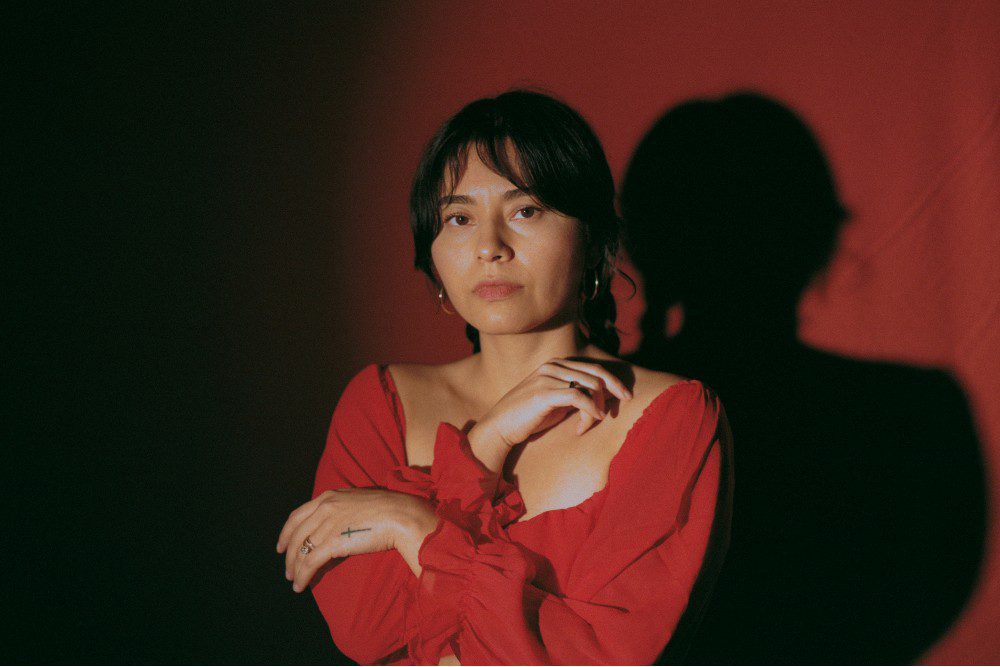
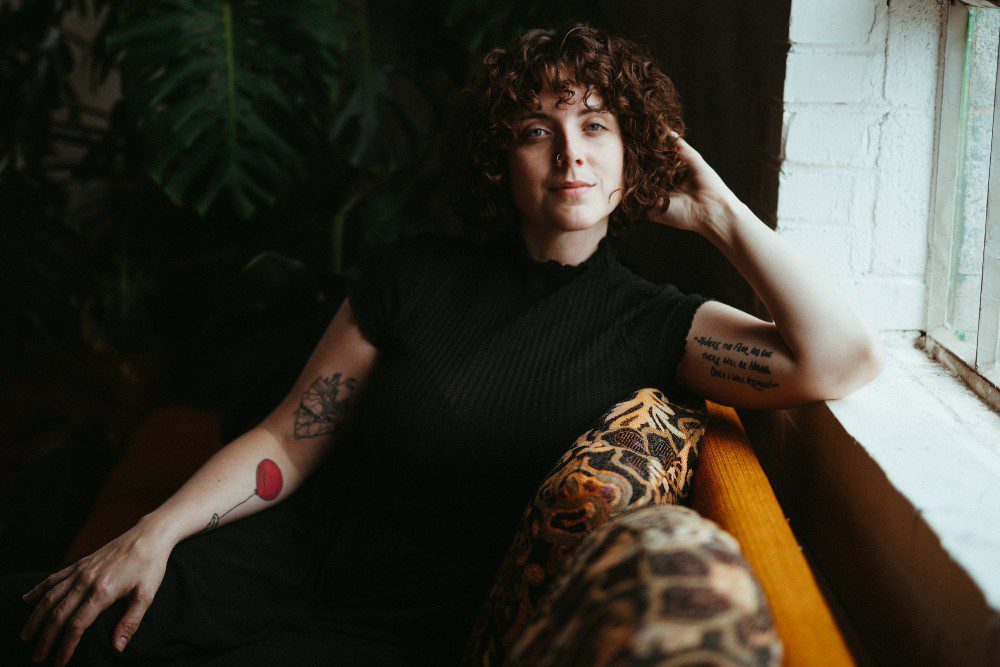
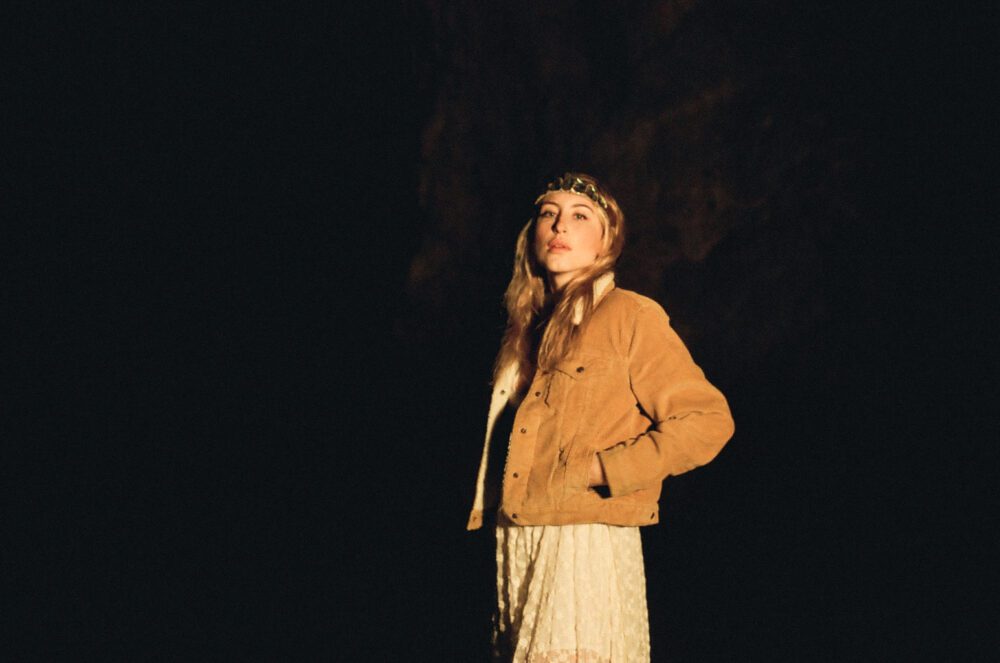
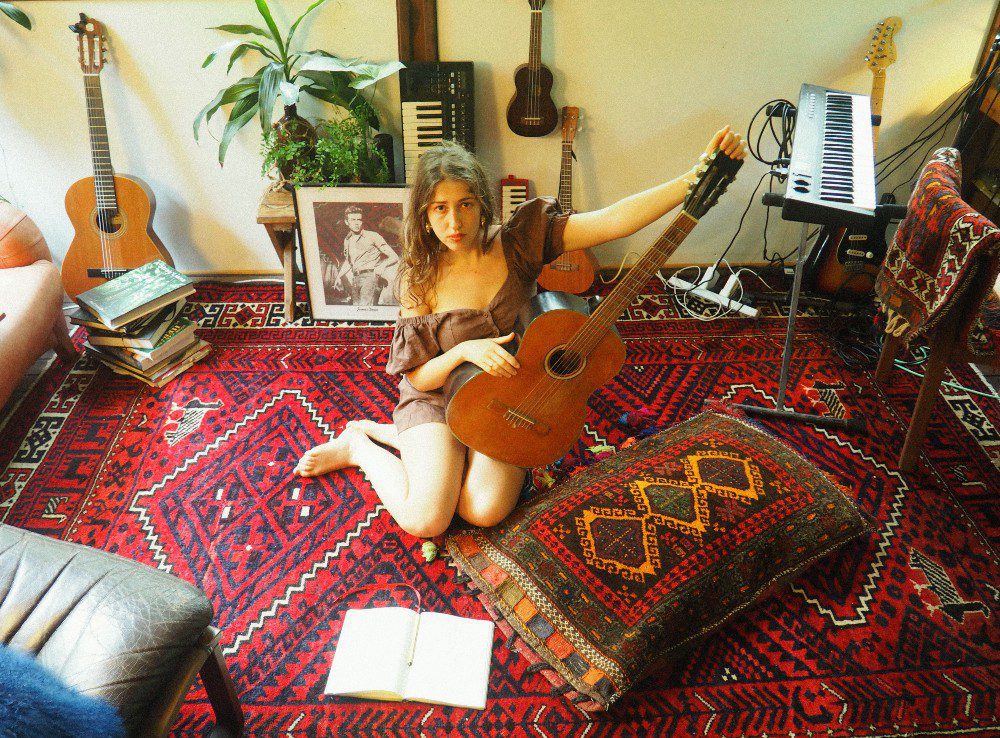
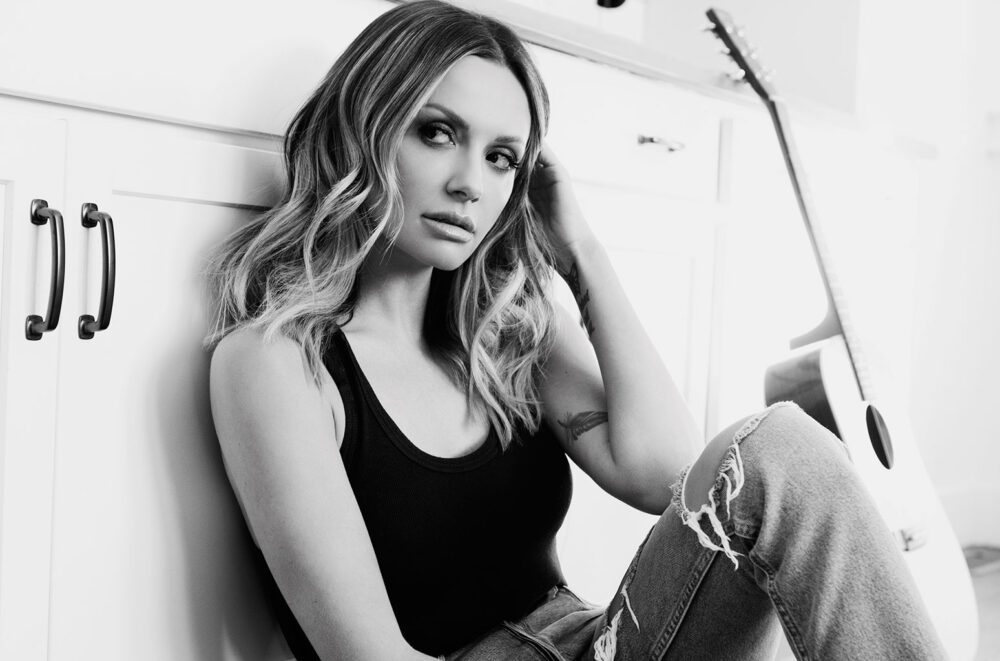
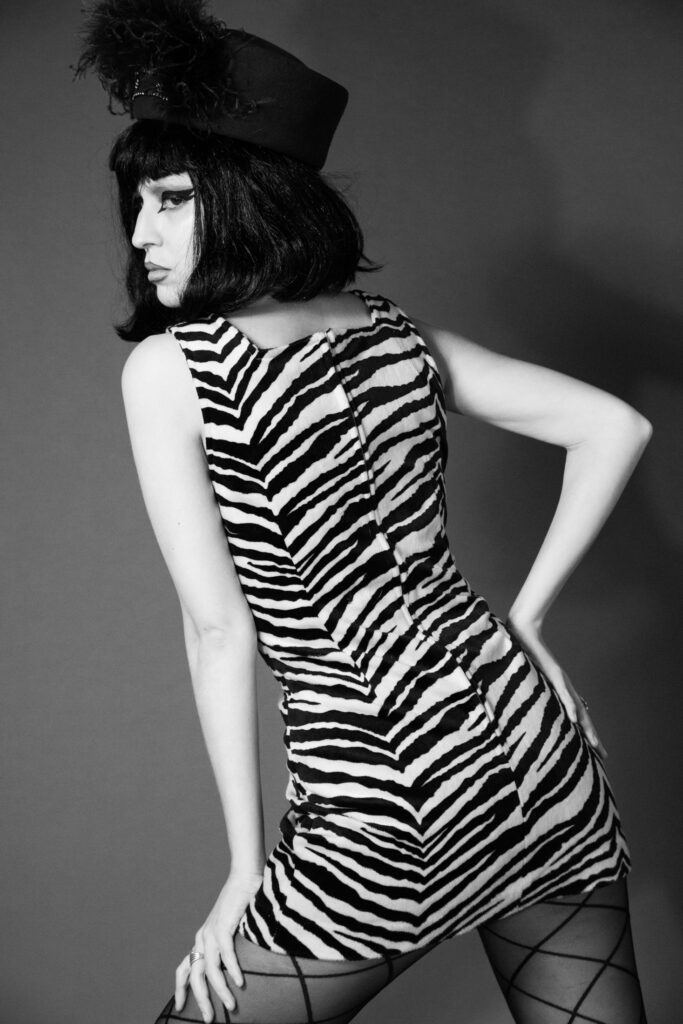
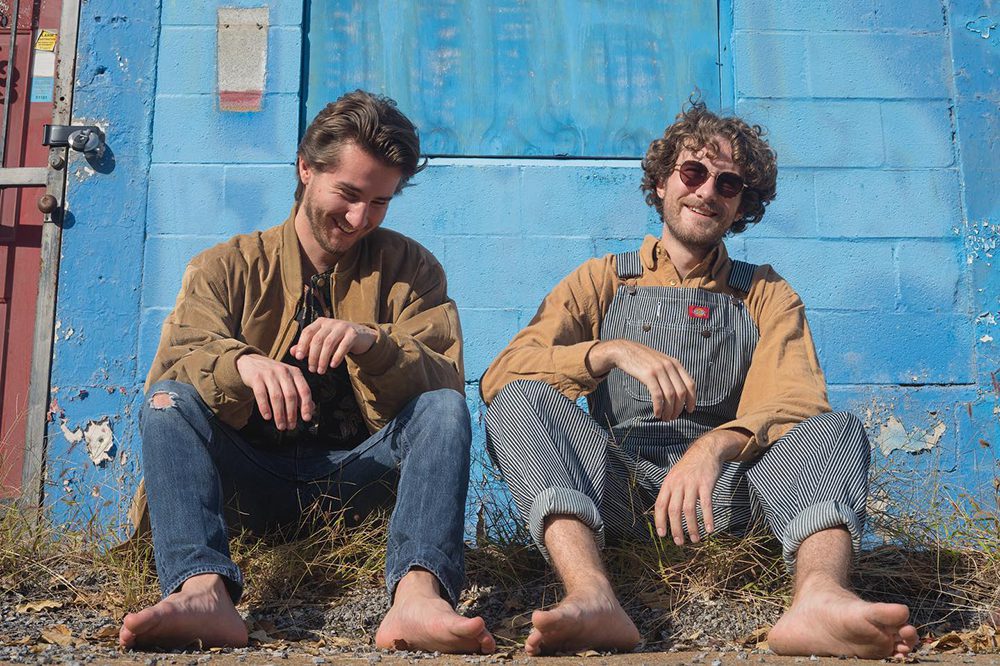
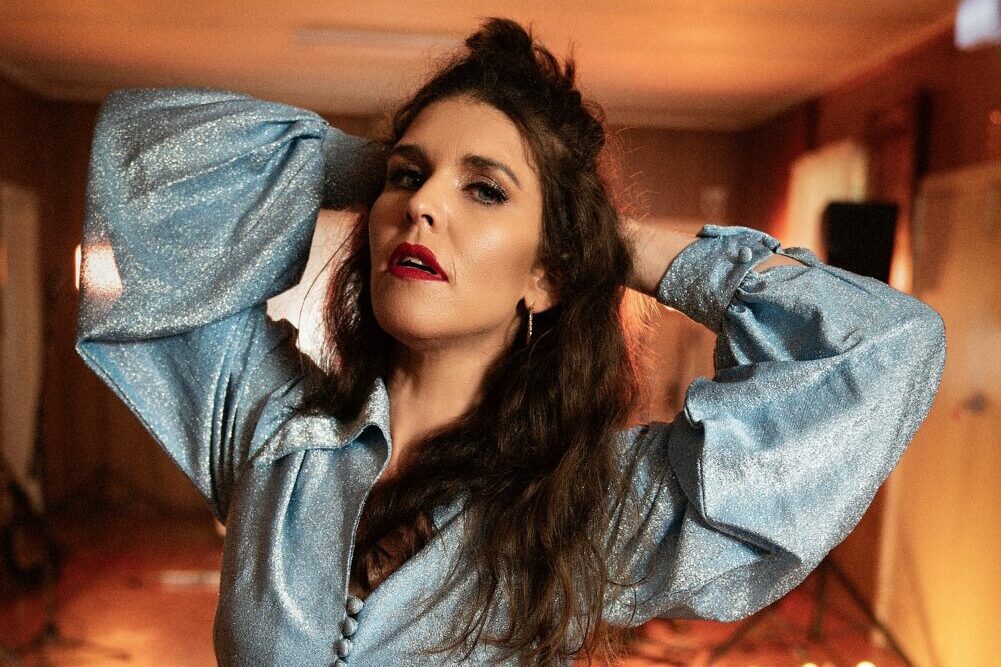
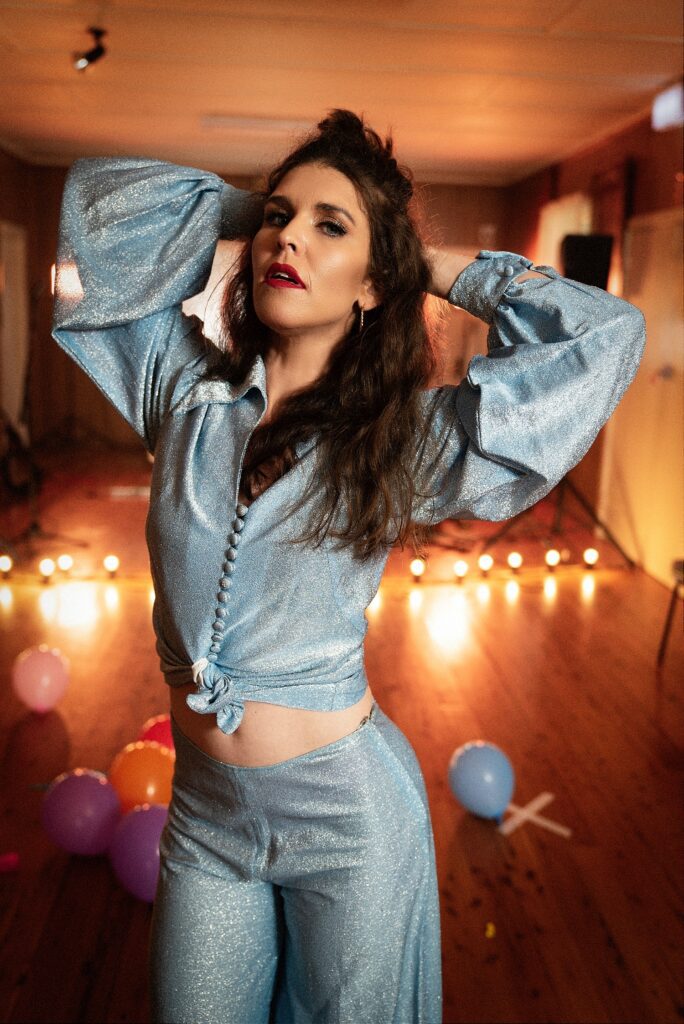
Carli Brill is a lover of items from the past. Growing up in Southern California, Brill and her mother spent countless hours shopping in antique stores, discovering hidden gems and imagining the stories behind them. Now based in Nashville, the singer-songwriter says she draws inspiration from the unknown past still clinging to these objects.
“As a songwriter, I’m always trying to think of new concepts and ideas, so a lot of ideas actually do come from my time out at antique stores sitting and pondering ‘I wonder who owned this? What were they like and what would they think about today?’” she tells Audiofemme. “I love that vintage and antique items tell a story. They have so much depth to them. I like the mystery behind antiques and anything from the past.”
But for her latest single “Concrete Jungle” – officially out February 4th, but premiering today exclusively on Audiofemme – Brill didn’t have to imagine someone else’s life. Instead, the ethereal tune is inspired by the singer’s personal experiences and memories: visiting New York City; meeting her husband Jordan, with whom she recently celebrated eight years of marriage; paying homage to the city’s “rich music history” and all the “people that have fallen in love in this city.”
“It was such a sweet time that I had there, and the beginning stages of falling in love I think for all of us are moments that we cherish and we never forget,” Brill expresses. “I really wanted to capture that feeling and put it in a song and have the listener almost feel as if they’re falling in love as they are listening to the song.”
The pure-hearted singer accomplishes this by crafting lyrics rich with personal anecdotes; she cites the line “your smile is as bright as your tattoos” as one of the most authentic she’s written. “That’s a very dear line to me that made it in the song,” she says warmly. “The first thing that I noticed about him was his smile. It was just so bright and joyful and wide.”
She also nods to late rapper and Brooklyn native Biggie Smalls as she sings, “Baby come closer/Spread your love on me/It’s the Brooklyn way,” in the doo-wop style number, complimenting the romantic lyrics with a melody that transcends musical genre. Taking listeners on a “melodic journey,” the song begins with a slow-tempo electric guitar, leading into an up-tempo second verse incorporating “vibey” drums; Brill describes the bass as the “heartbeat” and “backbone” of the track. By song’s end, Brill layers ‘60s girl group vocals that turn the song into an experience.
“That was really important in the creation of the song,” she asserts of how the melody matches the story. “[It] almost feels as though your head is spinning at that point when you’re falling in love and you’re like ‘I don’t care what happens, life is great, nothing can upset me.’”
These intriguing instrumentals are a common thread across Brill’s compelling catalogue. The eclectic artist began this process with one of her recent releases, “Hey Little Girl,” an upbeat, genre-defying number that encourages optimism and smiling through life’s misfortunes. “I discovered a lot about myself and I gained a lot of confidence in writing that and I realized I was writing this song to myself,” she explains of the song’s conception. “I was able to see what kind of artist I wanted to become.”
Her songs act as a time lapse, transporting the listener through multiple eras with ever-evolving melodies that match the old soul that shines through in her lyrics, harkening back to the days when Brill and her mother would frequent vintage stores.
With Valentine’s Day just around the corner, Brill hopes that “Concrete Jungle” will inspire listeners to lead with an open heart and express their feelings to the people they love. “I would hope that they would feel encouraged to tell somebody that they love them, even if it’s not in a romantic way,” Brill shares. “We often associate Valentine’s Day with a romantic love, but… it doesn’t have to be romantic love.”
Brill is set to release more new music in the coming months, focused on cultivating an audience of kindred listeners. “I hope that what I create is going to speak to people and I want to always create from an authentic place. It’s sharing what you actually think and what you actually feel about something regardless of how others are going to react to that. It’s how I feel and what I actually believe inside,” Brill says. “I hope that people will connect with that.”
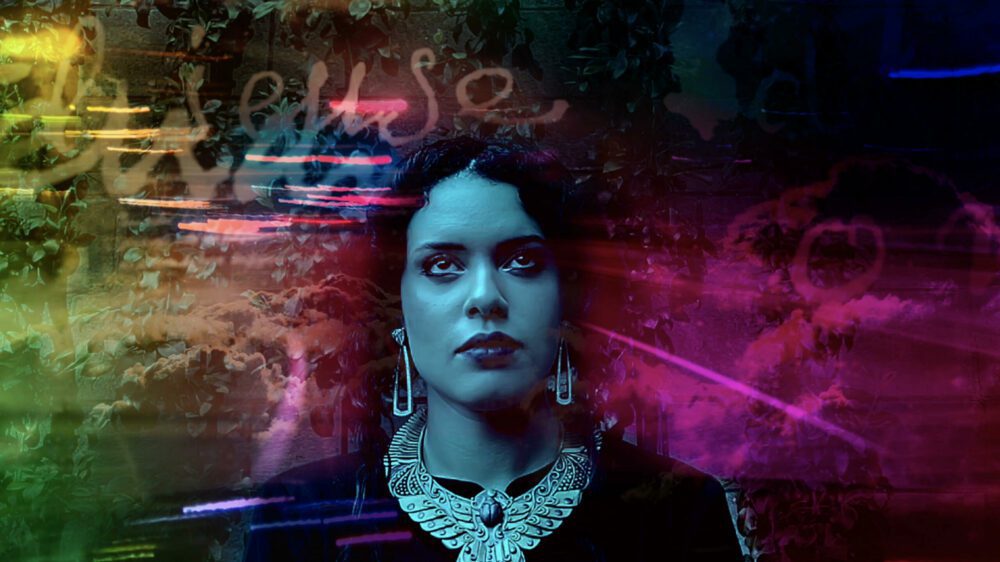
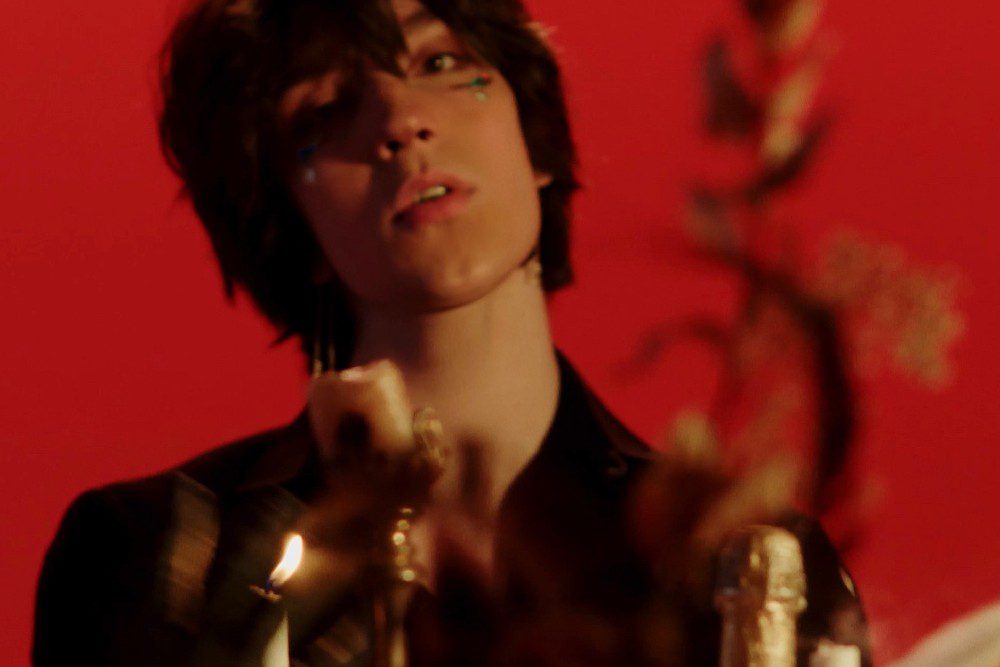
Still from NightNight’s video for “Ashes” by Frank Coleman
On Love Decayed, her debut album as NightNight, Yasmin Haddad digs into dark sounds and introspective themes. “It’s not a very happy record,” she says by phone. “And it comes from a place of being very isolated. This was before COVID, but moving around as much as I did, there’s long periods of time when you don’t know anybody.”
Haddad grew up in Las Vegas and later moved to Seattle, then to Los Angeles. She headed to New York for a job producing radio shows after finishing the album.
But, it was more than the moves that inspired the album. “Also, there were a couple of relationships I was in at the time that were really not healthy,” she adds. “So, beyond being alone, because you’re just not around people, there’s also that extra aspect of being isolated because you’re attached to somebody who’s very negative and who doesn’t want you in contact with other people.”
With these experiences in mind, two themes developed as Haddad was writing Love Decayed. “There’s one theme of this longing or wanting for a person who doesn’t really exist or isn’t available,” she explains. “And then the other half is talking about the situation you’re in right now, which is like a trapped sort of isolated situation. So I would say it started with the trapped isolated situation and then morphed into the dreaming longing of a different situation.”
Her songs begin with world-building and imagining different scenarios. “I’ll start with something and then that will remind me of being on a train,” she says. “There’s one example that will remind me of being on a train sitting by myself and looking over at somebody and then that whole concept will get that song going.”
Haddad likes to use unusual elements, like found sounds, in her music. “There’s a lot of things like actual noise from the environment,” she says. “There’s a lot of synthesizers and sounds that I create to give the feeling of being in the place that I was in. That’s kind of how I go about I go about it, like seeing it in my head and then making it sound like it matches that place.”
Despite this being her first album as NightNight, Haddad, who also plays bass in Brooklyn-based band The Wants, has been making music, and working in production, for a long time. A violinist since childhood, she played in youth orchestras and, later, a college symphony orchestra. She also played with bands on the Las Vegas Strip and did session work, notably, on The Killers’ album Sam’s Town. “I was always a fan. When I was really young, we used to sneak into clubs to see them,” she says of the band. “We used to make fake IDs to see them.”
But, the most fortuitous thing that came out of her session with The Killers was some advice she received from the album’s producer, Flood. “I asked him about going to college for music production. I asked him if it was a good idea because I wanted to move to New York and go to college to be a music producer,” Haddad recalls. “He told me that’s not how it works… no one is going to care that you went to college because that’s not how this profession is. You need to start doing it.”
Haddad took Flood’s advice and got to work. She landed an internship at a studio in Las Vegas. “It was a big, world class facility. I was the person wrapping up cables and writing down charts,” she says. “I was not the person doing the sessions.”
Eventually, she moved to Seattle, where she worked at Clatter & Din Studios. “By that time, I had enough experience to start recording other people and in that studio, I ended up being the music studios manager after a while,” she says.
Haddad never stopped making music, though. In Seattle, she tried to start a band, but nothing materialized. That’s when she began writing on her own. After moving to Los Angeles, she decided to produce that music on her own, too. She passed a few completed songs along to some friends, and through one of them, her music ended up catching the ear of Schubert Publishing, who wanted to release it. “This wasn’t ever really supposed to be put out,” she says. “It’s just my demos. It was finished, but I thought that it could be better.”
As it turns out, Haddad would have another fateful encounter when a pal back in Seattle got her in touch with the legendary producer and engineer Sylvia Massy, known for her work with artists like Tool and System of a Down. “I looked up to her as a little girl for sure,” says Haddad of Massy. “There weren’t that many examples that you saw all the time of women doing that job. I remember seeing her specifically doing the Johnny Cash sessions at Sound City when I was a kid, and thinking that is so cool. This woman is amazing.”
Massy then came in as a producer for Love Decayed. “Sylvia added her crazy, magical touch to everything,” says Haddad. “We worked together with the engineer there and brought everything to life, from something you do in your bedroom by yourself to something you complete in the studio.”
Follow NightNight on Instagram for ongoing updates.
Welcome to Audiofemme’s record review column, Musique Boutique, written by music journo vet Gillian G. Gaar. The last Monday of each month, Musique Boutique offers a cross-section of noteworthy reissues and new releases guaranteed to perk up your ears.
Eliza Gilkyson’s Songs From the River Wind (Howlin’ Dog Records) is an album about the pleasures of wanderlust and the splendor of the great outdoors. “The Hill Behind This Town,” for example, is about watching the day come to an end as the sun goes down, “lighting up the mountain tops and this heart of mine.” The pastoral setting for the songs was inspired by her move from Austin, Texas to northern New Mexico, near Taos; with song titles like “Before the Great River Was Tamed” and “Bristlecone Pine” you can almost picture the wide open spaces and taste the dry desert air.
She also gives a new spin to some traditional folk numbers. “Wanderin’,” based on an Irish ballad, was recorded by her father’s band, Terry Gilkyson and the Easy Riders. In Eliza’s version, it’s a woman, not a man, answering the call of the road, and not even “a guitar man in Austin” or “a cowboy up in Jackson” can tempt her to stay. Similarly, in “Buffalo Gals Redux” the gals don’t need to be called to the dance, they’re out there already, “pedal to the metal,” taking the menfolk on what sounds like a glorious spin around the dance floor (“Tomorrow morn his head’ll still be ringin’”).
Gilkyson’s own songs unearth the extraordinary in the everyday, as in “Charlie Moore,” a portrait of a wise old soul who becomes a mythical character when seen through the eyes of a child. “Don’t Stop Lovin’ Me” has the gentle slide of a lap steel guitar, adding to the array of other musical delights provided by banjo, dulcimer, acoustic guitar, and violin. The album closes with the instrumental “CM Schottische,” a tune to square dance to, given a “lovely old timey re-creation” (in Gilkyson’s description) by producer Don Richman. A warm and friendly release to welcome you into the new year.
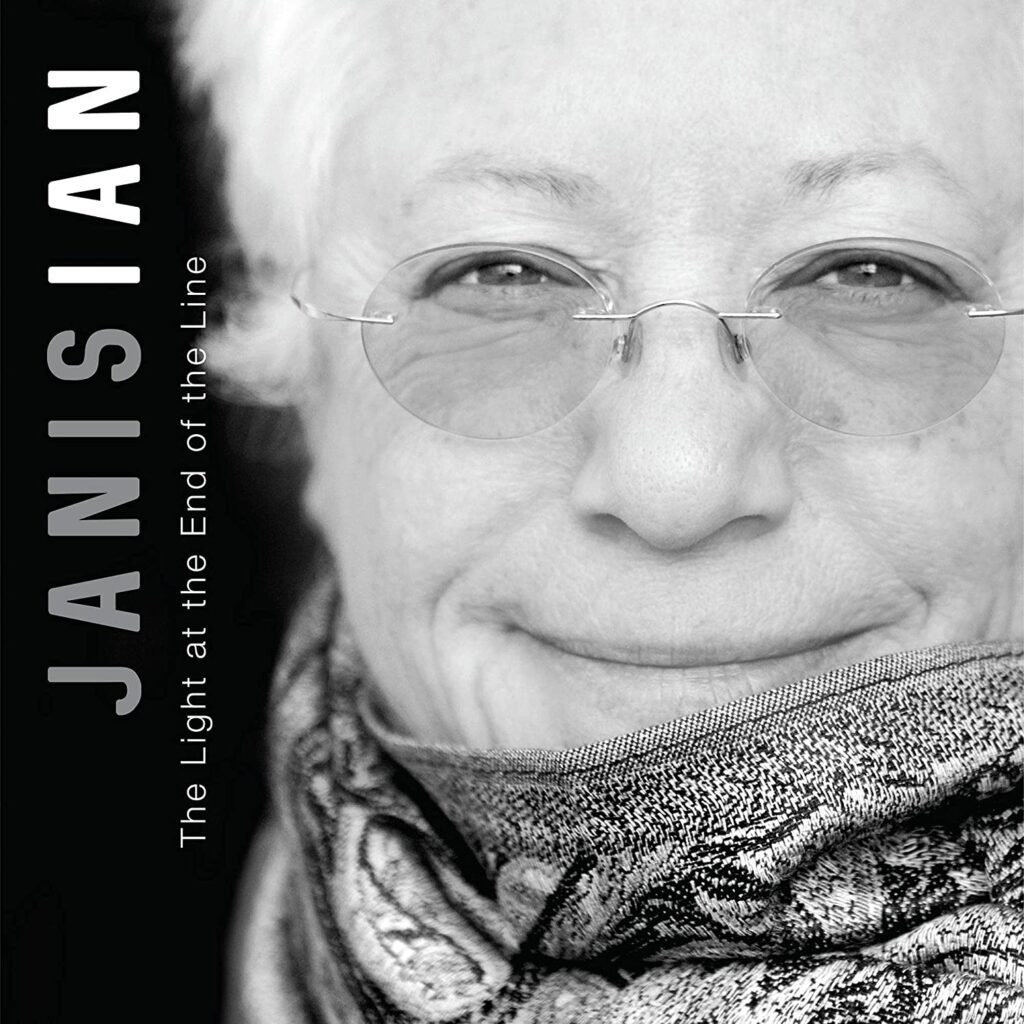
As a prelude to her final North American tour later this year, Janis Ian has released her first album of new material in fifteen years, The Light at the End of the Line (on her own Rude Girl Records). It’s a thoughtful and thought-provoking collection of songs, as Ian looks back on the trajectory of her life. “See these marks on my skin? They are the lyric of my life,” she sings in the opening song “I’m Still Standing,” embracing the experience of aging as a welcome part of life. “Nina,” featuring piano instead of acoustic guitar, is a delicate, beautiful number about Ian’s friend and fellow musician/songwriter, Nina Simone, vividly describing her singing as “alphabets of lightning falling from your lips.”
But Ian’s always been the type of singer-songwriter who doesn’t limit herself to self-reflection, having addressed issues of social justice and inequality from her first single, “Society’s Child (Baby I’ve Been Thinking),” about interracial relationships. “Resist” attacks the sexism that’s still too all-pervasive, from the tyranny of high heels to genital mutilation. “Stranger” looks at the divisiveness in the country through the prism of a town where “It gets smaller every year” due to the small minds of its inhabitants. But there’s a measure of hope in “Better Times Will Come,” which starts with Ian singing acapella and grows into a singalong toe-tapper enlivened by the unexpected squall of an electric guitar.
Ian’s stated this will be her final release, and some songs on the album, like “Swannanoa,” with its chorus “I’ll be home to stay,” as well as the title track, echo that theme. If it is her last musical work (she plans to continue her writing career, and is currently working on a novel), it brings her recording career to a fine conclusion.
On her sophomore album Storm Queen, Melbourne’s Grace Cummings has refined her musical arrangements into theatrically-inclined, intricate stories in which horns, strings, guitar and bass each have a voice – a role to play, even. As an actor who has performed in, and co-headlined, major state theatre productions, Cummings can indicate a mood with the raise of an eyebrow or the timing of a small gesture on stage, a less-is-more approach she mirrors when it comes to her music. She channels her energy into the potency and alchemy of each of the eleven tracks on Storm Queen, and the effect is magic.
“Because all the songs came from me at a particular time in my life and in my thinking, they naturally do have a thematic through-line, if you will, instead of having a bunch of songs over a few years,” she explains from her home in the inner north of Melbourne, where she lives with her bassist Lain Pocock and Gil Gilmour, who shoots many of her videos.
She is reluctant to delve into the personal events or experiences that fed her lyrics, hoping that there is just enough slip room that listeners will read between the lines and make sense of them as they need to. But the chaos of disasters that occurred between the end of 2019 and continued throughout the pandemic focused her mind on questions of nature and the concept of a higher power – a sense of God, though not in the strictly religious paradigm.
“Some things that do pop up is nature for one, a kind of existence or lack of some kind of God that I don’t really believe in, but mention a lot. I suppose [that’s] to try and label something that I don’t understand that’s quite great, dramatic and bigger than anything that we know about,” she reasons. “That connects a lot to the beauty you see in nature. Especially in Australia in the last couple of years, the landscape is beautiful but also terrorised by things like fire. I was also surprised at how much I referenced childhood things as well.”
Life, death, God, nature, chaos and birth. It makes sense that in considering the value of life and what governs this whole shebang, you’d be inclined to reflect on your own existence.
“Heaven” reveals her throaty, bass-rich voice in all its majesty, heaving with the gravitas and hurt of a lifetime. Tambourine jangles, she calls out “Ave Maria” with blood curdling desperation, and you well might wonder, is that Patti Smith? I mean this with the greatest flattery, of course. For anyone who has heard “Because The Night” or “Birdland,” you’d have to wonder if Cummings was playing the Australian Patti Smith to some degree.
“I don’t know if I’m allowed to say this,” begins Cummings. “I never really got into Patti Smith. I like a lot of her songs, but I read her more than I listened to her growing up so I actually haven’t listened to a lot of Patti Smith. I think she’s fantastic, just not an artist that I listened to growing up.”
Nonetheless, the sometimes guttural roar and ragged edges of her furious delivery do elicit Smith’s impassioned, poetic songs. “Lord oh Lord, I don’t want anything to change! The shepherds have led their sheep and it’s all going up in flames!” she wails in a voice that hovers between growl, shriek and cry on “Up In Flames.” It’s all hellfire and brimstone, bloody damnation. Is it genuine, or is it theatre? Audiences will decide, but perhaps it doesn’t matter; certainly, there was critical and audience acclaim for her debut album.
Refuge Cove was released in 2019 through Melbourne-based label Flightless Records, run by Eric Moore, drummer for King Gizzard & The Lizard Wizard. “I wasn’t intending on really making an album when I made Refuge Cove,” Cummings admits. “I went and recorded a bunch of songs and when Eric Moore from Flightless said, ‘Do you have an album that we can put out?’ I said ‘Yep!’ and gave him that, and it became the album.”
Storm Queen, out January 14th via Sugar Mountain Records/Virgin Music Australia, is a much more conscientious body of work. “All of these songs were very much intended to go on an album that I was curating to be an entire piece of work,” she says. “’Storm Queen’ is one that I really love to sing and is often my favourite on the album that I’ve been listening to over the million times you do when you put something out. I also love to sing ‘Fly a Kite.’ Miles Brown plays the theremin on ‘Fly a Kite’ and that’s one of the reasons it’s my favourite songs on the album, because he’s playing on it.”
In April last year Cummings played Charlotte in Joanna Murray-Smith’s Berlin at the Melbourne Theatre Company. Her belief is that creating, whatever the platform, fuels the artistic muse within, though she demurs on finding direct commonalities between her two professions.
“It’s really funny. I see the two things – while they’re so similar – so differently,” she says. “I suppose that one of the reasons is that in one of them I’m absolutely myself and everything comes from me: I’m the person that’s onstage, with my name and my songs, my words, and I can move the way that I want. In a role that you play, it’s the opposite: you’re in someone else’s body with someone else’s voice or accent, someone else’s words in someone else’s house. I find it to be a little bit of a sport. Theatre is like you’re an athlete and being a musician, you’re just your scummy self.”
Cummings is the least scummy creature imaginable, but she’s looking forward to the (potentially scummy) stages and scuzzy beer-stained carpets that are the natural stomping ground of Melbourne’s musos. She’s touring in February as support for Springtime, the supergroup lead by Tropical Fuck Storm’s Gareth Liddiard.
“Performing live is always my favourite thing in the world,” she says. “I don’t think you can replicate the feeling that you have being on stage and in front of people… and singing to them. I’m not sure anything can really beat it.”
She’s reassembled her band after a lengthy hiatus from touring, and it’s a stellar collection of musicians: Cahill Kelly on guitar; Lain Pocock on bass; Tyler Daglish on drums; and Alex Hamilton on guitar. Cummings’ voice brightens as she rattles off each name. “Cahill and I swap around playing keys, which has been really fun on the last couple of shows that we’ve done,” she swoons. “We have guests: Kat Mear, on fiddle – she’s a good friend of mine, I’ve known her for many years, she’s just the fucking best; Harry Cooper plays the saxophone and I hope that he will get on as many shows as he can with the tour as well.”
While simultaneously touring, Cummings is anxious to get started the next album, and she’s intending on a big sound, a full band sound with nothing minimal about it. “I have written stuff for another album,” she confesses. “Knowing me, I’ll probably write the songs I want to be on it the day before I start recording, but I do have a bunch of songs. Sonically, they’re very different – Storm Queen is very pared back, whereas I don’t want this one to be minimal at all. But let’s see, who knows?”
Follow Grace Cummings on Facebook and Instagram for ongoing updates.
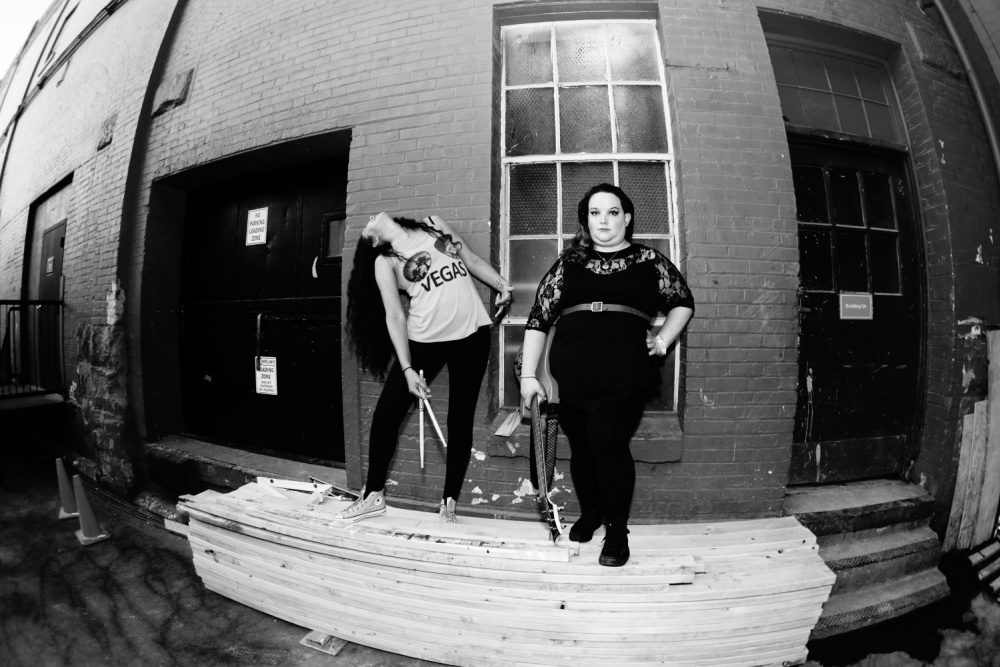
Ferociously unapologetic. That’s the best way to describe Kitty Junk, the raging glam rock duo of guitarist/vocalist Ryan Lee and drummer Angie Megan. They exploded onto the scene with their first LP Converse Theorylast October after spending months writing emphatic feminist rock songs in Megan’s garage. As a result of being selected as winners of the Artist Support Program at Jack Straw Cultural Center, Kitty Junk’s second full-length album will be funded by and recorded at the organization’s lauded recording studios.
In the next few months, they plan to release several new singles from their forthcoming sophomore project, Junk Punk, due out in summer 2022. Until then, fans can preview the new material at the band’s shows. On February 4th, Kitty Junk brings their glam rock activism Southgate Roller Rink with Yeti Set Go, Tin Foil Top Hat, and Shadow Pattern; on February 11th, Kitty Junk plays for a live burlesque performance from Seattle Burlesque & Cabaret Association at The Good Inn in Ballard.
The duo has accomplished so much in just a few years – and surprisingly, it all began with a casual Facebook add and a random invite to a show. “I was already debating quitting my old band and then out of nowhere, because I started adding all these musicians in the scene [on Facebook], I get a text… to go to a Sleater-Kinney concert,” remembers Lee. While catching one of their favorite bands together, Lee discovered that Megan only lived a few blocks from her in North Seattle, and that she played drums. The two started jamming regularly in Megan’s garage, and once COVID hit, they formed a bubble and kept rehearsing on Megan’s porch.
“I was like, should we just like write some stuff and hang out? The songwriting just happened and next thing I knew we already had like five ideas and we’re just laughing together and we were like, what is this? And she was like, I don’t know, it’s junk,” Lee recalls – and so, Kitty Junk was born.
As their friendship grew, Megan, a Women’s Studies professor at North Seattle College, shared her dissertation on Sabina Spielrein, the first female psychoanalyst, with Lee, sparking an impassioned and ongoing conversation between the two about feminism and the barriers women face in the music industry.
“I became obsessed with her because I found her diaries and her letters and she wrote to people like Carl Jung and Sigmund Freud from her perspective and there’s a #MeToo moment going on in there where she actually stands up for herself and it’s super fascinating,” explains Megan. “I feel like Ryan and I just super related on everything around that.” These considerations have inevitably made their way into the band’s songs and enhanced the mission of Kitty Junk.
Both Megan (who is queer and BIPOC), and Lee (who is bi and a trans woman), have experienced their fair share of scrutiny, sliminess, and underestimation in the music world because of who they are, particularly in the world of rock, which is dominated by white cis-gender men.
“It’s every show — a guy is telling me or asking me if I know how to set up my own drums and telling me that I’m not doing it correctly or something and it’s just so frustrating,” says Megan.
“I love it when I get on stage and they’re just like, oh, how many people in the band?” adds Lee. “And we’re like, it’s just us, and they say, oh, when are the guys showing up?”
It’s been so bad, that after their recent win of the Rock for Mental Health: Battle of the Bands contest on the Olympic Peninsula, they were told by some competing artists they only won “because we were girls.” But being themselves is Kitty Junk’s super power, and it blows (and changes) minds. When they get on stage, they are so completely and fiercely themselves there’s no denying them and they use that authenticity to intentionally lift others up too.
For instance, Kitty Junk DIY produced and recorded all of their debut LP Converse Theory due the unsavory experiences they’ve had with male producers and engineers. Afterward, they decided to start a popular Womxn & Audio Facebook group for womxn and non-binary folks to share and empower themselves with DIY audio engineering skills.
Additionally, for the release of their single “Rage,” which came out in 2021, they sold rage wristbands, with all proceeds going to benefit the Coalition Against Domestic Violence for WA. “We’ve seen such a spike in domestic abuse during quarantine because people are stuck together… frustrations are pent up and there’s nowhere to go and we’ve seen this 50% rise in physical abuse and emotional traumas specifically perpetrated on women,” says Megan.
“Reload,” another song off Converse Theory, was written to bring awareness to the uptick in suicide attempts during the pandemic, especially among BIPOC and queer folks.
“It’s one of those things where the personal is political. We can’t really step out of the house without it being like ‘a thing,’ and so I think that’s part of why Kitty Junk and the music comes out the way that it does,” says Megan.
“We’re writing this amazing music that we like but we also do all this activism and it’s integral to who we are,” Lee adds.
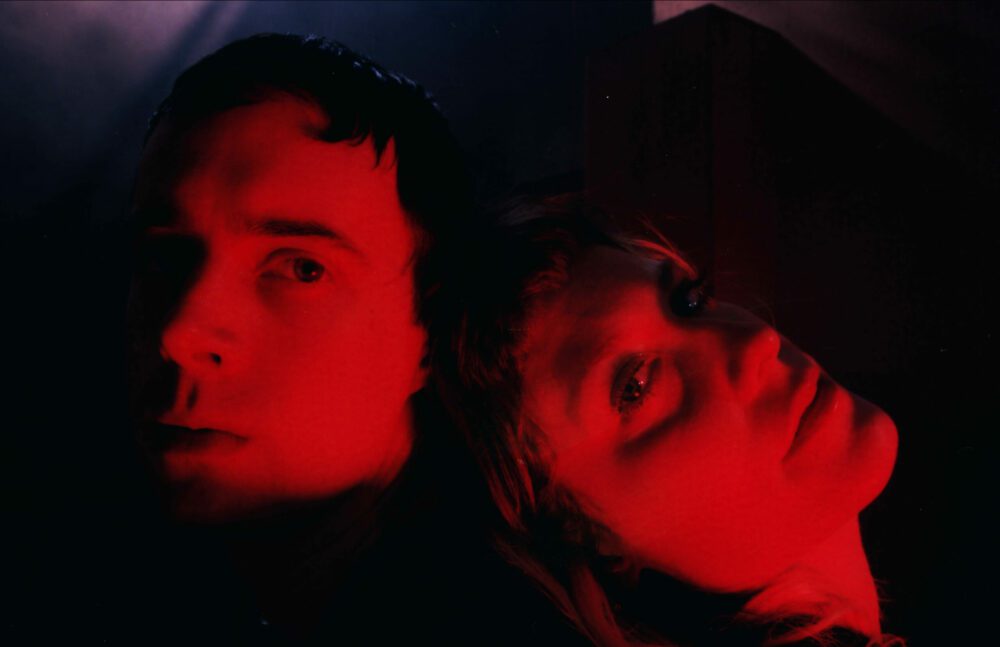
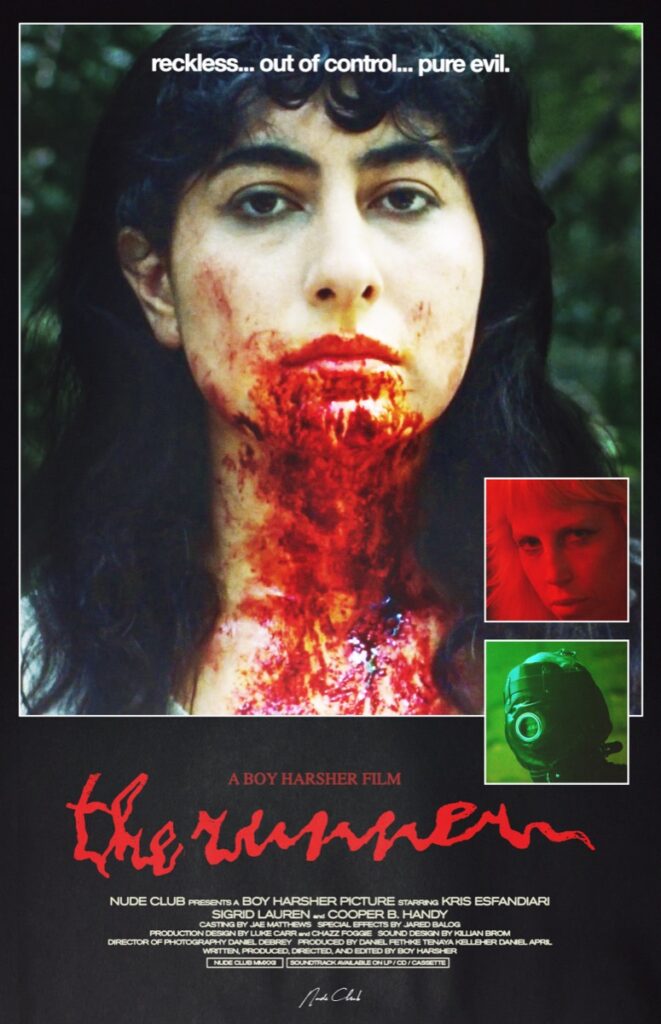
For Boy Harsher’s Jae Matthews and Augustus Muller, the release of the band’s new film The Runner on January 16 is the culmination of ideas and characters that have been taking shape in their world for a long time. “A lot of the characters that we featured in The Runner have been these reoccurring characters that, truly, we’ve been exploring since the beginning, even before Boy Harsher,” says vocalist/lyricist Matthews on a recent video call, mentioning that one character, the Desperate Man, had appeared in a short film that Muller made about a decade ago.
“I think that, what happened here, is that it was a new way for us to explore characters and their particular themes that we’ve been breaking down within our music over the last couple years,” she says.
The Runner came into existence as a result of the COVID-19 pandemic. “We were getting a lot of interest in doing a livestream, but we couldn’t figure out a way to make a livestream make sense for us,” says Matthews, who began envisioning the sinister titular character following an MS diagnosis. The film itself is now screening in select theaters and streaming via Shudder (North America, the UK, Ireland, Australia, New Zealand) and Mandolin (rest of the world).
The accompanying soundtrack, released January 21, stands out for its mix of dark synthpop and dance tracks, like singles “Give Me a Reason” and “Machina,” that intertwine with cinematic pieces, like “The Ride Home” and “Untitled (Piano).” Muller estimates that about five of the eight songs on the accompanying soundtrack were written prior to the film. “That was sort of a product of COVID and us not being the most creative people during that, but trying to find some way to stay motivated,” he says.
Having made the bulk of the music first presented interesting creative challenges for the duo. “I think the music was another parameter that we knew that we had to adhere to when we were creating the film,” says Matthews. “In a literal sense, there are certain scenes where we had to time each shot to make sure that it would fit. In more of an emotional and creative sense, we had these pieces that we knew that we really wanted to honor.”
An example of that is “Machina,” with Mariana Saldaña from Boan on vocals. The segment featuring the dance floor banger, with its nods to ‘80s styles like freestyle and hiNRG, features Saldaña performing through a television set, a nod to the history of artists performing on TV.
“That was a song that I was working on for a solo record that’s never going to see the light of day. Early COVID, working on some music, working on some different vocal features,” says Muller. “We wrapped that song up and took a step back and said this just sounds like a Boy Harsher song with a different vocalist. It was sort of confusing and that’s where the soundtrack idea came from, as a way to tie these vocal features in, to motivate them.”
While the “Machina” segment was filmed in Los Angeles, and portions of The Runner were shot in a New Jersey studio, much of it was shot in Massachusetts, where Boy Harsher is based. “Like many small projects, we didn’t have a ton of money and we didn’t have a ton of time,” says Matthews. “Unfortunately, we didn’t really have a ton of prep time, but we did the best we could in pre-production and, when we got on set, it was just this combination of being steadfast in what we wanted and what we needed to achieve and then having a super diligent crew that also totally believed in the film.”
Filming commenced in July, on an unusually cold and rainy weekend that ultimately added to the film’s aesthetic. “This crazy storm that hit that whole weekend, that gave us this incredibly stubborn fog, which also worked in our favor and made all the exteriors quite beautiful,” says Matthews.
“When we were planning this thing, we were definitely picturing blue skies and oppressive heat,” adds Muller. “That’s how we were writing. When we got up to the mountain and it was cold and cloudy, it was definitely a surprise for us, but a good surprise.”
A tour coinciding with the release of the film and soundtrack has been postponed until the spring. Meanwhile, the duo is preparing to work on their next album. A possible result of that, Matthews says, is that they might have new material ready when they do hit the road. “I think that would be one of the silver linings because there would be nothing better, at least for us, than playing unfinished tracks live because then you really, really understand them,” she says. “You can see what people like, what makes people move. What connects with people and what’s not working.”
Road-testing new music, Matthews adds, was an advantage they had with previous Boy Harsher albums. “We were blessed to be able to have that process, to test all the songs live before we rewrote them and recorded them,” she says. “Maybe we’ll be able to embrace that a little more this time too.”
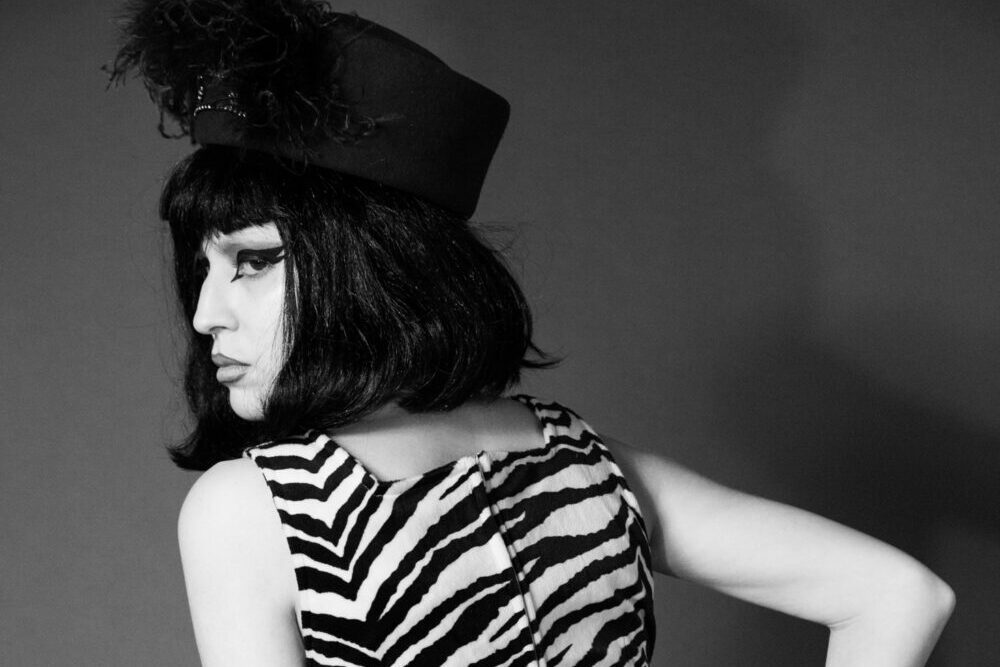
CJ Temple has the magic touch when it comes to social media. While some artists and influencers post sexy, glossily filtered selfies or try to nut out the right hashtags to draw a mass following, Temple did something else. Since January 2020 she’s regaled TikTok viewers with her quirky skill for imitating the old-Hollywood movie accent of the 1930s and ’40s. Within a year, she’d drawn over a million followers (her character Millie rehearsing for the funeral party is a gas, recalling Hedy Lamarr). The platform had boosted her artistic confidence enough that she began sharing music too – and with barely restrained surprise and delight, eventually announced her debut albumSmoke. It’s officially out on all streaming platforms January 28, but it’s premiering on Audiofemme today in its entirety.
The album’s evening mood is all moonlight, last vestiges of sunset purples and oranges giving way to a smoky grey sky, stars sprinkled above silent trees. It’s the magic-hour soundtrack to peeling off your social façade after being who you are in the world and becoming effortlessly alone in your skin.
Its title refers to the time of “quiet, where you can breathe again,” Temple says. The strings are sadly romantic, the patter of drums like a steady beat of rain against the window pane, and her sultry, lovely voice is intimate and confessional. She has read the room, too. In the wake of Taylor Swift’s versions of her own original songs, Temple’s pop-folk, vaguely Baroque-rock take on ballads is in the same vein, sonically. This is no critique – the opposite, in fact. Temple emerges with a richly-rendered debut, thanks in part to hard work, and in part to serendipity.
“Every single one of the songs had a demo basically, which is the song that I wrote however many years ago – starting from 16 years ago. I wrote from then up until my mid-20s just using a guitar or a keyboard that I didn’t know how to play because I could never sit down and learn instruments,” Temple tells Audiofemme. “I’d play on a guitar and a piano, recording my harmonies. When I got to my mid-20s my dad got me this music software and I started making demos with my computer instead of instruments.”
The Richmond, Virginia born-and-based Temple had – until 2019 – sailed on a path of circumstances and a deep-rooted fear of failure. “I didn’t go to school for anything practical because I always wanted to do something in performance art,” she explains. “I did the arts my whole life and I went to college for theatre. When I left school, I left very disheartened by the industry and the business itself and what was presented to me as normal.”
Thoroughly schooled in the inevitability of constant rejection and brutal competition, opportunities in the lucrative legal administration field were enough to dissuade her from even entering the performance industry – at least, for a little while. “I was like, okay, I’m settled in this job where I’m making more money than I thought I would, I was living alone in this apartment in the city, I was self-sufficient, independent and I thought okay, I can do this for the rest of my life,” she says, then chuckles, “Turns out I couldn’t!”
Seeking an outlet for the self-expression she’d been bottling up, she began posting on TikTok. It was the accent – which she’d perfected during a college performance of Psycho Beach Party under the director’s guidance to sound like Joan Crawford – that won her attention at first, and only after she’d hit one million followers did she begin to post her own music seven months later. That attracted the attention of Erin Anderson at Olivia Management, who asked Temple if music was something she was interested in pursuing.
“I told her yes, absolutely it is,” Temple says. Having chosen to post her original music and be her wild, funny, silly self on social media had sent her hurtling out into the great, wonderful unknown. “It was a culmination of people’s responses to my singing, a couple of originals that I’d posted, and then [Anderson] reaching out to me in that way. It gave me a little bit of courage that maybe people would like this. I’d scared myself out of pursuing it because I kept saying, ‘This is bad, nobody’s gonna like this terrible music, it sucks…’ all the things we tell ourselves… I realized that I had an opportunity and I didn’t think that if I passed up this opportunity that I’d be able to have another one. I gathered up as much courage as I could and we launched the Kickstarter in February and the rest is history.”
Ultimately, 836 backers pledged $42,066 toward Temple’s album, just beating the $40,000 goal they’d set. It enabled her to employ Nashville-based producer Josh Kaler; together, they began going through Temple’s demos, expanding some elements and building some anew. By the time she got into the studio in April, Kaler had already started working on a few of the backing tracks for the songs.
“He wanted to get the bones to the eleven songs in the studio in two weeks – which we did. He’s amazing, he did incredible work,” Temple says. “For two weeks, song-by-song, we went through and built them up. He used all kinds of instruments, synths, my voice as an instrument a few times, and the Czech Studio Orchestra did strings on three of my songs, so we had a lot going on, but mostly it was Josh Kaler just working his magic.”
The Czech Studio Orchestra recorded remotely from Prague. Kaler had worked with them in the past and knew that they could bring the dramatic mood Temple’s songs were calling for. Kaler wrote and arranged all the string parts and they were recorded via livestream.
The glock-stop beat on “How It Feels” provides the foundation for Temple’s snaking croon to wrap its taut body around the beat. What sounds like a dancefloor groove hides a malevolent threat in the lyrics: “I’m coming for you, and I won’t stop,” she warns.
“The Game” exposes the all-too-common experience of staying in a relationship for the safety it provides, well after the flame of desire has been snuffed out and everything your partner does is irritating. Temple wrote these songs while she was still uncertain of her own sexual identity. Her self-revelation that she was queer gave her the license and liberation to revisit the songs and imbue them with her understanding that she was not only unfulfilled by particular partners, but by her own stifled desires.
Her album is, in fact, a testament to her newfound ability to admit what she really wants and who she really is. She’d tried to squeeze the infinite circle of her being into a narrow square room. The affirmation of her innate theatricality and magnetism via TikTok was the catalyst for her to revisit the music-making that depression, self-criticism and self-doubt had beaten into submission. “What’s it like to be free? To finally be able to breathe?” she sings in angelic harmony on “Lost.” “I trapped myself inside this prison of lies that I made for myself to keep everyone outside.”
In dropping her armor, baring her open palms and face to the world – even if it’s one million anonymous TikTok users – she has come home to the CJ Temple she’d never been brave enough to see and embrace. It’s a revelation to meet the person you really are, and she clearly takes delight in this new relationship all over Smoke.
The sweet Calypso-breeze sweeping through “Take Me Where You Go” luxuriates in a soft tinkling of piano keys, the lilting, dreamy melody of Temple’s voice providing a soothing lullaby. It’s a nice contrast to the pattering drum and electro-pulse of “Something That Now I Know.” Whereas “The Game” was about staying too long, this track addresses being with the wrong person and notching it up to experience with the beauty of hindsight.
“That song [Take Me Where You Go] was around my Iron & Wine, The Civil Wars era, in my folk-pop era of music. I loved that subtle, simple feeling to music and, being someone who has severe undiagnosed ADHD, I could never stick with one genre to listen to when I was growing up and writing my music. There’s a lot of influences from a lot of different places,” she says.
Temple has averted pastiche, managing instead to infuse the guitar-heavy, harmony-laden moodiness of gothic, Americana, dusty-boots and furrow-browed folk into a fresher, more autumnal mood, lightened by strings, synths and her untroubled voice.
“I never wanted to copy other people or sound like other artists, but it’s the feeling I got from those musicians and the bands that I wanted to emulate,” she explains. “I wanted people to get that feeling that I got when listening to them.”
The dramatic, ’80s-movie style synth drum on “I Am You, You Are Me” is so lushly melancholic, it could be a fully-formed, climactic heartbreak movie in around four minutes.
Temple’s own movie is not a heartbreaker though. She came out in 2020 – to herself, her family and her followers. She also began a relationship with a woman she’s now moving to Michigan with, in a schoolbus she’s converted into a home-on-wheels. TikTok validated her self-expression, and it was also how she met her current partner, but she also watched a large coterie of her followers drop away when she came out.
“Two years ago I started off with a specific type of following and my follower count has not changed and that’s because I’ve lost so many men and gained so many women,” she says, estimating that before she was even out to herself, she had a following of about 95% men; right now, she’s at about 79% women. “I got to the point where I actually didn’t care if people judged me based on [my sexuality]… All the people that wanted to leave, fine, go! If you can’t support all of me, then I don’t need that support, if it’s conditional.”
TikTok one day, music stardom the next. Whatever life has in store for CJ Temple, she deserves it – unconditionally.
Growing up in Los Angeles, Lily Donat always had a knack for storytelling, especially through sound. The granddaughter of Helen Reddy, Donat has songwriting in her blood, honing her craft and learning on the go. But to commit to a career as a musician, Donat had to shed some of her pain and focus on finding her emotional center. “I was always writing songs, but just kind of waiting for opportunity versus chasing it. Recently, within the last year, I was like, there’s no option but to give this my all,” she tells Audiofemme. “You find your way and you learn on the fly and cool things happen that way. There’s no one way to do things.”
That commitment has paid off – Donat released her debut single “Supernova” in November of last year, following it up in December 2021 with “Most Important Man.” Today, she premieres “How It Feels” on Audiofemme; taken together, the three tracks tie loosely together in a trilogy that documents Donat’s personal journey in overcoming a toxic relationship fueled by obsession and heartbreak. “How It Feels” is the story’s uplifting conclusion, analyzing how the singer-songwriter felt after that period of emotional turmoil, and the subsequent growth from the experience – the musical equivalent of the notion that with the closure of one door another opens.
“It’s a three-part story and each song is like a story on its own. With this song, I wanted to kind of be… truthful, but optimistic and hopeful. It’s the emergence of hope… the song of recovery and healing,” Donat explains. “I hope it’s energizing. I hope it’s that kind of song you hear when you think you might be coming on the other side of something [and can] see the light at the end of the tunnel.”
That contrasts sharply with her previous singles, which depict being trapped in a vicious cycle that seems impossible to break. In “Supernova,” Donat sings, “I wouldn’t go back to the dark alone/But I’d meet you there,” and “I know why I fell in/Into your well of love and rage and sin/All the chaos and the anguish/Somehow better than the absence.” Musically, the track incorporates elements from electronic and pop music to reflect the deep sense of isolating darkness she felt at the time.
“Most Important Man” is sonically lighter, with a fast, punchy beat and energetic piano, but its lyrics are even more bleak: “They must think that I just love the pain/You’re the dark side/I’ve got dark sides/Now we’re both fucking insane.” There’s a sense of realization about the situation Donat describes in the second verse, when she sings, “Oh, can you see yourself?/Clearly I couldn’t/I thought your violence was for everyone else,” before she finally admits, “I have made a grave mistake/Confusing the torment with pleasure.”
But without these dire lows, Donat may never have arrived at the sense of freedom she captures on “How It Feels.” There is a tangible sense of sailing through the ups and downs, with Donat’s gaze fixed ahead.
Soft acoustic guitar accompanies Donat’s resolute opening lines: “I push my crown through the crest of a wave/The water’s deep, it’s the color of jade/And I love the crash, it’s the sound of escape/You slip my mind most days.” Like those waves, each verse builds layers of instrumentation and with each chorus Donat gains increased strength from her conviction. Airy synth, resolute percussion, and a subtle but triumphant electric guitar riff come to the fore as Donat literally belts, “I feel stronger.” It’s easy to imagine Donat sailing through the waves in the direction of the sun, toward a new horizon.
This is in large part a result of how Donat communicates via natural metaphors. “How It Feels” is abundant with references to swimming, the ocean and the natural setting in which she says she can express her most authentic self. “I use nature in all my songs and sometimes there’s deeper meaning,” she admits. “Things can be kind of layered in my songwriting, and be more personal than maybe meets the eye.”
Like with any good poetry, there is more in what’s unsaid than said. Donat’s lyricism transports the listener and empowers them to fill in their own blanks and relate their own experiences to the vivid imagery Donat creates; her powerful visuals allow the resonant emotion to sink in. In this case, it’s the positivity that comes from striving forward – and maybe even a little glimmer of satisfaction from glancing back at a bad situation that’s lost its once powerful grip. “Is this how it feels to win? Cause didn’t I? Is this how it feels to live in one world at a time?” Donat sings in the song’s chorus.
“Essentially, it is kind of about revenge,” she says. “My revenge is… a display of the maturity that can come when you are actually removed from the emotional pull of something that caused a lot of pain and anger.”
Ultimately, “How It Feels” is a tale of healing and inner peace, and Donat knows the journey is ongoing. “There’s always that pull, right? To turn back and return to the darkness – I’ve written a lot about that. My first two singles were about that [need] to look back, and to go back,” she says. “I hope [“How It Feels”] propels you towards the momentum… realizing that this appreciation and gratitude is only possible, because of healing and a deeper personal peace.”
Follow Lily Donat on Instagram for ongoing updates.
On her third and latest album, Blue No More, Gabriella Cohen has arguably crafted the most emotionally intense, groovy, candid and beautiful portrait of being a young woman feeling her way through a harsh world. From the seaside lullaby of “Water” to the Americana and gospel-indebted call and response blues of “Son Of A Gun,” through the pensive but powerful title track, she seemingly holds your heart in her hand and squeezes it as she sings.
Blue No More captures elements of all the places she’s called home in the last five years, from Melbourne’s beachy, palm-lined bayside suburbs and Queensland’s Sunshine Coast to New Orleans’ French Quarter, which is where the album began to take form.
“I left Melbourne in 2019 and myself and my drummer Danni [Ogilvie] went to Austin to do SXSW and I stayed on after that, living in New Orleans for a bit. I was kinda lost at the time, as you do in New Orleans: lose yourself, find yourself,” she tells Audiofemme. “I don’t know if I ever found myself. I was having a hard time in New Orleans and after playing SXSW and how vast it is, you’re not touring and you’re in one spot thinking ‘what is my purpose?’ I didn’t know what the hell to do. I was down and out riding along the French Quarter, having a miserable time. I was subconsciously penning the start to Blue No More.”
Eventually, Cohen returned to Australia, moved in with her sister in Melbourne’s St Kilda, and got a job in a local fish and chip shop while spending her free time working on what would become Blue No More. “It took two years before I realised what I was actually writing, and lots of things happened in between, which made it slow,” she admits. Then, the pandemic hit and provided just the right amount of chaos and cataclysmic energy for Cohen to begin the recording process.
As Australian states were closing their borders, Cohen and her sister left Melbourne before the restrictions prevented their escape and spent a year at Crystal Waters, the 640-acre Queensland eco village built on sustainable agriculture and permaculture principles where her parents live.
“I started recording in a cabin on my parent’s property, then I was recording in a water tank converted into a studio across the lane in the village. Sometimes I would go to Brisbane and I recorded with Sam Cromack from Ballpark Music and another friend [folk musician, producer] JB Patterson. It was half done in Crystal Waters and half done with three friends in Brisbane. All the songs need their little home and I could never do a record in one place,” Cohen says.
That seems fitting given the whirlwind beginnings of Cohen’s music career. After playing in a band called Coco Loco at university, she met and formed The Furrs with Jim Griffin. The duo released their self-titled four-track EP in 2013, and by the following year hit the road with Cults, DMAs and The Babe Rainbow respectively, Cohen honing her craft as a songwriter, recording artist and touring musician along the way.
Cohen and Griffin were in a relationship for two years, the length of the band. “I fell in love with Jimmy and I thought that’s what you do, start a band with the people that you wanna be around. He’s an amazing musician. I was drawn to his demeanour and how talented he was,” she says. “It all came together at the same time which is wild and unstable, but you get great songs out of it!”
Luckily, Cohen also formed some longer-lasting relationships, like one with her current guitarist and collaborator Kate Dillon. “I met her about halfway through The Furrs and as soon as we met each other, we were circling around each other and we knew, or I knew straight away, this is a powerful collaboration waiting to happen,” Cohen recalls. “I was with Jimmy and she was with another of my ex-boyfriends. I whisked her away and we moved to Highgate Hill Park in Brisbane.” The move left them alienated in more than a geographical sense; the top of the hill was “the beginning of the end” of The Furrs, but ushered in a feminine uprising.
By 2015 she and Dillon had moved to Melbourne with drummer and soul singer Bella Carol (Moses Gunn Collective). The same year, Dillon’s parents went on a ten-day cruise and asked their daughter to housesit. Mired in depression and sick of her dead-end day job, Cohen had just broken up with Jimmy, so Dillon suggested they record an album while housesitting. With two microphones, a borrowed drumkit, and no soundproofing, they played all the instruments (bar Marcus Warren playing bass on one song) and ultimately, Cohen’s 2016 debut solo LP Full Closure and No Details resulted.
The album’s lusciously dark but captivatingly catchy mood heralded her as a talent to watch, though not at first. Cohen and Dillon spent eight hours a day at their local café emailing labels and international distribution with their album. “We didn’t get much response. It wasn’t until we left Brisbane for Melbourne and played the record in full that people started responding,” Cohen says. “We got signed to Remote Control, then Captured Tracks, then we went to the US and things went from there. It sounds like a dream, but it was a plan. Brisbane, Melbourne then international. Dare I say, it was manifested.”
Cohen established herself as an artist who works well under pressure, on the road, with limited resources and a makeshift family of musically-inclined friends to pitch in and bring her vision to life. Her second album, Pink Is The Colour of Unconditional Love, was similarly born of unpredictable but fortuitous circumstances.
“We moved to the country town of Seymour, this big private property – a family farm. We lived and recorded there for six weeks then we got the call we were going on tour with Foxygen, another dream come true. We did lots of serious wishing and praying, it’s crazy that even happened,” Cohen recalls. “We did a lot of our overdubs in the tour van and in dressing rooms after shows and coerced members from Foxygen to do heaps of the backing [instrumentals and vocals]. We’ve always done bits and pieces with this gung-ho kind of energy because that’s the only way we could really survive.”
Cohen’s attitude to recording is akin to her off-kilter genre hopping, though there’s nothing haphazard about Blue No More. It scoots around conventional genres to take elements of gospel, doo-wop, blues, folk and soul and create gorgeously organic, heart-rending miniature homages to place, feeling and memory.
“Son Of A Gun” has a very Stax Records, Motown, Staple Singers-style attitude, complete with maracas and a whisky bottle tapped with a pencil for percussive good measure. “I’d learnt this blues piano riff and I just knew I needed those soul kinda voices, like that choir, that gospel sound. I’ve always been really drawn to that feeling,” she explains. “It’s an amalgamation of everything I listen to from the ’50s, ’60s and ’70s. There was no direct reference.”
Its lyrics are true to life. “In New Orleans, I was living with my partner at the time and we amicably broke up when I returned to Melbourne but I was heartbroken. We’d always walk to the corner store and I’d get a salad roll, he’d get a Coca-Cola. It was definitely more romanticised as I was writing about it after, but it’s all very autobiographical as everything is, I guess.”
“Water” on the other hand, was a song to herself. “That was my lift-me-up song,” she says. “I was having a hard old time. Don’t they always say what you preach, you need to hear the most? I was working at the fish and chip shop and the water around me was the most uplifting thing.”
“But I Wanted To” is a rocksy beast. “I wrote that in 2015 right before we left for Melbourne. It was the end of a relationship and it was this bittersweet… you know when you’re desperately in love with the wrong person and it’s not reciprocated? I’d held onto it so long and I didn’t know what to do with it. It feels fresh on this record, reimagined with all the musicians on it.”
Danni Ogilvie helped to write the drum parts, but it was Luke Hanson (from Dillon’s Full Flower Moon Band) who played the drums. Jess Ferronato from Nice Biscuit played guitar and bass. Kate Dillon, Billie Starr and Grace Cuell from Nice Biscuit did all the harmonies. It was recorded at the Chaos Magic Studios in the West End of Brisbane.
“I think I just wanna make records with everyone I love,” Cohen laughs.
Independently released on January 21st, Blue No More leaves no room to doubt Cohen’s reserves of talent, ideas and musical nous, nor her savviness for curating an album that sways, swerves and wheels around and through genres with no adherence to a strict, straightforward road. You don’t say no to riding shotgun with Gabriella Cohen – she’s going to show you all the places you’ve been before, and some you haven’t, but through her own hazy, sun-drenched gaze.
Follow Gabriella Cohen on Instagram and Facebook for ongoing updates.
It’s just after 6 p.m. in Novi Sad, Serbia. Texas-based singer Chrystabell is settling into the city, where she’s set to play with her band at the Church of the Name of Mary the following night as part of the 2022 Capital of European Culture Festival. “We weren’t exactly sure if it was going to happen, but things are on track,” she says. “The band made it. We got here from different cities. All the flights were on schedule.”
The concert will mark Chrystabell’s second performance of music from her album Midnight Star, out on January 21 via San Francisco-based label Love Conquered Records, and her first gig since a December show in San Antonio.
“Everything is just dripping with uncertainty and there’s no guarantee for anything that’s going to happen at this particular moment, especially where touring is concerned,” she continues. “I have to say that, as a performer, I can’t imagine taking another show for granted at this point, after the experience of the last two years.”
Pandemic aside, it’s also a moment of evolution for Chrystabell. Midnight Star, a synthpop explosion centered around science fiction and fantasy narratives, is a departure from the dark, sultry rock of previous albums like We Dissolve and Feels Like Love.
“The big difference for this one is that there were no guitars, no bass, no drums,” says Chrystabell, who worked with her longtime collaborator Christopher Smart on Midnight Star. “This was a very new territory for both of us.”
In December of 2019, Chrystabell and Smart began work on what would become Midnight Star. “We’re both pretty connected to and associated with that world of drums-bass-guitar and that was comfortable and we knew it really well,” she explains. “So, this was like jarring ourselves into new sonic terrain and the sounds that were happening and what we were coming up with was like science-fiction, but it was also intergalactic spy music.”
The two decided to lean into the science fiction and cosmic connotations that the synths sounds evoked. “That cosmic intrigue has always been pretty thick in my world, so the sci-fi fantasia that was unfolding was beautifully aligned with all the stuff that I like to think about and dream about and the ideas that I conjure in my mind,” says Chrystabell.
The singer’s other interests— like reincarnation and parallel universes— began to creep into the work as well. “The story was writing itself,” she says. Meanwhile, as they worked on what would become Midnight Star in between other projects, the COVID-19 pandemic also left them with more time to play around with the concepts and music. “It’s not a pandemic record in that we were writing it with all these feelings that were happening. We were writing it and then we actually had time afforded to go deep into this world,” says Chrystabell.
She describes a “very loose narrative” forming where the album was a soundtrack to a television series from the 2080s. While they referred to the songs as “episodes,” they weren’t the scripts for the imaginary show. “The songs were the soundtracks to the episodes. We got pretty meta,” Chrystabell says with a laugh as she adds, “Did I mention that we had time?”
Photo Credit: Matthieu Bitton
“It just got thicker and richer and then with more and more layers,” she says of the project. “Then everything dissolved and whatever was left, the juiciest morsels from all of this space-conjuring was where we got to Midnight Star.”
The conceptual nature of Midnight Star brings to mind Chrystabell’s connections to TV and film. She’s collaborated multiple times with David Lynch over the years, including on the song “Polish Poem,” which featured in the film Inland Empire. She also played FBI agent Tammy Preston in Twin Peaks: The Return. “At this point, David’s influence is cellular on me as a human being,” says Chrystabell. “He’s been a part of many rites of passage for myself as a person and as an artist that the impression is indelible – not so much on the kind of art that I’m making, but certainly in the way that I go about expressing it, which is definitely leaning into my intuition versus what makes sense in general.”
The sound and story of the album has also brought about changes in Chrystabell’s performance style and aesthetic across media. You can see that in the science fiction worlds the singer inhabits in her recent videos for songs like the title track and “Suicide Moonbeams.”
“There was a level of technicality involved because I did want there to be this through line in relation to Midnight Star and her process and her journey, even if it’s only in my mind and no person could potentially map it out,” says Chrystabell. “There was that intentional process within this particular world.”
These narrative and visual themes may impact her live performance as well. “When I get on stage, I have a thing that I’m intentionally walking into with Midnight Star,” says Chrystabell.
In February, Chrystabell is slated to begin touring again with a jaunt through Europe.
“As far as the tour, it’s really felt so far away,” says Chrystabell. “For a long time, it felt like this fantasy and my fantasies have been strong, but bringing it in to action, some of that only happens when you walk onstage and do the music.”
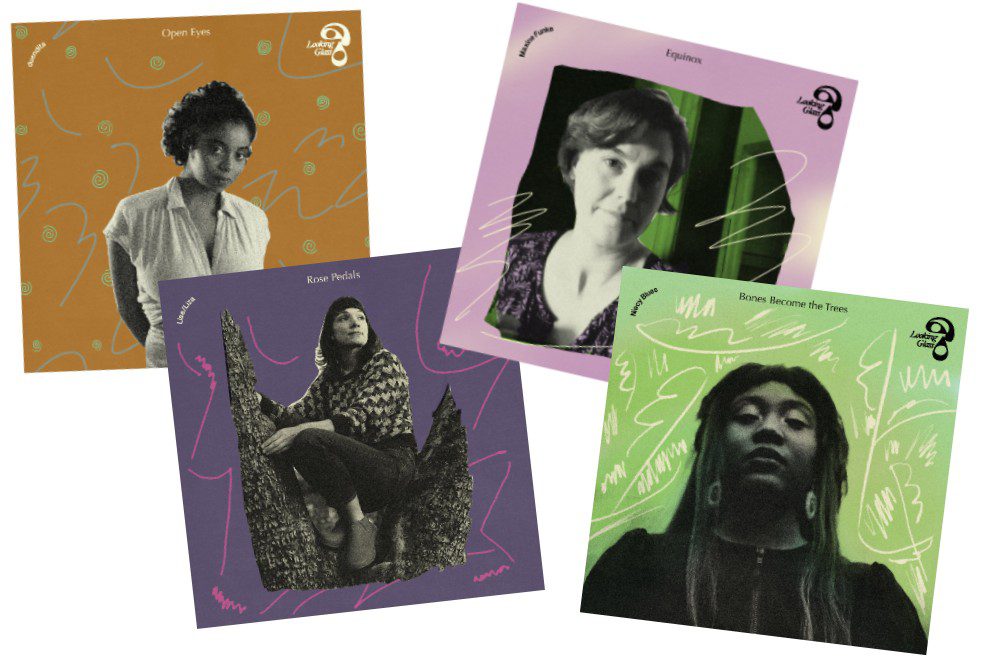
Given the continuing chaos that 2021 had to offer, many of us are still struggling to find a way forward three weeks into the new year. Once again, Brooklyn imprint Mexican Summer offered some delicately-rendered advice in the form of their continuing Bandcamp-centric Looking Glass singles series. The project began with a bang in 2020, including more than two dozen previously unreleased tracks by everyone from label stalwarts like Peaking Lights, Jess Williamson and Geneva Jacuzzi to up-and-coming artists like Madison McFerrin and Lucy Gooch. While Looking Glass scaled back to just four single releases for the 2021 series, each packed its own therapeutic punch. Beyond their poignant lyrics, the artists were able to provide some additional insight into what got them through the maelstrom, and how they plan to keep going.
NYC-and-Berlin-based duendita kicked off the series with her stunning, cryptic “Open Eyes.” “had a bad dream/what could it mean?/who could i be?” she croons in its opening lines before returning with a poetic balm: “courage and strength/all of our days.” And later: “face my mistakes/never too late/love them away!”
Along with duendita’s soothing advice came the softly-strummed “Equinox” from New Zealand singer-songwriter Maxine Funke. She says she wrote a bunch of songs for Looking Glass in May of 2021 after Mexican Summer reached out to her Australian label A Colourful Storm with an invite to participate. “It coincided with a time when I was really relishing the hours after midnight,” Funke says. “I was working a very social job and living next door to a major building site! It’s just so excellent when the world goes to sleep.”
Part of her creative process involves what she refers to as USSR: Uninterrupted Silent Sustained Reading. “What’s valuable is being transported, creating a new vision, a new version, a myth,” she elaborates; in the case of “Equinox,” Funke found surprising inspiration in the old nursery rhyme “Hey Diddle Diddle.” Country and city cats, laughing dogs, and restless dinnerware populate what Funke calls her “ordinary domestic life,” but the cow here isn’t the moon-jumping bovine – it’s a metaphor for her muse.
“It’s a bit mystical, like inspiration – when it comes it’s subtle and cosy like a beneficent house trained cow,” she explains. All that’s left to do then, is welcome and make space for it. “When I’m starting something new I just take baby steps, just a small amount of time each day and sooner or later things find their direction. Also cooking up a big pot of something good is excellent to help transport me.”
For Liza Victoria, who records as Lisa/Liza, being asked to participate in the Looking Glass series provided some much-needed motivation in and of itself. “I have chronic illness, and last winter I had some episodes that were very difficult. As a result of that I was too weak to sing, I had writer’s block, and to be honest I hadn’t felt too comfortable picking up my guitar, because it was emotionally difficult to have to put it back down,” she remembers. “Being asked to just write one song moved me into a different space mentally. Once I wrote one, I wanted to write another. It was a nice exercise and if anyone is struggling with writing, maybe it can help them too, to just focus on writing one.”
Her contribution to the series, “Rose Pedals,” was the last in a “little chain of songs” she was then able to write in succession, and appropriately enough, it beautifully illustrates how mundane activities can teach us patience or remind us to pause – in her case, holding onto rituals like making tea and writing letters as little things that create connection when there isn’t much else to grasp. “I think I was particularly feeling alone with what I was working through physically then, and these mundane activities were ones that I owed a little ‘thank you’ to, for keeping me present and reminding me I wasn’t alone,” she says.
“A lot of times the way I write is very self-reflective and taking a look at a given moment, or dealing with a feeling that is in the air. I think it’s always helped me to process things by teaching myself and allowing myself to write in that way. The writing process is very fulfilling and exciting for me because often it’s like a way to unwind, and bring in some kind of new focus,” she continues. “Creating my own music has allowed me a lot of room to communicate and feel validated emotionally… it is a way for me to rest and pause and collect patience in my life. My attention is refocused and turned into something outward that I can share with others.”
Seeking such connections – and of course, embracing professional therapy – have been key to her well-being, she adds. “Working through feelings, sometimes it feels like a roller coaster a bit, in that part of the difficulty is the illusions we build for ourselves. The roller coaster can be scary; it can also be exciting, and thrilling, and a place to be with our friends, or just sharing an experience beside a stranger. There are plenty of things in the world today that are very hard to hold right now, and it’s okay to notice them. To be aware and to feel is human,” she offers. “Some of my personal favorite things to do to create calm have included being in nature, meditating with this app called Headspace, and having pets around – I have two cats. I don’t care for roller coasters.”
As they process a traumatic religious upbringing, Niecy Blues has found peace via their own sense of spirituality, a journey they document with Looking Glass single “Bones Become The Trees.” Though it was originally released on a compilation, the South Carolina-based composer, songwriter, vocalist, and instrumentalist says re-releasing the song for the series helped push their work to communities of listeners it hadn’t reached before. “Over the last month, I’ve been fortunate enough to have several conversations with people who connected to the song,” they say. “Hearing people’s experiences and extending empathy are the very things that really breathe more life into the work.”
Co-produced with Khari Lucas (aka Contour), the track’s heavy reverb adds airy, mystical vibes as Blues sings of renewal and rebirth, which the performer says they’ve explored “through ritual and intention. Even the smallest of things: filling a glass of water and slowly drinking it with my mind set on the intention of clarity of my words; expressing gratitude and centering my connection with the earth.” More specifically, nurturing plants has offered Blues a connection to their ancestors, who were sharecroppers.
“It’s a relationship. I have an altar. I think it’s very important to honor my ancestors,” they elaborate. “All of this comes into play in both my songwriting as well as performing. I feel a deep sense of connection to the deepest parts of myself as well as Spirit and those before me when I perform. My spirituality is deeply personal and I hold it dear. It anchors me.”
The mission of Mexican Summer’s Looking Glass series has been, since its inception, to provide a “portal for creative exploration and community to resonate through all versions of reality.” These recent additions encompass spirituality, ritual, and connection as we seek to bring balance to the months ahead, providing some invaluable guidance for moving through our uncertain future.
Follow Mexican Summer on Instagram for ongoing updates.
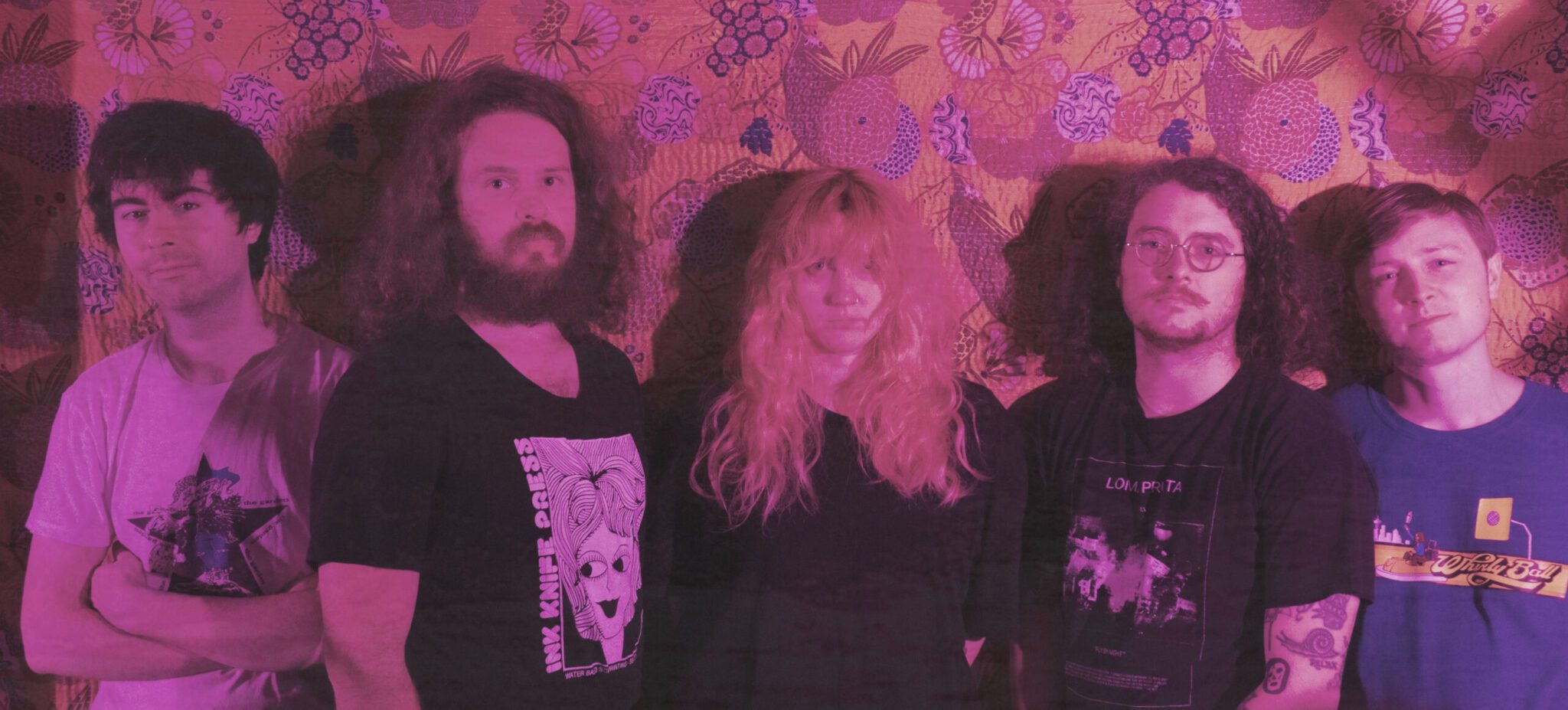
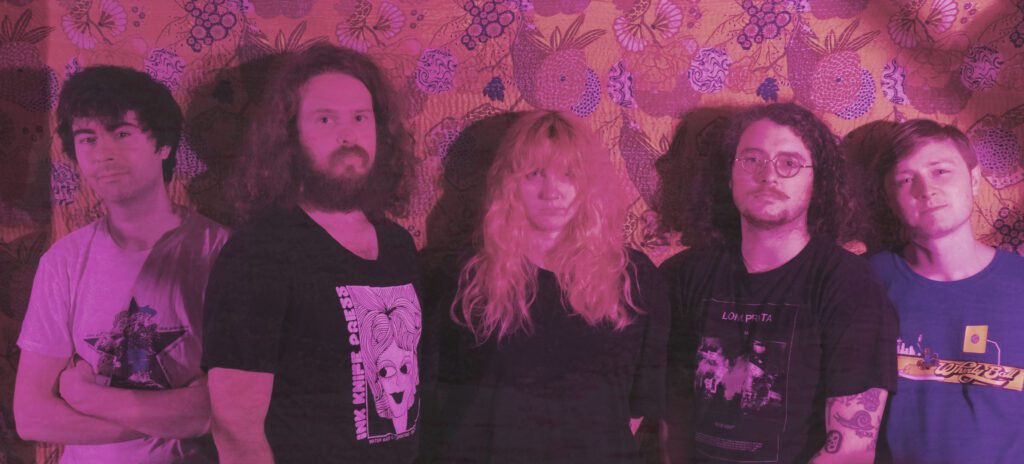
Come January 21st, five-piece exploratory rock band Salt Lick will play their first show since quarantine at Capitol Hill’s Barboza, alongside surf-psych rock group La Fonda and dream pop duo Coral Grief. The band’s raw-yet-dreamy sound has roots in an array of West Coast DIY scenes – including two of the Pacific Northwest’s most distinctive – and they’ve spent the last few years deepening their bond and collaboration.
Lead singer/lyricist Malia Seavey and guitarist/composer Teddy Keiser are looking forward to their first show back; it will be their first with new guitarist Dylan Hanwright, and the beginning of the build up to the debut LP they hope to release in 2022.
“We’re really excited. I’ve been to quite a few shows myself, but we haven’t played yet. We’re really looking forward to, you know, sharing our new lineup and we have a lot of new songs,” says Seavey.
Yesterday, they released a song called “Another Plane (demo),” for a compilation of local musicians that Tacocat and Childbirth bandmember Bree McKenna is putting together. For the compilation, McKenna asked Salt Lick to write a song based on a tarot card she pulled for them, and they got The Magician. Seavey felt a connection with the card right away.
“I’m not like super into like that area of spirituality, but, you know, it’s just about tapping into your potential and, I guess, recognizing and using your potential and power to realize goals and and dreams—especially creatively,” she said. “That just speaks to me.”
Sure enough, on “Another Plane (demo),” Seavey sings about some sort of transcendent love affair, above the driving, decisive energy of the rhythm section and guitar.
Salt Lick has been around since 2016, but Seavey’s history with in local music goes even further back, to her early adolescence spent in Olympia’s legendary punk and hardcore scene. Reflecting on her teen years there, she describes a close-knit scene ever-filled with interesting bands Seavey would often befriend and follow around to their regional shows.
“Growing up, we went to shows every weekend. I was like 14 years old when I started going and it was like a really cool, inter-generational, and really supportive and close friend group, where we’d all just hop in a car and follow [a band we liked] all over the state,” she remembers.
At the time, Seavey wasn’t yet a performer but her interested was piqued. The dream of making her own music came to fruition when she moved to Seattle to attend University of Washington (UW). After moving into the neighborhood around the school, called the U-District, she discovered one spot east of the I-5 freeway particularly dense with eclectic punk houses that frequently put on loud rock shows in their basements.
It was at one such show, at a punk house known affectionately as 5010, that Seavey first met Salt Lick’s co-founder Teddy Kieser in 2016. Keiser, too, had grown up in what he calls a “strong local scene” in San Francisco, which gave him a wide range of influences and musical experiences.
“I was fortunate enough to see a lot of great musicians growing up. Guitar bands that really stuck out to me I saw include Deerhoof and Sonic Youth,” says Kieser. “In terms of the more technical side of composing, I love Joni Mitchell. The tunings are wild and a lot of her songs have a through-line in the chord progression that outlines a melody.”
Naturally the two began collaborating—Seavey as lyricist, and Kieser as composer—and put out a recording shortly after that inspired them to build out a band. They decided to name the effort Salt Lick.
“Animals stock up on nutrients at mineral licks. It’s a metaphor for finding things we lack through making [and] experiencing art together,” explains Seavey.
Since, Salt Lick has added several more members—including bassist Ian McQuillen and drummer Kevin Middleton—and they’ve released several singles and EPs. That said, in 2022, they’ve got some surprises up their sleeve – namely, the release of their debut LP this spring or summer.
“It’s been in the works for years at this point, so it’ll be good to finally get it out,” says Seavey. “Many of the songs were written in 2018 and 2019 and then finished over quarantine times.”
Seavey says the quarantine held them up quite a bit, and that she personally struggled to stay musically motivated, even though she typically uses writing music to process her emotions about the world. Instead, she spent her quarantine making textile creations for her brand Soft Rock Goods and gardening to the sounds of rapper Lil Nas and British-Irish rock band Idles.
“I think the pandemic made it harder [to write]. I think it was really great to see a lot of peers and friends really kill it during the heart of the pandemic and put out a lot of releases and kind of tap into that. But for me, the the most exciting thing about music is sharing it and and playing it for people. And I think it was just really difficult to tap into that feeling,” she shares. Luckily, Salt Lick won’t have to wait much longer to tap into that energy again.
Both Seavey and Kieser are looking forward to rekindling their relationship with fans at the show on January 21st, when Salt Lick performs on a bill .
The world might have opened back up in 2021, but it was still a year branded with heartache, sorrow, and grief. Even if you didn’t endure the death of a loved one, you likely knew someone who did 一 or perhaps you wandered through some of the biggest records of the year and found yourself replaying your own miseries. Last year, loss in all its forms, including divorce, seemed to permeate every corner of existence.
Through a series of several mainstream releases, including Carly Pearce’s 29 and Adele’s 30, 2021 was the unequivocal year of divorce, heartbreak, and grief. An outpouring of collective pain, whether from death or severed friendships, wormed into songwriting in a remarkable, cathartic way. Artists sought as much solace as everyday folks, marking the second year of an ongoing pandemic with deep, indelible scars.
Divorce albums are not a new conceit. Historically, singer-songwriters have long written about very public breakups as a way to compartmentalize and cope. Many of music’s greatest divorce records, including Willie Nelson’s Phases and Stages, Tammy Wynette’s D-I-V-O-R-C-E, and Marvin Gaye’s Here, My Dear, as well as more recent LPs from The Chicks (Gaslighter) and Miranda Lambert (The Weight of These Wings), served to reclaim the public narrative.
Tabloid headlines are nothing if not salacious in their details, frequently pitting one public figure against another in a way to sell magazines or get clicks. But behind those shiny veneers are living, breathing human beings simply trying to process their trauma. Yes, heartbreak is a form of trauma. In peeling back the emotional and psychological layers through storytelling, singers and songwriters find an agency they otherwise wouldn’t have.
Adele’s 30 was the most anticipated release of the year. Six years since her last studio record, 30 showcased the British performer making sense of her pain, flitting through the effects the divorce had on her son, their relationship in and out of the watery depths, and her desperate search to find herself once more. “To Be Loved” is the crown jewel of not only the record but her career so-far, as Adele gave her everything in a nearly-seven-minute epic best summed up with this refrain: “Let it be known that I tried.” Elsewhere, subtler yet still skin-scalding moments like “I Drink Wine” and “Strangers by Nature” permitted her to feel those emotions, raw and unfettered. While she’s felt anger in her divorce, 30 is not “an angry divorced woman” record; rather, it’s one of absolution from the past and the many tattered pages of resentment and misery.
Kelly Clarkson endured her own skirmish in the divorce spotlight, as well. A jovial person by nature, it seems fitting she funneled her heartache into a holiday album. When Christmas Comes Around… worked in much the same way as 30. The 12-song record dipped between jubilantly sashaying through her favorite classics, including “It’s Beginning to Look a Lot Like Christmas,” “Rockin’ Around the Christmas Tree,” and “Santa Baby,” and twirling through anguish like vibrantly colored ribbons. In the opening song, “Merry Christmas Baby,” Clarkson clued you into how she was feeling: “You can keep the charming lines/And you can keep your wandering hands and eyes.” Her thorny-laced lyrics coarse through the record, namely in two other originals “Christmas Isn’t Canceled (Just You)” and “Merry Christmas (To the One I Used to Know),” gloriously tinseled exorcisms. But in the end, as attested through standout “Blessed,” Clarkson emerged lighter and more self-possessed.
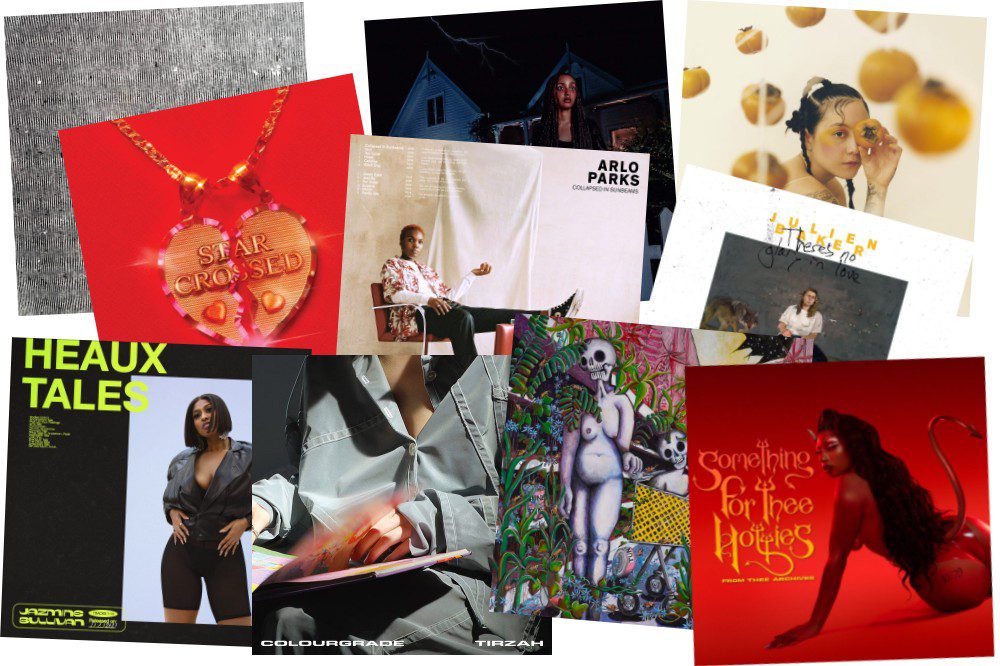
In the country world, Carly Pearce and Kacey Musgraves conjured up firestorms with 29 and star-crossed, respectively. Where Pearce soaked in modern-pressed traditional country, leaning upon fiddle, guitar, and other staple instruments, Musgraves stretched further into the pop world, using her much-acclaimed 2018 Golden Hour as a jumping off point. In both instances, the singer-songwriters expressed the sting of betrayal that’s now forever stamped into the emotional fabric of their lives. “So I ain’t gonna tell you everything he did/But I’ll tell you what he didn’t do: treat me right, put me first, be a man of his word/Stay home ’cause he wanted to,” sang Pearce. She seemingly flipped expectations here with “What He Didn’t Do” — but did plenty of tea-spilling later on with songs like “Next Girl” and “Should’ve Known Better.”
Conversely, Musgraves’ star-crossed unlocked a throbbing, emotional center through traditional instruments buried beneath magical production choices. The title cut is a cinematic conversation-piece, dazzling with distortion and synths, as if she’s escaping her heartbreak through a universe-defying expedition. “Let’s go back to the beginning,” she whispered on “good wife,” guitar peeking up like whack-a-mole. Staging the record as a chronological tale allowed the listener to experience the rush of burning love in those early days to the wildfire and the charred aftermath in almost real time.
My parents were never married, but when they split, it forever changed me. The night of their separation is among my earliest memories; I remember it like it was yesterday. My older sister Katrina held me tightly in her arms, tears streaming down my face and a throaty wail squirming from my lungs. I rarely cried so hard as a kid, and even now I can feel that pain rising into my chest. It’s something you can never forget. When I listen to 29, 30, star-crossed, and even When Christmas Comes Around… that memory flashes just as red and hot as it did then. In my adulthood, that moment certainly feels much different, but emotional memory can be a helluva drug.
Any sort of grief is physiological. It’s far more than simply reliving those flashing polaroids. It’s the ungodly physical pains that rip through flesh and bone like it’s happening to you all over again. And it’s not an exclusive experience to heartbreak and divorce.
You’re grieving when you feel your chest tighten and you can barely breathe. It’s not dissimilar to experiencing death. When Olivia Rodrigo is lamenting young heartbreak on Sour or Taylor Swift is recounting her own in the long-awaited release of “All Too Well” (10 Minute Version) or GAYLE is delivering the kiss-off to end all kiss-offs with smash single “abcdefu,” grief lies at their confectionary cores. Grief is grief. It doesn’t matter what the exterior looks like; the emotional and physical responses are the same.
Glam-pop newcomer Jake Wesley Rogers, taking cues from Bowie and Elton John in style and musical approach, dressed up themes of loss and moving on with his latest EP, Pluto. Songs like “Weddings and Funerals,” in which he muses that the small moments define our lives much more than the big ones, and “Middle of Love,” containing the apt line “my grandma died ’cause that’s what people do” bowl you over with their insight. The musical accomplishment of the tracks themselves give Rogers’ words even more gravitas, allowing for a universal clarity.
One-off releases, such as Lindsey Stirling’s “Lose You Now,” an electrifying plea to hold onto her father’s memory, pulled sorrow further into the conversation. Xenia Rubino’s “Did My Best” did the same, a moving centerpiece to the year, while Zara Larsson dissected her own heartbreak with Poster Girl, and Hayley Williams learned to let go on FLOWERS for VASES / descansos.
It’s hard to comprehend that 2021 is really over, now firmly in our rearview mirror. But as we take stock of yet another year lost to a pandemic, we can begin to reflect upon the common threads which connect our lives. Sadness flows much further than this feature will allow, also present in the work of countless other artists, including Joshua Bassett, Dashboard Confessional, Billie Eilish, Lil Nas X, James Arthur, H.E.R., and Julien Baker.
Perhaps through experiencing these musical masterpieces, we can understand the personal and universal significance of pain in songwriting and to our everyday lives. I know without a doubt that I’ve come closer to figuring out how continue on in a world so utterly destroyed by tragedy. I have plenty to learn still — but for now, I’ll listen, drink wine, and cry.
Adjusting the way we exercise has been just one of the many ways the pandemic has irrevocably altered life as we knew it, particularly for myself. As a former Classpass-subscribed YMCA member with an enthusiasm for in-person cycling and hot yoga classes, the lockdown forced me, and many others, to totally rethink the way we approach personal fitness.
Which is to say nothing of how the pandemic upended the lives of the people we trusted to instruct us in these endeavors. Even more so than the music industry, the fitness industry has endured unrelenting restrictions with fewer opportunities for relief from the federal government or any other type of aid. Instead, they watched as former clients gleefully posted about their new Peloton bikes and subscribed to apps that advertised unlimited classes for just $20/month, whereas a single drop-in fitness class in the before-times would cost at least that much. While the live music industry could not be replicated on an app, fitness classes could, no matter how inferior the product, and these instructors, many of whom spent years and hard-earned money investing in their training and certifications, watched it all unfold helplessly.
Well, perhaps not so helplessly – which is where NuSweat enters the narrative. NuSweat is an online (and now in-person as well) fitness platform driven by great music and dedication to creating fitness programming that works for ALL bodies, in a fun, friendly and inclusive environment. Founded on New Years Day 2021 by Leigh Barton and Ky DiGregorio, two stalwarts of the NYC underground music scene and former cycling instructors at Monster Cycle (a sort of anti-Soulcycle studio in Chelsea that closed in 2020), you won’t hear anything about “burning off your dinner” or “earning your dessert” in a NuSweat class, but you will hear some bumping tunes and unpretentious, delightfully real encouragement from instructors who want to make your work-out work for your body.
Barton and DiGregorio dreamt of beginning their own collaborative fitness brand long before the pandemic, but Barton explains that it was the push they needed to get the ball moving. “While everything shutting down was a massive challenge in some ways, it also made us become a bit more resourceful, and the shift of the landscape allowed new methods to come through,” she says. “Everything happened, I don’t want to say at the right time, but we kind of came up with alternatives to what happens if gyms don’t reopen, or what happens if where we were working previously doesn’t reopen? We were just ready to go.”
And go they did. Wrapped in iridescently-colored cyberpunk packaging, they began offering classes in Pilates, “flow” (the NuSweat equivalent of yoga, focused more on movement and flexibility and less on the spirituality and impossibly bend-y poses that turn some newbies off), strength-training, HIIT, focused stretching and even cycling for those who had stationary bikes at home. They leaned into their hard-earned community of “weirdo” clients who didn’t fit the mold of the “traditional” fitness class attendee you might see in a Lululemon advertisement – in other words, people just like them.
Barton says that “knowing there were other people who were like us, [who] didn’t look like fitness models” was instrumental in developing the brand’s ethos, one focused on fun and feeling good. “The first time I auditioned for a fitness role was at Soulcycle, and I remember the instructor I rode with and really liked told me, ‘listen, Leigh, I’m one of the only people here who doesn’t look like a fitness model. You are different and you like weirder shit and that is something you’re gonna have an uphill battle with, basically.’”
But instead of changing herself to fit this mold, Barton sought out spaces that would embrace someone who “likes weirder shit.” She began teaching classes at Monster set to the metal, experimental and emo music she loved, where she met DiGregorio first as a client, then as a friend, and eventually as a colleague once DiGregorio got her teaching certification and joined the crew there. There they formed their community of fitness misfits who wanted to find a movement practice that saw them for who they were, rather than compelling them to transform into something entirely different.
While the tunes are a huge part of the NuSweat brand – they offer themes as far-ranging as SZA and ’60s soul to Black Sabbath and the Matrix soundtrack, with seasonally-themed programming thrown in – inclusivity is perhaps their most definitive value. Their Instagram bio reads “FITNESS FOR EVERY BODY,” and every class offers both easier and more difficult modifications so you can customize your workout depending where you’re at that day, in terms of energy, ability and injuries. You’ll frequently hear them reassure you throughout the workout that it’s okay if you can’t do something the first time – it’s the first time you’re trying it, after all! – which seeks to encourage newcomers to keep coming back.
“There wasn’t really a space for that, and [I] was just getting really tired of people who were coaching from a place of, I don’t want to say negativity; we did have peers who were really cool and uplifting in some ways but were like ‘burn off your dinner’ and shit,” Barton says. “I was like dude, I’m not coming here to hate myself or punish myself. I’m here to have fun, to meet other people.”
Because there wasn’t a space like that, they created their own. Since starting the platform in January 2021, they’ve opened a small studio in East Williamsburg for in-person classes and one-on-one personal training (as well as vintage clothes and CBD goods). It hasn’t been without challenges, of course – the whiplash of COVID variants constantly forces them to adjust their plans, and the ebb and flow of fitness throughout the year (i.e. big rushes in January and leading up to the summer months) are harder to predict in a digital space. And of course, it’s challenging to watch friends and former clients post about their Peloton workouts, but still, they persist.
They continue to churn out fresh themes, fun merch, pre-commit programs and monthly challenges to keep old and new clients alike engaged and excited about working out. They continue to offer flexible pricing for those whose income has become unpredictable due to the pandemic. As they enter their second year of business, Barton says, “We’re ready to keep doing fun shit. Really we’re just happy that we’re still here chugging along, and that people stick with us and are feeling better about their bodies, and not just doing it to lose weight or have abs or whatever the fuck.”
So there you have it – whenever you’re ready to join Team NuSweat, Leigh and Ky will be waiting with open arms (and inboxes – they encourage you to DM them if you’re unsure about starting a new fitness routine!). Time to get moving, on your own terms.
Back in October, Tania Ordoñez, known professionally as Soltera, released her track “Tengo Miedo” on a whim. “Basically, it’s the COVID song,” the L.A.-based electronic music artist says over a video call. In it, Ordoñez wrestles with her feelings about going out again — the title is Spanish for “I’m afraid” — as synthesizer tension builds and releases over the course of the track. The tune was accompanied by a video featuring Ordoñez and friends playing as a band on a Los Angeles hillside and the response was so positive that she decided to follow it up with an EP. But, there was a catch: Ordoñez would have to work quickly if she wanted to release it by year’s end, as a friend with record label experience had suggested would be best.
That gave Ordoñez just a handful of weeks to make the remaining five songs that fill out Sin Compromiso. “Every day, I got on my synthesizer. I would make a beat and slap vocals on top,” says Ordoñez. She finished the project in just under three weeks and Sin Compromisohit Bandcamp on December 30.
It’s filled with revelations that Ordoñez has had since the onset of the pandemic. “Overall, I think a lot of themes in the songs are about me embracing insecurities and fear,” she says. “There’s a certain point where you need to be more selective with who and what you put your energy towards. That’s kind of the theme of all the songs.”
Musically, Ordoñez melds styles like darkwave and minimal synth with doses of techno and house and the energy of punk. It’s reflective of her eclectic range of influences. Ordoñez grew up in L.A.’s San Fernando Valley listening to punk, hardcore and power violence and later gravitated towards dance music. “I started realizing the similarities,” she says of those seemingly disparate influences. Ordoñez cites Donna Summer, alongside Spanish post-punk band Alaska y Los Pegamoides, Hi-NRG outfit Lime and electronic experimentalists Psychic TV as some of her favorite artists.
Although a longtime music fan, Ordoñez didn’t start making music herself until 2015, following the death of her father. “During that time, I felt a lot of emotions and I wanted to put it somewhere,” she recalls. “I didn’t really feel like an artist in general because I didn’t go to school for it. So, I was kind of really aimless and scared to approach it.”
But, Ordoñez bought herself a sampler, and that launched her journey into music. She borrowed drum machines from friends and watched YouTube tutorials. She learned how to sample and manipulate her own vocals. Then, she started playing live at house parties, art shows and other events. “Every show I played would get another show,” she says. “In the beginning, I had no training at all. I was very, very self-taught. All the shows that I played before the pandemic were the same six songs that I made beforehand with borrowed drum machines and synthesizers.”
Since 2020, though, Ordoñez musical pursuits have taken a major turn. “When the pandemic hit, I was isolated at home every day. I lost my job,” she explains. After her partner downloaded Ableton, Ordoñez began experimenting with the program. “That helped my process so much more because, on Ableton, there were all these different drum kits. On YouTube, there are so many tutorials on how to use it.”
Ordoñez was also able to buy her own synthesizer, while she checked out other synths and drum machines from FeM Synth Lab, an L.A. lending library that aims to make high-end gear accessible to people of marginalized genders. Combined with her newfound Ableton skills, all this gave Ordoñez a newfound freedom to create.
“Before, on a sampler, I was playing all the music live. Every knob I was playing live as I was performing and it was pretty difficult, singing and playing it live,” she says. The experience also taught Ordoñez that she enjoys sound engineering and it opened up the possibility of perhaps going to school for music in the future. Plus, she developed an interest in scoring films and had the chance to do that after earning a grant for a film project from Los Angeles Metro.
Ordoñez has taken her love of music into other pursuits as well. She’s a DJ and hosts the monthly Dublab show called Todo o Nada. She also teamed up with fellow artists Aarum Alatorre and Pedro Verdin, of the duo Pacoima Techno, to form the label Casa/Teca. “We did this label because we wanted to represent underground artists, especially underground artists of color, and have this freedom to release music as much as we wanted to without limitations and music videos,” Ordoñez explains. “It’s very community-based, very anti-capitalist, anti-clout.”
It’s a response to the struggles Ordoñez sees with artists, and herself, to the pressure to fit into certain molds and to focus on money as the sign of success. It’s a balancing act. “I’m really putting my all into this project, hoping that it will go somewhere,” says Ordoñez, “but also remembering that I do it because I love it and it’s fun.”
For experimental indie duo Watkins, Unbiased Eyes is more than an album title – it’s a way of living. Their 2021 LP explores the depths of love and human existence across ten songs, from the mind-opening invitation of introductory track “Good Problems” to challenging the concept of time in “Beyond the Ambience.”
Vocalist/guitarist Taylor Watkins points to “Sad Happy” as a “huge focal point” of the record, as it encourages listeners to unlearn toxic habits, exemplified in such lyrics as, “Take a broken mind, rewind through all the things you learned/Way back to unbiased eyes/All past boils down to the place we call the now.”
“I’m challenging every listener to break out of that mentality and to experience life for its true self. To reconnect with nature and to see life as the beautiful, chaotic existence that it truly is,” Watkins describes of the song’s message.
“The whole goal of Unbiased Eyes, the album, and the phrase ‘unbiased eyes’ and the message I’m trying to get across is to really see without judgment. I wanted to convey this message of seeing every day with a fresh perspective, to be able to see the beauty in everything for the first time,” Watkins says. “In a lot of these songs, you’ll notice lyrically I try to take on this duality of life and to almost express it in a childlike mentality to help each listener return to the present moment. The theme of shedding all of this imprinted knowledge and these everyday habits that we’ve acquired over the years, and trying to remove yourself from this societal norm and start experiencing life in the now [allows] each listener to find their own pathway to the present moment and to stop worrying about the past or anxiety of the future and to take in what it means to be here and to see with unbiased eyes every second.”
The duo’s passion for creating a sustainable world and connecting to the universe has been cultivated through years of open-mindedness. Drummer Scott Harris reveals that he’s spent the past few years researching permaculture, which focuses on living off the grid and on the land, incorporating the elements of agriculture, community resilience and more. “A lot is trying to connect people back to the natural world. What we’re always trying to push for is how can you rely on yourself more and get away from the system,” Harris explains of the process.
The pair were introduced in 2011 by a mutual friend as freshman in high school in West Chester, Ohio, quickly realizing they were musical soulmates. “We both saw it as an outlet in our lives that we wanted to chase forever. It was pretty much a guiding passion for both of us,” Watkins says as their mutual love of music. “[We] already had very strong personalities in the sense of individuality and self-awareness and finding your own path or passion in life. So when we met each other, we were already ahead of our times in that way that we were thinking with our universal eye rather than just where we were at that moment in time.”
They spent their days after school jamming in a friend’s basement, taught themselves the ins and outs of recording and producing by creating makeshift studios, and began gigging weekly around town. “Looking back on it, I think it’s funny how we clicked and wanted to really innovate with music and take a little bit of a psychedelic approach to it and wanting the mind-opening route to music,” Harris recalls of their early days. “It was really all great memories.”
Remaining present and deeply focused on their craft is a natural instinct that the band has carried throughout their decade-long career. “It’s never for the fame, it’s never for the recognition. It’s not even for ourselves. We wanted to mainly focus on spreading self-awareness and to promote a reconnection to the natural world,” Watkins says.
After Harris moved to Nashville in 2015 to pursue a career in audio engineering, the duo continued to hone their craft, meeting in Nashville and Kentucky as they developed their own sound they’ve branded “psychedelic Southern,” in an attempt to open listeners’ minds to the vastness of the world.
“To us, the word [psychedelic] means mind-opening or mind-altering growth. We wanted to take this journey with music to really try to grow ourselves, grow our own minds. Not only ourselves, but to spread what we know, our realizations and give those to others,” Watkins says of their distinct sound. “That’s where we started moving forward as a duo, me and Scott realizing not only can we spread this message lyrically, but we were finding ways sonically with our recording styles to incorporate modern style and try to create new fusions of our favorite music, and trying to find a way to do it new in our own kind of light.”
Growing up, Watkins was an avid fan of Henry David Thoreau, and was inspired by his philosophy that “you can never learn in life until start to put yourself into the unknown. There’s no learning unless you are risking it, unless you are getting yourself just a little bit uncomfortable,” Watkins paraphrases. To that end, Watkins has achieved “unbiased eyes” through travel, immersing himself in different cultures, beginning with a backpacking trip around Europe with friends in college, visiting thirteen countries in the span of a month.
That appetite for travel has only grown, inspiring him to make his dream of living on the road a reality. At the onset of the COVID-19 pandemic in March 2020, Watkins and his partner purchased a van that they turned into a livable home on wheels. After finishing weather proofing and prepping the van during quarantine, they took to the open road, traveling across the country from the Gulf Shores of Florida up through the Midwest before settling in Maine where Watkins lived and worked on a farm.
“The goal in mind during these travels is we’re always looking to build a sense of community everywhere we go. Every time we travel, we’re looking to find people that not only already vibe with the message we’re about, but who can also help us grow that message, and to really show us new sides of growth and progression that we weren’t necessarily even aware of,” Watkins examines. “We really want to use these travels as a reflection on where we see ourselves continuing to build communities in the future. Where do we put ourselves geographically to create these sort of spaces?”
With that mindset, they also migrated out west, venturing through Colorado, Utah, Wyoming and New Mexico before settling down in Idaho’s Teton Valley in a town with a population of 1,000 people. Riding a bike to work and living in a van that was often caught under two feet of snow in the harsh Idaho winter was an eye-opening experience for Watkins, as he intentionally became part of a smaller community with people who have a desire to grow their own food and truly support one another. “Traveling opened up this new sense for me to realize that if I’m receptive to the energy, I can gain a new perspective out of each person I talk to, removing all of those pre-biased intentions and accepting people where they’re at,” Watkins professes.
All of this ties into how Watkins and Harris walk through the world with “unbiased eyes.” For Harris, that means viewing each situation in life through a positive lens, while Watkins holds himself accountable to live each day with a sense of “self-acceptance,” letting go of judgment, and living in the now not only for himself, but others, in hopes that it inspires listeners to live a fulfilling life.
“Moving forward, we’re going to take all of these incorporated ideas that Unbiased Eyes holds and try to grow off of them, not only within the music, just within ourselves,” Watkins proclaims of the duo’s mission. It’s not really even about the music necessarily for us. “It’s the sense of community and spreading awareness and building and growing together through the music.”
Queen City-based producer and artist Alex Stallings, who goes by Stallitix as one-half of the Patterns of Chaos rap duo, launched his new Cincinnati music exploration and DJ showcase series last month in hopes of creating a safe space for local artists and music lovers. He’s calling it Warmth, for the feeling he hopes to foster with each event.
“Warmth has always been a feeling I’ve wanted [to promote], to make people to feel welcomed, and for people to feel that with other creatives,” he tells Audiofemme. An Instagram recap of the event put it succinctly with an Anna Sewell quote: “It’s good people that make good places.”
The inaugural boogie went down successfully at Walnut Hills’ Sideways 8 Studios in late December, with DJs Prymtime, Rah D. and Mr. Fantastic at the decks. The music spanned across R&B, house and hip hop genres, giving DJs the space to fine-tune the vibe and giving fans the chance to dance and socialize in a setting unique to the typical club or bar experience.
“There’s a void for people who want to dance, for music lovers, and for DJs who want to share music,” Stallings says. “[Warmth] is a music exploration series of Black music: house music, hip hop, rhythm & blues and soul music. We want to explore all of that. Like with house music especially, lots of people think it’s made by Europeans. But actually, it was started by Black DJs in Detroit and Chicago. So, we want to get into the significance and the history of that and more.”
This approach puts DJs in a more curatorial role, rather than relegating them to spinning records solely to fill dancefloors. “We want to allow DJs to flip and play the songs that they want to play, [umlike] being in a club or bar and being annoyed by people who request [songs],” Stallings explains. “There’s a line between artists and entertainers – this is definitely for artists.”
https://www.instagram.com/p/CXul5m1IOjp/
And Warmth has another important mission as well. “I wanted to create a safe place for people to come and dance and enjoy themselves,” Stallings adds. “The vision is to make a safe space for BIPOC, women and artists in general, because Cincinnati sometimes has an exploitative culture when it comes to artists.”
After the first successful installment, Stallings says he plans to hold the events either bi-monthly or quarterly and showcase talent from Cincinnati and beyond. “Cincinnati is a very big music town. There’s a lot of people who love music and a lot of them are transplants,” he says. “Prymtime is from Louisville; Rah D. is from Detroit. So, they bring their own little flair to the city.”
“Everyone who came out said they loved it. Everyone and said it was needed in Cincinnati,” he continues. “You’re not just going [to Warmth] for a drink [or to party]; the main reason you’re going there is for the music, which I think is needed… I went to this big function in Indianapolis that was a party catered to artists and DJs. It was a gathering of artists and influencers, mostly Black people, and that’s when I thought, we need to do something like that here.”
On his own artistic front, Patterns of Chaos’ latest full-length project, Chaotic Good, just hit streaming platforms last week. The nine-track album, which was over two years in the making, features Cincinnati artists like Aziza Love, GrandAce, JayBee Lamahj, Roberto and more.
It’s been a rollicking ride for singer-songwriter Fanny Lumsden over the last couple of years. The crushing experience of cancelled tours was ameliorated by sweeping up an array of industry awards, including ARIA Country Album of the Year for her third album Fallow and five CMAA (Country Music Association Australia) Golden Guitars. The album is an expansive, romantic, evocative canvas upon which guitars, strings and brass instrumental arrangements seem to organically rise from the earth and weave lush portraits from sun, dust, water, emotion and sound.
For her fans, and soon-to-be fans, who have only been able to hear Fallow through headphones and speakers, a comprehensive live tour – the Country Halls Tour – is the much anticipated, and well-delayed, experience Lumsden and her band, The Thrillseekers, have been readying for.
The title track sashays in on romantic, spare piano. It is, as intended, beautiful and over all too soon. Lumsden’s gentle, yielding voice rises and dips simultaneously with the sympathetic strings. “Our hearts, deep in the fallow,” she repeats. “Where did you go? We put our trust in the ebb and flow,” and the words hit home: what else could we do in the last couple of years but surrender to nature and circumstances?
Harmonising alongside her, his voice a delicate but lovely accompaniment, is her younger brother, Thomas Lumsden. “He’s just a talented boy,” admires his sister. “He did classical training when he was younger… and could have easily been an opera singer, but for whatever reasons hasn’t taken that up, so now we use that to our advantage!”
Thomas is a regular on stage and his absence often results in audiences enquiring after him. “He sang before he talked. Growing up, he used to lie in his cot and sing. He’s always been incredibly talented. It’s been a process to get him to do stuff solo. He’s an invaluable part of the team,” she adds. “Everyone loves him on stage… I’m super glad that we’ve been able to collaborate.”
The oldest of four siblings, the other two Lumsdens are yet to be recruited to the travelling van and the Country Halls tours. “On both sides of my family there’s a lot of music, from opera singers to concert pianists to musical theatre performers. There’s just a lot of music extended through both my dad and my mum’s side,” Lumsden says. “We played music growing up with my siblings and my cousins. Everyone plays multiple instruments. I haven’t quite convinced the other two to join the band yet, but there’s always time.”
Until then, there’s a tour to prepare for – no small feat for Lumsden and her husband (also her bass player), Dan Stanley Freeman, who have two young children; most of the writing for Fallow happened when Lumsden was pregnant with their son Walter, and she recently gave birth to her second child, Rupert. “Walter was born three and a half years ago and we went back on the road three weeks later with him, so he has lived on the road most of his life apart from last year when we were locked down obviously. He is very, very used to being out on the road and touring,” says Lumsden. Rupert will be only a couple of months old when he joins the travelling family roadshow.
Fallow was recorded between babies, in an old stone cabin on Lumsden’s property in Tooma, New South Wales – a good six hour drive from Sydney. “It’s a bushman-type that used to be up in the mountains, made from stones, that was rebuilt down here,” Lumsden explains. “We live on property owned by the Paton family and they’re a very longstanding family in this region that used to take cattle up to high country, so they rebuilt one of the cattleman huts right near our house. It was an incredible experience doing it in there.”
To achieve the clarity and depth of sound, she once again brought on veteran producer, Matt Fell, who has worked with some of Australia’s finest country and folk artists including Shane Nicholson, Sara Storer, Matt Ward, Amanda Thomas and Vanessa Kelly. He drove to Tooma and stayed with Lumsden and her family for the few weeks while they recorded in the cattleman hut.
“Matt… came out with his family and we all spent this beautiful few weeks making the songs,” she remembers. They made do with the limited tools they had, turning the bathroom into an echo chamber at one point. “I couldn’t think of any other way to capture what I was trying to say other than by doing it right here. I was singing my vocals and looking out and seeing the cattle and the horses grazing. Storms would come through and we’d have to stop.”
She elaborates: “The value of having us record in the stone hut is because I don’t have the words. I usually use very weird descriptions, like ‘I want it to feel like that mist sitting down there,’ or ‘I want it to sound like that sunset.’ The overall theme was that I wanted to make something beautiful that felt like green grass and running water after years of drought. I didn’t want anything to feel safe. I wanted it to feel dangerous in the sense that you might lose it, but I wanted to make something hopeful.”
Tragically, much of the country around the valley that inspired Fallow was burnt – and Lumsden and her family were left without power for several weeks – after the “Black Summer” bushfires that devastated homes and whole towns in both New South Wales and Victoria. Fallow was released on March 14th 2020, just ten days after the last of the fires had been extinguished or otherwise contained. Then came the first national lockdowns.
The lyrics are prescient though, and it is haunting to listen to them knowing they were written prior to the ravaging of the land and the collective spirit of Australians during the pandemic. “Good or bad, things never last,” she croons like a sacred self-soothing mantra, on “Mountain Song/This Too Shall Pass.”
For Fanny Lumsden, lockdowns were a time of creative make-do, including filming and producing the video for “Fierce,” which features local women farmers (“the women who raised me, the women who saved me”), and playing live-streamed events. Lumsden also became a volunteer firefighter – after initially training in her high school years. Together with her siblings and their partners, they retrained to be bushfire-ready in 2020. She did all of this, while also summoning the energy to write and produce a documentary telling the story of making and releasing Fallow. The 2021 Albury Local Woman of the Year (in recognition of her work with regional communities) also sold out her national theatre tour.
Indeed, she’s got country music and the land in her bones. Born and raised on regional farmland in western NSW, she grew up knowing the demands of helping her parents with the routine tasks of landcare, tending horses and livestock, preparing for inclement weather and planning by the seasons. Hers was a musical childhood in a family that encouraged instruments, song, and performance, and Lumsden took to it like a duck to water, studying music through high school before committing herself to a Bachelor of Rural Science. After graduation, she moved to Sydney and found her groove in the local music scene, going to songwriter nights, playing clubs and pubs, and eventually meeting members of The Thrillseekers.
This album is a different creature to her last, by her own admission. It is not an observation, but a very personal response to the land she was raised on and is now raising her own family on. Taking it on the road to town halls all over the country is a natural extension of the album’s intention to celebrate Australia’s regional landscapes and communities.
“I began [the Country Halls tours] in 2012 so [this] is the ten-year anniversary which is mind-blowing for me!” she confesses. “It’s crazy. We’ll have played in over 200 halls by the time this run ends. It started as an accident really. I can’t stress how little I knew about putting on musical events. I was living in Sydney and I’d just started with this band… they were so wonderful and we went out and put on three shows to raise money for BlazeAid in the Riverina after the floods. I knew how to communicate to regional audiences because I’d come from that.”
Lumsden focused on making the events community-centered, especially since nobody knew who she was when she began. Now, regional communities around Australia email, text and message her asking her to come and play their town halls. She spends time choosing, then working with those communities before arriving.
“It’s a work in progress,” she says. “It’s my favourite thing we do and it’s built me as an artist. I’m forever grateful. I think it’s really the essence of what we do. I write songs about living in Australia, living in the bush, growing up in the bush and life experiences from that perspective rather than about that. Getting to go play these places is a privilege really – and it’s bloody fun as well.”
If you went into 2021 with high expectations, you weren’t alone. Even if it was hard to feel optimistic this time last year, it certainly seemed as if things could get no worse. Live music did return, after all – though with the appearance of Delta, and now Omicron, the joyful noise comes with a caveat. After sixteen months of having to livestream shows (fun, but not the same) little could stop me from attending shows in person; wearing a mask as an extra precaution felt like no big deal, even if no one else was doing it. But luck (and vaccines) feel like the real reason I emerged unscathed from dozens of risky experiences, and with performances on the horizon canceled once again, maybe it’s wise to enter 2022 with slightly lower expectations.
There’s always recorded music, anyhow. Maybe the tumult of the year just has me personally feeling a bit unfocused, but it seems as though I barely scaled the mountain of this year’s musical offerings without getting a bit buried in the avalanche of releases – ones that had been pushed back, ones that were created in lockdown. I’ll be playing catch up well into the new year, but that doesn’t mean there weren’t gems I connected with almost immediately, and very deeply. And that’s what I’ve heard across the board, from those in the industry as well as casual music fans – is that our favorites this year stayed on heavy rotation, as we latched onto music that accurately reflected our moods, which evolved moment to moment and of course happened to be different for all of us at any given time. What does that mean for year-end lists? Audiofemme has always compiled an eclectic list, including favorites from each of our contributors without overall rank – consider any repeats to be the best of the best. But this year, the list seems even more diverse, meaning there’s a wealth of weird and wonderful music below to discover, dear reader. Thanks for sticking with us through another wild year.
EDITOR LISTS
Marianne White (Executive Director)
Top 10 Albums: 1) PinkPantheress – to hell with it 2) Mdou Moctar – Afrique Victime 3) Low – Hey What 4) Jazmine Sullivan – Heaux Tales 5) Julien Baker – Little Oblivions 6) Dawn Richard – Second Line: An Electro Revival 7) Indigo De Souza – Any Shape You Take 8) aya – im hole 9) Flock of Dimes – Head of Roses 10) Tyler, the Creator – CALL ME IF YOU GET LOST
Top 5 Singles: 1) Japanese Breakfast – “Be Sweet” 2) Loraine James (feat. Eden Samara) – “Running Like That” 3) Hand Habits – “More Than Love” 4) Sharon Van Etten & Angel Olsen – “Like I Used To” 5) Julien Baker – “Faith Healer (Half Waif Remix)”
Top 5 Albums (in no particular order): Spellling – The Turning Wheel King Woman – Celestial Blues Macy Rodman – Unbelievable Animals Marissa Nadler – The Path of the Clouds Kinlaw – The Tipping Scale
Top 3 Singles (in no particular order): Often – “Deep Sleep” Mannequin Pussy – “Control” Spice – “A Better Treatment”
Top 10 Albums: 1) Wye Oak – Cut All The Wires: 2009-2011 2) Dori Freeman – Ten Thousand Roses 3) Isaiah Rashad – The House Is Burning 4) Fawn Wood – Kåkike 5) Carmen Q. Rothwell – Don’t Get Comfy / Nowhere
Honorable Mention: Mike Gebhart – Co-Pilot
Top 3 Singles: 1) Doja Cat (feat. SZA) – “Kiss Me More” 2) Mitski – “Working for the Knife” 3) DoNormaal – “Baby May”
Top 5 Albums: 1) Deap Vally – Marriage 2) Mod Con – Modern Condition 3) Laura Stevenson – Laura Stevenson 4) Joan As Police Woman – The Solution is Restless 5) Black Country, New Road – For the first time
Top 3 Singles: 1) Black Country, New Road – “Sunglasses” 2) Lana Del Rey – “Dealer” 3) jennylee – “Tickles”
Top 5 Albums: 1) Hackedepicciotto — The Silver Threshold 2) Saint Etienne — I’ve Been Trying to Tell You 3) L’impératrice — Take Tsubo 4) Pearl and the Oysters— Flowerland 5) Nuovo Testamento — New Earth
Top 3 Singles: 1) Midnight Magic – “Beam Me Up” 2) Jessie Ware – “Please” 3) Gabriels – “Love and Hate in a Different Time (Kerri Chandler Remix)”
Top 5 Albums: 1) Dolphin Midwives — Body of Water 2) Sarah McQuaid — The St. Buryan Sessions 3) Low — Hey What 4) Witch Camp — I’ve Forgotten Now Who I Used to Be 5) Full Bush — Movie Night
Top 3 Singles: 1) Maggie Herron — “Sweet Lullaby” 2) Sleater-Kinney — “High in the Grass” 3) ONETWOTHREE — “Give Paw”
Top 5 Albums: 1) Jetty Bones – Push Back 2) M.A.G.S. – Say Things That Matter 3) Lyndsay Ellyn – Queen of Nothing 4) Kacey Musgraves – star-crossed 5) Christian Lopez – The Other Side
Top 5 Singles: 1) Hayes Carll – “Help Me Remember” 2) Jake Wesley Rogers – “Middle of Love” 3) Adele – “To Be Loved” 4) Carly Pearce – “What He Didn’t Do” 5) Kacey Musgraves – “what doesn’t kill me”
Top 5 Albums: 1) Polo G – Hall of Fame 2) Benny the Butcher & Harry Fraud – The Plugs I Met 2 3) Megan Thee Stallion – Something For Thee Hotties 4) Pooh Shiesty – Shiesty Sessions 5) blackbear – misery lake
Top 3 Singles: 1) Benny the Butcher & Harry Fraud – “Thanksgiving” 2) Lil Nas X (feat. Jack Harlow) – “INDUSTRY BABY” 3) 24kGoldn (feat. Future) – “Company”
Top 5 Albums: 1) Kacey Musgraves – star-crossed 2) Snoh Aalegra – Temporary Highs in the Violet Skies 3) Lil Nas X – Montero 4) Darkside – Spiral 5) Blu DeTiger – How Did We Get Here EP
Top 5 Albums: 1) Aly & AJ – A Touch of the Beat Gets You Up on Your Feet Gets You Out and Then Into the Sun 2) Julia Wolf – Girls in Purgatory (Full Moon Edition) 3) Megan Thee Stallion – Something For Thee Hotties 4) Lil Mariko – Lil Mariko 5) Destroy Boys – Open Mouth, Open Heart
Top 3 Singles: 1) daine – “dainecore” 2) Julia Wolf – “Villain” 3) Doja Cat – “Need To Know”
Sam Weisenthal(Contributor)
Top 5 Albums: 1) Indigo De Souza – Any Shape You Take 2) Katy Kirby – Cool Dry Place 3) Mega Bog – Life, and Another 4) Ada Lea – one hand on the steering wheel the other sewing a garden 5) Olivia Kaplan – Tonight Turns to Nothing
Top 3 Singles: 1) Charlotte Cornfield – “Drunk For You” 2) Dora Jar – “Multiply” 3) Joe Taylor Sutkowski, Dirt Buyer – “What Luck, Goodbye”
Top 5 Albums: 1) PinkPantheress – to hell with it 2) Summer Walker – Still Over It 3) Erika de Casier – Sensational 4) Jazmine Sullivan – Heaux Tales 5) Adele – 30
Top 3 Singles: 1) Lana Del Rey – “Dealer” 2) Liv.e – “Bout It” 3) SZA – “I Hate U”
Top 5 Albums: 1) Arlo Parks – Collapsed in Sunbeams 2) CL – ALPHA 3) My Life As Ali Thomas – Peppermint Town 4) Halsey – If I Can’t Have Love, I Want Power 5) Remember Sports – Like a Stone
Top 3 Singles: 1) FKA twigs (feat. Central Cee) – “Measure of a Man” 2) Sabriel – “Pulse” 3) Lexie Liu – “有吗炒面 ALGTR”
Trigger Warning: This editorial contains graphic discussions about suicide and mental health
Jetty Bones pushes the literal boundaries of her work on latest album Push Back, swapping out indie/rock singer/songwriter sensibilities for dazzling dance-centered pop music. Beneath those shimmering, warm, and inviting musical layers, Jetty Bones (real name Kelc Galluzzo) lays her heart and soul bare with regard to her own ongoing journey with depression and suicide. The singer-songwriter has been pretty honest about her experiences online, but these eleven songs showcase, with a scalpel’s merciless edge, a slow mental unraveling and eventual blow-out. It’s one I know all too well.
On “Dolly,” Jetty Bones sings, “Oh, I often want to off myself, but I don’t quite wanna die,” a prickly feeling that’s lingered in my brain since suicidal ideation first slipped around my throat in the summer of 2003. Nothing in particular triggered suffocating thoughts of death; they were just there. One night, I gobbled a whole bottle of Tylenol, and the only thing I achieved was a belly full of black bile. I puked for 24 hours straight and told my mom it was nothing but a stomach bug.
That was the first of many suicide attempts in my life. I’ve danced through various stages of darkness ever since, often slithering through existence like a slug on the sidewalk. In my senior year of college, I landed in the hospital and spent a few days in a psych ward 一 and a year later, I came this close to shuffling off this mortal coil. What I remember most about that dreary February night is stumbling blindly down my block in a panic, the Tylenol flooding my brain and clogging my senses; my vision grew blurry, and my head swam, seemingly crashing against reality like waves on a rock-laced coastline. Remorse bubbled up on my skin like pus-filled blisters, as what I’d attempted to do came into focus with the dissipation of the pills sloshing in my belly. I plopped myself down on the curb and grabbed my stomach.
The night ran cool, even the heat from the pavement was dulling into a simmer. The street lamps cast an intoxicating amber in pools around my feet, as my neck fell into a loose, ribbon-y arc. My gaze fell into the crevices underneath the rubber soles of my converse. I didn’t think I had anything left to give, but somehow, I found my body seemingly moments later tumbling headfirst into my futon. My head spiraled for the next 18 hours or so, the daze never fully wearing off until a week later. I’d never been more terrified to die than I was in those moments.
Twelve years later, it feels both like it happened just yesterday and in another lifetime. I never tried to kill myself again after that, yet I still struggle daily with wanting to kill myself but not quite wanting to die. When I assess 2021, I return to Push Back as the only one record that seems to capture the tragedy I feel forced to play and the beauty in rediscovering what it means to be fully alive and breathing.
With the record’s opening lyric, decorated inside a guitar-synth patchwork in “Waking Up Crying,” Galluzzo asks a simple question: “Can we talk about your heart please?” She goes on to sympathize with the listener, expressing how “damn exhausting” it must be to move through the world and feel like such a burden to everyone. Later, “Waking Up Exhausted” picks up the wayward shards and glues them back together. But her determination to be okay again is all for naught; some days, she doesn’t even have the energy to tumble out of bed and stumble to the kitchen for coffee. “I think I might be sick,” she mumbles.
Galluzzo positions Push Back as a hyper-electric, wholly-personal case study in mental health, but moments like “Nothing” and “That’s All” oscillate away from themes of anxiety and depression to examine love and heartbreak, too. Even so, there are lyrics in both these songs, for example, that read as subtle cues to her cracking headspace. “I don’t know if you want me to run/Or if I should be fight-fight-fighting for my life,” she renders in the former. In the latter, she spits over a slinky beat, “I don’t wanna be another let down on that list for you/Do it like you gotta do when times are tough/And it’s killing me, you’re feeling like you’re not enough.”
That’s the thing about mental health. It’s insidious and affects your relationships and friends whether you realize it or not. Most often, you don’t know it’s happening until those tenuous ties fray and shred and fall away from your life completely. Then, you come crashing into a song like “Taking Up Space,” in which Galluzzo supposes she should “get out of the way” to save those around her. “The pulling threads of woes we weave are/ Tangled up intricately/With the passive placement of feelings/That leaves us with no room to breathe,” she reflects in the bridge.
“No room to breathe” stings my ears even now. There is no room to breathe when you’re depressed and anxious. The world feels suffocating and much smaller than it really is. So, you turn to any manner of vices – wine perhaps, or you pick up smoking again – and you gaze out over the “Ravine,” as imagined by Galluzzo in one of the album’s most moving moments. “And shameful as it is to admit/I’m in an existential crisis/But I’ll be fine, just like I always am,” she sings, gazing up off the bathroom floor. The dread and anxiety and depression has clashed inside her brain and thrashes until everything collapses into dust, the world distorts, and you have no other way to go but further down. You spiral into an alcohol-induced stupor, and your life doesn’t seem like your life anymore.
As evidenced with “Bad Time,” a collaboration with Eric Egan, one’s coping mechanism can be sardonic humor. Galluzzo diffuses her existential crisis with 100-second reprieve, dishing up cheekiness (“There’s a demon in my heart, and I named her Linda”) while supplying some sage wisdom. “Sorry you caught me at a bad time/See, I thought tonight I might be dying/Nobody told me you could get up and just try again,” she caterwauls. “I’m not trying to be anxious/But I wish for once you would believe that/I’m not afraid of you, honey/I’m just afraid of everything.”
Galluzzo briskly swerves back into brightly package-wrapped seriousness with “Dolly,” another moment that pricks your skin with syrupy deception. Its country framework is jolly, a Friday night hoedown at the local dance hall, distracting you from the lyrics that hint at inner turmoil that’s now bloomed into an inextinguishable wildfire. “I’ve been drowning in the depths, so far gone and so dark/That nobody can save me,” she laments, later admitting that she’s “better off dead or living on the lam.”
There’s one stanza that sums up many things for me:
“I don’t mean to sound impatient Or hollow and insincere But I’ve got postcards in my kitchen saying, ‘l wish you were here’ I’m stubborn and ungrateful with the people in my life Oh, I often want to off myself, but I don’t quite wanna die”
That brings things full circle. “Oh, I often want to off myself, but I don’t quite wanna die” reads as much as a eulogy as it does a dare to live again. This past year, I’ve felt this lyric more than any other. It’s hard to drag yourself out of bed when the pressures of not only the modern world but your own mind press down upon your shoulder blades. The days I spent wallowing in bed and postponing deadlines just so I could breathe again feel like too many to count.
With its haunting vocal structure and palpitating guitar line, operating almost heart-like, “Bug Life” bowls right over you and challenges what I even thought about dying. It’s the finale to end all other finales. “You were a wreck, and they wouldn’t let you in/‘Cause you were a dirty mess/And they don’t want it on their carpet,” she describes the mental tug-of-war. “So you felt like a bug, that everyone wanted to squish/But you wouldn’t give this up/No, you won’t give this up.”
But she did almost give it up. In exchange for a traditional bridge, Galluzzo supplies real voicemails loved ones left her, as well as one she herself left. “I just wanted to say that I’m sorry,” she can be heard, her voice cracking with emotion. In four minutes, “Bug Life” manages to encompass one’s entire existence and the burning out, when you reach the threshold and see yourself never turning back. I came close to never turning back, but I did. And she did. And for that I’m forever thankful.
Earlier this year, I had the joy to speak with Galluzzo about the record’s inception and how putting “Bug Life,” specifically, out into the world is not “an act of bravery or me trying to be inspirational by any means,” she said. “It’s me wanting to show people where I am actually coming from—to help eliminate the idea that I have it all figured out. I’m still human and dealing with this. Depression and suicidal thoughts are part of the mental health issues that I’ll probably deal with for the rest of my life. I shouldn’t be on a pedestal for my recovery.”
And she’s absolutely right. It’s not an act of bravery to share her story; it’s just a piece to the puzzle of who she is. I’ve chosen to be transparent in my journey, as well, with the hope that a queer kid in middle America can see and know they are not alone in their feelings. As cliché as it sounds, things really do get better. Jetty Bones’ Push Back is testament to that.
Despite how bad things can get, and they were awful this year, I am so glad I stayed.
If you or someone you know is considering suicide, please contact the National Suicide Prevention Lifeline at 1-800-273-TALK (8255), text “STRENGTH” to the Crisis Text Line at 741-741 or go to suicidepreventionlifeline.org.
Follow Jetty Bones on Twitter and Instagram for ongoing updates.
Welcome to Audiofemme’s monthly record review column, Musique Boutique, written by music journo vet Gillian G. Gaar. Every fourth Monday, Musique Boutique offers a cross-section of noteworthy reissues and new releases guaranteed to perk up your ears.
Spell Songs II: Let the Light In (Quercus Records), the second album by the Spell Songs ensemble, is a magical release. The performers first came together to create a musical accompaniment to the book The Lost Words, written by Robert Macfarlane and illustrated by Jackie Morris; the new album is inspired by their subsequent book, The Lost Spells. The books celebrate the wonder of nature, and the performers are drawn from the cream of the British-based folk scene.
In “Bramble,” Karine Polwart’s cool, precise vocal depicts a city slowly becoming engulfed by “thorn arches;” in “Moth,” her recitation of moth names becomes a kind of poetry (she describes the lyric as “a moth mantra for banishing fear, and conjuring delight”). The light-hearted harmonies on “Daisy” take you back to childhood days of making flower chains. The haunting “St. Kilda Wren,” sung by Julie Fowlis in the original Gaelic, is a poignant yearning for the return of the bird to the Scottish archipelago. The song titles reveal the simplicity of the subjects: “Barn Owl,” “Silver Birch,” “Oak.” The performers (also including musicians Kris Drever and Jim Molyneux, cellist Beth Porter, harpist Rachel Newton, and Senegal-born multi-instrumentalist Seckou Keita) create sublime music to reveal the beauty within.
Philadelphia foursome Full Bush return with the EP Movie Night (Brutal Panda Records). They’re the kind of post punk that’s reminiscent of Throwing Muses—raucous enough to have an edge, but with decided pop underpinnings that draw you in. Which means that while the opening track “Spooky” might start off in a quiet, even eerie fashion, the melodic hooks are so strong that by the time the raging chorus kicks in, you’re more than ready to go along for the ride.
The EP’s five tracks are something of a study in contrasts. An especially nice juxtaposition comes when the murmuring end of “Sweet and Low” — “Tell me how to love you, tell me what to say” — is abruptly followed by the snarling opening line of the next song, the EP’s title track: “You don’t understand shit!” There’s some wonderful lyrical imagery, such as the line “I’m not drunk, I’m just speaking in cursive,” from “Wild Heart.” They finally let loose on the final song, “One Second,” a coolly contemplative number that builds to an explosive finish. More, please!
Eva Gardner began her career in Mars Volta, and went on to play bass with the likes of Veruca Salt, Moby, Cher, and Pink. But the multi-instrumentalist steps out on her on her second EP, Darkmatter (self-released). “Is Love Enough” muses about the vagaries of romance against the backdrop of jangling guitars. Conversely, “California Bliss” is keyboard-based, an ode to escapism (“I want to stay here/away from the trouble”), with the kind of laid-back beat that conjures up visions of waves gently lapping at the shore.
Pop hooks abound; the playful “London Nights” has the lush sound of Dream Police-era Cheap Trick. There’s also an upbeat breeziness to the songs, even those expressing some trepidation about love (“Anywhere But Here”). The dreamy harmonies of “High Moon” lead into the tougher rhythms (and more jangling guitars) of “Let’s Call It a Day,” a call to lay down one’s metaphorical arms, bringing things to a conclusion on a conciliatory note.
The Supremes were one of the most successful all-female vocal groups of all time, and Mary Wilson was the only member who was there for the entire run, from the days of pre-Supremes group the Primettes in the late 1950s to the final days of the Supremes in 1977. Mary Wilson: The Motown Anthology (Real Gone Music/Second Disc Records) is the first set highlighting her work, right up to the present day.
The first track goes back to the Primettes era with “Pretty Baby,” the B-side of the group’s first single, “Tears of Sorrow,” released in 1960. “Pretty Baby,” which features Wilson’s lead vocal, is very much in the style of other “girl group” records of the period (the Chantels, the Shirelles). There are four previously unreleased Supremes songs featuring Wilson on lead, the best of which is her spirited take on “Son of a Preacher Man.” Other unreleased gems include two previously unreleased songs from the penultimate concert of the Diana Ross-Mary Wilson-Cindy Birdsong Supremes lineup in Las Vegas on January 13, 1970, sublimely smooth versions of “Can’t Take My Eyes Off of You” and “Falling in Love.”
The two-disc set also features her underappreciated 1979 Mary Wilson album, making its debut on CD. You’ll also find what sadly turned out to be her last single, the reflective “Why Can’t We All Get Along,” released this past March, a month after her sudden death on February 8, 2021. This well-annotated set will likely stand as the definitive package of Mary Wilson’s musical accomplishments.
Looking for a way to educate younger listeners about the music of Black female artists? Take a look at She Raised Her Voice: 50 Black Women Who Sang Their Way Into History (Running Press Kids) written by music journalist Jordannah Elizabeth and illustrated by Briana Dengoue. It’s a fun, lively series of portraits of singers and musicians from Bessie Smith to Beyoncé, Leontyne Price to Poly Styrene, Tina Turner to Angélique Kidjo. It’ll surely inspire you to revisit the music of your old favorites, and seek out the tunes of the artists you’re not as familiar with; a great way to spend the holidays.
“People with disabilities have the right to be heard. Some people have trouble with talking and it’s hard for them to communicate so we have to support everyone, no matter what their disability is. It’s not the disability, it’s the ability,” says Shea MacDonough, an MC in Melbourne hip hop collective Inkrewsive.
Inkrewsive has been creating and performing hip hop for a decade now through arts organisation Wild At Heart, which works with professional musicians and multimedia artists to inform and empower disabled, mentally ill and socially disadvantaged Australians.
She has joined Audiofemme via Zoom, along with fellow MC Felicity Brown and Executive/Artistic Director of Wild At Heart Community Arts, Philip Heuzenroeder.
The morning we speak, Brown is running a bit late. She has had three seizures and has to be careful not to overexert herself during the interview. When she does show up, she is a riot of colour, from her rainbow-hued hair to her dangling, red bauble earrings. She first joined Inkrewsive a decade ago, and got involved with it again over the last year after taking a break.
“I’ve got depression and anxiety, a lot to do with mental health and all that stuff, and other disabilities that don’t help,” she explains. “I manage to get through them in doing hip hop, and I do songwriting as well. I do everything!”
For Brown and MacDonough, Inkrewsive is more than an artistic outlet, it’s a community and a family. The regular Thursday meetings, which have returned to their usual venue at Ministry of Dance in North Melbourne post-lockdown, are a place of solace and inclusion for Brown. “I get to be with my friends, especially my MC that I’m looking at,” she says with a cheeky smile for MacDonough. “I enjoy hip hop, dancing, rapping, creating songs and all that.”
“I’ve been involved in Inkrewsive for over 11 or 12 years now,” MacDonough shares. “Back then, I was an MC hosting dance parties and all that. That’s been my favourite part, public speaking. I’ve been doing that for quite a while now.”
She adds: “It feels that we’re all family, all of us have different needs different abilities. I would not say disabilities. We all have that, but I don’t see that in the crew. I see everyone as who they are, definitely not their disability.”
The crew’s YouTube page showcases the many performances and videos they’ve recorded over the last decade. It’s not all gold chains and grills, but there’s definitely some serious swagger in the animal print suits, sunglasses, and the take-no-shit lyrics of “Superstar.”
The song isn’t just about fronting, though; it’s an assertion of boundaries, of self-worth, and of demands for a more inclusive world. “Get out of my space, who do you think you are? You don’t know even know me, I’m a superstar!” goes the point-blank chorus.
“All of us have our own song to perform,” MacDonough says. “Some of us have difficulty with writing, reading and stuff. I sometimes have to take it easy, talk slowly, don’t rush it. I know that Phil tells the crew ‘Don’t rush it, keep it clear!’ I always keep my raps clear because I’ve got a fair few in my book at home, my personal ones.”
MacDonough writes and raps about what matters to her: living with Down syndrome, growing up and living as a disabled woman in Australia, and advocating for inclusion in all aspects of society, not least the performing and entertainment world. She’s been a part of it since she began dancing in primary school; she continued with dance through high school, and has since joined a dance company that provides classes for children and young adults with Down syndrome.
“Back when I was younger I loved to dance, especially on stage, so that’s one of my passions,” she says. “I’m in a dance company called Emotion21 and I’m their ambassador alongside [singer and actor] Tim Campbell.”
Shea MacDonough // Courtesy of Inkrewsive
Luckily, her passion and talent for dancing, rapping and MCing was not starved for an outlet during the pandemic. Despite lockdowns preventing access to their usual meetings, the crew met up via Zoom and worked with a wide range of Melbourne’s most eminent hip hop, dance and breakbeat talent as mentors, including Elf Tranzporter, Bricky B, and MC Yung Philly.
It was Yung Philly, together with Bengali rapper Cizzy, who came on board to help with a unique collaboration to celebrate the International Day Of People With Disabilities on December 3rd. The 13-strong Inkrewsive co-wrote and performed “Lockdown E Bondho” (“Because of the Lockdown”) with six intellectually disabled students from the Monovikas School in Kolkata, India. The track was formed as an ode to solidarity and perseverance in the face of suffering. Filmmakers in Melbourne and Kolkata worked with the artists to create a video that represented each of the crew and their performative strengths.
“I thought it was absolutely beautiful,” says Felicity Brown. “When Phil gave us the link to start off, it was a once-in-a-lifetime [opportunity] to actually be with them even though we couldn’t go to India. Just being with them on Zoom made us feel like we were actually there. Also, we were mentoring them with the kind of stuff we do, teaching them what we were doing. And they would mentor us with what they were learning.”
MacDonough chimes in: “I got to learn how they lived. We mentored them, like Felicity said. They showed us how they dance and their Bengali language… we got to actually talk in Bengali along with our music video that we did. [Using] their language and our language – Bengali and English – we collaborated with them, and everyone around the world has a chance to be heard.”
When the video was launched, Brown says, “We were excited.”
MacDonough immediately exclaims, “More than excited!”
It wasn’t the only highlight of the year. On November 27th, they opened Ability Fest 2021, a music festival organised by Australian three-time Paralympian and gold-medalist Dylan Alcott in response to the lack of accessible, safe and inclusive live music opportunities for disabled Australians.
“At Ability Fest, we performed a few of our old songs. We felt it was a privilege to actually perform at the Ability Fest, and after we performed, we got to see [Dylan Alcott]. I was excited to actually get to meet him in person,” says MacDonough. “He said that we all killed it, and nailed it, smashed it. He said to me, after we had performed, that I was the best rapper he’d seen. I would say that everyone was the best, not just me. It was the whole crew that did it.”
MacDonough has grown up with Inkrewsive, and it’s evident in her confidence and compassion that she will be an invaluable mentor to younger and newer members of the crew well into the future. “I used to get teased quite a lot, but not anymore,” she admits. “Because I’ve got a disability, it doesn’t mean that I can’t talk, communicate to others, tell them how I feel.”
Follow Inkrewsive on Instagram for ongoing updates.
Photo Credit: Andrew Eccles / Ilde and Jim Cook for Cookhouse Media
The Christmas spirit is in full swing in Nashville, and with it comes a variety of holiday songs from some of the best artists in the city. The 2021 holiday season finds the likes of Pistol Annies, Brett Eldredge and singer-songwriter Lori McKenna offering festive Christmas-themed projects that capture the heart of the season. Additionally, Grammy-nominated Americana singer Allison Russell offers a moving rendition of a Christmas classic, and rising star Tenille Townes channels childhood memories on “Christmas Cards.” Some are playful, some are nostalgic, and others honor the reverence of the holiday. Here are five of the best country Christmas songs.
Lori McKenna – “Christmas Without Crying”
It’s difficult to pick the most compelling song off singer-songwriter Lori McKenna’s exquisite EP, Christmas is Right Here, but “Christmas Without Crying” showcases the Grammy winning songwriter’s mastery of lyrical imagery like no other. Here, McKenna bypasses the fanfare of the Christmas season to capture the many layers of nostalgia the holiday brings. The poignant number finds her exploring the glory days gone by, painting an image of herself on Christmas morning with a smile on her face so big her eyes are closed. But she also touches on the memories, and people, of the past that cross one’s mind during the holiday season. By acknowledging the specifics of what makes the holidays bittersweet, McKenna tells a Christmas story that is bound to resonate in one’s spirit.
Best lyrics: “You can roll past that old high school and smile/At the glory days long gone by/You’ll be thinking about Grandpa/When you’re stringing up those lights/And that will be why/You can’t make it through Christmas without crying”
Pistol Annies – “Joy”
It’s certainly a Hell of a Holidaywhen the Pistol Annies team up for their first Christmas album! Miranda Lambert, Ashley Monroe and Angeleena Presley do not disappoint with their mix of sharply written originals and respectable covers. In between all the biting words and sassy phrases, the Annies sneak in “Joy,” a humble, acoustic-guitar led acknowledgment of how the feeling of joy reveals itself in simple ways. Each member of the trio beautifully conveys this, Presley sharing how joy shines through a smile, while Lambert admits it’s in slowing down time to realize what truly matters. For Monroe, who recently finished her final chemotherapy treatment for a rare form of blood cancer, joy is love, the driving force behind all that motivates her to keep moving forward, like a friend offering a hand to hold. From a group that often relies on their quick wit and clever lyricism to tell a tale, this is a welcomed moment of pure joy.
Best lyrics: “Love, so many ways/That’s all it takes/To get up and goin’ again/Love, all the joy it brings/Takes the time it needs/To show up like a long lost friend/Love, joy, it takes time”
Allison Russell – “Have Yourself a Merry Little Christmas”
You’d be hard pressed to find a more stirring rendition of “Have Yourself a Merry Little Christmas” than Allison Russell’s. With deep violins and electric guitar supporting her, Russell’s voice carries the weight of the classic Christmas song. Her robust vocals blend gentleness with honesty and emotion, allowing each word to simmer. Russell’s vocal runs could give Judy Garland a run for her money, as her mournful interpretation reminds us that Christmas is not holly jolly for all. As a bonus, check out the Montreal native’s recording of the song in French, which is just as enchanting as the English version.
Best lyrics: “Have yourself a merry little Christmas/Let your heart be light/From now on/Our troubles will be out of sight”
Brett Eldredge–“Mr. Christmas”
Brett Eldredge is arguably the king of Christmas music in the country world. His 2016 holiday LP Glowset the precedent for modern country Christmas albums with his jazzy swagger and Sinatra-like voice. He follows Glow with the equally strong 2021 effort, Mr. Christmas. Complete with a big band sound, the album’s title track sees Eldredge appropriately taking on the persona, tirelessly shining his holiday spirit with nods to candy skies, glitter trees and festive parties. Revelers won’t be able to deny the holiday cheer after one listen of this jazzy tune.
Best lyrics: “Call me Mr. Christmas/I’ll make your spirit bright/I’ll dry your eyes with candy skies… Yeah, every wish will come true/Yeah, I’ll be Mr. Christmas for you”
Tenille Townes – “Christmas Cards”
One of two originals on her four-track EP Songs For Christmas, Tenille Townes’ “Christmas Cards” puts a nostalgic stamp on the collection. The Canadian native taps into the experience of letting go, while also expressing gratitude for the memories made along the way. She connects the magical childhood feeling of making a Christmas card in crayon for a beloved friend to the present day, as an adult looking back on the changing seasons. Her pure voice reflects the song’s honesty, creating a sweet Christmas tune that has equal power to bring a smile to one’s face and tears to their eyes.
Best lyrics: “Someone you loved along the way/Becomes someone you used to know/Thank you for the picture, thank you for the past/And I hope you smile as easy in between the camera flash/So here’s to another year/Here’s to our memory”
Rather than letting his emotions get the best of him, Dylan Dunn writes about them – carefully cutting around the edges of each, then unfolding them like a string of paper dolls on his debut EP, Blue Like You, independently released on December 10.
“I’m dead in the head/Living on the outside/I’ve got lemonade in my eyes,” he sings, shuffling across a foamy, bluesy undercurrent on standout track “Lemonade Eyes.” The song serves as a salve for feelings of “not being alright,” written with a keen awareness of and reliance on emotion rather than specific details. “I thought a good way of tackling the problem would be trying to understand my raw emotions,” says Dunn.
Fortunately, as sad as he is on the record, he doesn’t feel this way often. “When I am feeling that way I like to approach it as something that connects me to others,” he tells Audiofemme. “I want that feeling to be something that makes it possible for me to relate to others, rather than something that isolates me from them.”
Later, “Wave Catcher” stands in sharp contrast, a more languid setpiece that gives even Dunn room to breathe. “Waiting for the one big thing to shock me awake, real or fake/Drowning in a river made of tears now,” he sings, watching said tears turn into “a sea of self-doubt” at his feet.
The muted guitar number encompasses Dunn’s deep self-reflection, and excises emotions that he “used to struggle with a lot more than I do today,” he says. “The song started to come together when I began being more honest with myself about these feelings and wanting to let them out in some way.”
Moments later, the Nashville-born, Memphis-based musician switches gears yet again; “Beautiful Disaster” is a dream, almost a full-on lullaby, swaddled in a lilting folk arrangement. Naturally, his lyrics remain as heart-splitting as ever. “You’re a sheep in wolf’s attire/You keep an x-ray of your heart close by,” he sings in a faint whisper.
It’s hard to imagine another production choice than the enchanted execution of this one, effective as it is in accentuating Dunn’s narrative. The juxtaposition is vital to the magic; at least Dunn thinks so. “The song tells the story of feeling like you failed someone and hoping you can give them closure,” he says. “But to counter this, I wanted the music to be soft and relaxing to create a balance.”
Dunn keeps connective musical tissues throbbing throughout the EP. The five songs feel connected, but only loosely so. Opening track “Such a Freak,” for example, unwraps with tenderness before an EDM-style drop shocks your nervous system. Then, “Hopeless Romantic” feels like a genre-blurring Ed Sheeran b-side. This musical diversity “happened for a reason,” Dunn explains. “Each song describes something different, and they revolve around the feeling of not being okay. Each song approaches it in different ways, so I think it’s only natural that the music would mirror the emotion of each one.”
Dunn’s musical explorations began when he was just four years old, messing around with his mother’s guitar. “When I was little kid, I thought that guitarists strummed with their knuckles; I found out I was wrong. Very wrong,” he recalls. “But once I discovered what a pick was, I’d spend hours playing short songs for fun – and while I’m sure they sounded like random noise to any listeners, I could hear them clearly in my head.”
Obsessed with artists like Queen and Electric Light Orchestra, especially “the way their music swells and subsides,” Dunn brings a similar “rising and falling instrumentality” to his own work. As far as influential guitar grooves and chords go, he’s always been transfixed by Doc Watson’s acoustic plucking style. “When playing blues, I really like to let it flow naturally, and even though my music isn’t blues by nature, I feel that it carries over into my writing from time to time,” Dunn says.
In high school, he performed in several bands and wrote much of the music. “But I never felt like I truly resonated with what I was writing,” he admits. “So I took a step back from the band stuff. I started writing for me, as opposed to writing for others, and that’s when I started writing what would become Blue Like You.”
Produced by Adam Castilla of The Colourist, Blue Like You comes with an ambient afterglow, as Dunn moves from the rhythmic uprooting of “Lemonade Eyes” into the pluckier “Hopeless Romantic.” Or as he crashes from “Wave Catcher” into the startling fragility inside “Beautiful Disaster.” There’s a strength to his melodies; that’s a facet of songwriting where he says he’s shown the most growth “by learning what sounds good and what doesn’t.” He adds, “The past year has been really interesting, and it’s opened me up to quite a few new sounds.”
Blue Like You doesn’t just plant his proverbial flag on the pop scene – it has also served to move him forward as a human being. “[It’s] helped me learn how important self-expression is to me and how it’s okay to take things at your own pace when necessary,” he says.
Follow Dylan Dunn on Instagram for ongoing updates.
Ticket Giveaways
Each week Audiofemme gives away a set of tickets to our featured shows in NYC! Scroll down to enter for the following shindigs.