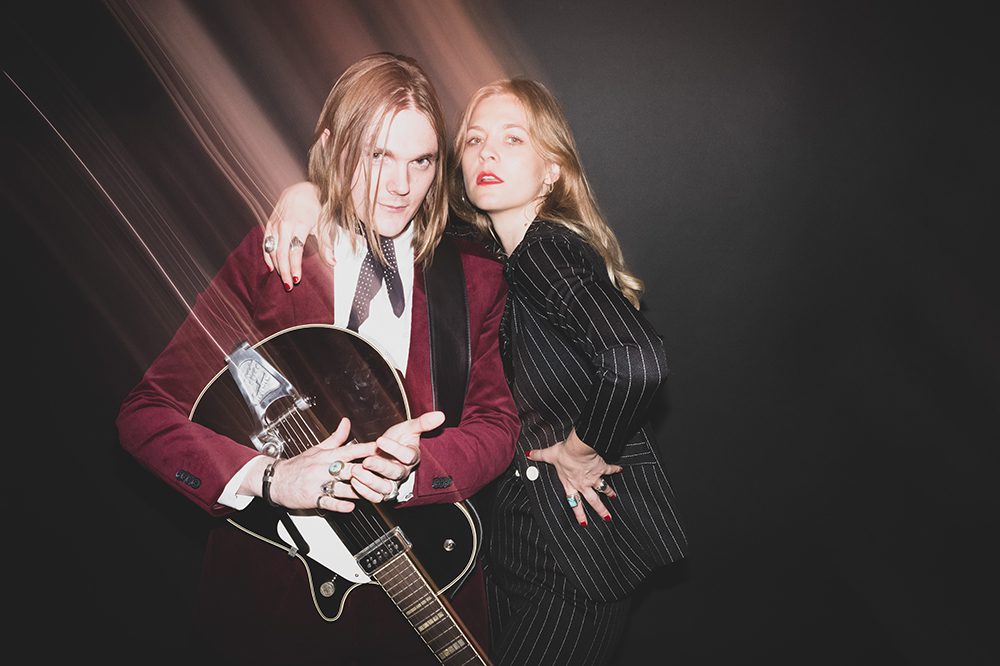
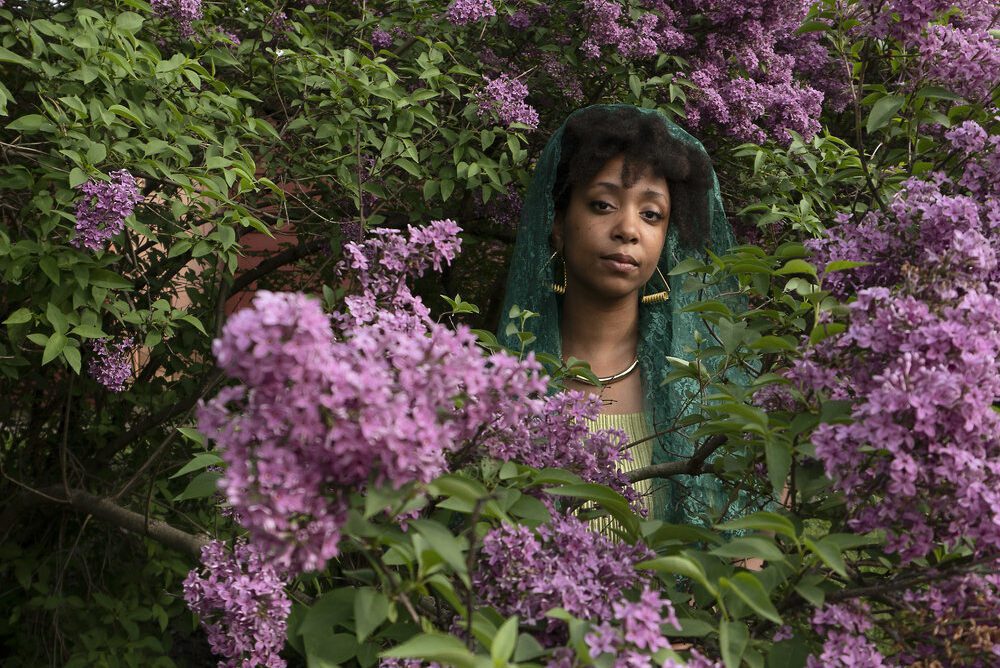
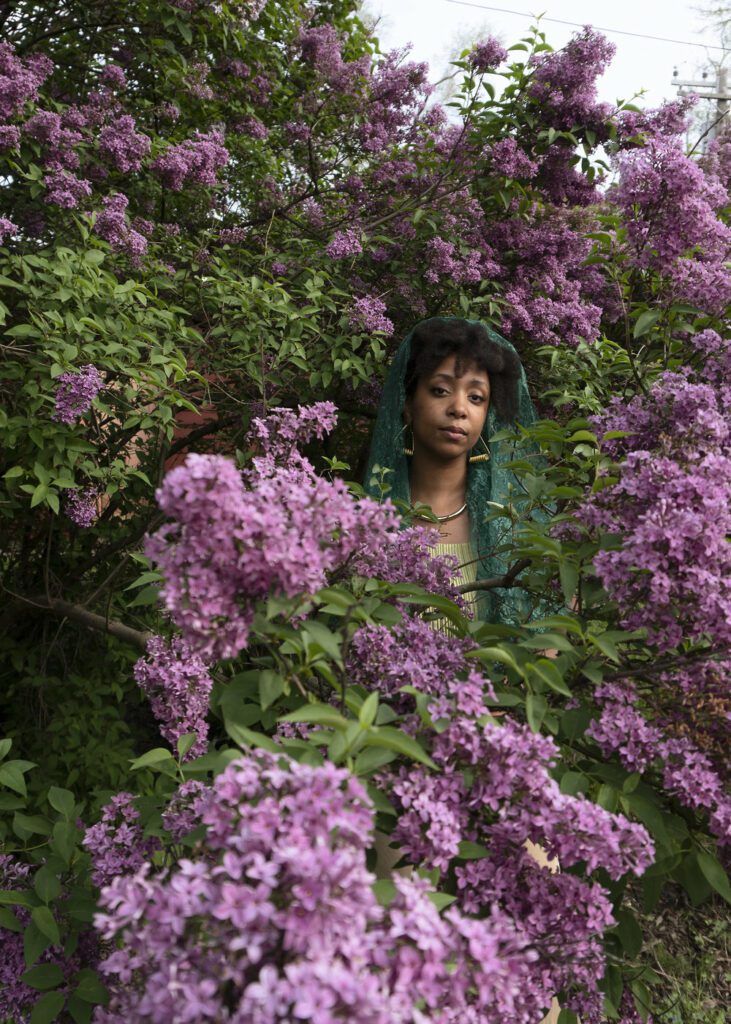
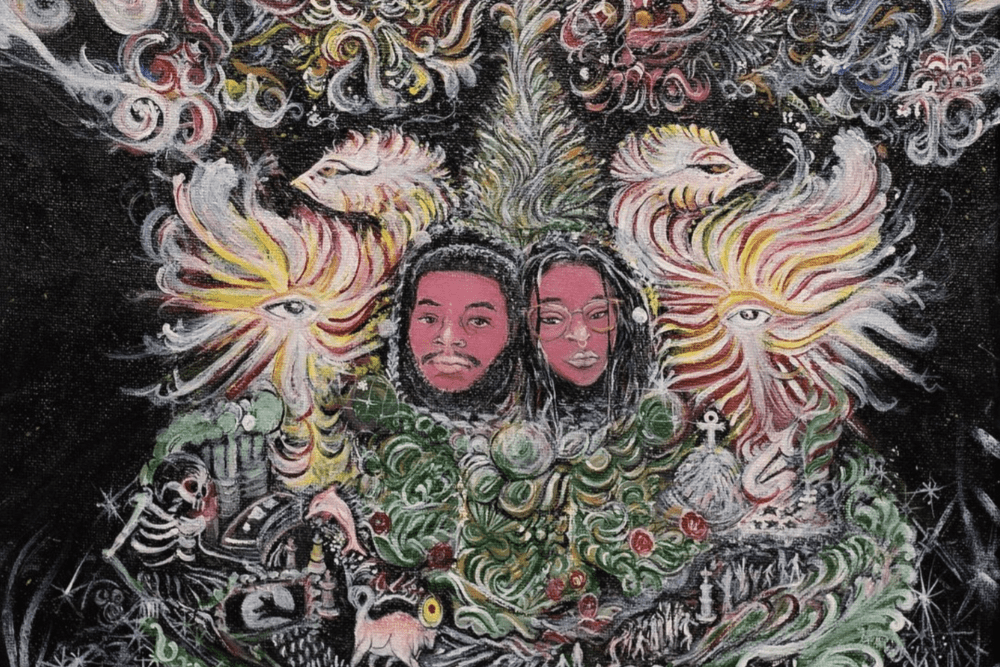
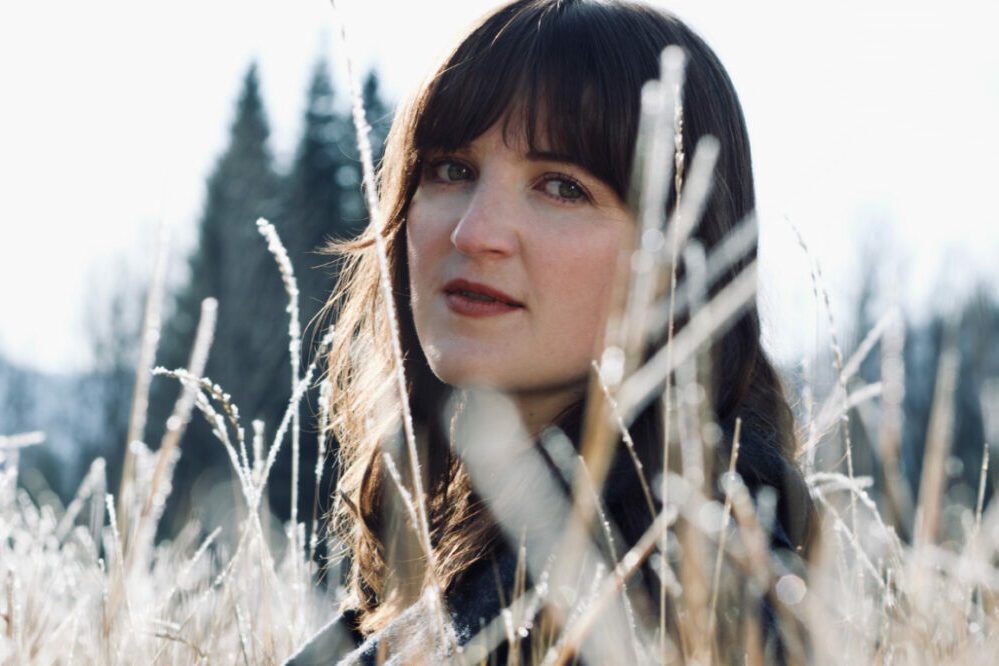
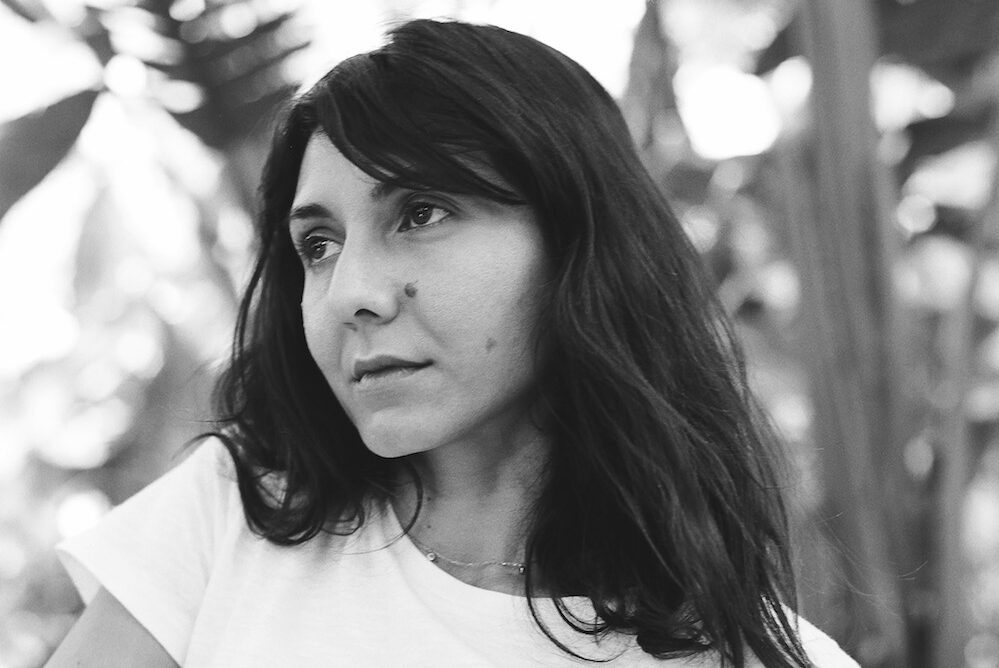
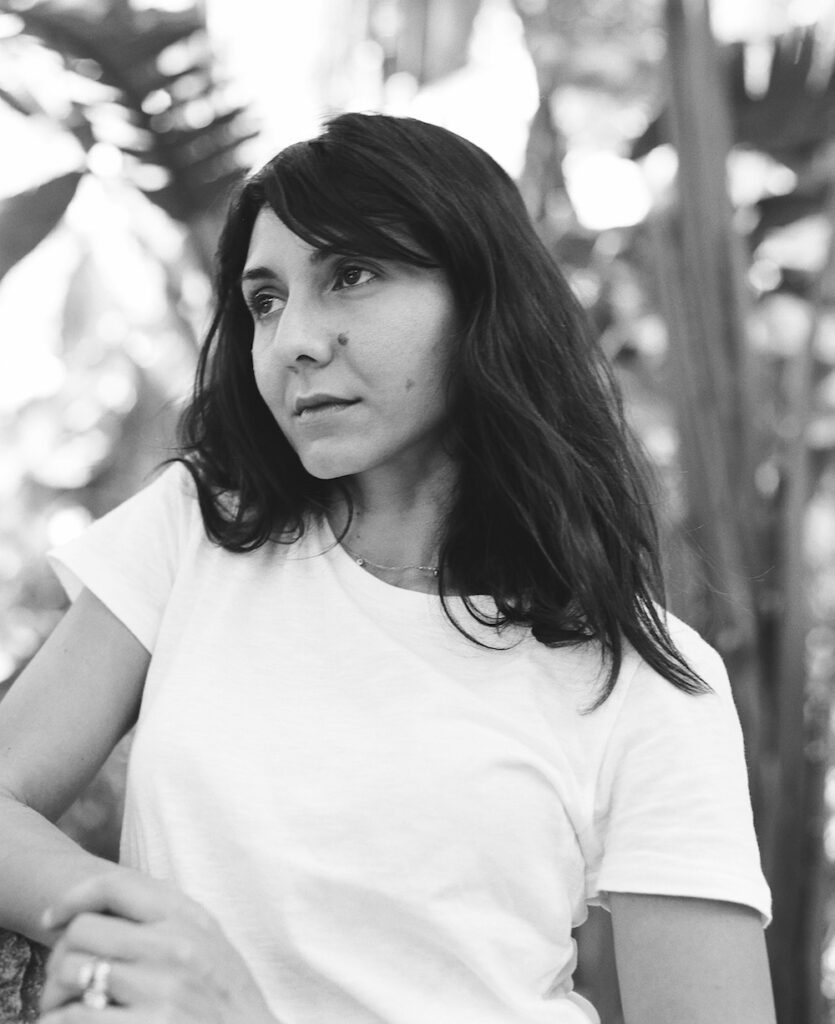
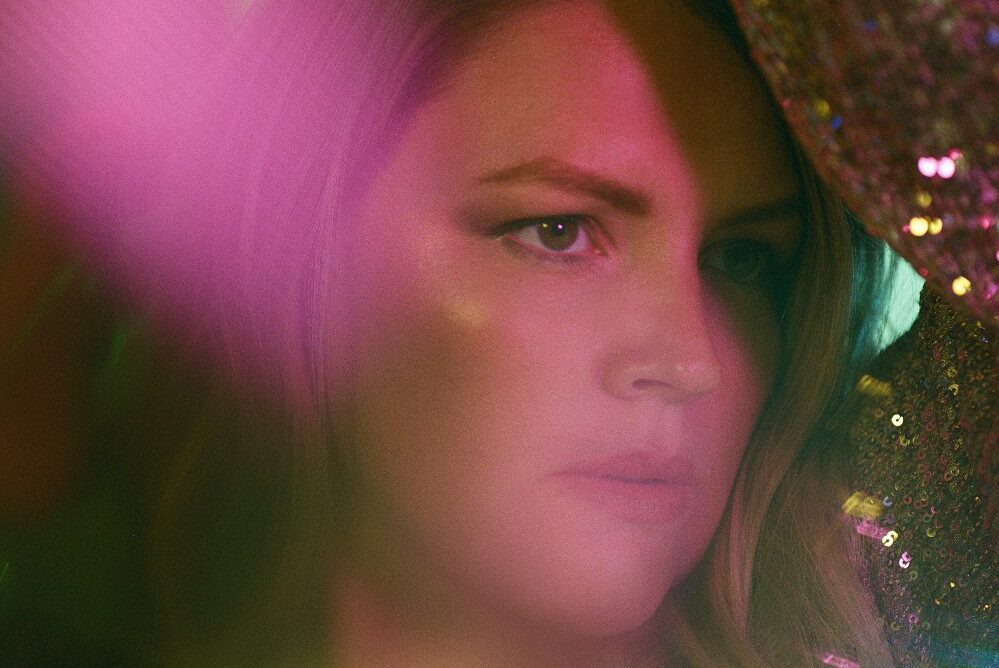
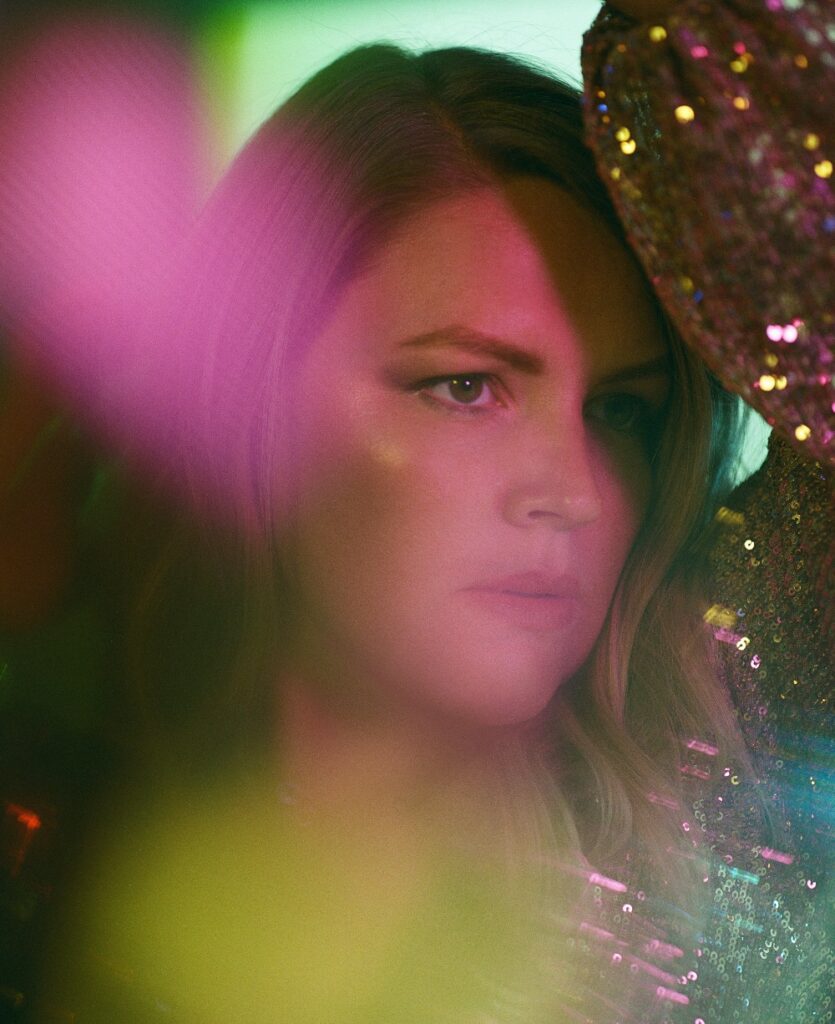
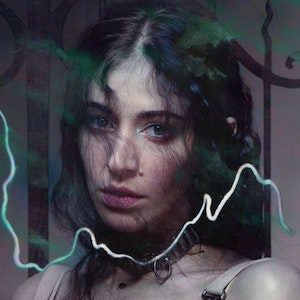
Ashley Monroe and engineer Gena Johnson were sitting on the front steps of historic RCA Studio A, located on Nashville’s iconic Music Row, where the two were recording Monroe’s 2018 alum, Sparrow. Nursing a bottle of Mexican Coke, Monroe handed Johnson her pair of rose gold sunglasses as she told her, “‘the world looks so much better through these. You have to put these on for just five minute and embrace it, take it in.’” Unbeknownst to the friends and artistic collaborators at the time, the seed for Monroe’s new album, Rosegold, was planted. Those seeds come into full bloom this week with the LP’s April 30 release.
Not long after Sparrow was made, new melodies began coming to Monroe’s mind that were a far cry from the traditional country sound the 34-year-old established since moving to Music City from her native Knoxville, Tennessee as a teenager. Intent on creating a “very specific sound” that deviated from her critically acclaimed 2013 sophomore album Like a Roseand Grammy-nominated 2015 follow up, The Blade, the songs took form after she left her record label, allowing her an artistic freedom where she deeply connected to the songwriter within. “Something was inspiring me in the songwriting core of myself of ‘create this feeling that you’re feeling and amplify it and freeze it and reverb it and layer it and harmonize with it.’ I wanted it all to be very different,” Monroe defines to Audiofemme in a joint phone interview with Johnson. “I wear rose gold sunglasses, so I feel like that’s what it feels like when you put this record on.”
Replacing her signature twang with synthesizers and strings and adding pop beats where bluegrass-style instruments used to be, Monroe called upon trusted confidant Johnson to engineer the project. Johnson, whose extensive credits include serving as engineer for Chris Stapleton’s 2020 album Starting Over and Brandi Carlile’s Grammy-nominated By the Way I Forgive You, along with assistant engineer on the late John Prine’s Grammy winning 2018 album The Tree of Forgiveness, made history at the 2021 ACM Awards by becoming the first woman nominated for Audio Engineer of the Year.
Johnson recalls getting a phone call from Monroe early on in the album’s writing stages, and that Monroe described the new songs as “full of joy” and “full of love.” “I was blown away,” Johnson recalls of hearing “Flying,” the first song of the new batch that Monroe sent to her. “I was hooked from the very beginning.”
After penning the songs, Monroe would take them to Johnson’s “lab,” the two spending hours dissecting the songs and adding the right effects to bring them to life. The longtime collaborators trusted the process throughout, allowing the creative energy to take force – like adding a melody to “Groove” that came to Monroe in a dream days before mastering was complete, or Johnson going so far as to purchase new sound equipment to elevate the melodies. They also added little tricks along the way, such as the sound of a camera flashing on “See,” or whale noises layered over a hip-hop beat on “I Mean It.”
Each song was given a treatment that emphasized its meaning; for instance, the pair consciously made “Flying” feel exactly like its namesake when the piano and strings meet the pop bass. “I really work with emotion and experimentation,” Johnson explains of her process. “It was inspiring to be able to go out of my comfort zone and what I wasn’t used to doing as much and really go 100 percent in what feels good and not what it is right for a specific genre. Not having those limitations was epically creative and opened a door for me, too.”
Perhaps just as distinct as the sonic evolution is the lyrical one. Monroe was intentional about leaning into lightness with Rosegold, a contrast to the heartache and sorrow that was wrapped around her angelic voice on her previous records. Many of these darker tales were inspired by Monroe’s real-life tragedies, such as when her father passed away from cancer when she was 13 years old. “My life was bad, and I’m not saying that lightly,” she says with a slight chuckle. “Shockingly, it went from great to bad times, and then I held onto music in a different way.” The East Tennessee native was adamant about making a “joy-based” record this time, a by-product of becoming a mother to three-year-old son Dalton in 2017, whom she was pregnant with at the time of making Sparrow. “I think that my last record opened the door to this new part of me,” she says. “This love switch has been turned on inside of me and set on fire in a sense that I haven’t felt in a long time.”
Monroe brought this joy-based mindset into the lyrics, a direct reflection of the quiet moments she experienced at home with her husband and son during the COVID-19 pandemic, sprinkled like gems across the project. “There were a lot of moments of stillness with the sunshine shining in the windows that I was trying to hold on to,” she details. “Lyrically, I wanted all of the words and all of the things I was saying and all the melodies to line up to take people away and freeze time for everybody for a second. I was hyper-focusing on words and talking about love that also provided the feeling that we were going after, that warm feeling, that moment in time when everything is okay and you’re just drenched in joy.”
Those moments of pure joy shine through in such potent imagery as “you’re a California/Pourin’ that sunshine on my soul” on “Gold” to the love-soaked “I Mean It” where the singer feels deeply present, Johnson purposefully accentuating all aspects of her voice as she sings, “I’d be in the dark without your light/When I tell you I can’t live without you baby/I’m not talking crazy/I mean it/Your love’s the only breath I’m breathing.”
Then there’s the gentle “Til it Breaks” that Monroe wrote with a friend in mind who was going through a challenging time. Though written pre-pandemic, Johnson says she was brought to tears by the encouraging number that feels like a hopeful hand extending through the darkness, as Monroe reprises in a meditative manner, “let it melt away.”
Monroe brings her own inner odyssey to light in the introspective album closer, “The New Me.” Co-written by Monroe and her longtime friend and songwriting collaborator Brett James, she spent hours re-working until her distinct vision was met. “Take a peak inside my soul/All the rust has turned to gold/It’s different now/I can’t wait ’til you see,” she beckons, the eclectic ballad serving as a symbol of rebirth. “It means reborn on the inside,” Monroe says. “Once you truly understand how to love, and the power of love, and once you are humbled by it and surrender to it in a way, you’re a different person.”
It’s no coincidence that an album built on purity and light ends with a choral of angelic vocals leading into the words “I’m alive and on fire/Now that I’m ready to love,” sending the listener out with the chills that Monroe and Johnson felt while making the dynamic project. “We both know what a gift is and what something you’re born to do is, and we both feel like we’re doing what we’re born to do,” Monroe reflects.
“I think setting our intentions and being really intentional about having joy and leading with positivity, and knowing where we’re at and having big conversations and getting in the right mindset, was huge. It’s all emotion to me. Anytime we could get goosebumps ourselves, we knew we were doing it right,” Johnson observes. “The record to me feels like love through and through. From the beginning to the end in different stages, it embodies it.”
Monroe initially believed that Rosegold would only be a collection of five songs. But it later doubled in size to encompass 10 tracks as experimental as the woman who created them, one who embraces the artistic process at every step. “I always like to give people chills. I think that’s a good sign. That means that you’re connected to the spirit when you can supply a set of chills to someone. I wanted all of these to be constant joy chills,” Monroe proclaims. “I felt like it was telling a complete story.”
Follow Ashley Monroe on Facebook for ongoing updates.
In the world of pop music, it’s easy to get put in a category; the “edgy” one, the “hot mess,” the “Queen.” Or, if you’re Karli Morehouse of Grand Rapids indie-pop outfit Lipstick Jodi, the “gay” one. The non-binary songwriter and artist has spent years being labeled and pigeonholed because of their identity and is more than ready to break the constricting molds embedded into the foundation of pop music culture. On their latest single, “Take Me Seriously,” premiering today via Audiofemme, Morehouse brings their frustrations and anxieties to the forefront and gives listeners the chance to do the same. Following the band’s previous single “Notice,” as well as a remix by Now Now, “Take Me Seriously” will appear on the band’s sophomore LP More Like Me, out June 4th via Quite Scientific.
As one of the only openly queer kids in their Midwestern high school growing up, Morehouse has grown accustomed to standing out. And as hard as it was to find people like them in their community, it was even harder to find pop artists that reflected them. Aside from one of Morehouse’s all-time favorite artists, Tegan and Sara, it felt like every big pop star adhered to a very specific set of aesthetic and sonic standards. Nevertheless, Morehouse fell in love with everything about pop music. “This is all I’ve wanted to do since I was a kid,” they explain.
Raised on ’80s icons like Prince, Cher and Pat Benatar, Morehouse’s songwriting is imbued with nostalgic synths and infectious melodies, as is evident on “Take Me Seriously.” Marrying their power pop instincts with a desire for inclusivity, Morehouse’s lyrics are intentionally vague, leaving room for people to imbue the song with their own meaning. “They’re specific to me, but… they’re kind of vague statements that can give whoever is listening something to hold on to,” says Morehouse.
They explain that this elasticity is inspired by seeing themselves and other queer artists get tossed around in an echo chamber instead of breaking through to larger audiences.
“I’ve always found that a lot of queer artists just end up playing to queer people, which is fine,” says Morehouse. “But I wanted to reach across the board and just play to whoever wants to listen.” They explain that well-intentioned playlists and charts highlighting “women in music” and “LBGTQ+ musicians” can further isolate marginalized musicians rather than integrating them into the pop mainstream. “If anyone calls me a ‘female artist’ one more time, I swear to god,” says Morehouse. “Not only am I non-binary, but it doesn’t matter, I’m a musician.”
And as the lead singer/songwriter for Lipstick Jodi, Morehouse flexes their lifetime of diverse musicianship. Aside from absorbing the romance and robustness of ’80s pop, they were interested in piano and guitar from an early age. Their grandfather, a career musician, gave them their first kid-sized piano and encouraged them to explore other instruments. “My mom didn’t want to commit me to anything and make me hate it, ‘cause that’s kind of what happened to her,” says Morehouse.
From there came countless performances, including a LeAnn Rimes cover, forming their first band in ninth grade and hitting up the Grand Rapids, Michigan coffee shop and brewery circuit. They founded Lipstick Jodi back in 2014, but only started honing in on their sparkly, synth-driven sound in the last few years. Starting out, Morehouse was quickly introduced to the closed minds of certain audience members or talent buyers. “They would call us the gay band and the girl band all the time,” they say. “I was just like, good job for recognizing a haircut? I don’t know why you’re upset.”
In “Take Me Seriously,” Morehouse distills a universal angst, applicable to anyone experiencing heartbreak, setbacks or haters. Razor sharp guitars, bold percussion and potent vocals deliver their cathartic message of pain and resilience. “I’m able to put whatever anxiety, whatever depression I’m feeling into a statement,” says Morehouse, “and kind of hide behind it and give it to somebody else.”
Gabby Bianco is exactly the kind of friend you want in your corner – stylish and cool, equally down to provide the soundtrack for a night on the town or give you some pointers on how to make music in your bedroom. And when you need a reality check, she’s the type to tell it like it is, boost your confidence, and help you move on.
That’s the idea behind the LA-based producer’s latest single (released under her eponymous stage name BIIANCO) “that’s what friends are for.” Though she’s lived on the West Coast for over a decade, she still rocks her ride-or-die Italian New Yorker roots, best heard in ball-busting lines like “Screw you ex/He’s a bitch and so are all his friends/I wouldn’t say a goddamn thing to them/’Bout who you are or where you been/Thick or thin.” Atmospheric synths and a slow-burning beat give the track a cinematic, ’80s horror-redux vibe, so it’s only fitting that the video for the track take that motif a step further; in it, she and her gal pals fend off a series of exes who have come back from the dead – quite literally.
But this isn’t just a music video. It’s a music video game. Via BIIANCO’s website, you can test what kind of a friend you really are by helping the characters choose whether to give their exes a second chance, or slay their proverbial relationship demons (the version below is the “winning scenario,” but playing for yourself is much more fun).
BIIANCO had been percolating the idea for a while. “This was one of the first songs I had written and produced and I thought to myself years ago, this has to be a zombie video – like us destroying zombies in slow motion and stuff. But I was like, how do I nail this concept in a way that doesn’t just feel like a cliché horror kinda thing?” she recalls. “At the same time, over the past two years, I’ve watched my friends and also felt myself go through some really toxic relationships and breakups and [seen] people, especially in quarantine, not acting themselves or exes doing horrible things. Everybody has a relationship that ended in a way they’re not proud of – no one’s perfect. People become the worst versions of themselves, almost like they’re fucking zombies or something. It’s kinda this affliction of people just not having basic coping mechanisms in breakups, where no one’s the best version of themselves.”
It’s a salient metaphor, one that makes very clear that we shouldn’t indulge our desires to rekindle relationships that don’t serve us – but it’s a lot easier to make that decision when our exes’ flesh is rotting right before our eyes. Still, incorporating a decision-making element for the viewer felt central to BIIANCO’s concept – even more so as a self-professed “video game nerd” with a penchant for classic RPGS like The Legend of Zelda and Final Fantasy. Working alongside longtime friend and director Scott Fleishman, she combined the nostalgia of Choose-Your-Own-Adventure Goosebumps novels with the modern tech of Black Mirror interactive movie Bandersnatch into an interactive, but streamlined take on the pitfalls of dating, even calling out bi erasure, a subject near and dear to her heart as a gender-bending, queer pansexual femme.
“When we realized what would be required in order to achieve this I was like, holy fuck! We basically shot eight music videos, and had to plot the whole thing out beforehand, and then had to edit eight music videos and code an entire website. It was wild,” BIIANCO laughs. “I’m such an Aries that if anything sounds hard, I probably wanna do it at some point.”
Being a loyal, trusted friend certainly paid off for BIIANCO – pooling her talented circle for everything from direction to motorcycle rental to special effects to building the website that allows viewers to play along, she was able to create what looks like six-figure shoot on a shoestring. “I basically have found myself in this fucking amazing collective of friends, where people are all in the creative industry in some way,” she explains. “Literally my best friend since friggin’ kindergarten is an incredible programmer; he coded the website. He wanted to buy a new motorcycle, so he rented a Ducati for the weekend [but let me] ride it for five minutes for the video.”
By casting her friends and styling the shoot straight from her own closet, she was able to allocate a bigger budget for special effects. “I was like, if we’re doing this, we’re doing this for real, not like shitty Frankenstein makeup. We’re getting makeup artists from The Walking Dead. Everybody knew somebody who was really great at what they did, and it’s such a passion project for everyone that you end up in this really amazing situation where everybody’s willing to work on a budget or work within the confines,” BIIANCO says. “It always goes multiple ways – I’ll help somebody set up their whole tour rig, or somebody will come to me with an idea and want to co-direct something. I try to be as supportive as they are to me. Get you a pod, a group of friends, where you have something to contribute to their lives and they have something to contribute to yours.”
BIIANCO doesn’t stop at contributing to her friends’ creative projects; on TikTok, she offers production pointers with a good dose of her exuberant personality. She started doing mini-lessons on how to achieve certain effects on a whim, but ended up amassing thousands of views, building her audience from there. Demystifying her process as a producer is essential, she says, to getting more women involved in the production side of music.
For her part, she started off as a classically trained pianist, eventually adding singing, guitar and drums to her repertoire before studying film scoring at UCLA. She’d been an early adopter of GarageBand and later, Ableton, expanding to production and musical direction for live shows as a member of Smoke Season. But a women’s Ableton retreat in Joshua Tree changed everything; not only did she meet talented women producers (some of whom, like Madame Gandhi, would eventually become collaborators), but it shifted her perception of herself as an artist in incredible ways and opened up her next creative chapter.
“That was such a pivotal moment in my career because I left that retreat like, I’m a producer, from that moment on. I came out of that like, I have a new solo project, I’m gonna use my last name, and I’m gonna produce everything myself and just lean into that. That was the birth of BIIANCO,” she says. “It’s been a really fluid thought process because it’s all coming from my brain. It tends to be really undiluted and actually very consistent. I’m just going for aesthetics I love. My music is darker, it has some creepy undertones; my aesthetic is darker so that ends up just coming very naturally. It sounds like it’s always in the same world; it’s very easy to write in it and create in it because it’s just basically in my head.” BIIANCO plans to release a mixtape combining some of her previous singles later this year; it will tie in thematically with a book of poetry she published in February titled ThisWill Wreck Your Heart, which centers on unpacking the four stages of surviving toxic relationships.
BIIANCO felt she needed to be “as loud as possible” to get more women involved in production, not only to earn her own respect, but so that other women, particularly younger women, could envision themselves in that role, too. “When I first started producing there was an emotional element kind of like despair, because subliminally and subconsciously, culture and society teaches [women] that’s not really your role,” she explains. “I never even thought about it being a viable route, so I never was in the room at the age of 21, or the age of 16, learning what a vocal chain should look like with a pre-amp and how it goes into a DAW and using an interface. I just realized the gap is so fundamentally huge in experience and it’s because of this very subconsciously perpetuated idea.”
Lately, she’s noticed an uptick – partly due to the pandemic – in women producing their own work, and though that’s heartening, she points out there’s still one huge hurdle for women producers to jump.
“We might have more exposure, but when it comes to money, like when it comes to getting in the room, the labels and the publishers and the big time managers are still fucking choosing the men to produce. I don’t blame the artists, though I hope that the artists start to understand that is where women are completely devoid from the conversation, except when an artist like Taylor Swift intentionally chooses a woman producer,” BIIANCO says. “That’s where the money is, really, like being a Mark Ronson or a Benny Blanco, getting called to do a Selena [Gomez] track. We have placated the issue into thinking like, this is really not that big of a deal anymore, cause don’t you see on Instagram so many women are producers? And I’m like yeah, but they’re not making the same money, they’re not given the same opportunities.”
Just like the no-nonsense advice she gives on “that’s what friends are for,” BIIANCO has a reality check for the music industry. “Don’t think that just because Fader put out a list of the top five women producers to keep an eye on, don’t think just because Grimes has made a couple of records, that you have fixed the problem,” she says. “We are devoid from the conversation in those big money moments. Labels don’t see us as viable options or they just don’t think about it, and that is the next frontier that I think we’re all trying to fucking blow up. Honestly.”
Bella Blasko started her music industry career as a studio intern, but a decade later, she has paved her way as an internationally traveling audio engineer, producer, and mixer, working with some of the biggest names in music. Her approach of intuition and flexibility has led her into rooms recording not one but two records recognized at the 2021 Grammy Awards: Bonny Light Horseman’s self-titled release, nominated for best Folk Album; andFolklore, Taylor Swift’s collaboration with Aaron Dessner of The National, which took home the award for Album of The Year.
Blasko’s accomplishments are particularly noteworthy considering that women only make up 5% to 7% of producers and audio engineers, as reported by the Audio Engineering Society. Throughout the setbacks of 2020, Blasko has remained an in-demand studio wizard nestled in the Catskill mountain region of The Hudson Valley. I Zoomed with Blasko to discuss her humble beginnings, learn some tips, and walk her fantasy-like journey navigating and succeeding in the competitive, male-dominated world of audio engineering.
AF: How did your musical path lead you to the world of audio engineering?
BB: I grew up in New Hope, Pennsylvania, outside of Philadelphia. I started playing piano when I was really young, around six or seven, and then studied classical piano all the way through college. I didn’t really expect to do that, but at some point, I realized it was the thing that I loved the most. I transferred to Bennington College in Vermont my sophomore year, and was interested in taking recording classes with Julie Last. When I met Julie, she was super inspiring to me and made me realize it was what I wanted to do. At the time I didn’t realize having a female role model in that position was so rare. I was so lucky to study with someone I really connected and related to. She made me feel like audio engineering was something I could do, and envision a place for myself in that world.
AF: How would you describe your first professional studio experience?
BB: My first studio internship was at the Clubhouse in Rhinebeck. It’s an awesome studio and it was a really great place to learn and get hands-on work. It can be difficult and competitive getting an actual job out of an internship because there aren’t many positions at a studio, and most artists bring in their own engineers for sessions. The timing worked out for me because an assistant engineer was leaving as I was arriving, so I worked really hard to learn everything so I could take over their position. I also worked at another studio outside of Woodstock called Dreamland. It was a pretty quick transition for me to go from intern to engineer. Being an assistant is all about making things happen the way the artist wants it to happen. You have to learn to be flexible in your approach, while knowing the gear and console inside out. I guess I just learned everything hands-on by paying close attention.
When I was first an intern, I remember going into the studio, seeing a giant patch bay and thinking, how am I going to learn that? What even is that? Early on, I’d stay in the studio after the session and look at how everything was patched and how different engineers or producers would have things routed, then try to study and internalize it. A lot of assistants might just set something up for someone without thinking about why they’re doing it that way, or what’s good about it. It’s so important to pay attention to details like microphone placement, because a slight angle can make a huge difference. Paying close attention over time gave me a set of tools. Once I started running my own sessions, then I could try to figure out from that toolbox, what’s my own style? What do I like? Which sounds do I prefer?
AF: What’s your preferred digital audio workstation?
BB: I primarily work in Pro Tools. That’s the standard in most professional recording studios these days. It’s what I’m really comfortable in and that’s also a helpful part of becoming an engineer, getting really fast and proficient in your program. I also do a bit of Ableton, which I’ve just gotten into more in the past few years when I was helping build some Ableton rigs for live shows.
AF: Can you talk a bit about your work with live shows?
BB: I was helping Aaron Dessner from The National a lot with his band with Justin Vernon of Bon Iver, called Big Red Machine. I designed an Ableton set for them which was interesting because a lot of their work is improvisational, over different sets of ideas and loops. It was pretty fun to work on because I got to design it to be a tool that could help them be creative. The session I built has different tracks on different faders, so Aaron can launch loops at different times and effect them with delays and reverb and filters on pads. It was fun to figure out a way an artist can be engaged with their playback instead of just playing to a pre-recorded track. Once you know a lot of the concepts, you can move back and forth between different audio programs. Ableton makes you think in a less linear way in terms of song structure, which I liked learning because it made me change the way I was thinking. The program led me to not just think in a timeline from left to right, but to think of how you could match different beats and elements that you wouldn’t have thought to put together from different sections, because you’re not looking at it in a horizontal, chronological way.
AF: What do you consider the most basic foundation of audio engineering?
BB: The first thing that comes to mind, that sounds kind of broad, but I think is really important, is the general concept of signal flow. You might learn how compression works, or EQ, these different main elements that we incorporate into manipulating and recording sounds. Signal flow is one of the most important because that’s where it can be easy to get lost when you’re starting off. I think that’s something that people think they can kind of skip figuring out in a really concrete way, because so many things are digital these days, and it makes it seem easy. But when you really have a good grasp on that, then I think you can make almost any setup work, understand how to work in any studio, and be able to move around to any home setup.
AF: Can you talk about your work as a traveling audio engineer?
BB: One thing I love is being able to record anywhere in any setup and not be fussy about it. Before COVID I was on tour for the past few years with The National. We travel with a mobile recording rig in a couple Pelican cases. Just the idea that you can record anything you want, anywhere you want, and with pretty minimal gear, I think that’s really incredible. We’ve ended up recording things that ended up being parts and songs on great records, just backstage at a show, or in a hotel, or any different, weird situation, like the back of a bus or in someone’s office.
AF: What else can you tell me about working with The National?
BB: I love working with those guys so much. I first met them when I was at the Clubhouse probably about ten years ago now. They came in to record their album Trouble Will Find Me and I was the assistant engineer on the record. And they were there for a pretty long time, a couple months I think, and we got to know each other really well. They had some ties to the Hudson Valley, and I continued working on several other projects with Aaron at Dreamland after that. He built a studio in the Hudson Valley, where I work a lot these days. It’s where the Taylor Swift Record was made. I’m the National’s band coordinator and also the touring recording engineer. I don’t do front of house, I do remote studio work because all of the guys have a lot of side projects they work on while they’re on the road. We also record a lot of the live shows, and we’ll set up a studio backstage at a venue or in a hotel room. On tour days where there’s no show, I’ll research ahead of time so we can go into a studio nearby. It’s been wild to end up in studios all over the world on a random day off. I wasn’t super familiar with the band’s music before we started working together, but now they’ve become such a huge part of my working life, and my musical family. I feel like I know their catalogue like the back of my hand now.
AF: Can you talk about your contribution as an engineer on Folklore? It just won Album of The Year at the 2021 Grammys!
BB: The track that I worked on, “Cardigan,” I actually started recording that song idea with Aaron when we were on tour with the National. We were recording backstage in Germany somewhere when he started it, and it grew from that. He’s one of the hardest working people I know. He’s constantly making new music. It’s been really cool to be a part of these different projects that come up working with him.
AF: Can you discuss your work with Bonny Light Horseman?
BB: The relationship with their label 37d03d came through The National, and it enabled me to be involved in a bunch of cool artist residencies. At this amazing 37d03d festival in Berlin, I ended up setting up a makeshift recording rig in a random room where people could just come in to record with me and work on different projects. Out of that experience, the Bonny Light Horseman record started to be made. I’m super excited about it being nominated for Best Folk Album this year at The Grammys. I also contributed some vocals to a song on the record. It’s just super fun to go anywhere, and be in a room recording and find collaborators. And because you can run into different people in different places, suddenly you get new ears on stuff you’ve been working on. Whenever people come and play on things like that it can lead to parts on a track you might not have anticipated before.
AF: Do you feel that being a classically trained pianist supports your role in engineering?
BB: I think my classical background definitely contributes to why I get satisfaction out of being able to make something perfect in the studio. Instead of doing live sound, and problem solving on the fly, I love having the time to try out different microphones and find the perfect one for any given part or voice. I enjoy going down that rabbit hole. I think that’s what drew me in – it probably has to do with being a classical musician, and practicing for hours, really obsessing over one little passage in a piece, or getting the fingering right on just a few measures. That’s contributed to my attention to detail, and feeling at home more in the studio side of things over the live performance world, you know? Being a musician is a big part of what I do, because it informs how I approach things in the studio. It definitely helps to have a stronger grasp on everything that’s going on.
I’m still writing music, and I have an album that I’ve been working on for a while that I’m hoping to release soon. My passion for music never changes, even though sometimes it kind of shifts towards focusing on helping to create and realize other peoples’ visions. I’d say a big part of my approach is just trying to be flexible and musical. Flexibility and vibe is really important to make people feel comfortable. I think sometimes, if you’re in a studio and get too caught up in the technical details, people just aren’t going to deliver in the same way. I think recording should be really fun. I know some engineers try to have a more neutral presence around artists they work with, but I can’t help but be myself in the studio. Anyone I’m working with ends up feeling like such a close collaborator to me. It’s really important to me to create a nurturing and safe environment.
AF: How do you feel the direction is evolving for women in the audio engineering and music tech world?
BB: Being a woman has been a pretty important part of my journey in a lot of ways. When I was first starting to work in studios, I felt like I was really lucky to have Julie Last as a mentor for getting into this industry. But that was rare, and as time passed I didn’t see many other women in studios at all. It made me wonder if there really was a place for me in this world. Early on, I definitely had moments of questioning that. But then seeing that there wasn’t much representation made me realize that that’s why I needed to do it. And that’s why I wanted to work harder to be more successful and be able to create spaces for people who don’t like the typical, kind of more male-dominated studio space that people often think of. I think we need more alternatives to that. I’d love to try to help create those different types of environments where people can have a really safe-feeling space, and just be less intimidated and feel more empowered. I think it’s really exciting to see more and more women getting into music, and I think with the younger generation, it’s becoming more accessible in terms of technology. I see younger women who are not intimidated to walk up to a patch bay and be like, I’m gonna figure this out. Definitely, in touring, I have seen a lot more women working in live sound than I had seen in the studio world, and that’s also really encouraging.
I don’t shy away from talking about the divide because it was one motivating factor for me. And I think it’s not just female artists who want those safer spaces and different types of recording experiences. I think there are many artists who need and want that in studio environments, so it’s definitely one of my personal goals to help create those spaces. If I can be inspiring to anybody else, like Julie was to me – someone who might think, “I don’t know if that’s really a world I could exist in” – just to be able to be an example of a woman doing this job in such a marginalized world, makes me feel happy and proud. I’d love to inspire anyone else to feel they can achieve that feeling.
Like your personal life coach, Audiofemme favorite Madeline Mondrala has returned with a new That Brunette jam called “Capricorn Moon,” and it’s all about rebirth, reframing negative thought patterns, and tapping into creative energy. “The sign of Capricorn is known for its practicality, self discipline, ability to build strong foundations, and impeccable work ethic,” she explains. “New moons mark the beginning of new cycles so I think the combination of those energies in tandem with the state of my personal growth at the time allowed me to see my negative thoughts for what they were; thoughts. It felt like a veil was lifted and I was able to interpret my life and myself from a perspective of love rather than judgement.”
Written during a new moon in Capricorn, and recorded with her friend and producer Ariel Loh (Yoke Lore, Drinker, Cape Francis, Gold Child) at his home studio in Queens, “Capricorn Moon” bursts with positive, motivational vibes. “All I needed was a little time,” repeats That Brunette’s breathy vocals before detailing the steps of her emotional growth: “Excavation/It’s the death of old perception/Took the long way/Wasn’t easy/Trusted in my intuition.”
That Brunette says the song is about shifting your perspective from negative to positive in the wake of a personal failure. “It tells the story of my path to forgiving my past self in order to love my present self. I learned when life pulls you apart, it’s an opportunity to put the pieces back together in a new, beautiful way,” she says.
“It describes a mental shift that took place for me when I decided to move away from self loathing and into self love and acceptance. Something about the Capricorn energy at the time gave me so much clarity and motivation to turn the page and enter the next phase of my life with confidence and joy,” she adds. “When I hear the song it reminds me of how far I’ve come. I hope it can do the same for others.”
Xylophone chimes, throbbing synth, and handclaps give “Capricorn Moon” a non-traditional, organic beat; its meditative moods are driving, rather than calming. “The percussive upbeat energy of the drums propelled the song forward and informed the playful nature of the melody,” says Mondrala. “The song excited us so much that we finished it in only a day or two.” “Capricorn Moon” is the first single from That Brunette’s upcoming EP Dark / Cute, also produced by Loh.
That Brunette is something of an astrology buff – this isn’t the first time she’s looked to the stars for songwriting fodder. As a triple Gemini, she says she engages with the world and with creativity from a heady, intellectual place. “I’m always looking for mental stimulation in the form of wit, humor, originality, or outrageousness. Those preferences make my taste very eclectic and camp, with an undertone of contemplative introspection,” she explains. “I feel that my music totally embodies that vibe. I love to speak truth with a wink. That’s what makes my songs both lyrically interesting and danceable.”
In honor of the release of “Capricorn Moon,” That Brunette put together a playlist for Audiofemme composed of twelve tracks – each one chosen to correlate to a certain sign. For her part, she says, “I think the ultimate Gemini anthem has to be the 1997 hit ‘Bitch‘ by Meredith Brooks. The lyrics ‘I’m a bitch, I’m a lover, I’m a child, I’m a mother, I’m a sinner, I’m a saint, I do not feel ashamed’ embody the duality of being a Gemini.”
Luckily, Mondrala adds, “The people who are closest to me and who I cherish the most are able to handle all the facets of my personality that somehow manage to starkly contrast one another and exist all at once. It can be a bit exhausting sometimes but it’s never dull!”
Charlotte Sands – “Dress”
Inspired by Harry Styles’ Vogue cover, Charlotte Sands went viral on TikTok with “Dress” in December 2020. “The overall vibe of this song along with the person the lyrics describe give me major Aries vibes,” says That Brunette. “It’s super punchy, flirty, upbeat and badass!”
That Brunette – “Platonic”
“I wrote this song about a Taurus in my life who moved to another city,” explains Mondrala. “Their energy had grounded me so much that when they left I felt like a balloon floating out into the ether.” When Audiofemmepremiered this song at the end of last year, she pointed out that “platonic love… can be just as profound and transformative as romantic love” – a message Taureans can certainly appreciate, since they’re ruled by Venus and known as one of the most loyal signs.
girl in red – “Serotonin”
Norwegian singer-songwriter Marie Ulven is brutally honest as she rattles off her darkest urges on her alternative-tinged tune “Serotonin,” co-produced by Billie Eilish collaborator/sibling FINNEAS. That Brunette can relate to girl in red’s almost frightening rawness. “I struggle with intrusive and negative thoughts and when I heard this song I felt seen,” she says. “Since Geminis are so word-oriented, a lot of time our anxiety can manifest itself in words too. It feels like your brain is using its own nature against you. This song embodies that dissonance perfectly.” girl in red’s anticipated debut album if i could make it go quiet drops April 30th via AWAL.
SOPHIE – “It’s Okay To Cry”
SOPHIE was nothing short of a musical visionary, and her fatal fall from a tower in Greece in January 2021 was especially shocking. But the lead single from her first (and sadly, only) proper studio album, 2018’s Oil of Every Pearl’s Un-Insides, provided a powerful, almost prescient message to embrace our most uncomfortable moods. “RIP Sophie and thank you for this beautiful song. It always makes me think of the sensitive Cancers in my life,” says Mondrala. “I’m drawn to their watery emotional energy because I have none in my chart!”
Young Baby Tate (feat. Flo Milli) – “I Am”
“This is the ultimate self-empowerment song,” says That Brunette. “Leos are amazing at asserting themselves confidently. This song helps me get into that manifestation mindset that comes so easily to them.” In fact, the Atlanta-based Tate Sequoya Farris told Rolling Stone that her latest EP, After the Rain (on which “I Am” appears), was written as a way of talking herself through a difficult breakup – so feel free to put it on when you need some affirmation, no matter your sign.
Qveen Herby – “Sade In The 90s”
“I’m allergic to the bullshit,” claims Qveen Herby in her 2018 ode to iconic smooth jazz singer Sade, going on to prescribe orange soda and Deepak Chopra as essentials for her self-care routine. “Virgos are so good at living in the flow,” Mondrala says. “This song is all about filling your own cup and taking good care of yourself inside and out so your light can shine as bright as possible.” Qveen Herby’s “I keep it moving/Put that shit behind me” mantra definitely reflects that practical Virgo nature.
Taylor Swift – “gold rush”
“Libras are my kryptonite – effortlessly cool, beautiful, charismatic, just out of reach,” admits Mondrala. “The person Taylor describes in this song has such Libra energy to me.” Swift characterizes that person as someone that everybody wants on the evermore fan favorite, so much so that she has to remind herself not to be charmed by their magnetism – a trait Libras are definitely known for.
That Brunette – “Coolest Girl”
Scorpios can be very beguiling – independent, emotional, ambitious, and intense, they’re one of the most misunderstood signs, and they actually prefer to remain mysterious. “I wrote this song for a Scorpio in my life,” says Mondrala. “They really are the coolest aren’t they?” That Brunette’s slinky synths meet a surprising twang on the track, almost like the seemingly contradictory characteristics of those Scorpios who always keep us guessing.
King Princess – “Cheap Queen”
The surreal video for “Cheap Queen” tells you everything you need to know about a Sagittarius – their curiosity and quirky sense of humor make them irresistible and fun to be around. Mondrala says, “Listen, Sags can hang! They know how to take care of themselves and those around them. This song song gives off that chill, self assured, yet slightly lonely Sagittarius vibe.” As it turns out, King Princess is actually a Sagittarius – but told Vulture that the song was more an homage to the queer community than an autobiography: “We are all cheap queens. It’s a drag term for someone who is resourceful, who makes something out of nothing, who is a creator on a budget. That’s how I feel.”
That Brunette – “Capricorn Moon”
“This song is all about learning from your past and taking failure as an opportunity to rebuild a better more fully realized version of yourself,” Mondrala reiterates. “Capricorns are masters of practicality. They look at everything logically which can be very helpful when you’re in the process of evolution.” On this song, That Brunette acts as a conduit for that redirection, whispering “Do you feel it too?” like your reliable Capricorn friend might.
Vagabon – “Water Me Down”
Brooklyn singer-songwriter Laetitia Tamko, aka Vagabon, is a bit of a kindred spirit when it comes to pulling inspiration from the zodiac; she opened her 2019 self-titled debut with a track called “Full Moon in Gemini.” Also from that record, “Water Me Down” hinges on the indignation of being misunderstood – a definite Aquarius trait. “Aquarians do not compromise who they are for anyone,” says That Brunette. “This song has a subtle strength to it that definitely reminds me of Aquarius people in my life.”
Olivia Rodrigo – deja vu
The latest track from “the Pisces queen herself” packs all of the emotional punch Rodrigo’s sign is typically known for. Pisces often fall fast and hard when it comes to relationships, and can have a hard time letting go. Telling the story of an old flame who has moved on to a new relationship only to go through the same motions with someone oddly similar, “deja vu” seethes with heartbreak and bitterness. But belting “So when you gonna tell her that we did that too?” – maybe while driving through your exes’ suburb – is perfect for indulging in a little Pisces-style catharsis.
In a time when Taylor Swift is in the midst of re-releasing her entire catalogue, nostalgia is reigning supreme. Millennials long for the days of screaming “Love Story” with the windows down on the way to soccer practice or crying into their diary to “You Belong With Me.” Let’s face it, high school sucks, but it’s looking a lot better than most of our current situations. Toronto-based duo Babygirl harnesses that same raw Y2K teen pop magic on their debut EP, Losers Weepers.
Kiki Frances and Cameron Breithaupt bring combined influences of Hillary Duff, blink-182, Kelly Clarkson and Alvvays to create self-aware underdog pop for the angsty adolescent in all of us; although their melodies are soaked in nostalgia, their lyrics contain a contemporary exhaustion that feels all too familiar. “Nevermind” encapsulates the residual saltiness that comes with the aftermath of a one-sided relationship. Frances sings, “Thought we were both in the deep-end/But you’re only in town for the weekend,” capturing the non-committal aura surrounding most people in their 20’s. The sun-drenched chorus feels like the sonic child of Sheryl Crow and Avril Lavigne, reminding the listener not to take anyone or anything too serious. “We made an effort to offset some of the bummer lyrics by making the productions playful and sweet, almost hopeful. We always want to make it feel bittersweet,” says the pair.
While most of the songs hover around the context of love lost or found, “Million Dollar Bed” also incorporates a reflection on the futility of chasing money or fame in search of happiness. The lyrics paint a picture of a heartbroken soul replacing love with possessions: “Chasing a daydream to forget we ever happened/Pretty distractions/I’ll be happy when I have them.” This is a deeply relatable sentiment for someone (me) who has turned to online shopping as a coping mechanism during the pandemic, hoping the next box will be the one to restore peace and balance in life.
There is not a line on this record that isn’t perfectly crafted to stick to your brain like that awkward thing you said in 2007. It makes sense, then, that Frances and Breithaupt met in music school and bonded over their obsession with making top 40 music. “We had similar tastes when it came to pop music and that made us want to try working together,” says Frances. “We were just like, how do we write a hit song? You seem to care as much as me. Let’s figure it out,” adds Breithaupt. The band explains that they have to agree on every part of a song for it to make it out of demo-mode, which makes for a long and sometimes arduous writing process. But despite their calculated approach to writing, Babygirl’s songs don’t come off as try-hard or cringe, but more like a conversation you’d have with your best friend, or yourself.
In “Today Just Isn’t My Day,” Babygirl presents a familiar internal monologue — “I’m all out of steam/I’m all out of weed/Today just isn’t my day.” The song allows the listener to stew in self pity while reminding them not to stay there forever. Simple guitars, percussion bells and wells of strings keep the song from feeling too dark, like laying in bed all day in a sunny room. If the band’s organic arrangements set them apart from most modern popstar hopefuls, their intuitive melodies are what bring them back to center.
“One of the earliest physical copies of an album I remember having was a cassette of Backstreet Boys’ Millennium. That was definitely melodically really important for me,” says Breithaupt. The band recreates the accessible lyrics and melodies of late ’90s, early 2000s pop while leaving most of the melodrama behind. There’s something about hyper-cute lyrics sung in a nonchalant falsetto that just works, and Babygirl seems to get that. Although, their “dream band” would not be as low key: “Let’s just take Coldplay, make Lindsay Lohan the lead singer, have Ne-Yo write the songs, have Kanye executive produce them, and call it a day,” says Babygirl.
Brisbane-based singer-songwriter Asha Jefferies was suffering a serious case of writer’s block last year, when inspiration struck. The end of a long-term relationship provided her with permission to question her identity, her goals, and – ultimately – her sense of self; it wasn’t an ideal situation, but it certainly cured Jefferies’ creative paralysis. She wrote the beautiful, reflective “Crybaby,” which features a more poppy sound than the melodic indie folk of her previous singles.
“The song is mostly about realizing the personal freedom that I had, and that I wasn’t allowing myself to have,” Jefferies says. “It’s so easy to tell yourself that you can’t do this or you can’t do that, but at the end of the day, you’re the only one that’s holding yourself back.”
A couple of months after breaking up, Jefferies got back together with her partner, Josh Tate. He’s also the visual artist, filmmaker and photographer for much of her work, so they had to reshape both their professional and personal relationship. The song, and the breakup, have led to a deeper connection, according to Jefferies.
“We were able to re-form our relationship. [‘Crybaby’] was all about the transitions and how positive relationships can die, but the relationship can [be repaired and] move on. Josh does all the creative content for my work, so it’s been a really interesting time collaborating and putting together a music video for the song about that breakup.”
“Crybaby” was created during the pandemic, at a time when Brisbane was not under the same harsh restrictions as Melbourne. Jefferies was able to meet with her producer Aidan Hogg (also a co-writer, producer and bass player in Jaguar Jonze) several times a week to write and record. They’d first met when Hogg was working as a sound engineer in the studio where Jefferies was recording and the two remained in touch; Hogg also played bass for her during her live performances in 2019.
Jefferies reached out to Hogg in May last year and asked if he was interested in writing and recording. That kicked off a few months of productive sessions at Plutonium Studios in Brisbane. “Going into the studio and talking to Aidan was so good for my mental health,” she says. “Being able to leave my home and be able to go and work.”
Home was a “really, really busy share house” last year, and Jefferies was limited to creating music on GarageBand in her bedroom. “I didn’t really feel that comfortable playing my guitar and building songs that way, so I would just put headphones on, sit on my computer, and record chords and melodies. It’s really addictive, and it’s been such an awesome way to teach myself how to produce in a really basic way.”
Working with Hogg was a contrast to her experience working on previous release “Break” with producer Ian Haug, songwriter and guitarist for both Powderfinger and The Church. Jefferies had applied to the American Express Music Backers Fund, winning a day of studio time with Haug and engineer Yanto Browning at Airlock Studios in Brisbane. Though they’d never met, Jefferies says the Brisbane music scene is one of pure support and “wholesomeness,” where emerging artists are given the friendship, support and advice to become recognised.
“A lot of the songs I’d written were with Aidan, so I brought in a bunch of demos from the last two to three years,” Jefferies remembers, adding that they settled on “Break” because everyone involved felt connected to it. The finished version shimmers in morning light, sparse piano chords, romantic layered harmonies, and luxuriates in the enormous spaciousness created by clever composition. “The way that Ian produces is so intuitive, and he really listens to all the lyrics especially, and [knows] what parts should be really delicate and what parts should crescendo. He’s always got so many mixing notes. He’s just so into it, it was really cool.”
They’ve talked about working together again in the future, but for now, Jefferies is writing by herself, a process she says feels organic, authentic, natural. Jefferies uses these same words when describing the artists she admires most, including Australian indie-folk pop acts Kate Miller-Heidke, Josh Pyke and the John Butler Trio and New Zealand artist Nadia Reid.
“I started singing really young and I wanted to be a diva, a pop star, but when I was 10 or 11, my dad took me to the Woodford Folk Festival. It was the first time I’d seen live music and all these really rootsy artists,” she recalls. “I think what really struck me was how real they were, and the connection that they were having with the audience. From then on, and throughout high school, it was so much about what the story is that I want to tell and how do I want to connect with people.”
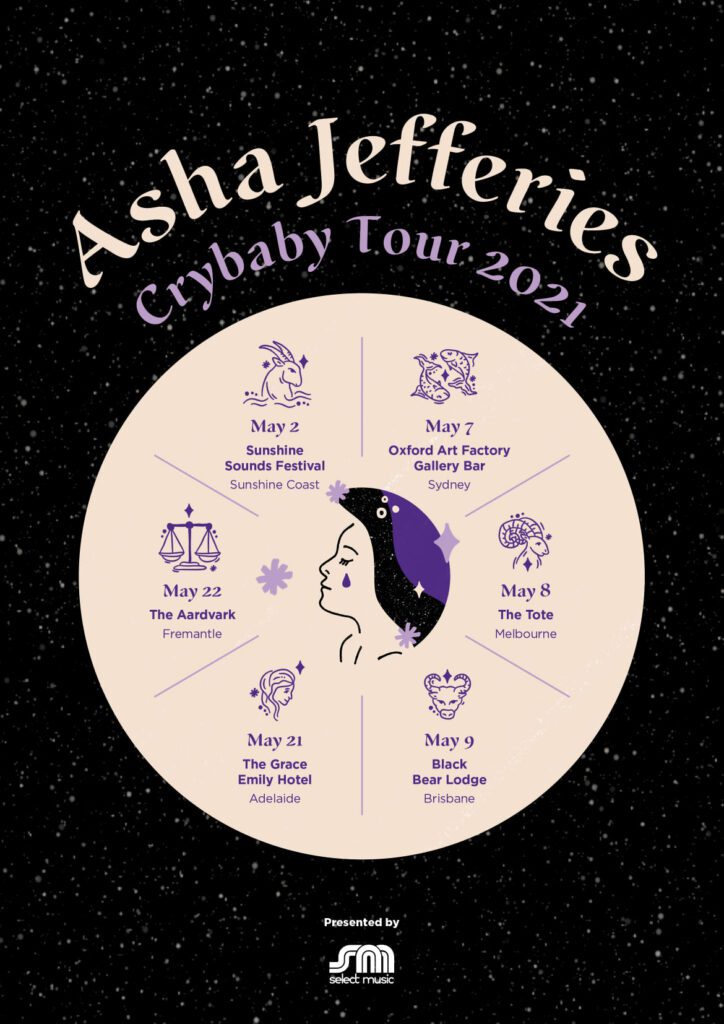
Asha Jefferies will be connecting with audiences again soon – she’s assembled an all-female band (Jaymee Watkin, Vlada Edippulit and Jo Davie) and they’re preparing for a national tour, kicking off May 1 with a Sunshine Sounds Festival set at Eumundi Showgrounds in Queensland. Tickets for headlining gigs celebrating the release of “Crybaby” in Sydney, Melbourne, Adelaide, Fremantle and her hometown of Brisbane, are on sale now.
Follow Asha Jefferies on Instagram and Facebook for ongoing updates.
Welcome to Audiofemme’s monthly record review column, Musique Boutique, written by music journo vet Gillian G. Gaar. Every fourth Monday, Musique Boutique offers a cross-section of noteworthy reissues and new releases guaranteed to perk up your ears.
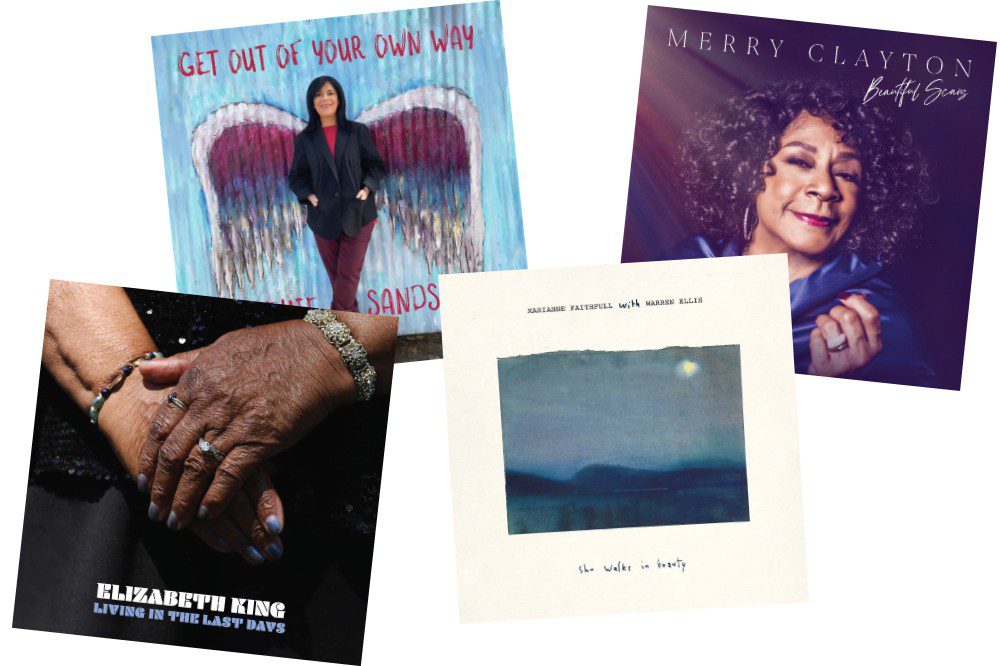
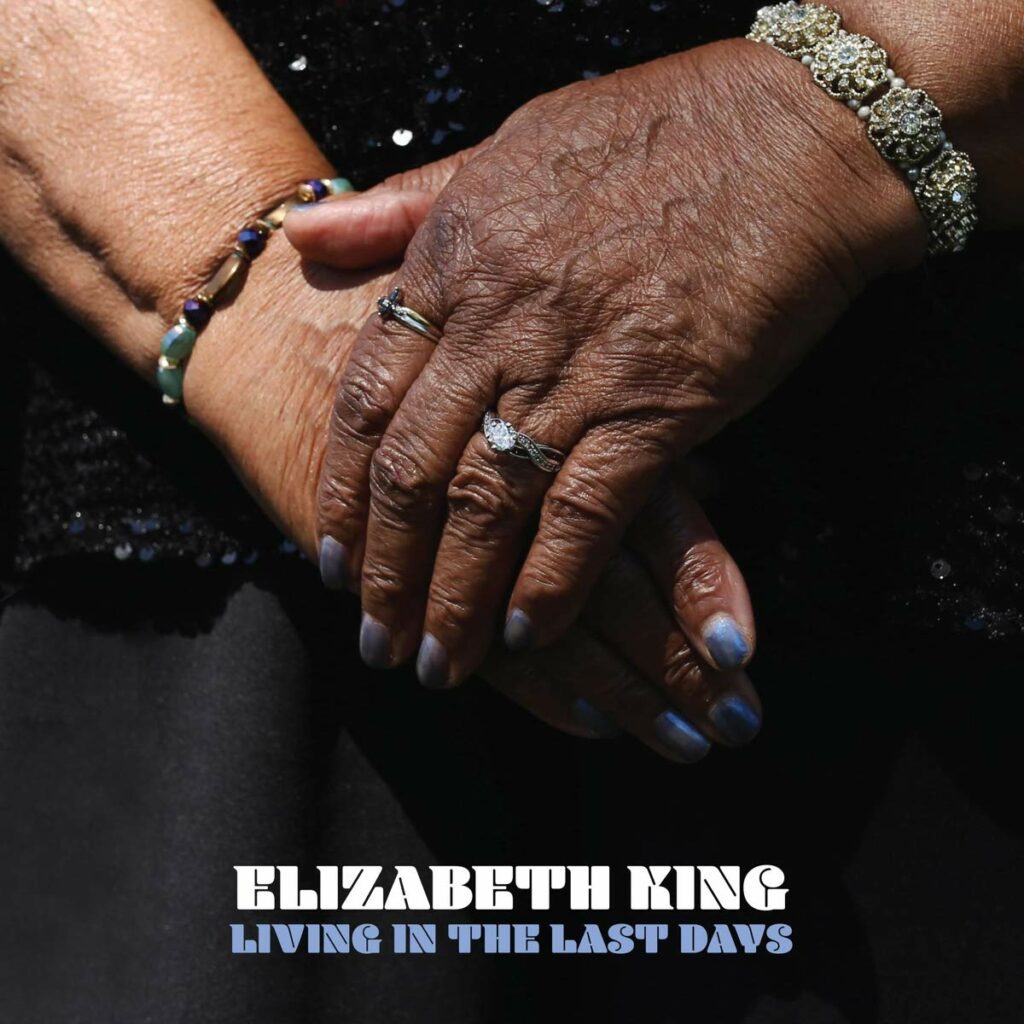
Elizabeth King’s life was always centered around the church. “We had preachers in our family, my mom and my daddy was church people, and mom was a great singer,” she told the Memphis Commercial Appeal. “That’s just how I was brought up.” She began singing at the age of three, later recorded with the all-male Gospel Souls, and subsequently formed another singing group, the Stewart Family. But she wasn’t interested in seriously pursuing a singing career, because of her reluctance to tour while she was raising her family (she was eventually the mother of fifteen children).
Which is why it’s taken her so long — King is 77-years-old — to finally release her debut album, Living in the Last Days (Bible & Tire Recording Co.). King has a commanding voice, as is evident from the opening track, “Blessed Be the Name of the Lord,” performed acapella to further emphasize her power. Elsewhere, she’s backed by the vibrant Sacred Souls Sound Section, who make foot-tapping numbers like the title song really jump and swing. When King and the Sacred Souls lock into a groove together, as in “Reach Out and Touch” and “Testify,” the musical force they generate is irresistible. She’s just as compelling in slow burning numbers like “Walk With Me” and “You’ve Got to Move.” This is uplifting music that will soothe your soul.
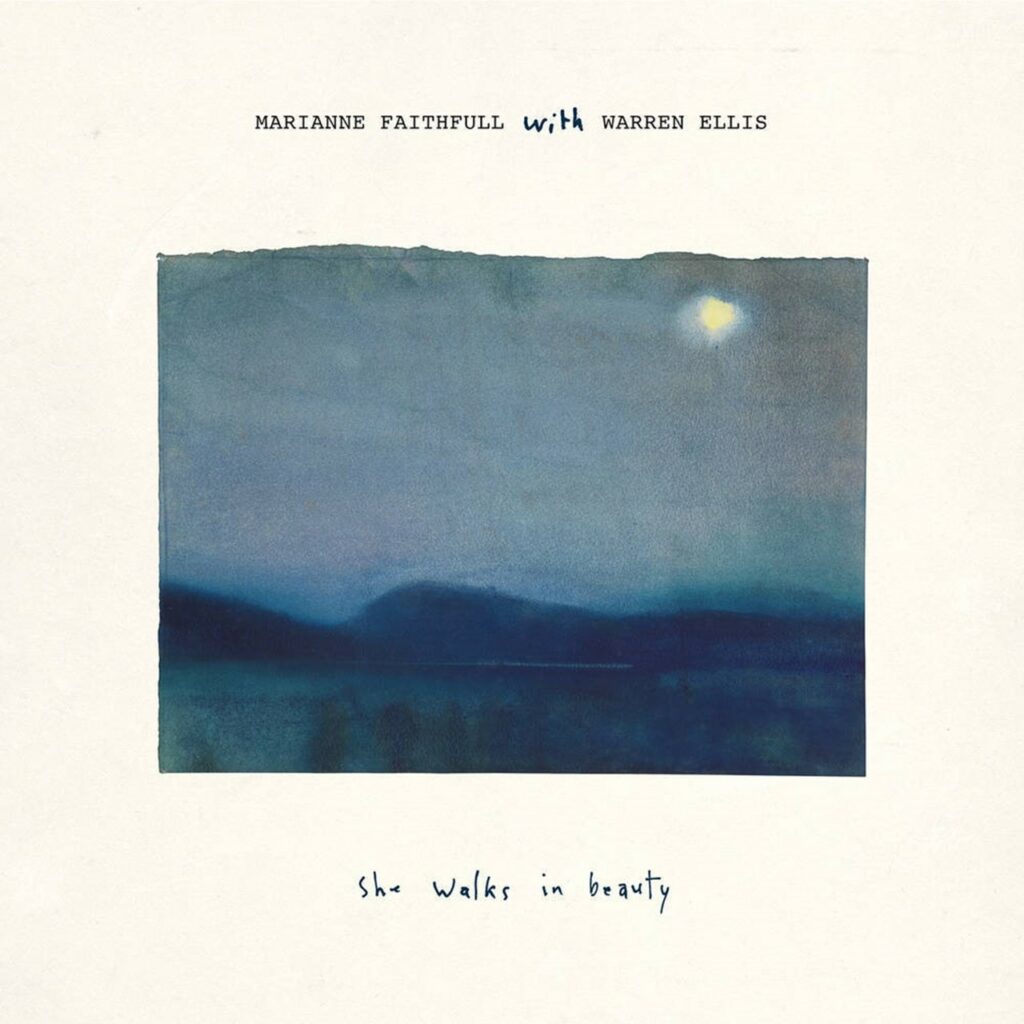
When Marianne Faithfull was hospitalized with coronavirus last year, she wasn’t expected to survive. But she beat the odds and pulled through — and went right back to work on her 21st solo album, She Walks in Beauty (BMG), created in collaboration with Warren Ellis (best known for his work with Nick Cave the Bad Seeds), and featuring guest appearances by the likes of Cave and Brian Eno.
Its release fulfills Faithfull’s longtime dream of recording an album of poetry. It’s an area she’s explored before — her 1965 album Come My Way featured “Jabberwock,” a recitation of Lewis Carroll’s poem “Jabberwocky” — but never in such depth. Her resonant voice is tailormade for the classics, and when set against the languid, atmospheric musical backing, the effect is sublime. The title track is the renowned love poem by Lord Byron; “La Belle Dame Sans Merci” is John Keats’ tale of a woeful knight; “The Lady of Shalott” is Lord Alfred Tennyson’s epic ballad of a doomed young woman (Faithfull chooses the darker 1833 version of the poem). Faithfull breathes new life into these timeless works, turning them into something exquisite.
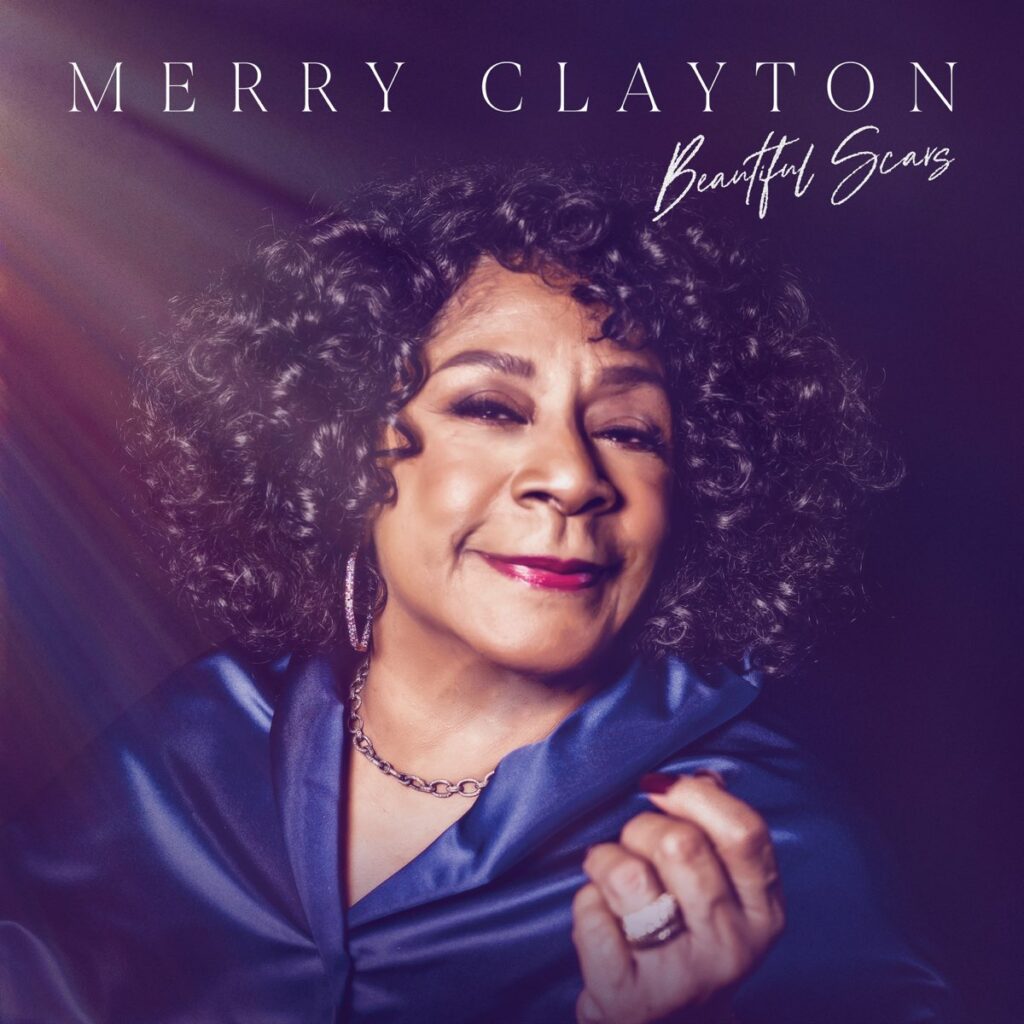
Merry Clayton has the kind of music resume that could fill the entirety of this column. You’ve heard her voice on records by Carole King, Ringo Starr, Tori Amos, Lynyrd Skynyrd, Linda Ronstadt, Coldplay, and Odetta, to name a very few, as well as her riveting guest appearance on the Rolling Stones’ “Gimme Shelter.” She’s released her own records too, and was profiled in the 2013 documentary 20 Feet From Stardom.
Now, twenty-seven years after the release of her last album, comes Beautiful Scars (Motown Gospel/Capitol CMG/Ode Records). Its appearance is even more remarkable considering the challenges Clayton has faced in the last decade; following a serious car accident in 2014, both her legs were amputated below the knee. Clayton’s resilience can be seen in her first question to the doctor: would her voice be affected? No, it would not. Beautiful Scars is the result.
Indeed, she wears those scars proudly, calling them “beautiful proof that I made it this far” in the album’s title song, so filled with emotion it moved her to tears. There’s a wonderful version of Sam Cooke’s “Touch the Hem of His Garment,” her voice soaring with ecstasy. She revisits Leon Russell’s “A Song for You,” which she first recorded in 1971, her voice now grown in stature to become fuller and richer. And as always, there are songs of the faith that helped her persevere, such as the joyful testifying of “He Made a Way” and “God Is Love.” Merry Clayton’s indominable spirit vibrates through every note of this record.
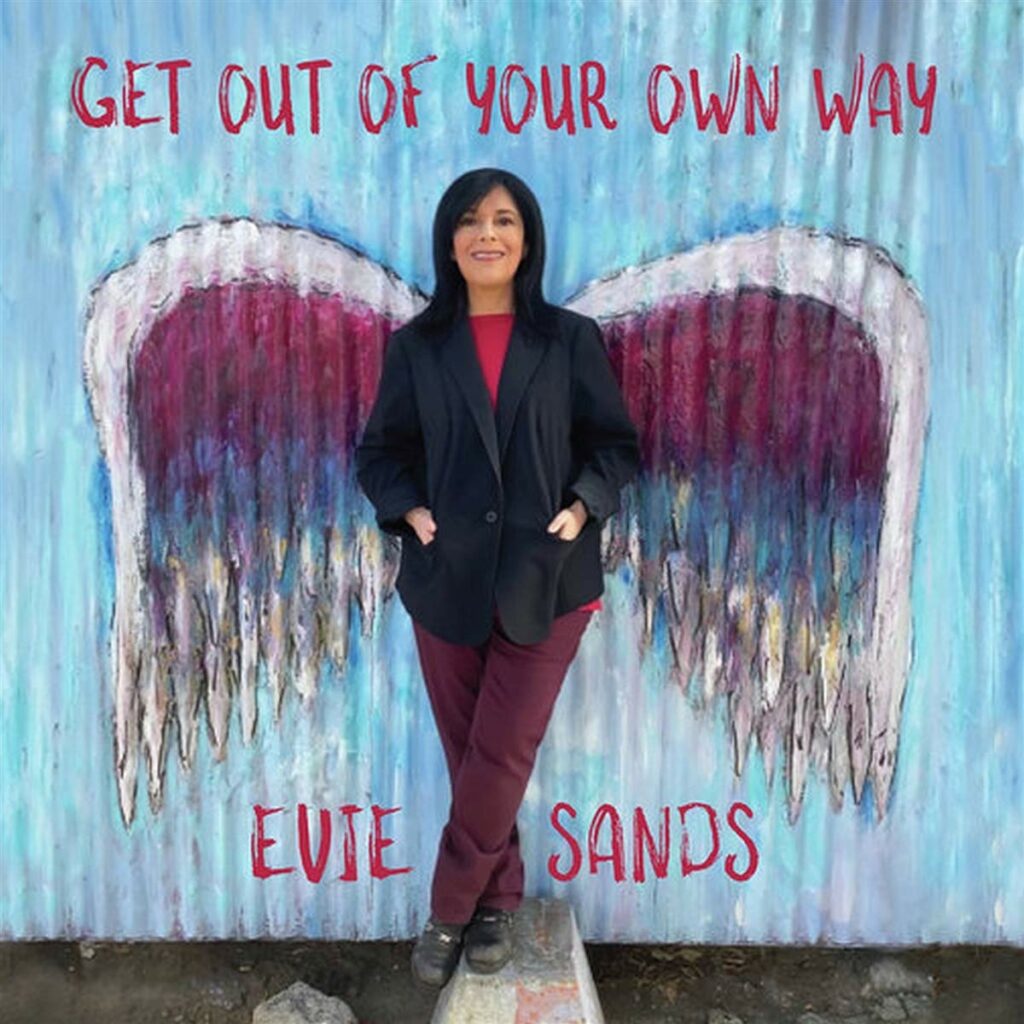
Evie Sands launched her music career in the 1960s. But after watching other artists go on to have hits with songs she’d previously recorded (including “Take Me For a Little While,” “I Can’t Let Go,” “Angel of the Morning”), she began moving into songwriting herself. She eventually stopped performing in 1979 to pursue songwriting and producing full time, though still releasing the occasional record.
Get Out of Your Own Way, on Sands’ own R-Spot Records label, is her first solo album since 1999. It’s fairly bursting with warmth and positive vibrations; the musical mood is an engaging rock/pop mix, with elements of country and soul, and rich harmonies throughout.
Highlights include the soulful “My Darkest Days,” a powerful number about overcoming despair, and the opening track, “The Truth is in Disguise,” a solid rocker addressing the confusion and uncertainty of diving into a new relationship. The title track provides a gentle reminder that you might be getting in the way of your own success. “Don’t Hold Back” is a go-out-there-and-get-’em ode of affirmation. “Leap of Faith” encourages you to make one.
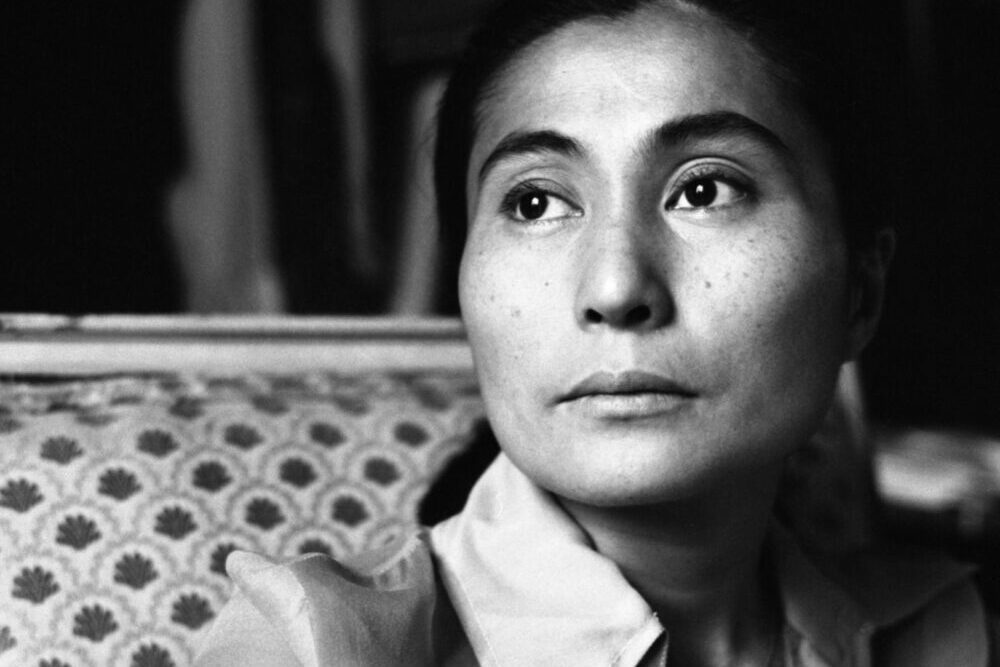
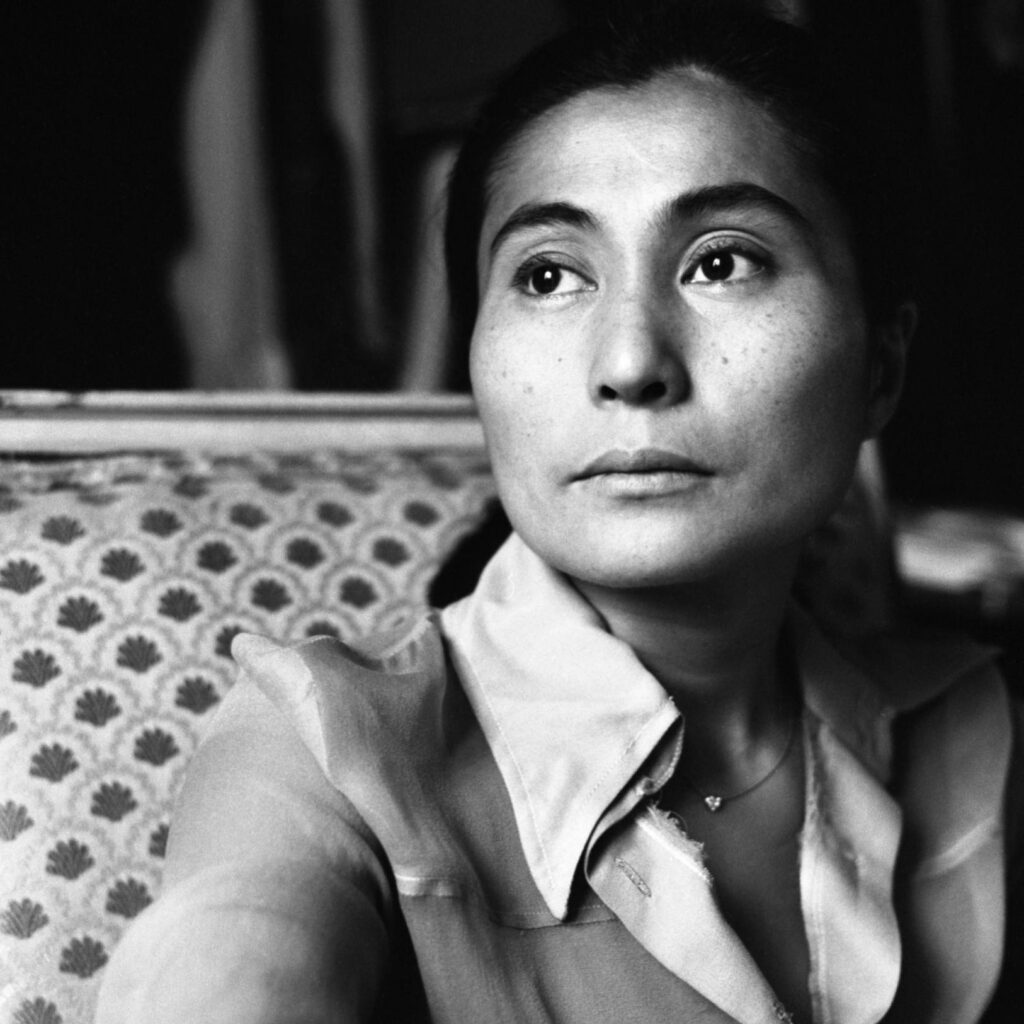
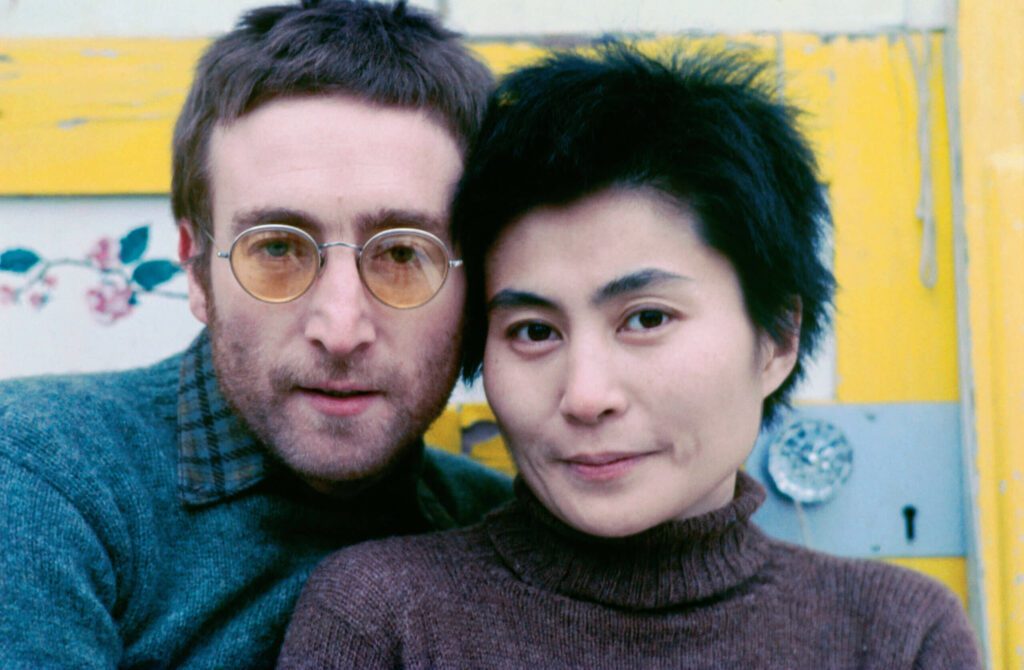
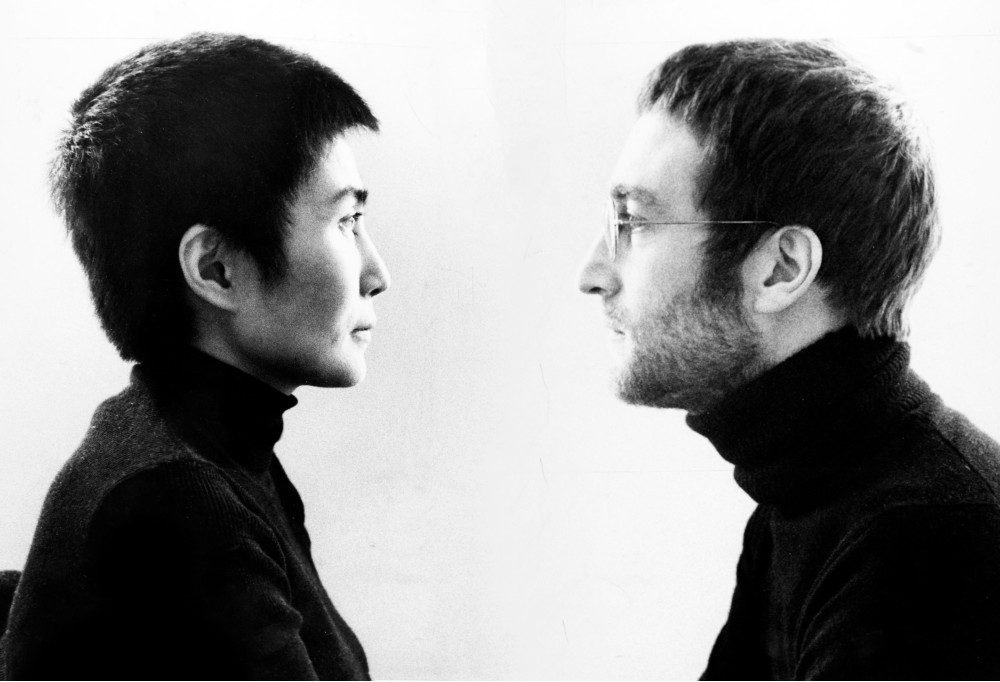
On October 10, 1970, John Lennon was busy working on his first solo album at EMI Recording Studios (not yet rechristened “Abbey Road,” after the Beatles’ album of the same name). The sessions had been going on for two weeks. But on this day, his wife, Yoko Ono, was finally going to get the opportunity to make her own kind of music.
Having just finished mixing his song “I Found Out,” Lennon, on guitar, started jamming with bassist Klaus Voorman and fellow ex-Beatle Ringo Starr on drums. After vamping through some Elvis Presley and Carl Perkins numbers, the power trio began to stretch out. And as Lennon’s playing became increasingly wild, slashing at his instrument as he spiraled down the scale, he shouted out for Ono to join him, and she did.
Ono’s vocalizations were a desperate, keening sound, matching the twisted noise from Lennon’s guitar, her persistent cry of the single word “Why?” becoming the aural equivalent of Edvard Munch’s painting The Scream. Lennon was enthralled. “She makes music like you’ve never heard on earth,” he enthused to Rolling Stone later that year. “And when the musicians play with her, they’re inspired out of their skulls.”
At the time, the general public didn’t agree. When John Lennon/Plastic Ono Band and Yoko Ono/Plastic Ono Band were jointly released in December 1970, Lennon’s album was heralded as a brave, uncompromising work. Ono’s was overlooked, or derided; she recalls being sent photos of her records stuffed in a garbage can. “So many people didn’t understand her,” says Simon Hilton, production manager of the new JL/POB reissue – out today, in honor of the double album’s 50th anniversary – which also includes Ono’s sessions on the “Ultimate Collection” version of the set. Hilton believes she experienced backlash not only because she was a woman, but because of her otherness: “She sounded a bit funny, and she liked screaming.” But over the years, that assessment has changed. YO/POB has come to be recognized as a pioneering album, one that laid the groundwork for independent music and alternative rock to come.
The original album is bold and bracing; there simply wasn’t another record like it. “Why” launches the album with a furious assault that grabs you from the second it erupts and doesn’t let go. In contrast, “Why Not” is a leisurely stroll, the musicians providing a steady backbeat to Ono’s ululations until the final minute, when it gradually speeds up, then burns out, drowned out by the sound of a subway rushing by. The title of “Greenfield Morning I Pushed an Empty Baby Carriage All Over the City” echoes the cryptic “instructional poems” in Ono’s book Grapefruit, and the song itself is equally ominous, opening with an industrial droning, Yoko’s vocal cutting throughout the piece like a mournful siren.
“AOS” is drawn from a 1968 rehearsal with Ornette Coleman. It is a stark, spare track (aside from a sudden torrent of sound in the middle), Ono holding her own in the company of Coleman on trumpet, Charlie Haden and David Izenzon on bass, and Ed Blackwell on drums. “Touch Me” is all sharp edges and jarring rhythms, interrupted by what sounds like a tree cracking in two, then morphing into something slower and more distorted. “Paper Shoes” has an agitated, percussive beat percolating underneath Ono’s almost breezy, wordless vocal, swooping in and out.
Ono herself had little familiarity with rock music or its culture when she began working with John Lennon. Born in Tokyo in 1933, and growing up in both Japan and the US, she was a classically-trained pianist, who dreamed of becoming a composer. Her father discouraged her ambition, sending her to take voice lessons instead, explaining, “Women may not be good creators of music, but they’re good at interpreting music.” Ono eventually rebelled against such strictures to chart her own course. In 1956, she dropped out of Sarah Lawrence College and married composer Toshi Ichiyanagi. The two moved to a loft on Chambers Street, in Manhattan’s Lower West Side, and quickly fell in with the city’s experimental arts community. The loft became a site for “happenings” – mixed media events that featured spoken word, music, and experimental performance.
Ono performed at these and other events, often playing with ways to create sound; a 1961 concert she staged at Carnegie Recital Hall (adjacent to the larger Carnegie Hall) featured a piece in which dancers moved objects around the stage while wired with contact mics. She also experimented with how to use her own voice. “In 1962, I went into shouting, but not the kind of shouting that you know of me doing it over rock music,” she told me in an interview. “It was very similar to [her 1981 solo single] ‘Walking on Thin Ice.’”
In 1966, she went to London to participate in a symposium entitled “Destruction of Art,” with her second husband, Tony Cox. She met Lennon when he came to one of her solo exhibitions. Two years later, when they became a couple, they began making experimental recordings together. Unfinished Music No. 1: Two Virgins, Unfinished Music No. 2: Life With the Lions, and Wedding Album mixed organic and electronic sounds, vocal manipulations, and improvisations; on “No Bed For Beatle John,” for example, Ono “sings” a newspaper article to an improvised melody.
Working with rock instrumentation necessitated a more aggressive vocal style. “I was from the avant-garde, so I was still a little bit structured at first,” Ono says. “But when I went to rock and we did all that stuff, the Yoko Ono/Plastic Ono Band kind of thing, I was loosened up by then from doing a few shouting pieces in London. And then I just felt great! The only thing was, because they were playing electric guitar and all that, to go over that and do your voice experiments was very difficult. So that was when all that came out like ‘Aaah!’ Those things started to happen because they forced me into it. Pushed me into it!”
Today, music aficionados could recognize Ono’s music as the bridge between the Velvet Underground and Patti Smith, with a vocal style later heard in the work by performers like the B-52’s or Diamanda Galas. But in 1970, devoid of that framing, listeners were perplexed, if not outright hostile. Klaus Voorman was startled when he first heard Ono singing, as he backed John and Yoko at a “Rock and Roll Revival” festival in Toronto in 1969. “She started screaming and doing this thing,” he recalls. “And people all stood there. And I looked at Eric [Clapton, also in the band], and we looked at our feet. We were really shocked, just as much as the audience.”
But by the time YO/POB was recorded, he’d gained an appreciation for her unorthodox style. “That record is incredible,” he says. “I love in particular ‘Why Not,’ where she sings really quiet, and John is playing on the guitar; she’s doing all the squeaky noises, and he’s doing the slide guitar and it’s really floating, really simple stuff. She turned him on to all this and he says that too, that he would’ve never thought of doing these things this way. It’s definitely Yoko’s influence.”
What’s especially exciting about the tracks in the new box set, is not only their length (about three times that of the original album), but also that the music is presented in its original raw state, before any editing or added effects. “Yoko did a hell of a lot of editing to it after the recording,” says Simon Hilton. “It is absolutely incredible. It’s making all of these decisions that you wouldn’t normally take, but she’s taken them with great bravery… they’re groundbreaking, in terms of not editing on the beat, but still editing somewhere that makes it work incredibly well.” Tracks were slowed down or sped up, enhanced with sound effects and delays, looping and sampling. “It was a very exciting record to do, because you never knew what was happening,” said the album’s engineer, John Leckie.
On “Why,” we can hear that the musicians were playing for nearly ten minutes before Ono chose to join them. “Why Not,” which runs over twenty minutes, has a bluesier cast to it. Shorn of its sound effects and manipulations, “Greenfield Morning” is more laid-back, but still just as haunting. Hearing just the bare tracks gives you a sense of being right there in the room with the musicians, caught up in the moment of creation. Voorman further explains their approach in the liner notes: “It’s not like really recording a song, it was recording a feeling. Ringo and my thing was, ‘We are the rhythm band, we’re just gonna put down the basis — some chair she can sit on and build a song around, build her music around.’” Three previously unreleased tracks flesh out the story; “Life” in particular percolates with a nervy energy, the musicians laying out a taut foundation for Ono’s ethereal cries to float upon.
It was the release of Rising in 1995 that helped lead to a reassessment of Ono’s earlier work. Old prejudices and misjudgments had faded away, and now younger musicians were eager to experience her music. L7 dropped a sample of Ono’s warbling into their track “Wargasm.” The Rising tour saw alternative rockers like the Melvins and Soundgarden joining Ono on stage. Remixes of her music by the likes of Cibo Matto and Tricky made her a regular presence at the top of Billboard’s dance chart. “When Yoko did her singing in Toronto [in 1969], the audience didn’t have any context to what she was doing,” says Voorman. “They didn’t know what it was supposed to be. So they were really shocked, I would say. Now, she has got an audience, and the people know what they come to see, and they know what she is presenting.” At present, the new mixes of YO/POB are only available on the Blu-rays in the “Ultimate Collection” box set, due to licensing issues; Hilton hopes to someday be able to release more material. But the original album, reissued twice since 1970, is readily available, and is well worth investigating as a barrier-breaking musical statement. For her part, Ono views her musical legacy with equanimity. “I feel that I always have my own voice and it’s different from others,” she says, “and if somebody wants to hear it, they will.”
Partying hard, getting evicted, breaking up and starting out on a new solo career – these are the earmarks of a Quarter-life crisis in the making. Sydney-based artist Lola Scott has been through it all, so it makes sense that she’d commemorate her tumultuous twenties by titling her debut EP 1/4 Life Crisis.
The lead single, “The Eviction Song,” is catchy, fresh and resonant. Melodically upbeat and brimming with sarcasm, it is based on a true story: after breaking up with a long-term lover, Scott moved back into a shared house early in 2021, where the non-stop parties and subsequent short-term flings provided ample fodder for lyrics. When the neighbours finally had enough of Scott and her housemates, they were evicted; it was Scott’s sixth move in four years (and she’s had two moves since then). Far from being disheartened, or learning from mistakes, Scott has moved in with several of her housemates from the original party house and their good times continue.
The latest single from the EP, “I wanted to call her but I’m tragic and she’s overseas (8 months),” was written with Scott’s co-producer Oscar Sharah, a founding member of electronic pop project Mel Blue. Scott is debuting the video, directed by Mel Blue band member Lewis Clark, exclusively on Audiofemme.
“It was written from [Sharah’s] perspective about a long-distance relationship, knowing that it’s not going to work but trying anyway,” Scott explains. “The lyrics are us playfully talking about the things that happen in a long-term relationship, like if we make it to payday, I’ll take you to Norway. The video is us driving on opposite sides of the road, like being on opposite sides of the world. We’ve got some cute choreography – we just imagined it while we were writing it. We shot it at 3am, and choreographed it on the spot.”
Before she was a party animal, living the rockstar existence of a 20-something Aussie girl with lots of dreams and little money, Scott was a guitarist. Growing up in the New South Wales highlands, her high school years were spent practicing the instrument, which culminated in a Bachelor’s degree in guitar, working as a session musician immediately post-high school throughout university.
“I was working with 4 or 5 bands, but I quit them all to focus on my solo career,” says Scott. “I’m not sure how I juggled being in that many bands at once, but I guess a lot were collaborations with friends, trying different styles of music. Studying guitar and starting out as a classical guitarist, pop was a dirty word for a while.”
Scott’s love of pop started out thanks to a bargain chair Tasmanian-born fellow musician Asta was selling on Gumtree (like the US version of Craigslist). “She saw that the boot of my car was full of busking equipment. She had just moved to Sydney from Tasmania, so she suggested we should jam and that lead to our collaboration and friendship,” Scott remembers. “Asta asked me to play keyboard. I did piano lessons when I was a lot younger, so I had that background.”
In 2018, immediately out of university, Scott took the creative and professional leap into her own solo career. Her early singles “Crowded Conscience,” “Cyclone Weather,” and “Take Me Back” combined indie rock and synth atmospherics. “Take Me Back” was a radio favourite on youth station Triple J, with its layered harmonies, rock-synth atmosphere and crisp, flawless production. But it was her track “4E Jobless” (or “forever jobless”) that really hit home for many young Australians. In 2020, youth joblessness in Australia rose from 0.9 percent to 15.6 percent, which equates to one in three young people in Australia being unemployed or under-employed. The pandemic has only worsened the situation nationally, especially for creative professionals and youth aspiring to careers in the arts.
“Everyone that studied music ends up in massive debt, but I was brought up in a family that wanted me to finish a degree,” says Scott. “I don’t think [a degree is] something you need to be a great musician. I met most of the people I ended up working with through going out and seeking collaborations.”
Scott wrote “4E Jobless” when she quit her day job. “A lot of musicians work in side hustles before music is your main gig,” she muses. “I would always joke about how it was a retirement plan for me, that music was a hobby. I know different friends would have rules, like if they haven’t made it before 30, they’d get a ‘real job.’ Quitting my day job wasn’t that I was suddenly stable, but I decided to put 100 percent of my time into this because if I don’t do it now, when will I have the choice to put all of my time into it?”
Scott’s approach to sustainability in the music industry is to expand her skill set, and to that end, she’s been working on strengthening her production skills. “I spend a lot of time observing and learning from producers. Joel from Eskimo Joe is a legend and I learned so much from him when we were writing together. I’ve also been hanging out with friends who are producers, and Oscar has taught me a lot. YouTube tutorials are also really great, too.”
Scott produced most of the 1/4 Life Crisis EP together with Sharah. “Often, we’d come into the studio with nothing and work together on guitars. We produced as we recorded, so everything you hear on the EP is the demos; we don’t produce a different track. I always think I can be a minimalist but then I hear all these bendy synths and I love a big chorus that feels like a lot of layers, drone and intense emotion. Whenever I put down one guitar part, we always joke that I can’t help but put down a ‘guitarmony.’ We work by throwing all the ideas in at once, then taking them out one by one.”
Scott’s musical influences take a similar approach – humour, authenticity, and genre-defying musicality define their work. “I’ve been listening to Phoebe Bridgers, I love how she writes lyrics,” Scott enthuses. “I feel like she’s stretching the genre wherever she wants to take it. I also love Caroline Polachek, who does some really interesting things with melody that I haven’t heard in pop music before. The production is insane and I love the concepts that she sings about. One song, called ‘Door,’ is like [sci-fi movie] Inception as a song. I also listen to Rex Orange County and I love everything he does. I grew up listening to The Cranberries’ Dolores O’Riordan – [I was fascinated by] how she flips [the register] from chest-voice to head-voice and I think I mimic that a lot in my music now.”
The lyrical content on 1/4 Life Crisis is intense, and while there’s a comic, sarcastic edge to the delivery, the experience of break-ups, joblessness, eviction and loneliness are sadly relatable.
“I definitely believe that whenever something negative happens, there’s something positive that comes out of it,” Scott says. “I like to write about things [knowing that] it’s painful, but once I’m in a room with friends, talking about it makes it a lot easier to go through those kind of things. If I wrote by myself, it would be a lot sadder. Honestly, when I was writing, I didn’t think about how it would connect. I just wanted to be honest with my own experience.”
Americana duo Ida Mae have a way of creating magic through their music. Comprised of husband and wife Christopher and Stephanie Jean Turpin, the duo traversed across the pond from their native London to Nashville where they’ve released two spectacular projects in the form of their 2019 debut album, Chasing Lights, and follow up 2020 EP, Raining For You.
But all roads lead to Avalon – a faraway, mythical land they capture in “Road to Avalon,” the opening track on their upcoming sophomore album, Click Click Domino, out July 16th via Thirty Tigers. The duo capture the mystical feeling of Avalon — the famed island in Celtic mythology that serves as a place of renewal — in the song, which opens with the plucking of a haunting banjo and ringing ukulele. Met with their equally enchanting voices, the lyrics call on vivid imagery that compares highways to ribbons, the twosome traveling roads so deep they feel like lost dogs with “raw boned, stony feet.”
Part of what makes Ida Mae stand out is the way they allow the music take its time, each note simmering as they detail the “heartaches and visions” they experienced on the road to their destination. The couple says the song was inspired by the cities they passed through that felt abandoned or forgotten, with the goal of creating a “sparse Trans-Atlantic dream state,” honoring this mission through lyrics one can’t help but want to dissect. “We are the names that came before you/Now we’re just drifters barricaded at the border/Sharing whispers in the shadows painting pictures on our gallows,” they sing, with a sense of passion that can be felt through the speakers.
“Road to Avalon” is merely a continuation of the distinct and eclectic sound Ida Mae has established over the years – the melodies allow the mind to wander, while the lyrics pull you back in with their poetic nature. The gorgeous title track from last year’s EP, which will also appear on Click Click Domino, exemplifies the duo’s songcraft. “Raining For You” evokes the feeling of driving through wide open spaces as they sing, “In the stillness/You begin to rust/A heartbeat ain’t enough without some love/The night keeps calling/The sky keeps falling/And I keep raining for you.”
Despite the grandiose, cinematic nature of these tracks, most of them were recorded in the couple’s home-built studio, in two or three live takes. Initially, they had wanted to record Click Click Domino in a more traditional studio setting, with the English producer who helmed their debut; though their plans were stymied by the halt of international travel, they leaned into faithfully reproducing the energy of their live show, giving new life to the songs they’d played to enthusiastic crowds night after night before the pandemic hit.
You can hear that energy best in the scorching “Click Click Domino” as it offers a searing take on the vapid world of social media with its “aesthetic apathetic,” “prima donna playboys” and “populism politics” as told over a bluesy, gritty, guitar-heavy melody.
Ida Mae dance among a beautiful marriage of country, bluegrass and folk, their production efforts taking the listener for a scenic ride through their imaginations — proving they have what it takes to leave a distinct mark on the modern world of Americana music.
For some artists, the last year of increased solitude offered an opportunity to step into their craft and be more prolific and creative than ever before. For others, it presented a debilitating pit of emotional and physical quicksand, making it nearly impossible to get through the day, much less create anything. Kaylan Waterman, aka Vespre, landed somewhere in between the two. Her latest single and first solo release in almost three years comes after a long period of collaborating, resting, reflecting and rediscovering her muse. “Back to Me” is a buoyant reunion with Spring, self and love lost and found; and one that Waterman worked damn hard to get to.
“I know a lot of people who are like, ‘I made my magnum opus during COVID!’ That was not me, at all,” says Waterman. “I tried a couple of times and my body, my spirit just told me: Don’t even stress about it, but this isn’t it for you… focus on other stuff.” So, that’s what she did. Waterman, who works full time at local label, artist management and sync company Assemble Sound, already has enough on her plate to tire anyone out. But, on top of working full time and collaborating with her brother Kaleb the Intern, Moon King, and others in 2020, she started a sharing table in her neighborhood to provide food and other necessities to folks in the community.
While Waterman devoted her time and energy to filling other people’s plates, her’s was running low. “I just did not have it in me to create. I was too stressed, I was too sad, I was grieving, I was just like in survival mode,” Waterman explains. “I felt very depleted and music was the only thing I knew that would help fill me up.” So she started writing for herself, meeting at the cross-section of heartbreak and healing.
Waterman explains that the idea for “Back to Me” started almost as a clapback to peoples’ responses to her breakup. She says that although she’s the one who walked away from her relationship, everyone assumed she was dumped. “I would tell people, and they’d be like, ‘I’m so sorry, he’s the worst!’” Waterman says. “And I’m like, ‘umm, maybe I’m the worst…What are you talking about? I ended this.’”
The song allowed Waterman to reclaim her narrative and communicate the complex array of emotions that can accompany a breakup. She wanted to portray the duality of being resolute in her decision but still feeling loss and grief. “I just wanted people to know that women – especially independent, very self aware women – can make difficult decisions and still be soft and longing and wanting. We hold both of those things at the same.”
Waterman embodies this duality in “Back to Me.” Though her poetic lyrics focus on nostalgia and longing for a former lover, the music that accompanies them is upbeat, driven by shiny synths and ebullient percussion. The video (co-directed by herself and Andrew Miller) mixes the ethereal and the mundane, showing Waterman as both a serene nature goddess and a forlorn bodega shopper. Though she’s feeling the ripple effects of heartbreak, Waterman refuses to hide from her complicated emotions, and is determined to dance through it all.
“I think I did accidentally write a pop song but I don’t really gravitate towards pop in that way,” she says. The songwriter, pianist and producer grew up listening to Detroit house and attending the jazz festival as early as age 9. She says that she feels most inspired by female artists like Patrice Rushen – whom she lovingly named her Subaru after – who sit somewhere in between house music and jazz, disco and R&B. “I want people to be able to dance to the music I make, because Detroit is such a dancing town,” says Waterman. “I wanna speak to that culture more. I wanna write for us more. For my friends that go out dancing like me.”
Dancing in the middle seems to be where Waterman finds her stride. In the middle of heartbreak and happiness, rest and resilience, triumph and tears. Her music finds its strength in vulnerability and suggests that the listener do the same. “I feel like I’m coming back to life and I wanted people to hear it in that way,” she says. “Maybe it’s your creativity coming back or maybe it’s a person or maybe it’s just spring. Maybe you’re happy that this horrible winter is over… I wanted people to listen to it and hear however they wanted to hear it.”
When TellemJoness and Shalom first linked up to record “Fade Away,” they never knew it would lead to a project. The two Cincinnati natives – Joness, a local hip hop staple, and Shalom, a budding star – had been fans of each other’s for a while, and the chemistry in their intertwined voices was just too good to pass up.
“’Fade Away’ was just gonna be a collaboration. I would do a verse or whatever, maybe be on the hook. So, we did that and Shalom was like, ‘Joness, do you think you could hop on this other song too?’ And ‘Divine Council’ happened,” Joness says. “So, we were like, ‘We should release this as a project.’”
A few recording sessions later in Joness’ home studio, and the pair had created Modern Nostalgia – an atmospheric three-pack including “Fade Away,” “God Like,” and “Divine Council.”
It’s also Shalom’s debut project. “It’s been a long time coming,” Shalom reflects. The duo first joined forces officially in 2019 on Papa Gora’s single, “Mayday.” Working on building his own catalogue, Shalom approached Joness about featuring her on a song while at Cincinnati’s Elementz.
“I’ve always been a fan of Joness,” he tells Audiofemme. “I met her at a poetry slam called Speak… and being exposed to those creatives in the city motivated me to do something of my own.”
TellemJoness added, “I’ve known him for years as a poet and an activist in the community – so, a very kindred spirit, but he’s nice with some flows, too.”
“I think we both resonate with the sonic vibe of the project because we’re both poets,” she continued. “I know my power is in my words; my relationship with words and how I use them and string them together. And that’s important to him as well. So, the content, the things that we talk about in the three songs – it’s heavy.”
The emcees discuss religion, spirituality, and provide commentary on society as a whole, though you’ll have to listen to the project a few times through to truly get the deeper meanings; it’s easy to be swept up in the dreaminess of Joness’ and Shalom’s vocals.
“The things we talk about in ‘Fade Away,’ ‘God Like,’ and ‘Divine Council,’ they’re all – for lack of a better word – trendy things,” says Joness. “Like, people talk about their spiritual journeys, exalting women – as we should be, because we do so much but get credit for so little – and getting rid of negativity, keeping positive auras. But where we’re coming from on these tracks are not necessarily trendy places – they come from a place of healing for us. We kind of flipped these trends on their head and presented them in a different way.”
Photo by: The Content Girl
“All of the messages that we have intertwined in the songs, it was important for us to shine a light on those things and speak honestly,” Shalom adds. “And we wanted to make sure our sound was fluid, which I think came pretty natural.”
The artists’ conscientious bars are underscored by celestial production, courtesy of Pxvce. The effort was also engineered by Joness and mixed and mastered by GrandAce. With their first collaborative project out, Joness and Shalom are now working on their solo endeavors – though they’re open to working together again in the future.
“I think we kind of set a standard with this,” Shalom says. “We could create a Modern Nostalgia Part 2. So, we’ll see what happens.”
Joness is currently readying her debut studio album P.O.L.R., which was delayed last year due to the pandemic. “Now that [Modern Nostalgia] is out, I’m even more inspired,” she says. “I’m so grateful for Shalom. He’s an example of if he wants to do something, he’s gonna go do it.”
Follow TellemJoness on Instagram for ongoing updates.
Brisbane artist Jaguar Jonze, the alter-ego of Deena Lynch, is brave – both in the bold moves she makes as an artist, and as a woman navigating a tense socio-political climate. Despite her lengthy 2020 hospitalization due to COVID-19, she released her first EP, Diamonds & Liquid Gold while literally in the back of an ambulance; completed her second EP, Antihero, released April 16th; began collecting statements from victims of a Melbourne photographer accused of sexual assault; and revealed her own experiences with racism directed at the Asian community.
Lynch and her band had been working on Diamonds & Liquid Gold since founding Jaguar Jonze in 2018. Released in April last year, the EP established the project’s eclectic, vintage-meets-futuristic pop sound on tracks “Kill Me With Your Love,” “Beijing Baby,” and “Rabbit Hole.”
“I’m really proud of my debut EP, especially because I had worked so hard for so long in the lead up to it,” recalls Lynch. “When it came time to release the EP, the world had gone into a pandemic. All of my plans and structures had like fallen out of place, and my health was something that I was battling. I decided to release Diamonds & Liquid Gold regardless of the fact that my entire plan was shot to bits, because it was the only constant that I had in an environment of chaos, and I felt like letting that go would also further devastate me. It gave me something to look forward to every day and work on while I was under hospital care, recovering from COVID.”
Antihero provided an opportunity to further investigate and experiment with what Jaguar Jonze sounds like, and what it could sound like. “On my debut EP, it was me figuring out who I was as an artist, what I wanted to say as an artist. It was a really slow experimentation,” Lynch says. “I’m really proud of the body of work we pulled together to help identify what that Jaguar Jones sound is, and now we just get to play on from that and experiment further, which is what hopefully I’ve been doing with Antihero too.”
Lynch is the ultimate multimedia artist – outside of her music, she’s a portrait photographer, a graphic designer and a painter; Jaguar Jonze, Dusky Jonze, and Spectator Jonze each have an Instagram account. Prior to assuming the Jaguar Jonze alias, Lynch performed simply as “Deena,” self-releasing two albums. In fact, Lynch doesn’t see herself as the Jaguar Jonze; her bandmates are an essential element of the project. “I’ve got Joe Fallon on lead guitar, Jacob Mann on drums, and then Aidan Hogg on bass, who is also producer alongside me, and each of them are so important. They’ve been with me since the project started,” she says. “Each of them bring their own individual parts, but we work so well together. That’s why we were able to record Antihero without physically being in the same space, because we’ve spent years working together.”
The band signed with Nettwerk Music Group in 2018, who brought US producer John Congleton on board for Antihero, working together remotely due to the pandemic. Congleton’s previous work with St. Vincent, Lana Del Rey and Angel Olsen had won Lynch over years before. “It allowed me to push boundaries and think outside of the box and comfort zone of where I would normally go,” Lynch says, of sharing production roles with Hogg and Congleton. “I think also because of the environment that I was in through the entire making of Antihero – it was actually recorded and finished off while I was in hospital with COVID – there is that layer of darkness, anxiety, uncertainty and desperation, that kind of seeped through the music and gave it a more industrial, dark undertone.”
Lynch was born in Japan; since her father was Australian, she moved there aged six, but the process of waiting for her Taiwanese mother’s citizenship meant moving between homes for years, which Lynch believes is the catalyst for her complex post-traumatic stress disorder. Her PTSD experience was the subject of “Rabbit Hole,” which she performed as part of Eurovision Australia Decides in February last year. Her inclusion was a last minute opportunity, since the original artist had pulled out. Once Lynch was assured that she’d have full artistic license to collaborate with the Eurovision directors, she got on board.
“I got to have some really amazing experiences,” she enthuses. “It was my very first live TV performance. It was the biggest show that I had ever done, physically, in a room of 3500 people. I’d never had lighting design, never had any ear monitors, I never had set design. It was like, if Jaguar Jonze was doing stadium shows, what would it be like, and I got to play in that fantasy world for a night.”
With Antihero, Jaguar Jonze takes the fantasy even further, bringing each of the EP’s songs to life with a series of visually striking videos. Lynch’s flamboyant outfits and take-no-prisoners energy are like beautiful armour against a harsh world, one in which Jonze has been on the pointy end of some vicious microaggressions and outright racism.
In a recent Instagram post, Lynch shared some “brutal truth” with her followers, writing: “Today marks one year since I received my positive test result for COVID-19… The Asian hate and racism I dealt with from friends, the public and those who were looking for a place to project while I was trying to recover from COVID-19 was unacceptable… Racism is not new to me or to my fellow Asian communities but the pandemic has heightened and threatened our safety to a level where we can no longer be compliant and stay silent, nor should we have to. I will no longer push past the feelings I’ve had over the year and allow it to continue to hurt those around me. My body has healed but my heart remains broken. We NEED to make a change.”
She reflects on the post now as the beginning of a series of “snapshots” of the reality of racism for herself and so many others. “To be honest, I haven’t had an interview talking about racism yet, so it’s something I’m still learning to process and articulate and that post was my first time talking about it,” she explains. “The reason it took me a year to post about it was that society wasn’t ready to hear it and accept it, and that environment had been finally broken down because of Black Lives Matter and the current movement in the US, with #StopAsianHate. The work of other people has made it easier to digest what I’m saying. I just want to create conversations and to learn from that and hopefully it creates a safer environment for people to take accountability and create change, rather than instilling fear into everyone.”
Shedding light on racism hasn’t been Lynch’s only form of activism; in July last year, she became aware of several women’s stories of being sexually harassed by a well-known Melbourne photographer. Having had her own experience in the past, Lynch was compelled to open her inbox to women who wanted to share their stories. Consequently, over 130 women came forward with allegations of harassment against the photographer. Lynch shared their stories anonymously through handwritten post-it notes on Instagram.
“Reports have been made to the police, and not much has happened, and been acted upon,” she admits, with an evident tiredness to her voice. “I’ve been working on a lot of investigations behind the scenes, but all of that takes time. It’s a bit of a waiting game of whether or not society is ready to make an important change. The fact that calling it out, like I did, took on the momentum that it did, is a miracle in itself. It’s really sad that [coming forward] is a difficult feat to achieve.”
Lynch still suffering post-COVID fatigue, but it hasn’t prevented her from writing new material, and getting excited about supporting San Cisco on their national tour, which kicks off May 26 in Western Australia. She’s particularly hyped to perform “Murder,” since she never knows what version of the song she’ll end up delivering.
“I really love performing ‘Murder’ because I get to play the flute in it, and I get to sing without my guitar so it’s just me and the mic stand,” she says. “Depending on how I’m feeling that day or what the crowd is vibing to or the environment or how the band is collaborating together, for some reason it’s a song that seems to be versatile to different interpretations. So I always have a lot of fun with it.”
Having fun with murder while saving society from itself, and overcoming a deadly virus while releasing an EP from the back of an ambulance? It sounds like Jaguar Jonze has all the material for a memoir. Here’s hoping.
Follow Jaguar Jonze on Instagram for ongoing updates.
Over the last year, many of us have picked up new hobbies to fill the endless expanse of time between the initial lockdown and the present, the uncertain future of when life will go back to “normal” and what that even means at this point. No longer do we measure time in minutes, days, or weeks, it would seem, but rather through loaves of sourdough bread and craft projects and how long it took your tomato plant to produce fruit last summer. Em Boltz, one half of Philly experimental electronic duo Enchanted Forest, is no different than the rest of us, except they spent their year delving deep into the world of modular synth construction.
A recipient of the Audiofemme Agenda Artist Grant, Boltz used the grant money towards the completion of an ambitious project – a recreation of the Buchla Music Easel (the iconic Additive Analogue Synthesizer spoken of in reverent tones since its incarnation in 1973) using Eurorack modules. If that sounds like a foreign language to you, that’s okay – it does to me too. The most important takeaway is that the true Buchla Music Easel will run you over $3,000, whereas you can get pretty close to creating your own for much less.
Essentially, Boltz has been scouring the internet for elements that help to imitate the Easel’s unique sonic possibilities, bits and pieces like oscillators, low pass gates, and spring reverbs, and patching them together to try and produce the organic, “magical acoustic space” that only the Buchla itself offers as a compact package. Using a Eurorack format as the base allows the user to customize their desired experience as it has no set signal flow, so that one can gain the most from whatever singular modular components they desire.
A sneak-peek at Em Boltz’s set up, courtesy of the artist.
Boltz’s interest in the Buchla was born of their love of psychedelic and krautrock music, as well as the compositions of artists like Suzanne Ciani and Terry Riley, both of whom included the Buchla in their musical repertoire. “This isn’t by any means a precise replica of the Buchla,” Boltz explains. “And I’m still very much learning how to navigate modular synths, but this is like my intro to it as well. I’ve just been slowly adding modules and integrating them into this Eurorack that I’m creating, which has been overwhelming definitely, but also super exciting… It’s been interesting, building a synth, because I feel like my approach to music is so intuitive, and I’ve been reading so much and trying to recreate this thing.”
The challenge is further magnified by Boltz’s background in the humanities; as a poet and an English student at Kent State University, they had no formal background in such a technical practice. They’ve largely depended on YouTube and web forums to amass the necessary knowledge. “I feel like I learn something new every day,” they say. “I’m constantly trying to watch videos of other people talking about their set-ups… because essentially you’re recreating what someone [else] has created when you go buy a synthesizer, so there are all these different variations of what you could do… the possibilities are limitless.” The goal here is to recreate the uniquely organic sounds the Buchla is capable of – a “60s zingy vibe,” or an “acoustic funk,” for instance, according to one video I watched to try to get a handle on this. The Buchla, even as a replica, makes what Boltz says is “the trippiest stuff. It’s the simplest way you can put it.”
So far they’ve been successful, utilizing the makeshift Buchla to write and record the latest Enchanted Forest release, a visual album appropriately titled Research, out on Dear Life Records on June 18. The tracks, and their accompanying videos, focus on the intersection of the natural and digital worlds; “a lot play with nature because I just love nature, and I feel like that’s something I see through all the work I do, like poetry, music, writing,” Boltz says. “Making things that sound like they’re created in nature, which is what’s so cool about working with analog gear. It’s this really organic sound to it that really aids that.”
Today, Boltz shares what they call “abstracted visuals” for two of the LP’s tracls – “The Tap” and “Open Window” – premiering exclusively on Audiofemme. On “Open Window” you can hear the sound of birds chirping layered under the synth effects. Though they are already using the synthesizer to produce music, it seems as though the project could carry as long as long as Boltz wants it to, acquiring new pieces of equipment and patching them into the existing set-up.
Enchanted Forest began as a Boltz’s solo endeavor, but it has recently expanded to include Noah Jacobson-Caroll, who Boltz met in 2017 when both played guitar in dark pop group Corey Flood. Research was written and recorded through email correspondence over the last year. “This band started in May 2020, so it’s only ever known COVID,” Boltz says. “The new album is all recorded through this karaoke machine, at least on my part. It’s all just us sending stuff back and forth.”
As far as what’s next, they say, “We’re already working on another album. We don’t stop.” Enchanted Forest intends to continue to collaborate remotely, because Boltz says they’ve “really come to enjoy creating this way.” And with seemingly endless possibilities, Research seems like an intriguing prologue to what Em Boltz and Enchanted Forest will create as time goes on. “Honestly it’s the best album I’ve ever made, which feels really good.”
When asked why she makes music, Pacific Northwest songwriter Beth Whitney begins a story about a transient woman she met in Modesto with a ball of tangled fishing line.
“She sat next to me and she had a backpack and she took it off. She reached into her backpack and took out this big, basketball-size collection of tangled fishing line, and she started, with hands that were shaking a little bit, to unravel it and straighten it out,” says Whitney. “Finally, after 20 minutes I was like, ‘Do you want me to help you with your fishing line?’ And she said, ‘No, this is just something I have to do with my hands.’”
For Whitney, making music is the same way. The process of creating songs is a bit of an obsession, born from her desire to untangle the chaos of her own life into something more intelligible and beautiful to share. And Whitney’s newest album, Into The Ground, which drops May 28th on Tone Tree Records, does just that.
With her sense-making lyrics and familiar melodies, Whitney powerfully clarifies the meanings in her own nature-soaked life and provides listeners a way through their own internal chaos. There’s no better example of the grounding essence of Whitney’s songwriting style than her latest single “Moonlight” and its accompanying behind-the-scenes studio video, which Audiofemme premieres today.
It wasn’t long ago that Whitney wouldn’t have identified as musical. Growing up in the small rural town of Snohomish, Washington, a town she says is “all about school sports,” softball was the lens through which she looked at life for many years. She was a pitcher until she broke the index finger on her right hand; serendipitously, it was around this time that she was approached by a friend from church, who was holding a guitar. He simply asked her, “Could you use this?”
“I was like, ‘Yeah, I think I can,’ even though I didn’t play music or anything at the time,” remembers Whitney. From there, she started learning to fingerpick—which was all she could do with her broken finger splinted—and even wrote a song on a whim for her sophomore English class.
“I wrote this song and I played it for the class which was kind of nerve-wracking and I was just like, well, maybe it’ll get me a C,” she says. “But after I finished the song they all jumped up and gave me a standing ovation and I was like, what in the world? It made me think—this connects. I was like, ‘here I am.'”
In that way, music and songwriting were quite literally gifts Whitney was given and learned to use, and so she rarely refers to her music as hers. It’s about all of us. “Music has helped me hold this life itself with more open hands,” she says. “I think we as human beings are unbelievably more complex than we can measure, and also much more simple. We all know life is loaded with the brutal and the beautiful all intertwined [and] for me the search for poetry in there keeps me tethered.”
Listeners will hear the organic way Whitney creates, and how her songs are both personally and universally relevant, on “Moonlight.” The song begins with the peddling of two notes on guitar, and a gently ebbing vocal melody. Its major harmony coupled with Whitney’s poetic lyrics are both vaguely familiar and uniquely her own; Whitney has also intentionally inserted instrumental space, led by cellist Natalie Mai Hall, in order to activate her listener’s own musings within the framework of the song.
“The verses are so short and so straight. I definitely poured into them, but even when writing it, I thought, ‘Let’s just have this big instrumental section and we’ll come back in.’ The whole idea [was] to have this string section where the listener is talking with… and contemplating the moon,” Whitney explains.
As a result, “Moonlight” is one of the most grounding songs to listen to on Into The Ground, which is saying a lot, because the entire album has a clear, present, in-the-moment feel about it. And yet, “Moonlight” almost didn’t happen. It was actually not the one she had planned to record that day at Tacoma’s Mothership Studio – she was debating between three other songs, but found herself writing this one in the wee hours before the studio session instead.
“The song is somewhat inspired by my son. He looked up at the sky and he’s like, ‘Moon come down from there and play with me,’ and it was this sweet interactive thing he had with the moon and then that planted something in me,” says Whitney. “Years later I wrote this song [about] a profound loneliness that I thought was just mine. The older I get the more I realize how lonely a lot of people are in this existential way. People surrounded by others, people loved, gregarious and outgoing, and always surrounded by other people.”
While of course, loneliness is always inextricably connected to feelings of sadness and isolation, Whitney’s observance of the moon’s loneliness also welcomes the light side of alone-ness; the strength and presence of mind that being alone can afford. After all, this is a two-sided coin that Whitney herself flips everyday.
In fact, Whitney lives with her husband, Aaron Fishburn (who plays bass on the album), and their two kids, deep in the woods near the quaint mountain town of Leavenworth, Washington in a secluded rustic cabin Whitney’s grandparents built in the seventies, complete with wood-burning stove, a composting toilet and unreliable cell service and WiFi. There, they focus on immersing themselves and their kids in the natural world—an introspective, quiet way of life that unavoidably permeates “Moonlight,” and the whole of Into The Ground.
“You walk outside and the songs sort of write themselves,” she says. “You look at the moon and you’re like, how lonely is that, but how majestic is it, and how strong is it anyway, and it’s just getting its light from the sun and reflecting it back to us and it’s fine, it’s not jealous of the sun or something. You go out and the songs kind of write themselves. It feels like cheating.”
The accompanying video for “Moonlight,” created by Whitney’s friend Michael Krantz, who took footage of Whitney and her band while they recorded the song in the studio, often zooms in on Whitney’s profile, flanked by sunlight, then switches to her nodding along with the instrumental section against a dark, amber-lit backdrop. In that way, it also plays on her contemplation of the dark and the light in her own life, of the moon, and of loneliness, all the while highlighting the mystical experience Whitney had writing and recording of the album.
“The studio experience for this album was so incredible and life-giving and magical,” says Whitney. “Everything came in for that week and just fit beautifully.”
Follow Beth Whitney on Facebook for ongoing updates.
“Sometimes, it feels like I’ve been writing this book all my life,” says Daphne A. Brooks, author of the recently released Liner Notes for the Revolution: The Intellectual Life of Black Feminist Sound. Brooks, a Yale professor who previously wrote Bodies in Dissent and the 33 1/3 book on Jeff Buckley’s album Grace, grew up in the San Francisco Bay Area during the 1970s and 1980s, where she developed an affinity for both rock music criticism and Black feminist literature. “I’m a Black Gen Xer who was bequeathed this landscape of post Civil Rights integrationist culture, at least, on the one hand,” she explains, “even if that’s accompanied by racial retrenchment politics of the Reagan/Bush era and beyond.”
In Liner Notes, Brooks, who herself has penned liner notes for releases of music by Aretha Franklin, Tammi Terrell and Prince, fuses her intellectual passions to take readers deep into library vaults on an exploration of the legacy and impact of Black women in music. This isn’t a traditional music history book, although, at one point, Brooks had considered writing “a long, sweeping history of Black women and popular music culture.” Instead, she says, “the book that I ended up writing is really about the story of why we’ve never had a book like that before.”
Divided into two sections (fittingly, “Side A” and “Side B”), Liner Notes crisscrosses through time as Brooks connects writer and singer Pauline Hopkins, who was active in the late 19th and early 20th centuries, with Janelle Monáe; looks at famed author Zora Neale Hurston’s work as a singer; and digs into the the quest for music and information surrounding 1930s blues musicians Geeshie Wiley and Elvie Thomas.
Esther Mae Scott (Photo: Paddy B. Bowman)
It’s a book that’s as much about the music as it is about the efforts to uncover and preserve the legacies of the artists. “I’m an archive freak,” says Brooks. She spent years traveling to and digging through material at Rutgers University’s Institute of Jazz Studies, The Schomburg Center for Research in Black Culture in Harlem and Harvard’s Schlesinger Library. “I love spending time in archives, because of the ways in which you can really handle the materials of other individuals rooted in history and see what they left behind for us,” she explains.
One of the archives she visited early in the course of this project was that of late journalist Ellen Willis, who was The New Yorker‘s first pop music critic. Here, she made an interesting discovery. “What I found in [Willis’] archives is that, when she was an undergrad at Barnard, she had interviewed Lorraine Hansberry as being someone who was influential to her,” says Brooks, “which was intriguing because Ellen Willis was this badass radical feminist but she didn’t write very much about race and about Black music once she became a music critic.”
Brooks also delved into the archives of Rosetta Reitz – 67 boxes of notes and writings in the care of Duke University – in her research as well. Like Willis, Reitz was a Jewish feminist based in New York. She launched Rosetta Records in the late 1970s to reissue hard-to-find recordings from women jazz and blues musicians. “She also wrote her own liner notes, her own kind of critical essays, to accompany these recordings, in which she just laid down this hardcore radical feminist second wave prose that was absolutely gorgeous about why we needed to really regard the blues women as being these absolute pathbreaking sonic innovators,” Brooks explains.
Zora Neale Hurston (Photo: Library of Congress LC-USZ62-108549)
Liner Notes highlights the intellectual labor involved in making music, as well as the labor attached to preserving the art and artists’ life stories for future generations. In reading the book, you might wonder, how important is it for artists and thinkers to maintain archives of their work? “I think it’s crucial with regards to being able to care for the historical work that they’re doing, in part because we are given access to the richness and the depths of their creative life-worlds and their intellectual life-worlds,” says Brooks. If an artist does leave behind an archive, she says, “those materials allow us then to continue to extrapolate the different kinds of stories we might tell about why they matter to us.”
However, not all artists leave archives and that can be for a number of reasons. “That is also an ethical kind of phenomenon in and of itself as well, if they choose not to or if they don’t have access to doing that,” says Brooks, “which we know is true of all sorts of marginalized women. Women of color, African American women and Jim Crow American culture didn’t have the kinds of formal ways of documenting the historicity of their own importance.” But, there were informal methods and that leads to various ways that future generations might engage with the work, which is also part of Brooks’ book.
As to whether or not contemporary artists are considering future archives, Brooks says that’s a complex subject. “It’s been complicated with pop musicians, especially African American ones too,” she says. “Historically, we have been so deeply disenfranchised, not only in the context of this country but also the recording industry and the kinds of reparations that have yet to be paid to them. So it means that you have generations of Black artists who have been wary of where and how their material archival life-worlds are handled.”
Meanwhile, though, she says she would love to know if someone like Solange, who Brooks interviewed as part of a David Bowie and Prince conference that she organized at Yale in 2017, is considering archiving her work. Brooks describes Solange as a “robust intellectual force” whose reading informs her art. An example that Brooks mentions is the influence that Claudia Rankine’s 2014 book Citizen had on Solange’s widely acclaimed 2016 album, A Seat at the Table. “You want to have her archive all the notes,” says Brooks. “You want to see her copy of Citizen and how it’s marked up and what are the drafts of different tracks, from ‘Cranes in the Sky’ to ‘Don’t Touch My Hair,’ that have some kind of a through line between Rankine’s poetry and the songs that end up on the album.”
Says Brooks, “That’s partly what I’m talking about, what’s important about the archives, but also what I dream of what a Solange archive might look like.”
I met Mario Sulaksana four years ago, in a Wayne State University practice room. He was the band leader of a fundraiser for the Artist Residency I was living in, and the residency coordinator suggested he accompany me for a song or two. When we first spoke on the phone, I remember preparing to meet a 40-something, well established jazz musician – he sounded so grown up and formal. I was shocked, then, to see a 20-something man in basketball shorts and a backpack greet me and let me into the practice building. “I actually graduated a few months ago but I can still get in here to practice,” he explained.
I was a bit skeptical at first. As someone with very limited formal music training, collaborating with the “music major” types always kind of intimidated me or rubbed me the wrong way. But there was something about Mario that felt different. His professional demeanor mixed with his college kid wardrobe was extremely endearing. After a few minutes of talking, it became clear that he is the kind of person that makes it feel like you’ve known him for years within a few minutes of meeting. And then he started playing the keys. I was floored by his intuition and ease on the keyboard. Within two hours, we had written three songs together, one of which we performed at the fundraiser.
As much as I’d like to think I’m special, Mario is the type of producer that brings out the best in every single musician he works with. That’s probably why, then, four years later, his debut album Conclusion features almost twenty different musicians (including me), all of whom could tell a similar story to mine. The record is a kaleidoscopic portrait of Mario’s last eight years in Detroit – absorbing inspiration from the greats like Stevie Wonder and Quincy Jones, spending countless hours composing and performing, and making friends that naturally evolved into collaborators and vice versa.
Sulaksana explains that while writing the record, it became clear which of his friends would be the perfect fit for the parts he had in mind. “It’s just kinda how my brain works. I can only imagine the words coming from a certain voice, or the pocket grooving from a certain drummer,” says Sulaksana. “I think it reinforces the message to the musicians that I care about them as people first, and that everyone’s individual voice matters.”
Of course, wrangling so many musicians is extremely time consuming and difficult. Nonetheless, Sulaksana managed to record the entire album in a matter of six 12-hour days at Rust Belt Studios, a studio just outside of Detroit. Sulaksana says that over half of the songs were finished or written in the studio, speaking to his ability to improvise. “I remember writing the lyrics to ‘How You Wanna Be Loved’ the night before my session with Keyandra, but I had only completed the song halfway,” says Sulaksana. “I then finished the rest of the lyrics quite literally on the car ride to the studio.”
Part of his improvisational prowess comes from the years Mario spent as a band leader for live shows. Before recording Conclusion, Sulaksana worked any number of weddings, dive bar shows and gigs in Detroit’s mainstay jazz clubs, Cliff Bells and Willis Show Bar. And while he played thousands of covers in this time, there were a few that stuck out. Although most of Conclusion is entirely original music, he chose four of his favorite pop songs to record “Mario style” – which means complex chords, lush arrangements, and a killer band. The covers showcase his knack for transforming a universally recognizable song into one that feels like you’re hearing it for the first time.
The one that stands out to me is “Landslide,” sung by local artist Madelyn Grant. A departure from his normally intricate arrangements, this cover is stripped down, featuring just Sulaksana on the keys and Grant on vocals. The arrangement is a perfect example of Sulaksana’s wide-ranging influences, from gospel music to Fleetwood Mac. Grant’s ethereal vocals float over Sulaksana’s unexpected chords, a combination that is as satisfying as it is unordinary.
As far as his original work on Conclusion, Sulaksanapays homage to R&B and soul legends. One of the first songs he wrote on the record, “Always,” is his most obvious tribute to Stevie Wonder. Not only does the name nod at one of Stevie’s most beloved songs, but the jazz-infused chords and languid melodies are reminiscent of Songs in the Key of Life. In the chorus, Justin Showell sings Sulaksana’s lyrics, “Stevie always told us, love’s in need of love/I know that your love is in need of mine,” acknowledging the depth of Wonder’s influence on his musicianship.
Though Sulaksana cites Wonder as one of his heroes, he admits that the album’s eclectic sound pulls from a mosaic of different sources. “‘How You Wanna Be Loved’ had a lot of Floetry and D’angelo energy behind it. The Intro, ‘Love is Here to Stay,’ felt like a lost K-Ci & JoJo demo, and honestly a lot of the others just kinda happened,” says Sulaksana. “Each song had its own influences and I think it’s pretty evident when you juxtapose them individually and out of order from the album.”
As is the story for almost everyone, the past year has been one of shapeshifting, growth and change. For Sulaksana, it’s meant switching gears from band-directing live to producing in the studio, arranging other artists’ songs to writing his own, and stepping from the shadows into the spotlight. While he was itching to get into the studio to record songs he had been writing for years, he says he feels most at home working behind the scenes. “I wish I could be somewhere in between Chad Hugo and Mark Ronson,” Sulaksana muses. “Maybe leaning more toward Chad at the moment… I don’t really care to have my face on a bunch of things. It’s weird to promote myself. I work with so many beautiful stars who shine on stage and make it look easy. I want to lift them up as high as possible.”
Follow Mario Sulaksana on Facebook for ongoing updates.
It began with upbeat demos recorded in his parents’ dining room, Robert Smith recalled in a 2004 Rolling Stone interview, but the sound of The Cure’s third album would change a couple weeks later when he wrote “The Funeral Party” and “All Cats Are Grey” in one night.
Faith, released on April 14, 1981, marked the middle of the era that would come to define The Cure. Sandwiched between Seventeen Seconds and Pornography, it was part of a three-album stretch that, in the annals of alternative music history, would be remembered for both inner-band turmoil and the darker sound that resulted from it.
It’s also during this trifecta of albums that The Cure earned its reputation as a “goth” band, a label Smith rejected and one that, really, is only true insomuch as they became a gateway band for later generations of young people who would fall down the goth rabbit hole.
As for Faith, I’m hesitant to use the word “goth” to describe it. Goth is pulling up your best pair of ripped fishnets, teasing your hair and heading out to the club with your friends to turn pirouettes on the dance floor. Goth is dark and dramatic, but it’s still fun.
Faith, on the other hand, is not a fun album. It is the nights when you flake on your friends and stay in bed, staring at the ceiling because the world is just too much. Faith is heavy. And, unlike so many other Cure albums, its weight isn’t offset by lighter moments. There’s no “Love Cats.” No “Just Like Heaven.” No “Lovesong” or “Friday I’m in Love.” There’s not even a creepy “Lullaby.” The closest thing to a moment of levity on this album is “Primary,” Faith’s only single, which is a dance song in much the same way that Joy Division’s now-classic single “Love Will Tear Us Apart” is. Yeah, you can move to it (there’s even a 12″ extended version of “Primary” that’s killer), but it becomes a dance where you’re frantically shaking off angst.
In 2011, Smith described the album in an interview with The Guardian. “Faith was the sound of extreme desolation because that’s how we felt at the time,” he said.
It was a difficult period for The Cure, at this point a trio consisting of Smith, bassist Simon Gallup and drummer Lol Tolhurst. In a 1993 interview with Record Collector, Tolhurst notes that, at around the time of the making of Faith, his mother was sick and Smith’s grandmother had died. He also noted the bandmates’ mutual history with religion – both Smith and Tolhurst attended Catholic school – impacted the material. “Organised religion tells you one thing, then as life unfolds you realise that there’s an individual interpretation you can put on events,” Tolhurst told Record Collector.
In a 1981 Trouser Press interview, Smith describes Faith as a response to the themes on Seventeen Seconds. “Everybody I know has gone through the emotional trauma of Seventeen Seconds, which is learning you can’t trust people as implicitly as you’d thought when you were younger,” he said. “Faith is about having gone through that and trying to discover what you can have faith in, the loss of innocence and growing older, as in ‘Primary,’ and trying to sort out what your life’s about.”
All of that is reflected in the sound of Faith; it’s a vivid album in both its lyrics and sound, from the religious imagery of “The Holy Hour,” to the dirge “The Funeral Party” to the allusions to Mervyn Peake’s mid-20th century fantasy series Gormenghast in “The Drowned Man.” Like all of The Cure’s best albums, it drops listeners into a series of scenes that manifest clearly with each song, even when you aren’t familiar with the specific points of reference.
Faith didn’t garner widespread critical acclaim upon its release. In that 1981 Trouser Press interview, Smith counters accusations that it was a “self-indulgent” album, noting that the reason why it took a longer time to record than previous albums was a bit beyond their control. “It took so long because we kept getting thrown out of studios in favor of ‘more important’ people, and once we lost the mood we never quite got back the atmosphere we wanted,” he revealed.
Several years later, Smith readdressed the critics in a 1987 Spin interview. “Listening to our records like Pornography and Faith, I still think they’re good. They weren’t just the whims of this brat, even though they were horribly slandered,” he said. “It’s good that there’s been very little I would change. That gives you confidence.”
In time, Faith didn’t quite become the fan favorite that its follow-up, Pornography, did, but there are certainly people – myself included – who would argue that it’s one of the band’s finest albums. It’s an essential album in the band’s catalog, one best reserved for the days when you can play it start-to-finish and let yourself feel everything that’s packed within it.
I first read the novelist Ottessa Moshfegh’s work during the pandemic summer of 2020. I had seen the hot pink spine of My Year of Rest and Relaxation on the subway, sitting on a bench in Maria Hernandez Park. It was the kind of quintessential NYC “cool girl” read that I’d normally eschew out of my own misguided self-perception, that I’m somehow above that which is popular. But sometimes things are popular because they really are good. The last year or so has seen a meteoric rise in the writer’s ubiquity, deemed “superabundently talented” by the New York Times and succinctly described by The New Yorker’s Jia Tolentino as “easily the most interesting contemporary American writer on the subject of being alive when being alive feels terrible.” Her raw talent, sharp prose and fearlessness in the face of the grotesque have earned her these adulations.
Anyway, I finally succumbed and devoured the book within 48 hours. So rarely have I read something that made me laugh the way this book did, a loud, singular “HA!” at moments that particularly signified the novel’s irreverence, like I was in on a joke that wasn’t for everybody. And Moshfegh’s fiction really isn’t for everybody, which is part of what makes it so interesting. As soon as I finished Rest and Relaxation, I handed it off to my best friend, declaring it one of the best books I’d read in years. She couldn’t finish it. “I don’t know, Mandy,” she said. “It makes me feel weird.” Yes, exactly! I thought. That’s why it’s so great! Other friends made similar remarks about that book and her other works, as if to enjoy them must come with a caveat as to why they made you feel uncomfortable. One liked Rest and Relaxation but didn’t care for the way it “glorified drug use,” while another read McGlue but couldn’t finish it due to the title character’s frequent usage of a certain modern homophobic slur, despite the novella’s setting in 1851 and the character’s internalized struggle with his own sexual orientation. While everyone is entitled to their opinions, I’d argue they’re missing the point. These facets of the work don’t serve to offend or cradle you, either way – there is no room for that in Moshfegh’s world.
I’d think she would agree, given that she told me “Fuck what everyone else thinks” when we spoke on the phone a few weeks ago, me in my apartment in Queens and she in her home in Los Angeles. “I’m not trying to appease or validate anybody,” she expanded. “I’m trying to lend an experience through my fiction – like, here, take this walk with me. I’m going to bring you to this other world, and you might experience something you wouldn’t experience in your normal life. And whether or not people are like, ‘Oh, that feels good,’ or they’re like, ‘I hate that, that’s disgusting,’ it’s whatever. I’m not TV, you know?”
And yet, so often people try to place her in a box. She personally doesn’t like to read the many takes on her, the way people will talk about her as though she’s “part of a trend, and not an individual.” A common descriptor of her creations is “otherworldly.” I get it, to some extent; her tendency toward nameless narrators and unidentified locations can certainly transport a reader to “another” world, but ultimately I would disagree. I’d say the characters she constructs are so profoundly ordinary, so ugly in their naked humanity, that it catches the bits and pieces we don’t like to talk about to the point of feeling otherworldly, if only because we don’t like to admit these things are so of our world.
The narrators and main characters certainly hit this mark: the title character in Eileen obsesses about her bowel movements, and the title character in short story “Mr. Wu” could definitely be construed as creepy or somehow deviant, given his preoccupation with the woman from the arcade. But it’s often the supporting characters that the narrators or main characters interact with who are so infinitely strange that they feel so fundamentally real. “One of the worst psychiatrists in the annals of literature,” Dr. Tuttle of Rest and Relaxation, is a prime example of this, but my favorite would be the landlady/astrologer/gossip columnist Mrs. Honigbaum of the short story “Nothing Ever Happens Here.”
The narrator, a handsome small-town Californian who moves to Hollywood to be a star, moves into her home and describes her with an unflinching specificity: “She would have been in her late sixties. She wore a dark-blond wig and large gold-framed sunglasses. Her fingernails were long and fake and painted pink. Her posture was stooped in the shiny quilted housecoat she wore when she walked around. Usually she sat behind her desk in a sleeveless blouse, her thin, spotted arms swaying as she gestured and pulled Kools from a tooled leather cigarette case. Her ears and nose were humongous, and the skin on her face was stretched up towards her temples in a way that made her look stunned all the time. Her makeup was like stage makeup, or what they put on dead bodies in open caskets. It was applied heavy-handedly, in broad strokes of blue and pink and bronze.”
And yet, he says, “I didn’t think she was unattractive.” It reminded me of that John Mulaney bit about his temp boss Henry J. Finch IV, when he describes the man’s appearance in such specific detail because he “need[ed] you to believe this is a real person [he] knew who existed in the 21st century.” The descriptors are vivid and perhaps “otherworldly,” unflattering even, but they coalesce into an image so real you can clearly imagine Mrs. Honigbaum standing next to you at the bus stop in Queens, her wig tucked beneath one of those plastic bonnets to protect it from the rain. She becomes, to me, one of the most sympathetic characters in the whole collection of stories, a pseudo-mother figure who eggs the narrator on in his quest for stardom despite his lack of talent and his goal’s inherent futility, constantly reminding him to call his own mother. Despite the superficiality and cruelty of the Hollywood rat race, you leave the story with a feeling of tenderness born of the character’s strange but wholly tangible humanity.
Riva, the best friend of the narrator of Rest and Relaxation, also exemplifies this. She’s less attractive than the narrator, or so it is narrated, and certainly less privileged. She “came from Long Island, was an 8 out of 10 but called herself a ‘New York three,’ and had majored in economics.” She struggles with bulimia, follows celebrity gossip and radiates an “envy that was very self-righteous.” The narrator constantly judges Riva’s predictable behavior and responds to it with cruelty – “‘Don’t be a spaz,’ I said when her mother’s cancer spread to her brain” – but in rare instances acknowledges her kindness, her humanity: “Everyone I knew at school hated me because I was so pretty. In hindsight, Riva was a pioneer: she was the only friend who ever really dared to try to know me.” Ultimately the ugly things the narrator says about Riva, however unflattering, serve to endear us to her, another lost, precious human being trying to find her place on this messy planet.
I asked Moshfegh how she was able to write these characters so fearlessly, unencumbered by our constantly offended culture and if she had any concern about what her readers might think about her as a result. First, she admonished me of that fear regarding my own writing. “That’s a burden. You gotta throw that out,” then continued, “Ultimately I want to write things that I’m interested in, because if I’m not interested in it, what’s the point of writing about it? I like characters that are complicated, like real people, but maybe have characteristics that will push a narrative into an interesting place. Like a completely well-balanced person, which doesn’t exist, to me feels very static. I like characters struggling with something they’re carrying around, because then they have to look for solutions, or ways out of their situation.” This relish for the complicated, the struggling, becomes all the more complex when placed into the societal narrative of female writers writing female characters.
Moshfegh’s female characters garner a microscopic critical scrutiny. Why? Their personalities and physical appearances fall all over the spectrum of femininity from “acceptable” to “unacceptable,” yet something about them is unlikeable or off-putting enough that it strikes at readers’ unconscious notion of what women are supposed to be doing in our factual world, let alone a fictional one. On one end of the spectrum is Eileen, who describes herself as “ugly, disgusting, unfit for this world.” It’s worth nothing that Eileen describes herself this way, as opposed to some omniscient narrator assigning these traits to her out of their notion of what female fitness is. She’s so disgusted by both her body and her sexual urges that she swaddles her genitals in diaper-like undergarments, and drinks so heavily that at one point she wakes up next to a puddle of her own vomit frozen in the passenger seat of her car.
Place this in contrast to the narrator of Rest and Relaxation, who describes herself as such: “I looked like a model, had money I hadn’t earned, wore real designer clothing, had majored in art history, so I was ‘cultured.’” In other words, she is everything a woman is supposed to be, has done everything a woman is supposed to do. In a profile on The Cut, Moshfegh acknowledges the intentionality of this contrast: “After I wrote Eileen I just got so sick of everybody saying how gross and ugly she was. And I was like, well, would you say that if she looks like a model? So I was like, fuck you! I’ll write a book about a woman that looks like a model. Try to tell me she’s disgusting! And that just proves you’re a misogynist.”
Still, the intentionality of this didn’t save Moshfegh this incessant scrutiny. She recalls a recent essay in the New York Times called “Heroines of Hate,” that pointed out how when many female heroines of contemporary literature, the narrator of Rest and Relaxation included, are presented with the opportunity to hate themselves or the men in their lives, they’ll choose themselves. It reads, “It’s as if the protagonists of these novels, faced with the choice between being their own worst enemies or men’s victims, have all chosen the former.” Are there no other possibilities? Moshfegh thinks that there are. “I thought it was a very unevolved take on characters, on female characters that have complicated feelings,” she says. “Why are those the choices? You know? I thought that was kind of disgusting… there’s this thing where if you have a female character who has a weakness, that somehow you’re being subversive? Because we’re supposed to love ourselves no matter what? Which is such a high order that no one could ever achieve, and if they did, they would be complete ego-maniacs.”
It’s the concept of “toxic positivity” on steroids, a direct insult to the current popular narrative of the female journey towards wellness and self-esteem that we espouse on Instagram. One that’s become so wrapped up in the destruction of the patriarchy that if women are to expose even a modicum of their dark and twisty inner monologue, even within the confines of a fictional work, it’s somehow sacrilege and must be called out.
Could it not be that we are far more complex than that? Could it be that this perceived self-loathing, as confined to Moshfegh’s female characters, emerges from an ennui with the impossibility of modern existence, and has nothing to do with their femininity at all? From where I stand, it looks a lot more like that. Even when they do admit feelings of hatred, they don’t seem so much wrapped up in this feeling towards themselves or their male counterparts as much as the world in general, their ambivalence and spiritual exhaustion. The narrator of the short story “The Weirdos” moves in with her significant other and declares: “I hated my boyfriend but I liked the neighborhood.” The narrator of Rest and Relaxation seems similarly apathetic, repeatedly seeking out an older lover who seems to be just as mutually disinterested when “a romantic urge surfaced now and then.”
The sex they share is neither intimate nor pleasant, merely an itch to scratch or a game to play, the way so many modern situationships can reek of the sense that we ought to do this because we feel we should be with someone, even if we are not particularly taken with that someone – a mating ritual devoid of intentionality. In one of my favorite moments in Rest and Relaxation, the narrator begins a series of increasingly manic phone calls and voicemails to her lover, beginning at 5 a.m. and continuing in shorter intervals, more outrageous lies: she’d been sexually assaulted; she’s HIV positive; she’s thinking about getting a boob job; she needs financial advice. It goes on and on until:
“At nine o’clock, I called again. He answered.
‘What do you want?’ he asked.
‘I was hoping to hear you say you miss me.’
‘I miss you,’ he said. ‘Is that it?’
I hung up.”
Read it however you like, but I don’t think she behaved this way out of a conscious self-loathing, or a hatred for him either. I think there was a gaping hole inside her that had to do with so much more than just herself, or her relationship with him, and this hollow reciprocation of her needs didn’t fill it. More of a 21st century unease, a cosmic uncertainty of what we’re supposed to do or be that we quash with any number of vices – alcohol, or drugs, or meaningless sex. When you think about it that way, it feels rather familiar, no? Almost uncomfortably so. And it has no gender.
After all, we’re all just trying to live, or as Moshfegh puts it, “These are the things that are going to feed me, literally, with sandwiches.” And while it’s true that when the artist decides to share work with the world, they open themselves up to criticism, I think it’s also a truth well-acknowledged that female writers writing female characters carry heavier scrutiny than male writers doing the same. The Los Angeles Times even concedes this in another profile on Moshfegh: “Literary culture demands a personality test of women that few men have to take, and especially of women who write frankly about women’s experiences, making them seem somehow answerable to readers, available, in a way that (to pick another first-person novelist more or less at random) someone like Richard Ford never has been.” If you don’t believe me, go ahead and spend a few hours browsing r/menwritingwomen on Reddit.
“It’s very difficult living as a writer, I mean fuck!” Moshfegh admits. “It’s hard to make a living as an artist of any kind.” As she navigates the world with this somewhat new, albeit well-earned, relevance, she abstains from the self-indulgence of social media and tries not to dwell too heavily on the capitalistic forces that sway the titans of the book industry. She notes that she’s “much more interested in what the author chose to title [a work]” when describing a recent conversation with her partner (novelist Luke Goebel) about how superficialities like a book’s cover can affect a reader’s experience. “There’s a certain buy-in that has nothing to do with the quality of the work, based on who’s producing it as something for sale,” she says. “When you hear a song on the radio, it’s as though it’s been officially approved by the radio gods, and therefore it’s something worthy of being listened to. And when you see a book and it has a fancy jacket and quotations on it from positive reviews, it’s like, it’s okay to like this book, because it’s officially good, because we’re telling you it’s approved.”
Recently she’s begun working as a screenwriter in Los Angeles, which has offered some relief from the exhaustion of the book world. She also spent her quarantine year penning a new manuscript that takes place in the Middle Ages (what will that look like? I immediately wonder), describing how her recent shift into script-writing has eased her approach to her novels. “You never want to feel oppressed by reviews, or what’s selling and what’s not, and what other people find valuable… it’s better to be focused on your creative work, right?” she explains. Referring to her film work, she adds, “I found that if I have more of an outlet, my books are less precious to me in that way… I don’t have to put so much pressure on ‘this is what everyone wants next.’ I feel a little bit more free.”
So in the end, cut the lady some slack. Allow her to continue to transport us to these fascinating, sometimes dingy corners of our ever-expanding world, and stop trying to make it what it isn’t. Just let it be what it is.
Performer, vocalist and composer Gian Slater could have limited herself to purely working in the jazz world – but why would she, when she excels at pushing boundaries? After eight albums of original music, and numerous collaborative projects, she pushes those boundaries yet again on her newest release, Grey Is Ground, out April 16th via Biophilia Records, with a small in-person launch show on April 17th at The Jazzlab in Melbourne’s Brunswick East. The album is awash in luscious synth-pop soundscapes that swirl, ebb, and twine around Slater’s spellbinding voice.
“The name was inspired by this sense of a neutral place, where you’re open to mystery,” explains Slater. “There’s colour all around you, amazing and exciting, but then there’s this neutral place that is my ground. Just because I feel uncertain doesn’t mean that I can’t feel the ground beneath me. That was the analogy I was trying to make, that there’s still ground. There’s honesty and truth to that neutral space.” Slater laughs. “I can describe feelings in songs, but trying to break that down in this conversation is really difficult!”
Gian Slater began composing Grey Is Ground when she was pregnant with her first child, and began recording when he was just six months old. This emotional atmosphere allowed her to question her priorities in life and in her work, and to sculpt soundscapes and lyrics that reflected her investigations. Rather than following her traditional methodology, Slater embraced the uncertainty that had previously instilled fear in her.
“It’s definitely a musical map of that time of my life. I really embraced the acceptance of mystery in the making of this album. I wanted to focus on listening, which as a parent is a continual lesson I learn daily,” she says. “The music itself, too, is really inspired by embracing the unknown. There’s great power in the vulnerability of not knowing the answer. With access to so much information these days, we feel like we should know the answers. So I found it cathartic to write this music.”
“Spider,” the intensely energetic opening track on the album, “cuts to the chase of what the whole album is about,” Slater adds. “’Spider’ is the centre of a web of mystery. I was interested in describing that knotted up feeling of uncertainty – the layers of doubt, questioning, anxiety, a search for truth underneath the superficial. ‘Spider’ is my metaphor for a truth that may be painful and dark – and a surrender to embrace the spider.”
Its unsettling lyrics (“Lift me up out of shell/Out of perfume-covered smell/Give me blood and bone/Give me essence not dilute/Give me wisdom over youth/Or give me just your eyes”) are brought to life by the “ambiguously rhythmic” dancing of Lilian Steiner and Melanie Lane in a video for the track, shot by Madeline Bishop and premiering today via Audiofemme. As Slater says, “The song rides on this rhythm, searching for the release of truth.”
“In the early stages of 2020, I reached out and asked if Lilian and Melanie would dance to ‘Spider’ in their homes, recording on their iPhones. Their improvisations reflected a duality of mystery, a truth in two perspectives; the shadow and the light, the flowing and the rigid,” explains Slater. “As soon as it became possible with COVID restrictions, we filmed the dancers together side by side, but still improvising freely.”
Slater says both she and Bishop were completely moved by the dancers’ interactions. “I was so drawn to way Lilian and Melanie improvised through ‘Spider.’ They embodied the power and vulnerability in the song in such an intuitively special way,” Slater says. “Then the very multi-talented label director of Biophilia Records, Fabian Almazan, edited the footage to create more texture, ambiguity and pace. He really added another layer of abstraction that reinforces the themes.”
In many ways, collaboration has become essential to Slater’s process. For Grey is Ground, she worked with Barney McAll, who has provided production and keyboards for Sia, Daniel Merriweather and Aloe Blacc, trumpeter Phil Slater, and drummer Simon Barker, with additional drum programming by EDM beatmaker Emefern. Her collaborators are skilled in the art of merging classical instruments with a pop sensibility.
“I met Barney about 15 years ago in New York through mutual friends,” recalls Slater. “He’s an Australian who lived in New York for many years. He’d heard my debut album when I was in my early 20s and he was a very senior musician at that time. He’s been incredibly supportive, a mentor and friend. He’s one of my most significant musical collaborators. We made an album together in a band called Sylent Running. It made its way around, even though it was a pretty underground recording.”
Grey Is Ground took seed after Slater joined Barney McAll and Simon Barker for a performance at the Sydney Opera House in 2015. The trio found their groove, providing the impetus for Slater to start composing an album of music that played to their strengths, both individual and combined. “Simon is one of the most incredible musicians and drummers in the world. He’s got his own very individual rhythmic language,” says Slater. “So, I really considered that, and Barney’s world too.”
Slater says the first iteration of the album’s title track – the first written for the album – had a lot of improvisation in it, built on Barker’s layers of rhythmic ideas. “The verse has a straight, simple, floaty feel, and then it moves towards a chorus section. There’s three different rhythmic cycles; the keyboard part, the pulse, and the melody. They all meet and end at the same time, but they have different cycles occurring simultaneously,” she says.
The end of the track is a big “release section.” Slater explains that tension and release occurs when the song has been bubbling away, but then, towards the end of the track, the harmony remains in a loop without lyrics, as there is a surrender and letting go of the song’s tension.
Across the album, Slater’s mellifluous voice works organically with the instrumentals and patterns within the music. On lead single “Ocean Love,” she toys with timing so that her voice rides over and under the melody, playfully racing ahead or falling just behind its momentum, clever without being contrived. The synthesized drums hint at a slowed-down tropical house beat, the harmonised vocals layering like waves rolling in one over the other. Right at the end, like stars studding their light through a perfectly black sky, there’s a rain of snare drums, a patter of open hi-hat and cymbals enveloped in tinkling piano keys.
Internationally, in the world of jazz alone, Slater has swept up prizes galore and premiered new work at both the Melbourne International Jazz Festival and the Capital Jazz Festival in Canberra. She won the MJFF Apra Composers Commission in 2010, won Best Jazz Vocal Album (2010 and 2013) at the Bell Awards, and received the Creative Australia Fellowship in 2012.
When she hasn’t been creating and performing works for herself and in collaboration with other composers and performers, she’s worked as a lecturer in Jazz and Improvisation at both Melbourne and Monash Universities, the legendary Western Australian Academy of Performing Arts and also The Manhattan School of Music. Inspiring her students to be brave and authentic comes naturally for Slater.
“I’m taking a year off from Monash this year, but I’m still with Melbourne University’s Victorian College of the Arts, as I have been for 15 years,” says Slater. “I’m passionate about teaching, particularly teaching vocalists and empowering them to make their own choices about the music they want to make.”
Likewise, Slater switched up her usual modus operandi when it comes to composing, which has typically meant finding the harmony, layering on the melody, then weaving in rhythm intuitively and finally. For Grey Is Ground, the rhythm provided the primary spark for each song, upon which Slater added melodies, interwoven with the synaptic-stimulus of synth waves.
“I think the electronic thing had been explored by Barney and I in Sylent Running. With this new album, I really wrote the music for Barney and Simon in an acoustic version, but it became clear really soon that the architecture of my compositions leant themselves to the electronic synth world,” Slater says. “I had been playing synth in other projects and using it in the composition process, so it’s a detour away from the other music I’ve been creating. None of my music neatly fits into a genre, but prior to this, it’s been definitely more jazz-influenced.”
The result treads beyond the everyday world into an ethereal wonderland, both familiar in its nostalgic references and intriguingly novel. “Barney and I were drawn to pulling apart this music, giving it a lot of love in terms of recording tracks with a sense of curiosity around trying stuff out and not just doing one or two takes. There were so many layers, we really tried to bring new things out us as artists and the compositions,” says Slater. “I can hear in each layer the enormous time and those magical moments that we found along the way.”
In 2020, Choctaw singer-songwriter Samantha Crain released A Small Death,a lush, indie folk album about surviving trauma and chronic pain. That album found both critical acclaim and a huge base of fans who fell in love with Crain’s elegant paean to survival. Now, the four-song I Guess We Live Here Now (out April 9, 2021) presents, as she says, an epilogue to that album, a glimpse into how reclaiming her power is shaping her life.
“Coming out of that really hard time that A Small Death catalogued, this was a sigh of relief. These songs really are, more than anything I’ve written before, about the agency and instrumentality we have over ourselves in big decisions and on a daily basis,” Crain says by phone from her Oklahoma home. A Small Death and I Guess We Live Here Now are just the latest releases from Crain, who’s steadily released music since 2007, picking up two Native American Music Awards and touring with the likes of The Mountain Goats, Neutral Milk Hotel, and Josh Ritter along the way.
But after three car accidents in a single month in 2017, Crain was unsure she’d make music again. Losing use of her hands, she was bedridden for a year. During that time, she excavated years of traumas, delving into past relationships and working through wounds, a process that led to A Small Death. That album centers around acoustic guitar and, primarily, Crain’s beguiling voice. Her vocals are the emotional center of the record, a simultaneous rasp and ache conjuring a hard-won vulnerability. After the album was complete, Crain found she had more to say but wasn’t yet ready for a new project.
“The songs on the EP were written afterwards. I wasn’t in the headspace to move on to a completely different record. I didn’t have a new record in me. I just had these additional thoughts, which were my impressions of myself increasingly at peace with uncertainties and having more agency over my own decisions. I found a lot of undiscovered love for others in my heart,” she says of her road to healing and self-empowerment.
“I learned a lot of tools on that journey and cataloged a lot of little tricks, and I’m still learning survival tricks, as most people do. You learn as you go. You get older and find more confidence,” she says. While the songs on I Guess We Live Here Now are built of the same sonic elements as A Small Death, there’s a palpable sense of freedom to the new songs. Crain’s vocals soar higher and the melodies are more playful, even when she sings (on “Malachi, Goodbye”) about ending a toxic relationship.
The EP opens with “Bloomsday,” its title referring to the annual James Joyce-inspired celebrations on June 16. If ever a song evoked a summer day and an open heart, this is it. Choosing this song as the first track sets the tone. “I don’t think you can hear a song like ‘Bloomsday’ and think I didn’t make it through okay. It’s literally the most uplifting, hopeful song I’ve ever written. That speaks for itself,” the singer-songwriter says.
She can’t explain exactly how she found her agency. As she says, “It’s hard to pinpoint. It’s like baking a cake where you know there are a lot of ingredients put in but you’re not sure of the science behind why it makes the cake.” She has drawn a lot of strength from the writings and music of Poet Laureate and Native artist Joy Harjo. “Even though we’re 35 years apart, there are a lot of similarities in our stories. Her work as a poet, playwright, musician – she has made me feel less alone, less defeated in difficult times,” Crain explains.
“I release you, my beautiful and terrible/fear. I released you. You were my beloved/and hated twin, but now, I don’t know you/as myself. I release you, my beautiful and terrible/fear. I release you,” Joy Harjo writes in “I Give You Back.” In lines like these, we see Crain’s kindred connection with the poet, their simpatico ability to be poignantly unflinching in dark times.
While Crain needed to survive those dark times in order to write these songs, I Guess We Live Here Now stands alone as well. From the summer breeze of “Bloomsday” to the gentle sway of “There Is No Mail Today” to the drum-and-flute based “Malachi, Goodbye” to the lilting, plucked strings of “Two Sitting Ducks,” this EP is repeat-ready, whether or not listeners have heard A Small Death. It continues Crain’s story, but the story is far from over.
“Everything I make is an epilogue and a prologue,” the singer-songwriter says. As her favorite poet Joy Harjo puts it in “There Is a Map,” “Rivers are the old roads, as are songs, to traverse memory./I emerged from the story, dripping with the waters of memory.” On A Small Death, Samantha Crain mined her memory with songs, wounds becoming roads to take her out of her trauma. I Guess We Live Here Now takes listeners a few more miles down the road to find Crain still making melodic, plush folk music centered around her unmistakable voice. Only now, she’s saying, “Give me something, Bloomsday’s coming, open up the doors and have a goddamn beer.”
Follow Samantha Crain on Facebook and Instagram for ongoing updates.
In the midst of our conversation, Bridget Rian makes it a point to note that her Enneagram number is a four, signifying a fear of not accomplishing anything of substance during one’s time on earth or not being remembered after they pass on. Rian channels that fear into her haunting song, “Trailer Park Cemetery,” premiering exclusively with Audiofemme.
Rian was on a road trip through rural Florida en route to a historic property that housed several Native American artifacts when along the way, she drove past a cemetery in the middle of a trailer park that immediately captured her interest. “I remember thinking how different it was. This is the weirdest thing I’ve ever seen, but I love it,” Rian recalls, describing the cemetery as both “spooky” and “cool.” Coincidentally, she was reading a mystery novel at the time, about a group of teenagers who escaped to a cemetery as their chosen hangout spot. “It reminded me of my childhood and how I literally ran through cemeteries with my friends,” she says. Rian turned this vision into song months later, while sitting in her Nashville home. As the concept for “Trailer Park Cemetery” materialized, the young singer immediately put her thoughts on paper.
“Thinking about the afterlife and the unknown, I think the scariest for me would be that nothing exists, that it’s just over, and you don’t get any second chance,” the New York native explains of the song’s meaning. “There’s an aspect of me wanting to stay young forever in the song. I have this fear of being forgotten or a fear of death where it’s comforting to think that people would live that close, or kids would come and hang out and my body wouldn’t be alone.”
She begins by gently pulling the listener in with a soft acoustic guitar, setting the scene of a trailer park set alongside a dirt road between tall oaks and pine trees, brought to life by community-oriented people greeting one another from their front porches.
“I don’t want peace and quiet/It’s overrated anyway/I’ll take loud voices over silence any day/I don’t ask for much/But to choose where my body lays,” Rian sings; she’d prefer to be laid to rest in a place where life constantly surrounds her, counteracting her fear of silence and keeping her youthful spirit alive.
The wise songwriter brings this notion to life through the chorus, which finds her surrounded by community even in death, symbolized by neon lights, the above ground pool next door and the littered beer cans that lay by her tombstone, left there by the young people partying in the cemetery like she and her friends once did. “The chorus is the part where I express that I want to be there forever. It’s direct imagery of people that were there,” she describes. “I don’t want to be laying on my death bed and thinking ‘I should have done that.’ I am a worrier, and I don’t want that to stop me. That’s a big fear, that I’m going to look back and miss out. Even if I’m dead and looking back at the people partying in my cemetery, I don’t want to be like ‘I wish I did that.’”
“Trailer Park Cemetery” is featured on Rian’s upcoming debut EP, Talking to Ghosts, set for release on July 9. It finds her exploring spirits from the past, whether it’s a loved one who has died, a past version of herself, or the ghosts that lie in “Trailer Park Cemetery.” “I know that there are people out there who have done weird stuff like party in cemeteries, and I hope that it makes people feel seen. I also want people to not take for granted the life around them,” Rian remarks when asked how she hopes “Trailer Park Cemetery” impacts listeners. “I like to call it my personality song. This is me. I’m kind of weird, but here it is. I think it goes down to the core of my personality.”
Ahya Simone had no intention of being a harpist. From the minute her high school counselor added the novel elective to her schedule in ninth grade, she wanted nothing to do with the class or the instrument. But, like many impactful experiences in her life, this opportunity that seemingly fell into her lap became one of the most important aspects of her life. “I always say that some of the greatest things or the most pivotal things in my life happen to me through things that I didn’t even necessarily set out to do,” says Simone. “And how I got into the harp was one of those things.”
Though Simone grew up in the Baptist church where she nurtured her love of singing, the Detroit born-and-bred harpist, singer and filmmaker says the harp changed her life in ways she could have never anticipated. She explains that learning the harp was an integral part of embracing and understanding her femininity. As a self-described “5’4″ cunty little gender expansive child,” Simone admits that she was hesitant to embrace the harp at first because of its association to femininity. “It’s like the thing that people do when they’re so obsessed with something, but then they’re like, “I’m gonna be the total opposite of that.”
But come the end of the semester, Simone was the star pupil of her class and was encouraged by her teacher to continue. Besides giving her a creative outlet and a chance to learn how to read music, the harp acted as a safe space for Simone to access her femme side. “It was a way for me to be feminine in public space in a way that felt safer than trying to outwardly express femininity in ways like dressing in feminine clothes – it was more so a caveat to my actual transition,” says Simone. “Honestly, it was lifesaving to me, just like transitioning was life saving to me. I probably wouldn’t have transitioned when I did if I didn’t play the harp.”
Simone continued to excel at the harp, which led her to continue her studies at Detroit’s Wayne State University. And while her relationship with the harp grew, she felt stifled by the confines of the orchestra pit. As someone who grew up with a love of singing and listening to Earth, Wind and Fire, Anita Baker and Beyoncé, there was a part of Simone’s artistry that was waiting to be tapped into. “I had to play… 300 year old dead people music in a goddamn pit and I was like ‘Oh my god I can’t do this anymore,’” Simone remembers. “I can’t sit in this pit with all these white people that don’t understand me and I’m the only harpist.” So, by the time graduation came around, Simone decided she wouldn’t waste her time clawing her way to the rare harp chair in an orchestra. She would take her own path, one that paid homage to the R&B and electronic music that raised her and the groundbreaking jazz harpists that paved the way for her.
“I am so floored at how underrated Dorothy Ashby is and how many jazz greats have no idea who Dorothy Ashby is,” says Simone of one of her greatest influences. She explains how discovering jazz harpists like Dorothy Ashby, Alice Coltrane and her teacher Brandee Younger has expanded her theoretical knowledge of the harp. Aside from inspiring her to delve deeper into her improvisational impulses, these artists reaffirmed Simone’s belief that the harp was not only destined for those content to play Tchaikovsky’s “Waltz of the Flowers” for the rest of their lives.
“Western thought and culture kind of siphoned off the cultural vastness of what the harp represents,” says Simone. “Because now, it’s associated with like, delicate white women. And, you know, I’m not a delicate white woman… But one thing I do feel like it represented to me was a sense of boldness, a sense of elegance that I had hoped to embody as a young person. And also it was cool. It wasn’t the violin, it wasn’t the piano. Pianists were a dime a dozen. But the harp was just like – this is some bad bitch shit actually.”
Since being cajoled into trying the harp her freshman year, Simone has forged her own path as a musician, ranging from being the Principal Harpist for the Wayne State University Symphony to collaborating with electro R&B artist Kelela, scoring Louis Vuitton’s Fall/Winter 2021/2022 digital runway show, and releasing a video for her debut single “Frostbite” in October 2020.
She’s also written and starred in the critically acclaimed web series Femme Queen Chronicles – the story of four Black trans women navigating life in Detroit. Much like Simone’s experience with the harp, her foray into filmmaking happened organically and unexpectedly, as a result of an impromptu meeting with friends at KFC.
In 2017, Simone attended a community meeting with other trans women to address the acts of violence that were affecting trans women of color in Detroit. After what was understatedly an extremely heavy couple of hours, Simone and a few of her friends decided to go get some food and decompress. “One of my co-creators wanted KFC and everyone else wanted Wendy’s, so of course we went to KFC because she wanted some potato wedges,” Simone says. “We were just talking shit, talking about growing up Black and trans in Detroit…and, like, I just pulled over from laughing so hard about our funny ass stories. I was like, this is what I wanna see on my screen… something quirky and funny and joyous… that’s not always at the expense of trans women in front of these cis audiences.” And just like that, Femme Queen Chronicles was born.
Simone’s intrinsic musicality permeates the cadence of FQC’s first episode,“The Clock.” “If you notice… it’s very rhythmic,” Simone explains. “It’s almost like a jazz song. It’s just this really dope rhyme. It has a beat to it, a pacing that felt really musical to me.” With just this first episode out, FQC has already garnered recognition from Blackstar Film Festival, the Sundance Institute, Cinetopia Film Festival and more. The series is an amalgamation of lived experience blended with nostalgic sitcom inspiration. “It’s kind of like, Chewing Gum meets Living Single,” says Simone. “It’s like, weird, quirky comedy with Black trans women from Detroit.”
Created by Simone and her friends Paige Wood and Bre Campbell, the first ten minute episode proved to be a daunting task for such a small team. “I think it all came together really well even though I was kicking and screaming and crying the whole way through,” says Simone. “It took six months from the idea to writing the script to shooting and editing and doing the music. It was crazy. It was just buck wild.”
Though the team had a small budget for the first episode, they’ve been in an incubation period for the last few years, trying to raise enough funds to continue the series. Aside from production costs, Simone and her team have implemented an impact plan that ensures anyone involved in the production has access to emergency funds, as well as hiring trans interns to assist on set. And while the team has been in talks with production companies and networks about future partnerships, there’s still a lot of work to do in terms of developing Season One. “In 2019, we did a nearly all Black, trans writers room,” says Simone. “We didn’t get to finish, but we managed to get some very fleshed out episodic outlines… So any support monetarily that could support us in being able to sit our ass at home and actually write the script [would be helpful].” FQC accepts donations on an ongoing basis via CashApp.
It’s clear that whatever the next steps are for Simone and Femme Queen Chronicles are, they will be on her terms and rooted in bolstering her community.
Follow Ahya Simone on Instagram for ongoing updates.
Ticket Giveaways
Each week Audiofemme gives away a set of tickets to our featured shows in NYC! Scroll down to enter for the following shindigs.