Brandi Carlile Brings Nashville to New York in “Road to the Garden” Mini-Doc

Bradi Carlile plays Madison Square Garden

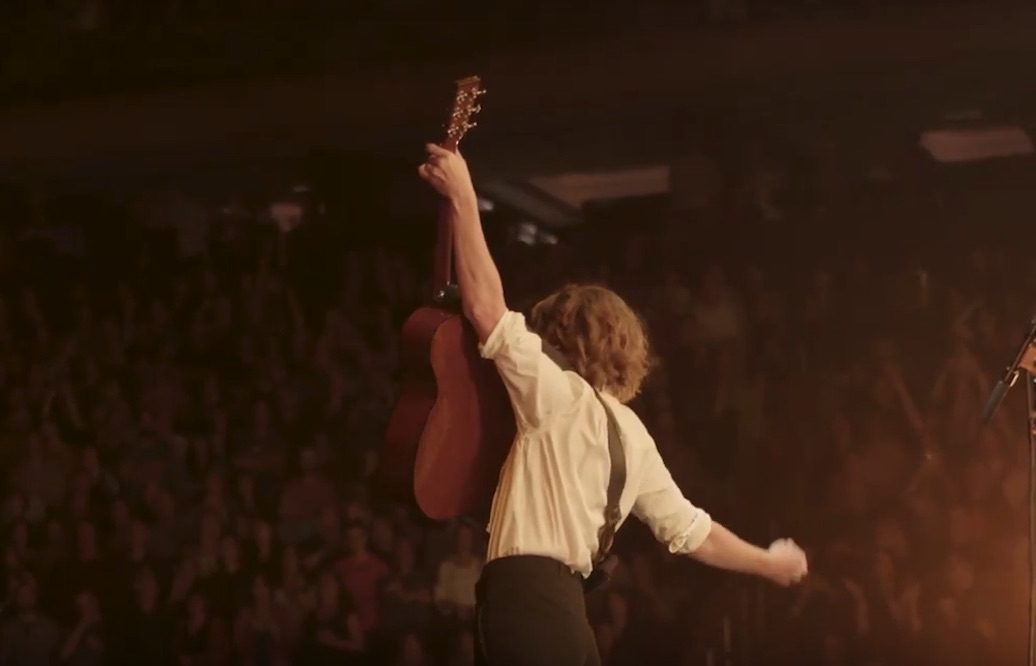
Brandi Carlile crossed a music threshold when she made her headlining debut at Madison Square Garden in 2019, the folk music visionary watching a seemingly out-of-reach dream come to life before her eyes.

The legendary venue chronicled Carlile’s journey to the stage with a two-part, four-minute series titled “Road to the Garden” that offers viewers a glimpse inside Carlile’s perspective as she prepares for the once-in-a-lifetime experience.

https://youtu.be/XItfsK4xo3Y

Ever the eloquent speaker, Carlile is introspective as she describes what this coveted opportunity means to her. “I am a visualizer and I’ve visualized some really big things in my life. But this might’ve actually been outside of my imagination,” she explains in a voice over that opens the mini-doc, capturing the final moments before she walks on stage. MSG completes the holy trinity of New York venues that artists dream of performing in, including Radio City Music Hall and Beacon Theatre. Carlile remarks that taking the stage at the pair of other iconic institutions felt like climbing to the top of the career ladder. But the only way she could see headlining the Garden was in an “abstract sense.”

“I just wanted us to be on a really monumental stage some day. But this feels really profound to me,” the Grammy Award winner reflects as her longtime collaborators Phil and Tim Hanseroth (known as “the twins”), sit nearby on the bus, making their way to the Garden. Shots of Carlile and the twins walking on a custom red carpet that boasts her logo, leading them into the venue are among the memorable moments featured, along with a photo of the marquee advertising the show, which Phil refers to as a “We Are the Champions” type moment.

https://youtu.be/aqEl4uHOSus

Part two of the video series shares footage from rehearsal, Carlile playing to an empty arena that will later be filled with thousands of fans, the singer laser-focused on giving them a high caliber show. She delivered on that promise and was clearly in her element on the massive stage as she proclaims to the capacity crowd “I am home,” a declaration that’s met with boisterous cheers of approval. Viewers listen in as she belts such signature songs as “The Joke,” her powerful voice soaring into the rafters. “There is not a nerdy little outcast with a guitar in the world that doesn’t dream of what I’m seeing right now,” she professes as the camera scans the packed house of roaring patrons, delighting in the set that included guest appearances by Mavis Staples and Carlile’s supergroup, The Highwomen.

While fans get to witness an awe-inspiring moment in Carlile’s life, they also watch her convey the humble mentality that got her there. “I would say love is my driving force. Love and forgiveness, radical positivity,” she manifests. “I hope that people leave here a little more willing to express themselves freely and believe that a stage like Madison Square Garden is not unattainable for any of us – because it wasn’t for me.”

BigKlit Releases New Video and Short Film for “Beautiful” Remix featuring Trippie Redd

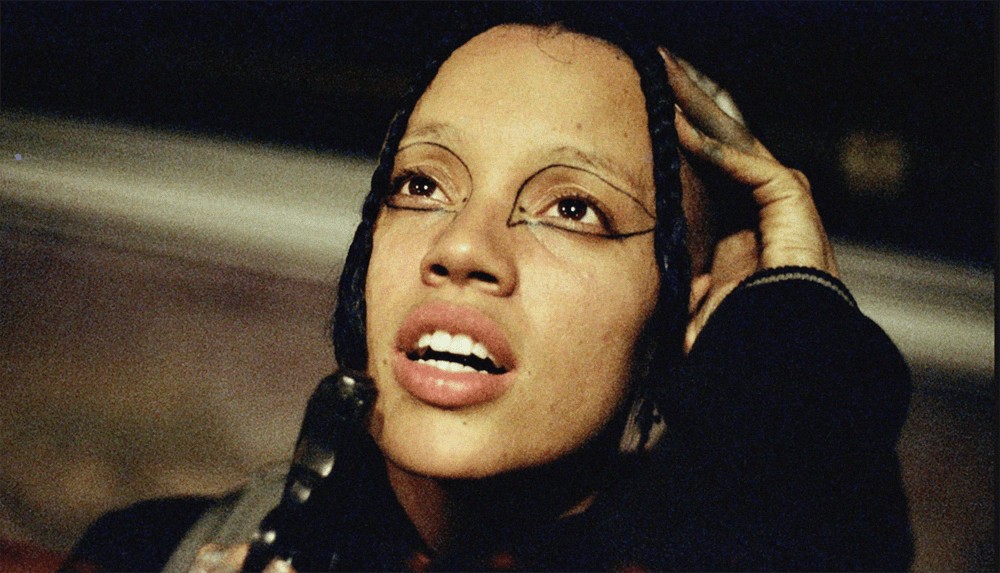
“You’re so fucking beautiful, so beautiful, you stupid hoe,” goes BigKlit’s “Beautiful,” in a line that encapsulates the artist’s surprising yet delightful mix of affection and aggression. She released the original version of the song last year, along with a video featuring herself cuddling and yelling at a chicken. And she didn’t stop there, releasing not one but two albums in quick succession: 2028 and Klitorious B.I.G.

But it’s the characteristically blunt lyrics from her stand-alone singles that have proven to be the keys to her breakout success, including “Boy Bye” and “Liar,” which went viral via TikTok. Straddling hip-hop and punk influences, it’s not uncommon for BigKlit to incorporate multi-media aspects into her work; so far this year, she’s already released a short film called PSYCHOSIS and been featured in an installment of Vice’s “Six Hours With…” series. So it’s natural that BigKlit would want to give “Beautiful” a cinematic treatment as well.

For a new version of the song, featuring rapper Trippie Redd, BigKlit created a new video, as well as a short film, which embodies the song’s duality with a macabre love story and BDSM imagery. It’s fitting, because shifting the balance of power has been her trademark as a woman in male-dominated rap. By blurring the edges of asserting control or losing it totally, BigKlit remains a provocative artist worth keeping an eye on.

Watch the short film for “Beautiful” below and read our interview with BigKlit to find out more about her unique musical style and the inspiration behind the song.

AF: How’d you come up with the name BigKlit?

BK: Scrolling through porn one day. Porn has all the answers.

AF: You sing a lot about sexual empowerment — how did that topic become important to you?

BK: Being physically, mentally, and sexually oppressed. I sing and write what I’m going through. All of my music is based on raw emotions, and that’s why people connect with it. I’m expressing what they’re feeling.  Unfortunately, society suppresses expression of true emotion. You get frowned upon for crying. Shamed for being sexually free. I mean, when is it going to end? We must evolve as a society. If people can’t freely express themselves, then bad things happen. They take it out on themselves and eventually others.

AF: A lot of your songs also express anger, which is refreshing — is this a conscious choice? What is behind that choice? 

BK: My music comes from my emotions. I feel anger more than any other emotion, so that’s what comes out a lot. If I don’t get it out of me, I don’t know what would happen, so I leave it all on the mic.

AF: What inspired the song “Beautiful?”

BK: An ex-boyfriend that was haunting my mind, but not anymore. LOL. I had the idea for some time but never did anything with it. Then, over the summer, when the labels were poaching me and giving me access to all these amazing studios, it just happened. 5 a.m., in Times Square, the sun was coming up and I just went in on it.

AF: What was the concept behind the original video?

BK: Being free, in the moment, and professing my love to a blind chicken. Is it not obvious? I was honestly on vacation with my team and met a guy at a bar who I thought was dope. He invited us back to his house, where he had chickens. I was drunk, so I fell in love with the chicken fast, my team was shooting, and the video just came about naturally.

AF: How’d you come up with the idea to do a full short film with this song?

BK: The short film happened organically. I always start with a creative concept in mind, not thinking about the length at all, and then let it flow from there.  All of my videos are really cinematic, so the concept for this came very naturally.

AF: What’s the concept of the new video and short film? 

BK: The concept depicts two toxic people in love. However, there is a scientific twist to it based on research done by Italian scientists. The research revealed that when two people stare into each other’s eyes for 10 minutes straight, you will have between three and four hallucinations. Without giving too much away, the toxicity plays out in the hallucinations.

AF: Is there anything you’re working on right now? 

BK: Yes, I am always working. I have over 200 songs on the shelf. I am also having fun getting back into making my own beats as well as working on world domination. BIGKLIT 2028 – THERE’S HOPE!

Follow BigKlit on Facebook for ongoing updates.

PREMIERE: Lesley Barth Shares Fish-out-of-Water Anthem “Nashville”

Photo Credit: Harish Pathak

“I’m not ready for the big time, baby,” sings indie-folk artist Lesley Barth on “Lower East Side,” the opening track of her forthcoming sophomore album, Big Time Baby. Having co-produced the album with Joe Michelini from the band American Trappist, the follow-up to Barth’s 2017 debut LP Green Hearts may prove otherwise when it arrives May 15th. The album explores themes of vulnerability and isolation, and details different paths for rebuilding your life and unmasking your true self along the way. We are excited to premiere her second single off the album, “Nashville,” exclusively on Audiofemme.

“It was empowering to find out what the songs require, and have much more of a hand in the vision of the songs this time around,” Barth says, when I ask what it was like to help produce the album. As we talked, her husband and fellow musician Chuck Ramsey is playing music on the other side of their New York apartment, where they’ve lived for the past nine years. They met when they both lived in Philadelphia and were teaching music lessons, which Lesley still does, although virtually these days. “There’s an energy and hustle to New York that we love – it’s easy to be a creative person here. People take you seriously.”

Her first seven years in New York were spent at a corporate job, relying on its predictability and stability while also trying to fit writing and playing music into her schedule. Struggling to balance full-time work and creative side projects led her to reconsider if she was “in a place where I needed to be.” Barth had a weighty decision she needed to make, and didn’t really “have a plan at all” other than wanting to move toward music as her full-time career path. She was facing the great fear that tries to prevent anyone from changing, and yet she was able to boldly follow a sink-or-swim mentality: “If you build yourself a boat, you’re going to go back to the mainland. But if you don’t build the boat, you’ll figure it out on the island.” Trading an office for a stage has paid off for her, as she’s built up her audience in an incremental fashion. Her connection with her listeners has grown in many ways in the past few years, including through her Patreon community, where she has shared original songs and offered monthly virtual concerts since 2017.

One of the unique ways she challenged herself during this transitional time in her career was to write thirty songs in thirty days to celebrate her thirtieth birthday. “Nashville” was one of the songs that survived the experiment, and became one of her favorites to play live. The narrative is based on a guy her husband had played music with in New York, who was “playing cover guitar at this late night bar/with his drawl and his cowboy hat” – longing to play country songs, but not quite bold enough to express his true self in a noisy East-coast bar. “He bought a leather jacket to try and blend in/but his steel-toed boots and sadness gave him up,” Barth continues, as the song complements this tension by moving from finger-picked acoustic guitar into a more full-band sound with synthy drums and strings. As Barth spent more time with this song, she realized that its narrative also applied to herself, and how out of place she felt in the corporate world. It helped her to make that final leap into the unknown experience of being her own boss.

Barth released her first single from Big Time Baby, “Woman Looking Back at Me,” a few weeks ago, which also delves into the search for an authentic self-image, but through a lulling, jangly disco beat. She wrote this after “trying to detach a bit from my inner critic and figure out who is living rent-free in my head.” Especially during this strange time, with the external world quieted down, many of us have been compelled to examine the internal, less pretty parts of ourselves. It can be disorienting to deal with all of our fractured selves while also just trying to exist. Barth encourages us to approach this task through a mode of curiosity rather than judgment: “And I’ve looked at this square so long/just thinking it’s a triangle/And I’ve looked at my face so long/craning my neck for the right angle/But who is the woman looking back/at the woman looking back at me?”

The album as a whole explores what it means to be vulnerable, to take emotional and vocational risks, and to trust yourself to be able to deal with the uncertainty and hurt that comes from living in an imperfect world. Barth’s strong, clear voice shines through, mostly showcased by sparse, jazzy instrumentation. “If love doesn’t change you/then loneliness will” she sings midway through the album, before moving on in “Making Decisions” to propose that loving someone is the ultimate proof that free will exists, that you have to choose it every day. And that having the stability of being partnered with someone who also makes that choice can help sustain you when the rest of your choices seem scary or painful.

These songs are mostly monologues, but transition into a duet with Ramsey in the energetic pop song “Preacher,” which Barth says was the last song they recorded in the studio. It definitely has a celebratory feel, which may seem strange for a break-up song, where both sides of the story examine their infatuation with each other, then merge their nostalgic thoughts in the chorus to see if they match up. “Thought I saw you yesterday/but it was just some guy preaching on the train/interrupting the peace of weary commuters” vividly describes the way you can see a glint of something in any stranger’s face that reminds you of a person you’ve lost, even if it’s a version of that person that only exists in your mind.

Like most musicians right now, Barth has had to re-calibrate the way she operates, most likely having to cancel the summer tour for this album, as well as an album release show she’d planned. When I asked how she’s coping with this new altered reality, she says, “It’s like watching a natural disaster in slow motion. And there’s no time or space to grieve, because people normally grieve by coming together. But I’ve been listening to a lot of my friends’ music, it helps me feel close to them.” She said this transition to solely playing music online “has been super strange, and will probably only get stranger” in the days ahead, but that she’s been brainstorming creative solutions in looking for ways to celebrate her accomplishments anyway.

This positive mindset ties in to the album closer, “Something Good,” which she says “empowers us to allow ourselves to feel good and to make good choices even within a tough situation.” It challenges us to take a chance and, instead of wallowing in our flaws, to choose to focus on happiness instead. It can be a lot easier to give others advice to be patient with themselves than to follow that advice in your own life, but the song encourages us not to lose hope and to honor each milestone crossed along the way.

“It feels weird releasing music right now, but it would feel weird doing anything. So it also feels nice to have something to offer up to people,” Barth says. As she began to share singles from album, Barth says she realized that “perfectionism is irrelevant. It’s also impossible right now – there’s no rulebook anymore. We’re all creating our own rules.” All the characters and versions of self in the album seem to agree, and they give us directions about how we might navigate the unknown days ahead in a gentler headspace.

Follow Lesley Barth on Facebook for ongoing updates.

Devil Doll Premieres “Back Home to Me” on the Eve of LP Release

Photo Credit: Tim Sutton

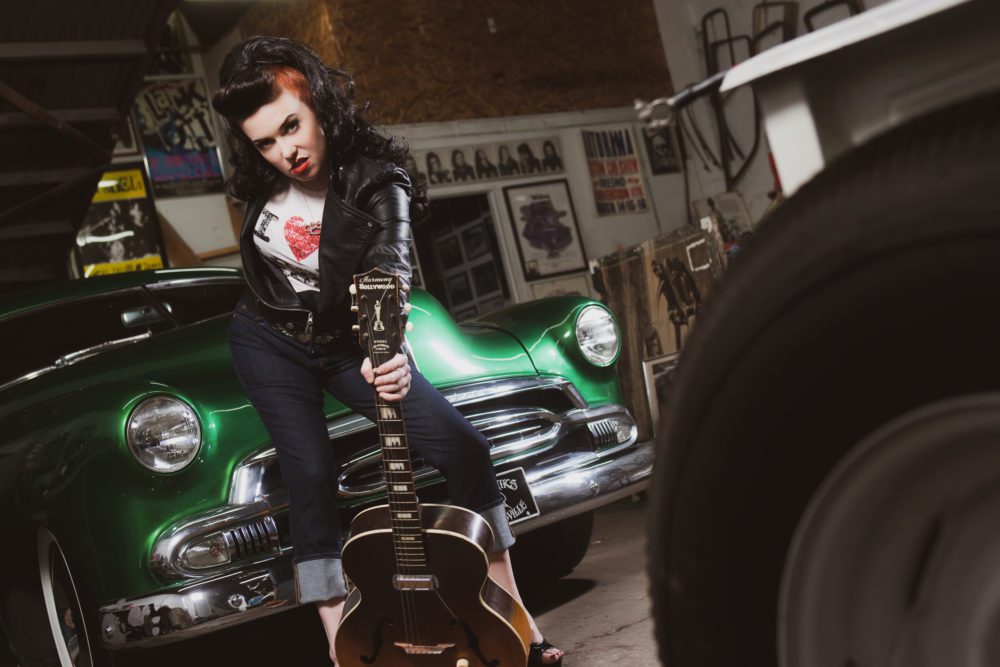
In January 2018, Colleen Duffy, front-woman of L.A.-based rockabilly band Devil Doll, emerged from a four-year health-related hiatus to announce a crowdfunding campaign for her third album. That album, Lover and a Fighter, has now been completed and comes out May 1.

Much of the album was inspired by Duffy’s journey with Ehlers-Danlos syndrome, lead and mercury poisoning, and black mold toxicity, which led her to wake up paralyzed one morning and even reach the point where it was possible she could die. “I was writing out my will, and it just really kind of puts things in perspective as far as what is important to you. A pre-death-bed clarity,” she says. This experience inspired songs such as the slow jam “Mother Mary,” which she describes as her “Amazing Grace.”

The title Lover and a Fighter was intended to convey the same duality of light and dark as the name Devil Doll, plus the “fighter” mentality that got Duffy through her illness and other hardships in her life. “Just by being born, by coming into this planet, we have thousands of years of energetic imprinting and DNA that we’re walking into,” she says. “I just choose to embrace everything about myself, whether it’s pretty or not. That’s where the empowerment comes in.”

On her latest single off the album, “Back Home to Me,” she wistfully sings about pining for an absent lover: “The time, it ticks so slow/Wonderin’ if the wind will blow/You back home to me.” Musically, she considers it a nod to Otis Redding and Sam Cooke.

The theatrical track, like many of her songs, was inspired by her own life but became more about a common human experience. “I tried to dip into that whole collective unconscious to go with the bigger picture, so sometimes, I start a song that may be instigated by a situation, but then I sort of relax into the whole dynamic that’s happening and try to go archetypal,” she says. “Most people have had that experience of being left or being invested in something and that relationship ending, and there’s that moment where we go, ‘The sky is falling and life will never be the same again.’ It’s one of those ‘come to God’ and ‘dark night of the soul’ moments.”

The album also contains several covers, including a rendition of Lynyrd Skynyrd’s “Simple Man” with dueling guitar and fiddle. “That song has been a spiritual magnetic north for me,” Duffy explains. “It is healing how many times that song has come into my life out of nowhere. There were times I would listen to that song over and over again when I didn’t know if I was going to die or not. So, that was kind of my gratitude toward that song, putting it on the record.”

Duffy also tries to combat female shame in her music, like her unapologetic ode to having casual sex, “One Night Stand,” which also appears on Lover and a Fighter. “We have so many sides to the female psyche,” she says. “Some have been hidden in a dark box. Some have been embraced more than others. Let’s just dump out the boxes, unrope them from the stakes they were going to get burned at, and celebrate who we are without apology.”

Duffy is currently working on several books about her life and health journey, as well as some abstract artwork that she plans to show within the next few years. She’s also creating new songs that she hopes speak to and uplift her fans, as her music has in the past.

“There’s something very magical that comes through in the writing,” she says. “Sometimes, I feel like I can’t even take credit for the songs because I feel like they write themselves, and the songs take on this power, this life force all of their own, and people connect with them. It’s like it carries them. I feel like it’s in cooperation for something greater than myself.”

Follow Devil Doll on Facebook for ongoing updates.

Sacramento’s Destroy Boys Confront Adulthood with Latest Singles

Destroy Boys by Kai Mosley
Photo Credit: Kai Mosley

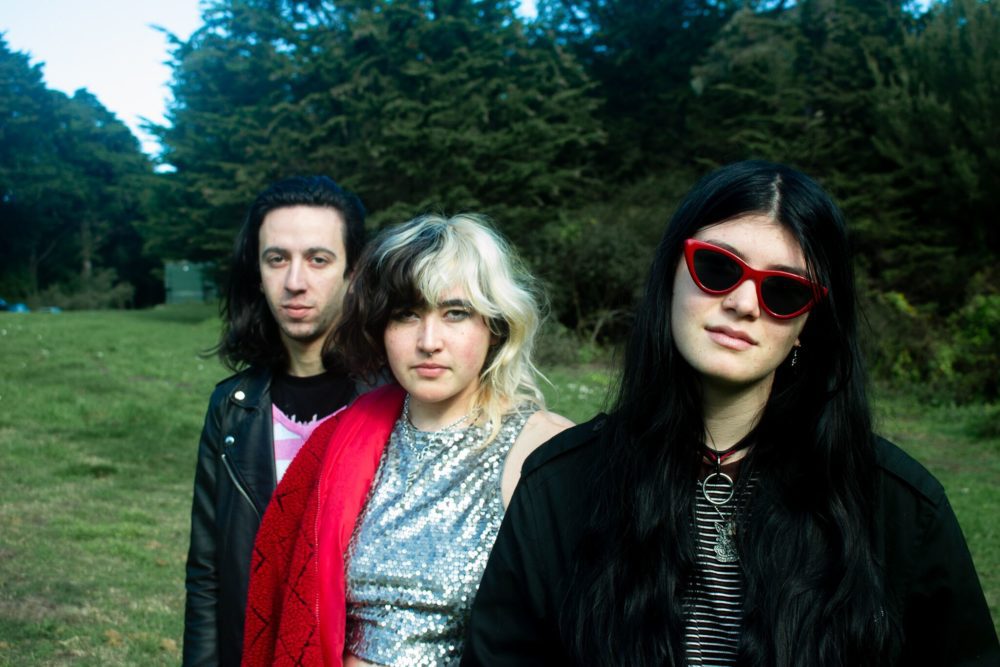
“At school, when we would have to write an essay prompt, I would write a big essay. ‘Cause I have a lot to say,” says Alexia Roditis, lead singer of Sacramento band Destroy Boys. It would be easy (and sloppy) to take a band with a name like Destroy Boys and just slap them with the label of modern “girl band,” who play-act at old-school punk, flip tables, spit in boys’ faces, etc. But even though the band’s name had its origin in band guitarist Vi Mayugba’s scribbled missive on a chalk wall, Roditis, Mayuba, and drummer Narsai Malik then and now would never deign to reduce it to something that simple.

Last week, the band released their newest track, “Honey I’m Home,” which is, as Roditis puts it, “a really sweet and melancholy song.” That is, of course, except for the part about the brick. “I won’t answer your phone calls/ I’m not your home any more/ I’ll throw a brick though your window/ I’m not your home any more!” Roditis sings during the song’s bridge, letting their delivery of the last word land like a slap in the face.

This is one of many strong bridges or breaks in the band’s repertoire, many examples of which can be found on their 2018 sophomore album, Make Room. With a cover festooned in a collage of red-rimmed eyes, the LP is nothing if not an oracle of what was to come: pure rock ‘n’ roll, firmly rooted in place, but from a distinctly young and female point of view (though it should be noted that Roditis uses both she and they pronouns; they have been used interchangeably in this article).

Women, have, of course, always been drivers of rock ’n’ roll, but female-fronted bands are frequently referred to as being part of “the fringes,” as if being likened to the bargain bin at Joann Fabrics is some kind of complement.

“Why don’t you think about why you’re listening?” Roditis asks. “If you like this music, you should care about where I come from and what I think.” It’s a good rule of thumb; while some musicians seem to inhabit some unreachable plane of existence, more often than not, they’re trying to eke out some semblance of peace and security on a day-by day basis just like the rest of us.

Beyond catharsis, her songwriting goal is to be a kind of sonic lifeboat for anyone who has experienced what she has. Or not. “I don’t think it’s good to isolate people if they think differently,” Roditis explains. “I think it’s important for people to have conversations. That’s how you gain an understanding of something instead of just ignoring it.” Like a surprising amount of Playing the Bay alums, it was Roditis’s adolescent experience with isolation that fueled her songwriting and made her look more closely at her relationships with the people around her. After a move, Roditis went from “a really close-knit Latino community to a super white community [in Sacramento]. That gave me a perspective on class and race and immigrant status.”

So too, has the inherent complexities of moving beyond high school and into the “adult” world. With “Honey I’m Home” and the single that preceded it, “Fences,” Destroy Boys evolve toward an older, more mature sound. One of Make Room’s stand-out tracks, “Nerve,” is a compact tale of chaotic sexual tension. The chorus is simple, but incredibly catchy, and Roditis’s rich voice delivers the verses with memorable inflection, dragging out words as they are wont to do, like rock ’n’ roll-specific vocal fry. “I’m writing songs about us/your velvet voice lingers/slip through each other’s fingers,” they sing in one of the album’s sweeter moments. While there are hints that they know the person in question may not be great for them, “Fences” brings us to the aftermath of the worst case scenario version any romantic entanglement.

“Not that [Make Room] wasn’t deep or anything. It’s just that, for me, I was writing about high school and about boys, and I would write about stuff that bothered me, but it wasn’t as traumatic as what ‘Fences’ was written about.”

“Did you say ‘traumatic’ or ‘dramatic?’” I ask.

“Both. Both work,” Roditis replies. The song is, in part, about “non-consensual [sexual] experiences that are hard to process. Just like sex not being for me, too. That’s something I did for a long time. And I just don’t know why,” Roditis says. Despite some heavy subject material, Roditis howls her way through “Fences” with not-so-reckless abandon, asking if she is forever stuck in some kind of toxic relationship time loop. “I like my pit,” she sings, sounding resigned, “I want to stay/that way I can’t fall back in again.”

“So many women – especially black women, indigenous women of color, queer women, trans women – just don’t get justice. People who don’t even know the harm that they caused stay ignorant. And it’s so infuriating. It’s like… I have to live with the thing you did and you don’t?” Roditis asks, sighing heavily. The backstories to some of Destroy Boys’ newest works make listeners sit with these uncomfortable truths. But as Roditis already knows, bringing things to the light may be the best way to help yourself — and possibly someone else — take that first step out of the pit.

Follow Destroy Boys on Instagram for ongoing updates.

PREMIERE: Eden Iris Sings About Loss and Hope on “Blue Home”


Photo Credit: Ko Zushi

Eden Iris’s crisp, soothing voice sounds like it belongs in the soundtrack to a Disney movie, and her latest song “Blue Home” is appropriately vivid and mystical. Her words paint a picture against electronic beats and string instruments: “There’s a storm coming in, grab your coat / I’ve found my shelter and I won’t let go / There’s a girl in the sky / And she calls your name / You hear the thunder but you don’t feel the rain.”

“Blue Home” will appear on the New Zealand-born, LA-based artist’s debut album, coming out later this year. She’s also been hard at work releasing several singles over the past year, including the meditative “The Love That Still Lives Here,” following her 2018 EP Demons. We talked to Iris about her songwriting process, what inspires her, and her upcoming music.

AF: How did you get started making music?

EI: I started learning classical piano when I was six years old. My mum told me, “you’re going to take lessons!” and I was resistant, which, looking back, I find amusing. I picked up the guitar when I was 12 years old, and from there, I starting busking on the streets of Auckland, New Zealand. One day, someone told me I would make more money if I sang, and that’s really what gave me a push to get started. I got into songwriting during my teenage years because it was fun to play and write in bands. I’ve kept writing ever since. I find it such a rewarding experience. And I love stories.

AF: What is the song “Blue Home” about? 

EI: Like most songs, I wrote “Blue Home” to process what was happening for me at the time. The events are personal, but the song is about feeling shut out, rejected, and wanting to be loved. It’s also about holding onto hope, which is what the bridge lyrics “dreams will leave the room” are about. I wanted the song to feel melancholic but also uplifting to the listener.

AF: Musically, how does this differ from your past work?

EI: “Blue Home” has a little more of an electronic/indie vibe than some of my past work. Sophie Stern, who produced the song, recorded live drums in her studio, which created a bigger, more cinematic sound. I love the mesh of organic and sampled sounds that she brought to the table. There’s also a live string quartet playing that I have had a recording of for many years, which she worked in there.

AF: What else do you sing about on your forthcoming album?

EI: This will be my first album release. I talk about impermanence and letting go. There are a few love songs. The last few singles I have released will be on it. I was able to play the songs live at shows before I recorded them, so I think that helped me get to a place where the studio performances felt natural.

AF: What themes tend to come up most frequently in your music?

EI: I have written my fair share of love songs, but I have just as many songs that are about dealing with loss, change, and holding on to hope. I’m also kind of spiritual, so I tend to write about that a lot, too. Sometimes, when I’m playing music, it feels as though I’m channeling a higher power. When it happens, it’s instinctive, an unstoppable force, and when I reach that place, I know I don’t have to do anything but just be present and take it as a gift. Music has helped carry me through some of the toughest moments of my life, and after that, it was hard to not feel it spiritually.

Being in nature also helps me keep in touch with my spirituality. When I’m immersed in it, I feel as though I can reach an inner state of calm that is hard to find in the day-to-day grind. I guess I’m a bit of a hippie at heart, which is why I have so many lyrical references to nature!

AF: Who are your musical influences?

EI: I listened obsessively to Kate Bush and Tori Amos when I was a teenager. To name a few more… Joni Mitchell, Brandi Carlile, Maggie Rogers, and Matt Corby. Lyrically, I have been very inspired by Leonard Cohen, Patti Smith, and New Zealand poet Sam Hunt.

AF: I know you moved from New Zealand to LA a few years ago — how do the music scenes in those two places compare?

EI: They are very different! LA is much more saturated with artists, which is cool because there are a lot of great opportunities for collaboration. New Zealand doesn’t have the same number of artists, but that can also work to your advantage because there is less competition for gigs. I think no matter where you are, it’s important to find a supportive community that you feel a part of. I’ve been lucky enough to find that in both places.

AF: What are you working on now, and what are your next plans?

EI: Right now, I’m finishing up mixing my album! So I am preparing for the release in the summer. There are no gigs at the moment, so I’m live-streaming from my Facebook Page every Friday night. My next plan: I’m going to keep writing, and see what songs I can catch!

Follow Eden Iris on Facebook for ongoing updates.

PREMIERE: Deau Eyes Details Latest Plans For Visual Album Debut With “Full Proof” Video

Photo Credit: Joel Arbaje

Ali Thibodeau had a moment of clarity the day of her grandmother’s funeral. She and her brother Michael had been drinking margaritas all day to cope with the loss. On top of everything, Ali was still reeling from the cancellation of SXSW; her musical project Deau Eyes was about to head from Richmond, Virginia to Austin for the event, along with a few more tour dates to celebrate the release of her debut on EggHunt Records, Let It Leave. Sidelined by the impending pandemic and mourning all at once, she turned to her brother and said, “I’m gonna make a full video album.” The two spent the rest of the day coming up with ideas they could execute as the quarantine descended, like flying an enormous paper airplane off a hill. “We’re just doing these kind of outrageous, giant crafts that we don’t really know how to do, but we’re making it work and it’s turning out to be one of the truest-to-vision pieces I’ve ever done,” Thibodeau says. “Without that, I have no idea how I would cope with any of this at all.”

One of those videos, premiering today on Audiofemme, is for a song called “Full Proof,” one of the grungier cuts on Let It Leave, with jagged guitars and confrontational vocals that range from bourbon-sweet falsetto to hungover growl. There’s an latent rage to the song, which Thibodeau wrote while processing the sadness, frustration, and anger of bitter heartache. “It’s like the stages of grief, you know?” Thibodeau remembers. “I’ve kind of been feeling that in this time as well – it’s funny how songs transcend different time frames in your life. They just keep becoming more and more alive and carrying so many different stories.”

For the visual, which perfectly recalls the angsty aesthetic of ’90s MTV with its cross fades and chaos, Thibodeau started collecting free stuff from Facebook Marketplace that she could basically destroy: and oven, a television, a re-painted piñata. At one point she even smashes a guitar – while her brother, an actor and playwright whose love of film, Ali says, made him a natural director, filmed it all. It feels spontaneous, but even Thibodeau’s outfit was fully-thought-out symbolism.

“Writing for me has always been a tool in transitional periods in my life,” Thibodeau says. “‘Full Proof’ was written at a time when I was feeling like I was starting to become a fuller version of myself, like this phoenix.” Toxic people in her life once made her feel small, but “aggravated the beast” in the process – so that’s what Thibodeau becomes in the video, mixed with a little of Nancy Sinatra’s “These Boots Are Made For Walkin’.” “I wanted to represent that, so I just like, made more denim fringe and put it on the back of my jacket, and teased up my hair, and my makeup’s gonna be more dramatic and I’m gonna be a little bit madder.”

The costuming goes deeper, too, than simply representing Thibodeau’s metamorphosis. “There’s lots of Easter Eggs throughout these videos,” she hints, noting that the words bedazzled on her t-shirt are actually lyrics from “Paper Stickers,” another song that will appear on Let It Leave. It’s all meant to tie the videos together thematically, even if the songs on album rarely remain faithful to a single genre. “Parallel Time” is a wistful acoustic ballad about appreciating lingering memories, no matter how painful; “Dear Young Love” builds to ecstatic pop rock, and will get a one-take dance-oriented video; “Some Do,” boasts a twangy swagger that Thibodeau picked up while singing country music covers on a cruise ship somewhere between Alabama and Mexico.

It was in unlikely places like this that Thibodeau found her voice over and over again – from writing diaristic songs as a form of therapy in her bedroom as a teenager – ones she never wanted anyone to hear and says she “forgot about” as soon as she finished singing them – to busking in the New York City subways when musical theater auditions proved to be soul crushing. As formative as these experiences were, it was three important lifelong friendships that would become instrumental in bringing her solo debut to fruition, once she returned to Richmond: Jacob Blizard and Collin Pastore — known for their work on Illuminati Hotties’ Kiss Yr Frenemies and Lucy Dacus’ No Burden and Historian — came on as producers and helped her complete the tracks that would complete Let It Leave, while Dacus herself encouraged Thibodeau every step of the way.

“We grew up together and she was kind of the person that I would play my songs for, if I ever played them for anybody. She was like the only other person that I knew that wrote songs,” Thibodeau says of Dacus, who had signed to Matador just as Thibodeau was contemplating her next move. “Every time I’d get coffee with her she would always just be like ‘I think it’s time you moved back.’ Finally, after like four or five visits back home, I decided to, and I’m so glad that I did because I’ve been submerged into this incredible, loving, accepting community that’s so generous. That’s kind of where I started to really build these songs.” When it came time to finish the record, Dacus, Blizard, and Pastore encouraged Thibodeau to come on a weekend trip to Nashville to record at Trace Horse Studio. “That’s when everything changed,” Thibodeau says. “That was two and a half years ago. I feel like my whole life since then has been completely about this record coming out. It’s wild. I’m so grateful for them, and it’s just really serendipitous that we’re all kind of on the same path and in the same place at the same time. It’s really beautiful.”

Of course, it’s unbelievably disheartening to spend two years leading up to a debut release, only to have it thwarted by an unexpected quarantine. But Thibodeau admits she was “starved for this time to just live and be myself and make the thing I need to make,” though she admits she feels guilt that others are suffering, and has, of course, been grieving herself. But creating the visual element of the album has given these songs a new life, since touring behind the album is unlikely to happen. Thibodeau says she’s in “no rush” to get back on the road and “sleep in people’s basements,” and instead will likely focus on putting out the album and a half’s worth of material she’s written since recording Let It Leave – after she releases some eight more videos for each of its tracks, that is.

Moving on to the next thing, like a shark that has to keep swimming, is in Thibodeau’s blood. Moreso than any one genre, that idea ties Let It Leave together. “This album as a whole, if I could pick one word as a theme, it’s resilience,” Thibodeau says. “I think it’s just [about] knowing that the only thing we can really count on in this life is change, and knowing that we’re gonna be okay through it all, no matter what’s happening, even if it’s heartbreaking.”

Follow Deau Eyes on Facebook for ongoing updates.

PREMIERE: Cate Von Csoke Celebrates Beauty and Danger With “Dream Around”

Photo Credit: Emma Kepley

Desert sun stretching over miles and miles of open space, not a soul in sight. With COVID-19 on the mind, it’s imagery that might conjure up thoughts of Mad Max or Cormac McCarthy’s The Road. But when Australian-native, Brooklyn-based songwriter Cate Von Csoke wrote her new single “Dream Around,” she didn’t have apocalyptic visions in mind. The single is a hazy, psychedelic interlude that conjures up visions of lovers entwined in the back seat of a car; the rest of the journey on hold for a moment.

“There’s a look in your eyes tonight / And it’s written all over your smile / I’ve been walking on dandelions / All I wanna do is dream around,” Von Csoke’s voice echos pleasantly. The repetition and reverb of traditional psych music are alive and well within the track, but there’s a refreshing subtlety in Von Csoke’s approach that reveals itself upon a repeat listens. Her upcoming LP Almoon, due out June 5th, is billed as a journey in “western noir.” Von Csoke, the desert’s answer to Lana Del Rey, dressed in all white, is delightfully mercurial in her promo pictures. The style is familiar, the music nostalgic, a much-needed dalliance with a simpler time.

Listen to AudioFemme’s exclusive stream of “Dream Around” and read our full interview with Cate Von Coske below.

AF: You’re originally from Australia and you currently live in Brooklyn. Would you say your sound is mostly influenced by your home country?

CVC: The desertscapes of both the US and Australia as well as the urban landscape of New York are all constant influences on my sound. However, I believe even if you aren’t mindful of a particular landscape or experience, you are taking it all in with the chance these moments will reappear in a dream or a sound unknowingly.

AF: When did you start writing music? And what was the first song you wrote that made you go: Okay, I should really do this?

CVC: I grew up in a family of musicians so it’s hard to recall a time when we weren’t “writing.” The first song I can clearly remember (perhaps because I sang it on the bus as a painfully shy 11-year-old) was coincidentally called “Dreams Come True.” Writing has always been a means of escapism and feels more like a necessity than a desire to achieve something. Moving to New York was certainly pivotal though and is an amazing source of inspiration and a place where dreams really do come true.

AF: You worked with Jared Artaud of The Vacant Lots and Grammy award-winner Ted Young on your upcoming album ​Almoon​. What was the recording process like?

CVC: I met Jared at a Slowdive show in New York and then played a show at a night he curates in New York called Damage Control. After the show he told me he would produce my album. Ted Young was there too and offered to engineer. They have worked on all The Vacant Lots albums together over the years as well as with many musical greats individually. All that experience and the relationship between them is extremely evident and valuable. We recorded at Sonic Youth Studio and were blessed to have Steve Shelley on drums and percussion. It was an incredibly inspiring experience and I believe we created something beautifully unique.

AF: Tell us about “Dream Around” – did this song start with a lyric, a memory, a place in your mind?

CVC: “Dream Around” is a celebration of the beauty and danger of dreams. It began with the line “I’ve been walking on dandelions…” romantic or crushing.

AF: The video for your debut single “Coyote Cry” was super dreamy. Do you spend a good amount of time curating a look to go along with your sound?

CVC: Thank you. I was fortunate to work with two dear friends, Nicole Steriovski and Jenna Saraco of Either And Studio on the music video. Their work embraces a subconscious reveal, the line between fiction and reality often blurred and up for interpretation. The aesthetic is genuine to an aspect of who I am as a person. We all play many characters in our lives, but the mysterious has always been something I’m attracted to as I’m often accused of being “off with the spirits.”

AF: In a few short words, tell us what we can expect from the album.

CVC: Almoon is a psychedelic, minimal-for-maximum effect eight-track offering of introspective anti-love songs, anchored by dark, hypnotic vocals and intriguing lyricism t​o not reveal, but hint at, the beauty and secrets of life.

Follow Cate Von Csoke on Facebook for ongoing updates. 

L.A. DJ Francesca Harding Spins Sam Cooke’s Legacy

Photo Credit: Sarah Taylor

Los Angeles-based DJ and music supervisor Francesca Harding had been wanting to dive deep into her favorite artists’ discographies. “This is a perfect time,” she says on a recent phone call; while clubs and bars in L.A. have closed and the people who frequent them are staying at home, Harding went to work, digging into the catalog of her favorite singer, Sam Cooke.

“I’ve been falling down this Sam Cooke rabbit hole,” Harding says. “He’s always been this large figure for me in terms of what it means to be authentic, what it means to hold space,” she says. “I really feel that what he did is still an example that we can all look to, even today.” That’s something we can all appreciate thanks to Harding’s latest mix, “Francesca Presents: Sam Cooke,” premiering today on Audiofemme. She intends this to be the first in a series of listening sessions dedicated to specific artists.

In the 1950s and early ’60s, Cooke wrote and recorded hit singles like “You Send Me,” “Wonderful World,” and “Twistin’ the Night Away.” He was an innovator, often considered to be one of pioneers of ’60s soul music, and even started a record label focused on releasing other artists’ music. Cooke was also a civil rights activist; his song “A Change Is Gonna Come” became an anthem of the era. Although his life was tragically cut short in 1964, his music has endured in the decades that followed. His songs have been frequently covered and his recordings sampled. All of that presented Harding with a challenge: “How do you do a best of mix when someone has shifted culture with their music in such significant ways?”

Harding, who wrote an artist statement about the mix that describes her personal connections to Cooke’s music, recalls hearing the singer as a child, when her mom would listen to his music. “It stays with us,” she says. “It forms us and we end up returning to it and loving it.”

As a DJ, Harding became known for playing Afro-Latin music and global bass with parties like Bodega and CULos Angeles. About two years ago, she began working in music supervision for film and television. “Luckily, for me, I have to sit down and go a little bit deeper in music just for the job description,” she says. But, through this mix, Harding gives listeners a chance to dive into Cooke’s repertoire with her.

Initially, Harding thought about organizing the mix like a more traditional club mix, starting with slower tempo songs, building up and then slowing down again. When she first recorded it that way, though, it didn’t work for her. “In doing this Sam Cooke deep dive, I kept coming across audio with him speaking and I’m like, this is perfect,” says Harding. “I was able to use Logic to chop up that audio to break up some of the segues of the mix.” She adds, “I like listening to him chit-chat and talk about soul music or what it means to be an artist.”

Harding cleverly follows various threads of Cooke’s career in a way that makes it easier for listeners to pick up. While it began as research project for herself, she’s hopeful that others might hear it and want to dig into Cooke’s work on their own, especially now that traditional in-person channels for experiencing music are on hold for an indefinite period of time.

“There is so much music to ingest and digest. If there’s ever a time for us to do that, I think it’s right now,” Harding says. “We’re in our homes. A lot of us aren’t working and we want the music. We’re hungry for the music. There’s so much music and so many genres out there.”

She’s curious to see how this extended period of listening to music at home will impact nightlife when it reopens. “I’m kind of excited about what will come out of this in terms of listeners, audiences, shaping their tastes because they’ve had more time to consume different types of music. What will it look like after this?” she says. “If I play Sam Cooke at midnight, maybe people will be more receptive to it because of this time. It will be really interesting to see how this all translates to the dance floor, for sure.”

It’s a mix made for anyone, but also one that comes from a very personal passion. “He’s such a gift and has been since I was young,” she says. “I just wanted to honor that gift.”

Follow Francesca Harding on Instagram for ongoing updates.

Painted Zeros Return With Quarantine-Inspired “Break” Video

Photo Credit: Kenneth Bachor

Painted Zeros, the indie-pop project of Brooklyn-based artist and sound engineer Katie Lau, is known for songs full of witty sarcasm and biting social commentary. “Commuter Rage” rails against men who demand emotional labor from women, while “This American Life” paints a grim picture of the empty-feeling lives many live. One tool much of Lau’s music employs is contrast: between angry lyrics and happy-go-lucky melodies; between wholesome-sounding titles and dark subject matter.

Their latest video, for the single “Break,” is no exception, with a series of outdoor images that resemble a nature documentary accompanying lyrics expressing Lau’s feelings of hopelessness in the wake of several breakups.

Lau captured the footage on her iPhone through her window while she was quarantined in her apartment. “Experiencing the natural world primarily through these narrow window-views is a phenomenon particular to NYC and to quarantining, and it can perhaps be seen as an analogue to the kind of introverted depression that inspired the song in the first place,” she says.

Lau started making music using Garage Band when she was a teenager in White Plains, NY. “Growing up in the punk scene was formative for me, and I embraced the ethos of DIY/DIT (do-it-together): the belief in community over corporatism, but also the belief in self-reliance, which was particularly important to me as a queer woman making music,” she says. “I wanted to hear more narratives like my own in an overwhelmingly male-dominated world.”

She became a full-time sound engineer after college, and in 2014, she started Painted Zeros — a name inspired by the Sonic Youth lyric, “He acts the hero / We paint a zero on his hand.” She explains the moniker: “I was attracted to the idea of a painted zero representing defiance, a rejection of power structures.”

“Break” is off Lau’s second full length album, When You Found Forever, out May 29 on Don Giovanni Records. The album also deals with recovery from alcohol and substance abuse, toxic relationships, and self-destructive tendencies. To Lau, the record’s two sides represent the journeys through these difficult times, and ultimately past them. It’s her first full-length since 2015’s Floriography.

When You Found Forever acts in some ways as a document of the past three years of my life,” she explains. “I kind of crashed and burned around the end of 2016/beginning of 2017 and hit this dark rock bottom. Thanks to the help of so many incredible, patient friends and loved ones, I was lucky enough to get into recovery, and through ongoing spiritual and emotional growth, have entered into a period of my life with more hopefulness and love and levity than ever before.”
Lau’s music has historically blurred much of her vocals in the vein of shoegaze and ’90s screamo. “When I mixed Floriography, my first full-length, I thought in particular of one of my favorite bands from when I was a teenager, Saetia, whose music really requires you to read the lyrics to understand what they are saying,” she explains. “Their lyrics were interesting, and it was so surprising to me when I learned what the vocalist was saying — it felt like I had unlocked a second, deeper layer of meaning and engagement with their songs. I don’t think that mix choice was working for my own music, though.” For her new album, she made a conscious effort to make the vocals louder and more audible. “I don’t want to hide my words,” she says. “I want to connect with people.”
Follow Painted Zeros on Facebook for ongoing updates.

PREMIERE: Weiwu “Ya Wei”

Vishnu Dass, aka Michael Gungor

Names are a strange thing. As a musician, a band name can become a costume of sorts, something you put on, but ultimately disregard as a caricature of yourself. It can become something one fights with their label about, a la Prince, or something one must ultimately shed completely. Vishnu Dass, fka Michael Gungor, knows all about labels. As one half the formerly Christian husband-and-wife alternative band Gungor, a quick Google of his name reveals incendiary articles on his faith, Twitter spats among fans, and some of his recent, more revealing projects like his existential podcast Loving THIS with Michael Gungor.

After Gungor’s farewell outing in 2019, dubbed “The End of the World Tour,” it was time to make new music with a new name altogether. He had adopted the name Vishnu Dass (meaning “servant of the creator”) in 2017 – it was given to him by the spiritual leader Ram Dass, aka Richard Alpert, author of 1971’s hippie manifesto Be Here Now. He detailed this choice on an episode of The Liturgists, a podcast he co-founded in 2014 with Mike McHargue, aka Science Mike, in order to explore “where faith, science, and art collide.” That name change signified a letting go, a release from the drama and pain of the past. A name that would lead him into a new future.

Now, Vishnu Dass has a new solo project he’s calling Weiwu, and it has been a long time coming. It is the culmination of a spiritual journey that started during a 2010 meditation retreat in Assisi, Italy, as Michael was struggling with his belief in God – which was a huge problem, considering he was, at that time, in a multiple Grammy-nominated Christian band with his wife Lisa.

“I was in spiritual crisis. I just needed to get away, figure out what was happening. Get my life back in some sort of manageable state,” Vishnu Dass says of that time. “I was questioning the existence of God a lot. I was questioning Christianity. What is true, what is not. Is there a God? What is God if God is real? I was meditating all the time and had this feeling or realization, this opening up – whatever we call God is just what is. I just remember writing in my journal: God is. Infinity is infinite. There is no parsing it out or dividing it.”

His revelation in the moment led to him dancing joyously in the fields in Assisi, finally at peace within himself. That peace, however, didn’t last long once he returned home. He chased that feeling of oneness, exhausting himself for years. It wasn’t until he fully let go of his obsession, that he came back to spirituality with a new sense of purpose. The name change, the podcast, and everything that came after – including a 2019 book he wrote titled THIS: Becoming Free, that details how he climbed out of the proverbial cave to meet the divine on his own terms – was a direct result of that reckoning of faith. Weiwu represents the next part of that journey.

Meaning “action that is not action,” Weiwu is a Taoist concept that Vishnu Dass utilized within the writing process of his upcoming album. He wrote the entire album in a “flow state,” resisting the urge to edit and forcing himself to stop and delete anything that was not created within flow. This may be the first music Vishnu Dass has written entirely by himself and for himself, a concept we spoke about in depth. In his band Gungor, the music was written, if not directly to God, most definitely for God, or as a way for the audience to praise or experience God. In this new work, Vishnu Dass has allowed himself to fully participate in all aspects of creation, from writing in flow to sound mixing the final edit. “When I take myself out of the equation, it’s not actually being selfless. It’s just being unconscious,” he says. The album is a mix of meditation and dance, meant to be listened to in one sitting, with the sound turned up.

“My friend Hillary McBride turned me onto this thing called Five Rhythms Dance,” Vishnu Dass explains. “Gabrielle Roth came up with this kind of philosophy, ways of moving your body through the world. Those five ways are flow, staccato, chaos, miracle, and stillness. I want this music to move my body in these ways. Get the music out of my head and into my body.”

The video for “Ya Wei” is a series of visuals, one form leading to the next in a seamless loop. It’s a mix of spiritual imagery with science, reiterating the themes Vishnu Dass has championed throughout his career. The song itself has many of the elements that Gungor was known for: the wall of sound technique, multiple layered voices rising to crescendo. Yet many of the instruments and music patterns in this latest work are drawn from other cultures, and move beyond the evangelical background that informed Gungor. It’s a promising new direction for a musician who has spent the majority of his career in service to religion. The themes remain mystical, but the statements of past songs are turned into questions.

Vishnu Dass, aka Michael Gungor, aka Weiwu, has a sense of humor when it comes to his journey as a musician. He doesn’t flinch from conflict or shy away from a difficult conversation. In the end, his new identity has given him the strength to be honest, the joy to create, and the wonder to approach every day with fresh eyes.

Follow Weiwu on Facebook for ongoing updates. 

How Suzie Chism’s Debut Album Came Together In Her Closet

Photo Credit: Michael Remesi

On her debut solo full-length, L.A.-based singer-songwriter Suzie Chism spins intensely personal, narrative songs that expertly flit across genres from rock to folk to synthpop. Where is an album about big life changes, new beginnings and finding a sense of self. And it’s an album that took shape in the closet of her Hollywood apartment.

Chism had spent eight years in Nashville, where she founded the band Moseley and had become embedded in that city’s music scene. Then, in 2018, she made the cross-country move to Los Angeles with her then-boyfriend. Their relationship ended shortly after arriving in town. Chism says that she wondered whether or not she should stay in L.A., where she hardly knew anyone, or return to Nashville, where she had a network of friends and colleagues in place.

“I wanted to like myself no matter where I’m at, which is where the concept of the album came,” Chism says. “I didn’t feel like I belonged anywhere until I could get to know myself better. I stayed in L.A. and spent a lot of time with myself. I started therapy and I made this album.”

But Where isn’t a breakup album. Earlier, when Chism was still living at the home that she and her ex shared, she’d written some songs about the end of the relationship, but once she had moved into her own apartment, she was reticent to record them. “I didn’t want to hear that story anymore,” she says. “I wanted a new story and even though that scared me – because I became comfortable with my identity in L.A. of being this heartbroken ex-bandmate – I was ready for a new story.”

She spent nearly every day recording in the closet of her Hollywood apartment. In all, six of the nine songs on Where were created in that space. She played most of the instruments on the album too. “I had to figure out how to do it alone and had to learn how to play a lot of different instruments because I didn’t have the budget or the network here to hire people to play on it,” she explains.

It wasn’t always a smooth process. For the song “Good For Business,” Chism brought in a harp player to record inside the closet. While the space – which she calls “Suz Suz Studio” – isn’t tiny, it wasn’t quite big enough to fit the instrument. “I knocked over all my recording gear. Broke all my recording gear,” she recalls. The mishap forced Chism to upgrade her home studio. In the process, she realized that she learned how to use new gear and figured out how to better soundproof her closet. “It’s funny because, basically, I thought that was my final day of recording Where,” Chism says of that fateful recording session. “It ended up being the first day of recording Where.”

And it became a major learning experience. Chism drew from a list of influences – The Beatles, Harry Nilsson, Elvis Presley, Dolly Parton – as she created songs about new beginnings. She leveled-up on her musicianship and recording skills along the way too. “I feel like this album saved my life in so many ways. It gave me my life back. It also gave me new life,” says Chism. “It really helped me in a deep battle with depression that I didn’t realize that I had been going through, probably my whole life. Now that I’m on the other side of it, I feel really liberated and this creation is a huge part of it.”

The album came out on March 13, just as music events across the U.S. were being canceled in the wake of the COVID-19 pandemic. “I thought it would be cool to do a Friday the 13th release,” Chism says. “Maybe now, in retrospect, that was unwise, but, I’ll never forget it. The world shut down about that day.”

Chism herself had gotten sick around the same time and, having been unable to get tested for COVID-19, self-isolated. She said that she was recovering when we first  spoke on the phone, two weeks following the album’s release. When we followed up in April, she was already at work on a second album.

While Los Angeles has been staying at home, Chism decided to revisit the songs that she had written in the midst of her breakup. “I realized that, emotionally, I wasn’t really strong enough to play those right away and be out performing them,” she says, adding that some of those had been part of her earlier live performances. But they’re songs that she feels are solid, and now that enough time has passed, she’s more comfortable singing them. One of the tunes, called “Paco,” was just about finished when we spoke and she was preparing to get to work on another one, called “Surprises and Apologies,” which she describes as “the theme for the second album.”

And, yes, she’s continuing to record in Suz Suz Studio. “I sometimes wonder if it’s time for me to start dreaming bigger than my closet,” she says, “but it works for now.”

Follow Suzie Chism on Facebook for ongoing updates.

ALIX Plots Music Industry Takeover and Shares Latest Single, “Good” feat. NEZZA

Alix Fullerton, known professionally as simply ALIX, is not just an up-and-coming alt-pop artist but a savvy businesswoman straddling multiple aspects of the music industry. In addition to releasing several singles and an album, with another on the way, the 23-year-old writes music for artists like NEZZA and Franny Arrieta and runs her own record label, Ambitious Future Records, with her partner, producer/engineer Paul Sikoral.

Her latest single, “Good” (featuring NEZZA), will appear on Feel Better, an album set to be released later this year. In the R&B-inspired pop song, she sings about making peace with a breakup and reaching a level of maturity where she can wish the other person well. It came out of a writing session with NEZZA, who described being in this situation herself.

“That’s an experience that most people have had, whether it’s a loving relationship or a family relationship or whatever it is, and I took that concept of, yes, you can get over someone, but maybe there is still longing there,” says Fullerton. “It’s a weird place to be, that acknowledgement that those feelings are there and they’re important and it’s not so bitter and hurtful anymore.”

The rest of the album shares this common theme of facing your true feelings in relationships, says Fullerton, whose previous singles focus on her personal experiences and upbringing in Mill Valley, CA. One of her catchiest songs, “Come to Me,” is about her desire to help a friend who was using drugs as an escape.

Fullerton, whose influences range from Rihanna to Nora Jones, recorded her first single and music video after winning a competition at age 13. She didn’t end up putting it out, but it allowed her to begin building a network of producers and songwriters. At age 17, right out of high school, she moved to LA and began working out of a recording studio as a songwriter. Her first release under her own name was a feature in “Come Alive” by the Romanian artist Costi, which got 16 million views in the first year. She later moved to the Bay Area and created her own home studio and record label, quickly signing dream-pop sister duo 1323.

When it comes to her own music, Fullerton provides the vocals and Sikoral takes care of the instrumentals; the duo tag-team promotional duties. “We do everything ourselves, pretty much, from the very start of the creation of the music to the end, with the campaign rollout and photos and everything,” she says.

In addition to Feel Better, ALIX plans to release a couple more singles this year, as well as an upcoming album and handful of singles for NEZZA. She also recently shot a music video in LA for “Good,” which will come out in May.

In the future, she hopes to write songs for established artists as well as make previously unknown artists into household names through her songwriting. Her other aspirations include further developing her label, getting into voice-acting, and making soundtrack music. Given that she’s already got several irons in the music industry fire, it’s not hard to imagine her accomplishing all these goals and more.

Follow ALIX on Instagram for ongoing updates.

PREMIERE: Chaos Chaos Chart New Territory With “Many Roads”

Smoosh
Smoosh
Photo Credit: Charlotte Rutherford

Asy and Chloe Saavedra enjoyed cutting the hair off their dolls as girls, cropping it short to match their idols: the feminist icons of Sleater-Kinney. Back then, the sisters were exploring jamming out on the upright piano in their parent’s Seattle home. It was their natural curiosity that led them to the drum section of a local music store, where they met Jason McGerr, the drummer for Death Cab for Cutie. He became their music teacher and mentor, listening to their arrangements at the beginning of each class and encouraging the best ideas.

It was a moment of serendipity that led to the founding of Smoosh. They grew up on the road, touring with the likes of Pearl Jam, Cat Power, and even Sleater-Kinney themselves. Their music was covered on NPR’s All Songs Considered, they were interviewed on The Today Show, and were eventually named “Band of the Year” by SPIN in 2005.

Now living in Eagle Rock, up near the hills surrounding Los Angeles, the Saavedra sisters have a new(ish) band name, a new look, and a sound that matches their dry sense of humor. They adopted the name Chaos Chaos in 2012, the scientific classification for a species of amoeba that can alter its shape. They draw a parallel between their band and the organism: “simple but always changing.” Even in the early years of Smoosh, the sisters would often sneak scientific words in to songs; they blame their scientist Dad and the jargon being thrown around the house on a regular basis. In those early days, the girls banged out songs organically, sometimes repeating the same melody or phrase again and again, until a song formed.

“We started mixing it up a lot more recently. Who starts songs, who starts lyrics, how we collaborate,” Asy says. “So we kind of do it all right now. All these different methods. In the past, we used to just kind of jam out; start playing, that’s how we wrote everything.” Nowadays, the sisters often work on songs separately, bringing the other in to fill out the sound or edit the thought into a more coherent vision. Chloe is cited as acting producer on much of their newer music, taking a song Asy’s written, plucking out the main storyline or concept, and streamlining it. They are equally comfortable tag teaming the interview, moving smoothly from one thought to the next; pausing a thought if a sister interrupts, easily shifting back to the previous line of conversation that was skipped over.

“Many Roads,” their newest single, feels delightfully familiar on a first listen, a Wilson Phillips or Mazzy Star vibe in its pleasant fragility. Asy wrote the song as a birthday gift to an ex-boyfriend. She had struggled to write it, confused at why the lyrics kept turning up sad, melancholy in nature. In the end, she gifted the song, but like a tarot card once flipped, the relationship followed the tune she had written: they broke up. When the time came to refine the song, Chloe was quick to grill her sister on what her emotions where when she wrote it. “She’ll be telling me the details about this relationship. It’s this weird sister telepathy. I can feel her experience,” Chloe said, adding that once she feels she has a grasp of Asy’s narrative, she makes sure to add in her own personal details and touches, making each song a combination of truths.

The final line was one they worked on together: “Many roads that you could take / but they never seem to lead my way.” Originally, the chorus of the song told a story of uncertainty, questioning whether the couple’s paths would ultimately intertwine; in the re-writing, the verses became symbolic of the relationship falling apart. The final line changed from “Something’s gonna change” to “Nothing’s gonna change if we don’t try” – a subtle variation on a theme, but an important distinction: the relationship would only work if both people worked on it. No fate, just work.

“For a while, we were thinking the more challenging or hard things that you can do are more valuable,” Chloe said, speaking about a song Asy wrote last year utilizing the Moog Mother. They both agree that songwriting now is an exercise in drawing from their past work in Smoosh; their goal is to simplify, to cut back, to allow themselves the space to jam again.”You use as little as possible, ” Asy explained. “Every sound you use can be really unique and cool and fill the space. I know if you give me synths and just have me keep layering tracks and record I can come up with a million melodies. But at a certain point, it’s too much.”

While they are keen on simplifying Chaos Chaos, their professional lives are as busy as ever. Recently, Asy scored the music for the video game Trover Saves The Universe; they’ve traveled the world promoting their most recent self-titled album. They are also hard at work on a video project involving claymation due out next year. 2020 sees the sisters releasing music in spurts, as they expressed the desire to fully realize each piece all at once, single and video.

Sitting outside, squinting into the sun, Chloe and Asy seemed relaxed, yet focused. Ideas were easily rattled off, passion projects chewed on with candor. When they admitted to playing with their dolls past the age of acceptability, they smiled to themselves. The idea of play was not a distant memory.

Follow Chaos Chaos on Facebook and Instagram for ongoing updates.

RSVP HERE: Ilithios Streams Debut Live Performance + MORE

Welcome to our weekly show recommendation column RSVP HERE. Due to live show cancellations we will be covering virtual live music events and festivals.

More solo endeavors are sprouting up now that many musicians have been left separated from their bands due to social distancing. Most recently, Manny Nomikos of Catty released a music video of him dancing alone in quarantine and a cover of Nirvana’s “Come As You Are” featuring Rosie Slater. His latest project, Illithios (meaning idiot in Greek), stemmed from a collection songs that never fit well enough to bring to a band. All musicians write songs sometimes that come out of left field, but for Nomikos, a true New Yorker born and raised by a Greek father and Korean mother, the project has its roots in an identity of not feeling a true sense of belonging to either side of himself. The project’s namesake serves as a cover so that “no matter how idiotic it all turns out, at least it’ll be in character,” while the songs themselves range from Thom Yorke-inspired pop to personal drum machine fused folk. Never having performed live before the quarantine, Nomikos will have the unique experience of debuting this project via Instagram livestream. There are only a few tracks available online, so tune in for Illithios surprises tonight (4/27) at 8pm. We chatted with Illithios about how to get better livestream sound quality, Dodge Caravans, and his spirit animal quiz.

AF: You’re livestreaming your live show debut on Instagram. Is that as nerve wracking as having your first show in person?

MN: I hadn’t considered that really, but I suppose it’s way more nerve-wracking. Besides performing on your own, there’s also no physical audience to engage with, which makes the whole performance feel very unfamiliar.

AF: What is your live stream set up like? What’s your favorite piece of gear?

MN: This was the hardest part for me cause I was debating how much I should actually play vs. using samples/pre-recorded parts. I felt that rather than just play the guitar the whole time, I’d use a sampler and tape deck to trigger parts and focus more on a performance. Wasn’t sure I’d be very entertaining just playing a guitar for 30 minutes on the internet. So with that said, my fave piece of equipment is my Critter and Guitari Organelle which I’m using as the central part of the sound.

AF: It says your live stream will be presented in Hi-Fi, what does that mean exactly?

MN: Since being stuck at home I’m sure we’ve all been catching streaming shows and they all sorta have their ups and downs. Instagram live has the best foot traffic for live-streaming but their audio is garbage. So I’m running a bunch of software stuff I found to get IG live running off a laptop and using a proper audio interface so the audio doesn’t have that streaming washiness. Hopefully people put on their headphones and I don’t blow it in the mix and we all have a good time.

AF: One of your cover photos is what I think is a ’90s Dodge Caravan. I owned a 1995 Dodge Caravan named Patrick that was very dear to my heart. Do you have any good Dodge Caravan stories?

MN: There’s a special camaraderie of ’90s Dodge Caravan people. I have yet to meet someone who drove a Caravan who’s not a pretty alright person. I married a Caravan driving gal. One story that sticks out was driving with friends to the mall to get Doom 2. We were so excited to get home that I started to drive before my bud Lamar had closed the sliding side door. And I suppose the momentum or gravity or science did its thing and the door slid back so fast it flew off which was not good. We got it back on but it was never the same.

AF: What is your quarantine anthem?

MN: “Play at Your Own Risk” – Planet Patrol. Or Forest by Stella (with a Greek sigma).

AF: I saw on your Facebook invite you made a spirit animal quiz. What is your spirit animal?

MN: Ooooh… well first off, wanna make sure it’s clear that it’s not like a spammy quiz where I collect data or anything like that. I keep getting butterfly mixed with baby deer. Which is sad cause I made the quiz so I wouldn’t get butterfly but I suppose it can’t be avoided.

AF: What spirit animal do you think I am?

MN: We’ve had limited interactions so I’m gonna guess, based on your Kurt Cobain persona from your Sharkmuffin Halloween show… I’d guess you’re a bat mixed with a little bit of dog spirit. Bats have good intuition, they’re night creatures, are highly motivated but on their own schedule. Like you will make a plan to do your taxes, and you will do it and it will be well done, but like you’ll miss the tax deadline by like a few months. Dog mix gives loyalty and playfulness. I dunno, take the test and see how off I am!

AF: I took the quiz and turns I am 48% an Owl (so you were on track with the night creature), and 43% a Panda. 

RSVP HERE for Ilithios first ever live performance 4/24 8pm est on @mannynomikos Instagram.

More great live streams this week…

4/24 Sleater-Kinney (conversation), Harkin via Instagram. 2:30pm est, RSVP HERE

4/24 Play On: 3-day virtual music festival: The Flaming Lips, Weezer, Cardi B and more via Youtube. 12:00pm est, RSVP HERE

4/24 Post Malone (Nirvana tribute) via Youtube. 6pm est, RSVP HERE

4/25 Bethlehem Steel 24 hour live stream for NYSYLC. 10am est, RSVP HERE

4/25 Block by Blockwest: a Minecraft music festival: Pussy Riot, IDLES, Cherry Glazerr via Block by Blockwest website. 3pm est, RSVP HERE

4/27 WINTER via Baby’s TV. $5 8pm est, RSVP HERE

4/28 Bully via Noonchorus. $8 8pm est, RSVP HERE

4/28 The Footlight Drink and Draw via Instagram. 7pm est, RSVP HERE

4/28 Exploding in Sound Live From Home feat. Pile, Shady Bug, Jordyn Blakely (Stove) + more via Instagram. 6pm est RSVP HERE

PLAYING SEATTLE: Tomo Nakayama Finds Rebirth in Dream Pop with “Melonday”

For more than a decade, songwriter Tomo Nakayama has been a staple of the Seattle music scene—first as leader of the eight-piece chamber pop group Grand Hallway, and more recently as a solo artist known for his tender and nuanced indie folk.

But, after a prolonged period of feeling uninspired over the last couple years, Nakayama decided it was time he shake things up a bit for himself and his listeners. The result is the the newly-released, revelatory pop album, Melonday, his first collaboration with childhood friend Yuuki Matthews of The Shins, and a significant stylistic pivot for Nakayama, emphasizing simmering synth loops and a glossy dream-pop vibe a la Beach House, Matt & Kim, and Wild Nothing.

Beyond achieving a different sonic quality than albums past, the 8-track Melonday has an undeniable sense of  renewal and celebration about it—as Nakayama rediscovers inspiration, emotional truth, spontaneity and lightness through the songwriting process. By sheer coincidence of timing, this also lends Melonday a tremendous resonance and the ability to uplift a shaken world during the current pandemic.

In short, Melonday comes just in time.

Nakayama took some time to speak with Audiofemme about the personal impact of his new sonic direction, his childhood friendship with Yuuki Matthews, and the unexpected gift of releasing this album during the pandemic.

AF: The new album is definitely a diversion from the pared-down folk songwriting you typically do, and I’m wondering what inspired you to go a new direction? 

TN: I think ever since I stopped playing and touring with Grand Hallway, which was a big eight-piece band, I’ve been scaling things down musically and focusing on becoming a better solo performer. But at a certain point that approach peaked, and I could feel myself becoming complacent and uninspired. At the same time I was listening to a lot of pop music for my side job scoring music for TV and commercials, and while I loved a lot of the production and textures I was hearing, I noticed a lot of modern songwriting leaning more and more on linear, loop based structures that have no discernible hook or personality, which was very different from the new wave/dance pop music I loved growing up. So I wanted to take what I learned over the years as a songwriter and apply it to this genre, to see what I could add to the conversation and make it more interesting.

AF: I read that you were feeling a creative block. Do you remember the moment you finally felt “unblocked”? Can you describe it and where you were in the making of the new album?

TN: It was when I decided to put vocals over the instrumental for “Get to Know You,” which is the first song on the album and the first song we recorded. I improvised the melody and the words on the spot, and the whole thing more or less kind of tumbled out in one take. I wasn’t exactly sure what I’d made or what I was going to do with it, but I just knew that I really liked listening to it. So we kept going from there.

AF: Once you figured out your new direction, did you have some artists you were using as key inspirations to this new sound?

TN: Honestly, I didn’t really have a specific sound or artist in mind. I think my brain just kind of categorizes anything with a synth and drum machine as “pop,” so I was just accessing the general feeling that that music evokes in my head. Like, the feeling of singing karaoke with my friends, how the melody and structure just flows so joyfully and effortlessly. And all my favorite pop singers tend to be women – Robyn, Björk, Taylor Swift, Whitney Houston, Cyndi Lauper – so lyrically, I found myself approaching it from a more feminine perspective, more emotionally expressive and more willing to be vulnerable, maybe. 

AF: Tell me about your relationship with Yuuki Matthews. How did you meet and what did he bring to this new album that was vital to the final product?

TN: I’ve known Yuuki for years. We actually went to the same middle school together and grew up going to the same all ages punk shows on the east side. I’d followed his work closely, playing with Pedro the Lion and Sufjan Stevens, to his current gig playing and producing The Shins, but we’d never collaborated until he helped me mix my first solo album Fog on the Lens. We really hit it off right away, I think because we’re both self-taught, have similar backgrounds being Asian American suburban kids playing indie rock, and we have a similar DIY approach to recording and writing. He’d also been working closely with Richard Swift during this time in their project Teardrops, so I feel like a lot of his intuitive production techniques and anything goes approach to music rubbed off on our project by osmosis. Yuuki helped me shape these songs and really level it up to a whole new realm. He really encouraged me to keep working on this thing, not just as a genre experiment or songwriting exercise but to embrace it fully and make it part of my musical identity. On a deeper level the recording process was also kind of a therapy for both of us because we were both going through intense experiences of grief and loss. Each day we’d work for a few hours and then go get lunch and talk about our families and friends and being a musician and balancing that with our personal lives. 

AF: What’s the story or meaning behind the title, Melonday

TN: I’d initially toyed around with releasing this under a different name, and Melonday was going to be the name of our band. But starting a band from scratch is a super difficult thing to do these days, and all the advice I got from people at labels and other musicians encouraged me to release it under my own name. I was thinking specifically of the Japanese custom of gifting melons, which are sold at gift shops in these really fancy boxes for like $200 or more. The idea of taking an ordinary, organic object like a melon and dressing it up differently and thus changing its perceived value made me laugh, and I thought it was kind of fitting for a pop record. I also just really liked how the word looks and sounds kind of like “melody” or “Monday” – it’s simple and evocative.

AF: I know you’re going through a personal hardship right now, and like much of your music, I sense that this album was vital to finally coming to terms with it. Would you say that’s true? Does playing and writing music typically help you process the hard stuff?

TN: I often say the songwriter is the last one to understand what a song is really about. The interesting challenge I found with these upbeat, highly rhythmic songs is that there are a lot of syllables you have to fill, so I found myself writing without analyzing the words. And doing that kind of freewriting led to a lot of conflicting, contradictory emotions that I’d normally have edited or smoothed out. And this process ended up tapping into my subconscious and revealing a lot of feelings I’d suppressed in my personal life. It’s like that scene in Good Will Hunting where Matt Damon looks at a painting that Robin Williams has hanging in his office, and the therapist says “It’s paint by numbers,” and Will replies “Yeah? Is it also color by numbers?” and immediately identifies the torment in the guy’s life from his color palette. Art is such an interesting, revealing thing. It never lies.

AF: This album is so many things, but it is also unabashedly poppy and exceedingly radio-friendly. I love that aspect of the album, but I also know some artists look at “pop” as a dirty word. Was there a worry for you in going in more a pop music direction?

TN: One thing I knew going in was that I didn’t want to approach the “pop” genre cynically or from an ironic distance. If I’m going to do something I’m gonna fully embrace it and go all the way, which I think we did with this album. I did worry a bit about alienating my fans, the people who liked the quiet acoustic songs (which I still love as well). To me, this album isn’t a cash grab or a calculated ploy for a bigger audience. I did it because it was fun and exciting to me. Mostly I didn’t want to disappoint anybody or let them down. But I knew this is just where my heart was at this specific moment in time, and I couldn’t stomach the idea of creating something else just for the sake of pleasing someone else’s idea of who I am. At the end of the day, you really have no control about how your work is perceived or received anyway. My only duty as an artist is to be honest, and do what interests and inspires me, you know what I mean? And so far the reception has been super positive, which makes me very happy!

AF: Did you record this yourself? It’s so well-engineered.

TN: Yes, I did all of the initial tracking at home on Logic using their basic plugins. I used a drum machine app on my iPhone for all the beats. Yuuki transferred those files onto ProTools and then we overdubbed a bunch of parts at his house. Sometimes he would just listen to the ideas of the song and then strip it down to just the vocals, and we’d rearrange and replace all of my instruments, chop up the beats and form a whole new backing track. “Free to Go,” for instance, originally had more of a Hall and Oates sort of bounce, and Yuuki broke it down into this slower half-time groove, making it more of a hip hop beat. It was a super fun, easy process of collaboration. 

AF: What has it been like to release a new album during the pandemic? Have you been required to get more creative in how you promote it? I see you doing lots of small, FB live performances and you’ve got a virtual release show with Night Tapes coming. Tell me about those, too?

TN: Obviously it wasn’t my dream to release a dance album in the middle of a global pandemic, but in a way it has been a sort of blessing. I’m glad I’ve had something I could share with people that could help raise their spirits. I had an “album release show” at my house a couple weeks ago when the album came out and it was really cool to see so many people watching at the same time and chatting with each other. It really did feel like a communal event. I think it’s super important to stay physically active while we’re sheltered at home, so I’m hoping this music can be a soundtrack for people’s home dance parties. I’ll be playing a few other livestream events in the coming weeks, which people can follow on my Facebook and Instagram. The 4/30 show with Night Tapes was the original album release show at the Sunset that we had planned. It has been postponed indefinitely.

AF: The reception to this new album has been really great so far—#1 on KEXP, etc. How does that feel? Validating? Confusing? 

TN: A lot of the songs on the album are about finding true human connections in the modern world, and I think the current state has put a new context to that message, and I’m glad to see it seems to be resonating with so many people. KEXP and The End and other local stations and publications and all my friends and family have all been super supportive. I’ve been blown away by the love, and I am super grateful to them. It feels amazing and also not quite real because I haven’t been able to perform these songs live in front of people. I can’t wait until we can do that again. 

AF: What are some goals for yourself in the next year or so?

TN: My immediate goal is to stay healthy as I can and make sure my parents and family are healthy as well. That’s the only thing that matters to me at this point. Obviously it’s going to take a while for everyone to recover from this, and I want to do whatever I can help out in my community. Other than that, I’m just going to keep making music and going wherever my heart takes me. I can’t wait to see what happens next.

Follow Tomo Nakayama on Facebook for ongoing updates.

PREMIERE: Razor Braids Promote Pastel-Hued Positivity with “Nashville” Video

When life gives Hollye Bynum lemons, she makes lemonade. Her tart-yet-sweet rock band Razor Braids is all the proof you need; it didn’t really come together until a minor head injury sidelined the operatically-trained singer, forcing a recovery slow enough she had time to teach herself to play bass. Not long after, the current lineup began to solidify: first came guitarists Janie Peacock (a friend of Bynum’s old flame) and Jilly Karande (who jokes she joined the band “accidentally”), with drummer Hannah Nichols taking a seat behind the kit after her short-lived band Space Bitch shared a stage with Razor Braids at Punk Island. The quartet has played dozens of shows in Brooklyn venues, but hadn’t put anything to tape until recently, when they released their debut single “Nashville” on pink cassette with b-side “I Am.”

Now, Bynum and her crew find themselves with a pile of lemons again, as the Corona quarantine squashed everything they’d planned to promote “Nashville” – the release show at Baby’s All Right, the weekender tour, the dream of recording follow-up singles, shooting a glam video in dreamy upstate digs. But not even a pandemic could put a stop to their momentum; Razor Braids kept going. They turned their release show into a full-day event, where each member got to show off aspects of what they bring to the band: Bynum did a makeup tutorial; Peacock, who designs all the band’s posters and merch, drew personalized pictures for fans; Karande played covers that put her lovely back-up vocals front and center; Nichols, who’s a master barber by day, offered much-needed DIY haircut tips. And now, there’s a video for “Nashville” too. It may not be what Razor Braids had dreamed of – filmed over Zoom due to social distancing and edited in iMovie, it’s not exactly big budget – but it’s still silly, sexy, and ultra-endearing, a distracting little gem of a daydream, just like the song itself.

“It was tough to be so close to something that was exciting and that we had planned [but] we got right down to business once we knew everything was not gonna happen,” Bynum says. “I still wanted to honor the song and the hard work that we had put into it and I still wanted people to hear it – actually more so than before. I wanted it to provide some sort of sweet escape or momentary calm or fun or whatever the case may be.” Bynum built her “Nashville” lyrics from a series of sentimental vignettes, fleeting moments with a lover cropping up across each verse like over-exposed party-goers caught in Polaroid flashes. In her honeyed croon, Bynum confesses she “could live forever in that moment” when playing music, talking shit, and smoking weed with a crush leads to a spontaneous kiss.

The video, though, is more about the love and admiration Razor Braids have for each other. If you haven’t dressed up for a Zoom dance party with your besties to blow off a little steam, what have you even been doing in lockdown? The band employs the same monochromatic pastel outfit scheme they’ve been known to sport on stage (sort of like Powerpuff Girls playing really good rock music). Their aesthetic, they all agree, is an important component of Razor Braids, even if it’s mostly meant to up their entertainment value. “It’s feminine and nostalgic but also contemporary,” Bynum explains. Certainly, it’s hard to feel bummed when confronted with daisies, roller blades, glitter, and a candy-colored palette that would make Lisa Frank proud, but it’s the music itself that feels truly mollifying.

“The context of now has kind of enhanced the message and the meaning behind the song,” Peacock says. “It was already a feel good song before all of this happened. You listen to the song and reminisce. It’s a good distraction from what’s going on and a great way to feel like you’re a part of something, so it was interesting releasing it during this time.”

Karande says they often start off their shows with “Nashville,” because it helps the band find their groove. “‘Nashville’ is just one of those songs that feels like home base for all of us. It’s something that sets a tone – upbeat and positive and a fun way to introduce us that feels good to play live.”

Developing their songs in a live setting has given the band confidence to re-approach them, too, with a newfound collaborative spirit, one Nichols says she truly appreciates. “It’s hard to be creative if you don’t feel comfortable, like you can’t open up to the people you’re playing with,” she says. “Having been in several bands and seeing what works and what doesn’t, I feel like being in Razor Braids is a really nice balance of feeling like I have the freedom to write my own drum parts and express myself and also have plenty of material to work with.”

“When things are right, they flow,” Hollye adds. “It felt like something was kind of unlocked within myself by being with this group of women. Songwriting comes more easily to me. Playing my instrument, seeing things in a different way.”

For now, Razor Braids are doing what they can to preserve that magic long-distance, until it’s safe to return to some sense of normalcy, or at least their practice space. “We’ve been trying to capture that energy and positivity and just kind of meet the world where it’s at right now, trying our hand with recording stuff individually and seeing if we can piece together some little demos and things – just kind of figuring it out and trying to do it with excitement and energy,” Karande says. “That, I think, is very emblematic of who Razor Braids is.”

Follow Razor Braids on Facebook for ongoing updates.

PREMIERE: SUSU Psychs Out Listeners With Trippy “Let’s Get High” Video

Credit: Sarah K. Craig

The first time Liza Colby and Kia Warren recorded music together, they looked at each other and collapsed into a shared giggle fit in the studio. Since then, they’ve done the same during live performances; it’s one of many habits of theirs that make their relationship akin to iconic sitcom friendships like Ethel and Lucy, Laverne and Shirley, Pam and Gina.

When they met, Colby and Warren were both front-women of rock bands, Liza Colby Sound and Revel in Dimes. Now, they have their own band, SUSU, which released its debut single, “Let’s Get High,” on 4/20 this year.

The song is both an ode to the members’ friendship and a poetic depiction of psychedelic trips they’ve taken together. “We were crossing our frequencies / a place that we could escape to / and no one else could find,” Colby sings, to which Warren replies: “I could see you looking at me / but I was looking at me through your eyes / all the boxes were turning to circles / couldn’t tell what was yours from what’s mine.”

In the video, colorful images of each woman’s face singing alternate with trippy imagery of lakes, trees, and jellyfish. With the members separated due to the coronavirus, the concept behind it was basically, “Can we please make a video out of nothing? Can we make this happen when we’re on opposite sides of the country?” Colby laughs. The final product is meant to emulate the lava-lamp-like screensavers on laptops — the perfect visual to stare at and meditate to while tripping.

While most of their songs were written sober, Colby and Warren have used weed and psychedelics to get closer to each other and gain inspiration for their music. They remember one acid trip in particular that was formative for their band and their relationship. When they decided to leave the house that day, Warren suddenly became very concerned about what they were wearing. “In my mind, I saw how I wanted to look — it’s one of those Grey Gardens things where you see a lady in a fur coat,” she says. She remembers thinking, “I don’t know if I can go outside if I don’t have a cashmere beanie or something.”

They dug through the closet and dressed themselves the way Warren was envisioning, then wandered back home. Then, Colby’s husband came home, and as they went to bed in separate rooms, the women kept yelling at each other through the wall. “We stumbled across some good gems and discovered ourselves,” Warren remembers. “What I take away [from these experiences] is certainly how I want to express something or a really funny way of encountering something, or if a character came out, like a Grey Gardens character.”

Credit: Sarah K. Craig

Part of the duo’s connection comes from both being women of color fronting rock bands, which allows them to support each other through the challenges they face. “There are certain kinds of expectations of what a person making rock and roll is,” says Warren. “A lot of the time, when we’d be pitched for something, they’d be like, ‘not bold enough, not black enough,’ and we’d be like, wait a minute, we’re just doing rock and roll — it shouldn’t be contingent upon what the person looks like. When Liza performs, there’s no shying away. She’s always an inspiration, like ‘stick to what you’re doing and don’t feel like you have to fit someone’s expectations.'”

“We are rock and roll just by being us,” says Colby. “Being rock and roll is doing the things that aren’t in the box, that aren’t necessarily what you think they are. And that is what we’re pushing each other every day to do.”

Follow SUSU on Facebook for ongoing updates.

PREMIERE: Zoë Moss Claps Back at Music Industry Sexism with “The Operator”

“You move with a motive / But you can’t have control / Miss me if you don’t got a check / Don’t got time for you or your lack of respect,” grunge-pop artist Zoë Moss sings in her debut single, “The Operator.” The song appears on her debut EP, Stories, which comes out later this year, and serves as Moss’s reclamation of the sexism she’s experienced while working in the music industry.

“My household growing up was very agendered — we didn’t really think about gender roles in a traditional sense — so when I got into the world, I was a young, driven person getting into the music industry,” she recalls. “I had a rude awakening to the fact that the first thing society sees about me is that I’m a feminine female. The connotations of that are things I’ve been pushing and pulling with.”

Moss is inspired by artists like Madonna and Prince who presented themselves in both feminine and masculine ways. “The Operator” in particular is about her taking up space and having pride in who she is, especially when someone’s trying to bring her down. “When I am put in a box, I always want to push myself to find a way to surprise the listener, so that’s a bit of how I came into writing ‘The Operator,'” she says.

Another song on the EP, “The Mood,” is about the subtle sexism Moss experienced during a meeting with a publisher. “I thought he was understanding me and getting my perspective,” she remembers. “Then my manager had a followup meeting with him, and the only feedback he had was, ‘She needed to be more excited. She wasn’t excited enough.'”

Moss describes Stories as “a memoir of seven songs” with an overarching theme around gender and sexuality; she sings about love, heartbreak, and being pansexual. “All of these things explore human connection and the lifestyle of a songwriter or an artist in Brookyn,” she says.

As a songwriter, Moss has written for artists including Andy Grammer and Tate Mcrae. In addition, she sang on three songs from Grace VanderWaal’s last album. She found herself among very few female songwriters — one study found that only around 12 percent of songwriters were female from 2012-2018 — something that she hopes to see change, not just for women but for LBGT people and other marginalized groups as well.

“It’s more about putting less emphasis on female vs. male and just gender in general,” she says. “It’s about just being inclusive with perspective, whether it be a man, a woman, someone who’s non-binary, whatever their sexuality is, however they present themselves — it’s just about bringing in perspectives different from the norm.” She sees this happening more and more, with LGBT artists like Sam Smith, Halsey, and Troye Sivan gaining more attention, and thinks it will only continue, as people want to see something new.

“It’s another reason I call the EP Stories,” she adds. “There are so many different stories out there, so many things that aren’t covered enough, and when they are covered, people eat it up because it’s different and it’s fresh.”

Follow Zoë Moss on Facebook for ongoing updates.

PREMIERE: Cheap Kisses Take Self Reflection Seriously in Debut Video for “Love Myself”

Heartbreak can cast your heart in stone and send you careening through dark depression and self-reflection. Hailing from Richmond, Virginia, lo-fi pop band Cheap Kisses ─ composed of musicians Aubrey Kay and producer Justin Black ─ observe a former relationship and the journey out of the mental muck. Originally written almost five years ago, “as a relationship was falling apart,” Kay says, their debut single “Love Myself” reconfigures Kay’s pain as a provocative bow. It’s the first single and title track from the band’s forthcoming EP release.

“During that weird time, I needed songwriting to use as a tool to get me through it and keep my depressive tendencies from taking over,” she tells Audiofemme, premiering the video today. “The lyrics really read as my own diary entry from that time. It’s about how self love can be a lonely process and falling out of love can be, too.”

Kay latches onto such influences as Angel Olsen and Waxahatchee, keeping the arrangement straight-laced, yet emotionally textured, with a healthy coating of Teen Suicide, Frankie Cosmos, and Flatsound for good measure. Most-known in the local scene as frontman of alt-country group Saw Black, Black twists the production with an Americana spritz.

Cheap Kisses’ debut soaks in the heartache’s aftermath, owed largely to Kay’s soft spoken performance. “Will I ever learn to love myself again?” she asks herself over and over again. That self-love tug-of-war stems from a very raw place in Kay’s feminist identity. She explains, “I resist that we are so heavily taught as women that we aren’t good enough in one way or another. For me, it’s important to love myself first and accept the complexities of me before I can approach being loved by another person. Loving yourself is an ongoing struggle, but it’s an essential one.”

The video, directed and co-produced by Kay’s girlfriend, Kathryn Ray, moves between intimate, bedroom confessions to performance-style snapshots backdropped with bright, shimmery curtains. The juxtaposition is aesthetically pleasing and gives further weight to the song’s message. “[Kathryn] wanted to create scenes that looked like they could be fun but also appeared somewhat artificial. We wanted to evoke feelings of loneliness for the viewer, because loving yourself is a difficult and lonely process sometimes,” says Kay. “We started with the concept for the album art where I was literally loving myself by kissing the mirror and built the rest of the video from there.”

She adds, “We wanted to show something that referenced my songwriting process, using my actual lyric journal, and further reinforced the emotional vulnerability I’m displaying through the song.”

Equipped with an arsenal of gear, including two mics on the drums and a Holy Grail guitar pedal, Black fully embraces the DIY spirit. “Love Myself” cuts with a hazy wash of guitars and a steady percussive kick. Paired with Kay’s rosy vocal tone, the duo entice the listener into a freeing expedition.

Most of their work begins through “really focusing on the song structures,” offers Black. “I was playing along on drums while Aubrey would play guitar and sing the songs. We’d work them to a point where they were interesting and fun to play. Once we had the songs ready, we spent four or five days recording the upcoming EP onto 1/4 inch tape using my 8 track (Tascam 388). We’d start by recording the guitar and drums live together in the same room. Then, Aubrey would track the vocals, and I’d start trying bass lines or little lead parts. When it was working, typically, Aubrey would be like, ‘Oh I like that, do that!’”

“To be honest, it was a really laid back environment being in my house and just having no pressure or money involved made it unique,” he continues. “I love the tape hiss and the bleed that we embraced. It’s been a very easy and fun project for me. Aubrey is a great songwriter and a good friend, so I hope to play a ton of house shows and parties this summer.”

Kay chimes in: “I’ve always been shy to show my own songs to other musical creatives, but Justin was always so supportive of my ideas and valued my input every step of the way. He has helped me feel more confident as a musician all around.”

Even a moniker like Cheap Kisses exudes a specific, low-key sensibility. “[That] was a phrase I just misspoke one day during practice with Justin. We immediately agreed that it’s a perfect band name for our twee pop sound,” admits Kay. “Aside from the cutesy vibe it gives off, I also like to think that ‘cheap’ kisses are the kisses you get from a lover or partner when you’re trying to pretend it’s all fine when your relationship is falling apart around you.”

Kay builds much of her work around such a thematic landscape, sifting through various ash piles of a long-dead relationship for inspiration. She adds, “A lot of my songs are about that exact moment when it’s falling apart.”

Identifying as queer-femme, Kay finds that while her identity doesn’t overtly play into the songwriting, it specifically “plays into how I experience the music scene and our representation in it,” she says. “My goal for this band is to boost femme representation in the Richmond scene. I’m sick of seeing cool bands play shows here and then seeing that the singer is the only one who’s not a dude. I hope that after this single drops, we are able to attract some rad femmes to play in [this band] with us, as it is only Justin and me making everything at this point. Representation matters.”

While Kay and her girlfriend both share ambitions to move to Nashville “when this pandemic is over,” she is more than happy with her life in this moment. “Richmond is a really great place to live so I can’t complain too much,” she says. From her show choir roots in high school to a solo project called Murabess, everything has led to this moment. But it took time, more than anything, for the pieces to fit together as they should. “Collaborating with someone else, especially someone so talented as Justin, has really helped me grow musically in a way I couldn’t on my own,” praises Kay.

Cheap Kisses display a sharp, soul-driven style, and given the right avenue, they will surely soar.

Follow Cheap Kisses on Instagram and Twitter for ongoing updates.

Playing Philly: Florry Gets Folky on “Oh You Vacation Time” EP

Florry. Photo by Amanda Silberling.

Three summers ago, a friend of mine (Deer Scout) opened for Francie Medosch’s band Florry on a short tour through New England. For some reason, they let me tag along. There’s no weirder way to discover a band than to jump in a minivan with them for a week, but that’s how I learned firsthand how wildly talented and dedicated Francie Medosch is. On that first night of tour at a mostly empty pizza parlor in suburban Connecticut, Francie blew me away with the expansive universes contained within her songs (just listen to “Kanagawa” and you’ll get what I mean).

Evidently, I’m not the only one who noticed Francie’s unique sound and perspective – the following year, Florry released the record Brown Bunny on Sister Polygon Records, the label run by Priests. Brown Bunny is dark and detailed – the kind of record you can listen to over and over, yet always find a new twist on a guitar riff or lyric. On her impressive debut, Medosch meddled through the messy work of growing up; but now, on her new EP Oh You Vacation Time, she reaps the benefits of that personal growth. On this EP, Florry trades in the guitar solos and distortion pedals from Brown Bunny for a more stripped-down, folky sound, where her vocals and acoustic guitar take center stage.

On “Oh You Vacation Time,” Florry is in motion: she’s driving through Hudson, she’s walking by the library, she’s climbing to the highest peak of a mountain. It’s fitting, given that this is a record about moving through personal challenges into a more calm, introspective space. Medosch’s writing is direct and confident in its simplicity: “I want to feel completely complete […] I want you to know me/and I want it to kill me,” she sings on “Yeah Yeah.” As usual, Francie isn’t afraid to get vulnerable in her songwriting (“Without bodies, we’re so happy” she sings after a harmonica interlude on “When Do I”), yet on this record, she seems more hopeful than ever.

Read Francie’s take on her new EP, influences, and songwriting in the interview below.

AF: In the Bandcamp “liner notes,” you write that you’re approaching these songs from a more positive space. How was this songwriting experience different for you?

FM: Being in a positive space just makes the writing and recording process exceptionally easier. Obviously, that is something I’ve always understood, but never really put enough effort into until the past couple years or so. It’s great though, when you’re able to create art that reminds you of a good or funny feeling – it makes revisiting and revising come much more naturally. Ultimately, I just feel that I enjoy these songs more, which I figure will mean other people will as well.

AF: You also say that even though these songs are coming from a more positive space, they might still sound sad. I feel like this comes through on songs like “When Do I,” where you talk about hating/having hated your body, yet finding places and people that help you not feel that way, which is a very happy thing! I feel like the songs “sounding sad” is honest, because when we talk about growing from trauma, we’re still talking about trauma, if that makes sense?

FM: I wouldn’t say that those lines had anything to do with trauma. It’s more of a general discomfort that every now and then comes over me, but that’s just something everyone ends up feeling here and there. I think that’s why I decided to use that example of anxiety; it’s a common, vulnerable feeling everyone has felt at some point, and it can be stirred to focus so sporadically and suddenly. Like something out of a Victorian gothic, where the protagonist looks out a window, sees something totally inconsequential like a pack of deer running or a leaf blowing in the wind, spontaneously becomes overwhelmed, and one single tear falls from their eye.

AF: Do you think that personal growth is linked with musical growth?

FM: Possibly, but only in the sense that growth can make you go about writing and playing music in a more prudent manner, which can sometimes mean discovering better ways to write or perform and so on.

AF: This EP is a bit more folksy than Brown Bunny – what’s it like for you to be able to explore different genres? 

FM: It’s something that I do naturally – I never think about it. Whatever I can use to emphasize an inflection in my voice, I will use. My singing almost always dictates the song. Over the years though I think my singing voice (and even my normal talking voice to some extent) has ended up taking on a funny rural twang with some bluesy affect. Someone once said I sounded like a drunken Lucinda Williams when I sing, which probably is the best descriptor I can think of.

AF: Your music always has a really wide range of influences – what was on your mind this time around? 

FM: “Stick It” was written last month after I learned how to play in Elizabeth Cotten’s “Cotten picking” style, which I used to guide how the song flowed. I had also been recently revisiting my favorite scores of musicals from the classical Hollywood film era and I think that certainly impacted the music. I’m a big Debbie Reynolds fan and have found a lot of my favorite songs from her movies, especially “A Lady Loves” from I Love Melvin, which I thought was a superb Yo La Tengo song from an alternate universe the first time I heard it (not sure if James from Yo La Tengo could detect that when I told him though, ha), and her version (the unused one) of “Would You?” from Singin’ in the Rain. She was never the best at singing, but that’s what endears me to her, y’know. Like David Berman.

“When Do I” was originally a poem I wrote last summer while finishing up recordings on an upcoming Florry record. I had been staying around the Hudson River Valley with my family and that environment always has a profound effect on me like nowhere else. I think at the time I was listening to Big Star, The Village Green Preservation Society by the Kinks, and also going back to a lot of my favorite country, blues, and folk music. Stuff like the Louvin Brothers, Mississippi John Hurt, the Kossoy Sisters, the Carter Family, Gillian Welch, John Fahey, Elmore James, GP, and more.

AF: What are you most excited about sharing with people from this EP? 

FM: I’m very proud of these songs. Since Brown Bunny came out, I’ve been gradually starting to see Florry as an excuse to write the most satisfying sounding songs possible, which I think probably suits me well.

AF: Is the EP title a reference to our current predicament (being stuck at home while the world around us is crumbling !?!?) or was this project in the works beforehand? 

FM: “Oh You Vacation Time” comes from a photo stand-in I once saw when my Nana took me and my sisters out one day when we were much younger. It was a classic two-girls-in-old-timey-one-piece-bathing-suits one with that phrase painted on it. We have a picture of Nana and my sister Lily posing in it. I really liked the sound of the phrase, so it wasn’t necessarily intentional to have it be a reference, but I definitely recognize that what’s going on in the world today gave it a charmingly queer name.

Antigone at Cousin Danny’s. Photo by Noah Balshi.

AF: Is there anything in particular that you’re looking forward to?

FM: There’s a new Florry album that is all wrapped up and hopefully will come out at some point this year. Still trying to figure out exactly how it will be released, so I’m glad I was able to get this record out there to fill the gap of time.

I recently started a junkyard rock/post-punk band called Antigone with Tyler Black, Kade Holt (Eat), John Murray (Baby Seals, Ray Gun, Garden of Snakes, and many more), and Raffi Kelly (Moon of Teeth). We had plans for recording a nice long record and that was unfortunately put on hold due to the current state of things, so we put out a brief collection of shoddy demos we took from different shows and practices. We are incredibly excited about this band and can’t wait until it becomes safe to play shows and record our LP.

Follow Florry on Facebook for ongoing updates.

PREMIERE: Hayley Sabella Finds Comfort in the Transformative ‘Cape Cod’

Photo Credit: Sasha Pedro

Hayley Sabella has a complicated relationship with Cape Cod – it’s a significant setting for her personal history, and she’s now recorded two versions of a song about its evolving role in her life, the latest version of which is premiering exclusively with Audiofemme.

The Massachusetts-based singer spent her high school years commuting across the bridge to attend Sturgis Charter Public School. Sabella’s family had recently moved back to Plymouth from Nicaragua, where her parents had been teaching in an American school, and her youthful eyes saw the Cape from a negative perspective with its long, dark winters that leave the streets and beaches barren for several months, creating a sense of isolation. “I had a painful association with Cape Cod,” Sabella admits. “It had a lot of melancholy to me growing up. I had this subconscious belief that nothing good happened there.”

Sabella’s transition from Central America to the United States wasn’t easy and left her craving a sense of identity. “I really repressed the way that it shaped me for a long time because you come back from the jungle and start middle school, the last thing that you want to do is stand out or be different. You want to blend in,” she explains. “My childhood was in Nicaragua, so I felt like a strange kid from the jungle. Interestingly enough, it filled me with this longing for that belonging, that sense of safety, that sense of really deep, strong community.”

Sabella’s view of Cape Cod transformed in her adult eyes, as she eventually found comfort in the isolation. Sabella was inspired to write “Cape Cod” after attending the Wellfleet OysterFest, a day that began reveling in the local food and art festival and ended with her bar hopping across town, meeting people who’ve been friends since kindergarten. She even found herself at a kind stranger’s home, the experience introducing her to the community she deeply desired in her youthful years. “It revealed to me that there is magic on Cape Cod,” she recalls of the memorable day. “I feel like I got more comfortable at that melancholy and the sense that it’s beautiful even though it’s austere.”

The song also serves as a bridge between Sabella’s past and present, its lyrics recalling a distinct moment when a childhood friend from Nicaragua came to visit her on Cape Cod. Sabella played the song for her friend, the lyrics expressing the feeling of being an outsider while making precious memories with “your pal since the third grade.”

Cape Cod” first appeared on Sabella’s 2018 album, Forgive the Birds, in the form of a twinkling acoustic ballad. The new rendition, which is slated to appear on her upcoming EP, Flew the Nest, was born on a $50, light-weight classical guitar that hung above Sabella’s bed, making it easily accessible as she nursed a broken leg back to health. She invited her band members to play on a new recording of the song, giving it a fresh identity with the instrumentation that feels fuller while establishing another component of community. “’Cape Cod’ was definitely a release in a sense. It shifted that grief sense into a joy,” she observes. “It goes from this lonely, isolated version to inviting friends into the process. It’s a further expression, that movement from being isolated to realizing that there’s a community there.”

Sabella now sees Cape Cod as a place of solace, somewhere she can escape and appreciate the deserted beaches in the wintertime and quiet air that surrounds them, instilling her with the ability to enjoy her own company. “It’s a place of renewal I think. It’s a place where I go to rest,” she notes. “Getting comfortable with being alone is something I’ve been working on for years. I think it’s really important for my growth to have gotten comfortable with spending time by myself. Now I really look forward to it.”

The evolution of the song itself adds another layer to its symbolism as an anthem of change. “I feel like songs have this way of revealing things to you. Your subconscious reveals things to you before your conscious mind can make the connection. This song reveals things to me over time,” Sabella remarks. “That’s the healing power of music.”

Follow Hayley Sabella on Facebook for ongoing updates.
PREMIERE: Sister Species Celebrates Feline Friends & Feeling Grounded With New Video

Accordionist/singer/songwriter Emily Kastrul and her band Sister Species are the definition of wholesome, a breath of fresh air during dark and uncertain times. When she’s not running an after-school program for high school students or teaching sex ed, Kastrul makes music about science, plants, and living in your hometown.

The name Sister Species is borrowed from a scientific term for species as related as they can get while still being distinct, reflecting Kastrul’s background in biology and gardening and her music’s focus on relationships and boundaries. It initially consisted of her and her younger sibling Abby Kastrul on guitar, then expanded to include Ryan Hays  (bass), Lars Johnson (drums), Willow Waters (guitar, harmonies), and three trumpet players – Noah Ophoven-Baldwin, Jake Baldwin, and Sten Johnson – after Abby left to start a baking business (did we mention they were wholesome?). 

Their latest video for the song “Heat Death (Hold Me Here)” embodies this image, featuring Kastrul holding and playing with various felines and cuddling with different objects and people. The song was inspired by winter in Kastrul’s hometown of Minneapolis and the concept that cold is the absence of heat. It uses this framework to explore a variety of topics from the end of the universe to the power of imagination, as Kastrul sings, “Beyond that final exhale of expansion / you can find me dreaming of the other side.”

The aim of the video, shot in Kastrul’s neighborhood, was to explore the questions: “What are the things that hold me here? Who are the people that hold me here? And how do we survive the winter here, year after year?” she says.

“‘Here’ to me mostly means Minneapolis, but I also mean here as in now — what holds me to the present moment? What keeps me from spiraling into a dark swirl of anxiety?” Kastrul explains. “I hope that the video has some lighthearted answers to the question of what holds me here and gets me through winter: animal friends, friends’ homes, band members, saunas, ice skating… the sequence of me spooning a bunch of different things has me literally holding some things that keep me grounded.”

Perhaps the most charming aspect of the video is the cats, which are all pets Kastrul personally knows: One belongs to her housemate and her sibling, another is her bass player’s, and several are her friends’. “The cats started as a B-roll concept, like ‘wouldn’t it be funny if I was lip-synching with cats while wearing all big-cat-animal-print-clothes?'” she says. “Then we slowly realized that cats are a great window into some of the themes of the song. Cats are creatures that we hold, and who we look to to ground ourselves in our daily lives.”

The song is off the band’s upcoming album Light Exchanges, which comes out May 22. The album centers on Kastrul’s experience spending most of her 20s where she grew up in Minneapolis, living in the same house and working at the same school for seven years, and maintaining her band for eight years — something considered somewhat unusual for the always-in-flux millennial generation. As a gardener, Kastrul has learned to appreciate the excitement and change that come from tending to something in one place. 

There have been so many songs written about leaving — I wanted to write about the more subtle changes that happen when you stay,” she says. “It can feel scary or vulnerable to be held in place, especially when the dominant narrative is that people who play music or people who want to ‘be successful’ should move somewhere bigger.”

Trumpets figure prominently on the album, and Kastrul likes to imagine them as “alien guides” escorting people through the galaxy of her musical universe. “The album starts far away with the heat death of the universe — like, the farthest point in the future that we can imagine — and ends with cottonwood trees in the June breeze, a very earthly, of-this-moment feeling,” she explains. “Sonically, it moves from an upbeat pop song to a slow, swirling, drone-influenced track. The trumpets are there to help us and the listener to move through these spaces.” 

Nature has always been an inspiration for Kastrul, and right now, the lessons she gains from it may be helpful to many. “There is something soothing in channeling my deep emotions into metaphors about the natural world,” she says. “It’s a way to release whatever I’m feeling, and to remember that even if it’s overwhelming, my current emotional state is not permanent nor even necessarily important.” 

Kastrul is currently working on self-releasing her album and creating a lino-cut print to accompany each song. You can pre-order Sister Species’ forthcoming album via their website or Bandcamp.

SOAR Leans on Friendship as Foundation for New LP soft dial tone

SOAR by erik oseto
SOAR by erik oseto
Photo Credit: Erik Oseto

The latest album from San Francisco’s SOAR, soft dial tone, is very interested in texture. Sonic texture for sure, like the gentle feedback whine that marks the opening of the album. It took me a while to realize what it reminded me of. When I finally figured it out, I was presented with a very different animal: “Rory Shield,” the opening song from Sorority Noise’s 2014 album Forgettable.

Not that these are the only two songs on earth to start out with feedback, but I think my brain created this word cloud connection because both songs let the noise become part of the song itself, not just to dirty up the tinny smoothness of a studio recording, but to offer a moment of band-geek satisfaction at using the bad noise as the good noise.

The opener of soft dial tone is called “comfort,” but the song is less about finding the thing itself than it is about starting a journey to avoid becoming too reliant on the feeling. “Get out of comfort/welcome to the dirt” sings the band, their voices slipping in and out and in between one another like an ouroboros.

This vocal weaving can be heard through the majority of the LP, and appears to be quite intentional; in the album’s somewhat opaque Bandcamp commentary, the band notes that each member (guitarists Shannon Bodrogi and Jenna Marx, drummer Rebecca Redman, and bassist Mai Oseto) “contributes at least one song to soft dial tone.” Like Carrie Bradshaw, I Couldn’t Help But Wonder: did each member write lyrics of at least one song, or did they independently bring them to fruition with only finishing touches done by the whole band?

“There are common threads that connect each person in SOAR,” the description continues. Going off the album alone, a major connective thread would seem to be a intimate relationship with nature: its easy transition to metaphor, its restorative qualities, and, as mentioned above, its texture.

Nature allows for pain as equally as it does pleasure on soft dial tone. In “corner of a room,” they sing “flat on my back like a stepping stone” before circling back to dirt on the next track, (aptly named “just dirt”) where they wish it upon someone like a poison: “words are just words/dirt is just dirt/but I really hope you eat it.”

“shark skin” is the longest song on the record, and feels very much like its thematic heart. Like “comfort,” the song starts on a note of feedback, but it’s dragged though the background of the track like the wake from a motorboat. Every time it resurfaces, your brain struggles to figure out what it’s hearing, especially when the whole band joins in for supporting vocals that become indiscriminate from the tone itself.

Nature becomes restorative again in “made of gold” which ends on a chant of “paint a statue/put it in a bright room/paint it golden/I feel golden.” This is one of the album’s best moments, where the simpatico of the members — whether musical, personal, or both —  shines though like the sun they speak of.

“ghost” is also an album highlight, with short, poetic bursts that stand out even on a first listen: “bigger than the full moon, you/eat around the parts that bruise,” one of the members sing-songs at the end of the first verse. This metaphor carried me through the rest of the song, which somehow manages to be both intimate and ambiguous, a touching three minutes about feeling like an impermanent fixture in someone’s life. In fact, it carried me through the rest of the album, as the metaphors in the last few songs didn’t land with the same effectiveness.

This isn’t to say the LP loses its grip towards the end; soft dial tone remains consistent throughout, and the delicate layering of the vocals is one that only comes with true collaboration. It’s clear that SOAR is made up of people who recognize their inherent  dissonances, those pesky ones that still exist despite the tight weave of long-term friendships. But if they can make an entire album with this firmly in mind, it’s something we shouldn’t forget as we listen, when even our neighbors seem so far away as to paint the world with impossibility. Perhaps your more ambitious quarantine creative plans aren’t as untenable as you think. Perhaps your friends aren’t as far away as they feel.

Hang in there, ya’ll.