Boise-based Performer Angel Captures Her Quaranmood with Debut Solo Film Project

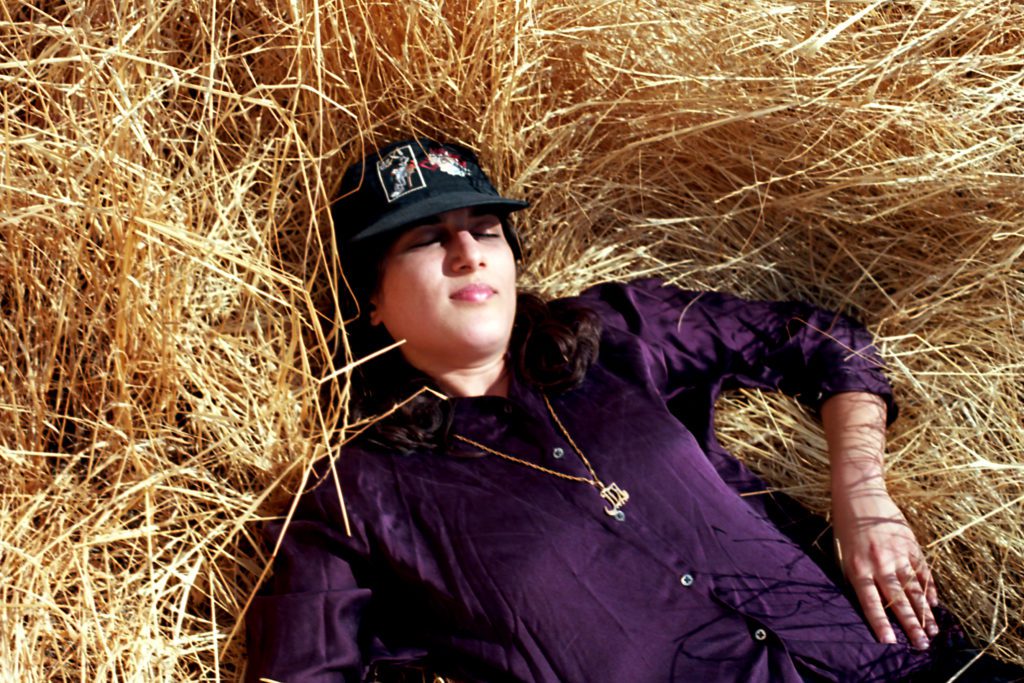
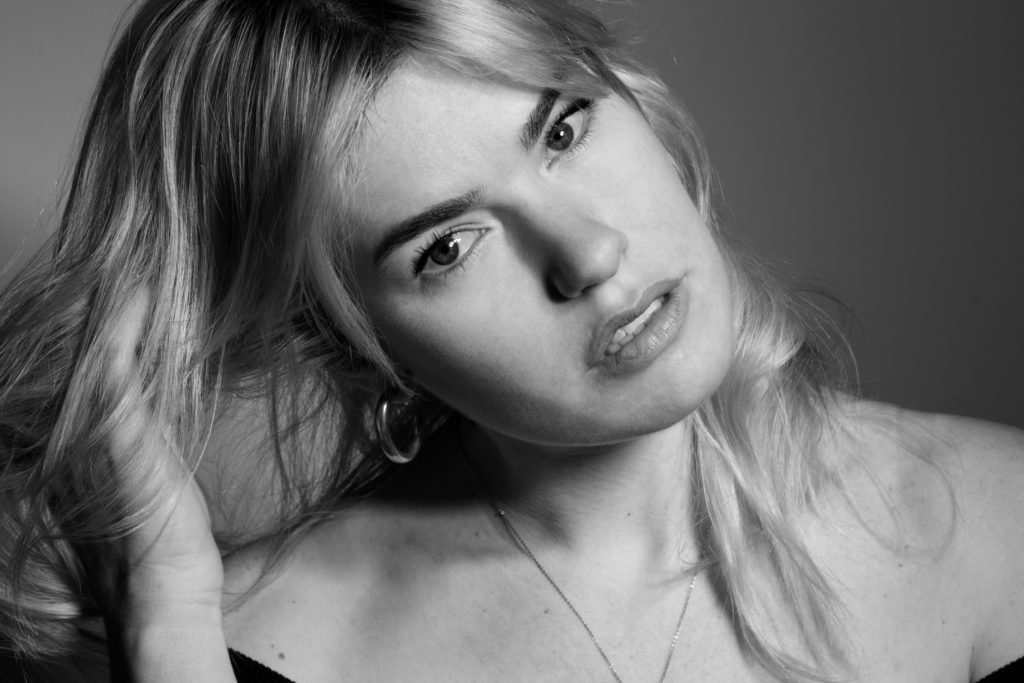
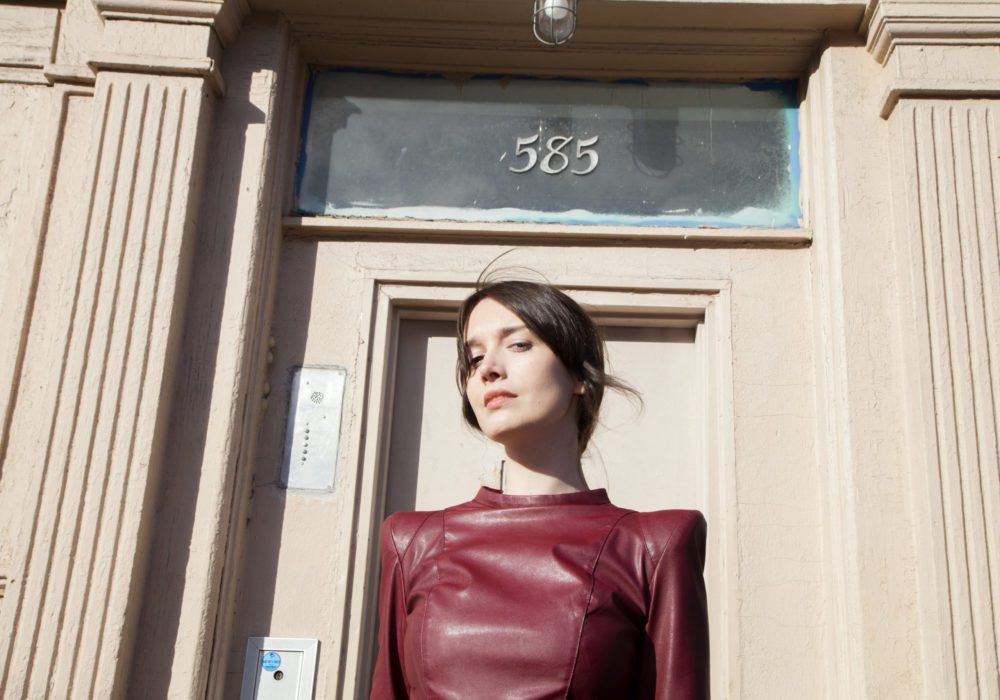
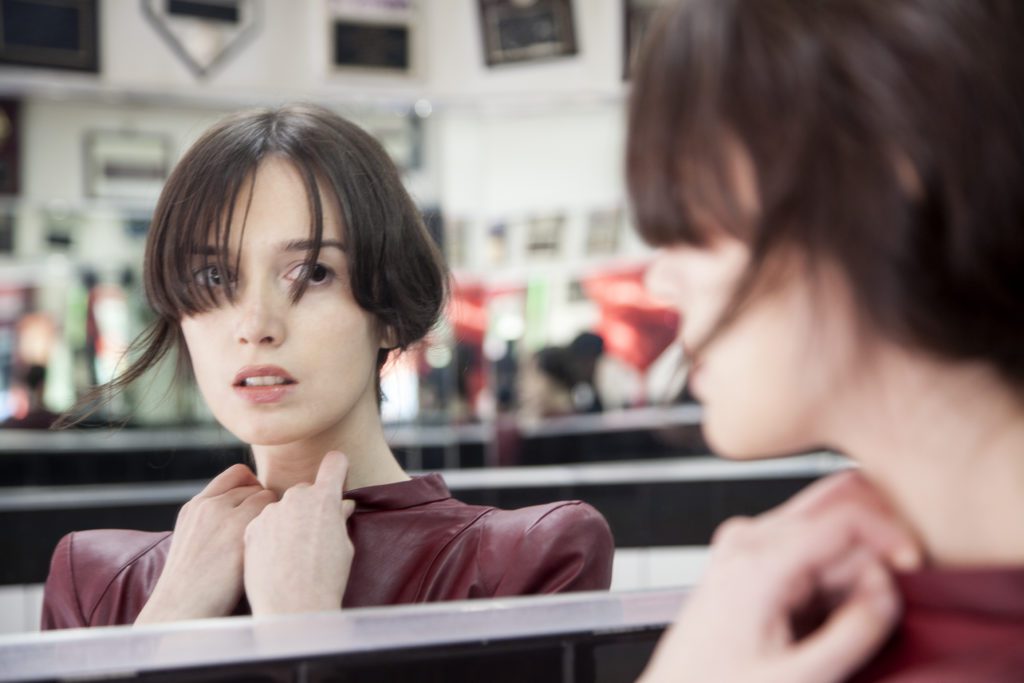
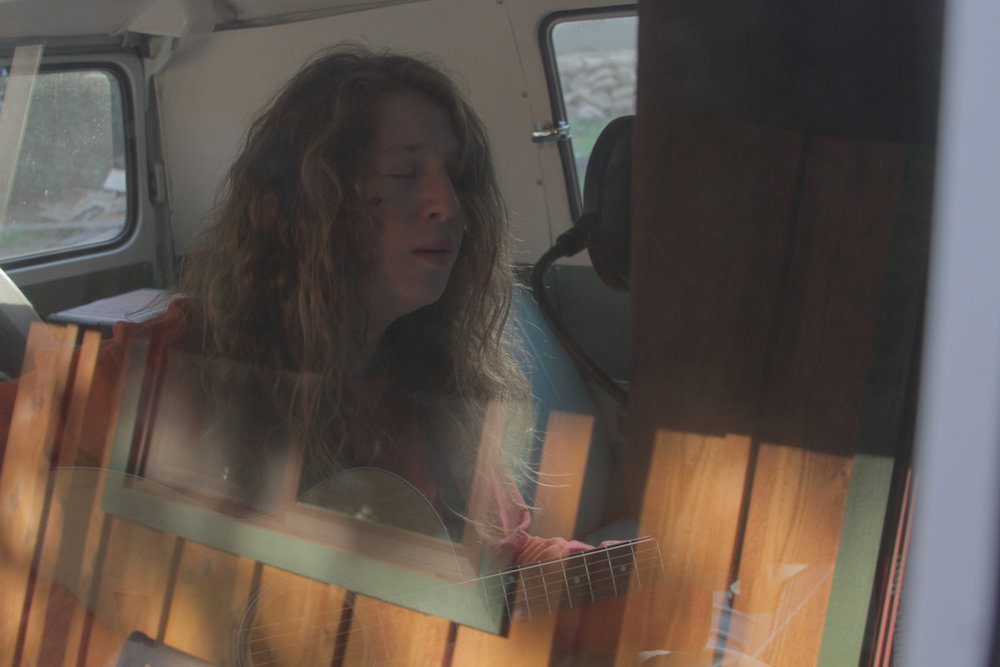
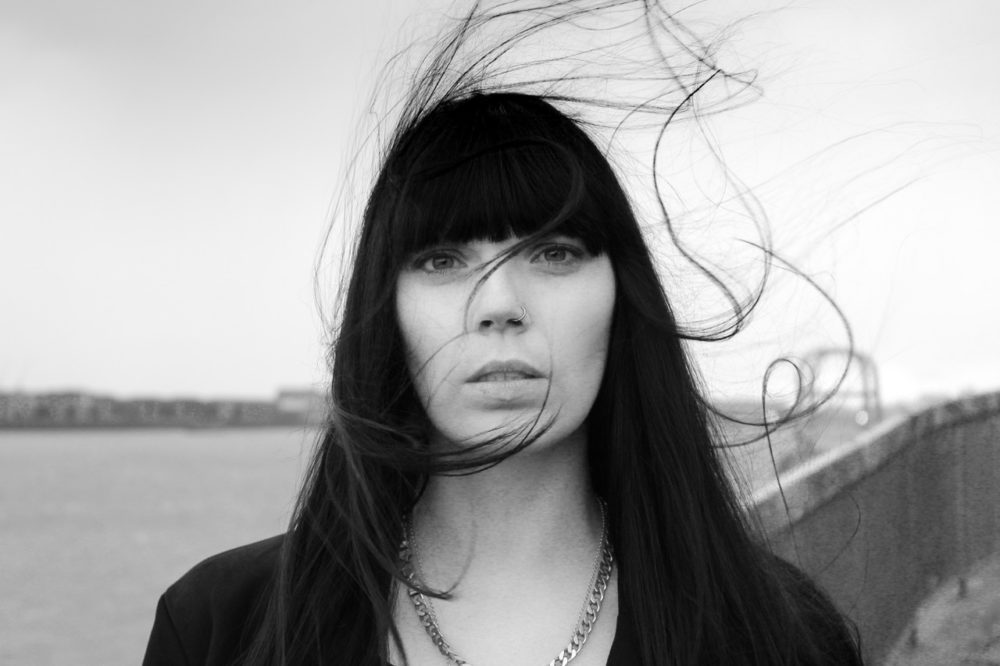
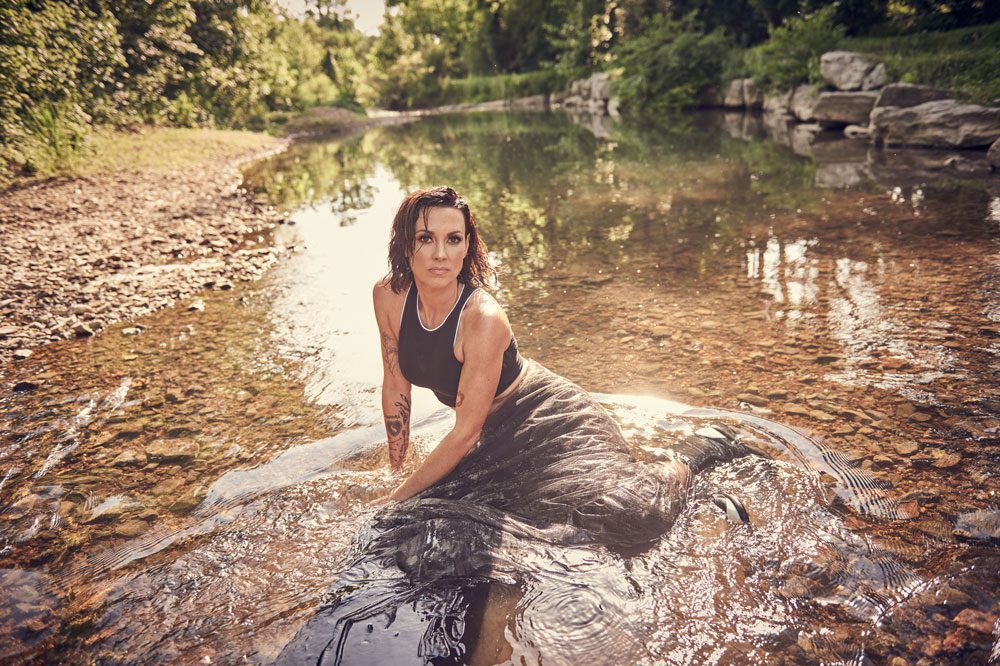
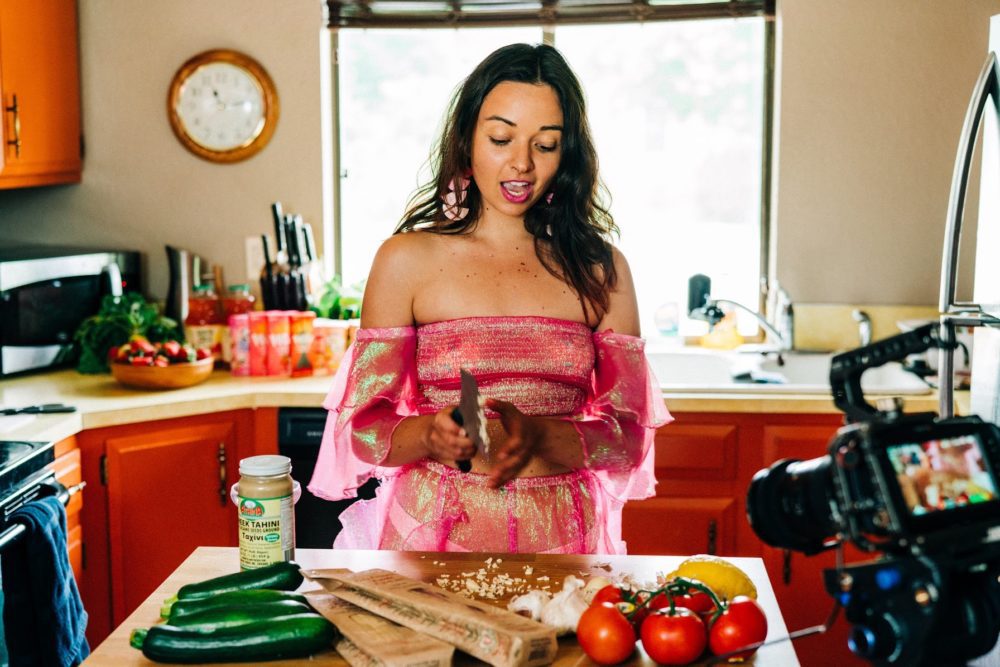
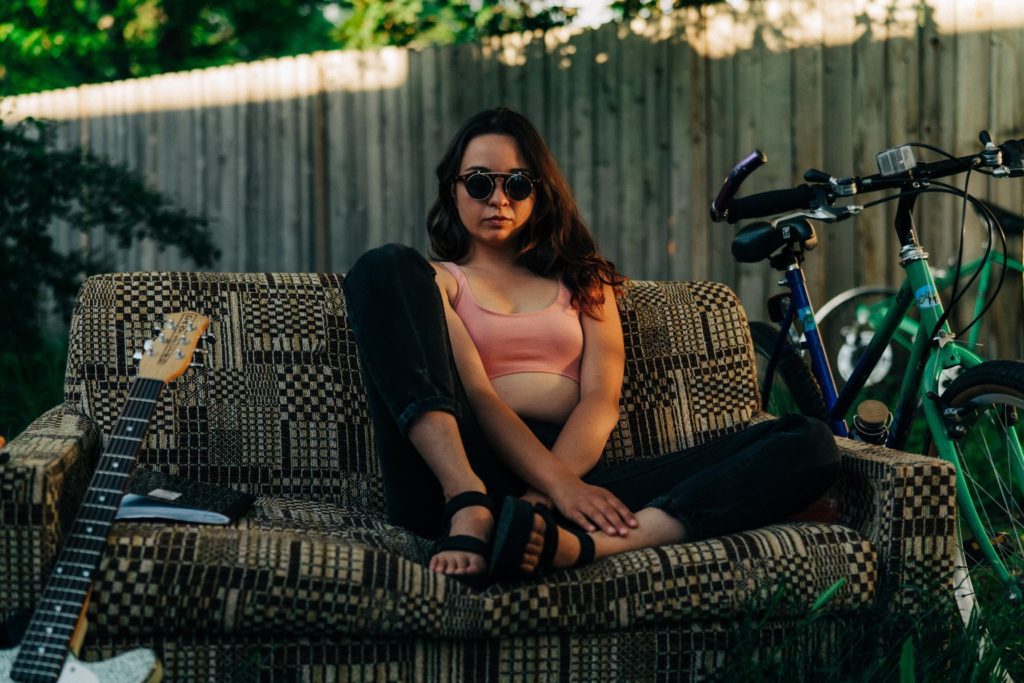
Angel in the video for “Spatial Therapy” (Photo Credit: Adam Wright)

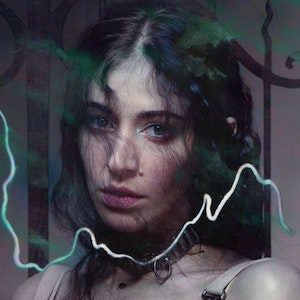
On Quaranmood, Boise, Idaho-based singer and musician Angel Abaya, who uses just her first name for her solo work, goes through the range of emotions triggered by this year’s COVID-19 pandemic, and the stay-at-home orders that came as a result of it, over the course of a three-song EP and accompanying short film out on Friday, October 16. The EP, released through record label Earth Libraries, marks Angel’s debut as a solo artist. 

“This project is pretty new to people,” says Angel. “It’s pretty new to me.”

However, Angel, a lifelong musician, is a familiar voice in Boise’s music community. “I’ve been singing since I got out of the womb,” she says. At six, she started playing violin. Two years later, she picked up piano. Choir and orchestra were a part of her youth. As a pre-teen, she found jazz. “I think that’s really when I found more expression in my voice and was able to find new pathways to creativity,” she says. 

In her teens, she began dabbling with guitar but, she adds, it wasn’t until about four years ago that she really got into playing it. A short-lived band when she was 18 led to an invitation to play with the performing arts group LED. She’s been with them for five years now. Angel was also part of the band Electric Coconut. She’s played in a jazz duo and an all-femme cover band and has collaborated with various artists, like the singer-songwriter Kathleen Williams. She’s a regular at Boise’s annual Treefort Music Festival, where she also works in the communications department. Since 2016, she’s played the event every year, either with LED or Electric Coconut. This year, she was set to play solo. However, the COVID-19 pandemic took the event off-calendar for 2020. 

“I had only played two shows before under my solo project and it was just me performing by myself with some loops and some live instrumentation,” Angel explains. For Treefort, she had intended to step up the live set, with dancers and other performance elements. 

Angel had already been at work on a collection of songs that she intended to release as an album, so she continued that route, releasing her debut music video, for a song called “Gelli,” in at the end of March. “All spring, I was working really hard writing and recording and I was determined to have my album finished,” she says. Naturally, some of Angel’s songs from the period reflected her experience during the pandemic, but they also worked with the greater themes of uncertainty and changing times that she was already exploring on the album. “I felt that when I started writing songs about my shelter in place, it seemed to fit within the world that I was already creating,” she says. 
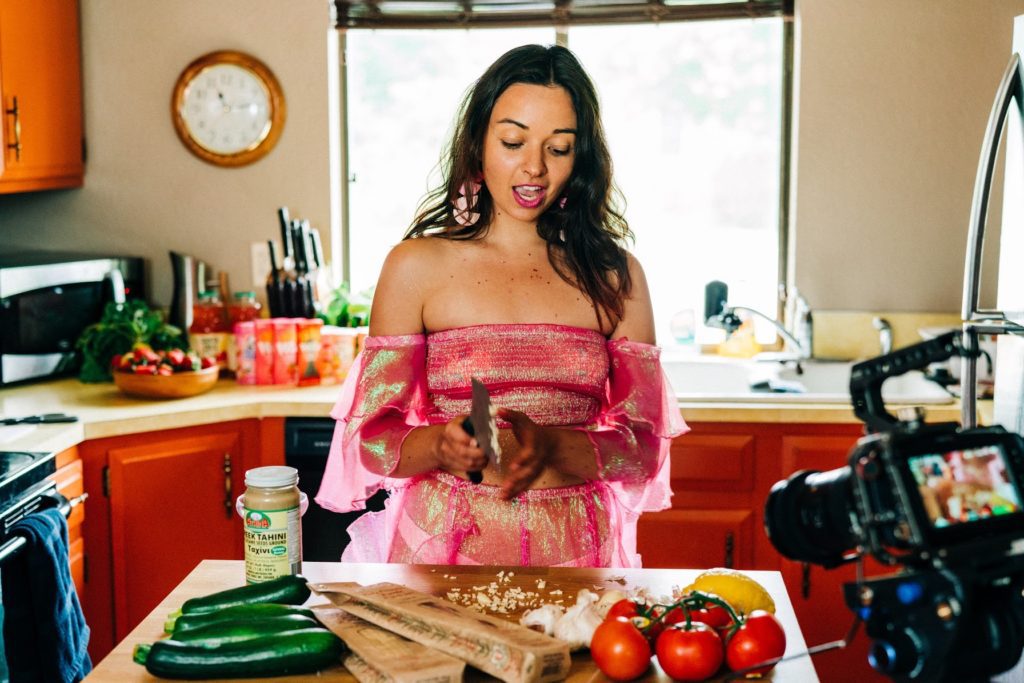
Angel in the video for “Haute Hermit” (Photo Credit: Adam Wright)

Meanwhile, there were grants available for Boise artists to make work about the pandemic. That inspired Angel to spin her shelter-in-place songs into a separate EP with an accompanying short film. “I think that it makes more sense too,” Angel says. Since staying at home was something that so many people experienced as a result of the pandemic, Angel explains, her own work from that period might resonate more with listeners on its own than as part of a larger collection of songs. 

Angel was able to obtain a grant that allowed her to work with a videographer, Adam Wright, on clips for all three songs from Quaranmood. They filmed in May and June of this year in the house where she was living during that time. Each video and song represents a different part of a day and a different mood.

In the electroclash-throwback jam “Haute Hermit,” Angel depicts the “stir crazy” portion of quarantine with camera-ready outfits, colorful food and Instagram poses that devolve into a mess of dripping cocktails and flying pillow feathers. “Spatial Therapy” takes a somber turn as Angel sings about isolation and loneliness, while hanging out in a yard and riding a bike down an empty street. Closing out the EP is “No Ill Will,” an indie rock tune with ’90s vibes that’s about acceptance. “It’s mostly letting it all happen and trying to be understanding and patient about your situation,” Angel says. 

Angel is continuing work on a full-length album, which she plans to release in 2021. She says that working solo has given her an opportunity to see and hear how much she can do on her own. “I think it’s really cool to realize that I can compose and write and record all these songs by myself and not feel like it’s missing anything,” she says. 

“I do cherish and appreciate collaboration,” Angel adds, “but it’s been good for me to find independence.” 

Follow Angel on Instagram for ongoing updates.
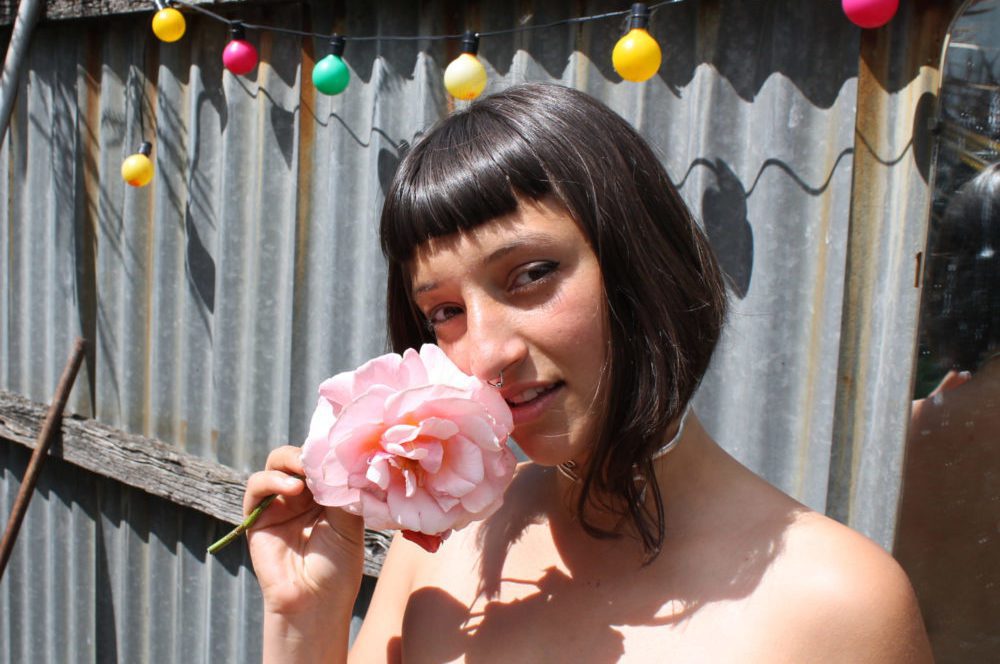
JUMAN Expands Compassionate View on Latest EP Tear Time

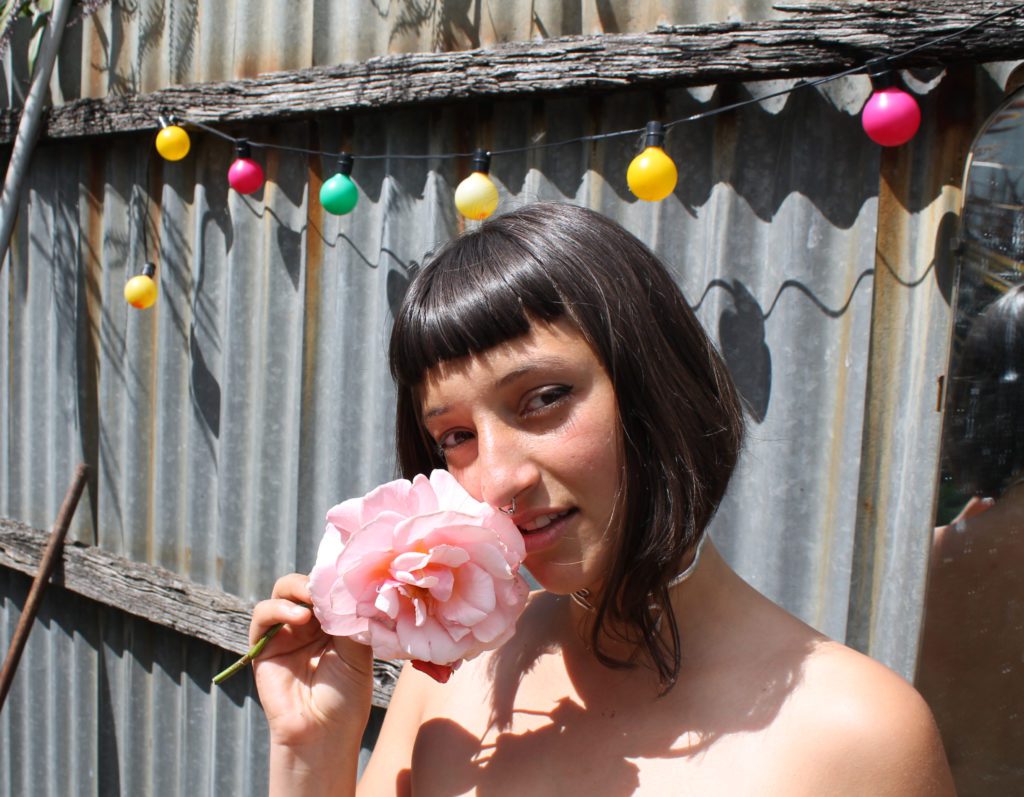
musician Juman holds a large flower to her face
Photo Credit: Kristy Juno Knowles

As the COVID-19 pandemic began its steady spread, Juman sensed it was time to movephysically and spiritually.  The Melbourne raised singer-songwriter-producer, who is of Palestinian-Turkish-Jordanian background, had battled a sensitive immune system since childhood and knew it was time to take self-care further, so she made some sweeping life changes that had both positive and negative effects on life as she knew it. But with the loss came something she never anticipated – radical compassion.

Tapping into those feelings, Juman turned to music. Tear Time is the latest in a string of bite-sized EPs released since 2018. Like all her work, she transports listeners into an eclectic musical world—influenced by Stevie Wonder, Erykah Badu, Amy Winehouse and jazz—via chill, kaleidoscopic sounds that are as seductive as they are gently vibrant.

Today, Juman says that the process has emboldened her calling to “facilitate safe spaces for women to journey musically together.” Here she speaks to Audiofemme about radical love, healing, and acceptance.

AF: What was happening during that month that inspired Tear Time?

J: March was a month of metamorphosis. Towards the closing of 2019 I made the decision to radically commit to my health and well being. My health is something that I have struggled with since I was a small child. My immune system was down, and I was extremely susceptible to catching everything under the sun. I have always been very dedicated to my health, but it was time to take it to new heights and radically commit. So, I moved in with my mum for a couple of months so that I could afford to pay for therapies and medical tests I was called to do.

Another commitment I made to myself was to move to northern NSW (New South Wales) by the end of February 2020. Since then, my health has never been better, and I now feel like I am thriving in such a newfound capacity. I have always had such a strong pull to this land and my body feels so alive here. This was an extremely hard decision for me to make for many reasons, but mainly because I was in a committed relationship. I was extremely grateful that he was in full support of my decision. He had seen me really struggle throughout our relationship with my health. Melbourne was no longer serving me, and he understood this. He wanted to see me thrive and be well. He was planning to move up with me in a few months, but that never eventuated. When I moved, an explosion of trauma arose to
the surface, boundaries were crossed, and trust was broken. We ended up parting ways.

Throughout this separation there were many fluctuations of contrasting emotions that arose, and the strongest one of them all that constantly held me together through this roller coaster ride was compassion. Such deep compassion! Compassion for our individual struggles and wounding and compassion for the terrified and hurt children that live inside of us that long to be heard, held, and loved! These series of decisions and events that then lead to this breakup inspired this EP. These songs were a way to emotionally process my experiences.

AF: You’ve recently written about “Eradicating those restricting ideas that have been existing in my mind, body and soul.” What are those restricting ideas you’ve been eradicating?

J: The ideas that I’ve been eradicating is this notion that I’m unworthy of love and believing it is unsafe to step into my power. A few stories were at play around these themes, one of them being the suppression of women by men in my culture and what they aren’t, and allowed, to do. It took much excavation to get to these core themes that were buried so deep in my subconscious. It’s all about seeking support. We aren’t here to do it alone. There are different self development modalities and therapies that aid in this exploration. Kinesiology and Somatic therapy have been life changing for me when it comes to uncovering and clearing these deep core wounding’s. When I say, ‘to make more space for greatness,’ I’m referring to this newfound life path potential that has awoken in me. A life of utmost beauty and perfection, heaven on earth!

AF: Did you grow up in a musical family?

J: I grew up with my mum and my two sisters. Nobody in my family played music or sang; they are all great dancers though, so I guess you could say they expressed music through their bodies’ movement. My soul Mumma Sandra, who I also consider to be one of my best friends, my mentor and second mother was a major musical influence in my life. She was my vocal coach and choir teacher when I was seven years old. We spent a lot of time together. She would take me to all of her jazz gigs and would always get me up with the band to sing a standard or two. I was exposed to lots of great music but mainly jazz, soul, and some folk.

My Grandmother who I feel very spiritually connected to lives in both Turkey and Sharjah (in the United Arab Emirates). She used to sing Turkish Opera when she was younger. She was the vocalist in her school orchestra when she was younger, but when her father found out he forbade her from participating. Apparently, he was a very harsh man. Just to paint a picture, he was the general of the Army in Turkey – that’s got to say something. When she married my grandfather and had the freedom to make her own decisions, she brought music back into her life. She would organize regular gatherings with her friends and they would all joyfully sing Turkish songs together. I am very grateful that her gift of song was passed down to me.

AF: What drives your creative process?

J: Creating music is my own personal therapy. I would say this is my main driving force. To give myself the space and time to honor my existence. To really hear myself out. To hold space for myself. To be my own best friend.

All my songs are created from a place of love – love for myself, love for others, love for nature, love for my experiences past, present, and future. Whether they be “good” or “bad” there is always light in the darkest places. Even when I’m expressing anger or pain in music, it is always held with love and acceptance for what is present. Self love is one of the most powerful gifts I am able to give myself. The music I create is an expression of this and is the most loving thing I can do for myself. It’s a space to feel into things without judgment regardless of how ugly or confronting. To just hold myself and the world around me with love and acceptance.

AF: What do you want listeners to experience when they listen to your work?

J: I want my music to act as therapy, motivation, and inspiration for listeners just as my music does for me. I hope that the heartwarming and healing experiences that I have with my music creation is reflected in how people experience it also. I hope that my music inspires people to love themselves more and more each day, as it does for me.

Follow Juman on Instagram for ongoing updates.

Emma Jaye Asserts Her Self Worth on Latest Single “Ghost”

Knowing your own self worth can be an uphill struggle for many; we ignore our strongest supporters, deferring instead to our worst critics – the least of which is that overly callous voice in the back of our mind. As a lack of self-esteem or self-worth undermines everything we do, our conviction and confidence becomes brittle. “Ghost,” the latest track from Emma Jaye, serves as a canticle for those struggling with knowing their self worth. She sings about her experience with ghosting – a pervasive phenomenon well-known to most millenials – and focuses on the empowering positives, notably, the importance of asserting yourself and refusing to be led by the whims of somebody else because there could be a chance at love.

“It’s honestly so common and I don’t know a person that hasn’t been ghosted. But it’s cool because more people can relate [to the song],” says Emma Jaye. “It felt good to get that off my chest. It bothered me a bit and then after a few months my sentiments changed and I was like, so talk or don’t – up to you, I don’t care!”

“Ghost” sets the scene with a distinctive guitar riff reminiscent of the Police’s “Message in a Bottle” and Blue Oyster Cult’s “(Don’t Fear) The Reaper,” albeit with a lighter, poppier edge. As the riff repeats, Emma Jaye dives straight in with the line, “Radio silence then you blow up my phone” – someone she thought had disappeared has returned, but Emma Jaye isn’t going to continue repeating a cycle in which she feels trapped. Her immediate retort sets that conviction in stone: “Hey, thanks for trying, but I’m good on my own.” She turns the page and starts a new chapter in her life, with a new value system and renewed confidence in herself as a person. “‘Ghost’ is about me not basing my worth on somebody else’s inability to see me. It’s like, well, if you don’t see me, I’m going to see myself. That’s the energy of the song,” she says.

Steady percussion ticks away like a clock, and Emma Jaye seems to be counting down the seconds until she can say what she needs to say for herself and then shut the door without spending more time on this person. “Everybody wants love and approval and acceptance and I get that, but I don’t think a lot of people are able to stand on their own and get approval for themselves,” says Emma Jaye. “It’s important to know your worth and what you bring to the table.” The lyric video visualizes her words in a multitude of fonts reminiscent of the distinctive neon-lit skyline of Los Angeles that Emma Jaye calls home.

The singer-songwriter wasn’t always so in tune with herself. Stepping out into the world of acting as a child, she previously appeared in the hit TV show Boardwalk Empire as Edith Thompson and in the film Spring Breakers. With some success as an actress under her belt she could have chosen to pursue that route; perhaps it might have seemed the most sensible. But the self-reliant Emma Jaye took a leap of faith to pursue a career in music. “I love acting… but singing is the thing that I was born to do,” she says.

She has a hard time pin-pointing when she realized music was her calling: she felt drawn to it most of her life and asked for music lessons at age ten, but set it aside in her early adolescence and didn’t start singing again until she sought music as a comfort for loneliness. “I can always count on people to let me down. I can remember when I was 14… I didn’t really have anyone. I would come home from school, lay on the ground and listen to music because that was all I had,” she says. “It was kind of sad, but also, it kept me company in a way. Music and singing started to become more of a lifeline.” From that experience, Emma Jaye eventually got more serious about her career. “I had this strange epiphany moment when I could see everything in retrospect,” she says. “That was the real ‘wow’ moment – I had always known, but it took time to really remember. A real part of life is remembering who you are; I think that’s the journey for every single human being.”

Emma Jaye is poised to find success in music as well as acting, releasing a string of singles that showcase her ability to dig deep and bare her soul – all to the to catchy tune of a pop beat. Starting off 2020 with the release of “Dumb,” an infectious track that incorporates an eerie, off-kilter nursery rhyme quality, and “Overtime,” in which she expresses overthinking about a relationship to the sonic backdrop of an atmospheric, trance-like beat, Emma Jaye has solidified her presence in the industry. The songs she creates are a direct reflection of where she is now: “It took a lot of time and meditation honestly. It took growing as a human being because as I grew, my art grew with it and that was a reflection of where I was at that time,” she says.

Like with her previous tracks, Emma Jaye uses “Ghost” as a sonic Trojan Horse – her deeply personal work gives a voice to 21st century existence, in a deceptively fun pop package. She unabashedly uses “Ghost” and her other pop-oriented singles to assert her presence in the world – not just as a musician but as a young woman navigating relationships.

In essence, “Ghost” provides a blueprint of support for anyone in a similar situation. Emma Jaye tells the listener that she understands why some of us let this type of behavior slide, but projects the reality that it doesn’t have to be this way as she details the freedom and confidence gained from knowing your self-worth and trusting your decisions.

“I’m very familiar with narcissists – they are basically emotional vampires, and they are very manipulative and gaslight you and will keep you down to keep you around and use you like a battery if you have that empathetic nature. A lot of the things that broke my heart fixed my vision. To that point, I wouldn’t change who I am,” Emma Jaye says. “I knew who I was going into this industry… Honestly, leaning into heartbreak is the way back home and that was music for me.”

Follow Emma Jaye on Facebook and Instagram for ongoing updates.

ThebandIvory Delve into Queer, Indigenous Identity On Anthropocene LP

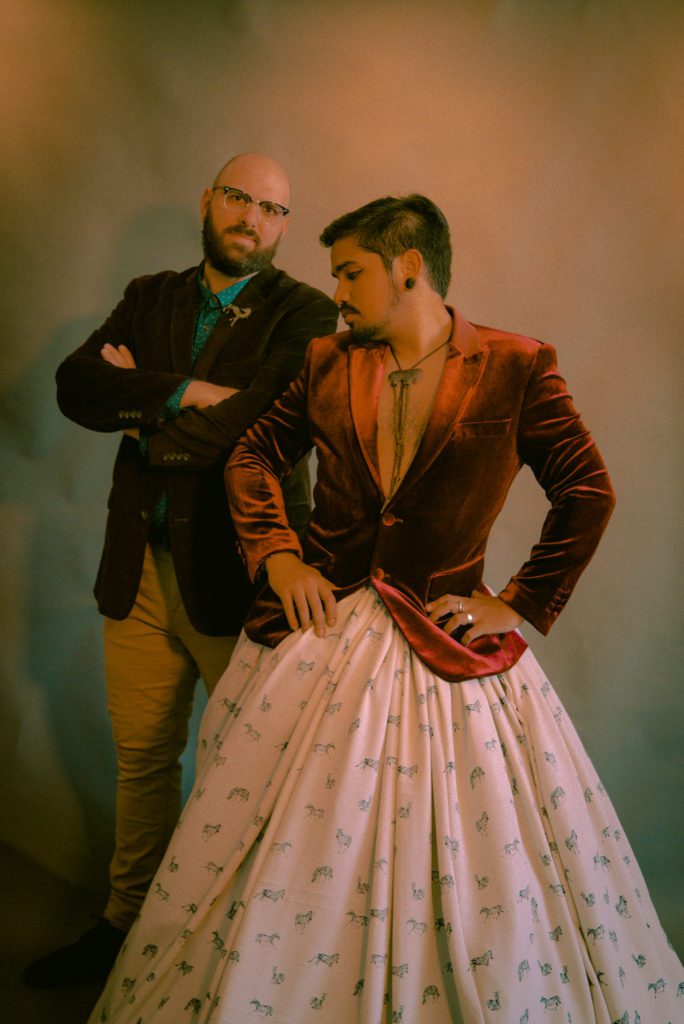
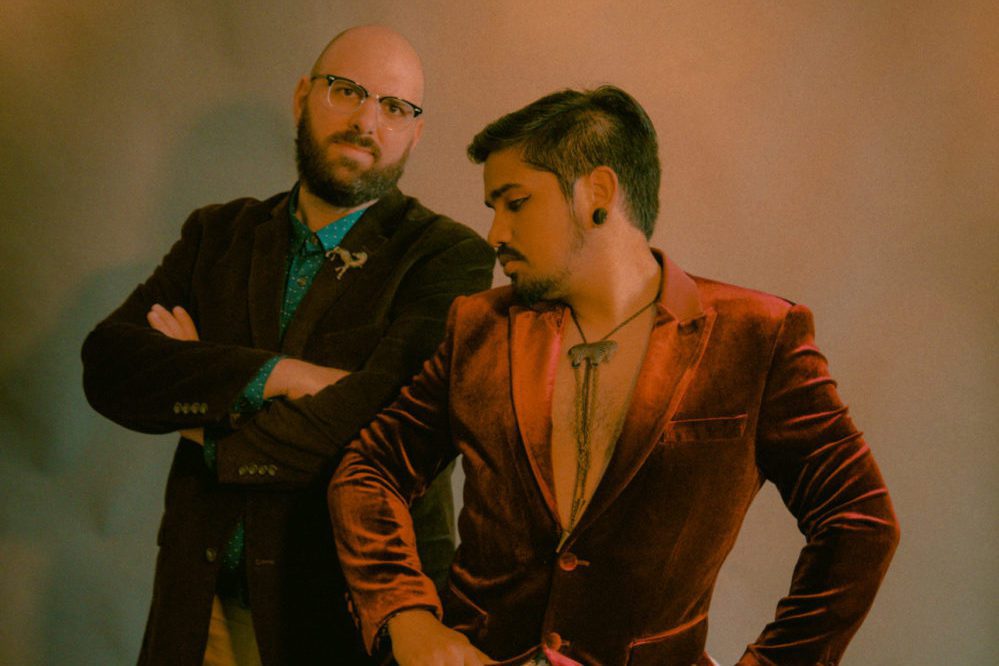
two members of ThebandIvory pose wearing velvet jackets
Photo Credit: Bob Sweeney

Frankie DeRosa needed to heal, but he didn’t realize it until he saw children of Mexican immigrants locked in cages. “Seeing that came with a sense of responsibility to have my voice be heard,” he says. He made a vow to finally finish Anthropocene, his debut full-length as ThebandIvory, alongside collaborator and real life partner Robbie Simmons. It’s been five years in the making and follows the duo’s 2015 EP, The Beast, and despite a winding road to get to this moment, they’ve more than earned it.

“We needed five years to grow into the album. There’s so much to be said, and especially with the way the world is right now, it took battling our own mental health and what it takes for healthy relationships,” DeRosa tells Audiofemme. “This year has definitely made me reflect on my place as a person of color [who is] gender non-comformig and queer. I take up a lot of space, and definitely these days, it’s harder to feel safe to be yourself. In making this album, I thought it was really important to address that fear.”

Anthropocene cracks open with gentle, soothing waves on the first track, “I’ve Come to Realize.” It’s an ethereal musical centerpiece, priming the body for a powerful expedition into pain, regret, uncertainty, angst, and the current political climate. Lead offering “After It’s Said and Done” vents frustrations over taking so long to make the record, blending musicality from a piccolo-laced tribal dance into a somber, soul-crying crescendo.

“You see your peers touring, and you compare yourself a lot when it comes to socials. I was trying to reignite the fire inside of me. Writing this song was a way to remind myself that when anxiety or depression seems to take over that it’ll pass, and there’s something on the other side,” he says.

Apt to infuse some lighthearted humor, “Factory Song (Hey-Oh, Goodbye)” recalls a time DeRosa worked in a clam canning factory. DeRosa and Simmons had just moved from Berklee College of Music to the Philly area, and they needed to make ends meet. “The cans going down the conveyor belt were [hitting] in this weird 6/8 kind of rhythm. When you work 12 hour shifts, it gets stuck in your head even when you go home,” he describes.

So, he wrote a song about it. His factory job also sparked a rush of millennial angst, seeping onto the entire record. “As millennials, we do everything we’re supposed to do and still society isn’t set up for us to be successful,” he points out.

That emotional tug-of-war peeks out from behind lush, elegant instrumentation. Even with “The Man in the Eye of the Storm,” perhaps DeRosa’s most moving vocal performance, he utilizes ornamental beauty to sculpt a tragic tale about his stepfather, whose toxicity and emotional abuse spread trauma like a plague into every facet of DeRosa’s existence. “No matter how far he’d go/The storm would still follow/Ghostly in nature, haunting its maker,” he cries, carving out what blossoms into a chilling folktale.

“I’ve seen a lot of people, especially those who suffer with depression and maybe aren’t aware they even have depression, have this black hole around them. It sucks energy,” he says. “My father wasn’t ever able to see that.”

Anthropocene became a conduit through which DeRosa could confront trauma from childhood and move onward to his destiny. The titular cut, drawing upon a term, which, as defined, outlines the geological age in which humans now exist, celebrates the discovery of his Indigenous lineage (Warao Venezuelan) and his “understanding in having a positive experience to the environment,” he reflects. “That culture, they know how to influence nature to benefit it, and we tend to, in an industrialized world, do the opposite. This song was a way to look at both sides.”

“This current age is unstable, to say the least. We all joke about how the world is gonna end, but it feels like it really is,” he adds.

He further reclaims his heritage with the gooey, electronic “Fake News,” also an obvious dig at the current U.S. political climate. It’s a languid, spacey performance that cuts deep with an array of instruments, including xylophone, guitar, and bansuri. DeRosa packs in such vibrancy “while talking shit about the administration,” he notes with a chuckle.

The record 一 co-produced with Simmons, whose sultry production style and foundational instrumentation accentuates DeRosa’s irresistible presence 一 threads together their evolutionary journey and inclination for rich tonal colors. “I tend to love different modes, which are scales with different personalities. I draw a lot from Caribbean music for grooves and Indian music for my melodies,” says DeRosa, who dove into various musical ensembles (Indian, Middle Eastern, and Caribbean) during his Berklee days. In working so intimately with Simmons, a collaboration that could get very heated at times, they bounced off each other’s strengths and diverse talents.

“I’ve learned so much by just being next to Robbie. We compliment each other in that way,” DeRosa gushes. “It definitely makes the stakes higher.”

By the album’s alarming end, “Open Your Mind/Surrender/Breathe,” DeRosa comes as close as he’s ever been to totally mended with what is truly a cathartic release. He learns to shed his old self, as well, and embrace who he was always meant to become. “I think often we get swept up in our own ideas of who we are, and we hold ourselves back by not being willing to change. I saw myself over the five years trying to get this album together. I was holding onto old ideas of myself,” he explains.

In this very moment, DeRosa stands in the spotlight next to Simmons. Together, they are a force to be reckoned with. “Even life and death is an illusion, and it’s hard to own that all the time,” DeRosa says. “I remind myself to find the beauty in irreverence and make fun of things. Live life without fear. Live the best life you can. You only get one. Humor makes life enjoyable. If I can find happiness in all the dark moments of my life, then moving forward shouldn’t be that difficult.”

Follow ThebandIvory on Facebook and Instagram for ongoing updates.

DJ/Producer Maral Draws From Iranian Roots on Debut Full-Length

Photo Credit: Robb Klassen

Maral Mahmoudi grew up with Iranian music. The DJ/producer, who uses just her first name professionally, was raised primarily in Virginia, near Washington D.C., but spent fifth and sixth grade, as well as childhood summers, in Iran. “I I have this deep history with hearing the music at all times, blasting on TV,” she says by phone from her home in Los Angeles.

Later on, she would develop her own relationship with the music. Maral dug through her parents’ collection of tapes – they’re fans of Persian classical music – and learned more about the philosophy behind it, the connection to Sufism and the role that improvisation plays in it. “Everyone learns the same repertoire of music, which is this ancient repertoire that’s been passed down orally for centuries. Then, it’s up to you to play it in your own way and give it your own twist,” she explains. It’s similar, Maral notes, to the DJ mindset. “We’re all playing the same songs, but it’s how you play it that matters,” she says.

On Push, released through Leaving Records on October 14, Maral explores her passion for the music of Iran in an adventurous way. She plays with beats, samples and noisy electronics to bridge all of her influences, from Crass to Animal Collective to moombahton to David Lynch to the sounds she hears while walking around Los Angeles. Push also includes a track featuring Lee “Scratch” Perry, “Protect U,” which is based on an interview the dub legend did with online radio station Dublab, where Maral also has a show. She collaborated with Penny Rimbaud on “They Not They,” an opportunity that came about when Maral connected with the co-founder of the influential punk band Crass on Twitter. 

One of the instruments that you’ll hear on the album is the setar, an Iranian string instrument similar to a lute. As a teenager, Maral learned how to play setar; she played in a Persian classical ensemble as well. On Push, though, she samples setar masters. “Each master has their own specific way of playing the setar,” she explains. Maral wanted to showcase these differing styles. She also samples a Persian flute-like instrument called a ney. “I really love the way that I put distortion on it. It really sounds like you’re shredding on a guitar or something,” she says. 

Maral plays a little guitar on the album too, on the track “No Type,” but says that she doesn’t consider herself a professional musician. “I never really figured the music theory part out as well as I should have,” she says. “I let my intuition take me to wherever it wants to.” Intuition is crucial to Maral’s process. “I don’t really know how to use Ableton in the traditional sense either,” she says. “I just played around with it and figured out my own way of using [it].”

Maral was the kid known amongst friends for making mixed CDs. That eventually morphed into DJing with a cracked version of Ableton a friend passed her way. In college, at Virginia Tech, she fell into the same small music scene that would spawn the band Wild Nothing, DJing parties and mixing genres like indie and moombahton and putting her own twist on EDM tracks. Ultimately, DJing led to production, which she has been doing for about a decade. Last year, Maral released her first mixtape, Mahur Club, through Astral Plane Recordings. 

Much of Maral’s music stems from her enthusiasm for sharing the sounds that she finds with others. She recalls discovering the late Persian classical and pop singer Hayedeh back when she would dig through her parents’ collection. “I got really obsessed with Hayedeh and wanted to show people her music as much as I could and show people Persian music as much as I could,” she says.

After moving to Los Angeles, about six years ago, Maral had the opportunity to find more music from Iran. She says that’s impacted her work too. “In Virginia, we had a great Persian community. I learned about playing setar, playing all the classical instruments,” she says. “Then, coming to L.A. and having everything be more hyper-Iranian, because of the bigger Iranian population, has been amazing… Getting that chance to reconnect with the culture and having it be so prevalent in L.A. culture is really cool and, I think, important.”

In Westwood, the L.A. neighborhood that’s often associated with Iranian culture, she found CDs that would not just expand her collection of samples, but her musical knowledge as well. “I’m still learning,” she says. “There’s still stuff about Iranian music that I don’t know.” 

And, like her production process, Maral lets her intuition guide her digging. “Each time, picking out a random CD from the store, searching YouTube or going through my parents’ tapes, that all really informed me,” she says. “I do it all randomly and go towards whatever my intuition pulls me towards, but I’ve learned a lot in the past five years.”

Follow Maral on Instagram for ongoing updates.
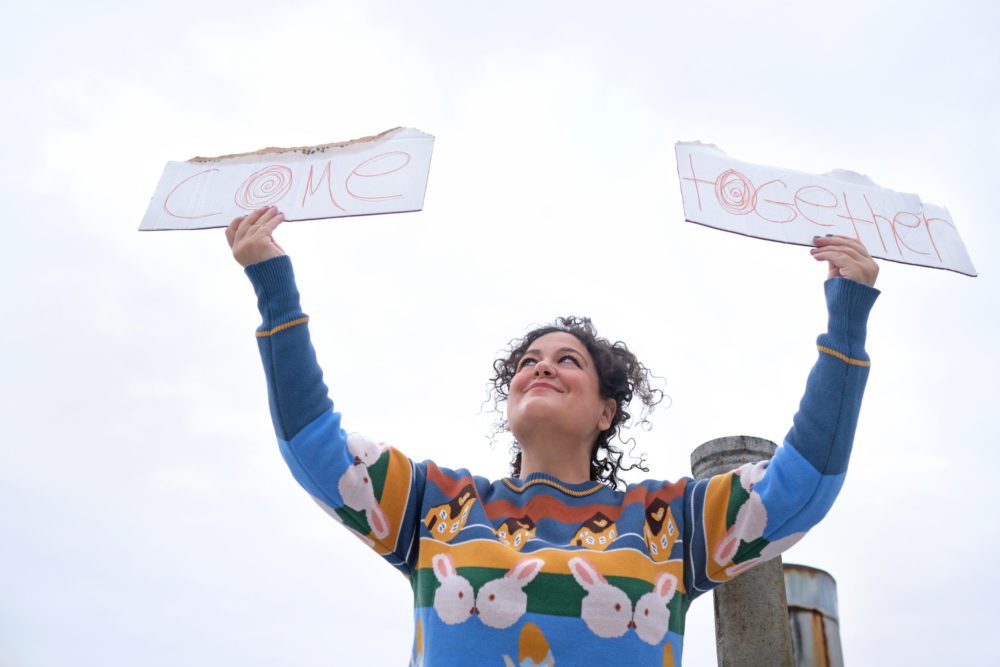
Tamar Haviv Radiates Joy With Premiere of The Come Together Project EP

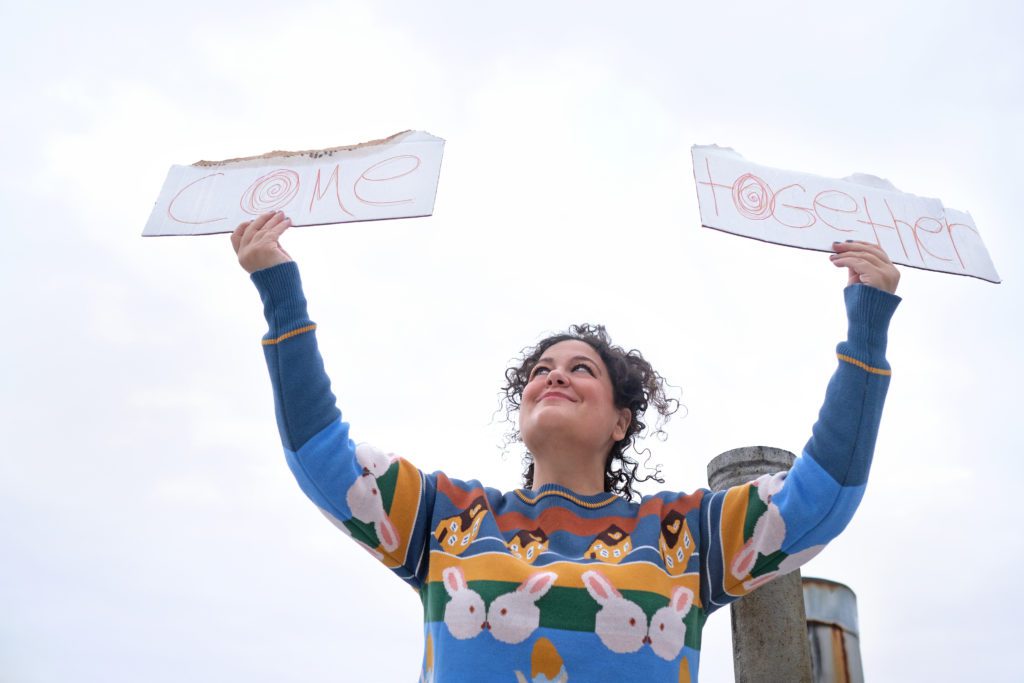
musician Tamar Haviv holds up cardboard signs that say "Come Together"
Photo Credit: Ron Haviv

Tamar Haviv is no stranger to sadness and suffering. In a recent video for the title track to her new EP, The Come Together Project, she pays tribute to her father, Barry, whom she lost to COVID-19 as her team compiled joyous clips of fans singing her uplifting lyrics. Through this song – and the EP she’ll release on October 16, premiering exclusively on Audiofemme – she’s determined to offer some form of support to her listeners; the video’s release also tied in to Suicide Prevention Awareness Month in September, and was supported by The Etheridge Foundation, an organization set up by musician Melissa Etheridge to research the causes and effects of opioid addiction.

“We wanted to get attention as much as we could to remind people that they’re not alone and to support mental wellness as much as possible within this hard situation,” Haviv explains. “I feel really lucky to be in connection with [the Etheridge Foundation] and to have them really give me the push to get the single out in a bigger way than I would have been able to on my own.”

New Jersey born and bred, Haviv studied at the well-regarded Liverpool Institute for Performing Arts in the UK. The Come Together Project features an array of seven tracks all expressing a theme of unwavering positivity. “I wanted to do something that would really, physically show that we’re not alone,” she tells Audiofemme. “I had been working on these songs for the last year… I’m a super melancholic person that lives off of Leonard Cohen songs, but I got into a happy song place for a little while.”

During a time when optimism is perhaps in short supply, the sunny sounds and sentiments of The Come Together Project serve as a reminder that things can get better. “The best is yet to come/Like the first kiss you have with someone/The sweetness has only begun,” she sings on EP opener “The Best.” “I wanna live brighter and brighter,” she promises on the bridge, reprising the chorus over triumphant handclaps and shouts. As well as literally applying to the rest of the EP, Haviv is telling us that the negativity we feel is a temporary state and to remember that we aren’t done for.

Following on from this is the happy-go-lucky track “La La La’s” a tender, to-the-point song that captures that indescribable, almost nonsensical feeling of happiness that love in all its forms brings. As Haviv sings, it’s possible to hear the unmistakable smile in her vocal inflection.

“Come Together” begins with a whimsical whistle and a fast-paced guitar riff, as Haviv sings “I gotta remember/Things can change like the weather/It’s a big world, so we gotta stick together.” This statement not only supports her listeners but herself as well; for Haviv, making and sharing music is a symbiotic process. “When I was making the decision on whether to release these songs in this tense, abrasive nightmare situation, I was listening to the songs and experiencing some joy, so I was like ‘that’s the answer then,’” she recalls. “If I can release them into the world, it can give some people happiness and that’s great. I’m not in denial about anything that’s happening, but at the same time, there’s something to be said about moving to a place of joy and staying there for at least two minutes.”

On “Smile,” Haviv incorporates straightforward and clear lyrics you can’t help but sing along. As Haviv herself points out, “one of my favorite things to do is to actually sing incredibly badly, intentionally! I just think it’s really fun. We have to be so measured all the time to function and I think it’s important to just let ourselves go in every way, with language and sounds that we make.”

After the spontaneous whimsy of the first few tracks, Haviv dials it down with “Wild World.” She urges listeners to tap into their exploratory selves and not allow themselves to be limited, either physically and mentally. Like a helpful nudge out of the door, Haviv sings with the lyrics “If things get tough/It happens to the best of us/But you’ll get through and I’ve got you, I’ve got you/This world is yours, yours, yours.” Haviv is quick to mention, though, that we don’t actually have to leave our homes to experience all the world has to offer – especially given the pandemic. “I listen to Marc Maron a lot and he’s lovely and he says that we should just do whatever we can as long as it’s not hurting yourself or anyone else to survive right now,” she says. “I’m getting a masters in TV writing. I’ve been listening to podcasts, bingeing TV, reading books and having connections with people and getting fresh air safely.”

musician Tamar Haviv stands on a rooftop alongside a bright red door, wrapped in a banner that spells out her name
Photo Credit: Ron Haviv

“Hero,” returns to Haviv’s twee-inspired sound, complete with adorkable lyrical phrases like superest, duperest to luckiest, duckiest. Starting the track with a lighthearted ukulele, Haviv sings an ode to a friend who brings out the best in herself. It’s an anthem for the power of friendship and the strength that a support system can provide. “I think about the question ‘Can we save one another?’ a lot in general and it’s come up a lot more in this situation, but just being there and showing up is everything,” Haviv says. “I have been so low before, and being vulnerable and real about that is so important. I’m not alone and I also need to be reminded of it.”

The grand finale of The Come Together Project is the poetic “Yours & Mine.” Featuring the vocal talent of musician Dan Bern, heartwarming lyrics create a picturesque, sepia-filtered, scene. Her favourite track on the EP, it’s a love story between two people that also captures the bittersweet reality of life’s brevity, made more precious when shared with someone else.

The power in these songs is their accessibility; clear, concise lyrics and charming melodies allow her music to occupy the same space as a friend cheerily pulling open the curtains in your darkened bedroom. Haviv possesses an uncanny ability to enjoy every ounce of what she does, and The Come Together Project reminds us that though these are uncertain times, it is not certain that they will always be like this. At every turn, Haviv encourages us to find joy in the little things. With winter and the continued pandemic looming, Haviv unwaveringly claps her hands and points out the positives, providing a sonically perfect pick me up.

Follow Tamar Haviv on Facebook for ongoing updates.

Drew Citron Gets Free on Debut LP

a black and white photo of musician Drew Citron
Photo Credit: Ebru Yildiz

Adapting to life after heartbreak. Calling on the old phantoms of your recent sorrow. Nostalgia we sometimes want to revisit, and sometimes we only write about. Brooklyn babe and Public Practice member Drew Citron released some of that anguish on October 9th, with her solo debut Free Now. Following the breakup of her first band, Beverly – and the end of her relationship with drummer Scott Rosenthal, whom Citron also opened Bushwick venue Alphaville with – she set out to write the album as a means of channeling her emotions on her own creative wave. “When you go through loss, there’s a really great growth period afterward, and you really ‘get free.’ That’s the theme of the album,” Citron explains. “It’s not a coincidence that this [change] coincides with my solo debut.”

For Citron, writing the album was a comfort covering an overflow of emotions. “I honestly was just trying to sing and play guitar in a way where I would soothe myself because I was so sad. And it worked. I started focusing on finishing the songs,” Citron says. “I’m lucky that I can play music and write as a form of catharsis.” This writing process became a kind of therapy, clearing the fog from her mind, as Citron explored sounds she could take solace in, rather than the nervy post-punk of Public Practice or the grungified surf rock of Beverly.

Her first single, “Summertime,” showcases an undisturbed mellowness; Citron explains that she focused on painting a picture with the instrumentals, rather than telling a specific story. “I was working on scaling things back and being very sparse with the arrangement and the production,” she says, adding that she wanted to “create a feeling with the sounds.” Subtle acoustic guitar on the title track lets Citron’s voice shine in a way it hasn’t been able to on her previous projects. Elsewhere, like on “Kiss Me,” Citron buries her sentiments in layers of dream pop fuzz. Citron leans into more pop-oriented sounds throughout, even incorporating country twang on album closer “Love’s the Illusion.” Free Now isn’t just about anecdotal liberation, but creative freedom, as well.

Citron stretched her creative muscles even further with her involvement in the video for latest single “Kiss Me,” choreographed by Citron’s friend Jen Freeman, who had been quarantining upstate with several dancers who ended up being perfect for the clip. “I wanted to do a sort of traditional duet dance number for a video, kind of an old-fashioned Ginger Rogers piece,” Citron explains. Videographer Joseph DiGiovanna spent hours editing “Kiss Me” until the two dancers, although never physically in the same frame, were in flawless harmony. The finished product balances tension and joy, a socially-distanced work of art. “It turned out very beautifully, and safe for the time that we’re in,” reflects Citron.

In addition to her many music industry projects, Citron spends time writing for other creative outlets. “I generally have a screenplay and a novel on the backburner at all times. They’re in my head as dream projects that I might one day tackle,” Citron admits. “I love crafting stories out of the written word.”

Until we can read that novel-in-the-making, Citron’s solo music ventures won’t stop with Free Now. “I definitely finished a second solo album in quarantine,” she says. “I’m putting finishing touches on that and can hopefully release that next year.” She’s also hopeful about touring with Pubic Practice, since the gigs around the release of the band’s debut LP Gentle Grip back in May were canceled due to COVID. Since the ongoing pandemic will also affect her promotion of Free Now, Citron has set her sights on hosting a ticketed streamed release party, to be announced soon.

Having not only written and performed the tracks, Citron also produced and engineered the album, taking true ownership of the material. Through all of the sentimentality revisited in Free Now, at its core the album is really about Citron stepping into her own identity as a solo performer and songwriter. As she explores new frontiers both creatively and personally, we see her breaking from the past and following her own freedom into a bright future.

Follow Drew Citron on Facebook and Instagram for ongoing updates.
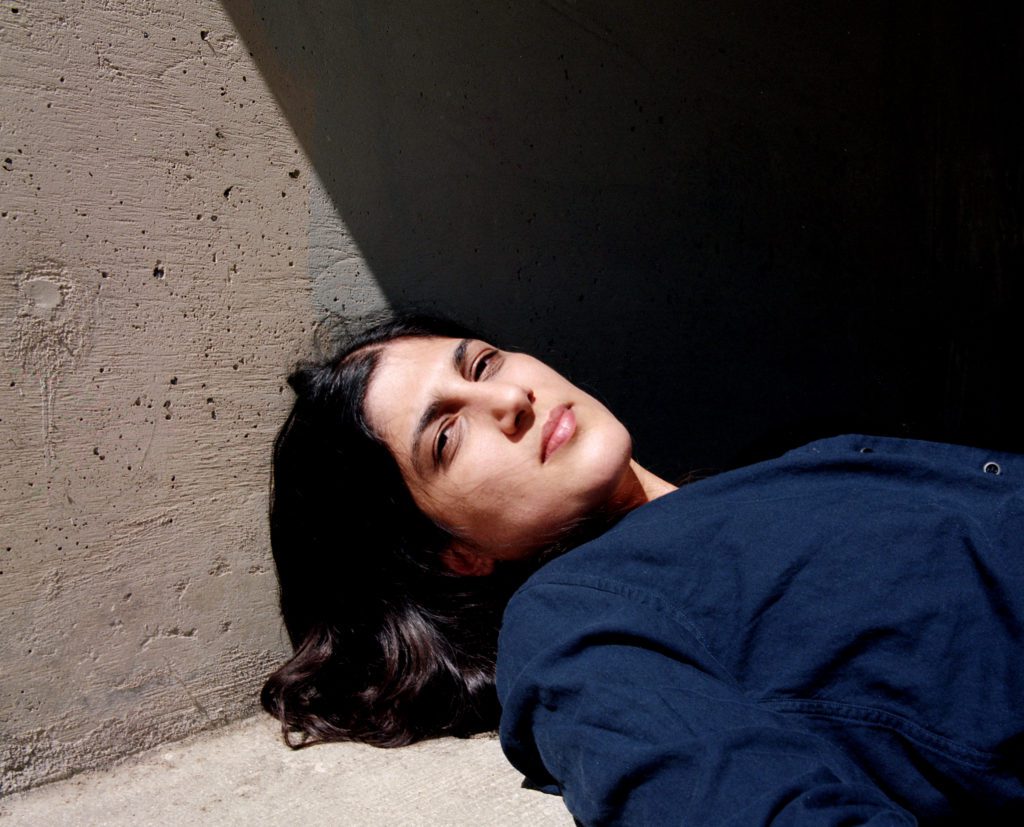
WOMAN OF INTEREST: Octavia Sulea is the Femme Future of AI and Data Science

Photo Credit: Elisa Quero

Octavia Sulea, a Romanian scholar born and raised in the Northwest part of Bucharest, with a masters in both English linguistics and Artificial Intelligence, and a PhD in Computer Science, is moving the needle as a queer female working in the forefront of technological advancement. With a cutting wit, her creativity in modern technology has granted her the opportunity to apply her PhD studies to innovative start ups, and carve out her own space in a quintessentially non-LGBTQ friendly industry. The hybrid love child of Sailor Moon and Angelina Jolie’s character Kate Libby in the movie Hackers, Sulea is rising up against – and conquering – the tech industry through creativity, perseverance, and a liberal moral compass.

Sulea was raised feeling like an American child through her innate sponge-like quality, and her unique talent for linguistics. She learned English through a rigged satellite dish her scientist father installed to enhance his child’s development; he envisioned her work in science, and the possibility for opportunities to travel overseas and be able to communicate with international scientists in the de facto language of science, English. Due to the ban of American television by the communist Romanian government, her early childhood was spent secretly soaking up the language and inflections of The Flintstones and Scooby Doo. In an attempt to find sanctuary in a childhood anecdote while sleep deprived in the thick of finalizing her PhD and working full-time for a startup in Silicon Beach, she asked her father, “How did I learn to speak English?” He replied, “You were my very successful science experiment.”

Her father also hired a hacker to teach Sulea how to code at the tender age of 11. She went on to study computer science in seventh and eighth grade, and accelerated as the star of her class. “I went to a fully computer science oriented high school that is essentially the source of our brain drain. All the Romanian kids that end up on scholarships at MIT or Harvard would get headhunted from my school, Tudor Vianu,” Sulea explains. “That’s also where I studied English intensively, which enabled me later to earn my masters in English linguistics from the University of Bucharest. I was surrounded by a lot of bilingual kids in Romania, so I was sort of in a bubble. I did always feel like an outsider in my country, especially in my own home, because my parents couldn’t speak English back to me.”

A black swan of her traditional science oriented school, Sulea embraced counter culture, and stood out as one of the few stylized goth queens, also finding solace in poetry and creative writing. Her ability to express herself through fashion inspired by the underworld paved way for her unique perspective in today’s homogeneous tech industry.

Photo Credit: Elisa Quero

Although unconscious at the time, Sulea’s Romanian roots played a role in her passion and direction towards her academic involvement in AI. “I’ve always been immersed in this Romanian fascination with immortality, which kind of culminated in my PhD,” she explains. Historically, Romania has had a strong interest and relationship with immortality. Their ancient culture has a god figure, Zalmoxis, similar to Jesus, who vanished into a cave for three years and was presumed dead, but returned to signify the belief of immortality through resurrection. The term strigoi – originating in Romania – refers to the undead, and has inspired many vampire tropes in Western culture and Hollywood. “I didn’t really see the connection at the time, me being intrigued and fascinated with religion, and specifically, occult practices, folklore, and esoteric tradition, to understand my own heritage,” Sulea continues. “I ended up working in artificial intelligence, and I finally connected the two last year when I finished my thesis.” Vampires live forever, as would we, through robots.

With past experience working in the tech industry in Romania, and as a researcher for The German Research Center in Artificial Intelligence, where she pioneered a method to predict the outcome of a legal case given its description, Sulea currently resides East of San Francisco, the industry epicenter of society’s technological advancement. “America and Eastern Europe are not that different – they’re very male dominated,” Sulea says. “In Germany, in the research community, especially in natural language processing, it’s more balanced in terms of male/female ratio representation. I wasn’t even aware that sexism was a thing until I started undergrad and I was one of the eight women in my entire year preparing to become a computer scientist. There aren’t many queer, immigrant, non-binary software engineers in this world. Because I’m one of very few, I’m really not being represented in my industry.”

Sulea made the shift from working full time on salary for various tech companies in New York and San Francisco to working freelance in Oakland, in an artistic community Southeast of Lake Merritt. Having the agency to interview and fire her clients enables her to feel more protected. “One thing that’s been really empowering has been just saying no. I said a lot of yesses early on and then realized I didn’t need to do things that way,” she says. “I’ve noticed if I just say no to people’s expectations, I’ll more quickly move forward, and feel more rewarded. Setting those boundaries makes me feel empowered, like I’m doing right by me. The tech industry itself can be very one-sided, with one perspective, and it tends to systematically discriminate against anyone who attempts to challenge that perspective.” 

Freelancing, she explains, is “not so one-sided, where the male boss has all of the control and can pit minorities against each other.” As an expert who works for herself, she has the ability to enter a work space, solve a project, then leave, without any of the “team building” which can be an arena of unconscious bias. “It’s healthier for me to not get too personal with the teams I work with, that are typically all straight males,” she says. “From past experience, I’ve been there, and come out of it questioning if I should seek legal reparations.” 

Photo Credit: Elisa Quero

This boundary shifted when a meeting of minds connected Sulea to the ex-Apple engineers (a team of mostly women including three people of color) pioneering STRUCK, an innovative astrology-based dating app that finally hit the App Store after numerous rejections.

For many women and the LGBTQ+ community, astrology has become an important aspect of analyzing relationships and connecting with new friends (as well as potential romantic partners). The app has been carefully and thoughtfully designed to provide an alternative to the shallow-minded bottomless cup also known as Tinder, with a modern feminine user interface, and limited match predictions based on star chart compatibility rather than physical preferences.

When Sulea joined STRUCK, she experienced a dramatic and uplifting shift in her work life. “For the first time I was working in a non-hierarchical organization, nobody was the boss, and I wasn’t reporting up to anyone. I was directly talking to the founders, and if any bugs occurred on the backend I felt comfortable communicating and resolving without any tension,” she says. “I also really loved the fact that I was building the vision and idea of a woman of color. It was so refreshing, and different from my experience with other startups where co-founders were building with clashing visions, and constant tension. STRUCK founders, on the other hand, hired a black female designer, Kristina Alford, to create the visual branding and user experience. Another woman of color, Amy Yousofi, was managing operations, and an established female astrologer, Nadine Jane, was advising the co-founder Rachel Lo and me on the matching algorithm, while the multi-talented male co-founder, Alex Calkins, was bridging everything with a tenacious, supportive nature. It was literally the most beautiful work experience I’ve ever had.”  STRUCK is now exclusive to a platform that rejected them ten times, a motivating anecdote to keep calm and carry on.

While Sulea has yet to conquer immortality, she’s constantly developing her own personal coping mechanisms and strategies to deal with the marginalizing adversity she’s had to face. She is a silent warrior on the front line, leading a revolution of female and queer data scientists in artificial intelligence. The future landscape of technology that she’s helping to build will hopefully reverberate in today’s current echo chamber of power, authority, and resources for more diverse and brilliant disruptors to come.

These Six Musicians Have Embraced Twitch Livestreaming – And You Should, Too

A few months after the initial shock of shows and tours being postponed indefinitely, I discovered Twitch. Twitch is primarily a streaming app for gamers, but it has a growing music and performing arts section with a swirling vortex of supportive creative energy. It’s more like an interactive music television show than a traditional livestream on social media, Youtube, or other virtual music venues. Music streamers on Twitch have regular weekly stream schedules and some stream for hours at a time. There is a large focus on engagement with your viewers in chat, streams are structured to be monetized, and you are able to expand your audience through a thing called “raids.”

Isn’t a “raid” a bad thing? Not on Twitch! Let’s define some lingo. A “raid” is when a streamer ends their stream, and they choose another stream to bring their audience to. You can sit on Twitch all day and ride the train from stream to stream. Twitch facilitates a monetized fan to artist relationship through subscriptions (aka “subs”), gift subs (viewers can purchase subscriptions for other viewers in the chat), tips (aka “bits”), and direct donations. If you become a subscriber, you get a custom set of “emotes” (aka emojis) that the streamer designs. A “hype train” is triggered when viewers all start subscribing, gifting subs, and cheering bits all at the same time. Sounds exhilarating, right? Now that you’ve got the Twitch vocabulary basics, here are six Twitch music streamers to check out now.

Aaron Goldberg

Aaron Goldberg is a multi-instrumentalist, producer, freestyle rapper, and one hell of a dancer from West Hills, California. He has been doing entirely improvisational 4-6 hour streams every night since May. He is the definition of a genre bender – over the course of his stream you’ll see a mix of funk, hip hop, ambient and classic rock. He also plays the harmonium, flute, didgeridoo, and samples vinyl records. His main intention is to make people happy, and feels that generating an endless cycle of positivity and good vibes with his music is exactly what the world needs right now.

“To me, the most beautiful thing about Twitch as a platform is its incredible community. As a newcomer to Twitch as a whole, I immediately felt welcomed and supported by people who had been on the platform for years building their own communities. Almost right away, established creators were finding my channel and actively putting in effort to get their own viewers or other streamers to check me out. The closest comparison to the Twitch community I have seen in real life besides my own close friends, is at open mic nights. Everyone is there to either perform and support, or just enjoy art. I really feel like I have found a home for my art on the internet.”

CA in LA

CA in LA are two best friends, filmmakers and musicians named Courtney and Ashleigh. The first time I stumbled into their stream they were crying out of gratitude. Every time I’ve been in their stream since they exude so much genuine warmth. They moved from Maryland to Los Angeles together four years ago and have a large collection of short films and covers on their YouTube channel. They are a prolific multifaceted duo who are always working on new material and have the best harmonies on Twitch!

“We have no idea where we would be as artists, filmmakers and musicians without Twitch. Twitch has driven us to push our creative limits and pursue creating original music on top of leveling up with cinematic storytelling. In the last two years, we’ve been introduced to artists and musicians alike from all around the world – even some who live five minutes away from us! Twitch has been the gateway for us being able to share our story and art with the world in a way never before possible and accessible to indie artists.

As filmmakers, we’ve never been or felt more supported than with our Twitch family. Part of being a filmmaker is submitting to film festivals with audience votes and such and we finally have that platform to be on a competitive level! We can’t testify enough to how incredibly loved we’ve felt, setting goals for new film equipment, projects and music equipment only to have those goals met time after time. Our community has been the most pivotal part of our lives. Our Ohana push us to seek new and greater heights for ourselves and are alway there supporting and loving us. In their words, ‘Big dreams, big results!’

Courtney and I grew up in the 2000s and loved our girl jams. Before we knew each other, we loved the girl group Dream. I, Ashleigh, in particular, loved Melissa Schuman. I mean to the level that I invited them to my birthday party as a 13 year old. Understandably, they were touring the world and being famous and things.

Fast forward to 2020, in the midst of this crazy pandemic, the viewership on Twitch has excelled a lot. One of our community members asked us to cover a song from Dream and stated Melissa streams and they would pass our cover over to her. This being the internet, we took everything with a grain of salt. Low and behold not a week later, Melissa Schuman showed up in our stream and was watching our cover of Dream’s music on her stream as well. We have since connected and chatted. It’s been beyond a dream come true to meet one of our idols as young women. All made possible by Twitch!”

Fantastic Plastics

Fantastic Plastics were my gateway into the weird Twitch world. They encourage many of their friends and musicians to create Twitch channels – including Weird Paul (see below)! They are a futurist duo who play party music, including a whole lot of Devo covers. They also recently premiered their Space Ghost-influenced talk show every Wednesday.

“After years of playing gigs and touring, we feel like we’ve finally found our ‘Plastic Party’ on Twitch. Not only have we made new fans on Twitch, but friends as well – people we’ve never actually met! Through the chat we feel like we get to know a bit of their personalities and senses of humor. One funny aspect of live streaming on Twitch is that the community can save short video clips of the live stream. Whether they are funny things we said or did, or cool moments during a song performance or just something random that happened, we always get a kick out of watching the clips afterwards.”

Sabrina Solo Show

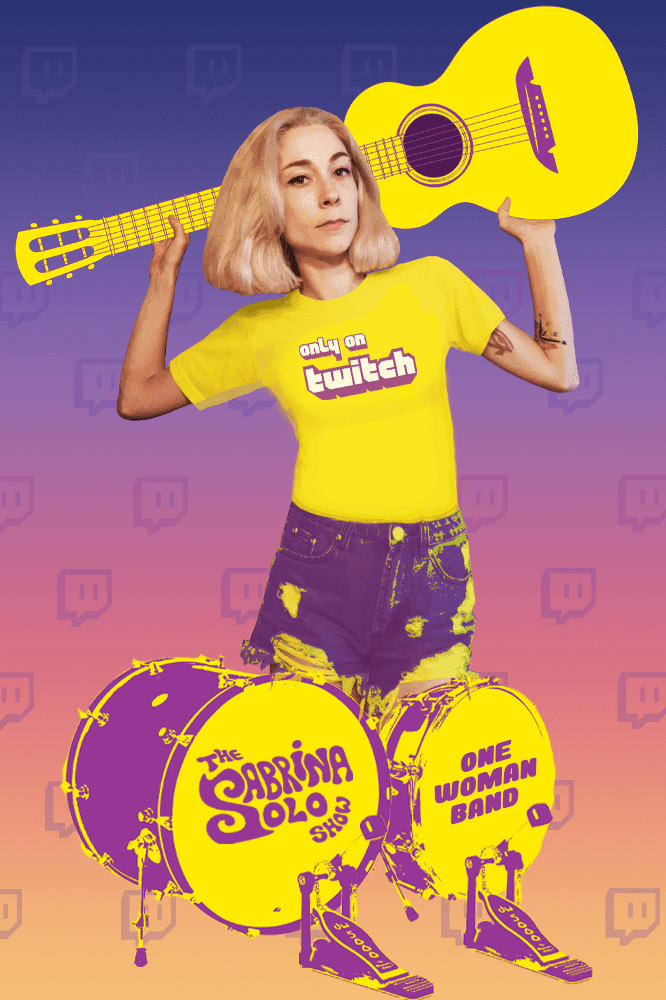
Sabrina Solo Show is just that: one woman that plays guitar, kazoo, and kick drum, performing originals alongside a huge repertoire of cover songs from the 1940s to the 2000s. Her super stoked energy and raspy voice will hook you in to hang in her stream for hours. Sabrina has enjoyed the transition to streaming and even feels more connected now to her audience than she did with an in-person live experience.

“To say I love Twitch would be a serious understatement. I’m a one-woman band; I sing, strum the guitar, and play drums with my feet. I play covers and originals and along with my (behind the scenes) audio engineering fiancé, Justin, we stream three times a week.

I’d been playing gigs at dive bars and small venues for over a decade. Loved it! Never really resonated with any online platform; I’m into that LIVE experience. We started our Twitch channel in January of this year (2020) and it feels closer to live gigs than I ever imagined! I actually connect with people in chat much easier than those bar gigs and I also feel more encouraged to be myself than ever before.

I just discovered last week that my originals are requested more often than the 300+ cover songs I have on my set list, which floors me! The Twitch community really rewards you for being your true self. They’ve already spoiled us with some much-needed gear upgrades and sponsored our upcoming album! We have a blast just being goofy and playing classic rock tunes. It really does feel like a dream. Love my Twitch fam!”

Sun Fyre

Sun Fyre is hilarious, quirky and mega talented. She is an incredible drummer from Costa Rica currently residing in Buffalo, New York who performs under a black light, glowing with UV paint and jams out with a double bass pedal to metal and rock covers. You can always catch her playing in various costumes and cosplays, and she also does a variety of exercise and cooking streams.

“Being the only Hispanic female drummer with this stream setup is quite unique in this streaming industry and I’m proud to represent my Latin American background through music as well. You will find me speaking English, Spanish and Portuguese on my streams while laughing about nonsense with the chat. I mainly bring a quirky personality while performing heavy metal most of the time. Pretty much I’m known as the ‘only’ metal female drummer on Twitch.

One of the funniest stories would be the time there was a bee in my stream room and I had to stop everything to get it out because I’m afraid of bugs and I couldn’t concentrate. I have also been Rick Rolled more than 100 times on my stream – we have a Rick counter.”

Weird Paul

Weird Paul is an internet sensation. He is the original “vlogger,” making and sharing homemade videos for over 30 years. It only makes sense that he would become huge on Twitch with his brand of VHS tape nostalgia. He’s prolific in both quality and quantity, having written over 800 songs that make you feel like you’re a loopy 6th grader at your best friends sleepover.

“I’d heard of Twitch for years – my first interaction with it was in 2014, but I never thought of it as a platform that I could use as a musician. Thanks to my friends in the band The Fantastic Plastics, I decided to give Twitch a try and I am so glad that I did. I’ve been a musician and a YouTube content creator for a long time, but Twitch has made it possible for me to showcase all my talents in a ‘live’ setting and be recognized for it. I’m seeing how much fun all my followers are having watching me and witnessing friendships starting before my eyes. One of my favorite things about Twitch is that you can be yourself and not be punished for it, unlike other social media that demands you do what they want so you will be rewarded.”

The strangest thing that has happened to me on Twitch since I started using it three months ago was my channel being raided one night by ‘ShaggyandCreep.’ When I found out that it was the ACTUAL Shaggy 2 Dope from Insane Clown Posse, I was speechless. After my stream ended, I went to their channel and watched them talking about raiding me and that was so fun to see. It’s great that Twitch suggests all kinds of stuff to different accounts – makes things very interesting!”

A.A. Williams Gets Moody on Debut Forever Blue with Heavy Collabs

A.A. Williams is a classically trained pianist and cellist, a multi-instrumentalist, songwriter, and vocalist. Her beautiful, dark debut album Forever Blue was recorded in the two-bedroom North London apartment she shares with her husband, bassist Thomas Williams.

Released in July via Bella Union, Forever Blue combines Williams’ skillful classical arrangements with post-rock and metal elements from guest vocalists Johannes Persson and Fredrik Kihlberg of Swedish metal band Cult of Luna. While other artists may have felt out of their depth with recording an album from home, Williams says, “I didn’t think too hard about it, I just got on with it really.”

Williams’ process is to record demos then take the elements and refine them in post production. The beauty of Forever Blue is that much of the material from the demos remains on the final album. “It wasn’t necessarily our plan to record the album at home in our apartment,” she says. “But we didn’t have to worry about paying and booking a studio this way. It was made before COVID-19, so it wasn’t the product of lockdown. Ultimately, the demo sounds like a less shiny product of the original, which I like. A lot of what I do in the demo stays, to be honest, so a lot of that original stuff landed on the album.”

On Forever Blue, Williams did all the guitars, the cellos, the keyboard instruments and all the vocals. “Having the ability to play the cello is so handy because I can put strings on stuff, but I’ve done it for so long, I consider it usual,” she says. “My dog makes a few appearances on the record. The sounds of North London, ambulances from the nearby hospital, are on there too.”

The lack of perfection or flawless production gives Forever Blue a raw element, “not shiny-shiny,” as Williams says. This is also part of the joy of working with her husband, who is on the same page in terms of writing and producing.

“It’s great working with my husband,” she confides. “Some people aren’t good at working with their partner, but for us, it works so well. He takes care of all the bass stuff; I trust his instincts a musician so I let him write and play his parts. It’s great to have someone to bounce ideas off [who will] be honest.”

Less familiar were Persson and Kihlberg, but the pairing was fortuitous. The duets are both ferocious and bleak, born of an unpredictable idea perhaps, but a musical match that makes sense on the album. “I didn’t know the Cult of Luna guys personally but we shared the same booking agent,” Williams explains. “My agent sent Johannes my first EP and we communicated by emails so it was easy to sort out. We did it all remotely since they were in Sweden and I was in the UK, but it was awesome to work with them. We went on tour together last November so it was nice to meet each other properly, touring around Europe.”

After a childhood and teenage years spent learning classical instruments including cellos and the piano, Williams’ first discovery of heavy music came from an unlikely place: a movie soundtrack. “When I was younger, movies were a great way for me to discover music,” she says. “I’d seen The Matrix and my parents bought me the soundtrack. It had Deftones’ ‘My Own Summer‘ on it and it blew my mind, and also Marilyn Manson, Rammstein and Rage Against The Machine. I loved the Spawn soundtrack too. Lost Highway had a great soundtrack.”

Williams’ album is cinematic in that same way, but also confessional, both melancholy and fierce in turns. I wonder whether any of the songs still hit her emotionally, viscerally?

“I’ve known my music since it was a tiny little seed, so you can never have the experience of listening to it for the first time,” she says. “I’ve been hanging out with the songs for six months before anyone else hears them. I have a closer relationship with the songs in terms of performing them live rather than songs to just listen to.”

Not that performing live is on the schedule of many musicians at present, though Williams has overcome logistical obstacles to do social media streams. “It’s hard work to do the live performance on social media,” Williams admits. “This is one of the blessings and curses of this pandemic. It’s forced us to learn new stuff and communicate in new ways and to think outside the box. The logistics are not quite so simple. Having said that, it was super fun. It was so nice to be able to get together and make some noise.”

Williams’ next task is to return to writing, a process she’d normally take to local cafes in order to prevent binge watching TV or cleaning instead. “Usually, my songs start with piano and voice, or guitar and voice. I work on the chord progression, speed and key first, then I start to vocalise a melody on top. From there, usually I record the instrumental part and take my little notebook and sit in coffee shops humming away for a long time – getting funny looks. Then, once I’ve got the melody and the instrumentation, I build the layers up.”

While she has not considered the specifics of her next album, nor is she writing with this front of mind at the moment, Forever Blue has provided her the confidence to approach the next album with one under her belt. The critical acclaim certainly doesn’t hurt, either. But, in her humble and sweet way, Williams is more interested in talking about her dog, who makes frequent appearances on her Twitter feed. “Everyone needs some pictures of small dogs in their lives,” she says.

Follow A.A. Williams on Facebook and Instagram for ongoing updates.
Kiiara Discusses Her Career, Body Image, and Debut LP Lil Kiiwi

Photo Credit: Dennis Leupold

If you haven’t heard Kiiara’s name, you’ve almost definitely heard her impossibly catchy 2015 single “Gold,” where she sings confidently about nonchalantly exiting parties and leaving her ex in the dust. Since then, she’s released a remix of the song featuring Lil Wayne, the EP low kii savage, and several more singles and remixes, in addition to collaborating with Linkin Park on the song “Heavy.” On October 9, she’s releasing her much-anticipated debut album lil kiiwi, which includes “Gold” and 12 other songs she’s recorded in the five years since.

Previously shy about letting fans into her life, Kiiara’s goal with lil kiiwi — a title based on a nickname of hers — was to do just that. “Early in my career, I never really let people in,” she explains. “I wasn’t super transparent. I didn’t do a lot of interviews. I didn’t really feel comfortable answering questions because I didn’t know myself well. So this album is like, come into my world. Here we go.'”

True to her word, the album is as emotionally vulnerable as it is infectiously rhythmic, with lots of vocal warping and EDM effects. On the upbeat “Sick,” she condemns an ex who was too quick to move on, “Feels” describes dealing with “too much emotion,” and “Don’t Get Confused” tells off men who assume she’s interested in them. In one of the rawest songs, “Never Let You,” she gets honest about questioning her career path with lyrics like “should’ve never picked up that guitar.”

“Sometimes, I’m like, do I even know what I’m doing? Is this even a good song?” she explains. “I’ll call my friends, and I feel like a lot of my friends too will go through this phase: ‘I’m just gonna quit.’ And I’m like, what are you talking about? And we have to remind each other, ‘Look what you’ve done. Take a step back and look. You’re so zoomed in and looking at it up close, you’re not realizing how far you’ve come.'”

Self-doubt is something that’s plagued Kiiara throughout her career, not just with regard to her music but also with regard to her body image. “I was just trying to hide, and that’s why I didn’t do a lot of interviews,” she says. “Even when I performed, I just hated my face. It was not done purposefully — ‘I want to look like this or be mysterious’ — it was just that I was scared. Doing Lollapalooza was my sixth show in my entire career, so I was like, ‘I want to wear baggy clothing.'”

The 25-year-old Chicago-based artist describes having battled an eating disorder, sometimes not eating for days before music video shoots so she’d achieve the appearance she wanted. Seeing a nutritionist and a personal trainer helped her lead a healthy lifestyle and focus on health instead of weight. “I was like, ‘Oh, I need the energy, I need nutrition.’ No wonder I was so angry or moody early in my career — I wasn’t eating properly,” she remembers. She’s also gained confidence in herself as an artist by taking voice lessons early in her career.

A lot of the songs on her new album were written and recorded on the spot right in the studio. She collaborated with a number of producers and songwriters, including Ali Tamposi (who’s written for Beyoncé, Christina Aguilera, and One Direction) and Livvi Franc (Michael Jackson, Britney Spears, Rihanna). “I’ve kind of stepped out and worked with a lot of people out of my comfort zone,” she says. “I would go in and I’d get there and be like, ‘This is what I’m going through, this is what happened, this is what was going on in my life,’ and then we’d just write about it.”

Even as her album comes out, she’s continuing to return to the studio and record new music, and she also has plenty of songs already recorded that she hasn’t yet released. “The past five years, I was in the studio all the time,” she says. “Some of the songs, I don’t even have on me — someone will send me them and I’ll be like, ‘I forgot about this.'”

Today, she’s approaching her work with increased confidence and self-forgiveness, with regard to both her music and her self-image. She recently realized how much progress she’d made when she appeared on camera despite feeling bloated. “[I thought] that’s how it is right now, and we’re going to deal with that,” she says. “I know I’m not perfect. Nothing’s ever going to be perfect. I have to accept myself at all times.”

Follow Kiiara on Facebook and Instagram for ongoing updates.
PREMIERE: ZZZAHARA Confronts Death With DIY Ethos in “Starry Eyed” Video Debut

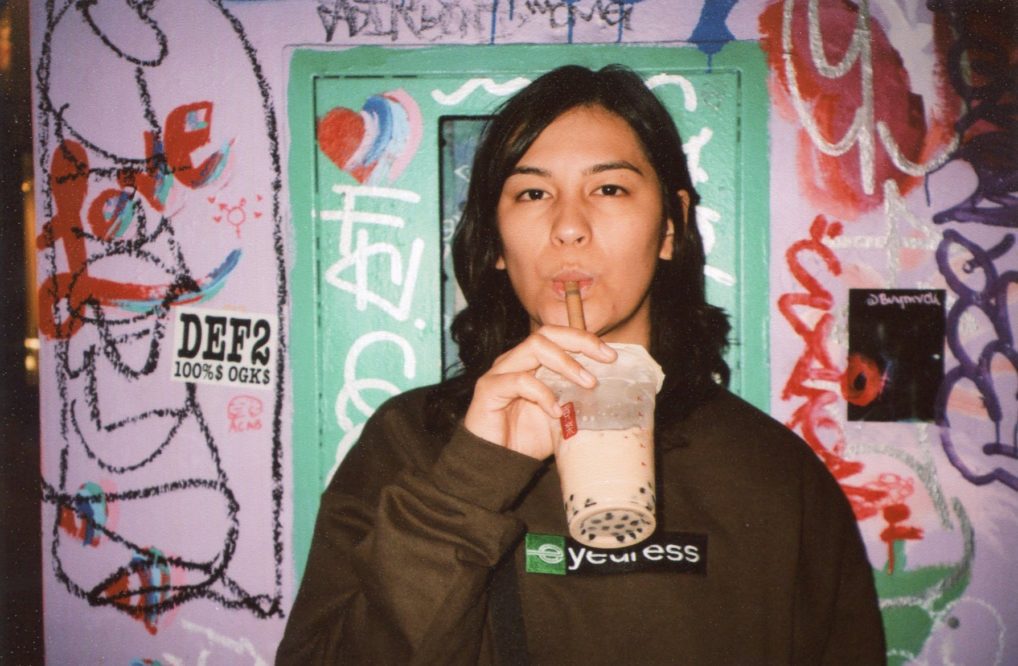
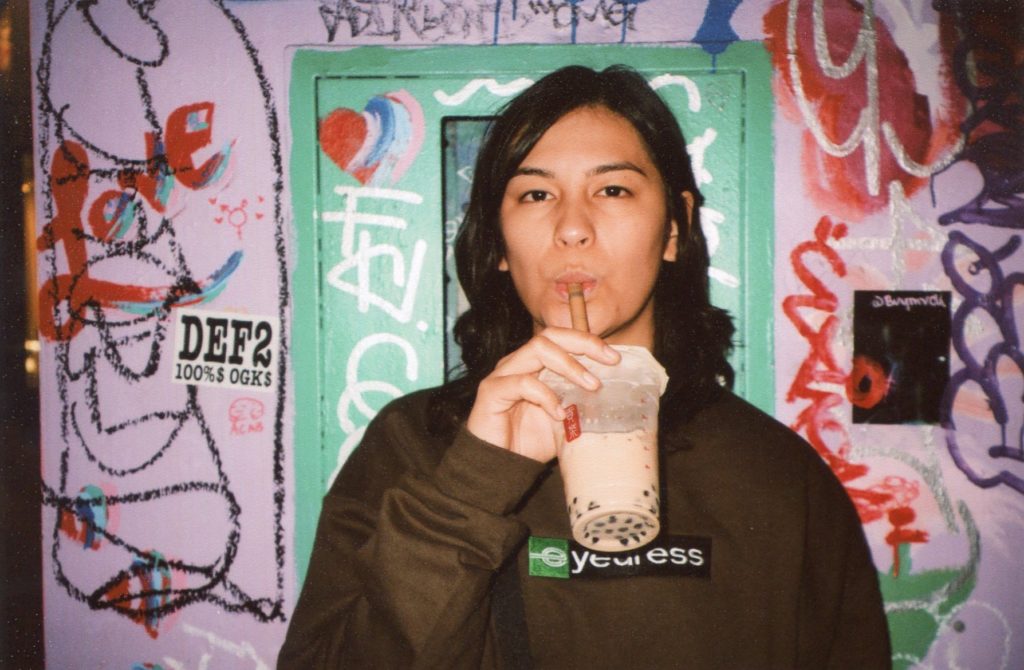
musician Zahara sips a bubble tea in front of a lavender wall covered in graffiti
Photo Credit: Amy Avazian

On her debut single “Starry Eyed,” ZZZAHARA (a.k.a. Zahara Jaime of The Simps and Eyedress) proclaims, almost proudly, “I’m already on my way/One foot out, and one foot in the grave.” This morbid hokey pokey isn’t mere ambivalence; it’s a vehicle for Zahara’s existentialist approach to life and making music, one in which she controls her own decisions and finds her own meaning in an often irrational world, moment to moment.

Zahara’s nonchalant carpe diem philosophy was influenced by unthinkable tragedy – the “close calls” she’s had with death since the age of twelve, when her younger brother passed away from Leigh Syndrome after a long and agonizing hospitalization. Zahara mentions her late brother in “Starry Eyed” only briefly, but the impact of his death is something she only recently came to terms with. “It just really boinked what I thought about life. All my friends lived a normal life, but I couldn’t wrap my head around what I was going through. I guess it kinda hit me in my early adult years, like what the hell did I see?” Zahara says. “It was confusing, that’s how I would describe it. I was sad but… I never processed it really, I just was worried about my parents. But then as I got older I was like, you know what, actually I have to process it myself.” Zahara says that therapy, philosophy, and music have all played a role in making sense of what happened. “Ultimately, my philosophy, it’s not too dark. It’s just like, I have to deal with making the world a comfortable place for me to live in, but I also want it to be comfortable for everybody that I let in.”

“Starry Eyed” finds Zahara taking comfort in sleeping all day, drinking all night, and sometimes just closing her eyes and pretending she doesn’t exist. The video was shot by first-time director (and Zahara’s roommate) J.J. Lammers; black and white scenes give it a noir feel. Zahara pours whiskey in her coffee, explores a graveyard. Suddenly she’s lying in the bottom of a hole in the ground, covered in a fine layer of dirt. In the next scene, she’s also the one shoveling – a literal interpretation of line that repeats in an otherwise minimal chorus: “I’m d-d-d-d-igging my grave.”

https://youtu.be/pUNiKdiGh-o

Zahara says the line is reflective of her cavalier approach to mortality, and also how she feels about living in general. “I do struggle with depression sometimes. There are times where I’ll sleep for a week and I’ll feel okay the rest of the month,” Zahara admits. “I live life on the edge a little bit… I like to have fun and sometimes that fun is a little risky. A lot of people fear death – people that look to life as something to be super optimistic about. I’m kind of in this purgatory, like in the middle where it’s not so good but it’s not so bad.”

Like it has for so many others, the pandemic threatened Zahara’s characteristic stoicism when she lost her day job. But she took it in stride, using the combination of unemployment funds and spare time to get serious about home recording. Zahara had played in bands for years in and around the Highland Park neighborhood where she grew up, and recently joined forces with Idris Vicuña, playing guitar in his project Eyedress. The two are also planning to release music from their collaborative project, The Simps, by the end of this year.

Zahara says Vicuña’s encouragement and guidance sparked her interest in producing her own music, and was further buoyed by support from her friend Collin Cairo, a mixing engineer at Stones Throw. Cairo pointed her toward YouTube and Sound on Sound Magazine; eventually, Zahara invested in a thirteen-hour online engineering course with Alan Parsons, as well as new mics, a laptop, software plug-ins, a synth and a bass guitar. Every other day, Zahara would record a new song based on what she’d learned from Parsons’ videos, and those songs comprise ZZZAHARA’s debut EP, out October 23.

“Everything that I learned from those classes I really put into what I made on this EP,” explains Zahara. “It’s kind of like giving yourself homework. [My] music from the start of quarantine to the end [shows that] progress: watch some things, learn things, take from it, and then do whatever you like. That’s what I was doing all of quarantine.”

The EP deals mostly with being young, queer, and looking for love. “Spam Masubi Cigarette” is a heart-pounding tribute to her current partner, who she says she was grateful to get to know better when the pandemic drew them closer. “Up On Fig” and “Straight Crushes” describe more confusing situations – an affair with a neighbor, unrequited teenage fantasies about girls with boyfriends – and though “Starry Eyed” is somewhat of an outlier thematically, all four tracks are tied together with dreamy, shimmering production and Zahara’s wistful reverb-heavy vocals. Cairo helped mix the EP, but the production was all Zahara. The vocal effects were recorded on a performance mic and edited with Ableton plug-ins – another trick she learned from Parsons’ videos, particularly one that featured Lauryn Hill.

Though it may never have existed if not for the pandemic, the EP is much more than a holdover linking Zahara’s musical past and her future. “I’m just really proud of being able to produce an entire EP by myself during quarantine,” Zahara says. “This is basically me saying hey – I learned something and here’s a little piece of me. If I seem mysterious, it’s kind of an introduction to who I am.”

Follow ZZZAHARA on Instagram and Twitter for ongoing updates.

Ruby Mack Premieres “Jane,” a Love Letter to the LGBTQ Community

four members of Massachusetts folk band Ruby Mack
Photo Credit: Gianna Colson

Massachusetts-based folk quartet Ruby Mack, consisting of Emma Ayres (Vocals/guitar), Abbie Duquette (bass uke), Zoe Young (guitar/vocals) and Abs Kahler (fiddle), are on a mission to redefine the sacred in a way that encapsulates all people and all aspects of life. Their music shines a light on those demonized in religious scripture, particularly women and LGBTQ people, to honor and celebrate their identities. Their latest single, “Jane,” is a beautiful example of this aim, soulfully capturing the love and loss associated with the LGBTQ experience.

“Jane” was written by Ayres in response to the 2016 Pulse nightclub shooting, with a past partner of hers in mind. “It’s just kind of our love song to anyone who feels like they can’t openly exist as their true selves in this world,” says Kahler. “I think the world can sometimes be a pretty inhospitable place to queer folks, people of color, any kind of minority, or anyone that’s treated as other.”

Influences like The Wailin’ Jennys and The Highwomen are evident in the band’s sweet, gentle vocals and minimalistic instrumentals. The slow, mellow single consists of melancholy fiddle, acoustic guitar, a simple rhythmic bass track, and emotive vocal harmonies. “It became a powerful thing for us to all be singing the harmonies together,” says Kahler. “The parts where it’s one voice and then the other voices join kind of echoes that sense of community that we were trying to express.”

The instrumentals start off simple and build as the track picks up, with the vocals getting increasingly loud and passionate toward the end, mirroring the intensity of the emotion in lyrics like “Oh they can keep you from fresh water/You’re the cold rain set me free.” Then, you can hear Ayres’s voice crack with emotion as the song returns to her stripped-down vocals. “The goal is to make people who may not have felt that pain have empathy,” says Duquette.

“When we’re performing that song, I always feel like there’s a lot of space for silence and softness, and it feels very holy,” Kahler adds. “I feel like that was kind of a theme that ran through some of the pieces in this album that we’re releasing — just really holding space for the sacredness of life and of queer life.”

The album they’re referring to is Ruby Mack’s debut LP Devil Told Me (out October 23), which explores feminism and social justice through the lens of religion and mythology as well as modern life and recent events. The soothing folk tune “Machine Man” is an ode to blue-collar workers, and the a cappella “Breadwinner” is “a thank you to all the badass momma figures out there” who support their households, as Kahler puts it, “but also about ourselves as well: We want to be your breadwinner. Let us have that role. We can take care of you. We don’t need men to do that.”

Several songs were written by Ayres, incorporating her interest in oral tradition and storytelling. “For Icarus” retells the Greek myth of the man who flew too close to the sun, commenting on the ways people get carried away with their imaginations, and “Odysseus” is a passionate plea to the mythical hero to return home and avoid the temptation of the sirens.

Overall, the band considers the album a reclamation of the story of Adam and Eve, celebrating female curiosity and knowledge. Accordingly, the album art features a serpent wound around an apple. “Eve ate an apple because she had curiosity, and without curiosity, what is anything?” says Kahler. “We all deserve the things we need and desire, and we shouldn’t be punished for going after those things like Eve does.” This attitude is best summed up in the lyrics to “Milktooth,” an angelically sung track about challenging gender roles learned in childhood: “Holy woman said I deserve what I want.”

Given the album’s overarching themes, it’s appropriate that it was recorded in an old converted church, with the help of Ghost Hit Recording engineer Andrew Oedel. The members, who originally met through the Massachusetts folks scene after each making their own music, consider their friendship a central part of their music and aim to capture their chemistry and authentic emotion in their recordings. Nine of the ten songs on Devil Told Me — with the exception of “Milktooth” — were recorded live to achieve this.

“I feel like that sacredness and that holiness was something that space already held,” Kahler says. “And we are at our most raw and most ourselves when we’re all playing live, and I feel like that definitely translates.”

Follow Ruby Mack on Facebook for ongoing updates.

Shutups Take Mundane Missteps and Make Them Worth a Dance on EP 5

Oakland band Shutup’s new EP 5 is a very adult piece of work. This isn’t to say that it is frigid or stuffy, but moreso that it provides a rollicking rock foray into the complexities of adulthood.

Some of this grown-up feeling comes from Shutups’ desire to not waste time. Almost every song on the five-track EP starts with a line that pulls no punches. The mood is set in less than ten seconds, and by the time the lyrics have settled inside you, the drums and bass and percussion have come to play — but by then you’re already too far down the river to turn back.

Take EP highlight “The Monday after Easter Sunday.” The song starts out with an ethereal synth instrumental before the lyrics kick in, giving the listener a bit of a breather before this: “The Monday after Easter Sunday’s filled with guilt again/because I didn’t call your mom when I said I would/but tomorrow I’ll make good on that.”

Platitudes can be great — pop, for one, couldn’t exist without them — but moments of hyper-specificity like this leave a lasting impression. It’s one of punk’s greatest modern evolutions, one that has led to a plethora of post-hardcore and post-emo outlets that don’t bother screaming about The Man anymore. Why bother, when you know that pulling from your last journal entry is a little more on par with the current zeitgeist?

Being an adult is, unfortunately, grappling with your own mundanity and the fact that it’s the small failures that will fell you as opposed to the large ones, because they are so much harder to pinpoint. Forgetting to return a call, return a text. Realizing your taxes are due in 24 hours, like I do every single year without fail. These things can be as brutal as they are predictable.

The second single, “Can You Dance to a Feeling?” is a strange creature. Shutups seems to have the uncanny ability to take what sounds like two different songs (sometimes more than two) and weave them together in a way that feels natural. The chorus of “Dance” sees lead singer Hadley’s voice go unexpectedly high, even as it’s almost drowned out in a crash of percussion. The rest of the song has moments of bubbly electronica and those kicked-up drum refrains that are clearly part of Shutups’ go-to repertoire (and part of what makes them so fun). One way or another, it will get you dancing, whether during the big-band chorus or the verses.

Album opener “All at Once” takes a little while to hit its stride, but about a third of the way through we get a crunchy guitar riff that leads into one of the EP’s many killer lines: “I know your bed is soft for me/I’ll return your call in another week/I know this is only temporary/you might as well have died.” The complexities of personal obligations permeate this EP: phone calls, family. What do we owe to our friends who are suffering, even when we ourselves are not yet out of the woods?

The EP’s first single “Death from Behind” captures this best as Hadley muses, “I’ve been calling to request your songs/because I know you’re cutting too much/and anything will help pack a bong.” There’s a lot of potential interpretations here — self harm? Not eating enough? — but mining the lines for some sort of codebook on Hadley and drummer Mia’s personal relationships isn’t as important as the fact that we know we’ve all been there in some capacity. Trying to keep people afloat is hard, and trying to do it perfectly — or at all — is sometimes impossible.

The yenta in me (which greets the yenta in you) still wants the codebook, however, especially for the EP closer, “Last Place” which starts rather dirge-like. “How do I know my friends are still there?/When I cry, can they hear?” Hadley asks. There are some beautiful lines here, notably: “I’ll sleep in the back of my car/cause that’s the last place I heard you laughin’/and I suppose I’m overreactin’/ but I don’t know when any of this shit will end.” I’d love the full story behind this, but I’ll settle for sitting with the plucky guitar that leads us out of the EP. And after that’s done — I’ll make a few phone calls.

Follow Shutups on Facebook for ongoing updates.

Teenanger Have “Good Time” with Social Critique on Latest LP

Photo Credit: Jake Sherman

Sometimes, music prompts us to reflect on the hard truths about ourselves and the times we’re living in. Other times, it makes us want to bob our heads and shake off our worries. And, occasionally, it does both. Good Time, the latest release from Toronto-based post-punk band Teenanger is one of those rare albums that’s equal parts fun and thought-provoking. On it, bassist and vocalist Melissa Ball, singer and keyboardist Chris Swimmings, guitarist Jon Schouten, and drummer Steve Sidoli respond to political and social unrest with catchy vocal harmonies against groovy electronic guitar, creating music that is intellectual but unpretentious.

The topics addressed on the album range from dating to environmental issues, several of the songs specifically addressing mid-COVID life, making timely social commentary with playful but incisive lyrics. In “Touching Glass,” Ball sings about the disconnection that stems from always communicating through technology: “Scratch the surface/There’s a reflection/Mediocre means of a connection/Bloodshot bedroom eyes tethered and tired/Filtered fiction demands what is required.”

The most overly political track is “Trillium Song,” where Swimmings critiques the Ontario government’s failure to address COVID-induced economic losses: “Capped and traded, poisoned fertile crops/A buck a beer, closing all the tops/Manning the wheel, to drive us out of home/Dwindle the future, what have you done?”

The musical styles on the album vary to match the subject matter, which ranges from flirtatious to melancholy. “We were trying to be as open as possible and not pigeonhole ourselves with the sound,” says Ball, whose personal goal was to sing more and write more on the album than she had on past ones. On the fun, dance-rock-style “Pleassure,” Ball shouts about the “pressure for pleasure” people encounter in the dating scene, while “Beige” gives off ’90s grunge vibes, with Ball repeating in an airy, flat tone, “It’s the safest shade/Everything is beige.” On “Straight to Computer,” you can hear the influence of the Talking Heads as Swimmings half-sings, half-speaks about being immersed in “acronyms and useless chatterbots.”

Overall, the band wanted to make this album lighter and simpler than their past work, though the environment where it was written and recorded was perhaps not always conducive to lightheartedness. They had recently left a studio they shared with other bands so they could devote more time to the process, and their new studio was in a basement underneath a restaurant, where they were dealing with rats and flooding. “We were just in this little workshop in the basement, having all the time in the world, and we just naturally kind of adapted to that little basement and just had a summer full of writing,” Ball remembers.

Despite the suboptimal conditions, the new studio allowed the band the space and time to flow with their creative impulses. “We have so much more freedom,” says Ball. “We were like, try this, try that, bring different weird instruments, and I think that that freedom lifts us up a little bit, and it made a more spacious, poppier record. I think that environment has a lot to do with the writing process: If you feel pressure because you’re waiting for some band to come in or you only have a set amount of time to be creative, it’s hard because being forced into a creative setting feels rushed. The space is like another part of the record — there’s a spacial influence.”

In the playful spirit of the album, the band decided to make cover art out of their feline mascot of sorts, Roxy, who was originally Swimmings’ cat, but was later adopted by Ball and Schouten. “We just wanted to pay tribute to her because she’s the sweetest little thing,” says Ball. “We did a bunch of photos at high contrast, and we were originally going to go with the same photo, then we got a treatment on it and decided it would be that still of her with her tongue sticking out. It was more of like a dedication.”

Teenanger originated in the same kind of environment it ultimately ended up in: in a basement, where Ball would jam with Schouten and his former band. Now twelve years old, the band is releasing Good Time via Telephone Explosion as its seventh album, after 2017’s Teenager. Ball describes the band as more garage-rock in the beginning, but consistently lo-fi and DIY throughout its lifespan. “Every record seems like a new sound for us,” she says. “We’re just trying to do what come naturally right now. Not a lot is coming naturally in general in the world, but that’s all I got.”

Follow Teenanger on Facebook for ongoing updates.

PREMIERE: OKAN Bring Colorful Afro-Cuban Style to “Espiral” Video

Cuban-Canadian musicians Elizabeth Rodriguez and Magdelys Savigne of the band OKAN
Photo Credit: Ksenija Hotic

Jazz fusion duo OKAN (Elizabeth Rodriguez and Magdelys Savigne) are at the forefront of Canadian-Cuban musicians bringing kaleidoscopic island sounds to international music lovers.

OKAN (meaning heart in the Afro-Cuban religion of Santeria) formed when Savigne and Rodriguez—both new Canadians living in Toronto—met after joining the Grammy-winning ensemble Jane Bunnett and Maqueque, and the musical connection was undeniable. Since joining forces, they’ve earned a JUNO-nomination for their debut, Sombras, and the 2018 EP, Laberinto, won two Independent Music Awards. Their follow-up Espiral—out later this month— may be thier strongest thus far.

Combining “history, heritage, storytelling and spirituality,” Espiral relates stories around immigration, womanhood, and sacrifice. From the stunning “Aguila” to breathtaking cover of Consuelo Velázquez’ classic track, “Besame Mucho,” Espiral is full of pride and sparkling musicianship, taking its name from the swirl of genres at play.

“We wanted to let people know that there is more to Cuba than meets the eye or that is commonly known,” explains Savigne. “We are a product of the musical evolution that happened in Cuba when we were a more isolated island. We speak from our own experiences and reflect them through our music.” Rodriguez agrees, “This album is more vibrant and bolder in terms of arrangements,” she says. “But the idea behind it is the same as with Sombras: to present an OKAN that changes every time, with every song.”

To celebrate the exclusive premiere of the official video for the LP’s title track, the pair talked with Audiofemme about working with an all-women-identifying team, African fashion, and the dynamic sounds of Cuba.

AF: You made a wonderful choice to embrace the nearly extinct sound, Pilón on lead single “Mercedes” – why was that important?

MS: Pilón is a genre of Cuban music that started in my hometown (Santiago de Cuba). It was very popular in the ’60s and ’70s, especially the compositions by the renowned Cuban composer Pacho Alonso. Pretty much every genre in Cuba is directly connected to a dance. The dance steps of Pilón mimic the movement of grinding coffee. It has a really cool rhythm and the lyrics have many double entendres. That’s exactly what “Mercedes” is. We use the humour of the double meanings to address the struggles of the Cuban people. This strategy of making jokes to deal with difficulties has always been a part of Cuban culture.

ER: It is important to share with the world that Cuban music goes beyond Salsa and Reggaeton.

AF: Talk about working with video director Kathleen Ryan.

ER: She was an angel that fell from the sky for us. Kathleen put together an amazing team of extremely talented people and created this beautiful video for us. She also donated the space where we filmed it and the result is incredible. Some people have said that it’s hard to believe that we actually made it in Canada.

AF: How was it working on a video with an all women-based team?

MS: Well, this was our first video. I have to say that I thought it would be scary. Kathleen and her extremely professional team made us feel comfortable at all times. We had no idea there would be so many women involved — all talented. As a female artist, I feel deeply grateful for this opportunity. There were also some incredible men involved, so what I really liked was the balance and chemistry I saw with the team; it’s exactly what we look for when we work.

AF: Talk about how your style is becoming an OKAN signature.

ER: Nowadays, being a good musician is not enough. People expect a show, lights, images, dancing. We are not Beyoncé, but we believe style can be a way of making a statement as well. Honouring our ancestors from Africa is a way of feeling more connected to them, and to show people we are proud of our heritage. We have teamed up with Tracy Ekubor, an amazing stylist and seamstress from Nigeria and we love her work.

AF: How was it working in Jane Bunnett and Maqueque?

MS: Maqueque brought me to Canada and for that I’m deeply grateful and always will be. I had the chance to share the stage with amazing talented women despite their young age. It gave me the tools to survive and to learn to understand this new world – Canada. I got to share my compositions and have them nominated for a GRAMMY, and to win a JUNO. The opportunity opened a few doors in Toronto for me. I got many life lessons out of it, for sure.

ER: Working there was an experience that changed our lives in many ways. I was pushed to practice and learn more about improvisation. Traveling the world was fun and a great experience. Being able to perform at very prestigious festivals was a great opportunity to grow as a musician. We also learned how to drive all over the U.S., how to organize a tour, how to apply for travel visas and work permits, and many things that as a band member you don’t usually get to experience, but that we were responsible for.

We learned different ways one can lead a band, to support and respect the musicians that work with us and their independent projects. The biggest lesson of being in Maqueque was to understand that our freedom is more important to us than anything else.

We find that many music fans in the U.S. and Canada were first exposed to Cuban music by white North American musicians who incorporated Cuban or other Latin traditions and compositions into their own works. We’re really proud and excited that there are now many successful, Afro-Cuban-led jazz projects being embraced by those same listeners – and programmers – and that the Cuban musicians are taking charge of their own careers and freely expressing their own musical vision.

Follow OKAN on Facebook for ongoing updates.

PLAYING TORONTO: Daniela Andrade Unravels Latinx Identity on Latest EP

Photo Credit: Jean François Sauvé

“I really just wanted to come out of what felt like a very strange Spring with something tangible. Music always helps me process emotions and this project is very much a result of needing that for my own sanity,” shares Daniela Andrade about the making of her forthcoming EP, Nothing much has changed, I don’t feel the same, the follow-up to 2019’s self-released EP, Tamale.

As the COVID-19 pandemic spread across the world, Andradein quarantine—longed for experiences she once took for granted. “I just missed being around people. Sitting next to or gazing at the park, simple interactions like that,” Andrade says. “Touch became something I missed deeply. Friendly affection [that] I think we all miss in the countless zoom calls. In retrospect, having dug into memories or fantasies seemed like a form of escape or survival, hope even.”

Just a single listen of Nothing much has changed… takes you through shifts in sound, from the loungey-languidness of its romantic title track to “Puddles” glitchy R&B vibe and the wistfully slow pace of “Deseo.”

“At times, I love keeping things stripped down, but I also like more elaborate and manipulated production like what Tyler the Creator and Frank Ocean do,” Andrade says. “I really love R&B lyricism and have also been revisiting old Spanish classics my parents grew up on. I don’t want to hold myself back from trying out different styles so long as it feels true to me.”

Being true to where her music takes her reverberates through Andrade’s work by way of its unapologetic fluidity, effortlessly moving from R&B to classic Latin rhythms, and from Spanish to English. “I always knew I loved speaking and thinking in Spanish,” she explains. “Thanks to my mother’s diligence, Spanish was my mother tongue and I was able to hold onto it. It’s hard to explain if you don’t speak more than one language but mannerisms and intonations change so much from one language to another. People talk about alter-egos — I’ve felt like me and my Spanish self were more like sisters than one entire whole of me. I was afraid to approach writing in Spanish out of fear of not doing the language I treasured justice. Once I did it though — on Tamale — it felt really good and incredibly natural. I think the idea of the mainstream is also changing. I hear more Latinx artists coming up and it’s starting to feel like the new normal to accept diverse sounds and stories. It’s really exciting to feel more represented in music.”

Born to Honduran parents who immigrated to Canada before her birth, Andrade grew up surrounded by music, recalling her father and three siblings harmonizing together. But the spiritual and secular words of music were competing forces in her childhood.  

“My influences are heavily grounded in two different experiences: growing up in a religious household and leaving the church,” Andrade says. “Growing up, I wasn’t allowed to listen to non-religious music at home, although there were few exceptions when my older siblings played me music they loved.” That music could be as diverse as Boyz II Men and Lauryn Hill, which her sisters loved, or the salsa and Sade her brother played. Or her father’s favourite, Julio Iglesias. Her middle school best friend introduced her to Guns N’ Roses, The Gorillaz, Daft Punk and Linkin Park. “I’d spend countless hours at her place, and we would listen to whatever we wanted on YouTube,” she recalls. “Having been in choirs most of my life, and near the end of my religious experience, gospel and R&B became new obsessions with groups like Destiny’s Child, and their three-part harmonies. Or Toni Braxton and her incredible tone.”

While a career in creative writing tugged at her, by the end of high school the dream of music won. She created a YouTube channel with friend and manager, Jeff Kwok, and a couple years later she was a full-time musician, leaving her waitressing job behind. She had also left the church, leading her to exploring womanhood and self-expression on levels she had never had the opportunity to do before. “I feel really passionate about the female experience under conservative, religious households,” Andrade says. “I know how it affected questions I had about so many things that I realized are normal for other girls to know [and] understand about themselves outside of a religious framework. In many ways I feel like I am just beginning to grasp how this affected my outlook on life and where I am choosing to stand now as a person and citizen.”

She is now on a journey – musically and personally – to uncover the forces that have shaped who she is, and those she loves. “As a Latinx woman growing up within the context that I did, I simply wasn’t given the tools or language to value myself and my existence within my experience as a child to immigrants,” she shares. “I’m starting to understand that the answer as to why leads to endless questions. It’s going to be a lifetime of work to continue to unravel these questions and I’m very much looking forward to continuing to dig into it.”

Follow Daniela Andrade on Facebook and Instagram for ongoing updates.
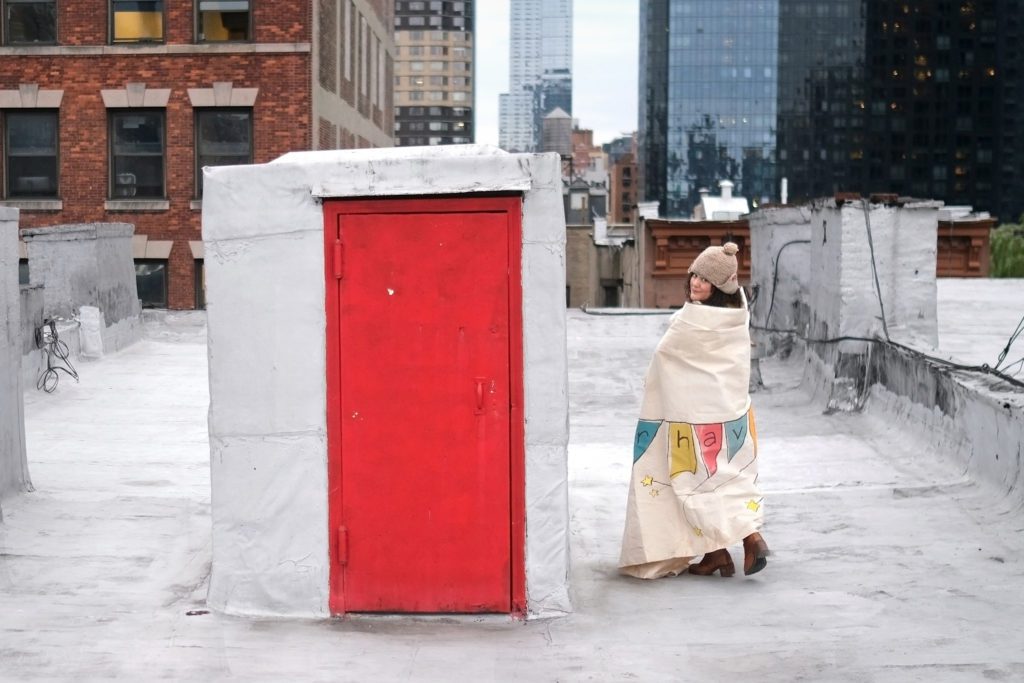
Dead Method Unpacks Generational Trauma On Debut LP Queer Genesis

Lloyd Best is fearless. He hasn’t always been, but there came a time when he needed to look himself in the mirror and confront his trauma. In order to conquer it, he peeled back his bandages and attended to wounds he had long forgotten ─ or simply suppressed. As any queer individual can relate, such a journey isn’t easy, and it’s rarely without its price.

Known professionally as Dead Method, Best unleashes his debut, Queer Genesis, a gnarly and warped alt-pop dance record, with an unsettling paintbrush and a singular voice. Across nine songs, the Welsh singer-songwriter dips into themes of “heartache, loneliness, depression, and anxiety as effects of oppression,” he says. Each track excavates various kinds of trauma, including misery “passed down through generations of oppression.”

“Queer souls rest here,” he mourns on title track and album opener. A collaboration with HVNTER and MADI, it rings as almost a funeral march, a prayer like a handful of dirt cast upon the millions of tortured souls who never had any rest or justice in this world. The haunting centerpiece, slathered with an afterlife glow, ties directly into “a feeling of sadness and panic that queer people are conditioned into feeling.”

“It’s not always safe for us to walk down the street, to live in our homes, to go to a club,” he further explains. “Some of us have had such terrible experiences that we are unable to just relax in places that we should feel safe in.”

With producer James Minas’ otherworldy style underlining Best’s evocative and soul-squeezing stories, Queer Genesis pumps with sinister musical outlines. It’s fitting that Best has an affinity for horror films, including Pet Sematary and Alien, borrowing trace amounts of unsettling synth work and various other components. “I am drawn to those dark vibes, but it’s very much a sound that we’ve spent years refining and comes very naturally to the lyrics and melodies I write,” the musician says.

Songs like the rattling, chain-bound “Babylon” and closer “Haus (of God),” flickering with electronic debris, interlocks the queer experience of deep “longing for a family when the one we’re born into is not there for us,” he says. “So many people have to create a family, and each of those songs is a different side of the same coin in that experience. The despair of being forced out of a home and the beauty of creating a new one.”

While Best has very supportive parents, many of his close friends do not. “Our bonds run deeper than blood,” he sings in the latter track, which celebrates club culture while never losing sight of the fact that building a family within the shared queer experience literally saves lives.

Only piano in tow, “Bleach” is Best’s artistic pinnacle, a performance so devastating you can feel the wreckage tumble down around him. “There’s a monster in me/And I fed it,” he wails. While working at a call center, and feeling creatively stuck in second gear, he put pen to paper and quickly realized his soul was literally crying out for help. “My music career was stagnant, and I felt like I was fading into the background,” he says. “I suppressed my identity as a result of being told I was acting too gay in comparison to my band members, and it felt like a battle I was losing.”

His mental stress was like a bulldozer, crashing into every facet of his life, and his physical health soon bottomed out. He became so severely ill that he was “confined to my apartment and found that no one was visiting me or checking in ─ other than my partner, who worked throughout the day,” he remembers. “I was alone for the majority of the day with nothing but my sickness and my thoughts, and at that moment, I had to make a decision to choose to live or waste away. It was a hard-fought battle, but I managed to come out of the other side.”

“The structures for helping those with poor mental health in the UK are dreadful, and so many of us fall through the cracks,” he continues. “Queer people are statistically more likely to have poor mental health, and as a result, it becomes another form of oppression keeping us down.”

“Hurt” locks into a similar emotional puzzle. Wintry sounds sweep across his mental desolation, letting his vocal completely burn to the cold earth. One of his very first artist songs – written with album producer James Minas when they first started collaborating seven years ago – the heady track wrestles with giving someone too many chances. “It’s like you’re dancing on my grave,” he cowers into the dark.

When you think you know what to expect, Best tosses out some jarring (but refreshing) curveballs. A song like “Violent Men,” dragging the listener into some macabre club rave, jolts the system awake. Not only does its frantic energy course through the body, but its lyrics hit even harder. “I wrote [this song] the day after the most recent UK election. Seeing the Conservative party rise to power left me with an empty pit in my stomach and a feeling of utter dread,” he says. “I looked around the world and found so much of our trauma is passed down from the violence of wealthy men and women in power.”

“Go to war/Die on the dance floor,” he sings, inhabiting a very unsettling vocal transformation. It’s a simple but acidic line, further puncturing to the emotional core. “Most of us just want to exist in peace but we’re tricked into being pawns in a game that we cannot afford to play,” he says. “I wrote the song to empower people (and myself) to reject the great game and to hold these vile people accountable for their actions.”

“Chasm,” a twisted piano spinning like a tilt-o-whirl, consumes from the inside-out, mimicking what it’s like to be arrested by existential dread on a daily basis. “Will it ever get any easier?” Best begs. He probes and digs, coming up empty handed, and he’s left to his choir of mental demons instead.

“Existential dread is new to me. I’ve had bouts of depression in my youth, but it didn’t really hit me hard until I was in my mid-20s,” he admits. “It’s the anxiety that really gets me. I found myself drinking a lot and spending money I didn’t have to cover the cracks in my life, but that shit always catches up with you. That feeling of this entity always following close behind, knowing a reckoning is coming, and you can either face it or keep running, is terrifying ─ but utterly liberating if you choose to face it.”

As scary as that process can be, catharsis comes more quickly for Best via the songwriting process. “Each song on this album was written in less than an hour, and by that, I mean the bare bones: the lyrics, the melody, and subject matter. I find the longer it takes me to get that stuff out of my head, and in writing, the worse it is, and I usually end up scrapping it,” he says. “My best work seems to flow out of me all at once with only minor tweaks needed to words and melodies from there. I think the majority of the work comes in the production and finding the right sounds.”

Queer Genesis is Dead Method’s awakening. He defies his past, picks up the pieces, and soldiers forward. The war is far from over, but he’s at least far better equipped to cope. “This record has really helped me understand who it is I want to be, what my values are, and what I stand for,” he says. “It allowed me to stand in the light of my queerness and be comfortable with being 100 percent myself. It gave me the confidence to exist without compromise and to let go of some of the traumas I accrued in childhood and adolescence.”

He confesses that while his journey may never really be over, it doesn’t necessarily need to be totally understood in this moment. “I am comfortable enough to lean into it and to create art that is authentic to me, to know my power, and to challenge the glass ceiling that has been placed above me to stop me from getting further in life. I’ll just keep chipping away until it breaks.”

Follow Dead Method on Twitter and Instagram for ongoing updates.
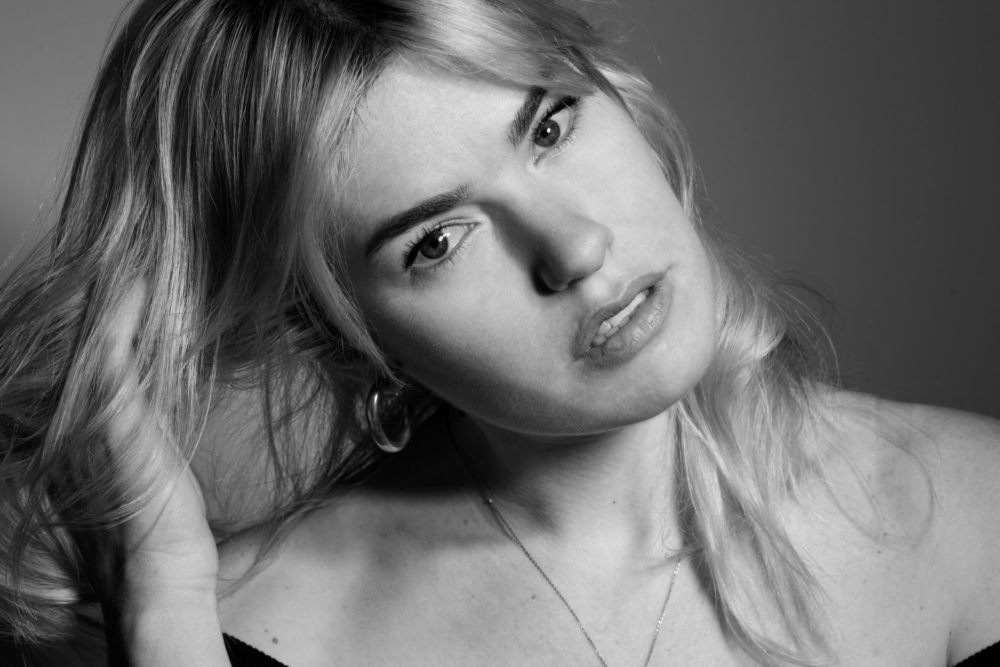
Janis Joplin: 10 Memorable Moments

On October 3, 1970, Janis Joplin was in the recording studio where work was proceeding on her next album, Pearl, dancing around the control room in delight as she listened to her band lay down the backing track for a song by her friend, Nick Gravenites, “Buried Alive in the Blues.” She planned to record her vocal the next day. Instead, in the early morning hours of October 4, she died of a heroin overdose. She was 27 years old.

It was a sudden and shocking end to a groundbreaking career. Joplin was the first solo female rock ‘n’ roll star, gifted with a powerful voice that put her in a class of her own. Her recording career only spanned four albums, but there was no shortage of songs that became instant classics: “Ball and Chain;” “Try;” “Me and Bobby McGee” among others. Had she lived, Joplin would be 77 years old, undoubtedly having added more classic tracks to that list. But the legacy she left behind reveals a much richer catalogue beyond her best known work. Here’s a selection of songs that chronicle her development as one of the most compelling performers in rock.

“What Good Can Drinkin’ Do?”  1962

Joplin enrolled at the University of Texas (UT) in Austin, in June 1962, but she spent more time working on music than attending classes. She joined folk group the Waller Creek Boys, and also began working on her own material. She recorded one of her first compositions at a friend’s home, accompanying herself on autoharp as she sang this cautionary tale about the pitfalls of over indulgence. The blues influence is obvious, but it’s also poignant in its recognition of the problems of substance abuse, something Joplin would struggle with all of her life.

“Sad To Be Alone”  1962

Another song Joplin is said to have written during her time at UT is the heartbreaking “So Sad to Be Alone.” It’s a remarkable number, with Joplin, again accompanying herself on autoharp, dropping the tough, gruff persona she used for protection, and laying bare her vulnerability and her pain. It’s not the rasp of the blues shouter she would become, but the simple, clear voice she used when she sang in church or the with the school glee club. It’s a side of Joplin most people didn’t get to experience.

“Mary Jane”  1964

While living in San Francisco in 1964, Joplin worked briefly with jazz musician Dick Oxtot, recording four songs with his band. One song was a Joplin original: “Mary Jane.” It’s a humorous number, based on the double meaning of Mary Jane being both a woman’s name and a slang term for marijuana; though a man may let you down, Joplin sings with a wink, you can always count on Mary Jane. It also shows how easily Joplin could’ve pursued quite a different musical direction than rock ‘n’ roll.

“Down On Me,” Come Up the Years, April 25, 1967

Big Brother & the Holding Company was Joplin’s first band. Two months before their landmark appearance at the Monterey Pop festival, the band taped a short set for a local program, Come Up the Years, which aired on San Francisco station KQED. “Down on Me” was a gospel number that the group secularized “so it would sell to the general public,” as one of the band’s guitarists, Sam Andrew, explained. New lyrics played down the spiritual aspects, but a gospel fervor is still evident in Joplin’s voice.

“Ball and Chain,” Monterey Pop festival, June 18, 1967

Monterey Pop was the festival that drew national attention for Big Brother, and Joplin in particular. The band first performed on June 17, but their manager at the time refused to let the documentary film crew shoot them. Big Brother generated such excitement, they were asked to perform again on June 18, and this time, the cameras were allowed to roll. The main point was to capture the stunning set closer, “Ball and Chain.” Joplin’s immersion in the song is clear, from the way her feet jump up and down in her shoes, to how she throws her head back and shuts her eyes when she hits a high note. While the June 18 performance made it into the Monterey Pop film, the June 17 performance was later released on The Monterey International Pop Festival box set. Fans have been debating which is the best performance ever since.

“Maybe,” The Ed Sullivan Show, March 16, 1969

The Ed Sullivan Show was the most important variety show of its era, and Joplin was determined to make the most of her appearance. She turns the Chantels’ girl group hit “Maybe” into a slow burning number of white-hot intensity, a song of desperate yearning, of dreams that may never be fulfilled. Yet there’s a control in Joplin’s delivery as well; she takes her passion right to the edge, but never goes over.

“Try,” Music Scene, September 11, 1969

Music Scene was a short-lived program that spotlighted current hit acts. In contrast to the more formal theatrical setting used on other TV shows, Music Scene used a concert-style style set up, with a catwalk extending into the audience, putting Joplin right in the center of the crowd. The audience was also noticeably younger, and the sound mix was good. And Joplin can’t resist taking advantage of the extra room available to her, moving up and down the catwalk as she grooves to the music, making this one of her most engaging TV performances.

“Little Girl Blue” and “Raise Your Hand,” This Is Tom Jones, September 21, 1969

Joplin’s two songs on This Is Tom Jones couldn’t be more different in style and tone, illustrating her versatility as a performer. She rejected the set ideas for “Little Girl Blue” (from the musical Jumbo), which would have had her walking through a makeshift garden, complete with a trellis archway. “I cannot walk through plastic raindrops singing my songs,” she announced, instead opting to sing in front of a white scrim, standing at the mic like a torch singer. It’s a performance of great delicacy; interestingly, Joplin dispensed with the song’s original final verse, giving it a sadder ending.

The rousing “Raise Your Hand” had been in Joplin’s set for some time and proved to be a great crowd favorite. And in Tom Jones, Joplin found the perfect sparring partner. The set was arranged like a nightclub, couples sitting at tables or on the dance floor, with Joplin and Jones in the middle of it all. The two are electrifying together, as they trade vocals and dance, begging the question as to why they didn’t work together again.

“Mercedes Benz,” August 8, 1970

On August 8, 1970, Joplin was hanging out at a Port Chester, New York, bar called Vashen’s, prior to her show that night at the nearby Capitol Theatre. To pass the time, she wrote a song based on a line from a piece by poet Michael McClure: “Oh Lord, won’t you buy me a Mercedes Benz?” Though it wasn’t quite complete, she performed it that night, introducing it as “a song of great social significance.” Just under two months later, on October 1, while recording Pearl, she again broke into the song while the studio’s main tape deck was being repaired. Fortunately, a quarter-inch safety reel was running throughout the sessions as a back-up, capturing the performance. It was the last vocal Joplin would ever record.

“Me and Bobby McGee,” demo version, 1970

Joplin first heard “Me and Bobby McGee” when her friend Bobby Neuwirth played it for her on his guitar. The song was written by Kris Kristofferson, an up-and-coming singer/songwriter then based in Nashville, and had previously been recorded by country singer Roger Miller. Joplin immediately fell in love with it, and first performed it at a December 16, 1969, concert at the Nashville Fairground Coliseum. When she recorded it for Pearl, she was returning to her own country roots, bringing her singing career full circle. “Bobby McGee” might have started out as Kristofferson’s song, but, as she did with so many recordings, Joplin made it her own.

RSVP HERE: Lydia Loveless Streams Career Spanning Set via NoonChorus + MORE

It’s no question the past four years have drastically changed our lives, and alt-country staple Lydia Loveless is no exception. Last Friday (9/25) marked the release of Loveless’ first album in 4 years, titled Daughter. The making of the record coincided with the parting from longstanding label Bloodshot Records, the divorce from her bassist, and a big move to North Carolina from her hometown of Columbus, Ohio. Created in a more independent mental and physical state, Daughter grapples with the lack of familial feelings, divorce, disconnection, and death. These transformations allowed Loveless to hone her lyrical honestly and a dive into an expansion of her pop sonic palette.

Last week Loveless played Daughter in its entirety with her band for the first time. You can catch her via NoonChorus again this week on Thursday 10/8 performing a career-spanning solo set that showcases all sides of Lydia Loveless. We chatted with Loveless about changes in the music industry, starting her own label, and why you shouldn’t physically exfoliate.

AF: How do you feel now that your new album is out in the world?

LL: Relieved and excited!   

AF: Did being further away from your band and not playing live recently affect the writing and recording process of Daughter?

LL: I think so, yes. It caused me to be more focused on different instrumentation to be alone while I was writing the record. I could hear drums, keys and atmospheres in ways I normally wouldn’t.  

AF: What made you decide to start your own label? Will you be releasing other artists, too? 

LL: It felt like a good time to believe in myself. I don’t think I am anywhere near being able to sign anyone, but eventually I would love to. 

AF: What are some of the biggest changes in the music industry that you’ve seen over the span of your career? 

LL: More acceptance and respect for young songwriters, in a lot of ways. Genre-bending becoming much more acceptable. My age group and younger taking the reins to make weird things more acceptable. 

AF: Are there any genres, sounds, or musical ideas you haven’t explored yet that you would like to in the future? 

LL: Yes, I always want to try something new. Probably not jazz. 

AF: What is something you’ve done and/or learned in the past six months that has surprised you?  

LL: Watched a lot of TV. Played more piano. Not completely broken under severe stress.

AF: If you could give your younger self advice now, what would it be? 

LL: Don’t physically exfoliate – it causes your pores damage. Use a chemical exfoliator. 

AF: What are your plans for the rest of 2020 and beyond?

LL: Stay alive, write music, kick some bad habits. 

RSVP HERE for Lydia Loveless via NoonChorus Thursday 10/8. 9:30pm ET, $10

10/2 St. Vincent, Jason Isbell, IDLES, The Free Nationals, Carlos Santana, Vernon Reid, Joe Bonamassa, and more via Guitar.com. 8pm ET, RSVP HERE

10/2 U.S.Girls, Black Belt Eagle Scout, Cierra Black, Cerena Sierra via Venus Fest YouTube. 8pm ET, RSVP HERE

10/3 JD Samson via Elsewhere Sunstreams. 7pm ET, RSVP HERE

10/3 Sudan Archives, Kadhja Bonet, Okay Kaya, Madison McFerrin, Manon Voice via MidWay Music Fest. 6pm ET, RSVP HERE

10/3 Jose James, Taali via LPR.tv. 9pm ET, RSVP HERE

10/5 Dr. Anthony Fauci, Rep. Alexandria Ocasio-Cortex, Margaret Atwood, Chris Rock, Ira Glass, Yo-Yo Ma, & More via The New Yorker (Virtual) Festival. 8pm ET, RSVP HERE

10/6 Faye Webster via NoonChorus. 9pm ET, $12, RSVP HERE

10/6 Courtney Marie Andrews via KEXP YouTube. 4pm ET, RSVP HERE

10/6 + 10/7 The Call Within: Dismantling Racism from the Inside Out with Rev. Jacqui Lewis, PH.D. via Middle Collegiate Church. $20, 7pm ET, RSVP HERE

10/7 Fenne Lily via KEXP. 6pm ET, RSVP HERE

10/8 Come Together: Mental Health Music Festival feat. Smith & Myers, Jason Isbell, Kiiara, American Authors, Jade Bird, Yola, Shamir, Son Little, & More via The Relix YouTube Channel. 8pm ET, RSVP HERE

Róisín Murphy Releases The Disco We Need Right Now

Photo Credit: Adrian Samson

More than a decade ago, Róisín Murphy had talked to Sheffield-based producer Richard Barratt (aka Crooked Man and DJ Parrot) about taking their collaborative work from her album Overpowered further. 

“It was intended to be a big project at the start, but we got waylaid a few times,” says Murphy by phone from her home in London. Murphy wanted to dig deeper into the styles of dance music and club culture that they both knew – everything from disco to rare groove to electro – “with this feeling of Sheffield in it somehow as well.” 

They came up with “Simulation” and “Jealousy,” both of which were released as singles, over a period of a few years. Then they went on to other projects. Murphy covered Italian songs on the EP Mi Senti, and released the albums Hairless Toys (2015) and Take Her Up to Monto (2016). She collaborated with producer Maurice Fulton, something that she had been wanting to do for years. When Barratt released their track “Incapable” through his own label, Bitter End, the single became a club hit and led to a record deal. 

Out on October 2, Róisín Machine is the fifth solo full-length from the revered singer, who came to prominence in the 1990s as half of the duo Moloko. It is a ten-song journey through the dance floor influences that have shaped Murphy’s life and career, filled with spacey synths, epic strings, slow grooves and banger beats. All these elements are linked together by an impassioned voice that can make you forget your troubles for a moment, even when she is singing about the thing that’s bringing you down. Róisín Machine is the disco album we need right now.

“I feel my story is still untold,” Murphy announces at the start of Róisín Machine. She tells this story – at least part of it – through the musical choices on the album as well as the through its visual presentation, drawing from post-punk art and fashion. It’s inspired in part by an exhibition from artist and musician Cosey Fanni Tutti. Another inspiration was reading about ’80s clubs like New York’s famed Danceteria, where DJs mixed genres like rock and pop and soul, bringing together diverse crowds. “This is what I’ve grown out of,” she says, “the scenes that I’ve been involved in and have grown out of – this mix.”

Born in Ireland, Murphy was 12 when she moved to Manchester and came of age as the city’s club scene flourished in the late ’80s and early ’90s. “I went to Hacienda, obviously. It wasn’t my favorite because it was too big and didn’t sound that great,” she says. “I really like clubs that envelope you, so there were a few of those types of clubs in Manchester.” 

At 18, she moved to Sheffield. “The whole thing had an ecosystem, whereby everybody was doing something in Sheffield,” she recalls. She would see the same DJs play multiple times a week. “It wasn’t like you had a checklist of a gazillion DJs to say I had seen,” she says. “You got to see your guys and your scene and they had enough education and understanding and breadth of knowledge of music to last three lifetimes just listening to them.” In Sheffield, she and producer Mark Brydon formed Moloko. 

Shortly after the release of Moloko’s debut album, Murphy headed to New York and explored the city’s club scene. She immersed herself on the dance floor of parties like Body & Soul. “It blew my mind,” she says. Murphy recalls watching the eclectic mix of dance styles on the floor and trying to follow the movies – “Badly, in my case,” she adds – while coming to understand the music and its origins. 

She also met Francois Kevorkian, the longtime DJ and producer/remixer who co-founded Body & Soul. “He called everything disco. He would talk about house records. It’s a disco record. It would be some sort of dub techno disco record,” she says. “So, I realized that everything was disco when I was there.”

In the years that followed, Murphy herself would become a disco queen. Moloko released four albums between the mid-1990s and early- 2000s. Notably, their hit “Sing It Back” remains a dance floor favorite. As a solo artist, Murphy kept fans hooked with songs that compel you to dance and sing and release every bit of tension held inside of you. 

Fast forward to spring of 2020. Most of the world was shut down due to the COVID-19 pandemic and it was now obvious that the future of nightclubs was in a precarious state. Online, though, Murphy brought us disco from her home with a six-song collection of performance videos. She appeared in shimmering costumes, bouncing around in front of a sofa and chair as a collection of video footage surrounded, and sometimes seemed to engulf, her. These were based on the live show she had put together for dance clubs. 

In late September, she released another isolation performance video, this time from Ibiza, where she sang “Something More” while roaming the grounds of a villa, giving a bit of daydream fodder to those still mostly stuck at home. 

Róisín Machine is more than the album. It’s also all the associated remixes and alternate versions of this body of songs. “The attitude to the album was almost like this was a proper album somewhere else and we dubbed it, or we augmented it, changed it,” Murphy explains, “and all this music that we’re into comes out of this idea of dubbing and extending and changing and the record never being finished.”

It became music made for a time when everything is in flux. Remixes of “Incapable” and “Narcissus” were disco that moved club kids pre-pandemic. The album could certainly be disco for the home. Certain tracks, or remixes of songs, might be part of the score for virtual club nights. The videos are there for when you’re craving live shows. And when venues start reopening, there’s enough variety in the material to find something that works no matter what kind of restrictions are placed on DJ nights. Though the future of the nightlife that inspired the album is incredibly uncertain, Róisín Machine provides all-purpose disco for whatever comes next.

Follow Róisín Murphy on Facebook for ongoing updates.

Ace of Cups Bring Hippie-Era Medicine to the Modern World with Sing Your Dreams

Photo Credit: Jay Blakesberg

Psychedelic rock band Ace of Cups has been around since 1967. They’ve opened for the likes of Jimi Hendrix and The Band, toured with Jefferson Airplane, and collaborated with the Grateful Dead. And yet until two years ago, they had not released an album. The reason? They’re one of the first all-female rock bands in history.

“We didn’t get offered a record deal in the old days,” says Denise Kaufman, who provides vocals, guitar, and harmonica for the band. “We never had a chance to take our music to the studio and record. There were no other all-female bands recording, so I don’t think at the time the labels considered us commercial.”

Because of this, the band was known mainly for its live performances — until 2003, when British label Big Beat Records asked them for old rehearsal and performance tapes and compiled them into the album It’s Bad for You but Buy It. “That was the first time basically anybody who wasn’t [a fan] in the ’60s heard us,” Kaufman remembers. After that, their music captured the attention of George Wallace, head of High Moon Records, who approached them to record an album. They released their first previously unrecorded album, Ace of Cups, in 2018, and on September 18, they’re releasing their second, Sing Your Dreams.

Sing Your Dreams contains a mix of songs the band recently wrote and new recordings of old ones, including one Kaufman wrote back when she was 18, “Boy, What’ll You Do Then.” In a song ahead of its time, over energetic harmonica, she sings about refusing to be monogamous with a partner: “I like to run around, have my fun/Don’t try and tell me you’re the only one/’cause if I leave you boy, what’ll you do then.”

Even with band members sharing writing duties across different songs, much of the album centers on themes of women’s empowerment. Their latest single, a cover of blues musician Keb Mo’s “Put a Woman in Charge,” was released on the 100th anniversary of the 19th Amendment alongside a lyric video celebrating women’s suffrage. The lyrics, sung passionately by the group’s newest member Dallis Craft over heavy guitar riffs, make a plea for listening to women: “The time has come/We got to turn this world around/Call the mothers, call the daughters/We need the sisters of mercy now.”

The album’s lead single “Jai Ma” is completely different genre-wise, giving off tropical, spiritual vibes with joyful Latin hand drums, electric bass, and Afropop guitar. Inspired by kirtan, a chanting style of Vedic origin, Kaufman sings in defense of Eve and other traditionally demonized feminine archetypes, giving the listener permission to “come closer to your heart’s delight.”

“In different traditions — Buddhism, Hindu, certainly Christian traditions — there are threads of it that are demeaning to women, to the feminine,” she says. “So that song was to reclaim intimacy and sensuality and juice.”

Some of the music paints a picture of a specific time and place. “Waller Street Blues,” for instance, was the first song the band ever wrote together, inspired by a San Francisco street two of the members resided on. In a call-and-response style, they sing in harmonies about being left without water and electricity, unable to pay rent, “paranoid and very stoned.”

Other songs on the album are more universal. On “Sister Ruth,” they call for greater compassion throughout the world, and in “Made for Love,” they reflect on “the essential threads that connect all beings,” as Kaufman puts it. Overall, she says, the goal of the album is “reminding ourselves and others we were made for love.” It’s a mission clearly inspired by the hippie era, but it’s more relevant than ever today.

Kaufman, who currently resides on Kauai, often gets asked how the music industry has changed since she got started. She usually answers that she doesn’t know because she wasn’t really a part of it — but that’s quickly changing. Despite getting off to a late start releasing albums, Ace of Cups is on track to be prolific in this regard, with another album on the way next year. “We have a lot of material; we have a lot to write and a lot to play, so I guess you could say we’re making up for lost time,” says Kaufman.

“Just by who we are, we stand for women not being sidelined at any age in life,” she adds. “Nobody makes Eric Clapton retire and Mick Jagger retire the way we want to make women crawl under a rock and disappear, not just in music but in so many fields — business or theater or film. So, we are taking a stand for people doing what they love throughout the course of their lifetime, as long as they can. The songs we sing are hopefully borne of a wisdom you can gain living a lifetime, and those voices need to be heard in our culture.”

Follow Ace of Cups on Facebook for ongoing updates.

Amanda Shires and Jason Isbell Take Compassionate Stance on Abortion with “The Problem”

Photo Credit: John Shearer

Amanda Shires goes where country artists have rarely gone before with her new song, “The Problem,” a heart-rending ballad that shines a spotlight on abortion.

Gentle piano notes act as a guiding force as Shires and her husband Jason Isbell narrate the story of an 18-year-old couple who are met with a surprise pregnancy and face a challenging decision. The lyrics take us into the complex inner dialogue as the couple weighs the options, the singers’ emotional, steady voices transporting the listener into the thoughts they share aloud with one another, Isbell asking “What do you want to do?” with Shires responding “I’m scared to even say the truth, this has been the hardest year.” “Is it even legal here?” Isbell ponders.

Shires’ character carries the weight of the situation on her shoulders, stating that she’s trying not to think of names while wondering “Is a chrysalis a butterfly?” before packing a punch at song’s end where she vulnerably shares “Do you think God still sees me/Coming out of this twilight sleep/I’m not sure who I am/Staring into my empty hands.” But what makes the song especially poignant is Isbell’s unwavering support for his partner’s decision, the two singing in unison “It’s gonna be alright” before he assures her, “I’m on your side.”

Written four years before its timely release on September 28th 2020 – International Safe Abortion Day – Shires channeled the stories of friends’ experiences into these teenage characters. But Shires also has a deep personal connection to the subject matter, sharing in in an interview with The Boot that she had an abortion when she was in her late 20s. She became pregnant not long after Isbell’s 2012 stint in rehab for alcohol and cocaine addiction. Shires determined that terminating the pregnancy was “the absolute right decision” and was met with support by Isbell. The two later married in 2013 and welcomed a daughter, Mercy Rose, in 2015.

To give back to those in the same position she was once in, Shires is donating 100 percent of the proceeds from “The Problem” to the Yellowhammer Fund, an Alabama-based abortion fund and reproductive justice organization. “It’s regionally specific to where we live; Jason is from Alabama. Unfortunately in our area, there is not enough support, community education or access,” Shires shares in a statement to Audiofemme. “Yellowhammer provides access to women’s health and women’s reproductive issues where options for terminating pregnancy are fewer and far between. I prefer women to have access to healthcare instead of taking it in their own hands to their detriment. I wanted the proceeds to go to Yellowhammer because we believe in the same things – being able to make choices without shame or state interference.”

Yellowhammer Fund Executive Director Laurie Bertram Roberts is “honored” that Shires chose the organization as a beneficiary, saying the “beautiful” song brought her to tears the first time she heard it. “There’s so many things in the song that resonated with me,” Roberts shares with Audiofemme.

The words in between Shires and Isbell’s voices particularly struck a chord with the activist. As co-founder and former executive director of the Mississippi Reproductive Freedom Fund, Roberts has spent countless hours on the phone fielding calls from those seeking an abortion for themselves or a loved one. She describes how Shires’ piece captures the very essence of the people on the other end of the line. “The thing that resonated with me is it sounded so much like so many of our callers,” Roberts says. “The conversation was just so real to me. It’s so much of what people relay back to me in conversations over the phone; they sit and have that conversation with their significant other or their parents.”

“The Problem” is powerful because it puts a human face on what can be an agonizing decision, regardless of the circumstances. Roberts says that the Americana-singing couple resemble the variety of ages and backgrounds the clinic sees in its clientele. “They look like people who would be at a clinic more so than what people have in their mind as a stereotype of who would go to a clinic,” Roberts explains. “I also think it’s groundbreaking that she was even willing to share it. She’s in a long line of abortion storytellers, but there aren’t many that have done it in song.”     
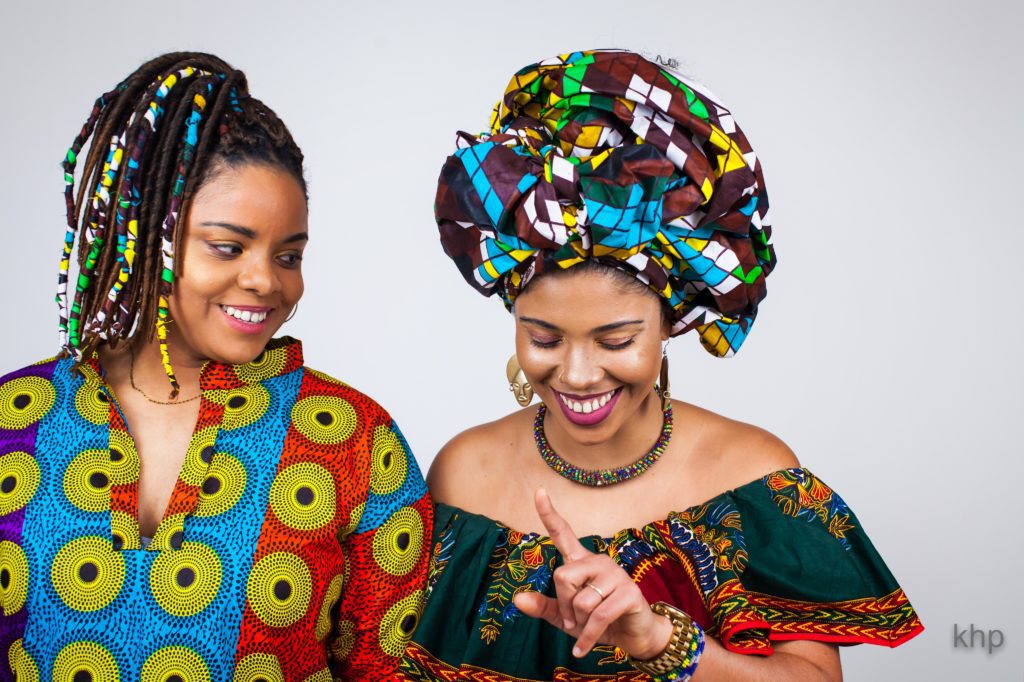

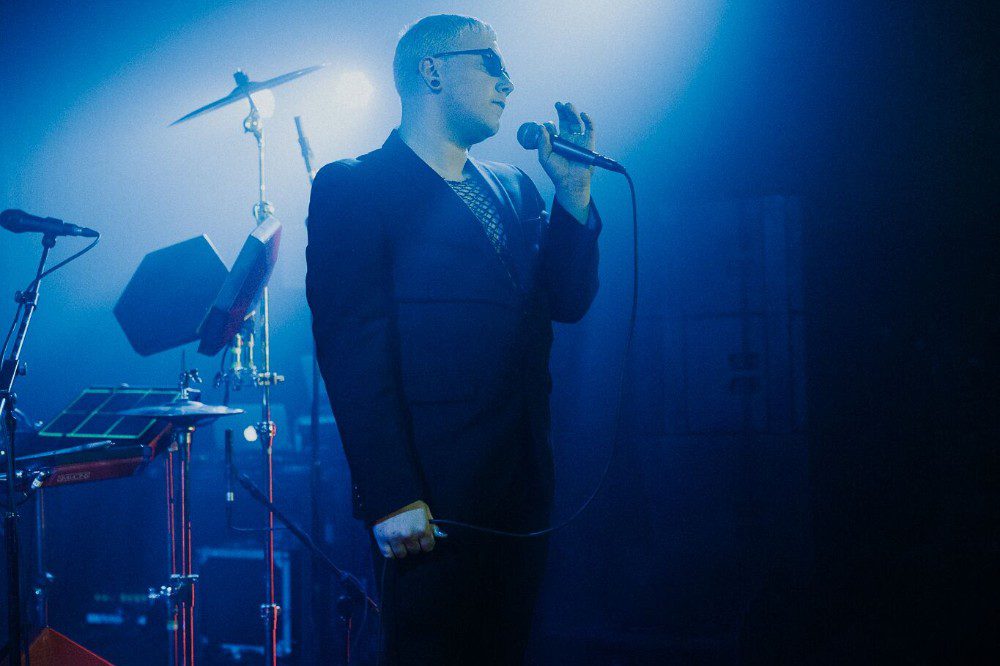
Laurie Bertram Roberts. Photo credit: Yellowhammer Fund

While all of the lyrics contribute to the compelling story, when Shires sings in her Dolly Parton-esque voice, “No one even has to know,” it directly correlates to how Yellowhammer staff engages with patients, assuring them that whichever decision they choose will be met with compassion. “Those are strategic choices that people have to make because of the culture of shaming and stigma that we have around abortion,” Roberts states about a woman’s decision whether or not to publicly share that she’s terminated a pregnancy. “Something I’ve talked about with my staff is the power of having all of your options, whether or not you choose to have an abortion or not. Sometimes being able to weigh all your options makes your parenting more powerful, even in an unplanned pregnancy, because it means that when you go ahead and decide ‘yes, I’m going to parent,’ you’re not resentful about it. You don’t feel trapped, because even if it was unplanned, you had all your options and you were like ‘I choose this.’ Even though you didn’t plan to get pregnant, you chose what option and what road you wanted to take, and that is a very different journey than ‘I’m pregnant and I didn’t plan on being pregnant and now I’m stuck.’ I think about those things all the time for our people that call us. They should not have to weigh those things, it should only be their decision.”

As Shires emotionally bares “This has been the hardest year” followed by Isbell’s simple, yet haunting question, “Is it even legal here?” Roberts remarks that their exchanges echo sentiments expressed by Yellowhammer’s clients, while also breaking through the larger media narrative surrounding abortion. Though attempts have been made to restrict access and services across all 50 states, abortion remains legal in the US; this is the first statement people hear when they reach the Freedom Fund voicemail, though Roberts explains that that media coverage on potential clinic closures tends to obfuscate that simple fact. “That’s something I’ve heard over and over again for the last six years of doing this work,” Roberts remarks in regards to Isbell’s question. “All we see is this very politicized information around abortion, not reality. The thing I like about the song is that it’s not angry, politicized, it’s not any of that – it’s just a story about life.”

PREMIERE: CAMÍNA Melds Trip-Hop and Mexican Tradition on Personal, Political Debut EP

Ariel Saldivar’s musical journey began with training in opera and singing in church choir under the guidance of the Jonas Brothers’ father Kevin Jonas Sr, then touring as a vocalist with Broken Social Scene and The Polyphonic Spree. A few years ago, ready to take the next step in her career, she secluded herself in Santa Fe to develop her solo project, CAMÍNA, which incorporates elements of her earlier life as well as exciting electronic production techniques and odes to her Mexican heritage.

Saldivar views CAMÍNA as not just a stage name but an alter ego of sorts. “I have an ability to channel a different part of myself when I sing and when I perform, and that’s kind of how I see CAMÍNA,” she explains. “Just a strong female voice that can speak for people who don’t have a voice or don’t have a platform to speak.” Her debut EP, Te Quiero Mucho, sung in both English and Spanish, accomplishes this by bringing attention to the plight of oppressed people, particularly immigrants.

The single “Cinnamon,” written in response to reports of mistreatment of asylum-seekers at the U.S.-Mexico border, conveys a message of strength with samples of African-American spirituals like “Nobody Knows the Trouble I’ve Seen.” The song is about “the resilience of people throughout human history [and how] people get back on their feet and rise again,” Saldivar says.

She used a wooden marimba — a xylophone-like percussion instrument — with metal cones to create a haunting chime-like sound that carries the mesmerizing trip-hop track through from beginning to end. She also found a children’s toy from the ’80s at John Congleton’s Elmwood Recording studio in Dallas, Texas – where she tracked the EP – that created a megaphone-like sound, which she thought was appropriate because it evoked the ethos of a protest. The video features archival footage of ’50s and ’60s immigration protests, as well as clips of Saldivar lying in a bed in the Santa Fe house where she wrote the record — an aesthetic inspired by the Ingmar Bergman film Persona.

Bringing another perspective to the same theme, “Maleguena” is a synthy twist on an old Spanish folk ballad about laboring away in the sun as an immigrant. “It’s about appreciating one another and appreciating the work that goes into farming and picking up the crops,” she explains. Since her mother’s family worked on a farm, picking cotton on someone else’s land until they earned enough money to get their own, she wanted to challenge the narrative about immigrants doing work nobody wants to do. “Farming is beautiful work — it can be in certain environments — and that’s kind of the Mexican-American dream, coming to the U.S. and being able to afford that life for yourself and working your own land to feed your family,” she says.

One of her biggest goals with the EP was to deliver a socially relevant message. “It’s a responsibility — I thought, I’m not just going to write this record for me,” she explains. “I wanted it to have a social impact. I wanted to speak from my heart and my mind about the current climate.”

The EP also explores love and loss on a more personal level; it was largely inspired by the cancer diagnosis and death of Saldivar’s dog while she was writing it. “Watching someone you love who is very dear to you passing away is an element that played into the writing of the songs,” she explains. “The title is an endearing term in Spanish, and it was something I’d say to my dog every day while she was going through chemo. It’s just a comforting phrase, probably more so for me than it was for her.”

In the slow ballad “Forever and Always,” Saldivar sings passionately against organs about a longing for a past love that could apply equally to an ex or a deceased pet: “I’ll never forget you/I’ll carry you in my heart always/Believe me when I say/I’ll miss you forever and always.”

Another goal of Saldivar’s was to branch out from her indie rock background and incorporate electronic techniques as well as traditional Mexican music. She was particularly inspired by vinyl records that her grandfather would listen to. The song “Se Puede,” for instance, samples from a ’40s Bolero record by the group Los Embajadores. The trio sings in fifths rather than thirds, creating dissonance in the harmony, which is characteristic of the genre. Saldivar appreciated the sense of sadness this produced in the song, which is about mourning a love that might have been. For her, the lyrics also serve as a nod to the Cesar Chavez rallying cry “Si Se Puede,” or “it can be,” which was used to advocate for migrant farm workers’ rights.

Saldivar is currently working on her second EP and is about to play her first in-person show since before quarantine. At Dallas’s Wild Detectives, the audience will sit at spaced-apart picnic tables with plastic screens down the middle of them, and she’ll have to bring her own microphone.

“It’ll be really interesting to see what happens in live music in the coming years and how musicians are going to be creative and use forms other than live-streaming,” she says. “I’m looking forward to seeing the creativity that comes out from having different little shows and things. I’m cautiously optimistic about the future in terms of making music and putting it out, what that means and the definitions around it now. But I am a proponent of supporting small and live venues, and it’s important we’re lobbying as musicians that we come together and try to save those things.” 

Pre-order Te Quiero Mucho here and follow CAMÍNA on Facebook and Instagram for ongoing updates.