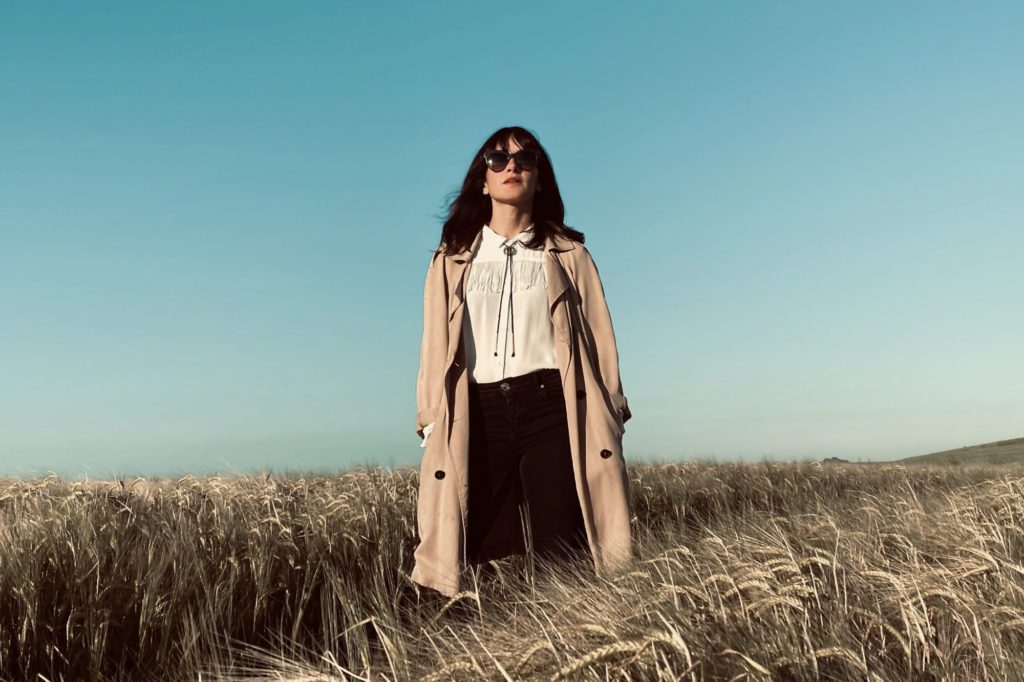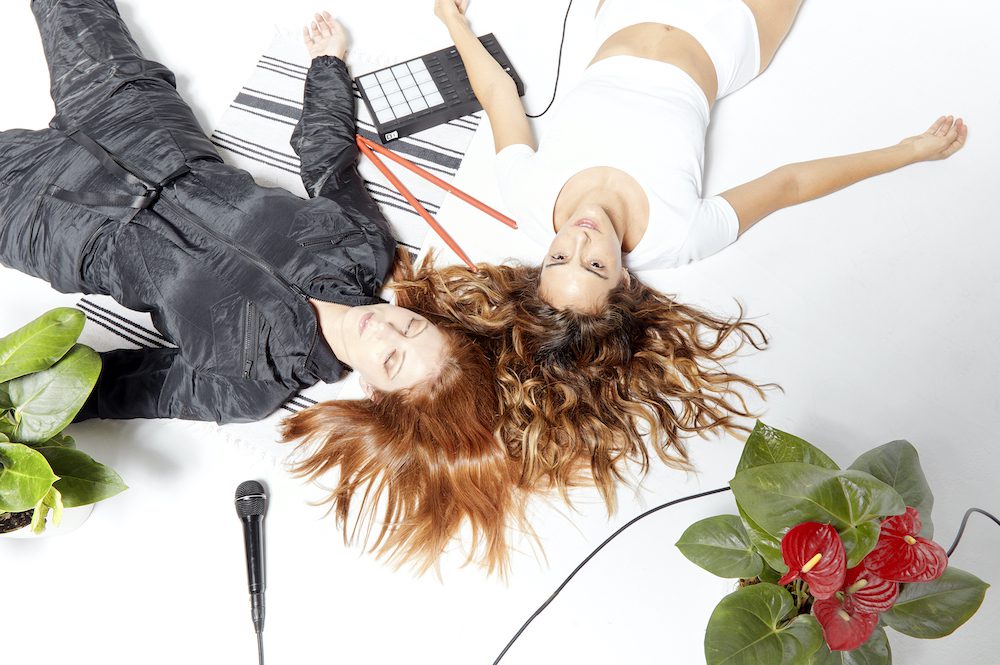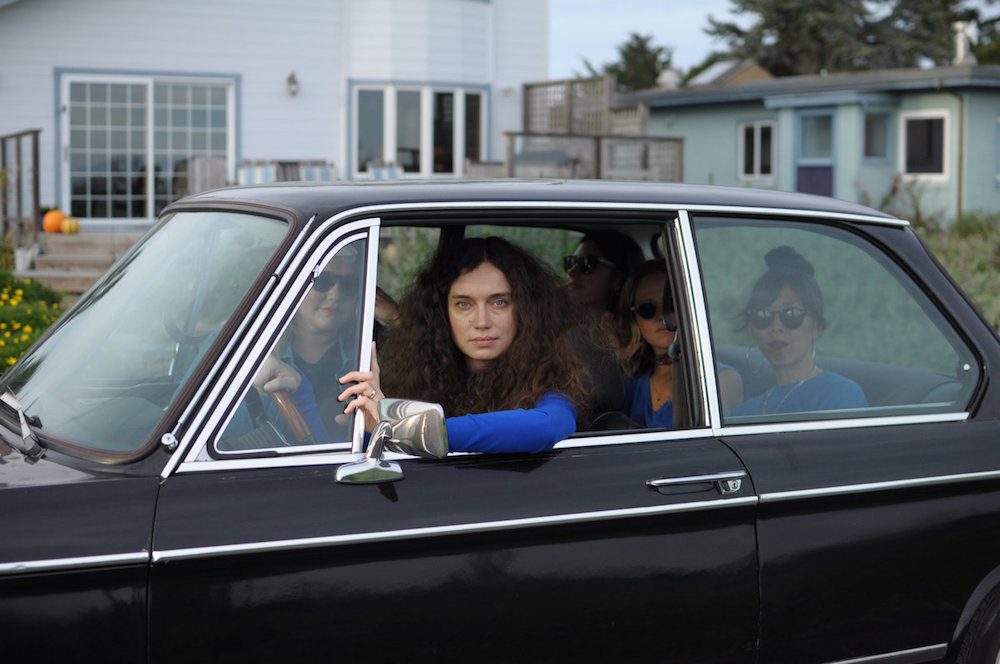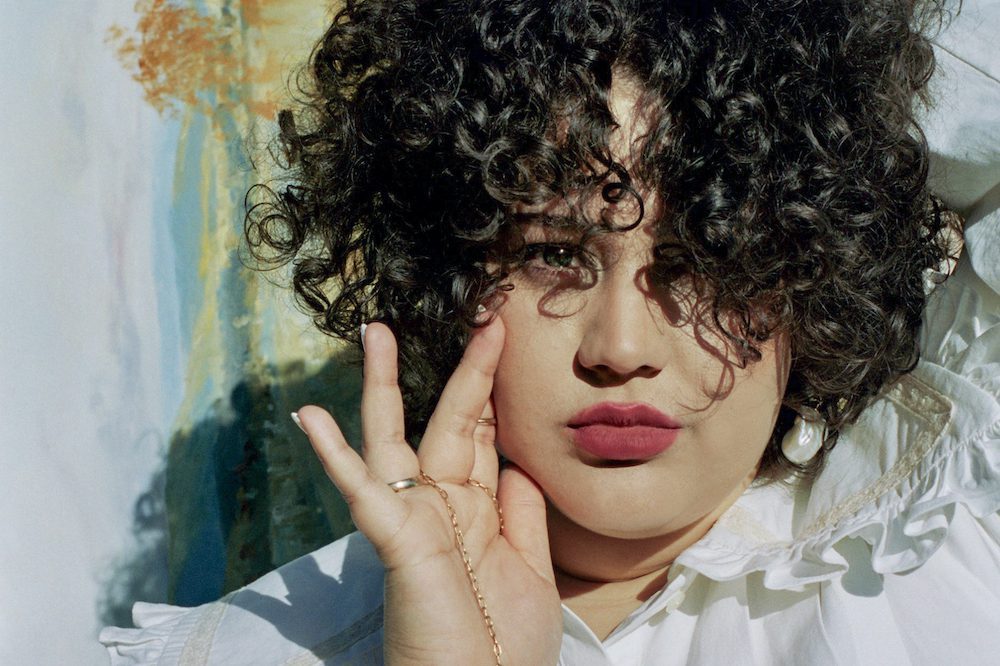
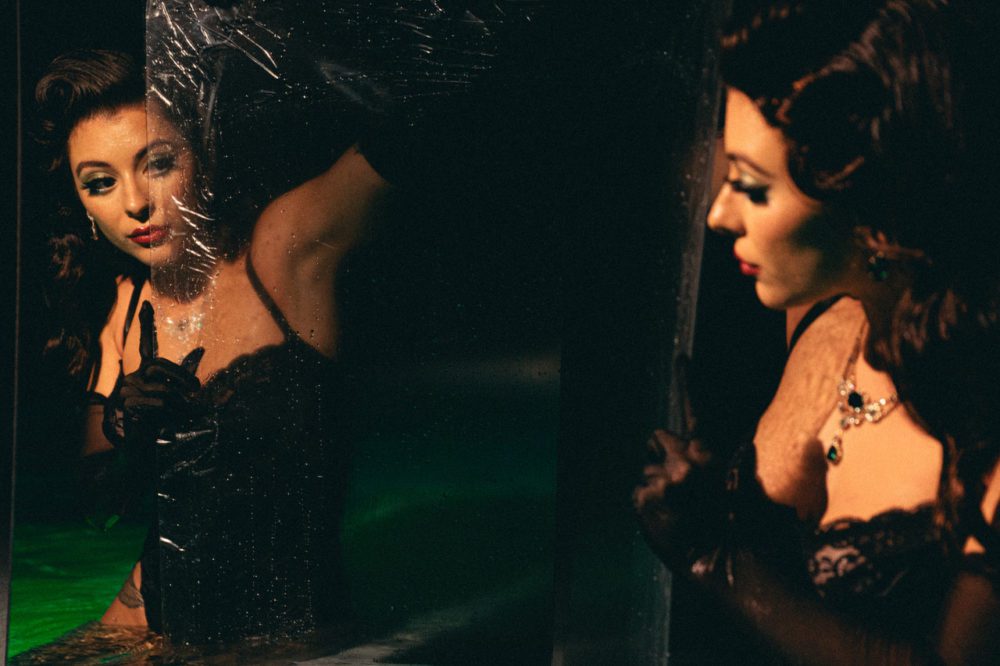
Dark Pop Chanteuse LEXXE Emerges from the Shadows With Debut EP

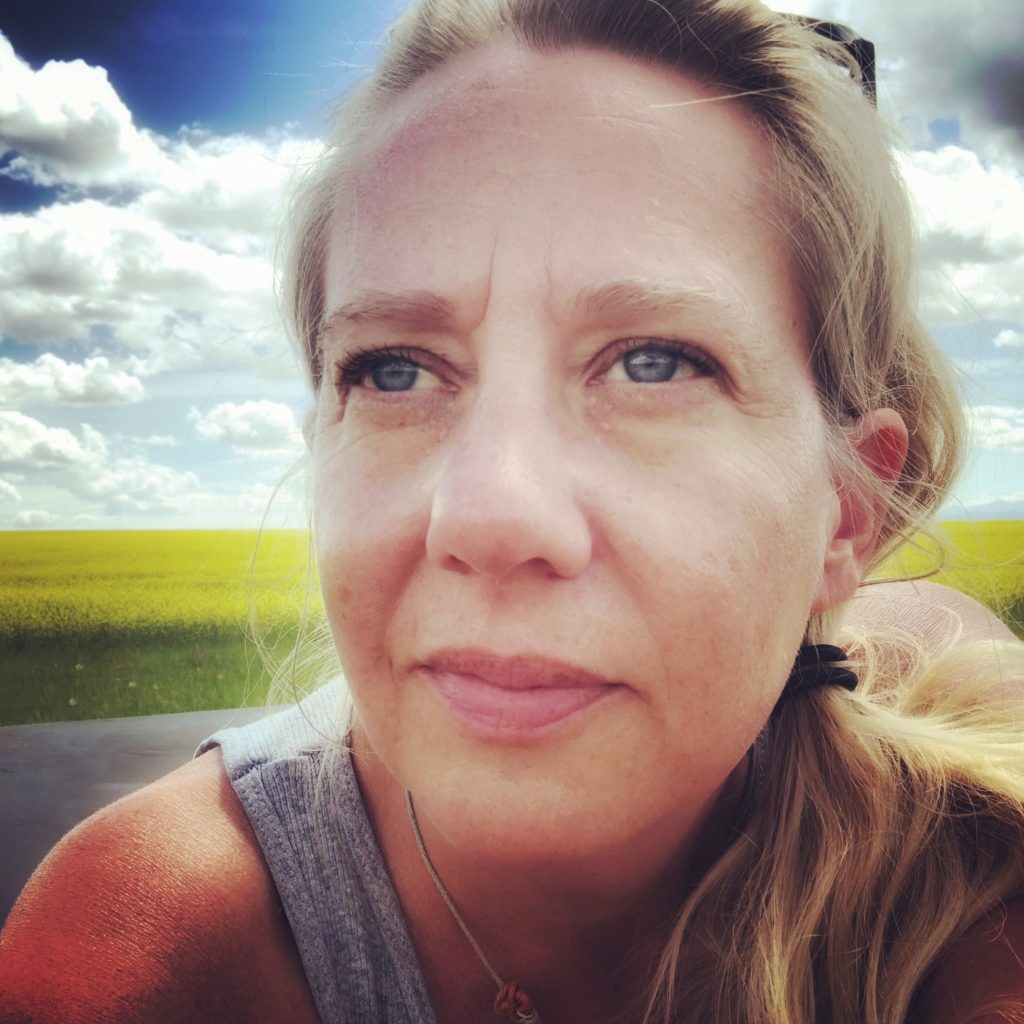
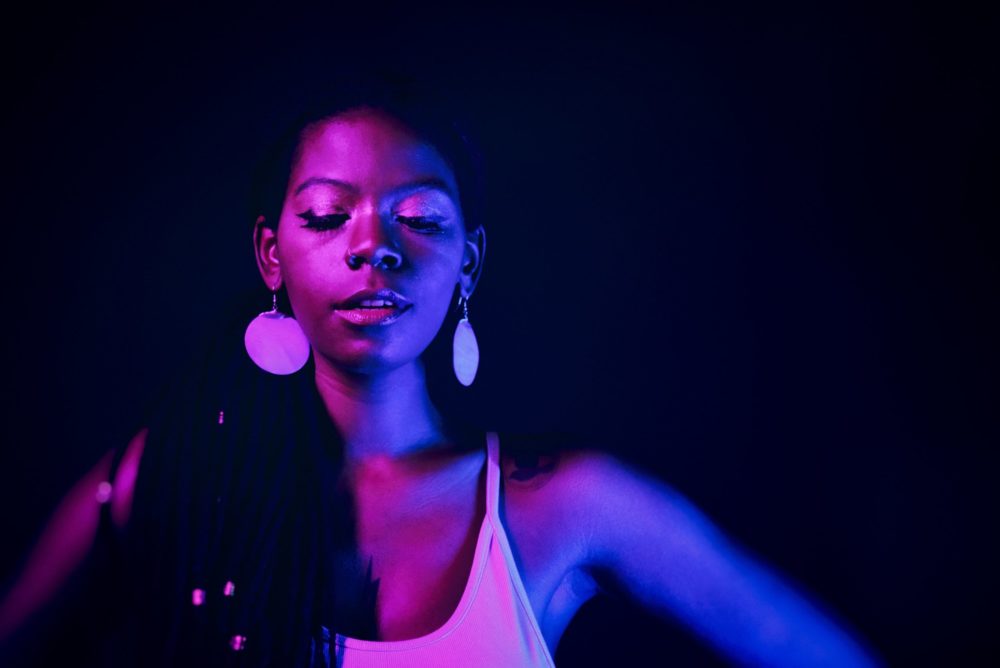
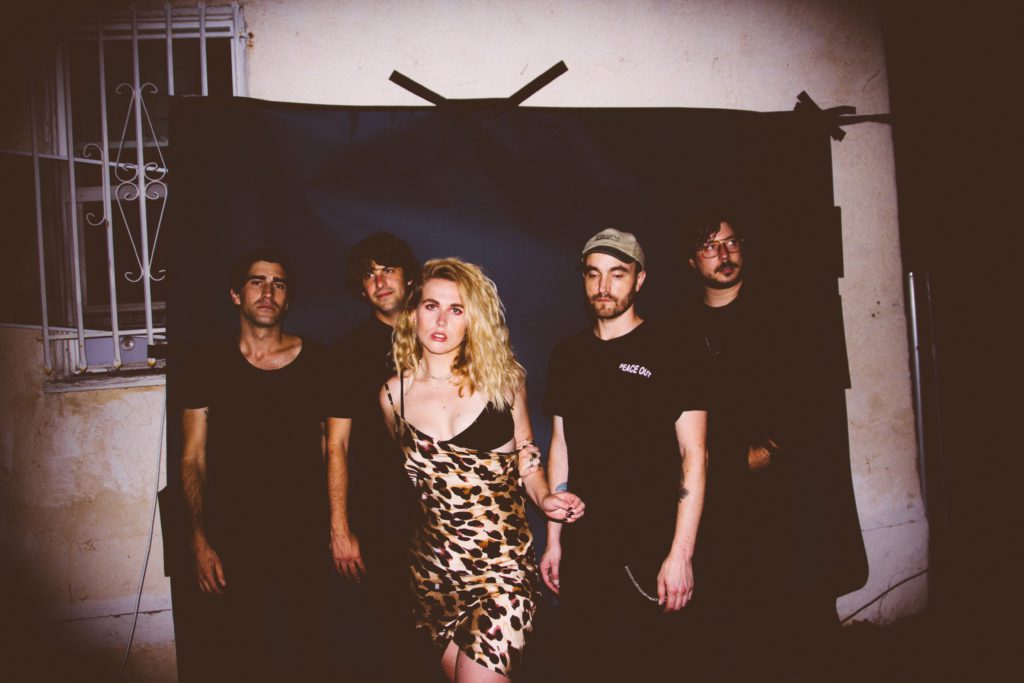
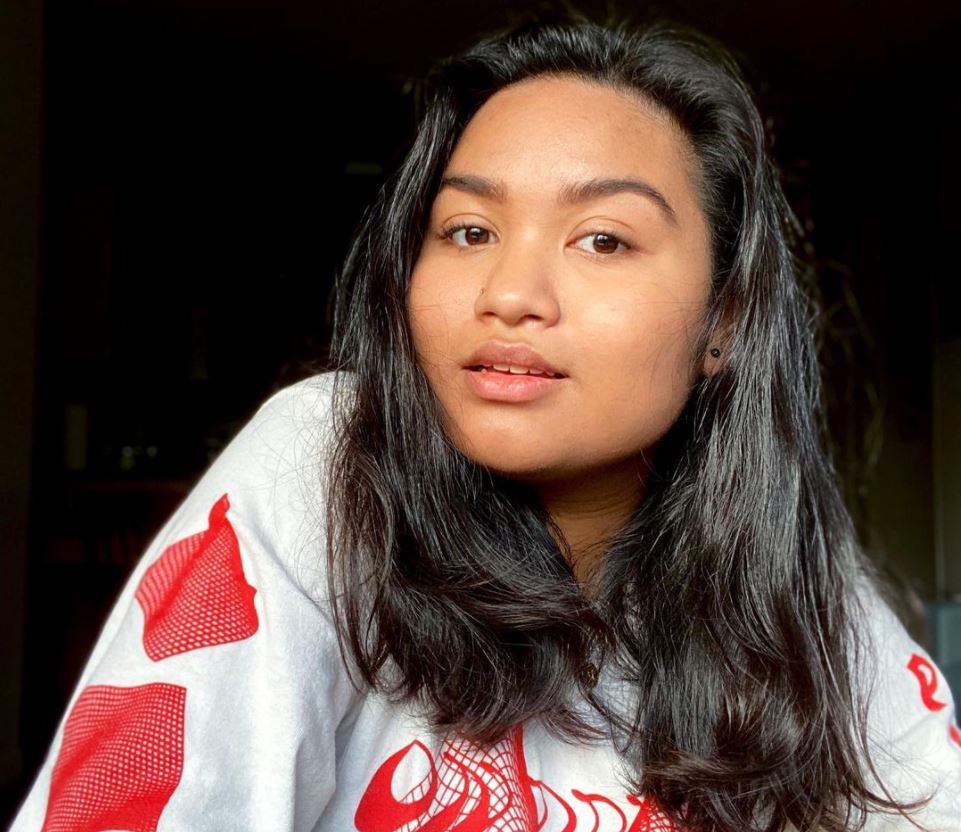
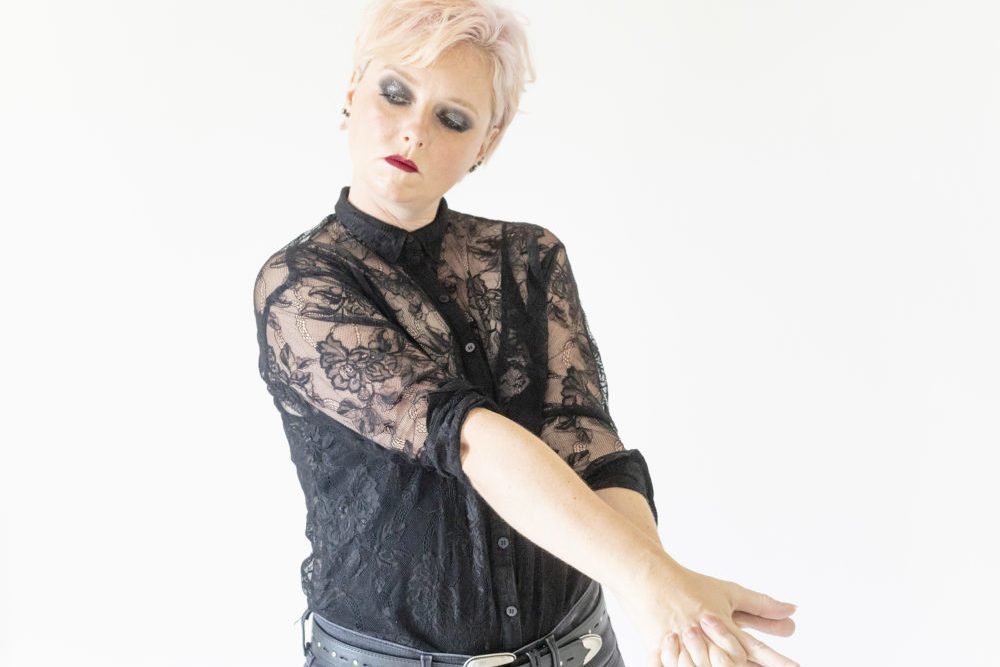
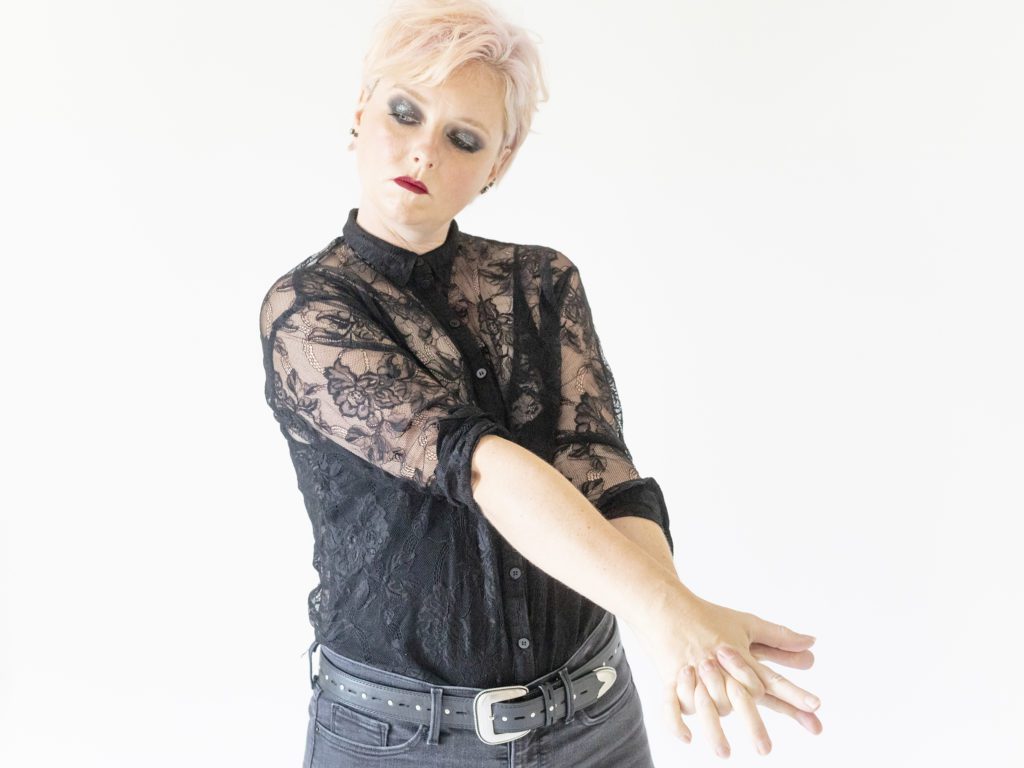
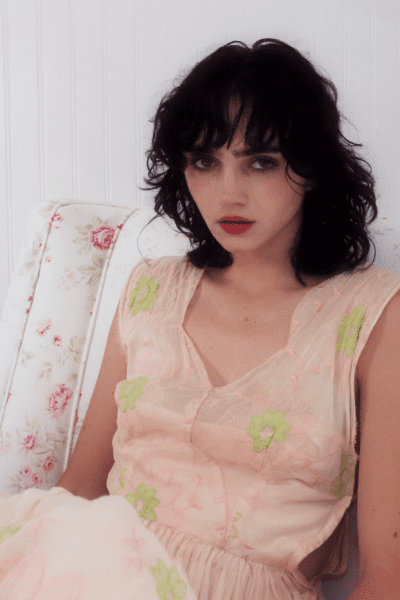
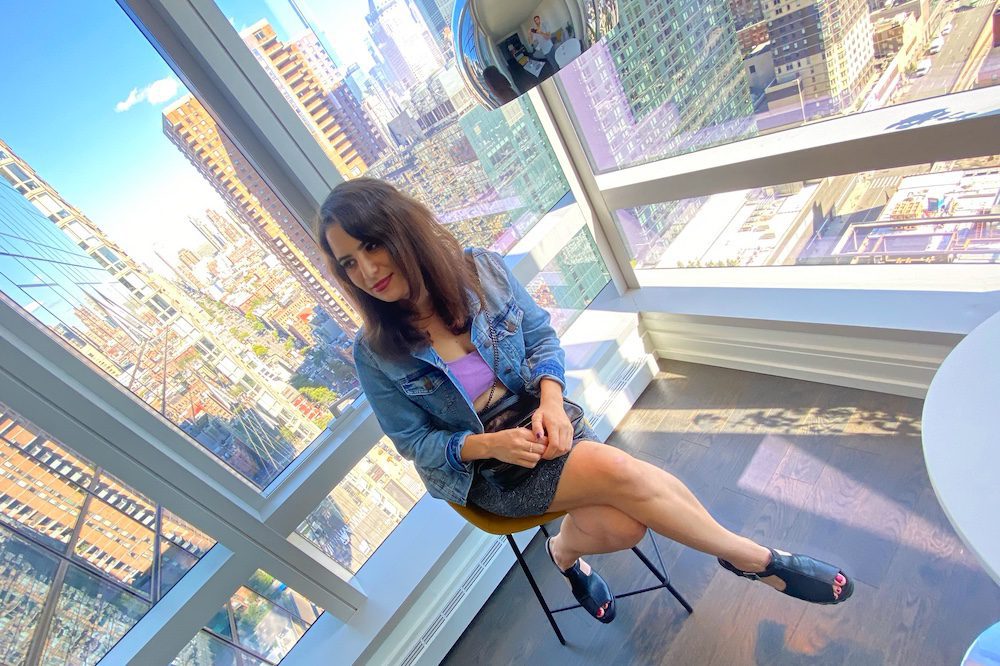
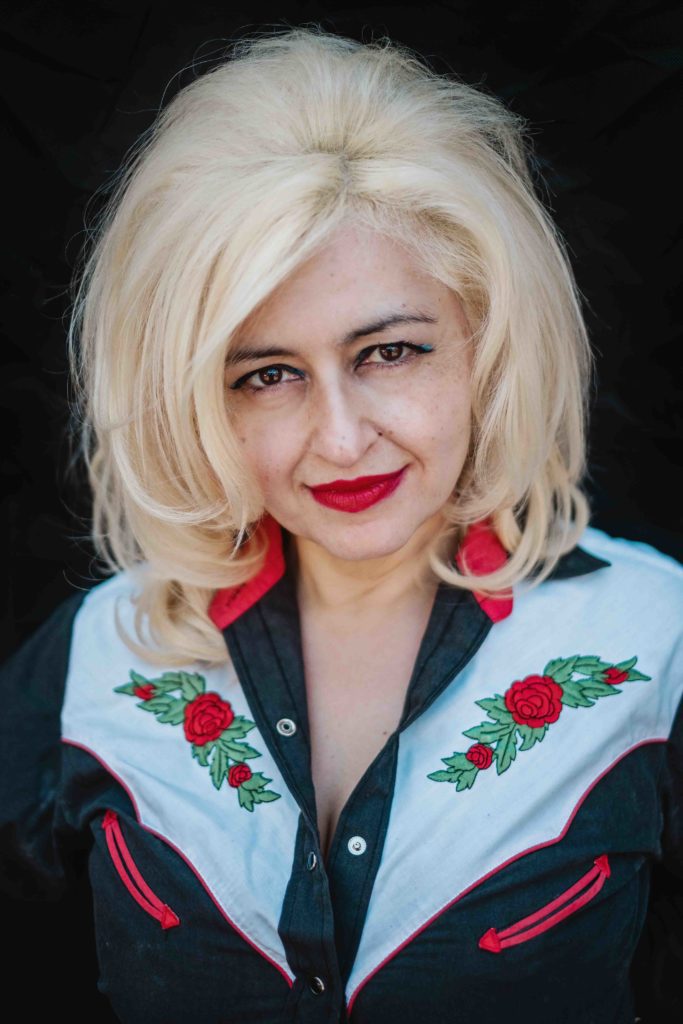
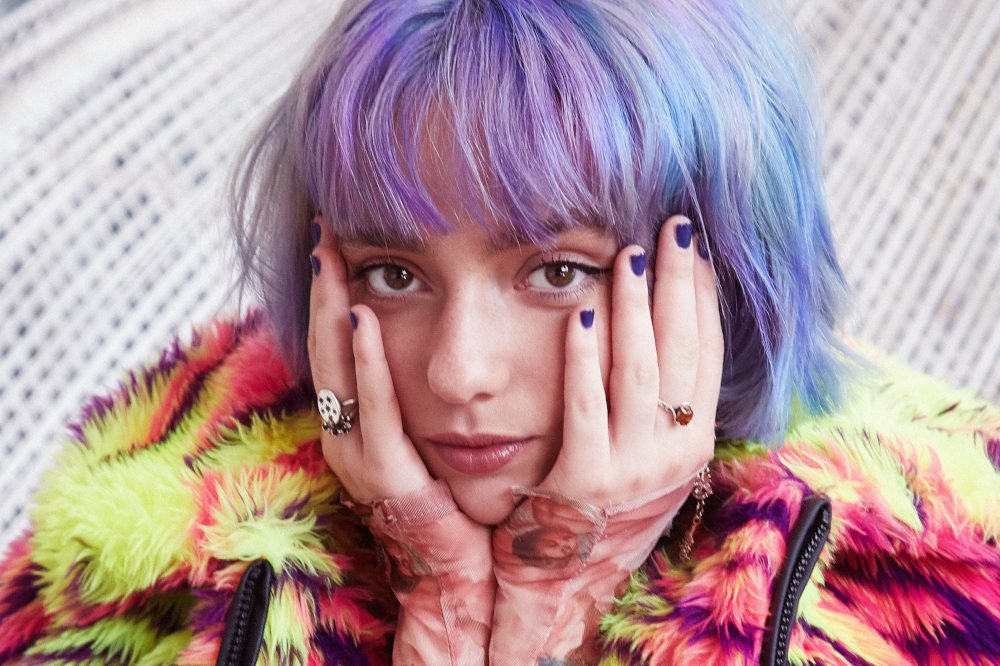
Every facet of the horror genre is steeped in socially relevant symbolism, from Bram Stoker’s Dracula reflecting contemporary fears of immigration and female promiscuity to the more recent ’90s TV classic Buffy the Vampire Slayer, which turned the helpless female victim on its head by portraying her as a hero navigating the horrors of both high school and the supernatural world. The freedom of expression allowed within horror comes down to the genre’s unrestricted feel; the lore for every creature evolves to the whims of the author, as a result providing the perfect escape. 26 year-old pop singer-songwriter LEXXE (Alexis Lucena) has always possessed an affinity for the supernatural, and uses it as an abstract tool to express newfound understanding of herself and her sexuality on her debut EP, Meet Me in the Shadows.

On the EP, LEXXE builds an intoxicating world equipped with all the elements of gothic horror, honoring her supernatural inspirations to construct a cinematic and sonic experience, even down to the release date’s proximity to Halloween. Lucena’s relationship with all things horror and gore ties directly to her relationship with her father, who passed away when she was younger. “I remember getting off the school bus and my dad would be there to pick me up dressed in a vampire costume,” she tells Audiofemme. “I thought that kids might think that my family was the Addams family and I was so excited! A lot of my inspirations come from wanting to feel close to that time.”

Once a prima ballerina – Lucena was trained at Seiskaya Ballet Academy in Stony Brook and received a BFA in Dance Performance from the SUNY Purchase Conservatory of Dance – condensing herself into the template of a dancer first and foremost meant that she denied space for her personal expression and growth. In Lucena’s words, at one point she felt herself “overflowing” which led her to make the daunting decision to leave behind her ballet slippers in favor of a different role on the stage. “With the EP I wanted to talk about me busting down the door of wherever I was stuck in. There are so many boxes for you to fit in as a ballerina when it comes to body type and the way you look. There’s also a writ governing your personal life,” Lucena explains. “I started dyeing my hair and I stopped going to auditions and a lot of this energy formed its way into my music career where I’m consistently being myself and trying hard to make sure that there are no boxes for me to fit into.”

This feeling of release and realization is encapsulated within the title track, which opens the album. Her vulnerability gives body to the dark mindset she was in as LEXXE lays the path for the journey that we’ll follow her on. Countering that, there’s a hopefulness to the unbridled freedom she’s processing, making the track an infectious one. Beginning with eerie whispers and sparse instrumentation, elements begin to materialize behind LEXXE’s vocal, the beat quickens like a racing pulse, and the evolving tempo communicates a feeling that she’s bracing herself for something. “Voices in my head/Tell me to turn back/I’m on the wrong side of the road/And I’m not going home,” she sings with resolve, as the chorus unites all the elements that had previously been bubbling beneath the surface. “It starts off so quiet and timid and ends with a crazy guitar solo,” Lucena points out, adding that the song had personal roots despite its ghoulish motifs. “The song is about vampires, but for me it’s about how I wasn’t ready to come out of the closet. The vampire is the ultimate outcast of society so people relate to them when they feel [alienated]. It creates this other world where people feel safe.”

Next comes EP single “Joyride,” an pulsing electro track that carries the baton faster and further. “Joyride” is the sonic representation of LEXXE’s change from her constrained experiences as a ballerina to her newfound freedom; this is most poignant in the song’s tempo, conveying an almost uncontrollable element that runs throughout even in its more calmer moments.

Lucena says “Joyride” was the first song she wrote for the EP, but it kicked off a prolific period for the songwriter. “Throughout the whole span of a year and a half I wrote a whole load of songs as I was coming out to my parents and I was finding out more about myself. It was a dark time that I was able to make light out of,” she says.

The tracks that follow – “Like That” and “Dancer” – allow the dust to settle a bit. “Like That” is one of the more solemn songs on the EP, showcasing the singer’s vocal talent by incorporating softer sounds and subtle tones. On “Dancer,” Lucena processes her personal issues with body confidence and comes to accept the person she is now. “There’s a piece of my heart that I’ll never get back… This is a love song to myself/And you’ll never get that from anybody else,” she sings. If “Meet Me in the Shadows” represents LEXXE’s dark side, “Dancer,” she says, represents the light and freedom she felt shedding the impossible physical expectations imposed on her by ballet.

Madonna-influenced pop-rock track “85” lightens things up a bit as LEXXE fully explores her expanding sexuality. Though the thudding trance beat is more akin to Madonna’s later output, the song references her iconic ’80s hit “Like a Virgin” to slyly communicate her experience of a relationship that certainly felt “shiny and new,” for obvious reasons. “I was late to the game because I was like ‘I am going to be a prima ballerina and that’s it, nothing else exists.’ It was super easy to be in the closet because I was on stage, which is a huge juxtaposition,” says Lucena, who had previously had relationships exclusively with men when she found herself in her first same-sex relationship. “That song was written a week after meeting this person. I felt like, I’ve got to redo all of this, let me capture this. All that energy [in the song] is that feeling. The video has a dark twist because at the same time I was thinking ‘I’m going to be with this person forever’ and that’s a silly thing to think right away.”

Closing the EP is “Monster;” with definite vibes of Rihanna’s “Disturbia,” the track incorporates heavy metal elements that give the predominately pop-rock track a unique edge. LEXXE’s “Monster” represents the culmination of her journey to self-realization. “I was leaving a man that I was with because I needed to be true with myself. I didn’t know if I could have an emotionally invested relationship with them because I wasn’t attracted to them, I was just doing it out of compulsory feelings,” Lucena explains. “I think a lot of people have gone through that. But also I feel like women are always made out to be a bitches and that’s the weird deep shit behind ‘Monster.’ It’s like, alright, go on and make me a monster.”

While Meet Me in the Shadows embraces a fantastical world, LEXXE has never been more authentically herself. She sheds the pristine toe shoes and frightful Halloween disguises alike to express and accept the person she’s always been inside. There’s a strong sense of yearning throughout the EP that reflects LEXXE’s need to push her boundaries even further as an artist. Riding high on the experience of creating Meet Me in the Shadows, LEXXE already has her sights set on a debut full-length, now that she’s kicked the door open and emerged into her own light.

Follow LEXXE on Facebook and Instagram for ongoing updates.

Harmony on the Horizon Aims to Elevate Humanity With Early Voting Concert Series

Photo courtesy of Harmony on the Horizon Early Vote Concert Series

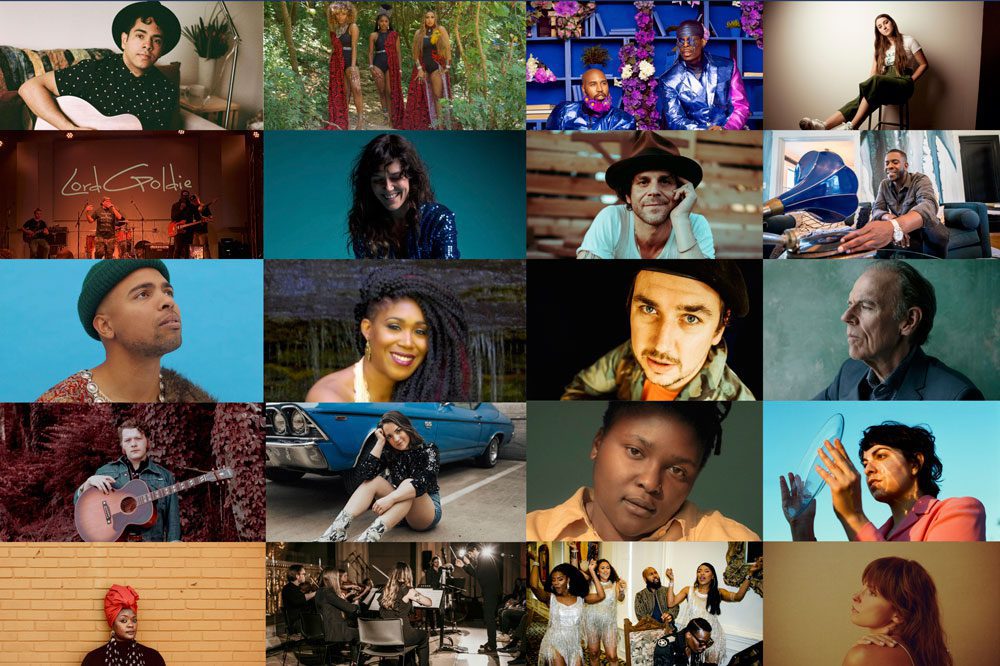
While voting is a key component of the Harmony on the Horizon Early Vote Concert Series, orchestrated by Tennessee-based civic participation organization BriteHeart and music incubator nonprofit This Is Noteworthy, it’s merely one part of the overarching message the series aims to instill in viewers: your voice matters.  

This Is Noteworthy Founder and Chief Strategist of Community Development at BriteHeart Becca Finley is the visionary behind the series, born out of the original Harmony on the Horizon series that sees artists performing a virtual show from the comfort of their homes. Like many others around the world this year, Finley watched as people flooded the streets to make their voices heard. She took her own form of action by creating the musical narrative series filmed at The Caverns, a cave system-turned-renowned-concert-venue in rural East Tennessee, non-audience and socially distanced over three nights. With Go To Team Production behind the camera and a team of volunteers helping to coordinate the production, 18 musical acts all donated their time and talents to the cause that elevates stories through music and art.

My own role as part of the production and promotions team for the series provided exclusive insight into the vision and purpose behind the series; I worked alongside Finley to coordinate efforts behind-the-scenes for production, in addition to engaging in media outreach. But I also wanted to explore the creative side of this series, and what it means to trust in someone’s vision to create beauty and compromise, which in a way reflects our democracy. So I chatted with several artists and organizers to report the full scope of the poignant series.

Becca Finley, founder of This Is Noteworthy and creator of Harmony on the Horizon Early Vote Concert Series. Photo courtesy of Becca Finley

Finley, who also directed and edited all of the shows, says the concept behind the Early Vote series evolved from a series of questions: “How can we put all the stories together in one place that protects and honors each one of the stories as individual stories that deserve to be heard? When we put them all together, how do we have one story that everyone can relate to in some way?” This was no small task, considering that the series features artists as diverse as Langhorne Slim, Lilly Hiatt, Kyshona Armstrong and Louis York. “You visually see a lot of different people who have a lot of different stories, but they are underlying, and they’re all people who live in and love our country,” Finley explains.

Described by BriteHeart Founder and Chairman Chase Cole as “the box set of all civic concert events,” he says the meaningful concept only furthers the organization’s purpose in being a civic motivator. “BriteHeart’s mission is to use the arts to increase civic participation. This series is the ultimate embodiment of that goal,” Cole expresses. “We’ve gathered diverse musical voices to speak their truths to a broad group of viewers who we hope will be inspired to vote and remain active in their community.”

The invisible thread that binds each component of the series is intentionality, beginning with Finley’s request that each artist submit ten original songs that she then turned into sets of six songs, each harboring a unique story that connects to the show before and after it, creating a metaphorical book of our nation. “It was a feeling,” Finley says of what drove the song selection process. “It’s really sitting with all of the music. It’s taking the time to first listen and feel it and then going through and really reading the lyrics and dissecting those; what was going to honor all of these people and these two organizations who dedicate themselves to civic engagement and to the overall health of the music ecosystem and how does all of it fit together.”

The series, which airs each night of early voting in Tennessee along with a pre-election show on November 2, launched on October 14 with a stirring performance by Armstrong, “the warrior who’s going to fight and stand up,” as Finley describes, followed by Gustavo Guerrero, a native of Honduras who shares his story as an immigrant in the United States, one who loves his native land as much as he does the one he now calls home. The genre-spanning lineup also features Lord Goldie, a Nashville native making honest hip-hop music in the country music capital of the world, her songs ranging from the forewarning “Icaraus” to a letter she wrote to her late father who passed away when she was 14; Becca Mancari, a rising force in the Americana and roots music world who turns her experience as a gay woman into soul-searching lyrics; and Mel Washington, who speaks candidly about racial inequality in America and his experience being homeless, simultaneously staring his obstacles in the face with the motivational mantra, “fail forward.”

These voices represent the genuine diversity at our nation’s core, a crucial element that compelled The Shindellas to sign their names to the series. The Nashville-based trio of Kasi Jones, Stacy Johnson and Tamara Chauniece, who will perform on the grand finale with their Weirdo Workshop counterparts Louis York on November 2, felt a sense of gratitude being part of the all-encompassing lineup. “[It’s] a story of empowerment,” Jones says on behalf of The Shindellas. “Seeing all of these different faces, but everyone has the same common theme of healing and community, it’s really empowering. It makes you feel like the world is presented as so crazy and chaotic, but when you look at these people here around us, they all have something in common as we do.”

The music is set against the equally awe-inspiring backdrop of The Caverns, the pure-spirited cause aligning with the meaning of the Sequoyah Cherokee script that The Caverns owner Todd Mayo had etched onto the cave doors: “Welcome to The Caverns where the great spirit brings all people together through music.” As a lifelong Tennessean, Mayo was inspired by the nonpartisan effort to motivate his fellow citizens to vote, which he cites as “one of the most American things you can do.” “America contains multitudes,” Mayo says, quoting Walt Whitman in reference to the series’ diversity. “I think that was celebrated on the Harmony on the Horizon series in all of those ways, and that’s really what I like, where I think the Harmony on the Horizon what they’re doing and what we’re doing at The Caverns, those entwined very easily together.”

Viewers will notice that in between songs, the artists share heartfelt reflections on a range of topics, some speaking about marginalized voices while others address mental health and unity. Prior to filming, the artists were posed with a series of questions inspired by their art, appearing strategically in the set as a compelling link between the songs and larger vision of the series. For SUSTO, his thesis statement centered around finding common ground with those who have differing viewpoints. The Charleston-based indie rock artist, who is a board member of This Is Noteworthy and one of the beneficiaries of the nonprofit’s healthcare grant initiative for touring musicians, notes that the marriage between the songs and the questions encouraged him to go inward, becoming “re-inspired” by his own work in the process. “That definitely lended for some deeper self reflection, and also figuring out what my piece is in all of this big drama of human existence, specifically here, at this moment in our country and what we’re trying to accomplish,” he says.

Like Mayo and The Shindellas, SUSTO was also inspired by the diverse lineup and honored to represent one piece in this “mosaic of stories.” “I think seeing that kind of variety in the artists speaks a little bit to what the democratic process is about,” he continues. “It’s hearing a bunch of different voices with different stories from different backgrounds come together in unity and sometimes agreeing to disagree, that’s part of it, and then sometimes just learning from each other. Being a part of this…I felt like a participant in something bigger.”

Oftentimes, being a part of something bigger than oneself involves trust, and epiphany that R&B soul singer Larysa Jaye let guide her through the atypical set and corresponding questions, aligning with the vision when she realized the connection between the songs and reflection points. “I was thinking how we need to have so much more grace and compassion and empathy for each other,” she says. “I think we can be so hard on each other a lot without knowing people, what they’re going through, what their background is, their mindset. We don’t have enough grace for other people to even have conversation.” Sharing these messages she in her show, she adds, “It’s important to keep conversations going, that’s how you grow. Each of our stories create who we are collectively. We all shape each other’s worlds and that’s why it’s so important for people to vote because if only one portion or one demographic is voting, your government’s not going to reflect your world.”  

The Shindellas, too, felt they’d become part of a grander mission as they stood on stage in the center of the earth, beginning their set with songs of self-acceptance and community and ending with the proclamation that loving oneself without fear enables us to embrace one another and become a unified force. And when Finley concluded the set by inquiring about their thoughts regarding the intention behind the event, they realized the magnitude of what they are a part of. “Somebody actually asking me these very specific, deep questions, you have to put your thoughts to it and have an opinion and really use your voice, and it is very humbling. You feel elemental or you feel like this communication is what we’re supposed to be doing,” says Jones, again speaking on behalf of The Shindellas. “Because there’s so much representation and people are being asked questions that when you answer, you can’t really answer without a point of view, you can’t be neutral on the questions that we got asked. So in that way it reflects democracy, in that all voices are being heard. The concerts were set up saying, your songs matter, all that matters, but your voice matters.”

The message of “your voice matters” is the beating heart of what this series represents – a timeless message that remains true long after the election cycle is over and encapsulates the profound element that unites us all: humanity. “What matters is the process. What matters is that we all chose to show up for each other. What matters is that we cared enough about our country and people’s voices to represent them and try,” Finley proclaims.

“I feel like on the whole, we want to be led and represented by people who care about us, by people who want to serve us, or people who have our personal best intentions, but also the best intentions of our nation at heart. I feel like this process was an exercise in that. It’s an exercise in leading and in compromising and paying attention and working together with all of us, with our democracy…It’s about using our voice. It’s taking the time to listen and figure out for yourself what is the story that each one of these people is telling and what is that thread. But I think if you really go through it, the thread for me that connects them all, it’s love of our country, but it’s the belief in humanity and it is that we’re all curious, and when we take the time, we all have the ability to listen and to be compassionate. And if we are willing to remove our ego,” Finley concludes, “then we have the ability to empathize and recognize a piece of ourselves in every other story.”

Watch the Harmony on the Horizon Early Vote Concert Series now via BriteHeart Live on YouTube. Donations are being collected for the artists through This Is Noteworthy’s PayPal Giving Fund, with a portion of the proceeds also benefiting The Caverns and This Is Noteworthy’s artist grants program.

Dani Darling Becomes a Guiding Light with Premiere of “All Stars”

Photo Credit: Mark Samano

George Floyd’s murder. A pandemic sweeping through the world. Fires burning out of control. Sometimes it can feel hard to catch one’s breath amid so much chaos and pain. Singer-songwriter Dani Darling felt herself pushing against her own anxiety, searching for the words, the music that would help create a sense of calm in the storm.

All Stars,” the second single from Dani’s forthcoming EP Mage (out November 11), takes the form of a meditative interlude. It’s a welcome bridge from her debut EP, 2019’s Nocturne., which explored her own unique mix of jazz, soul, and lo-fi chillwave. It’s a mix born from a life of synchronicity, random moments pieced together in the search for meaning amid chaos.

“I want people to feel more at peace, I want people to feel calm,” Darling tells Audiofemme. “I have anxiety really bad so at the end of the day, things that make me feel less shaky, or more calm, or at peace is what I was kinda trying to put out there, a consistent call to our inner subconscious that we are all important. That we all matter. That we all have our own inner magic and our own worth and our own destiny.”

Dani Darling’s childhood home in Ann Arbor, Michigan was surrounded by evergreen trees. Living in a quiet college town, growing up in a church that shunned things like kissing or listening to Radiohead, these moments shaped her. “I had kind of an extended youth because I didn’t grow up fast at all,” Darling says. She spent her youth singing in church with her two sisters Nicole and Jacquelyn. The three are triplets: two identical, one paternal… which one is which is up for debate. Each Sunday, the girls would don frilly dresses and practice harmonies in front of the parishioners.

“Ann Arbor’s very diverse, but our church was a Black church so we still got our kind of culture from church and being in gospel singing,” Darling recalls. “But then when we were in school, we really took to choral music, classical, opera, and music theatre, all that stuff. There were kind of dual musical lives because we’d do ‘Wade in the Water’ gospel stuff for church and then turn around and do like Motzart for school. Learning music from both of those angles really affected how my music is now.”

Darling has the musical chops to show for it. She played violin for 11 years, as well as cello, took voice lessons, and later taught herself guitar. It wasn’t until she took up guitar her sophomore year of college that she began to write her own music. She gravitated toward vocal jazz, leaning toward her idols Billie Holiday and Frank Sinatra. But it took her a while to get comfortable with the idea of being a stand-alone act, her sisters still looming close in the rear view mirror.

“In some ways maybe that’s why it took so long to become a solo artist, because I was so used to singing with my sisters that it took me a long time to see myself as an artist in my own right,” Darling admits. “And sometimes when I get on stage and they’re not next to me, I still get stage fright. It’s weird.”

In 2018, Darling had a baby girl named Eden, but she forged ahead with a music career simultaneously, choosing a stage name, building a band, and saying yes to everything for fear of missing out on opportunities. “I don’t have a lot of time, I’m behind,” Darling says with a laugh. “I’m up against all these 21 year old girls. I really wanted to get in there and just perform.”

Her first official single “2:22” received critical acclaim from Nylon Magazine, she was named one of Detroit Metro Times Bands to Watch, and 2020 was shaping up to be her breakout year, with main stage performances at various Michigan festivals. “Then bam, pandemic. My whole big year was just derailed. I was devastated,” Darling says. “I had all these shows, venues I hadn’t been able to get into, and then all this happened. I was in such grief because I was thinking, ‘This was my one chance. I was almost there.’ I was just gutted.”

Her priorities shifted from touring to writing a new album in quarantine. Darling started doing video covers on Facebook to try to make herself feel better – only the happy stuff, like Bill Withers, and songs from the ’70s that made her smile. She slowly began assembling her own home studio. “My response to the devastation was realizing that this wasn’t all coincidental, this wasn’t just a fluke that I made the list and that things were gonna happen that way,” Darling says. “So I had to trust that it’s my purpose to be a singer and it’s gonna happen anyway. And it ended up coming out in the songs. That’s kinda the theme: knowing your own magic and your own worth.”

In the midst of writing, she was also confronted with the deaths of George Floyd, Breonna Taylor, Ahmaud Arbery. The importance and value of human life, the complicated feelings of race and belonging, these became even more important to her as a mother. “Having a little girl who is both black and white, some of this is very confusing for her and traumatic. So that really went into the project as well,” Darling says; she was horrified by the videos she saw friends sharing and worried about the communal PTSD they might all be suffering from.

“For me personally, I started to think about whether that was another form of emotional harassment. Another form of intimidation. Because after all that stuff happened, I find myself getting nervous if I see a white man coming at me really fast,” Darling says. “These kind of things, you just wonder on a spiritual level what it all means, but all I knew is that my take on it was a reminder that whatever’s going on, we have our own personal power to change our perspective and think about the power that we have and what we can do within ourselves to change our own world, even if it’s just our house cause we’re quarantined for weeks and months.”

“All Stars” is a welcome relief from the terror of scrolling past death and destruction. It is a tender squeeze on the arm during a time where no one can touch. Darling’s fingers gently pluck across her guitar’s strings while her voice floats along the backbone, creating pinpricks of sound in the air. It’s a delicate song, but Darling’s voice is purposeful in its restraint; as her voice trails upwards, you can almost see the tips of the evergreen trees framing the darkness above, starlight winking down on little Earth.

Dani is quick to laugh at life’s flipped cards, at the journey itself. Her hope is that with her music she can tackle fear in a way that gives listeners the space to breathe, to let it in without overwhelming or judging themselves harshly. “It’s this subconscious message that I’m infusing: give people more self-esteem, more self worth,” Darling says. It’s something she’s had to learn as the mother of a child who has undergone two cochlear implant surgeries in her short life and is now growing by leaps and bounds in her speech therapy. “It’s ironic that [with music] being the center of my life, that when I have a child she can’t hear,” Darling points out. But even in her daughter’s challenges, Dani sees starlight, admitting that all her years of vocal training and opera make her a great speech therapist.

“Eden is not the best singer but that has nothing to do with the fact she can’t hear,” Darling says with a laugh. “She got her dad’s pipes. He really kind of ruined it for her. The thing is, both of them they just sing all day every day with the worst vibrato you’ve ever heard, but they’re loud and proud. And I really just love that. She has pride in her bad singing because of him.”

The future seems lightyears away right now, with most of the world watching time move from behind their windowpanes, but Darling is already dreaming up a psychedelic soul album. She hears 15 minute epics, inspired in part by The Dark Side of the Moon, with a twinge of Khruangbin. In the meantime, she hopes listeners can find what they’re looking for by tuning in and digging deep: “Look in your heart because your heart is the portal to everything you need.”

Follow Dani on Instagram and Facebook for ongoing updates.

The Dumes Dish Up Sweet Rock ‘n’ Roll Elixir With “Liquor & High”

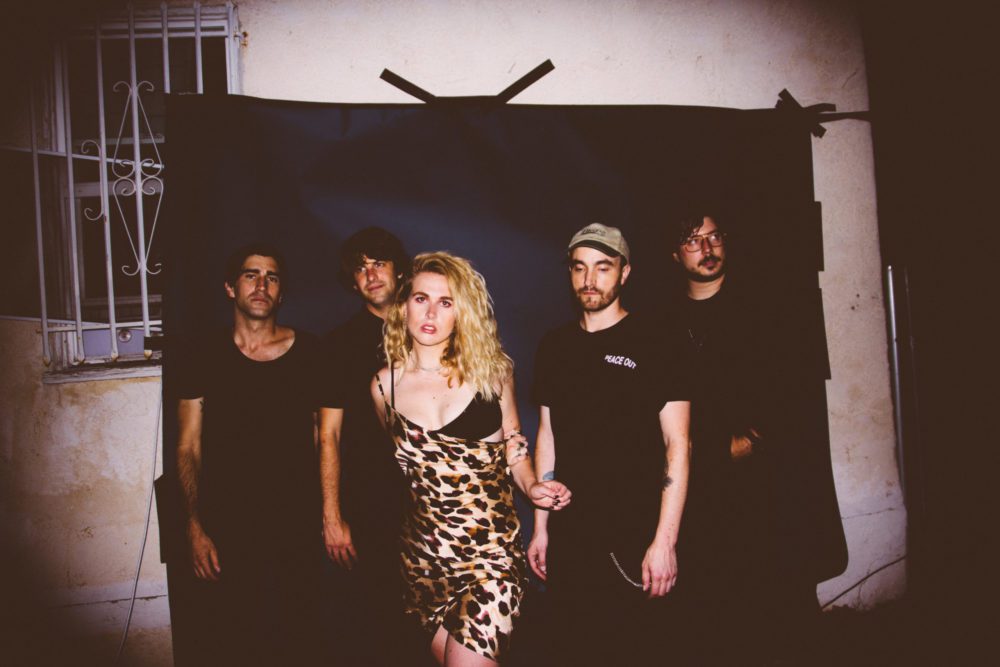
five band members of The Dumes stand in front of the a makeshift backdrop
Photo Credit: Emma Cole

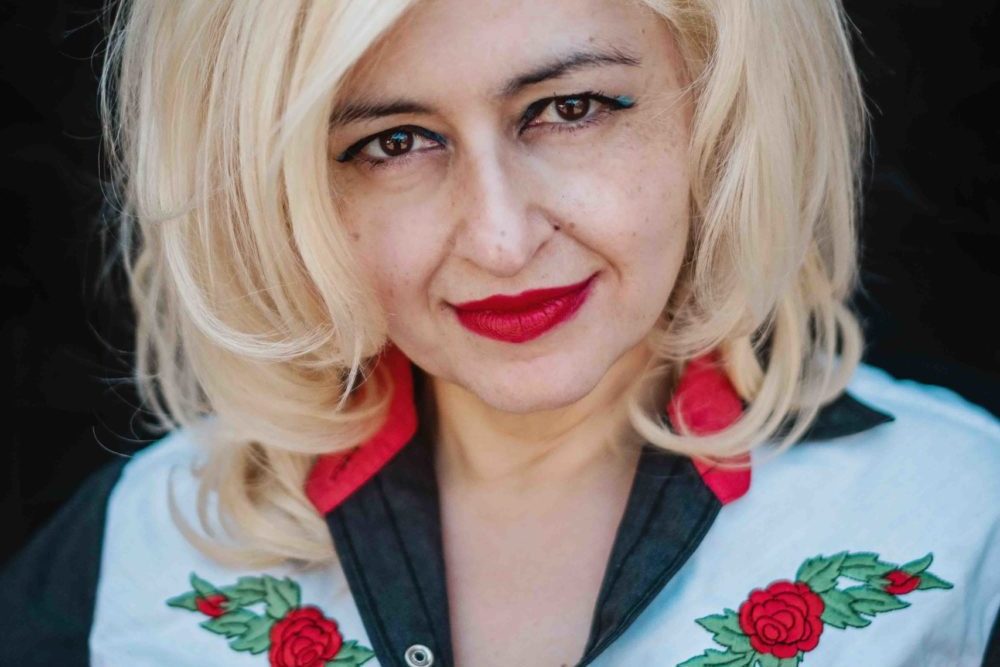
When she took mushrooms for the first time, Elodie Tomlinson hopped on her bike and cycled up the Malibu coast to Point Dume, marking the northern boundary of Santa Monica Bay. High as a kite, The Dumes front-woman came to have several epiphanies about life, love, and her career. “I wanted to have a full day dedicated to being an artist, I guess,” she says.

She had just finished reading Patti Smith’s Just Kids and was feeling especially invigorated by its subject matter. During her bike trip, she plugged into plenty of ‘80s and ‘90s rock music, and as she gazed out across the ocean’s mirror-like surface, she had a realization: “I needed to start using music as an outlet for all this shit that’s been building up for a long time,” she tells Audiofemme. “I went home and had a photo shoot pretending I was Patti Smith. It was pretty hilarious.”

“Liquor & High,” premiering today, is the kind of pop/punk/rock hybrid that grabs hold and doesn’t let go. Alongside many of LA’s finest players, including Chris Dunn (drums), Liam McCormack (bass), Peter Recine (guitar), and Kyle Biane (guitar), Tomlinson commands every frame. Static fuzz vibrates through the speakers, and her voice rocks and rolls atop a very sticky beat. A ferocious energy emanates from her core in true rockstar fashion.

Intially written on piano, the feverish track is what Tomlinson calls a “relationship resume,” in which she admits her many friendships and romance suffer from her hectic schedule. “I was really busy at the time waiting tables, teaching kids how to play music, and my schedule was booked. I had a relationship at the time, and people in my life were frustrated with me,” she explains. “I didn’t have any time, and I was feeling a lot of guilt about it. When I wrote this, it was like, ‘Yeah, dude, I’m a piece of shit.’”

“I brought it into the practice room later, and I thought, ‘I’m bummed I was feeling so guilty about having a lot going on. I’m trying to get something done, and you should support that.’ Then, the song turned into [an anthem] about not being sorry.”

Dunn’s drum work throbs in the background, a framework to keep its volatility right on track. “We all sort of come from our own sad boy background when it comes to emo and pop/punk influences. We play with a mature version of that, sort of a mature aggression in some ways,” Dunn says. “This song, in particular, encapsulates that vibe. We’re trying to hit you over the head from the top and keep the energy up the whole time.”

“Liquor & High” is the second single from the band’s forthcoming debut EP, Everything is Horrible, slated for release sometime early next year. Following years of various musical pursuits, including an alt-pop duo Sibling, Tomlinson blooms into her own here as a vocalist, free to be as unapologetic as possible. It’s not the first time Tomlinson has considered releasing an EP – in 2019 the band premiered a song from it via Billboard, but the work didn’t seem to fit her story anymore. “Back then, it was pretty much just me. The guys and I had started playing together four or five times a week. We were just writing better songs,” she recalls. “I shelved everything, and it just felt right to focus on what we had going on.”

Tomlinson and Dunn both arrived in Los Angeles around the same time. It was 2012, and they hit the ground running. “He was one of the first people I met,” remembers Tomlinson, who formed the alt-pop duo Sibling with Bryan Osuszek (Dunn played drums). The endeavor lasted long enough for several singles and early industry buzz, but Tomlinson yearned for harder-hitting music that let her rip some rad vocal tricks.

A few years later, she approached Dunn about forming a proper rock ‘n’ roll outfit. He had plenty of connections with many of LA’s rising musicians, so assembling a band came pretty easy. Before long, the five-piece were operating on all creative cylinders. “I was at a similar place as Elodie was 一 where I had been playing in a few projects but was feeling a little dissatisfied and in a weird place,” says Dunn. “When she had the idea to form a rock band, I thought it was cool.”

As the primary songwriter, Tomlinson writes from a very “sad girl place,” as she calls it. When she brings the lyrics and perhaps a loose structure to the group, the band fleshes out her ideas into something gritty, unmistakable, and almost otherworldly. “We’re then able to flip the song on its back and take ownership and feel powerful about the things I have to say,” she notes.

Dunn chimes in: “That’s really fun from the other side of things, as well. She’ll come in with a really great vocal melody and lyrics, maybe some chords. Then, as the band, we get to mess with the arrangement a little bit and different tones where we help her bring it to life. It gets collaborative in a really cool way from there.”

On their debut, The Dumes worked closely with legendary producer Joe Chiccarelli, whose resume boasts everyone from My Morning Jacket and The Killers to Christina Perri, Jason Mraz, and Tori Amos. The moment they walked into Sunset Sound, one of the most iconic recording studios on the planet, it was “pretty much like we’d walked right into the ‘70s, like nothing had changed,” offers Tomlinson. “All of our favorite artists had recorded albums there, and there was definitely something in the air. Joe gave us a tour of the studio, and we knew it was where we wanted to record. It felt right.”

Once they set to work, Chiccarelli gave them free rein to follow wherever their muse took them. He was simply a presence to bring their vision to light. “He really encouraged us to push it and put the pedal to the metal 一 and to keep that energy going and not be afraid of the power we can create,” says Tomlinson.
“Especially for a guy that’s done a lot of really polished music, it was cool to see him embrace the dirtiness with our sound. He really encouraged us to be as down and dirty as possible,” adds Dunn. “He didn’t have anyone else in mind when recording us. He wants to make each artist sound like themselves and not like the other projects he’s produced.”

Most evident across both “Liquor & High” and the band’s previous single “Neverlost,” Tomlinson can surely bite into a lyric, calling to her biggest influences like Blondie and Chrissie Hynde of The Pretenders. “Growing up, I just loved how badass these chicks were, and I wanted to do that,” she says. “I wasn’t really allowed to use my voice then, but I’ve learned to own myself now. And that’s why I put it all out there in this project.”

“I learned to use my voice in a way I’ve always wanted to use it,” she adds.

In their time together, Dunn notes a colossal shift in their musical chemistry has already taken place. “When it started, it was her singular vision,” he says. “As the band’s gotten closer, everyone’s individual voice has elevated it. The new EP represents that a lot better.”

Follow The Dumes on Twitter and Instagram for ongoing updates.

Sonia Espiritu Eases Into Comfort Zone on New EP

I don’t know if this is a nostalgia thing for me, or perhaps something deeper and more insidious, but one of my most obsessive phases of music consisted of, for two straight years, listening to every song The Front Bottoms had ever put out on repeat. The Front Bottoms are the king, queen, and court jester of using voicemails in their songs, and something about it always resonated with me. Perhaps it was the addition of other perspectives into what is arguably the very tunnel-vision experience of listening to an album — or, perhaps, the misdirected analog joy of this late-20s millennial (ew).

Sonia Espiritu places largely-unedited voicemails directly into her songs with aplomb throughout her latest EP, Comfort Zone. Espiritu doesn’t otherwise remind me of The Front Bottoms per se – a “comfort zone inspo” playlist she made, featuring contemporaries like beabadoobee and Mannequin Pussy alongside classic ’90s bands like The Cranberries and Green Day, as well as “Long Lungs” by Playing the Bay alum Kevin Nichols are more telling of her sonic vocabulary – but I found myself enjoying Comfort Zone much more than I thought I would based on the vaguely-defeatist descriptors from her Bandcamp: “I am unemployed ok” reads the singular commentary on this album, and the artist bio is “she’s aight.”

The EP is far beyond “aight.” The songs are clever and interesting, with lo-fi production that sounds, as The Front Bottoms’ fans used to so lovingly say of their earliest work, “like they were recorded on a toaster.” Espiritu’s lyrics manage to be heartfelt without being twee; the title track finds her bemoaning, “It’s not fair/I’m getting gray hairs.” The ascending guitars and crashing percussion on this track would be great live, as would one of Espiritu’s clearest line deliveries: “I wish I could process five stages of grief/in as little as five days a week.”

“Comfort Zone” is arguably my favorite track because of its definite dance potential, but “Triage” is a close second, with its extended voicemail interlude (!!!). There is something like a voicemail book-ending the first track, “You Hate Me, Right?” But it sounds a little less impromptu than the layered messages that create a kind of false bridge for “Triage.” “Hey dipshit,” begins the first message, “Calling to tell you you need to get over that piece of shit,” before other voices come in – including one that seems to be from the piece of shit himself – woven together, becoming almost like instruments themselves as opposed to the Greek chorus they truly are. Though the messages may be harsh, and Espiritu’s resistance strong, that doesn’t mean she isn’t grateful. “Thanks for taking me out/thanks for taking me,” she sings by the song’s end, led out with some ’90s rock strumming.

“3 Things” makes for a nice close to an EP that feels like an unfinished story as Espiritu admits, “I don’t trust you/I don’t care for you/the third is that/I’m the world’s biggest liar.” I have to say, this EP is far from the worst thing that can come from a lie, and I am supremely looking forward to what Espiritu can do when she gets the chance to retire that toaster.

Follow Sonia Espiritu on Instagram for ongoing updates.

No Thank You Work Toward Self-Acceptance on Embroidered Foliage LP

Often called a cosmic rite of passage by astrologers, Saturn’s transit is said to have a huge impact as it returns to the same place in the sky it occupied at the moment of a person’s birth. Signifying entry to into adulthood, the phenomenon is occurs between the ages of 27 and 31, undoubtedly a fraught time for many. But Kaytee Della Monica, lead vocalist/guitarist of Philadelphia-based indie rock band No Thank You, sees the return of Saturn as a different kind of alarm clock. “It’s time to stop wasting time hating yourself,” she sings against energetic, escalating guitar chords on “Saturn Return,” the opening track of No Thank You’s third full-length album Embroidered Foliage. Della Monica was going through her own Saturn return when she wrote the LP, and this process of self-growth and shedding the past is portrayed in different ways throughout the albums ten relatable songs.

Astrology pops up again on the last song, “Leo Moon,” which is about Della Monica’s process of accepting flaws that she associates with her moon sign. “I am unusual, but that’s what the stars dealt me,” she sings in the laidback, catchy track. “Don’t want to rely on someone else to learn to love myself.”

Della Monica’s interest in astrology is rooted in its practice as a tool for understanding. “I don’t like the idea of using your birth chart as an excuse for being a shitty person, but I think it brought to light things I didn’t necessarily have that perspective on, and it helped me to grow and change,” she says. Whether filtered through the lens of the planets or everyday life, much of the album — which also features bassist Evan Bernard and drummer Nick Holdorf — deals with personal evolution and self-love, particularly at the end of a relationship.

Della Monica is still processing some of the grief that informed the band’s previous album, 2018 sophomore effort All it Takes to Ruin It All, written in the wake of her father’s death. But on Embroidered Foliage, she more closely examines the ways her anxiety around death plays into self-destructive tendencies, like becoming involved in an intense (and unhealthy) relationship.

The slow, somber title track was partly inspired a gift from her ex and her day job as a jewelry specialist at an auction house, where she came across a painting by an artist known as the Master of Embroidered Foliage. “There were a lot of ties with this imagery and the words, but I saw it as a whole when they were selling the painting,” she says. “It really struck me, and I just decided that Embroidered Foliage would be the perfect title for the record. It was definitely an ‘aha’ moment.”

The guitar riffs are reminiscent of ’90s pop punk, evoking a sense of nostalgia that fits the overall theme of learning from the past. Della Monica remembers listening to a lot of Placebo when she wrote it, which is evident in the dissonance and distortion that, to her, convey rage and self-loathing. The album Without You I’m Nothing in particular captured the persona she wanted to convey: “small and meek mixed with loud and strong and aggressive and powerful.” Indie rock band Pedro the Lion was another major influence, particularly the album Control, which similarly centers on facing your downfalls and dark side.

Della Monica also credits her band members for creating the album’s emotive sound. “Nick is very emotional in his drum playing and really honed in on my intent without really having to try, which was great, and Evan is kind of the master of tone,” she says. “He records a lot of bands — people respect him for his ability to embody the feeling people are trying to convey with tone, and I think he really nailed it with the right amp, the right guitar, and the right soundscape.”

During the recording process at Big Mama’s Recording Studio in Philadelphia, Della Monica made an effort to hand over more of the album to Bernard, who also produced it, than she had in the past, and rather than recording live, they recorded each track individually. Her goals were to be more specific lyrically than in the past and write more dynamic guitar parts.

No Thank You plan to stretch themselves even further as a band on their next LP, which they’re already working on. “We’ve been in talks of making a little bit of a pop thing that I really wanted to just explore and do for fun,” says Della Monica. “We’re looking to do more stuff because we’re tired of sitting around at home, so we thought we’d might as well buy some weird pop music apps and use them.”

The process of making Embroidered Foliage helped Della Monica process and solidify her growth as both a person and an artist. Her band name, which initially reflected her tendency to close people off and be negative, no longer defines her music like it used to. “Songwriting for me is very much a cathartic experience, and it’s very much self-discovery,” she says. “My perspective has grown and changed, and I think writing music really helps me to do that. I hope it’s changed for the better and that I’ve become a more rounded and well-equipped human being.”

Follow No Thank You on Instagram for ongoing updates.

Juanita Stein Takes Snapshot of Legacy and Loss

Photo Credit: Rob Loud

“I hated Bob Dylan growing up! I detested his voice and thought his music was whiny. I would scream at my dad to turn his music off,” Juanita Stein recalls. Stein, who formerly fronted Howling Bells, came of age in Australia where she learned music from her father Peter Stein. A blues and folk performer and songwriter, Peter had his songs covered around the world by the likes of Blind Boys of Alabama and Vince Jones. His total commitment to music rubbed off on Juanita, who remembers singing on one of his records at age five. Now, as Juanita copes with Peter’s passing, she channels the music of her childhood on her new LP Snapshot, out October 23.

“My sole musical education was through my dad. He adored the blues and Dylan and the Beatles. They were the three kinds of music that we listened to the most. He was gigging and I remember tagging along to gigs of his and recording for him sometimes. He was heart, mind, body, soul, all music,” Stein recalls. When Peter fell sick, Stein canceled tour dates and hurried to be with her family. At the time, she didn’t really have recording plans for the future. “I was probably subconsciously trying to take a break because I’d recorded two solo albums very quickly. I was happy playing shows. Then my father got ill, and that spawned a new body of work,” she recalls.

Back in Brighton—her adopted home—the songs came freely. Like Stein’s previous work, Snapshot is driven by impeccable melodies, blending acoustic and slightly electric instruments to set a mood. Stein’s voice goes from a gauzy haunt to a throaty stomp, offering the vocal versatility that set Howling Bells apart. Her earlier solo efforts (2017’s America and 2018’s Until the Lights Fade) were praised for the synergy of Stein’s vocals with the stories she told.

For the singer-songwriter, though, Snapshot was the logical next step, though it was inspired by harsh and unexpected circumstances. “It’s an extension of my body of work in total. Nothing about it felt forced. It came about very naturally,” Stein says. Writing the songs turned out to be the easy part. “When I was putting pen to paper, it wasn’t difficult. Singing it over and over again in the studio was a bit more difficult,” she says. “It’s like any kind of diary entry. You get it off your chest and write it down once. You might reflect on that in a couple years. But I have to get that out and mull over it and sing it ten times to find the right voice for it,” Stein continues.

The right voice, and, of course—the right words. In Howling Bells, as in her solo work, Stein has gravitated to abstraction and symbolism to get her message across. This time, though, she needed to be direct. “I give a lot away in music as it is, but to be transparent was always challenging. But if you’re singing about losing someone you love, you can’t use too much symbolism. You have to be frank,” Stein remarks, noting that it felt easy to write more transparent lyrics.

Perhaps being lyrically direct is a skill the singer-songwriter has gleaned from other musicians, including, yes, Bob Dylan. “You hit a certain age and some lyrics start to make sense to you. That happened to me with Dylan. Took a long time, but he taught me about lyrical honesty,” she admits. Over the years, Stein has also enjoyed the raw expressive poetry of punk rock. Her very first favorite band was Nirvana, mainly for Kurt Cobain’s confessional screams. “That’s what I love so much about it. That there’s this God-given screamer who just screams what he feels.”

Though Stein has experimented musically, she doesn’t stray too much from her own path, lest she seem inauthentic. “Essentially my soul sits more comfortably on a moody plane. People pick up on that. If you listen to someone you pick up instantly whether it’s contrived or not,” she says matter-of-factly. Though Snapshot is about mourning her father, it never feels like Stein is simply purging her grief.

Due to the pandemic, Stein hasn’t had much opportunity to try out the new songs on a live audience, something she greatly misses. “The camera’s not a person. Getting up in front of real humans, that’s something I can feed off. It’s hard to feed off the camera,” she explains. However, she’s also finding advantages in livestreams, such as how available people are right now. She’s planned a livestreamed concert from Brighton Electric with six other musicians (instead of the usual three) will be available on-demand for 24 hours worldwide on November 1. It’s a benefit for the #WeMakeEvents campaign, which is pushing for financial relief for music venues and promoters impacted by COVID. The event reunites Stein with her backing band and helps her introduce the new record to fans curious to see a snapshot come to life.

Follow Juanita Stein on Facebook and Instagram for ongoing updates.

PREMIERE: Joyeur Makes Moves to Quell COVID Blues with “Motion”

Photo Credit: Jessica Chanen Smith

These days, it’s easy to let a whole day go by without tearing yourself away from your computer screen. The isolation becomes a self-perpetuating cycle: you spend all day online because you’re lonely, and that makes you feel lonelier, so you turn to social media or Netflix. Joyeur, the LA-based electro-pop duo consisting of Anna Feller and Joelle Corey, has a simple message for people in this situation right now: get outside.

Their latest single, “Motion,” is about dealing with COVID-related stress by getting out into nature and finding peace amid the uncertainty. “Why don’t they leave me ‘lone/I’m not a hater/I need some trees and stones/I’ll call you later/I saw a sign that warned me it was over/I’m going to hang my phone up,” Corey opens the song with a strong, simple beat and breathy voice that give off Lykke Li vibes. More tracks enter the mix in the chorus, giving it a chaotic techno sound that belongs in a nightclub; you can almost see the colorful strobe lights as you hear the heavy synths.

“We started writing the song before the pandemic, but it really influenced the choice of sounds, which are darker than our usual sound, and the pacing of everything really reflects our emotions about what’s happening — everything happening at once,” says Corey.

In accordance with the song’s title, they also wanted a sound people could move to. “We’ll want people to move to it but also feel some catharsis from the music, a kind of cleansing of everything that’s bottled up inside the body,” Feller explains. “I was using a lot of synth that I wasn’t using before, and rhythmical patterns that were a little heavy and techno-ey, to kind of reflect that.”

The song is off their second EP, which comes out early next year. Much of this project was written during quarantine and explores “the feeling of confinement and breaking free,” says Corey. “That’s sort of what ‘Motion’ is exploring — it’s a constant pattern and struggle, where we truly are playing hide and seek with ourselves. I find myself, and then I hide from that, either by numbing myself with social media or finding myself distracted.” Perhaps the song on the EP that embodies the spirit of quarantine most is “Living Room,” a sultry, almost bluesy ode to dancing in the comfort of one’s own home.

Because of the personal, intimate feel of the EP, the production is simpler and less showy than that of their past work, says Corey. Another difference? On their last EP, 2018’s Lifeeater, Feller did all of the production while Corey served as a singer/songwriter. On this one, their efforts were more split, with Corey experimenting with production by sending Feller interesting sounds, like ringtones she found on her phone.

“She started making up cool beats and melodies and sending them over to me, and I’d work on that,” Feller recounts. On the flip side, Corey encouraged Feller to get out of her comfort zone and sing. “I love harmonies, so I started singing the harmony on the record, which I haven’t done before,” she says. “I feel like we merged into each other and the process was much more fun because it’s more unpredictable, which I think Jo and I like. We like the challenge, but it also gives us confidence.”

The two members of Joyeur — a portmanteau of “joy” and “voyeur” — met when Feller’s husband was mixing a song for Corey. Feller’s background is in classical piano and production, while Corey’s is in voice, and they clicked right away and booked a show together the week they met. It took them a while, however, to find their authentic image rather than catering to music industry norms.

“When I was starting out with Jo, we were just women in the industry trying to be cool and looking good and trying to convince everybody of that,” Feller recalls. “In that process, I was encouraged to not talk about the fact that I am a mother. Maybe people were scared that it would be a turnoff or not relevant. I kind of went with it, and as time went by, I started feeling like we should write our own identity and not be told what this identity should be. I am a mother; I am a musician; I am a DJ; I am millions of things, like everybody is.”

Right now, Feller is pregnant again, which she says has actually aided her creative process. “I’m not experiencing things the same, and I feel like it gave me a different perspective on things,” she says. “Being pregnant really gave me a lot of ideas — my dreams are more vivid, I hear things differently, and this urge to create got even bigger. My brain is kind of changing, too. I feel like I got so much more detail-oriented and am just enjoying creation musically.”

“For some reason, we thought we needed to be 20-year-old sex symbols,” says Corey. “But we’re not, and at the end of the day, we just need to be who we are, and that’s what people are going to connect to.”

Follow Joyeur on Instagram for ongoing updates.

From Dessner to Dickinson, Luluc Recounts Inspiration Behind Latest LP Dreamboat

Zoe Randell and Steve Hassett of Luluc (pronounced “Loo-Luke”) have been riding the rollercoaster of pandemic feels, just like the rest of us. While it wasn’t in their plans to be back in Australia for the indeterminate future, the duo have been embracing the beauty of Sorrento. For those readers unfamiliar with Sorrento, it’s a picturesque, coastal town in Victoria – just outside of Melbourne – that attracts beach-loving holiday tourists, surfers and artistic types looking for some solace from city life.

“We visit every year, usually in the summer,” says Randell, “but this is the first time we’ve stopped here for long enough to experience the winter and smell the first hints of springtime arriving. Melbourne is very different to New York; the light, the colours. It is quite a magical experience, like catching up with an old cherished friend.”

Randell and Hassett founded Luluc in Melbourne in 2008, then moved to Brooklyn, New York in 2010. Their indie-folk sound has attracted attention and acclaim for each of their three past records (2008 debut Dear Hamlyn, 2014’s Passerby, and 2018’s Sculptor) from NPR, Uncut, and artists ranging from Iggy Pop and Sleater-Kinney’s Janet Weiss to Lucinda Williams, who Luluc supported on tour. Luluc’s latest, Dreamboat, is already hot property. It was featured on NPR All Songs Considered (a personal pick of host Robin Hilton), and single “Emerald City” featured on Australian radio, Double J’s Mornings show.

Co-produced by The National’s Aaron Dessner, “Emerald City” is one of the many Randell was working on pre-pandemic, when life as usual, frenetic and glorious in New York, was taken for granted. Dessner had invited Randell and Hassett to Berlin for the PEOPLE Festival (run by Dessner and Justin Vernon), which is where the three artists began work on Dreamboat. The album was recorded across both Berlin and their Brooklyn studio, then mixed in isolation in Sorrento.

Guests on the album, other than Dessner, include Bon Iver’s JT Bates on drums, and Arcade Fire’s saxophonist, Stuart Bogie. “I took a few songs to PEOPLE Festival that were close to finished, but these particular songs both Steve and I felt needed different instrumentation and textures,” says Randell. “So, a couple of the songs on this record have beats and synths that Aaron played, as well as two incredible drummers. But with all these newer sounds we’ve explored, it is still very much in keeping with our vibe. Really we feel like we can explore any sounds we want to, if the song is there at the core.”

“Emerald City” is gloriously atmospheric. Randell’s melodic voice, a lullaby, effortlessly graces a downtempo, glitchy beat that hints at the restlessness of urban life. “Finally sleep takes the wheel,” sings Randell. “I won’t let this pull me under, I won’t let you pull me under.”

For Randell, inspiration is not as clear cut as sounding like, or taking influence from, other musicians. She refers to the practice of drawing from the artistic richness of books, music, sights, smells and ideas as an act of synthesis. “For us, our art is a whole-life pursuit, so I draw from all forms; books, film, nature, art, photography and of course music. Often I’ll go deep with an artist, a record, or an author, that captivates me, and kind of let it wash over me, leave it’s impression.”

“All the Pretty Scenery,” for instance, came into being as a result of Randell’s immersion into Emily Dickinson’s poetry, an exploration of a time before our modern imaginations were affected by all-pervasive technology, before iPhones dictated what we know and how quickly. “I was inspired by some of the pictures she created,” Randell recalls. “It felt like time travel. Like I could experience some sense of how her outlook was influenced by the times she was living in. That got me thinking about writing a poem, or lyric, that reflects my experience of the world now as distinct from her time.”

To that end, the album is thoroughly appealing to a modern listener while still being a romantic thing – a creation that recalls vinyl jazz records, the raw and textural joy of a real album that requires full attention and dedicated listening from beginning to end. Don’t press shuffle.

“That auto-shuffle function that happens makes me crazy!” admits Randell. “Songs are like chapters in a book or scenes in a film, so I very much want people to hear them as we create them. I love how you get to know an album, how you hear the next song in sequence before it even starts playing. I hope people at least start out listening to the sequence we created. The songs can stand on their own of course, but I think it helps to get to know the world that’s been created when you’re hearing a new album.”

Though touring, as we’ve become accustomed this past six months, is off the table, Luluc will be offering live performances online once the duo have organised how and when they’ll deliver these. It will be intimate, far from their opening slots for the likes of The National, J Mascis and Dinosaur Jr., Father John Misty, Fleet Foxes and Jose Gonzalez, likely closer to their past performance for NPR’s Tiny Desk Concerts in 2014. But the album itself unravels like a gift; as the world is forced to run into the brick wall of enforced lockdowns and cities become sparse places where people scurry – eyes down and distant – from their home to pick up takeaway and straight home again, it feels nourishing to spend time in the lushness of Luluc’s dreamscape.

Follow Luluc on Facebook for ongoing updates.

MUSIQUE BOUTIQUE: Jessie Wagner, Loma and MORE

Welcome to Audiofemme’s monthly record review column, Musique Boutique, written by music journo vet Gillian G. Gaar. Every fourth Monday, Musique Boutique offers a cross-section of noteworthy reissues and new releases guaranteed to perk up your ears.

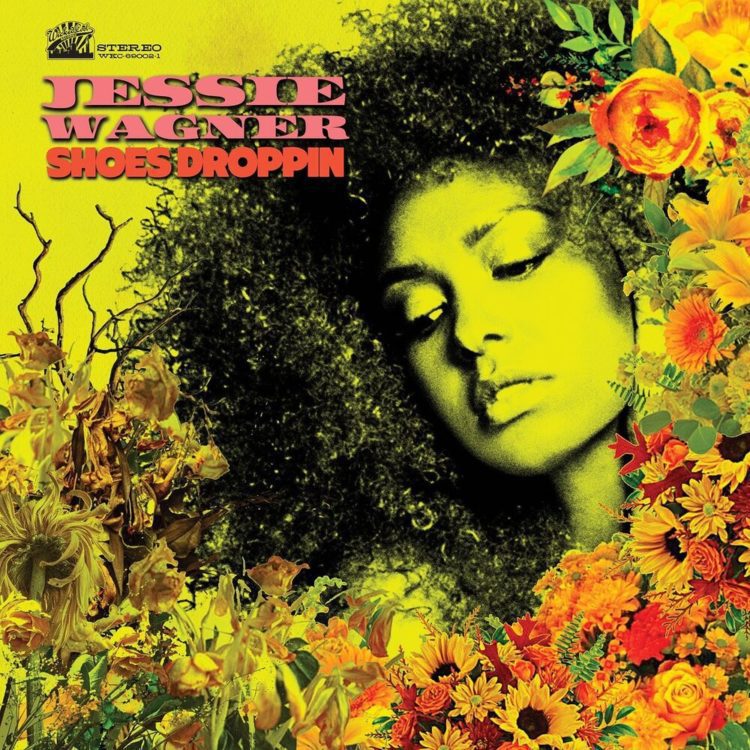
You might have encountered Jessie Wagner fronting her NYC-based rock and soul band Army of the Underdog. Or maybe you caught her as a backing vocalist in the touring bands of artists like Little Steven and the Disciples of Soul, Chic, Lenny Kravitz, or Duran Duran, among others. But now she steps out on her own with her first solo album, Shoes Droppin’ (Wicked Cool Records). It was, in fact, Wagner’s gig with Stevie Van Zandt that led to her being signed to his own label; he calls her an artist whose “music is eclectic and unique and impossible to categorize.” Which is what makes her album such a pleasure to listen to.

Shoes Droppin’ opens with the gospel fervor of the title track, which is based on Wagner’s own experiences in coping with the sudden ill health of a loved one, a situation that resonates even deeper today. “What have I done to deserve all this?” goes the song’s recurrent plea, matched by a wailing harmonica. But it’s a song rooted in strength; Wagner sings lyrics like “This burden has gotten too hard to bear/Tell me Lord, are you still there?” with such force, it’s clear she’s not going anywhere until she gets an answer. The thoughtful “Caretaker” honestly addresses the difficulties that arise when one has to step in that role. Balancing the angst is “Lover’s Lullaby,” a hopeful, gentle number offering comfort.

Wagner cites Amy Winehouse and Sharon Jones & the Dap-Kings as influences on “End of Time” and “My Darlin’, My Dear,” respectively, and she certainly hits the same retro-soul/jazz vibe that they do. She’s at turns introspective; “Great One” is an acoustically driven piece about artistic insecurity, a topic that’s also the theme of “Passin’ Me By,” something you might overlook as you’re carried along by the buoyant brass arrangement. Horns are even more to the forefront in “Over and Over,” a playful number about succumbing to temptation; “You might be the one to change my ways,” she teases. She closes with another confessional number, “What You Get,” a song about admitting one’s faults and vowing to do better, with the brisk beat underscoring its mood of forgiveness. Wagner’s warm, rich voice is a versatile instrument, making her able to navigate the realms of rock, soul, and jazz with ease. It’s a personal record, but one that has stories that everyone can relate to.

The music of Loma is the perfect musical accompaniment as the heat of summer gives way to the coolness of fall. It’s enigmatic, and a bit mysterious, creating a sense of anticipation for what might come next. Then there’s the album’s title, Don’t Shy Away (Sub Pop). It’s something that extends an invitation: don’t be afraid, come inside.

Loma was something of a side project between Cross Record’s Emily Cross and Dan Duszynski, and Shearwater’s Jonathan Meiburg (Cross sings, and all three members play instruments). The group released a self-titled album in 2018, followed by a tour that climaxed with a set at Sub Pop’s SPF 30 festival (celebrating the label’s 30th anniversary). The band thought the show might be their last; as Cross put it, “It was the biggest audience we’d ever had. We thought, why not stop here?” But after they’d gone their separate ways, they found they missed each other. They also got a bit of unexpected inspiration when they learned that Brian Eno told a BBC radio listenership that he kept the band’s “Black Willow” on repeat. So what else could they do but reconvene?

This is an album that casts its spell in a slow, insinuating fashion. “Fix My Gaze” is the stark, cryptic, opener, Cross’ clear, high voice set against the spare instrumentation. This song of imprisonment leads naturally to “Ocotillo,” a droning, modern day road song, the steady beat eventually giving way to a cacophonous clatter as Cross celebrates her freedom: “All my ties are broken, I’m in wonderful disarray,” taking that last syllable up to the sky. Despite the omnipresence of synthesizers, there’s a strong organic feel to the record thanks to piano and violin, Cross’ clarinet, and the gorgeous harmonies of songs like “Thorn” and “Elliptical Days.” Appropriately, the final touch was given to Eno, who mixed the closing track, “Homing,” a number offering the calming feeling of a prayer. This album works like a tonic on the restless mind, drawing you in and leaving you refreshed.

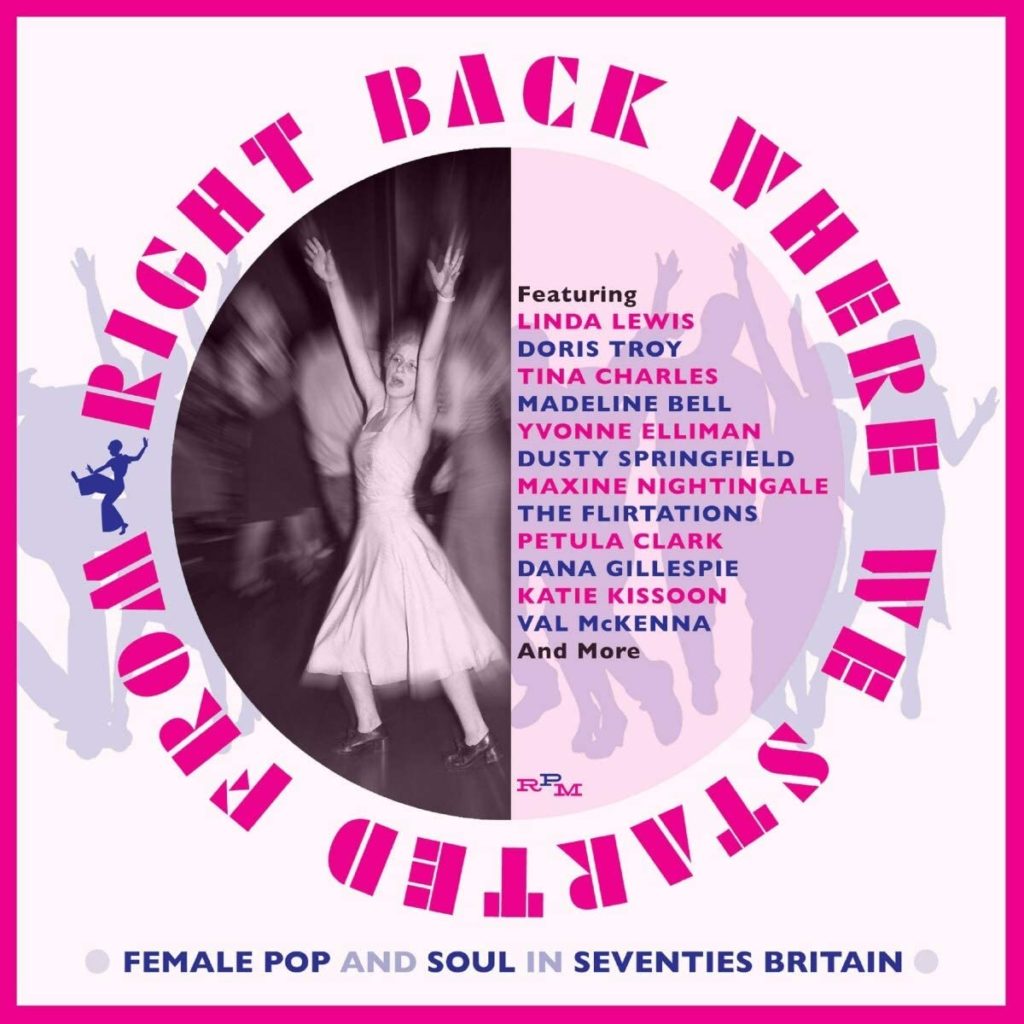
Right Back Where We Started From: Female Pop & Soul in Seventies Britain (RPM Records) is the natural follow up to the label’s earlier set, Am I Dreaming? 80 Brit Girls Sounds of the Sixties. The title track is Maxine Nightingale’s soul pop classic that became an international hit, and sets the stage for a collection of enticing treats.

Well-known names pop up throughout. Yvonne Elliman, whose hits include “I Don’t Know How to Love Him” and “If I Can’t Have You,” shows off her harder-rocking side on a cover of the Who’s “I Can’t Explain” (with Pete Townshend on guitar). Dusty Springfield’s sublime rendition of “Spooky” is a masterclass in sophisticated cool. There’s the unexpected delight of discovering that Eartha Kitt actually covered Donovan (“Hurdy Gurdy Man”). Fans of the stylish ‘60s TV series The Avengers will note the name of Linda Thorson, who played “Tara King” on the show, delving into dreamy pop on “You Will Want Me.”

There’s even more fun to be found among the acts that are lesser known (especially in the US). Margie Miller takes the sultry “Fever,” and whips it into an uptempo slice of funk that’s irresistible (record collectors have paid over $100 for this single, so it’s great to have it available on a more reasonably priced collection). A powerful, versatile singer, Miller also appears on the poppy “Ninety-Nine Ways,” originally released under the alias Etta Thomas. Ruth Swann gives a Motown-flavored spin to “Tainted Love” (originally recorded by Gloria Jones; Soft Cell’s cover came in 1981). The wonderfully named Mother Trucker come on all bold and brassy on “Explosion in My Soul.” And you will never hear “Na Na Hey Hey (Kiss Him Goodbye)” the same way again once you hear the absolutely killer version by the Chanter Sisters, who also appear on this set credited as Birds of a Feather, burning their way through “Leaving the Ghetto.” As an added bonus, RPM’s usual great liner notes are packed with information.

PREMIERE: St. Lorelei Ponders the Moon and the Matrix on Debut LP Beast

Photo Credit: Jonathan Traviesa

Jo Morris – bandleader, vocalist, and rhythm guitarist for New Orleans-based band St. Lorelei – likes to create worlds with her lyrics. “I tend to write material that’s based on more of an internal world, whether that’s about love or just imagining fictitious environments,” she says. “All I think about when I listen to music is searching for something that really tugs at me, and I like to try to find the same feeling when I write music.”

The band — also consisting of Marcus Bronson (bass, backing vocals), Philip Cooper (keyboards), Alec Vance (guitar), and Steve Walkup (drums and percussion) — will release its debut album Beast this Friday. It paints colorful pictures of a variety of subjects, from nature to famous film scenes.

Much of the album was inspired by listening to the late singer-songwriter Jason Molina; Morris attempted to capture his vivid scene-setting with her lyrics. One of the tracks — the dark, atmospheric, keyboard-driven “Farewell Transmission” — shares a title with a song by his band, Magnolia Electric Co., which features evocative lyrics like “Now we’ll all be brothers of the fossil fire of the sun/Now we will all be sisters of the fossil blood of the moon.” St. Lorelei’s version reads like a letter to the late artist: “I received your farewell transmission/Its echoes are etched across the sky.”

The rest of the album draws from a variety of influences: the dreamy, wistful “Wish” was inspired by The Ronettes, flipping a love song on its head by describing the end of a relationship. In “Night So Dark,” an emotive track reminiscent of The Cranberries, Morris asks with soaring high notes, “Can we make it through another night?”

She remembers writing “Night So Dark” in the winter, as she looked out the window into darkness. “I was just kind of picturing waiting for the light of the moon to break through, and it’s just kind of creating the feeling that I get by watching the moon rise… creating a scene of it in my mind almost like a music video.” She remembers the phrase “too dark to dream” popping into her mind as she looked up at the sky, inspiring the line, “These nights, too dark to dream/So we splay open our hearts and pin them into screens.”

Relationship dysfunction is another overriding theme on the album. In “FOOL,” Morris belts about being deceived by love against discordant jamming, and “Snake Song,” written by Townes Van Zandt, is a haunting and poetic ode to being difficult to love, reminiscent of an old folk song.

“Outside the Green,” a cheery closing track full of harmonies and catchy guitar riffs, has perhaps the quirkiest inspiration: the movie The Matrix. “In that period of time, I had been watching that movie a lot and was just thinking about what constitutes our bodies and what is the corporeal shell — what is stopping us from being one with the elements or even with other people in sharing this same spirit?” says Morris. “I started building it around the stories in The Matrix and Neo’s journey from figuring out when he was in the actual reality and in his perceived reality.”

In her typical songwriting process, Morris brings a melody to her bandmates and describes the feeling she wants to capture, and they craft the sound to fit the mood. “It’s so amazing to be able to play with a band, especially when you’ve played by yourself for so long,” she says. Enlisting the help of engineer Mark Bingham and his barn-like recording studio amid the swamps of Henderson, Louisiana, she used layered vocal harmonies to make the album to sound “sparkling and orchestral.”

Morris formerly sang in the Kentucky Sisters, a duo centered on vocal harmonies and ukulele, while also working on her own material, releasing the EP Ghost Queen in 2017 as a solo artist. Walkup was a fan of the Kentucky Sisters and came to a concert of theirs, and he and Morris began making music together. The band is named after the German folklore figure Lorelei, who jumped into the Rhine river after being betrayed by a lover and transformed into a siren who lured sailors to crash their ships.

During the pandemic, Morris has been using her loop pedal and building songs around vocal harmonies and guitar. She’s currently creating a series of songs lamenting antiquated activities, like using cable TV and VCRs and, nowadays, going to the grocery store without worrying about getting sick. Her goal is to “create a rich world around [everyday things] that you wouldn’t expect” — a skill she’s already clearly mastered on Beast.

Follow St. Lorelei on Facebook and Instagram for ongoing updates.

RSVP HERE: Hayley and The Crushers livestream via T1 Fest + More!

If you can picture Joan Jett fronting The Ramones while drinking a cola-flavored Slurpee at a record shop you’ll have an idea what to expect from Hayley and The Crushers. The power-pop surf-punk trio hail from San Louis Obispo, California and are fronted by Haley “Crusher” Cain alongside her bassist/husband Dr. Cain “Crusher” Cain and drummer Dougie Tangent. Their music is the perfect soundtrack for the intro credits of an early ’00s teen movie that takes place in the ’50s. This year they released their third record Vintage Millennial and a 7″ single titled “Jacaranda.” In 2019 they played 100+ shows touring cross-country while living exclusively out of their van. They put on an energetic live show; and you can watch them live on Saturday October 24th via the T1 Fest- a benefit for JDRF, who fund research and advocate for people suffering from Type 1 Diabetes.

We chatted with Hayley “Crusher” Cain about the making of their most recent record, what their band’s tiki drink would be, and her podcast Sparkle and Destroy.

AF: How was the process of writing and recording your third record?

HCC: Making our new album Vintage Millennial was kind of a blur. We were touring and playing live a bunch in 2019, so the songs came pretty quickly and with a lot of urgency. Our home drummer here in San Luis Obispo, Benjamin Cabreana, is very high energy and eager to learn new songs, so we just kept feeding the beast till we had a whole set finished. I wrote “Gabbie is a Domme,” about an old friend who had become a dominatrix, in one sitting, without a ton of drama or overthinking. I remember being surprised by that, and knowing in my head that there would be glockenspiel. It was almost creepy how quickly some songs came to be, just me and the guitar. There’s something really freeing about knowing you have to get a record done quickly, between tour dates or a deadline you’ve set yourself. You just make decisions. Ideas that might have languished for years, rotting in my notebook (“I Don’t Wanna be like Johnny Ramone” and “Shoulda Been Shangela,” which was about a drag queen that the band loved on Ru Paul’s Drag Race) just kind of leapt off the page and into life. For that reason, I think this album is a real time capsule of our lives at the moment, right now. Then there are songs like “Kiss Me so I Can,” which my husband/bass player, Dr. Cain, and I wrote together. It was a little labored but in a good way. We were tasked with making a groovy sort of Crushers-style love song that still felt universal. We wrote it in real-time as we faced the reality of what constant van-living and ambition was doing to our relationship. I think anyone can relate to the idea of never feeling like you have enough time for your loved one (even if you live in a van/apartment/house with them), or feeling split between two lives and desires. Honestly, it felt quite exposing, but like a natural next step. “Poison Box” was also a collaboration between us – I was in Berlin for the holidays with my sister, and I was inspired by the GDR museum, which showed life in Germany before the Berlin Wall fell. My husband sent me a few guitar riffs over voice memo one night and I wrote the song at my sister’s Berlin apartment after a night of drinking. Everything felt urgent and crazy in 2019. We also tried to write a bit more for production than on Cool/Lame, which is basically a representation of what we do live. We tried to keep spots open for organ, additional drums, claps, and general weirdness, which I think add a lot to our sound, and we’d like to keep that going. Dr. Cain’s sly surf song “Forever Grom” is one of my favorite tunes on the album, even if it truly is a quick interlude and just a total wild card. Fun fact: all the waves and seagulls you hear on that track were created by either Dr. Cain’s amazing vocal abilities or a steel tube being rubbed against the nether regions of my Gretsch guitar. I feel really lucky we were able to do vinyl in 2020, despite all the issues happening in the record pressing world and the wider world in general. Travis Woods from Eccentric Pop Records believed in Vintage Millennial, even if it might be the weirdest album on his label to date. All you need is one person to believe in you and you just decide it’s a good idea. That’s a little known secret of the business!

AF: What are jacarandas, and what do they mean to you?

HCC: Wikipedia says: “Jacaranda mimosifolia is a sub-tropical tree native to south-central South America that has been widely planted elsewhere because of its attractive and long-lasting pale indigo flowers.” I can confirm this is true! In my town of San Luis Obispo, California, these purple trees start blooming in May and continue through the summer. In the summer, everything is brown (burnt by literal wildfires) or just dried by the sun, so these insane purple trees really stand out. I wrote the song as I was longing for the road. We spent 100 days on the road in 2019 with two Midwest Tours and a few West Coast tours and I started writing this song between dates, when we had come home briefly to tie up loose ends. Dr. Cain was selling his comic book shop of nine years and I had quit a column I had written for the local alt weekly for about five years. The color of the trees inspired me and I loved the idea of a song that’s a wake up call. Maybe I just hadn’t been home in a while, so the trees seemed even more technicolor than usual. I felt like they were a cosmic sign, that they were speaking to me and letting me know it was okay to get the hell out. Of course, now I am back at home and have had to completely eat every single word of that song. It’s been humbling. I am grateful to live where I do and to have my friends and family and dogs here.

AF: How has quarantine affected your creative process/routine?

HCC: I just feel like I am always working at 30%. The battery in my soul is low. I don’t have the boundless energy to write demos and I certainly don’t have that urgent feeling that comes with preparing for/booking the next tour. I feel sort of like I am swimming through peanut butter. I continue to write my song ideas down in my notebook, but they take longer to come together. Band practice has helped. Making demos has helped. But everything is slower, less fluid, clunky. That’s got to be part of the underlying and ongoing trauma of 2020. I am not into “victim mentality” at all, but we need to realize we are all in a slowly boiling pot and that is going to have real consequences on our mental health over time. Someone said this recently and it really stuck with me: “It’s like we’re all in a fire. And it’s slow burning. And it’s invisible.” This is stress, anxiety and depression compounded and stretched out like we’ve never seen before. All I know is I am writing down the freaky stuff that I have seen during COVID (a guy wearing a gas mask at the grocery store; a lonely hopscotch created in chalk by kids on my street surrounded by positive affirmations) and I know it will all go into a song, a book or something. Dr. Cain has been surfing a lot, Ben has been skating, and I have been doing yoga in my backyard. You have to find something that completely takes your mind off the election, the state of our country, COVID. You just have to.

AF: If Hayley and the Crushers were a tiki drink, what would it be?

HCC: A super sweet, surprisingly strong Madonna Rum Punch from Madonna Inn, the late ’50s pink palace of a hotel located down the street from my house! It has multiple rums, a maraschino cherry, an orange slice and a cute little skewer.

AF: If you were to do a Halloween-themed cover, what would it be? 

HCC: Our song “Neurotica” is about a teen witch, so that is as spooky as we have gotten! The only horror movie I can really watch without peeing my pants is Gremlins, and I’m pretty sure that’s actually a Christmas movie and a teen comedy and not at all supposed to be scary. But it is! It’s so scary. An instrumental surf punk version of the Gremlins theme song would actually be pretty frightening (on many levels). 

AF: Have you had any paranormal experiences?

HCC: As for paranormal experiences, I wish I could say I have had some. I always wanted to see an alien or communicate with a forlorn ghost in a Victorian nightgown. Maybe it’s because I grew up with atheists, but boring old science has literally ruined my sense of otherworldly fun. Kim Wilde, who we cover on Vintage Millennial with our song “Water on Glass” is always talking about aliens and stuff. Her latest album is called Here Come the Aliens. It’s funny when you Google someone you admire from the ’80s and you realize that they now go on talk shows recounting their paranormal experiences. I’m jealous, really. I can only hope to be that eccentric one day.

AF: Tell us a little about your podcast Sparkle and Destroy. Who would be your dream guest? 

HCC: It’s like an audio zine, and it’s not supposed to be fancy by any means. It’s half interview and half just me rambling about art and my life. I worked as a journalist for about 10 years and I loved the experience of being able to walk right up to someone you found interesting or cool. It’s powerful stuff, to be able to interview them and just pick their brains (as you know). I also had a real paper zine for a few years, which was super fun if not insanely time consuming. When I quit all that so I could focus more on music, I really craved being an interviewer again. I was meeting all these rad women on the road or elsewhere. A sound woman here, a guitarist there. So now I have my own excuse to walk up to some stranger and say, “Can I interview you?” Funny that people will usually say yes. I couldn’t believe that Alice Bag said yes. My dream guest, Josie Cotton, has already been on the show. Guess I should pack it up and go home!

AF: When it is safe to have shows and tours again, are there any structural changes you would like to see in how they are run and in the music scene as a whole? 

HCC: Considering we book all own tours, make all our own fliers, chase down all our own press, send out all our own advances, and promote all our own shows on our own dime—sure. I’d love to see a return of dedicated, professional venue bookers in the United States who are paid well enough to help with some of this crucial work. I find myself doing the job of the venue when it comes to promotion and even organizing what times the bands will play, because more often than not, you don’t even get an email confirming the gig. We create and print fliers and literally send the paper versions to venues, which doesn’t sound like a lot, but think about doing that for every show on tour. Then there is contacting local press/radio etc. We buy our own ads to promote the shows we play, even as we are spending a lot of money to travel across the country to be there. This work helps all the bands on the bill and the venue, not just us. Of course, some venues do have good promotion, but, in general, I think the money isn’t there anymore. These jobs are just going away or not paying well enough to attract the right people. I know they used to exist, because older music people tell me about those glory days when a venue would actually tell the local paper about a show. Of course, papers are going away too. Venues are closing down left and right during COVID so I feel bad saying anything critical. They will be so weak and needing of support when and if they reopen that all I can hope for is an open door and a few drink tickets.

AF: What are your plans for the rest of 2020 and beyond?

HCC: We have a new album we are working on! Stay tuned. It should come out next year if all goes to plan. We are also doing a live stream on Saturday Oct. 24. T1 Fest supports funding and research for folks suffering from Type 1 Diabetes, which is a big issue for our former drummer, who had to quit the band due to medical reasons.

We have a new single coming out this winter that I think will surprise and delight y’all. The song is about one of my first punk loves, Black Flag. I used to sit in the barn and play Black Flag and Ramones songs over and over, trying to sing as snotty as possible. Now I am ancient, in my 30s, and still feel that sense of excitement about punk. It’s an homage of sorts! We’ve been filming a music video for the song and I have to say it’s pretty silly. It has been a morale boost for sure. There will be a new shirt and cassette associated with the new single, so watch for that. We are supposed to head to Europe in summer 2021, but we will see if that happens. Our band has already voted by mail and we encourage everyone to do so! We thank our Crushers worldwide for all the love and support during these “uncertain times.”

RSVP HERE for Hayley and The Crushers via T1 Fest 2020 with Dan Vapid of Dan Vapid & The Cheats and The Methadones, Jen Pop and Poli Van Dam of The Bombpops, The Radio Buzzkills, Death and Memphis, The Usuals, Capgun Heroes, and The Lettermans on Saturday 10/24 6pm ET.

More great livestreams this week…

10/23 PUP via NoonChorus. $13, 9pm ET RSVP HERE

10/23 Jason Isbell, The Killers, Stevie Nicks, Kurt Vile and more via SiriusXM (Tom Petty Birthday Bash). 4:30pm ET RSVP HERE

10/23 Teenage Halloween via The New Colossus Festival YouTube (live from Rockaway Beach). 9pm ET RSVP HERE

10/24 Chance The Rapper, Questlove, Shaquille O’Neal, LL COOL J and more via Facebook (Black Entrepreneurs Day). 7pm ET RSVP HERE

10/24 Billie Eilish via The Internet. 6pm ET RSVP HERE

10/25 Angel Olsen, Bright Eyes, Brittany Howard, Eyes Blood, Mac DeMarco & more via Lively (Village of Love for Planned Parenthood). 9pm ET RSVP HERE

10/26 Thick, Haybaby, Brain Don, Niteowl, Adrian Is Hungry via Venue Pilot (live from Our Wicked Lady). $5, 7pm ET RSVP HERE

10/27 Native Sun, Pure Adult via Venue Pilot (live from The Broadway). $5, 7pm ET RSVP HERE

Dana Foote Leans in to Her Sir Chloe Persona on Debut EP Party Favors

In her senior year at Bennington College in Vermont, Dana Foote, a music composition major, was required to present a concert of original music. Foote gathered together some of her school peers, the songs she wrote, and she called the group Sir Chloe, a nod to the name her mother almost gave her as well as her androgynous style.

Three years later, 25 year-old Foote has graduated from music school and thrust herself into the “real” music world—and she’s been well-received. Her breakout single “Animal” has over 12 million views across social media platforms, another of single, “Michelle” is rising on cosplay TikTok.

Out today via Los Angeles-based imprint Terrible Records, Sir Chloe’s debut EP, Party Favors is an impressive first sampling of Foote’s evocative, interrogative songwriting and grunge-mumble voice, which results in music that could be the lovechild of singer-songwriter Mitski and post-punky garage rock band The Strokes.

Foote sat down with Audiofemme to chat about her journey to this debut EP, the bandmates that helped make Party Favors possible, and the tumultuous relationships that inspired her love-aloof lyrics.

AF: At just 25, your skill as a musician and a songwriter is impressive. You must’ve started young. Was there a lot of music in your home growing up? 

DF: Yeah – my dad and uncle are both musicians. My dad is a guitarist and my uncle is a composer; he plays a lot of instruments. We played a lot of music growing up and my brother took up drums from a young age. We were all kind of playing music all the time. I also grew up in church and went to Jesus camp for five years and there was a lot of singing there, which probably had something to do with it as well.

AF: Did you grow up in LA? 

DF: I grew up in Connecticut. Old Greenwich. 

AF: Did you start writing music in college, or did you write songs before that time? 

DF: I started writing songs my junior year of high school. Before that I was in bands and we did a lot of covers. It was kind of like working up from covers to writing my own stuff and then I started writing in my junior year of high school and stuck with it. 

AF: Do you tend to write on guitar, or other instruments? 

DF: Yeah, I write on guitar and piano. 

AF: Who else is makes Sir Chloe tick? You work with some peers from school, right? 

DF: I write the melody and the words and I’ll usually write a couple of loose chords and then I’ll send that to [guitarist and producer] Teddy O’Mara who produces the music with me, and he’ll sometimes make chord progressions a little bit more intriguing and he’ll start the arrangements in Logic and then we’ll kind of send a song back and forth until it’s almost complete or generally you have a clear sense of what the feel is going to be. Then, we bring it to the band which is currently Austin Holmes on bass—who is a good childhood friend of Teddy’s—and my brother, Palmer Foote, on drums. 

AF: How did you meet Teddy? 

DF: We had a few classes together starting his freshman year, my sophomore year. We were both fans of each others’ work and he produced a couple of songs for me back when I was just a solo act and I really liked working with him so when I put the band together, he was the first person I asked. He’s also a fantastic guitarist so I really wanted him around.

AF: It’s so cool to have shared background that way. I love the story of how you named the band, why did you decide to put Sir in front of the name? And tell me about your relationship to the name Chloe? 

DF: I’ve always loved the name for a lot of reasons – it’s a cute name and it’s the name I tell people when I don’t want to tell them my real name, like someone at a bar. And also the song “Chloe in the Afternoon” by St. Vincent – I’ve always loved that song so it’s a little bit of a nod to that. Chloe has always been a weird second name for me in a lot of ways and I’ve felt very connected to that name. And then I put Sir in front of it because I wanted something androgynous. I feel like my gender performance is a little bit more middle of the spectrum. I wanted something that could be perceived either way and was a little tongue in cheek perhaps. 

AF: Tell me a little about how classical music and the classical training you’ve received has informed your approach to rock music? 

DF: Gosh, well, I think there’s a lot of ways it probably informs it that I’m not necessarily aware of. But primarily I would say that it made me want to use more – I don’t want to say the word “smarter” chord progressions, but I think it really opened, it made me understand themes in music and the importance of repetition and the voicings of chords and learning how different voicings of chords can really mean different things and sound totally different. Debussy is a great example because all of his chords are so baroque and whimsical and wild and it creates a world when you listen to it. I felt that way about a lot of composers that I studied, where you listen to it and get transported to a different universe and then you get to learn exactly what they did and exactly why it makes you feel that way. I think it helped me understand where, like if I’m thinking about an idea, classical music helps me turn the idea into a tangible melody with a chord progression and also [be] more experimental.

AF: You said you grew up in church and did a lot of church singing – are you still religious? And also are you fascinated by the occult or other ways of worshipping, given the dark, mysterious undertones in some of your writing

DF: I love religion, I’ve always been very interested in it. Growing up on the East coast, specifically in the Northeast, there’s a lot of intense religious imagery that I was fed a pretty consistent diet of growing up. In high school we had chapel every Monday morning [for] announcements and sometimes people would sing, but it was in a church, which I believe is one of the more dramatic buildings you can be in. I love churches. I love how small they make you feel, I love the way they sound on the inside, and the general architecture and how everything, every seating area is super uncomfortable. I love it all. It’s so dramatic. When I was looking at high schools, we would visit schools that would have big crosses with extremely lifelike Jesuses hanging in the cafeteria and stuff like that. It was always around growing up. My mom grew up pretty Catholic and her parents were Catholic, and I had a lot of experience with church and I just got fascinated with the community of it. That kind of led to being interested in other religions, and community and lifestyle around other religions, because I do think that religion in America is a very fascinating thing to me. The intensity of it all. To be honest this is the most I’ve talked about church probably in years. I don’t think about it that much but I know it’s probably in my unconscious brain somewhere swimming around. 

AF: Let’s talk about “Animal,” your breakout track. I love that the lyrics seem to express this resistance to being someone’s romantic obsession and I sense this in a lot of your songs. Without getting too personal where does that come from for you? Why is that something you write about? 

DF: I’ve thought about this too because I didn’t really realize this until we put the EP together and then I listened to through it and I was like—wow, I have a really common theme here. I would say, like the beginning of college or after my freshman year of college, I was starting to learn about what boundaries were and the importance of setting them. Part of it is that, and kind of saying like, “I’m seeing this doesn’t work for me so I’m going to do what’s best for me right now. And I’m going to trust myself to make that decision.” I think when you’re first starting to set boundaries it’s a scary leap to say that and do that. So I think a lot of those older songs were processing the feelings behind setting boundaries. “Animal” was about breaking up with somebody that didn’t want to be broken up with and it ended up being a very long drawn-out process where I didn’t feel like I was being listened to and it was very frustrating. Additionally it’s about looking back in hindsight and being like, this is where I should have set the boundary and I didn’t so I am going to retell this story and make myself sound more empowered than I feel right now. 

AF: I really like how you characterize the person in “Michelleas a monster from Hell and I wanted to know – is that somebody you actually know? 

DF: It’s somebody I actually know. 

AF: What inspired that song? 

DF: Well, I was dating somebody and it ended really badly. It was very crazy and kind of a whirlwind situation where every time I interacted with her I was like, “Oh my God, I can never speak to this person again.” But I kept getting sucked back in. She would just have this way about her that was really hard to say no to. I kept crawling back. And I was really mad at myself. At the time I was really trying to stay out of trouble and here I was just putting myself in the most compromising position all the time. 

AF: What are your goals for music? 

DF: We have a few. The big thing is that we want to play shows. That’s the whole reason why any of us got into this. Playing shows is our favorite thing to do [as a band]. That’s the priority and I’d like to be able to have a career in music and be able to hopefully compose in the future and work with musicians that I admire. The big thing is creating a community around music and connecting with people. Being able to play music for as long as we can would really be the ultimate goal. 

AF: What are you most proud of on this EP? 

DF: I’m really proud of how it feels like we’re finding our sonic identity with this. The way the songs have changed—like listening to the demos from when I first wrote these songs versus listening to them now—it really feels like I’m watching my children grow up. 

Follow Sir Chloe on Facebook and Instagram for ongoing updates.

Portland’s Camp Crush Uplift Struggling Music Community with “Fangirl” Video Premiere

Real-life couple Jen Deale and Chris Spicer have been playing music together for over a decade, releasing three EPs as Camp Crush and raising two children through it all. But this year, as it did for so many musicians, presented some of the most intense challenges they’ve seen yet; time they’d booked in the studio last March quickly shifted to a home-recording process with producer Rian Lewis as the pandemic tightened its grip on Portland, where the band is based. But with a newfound appreciation for everything we took for granted before the virus the hit, Deale and Spicer penned a track called “Fangirl” – a sweeping tribute to their music industry cohorts. “You keep shining/Like the diamond that we know you are/And I’ll keep chasing you like I am your own shooting star,” Deale promises. “I’ve got a lot of heart, and it beats for you.”

The rousing track is rooted in buoyant ’80s new wave, Deale’s vocals (and white-blonde locks) bringing to mind Debbie Harry or Gwen Stefani. Bright synths, bouncy bass and staccato percussion add to the nostalgic, fun vibe that begs listeners to dance along; though Deale and Spicer had intended the track to show their own appreciation of other artists, it quickly became a tribute to their fans as well, and an important reminder to let loose and find some happiness in otherwise dark times.

Taking a cue from the same do-it-yourself spirit in which the song was recorded, Camp Crush styled the music video for “Fangirl” it as though it were a Zoom call, with the camera switching between the band, their fans, their friends, and fellow musicians, dancing in choreographed unison. Some names even appear first on the call before their respective webcam loads, a strange greeting we’ve all become well-acquainted with.

“Every time we listened to this song, our family would just get down and start dancing and our kids would start exchanging moves,” Deale says. They developed some choreography for the video but ultimately wanted to include others as well, in a move that’s become indicative of the time we now live in and how our methods of communication and togetherness have changed. “We told people to bring their kids, pets, all of that – we wanted to see elements of the life we are all leading now,” she adds. “When you’re in your Zoom calls, sometimes you’re holding your baby or your cat walks across your screen. We wanted to capture some of those weird moments.”

Deale and Spicer are particularly attuned to weird moments and unbridled nostalgia; they officially met when Spicer became the drummer in one of Deale’s previous bands, but quickly realized they’d known each other as kids. “We grew up around each other but didn’t really meet until much later in life,” Deale explains. “We looked back and realized we went to the same summer camp. He was like, ‘Did you sing in the talent show?’ and I said, ‘Of course I sang in the talent show!’ and he was like, ‘You were Blonde Jenny! I had the biggest crush on you!’ So the name of the band had to be Camp Crush, like your summer camp crush.”

The duo have released three EPs under the moniker since 2018 (She’s Got It, Run, and Feel Something) all the while developing their brand as band (if somewhat reluctantly). “You have to create this presence from your creative endeavors and it’s a lot of pressure, especially as a woman, to be beautiful, sexy and mysterious while also having a little bit of a chip on your shoulder. There’s a lot that the world asks from you in this industry,” Deale says. But, as the couple watched their children grow, it became increasingly important to stay true to their own style. “Having played music my whole life, I feel like I’ve had all these periods where… you sort of find yourself following trends. When you’re raising girls, you’re raising women; it’s so important that they have that strong example,” she says. “It’s pushed me to fight past anything that scares me – if it scares me I gotta try it. It makes me look at my choices and decisions from a different angle – I say, that’s not the message that you want to send, that’s not what you tell your kids.”

To that end, Camp Crush have used their platform to take on weighty topics: their 2018 single “November Skin” leans into the pair’s rock influences while interrogating “women in rock” stereotypes; “Vicious Life” processes the deep political divisions in the U.S. after the 2016 election. 

“Fangirl” isn’t quite so serious, but it does subvert the idea that fandom is obsessive, negative, or vapid (particularly when it comes from young women) by reframing it as authentic connection, support, and encouragement. “I wanted to write something to just flip that on its head that’s fun, uplifting and that people can dance to,” Deale says.

Whether their confidence is drawn from fan support or their own values, Deale and Spicer have opened the doors for their experimental yet nostalgic sound to span decades by simply embracing a wide range of genres. “This band has always leaned into making the things that we’re excited about,” Deale says. “I think it’s because of this Camp Crush is a genuine reflection of who we are.”

Follow Camp Crush on Facebook and Instagram for ongoing updates.

L.A. Post-Punks Agender “Preach” with New Video

Photo Credit: Chris Mastro

There’s a tension in “Preach,” the latest single from Los Angeles-based post-punk band Agender, of the world at a turning point. While “Preach” was seemingly made for 2020, the song was actually written late last year. “It was written in the old world,” says singer Romy Hoffman. She describes “Preach” as an “anti-elegy.” In other words, it’s not as bleak at is might appear on first listen. “It is positive,” she says, adding that the song is a call to “hold on to your power.” 

The video for “Preach” was made by Los Angeles-based filmmaker Anthony Maldonado, who has previously collaborated with Hoffman on visuals for her live, solo performances. “We weren’t sure this wasn’t going to be the first single but I think, with everything going on in the world, we just thought as a band that this felt right,” says Hoffman. But, the pandemic created some complications for making a video. “Obviously, everyone was very limited as to what you could do and where you could go and shoot and how you can shoot,” says Hoffman. “So it just seemed logical to me, the best thing to do would be more of a found footage kind of thing. I know Anthony’s very good at that, and I knew his aesthetic would suit the mood.”

Hoffman is a lifelong musician whose work has crossed genres, but bears the influence of punk. “Punk rock has been my staple,” she says. “It’s been woven into everything that I do musically. Growing up in the ’90s,  being around a DIY culture definitely shaped my everything – how I perceive the world, how I walk through it, how I react to things, how I make things.”

She adds, “My art has always been very immediate.” Hoffman describes her work as coming from a “pure raw place” that’s been accessible via punk. “I would say my musical career has always come from that urgent, raw energy, of just needing to make things for survival and just for existence.”

She launched Agender solo while living in Melbourne, Australia and played all the instruments for the project’s debut release. The first incarnation of the full band came together when she was ready to play live and that line-up went on to record Fixations, in 2014. Around the time of the sophomore release, Hoffman moved to the U.S., settling in Los Angeles. “It has this beautiful-brutal dichotomy thing that I love,” says Hoffman of the city, adding, “It’s this sunny, warm place but the music coming out of there at the time (and now) is really cold.”

At that time, in L.A.’s underground scene, minimal electronic, cold wave and industrial were thriving and Hoffman’s solo work, which she releases simply as Romy, was on a similar wavelength. “I fit nicely into that,” she says. She quickly gained a following around town as both a musician and a DJ. Agender made a comeback, though, after Hoffman met bassist Christy Michel, drummer Christy Greenwood and synth player Sara Rivas. As Hoffman points out, they’re a band with two Virgos and two Cancers and “it just works really well.” 

“It feels like family. It feels like we all support each other,” says Hoffman. “It feels very emotional, physical, spiritual.”

“Preach” is a teaser of sorts for Agender’s third album, No Nostalgia, which will be released in 2021. Hoffman wrote the record last year and the band recorded with former LCD Soundsystem member David Scott Stone between 2019 and early 2020. “We took our time with it,” says Hoffman, who finished work on the album right before the COVID-19 pandemic hit.  

It’s only been in the past couple months that the members of Agender were able to start rehearsing again. “We all have masks and shields over our faces and are crazy with disinfectant and hand sanitizer,” Hoffman says. 

Meanwhile, Hoffman has also been working on new solo material, which she may release in the near future. The band is aiming to release one more single at the end of this year and then drop the album next spring, but Hoffman says they’re also playing it by ear. “I’d like to release the record closer to when we know where things might be a bit more open and you can play shows in support of this stuff,” she explains. ” It’s very hard not being able to play shows, supporting stuff you’re releasing, especially when  we’re a live band. It’s so important to us playing it; it transcends the music to another level.”

Follow Agender on Facebook for ongoing updates.

July Debuts with Delicate, 60s-Inspired Self-Titled LP

july band kate sweeney

San Francisco’s Kate Sweeney has returned with a new LP after a period of brief hibernation from indie folk band Magic Magic Roses. This time, she emerges with a new moniker, July, but a similar attitude.

The self-titled LP is the epitome of dreamy and delicate with its no-caps titles and bare-bones production. The LP could have slipped into bedroom-pop twee real fast, but Sweeney, who has been releasing music since 2010, brings a maturity to the tracks that are apparent in her vocals most of all. DIY can be great, of course, but sometimes, the music can succumb to the aesthetic. Sweeney, thankfully, knows when to hold back — which, in an album like this, is most of the time — and when to let the cracks show.

The EP starts out strong with “twenty one,” one of the more guitar-heavy songs. The lyrics are simple but effective; “turn on the music/just dance through it” is the main refrain of the chorus. Untethered from the song, some of the most prominent lyrics can seem rather vague, but all strung together and supported by a waterfall early-70s style guitar riff, they manage to paint an effective picture. Purposeful simplicity is the key to July’s success — it’s all been carefully crafted, lending the LP some needed sophistication despite its homemade construction. Though its simplicity may stem from quarantine’s restraints, I have a feeling this was still, largely, the sort of album Sweeney wanted to make.

Track four, “mountains of time,’ is irrevocably sweet, a testament to the positive influence of a partner or friend. “Sometimes when I look at you I think I’m the lucky one/sometimes I think I blew it,” Sweeney sings. “I have wasted so much time/I have wasted mountains of time.” It is by far the most effective song on the album, braiding Sweeney’s thoughtful voice with some equally delicate guitar work. The plaintive lyrics really shine here, employing some summer-of-love style esoterica in a way that does not seem so steeped in the past that it is more of a creative exercise than an album. Overall, July avoids this pitfall, but some the the later songs on the album fall into vagueness, especially when contrasted with “mountains” and “twenty one.”

“lalala,” as its title suggests, is somewhat of a ramble, with no real chorus except the title refrain. What passes for the verses is strong — reflections on a long-term relationship — but the song is too short to sustain impact when the chorus sounds like a demo for which Sweeney forgot to write lyrics. It’s still pleasant, but definitely sounds like it’s missing something with such noncommittal syllables standing acting as placeholder where there could’ve been more depth.

“young” feels a bit meandering as well, mainly due to some chant-like repetition of Sweeney’s favored nature metaphors: “when we were young we were so green/fields, flowers and tall trees” is one of many. It pulls itself together in the middle, however, by putting that repetition to better use with “when we were young we could begin and begin and begin.” It’s a haunting, spell-like refrain, but the rest of it is a little too funereal.

And yet, everything that didn’t work in “young” works on album closer, “set it down,” another flower-circle folk chant. This one really leans in by dropping most of the extensive metaphors and adding in some layered vocals to lead us out on this: “soon the flowers will grow and spread/and cover over everything.”

Overall, the album deserves more than one listen to catch Sweeney’s careful vocal inflections and touching lyrics, and even the songs that didn’t resonate as much for me are still consistent in style and tone. Whether you are a vintage folk aficionado or not, something this soft and reverent is a great lead in to these incoming dark days, when we may need a little reminder of July.

Odette Announces Sophomore LP HERALD with Premiere of “Dwell” Video

Credit: Kitty Callaghan

Australian R&B artist Odette has a sound that’s as unique as her background. The 23-year-old, born to a South African mother and a British father who introduced her to punk rock, is simultaneously poppy and experimental, gentle and confrontational, catchy and political.

Odette is gearing up to release her second album, HERALD, the follow-up to 2018’s To a Stranger. The latest single off the album, “Dwell” — written in the studio with Pip Norman, Jantine Heij, and Nat Dunn — is a raw glimpse into the artist’s insecurities and emotional vulnerabilities. “Now I stand by the mirror and my fingers are shaking/lights are flickering darkness/please show me I’m changing,” she sings as her voice itself shakes with emotion before belting, “I’m getting high to hide the lows is what I do when I’m alone.”

“This song started as a wistful love song and ended up being a project that Pip and I took into the studio on our own to mess with,” she says. “It evolved into an absolute self-read, a reflection on my flaws and how I felt lost within them at that time.” She describes it as perhaps her most thoughtfully written song, and the only song she’s put on an album that took more than an afternoon to write.

Staccato instrumentals and pauses between verses spotlight Odette’s voice and give the song a sense of drama. “I wanted each section to be a vignette of different textures I associate with being overwhelmed,” she explains. “The verses are quite reserved, and then the bridge and chorus swell into these chaotic, sharp electronic sounds that remind me of not just the feeling of panic, but the urge associated with wanting to break free.”

The video conveys a sense of shame as Odette hides her face behind various paper cutouts and frantically reaches her hands around as if she’s trying to claw her way out of her body. Other shots show her dancing around outside, “a dance that is intended to express self-directed rage,” she says. “The shots inside are very much about the feeling of splitting, shedding, and becoming something new, which is a beautiful, natural process, but also deeply painful.”

Odette describes her album as “a catharsis and a huge change I went through as a human being.” Its release was planned for summer 2020, but got pushed back to February 5, 2021 – not just due to the usual COVID-related delays, but also to personal issues the singer was dealing with. “I was experiencing a lot during the time of creating this album and personally, I didn’t want to start the campaign before I knew I was strong enough to uphold my convictions,” she explains.

The album includes several slower-paced tracks that utilize melodious orchestral strings, like the folky “Mandible” and the rhythmic “Why Can’t I Let the Sun Set,” which shows off her vocal range. It also shows the technical growth she’s undergone since releasing To a Stranger; she was much more involved in the production and arrangement of HERALD, and she’s used the free time time quarantine has afforded her to further develop her production skills using the software program Logic, so we can likely expect even more experimentation and variety from her future projects.

“Things I was scared to try, I said, ‘Why am I afraid?'” she says. “I pushed myself with production and being involved in the technical nitty-gritty aspects of things. Before, I thought, ‘I don’t know how to produce?’ Now, I think I’m confident enough to produce something basic.”

Odette’s recent single “Feverbreak” (featuring Hermitude) is another example of that evolution. After opening with spoken word poetry describing a relationship in which a woman is treated like an object, Odette breaks into the soulful singing she does so well. “Feverbreak” attracted the attention of both the electronic group Northeast Party House and the DJ/producer Basenji, who created two separate remixes of the song.

Basenji’s sounds like it belongs in a nightclub, with warped echoes of Odette’s voice, a danceable beat, and energetic drops.  Northeast Party House chose to highlight Odette’s spoken lyrics, particularly “two wrongs don’t make a right/two hands stay intertwined,” using a darker production style. “It’s so weird to hear my music in that kind of style,” she says of the remixes.

Odette has also experimented more with genre on her latest releases. “On the first record, I really stuck to this kind of light pop,” she says. “But now, I don’t really know what genre I would even consider my music.”

Thematically, she considers HERALD a documentation of her journey, of “realizing my own flaws and coming to terms with the fact that I’m not really who I thought I was going to be at 22.” It was also written after a breakup and deals with her finding her identity after that relationship.

“A lot of these songs are written out of anger and spite and really ugly emotions. I really feel almost nervous putting [them] out into the world because there’s a lot of negativity in some of these songs,” she admits. “There’s also a lot of positivity and trying to hold myself accountable.”

Follow Odette on Facebook and Instagram for ongoing updates.

JayBee Lamahj Brings The PHONK to Bittersweet LP Nostalgie Supreme

JayBee Lamahj serves up the bittersweet taste of nostalgia on his third studio album, Nostalgie Supreme. Using dreamlike and jazz-tinged production – courtesy of his PHONK bandmates Amari Emàn, Roberto, and others – the rapper thoughtfully and effectively captures his past, while offering a hopeful, triumphant gaze into his future.

“From this project, I want people to take away just an appreciation of their life,” Lamahj says over the phone. “Also, in regard to what’s been going on in the world right now, just an accountability and respect for life and our relationships.”

From the album’s invigorating opener, “WAKE UP,” to the reflective anchor track, “All Growed Up,” Lamahj explores themes of self-growth, love, and childhood. After listening, he says he hopes fans will be inspired to reconnect with their “inner child” and rediscover “the things that brought them happiness when they were small.”

“I want people to be proud of how far they’ve come and be proud of how far they’re willing to go [to get to] where they wanna be,” he adds. “I want people to hopefully feel happy about where they’re heading, because I do. That’s kind of what this album is celebrating; it’s just the growth that comes with life, the loss that comes with life, and the love that comes with life.”

Lamahj’s self-growth, childhood, and future were clearly on his mind two years ago, when he and Emàn began recording Nostalgie Supreme. However, the album’s themes mean even more to him today, as next month the rapper and his partner will welcome their first child together.

“In the midst of [making] this album, me and my lady lost a child, so there’s a little bit of talk about that [on the record],” he says. “There’s also lines like, ‘Nostalgia got me missing things I probably won’t feel ’til I have a mini-me.’ That’s the opening line of the outro [song], and I recorded that last summer. And here we are now; my album’s dropping like a month before my first-born. So, it’s cool to see my words catch up to me.”

JayBee Lamahj
Photo by Mandy Di Salvo

Besides Emàn and Roberto, Nostalgie Supreme also features several other local talents, including Joness and NTRL WNDRS on the breezy “Braids In Da Summa,” Perez on “Deep End,” F.A.M.E. and Phonz on “Angels,” The PHONK on the “BluuMile Interlude,” and Paris and F.A.M.E. on “3Ls.”

“There’s a lot of special people on the album,” Lamahj noted. 

Earlier this month, Lamahj also released his music video for album cut “Can’t Tell.” Directed by Cincinnati-based NTNK Productions, the clip finds the rapper starring as a funky substitute teacher. 

Nostalgie Supreme follows Lamahj’s 2017 debut, Yllwbrkrd, and his sophomore effort, 2018’s Phonk Phoever. In the meantime, Lamahj kept fans fed this year with his Nostalgie Prelude Deluxe Edition – an offering of loosies that he made during the Nostalgie Supreme recording sessions. 

“It’s a taste of what was being made in the process,” he explains. “You know, we created a lot of music, besides just the album.”

Now that Nostalgie Supreme is here, Lamahj can’t wait to perform it. The rapper and his band, The PHONK, were able to play the album all the way through at Nostalgia Wine over the weekend, marking the group’s first in-person performance since February.

“I’ve been dying to get back out there!” he exclaims. “I’ve been missing performing. As soon as we’re able to perform again, we’re gonna be out there like six days a week.” 

Follow JayBee Lamahj and The PHONK on Instagram for ongoing updates.

Arianna O’Dell Proves Anyone Can Make Music With Outsourced Feelings Project

When she begun creating her first album, Arianna O’Dell was not a musician — she was just a woman who went through a bad breakup and wanted to write a song about it. “I started to write poems, and then I was thinking, ‘Hey, I wonder if I can turn this into a song,'” she remembers. “So, I googled ‘how to make a song,’ and I found Fiverr, which had a lot of composers and vocalists and mixing engineers and people who could help produce music.”

On Fiverr, a freelance online marketplace, she noticed profiles with lines like “I can write your song.” She sent a few of these artists her lyrics, along with a description of the kind of sound she wanted, and they sent her back samples of them singing the songs. After selecting singer/songwriter/multi-instrumentalist Julian Sherwood based on the sentiment he captured in his singing, which brought her to tears, she found she found composer Matt Welch and producer Nathaniel Wolkstein to collaborate on the album. She named the project Outsourced Feelings, and together, they recorded and released the album Outsourced Feelings last year.

Fast forward to early this year, and O’Dell found herself going through another breakup as the Coronavirus pandemic was hitting her home base in New York City. She decided to channel her emotions and took advantage of her newfound free time to begin another Outsourced Feelings album. “For me, that’s like the ultimate therapy: being able to write out your negative and painful thoughts and then create something that sonically sounds really beautiful,” says O’Dell, whose main job is running a marketing and PR agency.

The new album, Songs For Introverts (And Extroverts Too) (out October 20), features collaborations with 12 different artists, producers, composers, and album art designers from around the world. Sherwood reappears on the indie-rock-style track “High Horse,” and other tracks feature vocalists Steve Eamer, Sofi Simesen de Bielke, August Petrén, and the duo Bad Choices (Jonas Galindo and Javier Dorantes). The composition and production were also a team effort, involving Eamer, de Bielke, Petrén, and Bad Choices, as well as Nathaniel Wolkesten and Matt Welch.

The musical genres and styles are as diverse as the musicians themselves: the catchy, poppy “Lost in Love” sounds like it could be heard on a Top 40 station, “Train Tracks” has a lo-fi garage-rock vibe reminiscent of The Strokes, “Don’t Let Strangers Break Your Heart” is more fitting for a piano bar, and the French-inspired breakup song “Baise Toi” sounds almost like a showtune.

O’Dell’s interest in music developed during childhood, when she’d obsessively google the meanings of lyrics she heard on the radio. She describes her role as project manager of the music — the main ingredient she contributes is the lyrics, but she assembles the team, gives them feedback, and provides instructions like “I like this older Matchbox 20 vibe,” and “Can you put some strings on this track?”

“One thing I’ve learned working with artists and creatives is it’s best to give them creative freedom,” she says. “I don’t demand timelines either — I don’t expect them to turn it around quickly. I think giving them that creative freedom made the album really great.”

The other key to success for O’Dell was to forget about profit and fame and just have fun with the album. “I learned to go in with no expectations that it’s going to be a hit or that I’m going to make money from this song and just go in making something that you want,” she says. “That’s when the best art really comes through, as opposed to when you’re striving to monetize something or you have a big goal in mind. That makes it difficult to really create music.”

This attitude proved difficult to maintain at times because the project was expensive — she estimates it cost between $6,000-$8,000 total — but she received a lot of support on Kickstarter, raising over $2000 to “bring soothing music to the world.”

In addition to providing comfort during a difficult time, she hopes that the songs are relatable. “When people listen to the album, I want them to feel emotions during a time when we’re so numb with stress and anxiety,” she says. “I think in particular, it reaches out to people who are pining for someone or have a broken heart or are aspiring to find a lover in the future.” 

She also hopes to inspire non-musicians who are interested in the music-making process to get involved. “If I could do it with zero experience, so can anybody — the tools are all available online,” she says. “I do hope that more people try to make music even if they don’t have any kind of experience because it is very therapeutic. If you can’t have love, you can at least have a song.”

Follow the Outsourced Feelings project via Facebook, Twitter and Instagram for ongoing updates.

How Booking Maven Mary Mihelakos Became Melbourne Rock Royalty

Melbourne-based concert promoter Mary Mihelakos wears a cowboy shirt with embroidered red roses that match her bright lipstick and blonde bouffant
Photo Credit: Suzanne Phoenix

For those who have carved their career as artists, music journalists, publicists, label founders or roadies, there is no question of living, breathing – and working in – music. One woman who knows there is no other endeavour so addictive and enthralling as music is Melbourne’s Mary Mihelakos, who was inducted into the Melbourne Hall of Fame through Music Victoria on Friday. She’s an icon in this city, but like everything to do with Melbourne’s rock and roll scene, she doesn’t trumpet herself or demand fame and acclaim. Mihelakos just keeps creating, sharing and supporting artists and venues because there is no other way to live.

In her teens, Mihelakos began volunteering at community radio. Before she was even legally allowed in venues, she was being invited to gigs and invited to work for venues as a booker and publicist. Naturally, she began managing bands and booking live music venues in her late teens and 20s while studying media and journalism at Swinburne University. In 1995, she took on the role of Editor at Melbourne’s biggest and best known street press magazine Beat, where she remained for a decade. She also contributed to The Age newspaper’s “Sticky Carpet” column, which provided a summary of the happenings on the live music scene in Melbourne.

Not content to only write about Melbourne’s live music, Mihelakos founded the Melbourne Music Bus Tours, which ran from the Arts Centre in central Melbourne through the city, sharing local music history with curious visitors and locals alike. She also founded the Aussie BBQ at SXSW in 2003, which provides a global showcase for Australian music. 

“I don’t really know what’s behind the induction,” says Mihelakos. “I did eight fundraisers for bushfires this year. Maybe, though, it’s because of 30 years of service to Melbourne music.”

In the late 1980s, Mihelakos was 14 and “a big music fan” by her own admission, with two older sisters who listened to 3RRR, so a young Mihelakos became a fan of the station by default. “I already was quite obsessed with The Models, Kids In The Kitchen and I’m Talking,” she recalls. “I’d go to the Palais Theatre by myself and mum and dad would coordinate to pick me up and drop me off. At that young age, I was so driven. There’s not many 14-year-olds who want to go to local gigs.”

Mihelakos got out the phone directory, rang up 3RRR FM and interrogated them as part of a school assignment. Mihelakos’ mother dropped her at the radio station, where she went on a tour and then returned in her school holidays to volunteer. “Everyone was a music nerd. I felt more at home at 3RRR than I did at school. One of the jobs I did was compiling the gig guide weekly. I had a typewriter, because there was only one computer at the station at the time, and I’d ring up all the venues to find out who was playing. I was a little fat Greek girl. I wasn’t annoying anyone. I was genuinely working and being enthusiastic about the records. It gave me that independence that I have now. I still, to this day, have very close relationships to all those people.”

Mihelakos did a lot of fill-ins for hosts on 3RRR; her broad musical interests meant that she was able to adapt to fill in on various programs. Though she’d later do a regular weekly hour on tour updates, she never hosted a regular show. “By the time I was 17, I was writing for Beat magazine and running the student radio station at Swinburne University. I was also booking bands at The Evelyn and Swinburne University, so hosting my own show wasn’t my focus,” she explains. Mihelakos met Scott Stevens from The Earthmen in her first year of university and began managing the band in 1991.

The Evelyn, in Melbourne’s musical heartland of Fitzroy, has been one of the city’s major venues since the ’80s; Mihelakos became the booker of the club in 1994, where she worked closely with fellow bookers, including Richard Moffatt of The Punters Club, to create events across multiple venues and in collaboration with community radio stations. “The venue only fit 300 people, but because the entry was only $2, people would come in for an hour then go elsewhere. The Punters Club front bar was full of interesting people, students… it was such an interesting place in the early 1990s,” says Mihelakos.

Mihelakos became the editor of Beat in 1995; the weekly paper is the entry point for many of Australia’s most prolific music journalists to build their portfolio and establish industry networks. “I was studying media at university and editing the student paper,” recalls Mihelakos. “But my relationship with Beat went back to when I got an interview with INXS for 3RRR FM and the editor of Beat at the time was desperate for the story, so I wrote it up for them. From that time on, I continued to do interviews for Beat magazine. I was also really good at hassling for advertising, which is why they really wanted me to stay on!”

She was also DJing at Melbourne’s iconic The Cherry Bar in an inner city laneway upon its establishment in 2000, earning her rent by playing four or five hour sets. “I’m so grateful to DJing for paying me to spend lots of time in record stores,” she says. “Really, there’s nothing I’ve been obsessed with the way I am about music. I feel confident in a room of 500 people, playing songs – that’s the thing I know. I love DJing and soundtracking people’s good times.”

Mihelakos began traveling for music events like CMJ in New York City and Austin’s SXSW, where she noticed that “a lot of Australian bands were playing there but they spent thousands of dollars to go over, play for 20 minutes, then go home.” This sparked the idea for her own day party, which she called the Aussie BBQ, which not only included Australian bands, but white bread, sausages and coleslaw salads as well. In 2003, she paid for the first event on her credit card. Record companies, booking agencies and major rock acts attended, leading to signings, bookings and tour plans. From the first year, it became an essential showcase for all Australian bands at SXSW.

“My bleeding heart mentality means I don’t do things for money, hence why I’ve gotten this award, this induction into the Hall of Fame. I’d be living in a nice house if I hadn’t started the Aussie BBQ,” laughs Mihelakos.

Sounds Australia paid Mihelakos a licensing fee in 2013, and it was a relief to Mihelakos to hand over the event to the organisation. Mihelakos had, at that point, set up the Aussie BBQ in London, Liverpool and Brighton in the UK and Nashville, New York and LA.

Mihelakos kept busy, even with Aussie BBQ off her plate – at that time, she was writing “Sticky Carpet” for Melbourne’s The Age newspaper (a must-read for any rock ‘n’ roll fans in Melbourne, though it ended in 2017 due to media budget cuts). She also founded and produced local council-run music festival Leaps and Bounds, which held around 300 musical events annually, resulting in Mihelakos being hospitalised twice for exhaustion between 2013 and 2016. As part of the festival, she also founded bus tours which guided ticket payers through Melbourne’s local music history.

Mihelakos also founded the Buried Country Tour, full of Indigenous country music legends, in 2016. Based on the book Buried Country, written by Clinton Walker, both Walker and Mihelakos were co-producers in creating the live performances. After touring the event nationally, Mihelakos and Walker retired the event in 2019. “It was a lot of time and yet another one of my crazy ideas, but it took off,” she says. “During all that time, I was DJing and writing and booking venues.” Her last gigs before the pandemic sidelined shows included booking shows for The Thornbury Theatre and The Spotted Mallard in Melbourne’s inner north and putting together several bushfire benefits throughout January and February this year.

Meanwhile, fans of Mihelakos’ writing can check out the liner notes for the second Sound As Ever compilation, Stuck on the 90s. But there’s no doubt that COVID-19 has forced Mihelakos to slow down and take stock of it all. “I started making notes for my personal memoirs. It’s so fun to think of all the adventures I had as a teenager and when I went overseas. I have danced on stage with Iggy Pop and The Stooges six times across three continents! I attended The Big Day Out even year since 1992,” she says, adding, with a laugh, “I’ve done nothing for the last six months and now I’m being inducted into the Music Victoria Hall of Fame!”

Estonian Rockers Holy Motors Reimagine the Wild West on Horse LP

Photo Credit: Grete Ly Valing

Guitarist Lauri Raus and vocalist Eliann Tulve, the main members of Holy Motors, are from Estonia — but their music is infused with Americana roots, and they draw inspiration from movies about the Wild West.

They often get asked about how being Estonian influences their music, or how their country’s music compares to the United States’. But for them, songwriting is more about playing on cultural tropes and motifs than representing any real place. Accordingly, the band describes itself on Bandcamp as “a Tallinn, Estonia based dark twang & reverb band from a nonexistent movie,” elaborating, “it bows to engines and echoes and film-directors.”

“Estonia is mostly connected to peasantry and noblemen, and the states are [considered] more free-roaming, and that’s up our alley,” says Raus. “I wouldn’t want to write a song about a landlord putting peasants to work — it’s more fun to write about a cowboy. But we make it up in our heads; it’s mostly what we see in the movies. It has nothing to do with what the country is about.”

Their latest album, Horse, co-written by Raus and Tulve (with two songs, “Midnight Cowboy” and Trouble,” co-written by Hendrik Tammjärv), is based on a combination of these fictional stories than have captured their imaginations and their own life experiences. Incorporating indie rock and country elements with hints of shoegaze, it’s a collection of vignettes about loneliness and life on the road, with Tulve’s deep, meditative vocals taking the listener on a journey around the world from the beginning to the end.

The LP, released October 16 via Wharf Cat Records, opens with the catchy breakup song “Country Church,” then segues into “Endless Night,” which was based on the band’s experiences while touring in France, when a window in their hotel room was smashed. In the song, they imagine that thieves have broken in and stolen jewelry, a metaphor for the fears that haunt our minds. “There’s haunting throughout the album,” Tulve explains.

The next track, “Midnight Cowboy,” a ballad reminiscent of ’50s love songs, was also based on touring experiences; Tulve wrote it about wandering through Spain at night. “I kind of felt like the guy from the movie Midnight Cowboy, and I was imaging him,” she says. “I remember also just being kind of torn about something and just longing for someone.” She also had another pop culture trope — a girl in an ’80s movie waiting by the phone —in her head when she wrote it. “It’s kind of like being sad while everyone else around you is having the time of their life, like at an American-style high school prom,” Raus agrees.
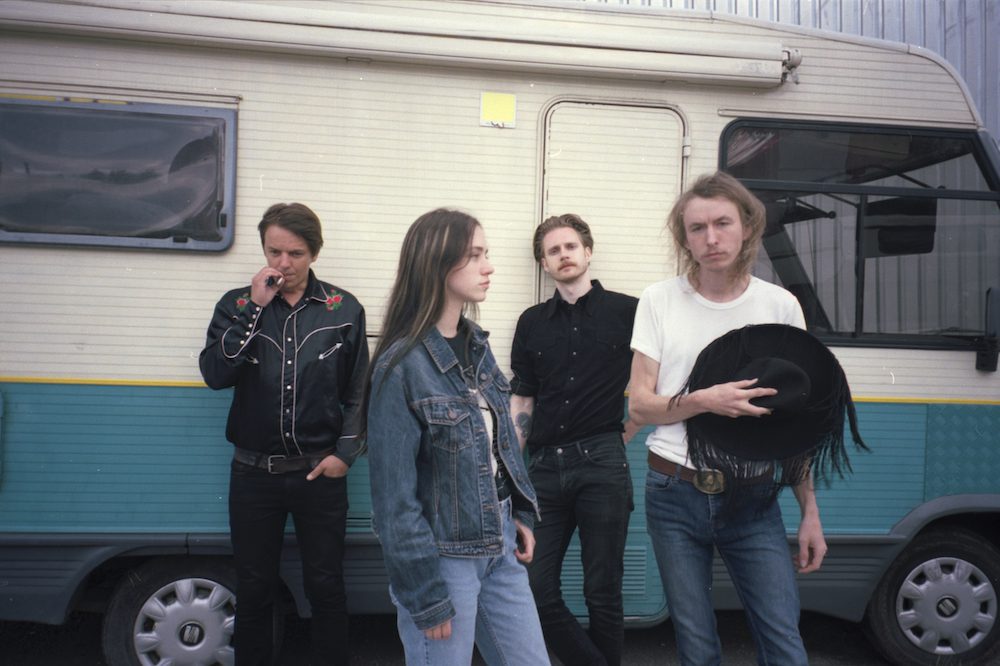
In “Road Stars,” a slow, folky, acoustic duet in the vein of Edward Sharpe and the Magnetic Zeros, Raus and Tulve imagine a conversation between a truck driver and a woman at a gas station, alternating between melancholy verses like “I’m as lonely as man in the makin’ of land” and the comforting refrain: “I know one day I’ll be better than before.”

“Matador” continues the theme of solitude, sung in a low, flat, almost monotone voice that conjures up ’90s grunge rock against psychedelic electric guitars. To close the album, “Come On, Slowly” paints the picture of an empty but idyllic town, “Trouble” sounds like something playing in an old Western movie scene as the villain approaches, and “Life Valley” is a jam they improvised in Leo’s Basement #2, the Berlin studio where they recorded the album.

Since they had to fly to Berlin with minimal luggage, they each just brought a guitar then took advantage of additional guitars in the studio, along with a drum set and percussion toys. Producer Craig Dyer accompanied them on synths, bass guitar, and vocals, and producer/mixer Leonard Kaage played organ, synths, piano, and bass guitar.

Raus and Tulve began playing music together in 2013 just for fun then evolved into a band, releasing their first full-length album Slow Sundown in 2018. “The first album was basically a collection of songs we wrote over five years — maybe it was even too eclectic for me, but it was still fun,” says Raus. “And then this album felt really different. Just a couple years passed, and things changed. I was happier with this one; it was more smooth creatively.”

The band is about to play their first live show since quarantine in their native country, then hopes to return to the studio to record more music next year. In the meantime, the current state of the world should give them plenty of inspiration for more lonely cowboy anthems.

Follow Holy Motors on Facebook for ongoing updates.

Quintron and Miss Pussycat Return With Their First Album Together in Almost a Decade

On Lundi Gras, New Orleans duo Quintron and Miss Pussycat held their annual bash marking the day before Fat Tuesday in the French Quarter. This year, the theme was a crawfish boil, with Quintron dressed as a chef and Miss Pussycat and friends playing maracas in crawfish costumes. “It was really an amazing show and it was really the last show that we did,” says Miss Pussycat (aka Panacea Theriac) by phone from home in September. “We have the footage and it’s amazing and it’s all our friends that we can’t be around. It almost makes me cry to see it.”

Last Easter, the two donned their costumes again for a shoot in photographer Tony Campbell’s yard that would become the cover of their latest album, Goblin Alert, out on Friday, October 16. The footage from their February show was used in a new video for the album’s title track. 

It’s been almost a decade since Quintron and Miss Pussycat have released a joint album, and the two return in full-force on Goblin Alert with a collection of energetic, psychedelic garage rock jams.

“Quintron and Miss Pussycat is never off the burner,” says Quintron by phone. But, in the years following the 2011 release Sucre du Sauvage, the two became occupied with other projects. Quintron, who is also an inventor known for the Drum Buddy, started developing a new instrument called Weather Warlock, a drone synthesizer that unleashes sounds derived from the weather. “That’s been a big focus for the last several years,” he says of the project, which has also spawned its own band. 

Photo Credit: Chris Squire

Meanwhile, Miss Pussycat, who is also a visual artist well known for her puppet shows, released Anthropomorphizer: Puppet Show Soundtracks. She currently has art on view at Webb Gallery in Texas and as part of the group show, “I Forgot to Laugh” at Pensacola Museum of Art. For the latter, she made a series of papier-mâché maracas filled with aquarium rocks that are resting on pillows, since, she says, “they can’t do a rock show.”

Photo Credit: Allison Green

In some ways, Goblin Alert came together in a fashion similar to other Quintron and Miss Pussycat releases. “We go through our life, we live our life and write these songs based on what we’re living and what we’re going through,” Quintron explains. “Then, when it comes time that we have enough of them, it’s time to make a record and time to think about them and sharpen the points and put it on tape and put it out.” Most of the songs on Goblin Alert, he adds, had been part of their live sets for at least a year. 

Opening track, “Teenagers Don’t Know Shit,” began as a song for another short-lived band and, Quintron explains, the portion of the song that begins with “My name is Jesus Christ and I’m an alcoholic,” was initially a separate song. “It was intentionally written with the exact same structure and the exact same chords, kind of with the intention of marrying them together,” he explains. As for the meaning of the song, he says, ” I can say, for sure, I don’t mean that teenagers don’t know shit in any kind of finger-wagging, aggressive adult way.”

Another standout track, “Block the Comet,” was inspired by the Perseid meteor shower, which they saw while visiting Miss Pussycat’s family in rural Oklahoma. “It’s amazing,” she recalls. “You have to wait a long time and then you’ll see it and then you wait and then you’ll see another one.” 

What’s different about Goblin Alert was the legitimacy of the recording process. They recorded at Pulp Arts Studio in Gainesville, Florida with producer Greg Cartwright. “It was very fancy, the nicest studio I’ve ever been,” says Miss Pussycat. They also brought in a few extra musicians, including guitarist Danny Clifton, talk-box artist Benny Divine and drummer Sam Yoger. 
“I love drum machines. I love electronic music and I love that mode because I’ve been doing it for so long, but this was in a real studio with tape and an engineer and somebody else is pressing all the buttons,” says Quintron. “Somebody else is deciding what microphone to use for what and I just had to be me and more just singer-songwriter person. Having a drummer made it even more like that because I wasn’t having to turn the machine on and off.”

He adds, “Also, a live drummer, especially Sam Yoger, it’s like a big cushy pillow that you can fall into. That did something else to the songs that I really needed in my life, I guess.”

The dynamic gives the album a rollicking party vibe that can make you feel like you’re inside a sweaty Lundi Gras show like the one in the “Goblin Alert” video while you’re waiting for the return of tours. Better yet – the duo have just announced a Halloween Release Show that will stream live from NOLA’s DBA. “I miss everybody and I cannot wait to go on tour again,” she says. “I’m already working on a puppet show for a year from now.” 

Check out Quintron and Miss Pussycat via their website for ongoing updates.

Jessica Dobson of Deep Sea Diver Discusses Resplendent New LP Impossible Weight

Jessica Dobson is a quiet giant of contemporary indie music. Along with performing her own material in Deep Sea Diver, Dobson has worked with indie music darlings like Beck, Conor Oberst, Spoon, and The Shins. And yet, if you said her name to the person next to you, they likely wouldn’t know who exactly she is.

This needs to change, and with the October 16th release of Deep Sea Diver’s newest album Impossible Weight via High Beam/ATO, it likely will. Deep Sea Diver’s third album is emotionally ferocious and tender at the same time, capturing Dobson’s uncanny ability to create transcendent and distinct worlds with a well-honed ear for production, much of which she co-produced. Lyrically, Impossible Weight is spun from a complex time for Dobson, as she considered heightened anxiety issues, the death of a dear friend and collaborator, and long-standing questions about her identity.

AF: I know you were born in LA. When did you move to Seattle? 

JD: I moved to Seattle in the very beginning of 2011. Before that I was living in Long Beach, California and I grew up in Orange County, then finally migrated up here. Peter Mansen, who’s my partner—we’re married and he’s also our drummer in the band—he’s from here. So, he was like, ‘Want a fresh start in Seattle?’ and I said, ‘Yeah, that sounds awesome.’ 

AF: You were signed by Atlantic at 19 years-old; was music, specifically rock guitar music made my women, in your life at a young age? How did you know this was a career that was possible for you?

JD: I did have examples. But I think at a young age it didn’t register with me to do it because I had gendered role models. I just saw an instrument and I was like yep, this is what I’m doing. It was more like following instinct at that point versus looking at something so I could have permission to do it.

AF: I love that you weren’t seeking permission. But, have you had any significant challenges in your music career because of your gender?

JD: I think that very often growing up there are definitely certain boxes that people tend to push you in and I was kind of set at an early age to not be put in those boxes. So, at the time there was a lot of like, acoustic female singer songwriting music out there—like in elementary school there was Jewel, and [others]—and I totally respect them but that wasn’t necessarily for me. I think I have always had an independent spirit when it comes to sound engineering and production, things that are kind of scary worlds sometimes for females because they’re worlds that are male-dominated. I was trying to peer behind the curtain from a young age and educate myself and other females who wanted to do the same thing. Not so I could be like “let me show you” but I think now I’m very passionate about demystifying a lot of those realms for female identifying people. 

AF: I re-read a 2016 piece from The Stranger about your second release and the author called your time with Atlantic “ill-fated.” I’m wondering, was it really “ill-fated” or did it teach you something that you’re bringing forward with you?

JD: Signing that Atlantic record deal—it was ill-fated but also beautiful because part of [me] wants to learn and forge [my] way forward— I’m grateful that it happened then, not now. And so I think…the best thing about that time that was “ill-fated” was the rejection that I felt, the understanding of what was going on in my body—I was experiencing anxiety but I didn’t understand what that was at that time and now I have better language for that and better tools to deal with it. [There were feelings of] rejection and sadness and I didn’t know what I was doing, and I made this thing but it never came out. Maybe that’s a good thing and I was able to use some of that music to move forward and start Deep Sea Diver.

Now, even on a song like “Impossible Weight,” I think for a long time I was like, ‘That is so in the past and I don’t really care about it anymore [or want] to talk about it.” Even at some points, to be honest, I was just irritated, like why is it always being brought up in interviews? But it’s a good question, you know… Those moments in life, they do brand you in a certain way, and you can choose what you want to do with the pain and the hardships. For me, “Impossible Weight” was a song where I finally—it’s not all about Atlantic—but it is kind of like speaking to the gatekeepers and speaking to my younger self. You can’t please everybody, you can’t carry that weight. So now I feel more confident in who I am, what I want to do and where I’m going and where this band is going. And it feels really beautiful. 
AF: I love the song, “Eyes are Red, Don’t Be Afraid.” I know that song is partly inspired by the Brett Kavanaugh trial; could tell me a little of your experience of watching that trial and how it informed the song? 

JD: That song was written in the midst of a lot of things. So, it wasn’t directly inspired by the trial but I was definitely able to finish my thoughts and lyrics and intentions while that was happening.

That song was the first song I wrote after I attempted to record album number three twice. I was kind of flailing around creatively, emotionally, really trying to find my footing. I had quit smoking and Peter had as well, so when you and your partner have both quit and that’s something you’ve used as a crutch for a long time, you know, it’s like “OK, this is where I’m at, and it’s going to be a little dark for a while but I’m going to push forward.” That was the first song I wrote as I was in the middle of quitting, and I had these mantras I would say to myself, these very simplistic lines, like, “don’t be afraid, don’t be ashamed.” And when I would start to write, I just had to say those things because I wasn’t feeling them and I wasn’t feeling any color in the world.

And so, most of that song is very intimate and very personal to me and what I was going through, but then it became part of a broader narrative. This is in like the thick of the Me Too movement, Harvey Weinstein, Trump. We thought we had progressed but these are still the issues at hand, like are you kidding me? We still have to convince people to listen to you if you’ve been abused? It’s just wild and so unfair. As a woman I felt the weight of that. The collective weight.
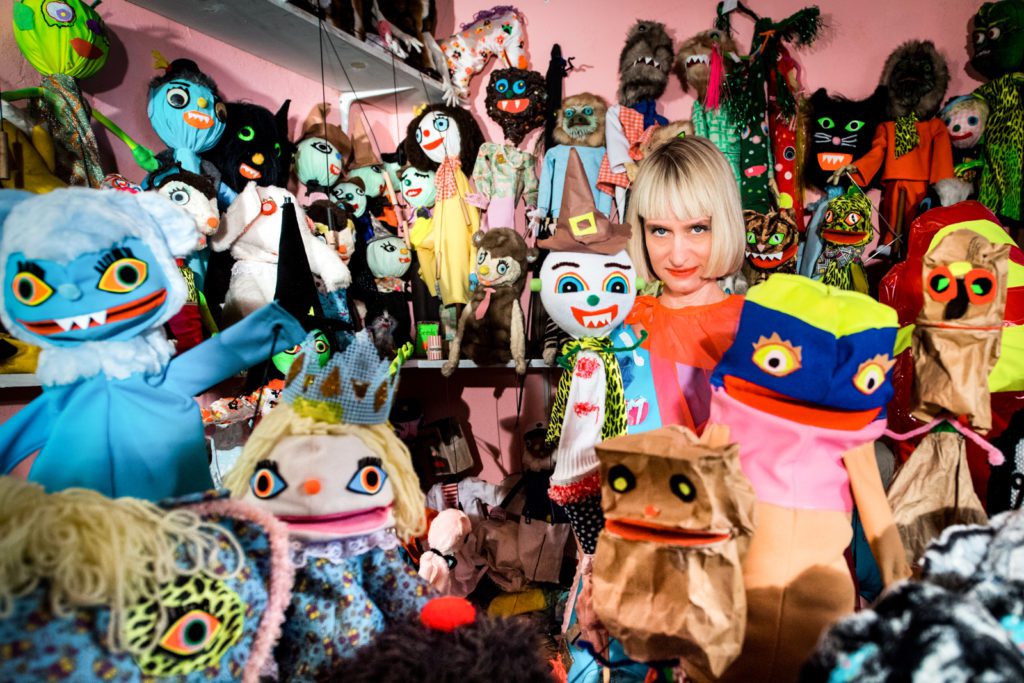

Then, there was an article, I think it was in the New Yorker, a journalist mentioned how many bodies have to be thrown onto the tracks to build up to stop this train? It will take more sacrifice unfortunately to get anything to change. That finished my song for me.

AF: Does music help you do that, help you understand your emotions? 

JD: Absolutely. I think I could be better at being a prolific songwriter, like honing my discipline by writing everyday. My history has definitely been: take a step away for a month or two months, and then when I’m feeling something there’s no stopping me from writing—it comes out, and that’s how I process my emotions. “Eyes Are Red, Don’t Be Ashamed,” was one of those songs where I couldn’t stop it. I also was wanting to pull the tracks out from under misogyny, sexual predators, all these systems that are still in place that allow those issues to thrive, and for women to not be believed. 

AF: I know you’ve been volunteering at Aurora Commons, a community space for unhoused folks in the North Seattle area. How has your time there influenced your music?

JD: That came into the song “Switchblade.” And, I would say, into the more general narrative of the record, which was just like, no longer letting myself be as veiled as I think I have been in the past lyrically. Sometimes, you want to say the true thing instead of making it poetic. And, I learned that deeper vulnerability volunteering at the Commons. 

AF: Are there any instances that come up for you when you think about your time there?

JD: Just personal stories – the things these women would share with me, trauma. The one consistent thing, hands down, with so many of these women is that there’s some kind of abuse in their childhood – sexual, violence or whatever, something traumatic has happened. It’s crazy to hear that kind of brutal honesty from them, and also at the same time be hearing in real time, “Hey, these are my needs,” because there’s no room to hide them because they’re living from minute to minute on the street. That showed me, even though I don’t have the same stories as they do and what they’ve gone through is a lot darker than what I’ve gone through in my life, it’s about compassion. I don’t even have the stomach anymore for hiding behind walls, mincing my words—this is what I’m going through and this is how I want to be here for people. 

AF: That really comes across and the listener can connect to that right away. Also, I hear a sort of haunting, bittersweet element, mingling with that increased decisiveness. I read that you recently reconnected with your birth mother and I’m wondering how that altered your perspective on identity and making music? 

JD: I think everyone can relate to the feeling of wanting to know where they belong, and even when you know those things it can still be tricky to be confident in who you are. I’ve always been searching for that big question, where do I belong? Sometimes it’s a question, hearkening back to what you were saying earlier about like women in the industry, like—where do I belong in this industry? How do I find my place and keep my voice and my independence, but also connect with other artists, other women, and be part of a community, not just an island?

When I met my birth mom, it answered a lot of curiosities that I had, like where did I come from, what’s the story? What did I look like? I had never seen a baby photo. I knew I was half Mexican and that’s it. And I knew her name. And then recently I found out—I don’t know who my birth dad is—but at least through 23andMe I found out, I was like holy shit, I’m half Jewish. I found out in the Taco Bell drive through. Many things have happened in the Taco Bell drive through for me.

AF: I know you co-produced this record. What do you enjoy the most about the production process? 

JD: Oh man, everything. It really is one of those times where I shine because I don’t overthink things, I’m just able to go, go, go. Whereas, I tend to overthink in the songwriting process. Like, if it doesn’t happen quickly I might kill a song because I overthink it and don’t finish it. But when a song is done, I call it done and that’s it, and it’s time to figure out what world that song needs to live in. With production, it always excites me to ask, what world am I going to create for this song? What world am I going to create for this record? Where does this need to live? I often go to different worlds from day to day in my head, and I need to go to those places to be creative. It’s not even a choice, I just go there. So it’s amazing that you can go any which way but you have to choose something, and then point all the arrows in that direction and go for it. That’s exciting for me. 

AF: Did you teach yourself with trial and error or go to school for it? 

JD: No, it’s honestly such a sandwiching of having been in so many different studio recording situations over the years now. Learning what I like, engineering style, learning the vocabulary for things, when you hear something in your head and you don’t know how to communicate that, you have to get better at that, so that’s a skill that’s been sharpened. I am obsessed with mixing, different frequencies, all these things that are a part of my creative DNA and makeup, but those things have all been sharpened over the years as I’ve been in different situations.

AF: One of your “impossible weights,” to use your term, is that you’ve had mental health struggles and depression. What’s your perspective on mental illness and the creative process? Is it a necessary part of your art-making or do you reject that notion? 

JD: I don’t think it’s a necessary part, but it informs the process. I think you could be totally healthy with your mental state and still create beautiful art, and you can be unhealthy and still create beautiful art. There are different tools that you can use, like if you choose to lean into the unhealthy. For me, there are tools I had to gather. You can’t totally eliminate anxiety out of your life. It’d be nice, but I definitely think that some stuff fuels a fire if you allow it, at least for me.

Sometimes, we glorify [the idea that] your art is only good if you’re feeling bad and I don’t think that’s true. There is beauty that can come from the ashes and the dirt, but if you lean on it, it can be a pretty unhealthy place. There are consequences, internally and relationally. 

AF: This has been a really hard year. What do you hope this album contributes to the listener’s experience and recollection of 2020? 

JD: When I first set out to make this record was when life was colorless and I was in a bad place and it’s just like, you know what, I want this record to be resplendent. That was word that came to me – full of life, full of color. And the color of it to me is predominantly green. That to me, is an association to being alive. That’s what people need right now. Whether it’s doom scrolling or all this terrible news that is happening, we lose sight that there can be joy and hope and color—it’s getting swallowed up by the bad. It’s okay to feel life and make space for things that are life-giving, even in the midst of tumultuous times. So I hope this record can be a breath of fresh air for people, and allow them to feel what they need to feel. 

Follow Deep Sea Diver on Facebook for ongoing updates.

Merci, Mercy Embraces Dysfunction Habits on Debut EP ‘No Thank You, No Thanks’

Photo Credit: She Is Aphrodite

“I hate myself so much that I cannot be loved,” Australia-based pop singer-songwriter and ukuleleist Mercedes Thorne — known by her stage name merci, mercy — sings on “Wonder What It Feels Like,” the fifth track off her debut EP, No Thank You, No Thanks. The rest of the collection is similarly raw and honest, delving into broken friendships, escapist drinking, and other experiences most people can relate to but may not openly speak about.

The 19-year-old considers the EP a snapshot of her life over the past year, both the ups and the downs, covering the challenges she’s faced in her relationship with herself and with others. Her voice contains hints of Sia, while her sassy, sarcastic lyrical style is more like Lily Allen.

The collection’s biggest standout is its catchy choruses, which contrast with the trying experiences depicted in the lyrics. In the endearing “Something You Like,” for instance, she sings against surprisingly soothing keyboard and ukulele about a tortured relationship: “I wake up, we break up/without any makeup/I push you out the door/and I’m crying on the floor/I want you, you with me/but it’s not that easy/I can’t change the way that you see me.”

“‘Something You Like’ is my favorite because it feels empowering while being very vulnerable,” says Thorne. “Sometimes, you are the only one who can help yourself, and the loved ones in your life need to realize that instead of on-looking and judging you without knowing. They’re your decisions; you’ll learn from them, good or bad.”

Thorne has a knack for rendering weighty issues in bold technicolor strokes—she does so quite literally in the video for “Fall Apart,” which reflects on a relationship that appears doomed from the beginning. As she doodles in her room, funny, comic book-style speech bubbles bring her ruminations to life. Bianca Bosso & The Interns, the illustrators behind the video, have also created lyric videos for merci, mercy featuring the same silly but poignant cartoons.

In addition to her interpersonal relationships, Thorne’s relationship with alcohol is a prominent theme on the album, also encompassing both the good and the bad. “Tequila and Lemonade,” for instance, is about going out and partying to avoid other people’s drama. “I’ll be dancing and celebrating/with tequila and lemonade/got no time to be throwing shade,” she belts. In “Fucked Myself Up,” which she wrote on her ukulele in her bedroom, she sings about getting intoxicated to mask loneliness with cutting lyrics like “too much is never enough.” 

These songs were inspired by the artist’s struggles with social anxiety. “[Alcohol] gave me the confidence to talk to people,” she says. “I was getting messed up on purpose in order to allow myself to be around people I didn’t know.”

The final track, appropriately titled “The Very Very End,” embodies the combination of cute and depressing that characterizes merci, mercy’s music, with a happy-go-lucky melody and sardonic lines like “you got me thinking that I probably should not exist/so I’ll take my snacks and just go home to self-loathe on my own.” The track contains the title of the EP, playing on the expression “thanks but no thanks” to sassily denounce a friend who acts more like an enemy.

She collaborated with multiple producers on the EP, including Dave Hammer, Chris Collins, and Kon Kersting. She also worked with a number of songwriters; Edwin White (Vance Joy) and Joel Quartermain (G Flip, Meg Mac) co-wrote “Fall Apart,” “Fucked Myself Up,” and “Tequila and Lemonade” with her.

“Working with various producers in studios around the country was a life-changing experience,” she reflects. “It gave me the confidence I was missing.”

Thorne wrote her first song after experiencing heartbreak at age 16, then continued to work on music after school instead of doing her homework. Eventually, she uploaded a song to Triple J Unearthed, an Australian site for discovering new music, which landed her an international label deal and management. Now that she’s releasing her debut, she’s rehearsing for her first post-quarantine live shows – the first of which took place earlier this week, at the sold-out Oxford Art Factory in Sydney, Australia. She’ll livestream the next one on October 23.

All in all, her music serves to reassure and comfort anyone who feels ashamed or alone in the dysfunction of their life, and that was Thorne’s intention with it. “I hope the songs from my EP will help make fans of my music feel less alone,” she says. “Also, [I hope they see] that it’s okay to be open about your mental health. I wanted to be really honest with my lyrics.”

Follow merci, mercy on Facebook and Instagram for ongoing updates.