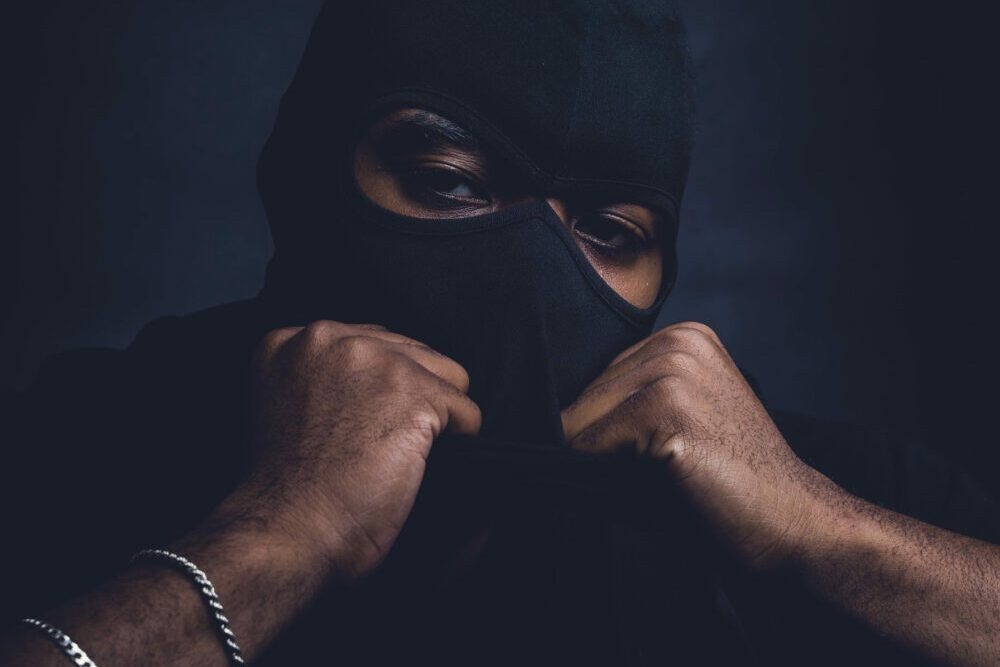
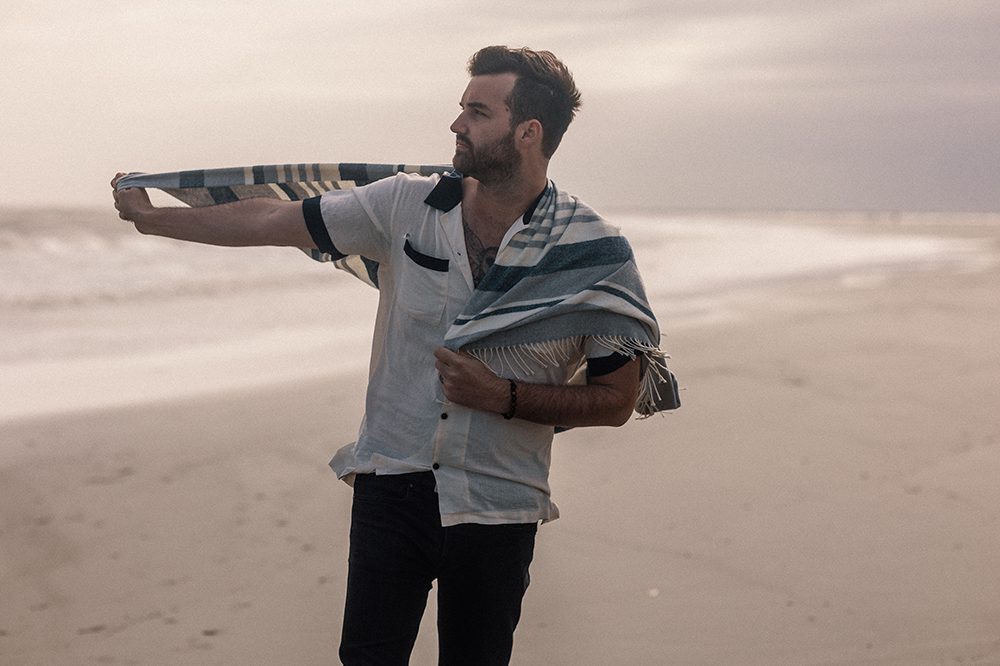
Rodney Eldridge Lives Life with Intention on Black Box EP

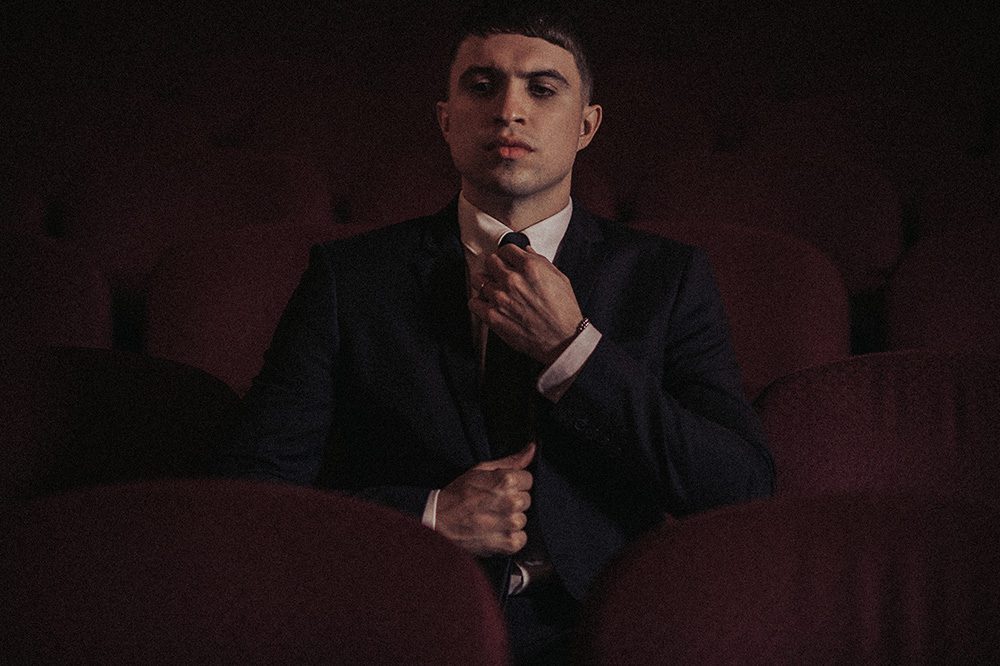
Photo Credit: VNTG PR

If you want to know Rodney Eldridge’s life story, just listen to his music. The North Carolina-born musician and filmmaker discovered his instinct for music while spending his childhood days poised at the piano, playing one-finger chords as he deciphered which notes sounded best together.  “Piano became a really big escape for me. It’s the first time I was like, ‘this is so therapeutic,’” Eldridge reminisces with Audiofemme.

As a child, Eldridge was diagnosed with a variety of learning disabilities, music serving as a sanctuary alongside reading and books. Eldridge turned the sentences on the pages into lyrics to match the melodies in his head, which led to a love of poetry and later, songwriting. He penned his first song for his middle school crush, asking her to be his date to a school dance by writing an original song as the proposal. “I think it’s always been there,” he says of his connection to music. “I would envision myself on this black stage. Everything’s blacked out but the spotlight, but I would be sitting there thinking, ‘this is it. This is my life.’” 

Eldridge turned those visions into reality, setting the stage as a professional musician as part of the pop-rock band, Millennial, releasing their debut EP Dreamers in 2015. Though gaining momentum after a performance at South by Southwest, tragedy struck the group when guitarist Logan Fincher suffered a brain aneurysm that led them to temporarily disband. In the interim, Eldridge turned his attention to his other natural talent for filmmaking. Raised by a father who worked in the film industry, Eldridge was instilled with the mindset early on that if he wanted to break into the industry, he’d have to do it on his own accord. He fulfilled this part of his destiny working with a production manager based in Charlotte, quickly moving his way up the ladder to become a coordinator and production manager, graduating to the role of producer in the niche market of family-friendly films, scoring producing credits on a dozen films in his young career including the Cloris Leachman-fronted When We Last Spoke and The Warrant starring Neal McDonough of Yellowstone fame.

But throughout his filmmaking endeavors, Eldridge was always tethered to music, performing in bands and later reuniting with his Millennial bandmates to form a new group, Foxfire Run. But a major life change inspired Eldridge to go solo in 2019 when he and his wife divorced, leaving behind a trail of emotional pain that Eldridge transformed into his new EP, Black Box. “Writing’s always been like another form of therapy,” he describes. “I think with this record, you can definitely hear the rawness and the realness of it, and that’s how I’ve always written for myself. I don’t really share my emotions a lot in conversation, so a lot of times that is my way of getting out or expressing how I really feel.” 

The four-song EP takes its name from the recording devices on airplanes that document all of the vital information in the event of a crash, Eldridge using the device as a metaphor for the emotional hard drive Black Box represents. “I very much felt that in my life, all these things were starting to crash. I was so overwhelmed with emotions and with life that it’s like my soul had this hard drive that was waiting for me to tap into it,” he shares. “I’m a huge advocate for self-growth and mental health, so that was a huge part of tapping into that black box and being able to be vulnerable and be real and have those moments and really hard conversations [with] myself – who are you, what do you want? I wanted tell a story. I wanted to create this journey that I’ve lived and tell it in a cohesive way.” 

He takes listeners on this journey across a handful of deeply personal songs, beginning with the conversational “Came Here to Talk,” a piano-laden number that sets up an internal dialogue in which Eldridge confesses to feelings of sadness and loneliness. “I need you to know/That you’ll be okay I know,” he reassures himself at song’s end.

Then there’s “Am I Too Late?” an exploratory track wherein Eldridge reflects on his Christian upbringing and the inexplicable anger, fear, guilt and shame he lived with as a child, only to realize later in life that he’d become a passive person. The song holds a mirror up to the patterns and habits he now makes a conscious effort to break. “Healing in itself, I think, is a consistent journey. The moment you think you have it all figured out, you realize that you don’t, because something else happens and then you’re on this whole other growth path. That song comes from that place of realizing all the things in life that you’ve gone through,” he explains. “That song for me was finding that voice. I was able to pinpoint those moments in life. Once you recognize those parts of life, you’re able to then move forward from them and truly learn from it and be able to grow from it. I think that song did it for me when I was writing it. As I get to know myself I’m able to then move forward in a new way and a new light.” 

He touches on this new light in lead single “The Weight.” The singer refers to the track as an “empowerment song” he penned while sitting alone in his parents’ basement singing the lyrics at the top of his lungs, releasing the emotions he was pouring into it. Eldridge greets the listener with a plucking acoustic guitar and lyrical gut punch as he sings in the vulnerable opening lines, “It’s hard to stay sober/When I’m feeling down/Kind of like right now,” conveying a feeling of being crushed under the weight of his own body. “But I won’t give up now/‘Cause I feel more empowered/Than I ever was,” he proclaims in the song’s defining closing remarks.

That empowerment stems from the intentionality “of living every day to be fully you and allowing yourself grace” Eldridge has strived to incorporate into his life following his eye-opening divorce. “I think one of the hard things for me, especially going through a divorce, is I didn’t have that intentionality with the one person you’re supposed to have that with. I am now intentionally being authentic for me,” the Nashville-based singer-songwriter expresses. “I think going through that and how I grew up, I dealt with a lot of guilt and shame that was put on me, that I kept putting on myself because of my background. Every single person is such a beautiful human and a beautiful part of the way life should be lived. Having that intentionality, going through life saying, ‘Whatever obstacles I’m in, this is meant to be lived for me,’ I think we can make that change to be intentional about everything that we say, intentionally being you, allowing yourself the freedom to just be.”

Through writing and recording Black Box, Eldridge’s spirit was liberated in a way he never knew he needed, and he hopes listeners find their own sense of freedom in the music. “I think your soul is constantly trying to talk to you. Your soul really wants you to pause and take a moment and ask those questions, dive in to you. That’s where this record really came from. It’s been one of the most freeing experiences of my life. I had to make very hard decisions, but the amount of freedom that comes along with it, words don’t even describe it,” he professes, hinting that there’s more music to come. “I want people to be them and be okay with it. I want people to find themselves and be okay with that and whatever that looks like, whatever they have to go through in order to get that kind of freedom. Putting out this record is a very weird, emotional thing for me. I really want people to feel like I’m pouring out my heart in it. If you can relate, if they can take something from it, then I’ve done my job as an artist. I just want people to love.” 

Follow Rodney Eldridge on Instagram and Twitter for ongoing updates.
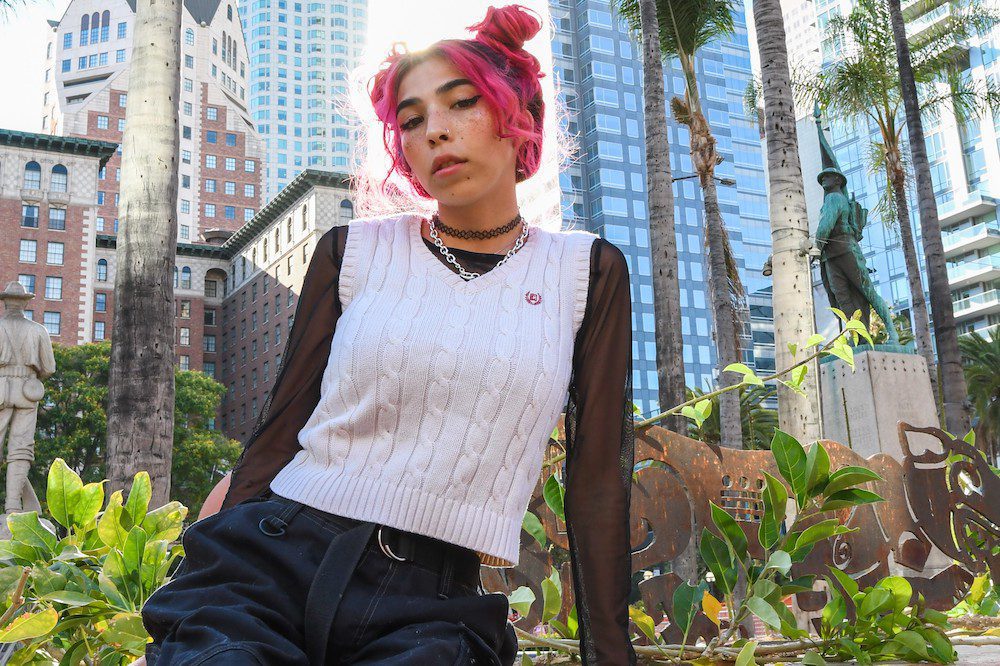
PREMIERE: Okayceci Has Butterflies in “Love Bug”

Photo Credit: Juliana Civitate

Valentina Vazquez, known by her stage name okayceci, is 21 years old and just started making music at age 18, but she’s already amassed nearly 200,000 TikTok followers and over 2.6 million Spotify streams for her first single, 2019’s cheeky, minimalistic “feel u.” Her fourth and latest single, “love bug,” follows in the footsteps of her earlier songs, with dreamy production and playful lyrics as she basks in the excitement of new love.

“You could be my love bug baby/And if you wanna we could get crazy/Like maybe driving in your car/Going pretty far/Tell me who you are,” she sings in an airy voice against laid-back guitar strumming. The earworm lyrics and melody are hypnotizing and practically beg to be blasted out of a window on a sunny day. Her goal with it, unsurprisingly, was to create a “repetitive, quick, catchy song for the car.”

The song was inspired by the early days of Vazquez’s relationship with her girlfriend, telling the story of “a crush or a relationship that just started — you know, when you get butterflies, like a new romance,” she says. “It’s just my second relationship with a girl, so it’s a lot of butterflies.” 

The artist likes to write about her relationships with women in order to normalize same-sex romances. “There’s not that many girl singers that rock out for a girl,” she says. “I try to make more music that’s girl-for-girl just so there’s more LGBT-type music — we need more representatives in the community.”

She recorded the song, like the rest of her music, on her own laptop. Typically, her producer/manager 199X Sound sends her a beat, then she improvises the song over it and sends what she likes back to him.

Vazquez has no formal training in music; she simply always enjoyed singing and decided to try writing songs one day in high school. “I just recorded on my iPhone, found some beats I liked, and that’s how I did it,” she remembers. Her artist name comes from her middle name, Cecilia, and a YouTube convention of putting “okay” in front of your name. She cites singer-songwriter and YouTube star Clairo – with a similar bedroom-pop style and LGBTQ themes – as her biggest influence, as well as Doja Cat, SZA, and Spanish-speaking artists like Bad Bunny (she herself has incorporated Spanish lyrics into her music).

After her breakout single “feel u” — which also spawned a danceable, disco-reminiscent remix — she released 2020’s “falling on me,” which features angelic echoes, infectious beats, and fun, flirty lyrics: “Likely, yeah, I like girls, they excite me/Hi me, I’m trippin’ on the weed, it excite me/Fight me, I do not fight but I’m feisty/Put it on my face, make your girl wanna try me.” Then, earlier this year, came “pink,” a dark, sassy, hip-hop-influenced single celebrating okayceci’s signature look and essence.

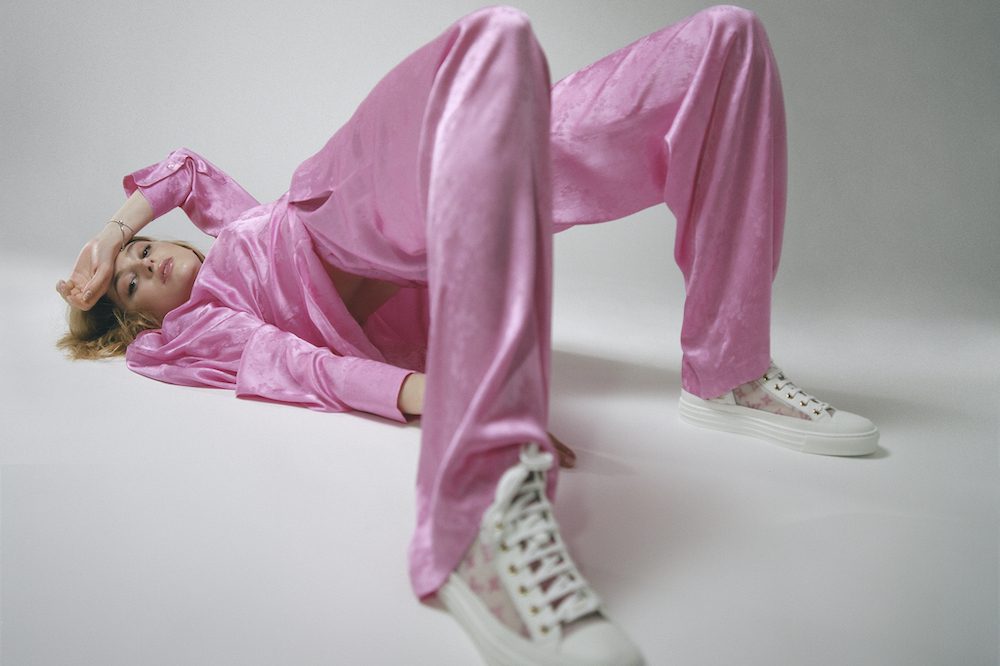
It’s not just okayceci’s catchy tunes that have rapidly garnered her fame, but also her endearing social media personality. Her Instagram bio simply reads “ur cute,” a phrase she’s considering as the title for her debut album, and her photos are full of hot pink hair, eye-catching fashion, and attitude. On TikTok, she posts intimate, musically illustrated snippets of her daily life, from dyeing her hair to playing with her cat to dancing to her own music with her dad.

She chalks up the success of her music in part to TikTok, particularly of “falling on me,” which features singer/songwriter Kinneret. After a TikTok trend of students doing their homework while listening to Kinneret’s “No Wind Resistance!” blew up, Vazquez noticed tons of people were suddenly streaming her music, too.

“We did the song ‘falling on me,’ and then she out of nowhere blew up on TikTok, so it was perfect timing,” she remembers.

Vazquez is currently compiling a collection of songs including “love bug,” “falling on me,” “pink,” and “feel u” into a debut album. “It’s very soft and, I would just say, cute,” she says of the project. “I kind of dip into some urban and go back into my main song ‘feel u,’ which is bedroom-pop Clairo-type music.”

Currently, the Miami native is learning guitar and also plans to learn to produce so that she can make her own beats. “I’m still in the process of learning, but I definitely want to be involved in the music-making for the beats,” she says. She and her girlfriend recently moved to LA so that she can dive more deeply into music, and given the scrappiness and creativity that’s characterized her career thus far, it’s exciting to imagine what she’ll do with even more support and focus.

Follow okayceci on Instagram for ongoing updates.

Lisa Crawley Premieres Retro-Inspired “Looking for Love” Video

Photo Credit: Karen Anne Patti

New Zealand-born Lisa Crawley had stars in her eyes when she landed on US soil. Having lived in Melbourne from 2014 to 2019, after a bit of back of forth between New Zealand and the US, she ended up moving to LA in January of 2020 once she got the Artist VISA; those stars might have sparkled their way down her cheeks in tears though, since a year of quarantine sullied her plans for songwriting, performance and collaborative creativity.

Not all was lost, though – the resourceful Crawley initiated live streamed piano karaoke sessions three nights a week from her Hollywood confinement, attracting singers from around the world. No wonder, really. For homebound amateur stars with Broadway dreams, it was a dream opportunity to join in on sessions with the lead from the Auckland production of Tony Award Winning musical ONCE, Banff Centre songwriter-in-residence, and recording artist.

When she wasn’t live streaming, Crawley was writing her own music with the assistance of Grammy-nominated Rob Kleiner. He both co-wrote and produced on her upcoming EP, Looking For Love (In A Major) – due out July 23. Thus far, she’s released two singles from the project: “Clear History,” and “The Right Way.” Premiering on Audiofemme is “Looking For Love,” which explores the awkward – and frankly, sad and true – reality that many of us are not content with the one we’re with, imagining instead a more ideal partner. The promise of online dating, which presents much like a shopping catalogue, can fool us into a “grass is greener” belief.

Crawley and Kleiner wrote the song at his place with their friend Kevin Gibson, who was in a Chicago-based band called Tub Ring with Kleiner and can be heard in the song’s backing vocals. “We had a few people in mind who inspired us for the song – those people who are never happy. You’re so sure, and then you’re not really sure, you know?” Crawley says. “We wrote and recorded that song in one day. Rob’s a really busy guy, and he’s quick. I dwell on things when it’s just me writing at home, but he motivates me to get to work.”

The video is gorgeously kitschy – and Crawley’s part-time gig had a lot to do with the aesthetic. “The video is inspired by asking a date at the time to take me to a drive-in, but he never did,” Crawley explains. “I started working part-time at a drive-in cinema, which is the first time I’d been to the movies in America. All those retro ads – dancing drinks and dancing sausages – seemed to fit with the song. It also made me think that dating can be a bit like fast food, so throw-away, too.”

That dovetails with the lyrical inspiration for the song, as well. “I did a little bit of online dating when I first got here, then I realised that it’s a bit early for that. Being new to the country, I wanted to make friends. I did a bit of Facetime dating, but mostly I was observing other people doing it,” says Crawley. “The song is based on observing the dating culture here. I grew up in a pretty traditional environment [in Auckland, New Zealand], so it’s pretty eye-opening. It’s harder to get away with in smaller cities and countries, but here you think you want something – you have it – and then some tiny thing sets you off to the next option. It’s easy when swiping on dating apps to be so judgmental. Being ghosted, it’s never fun. It’s about that person that’s never happy no matter what they have, because there’s always something wrong no matter what.”

From the opening seconds of reverberating bassline, Crawley hooks you. The tropical vibe is all sunshine, cocktails and romance novels by the hotel pool. For any Audiofemme readers who were teenagers in the 1990s, or have schooled themselves in radio playlists of the era, they might find themselves recalling Swedish band The Cardigans when listening to Crawley. There’s something of the playful, poppy, ultra-feminine Nina Elsabet Persson in Crawley’s delivery.

That carefree execution belies the stress Crawley was under in her first few months of living in the States. The Artist VISA requires applicants to show that what they bring to the table is unique and that they have work lined up in their field – music, in Crawley’s case. It’s a lengthy, expensive process and Crawley didn’t want to set herself back since the VISA lasts three years and took multiple letters from colleagues to support her case. When lockdown happened, she was determined to stick it out.

“I’m in a tiny studio apartment in Franklin Village,” she says. “Something I enjoyed doing in Melbourne was improv comedy and I thought it would be fun to live around this area because I’m living next door to the Upright Citizens’ Brigade. I had to take an online improv comedy course with them even though they’re right next door!”

Crawley admits it was an extremely lonely experience to move to Hollywood and find herself isolated so soon. “It’s been really lonely, so I fostered a cat called Iris, because I’d had a cat in New Zealand and Australia for 20 years. In fact, I didn’t apply for a VISA until my cat was really elderly. She was like my child, but when she passed I applied.”

She only had two months to try to find work and meet people, and she did have a good run initially. “I got booked for some gigs and worked with other artists, but I don’t want this to be a ‘poor me’ story. I had help from Support Act in Victoria; they gave out grants which was definitely helpful since I was living off my Patreon. I had a placement on a TV show, Nancy Drew – a song ‘You Won’t Be There‘ played, and that helped, too.”

On fact, one of the draws of moving to LA was writing and working with TV and film. Five years ago, Crawley began networking in LA with film and TV insiders to kickstart the opportunities for getting her work on screen. A conference in Hawaii introduced her to a sync licensing company that began to set her up with writers and enabled opportunities to place her music on shows. It can be highly lucrative, however varied. “It is one of the few ways that artists can make money these days,” she admits. “Streaming…well, I’m sure you’ve heard the numbers.”

Crawley has scored her friend’s web series, Ex-Sisters In Law (still playing festivals, but not publicly available yet). She’d been a guest musician on Tuesdays@9, which organises test scenes between actors and writers; it was via that group that she was introduced to Ex-Sisters, co-written by Suzan Mikiel. It’s only one of the many collaborative projects Crawley is involved in, as much as it has felt like she’s alone. It reminds her of her first solo travel, post-school.

For four months, aged 19, she worked in a very isolated Japanese town, Atami, “with no internet, in the middle of nowhere.” She was working seven nights a week in a hotel, performing the same show – singing, dancing and piano – to entertain tourists in the hotel bar. Since 15, she’d played in bars at night and churches in the mornings while also writing her own music, so entertainment is in her blood.

“I became more of an introvert after that Japan experience,” she says. But with plans to venture out and explore America – Nashville, Austin, New York and New Orleans all beckon – it’s hard to imagine Crawley can maintain her introvert status for long.

Follow Lisa Crawley on Instagram and Facebook for ongoing updates.

Khari Unleashes Institutionalized Sequel to This Is How We Feel EP Series

Khari
Khari
Photo Credit: Noir Media

Khari continues his hard-hitting three-part EP series This Is How We Feel with Act 2 (Institutionalized). Picking up where Act 1 (Trapped) left off, the Cincinnati native continues to balance harrowing lyricism with thoughtful ruminations about racism, the criminal justice system, mental health and more. Production is handled by Courtney Kemper, G1, AvAtor Hughes, Nick Burke and Maaster Matt, with features from Kamiylah Faatin and Paris.

This year, Khari also launched his own record label, Be The Best (BTB) Records, through which Act 2 (Institutionalized) was released. 

“I really wanted to… take back control over my art instead of just giving it out to streaming right away,” he tells Audiofemme

Here, Khari talks about his new project, when Act 3 will be released, upcoming visuals and more. Listen to This Is How We Feel: Act 2 (Institutionalized) and read his full interview below. 

AF: What does that phrase institutionalized mean to you as it relates to this project? 

This whole EP series has been a process of me taking the listener through what it means to be mentally in a prison, or even physically in a prison, because I’ve got a lot of family and friends locked up. So, looking at the similarities between those two, even in your day-to-day life, we can be institutionalized. We can be programmed. We can be conditioned to think a certain way. Whether it’s school – I’ve been institutionalized by that – there’s a number of things that line means, but that’s really like the main thing I was trying to get across to people.

AF: “Numb” is a super powerful song to start the EP with. That song, and a lot of these records, is very personal; what headspace were you in when you were writing and recording it?

I really wanted to be vulnerable and honest this time around, just give people more of me. And “Numb,” I wrote around the time when George Floyd had just got murdered. Everything was happening in the country, just a whole bunch of turmoil, and I was just feeling like super numb to it all because, mind you, this stuff been happening forever. I was at a point where I was like, I don’t even know how to feel about anything anymore. I’ve been through so much stuff in my personal life, and then also the plight of my people, it’s all weighed down on me. So, I tried my best to convey that on that record. 

AF: “Eve” is another important song. How did you and Kamiylah Faatin get linked up?

She’s actually the first R&B singer [to be signed] to my record label, BTB Records. She’s super talented.

AF: Having her on the track took it to another level, for sure. 

Oh yeah. That song was for Black women, so I really wanted her voice on there. She just really gave it that energy, so I was just extremely, extremely blessed to have her on the track. 

AF: On Act 2, you talk about taking back ownership of your craft, and you’re releasing the project on Bandcamp and through your record label for one week before streaming services. What made you want to do it that way?

That was a big thing for me this time around. I really wanted to, like you said, take back control over my art instead of just giving it out to streaming right away. Because we only get half a penny for every stream. It’s like all this work just to build up a certain number of streams and hope people listen to it on these platforms, when there’s people that are willing to support what we’re doing out here. I just wanted to take it back to when I was a young kid, 15 years old, selling my mixtapes at my school. Just put it out there and allow people to support it this way and see what we can bring in. Especially now with the label, trying to build that up. 

AF: It’s super dope that you launched your own label here because you’re keeping the talent and revenue in Cincinnati. Like, you can keep building it up and become a pioneer in the city.

It’s funny you say that, because that’s always been a big goal on my list. To really be a staple in Cincinnati. I think what we’re missing is the revenue and the attention. We can bring that in. We can make it so these talented artists here can start really living off this music. 

AF: I also saw your “Sha’Carri (Amari Freestyle)” on Instagram where you rap about Sha’Carri Richardson being suspended from competing in the Tokyo Olympics. What made you want to write a song about that?

It’s funny how that came about, because I told myself I was not gonna rap until the album came out. Like, no one’s gonna hear me rap until the album. But I just had to put that out, because that really is some bullshit. You know I’m saying? And that there are people locked up for [marijuana] right now. Why? When these big white corporations are eating off marijuana? I already was touching on some of these topics in the project, and then I just felt like I had to drop something because it’s a stupid situation.

AF: Absolutely. “Tin Man” is another song that stood out on the project. What was making that track like?

That was a fun song to record because that was my first time using auto-tune. With this project, I was trying to step outside my comfort zone and not be so locked into being this guy that’s only doing one type of sound. So, I wanted to do the auto-tune, I wanted to have more trap sounds, more modern sounds, but still give the substance and the content.

AF: You’re gearing up to drop a video for that song next; any release date in mind for Act 3 yet?

Well, I said Act 2 was gonna come out in January [laughs], but I do want to get Act 3 out soon, maybe at the top of next year, because I’m already working on some newer things that’ll be, like, the next phase of my career past This Is How We Feel. I’m excited about that. 

AF: Who have you been listening to/inspired by lately?

I really like the new J. Cole album, that’s really inspired me a lot. Tyler, the Creator’s album is probably my favorite right now. And H.E.R., I’ve been really tapped in with R&B lately and her new project, too. But, I like what these more lyrical guys are doing right now, you know, stepping outside their comfort zone. I’m trying to do the same thing right now, so that’s given me a confirmation about what I’m doing.

AF: What else have you got planned coming up?

Visuals, visuals, visuals. I want to do a visual for every song on the project. And I want to do a tour, since we can do shows now. I’m definitely trying to tour in Ohio, Indiana and Kentucky – do like a little tri-state tour. So, that’s getting set up for probably the fall.

Follow Khari on Instagram and Facebook for ongoing updates.

Babehoven Keeps Going When the Going is Tough on Nastavi, Calliope

How do we mourn the living? Maya Bon of Babehoven unpacks this strange, but not uncommon, phenomenon on her new EP, Nastavi, Calliope, out today. The record strings together Bon’s meandering streams of consciousness, connecting moments of apathy to deep swells of emotion. She navigates deeply fractured relationships and loss of loved ones while searching for a connection to Croatia, her birthplace (“Nastavi” means “keep going” in Croatian and “Calliope” is the name of her eccentric childhood dog who passed away this year).

Bon says these two words served as a compass for her this past year as she waded through pools of grief, uncertainty and loss. “[Nastavi] just really stuck with me because that felt so true for me this year,” says Bon. “I really just wanted to keep going and feel okay in myself. Recording became my avenue to do that.”

Bon explains that her reconnection to Croatia has been a way to form ties outside of a familial context. Her family left the country when she was five years old and her father stayed behind. She returned four years ago, at age 21, and saw her father for the first time in sixteen years. With this emotional reunion came a chance to connect not only to an estranged family member, but to her estranged culture. “My family is very painful for me,” says Bon, “so it feels very special to contain something that’s not family but is somewhere that I’m from.” This yearning to connect yielded Croatian classes and a seat in a Balkan choir, activities that have helped Bon root deeper into her identity. 

Though Bon doesn’t overtly say in our conversation who she’s grieving, album opener “Bad Week” outlines a heartbreaking fallout. “You were both a father and a brother to me/You were my whole family,” Bon sings well into the song, illustrating the crushing blow of losing someone extremely close to you. Her pleading vocals narrate the cyclical nature of grief and the way that it feels like it will never end; “It’s hard to talk about it/Been a bad week/It’s been a bad week for a long time.” Bon says that she uses her songwriting as a vessel to communicate about things that feel too intimate to share in conversation. 

“It’s weird that it comes out in my music because, at least in the beginning, I never talked about these things with people,” Bon muses. “Family, for me, always felt very private, because in a way, it was forced for me to be like that. There was always so much shame and layers of grief.”  

Instead of overtly talking about loss and trauma, these feelings come out in fragmented lyrics, scattering puzzle pieces for others – and herself – to put together. This is especially palpable in “Crossword,” a vivid description of Bon’s internal monologue. “Angus carried my bike up the stairs as I stood at the bottom/And I’m not sure if I just stared/Or if I thanked him/There’s a high chance that I’m feeling broken hearted,” she sings in the opening lines of the song, poignantly depicting a dissociative episode. Even her lyrical phrases run into each other like waves in a storm, mirroring her jumbled thoughts.

Between these moments of grieving and reflection, Bon leaves space for appreciating the loved ones around her. In “Alt. Lena,” she pays homage to a close friend and captures the familiarity and comfort we can find in our chosen family. She says that this is actually the only song she’s written that wasn’t from a stream of consciousness, but constructed from a laundry list of things her friend, Lena, likes. Sun-drenched guitars and Bon’s relaxed vocals paint a picture of a person who feels like being on vacation. Lena’s aura is so strong it reaches through the speakers and to the listener, generating memories of those people in our lives who seem too magical to be true.

Although Nastavi, Calliope doesn’t exactly offer a cure to grief, it offers a hand to hold through whatever loss you may be experiencing, a reminder that you’re not alone and that there are beautiful moments sprinkled in with the sad ones. And that sometimes writing a song about making out with your best friend is the form of healing you need.

Follow Babehoven on Instagram and Facebook for ongoing updates.

Philly Synth-Pop Artist Catherine Moan Broadcasts Aspirational Joy with “Drop It!”

Philly isn’t really known for a bustling electro-pop scene, but emerging synth artist and songwriter Catherine Moan just might change that. The city’s known more for its contributions to punk and hip hop, and Moan felt a bit lost in it all, not sure where she fit in. “It [felt] sometimes like imposter syndrome, where I’m like, oh well, I’m not using all these real instruments, like guitar and bass, and I’m not making grimy real sounding imperfect music,” she says. But with the onset of the pandemic, Moan had the opportunity to stop everything else and really delve into her sound, without the insecurity that comes with comparisons to others. The fruit of this labor is her debut LP Chain Reaction, out in September on Born Losers Records. Today, she shares her first-ever music video, for single “Drop It!”

Like many artists, the pandemic became a sort of blessing in disguise for Moan, where the cessation of soul-crushing day jobs and the influx of government aid allowed her to refine the music that had been floating around in her head for many years. “The entire quarantine situation unlocked this creative outlet that was so liberating… I was doing schoolwork and everything before so I was super divided, and so my personal projects, I couldn’t really focus. With isolation I was able to make that my number one priority,” she says. It wasn’t all good, though, and the balance here further unlocked a lot of creative potential. “At the same time, all these terrible things were happening in succession with the world and personal stuff. I had so much going on that was like a perfect storm of all these things you have to worry about. I even lost my therapist, so the music became my therapy. Each song I was working on I’d pick a specific problem I was facing and flesh it out, make it into a song, a sound, poetry.”

And so she wrote the entirety of Chain Reaction during lockdown, citing early Depeche Mode, CHRVCHES, and TR/ST as influential for how they were able to use high energy beats alongside somber lyrics to create a sound that was both fun and serious at the same time. “The number one thing with music that I try to keep in focus is that it’s kind of silly,” she says, articulating her own vision. “It’s not entirely serious, because you’re dancing around and singing in your bedroom. Even if I’m writing about something super serious and personal, I try to keep a touch of light-heartedness and fun and clownery in it.”

The “Drop It!” video reflects this in its perfectly simple concept, in which Moan sings alone in front of a green screen background, solid colors and nightclub scenes superimposed behind her while the lyrics pop up in the foreground. It feels aspirational in nature, like she’s trying to manifest the fun she’ll have once it’s all over. There’s no one else at the party, only her cat and multiple animations of herself dancing in conjunction with her real body. “I feel like that one is less about me and more about a collective feeling of what [we were] observing or experiencing during the pandemic [at] the peak of it,” she explains. “That winter was super tough, probably the worst winter we’ll all experience together. The one thing I really wanted to do was be dancing, be out with my friends, in such proximity that you’re almost overheating, and just find a way to channel that and forget and put myself in a headspace where it was like, we’re having fun, we’re dancing around, we’re having a great time.” 

The timing of the release is serendipitous in that it aligns with the reopening of clubs and music venues. With this in mind, Moan begins to prepare for her very first live shows ever. She has no formal musical background, mainly just an urge to write music that was never placated by traditional instruments or outlets. “It was a bunch of attempts and failures the whole time,” she explains. “Once I got to college I got my hands on a mini-synthesizer and it clicked for me. I was just like, this is what I like! This is what I can do!” Which isn’t to say the rest was history – Moan attempted a handful of failed collaborations along the way, until she realized she created best on her own. 

She faces the prospect of her first live performances with a mixed bag of positivity and nerves, excited for the opportunity to finally share the music she longed to create with the world. “I’ve never performed before, so it’s going to be really interesting. I’m very manic about it,” she says, continuing to sum up the whole project rather succinctly. “But I’m gonna have fun with it.”

Follow Catherine Moan on Instagram for ongoing updates.

Dick Texas Processes Grief with Debut Single “Flies”

Photo Credit: Jamie Sanchez-Skriba

There is no one way to grieve. Losing someone you love is one of the hardest parts of moving through life, and it often alters the way we see the world and ourselves. Valerie Salerno’s new solo project, Dick Texas, was formed out of a need to process her own grief and find a cathartic way to deal with the deaths of two of her closest friends. “I think that grief is something that just sticks in you,” says the Grand Rapids-based artist. “The best way to deal with it is to just put it into music. It just completely listens to you.” 

In her first single as Dick Texas, Salerno uses dark synth tones and distorted recordings of her late friend telling a story to paint a portrait of her unique experience with grief. Before starting this project, Salerno played in Sojii, a noise-rock outfit that often prioritized a harsh sound over identifiable lyricism. She says that part of starting Dick Texas was fueled by her desire to be fully heard. “In a band, I kept hitting this wall where I couldn’t be heard musically and creatively,” says Salerno. “So, I was like, I’m gonna sit down and write all these songs by myself so I cant blame it on anyone else.” 

This was in the spring of 2019, right before the pandemic started. She had decided to quit Sojii and start experimenting with synths. Shortly after, two of her best friends passed away. “Flies” deals with the painful fallout surrounding this tragedy and the exceptionally poignant agony of grieving in near solitude. “Never realized how full I was when I could always find you out there,” Salerno sings, starting the song with a familiar echo of taking loved ones for granted while they’re still here. She explains that the first lyrics for the song were spurred when she and a few friends were clearing out their late friend’s room. 

“We were walking through [his] room, cleaning out his stuff and the air felt so palpable and thick and tangible,” Salerno says. That’s when she wrote down the song’s first lyric in her notes app: “The air in the room can’t hold its own head up.” It’s a perfect way to encapsulate grief – as if the air is absorbing the darkness around it and falling prey to the same sadness as the people who are breathing it in.

Salerno explains that although she sang in Sojii, a lot of it was screaming, and even that was often drowned out by other instruments or loud feedback. She says it’s been refreshing to have control over how her words are received. “Words and literature are my first love,” says Salerno. “I didn’t start playing music until I was ten but I was reading and writing before that so it’s really special to have that [voice] heard.” And while Salerno’s lyrics are poetic, she makes sure to communicate exactly what she’s feeling without fluff or euphemisms. “As a person, I hate small talk. It literally gives me panic attacks,” Salerno shares. “I don’t think I’m special in my loss and pain; I think everyone feels those things. People should feel better about being able to share them.” 

Although Salerno’s right about the universality of loss and grief, her ability to distill the complexities of these feelings into a three-minute song is something that doesn’t come around often. She honors her friends by preserving the humanity of their relationship – the fights, the drunken nights and the feeling of home that comes when you’re around true friends. “I wish we could argue again/In flesh and blood/With words that cut/Like we’ve done before/Got a lot of poison in my soul.” Salerno lets herself miss every part of the friends she lost, to the point where she realizes it’s consuming her. “I wanna do more than just miss you,” she sings in a voice that mirrors the monotone of emotional exhaustion. 

“Flies” is the culmination of Salerno’s grief, anger, sadness and resolve to heal. After a months-long bender of grieving with friends and loved ones, she turned to her music as an alternative coping mechanism. “I sat down and was like, okay, I’m not gonna drink anymore, I’m not gonna feel bad for myself. I’m just gonna start putting those feelings into music,” she remembers. “Flies” (and its intro, “Prelude to Flies”) are the first iteration of that healing process and a sobering reminder to love your friends while they’re still here. 

Follow Dick Texas on Instagram for ongoing updates.

Poise Offers Compassionate Blueprint for Resilience with “New Kind of Love” Premiere

Photo Credit: Tonje Thilesen

On Vestiges, her debut solo LP as Poise, Lucie Murphy spends a lot of time self-soothing, pumping herself up to face challenges head on, and generally standing her ground with integrity. When we spoke on the phone, she said that the overarching theme that ties Vestiges together is “resilience.” Early singles “Walked Through Fire” and “Show Me Your Love” see the Manhattan-raised, Brooklyn-based musician demand positive recognition outright, and with her fiery swagger, it’s certainly easy to pile on much-deserved praise. But on “New Kind Of Love,” the album’s third and latest single, premiering exclusively via Audiofemme, Murphy turns her affirmations toward a friend in a dire situation, counter-balancing self-assured guidance with sensitivity and grace.

“I wrote it at a time that a friend of mine was in this abusive relationship and a few of my friends and I were trying to figure out the best course of action, because it felt like any intervention would just exacerbate the problem,” Murphy recalls. “It was sort of all I could do for this person – offer my friendship and a place to stay. I could only offer what I had and I couldn’t really do much more and that was very frustrating and heartbreaking.”

What’s especially remarkable about the track is Murphy’s sensitivity to the fact that leaving can be complicated – and sometimes dangerous. “I wanted them to understand that I didn’t think that they were crazy for staying. Of course I can’t exactly understand, but I have sympathy,” she explains. “I tried to say it as succinctly as possible, and get across everything I was feeling.”

Because the situation “New Kind Of Love” describes is sadly all too common, Murphy says she’s been approached by those who can relate, either to her position as the empathic friend whose hands are tied, or as the person to which she originally addressed the song. In both cases, the track provides strength and comfort, and for those that don’t have firsthand experience with scenarios like these, the song is an excellent blueprint for approaching with nuance and compassion. “I’m really proud of that song,” Murphy says. She’s shared it with the person she wrote it about, too. “Thankfully they’re no longer I this relationship so I think they’re doing a lot better. I didn’t say that it was about them, and if they picked up on it they didn’t tell me. But they said they loved the song so that made me really happy.”

For the song’s lyric video, Murphy digitally collaged pictures of her femme friends from her teenage years, when she was first taking an interest in photography. She ended up studying photography and art history in college, seeing it as a more likely career path than making it as a musician (though her first official musical project, a three-piece called Bruise, was rather active, it fizzled before she was out of school). “I think it was a really nice way to repurpose the photos in service to my music, and it’s really nice to have my photo life work with my music life in that way,” Murphy says.

“A big theme of the song is childhood and people changing and growing up and patterns repeating,” she adds. “The person who was in this abusive relationship was someone I’d known for a long time and had a pretty tough childhood also, and I’d known them through all of it. It’s wild looking back at this time; we’ve changed so much but also we haven’t.”

Not only did Murphy edit the lyric video for “New Kind of Love,” she also directed videos for her two previous Poise singles, and is self-releasing Vestiges. “Labels were hit really hard obviously, in this pandemic, and it was honestly really hard to find someone who was willing to start a new relationship at this point,” Murphy says. “I think the next one will probably get a proper label home, but I’ve also learned so much in the process. It’s been cool. I’m excited to learn more and to get it out there.”

As for directing, Murphy says she “had never edited a video before. I just learned Premiere Pro by myself… I’m probably doing everything wrong because I’m not properly trained or whatever. I thought it was gonna be a lot harder than it was honestly, but it was a ton of work.” She has the added benefit of coming from a family who works in film, and growing up close to the industry. Her father, an avid record collector, guitarist, and East Village punk aficionado, made a huge impression on her.

“He was always playing at home and I think seeing him play guitar was like oh I wanna do that, that seems cool,” Murphy recalls. She started playing around the age of 12, and even formed an “after school band” in middle school with her current drummer, Theo Munger. “I started going to DIY shows when I was like 16 or 17 at Silent Barn and Shea Stadium. I heard about Frankie Cosmos and that was really kind of the catalyst that made me be like, oh, I can do this – it just seemed really accessible and inclusive and inviting to me at that time.”

Poise took on a life of its own as Murphy finished up college, with the addition of Munger and guitarist Sam Skinner, who were set to play in her backing band on her first tour under that moniker. But a year of grief, tragedy, and loss almost sidelined the project – Murphy’s father passed away, and just as she was about to get Poise going again, the pandemic hit. Murphy only became more determined and focused – and her resiliency allowed her to complete Vestiges, which is out July 30. “I came to realize this is really what I care about and this is where my community is, and this is really what I love to do and what I think about all the time,” Murphy says. “All of a sudden, having all this time for myself to write, I just kind of birthed this album. I wrote it really quickly because I felt really focused, like, okay, things are not gonna go the way I want them to maybe, so I’m just going to work really hard, be resilient and make this happen somehow, even though it seems kind of impossible.”

With the “impossible” accomplished, Poise blazes their way into the Brooklyn music scene, and are hoping to be able to play Vestiges live soon. The album is a stunning introduction to the person at the very heart of the project; Murphy doesn’t shy away from heavy topics, but remains devoid of self-pity. “I did feel like I needed to make a statement in some way. I think a lot of indie rock can be melodramatic in a way that I totally love sometimes, but is not very ‘me.’” she says. “I don’t want to feel sorry for myself. I feel like, especially when you’re a teenager that’s a lot of what you do. I was like, okay, I’m adult, I don’t wanna do that anymore. That was a big part of the statement – yes, bad things happen, but ultimately things are okay, I’m doing alright, and I’m lucky for that.”

Follow Poise on Instagram and Facebook for ongoing updates.

Sedona Soars with Latest Single “From A Mile Away”

Photo by Dan Niazi

Driving through the Catskills this past Spring, I had Sedona single “Missing in Paradise” on repeat. Sedona’s causal, hauntingly smooth vocal delivery feels instantly familiar and comforting, easily as infectious as Fleetwood Mac’s “Everywhere.” It’s an anthem to follow your gut in the relentless and unruly game of love, asking “What makes up a lover?” answering through layers of glistening synths. The bridge exists as an inner monologue of an independent woman, tired of games, on the brink of giving up, she drives back to New York City, leaving the burden of love behind while longing to feel that familiar awakening of emotional instincts. Fresh nuance exists with every stream of the song’s infectious, uplifting hooks, sweeping chord progressions, lush harmonies, and thumping bass lines. Narrative arcs and concise musical arrangement creates sonic space for healing, retrospection, and forgiveness of our own past patterns of the heart.

Sedona’s latest single “From A Mile Away” tells a tale as old as time: the breaking of trust. The pain of betrayal exists as universal truth, and healing and forgiveness must come from sitting in the emotion, and seeing it through to the other side. The song offers comfort, and a reclaiming of power, when one faces “the cold hard truth.” The intro transports the listener back in time with ’80s synth leads, and a pulsating Laurie Anderson inspired vocal pads that reoccurs throughout the track.

Both singles follow Sedona’s 2020 LP Rearview Angel; together, these releases create powerful nostalgia that feels like time traveling back to the dreamiest soundscapes of the late ’70s and early ’80s, but Sedona arrives with authenticity and a firm grip on the hybrid of modern and retro influences.

The project began as cover band of Sedona’s mother’s original music. Reclaiming an underrated and amazing catalog, Sedona began performing the songs and bringing them to life in downtown venues of New York City. It wasn’t long  before she caught the attention of Terrible Records, and inked a deal to distribute original music. Now fully releasing original music, the project has evolved into an eclectic Brooklyn-based five-piece, with Merilyn Chang on keys, Claire Gilb on guitar, Margaux Bouchegnies on bass, and Tia Cestaro on drums. Sedona plays the Weird Sister Records Launch Party at Our Wicked Lady on July 14th, with Melanie Faye and Sug Daniels.

Sedona plans to one day record an album of her mother’s body of work that kicked it all off, but for now she’s breaking out by making her mark on the LA/NY indie music scene. I caught up with Sedona over the phone, during a recent vacation to Mexico, to discuss her origin story and creative process. 

AF: Can you discuss a bit about your childhood and the moniker Sedona? 

I’m from a town in the valley called Chatsworth in Los Angeles. It’s a mountain town, with a lot of horses and hiking. It’s very quaint, and has western energy. Growing up, I remember my dad would always go to this local bar called The Cowboy Palace. It’s like a saloon – a weird, hidden gem of LA. I actually wouldn’t say gem; more like a weird, hidden, forgotten underbelly of the valley.

My parents divorced when I was three or four. I was actually at their wedding. My mom and I wore matching pink dresses. Yes, I am a bastard, and although the wedding was fun from what I remember, the meaning of Sedona actually comes from their break. The first memory I have as a child is in Sedona – it was really the only memory I have of my parents being together. I remember watching a horse slip on rocks in a creek. It was the first time I ever felt a strong emotion: fear. Music helps me address emotions I’ve been holding onto. I use the writing process as a form of healing.

As for my childhood, my dad captured my entire life on his VHS camera. He’s a photographer. I was always performing and trying to bring joy to my parent’s stressful lives. I became a bit of a jester, an only child trying to make them smile. I was performing very young, writing songs, and acting out crazy stories. They’re really fun to watch, and it all makes sense to me now, why I feel so at home with singing. I grew up singing in choirs, then marching band in high school, and concert band. I used to compete in a cappella groups and travel, which was exciting. 

AF: Where do you feel most creatively free to write music?

That’s an awesome question. I feel like for me, it’s not so much a place, but rather like a feeling of openness and comfort that I can really feel anywhere. I’ve written songs driving in the passenger seat of my boyfriend’s car. I’ve written songs in the passenger seat of someone else’s car. Now that I think about it, I definitely like to write in the company of close friends. I have built this little group of producers, writers, and friends, who I feel really comfortable writing with. I feel like I’ve finally found my circle. I love writing with my band. I love writing with my friends, Ben, Matt and Tony. Ben and Tony and I wrote “Missing in Paradise.”

AF: Who are your musical icons and influences?

Stevie Nicks, obviously. Gwen Stefani, Patrice Rushen. I’ve been listening to Missing Persons non-stop. Mazzy Star, Britney Spears. I love Stevie Wonder, The Mamas and the Papas, Bonnie Raitt, James Taylor, the list goes on and on. It’s really all over the place. 

AF: How did you meet the amazing women that make up Sedona?

I have always wanted to collaborate with women and have a female band. I kind of set out on that journey early on. We met through mutual friends, and mostly on the internet. We actually just spent the last two weeks together, living in a house in LA recording eight hours a day for two weeks! It’s all new material that hasn’t been released for our album. 

Photo by Dan Niazi

AF: I’ve had “Missing in Paradise” on repeat since it came out. I can’t get enough! What is the production process like when creating a song? 

It’s different every time, and really depends on how the song started. If it’s a song with, Ben and Tony or my friend, Matt, who also produces me, we tend to write every part. They prefer it that way when they’re producing someone. I’ve tried to blend the two worlds, by sending the band the song and asking if they want to add anything. I’ll send my producers the band’s song and see what they think. It’s a lot of collaboration on all fronts. I’m kind of like the singular voice, and I co-produce everything I put out. I definitely have my hand in the arrangement and sounds. And when things come in, when they don’t, overall how things should feel. So I love that part of writing. 

AF: Your most recent track “From A Mile Away” was produced by David Carrier and yourself. Can you talk about that process of creating the track?

We wrote it together over the pandemic from afar because we connected on Instagram and he was like, “I love your music” and I was like, “I love yours too!” So he sent me that track and I just popped into my home studio. I quickly sang some lyrics and top-line, and it stuck and he really dug it. So it’s literally just his track and my lyrics and top-line, and it just fits perfectly together. 

AF: What was your experience releasing Rearview Angel during the pandemic?

Releasing music during the pandemic didn’t feel any different than releasing music during any other time. The only difference I felt was the sadness of not being able to perform the songs live, and give them life.

AF: What advice do you have for women in music? 

All women and femme persons in music should be celebrated and their music shared with pride and joy. Women are underrepresented in the music industry, and finally women that rock are making their way to the top!

Self doubt is a bitch, but it’s not useful in the world of music making. As a woman in music, trust your gut and keep pushing forward.

Follow Sedona on Facebook for ongoing updates.

Dot Allison Teases New Record with Premiere of “One Love”

Photo Credit: Essy Syed

Some ideas are hard to forget. At least, that’s the case for Dot Allison. The Scottish singer began working steadily on her forthcoming album, Heart-Shaped Scars, sometime around 2017, with some songs, like “One Love,” (premiering  today via Audiofemme), taking shape in 2020. 

However, the seeds of the album, set for release on July 30, go back more than a decade before that. “Ghost Orchid” started out as a poem called “Church of Snow,” written circa 2004. “Forever’s Not Much Time” was a title she had been kicking around since before 2005. In the interim, she released the albums Exaltation of Larks and Afterglow. She collaborated with artists like Paul Weller, Pete Doherty, Darren Emerson and Slam and sang backup for Scott Walker and Sun O))). 

Allison also took off time to raise a family. “I kept writing, but I just wasn’t making it into anything,” she explains from her home in Edinburgh. During this period, she says, she would write “one day here, one day there,” gradually building up a body of new work. “The ideas kept coming. I was banking ideas because I was doing these little bits of writing and then the kids just got a bit bigger,” she says. At around the same time, Allison had been introduced to musicians in Scotland’s folk scene, which became crucial to the development of Heart-Shaped Scars

Since the early 1990s, Allison has crafted an eclectic career. She first came to attention as the singer for One Dove, whose lone album, Morning Dove White, was released in 1993 and spawned the single “White Love.” Andrew Weatherall’s “Guitar Paradise Mix” of the song remains an impeccably cool slice of ethereal house.

Allison’s sophomore solo album, We Are Science, which was released in 2002, is one of the essential early ‘00s electronic pop albums, and Felix da Housecat’s remix of her song “Substance” was one of the big club hits of that era. But, she’s also made a lot of music outside the electronic realm, and for Heart-Shaped Scars, Allison delves heavily into folk. 

“I suppose I’ve got really eclectic tastes in music and just butterfly around listening to different things,” says Allison. “That’s reflected in my work. It’s not like I started thinking that I was going to go to electronic to this and this. There’s no grand plan.”

Allison connected with folk singer Amy Bowman and the two collaborated on “The Haunted,” the first song she made specifically for this album. It was based on a poem that Allison had previously written and she worked on the chords while Bowman handled more of the melody. “I’m so happy with what we co-wrote together,” she says. 

Through Bowman, she met singer Zoë Bestel and they joined forces for “Can You Hear Nature Sing?” Allison, who co-produced the album with Fiona Cruikshank, also worked with composer Hannah Peel, who provided string arrangements. The resulting album bears a tender, yet, eerie sound in the vein of Paul Giovanni and Magnet’s music for the 1973 film The Wicker Man

Back when she lived in London, Allison had a CD copy of The Wicker Man soundtrack that she kept in the booth of her studio. “In my opinion, it’s just really great songwriting in that visceral imagery, and melodically beautiful, like ‘Willow’s Song,’” she says. “It’s so gorgeous and pulls your heart strings.”

In the late ‘00s, Allison performed “Gently Johnny” from the film on stage at Glastonbury with The Memory Band. “It’s been in my sphere for a while, that film or that soundtrack,” she says. Of “Willow’s Song,” which is associated with a quite memorable scene in the film, she adds, “I just think it’s such an important song, really. I just love that song. “

Allison had already done quite a bit of work on the album before the COVID-19 pandemic hit, but the 2020 lockdown resulted in some reshaping of the album. She wrote “Goodbye,” “Long Exposure,” “One Love” and “Forever’s Not Much Time” during this period. The lockdown also prompted her to learn to play and write with a ukulele. “I just thought, I’ll pick up this ukulele because it’s a lovely ukulele and I just can’t put off trying it,” she says. Allison normally writes on piano, which she learned how to play as a child, and guitar. Because she didn’t know how to play the ukulele, Allison had to figure the songs by ear. 

It was a revealing experience. “I may have been slightly hampered by knowing the chords on the other instruments,” she says. Allison adds that the songs written with the ukulele are “possibly the most musical songs” that she’s written. It prompted her to wonder, “Why didn’t I pick up the ukulele before?”

Lockdown, Allison says, “transformed” the album. “It ended up benefiting the record, even though it’s not a positive thing,” she explains, adding that the stay-at-home period forced her to sit down and try creative approaches that she hadn’t previously used. 

With Heart-Shaped Scars, Allison challenged herself, while also taking listeners into an aural world they might not expect from her. “I do think that I quite like trying to cut a new path for myself,” she says, “Hopefully, that’s embraced.”

Follow Dot Allison on Instagram and Twitter for ongoing updates.
WOMAN OF INTEREST: Laura June Kirsch Captures a Specific Era of NYC Nightlife with Romantic Lowlife Fantasies

Photo Credit: Victoria Stevens

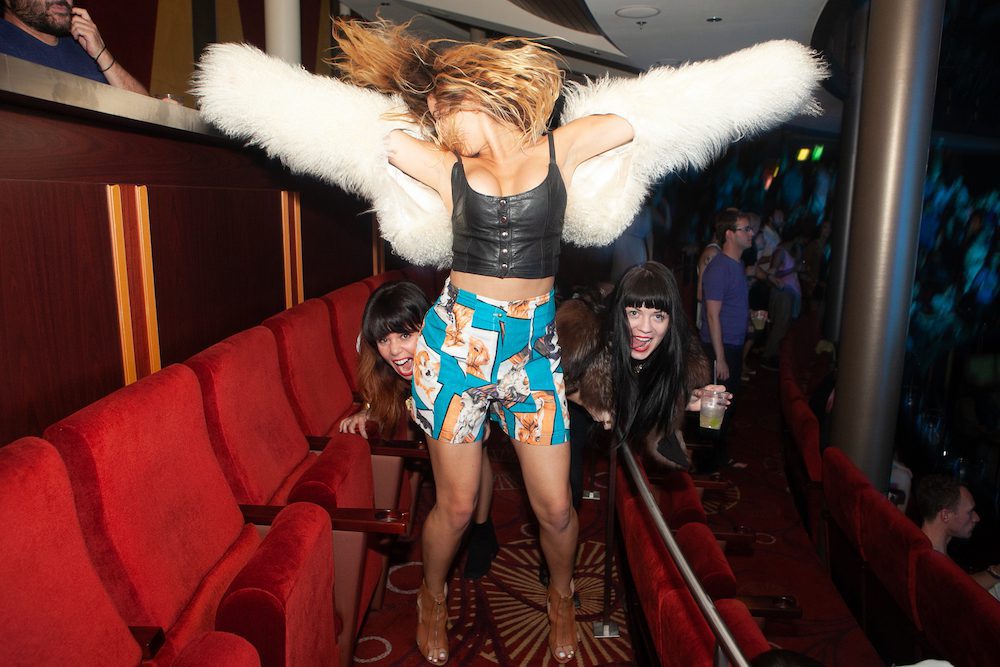
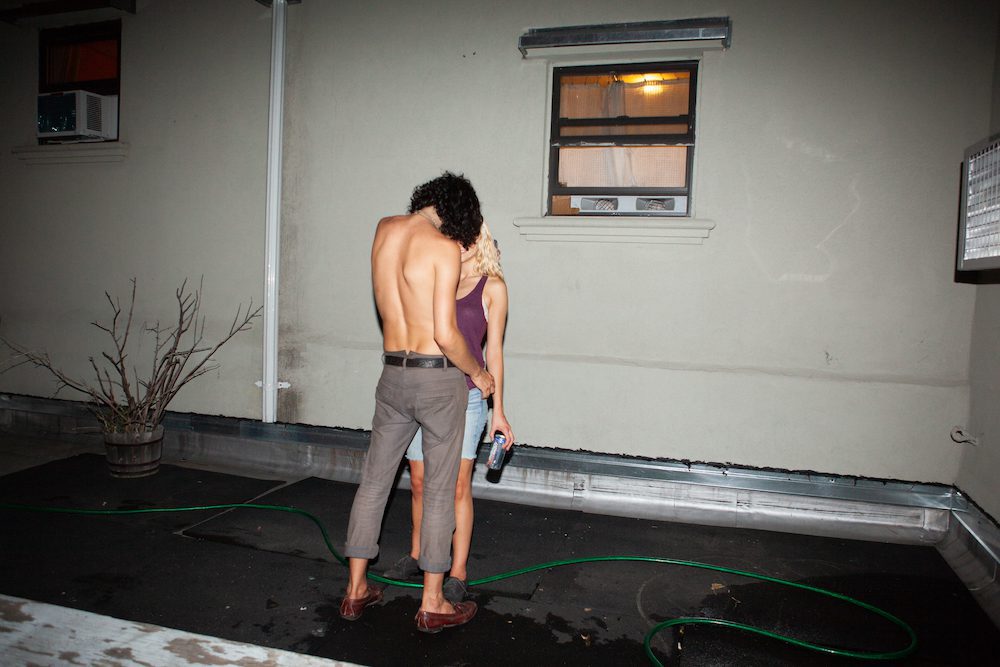
“I didn’t know anybody like the people I met in my 20s growing up,” says Laura June Kirsch. This statement neatly sums up Kirsch’s oeuvre of work, the irony being that her photographs capture anything but neatness. A consistent fixture in NYC nightlife for the better part of the 21st century, the photographer and writer has documented the city’s ever-evolving culture through the lens of shows and parties. She captured a very specific spot of time – the Brooklyn music scene in the post-Recession Obama years – and in doing so, carved a niche for herself as a young female photographer in an otherwise male-dominated field. She’s preparing for the release of her first book, Romantic Lowlife Fantasies: Emerging Adults in the Age of Hope, on Hat & Beard Press this fall.

The photo retrospective aims to articulate the concept of “emerging adulthood” as it pertains to the millennial lifestyle. The phrase began to pop up, according to Kirsch, in the late ’90s and early 2000s, as a way to comprehend the growing trend of delaying the traditional milestones of adulthood – getting married, having a family, buying a house. “Around the turn of the century, people started doing different stuff in their twenties,” Kirsch explains. “They weren’t getting married, they weren’t sticking to one job, there started to be this second adolescence.” As any millennial knows, these delays are fraught with nuance. We came of age in an era of endless war and economic crises, high interest student loans and the impending doom of climate change. 

Cover

Kirsch manages to get right to the heart of this subterranean angst with her photography. One image that stands out in particular is a girl wearing a purple bob hairdo and Doc Martens tucked in the corner of a party, clutching a desperate (and presumably cheap) can of Budweiser while she sobs. She says she wanted to capture the unique moment of the Recession, “what that was like, being a grown up trying to get by in a world where there was no opportunity,” because with the weight of this type of economic uncertainty comes an unexpected freedom – if there are no jobs, who’s to say you can’t start that band, or open that music venue with your friends? Her photos bring to life an era of NYC nightlife that’s been lost to the skyrocketing cost of living in neighborhoods like Williamsburg, where iconic venues like Glasslands, 285 Kent and Death By Audio fell victim to corporate development. 

“The scene we were in was a very special moment in time, and I think we all kind of knew that, catching a little bit of magic in the Brooklyn music community right after the economy crashed,” she says. “There was just a great artistic community we were all part of, and it was really fun.” She notes another important nuance of this time period – no smartphones. “This was the last time before everyone became completely glued to their phones constantly. So this was the last era of that real, uninterrupted human connection.”

Photo by Laura June Kirsch

It comes through in the photographs. She sets herself apart from a sea of concert photographers with her images of the crowd – couples embrace for what could be the first, or hundredth, time; friends dance into the early morning hours on what might be a Tuesday, ready to head to their underpaid “creative” 9-to-5s in just a few hours more. “I shot a lot of live music, but I was more interested in the people who were there,” she explains. “I had this great collection of pictures and I realized it was really just about millennials, and what lifestyle was like at this time, and what life looked like in these communities.”

A “great collection” is an understatement, as she goes on to say that Romantic Lowlife Fantasies is literally bursting at the seams: “I just had a big conversation with how page count works when you’re printing a photo book and we are out of pages.” Kirsch describes the book as a longstanding goal, “a labor of love,” something she aspired to ever since her early photography classes in high school. She’s been shooting this collection since 2008, beginning to sift through the content and piece it together in 2016. She began pitching it in 2018, and found Hat & Beard Press somewhere along the way. 

Photo by Laura June Kirsch

In addition to the photographs, the book will contain original essays from influential figures of that era, among them Darlene “Dee Nasty” Demorizi, Allyson Toy, Brooke Burt, Caitlin McCarry, and Jessica Amodeo. “They just tell their stories,” she explains. “I wanted a bunch of female writers to write about their experiences working in male dominated fields at the time.”

This is a theme that pervades much of the book, and Kirsch’s work in general. In the late-aughts era when she cut her teeth as an events photographer, there weren’t a lot of women out there with her. Surely it wouldn’t be a stretch to suggest that her unique perspective as a female photographer at this time is what allowed her to find the layers of emotional complexity that emerge from her photographs. 

Photo by Laura June Kirsch

The future of NYC nightlife remains uncertain, battered as it were by the pandemic. The problems that underscore much of Kirsch’s photography remain problems, some of them worse. But it’s because of artists like Kirsch, ones that capture a bit of magic for us to look back on, that we find the hope that maybe, just maybe, history will live up to the adage and repeat itself.

Follow Laura June Kirsch on Instagram for ongoing updates.

Seattle’s Prom Queen Rally to #FreeBritney with Spears Covers EP Lucky

Photo Credit: Ernie Sapiro

Lately, pop star Britney Spears has been back in the news as she fights to end her court-ordered conservatorship, prompted by a fame-induced mental breakdown in 2008. Thirteen years later, Spears is fighting to regain her autonomy from her conservator father, who limits her access to her estate and allegedly restricts her reproductive rights.

The battle for Spears’ freedom has sparked widespread discussions about disability rights and the public voyeurism that contributed to Spears’ tragic predicament. As society’s scrutiny of Spears’ personal life escalates once again, Seattle and L.A.-based artist Celene “Leeni” Ramadan, also known as Prom Queen, has decided to put emphasis on a part of Britney that she feels is often overlooked—Spears’ talent and significance as a musical artist.

With that in mind, Prom Queen will release a new EP on July 30th entitled Lucky. The 5-song EP is comprised purely of Britney Spears covers, interpreted in Prom Queen’s quintessential macabre-pop language, with a portion of the proceeds from the album going to the National Association to Stop Guardian Abuse.

“With this record, I want people to hear these songs in a different way, to celebrate Britney as an artist,” says Leeni. “If there’s a famous person who’s a man, and who is a brilliant artist but has mental illness, he is celebrated and he is given freedom and he is not being locked down by his mom. We make movies about men like this. These are celebrated stories for a man but for a woman to have any sort of challenges mentally is a problem and we need to lock her away and take away her rights and [say] oh my god, she can’t be a mother.”

Leeni, who is only one year apart in age from Britney Spears, has always enjoyed the pop star’s music and felt close to Spears, who she calls a “generational icon for people my age.” In fact, Leeni’s passion for Britney Spears actually helped her find employment after she first moved to Seattle in 2004.

“In 2005, I started really looking around for work and I was doing improv comedy and one of my improv friends was doing these singing telegrams through this agency called Livewire, and she got me connected with them. I became a performer for them and have worked with them for over a decade doing singing telegrams as different characters [including Britney Spears,]” she recalls. “I remember my first Britney gig – I was hired to walk around at the convention center downtown and all I had to do was wear this schoolgirl outfit and be Britney for a day and it was really fun. And then I remember also performing for some kid’s birthday party. It was so cute. There was a bunch of girls, and they just wanted me to show up and do a full Britney singalong with them.”

It was during her time working as a Britney Spears impersonator that Leeni said she learned Spears’ catalogue inside and out, and even then, knew someday she’d do a Britney Spears cover album. After all, Prom Queen loves to cover songs, something that garnered the band national attention in 2016, when Prom Queen’s mash-up of the Twin Peaks and Stranger Things themes, Stranger Peaks, went viral.

“I consider myself a melody junkie; there’s just melodies that I love and when you get to hear them in a different context – I don’t know, for me, it gives me goosebumps,” she says. “I want to hear a great interpretation of a melody that I love… Like when I did my cover of ‘November Rain,’ I was like, ‘That is a doo-wop song.’ I was so obsessed with making that song over the years. I think I started my first one in like 2009 and kept making that song until I felt like I got it right. I don’t know, I just always really love making covers.”

As for Lucky, Prom Queen has had the concept in her mind “for years,” and had been collecting and studying Britney Spears’ songs on a Spotify playlist, hoping to narrow down her extensive catalogue and choose the ones that would work best in Prom Queen’s style—which includes a slow country ballad version of Spears’ breakout hit “Baby One More Time,” a Dick Dale surf-rock version of “Toxic,” and a glimmering doo-wop adaptation of the EP’s eponymous “Lucky.”

“I’ve always wanted to do an EP of a single artist and Britney has kind of always been at the top of my list,” says Leeni. “I just feel like a great pop song is a great pop song and you can do a number of different things with it and if the bones of the song are good, you can really take it anywhere. I think these songs to me were some of the best. I had such a hard time choosing. I think these songs, it’s kind of my favorite cross-section of her [work.]”

Prom Queen started making demos of her favorite Britney songs in Spring of 2021, and sending them to her bandmate. She would lay down bass, the acoustic guitar and some sketches of the other instruments and then send them to other folks she wanted to include on the record—including locals Jason Goessl of Sundae and Mr. Goessl, guitarist Ben Von Wildenhaus, violinist Andrew Joslyn, and fellow Britney Spears-loving L.A.-based singer, Cassandra Violet.

“Cassandra Violet is a friend of mine and she’s a big Britney fan. She wrote a piece on Medium about Britney and she just released her debut album and she has a song about Britney Spears, and she and I have collaborated a few times so I thought it would be really great to have her sing the harmony on ‘Lucky,’” Leeni says. “And then I got Andrew Joslyn to do the strings, so those are real strings on the EP.”

Each musician recorded their tracks for Lucky in their respective home studios, for COVID safety, and sent them back to Leeni, at which point Tom Meyers, Prom Queen’s drummer, engineered and mixed the EP. Prom Queen has already released their video for “Baby One More Time,” and the band is currently working on a video for “Toxic.”

As for what she hopes this EP can achieve, Leeni hopes it reminds her fans that Prom Queen is still making music, and that it gives fans some fun nostalgic pop music to enjoy over the summer. She also hopes the EP’s celebration of Britney’s music can underscore the importance of Spears’ struggle, advocating that the pop star should get to choose what the rest of her life looks like—even if it means never returning to the stage.

“I hope that she can get her freedom. I hope they can end the conservatorship. I hope that she can even get a restraining order against her father or whatever she needs, but you know, I don’t think that she needs to be in the public eye ever again if she doesn’t want to,” says Leeni. “Whatever she wants to do with the rest of her life, I want it to be her choice.”

Follow Prom Queen on Facebook for ongoing updates.

Eva Tolkin Makes a Case for Saying Yes to the Universe with City and Sky LP

Singer-songwriter Eva Tolkin never imagined she would have a career as a musician. She was working in fashion when she met Solange Knowles and auditioned as a last-minute whim for work as a back-up singer, only to exceed expectations and ultimately get the gig. And after Solange’s True tour cycle wrapped, Tolkin went on to book tours with Blood Orange, Robyn, Lykke Li, and Charli XCX. The unlikeliness of it all inspired her to keep going, booking more tours and beginning to write her own songs.

“I feel like I didn’t even realize I was writing music. I was writing poetry, and coming up with little melodies, but it was when I got into the music industry that I fully realized what was possible,” she explains. “I think up until that point it never even occurred to me to follow through with any of these songs I had written. And so in a lot of ways, my music is very influenced by the artists I worked with, just by proximity and being inspired by them.”

By 2017 she was releasing her own singles, followed by her debut EP Truthfully in 2019. Though the pandemic halted touring, it gave Tolkin a chance to truly find her voice as a songwriter – an unexpected result of pandemic isolation. “I was used to touring constantly and never really gave myself the time to focus and dive into my own music and what I want to write about,” she says. “‘Weak as Water’ was the first song I wrote when touring was canceled last year, so it was more personal and thoughtful than some of my previous releases.”

“Weak as Water” appears on her brand new solo EP City and Sky, out last week. In many ways, it’s the culmination of years of refining her musical talents and finding the confidence to write and record her own music. The seven-song EP travels between sparse, melancholy acoustic tracks carried by Tolkin’s vocal prowess and more upbeat pop-inspired songs. The shifts in mood weren’t necessarily intentional – the pop-based songs were largely written pre-pandemic, while shutdown gave her the mental space to grow creatively and explore more personal themes. She says that it should be easy for listeners to identify the pre- and post-pandemic songs. Compare, for instance, the quiet introspection of “Weak as Water” with “Is It Love,” an upbeat track that sparkles with early-aughts radio pop vibes, all the way down to the clapping effects tucked into the beat.

Tolkin had never played an instrument until this year. The cancelation of tours offered her the opportunity to sit down and learn the guitar, which ultimately contributed to this shift in sound. With that comes the uncertainty of endless potential; she didn’t expect any of this to play out the way that it has, so who’s to say what comes next? “It’s really just evolving all the time and I don’t even know, I feel like the next thing I do, next year or whatever, could be a different vibe,” she says. “I’m really just exploring right now. I kind of feel like I’m starting from scratch.”

This creative freedom is not without flaw, though, as Tolkin deals with the same type of existential dread many have faced with the loss of routine. “I have days when I feel like I’m forcing myself to do it. There’s just been so much time over the last year, because I have been completely out of work,” she admits. “There are some days that are very creative and fulfilling [but] I still have days where I feel like a total waste case, that I’m not doing anything.”

In the end, it’s all an exercise in patience, and Tolkin is a poster child for trusting the process, in that her commitment to listening to her heart has worked out in so many ways and taken her life to so many unexpected places. None of the artists she works with had announced shows as of the last time we spoke, but even after they do, she plans to “continue learning,” she says. “There’s so much more now that I’ve opened this whole new can of worms.”

The success Eva Tolkin won with a last-minute Solange audition years ago was formative in that way, a lesson she still carries with her to this day: “Saying yes to opportunities, going for things even if you feel like there’s no shot, that’s something that’s carried through and opened so many doors,” she says. “That one decision to go through with the audition has really changed my life forever.”

Let us all carry this wisdom into our new, uncertain present moment. Listen to your heart, follow the hunch – you never know where it may take you.

Follow Eva Tolkin on Instagram for ongoing updates.

After Two EPs and a North American Tour, Janette King Releases Debut LP What We Lost

Photo Credit: Sarah Armiento

“It’s funny, with music,” says Janette King by phone from her home in Montreal. “For me, at least, some songs take years to finish and other songs take hours.”

A singer, producer, multi-instrumentalist and DJ, King released her first full-length, What We Lost, via record label Hot Tramp on June 25. The album follows two EPs, Electric Magnolia and 143. Where Electric Magnolia, released in 2015, featured a live band and bore a distinct jazz influence, her 2019 effort 143 delved into electronic R&B. With What We Lost, King continues on the path set with 143, while also dabbling in house on the title track, as well as on album-opener “Airplane.” The latter was released as a single back in March of this year. 

While some of the songs on What We Lost had been in progress for some time, others came together fairly quickly over the course of the past year. The initial plan was to release the album in early 2020, but, in addition to a pandemic-related postponement, King had continued writing new material, including songs that she wanted to appear on this album. She kept up the work until January of this year.

King, who has performed alongside artists like Sudan Archives and Jamila Woods, toured North American in 2019; shortly after returning from that jaunt that she began making plans for a full-length album. Much of the material was written and recorded in her bedroom, where she has a piano and guitar in addition to a production set-up. King worked with multiple producers on the album, including longtime collaborator Jordan Esau. 

As a DJ, King plays primarily in Montreal and Toronto and her sets vary from ‘90s and early ‘00s hip-hop and R&B throwbacks to a variety of sounds, like dancehall and calypso, that nod to her Caribbean roots. Although she doesn’t sample often in her work, she says that DJing does impact her approach to songwriting. “DJing has helped me to understand BPMs better,” she says. When she’s writing, she can decide whether she wants a song to be downtempo or high energy, associate that with the beats per minute and build the piece from there. 

King says that she often starts with drums, creating the beats before the lyrics and melody begin to formulate. “As I’m writing the melody, the lyrics come simultaneously,” she says. With some of the tunes on What We Lost, the first takes of the songs, where King says that she “word-vomited” the lyrics, were the keepers. “We just liked how it sounded, so we kept it,” she says. 

As King continued writing through 2020, her songs began to reflect the year that was unfolding. “In the wake of George Floyd’s murder, that really stirred the activist in my soul to come alive through song,” she says. The tragedy inspired the song “Change.” 

Elsewhere on the album, King draws upon self-empowerment  and “empowerment through activism” as thematic elements. She considers the questions that arose during the year of physical distancing. “I think that now people are having the space to ask themselves ‘Who am I?’ and ‘Who do I want to be in this world?’ and ‘What do I stand for?’” says King. “They’re really choosing to see with their own eyes what’s really happening in the world.”

She points to social media as crucial to opening people’s eyes to systemic racism and social justice issues. “These things have been happening for so long, but now that we have social media, they are a lot more visible,” she says. “You can’t turn away from it these days. I think that a lot of people are starting to have empathy and compassion for people that don’t look like them and for people’s stories and honoring their own values.”

King says that she believes strongly in unity, as well as love and understanding. “Like they say, you can’t win unless we’re all winning,” she says. “One person’s struggle is all of our struggle.” 

In writing What We Lost through such a tumultuous year, King created an album of  personal reflection and healing.  “Every time I write a song, it feels like I’m transcending something,” says King. “I think one thing that I’ve taken away from making this album is that I was able to dig deep into this spiritual sense of being creative.”

It’s also an album that could similarly impact its listeners. “ I guess that my biggest hope for people is that they feel themselves reflected in the music that I write,” says King. “One thing that I’ve taken away from it all is that it’s really therapy. It’s really healing. I hope that it is for other people as well.”

Follow Janette King on Facebook and Instagram for ongoing updates.

Kyd the Band Turns His Scars Into Compelling Stories on ‘Season’ EPs

Photo Credit: Gina Di Maio

Devin Guisande, aka Kyd the Band, can still visualize the photo his parents have of him sitting at a drum set, no older than the age of four. Introduced to music in the Pentecostal church he was raised in Northern California, Guisande was playing drums at mass by the age of 10 and singing in the choir at 15, yet he didn’t consider himself a singer until his brother and future collaborator Kyle pointed out his impressive voice.

“I never wanted to be a singer, but I remember driving in the car one day with my brother and he heard me sing. He’s like ‘you can really sing,’” Guisande recalls to Audiofemme in a phone interview. From there, the brothers formed a band with their friends, and Guisande dipped his toe into the songwriting pool, discovering a passion for the craft that he later turned into a career. He’s just released the latest EP in his four-part cycle, Season 4: Series Finale.

At 18, Guisande made a life-altering move when he left the church, venturing on a personal odyssey that led him to Los Angeles, where he tapped into his songwriting capabilities, turning his personal tragedies into compelling narratives. “I wanted to write my own songs because I felt like I wanted to say something. I didn’t know exactly what then, because I was so young and I didn’t live enough life to really have an opinion or just a story. But I knew I wanted to try to get there,” he expresses. “Songwriting, it’s like a muscle. The more you do it, the stronger you build that and the better you get. Over my life of living more, it cemented ‘this is who I am as a person, as an artist, and this is what I want to say.’ If I’m not the one writing my songs or being honest in sharing my story, then I don’t think there really is a point for me to do this.” 

Leaving the conservative life of the church behind and moving hundreds of miles away from home for the fist time put a strain on Guisande’s relationship with his family, leading to what he describes as one of the darkest points of his life. He developed a substance abuse problem and overdosed, an experience he chronicles in the deeply personal “Dark Thoughts.” The ear-catching, dreamlike bass doesn’t overpower the song’s thought-provoking subject matter that serves as Guisande’s cry for help, reaching his hand through the dark as he professes, “I’ve been having dark thoughts/They’ve been cloudin’ up my mind/Like someone’s turned out the light on me/I’ve been having dark thoughts/Do you ever feel like me?/‘Cause I could use the company.”

“To me, that song was like an admission, a vulnerability saying, ‘this is me whether you like it or not, this is what happened.’ It was a face-to-face moment with myself,” he observes. “ I haven’t really talked to a lot of people about those things, and music was the outlet for that and gave me an objective, outside view of it. I think hard experiences and painful ones can inspire you and be a source of creativity. It’s been a way for me to help deal with those things.” 

After coming to the realization that he no longer wanted to be in L.A., Guisande and his now-wife headed east to Tennessee, making Music City their new home. Soon after, his brother made the trek to Nashville, Kyle working at GameStop while Devin worked as a full-time assistant to a real estate agent. The two formed Kyd The Band, balancing their day jobs while making music on the side that resulted in such songs as “American Dreamer.”

After the brothers musically parted ways, Guisande continued on with Kyd The Band as a solo act, releasing a series of EPs throughout 2020 and 2021 with Season 1: The Intro, Season 2: Character Development, Season 3: The Realization and Season 4: Series Finale. “I figured out early on I wanted to release music as seasons and make it like how a TV show is formatted because the music’s about my life,” he narrates. “My life has gone in waves and different phases, and so the seasonal structure really made sense.”

Season 1: The Intro chronicles the California native’s childhood growing up immersed in the church. “Sad Songs” depicts a sense of loneliness while acknowledging inner demons through lyrics like “I only like sad songs/Something may be wrong with me/And I leave the TV on/So someone’s in the room.”

Season 2: Character Development candidly chronicles his journey of leaving home and moving to L.A. while blossoming into adulthood with songs like the aforementioned “Dark Thoughts.” By Season 3: The Realization, Guisande has embraced who he has become and come to terms with his own reality, though heavy themes are still present. On “Make It In America,” for instance, he narrates vivid memories of watching a creditor place a foreclosure notice on the door of his childhood home after his family went bankrupt (Guisande was 16 at the time). He recounts his family selling off their belongings off in a yard sale and driving with his father to the bank to surrender their cars.

But Guisande attributes these challenges for building his endurance and resiliency, the message connecting as much to the present as it does the past. “Had I not gone through those things, I don’t know if I would have the perspective or understanding that I have now of you can lose everything literally tomorrow,” he reflects. In the song, he ponders, “When my soul flies/I can’t take one thing/Why do I try so hard to make it in America?” – a message that certainly hit home during the pandemic. “Over the last year, if we didn’t know that you can lose everything tomorrow, we realized or remembered that. Things aren’t what matter. It’s the relationships that you have in your life, and it’s people that you have right in front of you. Those are the things that you need to put value on,” he says.

The collection concludes with Season 4: Series Finale and includes the motivational “Glory” and powerful “Real Problems,” the latter of which he cites as one of the most important songs he’s released. A collaboration with fellow Nashville-based artist Taela, the song was borne out of their parallel experiences with substance abuse and Taela’s struggle with mental illness and self-identity. Taela had already written part of the chorus when she pitched it to Guisande as a collaboration, the dynamic artist working his magic in verses that find him in a work-in-progress state, yet recognizing the strength he’s gained from walking through life’s obstacles.

“I knew I wanted to talk about the struggle of it and of living with things that have happened in your life, or things that you’re currently dealing with, to talk about that in a really honest way,” he says. “There was a strength in saying, ‘I have some things that I’ve gone through and they’re legit, real life things, and they’re not always pretty.’ I think there was a strength and courage and admitting that.”

“It took some real problems for me to grow and become who I am,” he continues. “When I look at my life, that’s the truth for me. That’s me going through what I did and the things I talk about in Season One, Two and Three to really figure out who I am as a person and what matters to me and what I believe. I’m thankful for all of it, the good and the bad, because it’s gotten me to where I am now.” 

All roads lead to where Guisande is in present day, with the mission of inspiring others to share their truth and find methods of healing, just as he’s done countless times. Turning his scars into musical works of art dovetails with the goal of making others feel like they have a true sense of belonging. “If they feel different, if they feel like they don’t fit in, there’s other people out there that feel like that too,” Guisande shares. “We’re all in this together. At the root of it, that’s what I hope.” 

Follow Kyd the Band on Instagram, Facebook and Twitter for ongoing updates.
Squirrel Flower Burns Rubber on New LP Planet (i)

musician Squirrel Flower, wearing a denim jacket, stands partially turned away from the camera, with bright glare from the sun partially obscuring the image
Photo Credit: Tonje Thilesen

“I feel like I’m like a hedonist,” says Ella Williams, the mastermind behind whimsically-named alt-pop project Squirrel Flower. “I just allow my impulses and my desires to affect the actions I take.”

She’s discussing the beating heart track of her newest album, Planet (i), out June 25th on Polyvinyl. “Flames and Flat Tires” is one of the record’s most untethered tracks, with a sense of looseness and levity that contrasts with some of the album’s darker moments. And while the character in “Flames” isn’t explicitly Williams, she isn’t denying that sometimes she feels like she, too, is hurtling through life with her foot on the gas. 

“[‘Flames’] is partially inspired by this novella by an author named Torrey Peters,” she explains. “It’s called Infect Your Friends and Loved Ones. It’s like a queer, trans apocalypse story, and it takes place in Iowa, and the first couple scenes are this person on I-80 Iowa in this fucked-up car that they’re trying to like, fix themselves.” 

Planet seems to be quite taken with the things we can’t fix ourselves — natural disasters, busted cars, narcissistic people — but it’s not meant to be fatalistic. “[Planet is] not an apocalypse album because ‘apocalypse’ implies one event that changes the earth and makes it uninhabitable,” Williams says. “I think it’s just that we’re kind of living in an ongoing apocalypse, and in that are both moments of incredible utopia and moments of actual full-on disaster. And I think acknowledging both of those as things that happen at the same time is a huge point of the album.”

While disaster has certainly been the flavor of the past year and a half, Williams has been immersing herself as much as she can with the music scene in Chicago, where she recently moved. “I’ve been going to a lot of techno raves,” she says with palpable excitement. “It’s [these] incredible moments of utopia that I was talking about — just like very queer spaces and beautiful community spaces and dancing and techno, and it’s so sick.”

Williams moved to Chicago in part to be closer to her bandmates, but the opportunity to get to know a delicious new scene was undeniable. “I first went to a DIY show in Boston when I was sixteen,” she recalls. “From there it just like took over my life and changed my life and changed the way that I thought about music and [how I] thought music could work.” Williams emphatically credits the Boston music scene as instrumental to her journey as an artist — as well as the scene in Iowa and her experience recording Planet in London.

While the constant moving and adjusting can be difficult, Williams feels she has some precedent for living her life the way she does, mainly inspired by her grandfather, Jay Williams, who was a writer, Vaudeville performer, and “card-carrying Commie,” and his wife Bobby, a community organizer. “Every time I’m like, ‘damn — it would be nice to have like a little more money or a little more stability and not be living in like five different places every year’… I think about the way my ancestors have lived, which is very transient and allowing art and music and love and connections and relationships to guide them through life, as opposed to anything else,” Williams says.

While the overarching lyrical themes on Planet certainly reflect this transiency, there are a few small moments that approach it from a different angle — lead single “Hurt a Fly” and “Deluge in the South” both detail the experience of searching for refuge in other people, specifically in their homes. “But then I showed up at your door/With my head in my hands/And you took me in,” laments the narcissistic partner Williams channeled in the former, while she promises “I will take you in/Wrap you up again,” in the latter. While the two songs are not specifically connected, the concept of constructing home where you can, with what and who you can, is classic apocalypse.

But like Williams said, this is no apocalypse album. If anything, it’s simply observational. As a function of her DIY ethos, Williams has been rather boots to the ground since 2015, when she self-released her first EP, Early Winter Songs from Middle America. But even after her much-praised label debut (2020’s I Was Born Swimming, on Polyvinyl) Williams wasn’t allowed much distraction, instead finding herself stuck in quarantine with little to do but process everything she had experienced on her last self-booked tour. “I got home and had just like seen all of this really insane shit. I saw the desert in California for the first time and I was driving through Missouri and there was so much flooding that it looked like we were like driving through this field of glass, and there were billboards and trains going through and coming out of the water, and it was so nuts. Just like, insane storms after shows.” 

Williams is very preoccupied with weather and the power of water on Planet. It gets mentioned on almost every single track, most notably on “Desert Wildflowers.” “I’m another piece of debris/Flying above the town/Closer to the stars than I am to the ground,” she coos before the song’s central manifesto: “I’m not scared of the water/The rain is my parent and I am the daughter.”

“Desert” was the first song she wrote for the record. That songwriting session must have been some kind of unconscious preparation for things to come, as the song feels like an affirmation in the form of a lilting lullaby, like some part of Williams knew it was time to face the particular fears — or strengths, depending on how you look at them — that drape Planet like tapestries. 

“I got home and the song just came out,” she says. “And I kind of just rolled with it.” She wrote so much, in fact, that there is a whole other Planet album that exists somewhere in the stratosphere, or in some hidden folder on Williams’s computer. Call it Planet (ii), or call it the ghost album — either way, Williams doesn’t have any plans to release those songs any time soon. But it does haunt her in some ways, as ghosts tend to do. “Is the music only what’s shared with other people?” Williams asks. “Or is the music what you make and experience with yourself and your process?” Williams has plenty of time to keep looking for the answer, no matter where it takes her in her busted-up car.

Follow Squirrel Flower on Facebook and Instagram for ongoing updates.

Summer Like The Season Makes a Timely Return with Premiere of “Root Mean Square” Video

Summer Like The Season – a.k.a Summer Krinsky, Scott Murphy and Liam McNitt – has a way of creating its own little world. Krinsky, who explains that texture and rhythm serve as the guiding forces of her songwriting, meticulously builds this world, brick by brick, using field recordings she’s captured on tour or in her home, layered vocals and unexpected rhythmic patterns. On latest single “Root Mean Square,” Krinsky reflects on the complexity of “remembering past relationships as a full picture instead of just highs and lows,” she says.

While the song emits bursts of longing, heartbreak and understanding, the video, premiering today via Audiofemme, is pure comedy. “The music is all pretty serious so we wanted the music videos to be a little lighter and fun,” Krinsky says. The setting for the visual takes place in an old dollhouse at Krinsky’s grandmother’s home. She was visiting one day when she was struck with inspiration. “Summer calls me up and says, ‘Get your cameras – my grandma has a dollhouse and we’re gonna use that to make a music video,’” Murphy recalls. “’Just get all the action figures you have and come on over.’” 

Murphy, a self-proclaimed “bad visual artist,” took up cinematography at the start of the pandemic and ended up shooting the entire video. While Krinsky’s vocals tell a story of loss and perception, a completely different kind of tension builds in the film. A tiny mouse family is ambushed late at night by some bad guys who came to rock. “The bad men come and they break into the mice’s house with the sole intention to jam,” says Murphy. “But their jam gets out of control and they kidnap a mouse,” adds Krinsky. The band casted, wrote and shot the film all within a day, in the type of fever dream-haze that many experienced during lockdown. “One might say it was manic,” Krinsky jokes.

Though the video was made within a matter of hours, Krinsky explains that the band’s forthcoming record, Hum, was a process three years in the making. “It was written and recorded, mixed and remixed a million times,” she says. When she finally finished the record, the pandemic happened and she felt like the timing wasn’t right to release the record; it’s finally been rescheduled for release September 3, 2021.

As frustrating as holding on to a body of work can be, Krinsky said it gave her time to reconnect with the songs and to make videos like this one. Space away from these songs that she spent countless hours on gave her a chance to return to them with a different perspective. “I was kind of worried that I’d feel really disconnected because [the album] was written so long ago and at first… I was feeling that,” Krinsky says. Because she writes and records almost all of her songs alone, bringing them to the band to arrange for live performance helps make them feel new again. Before they’re transformed into their live versions, Krinsky’s compositions are lush, intricate tracks, usually including multiple samples she’s recorded herself. 

“Root Mean Square,” in particular, includes a recording she made while unloading at a show in Duluth, Minnesota. “When we were on tour , I made it a point to take a sample in every city that we go to,” says Krinsky. “Every song has some hidden sample either from tour or like other things around Detroit or in my house or my dog.” These unique sonic textures combined with her shapeshifting vocals are what make up Summer Like The Season’s alternate universe; a place where rhythm has no rules, mice can be held hostage for a jam session, and the remnants of love lost are splayed out for all to see. 

Follow Summer Like The Season on Instagram for ongoing updates.

SPELLLING is a Conduit of the Divine on Orchestral Pop Concept LP The Turning Wheel

Photo Credit: Aidan Jung

“It’s never just a love song.”

So says Chrystia Cabral, the Bay Area-based creative lifeblood behind the critically acclaimed experimental pop project SPELLLING, of what drives her songwriting. “I’m always striving to insert these spiritual questions because that’s what fascinates me to make music,” she adds. On June 25, she released her third full-length album, The Turning Wheel, via Sacred Bones.

Known for her sparse, synth-based musical aesthetic and repetitive, incantatory lyrical style, her quest for spiritual growth has informed her artistic style all the way down to the SPELLLING moniker itself. “I really love theater,” she continues. “The idea of theater, ancient Greek theater, and muses, and all that drama. I’m so into that, I really romanticize it. It goes into my project as SPELLLING, and ideas of rights and rituals and bringing that through the music.”

Thematically, the record deals primarily with “human unity, the future, divine love and the enigmatic ups and downs of being part of this carnival called life.” The title itself evokes the concept of karma, or what Cabral refers to as “the life cycle, and just accepting that reality is this constant transformation.” She had this in mind when she made the intentional creative choice to release the album as a double LP,  split down the middle into stark, separate halves that serve to emulate this constant cosmic balance: “Above” and “Below.”

While Below rests on the dark and eerie tone SPELLLING is best known for, Above takes us to another dimension of Cabral’s artistry with warm, jubilant acoustic elements and pleasantly surprising, ballad-like lyricism. “When does reality stop circulating around itself? When do we reach this angelic state?” she asks, before continuing: “The Above and Below part makes sense with the mood of the songs, but also to communicate the idea of circulation, transformation, odyssey.” 

The elegant collection of twelve songs builds on the bewitching synth-based sound she’s consistently refined since 2017’s Pantheon of Me, evolving in terms of lyrical complexity, sonic richness and conceptual depth. Born largely of the past year spent in isolation, these shifts all serve to signal the exponential potential of Cabral’s creative capabilities. The pandemic forced her to abandon an ambitious September 2020 release date, frustrating in the moment but ultimately a blessing in disguise for how it allowed her the time to grow artistically and transform her demos into layered narratives. “I was forced to listen deeper, and I really focused on lyric writing, and I think that’s been the greatest transformation from my previous work,” she explains. “All the songs on this record are pretty long, over three to four minutes – there’s even a seven minute song. I didn’t ever think I would be writing music this way.” 

While the introspection of lockdown surely contributed to this lyrical growth, Cabral had begun to experiment in her writing for other reasons as well. When I point out the theatrical, choral expansiveness of tracks like “Always” or “Turning Wheel” on the Above half, she reveals that she wasn’t so sure about including some of these tracks on the record, so different they were from her previous work. “That song was written in mind for someone else. I was starting to experiment – I love songwriting, and what about later in my career, what if I wanted to write for other people? Over the summer, alongside working on The Turning Wheel, I was writing songs for other people, like hypothetical other people,” she says. “I started writing ‘Always,’ and I’m like, okay, this is not something I would sing, but I just went with it, and then I got so attached to it, and I was like, well, who else is gonna sing it? I have to.”

She explains that when she writes, she imagines the song as the soundtrack to a scene in a movie. “I try to not get in the way of what the song wants to do, and not insert myself. It helps me to start to create a story in my mind,” she says. “With ‘Turning Wheel,’ the first note I [struck] on the piano, it definitely felt like it was striking something kind of musical, like The Sound of Music or something like that. I just ran with that and that song ended up being about the urge to escape, like leaving the city and living away from all the concerns and demands of living in the city.”

In addition to growing in her songwriting, Cabral took on the ambitious and unprecedented challenge of collaborating with an ensemble of 31 musicians, which helped to build the album’s orchestral hugeness. The resulting record defies categorization. It combines elements of her unique influences, ranging from soul to psych to pop to noise. Ultimately they coalesce into something else, an eclectic auditory adventure that seems to channel the divine. Having written her previous two records almost entirely on her own with just a synth, this fell way outside her creative comfort zone. “Personally I’m a really introverted person, so this process took a lot of courage. It was a big challenge for my personality,” she shares. She notes with humor the irony of taking on such a task right as this period of isolation began, and reveals that the additional challenge of having to conduct so many of these collaborations remotely over Zoom was both a blessing and a curse. 

“It was a lot of back and forth, and that became so hard, where I was like okay, I don’t know if this is gonna happen the way that I envisioned it, which was this ‘in the moment’ kind of thing where we can all be together and improvise, so I had to let go of that and just work with this new mode,” she explains. Ultimately, though, “it kind of played to my strengths where I could work with people more one on one instead of this huge orchestration of people in the same room together, so I’m really happy with how that came together,” she says. 

As she begins the preparations for a live show to accompany the songs, she is exploring how to play with interpretive movement and conceptual art as a way to deepen the thematic experience, citing fellow Sacred Bones artist Jenny Hval as a specific inspiration. Incorporating this exploration of conceptual art into both the live show and the structural organization of the album itself adds another layer of beauty to an already beautiful record, surprising in the depths of its complexity. But then again, with SPELLLING, it’s never just a love song.

Follow SPELLLING on Instagram for ongoing updates.

Breanna Barbara Grapples With Creative Burnout on Latest Single “New Moon”

Photo Credit: Joel Arbaje

On the night of a new moon, NYC-based singer-songwriter Breanna Barbara looked up at the dark sky with teary eyes and an occupied mind distracted by confusion. Several successful years behind her as an artist, thoughts of never being able to write music again suddenly began to flood her thoughts; unsure of her future, she set out under the stars as the harsh realities of the music business threatened to wreak havoc on her greatest passion in life. An ethereal deliverance of her inner monologue, Barbara plays out the moment she felt her artistic purpose slipping through her fingers in her latest single, “New Moon,” released June 28.

“I was going through a lot personally,” she says. “I think I was just confused if I wanted to share my music any more and keep hustling in this business.” Sinking under the pressure of maintaining a presence in a competitive, cutthroat industry, practically robbing her of the joy musical creativity once brought her, Barbara throws a plea to heavens: “Dear muse/Why don’t you let me sing/Out there?”

“I am definitely very influenced by the moon. New moons represent new beginnings, and it’s good to set new habits and intentions on those days,” Barbara says. “Looking back at when I first wrote the demo, I was feeling kind of sad. There was something in the air that night, and I felt like I wanted to just think it out until I felt better.”

Upon moving to NYC to pursue theatre school years ago, Barbara continued to gravitate toward the guitar, naturally choosing music as a means for creative expression. As early as 2013, she began releasing self-produced tracks recorded on her iPhone, eventually sending the demos to producer Andrija Tokic at The Bomb Shelter in Nashville. This resulted in Barbara’s first record, Mirage Dreams, independently released in 2016. This was, of course, a significant milestone for a developing artist, but it brought new anxiety, too – that of keeping audiences coming back for more.

Following the momentum of her first record, Barbara hit a wall. “I was attempting to get back to that place of – I just want to play because I have to play, not because I have to write another record,” she says, nostalgic for the time when she wrote freely and recorded as she pleased. “I just wear it because I must. Getting higher and higher on social media, being in this whole new world of it and having to promote yourself – I think I got a little lost.”

Although the hustle of the business presented a roadblock for the artist, most of that anxiety was self-induced. “It was almost like I was putting pressure on myself. I saw that people had listened to my first record, so I knew that people were going to listen to my second record and judge or compare it to the first one,” the singer-songwriter describes. “I feel like there [was] a ghost of the past surrounding me.”

Breanna Barbara expresses her feelings on “New Moon” through the dreamy, whimsical effects of the omnichord, an ‘80s electronic instrument she hadn’t used before. The slow tempo adds intimacy to the track, giving listeners a window into Barbara’s inner thoughts and deep longing for the past. She draws in listeners with straight-forward, stream-of-consciousness lyrics (“Holdin’ on to old memories/Down inside, through all of me/I’m just trying to get to where I’m going/Without falling on the floor”), her impeccable talent for capturing and evoking emotion stemming from her affinity for soul-wrenching talents like Jessie Mae Hemphill and Bessie Smith. 

“New Moon” follows two other recently-released singles: the languid “Big Bang Blues” (available on 45RPM 7″ from Freeman Street Records) and the smoldering, minimal “The Way Out.” She will debut her newest material live with a rooftop show at Our Wicked Lady in Brooklyn on July 18 – evidently, calling out to the moon for healing and inspiration proved to be helpful in moving past her mental blocks.

Barbara also cites Rainer Maria Rilke as a huge inspiration, particularly Letters to a Young Poet, which famously details the dilemma of deciding between a path as an artist or following “less-creative” pursuits. Rilke concludes in his correspondence with aspiring poet Franz Xaver Kappus that art is only worth pursuing if the would-be artist feels an intense pull to do so – if they cannot live without creating, if there’s a void in the soul that can only be fulfilled by making art. “It’s something that I’ve always taken with me as an artist,” she explains, having picked up the book in theater school. “It’s like the lid is going to pop if I don’t get it out somehow.”

Moreover, her urge to write music, coupled with her gravitation toward spirituality, keeps her going through tough times. “In those times of desperation when nothing’s really clicking for you, it’s really good to sit down and do the things that make you come back to yourself,” she says. “For me, that’s definitely tapping into that spiritual side of myself. That seems to be a theme in my philosophy: learning what I believe in, questioning why I’m here and how complex human beings with all these emotions can be.”

Follow Breanna Barbara on Instagram, Facebook, and Twitter for ongoing updates.
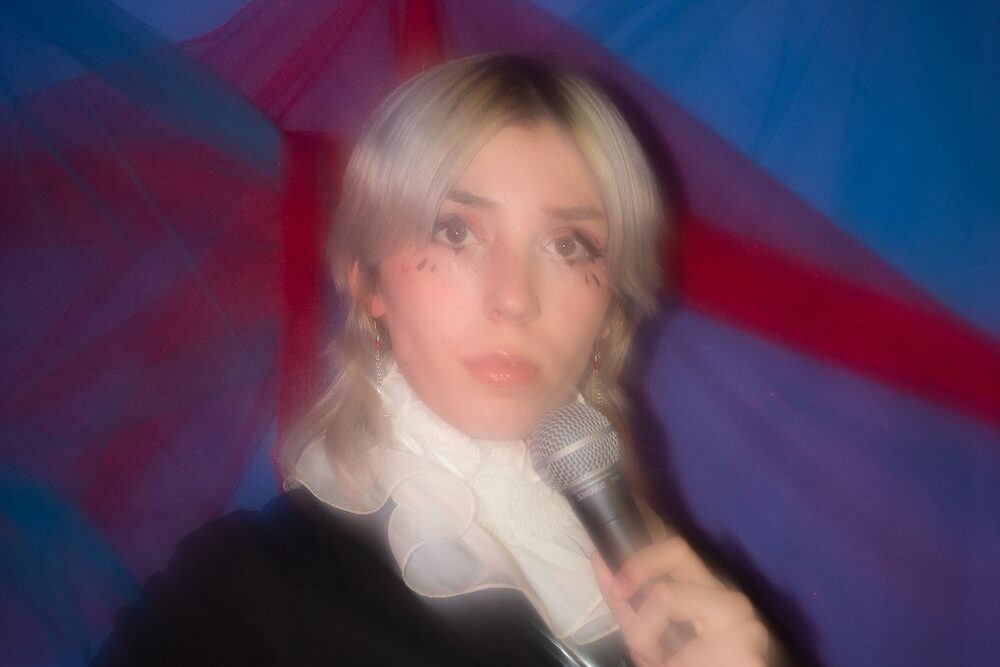
Poppies Vocalist May Rio Releases Quirky Solo Debut Easy Bammer

Photo Credit: Noelle Duquette

For May Rio, the writing of her debut solo album, Easy Bammer, is quite literally on the wall. Released June 25 via Dots Per Inch Music, the solo debut from the Poppies vocalist materialized as she taped lyrical snippets to the walls of her childhood bedroom, adrift in isolation like so many musicians during the pandemic.

Growing up in Austin, Texas, Rio began her creative career as a visual artist. But it wasn’t until her junior year of art school where her vision transitioned to music after picking up her first acoustic guitar, daring herself to write a song. “I could barely play an A chord, but I wrote a song, and it felt so good and so much better than making art,” Rio confesses to Audiofemme. “I knew that’s what I wanted to keep doing right then.” 

But her determination on this new musical path was also met with trepidation. Entering an industry that’s obsessed with youth, Rio was convinced that she was pursuing the craft too late. “I was praised a lot for my talent with visual art growing up. I think even by the time I was a teenager, it made it really not fun for me anymore. The upside of starting music so late was that there was never any expectation that I would be good at it,” she analyzes. After graduating college, the Texas native became a New York transplant with an overwhelming desire to start a band. That vision became reality when she met guitarist Ian Langehough, the two forming Brooklyn-based indie pop-rock band Poppies and releasing four EPs. 

But the onset of the COVID-19 pandemic brought her back to her parents’ house in Austin. As she ebbed and flowed through the early mundane days of the pandemic, the idea of making a solo album came creeping into mind, her song lyrics spilling onto sheets of paper that she taped to the walls. “Every day was the same and my emotions are the same every day. There wasn’t really a lot going on to process other than the exact same thing,” she describes of the album’s conception. “I was curious, ‘can I do this?’ It was an experiment to show myself that I could.”

From there, Rio consistently made demos, each one fueling her drive to make another. Upon returning to New York in the summer, she connected with Tony 1 of indie act Tony or Tony, toying with her solo demos in his at-home studio. “As soon as we started laying everything down, I was cheesing so hard because I was like ‘This is exactly how I want this to be,’” she describes of the “unambitious” endeavor. 

Intentional about stepping outside of Poppies’ guitar-heavy sound, Rio leaned more into pop production, pulling in experimental sounds, funky pop loops and eclectic arcade game effects to compliment her whimsical voice. Unafraid to explore “goofy” topics, Rio admits that an online shopping addiction developed during the pandemic on “Everything Must Go!” while “Gravy Baby” is an edgy pop homage to playing the lottery. 

Alongside more playful numbers, Rio was intentional about processing the real pain she was experiencing in the aftermath of heartbreak. “A lot of the songs are very personal. Lyrics are super important to me. It’s always been very important that they really mean something,” she conveys. “Even if the listener doesn’t know what I’m saying, I need to know what I’m saying.”

In “Reservations,” Rio explores her experiences at the end of a relationship with someone who is a recovering heroin addict; while she knew the relationship would ultimately end in demise, she still felt sorrow over the lost love. Meanwhile, “Reasons” explores the feeling of being stuck, and “Party Jail” captures the draining nature of tour life that’s “hard on the spirit,” Rio describes, citing it as her favorite song to record.

But she points to “songForNeo” as the most vulnerable of the 10 tracks, a tale of star-crossed lovers who desperately want to be together, but for inexplicable reasons are destined to remain apart, which Rio calls the “heartbreak of my life.” “It was really helpful writing that song because I could channel that energy into writing rather than reaching out at two in the morning, say everything I wanted to actually say to him but probably wouldn’t be all that helpful, and put it in the song instead,” she details of the emotional track. 

It’s this element of healthy processing that Rio channeled into the album, hoping that listeners get as much out of it as she put into it. “It’s good to question things. I don’t mind if my listeners are confused. I think it’s good to always be in at least some state of confusion. I feel like if you are confused, that means you’re questioning and you’re staying open,” she says. “Making [Easy Bammer] was very helpful and a release for me. I feel like it’s a fun album to listen to, but there’s also a darkness to it as well. I hope other people can find some release through it too.” 

Follow May Rio on Instagram for ongoing updates.
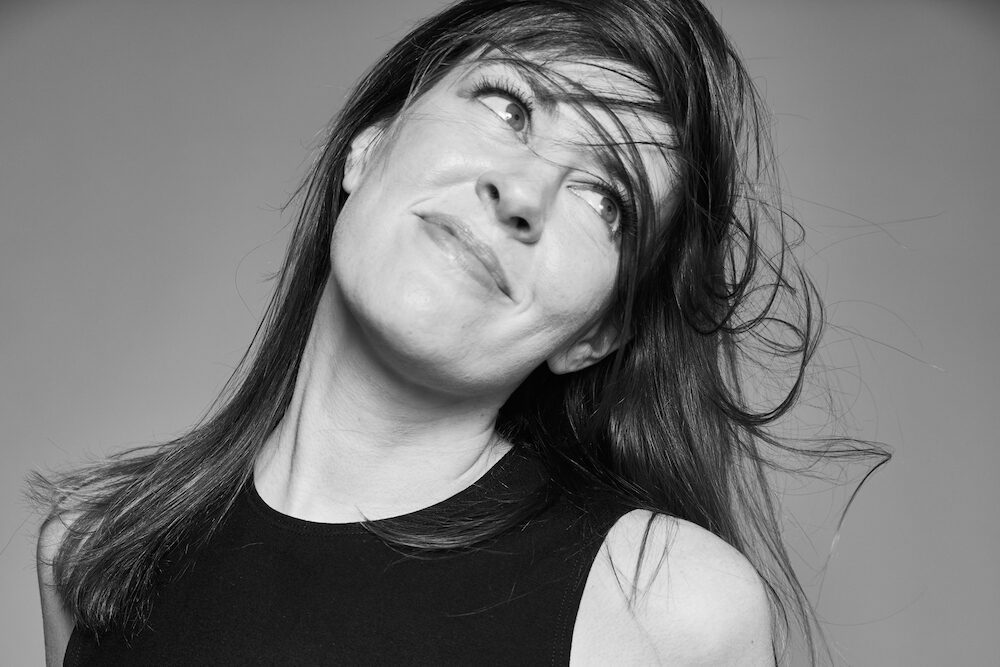
Melbourne Punks Plaster of Paris Distill Queer D.I.Y. Ethos on Debut LP Lost Familiar

Photo Credit: Kalindy Williams

Melbourne three-piece post-punk purveyors Plaster of Paris are bristling, vulnerable and truthful on their debut album, Lost Familiar, out June 23. After years of thrilling Melbourne with brain-shuddering, pelvic-shaking garage rock on stage at some of Melbourne’s finest rock venues including The Tote Hotel, The Old Bar, and The Espy, putting their raw, live energy on record has been long-awaited.  

Formed nearly a decade ago, shifting lineups and changing band names solidified in the last five years, bringing us the Plaster of Paris we know and love today: Zec Zechner is on vocals, Sarah Blaby is the goddess of guitar riffs, and Nicola Bell is deadly behind the drum kit. Zechner came from a grassroots, feminist, DIY collective from the inner West of Sydney, while Blaby is Melbourne born and bred. The two met when their former bands played shows and toured together. Both were involved in queer-friendly, trans-friendly shows and bonded over their proactive political and personal attitude to art.

“We’re not your average four piece – we don’t have a bass player,” explains Zechner. “Essentially, Sarah and I write songs together. I write the lyrics, and I like to use a really organic process – having a theme, a really visual idea, and building a song up slowly, like a painting. I like to use really visually strong lyrics, built around how I see the world. It’s almost a diarised experience. We’ll hum along a melody, then Sarah will write a riff around it. Then I’ll polyrhythm, and weave it in and out of guitars. And of course, Nicola’s an amazing drummer and an amazing filmmaker, who’s been nominated for multiple awards for her films.”

Working with engineers Casey Rice and Paul Maybury, plus post-production by Nao Anzai, Lost Familiar was recorded at Atlantis Studios in Tottenham, a church-based studio in Fryerstown just outside Melbourne, and the rest was done at Secret Location studios. The mastering was done at Rolling Stock studios in inner-suburban Melbourne.

“We love Casey, we love Paul,” says Zechner. “They’re fantastic engineers and producers. We wanted to work with Casey because they’re from a really DIY, punk background in Chicago. They’ve also worked with [Melbourne punk band] Cable Ties. They get a really punk guitar sound, which suits Sarah’s angular, sharp guitar – not unlike Gang of Four. Paul lived close to us, and we wanted to get the work done and finish the album sooner, plus the two of them are friends. We wanted a bigger drum sound and guitar feel, which Paul executes beautifully. He has a reputation for that real garage vibe.”

Nao Anzai has worked with big names in Australian music, including studio engineering for David Bridie and Rolling Blackouts Coastal Fever, as well as doing live engineering for Tropical Fuck Storm and Alice Skye. “Nao is a wonderful engineer. He has worked on Cash Savage and the Last Drinks, Teskey Brothers – a lot of big names,” gushes Zechner. “It was just really good luck and a good friend introduced us to them. He did a beautiful job, and he’s got magical hands. He does a lot of live shows, festivals and things around the country and overseas.”

Thrashing out of the speakers with the spiritual essence of Hole’s “Violet,” Plaster of Paris’ “Newcomer” was originally released in 2017 on a dual 7” vinyl along with another track “Oh Wow.” The band decided to remix and include them on the album.

“’Newcomer’ initially came to me when I moved to Melbourne, but it took time to make sense to me,” says Zechner. “I talk a lot about Australian experiences – being a newbie, and reflecting on being the daughter of migrant parents. Moving from a small town to a big city, searching through dusty bazaars… searching for lost family, found family and connections, someone you can rely on to be there. That’s where the album title came from, too.”

Zechner’s dad is Austrian, her mother from New Zealand. “That’s informed my experience as a queer woman, growing up in a small town [Albion Park, south of Sydney]. Since 17, I was always moving to the big cities, fleeing childhood trauma: I’ve moved to Darwin, Canberra, Sydney. I’ve had a nomadic life, trying to fit in. I’ve worked in Indigenous communities in Darwin, and Nicola has too. That’s a big passion for us,” explains Zechner.

Another track, “Danceflaw” was inspired by the 2016 Pulse nightclub shooting in Orlando, which Zechner responds to with determination to take a stand against terrorism and fear.

“I love ‘Danceflaw.’ That’s one of my personal favourites,” she says. “Both Sarah and I were in LA for a lesbian wedding in Palm Springs in 2016. We happened to be there during Pride and we were going to go out that night, but [the nightclub shooting] happened that night. The song is about how it’s political to stay visible, and remain visible, and to keep going to the dancefloors as a queer woman and queer person. Don’t let homophobia or outside influences pressure you into not being your fabulous self.”

Zechner and Blaby ended up going out that night and being together with community, drinking cocktails and supporting each other. “The next day, I remember seeing rainbows drawn on the footpath around Silver Lake in LA, and thinking about how beautiful that was,” she recalls.

The political and the personal are intertwined, anthemic and empowering on Lost Familiar, which has a wholly fresh take on the early ‘90s riot grrrl sound that was exploding in Zechner’s formative late teens. “My dad bought me a classical, nylon-stringed guitar for my birthday,” she recalls. “I remember staring at the Hole Pretty On The Inside cover, Babes In Toyland, Sleater-Kinney – also Sarah’s favourite band – then going to see Nirvana at the Big Day Out [festival]. I loved Nina Hagen and those big diva vocals, Marianne Faithfull, Anita Lane, and of course, Kate Bush.”

Zechner’s passions also extend into goth and darkwave bands like Depeche Mode, Bauhaus, Sisters of Mercy and The Cure. “I love buying that goth stuff on vinyl because it’s so rare,” says Zechner. “I’d rather buy that than a meal. In iso, I was living in my Sisters of Mercy hoodie. I saw them in Melbourne and sang along to every song until I lost my voice.”

It was important to Zechner and the band that they align with like-minded people, so opting to release their album on Psychic Hysteria was an organic fit. “Psychic Hysteria has similar politics to us… we’ve worked really hard at keeping this precious DIY thing quite strong and really grounded,” she says. “Sarah worked with Kurt [Eckardt] at PBS [a local community radio station]. It was my idea to say, ‘Do you wanna put my band on your label?’ And he said ‘yeah.’ They’ve got some amazing bands like Hearts and Rockets, Zig Zag and Shrimpwitch.”

Having found a supportive community, Plaster of Paris are ready to thrive in 2021. They’re currently organising an East Coast tour; in the meantime, Lost Familiar provides a burst of their band’s “unapologetically queer, feminist and D.I.Y.” ethos, satisfying fans who’ve had to wait a while for a debut, and likely bringing new fans into the fold, too.

Follow Plaster of Paris on Facebook and Instagram for ongoing updates.
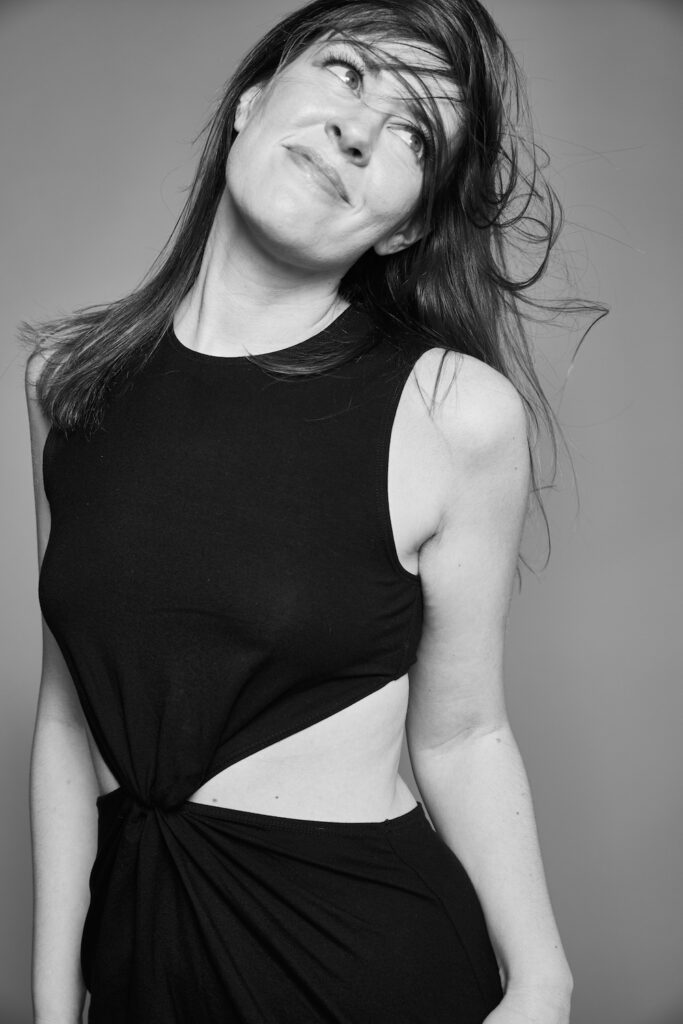
MUSIQUE BOUTIQUE: Joan Armatrading, Hard Nips, The Montreux Years

Welcome to Audiofemme’s monthly record review column, Musique Boutique, written by music journo vet Gillian G. Gaar. Every fourth Monday, Musique Boutique offers a cross-section of noteworthy reissues and new releases guaranteed to perk up your ears.

As Joan Armatrading recently told the New York Times, she was born to write songs; “I always say I can’t take credit for it because I did nothing for it. All I did was be born, and was then given this gift.” And there are always more songs to be written. On her latest album, Consequences (BMG), Armatrading brings her keen insight about the inner workings of relationships to a set of well-crafted songs of joy and heartbreak.

Given Armatrading’s generally upbeat outlook, there’s more of the former than the latter. The buoyant “Natural Rhythm” and “Glorious Madness” each capture the delirious, giddy rush of newfound love. “To Be Loved,” couples the lush harmonies of the chorus with wonderful observations like “Every day feels like a weekend with you around.” “Already There” is sung from the unique perspective of having already fallen in love and waiting for the object of your desire to catch up.

“Consequences” opens with watery-sounding keyboards before pivoting into a taut, edgy backing that’s perfect for illustrating the roiling turbulence that’s descended into a relationship. The closing song, “To Anyone Who Will Listen” is a heartfelt plea for connection, reaching out for solace. “Sunrise” is a laidback instrumental, with a shuffling beat, the lead melody traded between guitar and piano. Armatrading’s distinctive musical mix draws on rock, jazz, pop, blues (and she’s playing all the instruments as well), and arrangements featuring all sorts of percussive rhythms percolating underneath. It’s a great, optimistic album to welcome in the summer.

Hard Nips might have formed in Brooklyn in 2009, but their music has a late ’70s/early ’80s pop/punk/new wave vibe ‑ think Blondie, B-52’s, the Ramones. Smart and sharp, a bit of an edge, but a good dose of humor as well. The Japanese foursome (bassist Gooch, drummer Hitomi, and keyboard/vocalist Yoko born in Japan, guitarist Saki hailing from Long Island) are drawn as stylish superheroes on the cover of their new album Master Cat (Dadstache Records), soaring through the air as they spread the gospel of “sex, sushi and rock ‘n’ roll!!!”

Great, chunky guitar is to the forefront here, as you’ll hear from the kickoff, “Blender,” which also has a kitschy keyboard line. The album is mostly on the up-tempo side: the strut of “Workaholic;” “Analog Guys,” with its propulsive “My Sharona”-esque backbeat; the quirky “Motto.” Then there’s the moody “Cupid Devil,” where everyone gets a chance to be in the instrumental spotlight. The title track mixes it up, opening with an ethereal keyboard and a cool vocal, then shifting gears to a bright, poppy beat before spiraling down again into the mist.

“The Montreux Years” is a new series of recordings launched by the Montreux Jazz Festival and BMG, celebrating the many artists who’ve performed at the Festival, and featuring rare and previously unreleased material. And the first two releases in series are by some true legends: Etta James: The Montreux Years and Nina Simone: The Montreux Years.

James’ album draws on concerts from 1977 to 1993, with the CD version also including her first appearance at the Festival, on July 11, 1975. “I can’t speak French,” she explains to the audience at the start of the set. “The only thing I can say you might be able to understand is ‘Get down.’ Can you say that? Get down! Get down!” Having won the crowd over, it’s straight into a steaming version of “Respect Yourself;” sterling performances of the blues standard “Dust My Broom,” a slow and soulful take of T. Bone Walker’s “Stormy Monday,” and James’ own decidedly bawdy “W-O-M-A-N” follow. The album also features sizzling renditions of some of her best known work, like “Something’s Got a Hold On Me,” “Tell Mama,” and “I’d Rather Go Blind.”

Simone’s album features songs from each of her five performances at the Festival, including her very first appearance on June 16, 1968, the first time the complete show has been available on CD. It’s a riveting set, opening with Morris Bailey Jr.’s fierce “Go to Hell,” with potent lyrics that still resonate: “So you’re living high and mighty/Rich off the fat of the land/Just don’t dispose of your natural soul/Cause you know darn well/That you’ll go to hell.” You can never hear “Backlash Blues” too many times, and she reworks “Please Don’t Let Me Be Misunderstood” and “House of the Rising Sun” and makes them her own. Elsewhere, Simone covers Bob Marley’s “No Woman No Cry” and delivers an absolutely stunning version of Janis Ian’s “Stars,” which is mostly just Simone and her own piano accompaniment.

As a bonus, this month also sees the digital release of Simone’s classic 1959 debut album, Little Girl Blue (BMG/Bethlehem Jazz), in a new stereo mix that gives the music a fresh, crisp sound. This album introduced the world to Simone’s unique mix of classical and jazz influences; check out her breezy performance on “Mood Indigo” and her inventive reworking of the title track. The album comes out on colored vinyl in July, and black vinyl and CD in August.

Betta Lemme Celebrates Pride With Crush-worthy Anthem “Girls”

Photo Credit: Alexis Belhumeur

Pride and the LGBTQ rights movement as a whole often feel dominated by gay men, with some women saying they don’t feel comfortable or welcome at Pride events. It’s often an uphill battle for women who are attracted to women to be taken seriously amid stereotypes that their sexuality is a phase or a performance. In her latest single, “Girls,” Canadian pop singer-songwriter/multi-instrumentalist Betta Lemme challenges these narratives by celebrating those who love women romantically, sexually, and otherwise.

The concept for the song was born in 2018, when Lemme and her co-writers Jenn Decilveo (FLETCHER, Miley Cyrus, Marina) and Jordan Riley (Dua Lipa, Mabel, Sigrid) began talking about their first crushes. For Lemme, who identifies as sexually fluid, it was a tie: David Bowie and Princess Diana. Reflecting the proclivities of Lemme’s younger self, the song is written from the perspective of a young woman realizing she’s “in love with girls.”

“This was without a doubt one of my favorite writing sessions,” Lemme recalls. “Jenn is a brilliant lyricist and producer. Jordan was quiet, adorable, and full of heart. His background singing in church choirs gave the spirit of this song these godly soulful moments while capturing the cheekiness of my confession.”

The single was also loosely based on a letter Lemme wrote to her mom as a kid about the concerns she had for her future, including the fact that her sexual orientation fell outside society’s norms. “Realizing and identifying with fluidity at a young age and coming from a very traditional family, I wanted to give her a heads up on what both of our futures entailed,” she remembers. “I guess you can say I was a meticulously organized and anxious kid. I can confidently say nothing has changed.”

Lemme opens “Girls” with playful verses about realizing she’s in love with a woman and grappling with what that means, then grows increasingly confident over the course of the song, wondering, “Why can’t we just love who we love and have a good time?” The snappy percussion and dreamy synths give the track a fun, celebratory vibe that sounds like it’s made for dancing to during Pride parties (and parties all year round).

“I wanted the listener to feel like they were about to be in on a secret that’s presented with butterflies and confetti, and leave them with a smile,” she says.

Through her lyrics, particularly the infectious, repetitious chorus — “girls, girls, think I’m in love with girls” — Lemme hopes to destigmatize the act of saying you’re in love with the same gender — for women, particularly. “I find it baffling that it’s controversial to say the words ‘I’m in love with girls,'” she says.

In fact, Lemme’s desire for more people to unabashedly discuss their love for women extends beyond romantic or sexual feelings. “Regardless of whether that is of admiration, respect, love, or attraction, the act of loving women at all is still hard to grasp for some,” she explains. “I hope this song is so catchy that literally everyone around the entire world starts singing about how much they love and appreciate women and girls.”

Lemme released her first EP Bambola in 2018, followed by a string of singles, and is gearing up to release her second EP later this summer. It includes “Girls,” her recent singles “Cry” and “Ce Soir,” and several not-yet-released tracks. “Cry” is full of electronic elements and catchy repeated lyrics reminiscent of ’90s dance tunes, while “Ce Soir” is sassy and poppy, with high angelic harmonies.

Influences ranging from Lady Gaga to Abba are evident in the danceable sounds and lyrical themes. All in all, Lemme considers the EP to be about “the dangerously delicious perils of fantasizing, celebrating catharsis whilst relinquishing shame, moments of talking (or in my case, dancing) yourself off the ledge, as well as the duality of wanting to enjoy life but sometimes not knowing how to.”

Despite the lighthearted nature of her songs, Lemme feels the heaviness of some of the subjects she sings about, particularly those relating to marginalized identities. She encourages LGBTQ people who are struggling and need a listening ear to reach out to the Trevor Project, and as far as her own role goes, she hopes that listeners gain strength from her music.

“The highlights of my career are genuinely the moments when listeners reach out and tell me that their music has helped them through a difficult time, helped them feel less alone, or even made them feel confident,” she says. “On days when I question the humanity in what can be an often gnarly and insidious industry, it’s messages and joy from listeners across the globe that literally fill my spirit up with strength and patience to continue.”

Follow Betta Lemme on Instagram for ongoing updates.
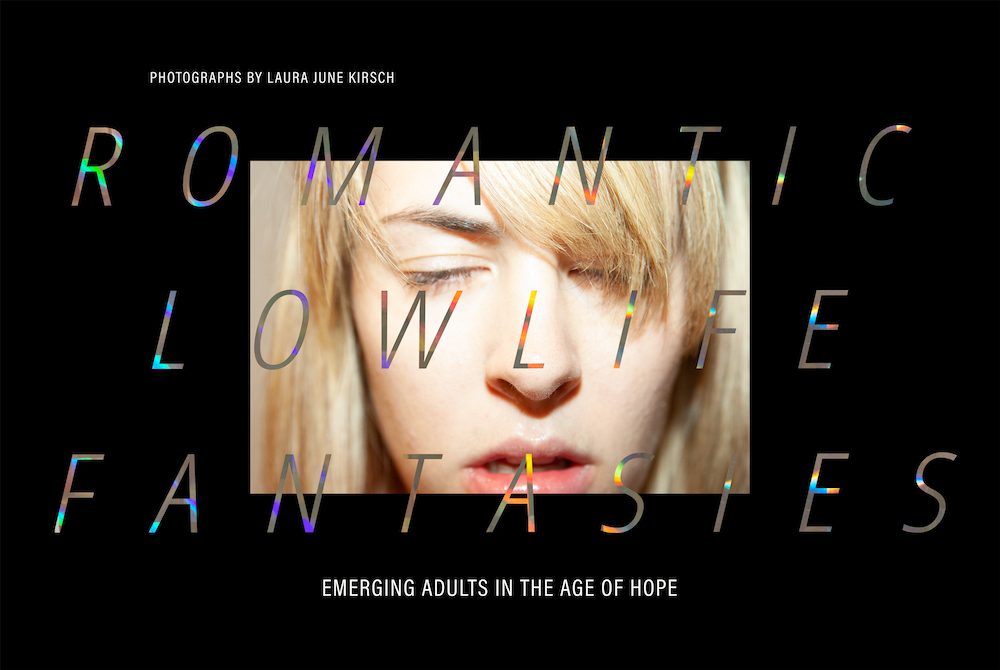
Dani Darling Premieres Wizard of Oz-Inspired Video from Psychedelic New EP The Future

Photo Credit: Doug Coombe

In the summer of 2020, Dani Darling headed to Lake Michigan with her best friend. On the drive there, they listened to Pink Floyd’s 1973 album The Dark Side of the Moon, an album that Darling had previously heard in part, but had never listened to in its entirety. Listening to that classic album for the first time in the midst of a summer marked by the COVID-19 pandemic and the racial reckoning following the murder of George Floyd had a profound impact on the Ann Arbor-based singer. Darling had a revelation. She wanted to make a psychedelic album. 

When Darling won an Amplify Fellowship, an initiative from Grove Studios and Leon Speakers for Black artists in Washtenaw County, Michigan, she was able to make that idea a reality. “Usually, I’m more of a lo-fi, bedroom pop artist because of the financial aspect of it,” says Darling, who was previously featured in Audiofemme last fall for the release of her EP Mage. She says that it’s been easier to learn how to record and mix her own music than to bring a whole band into a studio. The fellowship, though, allowed her to do just that. “It was really the last little ingredient that I needed to put the whole project together.”

The resulting EP, The Future, is set for release on June 25. Like all of her music, she says, it began to take shape in her living room, where she jams, plays with her pedals, makes “little soundscapes” of ideas and starts devising lyrics. The first proper session, though, convened on December 21, 2020, the date of Winter Solstice as well as the Great Conjunctions between Jupiter and Saturn. Darling brought a folder with her that contained her ideas for the new material, but those quickly began to evolve as the group started to play. 

“Everyone was talking about the Age of Aquarius,” she says. That led to the recording of “The Age” featured on the EP. “I just kept singing ‘the Age of Aquarius’ and it was totally different from the lyrics that I had down and it just stayed that way because of the vibe,” she says. They liked the results and decided to book another session, an hours-long New Year’s Eve session that Darling describes as “wildly ambitious.” 

The hard part wasn’t spending the last night of 2020 in the studio, it was figuring out how to work with all the material that came out of the session. “We sat down and we had all these hours of music and I was like, how am I going to pull an album out of all this psychedelic craziness?” Darling recalls.

It was “hours and hours” of music recorded onto very large files. Darling sifted through it to figure out where the songs were. She estimates that there are probably another 20 songs that could be pulled out of that session, but she was looking for the ones that made the most sense with the vibe that she had been developing – a retro 1960s to 1970s sound that reflected her eclectic tastes; she’s into James Brown, loves Diana Ross and name-checks Jimi Hendrix’s album, Are You Experienced as one of her favorites. 
The cohesiveness of the EP began to take shape when Darling brought in flautist James Russell to play on “The Down,” which is the lead single for The Future. “When I thought of the ‘60s, one of the things that I really love about the ‘60s is the flute sound that you hear,” Darling explains. “That’s very vintage to me.” After working on “The Down,” she asked Russell if he heard anything he could play on the other tracks and the flautist ended up playing on much much of the release. “If the whole album is a trip, then the narrator is the flute,” says Darling. “It’s like we’re taking people through these different doors and different realms, but you constantly hear that flute sound.”
For “The Down,” which is already getting radio play in Detroit, Darling thought about The Wizard of Oz and how she remembered hearing in college that The Dark Side of the Moon synced up with the movie. 

“I also felt like, with the pandemic, a lot of the color had been drained out of life and out of me. I felt like life was very black and white, it was very static,” she says. “So when it came to the video for ‘The Down,’ I thought let’s try a Wizard of Oz in reverse. Let’s throw her in a black and white, pandemic world and have her trying to reach inside and find the color and find her tribe, the band.”

There’s a message in the video too. Says Darling, “When the color goes out in your world, you really have to look within and be mindful and try to find the light inside and bring that out and bring the color back into your world, through your own spirit.”

Follow Dani Darling on Instagram and Facebook for ongoing updates.