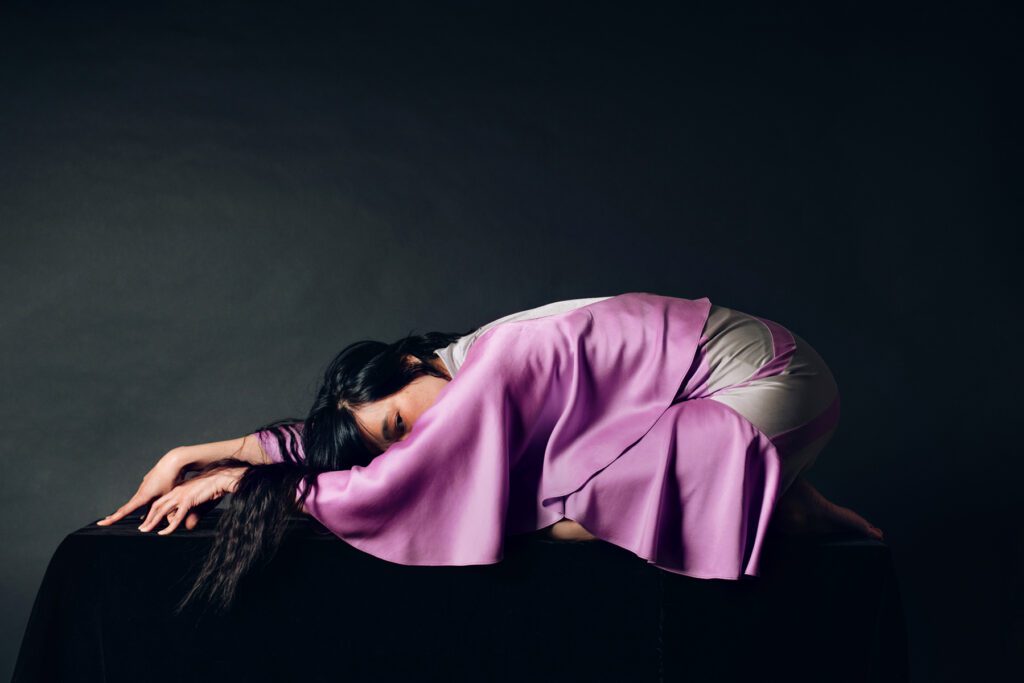
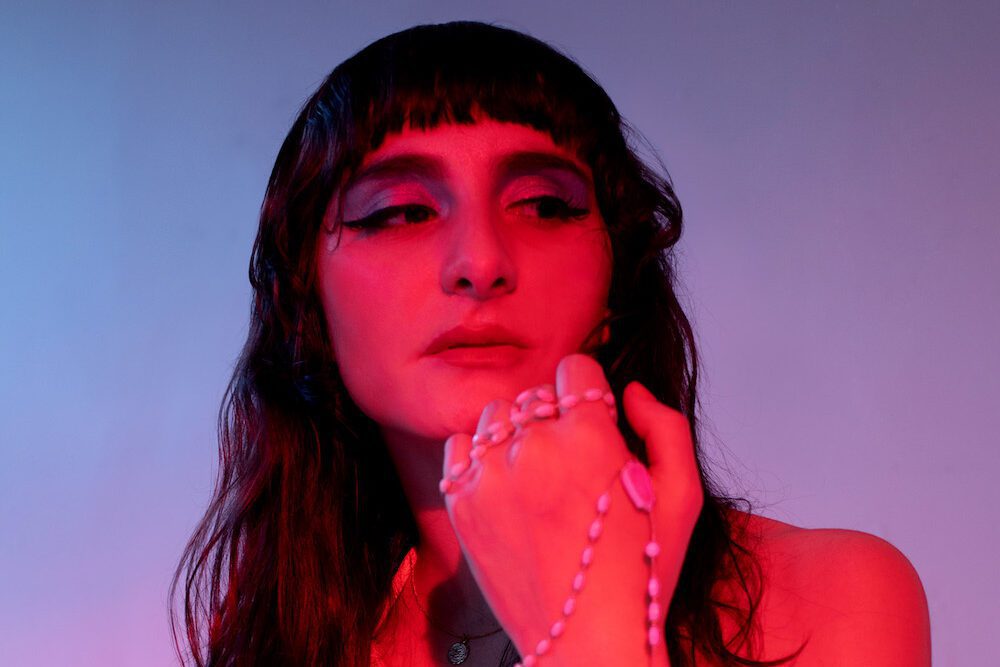
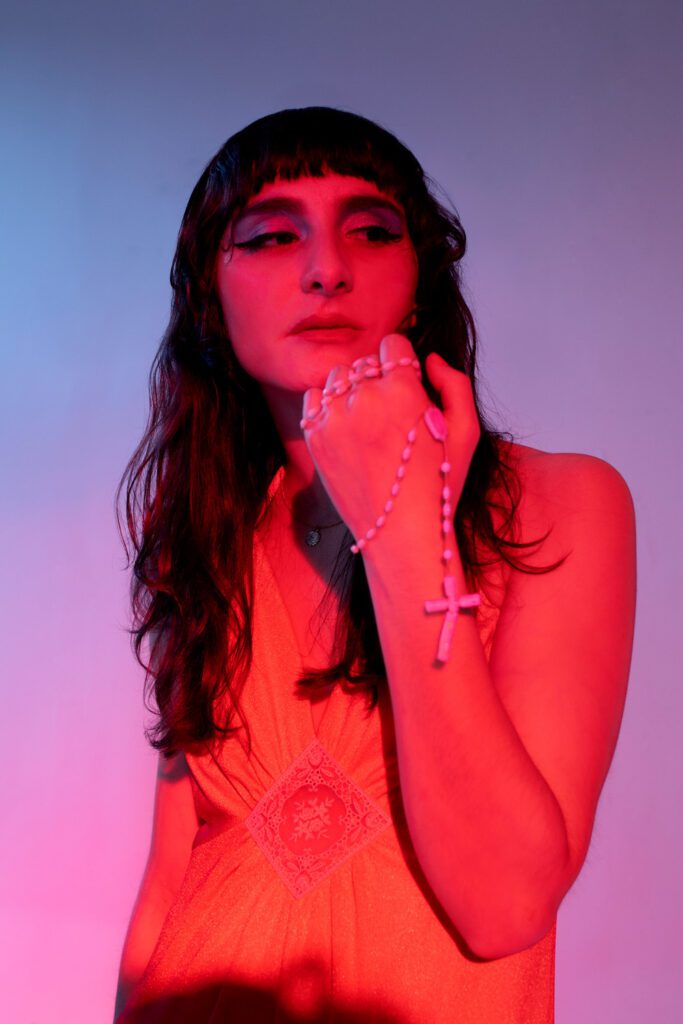
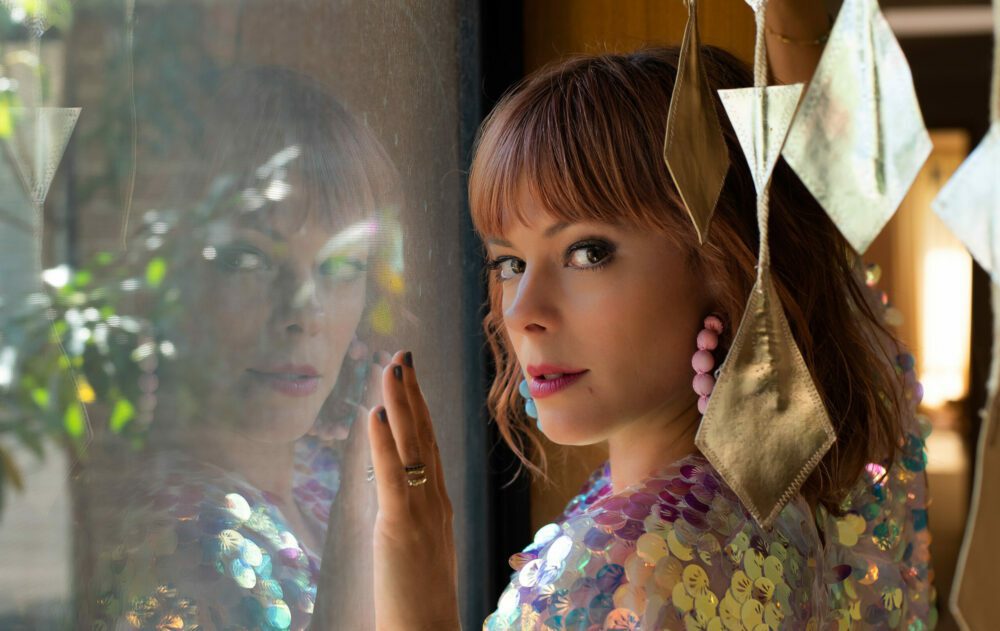
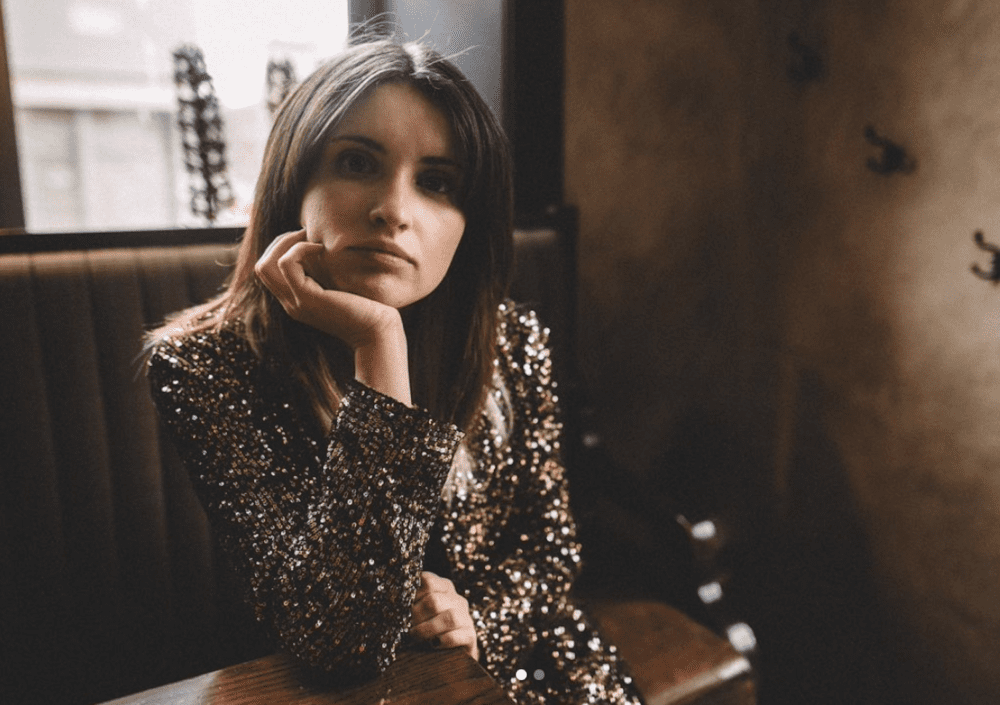
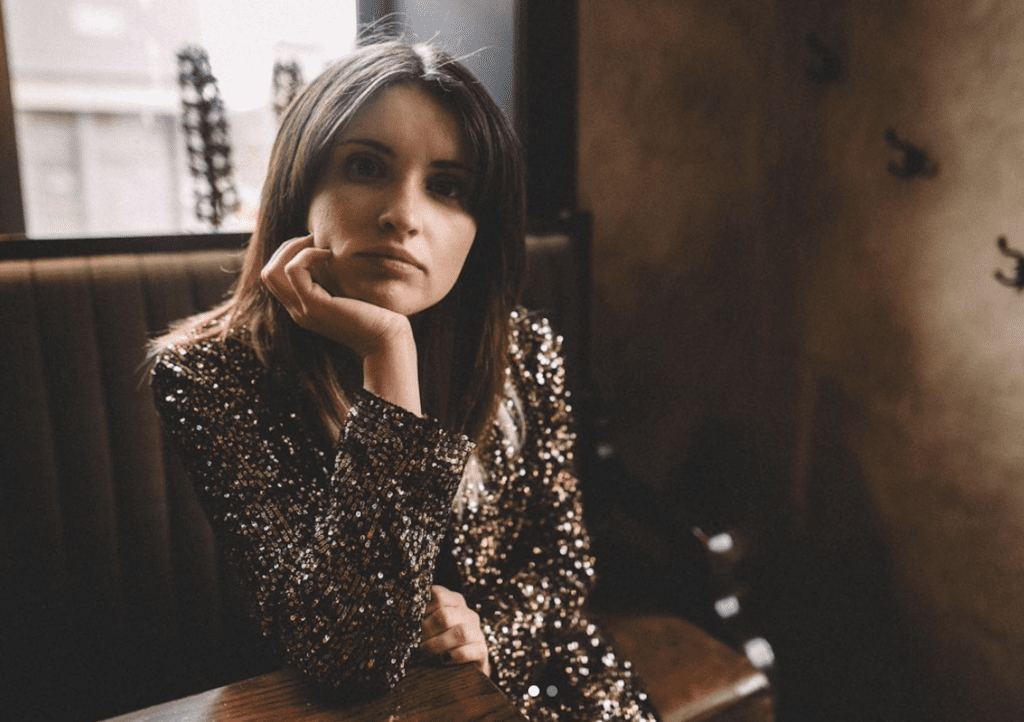
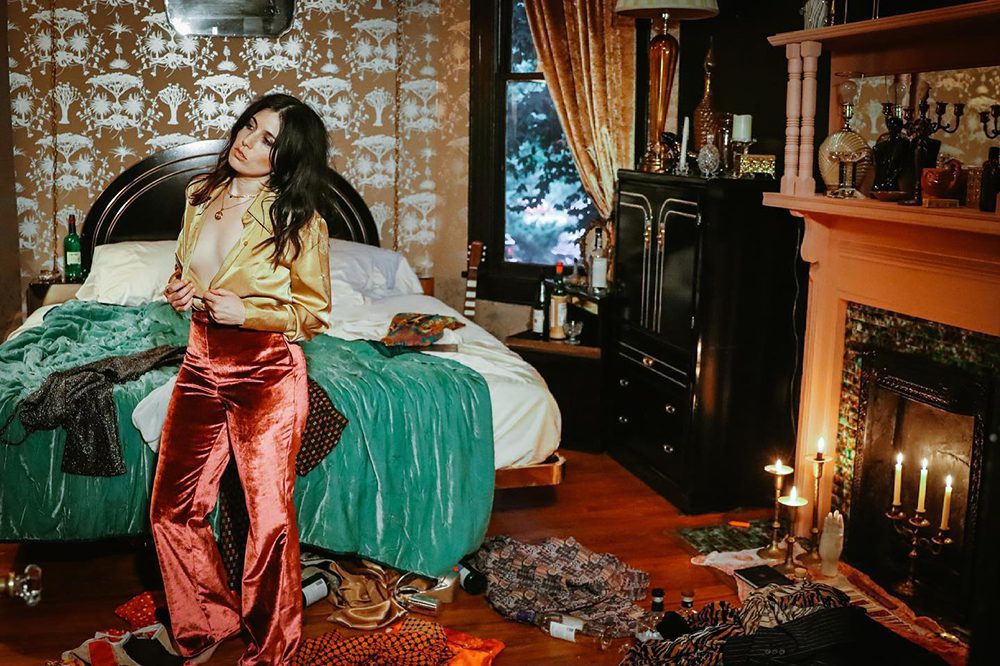
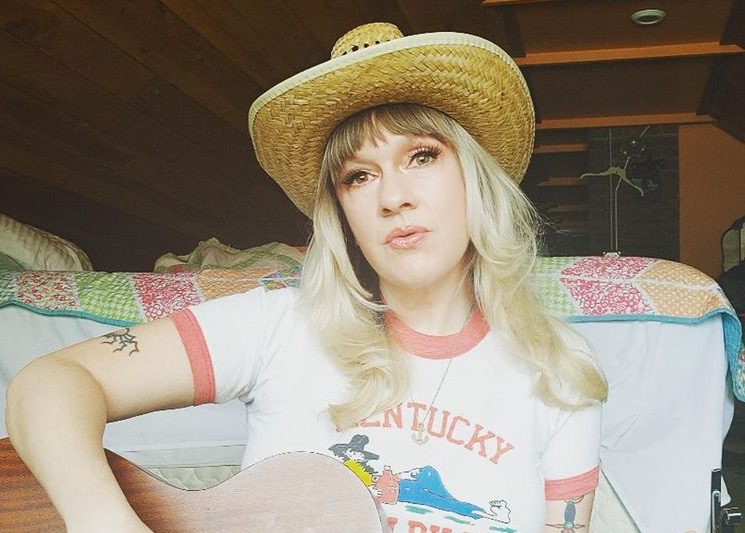
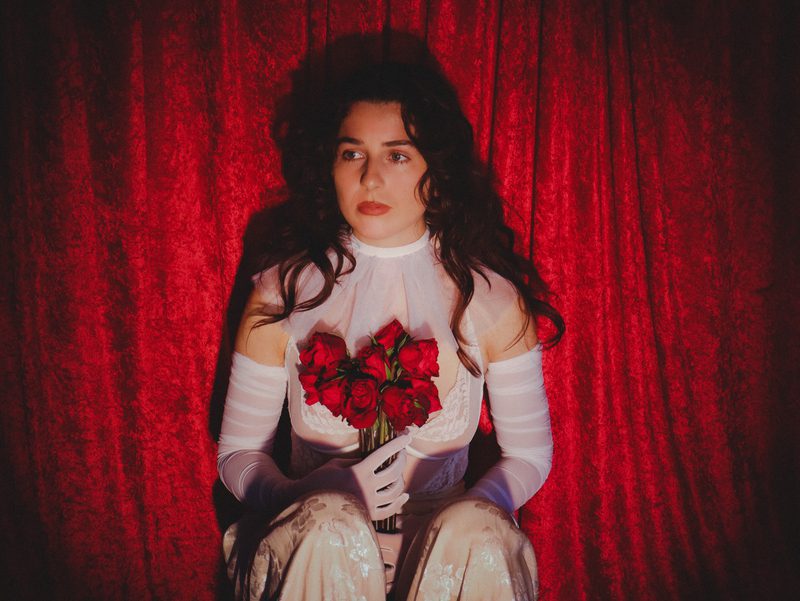
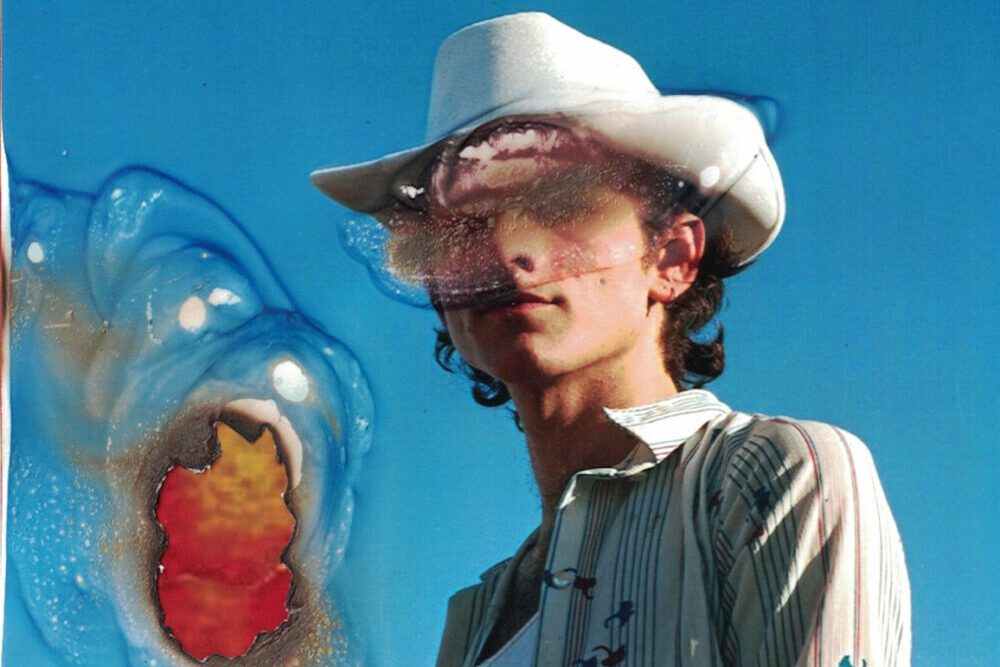
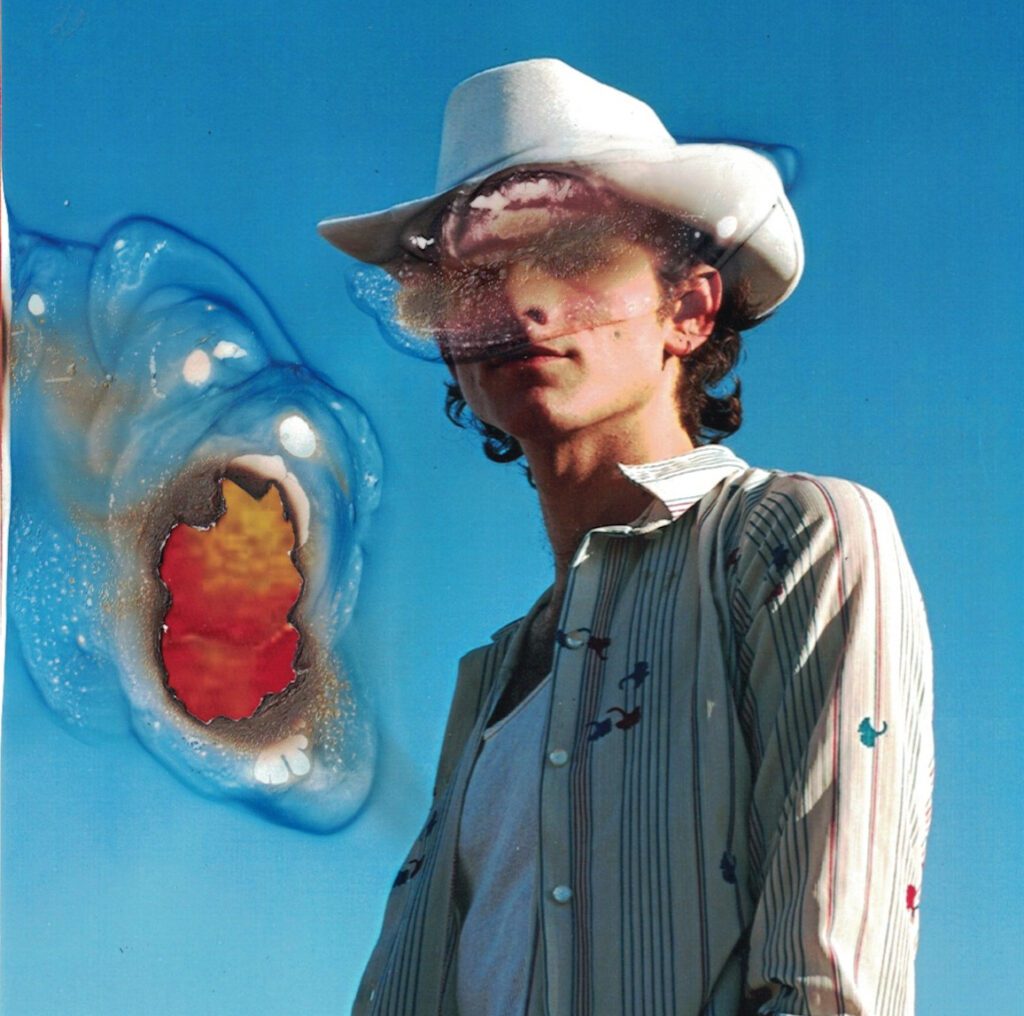
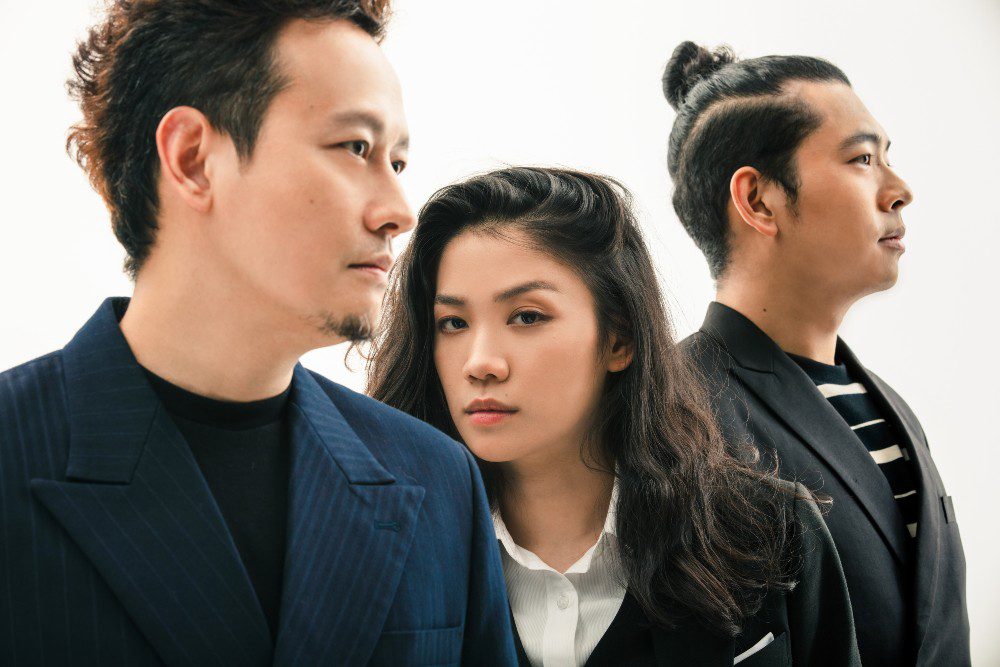
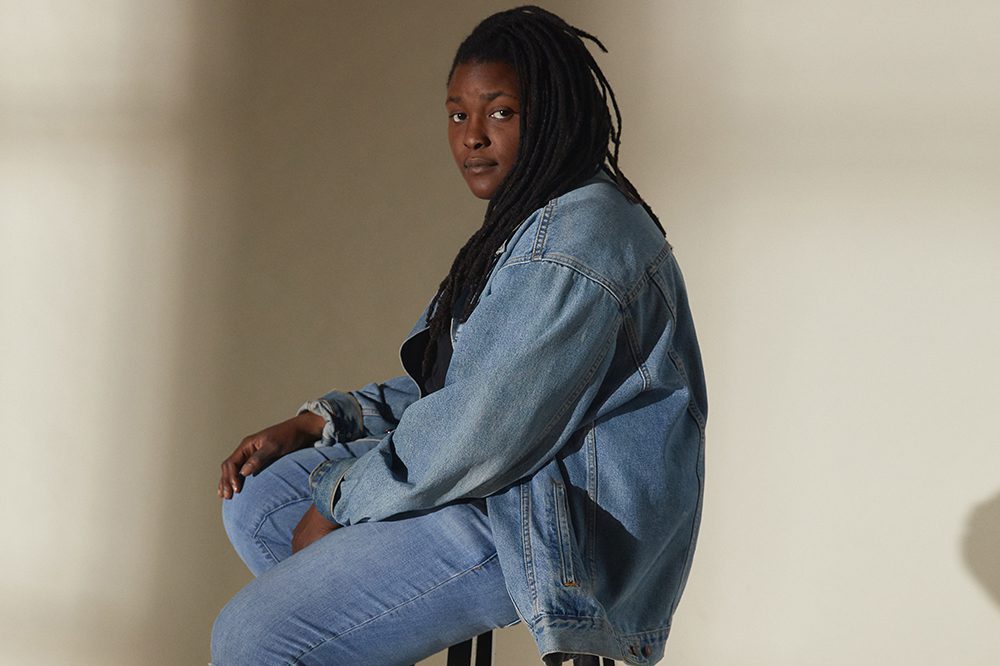
Betty Reed views karma through two lenses: the age old adage of “what goes around comes around,” and the tangible results of taking one’s happiness into their own hands and moving forward in life. It’s the latter definition that Reed embodies in her latest single “Karma” – premiering today exclusively with Audiofemme – from her upcoming EP, Mistakes Made, Lessons Learned, out September 3, 2021.
“The song is about the moment you break free from an abusive relationship and are living your best, and that’s their karma,” Reed describes. “It’s not something bad happens to them, it’s really you being able to love yourself and be happy without them.” Reed’s liberating version of payback is transformed into a modest pop number where instead of wishing ill upon her former partner, she finds freedom in personal happiness and self-love. The song opens with an introduction to the toxic relationship wherein Reed’s dignity is torn apart and her words are used as a weapon against her by a partner who gaslights her into thinking she’s constantly at fault. Throughout the song, Reed sheds the trauma of the past, turning the negative situation into a positive outcome for herself as she lets the relationship go once and for all.
“Getting the life you deserve, the happiness you deserve from someone that loves you or from loving yourself, it’s this whole turnaround of confidence. I feel like that’s some good karma right there – getting confidence and getting some love in yourself that you thought was taken from you,” she expresses. “I think that’s the thing about karma. I don’t have to listen to those words. I can create my own happiness as opposed to relying on a loved one or someone that you think you trust to make this happiness for you. It’s really overcoming this emotional abuse, understanding your self-worth, realizing your self-worth is the negative person’s karma.”
“I learned that I’m strong/And my world keeps moving on/Got all this noise outta my head/Pushed the devil out of my bed,” she proclaims in the song’s triumphant line, reclaiming her own agency. The latter lines were the first that came to Reed’s mind as she was crafting the lyrics, setting the tone for the song and overall EP. “It became that theme of overcoming, and that’s what this whole EP is about,” the Berklee College of Music grad reflects. Reed notes that the half dozen songs all tie into female empowerment, facing challenges, and becoming stronger in the process. “Everyone makes mistakes, and mistakes are one of the most important things to do in our lives, and I am full of mistakes. I love making them because it’s really the best way I learn,” she observes. “There’s no such thing as not having redemption for it and becoming enlightened from whatever has been done.”
As someone who was encouraged to make mistakes as a learning tool growing up in theatre, Reed has channeled that skill into living with depression and anxiety, using music to process her emotions in a healing way. “I’d rather write about trying to overcome it and my coping skills to make it better, because not only does that help me, but I feel like that would help a lot of people who go through the same things that I do,” Reed shares of her writing process, elevated by her mission of building bridges though her music. “I love connecting with people through lyrics and melody. It’s so diverse. That’s the thing I love about music the most,” she continues. “You can connect through music, you can understand someone through music, and I think that’s one of the most beautiful things and what I want to do with this EP and with what I write.”
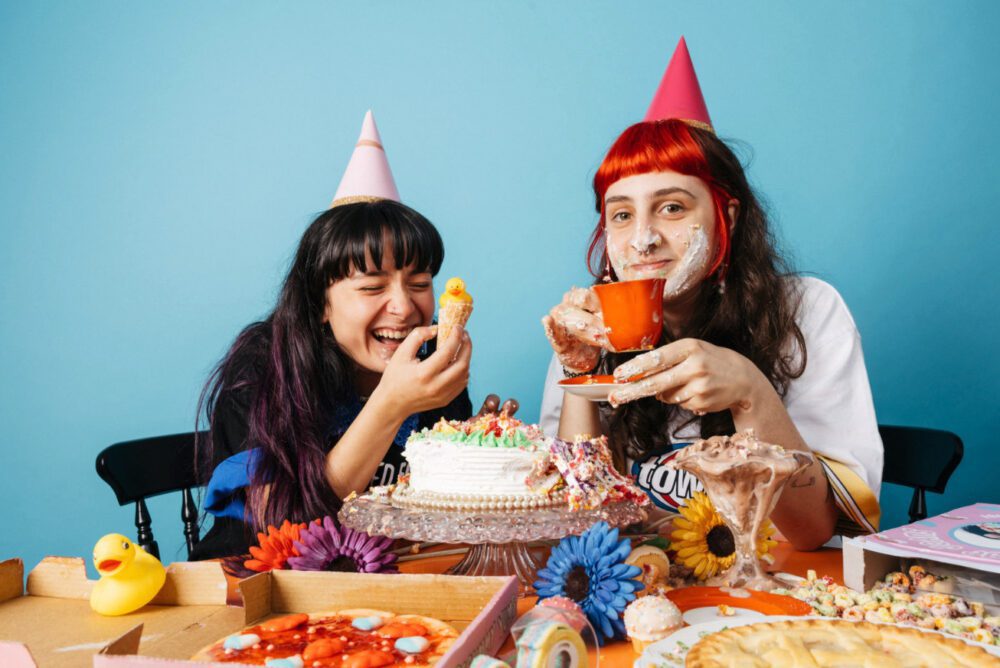
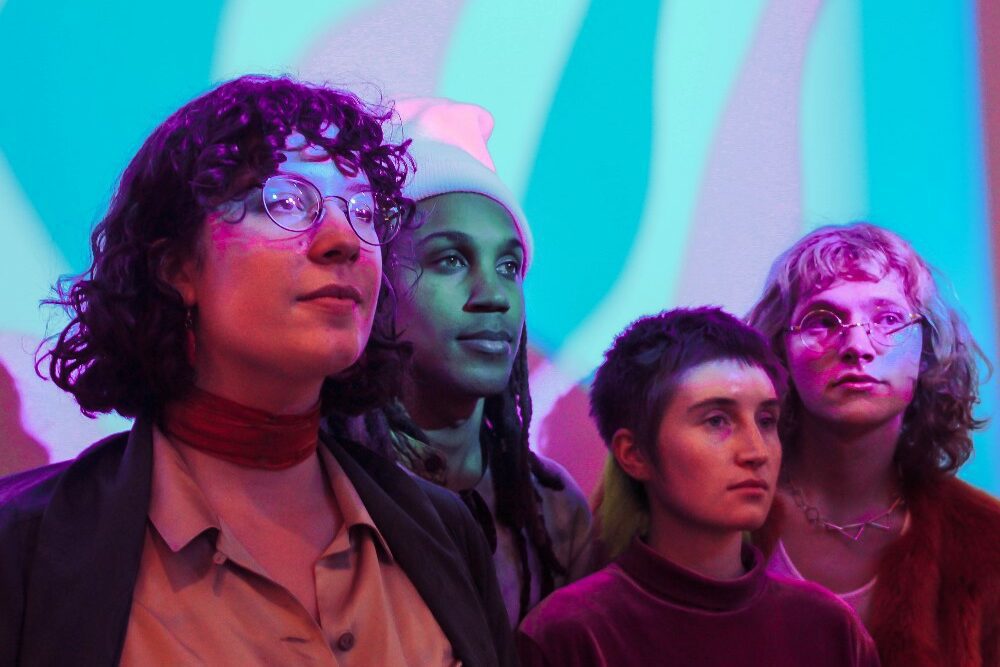
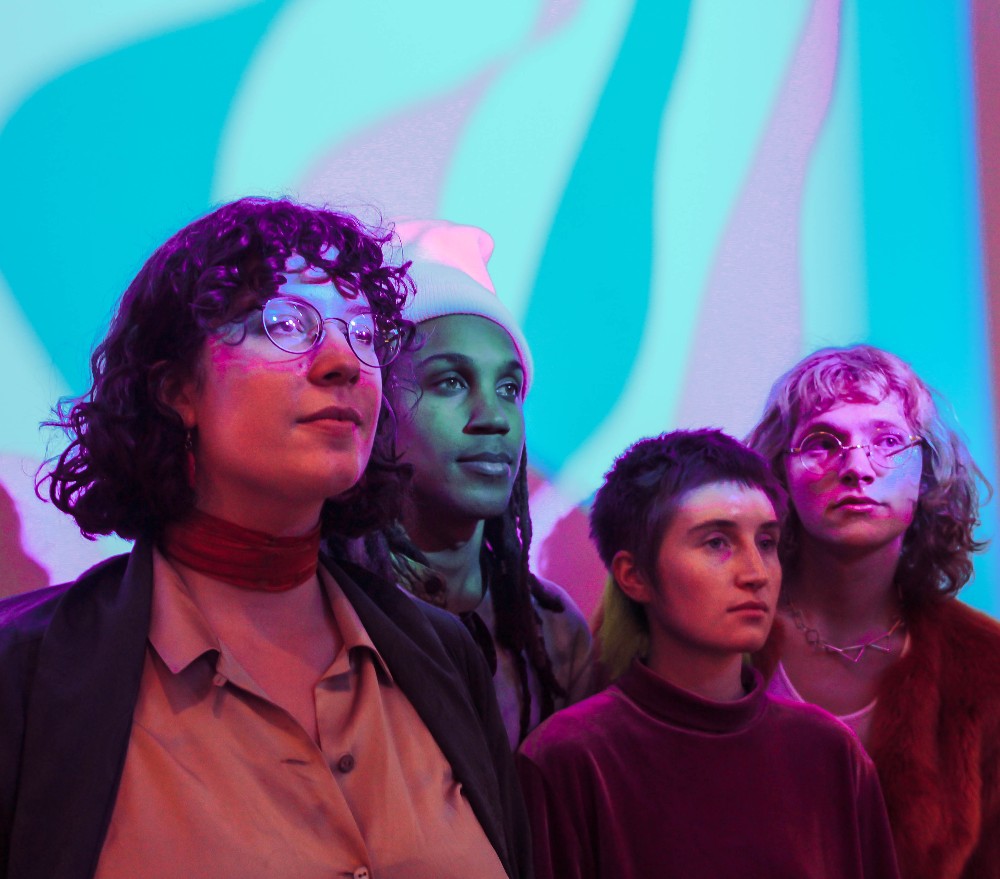
Some of the best music happens when you least expect it. Detroit indie pop outfit, Lady (Indira Edwards, Paris from Tokyo, Brian Castillo, Jacob Waymaster, Jojo Diaz-Orsi, Armand Boisvenue IV a.k.a Sleepyboiiii) found this to be true when they went to the woods together with no expectations and came out of it with an EP and what producer and songwriter Paris describes as some of the best music they’ve ever made. “I was like, let’s just make four songs – that shouldn’t be hard,” says Paris. “Then we ended up making the best four songs.” A short documentary edited by Paris and Tyler Jenkins goes into more detail on making the EP.
The band’s lead songwriters, Paris and Edwards, have been friends for years, but this was their first time working on a project together. They went into collaboration with only one thing in mind – fluidity. The result is in the woods, a cascading collection of songs that flow into each other with ease, premiering today on Audiofemme.
“I feel like the name ‘Lady’ encapsulates everything that the band is,” says Edwards. “Sort of, like, this blanket feminine energy: there’s grace but also a hardness to it.” That dichotomy is found in the first single off the EP, “u and i.” Over a background of lush synths and smooth guitar, Edwards’ cutting vocals paint a picture of someone they used to know driving right past them as they hitchhike on the side of the road. A metaphor for loss and abandonment, the song hits hard for anyone who has seen someone they love turn into a stranger. Edwards begs the familiar question – “Do you even really know I’m there?/‘Cuz I don’t think you even really care.” Whether it’s watching that someone drive away without acknowledging you or scrolling on their IG feed and seeing them look unbothered, Edwards captures the pain caused by apathy from a former loved one.
Edwards explains that the songwriting process for “u and i” – and all of the songs on the record – was a deeply collaborative experience. Paris first wrote the chorus on a ukulele and brought it to the band, who then transformed it into something completely different. This improvisational energy carried itself through the entire process. “It really felt like a pass the torch experience,” says Edwards. “For the intro, ‘cudi hum,’ Indira made this beautiful composition,” says Paris. “I was fucking around and started humming like Kid Cudi because I thought it was funny and it would make everyone laugh. Then it became a song.”
The band shifts effortlessly from loose instrumentals like “cudi hum” and “audio hypnosis” to a gorgeous cover of Charlotte Dos Santos song “Red Clay.” Edwards’ vocals shimmer over distorted bass and waves of sparkling synths pays homage to Dos Santos while shaping the song to match the band’s watery, ethereal sound. Where “Red Clay” and “u and i” give the listener a chance to ruminate on love lost, songs like “limeade” offer an avenue to escape altogether.
Layered, distant vocals guide scintillating bells and synths along a river of calm and escape. Lush swells are followed by a sparse melody, allowing us to ease back into whatever reality surrounds us. Throughout the EP, there’s room for anger, longing, contemplation and rest. The music’s liquidity reassures us that these feelings are fleeting; that they can happen all at the same time or completely vanish for a moment. “Lady, in itself, represents fluidity and constant change,” says Paris.
It already appears that summer 2021 will be unlike any that came before, in terms of the surreality of what we’ve experienced in the last year, the joy that it’s finally over, and the underlying anxiety of when the other shoe might drop. With that arises the need for appropriate new tunes, which is where Bay Area singer-songwriter Mae Powell comes in. Today she premieres the video for new track “Scratch n Sniff” on Audiofemme, off her debut album Both Ways Brighter, out August 20 on Park The Van Records.
Produced by Jason Kick (Mild High Club, Sonny and the Sunsets), the sunny acoustic indie folk evokes the feeling of someone like an Ingrid Michaelson, but updated for a more uncertain era, a little more akin to an Indigo De Souza. She wrote it when an ex sent her an unusual care package on a trip to visit her father in North Carolina a few years ago. “We were being pen pals, even though I was only gone for a week and a half, but we were just obsessed with each other,” she explains. “I think some people would probably [think] this is weird, but part of it was a piece of paper, and he had little circles on it and was like, this is my spit, this is my blood, this is my hair, this is a kiss. Literally had put pieces of himself on this paper.” It reminded her of scratch and sniff stickers, and the entirety of their relationship revealed to her the intimacy of analog communication. “Any time we were apart we would send each other postcards and shit, and it just felt like a piece of that person, because you’re like, oh you touched it! So even though it’s been in a bunch of hands since then, it’s still different than a text or a call or whatever.”
The song feels like the honeymoon phase of a relationship, but tempers it with a very current unease and the need to remain present, a certain brand of cautious optimism. “Clinging to the thought of unattachment because I know that everything will change/But clinging to the thought is still clinging to something/The way that works is strange,” Powell sings. She says this was intentional, that the album is as much about anxiety as it is about love.
“Normally when I play shows, I’m like oh my God, I’m putting everybody to sleep, because there’s a lot more slow songs, or I’ll write about anxiety. And sometimes when you’re at a show you’re like, do I want to hear songs about anxiety right now?” she says. “It’s the start of the second half of the record, and I feel like there’s a lot of contemplation and heavy themes and airing out the dirty laundry, and then you flip the record and it’s like okay, we’re happy! It’s chill! You have to have those moments of joy.”
What really sets it apart is the video itself, an animated short from Santa Barbara-based artist Emily Hoang. It’s all smiling celestial bodies and bright colors and flowers; the lens through which Powell observes her environment is somehow cute but not saccharine. The same way you can judge a book by its cover, you can judge Powell’s music by its visual elements, which adds an extra layer of thoughtfulness and intentionality to the whole package. “I don’t want it to just be an auditory experience, the visuals are super important to me,” she explains, “and I feel like I have a vision of rainbows and cute shit.” It coalesces to transport you further into Powell’s world, where the sun shines and mindfulness mutes anxiety about the future.
Mae Powell plans to continue to experiment with animation on future videos, something she contemplates as she prepares for the album’s August release. After expanding her three-piece band to a five-piece, including a lap steel guitarist and a keyboard player, she’s preparing for her first show in eighteen months this Saturday, June 26 at the Red Museum in Sacramento. Besides that, she’s just easing herself into the new normal and “trying to figure it all out.”
All in all, she’s just excited for people to finally listen to these songs, a compilation of one-off tracks she wrote and refined over a period of years until she felt she had enough material for a cohesive whole. “Now it’s been two and a half years of the recording release process, plus the year since I wrote the songs, so it feels like old news to me, but I forget that most people have not heard these songs,” she says. “Things change when you share them with people, and I’m excited to have them exist in a world that’s not just like, in my head, or whatever.” Based purely off this small taste, it doesn’t seem like that’s such a bad place to be.
Follow Mae Powell on Instagram for ongoing updates.
In this digital world, the lines of intimacy and consumption can cross over and over until they blur into a single continuum – especially in the last year or so of global isolation, when millions took to the internet as their only means of connection or meaning. Victoria Cheong of New Chance meditates on the nuanced intersection of physical versus digital, meaningfulness and the meaninglessness in her new video and song, “Two Pictures,” premiering today on Audiofemme. The single will appear on New Chance’s forthcoming record Real Time, out July 16 via We Are Time.
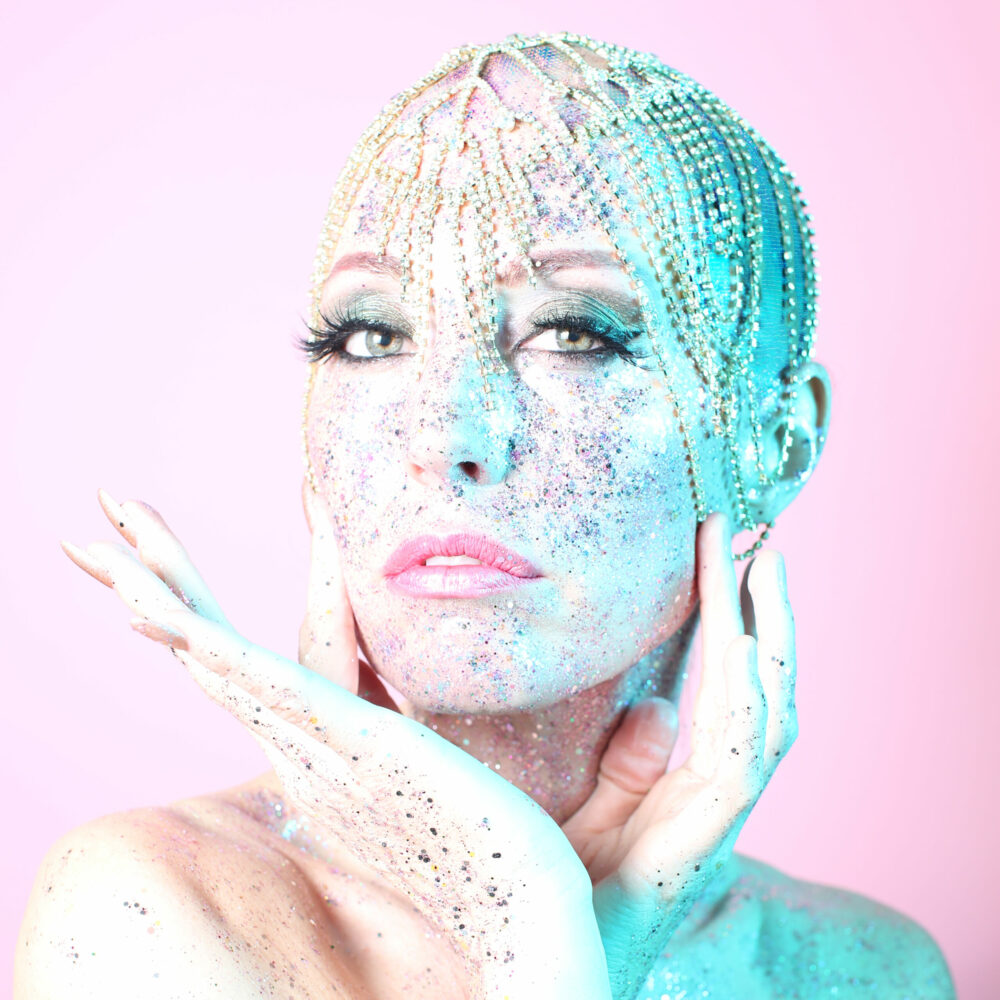
The Toronto-based artist explores her relationship to the outer world by removing herself from it completely. Her face painted in skull makeup, she narrates her observations as w post-Earth version of herself, recounting the way she used to move through the world and the things that stimulated her. She reflects on her connection to the digital realm and the way it shaped her everyday life. “I woke each day to pass through the gate to relate to other people,” Cheong sings over extraterrestrial synths and sparse drums, letting woozy saxophone (courtesy Karen Ng) take over the bridge. Viewing the internet as a gate to an endless web of connection is a perfect way to represent it’s duality; the positivity of connection and closeness mixed with infinite opportunities to spar hate or sadness.
Cheong explains that “Two Pictures” was inspired in part by social media algorithms. “There’s no meaning between images that follow each other on a feed,” says Cheong. “It’s actually de-stabilizing, because we can’t make meaning between images. Like, if you see someone celebrating someone and the next image is some horrible thing in the world, it’s like, ‘How am I supposed to feel?’”
She juxtaposes this esoteric phenomenon with the concrete sensation of physical touch. “How do we integrate this image culture into the realm of the senses and the realm of how we perceive or how we project and relate?” asks Cheong. When digital and physical intertwine, what does that mean for our relationships, and what if the two become unbalanced? If all of your intimate connections are formed online, you’re missing out on the essential human need of touching and being touched. But in a world where everyone is online, having no digital footprint can feel close to being non-existent to some.
Cheong’s out-of-body voice contemplates this binary when she sings: “Two pictures/I got stuck in between/I couldn’t tell what either should mean/I knew I had a body/And I knew what it could do/And I could tell it just how to move.” In the wake of algorithmic-fueled confusion, Cheong turns to the simplicity of touch and physical intimacy to ground herself. The observations of her “future self” serve as a sage reminder to find stillness and peace in the things that can’t be found online – the warmth of the sun, a hand to hold, a deep breath.
Follow New Chance on Facebook for ongoing updates.
From the first notes of the bright, blissful “Sleep” on their self-titled debut, it was clear that Orenda Fink and Maria Taylor had tapped into something angelic with their indie folk project Azure Ray. Forming in Athens, Georgia in 2001 and eventually moving to Omaha, Nebraska to immerse themselves in the Saddle Creek scene, the duo was rather prolific until their 2003 hiatus. After a brief reunion in 2010 produced another album and two EPs, the project once again went silent, though Taylor and Fink kept busy with other creative pursuits. Now, Azure Ray returns with its fifth full-length and first in over a decade, Remedy, which sounds both new and reminiscent of Azure Ray’s early classics.
In the usual vein of the band, the songs have a mellow, minimalist vibe. In “Bad Dream,” they sing against dreamy synths about the dissolution of a relationship: “Would you even know a bad thing when you’re stuck inside a bad dream?” In “Already Written” — perhaps the track most reminiscent of older Azure Ray songs like the wistful, reflective “November” from the 2002 EP of the same name — they sing about working through difficulties in a relationship, Taylor and Fink’s voices harmonizing with almost no instrumentation.
The title track, “Remedy,” uses acoustic guitar and folky, almost whispered vocals to reflect on the process of facing demons during self-isolation: “I visit my old tendencies/A secret grave in a cemetery/A yellow rose for my old heart/I feel it stop, I feel it start.”
The concept for the record was born during the 20-year anniversary of the band’s formation, when Fink and Taylor went through old photos of themselves together over the course of the past few decades, which inspired them to celebrate themselves as a band by making another album.
“We felt so strong back then, but looking back, I just see how fragile and frail we were,” says Taylor. “We dealt with a death of someone close to us, and writing our first Azure Ray record and starting Azure Ray was a way for us to process our grief. It just brought me back to how powerful music is and how powerful and healing it can be, and how powerful it can be when you combine music with friendship.”
“The record was written and recorded entirely during the lockdown period this last year, so the themes reflect the feelings a lot of people had during this last year – fear, isolation, hopelessness, but also hope for a better future,” says Fink.
They titled the album Remedy with the hope that it could serve as such for some of the psychological travails of the pandemic. “I think that’s just what art does,” says Taylor. “We all went through similar emotions, and so we put them to music and put them into words so that maybe someone can relate.” In the spirit of the album’s theme, the vinyl version of the album is sold alongside a custom essential oil blend.
Taylor, Fink, and their producer Brandon Walters worked remotely from three different locations during the pandemic to record the album — a process that challenged the band’s previous notions about the music-making process.
“We’ve always gone to a studio and slept in the studio and lived and breathed the whole recording process, so this was a complete detachment from that,” says Taylor. “I was afraid it was not as cohesive, but I think the process gelled together, and it felt like we were in a room together even though we weren’t.”
You can hear the band’s usual influences — which include Cat Power, Elliott Smith, and Nick Drake — and iconic whisper-like vocals, but with a stronger electronic component, evident in the prominent percussion tracks on songs like “Desert Waterfall” and “I Don’t Want to Want To.”
The duo gave Walters their voices and allowed him to add guitar lines, string samples, bass, and drums, without much instruction other than to maintain Azure Ray’s signature sound. “We wanted to be true to our sound, but we also wanted a fresh new approach,” says Taylor. “It’s a little more dense — I feel like there’s more depth and there’s just more going on — but it still has the intimacy. The music was kind of secondary to our harmony and our voice.”
Fink and Taylor created several campy videos to match the group’s simple, wholesome sound. “Bad Dream” is an amalgamation of TikTok-style clips of the band and their friends doing silly dances to the song, while “Phantom Lover” encapsulates a mystical, vintage aesthetic, with the two members swaying in white clothing and bull horns alongside glimmering trees and people dressed as wolves.
Currently, the group is busy making more videos and promoting the album and hopes to play outdoor shows in the near future. As they weather all the changes the world is going through, their friendship and history hold them together and provide a constant.
“Every record’s going to differ, especially one that’s ten years apart from the past ones,” says Fink. “As humans, we change. Our perspectives change, and the things we go through are reflected in our art. But ultimately, I don’t think [the album is] a huge departure form the older Azure Ray. I think it’s a more modern, updated version of Azure Ray.”
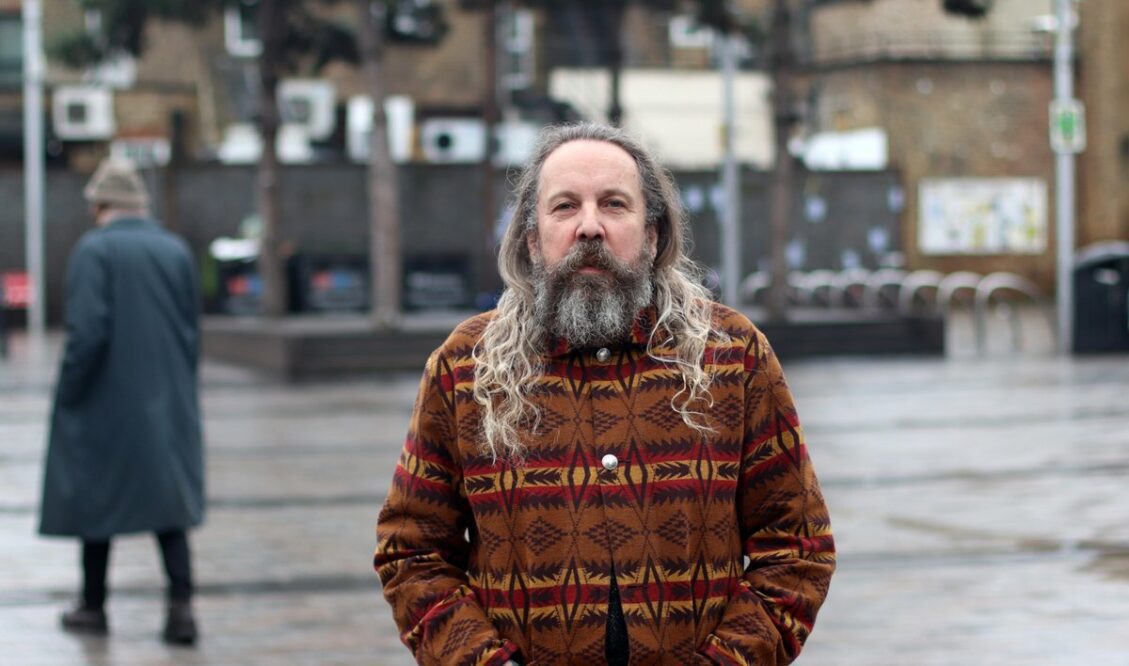
When Andrew Weatherall passed away in February 2020, there was little fanfare beyond radio stations playing an (abridged) ode to him, then moving on. Abridged, mostly, because Weatherall’s legendary DJ sets were epic in length, lasting hours upon hours. He just loved music. He loved a party. He was of the 24 Hour Party People era, lovingly transforming tracks by the Happy Mondays, Primal Scream, My Bloody Valentine, New Order and more into glitchy, gothic, dancefloor manna. Listening to his layers of acapella vocals, the hum and hiss of human and synth sounds, tropical percussion and dub-infused, somnambulant atmospherics is almost a religious experience. So hypnotic is the slow-build, the lushness of the soundscape he builds, that you may find yourself seeing the sun rise and set in the lifetime of just one track.
His name has arisen this month thanks to the double vinyl Warpaint mixes he masterminded, released as part of International Record Store Day on June 12. Weatherall mixed Warpaint’s debut album, The Fool back in 2010; both “Undertow” and “Baby” appeared on the official album, but much of his work on the record remained unheard. As announced on Warpaint’s Instagram, the new vinyl edition has arranged the tracks according to Weatherall’s design. While it’s wonderful that Warpaint fans may discover a new take on The Fool‘s master tapes, it would be a shame if the enormity of Weatherall’s career was not acknowledged and – hopefully – celebrated anew by music lovers globally. His remixes were, after all, legendary for good reason.
His 1990 remix of My Bloody Valentine’s “Soon” gave it primal drums, angelic harmonies and a slightly Calypso beat. It propelled a dreamy, angular indie track into club fare worthy of the eclectic 1990s UK rave and party scene that was embracing the sounds of trance, indie, weird and experimental electronica (ahem, Aphex Twin) and the post-romantic, New Wave/No Wave. My Bloody Valentine’s Loveless remains a classic of the time, recently reissued in all its moody glory. Weatherall was ahead of his time with this remix, as with many of his unexpected remix picks – knowing they’d stand the test of time even if the bands themselves weren’t known beyond their particular fanbase.
Weatherall’s love for Primal Scream made sense. Both Bobby Gillespie and Weatherall embraced the seemingly unfeasible mish-mash of indie rock, angular guitars, psychedelic pop with searing synths, the whip-snap drum machine, and vintage samples only true vinyl lovers could appreciate after digging through dusty boxes for the love of the find. His mix for “Higher Than The Sun (A Dub Symphony In Two Parts)” layers Gillespie’s exhale into a harmony of its own, sending dubby synths swirling in various shapes as the pace and mood change every few minutes. There are robotic bird noises, there are lasers, there are rattlesnake moans. It could be several songs, but the cohesiveness remains over almost eight minutes.
Perhaps his thrill at sculpting New Order’s music was similar to his love for Primal Scream. Both bands embraced the junction between angular indie rock and dance. His remix of “Regret (Sabres Fast’n’Throb)” turned it into a trance-like beast, with intertwining bass lines, a throbbing rave beat and barely any vocals. It’s art. It recalls Aphex Twin’s most beautiful, ambient works, and my personal favourites, “Polynomial-C” and “Didgeridoo.”
To appreciate his all-encompassing love affair with music, it’s necessary to understand that he wasn’t a musician or born into the rock industry. He was a regular, British, middle-class lad. Born in the early 1960s, Weatherall spent his Berkshire childhood surrounded by the emerging sounds of poppy balladeers, folk, anti-War protests, rock, and metal. His teenage years, towards the end of the 1970s and early 1980s were – as is often the case – formative in shaping his passion for particular bands and genres. The UK rave and club scene was emerging, party drugs were all the rage, and staying up all night dancing until the sun rose and the bleary streetlights appeared like salvation angels was just… growing up.
It sowed the seeds for the tastemaker he would become. He’d left home in his early twenties but was working odd jobs as a tradesman. Not until the late 1980s, when he’d moved to London, did he become known for spinning new indie records along with classic Northern Soul. He also established himself as a journalist and founder of Boy’s Own; initially a fanzine dedicated to fashion, music, soccer and culture, by 1990 it has morphed into a record label, representing electronica acts Underworld and The Chemical Brothers.
Like Weatherall himself, these acts carried the same spirited dedication to an experience. There is no need to be able to name either of The Chemical Brothers, nor any members of Underworld, to know what they make you feel when you hear “King Of Snake,” where if you close your eyes, neon lights splash around your inner vision until the percussive rave beat snaps all your synapses awake around the one-minute mark with its relentless pulsing stomp. Or the Chemical Brothers’ “Hey Boy Hey Girl,” with its repetitive, unforgettable hook “Superstar DJs, here we go!”
The acts he remixed are the sugary icing on the fudge cake. Weatherall is the dark chocolatey, addictive matter that coats your fingers as you dig right in. He was more than the cliché of a remix DJ, noodling away on software in the lonely confines of his bedroom while chopping up songs and changing the time signature. To assume his remixes were workmanlike is to not get him, or his art, at all. Rather, Weatherall’s remixes were new creations. He took the material and made it more than the sum of its parts; he heard the intention, and the passion, and it was these ephemeral qualities that he wove into his own makings.
If I’ve succeeded in whetting your appetite, and not just for chocolate fudge cake, then take this fork and plate and settle in for 900 hours of Weatherall’s archival mixes via The Weatherdrive. It remains a free resource, but in light of that, if you’re able to, consider making a charity donation or actually purchasing some of his work.
Where to begin, with 900 hours of material? I’d suggest two things. Either, at the beginning (of course), or with the BBC1 Essential Mix 1993, one of the earliest mixes in this longstanding series. Epic, relentless, genius and fabulous, it is the closest we can hope to feel to that first time of hearing a song and knowing you need to be in it somehow, melding it to your likeness, creating your own shapes within it and returning it to the world, anew, changed but fundamentally exactly what it’s meant to be.
When Sera Beth Timms came across a long, red wig at a store down the street from her home, the components of what would become LVXURI began to coalesce. “When I got the wig, I wanted to know who the character was,” says Timms by phone from Troy, New York. One thing was clear: “This isn’t Sera doing LVXURI.” Instead, the project centers around the character Aurora Dawn, a fierce and flamboyant woman with a mystical streak, who dispenses the tales of her life over slow, slithery grooves. On June 18, Timms releases her most recent LVXURI single, “Consulate Lust,” premiering exclusively on Audiofemme today.
At the time of LXURI’s inception, Timms lived in Los Angeles and was best known for her work as Black Mare and in the band Ides of Gemini. Where her previous projects had been heavy and more rock-oriented, Timms grew inspired by hip-hop beats, and was yearning to make something lighter and more danceable. She considered exploring different themes in her work as well. Somewhere in her notes, maybe a year or so earlier, she had written down the name Aurora Dawn. “I didn’t know who Aurora Dawn was or what I was going to do with Aurora Dawn, but I knew it had to do with the sun and some incarnation of solar energy,” she explains.
Timms had written one song and played it for two close friends— one of whom was photographer Nedda Afsari— and they decided to film a video for it on a planned trip to The Madonna Inn. “There are so many bands I know that have filmed in different rooms at the Madonna Inn. It’s such a great set,” says Timms of the hotel on California’s Central Coast that’s famed for its themed guestrooms. Timms found the wig right before that adventure and Aurora Dawn first came to life in the resulting clip for “Decussata,” released in 2019.
The video prompted an invitation to open for performance art rock outfit Stuntdriver at Los Angeles venue Zebulon. “I always need motivation to finish things because I’m always doing a million things at once,” says Timms. This show, she says, was a great opportunity to push herself to write more songs.
With her previous project, Black Mare, Timms made her own beats, but LVXURI required a different approach. “The beats for LVXURI are supposed to be a lot more sleek than the drums for Black Mare,” she says. “I started getting into that and realized that I didn’t have the chops to get as many songs done in that short amount of time to be ready for a show in a month.” She then turned to her friend Dylan Neal, from the band Thief, to collaborate with her.
Aurora Dawn and LVXURI continued to evolve in 2020, albeit not necessarily in a way that Timms anticipated. “I had all these grand ideas about performances that I was going to do and couldn’t do any of that in 2020,” she says. Instead, she began to incorporate mystical elements into Aurora Dawn’s personality and performance. As Aurora Dawn, Timms read tarot and sold crystals on Instagram.
She shot a few more videos as well. The clip for “Headlights” was made in the midst of the March 2020 lockdown in Los Angeles and was directed by her then-roommate Sean Russel Herman. “Aurora Dawn, the character, she loves to be directed and told what to do,” says Timms.
By the time Timms made the video for the song “Aurora Dawn,” her own life was in the midst of transition. “I was definitely living in a very intuitive zone,” she says. Timms left Los Angeles, initially to move in with a friend in Florida. On the drive east, she stopped in Las Vegas to film a video, without knowing which song she would shoot or, really, how she would do it. As a former video editor, Timms relied on her iPhone with a lens attachment for footage. “I was traveling by myself, with my cats, and I didn’t know anybody in Vegas,” she recalls. “There’s no real budget behind LVXURI, it’s just out of pocket for everything. I didn’t have the time or budget to hire a fancy camera person, so I just decided: let’s go with it. Let’s see what we can do, what we can get.”
“Consulate Lust” will be the last LVXURI single for a while, as Timms has plans to finish up work on a full-length release, which she says will include some of the previously released singles. Still, Aurora Dawn continues to have a hold on her creator. Timms shops specifically for the character, even when she’s not actively trying to build Aurora Dawn’s ultra-glam wardrobe. She says, “I go into an Aurora Dawn trance and I don’t even know what I’m doing.”
Photo Credit: Dana D // Hair/Makeup: Zina Gladiadis
“It’s cool to depend on yourself and come out the other side and be like ‘cool, I did that.’” So says Ridgewood-based ambient experimental artist M. Maria. She is on the cusp of dropping her debut EP Saturn Returned, from which she premieres single “There’s A Spirit In My Body” on Audiofemme today. Entirely self-produced and recorded, it is yet another example of a project only dreamt about pre-pandemic but actualized once we were forced to stay home.
“Before the pandemic hit, I really wanted to make an album, but I hadn’t spent enough time in it to where I really understood how to record music, how to produce it,” M. Maria explains. “I feel like as soon as we had time to be by ourselves and shut the world out, I was able to just go straight into Ableton, just progressing and getting better until I had actual results.”
Though she began learning Ableton Basics and tinkering with the idea of making music two years ago or so, it wasn’t until she turned 27 that the urge really took over, in alignment with the astrological phenomenon from which the EP gets its name (the infamous Saturn Return is when the planet reaches the same celestial position it was in when we were born, approaching in our late twenties and making its impact felt through our early thirties). “It’s supposed to realign your life in a way, and make you go through these extreme changes, to be on a path that can better serve you,” M. Maria explains. “As soon as I hit 27, I was like, I need to do something. I need to make music. I felt this astrological push, and everything around that period going in a direction that felt more real, and more like it was supposed to be, you know? Sorry if I sound insane.” She laughs.
The resulting music is darkly ethereal, with M. Maria utilizing her high-octave voice as an otherworldly instrument, layered over darker, industrial elements. “I like that contrast so I like playing with it a lot,” she says.
“There’s A Spirit In My Body” begins sparsely, with only vocals and a light beat, and slowly different beats and vocal elements are introduced to build into a heavier, layered sound. It brings to mind the likes of Grouper or Holly Herndon, though M. Maria lists shoegaze bands like My Bloody Valentine and A.R. Kane as her greatest influences. The influence is there, but the creative decision to use the voice more as an instrument than a vehicle for delivering lyrics takes the sound to another world. The emotionality lies in the delivery, not the words themselves.
“I feel like I have trouble expressing with actual words,” she explains. “When I’m feeling something, I start singing, and just having the sound of my voice be an expression, even when it’s not saying something. I feel like the voice can express so much with noise.”
Having mixed and produced the EP, each song is a creation all her own. As she preps for release later this summer, and for her first live shows, M. Maria expresses some apprehension around releasing her first creative endeavor into the world. At the same time, though, she recognizes that Saturn Returned is only the beginning, and confidence in her potential provides some relief from that pressure. “There’s going be so much more to build off of it,” she says.
Over the last ten years, Rebecca Goldberg – a.k.a 313 Acid Queen – has completely immersed herself in the city of Detroit. Unlike some transplants who come to the city to take, Goldberg, born and raised just outside of Detroit, came to learn, appreciate and contribute when the time felt right. Starting out as a student of Detroit house under the tutelage of legendary DJ Bruce Bailey, Goldberg cut her teeth spinning all around the city and slowly training her ear as a producer. Nearly a decade and five albums later, Goldberg pays homage to the city that has shaped her on her collaborative EP with Sardinia-based producer SickBoy (Stefano Piseddu), Buildings, out June 20 on limited-edition vinyl pressed at Archer Record Pressing. The record serves asa sonic map of the structures that portray Detroit’s beauty, oppression and resilience.
Today, Audiofemme premieres a video for EP opener “Guardian,” a bold and expansive track encapsulating the depth and complexity of the stunning, hundred-year old Art Deco-inspired skyscraper for which it is named, with its vast vaulted ceilings and tediously crafted mosaics. Goldberg and Piseddu use booming percussion to reflect the sturdy stone foundation and tie a rainbow of synth textures to symbolize the kaleidoscopic designs that gawkers can get lost in for hours.
The project began to take shape when Goldberg responded to a call from Detroit Underground label founder Kero for producers to work on a “Detroit Map Series.” The series includes three other parts – highways, roadblocks and rivers – and prompts producers to make sonic representations of these staples in the form of Detroit house music. As a member of Detroit Underground, someone who spends a good amount of time sneaking into abandoned buildings to take photographs, and regularly takes friends on tours of the Guardian Building, Goldberg already had an intimate connection with the sights and sounds that accompany Detroit architecture. She says when she was assigned “buildings,” it was a no-brainer.
“There’s just something about Detroit and the creativity that comes out of here and it’s either in the water or the landscape or the people or all of it together,” says Goldberg. The main challenge was to communicate this magic across space and time to her Italy-based collaborator. Goldberg spent hours taking photos and videos of buildings that inspire her and sending them to Piseddu, who was deeply moved by the imagery. Though the two never met in person, they bonded over a shared obsession with Detroit techno. While the language barrier was considerable, the producers were able to communicate through Google-translate and an innate, shared sense for beats and textures.
This wasn’t the first time that Goldberg made an unlikely connection through her passion for music. She explains that her foray into DJing was based solely on a love for the music and a desire to be around it as much as possible. “Like many people who are into stuff like this, I’m just a fan of this music. I’m a fan of dancing,” says Goldberg. She got her foot in the door by using her graphic design chops to create flyers and merch for Bruce Bailey, then later took matters into her own hands. “I was like, ‘Listen, if I’m gonna keep doing your flyers, I wanna be on the flyer. I also wanna play and I think you should put me on and give me a chance.’”
Then began what Goldberg describes as an apprenticeship of sorts, learning from Bailey and other well established Detroit DJs. “It would be me and all these house heads that had been in the game forever, and they loved me,” says Goldberg. “We loved each other, those people are my family. They wanted to teach me about the music and the culture of it and the history.” After years of collecting records, Goldberg decided it was time to contribute her own soundprint. “Eventually, you start hearing things that don’t exist yet, and that’s how music production started for me,” explains Goldberg. “I’ve tuned my ears now so well with DJing that I think I can play things that I would want to DJ and dance too, and that’s a whole ‘nother wormhole of obsession.”
Buildings speaks to Goldberg’s years of soaking in sounds and stories from Detroit techno legends, while adding her own inspirations into the mix. After cascading through a series of dreamy soundscapes, the EP ends on “Renaissance,” a track that distills the futuristic aura that surrounds Detroit’s architectural centerpiece. “The Ren Cen is so crazy if you look at it,” says Goldberg. “It looks like a spaceship from the ’80s that’s supposed to be the future about to just take off.” The building’s corresponding track is full of laser-sharp synth sounds and swells of air, making it easy to imagine the entire structure blasting into space.
The EP is as much of a love letter to the city as it is a testament to music’s power to transcend across oceans and bring people together. Just as techno has brought the people of Detroit together for years, it allowed Goldberg and Piseddu to make an entire EP together, even separated by an ocean.
Follow 313 Acid Queen on Instagram for ongoing updates.
While the pandemic derailed tours and scrapped recording plans for many musicians, there’s one performer that actually found a freeing feeling in the midst of this past year – Australian pop wonder Lenka Kripac, better known mononymously as the purveyor of hits like “The Show” and “Everything at Once.” Kripac is the matriarch of a busy Australian home; between crafting with her children and jamming on her ukelele, she somehow managed to release twin EPs Discover (six original songs) and Recover (six covers of classics ranging from Pat Benatar to Bob Dylan). She also put together a video for follow-up single “Ivory Tower” via DIY means. “I shot the footage of myself on an iPhone in my five-year-old’s bedroom. The effect of the lockdown on creating content with whatever resources you have at home was actually quite liberating,” she tells Audiofemme.
She sent her DIY footage to her old pal Mitch Hertz to achieve the lo-fi animation style she wanted. “We were going for an aesthetic somewhere between ’80s video art and Monty Python-like animations,” Lenka explains. “I had attempted to create a collage of the photocopied buildings myself first, but when I realized it was beyond me, I asked him to create that kind of thing for me. He went way further and made this whole revolving world.”
With lyrics like “I know your heart is torn, I know you see the difficulty/Do you save yourself?/Or do you like humanity?” the song is her attempt to get inside the heads of powerful capitalists hellbent on profit above all else. “It is a message to the evil, greedy types at the top of the heap,” she explains. “Like, surely they see that the choices they make are bad for humanity as a whole. Do they hate humans except for their fellow white rich? I assume they must feel some entitlement to protecting their own kind, otherwise I just can’t understand it.”
Since her earliest forays into music as a member of electronic rock band Decoder Ring, Lenka has recognized the value of collaborating; she recently released a cover of Future Islands’ “Seasons” re-envisioned with the help of Cleopold and Animal Feelings. “Doing it all alone is not fun for me. I like a bit of that but I also really love to do the whole process with others, from writing to production to touring,” she reveals.
As a young actress, Lenka had an a-ha! moment while performing in a play in her early twenties. “My character sang a song and each night I was inundated with people after the show saying I should be doing more singing. So, that was the shift, realizing that I could just work on my music at my own pace,” Lenka reminisces.
From that moment, she went into the music industry as a performer, music writer, and even started a label, Skipalong Records, to self-release her work. She might add “mentor” to her long resume, but for now she is all about releasing music as it comes to her. “The pandemic and lockdown changed perspective for myself and a lot of creatives I think,” she says. “I no longer feel like I need to make an entire record before releasing something out into the world. It’s the benefit of the whole streaming and playlists phenomenon. I’m happy to just go one track at a time!”
With her haunting new single “Out of It,” Darity teaches a masterclass on asserting boundaries. The dance-y track combines what the Cincinnati singer-songwriter is best known for – thoughtful lyrics and hypnotic vocals – while delivering a personal message about independence and family.
“The chorus of ‘Out of It’ was originally written about a rough patch that my dad and I went through while I was in college. I went away to school, and it was really easy to just not engage with the conflict and our differences,” she tells Audiofemme. “After re-writing, it became more about a pattern I had noticed in myself. The verses are reflecting on other situations where I had left people out of things in my life to spare myself the trouble.”
“It’s just easier to leave people out of things. Relationships are complicated. When they get tough, or I feel like they are in my way or not constructive – I tend to just withdraw,” she adds. “It’s just a self-preservation coping thing.”
The accompanying video, aesthetically shot at Cincinnati’s Taft’s Ale House, marks a full-circle moment for Darity, as it stars actual members of her family.
“I am one of eight kids. So, my real parents, boyfriend and a few siblings were in the video,” she explained. “It truly meant a lot. I’m the only one who is pursuing music as a career, so it is kind of foreign to them and to have them a part of it was special.”
“Filming with them was great,” she added. “They were all in good spirits, except my youngest brother, but he is 11 and just wanted to play his Nintendo Switch, which I totally get! There was a lot of laughter and [director] Nick Starensnic was really efficient, which just made it fun.”
Several of the shots feature Darity by herself – sometimes appearing lonely; other times looking empowered. The song works in the same dichotomy, with Darity sometimes reveling in her independence, and other times feeling the weight of her isolation.
“Autonomy and individuality are very important to me. I want to be free and fully myself,” she says. “I really wanted to figure out my own values and become more of myself, and that definitely resulted in me putting myself out of familiar spaces.”
“Meanwhile, growing up, and the relational growing pains that came with it, felt really lonely. I think growing up puts you on an island for a while until people know what to do with the adult version of yourself,” she continues. “Because of that, ‘Out of It’ really feels like a bittersweet coming-of-age film for me, personally.”
Darity has dropped a handful of singles this year, releasing “Six Feet” back in March and the uplifting “Everything” this January. “Out of It” continues her momentum, as she gears up to release a new EP.
“The EP has been less collaborative and more something I’ve been crafting alongside my producer, Jeremy Steckel. It doesn’t have a release date yet, but I’m excited and just taking my time,” she says. She’ll test out some of her recent material during a live show with Leland Blue supporting Michigander this August at Fountain Square.
“The other thing I’ve been working on is launching a Patreon. It’s going to be more personal to me as a songwriter. It’ll feel like a songwriting journal, which will be a look into me as a person – something I haven’t explicitly given people access to,” she adds. “My hope is to form relationships with the people that enjoy my writing.”
Joan of Arc? Joan As Police Woman? Joan Jett? Any of these Joans, and all of them, have the unrepentant, independent spirit that sustains the indie-punk vibe of Teenage Joans. Adelaide duo Tahlia Borg, 18, and Cahli Blakers, 20, have been making ‘90s-style garage punk-pop under the moniker since 2018. Their sound recalls the pioneering musical style of The Pixies, with enough sass and bravura to conjure Kathleen Hanna and Bikini Kill. When this is suggested to them, they’re thrilled but honest.
“We’re influenced by Bikini Kill and The Pixies but they’re not core influences,” says Blakers. “One of our biggest shared influences is 5 Seconds of Summer [Australian pop band now named 5SOS]. We used to be a bit embarrassed, but now we own it. We grew up listening to them, and bringing guitars back to pop music is something we enjoy doing. Another one we share is [Melbourne band] Camp Cope – [they’re] girl bosses, we agree with everything they stand for, [and] we really look up to them. For me, I really love Yungblud’s individuality and style, The 1975, and Catfish and the Bottlemen.”
Since winning Triple J’s “Unearthed High” competition (a nation-wide hunt for the best high school act, which in previous years has championed Gretta Ray and Japanese Wallpaper) in 2020 with their track “Three Leaf Clover,” they’ve released singles “Ice Cream,” “Something About Being Sixteen,” and their latest, “Wine.” They’ve also performed at festivals (Yours and Owls, Summer Sounds and Mountain Goat Valley Crawl), as well as co-headlining shows with fellow Adelaide duo TOWNS and supporting The Chats.
Their debut 5-track EP Taste Of Me, released May 28, bristles with oodles of unbridled teen energy; it’s a riot. Along with their previously released singles, killer songs like “Therapist” and “Apple Pie” round out the tracklist, all sufficiently drizzled with fuzzy, grizzled guitar and sardonic humour. Like a sailor-mouthed Dr. Seuss, the duo are hilarious on top of being impressive musicians.
“Apple Pie” opens with the line “Give it up, you’ve got a bucket list that makes you scream fuck;” to paraphrase the lyrics, they can be sweet, but they’re not just dessert – and anyway, they “don’t wanna be the apple of your eye.” Blakers admits they don’t play that song much live. “It’s our weirdest song. It’s about someone wanting to be in a relationship with you, or be around you, romanticising the idea of you because they don’t see the less fun, less energetic side of you,” she explains. “It’s about navigating human connection when two people aren’t actually the right people for each other.”
Navigating human connection, especially in the midst of a global pandemic, are topics close to the bone for both Blakers and Borg. While Blakers finished school in 2018 and chose to work in a café while pursuing music (“the band took off a little bit”), Borg’s initial plans to focus on music and touring took a pummeling at the onset of the pandemic, so she opted to begin university studies last year.
“I said to myself that I was going to take a year off, just to see what happens with the band, but then when COVID began, I started Behavioural Science at university and I work in a music store,” she says. “It’s a lot of work, but I pace myself and I can do the course over a few years. When we’re on tour, I bring my laptop with me and do work on the plane. I’m balancing everything; it’s working so far.”
Taste Of Me was recorded with audio engineer Jarred Nettle at House Of Sap recording studio in South Australia over two weeks. “We love Jared!” they both enthuse at once.
“We call him J-Nett,” says Blakers. “He’s the best. He took every idea we had on board – nothing was too stupid, too out of the box. At least if something didn’t work, we tried. He took our stories and took good care of them.”
Perhaps he recognised, as their many new fans do, that the duo were born to make music. Blakers’ initial foray into violin from the age of 5 lasted until 10, when her passion for rock music and her pleas with her father for a guitar were answered.
Borg’s story is similar. “I actually started ballet when I was 6 and thought it was so boring, so I quit ballet and started drums when I was 7,” she recalls. “I used to go and watch my cousin play with his band; he’s a drummer too. I wanted to be like my cousin, who’s really cool, and while I did give it up for a few years like kids tend to do, I picked it up again and I love it. It’s a fun instrument.”
Her major influence embraces – as does Borg – controlled chaos when it comes to drumming with a band. “My biggest influence, drum wise, is emo band Mom Jeans because they do stuff that’s out of the box. They use wacky time signatures, they don’t always follow the guitar riffs. They do, but they kind of don’t.”
For Australians who want to see Teenage Joans bring raw guitar pop punk to the stage, their national headline tour is intended to begin at the start of June. With Melbourne under a lockdown at the time of interview, there is speculation about whether all states will be open for performances. “If COVID stays chill, then the tour will be going ahead which is very exciting,” Blakers says.
She’s just turned 20, but still feels like she’s not “100% an adult just yet,” and hasn’t abandoned the spirit behind the tracks she and Borg wrote as teenagers. “I feel like there’s a lot of youth in just being a human,” she says. “There’s a lot of things that excite us as if we were children, so I feel I can still relate to [the songs].”
For a many years now, the future of the Seattle music scene—one that has long been defined by the vibrant grunge and DIY rock scene of the 1990s— has been in question due to Big Tech money and the extensive forces of gentrification overtaking the city. As Bandcamp Daily recently wrote about the status of the Seattle scene, “Flannel-wearing, granola-eating punks were pushed out of the way by the formidable income of North Face-wearing yuppies who could afford $20 bowls of paella as an appetizer.”
Sure enough, many artists have moved away due to the skyrocketing Seattle prices, irrevocably altering the Seattle music scene and sending many Seattle music fans scrambling to establish new nonprofits and venues that could help preserve what’s left. What’s more, many of the issues the scene was facing before have been exacerbated tenfold by the COVID-19 pandemic.
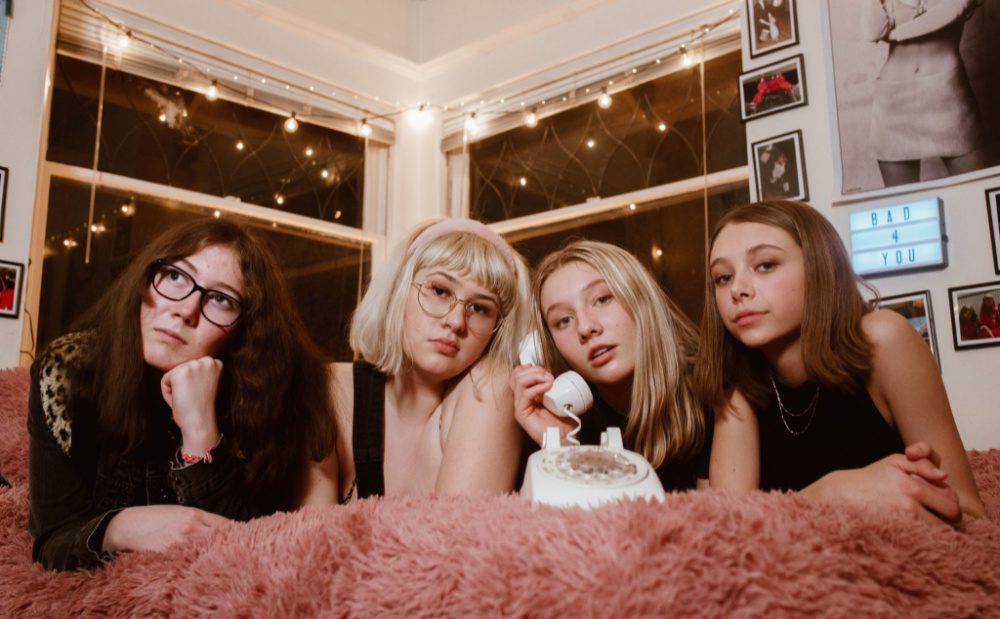
But when you hear THEM, a brand new band of Seattle-bred teenagers, you hear hope. Their debut single, “Bad 4 U,” which dropped on June 5th, is the natural continuation and expansion of what Seattle music has always been about—gritty, honest, and unique rock brought to life with the help of the local music community that’s rallied around them.
THEM is named for the first letter of each multi-instrumentalist member’s name: 16 year-old Thompson, 16 year-old Hudson, 19 year-old Ellie, and 19 year-old Maia. The foursome met when they were put in a group class together at West Seattle’s Mode Music Studios, a mainstay local music school that opened in 2014 and is operated entirely by working Seattle musicians. Over the years, the school has boasted such notable teachers as Jen Wood from The Postal Service, solo artist Maiah Manser, Rat Queen’s Jeff Tapia, and KEXP radio host and The Black Tones lead vocalist and guitarist, Eva Walker.
All four of the girls started taking private lessons at Mode Music Studios years ago—Ellie, in fact, was one of the school’s first students. “Mode is mostly one-on-one private lessons. That’s how all four of us started,” says Ellie. “But we got recruited to do this Sunday night rock band class which we all four were in and that’s how our group formed. We were in this Sunday night class that we’re paying for, just us four, collaborating, really just covering our favorite songs.” That was four years ago; initally, local singer-songwriter and drummer Heather Thomas taught the rock band class before Eva Walker took over. From there, the group began to play gigs around Seattle.
“Once the pandemic started [we couldn’t] really do a virtual class and we were starting to write our own songs,” Ellie continues. “So we just took it into our own hands and went to each others’ houses and continued the weekly group.”
As the pandemic went on, THEM pulled back from playing shows and instead worked on writing music until they had enough for a debut album, which Ellie says will be released sometime late this year. “Bad 4 U” is the first single to be released off the forthcoming record, and it’s based on the rest of the group’s reaction to one band member’s bad boy crush.
“Hudson brought it to the band actually in probably April or May 2020,” says Ellie. “Hudson pulled this song out of nowhere and played it for us and we loved it—we all related to it differently because it’s basically about liking somebody who’s not good for you, or liking somebody who you know is bad but it doesn’t matter.”
As Hudson shared more about the song, the rest of the band realized they knew this crush—and agreed it was probably best she steer clear of him. For that reason, the group decided to have Thompson, who’s close friends with Hudson, echo Hudson’s vocals at the chorus with sound best friend advice: “You know he’s bad for you.”
This creative choice—and the song’s refined rock sensibility— underscores just how mature these girls are, despite their youth. They perform with soul and heart, they add call and response, they play with sound density and form. Their professionalism reflects their hard-work and talent, as well as the ample mentorship they’ve had along the way—both from the teachers at Mode and from other cultural institutions in Seattle.
“We have kind of grown from Seattle Theater Group education program. We were in Moore Music at the Moore last year and we’ve been in STG songwriters’ classes for like the past four or five years,” explains Ellie. She’s also spent several years beefing up on music business and social media management, primarily by working at Mode Music’s front desk and eventually becoming The Black Tones’ social media manager.
“Eva saw my work at Mode and… saw that I was interested in studying music business so she asked me to do their social media,” says Ellie. “I started off posting for them and that work has spread. I started doing social media for [the band] Warren Dunes as well, and then [for] Seattle Secret Shows. I’ve done a few things for Seattle Theater Group, too, and now I’m about to start with Naked Giants and a few local LA bands because I’m actually moving to LA in a few months.” There, she’ll finish up her Bachelors degree in entertainment business at LA Film School.
Ellie’s applying what she learns to the promotion of THEM, and no, the group has no plans of breaking up while Ellie finishes her schooling. Instead, they plan to leverage Ellie’s change of locale to broaden the reach of THEM, and Ellie says she will definitely be flying back and forth this summer to play the shows they have on the calendar.
When asked about her perspective on the future of the Seattle music scene, her perspective is sunny—noting that the pandemic hasn’t been all bad because the time helped THEM get inspired and create. She expects other artists have had similar experiences.
“I think we’re going to bounce back just fine,” she says. “I think during the pandemic people were kind of M.I.A. and got really inspired. We wrote a whole album’s worth of songs. I think the fans are really going to benefit from that when things open up and see that the growth that some of their favorite artists have done during the pandemic.”
Ellie sees talent in her age group simmering and swelling, ready to lay down some tracks and make it big. The list of local artist peers that inspire THEM is long—and includes her boyfriend Destin Mai of Ambient Village, who produced, mixed and mastered “Bad 4 U.”
“We’ve met so many aspiring young artists. King Sheim—everything they’re doing right now is amazing. Amy Hall, she’s also amazing,” says Ellie.
In Ellie’s eyes, too, there’s a new “Seattle sound” bubbling up among the next generation of artists, born from the combination of the DIY rock/pop sound the city’s long been known for and Seattle’s vibrant underground hip-hop scene and wealth of talented producers and emcees.
“I definitely think that there’s some inspiration from new pop music that’s coming out, like Olivia Rodrigo—she’s got a full band but there’s 808 [drum machines] in her music. It’s kind of a mix of that hip-hop and pop sound,” says Ellie. “It’s like a full band like us, falling into the hands of a hip-hop producer, like how we’re working with Destin and he’s putting in automated drums in our music—I think that that is itself a new sound for sure.”
It’s safe to say that Amy Darling was born with a hippie’s spirit. A native of the Bay Area in California, the Nashville-based rockstar was raised on a nourishing ’60s musical diet, where early inspiration came from the likes of Jimi Hendrix, The Beatles, Janis Joplin and many other legends of the era. After studying musical theatre and living briefly in Los Angeles and London, Darling’s path eventually led her to Music City, where she released her appropriately titled debut EP Rock ‘n’ Roll Woman in 2018.
Balancing humor with her eclectic sound of rock and blues, with hints of pop, punk and disco mixed in, Darling continues to carve her own lane of rock n’ roll magic with her new single, “Nasty Habits.” She delivers a monologue through song as she recalls her early days in the trenches living around the corner from the notorious Skid Row in LA with nods to the “junkies, bankers, hustlers and whores” who ruled the streets.
The singer describes the song as “an anthem for escapism” that’s akin to the “electric pulse” of the city, a feeling she translates into the music with screeching guitar riffs and her sultry voice backed by a bluesy choir. “On the corner of 5th and Spring/Lies my dignity and clothing on the floor/Working, eating, fucking/In my minimal existence/I ask myself/If these habits are so nasty/Then why do they feel so good?” she growls in the funk-infused track, proudly proclaiming “everybody’s got nasty habits.”
Darling’s music has a distinct way of resonating, her marriage of words and melodies constantly turning over in one’s head. She proves this on the four-song Rock ‘n’ Roll Woman. The title track sounds like a classic one would hear on an old-fashioned jukebox, traveling back in time to the golden age of the genre. Her alluring voice masterfully emotes retro vibes and modern grace as she unabashedly details “dancing with my self-destruction” while “trouble was my only friend.” The listener is hit with an ear-catching saxophone on the opening of “Candy,” a lively ode to a woman from a wealthy family who moves to the big city to chase her dreams — only to fall victim to the dark side of town and ultimately abandon her ambitions.
Darling raises a middle finger to modern society in “Flip the Bird,” running with the devil and singing with the saints while embracing all of life’s most exhilarating aspects. “Never learned to listen what I’m told/Flip the bird to ever growing old,” she declares, not so much trapped in Peter Pan syndrome as she is a free spirit journeying through all of the darkness and light life has to offer — as told over a banjo plucking, porch-picking-friendly melody that fits as naturally in the Americana realm as it does rock. She closes the project with the revival-leaning “Jamie,” accentuating her clever lyricism as she shares the experience of being with an untrustworthy lover. “I got one foot out the door/And I’m not turning back once I’m found,” she warns alongside spirited instrumentation lead by electric guitar and jazz piano.
What’s intriguing about Darling is the way she approaches the gritty nature of life, fearlessly exploring her desires and the debauchery that surrounds her, a key factor to what makes her music so enticing. There’s a level of comfort to the way she thoughtfully embraces elements of darkness, wrapping them in imaginative characters and stories to match that solidify her as a rock ‘n’ roll goddess.
Kelly Jean Caldwell is not dead. The singer, songwriter, and owner-operator of Hamtramck’s Outer Limits Bar and record label laughs as she tells me a rumor of her death has been swirling around town. “The other day, someone at the bar was asking what’s the next show coming up,” she explains, “and they [the bartender] were like, ‘oh it’s the Kelly Jean Caldwell/Loose Koozies record release show, and the person was like, ‘Oh, I thought Kelly Jean Caldwell died.’” Conversely, Caldwell is one of the liveliest people I’ve ever had the pleasure of talking to. A mother of two, she gracefully floats between answering my questions and ogling a unicorn drawing made by her daughter, Birdie, the namesake of her latest record.
Although Birdie was released in December of 2020, the record never received a proper release show due to the pandemic. So, this Saturday, June 12, Caldwell will finally play the record live at Outer Limits, joined by Monica Plaza and best friends and label mates, the Loose Koozies. Originally scheduled for last July, Caldwell explains that this show feels like a triumphant return after a year and a half of playing alone or to a computer screen. In a similar way, Birdie feels like a triumphant return to the studio after her last album release, Downriver, in 2016. She says that this record finds her at her strongest as a musician, person and a mother. “I am getting older I’m getting stronger, I’m a better musician, I’m a better lyricist,” Caldwell explains. “I feel like I’ve definitely come up as a musician. I’m more confident than ever.”
Part of this transformation is owed to Caldwell’s deeper exploration of the flute over the last few years. “My flute teacher changed my life,” she says. Though she’s played flute for years, Caldwell says taking lessons completely changed her perspective on the instrument and songwriting in general. She was pushed to go outside her comfort zone and learn things she hadn’t tried before, like reading music and playing classical songs. After months of practicing three hours a day, Caldwell’s lessons culminated in a classical flute recital at Outer Limits where she donned her wedding dress and played a full classical repertoire accompanied by friends.
This transformative experience, in tandem with all the frightening and beautiful events that accompany motherhood, helped shape the colorful sound that characterizes Birdie. The album’s title track opens with swooping layered flute melodies, reminiscent of the magic and innocence of childhood. “All those ’70s rockers have songs about their daughters but you’re not sure if it’s about their lover or their dog,” Caldwell laughs. “I was like, ‘I wanna write one like that… a creepy song about my kid.’” But, honestly, the song leans more towards tear-jerky than creepy, especially when guided by Caldwell’s instinctively poetic lyrics.
She opens the song with a dreamy description of motherly love – “Sunshine follows my flower all the time/Blue eyes water my dreams ‘til summertime.” The song then opens up into a ’60s rock-type tempo, seemingly mirroring the fast-paced and sometimes chaotic rhythm of parenting. Bright guitars and Caldwell’s vivid depictions welcome the listener into a world of vibrant colors and endless possibilities. You can imagine Caldwell running around in the backyard with her daughter, blowing bubbles and creating their own world together, especially when she sings, “She’s got glitter in her hair/She grows flowers everywhere.” She’s able to capture these moments of pure happiness like a firefly in a jar and distill them into a few simple lines.
But, ever the honest songwriter, Caldwell makes room for both the precious and ominous sides of motherhood in Birdie. She explains that “SIDS,” one of the most musically upbeat sounding tracks on the record, is about being terrified that her son was going to pass away in his sleep. “I was really obsessed with Sudden Infant Death Syndrome,”explains Caldwell. “This was about my son and he obviously survived. But, when you have a new baby, you really, or at least I, felt like they were so close to death. I really felt like they could just switch back to the other side at any moment.”
Unless you’re really listening, you wouldn’t notice the somber nature of the song, and that’s exactly how Caldwell meant it to be. “I didn’t want it to sound sad because I didn’t want people to worry about me,” says Caldwell. “So it’s probably the most upbeat rockin’ song I’ve ever written.” She explains that channeling her worries into music was the most natural way she knew how. The song’s fuzzy guitars and punchy chorus melody beget a story of hope and tenacity while Caldwell’s trepidatious lyrics ask the morbid question: “Does it call you back/Do the stars attack/Or will the dark dream continue?”
As a musician who has never been anybody but herself in her songwriting, Caldwell’s vulnerable lyricism allows listeners to connect on a deeper plane. Even if you haven’t experienced motherhood and the anxieties that come with it, you can relate to the paralyzing fear of loss and the euphoric happiness of being with someone you love completely. “I think that, weirdly, the more specific you get about things, the more people relate,” says Caldwell. “The more personal that I make things and the more truthful, the more people feel it.”
Follow Kelly Jean Caldwell on Instagram for ongoing updates.
Psychedelia-inspired indie quartet Goo began with endless college jam sessions; post-graduation, they morphed into playing regular shows in the Brooklyn DIY scene, describing their project potently on Bandcamp as a “slow-burning nebula of lovesickness and hopeful/less crooning into the void.” On June 16, the band – Eriq Robinson (bass/vocals), Leah Beck (keys/vocals), Anders Johnson (drums) and Beck Zegans (guitar/vocals) – is set to release their first LP, Return to the Garden, nine tracks which invoke the lo-fi atmosphere of their live show and previous EPs The Squeeze and Under the Electric Blanket, while also using hi-fi production to sharpen the expansive musicality throughout the album. In the lead-up to the album’s release, Goo have shared three singles so far: “Fur,” “Fruit,” and “Animal.”
Zegans wrote “Animal,” the third single off the record, during a moment of “utter despondency” while sitting on her bedroom floor. As a writer, she tends to start with a chord progression that feels close to what she’s trying to convey and then gradually pulls lyrics from her journal which she stitches together and then brings to the band. Unsure if this particular song was right for Goo, she let “Animal” take a back seat until playing it for a friend. “We were just hanging out and playing guitar, I had a bunch of candles lit and it was all super vibey. He was like, ‘Oh my gosh, I love that song so much – is it about killing God?’” Zegans remembers.
With lyrics like “Hope is a cannibal thing, an all-natural gnaw” and “That was a time of odd myths and prayers/And of him who was spinning it all,” there’s a poetic examination of purpose, fate, and joy, that contrasts the bright background instrumentation, leading to a delicate but optimistic balance. The religious subtext on “Animal” reflects the spectrum of extreme emotional intensity within the song lyrics. “I was feeling a really big lofty emotion and I think the drama and scale of the lyrics, where it could be about a personal relationship or God or poetry, makes sense in that context,” says Zegans. There is a certain openness in “Animal,” creating space for listeners to explore the multifold concepts as they relate to their own individual experiences.
Although there is a darkness to the lyrics, the light guitar strumming and fluttering drums bring a levity to the drama. Keys that mimic church organ rise up into the atmosphere of the song’s simple chorus: “Now I’m a dead animal/I hold my tongue, tongue, tongue.” The brief moment of silence prior to the chorus leaves listeners leaning in, piercing through the vocal reverb which casts a hazy sheen on the track. The tone in Zegan’s voice is Dylan-esque, passive and cool, a certain style of singing which isn’t quite smoky, but tonally familiar to Courtney Barnett. Goo uses a big fuzz pedal on the track to keep the depth alive. “This song is kind of about throwing your hands up and saying fuck everything,” Zegans says. “The fuzz is the fuck everything pedal because it takes the signal and explodes it and blows it out.”
About a third of Return to the Garden was recorded in quarantine, with Zegans holding the sound together through a careful balance of guiding her bandmates and allowing them room to freely explore. Each of Goo’s members had a home recording set-up substantial enough to record from their bedrooms, and as demos started coming in, Zegans was able to shape the album along with producer John Roland Miller at RE Recording in Red Hook. This unconventional (but very 2020) recording process allowed the band to experiment and then refine, collaborating relatively easily over Zoom after having played live together for so many years. “We talked about the types of things I might want in there, but really what happened was a bunch of improvisation over the track,” Zegans says. “We tried out a bunch of different things and people sent me their different ideas.”
While writing the record, she was working at Roulette, an experimental venue in downtown Brooklyn, where she digitized concert recordings going back to the ’80s. The philosophy behind experimental music inspired the plethora of instruments used on the record, such as the theremin, flute, and trumpet. “As long as you’re expressing yourself, anything is fair game. It’s best to not feel confined by the expectations of the genre,” Zegans says.
“Fruit,” for instance, abounds with sonic allusions to ’60s psychedelic folk à la Nick Drake and Donovan, which Zegans describes as “this time of being able to have really deep and emotionally expressive songwriting while also having lots of weird stuff happening around it musically.”
With all of the effort that went into molding these songs for a comprehensive recorded piece, there’s a tangible excitement around how it will sound once the band is finally back together again. Once the LP is out in the world, Goo is looking to retake the stage; after almost a year and a half of not playing due to COVID, they’ll play a rooftop album release show at Honey’s with Cut Outs and Ok Cowgirl. “I’m excited to finally be releasing a full album and so excited to be able to start playing live again,” Zegans says. “That’s really our favorite thing. Before COVID we were always playing – I miss it so much. I think my main focus right now is getting to play these songs for people again.”
The way that this album was recorded, separately yet together, reflects the experiences of the DIY scene over this past year. And Goo certainly picked a relevant album title for their debut; getting to see the artists we’ve grown to love in our headphones take the stage again feels like the holiest way to celebrate the world reopening – a Return to Garden of musical delights.
Healing is not linear. It doesn’t come in a specific shape or form and it happens differently for everyone. Santa Barbara-based noir pop artist Alexandra Riorden knows this, and harnesses her own experience with darkness and healing in her new single “Dirty Mirror.” The title itself brings to mind the lack of clarity and blurred reality that can come in the wake of trauma while dramatic strings, starry guitars and Riordan’s smoky vocals tell a story of pain, reflection and healing.
Riorden explains that she wrote this song – and all of the songs off her debut LP, Angel City Radio, out June 25 –in a state of delayed processing. After experiencing a home break-in while living in Los Angeles, she says that she lived in a state of heightened alert and mistrust for years, without really realizing what was happening. “Since everything is so fast paced out there, I didn’t really feel like I had room to process such a tremendous trauma,” says Riorden. “So, a year and a half or two down the line, I started not doing well so I had to just step away.” She made the move to Santa Barbara and started writing.
What ensued were dark vignettes of past wounds, bubbling to the surface and slowly healing. “Dirty Mirror” explores the complexity of being in a relationship that’s built on a flimsy foundation and the surreality of watching it crumble. “I was reflecting on how difficult it is to be in a relationship with someone when you’re both kind of not solid in yourself,” says Riorden. “Everyone’s a mirror to you, so if you’re looking in a mirror and getting a hazy reflection… things get twisted easily.”
There’s a rawness in Riorden’s voice that feels especially vulnerable. She explains that when recording this song, she had lost her voice at a show the night before and had to get the vocals done in one take. The emotion and honesty is palpable. “It felt very direct for me, like from the pages of my journal to singing it,” she says. Phrases like “I gave you the key/You gave me the reason to leave,” feel like late night scribbles coming to life from the page, releasing her from the resentment that they held. Similarly, her vibrato reverberates like ripples from a rock thrown into a pond, letting the pain and heartbreak flow out of her and dissolve into the universe.
But, while Riorden lets us into the dark cracks of her mind, she doesn’t allow us to dwell there for long. “I never like to leave a song in a space of suffering,” she explains. “For me, the process of writing a song is like climbing a ladder out of this dark place.” After a few minutes of painting her story in black and ruby hues, Riorden offers listeners a white light of hope to reflect on: “Is it a king who gives you wings? Apparently only when he leaves/There is no one looking out for me/I have never felt so free/Ironically.” Finding safety and inspiration in her newfound freedom, Riorden fills the cracks left by her lover with sparkling rivers of hope and catharsis.
Follow Alexandra Riorden on Instagram for ongoing updates.
Old City is a Philadelphia/Buffalo-based hip-hop/punk collective composed primarily of the eponymous producer Old City and rapper Tr38cho, who bring in other members of these musical communities for collaborations. Their latest release is “Class Act,” an explosive tribute to women in punk featuring Shawna Potter of War on Women as well as backing vocals from Melissa ‘Winter’ Hurley (BadXMouth, Pissbath) and Nastya Pavlov (Messed Up). The song premiered on BrooklynVegan in mid-May, and it combines a few of my favorite things – a good hip hop/punk mash-up in the style of The White Mandingos (rapper Murs’ 2012 collab with Darryl Jenifer of Bad Brains) or Ho99o9, and men policing other men in DIY scenes – so when they approached me for an interview, I couldn’t say no.
The intersection of these genres goes back as far as the genres themselves. The origins of punk in Britain in the 1960s owes heavily to reggae and dub, and by the 1970s, punk and hip hop were flourishing simultaneously. But because they attracted an “outsider” demographic, they relied heavily on a DIY ethos. “In one group you have a bunch of poor white kids, and in another group you have a bunch of poor Black kids, the misfits,” Tr38cho explains. “Black people weren’t going to clubs in Manhattan in New York city, in the Bronx, you know? They were going out in the park. They say, there’s the classic line, ‘Power from the streetlights made the place dark.’ We couldn’t go to the clubs so we brought the clubs to the street.” He noted too that basement shows have existed as long as punk, and even once you reached clubs with more legitimacy like CBGB, you might find Blondie on stage with Fab 5 Freddy.
“Class Act” offers classic, irresistible basement show energy, with Tr38cho dropping lines like “Pardon me/I don’t mean to alarm you/I just think it’s dope how you redefine normal” over a tight beat sampling Pennywise’s “Society,” produced by Old City. He goes back and forth with Potter, set over a visual video that sews together clips of all of contemporary punk’s best female artists.
Tr38cho explains the idea originated from a deep respect for the courage and “special something” these women bring to the genre. “I was, I don’t want to say envious, but had always fangirled women in punk,” he says. “You can hear a thousand bands that are like Black Flag or Dead Kennedys, and then as soon as you throw a woman’s voice into it, it’s immediately a very interesting sound vocally. So my appreciation for that came out. Let’s try to write a song that’s not like, I want you to be my girlfriend, but it’s like, let me be that girl.”
This is a refreshing take from a man in the DIY punk community, one that is often plagued by sexual misconduct and struggles to live up to the progressive ethos that once defined the genre. This thought process is crucial and necessary, because at least from my personal experience, men tend to get defensive when women tell them the many ways they’ve wronged them (we all remember #NotAllMen, yes?). A lot more progress can be made a lot more quickly when men stand up to police the behavior of their fellow men, a belief Tr38cho is quick to confirm.
“I feel like every white dude in these types of scenes, when they hear stuff like this, they immediately go to punisher mode,” he says. “You add the layer of toxic masculinity where somebody’s friend was groped or whatever, and the guy comes out of nowhere and is like ‘I’m gonna kill that dude!’ And it’s like okay, hold on, before you go, you could stop the situation but I don’t need to hear your theories on how all rapists should be killed. Just handle the fucking situation at hand. And be aware that some of your actions may mimic those [same people who wronged your friend].” He adds that it has to be an “everyday” thing, and that men should constantly be checking themselves in terms of how they react to volatile situations such as these, or even something as seemingly innocuous as why they are attracted to a certain woman and how they treat her as a result.
Tr38cho also notes the intersectionality of it all, that as long as one group of people is oppressed, everyone is oppressed. “As a Black person I have a perspective, like I feel this way as a Black man, [so] this could be a thing that women feel like,” he says. “I grew up with women, I got a lot of cousins, my sister, my mom, I’m married. With all these women who surround me, you get those perspectives, you hear them and sometimes you have to be wrong for a second… And I do with LGBTQIA communities and feminist communities, what I would like done from white men towards the Black community.”
While he would definitely like Old City to release a “party song” sooner or later, their work lately has focused primarily on thorny issues. In addition to “Class Act,” they’ve written a few songs dealing with police brutality, and hope to drop a song soon in the vein of Blink 182’s “Adam’s Song.” “It’s not just women who bear the weight of toxic masculinity,” he says. “It’s men. That song particularly brings out male vulnerability between two men, and how vulnerability between men is just not promoted enough. Without some sort of gaze of football, or sports, you have to have an extra layer. Men can’t just be vulnerable with each other without a reason for it.”
In the end, I share the world of Old City with the Audiofemme universe not only so you can rage to some good, old-fashioned punk rock this summer, but also that we might all find some hope in the fact that there truly are some good guys out there doing the work. For a lack of a better phrase than #NotAllMen, some of them really do want to heal these tender spots and make DIY communities, and the world at large, a more positive place for everyone. And Old City is it.
The Psychedelic Freaks take their own wild, whirling dervish-approach to jazz on their debut Passing Through The Doorways Of Your Mind, released on La Sape Records June 4. Like their name suggests, there’s a lot of adventurous, freak-out psych trips along a journey of the jazz spectrum. Vocals sound like they’ve bubbled up from deep underwater on the title track, which opens the record with its jubilant, eclectic sound centred around wah guitar.
The meeting of jazz with the tripped-out, mushrooms-and-disco biscuits world of psychedelic rock peaked in the late ‘60s as the same audience for Jimi Hendrix also spun Grateful Dead, Charles Mingus and Duke Ellington on vinyl. The genre-melding made sense: neither jazz nor psychedelic rock follows strict rules, both were always open to interpretation, individualisation and liberation.
Liberation and freedom in music while respecting its sacred nature is a hallmark of Horatio Luna (a.k.a. Henry Hicks), the Melbourne-based composer, improviser, producer and chief Psychedelic Freak behind this glorious, glimmering musical delivery. Founder of 30/70 Collective, a hip-hop/soul community, Hicks decided to move on after six years in late 2018. He’s also had his finger in the pie of multiple live and recorded acts and recordings around Melbourne. He’s restless, prolific, dedicated and – obviously – never short on inspiration and ideas. Also a member of jazz-house band Lush Life and collaborating partner to afro-house purveyors Teymori, Hicks may also be recognised for his remixes and contributions to numerous jazz/soul/hip hop compilations. Last year, his full-length album Boom Boom riffed on the joyful, juicy big beats of house music (titles like “No Words, Big Party” and “Bush Doof” give you an idea).
“I just don’t think there’s anyone creating this kind of fun, funky music in Australia,” says Hicks. “It’s like a time warp from the 1970s but explored in a new way, I hope.”
Stuck at home, Hicks was inspired to re-form The Psychedelic Freaks after starting and resting the project a few years before. The fruitful reformation resulted in their first, glorious LP, which – despite sounding live – was fully written and composed by Hicks then recorded on multi-track.
“Being in a room full of tape machines, effects pedals and guitars during the Melbourne lockdown, that’s when it all happened,” relates Hicks. “I’ve been a bass player for many years, and I’m a bass player first and foremost, but I really wanted to explore the guitar. I also really wanted to push the envelope in terms of what I could do with different genres like deep house, psychedelic rock and hip hop.”
Dreams, Fourth Way, Charles Lloyd and Don Ellis paved the way for big jazz band improvs into psychedelic sound. Think of a saxophone, trumpets, multiple basses and drums all working on nigh-on-impossible 17/8 time signatures or incorporating African instruments and call-response style vocals atop Latin percussion and Indian ragas care of the sitar, as Gabor Szabo did in the 1960s on LP Jazz Raga Impulse. In fact, Szabo’s quirky, country-meets-raga “Paint It Black” from 1966 spins The Rolling Stones’ classic right into another realm.
The Psychedelic Freaks’ “Illuminated Waterfalls” recalls the Afro-jazz of Fela Kuti, as well as tropical Bossa Nova and samba beats of the Astrud Gilberto school of Brazilian jazz. The bass is so prominent you might trip over it, were it not for the cosmic stardust glittering overtop.
The post-punk, doo-wop, spaghetti western guitars and wailing, punk rock vocals of 13th Floor Elevators’ “You’re Gonna Miss Me” lurks ghost-like in the wheels and cogs of this album – even if it’s only in rebellious, vivacious spirit. But it is not the wildmen of the ‘70s so much as multi-instrumentalist, rapper and producer Madlib who really inspired Hicks. Madvillain (Madlib’s collaborative project with MF Doom) is compulsory listening for anyone interested in melodic, adventurous hip hop.
“I was listening to, and informed by Madlib’s music, which is so inspiring to me because it’s multi-genre fluid,” says Hicks. “My own style of music is jazz house, or nu-jazz, jazztronic, whatever you want to call it. So, for me to get really deep on jazz house, I wanted to check out jazz fusion and all the derivatives of that, like acid jazz and things like that. By going really deep on jazz fusion, I learned a lot through the process and it gave me a better understanding of jazz house and the dance-floor sensibility.”
Hicks composed the album by himself, then sent the parts out to each artist with some basic directions. The multitrack recording was produced in Ableton. “I was working with some sample loops. I’d compose around the loop, then take the loop away at the end, and the result is what you hear on the record,” he explains. “That’s apparently how Madlib would make some of his music, except he’d jam with the DJ mix then take it away and hope he had something cool.”
The Psychedelic Freaks are spread across Australia, from Adelaide to Brisbane and Melbourne, they include Dufresne, Rohan The Intern, On-Ly, Billy Earwingz, and Felix Meredith. They’ll be playing a one-off live show at Melbourne’s The Evelyn in Fitzroy on June 11. Hicks will be playing with his own trio as Horatio Luna before The Psychedelic Freaks revel in their trippy, jazz fusion brilliance.
“It’s gonna be very psychedelic,” Hicks says with a laugh.
Naturally, he’s already working on other projects.
“I’ve always been a relentless creative,” admits Hicks. “I’m making a video clip for Lush Life at the moment… exploring my creativity in other ways, which is important to me. I do have the next couple of things coming up and ready to go. I’m always working on something because I’m very lucky to have the opportunity to do so.”
Follow Horatio Luna on Facebook for ongoing updates.
Photo By Lili Pepper, Art Direction by Nic Viollet
Creating dense, nostalgic soundscapes somewhere between Elliott Smith, Nine Inch Nails, and Britney Spears’ 2007 magnum opus record Blackout, John Errol lands squarely in his own unique, postmodern iteration of pop with debut LP Inferno. Dreamlike production weaves together self-reflective narratives depicting a world of haunting silhouettes, mischievous cowboys, and goth phantoms up to no good. Errol offers us a selective journey into his intimate, pulsating, and immediate songwriting. Each track on Inferno exists as its own mini episode built around nuanced, detail-oriented musical arrangement. The completely self-produced LP swells and expands deeper upon each listen.
With contemporary cutting wit and a dark LA-darling demeanor, Errol has the soul of a seasoned creative veteran, and comes off as a man who’s lived many lives by the tender yet dangerous age of twenty-seven. He’s an internal adventurer ready to guide you into the emotional fires of his musical revolution. In a collection of ten songs, John Errol unleashes a suitcase of inner demons into a nebulous healing chamber, accessible to the rest of us through headphones.
Inferno starts off with “Run Wild,” a poetic intro to Errol’s origin story backed by a Laurie Anderson-esque arpeggiator. “I stared into the sun/Saw a vision that was never mine/I thought, what have I done?/Started out so simple with a piano my granddad gave/He always wanted me to play a song when I was little/But now he says my tune has changed.” The lyrics reflect the musical dichotomy that has sustained and driven Errol since childhood.
Born in London and raised in LA by Turkish and Greek immigrant parents (his maternal grandmother owned the nightclub where his parents met in the ’80s, while his father was on a business trip), Errol has a way of compartmentalizing his backstory with comedic timing and handful of blunt one-liners. “My mom is a failed classical pianist. She’s incredible, don’t get me wrong, way more technically proficient than me,” he says. “But my immigrant grandmother pushed her really hard into a more traditionally Western occupation.” Not allowed to pursue music professionally, Errol’s mother made sure music was a large part of her children’s lives, and an outlet for expression from a very young age.
As a young child, Errol recalls being essentially mute. “An ideal weekend for me was playing the piano, and going to Color Me Mine Pottery studios to paint mermaid statues. I was literally on my own planet,” he recalls. He attended prestigious prep school Harvard Westlake, “which was nothing short of a nightmare,” he says. “I was an overachiever, and I worked my ass off to get there, but… I was in culture shock, and it was a huge wake up call.”
As a teenager he became obsessed with alternative music, taken under the wing of his older cousin. His first large-scale live music experience at the formative age of eleven was Curiosa at The Home Depot Center in Los Angeles. “Growing up, I was very misanthropic, a bit cliché,” he says. “I was cripplingly shy, and the editor of my school’s literary magazine. That demeanor works against me, even to this day; people think I’m an asshole at first glance. As for my music taste, I was listening to a lot of Robert Smith, and got a little Satanic at one point. I was obsessed with Jack Off Jill and Babes in Toyland. I went through a whole punk phase. In terms of the music I played, I kept it safe with just classical piano and jazz guitar.”
Errol took regimented piano lessons from five to fourteen, then segued into the guitar through jazz combos in high school. The early classical training led him to focus on ear training, partially out of dread of sight reading, which enhanced his sonic abilities and allowed him to become a self-sufficient artist and producer, as well as a mixing and mastering machine. The creative control he exerted over Inferno takes a page from the playbook of The Weeknd’s Abel Tesfaye; interestingly enough, Errol recently starred as the masked new wave keyboardist in “Save Your Tears.”
While he doesn’t have to share any of the engineering or creative duties involved with making a record, this visionary quality also drove him into the ground. Inferno was five years in the making, mostly because Errol endlessly rerecorded the tracks, experimenting with various sound palettes. He’d find himself up until the sunrise dragging amps into the shower, just for the reverb plate of the bathroom’s tile walls. It took a global pandemic for the record to be marked complete.
Making a record over the course of five years becomes an interesting journey because throughout the creative process the industry had dramatically shifted. “Spotify runs the world, essentially. And it’s created a genre of music unto itself, a hazy innocuous bedroom pop which I personally fucking hate,” Errol scoffs. “A quote I saw on Twitter summed it up so well: Songs are the new albums, playlists are the new artists. It was one of the most disturbing yet accurate summaries of what has happened to the musical landscape.”
Inferno stands in contrast to that model, demanding to be consumed as a comprehensive work of pop art. Its centerpiece is the eight-minute-plus “Blue Flame,” a multi-dimensional coming of age story. “Muted dreams won’t give you many signs to read/Better do what you’re told/And swallow your pride/A path has been laid in a prison built along the line,” Errol sings, his voice drenched in deeply resonating vocoder, merging classical piano with industrial synthetic drums, infectious guitar leads, and soothingly smooth melancholic yet melodic top lines. After many iterations of the track, he nailed it.
Though he could easily be a phantom figure from the future, traveling back in time, swaying under pink stage lights in a hazy Lynchian fog to an ’80s beat in a discotheque, the actual path that led Errol to present day is almost more interesting. The contrarian found his way to the East Coast, attending Bard College. “I had this idea of LA being this vapid center of bimbo culture. Now there’s a very established art scene, but as a kid I was never really around people who were interested in the same things,” he says. “At Bard, I entered this universe where there were people like me. I met my closest friends and collaborators. I think it was my second day, I met Adinah [Dancyger] who directed [my music videos].”
During his formative years Errol took a weekend job in New York City, crashing at a friend’s NYU dorm, and began keeping an ear to the ground for modern music in the New York scene. He snatched up his first professional music industry gig while working retail at Opening Ceremony, when he stumbled into buzz band Starred; after professing his admiration, they scooped him up to play keyboards on their tour with Courtney Love. “I was just stunned every night getting to watch her, because as a kid I was actually a major Courtney Love fan,” Errol says. “For my sixth grade talent show at my Catholic school in KoreaTown, I sat on the stage and played and sang a rendition of ‘Doll Parts’ – just chubby little me in a Catholic uniform. It was dramatic, and I was just so clearly a homosexual.”
When Starred disbanded, Errol re-emerged with with the knowledge that he wanted to pursue music professionally; he was no longer the kid at Kulak’s Woodshed Monday Open Mic on Laurel Canyon drowning himself in Elliott Smith-inspired laments (what the bubbly yet self-deprecating Erroll calls “the worst music of all time – how could I have gone out to sing those songs?”). He finished up at Bard with a thesis on Faulkner, but as his idiosyncratic blend of everything from industrial to country began to take shape, he found there were few who understood his vision.
“Past managers I tried to work with would say, what is all this insane, crazy industrial stuff you’re making? It’s incohesive, don’t do that. Don’t waste your time with it,” Erroll says. “I want to try a million different outfits, and find a common thread between all of them. I’m not as interested in focusing on songs that will ‘do well,’ because I don’t think pop music is guaranteed to do well or have a certain outcome.”
After parting ways from various managers and agents, Errol sought solitude and sobriety to regain his sense of purpose and center from the highs and lows of too much industry attention too soon. “Being in the process of assembling a professional team, while struggling with addiction, made me incapable of finishing music,” Errol says. “I just had this wall and blockage. I was a living cliché of the saying, ‘You’re your own worst enemy.’ That really was my main problem, and why it took me five years to finish the record.” Separating himself from his self-destructive tendencies, he instead found solace in 5am studio sessions. Now self-managed under the guidance of his distro company Terrible Records, Errol feels secure in following his own artistic and musical instincts.
On “Unbelievable” he describes these trials and tribulations, as well as the discomfort of self-marketing. His magnetic, twisted persona shines and his wit reigns free in the video’s satanic rituals, campy red gels, blood, gore, chaos and, surprisingly, choreography. Errol croons, “I lied my age/I stole my name/My head keeps spinning/And I can’t seem to stop/A million lies/I can’t rewind/A life that isn’t there/I am unbelievable.”
That self awareness only adds to John Errol’s mystique and charm as a brilliant and truly actualized artist. Through making Inferno, he has come to terms with personal demons, from his battle with addiction to his struggle with mental health, and the resulting album resonates themes of personal growth, happiness, and self acceptance. After a year of sobriety (during a global pandemic no less), John Errol has emerged as one of music’s most exciting up-and-coming queer indie pop stars.
“I totally didn’t think the band would get this far, and now I have to explain it and I feel kind of silly explaining it,” says ‘Pie’ Kanyapak Wuttara, vocalist in dreampop trio My Life As Ali Thomas. She’s referring to the name of the band; to create the powerful storytelling they do both sonically and lyrically, Pie needed a level of separation from her musical persona, and landed on “Ali Thomas” as a play on the word “alias.”
Based in Thailand, the band formed serendipitously in 2014 following an impromptu jam session between Pie and guitarist ‘Rack’ Wipata Lertpanya which led to their first gig together as well as meeting drummer ‘Taw’ Wannaphong Jangbumrung. “It’s kind of lucky. My friend called me saying ‘I have a guitarist who would really suit your music’ around the time I was kind of giving up on music,” Pie recalls. “After we jammed, the owner of the shop we were jamming in was like, ‘I’m just going to book you for a gig.’ It tumbled down from there and now we’re on our second album.”
Released via Warner Music Thailand, Peppermint Town serves as the sequel to Paper, the band’s 2016 debut. Opting to experiment this time around, they visit indie folk, post-rock, pop rock, and more, the album’s themes encompassing self-confidence, loss and love led by Pie’s ethereal vocals and visual storytelling. “The first album was kind of like meeting Ali Thomas, but the second is Ali Thomas taking everyone back to her house,” she says. “It was a lot of fun making it but it was challenging too. Sometimes you can make really abstract music and it’s how to make that abstract style work in a song formula as well as stretching the boundaries between a cinematic soundscape or a movie soundtrack and a song.”
Opening with transcendent, sunset-tinted “One Way Ticket,” the band play with the theme of fantasy, the disconnect between the reality of life around them and the limitless potential of the worlds we create for ourselves in our imagination. “My Red Golden Sun” shows off Pie’s narrative style as she picks apart the breakdown of communication between herself and a former partner. Handclaps and softly strummed guitar lend a sense of nostalgia and distance, heightened by Pie’s breathy vocal tone as she sings, “Why did you run away?/Left me faraway/Lost in foreign ways/My love, you were mine.”
“I wrote it after I’d just gotten out of a relationship,” Pie explains. “I was at a really low point in my life. Sometimes when you find love it can be bad but it shouldn’t stop you from looking for a new horizon. Music wise, I thought of going to a better place which was going back to the mountains, for me, so we pushed the drums way back sonically to see how it echoed.”
The trio demonstrate their fearlessness in the sound they create and throw themselves headfirst in experimenting with multiple genres and pushing sonic boundaries. This trait is My Life as Ali Thomas’ signature move, a trump card that they’re always ready, and more than willing, to play. Nowhere is this more evident than with “Rinn,” a heavy rock anthem for the socially anxious. “‘Rinn’ is about exploring your inner villainy. You can be yourself, but at what cost? We’re always conscious of other people’s feelings… but ‘Rinn’ is you being yourself without the cost,” Pie explains. “The lyrics aren’t that dark, but it’s got that energy of never caring.”
“Ocean” takes this experimentation to another level. The longest and most cinematic track on the album, “Ocean” incorporates orchestral instrumentation and melds it with Rack and Taw’s energy-packed performance. “It’s a whole world! The song feels like a spell to me – it doesn’t really feel like I’m singing. I feel as though I’m chanting almost,” Pie says. “It took forever [to make]; it started off with four chords and my voice and then I was just thinking back to being on a boat ride and seeing the ocean. I’m fascinated with that element. Water can be so loving but it literally can kill you. I wanted to capture that – how powerful it can be – and my perspective.”
Elsewhere on the album, “Baby, I Love You” explores themes of trust and connection to a poppy, romantic beat. “Luna Blue” soars with sonic explosions of strings that whisk away the listener to a feeling of emotional freedom. Acoustic guitar creates a softer foundation for “Pitch Black” as Pie communicates a need for sanctuary. “Dream Lover” picks at the concept of the intensity of romantic love and wanting to preserve the good, whereas “Dear All The Universe” sees the band utilise their indie rock roots to create an uplifting bop perfect for the summer. “Tears of a Clown” explores ‘50s sonic elements, incorporating more background vocals and brass instruments.
Each track on Peppermint Town is filled with a multitude of elements that on paper might look disparate. But My Life As Ali Thomas weave their influences seamlessly, while twisting them slightly to reveal a never-before-seen underbelly. Rife with sonic experimentation, raw lyricism, and cinematic beauty, it’s impossible to not love this album – Peppermint Town contains some of the band’s most evocative music to date.
Follow My Life As Ali Thomas on Facebook and Instagram for ongoing updates.
Joy Oladokun has crafted noteworthy art with her major label debut album, in defense of my own happiness, out June 4 via Republic Records. Leaning into cinematic melodies that embrace a pop, R&B and folk-friendly blend, the Nashville-based artist has a voice rich and lush with stories of pain transformed into power. Across the album’s 14 songs – which include fantastic collaborations with Maren Morris and 23-year-old singer-songwriter and poet Jensen McRae – the Arizona native and child of Nigerian immigrants embraces themes of bettering oneself and cleansing her soul, shedding the trials of the past while standing tall in her own grace.
You can catch Oladokun on the road this year as an opening act on Jason Isbell and the 400 Unit’s tour in September, in addition to appearances at Bonnaroo Festival on September 2 and Austin City Limits Music Festival on October 1. Visit Oladokun’s official website for more information. In the meantime, here are five standout tracks on in defense of my own happiness.
“Breathe Again”
Featured in season 5 of This is Us, all it takes is one listen to “Breathe Again” to become an instant fan of Oladokun, even without NBC’s endorsement. Her voice sparkles like a gemstone under the light on this gentle piano number accented by a soft orchestra. “Breathe Again” serves as a true demonstration of raw vulnerability as Oladokun shares her personal, innermost thoughts with the world. Fragile enough to bend, but strong enough not to break under the pressure, Oladokun takes a hard look at herself as she’s trapped by inner demons, yet reaching toward the light. “Breathe Again” feels like a moment of self-betterment and rebirth, making for one of the album’s most triumphant moments.
Best lyrics: “Follow me down where the waters run deep/I’ll let you drown in the worst of me/If my intentions are good why can’t I come clean”
“Hold my breath until I’m honest/Will I ever breathe again”
“I See America”
The album’s second shortest track is also among its most thought-provoking. Here, Oladokun takes an aerial perspective on the melting pot that is America. Rather than taking a stark political stand, she looks at unity from a refreshing perspective. Blending subtle observations with potent lyrics that manifest god in the form of a man on the street with a tear drop tattoo on his cheek and dirt under his fingernails, she also manages to illuminate the balancing act of human relationships. As she reprises the pinnacle mantra, “When I see you/I see us/I see America/I feel your pain/I share your blood/I see America,” it has a powerful way of manifesting in the listener’s spirit.
Best lyrics: “I feel your pain/I share your blood/I see America”
“Mighty Die Young”
With a voice like an echoing beacon in the darkness, the dynamic artist delivers a tribute to the fearless leaders who used their voices to lift up noble causes, leaving this earth with glitter in their eyes, smoke in their lungs and dust on their tongues – symbols of a job well done. In two minutes and 18 seconds, Oladokun counteracts those who’ve dealt her more than her fair share of indignity with an endless well of kindness, ending the song with the fitting proclamation and a declaration of resiliency.
Best lyrics: “I’m not mighty/I’ve only just begun/The mighty die young”
“Heaven From Here”
Alongside glimmering harmonies from duo Penny & Sparrow, Oladokun confronts mortality in this gentle piece. She sings of seeing a heavenly view through the cracks of the stained glass windows in an abandoned house once shared with the person she loved, now a relic of their faded union. With a plucked acoustic melody that evokes the feeling of rain bouncing off a window pane, the song finds her asking the universe to give her another day to enjoy life. It is as much a song about perspective as it is about pondering the mystery of life, likely to prompt deep thought in anyone who listens deeply.
Best lyrics: “Just terrified of getting older/‘Cause no one goes with you to the other side”
“Jordan”
Oladokun ends the album on a light note with “Jordan.” Despite being baptized in the sacred Jordan River only to be bound in chains, she’s soon freed by a deep love. Building a new promised land with the person who saw past the scars and turmoil to the beauty underneath, the lyrics celebrate what they’ve built together. Carried by a peaceful instrumental, Oladokun culminates the song with the declaration, “now I’ve found love, there’s no turning back” — ending her beautiful debut album with a defining statement that sets the stage for a bright future.
Best lyrics: “You loved me though I was not lovely or deserving/You kissed the curse from my lips/And taught them to rejoice again”
“Doesn’t it hurt to be/The one they always point and laugh about?” Jacob Sigman asks on the first line of his new record, Why Do I Die in My Dreams, a surprisingly uplifting body of work considering the intro. In six songs, the Detroit-based pop artist and producer unpacks the last year of his life, which was framed by themes of mortality, aging and nostalgia – you know, all the fun stuff. But Sigman packages these heavy reflections in satisfying melodies and bubbly production that leaves the listener feeling comforted instead of morose.
“I think I’m always trying to be hooky and have [the music] feel good to listen to even if it’s sad,” says Sigman. “I try to say something profound but in a way that will make people want to listen to it again.” He does that well on “When We Were Still Young,” a track that longs for simpler times – something that felt extra prescient in the days of lockdown. He compares the innocent, blind belief of childhood to the existential crisis most 20-somethings experience: “Back when I was seven/I believed in heaven/Hell and everything in between/Now I’m twenty-five living just to stay alive/And I don’t even know what it means.” Ditto, honestly.
But instead of giving us a reason to sulk, Sigman reminds us that it’s not that serious. The chorus brings a wave of positivity that washes over the preceding feelings of doom as he self-soothes with major chords and calming mantras – “What’s within the shadow of a doubt?/Shine a little light and we’ll figure it out/Lately we’ve been coming around.” It’s a refreshing and comforting response to the listlessness we all feel from time to time, without feeling too much like that self-help book your mom gave you after your last breakup.
Sigman shifts from internal panic to reacting to his environment on the EP’s title track. He explains how the feeling of being surrounded by death on a daily basis caused him to grapple with his own sense of mortality. “It’s one of those things that oftentimes would come into my head and I would just quickly move onto the next thing because I don’t want to think about it,” he says. “But this year, there was no avoiding it.” The song explores his own subconscious fears about death and losing loved ones. Again, he finds words to comfort himself and others through the uncertainty, repeating: “I won’t let darkness take you/I’ll hold you ‘till you wake/Nobody leaves forever/At least that’s what they say.”
That’s the note that Sigman leaves us on with this project, undoubtedly a time capsule of being unexpectedly stuck in his 700-square-foot apartment (with a roommate), forced to figure out how to process the world around him and coming away with feelings of loss, hope, nostalgia, longing and peace. The vulnerability is palpable in his lyrics and his willingness to admit universal truths that a lot of people tend to shy away from. And doing this without falling into the quicksand of despair is his gift to his fans and himself. “Music has always been a really powerful creative outlet,” says Sigman. “But I don’t think it’s ever been quite as powerful as it was last year making some of those songs.”
Chicago post-punk quartet Ganser transcend genre with their five-song remix EP Look at the Sun, which dropped on Felte Records May 6. Using tracks from their 2020 LP Just Look at That Sky, artists Bartees Strange, Sad13 (Sadie Dupuis of Speedy Ortiz), GLOK (Andy Bell of Ride), Algiers, and Adam Faulkner (Girl Band) showcases indie rock’s range while building on the chaos and disillusionment of the source material.
Ganser is Alicia Gaines (vocals, bass), Nadia Garofalo (vocals, keyboards), Brian Cundiff (drums), and Charlie Landsman (guitar): moody rock n’ rollers indebted to bands ranging from Sonic Youth to Durutti Column. Their name comes from a mental health condition where a person apes the signs of a physical or mental illness without “really” being sick. Unsurprisingly, the group is at their strongest exploring that gray area between seeming and being unwell. Gaines describes them as an “inward facing” band.
In the ultimate unplanned irony, Just Look at That Sky—a meditation on times of uncertainty—went live on July 31 of last year. The cover is a matte goldenrod with a circle cutout revealing a black and white photo of a woman’s face. She’s wearing circular glasses that feel both high-fashion and nautical—almost goggle-like. In the reflection are two towering buildings. All the promotional material show the record against what reads like an ’80s vacation photo of ocean expanse.
It feels both serene and uncanny, both for the endlessness of the waves and how the image sits rendered in time. Against the water, the yellow reads like a geometric diving helmet pumping oxygen to the woman as she… swims toward somewhere unfamiliar? says goodbye as she plunges into water? observes at a gentle, bobbing remove? It’s worth noting Gaines—who handles the band’s artwork—is an award-winning graphic designer.
Yes, an emerging act delivered something that promised to be an existential puzzler when racial and economic tensions exacerbated by the pandemic were especially palpable. This strongly lured some while repelling others, making the album a sleeper hit that wasn’t much championed until end-of-year lists arrived. The music itself is familiar without feeling derivative—a heady cloud of the most swaggering punk bands and indie acts from the past 40 years. What did cigarette ads used to say about filters? “All of the flavor gets through.”
With two women sharing vocals in the band—one of whom is Black—it’s easy to be tempted to use identity as the primary lens for examining Ganser’s music. We’re in a cultural moment where so much art from marginalized creators is evaluated based on how affirming it is to people who reflect the creators’ identities—or how instructive it is for everyone else. But Just Look at That Sky isn’t about the unique experience of identity; it’s ’90s-heavy art rock about collectively feeling uneasy—not how any one individual arrives at that emotion so much as what it’s like being there. As Mia Hughes noted in Clash magazine: “It’s perhaps a political record, but only as far as our lives are political.”
Ganser is a mix of art school alumni, service workers, and freelancers. Some are Jewish, some are queer. They’re all millennials who’ve survived two recessions, and since the pandemic they’ve suffered personal and professional losses because of COVID-19. When it comes to capturing unease, each member has a lot of reference material, to say the least.
“Half of art is being able to tell a good joke,” explains Gaines. “The joke’s not always funny, but it’s about framing or contextualizing it so it lands. That’s the only way I can think to describe it. Post-punk is getting narrowed down to a very small little box of dudes shouting and trying to, like, out Nick Cave each other. I consider us art rock because, to me, art rock’s aim is to be amusing to the people that compose it. It forces listeners to think about how we got to the punchline.”
On Look at the Sun, the punchline doesn’t change so much as get rearranged. Looking at the sun is honing in on one piece of the sky. It can mean basking in the day’s glow as much as burning your retinas, and that tension is what this EP captures. The most compelling tracks are “Bad Form (Sad13 Remix)” and “Self Service (Adam Faulkner/Girl Band Remix),” which lend a haunting dreamlike quality to songs about feeling surrounded by people who ask for too much while giving little in return.
But the standout is “Told You So (Algiers Remix).” The song opens with an eager drum rhythm appropriate for a seventies car chase. In comes a distorted clip of art historian John Berger reading from his approach-defining classic Ways of Seeing: “To be naked is to be without disguise. To be on display is to have the surface of one’s own skin, the hairs of one’s own body, turned into a disguise which cannot be discarded.” Then abolitionist Angela Davis says: “Revolutionary hope resides precisely among those women who have been abandoned by history and who are now standing up and making their demands heard.”
The beat jolts forward, and in rushes Gaines’s voice—once languid and resigned, now reverberating with a dismissive, dance-y confidence. The song has an energy like DJ Keoki’s “Speed Racer” (minus all the sex jokes, plus mega cool-girl mystique). While Ganser is not a “political” band—that is, they don’t typically address politics head on through their music—the new introduction reframes lyrics like “Onwards and upwards/Almost gone/It’s nothing like dying/Nothing like me.” The words sound less self-pitying and more self-righteous, necessarily confrontational in a way that’s exciting and free.
If you follow Ganser on Twitter, you know that’s who they are at their core, but it doesn’t always translate to their music. That Algiers emphasizes this isn’t as much a revelation as a “HELL YES, THANK YOU!” Until the pandemic, Ganser was slated to tour with them. Hearing this track, it’s easy to imagine the raucous magic they would’ve brought to a shared stage.
“Before the world stopped, we were running around a million miles a minute,” explains Gaines. “We didn’t have time to wonder, like, ‘Why aren’t we getting booked for more support tours? I guess we have to keep trying. Or we suck.’ Once the album campaign started, we were getting in print magazines in the UK, but nobody would answer our emails back home.
“After a while, it was really jarring, but then it became pretty clear what was going on. We can’t help if people are intimidated by women expressing ugly emotions or intimidated by a Black person playing an instrument. I don’t know, I can’t read their minds. We’re just going to keep doing what we’re doing. We hide puns and jokes on our record. There’s a lot of layers. I guess people can just catch up.”
Chicago’s certainly there. Ganser might be the city’s best kept secret. The post-punk quartet recently won a donor-nominated Sustain Chicago Music grant. They’re headlining a nearly-sold out three day stint at the Empty Bottle, one of Chicago’s most taste-defining indie venues. In the Reader’s “Best of Chicago 2020,” they were voted audiences’ second favorite punk band (Rise Against took first, which I have MANY questions about). And in September, Ganser will make their Riot Fest debut. Not bad for a group whose sophomore release arrived in the middle of a public health crisis.
While the band is still coming into their own, their future should prove interesting. Is the rest of the world ready for such a promising powerhouse?