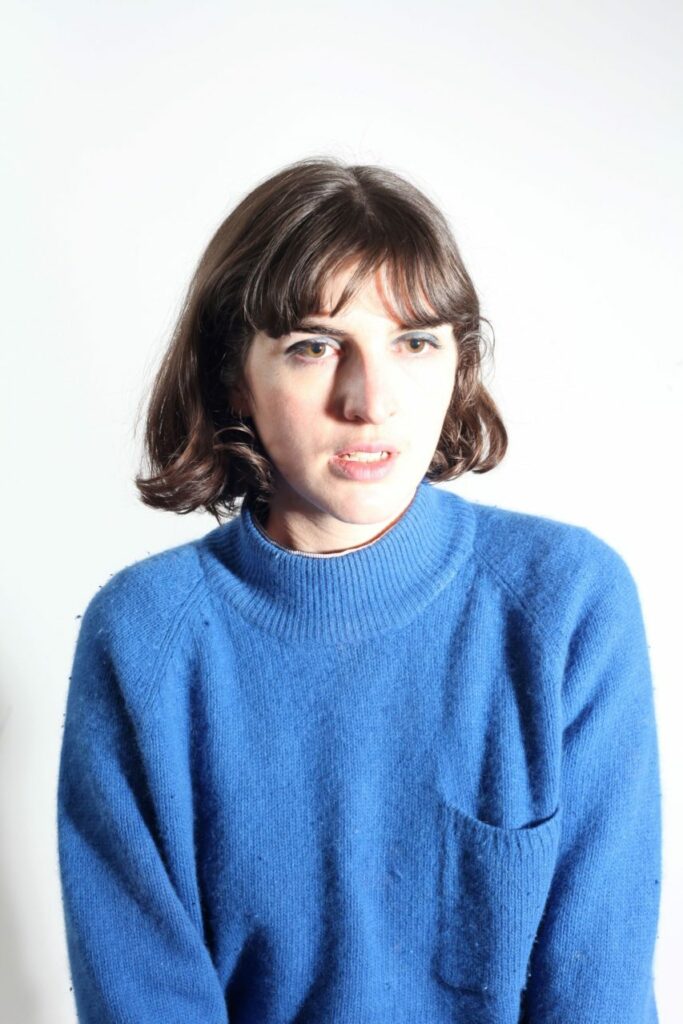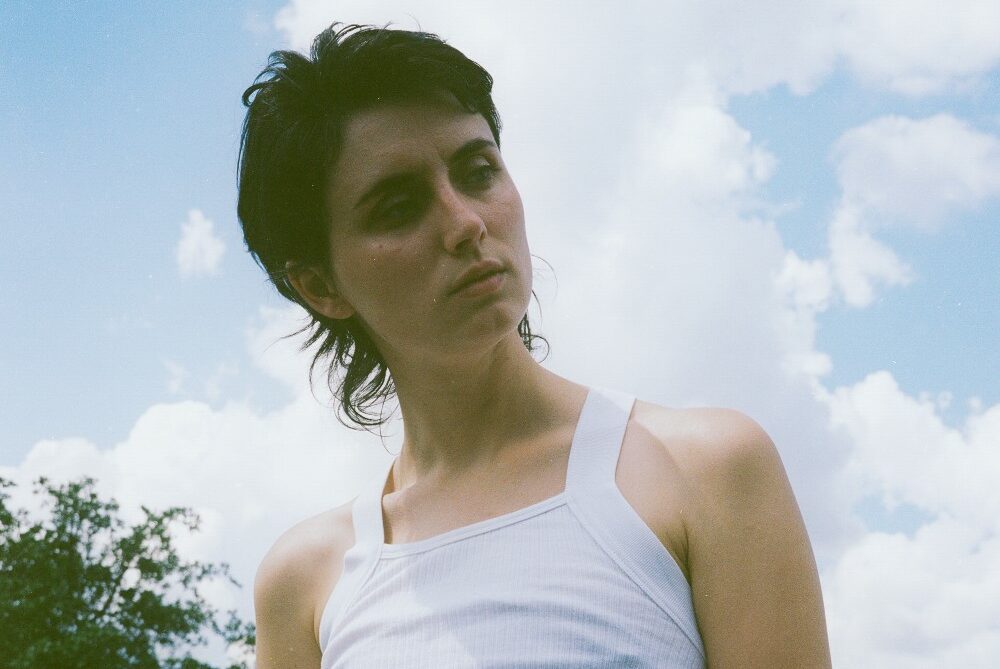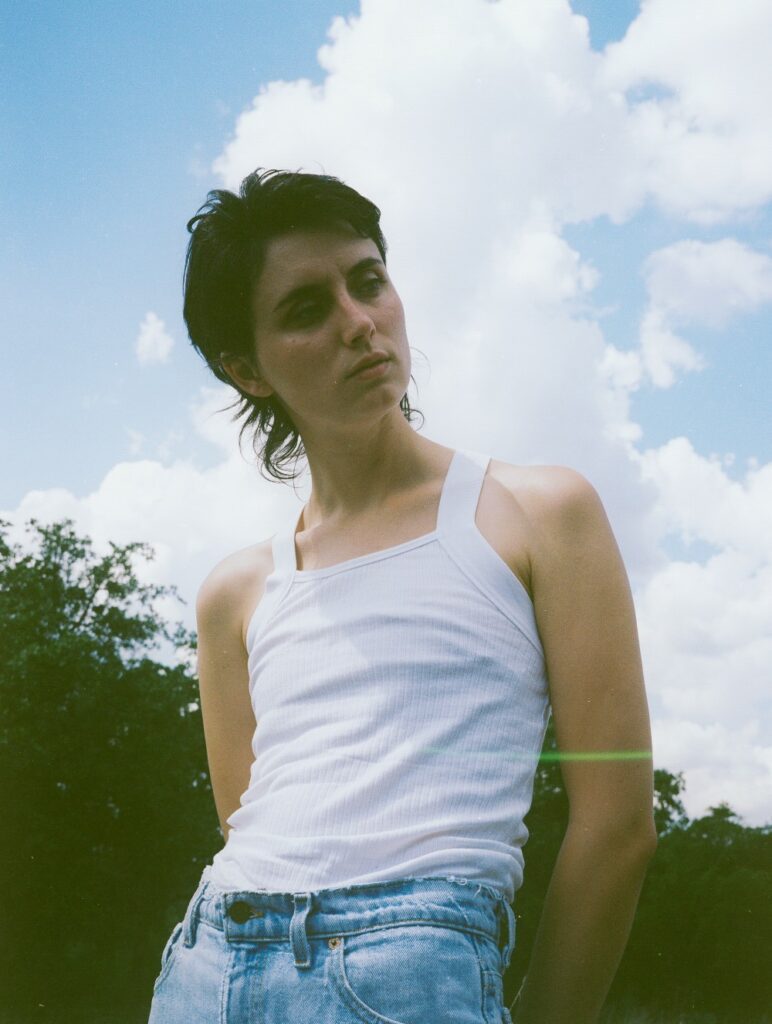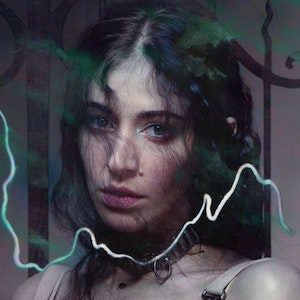
Indigo Sparke Surrenders To Time With Debut LP Echo

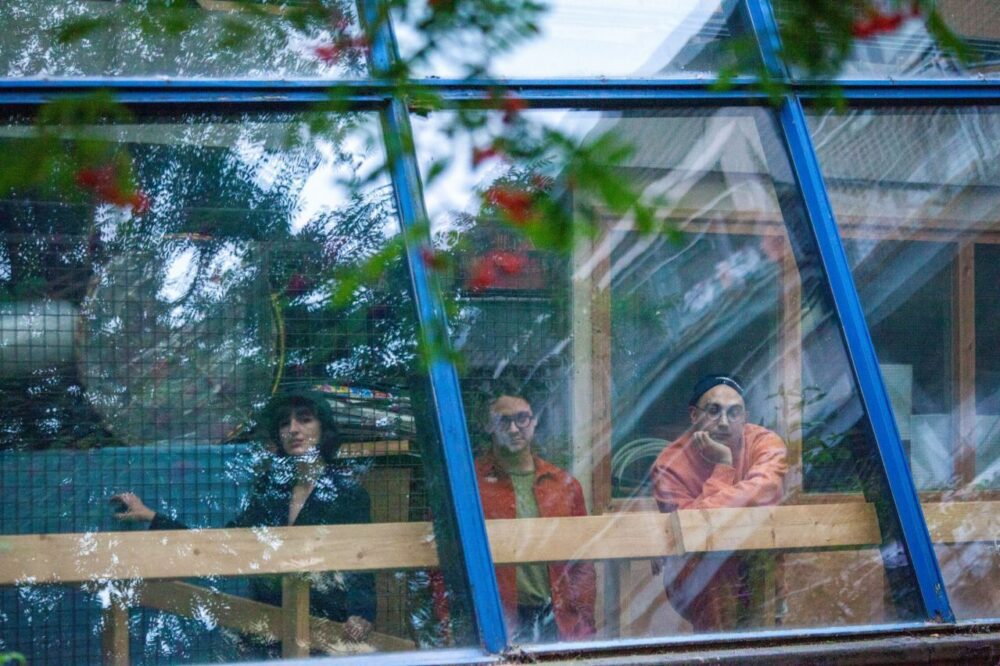
Photo Credit: Adrianne Lenker

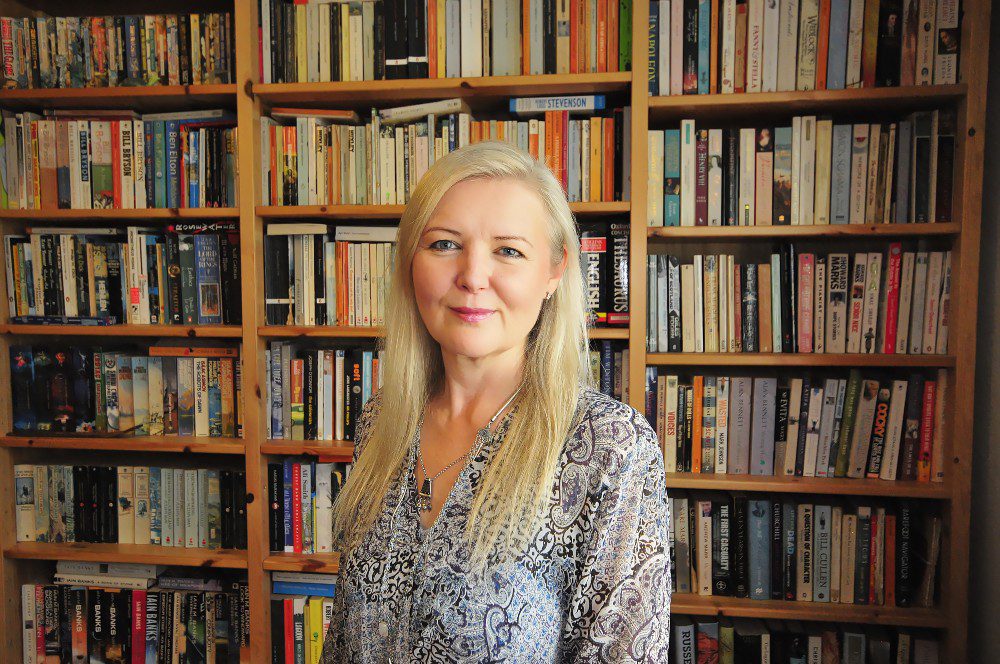
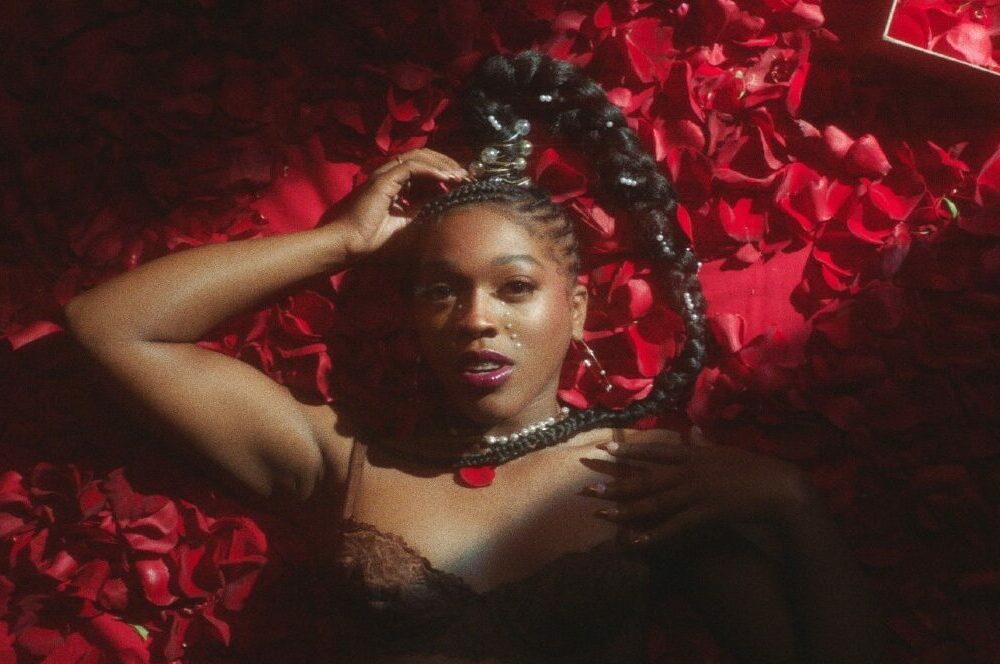
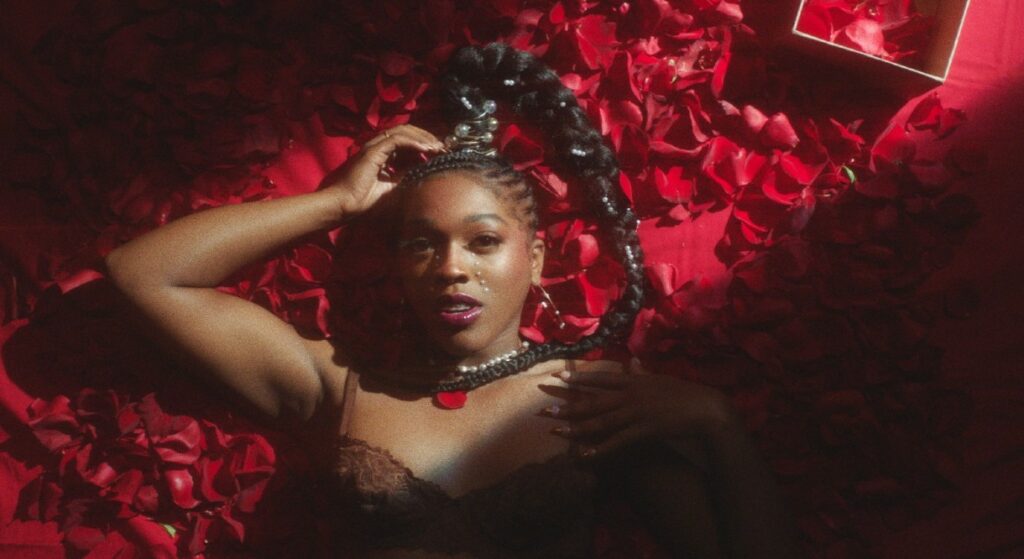
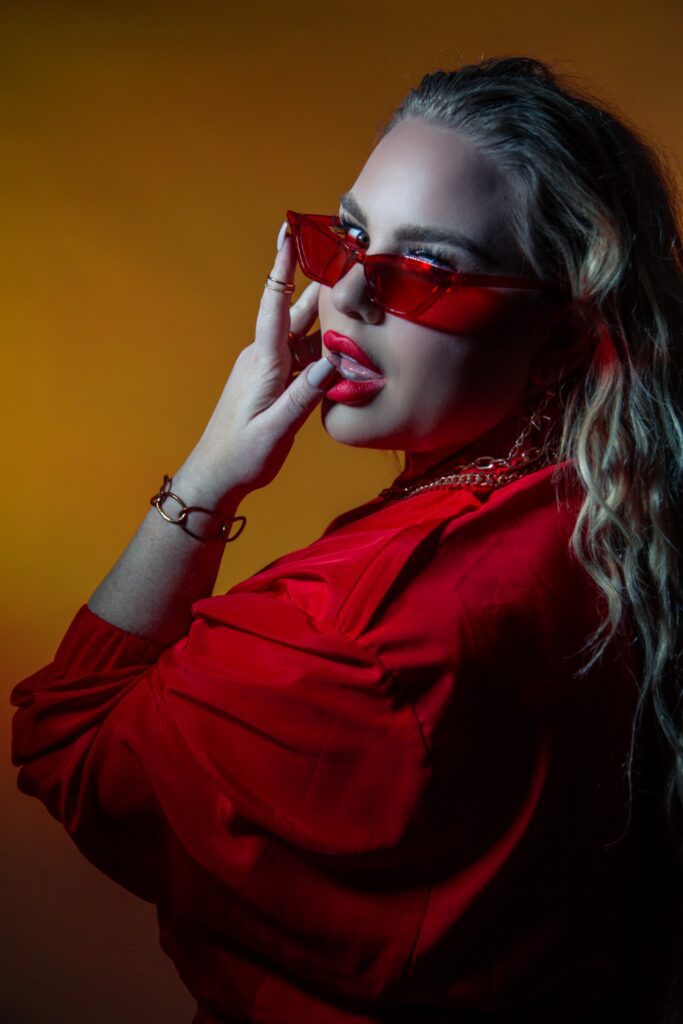
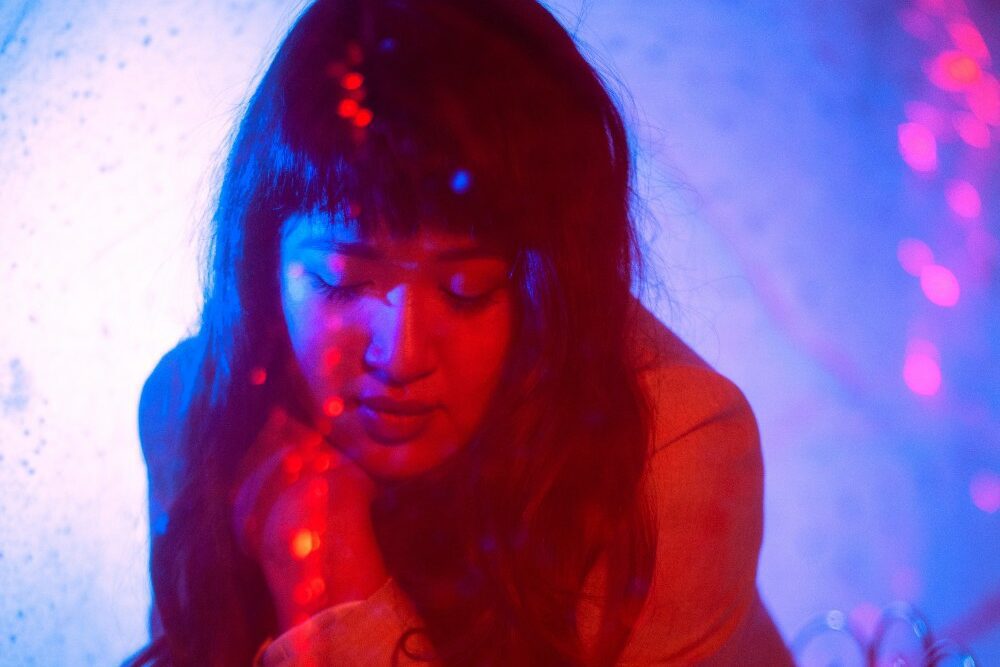
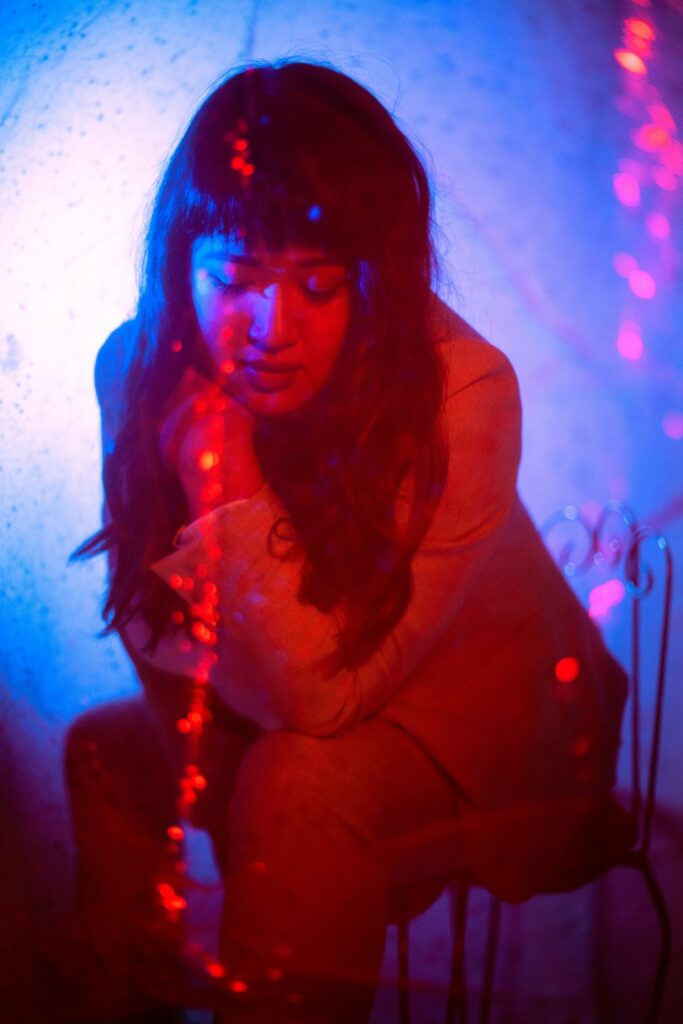
There’s a powerful scene in The Haunting of Hill House when Nellie (played by Victoria Pedretti) talks about how time is not like dominoes, tumbling in linear fashion, but rather like confetti falling down around us as rain or a blanket of snow. Instead of us moving through time, time moves through us. For Indigo Sparke, time is a great cosmic shift we can only witness, not truly comprehend – an understanding that finds a proper vessel with her debut album, Echo, a nine-track journey through the human condition and the inevitability of life’s impermanence.

“The landscape of the record is very much based in the landscape of me not only pulling and stretching myself out really thin and looking at myself but also stretching out my history and time ─ the days, hours, and minutes,” she tells Audiofemme. 2019 saw the Australian musician traveling across the Southwest United States, from Taos, New Mexico to Topanga, California, and along the way collecting together “different planes and spheres of consciousness” that feeds directly into her music’s timeless aura.

Echo ─ co-produced with Big Thief’s Adrianne Lenker and Andrew Sarlo and released via Sacred Bones on February 19 ─ is her way of expressing every possible emotion, entrenched in deterioration of the human condition, and placing these within a haven “outside of my body,” as a way to extricate and observe. “Everything is dying,” she speaks within the ethereal layers of “Everything is Everything.” Such a statement is confrontational, tearing down long-constructed taboo barriers around even the mention of death itself.

Sparke wanted Echo to mirror the transitions as time wears us all down, stripping away everything we once were, so she kept the arrangements largely raw and bare. “I definitely had moments where I just wanted to fill the space with more sound and texture and tone,” she says. “Maybe I was, in those moments, feeling more full and more intense, so naturally my first impulse was to put more in. I realized that taking more away and stripping it back made the feelings I wanted to transmit more accessible. I could feel them more. They became these monumental sculptures, and you could see them better because they were standing alone in a desert instead of just another tree in a jungle of trees.”

“Carnival” is perhaps the most monumental in this way. “I have pulled apart the cosmos/Trying to find you,” Sparke sends her voice like a flair, a lung-choking smoke emanating around her. She clings to her parents and their teachings, as her earthly form slides from childhood to adulthood, and a “level of grief around separation” swells in her body. “We all have that period in time when we have to transition, and there’s a level of letting go of your parents and the role they play in your life, depending on the relationship you have with them,” she says.

“It can be difficult to step away and reconcile that. A lot of the time, it’s easy to do a bit of transference with that deep sense of attachment we all feel at some point when we’re young with our caregivers and shifting that to a partner in some ways,” she adds. “Or, it’s longing for that depth of connection and symbiosis with another human being in a love relationship. In some way, we come from this cosmic, unknown place and we’re birthed into the world. Our caregivers look after us or they don’t. But there is some level of attachment we have, even through the umbilical cord. We all have that as a reference point.”

Sparke reaches deep within herself to firmly grasp what it means to be a human being in the world, constantly at the mercy of time with no way out. Now, as she nears the end of her 20s, she’s noticed a clear, perhaps quite cosmic, shift in her relationship to time. “I feel that time has become one of the strangest things to me. I feel time exists less and less for me. However, it also speeds up in some ways,” she muses. “My understanding of it has become really obstructed, and I’m not sure why. I’m not sure what changed. The world is always changing, but there is some kind of transcendental shift that’s happened or happens when you start to age.”

Academic journal European Review released a paper in 2019 in which Duke University professor Adrian Bejan proposed “the misalignment between mental-image time and clock time” as the culprit behind such an enormous change in how we relate to and process time. Essentially, as we grow older, our ability to sort stimuli (physical, visual, aural, etc.) slows down, so time seems to clip at a brisker pace.

But it can also feel as though time is moving slower, as Sparke argues from her own experiences. “I feel it’s become very stretched out. That’s what it feels like. It feels like it’s become very nonlinear. It’s become more like a landscape, almost like a canvas in my mind and body. It’s like a canvas that’s been stretched in every direction,” she says, “until it becomes very thin, almost quite translucent in a sense. Then I feel like I’m peering through time from different angles and points on this stretched-out landscape ─ looking not only at myself but almost from a bird’s eye perspective at life and how everything is connected.” 

Imagine a crossroads, an all-consuming void, and out of that needlepoint, birth, destruction, creation, and death meet and exist as one. “It’s very difficult to understand where to plant yourself in that. It’s like it’s spiraling out and up,” she adds.

Sparke trails off for a moment ─ and one particular memory floods her senses. “I remember being in Minneapolis, standing in the middle of the snow on a street, and the snow is falling so heavily. But it was just profound. It was all in slow motion, and it was the strangest feeling,” she recalls. “I lost sense of time and myself, in a way. I was witnessing it in these huge snowflakes falling all around me. I felt suspended. We have this idea of the present and how time is moving around us, behind us, and in front of us, and it gives us the gift of things ─ but also takes it away.”

Perhaps buried in innate curiosity, she turned to love as an antidote, which allowed her to “just be and find immense worlds of deep transcendental love and connection.” But she soon fell prey to the notion that “nothing ever stays the same,” she says. “You have love, but love leaves, too. You can have a person, but a person can leave and die and decay. Everything changes and flies away and dies. The only thing we can hold onto is the impermanence of everything. The record is in many ways an exploration of my own journey in reconciling that.”

“Golden Ages” lies at the polar opposite of her emotional journey, a far more “liberated and joyful” space than contemplative. Spending some time in Joshua Tree, feeling the wind and desert on her skin, she yielded herself to “wide open spaces and the excitement of being in a new environment,” she says. “I was feeling the sparks of love but also feeling the edge of possibility of its demise.” 

“We are just children trying to deconstruct this fucked-up illusion/Sinking moon and the burning ground,” she coos over a dusty rattle. “It’s a tiny voice that took me down/It’s high hot wind that swept us out.”

She questions that unsettling edge-of-a-cliff feeling, sifting through “all the doubts we can have and the small voices inside our heads” to find a way to “be present in the world and enjoy things. I felt there was this young version of me dancing wildly in the middle of the desert when I wrote this song.”

When all is said and done, Sparke says the only thing we know for certain is “that we’re all going to die at some point.” Death and decay spring up like daffodils across the new record, as well, a reference to her ongoing journey with both natural elements for as long as she can remember.

“Ever since I was a little girl, I always felt so much grief in my chest and my being. I’m quite a sensitive person, so I experience the world in a particular way. I’m sure I see it through the lens of my own experience and history of love and trauma, like we all do,” Sparke explains. “I had a particular level and depth of experience of feeling a certain awareness around grief and decay.” 

Across Echo, Sparke wallows in the stillness of such sadness but is simultaneously stricken by “the joy and the surrender of that reconciliation and recognition that that’s the reality we’re living in,” she remarks. “What else are you going to do with it? There’s so many feelings around that. Sometimes, it’s difficult to feel so much in the human body. We’re all so fragile and feeling all these huge things.”

Western culture has an especially strange and detached relationship with rituals and ceremonies, so perhaps it’s not too surprising we turn our backs on death and grief. It is ingrained within us to “look away from death ─ to keep being in life and striving toward this particular point of what it means to be happy in the world, and to obtain, to have, to consume,” Sparke says. “In the pursuit of those things, we lose track of everything else and the meaning behind the small moments. Life is happening in every moment.”

Tibetan Buddhists believe life is a preparation for death, and that awareness opens up our entire beings to transition more easily to the next stage of existence. “It’s probably just incredibly frightening. Nobody wants to face the reality that we’re all going to die,” Sparke says. “There’s this slight belief we’re immortal in some ways. When we start to age, and we realize that we’re mortal beings… there’s not much deep connection to it.”

When Sparke took a trip to Varanasi, India, she quickly noticed a vast difference in relationship to death and the circles of life. “I was walking around, and I was in such a serene state of surrender to existence as it was happening. I remember thinking, ‘Wow, they really have this down.’” She was staying in a hotel along the banks of the Ganges, about 20 meters upriver were the burning ghats where the community would bring dead bodies and cremate them. “They’d be dumping ashes in the river, and someone on the other side, 100 meters down the other way, would be cooking a meal from using the water. It was this total recycling of life happening. There was no question about it.”

Indigo Sparke distills nearly the entire human experience into only nine songs. Death and grief rub right up against joy and love ─ life markers that resonate far beyond any concept of time and space. “We are subconsciously processing all these things anyway,” Sparke points out. “It’s just that they’re quite confronting. I hope the album could be some kind of safe home for the fragility of the human condition.”

Follow Indigo Sparke on Instagram and Facebook for ongoing updates.
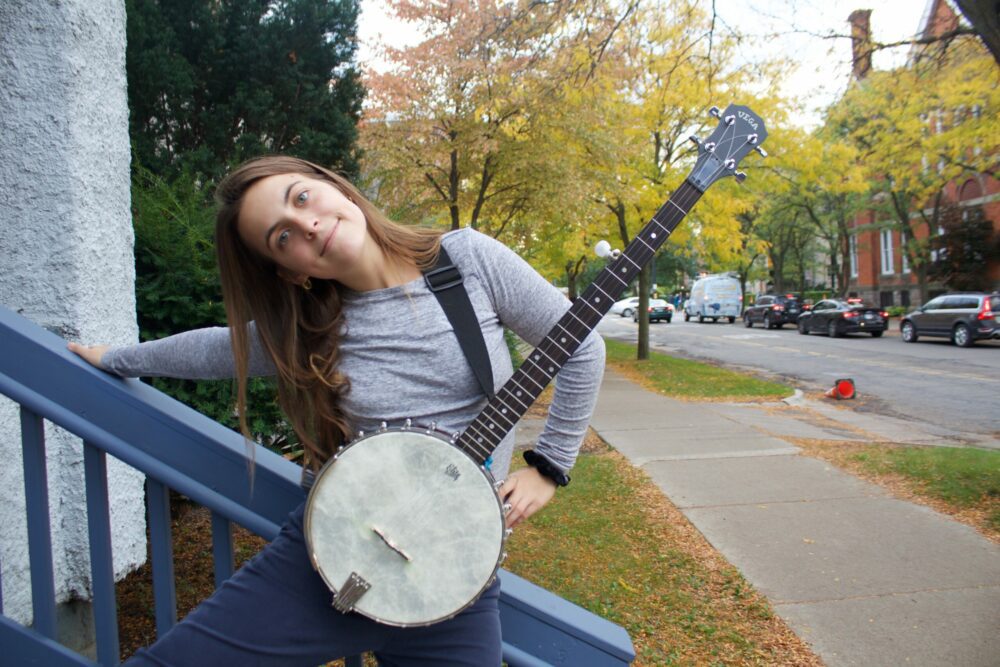
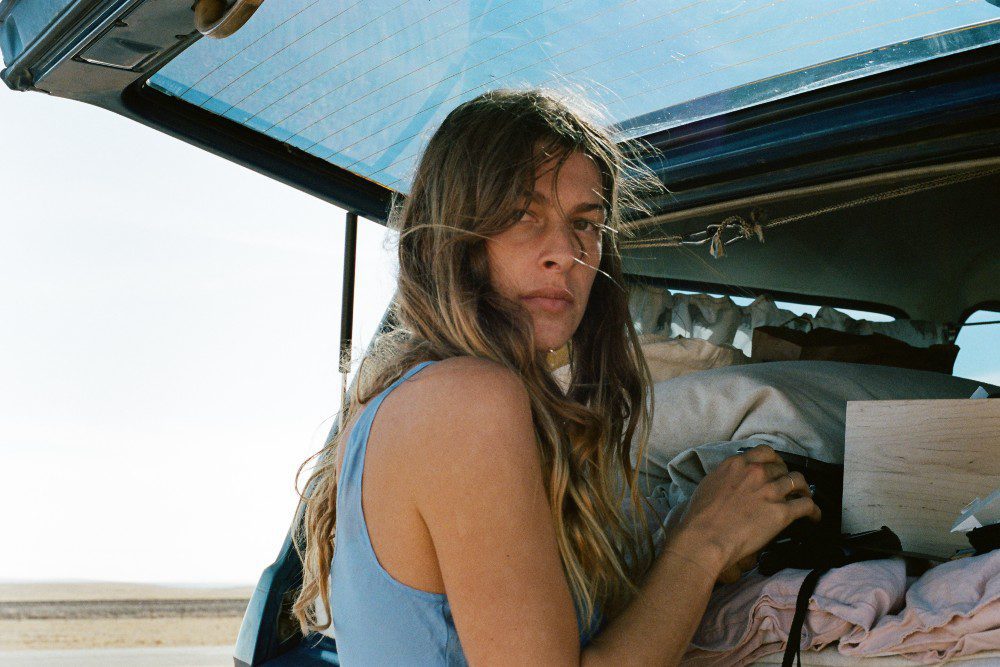
Lily Talmers Chooses Her Words Carefully on Remember Me As Holy EP

Coming of age: we all do it. But a very select few of us do it with as much grace, self-awareness and poetry as Lily Talmers. The Birmingham, Michigan native and recent University of Michigan grad combines her stunning mastery of the English language with her unorthodox classical music training to create a viscerally raw and beautiful debut record, Remember Me as Holy.  

For someone who never really set out to be a songwriter to begin with, Talmers’ poetic lyrics and intrinsic sense of melody make her a very, very good one. “It’s kind of a weak thing to do,” Talmers says of songwriting. “At least in my mind, I think I wanted to be an engineer or a doctor, something so hard and objective… objective is the best word to describe what I wanted to be.”

Sure, performing open-heart surgery or aiding in developing the COVID-19 vaccine can be seen as more “objectively” utilitarian than writing a song. But, as we all know, music has a unique healing ability that can’t be found in any medication or surgery – especially, at this moment in time, songs which pull on the tender strings of a desperate nation teetering between change and stagnancy.

In “Miss America,” Talmers meets us at a moment of reckoning and rebuilding, begging her country to see through the smokescreen it’s been looking at for years. “I’ve been staring at you darling/Sitting back and wonderin’, what the hell you’re gonna do,” Talmers sings to the millions of undecided voters. “‘Cause it all comes back to you who eat your dinner with the T.V. on/And who smile thinking everybody else is wrong/Yes, you who drink your coffee with the curtains drawn/Yes, still it’s you that we’re all counting on.” It’s a simple and poignant way to describe the MAGA masses that stayed loyal to 45 throughout his hack job of a presidency without dismissing them completely. And she does all this in a voice as soothing as the ocean – even when she’s talking about a nation’s proverbial nose-dive. 

Though Talmers is a multi-instrumentalist (piano, guitar, banjo and cello), she explains that the most important part about songwriting, to her, is the language she uses. “My compulsion and obsession with songwriting is definitely lyricism, and the spirit of a song, what it’s trying to say,” says Talmers. This focus on words is befitting for the musician who studied literature and English, although that wasn’t always the initial plan. For her first few years at university, Talmers was a neuroscience major with the goal of eventually becoming a doctor. Even with the rigorous coursework, she was still moonlighting as a musician. “I was finishing my homework so I could feed my obsession with writing songs,” Talmers remembers.

An awakening came when Talmers was in Copenhagen for a neuroscience internship in the summer of 2018 that made her question the path she was on. But the artist found solace in her songwriting. “[The internship] was so bad and tortuous that that was what compelled me to go to my first open-mic in Portugal,” Talmers remembers; she was gracious enough to share a Facebook video of the performance.

The song she played there ended up being an important one for her for the validation it would provide. “I wrote it in a fit the night before and and then the next day I found this open mic in a random bar in the middle of Lisbon,” she says, crediting the bar “full of old men” (and other encouraging voices) for the inspiration she needed her to pursue music – even though the vulnerability of it makes her uneasy at times. “Even to this day it feels sort of vulnerable to perform – I never feel good,” Talmers says. “It’s not like I’m bad or anything. I just think it’s not that glamorous if your soul is on the line.” 

Talmers’ summer in Europe also held another musically formative moment; sitting in a hostel in Copenhagen, she heard Adrianne Lenker’s voice for the first time. “I heard ‘Masterpiece’ playing ambiently,” Talmers says. “And then I became obsessed.” She describes how Lenker’s songwriting style, both solo and with Big Thief, inspired her to take a more experimental approach with songwriting and trust that the listener will catch on. “She just digresses so much from normal songwriting rhetoric,” says Talmers. “The way that she writes is so sonic, the words that she chooses, I feel like she has really given me permission to express myself in an incoherent way almost, trusting that it makes sense.” 

In addition to Lenker’s palpable influence, Talmers cites other folk legends like Joni Mitchell, Leonard Cohen and Simon & Garfunkel as shepherds of her path. In fact, she says hearing “Scarborough Fair” opened her up to listening to pop music, which she didn’t have much time or patience for at the time. As a student of the piano from a young age, Talmers revered classical music and wasn’t interested in much else. “I had this old Russian piano teacher named Yuri who was also my dad’s piano teacher growing up,” Talmers explains. “He forced me to do scales the first two or three years and nothing else… then suddenly instead of giving me, like, ‘Twinkle Twinkle Little Star,’ he just started giving me like insane classical pieces and expecting me to memorize them.”

She would watch Yuri play phrases and use her melodic sensibility to repeat them back. Eventually, she memorized entire classical pieces like Chopin’s “Waltz in C# minor” this way. Though she didn’t realize it at first, this intense ear training undoubtedly plays a role in her complex and clever songwriting style.

That’s how a lot of Talmers’ songwriting feels: effortless, accidental, and primal. Remember Me as Holy serves as a roadmap of Talmers’ deepest thoughts, feelings and desires. It echoes the cries of a nation and the cries of a regular old broken heart. At the bottom of her Bandcamp, Talmers writes, “I do forgive you, after all,” a message to anyone who can see themselves in one of her lyrics. “I wrote that in recognition that it’s all good. I don’t believe that you write songs about people, I think you write about tons of different relationships in your life,” explains Talmers. I think the record could be perceived as like a burn and it’s simply not that – it’s sort of like self-reconciliation.”

Follow Lily Talmers on Instagram and Facebook for ongoing updates.
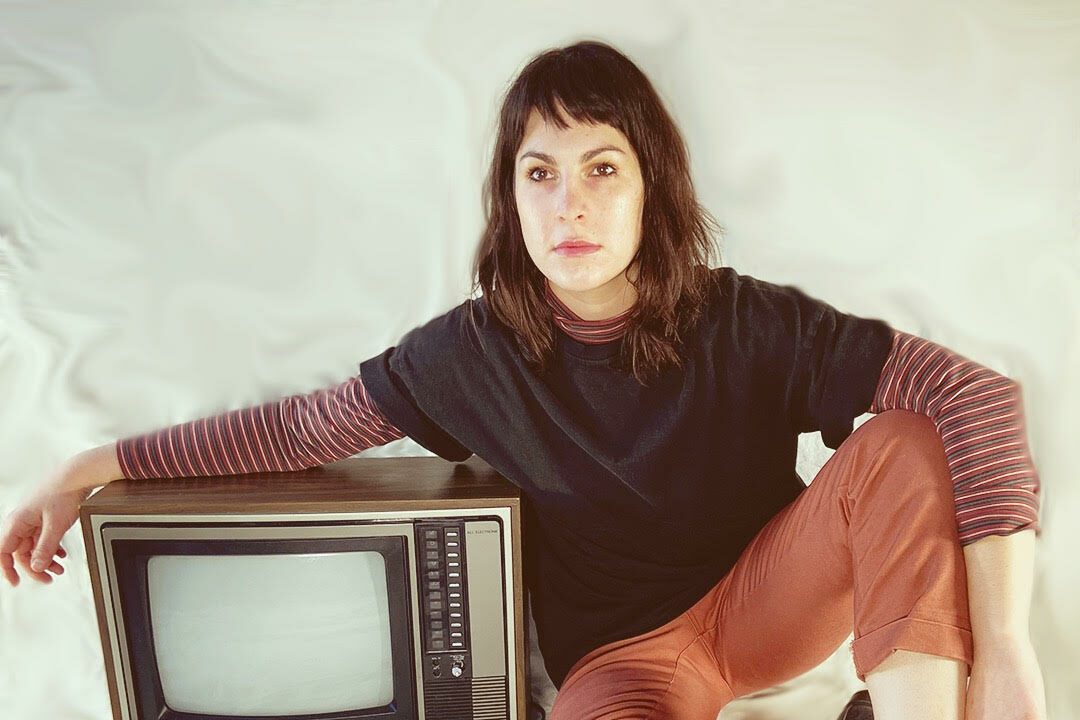
Waltzer Brings Debut LP Time Traveler to Noonchorus for One-of-a-Kind Album Release

Photo Credit: Amanda Wiggins

Anyone who has seen the Spice Girls’ 1997 film Spice World will remember their incredible tour bus. The group’s multi-level home-on-wheels was decked out with fire poles and a swing, and personalized nooks for each member that, while varied to match their “Spice” persona, all managed to coordinate to create one of the coolest shared spaces ever put on screen. 

Waltzer, helmed by singer/guitarist and lyricist Sophie Sputnik (a.k.a Sophie Pomeranz), and its debut album Time Traveler are kind of like the Spice Bus (if you will): a coordination of Sputnik’s selves over the past 10 years, and friends she’s made along the way, travelling across the country to get to the big show on time… and alive. 

When Audiofemme connects with Sputnik over the phone, she laughs at the comparison. “I think Spice Girls are a huge reason why I do what I do, too,” she says. “I was obsessed with Spice World.”

After six years as half of Florida blues-grunge duo Killmama, her howling voice emanating from behind a drum kit, Sputnik found herself at a crossroads. She’d been writing her own songs – tracks including “Lantern” and “Ugly Misfits” – but didn’t know what to do with them; they felt different and her vision stretched beyond the limitations of a two-piece. Billie Holiday and Roy Orbison became mainstays in her record rotation and she dove deep into girl groups of the 1960s, enamored with singer Ronnie Spector after hearing Oakland, California-based outfit Shannon and the Clams’ rockabilly-flavored reimagination of the sound at a show in South Florida. 

Clearly, Sputnik was itching to move on from the constriction of a scene dominated by garage rock infleunces, and she and her then-bandmate weren’t . “You can only do the ‘Ty Segall’ thing for so long,” she says, half-jokingly, noting that relentless touring had driven a wedge between herself and her bandmate. “I knew that we’d kind of hit a wall and I needed to figure out what was next.” 

With the hope of finding inspiration in new surroundings, she moved to Wisconsin with her previously long-distance girlfriend Amanda, who had planned to relocate there for a new job. While one final Killmama tour followed, performing took a backseat, but Sputnik kept writing, penning stories of love, fear, obsession and loneliness, and the disorienting effects that come with each. 

That feeling of personal unease, of teetering on the edge of destruction, dances across Time Traveler. It’s a moody rock ‘n’ roll album pulling from the best of country’s emotional storytelling and complimentary twang, capturing the tension between desire and distraction, the slow spiral of depression, the head-spinning crashes brought on by drinking too much and getting too high, and the catharsis of saying the hard things out loud. 

Sputnik sings of life and death intimately – unfettered by selling anything resembling pop music’s idealistic reframing of even the saddest of themes. Well, with the exception of “I Don’t Want to Die,” a catchy Wanda Jackson-meets-The Ronettes warbler masquerading as a love song. While it introduces Sputnik’s more theatrical side, the lyrical narrative is confessional; Sputnik has faced death head on.

“I’ve lost a couple of friends to overdoses, suicide and things like that. I had cancer as a kid and have kind of been speaking about mortality for a really long time,” Sputnik says. “It felt really good to admit the truth of it: I don’t want to die. I’m not done yet, because sometimes I have felt like I wanted to, but I love being on this crazy planet. It’s fucked up, but it was important for me to realize how grateful I was; that I didn’t want to leave it.”

Honesty has shaped much of Sputnik’s core, and you get the sense that writing those things down in song as opposed to internalizing them ultimately stripped away any need for her to be someone or something else. “It felt really fucking good to say ‘I feel ugly,’” Sputnik admits, her relief practically audible over the call. “It felt good, like none of that even mattered, and then that translated to ‘Time Traveler’ [the song]. All these songs were just things I needed to say so I could hear it back and believe it.” 

She chuckles. “That’s also scary.” 

That energy derived from feeling unworthy, ugly, lost and then found is woven through the eight-song album’s finale – a one-two punch of the titular track and “Destroyer,” an organ-grounded, haunting ballad about taking the risk in stepping into what’s unknown, with a guitar solo that will make you miss seeing and hearing live music (more than you already have been).

It took patience to get there. First, a move to Chicago; Sputnik was offered a job at a chance meeting while waiting tables in Wisconsin, Amanda agreed to relocate, and the couple did so in 2017. While Sputnik’s day gig and “living like a normal person” weren’t the right fit, “Everything I did in Chicago gave me clues of what to do next,” she says. She bought a loop pedal from producer/musician Charlie Kim (professionally known as Tuffy Campbell) via re-sale app LetGo; that interaction proved to be a key that unlocked Chicago’s D.I.Y. music scene for her and eventually helped solidify her commitment toward making Waltzer a realized, full-band project. 

“I wasn’t sure how I was gonna play my stuff live and he introduced me to a few people to jam with,” she explains. At the time, Sputnik was considering joining a band as a drummer. “After writing with Charlie a bit, he told me I should check out [Treehouse Records]. I immediately called them and Barrett [Guzaldo, owner/engineer] told me to stop by.” She had a few songs, but needed a producer. Guzaldo suggested she contact Rookie guitarist Chris Devlin and, as she puts it, “the rest is history!”

To this day, her band remains a revolving door for anyone whose energy feels right and is up for the challenge (mainly of listening to Sputnik’s fantastical introductions of them, as heard in the band’s recent Audiotree session). The current group spotlights the talents of Sarah Weddle on drums, bassist Kelly Hannemann, Harry Haines on the keys, and guitar player Michael Everett. 

Rooting in active creative communities and providing space for all types of artists to belong as a means of giving back comes through her complimentary passion, Waltzer TV. A hybrid musical showcase and sketch show, the hour-long YouTube episodes have included performances from the likes of  Y La Bamba, Reno Cruz and more. 

Between sets, Sputnik transforms into a myriad of costumed characters in episodes – even a loose interpretation of her uncle. In Florida, she dabbled in improv as a kid and loved musical theatre in high school. A similar style comes across in the band’s music videos. The web series was partially born out of necessity due to the onset of the COVID pandemic (Waltzer had been scheduled to make a SXSW debut in 2020, having played only a handful of local shows). But it’s also an outlet for Sputnik’s multifaceted performance – spoken and sung, comical as well as serious. 

On Thursday,  February 25, Waltzer TV will serve as the format for the band’s proper (re)introduction. Written and directed by local filmmaker Robert Salazar, Time Traveler: An Album Release Movie will be streamed via Noonchorus. Admission is “pay what you want” and viewers can tip the band during the broadcast. Please note: there is also an accompanying pizza, “The Ugly Misfit,” available thanks to a collaboration with Sicilian-style pizza spot, Pizza Friendly Pizza

Shot at beloved Chicago venues the Hideout and Empty Bottle, the movie’s guests include Ratboys, Kara Jackson, “Lonesome” Andrew Sa, WOES and Helen Gilley, with an appearance by noted performer, actor and future legend-about-town, Alex Grelle. “It’s not heavy. It’s really silly. There’s a puppet,” Sputnik jokes. “I think people are gonna feel happy watching it. Then all of it will be over in a hour and we can go back to our chaos.”

Joking aside, Sputnik consistently uses her platform to pay it forward and celebrate others’ joys and successes, and she hopes to be a model of perseverance and creation in spite of depression. “Even if your depression is trying to isolate you, tell you you’re not worth trying, ignore it. Just show up to fucking everything, even if it ends up being a waste of time,” she recommends.

“I feel like it’s not necessarily ‘cool’ for a woman to talk about their own struggles with self-worth when they’re trying to empower other women,” adds Sputnik, “but I really want to inspire other women to speak up and go for it – just put it out there.”

Follow Waltzer on Twitter, Facebook and Instagram for ongoing updates.

Kinlaw Builds a Monument to Movement and Change with The Tipping Scale

Photo Credit: Cameron Tidball

I stumbled upon the expansive world of prolific multidisciplinary artist Kinlaw many years ago, when I promoted a show with her then-band SoftSpot at the now-shuttered Brooklyn DIY space Shea Stadium. This goes to show how deeply ingrained they have become in the NYC music and arts community; since then, the composer, choreographer, and artist (who uses both she and they pronouns) has made a name for herself with both solo performances and productions with as many as two hundred performers, gracing institutions like MoMA, Pioneer Works, National Sawdust, and more. Last Friday she released her first solo album via Bayonet Records, The Tipping Scale – a stunning, dynamic dark-pop album that nearly forces you to move despite the heavy themes it tackles.

As an artist whose primary medium is choreography, it comes as no surprise that Kinlaw’s process for writing this record was anything but orthodox, beginning with mere movement. “Years ago, working with a band, [songwriting] would start with someone having an idea and then suddenly there’d be a lot of sound, and quite a lot of noise, and then [we’d] kind of shape it down,” she explains. Their songwriting process as a solo artist happens nearly in reverse. “The entry point for a lot of these is really super quiet,” they explain. “I would start with a gesture, and let it build until a memory attached itself to it.” Different gestures intuit different sounds, associating smoother gestures with vowel sounds and those that were more “crinkled and quick” with consonants. “It’s all just a huge trip but it works for me,” she says. “It makes it so I don’t feel intimidated by the songwriting process. It makes it so that I feel like I’m making material that feels of the moment to me.”

The depth of The Tipping Scale is such that it’s difficult to articulate in words; Kinlaw refers to it as “an introspective and very strange dance party.” Wrapped in pop music that is both accessible but somehow wholly original, it combines lyrics deeply personal to Kinlaw with universal themes like loss, regret, identity, and more than anything else, change. The title itself is a metaphor for change, the idea of an ever-present slipping in and out of change, and the acceptance of it, what they describe as a constant “pull-tug” between past and present versions of ourselves. The songs are fluid, ripe with meaning never meant to sit stagnant, but rather to evolve with the listener and their environment.

For instance, Kinlaw says, “What I might have written ‘Blindspot’ about initially, is not always what it’s going to continue to be.” The video for this track was directed by her dear friend Kathleen Dycaico, who provided a mirror to reflect these ever-changing meanings. “I think working with Kathleen was a really really great thing for me, because I’m able to see that the relationships I have with other people so often parallel the ones I have with myself,” Kinlaw says. “And so even the difficulties or the grief, or the loss or the frustrations I have with things, relationships that have died, I can see them mirrored so clearly in so many things I experience on my own, with myself.”

Change is a strong theme on the album, but also configured heavily into how Kinlaw has released and promoted it; the events of the past year altered their intentions regarding The Tipping Scale. She began filming the visual component as an alternative to the live performance it was supposed to be, and the realization that a performance would not happen as soon as she had hoped. “People who were part of the developmental phases, I told them the album was a script. And that really for me, the reason I was doing it was so I could create a live show in accordance with the script,” she explains. “So for me to make a record was a really exciting thing because, like, how fabulous to have a new starting point to spend a lot of time and consideration on these songs and to allow them to have another phase, like when you do the performance.”

While I have no doubt that whatever live performance Kinlaw would have crafted (and will certainly craft, once we’re allowed live performance again) would have been powerful in its own right, I would argue that the transition to produced videos has opened up a previously unimaginable realm of possibilities for these songs. The medium provides her a vehicle to really delve into the meaning of change, the different characters she portrays and the different worlds she inhabits. Like Kinlaw says, “Music videos are great – you could do anything in three to four minutes. Whatever world you say, then that’s the way it’s gonna be.”

As a visual metaphor, hair factors strongly into these videos, changing from track to track and sometimes in the middle of the video. In “Permissions,” they crawl from a wrecked vehicle in a choppy red wig. In “Blindspot,” she and her childish counterpart begin with sleek ponytails before they take turns chopping at each other’s thick blonde braids, until Kinlaw emerges with her hair curled. In “Haircut,” her hair remains natural, but they articulate this sentiment in lyrics: “There’s a rule/That when you cut off your hair/You let the old things go.”

The strong imagery resonates with anyone who ever got a new haircut in the midst of a bad break-up, or hacked some ill-advised bangs with a pair of craft scissors on some uneventful childhood afternoon. “I think it brings to mind a lot of the symbolic ways that we try to cope as people, and it’s been interesting, since writing [‘Haircut’] and talking about it with some folks,” they say. “It’s been really interesting to see people be like, ‘Oh yeah, I totally get it,’ and they’ll tell me a story: ‘Oh I chopped off my hair that one time in like 2005, I was so upset’… I guess it’s just like identity, and an extension of, and memories. I’m also really quite stubborn with my hair, like I refuse to cut it for long stretches of time.” This last statement is thick with irony, given the artist’s dynamism and penchant for constant reinvention.  

Reinvention can surely be at least partially attributed to Kinlaw’s commitment to a rigid therapy practice. I felt it reductive to ask an artist of Kinlaw’s caliber who her sonic influences were in the creation of The Tipping Scale, and I told her so when I asked, to which they unsurprisingly responded, “I can honestly say I don’t [have any].” Rather, warning that what she would say might be construed as “cheeseball,” she listed therapy as their greatest influence in the writing of this album, particularly EMDR therapy, which utilizes binaural sounds to create a pattern of eye movements and from that, spawn memories. “That, to me, is what spawns storytelling,” they say, “understanding firsthand what the crazy connection is between a body and your thoughts, and sound, and how sound influences your body.”

Pop music can be its own kind of therapy, a means of transporting oneself across energy levels and moods, something anyone who has ever turned on Top 40 radio to dance away the blues knows well. Describing pop music as a “raft boat,” Kinlaw explains, “I purposefully chose pop music because I wanted to feel like I could move, dance, party forward into the next chapter of my life. The juxtaposition of having these confessional songs paired with pop sounds was a really strange space that I wanted to learn more about.” But did the process of setting traumatic memories to music designed to lift the mood provide therapeutic relief for the artist? “I don’t know, but it’s like I wanted to float these songs on the lens of pop because I hope it will make me feel better,” they say. “Talk to me in a year and I’ll tell you if this worked out for me or not.”

As far as what’s next for Kinlaw, more videos are on the horizon. For someone with such sweeping vision, the creative possibilities are endless and the only limitations are financial. A recipient of the Audiofemme Agenda Grant, Kinlaw put some of the money toward filming their videos – and in doing so, employed many struggling artists and musicians who are out of work due to the pandemic. “That’s what it’s been about for me since the beginning. My friends are the most talented people on Earth. They’re such mindful and smart artists, so it’s really easy for me to get a team together who I love,” Kinlaw says. “I’m hoping I can figure out how to finish the rest of this, because I do intend on having more videos.” Whatever worlds Kinlaw imagines for next, there’s certainly no doubting her determination; as she sings in “Blindspot,” “I get what I want/Cause I know that I deserve it.”

Follow Kinlaw on Instagram and Facebook for ongoing updates.
MUSIQUE BOUTIQUE: Tele Novella, Lael Neale, Lau & Dusty Springfield

Welcome to Audiofemme’s monthly record review column, Musique Boutique, written by music journo vet Gillian G. Gaar. Every fourth Monday, Musique Boutique offers a cross-section of noteworthy reissues and new releases guaranteed to perk up your ears.

Tele Novella hails from Lockhart, Texas (33 miles south of Austin), and their music is so multi-faceted it almost defies description. “Coin-operated medieval pop songs through a 1960s western lens” is how their Twitter bio puts it, which gives you some idea. They take country, pop, indie, and folk, and twist it all into delightfully unexpected shapes.

“Words That Stay” is the striking opening number of the duo’s new album, Merylnn Belle (Kill Rock Stars). On the surface, it sounds like a song about a lost love. But Natalie Ribbons’ dry, husky voice has enough bite in it that you’re left unsettled. Something’s not quite right here. Something’s a little off-center. And that’s the hook that draws you in.

The album’s homespun sound is the result of recording on an 8-track cassette deck. Neither Ribbons or her co-collaborator Jason Chronis were keen on doing many overdubs, so minor mistakes were left in, and the use of vintage microphones adds further atmosphere. This record takes you into another realm. “Paper Crown” is a surreal nursery rhyme. “Crystal Witch” is a spooky fairy tale. The soft-shoe shuffle of “Technicolor Town” is the closing lullaby that sends you off to sleep with Ribbons howling like a wolf. Imaginative, captivating and intriguing.

Lael Neale also opted for simplicity in making Acquainted With Night (Sub Pop), recording on 4-track cassette, accompanied only by an Omnichord (an electronic instrument that produces both chiming music notes and pre-programmed beats, and is smaller than a keyboard). There’s a delicate gracefulness to the songs, even as they touch on sadness and longing. The beautifully-titled “Every Star Shivers in the Dark” is a song of aching vulnerability, with such haunting images as Neale waving to a man in a prison tower, though there’s a glimmer of hope by the end.

“How Far Is It to the Grave” is another evocative song; mortality, as seen from the perspective of a child, a lover, a banker, a slave owner. Neale’s empathetic, crystal-clear voice makes the song sound like a prayer, lifting it from despondency. The title track is a shimmering, seductive number about how very different things become under the “cold, white shape of the moon.” And “Some Sunny Day” is a song of farewell, of looking back and having no regrets as the sands run out. Neale’s lyrics also have the elegance of poetry: “I’ve known the sand that made the pearl inside my mind.”

Anyone whose tastes run to synthpop/synthwave has likely crossed paths with Lau (aka Laura Fares) over the past decade. The Argentinian-born musician relocated to the UK at the age of 17. After years of working as a session drummer, DJ, and teaming up with Nina Boldt on the albums Sleepwalking and Synthian (credited to “Nina featuring Lau”), she’s now stepped out on her own as a solo artist, with her debut album, Believer, released on her own Aztec Records label.

The album kicks off with “Stunning,” an instantly catchy track that’s one of the most effervescent breakup songs you’ll ever hear; it’s a smooth, streamlined, fuel-injected ride to freedom, an “I Will Survive” for the 21st century. The deluxe version of the album also features a “Popcorn Kid Nocturnal mix” of the track, reworking it into a slower paced, sultry ballad. There are remixes of four other album tracks as well. The soulful “True” is presented in three versions; an original, ethereal mix, a decidedly poppier “Luke Million Remix,” and a more dance-oriented “Austin Apologue Remix.” Indeed, Lau conjures up such a mesmerizing groove, it’s easy to forget that the album’s theme is the fallout generated by the end of a relationship. The rock-steady, electronic beats of “Recognise,” “Unable,” and the cover of HAIM’s “Now I’m in It” are sparkling sweet treats.

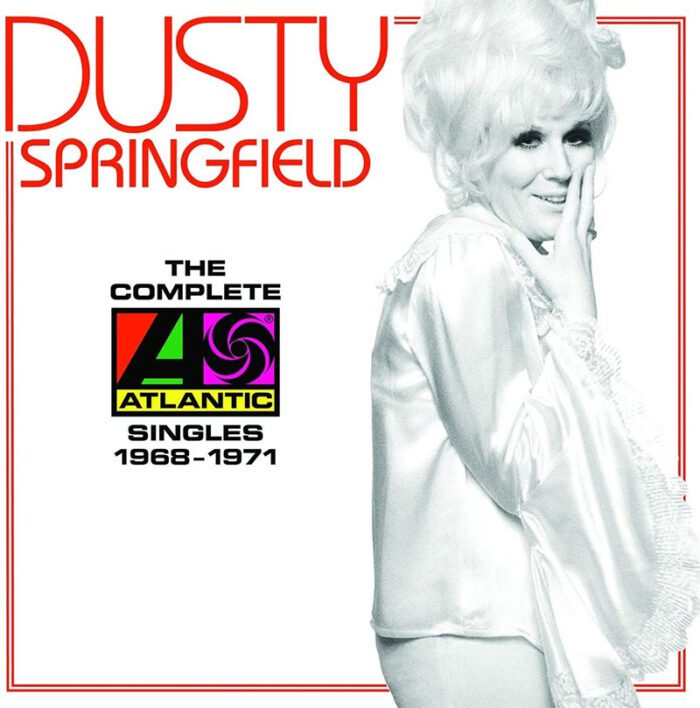
From 1969 to 1971, Dusty Springfield recorded some of her best work for Atlantic Records, moving from the pop songs that had made her a star to the soul music she’d always loved. On Dusty in Memphis (1969) she was backed by the legendary “Memphis Boys,” an informal group of studio musicians who played on hit records by Neil Diamond, Merilee Rush, and Wilson Pickett, among others, and the equally acclaimed Sweet Inspirations, the all-female backing group who recorded with the likes of Aretha Franklin and Van Morrison, and toured with Elvis Presley in the 1970s. On A Brand New Me (1970), she worked with noted songwriting/production team Kenny Gamble and Leon Huff (“Me and Mrs. Jones,” “Love Train,” and “When Will I See You Again,” to name a few). The best-known song from those years is of course Springfield’s classic rendition of “Son of Preacher Man,” with “The Windmills of Your Mind” running a close second. Now all of Springfield’s Atlantic 7-inchers have been compiled on The Complete Atlantic Singles 1968-1971 (Real Gone Music). Only eight of the 24 tracks have appeared on CD before, in their original mono mixes. It’s wonderful to hear sterling non-album tracks like “I Believe in You” and “Haunted” in such suburb quality.

For Single Moms In The Music Industry, The Battle For Respect Is Real

Vick Bain, Director of The F-List and Parents in Performing Arts

A recent report by the Australian Broadcasting Corporation’s youth radio station, Triple J, indicates that women are still underrepresented at almost every level of the music industry, including festival lineups, the boards of major music bodies, radio and at record labels. The only silver lining was that the gender pay gap has somewhat narrowed (though parity is still yet to happen) and there’s been an increase, too, in the number of women in management level at indie record labels in Australia.

There’s been broad acknowledgement that the pandemic has disproportionately affected women, who are largely responsible for housework, caring for children, home schooling and also caring for their parents. For single mums, in particular, the demands are magnified and their finances are likely to already be ravaged by the time they’ve taken off work to have a child, the expenses of raising a child alone and having to work part-time to accommodate caring for their child. It may seem to some that working in the music industry is not a place that is forgiving or accepting of women who require some flexibility, or who are competing with men who are fearless in their capacity for self-promotion.

For Grace, 38, a music publicist in Melbourne (whose name has been changed for privacy concerns), her constant challenge is to not internalise all the judgements made of her as a single mother. Her son was one and a half when his parents divorced. At 8, he’s sat backstage next to Nick Cave and seen some of Australia’s biggest acts performing major venues.

“Some people in this industry don’t understand why there’s a child, why I can’t find a babysitter, why I can’t get my parents to look after him,” says Grace. “I do find there’s a certain demographic – normally middle-aged men – who just don’t respect me if they see me backstage with a child. My client barely even spoke to me when I showed up with my child recently. The women I know in the industry are great, but I get a lot of judgement from women at the school gate who are appalled my child might be out later than 7pm. My son goes to work with his dad too, who also gets comments like, ‘some women weren’t born to be mothers.’ There’s still this outmoded idea that women working and raising a child is weird.”

As the publicist for an artist who is also a single mother, Grace has observed first-hand the way that artists can be placed on a pedestal and immune to the blatant judgement and opinions of others, even though they privately discuss their own fears of being judged.

“One of my clients is also a single mum to two kids aged 2 and 4, so I take care of them backstage when she’s performing. We talk about this shame we feel, this perception of being unprofessional or also trying to hide our kids to avoid the judgement that we might not be doing our job. My son enjoys going backstage, he loves venues, he loves music.”

Maria Amato has been the CEO of the Australian Independent Records Association (AIR) since 2016. Though her son is now in university, she recalls that it was financially and personally challenging to work in high-profile positions, while running her own business, as a single mom.

“I’ve been a single mum since he was 4 years old. [From 2010 to 2014], I was CEO of the Melbourne Film Festival and I’ve always run my own business,” she says. “I was lucky that I had help from family if I needed to travel overseas to look after him. When my son was little, 15 years ago, bringing a child to the office wasn’t even something I would have contemplated.”

Amato was fortunate that in working for herself, she could work early in the morning, do school drop offs and pick-ups, and finish any work late at night if needed. She has no regrets over the past financial sacrifices she made through going part-time to raise her son. He lets her know that he appreciates her choices, too – as well as her current success.

“My son thinks it’s fantastic – he’s super proud of me as an independent, self-sufficient woman doing what I love on my own terms,” Amato says. “I think it inspires him in his own life. I did have mother guilt of working so much, so I have always taken him on holiday every year – all around Australia and overseas. I just want all moms to know that they are awesome, single moms are awesome, widowed moms are awesome. Do what’s right for you. If anyone at work is making derogatory comments, it’s not acceptable. Don’t allow that toxicity to infect to you.”

For UK-based Vick Bain, her experience as a single mother informed her choice to advocate for mothers in music. She’s curator of the F-List (a list of all the UK women in the music industry), former CEO of the British Academy of Songwriters, Composers & Authors (BASCA) and Board Director of the Incorporated Society of Musicians, Delic and Parents in Performing Arts.

That success came long after Bain’s partner left a year into their relationship, mere months before she was to give birth to their twins. She subsequently lost both her home and her job, leaving her homeless and reliant on friends for help.

“That summer was the most difficult period of my life,” she recalls. She was Music Administrator at Festival Hall in London at the time. “It became apparent, as my pregnancy went on, that my partner would bail out and the landlord of the shared house I was in evicted me. Luckily, at 30 weeks pregnant, a friend and his wife rented me a one bedroom flat in a nice area of London. I had to leave my job because the temporary contract wasn’t renewed because I was pregnant, which they were allowed to do at the time.”

Bain relied on government support and cheap rentals during the first years of being a mother. She returned to work for a day, then two days a week. She also freelanced in bookkeeping and administration for creative businesses. Over a nine-year period, she rose to CEO at BASCA, when her twins were 13.

“It was tough on my kids. They were too old for au pairs and I’d moved us out of London because we couldn’t afford it, but it meant I was commuting for four hours a day on top of work, for nine years.”

When Bain left BASCA, after a year of battling breast cancer, she opted to follow her dream of pursuing a PhD on women’s careers in the UK music industry, while also advising music industry clients on diversity and inclusiveness. This was the foundation for the F-List.

“Only 20% of artists are female, and only 14% are writers. It surprised me how few women were being invested in and supported,” she says.

“I’m also the Director of Parents In Performing Arts,” says Bain. “I know, as a single parent, how hard it is.”

Bain’s daughter, Amber, now works as the Social Media Manager for the F-List, and aspires to follower her mother’s path and work in the music industry.

The lengthy commutes, the welfare dependency and her loneliness in those years of living outside of London for the sake of providing her children with a garden are not taken into account in her CV, but so often mothers are not given credit for their professional accomplishments in the context of achieving so many other important things.

For Grace, who has her son 60% of the time, her frustration is with clients and strangers who make the assumption that she is not fulfilling her responsibilities as a mother nor as a publicist.

“I’m able to do my job, being responsible for all these people backstage, and look after my child,” she says. “I think there’s some people who just don’t get that. I think it needs to be accepted, and in some places and spaces, encouraged.”

Virginia Wing Cycles Through Urge, Addiction and Shame on Latest LP private LIFE

Photo Credit: Martin Livesey

On her first trip to a local Costco, Merida Richards spotted a massive cake in the bakery section and was suddenly preoccupied with the desire to buy it, sequester herself in a hotel room, and consume the entire thing. It was a silly thought – fleeting really – but it’s those bizarre, sometimes ugly impulses that she set out to examine with her band Virginia Wing on their latest LP private LIFE, out last week via Fire Records.

After recording their 2018 breakthrough LP Ecstatic Arrow in the Swiss Alps and completing their first North American tour in 2019, the Manchester trio – which includes Sam Pillay and newest addition Christopher Duffin – had decided to take a more inward-looking approach to their next offering, and to record it mostly at home. While Ecstatic Arrow read as something of a feminist manifesto, presenting a vision of the world as it could be, Virginia Wing planned to unearth their various traumas, addictions, and the shame associated with these on their next project, which they had decided to call private LIFE. “You’re never gonna match the experience of holing up in Switzerland for a month, you know what I mean?” Richards tells Audiofemme via a Zoom call. “So we thought, we’ll just do it at home; the title and the subject matter seemed applicable.” It was pure coincidence that just as they were assembling gear and beginning to write new material, a worldwide pandemic hit, effectively dooming humanity to examine their own compulsions in the solitary confines of a mandated lockdown.

“At the start of last year we were getting together at our rehearsal room and figuring stuff out, but then obviously that stopped, and it just became a process of slowly chipping away and building little bits of songs, sending them back and forth,” Richards says. “It did get pretty maddening, I’m not gonna lie. When you’re just stuck inside working on the same thing, and you can’t see someone face to face and go like, ‘Oh, what do you think this needs?’ There was not much second guessing; it was very much just like go with your gut, and then convince the others that it’s good.”

Collectively, the band wanted an eclectic sound bursting with dozens of tiny interlocking elements, and they’ve certainly achieved that; the album is choppy but cohesive, intimate but frenetic, and reveals new details over each listen. “That’s what we were going for – stylistic decisions encouraging surprise, like in the way it was mixed,” Richards points out. “Suddenly something’s really loud and it’s kinda jarring, like a little sample or something will knock you and it can almost be unpleasant. Certain songs are really high-end and then all of a sudden the bass kicks in. It was that constant feeling of movement that we wanted, a kind of controlled chaos.”

Densely layered with futuristic sounds, angular structures, and post-punk inflection, private LIFE sounds more like a bustling party than a solo, meditative pursuit – so much so that Richards admits they’ll likely have trouble replicating it in a live setting, should touring ever resume. But buried in the globular synths, bold brass, disjointed rhythms and new-agey textures reside dark lyrical themes just as discomfiting as the surprising sonic twists. From “OBW Saints”: “Compulsive habits are the products I supply/I’m at ease with always deceiving/I’ll feel so clean when I come out the other side.” From “Return to View”: “I worked harder every time/I could never say exactly what it’s like/In a solemn congregation I tried/To behave the way I want to be described.” And “Soft Fruit”: “Like an infant trying to find/Comfort in a deafening cry/There’s chaos in my heart/I’m being ruined by desire.”

Richards’ sprechgesang vocals exude a cool confidence that belies her desperation, even from the first lines of album opener “I’m Holding Out For Something.” Throughout the album, she takes on the role of her own therapist, or, in one instance (“Lucky Coin”) something of a fortune teller, asserting particular mantras as one might leave Post-It notes on a bathroom mirror: “Put your faith in a cup/Fill it up to the top/And remember your thirst isn’t a choice,” or “It’s human/To examine the dirt that collects under your nails/And forget that it’s the same/As the earth under your feet.”

“When I write lyrics, I’m not pretending that I’m not writing the lyrics, you know what I mean? I might say ‘you’ but half the time I mean me – it’s always filtered through my perception of things,” Richards says. “I’ve had therapy. I think everyone should, but I had to stop because I couldn’t afford it. I think it’s so useful just to have someone say stuff back to you in a neutral way. Everyone has that moment where it’s like, I need guidance from something and I’ll go with the first thing that comes to me, I’ll go with anything, like these little talismans that you just like tell yourself to get through life. Use what you’ve got, whatever it may be. I think everyone needs guidance, don’t they?”

Noting that urge, shame and impulse are essentially part of the human condition, Richards remains vague about the band’s specific experiences around addiction and trauma, saying only that the lyrical themes were “something we needed to focus on. Initially, maybe before I considered it being traumatic, there were certain things about private life that I wanted to explore… the stuff that you hide away, the stuff that you don’t share. I wanted to go into more uncomfortable territory.”

That intentionally stands in contrast to the hopeful, cathartic nature of Ecstatic Arrow. “On this record, I wanted to explore stuff you’re ashamed of feeling and thoughts you’re ashamed of having, and stuff that goes against your ethos, maybe because of a religious upbringing or repressed sexuality or whatever,” Richards says. “I’m in my thirties now; I’m just I’m too tired to try and be anything I’m not. You just have to accept it all, stop trying to change everything. If I feel like disgusting and sexy at the same time, so be it.”

Photo Credit: Martin Livesey

As with the band’s social media presence, there’s a dichotomy constantly at play between earnestness and sarcasm (which Richards attributes to “just being British”) reflected in the band’s meld of influences: the sampling of hip-hop, the irreverent electronic flourishes akin to Laurie Anderson and Robert Ashley, the improvised jazz horns, the avant-pop sensibility holding it all together.

“The progression has just been really striving to do something original. I think as the years have gone on, we’ve absorbed our influences, rather than trying to pick out elements we want to try and replicate. It’s more about creating something that’s really unique,” Richards says. “We’re into anything that fits that space between being really serious and kinda silly – like a lot of art music, there’s a lot of playfulness there. We’re really drawn to that stuff because that’s how we are as people. We’re people who listen to a lot of music. We just want to fit into someone’s record collection alongside everything, specifically music that exists in an artistic realm but also has a sense of levity and doesn’t take itself so seriously.”

That’s especially apparent on “Half Mourning,” the only song Richards wrote with the pandemic situation in mind, equally inspired by the existential quandaries it created and by apocalyptic Young Marble Giants bop “Final Day.” The songs lyrics describe being “stuck like a magnet;” Richards explains that although she appreciates routine, random conversations and freedom from a schedule is necessary to achieve some kind of release, which the band often gets from touring.

“What’s so hard about last year, is that there was so much chaos that was also not very eventful. Emotional chaos, but nothing could actually happen,” she says. She describes an experience she had last summer, walking in the park opposite her flat, in which she felt invisible. “It was really weird – I guess it’s like a dissociative sort of state. I mentioned it to a few friends of mine, and they’d experienced the exact same thing,” she recalls. “There’s something about being witnessed in the real world that proves you’re alive. When you’re not partaking in that, you do sometimes get a sense of just like, do I exist? I feel like I’m a person when I’m out in the world and I’m interacting with people. I think a lot of people have been missing that.”

The band has just finished re-editing the record – a “deconstructed kind of dub situation, a bit of a Frankenstein’s monster kind of thing,” as Richards describes – pulling apart each song’s moving parts to make new tracks; they’ve discussed releasing it as a benefit tape via Bandcamp just because they “wanted to continue making stuff.” So there’s something to be said for giving into certain urges, after all.

“I like routine, I like getting up and having breakfast and exercising and all the things that you’re meant to do, but also part of me just wants to smoke cigarettes and eat sweets all day. Everyone has that battle,” Richards says. “That’s part of being alive, and yet we’re meant to deny it, whilst simultaneously being encouraged to indulge it all the time? Weird.”

Whether the anxieties that private LIFE delves into are a natural part of the human condition or a product of things like the pandemic or late-stage capitalism, the album highlights them in sharp relief, like the blue and black silhouettes on its cover. “Even before we’d finished the artwork,” Richards says, “we’d see something and be like, that’s private LIFE blue – it had this power.” Aesthetically and sonically, the album commands attention, but it fosters a sense of commiseration rather than panic, likely due to the band’s interconnectedness. “The three of us are so comfortable with each other and our own individual problems that it just feels very nice to share and be open about it in that way,” Richards admits. She isn’t worried that the record could alienate those who were initially drawn to the more hopeful messages on previous albums. “There can be a real fear in doing something that’s like not necessarily palatable – not being ‘cool’ is a real risk. You just have to be confident.”

Follow Virginia Wing on Facebook and Instagram for ongoing updates.

Yeraz Brings Together Armenian Artists For a Cause

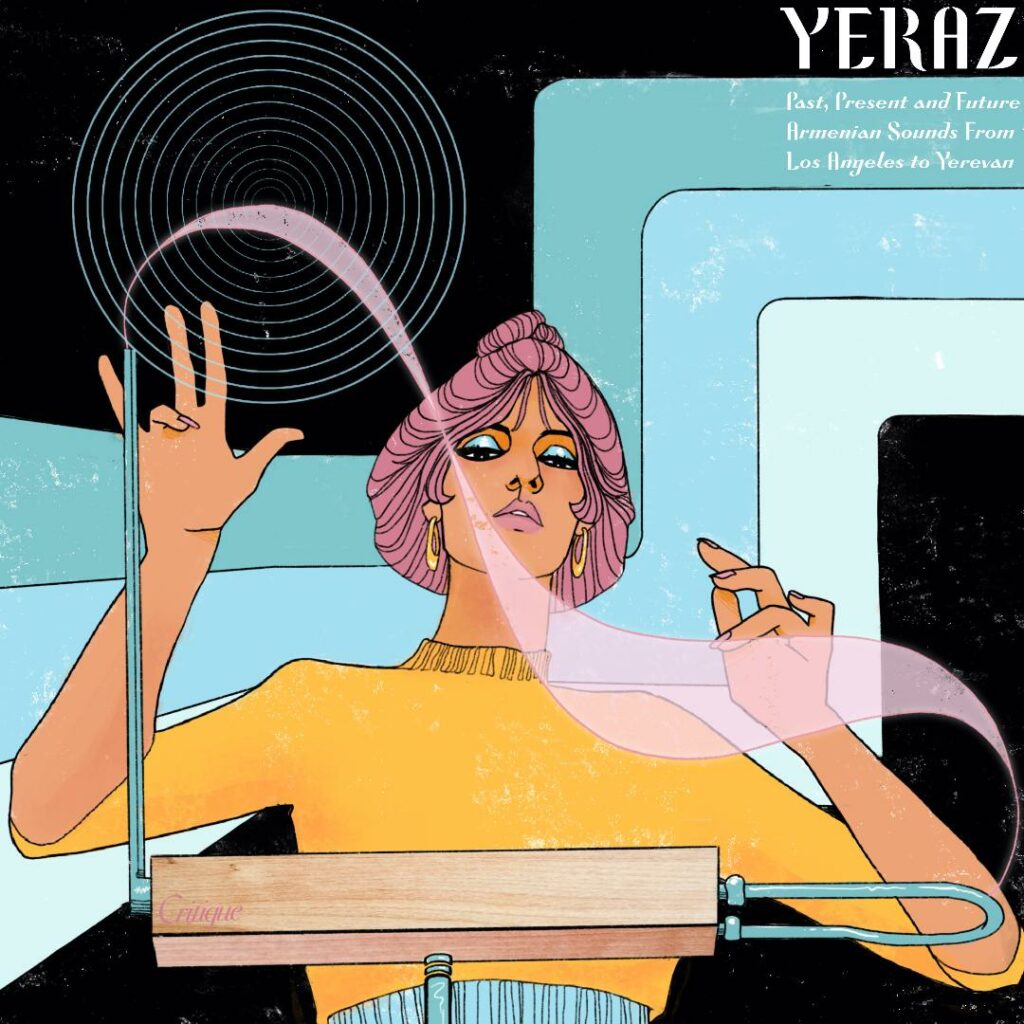
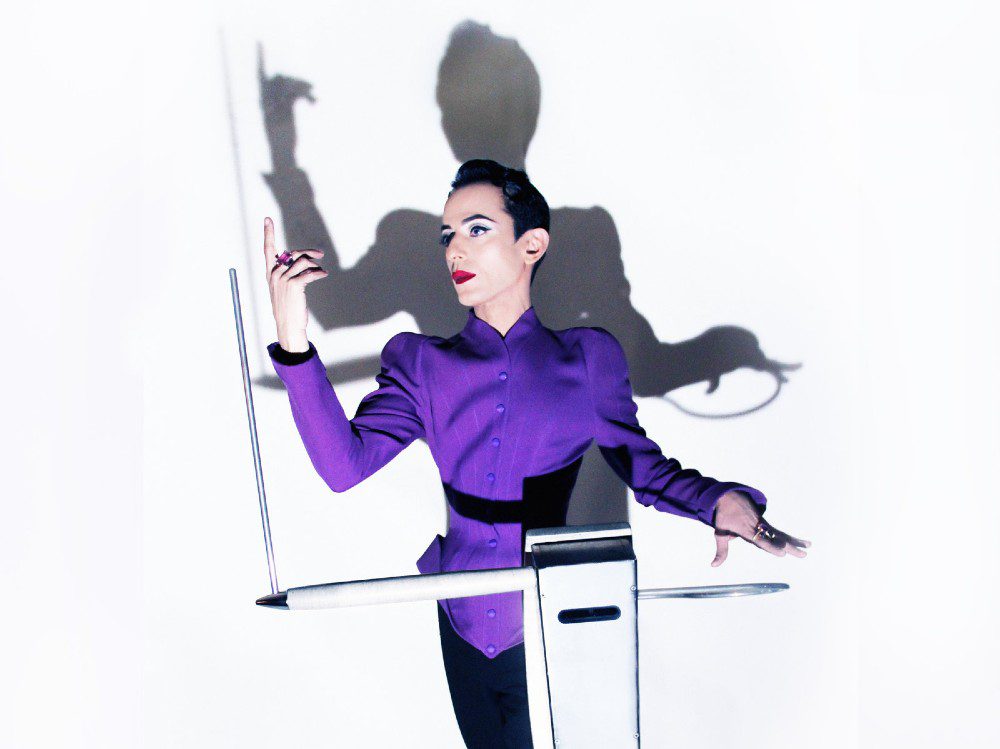
In Armenian, yeraz means “dream.” It’s a fitting title for the first compilation from Los Angeles-based record label and artist management company Critique. Yeraz is a ten-track album, out digitally on February 19 and on vinyl in May, that brings together Armenian and Armenian-American artists with contributions ranging from theremin player Armen Ra to indie electronic producer Melineh. It’s a stylistically varied collection, but one that’s united in a cause. All net profits from the album will benefit Kooyrigs, an Armenian, intersectional feminist-led coalition that’s been providing humanitarian relief on the ground in Armenia and the neighboring, ethnic Armenian enclave of Artsakh during a critical time. 

For 44 days last fall, Artsakh, known internationally as Nagorno-Karabakh, was under fire. In late September, Azerbaijan launched an attack, leading to an all-out war, with Armenia coming to the defense of Artsakh, which is not internationally recognized as an independent nation. In the midst of this, ethnic Armenians and allies came together in an unprecedented way, leveraging social media to bring awareness to a situation that was getting very little news coverage while also raising funds for humanitarian relief and holding protests in cities across the globe. 

Karine Eurdekian, who founded Kooyrigs in 2018, had just moved from Michigan to New York when the war began and was coordinating relief efforts with the team in Armenia. In Los Angeles, Zach Asdourian, who founded Critique, was working with GL4M, an artist who had released the single “Lusavor” to benefit Armenian relief organizations. One of these was Kooyrigs, which prompted Asdourian to reach out to Eurdekian on Instagram. 

Eurdekian says that she and Asdourian bonded over the “cultural consciousness” of each other’s content. They began working on collaborations, which led to Yeraz. Eurdekian describes the project as similar to swapping bracelets at a rave. “It’s just sharing our talents, sharing our creativity with one another and creating impact,” she says. 

Yeraz is, in part, a means to spread awareness in communities that may not have heard about the events of last fall. “We’re trying to really expand the outreach and expanding into the music community is natural, because the underground music scene is just an accepting community,” says Eurdekian. “It’s an empathetic community, and it’s one that I’ve grown up in and Zach’s grown up in and hundreds of people in Armenia are currently growing up in.” 

Meanwhile, Asdourian had heard San Francisco-based DJ and producer Lara Sarkissian drop “Lusavor” in one of her sets online. “It was honestly a dream come true to see this contemporary Armenian artist including my artist’s single in her mix, so I got in touch with her and we began talking,” he recalls. 

Sarkissian came in as a creative director for Yeraz. She says that the compilation presented a “good opportunity” to connect artists in the U.S. and those in Armenia. Sarkissian has played in Armenia, where she got to know local artists like Melineh. 

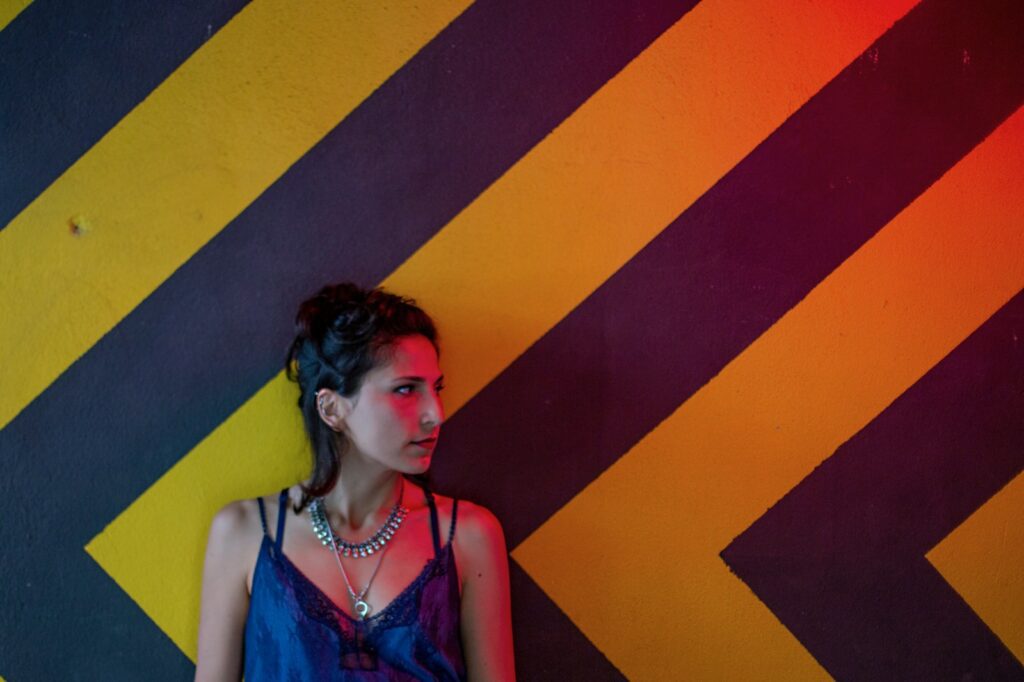
“It’s something very new, but something very present and the vibe is very active,” says Melineh by phone from Yerevan, the country’s capital city, of Armenia’s electronic music scene. 

Melineh is a Yerevan-based electronic music producer who contributed to Yeraz.

For the country in general, though, times have been difficult in the aftermath of the war. “The damage is huge and the traces are everywhere,” she says, adding that locals are trying to help in whatever ways they can. Artists, in particular, are doing what they can to help relief efforts, she says. 

On the surface, the war may have appeared as part of a long territorial struggle between Armenia and Azerbaijan. However, standing in Azerbaijan’s corner was Turkey, who continues to deny the genocide of Armenians that took place a little more than a century ago. For those in the diaspora, the war was a reminder of historic trauma and a real fear that what’s left of Armenian’s indigenous homeland would be lost. 

“I was disgusted and horrified and shocked,” says L.A.-based Armen Ra of the news from Artsakh last fall. “It’s still like a pain in my chest. It’s primal. It hurts my soul.” But, Ra adds, “out of these horrors comes so much love and attention.” He says, “I try to focus on the people who are helping.” 

For Yeraz, Ra contributed his version of “Crane,” from the Armenian composer Komitas. It’s a poignant contribution; Ra opened his debut album with the same song as a means of pointing to the “core” of his musical influences. It’s also significant in light of the Armenian experience. Komitas was an ethnomusicologist who worked to preserve Armenian musical heritage and was one of the intellectuals arrested at the start of the Armenian Genocide.

Armen Ra contributed his rendition of “Crane” to Yeraz.

For Natalee Miller, who provided the cover art for Yeraz, helping became her focus during the war. An illustrator who has made posters for bands like Khruangbin, Miller draws inspiration from her own Armenian heritage and has an Armenian following online. “I just felt like they had given me so much, it was like an obligation,” says the artist, who is based in Portsmouth, New Hampshire. “It was now my time to give back and and the only way that I can do that is to make art.” 

Asdourian surmises that the combination of the war and our reliance on online communication through the COVID-19 pandemic led to a “strong sense of solidarity and unity.” The war might not have made the nightly news in many cities, but if you’re an Armenian on Twitter or Instagram, it was probably dominating your timeline. “We were already on our phones so much that we were so much more prepared to get in touch with each other,” he says. 

Plus, it unified Armenians who had been working for social justice in their own communities. “It brought together a lot of Armenians who’ve been creating an intersectional language already between Armenian movements and causes and other people’s movements,” says Sarkissian.  

While the war has ended, the work to aid those impacted by it continues. Kooyrigs has several initiatives on the ground, the most recent of which, “Project Mayreeg,” helps pregnant people from Artsakh. 

Beyond its goal to raise funds for Kooyrigs, Yeraz also serves to amplify the voices of Armenian artists, both in the country and diasporic communities. “I want our non-Armenian people to learn that there is so much more to our history than pain and suffering,” says Asdourian. 

“Hopefully, this will catch interest for people to start supporting Armenian artists and see what they’re up to, what new sounds they’re creating,” says Sarkissian. “I think that’s also really important, to support these artists and look into other Armenian electronic artists.” 

Order Yeraz now via Bandcamp.

Katy Kirby Keeps the Faith on Debut LP Cool Dry Place

Photo Credit: Jackie Lee Young

Asked to summarize the themes on her debut LP Cool Dry Place (out February 19 via Keeled Scales), singer-songwriter Katy Kirby says, “Failed attempts at connection, unspoken rules, care or preservation, learning how to take care of oneself and other people.” These ideas may seem abstract, as her lyrics sometimes are, but she has a gift for juxtaposing that vagueness with sharp, precise imagery. When this lyricism pairs with a tender, Sarah Harmer-esque lilt, the result is a smartly crafted set of songs built on the contemporary Christian music of her adolescence.

The Houston-born singer-songwriter says she’s spent “much of her lifetime falling out of love with God.” Yet, the evangelical music she played as a teenager is fundamental to the way she writes now. “It shows up in the melody and structure of songs I write. It’s hard for me to not do consciously. It is a weirdly unique sub-genre that’s five years behind the pop on the radio. But it has its own flavor,” Kirby says, adding that the accessibility of that music sticks with her because she can’t bring herself to make music so weird it will alienate people, namely her own mother.

She is, however, grateful for the way worship bands offer budding musicians an early start. “I respect that that’s the place a lot of people get started playing in bands because worship bands will let 13 year-olds play bass, the way I did. It’s an unsung place where musicians can grow up,” she says.

Pleasing song structures and palatable melodies form an unlikely infrastructure for her forthcoming record’s songs about privilege (“Nobody has it better than you,” she repeats on “Traffic!”) and the denouement of a relationship. The second single from Cool Dry Place, “Portals,” is devoted to the slow-motion car crash of an impending breakup. The song’s elegiac sparseness amplifies its palpable vulnerability. “I had a feeling that I wasn’t going to be with someone much longer, and I wondered what I’d be left with. Being a little bit more comfortable with my own fragility is something I got out of that relationship,” she says. The song opens with the irresistible couplet “I’m an alternate universe in Target lingerie/You’re a country song in three-four time.”

Kirby laughs at the imagery. “The Target lingerie is real life. I’m a cheap bastard. Anyone I’ve ever dated would know that that’s accurate. Wow, that’s such a perverted Easter egg to put in a song,” she muses.

Kirby, who majored in English at Nashville’s Belmont College, understands the power of escaping into a world one has created rather than lived, and lately, a big part of Kirby’s creative journey has been writing songs based on fictional situations. One such song is album closer “Fireman,” a quietly catchy track with soft country influences. The song is a shard of a complicated relationship. “We’re a slow burn kind of love but now the whole house smells like smoke,” Kirby sings, her narrator working through the relationship, eventually moving on to a scientist and back again.

“Feeling free to totally make things up was awesome and still can – and often does – give you that catharsis that people get from songwriting,” she says. “I don’t write for catharsis all the time. That’s not how I always process feelings.” As her writing has matured, she’s found a new freedom to pen alternate realities. “I began to think of myself more as an author than a historian,” she says succinctly. She admires the ability of the Mountain Goats’ John Darnielle to shun universality when writing songs, and adds that last summer, she developed an “almost embarrassing” fondness for The Eagles and their ability to pull off simple imagery.

Katy Kirby says she frequently pauses songs to replay a good lyric for the person she’s with, and Cool Dry Place gives ample opportunities for that. While it may not convert pop fans to contemporary Christian music, Kirby’s quirky, wise lines and tender melodies are enough to make anyone a fan of an atheist who used to play it.

Follow Katy Kirby on Instagram and Facebook for ongoing updates.
Willie Jones Redefines the Patriotic Anthem with “American Dream”

Photo Credit: Gordon Clark

Growing up in the rural town of Shreveport, Louisiana, Willie Jones was introduced to “patriotic anthems,” as he describes, from the likes of Martina McBride and Toby Keith. The budding artist often wondered what it would sound like if he took that format and “turned it on its head.” His vision becomes reality with “American Dream,” a country-meets-hip-hop ode to the land of the free and home of the brave, as told from the perspective of a young Black man who’s using his art as a form of protest.

Heading into the recording studio shortly after the 4th of July in 2020, Jones confessed his conflicted feelings toward honoring America’s holiday to co-writers Alex Goodwin, Josh Logan and Jason Afable. “I was struggling to put on my red, white and blue and really celebrate the country because of so much that we’ve seen this past year and things that came to light with police brutality and justice in general,” Jones tells Audiofemme. “A lot of voices were raised up at this time of people speaking out again injustice.”

Revealing that he “really challenged my pen” on the track, Jones allowed his viewpoints to fly freely, channeling his conflicting emotions and personal truths into a song that opens with a gut-punching warning: “Young man, young man/Got the heart of a lion/And the drive of a wild horse/Young man, young man/Better watch how you step/When you step off the front porch.”

“I feel like it speaks not only to the listeners, but also myself,” Jones says. “I think those lyrics definitely fire me up and hold me accountable to keep moving.”

Jones has made a habit out of forward motion since making his national TV debut on season two of The X Factor USA in 2012, where he flexed his buttery baritone voice as member of Demi Lovato’s team. Splitting his time between Shreveport, Nashville and Los Angeles, Jones has since released a series of tracks including the lighthearted “Down For It” and “Bachelorettes on Broadway,” all of which appear on his debut album Right Now, released January 22, 2021. But “American Dream” is perhaps his best achievement yet, as he boldly claims that he’s “proud to be Black man” in a country that has its faults, yet still provides ample opportunities to grow and evolve.

“The American dream is to be in the pursuit of justice and to honor that as well,” the singer explains of the meaning behind the song’s title. “We have some opportunities afforded to us in the country. You can really do whatever you want here – you can build exactly the kind of life that you want to, you just have to move right. I think the American dream is getting what you want and honoring the country in that.”

The vocalist also turns a sharp eye to the symbolism of the American flag with a freestyle about those who have died and lied under oath for the flag, while others pay an equally harrowing price. “Some people can’t breathe for the flag/Had to take a knee for the flag,” Jones conveys with a voice as deep as the words’ meaning, leading into an powerful, poetic interlude: “With skin black as night/A Black boy runs for his life/Faced down by the hounds of a checkered past/Objectified, commodified, and scrutinized by blue eyes/And blue and white lights dancing off his skin.”

“It’s the truth of what America is,” Jones explains. “I feel like it’s a hopeful song and really bold, but it’s also shedding a light on the real behind what we see every day on social media with what was going on in the country.”

“That’s what music is about — telling real stories and true stories to inspire people,” he adds. “I felt empowered the entire time we were writing it.”

The accompanying video offers as many eye-opening images as the song itself. Directed by Jamal Wade, the video stars Brent Robinson as a young boy overwhelmed by the disturbing images he sees on the news when “American Dream” starts pouring through the speakers of his vintage radio. The camera pans through the house to show photos of important Black figures in his life, ranging from his grandfather to Muhammed Ali, Wade intertwining anime graphics of Martin Luther King, Jr., George Floyd, Breonna Taylor and many more. The video comes to a climax as Robinson is chased down by a soldier dressed in all black with eyes glowing red, the two transforming into anime figures in battle in which Robinson resiliently takes hold of the officer’s whip. But when they return to human form, it’s revealed that Robinson was painting a mural on an abandoned wall that reads #NoMoreNames alongside a series of Black faces, the young boy expelling blue fumes that overcome the soldier’s red flames. 

Jones and Wade were intentional about wanting to convey the intensity of the nation’s racial tensions through the video without rehashing oft-used clips of police brutality. “I wanted to take that out of the video and show Black people in a different light,” Jones explains of the video’s concept. Instead, the team wanted to depict a “young man who was hurt by all that he was seeing on the news and took it in his own hands to pretty much liberate himself,” Jones says. “What he represented was the opposition to injustice – learning his history and empowering himself to overcome.” 

Jones admits that politically-focused songs in the country genre are rare, yet finds hope in powerful statements such as Mickey Guyton’s autobiographical “Black Like Me” that add to the cannon of patriotic country anthems that will help break the status quo. Now, he’s added “American Dream” to that cannon in hopes of inspiring other artists to do the same; the song isn’t merely a patriotic anthem, it’s a message of accountability. 

“So many different people listen to country outside of the typical conservative, white [demographic] and that’s what a lot of people think that country is,” Jones says. “I want to inspire other people to get in the zone and shake it up. It’s all in just being yourself. I want to continue to be myself and take chances on myself.”

He’s already following through on that conviction by launching the #IHaveAnAmericanDream campaign on social media, inviting others to share what their visions are for the future of the country in an effort to “really speak on what they love about the country and what they love about being an American, what their hope and dream for change is in the country in a good light because we’ve seen so much negative,” Jones declares. “I really have hope for the future.”

Follow Willie Jones on Facebook and Instagram for ongoing updates.

PREMIERE: Shannon Clark & the Sugar Triumph Over Loss on “Let It Ride”

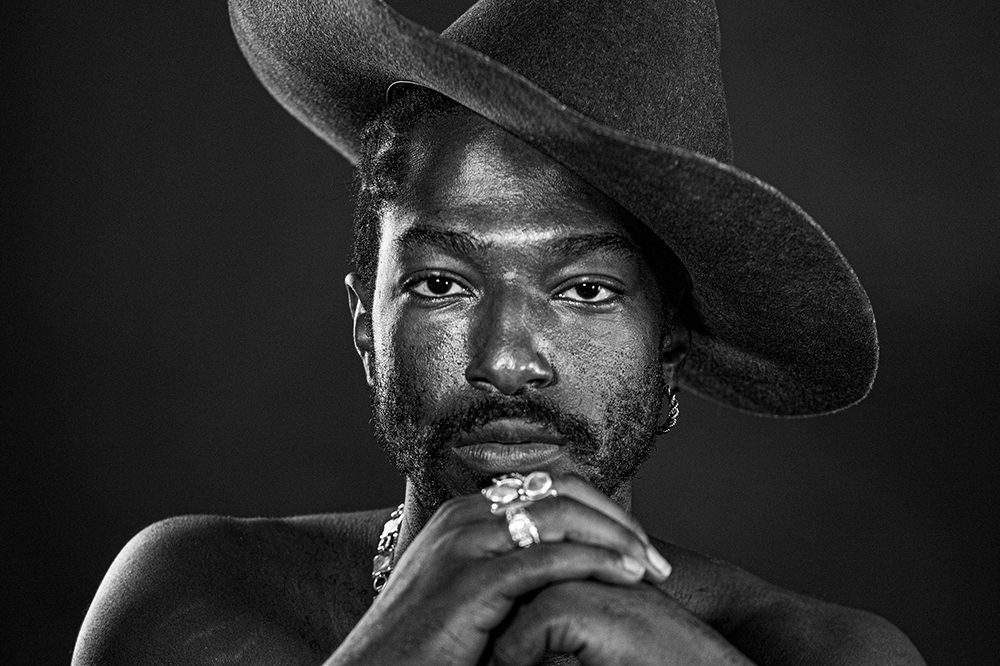
Shannon Clark & the Sugar hail from Greenville, Ohio, home of the American sharpshooter Annie Oakley. It’s a connection that feels natural when listening to their upcoming album Marks on the Wall, a collection of what lead singer Shannon Clark often calls “Midwest Americana Soul.” The record (out May 14, 2021), twists and turns in terms of genre, but their latest single “Let it Ride” may be the most personal, a shot to the heart. It’s a diary entry straight from Shannon’s past and a call to action for the future.

“I’ve buried a daughter way before her time/I’d take her place a million, million times/but I let it ride,” Shannon sings, his eldest daughter Navie Clark’s husky voice vibrating slightly as it echoes his own. The pace of the drums, played by Shannon’s wife Brittany Clark, is steady, acting as a form of meditation throughout. It’s a song that could easily play in the back of a nouveau western film, the story behind the lyrics lost in moving images. But once a listener’s ear tunes in, the story can’t help but move into focus.

“Everything in that song, every line that I sing in that song is real,” Shannon explains. “I do have a sister that lives in Modesto, I don’t ever get to see her. She’s my half sister. My dad, who I didn’t meet ’til I was 24, I found him, he didn’t find me. My mom went through a lot of abusive relationships when she was younger.” For Shannon, the journey of this particular blues song is exploring the negative elements of his past before shrugging them off triumphantly – leaving them not in the dust, but as a carefully placed notch in the belt of existence.

Shannon’s love of music started from a childhood soundtracked by classic country and rock ‘n’ roll acts, from Patsy Cline to Queen. His mom was a radio disc jockey for fifteen years, working at a few major stations in Dayton, Ohio. “She was really well known around the area,” Shannon says. “She was a single mom, so I would go to the radio station – she got to drag me along because she didn’t always have a sitter. She’d work the late shift, I’d be coloring on the floor of the radio station while she was spinning records. That’s kind of where I got my start I guess, my love of music. She’d drag me to concerts, make me sit in the press box with her until it was over.” Shannon even met Reba McEntire and Vince Gill, but remembers his 6th grade self being impatient, angsty, and less-than-impressed.

Shannon and Brittany grew up in the same small town, even went to the same church, but ultimately met playing music. “I was playing in a band and we had a big show coming up. Our band broke up and I needed a drummer to fill in,” Shannon remembers. “I asked her because someone said she was playing drums, and she did, and we became really good friends. That grew into more; 16 years later and we’ve got these guys running around.”

It was a moment of kismet that mirrored Brittany’s newly found passion for drumming. She had been practicing for a few years before she joined the band, but performing was never top of mind – her first show was the one she performed with Shannon. “It was kind of an accident because my uncle had this old drum set that he’d had when he was in high school,” Brittany recalls. “It was from the sixties. Just this old piece of crap, full of dust. He was like ‘Hey if you want this, take it. Otherwise it’s going to the trash’ right? So I took it, drug it home, cleaned it up and put new heads on it.”

She practiced by playing along with her CD collection, particularly Sheryl Crow. “I would listen to these Sheryl Crow albums and I would learn every single song,” she says. “I would just play religiously. I would come home from school, I wouldn’t even do my homework, I would just go down and play drums for two hours. I know I drove my parents crazy… There wasn’t really a motivation to be in a band. I just loved playing. It was an itch I had to scratch. No lessons – Sheryl Crow taught me.”

The band started out as a pop punk group called Everybody Else Wins. Brittany was 16 when they recorded their first record. “I always kind of wrote the same way, but I put it behind heavy guitar riffs and catchy melodies,” Shannon said of the time period. “My love for music was always deeper than what I was doing then. That was what was popular. When you’re young you don’t always have a lot of depth of knowledge. It took me ’til later to realize that wasn’t the kind of music I really loved.”

The band was on the move, touring and performing at Warped Tour in 2006 and 2007 on the Ernie Ball Stage. Then Shannon and Brittany’s second daughter passed away, and their hearts just weren’t into touring. The Clark family kept creating music, but kept it at home, teaching eldest daughter Navie how to sing harmonies to Ryan Adams songs.

“I started playing guitar when I was younger,” Navie Clark tells Audiofemme. “My dad bought me a guitar and I was maybe four or five, and I kinda always had one lying around. But I didn’t really get serious about playing ’til about a year ago, year and half. I think I was getting into new music, my taste was expanding and I wanted to be able to play this music I was hearing. And I think piano, we just had this gap in the band. We needed someone to play.”

“I’m proud of her because she has a record player and she plays good records, but she does like Harry Styles,” Shannon says. “It’s my guilty pleasure music,” Navie responds with a grin.

For the last three years, the family has performed as Shannon Clark & the Sugar, bringing together Shannon’s love of Glen Hansard and Amos Lee, Brittany’s love of John Prine, Bob Dylan and Brandi Carlile, and Navie’s love of old-school Dolly Parton.

Their upcoming album Marks on the Wall is the first album Shannon and Brittany have sat down in a studio and written together; previously, Shannon took the lead on songwriting. “[Brittany’s] always felt self-conscious about writing,” Shannon explains. “She didn’t think she could be a writer – she didn’t have that creative spark, she told me. These are her words, not mine. As we progressed, I’m coming in constantly, she’s doing dishes, taking care of the kids, and I’m like ‘Hey check this out, listen to this song, listen to this riff,’ and she’d always give me ideas and pointers. Our whole marriage she’s done this, so she’s really been writing with me since we were first together.”

As the album progressed, Navie also began finding her place in the band, taking the harmonies her parents wrote and rearranging them. The resulting music is layered: a father’s voice speaking his truth, his daughter’s voice echoing it back to him.

Navie has also had to step up in a big way for a sixteen-year-old musician. Michael Chavez, John Mayer’s former touring guitar player, played guitar on the record. Navie takes his spot in the band’s live performances, singing not only the harmonies she’s written, but also the guitar licks Chavez created during the recording process.

The band worked with Grammy award-winning producer, Mark Howard (Bob Dylan, U2, Neil Young, Tom Waits, Lucinda Williams, Emmy Lou Harris, Willie Nelson) on the record. It was Howard who insisted on a recording rule: three takes, we’re done. “This record’s not perfect; it’s not supposed to be,” Shannon says. “We wanted to capture moments so the performances are raw and they’re emotional and they’re live. We sang together in the room instead of separate tracks. I feel like you can feel that on this record and that’s what I wanted.”

Brittany was behind the idea of an imperfect recording, too, adding, “If you go to a live performance you’re going to hear chairs squeak or something off. [The record has] that live feeling.”

Much of the record is deeply personal to the Clark family, touching on personal histories and deep-seated pain. It’s the reaction to the pain they’re interested in exploring in songs like “Let It Ride.”

“It doesn’t matter when the rain comes, as long as you get dry,” Shannon says of the song. “Everyone’s gonna have something that happens to them. I think a lot people can hold on to those things their whole life and it effects their lives. Those people hold power and those situations hold power over that person. They can never be who they were meant to be, they can never develop into a regular beautiful person because they’ve got all this baggage they bring with them constantly. And I think that it’s important to let it go.”

“Let it ride,” Brittany and Navie echo in unison.

“Once you can commit it to a recording, that’s therapeutic too,” Brittany says. “You can get it off your chest, it’s concrete somewhere and you don’t have to carry that.”

The Clark family is disturbingly well-adjusted, easily joking with one another, poking each other about a recent fight they had just before the interview (Brittany spent the majority of the conflict banging on her drum set). They speak a common language: music, the driving force in their lives. It’s the medium in which they speak to one another and to their audience. For now, with COVID-19 still raging throughout the country, live shows are at a standstill, but the band is chomping at the bit to perform some mini-tours, just as they did when they were starting out. In the early days, they’d leave their young children with a family member.

“We would try to go play three or four shows, and come back,” Shannon recalls. “We never wanted to be bad parents – that was more important than the music to us.” Now that Navie is in the band, they don’t have to worry about that too much – and Shannon Clark & the Sugar have never sounded so sweet.

Follow Shannon Clark & the Sugar on Instagram for ongoing updates.

Supercoolwicked Subverts Pop Paradigm With Shakespearean Self-love Jam “Juliet”

In her new video for “Juliet,” Detroit multidisciplinary artist, singer, and songwriter Morgan Hutson (aka Supercoolwicked) creates a fantasy world of her own – an Afrocentric, baroque daydream that meshes the Shakespearian with the contemporary, the traditional with the subversive. Those who’ve given SCW’s 2019 debut LP High Gloss a spin know that this particular cocktail of familiar and foreign is what makes her music so memorable. And in “Juliet,” she perfects her brand of soliloquiel storytelling both visually and lyrically to deliver a fantasy world full of self-love and artistic actualization. 

Hutson explains that she wrote the lyrics to this song a few years back, when she was going through a breakup, dating through the all-too-familiar string of slacker suitors that seem to follow. “I was just out here swangin’ and just dealing with these men that were not shit and I knew it… but people can be beautiful Band-Aids,” she says. This transition period led her to reflect on what it means to love yourself; she realized she was looking for validation in others instead of within, like so many of us tend to do. “I started to kind of ruminate on it and be like, ‘Girl, you’re everything I need – stop trying with these people, be your own Romeo. Don’t look for romance where it’s not. Or love in general.’”

That realization blossomed into a lavish poetic love letter to the self, released last Friday, just in time for Valentine’s Day. The video for “Juliet” starts out with SCW walking into a medieval-looking church and opening a storybook; as the pages turn, we’re transported into the artist’s shimmering psyche, a romantic realm meshing two of her favorite cinematic inspirations: 1996 Baz Luhrmann classic adaptation William Shakespeare’s Romeo + Juliet and Sam Mendes’ American Beauty. Hutson pays homage to the films throughout, singing lines like “a rose by any other name just wouldn’t be as sweet,” while gazing at herself in a royal-looking hand mirror and, later, framed lying in a bed of roses, all the while embedding her own artistic vision. With a background in musical theatre and a lifetime of acting on her resume, Hutson has a more intimate relationship than most with the Shakespearean. “Anytime I can be dramatic, I love it,” she says. 

But make no mistake – SCW’s creative choices are driven less by vanity or fandom, and more by self-worth, lived experience, and a love for her culture. By inserting herself into the Shakespearean narrative that has historically been dominated by white/European voices and faces, SCW carves out space for herself and her ancestors to be uplifted and celebrated. “It’s Black history month and I’m very proud of my heritage,” she says. “I know that we’ve been through a lot of things, but I wanted to bring the world of this Afrocentric, baroque idea to life…to meet those two [worlds] because I think that’s kind of where I dwell.”

Aside from realizing her aesthetic aspirations in the video, SCW finds a way to squeeze sophisticated couplets into a tight pop/R&B song framework. She credits trailblazers like Mariah Carey for inspiring her to incorporate her expansive vocabulary into her songwriting. “It’s like, how does she fit all that in there and make it sound so cute? I feel like that’s the ultimate flex,” she muses. “I don’t think that we have to mold ourselves into what people think things are because we create the paradigm as artists. So one of my underlying, subconscious things that I have going on is to subvert the pop paradigm.” 

Supercoolwicked does just that without removing the escapism that makes pop music so attractive to begin with – she creates an entire world for the listener to dwell in and make their own. “I feel like pretend is something we’ve forgotten as adults,” says Hutson. “We can really lean into that part of our inner child, especially during this time, because that’s the way through it.” 

Follow Supercoolwicked on Instagram for ongoing updates.

PREMIERE: Stretch Panic Tells Spooky Stories on Debut LP ‘Glitter & Gore’

Austin-based indie rock band Stretch Panic fills an unusual niche: their songs are based around witches, vampires, demons, and other Halloween creatures. Their debut LP, Glitter & Gore, delves deep into this quirky theme, not only for the fun and humor of it but also as a means to make incisive observations about people and society. The album is out Friday, February 19, but it’s premiering exclusively via Audiofemme in a track-by-track video series below.

The members—MJ Haha (vocals, guitar, synth, omnichord), Jennifer Monsees (bass, vocals), and Cassie Baker (percussion, vocals)—had been friends for years and were working on separate projects until Halloween 2016, when they got together to create a song about ghosts and monsters. The experience inspired them to write more songs around the same theme, and they’ve been playing them in Austin ever since, naming their band after the 2002 cult classic PlayStation game about a girl whose sister gets possessed by demons.

Though they’ve since been reworked, many of the songs on the album were written during these early days of the band, reflecting the love of the otherworldly that stems from the members’ childhoods. “It’s an easy thing to find a common love for a Halloween aesthetic,” says Haha. “Halloween vibes, getting dressed up—we’re all later ’80s kids, and a lot of the culture and movies that came out when we were kids were fun monster movies. There’s just a friendliness to that spooky atmosphere and a playfulness.”

But even in its fantastical imagery, the music addresses topics more relevant to real life, such as toxic relationships and political misogyny. “A lot of those motifs are used to have further conversations about complicated feelings and different kinds of relationships, whether that be romantic types of relationships or friendships or relationships with yourself,” says Monsees. “That’s kind of a thing we find ourselves doing: using these kind of fun, silly imagery to talk about real things.”

Vampire Love,” for instance, features a spoken conversation between a vampire and someone shocked to see them covered in blood, along with a catchy chorus about “vampire love sucking me dry,” expressing the emotions involved in a relationship with an emotional vampire. “You Can’t Stay” similarly uses energetic percussion, groovy bass, and sassy vocals to portray both a literal demon possession and a quarrel between lovers that ends in one person calling “the priest” on the other.

“It sounds almost like ‘called the police,’ and it almost sounds like the person is finally standing up for themselves and ridding themselves of this person who’s possessed their lives,” says Baker.

“Burn the Witch,” driven by electric guitar and shouting that’s somehow equal parts dark and peppy, was written as a reaction to Donald Trump calling Hillary Clinton a “nasty woman,” exploring how we continue to verbally “burn women at the stake.” The phrase “blame the woman” repeats in escalating volume—a line that’s “very specific and can also be applied to a million different situations,” says Monsees.

The title Glitter & Gore actually comes from lyrics to “Spirit Juice,” a previously released song about drug addiction that’s not on the album, marrying together the band’s interest in the “sparkly and colorful” and the “morbid and dark,” Haha explains.

Stretch Panic have played tons of live shows, but have released just one EP—2017’s Ghost Coast—so the band is happy to finally put out more recorded music. “We’ve put so much energy into those specific shows where we’re connecting with people who live in the same city as us,” says Monsees. “It’s exciting to be taking these steps to be able to connect with more people, hopefully around the world.”

The band raised money to make the album on Indiegogo and first demoed the songs at home using Logic before bringing them into Austin’s King Electric Recording Co. studio, where sound engineer Justin Douglas recorded and mixed the music. “We brought ideas and feelings and emotions and vignettes of poetry, and he was able to turn that into sounds,” says Haha. For instance, they told him to make the guitar solo in “Vampire Love” sound “like a shooting star,” and he used a guitar pedal he crafted himself to do just that.

While much of the band’s discussion of the supernatural is tongue-in-cheek, Haha has had real-life experiences with such. She grew up in a haunted house in rural New Mexico and remembers trying various ghost-busting remedies, like sprinkling salts in the house, before getting the idea to play the autoharp and sing a song “acknowledging that it really sucks to feel alone and I understand.”

“I had chills and goosebumps all over my body as I was singing this song,” she remembers. “And ever since then, the house was in a lighter and sunnier place. I think the ghost is gone. It just needed to be acknowledged.”

In a way, that’s still what she and her bandmates are still doing today: speaking to the lonely ghosts inside us that want to be seen and heard.

“It was scary,” she adds, “but I’m grateful I learned how to live with something that scared me because I think that made me a lot stronger.”

Follow Stretch Panic on Facebook and Instagram for ongoing updates.

TOLEDO Foster Empathy via New EP Jockeys of Love

Photo Credit: Nick Ventura

TOLEDO didn’t plan on recording a new EP. “It just happened,” admits band member Jordan Dunn-Pilz. “It kept us busy, and we were able to have fun together. I’m thankful for this opportunity to come back into our own.” He is speaking about their recently-released project Jockeys of Love, on which he and collaborator Daniel Alvarez tackle themes of anxiety, depression, and alcoholism.

“We would have written music no matter what. The reason the songs turned out the way they did is I got hit with the breakup and pandemic double-whammy,” Dunn-Pilz tells Audiofemme. Unsure of their future, the NYC-based duo returned to their shared hometown, the seaport community of Newburyport, Massachusetts, to re-center and re-prioritize their lives. That’s when a batch of new music poured out.

“Compared with the social life in New York, I had a lot of alone time to think about things,” Dunn-Pilz continues. He began sifting through his life, picking apart existential queries, like why it was so hard to be “present in the moment” (which turned into “FOMO,” an EP precursor). “We had written a bunch of other songs with similar themes,” he says, “and that served as the foundation for the EP.”

Opener “It’s Alive!” is among their boldest songs yet, thematically calling to such gothic setpieces as Frankenstein and The Nightmare Before Christmas, and gives them room to wallow in the pain as a way to let it slide off their skin. “I’ll never be what you want me to be,” they sing. Delicate guitar mists around them, as spooky percussion peeks in and out of the arrangement, directly mirroring the onscreen imagery of someone as merely “a collection of parts and scraps that someone else put together.” 

Even the song itself was “very much stitched” in place, Dunn-Pilz explains. “Everything you hear in the foundation of drums, bass, and acoustic guitar existed already; Daniel had made a demo out of that.” Alvarez constructed the backbone like a Big Thief song, and Dunn-Pilz added the topline and electric guitar, much later cutting and pasting various drum sections “to change the structure” completely.

Such intricacies are strung together across all six songs, co-produced with Jorge Elbrecht, known for working with Ariel Pink and Wild Nothing. “Sunday Funday” testifies to the power of “finding empathy” in the world by examining alcoholism from the point of view of “being there for someone who’s dealing with something you’ve never experienced.” “Challenger” teeters between cosmic shimmer and rootsy banger, as TOLEDO envisions a not-so-distant dystopian future in which art is actually an act of rebellion against the state.

Dunn-Pilz is in a unique position; he’s a theatre geek at heart, having studied acting at Ithaca College in upstate New York, and has seen arts programs ravaged by defunding first hand. Pack on the pandemic, and you’ve got “a wild year” during which he’s questioned the very validity of making art.

“I was feeling very down on myself about being a musician in comparison to all the much more important things happening on a global scale,” he reflects. “It’s a dark path to go down because maybe I don’t wanna know what’s on the other side. I was having a lot of conversations with people.”

In the pandemic’s early days, Dunn-Pilz and Alvarez were both collecting unemployment while witnessing their “friends working their asses off from home,” he continues. “They would say things like, ‘Oh, all you guys do is sit around, get government money, and make music all day.’” 

That unfeeling, perhaps even cruel, way of thinking is exactly what perpetuates this peculiar idea that art has no value. It pierced Dunn-Pilz to the core. “Imagine a world where people got paid to do what they love and what they’re good at doing. That lit a fire under me,” he admits. He soon shed any and all doubts and began writing songs as a “‘fuck you’ to everyone that tells me that what I do is being wasted,” he adds. “Everyone wants to consume it, but no one wants to pay for it.”

Fire spills off his tongue as he speaks ─ and those flames grow to a thunderous roar on songs like “Dog Has Its Day” and “Needer,” the closing track peeling back layers of his pandemic-wrought anxieties. “There’s no way this song would exist if the pandemic hadn’t happened ─ not that it was worth it for this one stupid song,” he says, only half-joking.

Over skin-pricking guitar, and a tortured ambiance that seems to puddle beneath him, he invites the listener right into his clouded headspace. “I worry about my apartment in New York/And picture it molding/My backyard’s a blessing, but I don’t need it,” he laments. 

Jockeys of Love serves as the follow-up to 2019’s Hotstuff, feeling profoundly more accomplished, raw, and musically adept. For two musicians who’ve known each other since childhood, it’s the kind of statement piece that lays the foundation for a long career ─ as hyperbolic as that is, their work here is exemplary.

Alvarez and Dunn-Pilz met through a mutual friend in middle school. Straight away, they felt like “kindred spirits,” as Dunn-Pilz remembers it. “Pretty much as soon as we met, we were inseparable,” he says. He was already playing guitar, while Alvarez demonstrated a knack for piano. They set about busking along the market square in downtown Newburyport; the community celebrated and fostered the arts, so they never worried about getting booed or having to dodge insults.

Several years later, after some time apart during their college days, they got an apartment together in Washington Heights. Thinking the pandemic might be course-correcting last summer, they returned to the city life in August ─ and have, of course, realized that was a bit premature. Left to their creative devices, they built a home studio and have become newly-minted vinyl collectors, which Dunn-Pilz says has been a great way “to reconnect with music.” Feeling a disconnect with streaming playlists, he begins every day “by putting on a record and listening to the whole thing. I now have time reserved for just listening to music.”

Among his collection? Hovvdy’s 2018 Cranberry, Stephen Steinbrink’s Utopia Teased, the soundtrack to “Once More With Feeling” (the cult-hit musical episode of Buffy the Vampire Slayer) and a Greatest Country Hits of the ‘70s compilation. He’s spun the latter so frequently that the duo have even been writing some country songs lately, finding great inspiration from Dolly Parton and Ronnie Milsap.

Jockeys of Love hinges on their personal emotional excavations, subverting the long-standing belief that men should never show emotions. Through his theatre and musical work, Dunn-Pilz has learned how to “get emotions out in the open and face them,” he says. “I’m sure I would be much worse off if I wasn’t as in touch with my emotions. I’m proud of being comfortable with emotions, in general.”

Music has been a catalyst for catharsis, whether he’s creating it with TOLEDO or simply listening. “When I have something that’s troubling me, my first instinct is to get a guitar out and speak into the open and see what comes out. I’ll usually learn something about myself in the process,” he says. “Listening to music can give people a similar experience. There might be some macho Chad listening to Phoebe Bridgers, and he hears her touch on something he can relate to.” That rings true for Jockeys of Love, too – and in times like these, we can all use a little empathy.

Follow TOLEDO on Twitter and Instagram for ongoing updates.

Emily Blue Searches for Queer Utopia on Forthcoming Pop Project The Afterlove

Photo Credit: Greg Stephen Reigh

An oft-wigged and glittered, latex and leather-wrapped Midwestern daughter, Emily Blue is a pop star, period.

One of the first Chicago artists I’ve ever seen appear on stage flanked by dancers who not only made their choreography and transitions appear effortless, but seamlessly executed a tear-away costume change mid-song amid clouds of red and pink-hued smoke and pulsing lights—Blue seems born to become a household name, evident as the entire crowd shouted the lyrics to songs like “Cellophane” and “Falling in Love” back at her. The paltry $10 admission belied the show’s stellar production value, which included a stacked bill featuring Thair, SuperKnova, Carlile, and other artists who’ve been carving a larger space for pop music in Chicago over the past few years. 

Across her two previously released solo projects—2016’s Another Angry Woman and 2018’s *69— and two LPs as part of indie band Tara Terra, Emily Blue has pulled back layers of herself and her exaggerated character to explore pop music’s most enduring trends through her own modernist lens. In 2019, she was named the city’s favorite pop artist in the Chicago Reader’s “Best Of” poll. Due this summer, her upcoming album The Afterlove—preceded by single “7 Minutes,” which hit streaming platforms February 12—feels like the most distilled integration of her music and message yet.

While her work to this point has swung between seemingly polarizing extremes—Another Angry Woman rawly examined sexualized violence, rape culture and womanhood derived from her own experiences as a survivor of assault, while *69 was a breathy, steamy reclamation of sexual agency and liberated desire—The Afterlove finds itself in another world: a planet without binaries (gay/straight, boy/girl, body/spirit), without fear; one you can only travel to by rainbow.

It’s exciting yet bittersweet for the singer, as The Afterlove marks an ending as much as it does a beginning. On Thanksgiving Day in 2020, Blue’s friend and frequent collaborator, producer/musician Max Perenchio (founding member of Chicago bands The Gold Web, Bad City and Real Lunch) passed away due to injuries sustained in a car accident in Los Angeles. Ryan Brady, Atlantic Records VP of marketing, was with Perenchio and was also killed. With the myriad safety procedures put in place to combat the spread of the virus, there’ve been no funerals. No memorials to gather with loved ones and celebrate the lives of those lost or process the collective grief.

“If I didn’t do this, nobody would hear the last few songs Max and I made,” Blue says on a phone call from her hometown of Champaign-Urbana, where she’s been hunkering down since COVID-19’s initial threat in 2020. “That’s a huge motivating factor for me, to be honest, getting through the pandemic. Having him be part of this album, and even continuing it with songs he isn’t a part of but wanting to make something with that inspiration—that’s important.”

“I really view Emily Blue as having started with Max,” she continues. “He and I dug really deep into pop. That was always a dream of mine. I just never had the tools and the person to team up with, you know what I mean? We’d pull so many all nighters.”

The pair would pour over hyper-pop works by Charli XCX and the late revolutionary SOPHIE; Madonna and Prince; the big balladry of rock band Heart’s 1980s offerings. They shared an affinity for glitch and hair metal guitar, as well as the fantasy of the pre-(and possibly one day, post) social media world. It was Perenchio who came up with the name for the space they wanted to create: the afterlove.

Before the loss of Perenchio, Blue—born Emily Otnes—was finally gaining traction she’d been building upon for years: steady bookings for her See the Future Tour across the United States, placement on Spotify playlists expanding her audience, fan mail from Mexico, the U.K. and Israel. Referring to herself as a “productivity machine” at the beginning of 2020, she launched her Artists for Global Giving initiative at the start of the pandemic, which challenged musicians in lockdown to write, record and mix tracks in 24 hours. Proceeds from the mixtape, which includes the talents of NNAMDÏ, Troigo, and Flora to name a few, went to various COVID-19 relief funds.

Then in March, she was diagnosed with the virus. Forced to slow down, she found the required rest a blessing in disguise, in some ways. “I was running on a body I didn’t take care of. My mental health was bad,” she explains. “I really took some time to work on myself. The balance in shifting my priorities toward love and relationships that matter most to me—it put so much into perspective.”

The time for reflection included revisiting songs she’d been holding onto. Finding a sense of groundedness through her physical and mental healing, Blue—who admits to once viewing pop as the most explicitly “people-pleasing” genre, lacking in authenticity and point of view—focused on what resonated with her the most. “I was like, oh okay, I love the 1980s. I love classic rock. I want to sing about romance and bisexuality. That’s where I’m at right now,” she says.

Dropping singles “Aperture” and “Trump”—which dances toward death metal—and a bass-driven rendition of Lady Gaga and Ariana Grande’s smash “Rain on Me” (featuring Thair) throughout the year, Blue inched closer to honing her sound and aesthetic, all the while teasing what she feels is her “best music to date.” On forthcoming singles from The Afterlove, Blue sounds like a musical lovechild of Paula Abdul and late ‘80s pop-rock outfit Roxette or even Vixen, experimenting with different facets of her vocal texture and inflection. In the grandeur—and kitsch—of the era, from fashion and décor to larger-than-life personalities and pumped-up production giving way to new musical frontiers, Blue found a palette for her re-emergence.

Now, on the heels of the music video for “7 Minutes”—an ode to the kissing game that subverts the idea of what it means to be “in the closet” (literally and figuratively)—and already mapping dates for future singles, Blue finds herself at the helm, and on the precipice of something special.

Though Tara Terra remains active, and the singer-songwriter recently dipped her toe into roots rock alongside pal Mariel Fechik in under-the-radar country duo Moon Mouth, Emily Blue is her career’s ambition fully in motion. From dance classes at a young age and bouncing between acts formed with friends as a teen, to Greyhound-bussing herself from Urbana to Chicago and back every weekend to make music, she’s now at a point that she’s prepared for her whole life. 

“A lot of pop music, but especially pop made by queer artists, is about providing that space where people can dance and celebrate life and find joy and togetherness rather than always focusing on the trauma of our lives,” she observes. “It’s a fine balance—it’s about love and loss and queerness and identity, but these songs have just poured out of me. I don’t even question it. It’s been empowering.”

Follow Emily Blue on Instagram and Facebook for ongoing updates.
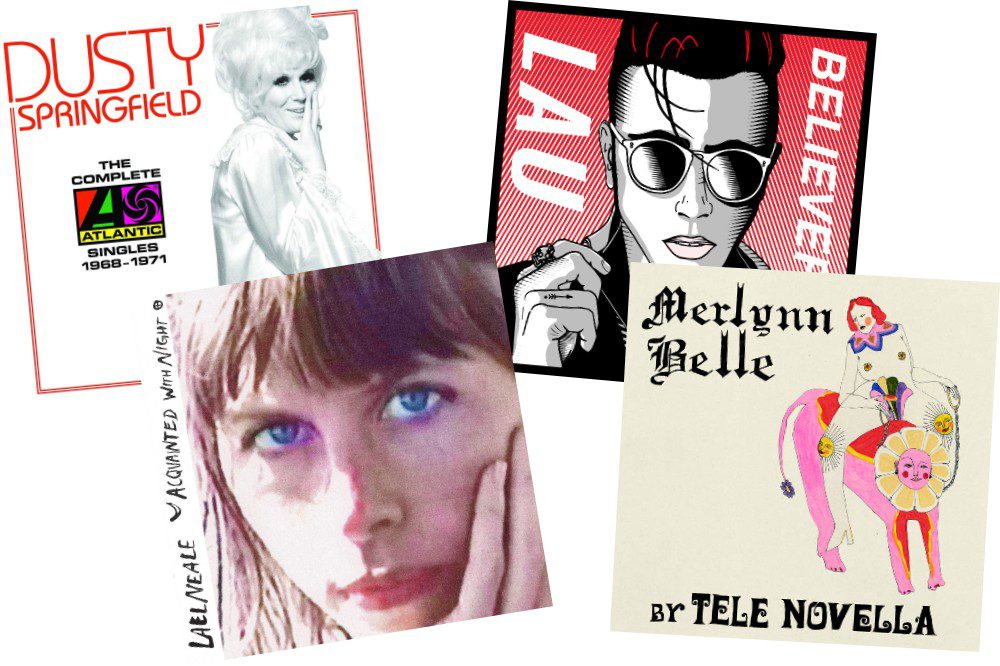
PREMIERE: Zelha Captures the Awkwardness of Rejection in “Empty Calls” Video

Getting rejected isn’t fun for anyone. Being the rejecter, though, isn’t exactly pleasant either. Most of us have been in that awkward situation where someone liked us and we didn’t like them back. On her latest single “Empty Calls,” London-based pop artist Zelha reflects on the difficult process of having to reject somebody.

“It’s a really awkward situation where you don’t really know what to do with it,” she says. “When I was writing this song, I was kind of going through that, and I think it helped me approach the situation and hopefully can help other people as well. It’s quite a common thing to go through.”

“I can’t keep it up, I can’t keep it in/I’ve been avoiding, just keep avoiding you/I can’t let you in/let you under my skin/I’ll just keep running,” her clear, hypnotizing voice sings in the catchy pre-chorus against energetic percussion that evokes this very sense of running away from drama only to have it bite you in the back.

The video features Zelha dancing in the street, on the beach, and in a parking lot as she takes the viewer through her emotional process. “The idea was to recreate that feeling of wanting to escape, so the scenes at the beach were by myself; it was really a way to show the reflection that happens in that situation and wanting to be away with your thoughts,” she says.

In her case, she ended up telling the other person everything she was feeling (and wasn’t). “Honesty is always the best policy; if you don’t know where you stand, then it’s just worse,” she says. “I hope that people can relate to it and that it shows them that some things have to be said even if it’s awkward and it’s not easy. In the long run, it’ll be better.”

She wanted the single to sound like a pop song but to also incorporate indie elements; she and producer Jack Gourlay used lots of tom samples to create an organic sound and incorporated multiple layers of synths to evoke an ethereal, nostalgic feel.

The single appears on Zelha’s upcoming debut EP, which she says deals in various ways with self-discovery, dysfunctional relationships, and mental health. One song, “Stage Lights,” for instance, is about the self-consciousness that comes from thinking other people are watching you when they’re really more focused on themselves.

The EP also includes her first single, “Player 1,” a chill, harmony-filled, Lana Del Rey-like track about “someone who wants to control everyone and everything,” she says. “I think especially women tend to have those experiences quite a lot, having someone gaslight you or manipulate you without realizing it.”

She and Gourlay started producing the EP two years ago and plan to release it later this year. All the instrumentation was done digitally, with the exception of some guitar parts.

Zelha, whose real name is Caroline Marcela Zandona, is half-Mexican and half-Belgian and was raised in Belgium. “I grew up with both types of music: French on one side and Mexican on the other,” she says. “I don’t know if it can be directly heard in my music, but the way I write lyrics may be a bit different because English isn’t my first language.” She chose her stage name because she wanted something that worked phonetically in French, Spanish, and English, incorporating elements of her middle and last name.

As a student at the Institute of Contemporary Music Performance in London, Zelha is currently writing a dissertation on fourth-wave feminism, female artists, and how they’re represented in their lyrics. She’s already started making music for her second EP, which explores the feminist themes she’s studying, and hopes to produce it using an all-female and nonbinary team. “There’s a lot of barriers to women [in the music industry], and I think we should all be helping each other out. By talking about it, it’s just going to become a more common subject, not as taboo,” she says. “Pushing female producers and female co-writers is what we should be doing.” 

Follow Zelha on Instagram and Facebook for ongoing updates.
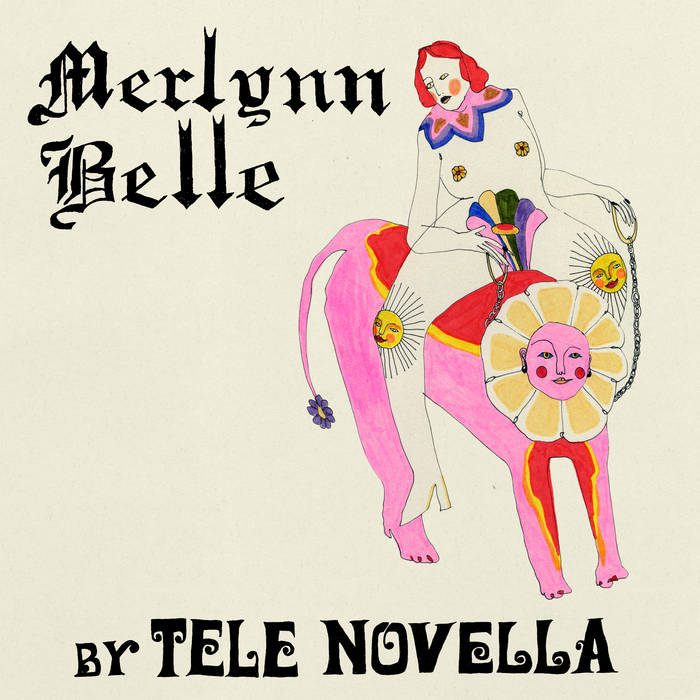
That Brunette Is No Longer Afraid to Reveal Her “Secret Crush”

Photo Credit: Zeno Pittarelli

It’s often hard to tell whether instant attraction is just a desire to befriend someone, be like them, or something more. Having to acknowledge your feelings is always a bit daunting; risk is already high, and only intensified when a burgeoning discovery of one’s sexuality comes into play. Channeling the nervous excitement characteristic of a fresh flirtation, That Brunette (the recent new stage name of rising Brooklyn-based indie-pop singer Madeline Mondrala) offers queer femmes a cathartic, joyful outlet for dancing alone in their bedrooms full of youthful infatuation on “Secret Crush.”

Written in the height of “undeniable” feelings That Brunette developed for another woman—”When it happened I was no longer able to ignore or repress my bisexuality,” she says—the glittering pop tune recounts the precarious nature of treading uncharted territory. A bouncing beat and synth trills mimic heart palpitations, which go hand in hand with her uneasy but charming soft breaths. The feelings she explores in the track, for her, were never normalized.

“Looking back over my life I definitely think my queerness was stomped out of me in my early years,” she admits, transparent on grappling with internalized biphobia. “Growing up, nobody ever mentioned the idea of bisexuality beyond describing it as a lie gay people told themselves. I knew I was attracted to boys, and it was socially acceptable and encouraged, but I kept my attraction to women deep down inside.”

Stifling her attraction to women led to the repression of her sexuality until one fateful encounter. Most folks who identify as bisexual know this “bi panic” to their cores, especially those who grew up with heteronormativity imposed on them. “I think because I’m in a long term relationship with a man, I hadn’t felt comfortable fully exploring my sexual preferences as a self-aware adult,” she confesses.

While it’s heartening to imagine this track as a source of joy for younger listeners in their closeted days, “Secret Crush” also resonates for those of us still undergoing the process of unpacking those standards. In 2021, where queer love can explicitly permeate lyrics in such a cheerful way, “Secret Crush” allows That Brunette to control her narrative, empowered by the truth in her emotions and the support of her partner. “How can I get you alone?” she asks, a simple question that encompasses the universal spirit of any brand new crush, before isolating the singular epiphany that prompted a full embrace of her sexuality.

“I don’t wanna jinx it/Looking for a reason to” walks the precarious line of pining where it almost feels easier to ignore the crush entirely. She continues on by playing with romantic tropes and re-centering them with a fresh perspective. Reclaiming images like daydreaming and roses, it’s even tongue-in-cheek to say “leave the boys at home,” a term commonly associated with heterosexual friends who need a “girls night out.”

The breathy bridge melodically captures her yearning, “almost like you’re bargaining with the universe,” she explains, to have those feelings reciprocated. “Even if it’s just tonight,” she nearly begs, leaning into uncertainty before falling right back into the song’s playful and vibrant chorus. While unintended, a near-Valentine’s Day release adds to the song’s kittenish nature.

It’s not that That Brunette set out to write a coming-out song or position herself as a defining voice of this story, but it’s powerful and liberating all the same. “I’m happy to represent bisexual people who might have discovered their queerness a little later in life, or who happen to be in a heterosexual relationship,” she says. “I can only write about my own experience and I hope by doing so others can relate and feel seen.”

“I’m all for normalizing queerness in music,” she continues. “When I started writing about my experience it was incredibly liberating from a creative perspective. I stopped being worried about people judging me for not fitting their image of what a bisexual woman looks like.”

Directed by her partner Matt Speno and filmed in her old living room with help from Zeno Pittarelli and Alice Osbourne, the music video for “Secret Crush” finds That Brunette drenched in a romantic pink, acting out her “quippy and cheeky” lyrics through kitschy literal interpretations. Her strong visual eye and penchant for aesthetics are effortlessly genuine; she styled herself in a classic white-on-white look she describes as “clean, approachable, and authentic…a look I would wear in the summer to a gay bar.”

Following the release of “Platonic,” “Secret Crush” comes from a world of That Brunette’s own creation in which she exists without pretense, and it’s thrilling to watch. She’s embracing it all—her identity, her creative agency, and her capacity to feel openly and honestly—and she’s having fun while doing it.

Follow That Brunette on Twitter and Instagram for ongoing updates.

Feral Reflects on TikTok Fame, Mental Health, and New Music

Photo Credit: Annie Sampson

“Yeah, I’m the crazy ex-girlfriend still writing songs about her high school boyfriend,” says Santa Cruz’s Kelsey Ferrell, not without some exasperation. “But it’s not the only thing I am.” It’s been nearly a year since our last interview, and Ferrell—who goes by the moniker Feral when releasing music—is still trying to make this point, whether it be about her own discography, or about the microcosm we willingly enter whenever we put on an album. “All [songwriters] are writing about our past relationships and our exes and stuff,” she says. “Songs are, by nature, only a couple minutes to tell a whole story.”

That’s also the nature of TikTok, the almost ubiquitous social media app and Gen Z-favorite that has kept a significant amount of the world’s population glued to their phones in lieu of in-person entertainment. In the past year, the app has become an unexpected platform for indie artists and producers. Ferrell can now count herself among those ranks, as a recent post featuring her 2018 track “Fuck the Bourgeoisie” went viral a few days before our interview. Currently at 775k views, her sixty-second video has inspired thousands of comments that range from praise (“The fact that Spotify hasn’t recommended your song to me is honestly a crime” — from user lilveganricewrap) to scorn (“sounds like you were in it cuz he was wealthy” from user chickennnugget_) to…Marxist discourse? 

“I didn’t want to delete any of the conversations [in the comments] about power or privilege or mental health or like, Marxism,” she explains. “Even if they were not very flattering to me.” Predictably, some listeners took issue with the song’s content, a tongue-in-cheek examination of a relationship with an ex-boyfriend whose incredible wealth had a huge impact on Ferrell and how she views the world. “It was stressful,” she says. “I’m not gonna lie. I only had sixty seconds to tell this story. Obviously that’s not enough time to accurately describe an entire two year relationship and all the context behind it. I did my best, but you can’t tell everyone everything in sixty seconds.” And while some people are ready and waiting to judge someone for dredging up old memories for artistic fodder, for Ferrell, the memories aren’t so dusty. 

Recently, she received a PTSD diagnosis that completely reframed the way she had been moving through the world for the past four years, struggling with memories of her complicated relationship and the bullying she received from her peers in her final year of high school. “My strongest symptom is being trapped in a loop of memories that I don’t want to be reliving,” she says. “I was unable to maintain focus on school or maintain long conversations because I was just in my head.”

Just like songwriting can loosen some of the ties that bind us internally, this diagnosis gave Ferrell a name for her struggles — and, therefore, something solid to face. “It was validating and a relief to get the diagnosis,” she says, “because it was like, okay, that explains a lot. But it also was kind of scary…it’s not like there’s a blood test for it or a cure for it like other other kinds of health conditions… so it was kind of tough to be like, ‘Oh, I guess I just have to live with this.’”

If there is anything to take from Ferrell’s last four years, it’s that even if your brain and body are trapping you in the past, it doesn’t mean that your art has to be trapped, too. 

In 2020, Ferrell chose to focus on creating singles, a move that enabled her to take advantage of the never-ending scramble for content that comes with the territory of being a musician in the digital age. Another step forward was working with producer Jim Greer. While she loved working with producer and friend Ian Pillsbury on her first full-length LP, 2018’s Trauma Portfolio, this time, she was ready to step out of her comfort zone and work with someone she didn’t have a personal connection to. “I was scared that I didn’t have the chops to be successful in that environment,” she says. “[But] I kind of surprised myself.”

The first result of this collaboration, “Loser,” sees Ferrell at an impasse between her old and new self. “When I was in college, I got really seduced by the idea of sex positivity,” she says. “It was like, ‘you can just go out and you can sleep with whoever you want and it’s going to be so fun, and you’re going to have a great time!’ And I felt like that was kind of a deceiving narrative because it relied on the assumption that people that you sleep with have your best interests in mind.”

“Loser” is classic Feral, biting and self-deprecating in equal turns. The chorus—“no, you don’t matter that much/you’re not the only loser that I fucked”—was inspired by a former fling who found out she wrote a song about him and started telling people she was obsessed. But, of course, this isn’t the full story. “I drew from multiple experiences and multiple people that I had had encounters with,” she says. “[The song is] about pretty much everybody I’ve ever dated or hooked up with, from my first kiss when I was twelve to the last guy I saw before quarantine started.” Their caricatures figure into the video for “Loser” (directed and produced by Rob Ulitski from Pastel Wasteland), a spoof of the VHS personal ads some lonely singles may have used long before Ferrell herself was even born.

But “Loser” isn’t just a quasi-warning to potential partners. “I do kind of look at it also as sort of harsh reminder to myself—not in like a victim blame-y way—to just stop once in a while and be like, ‘Kelsey, what are you doing? What kind of choices are you making?’” she adds.

On Valentine’s Day, she released a new version of “Native Speaker,” a folk-y pop track ready to rise from the ashes of its previous iteration on her 2020 Bandcamp release, The Quarantine Demos. A whole minute shorter and about three instruments richer, “Native Speaker” feels like Feral at her best— and it’s a standout for her, too. “I think I really transformed it from its original version into something that hits harder and can hold attention better,” she explains. “I’m just really grateful that I got to go to the studio and create that one, because that felt like a life goal for me to put that song out there.”

While the song starts out sparse, not unlike the demo, Ferrell has largely done away with the doubled audio track, letting her voice shine alone against an acoustic guitar. “We’re living in a fascist state/but I still go on dinner dates,” the track begins, setting the tone somewhere between bombast and resignation. The song seems more measured and patient then the demo version, even though there is a lot more going on musically. This is especially clear in the chorus, accompanied by drums and some sparkling percussion that adds a needed touch of whimsy. “You are the one,” Ferrell sings. “And I’m missing the tongue/of my native speaker.”

While Ferrell tells me that people who get the song just really get it, there is a tenderness to the lyrics that makes it work even beyond the realm of lost first loves. Even though the cover—a collaboration between her two close friends, illustrator Ruhee Wadhwania and photographer Annie Sampson—makes the central innuendo clear, it could just as well be about missing the experience of talking to someone who once really understood you.

Next up for release (March 26th) is “Church,” the result of an unexpected period in Ferrell’s writing, where she delved into a lot of religious metaphor. While the framework for the song is about a last-hurrah trip she took with said ex, its greater themes were formed in the fires of adulthood and all the uncertainty that comes along with it. “I always was dismissive of religion as a teenager,” she explains. “When I got older and realized how hard life is, I was like, ‘I get it. I want help.’ It reflects that moment where I started to understand why people are religious and why people need a God and why people need to pray. I had reached those moments in my life where I had become so desperate for relief or so desperate for something to go right for me that I had no other options besides calling on a higher power.”

“I had faith in you but there’s no faith in me,” Ferrell sings in the song’s opening lines. Feral has always had a no-fuss sound, but “Church” feels like a different direction from both the snarl of “Loser” and the lament of “Native Speaker,” choosing instead to take a campground-chant cadence, complete with some gentle handclaps that you might need headphones to catch. Despite the fact that it shares a subject matter with “Speaker,” something about “Church” feels more final: “It’s hurts to feel/God ain’t real/You’re still my whole entire heart/and I’ll never be a believer but I’ll miss playing the part.”

If anything, that line feels like a small relief — playing the part can only work for so long, much like living with undiagnosed mental illness. Now that Ferrell has the latter at least, she’s taking it one day at a time. And, sometimes, those days aren’t too bad. There are merch designs in the works; another song going viral on TikTok; and “Fuck the Bourgeoisie” at more than 55k streams. Not too shabby for a month and change into 2021.

Even if she’s not a believer, Ferrel does know the universe works in mysterious ways. “The week before the TikTok went viral, I sat down and wrote a song about being lost and being 22 and not really knowing what I wanted out of life and wanting to be successful but not knowing how to achieve that,” she recalls. Afterward, Ferrell began writing prolifically, partly to provide content for her newfound audience, partly because she found the success inspiring, and most importantly, because it provided some much-needed validation.

“I kind of felt this feeling of, like, hey—maybe I could do this for real,” she says. “Maybe I do have the talent.”

Tana Douglas Relives Her Life as Australia’s First Female Roadie in LOUD Memoir

Photo Credit: Lisa Johnson

Rock ‘n’ roll’s first female roadie has lived with AC/DC, toured with Suzi Quatro, Leo Sayer and Status Quo, and though she couldn’t have imagined it as a teenager, she’s proven women belong backstage.

Tana Douglas, a teenager whose childhood was troubled by a spiteful mother and an incompetent father, found her escape in live music. It was largely fate and circumstance that lead to her beginnings as a roadie in 1973. Without a home, nor an income, helping the road crew to unpack and load the band’s gear back into trucks post-show was a means of making an income and feeling part of a community. Her dedication, her relentless hard work and “I can do it” attitude meant she was constantly working, her reputation forged through word-of-mouth commendations. By 1974, she was working for – and living with – AC/DC. Their management had set up the band, along with Douglas, in a suburban house in Melbourne’s St Kilda East.

“They were so welcoming and friendly and so close to my age. It was their first time away from home, and that’s what I’d been missing, so I thought it was great,” Douglas tells Audiofemme. “They may as well have been [my] brothers, since we were doing everything together and we all got on really well.”

Douglas and AC/DC would spend a lot of time listening to records. “The brothers, Malcolm and Angus, listened to old blues. Bon was into the new ZZ Top album, Tres Hombres, [and] Alex Harvey Band because all the Scots loved him,” Douglas remembers. “We’d sit and listen to all sorts of things: Jerry Lewis and Elvis Presley. I liked Janis Joplin and though I don’t think any of them liked her, they were polite enough to let me listen. Everyone was equal, there was no separation.”

Douglas has just released her memoir, LOUD, which recalls much of her early life and illuminates the contradiction between touring with glamorous, cult-favourite rockstars while knowing she had no home to go to in the evenings, nor family to call if she was lonely or in trouble. Like many women who forge a path for other women to follow, Douglas had to bear the brunt of criticism from male colleagues, threats and abuse from female fans who saw her as a competitor for attention by the objects of their obsession, and heckling from audiences when she could be seen from the stage.

But it is also the tale of a true music industry pioneer, forging ahead in her field thanks to ingenuity, work ethic, and passion. Douglas transitioned from the backline into working on lighting and sound, despite having no previous experience in either specialty. In those days, it was a matter of learning on the job – not always easy as one of the rare women working in the support crew.

“The technology has evolved immensely to this day, but it was the new technology of the 1970s and nobody really knew anything about it,” she recalls. “It was a starting point, and people like myself kept pushing the envelope. The work schedule back in the ’70s was so heavy – with AC/DC we were doing 12 to 14 shows a week. You learn by setting it up, and when something broke you fixed it. My biggest learning curve was with Paul Dainty’s production company ACT. We were learning first in the country from experts from the US and the UK coming through on tour.”

Early in her career, Douglas realised she’d be more likely to have ongoing, reliable and well-paid work if she was working for production and touring companies, rather than for artists directly. Her employment by TASCO, a London-based production company, enabled her to work with Status Quo, The WHO, Ozzy Osbourne, The Police, Iggy Pop and Elton John. When TASCO opened a Los Angeles office, Douglas transferred to the US and became a resident.

Douglas works on a lighting rig for Status Quo. Photo Credit: Alain Le Garsmeur

In the coming years, she’d gradually shift out of working on lighting and stage production into logistics for artists as diverse as Lenny Kravitz, Red Hot Chili Peppers, Ice-T and Pearl Jam – stars with star quality. “It’s how they hold themselves before they say anything,” muses Douglas. “You can just see star quality, they just ooze it. Iggy just oozes it. He’s very feline, he prowls, it’s amazing to watch. Other people, like Elton John, it’s the way he carries himself. You know he’s a star. He’s a bit stand-offish until he can figure out what’s going on in the room. Stars have a different nuance to them. George Harrison was so quiet, so low key, but you knew it when he walked into a room.”

As for the grunge era, Douglas says there still that star power under the flannel shirts, albeit less obvious. “With Pearl Jam, there was a more laid-back, of-the-people vibe but they’ve still got it. They’ve got cargo pants on, carrying surfboards, but you can still tell,” she says. “If you’ve got to put it on, then you don’t have it. Star power, you’re either born with it or you’re not.”

Tana Douglas says she would always make an effort to talk to fellow female roadies before and after the show to build a rapport. She’d suggest companies to talk to and people to talk to. “I’d also let them know that they’d have to work as hard, if not harder than the rest of the crew,” she recalls. “You would have to give up the feminine niceties of life, and if you started making demands to stop and wash your hair, it wouldn’t fly. The trade off is if you make sacrifices and you’re good at the job, there’s room for you.”

Even today, Douglas admits, “You pretty much have to justify yourself to someone, somewhere along the line. Young women have a similar struggle now – it’s not as bad or as obvious, but it’s one of the last frontiers of men’s domain. When I had my own company, I was running it and not a lot of people knew how to do that so they’d respect that. There were contracts I wouldn’t get because I was a female, but I had a ton of different clients who knew the job would be done at a good price and they could count on me.”

Photo Credit: Alain Le Garsmeur

It wasn’t until the late 1980s that women started to become the norm backstage. “It started trickling in in the 1980s and 1990s. Lollapallooza were very pro hiring females,” says Douglas. She’d met festival co-founder Ted Gardner on a Men at Work tour; Gardner and his wife Nikki Brown had established a management company that handled Jane’s Addiction, Tool, and other alt-acts tapped for early Lolla lineups.

“They were so supportive. There were so many bands that it became something where females would turn up, do their job, and it wouldn’t matter who they were. That was a shifting point in the industry, I think,” remembers Douglas. “Nikki managed bands, and [Gardner] knew females worked backstage way back. They were professionals who realised that what they were doing with Lollapallooza was different, so why couldn’t personnel be different?”

Douglas has spent long enough in the industry to know that women have greater capacity for some roles than their male counterparts.

“Females are really detail oriented so we make excellent tour operators. There’s also a lot of females in the video departments. There’s very few female production managers, but the few there are are very good. Females are good at departmentalising, figuring it out, organising and doing the job,” she says. “Men have been holding down these jobs, but women are good and often, we have an eye for things like lighting design. Perhaps it’s more of an emotion thing of the music and the colour; they really excel at it. Things like soldering and repairing equipment, these are things women excel at with finer attention to detail.”

Photo Credit: Alain Le Garsmeur

As for writing her memoir, Douglas found it “incredibly therapeutic.”

So much of her life had been spent on tour and between tours that the hardest part was working out how to write her memories in a way that made sense. She was able to go back to old itineraries and call old friends to confirm dates, events and stories. “I think we got it mostly correct, so fingers crossed!” Douglas laughs.

There was one figure who is especially responsible for Douglas’ wild career and someone who is at the forefront of her memoir. “Wane ‘Swampy’ Jarvis made room for me – he would listen and offer advice. He was a brother figure to me, and we remained friends for his entire life,” Douglas says. “That was a bond that couldn’t be broken and that’s miraculous. We met when I was 16 and 50 years later, there was always that bond there.”

In LOUD, Tana Douglas raves about the men who were supportive, who didn’t question her right to be there, and what really becomes clear is that for women to excel in male-dominated domains – like backstage – it requires both men and women to provide space and opportunities.

Follow Tana Douglas on Instagram for ongoing updates.

RSVP HERE: Automatic stream via Bandcamp + MORE

Automatic are an LA post-punk three piece composed of Izzy Glaudini on synths/vocals, Lola Dompé on drums/vocals, and Halle Saxon on bass/vocals. Their 2019 debut record Signal sounds like Suicide and Broadcast formed a supergroup to play at the end of a David Lynch film.

I spent a month in LA last February and my only regret is not catching their minimal synth soaked vibes live. Luckily they’re playing a few Bandcamp livestreams – the first being tonight at 7pm ET! – leading up to the release of their remix album out March 26, featuring new versions of Signal tracks from artists like Sudan Archives, Peaking Lights, John Dwyer, and Peanut Butter Wolf. We chatted with Automatic about records they will never get tired of, watching The Parent Trap 500 times, and custom fretless bass magic.

AF: How was the writing and recording process of your debut record?

HS: It was such a blast. We recorded with my boyfriend Joo-Joo Ashworth at Studio 22 and it was just so fun that we’re doing it again for album #2.

IG: It’s interesting to write so collaboratively because ideas evolve quickly and change as they’re passed between members of the band. You learn to be open to songs evolving. And we’re all pretty close so it’s fun. 

LD: Recording is my favorite part of the whole process because you get to really hear your song for the first time and add all the fun details. Writing with Halle and Izzy is amazing.  We’ve always made an effort to create a safe and fun space for writing. I think we work really well together, and songwriting pretty much happens very naturally. 

AF: How did your upcoming remix album come together?

IG: Peanut Butter Wolf, who runs [our] label [Stones Throw], suggested it as something to release during these unholy Corona Times.  We contacted artists we knew and loved and had them rework the songs however they wanted. Remixes are fun because other people do all the work. 

AF: What are your favorite pieces of gear? 

HS: My favorite piece of gear is my old Egmond bass that someone manually ripped the frets out of. I don’t play it anymore cuz I changed its magic strings and now it sounds terrible. But it’s a relic that I’ll keep forever and has nothing but also everything to do with my current bass sound.

IG: Maracas, the Holy Grail reverb, and my Moog Sub25 synth.

LD: I just superglued a Roland trigger to my kick drum and I love it! You can make it trigger any sound you like. 

AF: What non-musical things inspire you?

IG: My boyfriend has a cat named Pepe, and he’s got such a lust for life. Prowling animals in general.

LD: Fashion, movies and nature.

AF: What movies would you watch over and over again?

HS: Izzy and I both watch the LOTR trilogy on a regular basis.

IG: The sweet inner child in me likes LOTR and anything with magic. The dark demon inside wants to watch American Psycho or Repulsion

LD: I watched The Parent Trap probably 500 times from age 9 to 11. These days I like to watch a movie once… unless it’s Love Actually around Christmas time. 

AF: What’s a record that you’ll never get sick of?

HS: I’ll never get sick of Neu! or Suicide self-titled albums.

IG: David Bowie’s LOW.

LG: David Bowie’s The Rise and Fall of Ziggy Stardust.

AF: What are your favorite bands to play with and/or see live?

HS: I think we all agree: Bauhaus. But I also loved watching Black Marble every night, one of my favorite bands.

IG: Yeah! Also, hmm. John Dwyer is always a maniac. He practices in the room across from us at our rehearsal space so we get to hear free Oh Sees shows.

LD: Oh Sees are always fun, and I definitely never thought I would get to open for Bauhaus! I got to play with my friend’s band, Body Double, and I was super impressed by their music and show. 

AF: What was your last show before COVID?

HS: Opening for Shopping at 1720 in Los Angeles! We had just circled back to LA and were about to pass it again when shit hit the fan. So we were extremely lucky in that scenario! I know a lot of people that were caught in terrible tour situations that day that basically everything shut down. 

AF: What’s the most important thing you’ve learned in the past year? 

HS: That capitalism is killing the earth and humans (duh, but I didn’t really get it before).

IG: I second that. I got pretty heavy into social/political theory. Chomsky, Marx, Foucault, Zizek. On a ‘chiller’ level, I got into yoga and meditation. 

LD: Staying open and curious and learning to love myself more. 

AF: What are your hopes for the next year? Next 5 years? 

HS: That everyone stops using Amazon.

LD: That people respect the earth and each other way more, so that humans, nature and animals can get their basic needs met. 

IG: Yeah it would be great if humanity stopped cannibalizing itself. But I’m down to make the soundtrack to whatever unfolds. 

RSVP HERE for Automatic via Bandcamp on 2/12 at 7pm ET.

More great livestreams this week…

2/12 Teeburr, Kola Champagne, Survivor Guilt (DJ Set)  via Elsewhere TV. 6pm Et, RSVP HERE 

2/12 Hyphenate with No Age’s Randy Randall, DJ sets by Action Bronson, Japanese Breakfast, Laura Jane Grace & more via Vans Channel 66 “On The Air.” 11am ET RSVP HERE

2/13 Proper, Eli¡ via BABY.tv. 6pm ET, $5, RSVP HERE

2/13 Mogwai via their website. 3pm ET, £15.00, RSVP HERE

2/13 Yeek, Jay Som, Ginger Root, Sosupersam via YouTube (88rising Lunar New Year). 9pm ET, RSVP HERE

2/14 Smashing Pumpkins, AWOLNATION, Portugal. The Man, Twin Peaks & more via JBTV Revolution Television Virtual Music Festival. 3pm ET, RSVP HERE

2/15 Shelter Dogs via FLTV. 8pm ET, RSVP HERE

2/16 Talib Kweli book launch via MURMRR. 7:30pm ET, $33, RSVP HERE

2/18 GZA, Scott Bolton, Sudan Archives, Quintron’s Weather Warlock, Via Imara via Atlas Obscura Rogue Routes. 8pm ET, RSVP HERE

Matthew Danger Lippman Revisits Hometown Haunts in “Suburban Girlfriend” Video

Photo Credit: Adrian Lozer

Brooklyn-based multi-instrumentalist Matthew Danger Lippman has always had a taste for the theatrical, once showing up for sixth grade show-and-tell in a bikini. Throughout his adolescence he began to funnel the class clown antics into music; his high school band Brimstone Blondes put out a few releases via Western New York-based label Admirable Traits Records. In the years since leaving Buffalo for Brooklyn, Lippman’s sound has shifted from angular guitar punk to lo-fi bedroom pop. “I just liked making noise,” he says, but as he began toying with a dreamier sound for his solo work, or, as he puts it, “experimenting with a tenor and a sound that was more earnest.” The positive reactions – and the opportunity to open for the likes of Foxygen, Shonen Knife, and Caleb Giles – left him “feeling like it was a better way to connect with people and a better way to be truthful,” he says.

Since joining forces with jazz bassist Arden Yonkers and drummer Oliver Beardsley (who refer to themselves as the “Molson Twins”), Lippman has settled into a “psychedelic widescreen rock & roll sound,” evident enough on his forthcoming EP Touchdown U.S.A., out March 5th. Today, he’s premiering a video for EP cut “Suburban Girlfriend,” and once again, Lippman spares no theatrics.

Equal parts shoegaze, glam rock, and bedroom pop, “Suburban Girlfriend” is a nostalgic plea, a desperate wish for a simpler time. Lippman went back to Buffalo to shoot the video with longtime collaborator Jacob Smolinski. He’s stars in the video wearing garish dollar-store makeup beneath a glaring light, traipsing around his hometown with clips from classic sitcoms and old YouTube videos of himself from middle school spliced in, resulting in what he calls a “collage of pop culture memory.” His aimlessness, combined with the strangeness of his appearance in this idyllic suburbia, create a feeling of alienation hinging on the realization that he’s become a stranger in his old haunts. Lippman says he “wanted it to be this Lynchian, horrific vision of the past, longing for something and knowing it can’t be replicated. The total loss of self when you desire things you can’t replicate.”

Lippman wrote and recorded Touchdown U.S.A. pre-COVID; because the project is a product of the before times, he says, “These songs gained some preciousness in my life, because it was like the documented evidence of this era, and this concept. The songs were about longing for connection – something that is earnest and simple and physical and beautiful – when anxiety takes over and you can’t fully express yourself. Those are easy topics to tap into anyway, in the 21st century, but especially in an age when people are so isolated.” He notes with positivity that while he always intends for his music to be experienced live, the fact that people have to listen to the EP at home may bring out more nuance in the sound that might’ve gotten lost in a raucous live setting.

Though he jokes that on release day, he may just play Touchdown U.S.A. on Instagram Live in his bedroom for eight hours straight, Lippman says he’s not quite ready to adapt to this new digital performance landscape. “I don’t fully, at least for my own sake, buy into the totally paranoid – or maybe some would say kind of accurate – futurist version of the world, where it’s like, time to adapt! This is now!” he says. “I still believe music is about a physical presence and a physical connection and I love that stuff so much.”

He has been able to explore aesthetic interests he wouldn’t have had as much time and inclination to unpack in the past, like the very editing of this music video, which he did himself. While he’s accepted these new circumstances, he knows many artistic friends who aren’t faring as well, who require the energetic feedback of a live audience to push their visions toward completion. In a return to his own theatrical nature, Lippman would suggest to those people to “find those ideas that are a little more embarrassing, where they push them away because they wouldn’t want to do it in front of someone, and for the next few months have fun indulging in those. That’s what I’ve been doing. [Something] I just recorded this week is borderline cringey for me, but it’s lit for that reason.”

There is no such thing as a comfort zone for Matthew Danger Lippman – and he hopes “Suburban Girlfriend” will pull viewers into that same frame of mind. “I would like people to see the video and let it unsettle them maybe,” he says, “in a good way.”

Follow Matthew Danger Lippman on Instagram for ongoing updates.

PREMIERE: Chel Duets with Stan Genius on Sweet New Single “By My Side”

It’s easy to get lost in the sea of highlight reels on social media. I’ll sometimes find myself scrolling and wondering if I’m living to the fullest. Then I get on a video call with blonde bombshell Chel, who excels in singing, modeling, and is an empowering force in the industry. Her demeanor is confident, strong, and sweet. I’m immediately thinking she’s got it all figured out. As we talked, I got to know who she is beneath the surface – a deeply considerate, non-judgmental, and sensitive human being. Though she’s walked the runways of New York Fashion Week and garnered tons of brand endorsements, she wasn’t always pouring out confidence.

In the beginning of her music career she was bullied by peers, while button mashers would leave negative comments on her videos. Fast forward to last year: Chel released “Nasty Woman,” a song where she subverted the infamous insult into a rallying call. The Los Angeles-based artist celebrated “nasty” women as sexy, fearless, and unbothered by hateful onlookers. Since the song went viral, she has become an advocate for mental health, racial justice, and body positivity while emphasizing self-love, proving to industry naysayers that she was more than a hunched-over girl in oversized tees.

As a songwriter, Chel typically leans toward atypical narratives – especially on topics she’s passionate about. “When it comes to mental health, we only show our best sides on social media, not the down days,” Chel points out. “I struggled with my own mental health. I find an importance in all these things, so I make it a part of what I do.” She admits that she’s had difficulty with relationships, tending to run away from them, so it was only natural for her to also steer away from writing love songs. “With writing breakup songs, I never wanted to be a ‘woe is me’ type,” she tells Audiofemme. But then, she found herself writing a song with friend and collaborator Stan Genius. His sentimental piano parts worked well in the context of a love song, so Chel went with it, though not without hesitation. “We were writing the melody and after I was singing the hook, I was ready to trash it,” Chel reveals. “He said, ‘No, you’re going to go for that!’”

Solo piano carries both voices through “By My Side.” With Chel’s powerful vocal harmonizing flawlessly with Stan Genius, the message comes alive: “You don’t need money to make me love you more/All of the reasons that people need to survive, I just need you by my side.” Chel says she’s never been a material person, or believed in money solidifying love. She tells Audiofemme, “The sentiment in the hook is one-hundred percent what I believe in. I was tapping into the media and what is projected on us – that we should be looking for financial security, somebody who can give us all these things. At the end of the day all that matters is the love you share.”

The single looks back not only at romantic relationships, but at experiences Chel has had with others close to her. Really putting her heart into “By My Side” was uncomfortable, but necessary. For Chel, it was not just a love song, but a way to share her bad days too. She understood the importance of her platform. “If you have people listening, you have a responsibility to be a voice. If I can influence one person and make them feel supported, I give them a voice,” Chel says.

While being an advocate for the voiceless around the world, her time is split between her brand partnerships and modeling, though her first and strongest love is creating songs; she recently stumbled over an old tape of herself singing in front of her second-grade class. “My parents joke that I came out signing. I always make time for it. If I don’t, I get depressed and need to re-adjust my life,” Chel says. “That’s part of why I struggle with relationships – I always choose music first.” 

Follow Chel on Instagram for ongoing updates.

Moon Taxi Take a Nostalgic View of their Evolution On Silver Dream LP

Photo Credit: Don VanCleave

When Moon Taxi went into the studio to create their sixth studio album Silver Dream, they didn’t expect the topic of mental health to become so prevalent throughout the artistic process. The band had headed to Los Angeles for a near two-week trip to craft the album in collaboration with various writers, one of which was busbee, the acclaimed songwriter and producer who’s worked with major pop and country acts ranging from Shakira and Toni Braxton to Maren Morris and Keith Urban. Within moments of meeting busbee, the revered producer began opening up about his journey with the rare form of brain cancer he was battling at the time and ultimately succumbed to in 2019, much to the shock and grief of many in the music industry.

“He was saying some very personal things about his life and things he was going through and opening up about all sorts of things he was dealing with. It was beautiful because all of a sudden, everyone was far more vulnerable and we’re talking about stuff that we as a band don’t really ever talk about, and that set the scene,” Moon Taxi guitarist and producer Spencer Thomson tells Audiofemme of the formative session. “Everyone felt very open and willing to talk about things that aren’t part of our normal conversation.”

A big part of that conversation was the importance of mental health, each band member reflecting on their relationship to it, which soon became a recurring topic in writing sessions for Silver Dream. “Whether we intended it or not, a common theme in the lyrics throughout the album is dealing with all the tricky things in life,” Thomson says. 

The theme of mental health manifests itself in various ways across the dozen songs, including “Take the Edge Off,” co-written with busbee about the feeling of being lost and troubled: “Everyone’s here but I still feel alone/Trying to run with my feet set in stone.” “Keep it Together” finds the musicians seeking refuge from the feelings of intensity and pressure that are commonplace in modern society. Thomson also points to the chorus of “Above the Water” as holding a mirror up to the mental health theme as they sing, “No, it never lets go/It’s just getting harder/But you keep my head above the water/And you’re pulling me along so much father/Father than I thought I could go.”

“[That song] speaks to when it feels like you can’t catch a break and everything’s getting harder and harder; that one in particular’s about somebody or some people helping you along,” Thomson explains. In turn, the band extends a hand to those experiencing the emotions and challenges they sing of with such tracks as “Lions,” an edgy pop number that counteracts these oft-deflating feelings of anxiety with a tale of strength and resiliency that lives in all of us, while “Say” encourages listeners to be fearless and speak one’s truth.

“I think the hopeful side of the record is that with other people to help you and be companions along the way, we get through all the tricky things in life,” Thomson expresses. “The songs that we write, we do like to offer hope. That is who we are and what our music represents. We’ve always done plenty of writing in that domain, where it’s finding hope amidst everything.” 

Moon Taxi’s origin story begins in Birmingham, Alabama where vocalist Tommy Terndrup and bass player Trevor Putnam met and started a band. After graduation, their musical aspirations lead them to Belmont University in Nashville where they connected with drummer Tyler Ritter, who coincidentally attended the same Birmingham high school. Terndrup and Putnam approached Thomson on his first night at Belmont, as he played guitar on the steps outside of their dorm. After going through a few iterations of the band, the current lineup was complete when they were joined by Wes Bailey, a keyboard player with a vast musical background and sharp songwriting capabilities from Knoxville, Tennessee. “The longer we’re together, the more everyone finds their spot. That evolves too, because the way we do things evolves and with each thing everyone falls in line,” Thomson shares with Audiofemme. Early Silver Dream single “Hometown Heroes” immortalizes the earliest part of their journey as a band.

After playing gigs throughout college, the multi-faceted band faced a crossroads after a “defeating” tour in 2010 that took them across the country without a firm plan or dream in place, feeling as if they’d hit rock bottom. “We realized is we needed to figure out how to make a good record that we liked – we can’t just go around and expect by playing a bunch of live shows that’s going to work for where we want to go,” Thomson recalls of the pivotal perspective. “Having that epiphany, we really started taking things seriously – stop and focus on making a great record, or at least something that we were proud to leave behind.”

From there, the band set their sights on blending contemporary production elements with their live musicianship, which led to the indie-rock-meets-electro-pop sound they’re known for today. Their newfound focus made way for their breakthrough 2012 album Cabaret and landed them a slot at Bonnaroo Festival that summer, catapulting Moon Taxi to the next level of their career. “I always point to that as where things started going well, having that epiphany making that album,” Thomson says. “Then, Bonnaroo was a great springboard for people to discover and talk about us and something we could use as a jumping off point for conversation.”  

Subsequent albums saw Moon Taxi opening up their sound even further, and their sixth and latest album Silver Dream certainly continues that trajectory, the title itself representing nostalgia, imagination and leaving the door open for interpretation. “We wanted something that had imagery to it, which was where ‘silver’ comes from; thinking about the way dreams in the past can feel more idyllic than they were, or that you look at them in that way,” Thomson says, noting that the band was intentional about maintaining “mystery” and “strangeness” around the title. “The intention is that [the songs] be vague enough for the listener to imagine their own memory attached to those [images],” he explains. 

With Silver Dream, the band continues to evolve, setting the stage for a fruitful future where no ambition is out of reach. “We explored quite a bit of new ground on this album sonically, and covered a lot of ground. Going forward, I don’t know specifically what the next thing we do will sound like, but I feel like it could go in any direction. It feels like we’ve positioned ourselves in a way that we can go in several directions at once. We can set ourselves up to be pretty diverse and able to go wherever we feel like going at the time, as far as the music is concerned, which I think is a good position,” Thomson says. “I think our thing is about constantly evolving and seeing how we can evolve with the times and stay true to ourselves at the same time. It’s not necessarily about getting better as much as it is trying to stay evolving. We listen to all sorts of music, and it’s inspiring to find how we can fit into the broader musical landscape while still retaining whatever it is about us that makes us, us.”

Follow Moon Taxi on Instagram, Twitter and Facebook for ongoing updates.
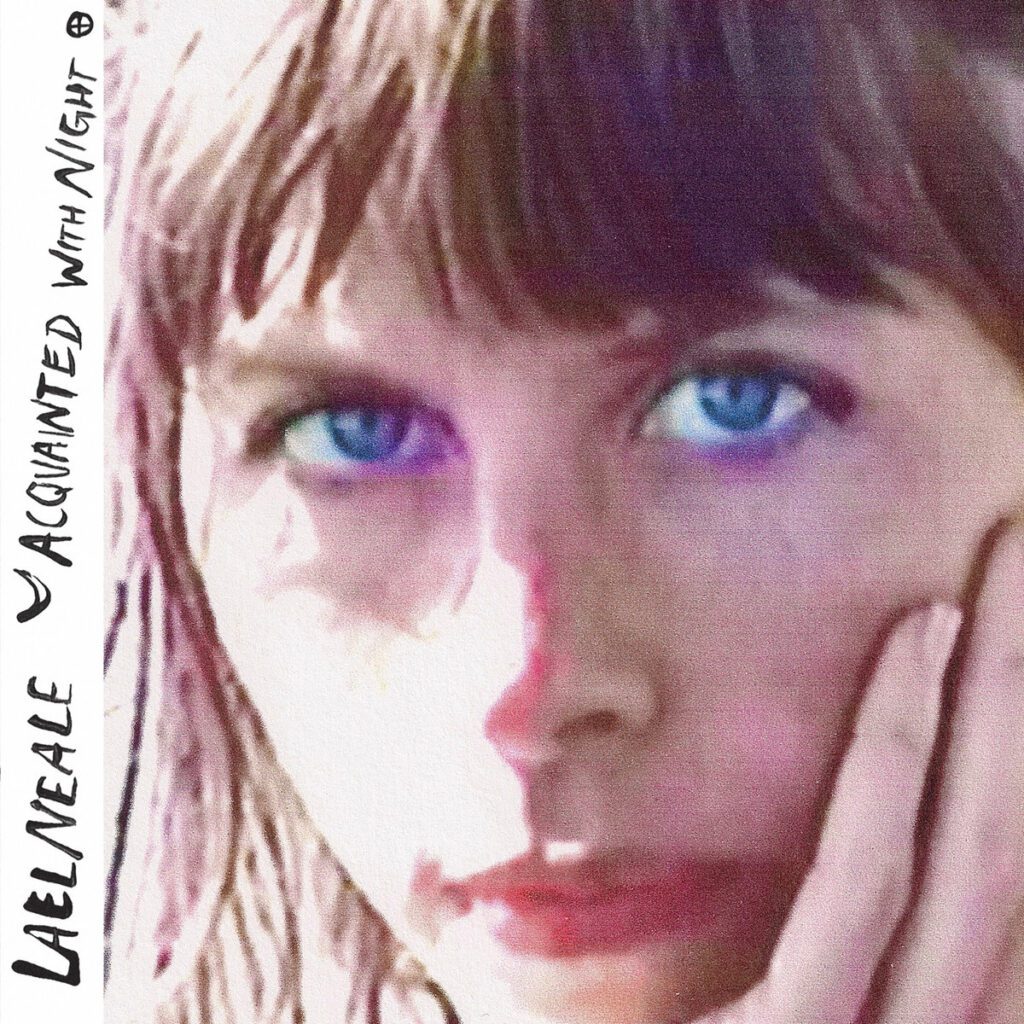
Paulina Vo Premieres Video Valentine for “Sweetie”

They say that home is where the heart is, and after a year of sheltering in place, singer-songwriter Paulina Vo is starting 2021 with a fresh-faced ode to her partner of 10 years. Her new single “Sweetie,” premiering today via Audiofemme, follows her 2020 EP Call You After; it continues Vo’s journey from guitar-slinging solo musician to electronic singer-producer. Her process is simple: “Find the chords, get the vibe, then lyrics,” she says of the straightforward approach that has served her blend of pop, R&B, and indie rather well.
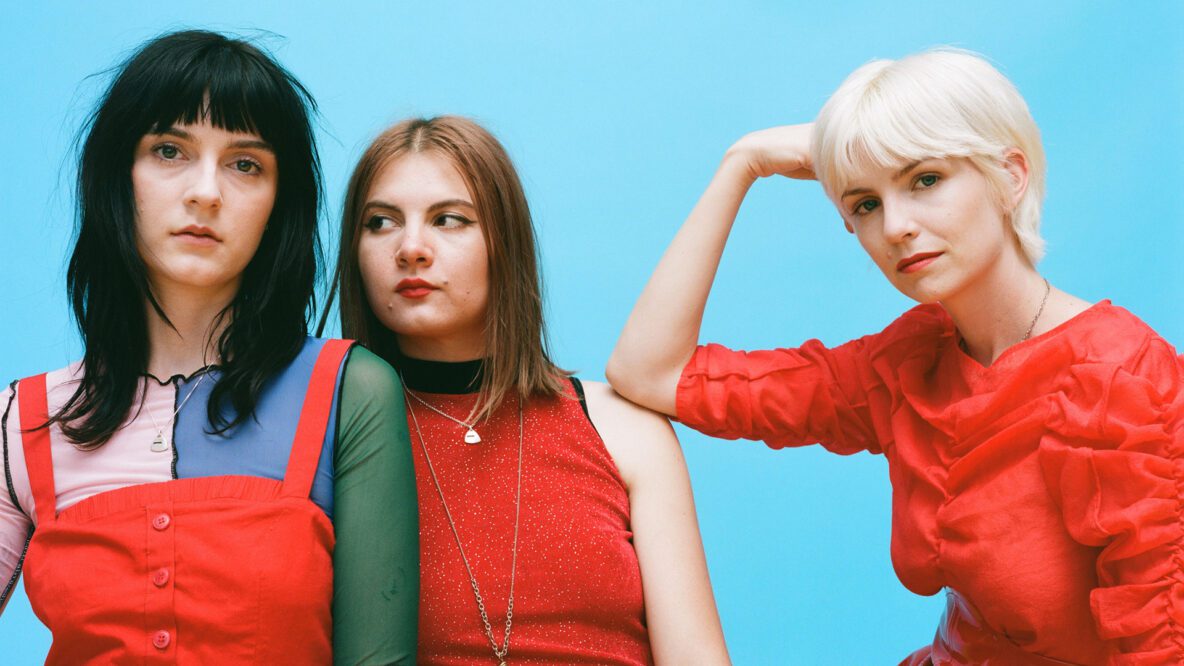
“I’m generally a happy person, but my music is so sad,” Vo says with a smile. But “Sweetie” runs counter to much of Vo’s back catalogue, with its emphasis on satisfaction and ease. Like a cat curling up in a sunny spot, Vo revels in pleasure of an everyday love. In a year in which our daily domestic pursuits have taken center stage, “Sweetie” is a valentine to those people in our lives who are holding it down.

Vo wrote the song on a trip away from her partner; it brings to mind the bittersweet delight of scrolling through happy photos, of missing someone that’s usually there to touch, but is currently too far to reach out to. The accompanying music video, which features Vo as a Little Mermaid-like character, continues the wholesome narrative of two people finding each other in spite of their differences and coming together happily ever after in the end.

That transitory longing is partly a hold-over from her nomadic childhood. As the daughter of Vietnamese refugees who fled their country following the Vietnam war, she was born in New Orleans but spent time in New Mexico, Los Angeles, Florida, Arizona, and New York. Vietnamese was Vo’s first language; she says she “hated it back then, but I appreciate it now.” Her family struggled financially during her childhood – their many moves were due to “a mixture of jobs and little bit of family drama,” Vo explains. “My mom is a gambling addict; I can laugh about it now, cause it’s a past thing. We Bonnie and Clyded it as a family sometimes.”

By age 10, that had decided she wanted to become a musician, and asked her father for a guitar. “He was like, ‘No, do you see us? We are broke,'” Vo remembers. Her dad promised to buy her a guitar if she still wanted it in a year’s time. “In my tiny child brain, I do not know if it was a year or a few months, maybe a few weeks. But a ‘year’ later, I was like ‘Dad! I still want a guitar, can I get one?'” Vo says. Though her dad reacted with surprise, he followed through, teaching her the first few chords. During those early lessons, she learned that her dad had been in a Beatles cover band in the 1960s – a little piece of the mystery that is her family’s past in Vietnam.

Vo’s first songs were inspired by her ’90s idols: Michelle Branch, Christina Aguilera, and The Spice Girls. She joined choir in middle school because she “kinda identified that I could belt at an early age, probably because of Christina’s album,” she says. In high school she began listening to indie rock, a genre she had complicated feelings about from the start. “Back then I was a very angsty sad Asian girl in a very white neighborhood,” Vo remembers; the music inspired her, yet didn’t feel like it spoke directly to her. She didn’t feel as though she fit the mold of indie singer-songwriter, but in 2011, she moved to New York City and began playing gigs. Her first albums feature many of the attributes that make Vo stand out from the crowd: her voice is direct and strong, with little vibrato tomfoolery, while her lyrics twist in delightful ways.

In spite of that raw potential, Vo wasn’t pleased with how all of her early albums turned out. That dissatisfaction led her to begin producing her music on all fronts, from the writing to the stage to the sound booth. “I did an album and it pissed me off because it was nothing like I wanted it to be,” Vo recalls. “At that point in time I was like, I guess I have to do this myself.” From 2016 on, Vo took the wheel on her records and she’s been driving ever since.

Lately, Paulina Vo has noticed contentment seeping into her work, which may be why her next project tackles a harder subject: she’s planning a series of concept albums investigating the complicated feelings of displacement she’s experienced around her family’s journey to the U.S. and her trip back to Vietnam in 2018, some 25 years since she’d last visited. “I had that moment: you go back, you hear your language, you just feel like you’re home kind of – not in that way, cause I’m not from there,” she says. “You’re sitting on this line. I don’t really have a home like that. There’s no old high school bedroom. That doesn’t exist anymore. So it’s that weird feeling of, I feel really at home here, but I’m just a stranger, just a tourist.”

It’s strange to imagine bedroom pop with no bedroom. For now, Paulina Vo is content to plot her future journey from the confines of her NYC apartment – and her sweetie holds it down beside her as she dives into uncharted waters.

Follow Paulina Vo on Instagram for ongoing updates.