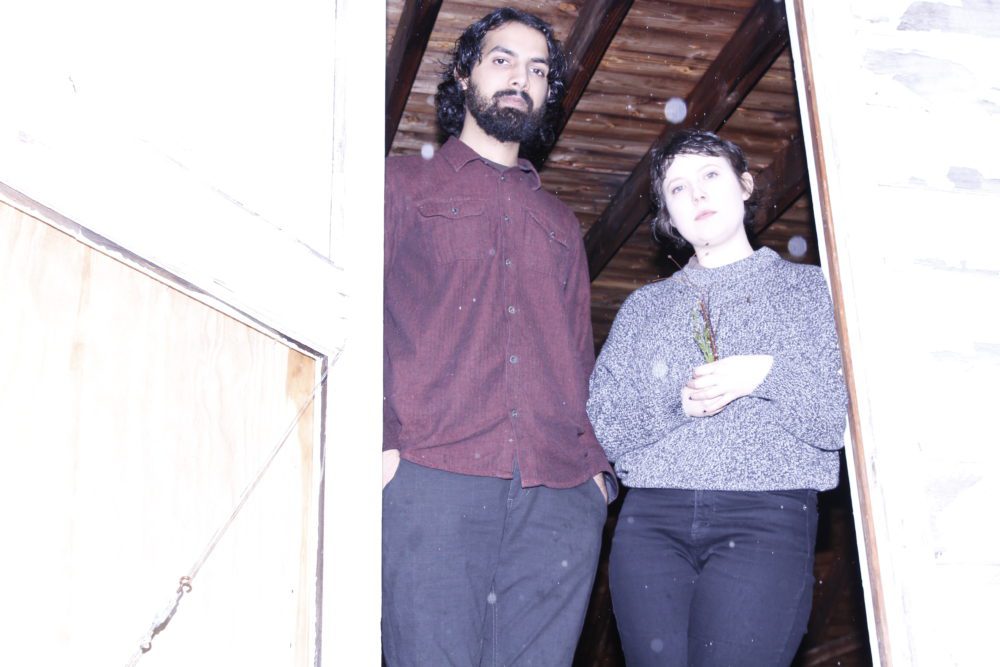
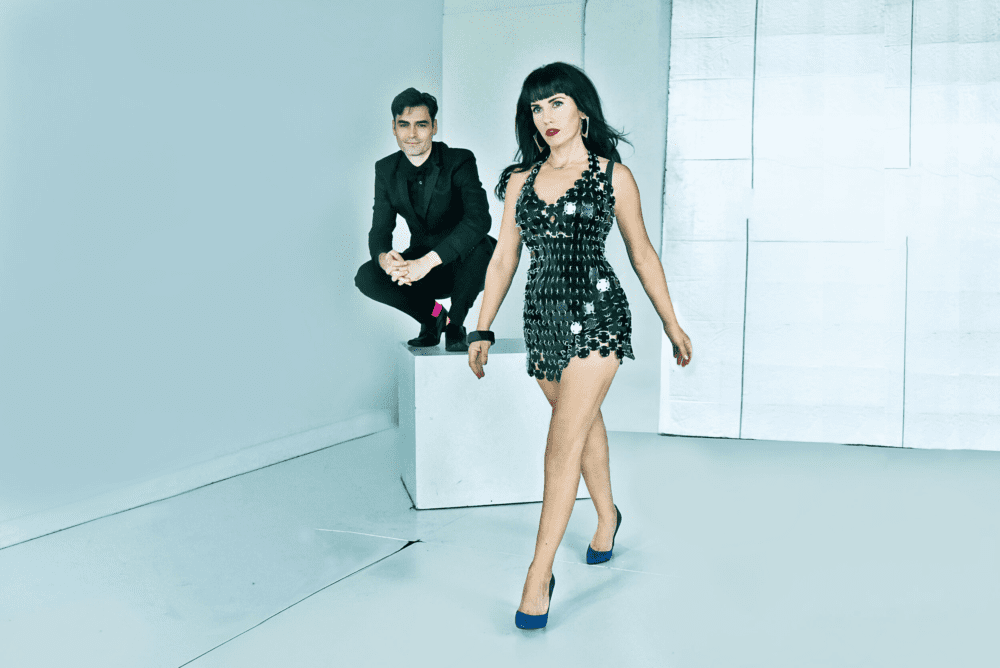
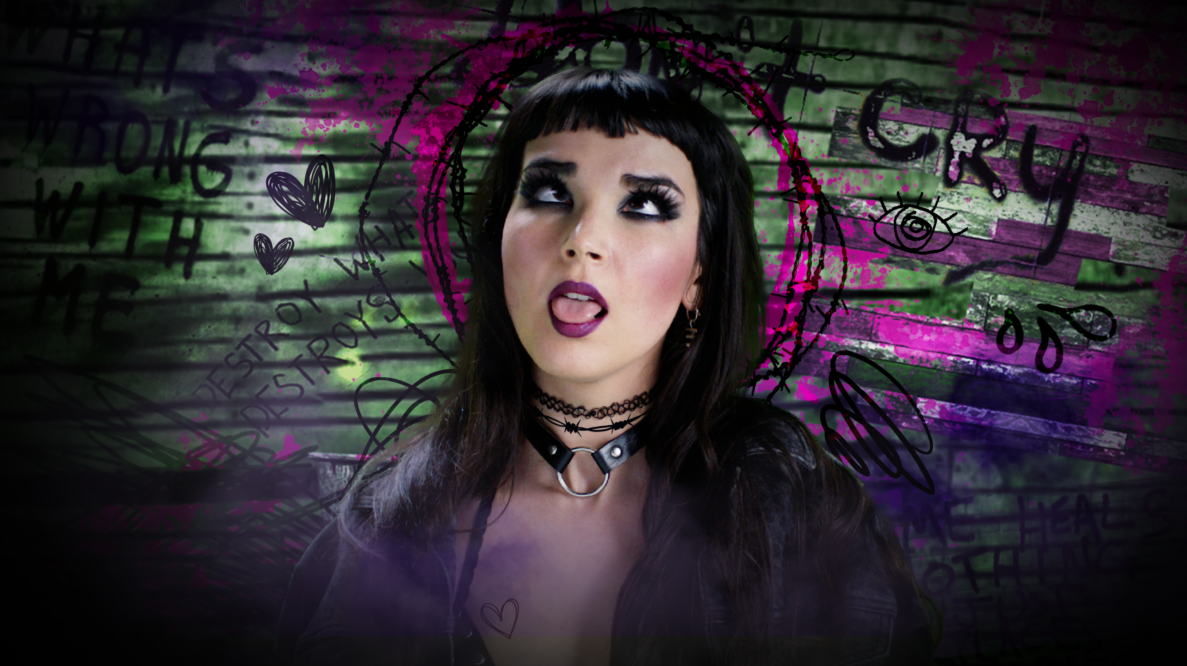
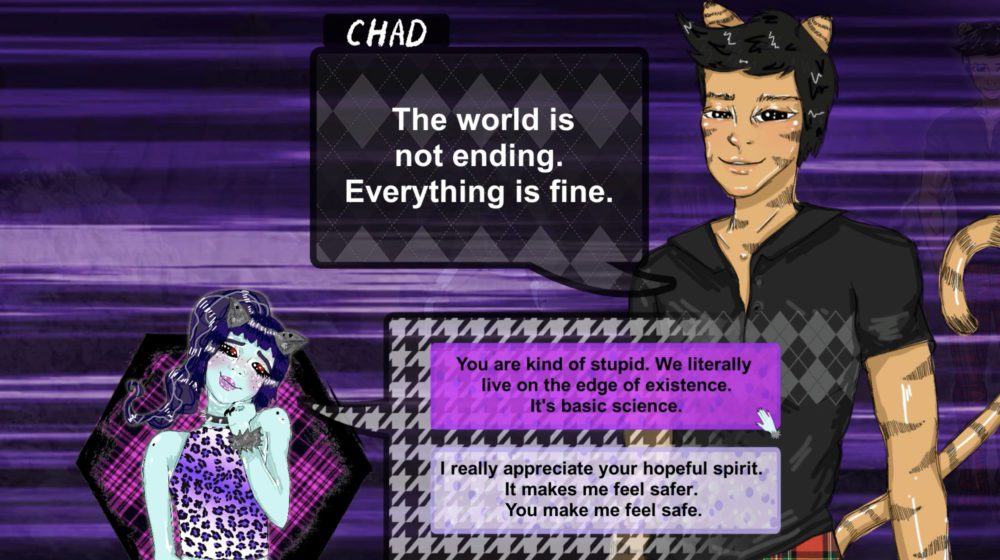
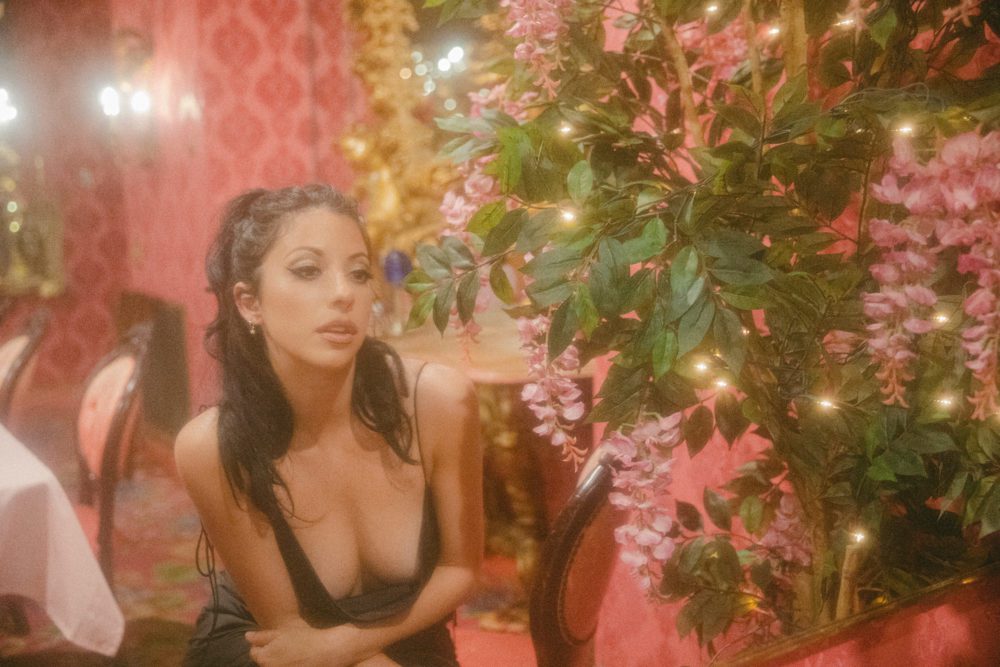
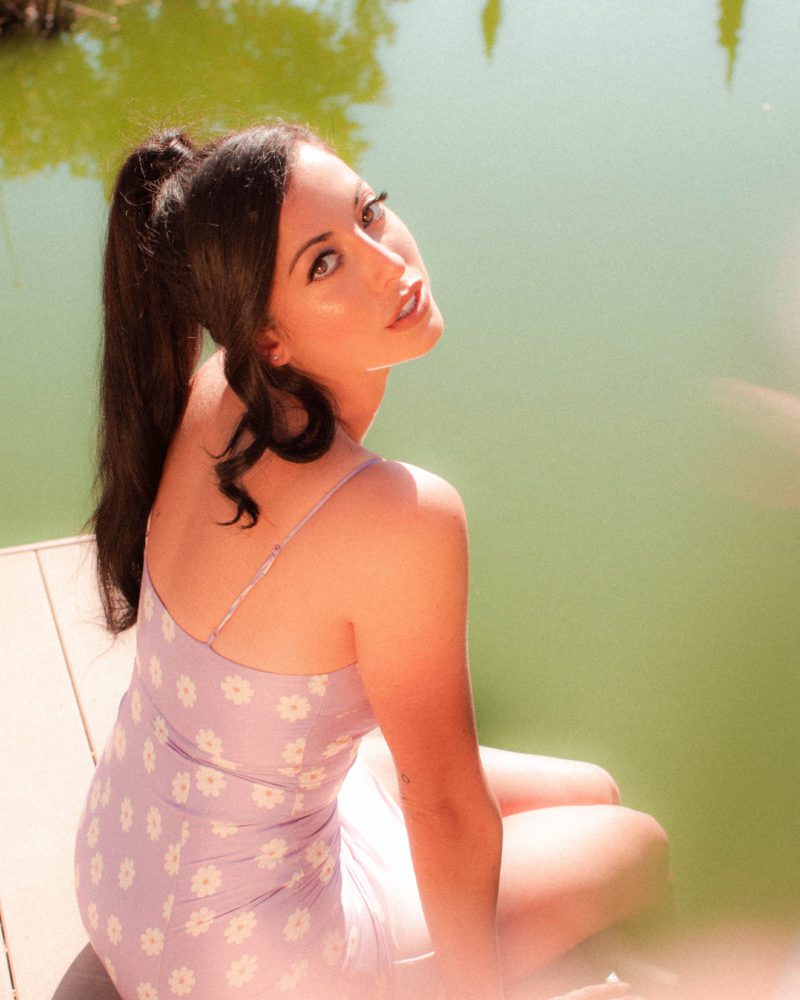
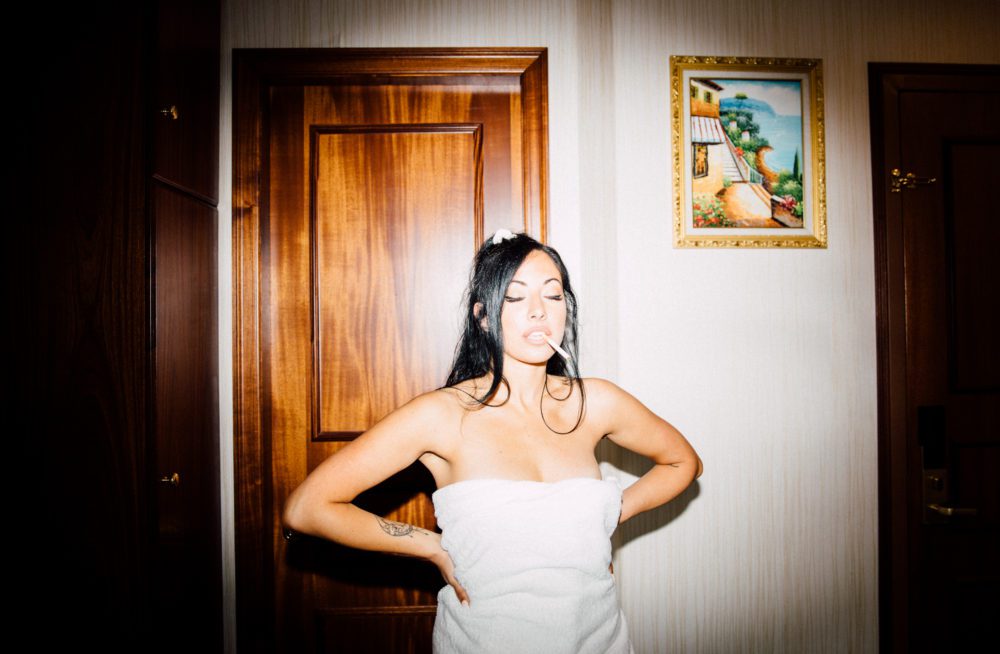
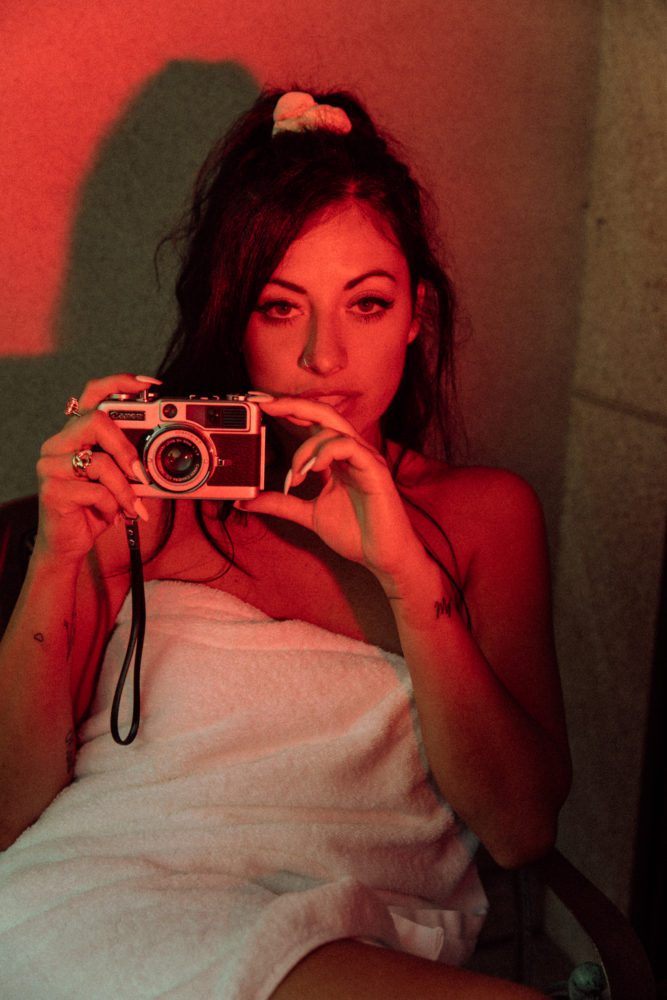
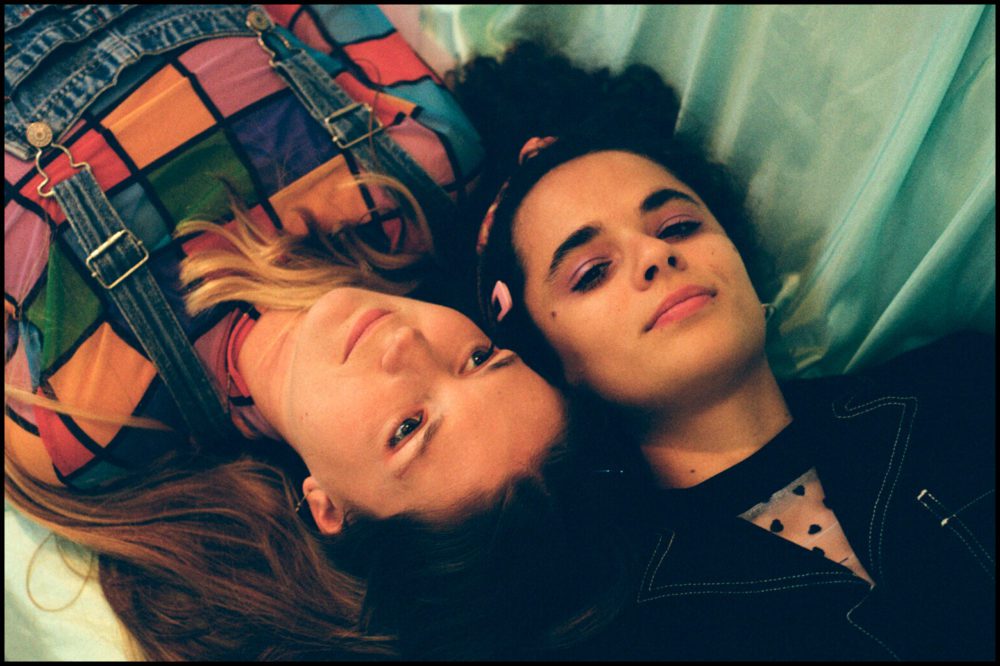
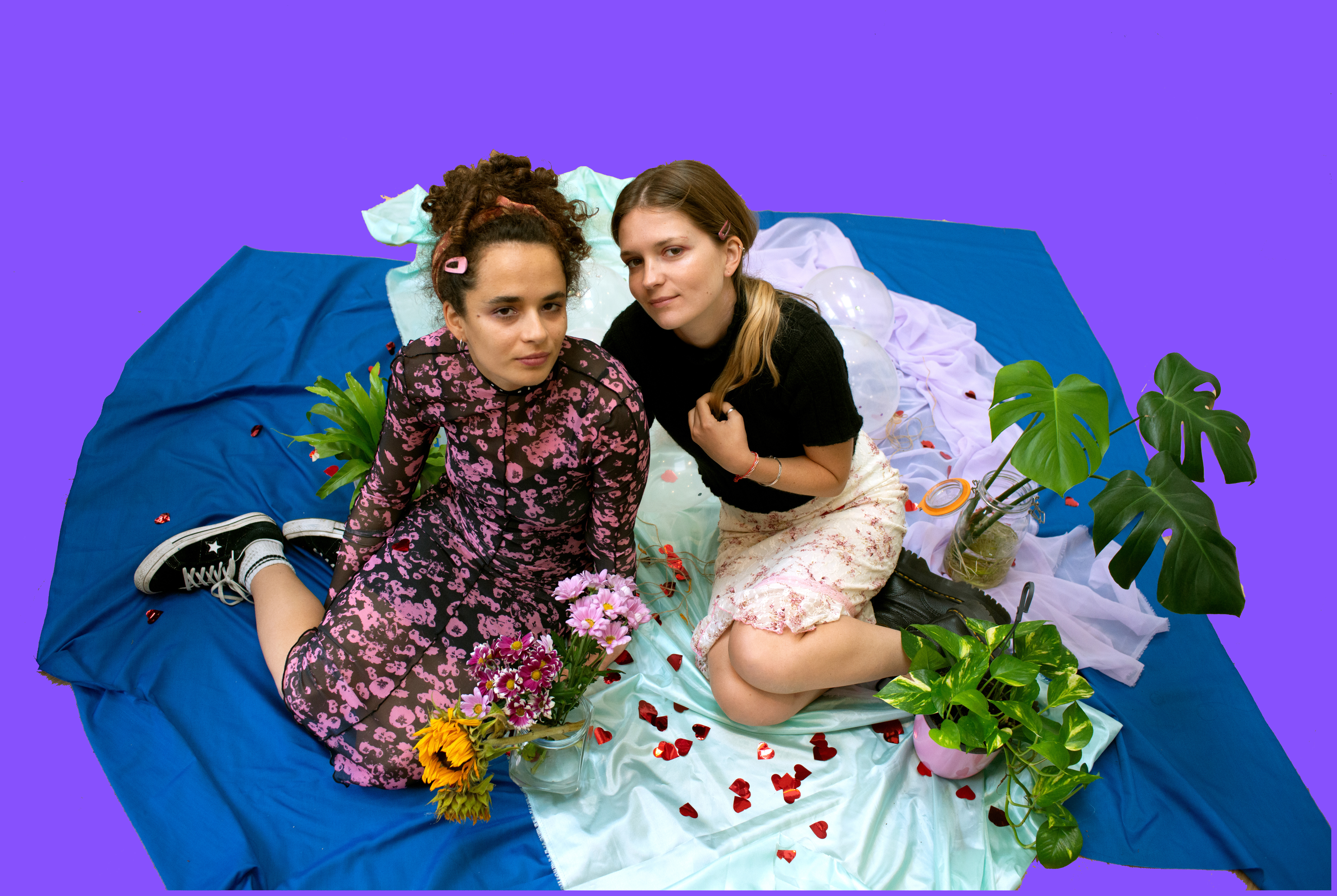
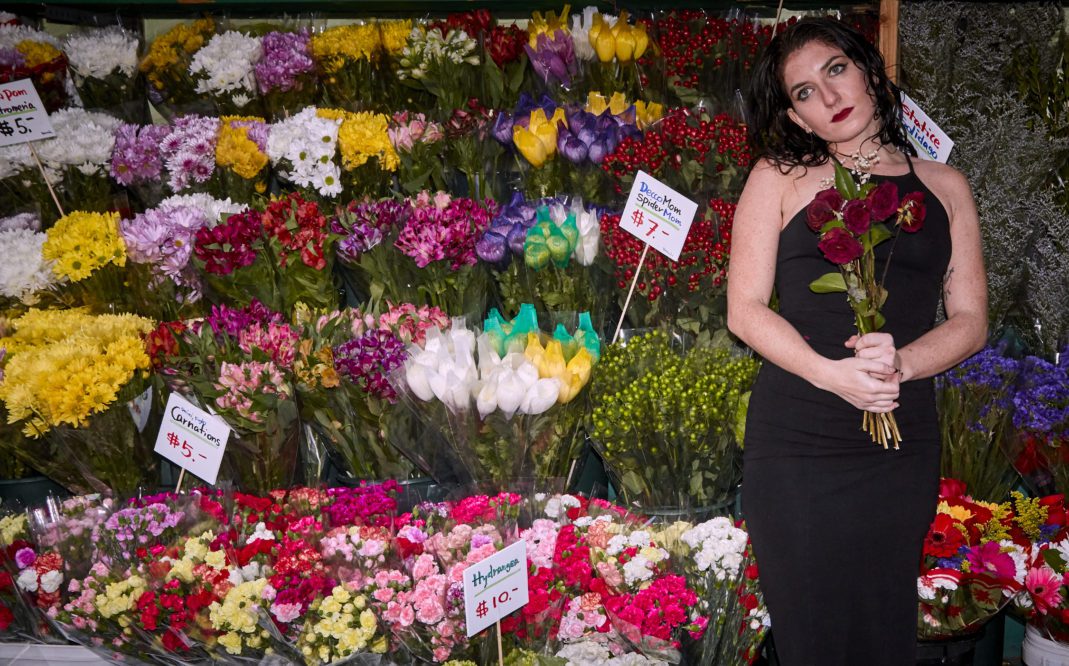
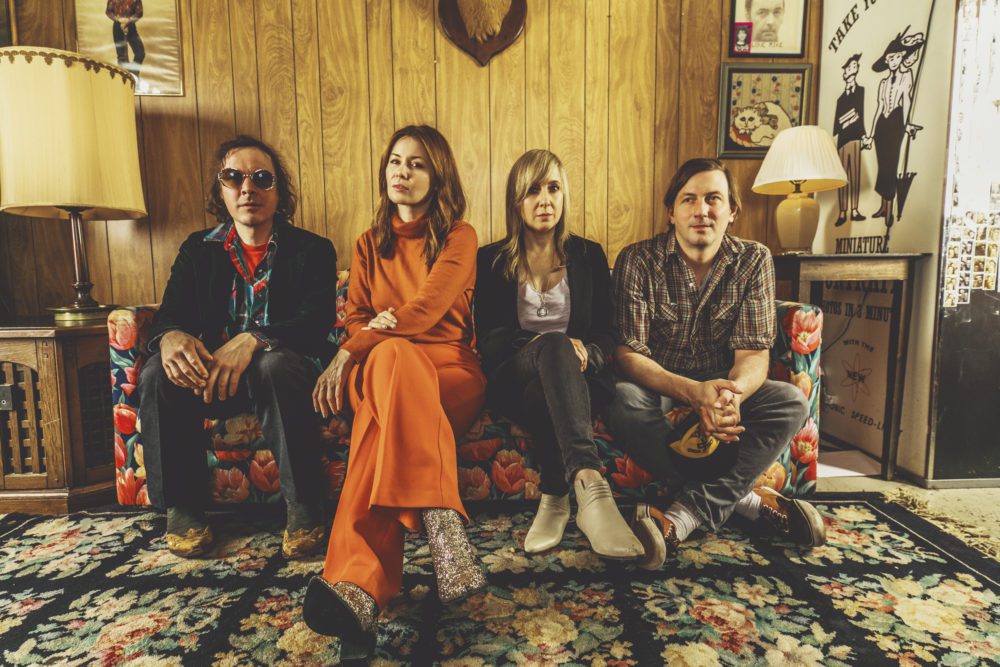
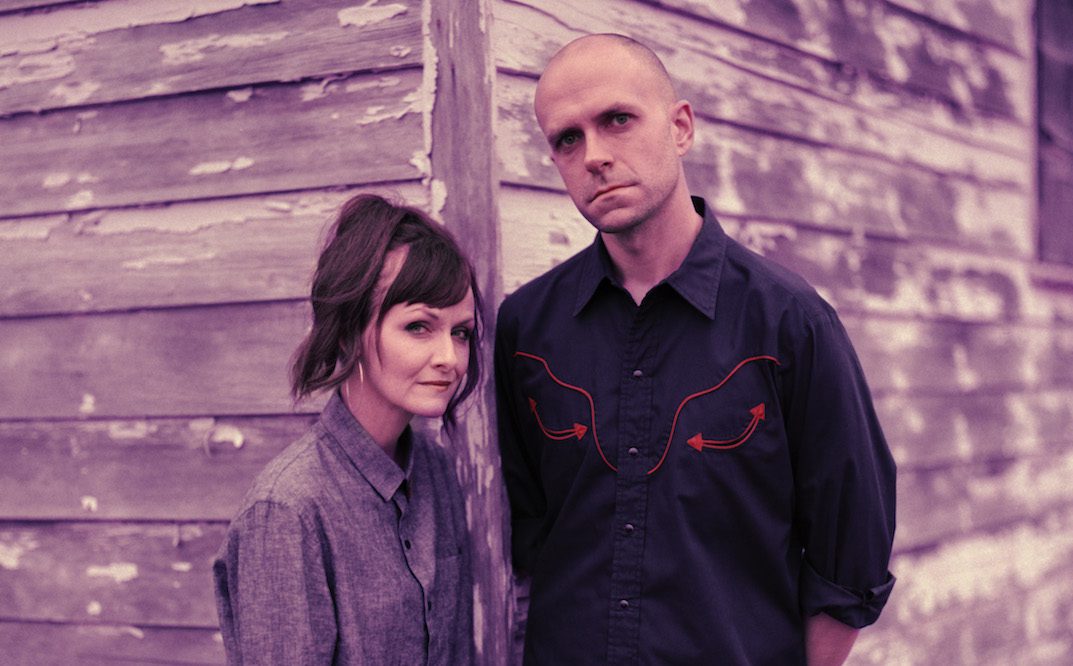
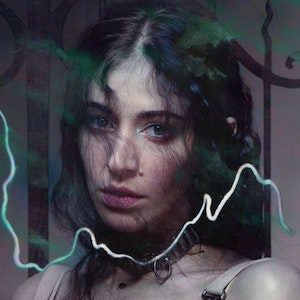
We’re living in strange times, where the internet age has taken on an entirely new meaning, thanks to the coronavirus and social distancing. This makes the latest single from NYC electro-rock duo Satellite Mode, consisting of Jessica Carvo and Alex Marko, especially timely.
“Click Now,” off the band’s EP Robots Vs. Party Girls, to be released this summer, is about “cutting through the haze of modern life to foster connection,” says Carvo. “It paints a satirical picture of a tongue-and-cheek dystopian future, calling our listeners to strive for clarity and purposeful living in our detached world.”
“Hey kid / your life is now or never / you can have everything we choose,” she sings in the catchy chorus. “Hey kid / click now for your new future / there is no future left to lose.”
The video features lyrics flashing across various screens, depicting how “technology is always stalking us, lurking in the background and informing a lot of how we interact with the world,” says Marko.
The role of technology in our lives has always been a topic of interest for the duo; their original band name was Aeroplane Mode (a riff on “airplane mode”). But the idea for “Click Now” came to them while they were on tour. “Alex and I noticed the stark contrast between our lives on the road, where adventure was so tangible and present in the physical world, versus everyone living their ‘best life’ while glued to their iPhones, comparing themselves to others on social media, all the while being sold to and surveilled,” says Carvo.
Carvo describes the EP, which combines traditional singer-songwriter roots with dance beats, as “a cry for truth and transparency,” which is particularly relevant today, when accurate information is crucial for our health and well-being. “There’s no time for dancing around the heart of the matter — we are vulnerable, and it’s dangerous for us to be scrolling through any curated feeds of partial lies,” she explains.
The title Robots Vs. Party Girls was inspired by two alter egos of Carvo’s, one of them being a “party girl” named Stacey. She’d evoke this character when she wanted to sing with “a little hoopla and eccentricity” instead of her usual “matter-of-fact or stoned-sounding” vocals. “I like to imagine her as a 1994 party girl with bleach-blonde hair, tied up with a hot pink scrunchy, colorful cocktail in hand,” she says. The other alter ego, the robot, is the monotonous voice you hear in “Click Now.”
“The Robot (algorithms) and the Party Girl (influencers) symbolized two archetypes in social media that serve to mask and disrupt real truth and connection between humans,” says Marko. “We saw that to be truly happy, we had to use technology to connect with people instead of using it as a tool to project what we think our lives should be like.” That’s a message many people could benefit from hearing right now, whether they’re party girls, robots, or a little bit of both.
Follow Satellite Mode on Facebook for ongoing updates.
When I met Sea Offs months ago at my favorite coffee shop, I didn’t expect that our meeting spot would soon close down, or that I’d eventually write about the band while watching the children across the street play outside in hand-sewn masks. Similarly, Sea Offs didn’t anticipate debuting their first release in three years during a time of collective trauma. But if you’re feeling anxious (which, you probably are), Sea Offs’ new dream folk EP En Root offers a moment of solace in its delicately powerful declarations of vulnerability and self-acceptance.
En Root, with its silly wordplay, evokes slow, sturdy growth, which fits the EP well. But if Olivia Price and Rashmit Arora love anything as much as they love a good pun, it’s an unexpected song structure. Grounded with vocal harmonies and finger-picked guitars, En Root is soothing, yet never boring. You can sense the care that goes into the beautiful, multi-instrumental compositions of songs like “To Find Your Side” and “For Familiarity’s Sake,” but the duo is their best on “Will (You),” which recalls the emptiness of sex without intimacy. Price sings, “Will you make me doubt/My own amount/I lay complacent like a ragdoll.” Like the other songs on the record, it begins on the mellower side, yet unexpectedly erupts into a shouty (yet still beautiful) rejection of the bullshit and baggage that comes along with being treated as less than what you’re worth.
The following track, “Fight Song,” is surprising in a different way – recorded in one take, you can still hear the metallic scratching of the guitar as Arora and Price harmonize in the folkiest way. With their witty sense of humor, it makes sense that “Fight Song” is a raw meditation on arguing with those you love, rather than an aggressive chant. But, especially in uncertain times, there’s nothing better than a band that is soothing, yet exciting all the same.
Read what Olivia and Rashmit have to say about the new EP in the interview below.
AF: What has your experience working as a duo been like?
OP: Writing with someone, or doing anything artistic with someone, is such a vulnerable experience. You’re opening yourself up and your emotions up in so many ways that you really have to build that comfort with another person. I’ve played the odd solo set, like when Rashmit went back to India one summer… you become totally reliant on the comfort of having another body on stage with you that, [so] when you’re stripped of that, it’s like, “Oh my god, I don’t know how to talk to anyone.” It’s an interesting dichotomy that, to be an artist, you’re making a spectacle of yourself. And there has to be a degree of narcissism with being an artist where you have to have confidence in what you’re doing to showcase it. But at the same time, you’re so insecure and so afraid of being in the spotlight.
AF: It’s hard, because you have to take yourself seriously, but also not take yourself too seriously.
OP: Sometimes I wonder when you get writer’s block, if it is just a product of taking yourself too seriously, or you’re being too hard on yourself, versus just letting it be a judgement-free zone, letting it fall out, but you have all of these thoughts like, “You’re not good enough!”Even writing something down and not having a final product is fine too. It’s not time wasted if you don’t sit down and write a song. It was still valuable. I think that’s hard to get past – feeling like you need to produce something.
AF: How do you find the scenes different in State College, where you met, and Philly?
OP: I’ve never really felt comfortable playing house shows in any city, and I think it’s because I think the people are so trendy, and I’m like, “I want to be cool!” But that said, I feel like the folk scene in any community is just… to me, the most welcoming and down-to-earth people, and those are like, the living room shows! I always come away from those shows with friends, and I love the personal conversations that you have with people.
RA: There’s a lot more competition in Philly in order to get heard, but there’s also the fact that there’s such a good music community here is a big boost actually. I don’t know how much playing local shows actually adds up to you being a conventionally successful band these days. The measurements are changing, and how you get a following is moreso online, I think, than going to play a show where kids are just there to get drunk. But in Philly, people are there for the music, and that’s rare.
AF: It’s funny how there really is a huge difference between a basement show and a living room show.
OP: It’s a different crowdgoer, too. But I like more of a sitting-around-in-a circle-listening type of thing. Those shows that we’ve played with other local artists, I keep in touch with those people still, and any time I pass through their area I hit them up, and we’re just keeping up with each other’s music. I think there’s a lot of support. Once you do find your scene here, it’s very supportive, but it takes a little bit to find your crowd.
AF: The title of your EP En Root is a pun – is there any deeper meaning to it, or is it just funny?
OP: I mean, Sea Offs is kind of a pun too.
RA: We have a lot of puns. You know when you’re seeing someone off? But it’s the sea. You’re seeing off the sea, maybe? Climate change? I don’t know! The other pun – our first EP was called Sea the Blind. It’s just a play on words.
OP: For En Root, I think I just needed a title, and I was like… the phrase “en route,” I say that all time when I actually haven’t left yet, and it seemed appropriate, but then we were like, “Let’s just keep with the weird spellings.” Maybe it’s about feeling rooted.
AF: Speaking of plays on words, I like that you have a folk song called “Fight Song” on the record.
RA: That was a last minute song, and the recording is a one-take recording. We were both sitting on two sides of a figure-8 microphone so it captures sound on both sides. We have a video of us doing that.
OP: The song itself was about a fight, so it’s very literal in that sense, and even when we were trying to think of a title, Rashmit was like, “I think it’s funny that it’s going to be this rock anthem, but it’s not at all.” We like to throw in some little weird things.
Photo Credit: Ann Bi.
AF: What are you excited to share with people from the EP?
OP: I think this was just the first thing we’ve done where we had a third party in on the process, a producer, someone mixing it. So Kyle Joseph is who we worked with, and he really forced us out of our comfort zone. On “Somehow,” the structure is totally different from where it started, and it’s so much better now, but it was such a fluid process where he really took the time to research what our influences were.
RA: Even on “Will (You),” the single, there’s this entire tempo ramp-up in the middle. The idea of doing a ramp-up came from him, and we wrote the music to get there.
OP: We had the space and resources to get weird on this one. We didn’t have to worry much about a time constraint. We could be in the room and be like, let’s try this.
RA: We had ten days in a studio in Brooklyn.
OP: We probably have a bit of a track record of writing long songs.
RA: But also, not having conventional song structure, because I am not into just the standard structure. I think we like writing things with two sections, but this might be one of the first explicitly A and B section song.
OP: The build up is really slow, but what I like about how it turned out is that it’s so atmospheric with the textures that keep getting introduced that I feel like, lyrically, there’s a part A and a part B, where the first half is your realization of the role in the relationship, and the last part is when you’re almost in this place of anger that you’re in that role, and I think the music reflects that.
AF: What Philly bands have you been into lately?
RA: One of the bands I really like is called No Stranger. It’s kind of a mathy rock band, very unlike Sea Offs. Friendship is awesome.
OP: Eliza Edens always has a special place in our hearts. When we released the last LP, we were both featured on The Key in the same listing, and her little tidbit was saying how she just moved to Philly, and that was around when I just moved here, so I reached out via email like, “We should be friends! I really like your music!” And then we met up, we’ve stayed in touch, played shows together, and she’s a wonderful songwriter.
AF: What makes Philly special to you?
OP: I like that everyone’s so down to Earth. I really do think it’s the brotherly love thing, where you can be total assholes to one another, but god forbid anyone else talks shit on a fellow Philly person – you’ll like, defend them to the grave.
Gatlin Thornton is on a spiritual journey, one you can follow along with through her music.
The Nashville based artist, who goes by the stage name Gatlin, describes herself as a “toned down Maggie Rogers,” layering modern pop production with folk lyrics, her ethereal voice draped over mystifying melodies of soft, thumping drums and guitar.
Gatlin walked a winding road trying to decipher what genre suited her style best. She initially gravitated toward Christian Contemporary, inspired by years she spent singing in church choir. In high school, a cowboy boot-wearing phase heralded a shift toward country music. Now, the 21-year-old’s newfound love is that of modern folk-pop, a niche she discovered upon moving to Nashville, a city that’s had a profound impact not only on her musical direction, but her personal journey.
Gatlin relocated from her native Orlando, Florida to Nashville in 2017 to study religion and the arts at Belmont University, but after two years, she quit and became a songwriter full time. She got a taste of the city’s pop scene when she began working with a diverse range of songwriters, proving to the longtime pop snob that she doesn’t have a distaste for all pop music – in fact, she has a gift for creating her own style of the genre. “That time in my life, I learned the most because I was writing with someone new every day,” she tells Audiofemme via phone interview.
Coming from a Christian background, stepping into the diverse Nashville culture broadened Gatlin’s horizons, causing her to challenge the conservative ideals she was raised on. “I got out of my little bubble and I realized that things aren’t so black and white. I went through this huge doubting phase. I am a Christian, but it looks a lot different,” she professes. “It’s a spiritual journey now. I’m trying to figure out a lot of stuff and I feel like that comes through in some of my lyrics.” She addresses this point head on in her song “Curly Hair” as she sings, “and I love Jesus, but he’s busy upstairs, and I’m a first world nothing.”
“I think everyone’s on their journey, and growing up super conservative Christian, it wasn’t okay that it was a journey, you had to have it all figured out,” she continues. “Where I land, I still think God is real, I just don’t think everything is so black and white, I think it’s pretty gray and it’s different for each person. I think I’m trying to figure out the normal things people believe as far as religion and Christians go. I don’t have an answer for literally any of it – [I’m] just figuring out as I go what is true for me.”
Gatlin takes listeners on this journey, exemplified in her latest track, “I Think About You All the Time.” Co-written with friend Victoria Bigelow, the song is based on Gatlin’s experience being a relationship where feelings developed on her end, but not her partner’s. The video captures this sentiment through a dark red hue cast over scenes of Gatlin surrounded by friends as they enjoy life, yet she’s lost in a daze of sadness and confusion.
“With this relationship, I literally could not enjoy parties with my friends, because my mind was trying to figure this relationship out,” she describes. “Then the moments when I would be alone was when I would freak the fuck out, and so I wanted to feel that juxtaposition.” Gatlin took control of the situation and told the other person how she felt, which liberated her from the toxic dynamic. “I realized there’s more power in admitting that you have feelings if you do. It’s always looked at as weak, but me admitting ‘I think about you all the time,’ there was so much power in that,” she expresses. “It was a very healing process.”
Gatlin is currently working on an EP, planning to drop each song as a single throughout the year leading up to the EP’s release. As she walks the path that’s shaping her identity, Gatlin will continue to take fans along for the ride through her art. “I’ve learned that God is love and it’s so much more of an emphasis of that. We are supposed to love others,” she says of the most important discovery she’s made thus far. “I physically look different and also my insides look different every six months because I’m 21, I’m in such a changing time of my life.”
Katsy Pline has made a folk album for the apocalypse.
Or, more accurately, a folk-rock-syth album for the apocalypse, like Pline was watching fiery destruction from on high, fingers smashing the keys of an electric piano while warbling over a lost love. If you want another song to add to your apocalypse playlist (I know you have one, whether it be on Spotify, Soundcloud, or scribbled inside the journal you started on day six) look no further than the closing song on Pline’s new LP, In This Time of Dying.
The album was released on March 15th, so no worries, dear reader —Pline may not so much be prophetic as much as intuitive, perhaps the marker of any good folk singer. Don’t they always seem to have a backlog of completed albums for every chapter of your life, like your own personal Greek Chorus?
It’s appropriate, then, that album closer “How Long Must This Go On” actually has one, or something like it. In many ways, it’s the most old school song on the LP, but even the most spaced-out listener couldn’t miss its anachronistic opening line: “Woke up this morning/was all alone/rolled on over/and I checked my phone/well I’m wonderin’/how long must this go on.” The almost nastily relevant lyrics are proceeded by far-flung whistles and claps, ghosts of the crowds we find ourselves missing, if not double ghosts of some late-’60s summer music showcase it would be easy to imagine Katsy Pline dropping into via wormhole, without anyone giving a second glance.
The album has sprinklings of many old favorites, from the OG British Invasion boybands to Gene Clark, but with a distinct penchant for synth and distortion that can only be attributed to Kline’s past musical iteration as one-third of Bourgeoisie Speedball, a experimental group who would “[render] movement sonorous” by transforming sounds of Bay Area protests into strange tidbits of tracks.
“Wipe the Years,” another standout track, leans into doo-wop with its backing chorus of ahhs, but most strongly reminded me of one of my all-time ’60s favorites, Herman’s Hermits. As Pline pleads for someone to “please wipe these [memories] from my mind,” the little distorting affect on “please”and record-scratch repeats recall Peter Noone’s lovelorn vocals at the end of Hermits classic “No Milk Today.”
Pline was deliberate with this LP — despite the utter timeliness of the album’s sentiments, the arrangements (including any non-diagetic sounds) are carefully-considered vintage, like Pline runs a sonic period store stacked with white peasant tops and a rust-colored a-line skirts nestled carefully alongside slashes of ’80s braggadocio — there’s a lighting-stripe vest! There’s a satin belt!
But like I said — carefully. Pline may be a veteran of discordance, but the dashes of electronic affects and synths never feel tacked on or musically arrogant (you’ll listen and you’ll like it!).Instead, they feel like what would have been a natural progression for the folk bands of the ’60s and ’70s if such effects had been more widely used and respected. Some may argue that no folk-rock band of old would touch a modern synth with a ten-foot pole, but what truly is more off-the-beaten-path than the ability to distort your voice to reflect the cacophony of your own feelings?
The only time this strategy loses effectiveness is on “She Was a Friend of Mine,” a true folk lament about the death of a fringes-of-society person in Pline’s life. Pline’s voice is strong enough to stand alone, here or otherwise, and in such an otherwise stripped-down arrangement, the electronic aspects end up being a distraction.
“Crying in the Sun” brings the album back to full force, not only because of yet another crystal-ball lyric (“mask upon my face and eyes/algae blooms and fish rots seaside”), but because of utter atmosphere. The sun has always been its own character in folk and rock as much as “this town” is to pop-punk. This song posits it as some last bastion of the softest and gentlest aspect of society, a final pat on the cheek as Pline asks “Will I ever leave this place/or will I always be crying in the sun?”
Take it, at least for now, as less of a depressing mandate and more like a piece of advice: go outside, feel the sun on your face. Just stay in your own backyard.
There aren’t many bands that can cultivate a loyal and almost cult following before even releasing a full record, but Detroit psych/surf-rock outfit Double Winter is one such band. After years of playing around the city, the band finally self- released its debut LP, It’s About Our Hearts, on March 31. The record’s beachy riffs, sentimental melodies, and charming honesty is a welcome distraction from COVID-19 chaos and leaves us longing for the spring we don’t get to have.
Vittorio Vettraino (guitar/vocals) says that the decision to release the record in spite of the global health crisis was made spontaneously. The group was set to have a release party at beloved Detroit venue UFO Factory on March 26th, which was obviously canceled due to the state-wide stay at home mandate. “We decided a couple of days before, let’s just do it,” Vettraino says. “None of this was really planned… We had a record release planned but after we rescheduled that, we were like, should we still just release the album? Like, why not.”
“It’s a weird time but we were like, we have to get it out there,” adds Holly Johnson (bass/vocals). A weird time indeed. In fact, I’m talking to the band via Zoom video call, each of them quarantined in their respective homes, reminiscing about the years it took to finally get this record out to the world. “We’ve had it ready for months now, so it’s not new to us, but it’s weird that people are hearing a lot of this for the first time,” Johnson adds.
Though compiled relatively recently for the band’s debut, some of the songs on It’s About Our Hearts have been written and played live for years, giving the band time to fine-tune their sound and perfect their playing. “I could pretty much play these songs with my eyes closed now,” says Morgan McPeak (drums). The group’s rehearsal time was extended even longer than they anticipated after their first attempt at recording the record in 2018 didn’t go as planned. “We originally recorded a lot of these songs and decided to re-record them and that didn’t happen until like a year after,” says Johnson. “Some of the songs were newer on the first one and we knew we could record them better and that was a really good decision.”
So, in 2019, Double Winter took a second try at recording with engineer Ben Collins (Minihorse, Matthew Milia, Stef Chura) at an old church-turned-recording-mecca about half an hour outside of Detroit, Willis Sound. Collins, who is a friend of the band, turned out to be a much better fit for their sound, capturing the energy of a live Double Winter show. With a spacious and acoustically immaculate tracking room, Willis Sound is the type of studio that bands like Double Winter – whose chemistry is almost equally important to the chords they are playing – dream of.
“The first place we recorded, we were all so isolated that it didn’t really feel like we were playing together,” says McPeak. “I get the benefits to recording that way…but it just didn’t sound like us anymore.” The second time was a charm for the band, though, and yielded a record that showcases years of friendship, countless gigs, and a settling of genre. “I feel like with this piece, it does span across several genres but we’re getting better at sort of funneling it in,” says Johnson. “It’s just showing that we’re getting more dialed into what we play and produce well together, it’s been really fun learning that, too.”
So what, exactly is the sound that best describes Double Winter? The best way I can put it is blase-but-sincere doo-wop psych, and I know I sound like an asshole. Genre labels aside, It’s About Our Hearts is a sweet and well-crafted ode to generations of good music — from Yo La Tengo to the Shangri Las. A body of work that could only be created by artists with a non-pretentious but impressive palette. It’s about all the little things that are actually big things and make up a life – heartbreak, friendship, fucking up, realizing it a little too late. And, since we all have a little more time to reflect right now, we might as well do it to some damn good music.
Seattle-based dance-punk band The Gods Themselves are known for their ’80s-inspired sound and retro fashion, and the video that accompanies “Saved,” the first single from their upcoming fourth studio LP New Excuse (out May 1st), goes heavy on both.
In the video, Astra Elane (vocals, guitar) and Dustin Patterson (vocals, baritone), both dressed in bright colors, look whimsically out windows as they belt emotive lyrics like “I can’t stand to be myself / can you make me someone else?” and “Your eyes are open and I’m out of my head” with exaggerated gestures and dance moves. “I won’t save your life again,” Elane sings in the chorus, to which Patterson responds, “This will be the last time.”
The band — which counts The Talking Heads, Blondie, New Order, and LCD Soundsystem among its influences — has been around since 2014, after Elane’s previous project Atomic Bride came to an end. She originally worked with two other members and recruited Patterson based on a video of him coming in third at Seattle’s Amateur Elvis Competition (he was “intimidated” by her at first, she says, but she talked him into it). They’re also now working with bassist Andrew Imanka.
We talked to them about their past, present, and future projects, as well as the time their song “Tech Boys” got them onto a Parts Unknown episode about Seattle’s tech takeover.
AF: What is the song “Saved” about?
DP: “Saved” was originally called “Disembodied Voices,” but our producer Stephen Hague disliked the title so much he encouraged a rewrite! The song’s about a desperate relationship of shifting power dynamics. Many of our songs begin one way and, through collaboration, become something totally different, like a Pokémon evolving.
AE: Dustin had a great idea for this track about hearing a song on the radio. When Stephen suggested we change the name, we started re-working the lyrics a bit. Fun fact: the chorus lyrics were initially supposed to be just a placeholder, but they ended up sticking and inspiring the title of the song!
AF: What was the inspiration behind the video?
AE: Locations were a big inspiration for the vision of the video. We found these two great spots on Peerspace and kind of built the storyline around them. We knew we wanted the imagery to match the sound, so locations had to be stark and colorful. We also wanted some sexy dance moves, so I hit up my choreographer friend Kat Murphy, who directed all the dancing for our “Tech Boys” video. Kat flew up from LA and brought in two other incredible dancers, Shay Simone and Charlotte Smith. Our director Domenic Barbero, who had been the DP for our “Cool” video a few years prior, captured all the magic. We love Dom’s eye and knew he’d make us look amazing.
DP: The original concept was to show the two of us apart, and then we come together at the end. The song is a bit like that – we sing back and forth, separate until the big coda. We knew we had to shoot it quick, with only a couple locations, so we found the most interesting locations and built the idea around that. One location was a funky Korean karaoke place in Pike Place Market. To contrast it, we found an old White House that is often rented out for wedding photos.
AF: I saw you were on Anthony Bourdain’s show — what was that like?
AE: It was surreal. I still remember the day we got the e-mail from the production company. I had to keep reading it – I thought it was a scam at first. The producers and crew are a fantastic group of people. They flew out from NY several times to meet with us and to shoot our Capital Hill Block Party performance. Later in the summer, we met with them again when we shot the segment with Tony at Pacific Inn Pub. We were super nervous, as we had months to anticipate this life-changing fish and chips meal, but when he actually sat down and started rapping with us, all inhibitions immediately melted away. He was completely down to earth and just easy and fun to talk to. He was indeed hungover and was “very much looking forward to hitting up the weed store and smoking a joint in his hotel room” after our big lunch. Crew did a spectacular job editing down a near two-hour meal to thirty seconds. In the end, we were sad to say farewell to those folks.
DP: He was very rumpled from the night before. I think he had been out with Mark Lanagan from Screaming Trees. He was such a pro, though, from the moment we started shooting: calm, curious, very generous with his time. His team warned us not to bring up punk rock because he could get going pretty far down that rabbit hole. Of course, we asked him anyway. He was very candid about his New York days. He also recommended several horror movies, including one with his girlfriend Asia Argento called Stendhal Syndrome which he praised as “indefensible.” There was a sweetness to him that was so charming. It was a shock when he died and a heartbreaker, too. He’s someone you feel you know right away. It was a big break for us. I think about him often, wishing he had just held on.
AF: What inspired the song “Tech Boys” that led to that encounter?
DP: I was a contract designer at Amazon during the inaugural Prime Day. The experience was so uniformly negative, I actually left designing for a while to walk dogs around Seattle. I was left with this lingering resentment about how that company treats its people. My anger would flare up all the time in practice. The song was a channel for that anger. It’s pretty heavy-handed. I don’t resent all tech boys (or girls). It’s more about an unexamined corporate culture that devalues and dehumanizes its employees and gentrifies entire cities. But that isn’t as catchy. It’s funny because some tech people really hate that song, but some find it really funny and love it.
AE: I remember vividly how grumpy Dustin would be coming to practice after working that shit gig at Amazon. Around the same time, we were seeing many artists and musicians getting pushed out of their homes in Seattle to make way for new high rises to house the ambitious tech bros. It was disheartening. Ironically, we both work for different tech companies now, which treat their employees better than Amazon, and the fact remains that there are assholes everywhere, just as there are benevolent people everywhere – be it tech worker or artist.
AF: What inspires your distinct fashion style?
AE: Mainly the retro vibe comes from the music we are influenced by but we dig style and swag and try to deliver that in our music and appearance.
DP: Astra and I both love to dress up. The stage is a great excuse to do that. I have a closet full of cheap suits: pink, white, patterned. Crazy shoes. One of the best parts of being in a band is looking the part.
AF: What’s behind the name of your band?
DP: Our name is from a book called Catch 22.
AE: Lies! It is in fact from an Isaac Asimov novel The Gods Themselves. In the story, there is an alternate universe where the alien beings function in a triad. To reproduce, two males and a female are required. The name was fitting for us when we started as a trio…with two dudes and a chick. It’s a mouthful of a name. Many folks refer to us as TGT now.
AF: What are you working on right now?
DP: We’ve got a few more videos on the way, including one giallo-inspired video in which we are stalked and murdered by a masked killer. So all the haters can really enjoy that one.
The Gods Themselves release New Excuse on May 1. Follow the band on Facebook for ongoing updates.
It’s one of those days. The sun is bright, but the news is bad and everyone’s eyes are on the clouds, peering from the windows of our hermetically-sealed homes, perfectly composed as if to somehow stave off chaos. On the surface, things almost seem normal, even as a slow-moving blaze encroaches. Enter post-punk outfit Bizou, with their latest EP Stilllifeburning: a fierce, yet plaintive collection of darkwave vignettes made for those solitary hours in a world on fire.
While Bizou’s sound has an inherent freshness to it, the LA-based quintet is comprised of veteran musicians – singer Marissa Prietto (Wax Idols, Glaare), multi-instrumentalist/producer Josiah Mazzaschi (Light FM), bassist Nicole Fiorentino (Cold and Lovely, Smashing Pumpkins, Veruca Salt), drummer Erin Tidwell (Tennis System, Jennie Vee) and guitarist Nicki Nevlin (Light FM). Time and experience has clearly benefited the band, as each single on Stilllifeburning comes across as the perfect synth soundtrack for days spent daydreaming about nights downtown, rubbing elbows with leather-clad shoe-gazers, eating ramen in the early hours after a show.
It begins on an urgent note: “Now there’s crashing sky / in your green eyes / a crashing sky / crushing you, crushing me too,” Prietto sings, apocalyptic visions swimming in the mirrored reflection of her lover’s eyes. “Burn Your Name” takes us racing down a darkened street, looking for a shadow, a memory of the person she once knew: “Fire to change you / fire to tame you / fire to burn your name / fire to chase you / fire to save you / fire to burn your name.” “Kiss The Stars” taps into the slow burn of a doomed romance; the lofty synths and Prietto’s sullen, wistful vocals give off some killer Say Anything vibes, if Lloyd Dobler had been really into to The Cure. Stilllifeburning is a story told in the alleyways, neon lights blaring in the windows of a club; it immediately gives off the sensation of watching a silent film, faint images flickering with only music to accompany each scene. Prietto hints at watching that disintegration from afar on “Trapdoor” as well as in a press statement about the record as a whole that uses the same metaphor: “If you could dive into the subconscious of another person totally separate from you, as if through a trapdoor — that to me would describe the feeling of these songs,” says singer Marisa Prietto.
Listen to AudioFemme’s exclusive stream of Stilllifeburning below and read our interview with the band.
AF: As a band, your pedigree is fire. How has the experience of working together in Bizou differed from past projects?
JM: We were all friends first so it’s very platonic in this band. We’re all really easygoing. and have many similar musical tastes.
NF: It always feels very natural working with these three. There’s a lightness to it, a flow that hasn’t necessarily been there in every project I’ve been in. It makes it really easy and fun to be creative!
NN: This has by far been one of my favorite experiences with a band. we get along so well and we are pretty much 100% on the same page about everything. It’s kind of rare!
MP: It’s really different starting a band from scratch as opposed to entering an established band with existing dynamics and work flow. I think that has made collaborating really easy for us. There is no hierarchy. Regardless of which of us brings in a song or an idea, we all have equal input on how that idea is ultimately executed.
AF: What aspect of the song-writing process is your favorite? A hook, a line, a melody? The moment someone layers on a sound that gives it that certain something?
JM: A lot of our songs stem from Marisa’s or my demos. When Marisa sends me a demo I get excited to chop her song ideas up in Pro Tools and add my own parts and melodies.
NN: I love the process of creating guitar lines with Josiah. Also love the moment the vocals are laid down on the track – you can hear the magic come together.
MP: I love it when Josiah chops up my songs. It always makes them exponentially better. As a singer it’s satisfying for me to discover a hook, but arranging and listening to my bandmates lay down their parts is my favorite.
AF: Tell us about the genesis of this new EP. You’re just released your self-titled debut last year. What did you go into the studio hoping to convey?
JM: I’m always in the studio, so for me my approach was trying to dedicate as much attention to detail and critical listening that I give to all the projects that walk into my studio.
MP: This EP is so different from our last one. The demos started from this much moodier, and I wanna say, straightforwardly post-punk sound. We wanted to mess with that format and tweak it until it became something more our own.
AF: Which song is the most personal to each of you and why?
JM: I really like how “Burn Your Name” turned out. It sounds like a goth Go-Go’s song! Marisa’s vocals sometimes reminds me of Belinda Carlisle.
NN: I think “Call of the Wild” will always have a special place in my heart because it’s the one that brought us all together.
MP: “Kiss the Stars” is the most personal for me. It’s a catastrophic breakup song sourced from one of my first-ever demos. I felt vulnerable bringing it to the group. The lyrics aren’t as distanced or metaphorical as some of the ones I write. It makes it a little unnerving to perform live sometimes which I guess isn’t necessarily a bad thing.
AF: At what age did each of you start playing music and what were your first songs about?
JM: I started playing drums when I was 12 in band and then in punk/hardcore and industrial bands in my later teens.
NF: About 14, I started playing bass. I was really into riot grrrl at that time so all my songs were about feminism!
NN: I started playing guitar at 13 and only played Hole and Breeders songs over and over in my bedroom!
MP: I started playing piano and doing voice lessons when I was 8 but I didn’t write any songs until I was like … 28? Seriously. And I didn’t play any of them for ANYONE until I was in my 30s. Late to the party but happy to be here.
AF: You have such a clear, distinctive sound and style as a band. Do you ever write a song or hook and you’re like: “Damn, this is not a Bizou song. This is totally Roy Orbison.”
JM: I’m always throwing song ideas at the band. If I write something that doesn’t sound like us they’re usually like, “nah.”
NN: Sometimes something super clubby will come out of the studio, which is a lovely surprise!
MP: Me and Josiah pass around demos all the time and sometimes we are like fuck this is cool but this is completely, like, not a Bizou song. Josiah makes so much music it’s insane, and not limited to any particular genre, which I love. Going forward I’d like to incorporate more of that, and take more risks with our sound. I don’t think want to be confined to a specific genre.
AF: What bands/music inspire you, but are out of Bizou’s genre?
JM: I’ve been working with this industrial/post-punk band called Aurat. They sing in Urdu. It’s really unique. They are within our genre but their background is definitely different but cool!
NF: Neko Case, Tegan and Sara, Nina Simone, Jenny Lewis, Fleetwood Mac.
MP: I’m not even sure what our genre is, but if I had to guess, it’s goth and goth-adjacent? I’m actually scrolling through my most recently played stuff and I it’s chaotic as usual: Clinic, Ariana Grande, Cleaners from Venus, Material Issue, Eartheather, Hunny, Holly Herndon. I don’t even know what to make of that.
AF: You’re an LA-based band. What about the city gets you going creatively? Any favorite spots?
JM: So many amazing bands from all around the world come here. It really is a global melting pot. Inspiring!
NF: My favorite spots are The Bootleg, The Hi Hat, Satellite. There are so many great venues here it’s hard to list! We have an incredibly supportive community. I’ve always felt that way living here. It doesn’t feel competitive here the way it does in some other major cities.
MP: I grew up in and around LA. As cheesy as it sounds, I do get a lot of creative inspiration from being here because I am bonded to the place and it really has always felt like home. Even in my worst times I’ve always felt in control and empowered just like, driving around on the freeways here because I know them so well. Being here gives me a sense of continuity that makes me feel grounded enough to stay creative.
AF: With Coronavirus keeping everyone at home, have ya’ll been meeting up via video chat? Are you still writing or just taking a break for the moment?
JM: I’m working from home and not in my studio. I’ve busted out an old 4-track recorder from my garage and have turned my couch into my studio.
NF: Just taking a little time to reflect on everything that’s going on in the world and how it affects me, my loved ones, our community. I think there’s gonna be a lot of amazing art that comes out of this time. But I also think it’s important to slow down for a minute while we can (and have to). Really puts a lot of things into perspective. Already I’m seeing the things I’ve taken for granted and already I can see the ways I am going to be different after all is said and done.
MP: I’ve definitely been writing— it all sounds like shit though! Until we can get into the studio with Josiah, it’s going to remain sounding like shit, and I am going to keep writing, because I need something to do with my hands in the time of Corona. I think we do have a band FaceTime scheduled in the next couple days. I miss everyone. I miss playing together.
Preorder Stilllifeburning HERE. Follow Bizou on Facebook for ongoing updates.
Lena NW’s video game/album Nightmare Temptation Academy begins with a giant trigger warning. The elements of the game the player is cautioned about include “graphic sexual cartoon violence,” “glamorization of romanticizing of mental illness,” “furries,” “feminism,” “cartoon vagina,” “cartoon penis,” and “inter-dimensional sex.” This opening encapsulates the darkly hilarious art that is the work of Lena NW, also known as Fellatia G.
NW has been known for games including Viral, which explores internet culture through a quest to become a social media star, and Fuck Everything, which addresses rape culture and the male gaze through a bar setting that allows the player to have sex with various people, animals, and inanimate objects. Her creations are incisive, educational, entertaining, and disturbing all at once.
Nightmare Temptation Academy takes place in a high school during an apocalyptic era, mixing social critique with teenage angst — a lot of teenage angst. The soundtrack to the game, interspersed throughout it in the form of music videos and performed by NW’s rapping alter-ego Fellatia G, features lyrics such as “I hate my fucking life and I kind of want to die,” “I’ve got no self-awareness but I’m still so self-conscious,” “I’ve been forced to endure my existence / I never consented to being born,” and “Dorian, you’ve got me worrying / snorting heroin again / laced with fentanyl / blaming mental illness / it’s detrimental to your health.”
Throughout the game, you navigate through high school as the protagonist, a horny and depressed 14-year-old girl, tries to convince a senior boy to have sex with her, contemplates suicide, views a classmate’s erotic art featuring two boys in school, and argues about feminism with a popular girl.
NW started rapping when she was 15 and selected the name Fellatia G to take ownership of her reputation as a high school “slut.” She embodies this persona in a way that almost parodies herself; when she noticed that the song “Armageddon Is So Whatever” contained no sexual references, she added the evocative, seductively sung simile, “It all just blows up in your face like a hot load.”
Nightmare Temptation Academy is largely a reflection of what NW was dealing with during her own high school years. “I struggled with depression and not fitting in and all the stuff going on in the world, but it’s easy to sort of be like, ‘Oh, I could not exist,’ and that’s almost a comforting place to go,” she says. “In the process of making music like that, I’m dealing with these feelings. There’s almost a sense of humor in having to deal with this condition — it’s almost like a coping strategy to make light of your darkness, to have fun with it.”
The apocalyptic theme seemed particularly appropriate to DB during this time in history, especially now that the release of the game happens to coincide with the coronavirus pandemic. People are trying to “cope with the feeling like either we’re being robbed of a future or the future is uncertain, and trying to grapple with feeling everything is hopeless,” she explains.
The game also hyperbolizes the brainwashing that technology allows for: in the fictional school, the characters put on helmets that directly implant messages into their minds. “It’s like the cyber space of our of millennial internet culture deteriorating on the other side of the screen,” she says. Even as the world is ending, the characters are still wrapped up in their own petty social dynamics, which serves as commentary on the lack of concern many people currently have for world issues.
You can currently download to game and play for yourself on itch.io, but be warned: You will encounter graphic sexual cartoon violence, cartoon genitalia, furries, feminism, and much, much more.
Welcome to our weekly show recommendation column RSVP HERE. Due to live show cancellations we will be covering virtual live music events and festivals.
Shadow Monster is the solo project of Gillian Visco, a staple of the Brooklyn music scene since 2007, having played in bands including Photon Dynamo and the Shiny Pieces and The Glitch. Since 2012 Gillian has played solo under the Shadow Monster moniker, writing introspective tunes until she paired up with drummer John Swanson (also of Sic Tic and The Glitch) in 2017, evolving their sound to heavier, moody (yet minimal) grunge. Shadow Monster is an exercise in exploring your shadow side and exorcising inner demons through songwriting. Their debut record Punching Bag was released in October 2019 via Dadstache Records, they played a ton of shows in 2019, and had plans to tour to SXSW this year (which were unfortunately canceled due to Covid-19). You can still see Gillian of Shadow Monster from the comfort of your quarantine on Saturday, playing a solo set live streamed from The Footlight Instagram alongside sets by Nathan Xander, and Kiril of Bears. We chatted with Gillian about her quarantine routine, the effects of isolation on her creative process, and what to expect from her live stream performance.
AF: You’ve been in NYC since 2007, and I’m sure have seen it change a lot. Have the changes in NYC affected how you’ve written music and performed over the years?
SM: It’s true – New York is always morphing and venues that I thought would be here forever are already gone. I tend to be a nostalgia-hoarder, so the art of letting go has been the most valuable lesson I’ve learned while living and playing music here. When you strangle the past like it’s the best thing that’s ever going to happen to you, you leave no room for the unexpected. The years I played solo I wrote quiet fingerpicking songs, and now I thrash around onstage and scream. But the root of it remains the same. I think an artist’s entire career is like chasing after something you remember vaguely from a dream. Maybe we never get it perfect – but perhaps the value lies in the passion for going after it at all. New York has taught me that patient joy in reveling in the rollercoaster and allowing myself to evolve into the most authentic version of the artist I am at this moment in time.
AF: What was the process for writing and recording your debut album Punching Bag?
SM: The songs on Punching Bag were written over a two year period while I was dealing with a bad breakup. I lost myself in a cave of turmoil and felt completely disconnected to the world around me. John Swanson started playing drums with me in the summer of 2017. Playing shows and arranging these songs with John was the main thing that pulled me out of the dark place I was writing them from. In March of 2018 I lost my job and we decided to spend every day working on getting our best seven songs recorded. We recorded everything on our own in John’s room and once finished, we brought the tracks to Brian Speaker at Speakersonic where they were mixed and mastered.
AF: Do you have a quarantine routine? What albums, movies, and shows have you been getting into?
SM: The first thing I do every morning since I’ve been in quarantine is try to get out of bed. This usually takes around an hour… It’s a habit I’m going to break… next week. So after I climb that mountain, I start my day by having a coffee, watching some news, drinking lemon water and meditating. I meditate before bed too. I find it’s a really great way to bookend the day, especially during times of high stress and anxiety. I’m a Virgo so naturally I have an ongoing list of things I’d like to accomplish during this time at home. Something that has stuck is a quarantine art series I’ve been posting on Instagram featuring a character I call NoName. I normally never have much time to devote to visual art so I’m just diving in head first now. Drawing is great for anxiety.
Shows I’m watching: Tiger King, Sex Education, High Fidelity, Preacher, 30 Rock
Shows on my list: The Sopranos, Sons of Anarchy, Dexter
AF: Has being in quarantine helped or hindered your creative process?
SM: Being in quarantine has been interesting to navigate creatively. There’s a whole aspect of my personality that loves being locked in my room, working for hours on a song, writing poetry, playing records, lighting candles, enjoying my space. But then there’s this other half of me that loves people and music and loud bars and dancing and staying out too late and escaping the confines of my mind. I’m figuring out how to adapt. We have essentially lost our social life so everything feels a bit off-balance to me. But feeling off is a great place to make art from. It’s the cabin in the woods trip I always talk about taking. And I don’t even need to pack.
AF: What’s your livestream set going to be like?
SM: I’m super excited to do a livestream show on Saturday through The Footlight’s Instagram page. I’ve done a couple of livestream sets over the past two weeks, (000ze.digital, Left Bank Magazine, Bands Do BK) but this one is going to be a longer set. I plan to give a couple brand new songs a shot that I’ve written during quarantine. I’ll play some songs from our album, and I’m working on a cover. I’m implementing a drinking game in the set too. Get your quarantine drink of choice ready and bring your pets.
AF: What is the first thing you’d like to do if and when everything goes back to normal?
SM: I WANNA GO TO A SHOW. So bad. So so bad.
RSVP HERE for Gillian of Shadow Monster, Nathan Xander, and Kiril of Bears livestream on The Footlight’s Instagram 8PM EST. Every Thursday, Friday, and Saturday tune into to their page for an hour long show. Donations accepted through the link in their bio to help support the artists and the staff of The Footlight.
4/5 Carrie Anne Murphy of Clapperclaw, Huh, Bad Credit No Credit, and The Sundae Fantastique show will be live streaming every night at midnight EST. RSVP HERE
4/5 Sunday Silent Film: Salome w/ live accordion music via YouTube. 2:30pm EST RSVP HERE
The Spider Ferns, the Seattle-based band of couple Kelly and Alton Fleek, never felt more alone and isolated than during the latter half of last year, when they cared for Kelly’s terminally-ill mother until her passing in late 2019. During 2019, the Fleeks’ entire lives were put on hold, their priorities shifted, and the tarot deck was shuffled. In the little downtime they could find, The Spider Ferns wrote their newest single “Who Stands Alone,” which, with its intense vocal crescendos, plodding synth base, gritty electric guitar and lightning synth, is like an unpredictable cosmic event.
“Who Stands Alone” would’ve been a good song without the coronavirus pandemic—but little did they know that just a few months later, the entire country—and world—would meet them in the same liminal space that informed its theme. There’s even reference to the houses we’re all trapped in right now—“There is noise in my house/Hear the thunder,” Kelly sings. “You must get out/You must go farther/And, who will suffer most?/Who stands alone?”
In this way, “Who Stands Alone” has heightened resonance. The emotional journey so many of us are collectively on right now to some degree parallels the tumultuous mental space that Kelly and Alton just walked through. For that reason, “Who Stands Alone” is the sort of song that answers a timely need, that fills a void. With its slow mount to a triumphant chorus, The Spider Ferns gently guide the listener through rage, mania, anxiety and grief—and towards release.
Below, Kelly tells Audiofemme more about creating through grief, assessing what is most important in life, and about The Spider Ferns’ forthcoming album, Blossom.
AF: Tell me where you were emotionally when you wrote “Who Stands Alone.”
KF: “Who Stands Alone” was written in 2019 when my mother fell into a deep health crisis —multiple terminal diagnoses being heaped on, one after the other over a series of months. The stresses compounded with us rushing to reconfigure our lives so I could step in and help my mom with everything from doctors appointments to washing her hair. I felt so isolated, emotionally chaotic and alone. I became really angry at my extended family for a time because though I was 100% dedicated to making my mom’s final months and days comfortable and peaceful, it was tearing me apart to be head nurse and more. Suddenly, it was all in my face —she was dying and no matter who helped me or supported me, and this was going to be a painful, lonely journey.
“Who Stands Alone” is about love and acceptance of those we hold dear during our most vulnerable moments. Under times of incredible odds and external stress, we may fall apart, or maybe we take on the role of cooking food for someone in need, or we become the person isolating, or the one who manages chaos well. We never know what hat we’ll end up wearing. Crisis is a journey of self-discovery as much as it is navigating the actual crisis. We each experience trauma individually. “Who Stands Alone” is about loving and accepting one another through it all while still honoring our own needs. I’m seeing this expansion of love and acceptance around me everywhere right now.
AF: This song happens to work well, conceptually, for the pandemic going through right now — was that coincidence?
KF: Completely coincidental. The timeliness of this release is really profound for both of us right now, however. Alton and I lived with my mom for her final months, we were isolated from our friends and family 95% of the time—stopped playing shows, stopped recording our album, stopped working. Our regular life just stopped. That’s exactly what we are all experiencing together in this moment of pandemic crisis. My mom’s home was full of hand sanitizer, face masks for folks who stopped by who might have the sniffles, vetting people who’d like to visit via phone as to whether they’ve been sick lately or had had their flu shots, my nightly wipe down of door knobs, countertops, and more with Clorox wipes—all this mirrors the invisible stresses of this time in society.
During our isolation from the world, we had had to get really creative without our standard social, musical and artistic outlets. Alton tried to work on new music via laptop and headphones, but it was really hard to get into that creative zone under so much stress. I drew cancer cells like 1960s inspired dancing abstractions for months, just to keep my creative mind flowing, but nothing felt real for the longest time. We’re good at being hermits, so we’re certainly never bored, but we both find these external stressors make accessing creativity difficult for us both. I feel that’s a common theme I’m hearing right now in the creative communities in general, and I’ve come to terms with the fact that it’s okay to not be creating some magnum opus right now. I’m sure we’ll adjust at some point and find our flow. We’re focused largely on mixing our album at the moment, which is keeping us moving forward.
AF: What has this recent time in your life taught you about creating through grief and with grief? I’m talking both losing your mom and this pandemic we’re living through.
KF: I personally have had to be far more patient with myself than ever before. Alton is having similar struggles. We’re both highly productive people, but this level of stress is really incredible and just keeps tumbling out of the universe unchecked. I am forever changed by losing my mom. I feel that I’ll be processing that for the rest of my life really. I don’t really know how to talk about it all yet to be honest. I’m sure these past months will infuse themselves into future tracks in myriad ways. For Alton, the process of dealing with all of this has been about accepting loss of control. That’s a perfect way to put it actually. We have no real control over when anyone dies, or whether some new virus will pop up and wreak havoc. Ultimately, we’ve had to turn inward and deeply assess what is most important to us in life. I take a lot of photos right now and field recordings, I jot down thoughts like little poems on paper or in my phone as ideas trickle in. I don’t have that rush to hop into our practice space and create something immediately like I’ve had in the past. I feel more contemplative in general and more relaxed in many ways. I’ve learned to step back more and to relieve my mind of that pressure that I should be using this time ‘wisely’—I think right now it’s wise to breathe, to contemplate, to take my time.
AF: This song is one single off a forthcoming album, right? Tell me a little bit about that album and what drives it thematically?
KF: “Who Stands Alone” is the first single off of our forthcoming album Blossom due out later this year. The album has a phoenix rising from the ashes vibe —both of us rising above the struggles of the past few years, both personal and societal, finding a deeper groove together musically, channeling a lot of sorrow into dance music lyrically and sonically as well. Blossom reflects the heaviness of our current political climate and the heartbreak we’ve shared. It’s also the solution—we’re transcending all of this shit we’ve endured and taking you on the journey with us. In typical Spider Fern form, we’ve made heartbreak you can dance to.
AF: Assuming you won’t be able to tour with the album (welp), have you lined up any virtual performances or tour dates?
KF: We’ll create some living room shows soon that we’ll announce on our socials. Stay tuned there. We can hardly wait to tour again. We’re hoping for fall or winter. We had plans to tour Europe again this fall…. who knows what the future holds for now. We’re hoping to use this downtime to get some new music videos in the works as well.
Follow The Spider Ferns on Facebook for ongoing updates.
Los Angeles-based femme fatale Delacey brings us on an unapologetic journey through her masterful debut LP Black Coffee, released March 27. Reminiscent of a real-life Jessica Rabbit (from 1988 film Who Framed Roger Rabbit?, which combined animation and live action in groundbreaking new ways), Delacey goes beyond seedy man-eater archetypes, creating a complex persona through her work. Crooning with a sultry vocal fry, Delacey brings a refreshing emotional urgency through carefully crafted modern love ballads. Delacey’s stream of consciousness lyrics are raw and confessional – through unabridged sense-memory experiences, she gives her listeners a true window into her inner monologue.
The album, full of self-aware nuances around seduction, sexuality, and witty storytelling, visits iconic settings – a wedding chapel, a busy city subway, rainy NYC streets, and Lana Del Rey’s darkly-rendered Los Angeles – and has a surprising breadth and depth. “Break Up, Slow Dance” (featuring Valley Boy) echoes the dramatic lyricism of a modern-day Rodgers and Hammerstein musical, while “Chapel” will resonate with music lovers enamored with the old school effortless cool of Jazz singer Peggy Lee.
The timeless yet modern music production and arrangements by Ido Zmishlany (Shawn Mendes, Camila Cabello, Demi Lovato) transforms Delacey’s sound into pop perfection. Delacey herself is a seasoned songwriter, having co-penned Halsey’s “Without Me,” The Chainsmokers’ “New York City”, Madison Beer’s “Dead,” and Zara Larsson’s “Ruin My Life,” among others. But Black Coffee is truly her own effort, establishing her solo identity and bringing catharsis, comfort, and hopelessly romantic, escapist bedroom pop to music lovers during a time when our creative culture has been seized and tainted by isolation and uncertainty. During my time social distancing, I was able to chat with the open and charming Delacey about her humble beginnings and the momentum behind her beautiful body of work Black Coffee.
AF: Your sounds echo the grittiness of New York City with the sultriness of a California dreamer. Where are you from?
D: I was born in Orange County, California but people always think I’m from New York – it’s funny but that’s just because I have lived there before, and I’ve written a lot of music there. I’m a California girl – my parents were from Detroit, Michigan. Orange County, CA is like a small town, far from LA. Now I’m living in Los Angeles proper because of my career.
AF: Let’s talk about your name. Where does it come from?
D: When I was little girl, I was obsessed with Mary Shelley’s Frankenstein (the original) and there’s a family by the name of De Lacey [“the only person who was kind to the monster – despite his deformities. The character represents the absence of prejudice, and the purity of love.”]. I begged my mom to change my name, but she wouldn’t let me. I just told everyone it was my name! And so it’s kind of always been another name for me, it had nothing to do with music at first. When I was eighteen actually my mom told me I could change my name legally to Delacey but I decided to keep it as my stage name.
Photo Credit: Alex Toderica
AF: How would you describe your teenage self?
D: Okay, so it’s kind of weird. I was always really driven by my passions in the arts which led to me barely graduating high school. I actually got kicked out, and had to just finish online! I was a rebel, and wanted to spend all of my time singing, acting, dancing, and doing photography. I had this extreme urgency to express myself through art. I worked a lot of odd jobs as a teenager, like being a nanny, just so I could save up and move to New York when I was twenty years old.
AF: There’s an unapologetic romanticism and urgency to your writing. How did you develop your poetic voice and the lens through which you see the world?
D: My family has always called me a drama queen. I’ve always been very dramatic and intense by nature – passionate in general. Growing up, my dad battled cancer and seeing my parents come out on the other side of that experience really made me value life and live each day to the fullest. It makes you realize how fragile life can be. Seeing my father come out of that battle made me ambitious and goal-oriented. You have to grow up faster, tougher, and fearlessly independent.
AF: How did you get your start professionally in the music industry?
D: When I finally got to New York, my first job was actually in photography. The whole time I was living there, I was just writing songs in my apartment and doing open mics. Music was my life, but I felt like I didn’t know anyone in the industry. A lot of times I felt like giving up and just going home to LA. Luckily I’m the kind of person who sets goals and won’t stop until I achieve them! I didn’t have a back up plan. I eventually went home and through making connections with friends interning, I landed a small publishing deal that distributed my music. They helped develop my writing skills, and explained that I could be a professional songwriter. I eventually parted ways with them when I had my first big cut – a song called “New York City” that came out with The Chainsmokers. That was an “Ah ha!” moment when I realized I could really do this professionally.
AF: What is the most challenging thing about transitioning from being a professional songwriter to releasing a solo record?
D: You feel more vulnerable when it’s yourself. Everything I’ve always written was very personal, but now there’s no middleman. It’s just me putting it out – you’re getting judged differently and you’re the one getting criticized or praised. It’s hard to not overthink things when it’s coming from yourself. It’s important to be honest. If you’re honest, the music will resonate.
AF: The song and imagery for “Chapel” is like a Femme Fatale take on a dark, twisted fairy tale in a Vegas-style setting. There’s an underlying tone of theatrical tragedy and debauchery. Can you talk a bit about the inspiration behind the song and video?
D: Me and the director wanted it to feel like a getting hitched in Vegas crazy whirlwind romance film. We were super inspired by Quentin Tarantino’s aesthetic for this music video and I love how our spin on it came about.
AF: Your voice echoes tones and textures of classic singers from past decades of popular music. There’s an element of your style that makes me want to catch you performing live behind a Big Brass Band from the late 1950s. What era of music has been your biggest influence?
D: I love that! Thank you. That is the majority of the music I grew up listening to, and Billie Holiday is still my most played artist every year. So to answer your question hell yes – super inspired by an era I wasn’t even alive during.
AF: What artist, dead or alive, would be on your dream tour?
D: It’s so hard to pick but a tour with Dusty Springfield and Elvis and Mazzy Star would be my dream come true.
It’s hard to listen to London-based soul-pop duo Bad Honey and not feel uplifted. College buds Lydia Clowes (vocals) and Teresa Origone (keyboard, synth) produce laid back, dreamy music that sounds like the soundtrack to a night in with your best friend. Their latest EP, Awake Tonight, released March 27, is a welcome burst of sunlight during a dreary time, covering new love, the joys of being alone in nature, and building emotional support in relationships.
“When I listen to it now, you can hear that it was made in the summer,” says Origone, who was inspired by Tyler the Creator’s Igor during the creation of the four-track EP. The super catchy “Easily” describes a relationship that “comes naturally,” while “Circles” is about working through conflict with a partner and coming out stronger on the other side. “Stillness” was inspired by a road trip taken by Clowes and deals with “appreciating feeling lonely and realizing it’s OK to feel lonely,” she says, and “Blissfully Unaware” addresses the way people turn a blind eye to climate change and other world issues, featuring a rap interlude by the members’ friend Mercy (MEI).
The duo has a playful, flirty sound, with quirky percussion, warped vocals, and lo-fi electronic instrumentals. Even the songs that deal with heavier subjects make you want to get up and dance around your living room.
Origone and Clowes’ close friendship allows them to sing about deeply personal topics they’ve discussed with each other. “As soon as you start working with someone else, you have to start talking about some things that you don’t really talk to many people about if you really want to write a good song,” says Origone.
The name of their band comes from Clowes’ love of bees, plus the desire to convey a tainted sweetness. “Some of the music is quite peaceful and nice to listen to, but if we used the word ‘honey’ in the band name, it has a risk of sounding too sweet, and I guess that’s why we decided to use ‘bad,’ because it’s a juxtaposition of two things,” Origone explains. For similar reasons, they describe themselves on social media as “a jar of honey traveling through space.”
“It’s sweet but with an extra something — it’s open for interpretation,” says Origone. The members’ image fits this sentiment as well; their style is the epitome of twee.
Bad Honey has released a few EPs previously — In Limerenceand Better in Time — and is already at work on new music. Awake Tonight came out at an opportune time, as the band hopes it makes people feel “a bit lighter about the whole situation that’s happening,” says Origone. “Music kind of relaxes me and brings me into myself a bit more, and so I hope people can find a nice, sunny side in themselves with they listen to it.”
We’ve been following Mima Good, the alter-ego of NYC-based anti-pop songwriter Raechel Rosen, from the start, covering her debut Good Girl EP and last year’s one-off track “Holly Golightly.” She returns to the ever-evolving project with single “Sad Club Night,” off her imminent full-length debut Hydra.
Rosen describes her Mima Good character as a “dramatized version” of herself: braver, more performative, more extroverted and aggressive. “I think she’s the woman I dreamt of becoming when I was a child,” Rosen admits. This dramatization allows for a narrative arc to Rosen’s songwriting; when we met Mima Good on the Good Girl EP, she was emerging from the ashes of an abusive relationship. Rosen says that letting go of that baggage “clear[ed] space for me to face more universal demons” – no longer is she getting over one boy, one toxic relationship. Now she’s taking on the entire system that subjugates women as less than, but with a higher BPM and a greater sense of apocalyptic doom: “more Trinity from The Matrix than Powerpuff Girl,” she describes.
She wrote “Sad Club Night” last year after a night out that felt particularly apocalyptic. “I felt like we were all dancing waiting for the world to end,” she remembers. Layered under wobble bass, Rosen’s vocals sound almost playful as she recounts a late night dancing with friends, “beautiful people covered in black garments and red eyeliner that made them look kind of ill.” The visceral imagery led her to consider the aestheticization of depression, how we’re living in a society so devastating that we perform our despair almost as a trend. This becomes all the more relevant as we collectively face the present circumstances, how we no longer even have the release of a night out with loved ones.
The new album itself is named for an ancient monster, a “10-song quest inspired by the story of Hercules versus Hydra.” In the myth, Hercules tries to defeat Hydra by chopping off its head, only to have two more grow in its place. Things grow more dire each day now it seems, as overwhelming as Hydra’s many heads, but Rosen emphasizes the importance of taking it one day at a time. Though she’s pausing preparations for the tour she had planned for the fall in light of current uncertainty, she’s still writing music and practicing her craft. “My mental health struggles are not really unique to me, [but] in my album at least, there is a light at the end of the tunnel. I wrote victory into the game.”
Nikki & the Phantom Callers have a unique sound that blends alt country with indie rock and old-fashioned ’60s pop. The Atlanta quartet’s latest single, “Motor Run,” embodies this eclectic style; the band refers to it as a “sunny garage-pop anthem with Southern rock swagger.” In the upbeat, catchy track, lead singer and guitarist Nikki Speake’s expressive, rich voice describes the excitement of a long-distance relationship with lyrics like, “Don’t worry honey / I saved all my money / to meet you out on the road.”
Speake has played in a number of other bands, including garage-rock power trio Midnight Larks and the all-girl psych-rock outfit Shantih Shantih. Her current group is about to release its debut LP, Everybody’s Going To Hell (But You andMe), on April 3. We talked to Speake about her new album and the musical, religious, and professional background that’s inspired her work.
AF: What inspired the song “Motor Run”?
NS: This is probably one of my only really light-hearted songs. It’s about a long distance relationship. That type of romance is never meant to last, but is a unique experience of talking and making plans to drive all night, and the thrill of seeing each other when the timing works out. You never get the chance to grow apart, as much as fade away, but you’re more focused on living in the moment.
AF: What else is your new album about?
NS: These are a collection of songs I’ve written over the past 20 years, so it’s not one concentrated theme as much as a journal of my life. I tend to write songs as free therapy, so it’s my way of working through whatever I’m feeling at the time, be it grief or heartbreak.
AF: What’s behind the title of the album?
NS: When I was a registered dietitian at Emory Hospital, I worked in the geriatric dementia and psychiatric ward, and it was a crash course in worst-case mental health issues for me. I would almost every day come back to my cubicle and cry as I wrote charts on my patients. Many days, though, they were so sweet and loving and just appreciated anyone taking the time to talk with them.
One day, when I was checking on the dementia patients, a lady called me over and motioned me to come in close, and she said, “You see all these people?,” pointing around the room, “Everybody’s goin’ to hell, but you and me.” It really floored me, and I never forgot it. I think I told her I was honored. I wrote a song about my time there, with the same title, and wanted to name the album that too. I feel like, in a strange way, it holds hope of solidarity in a world that seems to be falling apart, even more now than ever.
AF: Did your experience as a registered dietician influence your music in other ways?
NS: I am still a registered dietitian, but experienced three layoffs since 2012, my most recent being June of last year. On my last day of work, one of the kitchen staff told me, “This is the Universe’s way of telling you that you’re on the wrong path, so why aren’t you listening?” I really did take that to heart and know that my true love is music, even though I enjoy helping people.
I think being an RD, especially in the hospitals, helped with my music by keeping me grounded and in tune with the issues people have every day; so many are lonely and sick at the same time, and you are really their confidant during those times. It’s one thing to work solely in a creative field, and it’s wonderful, but I do think you can easily become out of touch.
In the end, though, I would often be too emotionally drained to write or play music when I was a clinical RD. I never got used to having patients die, or see their families grieve. That’s why my heart really goes out to all the doctors and healthcare workers, especially during this pandemic.
AF: You play a really unique style and mix of genres — how did you develop it?
I think a lot of it comes from growing up in a small town, before internet, and being curious about music and yearning to hear more than what’s on the radio. Going to Auburn University introduced me to people from all over the world, and their musical influences, and I fell in love with it all. I love country and I love rock and pop; I love it all!
My attention span is too short to pick one thing, but I try to combine it into something unified. That’s why I love playing with [guitarist] Aaron [Mason], [bassist] Anna [Kramer, who also plays in Shantih Shantih], and [drummer] Russell [Owens] so much. We have similar tastes, but different backgrounds, and they are so creative. I feel like the songs would just be shells without us all weaving in our own influences.
AF: How else has your upbringing in rural Alabama figured into your music?
NS: Growing up in a Southern Baptist family and going to church three days a week, that imagery has seeped so deeply into my subconscious; it’s part of me. A lot of it was pretty scary as a kid and lit up my imagination with questions — so much talk of blood, death, sacrificial lambs, eternal torture, and pain in fire and brimstone.
From the get-go, you’re told you’re a sinner and that this life isn’t as important as your afterlife. It was even more prominent in my grandparents’ generation, who were such a huge influence on my life. I remember finding an old photo album with photos of dead relatives at their funerals, but that was common practice back then. My grandmother even has old newspaper clippings of Hank Williams in his casket, so it was a cultural and generational thing. People just don’t do that any more, or want to be remembered that way. So, I guess growing up with this kind of worldview comes out in my songs, but more in a way that recognizes the poetry in the darkness of it all.
Follow Nikki & The Phantom Callers on Facebook for ongoing updates.
Survivors of abuse are too often portrayed as victims: quiet, sullen, spoken for. But Nashville-based melodic metal duo Friendship Commanders seeks to rewrite that narrative with their latest EP Hold On To Yourself, in which the band confronts abuse, abusers, and familial complacency with the timidity of a razor blade.
Buick Audra’s voice will make even the most metal-adverse listener into a fan. Her powerful vocals battle against drummer Jerry Roe’s relentless hammer of a drumbeat from the opening wail of “The Enemy I Know.” The song is a crack in a doorway, letting the listener into a private conversation between the female voice and an elderly relative; as memories of the event in question are broken down, the recurring mantra “I’m not your enemy” morphs from a plea for truth to statement of fact.
The band is as unrelenting live as they are recorded. The tension between Audra’s words and Roe’s actions translate beautifully throughout Hold On To Yourself; on songs like “Among Monsters,” the music winds to a point of no release, building to the moment Audra asks the listener “Can you imagine a world where you feel okay?” It’s a question without an answer for those who have survived abuse, only to carry the scars physically and mentally.
While the EP often plays with the balance of vulnerable lyrics and aggressive sounds, some songs are an all-out confrontation. On “Anywhere (From The Nameless Bride)” Audra challenges a male character with the repeated question “How’s your ego doing?” That Audra’s voice is so strong, resilient, insistent on expressing power is a statement in and of itself; the real world, where women are too often spoken down to and degraded, begins to seem like a bad dream in the wake of its force. “Tuxedo Means Wolf (Redux)” carries on the feeling of a mantra, a chant, a sacred formula for healing; it gives the listener an outlet for their rage, a steady stream to jump into and cool off. “July’s Revelations” finishes the EP with a clear, sweet message of self-love and self-possession: “I don’t want to hold your feet to the fire / I just want to hold on to myself.”
“Our culture tends to diminish survivors’ voices instead of amplifying them,” Audra said in a statement about the band’s work. “But I want to be loud about it. Survival isn’t neat. Neither is being abandoned or gaslighted about what happened. Truth is not the enemy. It’s just truth.”
Listen to AudioFemme’s exclusive stream of Hold On To Yourself and read our interview with Friendship Commanders below.
AF: Your new EP Hold On To Yourself continues Friendship Commanders’ important work of holding space for survivors of abuse. The first track on the album, “The Enemy I Know,” feels so real in its plea for the truth, and its pain in wanting to communicate with the abuser. When you go about writing a song like this, how does it begin? Does a lyric come to mind, or do you play more with a scene or conversation?
BA: I wrote this song, and the first thing I knew about it was the refrain of “I’m not your enemy!” That phrase had been coming up around all kinds of interactions in my personal and public lives. It was the clearest statement I could make when I felt like someone was trying to see me as The Problem. And I want to add that my experience with being an abuse survivor also comes with some communication issues with other members of the story. A lot of people just want things to be easy, and sometimes easy translates to untrue. That’s an additionally painful reality for me, and I’m sure for others. I did write this song in response to a real conversation with a family member who absolutely can’t see me as I am. They have a different lens and there’s nothing I can do about it.
The first part of the song I wrote musically was the riff in the verse, played with octaves on guitar, and I worked the vocal melody out along with it as I went. The chorus came next, and I had what I can only describe as a kind of euphoric response to the chord progression there. It’s not terribly complicated, but it’s also not necessarily common or what you’d expect—I didn’t even expect it. Top to bottom, I think the song took about an hour to write. And I took it to Jerry, who then added what he does to it, and there it was. It was immediately the heaviest song we’d ever played together, musically and lyrically.
I will say this: yelling “I’m not your enemy!” over and over is incredibly cathartic for me. I love to play it live. The part that nearly makes me cry every show is screaming, “I’m still alive!” Because I am, and sometimes it has to be said aloud. Even for me.
AF: As you’ve both toured with such beautifully brutal, heart-wrenching music, have you gotten feedback from other survivors who might find going to your concerts a place of power or release?
BA: Thank you for the very kind words about what we do! We have, over the years, had people give us feedback about how the work connects to them, to their lives. Not yet with “The Enemy I Know,” but with other songs from past records, yes. I’ve also written about watching someone you care about struggle (nearly to death) with addiction issues, about being a woman in scenarios where there are very few other women—and even fewer who will stand with women, and about the side effects (if you will) of being a trauma survivor. That can mean feelings of worthlessness, anger, never really belonging to anything/anyone, and a whole other pile of difficult things. These things resonate because they’re just human realities, whether we’ve all had the same experiences or not. It’s always very telling for me when someone tells me which work of ours they can’t stop listening to.
But this record, I really wanted to shout-out the people who are specifically impacted by abuse. Because the impact is lasting, and I think we need to be having more dialogue about it; making room for it.
JR: I can speak to how the music makes me, and some of my friends and the fans I’ve talked to feel. Our shows are very loud, fast and non-stop. As such, they can be really cathartic and fun. When you combine that with such meaningful and ideal-based music, I think it creates a potent stew that can make you feel quite alive. I know I feel the best I ever feel when we’re playing regularly. It’s very good for my soul. I think the audience can share in that, past however seen and heard the lyrics may make them feel.
AF: How did Friendship Commanders begin? Are you both from Nashville originally?
BA: I’m actually from Miami! And I moved to Nashville from Brooklyn 12 years ago.
JR: I am from Nashville! Born and raised, which is both rare and a very weird thing to be at this current moment in time.
BA: [The band] began as a sort of demo project/experiment. I had written some songs that were different from what I was doing in my solo work, and we decided to record them together and see what it sounded and felt like. We loved it right away, but definitely didn’t take it too seriously until we’d been doing it on and off for a while. I feel like we really became a band in 2015. And even since then, we’re remarkably different. All I can say is the world is a heavy place, and the music seems to be getting heavier in direct response to it. And I love it.
AF: What bands would you cite as influences on your work?
BA: We’re terrible at answering this question. I’m a big rock fan, and also a huge R&B fan. So, those come together for me in soulful rock projects with big vocals like Alice in Chains and Soundgarden. Big influences for me, for sure. I think one of the greatest power metal vocalists of all time is Ann Wilson of Heart. Definitely Ann and Nancy. Rush, for sure. And then like Chaka Khan and Prince. I used to listen to a lot of music that I don’t anymore, but it left its mark.
JR: I came up in a deep culture of classic American music, but my parents and other peers were very keen on what was happening at the time, so I feel like that all influences what I bring to this band. Soundgarden, King Crimson, Voivod, Fishbone… even Metallica and Megadeth were pretty formative to me growing up, but I also absorbed tons of classic country, folk, and roots rock. Elvis Costello, The Band, and a lot of the session greats like Jim Gordon and John Robinson really made me who I am.
AF: The music you make is very focused and the material is heavy, weighted with real-life import. What do you to prepare for a show and how do you unwind after a performance?
BA: So, I have terrible, terrible stage fright. I always have, and likely always will. Getting on stage at all is a whole thing for me, even though I do it all the time. I have a ritual of asking for the music to come through me and find its home with the listeners, to remove my ego from my fear. And I do lots of forward bends before we play (if you’ve ever seen us play, you know this is true), because I find it helps to stabilize my heart rate. I try not to be too social in the room before we play. I can’t really hang.
Weirdly, the gravity of the music and what it’s about is not hard for me to carry. At all. The sentiments and experiences really live in the songs now, so it’s kind of like I just put that on and wear it for 40 minutes, and then I take it off.
After the show, I try not to be too hard on myself, but I can be guilty of that. Like I said above, I struggle with my worth. Sometimes my stage fright makes me feel imperfect and I think everyone is zeroing in on that. They’re probably not, but it feels real. Plus, I’m a woman, so I feel like I’m sometimes watched differently, to see if I’m any good at all. We stay through the rest of the show, hang with people who have come out, and then we try to get quiet immediately after. The show is so physical and expressive, that we don’t even really need to talk to each other at the end of it. Self-care and self-preservation are king for us. We don’t drink or anything either. Water, showers, bed.
JR: I don’t do much to prepare, which may not be smart. I don’t warm up or have any sort of ritual practice or even watch what I eat! I just jump right in, and I’ve always been that way. Granted, I don’t front the band and I’m not baring my soul for the benefit of others in quite the same way Buick is. I feel very comfortable and at home behind the drum kit. It’s when I’m the most normal. Whatever trouble I may feel or experience is more obvious off-stage.
AF: What are your favorite Nashville music venues?
BA: We love Little Harpeth Brewing, also Exit/In, the End, Basement East. We just had tornadoes in middle Tennessee, and Basement Easy was truly wrecked, and Little Harpeth was hit, too. It’s been heavy to see these rad places for community take a hit. They’ll come back, but we grieve for time lost and pain cost in these big ordeals. Oh, also we love the High Watt!
AF: Can you recommend some local Nashville talent?
Yes, of course! Our friends in Yautja, Forest of Tygers, Howling Giant, and Slider.
AF: What do you want an audience to take away from a Friendship Commanders show?
BA: First and foremost, that we are on their side. We always want people who have a hard time feeling like they belong to know that they belong with us. We feel like that, too.
Second, I guess I want people to think about how we’re treating each other and the people around us. I think we’ve become very self-focused and it’s easy to think about the world as something that’s happening to us. But really, life is made up of countless interactions with other people, whether in person or online. Be a safe person. Try out new forms of empathy. Listen instead of talking all the time. Listen again. Hold space for people who have lived through things you have not. Try to understand. And if you have any kind of privilege, please use it to help others, not to hurt them.
Last, I want people to know that a woman wrote that heavy music. Rethink what you know about how that works, and challenge your ideas of gender roles. Don’t always credit the man or men in the room. We need to keep updating how we see things. Me too.
JR: Agree on all fronts with Buick here! I’ll add that, very specifically, I want it to be a pulverizing and bombastic blast of sound. I also want it to be fun, feel safe, and be free of any sort of masculine or macho posturing and forced showmanship. I hate it when I see that or feel it from a band I’m watching, and I never, ever want to come across that way. Everybody is welcome, and we really, really mean it.
Follow Friendship Commanders on Facebook for ongoing updates.
Sammy Rae & The Friends are appropriately named: the group’s recordings, performances, and online presence are all about friendship, not just among the band members but also among their fans and followers.
Their latest single, “Whatever We Feel,” is an anthem for self-expression, encouraging listeners to do, say, and wear what they like. The hook was actually written by another band member, Myra Moon, and Rae developed the song after hearing Moon singing it in the green room before a show.
“I thought about all of the members of the band and the different things they like to do that make them distinctly them, and how we walk to the beat of our own drummers as individuals,” she explains.
In the true spirit of America’s ongoing self-isolation, Rae describes wearing hoops and brightly colored socks around the house: “I been putting a show on for me babe, I’m the only one who knows it,” she sings. Her jazz background is evident in the instrumentals, as well as the scatting and melodies in the vocals, but she also describes this as one of her more accessible, pop-oriented singles.
As part of the LGBTQ community, this message of individuality is important throughout Rae’s work. “A lot of our audience is queer, and a lot of our audience is 16-19,” she says. “At that age, I was struggling to find a positive environment for me to stand authentically in who I was, and also positive role models in the queer community who weren’t outwardly waving flags in a way that might make my parents or even me uncomfortable. So, I think it’s important to me because it hits close to home, and I want to be the role model I wish I had when I was younger.”
Rae takes her position as a role model seriously. She gets around 100 direct messages a day, and she responds to all of them. She remembers fans’ names and faces, reaches out to people she sees repeatedly, and shares livestreams of her life to help followers feel connected to her.
Rae also addresses issues related to gender in songs like “The Box,” where she sings, “If you put a woman in a box / And a man right there beside her / Tell ‘em both to play the leader / Who you think would take the lead? / Which of them will get their point across / And which of them would just have to ‘yes, indeed?'”
“Before we play it live, I say, ‘It’s a song about how we love each other and love ourselves,'” she explains. “It comes from an experience of looking at an intimate relationship that was close to me with someone else and just saying, ‘How can I be the best woman for you, and also, how can I reach out to you and some of the things you need as a man, and how do I break down that boundary and understand you and let you understand me in a way that is very much not gendered at all? How do we take care of each other in a way that lets us break down these barriers and end up close to each other?'”
Rae plans to release and record a few more singles over the summer. In the meantime, she’s focused on not only spreading positivity on social media but also feeding off the positivity coming from her own followers. “The friends we have online, these numerous personal relationships with all of them, have created a space where I feel their positivity as well, as it does feel like we’re all good friends,” she says. “I feel lucky to have that sort of fan base.”
It’s been a week since the “Shelter in Place” mandate was issued by Michigan governor Gretchen Whitmer, but many Detroiters have been self-quarantined for much longer. Most businesses have closed their doors, thousands are out of jobs, and you’re likely to see more plastic bags blowing in the wind than actual people on your daily walk. Put simply, shit is getting dark. But, the incredibly thin silver lining to all of this is the output from Detroit’s creative community. Whether it’s pre-planned new releases, quarantine-inspired songs, live streams or covers that are helping them cope, these songs offer a temporary solace from the ‘rona blues.
If you are working from home and have a little extra to spare, don’t forget to support these and other musicians via Bandcamp or by buying merch, as many have lost income due to venue closures/not being able to tour! There are also many artist coalitions you can donate to that will spread the love to those in need – NPR has a great list of those here.
“Just Wait Till Next Year” (John Maus cover) – Primer
Electronic producer and songwriter Primer (Alyssa Midcalf) shares her own haunting rendition of John Maus’s “Just Wait Till Next Year.” Midcalf’s melodramatic vocal style is a perfect match for Maus’s twisted lyrics, which seem more righteously delivered by a female voice anyway. Midcalf’s synth-driven production style adds a lush urgency to the track that feels especially pertinent to the times.
“The song is the most honest and vulnerable song about longing and the frustration and aggravation that comes with it that I’ve heard. It resonated with me, but I also felt I would be able to do it justice. And making music is the only thing I’ve been doing to cope with the reality of being in a global pandemic.” – Alyssa Midcalf
“Bored in the house” – Curtis Roach
Detroit-based hip hop artist Curtis Roach accidentally created a viral TikTok that perfectly sums up what most of us are feeling right now. The sound from the original TikTok has been used by a myriad of celebrities – Tyga, Keke Palmer, Chance the Rapper and more – and has even developed to a full-on Curtis Roach x Tyga compilation. Roach’s sunny personality and inherent sensibility for beat and melody make him a magnetic internet personality, and someone to reference when you need a little cheering up.
“How ‘Bored in the house’ came about… I really made that out of pure boredom. There’s nothing more, nothing less. I make funny tik toks all the time and this was one of those times where I was just bored and didn’t know what to do. I come up with melodies all the time. I’m an artist first off, so it’s natural to me. If I’m going for a walk, I might sing a little melody about me going for a walk, or when I’m brushing my teeth, I might write a melody about that, so it’s like, super natural to me. I made it like a week and half before we were all on lockdown going into quarantine. I didn’t know that all of this was going to happen, this is all new to me like it’s new to everyone else, so the reaction, like everybody using the sound and celebrities posting it…it’s just like tremendous, it’s super incredible it’s crazy, it’s kind of overwhelming. I’m just appreciating the blessings from everything coming from this.” – Curtis Roach
“Beyond” – Anya Baghina
Beloved Detroit songwriter and frontwoman of the band Soviet Girls, Anya Baghina shares a song from her eponymous solo project. The recording is as haunting and distant as the song’s muse. Baghina’s intrinsic talent for detailing ordinary heartbreaks in crystal clear metaphor truly hits from unexpected angles. Ultimately, it’s a song for reflecting, wallowing, moving on.
“Recorded live to a 4 track tape recorder, ‘Beyond’ embodies the desperation of finding the answer in fading relationships. A liberating yet conflicting moment when you realize that something or someone doesn’t hold the same meaning anymore. As our reality is being disrupted and redefined by the pandemic, the things that we value are changing. Maybe just temporarily, but hopefully for the long run too. This song identifies with the feelings of loss through acknowledgment and reflection. Something we can all relate to at this time, unfortunately, because of the shared trauma we are experiencing.” – Anya Baghina
“Steal My Sunshine” (Len cover) – Ben Collins
Minihorse frontman and songwriter Ben Collins blessed our Instagram feeds with a subtle and sweet version of Len’s “Steal My Sunshine.” The stripped-down performance is a departure from Minihorse’s lush garage-rock layers and showcases Collins’ calming vocals.
“There were a few songs I used to sing at karaoke with my old bandmates, and ‘Steal My Sunshine’ was something that Leah Diehl (Lightning Love) and I attempted once or twice. It’s an amazing song, but also lyrically dense and nonsensical which I love. I had a bunch of cover requests come in over Instagram, and some were really amazing songs, but as a pathologically lazy jerk, I went for the one I already knew. And with the looper, I’m able to sing my own backups, which is fitting during this lonely apocalypse!” – Ben Collins
“The Ice Creams” – The Ice Creams
Multi-disciplinary artist Emily Roll joined forces with their partner, Fred Thomas, to compose and record an entire punk EP in all of ninety minutes. It’s grungy, ironic, creepy, and, at times, hilarious. I love it.
“So, Emily and I have worked on a bunch of different creative pursuits together over the years, playing together in Tyvek, doing performance pieces, etc, and since a lot of stuff is on hold right now for everyone’s musical output, we just decided to jam in the studio space I work at last Sunday night. A pressure/frustration/anxiety release. We didn’t start playing with any musical concept outside of long ago coming up with ‘The Ice Creams’ as a sick name for a potential future band. We jammed and recorded for about an hour and a half, not really improvising or writing songs, but some weird trance-like version that incorporated both. If we hit on an idea we liked, we’d try it a few times. We recorded the entire session and later pulled out the most realized takes. Emily played synth and sang, I played a floor tom and a snare drum. We posted a few videos on our Instagrams that night and several unrelated people told me it reminded them of the soundtrack from a movie from 1980 called Liquid Sky. We will probably jam again and hopefully play a show or two whenever shows begin again.” – Fred Thomas
“Existence” by Carmel Liburdi
Folk-pop songstress Carmel Liburdi shared her original song “Existence,” a soothing and reassuring tune about harnessing your true self and focusing on gratitude. Liburdi’s charming and sweet demeanor is a perfect match for this uplifting song that sprinkles a little hope into the void. She sang the song for a series called “Lullabies for Detroit,” a Facebook group dedicated to spreading peace and wisdom in the community.
“When I wrote that song I was feeling sentimental about the people and experiences I’ve had in my life and, as cheesy as it may sound, how grateful I am for all of it. It’s such a personal and meaningful song to me, I felt it would be good for Lullabies From Detroit because of that intimate feel. I really want/wanted to offer a sense of comfort and capture the feeling of the ups and downs of life and how we can transcend the tough times. There is so much uncertainty, loneliness, and anxiety in a time of isolation like this, it felt good to connect—even virtually—and share those personal feelings, as a way to tell people I see them, I hear them, I care, and that we’re all connected in our shared human experience.” – Carmel Liburdi
“6-Step Program” – Mathew Daher
Nothing is more welcomed right now than a chance to give your mind a break from the madness. Detroit-based experimental multi-instrumentalist created this truly hypnotizing sonic and visual experience to do exactly that. Entitled “6-Step Program,” the film welcomes the viewer into a mindful meditation exercise. Possibly enjoyed even more if you burn one before watching.
“‘6-Step Program” is a meditation both about and born of pandemic-induced isolation, uncertainty, and channeling restless energy.
Amidst this social distancing, it feels like ways of social and physical connecting that we’ve taken for granted have become objects of fantasy and longing. I’ve been really curious about what kinds of fantasies of physical togetherness and touch people are having right now. I’ve also been thinking a lot about people in addiction/recovery communities for whom orders to isolate bring up particular challenges to the refuge they take in the community.
This track is built off of raw drum audio that I phone-recorded on a whim as I was blowing off some steam at the drum kit the other day. The grooves mused me into a couple late nights down an electronic rabbit hole. They drew out these layers and textures colored by the surreality and sense of uncertainty that has been unfolding, as well as the digital outpourings of pain, tenderness, and care between people navigating this crisis.” – Matthew Daher
“When the World Ends” – Jack Oats
Justin Erion, aka Jack Oats, channels angst, worry and existential dread on this original song. Erion’s emotive delivery encompasses a universal feeling of anxiety as he says the things we’re all thinking.
“For the first time in many of our lives, we are faced with a sense of impending doom. We’ve learned the history, we’ve heard about the devastation of our ancestors, and now sadly it’s our turn. Some of us have prepared mentally and situationally, some of us are falling apart in disbelief at the collapse of our normalities. Life feels on pause, as we await to continue to grow. Who knows… maybe this is the end of the world. And who knows which world will come to be next.” – Jack Oats
Ticket Giveaways
Each week Audiofemme gives away a set of tickets to our featured shows in NYC! Scroll down to enter for the following shindigs.