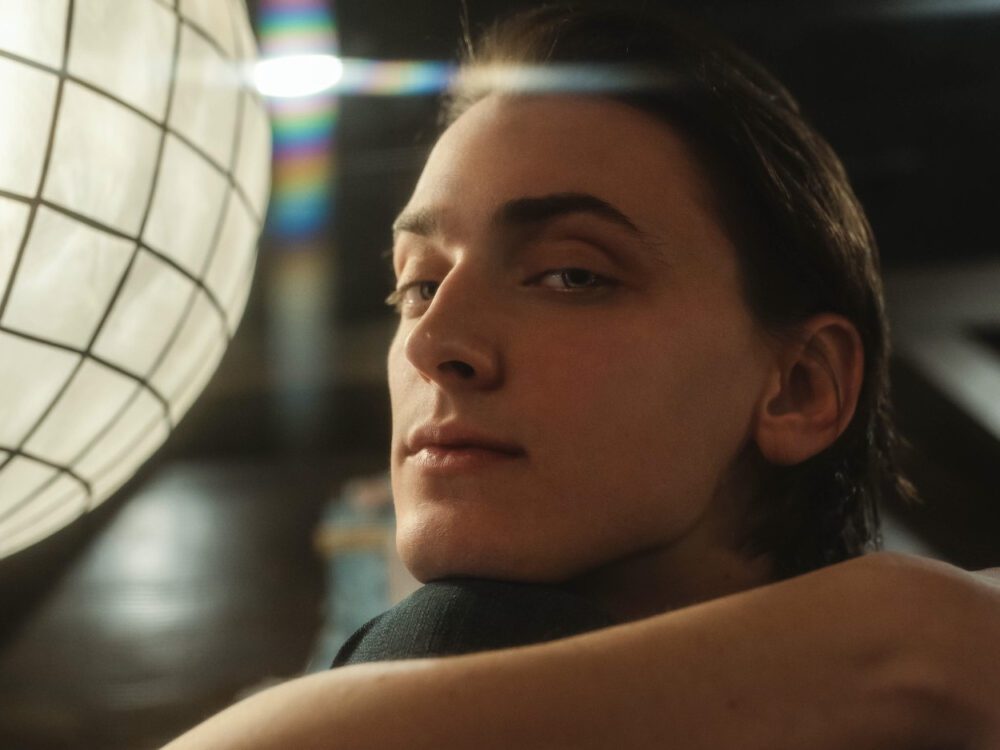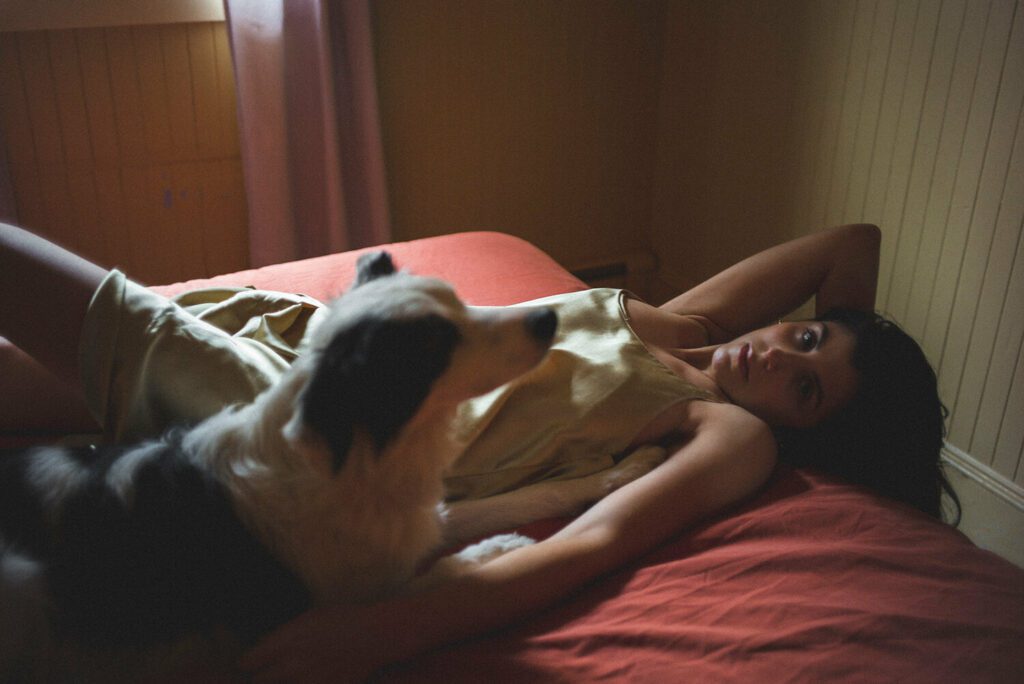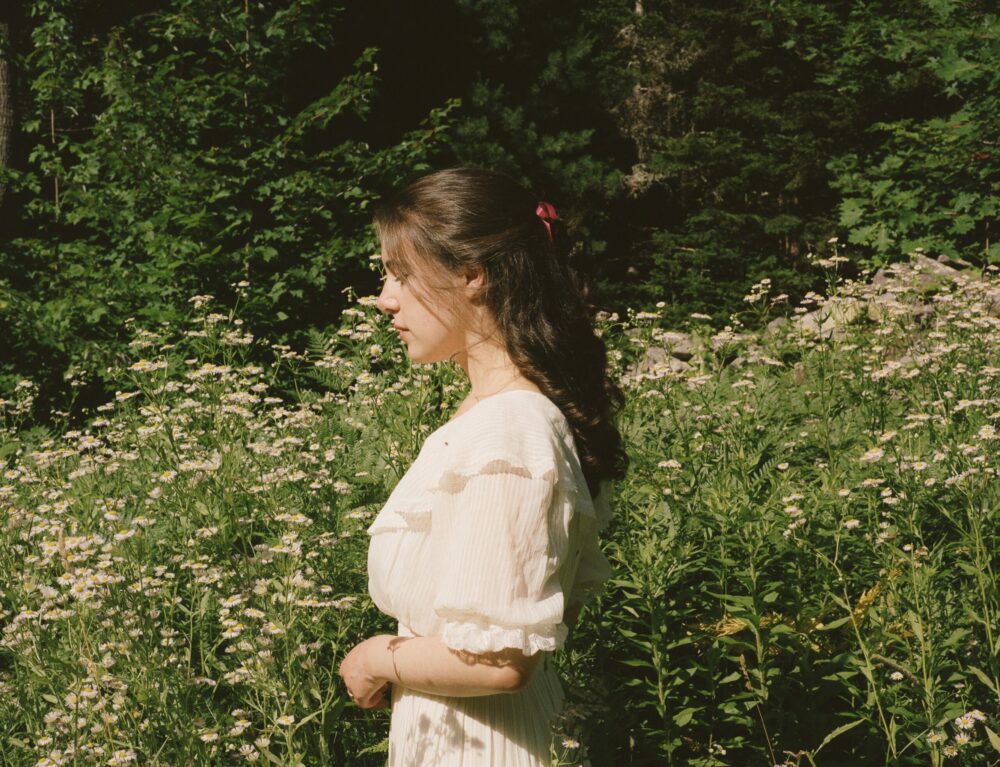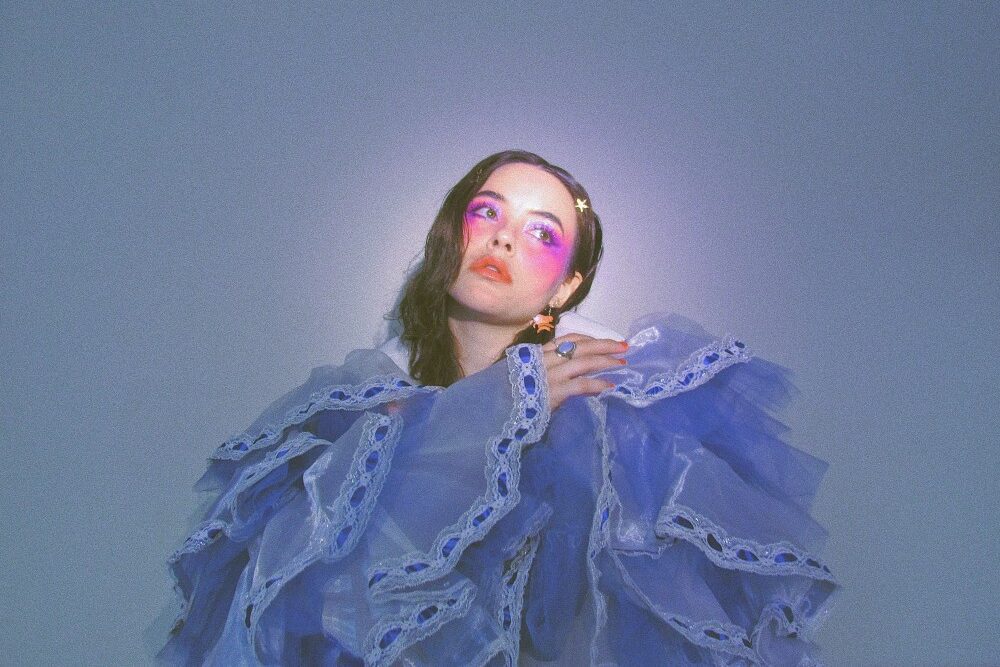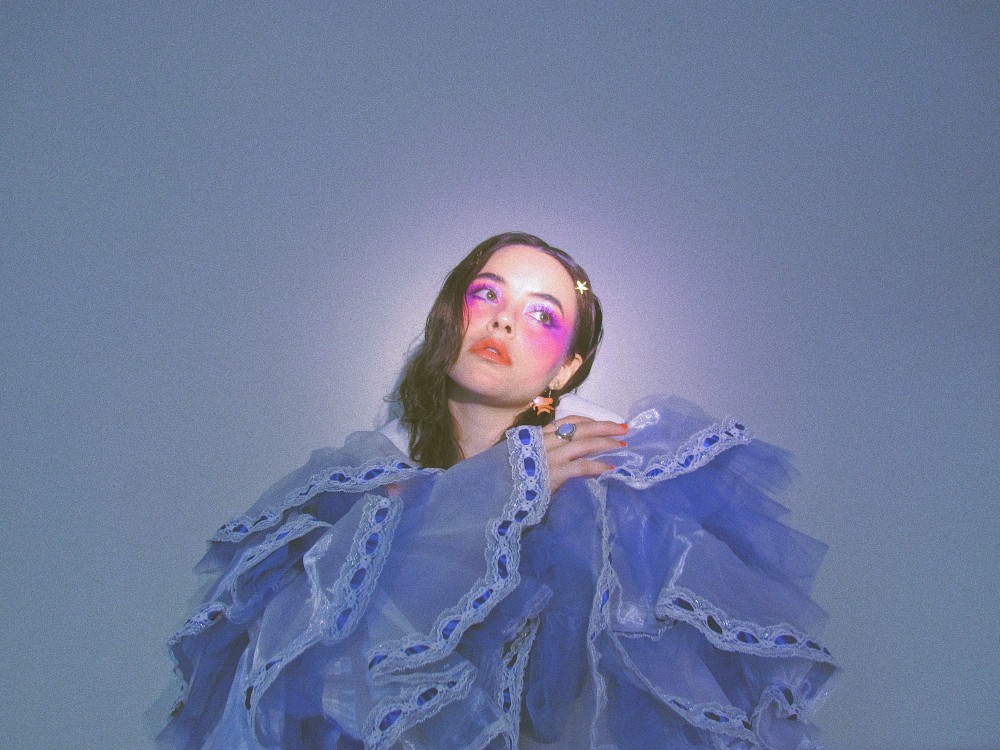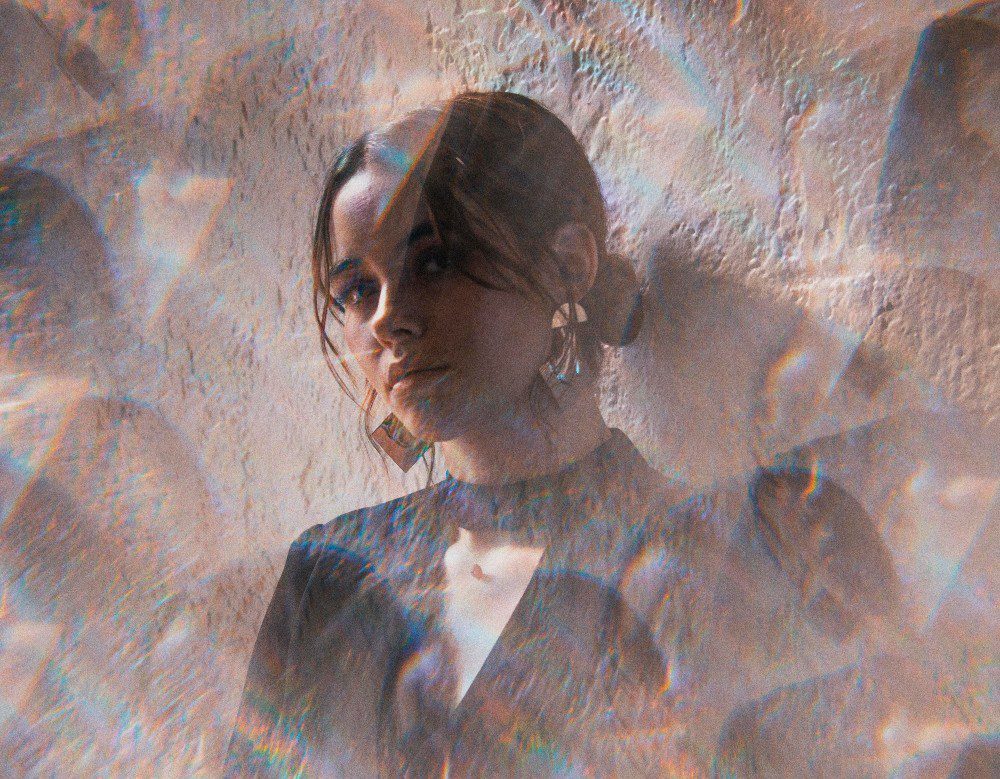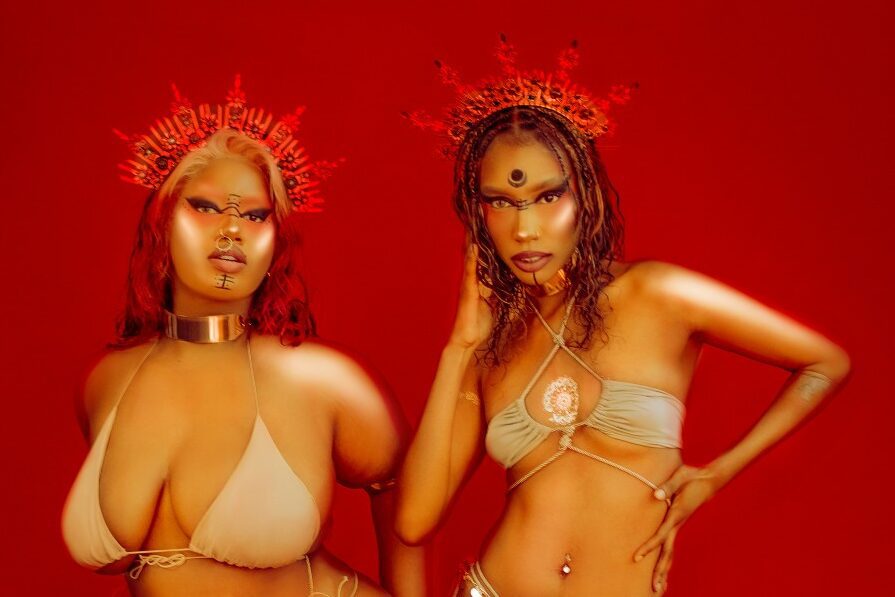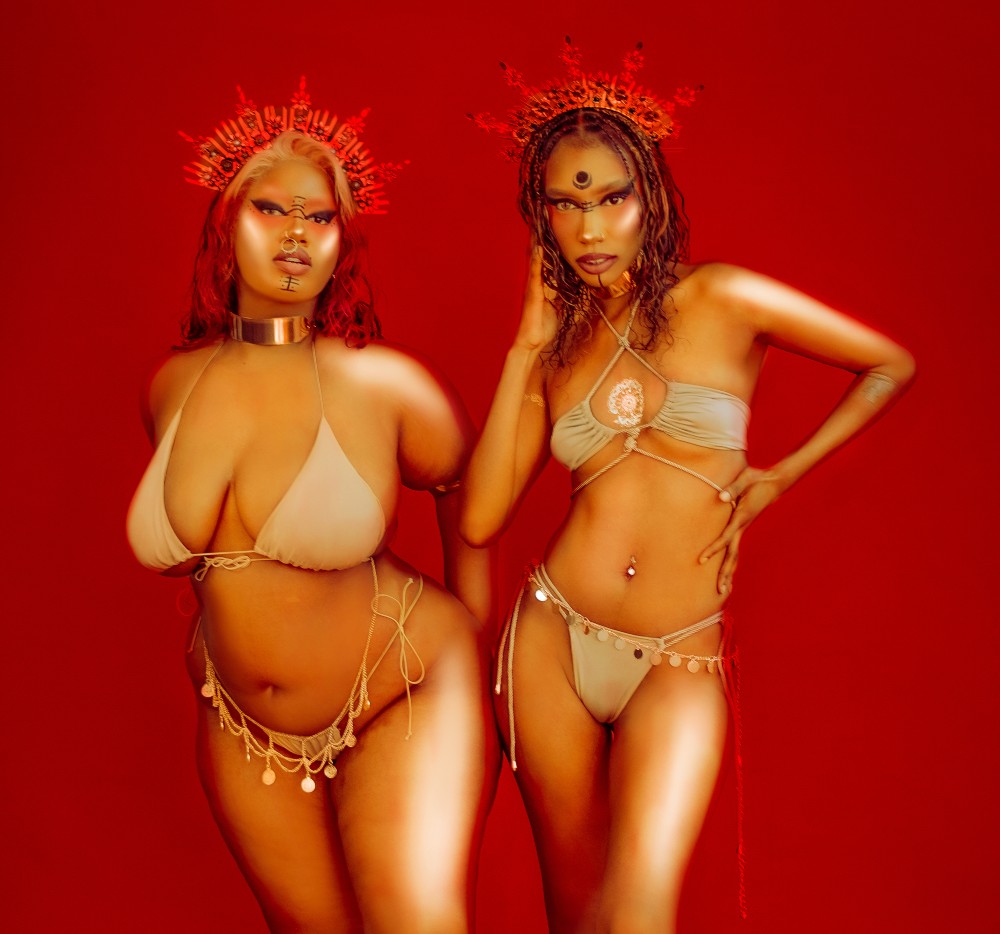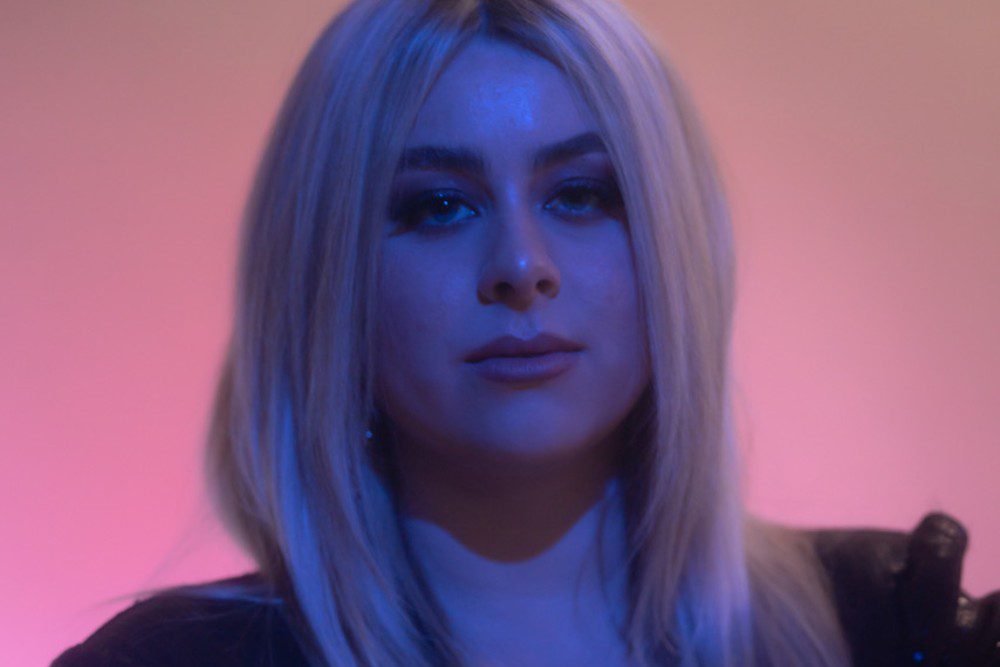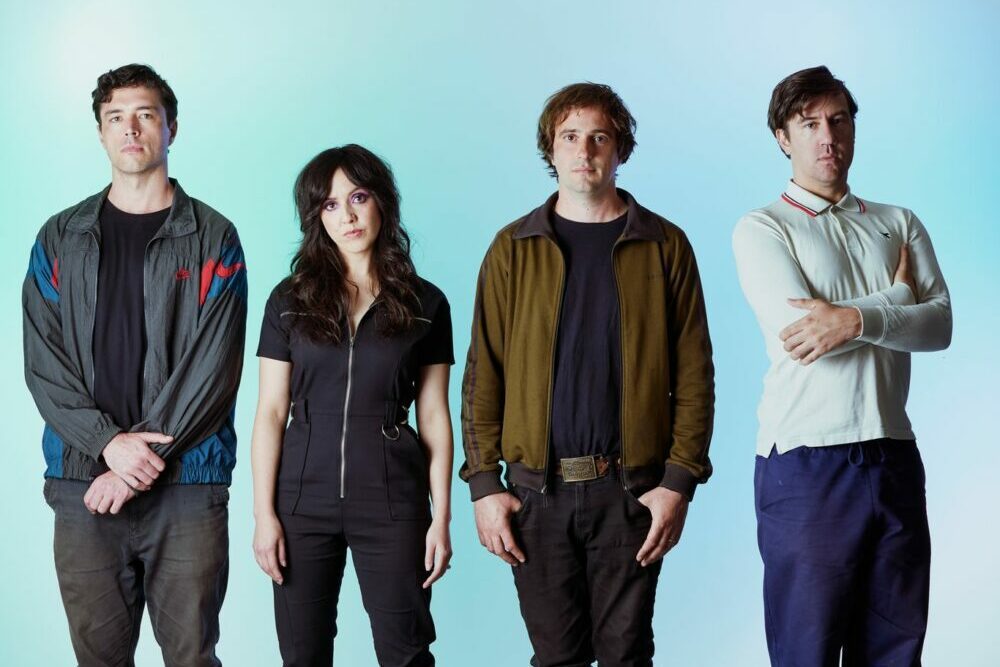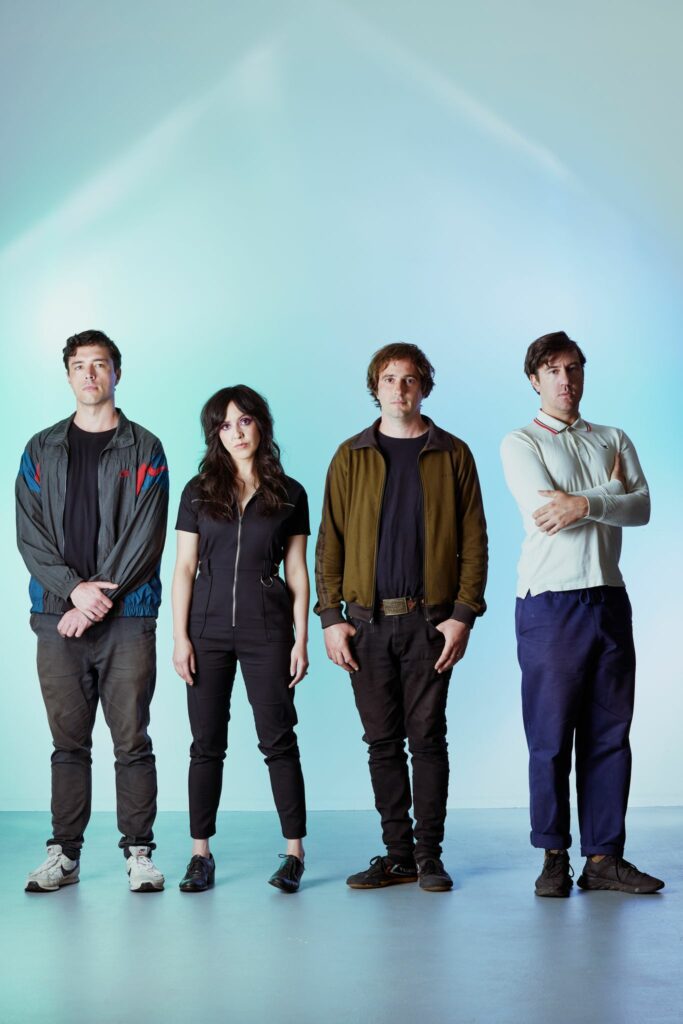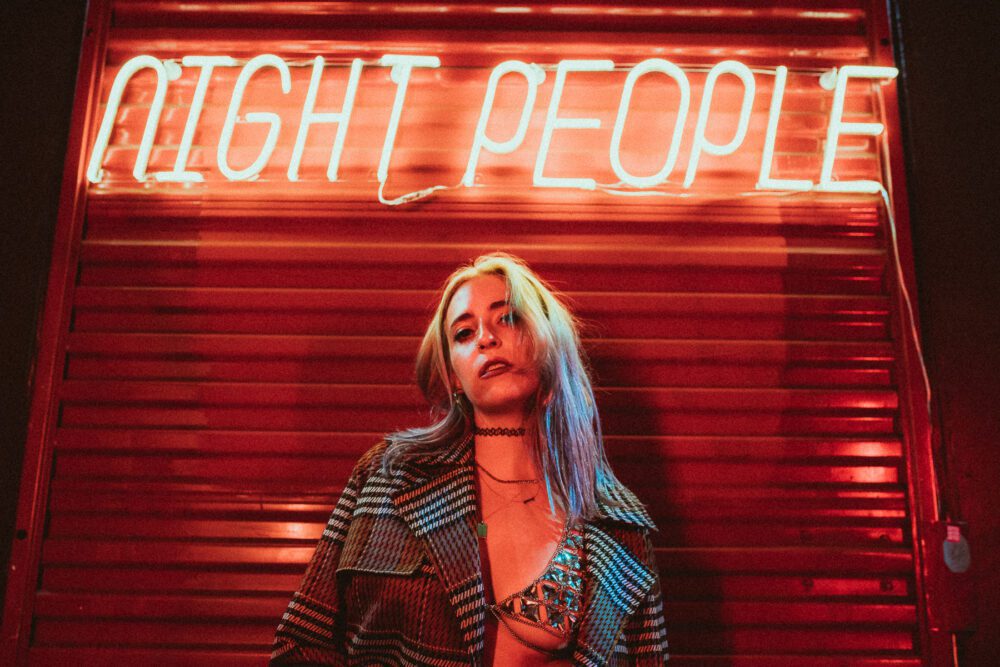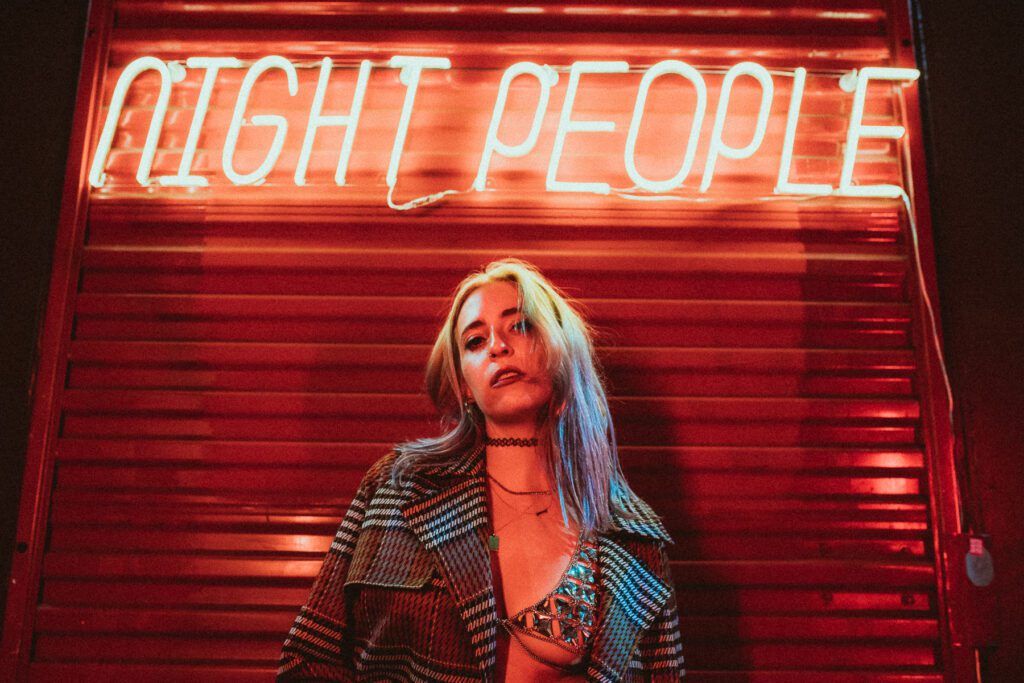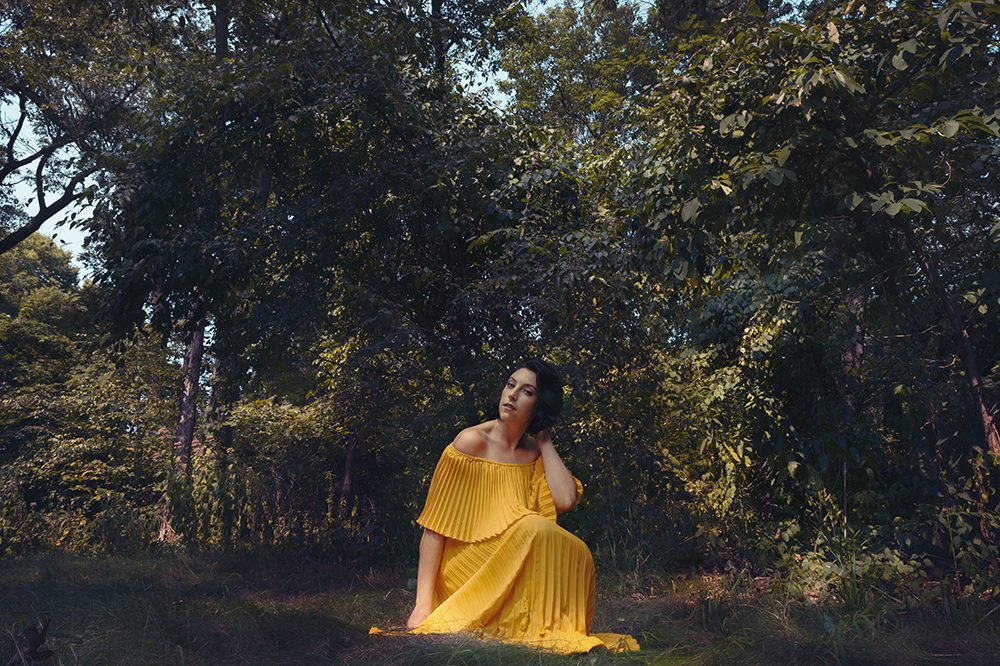
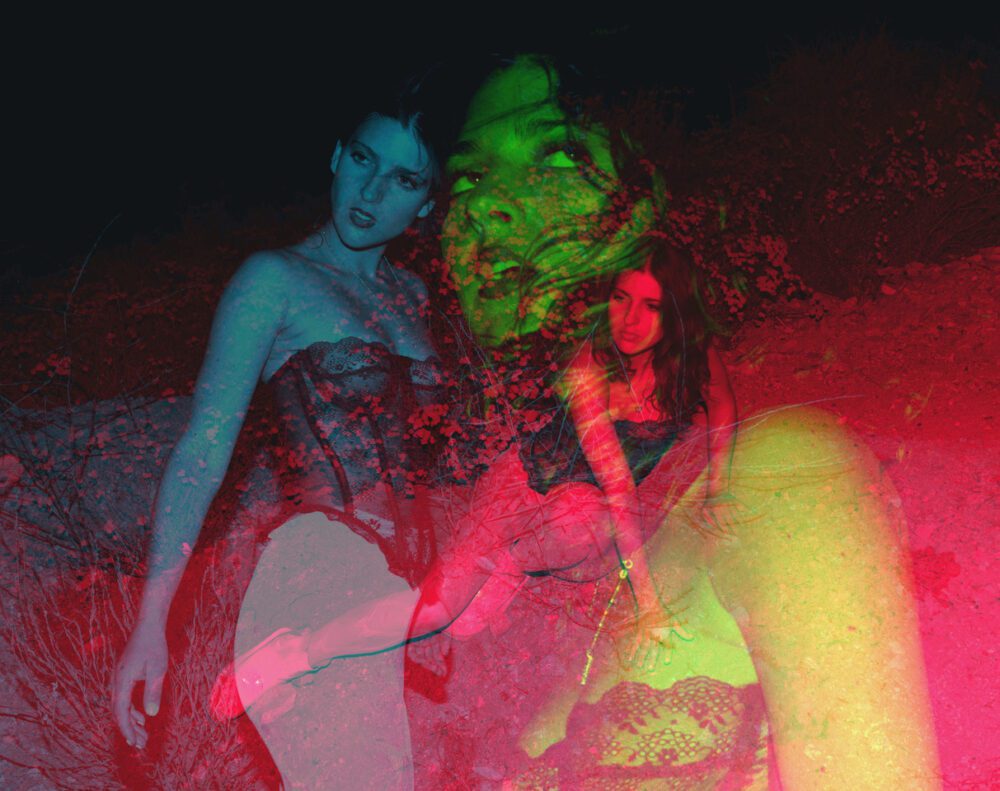
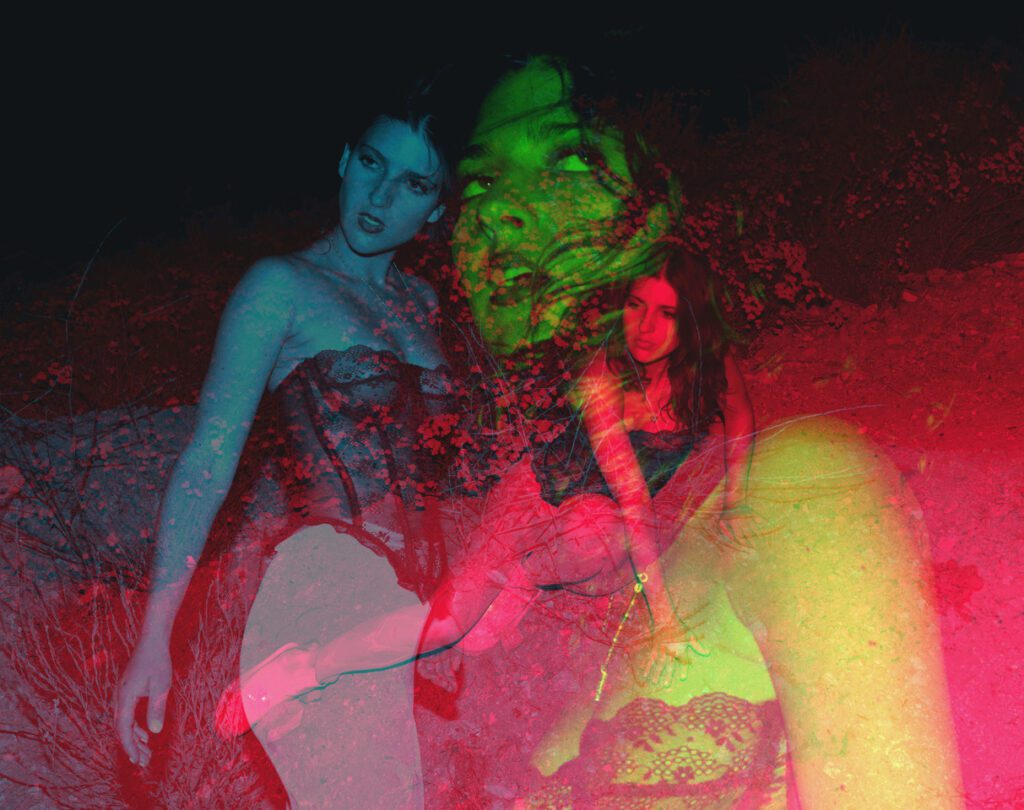
Liz Nistico of HOLYCHILD is Reborn as Revenge Wife

Photo Credit: Svet Jacqueline

“I’m definitely the type of person who doesn’t really care what the medium [is] – if I’m feeling the need to express myself, I will do it with whatever’s around,” says Liz Nistico, and she’s more than proven herself a Renaissance woman with her newest project Revenge Wife. After eight years as one half of “brat pop” duo HOLYCHILD (alongside multi-instrumentalist Louie Diller), Nistico released a debut EP under her solo moniker this summer, Background Songs For Your Boring Life, Part I. It compiles four singles Nistico shared in the lead-up via a series of linked short films, as well as an additional track. A few weeks ago, she also shared “Die Together,” the lead single from Part II.

Revenge Wife is a fresh, modern and emotional project – at its root is Nistico’s ongoing self-interrogation of her fears surrounding intimacy and relationships, while on the surface, it makes good on hyperpop’s best tendencies to sonically hybridize high-dosage time-release Adderall with the early 2000s Hampster Dance Song thing that happened when people first started using the internet. Textural electronic jams meet with deep, raw sentiment that’s reflective, self-aware, empowering, vulnerable and captivating.

The videos add another complex layer to the Revenge Wife persona, establishing Nistico as both director of and actress in her own twisted visions. With a Lynchian aesthetic, the viewer has the ability to enter and inhabit the noir surrealist dream world of Revenge Wife. The shots have an ominous, out-of-context sensuality, teasing homage to “Criminal” era Fiona Apple.

Born and raised in New Hampshire by a pilot and a nurse, Nistico was encouraged as a child to study dance, musical theatre, and creative writing, all of which clearly inform her current work. Though she studied International Affairs in D.C., she began to feel her true calling was to make art, exploring filmmaking at first. When asked about visual reference points, she explains, “At this point, I don’t really make stuff with visual references. I mostly have a story, and use my own eye.”

Though they were released out of sync, (it’s just how it happened according to Nistico) and appear in a different order on Background Songs’ tracklist, the videos can (and should be) viewed sequentially, beginning with “Home.” “Home is about a long distance relationship, but from an anxious state,” Nistico says. “The music video was the start of the horror era for me.”

Shot about a year ago now, “Home” initiates the series with a dream sequence that sets Nistico’s character on the journey she continues with “Earthquake.” On YouTube, Nistico poses the question, “Have you ever had a dream that changed your life?” The song’s earnest lyrics (“you’re in all my dreams”) depict longing for someone who’s far away, but the video’s unsettling imagery hints at something much darker, which only deepens with “Earthquake.”

The tragic yet upbeat track boasts organic and thoughtful production, Nistico’s timeless lyrical storytelling sitting pretty with auto-tuned vocals over bright, fidgety synth. Nistico ponders whether her love interest would be there for her when disaster strikes, a prescient and somber reminder of the true colors we’ve seen from friends and lovers over the last chaotic year. In the video, Nistico looks like the aggressor her moniker suggests, while red-hued flashbacks scorch the wintry landscape she drives through, in disguise, toward an ambiguous end point.

“This music video is about trusting yourself and moving toward love, even when you’re haunted by past trauma,” Nistico describes on YouTube. “Our main character is trusting the unknown despite flashes of past trauma, and leaving her life behind.. for what?”

We see what she’s headed for when “Manifest” picks up the story. In some ways, perhaps, it’s the most violent of the series; John Karna plays Nistico’s maniacal lover, and the two are locked in a toxic battle for dominance over the other. Described as “a story of love that’s wrong for us, set to a song about a life that’s wrong for us,” “Manifest” grew out of Nistico’s response to living in LA, but it also became an edgy driving soundtrack perfect for my ongoing habit of errand hopping around Manhattan in rush hour traffic (woops).

Poking at the flawed concept of “manifesting” what we desire by obsessing over it, Nistico’s incisive lyrics expose the internal frustrations of new age toxic optimism. It’s actually surprising that there are few, if any, songs that tackle this topic in this way. “I’m working on me today/Same day as every day/I spend a lot of time trying to grow/But what do I see from it?/Ok, my body’s fit/Yet I’m always struggling/Got nothing to show,” Revenge Wife emotes with refreshingly cathartic and childlike urgency. “They say manifest (Fuck that)/They say to de-stress (Fuck that)/I don’t even know myself/How am I supposed to know what’s best?” 

Nistico wants what we all want – a supportive partner, money, recognition – but the video lays bare just how damaging chasing a lifestyle can be, and it doesn’t end well for Nistico’s lover. Ironically, Nistico made these videos on a relatively small budget; they were shot using an iPhone in the midst of the pandemic. The one exception is the next video in the series, set to “Dream I Had,” which Nistico says is her favorite visual. There’s some carry-over in the imagery and editing style to aesthetically tie it to the other videos. Nistico incorporates more of her dance background into this fever dream of a clip, eventually reaching her own distorted form of enlightenment only to find herself trapped in it.

“‘Dream I Had’ is actually a conversation with my higher self, where all the verses are from her perspective,” Nistico says. Her inner wisdom waits patiently to guide her decisions, only to be pushed away by self-doubt – a battle of conscious empowerment so many of us wage internally. “The choruses, ‘I never see you,’ are from her perspective. She’s like, ‘I’m always outside of your window, you never open your window, you never ask for me, what the heck? I’m always here.’ And then the [response is], ‘You’re just a dream, you always get away from me.'”

The final installment of the video series hints at more to come, but it’s unclear which direction Revenge Wife will take as the project evolves. For now, Revenge Wife owes its richness to the four years Nistico has spent developing it. Those familiar with HOLYCHILD’s self-directed music videos and performance art pieces will remember Nistico’s unparalleled vision and confidence not only as front woman, but as the band’s creative director with a reel of visual masterpieces. But like many artists Nistico was dissatisfied working creatively in the confines of the music industry’s big machine. The oppressive withholding of releases, and the creeping tensions for musical autonomy led Nistico to commit her efforts full time to the new era of Revenge Wife. So HOLYCHILD went on “indefinite hiatus.”

Expressing with utmost professionalism an ongoing positive relationship with her former HOLYCHILD bandmate (who is currently releasing solo music under the moniker Louie Louie!), Nistico says they were thrown into the deep end, with little concern for maintaining flexibility or consistency within their release schedule. “I met Louis, my bandmate, and we moved to LA to launch HOLYCHILD. It all happened really fast. Within a year of moving to LA, we were signed and had every major record label trying to work with us,” she remembers. “It was pretty crazy, but I’m really grateful for that experience.”

After releasing debut The Shape of Brat Pop to Come in 2015, Nistico was at a turning point, brought on by ongoing surgeries over the course of six months for a cyst on her vocal cord. Scared that even talking could risk her recovery, she became a hermit, and delved into Tarot Card reading and existential and internal spiritual work and meditation.

“I had this crazy ayahuasca journey when I was at a crossroads in 2016. Should I continue with music? Should I just focus on directing?” Nistico says. “The next day I got a piano and then wrote all these songs. A lot of them made their way on to [2019] HOLYCHILD record The Theatrical Death of Julie Delicious. Those were my first songs writing alone.”

Leaning on her newfound mindfulness, she discovered herself in a new way and from this era of self-reflection and healing Revenge Wife was born, “out of the feeling of wanting to be empowered just doing things by myself,” Nistico says. “Especially the writing part of it – I feel like it’s such a masculine thing. Even though directing might be too, I feel like I mastered my confidence with that. I know it sounds weird, but I really believe that I was able to play piano in a past life. When I look at the piano, it just makes sense to me.”

Still, Revenge Wife is in many ways an extension of the interests Nistico has explored in previous projects, all the way up to her most recent single “Die Together.” “I actually made a short film called ‘Forever’ about the same concept. I was making a lot of art around the concept of murder-suicide for love, because you’re at this insane apex of love,” she explains.

The song was written over the course of a few years, she adds. “Later I felt like the chorus meant different things to me – like dying together when you’re really in love, because your ego is dead,” she says. “I’m really interested in the spiritual realm and death, and there’s the lyric ‘We’ll find out what else there is.’”

“The verses are more real, coming from a place of insecurity,” Nistico adds. “Do you want me/Am I pretty/Do you ever really even think about me?” she sings, as if these things are enough to pull someone to the edge of oblivion. Nistico wants to be the center of someone’s universe, and to have that someone prove it in the most final of ways, taking to extremes the desire so many of us have for approval and love. So too, does Revenge Wife as a whole take that yearning to extremes; by making her own desires so garish and out-sized, Nistico has a vehicle to examine them from an almost tongue-in-cheek view – and invites us to do the same.

To celebrate the song’s release, Revenge Wife plays a show this Saturday October 23rd at the Moroccan Lounge in Los Angeles. With plans to spend the next few months hibernating creatively in Italy, then potentially making a move to a slower-paced creative hub in the Catskill Mountains to satisfy her creative urge of being in nature, there’s no doubt Revenge Wife will continue to push creative boundaries.

Follow Revenge Wife on Twitter and Instagram for ongoing updates.
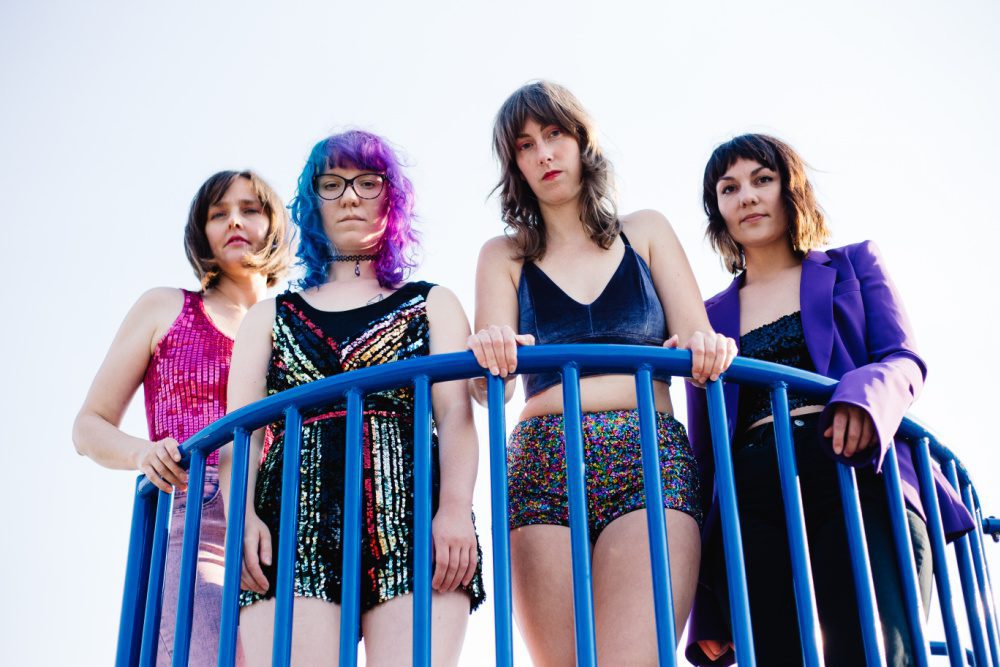
Cat Valley Lambast Music Industry Sexism on New Single “Manager”

Photo by Tommy Calderon Photgraphy

Cat Valley, a self-proclaimed “angry lady band” out of the small, bay-side Bellingham, Washington just North of Seattle, aren’t shy when it comes to calling out sexism—particularly within the music industry.

With that familiar Riot Grrl verve, relatability, and self-possession, the feminist foursome lambast crude Craigslisters, interruptive male coworkers, and even their own fathers on their new track “Manager,” a new single off their forthcoming EP Feral.

Along with being a clever, catchy, feminist banger, “Manager,” is a pertinent representation of the group’s folksier roots, and the louder, more electric sound they’ve landed on now.

“‘Manager’ is kind of an interesting song. It does start a little softer and you can hear some of our singer-songwriter-y roots in the beginning and then it gets really loud and surfy at the end,” says Abby Hegge, guitarist, vocalist and one of the founding members of Cat Valley.

Originally, Cat Valley was a duo, formed when Hegge met guitarist-vocalist Whitney Flinn in 2016 at her house show birthday party, organized by a mutual friend. “She asked my friend Tyson to book the house show for her and she and I were both playing singer-songwriter music at the time – she plays harp and I play acoustic guitar music,” remembers Hegge. “It seemed like a good genre match so Tyson got me on the bill. I heard her play and I cried, and she heard me play and she cried, and then we were like, can we jam?”

They named their band “Cat Valley” as an ironic nod to another all-male local band playing around at the time, “Dog Mountain.” “They kind of had some dudebro energy and we thought it would be funny if we named ourselves Cat Valley because it was the opposite of Dog Mountain. I did text them and asked them if it would hurt their feelings if we did that and they said to go for it,” Hegge says.

The origins of their name also complements the feminist themes that arise naturally in their collaborative songwriting. “We knew we wanted to write songs about feminism because we were both getting fed up with different things we were doing within our lives. And so, kind of through the songs being angry, that kind of elevated them to a louder place,” explains Hegge. “And then we realized we wanted them to be louder, so we started playing with more effects, started adding distortions, and then one of our friends offered to play drums for us.”

When that drummer friend had to move on, Hegge and Flinn were able to find drummer Melanie Sehman through their volunteerism with Bellingham Girls Rock Camp, a youth program that encourages social change through teaching music. Shortly thereafter, they recruited bassist Kristen Stanovich for the band, too. “Melanie was like, I’m a drummer, I like your music, let’s play,” says Hegge. “And then our friend Kristen joined the band, who is actually the partner of Tyson, the friend who initially introduced Whitney and I all those years ago.”

From there, the foursome began churning out fresh music, which they say is inspired by groups like La Luz and Sleater-Kinney, two all-women rock bands that also have ties to the Pacific Northwest and, like Cat Valley, draw from the patriarchy-bashing tradition of the Riot Grrl movement.

Their first demo, which features a cover image of Hegge’s orange cat, came out in 2016, followed by a self-entitled EP released in 2018. 2021’s Feral EP, while similar to past work, takes the themes they’ve always explored even further, and showcases how far they’ve come as a group.

Sure enough, Feral strikes a brilliant balance—it’s charmingly relatable, unabashed and bold. “Manager”—which begins somewhat sweetly before seething with rage over the intergenerational trauma of limiting gender roles by the end—is a perfect example of that.

“We were thinking about seeing our mothers feel more of the burden of raising children than our fathers and taking the kids to school and doing what their husbands say and those kinds of ideas,” says Hegge. “And we’re kind of yelling about some of our experiences that we’ve had, like Whitney getting talked over at a meeting, and a gross guy who answered one of my Craigslist ads by hitting on me.”

In fact, the title “Manager” comes from Hegge’s experience of watching her manager at Guitar Center—a woman—have to continually convince customers that she was actually the manager.

“[Customers] would come in, talking to her about something, and then she’d be like, oh yeah no this thing can’t happen, sorry. And they’d be like, can I talk to the manager? And she’s like, I am the manager. And they’re like can I talk to your manager. And she’s like, no I am the highest manager here. And they just wouldn’t believe her and would leave,” she recounts.

When asked if the band ever worries about the audience’s response to the “angry feminism” in their songs, Hegge balks. They are proud to be angry. It offers them a source of catharsis, particularly in a music industry that continually underestimates them because of their sex. “One time somebody wrote an album review of us and said it was all acoustic. We were just like, is this because we’re girls? What? There’s literally not one acoustic instrument on this album,” says Hegge. “Stuff like that.”

“I didn’t realize how angry I was – Whitney was a big catalyst for me realizing I was angry, honestly,” she continues. “She was already fired up and she’s a little older than me so she had experienced more and knew what sexism looked like and she’s very good at standing up for herself. I was like, oh wow, she’s really angry, she’s got a lot to be angry about. I bet I do too! And then I realized that I did and I was like, wow, I’ve really been playing it nice and pretending like nothing bothers me, but I don’t have to.” 

Cat Valley’s fierce and original Feral EP drops November 12th. Additionally, the group will be playing a handful of shows around Seattle and Bellingham over the next few months. Their next show (with Kitty Junk) will be at Seattle’s High Dive on October 28th.

Follow Cat Valley on Facebook for ongoing updates.

Maggie Gently Delivers Very Gay Pop Punk Anthem “Hold My Hand”

With her 2020 EP Good Cry, Bay Area singer-songwriter Maggie Gently addressed and packed away some personal trauma. Healing is a never-ending process, but as evidenced with her brand new single “Hold My Hand,” from her forthcoming Refresh Records debut Peppermint, it was time to move forward.

“Even though there’s some dancey, pop-punk, happy songs on Good Cry, I think that the quality of them all is very sad. It’s dealing with a lot of pain in a bunch of different ways,” she tells Audiofemme over a recent phone call. “I was ready to expand from that moment and show a new part of myself. All this healing is there, and it’s still a part of me and it’s not going anywhere 一 but there’s also love.”

Flushed cheeks and heart-pounding adrenaline trembles throughout “Hold My Hand,” a scratchy indie track which she describes as “my queer crush version” of a pop-punk song. “It’s playful, but it’s serious,” she says, quickly noting she found inspiration from “a lot of lesbian romance novels. Drawing from the truth of all that stuff made this song feel really natural.”

“I’ll try to play it cool or tell the truth, if you want to/I’m not afraid to tell you everything I’m feeling now,” she confides in the song’s catchy chorus, every ounce of fear and doubt melting away like the determined protagonist of an early-aughts party movie “where it’s just this cinematic moment of you seeing your crush at the party, and then all of a sudden, you forget how to breathe and your heart rate goes up,” she describes. “I love living out that fantasy of, like, my band playing at prom night in that early 2000s movie.”

As her debut single for Refresh Records, also home to artists like Cuzco, Biitchseat, Hit Like a Girl, and Jimmy Lo Fi, “Hold My Hand” pops a lid on a new era. During the pandemic, Gently, formerly of the Total Bettys, came to befriend Lost + Found booking agent Kevin Briody, and they quickly began dreaming up what a tour would look and feel like upon her return. On September 30, Gently stepped back on the stage in San Francisco and was quickly reminded how much she loved the art of live performance. “It was such a blast to be able to play live again,” she beams.

Later, she was introduced to Refresh Records founder Josh Higgins, and the two clicked right away. “I heard really great things about the label, and the other bands on the label are totally cool,” she says. “There’s lots of great music coming out, even just this fall, so it was really a fun experience to link up with them and kind of dream and scheme what we wanted this release to look like.”

During the songwriting process, Gently returned to the bright, comforting music of her youth, allowing it to submerge her subconscious mind and thus influence the song’s own shiny casing. “It’s funny how it just seeps right in without you having to think about it,” she says. “With some things, obviously, I make a lot of conscious choices in my songwriting, but in this one, I knew how it was supposed to sound.”

The accompanying visual, self-produced with her girlfriend, was conceived entirely in quarantine. “It’s very homemade looking, but hopefully in a charming way,” she says with a laugh. “We did the best we could, and I used a green screen for part of it.” It culls fashion and motifs from ’90s MTV staples, like Wheatus’ “Teenage Dirtbag;” aesthetically, Gently turned to bands like Slacker and Rocker and their “clowning around party kind of vibe,” as well as the fist-pumping volatility of Avril Lavigne and Sum-41. “I made it earlier on in the pandemic, so I didn’t have any anyone else in the video except for me. So I tried to get that ethos in without actually clowning around with my friends.”

Over lofty electric guitar riffs, Maggie Gently lives wild and free, allowing every awkward glance or unsure touch to invigorate her. “I’m asking you to dance or hold my hand, if you want to,” she sings, a declaration of unapologetic queer love.

“In this moment, I’m looking for queer love and queer romance everywhere. I love seeing the proof of it right now,” she says, before shouting out her current obsession with “Silk Chiffon” by MUNA and Phoebe Bridgers. “There’s something so special about witnessing this, and it still feels kind of special and rare. I really love the opportunity to give my own little spin on it and take this genre that I love and turn it into something gay. That feels very healing.”

“Hold My Hand” is as warm as happy tears on a cheek, the mist of emotion that leaps from some deep, dark well inside your being. It’s authentically Maggie Gently, even as she springs into the glistening sunshine to leave her sorrow back in the shadows. In her willingness to break free, her songwriting has considerably blossomed.

“There’s always this question in my mind: Is it okay to write songs that just feel good and are just cathartic?’ I’m not reinventing how to play guitar. I’m not coming up with a melody that no one’s heard before,” she explains. “But if it feels special and authentic and true to me, is that enough? That’s been the back and forth that I have in my mind, especially when I write more similar melodic songs that feel good. But I know I’m not pushing the boundaries of indie rock.”

“I think [I’ve] come to terms with that and have realized, internally, that it’s okay to write music that just feels true,” she continues. “That’s the most important thing to me rather than something that’s really unexpected or really artful. It’s hard to get to that place.”

Follow Maggie Gently on Twitter and Instagram for ongoing updates.
Lena Stone is Unapologetic About “Taking Up Space” In the Visualizer for Her New Single

Photo Credit: Erika Rock

It took Lena Stone longer than she would have liked to write her latest single “Taking Up Space” – but the ideas and inspirations for it had done just that, in her head, for years. Like many, Stone went through a personal transformation in 2020, and when the COVID-19 pandemic struck, she finally summoned the courage to put words to the way she was feeling.

“So much of making music is presenting it to other people and putting it outward, and it felt like this was a chance for me to create inwardly, create music that I want to listen to. I realized I hadn’t been doing that as much as I should have been,” Stone admits to Audiofemme. “I think I was doing what I thought Nashville wanted from me.”

Having lived in Nashville for seven years, the Massachusetts-raised singer decided to transition from country music to pop. The move was a sign of respect from an artist with a “deep love” for country music, yet realized her lyrics and production were leaning more into the pop realm. It’s a natural step for the talented singer-songwriter, the pandemic granting her the time and focus to create music that fuels her soul. Making music without restrictions was incredibly “freeing” for Stone. “It felt so gratifying to be writing something I wanted to listen to all the time, so that was a really cool change for me,” she says. “Now that I have that, I never want to do anything other than that. I never want to make music that I wouldn’t turn on and blast all the time in my own car.” 

Stone isn’t ashamed to admit that she’s often listening to her songs on repeat these days, having reached a point in her career where she’s letting go of others’ opinions and embracing her artistic identity. One of these songs is the deeply vulnerable “Taking Up Space,” a liberating anthem that questions gender stereotypes and lays bare the reality of working in an industry that makes it impossible to fit in.

The synth-laden ballad offers an empowering analysis of the ways women are expected to dim their light in order for others to shine. Stone faces her own insecurities in an effort to break through these barriers and help others do the same. “Even though it was really scary, I was like, ‘I need to write the song that I need to hear,’” she expresses.

One thing she’d been struggling with was having a negative body image. “It occurred to me a couple years ago that many of us are striving to be size zero, and size zero is literally nothing. Why is that the goal? Why is it not okay to just be, and to exist the way that you are?” she confides. “It’s so hard to love your body. There’s so much talk about loving your body, and so few people actually do it. We put these weird rules on ourselves and the pandemic I think has made that worse for a lot of people.”

Stone kept her ideas for “Taking Up Space” under wraps until it was ready to manifest, which occurred one morning at 6 a.m. when she woke herself up mumbling the first verse and pre-chorus into her iPhone. What resulted is an open-hearted song where each lyric is more vulnerable than the next, Stone battling with the inner voices that tell her she needs to fit into an unattainable mold, biting her tongue more often than she’d like. “The whole thing centers on that title, that it is okay to be a presence, whether that’s physically, whether that’s making your voice heard, whatever that means to you,” she says. “It’s being a participant and not being on the sidelines or trying to hide yourself or be less than you are.” 

The versatile singer also addresses the pressures that come with being a woman in the music industry, noting how female artists are placed under contradictory parameters that discourage them from being too creative, sexy, or outspoken, yet are still expected to entertain. She addresses this “very complicated game of Twister” head on as she sings, “So I’m getting out of the line/For a prize that maybe/I don’t even want,” Instead, she commits to following her own intuition. “That line is really directed at the music industry and it’s saying ‘I’m doing all the things that you asked of me, but I don’t even know if that’s what I want to be doing. I’m not sure that’s what I’m called to be doing. So maybe I’m just going to stop doing what you want me to do and I’m going to do what I want to do,’” she explains. 

The visualizer, premiering exclusively with Audiofemme, perfectly captures the spirit of song. Stone is depicted as a doll-like figure, dressed in an extravagant tulle-laced gown. “We wanted me to look like a mannequin – pretty and not moving, just there,” she explains. On the one hand, the “enormous” dress literally takes up space, she adds, “but there are also assumptions that you’re just supposed to be there and be pretty and it’s like, no – I can be so much more than that.”

Stone lies on a giant chess board, surrounded by life-sized pawns. She was drawn to the intricacies of chess, where players are expected to predict their opponent’s every move. “Chess is a game of power moves and [is] about having control of the situation,” she points out. “I loved the idea of me calling the shots and me making the plays. Being in the middle of that setting felt really like it called that power play into mind.” 

“It’s fearless just facing these fears” is not only a line in the song, but a reminder for the singer to push forward, now that she’s finally confronting her demons. “But I’m getting braver every day/I’m done saying sorry/For taking up space,” she assures herself, hoping to bring peace of mind to every woman who hears the song and encourage them to feel validated in their power as a person who deserves to be taking up space in the world.   

“The flip side of trying to make yourself small is allowing yourself to be big. Every time I advocate for myself, I feel big,” she says. “I think as women, we’re taught to put everyone else’s feelings first and I definitely struggle with that a lot. Intentionality is such a key to being happier and to taking up space in the space that you want to take up.”

Though the track was a long time coming, Stone feels it was worth the wait to get the message just right. “If I can help anyone get there faster than it took me to get there, that feels like mission accomplished. If it speeds up anyone’s process to becoming comfortable with themselves, then I feel like the song has done what I needed it and what I wanted it to do,” Stone proclaims. “If we could all become a little bit more comfortable with ourselves and our bodies and our voices and our intelligence and our abilities, I think things would change for the better for everyone.”

Follow Lena Stone on Instagram, Facebook, and Twitter for ongoing updates. 

Nihiloceros Ponder the Human Condition on Wavy-Nominated LP Self Destroy

Photo Credit: Lizzie Steelheart O’Leary

Brooklyn trash-pop punk band Nihiloceros spent the summer making up for lost touring time – playing shows on rooftops, at DIY street pop-ups, and basically anywhere with a feasible outside area. And until they connected with Totally Real Records for their newest album, Self Destroy, they pretty much did everything themselves. Released September 17, the record still retains plenty of grimy personal touches: the duct-tape logo lifted from someone’s homemade Nihiloceros sign, left behind in the detritus of Warped Tour 2018, that somehow followed them through their subsequent East Coast tour dates; the cover shot of a derelict building taken by the band’s bassist, Alex Hoffman (he’s also a civil engineer).

“It was ominous dark and grimy, but there was a little sunshine poking through. That all seemed in line with the themes of the record,” says vocalist and guitarist Mike Borchardt of the album cover. But rather than self-release this project, Borchardt, Hoffman, and drummer German Sent wanted to press the album to vinyl and see it reach a wider audience. “Ultimately, we decided Self Destroy was just too good to not have a home. We also wanted someone with a different perspective to help us not fuck it up when we rolled it out,” Borchardt tells AudioFemme. “Secretly, I already had Totally Real Records at the very top of my short list of labels.”

Nihiloceros never planned to write a concept record, but it just kind of happened in the months before the pandemic hit, stemming from a conversation Borchardt had over dinner one night with his wife, Sarah. The couple contemplated how much our human experiences have varied based on the time period in which we’re alive. “Like to be born, exist, and die. Cease to exist without ever experiencing Netflix, the Internet, electricity, indoor plumbing, modern cities or spoken language. The further back you pull, the more it seems these modern amenities are both so arbitrary and necessary, yet, at the same time, so crucial to our comfort and happiness,” Borchardt elaborates.

He kept returning to a single question: When did humans stop being animals? When did we get beyond survival instincts (like roaming, hunting, and eating) and begin to express ourselves creatively? Once he started writing songs to try to answer these age-old riddles, his thoughts only expanded. “We are all just overly complex, self-domesticated animals, rapidly erasing the world as we try to write our history,” he realized. “I started writing this whole story about the unraveling of the human condition and the end of the world.” Everything will be destroyed. Nothing lasts forever. These thoughts consumed Borchardt and he started seeing big-picture theories in everything – even down to a unicorn Memoji Hoffman sent him, which combined with a chorus he’d been writing. It eventually became lead single “iamananimal.”

With the album partly written, COVID-19 appeared as if to confirm the descriptive apocalyptic lyrics, mixed with grist, earth and human matter, presented on Self Destroy. “It felt strange and eerily prophetic to write a record about the end of the world, right before the onset of a global pandemic,” Borchardt reveals. “But it put the brakes on the entire project. While we entered a series of different types of focus and creativity in the ensuing months, we didn’t feel inspired to touch this record again until late Summer 2020. At that point we were able to revisit the lyrical content through a different lens.”

Some of the songs rely on symbolism, while others are quite literal, with obvious references to headlines like, say, the rash of millionaires desperately launching themselves into space. “We exit by silver rocket/This world where mammals all the rage/If we start over/No you can’t go/Speed thru stage four evolution/Stop to drill this plastic cancer,” Borchardt sings in “Mammal Science Fiction.” The song ponders what will happen when there is no planet on which to leave behind our human legacy. Will it be our nature to leave, like animals migrating through the landscape in search of less hostile environments? Though the band believes that some world-ending fate is likely to befall us, they felt compelled to tell the stories of our dying species – even if just to keep from going insane. Borchardt hopes that the rogue survivors waiting in the future will understand the story of Self Destroy. Maybe that would be the band’s legacy. 

Part of that legacy, too, are the connections Nihiloceros made and maintained over the years, outside of the basements they once performed in. Authentic to the album’s love of earth and human matter, and collaborating with friends, the band is slated to play as Alkaline Trio for a Halloween-themed show at The Windjammer on Saturday, October 30th. It’s presented by the Footlight Underground and Bands do BK, and also features Hot Knives as The Stooges, Mary Shelley as Nirvana, and Nevva as Nevva2k. “Sam Sumpter from Bands Do BK and Laura Regan and Kendra Saunders of Footlight are all old friends of ours. And of course, we are also friends with all the bands on the bill so we are really excited,” Borchardt explains.

Those who want to bask in the existential glow of Self Destroy specifically can do so at Blonde Records’ The Wavy Awards, at Abrons Arts Center (supported by the NYC Mayor’s Office of Media and Entertainment) this Saturday, October 23rd. Nihiloceros will perform at the awards; they’re nominated for Record of the Year, and Jen Meller is nominated for Video Director of the Year for the “iamananimal” music video.

Follow Nihiloceros on Instagram for ongoing updates.

Maty Noyes Kisses Major Label Confines Goodbye with Debut LP The Feeling’s Mutual

I first met Maty Noyes at her all ages show at The Knitting Factory in Brooklyn, on a cold December night in 2018. The early show had a hard out and tight crossover leading into the late night event. Over a recent Zoom call, Noyes recalls the infamous load in of cyberpunk go-go dancers dressed to the nines in gothic leather corsets and six inch heels, carrying dungeon whips. “I remember thinking, it’s okay, my fans are going to learn one day how the real world works,” she says. 

By that time, she’d already had an uncredited feature on the Weeknd’s breakout record Beauty Behind The Madness, written an international smash for Kygo, released two EPs, and racked up millions of Spotify plays on singles like “New Friends” and “Say It To My Face.” Under contract, the label machine built momentum but didn’t allow Noyes to evolve artistically. She was kept in a box, styled, dressed, and groomed to stay in the major label pop darling lane. That’s why her highly anticipated debut LP The Feeling’s Mutual, released September 3, is such a revelation; after years of working as a cog in the music industry machine while her team treasure-hunted for the smash hit to make her a star, Noyes decided to make it on her own by unleashing her talent on the world.

The Feeling’s Mutual breaks the mold of straight-forward electro pop; visually, Noyes embodies a classic Marilyn Monroe beauty, while embodying the power, grit, and strength of neon warrior princess. Noyes’ effortless vocals tie the cross-genre record together like a collage of musical chapters. “My dream would be to chart on like every radio station you know in every genre, all at once,” she says. “Because why not? It’s possible.”

And it’s been a long time coming, too. Noyes grew up in a small conservative town in Mississippi, never feeling like she fit in despite floating between different social groups – but music spoke her language. “I was fortunate enough to have a dad who played really great classic rock growing up. The Beatles were a huge sonic influence for me,” she recalls. “I knew from a very young age that I’d dedicate my life to music, even before I really knew I could sing. When I was twelve I asked my parents for a guitar for Christmas. Without much thought, a week later I was already writing songs. I just had a lot on my little heart that I wanted to get out.”

Her supportive mother offered incentives for performing. “Basically, she was like, I’ll give you fifty bucks if you play the show. And back then fifty bucks felt like a million dollars,” Noyes says. “A trembling twelve year old, I got up on the tiny stage at our local coffee shop, and sang in public for the first time. I was hooked.”

Uninterested in college, and a self-proclaimed old soul, Noyes convinced her parents to let her move to Nashville at the age of fifteen. Under the stipulation of taking weekly drug tests, financial independence, online schooling, and her promise to attend church every Sunday in her hometown three hours away, Noyes was granted permission to move out as a minor and follow her dream. “I moved to Nashville alone, the day I turned sixteen. I found a place, started babysitting and put a band together with two of my best friends. I was having the time of my life,” she says. “The music I wrote alone back then was so thoughtful and raw.”

In the heart of Music City, Noyes was poised for serendipitous stardom. “One particular night I ended up at a house party in a mansion. I had never experienced that level of wealth, and I suddenly ended up singing to the owner, as he’s accompanying me on the piano,” she remembers. “He turns to me and says ‘You’re really good, but I’m drunk. Why don’t you come back tomorrow so I can really hear your sing?’ The next day I show up, and he ends up being my manager for five years. Literally my first six months of living in Nashville, he and his partner got me signed to a record deal with Lavo, an imprint of Republic.”

A California girl at heart, after signing a publishing deal, Noyes started taking frequent writing trips to LA. She made the official move and got into the studio grind, writing every day with a new person, in a different genre. She quickly learned the nuances of pop music studio culture and found success as a top-line writer almost overnight. “I wrote a song called ‘Stay‘ and it was just like any other day. Suddenly it was picked up by world-famous DJ Kygo and got half a billion streams,” she says. “I’m not even an EDM artist. I didn’t even want that, but it just happened.”

Her ethereal voice was also featured on “Angel,” the closing track on the Weeknd’s Beauty Behind The Madness. Noyes had been working with producer Stephan Moccio via Interscope, who took the risk of asking Noyes to sing on the track without Abel Tesfaye’s permission. Her lush, captivating vocal runs send shivers down your spine, so it’s no surprise that Tesfaye loved her voice, and took it as an honor to break a new artist. But the credit went unlisted, as it would’ve disqualified her from winning a Best New Artist Grammy on her own accord; as a newly signed major label artist, she was already learning the politics at play in pop music.

But perhaps more dismaying was the fact that Noyes was prevented from releasing her own work as her label kept her under lock and key. “A lot of my friends would be hearing all this cool stuff I was doing, but the world would never get to hear it,” she says. Right before the pandemic hit, Noyes decided to cut ties, ditching the publishing deal and dropping her management.

“I’d lost a lot of that fearless independent girl from Nashville,” she explains of the move. “I ended up signing a one-album deal with a new label just to put music out in the meantime and keep creating. During quarantine, I spiritually got a fresh start. I started reconnecting with myself and writing intimate songs in solitude. I was regaining parts of myself that had been lost through my immersion in the industry.”

Releasing The Feeling’s Mutual “feels bittersweet,” says Noyes. “It was finished and supposed to come out two years ago. Sharing the songs with the world feels like a weight lifted off my chest. I can finally start to catch up with myself and feel authentic creatively. I’ve had to live with imposter syndrome.”

Finally free of the major label system, Maty Noyes has regained her autonomy, and her autobiographical lyrics embody her real-time emotional processing. There’s a sharp attention to detail within each sophisticatedly crafted song, and each has become a vehicle for Noyes to grow, heal, and evolve both emotionally and spiritually. “I feel so lucky as a songwriter, because if you stay true to the craft, you really get to see what’s going on with your inner world. You analyze and learn about your patterns, and your intention,” she says. “You get to view your life from a whole-story perspective. It’s like therapy, and a lot of people don’t get the chance to do that.” 

Stylistically, she tries on many hats, and while genre-bending in hip hop, psych-rock, electro pop, and classic jazz, she resonates brutal emotional honesty within each melody. When asked about her personal favorites, Noyes gushes over “Time.” “I love the guitar, and how it gives me a classic blues feel… it’s beautiful, and timeless. It’s the direction I’m heading toward; I’m really proud of that track.”

Lyrically, “Time” captures the feeling of falling in love without getting caught up in the fear of abandonment. It’s an ode to the fool, and fearlessly rushing into the unknown of infatuation and lust. “It’s the most beautiful time of the relationship, the lustful beginnings. This song says, we don’t know what’s going to happen in the future, but we have this beautiful time right now – I want to make it so good, we’ll never forget it,” she explains. “My openness to love, it’s both my superpower and my kryptonite. Getting deep with another person acts as my truest inspiration, my drug. I’ve always been a serial monogamist.”

The silky Mark Ronson-esque samba-infused “Alexander,” another stand-out on the record, exudes a bittersweet longing. “Listening I was really impressed with the way it naturally flowed as such a classic melody,” she says. “It really takes you on an emotional journey.” The last chorus jumps up almost two octaves, a whistling falsetto looping and weaving around her swan song. Its video shows Noyes with a spiritual advisor in a mysterious Plague-Doctor-goes-to-Coachella mask; Noyes takes a magical pill and descends into her fantasy, a technicolor dream world, the depth of the deep sea, the underworld. Caressed by her ego, Noyes morphs into a butterfly, as she moves through floral dimensions of space and time. 

“I made the video for ‘Alexander’ with my friend Marcus, and took on the role of producer and stylist. He was a CGI guy, and had all the equipment and gear we needed. We shot it on barely any budget in my garage. I was so proud of the entire vision coming to fruition,” she says. 

One of the record’s most powerful anthems, “He’s Doing Your Job” is about being attached to an avoidant, “emotionally unavailable” person while another courts her. The chilling lyrics are direct, as Noyes plainly states her desires: “I need someone to ask how I feel/Someone who wants me to heal/Someone who’s holding my hand/When the anxiety gets way too real.” With an easy-going acoustic energy, the track unpacks attachment styles, addressing issues around having a despondent lover from both sides. “That song still gives me goosebumps,” Noyes says.

The Feeling’s Mutual is nothing if not relatable, so much so that it’s hard to believe Noyes was ever discouraged by her label from releasing candid material like this. But she’s taken it all in stride, and shares the hard-earned wisdom from her decade in the entertainment industry with eloquent poise, earnest grace, and a hint of her rebellious heart. “You’re gonna come across people who want to help you, and they’re going to speak in absolute extremes. They’re going to say there’s only one way to do things if you want to make it,” she warns. But Maty Noyes learned long ago that compromise didn’t mesh with her artistic vision. “Listen to your instincts. Don’t make decisions out of fear. You can feel in your soul when you’re crossing the line of your integrity. If it doesn’t feel true to your artistry, you shouldn’t do it.”

Follow Maty Noyes on Instagram for ongoing updates.

Audley Collabs with JJ Baker on Artistic “This That” Video

Audley This That
Audley This That
Photo Credit: Eugene Fryer

Audley has returned with an artistic new visual for his song, “This That,” a track from his latest LP, ROY. Produced by GrandAce, the four-minute track finds Audley flexing his lyrical prowess while riding a jingling beat. The new “This That” video, creatively directed by Death To Brand Guidelines, matches the single’s off-kilter energy.

Audley raps to the camera while artistic drawings representing his lyrics are set on fire. All the while, the video’s focal point is constantly changing, as the Cincinnati-bred MC’s face appears in different boxes that pop up in rotating corners of the screen. “Minimalism is dead!” Audley declares with the captivating clip, which features illustrations by artist JJ Baker.

The visual also ends with a cliffhanger: “New music on the way.” Watch “This That” below, and read on for a Q&A between Audley, JJ Baker, and Audiofemme

AF: Congrats on the release of your “This That” video! The concept for the clip is really cool, where did the idea come from?

 JJB: Thank you! The ideas basically came from Johnny (Audley) and from the lyrics. He put together a PowerPoint with pictures and images based off of the lyrics and I used those as the starting point for my drawings. Some drawings were straight up what Johnny’s idea was, but a lot of the drawings I added my own ideas and inspiration too. 

A: Thank you so much! It’s been a 19-month process, so we are thrilled this babe is out to the digiverse. Once the song was recorded, I knew I wanted to work with JJ to bring the lyrics’ random imagery to life. Initially, we were strictly focused on producing a sketch for each stanza and as that process developed, we organically took note of what visuals we could collage together to make a compelling, stimulating piece.

AF: The artwork is unique in that it’s reflective of the song lyrics, but also tells a story on its own.

JJB: Thank you, I appreciate that. I like the idea that the art tells its own story. I wanted the art to simultaneously reflect the images of the lyrics while also expanding the meaning of the song. A lot of the drawings are references (Dimmsdale Dimmedome) or mention other artists ([Devin Burgess’] “Bounce Back,” Goulet), so it was fun to draw these people. It was also a blast to incorporate text into the drawings. Audley and I are both drawn to fonts and typography, so it was fun to combine image and text for a delightful, visual cornucopia. 

AF: I especially love the different media boxes drawing your eye to all parts of the screen. What made you want to format the clip this way?

JJ: All the FaceTimes that me and Johnny had! Picture-in-a-picture is a ubiquitous aspect of our lives and I find it a fascinating visual trope. I’ll be browsing on my laptop with 37 open tabs, a different window streaming a documentary, Spotify playing music, and Photoshop. It’s wild. It’s part of our lives these days. There’s so much going on. We wanted to use this maximal approach, but still harness it together to create an impactful and compelling video. We also had so many different ideas and videos that we made in the process, so using picture-in-a-picture allowed us to combine basically everything we created into the final product. 

A: Minimalism is dead! We are in a loud and bright era of expression. Artists are weaving twelve textures onto a canvas and sending it to their friends to add 3-D shapes and text and then they are sending it to a virtual photographer to take pictures of it “in the woods.” The dial has been turned and that inspired JJ and I to do the same thing, but from our perspective.

AF: Audley, the last time we spoke you mentioned some of your ideas for new ways to format visuals and marketing; can fans expect more creative videos like this coming their way?

A: I will always attempt to push the envelope when it comes to creativity. What that means and where it lives is a friendly mystery that I am semi-solving one project at a time. I truly believe that the work should speak for itself, and the marketing should be rooted in amplifying the ideas presented. Bells and whistles are an afterthought for me at this point. We still like bells and whistles, but not as a driver of the experience.

AF: The video ends with a cliffhanger promising more music. Audley, what are you working on right now?

A: I’m working on a few audio projects with some very lovely superhuman creatives. All very different, but they all feel honest. Outside of tunes, I just moved to Chicago and am delicately absorbing what it has to offer. I intend to interact with the community and hope to assist in its growth. A big line item for me over the next two years is to cultivate a space for creatives to connect. I want bands in the corner, visual artists projected on the walls, vendors in a circle facing the projections. Death To Brand Guidelines!

AF: Is the city skyline in the clip from Chicago or Cincinnati? 

JJ: Funny enough, it’s Houston! That’s where I live these days even though I’m a Cincy boy. My studio has a pretty dope view of the Houston skyline, so we were able to include that shoot when filming.

Follow Audley and JJ Baker on Instagram for ongoing updates.


PREMIERE: Florencia Andrada Has a Message for Bad Men in “El Imperio”

Photo Credit: Candela Rupertson

“El Imperio,” the title of the latest single from Argentinian soul singer Florencia Andrada, translates to “the empire;” it’s a term that came up in a conversation between Andrada and a friend about the differences between men’s and women’s attitudes toward achieving goals. When Andrada wrote the song, though, she was responding to the men who don’t respect the boundaries of women, “a guy that doesn’t understand that he’s not welcome anymore in that group or in that space or in that environment,” she explains on a recent Zoom call from Buenos Aires. 

Out on October 22 via Los Angeles-based label My Grito, “El Imperio” is about the imminent fall of the empire. “Day by day, we are getting a bigger crowd of women telling you that, if you are going to be that ugly kind of man, there is no place for you here,” she says. “The empire is over.”

The video for “El Imperio,” which premieres today on Audiofemme, was directed by Alejo Bustos in April of this year. Its plot and style came together as a result of the pandemic. “We supposed that we would be able to film outside and with a lot of people,” says Andrada, but rising cases of COVID-19 led to harsher restrictions in Argentina at the time they planned to make the clip and that forced the team to rethink the concept. 

Andrada liked the idea of a woman getting “some kind of revenge for her friends” in the vein of Quentin Tarantino films and low-budget action flicks of the 1970s. There’s also a slight nod to Stanley Kubrick in the video’s aesthetic, something Andrada was especially pleased with.

For the singer, making the video for “El Imperio” was a creative departure. While Andrada has appeared in videos before, there was an acting component to this one that was new for her. “It was all in the room and it was very intense,” she says. “It was a lot of people with masks and me.” Andrada is happy with the results. “I feel it’s like a short film. It has a vibe,” she says.  “It’s not only a music video. It’s a short film with a story.”

Andrada released her first album, Otra Realidad, in 2012 and followed it up with A Pesar de la Tormenta in 2016. “El Imperio” is her first single since 2019, when she released stand-alone tracks “Reírme con Vos” and “Por Amor” (a rocksteady remix that appeared on a recent My Grito comp). Over the past decade, she has developed a style that draws from classic soul and funk, her big, bold voice set against intricate arrangements  that are heavy on rhythm and horns. 

Although she grew up in the 1990s, and says that decade of music has influenced her whether or not she is conscious of it, Andrada has a particular fondness for music and aesthetics of the 1960s and ‘70s that’s reflected in her soulful sound, as well as her recent video. “I like the retro or vintage aesthetic, but I don’t like to dress up purely like that,” she says. “I like the mixture.” 

Andrada wrote her latest song around the middle of 2020 and recorded “El Imperio” in multiple recording sessions between late 2020 and early 2021 at Estudios del Parral in Buenos Aires. “It’s a great studio because they have a tape machine, so we recorded in a live analog kind of way,” she says. 

But, like the video, the recording of “El Imperio” was also impacted by COVID restrictions. Andrada has long played with a large band and gathering limitations meant that they couldn’t all get together for a session at the same time. They would split up the sessions for rhythm section, horns and backup vocals. “It was weird, but we made it,” she says. 

More recently, Andrada was able to tour the United States, something that had been on hold since her 2020 live schedule was canceled. “It wasn’t the best time to go, but we didn’t know if it was going to be forever or what, so we decided to do a tour,” she says. “We had an amazing time. Musically, we met some amazing people.” Andrada toured without her usual bandmates, instead playing with local musicians at her stops in Los Angeles, Miami and New York. “It was a great experience for me to get in the city, have one rehearsal and play with people I’ve never played with before,” she says. 

Now, with summer on the horizon in Argentina, Andrada is looking forward to heading back into the studio to work on her next album. In the meantime, “El Imperio” builds on Andrada’s already fierce catalogue with a resounding battle cry for a new era of empowerment.

Follow Florencia Andrada on Instagram and Facebook for ongoing updates.

Katie Underwood Joins Bardot Bandmate Belinda Chapple to Debut Duo Ka’Bel

Bardot bandmates Belinda Chapple (left) and Katie Underwood (right) have reunited to release their first single as Ka’Bel.

Katie Underwood and Belinda Chapple battled through a pandemic, an ocean between them, and their own doubts to form a duo and release new single “Broken Hearted” under the moniker Ka’Bel – 20 years after they experienced massive national success in Bardot.

They met for the first time in the hothouse of reality TV. Both had taken part in Australian reality TV show Popstars back in 2000, which took the winning contestants and formed them into pop band Bardot. Together with Tiffani Wood, Chantelle Barry, Sophie Monk and Sally Polihronas, they were picked from over 2,500 wannabe entertainers who auditioned for the show. Having made it through multiple elimination rounds, the band were moved into a shared house and flown to Sydney to record a debut single. The program was hugely popular in Australia and each of the girls was followed by paparazzi, their every word and outfit analysed – and criticised. The relentless attention resulted in chart-topping hits (debut single “Poison” ranked number 1 on the ARIA singles chart after selling over 60,000 copies in its debut week) and major album sales, but it also proved an exhausting and damaging experience of the music and TV industry. 

“What didn’t we learn?” reflects Underwood from her Melbourne home. “One of the really amazing things about Popstars and the Bardot experience was that it wasn’t like being in a normal band… we did everything all at once, to the max. Almost immediately upon forming the band, we started recording. We also started preparing for tours, doing dance routines, doing fitness programs, doing media training, constantly being interviewed, doing fashion shoots, makeup shoots, product endorsements… everything you could possibly do with and around a band we did in the first year, even in the first six months…it was like an industry apprenticeship. We did everything, [and though we] didn’t get paid very well, we learned a lot. ”

A year after they stormed the Australian charts, the band was flown to the UK to promote their singles and begin work on a second album. It was there that Underwood informed the band she was quitting. Soon after, the band made changes to management, released the album Play It Like That, and toured, but ultimately broke up officially in April 2002. While their second album didn’t blow up in the charts like their first, it was strong. It featured co-writing credits from all the members of the group, and their live performances at the time proved that there was no production trickery: they were all genuinely talented singers in their own right.

Bardot-era Underwood and Chapple

It seemed inevitable that some, if not all, of them would continue to make music. And so it’s proven. Last year, in celebration of their 20 year anniversary, Underwood, Chapple and Wood performed “Poison” online from their respective remote locations. It preceded a greatest hits album on vinyl in January this year, in addition to a remix compilation album.

“All through 2020 we were in communication with two of the other Bardot members, Tiffany and Sally, and tossing around ideas about what an online reunion would look like and whether we want to revisit the Bardot stuff,” Underwood explains.

Ultimately, Wood and Polihronas stepped back from any commitment due to other commitments, and it was touch-and-go as to whether Chapple and Underwood would continue.

“We floated the idea of what it would look like if it was the two of us – would people think that we’re desperate?” remembers Underwood. “I think that was Belinda’s concern initially. She was concerned what people would think, but only for a hot minute, and then it was more the logistics, because she was still living in Singapore.”

With Chapple overseas, she and Underwood hadn’t been in contact until the end of 2019 when they reconnected to discuss the anniversary, apart from a brief reunion in 2010. But that didn’t mean their connection was lost. “It doesn’t matter if it’s two years or two decades that have passed, we picked up as if it was yesterday,” says Underwood. “[Our relationship has] probably matured a little bit because we’ve had our trials and tribulations over the years. She seems always to be comfortable sharing her truth with me, and me with her.”

Ultimately, they went ahead with Ka’Bel once Chapple and her husband decided to move back to Sydney, though she recorded the vocals for “Broken Hearted” in Singapore. She emailed the result to Underwood, who added her vocals, with production by LA producer Dylan Bowes. The song was sourced by their talent agent Joe Dadic; with both Underwood and Chapple determined that they’ve proven themselves as songwriters decades before, they were selective about a ready-made song.

“Broken Hearted” is no holds-barred, disco-style pop that channels some Kylie Minogue diva vibes, unashamedly made for the dancefloor with its dramatic string arrangements, four-to-the-floor beat and catchy-as-all-get-out bridge and chorus (“Am I crazy? I just can’t get enough/When I’m fading, I’ll make you believe in love”). It is a lovesong that recognises the trials and tribulations of women in their 30s and 40s, who don’t want to sing about getting ghosted on Tinder or falling in love over TikTok.

These days, Underwood is a single mum to 10-year-old twin daughters. She is a qualified remedial masseuse, teaches meditation and makes mantra-based music for relaxation. Chapple has lived overseas for the past 15 or so years and runs her own interior design business, House of Chapple Interiors.

Underwood’s confidence in Ka’Bel is unswayed by armchair critics. She’s already experienced chart-topping success in the industry, so there’s no need to chase it now. “We’re both in the same situation where we have nothing to lose,” she says. “This project is not suddenly going to become a full-time project for us, but it’s a wonderful side project to have.”

“Over the  years from my early 30s – I’m 45 now – as every year passes, it’s not that I don’t care, but I don’t let other people’s opinions of me make a dent,” she adds. “The view from here is amazing. I thought my 30s was pretty good but my 40s has been even better. You get a little bit more confident, less stressed, more discerning about who you let in your life. I care a lot about a lot of things, but caring about other people’s opinions of me, I’ve let go.”

Follow Katie Underwood and Belinda Chapple on Instagram for ongoing updates on Ka’Bel.

Ada Lea Maps Memories Across Montreal on Sophomore LP

Photo Credit: Monse Muro

On September 24, Alexandra Levy – known by the musical moniker Ada Lea – released her sophomore LP one hand on the steering wheel the other sewing a garden via Saddle Creek Records. Recorded in Los Angeles with producer Marshall Vore, guitarist Harrison Whitford (both of Phoebe Bridgers’ band), and mixing engineer Burke Reid (Courtney Barnett), the album provides listeners a new perspective on an artist whose 2019 debut LP what we say in private had previously established her as a pillar in the contemporary indie scene. 

A practice in long form storytelling, Ada Lea’s latest effort renders a handful of vignettes noteworthy enough to make up the essence of a singular year split evenly into four seasons, beginning with a fateful New Year’s Eve party depicted in “damn.” As the album unfolds, each song becomes a benchmark in a nonlinear devotion to documenting the happenings of a year in Levy’s life. Levy claims that “the narrative definitely took precedence over anything,” a sentiment which can be felt through the lyrical character building felt throughout. Here, duality creates intrigue – no character is any one thing, but a myriad of moments and desires which conflict with themselves tenderly and honestly.

The album, in part, is a commentary on how to get closer to time and its passing through revisiting physical locations. Set in the St Denis area of Montreal where Levy grew up, the physical release of the record includes a map marked with a corresponding location for each song. “partner” is set in the diner a heartbroken lover revisits to remember the glare of neon lights that shone down on her during a break up. “oranges” is centered on a house with a landing where two old friends shared cigarettes and wine, reminiscing of better times. On “saltspring,” the narrator goes back to an island to see names once written in the sand now washed away. Listeners can get a sense of Levy traversing a physical map as a way to conceive of memories from another time and even compare them to the present. One year is different from another, sure, but that difference is legitimized by the ways our relationships change, and how our feelings on those relationships shift with distance. 

Levy and Vore were going for “rich, warm, chorus-y tones” which can be felt on each track regardless of structure. “[Marshall] had a pretty clear idea of what he was envisioning tonally, so it was just a matter of ‘dialing it in,’ as they say in the biz,” says Levy. “Some effects were baked into the tracks during the sessions with Marshall, but Burke Reid, who mixed the record, really brought the songs to this gorgeous place.” There’s something exciting about an artist who allows the environment and sound of a song to build the character in question as much as the lyrics. This happens subtly in Ada Lea’s work, leaving plenty of room for listeners to fall into the feelings she wants to evoke, beckoned quietly into the world built by each song without being told how to feel.

There’s a particularly interesting dynamic at work on album tracks “backyard” and “writer in ny.” With vocals that sound flattened and distant, “backyard” is about choosing to stay in one place and learn the ins and outs of it, a nod to the joys of familiarity and how watching things change over time develops attachments and understandings. “There is something to be said/About growing up in the neighbourhood/And then staying in that neighbourhood/Even when you finally could leave and explore other places near or far/But you chose to stay in the place you grew up,” Levy sings in the song’s opening lines, a distinct sentimentality in her delivery.

Immediately following, “writer in ny” embodies a craving for change based on fantasies attached to highly romanticized locations. The chorus goes, “Cause nothing’s gonna bring me down/If I never had it anyway/I’ll be a writer in New York/Winter in L.A.” Well aware of its cliché, these lines are heavy with the weight of believing that happiness can only be found in these ‘ideal’ ways of life, in these ‘ideal’ locations. And so two things can be true at once – we can flourish wherever we’re planted, marking our growth easily in familiar surroundings, while also yearning for growth and expansiveness elsewhere.

“On one hand you’re moving forward, you’re in motion, but your other hand is gripping to memories and roots – somehow wanting to be in control, yet reaching for the impossible at the same time,” Levy says of this “push and pull.” That concept echoes through the album’s title, with its play on words (using “sewing” as an alternative to “sowing”) signifying the way language can twist our intentions.

Throughout one hand… we are given insight into characters introduced in Ada Lea’s previous work. We see and feel that critical moments have transpired that have changed these people for better and for worse. And true to reality, not every moment could have been foretold. Levy’s greatest inspiration, author Elena Ferrante, says that the best writing brings “Unexpected events, meaningful contradictions, sudden swerves in the language, in the psychology of the characters.” For me, the most intriguing part of this album is the way Levy forgives the humanness of her characters, how she continues to love them and be loved by them, regardless of their mistakes and their daydreaming. It’s as honest as it is heartbreaking, and like life it continues to unfold as quickly as time allows.

No moving to a new city, going back to an old lover, or reminiscing on drunken parties will slow that roll, but Levy manages to document her life and the lives of those around her well enough that change feels less like a loss and more like an opportunity for the upheaval of unending doldrums. Mid-album instrumental track “and my newness spoke to your newness and it was a thing of endless,” a slightly variable guitar loop with a soft, warm hum throughout, explains best how fast and bottomless one year can be – especially when in the company of a loved one, reborn endlessly into one another’s newfangled selves.

Follow Ada Lea on Instagram and Facebook for ongoing updates.

Poetry Provides Creative Spark Behind Latest Gemma Laurence Single “Adrienne”

Photo Credit: Beatrice Helman

On a recent Zoom call, Gemma Laurence reads an excerpt from “Poem II,” part of the late poet Adrienne Rich’s series, “Twenty-One Love Poems.” She then comments on the line “and I laugh and fall dreaming again/of the desire to show you to everyone I love.”

“I just read that and was like, oh man, how lovely and magical is it to just realize that you like somebody and also like them so much that you want to show them to everybody you know,” she says. “I love that comparison.” 

In the midst of the pandemic, when Laurence was back at her childhood home in Brunswick, Maine, passing the time by reading books, she stumbled across the poem inside Rich’s collection, The Dream of a Common Language. Years ago, a date had introduced her to the poet’s work and to this book. It was a significant event in Laurence’s life. “That was one of my first queer dates, where I realized that I was bi or queer,” she explains. “It changed my entire perspective, reading that book of poetry and also meeting that person.” 

Rereading Rich reminded her of that moment and inspired her single, “Adrienne.” It’s Laurence’s first release since her 2019 debut album, Crooked Heart, and the first song where the folk singer, now based in Brooklyn, has opened up about her sexuality. “It’s funny because it’s not an explicitly celebratory ‘I’m out’ song,” says Laurence. “It’s just a song that happens to be about a girl and that, in itself, feels important for me.”

“Adrienne” marks a turning point in Laurence’s growing body of work for more than the subject matter. Her 2019 LP Crooked Heart, which takes its title from WH Auden’s poem “As I Walked Out One Evening,” was comprised of songs that Laurence wrote roughly between the ages of 15 and 20. “They felt a little bit more reactive. Something would happen and I would write a song about it,” she says. Conversely, she describes “Adrienne” as “more nostalgic and retrospective and reflective.” 

Laurence attended Middlebury College in Vermont, where she wrote her thesis on representations of Sappho in poetry of the 19th century. While she considered going onto graduate studies in Victorian literature (and still may do that someday), her immediate goal after graduating in February 2020 was to move to New York. The COVID-19 pandemic, though, temporarily changed her course. Laurence headed back to Maine, where she would live for the next seventeen months, assuming that her musical pursuits would be on hold until the situation improved. However, her time back in Brunswick proved to be creatively inspiring. “Just letting myself sit and take care of myself and my family, given everything that was going on, actually gave me more space to be creative,” she says. Laurence wrote more and kept up with her journal, all of which led to songs. 

She also developed a practice of going for morning walks and making field recordings. “I live in this really lush tree-lined area on the coast and so I’d walk down to the water, past all these farms and through all these forests,” she says. Laurence would use her phone to record the sounds of rainfall and what she describes as the “morning choir” of birds, which she then used on demo recordings. Bits of the field recordings used in the demo of “Adrienne” remain in the song. 

Meanwhile, Laurence had connected with a few musicians online who would become pivotal in helping her hone her sound. She took banjo lessons during the pandemic with Steve Varney, who plays in Gregory Alan Isakov’s band, and workshopped “Adrienne” with him. She met Charlie Dahlke, of the band The Brazen Youth, who recorded, produced and mixed the song. 

“I wrote it alone and I thought that I was going to record it on my laptop,” says Laurence of “Adrienne.” But she had the opportunity to work with Dahlke, as well as Jess Kerber, who sings backup on the track, and Matt Phillips (pedal steel) and Will Orchard. “I had never worked with that many musicians before. On my previous album, I recorded with just one other person in a live take and put it out on the internet,” she says. “This felt like a really big step for me to break it down, make it more of a process, bring people on board, be very intentional about the arrangement.”

Still, when Laurence was working on her latest batch of songs, more of which she hopes to release in 2022, she took some alone time to perform “Adrienne.” 

“I wrote the song initially alone, and it’s a very introspective, nostalgic, tender, intimate, quiet, personal song, so everyone kind of left the studio when I recorded it,” she says. “It felt really quiet and lovely to put all these blankets around me when I recorded it, to make it super cozy and have more of a soft, muted effect from the nylon string guitar that I was recording on.”

In June, after she was vaccinated, Laurence moved to Brooklyn and, so far, things have been going well for her. She’s debuting “Adrienne” live at Piano’s this Saturday, October 16 with a brand-new band, and has a show lined up at at The Broadway on November 19th as well. She says, “Everything feels like it’s finally starting to happen.” 

Follow Gemma Laurence on Instagram and Facebook for ongoing updates.

Sabriel Feels the “Pulse” of Pushing Production Boundaries for New EP

Photo Credit: Sabriel

Inspired by pop legends like Britney Spears and Janet Jackson, singer-songwriter Sabriel (pronounced Shaw-bree-elle, according to her phonetically-self titled debut) always knew she’d become a musician. “I don’t remember there being a specific lightbulb moment,” she tells Audiofemme, though her love of performative dance certainly played a part. “When I was a kid… I wanted to be like Britney Spears. I draw inspiration from movement, or certain stories. Performance always has to have a story behind it.”

With her latest single “Pulse,” Sabriel unpacks the way we perform in our everyday lives, and the manner in which we draw comfort from telling ourselves stories – for better or worse. Written and produced in her bedroom, Sabriel analyses her experience with an emotionally abusive partner, zeroing in on the way in she portrayed the relationship in a more romantic light to outsiders and how this performance not only fooled others, but had the effect of fooling herself.

“I was in a really toxic and abusive relationship, since I was 20 and until I was 25,” she explains. “When the pandemic hit I went from codependent abuse to isolation in a matter of a week or so. I began having these feelings of ‘God, I feel alone… remember when he would comfort you?’ but he would only give me affection conditionally.”

“Pulse” embodies the now-familiar adage coined by Stephen Chbosky in The Perks of Being a Wallflower: “We accept the love we think we think we deserve.” Sabriel pours her soul into verses that describe her desperation, desiring nothing but to be in the arms of the person hurting her most. “The song is about moments of being really sad,” she says, “and just wanting that support, even if it came from somebody who usually doesn’t give that to you.”

Incorporating neo-soul elements with an ethereal, tropical vibe, the track has a relaxed air that reflects a sense of isolation, but feels less like a lonely island of anxiety than a bubble of safety where Sabriel can finally give voice to her painful realizations. “Today I was revisiting lots of thoughts of you/And now the words, they feel like abuse,” she sings, documenting the ways her understanding of the relationship has changed with the passage of time.

Throughout the track, birdsong adds an extra layer of ambience and atmosphere, projecting a theme of serenity and peace in stark contrast to the lyrical content. Adding birdsong came naturally from Sabriel’s love of bird watching. “I would sit outside for hours with binoculars in the backyard and would record bird noises,” she recalls. “I started to really recognise the birds.” Various types of birdsong can be found on each track from her upcoming EP.

When it came to creating the music video, Sabriel kept it simple; partly a result of the COVID-19 restrictions and partly because of the vulnerability of the track, the music video builds on the song’s retrospective theme. A projection of Sabriel in bed, clad in neutral shapewear, plays behind the glitter-dusted singer, now wrapped in layers of puffy organza as though steeling herself with a “show must go on” mentality.

“I found this costume shop in Vegas that has all these old showgirl costumes; I wanted to do a full showgirl outfit because I wanted to represent the performance aspect of being in an abusive relationship where you’re just kind of putting on a show for everyone around you but deep down you’re sad,” Sabriel says. “100%, to this day, I still gaslight my own self into thinking maybe it wasn’t that bad.”

Melancholic blue and pink filters give the scene a fuzzy home video vibe, creating a layer of intimacy that might not have been achieved had Sabriel’s original plan for the clip come to fruition. “Originally, I wanted to film the video on in a theatre stage… but with COVID I couldn’t… so I just recorded it from my bedroom,” she says. The video is a display of cold solitude, as though Sabriel is alone with her thoughts and memories, yearning to feel the fragile happiness of the lie she’d been trapped in and wondering why she still misses it.

Photo Credit: Ross Harris

Marking her first venture into producing, “Pulse” is Sabriel’s favourite track from her forthcoming EP, as well as its namesake, and it provides the perfect introduction to what we can expect from the project. Even with minimal “technical training,” as she puts it, Sabriel took on the mammoth task of producing everything herself, making the upcoming EP a milestone in the singer-songwriter’s career.

“I am very proud of this EP,” she says. “I don’t know a lot about music theory or anything, so the fact that I was able to put this together… I remember when I was making it, it was getting to the point where I was being told, ‘Maybe we should get some other producers on here…’ But it needed to come from me. It’s specific to me.” Rich in sound and lyricism, “Pulse” demonstrates Sabriel’s progression from singer-songwriter to fully-fledged producer as she experiments and expands past what she previously knew, setting her innermost feelings to the comforting sounds of the natural world.

Follow Sabriel on Instagram for ongoing updates.

Multi-Cultural R&B Sister Duo Bebi Monsuta Find Divine Purpose with “Deuses Falsos” Premiere

Photo Credit: Tamara

Bebi Monsuta are one of the most exciting and fresh emerging acts to rise from New York City’s cross-genre hip hop scene. Blood sisters Manami and Akira share a kinetic bond, an intrinsic psychic connection embodying strength, vulnerability, and grace as they pay homage to their melting pot heritage. The literal translation of Bebi Monsuta (“ヘヒ モンスタ”) is “baby monster” and highlights the duo’s Japanese ancestry on their maternal side, while their newest bi-lingual single “Deuses Falsos” – premiering via Audiofemme – references their Portuguese-Brazilian roots.

Produced by Xavi (Ariana Grande, Megan Thee Stallion, Flo Milli), the track weaves together elements of Brazilian funk and recalls the sisters’ coming of age experiences in life and music. We met up at Japanese ice cream shop Taiyaki NYC on Baxter street; as we inhaled mochi and vanilla heaven, we made our way over to the Elizabeth Street sculpture garden to get better acquainted and dive deeper into their musical project.

Akira explains, “We named the song ‘Deuses Falsos’ (False Gods) because a God has foresight to know when something is great in the making even though it sometimes takes numbers to see that in this world.” Manami adds, “The song is intended to motivate people that have been in a place of feeling unseen for who you are, and your talents. Yes, we are broke girls, but this talent is rich AF.”

It won’t be long before the world recognizes those talents, too. Though “Deuses Falsos” is only Bebi Monsuta’s fourth single (they debuted with ABRONCA collab “Brazilian Sound” in 2019), they’re about to drop their first EP on November 11 via +1 Records. Titled 11.11, the EP draws numerological reference to synchronicity and cosmic enlightenment, representing a time when our consciousness may be uniquely open to the universe. 

Sonically, the alternative R&B duo pulls inspiration from Vanity 6, Gwen Stefani, and Brazilian Funk. They’re self proclaimed music-makers for the outcasts, nerds, nomads, the condemned, the abandoned, and all those who don’t quite fit into society. Taking stylistic influence from graphic novels, comic books, and drag culture – these sisters are a sonic and visual force to be reckoned with. 

Their fiercely confident breakout singles “RäkStär” and “808” are high-energy empowering anthems of self love and living a life guided by the power of intuition. The tracks are deeply infused with Afro-American and Caribbean beats; “RäkStär” plays with ancient wisdom and extraterrestrial clairvoyance, departing from “the generic ‘rockstar’ aesthetic” in favor of “someone aligned with astrology, crystals, stars and planets.” They wear white contacts in the Purty Pat-directed video to reference the idea of expanding deeper into the consciousness. Reflecting empowerment and tapping into the divine through fierce improvisational dance moves, Bebi Monsuta embody an ethereal, all-knowing feminine agency. 

“We definitely put a lot of intention behind our music. Whenever we go into the studio to record a song, we always think about first and foremost, how it’s going to make people feel, and affect their lives,” Akira expresses. “Even in the song ‘RäkStär,’ it’s very much about outcasts, being afraid that this person’s family might not accept you. There are hidden elements that relate to people and their deepest vulnerabilities. I think that’s the first place that healing takes place, you know, tapping into those instincts.”

Manami takes a moment to pause and analyze the duality of being a recording artist. “Something that a lot of people don’t understand about being in music, yes it’s glitz, and glam, it’s about the hair, the makeup, and the costuming. And we do approach our project like drag. We visually step into and embody a whole new person,” she says. “It’s because we grew up on comic books and video games. Our dad read us comic books to bed, and we played a lot of video games. Beyond the costumes, the most important thing to us is being relatable. It’s common people only see the façade. They don’t know that you come back home, and you may have other deeper issues, and problems. We just want to craft this new celebrity that really talks to people about real things going on in your life.”

Akira adds that they think of their audience like they would their closest friends, and their songs represent the intimate and real conversations they might have together. “Our last show at Elsewhere, Manami opened up about her eating disorder on stage. She felt safe and comfortable with talking about it, and so many people in the audience could relate on that level of vulnerability. There wasn’t a person that hugged us after the performance who wasn’t in tears,” she remembers; the duo had been performing their song “Me Yamu,” about self love. “That meant a lot to us, because it was our intention. We wanted to create a safe space for our audience to really connect with us.”

Manami adds, “I’m not afraid to talk about it anymore. I was naturally a very slim child and then I developed Hypothyroidism through diet. It caused me depression and extreme mood swings. Self-healing, meditation, and music has really helped me.”

The sisters are also interested in epigenetics, the study and awareness of how your behaviors and environment can affect how your genes work. A recent Instagram post detailed the power and the pain that have been passed onto them via their ancestors; during our conversation Manami insists that the best thing one can pass down through family lineage can be a “light-hearted spirit, and peaceful and loving genetics.” The sisters shared anecdotes of their hyper-intuitive grandmother, an empath and a healer. They take tremendous influence from her ability to tap into her inner world for self-reflective wisdom. 

“We want people to feel motivated and worthy. We want those who listen to this project to feel that the truth is and will always be better than a lie. Stand in it, own it and be brave,” they say.

That’s something they put into every performance, too. Manami explains their traditions of a pre-show mindfulness meditation. “We take a little shot, we smoke a little bit, and then we just try to connect with the audience, because through song is the best way we know how,” she says.

Bebi Monsuta’s music may sound like turn up songs simply meant to get a party going, and they certainly achieve that. But don’t be fooled – they’re also deeply rooted in personal experiences. “We look out in the crowd, we see the expressions on people’s faces and let our hearts and souls speak. We don’t know why we’re here on this planet, or what the earth is actually about, but the best thing you can do is love each other.”

Follow Bebi Monsuta on Instagram for ongoing updates.

Olivia Penalva Lights Up With Star Power In “Ex’s” Video

Olivia Penalva is typically the sort of songwriter to write from deeply personal experiences, but with “Ex’s,” she stretches her wings to tell a seductive story about lust and betrayal. “I know so many people who have been in situations like this. Based on those experiences, I could find myself relating to the message,” she says.

“Tonight, I’m kissing my ex-best friend’s ex-boyfriend,” the singer-songwriter purrs over sleek R&B beats. Much in line with her single “Love Me,” released earlier this year, Penalva harbors little regret about succumbing to temptation. It’s all a character, of course; when she first released the track back in early summer, the initial response was mostly good — except for several comments calling her integrity into question. “Some people didn’t take too kindly to the idea of the song,” she says. “The biggest message is that this happens, and it’s unfortunate.”

Penalva is simply doing what most songwriters do: telling a story. “I totally understand where people are coming from. I don’t vibe with every song and not everyone’s gonna vibe with [my songs]. But at first, it was hard for me, because I’m like, ‘These people don’t know me, and this is just a song,'” she continues. “I have so many other kinds of songs that are more personal… female anthems, all sorts of stuff. Not every song is going to be like that. You want to say something and let them know, but it’s not like those people are going to take the time to find out who you are. I have just accepted that this happens. Everyone has different experiences, and not everyone is going to love the song. And that’s totally okay.”

Despite the negativity, she has found her songwriting greatly benefitting from such bold thematic moves. “It’s so important as a writer to be able to tell other people’s stories and other stories, in general,” she says. “It’s a fun experience for me, too, because it’s a way for me to get out of my head. That has been such an asset in my songwriting, to be able to put myself in those shoes. As much as I love personal, honest songs, it’s also fun to write those cheeky, catchy songs that maybe you wouldn’t expect.”

In the music video, helmed by director of photography Ben Meserve and art director Juan Rivera, Penalva directs the viewer into a literal reading of the lyrics, while also showing off some dance moves (courtesy of choreographer Mandy Jiroux). “The biggest thing early on that we had talked about with everybody was that because this song has such a story, it’s kind of laid out for you there from beginning to end. So, it was really about implementing that in the video and showing that story,” says Penalva.

“I had such a fun day on set with everybody, and it was just fun to see it come to life and put faces to names. It was also a new experience for me,” she adds. Penalva began building her fanbase by performing Justin Bieber, Finneas, and Olivia Rodrigo covers on YouTube, so stepping out in the spotlight with her own music still feels fresh (and a little nerve-wracking). “As far as acting out my own storyline, I was so nervous. But it ended up being so much fun, and I’m really really glad with how it turned out,” she says.

Penalva stars as herself in the clip, alongside actors Faith Archer (as her BFF), Wilber Velazquez (her boyfriend), and Hadi Hajomar (her BFF’s boyfriend). Even though she had no hand in casting, there’s a tangible chemistry among the group. “A funny story: I hadn’t seen [their] faces. I know that [Ben and Juan] had found a few people they liked, and two days before the shoot we all went out for drinks and over maybe a little too much wine, I asked them to show me the pictures of the cast. I was super happy. The people that played the parts were just perfectly,” she recounts.

Penalva released her first single when she was only 13, and through the years, she’s dabbled in a smorgasbord of styles, from jazz and R&B to country (as evidenced with her 2018 Covers album). It’s only with “Love Me” and “Ex’s” that it appears she’s finally locked in her sonic pocket, the crossroads of R&B and pop music with a glittering magic draped over her voice.

“When I was younger, I really wanted to be writing about much more mature content and things I hadn’t lived through. It was kind of weird having a 14-year-old singing about having a broken heart. At the time, I didn’t understand it,” she reflects. “Somewhere along the line, I started to experience life and go through things that also helped my songwriting. My biggest battle at first was wanting to write about things that I couldn’t really relate to. As I went through life and experienced things I was able to learn about myself and implement that in my writing and also learn about other people’s experiences.”

She may not make country music anymore (or have plans to revisit that genre any time soon), but storytelling remains at the root of her craft. “You’ll write with writers who will be like, ‘Well, it’s a pop song, and it doesn’t have to make sense and doesn’t have to have a storyline.’ For me as a writer, I’ve always been a storyteller,” she says. With Ed Sheeran as one of her greatest influences, Penalva always keeps a sense of story and character at the center, even if the production and arrangement goes big and explosive. “That’s the hard part — trying to make those stories fit in and have a hook that people get right away when they listen.”

For now, she looks ahead to a forthcoming, yet-untitled, full-length album. “Everything is so diverse,” the singer-songwriter teases. “The stories are all different, but they connect. And it’s all based on everything I went through in the past few years. The songs are like puzzle pieces that fit together.”

Having written 82 songs last year alone, the LP will span themes of body positivity, self-love, and “also losing yourself and finding yourself,” she says, “and realizing there’s no rush to any of that.”

Though Penalva has been doing covers since she was 14 years old, she admits that it’s time to close that chapter for good. “As much as I love other people’s music… and to do your own version and find yourself in it, I feel like I’ve done my dues there,” she says. “That doesn’t mean I won’t put a few out there, maybe little short ones on Instagram or whatnot, but I think this next chapter is really focusing on my work and sharing that with the world and showing them who I am.”

Follow Olivia Penalva on Twitter and Instagram for ongoing updates.
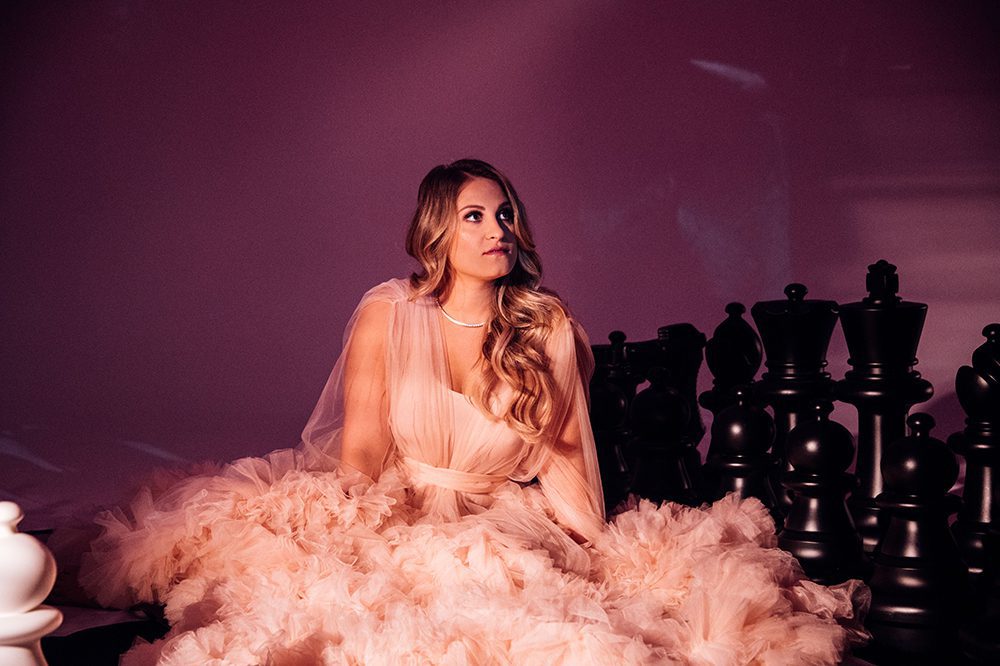
Cocktail Slippers Celebrate First LP in Seven Years with Rowdy “Say My Name” Video

On a recent Zoom call, Silje Hope and Sugar Cane are in agreement that “Say My Name” is Cocktail Slippers’ favorite song to perform live. “It’s a lot of fun to play,” says lead singer Hope on a Zoom call from her home in Oslo. It’s a dark song, she adds, the lyrics focusing on the proverbial devil-on-your-shoulder tempting you. 

“This song is quite tough,” says bassist Cane, whose joins us from Bergen, where she’s visiting family. The band wanted portray that toughness in their raucous new video, premiering today on Audiofemme. Cocktail Slippers filmed the clip themselves inside their rehearsal room, the band members dressed in purple sequins and leopard print. Their shadows dance along the wall behind them, where you can occasionally catch a glimpse of the horror classic Nosferatu. Cane adds, “We’re quite proud that we’re a productive band that makes everything ourselves.”

Last month, the Norwegian five-piece released Shout It Out Loud!, their fifth album (and their first in seven years), on NYC-based label Wicked Cool Records. “We wanted to make this album for a really long time,” says Cane. Recording stalled due to changes in the band, though they continued playing shows. Then, the release was delayed as a result of the COVID-19 pandemic. 

“It’s not that easy to make an album,” says Cane. The band wasn’t keen on the idea of releasing it when music scenes across the world had come to a halt. “We wanted to promote it, do gigs, not just release it,” she explains.

Instead, they chose to release singles until venues where they could fully unleash the full-length began to reopen. That turned out to be a good move. Cocktail Slippers have been able to play live a few times since this past summer, including a record release gig. It was a little different from their usual shows, though – the audience had to be seated and the tables were socially distanced from each other. “We’ve been living under very hard restrictions here in Oslo,” says Hope, noting that the rules have loosened up in Norway since then. 

“It takes time to get used to going to concerts again and everything, but we did have a fantastic release for the album,” she adds. “Even though people had to sit down for most of it, we were able to walk around.”

“It’s going to be great when people can stand and not have to worry about touching other people. It’s going to be very different. I’m looking forward to that,” says Cane. She adds that she was glad that the energetic rock band didn’t have to perform sitting down. “That would be awful,” she says. 

“I  can’t even imagine that – us sitting on stairs,” says Hope. “We’re not that kind of band.”

It’s true – sitting demurely is not Cocktail Slippers’ style at all. For 20 years they’ve been honing a garage rock sound that’s a little retro and a little modern. One of the standout tracks on Shout It Out Loud! is their cover of “Hush,” styled after Deep Purple’s 1968 rendition. They originally performed the cover as part of a television special in Norway. 

“We had so much fun doing it. This song is great,” says Hope. The band went on to incorporate it into their live sets and it did really well with fans. “Everyone knows the na-na part. Everyone knows the song,” says Hope. “People were asking us about it, so that was why we played it a lot.”

Still, they hadn’t recorded it, not until they intended to release it as a B-side for a 7” release of “She Devil (Shout It Out Loud).” They recorded it as if they were playing it live inside the same studio where they made the rest of the album. When they sent the finished product to Steven Van Zandt, who founded Wicked Cool Records and co-produced Shout It Out Loud! with the band, he told them that it needed to be an album track. 

Cocktail Slippers have collaborated with Van Zandt a lot over the years; Springsteen fans know him well as regular guitarist and mandolin player in Bruce’s E Street Band. “We’re not sure how he found our record,” says Sugar Cane, but it was sometime in the early ‘00s. “He picked it up on his radio station and we didn’t know that he was playing it for a year when he contacted us and wanted us to play on a festival in New York City. That was the first contact we had with him.”

In their two decades as a band, there have been challenges for Cocktail Slippers. It’s difficult when members move from Oslo; the logistics of touring gets complicated when band members have kids. “The success is that we’re having so much fun together,” says Hope. “I think that a special energy is created when we play.”

The pandemic made things especially tricky though, depriving the band of their income from performing. “How can we rehearse, release the album, get PR and do photo shoots and video shoots with no income? That’s a challenging thing,” says Hope. “But the success is that we are really, really proud of this record.” Now back and better than ever, Cocktail Slippers channeled plenty of pent-up energy into the video for “Say My Name” – and allow fans across the world to appreciate the explosive energy that’s gotten the band through it all.

Follow Cocktail Slippers on Facebook and Instagram for ongoing updates.

Christian Lopez Flexes Versatility and Pines for Appalachia on The Other Side LP

“I need West Virginia like a daily vitamin in a way. If I don’t take it for too long, I get funky and I gotta go and refresh,” reflects Christian Lopez. Born and raised in Martinsburg, Lopez still owns property among the sweeping, serene Appalachian Mountains. Now residing deep in southwestern New Mexico after calling Nashville home for a number of years, the singer-songwriter found himself creatively and personally depleted in the aftermath of 2017’s Red Arrow. So, he set sights on returning to West Virginia; his old stomping grounds have remained familiar to him through his career, frequently a reprieve from the crushing pressures of a burgeoning Americana career and the bright lights of lower Broadway.

But this time was different.

His grandmother’s land, a wide stretch of earth in the sleepy Calhoun County town of Minnora that seems to harbor all of their deepest, darkest secrets, proved to possess a sort of healing elixir. Soon, he would be on his merry, artistic way to write his new record, The Other Side, a wonderfully volatile genre-fusion.

“It’s really inspiring down there. It’s a sort of stuck-in-time property on a mountain with nothing around you,” he reflects. “It was like a bittersweet depression in a way. I was trying to talk my way through it and write my way through it. This record is so satisfying, because it came from the deepest parts of me. You have to live and keep going to reach those parts. I guess it was just sort of destined to happen at some point.”

From the plaintive, finger-plucked confessionals he has become known for to a healthy powder keg of indie and classic rock detonating in the blink of an eye, Lopez emerges in rare form. His songwriting has gotten sharper, and his vocals dirtier, as he scrapes out a deathly snarl on “Nothing Wrong” and later lilts as songbirds do with “Tanglin.”

Lopez pounces across genres with a hypnotic slyness. Even when he gets down and groovy on “Finish What You Started,” an Elvis Presley-meets-Dwight Yoakam sidewinder, he makes sure to leave a mark all this own. And in between his most disruptive moments, he keeps connective tissues to the past, the more constrained, quieter arrangements as strong as ever.

This new approach developed “probably right near the top,” he says. In working with producer Robert Adam Stevenson (Queens of the Stone Age, Jeff Beck), who he met at a Halloween party a few years ago, Lopez set his sights on twisting his indie/Americana style with Stevenson’s more ambient work to conjure up a whole new entity. “I really wanted to see what kind of fusion we could make.”

It seems fitting “Nothing Wrong” opens the record, as it was their “first real co-write” together for the project. “That was a pretty big departure for us trying all those electrics and singing those big verses,” Lopez recounts. “But you know, it’s stretching the muscle and working those new ideas, sort of just as an experimental thing. It’s a soulful thing, too, and that’s why we kicked it off on the album. I think I wanted to get people a little shook right off the bat, because it’s a departure.”

There’s a cohesion to the 12-track record, even as Lopez swoops to rhythmic highs or dips into acoustic valleys. Interestingly, he never had the intention to make an album. “It just sort of came to be,” he explains. “We really didn’t have too many hiccups. It was such a fun, satisfying experience.”

Lopez’s genre-play is not unlike the Avett Brothers, who have “inspired me on another level,” he gushes. Particularly over the group’s last five or six records, they’ve swapped out straight-arrow folk music for “wacky things and crazy departures that a lot of people would always be up in arms about. I was there loving every second of it, because that honest longing for experimenting and trying new things is what I love.”

The Other Side is steeped in longing — and not only because Lopez returned returned to West Virginia to write. Now 26, he’s beginning to feel time’s grip tighten on his shoulders, leaving him to wonder if he’s out of time to accomplish what he wants to do. “To some I’m a joke/I’m the pull behind the toke/And to some, I’m just running out of time,” he sings on “Blows My Mind (to You),” wistfully taking the piss out his detractors while also reflecting upon the one person who believes him in, no strings attached: his fiancé.

“I was trying to laugh at myself in a way. I think if you can acknowledge it, it makes it clear to yourself and to the people around you. But I still feel like I’m on the first hole of 18 in a way,” he explains. “When you’re on your third album and you’re going into your late 20s, these are real things that I have to think about and sort of battle. But it doesn’t get me down, though. If you listen to the very beginning of that song, you can hear a voice peek out right before the music kicks in. That’s my fiancé saying, ‘You got it,’ from a demo session.”

“That’s really what it’s like when someone comes in and loves you in a way that you didn’t even think was even possible, and it blows your mind,” he adds.

Such is the nature of Lopez’s finest moments. “Feel the Same” swells with a similar emotional air, with the singer-songwriter listing off all the things he misses most about his WV childhood. “I miss you/I miss me/I miss whatever we used to be/I need more than this empty name,” he howls with a commanding softness. Drums pour down as rain, pulling the song’s desperation closer to his chest.

“Living a life as a kid, you don’t realize that you’re never going to get back there again. Having that sort of juvenile happiness is like an untouchable happiness when it’s gone,” he says, adding he initially wrote the song three years ago. He pieces together several “moments of me realizing that it was gone and that the rest of our lives is seeking out that same feeling wherever we can get it, in good ways and bad ways.”

Feeling like a companion piece, “The Other Side,” written as a specific response to working his grandmother’s land, arrived when he least expected it to. “I didn’t really know what I was going to say when I went into it,” he remembers. First, he simply jotted down the little things in life he loved most. “That was my focus. But then I started to realize what it could be, and it almost felt like the song was coming to sort of uplift myself.”

Looking back, the feel of West Virginia and the people possesses “storybook vibes,” he says. “My dad was like a best friend to me. I had a great mom and a great supportive situation.”

The record weaves through reflections on “the identity you give yourself as a kid, as a son, brother, kid in this class, friend to this guy,” he offers, “but then you get to a certain age, and for me, I’m out here on the road trying to do this and there’s no one else next me other than my fiancé, and that identity is sort of stripped because you’re not just the son or the friend of the kid in class. You’re this guy out here on the road trying to figure out who you are on your own. It’s a tough transition.”

The Other Side marks not only an impressive musical transition but demonstrates Lopez is more than capable of driving the ship. “I love being able to play all the instruments and take my sweet time. It definitely was a gradual recording process. The experience made me more powerful in the studio in a good way,” he says. “When I came to Nashville, I was courted… working with people who had a lot of clout, a lot of credit. I had to sit back and follow their lead. I learned so much, and I’m grateful for all of it, but this album was very much me doing the opposite. It was very much me taking the pilot’s seat and being able to say no when I needed to and push something through when I needed to.”

Follow Christian Lopez on Twitter and Instagram for ongoing updates.
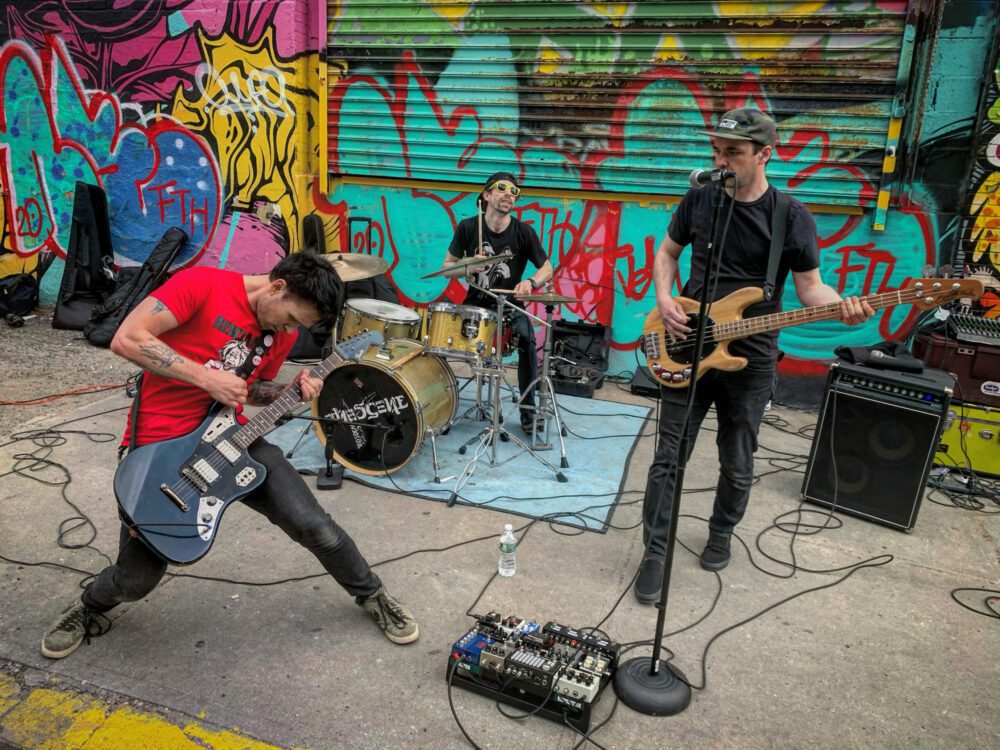
Screensaver Pay Homage to Classic Post-Punk with Debut LP Expressions of Interest

Discovering screensaver’s debut album Expressions of Interest (released October 8 through Heavy Machinery Records) might make you wonder if you’ve stumbled upon a B-sides and rarities album from the late 1980s. Somewhere between Siouxsie And The Banshees and Visage, the lush synths and dramatic dance punk guitars suggest more than a passing passion for the indie-New Romantic era that spawned Cocteau Twins, Echo & The Bunnymen and My Bloody Valentine, too.

The Melbourne four-piece began as a bedroom project between Krystal Maynard and her husband Christopher Stephenson back in late 2015, when Perth-born Maynard was living in Melbourne and Stephenson was still in his hometown of Austin, Texas. The two had met in Berlin in 2014 when both were on the same bill in their respective bands.

“For about two years we were living in separate countries, but we had screensaver – though it wasn’t named at that point – as a project between us, [with material] that we’d send back and forth and collaborate that way,” explains Maynard. “We did that for a long time, very low-key, starting in late 2015, with no intention of it becoming anything other than a way for us to be creative while living in different countries.”

When Stephenson moved to Melbourne in 2017, he was familiar with the city from having toured there in the past. Though he initially took some time to adjust, both Maynard and Stephenson are “lifers” when it comes to music, and it wasn’t long before he’d joined two Melbourne bands. He currently drums for Exek and Spiritual Mafia, while continuing to collaborate remotely with Spray Paint (with members in upstate New York and Austin, respectively).

After putting a couple of demos on Bandcamp, screensaver began to get asked by friends if they would play shows, though “we actively wanted to avoid playing live, because we’d played in a lot of live, active bands,” says Maynard. “We were nervous about it because things become so busy and we both had multiple projects. I had two other bands on the go back in 2017, so we wanted to keep it as a bedroom project where we focused on writing.”

Realising that as a duo they’d either need a sequencer if they were to play live, or a band, Maynard and Stephenson set out to find additional members. First came Giles Fleike (Low Tide), who had been in a band with Stephenson called Orange (“I doubt anyone’s heard of them, they only played a few gigs,” admits Maynard).

“He’s a friend of ours, so we asked if he’d be interested in coming in to play bass… he’s also an amazing keyboardist and knows a lot about synthesisers and noise, so he brought a lot of different sounds to the band,” she says.

In keeping with their ethos of working with friends and criss-crossing personal and professional divides without fear, it was only natural to invite James Beck (of Personal Touch and Rat Columns) to round out their band.

“[James is] very, very old friend of mine, since I was five and he was three. We were neighbours,” she says. “He does a lot of electronic producing, so I thought he’d gone solely into producing electronic music, but when I sent him the demos… he liked the demos a lot, so he decided he would play live drums again. I joke that I pulled him out of retirement and back onto the kit.”

Those demos felt to Maynard as if she’d come full circle to the music she’d developed a passion for as a club-going teenager in Perth. At a club called Dominion (as dark and gothic as the name suggests, she confirms), she first heard goth and industrial bands like Skinny Puppy, The Cure, Joy Division and Bauhaus. She later got into Gang of Four and Wire, Magazine, and Modern Lovers, and the world of art punk. All these influences are reflected in their new album.

An admitted goth teenager, obsessed with The Cure, Siouxsie And The Banshees, and Joy Division, Maynard’s influences are worn on her sleeve. “They’re a core part of my formative taste, so it felt very natural to be playing in a band that is influenced by post punk from that first wave British era, New Wave and electronica, all of that,” she says.

The Cocteau Twins’ “Heaven Or Las Vegas,” with its luscious swirl of synths and echoing guitars, could have planted the creative seed of “Soft Landing,” while “No Movement” feels like a B-side to The Cure’s “Killing An Arab.” Elsewhere, “Buy Sell Trade” drives a serrated-edge synth saw through the sonic darkness in a Gary Numan-meets-Bladerunner shock of pure adrenalin.

Maynard started playing in a band when she was 15. Since she was under age, she often snuck into venues to play with her older bandmates. But even earlier, it was her father’s prolific record collection that opened her eyes to the possibility of a life in music. She’d comb the records looking for women artists, and it was seeing Patti Smith, Janis Joplin, then Poly Styrene of X-Ray Spex, who kickstarted her passion for finding “anyone who wasn’t a white male playing in a band.”

When she met her first bandmates, they were into L7, Babes In Toyland, and Bikini Kill. Having invited Maynard into their band, where she “smashed out 3-chord riffs,” they gave her time and support to learn how to play guitar. It was their generosity and the riot grrl ethos of “girls to the front” that remains central to how she lives her life.

“I’m 100% a feminist. I don’t understand anyone who isn’t these days. We have to be and we have to continue to be,” she says. “If you don’t see representations of yourself, or somebody like you, doing things, then you won’t go out there and do it yourself.”

Screensaver intended to make an album in 2020, and they’d begun the recording process just prior to lockdown. Once the pandemic effectively closed the city, Beck set to work programming the drum parts, while Stephenson and Maynard wrote their parts over his beats.

“We have songs that we write, like ‘No Movement,’ which we created in a jam room. But when you sit at home and nobody is waiting for you to come up with a bass riff, you can come up with music that’s really considered,” Maynard says. “So, half our album is written pre-lockdown in a jam room while the other half is written ‘in the box,’ where someone has written a foundational synth part or drums, then we’ve built it up that way. It’s meant that we have an album that’s well-rounded, not just ten straight-up, post-punk songs. They have a different energy to them.”

She put the demo for “Skin” together in 2019, the first time she’d demoed a song with the foundational drums and synths, which she sent to the band. “I’d been teaching myself to program drums, and I’d programmed a song with all the drums done. For me, being able to demo a song like that and having done it all in GarageBand was exciting for me,” Maynard remembers. “Chris was overseas when I put the demo together, so he was listening to it in another country. He’s an engineer and he’s great at producing music, but for me it’s all new and exciting. He loved it and was thinking of parts for it straight away. I feel like I was the genesis of that song.”

Another of her favourites, “Buy Sell Trade” began with an “incredible, catchy synth line” written by Stephenson that underpins the whole song. It’s a “motoric, kraut-rock jam that’s danceable but kind of psych-y… sometimes you write a riff and you go, ‘That’s a hook!’” she enthuses. Maynard is convinced she doesn’t have the music theory knowledge nor the co-ordination to intuitively play drums, so it’s been empowering to master it digitally. “I can build an interesting, eclectic drum beat that breaks the rules of timing,” she says. “It’s so fun. It opens your world. If you can build a drum beat, you can write a song.”

Follow screensaver on Instagram for ongoing updates.

Pennywild Pens Vibrant Ode to Drag Shows with Latest Single “Dollars, Dolls, Drugs”

Photo Credit: Quasar Media

On “Dollars, Dolls, Drugs,” DJ/producer Pennywild takes listeners into a drag night with some advice that comes via one of her pals: “If you know that you’re going to a drag show, you should absolutely stuff your pockets with dollars.” 

The second single from forthcoming EP Night People, “Dollars, Dolls, Drugs” is part of a larger narrative about nightlife that Pennywild developed at a time when the club kids were stuck at home (there’s also a print zine that accompanies the release). The vocal samples were sourced from conversations that she had with friends during the pandemic. “I chopped and screwed them, cut them up and tried to put the all together to create the narrative,” says Pennywild on a recent Zoom call from Rome, where she has been traveling. 

The EP’s previous single, “Side Streets,” released in late July, similarly pieces together morsels of conversation in its depiction of the drive to a club in Los Angeles. “There’s no narrative that was scripted,” says Pennywild. “This is a project that I wanted to start from the ground up and create as the conversations ensued. If one conversation felt like it was inspiring some sort of motif or song idea, that’s the direction that we went in. Everything is found sounds from my real life.” 

In her music, Pennywild works with concepts for projects and, while brainstorming ideas for what would become Night People, she kept thinking about going out. “I think that we were just robbed of that experience for a year and a half,” she says. 

Pennywild, who has been based in Los Angeles for several years and is now bicoastal, spent the years before COVID-19 entrenched in nightlife on opposite U.S. coasts. In New York, she connected primarily with drag and LGBTQ scenes, venturing to venues like 3 Dollar Bill and House of Yes. In Los Angeles, she fell into the electronic and beat party scenes, hitting up events thrown by crews like Space Yacht, Brownies & Lemonade and Ham on Everything. As a DJ, she played regularly at venues like The Friend in Silver Lake and Winston House in Venice.

A choreographer who has worked on shows at the Hollywood Bowl and Lollapalooza, Pennywild came to music via dance. She began studying dance at age six before moving toward musical theater as a teenager. She says that her dance background helps with her production. “As far as making music, I really have just been creating what I always loved to hear and respond to,” she says. 

“If I’m stuck writing something, I’ll just start to move my body and get some choreography out there—like abstract choreography—and see what accents my body is naturally wanting to hit,” she explains. “That’s a sense memory exercise that I can do because, as a dancer, we’re not only dancers, we’re professional music listeners. We listen to music constantly and we’ve heard so much music and we’ve interacted with the music in a more intimate way than anybody else because we kind of step inside of it. That’s been really helpful for me to produce.” 

In recent years, Pennywild has added directing to her skill set. She’s directed clips for Zedd and RL Grime. “Every five years or so there seems to be a new interest, which is the pattern,” she says, adding that, right now, she’s hoping to focus on the talents she’s already developed. “I’m already drowning with everything that I’m trying to work on and trying to get better at,” she says. “But, it never gets boring, which is the fun part.”

As venues began to reopen, Pennywild was able to return to the decks. She has gone back to Winston House and has also played at Sound in Hollywood. She opened for Chris Lorenzo at the Hard Rock in San Diego and had the chance to play at Elsewhere and Lot 45 while in New York. 

But, her club life might still be evolving. That’s the other reason she made Night People. It’s a memento of a specific time in her life. Pennywild was 26 at the start of the pandemic. She turned 28 on the day “Dollars, Dolls and Drugs” was released. “It expedited my age group’s need to slow down and start to have a different lifestyle,” she says of COVID-19 and the subsequent nightlife shutdown. “Everything was just a little bit sped up.”

She adds, “I might’ve had a couple more years of going out all night and being crazy, but then the pandemic happened and it forced me to take a step back, to zoom out, and now I’m feeling glad that I got all of that out with this project so that I can move on to the new chapter of my life that doesn’t involve maybe so much partying.”

Follow Pennywild on Instagram for ongoing updates.

Cellist Jeremiah Moon Challenges Artistic Hermit Stereotype with Debut Single “Kinds of Light”

Perhaps it’s the gentle lilt of his voice, or his unique, interstellar moniker, but there’s something dreamy about Jeremiah Moon and his music.

As a teaser for his forthcoming 2022 debut EP Sputnik, the Seattle cellist and singer-songwriter spins a whimsical indie folk-pop dreamscape with the release of his debut single “Kinds of Light,” and its accompanying video.

For Moon, who grew up in Colorado Springs and went to school at Boston University for classical performance, releasing original music like this was always the dream—it just took him some time to realize it.

Growing up the son of a professional orchestral violinist, Moon and his three sisters all took up string instruments early—Moon started cello at age 7—and continued with the study of classical music into their adolescence. As Moon said, it was “just what we did.”

“Mom and Dad said, ‘Alright, you’re going to go practice now,’ and I was like, ‘Okay, I guess I’m going to go practice now.’ Once I was in high school, I started realizing, this is hard… but I’m grateful for it now,” Moon remembers.

He eventually decided to pursue a degree in classical performance at Boston University, and says that his time in Boston helped expose him to a variety of different musicians at the top of their craft. “It was also very intimidating,” he says. At the same time, Moon realized a career in the classical world wasn’t quite right for him—his love for music felt different. “I learned pretty quick that I wasn’t going to go get a Masters in performance and then start doing orchestral auditions. I did not feel the same things they felt about practicing and workshopping and studying and learning all the repertoire.”

After graduating, Moon took some time away from the classical music community, unsure what music path he’d like to pursue, if any. In 2013, he moved to Seattle and worked in retail for a few years—but felt a lack of direction, though he continued to write songs in private, a habit he’d developed in high school. “Later in high school I had a wild hair and I started to write some songs,” Moon recalls. “People were like, ‘Hey, this is actually really good – you should keep doing this,’ and I sort of put that in my pocket and didn’t really take it too seriously.”

Then, a new friend he met asked him a question that changed everything. “She asked me why I wasn’t taking myself more seriously as an artist,” he says. “I was forced to take a step back and sort of seriously consider questions like, what do you really want? What do you feel like you have to offer?” Not long after that reckoning, Moon re-examined his life and decided to take the pop music he’d been making for himself beyond his bedroom. Thus, Sputnik was born.

Since the fall of 2017, in collaboration with producer Adam Black, Moon has been writing and refining his debut EP. In the process of doing so, he sent a demo off to a few of his friends when Chris Mansfield from Fences heard it and liked it. He helped Moon get in contact with the Enci Records, with whom he’s now signed.

Moon decided to call the project Sputnik because the word translates as “fellow traveler” and much of the content of his debut contends with inter-relational questions brought up by the end of a previous romantic relationship. With the title, he also gets to bring in his interest in string theory and the forces of interconnectedness in the universe.

“I think I was trying… to process maybe what an ideal relationship would be like and in terms of relationships, what they’re for, and what we give to the people around us,” he says. ” I don’t really understand string theory much at all but I was told there was this concept of like every particle in the universe having some sort of relationship with every other particle – this intrinsic relationship that’s kind of unshakeable. I’m sure any scientist would cringe at me describing it that way, but the idea behind that to me is really beautiful and interesting and something I couldn’t shake.”

Moon’s debut single “Kinds of Light” stems from a few more specific inspirations, too. Namely, his love of Bon Iver and his skepticism in the romantic concept of the artistic recluse retreating into nature for inspiration. In fact, the phrase “Kinds of Light” is a reference to a hermit artist character in the footnotes of David Foster Wallace’s encyclopedic Infinite Jest. “I had this skepticism—how honest is this idea?” says Moon. “So I wanted to explore it through [my own] character.”

Moon is also a talented illustrator. He brings music and illustration together briefly with an animation he contributed to the video for “Kinds of Light.”

In the next few months as he gears up to officially release the EP, he plans to release more singles, along with videos he hopes to play an active artistic role in. He also plans to play some local shows and begin planning a tour.

“I love making music more than I ever have,” says Moon. “I have so many ideas I want to chase, different sounds I want to try on, and my goal is just to keep doing this as long as I possibly can.”

Follow Jeremiah Moon on Facebook and Instagram for ongoing updates.
Meagan Hickman Offers Hope and Redemption with “One Day” Premiere

Photo Credit: Petya Shalamanova

Meagan Hickman has always been intentional about creating uplifting music, a trend she continues with her new song, “One Day.” 

Born and raised in Chicago, the singer-songwriter was trained classically, falling in love with songwriting after discovering acts ranging from John Mayer to Bonnie Raitt. Adapting the craft as her own, Hickman began journaling as a teenager, her thoughts soon turning into song. Raised on the sounds of Motown and listening to India.Arie and Jill Scott as a teenager helped her develop a palette for soul music that she incorporates into her own sound. “I feel like soulful music is always where my heart’s been. Vocally too, it’s challenging, and I always wanted to sing. Soulful music was always that outlet,” Hickman tells Audiofemme

The Nashville-based artist carries this sound into “One Day,” premiering exclusively with Audiofemme. ahead of its official October 8 release date. The spirit of the song is as bright and sunny as the yellow dress she dons on the single’s cover art, while the instrumentation is as multilayered as the lyrics. A sparkling piano adds color in the background as syncopated drums shine alongside Hickman’s radiant vocals. The song was inspired by the singer’s friends who expressed regret choosing one life path over another, believing they neglected their calling and had run out of time to pursue it. That’s where Hickman steps in to be a light at the end of the tunnel, encouraging them that dreams are never out of reach. “One day you’re gonna find a way to see/One day you’re gonna find a way to breathe/One day you’re gonna find what you need/One day you’re gonna find a way to sing,” she cheers in the chorus. 

“‘One Day’ is about coming back to those roots. Even if you’ve done all these other things and you feel like your time is up or you missed the boat, you still have it within you. It’s not gone. It may feel like it because of all these detours, but this is not the end,” she explains of the song’s meaning. “You’re going to find your song – that is your calling. You’re going to find your voice. You’re going to find whatever that calling is again, because it’s who you are. You’ll find your way back to that voice or that calling and you’re going to find that sense of peace.” 

Inner trust is an integral theme to the song. Giving it a modern twist, Hickman tackles the toxicity of self comparison in the second verse: “Foreign languages of endless data/You’ve got to decipher what matters/Deciding should you step away/Or dive head first and stake your claim.” Hickman acknowledges the “comparison factor” that plays out as we scroll, reminding herself as much as the listener that it’s up to each individual to react with a positive or negative mindset. “That moment in time is the most crucial to your success and your mental health. For me, even though it could be negative, it’s like, ‘How are you going to react to that?’ and that in turn I think affects the way that you move forward,” she analyzes. 

Alongside this critical thinking, “One Day” is a redemption anthem, Hickman serving as the listener’s cheerleader in times of self doubt. It’s a message she’s proud to share with the masses in hopes that it offers listeners a sense of reassurance and peace. “I really hope it’s like a big hug. I hope someone knows if you’re going through that crisis – whether it’s mental, physical, family, whatever – it’s all perspective,” she expresses. “Circumstances can be really bad sometimes, but my hope is to be like, ‘Here’s that hug, it’s okay. You can do it.’”

Hickman says she’s needed that same encouragement plenty of times. “I so badly want to receive what I give; I think all of us do. We hope that we give enough and we get it back. With my music, I hope that I get that same hug or that same love back. If I can put goodness into the world as best as I can, that’s my goal,” she says.

After a fraught year and times of crises that never seem to end, Hickman continues to display bravery and caring. “This world is isolating and we have so much stuff that can mess someone up,” she points out. “If there’s anything that I can do with my music, it’s to lend that hand and be like, ‘I see you. I feel you. I hear you. I go through what you go through. You’re not alone.’ That’s my hope.” 

Follow Meagan Hickman on Facebook and Instagram for ongoing updates.
Musician and Photographer Denée Segall Reveals What Makes Her Feel Good

Photo Credit: Denée Segall

What makes you feel good? Is it a tub of hummus and Netflix, or is it the love of your life in a matching onesie beside you on the couch? Or the sound of grumbling, guttural guitar? Perhaps it’s all of these. Denée Segall shamelessly admits she feels good when she’s with her husband Ty. A couple for thirteen years, their co-written single “Feel Good” (from Ty’s recent Harmonizer album) came out in August, accompanied by a video featuring Ty and Denée on a glamorous night-time road trip. In disco-era satin and sequins, Denée poses up a storm in the back of the car, on the hood and then, finally, taking the wheel while Ty rides shotgun. Serrated-edge guitar riffs sound like they were recorded in a photo booth, yet almost rip the hairs off your arms. Somehow, there’s a dance-friendly melody at work, too.

“’Feel Good’ is not directly about [our] relationship,” Denée clarifies. “I wrote it as a more universal theme. Ty came to me with a loose concept he had for the song and I took it and ran with it. But of course, when writing a love song, he is my ultimate inspiration. I don’t think it really reveals anything specific about us. Since we typically like to keep our relationship somewhat private, I guess it’s just a nice little glimpse at our collaborative minds, and our love and adoration for each other.”

It’s also a love letter to dance punk – a running theme for both Ty and Denée. They collaborated with Emmett Kelly under the moniker The C.I.A. back in 2018, releasing a self-titled album that year (via In The Red Records) full of furious hip-shaking, head-tossing, carnal noise. True to their experimental approach, the band consisted of two bass guitars, no lead guitar, and a drum machine. Recordings and reviews of their live performances reveal Denée’s natural frontwoman persona, a singer and lyricist who punctures the poker-faced cool of the Cali crowd with her intensity. While Ty’s simultaneous multi-project, multi-band work has defied the 24/7 human schedule, Denée has a trail of musical glories in her wake too. She was the bassist for LA punks VIAL, which released their 7″ EP in 2015.

“I was in VIAL from the beginning to the end, which was 2013–2017,” she recalls with evident joy. “It was such a fun band to play in. We are all old friends from San Francisco and had all recently moved to LA from SF with a lot of other friends in a mass exodus because of the tech boom and insane rent prices that followed. Playing shows in the LA DIY punk community was a really great way to settle in and to meet people. At the time, most of us considered ourselves very amateur musicians and we really encouraged and supported each other to grow musically. Man…reminiscing about this band always makes me miss it!”

A VIAL reunion isn’t likely to happen anytime soon, though. When she’s not making music, Segall keeps busy: snapping photos – including promo shots for Ty, Shannon Lay, LA punk legend Alice Bag, and more; designing album covers; and working at In The Red Records, her day job of the last eight years. “I’m the only employee so I basically do whatever is needed. A big chunk of that involves laying out album art, running the website, talking to artists and customers, mail order, etc. [Label founder] Larry [Hardy] is the greatest boss so it’s easy to work for him and also make time for music,” Denée says.

There’s been more time than ever to dedicate to music while touring has been off the table, and both Ty and Denée have been working from their home in Topanga, where they’ve lived for two and half years. “I felt at home here as soon as we moved in,” Denée says. “I grew up in Northern California in the Sierra Nevada Foothills and Ty grew up in Laguna Beach. Topanga is very reminiscent of our respective hometowns. We are a short drive to so many beautiful beaches, but our home is in the canyon nestled among giant oak and eucalyptus trees.”

“As for the space itself,” Denée adds, “there isn’t much division. We do have our separate workspaces. I have an office upstairs, and Ty has the studio in the backyard. We do our morning chores together at our dining room table while we drink too much coffee.”

In her own space, Segall embraces quiet moments. “When I’m working in my office on the computer, I tend to enjoy the silence. It helps me focus. I listen to the birds chirping, the dogs barking at the squirrels, or whatever record Ty has on that drifts upstairs,” she says. But naturally, Audiofemme wants to know what she’s been listening to.

“If I’m driving, I usually like something upbeat that I can blast and sing along to,” she replies. “I’m all over the board, but lately I’ve listened to The Hunches, Free Kitten, Plastics, Swell Maps, and Suburban Lawns. I’m pretty picky when it comes to new music. I don’t mean to be biased, but I most enjoy the music that my friends make. Oog Bogo, P22White Fence, and CCR Headcleaner are just a few favorites.”

Segall says she’s also a huge Neil Young fan (“Simply put, he is one of the greatest songwriters of all time. There is an album and/or song to fit any mood I’m in. Ty and I actually saw him standing on Pacific Coast Highway a few weeks ago. Blessed day.”) but her first musical loves were Beastie Boys and the grunge/noise-art bands she discovered in the ’90s.

“My older brother Todd introduced me to [Beastie Boys] when I was super young. I remember either he or my dad took me to our little local record store at midnight to get a copy of Hello Nasty when I was 10. I still love them,” Denée says. “In high school, my favorite band was Sonic Youth. I looked up to Kim Gordon for sure. I loved The Breeders and Nirvana too. I guess I was really into early ’90s stuff in general. I worked at Hollywood Video in high school and would rent 1991: The Year Punk Broke over and over until they transitioned from VHS to DVD and then I bought it for a buck. I also loved Le Tigre and the first Yeah Yeah Yeahs EP and album.”

These bands have been formative to Segall’s very identity. “Now that I’m thinking about it,” she muses, “I guess I mainly looked up to women who had unique voices, were uninhibited, and who seemed to not give even one single fuck.”

Khari opens for Freddie Gibbs at The Thompson House

Khari
Khari / Photo Credit: Phil Dowdy

Live music in Cincinnati is back and Khari is taking full advantage. The Queen City-bred rapper opened for Grammy-nominated artist Freddie Gibbs last week at Newport, Kentucky’s Thompson House

“It meant a lot to open up for him,” Khari told Audiofemme after the show. “He’s someone who I respect as an artist and someone I’ve been listening to for a while now, and to be representing Cincinnati on the bill, I definitely took pride in the fact that I was able to open up for a Grammy-nominated artist.”

Khari performed several cuts from the latest installment of his This Is How We Feel EP series: Act 2 (Institutionalized), including “Hood Millennials” and crowd-pleaser, “Stupid.” The local talent also performed his verse from the 2019 Cincy posse cut, “Da Art of Ignorance (Remix),” before winding down to some conscious records. 

“Going into the show, I knew I wanted to show my versatility with my set, so that meant displaying my more upbeat tracks and then transitioning into some more soulful records,” Khari said. “Me and my team literally found out about four days before the show that Freddie’s management team liked the music and that we were in to do the show. So, I got with my DJ, and we rehearsed Sunday for about five hours, then Wednesday morning before the show for a couple hours.”

Besides performing a well-balanced set, Khari also proved his ability to engage the crowd. The rapper led audience members through a handful of T.I. classics to mark the beginning of Libra season and bolstered a powerfully unifying moment while rapping “Eve.” During the emotional track, which serves as his tribute to Black women, Khari called on the crowd to hold up their lighters and cellphone flashlights. 

“By far the biggest moment of the show for me was performing ‘Eve’ and seeing the entire venue [hold] their cell phone lights up as we put on for Black women,” he reflected. 

The crowd’s energy carried over into Gibbs’ headlining set, who performed a medley of cuts from his Grammy-nominated collab with The Alchemist, Alfredo. The Gary, Indiana native opened with “God Is Perfect” and continued through the night with tracks like “Thuggin’” from his and Madlib’s 2014 album Piñata, ESGN‘s “Eastside Moonwalker,” 2019’s Bandana cut “Palmolive,” and his most his recent collaboration with ScHoolboy Q, “Gang Signs.”

Gibbs’ stage presence was felt all the way in the balcony and his performance was repeatedly interrupted with fan-led “Freddie! Freddie!” chants. After waiting over an hour to see him perform, it would’ve been understandable for the audience to be a tad bit subdued by the beginning of his 11:15 pm set, but the crowd was clearly excited just to be at a live show again. Freddie also kept the energy up by jokingly ripping into his tour DJ Ralph, or DJ CaliNdaMix, by leading the crowd in “Fu*k you, Ralph!” chants. 

Freddie Gibbs / Photo Credit: Sha Rogers

All in all, the energy of Cincinnati fans, and performers, was a great reintroduction to live shows after a year of radio silence. Aside from Khari and Gibbs, Nashville’s Tim Gent and A.B. Eastwood also performed at the concert, which was put on by DJ Dabble’s Full Circle Presents.

“As far as feelings after the show – I felt great,” Khari reflected. “I knew I killed it and the response has been great. I gained so many new fans that have been hitting me in the DMs, listening to my music and made some valuable connections that will start to play out for me and my team here soon. So, I’m excited.”

Follow Khari on Instagram for ongoing updates. 

Mindy Meng Wang Draws Ancient Chinese Harp Into Contemporary Movement on Phoenix Rising

Mindy Meng Wang is not interested in living in a time warp. She is confidently, elegantly weaving traditional instrumentation into a contemporary soundscape to reveal new possibilities for ancient tools. Chinese born, the Melbourne-based Wang is an internationally renowned composer and expert in the Chinese horizontal harp, or guzheng. On her latest album Phoenix Rising, released September 24, she has collaborated with some of Australia’s most renowned modern songwriters and composers, including jazz master Paul Grabowsky, Violent Femmes’ bassist and Dark MOFO founder Brian Ritchie, and orchestral percussionist Claire Edwardes. Lesser known in the mainstream scene, but just as prolific and fascinating, are collaborators Ma Haiping, a Chinese producer and techno DJ, Vietnamese-Australian pianist and experimental electronica composer Fia Fiell (real name Carolyn Schofield), and multimedia composer and performer Daniel Jenatsch. 

Phoenix Rising emerged from the collaborative Flash Forward project, in which the Victorian State Government and the City of Melbourne provided funding to 40 musical acts to create original albums within three months. Melbourne-based vinyl producer Heavy Machinery Records and Music in Exile cooperated to release the album, and it is utterly captivating.

“This album really summed up all the styles I’ve been working on the last couple of years,” says Wang. “All the styles I explored in there are things I’m really passionate about. The music I really love to listen to usually is very intense, very emotional. All genres have this, from a really deep cello in classical music to the build-up in electronic, to pop even. It’s more about the emotional style – I really enjoy when you listen to music that wakes up that deep emotion in your heart.”

Hauntingly, heart-achingly lovely “Night Storm” opens the album; Grabowsky’s glassy, cascading piano tumbles upon tumultuous, dark waves, echoing and seeming to glisten under a half-hidden moon. The weighty, atmospheric guzheng is at first blunt and uncertain, then it becomes delicate, tip-toeing tentatively through the curtain of night to reach a midnight rendezvous with the now rumbling, swarthy piano. The two instruments encircle each other in a beguiling call and response, eventually so entwined that there is only their shared song.

“For this album, there’s not a lot of surprises because I’d worked with everyone before,” says Wang. “Individually, they did surprise me though. A lot of the pieces were created via structured improvisation, so I had an idea for the kind of quality it would be, but I didn’t know exactly what it would sound like. I have to say, all the pieces worked in a surprisingly good way.”

In introducing the guzheng into Western musical genres over the last decade, Wang is a pioneer. The instrument had been played in traditional form for 2500 years in China. In finding ways to merge it with jazz, pop, electronica and Western orchestras, she had to experiment with new techniques and tuning systems on the guzheng, resulting in entirely novel sounds. Her curious spirit was likely nurtured by the progressive city she was raised in.

“I was born in a city in Northwestern China, Lanzhou. It was a trading spot on the Silk Road, so everyone came there from India or Europe, even. The Chinese would travel from the capital to here. So, the culture is really mixed and the people are diverse. We have more than 40 ethnic groups living in the city, and that’s where I grew up,” she explains.

That same dichotomy of diversity and unity is reflected in the selection of songs here. Each song, like the first, is deeply atmospheric, conjuring dream visions and glimpses of a landscape that may be real or imagined. It was Wang’s vision to seduce the imagination of her listeners, to glide through their defensive barriers and prejudices and let her music speak for itself. She wanted listeners to discover the guzheng and be moved by it without needing to name it or know it, just as she discovered it as a child.

“My generation is the generation where parents decided that children needed to do something more than just go to school. So, we had to choose a class after school and I chose music,” Wang remembers. “I just happened to have the best teacher in the city as my neighbour, so from a very young age, maybe five years old, I was well looked after by this guzheng teacher. I always loved the sound of her music. When they asked me what music I want to learn, I pointed to her and said that’s what I want to learn.”

Between the ages of six and nine, Wang grew increasingly serious about her playing – there was a lot of training, exams and competitions. At sixteen, she had competed in all the provincial and national competitions. “I thought I’d go to a conservatory and follow this career path, becoming like my teacher,” Wang says. “But then I had the opportunity to go to England for a short-term English course.” That was on 2002; Weng was only seventeen. But she decided to stay and learn Western music. She completed her university studies in music performance, then moved to London.

“Before I went to England, all the music I played was traditional,” Wang says. “But when I got to England, I saw all my classmates playing classical, to pop, to jazz. I thought why, on my instrument, can I only play traditional Chinese? I thought, how can I have more fun with my music?”

In London, she joined the Silk String Quartet. It belongs to a bigger organisation, including London University. It’s one of the best modern string quartets in Europe, and performs festivals across the continent. She was able to work with acts as diverse as the London Symphony Orchestra and, in 2010, Gorillaz.

Collaborative adventures aside, her curiosity about other places drew her to Australia in 2011.

“I had no friends, no connections, no work, nothing. It wasn’t easy for my career, and for the next three years my father was quite sick in China, so between 2012 to 2015, I was travelling a lot between London, Melbourne and my hometown to look after my father in hospital until he passed away,” Wang says. “After he passed, I really thought about things. I had more responsibility and realised I had to settle down in one place and to be able to look after my family. I decided that Melbourne was a better choice than London, which is so busy and has a less intense overall lifestyle.”

Though it was a rocky first few months trying to establish her musical career here, she became involved with Multicultural Arts Victoria,  which supported her as a solo artist and in cooperation with artists across various disciplines. “It made me feel more confident and comfortable to live here as a musician,” she says.

Part of the challenge was convincing fellow musicians and artists that this ancient instrument could offer such richness in contemporary practice. “Even the professionals need to get convinced,” she says. “People are not drawn naturally into something they have no knowledge about. People are comfortable with things they know, even musicians and creatives. Sometimes when I talk this instrument , its tuning technique, its philosophy… it just looks like a very strange object to them. So, how could they have an inspiration from that?”

There is no shortage of inspiration on Phoenix Rising, and the emotive, immersive nature of the album is a credit to the adventurousness of all the artists involved.

“When I started making this album, it wasn’t so clear. The concept was that I wanted to collaborate with artists that I hadn’t documented collaborations with before. Some musicians, I had long-term plans with, but some artists I’d only played with once or twice but really treasured, so I wanted to document those moments,” Wang says. “The musical style became really intense because it was recorded between lockdowns. It was a way of letting out our emotions. Later on, I looked back and [saw that] we were playing music as if we were having a conversation, and those conversations are not polite. I wanted to create something that can touch people deeply, and make them feel that it’s okay to be emotional or feel heavy during those times. I wanted to create a safe space to let them, through the music, get into their own world and release their emotion.”

Follow Mindy Meng Wang on Instagram for ongoing updates.

Kiss the Tiger Prove Representation Matters with “Grown Ass Woman” Video

Photo Credit: Sara Fish

Meghan Kreidler is an acrobat — or at least she feels like one most days. “I teeter back and forth between feeling very empowered and then just being totally thrown off by little things that happen in everyday life,” she says, “just behaviors that have been normalized by men, in particular, and how they talk to me and how they treat me.”

She’s speaking frankly about her song “Grown Ass Woman,” which appears on Vicious Kid, her third studio album with her band Kiss The Tiger. “The angel of death/Wants me to draw another breath/But angel won’t you leave me alone,” she sings, her voice coated in raw vulnerability over a quivering and dusty country-time signature. The video for the surprisingly stripped-down performance debuts today on Audiofemme.

“Grown Ass Woman,” and its tender climb to a thunderous vocal burst, speaks both personally and universally to experiences of womanhood. “There’s a lot of talk about feminism and female empowerment these days, and it feels like it’s very in style. That might make people think, ‘Okay, we’ve arrived. Women are equal to men.’ But in my experience, I still come up against moments in life, where I think, ‘What the heck? I thought I was this person, but now I feel so weak and vulnerable.’ I think I’m growing into a stronger, more nuanced person as I get older.”

With radical honesty, she reclaims her right to take up space. In another life, she may have simply swallowed micro-aggressions as an act of resignation, accepting the sting. But now, those moments seem to pop up more frequently, and she’s found herself “feeling a lot more hurt by them,” she confides, adding that she’s often “blindsided by those moments and not being able to respond back in the moment.”

The mid-album detour “is another one of those songs that is kind of scary for me. It’s a slow burn” she says. For a while, the singer-songwriter struggled with whether people would latch onto and appreciate its organic, subdued feel, but on a personal level, it’s opened the floodgates for her own needed transformation. “What I like about it is that it always forces me to face my fears and to tap into what makes me feel vulnerable. At the end of the day, when you’re able to grasp and own your vulnerability, that’s when your strength really shines through,” she says.

Back in April, Kiss the Tiger released a video illustrated and animated by Eleonore Dendy for “I Miss You.” Though very different from “Grown Ass Woman,” both videos frame visual storytelling “around a female experience,” a much-needed approach, particularly in the music industry. “We’ve tried to get women who are either featured in the video or who are working behind the scenes,” she says. The band enlists long-time friend and director Sha Cage for the clip, showcasing Kreidler pouring out her heart on a stage at the Cedar Cultural Center with glowing violet lights showering upon her shoulders. “I respect Sha very much as an artist. We couldn’t have done a music video for [this song] and not had a female director. That would have not made any sense,” she laughs.

The music video carries further significance as the camera pans to the concert crowd to reveal groups of young girls smiling up at Kreidler. It’s a simple gesture but a powerful moment to suggest representation remains crucial, inviting a new generation of hopeful women to not only see themselves on stage but to fuel them to follow their own dreams. “There are a lot of people that connect to our music, and when they see us live, they love it and have a great time. But I feel like women, in particular, are always really excited,” Kreidler reflects. “And it always really excites me when young women can see me on stage because whether they realize it or not, they’re probably having a moment where they’re like, ‘If she can do it, I can do it.’”

“Probably the youngest girl [in the video is] the Asian girl. I’m Asian, and there are more Asian women in music that are at the forefront now than I remember when I was growing up. I was just reminded of the importance of that this past weekend,” she says. “We were playing a show, and this woman who I met recently was there, and she’s Asian. She was like, ‘I need to get my daughter to come see you guys. She’s just going through a moment right now. She dyed her hair blonde, and I just feel like if she sees you on stage that would click something into place for her.’ At the end of the day, that isn’t the only reason why I do this, but that is very important to me. When there are other Asian women in the audience, I see them and I recognize them.”

Growing up half-Korean in a suburb of Minneapolis, Kreidler didn’t have many Asian artists, in either music or theatre, to admire. “I am a little late to the concert-going experience,” she admits with a chuckle. Instead, she connected to such pop trailblazers as Christina Aguilera, whose 2002 Stripped album was remarkably influential on her life. “That album was kind of subversive,” she notes.
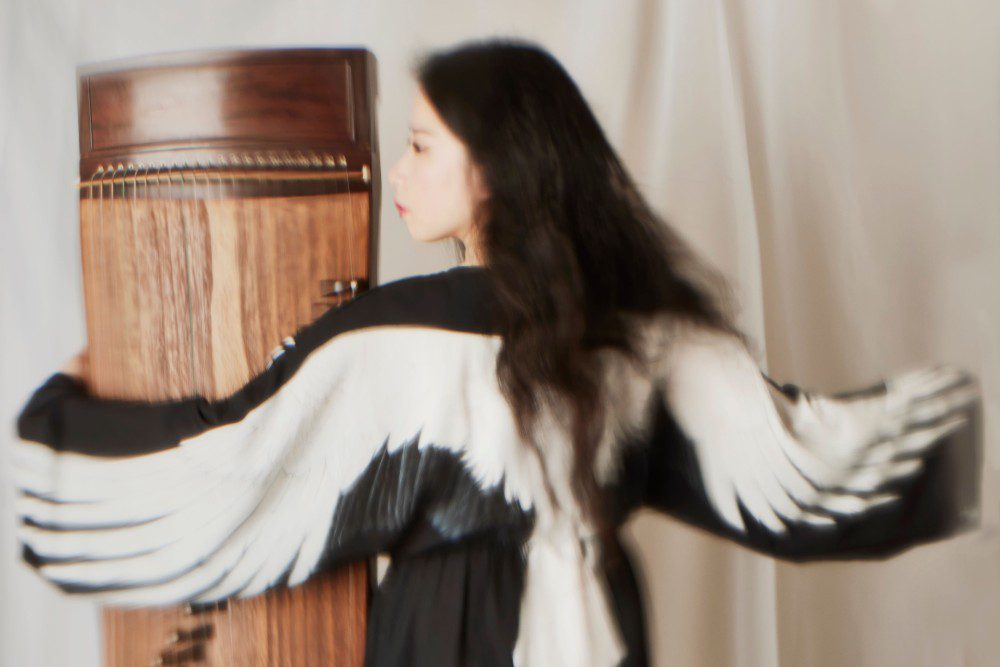
Admittedly, she “spent a lot of time listening to music that the dudes that I had crushes on listened to,” she says, listing off the likes of Red Hot Chili Peppers and Nirvana. “That was all cool, but I’m still discovering and re-investing my time into artists that really do excite me.” Those artists include Patti Smith, an iconic pillar in the NYC punk scene.

More recently, she witnessed Japanese Breakfast play a show in Minneapolis, and it was life-changing, to say the least. “I saw other Asian people in the audience,” she says. Immediately after the show, Kreidler purchased band leader Michelle Zauner’s debut book Crying in H Mart: A Memoir, and it moved her to tears. “Within the first three pages, I was crying. It just felt like she was speaking to me even though I haven’t lost my mom,” she says.
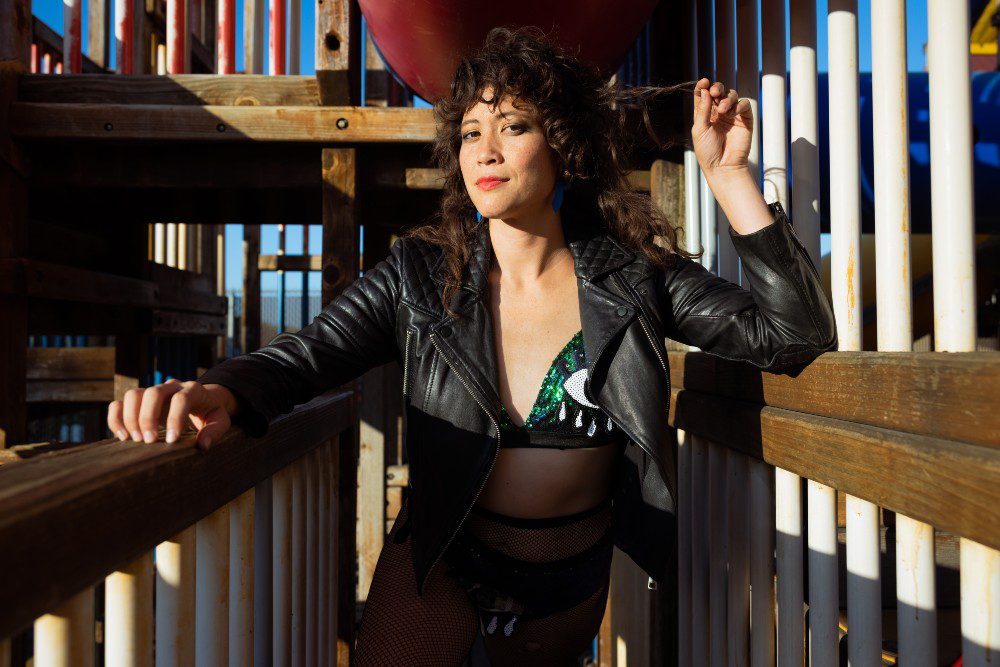
Kiss the Tiger — rounded out with musicians Michael Anderson (songwriting partner, rhythm guitar), Bridger Fruth (lead guitar, pedal steel), Alex Sandberg (lead guitar), Paul DeLong (bass), Jay DeHut (drums), Victor Zupanc (piano, organ), Mark Moehlenbrock (guitar, piano), Diane Miller (guitar, backing vocals), as well as backing vocalists Chelsie Newhard and Andy Ebling — formed in 2016. Over five years, the mega-group have gained quite a bit of buzz around Minnesota, on the edge of breaking through the stratosphere into the national arena.

Originally, Vicious Kid was set for release early last summer, but the global pandemic forced them to slam on the breaks. That extra time to marinate with the music – and also reevaluate their career and ambitions – found Kreidler uncovering a deeper “appreciation and pride in what we’ve done as a band and what we’ve created,” she offers. “I revisited the songs so many times and wondered if we were going to want to put them out after this past year and a half, and I still kept finding myself being excited about the songs. Some of them we had started to integrate into our live show, but for the most part, we hadn’t played them that much. I still feel really proud of the songs and continue to find new layers as we play them live for people and build up that live muscle of playing.”

Vicious Kid may have been recorded nearly two years ago, at the tail end of 2019, but to Kreidler, it all feels fresh again. “Here I am talking to you about it and it still feels kind of new to me in a way and I think that’s exciting. Maybe it’s a testament to all the work that we’ve put in and the trial and error that we’ve gone through making albums and putting them out,” she says. “Music moves so quickly nowadays, and it feels like you have to be putting new stuff out all the time. I guess it just makes me realize that the lifespan of things is not as limited as we maybe think it needs to be.”

Follow Kiss the Tiger on Twitter and Instagram of ongoing updates.