Virginia Wing Cycles Through Urge, Addiction and Shame on Latest LP private LIFE

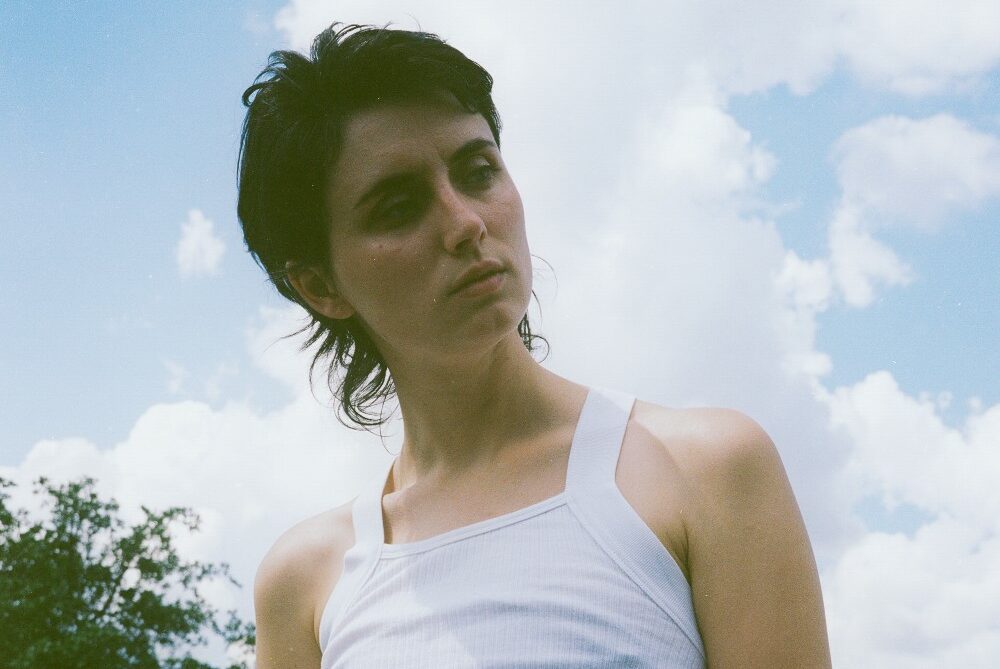
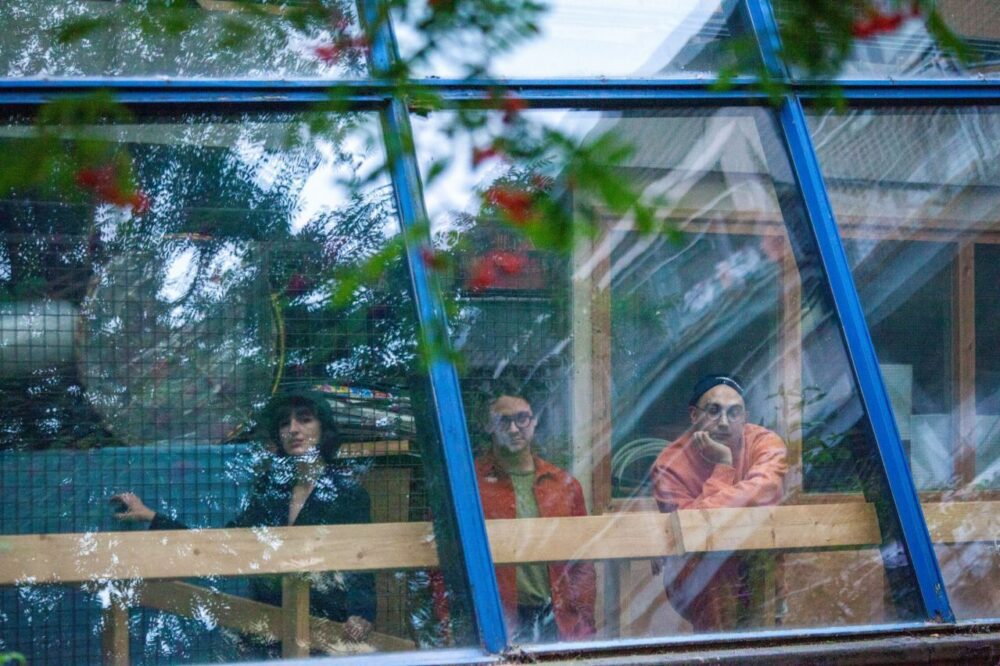
Photo Credit: Martin Livesey

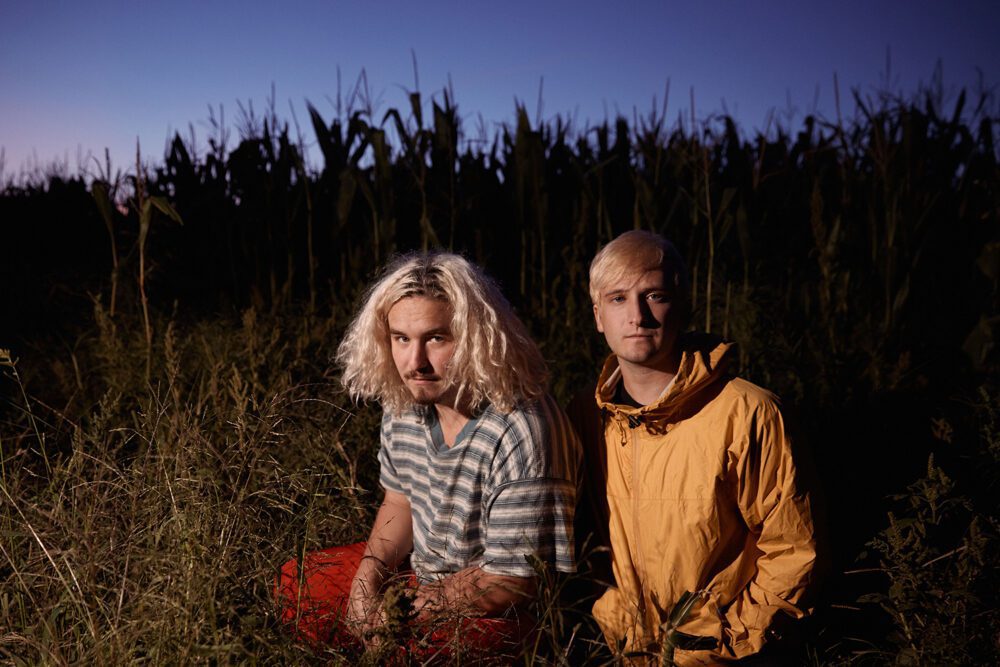
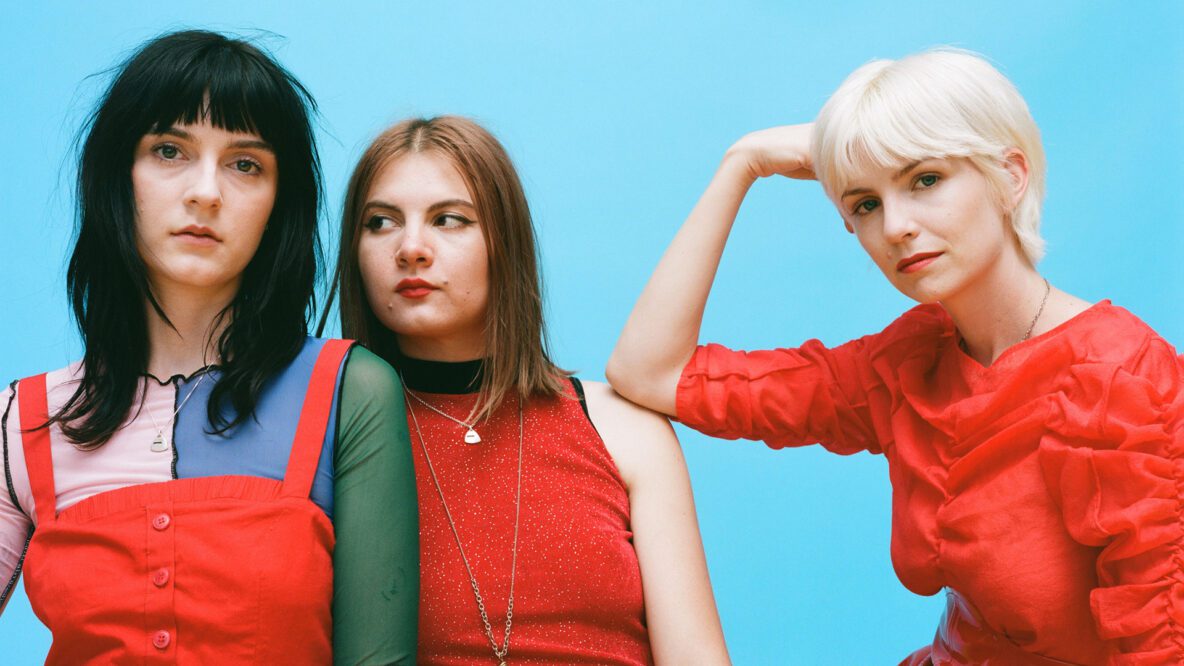
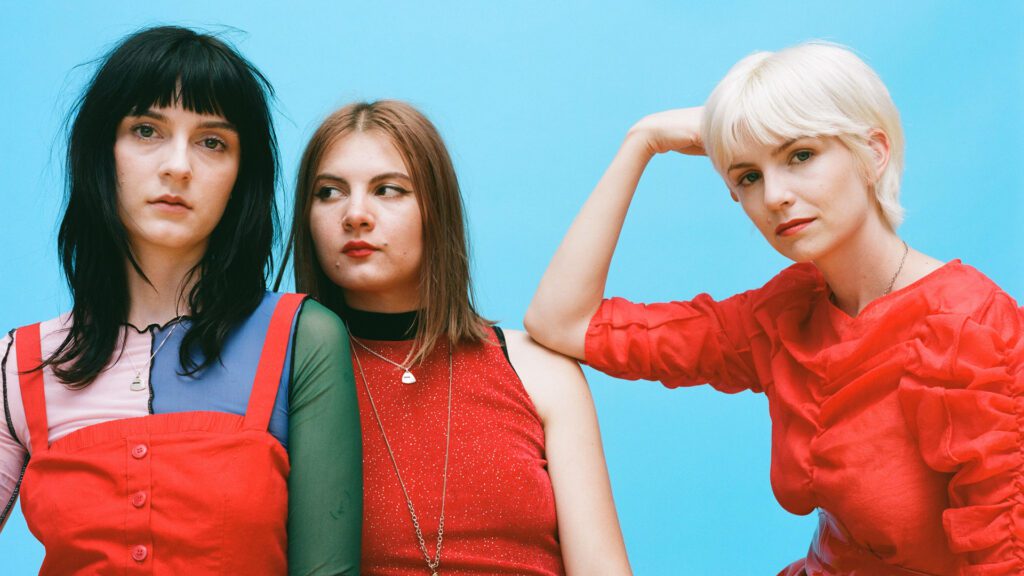
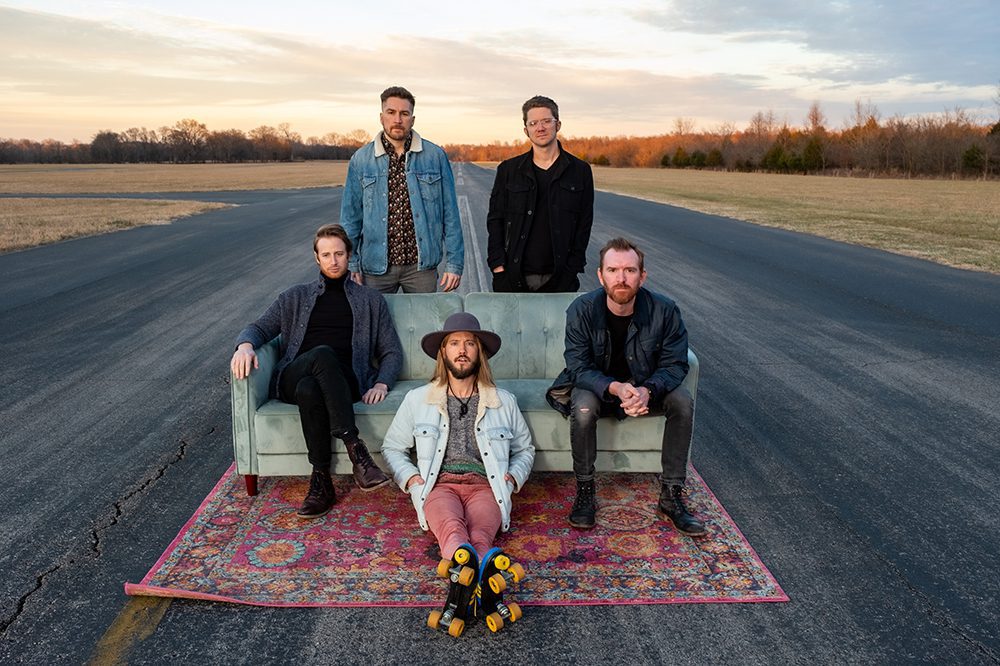
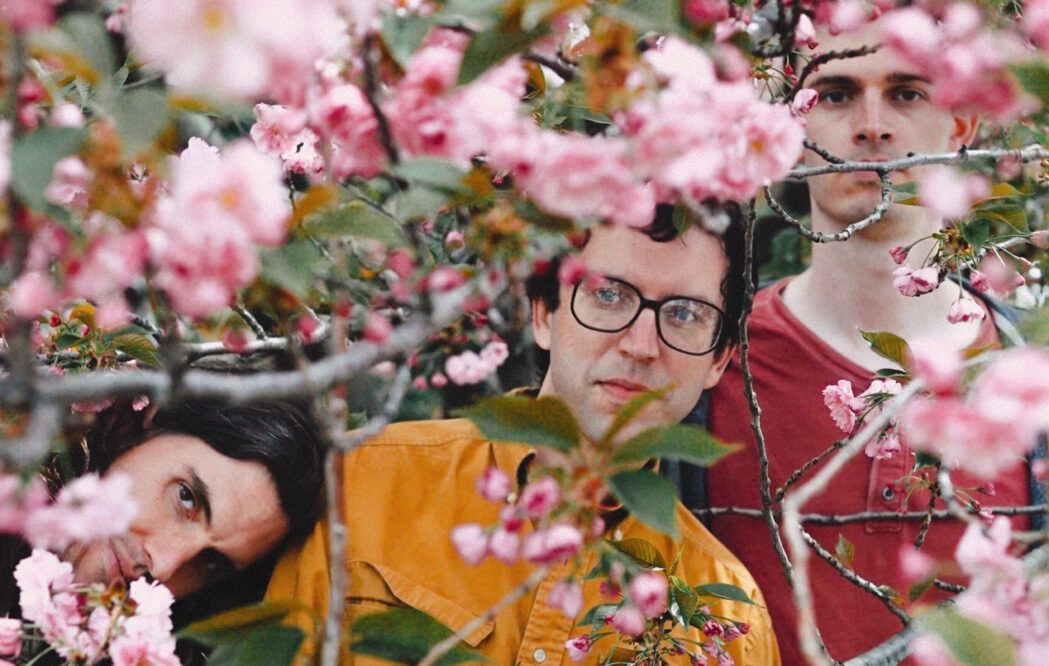
On her first trip to a local Costco, Merida Richards spotted a massive cake in the bakery section and was suddenly preoccupied with the desire to buy it, sequester herself in a hotel room, and consume the entire thing. It was a silly thought – fleeting really – but it’s those bizarre, sometimes ugly impulses that she set out to examine with her band Virginia Wing on their latest LP private LIFE, out last week via Fire Records.

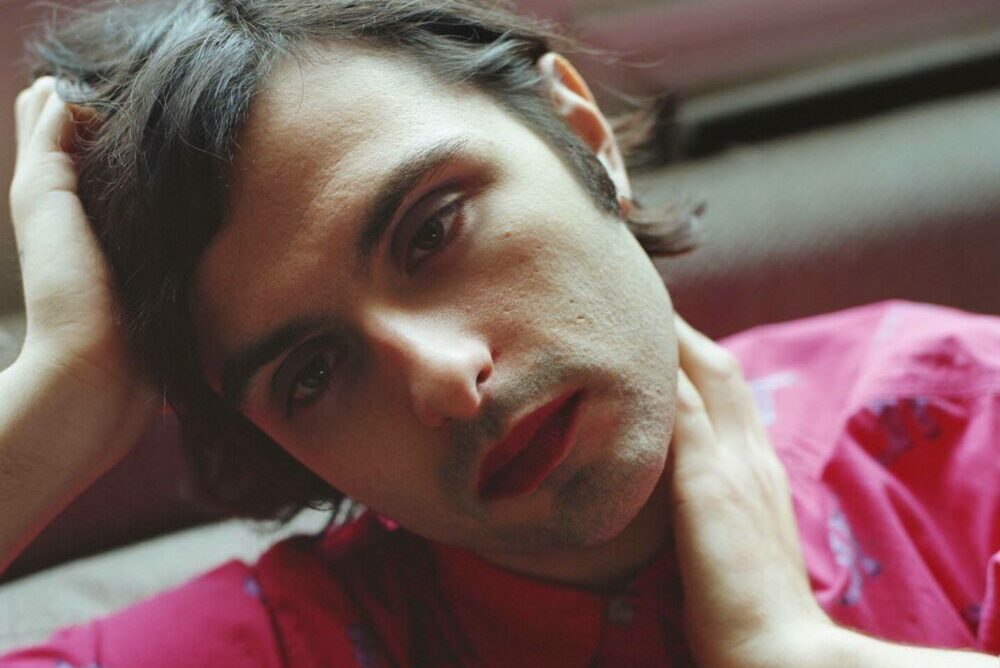
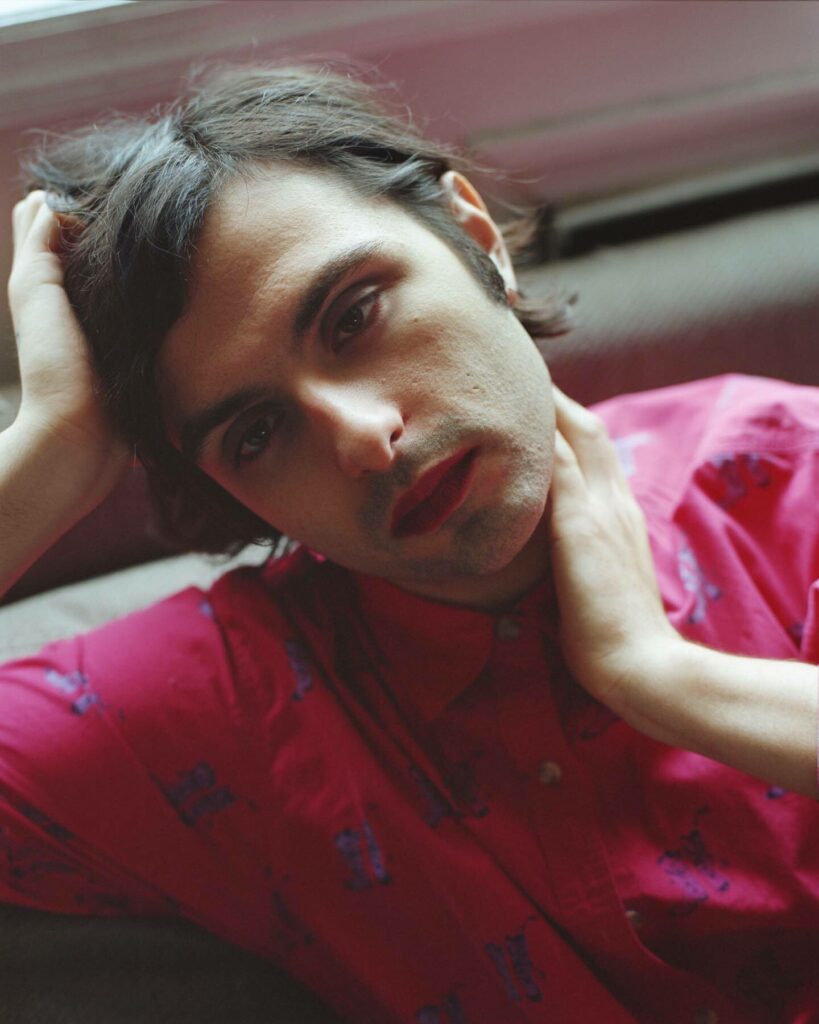
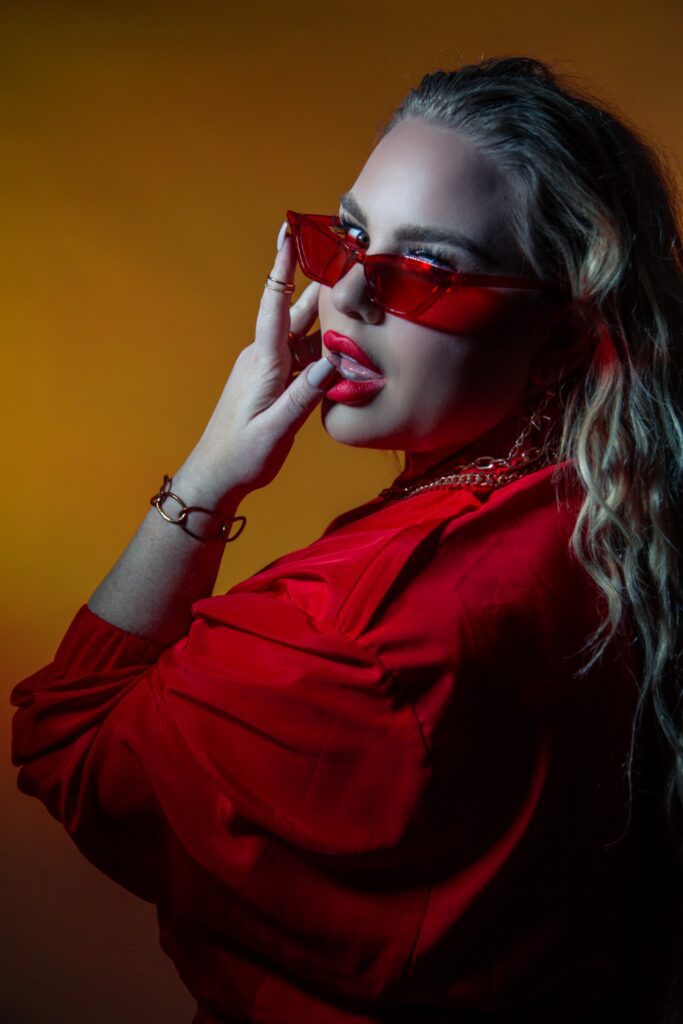
After recording their 2018 breakthrough LP Ecstatic Arrow in the Swiss Alps and completing their first North American tour in 2019, the Manchester trio – which includes Sam Pillay and newest addition Christopher Duffin – had decided to take a more inward-looking approach to their next offering, and to record it mostly at home. While Ecstatic Arrow read as something of a feminist manifesto, presenting a vision of the world as it could be, Virginia Wing planned to unearth their various traumas, addictions, and the shame associated with these on their next project, which they had decided to call private LIFE. “You’re never gonna match the experience of holing up in Switzerland for a month, you know what I mean?” Richards tells Audiofemme via a Zoom call. “So we thought, we’ll just do it at home; the title and the subject matter seemed applicable.” It was pure coincidence that just as they were assembling gear and beginning to write new material, a worldwide pandemic hit, effectively dooming humanity to examine their own compulsions in the solitary confines of a mandated lockdown.

“At the start of last year we were getting together at our rehearsal room and figuring stuff out, but then obviously that stopped, and it just became a process of slowly chipping away and building little bits of songs, sending them back and forth,” Richards says. “It did get pretty maddening, I’m not gonna lie. When you’re just stuck inside working on the same thing, and you can’t see someone face to face and go like, ‘Oh, what do you think this needs?’ There was not much second guessing; it was very much just like go with your gut, and then convince the others that it’s good.”

Collectively, the band wanted an eclectic sound bursting with dozens of tiny interlocking elements, and they’ve certainly achieved that; the album is choppy but cohesive, intimate but frenetic, and reveals new details over each listen. “That’s what we were going for – stylistic decisions encouraging surprise, like in the way it was mixed,” Richards points out. “Suddenly something’s really loud and it’s kinda jarring, like a little sample or something will knock you and it can almost be unpleasant. Certain songs are really high-end and then all of a sudden the bass kicks in. It was that constant feeling of movement that we wanted, a kind of controlled chaos.”

Densely layered with futuristic sounds, angular structures, and post-punk inflection, private LIFE sounds more like a bustling party than a solo, meditative pursuit – so much so that Richards admits they’ll likely have trouble replicating it in a live setting, should touring ever resume. But buried in the globular synths, bold brass, disjointed rhythms and new-agey textures reside dark lyrical themes just as discomfiting as the surprising sonic twists. From “OBW Saints”: “Compulsive habits are the products I supply/I’m at ease with always deceiving/I’ll feel so clean when I come out the other side.” From “Return to View”: “I worked harder every time/I could never say exactly what it’s like/In a solemn congregation I tried/To behave the way I want to be described.” And “Soft Fruit”: “Like an infant trying to find/Comfort in a deafening cry/There’s chaos in my heart/I’m being ruined by desire.”

Richards’ sprechgesang vocals exude a cool confidence that belies her desperation, even from the first lines of album opener “I’m Holding Out For Something.” Throughout the album, she takes on the role of her own therapist, or, in one instance (“Lucky Coin”) something of a fortune teller, asserting particular mantras as one might leave Post-It notes on a bathroom mirror: “Put your faith in a cup/Fill it up to the top/And remember your thirst isn’t a choice,” or “It’s human/To examine the dirt that collects under your nails/And forget that it’s the same/As the earth under your feet.”

“When I write lyrics, I’m not pretending that I’m not writing the lyrics, you know what I mean? I might say ‘you’ but half the time I mean me – it’s always filtered through my perception of things,” Richards says. “I’ve had therapy. I think everyone should, but I had to stop because I couldn’t afford it. I think it’s so useful just to have someone say stuff back to you in a neutral way. Everyone has that moment where it’s like, I need guidance from something and I’ll go with the first thing that comes to me, I’ll go with anything, like these little talismans that you just like tell yourself to get through life. Use what you’ve got, whatever it may be. I think everyone needs guidance, don’t they?”

Noting that urge, shame and impulse are essentially part of the human condition, Richards remains vague about the band’s specific experiences around addiction and trauma, saying only that the lyrical themes were “something we needed to focus on. Initially, maybe before I considered it being traumatic, there were certain things about private life that I wanted to explore… the stuff that you hide away, the stuff that you don’t share. I wanted to go into more uncomfortable territory.”

That intentionally stands in contrast to the hopeful, cathartic nature of Ecstatic Arrow. “On this record, I wanted to explore stuff you’re ashamed of feeling and thoughts you’re ashamed of having, and stuff that goes against your ethos, maybe because of a religious upbringing or repressed sexuality or whatever,” Richards says. “I’m in my thirties now; I’m just I’m too tired to try and be anything I’m not. You just have to accept it all, stop trying to change everything. If I feel like disgusting and sexy at the same time, so be it.”
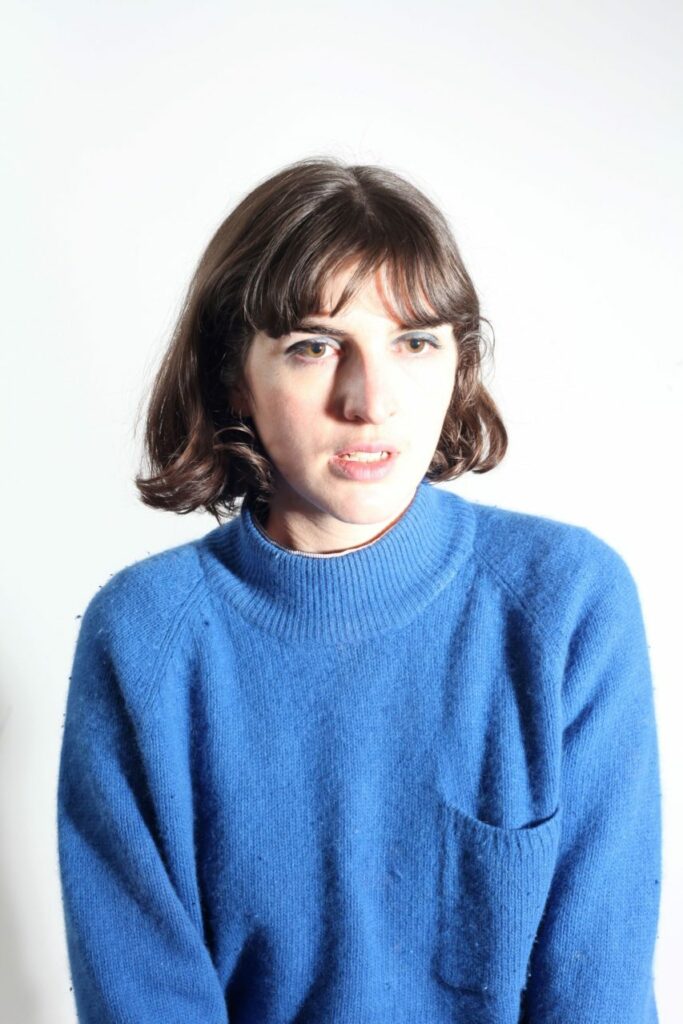
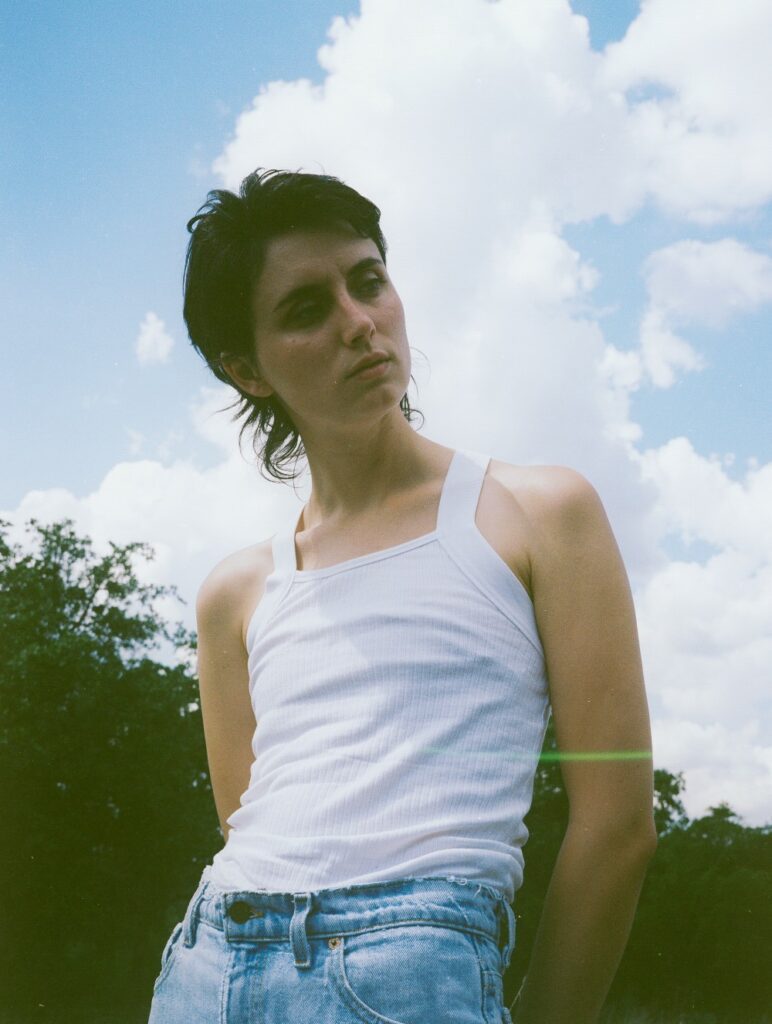
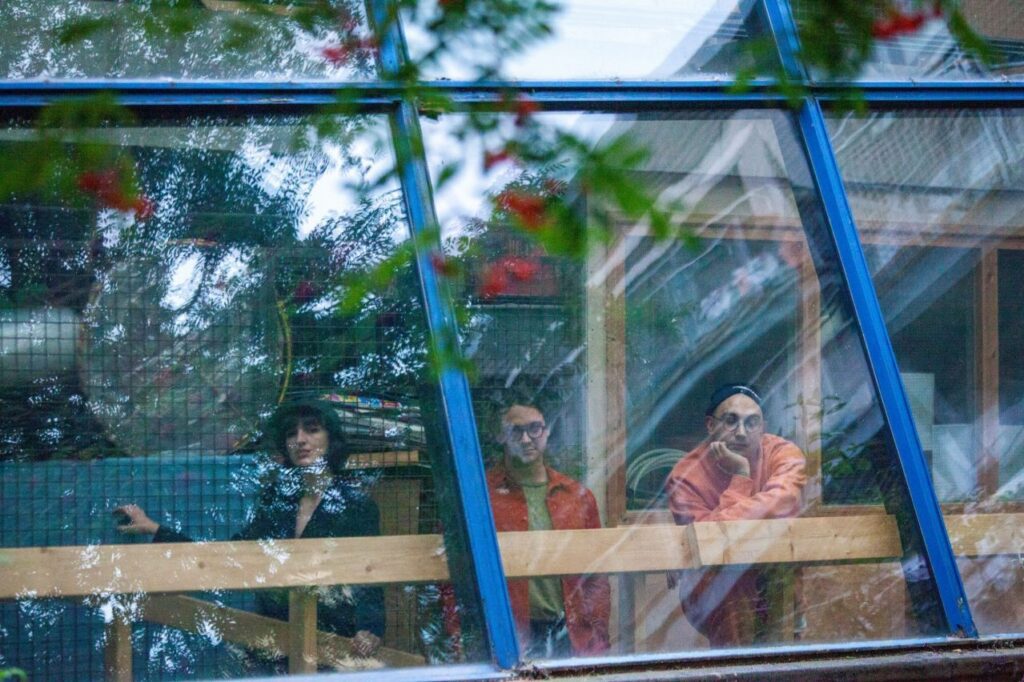
Photo Credit: Martin Livesey

As with the band’s social media presence, there’s a dichotomy constantly at play between earnestness and sarcasm (which Richards attributes to “just being British”) reflected in the band’s meld of influences: the sampling of hip-hop, the irreverent electronic flourishes akin to Laurie Anderson and Robert Ashley, the improvised jazz horns, the avant-pop sensibility holding it all together.

“The progression has just been really striving to do something original. I think as the years have gone on, we’ve absorbed our influences, rather than trying to pick out elements we want to try and replicate. It’s more about creating something that’s really unique,” Richards says. “We’re into anything that fits that space between being really serious and kinda silly – like a lot of art music, there’s a lot of playfulness there. We’re really drawn to that stuff because that’s how we are as people. We’re people who listen to a lot of music. We just want to fit into someone’s record collection alongside everything, specifically music that exists in an artistic realm but also has a sense of levity and doesn’t take itself so seriously.”

That’s especially apparent on “Half Mourning,” the only song Richards wrote with the pandemic situation in mind, equally inspired by the existential quandaries it created and by apocalyptic Young Marble Giants bop “Final Day.” The songs lyrics describe being “stuck like a magnet;” Richards explains that although she appreciates routine, random conversations and freedom from a schedule is necessary to achieve some kind of release, which the band often gets from touring.

“What’s so hard about last year, is that there was so much chaos that was also not very eventful. Emotional chaos, but nothing could actually happen,” she says. She describes an experience she had last summer, walking in the park opposite her flat, in which she felt invisible. “It was really weird – I guess it’s like a dissociative sort of state. I mentioned it to a few friends of mine, and they’d experienced the exact same thing,” she recalls. “There’s something about being witnessed in the real world that proves you’re alive. When you’re not partaking in that, you do sometimes get a sense of just like, do I exist? I feel like I’m a person when I’m out in the world and I’m interacting with people. I think a lot of people have been missing that.”

The band has just finished re-editing the record – a “deconstructed kind of dub situation, a bit of a Frankenstein’s monster kind of thing,” as Richards describes – pulling apart each song’s moving parts to make new tracks; they’ve discussed releasing it as a benefit tape via Bandcamp just because they “wanted to continue making stuff.” So there’s something to be said for giving into certain urges, after all.

“I like routine, I like getting up and having breakfast and exercising and all the things that you’re meant to do, but also part of me just wants to smoke cigarettes and eat sweets all day. Everyone has that battle,” Richards says. “That’s part of being alive, and yet we’re meant to deny it, whilst simultaneously being encouraged to indulge it all the time? Weird.”

Whether the anxieties that private LIFE delves into are a natural part of the human condition or a product of things like the pandemic or late-stage capitalism, the album highlights them in sharp relief, like the blue and black silhouettes on its cover. “Even before we’d finished the artwork,” Richards says, “we’d see something and be like, that’s private LIFE blue – it had this power.” Aesthetically and sonically, the album commands attention, but it fosters a sense of commiseration rather than panic, likely due to the band’s interconnectedness. “The three of us are so comfortable with each other and our own individual problems that it just feels very nice to share and be open about it in that way,” Richards admits. She isn’t worried that the record could alienate those who were initially drawn to the more hopeful messages on previous albums. “There can be a real fear in doing something that’s like not necessarily palatable – not being ‘cool’ is a real risk. You just have to be confident.”

Follow Virginia Wing on Facebook and Instagram for ongoing updates.
Yeraz Brings Together Armenian Artists For a Cause

In Armenian, yeraz means “dream.” It’s a fitting title for the first compilation from Los Angeles-based record label and artist management company Critique. Yeraz is a ten-track album, out digitally on February 19 and on vinyl in May, that brings together Armenian and Armenian-American artists with contributions ranging from theremin player Armen Ra to indie electronic producer Melineh. It’s a stylistically varied collection, but one that’s united in a cause. All net profits from the album will benefit Kooyrigs, an Armenian, intersectional feminist-led coalition that’s been providing humanitarian relief on the ground in Armenia and the neighboring, ethnic Armenian enclave of Artsakh during a critical time. 

For 44 days last fall, Artsakh, known internationally as Nagorno-Karabakh, was under fire. In late September, Azerbaijan launched an attack, leading to an all-out war, with Armenia coming to the defense of Artsakh, which is not internationally recognized as an independent nation. In the midst of this, ethnic Armenians and allies came together in an unprecedented way, leveraging social media to bring awareness to a situation that was getting very little news coverage while also raising funds for humanitarian relief and holding protests in cities across the globe. 

Karine Eurdekian, who founded Kooyrigs in 2018, had just moved from Michigan to New York when the war began and was coordinating relief efforts with the team in Armenia. In Los Angeles, Zach Asdourian, who founded Critique, was working with GL4M, an artist who had released the single “Lusavor” to benefit Armenian relief organizations. One of these was Kooyrigs, which prompted Asdourian to reach out to Eurdekian on Instagram. 

Eurdekian says that she and Asdourian bonded over the “cultural consciousness” of each other’s content. They began working on collaborations, which led to Yeraz. Eurdekian describes the project as similar to swapping bracelets at a rave. “It’s just sharing our talents, sharing our creativity with one another and creating impact,” she says. 

Yeraz is, in part, a means to spread awareness in communities that may not have heard about the events of last fall. “We’re trying to really expand the outreach and expanding into the music community is natural, because the underground music scene is just an accepting community,” says Eurdekian. “It’s an empathetic community, and it’s one that I’ve grown up in and Zach’s grown up in and hundreds of people in Armenia are currently growing up in.” 

Meanwhile, Asdourian had heard San Francisco-based DJ and producer Lara Sarkissian drop “Lusavor” in one of her sets online. “It was honestly a dream come true to see this contemporary Armenian artist including my artist’s single in her mix, so I got in touch with her and we began talking,” he recalls. 

Sarkissian came in as a creative director for Yeraz. She says that the compilation presented a “good opportunity” to connect artists in the U.S. and those in Armenia. Sarkissian has played in Armenia, where she got to know local artists like Melineh. 

“It’s something very new, but something very present and the vibe is very active,” says Melineh by phone from Yerevan, the country’s capital city, of Armenia’s electronic music scene. 

Melineh is a Yerevan-based electronic music producer who contributed to Yeraz.

For the country in general, though, times have been difficult in the aftermath of the war. “The damage is huge and the traces are everywhere,” she says, adding that locals are trying to help in whatever ways they can. Artists, in particular, are doing what they can to help relief efforts, she says. 

On the surface, the war may have appeared as part of a long territorial struggle between Armenia and Azerbaijan. However, standing in Azerbaijan’s corner was Turkey, who continues to deny the genocide of Armenians that took place a little more than a century ago. For those in the diaspora, the war was a reminder of historic trauma and a real fear that what’s left of Armenian’s indigenous homeland would be lost. 

“I was disgusted and horrified and shocked,” says L.A.-based Armen Ra of the news from Artsakh last fall. “It’s still like a pain in my chest. It’s primal. It hurts my soul.” But, Ra adds, “out of these horrors comes so much love and attention.” He says, “I try to focus on the people who are helping.” 

For Yeraz, Ra contributed his version of “Crane,” from the Armenian composer Komitas. It’s a poignant contribution; Ra opened his debut album with the same song as a means of pointing to the “core” of his musical influences. It’s also significant in light of the Armenian experience. Komitas was an ethnomusicologist who worked to preserve Armenian musical heritage and was one of the intellectuals arrested at the start of the Armenian Genocide.

Armen Ra contributed his rendition of “Crane” to Yeraz.

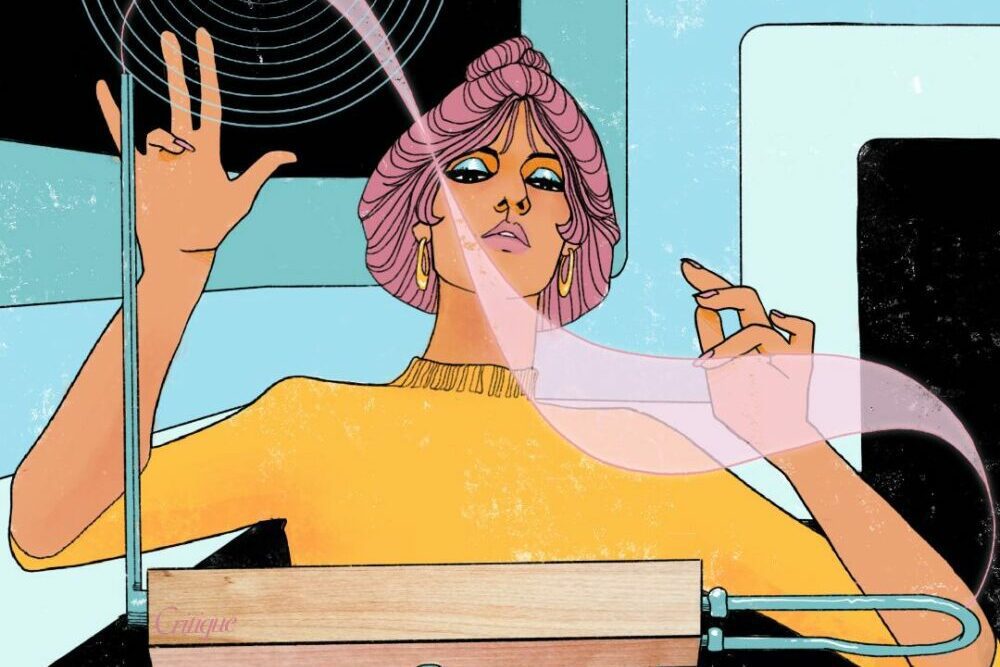
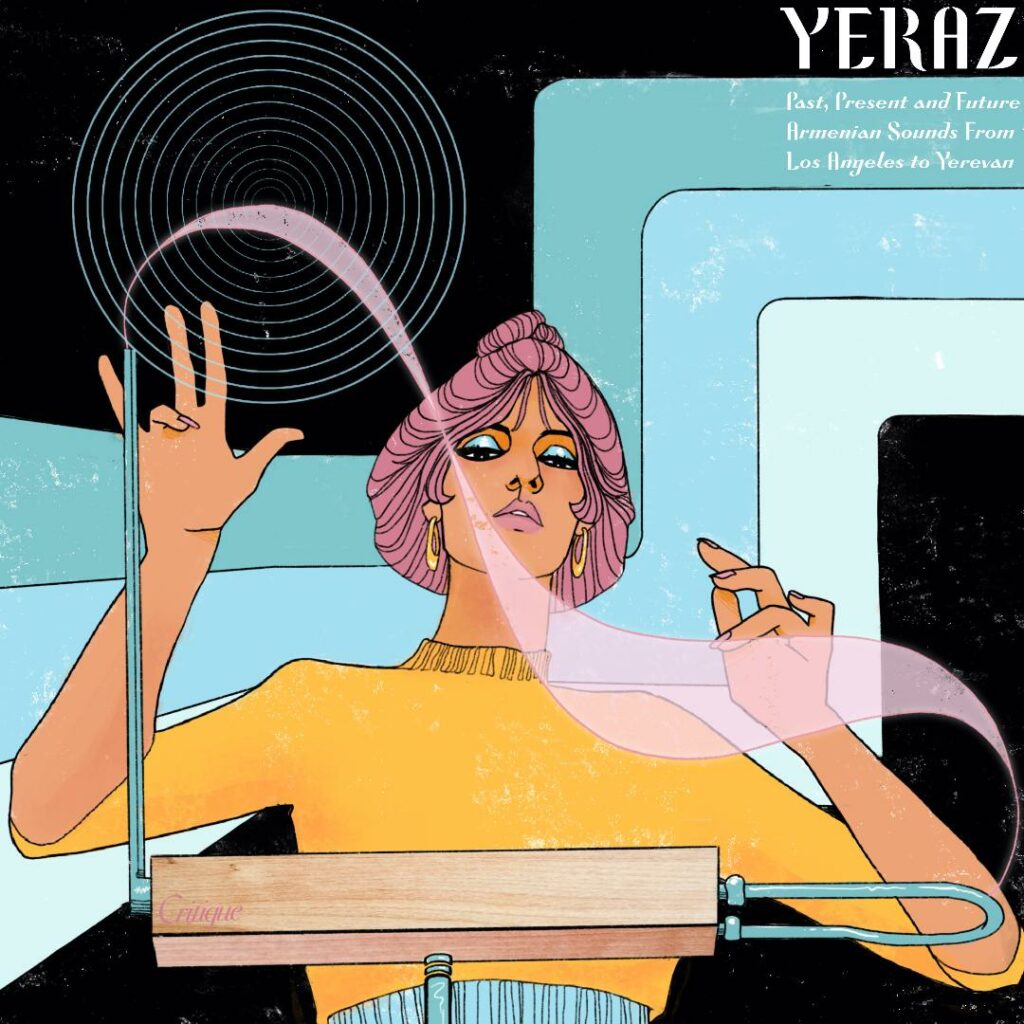
For Natalee Miller, who provided the cover art for Yeraz, helping became her focus during the war. An illustrator who has made posters for bands like Khruangbin, Miller draws inspiration from her own Armenian heritage and has an Armenian following online. “I just felt like they had given me so much, it was like an obligation,” says the artist, who is based in Portsmouth, New Hampshire. “It was now my time to give back and and the only way that I can do that is to make art.” 

Asdourian surmises that the combination of the war and our reliance on online communication through the COVID-19 pandemic led to a “strong sense of solidarity and unity.” The war might not have made the nightly news in many cities, but if you’re an Armenian on Twitter or Instagram, it was probably dominating your timeline. “We were already on our phones so much that we were so much more prepared to get in touch with each other,” he says. 

Plus, it unified Armenians who had been working for social justice in their own communities. “It brought together a lot of Armenians who’ve been creating an intersectional language already between Armenian movements and causes and other people’s movements,” says Sarkissian.  

While the war has ended, the work to aid those impacted by it continues. Kooyrigs has several initiatives on the ground, the most recent of which, “Project Mayreeg,” helps pregnant people from Artsakh. 

Beyond its goal to raise funds for Kooyrigs, Yeraz also serves to amplify the voices of Armenian artists, both in the country and diasporic communities. “I want our non-Armenian people to learn that there is so much more to our history than pain and suffering,” says Asdourian. 

“Hopefully, this will catch interest for people to start supporting Armenian artists and see what they’re up to, what new sounds they’re creating,” says Sarkissian. “I think that’s also really important, to support these artists and look into other Armenian electronic artists.” 

Order Yeraz now via Bandcamp.

Katy Kirby Keeps the Faith on Debut LP Cool Dry Place

Photo Credit: Jackie Lee Young

Asked to summarize the themes on her debut LP Cool Dry Place (out February 19 via Keeled Scales), singer-songwriter Katy Kirby says, “Failed attempts at connection, unspoken rules, care or preservation, learning how to take care of oneself and other people.” These ideas may seem abstract, as her lyrics sometimes are, but she has a gift for juxtaposing that vagueness with sharp, precise imagery. When this lyricism pairs with a tender, Sarah Harmer-esque lilt, the result is a smartly crafted set of songs built on the contemporary Christian music of her adolescence.

The Houston-born singer-songwriter says she’s spent “much of her lifetime falling out of love with God.” Yet, the evangelical music she played as a teenager is fundamental to the way she writes now. “It shows up in the melody and structure of songs I write. It’s hard for me to not do consciously. It is a weirdly unique sub-genre that’s five years behind the pop on the radio. But it has its own flavor,” Kirby says, adding that the accessibility of that music sticks with her because she can’t bring herself to make music so weird it will alienate people, namely her own mother.

She is, however, grateful for the way worship bands offer budding musicians an early start. “I respect that that’s the place a lot of people get started playing in bands because worship bands will let 13 year-olds play bass, the way I did. It’s an unsung place where musicians can grow up,” she says.

Pleasing song structures and palatable melodies form an unlikely infrastructure for her forthcoming record’s songs about privilege (“Nobody has it better than you,” she repeats on “Traffic!”) and the denouement of a relationship. The second single from Cool Dry Place, “Portals,” is devoted to the slow-motion car crash of an impending breakup. The song’s elegiac sparseness amplifies its palpable vulnerability. “I had a feeling that I wasn’t going to be with someone much longer, and I wondered what I’d be left with. Being a little bit more comfortable with my own fragility is something I got out of that relationship,” she says. The song opens with the irresistible couplet “I’m an alternate universe in Target lingerie/You’re a country song in three-four time.”

Kirby laughs at the imagery. “The Target lingerie is real life. I’m a cheap bastard. Anyone I’ve ever dated would know that that’s accurate. Wow, that’s such a perverted Easter egg to put in a song,” she muses.

Kirby, who majored in English at Nashville’s Belmont College, understands the power of escaping into a world one has created rather than lived, and lately, a big part of Kirby’s creative journey has been writing songs based on fictional situations. One such song is album closer “Fireman,” a quietly catchy track with soft country influences. The song is a shard of a complicated relationship. “We’re a slow burn kind of love but now the whole house smells like smoke,” Kirby sings, her narrator working through the relationship, eventually moving on to a scientist and back again.

“Feeling free to totally make things up was awesome and still can – and often does – give you that catharsis that people get from songwriting,” she says. “I don’t write for catharsis all the time. That’s not how I always process feelings.” As her writing has matured, she’s found a new freedom to pen alternate realities. “I began to think of myself more as an author than a historian,” she says succinctly. She admires the ability of the Mountain Goats’ John Darnielle to shun universality when writing songs, and adds that last summer, she developed an “almost embarrassing” fondness for The Eagles and their ability to pull off simple imagery.

Katy Kirby says she frequently pauses songs to replay a good lyric for the person she’s with, and Cool Dry Place gives ample opportunities for that. While it may not convert pop fans to contemporary Christian music, Kirby’s quirky, wise lines and tender melodies are enough to make anyone a fan of an atheist who used to play it.

Follow Katy Kirby on Instagram and Facebook for ongoing updates.

Willie Jones Redefines the Patriotic Anthem with “American Dream”

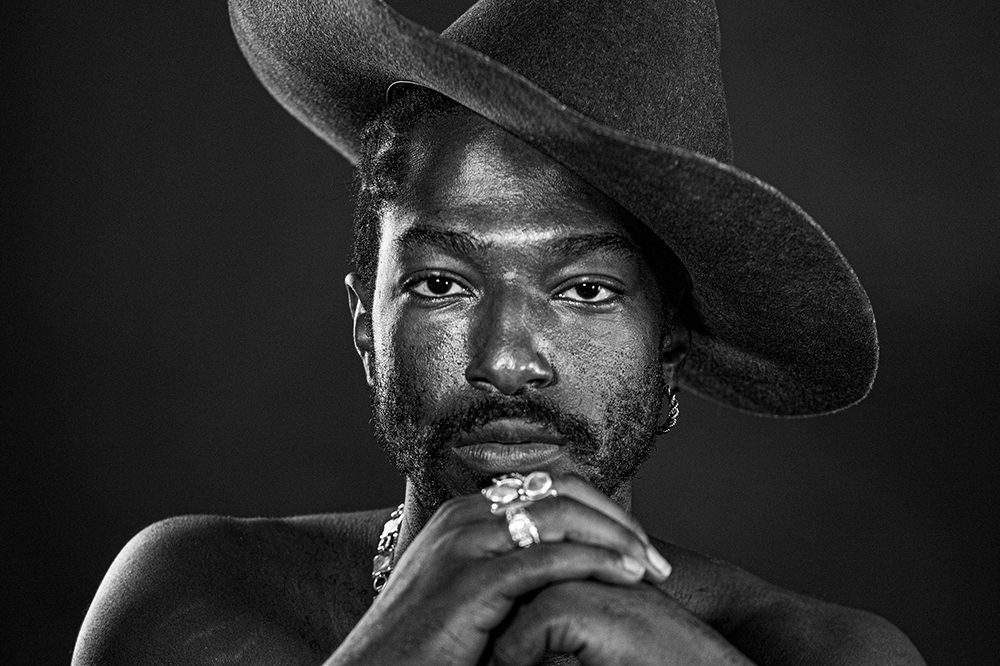
Photo Credit: Gordon Clark

Growing up in the rural town of Shreveport, Louisiana, Willie Jones was introduced to “patriotic anthems,” as he describes, from the likes of Martina McBride and Toby Keith. The budding artist often wondered what it would sound like if he took that format and “turned it on its head.” His vision becomes reality with “American Dream,” a country-meets-hip-hop ode to the land of the free and home of the brave, as told from the perspective of a young Black man who’s using his art as a form of protest.

Heading into the recording studio shortly after the 4th of July in 2020, Jones confessed his conflicted feelings toward honoring America’s holiday to co-writers Alex Goodwin, Josh Logan and Jason Afable. “I was struggling to put on my red, white and blue and really celebrate the country because of so much that we’ve seen this past year and things that came to light with police brutality and justice in general,” Jones tells Audiofemme. “A lot of voices were raised up at this time of people speaking out again injustice.”

Revealing that he “really challenged my pen” on the track, Jones allowed his viewpoints to fly freely, channeling his conflicting emotions and personal truths into a song that opens with a gut-punching warning: “Young man, young man/Got the heart of a lion/And the drive of a wild horse/Young man, young man/Better watch how you step/When you step off the front porch.”

“I feel like it speaks not only to the listeners, but also myself,” Jones says. “I think those lyrics definitely fire me up and hold me accountable to keep moving.”

Jones has made a habit out of forward motion since making his national TV debut on season two of The X Factor USA in 2012, where he flexed his buttery baritone voice as member of Demi Lovato’s team. Splitting his time between Shreveport, Nashville and Los Angeles, Jones has since released a series of tracks including the lighthearted “Down For It” and “Bachelorettes on Broadway,” all of which appear on his debut album Right Now, released January 22, 2021. But “American Dream” is perhaps his best achievement yet, as he boldly claims that he’s “proud to be Black man” in a country that has its faults, yet still provides ample opportunities to grow and evolve.

“The American dream is to be in the pursuit of justice and to honor that as well,” the singer explains of the meaning behind the song’s title. “We have some opportunities afforded to us in the country. You can really do whatever you want here – you can build exactly the kind of life that you want to, you just have to move right. I think the American dream is getting what you want and honoring the country in that.”

The vocalist also turns a sharp eye to the symbolism of the American flag with a freestyle about those who have died and lied under oath for the flag, while others pay an equally harrowing price. “Some people can’t breathe for the flag/Had to take a knee for the flag,” Jones conveys with a voice as deep as the words’ meaning, leading into an powerful, poetic interlude: “With skin black as night/A Black boy runs for his life/Faced down by the hounds of a checkered past/Objectified, commodified, and scrutinized by blue eyes/And blue and white lights dancing off his skin.”

“It’s the truth of what America is,” Jones explains. “I feel like it’s a hopeful song and really bold, but it’s also shedding a light on the real behind what we see every day on social media with what was going on in the country.”

“That’s what music is about — telling real stories and true stories to inspire people,” he adds. “I felt empowered the entire time we were writing it.”

The accompanying video offers as many eye-opening images as the song itself. Directed by Jamal Wade, the video stars Brent Robinson as a young boy overwhelmed by the disturbing images he sees on the news when “American Dream” starts pouring through the speakers of his vintage radio. The camera pans through the house to show photos of important Black figures in his life, ranging from his grandfather to Muhammed Ali, Wade intertwining anime graphics of Martin Luther King, Jr., George Floyd, Breonna Taylor and many more. The video comes to a climax as Robinson is chased down by a soldier dressed in all black with eyes glowing red, the two transforming into anime figures in battle in which Robinson resiliently takes hold of the officer’s whip. But when they return to human form, it’s revealed that Robinson was painting a mural on an abandoned wall that reads #NoMoreNames alongside a series of Black faces, the young boy expelling blue fumes that overcome the soldier’s red flames. 

Jones and Wade were intentional about wanting to convey the intensity of the nation’s racial tensions through the video without rehashing oft-used clips of police brutality. “I wanted to take that out of the video and show Black people in a different light,” Jones explains of the video’s concept. Instead, the team wanted to depict a “young man who was hurt by all that he was seeing on the news and took it in his own hands to pretty much liberate himself,” Jones says. “What he represented was the opposition to injustice – learning his history and empowering himself to overcome.” 

Jones admits that politically-focused songs in the country genre are rare, yet finds hope in powerful statements such as Mickey Guyton’s autobiographical “Black Like Me” that add to the cannon of patriotic country anthems that will help break the status quo. Now, he’s added “American Dream” to that cannon in hopes of inspiring other artists to do the same; the song isn’t merely a patriotic anthem, it’s a message of accountability. 

“So many different people listen to country outside of the typical conservative, white [demographic] and that’s what a lot of people think that country is,” Jones says. “I want to inspire other people to get in the zone and shake it up. It’s all in just being yourself. I want to continue to be myself and take chances on myself.”

He’s already following through on that conviction by launching the #IHaveAnAmericanDream campaign on social media, inviting others to share what their visions are for the future of the country in an effort to “really speak on what they love about the country and what they love about being an American, what their hope and dream for change is in the country in a good light because we’ve seen so much negative,” Jones declares. “I really have hope for the future.”

Follow Willie Jones on Facebook and Instagram for ongoing updates.
PREMIERE: Shannon Clark & the Sugar Triumph Over Loss on “Let It Ride”

Shannon Clark & the Sugar hail from Greenville, Ohio, home of the American sharpshooter Annie Oakley. It’s a connection that feels natural when listening to their upcoming album Marks on the Wall, a collection of what lead singer Shannon Clark often calls “Midwest Americana Soul.” The record (out May 14, 2021), twists and turns in terms of genre, but their latest single “Let it Ride” may be the most personal, a shot to the heart. It’s a diary entry straight from Shannon’s past and a call to action for the future.

“I’ve buried a daughter way before her time/I’d take her place a million, million times/but I let it ride,” Shannon sings, his eldest daughter Navie Clark’s husky voice vibrating slightly as it echoes his own. The pace of the drums, played by Shannon’s wife Brittany Clark, is steady, acting as a form of meditation throughout. It’s a song that could easily play in the back of a nouveau western film, the story behind the lyrics lost in moving images. But once a listener’s ear tunes in, the story can’t help but move into focus.

“Everything in that song, every line that I sing in that song is real,” Shannon explains. “I do have a sister that lives in Modesto, I don’t ever get to see her. She’s my half sister. My dad, who I didn’t meet ’til I was 24, I found him, he didn’t find me. My mom went through a lot of abusive relationships when she was younger.” For Shannon, the journey of this particular blues song is exploring the negative elements of his past before shrugging them off triumphantly – leaving them not in the dust, but as a carefully placed notch in the belt of existence.

Shannon’s love of music started from a childhood soundtracked by classic country and rock ‘n’ roll acts, from Patsy Cline to Queen. His mom was a radio disc jockey for fifteen years, working at a few major stations in Dayton, Ohio. “She was really well known around the area,” Shannon says. “She was a single mom, so I would go to the radio station – she got to drag me along because she didn’t always have a sitter. She’d work the late shift, I’d be coloring on the floor of the radio station while she was spinning records. That’s kind of where I got my start I guess, my love of music. She’d drag me to concerts, make me sit in the press box with her until it was over.” Shannon even met Reba McEntire and Vince Gill, but remembers his 6th grade self being impatient, angsty, and less-than-impressed.

Shannon and Brittany grew up in the same small town, even went to the same church, but ultimately met playing music. “I was playing in a band and we had a big show coming up. Our band broke up and I needed a drummer to fill in,” Shannon remembers. “I asked her because someone said she was playing drums, and she did, and we became really good friends. That grew into more; 16 years later and we’ve got these guys running around.”

It was a moment of kismet that mirrored Brittany’s newly found passion for drumming. She had been practicing for a few years before she joined the band, but performing was never top of mind – her first show was the one she performed with Shannon. “It was kind of an accident because my uncle had this old drum set that he’d had when he was in high school,” Brittany recalls. “It was from the sixties. Just this old piece of crap, full of dust. He was like ‘Hey if you want this, take it. Otherwise it’s going to the trash’ right? So I took it, drug it home, cleaned it up and put new heads on it.”

She practiced by playing along with her CD collection, particularly Sheryl Crow. “I would listen to these Sheryl Crow albums and I would learn every single song,” she says. “I would just play religiously. I would come home from school, I wouldn’t even do my homework, I would just go down and play drums for two hours. I know I drove my parents crazy… There wasn’t really a motivation to be in a band. I just loved playing. It was an itch I had to scratch. No lessons – Sheryl Crow taught me.”

The band started out as a pop punk group called Everybody Else Wins. Brittany was 16 when they recorded their first record. “I always kind of wrote the same way, but I put it behind heavy guitar riffs and catchy melodies,” Shannon said of the time period. “My love for music was always deeper than what I was doing then. That was what was popular. When you’re young you don’t always have a lot of depth of knowledge. It took me ’til later to realize that wasn’t the kind of music I really loved.”

The band was on the move, touring and performing at Warped Tour in 2006 and 2007 on the Ernie Ball Stage. Then Shannon and Brittany’s second daughter passed away, and their hearts just weren’t into touring. The Clark family kept creating music, but kept it at home, teaching eldest daughter Navie how to sing harmonies to Ryan Adams songs.

“I started playing guitar when I was younger,” Navie Clark tells Audiofemme. “My dad bought me a guitar and I was maybe four or five, and I kinda always had one lying around. But I didn’t really get serious about playing ’til about a year ago, year and half. I think I was getting into new music, my taste was expanding and I wanted to be able to play this music I was hearing. And I think piano, we just had this gap in the band. We needed someone to play.”

“I’m proud of her because she has a record player and she plays good records, but she does like Harry Styles,” Shannon says. “It’s my guilty pleasure music,” Navie responds with a grin.

For the last three years, the family has performed as Shannon Clark & the Sugar, bringing together Shannon’s love of Glen Hansard and Amos Lee, Brittany’s love of John Prine, Bob Dylan and Brandi Carlile, and Navie’s love of old-school Dolly Parton.

Their upcoming album Marks on the Wall is the first album Shannon and Brittany have sat down in a studio and written together; previously, Shannon took the lead on songwriting. “[Brittany’s] always felt self-conscious about writing,” Shannon explains. “She didn’t think she could be a writer – she didn’t have that creative spark, she told me. These are her words, not mine. As we progressed, I’m coming in constantly, she’s doing dishes, taking care of the kids, and I’m like ‘Hey check this out, listen to this song, listen to this riff,’ and she’d always give me ideas and pointers. Our whole marriage she’s done this, so she’s really been writing with me since we were first together.”

As the album progressed, Navie also began finding her place in the band, taking the harmonies her parents wrote and rearranging them. The resulting music is layered: a father’s voice speaking his truth, his daughter’s voice echoing it back to him.

Navie has also had to step up in a big way for a sixteen-year-old musician. Michael Chavez, John Mayer’s former touring guitar player, played guitar on the record. Navie takes his spot in the band’s live performances, singing not only the harmonies she’s written, but also the guitar licks Chavez created during the recording process.

The band worked with Grammy award-winning producer, Mark Howard (Bob Dylan, U2, Neil Young, Tom Waits, Lucinda Williams, Emmy Lou Harris, Willie Nelson) on the record. It was Howard who insisted on a recording rule: three takes, we’re done. “This record’s not perfect; it’s not supposed to be,” Shannon says. “We wanted to capture moments so the performances are raw and they’re emotional and they’re live. We sang together in the room instead of separate tracks. I feel like you can feel that on this record and that’s what I wanted.”

Brittany was behind the idea of an imperfect recording, too, adding, “If you go to a live performance you’re going to hear chairs squeak or something off. [The record has] that live feeling.”

Much of the record is deeply personal to the Clark family, touching on personal histories and deep-seated pain. It’s the reaction to the pain they’re interested in exploring in songs like “Let It Ride.”

“It doesn’t matter when the rain comes, as long as you get dry,” Shannon says of the song. “Everyone’s gonna have something that happens to them. I think a lot people can hold on to those things their whole life and it effects their lives. Those people hold power and those situations hold power over that person. They can never be who they were meant to be, they can never develop into a regular beautiful person because they’ve got all this baggage they bring with them constantly. And I think that it’s important to let it go.”

“Let it ride,” Brittany and Navie echo in unison.

“Once you can commit it to a recording, that’s therapeutic too,” Brittany says. “You can get it off your chest, it’s concrete somewhere and you don’t have to carry that.”

The Clark family is disturbingly well-adjusted, easily joking with one another, poking each other about a recent fight they had just before the interview (Brittany spent the majority of the conflict banging on her drum set). They speak a common language: music, the driving force in their lives. It’s the medium in which they speak to one another and to their audience. For now, with COVID-19 still raging throughout the country, live shows are at a standstill, but the band is chomping at the bit to perform some mini-tours, just as they did when they were starting out. In the early days, they’d leave their young children with a family member.

“We would try to go play three or four shows, and come back,” Shannon recalls. “We never wanted to be bad parents – that was more important than the music to us.” Now that Navie is in the band, they don’t have to worry about that too much – and Shannon Clark & the Sugar have never sounded so sweet.

Follow Shannon Clark & the Sugar on Instagram for ongoing updates.

Supercoolwicked Subverts Pop Paradigm With Shakespearean Self-love Jam “Juliet”

In her new video for “Juliet,” Detroit multidisciplinary artist, singer, and songwriter Morgan Hutson (aka Supercoolwicked) creates a fantasy world of her own – an Afrocentric, baroque daydream that meshes the Shakespearian with the contemporary, the traditional with the subversive. Those who’ve given SCW’s 2019 debut LP High Gloss a spin know that this particular cocktail of familiar and foreign is what makes her music so memorable. And in “Juliet,” she perfects her brand of soliloquiel storytelling both visually and lyrically to deliver a fantasy world full of self-love and artistic actualization. 

Hutson explains that she wrote the lyrics to this song a few years back, when she was going through a breakup, dating through the all-too-familiar string of slacker suitors that seem to follow. “I was just out here swangin’ and just dealing with these men that were not shit and I knew it… but people can be beautiful Band-Aids,” she says. This transition period led her to reflect on what it means to love yourself; she realized she was looking for validation in others instead of within, like so many of us tend to do. “I started to kind of ruminate on it and be like, ‘Girl, you’re everything I need – stop trying with these people, be your own Romeo. Don’t look for romance where it’s not. Or love in general.’”

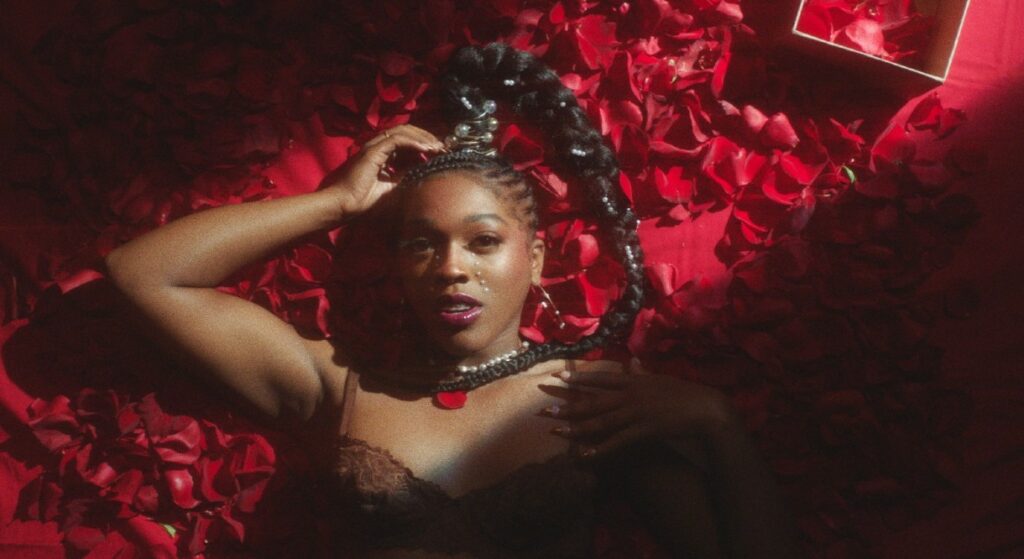
That realization blossomed into a lavish poetic love letter to the self, released last Friday, just in time for Valentine’s Day. The video for “Juliet” starts out with SCW walking into a medieval-looking church and opening a storybook; as the pages turn, we’re transported into the artist’s shimmering psyche, a romantic realm meshing two of her favorite cinematic inspirations: 1996 Baz Luhrmann classic adaptation William Shakespeare’s Romeo + Juliet and Sam Mendes’ American Beauty. Hutson pays homage to the films throughout, singing lines like “a rose by any other name just wouldn’t be as sweet,” while gazing at herself in a royal-looking hand mirror and, later, framed lying in a bed of roses, all the while embedding her own artistic vision. With a background in musical theatre and a lifetime of acting on her resume, Hutson has a more intimate relationship than most with the Shakespearean. “Anytime I can be dramatic, I love it,” she says. 

But make no mistake – SCW’s creative choices are driven less by vanity or fandom, and more by self-worth, lived experience, and a love for her culture. By inserting herself into the Shakespearean narrative that has historically been dominated by white/European voices and faces, SCW carves out space for herself and her ancestors to be uplifted and celebrated. “It’s Black history month and I’m very proud of my heritage,” she says. “I know that we’ve been through a lot of things, but I wanted to bring the world of this Afrocentric, baroque idea to life…to meet those two [worlds] because I think that’s kind of where I dwell.”

Aside from realizing her aesthetic aspirations in the video, SCW finds a way to squeeze sophisticated couplets into a tight pop/R&B song framework. She credits trailblazers like Mariah Carey for inspiring her to incorporate her expansive vocabulary into her songwriting. “It’s like, how does she fit all that in there and make it sound so cute? I feel like that’s the ultimate flex,” she muses. “I don’t think that we have to mold ourselves into what people think things are because we create the paradigm as artists. So one of my underlying, subconscious things that I have going on is to subvert the pop paradigm.” 

Supercoolwicked does just that without removing the escapism that makes pop music so attractive to begin with – she creates an entire world for the listener to dwell in and make their own. “I feel like pretend is something we’ve forgotten as adults,” says Hutson. “We can really lean into that part of our inner child, especially during this time, because that’s the way through it.” 

Follow Supercoolwicked on Instagram for ongoing updates.

PREMIERE: Stretch Panic Tells Spooky Stories on Debut LP ‘Glitter & Gore’

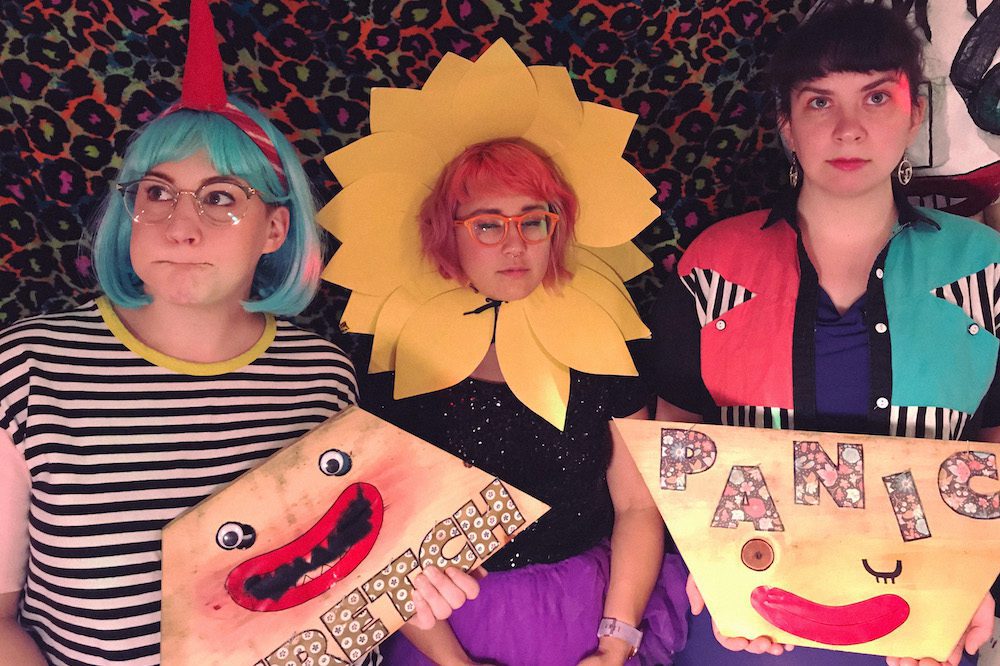
Austin-based indie rock band Stretch Panic fills an unusual niche: their songs are based around witches, vampires, demons, and other Halloween creatures. Their debut LP, Glitter & Gore, delves deep into this quirky theme, not only for the fun and humor of it but also as a means to make incisive observations about people and society. The album is out Friday, February 19, but it’s premiering exclusively via Audiofemme in a track-by-track video series below.

The members—MJ Haha (vocals, guitar, synth, omnichord), Jennifer Monsees (bass, vocals), and Cassie Baker (percussion, vocals)—had been friends for years and were working on separate projects until Halloween 2016, when they got together to create a song about ghosts and monsters. The experience inspired them to write more songs around the same theme, and they’ve been playing them in Austin ever since, naming their band after the 2002 cult classic PlayStation game about a girl whose sister gets possessed by demons.

Though they’ve since been reworked, many of the songs on the album were written during these early days of the band, reflecting the love of the otherworldly that stems from the members’ childhoods. “It’s an easy thing to find a common love for a Halloween aesthetic,” says Haha. “Halloween vibes, getting dressed up—we’re all later ’80s kids, and a lot of the culture and movies that came out when we were kids were fun monster movies. There’s just a friendliness to that spooky atmosphere and a playfulness.”

But even in its fantastical imagery, the music addresses topics more relevant to real life, such as toxic relationships and political misogyny. “A lot of those motifs are used to have further conversations about complicated feelings and different kinds of relationships, whether that be romantic types of relationships or friendships or relationships with yourself,” says Monsees. “That’s kind of a thing we find ourselves doing: using these kind of fun, silly imagery to talk about real things.”

Vampire Love,” for instance, features a spoken conversation between a vampire and someone shocked to see them covered in blood, along with a catchy chorus about “vampire love sucking me dry,” expressing the emotions involved in a relationship with an emotional vampire. “You Can’t Stay” similarly uses energetic percussion, groovy bass, and sassy vocals to portray both a literal demon possession and a quarrel between lovers that ends in one person calling “the priest” on the other.

“It sounds almost like ‘called the police,’ and it almost sounds like the person is finally standing up for themselves and ridding themselves of this person who’s possessed their lives,” says Baker.

“Burn the Witch,” driven by electric guitar and shouting that’s somehow equal parts dark and peppy, was written as a reaction to Donald Trump calling Hillary Clinton a “nasty woman,” exploring how we continue to verbally “burn women at the stake.” The phrase “blame the woman” repeats in escalating volume—a line that’s “very specific and can also be applied to a million different situations,” says Monsees.

The title Glitter & Gore actually comes from lyrics to “Spirit Juice,” a previously released song about drug addiction that’s not on the album, marrying together the band’s interest in the “sparkly and colorful” and the “morbid and dark,” Haha explains.

Stretch Panic have played tons of live shows, but have released just one EP—2017’s Ghost Coast—so the band is happy to finally put out more recorded music. “We’ve put so much energy into those specific shows where we’re connecting with people who live in the same city as us,” says Monsees. “It’s exciting to be taking these steps to be able to connect with more people, hopefully around the world.”

The band raised money to make the album on Indiegogo and first demoed the songs at home using Logic before bringing them into Austin’s King Electric Recording Co. studio, where sound engineer Justin Douglas recorded and mixed the music. “We brought ideas and feelings and emotions and vignettes of poetry, and he was able to turn that into sounds,” says Haha. For instance, they told him to make the guitar solo in “Vampire Love” sound “like a shooting star,” and he used a guitar pedal he crafted himself to do just that.

While much of the band’s discussion of the supernatural is tongue-in-cheek, Haha has had real-life experiences with such. She grew up in a haunted house in rural New Mexico and remembers trying various ghost-busting remedies, like sprinkling salts in the house, before getting the idea to play the autoharp and sing a song “acknowledging that it really sucks to feel alone and I understand.”

“I had chills and goosebumps all over my body as I was singing this song,” she remembers. “And ever since then, the house was in a lighter and sunnier place. I think the ghost is gone. It just needed to be acknowledged.”

In a way, that’s still what she and her bandmates are still doing today: speaking to the lonely ghosts inside us that want to be seen and heard.

“It was scary,” she adds, “but I’m grateful I learned how to live with something that scared me because I think that made me a lot stronger.”

Follow Stretch Panic on Facebook and Instagram for ongoing updates.

TOLEDO Foster Empathy via New EP Jockeys of Love

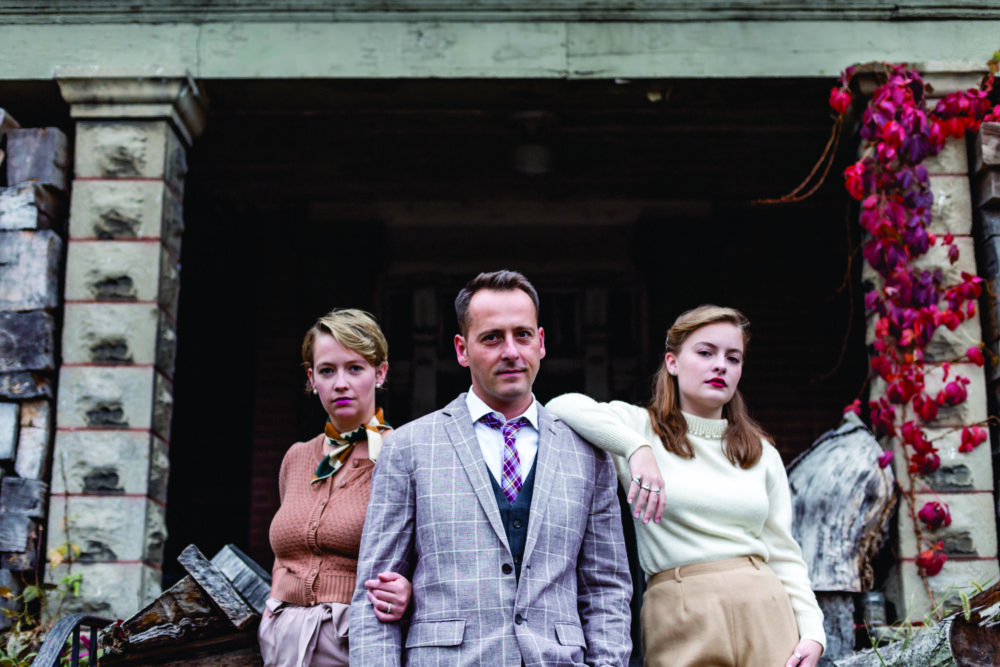
Photo Credit: Nick Ventura

TOLEDO didn’t plan on recording a new EP. “It just happened,” admits band member Jordan Dunn-Pilz. “It kept us busy, and we were able to have fun together. I’m thankful for this opportunity to come back into our own.” He is speaking about their recently-released project Jockeys of Love, on which he and collaborator Daniel Alvarez tackle themes of anxiety, depression, and alcoholism.

“We would have written music no matter what. The reason the songs turned out the way they did is I got hit with the breakup and pandemic double-whammy,” Dunn-Pilz tells Audiofemme. Unsure of their future, the NYC-based duo returned to their shared hometown, the seaport community of Newburyport, Massachusetts, to re-center and re-prioritize their lives. That’s when a batch of new music poured out.

“Compared with the social life in New York, I had a lot of alone time to think about things,” Dunn-Pilz continues. He began sifting through his life, picking apart existential queries, like why it was so hard to be “present in the moment” (which turned into “FOMO,” an EP precursor). “We had written a bunch of other songs with similar themes,” he says, “and that served as the foundation for the EP.”

Opener “It’s Alive!” is among their boldest songs yet, thematically calling to such gothic setpieces as Frankenstein and The Nightmare Before Christmas, and gives them room to wallow in the pain as a way to let it slide off their skin. “I’ll never be what you want me to be,” they sing. Delicate guitar mists around them, as spooky percussion peeks in and out of the arrangement, directly mirroring the onscreen imagery of someone as merely “a collection of parts and scraps that someone else put together.” 

Even the song itself was “very much stitched” in place, Dunn-Pilz explains. “Everything you hear in the foundation of drums, bass, and acoustic guitar existed already; Daniel had made a demo out of that.” Alvarez constructed the backbone like a Big Thief song, and Dunn-Pilz added the topline and electric guitar, much later cutting and pasting various drum sections “to change the structure” completely.

Such intricacies are strung together across all six songs, co-produced with Jorge Elbrecht, known for working with Ariel Pink and Wild Nothing. “Sunday Funday” testifies to the power of “finding empathy” in the world by examining alcoholism from the point of view of “being there for someone who’s dealing with something you’ve never experienced.” “Challenger” teeters between cosmic shimmer and rootsy banger, as TOLEDO envisions a not-so-distant dystopian future in which art is actually an act of rebellion against the state.

Dunn-Pilz is in a unique position; he’s a theatre geek at heart, having studied acting at Ithaca College in upstate New York, and has seen arts programs ravaged by defunding first hand. Pack on the pandemic, and you’ve got “a wild year” during which he’s questioned the very validity of making art.

“I was feeling very down on myself about being a musician in comparison to all the much more important things happening on a global scale,” he reflects. “It’s a dark path to go down because maybe I don’t wanna know what’s on the other side. I was having a lot of conversations with people.”

In the pandemic’s early days, Dunn-Pilz and Alvarez were both collecting unemployment while witnessing their “friends working their asses off from home,” he continues. “They would say things like, ‘Oh, all you guys do is sit around, get government money, and make music all day.’” 

That unfeeling, perhaps even cruel, way of thinking is exactly what perpetuates this peculiar idea that art has no value. It pierced Dunn-Pilz to the core. “Imagine a world where people got paid to do what they love and what they’re good at doing. That lit a fire under me,” he admits. He soon shed any and all doubts and began writing songs as a “‘fuck you’ to everyone that tells me that what I do is being wasted,” he adds. “Everyone wants to consume it, but no one wants to pay for it.”

Fire spills off his tongue as he speaks ─ and those flames grow to a thunderous roar on songs like “Dog Has Its Day” and “Needer,” the closing track peeling back layers of his pandemic-wrought anxieties. “There’s no way this song would exist if the pandemic hadn’t happened ─ not that it was worth it for this one stupid song,” he says, only half-joking.

Over skin-pricking guitar, and a tortured ambiance that seems to puddle beneath him, he invites the listener right into his clouded headspace. “I worry about my apartment in New York/And picture it molding/My backyard’s a blessing, but I don’t need it,” he laments. 

Jockeys of Love serves as the follow-up to 2019’s Hotstuff, feeling profoundly more accomplished, raw, and musically adept. For two musicians who’ve known each other since childhood, it’s the kind of statement piece that lays the foundation for a long career ─ as hyperbolic as that is, their work here is exemplary.

Alvarez and Dunn-Pilz met through a mutual friend in middle school. Straight away, they felt like “kindred spirits,” as Dunn-Pilz remembers it. “Pretty much as soon as we met, we were inseparable,” he says. He was already playing guitar, while Alvarez demonstrated a knack for piano. They set about busking along the market square in downtown Newburyport; the community celebrated and fostered the arts, so they never worried about getting booed or having to dodge insults.

Several years later, after some time apart during their college days, they got an apartment together in Washington Heights. Thinking the pandemic might be course-correcting last summer, they returned to the city life in August ─ and have, of course, realized that was a bit premature. Left to their creative devices, they built a home studio and have become newly-minted vinyl collectors, which Dunn-Pilz says has been a great way “to reconnect with music.” Feeling a disconnect with streaming playlists, he begins every day “by putting on a record and listening to the whole thing. I now have time reserved for just listening to music.”

Among his collection? Hovvdy’s 2018 Cranberry, Stephen Steinbrink’s Utopia Teased, the soundtrack to “Once More With Feeling” (the cult-hit musical episode of Buffy the Vampire Slayer) and a Greatest Country Hits of the ‘70s compilation. He’s spun the latter so frequently that the duo have even been writing some country songs lately, finding great inspiration from Dolly Parton and Ronnie Milsap.

Jockeys of Love hinges on their personal emotional excavations, subverting the long-standing belief that men should never show emotions. Through his theatre and musical work, Dunn-Pilz has learned how to “get emotions out in the open and face them,” he says. “I’m sure I would be much worse off if I wasn’t as in touch with my emotions. I’m proud of being comfortable with emotions, in general.”

Music has been a catalyst for catharsis, whether he’s creating it with TOLEDO or simply listening. “When I have something that’s troubling me, my first instinct is to get a guitar out and speak into the open and see what comes out. I’ll usually learn something about myself in the process,” he says. “Listening to music can give people a similar experience. There might be some macho Chad listening to Phoebe Bridgers, and he hears her touch on something he can relate to.” That rings true for Jockeys of Love, too – and in times like these, we can all use a little empathy.

Follow TOLEDO on Twitter and Instagram for ongoing updates.

Emily Blue Searches for Queer Utopia on Forthcoming Pop Project The Afterlove

Photo Credit: Greg Stephen Reigh

An oft-wigged and glittered, latex and leather-wrapped Midwestern daughter, Emily Blue is a pop star, period.

One of the first Chicago artists I’ve ever seen appear on stage flanked by dancers who not only made their choreography and transitions appear effortless, but seamlessly executed a tear-away costume change mid-song amid clouds of red and pink-hued smoke and pulsing lights—Blue seems born to become a household name, evident as the entire crowd shouted the lyrics to songs like “Cellophane” and “Falling in Love” back at her. The paltry $10 admission belied the show’s stellar production value, which included a stacked bill featuring Thair, SuperKnova, Carlile, and other artists who’ve been carving a larger space for pop music in Chicago over the past few years. 

Across her two previously released solo projects—2016’s Another Angry Woman and 2018’s *69— and two LPs as part of indie band Tara Terra, Emily Blue has pulled back layers of herself and her exaggerated character to explore pop music’s most enduring trends through her own modernist lens. In 2019, she was named the city’s favorite pop artist in the Chicago Reader’s “Best Of” poll. Due this summer, her upcoming album The Afterlove—preceded by single “7 Minutes,” which hit streaming platforms February 12—feels like the most distilled integration of her music and message yet.

While her work to this point has swung between seemingly polarizing extremes—Another Angry Woman rawly examined sexualized violence, rape culture and womanhood derived from her own experiences as a survivor of assault, while *69 was a breathy, steamy reclamation of sexual agency and liberated desire—The Afterlove finds itself in another world: a planet without binaries (gay/straight, boy/girl, body/spirit), without fear; one you can only travel to by rainbow.

It’s exciting yet bittersweet for the singer, as The Afterlove marks an ending as much as it does a beginning. On Thanksgiving Day in 2020, Blue’s friend and frequent collaborator, producer/musician Max Perenchio (founding member of Chicago bands The Gold Web, Bad City and Real Lunch) passed away due to injuries sustained in a car accident in Los Angeles. Ryan Brady, Atlantic Records VP of marketing, was with Perenchio and was also killed. With the myriad safety procedures put in place to combat the spread of the virus, there’ve been no funerals. No memorials to gather with loved ones and celebrate the lives of those lost or process the collective grief.

“If I didn’t do this, nobody would hear the last few songs Max and I made,” Blue says on a phone call from her hometown of Champaign-Urbana, where she’s been hunkering down since COVID-19’s initial threat in 2020. “That’s a huge motivating factor for me, to be honest, getting through the pandemic. Having him be part of this album, and even continuing it with songs he isn’t a part of but wanting to make something with that inspiration—that’s important.”

“I really view Emily Blue as having started with Max,” she continues. “He and I dug really deep into pop. That was always a dream of mine. I just never had the tools and the person to team up with, you know what I mean? We’d pull so many all nighters.”

The pair would pour over hyper-pop works by Charli XCX and the late revolutionary SOPHIE; Madonna and Prince; the big balladry of rock band Heart’s 1980s offerings. They shared an affinity for glitch and hair metal guitar, as well as the fantasy of the pre-(and possibly one day, post) social media world. It was Perenchio who came up with the name for the space they wanted to create: the afterlove.

Before the loss of Perenchio, Blue—born Emily Otnes—was finally gaining traction she’d been building upon for years: steady bookings for her See the Future Tour across the United States, placement on Spotify playlists expanding her audience, fan mail from Mexico, the U.K. and Israel. Referring to herself as a “productivity machine” at the beginning of 2020, she launched her Artists for Global Giving initiative at the start of the pandemic, which challenged musicians in lockdown to write, record and mix tracks in 24 hours. Proceeds from the mixtape, which includes the talents of NNAMDÏ, Troigo, and Flora to name a few, went to various COVID-19 relief funds.

Then in March, she was diagnosed with the virus. Forced to slow down, she found the required rest a blessing in disguise, in some ways. “I was running on a body I didn’t take care of. My mental health was bad,” she explains. “I really took some time to work on myself. The balance in shifting my priorities toward love and relationships that matter most to me—it put so much into perspective.”

The time for reflection included revisiting songs she’d been holding onto. Finding a sense of groundedness through her physical and mental healing, Blue—who admits to once viewing pop as the most explicitly “people-pleasing” genre, lacking in authenticity and point of view—focused on what resonated with her the most. “I was like, oh okay, I love the 1980s. I love classic rock. I want to sing about romance and bisexuality. That’s where I’m at right now,” she says.

Dropping singles “Aperture” and “Trump”—which dances toward death metal—and a bass-driven rendition of Lady Gaga and Ariana Grande’s smash “Rain on Me” (featuring Thair) throughout the year, Blue inched closer to honing her sound and aesthetic, all the while teasing what she feels is her “best music to date.” On forthcoming singles from The Afterlove, Blue sounds like a musical lovechild of Paula Abdul and late ‘80s pop-rock outfit Roxette or even Vixen, experimenting with different facets of her vocal texture and inflection. In the grandeur—and kitsch—of the era, from fashion and décor to larger-than-life personalities and pumped-up production giving way to new musical frontiers, Blue found a palette for her re-emergence.

Now, on the heels of the music video for “7 Minutes”—an ode to the kissing game that subverts the idea of what it means to be “in the closet” (literally and figuratively)—and already mapping dates for future singles, Blue finds herself at the helm, and on the precipice of something special.

Though Tara Terra remains active, and the singer-songwriter recently dipped her toe into roots rock alongside pal Mariel Fechik in under-the-radar country duo Moon Mouth, Emily Blue is her career’s ambition fully in motion. From dance classes at a young age and bouncing between acts formed with friends as a teen, to Greyhound-bussing herself from Urbana to Chicago and back every weekend to make music, she’s now at a point that she’s prepared for her whole life. 

“A lot of pop music, but especially pop made by queer artists, is about providing that space where people can dance and celebrate life and find joy and togetherness rather than always focusing on the trauma of our lives,” she observes. “It’s a fine balance—it’s about love and loss and queerness and identity, but these songs have just poured out of me. I don’t even question it. It’s been empowering.”

Follow Emily Blue on Instagram and Facebook for ongoing updates.

PREMIERE: Zelha Captures the Awkwardness of Rejection in “Empty Calls” Video

Getting rejected isn’t fun for anyone. Being the rejecter, though, isn’t exactly pleasant either. Most of us have been in that awkward situation where someone liked us and we didn’t like them back. On her latest single “Empty Calls,” London-based pop artist Zelha reflects on the difficult process of having to reject somebody.

“It’s a really awkward situation where you don’t really know what to do with it,” she says. “When I was writing this song, I was kind of going through that, and I think it helped me approach the situation and hopefully can help other people as well. It’s quite a common thing to go through.”

“I can’t keep it up, I can’t keep it in/I’ve been avoiding, just keep avoiding you/I can’t let you in/let you under my skin/I’ll just keep running,” her clear, hypnotizing voice sings in the catchy pre-chorus against energetic percussion that evokes this very sense of running away from drama only to have it bite you in the back.

The video features Zelha dancing in the street, on the beach, and in a parking lot as she takes the viewer through her emotional process. “The idea was to recreate that feeling of wanting to escape, so the scenes at the beach were by myself; it was really a way to show the reflection that happens in that situation and wanting to be away with your thoughts,” she says.

In her case, she ended up telling the other person everything she was feeling (and wasn’t). “Honesty is always the best policy; if you don’t know where you stand, then it’s just worse,” she says. “I hope that people can relate to it and that it shows them that some things have to be said even if it’s awkward and it’s not easy. In the long run, it’ll be better.”

She wanted the single to sound like a pop song but to also incorporate indie elements; she and producer Jack Gourlay used lots of tom samples to create an organic sound and incorporated multiple layers of synths to evoke an ethereal, nostalgic feel.

The single appears on Zelha’s upcoming debut EP, which she says deals in various ways with self-discovery, dysfunctional relationships, and mental health. One song, “Stage Lights,” for instance, is about the self-consciousness that comes from thinking other people are watching you when they’re really more focused on themselves.

The EP also includes her first single, “Player 1,” a chill, harmony-filled, Lana Del Rey-like track about “someone who wants to control everyone and everything,” she says. “I think especially women tend to have those experiences quite a lot, having someone gaslight you or manipulate you without realizing it.”

She and Gourlay started producing the EP two years ago and plan to release it later this year. All the instrumentation was done digitally, with the exception of some guitar parts.

Zelha, whose real name is Caroline Marcela Zandona, is half-Mexican and half-Belgian and was raised in Belgium. “I grew up with both types of music: French on one side and Mexican on the other,” she says. “I don’t know if it can be directly heard in my music, but the way I write lyrics may be a bit different because English isn’t my first language.” She chose her stage name because she wanted something that worked phonetically in French, Spanish, and English, incorporating elements of her middle and last name.

As a student at the Institute of Contemporary Music Performance in London, Zelha is currently writing a dissertation on fourth-wave feminism, female artists, and how they’re represented in their lyrics. She’s already started making music for her second EP, which explores the feminist themes she’s studying, and hopes to produce it using an all-female and nonbinary team. “There’s a lot of barriers to women [in the music industry], and I think we should all be helping each other out. By talking about it, it’s just going to become a more common subject, not as taboo,” she says. “Pushing female producers and female co-writers is what we should be doing.” 

Follow Zelha on Instagram and Facebook for ongoing updates.

That Brunette Is No Longer Afraid to Reveal Her “Secret Crush”

Photo Credit: Zeno Pittarelli

It’s often hard to tell whether instant attraction is just a desire to befriend someone, be like them, or something more. Having to acknowledge your feelings is always a bit daunting; risk is already high, and only intensified when a burgeoning discovery of one’s sexuality comes into play. Channeling the nervous excitement characteristic of a fresh flirtation, That Brunette (the recent new stage name of rising Brooklyn-based indie-pop singer Madeline Mondrala) offers queer femmes a cathartic, joyful outlet for dancing alone in their bedrooms full of youthful infatuation on “Secret Crush.”

Written in the height of “undeniable” feelings That Brunette developed for another woman—”When it happened I was no longer able to ignore or repress my bisexuality,” she says—the glittering pop tune recounts the precarious nature of treading uncharted territory. A bouncing beat and synth trills mimic heart palpitations, which go hand in hand with her uneasy but charming soft breaths. The feelings she explores in the track, for her, were never normalized.

“Looking back over my life I definitely think my queerness was stomped out of me in my early years,” she admits, transparent on grappling with internalized biphobia. “Growing up, nobody ever mentioned the idea of bisexuality beyond describing it as a lie gay people told themselves. I knew I was attracted to boys, and it was socially acceptable and encouraged, but I kept my attraction to women deep down inside.”

Stifling her attraction to women led to the repression of her sexuality until one fateful encounter. Most folks who identify as bisexual know this “bi panic” to their cores, especially those who grew up with heteronormativity imposed on them. “I think because I’m in a long term relationship with a man, I hadn’t felt comfortable fully exploring my sexual preferences as a self-aware adult,” she confesses.

While it’s heartening to imagine this track as a source of joy for younger listeners in their closeted days, “Secret Crush” also resonates for those of us still undergoing the process of unpacking those standards. In 2021, where queer love can explicitly permeate lyrics in such a cheerful way, “Secret Crush” allows That Brunette to control her narrative, empowered by the truth in her emotions and the support of her partner. “How can I get you alone?” she asks, a simple question that encompasses the universal spirit of any brand new crush, before isolating the singular epiphany that prompted a full embrace of her sexuality.

“I don’t wanna jinx it/Looking for a reason to” walks the precarious line of pining where it almost feels easier to ignore the crush entirely. She continues on by playing with romantic tropes and re-centering them with a fresh perspective. Reclaiming images like daydreaming and roses, it’s even tongue-in-cheek to say “leave the boys at home,” a term commonly associated with heterosexual friends who need a “girls night out.”

The breathy bridge melodically captures her yearning, “almost like you’re bargaining with the universe,” she explains, to have those feelings reciprocated. “Even if it’s just tonight,” she nearly begs, leaning into uncertainty before falling right back into the song’s playful and vibrant chorus. While unintended, a near-Valentine’s Day release adds to the song’s kittenish nature.

It’s not that That Brunette set out to write a coming-out song or position herself as a defining voice of this story, but it’s powerful and liberating all the same. “I’m happy to represent bisexual people who might have discovered their queerness a little later in life, or who happen to be in a heterosexual relationship,” she says. “I can only write about my own experience and I hope by doing so others can relate and feel seen.”

“I’m all for normalizing queerness in music,” she continues. “When I started writing about my experience it was incredibly liberating from a creative perspective. I stopped being worried about people judging me for not fitting their image of what a bisexual woman looks like.”

Directed by her partner Matt Speno and filmed in her old living room with help from Zeno Pittarelli and Alice Osbourne, the music video for “Secret Crush” finds That Brunette drenched in a romantic pink, acting out her “quippy and cheeky” lyrics through kitschy literal interpretations. Her strong visual eye and penchant for aesthetics are effortlessly genuine; she styled herself in a classic white-on-white look she describes as “clean, approachable, and authentic…a look I would wear in the summer to a gay bar.”

Following the release of “Platonic,” “Secret Crush” comes from a world of That Brunette’s own creation in which she exists without pretense, and it’s thrilling to watch. She’s embracing it all—her identity, her creative agency, and her capacity to feel openly and honestly—and she’s having fun while doing it.

Follow That Brunette on Twitter and Instagram for ongoing updates.

Feral Reflects on TikTok Fame, Mental Health, and New Music

Photo Credit: Annie Sampson

“Yeah, I’m the crazy ex-girlfriend still writing songs about her high school boyfriend,” says Santa Cruz’s Kelsey Ferrell, not without some exasperation. “But it’s not the only thing I am.” It’s been nearly a year since our last interview, and Ferrell—who goes by the moniker Feral when releasing music—is still trying to make this point, whether it be about her own discography, or about the microcosm we willingly enter whenever we put on an album. “All [songwriters] are writing about our past relationships and our exes and stuff,” she says. “Songs are, by nature, only a couple minutes to tell a whole story.”

That’s also the nature of TikTok, the almost ubiquitous social media app and Gen Z-favorite that has kept a significant amount of the world’s population glued to their phones in lieu of in-person entertainment. In the past year, the app has become an unexpected platform for indie artists and producers. Ferrell can now count herself among those ranks, as a recent post featuring her 2018 track “Fuck the Bourgeoisie” went viral a few days before our interview. Currently at 775k views, her sixty-second video has inspired thousands of comments that range from praise (“The fact that Spotify hasn’t recommended your song to me is honestly a crime” — from user lilveganricewrap) to scorn (“sounds like you were in it cuz he was wealthy” from user chickennnugget_) to…Marxist discourse? 

“I didn’t want to delete any of the conversations [in the comments] about power or privilege or mental health or like, Marxism,” she explains. “Even if they were not very flattering to me.” Predictably, some listeners took issue with the song’s content, a tongue-in-cheek examination of a relationship with an ex-boyfriend whose incredible wealth had a huge impact on Ferrell and how she views the world. “It was stressful,” she says. “I’m not gonna lie. I only had sixty seconds to tell this story. Obviously that’s not enough time to accurately describe an entire two year relationship and all the context behind it. I did my best, but you can’t tell everyone everything in sixty seconds.” And while some people are ready and waiting to judge someone for dredging up old memories for artistic fodder, for Ferrell, the memories aren’t so dusty. 

Recently, she received a PTSD diagnosis that completely reframed the way she had been moving through the world for the past four years, struggling with memories of her complicated relationship and the bullying she received from her peers in her final year of high school. “My strongest symptom is being trapped in a loop of memories that I don’t want to be reliving,” she says. “I was unable to maintain focus on school or maintain long conversations because I was just in my head.”

Just like songwriting can loosen some of the ties that bind us internally, this diagnosis gave Ferrell a name for her struggles — and, therefore, something solid to face. “It was validating and a relief to get the diagnosis,” she says, “because it was like, okay, that explains a lot. But it also was kind of scary…it’s not like there’s a blood test for it or a cure for it like other other kinds of health conditions… so it was kind of tough to be like, ‘Oh, I guess I just have to live with this.’”

If there is anything to take from Ferrell’s last four years, it’s that even if your brain and body are trapping you in the past, it doesn’t mean that your art has to be trapped, too. 

In 2020, Ferrell chose to focus on creating singles, a move that enabled her to take advantage of the never-ending scramble for content that comes with the territory of being a musician in the digital age. Another step forward was working with producer Jim Greer. While she loved working with producer and friend Ian Pillsbury on her first full-length LP, 2018’s Trauma Portfolio, this time, she was ready to step out of her comfort zone and work with someone she didn’t have a personal connection to. “I was scared that I didn’t have the chops to be successful in that environment,” she says. “[But] I kind of surprised myself.”

The first result of this collaboration, “Loser,” sees Ferrell at an impasse between her old and new self. “When I was in college, I got really seduced by the idea of sex positivity,” she says. “It was like, ‘you can just go out and you can sleep with whoever you want and it’s going to be so fun, and you’re going to have a great time!’ And I felt like that was kind of a deceiving narrative because it relied on the assumption that people that you sleep with have your best interests in mind.”

“Loser” is classic Feral, biting and self-deprecating in equal turns. The chorus—“no, you don’t matter that much/you’re not the only loser that I fucked”—was inspired by a former fling who found out she wrote a song about him and started telling people she was obsessed. But, of course, this isn’t the full story. “I drew from multiple experiences and multiple people that I had had encounters with,” she says. “[The song is] about pretty much everybody I’ve ever dated or hooked up with, from my first kiss when I was twelve to the last guy I saw before quarantine started.” Their caricatures figure into the video for “Loser” (directed and produced by Rob Ulitski from Pastel Wasteland), a spoof of the VHS personal ads some lonely singles may have used long before Ferrell herself was even born.

But “Loser” isn’t just a quasi-warning to potential partners. “I do kind of look at it also as sort of harsh reminder to myself—not in like a victim blame-y way—to just stop once in a while and be like, ‘Kelsey, what are you doing? What kind of choices are you making?’” she adds.

On Valentine’s Day, she released a new version of “Native Speaker,” a folk-y pop track ready to rise from the ashes of its previous iteration on her 2020 Bandcamp release, The Quarantine Demos. A whole minute shorter and about three instruments richer, “Native Speaker” feels like Feral at her best— and it’s a standout for her, too. “I think I really transformed it from its original version into something that hits harder and can hold attention better,” she explains. “I’m just really grateful that I got to go to the studio and create that one, because that felt like a life goal for me to put that song out there.”

While the song starts out sparse, not unlike the demo, Ferrell has largely done away with the doubled audio track, letting her voice shine alone against an acoustic guitar. “We’re living in a fascist state/but I still go on dinner dates,” the track begins, setting the tone somewhere between bombast and resignation. The song seems more measured and patient then the demo version, even though there is a lot more going on musically. This is especially clear in the chorus, accompanied by drums and some sparkling percussion that adds a needed touch of whimsy. “You are the one,” Ferrell sings. “And I’m missing the tongue/of my native speaker.”

While Ferrell tells me that people who get the song just really get it, there is a tenderness to the lyrics that makes it work even beyond the realm of lost first loves. Even though the cover—a collaboration between her two close friends, illustrator Ruhee Wadhwania and photographer Annie Sampson—makes the central innuendo clear, it could just as well be about missing the experience of talking to someone who once really understood you.

Next up for release (March 26th) is “Church,” the result of an unexpected period in Ferrell’s writing, where she delved into a lot of religious metaphor. While the framework for the song is about a last-hurrah trip she took with said ex, its greater themes were formed in the fires of adulthood and all the uncertainty that comes along with it. “I always was dismissive of religion as a teenager,” she explains. “When I got older and realized how hard life is, I was like, ‘I get it. I want help.’ It reflects that moment where I started to understand why people are religious and why people need a God and why people need to pray. I had reached those moments in my life where I had become so desperate for relief or so desperate for something to go right for me that I had no other options besides calling on a higher power.”

“I had faith in you but there’s no faith in me,” Ferrell sings in the song’s opening lines. Feral has always had a no-fuss sound, but “Church” feels like a different direction from both the snarl of “Loser” and the lament of “Native Speaker,” choosing instead to take a campground-chant cadence, complete with some gentle handclaps that you might need headphones to catch. Despite the fact that it shares a subject matter with “Speaker,” something about “Church” feels more final: “It’s hurts to feel/God ain’t real/You’re still my whole entire heart/and I’ll never be a believer but I’ll miss playing the part.”

If anything, that line feels like a small relief — playing the part can only work for so long, much like living with undiagnosed mental illness. Now that Ferrell has the latter at least, she’s taking it one day at a time. And, sometimes, those days aren’t too bad. There are merch designs in the works; another song going viral on TikTok; and “Fuck the Bourgeoisie” at more than 55k streams. Not too shabby for a month and change into 2021.

Even if she’s not a believer, Ferrel does know the universe works in mysterious ways. “The week before the TikTok went viral, I sat down and wrote a song about being lost and being 22 and not really knowing what I wanted out of life and wanting to be successful but not knowing how to achieve that,” she recalls. Afterward, Ferrell began writing prolifically, partly to provide content for her newfound audience, partly because she found the success inspiring, and most importantly, because it provided some much-needed validation.

“I kind of felt this feeling of, like, hey—maybe I could do this for real,” she says. “Maybe I do have the talent.”

Tana Douglas Relives Her Life as Australia’s First Female Roadie in LOUD Memoir

Photo Credit: Lisa Johnson

Rock ‘n’ roll’s first female roadie has lived with AC/DC, toured with Suzi Quatro, Leo Sayer and Status Quo, and though she couldn’t have imagined it as a teenager, she’s proven women belong backstage.

Tana Douglas, a teenager whose childhood was troubled by a spiteful mother and an incompetent father, found her escape in live music. It was largely fate and circumstance that lead to her beginnings as a roadie in 1973. Without a home, nor an income, helping the road crew to unpack and load the band’s gear back into trucks post-show was a means of making an income and feeling part of a community. Her dedication, her relentless hard work and “I can do it” attitude meant she was constantly working, her reputation forged through word-of-mouth commendations. By 1974, she was working for – and living with – AC/DC. Their management had set up the band, along with Douglas, in a suburban house in Melbourne’s St Kilda East.

“They were so welcoming and friendly and so close to my age. It was their first time away from home, and that’s what I’d been missing, so I thought it was great,” Douglas tells Audiofemme. “They may as well have been [my] brothers, since we were doing everything together and we all got on really well.”

Douglas and AC/DC would spend a lot of time listening to records. “The brothers, Malcolm and Angus, listened to old blues. Bon was into the new ZZ Top album, Tres Hombres, [and] Alex Harvey Band because all the Scots loved him,” Douglas remembers. “We’d sit and listen to all sorts of things: Jerry Lewis and Elvis Presley. I liked Janis Joplin and though I don’t think any of them liked her, they were polite enough to let me listen. Everyone was equal, there was no separation.”

Douglas has just released her memoir, LOUD, which recalls much of her early life and illuminates the contradiction between touring with glamorous, cult-favourite rockstars while knowing she had no home to go to in the evenings, nor family to call if she was lonely or in trouble. Like many women who forge a path for other women to follow, Douglas had to bear the brunt of criticism from male colleagues, threats and abuse from female fans who saw her as a competitor for attention by the objects of their obsession, and heckling from audiences when she could be seen from the stage.

But it is also the tale of a true music industry pioneer, forging ahead in her field thanks to ingenuity, work ethic, and passion. Douglas transitioned from the backline into working on lighting and sound, despite having no previous experience in either specialty. In those days, it was a matter of learning on the job – not always easy as one of the rare women working in the support crew.

“The technology has evolved immensely to this day, but it was the new technology of the 1970s and nobody really knew anything about it,” she recalls. “It was a starting point, and people like myself kept pushing the envelope. The work schedule back in the ’70s was so heavy – with AC/DC we were doing 12 to 14 shows a week. You learn by setting it up, and when something broke you fixed it. My biggest learning curve was with Paul Dainty’s production company ACT. We were learning first in the country from experts from the US and the UK coming through on tour.”

Early in her career, Douglas realised she’d be more likely to have ongoing, reliable and well-paid work if she was working for production and touring companies, rather than for artists directly. Her employment by TASCO, a London-based production company, enabled her to work with Status Quo, The WHO, Ozzy Osbourne, The Police, Iggy Pop and Elton John. When TASCO opened a Los Angeles office, Douglas transferred to the US and became a resident.

Douglas works on a lighting rig for Status Quo. Photo Credit: Alain Le Garsmeur

In the coming years, she’d gradually shift out of working on lighting and stage production into logistics for artists as diverse as Lenny Kravitz, Red Hot Chili Peppers, Ice-T and Pearl Jam – stars with star quality. “It’s how they hold themselves before they say anything,” muses Douglas. “You can just see star quality, they just ooze it. Iggy just oozes it. He’s very feline, he prowls, it’s amazing to watch. Other people, like Elton John, it’s the way he carries himself. You know he’s a star. He’s a bit stand-offish until he can figure out what’s going on in the room. Stars have a different nuance to them. George Harrison was so quiet, so low key, but you knew it when he walked into a room.”

As for the grunge era, Douglas says there still that star power under the flannel shirts, albeit less obvious. “With Pearl Jam, there was a more laid-back, of-the-people vibe but they’ve still got it. They’ve got cargo pants on, carrying surfboards, but you can still tell,” she says. “If you’ve got to put it on, then you don’t have it. Star power, you’re either born with it or you’re not.”

Tana Douglas says she would always make an effort to talk to fellow female roadies before and after the show to build a rapport. She’d suggest companies to talk to and people to talk to. “I’d also let them know that they’d have to work as hard, if not harder than the rest of the crew,” she recalls. “You would have to give up the feminine niceties of life, and if you started making demands to stop and wash your hair, it wouldn’t fly. The trade off is if you make sacrifices and you’re good at the job, there’s room for you.”

Even today, Douglas admits, “You pretty much have to justify yourself to someone, somewhere along the line. Young women have a similar struggle now – it’s not as bad or as obvious, but it’s one of the last frontiers of men’s domain. When I had my own company, I was running it and not a lot of people knew how to do that so they’d respect that. There were contracts I wouldn’t get because I was a female, but I had a ton of different clients who knew the job would be done at a good price and they could count on me.”

Photo Credit: Alain Le Garsmeur

It wasn’t until the late 1980s that women started to become the norm backstage. “It started trickling in in the 1980s and 1990s. Lollapallooza were very pro hiring females,” says Douglas. She’d met festival co-founder Ted Gardner on a Men at Work tour; Gardner and his wife Nikki Brown had established a management company that handled Jane’s Addiction, Tool, and other alt-acts tapped for early Lolla lineups.

“They were so supportive. There were so many bands that it became something where females would turn up, do their job, and it wouldn’t matter who they were. That was a shifting point in the industry, I think,” remembers Douglas. “Nikki managed bands, and [Gardner] knew females worked backstage way back. They were professionals who realised that what they were doing with Lollapallooza was different, so why couldn’t personnel be different?”

Douglas has spent long enough in the industry to know that women have greater capacity for some roles than their male counterparts.

“Females are really detail oriented so we make excellent tour operators. There’s also a lot of females in the video departments. There’s very few female production managers, but the few there are are very good. Females are good at departmentalising, figuring it out, organising and doing the job,” she says. “Men have been holding down these jobs, but women are good and often, we have an eye for things like lighting design. Perhaps it’s more of an emotion thing of the music and the colour; they really excel at it. Things like soldering and repairing equipment, these are things women excel at with finer attention to detail.”

Photo Credit: Alain Le Garsmeur

As for writing her memoir, Douglas found it “incredibly therapeutic.”

So much of her life had been spent on tour and between tours that the hardest part was working out how to write her memories in a way that made sense. She was able to go back to old itineraries and call old friends to confirm dates, events and stories. “I think we got it mostly correct, so fingers crossed!” Douglas laughs.

There was one figure who is especially responsible for Douglas’ wild career and someone who is at the forefront of her memoir. “Wane ‘Swampy’ Jarvis made room for me – he would listen and offer advice. He was a brother figure to me, and we remained friends for his entire life,” Douglas says. “That was a bond that couldn’t be broken and that’s miraculous. We met when I was 16 and 50 years later, there was always that bond there.”

In LOUD, Tana Douglas raves about the men who were supportive, who didn’t question her right to be there, and what really becomes clear is that for women to excel in male-dominated domains – like backstage – it requires both men and women to provide space and opportunities.

Follow Tana Douglas on Instagram for ongoing updates.

RSVP HERE: Automatic stream via Bandcamp + MORE

Automatic are an LA post-punk three piece composed of Izzy Glaudini on synths/vocals, Lola Dompé on drums/vocals, and Halle Saxon on bass/vocals. Their 2019 debut record Signal sounds like Suicide and Broadcast formed a supergroup to play at the end of a David Lynch film.

I spent a month in LA last February and my only regret is not catching their minimal synth soaked vibes live. Luckily they’re playing a few Bandcamp livestreams – the first being tonight at 7pm ET! – leading up to the release of their remix album out March 26, featuring new versions of Signal tracks from artists like Sudan Archives, Peaking Lights, John Dwyer, and Peanut Butter Wolf. We chatted with Automatic about records they will never get tired of, watching The Parent Trap 500 times, and custom fretless bass magic.

AF: How was the writing and recording process of your debut record?

HS: It was such a blast. We recorded with my boyfriend Joo-Joo Ashworth at Studio 22 and it was just so fun that we’re doing it again for album #2.

IG: It’s interesting to write so collaboratively because ideas evolve quickly and change as they’re passed between members of the band. You learn to be open to songs evolving. And we’re all pretty close so it’s fun. 

LD: Recording is my favorite part of the whole process because you get to really hear your song for the first time and add all the fun details. Writing with Halle and Izzy is amazing.  We’ve always made an effort to create a safe and fun space for writing. I think we work really well together, and songwriting pretty much happens very naturally. 

AF: How did your upcoming remix album come together?

IG: Peanut Butter Wolf, who runs [our] label [Stones Throw], suggested it as something to release during these unholy Corona Times.  We contacted artists we knew and loved and had them rework the songs however they wanted. Remixes are fun because other people do all the work. 

AF: What are your favorite pieces of gear? 

HS: My favorite piece of gear is my old Egmond bass that someone manually ripped the frets out of. I don’t play it anymore cuz I changed its magic strings and now it sounds terrible. But it’s a relic that I’ll keep forever and has nothing but also everything to do with my current bass sound.

IG: Maracas, the Holy Grail reverb, and my Moog Sub25 synth.

LD: I just superglued a Roland trigger to my kick drum and I love it! You can make it trigger any sound you like. 

AF: What non-musical things inspire you?

IG: My boyfriend has a cat named Pepe, and he’s got such a lust for life. Prowling animals in general.

LD: Fashion, movies and nature.

AF: What movies would you watch over and over again?

HS: Izzy and I both watch the LOTR trilogy on a regular basis.

IG: The sweet inner child in me likes LOTR and anything with magic. The dark demon inside wants to watch American Psycho or Repulsion

LD: I watched The Parent Trap probably 500 times from age 9 to 11. These days I like to watch a movie once… unless it’s Love Actually around Christmas time. 

AF: What’s a record that you’ll never get sick of?

HS: I’ll never get sick of Neu! or Suicide self-titled albums.

IG: David Bowie’s LOW.

LG: David Bowie’s The Rise and Fall of Ziggy Stardust.

AF: What are your favorite bands to play with and/or see live?

HS: I think we all agree: Bauhaus. But I also loved watching Black Marble every night, one of my favorite bands.

IG: Yeah! Also, hmm. John Dwyer is always a maniac. He practices in the room across from us at our rehearsal space so we get to hear free Oh Sees shows.

LD: Oh Sees are always fun, and I definitely never thought I would get to open for Bauhaus! I got to play with my friend’s band, Body Double, and I was super impressed by their music and show. 

AF: What was your last show before COVID?

HS: Opening for Shopping at 1720 in Los Angeles! We had just circled back to LA and were about to pass it again when shit hit the fan. So we were extremely lucky in that scenario! I know a lot of people that were caught in terrible tour situations that day that basically everything shut down. 

AF: What’s the most important thing you’ve learned in the past year? 

HS: That capitalism is killing the earth and humans (duh, but I didn’t really get it before).

IG: I second that. I got pretty heavy into social/political theory. Chomsky, Marx, Foucault, Zizek. On a ‘chiller’ level, I got into yoga and meditation. 

LD: Staying open and curious and learning to love myself more. 

AF: What are your hopes for the next year? Next 5 years? 

HS: That everyone stops using Amazon.

LD: That people respect the earth and each other way more, so that humans, nature and animals can get their basic needs met. 

IG: Yeah it would be great if humanity stopped cannibalizing itself. But I’m down to make the soundtrack to whatever unfolds. 

RSVP HERE for Automatic via Bandcamp on 2/12 at 7pm ET.

More great livestreams this week…

2/12 Teeburr, Kola Champagne, Survivor Guilt (DJ Set)  via Elsewhere TV. 6pm Et, RSVP HERE 

2/12 Hyphenate with No Age’s Randy Randall, DJ sets by Action Bronson, Japanese Breakfast, Laura Jane Grace & more via Vans Channel 66 “On The Air.” 11am ET RSVP HERE

2/13 Proper, Eli¡ via BABY.tv. 6pm ET, $5, RSVP HERE

2/13 Mogwai via their website. 3pm ET, £15.00, RSVP HERE

2/13 Yeek, Jay Som, Ginger Root, Sosupersam via YouTube (88rising Lunar New Year). 9pm ET, RSVP HERE

2/14 Smashing Pumpkins, AWOLNATION, Portugal. The Man, Twin Peaks & more via JBTV Revolution Television Virtual Music Festival. 3pm ET, RSVP HERE

2/15 Shelter Dogs via FLTV. 8pm ET, RSVP HERE

2/16 Talib Kweli book launch via MURMRR. 7:30pm ET, $33, RSVP HERE

2/18 GZA, Scott Bolton, Sudan Archives, Quintron’s Weather Warlock, Via Imara via Atlas Obscura Rogue Routes. 8pm ET, RSVP HERE

Matthew Danger Lippman Revisits Hometown Haunts in “Suburban Girlfriend” Video

Photo Credit: Adrian Lozer

Brooklyn-based multi-instrumentalist Matthew Danger Lippman has always had a taste for the theatrical, once showing up for sixth grade show-and-tell in a bikini. Throughout his adolescence he began to funnel the class clown antics into music; his high school band Brimstone Blondes put out a few releases via Western New York-based label Admirable Traits Records. In the years since leaving Buffalo for Brooklyn, Lippman’s sound has shifted from angular guitar punk to lo-fi bedroom pop. “I just liked making noise,” he says, but as he began toying with a dreamier sound for his solo work, or, as he puts it, “experimenting with a tenor and a sound that was more earnest.” The positive reactions – and the opportunity to open for the likes of Foxygen, Shonen Knife, and Caleb Giles – left him “feeling like it was a better way to connect with people and a better way to be truthful,” he says.

Since joining forces with jazz bassist Arden Yonkers and drummer Oliver Beardsley (who refer to themselves as the “Molson Twins”), Lippman has settled into a “psychedelic widescreen rock & roll sound,” evident enough on his forthcoming EP Touchdown U.S.A., out March 5th. Today, he’s premiering a video for EP cut “Suburban Girlfriend,” and once again, Lippman spares no theatrics.

Equal parts shoegaze, glam rock, and bedroom pop, “Suburban Girlfriend” is a nostalgic plea, a desperate wish for a simpler time. Lippman went back to Buffalo to shoot the video with longtime collaborator Jacob Smolinski. He’s stars in the video wearing garish dollar-store makeup beneath a glaring light, traipsing around his hometown with clips from classic sitcoms and old YouTube videos of himself from middle school spliced in, resulting in what he calls a “collage of pop culture memory.” His aimlessness, combined with the strangeness of his appearance in this idyllic suburbia, create a feeling of alienation hinging on the realization that he’s become a stranger in his old haunts. Lippman says he “wanted it to be this Lynchian, horrific vision of the past, longing for something and knowing it can’t be replicated. The total loss of self when you desire things you can’t replicate.”

Lippman wrote and recorded Touchdown U.S.A. pre-COVID; because the project is a product of the before times, he says, “These songs gained some preciousness in my life, because it was like the documented evidence of this era, and this concept. The songs were about longing for connection – something that is earnest and simple and physical and beautiful – when anxiety takes over and you can’t fully express yourself. Those are easy topics to tap into anyway, in the 21st century, but especially in an age when people are so isolated.” He notes with positivity that while he always intends for his music to be experienced live, the fact that people have to listen to the EP at home may bring out more nuance in the sound that might’ve gotten lost in a raucous live setting.

Though he jokes that on release day, he may just play Touchdown U.S.A. on Instagram Live in his bedroom for eight hours straight, Lippman says he’s not quite ready to adapt to this new digital performance landscape. “I don’t fully, at least for my own sake, buy into the totally paranoid – or maybe some would say kind of accurate – futurist version of the world, where it’s like, time to adapt! This is now!” he says. “I still believe music is about a physical presence and a physical connection and I love that stuff so much.”

He has been able to explore aesthetic interests he wouldn’t have had as much time and inclination to unpack in the past, like the very editing of this music video, which he did himself. While he’s accepted these new circumstances, he knows many artistic friends who aren’t faring as well, who require the energetic feedback of a live audience to push their visions toward completion. In a return to his own theatrical nature, Lippman would suggest to those people to “find those ideas that are a little more embarrassing, where they push them away because they wouldn’t want to do it in front of someone, and for the next few months have fun indulging in those. That’s what I’ve been doing. [Something] I just recorded this week is borderline cringey for me, but it’s lit for that reason.”

There is no such thing as a comfort zone for Matthew Danger Lippman – and he hopes “Suburban Girlfriend” will pull viewers into that same frame of mind. “I would like people to see the video and let it unsettle them maybe,” he says, “in a good way.”

Follow Matthew Danger Lippman on Instagram for ongoing updates.

PREMIERE: Chel Duets with Stan Genius on Sweet New Single “By My Side”

It’s easy to get lost in the sea of highlight reels on social media. I’ll sometimes find myself scrolling and wondering if I’m living to the fullest. Then I get on a video call with blonde bombshell Chel, who excels in singing, modeling, and is an empowering force in the industry. Her demeanor is confident, strong, and sweet. I’m immediately thinking she’s got it all figured out. As we talked, I got to know who she is beneath the surface – a deeply considerate, non-judgmental, and sensitive human being. Though she’s walked the runways of New York Fashion Week and garnered tons of brand endorsements, she wasn’t always pouring out confidence.

In the beginning of her music career she was bullied by peers, while button mashers would leave negative comments on her videos. Fast forward to last year: Chel released “Nasty Woman,” a song where she subverted the infamous insult into a rallying call. The Los Angeles-based artist celebrated “nasty” women as sexy, fearless, and unbothered by hateful onlookers. Since the song went viral, she has become an advocate for mental health, racial justice, and body positivity while emphasizing self-love, proving to industry naysayers that she was more than a hunched-over girl in oversized tees.

As a songwriter, Chel typically leans toward atypical narratives – especially on topics she’s passionate about. “When it comes to mental health, we only show our best sides on social media, not the down days,” Chel points out. “I struggled with my own mental health. I find an importance in all these things, so I make it a part of what I do.” She admits that she’s had difficulty with relationships, tending to run away from them, so it was only natural for her to also steer away from writing love songs. “With writing breakup songs, I never wanted to be a ‘woe is me’ type,” she tells Audiofemme. But then, she found herself writing a song with friend and collaborator Stan Genius. His sentimental piano parts worked well in the context of a love song, so Chel went with it, though not without hesitation. “We were writing the melody and after I was singing the hook, I was ready to trash it,” Chel reveals. “He said, ‘No, you’re going to go for that!’”

Solo piano carries both voices through “By My Side.” With Chel’s powerful vocal harmonizing flawlessly with Stan Genius, the message comes alive: “You don’t need money to make me love you more/All of the reasons that people need to survive, I just need you by my side.” Chel says she’s never been a material person, or believed in money solidifying love. She tells Audiofemme, “The sentiment in the hook is one-hundred percent what I believe in. I was tapping into the media and what is projected on us – that we should be looking for financial security, somebody who can give us all these things. At the end of the day all that matters is the love you share.”

The single looks back not only at romantic relationships, but at experiences Chel has had with others close to her. Really putting her heart into “By My Side” was uncomfortable, but necessary. For Chel, it was not just a love song, but a way to share her bad days too. She understood the importance of her platform. “If you have people listening, you have a responsibility to be a voice. If I can influence one person and make them feel supported, I give them a voice,” Chel says.

While being an advocate for the voiceless around the world, her time is split between her brand partnerships and modeling, though her first and strongest love is creating songs; she recently stumbled over an old tape of herself singing in front of her second-grade class. “My parents joke that I came out signing. I always make time for it. If I don’t, I get depressed and need to re-adjust my life,” Chel says. “That’s part of why I struggle with relationships – I always choose music first.” 

Follow Chel on Instagram for ongoing updates.

Moon Taxi Take a Nostalgic View of their Evolution On Silver Dream LP

Photo Credit: Don VanCleave

When Moon Taxi went into the studio to create their sixth studio album Silver Dream, they didn’t expect the topic of mental health to become so prevalent throughout the artistic process. The band had headed to Los Angeles for a near two-week trip to craft the album in collaboration with various writers, one of which was busbee, the acclaimed songwriter and producer who’s worked with major pop and country acts ranging from Shakira and Toni Braxton to Maren Morris and Keith Urban. Within moments of meeting busbee, the revered producer began opening up about his journey with the rare form of brain cancer he was battling at the time and ultimately succumbed to in 2019, much to the shock and grief of many in the music industry.

“He was saying some very personal things about his life and things he was going through and opening up about all sorts of things he was dealing with. It was beautiful because all of a sudden, everyone was far more vulnerable and we’re talking about stuff that we as a band don’t really ever talk about, and that set the scene,” Moon Taxi guitarist and producer Spencer Thomson tells Audiofemme of the formative session. “Everyone felt very open and willing to talk about things that aren’t part of our normal conversation.”

A big part of that conversation was the importance of mental health, each band member reflecting on their relationship to it, which soon became a recurring topic in writing sessions for Silver Dream. “Whether we intended it or not, a common theme in the lyrics throughout the album is dealing with all the tricky things in life,” Thomson says. 

The theme of mental health manifests itself in various ways across the dozen songs, including “Take the Edge Off,” co-written with busbee about the feeling of being lost and troubled: “Everyone’s here but I still feel alone/Trying to run with my feet set in stone.” “Keep it Together” finds the musicians seeking refuge from the feelings of intensity and pressure that are commonplace in modern society. Thomson also points to the chorus of “Above the Water” as holding a mirror up to the mental health theme as they sing, “No, it never lets go/It’s just getting harder/But you keep my head above the water/And you’re pulling me along so much father/Father than I thought I could go.”

“[That song] speaks to when it feels like you can’t catch a break and everything’s getting harder and harder; that one in particular’s about somebody or some people helping you along,” Thomson explains. In turn, the band extends a hand to those experiencing the emotions and challenges they sing of with such tracks as “Lions,” an edgy pop number that counteracts these oft-deflating feelings of anxiety with a tale of strength and resiliency that lives in all of us, while “Say” encourages listeners to be fearless and speak one’s truth.

“I think the hopeful side of the record is that with other people to help you and be companions along the way, we get through all the tricky things in life,” Thomson expresses. “The songs that we write, we do like to offer hope. That is who we are and what our music represents. We’ve always done plenty of writing in that domain, where it’s finding hope amidst everything.” 

Moon Taxi’s origin story begins in Birmingham, Alabama where vocalist Tommy Terndrup and bass player Trevor Putnam met and started a band. After graduation, their musical aspirations lead them to Belmont University in Nashville where they connected with drummer Tyler Ritter, who coincidentally attended the same Birmingham high school. Terndrup and Putnam approached Thomson on his first night at Belmont, as he played guitar on the steps outside of their dorm. After going through a few iterations of the band, the current lineup was complete when they were joined by Wes Bailey, a keyboard player with a vast musical background and sharp songwriting capabilities from Knoxville, Tennessee. “The longer we’re together, the more everyone finds their spot. That evolves too, because the way we do things evolves and with each thing everyone falls in line,” Thomson shares with Audiofemme. Early Silver Dream single “Hometown Heroes” immortalizes the earliest part of their journey as a band.

After playing gigs throughout college, the multi-faceted band faced a crossroads after a “defeating” tour in 2010 that took them across the country without a firm plan or dream in place, feeling as if they’d hit rock bottom. “We realized is we needed to figure out how to make a good record that we liked – we can’t just go around and expect by playing a bunch of live shows that’s going to work for where we want to go,” Thomson recalls of the pivotal perspective. “Having that epiphany, we really started taking things seriously – stop and focus on making a great record, or at least something that we were proud to leave behind.”

From there, the band set their sights on blending contemporary production elements with their live musicianship, which led to the indie-rock-meets-electro-pop sound they’re known for today. Their newfound focus made way for their breakthrough 2012 album Cabaret and landed them a slot at Bonnaroo Festival that summer, catapulting Moon Taxi to the next level of their career. “I always point to that as where things started going well, having that epiphany making that album,” Thomson says. “Then, Bonnaroo was a great springboard for people to discover and talk about us and something we could use as a jumping off point for conversation.”  

Subsequent albums saw Moon Taxi opening up their sound even further, and their sixth and latest album Silver Dream certainly continues that trajectory, the title itself representing nostalgia, imagination and leaving the door open for interpretation. “We wanted something that had imagery to it, which was where ‘silver’ comes from; thinking about the way dreams in the past can feel more idyllic than they were, or that you look at them in that way,” Thomson says, noting that the band was intentional about maintaining “mystery” and “strangeness” around the title. “The intention is that [the songs] be vague enough for the listener to imagine their own memory attached to those [images],” he explains. 

With Silver Dream, the band continues to evolve, setting the stage for a fruitful future where no ambition is out of reach. “We explored quite a bit of new ground on this album sonically, and covered a lot of ground. Going forward, I don’t know specifically what the next thing we do will sound like, but I feel like it could go in any direction. It feels like we’ve positioned ourselves in a way that we can go in several directions at once. We can set ourselves up to be pretty diverse and able to go wherever we feel like going at the time, as far as the music is concerned, which I think is a good position,” Thomson says. “I think our thing is about constantly evolving and seeing how we can evolve with the times and stay true to ourselves at the same time. It’s not necessarily about getting better as much as it is trying to stay evolving. We listen to all sorts of music, and it’s inspiring to find how we can fit into the broader musical landscape while still retaining whatever it is about us that makes us, us.”

Follow Moon Taxi on Instagram, Twitter and Facebook for ongoing updates.

Paulina Vo Premieres Video Valentine for “Sweetie”

They say that home is where the heart is, and after a year of sheltering in place, singer-songwriter Paulina Vo is starting 2021 with a fresh-faced ode to her partner of 10 years. Her new single “Sweetie,” premiering today via Audiofemme, follows her 2020 EP Call You After; it continues Vo’s journey from guitar-slinging solo musician to electronic singer-producer. Her process is simple: “Find the chords, get the vibe, then lyrics,” she says of the straightforward approach that has served her blend of pop, R&B, and indie rather well.

“I’m generally a happy person, but my music is so sad,” Vo says with a smile. But “Sweetie” runs counter to much of Vo’s back catalogue, with its emphasis on satisfaction and ease. Like a cat curling up in a sunny spot, Vo revels in pleasure of an everyday love. In a year in which our daily domestic pursuits have taken center stage, “Sweetie” is a valentine to those people in our lives who are holding it down.

Vo wrote the song on a trip away from her partner; it brings to mind the bittersweet delight of scrolling through happy photos, of missing someone that’s usually there to touch, but is currently too far to reach out to. The accompanying music video, which features Vo as a Little Mermaid-like character, continues the wholesome narrative of two people finding each other in spite of their differences and coming together happily ever after in the end.

That transitory longing is partly a hold-over from her nomadic childhood. As the daughter of Vietnamese refugees who fled their country following the Vietnam war, she was born in New Orleans but spent time in New Mexico, Los Angeles, Florida, Arizona, and New York. Vietnamese was Vo’s first language; she says she “hated it back then, but I appreciate it now.” Her family struggled financially during her childhood – their many moves were due to “a mixture of jobs and little bit of family drama,” Vo explains. “My mom is a gambling addict; I can laugh about it now, cause it’s a past thing. We Bonnie and Clyded it as a family sometimes.”

By age 10, that had decided she wanted to become a musician, and asked her father for a guitar. “He was like, ‘No, do you see us? We are broke,'” Vo remembers. Her dad promised to buy her a guitar if she still wanted it in a year’s time. “In my tiny child brain, I do not know if it was a year or a few months, maybe a few weeks. But a ‘year’ later, I was like ‘Dad! I still want a guitar, can I get one?'” Vo says. Though her dad reacted with surprise, he followed through, teaching her the first few chords. During those early lessons, she learned that her dad had been in a Beatles cover band in the 1960s – a little piece of the mystery that is her family’s past in Vietnam.

Vo’s first songs were inspired by her ’90s idols: Michelle Branch, Christina Aguilera, and The Spice Girls. She joined choir in middle school because she “kinda identified that I could belt at an early age, probably because of Christina’s album,” she says. In high school she began listening to indie rock, a genre she had complicated feelings about from the start. “Back then I was a very angsty sad Asian girl in a very white neighborhood,” Vo remembers; the music inspired her, yet didn’t feel like it spoke directly to her. She didn’t feel as though she fit the mold of indie singer-songwriter, but in 2011, she moved to New York City and began playing gigs. Her first albums feature many of the attributes that make Vo stand out from the crowd: her voice is direct and strong, with little vibrato tomfoolery, while her lyrics twist in delightful ways.

In spite of that raw potential, Vo wasn’t pleased with how all of her early albums turned out. That dissatisfaction led her to begin producing her music on all fronts, from the writing to the stage to the sound booth. “I did an album and it pissed me off because it was nothing like I wanted it to be,” Vo recalls. “At that point in time I was like, I guess I have to do this myself.” From 2016 on, Vo took the wheel on her records and she’s been driving ever since.

Lately, Paulina Vo has noticed contentment seeping into her work, which may be why her next project tackles a harder subject: she’s planning a series of concept albums investigating the complicated feelings of displacement she’s experienced around her family’s journey to the U.S. and her trip back to Vietnam in 2018, some 25 years since she’d last visited. “I had that moment: you go back, you hear your language, you just feel like you’re home kind of – not in that way, cause I’m not from there,” she says. “You’re sitting on this line. I don’t really have a home like that. There’s no old high school bedroom. That doesn’t exist anymore. So it’s that weird feeling of, I feel really at home here, but I’m just a stranger, just a tourist.”

It’s strange to imagine bedroom pop with no bedroom. For now, Paulina Vo is content to plot her future journey from the confines of her NYC apartment – and her sweetie holds it down beside her as she dives into uncharted waters.

Follow Paulina Vo on Instagram for ongoing updates.

Miss Grit Shreds Guitar (and Self-Doubt) on Imposter EP

Photo Credit: Natasha Wilson

Listening to Margaret Sohn’s virtuosic, inventive guitarwork and incisive lyrics, it’s hard to believe she’s ever doubted her talents. But Imposter, her second EP under the moniker Miss Grit, explores those pervasive feelings of inadequacy as a means of exorcising them, drawing on her experiences as an emerging musician charting genre-defying new territory. It also interrogates social norms from a variety of angles – pressure to fit in, the repetition of the daily grind, arrogance-laced small talk – a dense six songs that never feels like a slog thanks to Sohn’s bold sonic palette.

“I’m definitely an introvert. I think I wrote about social norms a lot on this EP because I started to resent them a good bit – they were really digging into social anxiety and imposter syndrome for me, kind of inflating that in my mind,” Sohn tells Audiofemme. “I was trying to overcome that; the EP was a way to release some of that resentment.”

Sohn grew up in Michigan and started playing guitar in first grade; her father bought she and her sisters a microphone and Cubase software so they could record songs at home. “That was actually my first experience working with a DAW and engineering, at like a really basic level,” Sohn remembers. She headed off to NYU to study music technology – a program that encompasses everything from video game sound design to engineering to electronic composition – though she took a leave of absence around the time she released her debut 4-song EP, Talk Talk, “basically just to focus on music,” she says. She also had a growing interest in building pedals. “That was kind of like, my other dream, I guess. But I started contemplating what a degree from music school would really get me, especially for the price tag,” she adds. “I decided just to take a break and see what I could do in the meantime until I needed to go back.”

Sohn had recorded Talk Talk in a nearly abandoned dorm while the other students were on winter break, but with NME touting it as an “essential listen” upon its release, the bubble in which the project existed had been popped. For Sohn, familiar self-doubt started to creep in. “The Talk Talk EP gave me confidence to keep on writing and gave me the boost to start Impostor, but impostor syndrome is something I have always felt my whole life in everything I do, basically,” Sohn admits. “I think that period of time just highlighted it a lot and made it more present than it’s been in my life. Writing the Impostor EP was kind of a way for me to recognize that it’s there, and be able to identify and put a name to it and try to move on.”

“There’s no more reward for winning/There’s a bigger toll for missing/Reaching out, reaching out for your own hand/But how can you trust where you stand?” she asks on opening track “Don’t Wander” over meditative synth, before the first muscular riffs of “Buy the Banter” interrupt. “If they think you’re somebody/You’ll have to prove you’ve got what they want/And they want,” she warns, in a slow-burning critique of music industry sycophants.

“Not that I wrote this about any specific situation, but I was getting frustrated with certain surface-level conversations, and how music is talked about in different settings and different circumstances,” Sohn says. “I feel like recently, I’ve been getting so many comparisons to St. Vincent, and I can’t help but feel it’s like maybe they just can’t think of another woman-identifying guitarist.” Sohn admits that Annie Clark – and other early-aughts indie acts like LCD Soundsystem – were formative influences, but Miss Grit feels like a different beast altogether, hinging on the build up and release that plays out across each track, while Sohn’s monotone provides bracing commentary. Fuzzed-out effects lend another layer of ’90s alt moodiness – think Elastica, Garbage, and other acts that skirted the line between grunge, industrial, and electronic sounds.

However cool the delivery, Sohn’s minimalist lyrics pack unexpected punch. “Blonde” offers an apathetic glance at the shallowness of conformity (“I’ve got nothing to say,” she repeats), but viewed from her perspective as a half-Korean girl growing up in a predominantly white suburb, it becomes a poignant impression of Sohn’s fatigue at working harder to fit in; expansive reverb illuminates the emptiness of the gulf between herself and her peers.

“[It’s] not that I literally wanted to be blonde, I just had some of those wishes, like, oh I just wanna fit into this white space that I’m surrounded by, I just want to be able to relate to these people and not be seen as an outsider to them,” she explains. “The song ends with ‘I’ve got nothing to say’ because you get to a point where you realize that people will end up seeing you how they want to see you and there’s nothing you can do. Trying to adapt to them isn’t gonna really help change their minds.”

Now, Sohn stands out it another way – her guitar and synth textures truly shine, their interplay communicating turbulent emotions the way a siren singer might belt out an emotional line. “The pushes and pulls, the tensions that build up and the releases, are the most gratifying parts for me. They can be more powerful to me than any lyric or riff. This EP was really focused on [that] energy,” she says, adding that she makes mood boards for each song that include color, fashion, architecture, and photography. “It helps me get into an environment and place the sound to a visual.”

In particular, “Grow Up To” crackles with the electricity of a triumphant guitar melody and booming percussion, which builds and bounces over Miss Grit’s stop-start nursery rhyme: “When I fall dead/I’ll still crave/The next place/All the same/And in the morning/I will wait/’Til it’s late/For my fate/Resuscitate.” Its repetition is meant to resemble being stuck in a rut, while the riffs are always reaching. Release from it comes not in the form of soothing lyrical retort, but jittery distortion that clatters to an abrupt halt. “The song is about never being satisfied, and the guitar is kind of the like tantrum that I have at the end that just collapses and falls off the edge,” Sohn says.

Miss Grit’s sound is so big, it’s hard to imagine Sohn composing music in a Brooklyn apartment, headphones on. She did write Impostor with a live backing band in mind – the album includes bass contributions from Zoltan Sindhu and drumming courtesy Gregory Tock, Sohn’s schoolmates from her NYU program – but the pandemic has provided her with the time and isolation she had when creating Talk Talk as she continues to write. The difference, she says, is that she’s grown as a songwriter.

The album’s final tracks represent that growth best – exuberant early single “Dark Side of the Party” zeroes in on over-confident shmoozers while Sohn wonders why she can’t have it that easy, and the title track closes the album with a note of disbelief: “They’re clapping awfully loud/For no tribulations or trials.” While her words express hesitation and anxiety, there’s no mistaking the unbridled wail of her guitar and the fearless decisions she makes with it.

“I think with anything, there’s a balance – being able to have those insecurities in imposter syndrome is sometimes a good thing, because it can ground you to a certain extent,” Sohn says. “But at the same time, being able to be confident in your decisions and your abilities is definitely helpful.”

On the last minute of the EP, Sohn finally lets all that tension unspool; her guitar settles into quiet strumming over twinkling, dreamy synth. But far from resolving the issues that inspired it, Impostor is really about acceptance. “Imposter syndrome is kind of a ghost that keeps following me around. I can’t always see it or know that it’s there. I think writing the EP and ending with ‘Impostor,’ they’re all just ways to help me see the ghost a little bit better,” Sohn says. “Being able to put a name on certain thoughts and feelings, and understand that some doubts in my abilities might be my imagination, just tied the bow on the box. Now I’m able to leave it and move on to the next thing… the most important part is contextualizing it and realizing how to move on from it, grow from it, shine a different light on it.”

Follow Miss Grit on Facebook and Instagram for ongoing updates.
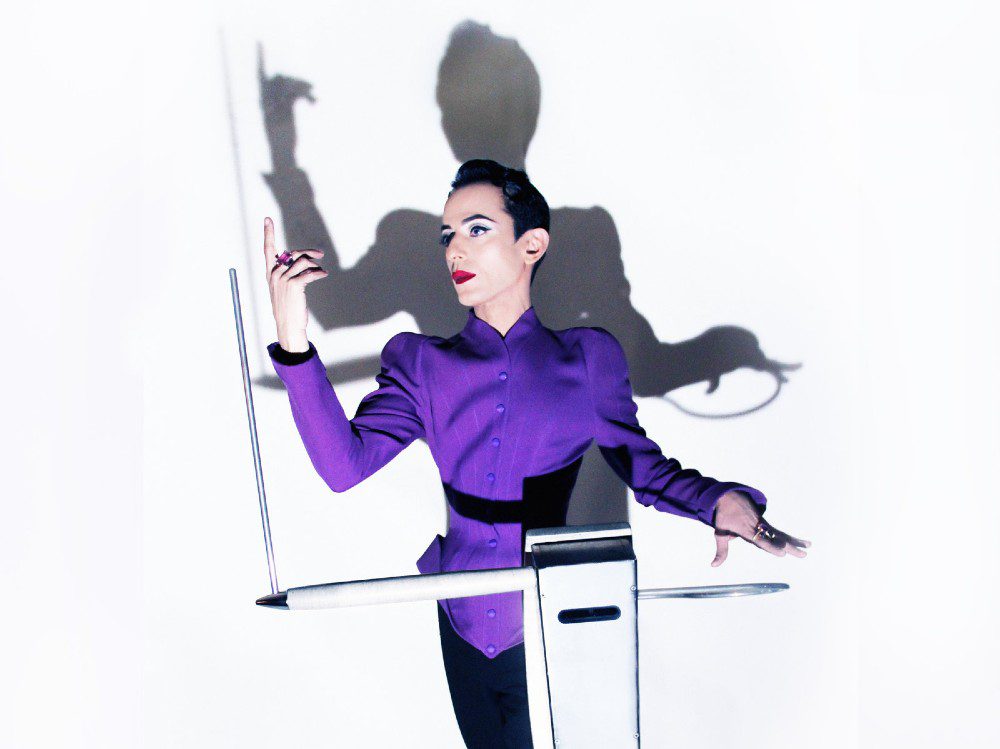
Ohtis and Stef Chura Team Up to Take Down Toxic Dudes with “Schatze”

Alt-country outfit Ohtis enlist the voice (and production skills) of beloved Detroit artist Stef Chura for their audio-visual fuckboy call-out “Schatze,” released digitally at the end of January (a 7″ vinyl is available for pre-order ahead of its February 26 release via Saddle Creek). Starting out like a guided meditation accompanied by Fred Thomas’s ambient track “Backstroke,” the brief moment of Zen is promptly squashed by the unrelenting, familiar chimes of an iPhone. The messages come rolling in, narrated by lead singer Sam Swinson – “I do/do what I please/it’s my Shatze/it’s my treasure/it’s not difficult, I do it with ease.” Chura replies to Swinson’s apathetic admission with an appropriate “Fuck you very much sir!” – a line that serves as a mantra throughout the song. 

It’s an appropriate and timely catchphrase for the past few years we’ve had as a country, bleeding from the effects of men who think they can get away with anything. But recently, we’ve also seen slow steps towards a reckoning – lies coming apart at the seams, survivors stepping forward to bring their abusers to justice, and the grand finale of a bigoted predator being removed from office. And although the villain in this song doesn’t exactly sit in that rung of evil, he serves as a symbol of that one guy – or guys, and the toxic culture that enables them – we all know that just really, really sucks.

“It’s a story about a fictional character and his faults. As I see it, crafting this song as a cultural commentary, but through the lens of humanity and humor, makes for a more accessible listening experience,” explains multi-instrumentalist Nate Hahn (pedal steel guitar, guitar, bass, keys, trombone). “We hope that this encourages more people to listen and reflect on the issues explored.” Those issues range from binge-playing video games, cheating on your significant other, and just having a general air of entitlement and indifference to one’s surroundings. “The title is a reference to a friend’s cat who’s a vicious beast of the same name,” adds multi-instrumentalist and producer Adam Pressley. 

Granted, an unruly cat is arguably a much easier beast to tame – or at least tolerate – than the character than Ohtis creates in “Schatze” – a self-obsessed, vape-loving, mask-hating gamer blob that admits things like, “I’m a piece of shit/I just think I’ll get away with it.” Chura’s gritty vocals are the perfect counter to Ohtis’ Frankenstein douche and serve as a sort of accountability angel. She says that the collaboration came together naturally, as Pressley was playing in her band at the time and the two had talked about working together. “We kinda jokingly tossed the idea around about the collaboration,” says Chura. “I really like Sam’s singing voice and was down for it. Then one day they just kind of hit me with the actual song. The rest is rock ‘n’ roll history, baby.” 

Hahn adds that having a female voice on the track was essential to rounding out the song’s message. “From the beginning, it was clear that the story needed to be told from both sides of the relationship,” he says. “We loved working with Stef because she’s a friend of the band and she’s the rockinest.” Aside from contributing her voice, Chura also co-produced the track and prevented the band from “keeping some silly digital DJ Khaled style vocal chopping we had in the track early on in the process,” according to Pressley.

While the song is a slight departure from Swinson’s deeply personal lyricism on Curve of Earth, the character in the song serves as a self-aware caricature of what we can become without actively checking ourselves. “I think it’s incredibly important that everyone takes stock of the way they might act in relationships and how actions could affect other people,” says Swinson. “Hopefully it can bring about some self-reflection in people as to how they could be better to the people around them.”

Outside of the commentary on personal relationships, the song also nods at the fact that white men have historically gotten away with doing evil shit, and a lot of them still do. It also nods at the role – however divisive it can be – that the internet has in unveiling the truth (or spreading lies) about people. The video even sneaks in a text from “Ohtis” reading, “do you liek ariel pink?” a reference to his troubled reputation and recent “cancelling” after he was spotted with John Maus at the pro-Trump rally preceding the insurrection. And while the members of Ohtis are galaxies away from being caught at a MAGA gathering, Swinson admits that they still have work to do when it comes to deconstructing the patriarchy. “There are definitely lingering bits of toxic masculinity from our conditioning that we can still identify and ultimately hope to carve out of ourselves in the process,” he says. “ [We] have no problem being self-deprecating about that.” 

Whatever your opinion on call out/cancel culture may be, this song and video serve as a relevant reflection on the moment we’re in – a chaotic e-landscape swirling with accusations, accountability, and assholes. For the listener, maybe it’s an opportunity to reflect on how you act in your relationships. Maybe it’s just an excuse to say “fuck you very much sir” a lot. For me, it’s both, and I’m better for it.

Follow Ohtis (via Facebook, Twitter, and Instagram) and Stef Chura (via Facebook, Twitter and Instagram) for ongoing updates.

Cincy Rapper Swooty Mac Releases Sunday Morning LP in Collab with Devin Burgess

Swooty Mac
Swooty Mac
Photo Credit: Guy Nee Whang

Swooty Mac and Devin Burgess have gifted fans their first joint project: Sunday Morning. The eight-song offering houses some of Swooty’s most honest and direct lyricism ever, not to mention some truly excellent beats by Burgess. The project also includes an ample amount of vibe-y bangers (opener “Function” and “Twenty” are my favorites) and the boo’d up “Bath Water – Extended.”

Cincinnati rapper Swooty and rapper/producer Burgess first linked up on Swooty’s 2018 debut EP, Jolie: The Swooty McDurman Project. Since then, Swooty says he and Burgess have teamed up together on roughly 20 songs – some released, some still in the vault.

“It was different [making Sunday Morning] mostly because [Devin] didn’t rap on the project. Usually we’re trading bars, but he didn’t rap on this at all or even do a background vocal. That was the biggest difference,” Swooty explains. “We have a pretty good chemistry, though, so it’s kind of hard for us not to come up with something.”

The beat Burgess made for “Bath Water – Extended” is what kicked off Sunday Morning. After hearing the instrumental, Swooty co-wrote the sensual cut with JayBee Lamahj and set out to make a full project with Burgess.

Swooty explains that initially, Sunday Morning was set to be a four-song EP. But, it was Burgess – who also mixed, mastered and engineered the project – who wanted to turn it into an album. Swooty agreed to record four more songs, but then he learned he was going to become a father for the second time.

“I’ve got a 7-year-old and [now] a 1-year-old and, you know, I had to handle my responsibilities before I dive too much into being a rapper,” he says, taking some time off to focus on his family before returning to finish Sunday Morning. “But, it worked out,” he continues, “because two years later we came out with a dope ass project.”

Learning he was going to have another child also made finishing Sunday Morning “even more special,” Swooty said. The album tackles several vulnerable topics that the rapper had previously steered clear of, for the most part.

“The stuff I was going through, the stuff that I was talking about on the project, it [took] time for me to express that stuff,” he confessed. “A lot of my music is personal, but it’s like surface-level stuff. This was, let’s get down to the nitty-gritty and see what’s going on. Like, I feel this way, and now I’m telling you why.”

Swooty dabbles in love on the pleading “Teach Me” and insecurity on the self-reckoning “blue af,” but he pushes his boundaries the most on “Neo.” On the stripped-down cut, the rapper examines co-parenting and juggles anxiety with ambition in an intensely personal, yet sharply relatable way, making it a standout track. Amazingly, though, it was almost cut entirely from the project.

“[‘Neo’] was just me being open and it’s one of the most vulnerable tracks on there,” Swooty says. “I wasn’t really rapping; I was kind of just talking and saying how I feel. Me and my daughter’s mom were going through some stuff at the time – arguing, breakups, and that’s pretty much what I was talking about on that record. And the reason everybody likes it is the reason I almost didn’t put it on there – I was thinking, don’t nobody wanna hear me be all sad and shit.”

Because of the song’s success, Swooty said he’s become more comfortable being vulnerable in his music. “I can do more stuff where I’m being sensitive,” he says. “I don’t gotta stick my chest out and be the big bad guy all the time.”

“I’m extremely proud of Swoot for delivering and executing such vulnerability and emotion,” Burgess adds. “I know how much that can take out of a person.”

Looking ahead, fans can expect some visuals from the project – possibly merging with companion clips for Swooty’s 2020 offering, Do4Luv. Devin Burgess, on the other hand, is set to release his live EP, 2018, on Valentine’s Day, followed by his rap album, That’s Unfortunate, next month.

“I really put thought and effort into other people’s music as if it was my own,” Burgess says of Sunday Morning. “I try to make everything as special as possible and this felt special to me.”

Follow Swooty Mac and Devin Burgess via Instagram for ongoing updates.
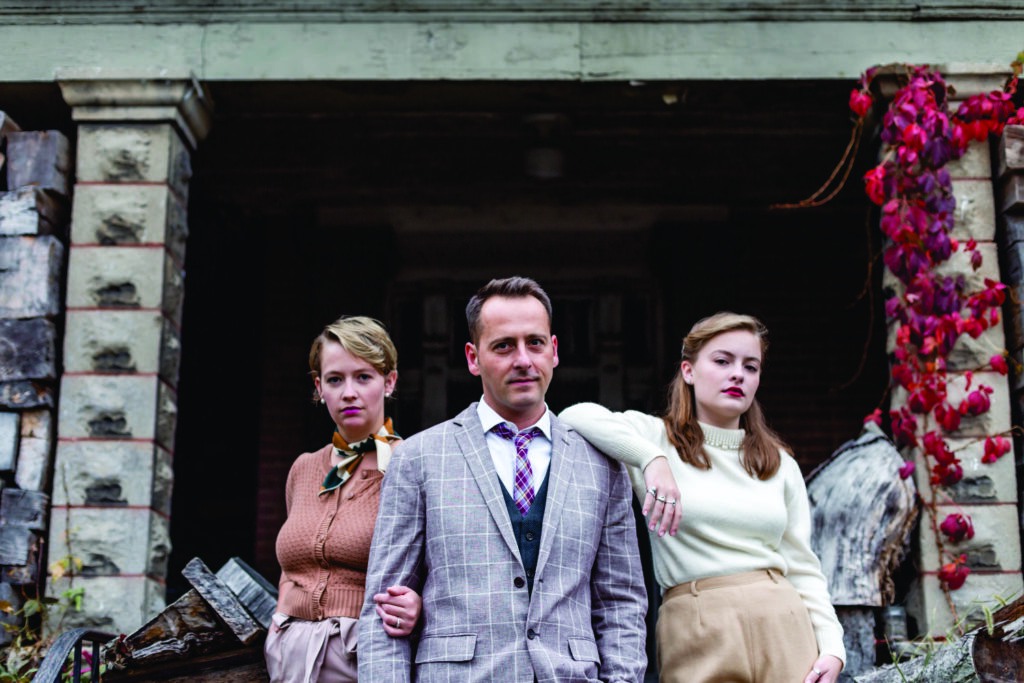
Sasha and the Valentines Cast a Spell With Premiere of Silent-Film Inspired “Witches” Video

Photo Credit: JB Bergin

With Valentine’s Day fast-approaching, love is in the air… or is it? Austin-based quintet Sasha and the Valentines want you to consider those feelings as carefully as they have on their debut LP, So You Think You Found Love? out April 16 via Oof Records. They’ve released one song from the project so far – existentialist dreampop ditty “Tears for Mars” – and today, they’re premiering a soft-focus black and white video for woozy new single “Witches.” Shot on 8mm film by Valentines bassist JB Bergin, the video sees the band (Bergin, guitarist Alex Whitelaw, drummer Billy Hickey, and aux percussionist Tim Zoidis) made up like mimes and bewildered by the spectre of singer/songwriter/keyboardist Sarah Addi.

The band met while attending the University of Massachusetts Amherst, relocating to Austin to hone their sound in the live music capital of the world. So You Think You Found Love? expands on the blissed-out Motown-inflected art pop that comprised their four-song debut EP Green, with Addi’s lyrics exploring the ambiguity of human relationships, as well as her personal experiences with codependency and queer identity. “Sasha” (a Russian nickname for Alex) acts as a genderless persona that can be embodied by any and all of the band’s members, as well as the listener; in keeping things vague, the focus shifts from each song’s particular narrative into full-on mood.

“Witches” opens the forthcoming LP with evocative synth and beachy, reverb-drenched guitar, unfurling into its languid chorus as Addi attempts to console a tempestuous lover. It’s easy to fall under her spell as she conjures the ghosts of Clara Bow, Theda Bara, and other doe-eyed stars of the silent film-era in a diaphanous gown and crown of stars, locked in an enigmatic waltz with her bandmates. Check out the video and read on for a Q&A with the band below.

AF: How did the band form? What other musical projects have you each been involved with? How did you all make your way to Austin and what’s it been like being part of the thriving music scene there?

JB: Our musical projects are a tightly woven tapestry. All of us play or have played in a few groups over the past few years while also playing in Sasha, which began booking live shows formally in summer 2018. Sarah, Billy, and John played in Calico Blue (2015-2020). John and Billy played on Christelle Bofale’s debut EP and in their live band. Billy has played in Hotmom and Holiday Music; Alex also played in Holiday Music for a while. Tim played in Petting Zoo when we all first met. Alex is the artist behind the band Spirit Ghost (2012-present), with John, Billy, and Tim supporting him for live shows.

We all ended up in Austin on each other’s heels; first Sarah, Alex, and Billy, then me, then Tim. It was really just a “pick a place on a map and go” sort of decision. The music scene is vibrant! It’s been important to be in a place where live opportunities abound, where we could really cut our teeth and define our live sound/live presence very comprehensively.

AF: What did you learn between the recording of your EP Green and putting together your debut LP? How did you get involved with producer Erik Wofford/Oof Records?

SA: I think the EP was a way of getting our music out there while we played live around Austin; I had written most of those tracks a while back and wanted to give live fans something to listen to online. When approaching the album, I wrote demos of these songs over the few years we’ve been in Austin playing live, so they were very seasoned and pretty fleshed out by the time we were ready to record. Going into it, personally, I had a very clear vision of what we wanted everything to sound like and we decided to spend the time and funds to really amp up our production, and Erik Wofford was a big part of that. Working with him was the only way I could have imagined this album going. He really understood what we wanted and just got our sound right away. It was an honor working with someone who has worked with such great artists.

JB: Erik saw us play in July 2019 at a Hot Summer Nights show at Cheer Up Charlies; we had just gotten back to Austin after a run to California. He emailed us that week to see if we wanted to come into the studio, so we scheduled a day and recorded Witches. Fast forward a couple months; we spent a lot of 2020 pitching the album to different labels, and we were introduced to Oof by seeing a tweet from our friend Tyler Andere. We sent an email, they responded, and now we’re here!

AF: How do you approach your retro pop sound in terms of songwriting and influences and how does that play out in the band’s overall style, musically or otherwise?

SA: I’ve never really written in a way that tries to be something, if that makes sense. So our sound is just a very authentic, subconscious amalgamation of all the artists we love and listen too. With SATV specifically, I wanted to write what I wanted to listen to. Growing up I listened to a lot of Motown, Stevie Wonder, ABBA, Blondie, Prince, Elton John, Tears for Fears, Cranberries, 80s pop, etc. etc. and that later translated to a love of Unknown Mortal Orchestra, Tennis, King Krule, Beach House, and other kinds of warm vibey indie pop. But I’ve also been directly inspired by musicals, TV shows, movies and music that stretches outside of what I normally listen too. I just have a lot of love for melodies and sounds that are catchy, nostalgic, and make you feel something honestly and shamelessly.

AF: I like how the album stays relatively vague yet plays with the idea of love and expectation in ways that go beyond romance. Can you talk about some of the deeper concepts you wanted to explore on this record, and how couching them in the form of love songs helps you process?

SA: One concept that I think shows up again and again is just the overall idea of giving and taking. In relationships, romantic or otherwise, sometimes we give so much to a person and they could potentially give you nothing. And sometimes we do everything for someone, not out of selflessness or love but to make ourselves indispensable and needed. In this record, I touch on a lot of my past relationships and those moments of manipulation, or rejection, needing, giving, taking. I think it’s me coming to terms with my place in relationships. Most of the time, I am a giver. I let people take everything I have emotionally and I’ll still smile and want to make them feel better. I’m facing my fear of rejection and being alone and being open about my sexuality and the shame that comes with it. It’s easy to be the giver when in the past you’ve felt like you didn’t deserve the affection or attention given to you. It’s also easy to make someone need you/want you so that you don’t have to be alone. That sounds so crazy, but it’s true.

AF: Even the title of the record is subtly daring, like a challenge to the idea of fragile relationships and fickle feelings. Who is that question addressed to and how does it relate to the overall concept of the record?

SA: I think the question is for yourself, myself and the listener. I’m asking you, everyone and myself “So you think you found love?” It’s super easy to interpret it in kind of a challenging, condescending way, that could mean maybe you feel defensive about your relationship or your innate desire for love. But you could also interpret it as a very genuine question. Do you know what love is? Did you find it? Is love actually what you are feeling? Or are you desperately clinging to the feeling of being needed? It’s not really meant to be cynical. I believe love is real. But those other feelings – insecurity, not feeling good enough, the need for validation, or fear of being alone – can also be love in disguise. So through processing all my relationships, mirrored through the album tracks, I am and have always been asking myself, did you find love? Is this what it is?

AF: You tackle some big ideas that can be sort of heavy, like codependency, coming to terms with queerness, etc. but the songs have a feather-light feel. Can you talk about the benefit of approaching weighty topics with airy melodies? How did you sonically capture that floaty feeling of falling for someone?

SA: I think humans are really funny. We’re very dramatic and we feel very hard. We love hard and we hurt hard. But when you zoom out it’s also kind of comical and very trivial. So I started writing these melodies and chord progressions that contradict the feelings and ideas that drive the lyrics. Because even though love and other relationships can really hurt and fuck you up, that feeling of falling, or butterflies or being really seen and understood by someone is always worth it. So why not wrap these themes in a warm, bubbly package? Make them sweet and easy to swallow, because each time no matter how broken we get in love we’d do it all over again the next time because it feels that good.

AF: What inspired the song “Witches”? How does that symbolic, evocative title play into the meaning of the song?

SA: So the concept of “Witches” comes from past relationships where I have wanted to get so close to a person, and know everything about them in an effort to be the one they find the most comfort in. If they could tell me anything then I am their confidante, which means they can’t leave me. But that’s not true, and that’s borderline manipulative on my part. So I came up with the idea that I was like a witch: I cast a spell on my lovers and they bare their souls to me so that they’ll always need me and be worse off without me; they’d be under my spell. It’s kind of a creepy reminder that even selfless-seeming acts can have weird manipulative intentions. Especially in relationships.

AF: Have you had any personal brushes with witchery? Does anyone in the band practice magic, rituals, etc.? What kind and for what purpose?

SA: I don’t think so. I mean, we’re all from Massachusttes, home of the Witch trials. But no, not witchery or witch practice in particular. Even though I am a huge fan of spooky things, Halloween, magic and the paranormal in general.

AF: Can you talk about what you were going for in the video? I get silent film-version of The Love Witch vibes!

JB: The Love Witch was one of our visual references for the video, actually! We tried to create a similar mood to The Love Witch, but if Marcel Marceau and The Addams Family were directing it. Sarah also had this very specific, very weird Russian children’s movie scene in mind when it came to Alex’s costume.

AF: Were there specific production challenges you faced in making the video, due to COVID or otherwise?

JB: COVID didn’t put a damper on making the video, since all of us were living together by the time we filmed it. However, it was my first time using an 8mm film camera (I’ve been shooting professionally on film cameras for a few years but had never used movie film before) so the entire filming process felt like a shot in the dark. We had no guarantee that the camera was still in working condition; I only knew that it was my grandpa’s and that he took excellent care of his belongings.

AF: How about any challenges with making the record or just existing as a band in general right now?

JB: Existing as a band right now definitely poses some challenges. Without live shows, we’re left with a lot of free time, which can be positive: a way to re-assess what we’re doing, a chance to structure a practice routine that isn’t only in relationship to when our next gig is, a break from the emails and social pressure of playing live. The downside is we’re faced with this endless existential question mark – why are we doing this? Is this fulfilling us, answering the questions we had when we started? Playing live was often the uplifting answer to those questions. So it kind of becomes a question of, are we really doing this, when no one else is watching? When it feels like no one else cares except us? I think that’s the ultimate question for any artist, and I don’t think we were expected to be confronted with it so abruptly.

SA: I second that. It’s also, frankly, hard to make a living as a musician if you can’t tour. Touring can be very lucrative and fulfilling so it’s disheartening that we can’t do it right now. But at the end of the day, we just want to share what we’ve made. We’re proud of our songs and we hope other people emotionally connect to them like we have.

AF: What are your plans for the album release and beyond? Livestream shows, etc?

JB: On release day there’s a plan that involves karaoke… but the rest of that idea a secret.

AF: Last one: what does it mean for y’all to find love – not necessarily in a traditional sense, but as a band, amongst each other and/or with fans?

JB: I think love boils down to trust and mutual benefit. Are we sharing with each other and growing/transforming from that exchange? Are we putting our vulnerabilities on display and believing that whoever is watching (the others in the band, the audience) will hold us closer because of it? To me, finding love is exploring what types of ways we’re held.

SA: It’s very special to meet people that believe in you and your musical instincts. I have been incredibly blessed to feel loved and supported by my bandmates and our fans. And I hope each of them feels how much I love and support them. Even as an audience member, I hope you feel that when I’m singing you my songs, I am offering a piece of my heart to you, everytime. And I hope in those moments when you’re looking for love or questioning if you’ve found it, you can find solace in the fact that someone else is looking too. Even if it’s not romantic, we all look for love.

BH: I think love is about trust, being able to express your true self without fear. Band-love is a very special kind of love, because we have to come together to express a shared self. You love your band mates because they’re a part of you and your ability to express yourself to the world, they’re my emotional microphone that allows me to express myself as part of a whole. It’s nice to be a slice of Sasha pie.

Follow Sasha and the Valentines on Instagram for ongoing updates.
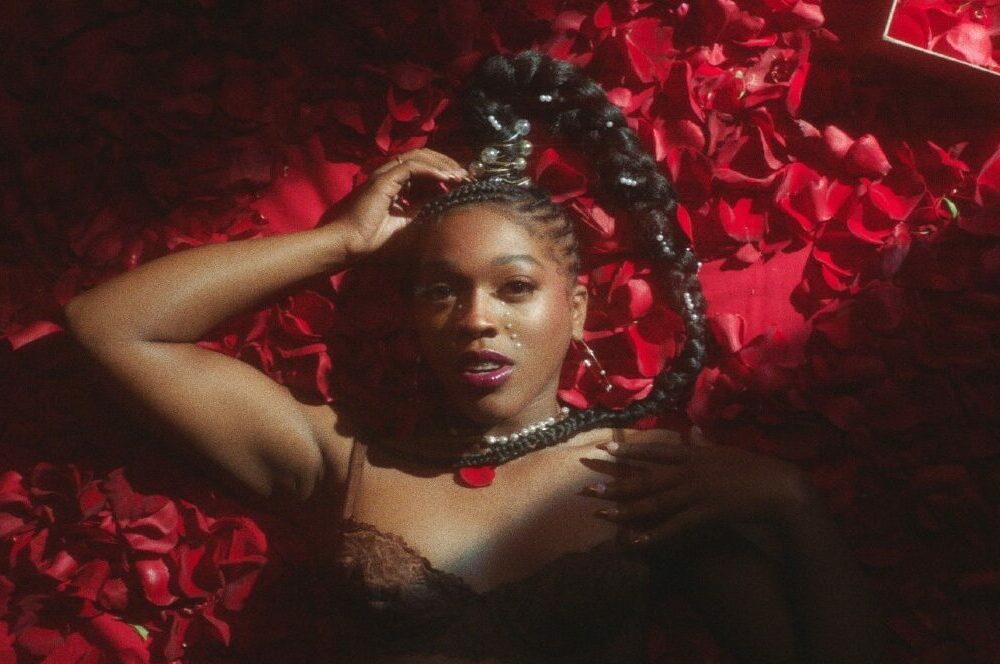
Ladytron Ushered in the Sound of a New Generation with 2001 Debut LP 604

By 2001, I had already fallen in love with an innumerable amount of albums. Some became fleeting moments of obsession. Others evolved into long-term relationships. None would resonate with me quite like the debut full-length from British electronic pop band Ladytron, 604. 

Listening to the album for the first time was revelatory, but it wasn’t music that caught me off-guard. Probably like plenty of the band’s early fans, the release of 604 was something that I had anticipated. Ladytron had released three EPs between forming in 1999 and 604‘s release on February 6, 2001, all of which included tracks that would appear on the full-length. My own fascination with the band started the previous year. 

I don’t remember what I was doing at KXLU on some random weekday in 2000, as it had been a little over a year since I graduated from Loyola Marymount and left my show at the college radio station. But, for whatever reason, I was there, talking to a friend who mentioned this new band Ladytron. They had an EP coming out that was going to be added to the station’s immense collection. He thought I would like them. 

On first listen, Ladytron reminded me a bit of Stereolab or Broadcast, two bands I adored, but with a more pronounced dance beat. I fell for them instantly and, luckily, I was able to find a copy of the EP Commodore Rock at an L.A. record stores that no longer exists soon thereafter. Since my friend hipped me to this band, I now had to pay it forward and start evangelizing to everyone else I knew. I started dropping “Playgirl” in my sets at Bang!, the Saturday night indie dance club where I was a resident DJ. Week after the week, the crowd grew on the floor when the tune was played. Fairly quickly, it became one of the hits.

“Playgirl” might be the jam on 604 that everyone knows, but in the album’s era, there were multiple songs that got the crowd going at various different points in the night. “Discotraxx,” “Paco!” “The Way That I Found You” and “He Took Her to a Movie” all turned up in my own sets with some frequency. As the songs played, the girls with pixie haircuts and the guys wearing skinny ties scurried to the dance floor. It was a moment that reminded me of Diane’s infamous line in Trainspotting: “The world’s changing. Music’s changing.” The 1990s were over. The 20th century was over. This was music that was ours, for this specific pinpoint in time. 

My own social circles consisted mainly of people born between the middle of the 1970s and the very early 1980s. We were technically Generation X, with some of our young pals skirting the Millennial line, but not really a part of either culture. The big youth movements of the late 20th century – punk and hip-hop – had already happened by the time we were old enough to form memories. Most of us were too young for the original raves, too young for most of the clubs that the folks pushing 30 would mention on the smoking patios. By the end of the ’90s, there was this sense that people like my friends and I were born at least five years too late, missed out on all the good shit and were trying to make up for our bad luck by piling black bendy-plastic Madonna bracelets on our arms and sifting through record store stacks for castoff Joy Division vinyl. 
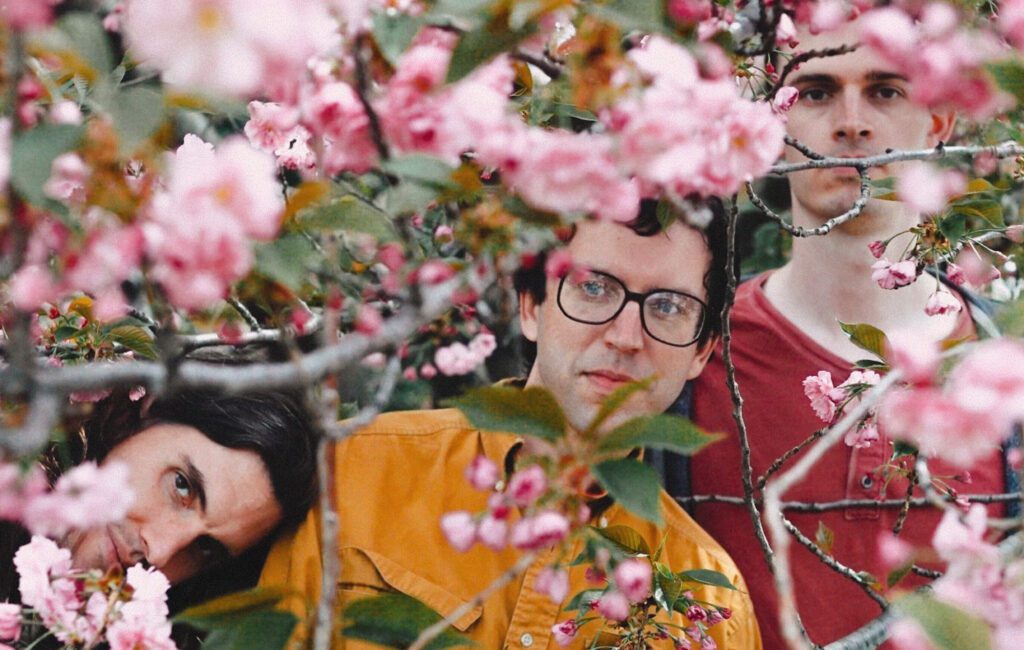
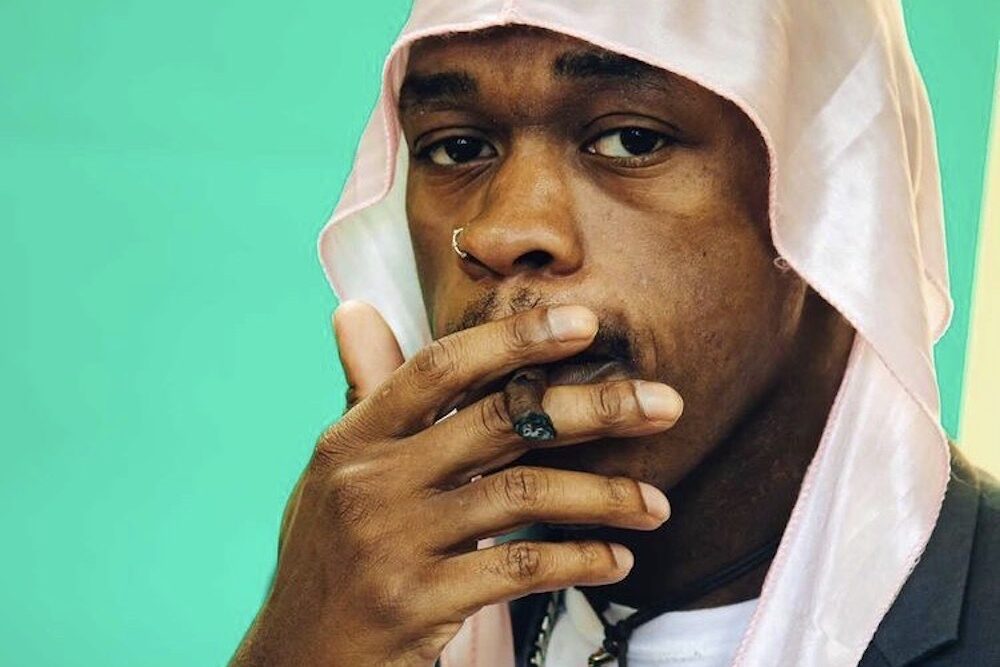
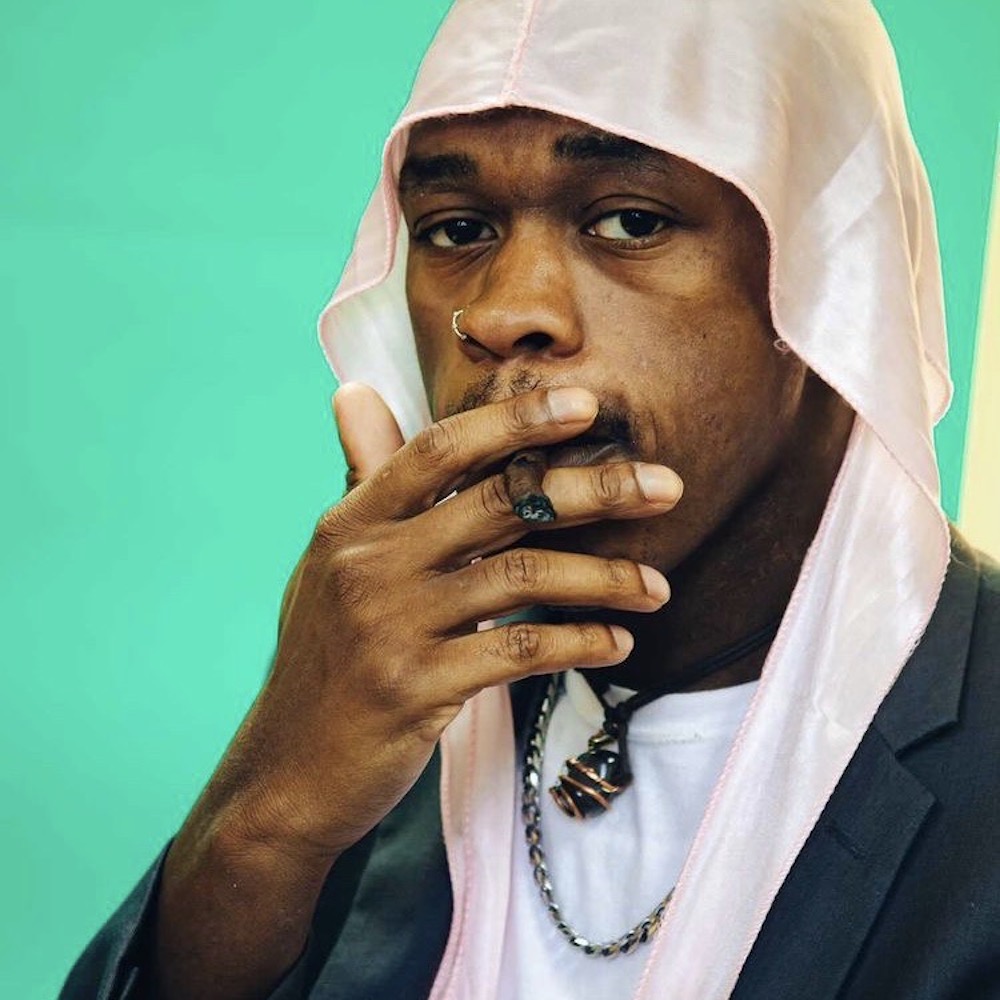
With Ladytron, it seemed like there was a band from across the Atlantic who was coming from a similar place as my friends and I were in Los Angeles. There was their name, a reference to Roxy Music from the Brian Eno-era. Their look – stark, all-black clothing and choppy haircuts – resembled the style that was starting to permeate the club scene. Then there was the sound: an amalgamation of early synth pop, Warp Records-style weirdo electronics, Can-influenced indie pop and the funky psychedelic rarities that crate-digging hip-hop DJs coveted. Yet, it didn’t quite sound like any of those things. On top of that, they referenced both the British TV show Are You Being Served? (on “Paco!”) and Kraftwerk (on “He Took Her to a Movie”) in the course of the same album. 

In the decade that followed, as heavy synths came back into vogue, Ladytron and their contemporaries, like The Faint and Scissor Sisters, gained popularity in art punk circles while being awkwardly lumped into a so-called ’80s revival by the mainstream. But really, it was just music made and embraced by a strange, often-ignored half-generation whose musical memories likely began with Bowie or Blondie or Prince, who spent their ’90s teen years hopping between music scenes that had already been well-established and discovering new ways to appreciate it. All this would coalesce into the music of the early 21st century and, for me, that era kickstarts with 604.

Odette Explores Accountability on Lush, Powerful Sophomore Album Herald

Photo Credit: Giulia McGauran

Georgia Odette Sallybanks – better known simply as Odette – set a high benchmark with her debut album To a Stranger, which peaked at number 13 on the ARIA (Australian Recording Industry Awards) Albums Chart and was nominated for a Best Adult Contemporary Album ARIA in 2018. But her sophomore album Herald, out February 5, doesn’t disappoint; the layered, atmospheric instrumentals, dance-friendly beats and bright, resonant vocals is a formidable combination. “I Miss You I’m Sorry” adopts quirky stop-start rhythms, flourishes of strings, and ultimately feels like a glorious auditory collage of cut ‘n’ paste euphonics. The title track lands a throbbing beat over rattlesnake percussion, harp and handclaps building to a stadium-sized banger. At just 11 tracks, it’s not outstaying its welcome, and every minute is killer, no filler.

Born in Bath, England, Odette moved to Sydney soon after and began songwriting aged eight. Her music is almost diary-like, revealing and articulate by equal measure, and incorporating ballad, spoken word, instrumentals and pop melodies within each song. Back in 2018, Odette admitted to The Sydney Morning Herald that “you can’t just sing a song and all your problems go away.” With its seemingly cathartic nature, Herald plays almost like Odette’s attempt to challenge that sentiment.

The most talented artists can weave their pain and traumatic experiences into their creations, but that doesn’t relieve them of the emotional resonance or the memories and how they’ve become ingrained under the skin. In her early 20s, Odette is still so young that the intensity of adolescence is still a snakeskin she’s barely shuffled out of. The combined impact of troubled relationships, the pressures of a professional creative career, and trying to manage a diagnosed mental health disorder under the stormclouds of pandemic conditions might be too great for some young women to handle. Odette has more than handled them, though. She’s created an album that speaks of hope, resilience and evolution.

To A Stranger was released by record label EMI, which signed Odette at 17. She was 20 when the album came out, featuring collaborations with songwriters Charlie Hugall (Florence + The Machine, Ed Sheeran), Jason Cox (Blur) and Sarah Aarons (Zedd). “Those songs were written over the course of a few years, when I was aged 14 to 18,” recalls Odette. “It was a time capsule of my adolescence. It was me just figuring out what I was experiencing. With the new album, I’m coming to a new awareness.”

Herald sees Odette “taking accountability” for her actions during a recent mental illness which was only diagnosed last year; this period of sickness informs the album. “I had to work out what was me, what’s not me, and I had to work out how to regulate my emotions. There are lines in the album where you can hear that it wasn’t written by a well person,” she tells Audiofemme.

Though Odette is reluctant to speak too much to her own diagnosis and personal experience beyond what she shares in her music, she does impart her opinion around admitting to pain, owning it, and taking the measures to be well. “There’s no choice to be troubled – it’s okay to be pained or mentally ill. It’s not okay to shirk your responsibility to get well,” she says. “Honestly, if you leave it up to fate, I don’t believe in fate. If you believe ‘the universe has got me,’ you can hurt people a lot. We are human beings, all having the same experience, but when your problems hurt you and other people, you have to do something about it. There are people that care and safety nets.”

“Feverbreak,” Odette’s collaboration with Hermitude, appears on Herald and offers a startling glimpse into her state of mind as she reaches out for help. “She’s a body, not herself, not a lover but a service…just a scream amidst the reeds tangled around and around her legs…” she sings. “Can you help me break the fever? Never needed anything more than your real love.” Hermitude, the Australian electro-meets-hip hop duo, have been well established in the local music scene for 20 years, receiving countless ARIA Award nominations and touring widely through the US, UK and Europe, but they encouraged Odette to express herself on the collab. “They said to take the reigns, figure out the structure of the track, and it was a really cool experience, actually,” she remembers.

Hip hop wasn’t a major influence on Odette’s sound though, so the collaboration was a step into a new environment. Rather, Odette’s earliest inspiration for songwriting was 2004 album Sound of White, by Australian artist Missy Higgins. The pared-back, emotionally raw and beautiful work launched Higgins onto the world stage. Both Higgins and Odette are skilled storytellers, unafraid and willing to traverse difficult memories and emotions to find where their scars have begun to heal and what they’ve learnt, gained and developed as a result of grief. Their songs are not miserable in the slightest, but hopeful, nuanced and mature. More recently, Fiona Apple has been Odette’s major inspiration, along with Tori Amos, Joanna Newsome, Björk, Kate Bush, Macy Gray and Conor Oberst, best known for his work in Bright Eyes.

Odette’s own sound has echoes of her influences in its melodic catchiness, the skilled balladry and insightful lyrics. These qualities are all amplified on the single “Amends,” which is about choosing kindness. The song speaks to perseverance in the struggle with mental health and how it affects relationships. Produced and mixed by Damian Taylor, it is enriched with musical arrangements by Kelly Pratt, who has also worked with well-established international artists Beirut, David Byrne and Arcade Fire.

Odette nominates “Mandible” as her favourite track, though. “It’s closer to my headspace now, it’s more relatable to me now,” she says. “There’s hope in the track, it’s not fueled by rage. It’s a yearning for connection, stability and love.”

These are common desires, especially as the uncertainty of pandemic life has meant border closures, the end of live performances and the huge pressure on artists to make a living or seek government support. There’s the added pressure, for Odette, of preparing the people around her to see reflections of their relationships to her in her songs. “I talk to people before I release songs about them,” she says. “They know that it’s not necessarily about them, it’s about me processing my own emotions rather than being about them.”

For those who don’t know Odette personally, their first impression may come from the beautiful, disturbing aesthetic of Herald’s album cover, designed by Melbourne-based artist Eben Ejdne. “I wanted to make sure he captured that sense of morphing into something new. He knew exactly what to do. It was our first time working together,” Odette says. “Everything to do with this project…I really cared about detail. I worked on editing and treatments, I made puppets for the ‘Amends’ video.”

There are tentative plans to tour with Herald; though it’s too soon to lock anything in until borders reopen, Odette played New York, LA, and SXSW back in the good old days of international travel. “Texas was great, it was so good. I played at a few different places, but the best was an indoor show where it was very dark and there was a solid 200, 300 people having a great time,” she recalls. “I would love to go back… I’ve got a keyboardist, a drummer, and ultimately it would be us playing mostly from Herald and a few [songs] from the first record.”

Until touring can commence and life resumes some normalcy, Odette has been applying her creative skills to gardening and working with clay. She jokes, “I’m fickle with my hobbies!”

Follow Odette on Facebook and Instagram for ongoing updates.