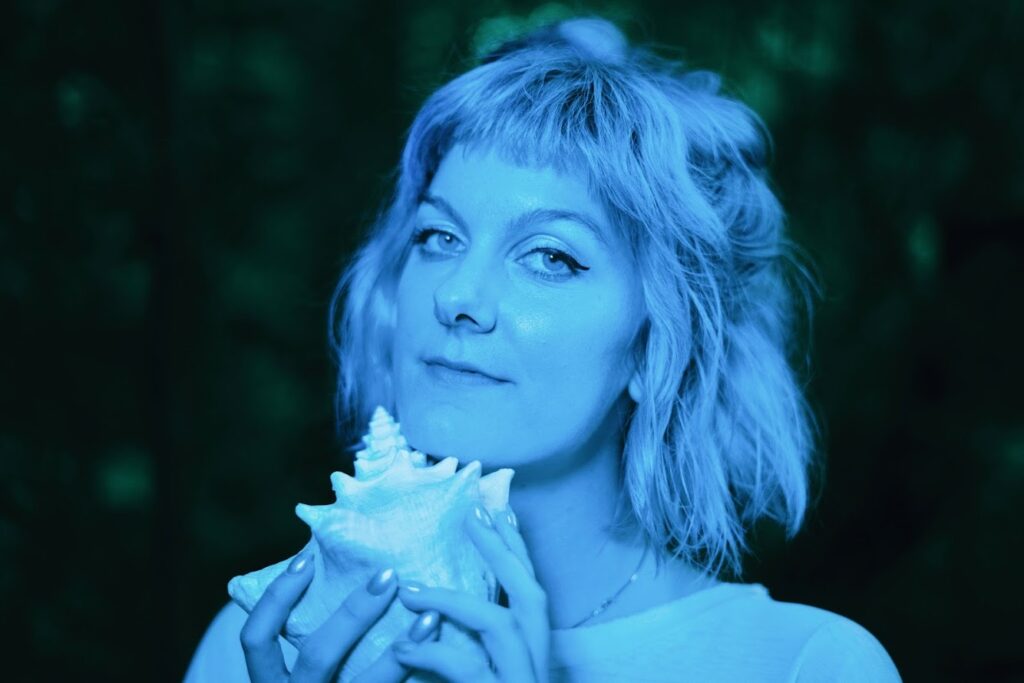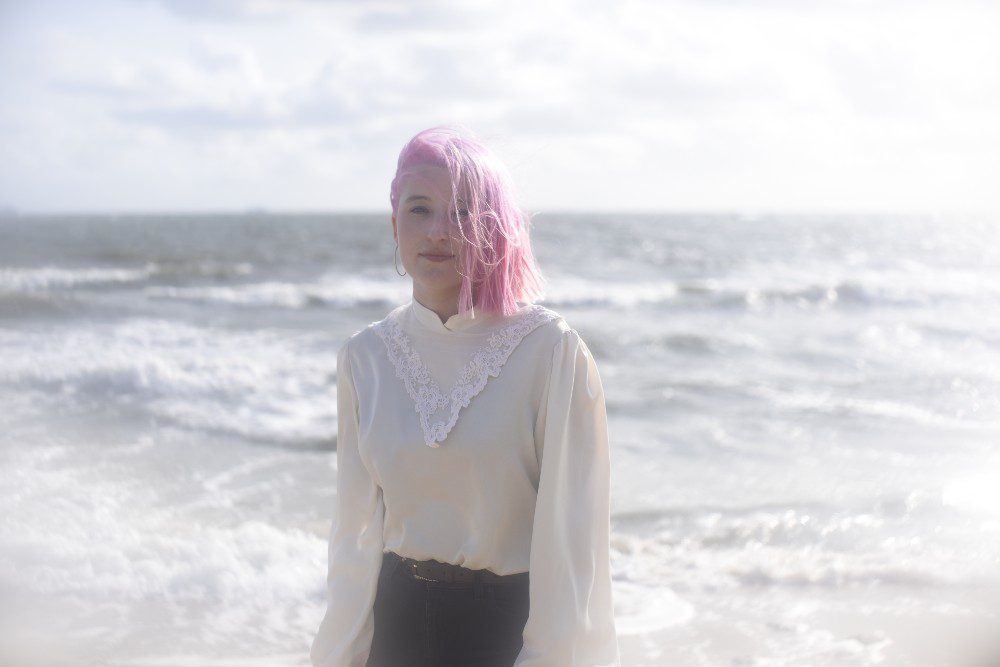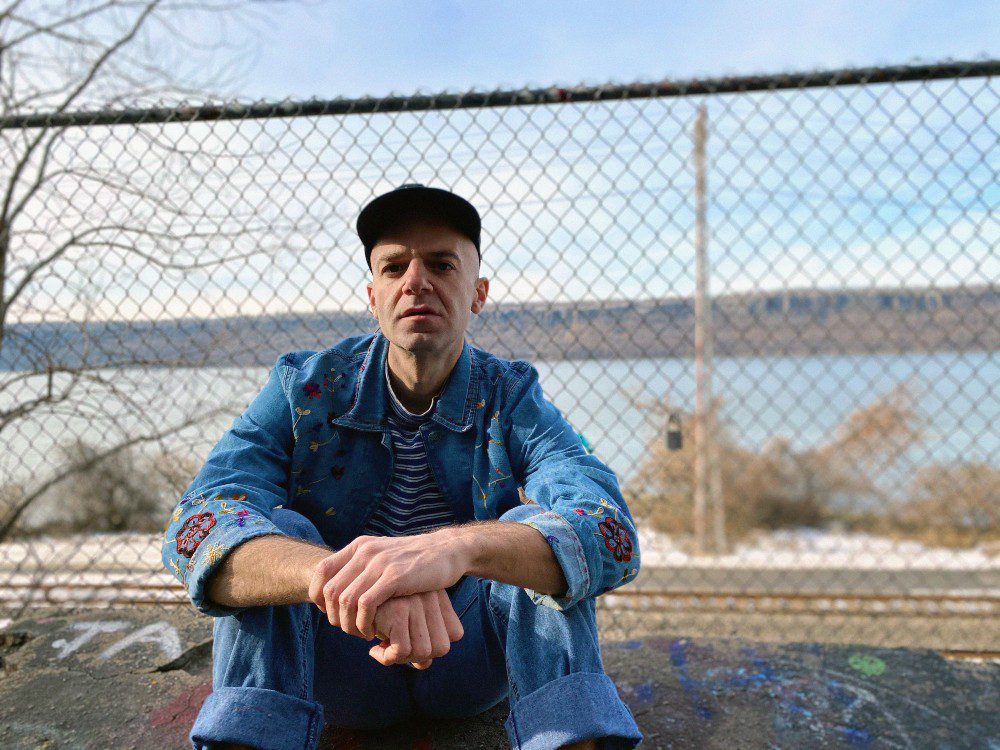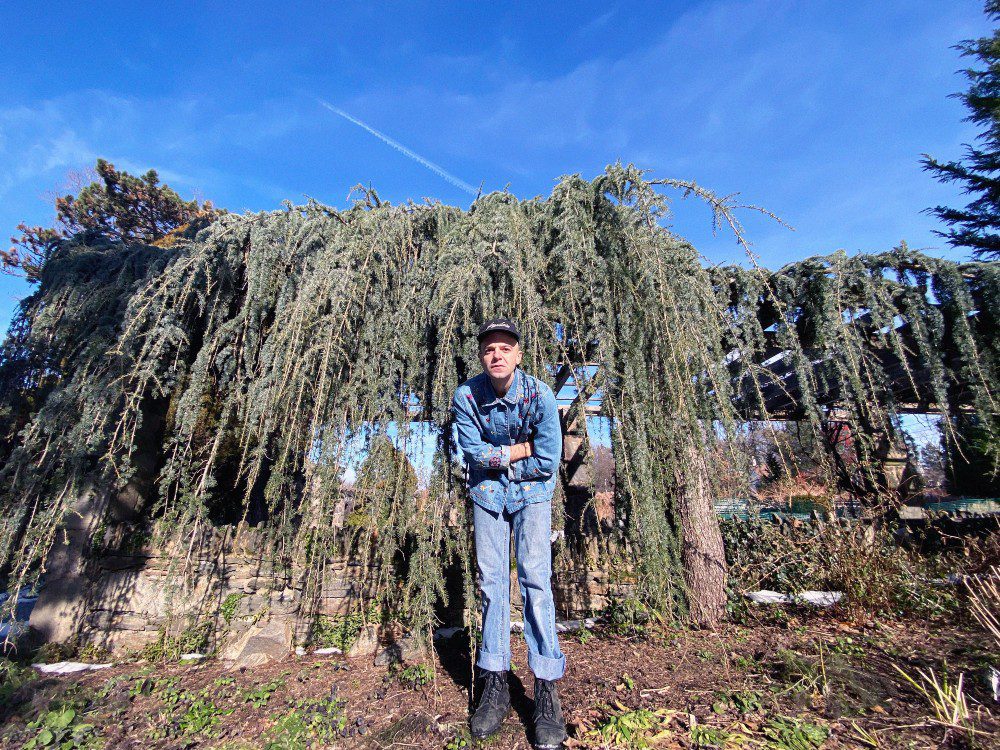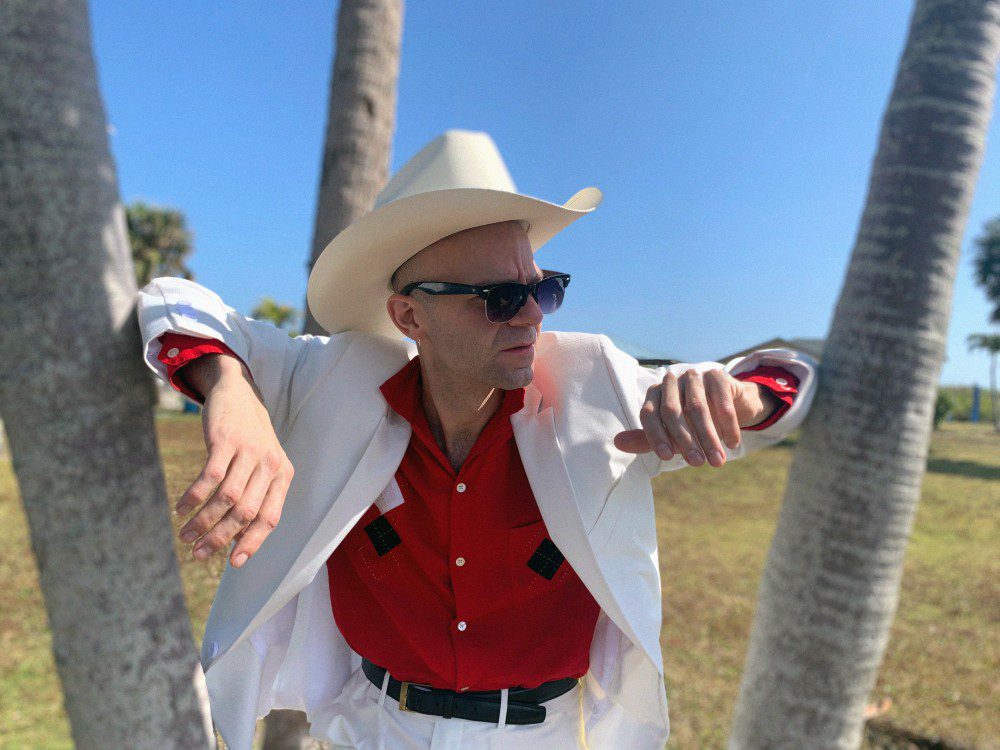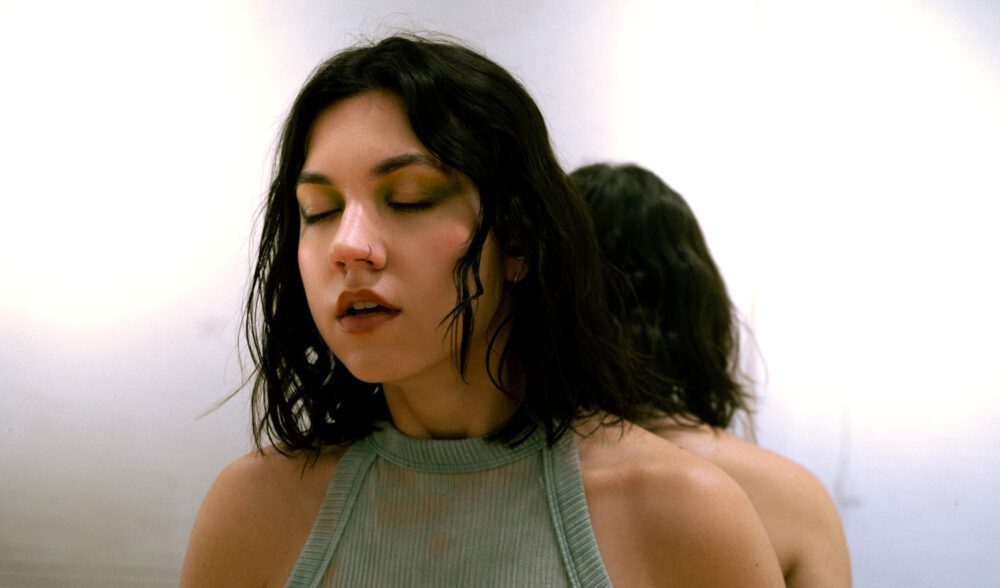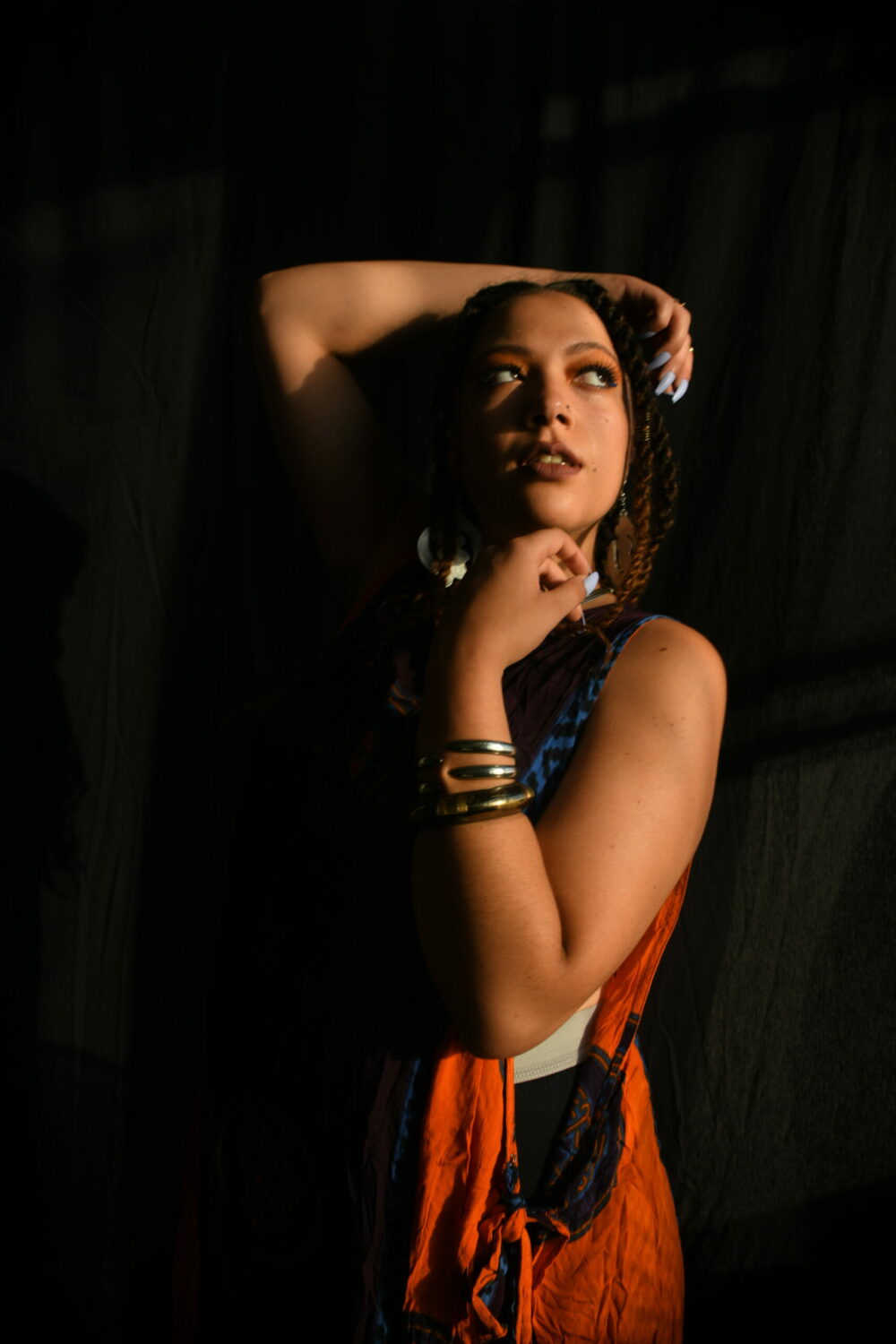
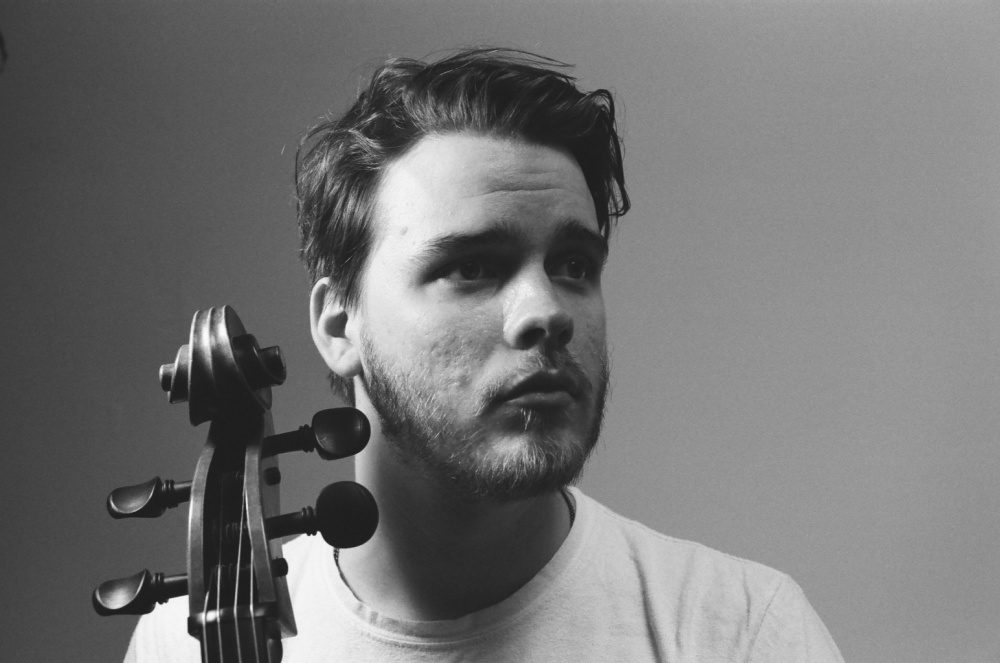
Cellist Jeremiah Moon Challenges Artistic Hermit Stereotype with Debut Single “Kinds of Light”

Perhaps it’s the gentle lilt of his voice, or his unique, interstellar moniker, but there’s something dreamy about Jeremiah Moon and his music.

As a teaser for his forthcoming 2022 debut EP Sputnik, the Seattle cellist and singer-songwriter spins a whimsical indie folk-pop dreamscape with the release of his debut single “Kinds of Light,” and its accompanying video.

For Moon, who grew up in Colorado Springs and went to school at Boston University for classical performance, releasing original music like this was always the dream—it just took him some time to realize it.

Growing up the son of a professional orchestral violinist, Moon and his three sisters all took up string instruments early—Moon started cello at age 7—and continued with the study of classical music into their adolescence. As Moon said, it was “just what we did.”

“Mom and Dad said, ‘Alright, you’re going to go practice now,’ and I was like, ‘Okay, I guess I’m going to go practice now.’ Once I was in high school, I started realizing, this is hard… but I’m grateful for it now,” Moon remembers.

He eventually decided to pursue a degree in classical performance at Boston University, and says that his time in Boston helped expose him to a variety of different musicians at the top of their craft. “It was also very intimidating,” he says. At the same time, Moon realized a career in the classical world wasn’t quite right for him—his love for music felt different. “I learned pretty quick that I wasn’t going to go get a Masters in performance and then start doing orchestral auditions. I did not feel the same things they felt about practicing and workshopping and studying and learning all the repertoire.”

After graduating, Moon took some time away from the classical music community, unsure what music path he’d like to pursue, if any. In 2013, he moved to Seattle and worked in retail for a few years—but felt a lack of direction, though he continued to write songs in private, a habit he’d developed in high school. “Later in high school I had a wild hair and I started to write some songs,” Moon recalls. “People were like, ‘Hey, this is actually really good – you should keep doing this,’ and I sort of put that in my pocket and didn’t really take it too seriously.”

Then, a new friend he met asked him a question that changed everything. “She asked me why I wasn’t taking myself more seriously as an artist,” he says. “I was forced to take a step back and sort of seriously consider questions like, what do you really want? What do you feel like you have to offer?” Not long after that reckoning, Moon re-examined his life and decided to take the pop music he’d been making for himself beyond his bedroom. Thus, Sputnik was born.

Since the fall of 2017, in collaboration with producer Adam Black, Moon has been writing and refining his debut EP. In the process of doing so, he sent a demo off to a few of his friends when Chris Mansfield from Fences heard it and liked it. He helped Moon get in contact with the Enci Records, with whom he’s now signed.

Moon decided to call the project Sputnik because the word translates as “fellow traveler” and much of the content of his debut contends with inter-relational questions brought up by the end of a previous romantic relationship. With the title, he also gets to bring in his interest in string theory and the forces of interconnectedness in the universe.

“I think I was trying… to process maybe what an ideal relationship would be like and in terms of relationships, what they’re for, and what we give to the people around us,” he says. ” I don’t really understand string theory much at all but I was told there was this concept of like every particle in the universe having some sort of relationship with every other particle – this intrinsic relationship that’s kind of unshakeable. I’m sure any scientist would cringe at me describing it that way, but the idea behind that to me is really beautiful and interesting and something I couldn’t shake.”

Moon’s debut single “Kinds of Light” stems from a few more specific inspirations, too. Namely, his love of Bon Iver and his skepticism in the romantic concept of the artistic recluse retreating into nature for inspiration. In fact, the phrase “Kinds of Light” is a reference to a hermit artist character in the footnotes of David Foster Wallace’s encyclopedic Infinite Jest. “I had this skepticism—how honest is this idea?” says Moon. “So I wanted to explore it through [my own] character.”

Moon is also a talented illustrator. He brings music and illustration together briefly with an animation he contributed to the video for “Kinds of Light.”

In the next few months as he gears up to officially release the EP, he plans to release more singles, along with videos he hopes to play an active artistic role in. He also plans to play some local shows and begin planning a tour.

“I love making music more than I ever have,” says Moon. “I have so many ideas I want to chase, different sounds I want to try on, and my goal is just to keep doing this as long as I possibly can.”

Follow Jeremiah Moon on Facebook and Instagram for ongoing updates.
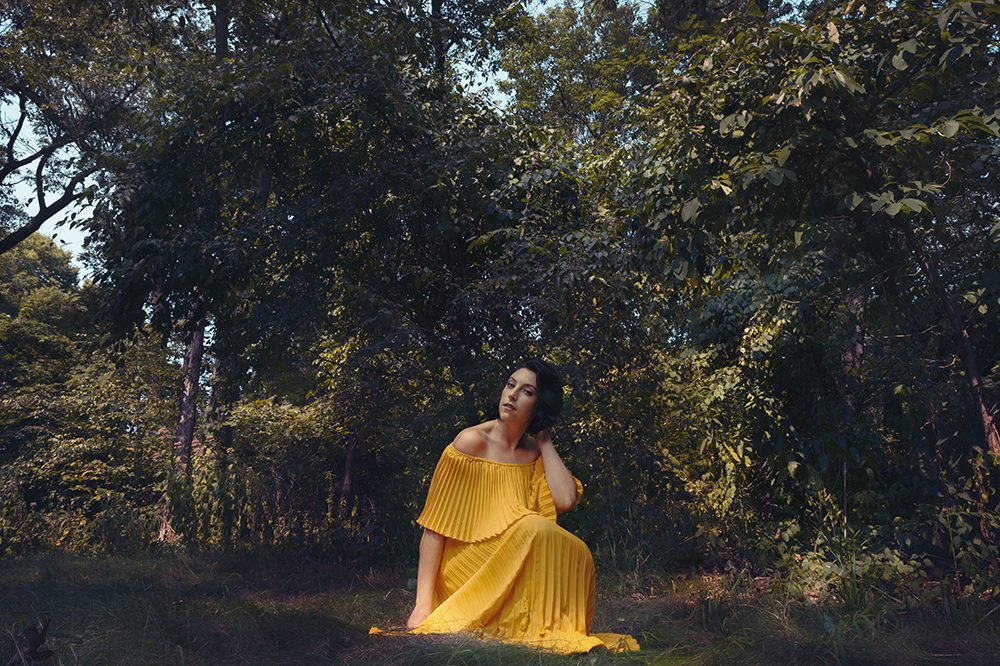
Meagan Hickman Offers Hope and Redemption with “One Day” Premiere

Photo Credit: Petya Shalamanova

Meagan Hickman has always been intentional about creating uplifting music, a trend she continues with her new song, “One Day.” 

Born and raised in Chicago, the singer-songwriter was trained classically, falling in love with songwriting after discovering acts ranging from John Mayer to Bonnie Raitt. Adapting the craft as her own, Hickman began journaling as a teenager, her thoughts soon turning into song. Raised on the sounds of Motown and listening to India.Arie and Jill Scott as a teenager helped her develop a palette for soul music that she incorporates into her own sound. “I feel like soulful music is always where my heart’s been. Vocally too, it’s challenging, and I always wanted to sing. Soulful music was always that outlet,” Hickman tells Audiofemme

The Nashville-based artist carries this sound into “One Day,” premiering exclusively with Audiofemme. ahead of its official October 8 release date. The spirit of the song is as bright and sunny as the yellow dress she dons on the single’s cover art, while the instrumentation is as multilayered as the lyrics. A sparkling piano adds color in the background as syncopated drums shine alongside Hickman’s radiant vocals. The song was inspired by the singer’s friends who expressed regret choosing one life path over another, believing they neglected their calling and had run out of time to pursue it. That’s where Hickman steps in to be a light at the end of the tunnel, encouraging them that dreams are never out of reach. “One day you’re gonna find a way to see/One day you’re gonna find a way to breathe/One day you’re gonna find what you need/One day you’re gonna find a way to sing,” she cheers in the chorus. 

“‘One Day’ is about coming back to those roots. Even if you’ve done all these other things and you feel like your time is up or you missed the boat, you still have it within you. It’s not gone. It may feel like it because of all these detours, but this is not the end,” she explains of the song’s meaning. “You’re going to find your song – that is your calling. You’re going to find your voice. You’re going to find whatever that calling is again, because it’s who you are. You’ll find your way back to that voice or that calling and you’re going to find that sense of peace.” 

Inner trust is an integral theme to the song. Giving it a modern twist, Hickman tackles the toxicity of self comparison in the second verse: “Foreign languages of endless data/You’ve got to decipher what matters/Deciding should you step away/Or dive head first and stake your claim.” Hickman acknowledges the “comparison factor” that plays out as we scroll, reminding herself as much as the listener that it’s up to each individual to react with a positive or negative mindset. “That moment in time is the most crucial to your success and your mental health. For me, even though it could be negative, it’s like, ‘How are you going to react to that?’ and that in turn I think affects the way that you move forward,” she analyzes. 

Alongside this critical thinking, “One Day” is a redemption anthem, Hickman serving as the listener’s cheerleader in times of self doubt. It’s a message she’s proud to share with the masses in hopes that it offers listeners a sense of reassurance and peace. “I really hope it’s like a big hug. I hope someone knows if you’re going through that crisis – whether it’s mental, physical, family, whatever – it’s all perspective,” she expresses. “Circumstances can be really bad sometimes, but my hope is to be like, ‘Here’s that hug, it’s okay. You can do it.’”

Hickman says she’s needed that same encouragement plenty of times. “I so badly want to receive what I give; I think all of us do. We hope that we give enough and we get it back. With my music, I hope that I get that same hug or that same love back. If I can put goodness into the world as best as I can, that’s my goal,” she says.

After a fraught year and times of crises that never seem to end, Hickman continues to display bravery and caring. “This world is isolating and we have so much stuff that can mess someone up,” she points out. “If there’s anything that I can do with my music, it’s to lend that hand and be like, ‘I see you. I feel you. I hear you. I go through what you go through. You’re not alone.’ That’s my hope.” 

Follow Meagan Hickman on Facebook and Instagram for ongoing updates.

Musician and Photographer Denée Segall Reveals What Makes Her Feel Good

Photo Credit: Denée Segall

What makes you feel good? Is it a tub of hummus and Netflix, or is it the love of your life in a matching onesie beside you on the couch? Or the sound of grumbling, guttural guitar? Perhaps it’s all of these. Denée Segall shamelessly admits she feels good when she’s with her husband Ty. A couple for thirteen years, their co-written single “Feel Good” (from Ty’s recent Harmonizer album) came out in August, accompanied by a video featuring Ty and Denée on a glamorous night-time road trip. In disco-era satin and sequins, Denée poses up a storm in the back of the car, on the hood and then, finally, taking the wheel while Ty rides shotgun. Serrated-edge guitar riffs sound like they were recorded in a photo booth, yet almost rip the hairs off your arms. Somehow, there’s a dance-friendly melody at work, too.

“’Feel Good’ is not directly about [our] relationship,” Denée clarifies. “I wrote it as a more universal theme. Ty came to me with a loose concept he had for the song and I took it and ran with it. But of course, when writing a love song, he is my ultimate inspiration. I don’t think it really reveals anything specific about us. Since we typically like to keep our relationship somewhat private, I guess it’s just a nice little glimpse at our collaborative minds, and our love and adoration for each other.”

It’s also a love letter to dance punk – a running theme for both Ty and Denée. They collaborated with Emmett Kelly under the moniker The C.I.A. back in 2018, releasing a self-titled album that year (via In The Red Records) full of furious hip-shaking, head-tossing, carnal noise. True to their experimental approach, the band consisted of two bass guitars, no lead guitar, and a drum machine. Recordings and reviews of their live performances reveal Denée’s natural frontwoman persona, a singer and lyricist who punctures the poker-faced cool of the Cali crowd with her intensity. While Ty’s simultaneous multi-project, multi-band work has defied the 24/7 human schedule, Denée has a trail of musical glories in her wake too. She was the bassist for LA punks VIAL, which released their 7″ EP in 2015.

“I was in VIAL from the beginning to the end, which was 2013–2017,” she recalls with evident joy. “It was such a fun band to play in. We are all old friends from San Francisco and had all recently moved to LA from SF with a lot of other friends in a mass exodus because of the tech boom and insane rent prices that followed. Playing shows in the LA DIY punk community was a really great way to settle in and to meet people. At the time, most of us considered ourselves very amateur musicians and we really encouraged and supported each other to grow musically. Man…reminiscing about this band always makes me miss it!”

A VIAL reunion isn’t likely to happen anytime soon, though. When she’s not making music, Segall keeps busy: snapping photos – including promo shots for Ty, Shannon Lay, LA punk legend Alice Bag, and more; designing album covers; and working at In The Red Records, her day job of the last eight years. “I’m the only employee so I basically do whatever is needed. A big chunk of that involves laying out album art, running the website, talking to artists and customers, mail order, etc. [Label founder] Larry [Hardy] is the greatest boss so it’s easy to work for him and also make time for music,” Denée says.

There’s been more time than ever to dedicate to music while touring has been off the table, and both Ty and Denée have been working from their home in Topanga, where they’ve lived for two and half years. “I felt at home here as soon as we moved in,” Denée says. “I grew up in Northern California in the Sierra Nevada Foothills and Ty grew up in Laguna Beach. Topanga is very reminiscent of our respective hometowns. We are a short drive to so many beautiful beaches, but our home is in the canyon nestled among giant oak and eucalyptus trees.”

“As for the space itself,” Denée adds, “there isn’t much division. We do have our separate workspaces. I have an office upstairs, and Ty has the studio in the backyard. We do our morning chores together at our dining room table while we drink too much coffee.”

In her own space, Segall embraces quiet moments. “When I’m working in my office on the computer, I tend to enjoy the silence. It helps me focus. I listen to the birds chirping, the dogs barking at the squirrels, or whatever record Ty has on that drifts upstairs,” she says. But naturally, Audiofemme wants to know what she’s been listening to.

“If I’m driving, I usually like something upbeat that I can blast and sing along to,” she replies. “I’m all over the board, but lately I’ve listened to The Hunches, Free Kitten, Plastics, Swell Maps, and Suburban Lawns. I’m pretty picky when it comes to new music. I don’t mean to be biased, but I most enjoy the music that my friends make. Oog Bogo, P22White Fence, and CCR Headcleaner are just a few favorites.”

Segall says she’s also a huge Neil Young fan (“Simply put, he is one of the greatest songwriters of all time. There is an album and/or song to fit any mood I’m in. Ty and I actually saw him standing on Pacific Coast Highway a few weeks ago. Blessed day.”) but her first musical loves were Beastie Boys and the grunge/noise-art bands she discovered in the ’90s.

“My older brother Todd introduced me to [Beastie Boys] when I was super young. I remember either he or my dad took me to our little local record store at midnight to get a copy of Hello Nasty when I was 10. I still love them,” Denée says. “In high school, my favorite band was Sonic Youth. I looked up to Kim Gordon for sure. I loved The Breeders and Nirvana too. I guess I was really into early ’90s stuff in general. I worked at Hollywood Video in high school and would rent 1991: The Year Punk Broke over and over until they transitioned from VHS to DVD and then I bought it for a buck. I also loved Le Tigre and the first Yeah Yeah Yeahs EP and album.”

These bands have been formative to Segall’s very identity. “Now that I’m thinking about it,” she muses, “I guess I mainly looked up to women who had unique voices, were uninhibited, and who seemed to not give even one single fuck.”

Khari opens for Freddie Gibbs at The Thompson House

Khari
Khari / Photo Credit: Phil Dowdy

Live music in Cincinnati is back and Khari is taking full advantage. The Queen City-bred rapper opened for Grammy-nominated artist Freddie Gibbs last week at Newport, Kentucky’s Thompson House

“It meant a lot to open up for him,” Khari told Audiofemme after the show. “He’s someone who I respect as an artist and someone I’ve been listening to for a while now, and to be representing Cincinnati on the bill, I definitely took pride in the fact that I was able to open up for a Grammy-nominated artist.”

Khari performed several cuts from the latest installment of his This Is How We Feel EP series: Act 2 (Institutionalized), including “Hood Millennials” and crowd-pleaser, “Stupid.” The local talent also performed his verse from the 2019 Cincy posse cut, “Da Art of Ignorance (Remix),” before winding down to some conscious records. 

“Going into the show, I knew I wanted to show my versatility with my set, so that meant displaying my more upbeat tracks and then transitioning into some more soulful records,” Khari said. “Me and my team literally found out about four days before the show that Freddie’s management team liked the music and that we were in to do the show. So, I got with my DJ, and we rehearsed Sunday for about five hours, then Wednesday morning before the show for a couple hours.”

Besides performing a well-balanced set, Khari also proved his ability to engage the crowd. The rapper led audience members through a handful of T.I. classics to mark the beginning of Libra season and bolstered a powerfully unifying moment while rapping “Eve.” During the emotional track, which serves as his tribute to Black women, Khari called on the crowd to hold up their lighters and cellphone flashlights. 

“By far the biggest moment of the show for me was performing ‘Eve’ and seeing the entire venue [hold] their cell phone lights up as we put on for Black women,” he reflected. 

The crowd’s energy carried over into Gibbs’ headlining set, who performed a medley of cuts from his Grammy-nominated collab with The Alchemist, Alfredo. The Gary, Indiana native opened with “God Is Perfect” and continued through the night with tracks like “Thuggin’” from his and Madlib’s 2014 album Piñata, ESGN‘s “Eastside Moonwalker,” 2019’s Bandana cut “Palmolive,” and his most his recent collaboration with ScHoolboy Q, “Gang Signs.”

Gibbs’ stage presence was felt all the way in the balcony and his performance was repeatedly interrupted with fan-led “Freddie! Freddie!” chants. After waiting over an hour to see him perform, it would’ve been understandable for the audience to be a tad bit subdued by the beginning of his 11:15 pm set, but the crowd was clearly excited just to be at a live show again. Freddie also kept the energy up by jokingly ripping into his tour DJ Ralph, or DJ CaliNdaMix, by leading the crowd in “Fu*k you, Ralph!” chants. 

Freddie Gibbs / Photo Credit: Sha Rogers

All in all, the energy of Cincinnati fans, and performers, was a great reintroduction to live shows after a year of radio silence. Aside from Khari and Gibbs, Nashville’s Tim Gent and A.B. Eastwood also performed at the concert, which was put on by DJ Dabble’s Full Circle Presents.

“As far as feelings after the show – I felt great,” Khari reflected. “I knew I killed it and the response has been great. I gained so many new fans that have been hitting me in the DMs, listening to my music and made some valuable connections that will start to play out for me and my team here soon. So, I’m excited.”

Follow Khari on Instagram for ongoing updates. 

Mindy Meng Wang Draws Ancient Chinese Harp Into Contemporary Movement on Phoenix Rising

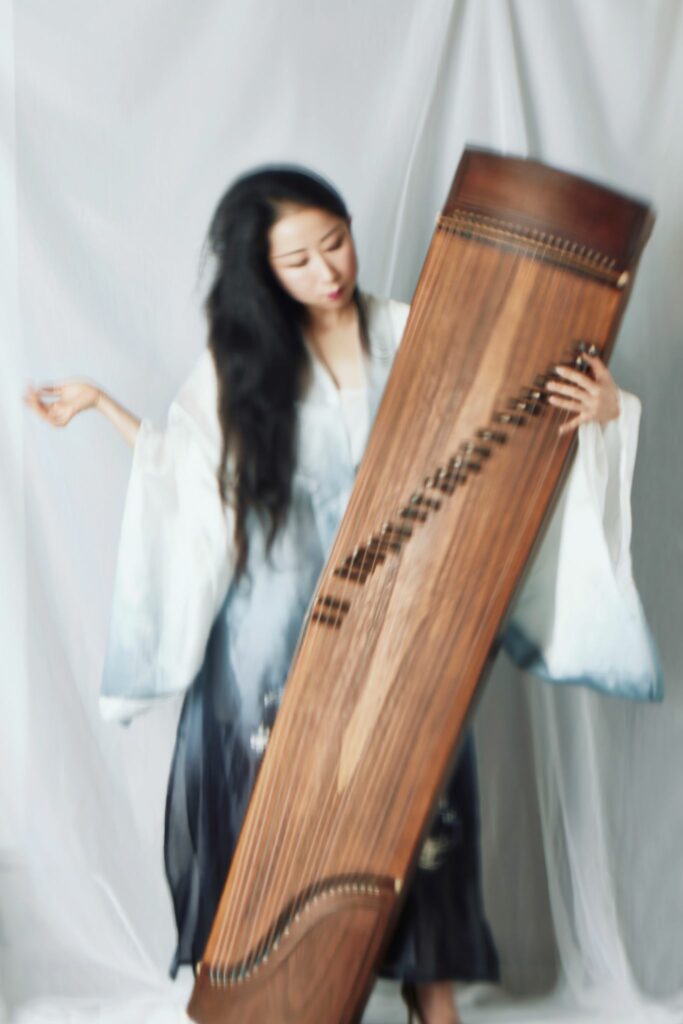
Mindy Meng Wang is not interested in living in a time warp. She is confidently, elegantly weaving traditional instrumentation into a contemporary soundscape to reveal new possibilities for ancient tools. Chinese born, the Melbourne-based Wang is an internationally renowned composer and expert in the Chinese horizontal harp, or guzheng. On her latest album Phoenix Rising, released September 24, she has collaborated with some of Australia’s most renowned modern songwriters and composers, including jazz master Paul Grabowsky, Violent Femmes’ bassist and Dark MOFO founder Brian Ritchie, and orchestral percussionist Claire Edwardes. Lesser known in the mainstream scene, but just as prolific and fascinating, are collaborators Ma Haiping, a Chinese producer and techno DJ, Vietnamese-Australian pianist and experimental electronica composer Fia Fiell (real name Carolyn Schofield), and multimedia composer and performer Daniel Jenatsch. 

Phoenix Rising emerged from the collaborative Flash Forward project, in which the Victorian State Government and the City of Melbourne provided funding to 40 musical acts to create original albums within three months. Melbourne-based vinyl producer Heavy Machinery Records and Music in Exile cooperated to release the album, and it is utterly captivating.

“This album really summed up all the styles I’ve been working on the last couple of years,” says Wang. “All the styles I explored in there are things I’m really passionate about. The music I really love to listen to usually is very intense, very emotional. All genres have this, from a really deep cello in classical music to the build-up in electronic, to pop even. It’s more about the emotional style – I really enjoy when you listen to music that wakes up that deep emotion in your heart.”

Hauntingly, heart-achingly lovely “Night Storm” opens the album; Grabowsky’s glassy, cascading piano tumbles upon tumultuous, dark waves, echoing and seeming to glisten under a half-hidden moon. The weighty, atmospheric guzheng is at first blunt and uncertain, then it becomes delicate, tip-toeing tentatively through the curtain of night to reach a midnight rendezvous with the now rumbling, swarthy piano. The two instruments encircle each other in a beguiling call and response, eventually so entwined that there is only their shared song.

“For this album, there’s not a lot of surprises because I’d worked with everyone before,” says Wang. “Individually, they did surprise me though. A lot of the pieces were created via structured improvisation, so I had an idea for the kind of quality it would be, but I didn’t know exactly what it would sound like. I have to say, all the pieces worked in a surprisingly good way.”

In introducing the guzheng into Western musical genres over the last decade, Wang is a pioneer. The instrument had been played in traditional form for 2500 years in China. In finding ways to merge it with jazz, pop, electronica and Western orchestras, she had to experiment with new techniques and tuning systems on the guzheng, resulting in entirely novel sounds. Her curious spirit was likely nurtured by the progressive city she was raised in.

“I was born in a city in Northwestern China, Lanzhou. It was a trading spot on the Silk Road, so everyone came there from India or Europe, even. The Chinese would travel from the capital to here. So, the culture is really mixed and the people are diverse. We have more than 40 ethnic groups living in the city, and that’s where I grew up,” she explains.

That same dichotomy of diversity and unity is reflected in the selection of songs here. Each song, like the first, is deeply atmospheric, conjuring dream visions and glimpses of a landscape that may be real or imagined. It was Wang’s vision to seduce the imagination of her listeners, to glide through their defensive barriers and prejudices and let her music speak for itself. She wanted listeners to discover the guzheng and be moved by it without needing to name it or know it, just as she discovered it as a child.

“My generation is the generation where parents decided that children needed to do something more than just go to school. So, we had to choose a class after school and I chose music,” Wang remembers. “I just happened to have the best teacher in the city as my neighbour, so from a very young age, maybe five years old, I was well looked after by this guzheng teacher. I always loved the sound of her music. When they asked me what music I want to learn, I pointed to her and said that’s what I want to learn.”

Between the ages of six and nine, Wang grew increasingly serious about her playing – there was a lot of training, exams and competitions. At sixteen, she had competed in all the provincial and national competitions. “I thought I’d go to a conservatory and follow this career path, becoming like my teacher,” Wang says. “But then I had the opportunity to go to England for a short-term English course.” That was on 2002; Weng was only seventeen. But she decided to stay and learn Western music. She completed her university studies in music performance, then moved to London.

“Before I went to England, all the music I played was traditional,” Wang says. “But when I got to England, I saw all my classmates playing classical, to pop, to jazz. I thought why, on my instrument, can I only play traditional Chinese? I thought, how can I have more fun with my music?”

In London, she joined the Silk String Quartet. It belongs to a bigger organisation, including London University. It’s one of the best modern string quartets in Europe, and performs festivals across the continent. She was able to work with acts as diverse as the London Symphony Orchestra and, in 2010, Gorillaz.

Collaborative adventures aside, her curiosity about other places drew her to Australia in 2011.

“I had no friends, no connections, no work, nothing. It wasn’t easy for my career, and for the next three years my father was quite sick in China, so between 2012 to 2015, I was travelling a lot between London, Melbourne and my hometown to look after my father in hospital until he passed away,” Wang says. “After he passed, I really thought about things. I had more responsibility and realised I had to settle down in one place and to be able to look after my family. I decided that Melbourne was a better choice than London, which is so busy and has a less intense overall lifestyle.”

Though it was a rocky first few months trying to establish her musical career here, she became involved with Multicultural Arts Victoria,  which supported her as a solo artist and in cooperation with artists across various disciplines. “It made me feel more confident and comfortable to live here as a musician,” she says.

Part of the challenge was convincing fellow musicians and artists that this ancient instrument could offer such richness in contemporary practice. “Even the professionals need to get convinced,” she says. “People are not drawn naturally into something they have no knowledge about. People are comfortable with things they know, even musicians and creatives. Sometimes when I talk this instrument , its tuning technique, its philosophy… it just looks like a very strange object to them. So, how could they have an inspiration from that?”

There is no shortage of inspiration on Phoenix Rising, and the emotive, immersive nature of the album is a credit to the adventurousness of all the artists involved.

“When I started making this album, it wasn’t so clear. The concept was that I wanted to collaborate with artists that I hadn’t documented collaborations with before. Some musicians, I had long-term plans with, but some artists I’d only played with once or twice but really treasured, so I wanted to document those moments,” Wang says. “The musical style became really intense because it was recorded between lockdowns. It was a way of letting out our emotions. Later on, I looked back and [saw that] we were playing music as if we were having a conversation, and those conversations are not polite. I wanted to create something that can touch people deeply, and make them feel that it’s okay to be emotional or feel heavy during those times. I wanted to create a safe space to let them, through the music, get into their own world and release their emotion.”

Follow Mindy Meng Wang on Instagram for ongoing updates.

Kiss the Tiger Prove Representation Matters with “Grown Ass Woman” Video

Photo Credit: Sara Fish

Meghan Kreidler is an acrobat — or at least she feels like one most days. “I teeter back and forth between feeling very empowered and then just being totally thrown off by little things that happen in everyday life,” she says, “just behaviors that have been normalized by men, in particular, and how they talk to me and how they treat me.”

She’s speaking frankly about her song “Grown Ass Woman,” which appears on Vicious Kid, her third studio album with her band Kiss The Tiger. “The angel of death/Wants me to draw another breath/But angel won’t you leave me alone,” she sings, her voice coated in raw vulnerability over a quivering and dusty country-time signature. The video for the surprisingly stripped-down performance debuts today on Audiofemme.

“Grown Ass Woman,” and its tender climb to a thunderous vocal burst, speaks both personally and universally to experiences of womanhood. “There’s a lot of talk about feminism and female empowerment these days, and it feels like it’s very in style. That might make people think, ‘Okay, we’ve arrived. Women are equal to men.’ But in my experience, I still come up against moments in life, where I think, ‘What the heck? I thought I was this person, but now I feel so weak and vulnerable.’ I think I’m growing into a stronger, more nuanced person as I get older.”

With radical honesty, she reclaims her right to take up space. In another life, she may have simply swallowed micro-aggressions as an act of resignation, accepting the sting. But now, those moments seem to pop up more frequently, and she’s found herself “feeling a lot more hurt by them,” she confides, adding that she’s often “blindsided by those moments and not being able to respond back in the moment.”

The mid-album detour “is another one of those songs that is kind of scary for me. It’s a slow burn” she says. For a while, the singer-songwriter struggled with whether people would latch onto and appreciate its organic, subdued feel, but on a personal level, it’s opened the floodgates for her own needed transformation. “What I like about it is that it always forces me to face my fears and to tap into what makes me feel vulnerable. At the end of the day, when you’re able to grasp and own your vulnerability, that’s when your strength really shines through,” she says.

Back in April, Kiss the Tiger released a video illustrated and animated by Eleonore Dendy for “I Miss You.” Though very different from “Grown Ass Woman,” both videos frame visual storytelling “around a female experience,” a much-needed approach, particularly in the music industry. “We’ve tried to get women who are either featured in the video or who are working behind the scenes,” she says. The band enlists long-time friend and director Sha Cage for the clip, showcasing Kreidler pouring out her heart on a stage at the Cedar Cultural Center with glowing violet lights showering upon her shoulders. “I respect Sha very much as an artist. We couldn’t have done a music video for [this song] and not had a female director. That would have not made any sense,” she laughs.

The music video carries further significance as the camera pans to the concert crowd to reveal groups of young girls smiling up at Kreidler. It’s a simple gesture but a powerful moment to suggest representation remains crucial, inviting a new generation of hopeful women to not only see themselves on stage but to fuel them to follow their own dreams. “There are a lot of people that connect to our music, and when they see us live, they love it and have a great time. But I feel like women, in particular, are always really excited,” Kreidler reflects. “And it always really excites me when young women can see me on stage because whether they realize it or not, they’re probably having a moment where they’re like, ‘If she can do it, I can do it.’”

“Probably the youngest girl [in the video is] the Asian girl. I’m Asian, and there are more Asian women in music that are at the forefront now than I remember when I was growing up. I was just reminded of the importance of that this past weekend,” she says. “We were playing a show, and this woman who I met recently was there, and she’s Asian. She was like, ‘I need to get my daughter to come see you guys. She’s just going through a moment right now. She dyed her hair blonde, and I just feel like if she sees you on stage that would click something into place for her.’ At the end of the day, that isn’t the only reason why I do this, but that is very important to me. When there are other Asian women in the audience, I see them and I recognize them.”

Growing up half-Korean in a suburb of Minneapolis, Kreidler didn’t have many Asian artists, in either music or theatre, to admire. “I am a little late to the concert-going experience,” she admits with a chuckle. Instead, she connected to such pop trailblazers as Christina Aguilera, whose 2002 Stripped album was remarkably influential on her life. “That album was kind of subversive,” she notes.

Admittedly, she “spent a lot of time listening to music that the dudes that I had crushes on listened to,” she says, listing off the likes of Red Hot Chili Peppers and Nirvana. “That was all cool, but I’m still discovering and re-investing my time into artists that really do excite me.” Those artists include Patti Smith, an iconic pillar in the NYC punk scene.

More recently, she witnessed Japanese Breakfast play a show in Minneapolis, and it was life-changing, to say the least. “I saw other Asian people in the audience,” she says. Immediately after the show, Kreidler purchased band leader Michelle Zauner’s debut book Crying in H Mart: A Memoir, and it moved her to tears. “Within the first three pages, I was crying. It just felt like she was speaking to me even though I haven’t lost my mom,” she says.

Kiss the Tiger — rounded out with musicians Michael Anderson (songwriting partner, rhythm guitar), Bridger Fruth (lead guitar, pedal steel), Alex Sandberg (lead guitar), Paul DeLong (bass), Jay DeHut (drums), Victor Zupanc (piano, organ), Mark Moehlenbrock (guitar, piano), Diane Miller (guitar, backing vocals), as well as backing vocalists Chelsie Newhard and Andy Ebling — formed in 2016. Over five years, the mega-group have gained quite a bit of buzz around Minnesota, on the edge of breaking through the stratosphere into the national arena.

Originally, Vicious Kid was set for release early last summer, but the global pandemic forced them to slam on the breaks. That extra time to marinate with the music – and also reevaluate their career and ambitions – found Kreidler uncovering a deeper “appreciation and pride in what we’ve done as a band and what we’ve created,” she offers. “I revisited the songs so many times and wondered if we were going to want to put them out after this past year and a half, and I still kept finding myself being excited about the songs. Some of them we had started to integrate into our live show, but for the most part, we hadn’t played them that much. I still feel really proud of the songs and continue to find new layers as we play them live for people and build up that live muscle of playing.”

Vicious Kid may have been recorded nearly two years ago, at the tail end of 2019, but to Kreidler, it all feels fresh again. “Here I am talking to you about it and it still feels kind of new to me in a way and I think that’s exciting. Maybe it’s a testament to all the work that we’ve put in and the trial and error that we’ve gone through making albums and putting them out,” she says. “Music moves so quickly nowadays, and it feels like you have to be putting new stuff out all the time. I guess it just makes me realize that the lifespan of things is not as limited as we maybe think it needs to be.”

Follow Kiss the Tiger on Twitter and Instagram of ongoing updates.

Dar Williams Teases First LP in Six Years with Rose-Colored Ode to “Berkeley”

Photo Credit: Ebru Yildiz

Since releasing her first album in 1990, pop-folk singer-songwriter Dar Williams has been known for songs that critique social norms around gender, capitalism, and more. She’s gearing up to release her first album in six years, I’ll Meet You Here (out October 1), and her latest single off the LP, “Berkeley,” celebrates those who don’t fit into the boxes society prescribes — even going so far as to question the validity of the boxes themselves.

Williams wrote the song about a summer she spent in Berkeley, California when she was 20 years old and how the spirit of the city inspired her. “I was amazed at how hard Berkeley was holding on to its ’60s roots and how much I loved it,” she says. She remembers going to the city’s famous People’s Park and meeting communists, people who didn’t believe in property, and others who taught her new ways of thinking.

“The romance of the city, that dreamer mentality… that kind of poetic environment makes for a good song,” she says. “What I really hoped for was to be a witness of Berkeley, but also a participant — still a believer myself.” 

Her warm, rich voice sings a hypnotizing melody against simple acoustic guitar and strings, with lyrics that welcome the listener into the unique community she writes of: “The old world was fading/The canvas was waiting/Pale eucalyptus and lavender light/We courted the mayhem.”

While “Berkeley” commemorates a spirit and attitude that has persisted for generations, much of Williams’ upcoming album thematically deals with accepting change. Soothing previous single “Time, Be My Friend” makes peace with the uncertainty of the future through an open letter to time itself: “You will never tell me something/That has not happened yet/And you will never make a promise/But I can get just what I get.”

On the spirited “You Give It All Away,” she sings about dealing with the music industry’s transition from CDs to streaming, which made it more difficult for indie artists like her to break into commercial radio stations. “A lot of bandwidth was given to a very theatrical, sensational kind of pop music that was more spectacle, that was really beautiful but was very high production,” she explains. “Back in my day, I did Lilith Fair based on the response of my audience, so I had what we would call an audience-based career. Your audience-based career could hit critical mass, and you could get reception from that, like Ani DiFranco.” The song mourns the loss of this culture with lyrics like “The silver hope kaleidoscope is spinning us away.”

On the more upbeat and charmingly catchy single “Today and Everyday,” Williams sends a message contrary to the narrative most of us are hearing these days: “I can save the world today and every day.” The video, which captures a sense of childlike innocence with stop-motion animation, is meant to encapsulate the “beauty and magic in keeping our optimism alive,” Williams explains. “It feels like an uphill battle, but actually the tool box has never been more full for us to take on both the issues of social diversity and biodiversity.”

Williams has been a part of this fight herself. In 2017, she released her first book What I Found in a Thousand Towns, which documents what she’s learned during her time touring and talking to people in various cities about community building, sustainability, and urban planning. It’s based around the concept of “positive proximity” — that people do best when they’re living close together, both physically and emotionally.

She’s currently working on her next book, A Song That Matters. The songwriting guide is based on retreats she runs, as well as her overall songwriting approach, one she describes as “a patient one,” explaining, “I create the song, but I listen to what’s happening as it’s being created, so I’m guiding and listening as I go.”

Williams, who resides in Cold Spring, NY, is also known as a pioneer for advancing the recognition of women in the music industry. In 1997, she performed in the very first rendition of the Lilith Fair, an all-female music festival. “The ’90s were so much about women making acoustic music and sort of getting off of some of the mainstream grid to build that subculture,” she says. “The fact that Lilith Fair happened was a really big milestone.”

Now that restrictions are lifting, she’s excited to be playing live shows again. She’s currently gearing up to tour around the country to promote I’ll Meet You Here. “I’m finding that people are showing up game to wear masks and do all those things, and when they do, that it works,” she says. “It looks like people are more than happy to do that to have live music, so I’m confident that we’re going to be okay.”

Follow Dar Williams on Twitter, Facebook, and Instagram for ongoing updates.

Night Palace Premieres “Into the Wake, Mystified” Video

Photo Credit: Bảo Ngô

When Night Palace singer Avery Leigh Draut prepared to shoot the video for “Into the Wake, Mystified” with director Hanna Haley, she packed up her bags with the most “magical things” that she could find in her apartment before catching a taxi. That included a gold deer statuette, a few crafty fake birds that she used to wear clipped to her hair, silver garland, six different outfits and lots of fabric. “I really hoard fabric,” says Draut by phone from New York. “I basically dumped a bunch of tulle on her floor and it shows up in various places. We made backdrops with the fabric.”

That was back in 2019, when Draut and her bandmates were still mastering their debut album, Diving Rings, which is set for release next year via Park the Van. Today, though, the video for “Into the Wake, Mystified,” is live. 

The clip features Draut in what appears to be an enchanted world filled with hues of purple, blue and green and filled with small details. Miniature objects and a deck of cards lend an element of Wonderland to the video, while those fabrics that Draut collected help add an ethereal quality to the visuals. 

The video for “Into the Wake, Mystified,” is based on storyboards that Haley had made of winter transforming into spring, which ties to the themes of the song. Draut describes the song itself as being set in an “oceanic world” with lyrics that speak to changes in relationships, specifically those “relationships that we sustain throughout our lives and seasons that come and go with those, how we are maybe no longer in the same season with other people, but still connected to them,” she says.

But that’s not how the song began. The story behind “Into the Wake, Mystified,” goes back a ways before Draut recorded the song with Night Palace and made the video with Haley. In fact, it’s actually one of the first that she wrote. “We had played this song live for three years before recording it,” Draut explains. “It had totally different lyrics and a totally different situation and the chorus melody was different.”

With time, though, this early example of Draut’s work needed to evolve. “ I had it going on so long that I had then changed and wanted the song to change with me,” she says. After a significant overhaul, the band was able to record it. “It finally found its place.” 

Night Palace formed in 2016, first under the name Wanda, in Athens, Georgia. Draut, who grew up in suburban Atlanta, headed to Athens for college and, after finishing school in 2014, she decided to stick around town for a bit. She got a job at a boutique, began writing songs and started playing live with a few friends. When those friends moved, she connected with other local musicians who would become her bandmates. Eventually, though, Draut headed to New York.

“I was pursuing more classical voice stuff. The place [to do that] was in New York,” says Draut. There, she worked and continued taking voice lessons while also auditioning. Meanwhile, she was working on music with her bandmates back in Georgia. 

Draut now splits her time between Brooklyn and Athens. In 2017, she and the band began work on their forthcoming debut full-length. She would record demos using her electric organ and send those to the others. Then, when she was in Athens, they headed to the studio to record. Once those session were done, Draut continued the collaborations in Athens. She would head into the studio with producer and engineer Drew Vanderberg, who has worked with artists like Of Montreal and Toro y Moi, and record with Andy LeMaster, known for his early ‘00s band Now It’s Overhead, as well as an engineer and producer who has worked with Bright Eyes, Fischerspooner and Michael Stipe. “It was very much this growing living thing that got layered onto for a couple of years,” says Draut of the album, which was completed prior to the onset of the COVID-19 pandemic. 

With Diving Rings, which is inspired by Draut’s grandmother teaching her how to swim, still a few months away from release, Night Palace’s founder has been focused on making videos. She says that there are a few more on the way, which are in various stages of completion right now. “I love that aspect so much. It’s really a fun part of it for me,” says Draut, who says that she’s always finding artists online whose work she admires and who might be good collaborators. “I delight in color and that entire world. It rules my world a bit.”

Follow Avery Leigh’s Night Palace on Instagram and Facebook for ongoing updates.

Bnny Set to Channel the Grief Behind Debut LP Everything on Tour with Fellow Chicagoans Dehd

Photo Credit: Alexa Viscius

Jess Viscius is going to break your heart, gently and slowly. In August, Fire Talk Records released Everything – her dreamy, fuzzy, captivating debut album as Bnny. It shows off the intense musicality and vulnerability the Chicago singer-songwriter has demonstrated since her first EP Sucker in 2017. That same year, tragedy struck when Viscius unexpectedly lost her partner, fellow Chicago musician Trey Gruber, who had been struggling with substance abuse issues; writing Everything became an outlet for Viscius to process her grief around his death.

It is a delicate creature, this album. It softly writhes, baring its naked belly for you to scratch then pulls away so that you can’t get too close. It is bristling with hurt, but sweetly surrendering too. Its delicacy and articulation of grief took several years to finely sculpt while Viscius mourned Gruber and tried to make sense of the dueling powers of love and loss. That is not to say that the album is morose or melancholy. Rather, it exists somewhere between dusk and dawn, hovering blurrily between the enormity of a new day and the possibility that the light will remain and memories won’t scar the senses.

The all-encompassing nature of “everything” offers so much potential for interpretation, but Viscius knows exactly what it means to her.

“I remember I was listening to the final track on our album titled ‘Voice Memo’ that I wrote with Trey. It’s the only recording I have of us singing together and I remember thinking… ‘Is this really everything?’ And that word kept coming back… is this everything I have?” she explains. “Everything feels like all my memories in one place. The word itself is at once all-encompassing and, in some ways, finite, which resonated with me, my own experience with grief and making this album.”

According to his friend and journalist Charlie Johnson in this Chicago Tribune editorial, Gruber was only one week out of a detox facility when he fatally overdosed on heroin spiked with fentanyl in 2017. The frontman of Parent was just 26. Viscius and Gruber’s mother, Desiree, released  a collection of Gruber’s work, Herculean House of Cards, in 2019. The songs are lo-fi, charming, funny and quirky while also revealing a musician who really loved the art of songwriting (“Do You Feel Fine” epitomizes the strangely melodic garage-folk feel of the album).

Without wanting to point out the obvious, Gruber was a different musician to Viscius, and Bnny. Everything is poignant in its multi-tonal, ever-changing hues – in some places, sky blue and soft, and elsewhere deepening into a star-speckled indigo night. It is not a commiseration, but a chronicle of love and a paean to life.

It is not a solo affair, either; Viscius is joined by her twin sister Alexa on bass. “She picked up bass when I started the band so she could play with us. She’s an amazing photographer and designer as well,” Viscius says. Tim Makowski plays lead guitar. “I really don’t remember how he joined the band… I just remember him just being there one day in the beginning and he’s been here ever since. He’s one of the funniest people I know,” she continues. “Matt Pelkey is our drummer, he joined about two years ago. He’s also an amazing writer. Adam Schubert is the newest member. He plays guitar and keys. He’s an incredible multi-instrumentalist and has his own solo project called Ulna.”

Viscius can trace her inspirational spark back to hearing an ABBA CD that her friend’s older sister was blasting at home and being moved to ecstatically dance, all her senses ignited and attuned to this novel sound. In terms of her career in music though, her humble beginnings came a decade later.

“In my early twenties I started casually teaching myself guitar and then became more immersed in the Chicago music scene,” she recalls. “That’s when I became interested in writing my own music, at first, as some kind of challenge to myself, like, can I play guitar? Can I write a song?”

There’s no doubt she can write a song; Everything proves it from beginning to end. It was not a painless process, and that is evident in the lyrics and the sound, but it is beautiful, and there are silver linings tracing all the ragged edges. There’s never a sense of being lost in someone else’s grief. Viscius may send you out to sea in a little rowboat, but she is always there ready to draw you towards the shore when the waves begin to rage.

On “Not Even You,” Viscius fools herself into believing her beloved is present despite the reality of their absence. She catches sight of her partner, mistakes memories for reality, allows desire to trump truth. When she swallows her heart, repeating “what we dreamed…” anyone who has lost someone they loved (all of us?) will understand. “Blind” is gently catchy, a slow-but-determined wander through busy streets lost in one’s own reflections and revelations, the elastic, deep bass strum keeping time with boots on the pavement.

“The first half of the record… was easy and fun. I was just starting to play music, learning how to be in a band, everything was new and exciting. The second half was written during a period of time when I felt like I was in hell; everything was difficult,” she says. “You can’t change the past, you can only learn from it.”

That sentiment is at the core of “August,” a gorgeously sepia-toned ride through sun-drenched folk, supported by woozy rhythmic guitar. “I’ll change, I’ll change, I’ll change,” Viscius chants with increased determination. There’s a lovely nostalgic quality to Viscius’ dreamy voice – not unlike Mazzy Star or Lana Del Rey in its romantic, hyper-feminine quality. “In ‘August’ I’m promising myself that I’ll change,” she explains. “It’s a promise I’m still working towards.”

Bnny heads out on tour in October with beloved “trashpop” Chicago rockers Dehd – performing the songs on Everything as though opening a time capsule, allowing her to simultaneously remember, and let go.

“I think of [this album] as preserving this period in my life that I can always access,” Viscius says. “The songs live on, and with them, so does Trey.”

Follow Bnny on Instagram for ongoing updates.

DEHD/BUNNY TOUR DATES:
Fri. 10/1 – Milwaukee, WI @ Cactus Club
Sat. 10/2 – Oberlin, OH @ Oberlin College
Sun. 10/3 – Detroit, MI @ El Club
Mon. 10/5 – Columbus, OH @ Ace of Cups
Thu. 10/7 – Brooklyn, NY @ Market Hotel – SOLD OUT
Fri. 10/8 – Philadelphia, PA @ Johnny Brenda’s
Sat. 10/9 – Brooklyn, NY @ Brooklyn Made
Tue. 10/12 – Boston, MA @ Northeastern University

Devin Burgess Showcases Versatility with That’s Unfortunate LP

Devin Burgess
Devin Burgess
Photo Credit: Curtis Turner

Devin Burgess is flying high after the release of what he knows is his most well-rounded project yet. That’s Unfortunate, Devin’s latest full-length album, arrived last week complete with 20 songs, a handful of features, and a multi-faceted display of the Cincinnati rapper/producer’s far-reaching skills.

After losing his job last year due to the COVID-19 pandemic, Burgess says, “I had all this free time, and I could finally sit down and work on music. That’s Unfortunate is a product of that.”

With the newfound time to dedicate toward his craft, Burgess has been firing on all cylinders. So far this year, he’s shared Swooty Mac collab Sunday Morning, his solo EP 2018 and his alter-ego beat tape Kei$ha, not to mention co-producing Brandon Isaac’s latest album, The Sketches of Healing 2020. However, That’s Unfortunate stands apart from Burgess’s latest projects for its versatility. The LP balances vibe-y cuts, party tracks, love songs and bangers, and hears the MC switch up his flow between melodic anthems and hard-hitting raps.  

“I always feel like people want to put me in a box or think that I’m one dimensional – that I can’t tap into different things,” he tells Audiofemme. “So, I wanted this to be the fullest representation of me. Like, if no one ever heard me before, this project is the best way to introduce everyone to me and what I have to offer.”

That’s Unfortunate opens with a powerful spoken word by B.A.D. (Be A Difference) and snippets of poetry are woven throughout the effort. 

“I’ve always gravitated toward B.A.D.’s poems,” Burgess says of the Cincy-based poet and songwriter. “I thought it was important for a Black woman to be the first voice people heard on my album. I wanted it to be something unexpected. And Black women are the reason I am the way I am today. I was raised pretty much by my mom and my aunties and my grannies, so I wanted to show some love.”

Other highlights include a well-placed sample from The Lox and Dipset’s August Verzuz battle on the outro of “Peace,” as well as a feature from Pink Siifu. 

“That’s the homie,” Burgess says of the Cincinnati-bred Siifu. “We were listening to different beats, and he’s always eager to make music. We got the beat from demahjiae, he’s an Oakland-based producer, and I think Siifu wrote his verse in like ten minutes!”

“I had never gotten a verse like that from him,” he continues. “The tracks we’ve done in the past have been more vibe-y, more personal, but on this one he was just going off. So, I knew that I needed to show up, because I’m not trying to get washed on my own record. I wanna make sure that if he’s up here, I’ve gotta match it or be above it. I think it’s healthy competition – it keeps everyone on their toes.”

Burgess has already released clips for That’s Unfortunate cuts “Everlasting” and “Baritone,” and says he has a third video on the way. “I’ve already reached a personal best for videos since I’ve [filmed] three, and I’m definitely trying to put out as many visuals as possible,” he says. 

“The energy around this project has been so different, but in a good way,” he adds. “I’ve never felt this way about a body of work before and I feel like I really applied myself in every way, shape and form. I feel like this is the most cohesive, most consistent body of work I’ve ever done.”

Follow Devin Burgess on Instagram for ongoing updates.

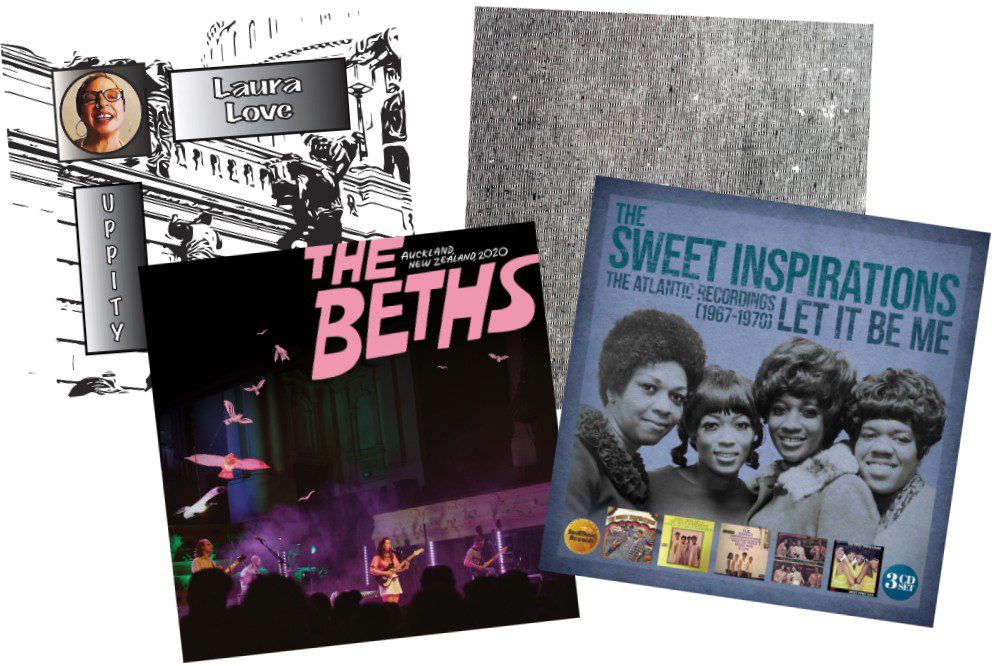
MUSIQUE BOUTIQUE: Laura Love, Low, The Sweet Inspirations, The Beths

Welcome to Audiofemme’s monthly record review column, Musique Boutique, written by music journo vet Gillian G. Gaar. Every fourth Monday, Musique Boutique offers a cross-section of noteworthy reissues and new releases guaranteed to perk up your ears.

Laura Love is the kind of performer who doesn’t readily fit into any one category. Her songs have elements of folk, funk, pop, blues; Love has called  her style “Afro-Celtic.” Her albums feature everything from a Nirvana cover to the ballad “Wayfaring Stranger” to “Amazing Grace.” She was a member of the satiric feminist band Venus Envy; her 2018 album She Loved Red was a searing depiction of recovering from personal loss.

When COVID hit, Love went into semi-retirement, “feeling satisfied that I’d said and done all I needed to say and do.” Then came the insurrection of January 6th, 2021, which galvanized Love into new musical action: Uppity is the result.

The acoustic sounds (dobro, banjo, harmonica) provide a deceptively mellow backdrop for an album that’s a powerful, stirring indictment of racial injustice. “You make me feel like a Nat Turner woman,” is Love’s jesting response to the white rioters she saw overwhelming the Capitol last January in “The Heart of Nat Turner.” In “23 and Me” she explores her own mixed-race history, as seen through the eyes of a young slave woman. The pain of dealing with “sexism, racism, and all the other isms that keep me up at night” runs deep. In “Gentle,” Love sadly admits, “I just don’t know how to mend; “It’s gonna take a long time for us to be fine” is the similar sentiment in “To Be Fine.” But there’s hope as well, in the uplifting “Bayou,” and a wonderfully freewheeling duet with Ruthie Foster on a cover of the Beatles’ “Two of Us.”

Low creates otherworldly sounds like you’ve never heard. Some have attempted to categorize the music of the husband-and-wife team (Alan Sparkhawk, Mimi Parker) by dubbing it “slowcore,” which is hopelessly mundane. Low are sonic shapeshifters, manipulating sounds and crafting them into something unexpected.

On Hey What (Sub Pop), the only element not subject to distortion are Sparkhawk and Parker’s voices, their harmonies serving as a kind of life raft to hang onto in the midst of a surging maelstrom. The heavy, industrial noise that opens the album might make you feel like you’re in for a rough ride. Not so. There may be some occasional turbulence, but there’s a mesmerizing purity in the vocals that provides a soothing balm. This is especially so on a song like “Days Like These,” which begins with the lush sound of the two singing acapella, before a blur of white noise fragments the soundscape.

At over seven-and-a-half minutes, “Hey” is a stately choral piece of symphonic scope, a slice of meditative ambience, classical music beamed in from another dimension. Hey What stretches musical boundaries in a way you never dreamed was possible.

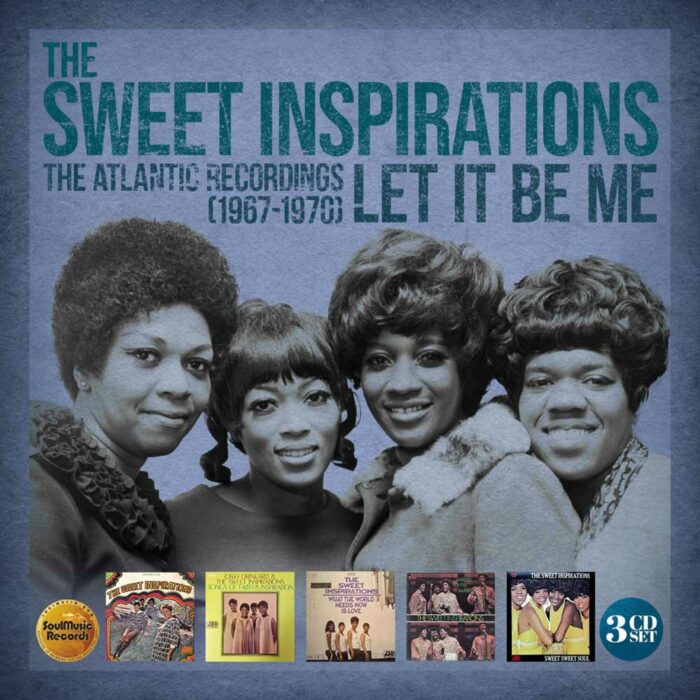
The Sweet Inspirations built their reputation by providing backing vocals for Dusty Springfield, Van Morrison, Wilson Pickett, and Petula Clark, among numerous others. Their horizons expanded when they toured and recorded with Aretha Franklin, and they gained an even bigger audience when they became Elvis Presley’s vocalists until 1969, working with him right up to the day he died (they were waiting on a plane headed for that night’s concert in Portland, Maine, with other band members, when they learned of Presley’s death).

They also released records in their own right, and Let It Be Me: The Atlantic Recordings (1967-1970) (Soul Music Records) covers their most commercially successful period. Myrna Smith, Estelle Brown, Sylvia Shemwell, and Emily “Cissy” Houston (Whitney’s mother) were previously members of such renowned vocal groups as the Drinkard Singers, the Gospelaires and the Gospel Wonders. So they have a natural affinity for hymns and spirituals like “What a Friend We Have in Jesus” and “Down by the Riverside.” But they also had the kind of commercial appeal that led the singles “Sweet Inspiration” and “Why (Am I Treated So Bad)” to find crossover success on the soul and pop charts. This fine collection allows the Sweets to take center stage and let their sublime voices shine.

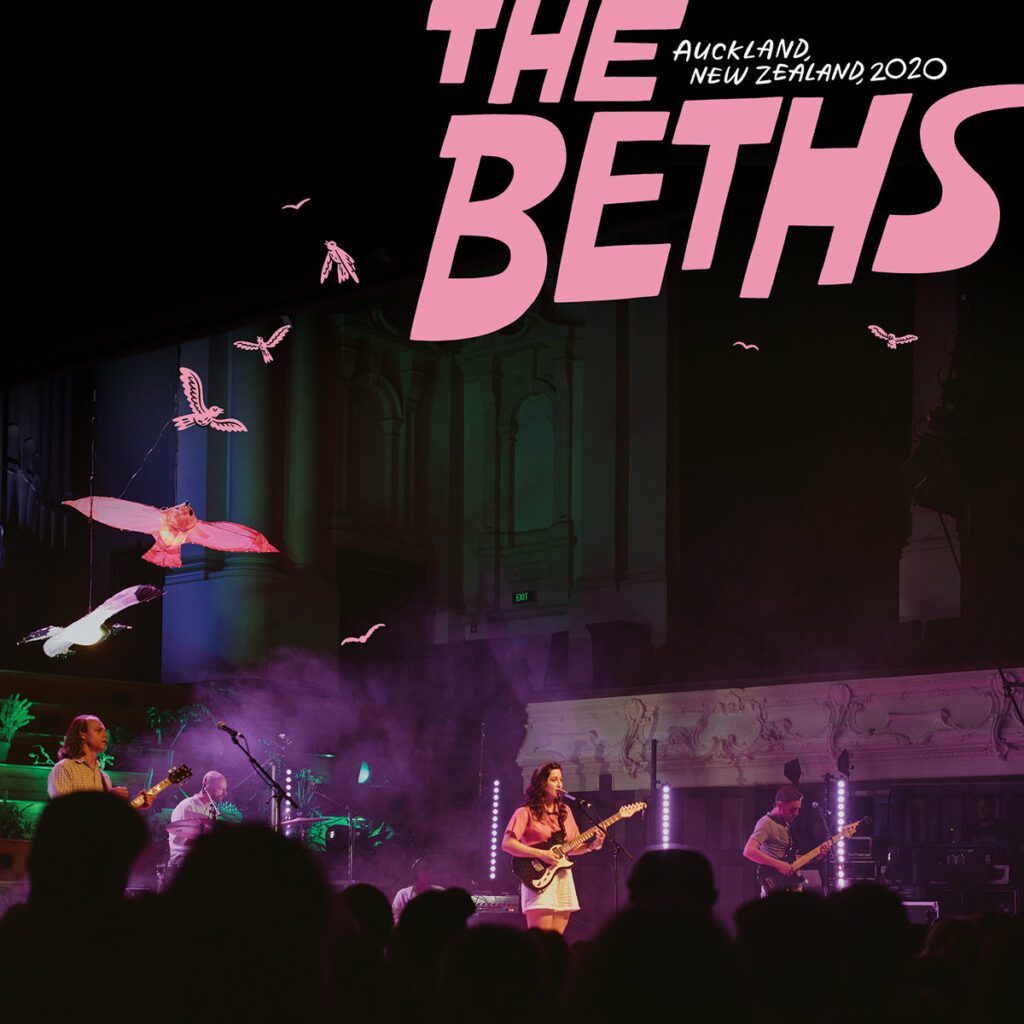
You can hear the excitement in their voices. Not the voices of the band — the voices of the audience, who are clearly thrilled to be at an actual live concert again. That energy is then naturally picked up by the band — the Beths — and reflected back to the crowd, resulting in a powerhouse performance on their live album, Auckland, New Zealand, 2020 (Carpark Records).

The Beths (Elizabeth Stokes, lead vocals/guitar; Jonathan Pearce, lead guitar/vocals; Benjamin Sinclair, bass/vocals; Tristan Deck, drums/vocals) were home in New Zealand in early 2020, preparing a tour for their upcoming album Jump Rope Gazers. Then the pandemic hit. Performance continued via live-streaming. But there’s nothing quite like being there in person.

From the opening blast of “I’m Not Getting Excited” to the last beat of “River Run: Lvl 1,” the show is one rollicking blast of power pop fervor. Catchy hooks, toe-tapping rhythms, a warm lead vocal backed by cool harmonies — it’s the total package. But tune into what’s being sung, and you’ll find that the bright musical spirits are matched by more downbeat lyrics. Stokes says that’s the intention; “Sweetly sung melodies and super depressing lyrics” are what she aims for. Love’s turmoil is the primary subject; in “Future Me Hates Me” Stokes dreads the inevitable fallout of succumbing to romance (“Future heartbreak, future headaches”), while in “Uptown Girl” she dips into unrequited longing. Then the peppy melody takes over and you know those blues won’t be sticking around for long.

Georgia State Line Bring a Bit of Nashville to Australia on Debut LP In Colour

Photo Credit: Isaebella Doherty

Georgia Delves has the sort of velvety-rich voice that could tell you the wildest stories and you’d want to believe her. It is deep, warm, momentarily heartbroken, then soaringly defiant. As Georgia State Line, the Melbourne country artist and her band have won a steadfast local following, but – upon releasing their debut album In Colour September 24 via Cheatin’ Hearts Records – her wondrous voice and their melancholic, melodic brand of soulful guitar-based country is likely to expose them to a global audience.

Together with Tom Brooks, Patrick Wilson and Laura Baxter, they enthusiastically channel Nashville-via-Australia, journeying through bluegrass, folk-rock, and rootsy country with the confidence of experienced, dedicated musos. Brooks is a singer-songwriter under the title Tom & The Moving Wallpaper, in which he indulges his passion for krautrock alongside country and roots music. Wilson has established himself as a go-to drummer in the Americana tradition, and he’s a singer-songwriter with a number of solo releases to his name (beginning with his accomplished debut EP, Ryan the Moth in 2013; currently he’s working on Don’t Hurry for 2022 release). Baxter wields banjo and bass with aplomb, a member of both Georgia State Line and Hana & Jessie-Lee’s Bad Habits. She’s also contributed guest vocals to various Melbourne indie albums, including on the song “Bind Particles” from Sleep Decade’s 2018 album Collapse.

With each member of Georgia State Line a highly accomplished musician in their own right, the question of whether too many chefs could lead to clashes of ego in the studio arises.

“Maybe in some different scenarios, that could happen…[but] I’m really grateful to work with the people I do,” muses Delves. “I feel like as a songwriter, for me, it’s a very isolated process. I write by myself then I take the completed song to the band; I’m really open to ideas about how we arrange it, how we collaborate on that front. We all get along really well. I respect the backgrounds that they all bring, and their experience.”

That includes Kat Mear, who guests on In Colour on backing vocals and fiddle.

“We met Kat through Tom. Tom had a little folk-string-trio with Kat and we knew her from the scene. I really wanted some fiddle the songs, so she plays quite traditional country fiddle on ‘Lessons’ and she does backing vocals on some tracks too,” says Delves.

The recording happened in 2019 at James Cecil’s Super Melody Studios in Macedon, in regional Victoria. He’s an engineer and producer, and a former member of Architecture in Helsinki. The band had met Cecil when they’d performed at the Macedon Pub, which is close to Cecil’s home and studio. He’d approached them with the invitation to his studio after striking up a conversation about their recording plans.

“It was great finding him,” enthuses Delves. “I really wanted to work with someone removed from the country scene. We had a collection of songs that was traditional country but also some that were more contemporary and progressive, so I felt really strongly that we should capture that quality of our sound. I wanted to do something a little bit different, and I love pop songwriting. I think about writing a melody that you can remember, I’m very pop influenced in that sense. I want a chorus to be something you can’t get out of your head.”

The band caught the attention of some illustrious names in US country and blues, including the late Justin Townes Earle. They played support to his August/September shows in 2019 and the year before, and supported Eilen Jewell (USA) on all her Victorian shows in 2018.

Their 2017 EP Heaven Knows explored the fertile ground of growing up, the reality of adulthood from the perspective of what feels like a fast-ending youthful freedom. They toured nationally in 2018, including Out On The Weekend, National Folk Festival and Dashville Skyline Festival.

The EP was the result of Delves’ Bachelor of Music graduation project. She’d moved from the regional town of Bendigo to Melbourne for the course in 2014. As part of her final exams in 2016, she had to write a collection of songs and form a band, culminating in their performance for her final exam. When they recorded Heaven Knows the following year, Delves shed the armour of classical and folk music she’d felt caged into performing, and embraced the music that expressed her stories truthfully.

“I always loved the storytelling and songwriting. I always respected that and was bewildered by it,” she says. “I grew up studying classical violin and doing classical voice. I didn’t listen to classical music out of enjoyment – I was learning the foundational skills, which was really formative for me and I really appreciate having that background.”

Still, the allure of banjo and pedal steel proved to be too great for Delves to ignore.

I’d been in different bands and a folk project, but I had an epiphany that this wasn’t what I wanted to do. The style of music I was playing didn’t feel that true to myself. I was writing with another person and I had to bend what I wanted and make a lot of compromise. As I was coming out of that time of my life, I was coming towards the end of my uni degree and I felt courageous enough to make something of my own,” she remembers.

Wilson was already in the band, but Brooks and Baxter entered – initially as a guests – on the basis of their rare skills.  

“It was always a dream of mine to have that pedal-steel sound, and there’s not that many players around, so Tom came in to guest on the EP but then stuck around, which is great,” Delves details. “Laura came in late 2018 or the start of 2019. I’d been doing some intern work for a friend and Laura was their housemate. Laura was playing banjo at the time and doing backing vocals. She plays bass now; she’s a jack of all trades.”

Pushed to name a formative influence, she concedes that it’s the eminent Dolly Parton. “She’s done it all.” Beyond Parton, she namechecks Nashville singer-songwriter Erin Rae, Kelsey Waldon and Brandi Carlile, with a few pop sirens sprinkled in.

“I say I’m a vocalist before an instrumentalist. Voice is my first instrument and that’s what shapes what I like and what I’m influenced by. I love big female vocals,” she explains. “I saw Celine Dion with my mum and growing up I always loved The Dixie Chicks, for their voice and what they stand for. I’m inspired by strong women telling stories and owning their space. For Dolly, I enjoyed her music before I listened to country, because that voice, that personality, it crosses all genres.”

The dexterity with which Georgia State Line crosses genres is perhaps the result of the physical freedom Delves and Wilson embraced during the writing of the album. The two – a couple for the past seven years – decided to sell all their belongings and travel Australia in a van after both quit their “soul-crushing jobs.” Their original plan was to fulfil a three-month tour between Northern New South Wales and Victoria, but they lived in the van six months longer than intended.

“I wrote the majority of the album when I was travelling with Pat. We’d meet the band at a couple of festivals in between. Everyone romanticises living in a van,” says Delves. “It was great in terms of removing a barrier between me and meeting people I wouldn’t necessarily have met. There’s a community around living in a van and the places you go, but also, I recognise that it was a very privileged thing to do. When I was in the van, there was a lot of instability but also a lot of freedom. Waking up and not having any ties apart from the shows that we had, we could go anywhere. At the same time, there were harder parts.”

Before life in the van, Delves was the victim of workplace harassment and a lot of those feelings shaped her lyrics.

“I was still trying to make sense of [that] and there were situations I was trying to break free of,” she says. “So it was physically freeing to break away from what was causing me grief and sadness. The title In Colour reminds me that pain is fleeting and temporary, for the most part, and remembering all the good that can happen and will happen. The sentiment behind all my experiences is universal.”

Delves hopes that the album serves as a reminder of our shared humanity.

“The songs are very human, and I’m a big believer that we don’t get to control where we’re born and a lot of extenuating factors about our lives, but everyone is very similar, and we forget that.”

Follow Georgia State Line on Facebook and Instagram for ongoing updates.

Hollis Premieres Self-Directed Video for Latest Solo Single “Let Me Not”

L.A.-via Seattle singer, songwriter, and spoken word artist Hollis Wong-Wear, known simply as Hollis, is redefining herself and going solo. Until now, Hollis has been best known for her contribution to Macklemore and Ryan Lewis’ 2013 debut GRAMMY-nominated album, The Heist, with the song “White Walls,” and for her role as front-woman of popular Seattle group, The Flavr Blue.

But, come 2022, Hollis releases her debut solo full-length—an alt-pop album entitled Subliminal, which she wrote and recorded almost entirely during the pandemic. Today, Hollis premieres her third single from the forthcoming album, “Let Me Not,” a vibrant-yet-melancholy track that marks Hollis’ first collaboration with Ryan Lewis since their work on The Heist.

“Let Me Not” also marks one of the first music videos she’s ever directed—something she’d like to do more of going into 2022. “I have a lot of interests as a filmmaker,” says Hollis. “Between my work directing the ‘Let Me Not’ video and thinking about like moving forward with the other videos, I want to make sure they’re artistically cohesive.” 

Hollis, who is originally from Petaluma, CA, grew up immersed in the Bay Area’s spoken word and underground hip hop scenes, which played a big part in the trajectory she’s on today as an artist.

“I first sparked my own original creative work by being in spoken word poetry and slam poetry through an organization called Youth Speaks,” says Hollis. “When I was growing up in high school, there was the hyphy movement and Bay Area hip hop in general, underground rap, [with artists like] Hieroglyphics and DJ Shadow. That really was exciting to be a part of as a young person.”

After high school, Hollis moved to Seattle to go to Seattle University, where she studied history. When she wasn’t hitting the books, Hollis followed her passions for spoken word and music and found herself spending more time on her own creative work than she did in the Bay Area.

“I honestly didn’t make music myself until I moved up to Seattle. I sang in choir and performed in musical theater and stuff like that,” she remembers. “I was a performer but I wasn’t a songwriter by any means until I started my first band up in Seattle with my friend Maddy, which was called Canary Sing.”

Through performing with Canary Sing, networking within the slam poetry community, and hanging out at some of Seattle’s biggest hip hop hubs, like Hidmo, a now-closed Eritrean restaurant and bar that hosted regular hip hop events, Hollis got to know the pair that would soon become the biggest names in Seattle hip hop—Macklemore and Ryan Lewis.

“A lot of people came through Hidmo and that’s… how I ended up getting connected with Macklemore and Ryan Lewis in an official capacity. He had asked me to be the producer of a music video that would end up being [the] ‘Wing$‘ video,” says Hollis. “Basically four of us worked for months on a shoestring budget… and very scrappily made that first music video. The song wasn’t done – I actually ended up cowriting the hook of that song and working with a children’s choir to perform it. When I started working with them, I had no idea I was going to be a featured singer and songwriter someday.”

Hollis became closer with Lewis and Macklemore, and their friendship led to her eventual feature and songwriting on The Heist track, “White Walls,” with Schoolboy Q.

Since the success of The Heist a lot has changed for Hollis. In 2015, she left Seattle for L.A., where she currently resides. According to Hollis, she wanted the change in scenery to challenge her creatively—and it ended up giving her the courage to step out on her own with the forthcoming album, Subliminal.

“I don’t know if I really would have allowed myself to come into my own as a solo artist in Seattle,” Hollis muses. “I think I’ve always loved collaboration to the point that I’ve been dependent on collaboration and it’s scary to be a solo female artist. It’s freaky. And I think I didn’t feel I needed to do that in Seattle because I was like, oh I’m already this personality, people know who I am, I have this band. The challenge wasn’t really there for me to do my own solo thing and I didn’t know how to do my own solo thing.”

Starting over in L.A., Hollis realized the solo artist inside her needed nurturing—and by February 2020, Hollis released her first solo EP half-life, a tender-hearted, intimate 5-song project. Then the pandemic hit, thwarting Hollis’ plans to tour with Half Life. She took her YouTube series Hollis Does Brunch completely virtual to benefit those impacted by the pandemic. And she dove into writing the songs that would become Subliminal.

While creating Subliminal, social distancing took away her ability to collaborate in the traditional ways, so, with the exception of “Let Me Not,” all the songs on the new album were written remotely over Zoom with her collaborators. After making the album in this way—which she says felt bizarre and isolated at first—Hollis feels more confident in who she is as a solo artist. That new-found self-possession saturates “Let Me Not.”

“Figuring out how to collaborate with people remotely [meant finding out] how to feel really solid with myself and be literally alone writing, which definitely shaped the way this album came out,” she says.

“Let Me Not” is the only song Hollis recorded in-person—negative COVID-19 tests in hand—with Ryan Lewis, and is one of the most personal songs on the album. “That song was very much ripped from my journal,” she explains. “I was doing a lot of journaling towards the later half of 2020 and the chorus refrain, ‘let me not bring down the vibe,’ was just literally something I had written in my journal three days before our session.”

Now transformed into an upbeat headbanger with a sneaking, ominous keyboard line, the song and its video depict Hollis, obviously feeling weighed down by the heaviness of the world as she knocks her “head on the wall all night” and “feels like throwing herself out the window.” We see the artist’s helplessness and confusion as she sits in an empty theater, lies alone in the grass, and performs a house show with an angry grimace.

In the end, she doesn’t want to “bring down the vibe” by being honest and open about her emotional state and the state of the world—even to herself—a notion that captures the pain, anxiety, fear, and descent into numbness that has gripped many of us since March 2020. That said, the track is anything by upsetting— its honesty makes the listener feel a little less alone.

Why get so existential, even political, in a pop song? Hollis points to her long history of social activism and volunteerism and her firm belief in using her platform to promote social change and awareness. As is evident in “Let Me Not,” as well as another recent single “Grace Lee,” about Chinese-American social activist Grace Lee Boggs, writing pop music is not about Hollis’ ego, but about making a positive impact on the world.

“I’m not super excited about the premise of building my personal brand. If it’s for a larger purpose and I can do so to encourage connectivity, that’s when I feel most empowered and excited about the work,” says Hollis. “I love pop music and I think what really motivated me to come to L.A. was that I’m very passionate about my personal politics and about learning and how I can integrate that into [my music]. There’s so much potential in popular culture to shift and create change.”

Follow Hollis on InstagramTwitter and Facebook for ongoing updates.

Alex Orange Drink Comes to Terms with Brokenness on Most Candid LP Yet

As a pioneer in New York City’s DIY all-ages scene over the past decade, alongside his brothers in the The So So Glos, Alex Zarou Levine – better known by his solo moniker Alex Orange Drink – represents a millennial shift in pop punk. Today’s punks hold space for complexity, they go to therapy, and they unabashedly share their souls with the intention of healing, ushering a new era of emotional maturity for the genre at large. Once, at a Desaparecidos show, Conor Oberst’s nephew told Alex that he seemed to be aging backwards, with the spontaneity and direct nature of a little boy, and the compassion and wisdom of an old man. The observation struck a chord, and feels even truer listening to his recent work.

After releasing his debut solo LP Babel On in 2018, Alex Orange Drink returns with his most intimate musical project to date, Everything Is Broken Maybe That’s Ok. A powerful autobiographical body of work, he throws shade to stereotypical white men whining about high school (of course there’s a sprinkle of flat rim caps, Dickies, and wallet chains) that characterized late ’90s and early aughts pop punk. Instead, Alex Orange Drink candidly explores his experiences with love and loss, getting arrested, and his life-threatening battle with rare genetic disorder Homocystinuria. Tapping into narratives of broken political systems woven together with universal themes of heartbreak, the record stays true to his never-ending teenage angst. Released digitally in July, pre-orders for vinyl will ship this month via Freeman Street Records.

“Half of the album was recorded before the pandemic in a party-like atmosphere – with basic tracking captured live among friends, family and lovers – while the other half was completed by a heartbroken protagonist reflecting in isolation,” Alex tells Audiofemme over a long, impromptu car ride to the beach in rush hour traffic. As we inched through Bay Ridge – the infamous setting of Saturday Night Fever, and also the neighborhood where Alex grew up – he broke the album down song by song to offer a window into its unique and autobiographical depth.

“Brooklyn Central Booking”

“[I’ve been arrested] three times. This song is a combination of all of them. I had an outstanding warrant for pissing in the street. One time we got arrested as a full band, coming from our practice space and smoking a joint. Everyone made it through the system and got out except me. After 15 hours I was tripping out from not having my orange drink (which I drink for my Homocystinuria). I was malnourished and going crazy. They say if you have diabetes or any kind of genetic disease, you’re supposed to tell them. But they just take you to the hospital, then it takes 20 hours before you go back to the jail. I was trying to get a glass of water but they wouldn’t let me. They took me out of the first cell, which is the worst one – and called my name. One cop was standing on one side of the hallway and the other was standing on the other. The cop on the other side said, ‘Did I tell you to move?’ I sat down on the floor, then a cop threw me against the wall by my head and threw my file at the bottom of the pile. I was there for two days in the first cell. Two days without my orange drink.”

“Homocystinuria Pt. 1 (1987-1994)”

“Homocystinyria is a super rare genetic disease that I was born with, and it’s pretty life threatening if it’s uncontrolled. Luckily I’ve been controlled since birth. It’s an extremely restrictive diet where I can’t break down protein. It’s this medicine I have to take with all of the amino acids, with the one I can’t have taken out. It’s like my rapper name that’s like my super power. The song is about growing up with that, and feeling really isolated and alone because I didn’t know anyone else who really had it or was living with it. The song is about bringing my music friends to the hospital for my check ups – I list all of the artists I listened to that got me through it. I wasn’t affected yet so much but I was clinging to music and making it a survival instinct. Later I realized it was anxiety. You don’t know what anxiety is when you’re a kid. You grow up and begin to realize what it is. I had a lot of panic attacks in my teenage years. The mental things that come with having a restrictive diet, the psychological effects of that are interesting – it’s what makes me an artist. Part of it is very physical. You feel like you’re dying and you attribute it to physical things. Racing thoughts – it’s very crazy real anxiety in your head. I felt uniquely crazy. I kept it very private until this project. I very consciously didn’t think about it.”

“Oxytocin (Love Buzz)”

“The song was inspired by extreme and perpetual heartbreak. The feeling of someone falling out of love, and looking to science to try to understand something emotional. I did a lot of research on limerence and oxytocin. The world shows you Disney love, but not five years later when it gets hard. That’s what this song is about. Wanting to believe that there is a magic thing that is love, that it’s not just some kind of scientific chemical to procreate. It’s a hopelessly romantic song at the same time, like you’re addicted to desperation.”

“How High?”

“This song is about the urgency and desperation of feeling powerless at 3AM. The only thing you can do is run away and disappear. The first line is ‘Julia’s hanging in the corner,’ and that’s a real person. She was 99 years old. She’s just a really special person and I always wanted to put her in a song. She’s the oldest person I’ve met in New York. She was telling me about the elevated 2nd Avenue line in Manhattan. I met her when I was doing construction at a pizza place. This song is about that feeling of knowing I’ll do whatever you want; when you fall into love like that you lose power. It becomes a struggle. I think you can lose yourself very easily and it’s scary. It’s complicated. Fiona Apple and Bob Dylan are really good at giving the 12-sided die to relationships. I love to write about multiple interpretations of a relationship. I’m obsessed with double meanings, double entendre rooted into really deep emotion.”

“It’s Only Drugz (Limerence)”

“I’m just playing an acoustic guitar on this one, and Adam [Reich] did the string arrangement. He’s also playing bass, and Johnny [Spencer] is playing drums. Adam and I went in a year and a half later after we finished this track and went crazy with overdubs. I was in a heartbroken state of mind when I recorded the vocals. Emmerson [Pierson] is singing vocals. She’s doing that little hook. Her music is really good. The song feels inspired by the Zombies or the Kinks. Maybe a little Serge Gainsbourg or Leonard Cohen. I didn’t really think about the influences consciously on any of them but it’s fun to analyze them now. If I had to say it, it has a psychedelic ’60s kind of crooner energy. It’s a similar concept to the ‘Oxytocin’ theme.” 

“Click Bait, Click Me” 

“It’s always a subject, internet obsession. I think the least about this song, but I think that it’s the feeling of voyeurism, watching someone behind a screen. It’s about the celebrated narcissism in our society. The feeling of being sold something that’s a lie, that’s empty, not fulfillment. The lab rat in the pellet experiment where they keep pressing the button and they just want more – I forget the name of the experiment. Instagram feeds off of our insecurities, and then if you add a human relationship to it, and all of the things that come with that, it’s like a love song through a screen, with the addictive thing of what you see in someone else, and what you see in yourself through someone else and how they see you. That sense of hyper voyeurism, like the film We Live in Public.

“Homocystinuria Pt. 2 (1995-1999)”

“The sequel to ‘Homocystinuria Pt. 1,’ the infant stages of becoming a superhero. There’s this bully named AJ who’s bullying me, and the feeling of being a total outcast and growing into your teenage years. Feeling different from people, not totally connecting it and not understanding why. The feeling of being an outsider, and finding my way towards high-energy rock ‘n’ roll. That’s why it’s the most punk song. It’s a metaphor for the kind of punk I was listening to as a teenager. I still like that music. Part two is more suburban. My parents split up around that age, and my mom moved to the suburbs. It has the feeling of teenage angst, but it’s wordy, like hip hop. I think about it like a Biggie Smalls song – he’s just talking about himself in middle school, and the struggle. This is my rap song.”

“I L​.​U​.​V​.​I​.​O​.​U.”

“It sounds happy, almost like an American Beatles circus. I tried to make it like a carousel. The protagonist is trying to be in love and have someone all the time. All I want is an i.o.u, you owe me! It’s the feeling of when you’re just looking for acknowledgement. It’s about unrequited love, and it’s the simplest song on the record.”

“Teenage Angst Forever”

“This wasn’t as much a personal song, but a story song. In one half of the song I’m a little boy and in the other I’m an old man. Shilpa Ray plays the harmonium on that and the mellotron. It’s a live recording, just me and acoustic guitar and then Shilpa doing her stuff. This is the only one that’s separately recorded. This was recorded during the blizzard the day before Christmas Eve. My parents get sad when they hear that, but I did have feelings like that [when they divorced]. Once you express them they’re not even about me, they’re about whoever hears them. Cystadane is a medicine I take for Homocystinuria, that’s my only “cysta.” We all have these dreams as a kid of a better utopian kind of place and we’re forced to think that ambition isn’t real. That cynicism that we’re supposed to grow up with and accept the racist sexist capitalist bullshit that makes us all pawns. It’s not teenage to say that, it’s just true. Teenagers can be brats and they don’t know everything about the world, but a lot of them know their truth and I was one of the kids who did. You don’t die at 27, you grow up and you’re a certain breed – teenage angst forever. I think a lot of people are like that.” 

“Sun is Only Shining (Everything is Broken)”

“This song was written really organically with my friend Karla [Nath]. We have a really good energy together. We wrote it on a bench and then I went home and put the verse down really quickly. I knew it was going to be the name of the album when I was listening to my friend’s band Bueno – there’s a reference to a So So Glos song, and so it’s a reference to a reference. I thought it was a really cool concept and feeling for the record. The system that I knew was broken, my heart was broken, everything was broken. The broken glass from the protests in May. You saw the fabric of everything these last couple of years. Maybe that’s okay – we gotta smash everything and rebuild it better, to solve the problems. Or maybe we just leave it broken, I don’t know. It’s a dark statement and then a surrender to that. It’s acceptance. The album is like the seven stages of grief, and this is just acceptance. It goes through all of it. It’s denial, then anger comes in the middle, then sadness. This entire record is about loss and also about finding something. It’s a grand finale that the sun’s only shining on me even though everything is broken.”

Follow Alex Orange Drink on Facebook and Instagram for ongoing updates.
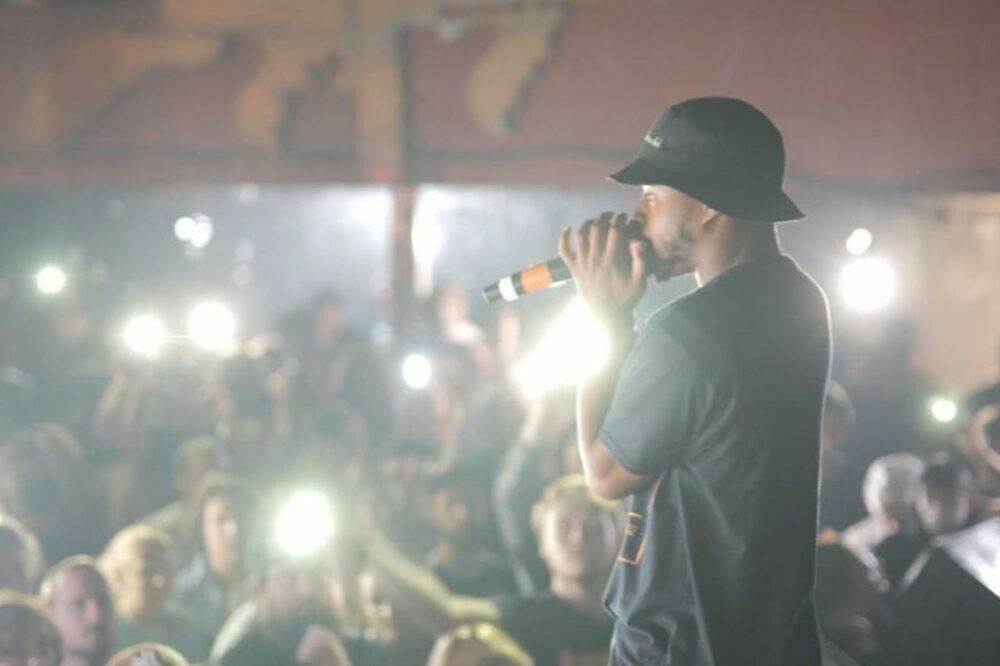
79.5 Tune In to “Club Level” and Do Double-Duty Vocal Support After a Year Without Tours

Photo Credit: Rosie Cohe

Throughout much of September, Kate Mattison and Lola Adanna have been working double-duty at concert venues across the U.S. The New York-based vocalists are the core of disco-soul group 79.5 and they’ve been opening for Durand Jones & the Indications since earlier in the month. Mattison and Adanna are also the headliner’s backup singers. 

“We manifest it,” says Adanna of the touring situation. “We put that bug in their ear. I don’t think they really thought about it until we approached them with the idea.”

For the eight shows that had transpired before this interview, Mattison and Adanna performed as 79.5, wearing a different outfit for each opening set. Then, as the band and crew struck the stage post-performance, the two singers would quickly change into their outfits for the Durand Jones set, warm up with that band and then return to the stage. “We are on every day for soundcheck starting at 4 and we’re not done until midnight,” says Mattison. When Audiofemme caught up with Mattison and Adanna, they were enjoying time off in Las Vegas, in between gigs in Salt Lake City and San Diego. After this stretch of the tour ends on the West Coast, they’ll continue on the road as backup singers when Durand Jones & the Indications joins My Morning Jacket

This is their first time 79.5 has been on the road since the start of the COVID-19 pandemic, and Mattison and Adanna are in agreement that the chance to be able to work again has been a big opportunity. “We just feel really blessed and really lucky and we’re going to keep going with it,” says Mattison.

The crowds have been varied from city to city. “I feel like every single crowd, every single night, has been different,” says Mattison. “Sometimes we get young kids and other times we get the grown and sexy crowd.”

It’s also giving them a chance to introduce audiences from Boston to Los Angeles to the sound that’s been evolving within the band. Their recent single “Club Level” is a funky disco jam wrapped up dreamy psychedelia, an amalgam of staticky radio transmissions like the imaginary station the band is named for. “The band now kind of morphed into this psychedelic jazz girl group-y harmonic freakout sometimes,” says Mattison. “It’s super cool and there’s a lot of space for this band to grow and we get to show off what we do to an audience that has maybe never heard us before.”

“We still have the 79.5 sound, but we’re also experimenting with different sounds and different types of music,” says Adanna. “So, I think that’s really exiting too, getting people prepared for it.”

Mattison launched the 79.5 project in 2010 and it long had a revolving lineup. By the time the group released debut full-length Predictions in 2018, a lot of the songs had been around for years. She and Adanna met as backup singers for Durand Jones & the Indications. “We just loved singing together,” Mattison says, so they continued to do that in 79.5.

In the process, 79.5 has become a more collaborative project. “I think that our voices blend together,” says Adanna. “We don’t necessarily have the same timbre of voice, but we complement each other so well.”

“Honestly, it just felt so natural,” adds Mattison. 

“I also think that with the times that we’re going through right now— race, gender, all that— I think it’s beautiful to see two women, one Black and one white, come together and have really strong men back us up as well,” says Adanna.

Their influences are varied as well. Mattison, who is also a pianist, mentions Janet Jackson, Todd Rundgren and Alice Coltrane. Adanna says that, when it comes to both aesthetic and vocal influences, she’s drawn to Donna Summer and Diana Ross for this project. It’s a different vibe for the singer, who describes herself as “beltastic.” With 79.5, though, she has to take a more understated approach. “For me, it’s easy to belt,” she says. “To pull it back was a challenge and it was a welcome challenge.”

On the road, where they’re singing in two sets per gig, they’ve had to take it easy on their voices when they can. “We have lots of remedies,” says Adanna; tea, honey and lozenges are among them. “Anything that can protect the voice because we’re singing double-time and you want to give 100% at every show, so you definitely have to take care of your vocals,” she adds. Mattison brought along her mat to do some yoga too, but finding time to practice in the midst of tour has been a challenge.

It’s been an intense schedule for Mattison and Adanna, but they seem to welcome it after more than a year without tours. “It feels amazing because we get to work again,” says Mattison. “Who knows what’s going to happen after this with the entertainment industry, but right now, we’re just trying to live in the present.”

Follow 79.5 on Instagram and Twitter for ongoing updates.

Portland Pop-Fusion Duo Foamboy Investigate Digital Alienation with “Logout”

Photo Credit: Nathan Schmidlin

Who we are, and how we present ourselves to the world, can vary within any given situation. After a year (and some change) of world-wide lockdowns, in which we’ve been mostly isolated, our social interactions limited primarily to digital realms, those visions – both of ourselves and others – have become somewhat distorted, or at least nebulous. Along with that comes a particular fatigue, a sense that if we could somehow disconnect, we’d be able to see ourselves more clearly. PNW fusion-pop outfit Foamboy – helmed by Wil Bakula and Katy Ohsiek – understand, and they’ve somehow distilled these rather awkward considerations into something worth dancing to on “Logout,” their final single from forthcoming debut My Sober Daydream, out October 1.

Premiering today via Audiofemme, the video includes album track “Alien” as a sort of intro, in which Ohsiek confronts other versions of herself locked behind picture frames and television screens, at once horrified and entertained. Directed by Riley Brown, the clip transitions into a neon-hued live set-up featuring Bakula on synths, Ohsiek on vocals, and album mixer Justin Yu Kiatvonchareon on drums as the laid-back house groove of “Logout” takes over.

Though the songs were not initially intended to be juxtaposed in such a way, they blend seamlessly from one to the next as tracks seven (“Alien”) and eight (“Logout”) on My Sober Daydream. That owes to the way Bakula and Ohsiek worked together, though remotely, on the album. Bakula strove to cultivate a refreshing pop aesthetic with instrumental demos, which he sent to Ohsiek; Ohsiek provided lyrics and vocal melodies for Bakula’s sonic snippets – often confronting much darker emotions than the music might suggest.

“I don’t sit down and think, I’m gonna write sad lyrics to this happy song,” Ohsiek says, “[but] it’s nearly impossible for me to write a song about something that’s good.” “Alien” was written after Ohsiek moved from Salem, Oregon to Corvallis for grad school, while “Logout,” she says, is “about wanting to disappear.” Both are concerned with feeling displaced from oneself, in one way or another, but breezy synth modulations keep the mood buoyant. Ohsiek’s vocals melt into abstraction as Bakula assembles everything together in a cohesive whole, which he describes as a “weird science.”

“I usually end up with 30 or 40 chorus or verse ideas,” Bakula explains. “When I’m in the zone of working every day like I was on this album, I’m listening to all those demos every single day and it slowly comes to me, like oh, wait, this piece will go here. I create all these little pieces, and it’s just a puzzle in terms of figuring out what fits where.”

“The juxtaposition isn’t intentional, but I think it works,” says Ohsiek. “For me, the most helpful processing is when I’m writing it, and I can get it out.” By the time the song takes its final form, she adds, “I don’t even register what I’m singing about.” Notable is previously released single “Better,” not only because it confronts depression with an almost sarcastically simple solution, but because of the shift in tempo halfway through the track. No matter what twists and turns Foamboy throw into each song, the album overall has a fluid feeling as synth movements build and blend, tied together by Ohsiek’s relatable, candid lyrics.

Foamboy itself is in a state of flux, too. Ohsiek and Bakula previously released music as Chromatic Colors, collaborating with a variety of musicians across several releases while attending Salem’s Willamette University. “Chromatic Colors was definitely something where we had the room to try out a lot of different stuff. In our earlier stages that was really nice cause we had the freedom to just do kind of whatever kind of songs we wanted,” Bakula says. “Now we’re taking all that experience and focusing it into one kind of aesthetic musically and really working on editing out all of the fat of the songs and narrowing it down.”

The pandemic, in part, necessitated a leaner approach, and though the two have no plans to continue releasing music as Chromatic Colors, Foamboy has expanded to include other musicians – like Kiatvonchareon, who helped Bakula mix analogue and electronic drums for more robust percussion – as live versions of the songs on Daydream take shape. “Not every song works,” admits Ohsiek, “but we’ve been working on it.”

“We just put a group together a few months ago and it’s a bigger group than we’ve ever played with, so it’s definitely an adjustment,” Bakula says. “But it’s been really exciting to hear what the songs sound like live – and also, sometimes, really disappointing.” They’ve opted to play with two keyboardists in an effort to recreate the multi-layered synth sounds, and are looking forward to gigs they’re planning for later this year.

As for the new band name, the album’s title, and its ambiguous cover art, Bakula says those details are mostly arbitrary, meant to evoke a particular vibe more than connect to a concrete meaning. Warm, saturated, and bright, but not harsh, Foamboy’s energy is ultimately as comforting as a soak in a bubble bath – the perfect soundtrack for a soul-healing, unplugged moment.

Follow Foamboy on Instagram and Facebook for ongoing updates.

Los Angeles Beat Label Dome of Doom Turns 10 with Anniversary Comp and Party

QRTR / Photo Credit: Bren Lyn Haragan

Wylie Cable, the proprietor of Los Angeles-based label Dome of Doom, isn’t sure how Meagan Rodriguez, the Brooklyn-based DJ and producer better known as QRTR, first came to his attention. It could have been Soundcloud or Spotify or some social network. Regardless, when he first messaged her, they were strangers, and Cable had never seen her play. “I was really inspired by her artistic output and reached out to her and said, hey, have you ever thought about working with a label? Have you thought about a full length album?” Cable recalls on a recent phone call. 

That was in 2019. Just last month, QRTR released her second album for Dome of Doom. Her debut full-length, Drenched, was a meditation on depression and mental health that dropped at the dawn of the COVID-19 pandemic. Her latest release, Infina Ad Nausea, is a play on the Latin infinitum ad nauseam. “I was trying to describe the sensation of living in a never-ending loop because that’s kind of what it felt like in lockdown,” says Rodriguez. She wrote the album over the course of 2020 and into early 2021. 

For Dome of Doom, which celebrates its 10th anniversary on September 21 with the release of compilation Decade of Doom, albums are the secret to the label’s success. “It’s not a business decision,” says Cable. “It’s probably easier and faster and more effective to just put out singles.”

Instead, albums are important because of what they represent creatively. “I feel like they are time-markers in artist’s lives,” says Cable, who is an artist himself. “I’ve put out eight solo records. Certain ones I like listening back to still and I’m very grateful that I took the time to get my ideas down on a record at a specific point in my life.”

“The ideas change. As a creative person, you get older and have more experiences,” he continues. “If you don’t get the ideas down and save them, they can just disappear or they can change.”

Cable founded Dome of Doom during a stint in San Francisco as a means to release the music that he and his friends made. After moving back to Los Angeles, he landed a gig doing visuals at the influential club night Low End Theory. Through that, Cable connected with a slew of artists who would go on to release albums on Dome of Doom, like Daedelus, and Huxley Anne, both of whom are set to play the label’s 10th anniversary party at 1720 in Los Angeles on September 23.

Huxley Anne was releasing her music on Soundcloud when she first got to know Cable via Low End Theory (the two had met previously at a gig back in 2016, a testament to the closeness of the scene). She ultimately released her debut album, Ilium, on the label in 2017. “It was a really organic process. I don’t even think back of it being a label-based process,” says Huxley Anne via Zoom. In the midst of that process, she scrapped the material she had and rewrote it after a visit to L.A. museum The Broad, where she saw “Ilium (One Morning 10 Years Later)” by artist Cy Twombly. “It literally brought tears to my eyes because the sketch was so amateur compared to the other work and it was an example of the beginning of an artist’s career, yet it was still housed in this museum,” Huxley Anne recalls. Since Ilium is another name for Troy, she used the Trojan War as a basis for the album. “I structured and rewrote my whole record based on a reinterpretation, reimagining of Helen of Troy going through the war,” says Huxley Anne. 

The debut proved to be a success. “I never thought an experimental record like that would be received as well as it was, and would lead to such a strong touring career for the next few years,” says Huxley Anne. 

Maybe that’s also a testament to the power of the full-length album. Now with two albums under her belt, QRTR’s star is on the rise. She’s set to play Firefly Music Festival at the end of September, the four-day event in Delaware that also features performances from Billie Eilish, Tame Impala, Lizzo and Megan Thee Stallion. 

“It really encapsulates a feeling of certain point in their life,” says Cable of albums. “Doing that is important for artists and doing that process is really what I’ve seen help people grow into more talented, more open and aware and sensitive and creative people, because it is a big undertaking.”

That’s something Cable says is worth the effort to create. “It is difficult and it is challenging and it comes with a lot of fucking mental ups and downs,” says Cable. But, he adds, “It’s the most fundamental and valuable thing as a musical artist that you can do.”

Follow Dome of Doom on Facebook and Instagram for ongoing updates.
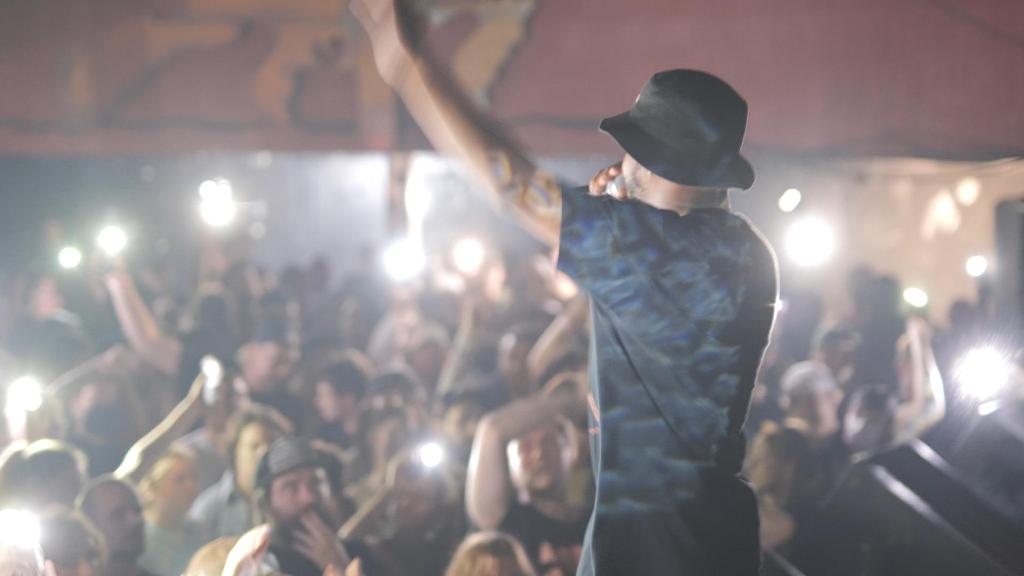
Eagle & The Wolf Showcase Musical Partnership on Two Lovers

New South Wales singer-songwriter Sarah Humphreys and her accomplished partner Kristen Lee Morris have proven with multiple solo albums respectively that they have a masterful understanding of Americana music. A strong vein of storytelling pulses through their body of work, and Two Lovers, their latest album as duo Eagle & The Wolf, is certainly no different, even as it diverges from well-worn alt-country territory.

The couple live and work in the scenic Blue Mountains region of New South Wales, a landscape lush in flora and fauna, boasting sunsets that cast whirls of blue, apricot, and violet over the horizon. It is a place that provides space and inspiration, evident in the feng shui of lightness, space and harmony on each song. The title track of their newest album, “Two Lovers” is the sonic equivalent of this organic, elemental light, sun, rock, earth, and space. “Stand here right with me/We’ll hold on for more/May we find ourselves on the highest blue mountain,” they sing. “Two lovers take their time/They don’t worry about what’s left behind.”

“Some songs came easily, and with some it was like pulling teeth, really,” confesses Humphreys. “We had to work hard at this album. The writing was easier than the recording of it. The first album that we did was so easy. We had our older kids at that stage and they were old enough for us to leave them for the three days [of recording]. We now have four kids… so we had to find little snippets during the day and then go and look after the kids. But we just kept at it and little by little, we pieced this album together over probably 18 months or so.”

As Eagle & The Wolf, the duo released their first, self-titled album in 2016. The intention was to release a second album sooner, but life intervened; their family expanded, they got married, moved house, and made solo albums which ultimately put Eagle & The Wolf on hiatus. Relentless touring had also impacted on the couple’s health and harmony, and the making of Two Lovers was not without creative conflict (Humphreys admits to a few walk-outs). Their first album had earned them support slots with The Blind Boys of Alabama, Charlie Parr, Kim Richie, Archie Roach and Australia’s queen of country, Kasey Chambers. It’s synergistic that Chambers produced Humphreys’ 2014 solo effort, New Moon.

“I’ve known Kasey since I was about 20 and she’s always been a good friend and taken me under her wing,” says Humphreys. “She’s taken us on tour with her and we hang out, our kids are friends. She’s on the Central Coast still. Anytime we can see each other we do, and we send each other pictures. She’s a real sweetheart. I think we’d always love to work with Kase, but now Kris and I, we’re producing our own stuff. With this last album we learnt so much about producing and engineering and we really enjoyed that.”

Humphreys and Morris were both born on New South Wales’ Central Coast, but moved to Blue Mountains after Humphreys’ father passed away on her birthday in February, 2018. One month later, they loaded their belongings into a van and made the big move.

“Kris and I both grew up in Long Jetty. I don’t think either one of us ever felt like we fit in there; it was a very beachy town and it felt like we were born in the wrong place. We’ve always loved the Blue Mountains,” Humphreys says of that decision.

Now that they’re somewhat settled in, the duo were able to record a large chunk of the album in their new home, and are in the process of building a home studio. Humphreys is audibly excited by the prospect of further engineering, producing, and recording within their own dedicated space. The lush sound on Two Lovers was achieved with the support of Jy-Perry Banks (pedal steel guitar), Jeff McCormack (bass), Stefano Cosentino (bass), Matt Cowley (drums and percussion), and Annie Leeth (strings).

“We recorded a couple of tracks with our friend, engineer Josh Schuberth at his home studio in the Blue Mountains [and] we recorded at a friend’s house up in Mount Victoria, also in the Blue Mountains. The rest of it we recorded at home,” Humphreys says. “We didn’t have a studio then, but we’re building one now so we can have a separate space. We mostly recorded it ourselves; Kris and I were the producers.”

On Two Lovers, the steely strum of acoustic guitar rambles along loyally like a canine companion, familiar with the route and just enjoying the togetherness: voice, instrument, harmony. “Something Good” picks up the tempo, introducing a rambunctious mood. Humphreys takes the lead, promising to reveal the beauty in every day. She hands the mic to Morris for twangy ballad “Darlin'” – which more than deserves a porch, a worn pair of riding boots and a flannel shirt.

“Kris and I are both very different musically, so it’s got bits and pieces of us both in there, and these little magical moments when songs just came to us from a very special place,” explains Humphreys. “We didn’t question it; if we thought it was good, we put it on and didn’t worry about it not fitting.”

The mood meanders toward psychedelia on bluesy, sunburnt “Mescaline,” layering woozy electric guitar over their interplaying intoxicated harmonies.

“That’s one that Kris brought to me mostly finished. He brought me a little demo; I heard it and I was like, ‘Wow, that has to be on the album!’ We’re very encouraging of each other. I was like, ‘Don’t take that for your solo band, put it on our album!’” Humphreys remembers. “I added to that song during the recording with some dreamy, howly sort of vocals. ‘Gimme Shelter’ by Rolling Stones has this amazing singer in the background who’s just wailing and it’s so great. I’m in the background but I feel involved in the song; like a wolf howling, Kris said. I love that song. That came from the depths of Kris’s imagination.”

Closing track “Ray” is an ode – not to the sun – but to Ray LaMontagne. It’s gorgeously bittersweet, like a rainstorm when you planned to go for a walk.

“When we first met, Kris and I, we would stay up late after a songwriter’s night or a gig and we’d listen to Ray LaMontagne. It was a beautiful time in our relationship,” Humphreys recalls. “We both had kids from previous relationships so we didn’t get to have much of a dating experience because we were full-time parents, but every now and again we’d get time to ourselves, maybe once a week, and we’d stay up all night, loving being together, talking and laughing. After being in relationships with other people that hadn’t worked, it was so incredible to find a person like that. We were so excited to be with each other. We were both big fans of Ray LaMontagne before we met – he’s one of our all-time favourite artists. His records are so beautiful and have been with us through a lot, both going through different things in different places in the world, then coming together.”

LaMontagne is but one of the sonic influences identifiable on the duo’s album. Their sound patchworks the classic American folk-country of James Taylor (and his wonderful, homesick “Carolina In My Mind”), the melancholy beauty of Joan Baez’s “Diamonds And Rust,” and the romantic, nostalgic Mama Cass and John Denver duet version of “Leaving On A Jet Plane.”

As a solo artist, Humphreys’ output has been prolific, her most recent LP Strange Beauty released in 2019. Whilst her sound unquestionably traverses folk-country ground, Morris rode his solo work into bluesy Americana territory on Ruins (2014) and Hillbilly Blues (2018).

“I started writing songs when I was about eight,” Humphreys says. “No one paid that much attention, but it was something I always did. I was always writing songs, singing and playing music. I’ve always written from a very truthful and heartfelt place. I put it all out there in my songs.”

Here on Two Lovers, the history and honesty of a couple deeply in love – with life, and with each other – is tangible in every nuanced note. In these fraught times, is serves as a reminder to all listeners that putting it all out there for love pays creative dividends.

Follow Eagle & The Wolf on Facebook and Instagram for ongoing updates.

B-ahwe Reflects on Going Through the “Motions” With New EP

What drew UK artist B-ahwe to the life of a musician was the ability to tell a story and paint a picture with the instruments she adds and the notes she sings. A modern-day bard, B-ahwe utilises her vocals to create her own fantasy world whilst also distracting from the realism of our day-to-day lives.

“That’s been a massive part of storytelling and music. You have this ability to make something that’s otherworldly… and music is just magical,” she tells Audiofemme. “You don’t get to escape very often – life is often very grey.”

Growing up as the second youngest of seven children in the city of Nottingham, B-ahwe’s stage name is an anglicised version of the Polish word for blank canvas, connoting new beginning, in a move that pays homage to the influence of her Polish grandmother. Because the language uses a different alphabet, the appearance of the word in Polish is very different from the phonetic pronunciation most listeners would be familiar with, B-ahwe explains. “I’ve kind of reconfigured it. It’s funny because I did it to make it easier to pronounce… and the things I’ve had people say to me is just hilarious. I can see the fear in their eyes before they say the word!” (For the record, it’s pronounced Bee-ah-wee.)

Heavily influenced by her background as a singer in her local church choir, it was no surprise that the life of a musician would be in her line of sight when she left home to go to university. Drawn to the ethereal possibilities within music, B-ahwe’s sound encompasses a strong element of fantasy. “I’ve always been a very metaphorical, ‘pretty words’ kind of writer,” B-ahwe says. “It feeds into [my] whole kind of ethereal thing as well. But I think it was also me being really scared of saying what I feel in black and white.”

With her latest EP Motions, out September 17, the singer-songwriter uses fantastical sonic elements to face her reality as she unpacks at what’s been left unspoken in her experiences so far. Leaving her inhibitions behind and laying out her thoughts and feelings, Motions serves as an ode to the fluidity of who we are as people who, for the most part, have attempted to fit into neat, compact identity boxes.

Opening with the delicate “Sakura,” B-ahwe combines the clear notes of the piano with her soft vocals. “Bewitched” follows with a slow, jittery beat tethering the track, a variety of elements coming into play that create an ambient soundscape that sustains the listener with each note. Within the soundscape, B-ahwe’s lyrics tell a solemn tale of a relationship turned sour and what that taught her, though she wasn’t aware of the lessons learned until she sat down to write it. This is demonstrated in lyrics such as “His cruelty makes the love burn bright/I don’t want to know what it is like without” and “I miss the me I was before.”

“’Bewitched’ is the first song I’ve ever written about all of the stuff that happened to me… it’s laced with a lot of the personal trauma and emotional abuse that I went through in a relationship,” says B-ahwe. “I didn’t really realise until we were doing the press release for that single how difficult it was.”

“Drifting” and “Fall Into” serve as the second and third acts to the story told by “Bewitched;” with a romantic acoustic guitar in “Drifting” serving as the backdrop to the musician’s experience of a love that limits, “Fall Into” examines the power of new love and the willingness on her part to find love again.

While the lyrical themes of the EP center on personal evolution and growth, no other track on Motions represents B-ahwe’s sonic evolution and growth this more than “Circles.” Produced by TAMBALA, the fifth track on the EP incorporates dreamy R&B and hip hop elements and signifies the musician’s experimentation with sound. It’s for this reason that B-ahwe feels that the track represents her the most in this moment.

“I used themes of time and the changing of seasons to address issues surrounding mental health,” she says. “I was talking about the situation of being stuck and moving forward… whilst your mind is holding you back all the time. You get to those points in life where you feel like you’ve really moved forward and then something triggers you, some past trauma, the mind takes hold of you and you start feeling like you’ve regressed when you haven’t – you’re just having a bad day.”

Motions closes with the aptly named track “Ready.” Bursting with an energy that isn’t felt in the previous songs, it’s something of a milemarker for B-ahwe, both lyrically and sonically. She details enjoying a new feeling of confidence, playing with elements of hip-hop and jazz in a more grounded composition to communicate a sense of fearlessness. She says it was inspired by “those moments where you’re like, fuck it – I’m gonna do this for me, despite everything. I’m going to rise past this, I’m just gonna take charge of the situation and move forward the best way I can.”

Motions follows B-ahwe’s 2020 LP Nuance, which hinged on her vocal lilt and jazz-influenced melodies with all the softness and subtly implied in its title. Motions feels more candid, building on the artist’s personal storytelling and willingness to experiment. This modest evolution is in part a result of the pandemic lockdowns in the UK, which forced B-ahwe to delve deep into her psyche. It’s no surprise that “Ready” closes out the EP; after months of emotional and spiritual exploration, B-ahwe finds herself with the confidence and drive to ask for more from her experiences.

“It’s a coming together of years of experiences, and years of bits of writing and developing and recording,” B-ahwe says of the EP. “Some of [the songs] are really tied into certain emotions and experiences… some of the other ones relate to moving through life.” Life doesn’t stop as we move through it, but with Motions, B-ahwe makes the most out of pausing to reflect, presenting listeners with their own blank canvas to consider.

Follow B-ahwe on Instagram and Facebook for ongoing updates.

Adia Victoria Honors Her Roots on Powerful New LP A Southern Gothic

Photo Credit: Huy Nguyen

For Adia Victoria, creating A Southern Gothic was a demanding process physically, emotionally and spiritually. “I think that this was a record that walked with me through one of the most difficult periods of my life,” Victoria expresses to Audiofemme in a Zoom interview from the porch of her Nashville home. “It was a very physical process of writing this record.” 

Though the exquisite new album captures Victoria’s deep Southern roots, she had to travel across the globe in order to tap into them. In January 2020 – just before the world shut down due to the COVID-19 pandemic – the South Carolina native jetted to Paris where she met with creative partners Jack Jones and Marcello Giuliani, equipped with another important travel companion: books. As a frequent traveler to the City of Light, Victoria often brings literature with her, this time immersing herself in the words of Southern writers, along with Alan Lomax’s famous recordings of field workers, absorbing the sounds of a pick ax hitting the ground to the breaths between members of a chain gang.

“Words hit different over there for me, and my relationship with speech and rhythm and words. I’m hearing spoken words differently there. You could walk for miles in the city and never run out of things to ponder. For me, that’s the perfect recipe to create art. Art just pours out of me there. I go to Paris in order to see more clearly. I think the distance gives you a little bit more of a boundary. It’s not so raw to write about over there. I get to tap into a different part of myself,” she observes.

“When I was writing the beginning portion of this record, I was far away from the South, but trying to root myself there,” she continues. “I needed to feel connected somehow to the dirt and the landscape of the South where so much of myself and stories I tell are created through that interaction of the land and the person. A lot of what guided me in the initial stages was wanting to pay reverence to the Black folk that came before me who created the blues while bent over crops and cotton.” 

After arriving back in Nashville from her trip abroad, Victoria got to work with creative partner and instrumentalist, Mason Hickman. While crafting the album, Victoria was working as an Amazon warehouse employee, lyrics naturally coming to her as she walked the aisles fulfilling orders. The singer recalls a particularly grueling shift, feeling depleted by the eighth hour and experiencing intense anxiety with the pandemic raging and many unanswered questions lingering. “It was in the thick of hell and I was walking and I was like, ‘What am I doing here?’ I felt so lost,’” she remembers.

But this painful moment turned into a source of refuge as a song began to form in her mind that manifested into “Carolina Bound,” pouring out the sense of desperation she felt for her home state of South Carolina. “I long for my mother brother and sister too/To see and smell the ocean turn my pain into blues,” she sings over a melody that strikingly blends the bluegrass nature of the banjo with the pain of the blues. “I mean to leave and not be found/Like a river run underground/I am Carolina bound.”

“I felt this homesickness, this primal need to go back home,” Victoria conveys of the song’s origins. “It literally came out of my body writing, walking, and working. The song definitely helped me transcend the dread of the present, and I feel like that’s something that the blues has always been for Black people. It’s been a transcendent art form for us, like a cultural heirloom that we’ve passed down,” she says. “There’s been so much drudgery done to our bodies that sometimes the blues of the mind, the poetics of the blues, have been our best means of escape and transcendence from the bullshit.” 

The singer-songwriter and poet brilliantly captures her roots and reverence for the history of her ancestors through her voice. Intentional about not wanting to make a record that was “strictly autobiographical,” Victoria takes into account the harmful traditions of the South from multiple angles across A Southern Gothic, asking as many rhetorical questions as she offers observations, stepping outside of her own perspective to see from the vantage point of many other compelling characters.

We meet a “Mean-Hearted Woman” who is coldly forced out of her home on Christmas morning by a husband who’s found another lover. Jason Isbell, Margo Price, and Kyshona lend supporting vocals on the standout “You Was Born to Die,” which finds Victoria flexing the dynamics of her voice, layered over a melody that’s as much a character in the story as the lyrics themselves. The sobering “The Whole World Knows” follows a struggling drug addict who feels like an outsider in her church-going community, while a young woman mourns the death of her sister in “My Oh My.” Victoria proves she has a fierce tongue and spirit to match on “Deep Water Blues,” undeterred in addressing white supremacy head on, proclaiming, “Now it’s been too many times I been put in a place/To have to wipe up a mess a white man made/Like my grandmama did and her mama did too/So I’ll be awful glad to get me clean of you/And let the water do what water do.”

“I wanted to almost have the record be a meditation on the way that perception is seen in the South. Who’s the narrator of one’s life? Is it you, or is it the way people perceive you? What does it cost a person who’s not able to live up to what it takes to belong in a group? What does belonging even mean? What are the ways that we’re asked to sacrifice ourselves in the name of Christianity and respectability and good manners?” she reflects. “I wanted some of the songs to be looking at this girl who can’t belong from an onlookers’ perspective and then some to let her speak and let us hear her prayers and her meditations. I don’t know which perception is accurate.”

Stepping outside of her own frame of mind didn’t come without its challenges. The singer cites “Far From Dixie” as the song she felt most vulnerable writing, a process that required time and patience. “I was in a troubled way and I wasn’t sure what I wanted to say,” she admits. “I’ve learned never to write down what you don’t mean. Even if it’s not about you, if it’s not true to you coming out of your hands, I’d rather drive people crazy for a year than commit to something that I knew was not the heart of what I needed to say.” 

Always one to honor her word, Victoria reclaims the narrative of the phrase “Southern Gothic,” often defined in literature by flawed characters, darkness and a feeling of alienation. With this powerful body of work, Victoria owns her space as a prolific Southern storyteller like the ones who came before her. “Typically when people think of Southern Gothic, they’re thinking of a particular aesthetic of the South that is centered in whiteness and centered in white dread and white anxiety and white fear of ‘the other.’ But I wanted to reclaim that title to be used as a marker of a Southern Black girl’s experiences growing up doubly othered and skewered so far outside the dominant culture narrative that centered itself only by excluding you. I wanted to center the mythologies of a Black Southern girl. I wanted to center her experiences and place them shoulder to shoulder with other Southern writers who claim to speak for the South,” she explains. “It was my way of putting my work under that umbrella of Southern narrative and Southern storytelling. It’s my way of authorizing the experiences of girls that look like me, who grew up where I did.” 

Much like the respite the album-making process provided her, Victoria hopes that A Southern Gothic compels others to look inward. “A Southern Gothic, it’s a story. It’s a record that’s very much rooted in my body, rooted in the South, rooted in the dirt. It’s a record that kept me rooted when I wanted to float off into a cloud of anxiety last year. It’s kept me rooted to a true part of myself that exists audaciously independent of all the madness and the chaos. It showed me that there’s a part of me where art comes from that’s mine and it exists purely for itself and it can save your life, that part of you,” she professes of the album’s personal impact. “I would hope that it challenges [listeners] to engage with the lessons that the dominant narrative has imparted upon us to really question the particularities of the way that you walk through the world, the way the world walks through you, and consider the weight that is taken on by society’s eye upon you. How does that alter you? I would challenge them to listen more closely to their inner lives.” 

A Southern Gothic arrives on September 17. Victoria recently launched season two of her podcast, Call & Response. She’ll open for Jason Isbell at the Ryman Auditorium on October 24 and appears on his upcoming covers album, Georgia Blue, set for release on October 15. 

Follow Adia Victoria on Instagram, Twitter and Facebook for ongoing updates.

Julia Bardo Embraces Outsider Italian Heritage On Solo Debut Bauhaus, L’Appartamento

Photo Credit: Ashton Hugh

It’s okay not to be okay, according to Italian-born, UK-based Julia Bardo. Her poppy folk-rock debut Bauhaus, L’Appartamento (released September 10 via Wichita Recordings) is evidence that not being okay can be the catalyst for some very creatively fruitful self-investigation.

For Bardo, the introspective deep diving that ensued after moving from her home in Brescia, Italy to the UK city of Manchester enabled her to embrace being an outsider in her adopted home. Notoriously the land of stiff upper lips, bacon and eggs, soggy chips, rainy days and endless media about everything the Queen is wearing, it was a cultural anathema to Bardo’s vibrant, expressive, joyful liveliness (or vivacita!) and at first, she wilted under the pressure to fit in.

Until she was 13, Bardo lived in the small Italian province of Castegnato. Her aunt took her on a trip to London around that age, and Bardo felt instantly drawn to it. “The first time, I thought ‘this is where I want to live’ because I felt more like myself while I was there,” she remembers. But when she finally moved to London in her twenties, she found it overwhelming. “I moved to Manchester in 2016, when I was 23,” she recalls. “I was going to go to Bristol but they cancelled while we were on the train, so I took that as a sign that I should stay in Manchester.”

Despite not knowing anyone, she’d made the leap intending to pursue music and independence. And really, she’d always felt like an outsider to some degree. Music was, in essence, the bridge between her inner self and the physical world.

“Music has always been present in my life since I was small… been there to keep me company, because I was quite a lonely kid, quite introverted. I barely had one friend and I stayed in the house all the time, listening to music and singing. My mum, we used to sing Italian songs together and my uncle is a jazz guitarist so we’d sing altogether,” Bardo remembers. “When I was 13 my dad opened a bar and we moved to Brescia. I didn’t know anyone so I spent my time working at the bar and when we didn’t have many people there I’d go into the staff toilet and listen to music and sing. Music was cathartic, something to soothe myself.”

That need for soothing resonated around the world, so Bardo’s album couldn’t have arrived at a better time than now. Stuck indoors, Bardo spent 2020 indulging in her love of painting, songwriting, and watching the captivatingly beautiful films of both Federico Fellini and the visually seductive Michelangelo Antonioni. In their representations of Italy, she recognised her home as well as observing an imagined Italy, a place that outsiders have dreamed the nation into being. In peeling the layers of imagined place versus real, belonging and identity, and what home means to her, Bardo had the raw, buzzing, emotional material to craft her first full-length album. The title playfully draws on both her mood and on the name of the apartment block Bardo was living in when she was demoing the album.

Her knack for lyrical self-revelation upon the magic carpet of a rhythmic guitar first revealed itself on her 2020 EP Phase. The connecting threads between Phase and Bauhaus are the very personal, and relatable, themes. Loneliness and self-flagellation do battle with the sweetness of artistic creation, musicality and appreciation for herself. It’s an album in which many listeners will recognise their own demons, and hopefully, their own small victories. Musically, it is reminiscent of the vulnerable lyrics and alt-folk guitar of Neko Case and Liz Phair. The unpolished, steely sound of guitar embodies Bardo’s feminine animus: a visceral, restless creature that refused to remain caged in her psyche. 

Bardo had played guitar in a Yorkshire-based synthpop band called Working Men’s Club; she’d joined after meeting her bandmates at university, having begun – and dropped out – of various university courses and odd jobs. The band was signed to Heavenly Records in 2020, but Bardo left soon afterwards – amicably, desiring her own autonomy. The vulnerability and soul-baring nature of Bauhaus, L’Appartamento is something that she had to do solo.

“Our manager really liked what I was doing as a solo artist so he decided to take me on board as well in 2018. When I was in Italy, I’d recorded some songs that were meant to become an album, but I wasn’t happy with them,” Bardo says. “I showed them to my manager who suggested using them as demos to contact labels. Then we met up with Wichita and I had a really good feeling, meeting them. They seemed very interested, really nice. The label suggested we do an EP to see how things go so we recorded four songs, and I co-produced it with my boyfriend because I really wanted to do it in a way I felt comfortable with. Wichita really liked them and put them out, then I started to write the album.”

She met producer Euan Hinshelwood, of Younghusband, via a friend. They immediately bonded over a love of PJ Harvey, particularly her 2000 LP Stories From the City, Stories From The Sea. “Euan really got what I wanted to achieve on the album and it was so good to work with him,” Bardo says. “A friend suggested him, so we just went with it. I love the atmospheric stuff that goes on, and he really did what the album needed.” As for which songs are her personal favourites, she demurs at first before acceding she definitely does have a couple: “No Feeling,” “Love Out of Control,” and “Impossible.” Her UK tour is scheduled to kick off at the beginning of October.

What the album ultimately expresses is a joyful reconnection, or realisation, of her Italian roots. Perhaps, as the saying goes, she had to get lost to find herself. Singing in Italian, and using an Italian title for the album, was a deliberate and important choice.

“Obviously, I miss Italy. Sometimes, I feel so estranged being here. I don’t feel like I belong anywhere, sometimes. It’s weird when you’re away from what you know the most,” she says. “Singing Italian helped me be closer to Italy. I’d never been proud of being Italian but being away from Italy and looking inside myself, I started to embrace who I was. This is who I am, this is where I’m from, and I can’t change who I am.”

Follow Julia Bardo on Instagram and Facebook for ongoing updates.

ANA Premieres Down-to-Earth Video for New Single “Vertical”

We hear it all the time: Protect your energy. Especially in the last year of crisis after crisis, mastering the art of shielding your heart and mind has been a frequent topic of conversation. But what does that really mean? For Ana Gomulka, a.k.a ANA, this means honoring her artistic output, giving as much to herself as she does to others, and loving oneself as a spiritual practice. Gomulka distills this sentiment through sensual melodies and unflinching lyrics in her new song, “Vertical.” The video, premiering today on Audiofemme, is a visual representation of Gomulka’s message of independence and self-love. 

ANA’s debut single “Fall With Me,” released in March, centered “radical expressions of pleasure.” Gomulka says that when she wrote “Vertical,” she was in the process of drawing boundaries in her relationships. “It kind of came out in this sassy, funky way, but the message still stands strong: We don’t have forever to allow our energy to be coming out of us, there has to be a balance in how much we give and how much we take.” This message undoubtedly resonates with anyone who, like Gomulka, identifies as a “giver.” The instinct to nurture and care for loved ones is pure and well-intentioned, but it can lead to self-sabotage if we over-extend ourselves to others without taking care of ourselves too. 

The video shows Gomulka in a state of bliss – one that is achieved when the ideal balance is struck between giving and taking, creating and resting. She explains that finishing “Vertical” was an integral part of maintaining the ebb and flow in her life. As a multidisciplinary artist, she often finds herself effortlessly starting projects in moments of inspiration and passion, and realizes that finishing these projects proves to be the more difficult but essential part. “It’s way more spiritual than it sounds,” says Gomulka. “All through life we have seasons, and those seasons need to be open and closed properly. Kind of like life and death – every sound, similar to every song, similar to every thought, has like a birth and a life and a death, and I want to respect that in music. So, finishing a song is a really big part of closing that cycle.” 

https://youtu.be/KXMyqiirRbo

Gomulka says that her spirituality is a guiding force in all of her creative practices. In an industry that can emphasize quantity over quality and trends over true creativity, she makes sure to check in with herself if she feels herself veering off course. “Whenever I feel a rush to put stuff out… it really is that time to tap back in spiritually and really re-focus on the purpose of it all,” she says. This down-to-earth mentality is palpable in the video, which follows Gomulka while she plays her guitar and sings boldly to whoever’s listening. The simplicity in both the setting and Gomulka’s honest lyrics (“Do you know what I need?/Are you matching my speed?/Feel like I’m always chasing after you/Leave me hanging when I’m in the mood”) evokes a much welcomed return to ’90s R&B/neo-soul. It’s just a straight vibe. 

As a producer, Gomulka aims to bring a human touch back into an electronically-saturated soundscape. Though she originally produced this song on her computer with live guitar, she says that she felt it was missing the soul that live instrumentation brings to the table. She brought in drummer Todd Watts and bassist Ian Griffiths to infuse that live touch that was missing.

“I think there’s something very human about live instrumentation that I hope begins to trend again because I think it would really help us. The vibrations of acoustic, or any analog instrument…those vibrations are so powerful,” Gomulka says. “I wanna hear people shred.”

Trending or not, Gomulka is focused on taking whatever approach to songwriting feels most true to her. In a similar way, she reminds listeners – and herself – to stay true to themselves and their boundaries. “The amount that we’re expending, what happens when we turn that around and decide we’re gonna take this energy and pour it back into ourselves, instead of pouring it out to a source that can’t receive it the way that we need?” Gomulka asks. “What happens when we can give and receive to ourselves and when that energy is focused? I feel like that’s when we can really bloom as people.”

Follow ANA on Instagram for ongoing updates.

Ramona Gonzalez Brings Academic Study to Nite Jewel with Comeback LP No Sun

Photo Credit: Tammy Nguyen

Nearly two weeks have passed since the release of No Sun, Ramona Gonzalez’s fifth full-length album as Nite Jewel, when Audiofemme catches up with the L.A.-based singer/composer/producer by phone. In that time, Gonzalez celebrated the release of her latest album with a hometown show at Zebulon, then crossed the country for a gig at Baby’s All Right in Brooklyn. 

“It was kind of weird, honestly, to perform in a live venue space,” says Gonzalez by phone. “With COVID and everything, I hadn’t been used to being around that many people. Also, I hadn’t performed in three years and I’ve definitely never performed my new songs.” It took a lot of preparation, she says, plus plenty of focus, to make those shows a reality. “Just figuring out even the basic execution of doing these songs live was a lot,” she says. 

On No Sun, Gonzalez leans into the lament. Among her goals was an ambition to make an album that was less closely associated with dance music as her previous efforts have been. Here, she flexes the breadth of her skills, from the rich electronic layers of “Anymore” to the gentle groove of her cover of Sun Ra’s “When There Is No Sun.” 

Gonzalez began work on the album in early 2018 and spent about half a year playing with instrumentation that she had in mind for the new body of work. By that summer, her life was in flux. She split up with her partner and moved out of their home. At the same time, she began writing lyrics for the album. Then, two months later, she entered UCLA’s prestigious musicology department to begin her PhD. “It was a lot, but I kind of thrive in chaos,” she says. “I’ve always been sort of surrounded by chaotic situations, ever since I was growing up. I’ve used music as a way to center myself and I know that I can handle it.”

She adds, “In a way, having that PhD program as a landing pad, just having to be somewhere every day, really helped my struggle with how depressed I felt, how sad I felt. It centered me.”

Her headspace at the time no doubt played into the area of interest she gravitated toward academically. “At first, it was just the idea of women singing sad songs, like pop stars doing so, and why nobody really writes about that in musicology,” she says. “Of course, I had been writing sad songs myself, so I would be interested in my own process of writing No Sun.”

Gonzalez began by looking at the global tradition of female laments, where much has been written. Academic work focused on contemporary pop laments, though, were lacking. “I thought to myself, maybe I need to fill that gap and maybe I could use No Sun as a way to help me think about the creative process for these singers,” she says. “It was almost like the studies reflected back on my album and I was able to see it in a new light and see the different layers in it and analyze it as a musical case study almost.”

It’s subject matter that would resonate with anyone who follows 20th and 21st century popular music. Think a minute about dance floor anthems, like Gloria Gaynor’s “I Will Survive” or Robyn’s “Dancing on My Own.” They can be incredibly sad, but they still drive people together on the floor, dancing like it’s a way to free themselves of their own pain. “It’s almost culturally inscribed into our human DNA to utilize songs of women singing about their grief to process our own collective grief. That is something that has always been true, since forever,” says Gonzalez. “It’s not culturally specific, it exists in every single culture. It’s a ritual practice that is performed all over the world.”

Even in the modern world, that holds true. “In the popular imagination, the dance club is kind of like a church and when you play these songs that are really about anguish, we have the reflexive knowledge to process our grief when we hear them.”

Gonzalez studied the tropes or signals that musicians use to prompt listeners to recognize sadness in song. She was able to take that knowledge and apply it to her own music. An example she mentions is “Before I Go,” the second song on the album. “I wasn’t thinking about what lament trope am I going to put into the song or anything like that,” she says. Upon reflection, though, Gonzalez noticed that she had invoked the kind of progression that might indicate a lament or dirge. “I didn’t know it at the time that I was doing that, but that’s where my hands went and that’s a testament to the fact that these tropes are part of what musicians do to communicate an emotion or affect,” she says.

As Gonzalez continued to refine the album through 2019, she also began teaching songwriting at Occidental College in Los Angeles. At the time, she was taking students through the fundamentals of songwriting as illustrated through various musical eras. Meanwhile, as a musician, she was taking a different approach. “At least for me, I’m bursting open the whole idea of what I thought a song was,” she says of No Sun.

Her experiments worked. For one thing, Gonzalez surmises that the album has prompted listeners to take notice of her composition and production skills. “It’s a nice feeling that people recognize that,” she says, adding that overall reaction to her latest collection has been good.

“It doesn’t seem like anybody misunderstood the record,” she says. “Even if they didn’t like it, or it didn’t resonate with them, it doesn’t seem like it was misunderstood, which has happened to me a lot in the past.” On No Sun, Gonzalez has managed to bridge the gaps between academic study, creativity, and emotional intelligence to continue the lineage of the lament in her own way, and in so doing, has tapped into an instantly recognizable facet of the human condition.

Follow Nite Jewel on Facebook and Instagram for ongoing updates.
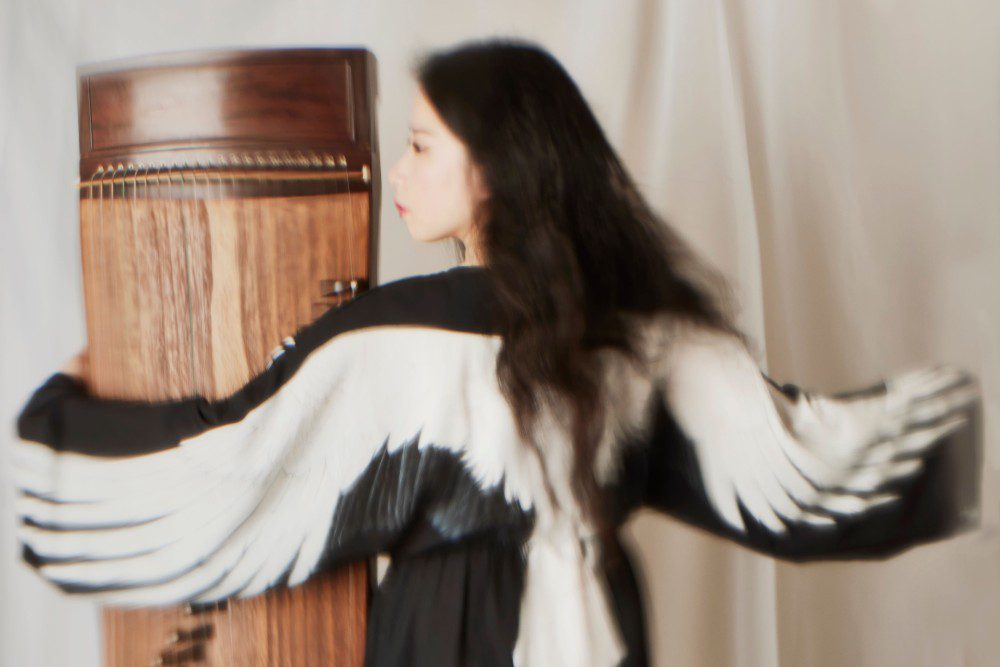
Erica Dunn is a Triple-Threat Rocker Fronting Palm Springs, Tropical Fuck Storm, MOD CON, and More

Erica Dunn with MOD CON

What’s more impressive than being the member of one of Melbourne’s most iconic rock ‘n’ roll bands? Being the member of several. Erica Dunn – of MOD CON, Tropical Fuck Storm, Harmony, and Palm Springs –  is a rarity.

The signs were all there early, though. Her school guitar lessons morphed her into a non-stop busker at the age of 13. She recalls taking the train into Melbourne’s city centre with a friend, then “playing the most horrific, full-on, original compositions,” she tells Audiofemme. “We were really serious about it!”

Somewhere along the line, she recalls, she got into punk and rock ’n’ roll bands and immersed herself in the British live music scene. She returned to Australia and began hosting her own radio show (Mixing Up The Medicine) in 2008 – which ended up running for 11 years on Melbourne’s community station PBS 106.7FM before her schedule with Tropical Fuck Storm, MOD CON and Harmony took precedence. “I had this show that was my special little pocket, and I only had to give it up because we were touring so much. I still miss it,” she says.

Before leaving the show, she also began solo project Palm Springs to exercise her acoustic persona. Back in 2017, Dunn applied and got a songwriting residency in upstate New York, where she felt duty-bound to write a record. Palm Springs & Friends came out of that time; the album was released in limited edition on cassette, and the gorgeous, pared-back sound is reminiscent of recorded-to-tape, ’90s lo-fi bands. That’s no accident – she tracked most of the album at NYHed Studio, which she describes as “this amazing underground 8-track tape analog place on the Lower East Side. It was a real dream.” It was mastered by prolific producer/engineer/musician Mikey Young. Soon, Poison City Records will put out a Palm Springs best-of collection on vinyl. “It’s amazing that anyone cares,” Dunn says. “It’s really nice to think that someone values it and wants it out on record. Mikey’s been on the blower today because it’s his job to master everything.”

Dunn inhabiting her Palm Springs persona

It is in Palm Springs that Dunn is at her most vulnerable, though her punk-rock soul meant she’d chafed at being boxed into the stereotype of a folk rock girl. “My relationship with just being a girl and a guitar, having that pigeonholed, I full on flipped and rebelled against that,” she explains. “It’s been interesting to get back, enjoy the depth of the craft, and just picking on a nylon string guitar, which is so terrifying and such a stretch of skills. There’s no distortion pedal, nothing to hide behind at all. I really love playing in that way.”

Around the time she started Palm Springs, she was living with Raquel Solier, who played drums on a few of the project’s early 7 inches. Along with bassist Sara Retallick, Palm Springs put out a tape called Flowers in a Vase as a three-piece, but their work together quickly mutated into the energetic, angular MOD CON. “When we began writing together,” Dunn remembers, “we saw that Palm Springs was one thing, but MOD CON is a whole other thing.” Their fabulous single from June, “Ammo,” is all-femme power-punk, with guitar sweeping over the atmosphere like a venomous tail. Ten days ago, they released a second single, “Learner in an Alpha;” both will appear on their forthcoming LP Modern Condition, out October 22 via Poison City.
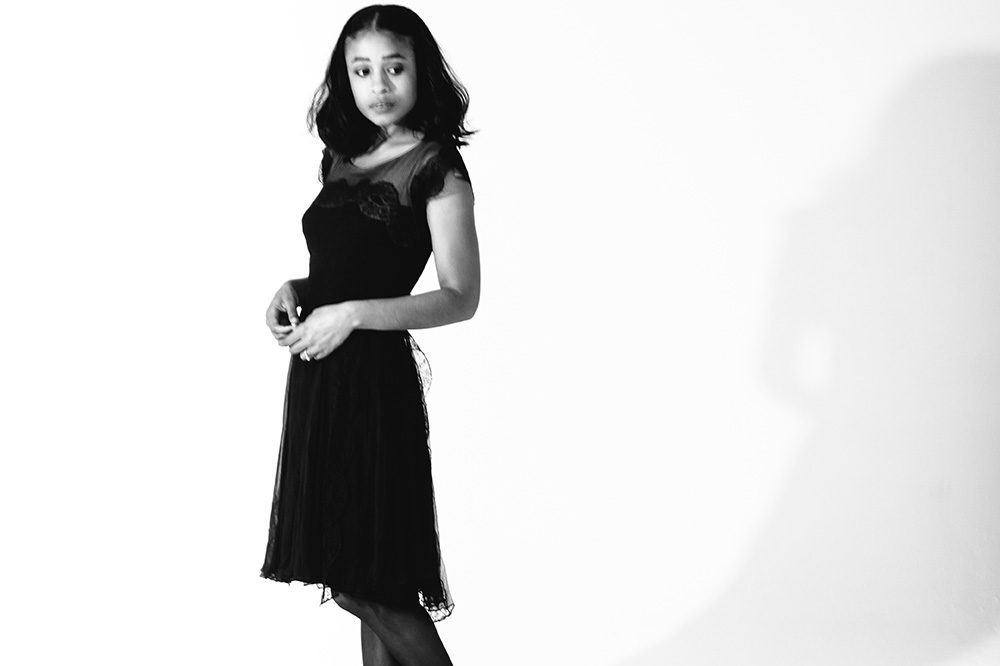
“You start a little band and you never know the longevity of it or what’s going to happen… especially, three women. You play in punk bands in your 20s and then people have families, or they start to treat it as a hobby,” she points out. “Raquel became a mum, Sara does this high-level study, and I’m away all the time, but actually the three of us are like, ‘This is part of our identity, this is how we express ourselves.'” Dunn says it was “a great relief” that Solier and Retallick both opted to continue MOD CON.

But Dunn’s most well-known musical endeavor formed practically on a whim, and has endured, seemingly by happenstance, against all odds. She was on tour with dark pop project Harmony (“I Love You” on 2018’s Double Negative is both pleading and seemingly resigned, with its sad doo-wop harmonies, the thunk of a drum that sounds like it might just give up, and a sense of echoing loneliness around vocalist Tom Lyngcoln) supporting The Drones when she became fast friends with Gareth “Gaz” Liddiard and Fiona Kitschin. They’d just started a side project called Tropical Fuck Storm and were fleshing out the lineup, which would also come to include Lauren “Hammer” Hammel.
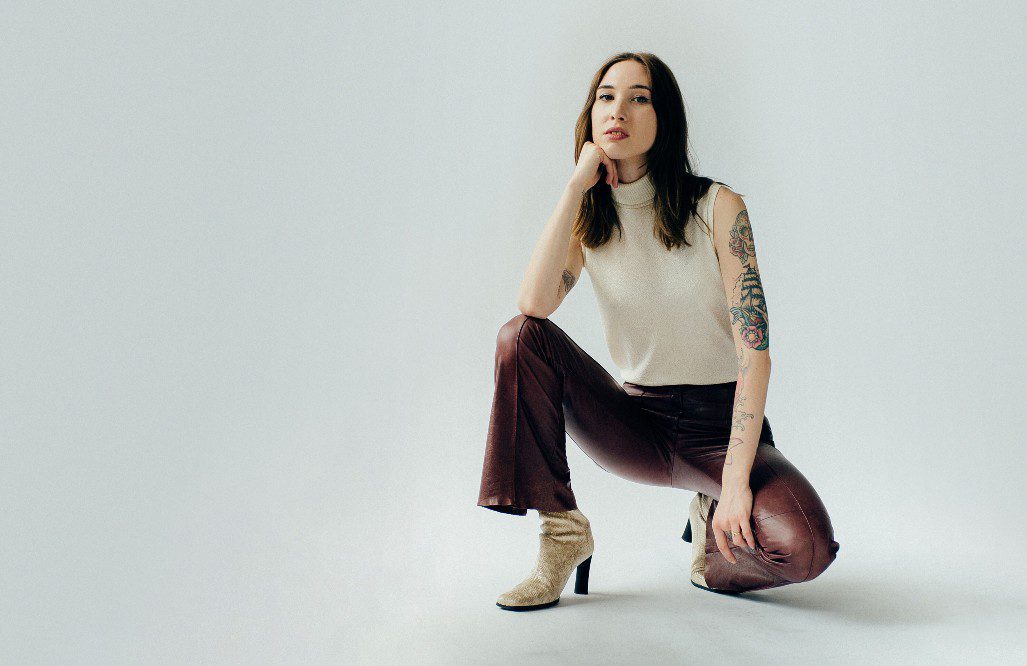
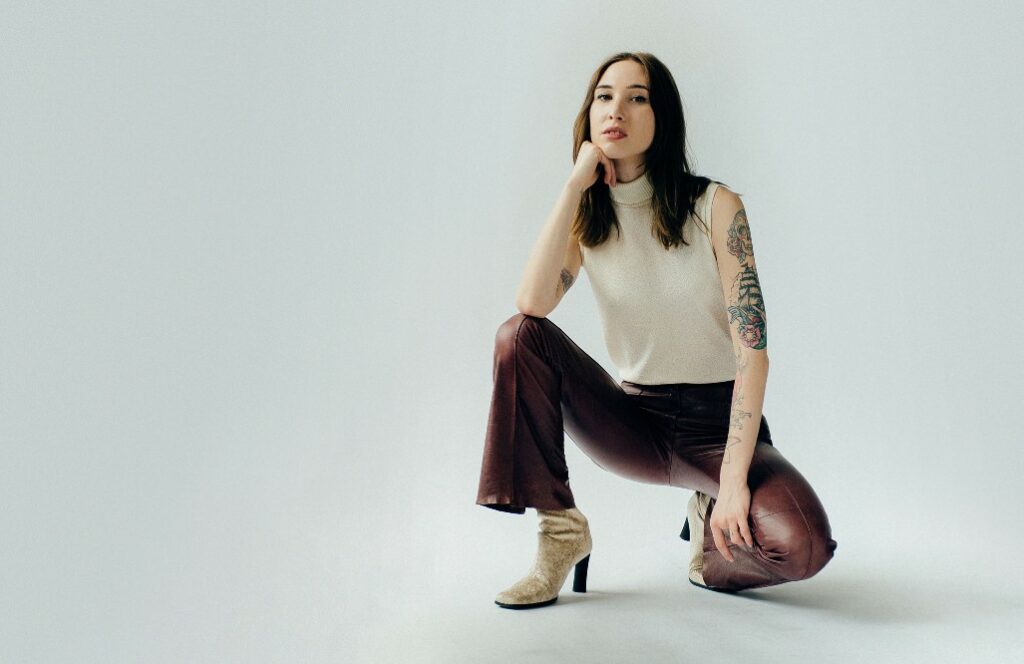
“We’d go up to their ramshackle place in the bush in the summer, hanging out. I’m not sure exactly when the conversation came about, but it took them a little bit of time to work out what they wanted TFS to be like,” Dunn recalls. “It was really exciting. There’s not that many people in Australia who can make music and live off that, and they spend most of their life touring. They’ve got big plans, always looking to make something out of nothing. One moment they’re like ‘Do you wanna jam?’ Then they’ve booked a tour to the States!” That’s exactly what Tropical Fuck Storm did, releasing debut LP A Laughing Death in Meatspace in May 2018, less than eight months after their first live shows.

“It was a crazy time, that initial year,” Dunn says. “It’s amazing working with people who are so gung-ho, who live, breathe and do. We made an album, then we were away playing hundreds of shows. It was intense, but then of course last year, we came to a total standstill.”

Tropical Fuck Storm / Photo Credit: Jamie Wdziekonski

Dunn was in Melbourne, but domestic partners Liddiard and Kitschin live in regional Victoria, which was off-limits during lockdowns. “Gaz and I were trying to send each other videos and audio but it was crap because we’re so bad with technology,” Dunn says. “When the ring-of-steel lifted in November, I went and lived with them for three months and we recorded up there. It was strange, getting back into it. We’d been in a van all together every day, and we wondered if that intuition would ever come back. When you think you’ll never do anything like that ever again, it was so exciting to play as a band together again. I plugged my guitar in and was like, ‘Can I even use this?’”

In fact, Dunn plays guitar and keys and shares some of the vocal duties on Tropical Fuck Storm’s latest release, Deep States, which arrived in August of this year via Joyful Noise Recordings. The album “absorbs and distils some of the madness of the time” they spent getting used to one another again. “It’s funny – we were trying to have days off but we’re used to being up in each other’s grilles in a way. It was like I’d missed my family for a year and the ridiculous sense of humour we have grown together with,” Dunn says. “We’d work hard, then have times of just going swimming. We’d be trying to make a barbecue, but discussing the bridge, the harmony, the lyrics. Three months is a long time. It was a hard slog; it was great.”

So too, does Deep States mine the current political and social climate for all its gory, disturbing and darkly humorous gold. Single “G.A.F.F.” is a cosmic journey of fuzzy, furious feedback, raw daggers of reality delivered by Liddiard’s snarling vocals, all riding upon a twangy bassline that treads a narrow brick wall, threatening to fall and crash any moment. And, in Melbourne’s sixth lockdown, the sentiment – “Give A Fuck Fatigue” – hits home. Elsewhere, “New Romeo Agent” is a melodic post-punk ballad delivered over the gentle handclap-style drums and jangle of keyboard chords.

With so many of her projects finally releasing material again, Erica Dunn is not likely to leave Melbourne’s musical radar this year. There are even tentative plans to record again with Harmony. Hailed as something of a cult hero, Dunn explains her wildly prolific output rather humbly. “It’s funny to have these different hats and different projects,” she says. “The different things that I’m inspired by seem to present a different trajectory in what I’m making and doing.”

Follow MOD CON, Tropical Fuck Storm, and Palm Springs on Instagram for ongoing updates.