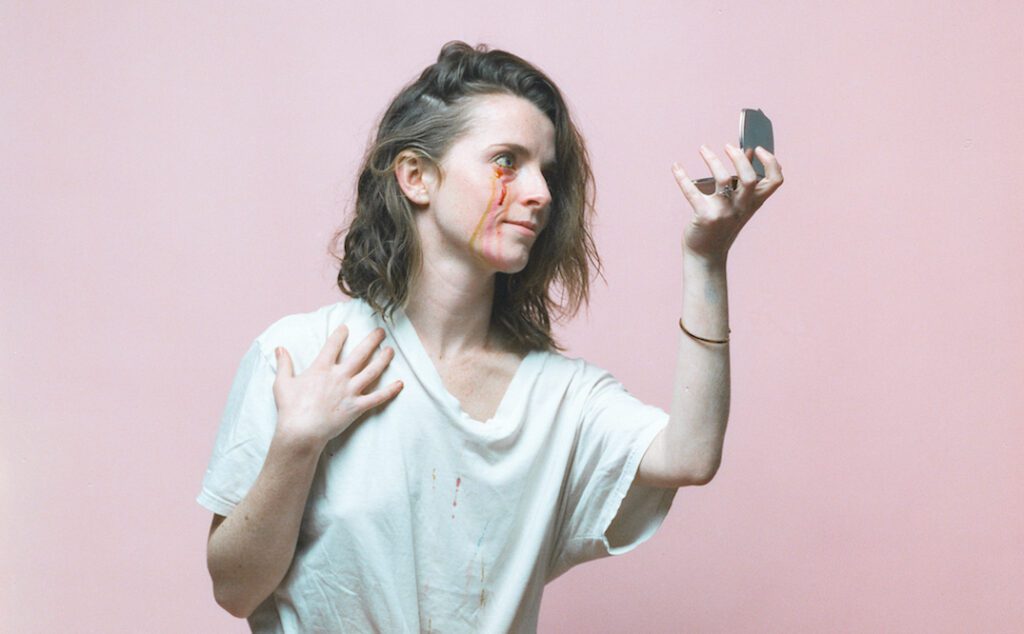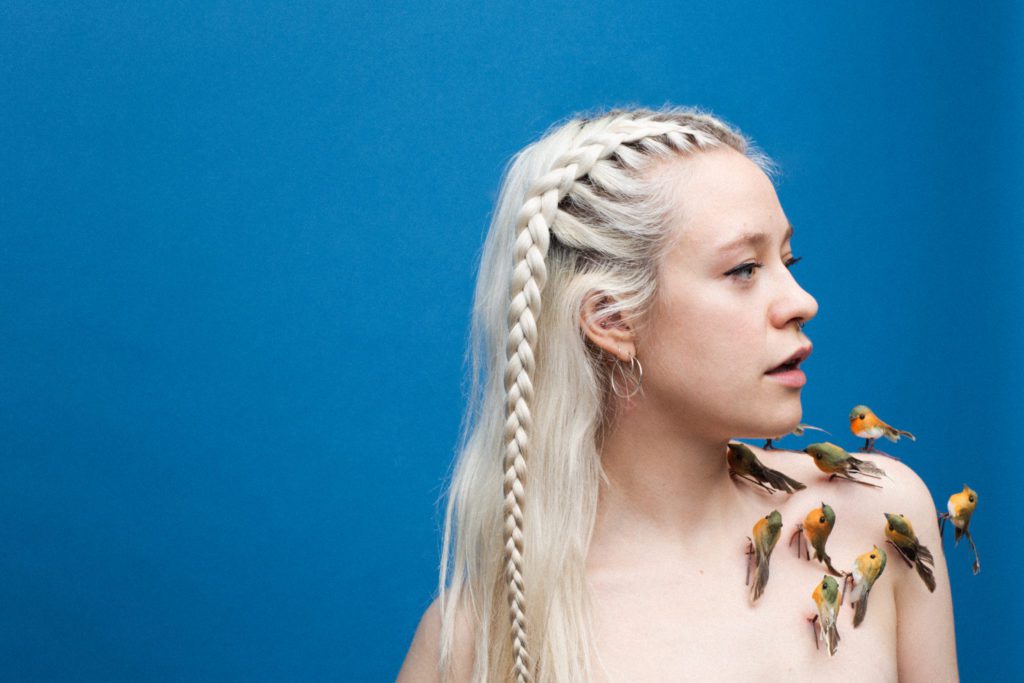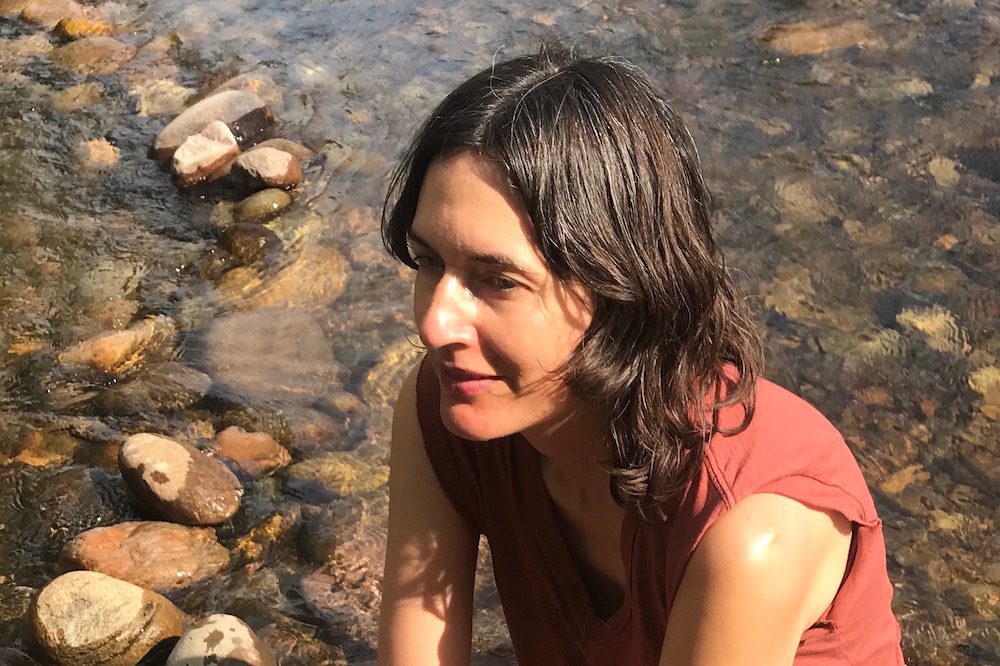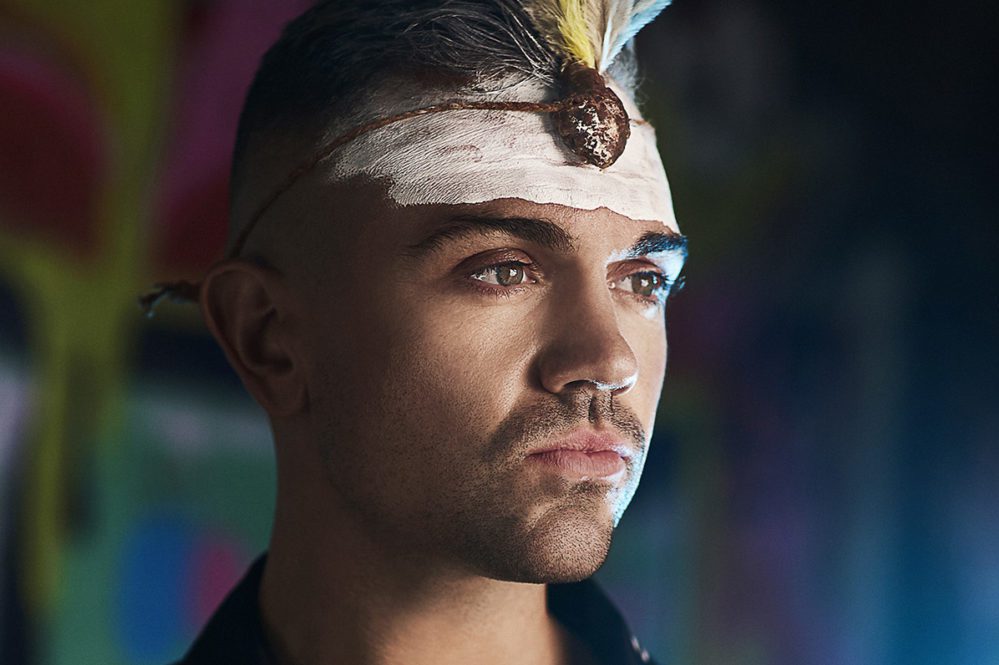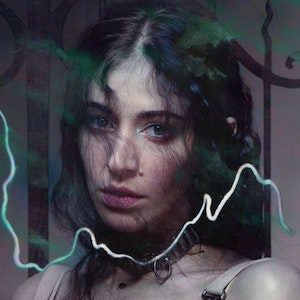


Tatiana DeMaria Premieres Acoustic Version of Soundtrack Standout “You Make Me”

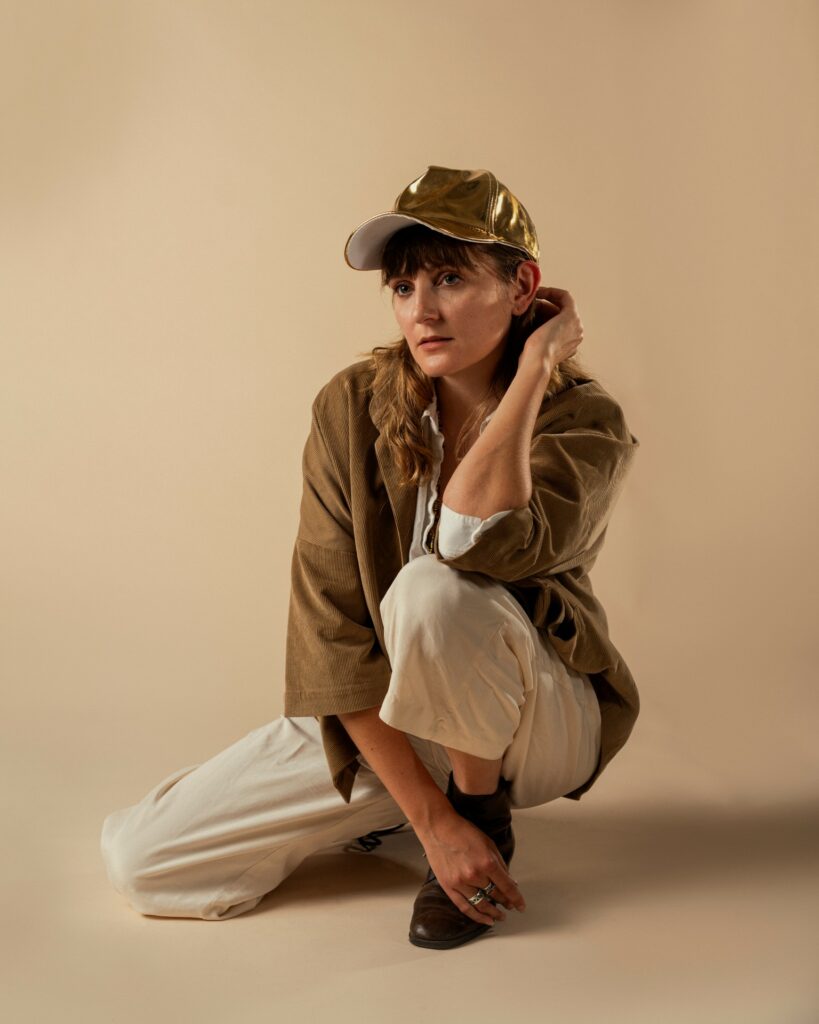
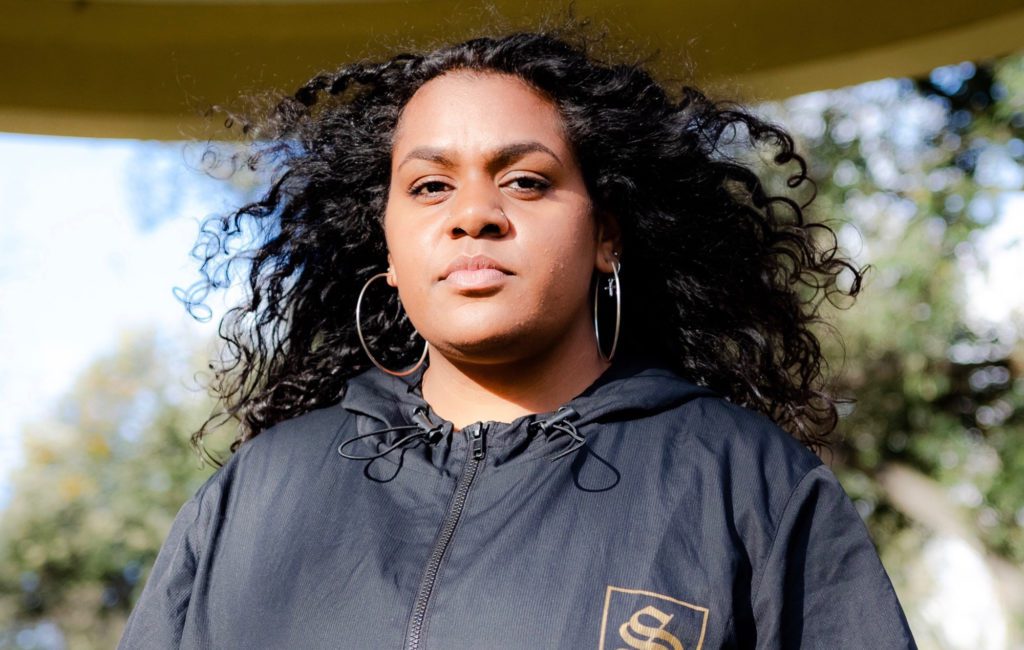
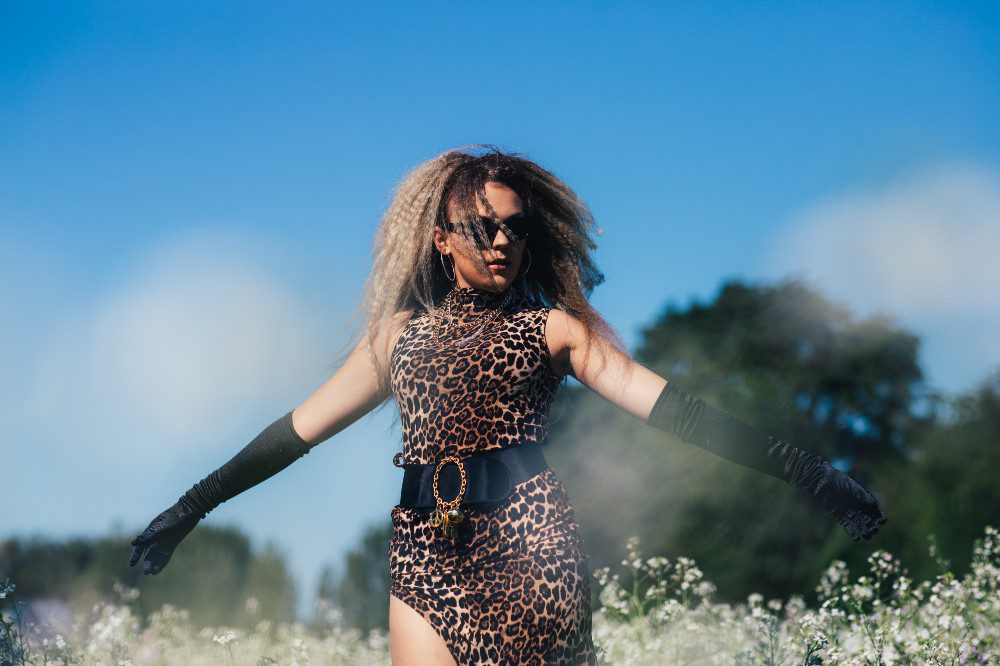
Photo Credit: Jered Scott

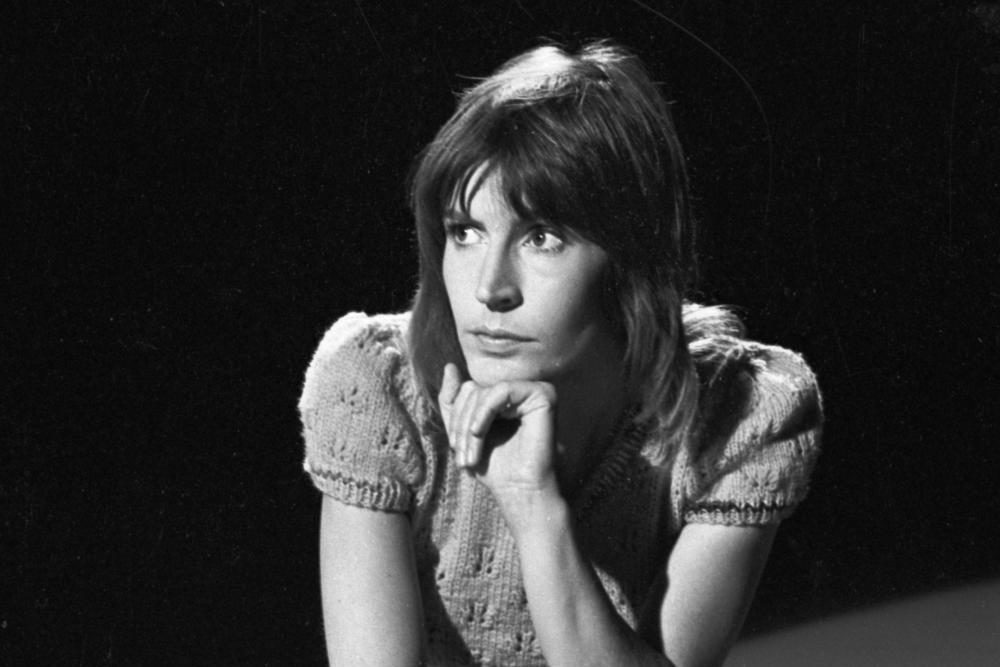
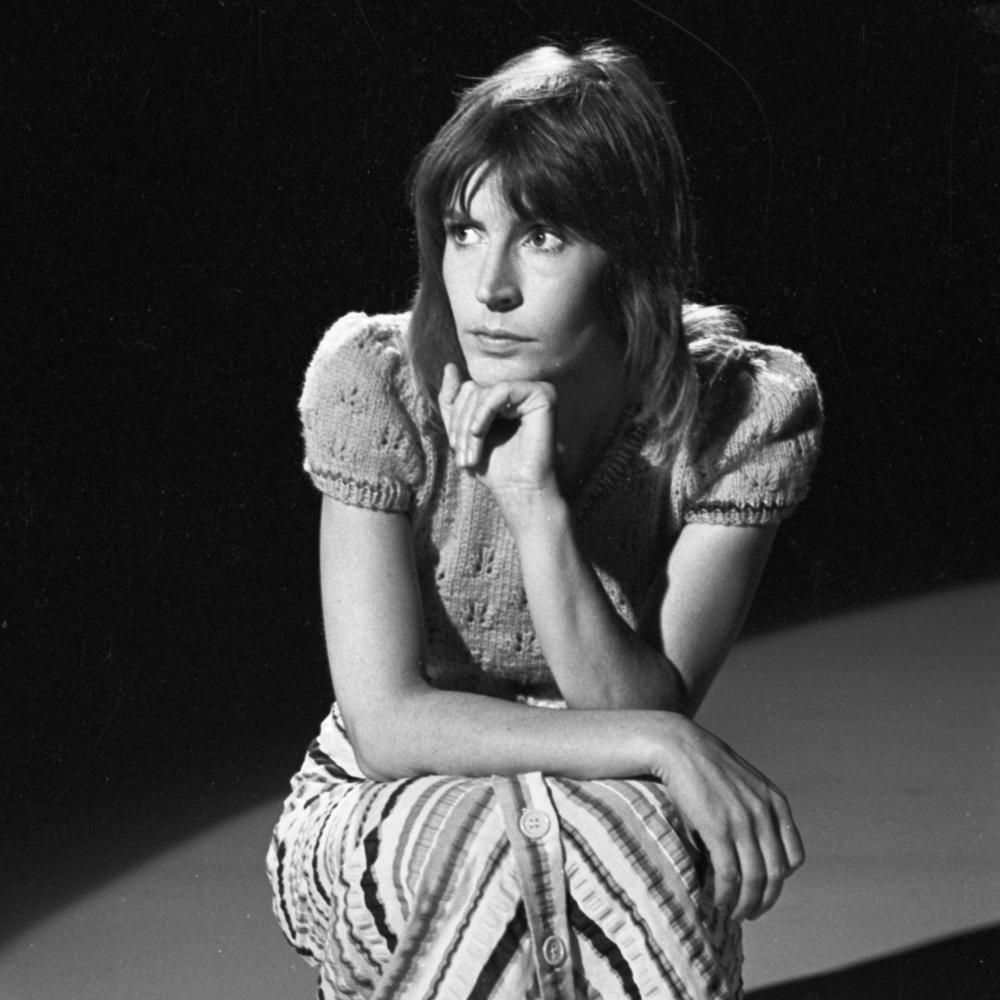
Through her career so far, British-Lebanese singer-songwriter Tatiana DeMaria has played with a variety of genres – from her punk-rock past as the leader of TAT to producing underground UK hip hop, to the latest spate of R&B-tinged siren songs she’s steadily released of late. Her versatility has made her especially successful at composing soundtracks, most recently contributing eight songs to American Pie Presents: Girls’ Rule, released via Netflix in October. As DeMaria branches out yet again, this time with her acoustic guitar, she’s revisited soundtrack cut “You Make Me,” premiering a video for its acoustic version today via Audiofemme.

Alongside stripped down versions of “Make Me Feel,” TAT single “Anxiety,” and the previously unreleased “Beirut Fire” (written for victims of the September 2020 tragedy, which included friends and family living in Lebanon) this new iteration of “You Make Me” is slated for an acoustic EP DeMaria hopes to release before the year is out, with a proper solo debut set for release in 2021. Her first foray into providing music for a film was Universal Studios’ Blue Crush 2 (also helmed by Girls’ Rule director Mike Elliott); contributing three tracks she performed with TAT – “Jump,” “Heaven on Earth,” and “Soulshine.”

DeMaria says the process of writing songs for movie soundtracks is similar to her “normal” songwriting routine, with one key difference. “I’m following the storyline that’s there and looking to bring equal truth and emotion to that. I’m inserting myself – embodying someone else’s storyline, but pulling from my own truth and emotional experience to translate the scene and moment into sound and enhance it,” she explains. “It’s still songwriting in the same way, but the approach is slightly different.”

Her goal for “You Make Me” was to capture the hyper-romanticized depiction of high school life seen in teen-centered movies, as well as the intensity of those formative first experiences with romantic love and relationships. “Overall, shit was a whole hell of a lot more carefree than being a grown arse adult and life was so new,” DeMaria says. “Inspiration and discovery were constantly walking towards us. After school they tend to lay more dormant waiting for us to seek them out. So it’s a beautiful time, even if you did suffer to a degree.”

With the repeated lyrical image “hands around my heart,” the song conveys the power of human emotion, and with it, the possibility of a darker element, one of suffocation or loss of control. The solemn acoustic version feels less starry-eyed than its synth-infused original, revealing its emotional core. Utilizing space within the sound, DeMaria’s crystal clear vocals act as a sonic salve for lyrics that cut deep. It’s the perfect metaphor for the lighthearted feeling of first love, with hints of perspective from someone who knows what’s on the other side of the coin.

Raised in both the UK and Paris, DeMaria first came to prominence when TAT’s 2004 single “Peace Sex & Tea” charted in the UK’s Top 50. Since then, she has gone from strength to strength, creating a vast body of solo work that pulls its influences from a variety of genres. “My influences were The Clash, 2Pac and Nirvana among others,” she explains. “Making music was about the potency of the emotion I felt listening to something and capturing that high for myself sonically as well as hearing the words and relating.”

DeMaria’s creative process is also heavily influenced by her synaesthesia, a perceptual phenomenon in which senses that aren’t normally connected merge. She experiences it in several forms, from physical sensations to frequencies that possess colours that change throughout depending on the emotion, story and production style of a song. “Some parts feel like a face massage, arm tickles, shoulder hugs… When I feel those things I know the parts are working for me. It’s a pleasant feeling,” she says. “The parts and frequencies also have colours. So when it comes to the the mixing process I may want a track to be dark blue – if it’s sounding too yellow to me, I’ll pull down some frequencies to get that blue, warm, squishy feeling.”

It makes sense, then, that DeMaria would excel at composing for a visual narrative, particularly within a film genre that plays with teenage nostalgia. At the same time, sharing the acoustic version of “You Make Me” shows that it comes from an authentic place in her own soul. Simplicity is key to her performance, filmed using two iPhones and a hand-held camera. This also reflects the spontaneity with which the song was recorded. “I was messing with it on an acoustic in the studio in LA. I never really thought about making an acoustic version until someone suggested it… I took a half hour to lay it down and record it,” she says. “I love making acoustic versions of songs in general; it strips them back to the bare essence of the song itself and lets it stand alone, which brings the listener into a different experience.”

Follow Tatiana DeMaria on Instagram for ongoing updates.
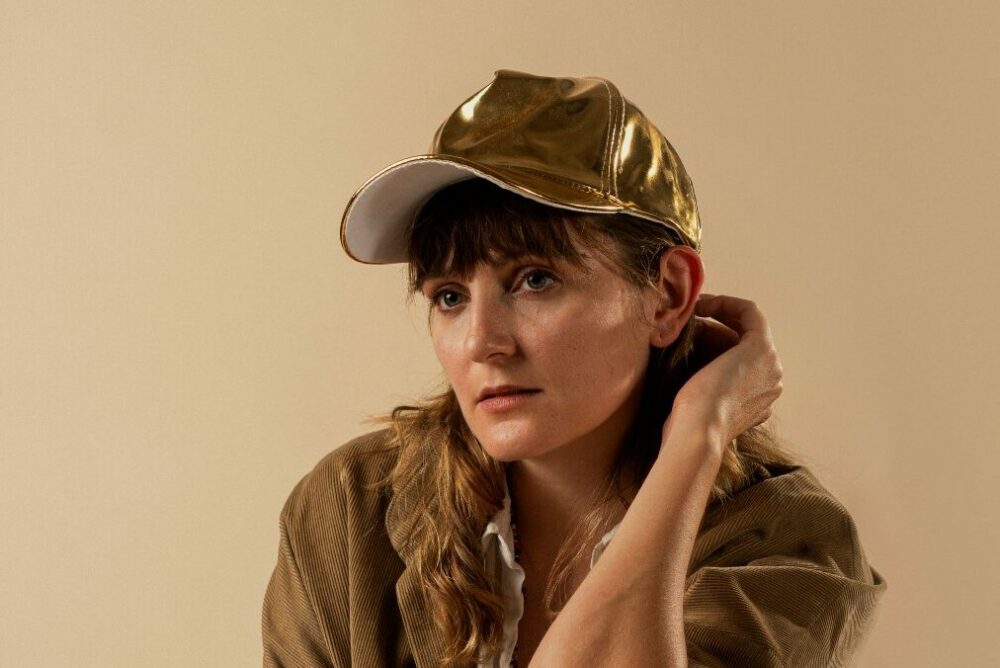
Falcon Jane Keeps the Faith on Sophomore LP

Photo Credit: Brendan George Ko

Graced with a strangely stunning voice—youthful and emotive, gloomy and perceptive—Falcon Jane (singer-songwriter Sara May) has just released a sophomore album, Faith, the follow-up to 2018’s Feelin’ Freaky, via Pittsburgh-based label Darling Recordings. On it, cathartic verses ascend to soaring heights as the Ontario-based artist ponders existential questions about life, death, and what lies beyond.

The emotional depth on Faith is hard won. In 2019, prior to the pandemic, May found herself attending a funeral nearly every two months—the songwriter lost both her grandmothers, an uncle, and great uncle within a year. “Going to a lot of funerals really makes you think about the afterlife, so it was something that was on my mind a lot when I was making this album,” May explains. “I still have no idea what the afterlife holds, or if there is one at all, but part of my journey of relearning to have faith was believing in an afterlife again. I kept having vivid dreams of people who had passed; my family members, and people I didn’t even know very well. It felt like they were trying to tell me something. I don’t know what it’s like on the other side, but I definitely feel like my family who has passed is still with me in some way.”

These losses set her on the inevitable path that the world, in one way or another, has been facing since the pandemic began. “It’s been a hard year for pretty much everyone, me included,” she admits. “I’ve been feeling a lot of anxiety this year, and I’ve had to find new coping mechanisms now that my usual ones—playing shows, getting together with friends, travelling—are few and far between. I’m staying hopeful though. I’ve learned a lot about myself this year.”

That’s evident in both the sonic palette an lyrical themes throughout Faith, as May explores the transitory nature of life and relationships, as well as the natural cycle of grief—shock, disbelief, sorrow, and ultimate acceptance. The result is an album that is as cathartic as it is hopeful, even joyous at times (“Beautiful Dream”). Tracks like the dazzling “All of a Sudden” are balanced with themes of sadness, regrets and lingering questions that can no longer be answered. Somber and magical, “The Other Moon” evokes the solitude of mourning—while loss is felt by many, everyone must navigate those feelings in their own way. Throughout, Falcon Jane’s courage to tell her story—particularly on “Had Enough”—is spellbinding in its plaintive boldness.

Standout single “Heaven”—a transcendent track imbued with a sense of freedom, with a gorgeous video shot in the reserve of Neyaashiinigmiing 27, Ontario—reframes the idea as one of earthly bliss, not unlike the Belinda Carlisle hit. Though inspired by artists as diverse as icons like ABBA and Fleetwood Mac or peers like Julia Jacklin, Angel Olsen, and U.S. Girls, Falcon Jane’s sound touches on spaces all its own. 

It’s one she’s had to grow into, having no formal vocal training. “I can’t do a bunch of fancy stuff with my voice. I think I am still growing into it. It’s always changing,” she explains. “At first that felt like a barrier for me, so I decided to embrace the uniqueness of it, and that felt like a doorway. That was like 10 years ago, so I’m a better singer now, but I still push myself to keep learning and trying new things. There are vocal techniques I use on Faith that I couldn’t dream of doing when I was recording my last album, Feelin’ Freaky.”

Sara May wrote her first song at 16, which officially opened the creative floodgates. “I think I wrote about one hundred songs that year,” she remembers. “I had been playing guitar since I was about 12, but it never really stuck with me until I could play my own songs.” Later, blogs like GoldFlakePaint, Atwood, and The Grey Estates would situate her sound in the “Plez-Rock” genre (short for Pleasant Rock), a term coined by the band members to describe “chill, groovy music that’s got a harder rock edge to it.”

Feelin’ Freaky marked Sara May’s adoption of the Falcon Jane moniker. “I have always loved the name Jane—wish it was my real name—and I’m also intrigued by the ‘every-woman’ attributes it has, for example: Jane Doe, Plain Jane, Dick and Jane. The first time I said, “Falcon Jane” out loud it just felt right to me,” she says.

Describing herself as “guarded,” the pseudonym has allowed her a gateway into new (and old) unexplored sides of herself. “It’s nice to be able to talk about my musical project with a bit of separation. So, I can say, ‘Oh I’m working on Falcon Jane stuff today,’ or ‘the new Falcon Jane record sounds really good,'” May explains. “It also leaves room for more creative collaboration. Falcon Jane has been a variety of different bands and combinations of people over the years, and the musicians are always part of ‘Falcon Jane’—not just [my] backing band.”

Though this release contains contributions from other musicians and mixing help from Evan Gordon (SLEDD, Islands, The Magic, Skeletones Four), Faith was mostly performed by May and her partner Andrew McArthur. Despite its scaled-back nature, May says there’s “all kinds of music magic to the songs,” including McArthur’s little sister, who makes a “super cute” cameo appearance on several of the album’s songs.

Once completed, May discovered that she had made the album she needed most. “Once the record was done, I noticed the word ‘Faith’ appearing over and over again in the songs,” she says. “I think it was a theme I was personally dealing with a lot over the course of 2019 while we were recording; learning what to believe in, and how to believe in myself.”

Follow Falcon Jane on Facebook and Instagram for ongoing updates.

Danielle Cormier Eases Holiday Heartache with “This Time Last Year”

Credit: Anthony Romano

From what we typically see on TV and hear on the radio, the holidays are supposed to be a happy time. But for many people right now, that’s just not the case, largely because they’ve had to reassess the safety of long-held family traditions due to the pandemic, or, more tragically, have lost loved ones to COVID-19. Every winter for the past two years, Nashville-based singer-songwriter Danielle Cormier has written a Christmas song, and this year, she chose to sing about the sadness of celebrating the holidays after the death of a family member.

Cormier co-wrote the song, “This Time Last Year,” with singer-songwriter Karlie Bartholomew. Both of them had unexpectedly lost loved ones this year — Cormier lost her father, and Bartholomew lost her grandfather — and though neither of those deaths were due to COVID, the song was written with those who lost family members to the pandemic in mind.

“After my father passed away, I knew this was what I wanted to write a Christmas song about. A lot of people unfortunately can relate to not having a loved one there for them during Christmas, especially this year,” she says.

The single shares many typical elements of holiday songs: minimalistic piano and strings, lyrics about stockings and snow angels, and even sleigh bells. But unlike the cheery mood of your usual Christmas music, Cormier somberly sings about holidays that “aren’t the same” and “presents wrapped without your name.” Perhaps the most poignant line is, “I keep expecting you to walk through the door/Just like every winter before.”

Writing the song was an emotional process for Cormier and Bartholomew. “We shared our experiences of what our holidays have been like in our families and just let it all out on the paper,” says Cormier. “And then recording it, especially singing it, I tried to not block it out but not let it get me too carried away while singing. But then every time I would listen back to the recording, it would feel really emotional. It was definitely therapeutic to create this song.”

She hopes that people who listen to the song feel less alone and know they’re not the only ones having a difficult time accepting that the holidays won’t be the same as before. “The lyrics themselves talk about how our traditions are changing for the holidays — nothing is traditional anymore because you’ve lost someone — so I hope there will be people who are able to find comfort in that and be able to relate to it,” she says.

Cormier has been singing and playing instruments since she was little and studied musical theater at New York City’s American Music and Drama Academy. She dreamed of starring on Broadway, until she realized she didn’t want to act anymore. So, she moved to Nashville and began releasing music in 2016, working with producer Adam Lester, who was Peter Frampton’s lead guitarist on tour. Her first full-length album, 2018’s Fire and Ice, features Frampton on the track “Can’t Quit You,” a country breakup song.

“My producer sent me an email one day and said, ‘here’s the final mix for ‘Can’t Quit You’ — by the way, Peter Frampton put a solo on it.’ And I was like, ‘Oh, that’s nice, thank Mr. Frampton for me.’ But my jaw just dropped,” she remembers.

Today, Cormier is continuing her education online through the New School and works part time processing shipments in the warehouse of a boutique in Nashville.

She began her annual tradition of writing holiday songs in 2018, after someone at a radio station told her they couldn’t play her songs unless they were either top 40 hits or Christmas songs. “Christmas songs have been the hardest for me to write, just to get into that mindset and trying not to repeat things,” she says. “I’d like to record a classic Christmas song as well, but it’s been really fun trying to create new Christmas songs or write a holiday song that hasn’t been said or hasn’t been done before while still carrying the message of the holiday spirit.”

Her first foray into holiday songs was “Christmas Is You,” which has gotten over three million plays on Spotify and was featured on the platform’s Christmas hits playlist in 2018. In it, she sings about her desire for the company of loved ones over Christmas, rather than material things. The following year, she released “Coming Home This Christmas,” a song about visiting family over the holidays.

She’s also hoping to release an EP next year consisting of five songs written in 2020. In the meantime, she’s compiled a mini EP called This Time Last Year consisting of all three of her Christmas songs, which each in their own way speak to the importance of spending time with loved ones over the holidays — and of appreciating any loved ones we will get to share the holidays with this year.

Follow Danielle Cormier on Instagram for ongoing updates.
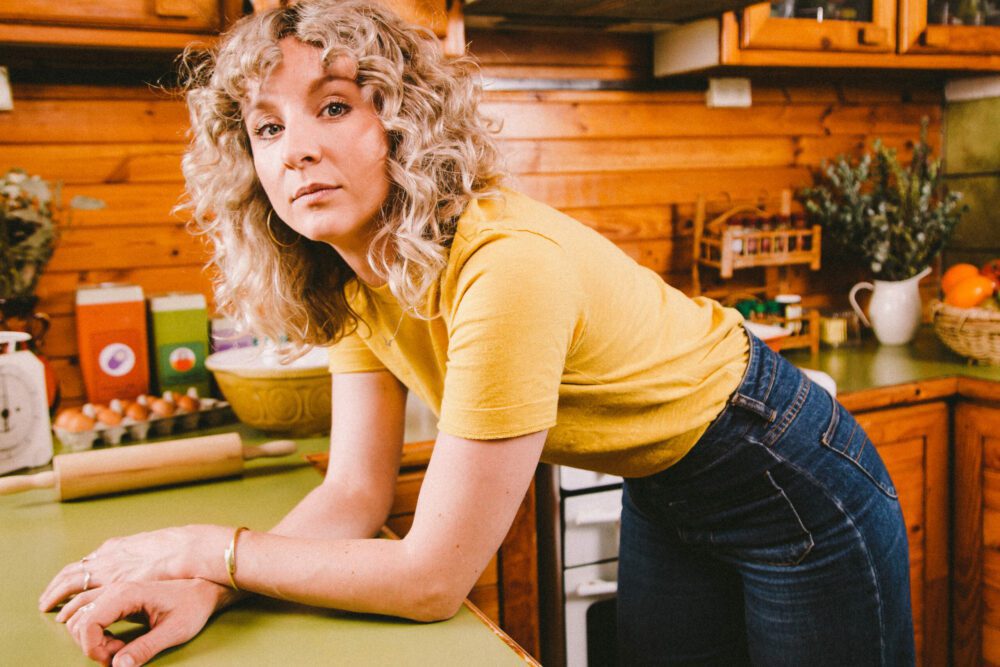
Emily Weisband Pens Point-Blank Pop on Not Afraid to Say Goodbye EP

Photo Credit: Joelle Grace

Emily Weisband believes there’s a difference between honesty and truth. A prolific songwriter whose cuts include Camila Cabello’s “Consequences” and “Boy with Luv” by BTS & Halsey, she knows what she’s talking about. But in song, one person’s honesty can be someone else’s falsehood, casting a disconnect between listeners; the more specific songwriting gets, the stronger ties grow, and a listener can then slot themselves into the story.

“Details might not be everyone’s details, but the core truth is everyone can inject their own details into a story,” she observes. “If I tell you, ‘Oh, I got broken up with in a car, and I was wearing a red shirt,’ you could say, ‘Oh, well, I got broken up with in a car, but my shirt was blue.’ The more specific you are, this opens Pandora’s Box of imagination and storytelling.”

Weisband cracks that creative box open wide on her new EP. Not Afraid to Say Goodbye follows 2019’s Identity Crisis and stands as both an extension and natural progression. “A normal part of your 20s is figuring life out. I didn’t really try to fit into any box with either project,” she tells Audiofemme. “I’m very confessional, so whatever is happening right now is what I invite people into.”

Identity Crisis unabashedly embraced the mess. As any 20-something knows, that first decade of adulthood can be full of mistakes, tragedies, and countless nights crying on the bathroom floor – that’s just how it is. Weisband has seen it all, and her debut LP proposed this morsel of wisdom: she learned who she was not. “That’s where I left off with that album. I don’t necessarily know who I am all the time, but I definitely know what I’m not about,” she says. “I know what sucks the life out of me, and I know what hurts me. I don’t want to willingly sign up for it anymore. I want good people and things in my life. It’s an empowering thing to draw boundaries.”

Not Afraid to Say Goodbye picks up exactly where she left off. Across four songs, featuring contributions from producers Tofer Brown, The Futuristics, and Alysa Vanderheym, Weisband bravely exposes her heart, scars and all. While continuing to reclaim the emotional narrative, she reassesses an unexpected breakup that sent her spiraling out. She had to totally lose control before she could regain any of it.

“I swear to God I don’t know who you are,” she cries on the brutally fragile “Out of This Car;” three months post-heartbreak, she revisits that specific moment again. “The Way I Say Goodbye” works as a companion piece to “Out of This Car,” but the former arrives as her “surrender” song, as she describes it. “It’s an evolved perspective on that same moment. You can pour your heart out all you want and do everything in your power to let somebody know how you feel for them,” she says. “At the end of the day, you can’t make somebody love you who just doesn’t. It was a humbling moment being told somebody didn’t want to be with me, and it’s really easy to feel you’re not enough.” The piano-based melody glistens, timelessly harkening back to the work of Frank Sinatra, Nat King Cole, and Joni Mitchell that Weisband has always loved. It’s forever imprinted with her unique voice, of course, but she filters the words with a cool classic lens. “This song embodies who I am as a human in so many ways,” she says.

“You’re Cool,” co-written with good friend Vanderheym, glues to the piano as well, and offers a soul-stirring gospel backlight on the hook. Inspired by a Las Vegas trip, the song delves into the early panic of a burgeoning romance with her current boyfriend. “As humans, we are so zero to 100. We’re all or nothing. It’s awesome but so warped sometimes. Most of the time, it’s not all one thing,” Weisband explains.

She interrogates the sometimes overwhelming pressure we put on new relationships on “The One.” “We idolize this idea of ‘The One.’ They’re either ‘The One’ or trash,” Weisband says, noting she was careful not to fall into that trap this time, instead, letting the relationship be whatever it was going to be. “It was empowering to know someone didn’t need to be The One right now. I was still getting to know him, and he didn’t win my entire trust and heart the moment I met them,” she continues.

What marks her growth as a person and songwriter the most is her willingness to confront the past and her Virginia upbringing. Like many who grew up in the church, Weisband has done plenty of deconstructing and rebuilding of faith ─ and it’s made all the difference to the person she’s become. “My childhood wasn’t suppressing, necessarily. I had fantastic parents, but kids don’t know grey areas. Adulthood is when you go to the grey. My parents were teaching what we believed,” she says. “I did the faith song and dance.”

Upon entering her teens and early 20s, Weisband’s entire world had opened up. “I started experiencing more and meeting different kinds of people ─ and feeling and desiring more things. I don’t think any human wants to believe something because they feel they have to,” she offers. “That’s not an inspiring experience at all. I started asking questions. I’m not saying you should go out and rebel against everything you were taught, but I am grateful for the process. I had to arrive at a place where what I believed was true to my convictions and not to please anybody else.”

She finally bloomed, as did her songwriting. “My music became more human. For people who grew up in the church, there is a danger of getting wrapped up in what you do or don’t do, what you say or don’t say. There’s almost a sense of trying to be superhuman all the time, and that’s what makes you a good Christian,” she explains of the transformation. “In a lot of ways, I tried to be superhuman, and that came across in my writing. I wrote about real life things, but they weren’t real to me ─ because I didn’t want anyone to know I was thinking that or doing that or going through that. I was constantly chasing superhumanness.”

A turning point came when she allowed herself to get in touch with her own “humanity and everything that meant,” from sexuality to personal flaws. “I recognized my desire for faith that was authentic to me,” she says.

Her storytelling became messier, too, perfectly tuned into what the truth actually was. “I took myself off this church pedestal I grew up on,” admits Weisband. “It’s not like I’m anti-church or anti-the way I grew up. There were some really great things that were instilled in me.”

Writing Cabello’s “Consequences,” alongside Amy Wadge and Nicolle Galyon, was another moment of clarity. Weisband was right in the middle of her identity crisis and needed to pull things together to get to a writing session. “I’d gotten involved in some stuff that I was really ashamed I’d gotten involved in. And I was suffering the consequences. I didn’t want anybody to know,” she recalls. “I don’t cancel writes, but I was seriously considering not going to work that day. I just know me, and I’m a tell-all queen. I know if they ask how I am, I won’t be able to lie to them. I’m not an actress.” 

Her co-writers naturally asked her how she was, and after a bit of prodding, she eventually broke down into tears, revealing every not-so-pretty detail. “I was really embarrassed that I told them everything and really embarrassed we wrote the song,” she admits now. But her fearlessness in that moment led to a career-defining moment. Wadge, a frequent Ed Sheeran collaborator, called her up later to tell her how much he loved the song and that he wanted to send it off to Cabello, who was working on her debut LP.

Cabello loved it, too, cut it, and the rest is history. “It was one of my first lessons that it matters to sacrifice your pride and privacy to write music. This is what creators do. We feel it and make sense of it, so the world doesn’t have to,” she says. 

Emily Weisband sacrifices much more than her pride and privacy on her new EP. Not Afraid to Say Goodbye outlines pain and brutal honesty few are willing to explore, erupting into one of the year’s best releases. Her knack for hooks mingles ceremoniously with gut-wrenching balladry, and it perfectly captures her ongoing journey through her 20s.

“It’s been a rocky time. It’s beautiful and exciting. You look back on those early years and go ‘hell yeah!’ But I don’t know many people who’d want to actually go back to them. You want to belong in the world, but you don’t know where you belong,” she says. “And I’m still going through that process, and I think I’ll always go through it to a degree. I think creators are all children until we’re 80.”

Follow Emily Weisband on Facebook and Instagram for ongoing updates.

PLAYING MELBOURNE: KIT Premieres Video for “Stranger” and Discusses Solo Debut

Photo Credit: Rick Clifford

Katie Wighton, the Melbourne-based singer/songwriter best known for fronting All Our Exes Live in Texas, was feeling sentimental, so she started going through old videos on her phone – some from a decade ago, others from the “Zoom era” we currently find ourselves in.

“I’ve got lots of lovely friends around the country and my family are in Queensland so I’ve missed them all a lot,” she says. “Going through all of my old videos made me feel so warm and fuzzy… and made me realise how much I’d managed to keep in touch with people thanks to technology.”

This, she says, felt like the same sentiment behind “Stranger” – the final single from her debut solo LP KIT, released November 13 – so she decided to collage the deeply personal clips together to create a video, premiering today via Audiofemme. “It’s super personal but I hope people can relate to that sentimental feeling,” she says. “Sometimes when things don’t go to plan you end up getting really good results… I think that’s been the case for me with this year – or at least, I hope so!”

KIT had planned to do an album next year, but the schedule for creating it was scuppered by the pandemic pandemonium. “COVID really cooked my plans to be honest. I had no plan to do an EP,” says Wighton. “We’d recorded about half of the beds (drums and bass) for an album but we couldn’t finish it because we weren’t allowed to leave our houses. We worked around it a bit – James Seymour and Dave Symes, my producers, are very clever and patient. I had a few people suggest an EP to kind of bookend this year. I’m really glad we did it this way now, even if it was slightly stressful pulling it all together.”

To call it a solo debut wouldn’t be totally accurate – Wighton collaborated with a number of impressive international talents, including Seymour and Symes, Jarred Young (Bad Pony), Liz Drummond (Little May) Merpire, Ali Barter, Jake Sinclair, and Jenny Owen Youngs. “Songwriters, producers, other vocalists… they all have their unique approaches to things and I really do love collaborating,” says Wighton, “I trust them and love their musical ideas too, which means I get a different (but excellent) perspective on things. It’s less pressure too.”

Wighton recorded the 5-track EP at both Golden Retriever Studios in Sydney and Small Time Studios in Brunswick, Melbourne, as well as in bedrooms, lounge rooms and homes while under pandemic conditions. There’s a beautifully rambunctious, lo-fi feel to the tracks, in which angular guitar chops about below bouncy harmonies while unedited sounds of a household in motion – laughing, clapping, talking – all add the atmosphere of a house party, though Melbourne hasn’t known one of these for at least eight months.

“I recorded this all over the place,” says Wighton. “James Seymour and I did a bunch of recording at his parents’ place (in his mum’s sewing room specifically) which was fun. There was a day when we did the drums for ‘You Act Like A Child’ and it was 40 degrees. Jarred (my drummer) was sweating so much and the three of us were so hot all day. But it sounds great!”

KIT has the low-key, intimate vibe of PJ Harvey’s 4 Track Demos, also famously recorded in her bedroom. Guitar riffs noodle fuzzily around, and its easy to imagine Wighton jumping around on an old couch while singing into her hairbrush on songs like “You Act Like A Child,” a track that examines our collective roadblocks to communication. “I just wanted to love you, and now I can’t forgive you,” sings Wighton on “Make Your Mind Up,” an ode to the lover who can’t commit, the dude who can’t help bringing up his ex as a constant ghost in the relationship. Earworm melodies showcase Wighton’s vocals – immediately identifiable to fans of All Our Exes. She is nothing but enthusiastic about going solo, though she has no bad words to say about band life either.

“I loved the fact that with Exes, we were a democracy,” she says. Formed in 2014, the four-piece indie-folk band saw Wighton, along with Elana Stone, Hannah Crofts and Georgia Mooney delivering four-part harmonies over ukelele, mandolin, accordion and guitar. The band’s sophomore album When We Fall won an ARIA (Australian Recording Industry Awards) for Best Blues and Roots Album in 2017. “We shared the workload and I always had someone to bounce ideas off. Everyone in that band brought such unique intelligences to it, which is why it was so brilliant to work with them all,” she remembers. “I love the freedom that comes with being a solo artist, though. I get to do exactly what I want, whenever I want to!”

There’s an overriding feeling of intimacy on KIT’s self-titled EP, like someone happened to be spontaneously recording a casual hang out with a couple of very talented musician friends. There’s no vocoder, no synthesisers, no warped and distorted post-production effects and no glossy, polished erasure of its humanity. There’s been a truck-load of fantastic big disco-pop productions released this year, including critically acclaimed, major chart busters by Dua Lipa, Lady Gaga, Ellie Goulding, Kylie Minogue, and soon, Miley Cyrus and Rihanna. By contrast, KIT is an old-school affair that exposes the scaffolding of songs in all their textural glory. But more than that, it’s an indelible, energetic first impression of Katie Wighton’s solo artistic vision.

Follow KIT on Facebook and Instagram for ongoing updates.

RSVP HERE: Ember Knight Releases CHERYL, livestreams via Youtube + MORE

photo credit: Dustyn Hiett 

Ember Knight is a cult figure for all ages. The LA-based filmmaker, comedian and musician stretches their boundaries to create a playful and sometimes terrifying world where they can express all sides of themselves. Their sophomore album CHERYL, a ballet rock opera album, was self-released on November 10. The record is organized into movements, book- ended by odes to lasagna meals, that tells the story of a mental asylum patient who can’t remember their favorite color. The symphony is a soundtrack written for a film that doesn’t exist, was recorded entirely by Ember Knight in the Echo Park United Methodist Church, and is dedicated to your mom.

Earlier this year, Ember Knight also released a couple episodes of The Ember Knight show, a video series written by Knight and directed by Bobby McCoy that simplifies concepts like listening and telling the truth – the basics we’re taught in preschool that somehow become more complex and harder to execute as adults. Knight reminds me of a gender fluid Mr. Rogers that’s trapped in Hollywood, helping us all reflect on our bad, ego-driven behavior. Now that CHERYL has arrived, we can expect more episodes of The Ember Knight show, which will be especially helpful as we begin to integrate back into society post-pandemic at some point in the future. 

Ember Knight will be celebrating the release of CHERYL with a livestream on 11/14 at 9pm ET via their youtube, and the redacted emotions Twitch. We chatted with Ember about their relationship to color, performance, and what it was like writing and recording a whole ballet themselves.

AF: Can you explain the story arc of your new album CHERYL?

EK: Yes. It’s very simple: Cheryl goes to an asylum because she can’t remember her favorite color – is it red, yellow, or blue? The doctor says, “Oh shit this is very serious – you have to stay here until you remember. And you can only eat lasagna.”

While in her hospital room, she meets the color yellow. Yellow is playful and mischievous, but also sad and tragic. When they try to play, it falls apart in front of her. Next she meets the color red. Red is innocent and enticing at first, then she becomes sexy and voluptuous, dancing with Cheryl. But just as Cheryl thinks they are about to kiss, red turns into a terrifying sexual monster of old age, and Cheryl runs away. Act break, lunch time (lasagna). 

After lunch, Cheryl meets the color blue. Blue is a funny little man, who teaches her to fly and tapdance! She decides that blue is her favorite color. But as he is leaving, she realizes that he’s just a crazy beggar. 

Confused and unable to answer the question, Cheryl ties her bedsheets together and escapes out the window into a Dark Night of the Soul. Now the story begins to be not simple. Anger, jealousy, everything she represses comes out in the darkness of the hospital garden. This part is all emotional logic. Something spiritual happens. When we go all the way dark, we hit the bottom, ricochet back up, and break through into the light. Cheryl cannot escape herself, and she realizes that this is okay. A favorite color is not actually necessary – all these things live within. She is caught and returned to her room, for a big operation where they cut her open and find all the colors inside. 

After the operation, Cheryl goes to dinner (lasagna) and sees all of the colors sitting there, waiting for her. They eat together as a family, and the doctor lets her go. The end.

AF: How was the experience of recording the entire album yourself?

EK: Nightmare! I am a golden god, I did it, I hated it. Never Again!

AF: What was the most surprising thing you learned or discovered about yourself while writing and recording?

EK: That I cannot do ballet! I tried to “learn ballet real quick’” in order to dance the whole record in a video series. I remember thinking; okay, I have four months to be doing pirouettes en pointe, can’t be that hard! And then, you know, four months later I cannot do ONE pirouette, in my bareass feet. 

And yet, it’s that exact insane “let’s go!” kinda vibe that allowed me to wanna make this record in the first place. Because I also decided to engineer it, play a grand piano, and do full string arrangements – all for the first time. How hard could it be? Well, the answer is, it was hard. It took two years and absolutely kicked my ass! But I was able to pull through on the music. The ballet got abandoned. 

AF: Would you rather eat lasagna or casserole?

EK: I actually do really love lasagna. My mom used to make it, it’s one of her best dishes. But honey, lasagna for breakfast, lunch AND dinner? Too heavy, man. 

AF: What is your relationship to the primary colors and the outfits that each color is represented by?

EK: Each color is a direct reference to an outfit I’ve worn exhaustively. Yellow is the Little Lion (a child’s lion costume I wore for two years in comedy), red is my sex work persona (previously just myself in a red dress, but I exploited and sold this part of myself when I danced/did escort work, and it got torn down to scrappy red lingerie), and blue is King of LA (a boy’s blue tuxedo I still wear, and have worn in The Ember Knight Show). For me, yellow represented sexless trouble, red feminine, and blue masculine. But the real moral of the record is that these are actually all facets of One Real Human – not different personas to chose between. 

AF: Did you ever figure out what your favorite color is? 

EK: No, the answer to the riddle is that it’s a trick question – all the colors are necessary. 

AF: When you’re able to perform in front of a live audience again, what kind of venue and band would you like to perform these songs in and with? 

EK: So ideally this is actually a big theatrical ballet, like the nutcracker. I’d love to arrange it for dance, or even a school production. In this fantasy I am not even directing the music; rather, someone who actually reads music is conducting and dealing with all that. I’d like to translate the lyrics into Italian and have a trained opera singer do all the main vocals, while the story is fully danced as a ballet in front of big colorful sets (probably made of cardboard). 

AF: Has your approach to performing changed since you’ve had so much time to reflect this year?

EK: I think this year has made me realize that much of what I do is selfish. I want attention, I want a career, I want I want, blah blah. What does that have to do with you? Why the hell should you care?  

My best answer in the past has been “I’m providing something new.” As though advancing the field, music or comedy or film, is reason enough to do it. But that’s not good enough for me anymore. I don’t need to provide something new. I want to provide something old. I want my work to be a service that provides energy, validation, and community – the age-old stuff we really need out of a performer. 

After being on stage since I was three years old, it’s been really good to chill for a while. Going back into it, I’m dropping the bullshit. I’m going in to do a job, and do it well. Not beg for love. 

AF: I love the Ember Knight show!! What was the process of making those episodes like and will there be more coming soon? 

EK: I love The Ember Knight Show too. It’s so fun to make, a real perfect collab between me, Bobby McCoy (the director), and Mikey Santos (our DP). I think it’s the best show ever. I’m writing three more episodes for this season, and we’ll make them as soon as we have the resources! I think I’m gonna launch a Patreon for this exact thing.

AF: What is your livestream set-up like?

EK: I have acquired what can only be described as an unethical amount of fake snow. Dude, there is so much fake snow. It’s gonna be a real “mall Santa” vibe – there are hanging clouds, Christmas lights, and as mentioned, like, bounds and pounds of fake snow. So please tune in – I don’t even know if my string section can play in all of this fake snow, it’s truly irresponsible! Somebody stop me!

AF: What are your plans for the rest of 2020 + beyond?

EK: The Ember Knight Show is now my main focus. Finishing the webseries, and then banging on TV executives’ doors in the dead of night and forcing them to watch it. Something like that. 

RSVP HERE for Ember Knight via their youtube, and the redacted emotions Twitch on Saturday 11/14 at 9pm ET.

More great livestreams this week…

11/13 Xiu Xiu, Ariel Pink, Machine Girl, Deli Girls, Dorian Electra, Liturgy, Kill Alters & more via Twitch. 8pm ET, RSVP HERE 

11/13 Lonnie Holley & Friends (featuring Ben Sollee, Dave Eggar, Christopher Paul Stelling, Phil Faconti, Jordon Ellis & Evie Andrus) from Knoxville’s The Mill & Mine. 8pm ET, RSVP HERE

11/13 Queens of the Stone Age via YouTube. 12pm ET, RSVP HERE

11/13 -11/15 Clap Your Hands Say Yeah (solo) via Undertow. 8pm ET, $25 RSVP HERE

11/13 – 11/14 Open Mike Eagle, Robyn, Rico Nasty, Colin Stetson, Tycho, Baths, Algiers, Alex Mali, Kaitlyn Aurelia Smith, and MORE via Adult Swim Fest. RSVP HERE

11/14 Emo Night Brooklyn via LPR.tv livestream. 10pm ET, RSVP HERE

11/14 Heathered Pearls, Baltra via Elsewhere.tv. 6pm ET, RSVP HERE

11/15 Hollis Brown (tribute to The Velvet Undergound) via City Winery TV. 7pm ET, RSVP HERE 

11/16 2020 Ain’t Canceled: Braggadocious Black Girl Magic via PDXWomenofColor.com. 5pm ET, RSVP HERE

11/17 Taj Mahal via Mandolin. 9pm ET,  $20, RSVP HERE

11/19 Marissa Nadler, Hilary Woods via BABY/tv. 8pm ET, $5, RSVP HERE

PLAYING SEATTLE: Songwriter Tekla Waterfield Premieres “Trouble in Time”

The Alaskan-born daughter of a folk musician, Tekla Waterfield comes by evocative, poignant songwriting honestly. Waterfield has played music in various formations in Seattle since she moved to the area in 2010, but most recently, she’s stepped out on own to write and perform with her husband, multi-instrumentalist and producer Jeff Fielder.

Hunkered down together the last few months in their Seattle abode, watching the world unravel from the COVID pandemic and racial strife, Waterfield has wasted no time in taking to the medium she often uses to compute complex, emotional issues—her songs. For many months in the early phase of the pandemic, Waterfield and Fielder performed in many livestream concerts on Facebook and other platforms, including a virtual show called “Songs of Hope and Healing” put on by Seattle’s local music nonprofit, Artist Home.

Community members took notice of the pair’s hustle and heart—and that led them to the opportunity to record today’s premiere track, “Trouble in Time,” and the rest of their forthcoming record by the same name, which arrives January 7th, 2021.

“The guy that runs Doe Bay Resort and Retreat out on Orcas Island, he just happened to see [our] videos and he, at some point, decided he wanted to help artists. He extended us an invitation to come stay at the resort and pay us to play if we wanted to, or we could just hang out,” says Waterfield. “As soon as we got invited we were like, oh yes, we want to get out of our house and go somewhere peaceful. I was like, let’s just use this opportunity while we’re in this place and record.”

As the second single from the record, “Trouble In Time” serves as a perfect example of Waterfield’s unique ability to spin beauty and truth out of what she calls very heavy times. “When I allow myself to feel things, like when I turn it on and really react and listen to the news and watch what’s being said—people of color’s very real heartfelt expressions around how they’ve been treated—and really allow that to hit, it’s like a wave of just terrible, terrible, terrible sadness,” says Waterfield. “So you know, writing a song like that was just a way for me to have an outlet for some of that heaviness, some of that feeling.”

The track begins with the mellow growl of Fielder’s guitar, and Waterfield’s silky voice gently singing, “Watching days unfold, what each day will hold, it’s like a bad dream you can’t wake up from,” she sings. “Remember unity, remember grace, lead us to a better place.” There’s yearning here, and also despair.

The chorus is a repetition of the song’s title, which Waterfield says was originally “Troublin’ Times.” After a suggestion from her husband, she changed the phrase to honor of Representative John Lewis’ famous quote about causing change and making “good trouble,” which felt more representative of what the pair wanted to say.

“It felt like it encompassed all of that, and then disappointment with the way things are going in America and the sadness of the continuation of racism and people not being willing to talk about it,” says Waterfield. “And wanting to be out there and be heard, but how it got turned around, like ‘you guys are just a bunch of hooligans.’ People need to be able to call attention when things are going wrong.”

“Trouble In Time,” is Waterfield and Fielder using their voices in dissent and protest—but more than that, it’s also a balm. The haunting ear-worm of a melody, the slow waltzing groove, and the tender musical conversation between husband and wife gives the weary listener just enough time to pause, ponder, and look to the horizon for hope.

Follow Tekla Waterfield on Facebook for ongoing updates.

Sarah Sample Lets The Wisdom of Nature Guide Her With Premiere of “Old Barn Owl”

When Wyoming-based folk singer-songwriter Sarah Sample wrote her song “Old Barn Owl” about a year ago, her goal was to bring peace both to herself and to her listeners. Little did she know how much the world would need that sense of calm when the song was released.

“It’s funny how songs do that sometimes,” she muses. “You write it in a different context, and it arrives almost exactly when you need it. Right now, we find ourselves in such a fog of anxiety and stress and sadness in the world, and for me, it’s always been really healing to get into nature.”

Sample wrote the song with her sister, Cate, while they were on a songwriting retreat in the Chihuahuan Desert in West Texas. They began to write the lyrics together using the “cutup method,” where they cut words that were meaningful to them out of books, then strung them together to create verses.

Then, one night, the two sisters were outside looking up at the full moon when they began singing the melody together and wrote the chorus. “It felt like any heaviness we had was lifting off our hearts, off our shoulders,” Sample remembers. “There’s something really healing about being in nature, being in the wilderness, and the song speaks to the fact that when you’re in the wilderness, there’s no judgment. I think that’s a really healing place to be: the idea of, just come as you are and you won’t be judged.”

She believes the cutup method gave the song a “mystical and poetic” feel. “It didn’t follow a linear storyline like some of my other songs,” she says.

Recorded live at June Audio Recording Studios in Provo, Utah, the single opens with earthy, gentle acoustic guitars by Sample and her long-time collaborator Paul Jacobsen. Then, she and Jacobsen sing together in the soothing chorus: “And the old barn owl calls, and everything’s all right/Maybe even me, tonight.” The song picks up energy and takes on a hopeful tone in the outro as producer Scott Wiley comes in with electric guitar.

“I think there’s something that’s really magical when you record a song live together in a room because you can feel that energy we can feel while tracking it together,” she says. “I would love if people would turn out the lights, maybe open a window, turn it up loud, and see how it feels.”

Sample began playing guitar in sixth grade and grew up playing Indigo Girls and Tracy Chapman songs before beginning to write her own music. She released her first album, Rotate, in 2003 and has released four more albums and an EP since.

Her last album, 2018’s Redwing, also featured songs co-written with her sister, who tends to focus on the lyrics while Sample focuses on the melody and music. “The beautiful part about writing songs with your sister is that you get to be authentic and true in your feedback, and we each bring different things to the table,” she says. “I don’t know why we resisted it for so long. It’s just the sibling rivalry that comes up. It’s been really wonderful to write songs together. She’s been my favorite songwriting partner.”

Before this year, all of Sample’s songs were released as part of larger collections, but she recently began focusing on singles in order to draw more attention to each individual track. “Sometimes, you put out a record, and there are a few singles that get the attention, and you have these other tracks that seem to fall through the cracks,” she says. “And so, as a songwriter, it feels good to put the full focus and the spotlight on one song.”

Her most recent release was a cover of Pearl Jam’s “Nothingman,” where her airy voice and piano give the classic an emotionally raw feel. “Pearl Jam is such an iconic band, and I think they influenced so many people,” she says. She also recently recorded a love song that will be released early next year.

Outside her musical career, Sample is a nurse who works with cancer patients and chemotherapy infusions, which she says has found its way into her music. “I’ve always wanted to write about the human experience — my own experience, but also just the story of people,” she says.

“I think that’s what folk music is. Folk music tells the story of the people, and so I’ve written several songs that are about death or about people dying, and I definitely feel like watching the grieving process with people I care about has been really educational for me as a person. And how to talk to people and how to take care of people — I think that helps me be a better songwriter and helps me be a better human.” 

Follow Sarah Sample on Facebook and Instagram for ongoing updates.

Jazzy Ash Duets with Real-life Partner Pam Rocker on “Honey” Single

“Fight for your rights, and dance your socks off,” proclaims Ashli St. Armant, who has been performing – mostly under the stage name Jazzy Ash – for more than two decades. The singer-songwriter and arts educator has always been an avid student of Black American music, flipping through iconic catalogs of doo-wop, rock ‘n’ roll, and Motown, and she calls on that history of resistance and joy with her latest single “Honey,” the final primer to her forthcoming record, Good Foot, out this Friday.

Good Foot busts a groove right from the start, instilling the performer’s intention of offering happiness in a current state of unease. “No matter the age of the listener, I want them to be reminded that it’s not only okay to experience joy during these difficult times, it’s necessary,” she says. “I hope they crank this album up loud and just let loose.”

The album’s six songs are resolutely hopeful, but this year has most certainly weighed on her heart. A queer black woman and mother to two young sons, Jazzy Ash comes from a long line of civil rights activists. “In the beginning, I felt a lot of pressure to ‘get out there’ and march in the streets, but I also wanted to hunker down and protect our nest,” she says. “Then I realized that, in a lot of ways, I’ve been doing activism work for many years. We perform shows about Black music history for student audiences all the time, and in those shows, we always talk about racism, slavery, and civil rights.”

Music doesn’t just serve as a protest though – it can also be a balm. “It’s incredible to think about all the wonderful music that has come out of the darkest days in Black American history. The 1960s… was full of civil unrest, racism, and social uncertainty. At that same time, Black musicians were developing doo-wop, rock-and-roll and that classic Motown sound,” she points out. “I came to realize that this was the coping mechanism. This was self-care.”

That’s certainly true of “Honey,” premiering today. The doo-wop ditty intoxicates with its starlit production, classic structure, and the tender vocal dance between Jazzy Ash and real-life partner and LGBTQ+ activist Pam Rocker, with whom she co-wrote the song.

“Back Into My Body” was meant to be simplistic to provide an intimate feel, as if the listener were right there with the band. They ended up using no guitars at all, which helped create a lighter, softer feel than their previous singles, all of which were recorded in the Nashville with Collin Pastore (Lucy Dacus, boygenius) studio in Nashville. Slow Dress hopes to release the six songs as their debut EP, eventually.

Solomon — who cites Julia Jacklin, Father John Misty, and PJ Harvey as her biggest influences — was playing in Boston indie band Jakals when Jones met her at one of their shows and asked to play with the band. In November of last year, Jakals dissolved, and Solomon and Jones split off to form Slow Dress.

In contrast to their previous work with Jakals, where they provided all the instrumentals themselves, they put a lot of the music in the production team’s hands for Slow Dress, including not just Pastore but also engineers Scottie Prudhoe and Preston Cochran. “We were nervous about it going in, but we were happy with how it came out,” says Jones. The duo reunited with Jakals bassist Zach Wulderk to record the session.

They’ve released three singles so far: the dark, earthy “Everyday Affair,” a piece of commentary on the homogeny and mind control imbricated in the modern world; the mystical, fairy-tale-like “Butterfly,” which expresses frustration with humans’ indifference toward the planet and one another; and the impassioned “Stew,” where Solomon imagines the afterlife and sings about wanting to live life fully. Overall, Solomon says their music aims to navigate the “contradictory nature of being human.”

“I think I struggle in normal language to feel like I’m actually expressing my experience, in that I almost feel like I want to be able to say multiple sentences at the same time… in a good amount of the songs, I’ll try to express different things that I’m feeling, even if they contradict,” she explains. “Creating songs feels like it’s giving voice to all these things happening at once, all these contradictory feelings we’re experiencing at any given time, and kind of validating all those different experiences.”

All the proceeds from “Back Into My Body” will be split between Brookline Mutual Aid (which Solomon says she has personal connections to) and National Bail Out. “We believe that redistributing as much money as we can is one important way to support people who are oppressed by the current system and people fighting against that oppression,” says Solomon.

Solomon hopes listeners take a sense of hope from the unexpectedly joyful turn the song takes, especially during a time when many people’s mental health challenges are being triggered. “I was in a place for a bunch of years where I was just feeling really trapped and really hopeless and sort of had no sort of concept of the future or how to feel good in my life and in myself,” she says. “I think it’s a constant practice — I’ve been doing a lot of meditation and self-reflection — but I think it’s possible to come back into a sense of connection to yourself.”

Follow Slow Dress on Facebook and Instagram for ongoing updates.

Plush Palace Screams It Out on Debut EP

plush palace oakland band

I love 2020. No, really — though to be clear I don’t mean in a political, interpersonal, or general sense; only in a musical one. Only in 2020 would someone have to audacity to refer to themselves as “introspective indie punk” in their Bandcamp bio.

Genre, like the concept of hugging your loved ones, is a thing of the past. I love this. Nothing matters. Seduce a tree. Make shoegaze hyperpop. Do what you want. 

Oakland’s Plush Palace, the writers of said Bandcamp bio, really did the damn thing — the introspective, the indie, the punk — with their new, self-titled EP. They also seem to be one of the many bands forged in the fires of quarantine, as indicated by this additional bio note: “Shows? We’ll see.” The EP is delivered with a dash of self-effacement; I don’t particularly blame them, as being delighted with your own vulnerability on the Internet takes a certain kind of person. Regardless, lead singer Diz seems to be gifting us with this introspective indie punk content on the tail end of an acrimonious, or at the very least somewhat unexpected, divorce. And they don’t care who knows.

Surely you know what they say: many a truth is said in jest, and if there is ever a better example of this than track one, “First Date,” I would love for you to show it to me. Sort of the antithesis to the Blink-182 song of the same name, this first date, perhaps unlike those in vocalist Diz’s recent experience, actually made me laugh out loud (or “lol” if you will… please ignore me). “Everyone hates/first dates!” Diz cries in the chorus. “I want to die!” How succinct. How evocative. Whoever invented haikus had it right all along: less is indeed sometimes more.

Jokes aside, the whole chorus – indeed the whole song – is delivered with such semi-hysterical abandon that if the lyrics had been any more complex, it just wouldn’t have been so goddamn fun.

The rest of the EP touches on some classic Bay Area themes, most notably performative activism on “Fake Fucking Liar.” The song is clearly about some kind of paternalistic figure: “Thank god you’re who I have to trust/because I just/can’t make my own mind up!” The pissed-off chorus is classic ’90s riot grrrl, but not in a pastiche way; it’s pretty effective at getting the core message of the song across: “In order to be a real ally/you have to give up your share of the lie.” Taken together, these lines exemplify Plush Palace’s strength: fury with a dash of perceptive humor.

The other two tracks on the EP are a little more structurally loose. “Stairs” manages to achieve the circular feeling of being stuck in a depressive episode, or the like, with repetitive verses and a somewhat unexpected lyrical outro. “Cluelessness,” however, returns more explicitly to the divorce — “now I’m stuck here/standing in front of a jury” — to great effect. Though not as catchy as some of the first two songs, it ends on a a fuzzy guitar riff that solidifies — and there’s no “we’ll see” about it — that Plush Palace has the musical chops to back up the bravado.

Follow Plush Palace on Instagram for ongoing updates.
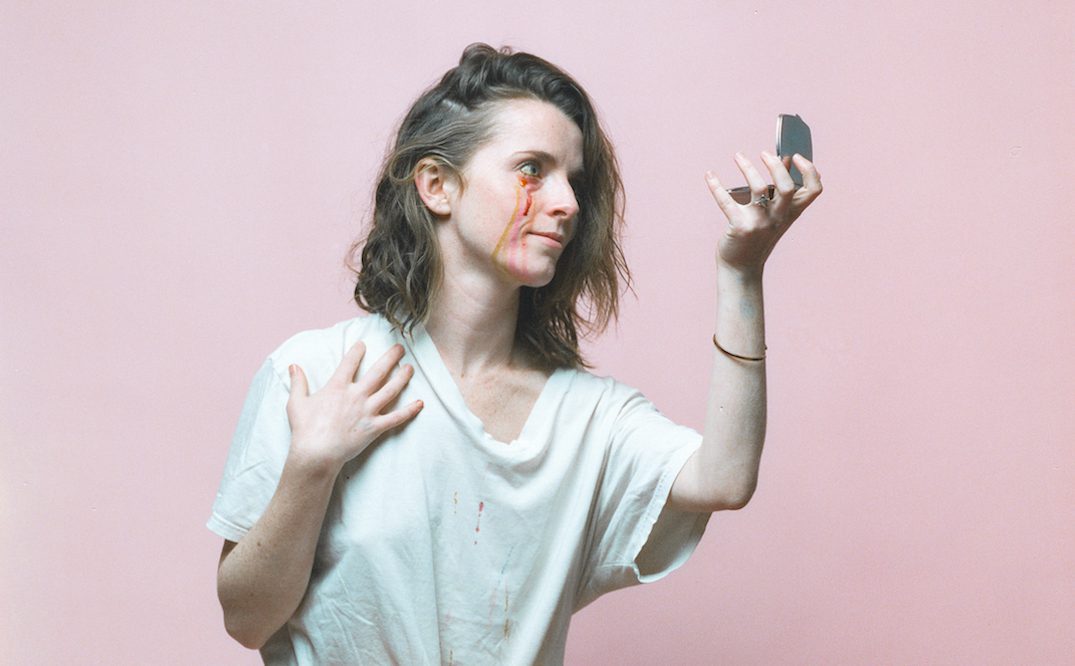
The Danberrys Sever Toxic Ties With Haunting “Undertow” Video

“Why does love telling a lie sound so sincere?” Dorothy Daniel asks on “Undertow,” a song lifted from folk duo The Danberrys’ latest record, Shine. The singer-songwriter sifts through the wreckage of a now-dead toxic relationship. She must do so in order to finally see the truth. The accompanying visual, filmed with videographers Irakli Gabriel and Anana Kaye (behind Duende Vision), rattles with distorted delusions provoked through gaslighting.

“Anyone who’s ever been tangled up with a narcissist knows how the toxic dynamics are played out in a murky underworld of emotional dishonesty and manipulation,” Daniel tells Audiofemme. “It makes you feel like you’re living a haunted life, doubting your experience of reality, and even doubting yourself on a very basic level: did I just see that? Did that actually just happen? Am I crazy?”

In order to fully capture that feeling, the music video uses ghost-like imagery, eliciting an undeniably creepy atmosphere ─ a jarring contrast to Daniel’s ethereal performance. Given free reign by home/land owner Melanie Crosby, the duo traipse across the stunning countryside of Dogwood Farms in Charlotte, Tennessee, Daniel’s hometown. The horse you see appears courtesy of Crosby’s neighbor, Bo Keist.

“I hadn’t ridden a horse in years, so it was a bit nerve-wracking to bring the horse to a full gallop for the first time, especially since we had just met each other,” says Daniel. To be safe, Gabriel and Kaye rode behind in an ATV to achieve many of the close-up shots, the most complicated of the bunch. That evening, in early March, catastrophic tornadoes ripped through the state, uprooting homes and lives, and the remainder of filming was temporarily put on hold.

A couple of weeks later, The Danberrys made their way to a homestead in Cummins Falls to wrap filming. “[That] house has been passed down for generations with most of the personal belongings and furniture preserved in remarkable condition. It felt like the perfect location to get the creepy vibes since the house is well-known to be haunted.”

Collaboratively, the team also honed in on “lots of reflections in water, mirrors, and picture frames” to punctuate the spectral nature of transformation. Daniel leans into pain and vulnerability, paired with equally affecting imagery, and eventually arrives upon a healing, cathartic place in the final few frames.

“Hey, you’re gonna hurt somebody/Walking around like a hungry ghost,” laments Daniel. Bandmate Ben DeBerry’s haunting harmony rushes up to meet hers, and together, their energy is electric. “Chains, wrapped around my body/Pulling me down in your undertow.”

“The end is meant to hint at the healing phase that follows an emotionally abusive relationship when the rose-colored glasses finally fall off and you start seeing the person for who they really are. It’s a harsh slap in the face when you realize just how much power someone has taken from you,” Daniel explains. “You feel naïve. Stupid. It takes a while to trust again – yourself and others – everyone is under suspicion for a long time. You have to slowly urge yourself to get back on the horse, so to speak. To take your power back. To believe in yourself again.”

“We tried to portray that feeling of empowerment towards the end of the video,” she continues. “The image of the two hands woven throughout was taken from a recurring dream I had… In my dream, the hands never found each other. So we re-wrote the dream and showed connection and safety at the end.”

Based on Daniel’s personal experiences, she says there are moments when her past “still affects me on some level,” despite having left those toxic relationships behind. “I used to have a childlike, open-hearted trust in life. The experience really opened my eyes to the cruelty that wounded people can inflict upon others. The relationship and the fallout definitely taught me to see more clearly, to recognize red flags, and to use discernment instead of trusting blindly.”

However, forgiving herself for believing “so fully in such an untrustworthy person” took much longer than she anticipated. She needed time to think, to process, to heal, and to grow. “I still have flashes of that anger from time to time. I also still sometimes feel regret for all the time and energy I wasted questioning myself and feeling responsible for things that were not my fault. Betrayal of self is the deepest of wounds.”

Most importantly, it took such a brutal relationship to instill within her very hard lessons in self-empowerment, self-love, and self-trust. “This world is filled with wounded people who are not emotionally safe, and it’s important to learn the signs and to set healthy boundaries with such people,” she muses. “While the experience stole some of the childlike ‘magic’ from my life perspective, it also taught me invaluable lessons about being my own advocate, trusting myself, and protecting myself from unhealthy people.”

Because it can be hard to spot those red flags until some of that emotional and psychological damage has already been done, Daniel says it’s hard to give blanket advice about avoiding a situation similar to the one portrayed in “Undertow.” But, she says, “If you’ve been drawn into a relationship with a narcissist, you likely needed these lessons and the relationship was the only way you were going to learn. Walk away, forgive yourself for being fooled, and be smarter next time. But mostly, walk away. Keep walking. Never look back. You can’t save them. They’re incapable of truly loving anyone. And they’re not worth your precious time and energy.”

Follow The Danberrys on Twitter and Instagram for ongoing updates.
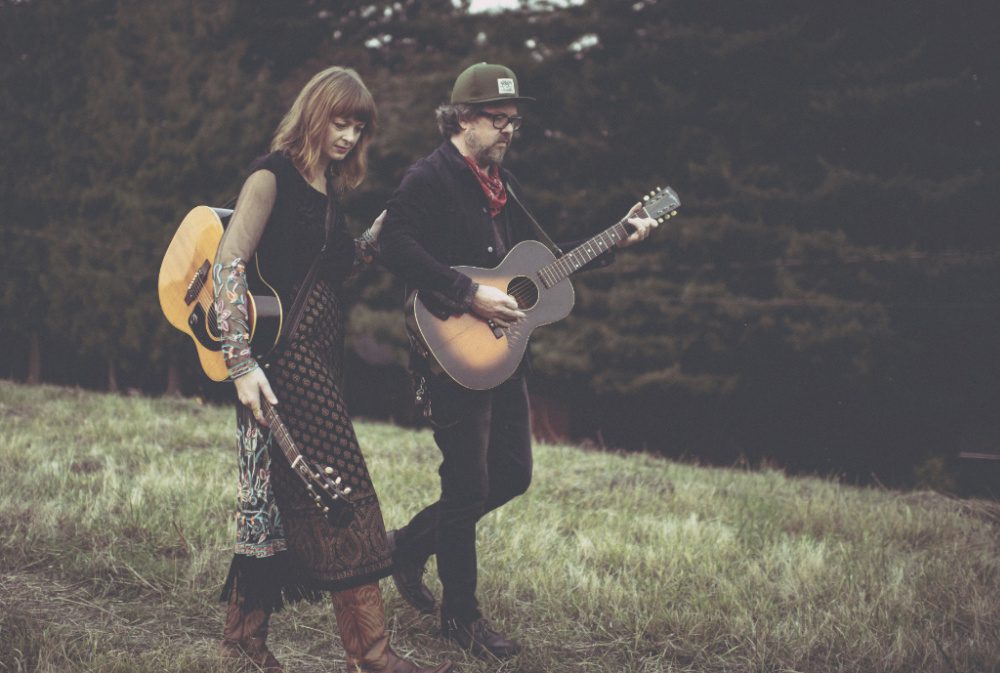
Anna B Savage Premieres “Corncrakes” Ahead of Candid Debut LP

Photo Credit: Ebru Yildiz

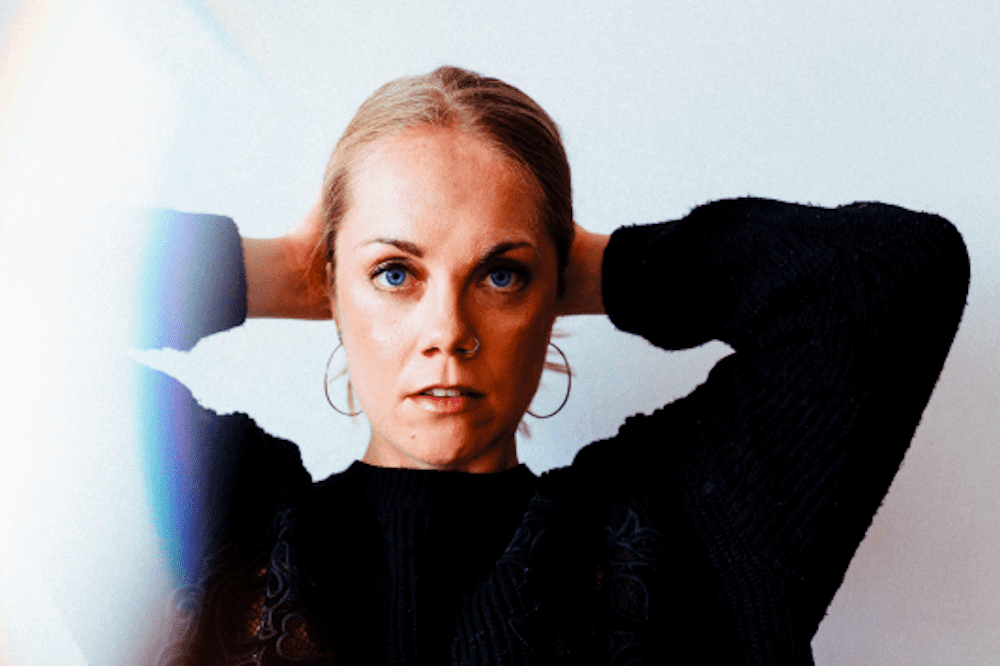
A little while back, Dublin-based singer-songwriter Anna B Savage kept coming across the corncrake — a bird that is easy to hear but often difficult to spot — in books she was reading. This species was a convenient symbol for a relationship she had at the time, which lacked the feelings of passion and romance she’d had with previous partners.

“It just appeared twice in a short space of time, not having known what it was, it being this thing you can hear but can’t certainly see, and it’s noticeable but not overwhelming or overbearing,” she explains. “When I was much younger, when I’d feel something for someone, I’d be ravenous to hang out around them all the time and wouldn’t be able to control myself in their presence. But with him, it felt calm, and because of that calmness, I was like, ‘Am I actually feeling proper sexy feelings, or do I just kind of love him?’ So that’s what that’s about, and the evolution of the way you feel things toward people when you get a little bit older.” 

“I don’t know if this is even real/I don’t feel things as keenly as I used to,” she sings in a theatrical, operatic voice against acoustic guitar, deep, warm humming, and harmonies created using vocal doubling.

She and Producer William Doyle (East India Youth) provided all the vocals on the song themselves. “Will set up a microphone in the middle of the room, and we sang whatever harmonies popped into our heads and did that for the entire track,” she remembers.

The video for the single appropriately features birds, and you can hear the squawking of a corncrake in the beginning.

The symbolism of birds features prominently on her debut album, A Common Turn, which comes out January 29 via City Slang. The dark titular track, for instance, employs the highly migratory common tern as a symbol as Savage recounts conversations with a partner that led her to realize she needed to leave.

The video for “A Common Tern” references the work of performance artist Vito Acconci, who is known for doing disconcerting things like throwing soapy water in his eyes and trying to catch tennis balls while blindfolded. She reenacted the latter act, wearing white as black-painted tennis balls splattered her with paint, representing the disintegration of her personality in the relationship.

Savage’s sophisticated, high-brow music creates an interesting contrast with some of her lyrical content, particularly in her first single off the upcoming album, “Chelsea Hotel #3.” Inspired by Leonard Cohen’s “Chelsea Hotel #2,” she starts off recounting being unable to focus while receiving oral sex and segues into her larger sexual journey, candidly singing about not orgasming until she was 18 because she’d learned it was all about PIV and didn’t masturbate. At the end, she arrives at a New Year’s resolution: “I will learn to take care of myself.”

“I’d always kind of relied on other people, and I never really thought I was allowed to masturbate — it hadn’t even crossed my mind that I could be autonomous about my own sexual desires or capacity, and I think it’s important to hear women talk about sexual stuff,” she says.

The rest of the album deals in various ways with self-esteem, sense of belonging, and “a sense of trying to understand yourself and having to wade through all the shit you get taught and find out who you actually are,” she says.

Savage’s music is difficult to classify genre-wise; it incorporates elements of rock, jazz, and even classical music. Lyrically, her intellect and thoughtfulness are evident throughout her work; her songs read like analyses of past experiences or conversational musings on common topics of discussion. In “I,” off her first EP, for instance, she sings, “I would say that I’m a feminist/But there’s something key that I have missed/Cause I want to be strong and I’d like to be fine/And I hate that it’s fueled/Even in part by my own mind.”

Both of Savage’s parents are opera singers, so she spent much of her childhood backstage. “Singing always felt like the most natural thing to me,” she says. She learned guitar at age 13 and has been making her own music since, accompanying herself on guitar and piano. Recently, she moved from London to Dublin to get a master’s degree in music.

Her other current project is making a movie with her ex-boyfriend and first love Jem Talbot, also the director of her “A Common Tern” video, about their relationship. After not speaking for seven or eight years, she had a dream about him and checked up on him, then they met up and started talking about the project. The film became a chance for them to examine their relationship, including intimate aspects like losing their virginities together; they even interviewed a mutual friend to get an objective version of the story after realizing each of them had different memories of the relationship.

Savage grew inspired to make candid art about sexuality after reading the book I Love Dick by Chris Kraus, which documents the author’s obsession with a man she meets at a party; she sends him hundreds of letters until he takes her to court, and she reassures him that the letters don’t really have anything to do with him.

The book introduced Savage to “the concept of being allowed to write about whatever the fuck I wanted, and it didn’t matter who I was writing about,” she explains. “Women have always been muses, and men are used to them always being muses, and it doesn’t have to do with any of them. I feel like it gave me a permission slip to write about whatever the fuck I wanted to.”

Follow Anna B Savage on Facebook and Instagram for ongoing updates.
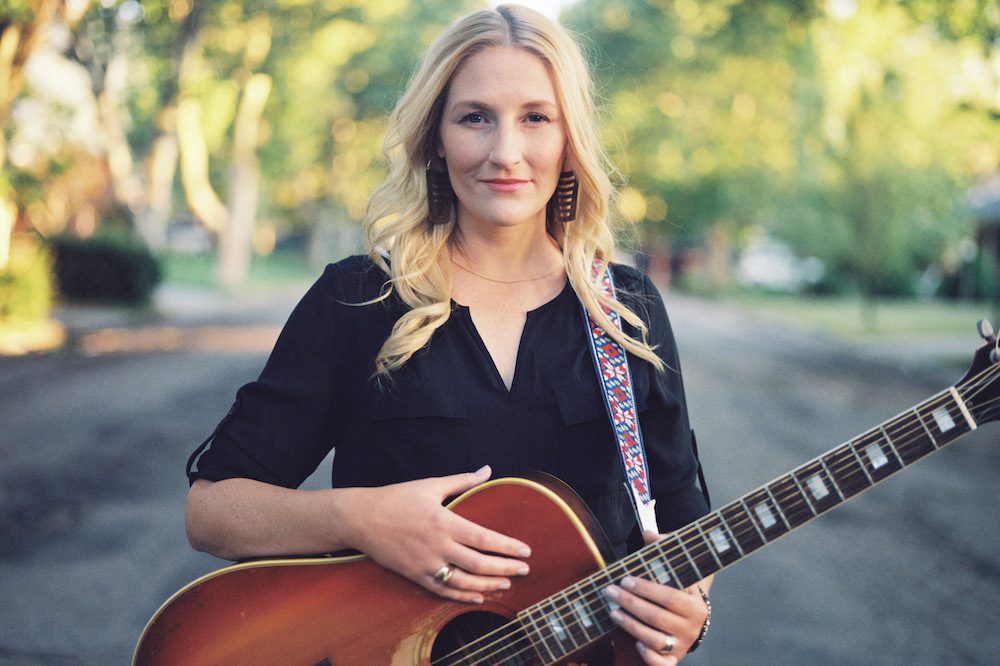
Josephine Foster Paints a Mystical Wonderland with No Harm Done LP

Photo Credit: Matthew Schneider

There’s something otherworldly about Josephine Foster’s music. The Colorado-based folk singer creates transcendental states with her voice, and the eight tracks on her latest album No Harm Done are no exception, spanning from a conversation with the holy spirit to meditations on a kingless world.

Foster’s distinctive vocals have both a sweetness and a darkness to them on the album, which was first released digitally in August and comes out on vinyl and CD November 20. Many of the tracks sound like something between witchy spells and spiritual hymns, half-hummed, half-chanted against mystical harp and guitar.

In “Leonine,” her voice swivels and swerves through poetic lyrics — “Leonine lean lean on me/Leonine spring/spring on me” — painting an enchanting picture of a land ruled by no one, “where none is king…and all is blessed lioness.” The song is about “the fantasy of not being ruled by a patriarch, or just a way of life with shared leaders, guides, and more feminine presence,” she says. “It certainly feels like the earth is calling for that stewardship.”

Spirituality is a thread tying the songs on the album together, which for Foster is intrinsic to her art form. “I think the act of singing is spiritual,” she says. “It’s sort of decorating the breath and giving meaning with the words, bringing intention to the breath.”

She considers the biggest theme on the album, however, to be love. Perhaps the best example of this is “Conjugal Bliss,” an erotic love song she’s often played at weddings, featuring delicate harmonies against calm, peaceful guitar. “In he I blend/in me he binds/In he I wed/in me he winds,” she sings, in what sounds almost like a verse out of the Song of Songs.

Foster actually wrote “Conjugal Bliss” after she was separated from her ex husband at the U.S. border and he was sent to Europe. “I was waiting for him to return for a couple months and was thinking about him, and it turned into a song,” she remembers. Despite its overtly sexual subtitle, “69,” the song is also deeply spiritual. “It’s about lovemaking and being entwined with somebody you love,” she says.

“Sure Am Devilish,” a bluesy folk song about “the rise and fall into the same circumstances and learning the same lessons over and over,” was also written a while ago — 20 years ago, to be exact. “Sometimes, you like something and it just sits in the cellar, just like when you harvest grapes and put them down in the barrel, and then you might not want to drink that for a few years — give it a little chance to find its moment of uncorking the bottle,” she explains.

In perhaps the most haunting song on the album, the seven-minute, 21-second “Old Saw,” Foster’s voice operatically soars over the phrase “holy spirit,” addressing this being, “I would like to talk with you.” With an almost freak-folk style, she conjures the image of someone rising from their deathbed, about to commune with the angelic realms. “It’s a dialogue with your soul,” she explains. “It’s funny how we’re able to kind of unify ourselves and also have a duality in ourselves, so it comes and goes, and it’s really just a meditation to try to induce that state; it’s a repetitive series of chords.”

“Old Saw” was unfinished when Foster took it to the studio, then much of it was improvised. “I was surprised and pleased by the little that it has lyrically and harmonically, that it seemed to pass through a threshold and honestly transmitted the spirit of the song,” she says. “And just the repeating of ‘holy spirit, holy spirit’ — when I sing that, it feels so good. It just feels amazingly good to sing that little fragment, and then there’s an acknowledgment of having glimpsed at the whole, my whole self.”

The rest of the album ranges from the piano-driven, almost cabaret-like “Freemason Drag” and “How Come, Honeycomb?” to the country-inspired “The Wheel of Fortune.” Recording the album in producer Andrija Tokic’s analog Bomb Shelter studio, Foster played the guitar, piano, organ, harp, and autoharp and was accompanied by 12-string pedal steel and electric bass by guitarist Matthew Schneider, who she quarantined with in Nashville this spring. Currently, Foster is taking a break from recording new music and enjoying other art forms, like painting and gardening.

It’s been 20 years since she began self-releasing her first albums, including There Are Eyes Above and Little Life, and she feels she’s become more fully realized as an artist since then. “I think over time, you become more and more yourself more deeply,” she says. “That’s the gift of time.”

Follow Josephine Foster on Facebook for ongoing updates.

Deadly Hearts Showcases Indigenous Artists Performing Iconic Australian Songs

Mitch Tambo covers Vanessa Amorosi on the latest compilation from Deadly Hearts.

What is Australian music? Does it have a signature sound? Ask anyone from Arnhem Land to Arakoola, Melbourne to Mungo, and you’ll get a different response. What can’t be denied is that the original owners of Australian land had their own language – both literally and musically. In the last decade, there’s been a push by government and remote regional councils to preserve records and document Aboriginal languages, to recognise that the many languages of Aboriginal and Torres Strait Australians define the land, the spirit of place and people for generations of families and communities.

Recently, the National Indigenous Music Awards showcased the diversity and wealth of talented Indigenous artists of all genders, ages and musical genres. The latest Deadly Hearts compilation (and third in the series) features many of those artists. Versions of Vanessa Amorosi’s joyous pop song “Absolutely Everybody”, Crowded’s House sadly sweet “Don’t Dream It’s Over” and the political ferocity of Midnight Oil’s “Beds Are Burning” are all given a fresh interpretation.

The Deadly Hearts series began in 2017 as a platform for a new generation of Indigenous Australians to respond musically to the question: “What song has spoken strongest to you about growing up an Indigenous Australian?” The 12 tracks on the original album combined synth, jazz and hip hop to reimagine songs that each of the artists had a personal investment in. Jimblah covered Warumpi Band’s “My Island Home” with an electro vibe, while Birdz turned Yothu Yindi’s “Sunset Dreaming (Djapana)” into a hip hop ode. Deadly Hearts 2, released last year, featured accomplished artists Alice Skye and Dan Sultan as well as upcoming artists Tia Gostelow, Electric Fields and Dallas Woods.

The latest drop from the series, subtitled Walking Together, comes ahead of NAIDOC (National Aborigines and Islanders Day Observance Committee) Week 2020. NAIDOC began as a week long event in 1975, an observance of Aboriginal and Torres Strait Islander Australians’ history, culture and achievements.

Ziggy Ramo opens the comp with “Tjitji,” a soulful hip hop track that combines a trippy beat with a harrowing, vulnerable rap about contemplating and handling suicidal thoughts (“I see your pain, I felt the same. If you want real change, you gotta play the long game”). Just as he did in a recent performance for the Sydney Opera House Live series, Ramo skillfully blends the personal with the political even as he sings words originally written by Anangu/Torres Strait Islander Miiesha, who is also featured on the track.

She appears again backed by handclaps and a Woorabinda choir on a rendition of Brooks & Dunn country classic “Neon Moon,” raising it to the level of spiritual sanctuary. There is a lush spaciousness, where the voices are so divinely in harmony that you might be convinced Miiesha has been performing this for a lifetime. It’s quite a departure from Miiesha’s soulful debut album Nyaaringu, an award winner at the National Indigenous Music Awards this year, but the singer says, “We go mad for country music up here so picked one of our favourites.”

Miiesha covers Brooks & Dunn for Deadly Hearts, and features on a Ziggy Ramo cover of her own song, “Tjitji.” Photo Credit: Clare Nica

Stan Walker and Isaiah Firebrace duet on the gently compelling, lovely reimagining of Crowded House’s 1986 hit “Don’t Dream It’s Over.” Walker’s voice sounds close to breaking into tears, while Isaiah introduces traditional language, an unexpected, fresh element to such a well-known song. Walker has just released an autobiographical book that reveals his experience of sexual and physical abuse growing up in New Zealand – while it isn’t imperative to know his history and life stories to be moved by this track, it does give it an additional layer of meaning and heartbreak. Firebrace was Australia’s Eurovision contender in 2017. Together, the pair highlight the original song’s subtle message of resilience.

DRMNGNOW is the moniker of Naarm/Birraranga-based Neil Morris. The Yorta Yorta MC and instrumentalist applies his poetic rapping skills to a simple piano-beats-synth backdrop on a cover of Archie Roach’s “Get Back To The Land.” Morris recently told Double J’s Tim Shiel, “It doesn’t appear that people fully understand the depth of Indigenous spirituality and the power of this country… We need more anthems. If people aren’t aware, maybe we need to put some anthems out there for that. Also for the empowerment of our people; to feel strong and empowered, that there’s anthems that represent them.” It makes sense then, that Morris would gravitate toward Roach; both hail from Mooroopna, and the song resonated with Morris in the years he spent “living off country on Wurundjeri land.”

As a member of the Steering Committee for Kimberwalli at the Western Sydney Indigenous Centre of Excellence, Sydney-based soul singer Mi-Kaisha is politically active, advocating for young Indigenous voices to be heard. But it is her own flawless acapella, paired simply and perfectly with piano and nothing more, that stands out loud and clear on Bee Gees cover “How Deep Is Your Love.” The Darumbal Murri and Tongan woman was also the NAIDOC Youth of The Year in 2019 – no surprise with a talent that rivals Beyonce and Christina Aguilera for stadium-worthy, diva vocals.

Other highlights include a riotous pop tribute to “Absolutely Everybody” the anthem of the 2000 Sydney Olympics, sung by Mitch Tambo. He sings in Gamilaraay language, also adding the rich, deep bass sound of didgeridoo throughout the track. And Aodhan, a teenage Dharawal artist who won Triple J’s Unearthed High Indigenous Initiative in 2019, channels Elliott Smith on his strummy, acoustic version of Tia Gostelow’s “Always.” So thoroughly gorgeous is his rendition, it’s hard to believe he didn’t write it himself – a sensation embodied by many of the tracks on this wonderful album.

Southeast Desert Metal offer an explosive rendition of Midnight Oil’s classic Indigenous Rights anthem “Beds Are Burning” on Deadly Hearts.

As if Midnight Oil’s ferociously political “Beds Are Burning” wasn’t driving home the message enough when it first came out, a brilliant version by Southeast Desert Metal ramps up the riffs and the volume to blow minds and speakers. Based in Santa Teresa, an hour from remote Alice Springs in Australia’s Northern Territory, the Eastern Arrernte band showcase their influences proudly. Raised on a meaty diet of Iron Maiden, AC/DC, Black Sabbath and Judas Priest, the four-strong members released a debut self-titled album in 2015, following it with their Break The Silence LP in 2018. Both works aimed to meld Indigenous culture with heavy music.

“I just want to send a strong message to young people today,” singer Chris Wallace told Blunt magazine last month. “They don’t seem to care about their culture anymore; they’re just sort of going on their own paths, doing the wrong things. I grew up with my uncles and all that, [with a] cultural way of living. That’s the reason why I just wanted to share a bit of the story that I was told. I just wanted to pass it on through music.”

Deadly Hearts: Walking Together is uniquely poised to accomplish that mission, not just with “Beds Are Burning,” but with its entire tracklist. If you love this album, which may happen on the first listen or the fifteenth, it makes a great jump off for discovering a wealth of Australian artists past and present – and when you’ve explored Walking Together thoroughly, there are still two previous Deadly Hearts compilations to delve into.

PLAYING NASHVILLE: Jess Nolan Premieres “Shame” Video

Photo Credit: Lindsey Patkos

When asked what inspired her latest single “Shame,” Jess Nolan responds, “I keep coming back to this idea that shame is the tool of the oppressor.” She’s referencing ideology from author and podcast host Brene Brown, and though her song (and its video, premiering today on Audiofemme) comes from a place of personal contemplation, her aim is to liberate anyone who can relate. “Shame is used to oppress people, and it has been historically for so long, and when we use it against ourselves, we hurt ourselves and we hurt other people through that too.”

The indie pop singer-songwriter – originally from New Jersey, now based in Nashville – has crafted a lyrically rich anthem of freedom where shame takes on the form of a woman who arrives in her darkest hour, extinguishing her inner confidence. The songstress uses her lyrics to speak directly in defiance of the disparaging voices in her head, knowing that freedom is within her grasp.

“I live with shame for simply walking around, but I still believe in freedom, I trust that freedom is on it’s way,” she sings vulnerably over a simple, yet haunting melody of gently strummed guitar, piano and echoing strings. It’s this sense of freedom that

In an organic video comprised of Polaroid footage, Nolan and director Emerson Kyle juxtapose a sense of paralysis (limbs spilling over a piano bench, Nolan sprawled on black and white tile) with intention (tending to plants, painting watercolor blossoms), culminating in a stunning drone shot of Nolan’s graceful backstroke through murky water. “I wanted to show the progression of freeing myself through the video,” Nolan explains. “I wanted to encapsulate that feeling of being paralyzed or stuck or frozen, and as the video progresses, you see that I move outside. Emerson had this idea of getting that shot of me swimming and that being the freeing moment, freeing myself in the water and in nature.”

As a woman who has been in the music industry since the age of 12, the now 27-year-old describes how shame manifested in the stigma of feeling like she wasn’t “enough,” constantly striving for unattainable perfection. But after experiencing a bought of writers block, she had a breakthrough while writing “Shame” at the piano in her Nashville home.

“The song was the turning point for me being like I’m going to free myself from anything that’s holding me back, whether that’s outside of me or the voice in my own head that will stop me from trying things just because I want it to be perfect instead of just jumping and going for it,” she professes.

This applies not only to making music, but also to Nolan’s burgeoning role as an activist. “I’m learning, through the activism that I’ve been doing this year, it’s better to show up imperfect than to not show up at all,” she continues. “Striving for constant perfection in our personal lives and in music can really be a detriment and can hold us back from showing up authentically. That was a hurdle that I had to get over and I’m so glad that I’m continuing to do that work and not allowing that fear of being imperfect stop me from showing up.”

One of the song’s most powerful moments comes at its end, as Nolan gently, but confidently chants “freedom” while five female artists (Jasmine Mullen, Georgia English, Hadley Kennary, Rochelle Feldkamp and Becca Richardson) recite lines from her poetry. The words and unity reflect Nolan’s contemplative journey while creating her full-length debut album From Blue to Gold, released in August. While the project’s first four numbers are love songs, “Shame” is strategically placed as the sixth song, marking a more introspective space of self-examination. Nolan cites “Shame” as the north star of the album, symbolizing her journey from darkness to light as she finally finds the freedom she’d been searching for – a gift she hopes listeners gain as well.

“The song is dark in the beginning and it shifts to this hopeful thing and that’s the record in itself. There’s that turn of ‘there’s hope here,’ and the hope is in connecting with each other,” she expresses. “I hope that the message resonates with [listeners] enough to free themselves from anything holding them back, that it would inspire people of all genders and races to not let those fears of other people and their thoughts about you stop you from living out your deepest desires and dreams for yourself and to not let that voice in your head stop you. We have to speak kindness to ourselves if we want to be better people in the world and I think it starts with truly accepting yourself and allowing yourself to be free.”

Follow Jess Nolan on Facebook, Instagram and Twitter for ongoing updates.

Remembering the Empowering Legacy of Helen Reddy

When Helen Reddy passed away on September 29 of this year, at the age of 78, she left a powerful legacy of music and activism—one that’s been with me most of my life.

In reflecting on her impact, I was transported back to June 1973: I was 6 years old and gripped by the opening line of “Delta Dawn” sailing from the car radio as my mom and I ran errands. “She’s 41, but her daddy still calls her baby.” Who was she? I was pretty sure that being “baby” to one’s father at that age was not okay. What was the story here?

“Delta Dawn” does tell a story, of a young Southern beauty wooed by “a man of low degree.” He proposes and then, in today’s parlance, ghosts. Crushed, she loses her grip on reality—roaming the streets year after year with her suitcase, waiting to begin their future together.

“Delta Dawn” was the first of Reddy’s songs I latched onto, despite the huge success she’d had the previous year with her most famous single, “I Am Woman” (the collective richness and struggles of womanhood weren’t something I could yet understand, so my love for that anthem would come later). As it turned out, “Delta Dawn” resonated with many; Reddy’s version, which went to #1 pop charts, had been a country hit the year before for singer Tanya Tucker, who recorded it at just 13 years old.

I’ve paid attention to song lyrics all my life, and Reddy’s yearning Dawn stayed with me—as did Ruby Red Dress, from Reddy’s 1973 hit “Leave Me Alone,” who meets an even worse fate than Dawn’s sham proposal: “Some folks say some farm boy/up from Tennessee/taught it all to Ruby/then just let her be.” I can’t find confirmation of it, but the song does seem to be about sexual assault; traumatized Ruby is left repeatedly mumbling “Leave me alone,” plunged into a mental crisis from which she doesn’t know how to recover. It does not sound like whatever happened to her was consensual; and even as a kid, I heard that, though I couldn’t tell exactly what happened. At 6, I don’t think I knew what rape was, but I could understand that the guy had done something very wrong to this woman and that it had damaged her. It’s kind of shocking that the song was such a hit on pop radio.

But that was one of Reddy’s special powers. She made not one but two ’70s smashes from stories of women manipulated and betrayed by men; somehow, with her pleasing voice and keen pop sensibilities, she was able to make them sell.

Granted, not everyone was convinced. Frank Zappa made fun of her appeal in his “Honey, Don’t You Want a Man Like Me?”: “She was an office girl/Her name was Betty/Her favorite group was Helen Reddy.” But numbers don’t joke. In 1973 and 1974, Reddy was the world’s top-selling female vocalist. She sold approximately 25 million albums during her career.  

Helen Maxine Reddy was born in 1941 in Melbourne, Australia, to vaudeville performers Stella and Maxwell. She too began performing, at age 4—but then married a friend of her parents, Kenneth Claude Weate, at 20. “It was instilled in me: You will be a star,” she told People magazine in 1975. “I got very rebellious and decided this was not for me. I was going to be a housewife and mother.” The marriage produced Reddy’s daughter, Traci, but lasted only a few months.

In 1966, Reddy won a local talent contest that offered passage to New York City and, for the final winner, the chance to record. She and Traci, then 3, travelled to the States. Though she didn’t get the prize, Reddy decided to stay and try to launch her career.

In 1968, she met talent agent Jeff Wald—and married him three days later, the timing in part so that she could remain in the country and work. Wald became her manager, and together they attempted to promote her music. After years of struggle (and, Reddy later recalled, the need to spend chunks of their scant savings on roach spray), she released a single in 1971; the A-side made no impact, but the B-side was a cover of “I Don’t Know How to Love Him,” from Jesus Christ Superstar, which went to 13 on the charts (it’s been reported that Reddy didn’t like the song much, finding its heavily subservient lyrics irritating). Wald and Reddy kept pushing; “I Am Woman” broke the following year.

After “Leave Me Alone,” Reddy hit with Alan O’Day’s eerie, mysterious “Angie Baby” at the end of 1974. Here again was a ballad I could get into. Angie is a young woman who has been pulled from school for being “a little touched”—i.e., another Reddy heroine dealing with some kind of mental illness. She’s a music addict and loner, hanging out in her room with her radio and her daydreams.

She’s also another Reddy character called “baby” at a non-baby age. However, Angie is no Dawn. When a neighborhood boy comes by while her parents are away, all too ready to exploit her, let’s just say it doesn’t work out for him. If you take the lyrics literally (and just shy of my 8th birthday at the song’s release, I did), he enters Angie’s room; is trapped somehow by the power of her radio; and is physically drawn into it when Angie lowers the volume. As far as the town knows, he has vanished. What Angie knows is something else: “The headlines read that a boy disappeared, and everyone thinks he died/’cept a crazy girl with a secret lover who keeps her satisfied/It’s so nice to be insane! No one asks you to explain/Radio by your side—Angie baby.”

My real-life friend Angela (also called Angie) and I thought this song was the coolest thing: magic Angie turning the tables on her would-be abuser, then keeping him around for her amusement. The world agreed on its appeal; the song was a hit even in countries where other Reddy singles had not been. Talk about girl power.

With that, let’s return to “I Am Woman.” Dawn, Ruby, and Angie gripped me immediately, while I didn’t register the message in “I Am Woman” fully when I was 5. But for many years since, the song has often brought emotional tears to my eyes. It doesn’t matter to me that Reddy’s sound was not radical, that it lacks any edge or hip irony—this song sounds heartfelt and earnest, and why shouldn’t it? I don’t care that Alice Cooper called Reddy “the Queen of Housewife Rock”—and neither did she: That “means I’ve reached a lot of people in a simplistic manner who would never go to a lecture or read an article on women’s lib,” she responded in the 1975 People profile. I think “simplistic” is uncharitable; I’d go with “plainspoken,” conveying a clear point in a strong way.

I’d love to say that having “I Am Woman” in my consciousness from a young age steered me clear of major mistakes, and of the “wisdom born of pain” that it attributes to women. But this isn’t true. Nor was it true for Reddy, whose 1982 divorce from Wald resulted in part from Wald’s years of cocaine abuse, and involved a prolonged custody battle over their son, Jordan. But the song lends me solace when I stumble, strength to persist, and added sweetness in times of success.

Though Reddy usually covered the songs of others, she wrote the lyrics for “I Am Woman” herself, with the music by her friend Ray Burton. Interviewed for Australian TV in the ’70s, she described looking for a song like it and finding only stereotypes of strength: “I am woman, w-o-m-a-n, I can cook a mess of grits faster than you can,” she joked. “I realized that I was going to have to write the song. I was sitting in bed one night, and the lines, ‘I am strong, I am invincible, I am woman’ just kept going over and over in my head, and I realized that was the beginning of something.”

The Equal Rights Amendment was passed the year the song came out; Roe v. Wade was decided shortly after it hit #1. Helen sang it for the Dawns, the Rubys, and the Angies; the housewives and divorcees, factory workers and megastars. She sang for women everywhere, and she always will. Her children summed up her impact in a statement upon her passing: “We take comfort in the knowledge that her voice will live on forever.”

PREMIERE: Ciara Vizzard Powers Through Bad Luck in “Victory”

A lot of us are going through a rough time right now, to put it mildly, and UK-based pop artist Ciara Vizzard can relate. Several years ago, she lost two family members over the course of a week, and a few months later, someone set her car on fire. “I felt so attacked,” she remembers.

Needing a positive attitude adjustment, she wrote “Victory,” a song about triumphing over challenges, to give herself a mental boost. “I wrote this song to say, ‘You can try to bring me down, but I’m still going to get up and still going to have a victory,'” she says. “The song is me talking to the devil and basically saying, ‘F off.'”

Sadly, declaring victory was premature – soon after the song was written, Vizzard’s grandmother, who she was living with, died, and the singer was in an accident that required four surgeries on her leg. By the time the fourth procedure had been completed, quarantine had started, so Vizzard remained sidelined, essentially unable to leave her home. But the message within “Victory” remained, and at this point, it wasn’t just Vizzard who needed to hear it. Today, its release offers some very needed encouragement as much of the world re-enters quarantine.

“I feel like more people can now relate to that feeling of being totally knocked around and working really hard to be getting back up and be like, ‘I’m not gonna be defeated by this year,'” she says. “I guess it’s my fight song. When I listen to it now, I still relate to the lyrics. I still feel the emotion just as much as I felt when I first wrote it.”

“I thought I was breaking on down/But I’m standing my ground/I won’t forget how this feels/Remember that it’s real,” her gentle, comforting voice sings and then repeats in dreamy echoes against poppy guitar riffs and percussion meant to evoke the sound of a marching band, perpetually pushing onward in the spirit of the song. She played the guitar herself, plucking rather than strumming, and producer Nosa Apollo (Craig David, Ella Mai, Mabel) added an ethereal quality to the sound.

Vizzard created a feeling of perseverance in the song by singing in a lower register in the verses and a falsetto voice in the chorus. “I feel like the way the song has been sung, it holds that balance between vulnerability and feeling broken, but also, I’m gonna keep singing because I’m not gonna give up,” she says. “I think that’s what I’m really proud of in this song — the way the song is melodically, it’s a mirror of what’s being spoken about in the lyrics.”

She initially came into the studio with a different version of the song, then quickly decided to scrap it and re-wrote most of it on the spot. “Some songs just write themselves,” she says. “This was one of those songs.”

Vizzard was born in the U.S. to an Irish mother and American father and moved to France at age 12, where she started playing the guitar. Now based outside London in Reading, she studied medicine and went on to become a doctor with the goal of becoming a full-time musician once she paid off her debt. She released her first EP, Fearless, in 2017 and has released four more singles (including “Victory”) since, while continuing to work in a rehab ward at a hospital.

Her latest singles all have a similar theme of conquering hardship and compassion for those going through it, including oneself. Last year’s “Hurricane” is about feeling alone and wanting support from others after her accident, “Is It Okay” is about struggling to move on after romantic heartache, and “Price” is about “recognizing that you don’t know what everyone’s going through and you can’t judge someone based on how they present themselves,” she says.

“‘Victory’ is another aspect of that same thing — you never know what someone’s going through,” she explains. “All of them are about going through something and recognizing how important it is for us as human beings to show each other love and compassion, and that’s how we get through it together.”

Perhaps that’s one of the greatest lessons COVID has taught us — “you have to help each other out,” as Vizzard puts it. “Something I’ve learned is people come at you with their emotions because they’re scared, because they’re hurting, and it’s really easy to become defensive with that. But actually, something else is driving that, and it’s important to recognize that someone’s going through something. It’s jut a matter of showing love and compassion toward each other.”

Follow Ciara Vizzard on Facebook for ongoing updates.

Jay Madera Gets Out The Vote With Charged New Video “A House Divided”

A House Divided
A House Divided
Photo Courtesy of Jay Madera

Jay Madera’s rousing new single “A House Divided” will inspire you to get out and vote – if you haven’t already. The Cincinnati singer/songwriter offers a hopeful urgency as he sings about greed, corporatism, freedom and equality and begs the question, “What do we need?” as Americans head to the polls. Released late last month, Madera now follows up the single with a video.

“The day that we finished up editing the video, I went out and voted,” Madera said by phone. “It’s a kinetic song. It literally got my butt off the couch and off to the polls. So, that made it an emotional moment.”

For the clip, Madera pieced together archived, royalty-free footage and donated the money he would’ve spent on a music video to nonprofits When We All Vote and Rock The Vote. Madera also ran donation campaigns for the track, raising over $300 for both organizations. 

“The goal is to help get them donations,” he said. “They’ve been doing a lot of cool stuff – especially right here in Hamilton County – for Election Day, and that’s been crucial.”

The video itself combines vintage clips, ranging from everyday scenes to the historic moments that championed voting and racial equality. Video from famous protests – like the Selma to Montgomery Marches – and the title’s nod to Abraham Lincoln’s “House Divided Speech” further remembers the courageous movements that fought – and continue to fight – against voter suppression and racial injustice. After a summer full of similar demonstrations and persisting inequality, Madera connects past struggles to today’s, making his question of “What do we stand for?” ring even louder. 

“The song is all about acknowledging our history and confronting our history, and using it to inform our current actions,” says Madera. “I wanted to connect that with our current-day struggle. Obviously, race is not our only issue, but it is a fundamental issue that is just as important today as it was back then.”

Another loud layer is Madera’s anti-corporate stance, as he belts verses about putting power in the hands of the people. Notably, the track was recorded in Cincinnati’s Gwynne Sound – housed in the historic headquarters of Proctor & Gamble. 

“The very first lyric is, ‘We don’t need another strip mall/We don’t need another iPhone’…   and here I was recording it in the headquarters of one of the largest corporations in the history of our modern society,” says Madera. 

A House Divided
Photo Courtesy of Jay Madera

The clip and Madera’s style drive home a feeling of energetic nostalgia, heavily complimented with backing vocals from Cincinnati songstress Lauren Eylise and producer Mia Carruthers. For the instrumentals, Madera also stayed home-grown with University of Cincinnati College-Conservatory of Music students.

“My song is rooted in the funk and soul tradition, and I was stylizing the song as more of a pop version of like a James Brown mixed with Elvis Costello. I was definitely taking inspiration from a Black art form, so I thought it was important to get Lauren’s voice on there,” he said. “She’s phenomenal – she has some of the best music coming out of the city. And my other backup singer was Mia, and their interplay on the song was incredible. The horns section was CCM students and one was a professor. So, it was very rooted in Cincinnati and the culture here.”

The song’s Cincinnati representation was also intentional, Madera says, as the city not only marks where he’s from and lives, but is also an important battleground area come Election Day. 

“It’s a political song in a swing state,” he said. “People that hear my song and come to my shows are all, politically, across the spectrum. This is where the politicians come right before the election. So, that’s something that was really cool that I got to record it here – and also being from here.” 

Follow Jay Madera on Instagram for ongoing updates; find your polling place here to make your voice heard in 2020.

Mima Good Sows Resilience with Hydra LP

Photo Credit: Blaise Bayno-Krebs

NYC-based songwriter Raechel Rosen has resurrected her anti-pop alter-ego Mima Good for her latest LP, Hydra. We premiered the lead single “Sad Club Night” earlier this year, back when COVID was new and we were only beginning to feel the dread and uncertainty of Lockdown 1.0. With all that has happened since this year, the title of this new release feels all the more appropriate.

Greek mythology gives us the 9-headed serpent Hydra, who grows two heads for every one that Hercules cuts off in their legendary face-off. To Rosen, this monster serves as a metaphor for real world struggles. She says, “It isn’t like an adventure movie, where the hero defeats the villain, saves the day, and then we’re all good. Often, when we overcome one trauma, solve one problem, we uncover others that were existing beneath the surface.” Rosen’s first release as Mima Good, the Good Girl EP, dealt with her struggle to overcome an abusive relationship with a former bandmate. With each new release building on the last, Hydra seeks to soothe any other sore spots Rosen uncovered while healing from that specific trauma. 

The brutality of the Hydra theme contrasts with some of the more vulnerable imagery on the album, namely the second track, “Lolabye.” It plays on Judy Garland’s classic song “Somewhere Over the Rainbow,” referencing the same blue birds that fly somewhere else, somewhere better. The track itself samples a recording of Garland yelling into a tape recorder “I laughed at myself when I should have cried,” a reference to all the ways she allowed others to take advantage of her during her career. Though Garland ultimately succumbed to the Hydra of her own life, Rosen takes these words to heart, looking inward to figure out how to overcome all the times she’s had to laugh or grin through her own pain as a female performer, while remaining authentic to her sentimental nature. 

Writing these songs allowed Rosen to see herself as a fighter on a quest to defeat these painful forces that haunt her, saying, “I had so much fun with these songs, even when I was singing about painful topics, because of the built in narrative. It has always helped me to turn my struggles into songs, but as part of a quest-like epic, I was really able to face them. They felt small in the end.” This idea makes the record relatable to almost anyone, especially under the present circumstances. For most of us, 2020 didn’t offer the chance to improve your life so much as the opportunity to build resilience, the ability to choose how to react when things go awry. For Rosen, this meant adjusting her expectations to how she could release and promote Hydra, as well as diving deep into self-care practices like tarot, physical fitness, and reconnecting with her Jewish spirituality. For you, it might be different, but as Rosen said to me, “All of us are extremely brave every day that we wake up and try to defeat any of these heads.”

Follow Mima Good on Facebook for ongoing updates.

RSVP HERE: Safe Space Sessions Halloween Bash + More!

Safe Space Sessions is a Miami, FL based collective that are banning together to create safer spaces for both their performers and audience. They have been organizing live-streams since September to raise funds for different organizations and provide a safe haven for anyone involved in the music community by providing resources for mental health, addiction and victims of sexual assault. On their website they have a form where you can vent anonymously along with an extensive google doc of contact info for organizations that can help. For Halloween they teamed up with Backroom Sessions for their Halloween Bash including performances by Baby G, Bonzey The Kid, Playkill, The Hattts, Shay Pastel, Better Than This, Pocos Postres, The Old Youth and Shoveit, streaming from Twitch on 10/30 at 7pm ET. 50% of their proceeds will be going towards NIVA for the Save Our Stages campaign. We chatted with Safe Space Sessions founder Val Varela about why they began SSS, more organizations to support and why organizing virtual shows is actually easier.

AF: Tell us about how Safe Space Sessions started, your team & goals.

VV: SSS started a few months ago because a lot of people were coming forward in the Cali music scene that their abusers were in big bands and making the scene unsafe. There were stories of sexual abuse and drugging of minors, really horrifying shit. I know sexual abuse is a widespread problem so of course it’s happening here in Miami and I didn’t want to stand by and not make a change. So I got together a group chat on IG with a bunch of bands, venues, photographers and event coordinators in Miami, saying we gotta make a change, telling people the horror stories. There were like 40 people in that chat and the people that stayed to help me plan the event are my kick-ass team (Mel, Will, Abby, Lee, Fi and Tess). We do everything: the flyers, reaching out to bands/venues/sponsors, setlist times, and especially now, making sure everyone is wearing a mask, sanitizing in between bands and taking temperature checks. Our goal is to raise as much money as possible to help other organizations who provide resources for sexual abuse survivors. It is important to have open conversations and give people a place to feel safe. We also do our best to research bands that we hire for events to make sure there is not a history of sexual allegations.

AF: How have your livestream sessions gone so far?

VV: Everything has gone great and it’s been a really fun learning experience. The first two streams were a little rocky as far as technical issues because we’d never done a livestream (and for many of the team it was the first event we’d set up by ourselves) but we were able to raise over $700! 

AF: What are some of the challenges of organizing digitally vs. in person shows?

VV: In some ways it’s easier digital because people don’t have to leave their house, they can just log in on their phone. The downside to that is keeping people’s attention and getting them to stay for a three hour stream (especially the 20-25 minute lull where bands are switching). During that we played sexual abuse PSAs and music videos from local Florida artists. Also when it’s digital it’s hard to feel the crowds reaction because you’re playing into an almost empty room so we jump around and hype them up.

AF: What organizations have you raised money for so far and what other resources/organizations do you recommend to support? 

VV: ForgeForward (trans & queer resources) RAINN (national network for rape and incest support) and Mujer FL (our local sexual abuse resources for Latinx people). There’s hundreds of organizations but if you can help local or queer ones those are the best because they don’t get as much funding and black and brown queer kids are most at risk. We have to help as much as we can.

AF: What steps do you think need to be taken in the live music industry to make it safer before events resume as normal?

VV: Jfc, first of all, people need to stop having in-person concerts with no social distancing/masks. There’s not much the industry itself can do as they are already going under financially – it’s on everyone to wear a mask, social distance, get tested and donate to relief funds (when possible).

AF: What are you most excited about for the Halloween Bash? Are any bands dressing up or playing covers?

VV: Ooooh, this bash is gonna be so fun!!! A lot of the artists I haven’t seen live before, very exciting so see new performers and mosh (by myself lol). Everyone better dress up!! We sent an email saying we are doing polls on IG. I don’t know everyone’s set lists so it’ll be a fun surprise.

AF: What are your plans for the rest of 2020 and beyond?

VV: Personally after we finish with this Halloween bash/mystery merch bags I’m going to try to take a mental health break for the rest of the year. I’m sure SSS will plan another show or two! 2021 I want to do more live streams and even when shows are safe again I want to do hybrid shows so fans from other states can see artists they like live! Also continue to find creative ways to fundraise and spread awareness for sexual abuse and make our scene as safe as possible.

RSVP HERE for Safe Space Sessions & Backroom Sessions Halloween Bash on Twitch 10/30 at 7pm ET.

More great livestreams this week…

10/30 The Paranoyds, Honey Child via NoonChorus (from Bob Baker Marionette Theater). $10, 9pm ET RSVP HERE

10/30 Starcrawler via No Cap. $15, 9pm ET RSVP HERE 

10/30 The Aquabats (Kooky Spooky! Halloween Party!) via Veeps. 6pm ET RSVP HERE

10/31 Japanese Breakfast, Lexie, Gabby’s World, The Dead Elvi, Slight Of, The Glow via BABY.TV. $10, 9pm ET RSVP HERE

10/31 Death Valley Girls via NoonChorus. $6.66, 9pm ET RSVP HERE

10/31 Adult Mom, Oceanator, Diet Cig, PUP, Charly Bliss & More via Twitch (Ratboys Halloween Telethon). 1pm ET RSVP HERE

10/31 The Cure via YouTube (Teenage Cancer Trust Unseen). 4pm ET RSVP HERE

11/1 Shamir, Tony and Tony, Stella Donnelly & more via Independent Venue Week (from Baby’s All Right). $5, 8pm ET RSVP HERE

11/3 The Decemberists, Drive-By Truckers, The Dresden Dolls, & more via Voted Festival. 12pm ET RSVP HERE

Tallia Storm Displays Tantalizing Duality With “Kinda Savage, Kinda Sweet”

Tallia Storm has always been fascinated by duality, a concept depicted in one of her favorite gothic novellas, Strange Case of Dr. Jekyll & Mr. Hyde. “It’s the fact that we never truly know a person,” she says. The London-based singer-songwriter pins such truth to a corkboard of silky production and an R&B-stitched melody with her new song, “Kinda Savage, Kinda Sweet,” which explores often contrasting personality traits.

Her voice carries with it a particularly tart flavor. “You can be as sweet as a sugar-coated cupcake but can burst with red velvet in the middle. As an artist and creator I really want to dive in deeper into what I am perceived as and what I actually stand for,” she tells Audiofemme. In borrowing from the absolute extreme in the Jekyll & Hyde tale, she delves further into personal experience to present the reality as she sees it.

“I am often seen as a sweet 21-year-old, as it’s easier for male executives running this business to undermine the ambition and hunger I have,” she says. She runs her own business and has been self-funding her burgeoning musical catalog, beginning with 2017’s debut entry “The Good Lie” and more recent cuts like “Drowning” and “One of a Kind.”

“Kinda Savage, Kinda Sweet,” her first for Sony’s The Orchard imprint, arrives as a statement of empowerment; it is quite evident Storm’s unwavering work ethic is paying off. “It takes thick skin to follow a dream in this game, but I really believe that with all the ‘stitches, bitches and broken hearts’ anything is possible if you work hard enough,” Storm says. “Without sugarcoating or softening a word, I wanted to embrace the modern-day reality of being an empowered and ambitious female working her way to the top.”

Mixing the track with Grammy-winning engineer Phil Tan, who has worked with Mariah Carey, Gwen Stefani, and Rihanna among others, hints that she’s destined for the canon of unapologetically fierce pop stars. “Every day, females are forced to fit into a box. I am so much more than just ‘a sweet girl’ or ‘a savage’ one. We can be unpredictable and unapologetic without the force of being put into one box. I want to be a role model to young girls, bold and motivating,” she continues. “I want young girls to listen to my music and feel confident, and feel and be anything they want.”

The accompanying visual further articulates her drive to the top, as well as the strength she’s collected from self-love and confidence. “Don’t touch my crown with those filthy hands,” she sings over a fluttering back beat. The imagery shifts from intimate close-ups to sweeping cinematic shots of a gloriously plush estate, lush countryside on the horizon. “As far as the camera can go, it still can’t find my soul,” she muses.

As such, Storm keeps the viewer guessing, not only with her many wardrobe changes (that leopard print!) but her willingness to get goofy. “I want people to discover and see something new every time they watch the video,” she says.

Storm was famously discovered eight years ago by none other than Sir Elton John. He had heard a demo of her song “He Loves Me,” a muted, somber performance, and was immediately struck by her talents. She opened one of his shows, performing a 25-minute set in front of 18,000 people, and life has never been the same. Now, as she takes a moment, reality sets in. “It’s only recently that I really sat back and appreciated how far I have come,” she says.

She originally hails from a tiny village on the outskirts of Glasgow, so the simple idea of chasing such lofty dreams never felt real or attainable. “I have a bad habit of reaching my goals and moving the post as soon as I get there. This year has been all about gratitude and appreciating how far I have come, not just my music but as a person,” she says. “I grew up really quickly when I think back.”

While her musical career was taking off, she also had opportunities to give several TED Talks and publish two books ─ all by the time she was 15. “I love what I do, and I really feel like I am starting to make some waves as the emerging female artist I am, all whilst staying true to the music I love and the brand I have created.”

Her 2017 debut studio record, Teenage Tears, displayed great promise, a compilation of every song she’d written from 12 to 18 that summarized her entire life’s journey up to that point. “I started writing music at such a young age, and it’s really all I can remember. I was obsessed with noise and rhythm, and it became really clear to me early on that I was most myself on stage,” she says. “I love entertaining and nothing makes me happier than hearing fans sing back the songs I have written. I am so proud of my debut album. There was no pressure, no radio plugger, and no team behind me ─ it was just a young girl and her love for music.”

In the coming years, Storm continued releasing singles, but she admits she “hadn’t found the power to convey” what she needed to say. “As I experienced a bigger picture of the music business ‘reality’ and the brutality of the climb, it really let me go through a roller coaster of emotions, frustrations, and ambition,” she remarks. “I am hungrier than ever, but I still feel like I am emerging.”

“Kinda Savage, Kinda Sweet” anchors her forthcoming second record, tentatively expected in 2021. “You can expect a mature me ─ unafraid, fearless, and unapologetic. That doesn’t mean I wont be vulnerable and soft; it just means every word is written with passion and self assuredness. I know that this is exactly where I am meant to be, in this exact moment at this exact time.”

Follow Tallia Storm on Twitter and Instagram for ongoing updates.

25 Years Ago, Pulp Hit Pop-Meets-Social-Commentary Peak With Different Class

There’s this well-know story in the history of Pulp about the time they played Glastonbury as a replacement for The Stone Roses. It was June of 1995 and the band was still a few months away from the release of their landmark album Different Class. The album’s lead single, “Common People,” which had been a part of their sets for almost a year, had recently hit the second spot on the U.K. charts and that fueled one of those iconic moments in live music history. “That’s when success seemed real. Undeniable. Concrete evidence,” singer Jarvis Cocker would later recount in an NME interview

Even if there weren’t evidence of the concert in the form of a BBC video where scores of fans are audibly singing along with the band, a Pulp fan would understand this as more than just Britpop legend. You have probably seen that reaction to “Common People” yourself, maybe because you’ve seen Pulp in concert, and you know how fans react to the hits. Or, maybe, that’s because you’ve been to enough indie clubs to know that whenever the song is played – and that has been many, many times over the past 25 years – nearly the whole room will chime in with those first couple lines, “She came from Greece/She had a thirst for knowledge.” 

“Common People” was the single that catapulted Pulp, who had actually formed in the late 1970s when Cocker was a Sheffield teenager, into Britpop stardom, but it was the release of Different Class, on October 30, 1995, that cemented the singer as one of the strongest lyricists of his generation. 

The band’s fifth studio album opens with a manifesto in the form of “Mis-Shapes,” a song for the misfits and outcasts who run the risk of a beating on the street for the crime of not blending into the background. “Brothers, sisters, can’t you see? The future’s owned by you and me,” he declares, a rallying cry for the nerds and the artists who will rise. “We won’t use guns, we won’t use bombs,” he sings, “We’ll use the one thing we’ve got more of. That’s our minds.” 

On Different Class, Pulp presents twelve songs that play like mini-movies. They are stories about weekday dread and late night parties, romantic dry spells and awkward affairs that also explore, well… class. 

In a 2015 interview with Telerama, Cocker talks about being fascinated with ordinary people and real life. “I would be pleased if that remained of Pulp – the fact that it was pop music, but it took ordinary life as its subject matter and tried to elevate it into an epic thing,” he says, “because that was what we were always trying to do, I guess, and I think that’s a nice thing to do.” 

On Different Class, Cocker’s ability to make the ordinary compelling is at its peak. “Live Bed Show” uses the action a bed has seen (“It didn’t get much rest at first/The headboard banging in the night”) to talk about loneliness. “Bar Italia” captures the chaotic dizziness of a drunken night. And then there’s “Sorted for E’s & Wizz,” a raver’s tale that’s applicable to more than just underground parties of the 1990s. The narrator is just another person in the crowd, one of 20,000 people in a field somewhere in Hampshire, having conversations that consist of “nice one, geezer.” And even if you’ve never been anywhere near Hampshire, never lived in a place where a young guy would be called a geezer, the song still makes sense. At some point, wherever you live, you may have been the person in the crowd, arriving through some chain of events with your friends, who you lose by the middle of the night. 

Then there are the emotional details, not just what Cocker is singing, but how he’s singing it, that can make the song hit close to home. You understand that strange sensation of walking into a new environment (“Oh, is this the way they say the future’s meant to feel?”), you know what it’s like to dance alone. Certainly, you don’t have to know what “e’s and wizz” are to recall a night or two where you got a little fucked up and wondered, with that same tone of regret that’s in Cocker’s voice at the end of the song, “What if you never come down?” 

In 2012, when he was interviewed by comedian Stephen Merchant on the BBC radio show “Chain Reaction,” Cocker explained why Pulp insisted that it was a pop group. He appreciated that pop music wasn’t intentionally deep. “It was just supposed to be entertainment,” he explained, “so I really loved it when, somehow, people would smuggle something a bit subversive or something extra into that.” 

That brings us back to “Common People,” which, aside from being one of the most popular songs of the Britpop era, was one of the most subversive. “Common People” is a song about unchecked privilege, about thinking it’s good fun to pretend you’re part of the proletariat for a bit, until things get a little too uncomfortable. It’s about a lack of self-awareness, the inability to notice that people who are struggling can see right through them. Cocker’s vivid details – the chip stains, the roaches climbing the wall – drag you so deeply into the story that, as it progresses, you might find yourself becoming as frustrated with the rich girl as he is. By the time he spits out the lines, “You will never understand/how it feels to live your life/with no meaning or control/and nowhere left to go,” you’re screaming along, maybe coming to a realization about the people surrounding you, or one about yourself. 

The song was inspired by a girl Cocker had met while attending St. Martin’s College in the late 1980s and it delves into what Cocker described in an NME interview as “patronizing social voyeurism,” something that he had noticed in the pop culture ether of the time. But, the situation he describes is as relevant today as it was in 1995. In fact, in the midst of a global pandemic that’s left many without work while billionaires got richer, after years of gentrification in major cities and ever-widening wealth disparities, “Common People” is, arguably, even more relevant today, at the very least, for the American listener. 

There are albums that remain beloved decades later because they are so much a product of the time in which they’re made. They become nostalgic for the people who lived them and for those who wish they were there. Then there are the albums so prescient that their legacy becomes greater than the initial impact. Nearly three decades on, Different Class is a mix of both. It was a Mercury Prize-winning hit in the U.K. and a large cult success in the U.S., but the observations of late 20th century life on the album are so keen that they might matter more today than they ever have. 

PREMIERE: Seattle’s Cool Ruins Faces The Fire with New Video

In late May, while listening to police flash-bangs and screams of protestors outside his apartment in Seattle during the widespread protests following the May 25 death of George Floyd, multi-instrumentalist Jordan Thomas, a.k.a. Cool Ruins, says he felt the true implications of living in what he calls “a police state under the illusion of democracy.” In his fear, confusion and outrage, Thomas turned to his “loudest voice,” the original music he’s created as Cool Ruins for approximately five years.

“[I felt] utterly trapped,” said Thomas. “I, like a lot of people I think, am looking to find a way to express that our society has failed its people. My art is the most powerful way I can do that so I created an intense portrait of the times we are in.”

On August 28, 2020, Cool Ruins dropped his newest LP, Unfeeling, an ambient, glitch-soaked musical experience accentuated by Thomas’ caustic lyrics that take an unflinching look at life as we know it in 2020. The album is a sonic gut-check—an invitation to scrutinize the state of the world and ourselves, while enveloped in an otherworldly electronic soundscape. Today, Cool Ruins premieres their video for “The Fire, pt. 2″—one of the album’s boldest and most poignant tracks.

The video for “The Fire, pt. 2” opens to Thomas, half-naked and masked, writhing and gyrating against a cold concrete wall. Slowly, the image of a burning cop car in downtown Seattle fades in. As the foreboding track grows in rhythmic complexity and intensity, Thomas is shown with his head in his hands, his arms waving fanatically, trying to escape. The entire video was shot by Thomas on a GoPro in his apartment—which doubles down on the raw, vulnerable mood.

With this marriage of the emotional visuals with the track, “The Fire, pt. 2” becomes a haunting representation of the effect this crazy and painful year—ripe with social unrest, disease, and the hefty foreboding of apocalypse—has had on many of us. This makes the song and the video very relatable to watch. “To me it’s the visual representation of what’s happening inside my head. I know I’m not alone in that. Naked and masked I am writhing to break free,” said Thomas.

Ironically, Cool Ruins says he hadn’t completely planned this emotional resonance for the song. At the time of writing it, in fact, it was the only track on the album where he didn’t quite know its inspiration. He finally understood the greater meaning of his art once the visual was complete. “It was one of those extremely rare instances when the video created a new meaning for the music. The visual is so powerful that it changed the context of the song. ‘The Fire’ is the chaos that has enveloped our society,” said Thomas.

In more typical times, Thomas says Cool Ruins material refrains from such political statements, but he doesn’t believe he has the luxury to ignore the present state of the world. He feels a sense of responsibility to his listeners. “To be honest I never used to feel it was necessary to [be political],” he said. “But we live in a different time now. In these tumultuous times, it is the duty of the artist to enter into the abstract and return with a moral vision of the future.”

Cool Ruins hopes this track will be an invitation to break free of what entraps and maddens us. “Ultimately I’d like people to come away with a sense of empowerment to be able to freely express themselves and enact change,” Thomas said. “To examine and understand their deepest strengths and use them to make the world a better and more just place for everyone.”

Follow Cool Ruins on Facebook for ongoing updates.