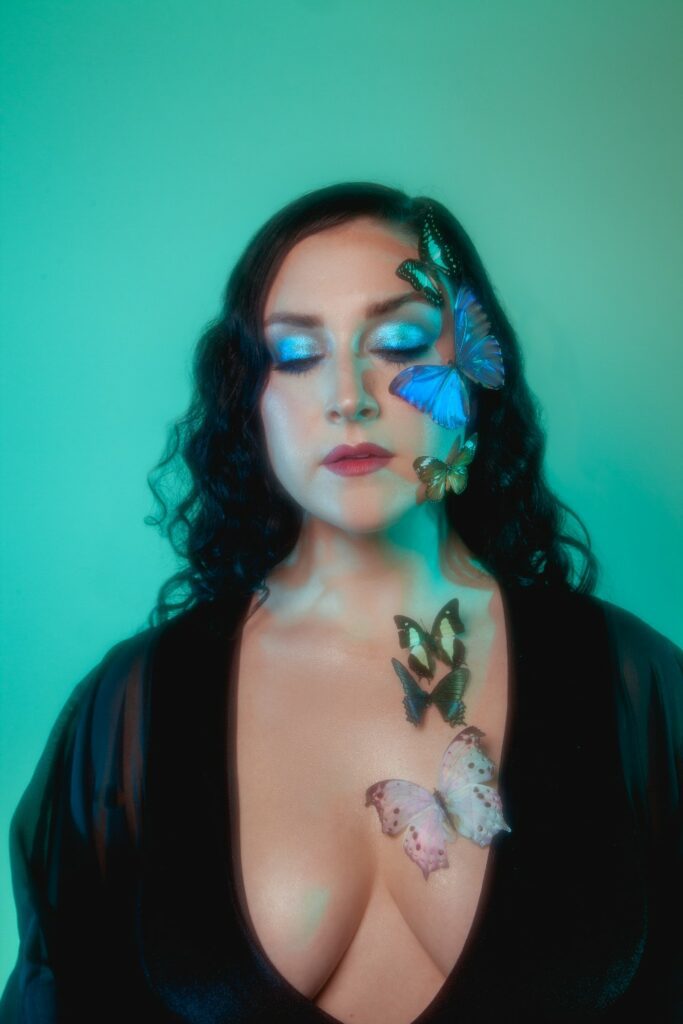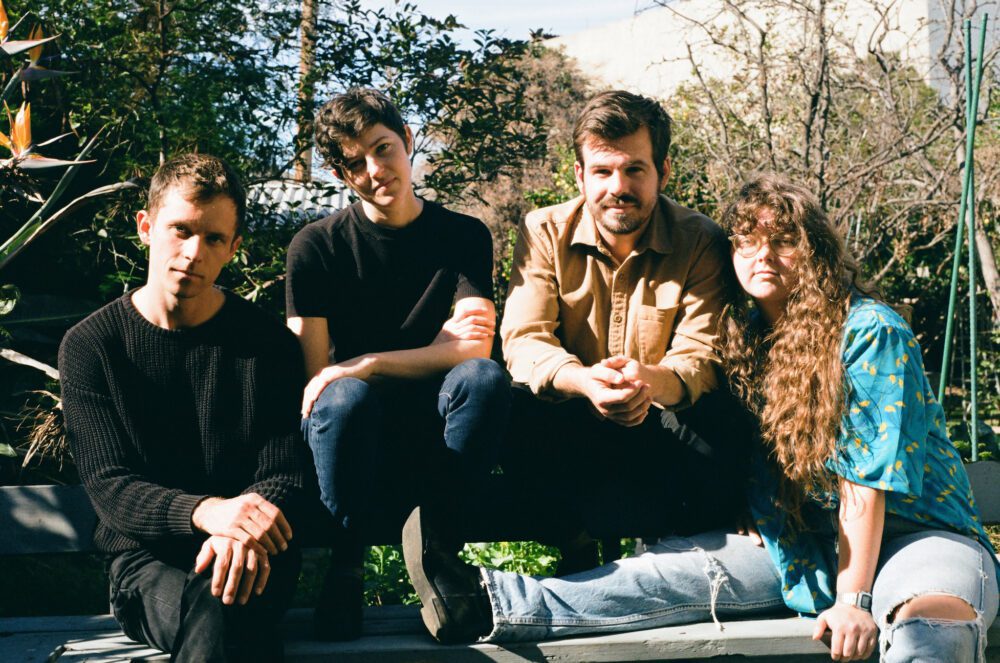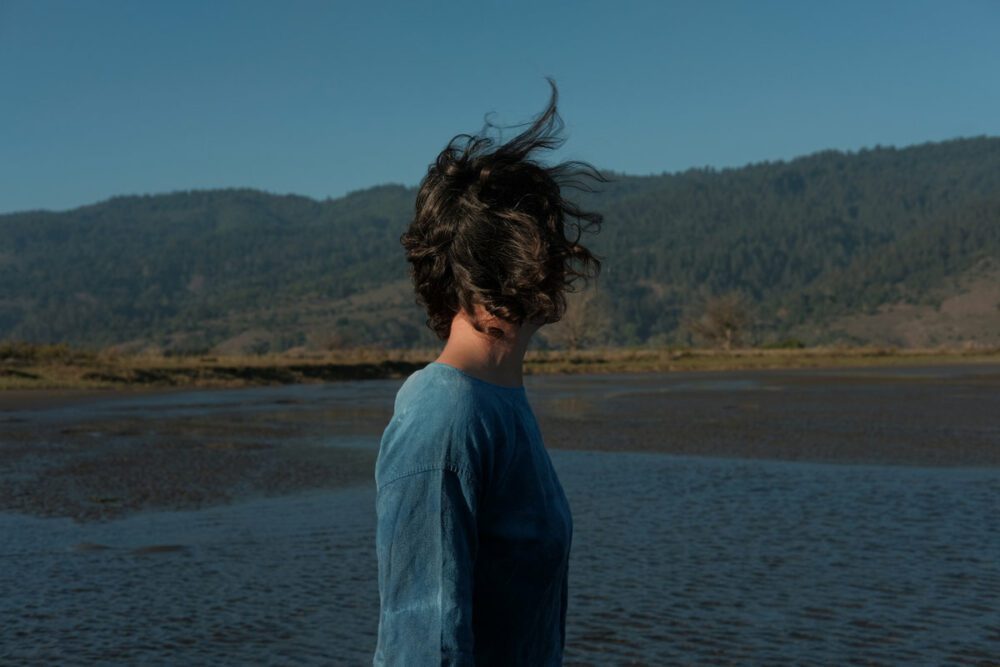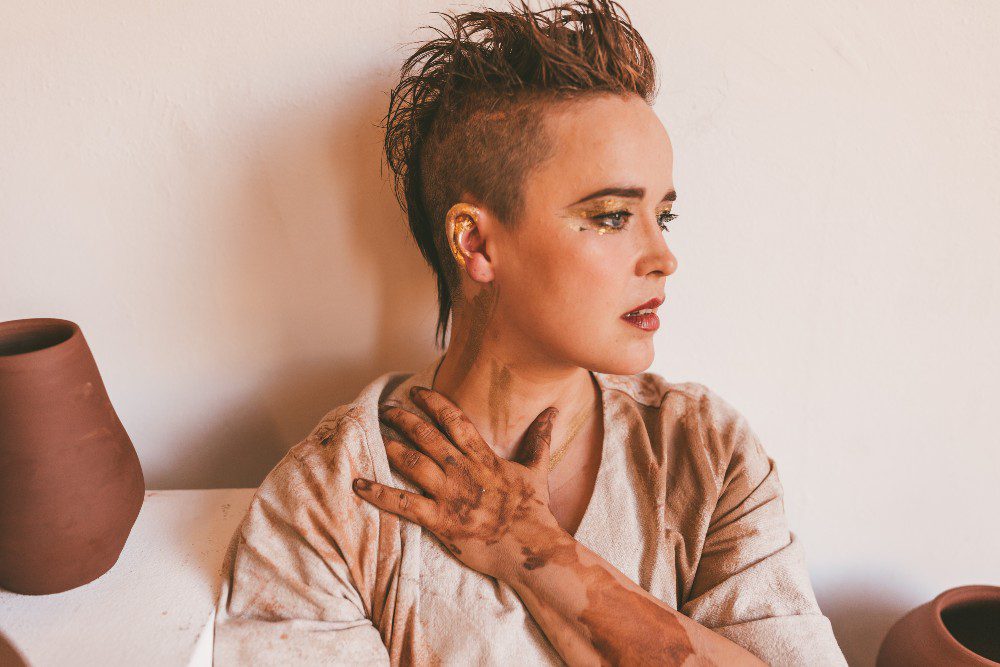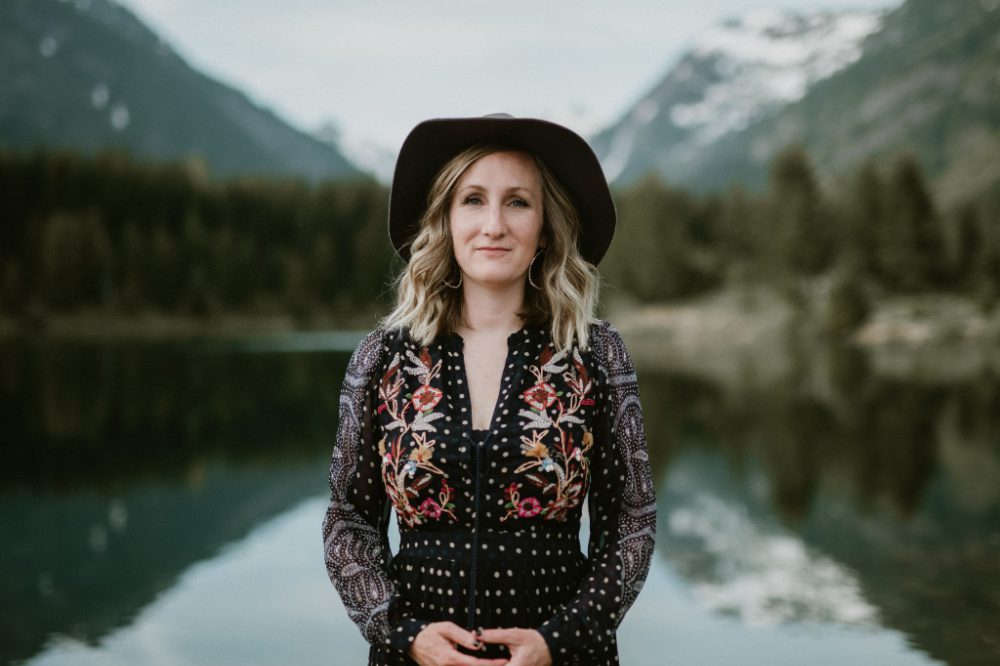
PREMIERE: Elise Davis Lets Worry Melt Away on New Single “Summertime”

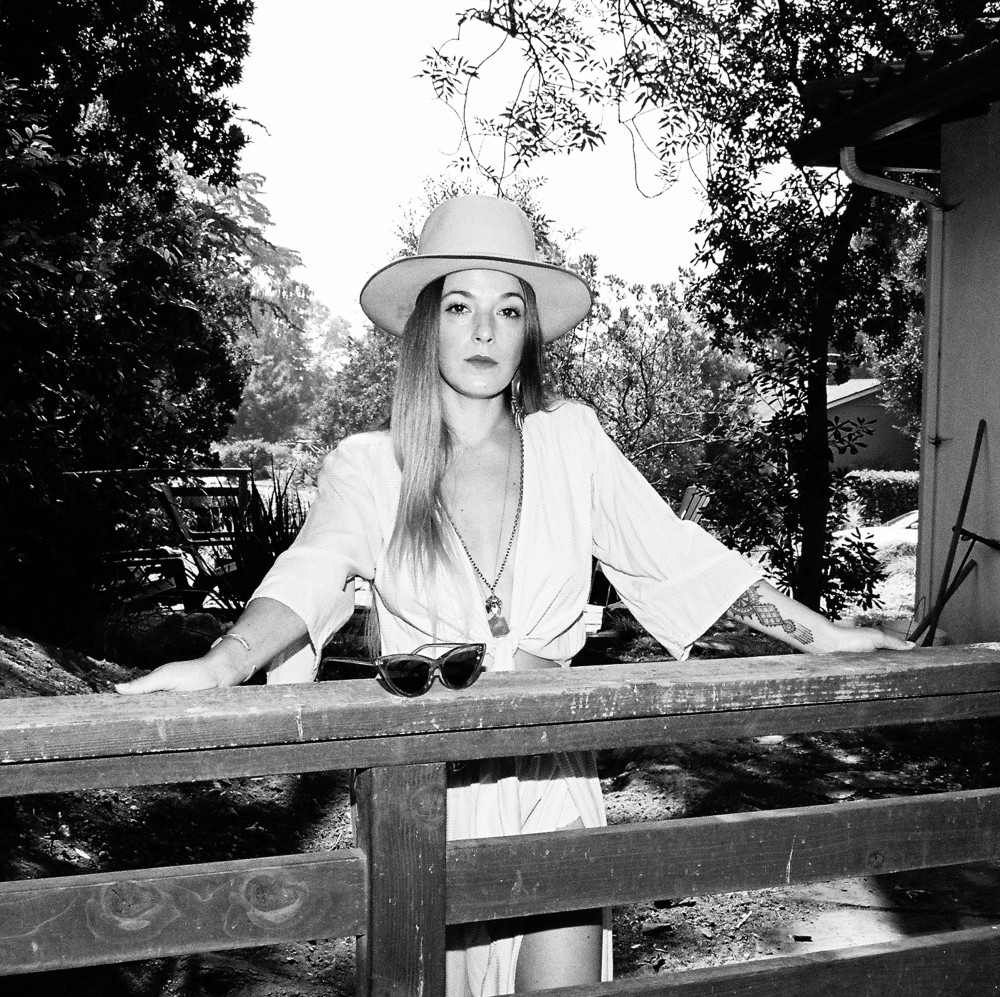
Photo Credit: Alysse Gafkjen

Elise Davis spent Nashville’s 2017 solar eclipse in a flamingo-hued dress, day-drinking and getting stoned with her bandmates. She was in the final mixing stages of her 2018 sophomore record Cactus, a manifesto on her life as a perpetually single about-to-be-thirty-something woman. While walking home, a familiar face pulled up along the road beside her and offered her a lift; she didn’t really know the guy, just that he was a good friend of one of her bandmates, but she went along for the ride. Less than three years later, she married the man who picked her up that evening, forever relinquishing her status as a hard-partying “Lone Wolf.”

“Isn’t it crazy how just one night can change your whole damn life?” she sings on “Flame Color,” a song commemorating that experience. It’s on her forthcoming record Anxious. Happy. Chill., out April 19 via Tone Tree, which touches on grounding her sometimes volatile emotions, entering her thirties with grace, and making a living as a musician. But for the most part, it’s about the monumental shift she felt as she fell in love and committed to someone else for the first time in her life. “There was a time I thought I knew exactly who I was inside/But I wasn’t right/Darkest of eyes/I watch them follow me and swallow me/It took me from a lonely life,” she muses on languid single “Yellow Bed,” an ode to blissful domestic intimacy.

“This was the first time in my life ever writing songs that were truly happy love songs – not like lustful, or like a crush excitement, like truly deep love songs for someone that I had agreed to spend the rest of my life with, which was a really huge and surprising thing for me,” Davis says. “But also, I’m still the same highly sensitive, off-and-on depressive anxious person that I was. This album is about love but it’s also about career worries and just accepting life for what it is – we’re all truly floating on a ball in space and nothing really matters anyway.” Thus, the title Anxious. Happy. Chill. felt like an appropriate and succinct way to sum up Davis’s state of mind. “It made me smile, it was direct, and something that I just felt fit this little batch of songs.”

Her latest single, “Summertime,” premiering today on Audiofemme, covers the “chill” prong of the album’s titular triumvirate, like a sunshine-soaked version of “My Favorite Things” – if Maria von Trapp had been a bit of a pothead. The song initially revolved around a guitar riff Davis had been playing around the house for weeks – but ironically, it’s billowy mellotron, soft snare brushes and sighing, cascading vocal overdubs that carry the song in its final state, giving it an especially dreamy vibe compared to the rest of the album.

That change came almost by accident – and speaks volumes to the process in which Davis recorded Anxious. Happy. Chill. Married on March 7th, 2020 at one of the last “normal” ceremonies Davis’s friends and family attended, she and her new husband watched the world change rapidly while on their honeymoon in the Arizona desert. Davis had scheduled studio time back in Nashville for April, before anyone was aware that a worldwide pandemic might impede the process.

“We had talked about having some different musicians and stuff come into the studio, and I do love to have a band in there where we try different things out – we play the songs through a few times, maybe record them live a couple times; we drink and we hang out and we eat dinner and we get back to it,” Davis says. “That whole part of it is fun to me… but that was obviously not something that we were gonna do anymore.” The session was limited to Davis and her producer Teddy Morgan, who was in a different room the entire time, “except for one day where we had a drummer come in, Fred Eltringham, who’s really great, long time drummer for Sheryl Crow. We wore masks, it was really strange.”

With just three players, it’s incredible how propulsive some of the songs on the album feel, like lead single “Ladybug” or “Thirty.” Davis has been pegged as an Americana artist, but wanted this album to lean into the “grungy, rough-around-the-edges gritty guitar stuff” of ’90s alt-greats like Liz Phair and Veruca Salt – no small feat, considering the skeleton crew that brought the album to life. But limiting the personnel pushed her in new directions; due to pandemic restraints and Morgan’s encouragement, she ended up playing a good deal of the guitar parts on her own (Morgan filled in the others).

“I’ve been a guitar player forever. I’m a solid rhythm player, but in the studio I wanna have the tastiest guitar players doing all this stuff, so I just never did it,” Davis says. Once she did, she realized that her attachment to the songs added a personal touch that made up for the perfection she sought on past projects. “There’s just something about the way that, when you play a song you wrote the way it’s in your head, affects the feel of it. It ended up being something I liked and will probably do more of next time around.”

But on “Summertime,” Morgan and Davis had an epiphany when the guitar track was muted. “Both of us looked at each other and were like, ‘Oh my God!’ even though it had been built on this guitar part that I loved so much. We took it away and the song felt so much more open and I instantly fell in love with it in an entirely different way.” As far as the lyrical content, “it’s very up front what it’s about,” Davis jokes, and the words came easily to her. The release dovetails nicely with the arrival of Daylight Savings Time, too. “When the sun is going down later and I can sit outside at night and just feel the world and have a garden again and all that, I just feel so much more connected with myself and so much more of a happier person,” Davis says.

Truly, the song is a balm after an apocalyptic winter, nothing if not soothing to the ears. But the act of writing pretty much anything at all has been vital to Davis’s mental health. She grew up in Arkansas, and began songwriting at the age of 12; her parents had refused to let her go to a Bush concert, and in a fit of anger she ran away, only to return and realize no one had noticed she was missing. That made her even more upset – but her guitar was waiting on her bed. “I locked myself in the bathroom and wrote this song about feeling really alone in a big house. Even though that was 20 years ago now, I’ll never forget that – it was like I had discovered this secret for myself,” Davis remembers. “I felt better afterward, and then it started to turn into like, right when I got home from school I would go up there and I would just write songs about whatever I was thinking or feeling. Now I’m 32, and it is truly a lifelong coping thing. Even if I write a song and it’s never gonna see the light of day, just the act of doing it, I think, is like an emotional release for my brain.”

Years ago, Davis had planned to make Little Rock her home base, but a security guard at a show she played in California told her she had to get out of Arkansas if she wanted to have a career. “We had this conversation that really stuck with me, and on that plane ride home from California, I decided I was gonna move to Nashville. I didn’t really have a plan, I didn’t know anyone there, had never been to Nashville before,” she says. But three weeks later she had an apartment and a waitressing job in Music City, and started playing shows soon after. “I look so fondly back on that time, cause it was so scary but so exciting.”

Within a year she was offered a publishing deal, essentially making songwriting her day job. “I was a salary-paid songwriter and I was going to Universal and Sony and all the different publishing companies. I’d have my schedule months out of songwriting appointments and I did that for about seven years as well as releasing my own records and touring,” Davis says, adding that she came to Nashville “the way a lot of young songwriters do, with stars in my eyes, knowing it was a place that would be good for me – and it really has been. I can’t imagine if I hadn’t done that, all the things I’ve learned and things I’ve been exposed to from moving here.”

Davis was grateful for the experience, but couldn’t ever really bend her talents to writing songs she didn’t relate to. “Maybe I’d have more money now, if I had tried a little harder to get other people to cut my songs, but that just doesn’t come naturally to me,” Davis says. “I always just really wanted to follow writing songs that felt fun and real for me, and I definitely was sent on a lot of co-writes over the years where it would be like, a producer guy who doesn’t really write songs and would just have a beat and was trying to do a bro country thing. Those, I’d just end up cutting them off early and seeing if they wanted to go grab a beer.”

She adds, “Most of the time, my ideas end up being so personal that I’m the main one that it would even make sense for me to sing,” noting that she did appreciate the fresh perspectives on songwriting ideas she couldn’t quite work out on her own. But ultimately, she decided to step away from her last publishing deal to focus on independent songwriting. “I think at the end of the day I actually prefer writing on my own more than with other people, except for a select couple that I’ve met from all the hundreds of people I’ve written with,” she says. “I still appreciate all the experiences that I’ve had, but it doesn’t compare to when I’ve smoked a joint and I’m sitting in my pajamas at 1am on my own bed. It’s not the same as when you go in to the [session].”

Elise Davis has always been comfortable saying what’s on her mind, but on Anxious.Happy.Chill. it seems she’s finally feeling comfortable with herself, despite incredible personal shifts. She’s gone from asking “With a night like that, who needs a honeymoon?” on bawdy Cactus ode to casual flings “Don’t Bring Me Flowers,” to making cosmic romantic gestures like “It may be true that all the light we see comes from stars that are dead or dying/Maybe they gave themselves for you and me to see how they shined while they were alive,” on a song that’s literally called “Honeymoon.” But what she’s saying, now or in the past, has always been authentically felt, and her unabashed honesty isn’t likely to change – it’s there in every note of the songs on Anxious.Happy.Chill., as well as the album’s collaged cover art, where Davis boldy positions herself alongside the things that matter most: tequila, weed, her sister’s dog, her cat Enchilada, her marriage, and her music.

Follow Elise Davis on Instagram for ongoing updates.
Madelyn Grant Finds Her “Purpose” on Motown-Indebted Debut EP

Photo Credit: Nomadic Madam

If you haven’t heard neo-soul artist Madelyn Grant’s name before, there’s a chance you’ve heard her voice. From being featured on tracks with huge EDM artists like Odesza and FKJ to a short stint on NBC’s The Voice back in 2019, Grant has been dipping her toes into the deep end of the music industry for at least half a decade. And although these experiences served as great learning opportunities for Grant, they didn’t allow her to do the one thing she felt was most important – telling her own story. On her bombshell of a debut EP, Purpose, Grant trades in catchy toplines for deeply personal, soulful songs focusing on growth, reflection and the meaning of life. 

“Ultimately, the EP is about transformation,” explains Grant. “What I went through when I wrote and recorded all these songs was an immense period of change… it was a pretty tumultuous time.” She started writing some of these songs right after graduating from the University of Michigan and coming off of a nationwide tour with electronic artist Emancipator. She went from singing to crowds of up to three thousand people to being back in Michigan, broke and wondering what her next move was. And so the transformation began. 

Grant’s experience with songwriting left her with mixed feelings about the music industry. Although she had been featured on songs that had hundreds of millions of streams, she didn’t feel that they represented who she was as an artist. She was getting dozens of emails a week from A&R reps asking her to write for other artists, when the real story she wanted to tell was her own. But she didn’t quite know what form it would take. “I wanted to figure out what my voice sounded like,” says Grant. “What does a Madelyn Grant melody sound like? What is my style? What am I trying to say?”

Sonically, Purpose is a mosaic of Grant’s most formative influences – Stevie Wonder, Aretha Franklin and Marvin Gaye. She refers to these artists as her “big three” in terms of the musical impact they had on her. Growing up in a suburb of Detroit, Grant says her dad was always playing the Motown greats around the house or in the car and that they played a huge role in her journey to finding her voice. It’s easy to hear remnants of Wonder in Grant’s buoyant melodies – especially in the opening line of the EP’s title track.

In perfectly controlled falsetto, Grant poses the question: “How do you measure/Happiness and pleasure?” And answers her own question with the refrain, “Let me take one guess/You base it off success.” Grant explains that her definition of success has changed over the years, molding to fit what makes her happy versus trying to match expectations set by others. “You have to forge your own path,” she says. “Every artist does it. No musician or artist has the same path to what they want to achieve and success isn’t determined around what other people say it is, it’s what you want it to be.” 

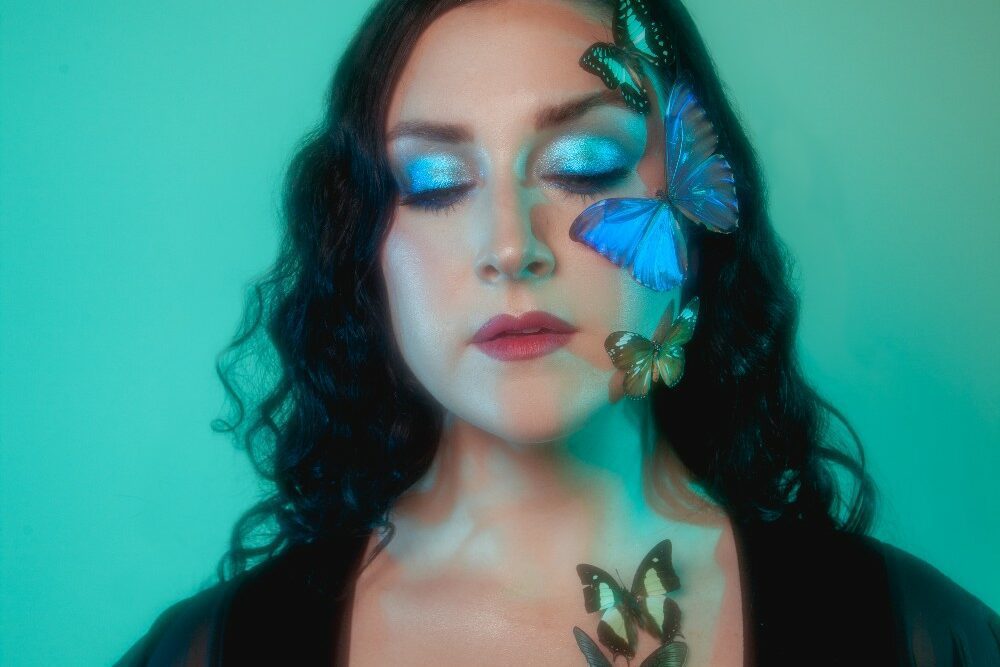
Part of Grant’s path was a period of immense struggle and emotional turmoil, eventually manifesting itself in this body of work. “I’m thinking back to what I was going through when I wrote all these songs, and it was a lot of really heavy stuff,” Grant muses. “I was in my mid-twenties and I just felt like there were parts of adulthood that I wasn’t really equipped to face, or parts of me recognizing I was struggling with my mental health… it was a lot of struggle but in the end, there’s something beautiful.” She likens the process of writing the record to the journey of a caterpillar to a butterfly, which is why all of the album art contains butterfly imagery. 

Grant’s metamorphosis is narrated throughout the record, from feeling cocooned and stationary in “Can’t Get Out,” to eventually breaking out of limiting mindsets and patterns in “Reasons.” And while there’s an apparent wanderlust to Grant’s lyrics in both of these songs, she explains that being in Detroit the past few years to record and release this EP has felt right. “It does really feel special to put out that music here,” says Grant, “because when I wrote it, that’s what I was really inspired by. It just feels like it’s at home here.”

Wherever Grant goes next, Purpose assures us that it will be on her terms, with her voice, telling her story. It’s a triumphant, uplifting EP centered on rebirth and self-reliance, reminding us that we are all the authors of our own fate.

Follow Madelyn Grant on Facebook and Instagram for ongoing updates.

Experimental Folk Meets West African Polyrhythms on Latest Kidi Band LP So Good

California-based experimental folk quartet Kidi Band doesn’t pull punches on their sophomore album So Good. Coming off the heels of 2016’s Gimme Gimme, the band’s new record takes their West African-inspired indie sound and cranks the volume up a notch.

Right from the first single “Mary (Merry),” lead vocalists Cari Stevens and Linnea Sablosky blow the door open on mysterious world full of shadows and light with their kinetic harmonies. The call and response between the two, alongside bandmates Steven Kai van Betten’s guitar and Cooper Wolken’s lower register, mix and melt on top of a cacophony of percussion. As the music narrows and the drums fade, a feeling close to religious fever takes over, voices echoing in a cathedral chamber, seeking a path to the heavens.

The four musicians initially met at a West African music class at Cal Arts in Santa Clarita. Van Betten wrote a song inspired the rhythms he was hearing in class. “It was an experiment to see if these rhythms that we were learning can integrate into a pop song format, to intentionally marry those two worlds together,” he explains. “We linked up and worked on this one song for a very, very long time.” That initial song, “After All Falls Down” from their first album Gimme Gimme, laid down a foundation for the band’s unique sound and set the standard for how they worked together.

“I think the studying of West African music, Ghanaian music, definitely had its strongest influence in the early stages of the band,” Wolken adds. “The instrumentation has been the longest holdover from that class, using this specific arrangement of percussion instruments and harmonized voices in the way that we do. It’s always been a part of the equation to have polyrhythms, which definitely draw a straight line from the study of that music.”

The name Kidi Band comes from a Ghanaian snare drum they used in class; originally the band stuck close to these traditional African instruments, and while they still use a shaker and bell, as time passed they have taken steps toward utilizing more Western sounds. “We just really want to be thoughtful. We know we’re all white people from America; we just so love the music that we got to study in college,” Stevens elaborates. “We’re inspired by it and I think step by step, as we’ve figured out more who we are as the four of us, it’s become more of our voice – still originating from that inspiration, but the further down the road we have gone, it’s been intentional not to take.”

“Imitation, integration, innovation” is a Kidi Band motto of sorts, and with their latest offering, So Good, the band leans into their own unique sound further, pushing themselves to write their own drum rhythms and patterns outside of the traditional Ghanaian ones they learned in school. The album’s through line is a playful sense of impending doom, a tickle of existential dread. While to a listener it may seem purposeful, the theme was organic in nature.

“It’s interesting to think about the way that the lyrics of the different songs bounce off of each other,” Stevens says, ruminating on a master doc Sablosky had recently made of all the lyrics. “A lot of these songs don’t have any lyrics. So they’re almost a little vague, but when you pit it next to this song that’s very specific it kind of colors the minimalism of the other songs, which makes them fit together in kind of an existential way.”

Take, for instance, the robotic staccato of questions posed on “Free Will”: “Why do I do what I do when I do it/Why do I choose what I choose when I choose it/Am I in control of my body and mind/Or am I just false identifying?/Where is the origin of thought/If not from I, then where and why/As hard as I try I cannot say that I know my own mind/So does this mean that I am just a puppet on a string/Governed by my past experiences and biology.” Van Betten wrote the lyrics before the melody on this single, a change of habit from the intricate soundscapes he normally brings to the table. The single, while appearing midway through the album, is a touchstone of sorts; once heard, it reverberates across the rest of the music, adding a darker tone to even the lightest of songs.

“Writing a song for Kidi Band is especially fun because we often joke that Cari and Linnea are singing machines,” Wolken said with a laugh. “They can do crazy hard things. So knowing that when you’re writing a song, you can say, ‘Oh in this section I want a part that sounds like a computer could do it’ – and then they just do it. It’s like a superpower.”

It’s true that the pair are often conjoined musically, two echoes of a whole. On many of the songs throughout the album – “50/50,” So Good,” “Under The Blue Sky” to name a few – their sound mirrors early Beatles albums, where John and Paul’s voices are almost indistinguishable from one another. It makes solos stand out, especially the rich timber of Wolken’s voice, which normally supports their upper register.

“The lyrics themselves we write individually,” Sablosky explains. “So one of us would come to the group with a skeleton of a song and it would have most of the lyrics, if not all of the lyrics already. And the rest of us would help arrange it.” Because all four artists know the songs will be taken apart and put back together as a group, they write with that knowledge from start, thinking at the time of composition: How will this be sung by Linnea and Cari? What part will Cooper take? Is there enough space left for Steven’s guitar?

It’s a communal process that is second nature to them now, with each person (other than van Betten) shifting instruments on any given song. “There’s a kind of flexibility, a connective progression of the way that we’ve built the songs and orchestrated them together, which I think creates and lends itself to that organic sensibility that you’re feeling as a listener,” Stevens says. “So it’s less that we brought them in and were like ‘Let’s make these work together’ and more that we didn’t have to think about making them work together because that’s just how we make songs as a band.”

“I looked out across the sea, asking what it has in store for me/Questions that I ask perpetually are answers in themselves,” goes the freewheeling loop on “Across The Sea,” a song that Stevens brought to the table. She wrote it while thinking about life after college, the wide expanse outside her dormitory walls. It’s tenderly arranged, with each of her bandmates taking a turn at leading the loop, offering a glimpse at each performer’s individuality, a little taste of what each person’s tones are like without one another.

The band recorded So Good in October 2017, but only recently felt the timing was right to release it. The recording has a certain kind of ethos – the idea that music can be made without ego, that music can be made with a solid baseline and four artists reverberating off each other in time. “Anybody or everybody could be singing at any time, everybody’s gonna share the responsibility of creating the groove,” Wolken says, describing the Kidi Band writing process. “It’s nice that it takes less – it can just have an idea for a verse or a melody and it goes through the Kidi Band filter and becomes something much better than anticipated.”

The band is currently making music individually, since COVID doesn’t allow for the kind of intimacy needed for the project as a whole. In the meantime, focusing on So Good has given them some hope for performing again in the near future. They step forward together, with reverence for where the music comes from and the people who taught it to them – and with a sense of daring and the confidence of people who’ve found their groove.

Follow Kidi Band on Facebook and Instagram for ongoing updates.

Kelly McFarling Relishes the Lushness of a Lost Time on Deep The Habit

As we reach the year anniversary of the pandemic and all of the disarray it has brought into our lives, people have begun to reflect on how it’s changed them. One such person is Bay Area singer-songwriter Kelly McFarling, who released her latest LP Deep The Habit on March 12. She recorded the album pre-COVID but chose to delay the release until now. Rather than worrying about how some of the original meaning might be lost, however, she hopes that it has become all the more poignant; calling Deep The Habit “a very beautiful time capsule of this group of people who I really miss a lot,” McFarling admits that although so much has changed, “it feels nice to celebrate it right now.”

The delightfully mellow collection of ten songs is welcome in this new paradigm, comforting in its warmth and its new spin on old classics. McFarling intended for the record to sound like a feminine take on J.J. Cale or Dire Straits. She felt “like there was a little gap in that canon,” saying, “I wasn’t hearing a lot of female voices within that realm, and I kind of wanted to have more of a female-fronted version of that.” But McFarling infuses this traditionally masculine, bluesy-Americana sound with softness and vulnerability, giving us something refreshing and honestly soothing. Moments of pop sheen, like the hook on “Birds,” give the record a touch of witchy Stevie Nicks cool, and McFarling’s refinement of her folk sound on previous records (like 2017’s Water Dog, 2013’s Ridgeline, and 2010 debut Distractible Child) calls to mind Hiss Golden Messenger or Molly Sarlé. 

There’s a lushness to Deep The Habit, one born of McFarling’s effort to highlight the talent of the musicians she has playing in her band (Tim Marcus on pedal steel, Oscar Westesson on bass, Nick Cobbett on drums, Andrew Brennan on guitar, and Brittany Powers on backing vocals). “I think it’s kind of an evolution we’ve been doing, of folk music into a more lush, rock album,” she explains. “More instrumentation, more complex arrangements for a band. My previous album was a lot more stripped down, in a folk realm. [On Deep The Habit] I was going for something that would really showcase the band that I’m playing with right now.” 

She names family as the major theme of the album, but notes that the word has many connotations – “questions about family, about whether or not to have a family… the family I’m building in my life.” On a more macrocosmic level, the theme of “family” as it relates to humanity in general (and the demise of our planet as we know it) haunts the listener as McFarling croons “Am I the last of my kind?” over and over on the hook of “Last of My Kind.” “I think another major theme is connection to the natural world, and having that tie into family as being a citizen of the planet and the changes that are happening there – just feeling a lot of sadness about that,” she says.

These musings on family and humanity are more poignant in March 2021 than they ever could have been in early March 2020; many of us are at a point where we’ve never gone so long without seeing our families and loved ones, while having also been robbed of the daily interactions that instill our lives with a sense of familiarity and comfort. McFarling acknowledges this, saying, “It is interesting to me how many of those themes were coming up, and maybe even being foreshadowed before this all happened. I’m sure people will perceive it differently based on the pandemic, but it was all [written] before.”

This consideration makes the idea of a time capsule all the more dynamic, something living inside us and changing with us, as opposed to something buried deep in the ground. The resentments and frustrations we might have felt of those close to us maybe don’t glare the same way they used to, in the absence of these same people. And alternatively, the joy and pleasure we felt in their company becomes all the more precious and golden in hindsight.

The concept of family has become more dynamic for McFarling in this time as well, as it relates to her relationship with her partner, co-producer, and guitarist Andrew Brennan. Quarantined together, they’ve begun to collaborate musically more than ever, though she emphasizes that he already was a major part of Deep The Habit. “Andrew is one of the major evolutions of this record we’re about to put out as well, because he has a huge part in the arrangement and some of the writing, getting it ready for this big band,” she explains. “I feel like the record we’ve been making during quarantine has been the next step in that collaboration.”

While some bemoan long empty hours and too much togetherness, McFarling basks in the positive aspects of it. “I tend to get inspired when things are a little foundationless and tricky, so this time has been ripe for that,” she says. “My husband and I are stuck in a house and we are using that time to write songs together, which has been really beautiful.” 

She heads back into the studio to record another album in May, noting how weird it is to be recording and releasing an album at the same time, no album cycle, no tour. More than anything else, she wants the listener to take from this album its overarching joy, despite its deep themes and sometimes melancholy sound. “I think a lot of that has to do with the band and how joyful it was to play music together. You can hear that in the way that these songs came out,” she says. “The joy that comes through in the record makes me appreciate that we got to do that. I know that we’ll get to do it again, but not getting to do it, and then hearing the songs, and hearing the sounds together is bittersweet – but also hopeful for me.”

In the end, that’s all any of us can do when life throws us the unexpected – try not worry about what’s out of our control and find joy in what is. Kelly McFarling sums it up nicely on album track “Just As Small”: “You can see just how small you really are/While we aim for what is coming/And we ache for what is gone.”

Follow Kelly McFarling on Facebook and Instagram for ongoing updates.

Tori Helene Teams Up with Natown on Latest Single “Detached”

Cincinnati-based singer/ songwriter Tori Helene has joined forces with frequent collaborator and producer Natown for her first single of the year, “Detached.” Helene says it’s one of her “most empowering” songs yet. “At the time when I was writing this song, I was feeling emotional and dealing with this specific situation that felt pretty one-sided,” she tells Audiofemme. “So, [‘Detached’] was me speaking my truth and my feelings to that person and the situation.”

Helene, who’s made atmospheric vocals and relationship drama her melodic bread and butter, shines on Natown’s minimalistic production. “It’s clear that you just come around only when you get bored/I go along with it though I don’t know what I’m staying for,” she sings, about feeling overlooked by a lover and refusing to settle for less. “You won’t put no time in it/So I won’t put no hope in it.”

Helene finds the courage to walk away from the relationship on the track’s earworm chorus. “Don’t stop me when I leave, ‘cause I ain’t doin’ nothing wrong/And baby I just wanna do me, so I ain’t doin’ nothing wrong,” she croons. 

“Detached” is an accurate sampling of what Helene does best. She consistently serves up the self-assuredness and unapologetic confidence we all want to have, while never losing a relatable sense of vulnerability. “I was really feeling [this song] when I was recording it,” she says of the track.

Helene says that “Detached” was actually written and recorded during sessions for a project that was supposed to come out in 2020 called Chainless. “I decided to start a new project instead,” she explains simply. “[‘Detached’] was one of my favorite songs on there, so I had to release it as a single.” Although she ended up scrapping Chainless, Helene says she may release one other song made during the recording sessions as a future single, and is planning to release her next EP this summer. 

“[It] has a whole different sound and vibe that I’m pretty excited about,” she says of the project. “I’m releasing it in early summer and there are two features on it. That’s all I can say for right now.”

The currently untitled effort will mark Helene’s first project since her 2019 EP, Delusional, which featured Cincinnati rapper D-Eight. Helene followed up the effort with three singles last year, “Get It Right,” “If You’re Lucky” and “Sitting Pretty,” the latter two of which arrived with videos that did not disappoint. Helene says fans can be on the lookout for a “Detached” visual soon.

Turning the conversation over to Women’s History Month and female representation in Cincinnati’s music scene, Helene says the city could be doing better. While Cincy has enjoyed vibrant blooms in hip hop, pop and R&B music the past few years, it’s remained, unfortunately, a bit one-sided. 

“I feel like [women] should be represented more,” Helene says, recommending Elle and LXXS. “I feel like the female artists are overlooked a lot of the time, especially female singers.” With her commanding presence, Tori Helene is certain to be among the Cincinnati artists who will change that.

Follow Tori Helene on Instagram for ongoing updates.
PREMIERE: Valeree Preaches Sexual Liberation in “Deity” Video

Some people view spirituality and sexuality as two conflicting forces — which is precisely why indie soul-pop artist Megan Mortensen (known by her stage name Valeree) decided to wed them in her latest single, “Deity,” an ode to the consciousness-elevating power of sex.

“I’ll be your deity, fall to your knees/Oh, honey, pray to me, between the sheets/Get down and start to confess/Come into the church between my legs,” her powerful voice soars in the chorus, against soulful piano. Blatantly sensual, with R&B influences that showcase Valeree’s impressive vocal range, the song borrows undeniable lyrical inspiration from Hozier’s “Take Me to Church.”

“I always thought that the concept of sex and religion in a song was interesting — it feels dangerous,” Mortensen says. She was raised without a religion but grew up among religious people, and became interested in how religious dogma affects believers’ sexuality, since she didn’t feel those same pressures.

“I’ve noticed that a lot of stuff is taboo, like sex before marriage,” she explains. “And having not grown up with that, I don’t get it at all. I don’t really understand why that would be the case, why it’s supposed to be this thing that’s just for procreating.”

The song unabashedly celebrates sex as a way to commune with a higher force rather than an affront to the divine — as does the video, premiering today, where Valeree dances sensually in lingerie and boots and stands under a waterfall in a white gown while belting “hallelujah.”

In order to make sure the video came from a woman’s perspective, Mortensen co-directed it. “It was really important to me that this wasn’t a video that was just showing me for the male gaze or some guy behind the camera,” she says. “I wanted it to feel like I am in power, so you’ll notice quite a few angles [where the camera is] looking up, which shows a power dynamic. I wanted it to be sexy because it’s supposed to be about me feeling sexy and feeling empowered and whoever’s hearing it being a part of it, but for my own eyes — not the eyes of somebody else.”

Mortensen also aimed to convey her own sense of femininity in the video. “For me, something that makes me feel in touch with my feminine side is sex,” she says. “The part of me that feels powerful also feels feminine to me. I equate those two things, but I feel like it’s up to each individual what makes them feel feminine.”

Mortensen wrote “Deity” two years ago; last year, she and her producer did pre-production over Zoom before a socially distanced recording, where she instructed her band to play in the style of Fiona Apple’s “Slow Like Honey.” The song is included on her second EP, it’s fine, I’m fine, which comes out March 19 and includes her previous single “Broke,” a mix of Motown and modern production, and something of an ode to Etta James that also manages to address themes of feminism and capitalism.

The LA-based singer, who works as a server at two restaurants when she’s not making music, has been playing piano since she was little and began performing at bars around LA at age 17. She put out her first single, “Masochist,” in 2019 and released a debut EP by the same name in 2020. With another single on the way, she plans to keep releasing songs until she’s ready to record a proper full-length debut, which she has already written.

Several of her previous songs, perhaps most obviously “Any Other Way” on Masochist, have sensual vibes similar to “Deity,” and she hopes her music can help people – especially women and non-binary folks, view their sexuality as something that exists for themselves, rather than for others. “Women have been sexually abused and viewed as objects and viewed as property of men for so long that I think it’s a huge deal to take that back,” she says.

“There’s all these double standards — men come out with these songs all the time about fucking women and it’s celebrated, and you look at the backlash of Cardi B and it’s a completely different story,” she adds. “I want to change that narrative. I feel like I’ve been treated as an object, and I’ve seen so many other women and non-men deal with that, and I think a huge part of changing that is representation and showing things like women saying ‘I’m in charge of my body and I’m proud of it and if I want to have sex I’m gonna have sex; it’s not up to you.'”

Follow Valeree on Instagram and Facebook for ongoing updates.

Mel Chanté Constructs Debut EP Flo from Poetic Self-Love Affirmations

Photo Credit: Briannia Walters

Self love – the kind that stretches far outside the limits of a bath bomb – doesn’t happen overnight. It takes years of re-teaching yourself and connecting with and discovering the person that you truly are. On Flo, the debut EP from Mel Chanté, the Brooklyn-based poet, rapper and affirmation advocate shows a fully formed version of an artist in love with herself, her higher power and her practice. 

On Flo opener “The Mission,” Chanté is clear about her intentions: “Know to love yourself from the soul is the only mission.” Even if the world is burning around you, even if you’re experiencing extreme loss, even if it feels really, really hard – loving yourself is the most important thing there is. Chanté outlines a few ways to achieve this, starting with manifestation. “When belief in yourself and spirit is ignited/And your dreams you envision/Then sit down and write it so it’s written.” Sometimes, the simple act of writing down your dreams and desires can be the stepping stone to accomplishing your dreams. Some people may scoff at the idea of manifestation, but no matter what you believe of its mystical powers, there is something to be said about believing in yourself. And Chanté knows that. 

She also knows that part of loving your inner self is loving your outer self. “Temple” is an ode to just that – a love letter to the vessel that contains the self. Chanté describes herself in the words of someone describing a work of art. “Ain’t no stopping this melanin/Glistening /Skin dipped in chocolate topped with cinnamon/Sweet infinite eyes and prized intimates.” Her poetic lyrics are a wonder in themselves, but the perceived mastery she has over her own self-image is another.

Chanté says that this confidence is something that has taken time to cultivate. “I’m sure it’s evolved to this point and it’s still evolving. I just take it day by day,” she says. And although she dedicates “Temple” to honoring her divine self, she doesn’t close off the opportunity to others, saying,  “Bringing honor to my body – if it be temple then pray somebody.” It feels like the highest form of sensuality – accepting and admiring yourself completely, and finding someone who mirrors that. 

It’s clear that Chanté is a poet first. Her delivery is clear, emphatic and metaphorical, much like her debut volume of poetry, Brown Butter. She first started writing poetry at age eleven and was introduced to the piano around the same time; poetry came naturally to her, and putting it to music did, too. Her mother – for whom the EP is named – always emphasized the power of positive thinking, and her father was a musician; it seems Chanté inherited the best from both of her parents. Tragically, her father passed away before getting to see her realize her musical talents. 

“My mom was always big on positive words growing up, my father too,” says Chanté. “I had moved to New York [from Boston] and six months later my father passed… I  started writing letters to him every day and from there it just was a way for me to affirm things within myself and let things go and talk to him but also talk to myself.”

The loss was a huge blow to Chanté, but she says that she drew inspiration from her father’s resilient spirit. “He’s a musician, he’s the one who bought me my keyboard… he was just so passionate about his passions and his gifts,” Chanté remembers. “Even when he was in the hospital he was still posting his videos about his surgeries and stuff – it was just inspiring to see him still grasping at his dreams when he was in the position he was in. I feel like that just kind of sparked a flame in me to do what I can with the life that I have.”

Chanté found solace in her affirmations, and quickly discovered that others did, too. She started sharing daily affirmations on social media and people would reach out to her to tell her how much it meant to them. That turned into followers sharing their affirmations with her. She used this opportunity to create a platform and podcast called Vow to Self, where anyone can share their affirmations. This platform feels like an organic pairing with her uplifting and reflective rapping. She also hosts a meditation podcast on The Shine App called The Daily Shine.

Aside from infusing affirmations into her music, Chanté practices them daily. Among her favorites: “I am inspiring millions;” “I am attracted to abundance, abundance is attracted to me;” “I am present I am here I am now;” “The divine love I am seeking is also seeking me.” With affirmations that sound like poetry in and of themselves, it’s no wonder that Mel Chanté is so on point, and only fitting that Flo reflects that.

Follow Mel Chanté on Instagram for ongoing updates.
Australian Soul Royalty Renée Geyer Kickstarts Post-Pandemic Tour

Renée Geyer is a soul superstar in Australia. She is vaunted by various scenes, from jazz to soul to rock and blues. She is regal and rockstar at once, with high cheekbones and a cheeky smile. At 67, she knows her voice, her body, herself. And it’s been a ride thus far, with addictions and illness obstructing an easy path, which was never promised to women who want to work in the arts for a living in Australia anyway.

Perhaps that explains why Geyer is on the defence, known for her aggressive attitude toward journalists and anyone who she perceives to be wasting her time. I am warned by an industry insider that if she doesn’t like the direction of an interview, she’ll simply hang up. I rise to the challenge and make it three minutes in before Geyer accuses me of asking “a stupid question” and promptly disconnects our call. I allow the fumes to clear and try again. Why am I persisting? Because Geyer deserves to be known for her wicked talent, even if it means a verbal laceration.

“I’m known for doing things my way,” says Geyer, the next day. “I’ve gotten in trouble many times because I’ve stuck to my guns.”

In 1974, Geyer struck success with her second studio album, It’s A Man’s Man’s World (RCA) and rocketed onto the international stage as a backup singer for Sting, Chaka Khan, Joe Cocker and Toni Childs amongst others. She contributed vocals to albums by Neil Diamond, Sting and Australian rockers Men At Work, which kept her afloat in the decade she lived in the US from the mid-80s to mid-90s. As “a white Hungarian Jew from Australia sounding like a 65-year-old Black man from Alabama” (per her autobiography), she wasn’t easily marketable in the States and didn’t ever strike commercial success as a solo singer.

Australia proved more fertile ground for Geyer. Her 2003 album of soul, funk and R&B covers, Tenderland, reached number 11 on the ARIA (Australian Recording Industry Association) album charts. It was her eleventh album, and her throaty, smoky-voiced magic resculpted Prince’s “Thieves in the Temple,” Marvin Gaye’s “Sexual Healing,” Leon Russell’s “A Song for You,” and Curtis Mayfield’s “The Makings of You.” Two years later, she was inducted into the ARIA Hall of Fame.

She’d released her autobiography only years before. Confessions of a Difficult Woman was published in 2000, revealing her struggles with drug addiction and her rocky career trajectory. “I didn’t reveal everything,” laughs Geyer when I ask her about her autobiography being so candid. “Of course, there was some things I was not going to say, but I’m happy with the balance.”

As a child, Geyer had to confront the traumas of her family, not the least of which was being named after a Holocaust survivor who had assisted Geyer’s mother in Auschwitz. The family had moved from Hungary to Sydney, Australia to run a migrant hostel when Geyer was very young. Geyer attended various schools and was expelled from a prominent private school for petty stealing.

At 16, Geyer joined jazz-blues band Dry Red, which set her on the path to her now five-decade strong career. She went on to play with jazz-rock outfit Sun and R&B-influenced band Mother Earth before signing with RCA Records in 1973 as a solo act. Her debut self-titled album came out in 1973, comprising cover versions of songs by Bob Dylan (“Just Like a Woman”), Bill Withers (“Lean on Me”), Buddy Miles (“Them Changes”) and Van Morrison (“Moondance”). It was swiftly followed by It’s a Man’s Man’s World in 1974, but Geyer had tired of RCA’s demands that she not record her original material and hungered for her contract to end.

It was at this point that Geyer made the acquaintance of Michael Gudinski, who passed away in Melbourne earlier this month after a lifetime leading Mushroom Records and championing some of Australia’s best known music acts. Geyer struck a deal with Gudinski that meant she could record with Mushroom Records and her albums and singles would be released with a Mushroom logo stamped on the label. The first release under the new contract was Ready to Deal in 1975. “We’ve always been good friends, for forty years,” says Geyer.

Geyer was prolific from that point on, recording both studio and live albums, releasing her autobiography and performing live. Things came to a head in 2011, when Geyer crashed into parked cars, a tree and finally a shop front and was charged with careless driving. Her public response was to blame her driving on the drug she was taking to treat breast cancer. The intrusion into her private life was jarring. But if anyone is accustomed to public interest into her private life, and stripping away all illusions, it is Geyer. Confessions of a Difficult Woman revealed three near-fatal drug overdoses, six abortions and a battle with depression.

Understandably, Geyer is defensive about her private life and feels vulnerable when journalists pry into it. So, ultimately, the music must speak for her. The morning of our interview, I heard her version of “Soul Groove ’66” on Melbourne radio station 3RRR. The radio host was playing a tribute to long-time PBS FM host Pierre Baroni, who lost a battle with cancer on March 9 of this year. Geyer’s masterful rendition was recorded at Baroni’s request, in his studio. “At the time it wasn’t that significant, it was just a project he wanted me to do,” Geyer says. “It’s only with time that it’s become significant.”

Geyer’s most significant song, “It’s A Man’s, Man’s World” is inevitably always on the setlist, and will be when she plays upcoming Melbourne gigs, kicking off with MEMO Music Hall in St Kilda on March 20. While she’s had to postpone her tour, she’ll be in New Zealand in November this year. “I have a big Maori following in New Zealand, I’m very happy about that,” she says.

Perhaps it’s due to the hardships Geyer has faced, or the ferocity with which she lives on, but there is a unique fire that Geyer brings to everything she sings. Still, she is quick to point out that some of the most startling moments in her catalogue were never really hers to begin with – and that’s fine. “It’s always someone else’s song, whoever wrote the song,” says Geyer. “That I can do my own version is the sign of a great song, the fact you can do it many different ways. It’s always the writer’s song.”

Follow Renée Geyer on Facebook for ongoing updates.

Doohickey Cubicle Find a Groove in a Broken World on Don’t Fix Anything ;) LP

Photo Credit: Jordyn Taylor-Robins

While entertaining a cheeky approach to music, there’s one thing Alli Deleo and Francis Hooper don’t joke around about – that is, producing captivating, dreamy tracks. Formerly known as Booty EP, the synth-pop duo released their debut album Don’t Fix Anything ;) March 12th under a fresh new name – Doohickey Cubicle

Tracing their origins back to 2015, the dexterous musicians were united when Deleo was hired to create light and visual projections for Hooper’s band Goodwood Atoms. The Vancouver-based duo relished in the act of casually jamming together, sharing their common creative interests and musical talent. Surrounded by a plethora of electro gear lounging around their live-in studio, the group started throwing together tunes and hosting live shows with local bands. Hooper and Deleo easily impressed audiences with their laid-back, playful energy on stage and immersive, awe-inspiring DIY visuals and light projections. Without taking themselves too seriously, Doohickey Cubicle endeavored to release a slew of self-produced singles while retaining their quirky nature via whimsical lyrics, irreverent song titles, and even their nonsensical band name.

“Sign Here” is a fitting way to open the record, in that it demonstrates the group’s nod to their jazzier influences with dancy beats, velvety harmonic vocals, bass hooks and a groovy sax appearance; a remix by Canadian electronic duo Blue Hawaii offers another chance for listeners to get on their feet and get moving by the album’s end. In between, “Milano Sport,” “Thinking,” and “Mildly Concerned” evoke a funkier, slower vibe with clouds of a lo-fi haze spewing out from the keys. “Hotel Beds” carries on in slowing the beat down and brings the listener into an alternate reality of a late-night jazz club. Feel-good tune “Forever” keeps spirits up in reference to the more earnest notion of wanting perpetually to stay in a state of bliss with its cascade of electronic notes coupled with jazzy beats.

As primarily self-taught musicians, both Deleo and Hooper cultivate their collaborative project with varying, unique musical backgrounds. Hooper’s academic experience in sound design and production combined with Deleo’s lyrical focus and musical upbringing gives the pair an advantage in enticing music production. “Francis can get lost in mixing for hours and can completely zone out,” Deleo explains. “I can come in with fresh ears and hear where it’s at and say ‘what about a vocal harmony?’ It’s a healthy balance of Francis going in deep and me coming in and surface cleaning it.”

Satisfying their thirst for creative expression, Doohickey Cubicle embraces the metamorphic process as their songs shift and take shape over time. Collaboration with fellow musicians is most inspiring, and the pair keeps their grind flowing with musical input from drummer Kai Basanta and saxist Mark Sutherland. “We try and collaborate with musicians specifically,” Deleo explains. “I think it’s important to have other people poke in at a certain part of the process.”

Rooted in smooth, honeyed vibrations of analog synths, Doohickey Cubicle don’t stop at exclusively mellow electronic beats and chord progressions. Drawn primarily to the lively, funky rhythms of nu jazz, the band alludes to artists such as Salami Rose Joe Louis, Khruangbin, Beverly Glen Copeland and Crumb. Deleo’s ear gravitates towards Toronto singer-songwriter Eliza Neimi’s catchy and cathartic way with words, giving her immense cravings for vibrant textual concepts of music. “I’m in a phase where lyrics mean so much to me,” describes Deleo. “I think that’s telling of the kind of year and a half it’s been. With so many ups and downs – but mostly downs – I’m so infatuated with lyrics that speak to me.”

Deleo’s own lyrical approach hinges on emotive effects without feeling bogged down by the drag of melodrama. Keeping it light, the album’s title Don’t Fix Anything ;) is a tongue-in-cheek prelude the LP’s overall attitude, like a parent attempting to cheer up their pouty kid with the teasing phrase “don’t smile.” Deleo gets the kid giggling in the background of a lo-fi jam sequence on “~Interlude~” by cooing the titular expression in baby-talk, knowing too well there’s plenty of changes that need to be made in the world. Throwing in an added dose of sarcasm, “Sign Here” mocks the rather negative influences of consumerism as Deleo lets out a chuckle in between singing, “I can be happy/Hahahahaha/I will be quite thrilled if only I/Had more things than I think are needed.”

With its contemplative, yet cheeky lyrics and smooth mix of chill and upbeat tones, the allure of dancing and laughing along with Doohickey Cubicle is hard to resist. The duo hopes to offer an open-ended experience for all simply to enjoy. “If you want to feel the emotions that’s an option,” Deleo states. “I’d rather someone just take it and apply it to however they want. I hope that people can listen to [the album] and feel joy, [as if] you’re just hanging out and getting lost in feeling the enjoyment.”

Follow Doohickey Cubicle on Instagram for ongoing updates.
Hunter Moreau Taps the Carefree Vibe of a Rooftop Party with “Hazy”

About two years ago, Hunter Moreau was lying in bed, recovering from a life-threatening surgery. During this time, she was also facing the obstacles of growing up. Was she going to college to pursue Public Relations, like she had planned on doing? While calculating her next steps in the midst of healing, her first single, “Drive In,” came into fruition. The song was released to the public in 2019 with only the help of her parents, but quickly became part of why she then decided to pursue music full-time. 

Although these experiences were the start of her professional music career, Moreau is no novice to performing. Growing up in a small town near Cape Cod, she was a part of the community’s singing troupe, Showstoppers. In the years of touring and performing, she learned the discipline of showbiz. “Showstoppers taught me how to be a performer, not just a singer. It taught me to keep working on my craft. We did performances at nursing homes, community service events, and fundraisers. At a very young age, it taught me how powerful music is, how to really connect with an audience, make them feel something,” she recalls.

Since her debut single’s release, Moreau has stepped into a new phase, and offers the first evidence of her evolution with “Hazy.” Leaving her hometown, she traveled to NYC and Nashville, soaking in creative cultures and cultivating her voice. “In this process, I’ve worked with producers, writers, and really been in so many collaborative settings. I’ve grown up a lot as a writer. Every time I’m in the studio, I’m learning how the industry works and meeting new people,” she tells Audiofemme.

Pivotal to her new team was producer Doug Schadt. When they both sat down to collaborate on her new single “Hazy,” one thing came to mind: happiness. In the opening verses, she sings, “You’re as close to Heaven as it gets/You and I could be anyone/So you want to disappear?” Not meant for anyone specific, Moreau connects with listeners on a metaphorical rooftop with a single as melodic, fuzzy, and poetic as its title suggests; although we are still in quarantine, the song is reminiscent of summer parties with friends. “The song revolves around old friends and meeting new people you won’t see again, but it doesn’t matter,” Moreau explains. “You’re not worried about the next step. Nothing is meant to be taken too seriously, just a summer night. The simplicity of that is so important. As simple as it is, it’s really about an important part of life: having fun.” Moreau wanted to release a feel-good atmospheric pop banger that takes us back to a forgotten happiness.

Moreau has always advocated for the mental health of young people everywhere. With “Drive In,” she encouraged listeners to discover who they are without outward pressure. Her new single focuses on letting go of stress, not only on a summer night, but for any phase in life – though it may be more light-hearted than her previous release, the underlying message remains the same.

With the year-long period of haze and darkness we’ve had, it’s easy to get lost in our tensions and anxieties, but Moreau wants us to know that we should not be afraid to ask for help. “Mental health should be talked about, and I want to spread that message through my music, pushing vulnerability and authenticity,” she says. “It is understanding that everyone has their own problems, and being okay with how you feel. I will continue pushing this message throughout my career, because I think everybody forgets that it’s okay to be yourself.”

Follow Hunter Moreau on Instagram for ongoing updates.
Daft Punk and the Legacy of Discovery

If you were to ask me what was the song of 2001 was, I would answer “One More Time” by Daft Punk. I would tell you this without a moment of thought, because, in my own memory, it was. 

In 2001, I was in my 20s, DJing a lot in Los Angeles and going out with my friends on the nights when I wasn’t booked. I can’t recall how many times I dropped “One More Time” in my sets that year, nor how often other DJs spun it. In my mind, I can hear that song pouring our of cars, going head-to-head with Missy Elliott’s “Get Ur Freak On,” while waiting in the drive-thru line at Del Taco after last call. By December, I was kinda tired of “One More Time,” which had been in the air for over a year at that point, but had elevated “Digital Love” to forever-a-jam status. 

I am convinced that “One More Time” was the song of 2001, even though it wasn’t. According to Billboard, the number one hit that year was “Hanging By a Moment” from Lifehouse, a song I had to Google on account of having no immediate memory of it. “One More Time” wasn’t even on the year-end top 100. The single, which was released in November of 2000, did top the club charts just before the new year. By March, it peaked near the middle of the Hot 100. As for Discovery, which was released 20 years ago on March 12, it peaked at number 15 on the album chart – in 2015. Almost a decade would pass before the album was certified Gold. At the time of its release, reviews were mixed. The New York Times was down with it. Pitchfork was not. 

Discovery lived up to its title. It’s a referential album, not only for the samples contained within it or the dance music luminaries, like DJ Sneak and Todd Edwards, who collaborated on select tracks. The robot aesthetic, which begins to take shape here, recalls Kraftwerk. The sound was influenced by cultural products that the duo – Thomas Bangalter and Guy-Manuel de Homem-Christo, under their mysterious helmets – ingested in their own childhood.

In a 2001 interview with Remix Magazine, Bangalter said of the track “Superheroes,” “We wanted to convey the feeling you get from certain movies. We wanted to make something that sounded like Queen’s music for Flash Gordon or like what you hear when you’re watching an old science-fiction cartoon like Wizards.”

For listeners in the same age group as Bangalter and de Homem-Christo, the album may have prompted a re-discovery of old favorites. For younger acolytes, it may have drawn them towards music and movies released before their birth (fun fact: Queen’s song “Flash” did get a second life in the club world a year later, when it was remixed by Vanguard). Daft Punk would continue building this retro-modern world with Interstella 5555, which used the music from Discovery and was directed by Leiji Matsumoto, the anime and manga artist known for Space Pirate Captain Harlock, Space Battleship Yamato and Galaxy Express 999. 

With Discovery, Daft Punk created a cultural touchstone whose impact would be felt years later, perhaps a bit like The Cure did with Disintegration or Depeche Mode with Violator. These were albums that crossed over just enough into the pop sphere to bring younger audiences into their world, while still appealing to the fans they already had, allowing the legend to grow over time. In the case of Daft Punk, that phenomenon was propelled especially by Kanye West (who, apparently, caught wind of the group via A-Trak) when he sampled “Harder, Better, Faster, Stronger” in his own hit single, “Stronger.” This led to another iconic soundtrack appearance (the long-awaited Tron sequel, 2010’s Tron: Legacy) and of course, their guest-studded, universally acclaimed 2013 LP Random Access Memories, only to culminate in this year’s explosive breakup.

That it took time for Discovery to find its place in the canon of popular music says less about Daft Punk than it does about music and culture in the U.S. at the turn of the 21st century. Despite 1980s synthpop and 1990s rave, both of which are probably more popular in retrospect than they were in their moments, electronic music still got the side-eye. There were plenty of people who continued to think of it as less “real” than music played by a dude with a guitar – even in the case of Daft Punk, where electronic music was made by people who also play guitar and bass. There were still echoes of the disco backlash in the ether; dance music was often derided with language that was homophobic, racist and xenophobic. Daft Punk didn’t change any of that.

Yet, it was entirely possible to live in a bubble, even before the advent of social media and devices that seem to know us too well. If you spent most of your time with people in your age group, who shared your tastes, you could certainly exist in a version of 2001 that was dominated by Daft Punk, along with Gorillaz, Ladytron and Peaches. In that world, “One More Time” was an inescapable song, at least until Kylie Minogue’s “Can’t Get You Out of My Head” finally reached the U.S. And, 20 years later, you could absolutely find yourself scratching your head wondering, “Who is Lifehouse?”

Raine Hamilton Moves Mountains With Reflective New Song “Try”

Scaling up a mountain, either on-foot or in a vehicle, can feel as if you’re teetering between this world and the next. That’s what chamber-folk storyteller Raine Hamilton experienced, at least, as she began ruminating on “the beauty of the potential of being incarnate on the earth ─ of being a being on the earth,” she says.

Her song “Try” concentrates this idea into four minutes, a sensory experience of awakening from what feels like a life-long slumber. This song “showed up knocking,” Hamilton tells Audiofemme. “Sometimes, the experience of being an artist is being this steward of these pieces. I take that invitation so seriously. I think it’s a sacred thing. I notice it is a very transportive experience to sing this one. It’s like it helps me tip between the worlds a little bit. That’s one of my favorite experiences art affords.”

“Is this the place where we lay down our burdens/Where all of our slates are made clear,” flutters Hamilton. Strings float like wayward souls around her voice, and a serenity seems to sprout at her feet.

As demonstrated in the accompanying visual, premiering below, life’s impermanence takes centerstage, accentuated with a collection of fresh-from-the-kiln pottery decorating the venue. Shot in a studio space in Winnipeg, Hamilton’s hometown, the video (directed and edited by Julie Epp) is as much a celebration of this present life as the inevitable passing over. “All the pottery we see is fragile. It is made directly from the earth, out of clay,” Hamilton explains. “I wanted that quality of pottery because of its impermanence. And it is really embodying the metaphor ─ the courage to take earthly form. That is such an important metaphor for the whole record.”

Hamilton adds, “What I notice when I sing this song, it’s telling an archetypal story, something that is true for so many people, which is that it’s hard to leave. Even people who I would expect to be the most comfortable, they are sometimes revealed to struggle with that.”

“Try” is the latest link in an ongoing chain of singles, to eventually culminate in a full-length record called Brave Land. The follow-up to 2018’s Night Sky, it’s a companion piece and balance beam of two of life’s most vital elements: earth and air. For now, Hamilton rests in the present and takes it one day at a time ─ even though she has already mapped out what’s coming next. “I want to really be able to offer the record in an intentional way. It’s so important to me to create as many opportunities as possible to connect,” she remarks.

The process around the new music has been transformational, you could say. “I spent so much time sitting in the songs. There are a couple categories I think that I organize the album into. One is lessons from the mountains, and my main takeaways are the idea of reaching and the teachings of being an earthbound being and a spiritual being at once. To me, that’s what the mountains are showing; they are of the earth and they connect and reach so beautifully to this other world. I want to be like and live like them.”

Then, it’s the courage born out of leaping into earthly existence. “There’s a lot we don’t know about that experience. That’s part of this situation of being a person,” she says. “We are so strong and so ancient in our wisdom to do this. Making a record and making art are the best.”

With long-standing collaborators Quintin Bart (double bass) and Natanielle Felicitas (cello), Hamilton co-composed the string parts to the whole record “in real time, present with each other in the space,” she offers. “We really have created a creative trust to allow each other into that process. It is so rewarding. One of my favorite things about being alive is getting to go deep with stuff like that.”

“We’ve been doing that for years and years now, and our pathways are just getting more well-worn,” she adds. “We can get in faster, and then, there are new places we can explore.”

Follow Raine Hamilton on Twitter and Instagram for ongoing updates.
PREMIERE: Szou Takes Snapshot of Pre-Pandemic Nostalgia with “Rose-Tinted”

Photo Credit: Mike Gardner

“I am the queen of self-doubt!” British electronic musician and producer Szou confesses over Zoom. It’s a feeling that many in music battle with, though it might seem contradictory to choose a career that requires this level of vulnerability on the face of it. But Szou takes it in stride, knowing that music is her calling.

Her conviction comes from remembering the feeling of going to her very first gig. At 12, her parents took her to family-friendly festival Camp Bestival in the UK. “On Sunday night, Friendly Fires were headlining and I had no idea who they were,” Szou tells Audiofemme. “At the time I remember feeling some kind of transcendent experience – something lifted me up, it was so euphoric… it was that first moment where I was like, I want to do that, I want to make music like that.”

Growing up in West Sussex, Szou went on to study at university in Manchester. Heavily influenced by the northern city’s vibrant electronic and dance music scene, her genre of choice is electro-pop and she cites Christine And The Queens as major influences.

“When I was in my teens I borrowed my mom’s laptop cause it had Garageband on it, so I started playing around with that and just wrote loads of songs about love that I’d never experienced. We all thought we were Adele at one point,” she jokes.

Though launching her career mere moments before the UK’s first lockdown in the wake of the COVID-19 pandemic created its own set of unique obstacles, Szou has successfully weathered the storm, releasing two singles in 2020 and has since been championed by BBC Music’s Introducing in Manchester, the holy grail for many aspiring musicians.

With her latest release “Rose-Tinted,” premiering today via Audiofemme, Szou combines high-energy electronic beats with melancholic lyrics and rich vocals to create a wistful track high on the nostalgia of the freedom of choice before lockdown.

“Rose-Tinted” begins with a short intro and an off-beat melody. As the tempo picks up, Szou’s soft vocals materialise against delicate guitar. The energy of the track expresses themes of change, loss and nostalgia as she processes her yearning – not only for the good times, but also to the bad, and the general sense of how carefree life was before the pandemic.

“In June we were doing the whole Zoom thing and the quizzes and all of that and I was just really missing my friends and really missing the past life we all had,” Szou says. “I was feeling this really strong sense of nostalgia in a really unique way – when could we ever say, I’m nostalgic for the good, the bad and the ugly?”

This sentiment is evident in the lyrics. The line “I should be present but I get so swept up in it/The good and the bad/It’s all rose-tinted” conveys both the freedom to make mistakes that Szou misses and the inevitable nostalgia these memories have been painted with, juxtaposed with the “one big summer haze” that characterized her existence at the time of the song’s writing.

Not only did the pandemic restrict our physical movement but also created a pressure to make the limited interactions we enjoy with friends and family members positive and hopeful. “The small moments that maybe weren’t that good or enjoyable at the time – maybe they were even bad – but at least we were free, it’s a freedom that we don’t have during the pandemic. So it was this weird sadness, but I am also grateful that I have the friends I have so I could write about the good times,” Szou says.

“Rose-Tinted” follows Szou’s previously-released singles: her first release “Dystopia” is slowed by a heavy, rhythmic drum beat, while the lyrics and atmospheric flourishes draw from classic sci-fi; “Utopia” picks up the pace a little whilst keeping true to Szou’s signature style as her soft vocals convey an optimism for the future. But all three tracks tackle existential themes and have a the same sense of yearning; because they’ve coincided with a global pandemic, her work thus far serves as a sonic time capsule. “When this is over there’ll be one big party,” she promises on “Utopia,” and we can’t help but agree.

For Szou, “Rose-Tinted” also marks a solid step forward in her career. Recently signing to No Such Thing Records has given the artist the confidence to fight her own self-doubt and branch out. This confidence boost has encouraged her to begin collaborating with others. “I think it has confirmed that I’m on the right track. When I first started releasing music I was like, I’m independent, I’m strong, I can do this, and then I realised… that I’d need to get other people to give their perspectives who can give me solid advice and guidance,” she admits. “That has completely changed the way I work. For future songs I’ve decided to work with another producer; just getting the help has made me realise that [my music] does sound good.” It won’t be her first time collaborating with others, though – she’s appeared on tracks with Dirty Freud, Essa Weira, Waller and xato, and Goteki 45 as featured vocalist.

One of the most powerful aspects of sound is its ability to create a world within a world. Whether that world is in the flashing lights of the dance floor surrounded by friends or in the comfort of your own home, judged silently by your cat, music can take us places we never thought possible and inspire us. Szou’s music opens the door for her listeners to create any world; whether that’s the space-age influences of her previous singles or the hazy, sepia-filtered environment of “Rose-Tinted,” both can provide a haven.

Follow Szou on Facebook for ongoing updates.

IAN SWEET Unfolds Roadmap to Recovery on Show Me How You Disappear

Photo Credit: Lucy Sandler

If you were to come across IAN SWEET – a.k.a. Jillian Medford – on the internet, what you would see is a free-spirited, hilarious and talented artist who has recently taken up the hobby of hat-making. This, however, is not the Jillian that we meet on IAN SWEET’s sophomore record, Show Me How You Disappear, released March 5 via Polyvinyl. The record is a sullen but triumphant archive of Medford’s road to recovery after severing ties with an abusive partner and experiencing an all-consuming mental health crisis in 2020.

We hear it all the time, from every angle – 2020 fucking sucked. And the response to that is a resounding and unanimous – yes it did. But outside of a global pandemic, nightmarish election season and countless other tragedies this infamous year contributed to the history of humankind, try adding a massive heartbreak to the list. As you can imagine, this catastrophic cocktail would be too much for anyone to handle, but Medford did – with devastating doses of self-awareness and honesty. In Show Me How You Disappear, Medford creates a meandering but genuine road map to finding herself again, all while letting go of the person that led her off track. 

Medford sets the scene with “My Favorite Cloud,” introducing us to the mindset she was in while writing the record – scattered, dark and disoriented and relying on an external force to keep her afloat. It’s unclear what Medford is referencing when she sings, “Oh at the end of the earth/There’s an endless supply of it/I don’t fuck with this stuff/I don’t even care/What it does for me/How it keeps me living/In suspended bliss without even asking.” But, that’s probably the point. We all have things that keep us going, whether it’s a Xanax prescription or those couple extra glasses of wine after dinner – the habitual coping mechanisms that we find comfort in can shape up to be our enemies when we’re at our lowest, not wanting to exist at all. Medford’s suspended vocals are surrounded by lush, chaotic guitar strums and distant bells and extra-terrestrial synth waves, perhaps suggesting her foot already in the next world. 

But as the album progresses, the fog lifts and we follow Medford on her journey back to herself. In “Get Better,” Medford uses a mantra to will herself into healing, and try to stop falling back into thought patterns that deepen her heartbreak: “I wanna get better, better, better/But in my mind I’m still laying in your bed/I wanna get better, better, better/But I just get you well instead.” We’ve all been there, promising ourselves that today we’ll block our ex on social media, or stop picking up the phone. But if there’s one thing that’s ever-true about heartbreak, it’s that it’s not linear. It’s a lumpy ass sidewalk with cracks and broken glass and wet cement. But Medford is self-aware enough on “Get Better” to know that the only one she’s helping is the one who hurt her when she lets her mind or heart wander back to them. 

The record closes with “I See Everything,” a cleansing ode to mindfulness and recovery. “I know it now I know/What they’re talking about/I’m not afraid anymore/I see it now I see/So much more than before/I see everything.” It’s as if the smoke from the dumpster fire of a relationship has cleared and Medford can finally breathe again – finally take in her surroundings and enjoy them instead of being weighed down by trauma. She leaves any heartbroken or lost listener with the hope that they’ll recover, and a few tools to use along the way. We spoke with Medford about writing the record and the inpatient therapy program that prompted it. Read the interview and listen to Show Me How You Disappear below.

AF: There’s an emphasis on healing in this record — did you take a break from writing music before this record? If yes, what brought you to writing that first song? Did you enter the writing process with a different mentality for this record your previous releases, ? 

JM: I don’t think I’ve ever fully taken a break from writing music – it’s always happening in some capacity but I wasn’t pushing myself to make a full record or compilation of songs at the time. The first song I wrote for this record was “Dumb Driver” and soon after that was “Power.” The writing process for this record was completely different than before because I started writing lyrics first – I would journal for 30 minutes every morning in my outpatient therapy program. 

AF: I read that mantra is a big part of your life/songwriting. When were you first introduced to mantra and is there a certain one that you constantly come back to? 

JM: I’ve never been big on meditation, mantras or mindfulness until I checked myself into an intensive therapy program where I was taught something called “tapping” which is a big mantra-based practice where you simultaneously tap the pressure points on your body as you repeat a mantra of your liking or an intention for the day. This was eye-opening for me and allowed me to find pieces of myself I had not yet been introduced to.

AF: While the record definitely feels self-reflective, I do hear loss and heartbreak in there as well. Was that part of your experience when you were writing? 

JM: Big time heartbreak, heartache and healing.

AF: You handpicked different producers for each song on the album. What was that process like? Do you write an entire song then recruit folks to add the missing pieces or is it a “from the start” situation?

JM: I don’t think I’ve ever done a song from scratch with a producer before. I always bring an outline (guitar, lyrics, drum demo, synth ideas) to the table. It is so fun to see a song transform though through the collaborative process.

AF: If I’m reading the timeline right, a lot of these songs were written during the pandemic in LA – what was that like? Do you think it influenced your sound at all?

JM: Definitely! The pandemic (in a strange way) has allowed me to have space to breathe and make music that is truly representative of what I had been through. At the beginning of the pandemic I was writing like a madman because I had just finished my intensive therapy (that I was in for 2 months) and I was seeing things in a whole new light. I had the time to try to utilize the tools and practices I learned while in the program and see if I could help myself through another dark period.

AF: What’s the story behind the title track?

JM: That track is deep-rooted in an abusive relationship and the vicious cycle of trauma that follows. “Show Me How You Disappear” came from a conversation I had in my head with my abuser – I wanted them gone, I was tired of trying to get rid of the memories myself, it was exhausting… and I wanted them to do the leg work, I wanted them to be the one to remove themselves and their actions from my memory. This song is a plea, almost like a cry out to my abuser to help me in a sense. The least they can do after putting me through such agony would be disappearing from my life so that I could return to the happy, bright, loving person I once was.

IAN SWEET plays Show Me How You Disappear live from Los Angeles’ Lodge Room for an Audiotree STAGED livestream performance on March 26th at 7pm PT/9pm CT. Tickets are $13 adv/$15 DOS and are available here.

Follow IAN SWEET on Facebook and Instagram for ongoing updates.
Emlyn Wants to Throw “a thousand parties” For True Love

Photo Credit: Joey Wasilewski

Los Angeles-based pop singer Emlyn is set to have a big year; with two singles (“Had Me At Hello” and “cruel world“) under her belt, she’s prepping an EP to be released this Spring. There’s just one problem: the 24-year-old Nashville native needed a love song to really complete the EP, and she’s never been in love. “A piece of the project that felt like it was missing was a love story. I have never been in love, so it’s like ‘how am I going to accomplish this?’ I want to have this element of love in the whole project,” Emlyn tells Audiofemme.

Luckily, Emlyn’s a practiced songwriter who’s had a hand in co-writes with Kiiara, Stela Cole, Hailey Knox, Eben, and more. And for her latest single, “a thousand parties,” she took a cue from none other than Taylor Swift; after seeing an interview in which Swift discusses her chart-topping album evermore and how she was creatively challenged by writing from other people’s perspectives, Emlyn felt inspired to do the same, though she writes solely first-person narratives.

To that end, Emlyn has crafted her version of a love story with “a thousand parties” (premiering today exclusively on Audiofemme) by drawing from several sources. For one thing, she’s made a habit of putting pen to paper when friends and family share their love stories with her; one that stood out in particular is that of a close friend who told his story of meeting the love of his life, which Emlyn transformed into a rock-infused pop banger.

Additionally, Emlyn became obsessed with the grandiose galas in The Great Gatsby, which the title character would throw at his lavish mansion each night in hopes that his long lost love Daisy would return. Co-written with producer Mike Robinson over Zoom, Emlyn combined elements of the classic F. Scott Fitzgerald novel with the reality of her friend’s love story. “The feeling of being in love, from what I’ve heard, feels like magic, and I’ve never felt [that] magic before,” she says. “[But] there’s something that I feel is really special about this song and this love – there was something when we were writing this song that felt really magical.” 

Though writing from a different viewpoint, Emlyn still manages to infuse her personality into the song by artfully blending wailing electric guitar and slick drums to establish an infectious pop beat that slowly builds to a catchy chorus, the melody juxtaposing the sweetness of the lyrics with the singer’s internal angst. “In any regard, when I’m writing a song, I’m going to implement my own personal touches into it,” Emlyn says. “I think the angst comes from me, because while I’m trying to write from someone else’s perspective, I’m also imagining my own feelings about this. Love is so scary and I’m kind of a tough girl, I have a tough edge to me. I feel like there’s a little bit of fear surrounding love. I have to grunge it up so it’s not too vulnerable.” 

The singer embraces vulnerability by confronting the root of that fear in the song’s haunting third verse, recalling a moment of strife in her friend’s relationship as she sings with smoldering vocals, “I’ll never forget/The night that you cried/Your tears fell too softly to hide/You didn’t need to tell me I hurt you love/‘Cause hearing that hurt me enough.”

The lyrics establish the same pattern Emlyn has noticed in on-screen love stories: the couple meets and falls in love, as told through a series of joyful, laughter-filled sequences. “But then you get to the part in the movie or the TV show where you have to overcome an obstacle, which makes the main characters’ love even stronger, because that’s what life is,” Emlyn analyzes.

She wanted to be intentional about capturing the whole experience of being in a relationship. “The truth of my friend’s love story is that there’s been moments that have not been great. But those moments… stuck out to him, and to me, as moments that were really pivotal in their relationship and building to what they have now,” she observes. “I wanted that moment, both sonically, musically and lyrically to take you out of ‘it’s so great and it’s joyful and it’s love’ to ‘sometimes it’s hard.’ But those moments are when you choose to show up for this person and love them and tell them that you’ve got their back, or run away from it.” 

For Emlyn, the second verse is where she feels most connected to the story, as she admits to not being a fan of crowds nor the type to “lose my mind,” yet would “throw a thousands parties if you’d go” in an effort to “try to love you like hell.” The lyrics capture Emlyn’s personal fantasy of what falling in love will be like for her: letting her guard down, doing “all these stupid, mushy things – spinning me under street lights and locking eyes and just feeling at home with somebody, just having somebody there to be like ‘I’m right here.’” she says. “It’s being able to soften some of the parts of me that are a little tough and hard.” 

The bright-spirited artist is confident that she’ll find that kind of love when the time is right, and she knows exactly what she wants. “I used to think that love was about comfortability in a sense, and I realized over time that some of the things that I am familiar and comfortable with are actually not necessarily what I want,” she says. “I’ve had to really challenge myself to look for relationships that are not necessarily settling into things that I’m familiar with. True love to me is about every day, the consistency of showing up for the person that you’re with, even on the worst days, and vice versa.”

Emlyn theorizes that she’s never been in love because she’s extremely independent, and extra careful about who she lets into her life or shows vulnerability with. She’s looking for someone who will challenge her, and she’s content to wait for it. “I want to feel not just supported, but uplifted. I’ve never wanted to settle because I feel like I’ve learned how to be by myself and thrive by myself. If somebody is going to come into my life, I want to feel like they’re actually making me better, adding something that I can’t provide for myself in some way,” she reflects, while looking toward a hopeful future. “I’m definitely still looking. I definitely am a hopeless romantic – you can hear it through all my songs.”

Follow Emlyn on Instagram and TikTok for ongoing updates.

Politics, Medieval Forests, and Russian Aerobics Hits Inspired New Jane Weaver LP Flock

Credit: Nic Chapman

Manchester, England-based singer/songwriter/guitarist Jane Weaver considers her latest LP Flock a departure from her previous 11 albums, not only because she delved into exploring personal and political issues beyond the abstract concepts that typically inspire her songs, but also because she drew from influences as diverse as 1980s Russian aerobic records, recent UK political events, and the Medieval French town where she wrote the album’s lyrics.

“Normally, I do more conceptual albums about other people and films and stuff like that,” she says. “So for this record, I just wanted to sort of hone down and make it about nothing in particular, but just concentrate on a group of pop songs that were all different. It was like a smorgasbord of pop songs; that was kind of the intention of the record.”

With poetic lyrics and airy vocals, the 10 tracks span the dreamy, synthy “Stages of Phases,” the upbeat, danceable “Sunset Dreams,” and the chill, funky “Pyramid Schemes.” The first track, “Heartlow,” documents her journey to a town in Brittany, France where she goes every year only to realize almost everything was closed — not because of COVID, as this happened before the pandemic, but because she went there off-season. Against guitars and drums that give off a psychedelic rock vibe, the lyrics capture the feeling of loneliness in the town, which can be applied all over the world right now: “I thought the bells would be ringing/when I walked home/I thought that people would be singing/where did they go?”

On another single off the album, the glam-rock-inspired “The Revolution Of Super Visions,” she sings about Brexit and the toxic masculinity celebrated in world leaders, repeating, “You look good/you look good/do you look at yourself and find nothing?” She was initially taken aback by the contrast between the lyrics’ cutting critique and the fun, happy-go-lucky melody, but decided to lean into it. “When I wrote that, I was thinking to myself, this is an odd song — and then I thought, I can’t sing that; it just sounds too cheesy. Whatever I’m saying, it sounds too wrong,” she says. “But then I was just kind of inspired by that idea that it doesn’t really matter — you’ve just got to let the song go.”

Indeed, each song on the album – released March 5th via Fire Records – has a life of its own. Beneath the title track’s haunting layered vocals, for instance, are several medieval-sounding instruments inspired by her surroundings in the French town she visited, where she wrote the album. She lived in a building made of medieval-looking stones and walked through forests full of Arthurian folklore, inspiring her to buy a medieval wood instrument called a bombard and play it “quite madly,” as well as a string instrument called a marxophone, which did not exist in medieval times but gave off a sound reminiscent of a medieval wheel instrument called the hurdy-gurdy.

“I was exploring sort of an enchanted forest, and I was hearing all these flutes and these bombards and all these weird sounds,” she remembers. There were also lots of birds in the trees, which inspired the song and album’s title.

Another unexpected influence behind the album: a YouTube rabbit hole Weaver fell down involving 1980s Russian aerobic songs — that is, music written specifically to soundtrack aerobic exercises. Much of this was really electronic music disguised as exercise tapes in order to evade Soviet censorship.

Weaver first wrote the lyrics for the album in December 2019, using this process as a form of therapy. “Over the time I was writing it, I wasn’t in a particularly good place,” she says. “So I was trying to write myself out of it. I felt miserable and had all these happy pop songs in my head. It was very strange as well, wanting to convey a positive pop message and that kind of unification you only get when you’re on stage and you play one of your singles or popular songs and everybody’s got their hands in the air.”

She began recording the music in the studio in March 2020, then had to take a break because of the pandemic. This allowed her to revisit the songs and revise the lyrics and melodies until she was truly happy with them.

For the recordings, she played her usual guitar and moog synthesizer, but used them more in a “pop way,” rather than a space or kosmische album, as she’s previously explored. “It is still kosmische — it’s cosmic pop; that’s what I feel it is — but I think my main aim with the record was to just have 10 songs which were each pop songs in their own way,” she says. “It wasn’t like I was doing deliberately 10 funk songs or 10 guitar pop songs. I was just going to let each song be what it was going to be, whether it was uncool or whatever.”

Weaver has had a long and acclaimed musical career; she played in Britpop group Kill Laura in the ’90s, and folktronica project Misty Dixon in the early 2000s, releasing her first solo album Like An Aspen Leaf while in the latter band in 2002. In addition to making her own music, she runs a record label, Bird Records, an offshoot of Twisted Nerve Records focused on female folk artists.

Her desire to support female artists stems in part from experiencing firsthand what they’re up against in the industry. “The entertainment industry and all that happened with the #metoo movement, it’s still ongoing,” she says. “So much gaslighting and abuse can go on because of the people in charge, and it’s heartbreaking to see and feel it and to know it goes on.”

With all the problems the world is currently facing, it’s an odd time to release an album, but also a potentially fruitful one. “I feel crass putting a record out now because it seems so wrong,” she says. “But I’ve decided to go ahead with it because I want this record to bring joy to people in a unifying way.”

Follow Jane Weaver on Facebook for ongoing updates.

PREMIERE: Nicky Egan Returns with a Slice of Cali Soul in “Back To You” Video

Photo Credit: Luke Perine

Sometimes, a well-planned getaway is just what we need to discover the strength within. That was certainly true for Los Angeles-based soul singer Nicky Egan, who relocated to the West Coast after seven years living and playing music in New York City, mainly with funk ensemble Turkuaz. Egan also made a name for herself, releasing The Homestead 45 Project via Ropeadope Records, a compilation of numerous ‘digital 45’s’ that she had put out independently under her own name. She built up an impressive rolodex of like-minded musicians, but wasn’t sure where to take things next, and the day-to-day hustle of New York was beginning to feel exhausting.

But opportunity came knocking in the form of psychedelic soul band Chicano Batman, who needed someone to play keys on tour; the timing couldn’t have been more perfect, and off Egan went. The change of scenery – not to mention the chance to hone her keyboard craft – was just what she needed. This experience informs the bulk of her forthcoming record and proper debut, due this summer via Transistor Sounds Records; it’s a slice of easy-going Cali soul driven by Egan’s powerhouse vocals and a backing band composed mainly of Daptone Records family musicians (Homer Steinweiss, Victor Axelrod, Brian Wolfe and Elizabeth Pupo-Walker among others) and helmed by guitarist/producer Joe Crispiano of the Dap-Kings.

Egan sings of life on the road, honoring her intuition, and finding ease within her life, and nowhere does this come together better than on the album’s fitting first single “Back to You,” which will be released as a 7″ single with B-side “Run Run” on March 19. “When you’ve spoken your words/And you feel like nothing’s heard/Don’t forget number one,” she croons, a lovely reminder of self-sufficiency as she searches for her place in the sun. We chatted with Egan about her forthcoming record, the move to LA, and living with intention; check out the exclusive premiere of her video for “Back to You” and read our interview below.

AF: When did you realize you wanted to pursue music as a career, and why? What were some of your most significant inspirations early on?

NE: Growing up, music was something I always chose to do on my own, and never quite felt totally fulfilled unless I was doing something musically, so going down a more ‘serious’ musical path in terms of a career felt pretty organic. I went to college for music, so I suppose that was when I really decided to focus entirely on it. As a kid, my grandfather was a musician, so he showed me singers like Sarah Vaughn and Jackie Wilson. My parents were definitely music enthusiasts. The cantor I studied under at my Temple was an amazing vocalist and definitely had a great impact on me early on. I also studied voice with a teacher who was the epitome of a crazy cat lady but she really encouraged and inspired me to use my voice.

AF: How did the ensuing decisions – studying at Berklee, touring with Turkuaz, releasing The 45 Homestead Project, and touring with Chicano Batman – help you develop your sound for this forthcoming record?

NE: Well, those are all substantial chapters in my life, that have no doubt added to the development of my musical approach, all in so many different ways. As for Berklee, I studied Contemporary Writing & Production, so I tried to focus on getting a wide general knowledge of many instruments and aspects of the musical world, which I think has definitely paid off, especially being a mostly independent artist.

Touring with Turkuaz was my first go on the road, learning to be a road warrior. I was lucky they were my great friends and a fantastic group of musicians. That band is pretty meticulous musically, so I really value having had that experience.

The 45 Homestead Project was my first go at releasing a record independently. It was distributed through an indie label, but completely funded by myself, so I had to get pretty creative and just learn the ropes of every part of the team… manager, booker, PR, content creation, etc… shoutout to my artistic director Dani (Barbieri) Brandwein on that project, she was my right hand woman!

Touring with CB has been pretty intertwined with this record because I was on the road with them the entire time I was recording and writing it. They’ve been having me play more keyboards/synths live than I had before so that’s been really cool expanding my horizons there and integrating that into my own music.

AF: Was it written in sessions, or while on tour over the years? What is your process like in terms of songwriting generally?

NE: This particular record was written both in sessions and while on tour! I was essentially flying back to Brooklyn any chance I got between Chicano Batman tours and would just hibernate with my writing partner/producer Joe Crispiano, and we’d write and record. A couple songs I wrote or started to write while on the road, like in the back of the van, super quiet into my voice memos… Haha. My writing process changes and sort of depends on my circumstances, but I do generally try to be consistently creating. For me, experiencing life, and changing scenery is all part of the process though. For example, sitting on a train surrounded by people with my headphones on, listening to a demo of a verse/chorus I wrote the night before is an important part of the editing process for me.

AF: You made a pretty big move to the West Coast after living in Brooklyn for seven years; what was behind that decision? How did that affect the making (or the overall vibe) of this record? How has the change of scenery affected you as a person and as a musician?

NE: The initial move was because I got the call to play on tour with Chicano Batman; I’d hit a bit of a wall with my project at the time. I thought a steady touring gig would be nice for a bit, as I was on the multiple side hustle/frontwoman train for a while in Brooklyn and that gets really exhausting, so it felt like a window of opportunity to reset and learn. I started writing and recording these songs right after I made the move, without the intention of it necessarily being my next album, and it just started to be a normal cycle… tour a few weeks with CB, come back to NY, hibernate/make music, rinse, repeat, where the making of the album was really organic and exciting, and in a strange way, focused. Sometimes the universe has its own plans for you, and I think if you can be open to exploring those plans, it can be pretty magical.

California’s got a bit of a slower pace. It drove me nuts at first, and sometimes still does, haha, but I’ve also learned to really appreciate slowing down a bit, and feel like I’m able to be more focused and intentional both in life and musically. I’ve met and played with so many new people, and that’s always exciting and inspiring!

AF: How did you come to work with Joe Crispiano on the record? What does he bring to the table?

NE: Joe was playing guitar for me in Brooklyn for a while in my band at the time. I left to tour, but he and I really enjoyed playing music together so we just started to try and write some songs. Our writing flow seemed to click really easily, so we kept at it. Joe’s firstly, an incredible guitar player. He was on the road with the Dap-Kings, playing behind Sharon Jones for 10 years, and they’re the baddest in the land, so him coming from that school in and of itself is impressive to watch. He’s also a multi-instrumentalist and has a great ear. Production wise, he really tries to serve the song in the most tasteful ways, and I really appreciate that. If I’d had it my way, there’d be way more guitar solos on the record!

AF: How did so many Daptone-affiliated musicians become involved in this recording? Was that something you sought out, and what was the intention there?

NE: That’s the world Joe comes from. He plays guitar for the Dap-Kings, so when he and I started to record our demos and call in other people, he put some feelers out. Homer Steinweiss dug our first couple demos and invited us to come to Diamond Mine Studios, and from there we were fortunate to have some of the Dap-King family in and out throughout the recording process. When I moved to NY in my early 20’s I was a huge fan of Sharon and the Dap-Kings, and that scene was definitely a big appeal for me to move to NY, so to have worked with a lot of those musicians on this record feels pretty amazing. I’m really grateful.

AF: Overall, what was the process of recording this record like? Did it happen before or after the pandemic set in, and what difficulties did that present, if any?

NE: The album was recorded pre-pandemic, so recording wise it didn’t really have an effect on this particular record. The whole record is recorded analog to 8-track, which was a really amazing way to make a record. I’m not a purist, but I enjoyed the experience of recording a record top to bottom to tape, with only 8 tracks. It challenges you to be more thoughtful and hone your craft in some ways. We began recording in Joe’s Staten Island apartment, really quietly so the neighbor wouldn’t get upset, and then recorded some basics in Diamond Mine Studios in Queens, and finished what was the majority of the record in a studio Joe had moved his equipment to and was working out of in Dumbo.

AF: What about the distance – did your bi-coastal status create any obstacles or pleasant surprises?

NE: We recorded everything in NY. The bi-coastal and touring situation in this case actually created what I feel was a pleasant surprise. It allowed me to be really focused in specific time chunks and sort of gave us deadlines which can be helpful when you’re setting your own timeframes. Joe took the reins on a few sessions and recorded some instruments here and there while I was on the road, but for the most part it was all recorded together in little chunks of off-time for me. Also, Piya Malik was on tour singing with Chicano Batman at the time, but was NY based. We became super close and she is an angel unicorn and would let me crash with her in between tours a lot of the time in NY (after sharing hotel rooms for weeks on end nonetheless).

AF: What about teaming up with Kelly Finnigan/Transistor Sound Records? How did that come about and what’s been your experience in working with them?

NE: I was actually set to release the album independently, and had run a successful Indiegogo campaign with that intention, when Chris Edwards at Transistor approached me about putting the record out. Chris and Joe go way back, having worked with Sharon together, and he, Kelly and Vivek at the label had heard the record from a couple different people. They’re all great humans, super hard-working and there’s a lot of crossover in our worlds, so it all felt pretty organic, not to mention Kelly is an incredible artist himself. It’s really nice to have a small team behind me who believe in the record and are excited about putting it out!

AF: Let’s talk about “Back to You” specifically – it functions as a personal reminder to go with the flow and reconnect with the self. How has following this advice played out in your own life, either as it relates to making music, the West Coast move, or some other situation entirely?

NE: Well, this song I wrote right after having moved, so it definitely reflects that immediate feeling of not being quite grounded yet, but trusting that the universe has a plan for you. I got the phone call for the CB gig, and made the decision to relocate pretty quickly, with the intention of getting out of a toxic situation and sort of reset. I’d say learning to trust myself and my instincts, which is an ongoing practice, has been incredibly rewarding. I feel the most clarity and grounded than I have in a while. I think that also comes with just living life a little, experiencing things and of course having a year like this last one where you can reflect A LOT, but lately I’ve found, the more vulnerable I’ve made myself, the more my world expands and grows in a positive way.

AF: Was there a particular reason you chose this as the first single from the album?

NE: I think the timing just felt right – it’s relatable and I think generally has a hopeful message, which felt like the right way to kick off the release. I want people to feel good listening to it.

AF: What about the B-side? What was the intention behind presenting these two tracks together?

NE: The B-side, “Run Run,” is super vibey, for lack of a better word, haha. I love this song. It was one of the first tracks Joe and I wrote. It’s got a more cinematic feel and the vocals are really sultry. Sometimes people sleep on B-sides and they’re the best tracks. This song just felt like it needed to live somewhere on its own, so I wanted it to be out on the 7”… don’t sleep!!

AF: What can you tell me about the making of the video for “Back to You”?

NE: It was so fun to create! I made it during quarantine, with my good friend Pia Vinson. I had an idea of what I wanted it to look and feel like…just super LA, really. It’s a song about my journey getting here, in a way, so I wanted to just show the beauty of the landscape, and have fun with the melodies and lyrics in the song. Pia shot and edited the whole video. She’s an incredible dancer and choreographer, which I think gives her a unique quality and perspective in terms of movement and making you feel comfortable. We went really DIY with it because of COVID restrictions and me having a very small budget. I found some cool locations behind my house in Mount Washington, and we cruised up the PCH a little. It was fun venturing around the neighborhood and discovering how beautiful my own backyard is. My friend, Future Shock, who’s doing the artwork for the album, then added some animation and VFX. It was so fun to work with two amazing creators and just have a good time, especially right now!

AF: You also dispense some wisdom on “Godchild” – can you tell me more about what inspired that track?

NE: “Godchild” I wrote after getting back from visiting one of my best friends. Her son is my Godchild, and her and I have been friends for about 20 years. We’ve been through most of our lives together and her path hasn’t been easy to say the least. She’s managed to build this wonderful life and beautiful family. I just have a lot of respect for her, and her family holds a really special place in my heart. Anyway, I’d just gotten back from visiting them and the chorus of this song kind of just came out of me while sitting at the wurlitzer in the studio and Joe was like, ‘What’s that?!’ and we recorded the whole song, just he and I.

AF: So much of the record is about transience, touring life, etc. – “Funny Feeling” talks about this especially well. As someone who is used to touring pretty consistently, what’s the past year been like with the music industry basically at a standstill?

NE: Woowee! That’s a loaded question! This year has been insane for so many people, but I think I speak for many when I say it’s been really tough as a musician, specifically one who spent a lot of time touring. It’s the financial AND spiritual combo for me. The financial aspect is a whole conversation. I think this country needs to do a serious readjustment in how we treat artists, creators, and 1099 workers in general, and I think a small light has been shed there. Hopefully the door to that conversation continues to open into real change.

I think what a lot of people don’t realize is, aside from touring being a (whole) source of income for people, it’s also our livelihood in a non-financial way. The visceral experience of connecting with your bandmates, creating together, learning together, growing together and bringing something you love so deeply to audiences to connect with them… That’s someone’s spirit. That’s their mental health. That’s their craft that they’ve spent years perfecting, usually at a cost. So to have that spiritual outlet, let alone career, stripped away is really hard. I’m generally a pretty optimistic and rational person, and I’m fortunate to not have experienced debilitating depression really in the past like I know a lot of my peers have. So to think about how hard it’s been for me personally and how dark it’s felt this last year, I can only imagine how it’s been for many of my peers. Music is the fucking best, I really miss playing for people!

AF: When you’re eventually able to tour again, how do you plan to translate these songs to a live setting?

NE: Hopefully with a super amazing band of humans behind me!!

AF: What are you hoping listeners take away from this record, and what do you want them to understand most about who you are?

NE: I hope listeners feel a connection. I hope they find joy, lightness, sadness, strength, peace of mind and understanding from these songs and can grab onto something and feel whatever it is they need to feel at that moment. I’m trying to live and create with intention and genuinity and be here for the journey.

Follow Nicky Egan on Facebook and Instagram for ongoing updates.
PLAYING DETROIT: Blow Pop Finds Escape in ’80s Sounds with “Friendly” Premiere

Before the pandemic, Keaton Butler and Avery Reidy were just friends. They were also living the hodge-podge lifestyles that most working musicians end up scraping together to make ends meet. Butler was bartending, engineering sound for live shows, and performing in three different bands. Reidy was traveling around the country every week, Monday through Thursday, working as an acoustics consultant. Since the pandemic hit, their lives have changed drastically: they went from performing on stage to performing on screen; Butler transformed from country queen to bubble gum goddess; and the duo went from being friends to becoming lovers. Blow Pop is the amalgamation of years and friendship between Butler and Reidy, a shared love of Prince and Donna Summers, and a need to escape into something light during these heavy times. 

“It’s sort of like a break to us,” Reidy says. “Just fun and easily digestible… no frills. It felt like we needed it for ourselves, and we thought maybe people would enjoy it.” Last year, they released three songs – “Put You Down” in June, with “So Right” and “Nobody” following in November. But Blow Pop is just getting started.

Like the 7″ singles of decades past, Just Friends – out digitally this Friday – is comprised of two songs: A-side “Friendly” premieres today, exclusively via Audiofemme. The couple recorded both tracks while staying with family in Florida; traveling there meant they had to trade in their usual array of instruments for a single midi keyboard and a mic. This change in medium opened new doors of creativity for the pair, who wrote, recorded, mixed and mastered the songs on their own. Instead of acoustic guitar, they layered synths and booming percussion to create a wall of sound that supports Butler’s impermeable vocals. 

On “Friendly,” Butler tells the familiar tale of reconciling with an ex. The song opens with sparse electric piano and Butler singing, “Won’t you treat me again like you did back in the old days/Cuz I want nothing more than for us like before to be friendly/I’ve heard through our friends that you’d rather pretend you don’t know me/But I’ve spent way too long feeling like I did wrong/That’s the old me.” The percussion comes cascading in as Butler vows not to let hard feelings get in the way of her happiness. Her unapologetic lyrics and nostalgic melodies are reminiscent of ’80s pop queens, which is fitting considering she has Debbie Harry’s face tattooed on her arm. “She’s like my idol,” says Butler. “My biggest influence writing for this project is probably Blondie.” 

Aside from Blondie, Butler says Dua Lipa has had a big influence on her effervescent songwriting. “Over the summer, I just wanted [to listen to] something really happy,” says Butler. “So I was just listening to Dua Lipa a lot.” Like so many of us over the last year, Butler and Reidy have been searching for ways to escape, to pretend reality is anything other than being in the same apartment everyday, doing the same thing. Blow Pop is not only a sonic escape, but also a complete role play – an opportunity to immerse themselves in different characters that live far outside of constricting reality. 

Both Reidy and Butler are well accustomed to performing; whether it’s for Butler’s pre-pandemic country night, charading as Missy Mae at Trixie’s Bar, or Reidy’s proclivity for acting out random scenarios with strangers, it’s clear that both of them get a high from taking on various identities. “It’s a big mental escape for me,” explains Reidy. “Even doing mundane things when I was working a nine to five felt like performing to me. I used to… do these noise surveys where I’d just have to talk to like a million people and it was like a character – like I turn this different person on. It’s kind of always how I’ve looked at life.” The world’s a stage, so they say.

The couple definitely harness their inner glam rockers as Blow Pop. Both “Friendly” and its B-side “Got the Moves” inspire the listener to put on some pink tights and red lipstick and dance like they’re at the disco. “Whenever we do a photoshoot, I only wear her clothes,” says Reidy. “That’s been the norm at this point, which is why we’re so colorful and fun.”

Just Friends is yet another beautiful, bright piece of music to come out of the rubble of this year, speaking to the buoyancy of pop music and the resilience of people who make it.

Follow Blow Pop on Instagram for ongoing updates.
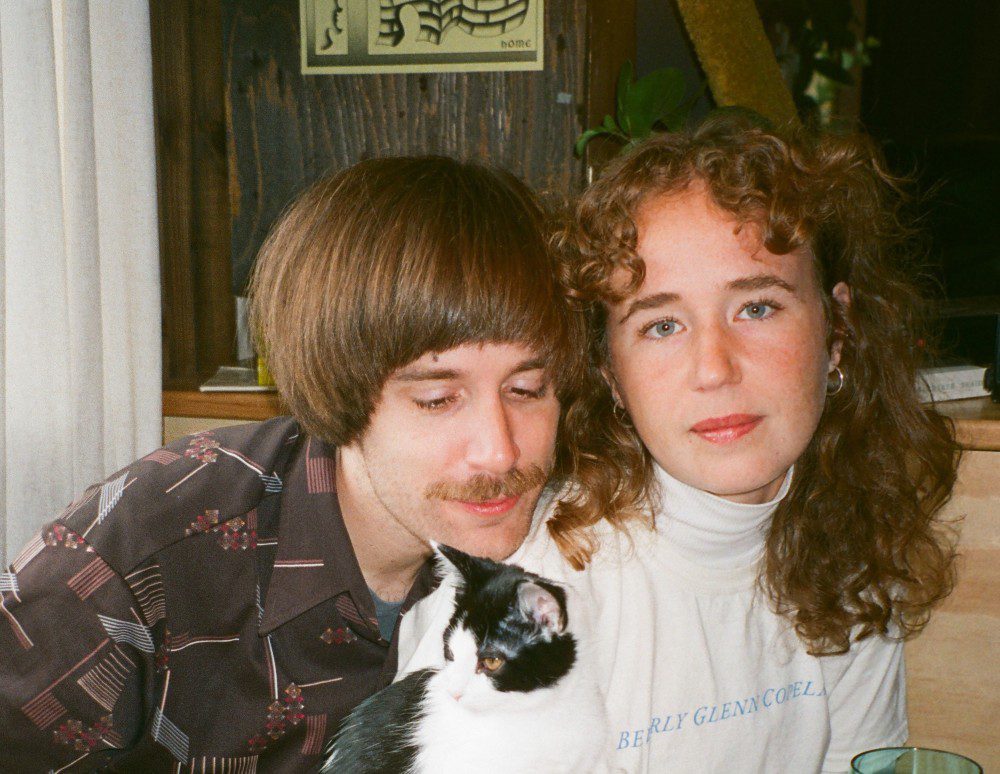
PLAYING CHICAGO: 15 Songs to Usher in Spring

Spring is just around the corner – but this is Chicago. Anything can happen. It has snowed in April here (cue Prince). Luckily, neither the lingering chill in the air nor the ongoing pandemic can stop the city’s creative pulse. There are dozens of releases from exciting, rising musicians set to bloom later with the season – until then, these songs (some of which you might’ve missed in the last year) have been keeping us warm and dancing while the rest of winter melts away. 

Demetruest – “Blouse Undone”

In under two minutes, singer/rapper Demetruest (a.k.a Demetruis Spidle) delivers a tightly-woven rap allegory over a fierce loop of abstract beats on “Blouse Undone.” Tracking the end of day, when hardworking folks can undo a button or two and find some after-hours relief amid life’s challenges, their lyrical repetition echoes the monotony of the every day while leaving space to celebrate surviving it. Each of the songs on their EP Direction tells a story of identity, but this one’s catchiness sticks with you.

Rat Tally – “Shrug”

With this cold and fuzzy break-up tune, Rat Tally – the musical moniker of Addy Harris – reconciles the need for closure, with the help of her guitar (solo as well as swallowed by muffled layers of distortion). Her take on grunged-up pop bubbles beneath journal-like lyrics, underscored by just a hint of precociousness and wink-delivering stand out one liners like “I wanna throw a fit, fuck, then forget it.” Harris’ vocal quiver will no doubt draw comparisons to the likes of Phoebe Bridgers and others in her indie rock company, but nowhere in my book is that a bad thing.

Pixel Grip – “Pursuit”

The goth disco is open. A dark, seductive middle-finger to making “good” choices, synthesizers grind against the hypnotic thump grounding Pixel Grip’s exciting single, “Pursuit.” Described as being about “surrendering your desires to be someone who is bad for you,” singer Rita Lukea captures an almost-desperate longing vocally, as a sinister bassline heightens the track’s overall sense of urgency.

Serena Isioma – “Meadows in Japan”

“Meadows in Japan” encourages you to get lost in a fantasy before crash-landing back to reality, while warm melodies invite you into singer/rapper Serena Isioma’s sun-kissed idea of romance. A tempo change disrupts its easy simplicity and takes you to the other side – an “I love you, but I love me more” reflection that isn’t out of character on an EP titled The Leo Sun Sets. As the beat progresses, it unravels much like Isioma’s lyrical affections, culminating in a voicemail – which would be infuriating if it didn’t sound so good.

KeiyaA – “Negus Poem 1&2” Forever, Ya Girl

On her debut album Forever, Ya Girl, KeiyaA weaves observation and meditation into R&B poetry across 16 tracks – but nowhere is the synthesis more complete than on “Negus Poem 1&2.” The track captures the feel of live jazz improvisation, bucking conventional form with the exception of its chorus-turned-chant and fading into a spoken word excerpt, a sonic template repeated in interludes across the album. KeiyaA makes it clear why she’s making music and who she’s making it for: just listen.

Tenci – “Joy”

Tenci’s soft, warbly twang tells the story of “Joy” – the title could refer to a person or personified emotion, but either way, it’s devastatingly fleeting. A song that feels both hopeful and grief-stricken, the soft strumming of the guitar becomes hypnotic as singer-songwriter Jess Shoman outlines a lullaby of sorts. Set amongst other stellar tracks on My Heart is an Open Field, a bit weathered by time and heartache, “Joy” feels like the beginning of something a bit bigger.

Sol Patches – “Couleur” (feat. Dani Ochoa-Bravo)

Three years after 2018’s Blue Transitions, Sol Patches dropped Vivid Image in February. While the release itself was a surprise, its quality is not. A journey in itself, “Couleur” confronts realities of the Black, Trans experience in America. As Ochoa-Bravo leads you to Sol Patches’ no-holds-barred verse, expressing as much anger as resolution, Sol reminds you why they’ve been so missed.

Mia Joy – “Haha”

One of the most anticipated releases of the year, “Haha” was released in January as the first single from Mia Joy’s debut LP Spirit Tamer, due May 2021. Singer Mia Rocha’s amplified whisper floats above a gentle cascade of synths and strings; enveloping the listener in a beautiful – if not a bit melancholy – ambience. Ushering in change, be it physical, mental, spiritual or otherwise, can be chaotic at times. Let Mia Joy guide you with a more meditative hand.

HLDAY MAGIK – “LUV IS MDTATN (love is meditation)”

A collection of understated, lo-fi pop tracks, singer Pamela Maurer – known as Baby Money – introduced new project Hlday Magik in February with the Music 4 Ur Ears EP. Across seven songs, Maurer explores various vocal textures and the boundaries of her bedroom production aesthetic, but the must-hear is “LUV IS MDTATN.” Without overwhelming her hushed coo, minimal instrumentation serves as the glue holding the vulnerable confessional together. It’s simply lovely.

Jackie Hayes – “Eye 2 Eye”

A bass-driven rocker, Jackie Hayes found inspiration in new wave on latest single “Eye 2 Eye.” A little grimy – with the potential for a big, noisy payoff in a future live setting – the song details the frustration that comes with self-growth, reinvention, and expectation (or lack thereof). Luckily, Hayes left some space to take out said frustrations on the dance floor.

Carlile – “Restart”

A house music-inspired cardio circuit of a song, Carlile sends her brand of pop into overdrive.  A maximalist club track, “Restart” showcases the artist’s developing style and increasingly biting turn of phrase. Racing against time and dwindling patience, Carlile demands a breakthrough. Let it go.

Brittney Carter – “Prove ‘Em Wrong” As I Am

One of the best LPs of 2020, Brittney Carter’s relentlessly focused As I Am is a force. On “Prove ‘Em Wrong,” she makes sure you’ve been listening. Delivering every syllable smoothly, Carter raps with enviable self-assurance regardless of the story she’s telling. Rhythms unrushed (even sparse on other tracks), she makes sure to give every word the attention it deserves – respecting her music as a natural extension of herself.

Tink – “CAP”

Tink has had enough and she’s got a list of grievances for the fuckboys on “CAP,” appearing on 2020 EP A Gift and a Curse. She’s concise within the three-minute track, her flow poised despite “cleaning up the mess” she sings of. With a catalog of songs calling for women to stand in their worth, respect and desire, “CAP” and its earwormy hook (“too many lies, too many hoes, too many bitches”) is another one for the Tink canon.

Ashlee Bankz – “Big Boss Livin’”

Ashlee Bankz released a handful of tracks in 2020, but none were quite like “Big Boss Livin’.” In a year that needed any excuse for celebration, Bankz – undeniably dexterous vocally – directed that energy toward herself with this rapid-fire ode to moving up. There’s no filler here, no room for apology or humility. It feels good to flex; let Bankz take this minute and a half to remind you.

https://soundcloud.com/ashleebankz/big-boss-livin

Astrachan – “Ladakh”

A delightful familiarity rings from Astrachan’s “Ladakh.” Its folksy, Laurel Canyon-feel dances with bits of psychedelia to lull the listener into songwriter Ben Astrachan’s memory. Building a pretty dreamy atmosphere, heightened by clever flairs of clarinet and flute, the artist’s namesake band is as charming as it is promising; be on the look out for a self-titled release due May 2021.

Toronto’s Bernice Mix Mindfulness and Imagination on New LP Eau De Bonjourno

Photo Credit: Colin Medley

On a small island just outside of Toronto in the summer of 2019, Robin Dann and her band, Bernice, unknowingly made a record that would be extremely relevant to the unforeseeable year ahead. On Eau De Bonjourno, Bernice covers themes of isolation, disconnecting self-worth from productivity and escaping into the imagination. Dann and her bandmates Thom Gill, Dan Fortin, Phil Melanson and Felicity Williams combine their deep knowledge of jazz and shared curiosity for experimentation to create an album that truly transports the listener. 

Dann says that this is the first time the band attempted songwriting as a group, a new challenge that proved to be worth the clunky learning curve. “Collaborative songwriting… I think it’s never easy until you land on a flow,” explains Dann, the band’s lead vocalist and (previously) primary songwriter. “Thankfully, Thom and I have been playing together for so long, we have almost like a psychic connection that works really well… I think the songs on this record are some of our best that we’ve ever written.” The band wrote all of the songs for Eau De Bonjourno in an old school container on Toronto Island. The way that Dann explains the residency – creating and relaxing with friends on a sunny island – sounds like a literal fairytale compared to the way most of us have been living our lives for the past year, more or less in complete isolation. 

Shortly after Bernice finished recording the album in late 2019, everything changed, including the meaning of some of their new songs. Take, for instance, “Bubble,” a song that Dann initially wrote about being uncomfortable in crowds; in 2020, crowds meant contracting more than just social anxiety. The song’s lyrics – “You’re not allowed in my personal bubble/Please step away from my personal bubble” – sound like they could be 2020’s catchphrase. “When we wrote that song… it was a lot more related to having mixed feelings about being social and being in crowded spaces and having a lot of friends that have anxiety around that,” says Dann. “Now, that’s not what it’s gonna be about. It’s gonna be about this year’s experience for anyone who listens to it now. I love that – I love how a song can just change identities when it needs to.”

Most of Dann’s lyric writing contains an innate universality, allowing the song to mold its meaning to the psyche of whoever’s listening. This elasticity is mimicked in the band’s instrumentation — a lush orchestra of experimental synths following syncopated rhythms. And while Dann’s crystal voice and intuitive melodies contain traces of R&B and pop, the band’s heavy jazz influence is evident in the improvisational nature of the music. This “play it as it comes” disposition is something Dann comes back to again and again in the record. Mindfulness and self-acceptance play a central role in this record – and in her everyday life. 

On “It’s Me, Robin,” Dann presents the idea that just being is enough. And in a time when so many of our lives have been put on pause, this idea is more than welcome. The song starts out with an unapologetic introduction: “It’s me Robin/You don’t really know me/I thought if I just expressed this/You might just let me be me and accept that/I’m here, still here/I am really here.” In this song, Dann is simply and elegantly stating that a person is not a list of their accomplishments, social connections or financial assets, that being yourself and being at peace with who that person is is as good a vocation as any. “I don’t agree with [the idea of] some lives having more or less value than other lives,” explains Dann. “It’s like, am I gonna accept myself just for who I am no matter what I do? Or am I gonna continuously try to better myself and do more for my community? And can you live with both somehow? I feel like I’m confronting that a lot.”

These existential questions are ones that seem to have been screamed into the ether for millions of years, and although Dann is still searching for the answers herself, she gives such succinct advice on that it feels she’s on the right track: “Give yourself the same love you receive, believe in your inner value,” she concludes.

Dann’s constant reminders to find worth from within and immerse yourself in the moment are therapeutic in nature, but even more so when sung in her translucent, soothing falsetto. Especially on “Lone Swan,” which was inspired by a swan who would follow her around Toronto Island. Dann explains that swans are creatures of wonder to her – that one day, when swans are extinct, humans will look back in disbelief that we shared the planet with them. “Swans are interesting to me because they have this horrible reputation, but you see them and you’re like, ‘You are not of this world,’” says Dann. “Like, how do people see swans and just accept that they’re real? I see a swan and I’m like, that’s an alien, like that is coming from another planet, it’s not a bird.” 

Simple, but awe-inspiring moments like this throughout Eau De Bonjourno remind the listener not to take our surroundings for granted, but not to take them too seriously either. This balance of playfulness, self-awareness and intention is what makes Bernice’s music so pleasant to listen to, and even heal to. Maybe, one day, we’ll be able to look back on pandemic times the way Dann predicts our predecessors will look at swans – in shock and awe that they ever existed. Until then, I suggest taking a page from Dann’s book on living: “If I did nothing but love myself and love one other person, that’s fine.”

Follow Bernice on Facebook and Instagram for ongoing updates.
Emma Volard Unpacks Femininity With Latest Single

Emma Volard’s sound melds rhythm ‘n’ blues, neo-soul and electro in a contemporary, Australian ode to classic soul/hip hop artists like Erykah Badu and Lauryn Hill. Her 2020 single “Femininity” epitomises the brave, take-me-as-I-am-or-don’t attitude Volard espouses in both her music and her life. The artwork for the single depicts a voluptuous, nude Volard sitting cross-legged amidst a collection of fellow naked bodies lying prone on the floor about her. She looks, unapologetically, at the viewer, as if to say, “What?”

The artwork for the single was an idea that came up during a band trip in Byron Bay, a celebrity-favored beach town in New South Wales. “We came to the idea that it would be beautiful to get a bunch of friends – men, women and non-binary – together to show we’re all just bodies, skin and bone,” Volard explains. “The photographer turned out to be a sexual harasser, so we don’t like to name him. He had over 100 accusations of sexual harassment within Victoria. I continue to put it out there because I want to claim that space back – the art was my own idea, and I was reclaiming my art as a woman.”

Volard believes that femininity is not about a specific aesthetic, or ideals that have ultimately been imposed by white men, but that it is about being authentic, being empowered. The claims of harassment that emerged after the single was released were a blow to her, but she refuses to let that be the storyline.

Rather, her personal challenges and convictions are what deserve attention. Volard’s confidence in her own body, her sexuality, her music and her femininity come from perspective, hard-earned. The power of expression is one that Volard knows is not to be taken for granted, nor used carelessly, a lesson she learned from her sister, Adelaide, who is non-verbal, severely autistic and epileptic.

“Adelaide is two years younger than me and was born fully cognitive. When she hit six months old, she started to regress. She was beginning to walk but then soon after, she couldn’t do anything, even eat,” Volard relays. “She was able to make noises, and she’s very good at expressing emotions, especially when she’s being cheeky. I learnt a lot at a very early age; I matured very fast, because we’d go to hospital at all hours of the night. It wasn’t your regular lifestyle.”

Volard says her sister provides a daily reminder to use her voice for those who cannot, to challenge listeners to consider the impact we have environmentally, politically and personally on each other and the land. “She’s been my biggest inspiration,” Volard says. “She really, really goes through hard times but always has such a positive outlook.”

Volard grew up Southeast of Victoria on Phillip Island, known for its penguins (“country by the sea, an incredible place!”) for four years of her life, so a lot of imagery in her music is inspired by the ocean, the tides coming in and out, and the ideas of change and moving on, especially on luscious, indulgent 2019 single “Peanut Butter,” which oozes with style and soul. It’s jazzy, it’s slinky, it’s unashamedly sexy.

“That track was originally a demo I was sent by a dear friend, [Melbourne artist] Moses Carr, who said I should put some vocals on it. It was called ‘Peanut Butter’ when he sent me the beat, so we stuck with it. The song is nothing to do with that at all!”

But it’s so smooth, with just a little bit of crunch to the beats, I protest.

Volard indulges me.

“Maybe it has peanut butter undertones?” she says with an easy laugh.

Volard believes that expression is dependent on having a comfortable, supported space, something her relationship with her band provides. Despite a band full of boys, Volard has never felt her femininity sets her apart and perhaps it even enables her to feel more confident in the fact she identifies with being a tomboy at heart.

“Femininity is the most socio-political song I’ve written, inspired by being a tomboy,” says Volard. “Why am I less feminine than anyone else because I have some masculine traits? It was surreal to see how many people who got behind that song. It’s so important to me as a woman in the music industry to have that level of support. People from the industry got behind it, it got on the top 5 songs on both Triple J Unearthed and PBS radio. I got messages from people I’ve never met before saying it touched them, which was really great.”

Volard will be playing a few festivals, doing an International Women’s Day event at a local brewery, and, later this year, releasing her debut album – or, to give her band credit where it’s due, “their” album.

“A lot of the songs I write with the boys in the band. We’ve known each other for over five years now and we’re a really close team. We have Jake Amy on keyboards, Harry Leggett on guitar, Hugh Heller on bass, and Jordan Pereira on drums,” she says. “We’re hoping to get it out by September, but we’re still in the early stages of production. I’m recording vocals at Sunderland Studios in Phillip Island. We wrote the songs in two months around November/December last year, under this huge time pressure we put on ourselves. Boundaries are a fun thing to work with, they make you push yourself out of the box. It was really hard to create during lockdown, because I wasn’t able to go out and be inspired by others. All I had was a daily trip to the supermarket, a one hour walk and four walls.”

Volard’s working title for the album is, of course, Femininity.

“I want to show the day to day life, our existence, and gratitude for being a woman,” she says. “I’m finally at a point where I’ve found a sound that really signifies my own musical identity, and me as a person.”

Follow Emma Volard on Facebook for ongoing updates.

PREMIERE: Nisa Meets Anxiety With Understanding on “Turn Me Down”

Photo Credit: Sara Laufer

To call a sound merely indie rock at this point leaves much to be imagined. For New York City born and bred singer-songwriter Nisa, who releases her forthcoming debut EP Guilt Trip on March 26, that sound more specifically borrows elements from the varying subgenres existing under the indie umbrella: the heartfelt sincerity of Julien Baker but higher energy; the emotionality of emo without its saccharine sweetness; the power-pop hooks of Tancred’s 2016 LP Out of the Garden. Nisa combines these elements in an irresistible way, but beneath the EP’s catchy exterior lies themes of emotional detachment and reticence born of anxiety, something of a defense mechanism against the guilt and shame that can pervade the psyche.

After studying abroad in London, Nisa returned to NYC, simultaneously nursing a broken heart and preparing to record her debut. The EP’s title refers to the shift in scenery, as well as the feeling that Nisa could see the break-up coming miles away. “I had been moving toward it but didn’t feel completely certain in my decision to do it, so once I was the one to break it off, I felt guilt,” Nisa recalls. “That guilt was followed by this emotional detachment from myself. That person and the reasons leading me out of the relationship were the ones keeping me there.”

The timing was serendipitous in a way; the geographical and emotional changes intersected with the onset of the pandemic. We’ve all been forced to turn inward and examine our own rough edges over the past year. Nisa says she “took to writing to deal with what I was struggling to vocalize,” given the time to hunker down and consider what she was feeling and how to translate it into music. She also co-produced and released her singles “Forget Me/Giving” and “Colossus,” waiting until it was safer to proceed with her stalled recording plans for Guilt Trip.

Having to wait ended up having a huge impact on the sound, Nisa admits, as did being able to record for the first time in a real studio, rather than her bedroom. “I’d gone in with a much more Americana feel, but then we got there and there was this unnatural energy, this eclectic anger and like, very hard-pressed feeling in your face,” she explains. “It was a confrontation of all that time spent pent-up.” She recorded with a smaller team than she initially intended, working alongside close collaborator/guitarist Fritz Ortman and producer Ronnie Di Simone, as well as a handful of local musicians, like Del Water Gap drummer Zac Coe and guitarist Nick Cianci.

So far, Nisa has shared four songs from Guilt Trip – “Common Denominator,” “Bottom Feeder,” “Ferris Wheel,” and “Growing Pains,” each offering a glimpse into the seven-song effort. Today, she premieres latest single “Turn Me Down” via Audiofemme, which fits squarely into its place on the EP, dealing with social anxiety specifically. It reads almost as though Nisa is giving herself a pep-talk to enter a party, that the “you” and “me” she refers to could be the same person. “If you want, you can turn me down,” she offers, proposing a lonely, late-night diner as an escape route.

But there’s a dare in her voice, too – she makes space for the anxieties at play, but is encouraging enough to push through them, to seek self-acceptance and the ability to embrace our limitations. “It’s always gonna be like that for me as an anxious person,” Nisa explains. “I think that anxiety can also be met with understanding yourself. I just started understanding anxiety as it relates to me, so rather than detaching from myself, I took the time to understand it fully, and sometimes it’s just about riding the wave. So I think this song is definitely a ride the wave song.”

The animated video for the song embodies the tunnel vision that anxiety can create. “We wanted to give it a cinematic feel, and the music video reflects that. It ends up being this grand journey, so super excited to have that come out,” Nisa says. The metaphor is crystal clear: once you give up the guilt about the things that make you you, you’re free to view them from a perspective of neutrality instead of self-loathing. 

Nisa is set to release the full EP on March 26, and in the meantime finds herself remaining productive, recording two other projects she penned during this time at home. With only the smallest light at the end of our pandemic tunnel, she says that if nothing else, she’s “just really grateful to have the time and the right headspace to be writing now.” And, no doubt, to have put some of that guilt behind her.

Follow Nisa on Facebook and Instagram for ongoing updates.
Port Lucian Uses Twitter to Curate ‘Trans Musicians and Allies for Change’ Compilation

Photo Credit: Julia Leiby

We all know that the internet can be a dark, scary place. But sometimes, it can also be a catalyst for beautiful projects that inspire change. Twenty-one year old college junior Portia Maidment (of Port Lucian) harnessed the power of the internet and used it to create a new compilation, Trans Musicians and Allies for Change, out via Ztapes on March 5th. The comp is made up of nineteen different artists from around the world, ranging from an acoustic Diners ode to chilling out, to the watery shoegaze of Floor Cry. All proceeds from the cassette will be donated to Trans Lifeline, a 24-hr hotline dedicated to offering support to trans and gender non-conforming folks.

Maidment, a pre-med student at Case Western Reserve University, was first inspired to make this project after taking a class on transgender literature. “That [class] sort of boosted my interest in transgender rights,” says Maidment. “So, I’m actually applying to medical school so I can eventually perform gender affirming surgeries and things like that.”

If you’re wondering how a pre-med student managed to organize an entire compilation album in the midst of a pandemic, you’re not alone. But Maidment said it was actually pretty easy. “I would hit people up on Twitter and ask if they were interested in this comp,” she says. “That’s honestly how I did the whole thing. A lot of people that are on the comp, I don’t know, but because I had support from a label and a cohesive idea, it just sort of came together.” And the power of the internet prevails.

Maidment’s patchwork approach to choosing the artists is evident in the diversity of sound on the record. Whether it’s an acoustic Joni Mitchell track from Philly indie pop band 2nd Grade or a trademark conversational narrative from Fred Thomas, all of the tracks are either previously unreleased demos or written specifically for it. While all of the songs feel vulnerable and personal, some speak specifically to the transgender experience.

Toronto-based indie group Little Kid explores the importance of defining your own identity in “What’s in a Name?” In the most gentle of voices, singer and multi-instrumentalist Kenny Boothby distills the emotional fallout that can occur after a person chooses to change their name. “Oh babe, what’s in a name?/Grew tired of the one that your parents gave/They heard that you wanted to change it like trumpets on judgment day.” Many transgender and non-binary folks experience pushback from friends and family members when announcing their name change, making the transition harder than it needs to be. Aside from the administrative cost of a name change – ranging from $150-$450 – the emotional cost can be huge. Having to remind your friends, family and strangers of your new name over and over again can be emotionally exhausting and invalidate your identity.

Boothby goes on to support the sentiment that these type of dismissive of reactions usually have nothing to do with the person they’re directed at, but rather, a deep-rooted resistance to change or anything outside of what they know. He sings, “Guess they still don’t know how to behave when they can’t place you anywhere.” The song is a validating, soothing reflection on affirming your identity, and an ever so tender fuck off to those who don’t respect it.

Unfortunately, the theme of people not respecting transgender or gender non-conforming folks’ pronouns, identities and safety is a global epidemic. This threat to safety and selfhood can undoubtedly drive people into dark places. And while organizations like Trans Lifeline are an amazing resource for folks that are struggling, sometimes it’s extremely difficult to take the first step in reaching out. In their song “Are You Doing Alright?” Kennedy Freeman of Highnoon addresses anxiety and depression and encourages listeners to reach out to their friends. Freeman says they wrote the song in December, a time when they were especially feeling the effects of being isolated during lockdown.

Although they tried recording the song a few different ways, they say that a voice recording felt the most natural. “Phone audio can feel really familiar and comforting in a way for me too,” says Freeman. “I wanted it to feel like a close friend reaching out leaving a message or something.” The feeling definitely comes across and feels poignant to this project in particular. “This song felt applicable to the compilation,” says Freeman, “specifically the idea of a lifeline people can access when they’re struggling and how important queer friendships and mutual support can be to gender non-conforming people.”

Much like the community it aims to support, Trans Musicians and Allies for Change is colorful, varied, and refuses to fit in any one box or description. The funds from this compilation will go straight to Trans Lifeline, where they will be used to provide direct emotional and financial support to trans people in crisis. Grab yourself a copy – today is Bandcamp Friday, so the streaming platform is waiving their revenue share – and proceed to listen in awe.

You can reach Trans Lifeline at US (877) 565-8860 or Canada (877) 330-6366. The number for the National Suicide Prevention Lifeline is 800-273-8255

A New Compilation from Womxn in Music Collective Highlights Inclusion and Talent for International Women’s Day

Ailisa Newhall produced the new comp from Womxn In Music. Photo Credit: Dawndra Budd

In honor of International Women’s Day, it seems only right to highlight new Seattle projects specifically designed with the interests of womxn musicians in mind. One great example of such an effort is the new self-titled 15-track compilation from the Womxn in Music Collective, which officially drops on March 8; you can purchase it digitally via Bandcamp today, while the streaming platform is waiving its revenue share (as it does the first Friday of every month).

Womxn in Music Collective was formed in 2018 by two Seattle-based womxn involved in the local music industry—Sarah Gerritsen and Nikki Barron—who were looking for more opportunity to network with other womxn musicians and for the same pay and access to opportunity as their male counterparts. The compilation’s producer, Seattle’s Ailisa Newhall, who also contributed her song “Until The Robins Sing” to the project, was one of the collective’s early members and volunteers.

“Right when [it] was evolving into an actual thing… I was like, this is something I’m passionate about,” says Newhall. “I was really excited about having this safe space.” Newhall spent many hours volunteering and began managing Womxn in Music’s Facebook group (of which I am a member, though I was not involved in putting the comp together), the hub where most of the members have come together regularly during the pandemic. Often posting performances from group members, she found herself more inspired than ever to highlight womxn artists in Seattle and beyond.

Then, in January 2020, Newhall caught wind of a local theater, The Seattle Repertory, that was planning to put on a play about the story of a fictional womxn musician who had gotten her start at one of the area’s most beloved venues, The Tractor Tavern.

“I reached out to the Tractor through Womxn in Music and I was like, can we do a show, and have the Womxn in Music artists come perform and highlight like, real life women who are doing the scene?” Newhall says, adding that the plan was to partner with the Seattle Repertory Theater on the show. “The Rep would send some of their actors to come out and be a part of the show, and the bands would learn some of the music from this show and play their own.”

While everyone was whole-heartedly onboard with the idea, the pandemic had other plans, and the show, which was to occur in June of 2020, never happened. Instead, Newhall decided to coordinate, curate and produce this compilation, which she says is a representation of what she had hoped that show would be.

“That [theater show] just got me thinking… of highlighting the fantastic women that are really kicking ass in our group. During lockdown everyone was struggling, so I was like, how can we lift up the people and get a project going?” she says. “I started applying for money and stuff and finding a way to make something happen. I thought, people are writing music at home – how about we do a virtual idea of that concert through an album?”

After applying for grants for months, she procured a $5000 grant through the Ms. Foundation for Women and dove into getting as many womxn involved with the project as possible – not only the 15 artists who contributed tracks, but also the production crew, which included mastering engineer Rachel Field at Resonance Mastering and Tacoma-based visual artist Ava Wadleigh who designed the cover. The performers found ways to record their tracks at home or in a COVID-safe way, then sent them to Newhall to put the package together—which couldn’t have gone better.

“As I was putting the tracks together, they sort of took on a life of their own,” says Newhall, adding that each of the tracks speak to each other “in a really fantastic and amazing and organic way.” Sure enough, the songs, all of which are originals by women from the group, each muse on this tumultuous time in the world in their own unique but complementary ways. And the compilation also contains a plethora of styles—from jazz to blues to pop to country to folk.

Shaina Shepherd’s rousing piano-pop track, “The Virus,” directly considers the pandemic, Kat Bula’s bluegrassy “Nobody’s Woke,” addresses political polarization and the downsides of the “cancel culture,” and Stephanie Anne Johnson’s “American Blues” addresses the country’s baked-in racial injustice.

Meanwhile, other tracks, like Rani Weatherby’s R&B-infused “Where Can I Run,” gives voice to that general feeling of stuck-ness we all can relate to as we attempt to get up and face the complexity of these times. “It’s a struggle to get out bed/When I feel trapped inside my head/My dreams no longer bring me joy/When I can’t sleep through all the noise,” Weatherby sings.

The album packs a few surprise appearances, too. Sara Gazarek, a notable Grammy-nominated jazz singer who grew up in Seattle, contributes a gorgeous, swingin’ tune called “Easy Love.” And Lady A, a veteran Seattle blues singer who had her stage name stolen by the country-pop group formerly known as Lady Antebellum in June 2020, appears on the compilation to share her matter-of-fact conclusions about the state of the world with “The Truth is Loud.”

Despite all the different approaches and styles of each of the performers involved, Newhall says she’s in awe of how seamlessly it all knits together. She credits that partly the inclusive, open, and supportive energy of the Womxn in Music community.

“It feels whole. There’s blues and there’s jazz and there’s pop and folk; you wouldn’t think that all these genres would fit together so well but they do,” she says. “I’m just proud of the work that these women are doing. I’m blown away by the talent and how humble they are.”

Follow Womxn in Music on Facebook for ongoing updates.