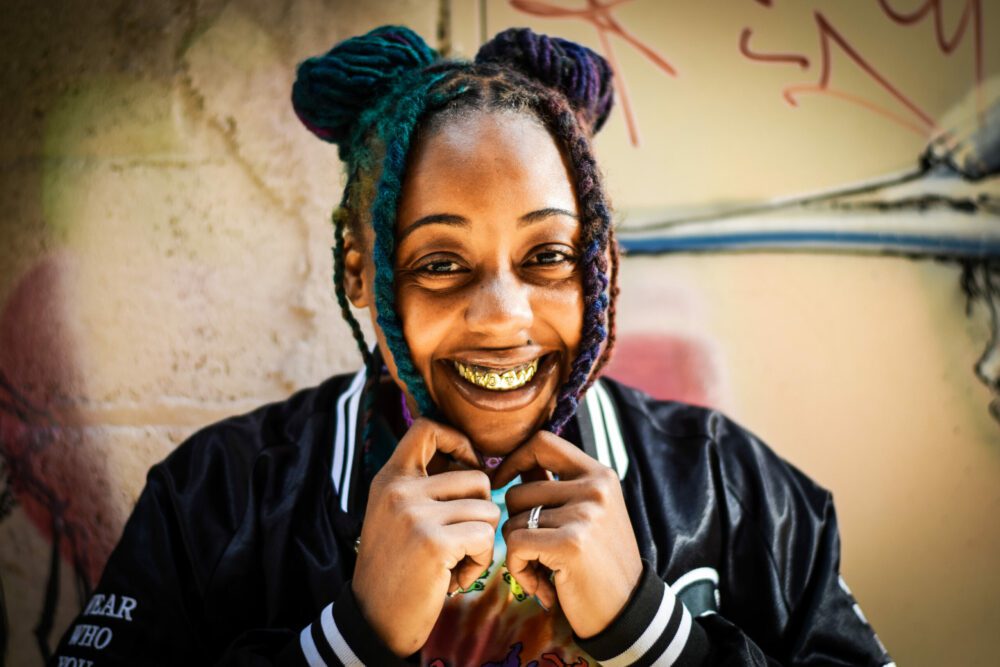
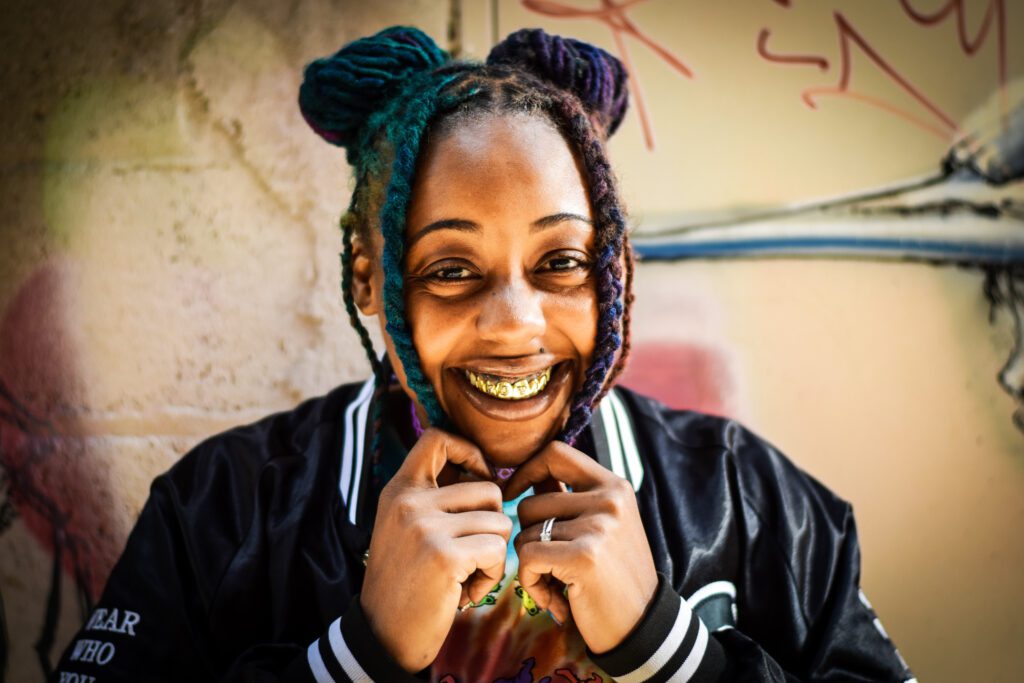
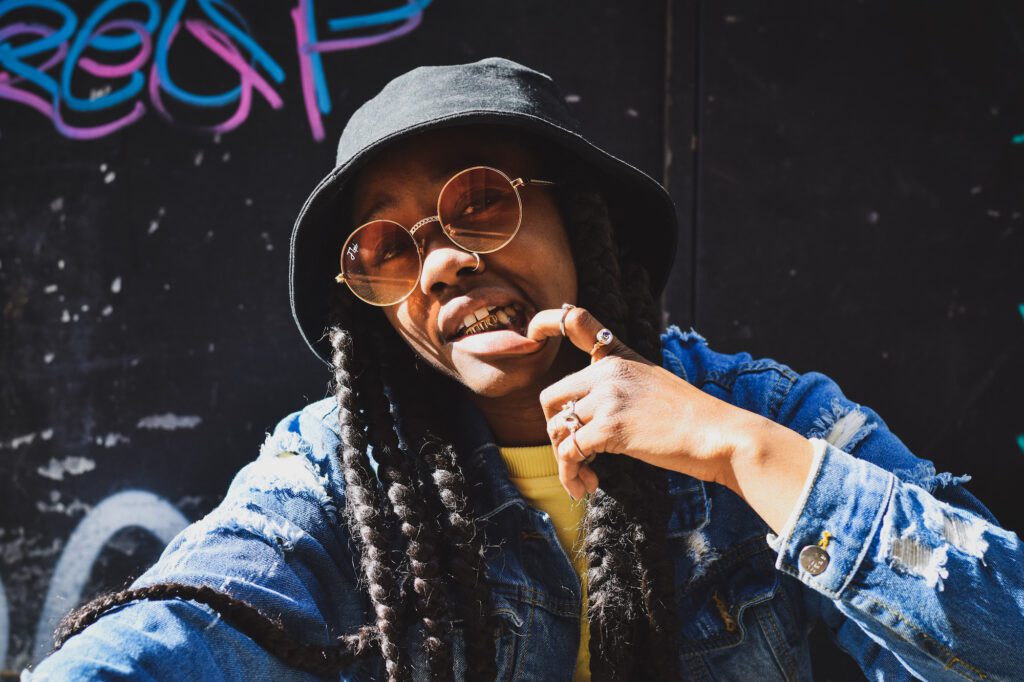
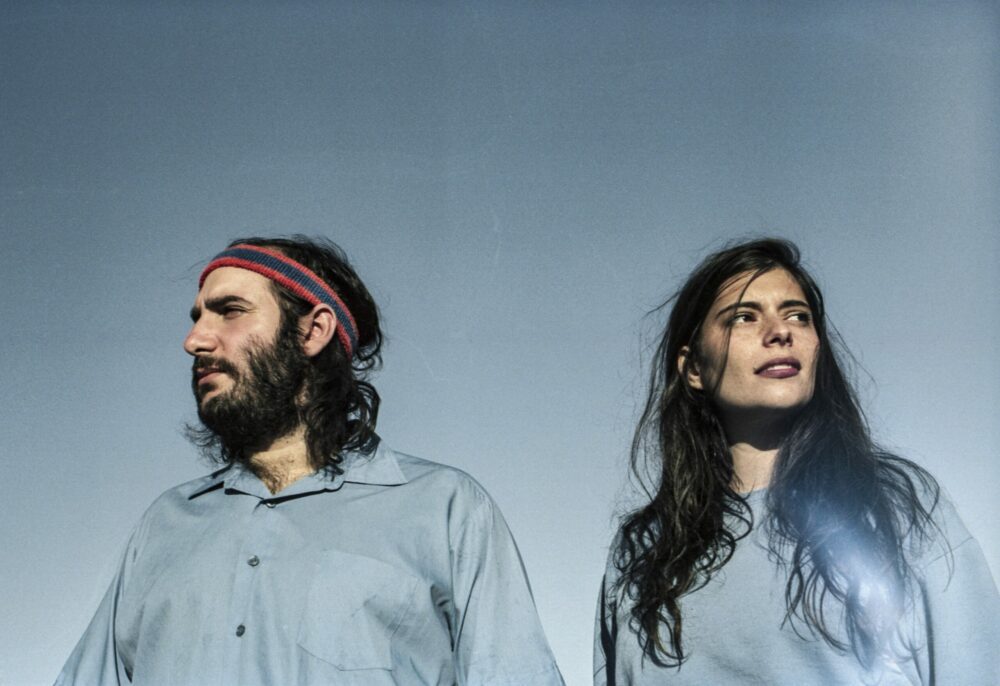
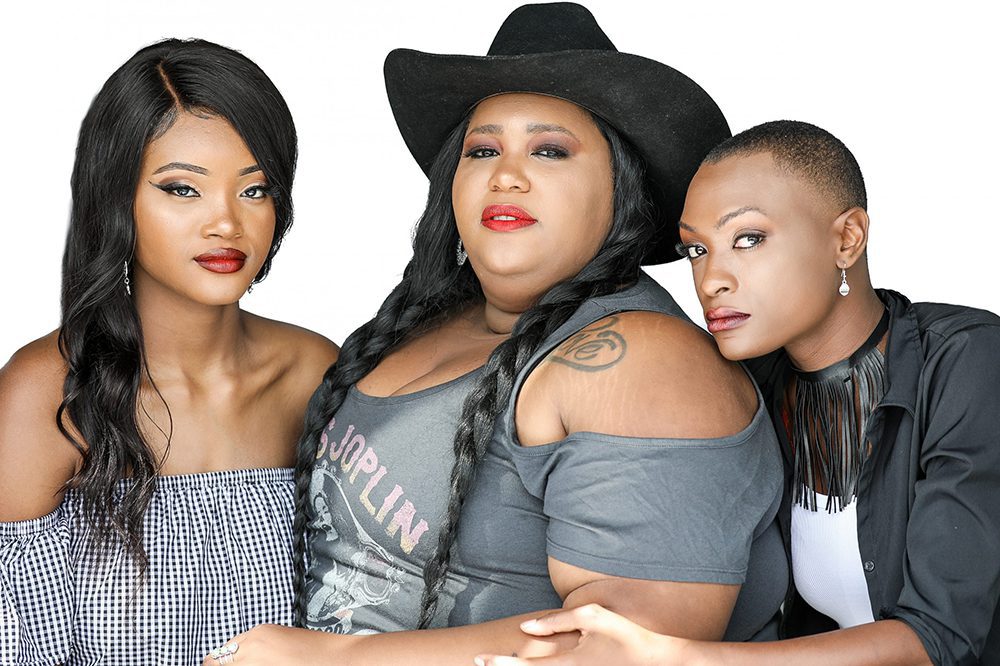
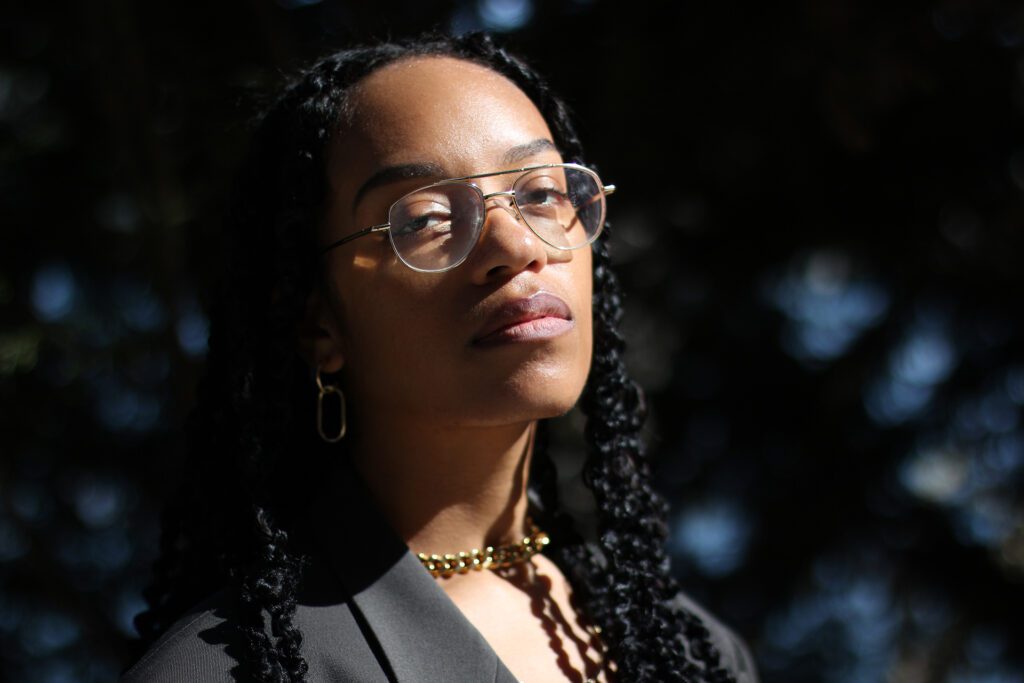
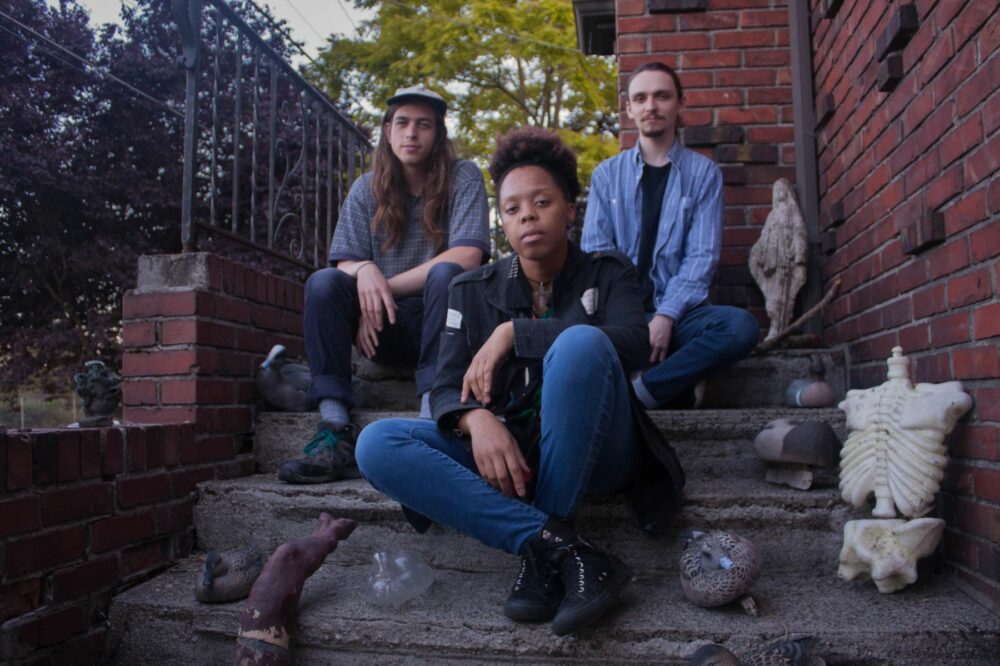
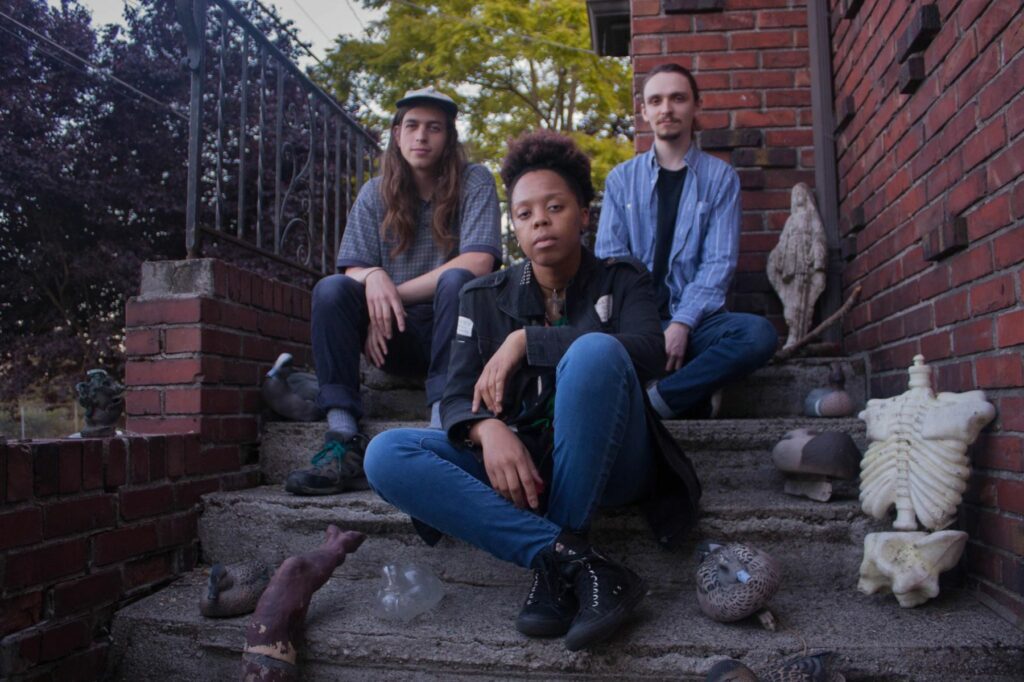
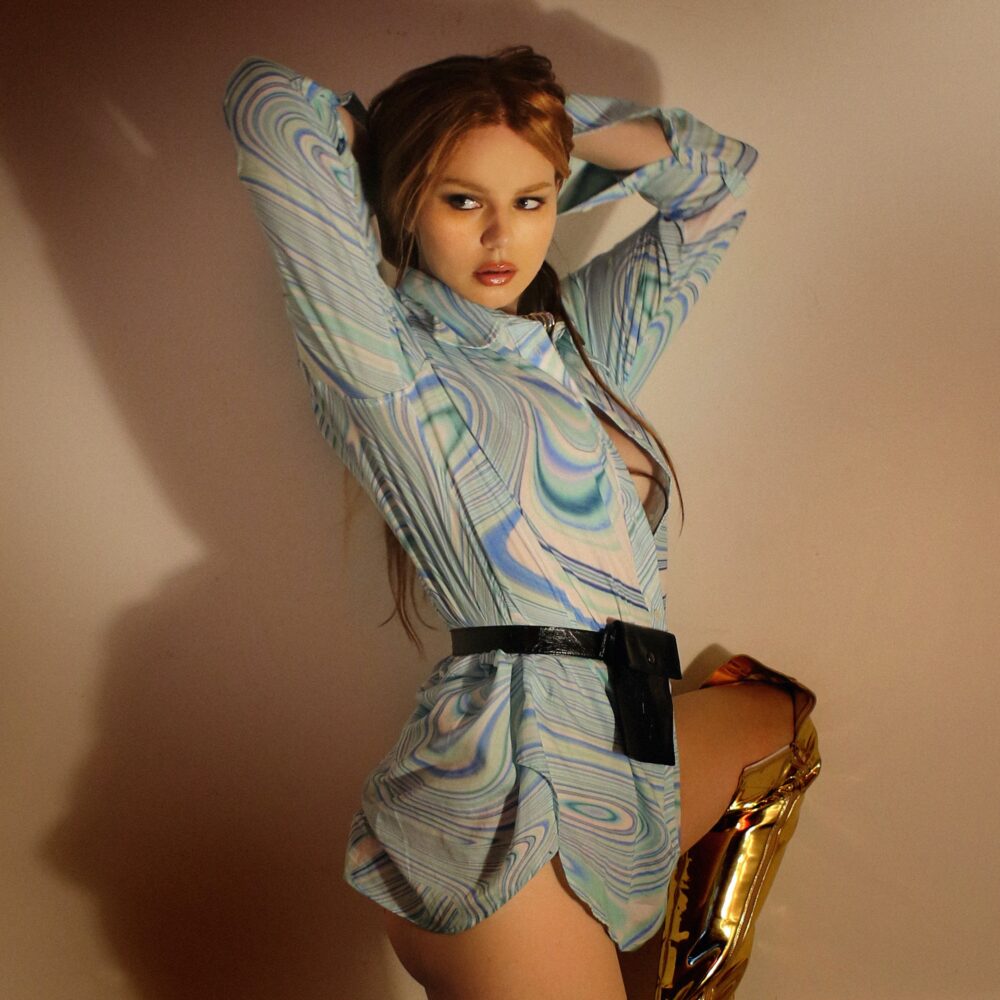
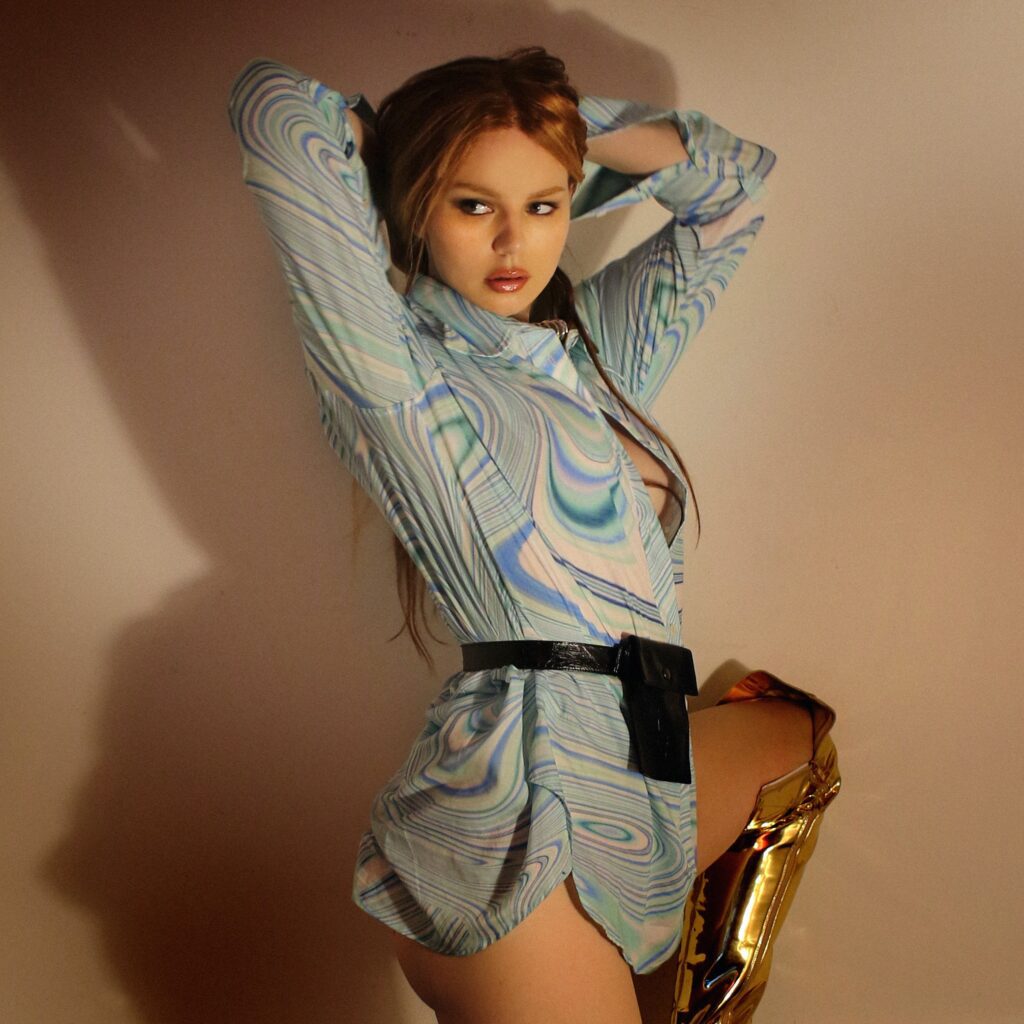
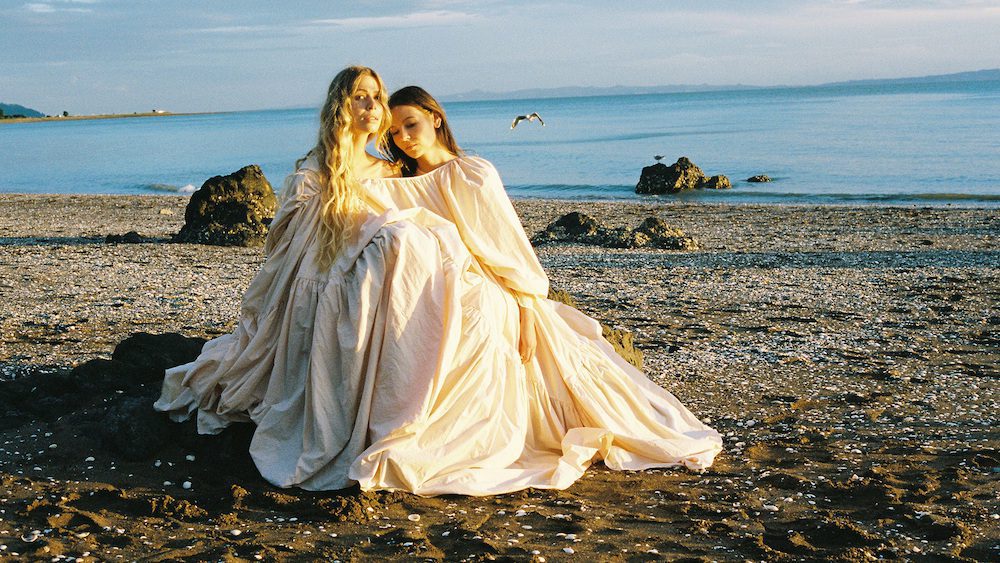
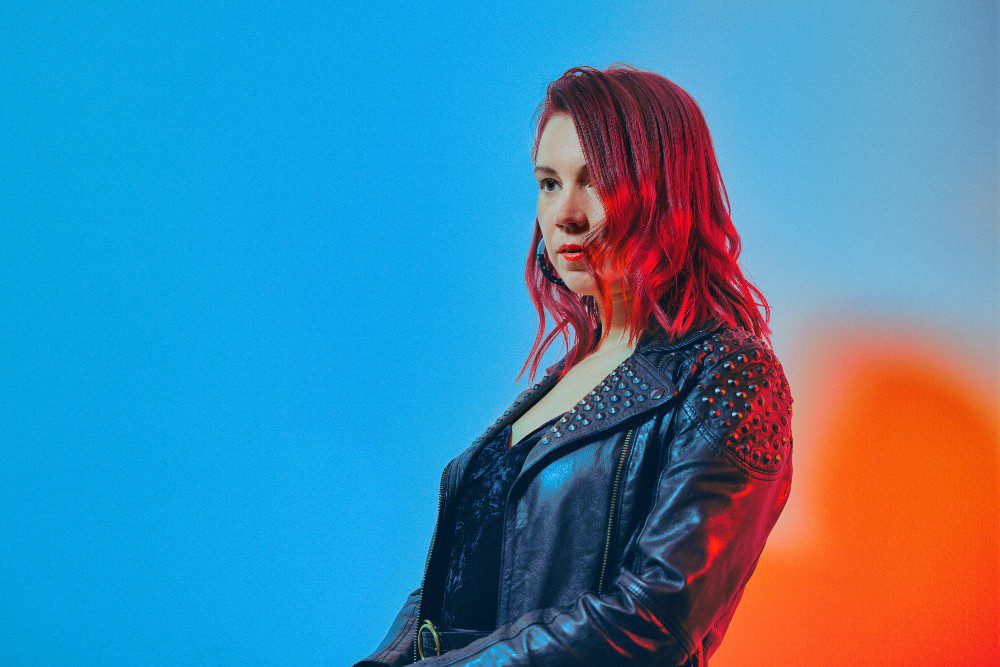
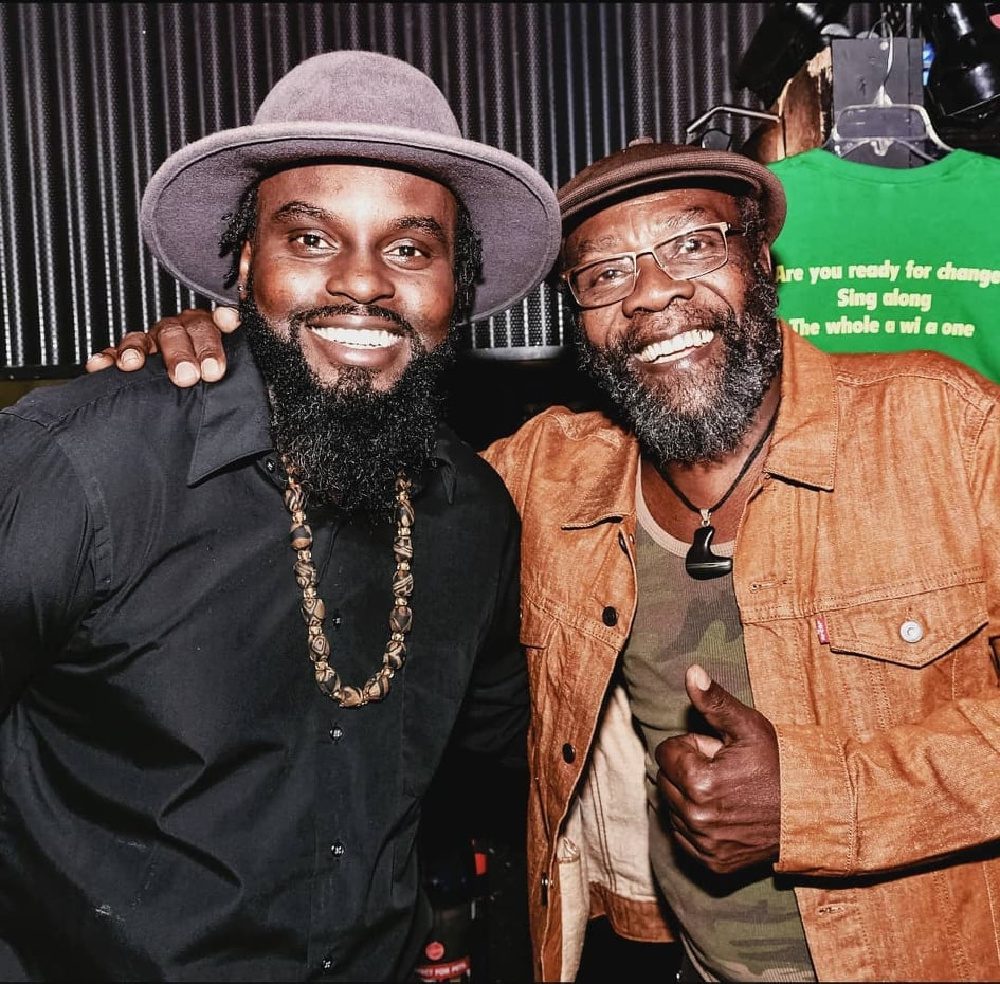
NaQuia Chante and PwiththeDrip are on the precipice of becoming Cincinnati’s most prolific female rap duo with the release of “Push Up (Freestyle).” The pair dropped their inaugural offering along with a self-directed music video on Friday, after performing together in Detroit on the Streets Most Wanted Tour. The nine-stop trek, led by Big Heff, wraps up in Wichita, Kansas on Sept. 14.
For those who haven’t caught them on stage yet, NaQuia and P’s “Push Up (Freestyle)” makes a fierce first impression. The Buddy Ball-produced track is laced with clever, self-assured lines from the two MCs and scathing rebukes aimed at anyone who dares stand in their way.
“We’ve been doing kind of a boot camp almost – meeting every week, getting together, getting the beats and making fresh hooks,” NaQuia tells Audiofemme. “Then we meet up the next week, get the verse done and record everything at the house. So, we’ve built up a lot of music for our catalog just over the last two months.”
Besides new freestyles and official singles, which NaQuia says fans can expect to hear in the coming weeks, the pair is also working on their debut full-length project: The Bag Lady. The duo’s rapid-fire recording sessions seem to be a testament to their artistic chemistry. NaQuia, a bridging force behind Cincinnati hip hop, has had a self-taught hand in nearly every aspect of the Queen City’s music scene – from artist management and video directing, to marketing and visual art. When her longtime friend P returned to Cincinnati from Atlanta, the scene was finally set for the pair to join forces, ironically becoming the equally ambitious partner that the other one needed. Both say they are “obsessed” with one another.
“When I went to Atlanta, I was building and doing my thing, but I was watching what [NaQuia] was doing in the city, since like 2014, all the way to 2020,” PwiththeDrip explains. “So, I have been watching her and I was like, I need to get back to the city. I believe in her and her vision, and I knew that she needed somebody who was gonna have her back and help her do what she’s doing.”
“It’s the amount of energy, the talent and working hard – and I have all that, too. I work hard and I can match her energy,” she adds.
“We’ve always thought about doing things together,” NaQuia agreed. “I be doing so much, and she’s doing it with me!”
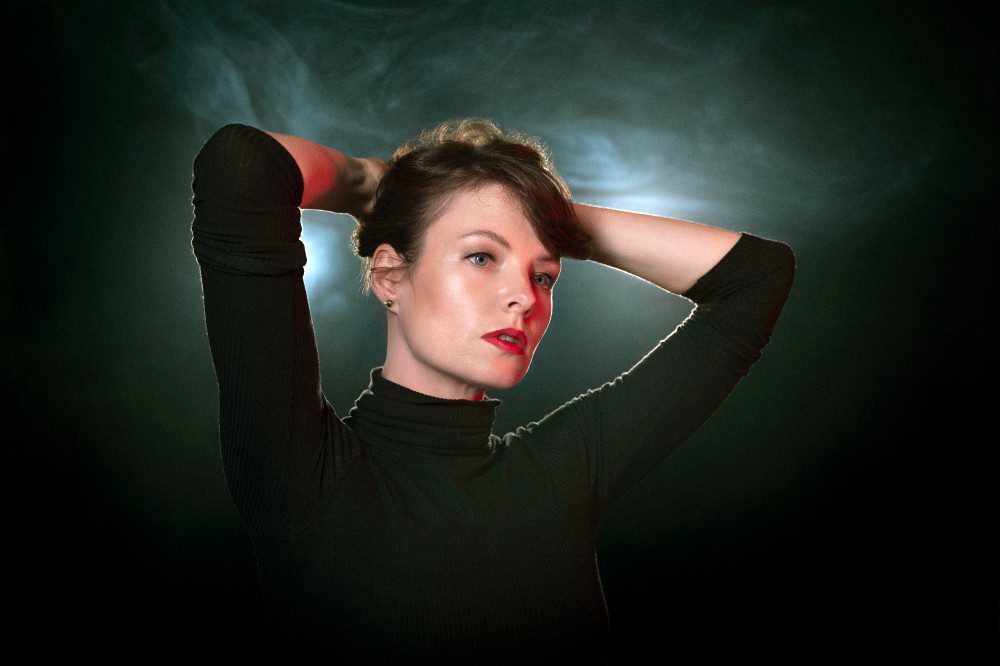
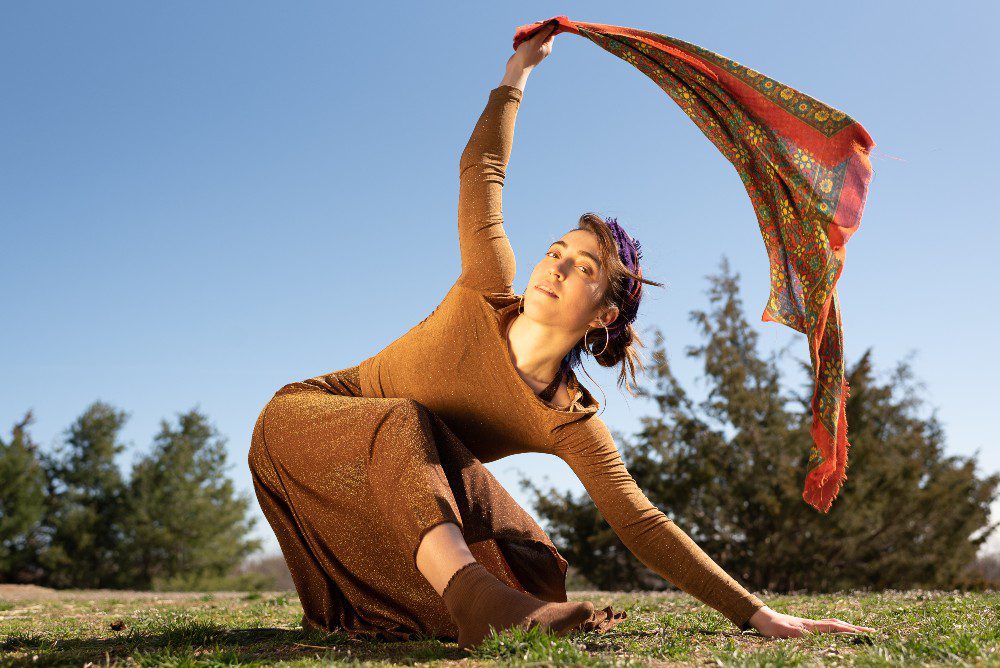
PwiththeDrip / Photo Credit: NaQuia Chante
On the solo front, NaQuia will soon begin the rollout for her long-awaited debut compilation album, Church Girls Love Trap Music. The gospel-influenced rap record, which features an array of local voices – NaQuia’s included – was recorded last year.
“The manager I was working with went back in the studio and added a few songs to [the album] with just me singing, and we recorded some new songs with [producer] MamaNamedMeEvan and a DJ from Cleveland, DJ Ryan Wolf,” she says. “That added a little time before it could be released, but it’s in the mixing process now. [Cincinnati producer] Natown is mixing the record. I should have a [release] date by the end of this tour.”
“It’s my baby, so I’m mad it’s taking so long, but I’m also okay with it because I want it done right,” she adds.
Catch the Streets Most Wanted Tour at one of the remaining dates below and follow NaQuia Chante and PwiththeDrip on Instagram for ongoing updates.
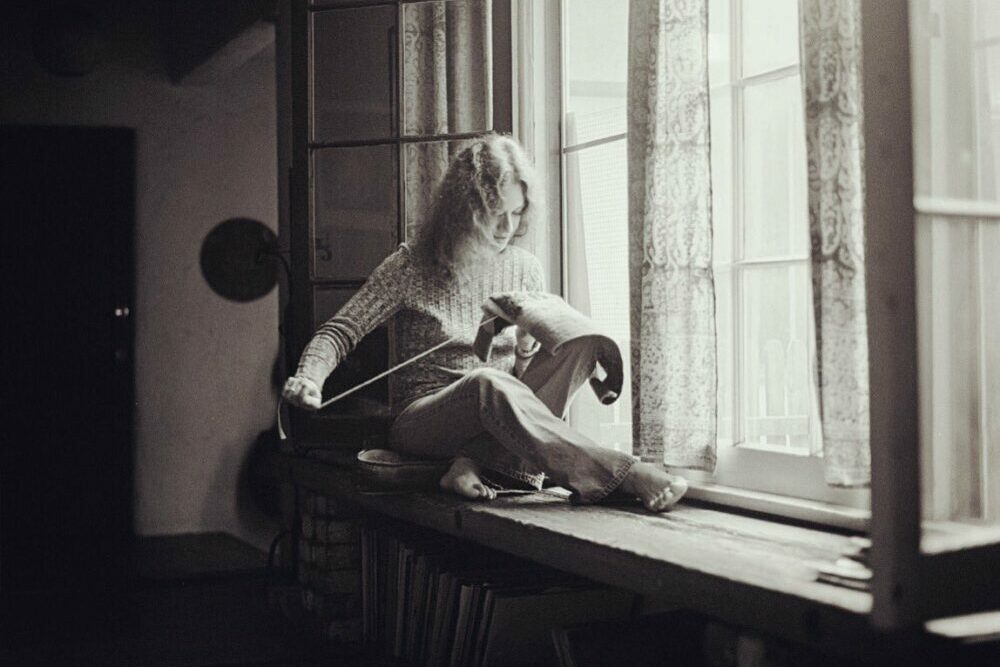
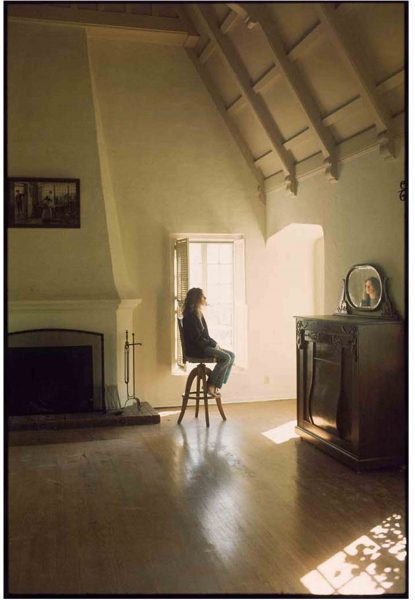
Tapestry photo shoot, 1971 Laurel Canyon / Photo: Jim McCrary/ Courtesy Lou Adler, Ode Records
Fifty years ago, two Carole King songs dominated U.S. radio, spilling from speakers across the land. The Billboard-declared “double A-side” single of “It’s Too Late” and “I Feel the Earth Move” was released on April 16, 1971; it hit number 1 on June 19 and remained in heavy rotation for months after. The album that produced these songs, King’s landmark Tapestry, also reached number 1 on June 19; it stayed in that slot for 15 weeks—and on the charts for not weeks but years.
The single’s two sides present highly contrasting stages of a love affair. The narrator of “I Feel the Earth Move” is suffused with excitement at the very presence of her lover, while “It’s Too Late” chronicles love’s end: “Something inside has died,” King sings, “and I can’t hide, and I just can’t fake it.”
I had just turned four when Tapestry came out, on February 10, 1971 (one day after King’s 28th birthday). I remember these hits remaining as radio stalwarts for years; indeed, they both hold “classic” status and receive some significant play to this day. “I Feel the Earth Move” was a song I liked to dance to as a child, in the privacy of my bedroom. The narrator sings of feeling the earth shaking, the sky tumbling, and her heart trembling when someone else shows up—but the track’s feel is deeply self-possessed. King’s soulful, straight-ahead piano chords are highlighted in the mix; her voice sounds powerful rather than acted-upon. This song has a spirit of strength and joy, to which I reacted with improvised jumps and spins.
“It’s Too Late,” on the other hand, has for all these years been hard for me to listen to. I can’t relate to the concept of love disappearing for reasons unknown (“One of us is changing,” King sings, “or maybe we just stopped trying”). But many women who’d married young in the ‘50s and early ‘60s, as was the societal norm, were discovering feminism in the years around when Tapestry was released. They were realizing they had not known their partners well upon marrying; that they’d been too young even to deeply know themselves. A collective understanding seemed to be dawning: “I don’t have to stay. And that doesn’t mean you’re horrible; and it doesn’t mean I’m horrible either. It just means my future is somewhere else.”
Norms have changed, and women of subsequent generations tend to take more time before marriage. Granted, we still get into serious relationships at young ages—and I’ve spent perhaps too much time, while trying to write about “It’s Too Late,” thinking about which of my exes I still have love for; which I don’t, and why not; and which I thought I loved, at the time, but have come to see that the “love” was something else—entrenchment in youthful drama, a desire to feel needed, fear of being alone. (For the record, this is not an especially enjoyable exercise.) We still have progress to make, in feminism and in the messages young women receive about relationships. But at least it’s less likely now that a woman will wake up, after several years of marriage, and see that her husband is little more than a stranger.
King wrote the melody for “It’s Too Late,” but her collaborator Toni Stern wrote the lyrics—and it’s no surprise that they appear to have come from her own experience. “I won’t say who ‘It’s Too Late’ is about,” Stern told author Sheila Weller inGirls Like Us. “I don’t kiss and tell.”
Elsewhere in King’s repertoire, she’d allude to specific situations in which walking away from a relationship is a necessity. But “It’s Too Late” exists in a grey area—and captures a time when valuing one’s own needs as much as one’s partnership was a relatively new and radical idea.
Photo Credit: Jim McCrary
Though Tapestry was a career triumph, King had topped the charts before—just not as a singer. Her path to solo success involved the successes of many other musicians as well.
Born in Brooklyn as Carol Joan Klein, King began to play piano at age four. At eight, she made her TV debut, singing on The Horn and Hardart Children’s Hour with a classmate. In high school, she formed a vocal quartet (the Cosines) and started to call herself Carole King.
A gifted student, she graduated from high school at 16, in 1958, and moved on to Queens College. There she met a chemistry major named Gerry Goffin, who was beginning to write song lyrics. King paired up with Goffin romantically and professionally; he wrote lyrics, and she wrote music.
At age 17, King got pregnant—and so, in August of 1959, she and Goffin got married. Meanwhile, they signed as songwriters for music publisher Aldon—and together wrote hits for other musicians, including “Will You Love Me Tomorrow” (the Shirelles, 1960); “Chains” (the Cookies, 1962; the Beatles, 1963); “The Loco-Motion” (Little Eva, 1962—the singer was King and Goffin’s babysitter); and “I’m Into Something Good” (the Cookies, 1964; Herman’s Hermits, also 1964). Their “Pleasant Valley Sunday,” which became a hit for the Monkees in 1967, was written about the New Jersey suburb in which they lived—where King felt out of place as a working mother. “Natural Woman,” recorded by Aretha Franklin in 1967, was also theirs, with Jerry Wexler as a co-writer—the song’s lyrics, ironically, written by a man.
Unfortunately, Goffin and King also decided to compose “He Hit Me (It Felt Like a Kiss),” which was recorded by the Crystals in 1962 and was based on what Eva (last name Boyd) told King about domestic violence within her relationship. King has since spoken out against the song, and to be fair, the lyrics were Goffin’s (“And when I told him I had been untrue/He hit me, and it felt like a kiss”).
Goffin had an extramarital relationship with the Cookies’ Earl-Jean Reavis, who became pregnant; the baby was named Dawn Reavis and was born in the summer of 1964. Earl-Jean and the baby received financial support from Goffin—and, by extension, from King, who was still his wife.
But not for long: King and Goffin divorced in 1968, and King moved with her two daughters from the East Coast to the Laurel Canyon neighborhood of Los Angeles, following friends Joni Mitchell and James Taylor to the area. She released an album called Writer in 1970; it was critically praised but not a major commercial success. Meanwhile, King married bass player Charles Larkey, also in 1970; she was pregnant with their child when Tapestry was recorded and released. It was created in about one month—January, 1971—at A&M studio in Los Angeles.
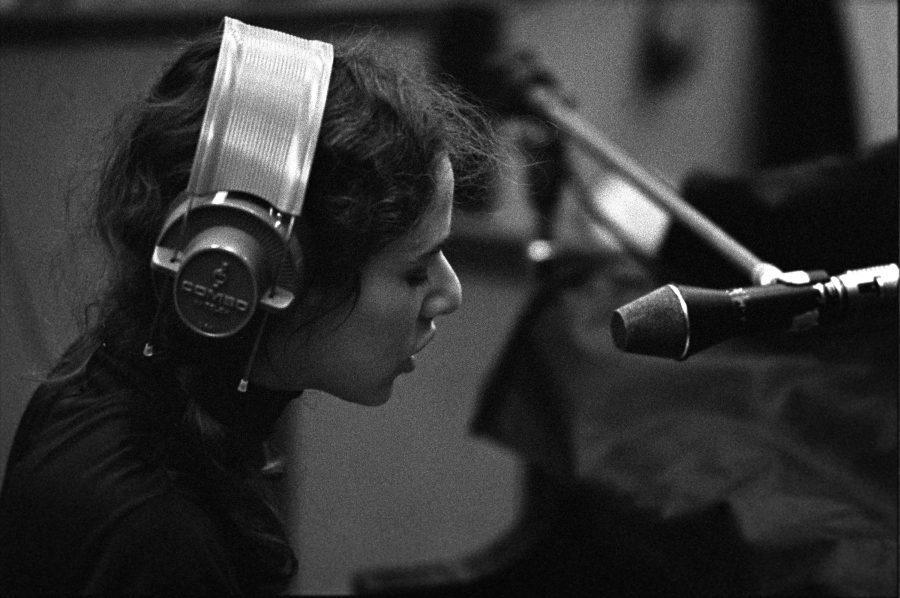
Tapestry Sessions / Photo Credit: Jim McCrary
Culturally, Tapestry’s importance can hardly be overstated: an example of one person’s personal journey tapping into the hearts of millions. On the album, she reclaims “Will You Love Me Tomorrow” and “Natural Woman” in, literally, her own voice. She debuts the ode to platonic devotion “You’ve Got a Friend,” which would be covered by actual friend Taylor a few months later, marking his first number-one hit. She yearns for distant loved ones (“So Far Away”) and urges us all to celebrate life’s everyday wonders (“Beautiful”). Carole King revealed her heart in song—and listeners worldwide embraced it.
Billboard would rank “It’s Too Late” and “I Feel the Earth Move” as the number 3 record for 1971. Tapestry won Grammys in 1972 for Album of the Year and Best Pop Vocal Performance, Female. “It’s Too Late” won that year’s Grammy for Record of the Year, and “You’ve Got a Friend” won for Song of the Year.
Meanwhile, King and Larkey divorced after five years and two children; King would have two husbands after him. In tragic irony, given “He Hit Me…,” King later wrote in her memoir, A Natural Woman (2012), about being a victim of domestic abuse in her third marriage (to musician Rick Evers): “I’d always thought, if I found myself with a man like that, the first time he struck me I’d be out of there in a New York minute. I would never stay with an abuser. Until I did.”
King has recorded fifteen more albums and had many more hits since Tapestry; she has also garnered countless awards and honors, and she is still collecting them (next up: induction into the Rock and Roll Hall of Fame, in October 2021; she’s been included for her songwriting since 1990, but will now be recognized as a performer, as well). She is single, a mother of four, and living in Idaho—apparently very happily so. When a reporter asked her a few years ago what she would say to her younger self, she responded, “You’re going to have a very rich and wonderful life.”
Seems to me the confidence I sensed when I spun around to “I Feel the Earth Move” years ago may have been legit: before you’re passionate about others, you’ve got to make sure you shine your passion on yourself.
Follow Carole King on Twitter for ongoing updates.
“Justify My Love” was one of Madonna’s most candid, sexy, dark songs. It’s yearning, it’s lustful – all the things women are not expected to demonstrate publicly. On the 20-track compilation of Madonna Covers out via Italians Do It Better, 19 artists from 19 countries contributed their own take on the pop icon’s work. Behind the wonderfully airy, dubby version of “Justify My Love” is the Australian-born, UK-based saxophonist, keyboard player and vocalist Jorja Chalmers.
“We had to be very delicate with the way we did it because it’s such a classic.],” Chalmers says. “My husband [disco producer Ali Renault] and I produced it, and we’ve been talking about it for years. We’d been trying to recreate it in the other stuff we’ve been doing individually. When the label came to us and asked us for our favourite track, it had to be that. The label gave us free reign, complete freedom. It was a bit scary doing the vocals for it, because it’s kind of sensuous. My husband had to leave the room!”
Chalmers usually produces all her own music; “Justify My Love” was the first thing the couple have created together. “It was a real buzz – we’re probably going to write an EP together next,” she hints. “We both have our own studios in the house. You go into a bit of a wormhole, where you can listen to something on loop for an hour because you’re trying to produce and refine it. It works really nicely to have two producers in a relationship because you understand the madness of it.”
Chalmers, currently in France and away from her Margate home, has been on a creative streak. She released her second album, Midnight Train, in May, only two years after her debut Human Again.
The extended time at home, without the solid schedule of on-off touring she is normally committed to, drove Chalmers to set herself a deadline of making an album in four months. It was her therapy, in a way, since her work as a touring musician with Roxy Music had been shelved due to COVID.
How did a Sydney Conservatorium-trained saxophonist, piano-teaching Australian end up on stage with Roxy Music for a decade? In her mid-20s, Chalmers left for London and spent a few years working temp jobs and playing in bands. Then in 2007, three years into her London life, she was performing in new wave band Hotel Motel when Bryan Ferry’s personal assistant saw her and recruited her for corporate gigs. “His PA picked me from obscurity and the next thing you know I’m going to his studio for an audition. It’s such a twist of fate,” she recalls. Proving her mettle, she was invited to tour with Roxy Music in 2011, solidifying her career as a full-time session musician.
In a world where being a full-time artist of any discipline is a rarity, it’s even more special to be performing alongside pioneers of synth pop to audiences old and new. “It’s so difficult to be a successful musician – it’s all about right place, right time,” Chalmers says. “I get to work with some of the most seasoned session musicians and Bryan is an incredible musician. He knows exactly what’s going on with every track. Soundchecks can go on forever because he wants it to sound as amazing as possible. He’s an absolute perfectionist.”
Chalmers herself is perfectionist too, though too humble to admit it. It must have been a relief to offset the pressure of touring with perfectionist musicians by working with Italians Do It Better, a label that gave her the trust, time and space to create on her own terms.
“I wrote a load of demos while I was on the road and spending a lot of time in hotel rooms while touring with Bryan [in 2017]. I was taking a mini-studio with me on the road so on my days off I’d walk around the city, then write for the rest of the day,” she remembers. Upon hearing what she’d been working on, friends recommended she send it to Johnny Jewel at Italians Do It Better. She did, and Jewel responded almost immediately with an invitation to put music out via his label.
“They’re a great label to work with. They don’t interfere with what you’re doing writing-wise. Johnny executive produces so he’ll sprinkle a bit of magic at the end, but there’s no messing with the actual creative process,” she says. “They don’t make you go out and tour, they really work with you on your own terms. Major labels feel like you’ve got to go out on the road, touring all the time, and I do that with Bryan all the time, so touring just to pay a label doesn’t work for me.”
The creative trust put in Chalmers paid dividends. Human Again was vibrant, strange, exploratory and referential all at once. “Human Again was very much a prototype or an idea of the films I’d seen as a child: Blade Runner, Terminator, all the John Carpenter films. [It was also about] getting to know the analog setup, and trying to flex my compositional muscles really,” she says. “I wanted it to be instrumental, though I did add vocal tracks. I wanted it to sound beautiful, majestic, and nostalgic all at the same time.”
For Midnight Train, Chalmers says she wanted to focus on her potential as a songwriter. “It still has the compositional take, but I wanted it to sound like an ethereal journey through various rooms of a house, with a healthy sense of drama,” she explains. Chalmers was aiming for a David Lynch-ian beautiful nightmare – a dark, moody club filled with velvet couches, intoxicating opium smoke, murderous women in blood red lipstick and conniving men in sharp, double-breast suits. Romantic warm machines embrace listeners from the very opening seconds of “Bring Me Down,” before the futuristic synth-pop of “I’ll Be Waiting,” cinematic and anthemic in scope. The disconcertingly disembodied saxophone seems to emerge from a deep, cavernous nothingness, satin-smooth and gothic.
It owes more than a nod to Alison Goldfrapp’s trip-hop, dubby synth-pop. Goldfrapp’s Felt Mountain (2000) was considered too weird and eclectic two decades ago, but it opened doors for the generation of women synth-dance experimentalists to come.
“Funny you say that,” muses Chalmers. “Felt Mountain was the sound that I wanted to always create. Felt Mountain was an odd album for then, and they’ve never created anything like it since. It’s so ethereal, a masterpiece. It was so clever and the whole thing – the production – was amazing on it. Bjork and Fiona Apple were a huge influence too… What I love about that music is that it has depth. I try to create that too – that you play the album more than once, and not in snapshots. I want you to be able to listen to it and hear something different each time.”
Follow Jorja Chalmers on Instagram for ongoing updates.
On “Soft Science,” the opening cut to Pearl & the Oysters’ third album, Flowerland, Juliette Davis is the voice reminding you over a mellow disco groove to take some time out for yourself. “Hey, come to the beach,” she sings, “You studied all night long, you deserve a break.” But guest vocalist Kuo-Hung Tseng, from Taiwanese band Rollercoaster Sunset, responds, “I can’t talk right now/I really should work/It wasn’t enough/Soft science is hard.”
“I didn’t really want to sing this,” says Joachim Polack, who, along with Davis, comprises Pearl & the Oysters. “I thought it was too close to me.”
Flowerland is a reflection of the end of the duo’s stint living in Gainesville, Florida, where Polack was working on his PhD in musicology. He and Davis grew up in Paris— they’ve actually known each other since high school— and studied musicology in France. But, the postgraduate system in the U.S. was different, with more coursework and a shorter period of time to complete the program. In France, they could juggle school, a band, and side jobs. That proved to be harder in the U.S. “The album is also a little bit about disillusionment with going to school and the toll it took on my health,” says Polack. “Having a band and doing that at the same time was really more than I could handle sometimes, and I think that it was a difficult time to navigate, but I’m really grateful for all the people that we met.”
He adds, “It was a really beautiful time in our lives.”
It wasn’t just school that was different in Florida. “The seasons were different. Everything seemed so new,” says Davis.
Over the course of Pearl & the Oysters’ three albums, all of which were at least partially made while they were living in the Sunshine State, Davis and Polack have drawn inspiration from an environment that was quite different from France. The terrain, plants and insects all played in a role in sparking the duo’s creativity on their 2017 self-titled debut, 2018’s Canned Music, and now Flowerland.
“I think one thing that is different in this record is that it’s still very sunny and, basically, it’s an upbeat record in many ways,” says Polack, “but I think, for the first time, it’s more melancholy, trying to address stuff that we were going through in those last couple years that we lived in Gainesville.”
Flowerland certainly has its moodier moments. “I think that we’re incapable of doing a full-on gloomy album, but it has a little bit more of that,” he notes.
“But,” Polack adds, “it’s more balanced in terms of the gamut of emotions than the first couple of albums, which were very much sunshine pop, like bubblegum almost. Everything was over-the-top cute and I think that, this one, we tried to keep that element because that’s the music we like, but also be a little more transparent with what we were going through mentally.”
The musicians that they met while living in Gainesville also helped shape the album. “In this way, the influence is clear,” says Davis. “We didn’t work with studio musicians that did exactly what we asked them to do. We really collaborated on the sound.”
That includes the duo Edmondson, who Polack describes as having a Smile-era Beach Boys vibe. “Whenever we wanted percussion, we would go over to their house and they had this big box full of all kinds of percussive contraptions,” he recalls.
They also incorporated collaborators from outside of the Gainesville area. Kuo-Hung Tseng from Sunset Rollercoaster is one. Davis and Polack are big fans of the band and were able to connect through a mutual friend. They also linked up with Jules Crommelin of Australian band Parcels through a mutual pal, and sitarist Ami Dang via their former bass player. As Polack notes, they had good luck with finding collaborators simply by asking. “I feel like the lesson that I learned from making this specifically is that people should not shy away from doing that, because people are down,” says Polack. “It’s something that, in indie pop or rock music, is happening more and more.”
Before mixing the album, Davis and Polack moved cross-country. “We loved living in Florida for many reasons, but it was definitely not a destination for us. We didn’t plan on staying there for long,” says Davis. “The question was where—do we go back to France? Should we try another city in the Southeast?”
They decided on Los Angeles after playing a show in the city and made the move in January of 2020. “We understood the potential that the city has for us as musicians, as pop music musicians and definitely thought that it would be a good move and we are so glad that we did,” says Davis.
They had just enough time to play a couple shows and start meeting people before the COVID-19 lockdown began. “Now that things are reopening, we’re fully understanding the potential of this city as musicians,” says Davis. “We’ve already been part of a few incredible projects in the past few months. We’ve been invited to play a lot of different shows.”
Davis adds, “Even though we arrived at the worst moment, we managed to actually really settle ourselves in this time in a pretty good way.”
Follow Pearl & the Oysters on Instagram for ongoing updates.
Bold and unapologetic country queens Chapel Hart return with their swampy sophomore album, The Girls Are Back in Town. Equal parts sassy and heartfelt, the 12-track project finds the trio putting their most fearless foot forward, tackling topics ranging from bullying and cheaters to womanhood and independence, as told through the confident delivery and stellar three-part harmonies of Mississippi-born-and-raised sisters Danica and Devynn Hart and their cousin Trea Swindle.
The album opens with “Nearly Over You,” a breakup ballad led with a crying fiddle that matches lead singer Danica’s aching vocals and lyrics. Blue tears pour from her brown eyes as she mourns the end of a relationship, lamenting at song’s end, “Just know I’m not nearly over you.” This leads into “4 Mississippi,” a raucous ode to a hard-working single mother of four children, setting the pace for an album that stands firmly in its country roots but leans more into rock than the pop sound ubiquitous on country radio. The family band then takes the edge off with the free-spirited, “I Will Follow,” an ode to following one’s heart over their head. With soft claps and glistening harmonies, the sweet song accentuates their lighter side as they profess, “When my heart leads the way, I will follow.”
But they get back to their feisty ways on “Grown Ass Woman,” the female country anthem we’ve been waiting for. Here, they’re unabashed backwoods women who are just as equipped to run a tractor as they are willing to let their emotions, and a curse word or two, fly. “I may not be politically correct, but I can say that I did things my way/I can cry when I want to/Fight when I need to…that’s what grown ass women do,” they shout over a bluesy, edgy melody, proudly telling the world exactly who they are on one of the album’s best and most defining moments.
The Girls Are Back in Town also proves the CMT Next Women of Country 2021 inductees to be clever and witty lyricists who embrace word play, exemplified on “Tailgate Trophy” where they blatantly disavow the misogynistic tropes in modern country. Their cheeky personalities also shine through on the single that initially grabbed the public’s attention, “You Can Have Him Jolene,” Chapel Hart’s callback to Dolly Parton’s iconic track. Instead of begging the other woman to back down, these three throw a dirty cheater to the curb after catching on to his two-timing tricks. They gladly turn him over to his new lover, but not without warning to heed some advice and learn from that fateful experience.
Meanwhile, the New Orleans and Nashville-based group shares “Jacqui’s Song,” a loving tribute to the girlfriend of their former keyboard player who was tragically killed when the tent she was under at an outdoor festival got struck by lightning. Originally released on their 2019 album, Out the Mud, “Jacqui’s Song” does their late friend proud. Calling on the tried-and-true “three chords and the truth” model, they take the invaluable lessons learned from Jacqui and turn them into lyrics that demonstrate country storytelling at its finest, singing over a honeyed melody, “When you live this little thing called life/I hope you take it by the reigns/You ain’t promised no tomorrows/And you can’t take back yesterdays.”
The singers round out the album with back-to-back-to-back rockers, calling on “Jesus & Alcohol” in a bluesy breakup anthem that features ZZ Top’s Billy Gibbons on guitar, then sends their enduring harmonies as high as the Georgia pines they sing of with “That’s a Redneck Summer Night” before closing out the project with the fiery title track. Through The Girls Are Back in Town, Chapel Hart carve out a place for themselves in the modern landscape of country music. With their strong harmonies, killer hooks, and compelling lyrics, Chapel Hart lives and breathes their defining proclamation: “We’re the next women of country and it’s our town now.”
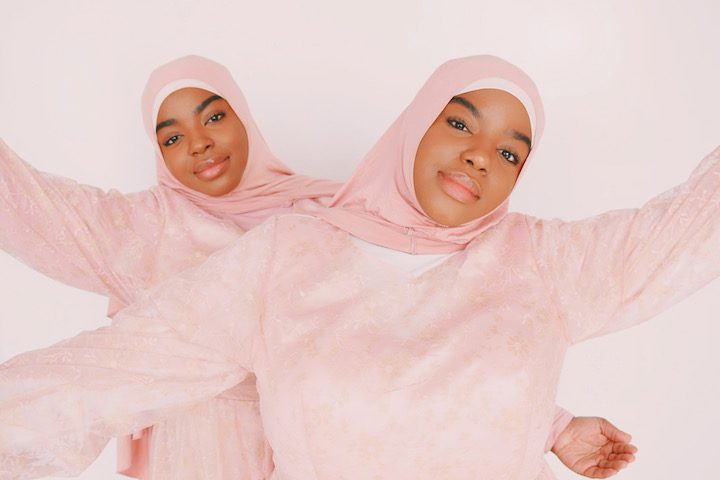
Speaking with Sakinah (Straignth) and Zakiyyah (wiZdumb) Rahman of pop/R&B duo, Aint Afraid is an experience in itself. Even through a Zoom screen, the identical twins light up the room with their magnetic personalities, speaking confidently and swiftly and finishing each other’s sentences more times than not. Though they only started releasing music last year, the metro-Detroit based artists’ messages of positivity, love, and life’s fleeting nature have resonated with the masses. Last week, they released a short film, Cradle to the Grave, which includes three of their recent singles, “Crimson,” “Rock Bottom,” and “Basics,” and pays homage to pop icons like Missy Elliot while staying true to their wholesome and uplifting message.
“It’s clear as day when you see me that I’m a Muslim,” says Zakiyyah, pointing to her hijab. “And people will say, ‘I love your music but I’m not Muslim,’” adds Sakinah. “We’re always going to have to fight through our identities to reach people.” In a world that likes to put people in boxes, the girls explain that a lot of opportunities that are offered to them have to do with their identity. “We feel like that’s not the only realm we can reach… you don’t need to get us only for Muslim-related opportunities.” And while their faith serves as a thematic compass, Aint Afraid’s music is universally relatable.
Take, “Crimson,” the first song in Cradle to the Grave, a song that reflects on life’s inevitable end and what we do with our time here. The scene is set with the twins in costumes that nod at Missy’s iconic space-suit outfit from “The Rain” video. They’re looking down on an elderly man in a mansion who’s surrounded by fine things, but not a loved one in sight. The lyrics warn listeners of the danger of material things and the lust and ruin that often accompanies them: “Tell me will it be worth it in the end/We’ll be hurting/Probably screaming and bursting in tears/Can’t believe we waited ‘til the end to think/Can’t believe we never even changed our ways.”
“‘Crimson’ is all about; We’re all gonna die, and nothing except your skeleton is gonna come with you, so what are you prioritizing?” says Zakiyyah. For the girls, it’s clear that their priorities lie with family, spreading their message, and creating a space in the media for young people that look like them. They explain that, growing up, they didn’t have a role model – aside from their mother – who they could look up to and see themselves in. “I think that’s why it took us so long to begin this journey,” says Sakinah. “We felt like there was no space for us… until we realized we can make the space for ourselves.”
Making that space has been anything but easy. Throughout their lives, Sakinah and Zakiyyah have been told – in a variety of ways – that they can’t do what they want to do. Among these voices have been their college guidance counselor who said they can’t always be together and an opportunistic record label that told them they won’t be able to achieve what they want to achieve without them. “We don’t like that,” says Zakiyyah. “You can’t say that to me. People told us that we can’t ever work together in our life, we’re working together. They say you can’t be a Muslim artist, [we’re] Muslim artists. Then we have this label coming and saying ‘You can’t make it without us?’ Now I’m gonna absolutely go and do it without you.”
This sentiment is echoed in “Rock Bottom,” the second song in Cradle to the Grave. They repeat one simple line that exemplifies the duo’s approach to adversity: “Rock bottom might be hard but that’s where I got my start up/People let me down but I got me regardless.” Perched atop a rock on the California coast in monochromatic costumes, the pair look like they are made for this moment. They see-saw seamlessly between melody and harmony, evidence of a lifetime spent singing together. In so many ways, this video and this chapter of their career is just an extension of what the sisters have been doing their entire lives.
With a mother who grew up in a time where stars were discovered at gas stations and local diners, the girls say they have always been ready to perform anywhere and everywhere. “Performance came easy – it all came so easy,” says Zakiyyah. “We would perform in the middle of a Kroger or Walmart, we would just bust out.” These years of practice – improvised and otherwise – are realized in the pair’s ability to sing together without overpowering each other and move together as one fluid unit. This synchronicity is shown on “Basics,” a song that reminisces on the simplicity of childhood while reminding the listener that they can find that same peace at any age.
At the young age of 22, Aint Afraid’s journey is just beginning. But, even at the start of their careers, they possess a wisdom and patience that some people don’t find at any point in their lifetime. Their endless positivity and unwavering sense of direction will take them as far as they wish to go – and they’ll continue to inspire and uplift others on the way. “We know that we’re different, and [want to use] that as a way to show other people who are different – not only that look like us but are different in other ways – to know that there’s room for [all of] us,” says Zakiyyah.
Follow Aint Afraid on Instagram for ongoing updates.
Genre-bending Atlanta artist OFTEN (who uses she/they pronouns) describes their project as “the queer love child of Donna Summer and Fiona Apple.” Such a description articulates the many intersections where the artists finds themselves: between their queerness and an intense Seventh Day Adventist upbringing, or being a Black student at predominantly white schools growing up. All these identities meet on their debut LP Dirty Saint, out October 8. Today, she premieres the video for “Deep Sleep” via Audiofemme.
OFTEN picked up their soul and jazz influences from their parents, but became obsessed with Fiona Apple once surrounded by mostly white classmates. “I was obsessed,” they explain. “I just really loved the way she wrote music. Her lyricism was really beautiful to me, and I was just like a really sad, angsty kid, so I just felt really connected to her.” Likewise, OFTEN’s lyrics are at turns poetic and melancholy, which might seem at odds with her love for Donna Summer, who she says “deserves so many more flowers than she gets.” They love Donna Summer for the way she showed the fullness of herself, slowing down her take on disco that was different for the time, and taking on sexualized subject matter without any fear.
Summer’s influence appears mostly in the tempo of the album, which creeps along languidly like a breeze on a humid August afternoon, dense and heady. OFTEN layers vocals for a harmonizing effect, all placed over stark, slow synth beats. “I [call] myself a sad disco queen,” OFTEN says, “because I’m a really sad little person but I want to make sad bops for my people.”
And sad bops they are. While OFTEN spent the early pandemic reworking an EP they planned to release last year, life forced them to slow down. After losing the house she shared with her girlfriend, music “was just the only thing I had around for myself to keep me here, and stable, while so much of our life was unstable.” They wrote scores of new material in friends’ living rooms or spare bedrooms while they figured out their next move, reworking tracks from the EP like “By Summer,” “Deep Sleep,” and “Wake” to fit into a more cohesive whole.
OFTEN plays with the instability and uncertainty of this time in the new “Deep Sleep” video, which features a montage of footage from their pandemic year. She takes us from bedroom to living room to bedroom, interspersed with the natural settings in between, towering mountain ranges and smooth seas. You see OFTEN in several different beds, all with different bed linens and each time sporting a different make-up look. This articulates the passing of time, the journey from one place to another, the anxiety of a nomadic lifestyle but also the necessity of finding joy in the worst of times: her partner kisses her on the cheek as they stand outside a mobile home; she floats in the ocean on an inner tube.
The idea of sleeping is a theme that repeats itself on the record, or rather, examining the “places where you felt like you slept on yourself.” And by that, OFTEN means “feeling like I couldn’t, feeling like I wasn’t good enough, or just a lack of self confidence.” Dirty Saint is a re-worked iteration of an unreleased EP that dealt heavily with the fallout from a strict Seventh Day Adventist upbringing, one that doesn’t accommodate queer identities. They were working through what they had been taught, trying to deconstruct and rethink the concept of God on a personal level, but realized “I had a lot I needed to sift through for myself as just a person, and my childhood and upbringing,” before they could take on their complicated relationship with God.
“So Dirty Saint is more of me facing myself, and having a dialogue with my younger self, and realizing that she needed a lot of care and love from me she didn’t get,” OFTEN explains. “It’s kind of looking in the mirror and having a conversation with your earlier self. The things you did right, things you did wrong, places you felt you weren’t cared for.”
A previously-released video for “Palm Trees” articulates that struggle visually. We see two versions of OFTEN: one is more feminine, dressed in a flowing red sundress. The other reads more masculine, wearing pants and a crewneck sweatshirt with the sleeves cut off. They argue with each other, before walking together towards the ocean at sunset. These internal contradictions are ultimately able to coexist with each other, in the realization that we are allowed to contain multitudes, that we are allowed to be many versions of ourselves at once.
OFTEN says this album is an introduction to herself, from herself, a person and artist that is constantly evolving and learning how to self-define freely, and their hope is that it will allow others to “feel seen” as well. A fan of astrology, they point out these internal contradictions at play even in their chart, where a Sagittarius sun meets a Pisces rising, a fire sign muted by the emotionality of a water sign. And for now, that self-awareness is enough, in many ways.
“Chani Nicholas has been telling me all year that the fruits of my labor are going to become something else,” they say. “So I’m really excited for what’s going to happen in the next few months, but all I can do right now is just keep making music. I don’t really know what’s going to come my way.” And really, none of us do. All we can do is keep making music, whatever that means for each of us.
Australian-born, Vancouver-based Larissa Tandy is looking on the bright side in her latest single “No Fun.” It’s the final in a trilogy of singles she’s put out this year, following “Drive” on July 23 and “Sirens” released on May 21. All three were written and recorded between Nashville and Memphis with the help of Nashville’s finest session players and a legend of the Motown scene, Funk Brother Jack Ashford.
The trilogy concept was birthed through a very rational decision. Tandy knew she could only afford to create and promote three songs, as opposed to a full album. But by releasing them as a trilogy, she’s inadvertently captured a snapshot of her life across three cities.
“They do speak to the different parts of my life,” affirms Tandy. “‘Sirens’ is very connected to my past in regional Victoria. The second song, ‘Drive’ is very much based on my time in Nashville – the people I was writing with, and stylistically fascinated by – and then the third [‘No Fun’] is related to my life in Vancouver. I do feel like I have three home towns.”
Riffing on Vancouver’s reputation as a beautiful, but boring place to live, Tandy complains that never stops raining, that everyone says they’ll call then they never do, but then finds the silver lining in they city’s overcast skies: “there’s still a million reasons to never leave this town.” Primary among these – Vancouver offered sanctuary when Australia refused to acknowledge the legitimacy of her marriage. She met her partner, Elisabeth, on a holiday visit to British Columbia in 2007. Tandy returned to Melbourne for nearly seven years before she and her wife made their home in Vancouver in 2014, and the couple welcomed their daughter in 2019.
The video, however, won’t be lauded by the Vancouver tourism authorities, with an unenthusiastic Tandy posing in various mundane settings around her adopted hometown, her head poking through an oversized postcard reading “Beautiful NO FUN”.
Tandy made it herself, including designing the seagull who’s mouth she inhabits in the video. “It’s currently propped up against the house in the backyard. I might actually do something with it at some point,” she muses. Sounds like fun, so that’s probably against the local laws.
Tandy’s accent is unmistakable in its broad, Aussie frankness. Her knack for storytelling and unexpectedly candid confessions in the least melodramatic of moments are also typical Australian traits. Now 45, Tandy was born in Sydney and grew up with her parents and older brother Ryan in regional Victoria, on the Mornington Peninsula, before making her home between Vancouver and Nashville.
“My dad was in the Navy,” she explains. “My dad was from Sydney and my mum was from Melbourne. I must have been so little when we were relocated to Melbourne, and there was also a short period when we moved to Tasmania. I got kicked out of boarding school, returned to Victoria and spent my teenage years on the Peninsula. I don’t think I’m normal enough to thrive in that [boarding school] environment. I was 10 when I went, so I was making sense of this whole other world, this reality I had no idea about before.”
A reality that did make more sense to a young Tandy was songwriting and singing. “Ryan had been in every single band that I’d played in, we’d worked together on everything,” she remembers. “I started a band around 2000. I’d been playing bass in this 3-piece but the other two people were a couple and they had a spectacular break-up during one of our shows… my brother was like, ‘Start your own band – just do it!’”
They did, expanding with bass players, backing vocalists and a drummer, but they had a booking agent who lamented that his venues wanted “quieter” bands. So, Tandy improvised and insisted they did have a quieter band, inventing the name Strine Singers.
Ryan and Larissa joined with another brother-sister duo, Mick and Lou Rankin in 2011, releasing their EP Counter Canter two years later. The folk-meets-country harmonising over gorgeously simple, steely guitar still sounds just as fresh and affecting as it did upon its 2013 release. The band amicably parted in 2014, though they’re all still close Tandy confirms. “They coaxed me out of my shell, and encouraged me to put more stock in my own work,” she says. “It was a good, really supportive environment, but I was ready to move into a solo thing that I could put my name on.”
Since 2016, she has travelled back and forth between Nashville and Vancouver, writing and collaborating fervently in East Nashville. Vancouver is home though, and upon settling there with Elisabeth, she wasn’t sure how to break into the Canadian music scene. “I’d just landed in Canada. I really didn’t know what I was gonna do. Strine Singers had wrapped up. I had this idea that I’d release stuff then go back and tour Australia,” she says. “I had all these songs and I thought I may as well try to make a record, though I had no music network in Canada. I did some research on Canadian albums I loved.”
That was how she met Jim Bryson, a studio owner in Ottawa who would eventually produce her 2017 solo debut The Grip. “Jim was [a collaborator and guitarist] in the touring band for Kathleen Edwards, a beloved Canadian alt-country artist. I really loved what Jim brought to that band, so I reached out to him and next thing you know I’m flying out East to make a record with him,” she recalls. “I stayed at his place for two weeks and we worked everyday trying to play as much of it as we could.”
Fortuitously, Australian friends and acclaimed singer-songwriters Liz Stringer and Kat Lahey were on tour from Australia so they featured on the album, too. They recorded it mostly in 2015 but it took a lot of research and work for Tandy to find a distributor (MGM Australia in Sydney and Nashville). At the same time, she was trying to juggle being her own manager, with no support team, and she’d also had four hip surgeries within that period.
“I really didn’t know how to put a record out… but that whole experience has a lot to do with where I’ve got to now, which is how to find a way to release things as close to when they’re written as possible,” she says. The Grip spent four months on the US Americana charts, attracting positive reviews internationally and winning her the prestigious Nashville Songwriter Residency. And releasing these latest singles in a purely digital format symbolizes Tandy’s rebellion against the slow-moving traditional system that dictates when and how artists should make and share their work.
“I founded the more I started to complicate the process, the more I created delays, whereas doing things digitally kept things simple,” she explains. “I created visual assets, the videos, and tried to do away with anything that interfered with the process and slowed things down. I had the opportunity to do this without thinking about the commercial aspect, I had some budget to do it and I wanted to get the ball rolling. I entered a great creative period of my life, I just wanted to clear the decks and make some space for it. I didn’t want to be stuck in the standard release system of releasing an album every two years and sitting on work for so long. I think it’s possible to build your own audience and the best way to do that is to keep nourishing the patch of turf that you have with more and more of your work.”
Tandy has her own home studio, which is where she’s assembling a collection of songs that she intends to release as twelve stand-alone singles, beginning in mid-2022. But Tandy plans to preview two songs per month via Patreon beginning in September, followed later by a traditional album that offers the songs as a cohesive collection.
“The songs that I’m writing for it are really personal so I’m trying to create something low-vibe,” she says. “I’m pulling them up, tinkering, it’s a different way to work.”
It’s a great time to get personal – with prime examples of women in country music writing about their sexuality, speaking about their partners and their queerness in interviews and owning it. “There’s a real movement in queer country that is so exciting. The amount of artists – queer or otherwise – who have endorsed hat movement, or expressed their allyship… there’s a sense that things are really changing in the industry and where the power once was, it no longer is,” Tandy says. “If someone tells me my music is ‘too gay’, I say it speaks to some people, and so be it. I identify as non-binary so I see it as a challenge that in this fast-moving environment, people want to understand things quickly and easily so the more complicated things are, it can be an obstacle [to people understanding]. The more authentic you are, the better off you’re gonna be.”
Welcome to Audiofemme’s monthly record review column, Musique Boutique, written by music journo vet Gillian G. Gaar. Every fourth Monday, Musique Boutique offers a cross-section of noteworthy reissues and new releases guaranteed to perk up your ears.
It was an accolade she was dubious about; “I’m not sure I even know what trip hop is even now,” she told the Quietus in 2012. A compelling new anthology, When I Hit You — You’ll Feel It (Light in the Attic) gives you a broader perspective of her work, drawing from Witch and subsequent recordings, along with a few previously unreleased tracks. Winer’s voice is low and husky, her observations sharp and cutting. The album’s title comes from the song “N1 Ear,” where a rhythmic beat suddenly gives way to a litany of sexual inequality: “If I get raped, it must be my fault, and if I get bashed, I must’ve provoked it.” It’s a dizzying blend of beats and samples, whispered entreaties, and provocative utterances. In addition to the album, Winer’s cover of Tim Buckley’s “Once I Was” (recorded with Maxwell Sterling) is available separately.
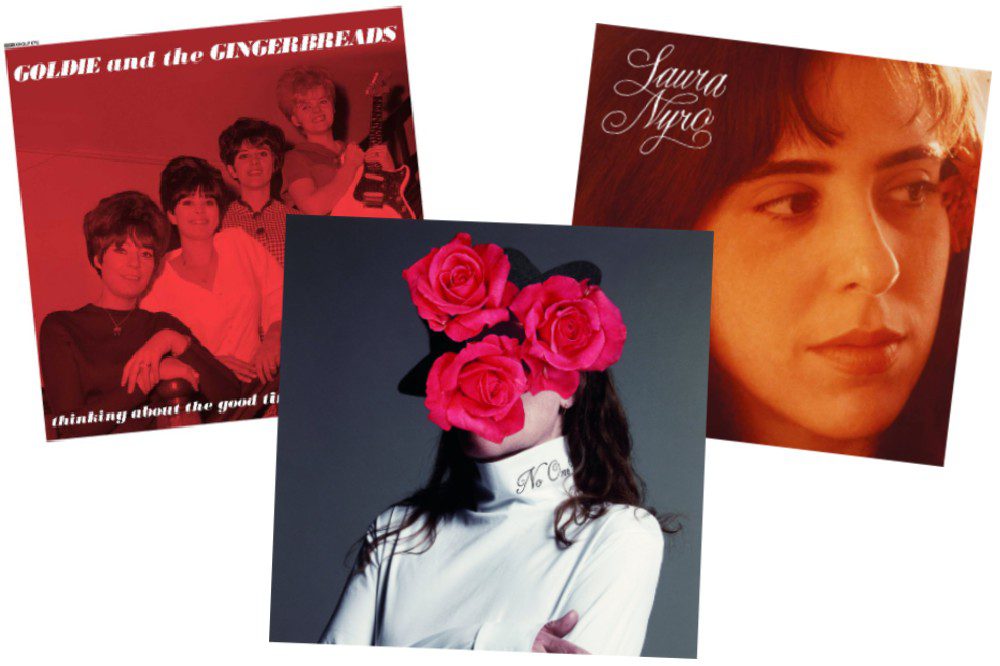
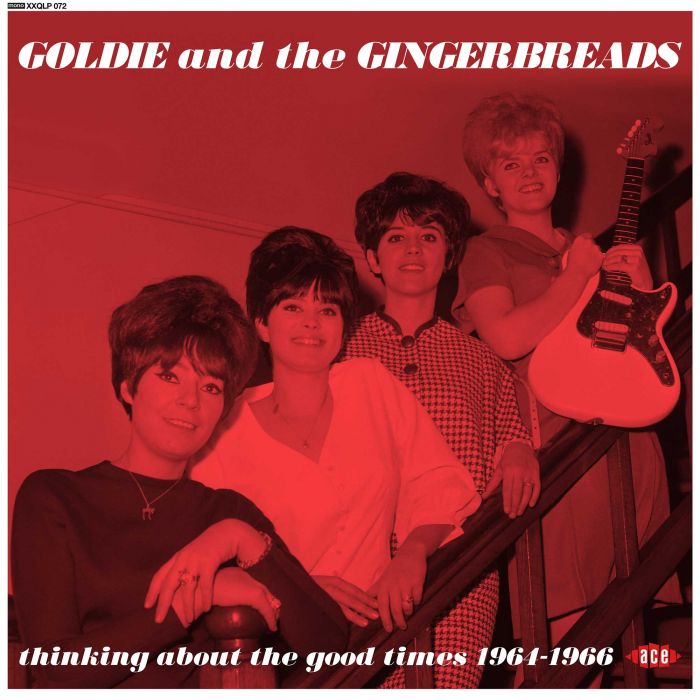
One of the pleasures of writing my first book, She’s A Rebel: The History of Women in Rock & Roll, was discovering so many female performers I’d never heard of before. Names like Wanda Jackson and Lady Bo were new to me. I learned that the women hanging out with Barbra Streisand on the inner gatefold sleeve of her Barbra Joan Streisand album were in a band themselves, called Fanny. And then there was the Goldie and the Gingerbreads.
“Who was the first all-women rock ‘n’ roll band?” As the liner notes for the new Gingerbreads’ compilation, Thinking About the Good Times: Complete Recordings 1964-1966 (Ace Records) put it, it’s something of a rhetorical question; after all, groups of women have been playing together since instruments were invented. But Good Times claims the Gingerbreads as the first significant rock ‘n’ roll band: “Of that, there can be little doubt.”
This is a release where the liner notes are just as important as the music, because it’s the first time a full account of the Gingerbreads’ story has been told. The roots of the band were formed when singer Genyusha “Goldie” Zelkovicz (now Genya Ravan) met drummer Ginger Bianco (originally Virginia Panebianco) in New York City in 1962. A series of Gingerbreads came and went, with the lineup that would enter the recording studio solidified by 1964; Goldie, Ginger, keyboardist Margo Lewis, and guitarist Carol MacDonald.
The group dazzled New York society (they were namechecked by Tom Wolfe in an essay for Esquire), and then headed to the U.K., where they opened for the Rolling Stones and the Kinks. They were first to record “Can’t You Hear My Heartbeat” (later a hit for Herman’s Hermits), but this pop confection wasn’t really the Gingerbreads’ forte. They much preferred the steamier flipside, “Little Boy.” This was a group that loved rock and R&B; listen to their rock solid version of “What Kind of Man Are You” by Ray Charles, or the sizzling high energy of “Think About the Good Times.” This collection also has previously unreleased material: a terrifically bluesy “Look For Me Baby;” Goldie’s burning lead vocal on “Sporting Life;” and the instrumental keyboard dazzler “Margo’s Groove.” Goldie & the Gingerbreads laid down a path for other women to follow, and it’s great to see them getting the recognition they deserve.
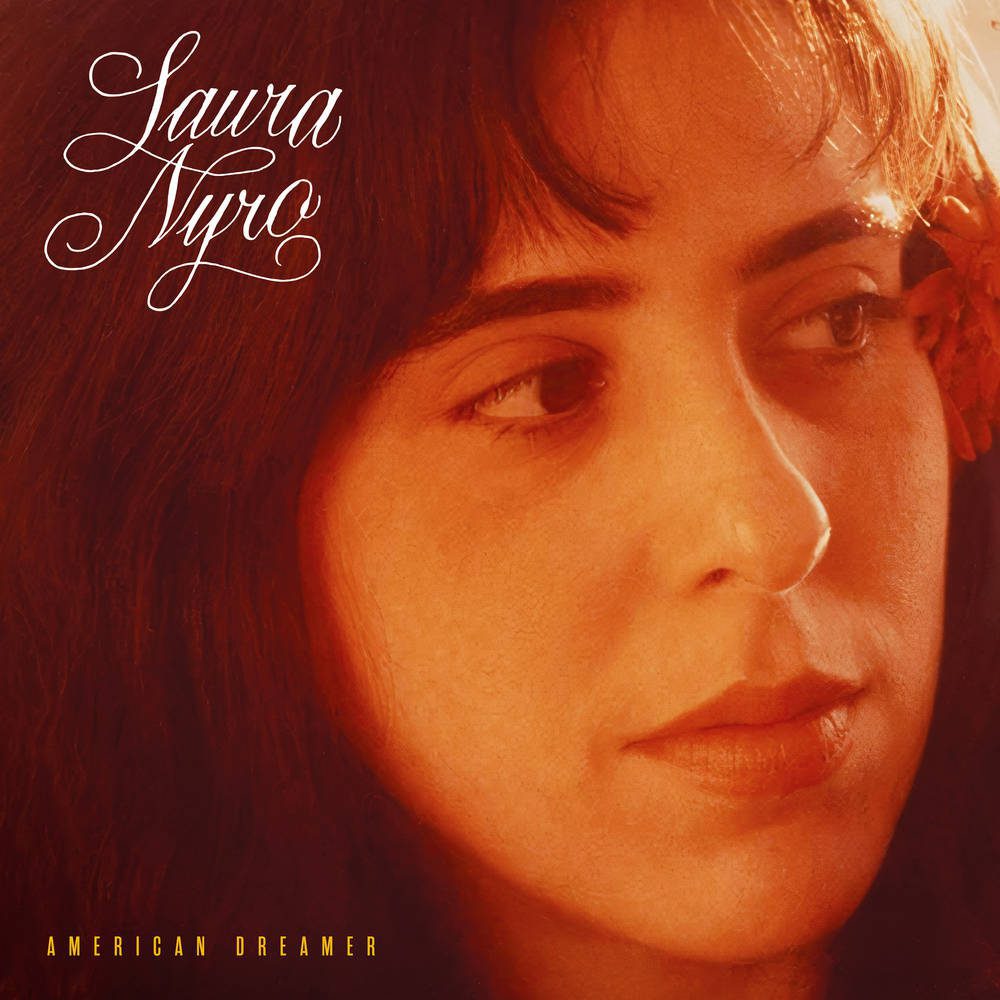
It’s hard to think of Laura Nyro as being “underrated.” After all, she’s the composer of classics like “Wedding Bell Blues,” “And When I Die,” and “Stoned Soul Picnic” to name a few, and she’s been cited as an influence by any number of musicians (Elton John, Todd Rundgren, Cyndi Lauper). But those songs became hits for other performers; ironically, Nyro’s best-selling single was a song she didn’t write, a cover of Gerry Goffin and Carole King’s “Up On the Roof.” People knew her work, but didn’t necessarily know the artist who created it.
American Dreamer (Madfish/Snapper Music) offers a deep dive into her catalogue with a vinyl box set featuring Nyro’s first seven albums, plus an eighth disc of rarities exclusive to the set. Her first four albums are stunning in their originality, a blend of pop/soul/jazz/avant garde that doesn’t fall into any readily identifiable category, which might not have helped Nyro get on mainstream radio but made her an undeniably compelling performer. Her 1971 album, Gonna Take a Miracle, was a fond look back at her roots: girl group sounds (“I Met Him On a Sunday”) and Motown (“Dancing in the Street”), with vocal backing by Labelle. Smile and Nested examined her life in retreat from the music industry (“Money”) and embracing motherhood (“Child in a Universe”).
The eighth album, Rarities and Live Recordings, brings together such delights as the demo of “Stoned Soul Picnic,” the New York Tendaberry outtake “In the Country Way,” and four tracks from a 1971 gig at the Fillmore East, including a lovely version of “(You Make Me Feel Like) A Natural Woman.” And that’s not the only recent Nyro release. Tree of Ages: Laura Nyro Live in Japan, previously not issued in the US, is now available, and Go Find the Moon: The Audition Tape, a great disc of previously-unreleased material, is due in September.
Gunk pop. That’s the phrase Nicolle Swims—lead singer, guitarist and songwriter for Seattle band Black Ends—coined to describe the group’s distinctive ruckus, which builds on Seattle’s alternative rock history but signifies a new and more diverse era for Seattle rock music. “I feel like my voice is kind of gunky,” Swims explains. “My guitar pedals can be pretty gross and weird sounding too.”
Comprised of Swims, as well as bassist and keys player Ben Swanson and drummer Jonny Modes, Black Ends released their most recent EP, Stay Evil, last summer. Swims says the band is currently working on a new music for an LP they hope to release and tour with soon.
The resemblance between gunk pop and grunge can’t be denied, and sure enough, Black Ends—who play one of their first shows back since quarantine at Fremont’s Substation this Saturday—spring from the same twisted sense of humor that fueled the genius of Kurt Cobain and several decades of white-dude Nirvana copycats. While Swims cites Nirvana as her favorite band of all time, there’s nothing cliché about Black Ends. Swims expands the definition of the Seattle sound simply by being herself.
Swims grew up in Federal Way, a city of about 100,000 people located just south of Seattle. She played saxophone in high school band, which she admits she “sucked at,” because she really wanted to play guitar. “I’ve always loved that instrument and grew up loving it,” she recalls. “My mom bought me a guitar and I started taking guitar lessons and I loved it so much.”
Graduating from high school in the nearby town of Burien, Swims went on to pursue a music degree at The University of Idaho, while her family relocated to Alabama. “I didn’t like that college; I wanted to move back with my parents for a little bit, so I went to school in Alabama and just played at open mics there for like six years,” says Swims. But she desperately wanted to return to Seattle, saying, “I missed it a lot.”
In 2018, after studying classical guitar at the University of Alabama-Huntsville, Swims moved back to Seattle with the intent of starting her band. She already had some original music written, and had also conceived a name for the project.
“I had a book on the end of my bookshelf called Black and I was like, that’s a cool band name: Black Ends,” she says. “It was super simple. Everyone thinks it’s about death or something. It was just a book on the end of my shelf – a really cool book by Deborah Willis, a celebration of Black culture.”
That simple inspiration is partly what makes Black Ends’ music so fresh and important—it challenges Seattle’s predominantly white alternative rock idiom by situating Swims, a BIPOC woman, front and center. The rise of Black Ends represents a growing community of POC-led rock bands in Seattle.
“Before the pandemic, I used to get together with Alaia from Tres Leches, Eva from the Black Tones, Shaina Shepherd, and SassyBlack,” says Swims. “[Seeing more BIPOC-led bands in Seattle] makes me feel very good, like we’re doing something right. And I’ve seen, online, more Black girls are playing rock music than ever, and it’s really awesome.”
The growing prevalence of Black womxn artists in Seattle rock is largely due to the on-the-ground work of bands like SassyBlack and The Black Tones, who repeatedly highlight Blackness and the Black roots of rock music in their work—a torch that Swims also carries, while noting there’s a lot more work the community could do, too.
“I feel like there should be more Black bands getting booked in general,” she says. “I feel like there shouldn’t be all-white boy bands anymore, like the shows that are all white boy bands. That’s just over.”
It is over, and Swims’ quirky sense of songwriting, raspy voice, and Nina Simone-meets-Kurt Cobain vibe, which makes for some of the most innovative music Seattle’s seen in years, is a breath of fresh air.
“I mean, I have a lot of influences, ” Swims points out. “James Baldwin, I love his writing a lot. Nina Simone, I really love her. Jeff Buckley, he’s one of my favorite singers ever. I really like Elliot Smith a lot too.”
Despite the global pandemic, Black Ends have only gained momentum and notoriety throughout Seattle, to the point that they’re now playing fancy parties with bands like Childbirth, a Seattle supergroup made up of Julia Shapiro of Chastity Belt, Bree McKenna of Tacocat, and Stacy Peck of Pony Time, as well as one of Seattle’s up-and-coming festivals, Fisherman’s Village Music Festival, where they’ll play September 11th at midnight. This Saturday, they play alongside Actionesse, a 5-piece horncore band that’s earned nods from The Seattle Times and NPR’s All Songs Considered.
“More people started asking us to play as the days went by – I guess, word of mouth, people heard about Black Ends, and realized we weren’t bad, so they started asking us to play shows in Seattle. We never really had to ask people to give us shows,” says Swims. “I’m having a great time.”
As far as the fate of those $600 a week payments from early 2020, Bushwick-based singer-songwriter, artist, and showgirl Macy Rodman says, “A lot of that went to online rhinestone stores.”
Her album Unbelievable Animals drops this week, released on Shamir’s Accidental Popstar Records (he appears on the track “Punk Rock Boyfriend”). And rhinestone-encrusted it sounds. Rodman wrote the record over the course of lockdown, born of a self-imposed challenge to write twenty songs in thirty days. Though she saw it through to the end, “they weren’t all good,” she admits. Twelve tracks made the cut, a selection of club-kid dance tracks infused with a punk rock sensibility.
For Rodman, the pandemic coincided with the dissolution of a romantic relationship as well, which tinges the record with confession and heartbreak despite its light, sugary sound. “I was preoccupied with a breakup, so I was just able to astral-project, in a way,” she explains. What began as an attempt to stay occupied ultimately became a vehicle for the harsh realities of the past year to articulate themselves. “It kind of sank in after that month of writing, because I didn’t have something immediate to focus on.”
Nowhere is this more evident than on lead single “LOVE ME!” which the Rodman says “is about getting back with an ex who you know is bad for you.” The all-caps title evokes the desperation that evolves in the lyrics, “I just want you to feel the way I feel,” which Rodman repeats over an expansive beat reminiscent of a ’90s-era Cher hit. It’s an obvious sonic reference for Rodman, who cut her teeth in the NYC club scene as a drag performer.
So is this evident too in the music video for the single, where Rodman plays with familiar romantic tropes like diaries, picking flower petals and engagement rings, but with a downtown camp all her own. She cycles through many costume changes, many of which she designed and created herself. Here the aforementioned rhinestones make their appearance. “I love to craft: I make hair; I make costumes; all of that was the result of a lot of downtime,” she explains. “Everything is languid, and moving, and just kind of sexy but silly.”
Unbelievable Animals feels optimistic, which makes sense, considering Rodman wrote the album as a way to make the best out of unfortunate circumstances. While neither she nor anyone else wants to go back into lockdown, you could almost imagine Rodman returning to her sewing machine and glue gun with a newfound resilience, as if to say she’s been knocked down, but will get up again.
Follow Macy Rodman on Instagram for ongoing updates.
Boston-based singer-songwriter Alisa Amador refers to her forthcoming EP Narratives – out September 17th – as a “six-song survival kit,” offering her buoyant spirit up as a life raft. Her songcraft is deeply personal, examining her intersecting identities, but there’s something universally relevant about the way she approaches these themes, her warm and wise voice skipping from genre to genre like stones across a glassy lake. And the video for her latest single, “Slow Down,” premiering today via Audiofemme, sees her actually performing the song in the middle of one.
Even surrounded by water, Amador plays with the confidence of a seasoned performer – and that’s because she’s been on stage since the age of five, singing with her parents Rosi and Brian Amador, better known as acclaimed Pan-Latin ensemble Sol y Canto. Her natural talent is evident in every expertly constructed track on Narratives, but just beneath the surface lurks pesky, all-too-relatable uncertainties: there’s fear of commitment, workaday worry, and a vigilant search for justice in a world that seems broken. But through it all, Amador’s soulful sound acts as a salve, preaching self-love and seeking connection again and again.
Check out the video for “Slow Down” below and read on for an interview with Amador, where she talks about growing up in a musical family, recording her EP, searching for life-work balance, and centering love in all things.
AF: You were surrounded by music at an early age as the child of professional musicians. Did you ever consider taking a different path career-wise?
AA: The short answer is, no. By the time I was 15, I knew it would be wrong for me not to be a musician. I do care about a lot of other things, but music feels like my most purposeful contribution. I study dance, and I majored in gender and sexuality studies, which not only affects how I move through the word but also how I put words to what I see around me in songs, like in “Burnt and Broken” or “Together.” I really love being in nature with friends, and I’m also (mostly) privately a visual artist. All of my interests end up flowing into my work as a musician, especially now in this pandemic and virtual era: my illustrations became just as important as my songwriting, and dancing in my room became essential to choreographing my outdoor music video.
AF: What were those early moments on stage and recording with your parents like and how did those experiences inform what you do today?
AA: I remember the interior of the 1995 Honda Odyssey minivan we toured in, and will never forget it. I remember making puppets out of coffee cups and stirrers with my twin brother in the green room. I remember how we loved to wrap ourselves in the velvet stage curtains and hide inside of them. I also remember the way that people would hold their breath to hear the quietest part of a song, and how they would laugh and tear up as I watched from the wings, looking out at the audience.
I think in many ways I am still that child. I have this sense of wonder about live performance that still hasn’t left me.
AF: As you began writing your own songs, how did you go about finding your own voice and style?
AA: My dad calls me una esponja musical – a musical sponge. He says that every time he shows me a new album, he can hear it come out in the next song that I write. I guess finding my own voice has to do with listening. And I’ve noticed that honesty in songwriting and authenticity and rawness is what moves me the most, so I’m always exploring and listening and open to inspiration wherever it comes from.
I think as soon as I started writing songs I knew I was distinct from my parents because with them, I was always playing their songs. This was my own personal, private coping mechanism for a very difficult moment in my life when I was fifteen years old. My closest friend became very sick with mental illness due to their being closeted. And I started writing songs as a way to cope with that feeling of helplessness – I couldn’t help them no matter how much I tried. They were so sick and distant, and songwriting became the way that I could speak to them. And from then on, the coping mechanism stuck. It was always very personal. So inherently the voice that came out was my own.
AF: How did the robust Boston folk scene play into finding your sound?
AA: I’m surrounded by such brilliance in Boston, that it would be impossible not to be inspired. Maybe it’s something about the hard winters, but there’s this grit and resilience and honesty and bravery in songwriting here that I’m just so inspired by. Boston is a place full of transplants – people moving here or away or coming from another country or coming for school. Everybody has a story of immigration or feeling like they don’t quite fit. And even though I grew up here, I still feel that. And sharing that with fellow artists in Boston makes the whole experience of writing about placelessness or identity confusion so much less lonely.
AF: What is the songwriting process normally like for you?
AA: I always struggle with this question because I don’t remember what it’s like to write songs! I think I go into a dream state where I shut off my conscious brain somehow and just focus on feelings and imagery. I have noticed that I often pull from the natural world right outside my window, and somehow let that be a jumping-off point for internal struggles or realizations that I’m grappling with.
AF: Narratives follows some singles released in 2020, but it’s essentially a debut collection. How are you feeling about it? What do you hope it says about you as a musician?
AA: This album has been a long time coming. In order to write these songs and share these songs, I had to accept myself in my mixed identity. Narratives means not hiding anymore. I think it will help a lot of people feel less alone.
AF: What was recording the EP like?
AA: Imagine getting together in an old factory building-turned-zany recording studio, and just playing through the songs, live in the same room. That’s what it was like! Super fun! I would do it every day if I could.
AF: The lyrics for “Slow Down” describe being pulled in many directions and spread too thin, something I think we can all relate to! What’s been your experience with finding balance in a busy world? How has the last year, in which many of us were forced to slow down, changed your perspective on the constant hustle of daily life?
AA: Honestly, I am still searching for that balance, and I’m more determined than ever to strive for a more balanced life. Before the pandemic, I was on autopilot-workaholic mode, and now I can’t seem to get back to it. Looking back, I’ve realized that I was living a life where work was at the center and I was squeezing love into the cracks. And now, even though it’s challenging, I am determined to live a life with love at the center. Sometimes living in this new way feels like trying to walk up a rushing river. There are so many American cultural narratives, and narratives within the music industry, that are telling me that I should be working all the time. But musicians are nothing if not creative. And I just know that after spending so much time alone and reflecting this year, the only way I am going to make music a lifetime career is if I put love at the center. So I am learning and listening and struggling and fighting my own instinct to forget about my own humanity. I am working on being kinder to myself, to make sure that I don’t burn out by age 30. I know that I want to be a musician for my entire life. So with that in mind, it feels like the right choice to learn to live in this way.
AF: The video we’re premiering is essentially a live performance – what can you tell me about the setting, the shoot, and what it was like to perform this song in the middle of a lake?
AA: I performed this song in the unceded land of the Wabanaki people that is now part of the grounds of a social justice retreat center called World Fellowship Center. I have spent a weekend every summer there since I was born, because my parents were booked to play and give workshops there since the ’80s. This lake is very familiar to me and always feels like a sacred place. It’s been stewarded for so long that it’s actually never had a motorboat on it. I had this crazy idea of bringing my equipment and rowing out to a floating dock and playing the song there. My family and the directors of the center are dear friends, and they all sprung into action. They were the village that made it possible. Andy Davis was the boat captain. Fiona, his daughter, and my dear friend was the cinematographer. My dad helped carry all the equipment. And our mothers rowed out to be our audience, with the family dogs. You have to imagine: the pond is so alive. There are fish, turtles, loons, geese, finches, woodpeckers, squirrels, and heaven knows what other larger animals were probably close by. And, of course, the water is moving and making sounds. There’s so much natural sound in the space. But, when I finished playing “Slow Down,” right as I finished, it went completely silent. I don’t know what else to say – it was a crazy experience.
AF: I feel like a lot of folks associate natural settings like that with relaxation and slowing down – are you an outdoorsy person?
AA: I am not a hardcore backpacker or through-hiker or ice climber or any of that stuff. I am, however, very connected to nature, and I need time outside to remember that I’m a human being.
AF: Other than the middle of a lake, have you returned to playing live shows? What’s the vibe been like, or what are you looking forward to about returning to the stage?
AA: Yes! Words I’d use to describe returning to in-person concerts are: cautious, creative, and connected. It’s been so moving to be around other people again and to witness my music being witnessed. It’s also a tenuous time – there is a lot of caution and care put into doing concerts in a safe way. But also a lot of creativity! Just this last week, I played for a series that has changed their venue to being in a bird sanctuary, and it was one of the most spiritually beautiful experiences I’ve ever had as a musician. And I’m looking forward to a whole tour of these creative and connected shows – I have a lot of shows coming up.
AF: The EP is pretty raw and handles some weighty topics – but overall has a hopeful feel. How did you achieve that and why is it important to you to communicate that hope?
AA: Thank you for asking a question about hope! I’m trying to get my thoughts in a row about this. First, by naming the injustice and pain that I name in my songs, the listener feels heard. Because they share those experiences. And in the process of feeling heard, or identifying with a song, they feel less alone and more hopeful. It is so important to me that my music instills hope. Hope is a crucial tool for fighting injustice. Hope gives you the strength to keep believing in a better way to treat people. Hope is imagination and heart uniting to create a more loving world.
AF: What’s your personal favorite song on the EP and why?
AA: I can’t choose! And you can’t make me, haha. But honestly, I’m so proud of each of these songs and the way they are in conversation with each other. The flow of the album, from feminist funk to jazz to introspective Latin folk and anti-love songs to an anthem to friendship – each song is meant to be listened to and turned to for comfort, or catharsis, or a dance party, and I just can’t wait for people to press play.
Summer 2021 began optimistically, shots in arms and money in pockets. This optimism, while not dead, has wilted in the face of the Delta variant, that science offered us a miracle and so many squandered it. There’s simultaneously joy in our newfound armor, and sorrow for those we needlessly lost. Whatever your perspective, it’s not the “Hot Vax Summer” that Megan Thee Stallion promised us when she dropped “Thot Shit” in June.
One might find a more appropriate summer anthem in the haunting but lovely “Ancestors Watching” by New Zealand “enchantress pop” duo Purple Pilgrims. Comprised of multi-instrumentalist home producers Valentine and Clementine Nixon, they offer a unique brand of sprawling, choral haze and angelic noise. Though this track was penned pre-pandemic, off of 2019’s Perfumed Earth, the sisters prove almost prophetic with this track in its ability to capture the alternatively remarkable and dire times we find ourselves in. They premiere the video, also produced in 2019, on Audiofemme today.
Filmed “with our ancestors watching on (amused we presume), on our favorite dormant volcano” and directed by American psychedelic synth artist Gary War, the video evokes the Maypole dance ritual, an ancient celebration of oncoming warmer weather and new growth. Despite the hope inherent, there’s something melancholic and eerie about the pairing of the song and imagery, especially in light of the 2019 film Midsommar, which is impossible to ignore in this context. The uneasy balance it strikes was intentional – as in every song Purple Pilgrims write. “We always think it’s important to incorporate some element of darkness in everything we make, as we do light, it’s the natural balance of everything,” they explained via email. “There’s always something devastatingly sad in the most beautiful things – dualism is ever present.”
And what could be more devastatingly sad than to squander a miracle? The sisters’ harmonic vocals soothes the nerves, while sultry, gentle riffs, fuzzy around the edges, articulate the languish of this hazy humid August, teetering on the edge of uncertainty and soaked by torrential rains. Thematically, the song “is largely about being kind to oneself, and the idea that muddling our way through life can feel less daunting when we consider all our family branching out behind us, holding wisdom and strength,” they say. “It’s an idea that can offer comfort when we’re feeling lost.” Perhaps their relationship with their ancestors granted them the clairvoyance to write this song before we so desperately needed such beauty in our lives.
This comfort is something to cling to through these long summer days. The reality that our ancestors faced all manner of war, pestilence, and uncertainty – and survived – shows us that we are very much capable of doing the same, a mirror from the past that can anchor us to our present moment. As for Purple Pilgrims, they remain positive, noting that their next album is very much underway, something they can’t wait to share in the “not too distant gleaming future.” While we ultimately cannot determine how bright the future will gleam, we can still acknowledge our inherited resilience, and the way these trying times may hone it even sharper.
Follow Purple Pilgrims on Instagram for ongoing updates.
In the eyes of Nashville-based Kayla Graninger, who performs art pop under the moniker Elke, words are gifts. As a lifelong reader of poems, books and lyrics, she turned her attention to music full time at the age of 24 after having an epiphany when talking to a friend and fellow writer. “She always told me, ‘Don’t miss an opportunity to say something.’ That was super essential as I’m trying to find a voice,” Elke tells Audiofemme. “I think words are super important and I think they get taken for granted, so I see myself having a purpose in that way. I’ve always paid attention to words. When somebody says something that uplifts you or it’s an arrangement to say something that wakes you up in a way, I really was striving for that.”
Raised in Illinois, Elke left high school at 17 to pursue a modeling career in New York City, yet came to the city equipped with a guitar in hand. She channeled her passion for words directly into her 2018 debut EP, Bad Metaphors,as well as the singles she’s released since. “The Bad Metaphors EP was really honing in on words and what they meant to me. I went about that wanting every word and every part to say exactly what it meant to say,” she says. “That was really good practice for me and a good confidence booster too.”
The EP was something of a musical experiment where she flipped the idea of what a female vocalist is expected to sound like on its head: embracing a rock sound; leaning into the masculine side of her voice; challenging the traditional gender roles foisted upon her, first by her conservative upbringing, then reinforced when she began modeling as a young adult, with her appearance under constant scrutiny. “I was sick of this whole privacy, feeling reserved, feeling like I need to sound a certain way. I really wanted that to be the focus for that EP specifically,” she explains. “I was really inspired by not feeling like I needed to be tied to a genre or a gender. That was really important for me at that time to feel like I could freely write about experiences and singing in a way that I felt empowered by.”
All of these efforts have paved the way for Elke’s upcoming debut LP, No Pain For Us Here, out September 24 via Nashville imprint Congrats Records. The album marks new territory for the singer, as she rediscovers her feminine voice. The refreshed sound is a result of calling on boyfriend Zac Farro, drummer for Paramore and producer behind Becca Mancari’s 2020 album The Greatest Part, to produce the record and help broaden Elke’s approach. “I got to express myself in different ways that have inspired me to not feel so trapped behind a guitar and to perform more,” she explains. “It’s brought out more of this feminine side too, which I enjoy now. I feel balanced in a weird way because of this entire journey. Being able to find that voice was super helpful with this balance. I know moving forward, I’ve been thinking about even more different ways to sing. It’s definitely helped me grow and look in an upward direction.”
Her artistic reimagination is exemplified by her latest single, “The Pink Tip Of A Match Turns Black,” premiering exclusively with Audiofemme. While the song honors her rock roots with electric guitar, Farro’s production efforts accentuate the lighter, more delicate aspects of Elke’s naturally rugged voice, tinged with warm, feminine notes.
The song is deeply personal for the eclectic artist, as it was born out of a falling out with a close friend in New York that left Elke feeling pained and lost. “I wanted clarity from it because it wasn’t a pretty ending. There was no closure and I got really hurt from it,” she shares. “That was heavy on my heart at that moment, so I wanted closure.”
She compares the frustrating experience to watching one’s favorite TV show with foreign subtitles while stating point blank, “I may have lost this one/What I thought was a friend/Your face was easy from familiarity/The pink tip of a match turns black.” The song ends with an extended interlude as she softly repeats the word “bye,” the process of writing the song helping to heal the wounds that inspired it.
“I want every word to mean exactly what it means, and if I could have achieved that with that song to help me move on, it did,” she proclaims. “I think that you can really feel jaded by certain situations and I wanted to walk away from it feeling tall. It was meant be light, it was meant to be abstract. I really like the words for it, which makes me feel like I could find some clarity and meaning so I could move on, learn something.” Rather than focus on the dissolution of her friendship, Elke chooses to portray the feeling of waking up, or “feeling like you’re in a daze and then you see something and you feel enriched.” She hopes that fans won’t simply listen to the song, but truly hear it and be present in the moment to absorb its message, and “understand that life is actually quite good,” she says.
“The Pink Tip of a Match Turns Black” symbolizes the release of a dark personal experience, coming out on the other side more secure in who she is. It ties in to the album’s overall theme of freedom, each song representing a different stage of liberation in Elke’s journey. “Every other step of the way is either self-reflection, feeling like I know who I am and I’m cool with that. Every song ties together in that way of the steps to feeling free,” she conveys. “It was a part of the journey of freeing myself too from this New York attitude – feeling like I love being in love and feeling free and there being no boundaries to that. I still really held myself to every lyric saying everything that I wanted to say.”
While the album is inspired by her love story with Farro, its messages hit on a deeper level, celebrating fearless connection with one another as humans. “It’s definitely Zac and I falling in love, but not every song is really about that, but more so about the freedom that I felt after the conclusions of ‘I’m loved and people can be loved,’” she explains. “The idea that life is painful and that you need some sort of edge to feel present or to feel like you’re making it, I wanted to let go of all of that. I called it No Pain For Us Here because I think that the message is more important that there doesn’t need to be pain and that you can feel that to be a free person and you deserve love and your worth is so relevant. Everybody has a worth.”
As any houseplant enthusiast will tell you, growing things indoors can be tricky – it takes just the right amount of sunlight, moisture, and fertile soil to make that monstera deliciosa flourish, but the joy and wonder that comes from watching it grow is well worth the effort. On their latest single, “Evicted,” NYC-based grunge revivalists Hello Mary twist intoxicating vocal harmonies around the phrase “I’ve been evicted from the sun,” lamenting the pandemic lockdown (and later, with the line “Now everyone is taking sides/I can’t decide which one is right,” the political divide widened by a crisis that should have united us). But despite an apparent lack of Vitamin D, it’s clear that the trio – consisting of Helena Straight on guitar, Mikaela Oppenheimer on bass, and Stella Branstool on drums – have been growing by leaps and bounds as musicians. “Evicted” is the second single following the band’s DIY debut Ginger, released via Bandcamp in December 2019, and it showcases the group’s burgeoning potential as New York’s next huge rock band.
“The songs are getting better and us playing together is getting better,” says Branstool, who mentions more than once during a Zoom call with Audiofemme that the only thing she had to look forward to during the height of the pandemic was playing drums and writing songs with her bandmates. “Evicted” came out of those practice sessions, as did “Take Something,” released in May this year. Both were recorded with veteran producer Bryce Goggin (who has worked with Pavement, Luna, The Lemonheads, Sebadoh, Dinosaur Jr., Kim Deal side-project The Amps, and more), and Hello Mary spent last week in the studio recording twelve new tracks with him as well.
“You have to work with the right person and Bryce is the most perfect person that I could think of – we’re kind of obsessed with him,” says Straight, who characterizes “Evicted” as a pop-driven song more in the vein of Dinosaur Jr. “He definitely values the raw, real, live sound, so we’re on the same page.” For a band that’s arrived at a gritty ’90s alternative sound by way of playing sold-out shows across New York, retaining that raw energy is important. While Ginger accomplished this well enough, a professional studio setting with a seasoned engineer elevates their latest material significantly.
“I’m excited to be moving on to a process of recording that fits us better. The way that it’s gonna sound is just gonna be a lot more true to how we actually sound – both on our part, like how we’re playing our instruments and how we’re singing and how we’re writing songs, but also how we’re being recorded and how we’re being mixed,” says Branstool. “It’s raw, but then still produced enough where it’s fun to listen to in headphones, not painfully raw. We’re adding a shaker or a tambourine, or just other elements that kind of beef it up.”
What’s especially remarkable about Hello Mary’s latest songs is not only how tight they are, but that they’re coming from a band who hasn’t been together all that long – and whose members are all under 21. Straight and Oppenheimer are still in high school, while Branstool is about to enter her senior year of college. They met Goggin via Branstool’s mother, Christy Davis, who plays drums in the CFR with Luna guitarist Sean Eden. Straight’s father also played drums in bands throughout his college years and maintains the practice space where Hello Mary worked out these songs.
Age is relative, anyway – each member of Hello Mary brings lifelong musical experience to the table. “Mikaela and I met in middle school – we were in the same homeroom. I played guitar a little bit but I was mostly singing. Mikaela was playing bass in jazz band and we started writing music together,” recalls Straight. By ninth grade, they’d released a few songs on Soundcloud, all while delving into ’90s alt-rock history. Around this time, they were asked to play a show highlighting young women musicians, but didn’t have a drummer, so the program coordinator introduced them to Branstool, who mainly played in bands with guys.
“When I joined the band it very much felt like I was just the drummer. It didn’t feel like my band; I just felt like I was kind of subbing in to help them make music, and I actually was totally fine with that. At that point they were fifteen and I was eighteen and it felt like a much bigger difference than it does now,” remembers Branstool, who played piano and sang as a child before discovering her natural talent behind the kit in high school. “The more that we’ve played together and the more that we’ve grown closer as friends, becoming better musicians and writing songs better together and all that stuff, I just can’t picture my life without it at this point.”
Oppenheimer is still heavily involved in jazz band, and though Hello Mary’s unique vocal harmonizing or jangly guitar might stand out most on first listen, it’s her springy, thick bass tones that give the band its throwback sound. “I try not to think about theory or jazz stuff when I’m writing but I’m sure it inevitably does [affect] my technique,” she says. An archive of a livestreamed Baby TV set reveals just how essential her playing is to the band.
Still, as young musicians, they’re heading for some big changes. While they’re mostly keen to stay in the city, Oppenheimer and Straight will be applying to college this year, just as Branstool finishes up. “It feels like a crucial time right now, at least in my eyes, because it’s my last year of college. More importantly, they’re going into their last year of high school. With our band and the dynamic… I want to make sure that we have a solid thing going before it becomes challenged or compromised by outside factors,” she says. To that end, Hello Mary have scheduled four West Coast dates for September, as well as a smattering of NYC appearances, including a show tonight at The Broadway in Brooklyn. “We don’t see any other way – it’s necessary for us to practice and to play shows and to keep going.”
With respected musician mentors – including other young women who have been in Hello Mary’s position before, like Julia Cumming of Sunflower Bean, once the “babies” of Brooklyn’s DIY scene – the band possesses both the drive and the talent to garner critical praise and fans well beyond the five boroughs. The days when women playing music – especially teenagers – might have been met with condescension or derision seem far away. “I don’t know how many naysayers we run into. Very few. Maybe none,” says Oppenheimer, when asked how the band combats negative stereotypes.
“Inevitably we’re all gonna get older, that’s what’s happening,” Branstool says, steadfast in her belief that soon enough, like Sunflower Bean, they’ll be mentoring the next crop of young rockers. “Yeah,” Straight laughs. “That’s not gonna happen for like ten years.” In the meantime, the rewards of watching Hello Mary come into their own will more than suffice – and “Evicted” feels like a new leaf on a carefully cultivated plant, just about to blossom.
Follow Hello Mary on Instagram for ongoing updates.
When Bonnie Bloomgarden arrived in Los Angeles seven years ago, she had one thing in mind: she came to get sober and start a new chapter in her life. Making music wasn’t part of that plan. Everything in her life was reactive, no motivation to think or be human. Told to bottle up her emotions as a teen, over-medicated and even institutionalized, she’d found ways to cope that were negatively affecting her life and well-being. “No one talked to me like I was a human. Everyone made me feel I was such a freak, so outside of reality,” she remembers. “No one ever said you’re supposed to feel emotions. If you feel emotions, there’s something wrong with you.” Stepping onto California soil, however, she knew she couldn’t leave music behind. “Once I was there I realized, I AM MUSIC. That’s what I do, I make songs,” she tells Audiofemme.
Bloomgarden didn’t have a plan, just jamming out with some friends like a grindhouse girl-gang. Eventually, she put the word out to find a guitarist and drummer; if she didn’t find a band, she was going to move back home. Luckily, she met former Hole drummer Patty Schemel and her brother Larry, who was working at Hollywood record store Amoeba Music at the time. Soon after, they added bassist Rachel Orosco to the lineup, calling themselves Death Valley Girls. “They have the best taste of everything in the world,” Bloomgarden says of her bandmates. “We just started playing for a year and made tiny goals and kept achieving them. Becoming human again.”
Their next goal was to tour, but they weren’t the type of band to beg to play or piggyback on a show bill, and it was to get difficult to book headlining shows with no recorded material. To that end, Death Valley Girls recorded their first record seven years ago, mainly because they wanted to play shows. After a two-day recording session, Street Venom was initially released in a limited cassette run. Fast forward to the present day: after a few member changes and a hectic tour schedule that’s included up to 200 shows a year, Suicide Squeeze Records is reissuing a deluxe edition of Street Venom on vinyl, a dream come true for the band. Larry Schemel feels like this release is different because it’s like sharing an old photo album with the fans. “We were still figuring out our song writing and sound,” he reveals. “We also thought it was a good time to focus on other projects, like finally releasing our first recordings on vinyl, since we haven’t been able to tour in these strange times. Suicide Squeeze help put together a really cool release – we were also able to include two songs from our first single that was also a super limited edition release. Now Street Venom has a proper place on the shelf with our other records.”
Bonnie Bloomgarden and Larry Schemel look back on those two days of recording, both characterizing it as mostly off-the-cuff. They had pieces of songs, but played everything live and totally improvised. Some songs were just intros, with no ending. Patty Schemel recorded her drums on the first take. It was a real rag-tag, yet magical experience that set the tone for what Death Valley Girls is today: chaotic, mystic garage rock allowing listeners to channel suppressed emotions through a headbanging session. Death Valley Girls created their own brand of rock ‘n’ roll catharsis, incongruous yet harmonic, a place in time where they exorcised their demons, while sounding like they play to please them.
On “Shadow” Bloomgarden sings, “Don’t know what his name is/Or what he’s doing here/Just stop following me/I just want to disappear,” describing some entity from her past following her like a dark, demonic silhouette. “Sanitarium Blues” revisits Bloomgarden’s troubled youth, a new video for the old classic directed by Wiktor Lekston (Cult Nug).
While recording Street Venom (and much of their catalogue to come), Death Valley Girls spilled it all on the page, by way of playing live. “We’ve always done it. We didn’t know it back then. Not knowing that it was normal for us, we still did it,” Bloomgarden marvels. Putting those “feelings that come unplanned” to tape gives every Death Valley Girls album a special zeal, but nowhere is that more true that Street Venom. “I love the sound of spontaneity and crazy energy. [Street Venom is] not a practiced recording. Is it rehearsed, or will it be the loopy, goofy moments that come together? Your records are to capture an exact live moment.”
Last year, Death Valley Girls came full circle with their latest LP, Under the Spell of Joy; Bonnie Bloomgarden and Larry Schemel remain at the band’s core, with help from bassist Nicole Smith and drummer Rikki Styxx, as well as guest-saxophone player Gabe Flores and guest keyboardists Gregg Foreman and Laura Kelsey, among others. Concerning itself with mystical principals, channeled through Death Valley Girls’ typical rock reckoning, the writing and recording process was, again, an almost subconscious effort. “Last record, we needed to say magic spells and chants out loud to manifest great things,” Bloomgarden says. “Everyone needs to be open and create spaces for themselves, and everyone [else].”
Its predecessor, 2018’s Darkness Rains, was more reactionary, symbolic of how the band was feeling about the state of the political reign of terror brought on by the 2016 election. But it also shed light on the surge of mental health crises, gender inequality, and trans issues were coming to the forefront, like an erupting volcano to the band. “Darkness Rains was about being angry and pissed,” Bloomgarden says. “We’re just people, and music is a religion, it’s prayer.”
Though the pandemic is far from over and Death Valley Girls are slowly returning to the stage, where they feel most comfortable, Bloomgarden points out that we all learned a little something about ourselves in lockdown that could have lasting effects as society re-emerges. “The thing I’ve noticed is that when everyone went inside, they all had an opportunity to see what their own energy is. Before COVID we were bumping into people’s energy, pulling other people, didn’t have a chance to realize our own energy,” she says. “I think everyone is going to realize they’re kind of psychic and an empath.”
Looking back to those recording sessions where the band first felt intimate, genuine, and in touch with their souls, the constant has remained to advocate awareness for people. The anger that inspired records like Street Venom and Darkness Rains has given way to a blueprint for how we can all challenge reality and societal norms to find catharsis – sometimes via the very act of rocking out. Death Valley Girls had to start somewhere, and for Bloomgarden, it had to begin with exorcism, a reaction to shoving her emotions aside for so long. “I want people to know that they should talk about [their feelings]. Street Venom is about not thinking and talking about it,” she says. “Our records became more about empowerment and how you be yourself.”
Follow Death Valley Girls on Instagram and Facebook for ongoing updates.
On June 15, California reopened and Los Angeles bars and clubs were able to resume business without most of the pandemic-related restrictions that had forced so many to go dark for over a year. Two days later, I returned to The Lash, the venue downtown where I was a resident prior to COVID-19, for my fist gig there since March of 2020. There was no theme on this Thursday night; I played a little of everything, including a lot of songs that would have heated up the dance floor in 2020 – if dance floors were a thing that year. Dua Lipa, Cardi B, Jessie Ware, Roísín Murphy and three tracks from Kylie Minogue’s latest album, Disco, all made it into the set. I couldn’t remember the last time I saw people dance that hard. We were making up for lost time.
Los Angeles was lit for those first few weeks after the city’s grand reopening. I went to Footsie’s for my friend Rose Know’s postpunk party, Death Disco. The bar was slammed and the patio was buzzing with people I hadn’t seen in months. We played catch-up, like it was the first day back at school after a summer break that lasted far too long. I snapped a selfie with Rose as she played Soft Cell, Marc Almond singing, “I collect, I reject, memorabilia” while I fussed with the angle of the phone. A week later, I stopped by The Lash for my friend Don French’s Sophie tribute night, the IRL version of a Twitch event they held when we were still stuck at home. The crowd launched into a dance floor sing-a-long before midnight.
A few weeks later, on a phone call, Don recalled the elation inside the parties following the reopening. “I feel like I had never really experienced that prior to COVID, where everyone is genuinely happy to be in a space with music playing and you’re dancing,” they said.
Of course, this would change quickly. That’s just how life in this city, maybe this country, seems to operate during the COVID-19 era.
The Delta variant hit Los Angeles and new cases rose. L.A. decided to reinstate the indoor mask rules for everyone, vaccinated or not, about a month after the reopening. The rule went into effect right around the time I was mixing a 20-year-old Jamiroquai song into The Reflex Revision of Roísín Murphy’s jam, “Narcissus.” In the days that followed, many bars and clubs across the city independently announced that they were enacting a new policy: proof of vaccination or a recent negative COVID-19 test were required for entry.
You could say that these are nothing more than temporary nuisances that will help us party safely and I agree with that. DJing while masked is uncomfortably hot, sweaty and annoying, yet I’ve done it. Plus, I don’t care if anyone wants to see proof of the two Moderna jabs I got specifically so that I could enter spaces filled with other humans without feeling an overwhelming sense of dread. At the same time, though, the constant influx of bad COVID-19 news on our timelines has been demoralizing in a city that, just a few months ago, seemed to be heading towards brighter days.
At a Friday gig in late July, something about the vibe felt weird. Rose had a similar experience at her gig on the same night. “The people that do come feel a little hesitant to be there, but are still coming out,” she told me when we talked on the phone. “It’s just a strange contrast to how it felt, initially, when the bars had opened again.” At my gig, people seemed nervous, like we were all trying to have fun, while also waiting to see what new hell was in store for L.A.
After a year and a half of social distancing, we’re reintroducing ourselves to IRL society and that hasn’t been the easiest thing to do. Those who have started going out again are relearning social cues, figuring out the rules of etiquette for a world that’s not the same as it was in March of 2020.
Back in June and early July, going out was cathartic. “People were coming out because they wanted to feel alive and feel connections with other human beings and warm bodies, be around other people,” Rose said on our phone call. “It’s so important, as a human race, to have that, and we were stripped of that for so long.”
She adds that, maybe, this time apart has “stripped us of some of the humanity we need to move forward.”
I was thinking about what Rose had said on our call while I was DJing on a Friday in early August. The crowd was light, but the people who were there seemed to really appreciate the night out. There were some great requests. People came up to me to say thanks for the music, something that’s been happening more often now than before the pandemic. Sometimes, I think that the weirdest thing about returning to the clubs is how nice people have been. After watching shitshows unfold daily on social media for far too long, I didn’t know what to expect. Generally speaking, though, I’ve seen friendly, albeit sometimes awkward, interactions. All that has reminded me of how important it is for us to be able to gather together in person, whether it’s because of music or some other shared interest, and how important it is that we still have spaces where we can do this.
“Who I am inherently as a person is someone who wants to change and push the envelope,” Maggie Rose professes on a phone call with Audiofemme. “I really think that sustainability in any career, but especially in music, can only be achieved if you’re switching it up and changing it and pushing yourself and exploring your capabilities further.”
Rose lives and breathes this proclamation. Having had her fair share of experiences trying to find her identity in the music industry, it’s not hard to see how much she’s evolved from the 21-year-old who made an impression in Nashville under the name Margaret Durante with a countrified cover of Kings of Leon’s “Use Somebody.” Under independent Emrose Records, her back-to-back singles “I Ain’t Your Mama” and “Better” landed inside the Top 30 on country radio. More than a decade later, she’s donning a bold pixie cut and a fierce look in her eye to match, putting forth a brazen sound that continues to showcase her powerful voice.
She shed her mainstream country image with 2018’s Change the Whole Thing, a live album that further proved her superb vocal chops while introducing her undeniable soul sensibility. “It left everything on the table and laid it bare. I realized what I could do as a singer and the beauty and urgency of live music, how important that was to me. That led me to realize that I’m a soul singer too,” she describes of the organic project. “That really unlocked a huge thing for me.”
The album came at a time when the Maryland native felt she had nothing to lose, “untethered” from the confines that gated her creativity in the past. Asking herself what kind of music she really wanted to make, her response was to bring all the players in one room, writing songs with Larry Florman and Alex Haddad of Nashville-based rock band, Them Vibes, and recruited Bobby Holland to produce.
“It turned out to be so magical. The experience itself was so enjoyable and educating for me and freeing, but also the product was beautiful. It was really something that was genuinely new, and I said, ‘Okay, we have to make the whole LP this way,’” she recalls. “It felt like 10 years or more into my career, a rebirth of sorts.”
Change the Whole Thing proved to be an imperative step in Rose’s artistic journey, leading to the bluesy, jazz-infused sound that defines her latest album, Have a Seat, out Friday, August 20. Recorded at the legendary FAME Studios in Muscle Shoals, Alabama, the album reflects the music she was raised on, Rose calling on the iconic voices that came before her in the studio including Aretha Franklin, Etta James and Bobbie Gentry.
“I know I don’t I know everything/But you’ll never know what I can bring/ To the table if you don’t have a seat with me,” Rose wisely sings on album opener “What Are We Fighting For,” a reminder to set aside differences to foster real communication. The album’s titular phrase here has the effect of a warm welcome to the listener to sit at a table where there’s always a place for them.
Though recorded primarily before the pandemic, the album is arriving at a time when the U.S. is seeing a surge in cases of COVID-19 due to the Delta variant, and follows a year of civil unrest and rallies around the world for social equity in the wake of the murder of George Floyd. “I realized that these themes of inclusivity, a little frustration with the social and political contention of the world, and wanting to be heard and to hear other people and be an individual, all of those were themes that were even more resonant with me after what we’re all going through,” she contemplates of the album’s title. “It is about making room for everybody at the table and giving each other the space to speak our minds, even if we don’t agree with each other. I think having the empathy and compassion to do that is the most loving thing that we can do to our fellow man, stranger, or people that we know very well.”
“On a specific individual level, for me, it was having had this conversation for so many years of where I belong on the musical landscape,” Rose adds. “This is my way of being like, ‘this is my seat right here. I belong here and only I can fill it and only this person can fill that seat,’ and having pride and power in claiming it.”
Throughout the album, gritty, yet subtle electric guitar compliments Rose’s smooth voice, neither one overpowering the other on songs like “For Your Consideration” and “Saint” that simmer like a slow burn, while “Are We There Yet” and “Do It” capture the throwback funk, soul and R&B melodies driven toward the goal of giving a live audience a night they’ll never forget (along with lyrical depth).
During a time of forced pause in 2020, Rose also tapped into the art of listening. “That was a period of time for me where I was home and really taking in the world around me and doing some self-reflection and dealing with how isolation can magnify our own internal struggles and voices that negate our efforts,” she says. She launched the Salute the Songbird podcast where she engages in deep, honest discussions with fellow artists ranging from Valerie June and Amythyst Kiah to This Is Us star Chrissy Metz, Rose absorbing their knowledge while listening to her inner voice. “I’ve always thought of development as grinding and rehearsing and playing shows and being out there and staying out there, and we did in many ways, but this was also a huge state of development for me that I probably wouldn’t have undergone in this short of a time if we hadn’t had this crisis fall in all of our laps.”
Her personal reflections go deep on the album, particularly on “Saint.” The smoldering, blues-leaning number finds her confronting a false sense of perfection projected onto her by others that she’s also made a habit out of accepting for herself. “I’m only human/I’ve made my mistakes/It’s hard to feel high when you’re falling from grace,” she states point blank in the lyrics while owning her “restless heart,” promising to “keep falling” as she watches her halo fade. It’s perhaps the most human song on an album filled with them. “Masterfully written” by Charlotte Sands, Jon Santana, and Brett and Brigetta Truitt, Rose says she felt an immediate connection to the song. “That one really floored me and made me feel seen and give myself a break. I’m not a saint; why are you expecting that of me? Why am I expecting it of myself?”
Then there’s “For Your Consideration,” a song that blends empathy with anger. The swampy, bluesy melody caters to the lyrics that encourage those on opposing sides to put down their egos and access compassion to see from one another’s perspective. “Just look at all the room I’m making for your consideration,” she sings in the defining line. “I really love that song for this moment,” Rose observes. “It’s really quite dynamic in the range of emotions that we’re going through in that song. [It] feels to me at this moment, even if it’s loud and overwhelming, expression has to happen right now, because I think that we’ve all been sitting in our own corners. Isolation can create paranoia, can make us feel misunderstood, and we start having these narratives in our head that aren’t true and maybe we wanted to duke it out.”
Meanwhile, “What Makes You Tick,” featuring Marcus King, ponders what compels us to do what we do, while “Telephone” addresses the toxicity of social media and the “erosion of information” as it passes from one person to the next, like the childhood whispering game. But “Help Myself” is where Rose gets most candid. The playful melody doesn’t distract from the clever lyricism as she takes aim at Instagram culture and its endless supply of self-help remedies to numb the pain, the lyrics addressing how our culture has adopted the habit of nursing our wounds with internet tips as opposed to doing the deep work that leads to true healing.
While in the writers’ room with Whissell and Kyle Dreaden, Rose says the trio had countless examples of “dodging unsolicited advice,” offering a dose of humor in the chorus where she nods to “pills and candy” as self-medication, eventually delivering the punchline with the admission “Despite what the experts said/I’m only here to help/I just can’t help myself.”
“We’re in a minefield of ‘here’s this quick fix to solve all your problems,’ and then we implement them and we’re still dealing with the same problems,” Rose says. “I think there are a lot of things that we can do to help ourselves, but it seems like we’re wading through a sea of tips and quick fix solutions when we really should be doing the harder work of looking inward and figuring out what the root of the problem is.”
Looking inward is at the core of Rose’s process, hoping that the intention she poured into Have a Seat will be felt by those who need to hear its messages. “Songs always change for me. I think they are these beautiful things that start to absorb meaning as they live longer. I don’t think that they really start their lives until you give them away, so that’s why we released this music,” she shares. “I want it to be an experience. I don’t want people to think that I have the answers, but I hope it’s thought-provoking. I hope people have fun and there’s a huge level of escapism. It was really awesome to be so intentional about this project. It feels like a triumph.”
Milly Coleman of Wing Vilma has never been one to fight with nature. Instead, from early on in their life, they found themselves tuning into the complex and ever-present rhythms that nature has to offer – branches of a tree tapping a window, waves crashing to shore, their own footsteps brushing the ground as they walked home from school. On their sophomore LP Spirit Practice – released Friday, August 13th via Young Heavy Souls – Coleman explores how their own connection to nature has acted as a guiding force in both music and shaping their identity.
Where most people see technology and nature as opposing forces, Coleman has spent much of their life fusing the two to make something beautiful. “I’m just obsessed with synthesizing organic sounds,” Coleman explains. “It’s almost like ASMR for me…I feel like there’s a really physical, tactile sense of pleasure and dopamine release that I have when I take the sounds of a forest and I run it through a loop so that the footsteps become the rhythm or whatever it might be.” Samples of nature can be heard throughout Spirit Practice in nearly every song, whether it’s a heavy rain or the cushion of a soft breeze.
“Astrology Cup” offers the most outright sampling of nature, with its intermittent sounds of water flowing. The gentle reminder of one of Mother Nature’s most powerful elements builds a tension throughout the song, inviting the listener to meditate on this essential life source. Coleman explains that they approached much of making this record in the same way. “I truly don’t remember writing some of the things that came to define these songs,” Coleman says. “I feel like I’m just very meditative in these moments and I’m channeling something beyond myself.”
The video, which premieres exclusively on Audiofemme today, gives a visual explanation of Coleman’s subconscious and conscious inspirations, and includes lyrics to a spoken word piece that was instigated by the song. It was filmed, directed and edited entirely by Coleman and encapsulates their DIY approach to making music and art.
A record three years in the making, Coleman says that time was as vital as any other instrument on the album. Giving the music space and coming back to it allowed them to reinterpret and build upon what they had started days, weeks, even months before. The time also allowed them to view their work and what it was saying from a bird’s eye view. “This record… before I even had a conscious realization… was about discovering myself,” Coleman says. “When I started some of these songs, I hadn’t even come out to myself as trans. I was in the deep, deep beginnings of understanding my own identity.”
They explain that this body of work, more than any other, marked a significant time stamp in their life. They see a continuum of the same person they have always been, but also a marked difference in the identities and stages of their life. Spirit Practice tells this story through an ebb and flow of intensity and calm. The record’s title track welcomes the listener – and its creator – to look deep inside themselves, allowing all the noise to come and go, leaving one’s inner truth at the forefront of the mind.
Moments of doubt and apprehension are communicated through booming percussion and dissonant tones – most noticeably in “You Don’t Know Arts” and “Thunder” – while effervescent melodies and buoyant rhythms signal lightness and peace in “GO!” and “I Wish.” Coleman uses what feels like thousands of different textures throughout Spirit Practice to tell a story of fluidity, change and self-assurance. And while each song contains a different palette of found sounds and meticulously manipulated synths, they are all tied together by Coleman’s masterful production.
Though they started taking piano lessons at age six and are proficient on a range of instruments, Coleman has always felt most at home sitting at a drum set or constructing intricate rhythms on their laptop. “I think there’s always been a very strong, innate sense of rhythm in my body,” they say. “The more I realized I could just appreciate the rhythms around me, [that] I didn’t have to fight them, I could just take them in… and create with them, that was liberating for sure.”
For this particular project, Coleman didn’t have access to their normal kit set up, and ended up sampling the sounds from their kit – and elsewhere – to create the kaleidoscopic beats you hear on the record. They admit that this method has made it especially challenging to repeat in a live setting, but that it has only pushed them to further expand their skillset as a drummer. “I’m really surprising myself with how far I’ve come as a percussionist,” says Coleman. “I really think I’m doing my best work ever now.”
It doesn’t hurt that Coleman also comes from a long line of musicians. They remember riding in the car with their grandma while she played orchestral music and quizzed them on which instrument was playing and in what key. She was the one to give Coleman their first synthesizer, a Roland Juno-106. “It’s a synth that I’ve heard used on some of my favorite records throughout my whole life, and for her to have been the person to [gift that to me]… is profound. I’m really grateful,” though Coleman says they are just as likely to improvise on pots and pans as they are on a legendary synth.
This innate ability to merge worlds – artificial and organic, acoustic and electronic – is what gives Wing Vilma limitless depth and accessibility. And while the story Coleman tells through it is completely and wholly their own, their music invites the listener to impose their own life’s arcs and challenges onto it and view them from a meditative lens. After all, who doesn’t want to be the main character?
Right before COVID-19 forced the world to lock down, Polly Scattergood had settled into a new recording studio. The warehouse space had been prepared to make and record music and, for the first time in a long time, her synths were all in one place. “It felt super exciting,” the British singer recalls on a recent Zoom call. “Literally, about a week later, lockdown happened.”
Fortunately, Scattergood was able to collect a few key pieces — speakers, a laptop, a keyboard and a guitar — before the U.K. shut down. As the pandemic closures persisted, she also released her third full-length album, In This Moment.While there was some promo to handle, it wasn’t the usual album cycle’s worth of activities, for obvious reasons. So, Scattergood retreated to her studio, now at home, and got back to making music. The result is her forthcoming EP, In the Absence of Light, out on September 15, made with collaborators Jim Sclavunos (Nick Cave & the Bad Seeds, Grinderman) and Glenn Kerrigan.
Today, Audiofemme premieres the second single from In the Absence of Light, “Saturn 9.” The title is a play on the word saturnine. “Saturnine means gloomy and so we decided to write a song about emerging from this kind of darkness, this kind of gloomy heaviness, looking forward into a bright, hopeful positive space,” Scattergood explains.
“I wanted the video to represent the music in a way that everyone would understand and there were a couple of key lines that jumped out to me,” says Scattergood. One was “The hieroglyphics of our soul/We keep on moving/Time evolves.” The lyrics stuck with Scattergood as she tried to figure out how to represent them visually.
She found inspiration in an emoji. “The smiley face emoji came into my head,” she says. “That represents the modern day hieroglyphic. It’s what we all send to each other.” Scattergood also wanted to incorporate dancing into the video because it was a song written during the lockdown. “I liked the idea of a group of friends being out, having fun, dancing together and looking to the future,” she says. “That’s where I went with it.” The clip, which she also directed, interjects the smiley face emoji, a symbol that could also serve as a reference to the rave heyday of the early ‘90s, between scenes of aerobics dancers cutting loose to the bouncy, synthpunk track outside in ‘80s workout garb.
The rest of the EP came together over Zoom sessions between Scattergood and Sclavunos. “We would log onto our computers and just leave them running. Sometimes, I would go get lunch or do things and we would come back,” she says. “It was the closest that you could get to being in the room with somebody.”
The method gave way to a fruitful collaboration. “We wrote it all by the power of the internet, which is just a crazy concept, but it fed into the sound of the EP, I think, because there were these kind of glitchy moments of frozen screens and awkward interactions where you accidentally talk over each other,” she says. “That all added to the feel, I think, of this record. “
Thematically, they looked out into the universe, drawing inspiration from astronomy as well as the mythology that’s related to the cosmos. They wrote more than the four songs that will appear on the EP and, in fact, are continuing to write together.
As for the recording, Scattergood says, “It was quite DIY, but I tried to embrace that.”
Living near the sea posed an interesting dilemma for recording vocals. “You have to time it right because seagulls make loads of noise in the morning and the evening,” she says.
But, the ambient sounds may have impacted the EP in subtle ways. Scattergood notes that part of her process is recording sounds on her phone to help generate ideas. “I’m not classically trained in any way. I think in textures and layers. I will hear the hum of the road and use that noise to build upon,” she says. “I love soundscape, and in many ways, if we’re doing a vocal and a seagull squawks it’s annoying, but in many cases, when we’re just recording, I love those sounds.”
Scattergood says that the EP isn’t a major departure from her last album, but the nature of the collaboration with Sclavunos, who co-wrote two songs on In This Moment, evolved. “For this EP, it was very much a project that we embarked on together just to see what would happen,” she says.
The collaboration has been a learning experience for Scattergood. “I think that having his involvement was very key because I needed somebody to stretch me in terms of the language I use,” she says. “He’s like a walking thesaurus.”
She adds, “I think that was really an interesting thing for me, having his input on the language side of things.”
Sungaze makes a powerful return with their sophomore album, This Dream. The Cincinnati duo – comprised of husband and wife Ian Hilvert and Ivory Snow – combine cinematic swirls of shoegaze, psychedelic rock and dream pop on their new 8-song offering, released on Friday. Although it was created during 2020 – a year marked by feelings of isolation for many – This Dream is powered by hopefulness, unity in the human experience and the ways that togetherness prevails.
“I had watched a few videos showing the people of Italy singing to each other from their balconies and found it really moving and beautiful,” Snow tells Audiofemme. “It got me thinking – even more than usual – about what it means to be a human being alive on this planet and what makes it worthwhile to be here. I think the answer is connection—to ourselves, the planet and each other.”
“I don’t know what the world will look like moving forward, but my hope is that it’s less divided, kinder and more loving,” she adds. “That’s always going to be my dream.”
Sungaze began as a four-piece band started by Hilvert, whose years of experience in a metal band shine through ever so slightly on This Dream. Snow joined Hilvert, drummer Tyler Mechlem and bassist Jimmy Rice as a temporary keyboardist, but soon grew into a fixture of the band in her own right. In 2019, the quartet released their debut album, Light in All of It.
Now, as a solely husband-and-wife duo, Hilvert and Snow share vocal duties and benefit from their genre-blending influences. Here, Snow talked with Audiofemme about This Dream, the benefits and challenges of being a married couple as well as bandmates, what’s next for Sungaze and more. Read the full interview and stream This Dream below.
AF: Congratulations on releasing This Dream! What was your writing and recording process during quarantine like?
IS: Thank you! As far as recording goes, it actually wasn’t much different from our usual way of doing things—if anything, it was easier. We have a studio space about 10 minutes from our apartment where we do most of our tracking. A lot of other people use rooms in the building for various things and for most of 2020, it was a bit of a ghost town. Ian and I were really the only people there. It was nice to be able to record whenever the inspiration struck and to not have any distractions or other schedules to work around.
Writing was decently different—on the first album, it was mostly collaborative from start to finish, and this time, the collaboration really began in the recording stage. Ian was still working for the first half of 2020, so I had a lot of time to myself at home, and that’s where the bulk of the album was written—from our sunroom couch [laughing].
AF: Now that the album has been released in a post-quarantine world, have the meanings behind any of the songs inspired byor written at the peak of the pandemic changed to you in any way?
IS: I don’t think so! Most of the lyrical content is stuff we think and talk about all the time anyway. There’s really only one specific part that was directly influenced by the pandemic and it’s the section of “This Dream” that goes: “So uncertain/I stay open/To the changes of us/To the will to discover new/Ways of being and relating we/Are not bound by the tides of this time.”
AF: This is also your first album as a duo, as Sungaze was previously a four-person band. How has that changed your process?
IS: It’s definitely opened doors for us to explore new sonic territory. Some of the first album was written in a similar fashion to this one, but a good chunk of those songs came about through jamming out ideas with our previous drummer, Tyler Mechlem. We feel a little less genre-bound this way and were able to work a little quicker, since we can pretty much head into the studio at any time and start recording without needing to make sure other members are on board with whatever we’re working on. I do miss having a full band, but it’s also been enjoyable to work in this stripped-down, more intimate way. It feels kind of sad and kind of freeing at the same time.
AF: What made you choose the title This Dream, and what role did dreams play in the making of this album?
IS: We chose the title shortly after the song “This Dream” was written, sort of on a whim. Some people have assumed we’re talking about sleep dreams, but the dream we’re talking about really has nothing to do with being asleep and everything to do with being awake. It’s the dream of people coming together, having what they need, being cared for and finding a stronger path forward that is more in sync with the planet we live on. It’s also a nod to our personal dreams and goals for this project: “Every dime I have in me/I’ll gamble on this dream.” Maybe someday we’ll share just how true that line ended up being.
AF: What are some of the challenges and some of the benefits of being a husband-and-wife duo?
IS: The biggest challenge is it’s sometimes hard to compartmentalize the different sides of our relationship. When we’re working together, we do our best to be professional and objective, but sometimes feelings can get hurt and that can leak over a bit into our romantic life together. We’ve done a lot of work, over the last year especially, to separate the two. Also, lots of practice at being straight up and honest with each other, which is something I’ve tended to really struggle with in general because my least favorite thing in the world is disappointing people.
Benefits – we’re very comfortable around one another and trust each other’s judgment. We know how to motivate and inspire each other, and we usually have a lot of fun while working on things together!
Another big one is since we spend so much time together, we understand each other’s communication style very well and often just sort of know what the other is wanting. If I tell Ian that I’m hearing a specific guitar line, but I don’t have the vocabulary to describe it exactly, I can just give him a few words or a general feeling for direction and nine times out of 10, what he plays is exactly the thing I was hearing in my head.
AF: Which instruments did you both play for this album, and were there any unique sounds/instruments featured on this album that you hadn’t used before?
IS: Ian sang and played guitar, percussion, keys and bass, and I sang and played guitar and keys. Prior to this album I hadn’t written anything using guitar, so that was new for me. Besides that, there’s a squeaky sound towards the end of “Look Away” that almost sounds like a synth, but is actually the sound of my microphone rubbing against the pair of leggings I was wearing when I recorded my vocals for that track; it was initially an accident but we liked the way it sounded so we ended up adding in a few more.
AF: Are you planning to release any more videos in support of the album?
IS: We are working on a lyric video for “This Dream,” which will probably be out in a couple of weeks.
AF: Do you have any shows coming up?
IS: We’ll be at the Hi-Fi in Indianapolis on October 29 to support our friends Fern Murphy for their album release, very excited for that! We may have a few local shows between now and then and are looking forward to eventually returning to touring.
AF: You recently signed with BMI to license your music for commercial and film use – are there any specific shows you’d love to see your music featured in?
IS: It’s not a show, but I saw that there is a Legally Blonde 3 in the works and I would love to have “Body in the Mirror” on the soundtrack for that. Our favorite sorts of shows are usually in the coming-of-age, drama, fantasy or mystery categories, so pretty much anything that falls under any of those would be really neat—if it were fitting, having a song in Stranger Things would probably be at the top of the list. And if we could time travel, being a part of the Twin Peaks soundtrack would be a dream come true.
Sabine Brix – best known as Brixx – isn’t afraid to plunge into the dark and embrace the sense of being lost and alone in the moments it takes to adapt to a new reality. The Melbourne music producer, composer and DJ repeatedly disorients and recalibrates herself – and listeners – on her forthcoming EP Conversion Therapy, out September 20 via Heavy Machinery. Despite the title, it’s not specifically about the brutal, enforced measures taken to try to deny people their sexuality, but it definitely addresses the liberation in accepting queerness in a world that is mostly designed for, and by, the heteronormative.
“I’ve had absolutely no experience with conversion therapy,” Brix clarifies. “It’s about transformation… I suppose it’s about embracing queerness and moving away from the perception of who we think we should be to evolve into who we actually are. So, it’s a transformation and a conversion of self.”
Born and raised in Melbourne to German parents, Brix’s queer identity emerged in her formative high school years. While other girls had plastered their school diaries with images of muscle-bound men from Manpower (“Australia’s Thunder From Downunder”), Brix’s choice of adornment provoked questions from fellow students.
“I had Drew Barrymore and thought it was strange that they all had men on their covers and I’ve got a half-naked woman on mine,” she recalls. “What’s wrong with that? But I remember a friend asking me, ‘Are you gay?’ and I said, ‘Well, no’ but I was quite defensive. Why was there this defensiveness, why wasn’t there more an openness? Like, maybe I am?”
It wasn’t until after high school that she understood and embraced her sexual attraction to women, freed of the claustrophobic ideas of what a gay woman might look like, or act like, since the only openly out girl at school was androgynous-looking and there were no other evident role models. Eventually, music became a tool for expression.
“I’m quite influenced by Electronic Body Music, techno, New Beat, breaks; anything with heavy percussion and a heavy bass line, that’s always at the forefront of what I do,” she says, adding that she’s constantly asking herself, “How do you express yourself emotionally without using the voice? I think that’s why I was interested in cutting up samples and having some references to homosexuality and pain, different little bits and pieces so that it’s audible that this is a queer release, so they dig a little deeper. Often with electronic music, if there’s no vocals or samples, you don’t know what that person is trying to achieve.”
In May last year, Brixx unleashed five tracks of darkwave-meets-New Order ferociousness via Parfé Records, in the form of her debut EP Corporate Punishment. If the Cocteau Twins were asked to DJ a warehouse rave in a dungeon, it might sound something like the icy stab of synths on “Mansplainer.” The robotic voice that injects its unwelcome opinions sums up the experience of being the victim of mansplaining perfectly.
Conversion Therapy is much more lush, atmospheric and dynamic than its predecessor; its first single “Double Axe” is immediately more inviting and enveloping than the snarling chill of Corporate Punishment. Though Brix’s signature dark undercurrent courses through, snaking invisibly around the basslines, there’s also a sense of romance and brief glimpses of ecstasy. Fans of Depeche Mode, Belgian electro act Front 242 and Ministry might hear remnants of those influences in the reverberating, haunting synths, that repeat like a mantra – hypnotic and somehow soothing.
The EP came together in three months, which was the time frame demanded of her by Flash Forward, an initiative of the City of Melbourne and the State Government of Victoria, in which 40 musical acts were partnered with a visual designer each to release a vinyl album through Melbourne label Heavy Machinery Records. Physical copies of heavyweight 12” black and white marble effect vinyl EP featuring original cover art by Bootleg Comics will be available in limited edition of 300.
“The Flash Forward project came up really quickly. I had to create an EP within three months, when my previous EP took two years. I thought, ‘I have no idea how I’m going to manage this!’ becauce I only had one track,” Brix says. “It really forced me to push myself and… I think people would be surprised at what they can do when they’re faced with a challenge.”
Brix relied on her abilities as a storyteller – she studied film scoring in Sydney for a year, and her professional background is in journalism and writing, though she left full-time writing work five years ago – to communicate ideas and create a narrative within sound. Over four tracks, Conversion Therapy tells a story with an overriding theme of acceptance and celebration of queerness.
Beginning with “Shock of the New” – a cinematic ode to exploring sexuality for the first time – the story doesn’t follow a clear trajectory, exemplifying the “rollercoaster ride” of coming out and embracing the self. A fan of David Lynch’s ambiguous masterpiece Mulholland Drive, Brix made some elements crystal clear, but there’s so much left up to interpretation, too. The final track on the EP, “Metamorphosis,” features her friend, DJ and producer Black Dahlia. The track is eerie, driving and dark. Brix was aiming to instill a sense of uneasiness in the immersive and hypnotic drone that reverberates through the track.
“I really wanted it to be a journey in terms of coming out and then going towards self-acceptance. There’s a sense of hope closing it out, so that it’s not all kind of dreary,” Brix says. She met Black Dahlia last year, connecting over their mutual love of Electronic Body Music. They began to send each other WhatsApp voice mail messages, which they still do: snippets of vocals, found sounds, snatches of basslines.
“We like to create music where we’re making ourselves vulnerable,” says Brix. “I sent her a particular bassline, and told her some of the themes of the album, and she just came up with these vocals. She kept repeating this one line, ‘You tried to bury me, but I’m the seed’ and I just thought that was really beautiful and really played into the ways that I felt about coming out… burying toxic relationships… or homophobia. But then there’s also this uprising that can occur once you discover who you are.”
Seattle-based reggae artists Black Puma and Clinton Fearon. Photo courtesy of Black Puma.
This Saturday, August 14th, The Canal in Ballard hosts the First Annual Seattle International Reggae Festival. Founder and promoter Jeremiah Blake, known in the music world as Andrew Hype, promises a fun, family-friendly experience of reggae music, art and culture and, if all goes well, hopes to make it an annual tradition. “It’s like the new birth of a new baby. We going to watch it grow, you know?” says Blake. “Just expect great food, great music, great artwork.”
Hosting this festival shows just how far Seattle’s reggae scene has come. When Blake first moved to Seattle in 2001, there were hardly any Jamaicans in the area, except for a few pioneering Pacific northwest reggae artists like Clinton Fearon, who helped establish a local scene. But in the last twenty years, the number of Jamaican immigrants in Seattle has grown steadily, and as a result, Afro-Caribbean musical styles like reggae have become more prevalent.
“Everyday I see more Jamaicans coming to Seattle. Seattle’s a good place to live so you find more people gravitating to Seattle,” says Blake. “I got here in 2001 [when] the reggae scene was a bit shaky, like, you could find one reggae spot. It’s grown massive, huge, since then. You can find reggae actually every day of the week now at places like Red Lounge and Havana.”
Still, Blake had never planned to do a festival until the pandemic hit, forcing everyone to quarantine. Blake says the inability to get together and perform took its toll on the community reggae musicians and promoters had been building, so when restrictions on gathering loosened, he was inspired to put on a new festival and offer artists a fresh way to be together.
“The artists, they are having cabin fever right now, they’re trying to do their thing,” says Blake. “And we promoters are so in the same mode. We’re longing to see artists on stage and getting back to normal. As we get opportunity now for events and stuff like that we going to take this first opportunity to bring forward a reggae event.”
This isn’t just any reggae event, either—it’s truly international, and Blake says there will be opportunities for festival-goers to meet and greet with certain artists. For instance, international reggae star AJ Brown, of the legacy Kingston-based reggae band Third World, will be performing, as well as New York-based reggae artist Taj Weekes, Portland’s Jubba White from Dubtonic Kru, and Trinidad’s Dakeye are all slated to perform.
Additionally, the festival will feature a solo performance from Seattle-based reggae artist Nkrumah Miller, also known as Black Puma, and a member of local reggae band Irie Lights. Similar to Blake, Miller moved to Seattle in 2001 and, with his soulful blend of hip hop, fusion, reggae, dancehall and Reggaetón, has found a sizable following here in Seattle.
“The reggae scene at this point in time is alive. There’s a lot of bands out there and a lot of people loving it, especially the roots and reggae music, it’s booming,” says Miller. “And it’s not only happening here, but across the state.”
Music starts Saturday night at 9 pm, but starting at 12 pm that day, AJ Brown, who is also an accomplished visual artist, will be leading art classes for all ages called “Paint n’ Sip.” Ticket pricing for the festival is offered at different levels depending on whether you attend both the painting class and the show, or just one part of the festival. Additionally, there will be Jamaican food and vendors for attendees to enjoy.
“I am also a chef. We do catering and pop-up Jamaican cuisine,” says Blake. “Most of the [reggae] events and shows in Seattle you can find my food there.”
Regardless of how much of the day you decide to spend at the festival, Blake and Miller promise there will be plenty of “positive vibes” to go around.
“I’m excited to see the people, the interaction of the people, the kids, the families, and the good vibes after this Corona virus and quarantine keeping us from enjoying the natural music of life,” says Miller. “Now we have an opportunity at this event that’s bringing us together. It’s a blessing, mon, and I’m looking forward to performing.”
Follow Andrew Hype on Facebook for ongoing updates about the First Annual Seattle International Reggae Festival and other events.
Photo credit: National Museum of African American Music
“Music is a part of someone’s identity.” This message is one of the first to greet visitors upon entering the Roots Theatre inside the National Museum of African American Music in downtown Nashville. It’s a message that can be felt throughout the museum, beginning with a film introduction that explores the deep roots of music from its origins in Africa, tracing its evolution to present day as part of the museum’s purpose to “tell the story of how a distinct group of people used their artistry to impact and change the world.” At video’s end, the doors to the theatre magically open, inviting visitors into a vast world of music and culture that lives behind its walls.
Inside the “Rivers of Rhythm Pathways,” interactive tables allow you to explore Black music by decade, learning how music was used as a tool by slaves to communicate with one another, as demonstrated by “Wade in the Water,” a spiritual that Harriet Tubman would sing as she helped slaves escape on the Underground Railroad. Music acts as a thread, connecting generations to the Civil Rights movement in the 1960s through the hip-hop movement of the 1990s; patrons can even take the music home with them via a digital bracelet that compiles the songs you listened to into a playlist.
At any given moment, music will start bouncing off the walls – literally. A video displaying live footage of an incredible blues guitarist performing at B.B. King’s Blues Club guided us from “Rivers of Rhythm Pathways” into the other exhibits covering their own piece of history, ranging from “Crossroads,” which chronicles the history of blues music born in the Mississippi Delta, to the music of the Harlem Renaissance and Civil Rights Movement, completing the journey to modern day hip-hop and rap. While exploring these individual moments in history, as a country music reporter by trade, I couldn’t help but notice the cross-genre connections, particularly when seeing a photo of Academy Award nominated actress and hit blues singer Ethel Waters in one of her extravagant outfits, calling to mind the lavish ball gowns later worn by Loretta Lynn and flashy costumes Dolly Parton is famous for.
The “Rivers of Rhythm Pathways” exhibit at NMAAM. Photo credit: National Museum of African American Music
What makes NMAAM particularly compelling is the interactive element of the exhibits. In the “Crossroads” gallery, visitors have the chance to play a choose-your-own adventure game where you’re presented with a story of a woman living in rural Mississippi who must make a fight-or-flight decision as a flood threatens to destroy her home, or you can choose to follow the blossoming love story of a young couple in Chicago in the mid-20th century, the power lying in the user’s hands as to what decisions the characters make, with music guiding the story along all the while.
One interactive feature that became a personal favorite was a digital wheel displaying prominent artists throughout history including Billie Holiday, Nat King Cole, Ma Rainey, Sister Rosetta Tharpe, and Elvis Presley among several others, revealing what musicians they were influenced by and how they inspired other artists. It’s here I got to take pause and absorb the haunting melody and words of Holiday’s powerful “Strange Fruit,” yet feel a sense of calming and peace hearing King Cole’s soothing “Smile” and “Unforgettable,” becoming fully immersed in their timeless voices.
While NMAAM mostly focuses on the brilliance of Black artists and how the music they created moved culture forward, there are still glimmers of the pain and strife inflicted upon Black Americans, as told through a photo of a young woman screaming in terror as she escapes a riot in NYC in the ’60s, while another picture of a threatening sign that reads “we want Whites in this Whites only community” with an American flag perched next to it was particularly chilling, serving as a stark reminder that we still have a long way to go as a country when it comes to racial healing and equity.
But perhaps the best part of NMAAM is the makeshift dance club that’s at the heart of the museum. One can’t help but stop and join the crowd gathered around the room where patrons inside are dancing to Michael Jackson’s “The Way You Make Me Feel,” Montell Jordan’s “This Is How We Do It” and “Love On Top” by Beyoncé, their digital profiles projected onto a screen so they can see their moves on playback in real time. A few steps away, guests can keep their creative juices flowing in a music studio where they have the opportunity to become an artist themselves, creating their own beats and raps in a mock recording booth. It’s these types of feel-good elements that makes NMAAM stand out from other museums. Going beyond the typical format of objects displayed behind glass, instead bringing the history of the artifacts to life, all while creating a sense of community, elevates the experience. The soul of music can be felt inside this institution that conveys how Black music is not only an integral part of America’s identity, but that of the world at large.
Follow the National Museum of African American Music on Facebook, Instagram and Twitter for ongoing updates.
Ticket Giveaways
Each week Audiofemme gives away a set of tickets to our featured shows in NYC! Scroll down to enter for the following shindigs.